To eliminate trade barriers and open new markets for corn farmers, the National Corn Growers Association (NCGA) filed comments today with the Office of United States Trade Representative outlining major obstacles corn producers continue to face.
USTR is a part of the Trump administration, and the submission came at the agency's request.
"We are pleased that the Trump administration is listening to corn growers as it addresses trade barriers that have long been unfair to the nation's farmers," said Ohio farmer and NCGA President Jed Bower. "We are working with the administration every step of the way to ensure that our farmers have markets for their corn and the trade agreements currently in place are fair and operational."
Among the countries and issues identified in the report are Mexico's treatment of biotechnology, Brazil's lack of reciprocity on U.S. corn byproducts and China's high tariffs on corn imports.
The comments are the latest in a months-long campaign by NCGA and corn growers to expand foreign market access as corn growers face harsh economic times with corn prices that are at a near five-year low and high input costs.
Today, House Agriculture Committee Ranking MemberAngie Craig (MN-02) released the below statement following the rulings of Judge Indira Talwani of the District of Massachusetts and Judge John McConnell of the District of Rhode Island regarding the Trump administration's decision to illegally withhold food assistance funding from needy families in November."As we've said from the start, the Trump administration was acting illegally. They have congressionally appropriated dollars to issue SNAP benefits in November and made the cruel decision to let Americans go hungry instead. It should not take a court order for a president to care for his people. I hope this acts as a wakeup call to Republicans who continue to enable and appease this lawless administration at the expense of the people they serve."
Protein, carbohydrates and fat are fundamental nutrients for the human body, and fiber is the most important carbohydrate in the human diet.
Fiber skips the lengthy digestion process and goes straight to the colon – it helps manage blood sugar and sustain a healthy gut – but only 5% of Americans get the recommended 25 grams of fiber per day, with the average person consuming only about 16 grams per day.
"There's a lot of room for improvement in our dietary habits, but I think we can also do some things in science to make that a more realistic goal," said Brett Carver, OSU wheat genetics chair. "Like everyone else, I love doughnuts, but there are times I wish a doughnut had a little more fiber in it. We are trying to do something about that."
The Wheat Improvement Team is not working alone. In addition to their independent efforts, they are also working with a variety of plant breeders and geneticists from across the nation through the Coalition for Grain Fiber.
"We are coming together to solve grain fiber problems," Carver said. "We all have our different areas of expertise, but we have one thing in common, and that is a desire to improve wheat for the betterment of our farmers, for our industry, millers and bakers and our consumers."
The coalition's focus is on increasing arabinoxylans by conducting research with two wheat varieties from the United Kingdom and China. The two varieties are high in arabinoxylans, which are natural dietary fibers found in cereal grains – wheat, corn, rye and barley – and play a key role in human gut health.
"We have many questions about how high-fiber wheat will perform in different environments and how it will mill and bake," said Katherine Frels, an assistant professor and small grains breeder at the University of Nebraska-Lincoln and co-leader of the coalition. "A large part of the coalition's work depends on wheat breeders like Dr. Carver integrating the high-fiber trait into top breeding lines. We can work together to develop new breeding lines while also looking for fiber variation in hard red winter wheat."
"We can potentially increase daily fiber intake from wheat by 1 to 3 grams," Carver said. "That would be an incremental step. We combine that with other solutions, like resistance starch, and we could get daily consumption of up to 20 grams. We don't have to rely on wheat entirely, but wheat should do its job."
There are four primary sources of fiber in a wheat kernel:
Lignin, commonly found in wheat bran
Polysaccharides, including arabinoxylans
Long polymers of fructose called fructans
Amylose, which can form resistant starch
The coalition has targeted the arabinoxylan fraction as its primary initial focus, but Carver and the Wheat Improvement Team are also targeting resistant starch.
"Right now, we're focusing on molecular markers linked to starch composition. I've been selecting for certain genes that produce a naturally higher-level amylose and trying to put those into new germplasm that could be released to farmers," Carver said. "At this point, we have some germplasm that has a potential fiber benefit, but the molecular markers are not going to tell me which genetic strains are best. We are going to have to partition and measure that starch directly, but we don't currently have that ability on the OSU campus."
The planned OSU Agronomy Discovery Center will be an asset to OSU wheat research. The facility will include a laboratory and greenhouse complex with a headhouse, 12 research greenhouses and a multipurpose Research and Education Center. OSU Agriculture is currently advocating for funds to build the facility.
"We are breeding wheat for farmers to make a living and to put enough food on our tables, but anytime we can take that extra step to improve the quality of what we eat, I think we should do that," Carver said. "It's going to take a concerted effort to make this happen. That's why the coalition was formed."
Farm Input Prices Poised to Rise in 2026 Due to Tariffs
American farmers are preparing to face higher input costs in 2026, primarily driven by the impact of recent and anticipated tariffs on international trade. According to John Appel, Vice President of Category Management for the Farmers Business Network (FBN), the effects will not be uniform, with some critical agricultural products facing significantly steeper price hikes than others.
Unequal Impact on Key Chemicals
While general input costs are expected to rise, the increase is highly specific to the sourcing and trade status of the active ingredients. Appel points out that the impact is not "one size fits all" across crop protection products.
Maximum Tariff Exposure Several widely used products will be subject to the maximum amount of tariffs, with no current exemptions:
S-Metolachlor
Clethodim
Dicamba
Layered Duties on 2,4-D The herbicide 2,4-D faces a particularly complex and severe cost increase. Its price is impacted by multiple layers of trade duties:
Significant Tariffs: General tariffs imposed on products from major source countries like China and India.
Anti-dumping and Countervailing Duties: Additional duties resulting from a Corteva lawsuit filed last year.
This layering of duties has already caused the cost of 2,4-D to significantly increase throughout 2025, a trend expected to carry into 2026 planning.
Strategic Planning for Growers
Appel encourages growers to be proactive in managing these rising costs and conserve their spending power, recommending two key strategies:
Diversify Chemical Sourcing: Farmers should "do their homework" and actively shop for different chemical options. This includes building crop plans that utilize generics to avoid the maximum price exposure of brand-name products impacted by tariffs.
Preserve Cash Flow: Growers are advised to look for ways to keep cash liquid by leveraging favorable financing terms, such as seeking low-interest or no-interest financing options for their purchases.
As channel inventory of lower-cost products has largely been depleted, the structural cost increase from tariffs is now fully integrated into the market price. Therefore, proactive business planning and strategic purchasing will be critical for managing farm profitability in 2026.
Happy Halloween, Everyone! Here's an Extra Spooktacular Friday Farm Funny! Hope you enjoy stealing all the best candy from your Kiddos! (kidding.. kinda).. ;)
Trump Champions Soy Deal for Farmers
President Donald Trump championed a new deal for U.S. soybean farmers on October 30, 2025, after meeting with Chinese President Xi Jinping in South Korea. As part of the agreement, China has agreed to resume buying soybeans and other agricultural products from the U.S. after months of boycotting them amid trade disputes.
U.S. farmers are expected to regain their soybean sales to China for at least the next three years. China has again agreed to start buying 25 million metric tons (mmt) — or 918 million bushels (mb) — of U.S. soybeans. That will allow farmers, grain elevators, and shipping infrastructure to begin more deliveries after spending the last few months trying to figure out where to store soybeans to avoid basis levels that were as much as $1.50 under the futures price.
The announced sales equal the same amount of soybeans China bought in the 2023-24 marketing year, which amounted to 54% of all soybean exports.
Treasury Secretary Scott Bessent said on Fox Business Network early Thursday that China agreed to buy at least 25 million metric tons (918 million barrels) each year for at least the next three years. Bessent also said that other countries would buy at least 19 million metric tons (698 million bushels). That's a total commitment based on trade deals of 1.6 billion bushels (bb).
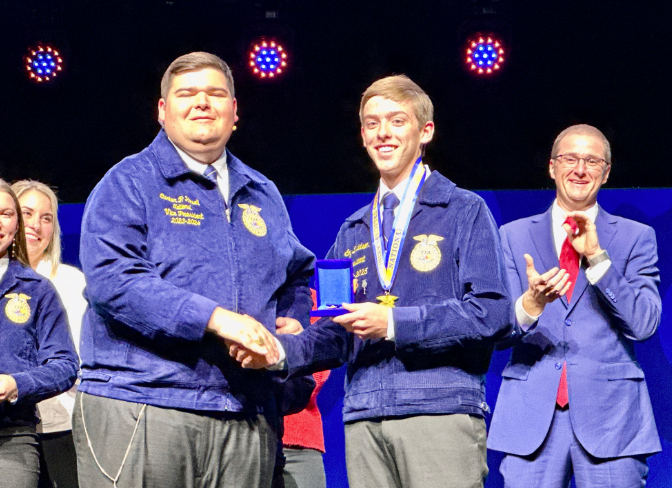
Oklahoma's Ryder Klaassen Named National Star Farmer Finalist at 2025 FFA Convention
At the 2025 National FFA Convention, Ryder Klaassen from the Hydro-Eakly FFA Chapter represented Oklahoma as a finalist for the Star Farmer of America Award, one of the organization's most prestigious honors. Ryder spoke with senior farm and ranch broadcaster about this exciting opportunity. He began the conversation expressing gratitude for the recognition, saying, "Just want to say, Ron, thank you guys so much for this opportunity. Couldn't do it without any of y'all."
Ryder described his Supervised Agricultural Experience (SAE) as "a very diverse and challenging operation." On the crop side, he rents 300 acres from his grandparents, where he grows wheat, cotton, black-eyed peas, corn, and mung beans. He added, "Those acres are on dry land and irrigated acres. I grow all those crops on." On the livestock side, he runs a cow-calf herd and a stocker cattle operation, noting that he's "just now starting to get into raising show steers."
When discussing his specialty crops, Ryder explained how the operation evolved and the partnerships that make it possible. "With the mung beans, I have a broker, Tyrone Wilson with JLee Corporation in Hennessey that does all my financing work for me," he said. He also shared that his black-eyed peas go to "Ricky Jett there in Binger, Oklahoma, with Jet Co. Industry." He credited his crop consultant, "Howard Bartel... he's the one that gives me recommendations of what crops I should grow every single year, but I still make the final call every single time."
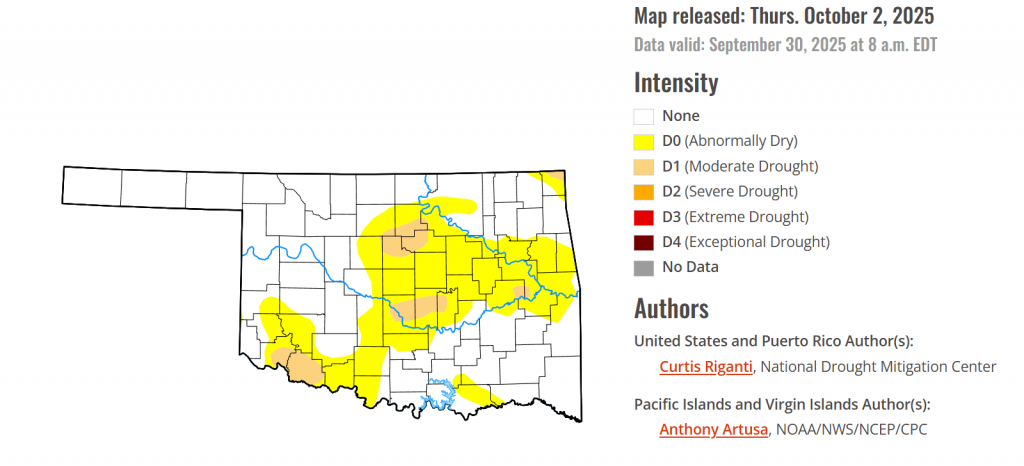
Some Severe Drought Subsides In This Weeks Drought Monitor
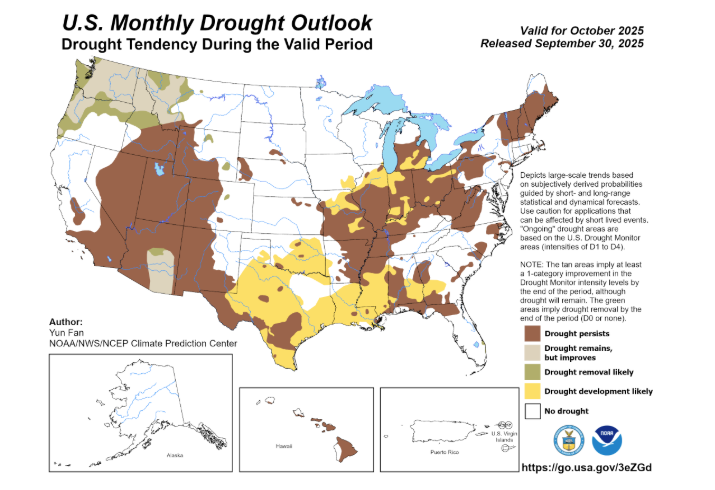
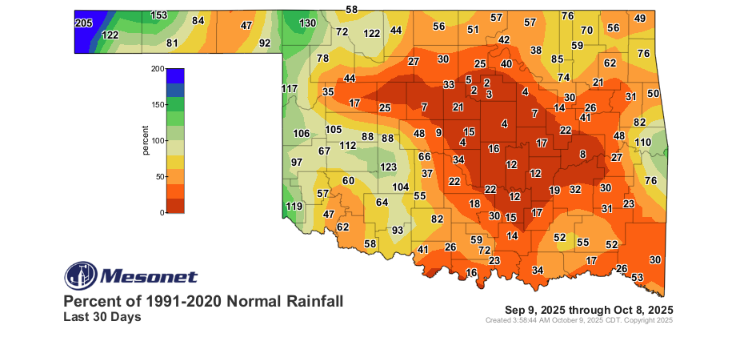
According to the latest Oklahoma Drought Monitor report, exceptional drought remains at 0 percent, unchanged from the start of the calendar year.
Severe Drought: Severe drought (D2) still remains in parts of central and southwestern Oklahoma, but severe drought present last week in Payne County has withdrawn this week. D2 severe drought now covering 3.48% of the state.
Widespread Dryness: Over 56 percent of the state is now experiencing abnormally dry to drought conditions versaus over 72 percent last week.
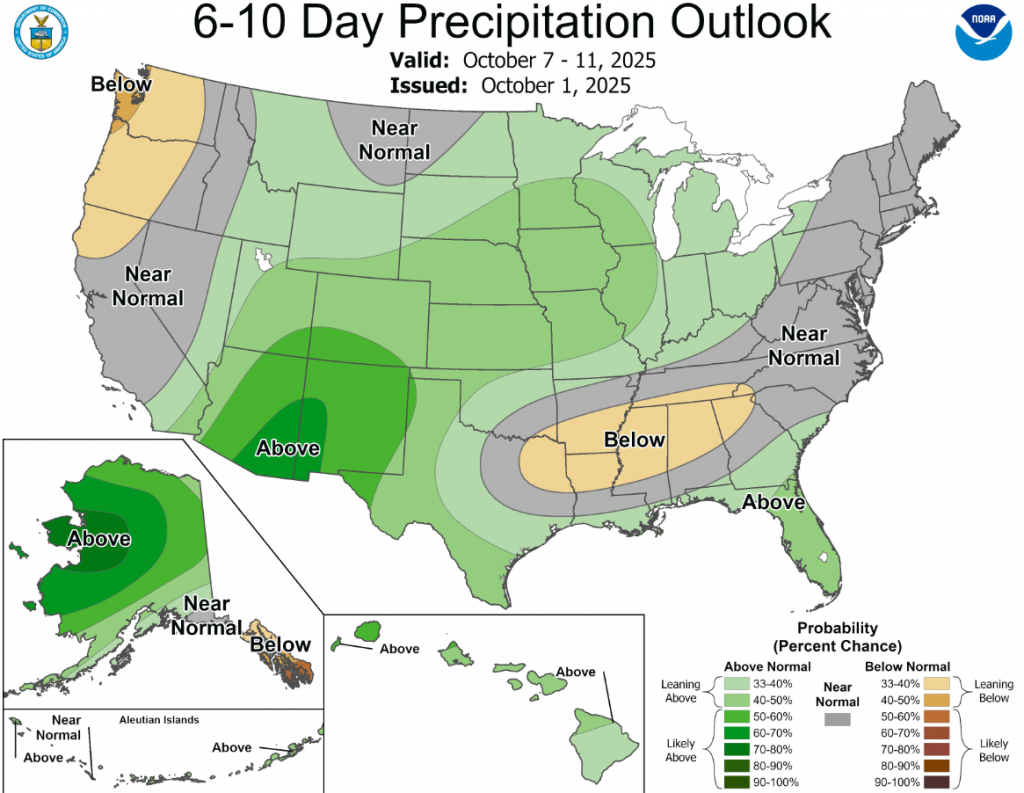
According to the 6-to-10-day precipitation outlook map, a large majority of the state is leaning below 40-50% chance of rain through November 8, with far Southwestern Oklahoma leaning below 50-60% chance through that same date.
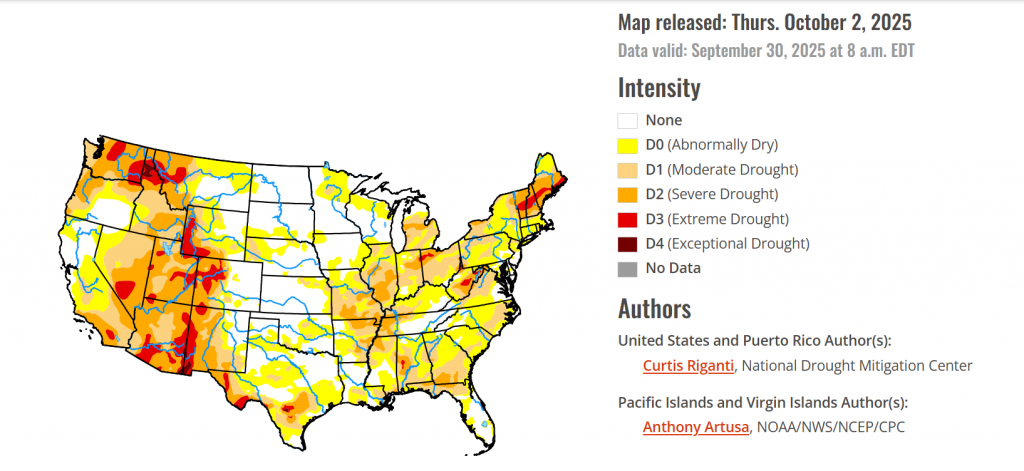
In the southern plains, Heavy rains in many regions engendered broad areas of improvement across most of Texas, Oklahoma, Louisiana, Mississippi, and Tennessee. Some areas of deterioration were observed in areas that missed the heavy rains, specifically southern and coastal Texas, part of the Texas Panhandle, and a few patches of the Red River (South) Valley. Several inches of rain resulted in a few swaths of 2-category improvement across central and east-central Texas as well as central Oklahoma, where upwards of 4 to 8 inches of precipitation were observed. Overall, coverage of dryness and drought dropped from 80.6 to 68.6 percent of the Region while drought coverage (D1 or worse) was reduced from 37.1 to 27.6 percent.
The vision of the Oklahoma Beef Council is to be a positive difference for Oklahoma's farming and ranching families and the greater beef community, and its mission is to enhance beef demand by strengthening consumer trust and exceeding consumer expectations.
To learn more, visit www.oklabeef.org. Also, don't forget to like its Facebook page at www.facebook.com/oklabeef for stories on Oklahoma's ranching families and great beef recipes.
And Check out this video below that helps you learn more about the Beef Checkoff- .
KIS FUTURES specializes in Futures and Options for Institutions, Commercials, Hedgers, and Individual Traders and executes trades for its clients in the following markets: Livestock, Grains, Energy, Metals, Softs, Financials, Currencies, and Stock Index Futures. For more information, please give them a call Toll Free at (800) 256-2555. Click here for their website to learn more.
And- their iPhone App, which provides all electronic futures quotes is available at the App Store- click here for the KIS Futures App for your iPhone.
Cassie Fish: Let the Market — Not Politics — Decide Beef Prices
Senior Farm and Ranch Broadcaster Ron Hays continues his conversation with Cattle market analyst Cassie Fish, who says the current discussion about beef being "too high" in price is misplaced. She explains, "You know who will tell us it's too high? The consumer." Fish argues that price data alone doesn't determine affordability, emphasizing, "Just because it shows up in the CPI data as being high... the way it works is, if they stop buying it, then we have a problem."
Reflecting on past trends, Fish recalls, "That's why we had a problem in 2014 because they did not like paying $5 a pound for hamburger. In 2014, we just completely priced out demand." This time, however, she says it's different. "We have more highly marbled beef, cattle are grading very, very well. Consumers haven't stopped buying it."
She insists that the market should be allowed to function naturally without interference. "I'm a complete believer in let the market sort it out. The market is smarter than all the rest of us, including the government." Fish adds, "They'll stop buying it. Boxes won't rally. They'll have to cut the kills dramatically. And then that's what you know... it doesn't matter how many cattle you have, because nobody wants your product."
The American Soybean Association (ASA) appreciates President Trump and his administration for prioritizing America's farmers in today's announcement regarding U.S.–China trade. After months of stalled purchases and uncertainty, this is a very positive development for soybean farmers who rely on open markets.
"Today's announcement is great news for American agriculture, and soybean farmers are extremely grateful to President Trump for making soybeans a priority in negotiations with China," said Caleb Ragland, ASA President and soybean farmer from Magnolia, Kentucky. "This is a meaningful step forward to reestablishing a stable, long-term trading relationship that delivers results for farm families and future generations."
While details are still emerging and to be confirmed, we understand that today's announcement includes minimum purchase commitments of 12 million metric tons of U.S. soybeans for the remainder of this marketing year and a minimum of 25 million metric tons annually through 2028. ASA is encouraged that these commitments are framed as minimums and looks forward to continued growth in soybean purchases beyond these levels. China has historically purchased 25 to 30 million metric tons of U.S. soybeans in recent years, and today's commitments lay a strong foundation to return to those traditional volumes over the coming marketing years.
State Law Sets Nov. 1 Deadline for New 'Open Pasture Road' Designations; Establishes Rules for Cattle Guards and Liability
Attention Oklahoma Property & Livestock Owners: A state law (effective Nov. 1, 2024) outlines how certain county-maintained public roads can be officially designated as "open pasture roads" by Nov. 1, 2025. An open pasture road is a county-maintained road with cattle guards at both access points, land on both sides owned by the same person, and no fencing along the roadway.
Property owners can request this designation by notifying the Board of County Commissioners and providing a map showing ownership and road location. Once approved, the county will install cattle crossing signs, paid for by the property owner. Then, livestock owners are not liable for vehicle damages caused by animals on that designated road.
Only roads meeting the requirements by Nov. 1, 2025 can receive the designation. No additional roads can be registered after the Nov. 1 deadline. Additionally, property owners must confirm each year that the road still meets all requirements to keep the designation.
Dr. Rosslyn Biggs: Emerging Bovine Disease Update: New World Screwworm
The threat of New World Screwworm (NWS), Cochliomyia hominivorax, continues to impact cattle producers in Mexico. Although eradicated from the continental U.S., this parasitic fly still poses serious risks to livestock, wildlife, pets, and humans as its infestation front advances northward.
In August 2025, U.S. public health authorities confirmed a human case of NWS in the United States in a patient returning from El Salvador. This case appears to be isolated case with no further human or animal spread detected domestically. In September 2025, Mexico confirmed a detection of NWS less than 70 miles from the U.S. border. The infected animal was an 8-month-old calf in a herd moved from southern Mexico. The USDA continues to work closely with Mexican authorities supporting sterile fly release across Mexico.
Although risk to livestock and wildlife remains low, surveillance measures have been elevated across the southern border in Texas, Arizona, and New Mexico. Thousands of traps have been dispersed with over 13,000 surveillance samples testing negative for NWS.
Stillwater FFA Waits on Ag Issues Contest Results at 98th National FFA Convention & Expo
It will be a busy day on Friday for many of our Oklahoma finalists in various contests as well as several teams- including the Ag Issues team fielded by Stillwater FFA. Stillwater won the right to represent Oklahoma this week at the 2025 National FFA Convention in Indianapolis and they have advanced and competed in the Final Four of the contest on Thursday. Ag Issues is one of four Career Development Events that will have results announced during the fourth General Session on Friday morning. There will also be multiple proficiency champions named as well as more Agriscience honors given out.
On Thursday, Oklahoma claimed two National Championships in Proficiency Awards- Kyriana Beard of Stillwater FFA won the national title in the Agriscience Research- Animal Systems category. Earlier this year- Beard took home the Oklahoma Star in Ag Placement at the 99th Oklahoma FFA Convention in May. The other Proficiency Award that was earned by an Oklahoman went to Kenzie Mowert of the Chickasha FFA Chapter- Kenzie is the National Champion in Agricultural Sales- Placement.
In the National Agriscience Fair- Oklahoma has claimed six National Championships thus far- including:
Kylee Eck of Stillwater FFA in the Social Science, Division One category
Brookelyn Ryan of Oologah FFA in Animal Systems, Division One category
Maguire Biggs and Kaisley O'Nan of Stillwater FFA in Animal Systems, Division Two category
Paetyn Gilliam and Eliana Timmons of Stillwater FFA in Animal Systems, Division Four category
Gracie Essary of Stillwater FFA Chapter in Food Products and Processing Systems, Division One
Keeley Gross and Addyson Ferrell of Stillwater FFA Chapter in Food Products and Processing Systems, Division Two
On Thursday, October 30, 2025, the Choice Boxed Beef market took a step back, marking its first decline after five consecutive days of gains. The Choice cutout fell by $3.11 to $378.27, while Select dropped $2.27 to $359.52, narrowing the spread to $18.75. Total loads moved were 102, down from 137 the previous day.
Woodward had a light run of 788 head on Thursday- Compared to last week: Feeder steers 10.00 to 20.00 lower. Feeder heifers 5.00 to 15.00 lower. Steer and heifer calves 15.00 to 20.00 lower.
OKC West is our Market Links Sponsor- they sell cattle three days a week- Cows on Mondays, Stockers on Tuesday and Feeders on Wednesday- Call 405-262-8800 to learn more.
Click here for our Markets Page on OklahomaFarmReport.Com- there you will find many of the reports we have linked on the right hand column found on the previous format of our email.
At the 2025 National FFA Convention, U.S. Secretary of Agriculture Brooke Rollins addressed the Thursday afternoon General Session of the 98th FFA Convention and met with reporters, including senior farm and ranch broadcaster Ron Hays, to discuss several key cattle industry issues, including feeder cattle imports from Mexico and the President's remarks about beef prices. Rollins emphasized that while she values the partnership with Mexico, "our number one biggest priority is to protect the herd that we have in America, which is already at a 75-year low." She said about 250,000 head of cattle are waiting to move across the border but stressed that the U.S. is "not there yet" in ensuring the new world screwworm threat is fully under control.
Rollins shared that she has been encouraged by "an unprecedented partnership" with Mexican Agriculture Secretary Julio Berdegué and plans to meet with Mexico's President, Claudia Sheinbaum on Monday morning, to further address the issue. She assured reporters that the U.S. government "couldn't take it more seriously" and that every decision is being made with the goal of protecting American cattle producers. Despite the pressure from both sides of the border, she noted that as tough as it is," most U.S. cattlemen have been supportive of the cautious approach.
The Secretary also addressed recent discussions about Argentinian beef imports and the President's comments on lowering beef prices — remarks that caused frustration among many U.S. cattle producers. Rollins explained that "what the President was talking about was nothing much different from what we have done for a really long time," adding that imports from Argentina would not increase overall beef supply but would "just mix and match" existing levels of lean beef needed for blending.
Acknowledging the concerns of ranchers, Rollins said she understands why some felt threatened by the comments. "These guys have not made money, have not been able to put a new roof on their barn, have not been able to buy a new truck in a decade... and so I think they, when they heard that, felt very threatened by it." Still, she emphasized that the administration is focused on supporting producers and helping the cattle sector rebuild.
To that end, Rollins outlined a five-point plan recently released by USDA to strengthen the cattle industry. The plan includes opening 5 million acres of federal land for low-cost grazing leases, investing heavily in smaller meat processing plants, and launching a $100 million ad campaign "Buy American Beef: Product of the USA" advertising campaign in early 2026. Despite the current frustrations, Rollins said she feels "very bullish... encouraged and excited for our cattlemen," confident that the steps being taken now will protect the U.S. herd and promote long-term stability in the beef industry.
The Beef Buzz is a regular feature heard on radio stations around the region on the Radio Oklahoma Ag Network and is a regular audio feature found on this website as well. Click on the LISTEN BAR for today's show and check out our archives for older Beef Buzz shows covering the gamut of the beef cattle industry today.
Today, House Agriculture Committee Ranking Member Angie Craig (MN-02) released the below statement following a press conference hosted by House Speaker Mike Johnson (LA-04), at which Agriculture Secretary Brooke Rollins admitted that the Trump administration was failing the American people with regard to the Supplemental Nutrition Assistance Program (SNAP).
"Secretary Rollins said one honest thing today: The government is failing the American people. Republicans control the House, Senate and White House. The Trump administration has the legal authority and funds necessary to get November SNAP benefits out the door. They are illegally withholding food from 42 million Americans, and it is shameful," said Ranking Member Craig.
At the press conference, Secretary Rollins said: "My message to America is first, the fact that your government is failing you right now. That poverty is not red or blue. It is not a Republican or Democrat issue. It doesn't matter who you voted for or even if you voted. That if you are in a position where you can't feed your family, and you are relying on that $187 dollars a month for an average family in the SNAP program, that we have failed you."
Earlier this year, Republicans made the largest cut to SNAP in American history, gutting the program by $186 billion in their "One, Big Beautiful Bill Act" law. The law will lead to millions of Americans losing the food assistance they need to feed themselves and their families.
Agri-Pulse is pleased to announce a webinar focused on additional ways that farmers, livestock producers, and ranchers can generate new revenue streams. Our next webinar, "The Race for Renewable Fuels to Improve Rural Prosperity," will discuss demand drivers that leverage our agricultural waste and renewable resources while stabilizing rural communities.
"It's no secret that many farmers are facing extremely tough financial conditions while input costs remain elevated," said Agri-Pulse Founder and Publisher Sara Wyant. "But there are some new opportunities on the horizon, including the potential to include biofuels in the maritime industry, which could represent substantial markets. But much will depend on whether or not state and federal policies are aligned with international developments."
You can register for the free webinar at noon (CT), 1 p.m. (ET) on Nov. 12 here. The webinar is sponsored by Roeslein Renewables and Wyant will serve as moderator.
Speakers include:Sen. Pete Ricketts, R-Neb. (invited)Rod Snyder, Principal and Founder, Junction Strategies; former EPA advisorMichael O'Laughlin, Chief Executive Officer, Vanguard RenewablesBen Kruger, Senior Vice President, Roeslein Renewables"It's an honor to join Agri-Pulse and share how partnerships between agriculture and energy can strengthen rural economies, create new markets for farm products, and provide additional ecosystem services and benefits," said Roeslein Renewables Director of Government Relations, Bryan Sievers.
About Agri-Pulse Communications, Inc.:Agri-Pulse is the most trusted source for farm and rural policy information. With offices in Washington, D.C., Sacramento, California, and Camdenton, Missouri, we provide a balanced perspective on a wide variety of issues, including the farm bill, nutrition, trade, labor, food safety, water, environment, biotechnology, organic, conservation and crop insurance. Agri-Pulse publishes a subscription-only e-newsletter, the Agri-Pulse Daily Harvest early morning news summary, Agri-Pulse Daybreak, Agri-Pulse DriveTime podcast, Agri-Pulse Newsmakers and breaking news on www.Agri-Pulse.com. For more information, contact Sara Wyant: Sara@Agri-Pulse.com
U.S. Meat Exports See Positive Signs in Asia Following New Trade Discussions
Recent trade progress announced by President Donald Trump during a swing through Asia is creating optimism for U.S. beef and pork exports, according to Dan Halstrom, president and CEO of the U.S. Meat Export Federation (USMEF).
While details are still being finalized, Halstrom highlighted positive signs in several key markets.
In Malaysia, where the U.S. has historically faced significant non-tariff trade barriers, progress is being made. "We're excited to see some of those barriers eliminated," Halstrom said. He noted that while U.S. pork has made strides, "the larger potentials for US beef."
For other markets in the region, tariffs remain the primary hurdle. In Vietnam, Halstrom stated that "relief on tariffs is going to be mandatory so we can compete on a level playing field." He called the talks a hopeful "first step" and noted that Thailand is in a similar situation with "prohibitively high tariff rates."
Even smaller markets like Cambodia, seen as a potential beef opportunity, are showing promise. "The commitment there for duty free access is also encouraging," Halstrom noted. He emphasized that these Southeast Asian markets, while small individually, add up. "Won't be a big market, but honestly, in that whole Southeast Asia region, you add all these markets together, it is significant."
The talks also produced positive signs for resuming sales to China, where de-escalation is key.
"De-escalation of tariffs is essential, and it's been holding back demand, obviously, on both pork and beef," Halstrom said. He pointed to the "57% duty on pork," explaining that while some business is occurring, "there'd be a lot more if we were back down to more reasonable levels."
For U.S. beef in China, the challenge is different. "The real issue on beef really doesn't have anything to do directly today with tariffs," Halstrom explained. "It's all about access on plant registration."
Halstrom said the good signs extend beyond the meat sector, pointing to a resumption of trade in soybeans. He views this as confirmation that "ag exports are being looked at and prioritized."
(As reported by John Herath for the U.S. Meat Export Federation.)
House Committee on Agriculture Chairman Glenn "GT" Thompson (PA-15) released the following statement the day before SNAP benefits are set to expire due to the prolonged government shutdown caused by Democrats in the U.S. Senate:
"Because Senate Democrats insist on keeping the federal government shut down, more than 40 million Americans—including children, seniors, veterans, and military families—will not receive their November SNAP benefits beginning this weekend. The number two House Democrat acknowledged that suffering families are their 'leverage'—confirming that this is a political choice.
"The House passed a clean continuing resolution; one Democrats previously supported 13 times under President Biden. Had the Senate done its job, SNAP benefits would go out in full and undisrupted in November. USDA does not have the funds to cover these benefits without jeopardizing meals for children in school, infant formula for low-income women and children, and disaster SNAP benefits.
"Make no mistake: Democrats are choosing to cut off SNAP benefits for millions of Americans to satisfy the extremists who have taken over their party. It's a choice with real consequences. Time is running out—Democrats must end this shutdown immediately, or they will be responsible for families going hungry this holiday season."
Thirteen farm and ranch women leaders graduated from the fall session of Women's Communications Boot Camp hosted by the American Farm Bureau Federation.
The agricultural leaders completed an intensive four-day course that featured hands-on sessions focused on public speaking, working with the media and messaging. Program graduates will use their training to strategically support issues important to farmers and help tell agriculture's story. This includes participating in local media opportunities, sharing information with elected officials and joining social media campaigns that spotlight modern agriculture.
"Women are shaping the future of agriculture with their insight, resilience and leadership," said Isabella Chism, an Indiana row crop farmer and chair of the AFB Women's Leadership Committee. "Boot Camp graduates are well on their way to becoming more polished advocates for agriculture. Their growth will benefit their communities and Farm Bureau on local, state and national levels."
Boot Camp graduates are Sheri Gaskins of Colorado; Lindsey Morgan of Georgia; Megan Espinda of Indiana; Cynthia Doise and Marylynn Waddle of Louisiana; Macey McDonald of New Mexico; Heather Lifsey and Rachel Stricklin of North Carolina; Angel Brabham and Caroline Lewis of South Carolina; Jackie Larson of Utah; Kristin Beery of Virginia; and Jessica Haberman of Washington.
"It's inspiring to see so many Farm Bureau women rise to the challenge of becoming top-tier advocates for agriculture," said AFBF President Zippy Duvall. "Their commitment to leadership and learning is a powerful example, and we're proud to support them on this journey."
This is the 23rd Boot Camp hosted by AFBF. The program has 341 graduates and is open to all women involved in Farm Bureau.
"This training has been very helpful," said graduate Lindsey Morgan, a farmer and Georgia Farm Bureau member. "I've gained confidence in my communications skills and will be much more comfortable when called on to advocate for farmers and Farm Bureau."
The American Farm Bureau Women's Leadership Committee, in partnership with AFBF staff, hosts and provides training for Women's Communications Boot Camp biannually. Applications open in December for 2026 Boot Camp sessions.
Kyriana Beard of the Stillwater FFA Chapter earned top honors in the Animal Systems Agriscience Research Proficiency category. Reflecting on her long-term project with senior farm and ranch broadcaster Ron Hays, Kyriana explained, "Starting in eighth grade, I had started my first research project with horses, and all of my projects are around finding different exercise tolerance and fitness indicators that we could use on performance horses... to see if what we are doing is safe." Her work has focused on measuring heart rate, blood lactate, and serum amyloid A in horses to evaluate exercise impact and overall health.
Through years of research, Kyriana discovered both a love for science and a clear direction for her future. "I learned that I really like research and that I am excited to continue to do research in college," she said, noting that her studies have prepared her for her next goal: veterinary school. Now an animal science pre-vet major at LSU, she continues to apply the research skills and discipline gained through her agriscience projects.
Kyriana's findings emphasized the importance of consistent training for equine health. "The overarching theme of all of my projects is that consistency in exercising these horses was the most important," she shared. "Horses that were exercised at least three to four times per week were able to have more stamina... Find that happy medium where you can keep those horses safe and longevity, where they can ride for several years and stay in the show pen and be good active horses."
Her lifelong connection to horses also shaped her passion for veterinary medicine. "I have grown up showing horses... I showed in western dressage and dressage," Kyriana said. "My love for the veterinary aspect of just helping these horses, and honestly, all animals, not just horses," grew through her placement experiences in equine rehabilitation. Looking ahead, she hopes to "stay in rural Oklahoma... and have a mixed animal practice in a rural area," adding humbly, "I want to be a vet that doesn't want to make very much money... to help producers that don't want to spend a whole lot."
Kyriana credits FFA for helping shape her character and work ethic. "I started FFA in eighth grade... I was fortunate enough to be the chapter president," she recalled, participating in everything from livestock judging to agriscience fairs. "FFA has shaped me into the person that I am, and no doubt, given me the entirety of the skill sets that I have." To younger members, her advice is simple but heartfelt: "If you're passionate about something, dive fully into it and never stop working hard... never forget about the people that helped you get there, because you didn't ever get there by yourself."
Your coverage of the 2025 98th National FFA Convention is sponsored by Hilliary Communications, who deliver the latest cutting-edge communications services supporting tens of thousands of customers across 22 counties throughout Oklahoma, Texas, and Iowa. The company offers internet, voice, and HilliaryTV. Hilliary Communications continuously researches the marketplace for innovations and strives to improve underserved areas, offering services that exceed customer expectations. Click here to learn more about Hilliary Communications.
Today, Clean Fuels Alliance America commended EPA for taking action to ensure that robust 2026 and 2027 Renewable Fuel Standards are not eroded by small refinery exemptions. Clean Fuels urged the agency to adopt supplemental "SRE reallocation volumes" and updated estimates of exempted volumes for 2026 and 2027 representing 100% of all granted, pending, and expected exemptions for the 2023 – 2025 compliance years. Clean Fuels also asked the agency to be judicious in granting exemptions.
Clean Fuels states in comments on the Supplemental Rule proposed in September, "Clean Fuels urges EPA to adopt the complete reallocation for SREs granted for 2023 through 2025 – including any petitions received before the rule is final – and project SREs going forward using an up-to-date average."
Clean Fuels provided EPA a full analysis from World Agricultural Economic and Environmental Services (WAEES) of the economic consequences of small refinery exemptions for farmers and the agricultural economy. The study shows that if the agency fails to fully account for small refinery exemptions, biomass-based diesel production will fall by nearly a billion gallons and soybean farmers and processors could lose as much as $7.5 billion in crop value.
"Clean Fuels appreciates EPA's acknowledgement that small refinery exemptions will destroy demand for biomass-based diesel over the next several years by enabling refiners to avoid RFS obligations," added Kurt Kovarik, Clean Fuels' Vice President of Federal Affairs. "Small refinery exemptions should not come at the expense of clean fuel producers and farmers. Accounting for 100% of the exemptions granted and expected is the only way to ensure that robust 2026 and 2027 RFS volumes will be met."
Today the National Oilseed Processors Association (NOPA) submitted comments to the Environmental Protection Agency (EPA) on the supplemental 2026–2027 Renewable Volume Obligations (RVOs) Renewable Fuel Standard (RFS) rulemaking.
In a break from tradition, NOPA submitted a single-page comment, a deliberate choice to emphasize that the time for further deliberation has passed and that swift action is urgently needed to provide market certainty for America's farmers, oilseed processors, and renewable fuel producers.
"Our message to EPA is simple: finalize the rule now," said Devin Mogler, President and CEO of NOPA. "Every day of delay adds more uncertainty for farmers and processors – the EPA has already done an excellent job with a proposal that includes BBD volumes reflective of the industry's capacity and a half-RIN provision that prioritizes domestic feedstocks."
NOPA's comments reinforce key priorities for the supplemental and final rule:
· Strong Biomass-Based Diesel (BBD) volumes that reflect actual growth and industry capacity
· 100% reallocation of waived gallons to maintain the integrity of the RFS, and
· Support for the half-RIN mechanism, which prioritizes U.S. feedstocks and safeguards domestic agriculture from unfair foreign competition
"This is a critical moment for America's biofuel and oilseed industries," Mogler added. "The RFS was designed to strengthen rural economies, improve energy security, and promote homegrown innovation. Finalizing the 2026–2027 RVOs quickly will give our industry the certainty it needs to keep investing in those goals."
Corteva, Inc. (NYSE: CTVA) today announced its Board of Directors has authorized a common stock dividend of $0.18 cents per share, payable December 15, 2025, to the Company's shareholders of record on December 1, 2025.
The Board of Directors of EIDP, Inc. (formerly known as E. I. du Pont de Nemours and Company) (EIDP) declared regular preferred stock dividends of $1.12-1/2 per share on the $4.50 series preferred stock and $0.87-1/2 per share on the $3.50 series preferred stock – both payable January 23, 2026, to EIDP stockholders of record on January 8, 2026. EIDP, Inc. is a wholly owned subsidiary of Corteva, Inc.
About Corteva Corteva, Inc. (NYSE: CTVA) is a global pure-play agriculture company that combines industry-leading innovation, high-touch customer engagement and operational execution to profitably deliver solutions for the world's most pressing agriculture challenges. Corteva generates advantaged market preference through its unique distribution strategy, together with its balanced and globally diverse mix of seed, crop protection, and digital products and services. With some of the most recognized brands in agriculture and a technology pipeline well positioned to drive growth, the company is committed to maximizing productivity for farmers, while working with stakeholders throughout the food system as it fulfills its promise to enrich the lives of those who produce and those who consume, ensuring progress for generations to come. More information can be found at www.corteva.com.
Smithfield Foods donated $150,000 to 30 food banks in its 22-state operational footprint to support neighbors in local communities experiencing food insecurity.
"Smithfield believes in the power of community and the importance of supporting hunger relief," said Jim Monroe, vice president of corporate affairs for Smithfield Foods. "This donation helps provide critical support to our neighbors facing hunger and reflects our continuing commitment to doing good in the places we call home."
The recipient food banks include:
Colorado – Food Bank of the Rockies
Georgia – Atlanta Community Food Bank
Illinois – Northern Illinois Food Bank
Indiana – Gleaners and Food Finders Food Bank
Iowa – Food Bank of Iowa and River Bend Food Bank
Kansas – Kansas Food Bank
Kentucky – God's Pantry Food Bank
Maryland – Maryland Food Bank
Massachusetts – Food Bank of Western Massachusetts
Minnesota – Second Harvest Heartland
Missouri – Second Harvest Community Food Bank, Harvesters – The Community Food Network, Food Bank for Central & Northeast Missouri, and Ozarks Food Harvest
Nebraska – Food Bank for the Heartland and Food Bank of Lincoln
North Carolina – Food Bank of Central & Eastern North Carolina and Second Harvest Food Bank of Southeast North Carolina
Ohio – Freestore Foodbank
Oklahoma – Regional Food Bank of Oklahoma
Pennsylvania – Westmoreland Food Bank
South Carolina – Harvest Hope Food Bank
South Dakota – Feeding South Dakota
Tennessee –Second Harvest Food Bank of Middle Tennessee
Utah – Utah Food Bank
Virginia – Virginia Peninsula Foodbank and Foodbank of Southeastern Virginia and the Eastern Shore
Wisconsin – Feeding America Eastern Wisconsin
These donations are part of Smithfield's long-standing commitment to fighting hunger and strengthening the communities where its employees live, work and raise their families.
Smithfield's hunger relief program, Helping Hungry Homes®, has provided hundreds of millions of servings of protein in all 50 U.S. states since 2008. Smithfield donated more than 25 million servings of protein, valued at nearly $28 million, to food banks, disaster relief efforts and community outreach programs across the U.S. in 2024.
On Saturday, November 1st, 2025, approximately 700,000 Oklahomans will not receive their SNAP benefits. Despite falling into the category of mandatory funding, due to the government shutdown, SNAP contingency funds are not legally available to cover SNAP costs.We understand that this abrupt pause to SNAP funding may impact many of our constituents, and we wish to assist you during this time. To this end, we recommend that anyone struggling with food scarcity utilize the Oklahoma Human Services' Be a Neighbor program. Be a Neighbor was started by Governor Stitt in 2018 to help Oklahomans with their food, clothing, and housing needs by providing a comprehensive database of local organizations equipped to support families. The Be a Neighbor database is simple to use–select your county, choose 'Food,' and then select from the list of relevant organizations provided. For any individuals, churches, and organizations wanting to provide support (donations of food, money, &c.) to SNAP beneficiaries, you can use the database to advertise the resources you are able to provide. To date, every member of the Oklahoma delegation has voted to reopen the government. We urge the left in the Senate to support Republicans' clean CR so SNAP funding can resume, furloughed federal employees can receive pay, and the government can reopen.For access to the Be a Neighbor website, click here.
On Thursday, October 30, 2025, the Choice Boxed Beef market took a step back, marking its first decline after five consecutive days of gains. The Choice cutout fell by $3.11 to $378.27, while Select dropped $2.27 to $359.52, narrowing the spread to $18.75. Total loads moved were 102, down from 137 the previous day.
Stillwater FFA at Ag Issues Contest at 2025 National FFA Convention
It will be a busy day on Friday for many of our Oklahoma finalists in various contests as well as several teams- including the Ag Issues team fielded by Stillwater FFA. Stillwater won the right to represent Oklahoma this week at the 2025 National FFA Convention in Indianapolis and they have advanced and competed in the Final Four of the contest on Thursday. Ag Issues is one of four Career Development Events that will have results announced during the fourth General Session on Friday morning.
There will also be multiple proficiency champions named as well as more Agriscience honors given out.
On Thursday, Oklahoma claimed two National Championships in Proficiency Awards- Kyriana Beard of Stillwater FFA won the national title in the Agriscience Research- Animal Systems category. Earlier this year- Beard took home the Oklahoma Star in Ag Placement at the 99th Oklahoma FFA Convention in May. The other Proficiency Award that was earned by an Oklahoman went to Kenzie Mowert of the Chickasha FFA Chapter- Kenzie is the National Champion in Agricultural Sales- Placement.
In the National Agriscience Fair- Oklahoma has claimed six National Championships thus far- including: Kylee Eck of Stillwater FFA in the Social Science, Division One category Brookelyn Ryan of Oologah FFA in Animal Systems, Division One category Maguire Biggs and Kaisley O'Nan of Stillwater FFA in Animal Systems, Division Two category Paetyn Gilliam and Eliana Timmons of Stillwater FFA in Animal Systems, Division Four category Gracie Essary of Stillwater FFA Chapter in Food Products and Processing Systems, Division One Keeley Gross and Addyson Ferrell of Stillwater FFA Chapter in Food Products and Processing Systems, Division Two
Our national speakers ended their run with Madilyn Norvell of Amber Pocasset FFA named the National Reserve Champion (second best in America) in the Creed Contest as she compeed in the Finals, Annie Schneider of Seiling FFA and Corbin Robbins of Chattanooga FFA both finishing in Prepared Public and Extemp in the top 16 Nationally in their respective contests but missing out on being in the Final Four.
One major honor that we watch and wait on is the naming of the American Star Farmer for 2025- Ryder Klasssen of Hydro Eakly is in the final four of that contest. The Stars will be named Friday night.
We also wait on the word of the national officer team that will be announced Saturday afternoon- Trey Myers of Perkins-Tryon FFA is in the hunt as a part of the Central Region of the FFA.
Your coverage of the 2025 98th National FFA Convention is sponsored by Hilliary Communications, who deliver the latest cutting-edge communications services supporting tens of thousands of customers across 22 counties throughout Oklahoma, Texas, and Iowa. The company offers internet, voice, and HilliaryTV. Hilliary Communications continuously researches the marketplace for innovations and strives to improve underserved areas, offering services that exceed customer expectations. Click here to learn more about Hilliary Communications.
Today, Clean Fuels Alliance America thanked 49 Senators and Representatives who signed a letter to EPA Administrator Lee Zeldin, urging him to finalize the 2026-2027 RFS rule as quickly as possible and calling for "reallocation of 100% of the waived gallons from any granted Small Refinery Exemptions."
"These volumes matter — not just to biofuel producers, but to the farmers who grow the corn, soybeans, and other feedstocks that power this economy, and to every American who enjoys lower prices at the pump because of biofuels," the letter states. "As EPA considers its supplemental proposal, we urge the agency to fully reallocate 100% of the waived gallons for compliance years 2023–2025."
Clean Fuels particularly thanked Sens. Pete Ricketts (R-NE) and Amy Klobuchar (D-MN) and Reps. Randy Feenstra (R-IA) and Nikki Budzinski (D-IL) for co-leading the bipartisan, bicameral letter.
"Clean Fuels greatly appreciates the recognition by congressional champions that timely, robust RFS volumes matter not just to producers, but also to farmers and American consumers," added Kurt Kovarik, Clean Fuels' Vice President of Federal Affairs. "We appreciate and support EPA's efforts to finalize timely, robust RFS volumes and ensure they are not eroded by small refinery exemptions. Clean Fuels' analysis shows that farmers risk losing billions of dollars in crop value if EPA does not fully reallocate small refinery exemptions granted this year."
A letter signed by 124 organizations representing the American food and agricultural value chain, including the National Corn Growers Association (NCGA), filed a letter today voicing support for a full 16-year renewal of the United States-Mexico-Canada Agreement in the public consultation process for the 2026 Joint Review of the USMCA.
"The United States is the world's largest agricultural exporter, and a majority of signers consider Canada and Mexico among their top five export markets," the letter said. "Trade integration between all three countries, enhanced by former trade agreements and accelerated by the USMCA, allowed agricultural exports from the United States to soar."
The leaders from all three countries must consider whether to extend the USMCA and are required to begin the review by July 2026. If they fail to extend the agreement, it will automatically expire in 2036, and annual reviews could commence. The letter's signatories are concerned that countries could pull out during a prolonged period of debate on extending the agreement.
Trade cooperation between the three countries affords multifold benefits. USMCA has not only helped fuel the U.S. economy, but it has also facilitated and streamlined the flow of commerce throughout all three countries, the letter argued.
Since USMCA was originally signed into law by President Trump on Nov. 30, 2018, it has created efficiencies in the agricultural sector at a cost savings to American farmers, producers and ranchers. The agreement has also provided regulatory transparency among countries and ensured science-based treatment of agricultural commodities and products to the benefit of animal and plant health, which have worked well for U.S. exporters.
An example of the agreement's benefits came in 2024 when the nation's corn growers prevailed in a dispute with the Mexican government over a ban on genetically modified corn after the U.S. initiated a dispute settlement under USMCA.
Without the economic might that the trilateral agreement affords, farmer incomes would be harmed, as industry would be saddled with additional and burdensome costs related to transportation and compliance measures, the signatories noted.
The letter also argued U.S. agricultural exporters and family farms depend on the stability of USMCA to factor into their multi-year planning.
"Without the certainty guaranteed by USMCA, agribusinesses and family farms would face undependable markets and weakened global competitiveness."
At the 2025 National FFA Convention, Ryder Klaassen from the Hydro-Eakly FFA Chapter represented Oklahoma as a finalist for the Star Farmer of America Award, one of the organization's most prestigious honors. Ryder spoke with senior farm and ranch broadcaster Ron Hays about this exciting opportunity. He began the conversation expressing gratitude for the recognition, saying, "Just want to say, Ron, thank you guys so much for this opportunity. Couldn't do it without any of y'all."
Ryder described his Supervised Agricultural Experience (SAE) as "a very diverse and challenging operation." On the crop side, he rents 300 acres from his grandparents, where he grows wheat, cotton, black-eyed peas, corn, and mung beans. He added, "Those acres are on dry land and irrigated acres. I grow all those crops on." On the livestock side, he runs a cow-calf herd and a stocker cattle operation, noting that he's "just now starting to get into raising show steers."
When discussing his specialty crops, Ryder explained how the operation evolved and the partnerships that make it possible. "With the mung beans, I have a broker, Tyrone Wilson with JLee Corporation in Hennessey that does all my financing work for me," he said. He also shared that his black-eyed peas go to "Ricky Jett there in Binger, Oklahoma, with Jet Co. Industry." He credited his crop consultant, "Howard Bartel... he's the one that gives me recommendations of what crops I should grow every single year, but I still make the final call every single time."
Ryder emphasized the challenges of marketing and managing specialty crops. "That's the main challenge," he admitted, "trying to find who can buy this crop for us." He also explained the production difficulties of mung beans: "Weed management is very, very difficult with this crop, once we sow it, we're not supposed to spray any herbicide or pesticide on it." Despite those obstacles, the 75-day crop allows him to implement "a three-crop rotation with my cattle, mung beans, and wheat."
On the cattle side, Ryder manages 17 spring-calving cows and uses wheat pasture when conditions allow. He explained, "In the past, I've always taken them out to wheat pasture and then go buy some of my father's or my grandparents' calves." However, he noted that recent drought conditions in Oklahoma have limited that practice, saying, "I haven't had the opportunity to do that just because Oklahoma has seen a significant drought issue over the past two or three years."
Ryder's FFA journey has shaped both his leadership and career goals. "Back when I was in high school with the Hydro-Eakly FFA Chapter, I was involved in a lot of things... livestock judging, trap shooting, showing, public speaking," he shared. Now a student at Oklahoma State University, Ryder is majoring in agricultural business with a minor in animal science and a concentration in farm and ranch management. His long-term goal is to "move back home and continue on the farming operation... and try to become a commodity stock broker to help agriculturists within the industry." As he concluded, "I want to continue staying in this industry. It's been very helpful for me."
Your coverage of the 2025 98th National FFA Convention is sponsored by Hilliary Communications, who deliver the latest cutting-edge communications services supporting tens of thousands of customers across 22 counties throughout Oklahoma, Texas, and Iowa. The company offers internet, voice, and HilliaryTV. Hilliary Communications continuously researches the marketplace for innovations and strives to improve underserved areas, offering services that exceed customer expectations. Click here to learn more about Hilliary Communications.
Oklahoma FFA Speakers Reach for the Stars at 98th Annual Convention of the FFA
Madilyn Norvell of Amber Pocasset FFA was the first of several Oklahoma FFA speech contestants chasing a national championship at the 98th Annual Convention of the FFA to reach the Final Four in her speech category- Creed.
Norvell advanced out of the preliminary round Wednesday morning- then the national semis in the afternoon where she landed as one of four speakers for the national Final Four in Creed Wednesday evening. She competed against state winners from Texas, Idaho and Hawaii. We will learn if she reached her goal of being a National Champion when the results will be announced on the General Session stage in Lucas Oil Stadium around 2 PM.
Meanwhile, Annie Schneider and Corbin Robbins will hope to hear their names called as finalists for their speech categories on Thursday morning. Both advanced out of the Preliminary rounds on Wednesday and competed in the National Semis in the afternoon. Schneider is in the Prepared Public Speaking Contest- they will announce the final four at 9 AM at the Convention Center with the Final Four competition to follow at 11 AM eastern. Robbins will learn if he will be in the Final Four of the Extemp contest first thing Thursday morning as they will announce those participants at 7:30 AM eastern followed by the Final Four of the Extemp that starts at 8:30 AM. You can watch both of those finals on the FFA Live Streaming platform- available here.
Cassie Fish: Uncertainty and Sharp Declines Rock the Cattle Market
Senior Farm and Ranch Broadcaster Ron Hays speaks with Cattle market analyst Cassie Fish, who says the recent downturn marks a major shift in market momentum, signaling that "we are seeing the end of the bull market as we speak." She notes that with just a few headlines and social media posts, "the cattle market has been turned totally upside down in a matter of just a few days."
Fish describes the pace of the decline as unprecedented and deeply concerning. "It certainly is very disconcerting to see these kinds of dramatic declines," she says, pointing out that "we've seen an almost 10% decline in December cattle and 11.6% in November feeders." The downturn, she adds, "started on the 17th of October—only seven trading days ago—so that is incredible speed that we have never really seen before."
Despite the sharp market drop, Fish emphasizes that "We have the tightest supply of the entire bull market cycle right in front of us—November into next summer." Even with historically low cattle numbers, "demand has been excellent, despite the fact that we do have record high prices." However, she warns that the market's psychology has shifted from fundamentals to fear: "It just creates worry... we're more worried about what might happen or what has happened in the past."
Viva Los Expo!": Oklahoma Ag Expo Returns to Norman with Top Speakers and Sold-Out Show
The Oklahoma Ag Expo is just around the corner, taking place November 3–5 in Norman at the Embassy Suites. Ashley Tucker Randolph shared her excitement with farm director KC Sheperd, saying, "We are super excited to welcome everyone this upcoming Monday, we're looking forward to having everyone." She explained that the event is a collaboration between the Oklahoma Grain and Feed Association and the Oklahoma Ag Retailers, describing it as "a place where agriculture and agribusiness professionals can come together, learn, network, and really just celebrate our industry."
The Expo will kick off on Monday with a golf tournament at Westwood Park Golf Course, followed by educational sessions led by OSU experts. Randolph noted, "Later in the afternoon, we will have Edmund Bonjour and Kevin Shelton from OSU covering all things fumigation." Tuesday's agenda is full of industry sessions on topics such as "fungicide fundamentals, unmanned aerial applications, and herbicide resistance management practices." She added that the trade show's grand opening is Tuesday at 10 a.m., and it's already "a sold-out show this year."
This year's speaker lineup is one of the strongest yet. Randolph highlighted several notable names, saying, "We'll be welcoming Jeff Ball with Bayer Crop Science, Dr. John Long from OSU, Maxwell Smith from IPM for Cotton Assistance, and Dr. Kent Martin from Northwestern in Alva." She also mentioned that the Expo will close with presentations by "Dr. Steve Phillips and Dr. Ashley Ferris from OSU." According to Randolph, "We're certainly excited to have a jam-packed show."
Oklahoma AgCredit supports rural Oklahoma with reliable and consistent credit, today and tomorrow. We offer loans for land, livestock, equipment, operating costs and country homes (NMLSR #809962) to farmers, ranchers and rural businesses across 60 counties. As a cooperative, we are owned by the members we serve. Through our Patronage Program, we have returned more than $74 million to our members since 1997.
For more information on our services or to find a location near you, visit our website here.
Oklahoma Farm Bureau works to improve the lives of all Oklahomans by supporting our state's agriculture community. As Oklahoma's largest general farm organization led by Oklahoma farmers and ranchers, OKFB takes grassroots values and advocates for agriculture at the state Capitol and in Washington, D.C., to ensure our way of life continues for generations to come. Farm Bureau hosts leadership events, supports our state's agricultural youth and connects consumers with agriculture in order to build a brighter future for our state. Become an OKFB member today online at okfarmbureau.org/join. Together, we are rural Oklahoma.
National FFA President Thad Bergschneider Reflects on a Year of Leadership and Growth
At the 2025 National FFA Convention and Expo in Indianapolis, National FFA President Thad Bergschneider reflected on a whirlwind year representing more than one million members while speaking with senior far and ranch broadcaster Ron Hays. "You can't go anywhere without meeting somebody," he said, describing how FFA connects people from all walks of life. "If not an active member, there is always an alumni on a plane who you're sitting next to... and all of a sudden you hear their story." Bergschneider emphasized that even those who never wore the blue jacket are only "a few degrees of connection" away from someone who did.
Thad's own FFA story began reluctantly. "Freshman year of high school, going to pick out ag classes with my dad, and I work up the courage to tell him I don't think I want to join FFA," he recalled. "His response was, 'Too bad.'" Though he came from a farm background of corn, soybeans, and cattle, Bergschneider said, "I didn't think FFA was where I belonged. I was interested in math and science... in public speaking and policy." That all changed when he read the FFA Creed and competed in ag sales. "I realized that, oh no, FFA is where I'm meant to be."
Discussing the evolution of the FFA Creed and the organization's identity, Bergschneider reaffirmed the group's agricultural roots. "It's important to say that FFA is still farming," he said, "and it's the veterinarians, the scientists, the chemists, the IT experts, the technologists, the... artificial intelligence specialists, the data learning specialists, who continue to support those endeavors." His message underscored that the FFA remains grounded in agriculture while embracing the growing world of ag-related science and technology.
Corn Growers Detail Top Ways Congress and Administration Can Help This Year
The president of the National Corn Growers Association said today that Congress and the administration can support farmers through the ongoing difficult economic circumstances through a combination of market expansion and a bridge assistance program.
"Opening new foreign markets and expanding access to higher ethanol blends year-round are not only NCGA's top priorities, but they are also important to the survival of the nation's corn growers," said Ohio farmer and NCGA President Jed Bower. "Recognizing that market expansion takes time and farmers need help now, corn growers support the development of a bridge program to help navigate this difficult economy."
NCGA has intensified its call for new and improved markets in recent months. Corn grower leaders have urged Congress to pass the Nationwide Consumer and Fuel Retailer Choice Act of 2025, which would expand year-round nationwide consumer access to fuels with a 15% ethanol blend, also referred to as E15. They have also supported the Trump administration's efforts to open new trade markets.
Cow Calf Corner David Lalman: Estimating Feed Intake in Beef Cows
David Lalman, Oklahoma State University beef cattle specialist, says an accurate estimate of feed intake is a critical element in determining a cow's nutrient requirements at different stages of production. It is also necessary to establish appropriate stocking rate and carrying capacity for a given land base.
About a year ago, I shared our group's work to evaluate and update estimates of feed intake for beef cows. One of the popular sources for feed intake estimates is a table published by Hibberd and Thrift in 1982. I provided the original table in the September 16, 2024 Cow Calf Corner Newsletter.
In those guidelines, feed intake is expressed as a percentage of body weight and intake estimates are sensitive to diet quality, stage of production, and cow body weight. As mentioned in the previous article, the 43-year-old Hibberd and Thrift guidelines overestimated feed intake of gestating cows by about 3 pounds per day. However, the estimates for lactating cows were reasonably accurate.
Eleven Oklahoma teachers receive accurate agriculture books through OKFB's Bushels for Books
Eleven Oklahoma educators were selected to receive a basket of accurate agriculture books as part of Oklahoma Farm Bureau's Bushels for Books program.
A collaboration between the OKFB Foundation for Agriculture and the OKFB Women's Leadership Committee, Bushels for Books is designed to spread agriculture literacy to children around the state through providing a selection of books that accurately portray the agriculture industry.
"As people become further removed from production agriculture, it is important for children to learn where their food comes from," said Mignon Bolay, WLC chair. "We hope these books will provide a fun way for them to learn more about agriculture."
The program is open to Pre-K through eighth-grade teachers and librarians in Oklahoma. "We are proud to support Oklahoma educators and students through the Bushels for Books program every year," said OKFB Foundation for Agriculture President Kerry Givens. "We appreciate these teachers prioritizing agriculture education in their classrooms."
Ranking Member Angie Craig Applauds Attorneys General for Challenging the Trump Administration's Withholding of SNAP Benefits
House Agriculture Committee Ranking Member Angie Craig (MN-02) released the following statement regarding the lawsuit filed by a multistate coalition of 26 attorneys general to hold the Trump administration accountable for withholding food assistance from 42 million hungry Americans.
"A coalition of attorneys general from across 25 states and the District of Columbia stood up for the 42 million Americans who rely on federal food assistance to keep food on their table every month. I applaud their courage and principled stance against a lawless administration that is unilaterally depriving eligible American seniors, veterans, people with disabilities and children of food assistance.
Enough is enough. President Trump and Agriculture Secretary Brooke Rollins must disburse the congressionally appropriated funds and use all available legal authority to ensure the most vulnerable members of our communities can keep food on their tables come November."
Choice Boxed Beef prices moved higher again on Wednesday, October 29, 2025, with the Choice cutout up $1.73 to $381.38 and Select up $1.79 to $361.79. This marks five consecutive days of gains, and the Choice cutout is now up $17.47 since October 13, reaching the highest price recorded in October in U.S. history. The Choice/Select spread was $19.59, with 137 loads reported.
OKC West in El Reno has a total of 4,056 head on Tuesday and Wednesday. Manager Bill Barnhart writes about this week- "After an unprecedented free fall the futures market finally closed higher today. Since last Friday November Feeders dropped 33.00 before rebounding today. Never has there been a steeper or more precipitous drop in cattle prices. True we've enjoyed quite the run up in prices since Summer and were probably due an adjustment but in some instances 300.00 per head in a weeks time is way out of line. The combination of a bull market pushing too far past reality and politicians getting involved in the cattle market is the most likely culprit of the collapse. Our politicians should have much bigger worries than the price of beef where supply and demand rule the market."
OKC West is our Market Links Sponsor- they sell cattle three days a week- Cows on Mondays, Stockers on Tuesday and Feeders on Wednesday- Call 405-262-8800 to learn more.
Click here for our Markets Page on OklahomaFarmReport.Com- there you will find many of the reports we have linked on the right hand column found on the previous format of our email.
The American Soybean Association (ASA) appreciates President Trump and his administration for prioritizing America's farmers in today's announcement regarding U.S.–China trade. After months of stalled purchases and uncertainty, this is a very positive development for soybean farmers who rely on open markets.
"Today's announcement is great news for American agriculture, and soybean farmers are extremely grateful to President Trump for making soybeans a priority in negotiations with China," said Caleb Ragland, ASA President and soybean farmer from Magnolia, Kentucky. "This is a meaningful step forward to reestablishing a stable, long-term trading relationship that delivers results for farm families and future generations."
While details are still emerging and to be confirmed, we understand that today's announcement includes minimum purchase commitments of 12 million metric tons of U.S. soybeans for the remainder of this marketing year and a minimum of 25 million metric tons annually through 2028. ASA is encouraged that these commitments are framed as minimums and looks forward to continued growth in soybean purchases beyond these levels. China has historically purchased 25 to 30 million metric tons of U.S. soybeans in recent years, and today's commitments lay a strong foundation to return to those traditional volumes over the coming marketing years.
ASA looks forward to continuing to work with the administration to ensure today's positive developments lead to lasting market stability and stronger opportunities for U.S. soybean farmers.
The OSU Beginning Farmer Apprenticeship Pilot Program is an immersive 8-month, work-based learning experience that places beginning farmers with host farms across Oklahoma. Selected participants will be matched with farms that align with their goals, ranging from rural farms to non-profit urban operations. Applicants must be 18 years or older and a legal resident of theUnited States. Participants will be eligible for a monthly stipend and those that complete the program will receive a certificate of completion.
WHAT APPRENTICES GAIN
►Technical training in vegetable production
►Business skills, including marketing and farm finance
►Community connection with other new and beginning farmers
►The experience of farming through a growing season
President Donald Trump championed a new deal for U.S. soybean farmers on October 30, 2025, after meeting with Chinese President Xi Jinping in South Korea. As part of the agreement, China has agreed to resume buying soybeans and other agricultural products from the U.S. after months of boycotting them amid trade disputes.
U.S. farmers are expected to regain their soybean sales to China for at least the next three years, based on announcements made earlier Today.
China has again agreed to start buying 25 million metric tons (mmt) -- or 918 million bushels (mb) -- of U.S. soybeans. That will allow farmers, grain elevators, and shipping infrastructure to begin more deliveries after spending the last few months trying to figure out where to store soybeans to avoid basis levels that were as much as $1.50 under the futures price.
The announced sales equal the same amount of soybeans China bought in the 2023-24 marketing year, which amounted to 54% of all soybean exports.
Treasury Secretary Scott Bessent said on Fox Business Network early Thursday that China agreed to buy at least 25 million metric tons (918 million barrels) each year for at least the next three years. Bessent also said that other countries would buy at least 19 million metric tons (698 million bushels). That's a total commitment based on trade deals of 1.6 billion bushels (bb).
Bessent said China would buy 12 million metric tons (440 million barrels) between now and January.
November futures quickly jumped more than 19 cents a bushel in early trading after Bessent's announcement, while January was up 18 cents a bushel.
Key details of the deal:
Purchases resume: China, previously the largest buyer of U.S. soybeans, had ceased purchases earlier in the year. The agreement brings purchases back to historical levels and will provide relief to American farmers who have been struggling with low crop prices and rising costs.
Specific volumes: According to Treasury Secretary Scott Bessent, China has agreed to buy 12 million metric tons of soybeans between now and January 2026. This will be followed by annual purchases of 25 million tons over the next three years.
Trump's announcement: Trump announced the deal on social media, proclaiming that China would buy "massive amounts of Soybeans, Sorghum, and other Farm products". He also advised farmers to "immediately go out and buy more land and larger tractors".
Broader context: The soybean deal is one of several agreements reached in the meeting between Trump and Xi, which also included a temporary trade truce, a reduction in fentanyl-related tariffs, and an agreement from China to pause its controls on rare earth exports.
Impact on farmers: For months, the boycott had caused uncertainty for farmers, who had experienced a sharp decline in soybean prices and feared a permanent shift in the market. Some had voiced frustration with the ripple effects of Trump's trade policies. The announcement of resumed purchases was met with encouragement from farm industry groups.
The NASDA Foundation today announced the awarding of a total of $9.9 million in Business Builder grants to 150 businesses across the Northeast, from Washington, D.C. to Maine. These awards, made possible through the Northeast Regional Food Business Center, will support farmers, producers and food entrepreneurs working to build resilient, sustainable and locally rooted food systems.
The Business Builder grants are designed to help small and mid-sized food and farm businesses access capital, scale operations and expand market opportunities. These investments represent a critical step in strengthening the region's agricultural supply chain and ensuring communities have access to fresh, locally grown food.
Chris Jones, Senior Director of the NASDA Foundation, remarked, "At the NASDA Foundation, we see firsthand how targeted investment empowers entrepreneurs to bring their ideas to life. The Business Builder program is about more than dollars — it's about fostering leadership, building networks and making sure that local food businesses can thrive as an integral part of our regional supply chain."
Echoing that sentiment, Commissioner Ashley Randle, Massachusetts Department of Agricultural Resources and President of the Northeast Association of State Departments of Agriculture (NEASDA), stated, "The Northeast has long been a hub for agricultural innovation and local food systems. These grants provide our producers the tools they need to meet growing demand, diversify markets and strengthen our region's resilience in the face of ongoing challenges."
The NASDA Foundation, through the Northeast Regional Food Business Center and its partners, is supporting 150 awardees whose innovation and dedication are strengthening the region's food economy. From family farms to food entrepreneurs, these businesses play a vital role in feeding communities and sustaining local economies. With the launch of the Business Builder program, the Center is helping participants overcome barriers to growth while investing in long-term resilience. These investments are designed to generate lasting returns in both economic development and food security across the Northeast.
Oklahoma House Speaker Kyle Hilbert, R-Bristow, and members of the House Republican Caucus visited Ardmore this week as part of the ongoing Capitol to Community tour, an initiative designed to connect state leaders directly with local residents, businesses and organizations to better understand community priorities and challenges.
On Monday, legislators spent a full day engaging with Ardmore leaders and stakeholders during tours, presentations, and discussions that highlighted the city's economic strengths, innovation, and commitment to public service.
The day began with presentations from City Manager Kevin Boatright and Chamber President & CEO Bill Murphy. Attendees then participated in a walking tour of the city's Depot District and downtown area, where local revitalization efforts and small business growth were on display.
Members also heard from Steve Rhines, President and CEO of the Noble Research Foundation, and Jake Foster, CEO of Kerr Pumps, both of whom shared insight into the role of Ardmore's private sector in driving innovation, sustainability and workforce development.
The afternoon included tours of major employers at the Ardmore Industrial Airpark, including DOT Foods, Michelin, Murray State College's Ardmore Campus, Southern Tech, and King Aerospace, showcasing Ardmore's unique blend of education and infrastructure investment. The day concluded with a panel discussion on mental and community health, featuring Jessica Pfau, CEO of Lighthouse Behavioral Wellness Centers, and Daryle Voss, President and CEO of Mercy Ardmore.
"The Capitol to Community series allows us to spend meaningful time in cities across Oklahoma, seeing firsthand the partnerships that make our state stronger," said Speaker Kyle Hilbert. "Ardmore stands out for its balance of economic development and community care."
Representative Tammy Townley, R-Ardmore, said the event was an important opportunity to showcase the city's growth and leadership:
"Ardmore is a community that never stops moving forward," said Rep. Townley. "Whether it's the groundbreaking research at Noble, the work happening at Kerr Pumps and King Aerospace, or the dedicated efforts of our educators and healthcare professionals, Ardmore continues to be a driving force in southern Oklahoma. I'm proud to welcome Speaker Hilbert and my colleagues here to see the incredible work being done."
The Capitol to Community tour will add two more destinations including Lawton and Guthrie.
Limousin and Lim-Flex® Cattle excel on NALRF/SDSU Research ProjectandEconomic Analysis comparing progeny sired by Limousin, Lim-Flex and Angus sired calves on commercial Angus cows and impact of extended days on feed and resulting impact on performance and carcass composition. North American Limousin Research Foundation.
The NALRF/SDSU research project comparing 3 different sire groups consisting of Angus, Lim-Flex® and Limousin sires bred to commercial Angus cows is evaluated in the SDSU study and economic analysis that is detailed in the link below. The study examined extended days on feed to 3 different harvest end points on growth performance, feed efficiency and carcass composition differences of both steers and heifers with different proportions of Angus and Limousin genetics. A.I. sires utilized were independently selected by Dr. Robert Weaber, KSU for relative EPD equivalency also utilizing USMARC breed adjustments to better measure breed comparisons.
Commenting on the research project, Dr. Robert Weaber stated, "As the beef industry continues to drive for increased production through feeding cattle to heavier end weights, selection for animals with the genetic potential for improved muscularity and retail yield is essential.
Physiologically maturity of beef cattle results in carcass tissue deposition shifts from lean to fat. As this occurs, feed conversion worsens decreasing the efficiency of body weight gain and ultimately, profitability. At the end of the feeding period, dressing percentage increases, but primarily due to increased fatness. Increased body fat decreases retail yield.
Decreasing the production of waste fat in our industry will be key to improving our sustainability metrics. One simple way to improve retail yield is selection of animals (and breeds like Limousin) with improved carcass muscularity. Recent beef x dairy carcass work has demonstrated the importance of muscle shape in the chuck and round to improved fabrication yields. As our industry considers new technology to predict red meat yield, we'll need to expand our utilization of breeds and tools that add end meat carcass muscularity.
The utilization of crossbreeding systems to leverage heterosis and breed complementarity is a key tactic to improving beef production efficiency. This research reaffirms the value to crossbreeding systems that leverage breed strengths and improve profit opportunities through optimization of carcass quality and yield attributes at heavy out weights. In the current study, cattle with increased days on feed had more profit opportunity as did cattle with increasing percentage of Limousin genetics demonstrating the value of managing both carcass composition and feedlot performance traits to maximize profit.
Profit in the feeding sector is driven by managing both input costs and the value of the beef carcass. Injecting genetics into the breeding program that reduce the cost of gain during extended feeding through improved carcass conversion and feed efficiency adds substantial profit potential and market flexibility at heavy out weights."
Mark Anderson, Executive Director at the North American Limousin Foundation, commented, " The SDSU study details that value of crossbreeding for the commercial cattleman when utilizing 2 breeds that are very complementary of each other like Angus and Limousin in today's cattle feeding industry, where cattle are fed to much larger outweights. The ability to achieve profitable feed conversion rates, while achieving industry demanded quality grade levels and reduce yield grade 4 & 5's with increased red meat yield for all sectors of the beef industry is a direction the industry will be headed". Assumptions, questions and economic value analysis:
What is the effect of adding days on feed and resulting impact on revenue, cost and return on all cattle and differences between the sire groups?
Constant grid values are used for all 3 harvest dates spread 30 days apart. Breeds are analyzed by groups at 200, 235, & 270 days on feed after an initial warmup period of 78 days.
Cattle feeders have extended days on feed resulting in hot carcass weights exceeding the upper bounds of existing slaughter datasets. Consequently, there is a need for new research to evaluate cattle growth, efficiency and carcass outcomes as cattle are fed to heavier HCW(>1000 lbs for steers).
Cattle were fed to larger outweights to be more reflective of the larger outweights being seen in the current fed cattle industry today and the increasing trend in larger carcass weights.
Grid values were based on a Cargill grid, base price = $310.00/cwt., reference quality, yield grade and carcass weight premiums and discounts in attached slide presentation by Dr. Warren Rouche and Grace Olinger, SDSU.
Cost assumptions in value established using January 2024 starting weights and South Dakota USDA report (Steers & Heifers). Ration cost =$200.00/ton, yardage at $0.50 per day along with trucking, vet, etc. = $85.00/head. Interest @ 8.5% on feeder cattle and feed. Ending values were calculated from Cargill settlement.
Takeaways:
All breed groups reflected an increase in value and profit with added days on feed.
The added value in revenue & margin for all 3 breed groups increased to offset increasing costs at all 3 harvest dates for all cattle combined. This is very reflective of today's increasing outweight trends in fed cattle production and subsequent hot carcass weights.
Profit for "all" cattle by DOF - $/hd increased at each DOF harvest endpoint as DOF increased:
Note- Increased Limousin influence improved dry matter conversion and resulting lower cost of gains to enhance their profitability. Although Limousin cattle had no prime carcasses, they also had no select carcasses and increased Limousin influence resulted in superior yield grade resulting in fewer yield grade 4 & 5 cattle and resulting yield grade discounts when fed to larger outweights. A ration cost increase from $200/ton to $275/ton also increased profitability for Limousin and Lim-Flex® sired calves given improved feed conversion rates.
Limousin & Lim-Flex® sired cattle excelled in Profit by Sire breed and DOF at each of the 3 harvest dates when combining feed cost of gain and carcass results:
Note-Lim-Flex® sired progeny had an equivalent number of prime grading carcasses as compared to Angus while achieving superior yield grade and dry matter conversions within the final 70 days on feed window.
Breed difference effects in overall research trial– Breed did not affect ADG, final BW, or HCW. Increased Limousin influence reduced DMI and improved F:G. Increased Limousin influence increased REA and reduced rib fat and yield grade. Angus influence increased marbling score. Lim-Flex sired calves had similar proportion of premium carcass grades compared to Angus for CAB and Prime carcasses in addition to improved yield grade.
EXTENDED DAYS ON FEED: INFLUENCES ON GROWTH PERFORMANCE, EFFICIENCY, AND CARCASS CHARACTERISTICS OF STEERS AND HEIFERS OF DIFFERENT PROPORTIONS OF ANGUS AND LIMOUSIN GENETICS.
Grace Olinger1, Zachary Smith1 , Forest Francis2, Becca Grimes Francis1, Riley Leeson1, Michael Gonda1, Robert L. Weaber 3, and Warren Rusche1
1 Department of Animal Science, South Dakota State University, Brookings, SD 57007, 2 Department of Animal Science and Veterinary Technology, Texas A&M University, Kingsville, TX 78363, 3 Eastern Kansas Research and Extension Centers, Kansas State University, Haysville, KS 6706
A state law (effective Nov. 1, 2024) outlines how certain county-maintained public roads can be officially designated as "open pasture roads" by Nov. 1, 2025. An open pasture road is a county-maintained road with cattle guards at both access points, land on both sides owned by the same person, and no fencing along the roadway.
Property owners can request this designation by notifying the Board of County Commissioners and providing a map showing ownership and road location. Once approved, the county will install cattle crossing signs, paid for by the property owner. Then, livestock owners are not liable for vehicle damages caused by animals on that designated road.
Only roads meeting the requirements by Nov. 1, 2025 can receive the designation. No additional roads can be registered after the Nov. 1 deadline. Additionally, property owners must confirm each year that the road still meets all requirements to keep the designation.
Over the past decade, China has gone from a minor player to the world's largest beef importer, with purchases rising from around a $100 million in 2010 to nearly $18 billion in 2022, which is a staggering increase of over 17,000%. This surge isn't just about spending more. The actual volume of beef purchased has grown by more than 8,000%, driven by rising incomes, urban lifestyles, and shifting diets that favor beef over traditional staples like pork. The outbreak of African Swine Fever in 2018, which devastated China's pig population, further accelerated the shift, while government dietary guidelines have promoted beef as a healthier option. Due to rising demand and imports, coupled with lifting the import restriction on U.S. beef in 2017, China is now the third largest foreign market for U.S. beef—around $1.5 billion in 2024. This rise has been highlighted in previous Southern Ag Today articles (For example, see: https://southernagtoday.org/2025/04/17/high-tariffs-could-halt-u-s-beef-exports-to-china/).
Rising trade tensions between the U.S. and China, which started earlier this year, raised concerns for U.S. beef exporters. Chinese tariffs on American beef soared as high as 145%, making it far more expensive than beef from countries like Brazil and Australia. Although those tariffs were later lowered to around 33%, the decline had already begun. On top of that, China let export approvals expire for nearly 400 U.S. beef processing plants in March, about 60% of all facilities allowed to ship beef to China, effectively blocking a large portion of U.S. supply (Marianetti, 2025). This move, seen as a non-tariff barrier, has created uncertainty, shaking confidence in the reliability of U.S. beef exports.
In 2025, rising trade tensions quickly took a toll on American beef in China (see Figure 1). From January to September, U.S. beef exports fell sharply—from $814 million in 2024 to $442 million in 2025—a 46% drop driven mostly by lower volumes. The decline was even steeper in the second and third quarters, after China let key export approvals expire, with U.S. beef falling nearly 70%. This happened even as China's overall beef imports grew in value. Meanwhile, Australia and Brazil gained ground: Australia's exports to China rose 42%, and Brazil's increased nearly 25%. In 2024, the U.S. held about 9% of China's beef import market, compared to Brazil's 48% and Australia's 9%. By the third quarter of 2025, the U.S. share had dropped to less than 1%, while Brazil and Australia accounted for 59% and 13%, respectively. It's a clear sign that when trade tensions rise, other suppliers are quick to take the lead.
Figure 1. Chinese Beef Imports: 2024 and 2025 (Year-to-date: January–September)
Note: Imports are defined according to the Harmonized System (HS) classification HS 0202 meat of bovine animals, frozen. Frozen beef accounts for over 90% of China's beef imports. Source: Trade Data Monitor®
References
Marianetti, J. (2025). USA Dairy Pork and Poultry Registrations Renewed while Beef Remains Overdue (GAIN Report No. CH2025- 0056). Foreign Agricultural Service, Washington, D.C.
Since 1899, the American Royal Livestock Show has been a cornerstone of tradition and excellence in the livestock industry. The 2025 show received more than 8,000 entries from 2,323 exhibitors from across the country who competed for national recognition, carrying forward a legacy that has shaped animal agriculture for generations.
The renowned Royal Elite Drive and Junior Premium Livestock Auction featured the market animal champions, raising more than $800,000 to support junior exhibitors.
Market Show Champions
· Grand Champion Market Barrow: Kynlee Hill of Greensburg, Ind.
· Reserve Champion Market Barrow: Carmen Malena of Leigh, Neb.
· Grand Champion Market Lamb: Crew Freeland of Gretna, Neb.
· Reserve Champion Market Lamb: Hayes Henderson of Kilmichael, Miss.
· Grand Champion Market Goat: Brisco Black of Zephyr, Texas
· Reserve Champion Market Goat: Bennett Gordon of Whitewood, S.D.
· Grand Champion Market Steer: Kelton Arthur of Stillwater, Okla.
· Reserve Champion Market Steer: Cannon Reimann of Ree Heights, S.D.
In addition, the American Royal recognized the Premier Junior Market Exhibitor within each species for outstanding achievement in the show ring and leadership in agriculture.
· Swine: Isabella Norman-Rusnak of DeLand, Fla.
· Sheep: Rylee Vohs of Moville, Iowa
· Goat: Jaci Falkenstien of Oswego, Kan.
· Cattle: Kiera Bremer of Fullerton, Neb.
Breeding Show Champions
· Supreme Champion Open Bull: Hawes Cattle of Athens, Texas; Jeff Paulsen of Preston, Iowa; and Garrett Post of Shabbona, Ill., exhibiting the grand champion Hereford
· Supreme Champion Open Female: Breckyn Bloomberg of Secor, Ill., exhibiting the grand champion Percentage Simmental
· Supreme Champion Junior Heifer: Chloee Clark of Muldrow, Okla., exhibiting the grand champion Purebred Simmental
"The American Royal has long been a stage where exhibitors of all ages and backgrounds can showcase some of the very best livestock, and this year was no exception," said Pat Macy, managing director, American Royal. "The quality ran deep throughout all three weeks of the American Royal Livestock Show. We congratulate this year's champions for achieving excellence on a national stage."
For more information about the American Royal and its livestock shows, visit americanroyal.com.
We'll take a break from the cattle and beef market news of the last week to take a look at dairy markets. However, there is one important interaction between beef and dairy markets that intersects with recent news.
Profitable milk prices and falling feed costs in 2024 have led to a surge in the number of dairy cows since the first of the year. USDA's August Milk Production report indicated 9.52 million dairy cows in the U.S. That is the highest number of dairy cows since 1993. The number of dairy cows in the U.S. has typically fluctuated between 9.3 and 9.4 million over the last decade. Cow numbers are particularly higher in the Plains. Dairy cows in Texas hit 699,000 head; this is the most dairy cows in the state since 1958! Milk processing capacity is growing hand in hand with cow numbers.
In addition to more cows, milk production per cow has increased since April. Production per cow hit 2,050 pounds in August, the largest August milk production per cow on record, up 1.3 percent compared to August 2024. The combination of more cows and more milk per cow has milk production up 3.6 percent over the last 3 months compared to the same period last year.
As production has surged, prices are beginning to decline sharply. Cheese, butter, and non-fat dry milk (NFDM) prices are the basic product prices forming federal milk marketing order prices. Cheddar cheese, 40 pound blocks, has moved between about $1.95 and $1.70 per pound all year. While prices should be increasing seasonally, heading into the holidays, they are about $0.30 per pound below a year ago. Butter prices have declined sharply over the last few weeks from $2.50 per pound to about $1.70 in mid-October. NFDM prices have fallen sharply to $1.14 per pound, their lowest price of the year. Lower product prices are filtering through to much lower milk prices to dairy farmers.
One area of interaction between dairy and beef cows is the cull cow market. While beef cow slaughter remains much lower than last year, dairy cow slaughter is picking up and has been equal to last year since mid-year. More dairy cows in the herd, falling milk prices, and record high cull cow prices will likely cause some more cow culling in the coming weeks. A recent newspaper article quoted a dairy farmer in Wisconsin as saying we really needed more dairy culling to boost milk prices and increase supplies of beef. Harkening back to the 1980s and the dairy herd buyouts, which caused even more worries for many cattle producers. At the moment, there is no government program to encourage dairy cow culling. Unless something changes, it looks like the market will take care of this, too.
In today's beef buzz, Senior Farm and Ranch Broadcaster Ron Hays continues his conversation with Cattle market analyst Cassie Fish, who says the current discussion about beef being "too high" in price is misplaced. She explains, "You know who will tell us it's too high? The consumer." Fish argues that price data alone doesn't determine affordability, emphasizing, "Just because it shows up in the CPI data as being high... the way it works is, if they stop buying it, then we have a problem."
Reflecting on past trends, Fish recalls, "That's why we had a problem in 2014 because they did not like paying $5 a pound for hamburger. In 2014, we just completely priced out demand." This time, however, she says it's different. "We have more highly marbled beef, cattle are grading very, very well. Consumers haven't stopped buying it."
She insists that the market should be allowed to function naturally without interference. "I'm a complete believer in let the market sort it out. The market is smarter than all the rest of us, including the government." Fish adds, "They'll stop buying it. Boxes won't rally. They'll have to cut the kills dramatically. And then that's what you know... it doesn't matter how many cattle you have, because nobody wants your product."
Fish also points to changing consumer behavior. "We eat more meals away from home today than we did in 2022. People go out, they get their nice, fancy hamburgers and their fancy beers and they enjoy their meal, they're not really thinking about beef prices." She notes that despite higher menu prices, "The consumer is just not backing away."
Ultimately, Fish believes demand has kept the cattle market strong for years. "Everybody can thank demand for getting us as high as we got and for as long — it's a five-and-a-half-year-long bull market." Even with shifting conditions, she concludes, "Hopefully we're going to find some level of support and get back into some kind of a decent trading range, and this thing doesn't continue to fall apart."
The Beef Buzz is a regular feature heard on radio stations around the region on the Radio Oklahoma Ag Network and is a regular audio feature found on this website as well. Click on the LISTEN BAR for today's show and check out our archives for older Beef Buzz shows covering the gamut of the beef cattle industry today.
To view the latest Oklahoma drought map, CLICK HERE.
According to the latest Oklahoma Drought Monitor report, exceptional drought remains at 0 percent, unchanged from the start of the calendar year.
Severe Drought: Severe drought (D2) still remains in parts of central and southwestern Oklahoma, but severe drought present last week in Payne County has withdrawn this week. D2 severe drought now covering 3.48% of the state.
Widespread Dryness: Over 56 percent of the state is now experiencing abnormally dry to drought conditions versaus over 72 percent last week.
According to the 6-to-10-day precipitation outlook map, a large majority of the state is leaning below 40-50% chance of rain through November 8, with far Southwestern Oklahoma leaning below 50-60% chance through that same date.
To view the United States Drought Map, CLICK HERE.
Heavy precipitation (over 3 inches) was observed last week over many of the higher elevations and coastal areas from northern California to the Canadian Border. Farther east, similar amounts doused numerous locations from Oklahoma southward to central Texas, a few areas across the lower Mississippi Valley, portions of the southern Appalachians, parts of the central Gulf Coast, the east-central Florida Peninsula, and some areas just downwind of Lake Erie. Between 5 and 10 inches of precipitation fell on a few areas in the coastal and higher elevations of Washington and Oregon, north-central through east-central Oklahoma, northeastern Texas, south-central Mississippi, and east-central Florida. Moderate to heavy precipitation (between 1 and 3 inches with isolated higher amounts) was reported across the rest of the Pacific Northwest, parts of the higher elevations in the northern Intermountain West, part of the northern Great Plains, most of central and western Michigan, a few patches across New England, and many areas from the central Carolinas to the central Great Plains, plus much of northern and central Texas, the southern Lower Mississippi Valley, and a few patches across northwestern and central Florida. Other locations across the Conterminous U.S. ("Lower-48") received only a few tenths of an inch at best. This resulted in significant areas of improvement in the Pacific Northwest, northern Intermountain West, the Great Plains from eastern Kansas through central Texas, the interior Deep South, the Ohio Valley, the eastern Great Lakes, the Carolinas, the southern Appalachians, and a few patches in New England. In some of the drier areas, dryness and drought conditions deteriorated in a few parts of the central and northern High Plains, the Texas Panhandle, Deep South and Coastal Texas, southern Alabama and Georgia, and small areas in the mid-Atlantic, and the Northeast from New York to coastal Maine. Deteriorating conditions also affected small parts of Hawaii (Upcountry Maui, northeastern Maui, and the southeastern Big Island). Conditions in Puerto Rico were unchanged with abnormal dryness persisting in parts of southeastern Puerto Rico, and Alaska remained free of any dryness or drought.
In the southern plains, Heavy rains in many regions engendered broad areas of improvement across most of Texas, Oklahoma, Louisiana, Mississippi, and Tennessee. Some areas of deterioration were observed in areas that missed the heavy rains, specifically southern and coastal Texas, part of the Texas Panhandle, and a few patches of the Red River (South) Valley. Several inches of rain resulted in a few swaths of 2-category improvement across central and east-central Texas as well as central Oklahoma, where upwards of 4 to 8 inches of precipitation were observed. Overall, coverage of dryness and drought dropped from 80.6 to 68.6 percent of the Region while drought coverage (D1 or worse) was reduced from 37.1 to 27.6 percent. D3-D4 extent inched down slightly from 10.7 to 9.6 percent. But despite the wet week, 90-day rainfall amounts ranged from 3 to 6 inches below normal across much of the Red River (South) Valley, and from 4 to locally over 10 inches from central Texas eastward along and near the Gulf Coast.
In the High Plains, The High Plains Region is currently the Region least-affected by dryness and drought. Only 37.2 percent of the Region is affected by dryness (D0) or drought (D1-D4). Colorado and Wyoming are the most drought-impacted states, with almost 55% of those states combined covered by D0 conditions or worse, and about one-third experiencing some degree of drought (D1-D4), primarily in the higher elevations. In the Great Plains states, there is no drought in North Dakota and D0 covers less than 3 percent of the state. Dry conditions are a little more common farther south, with D0 or worse covering 39 percent of South Dakota, 35 percent of Nebraska, and 25 percent of Kansas. In all 3 states, drought (D1 or worse) coverage is less than 13 percent. Last week, moderate to locally heavy rain induced areas of improvement in eastern Kansas and far northwestern Wyoming while patches of deterioration were introduced in eastern South Dakota and small parts of south-central Colorado and far northeastern Kansas.
In the Midwest, Several inches of precipitation fell to the lee of Lake Erie, leading to a swath of 2-category improvement in northeastern Ohio. Moderate to heavy precipitation was reported across northern Upper Michigan, western Lower Michigan, northwestern Minnesota, southeastern Missouri, and areas near the Mississippi/Ohio Rivers' Confluence. Other locations across Michigan, northern Minnesota, and southern half of Missouri, and central through southern Kentucky observed light to locally heavy totals while most areas from southern Minnesota, Iowa, and northern Missouri eastward across Illinois, Indiana, and Ohio experienced a dry week, with only isolated sites reporting up to 0.2 inch. Some of the wetter locations across Michigan and in the Ohio Valley felt improved conditions by the end of the week, and a few other patches of improvement were introduced based on a re-assessment of heavy rains earlier in the month. Deterioration was introduced across portions of the dry swath from Iowa into Indiana. Overall, coverage of D0 or worse declined slightly from 71.2 to 68.8 percent of the Midwest Region, but the more intense conditions (D2 or worse) expanded slightly from 9.7 to 11.6 percent of the Region. Precipitation over the past 60 days was broadly 3 to 5 inches below normal in northern Wisconsin, part of northern and eastern Iowa, central and northern Illinois, and numerous locations across central Indiana and northwestern Ohio.
To view the 6-10 Day Precipitation Outlook Map, click here.
To view the 6-10 Day Temperature Outlook Map, click here.
To view the Monthly Drought Outlook Map, click here.
US Senators James Lankford (R-OK), Tim Scott (R-SC), and Markwayne Mullin (R-OK) today introduced the Pay Our Capitol Police Act, legislation ensuring members of the United States Capitol Police, their civilian staff, and essential contractors continue to receive pay during a government shutdown.
"The United States Capitol Police are dedicated men and women who have sworn an oath to protect every American who walks through the doors of the Capitol," said Lankford. "Day after day, they stand watch over this institution and the people it represents. They deserve our full support, not to be caught in the middle of a political standoff created by Senate Democrats who refuse to reopen the government."
"The United States Capitol Police performs an essential service to our nation, protecting our nation's Capitol and all who serve within it," said Scott. "The Pay Our Capitol Police Act guarantees they receive the pay and support they have earned. These officers protect the American people and an institution of our democracy, and they should not have to miss paychecks because of political games in Washington."
Background
The Pay Our Capitol Police Act provides:
Continuing appropriations to pay members of the Capitol Police performing active service.
Pay for civilian employees and contractors who directly support Capitol Police operations.
Automatic coverage during any period in which interim or full-year appropriations are not in effect, retroactive to October 1, 2025.
Joining Lankford, Scott, and Mullin in introducing the legislation are Senators Lisa Murkowski (R-AK), Lindsey Graham (R-SC), Dan Sullivan (R-AK), Cindy Hyde-Smith (R-MS), Kevin Cramer (R-ND), Jerry Moran (R-KS), and Rick Scott (R-FL).
The bill is effective immediately upon enactment and remains in place until the passage of the next appropriations legislation or September 30, 2026.
The U.S. sheep industry reveals what happens when our nation ignores market failure for too long, and it's a case study applicable to every livestock sector in America. So, let's examine market failure.
Market failure occurs when a market functions contrary to the forces of competition, meaning when it defies the economic law of supply and demand. Looking at the sheep industry, we see demand for lamb meat has increased substantially for longer than the past decade, beginning in 2012.
Although consumption is not the same as the economic term "demand," it can be viewed as a proxy for demand when consumption begins a long-term upswing. And that's exactly what's happening in the sheep industry – consumers are purchasing more lamb and paying higher prices for it.
If the sheep market was functioning according to competitive forces, according to the law of supply and demand, surely the domestic production of lamb would have likewise increased to keep pace with the long-term upswing of domestic consumption. That's how a competitive market should function.
From 2012 through 2023, lamb consumption in America increased by more than 40%. Now a functional market would predict that domestic lamb production would likewise grow by about that same amount, but it certainly would not predict that domestic production would decline. But that's exactly what happened, domestic lamb production fell nearly 17% while consumption grew more than 40%. So, there it is! A crystal-clear example of severe market failure in an important domestic livestock industry.
As a result of the prolonged market failure plaguing our domestic sheep industry, we, as a nation, have all but destroyed one of America's most iconic livestock sectors, a sector that helped settle the West and that remains vital to the well-being of the West's culture and economy. Our sheep industry now stands on the point-of-no-return's threshold.
Domestic sheep inventories have hit a historical low, the number of sheep producers has fallen to an historic low, and the handful of the few remaining domestic sheep packing plants are reported to be operating at between one-third to one-half capacity due to a lack of sheep. The West is losing farmers and ranchers, jobs, and manufacturers and this weakening of our national economy and national food security should not be tolerated.
So, we just made a formal request to the highest levels of our government to take immediate action to save what's left of our all-but-destroyed sheep industry and to reverse its alarming decline. We've asked U.S. Commerce Secretary Howard Lutnick to review the domestic sheep industry and to adjust the debilitating imports that have broken our domestic market and that are destroying America's critical food production infrastructure.
And we know we've waited too long to do this. You see, if we were to cutoff the continuing flood of cheaper, imported lamb today, there would not be enough lamb meat in America to meet America's appetite for this important protein. That's because we've let global importers capture a full 70% of the American market.
So, we need a phased-in approach to begin rebuilding our domestic sheep infrastructure without causing shortages for American consumers. And that's what we've proposed.
We provided Secretary Lutnick with a schedule for the gradual reduction in imported lamb over a 10-year period to incentivize investment and expansion in our domestic sheep industry while ensuring lamb remains on America's menu. And we've asked the Secretary to increase tariffs on all lamb and sheep meat to $1.25 per pound. This proposed $1.25 per pound tariff represents an increase from zero tariffs that currently apply to the flood of cheaper imports coming from Australia.
Between 2020 and 2022, Australia alone grew its sheep flock by an additional 6.7 million sheep, which represents a greater increase of their flock than all the sheep left in America, which is only slightly over 5 million head. The reason Australia is increasing its sheep flock is to further capture more of the U.S. lamb market away from our domestic producers.
If you agree that it's in our national security interest to maintain near self-sufficiency in the production of such an important protein as lamb, and if you support family-scale farmers and ranchers in the United States, then we need your help to rebuild our domestic sheep industry and to support America's family farmers and ranchers.
Here's what you can do: First, call your members of Congress and any friends or contacts you have in the federal government to urge them to support the plan to save America's sheep industry that R-CALF USA submitted to the Secretary of Commerce. Second, when you go to your grocery store to buy lamb, tell the grocer that you want American lamb because you want to support American family farmers and ranchers.
As the government shutdown continues into its fifth week, we are coming up on a critical date. Federal funding for SNAP benefits is set to expire on November 1st, and countless families face uncertainty about how they will put food on the table. The tragic part is that this situation was totally avoidable. Over 684,600 Oklahomans rely on SNAP, but Senate Democrats would rather hold these hard-working individuals hostage than vote to reopen the government.
Democrats know this shutdown is hurting real people, but they've made it clear that this is a political game for them. Just last week, the number two Democrat in the House, Katherine Clark, admitted it herself, saying, "Of course, there will be families that are going to suffer... but it is one of the few leverage times we have." She's not the only one. Several Senate Democrats have publicly stated denying Americans their SNAP benefits may be "unpleasant," but it's worth it because it gives Democrats political "leverage" and that "every day gets better for us" as it relates to the shutdown. If that doesn't tell you where their priorities are, nothing will.
It's not just Senators. "We would have enough votes" to reopen the government "if people were not terrified of getting the guillotine," one Democratic aide remarked. Another aide continued, stating they won't concede short of "planes falling out of the sky." This rhetoric is disgusting. Democrats shut the government down for political reasons, plain and simple. As I've stated before, it takes just five more Senate Democrats to join with Republicans to achieve the 60-vote threshold required in the Senate to pass the bill to reopen government. So far, the bill has failed over a dozen times, and there is currently no end in sight to the current government shutdown.
Just this week, I had the opportunity to join Speaker Johnson, Leader Scalise, Whip Emmer, Conference Chairwoman McClain, RSC Chairman Pfluger, and other House Republicans for a press conference on the Democrat-led shutdown. I remain focused on reopening the government and ensuring that we can pay our military, border patrol, and countless other crucial federal workers. I've also met with constituents who rely on SNAP and other government programs. We must ensure they have the resources they need to feed their families.
The American people deserve leaders who put families, workers, and small businesses ahead of politics. It's time for Senate Democrats to stop playing games, forget about their "leverage", vote to reopen the government, and fund services critical to the well-being of our nation.
The threat of New World Screwworm (NWS), Cochliomyia hominivorax, continues to impact cattle producers in Mexico. Although eradicated from the continental U.S., this parasitic fly still poses serious risks to livestock, wildlife, pets, and humans as its infestation front advances northward.
In August 2025, U.S. public health authorities confirmed a human case of NWS in the United States in a patient returning from El Salvador. This case appears to be isolated case with no further human or animal spread detected domestically. In September 2025, Mexico confirmed a detection of NWS less than 70 miles from the U.S. border. The infected animal was an 8-month-old calf in a herd moved from southern Mexico. The USDA continues to work closely with Mexican authorities supporting sterile fly release across Mexico.
Although risk to livestock and wildlife remains low, surveillance measures have been elevated across the southern border in Texas, Arizona, and New Mexico. Thousands of traps have been dispersed with over 13,000 surveillance samples testing negative for NWS.
Treatment options have also been evaluated with the U.S. Food and Drug Administration conditionally approving Dectomax-CA1 (doramectin) injectable solution for the prevention and treatment of NWS larval infestations, and prevention of NWS reinfestation for 21 days in cattle only. To reduce the risk of parasite resistance development, producers and veterinarians have been encouraged to use antiparasitic drugs like Dectomax-CA1 only when medically necessary, in accordance with the product labeling, and as part of a strategic parasite management.
Producers and veterinarians are encouraged to remain vigilant by:
Examining animals daily, especially after any handling or procedures.
Cultivating a solid veterinary relationship and maintain a response plan for suspected cases.
Observing biosecurity and minimizing unnecessary animal movement or exposure.
Watching for disease notices in your region.
Reporting any clinical signs consistent with NWS (lesions, maggots, odor, extreme irritation) to your veterinarian or State Veterinarian.
This column reflects the latest information available as of October 15, 2025. These are evolving situations. Animal owners are encouraged to stay informed and watch for updates as new information becomes available.
Outside of a weather-related supply shock, the Rabobank analysts' outlook for global crop production and supplies suggests there isn't much potential for commodity farmers to break even until the 2027-28 crop year.
Chris Clayton of DTN said Analysts at Rabobank on Tuesday highlighted their outlook for crops, inputs, and profitability by diving into trends affecting global stocks and production. Unfortunately, U.S. farmers remain stuck at the bottom of an economic downturn that began in 2023 and shows little sign of a quick rebound.
"We don't see much potential for breakeven until we get to the 2027-28 crop year at this moment," said Stephen Nicholson, global sector strategist for grains and oilseeds at Rabobank. "We continue to move that year ahead because it doesn't seem like we can quite get over the hump. Input costs have come down, but it's been very, very sticky, and, I think, stickier than usual in the convergence of basically input costs and corn."
Nicholson added there is little in the baseline models to suggest a price rally or decline in input prices that would lead to a more break-even scenario. "We just don't see that convergence happening anytime soon and that's where the concern is."
Producers have reduced capital expenses such as machinery and stretched their dollars on inputs such as fertilizer. Still, some input costs are showing little flexibility for coming down.
"We're trying to negotiate lower land rents, and that's been very, very difficult," Nicholson said.
From a bank perspective, Nicholson said farmers are tapping higher percentages of their operating lines as well.
Looking at crop production -- even without updated USDA data -- markets still show an abundance of grain and oilseed supplies globally.
"We have monster supplies -- record supplies," Nicholson said, though he also noted the rate of growth in global production is slowing down.
Longer-term trends also suggest it will likely take some form of extreme weather event hitting a major production region to break the current price cycle.
"It's more than likely going to be a supply-led shock, primarily because of drought or some other supply shortfall," Nicholson said.
STOCKS TO USE
While there are large supplies of grain globally, Nicholson said stocks-to-use ratios are "at comfortable levels," but still declining for crops such as corn, wheat and rice. "I want to mention that because production is not keeping up with the supply, even though we're having record demand," Nicholson said.
Outside of soybeans, one of the major problems with global stocks is that top exporting countries are holding a smaller share of total available grain, Nicholson said. Global exporters are holding 33% of the corn stocks while China controls as much as 68% of the stocks. For wheat, China holds 49% of available stocks, and with rice, major exporters only hold about 29% of the available grain.
"So that does give you some concern if you are a buyer," Nicholson said. "There's not many free stocks in the world available."
Wheat and corn also are showing multi-year declines in their global stocks-to-use ratios. That adds to the prospect of market swings for those crops if production dips.
"You have much more potential for price volatility because you have declining stocks-to-use ratios and any shift in production or shortfall can move that market very quickly," Nicholson said.
Corn could see greater price volatility if stocks begin to decline back to levels of the mid-2000s, Nicholson added. "You can have a very big pick up really quickly in prices if something goes wrong," he said.
Soybeans are the exception because the major exporters -- the U.S. and Brazil -- both have ample soybean stocks.
"That's why you don't get too worried about the supply of soybeans because they are being held by the two biggest exporters," he said.
INPUTS VERSUS CROP PRICES
As a U.S. Senate hearing on Wednesday was looking at fertilizer prices, Rabo analysts were also highlighting the "dislocation" between input costs and crop prices. Fertilizer prices continue to rise while commodity returns decline.
As DTN's Retail Fertilizer Trends highlighted this week, anhydrous saw an 8% increase this past month to $842 a ton. Looking deeper, anhydrous is nearly 20% higher than it was a year ago. Nearly every fertilizer tracked by DTN shows a similar increase.
Whether it is fertilizer or land costs, input prices remain too high for current margins.
"The competitive advantage of U.S. growers at present, with the cost of land, with the tariffs around inputs, is not sustainable," said Sam Taylor, a senior analyst for farm inputs at Rabo.
Rabo analysts alluded to the fact that there are a lot of factors surrounding input costs that all seem to be hitting producers at the same time.
"It's not just fertilizer this time. It's fertilizer, it's chemicals because of issues with production or it's about tariffs on steel and aluminum," which affects machinery prices while farmers are not spending capital on equipment, Nicholson said. "It's all of these things at once and that's probably more of a concern."
One of the problems for producers looking at other options is that current farm programs and crop insurance also don't necessarily encourage diversification. The safety net has become a barrier for producers looking at alternative crops or practices, analysts said.
Madilyn Norvell on the Final Four Stage at the Indianapolis Convention Center
Madilyn Norvell of Amber Pocasset FFA was the first of several Oklahoma FFA speech contestants chasing a national championship at the 98th Annual Convention of the FFA to reach the Final Four in her speech category- Creed.
Norvell advanced out of the preliminary round Wednesday morning- then the national semis in the afternoon where she landed as one of four speakers for the national Final Four in Creed Wednesday evening. She competed against state winners from Texas, Idaho and Hawaii. We will learn if she reached her goal of being a National Champion when the results will be announced on the General Session stage in Lucas Oil Stadium around 2 PM.
Meanwhile, Annie Schneider and Corbin Robbins will hope to hear their names called as finalists for their speech categories on Thursday morning. Both advanced out of the Preliminary rounds on Wednesday and competed in the National Semis in the afternoon. Schneider is in the Prepared Public Speaking Contest- they will announce the final four at 10 AM at the Convention Center with the Final Four competition to follow at 12 noon eastern. Robbins will learn if he will be in the Final Four of the Extemp contest first thing Thursday morning as they will announce those participants at 8 AM eastern followed by the Final Four of the Extemp that starts at 9:30 AM. You can watch both of those finals on the FFA Live Streaming platform- available here.
Also competing on Thursday is Oklahoma's representative in the Employment Skills Contest- Darla Fesmire of Oklahoma Union. The Awards program for that contest happens Thursday afternoon at 6 PM eastern- that will also be carried on the FFA Live stream you can access above.
At the general session of the organization on Thursday afternoon- a a former Texas State FFA Officer returns as the Trump Administration's Secretary of Agriculture. Brooke Rollins will offer remarks to the General Session in Lucas Oil on Thursday after lunch.
Your coverage of the 2025 98th National FFA Convention is sponsored by Hilliary Communications, who deliver the latest cutting-edge communications services supporting tens of thousands of customers across 22 counties throughout Oklahoma, Texas, and Iowa. The company offers internet, voice, and HilliaryTV. Hilliary Communications continuously researches the marketplace for innovations and strives to improve underserved areas, offering services that exceed customer expectations. Click here to learn more about Hilliary Communications.
Boxed beef prices moved higher again on Wednesday, October 29, 2025, with the Choice cutout up $1.73 to $381.38 and Select up $1.79 to $361.79. This marks five consecutive days of gains, and the Choice cutout is now up $17.47 since October 13, reaching the highest price recorded in October in U.S. history. The Choice/Select spread was $19.59, with 137 loads reported.
Compared to Tuesday, the Rib increased from $626.80 to $637.12, Chuck rose from $311.17 to $311.88, and Loin moved up from $483.93 to $494.29. The Round decreased from $331.69 to $324.65, Brisket dipped from $309.58 to $306.93, Plate declined from $241.75 to $240.49, and Flank slipped from $197.67 to $195.76.
Surrounded by 40 of his classmates, Grant Henderson was assigned a role.
Henderson, a freshman human development and family science student at Oklahoma State University, was participating in OSU Extension's poverty simulation, a hands-on activity in which participants assume family roles and navigate scenarios commonly faced by people living below the poverty line.
For the next hour, Henderson, 18, acted out the life of a 19-year-old single mother. He needed to provide food, shelter, and other necessities, and make it all work within a tight budget. What was the purpose of all this? To help teach financial skills, but also to build empathy for people struggling with these issues.
"I'm glad I only had to go through it for an hour," Henderson said. "I can't imagine what it's like for weeks, months or years on end."
Henderson's simulation was facilitated by Oklahoma State University Extension and used as a class activity for students in the Human Development and Family Science department — a field that prepares future professionals to support individuals and families in improving their well-being.
With inflation rising and individuals hunting for ways to save, OSU Extension is working to improve financial literacy and skills across the state. But the commitment goes beyond lectures and classes. Instead, OSU Extension focuses on hands-on learning through different simulations and programs, perhaps none more poignant than the poverty simulation.
"Knowledge matters, but behavior change is the goal," Mengya Wang, OSU Extension's personal finance specialist, said. "Our simulations are the first step, giving participants a hands-on way to try out choices, make mistakes and build the habits that stick."
One of the most popular programs is the Reality Money Check, a hands-on simulation designed for local high school students to participate in. Students are assigned a salary and family status, and visit different booths, like insurance, housing, clothing and entertainment, to introduce them to basic financial literacy skills.
"I think this simulation really provides a safe place to practice financial skills before the real money is on the line," Wang said.
The simulation is designed to highlight expenses high schoolers haven't considered, like buying car tags for a new vehicle, the cost of goods such as childcare and the consequences of not having insurance.
The program has been so successful, OSU Extension is drawing the attention of other states that want to adopt a similar program. Wang is currently working on qualitative and quantitative evaluations of the program to highlight and present the impact of the simulation.
"The way you talk about financial education is tailored," Wang said. "There is no one-size-fits-all model. When we create the curriculum, we really want to target the people and their specific needs."
OSU Extension has also developed simulations for adults, the most popular being the poverty simulation. The activity divides participants into families, each with a different role and challenging circumstances that are typically seen with people living below the poverty line.
Over the course of an hour (split into four, 15-minute "weeks"), participants walk around the room, visiting different tables –– such as a simulated bank, social services, grocery store or school ––– with the task of providing for their families on a tight budget.
"I think it makes you more compassionate toward people in that situation," Jan Dawson, Tulsa County Extension director, said. Dawson has participated in this simulation for more than seven years.
The simulation is targeted toward adult community members, like police officers and bank employees, to better explain situations common in communities and build empathy. After assisting with a simulation in Miami, Dawson explained that a group of community partners developed a plan for essential businesses to come together at evening and weekend events to help clients receive their services outside of regular business hours.
"Everything we do, we hope to help better people's lives," Dawson said. "Either through the food and nutrition, or through financial programming. But I think this opens their eyes to the idea of, 'Hey, I have to make these decisions like go to work, pay my bills, or there will be consequences.'"
The poverty simulation program leaves an impact on its participants.
"Growing up, I had friends who lived in poverty," Ashley Flesher, a freshman human development and family science major, said. "Going through the simulation, I realized how difficult that was for them."
Texas & Southwestern Cattle Raisers Association (TSCRA) Special Rangers Chace Fryar and Kenny Murchison assisted the Fayette County Sheriff's Office in the recovery of three stolen heifers and the arrest of two suspects following a livestock theft near Franklin.
On Monday, Oct. 27, Special Ranger Fryar was notified by the Robertson County Sheriff of missing cattle. The victim reported two Holstein-type heifers, and one Jersey-type heifer went missing the evening before.
Special Rangers in surrounding counties were alerted and provided photographs of the missing livestock. TSCRA Market Inspectors were also notified of the missing cattle.
A TSCRA Market Inspector soon after located heifers matching the description at a local sale barn. Special Ranger Murchison responded to the scene, inspected the animals and confirmed their identity based on unique markings.
With assistance from the Fayette County Sheriff's Office, Special Ranger Murchison located two individuals inside the sale ring area who had been identified as the people who brought the cattle to be sold. Supporting evidence from Flatonia Livestock confirmed their involvement.
The suspects, identified as Davarian Hurst, 19, of Franklin, and Kevondre Corona, 21, of Calvert, were taken into custody without incident. Both were transported to the Fayette County Jail and booked on charges of theft of livestock, a second-degree felony.
TSCRA Special Rangers thank the Fayette County Sheriff's Office for assisting in the case. The case remains under investigation and will be referred to the Fayette County District Attorney's Office for prosecution.
Funds available for investment at market value include the State Treasurer's investments at $12,498,569,494 and State Agency balances in OK Invest at $3,517,599,833, American Rescue Plan investments at $934,179,839, and the Oklahoma Capitol Improvement Authority Legacy Fund at $899,473,119 for a total of $17,849,822,285.
MARKET CONDITIONS
The treasury yield curve tenor, which is a visual representation of treasury bond yields relative to the years remaining to maturity, dropped across-the-board at the end of September. The 2-year treasury was 3.09% and the 10-year benchmark was at 4.15%, which reflected a decline of 0.09% and 0.08% respectively.
The year-to-date returns for the major stock indices were higher for September compared to August with the S&P 500, Dow Jones Industrial Average and Nasdaq coming in at 13.72%, 9.06% and 17.34% respectively. Tech companies were major movers for the stock markets on the backdrop of artificial intelligence deals. On a monthly basis the S&P gained 3.53%, the Dow was at 1.87% and the Nasdaq earned 5.61%.
The September 17 Federal Open Market Committee (FOMC) minutes released on October 8 revealed that most members supported further reductions of the key interest rates. Many Fed officials felt that the risk of unemployment outweighed that of inflation since their last meeting in July. The Committee continues to seek maximum employment and inflation at the rate of 2% over the longer run and "Participants stressed the importance of taking a balanced approach in promoting the committee's employment and inflation goals". The current federal funds target rate range is now 4.00% to 4.25%.
ECONOMIC DEVELOPMENTS
The September employment report was not released due to the ongoing government shutdown following Congress's failure to pass a funding bill by the September 30 fiscal year-end deadline. As a result, the Bureau of Labor Statistics (BLS) has been unable to publish new data for September, leaving August figures as the most recent indicator of labor market conditions.
In August, job growth in the U.S. slowed sharply, with nonfarm payrolls rising by only 22,000, marking one of the weakest monthly gains since the pandemic recovery. The unemployment rate climbed to 4.3%, the highest level since late 2021. The BLS noted that employment gains in health care were partially offset by losses in the federal government and in mining, quarrying, and oil and gas extraction. According to Reuters, sweeping import tariffs and an immigration crackdown have constrained the labor supply, intensifying challenges on the hiring side.
The Consumer Price Index (CPI) for September rose 0.3% month over month, slightly below the expected 0.4% increase. On an annual basis, CPI climbed to 3.0%, up from August's 2.9% rise but below economists' forecast of 3.1%. The increase was driven primarily by higher energy prices, which advanced 1.5% from August due to rising gasoline costs, as well as a 0.7% gain in apparel prices and a 0.2% uptick in household furnishings. Core CPI, which excludes food and energy, rose 0.2% on the month and 3.0% year over year, also under the 3.1% projection. The report showed some easing in housing-related pressures, even as food and gasoline costs moved higher.
The Producer Price Index (PPI) data was delayed due to the government shutdown, but economists noted that tariff-sensitive goods such as furniture and apparel continued to show upward price momentum. Inflation remains above the Federal Reserve's 2% target, keeping policymakers focused on balancing rate cuts with price stability.
The release of September retail sales data has been delayed due to the ongoing government shutdown, which has paused economic reporting from several federal agencies. As a result, August figures remain the latest available measure of consumer spending activity. Retail sales in August came in better than expected, up 0.6% and July was upwardly revised to 0.6% from 0.5%. The Census Bureau reported that non-store retailers were up 10% from last year, while food service and drinking places were up 6.5% from August 2024. There are concerns that "momentum could ease amid labor market weakness and rising goods prices because of tariffs on imports" as reported by Reuters.
The housing market showed signs of improvement in September as easing mortgage rates and better affordability supporting buyer activity. The National Association of Realtors (NAR) reported that existing home sales rose 1.5% to a seasonally adjusted annual rate of 4.06 million, marking a rebound from August's 4.0 million. The median existing home price stood at $415,200, reflecting a 2.1% year-over-year increase and the 27th consecutive month of price gains. Total housing inventory reached 1.55 million units, equivalent to a 4.6-month supply, matching August's level. According to NAR Chief Economist Lawrence Yun, "improving affordability and declining mortgage rates are lifting home sales, while limited distressed activity and continued price growth highlight ongoing market stability".
The Bureau of Economic Analysis (BEA) reported that in the second quarter real gross domestic product (GDP) increased to 3.8% on an annual basis. The first quarter GDP reflected a contraction of 0.6%. The BEA said the 0.5% increase from the last estimate was primarily due to a decrease in imports and an increase in consumer spending. These movements were partly offset by decreases in investment and exports.
COLLATERALIZATION
All funds under the control of this office requiring collateralization were secured at rates ranging from 100% to 110%, depending on the type of investment.
The U.S. Food and Drug Administration (FDA) today announced significant action to make it faster and less costly to develop biosimilar medicines, which are lower-cost "generic" alternatives to biologic drugs that treat serious and chronic diseases.
In a new draft guidance, the FDA proposes major updates to simplify biosimilarity studies and reduce unnecessary clinical testing. The agency through a separate initiative also plans to make it easier for biosimilars to be developed as interchangeable with brand-name biologics, helping patients and pharmacists choose lower-cost options more easily.
Expensive biologic medications make up only 5% of prescriptions in the U.S. but account for 51% of total drug spending as of 2024. FDA-approved biosimilars are as safe and effective as the branded drugs, yet their market share remains below 20%. To date, FDA has approved 76 biosimilars, corresponding to a small fraction of approved biologics. By contrast, there are more than 30,000 approved generics, exceeding the number of approved brand drugs. Only about 10% of biologic drugs expected to lose patent protection in the next decade currently have a biosimilar in development.
"Today's announcement of biosimilar reform furthers President Trump's directive to lower drug prices for the American people," Health and Human Services Secretary Robert F. Kennedy Jr. said. "Biologics treat many chronic diseases, but for too long, a burdensome approval process has kept patients from accessing more affordable biosimilars. This bold action by the FDA accelerates biosimilar development, drives market competition, expands patient options, and advances our mission to Make America Healthy Again."
"Biosimilars are often far more affordable to patients and have the promise to significantly lower health care costs in America," said FDA Commissioner Marty Makary, M.D., M.P.H. "By streamlining the biosimilar development process and helping advance interchangeability, we can achieve massive cost reductions for advanced treatments for cancer, autoimmune diseases, and rare disorders affecting millions of Americans."
"Science continues to evolve, and the FDA remains committed to advancing common-sense policies that further promote efficient and effective biosimilar and interchangeable biosimilar development, without compromising safety and effectiveness," said George Tidmarsh, M.D., Ph.D., Director, FDA Center for Drug Evaluation and Research.
Today's new FDA draft guidance, "Scientific Considerations in Demonstrating Biosimilarity to a Reference Product: Updated Recommendations for Assessing the Need for Comparative Efficacy Studies," is based on the agency's accrued data and experience since the first biosimilar was approved in 2015. Despite requiring 1-3 years and costing $24 million on average, comparative efficacy studies generally have low sensitivity compared to many other analytical assessments. The FDA's new guidance reduces this unnecessary resource-intensive requirement for developers to conduct comparative human clinical studies, allowing them to rely instead on analytical testing to demonstrate product differences.
Currently, in some circumstances, developers perform "switching studies" for biosimilars licensed as interchangeable – a step not required for generic drugs. These additional studies can slow development and create public confusion about biosimilar safety. The FDA now generally does not recommend switching studies.
The approval pathway for biosimilars was established by Congress in 2010 through the Biologics Price Competition and Innovation Act (BPCIA) to promote competition in markets dominated by high-cost biologics. Since then, the FDA has approved 76 biosimilars that provide Americans additional treatment options for conditions such as cancer, rheumatoid arthritis, diabetes, Crohn's disease, and osteoporosis.
With today's action, the FDA aims to help more companies bring affordable, high-quality biosimilars to market and reduce costs for the American people.
In today's beef buzz, Senior Farm and Ranch Broadcaster Ron Hays speaks with Cattle market analyst Cassie Fish, who says the recent downturn marks a major shift in market momentum, signaling that "we are seeing the end of the bull market as we speak." She notes that with just a few headlines and social media posts, "the cattle market has been turned totally upside down in a matter of just a few days."
Fish describes the pace of the decline as unprecedented and deeply concerning. "It certainly is very disconcerting to see these kinds of dramatic declines," she says, pointing out that "we've seen an almost 10% decline in December cattle and 11.6% in November feeders." The downturn, she adds, "started on the 17th of October—only seven trading days ago—so that is incredible speed that we have never really seen before."
Despite the sharp market drop, Fish emphasizes that "We have the tightest supply of the entire bull market cycle right in front of us—November into next summer." Even with historically low cattle numbers, "demand has been excellent, despite the fact that we do have record high prices." However, she warns that the market's psychology has shifted from fundamentals to fear: "It just creates worry... we're more worried about what might happen or what has happened in the past."
That uncertainty, Fish continues, is weighing on ranchers who might otherwise be ready to rebuild their herds. "It is not an encouraging environment to expand into," she admits. Holding back heifers or expanding the cow herd has become "a big decision," given "the capital requirements, the expenses, the difficulty in finding help." She adds, "This isn't comforting to encourage expansion—so that is completely true."
Fish rejects the idea that this is a temporary setback. "This is not a blip," she says firmly. "It's not just a quick hit down and we're going to bounce back. It's going to take a while to sort this thing out." Although she stops short of declaring a bear market, Fish warns, "We're already down 10%. A bear market correction would be, say, 30%."
Even so, Fish sees some signs of relief. "We did see some liquidation yesterday... the December live cattle futures lost over 10,000 open interest," which she describes as "a pressure relief valve." That, she says, "was a step in the right direction," and may explain why "the market is rallying this morning." Still, she cautions, "It's going to take a minute to catch our breath, figure out where we are, and maybe today is the beginning of some stabilization. I certainly hope so."
The Beef Buzz is a regular feature heard on radio stations around the region on the Radio Oklahoma Ag Network and is a regular audio feature found on this website as well. Click on the LISTEN BAR for today's show and check out our archives for older Beef Buzz shows covering the gamut of the beef cattle industry today.
The president of the National Corn Growers Association said today that Congress and the administration can support farmers through the ongoing difficult economic circumstances through a combination of market expansion and a bridge assistance program.
"Opening new foreign markets and expanding access to higher ethanol blends year-round are not only NCGA's top priorities, but they are also important to the survival of the nation's corn growers," said Ohio farmer and NCGA President Jed Bower. "Recognizing that market expansion takes time and farmers need help now, corn growers support the development of a bridge program to help navigate this difficult economy."
NCGA has intensified its call for new and improved markets in recent months. Corn grower leaders have urged Congress to pass the Nationwide Consumer and Fuel Retailer Choice Act of 2025, which would expand year-round nationwide consumer access to fuels with a 15% ethanol blend, also referred to as E15. They have also supported the Trump administration's efforts to open new trade markets.
A recent economic analysis, released by NCGA, showed if the E15 legislation were to pass, corn use in ethanol could increase by 50% at full implementation, supporting a higher market price for corn and energy stability for Americans.
And the benefits don't stop there.
In a recent interview with Brownfield News, Sen. Debra Fischer (R-Neb.) said passage of the E15 legislation could result in $4-$6 billion in government savings.
As growers finalize their harvest and look to the next crop year, leaders at NCGA are actively discussing additional assistance.
"Farm families across the country want to continue to feed and fuel America," said Bower. "While we may need short-term assistance this year, expanding and creating new markets for our crops will be vital to our long-term survival."
Homesteading is such an exciting journey of freedom, allowing you to take control of your life, your food sources, and your inner peace. Let's embrace this adventure together to reclaim your strength and deepen your connection with the land!
We'd love for you to join us at the 2026 Okie Homesteading Expo! We have over 25 experienced speakers from all around the United States who are eager to help you.
Our keynote speaker, Dr. Temple Grandin, along with The Doughertys, RuthAnn Zimmerman, Farmstead Meatsmith, and many others, will be here to inspire you! This 2-day expo features more than 40 fun and informative sessions and demonstrations on a wide variety of topics. You'll leave feeling empowered, inspired, and ready to dive into practical strategies you can use right away. Whether you're just starting out in Homesteading, are already a seasoned pro, or simply want to do your best wherever you can, you're warmly welcomed at the Okie Homesteading Expo!
WHEN:
Friday, March 20th & Saturday, March 21st, 2026
WHERE:
2200 NE 1st St, Pryor, Oklahoma at the Mayes County Fairgrounds
**WHAT TO EXPECT**
IN-PERSON HOMESTEADING EDUCATION ~ 25+ EXPERIENCED EDUCATORS ~ Q&A OPPORTUNITIES DURING SESSIONS ~ SPEAKERS PANEL ~ DEMONSTRATIONS ~ 100+ QUALITY VENDORS & RESOURCES AVAILABLE ~ LIVE MUSIC ~ FOOD TRUCKS ~ KIDS CORNER ~ EXCLUSIVE VIP OPPORTUNITIES ~ COMMUNITY ~ OVER 40 DIFFERENT SESSIONS AVAILABLE!
Oklahoma's Madilyn Norvell Brings Passion for Agriculture to National FFA Creed Contest
FFA members from across the country are gathering in Indianapolis this week for the 98th National FFA Convention, and among them is Oklahoma's own Madilyn Norvell, representing the state in the National Creed Contest this morning. Madilyn spoke with senior farm and ranch broadcaster Ron Hays about this opportunity. Growing up on a family farm, Madilyn says agriculture has always been a central part of her life. "We are involved in beef production. I have my own herd of Angus and Hereford cattle," she explained. Her early involvement in FFA came naturally: "My dad always involved me in speeches and livestock judging," she said, adding that she's since competed in a variety of events including Quiz Bowl, creed speaking, and livestock shows. "I really have a passion for this industry, and FFA kind of helps bring it out in me."
Representing Oklahoma on the national stage is no small task, but Madilyn embraces the opportunity. She says her motivation goes beyond competition: "As there continues to be fewer of us involved in agriculture, I have to step up and be a younger advocate." She believes communication and leadership are key skills for her generation. "If I continue to get my communication skills and learn these leadership ways, I can carry this on throughout my whole life and help promote agriculture," she explained.
Preparing for the creed contest has given her a deeper appreciation for the words behind it. "A lot of people take for granted the true meaning of the Creed," she reflected. "They just see it as this thing that needs to be recited... but it truly has so many good statements in it that no matter what industry you're in, you can carry into your life." One line in particular stands out to her: "I believe in leadership from ourselves and respect from others." Madilyn said that phrase "is so important no matter what industry you're in, because we must be leaders ourselves and respect others and also respect ourselves."
Oklahoma's Corbin Robbins Represents State in National FFA Extemporaneous Speaking Contest
Senior farm and ranch broadcaster Ron Hays spoke with Corbin Robbins from the Chattanooga FFA Chapter, who is representing Oklahoma today in the national extemporaneous speaking contest at the 98th FFA convention. Corbin shared how his journey into extemp began after competing in prepared and policy speeches. "After I had done prepared for so long... I did extemp for my very first contest last year, my junior year, and I really started to like it," he said. What appealed to him most was the freedom and spontaneity of the event — "I can go in and just talk about whatever I draw... it just sounds like lots of fun to me."
When it comes to topics, Corbin explained that he's drawn a "plethora of different types of topics," but he prefers to stay within the policy realm. "My key is try and find one that's more policy focused, because that's what I'm best at," he said, adding that his background in agriculture helps him relate to almost any subject. Even challenging topics like urban farming have become enjoyable for him after research and experience — "I used to struggle with [urban farming] a lot... but I enjoy if I get an urban farming topic now — that one's fun."
Corbin credits much of his success to both preparation and his agricultural roots. "While there's a lot of research that goes into it, you have to read a lot," he explained. "Being a sixth-generation farmer and rancher gives me a pretty good edge... I've lived it, and my family has lived it, and then I can just pull it to any of these topics." His FFA journey began early, long before he could wear the iconic blue jacket. "I've been waiting to put on the blue jacket since I understood what it was," Corbin said. From creed speaking to showing cattle, he's embraced every opportunity FFA offers.
Ben Hale Says Market Slide and Political Uncertainty Leave Cattle Producers "Bitter" After Sharp Price Drops
Hale discussed this week's lighter numbers at the Oklahoma National Stockyards, noting, "3500 compared to 8100. I think it was the rain, and, just the grass and everything. And I think people are holding off a little bit, maybe a little bit because of that market after yesterday." He pointed out that the wet weather and uncertain markets both played a role in keeping cattle runs smaller than usual.
Reflecting on the steep market drop, Hale explained, "We had a big run at Woodward Thursday, and the market was probably three or four lower than we were last Monday. But then after that, limit down on Friday, and then had the expanded limits yesterday... the feeders down $13.75, and the fats down $10, something sure changed it." He said orders reflected sharp losses, with "feeder steers 30 to 40 lower and calves 40 to 50 lower."
When asked about political influence, Hale didn't hold back. " it sure didn't [help]. And, we don't know what they're going to do... just a lot of uncertainty, plus what Trump said, that just doesn't make good, smooth markets." He questioned why federal officials would target cattle producers, Hale responded, "Why you would go to the guy that's raising it? Now that it's not a lot higher than it was then, it's just cattle are higher. Kind of seems like it's not a good plan to me."
The Oklahoma Wheat Commission promotes greater use of wheat in domestic and international markets through research, market development and public education.
Our Commissioners develop policy and programs, direct the funding, represent producer interests and, of course, promote Oklahoma wheat!
Learn more about the Oklahoma Wheat Commission by clicking here for their website.
As Oklahoma's largest John Deere dealer, P&K Equipment is proud to serve our communities & the surrounding areas through 18 Oklahoma locations & 2 Arkansas locations. The entire P&K team is ready to keeping your equipment up & running. So, when it comes time to buy John Deere parts, look no further than GetGreenParts.com. Shop 24/7 from the convenience of wherever you are & have the parts shipped directly to you! This spring and summer- P&K is committed to making it easier than ever to really own your John Deere equipment. And long after the sale- P&K will be here to support you at every step.
Rabobank 2025 Fall Harvest Outlook Points to Unprecedented Times May Call for Uncommon Maneuvers To Reach Profitability
"The U.S. is the number two producer and exporter of soybeans and has fallen out of China's graces, who once purchased the majority of U.S. soy exports. Today, China is purchasing nearly 90 percent of its soybean demand from Brazil and none to date in 2025 from the U.S.," said Stephen Nicholson Global Sector Strategist for Grains & Oilseeds, Farm Inputs, Rabobank. "While Brazil and Argentina have logistical challenges, the region is competitive due to a multi-crop season and cheaper labor. The shifting trade policies and tariffs could potentially damage trade flow in the long-term and in the short-term for producers."
Rabobank's Fall Harvest Outlook for North America explored the fundamentals, strains, opportunities and policy of the region's grains, oilseeds, farm inputs and ag innovation sectors. The industry is experiencing tight farm margins, in part due to high input costs driven by high global demand for fertilizer exacerbated by supply shortages.
Sam Taylor, Farm Inputs Analyst, Rabobank stated, "With costs for growers in North America taking a divergent path from market returns, farmers face a quandary heading into 2026. Input pricing and demand are now at the behest and timing of government policy."
Cattlemen's Congress 2026 Set to Grow Again and Showcase the Best in Beef Genetics
Senior Farm and Ranch Broadcaster Ron Hays continues his conversation with Cattlemen's Congress Board Chairman Tyler Norvell, who says the 2026 event will once again offer something for everyone in the beef industry — from purebred breeders to commercial cattlemen. "A lot of times commercial cattlemen may hear, 'Oh, there's a stock show in Oklahoma City,' and they may think that's not for me," Norvell said. "That couldn't be further away from the truth. With our pen bull show, with the genetic sales we have, and with this commercial heifer sale, there is something for you here in Oklahoma City in early January."
Entries for the upcoming show are opening soon, and Norvell says it's time to get ready. "Entries open on November 1 and they close November 25, and the late entries roll into early December," he explained. "It's here. It's time to get rolling." Looking back, he said the first year's massive participation was a result of unique circumstances. "I don't know if there will ever be held again a cattle show as large as the ones in 2021 and 2022 — that was the storm that hopefully will never happen again," Norvell said. "But we've continued to grow again in 2024 and 2025, and have no reason to believe it will be anything less than bigger than last year."
When asked about feedback from exhibitors, Norvell said participants appreciate how they're treated and the convenience of Oklahoma City. "They love the way they're listened to, the loading and unloading process is as good as any, and how fast we are," he said. "They love the cost of being here in Oklahoma City — they don't have to pay to park, they don't have to pay to get in, hotel rooms are very reasonable, and there's a lot of good restaurants around." He added that many also value the atmosphere: "A lot of them say what our governor Kevin Stitt said all the way back when we started — they love the conservative values, the family values that Oklahoma brings to the table."
Cow Calf Corner Mark Z Johnson: Fall Calving Cows and Creep Feed
Most of Oklahoma has received much needed rain over the past several days. This moisture will pay dividends for cool season grass pasture. However, based on the lack of optimum growing days remaining this fall, most of the benefit will likely be seen as we move into late winter and spring of 2026. For fall calving cow herds in Oklahoma, cool season grass pasture can offer nutritional supplementation to cows and high quality creep grazing opportunity for calves. If the cool season grass you were counting on for fall born calves is behind or non-existent as of now, consider creep feeding.
Ample research proves creep feeding will increase weaning weights with conversion efficiency ranging from 3 to 20 pounds of feed per pound of added weight gain. A summary of 31 experiments where calves had unlimited access to creep feed show the average increased calf weaning weight was 58 pounds. However, in commercial cow-calf operations, the value of added weight gain has not (historically), covered the added feed, labor and equipment needed. The exception would be when feed is exceptionally inexpensive and (or) when value of added weight gain is exceptionally high. As of now, feed is relatively inexpensive and the value of added weaning weight of calves (up to 600 pounds) is worth in excess $4/pound (historically high).
When grazing conditions are good, high-quality, abundant forage results in very poor creep feed conversion. Likewise, the greater the plane of maternal nutrition, the poorer the conversion of creep feed to calf gain. In OSU fall-calving experiments (and similar to the situation many of us find ourselves in at present), efficiency of creep feed conversion to calf gain is quite good because native range forage quality is low and cows are in a maintenance to negative energy balance (losing weight).
Mullin Votes to Reopen the Government as Senate Democrats Block 13th Vote to end the Schumer Shutdown
U.S. Senator Markwayne Mullin (R-OK) released the following statement after Senate Democratsblocked the thirteenth bipartisan vote to re-open the federal government and end the government shutdown.
"I've now voted 13 times to re-open the federal government, restore pay for essential federal workers, and get critical services like SNAP and WIC back online for Oklahoma families in need ahead of the November 1st cliff," said Senator Mullin. "A bipartisan CR should be a no-brainer, and I hate that Oklahoma families are facing the consequences of a harmful government shutdown. As I've said, the Senate requires 60 votes to fund the government, and we have 52 Republicans and 3 Democrats on the board. I urge 5 more Senate Democrats to join our bipartisan effort to end the Schumer Shutdown immediately."
NCC comments on definition of "ultra-processed foods"
In response to the Food and Drug Administration (FDA) and U.S. Department of Agriculture's (USDA)request for information to assist in developing a uniform definition of "ultra-processed foods," NCC recently submitted detailed comments expressing recommendations and concerns.
NCC expressed general concerns about a classification system and contends that FDA and USDA should bolster existing frameworks and consumer education as science evolves instead of pursuing a classification system at all. However, should the Agencies choose to move forward with a classification system, NCC urges the use of a uniform, science-based approach to characterizing foods – one that prioritizes nutritional composition and ingredient function over the number of processing steps or ingredients.
Further, should the Agencies decide the science merits the development of a classification system for broader regulatory and policy use, they should do so in accordance with the Administrative Procedure Act, to ensure that all interested parties are provided a meaningful opportunity to understand the Agencies' thinking and to formally comment on this important topic.
It was another hard down on Feeder Cattle Futures on Tuesday, with the January 2026 contracts down $9.55 to $324.87 and March 2026 off $11.65 at $319.65. Live Cattle futures found some traction- the December contract down 60 cents while the February and April contracts were in the green- up 10 and 42 cents respectively.
Choice Boxed Beef rose again on Tuesday, climbing $1.77 to $379.65 — the fourth straight daily gain and the ninth increase in the past eleven sessions. Over that stretch, the cutout has added $15.74.
OKC West in El Reno had a run on Tuesday, October 28th of 2,012 calves. Compared to last week: Steer calves 30.00-40.00 lower. Heifers calves 40.00-50.00 lower, conservatively. It will be a light yearling market today- Expecting 1,800. 600 Feeder Heifers @ 9:00am and 1,200 Feeder Steers @ 10:30am.
Beaver County Stockyards reports 4,696 head from Tuesday- Compared to last sale: In a light comparison, feeder steers and heifers 30.00-40.00 lower. Steer calves 50.00 lower with limited supplies. Heifer calves 10.00-15.00 lower conservatively
OKC West is our Market Links Sponsor- they sell cattle three days a week- Cows on Mondays, Stockers on Tuesday and Feeders on Wednesday- Call 405-262-8800 to learn more.
Click here for our Markets Page on OklahomaFarmReport.Com- there you will find many of the reports we have linked on the right hand column found on the previous format of our email.
Helena Agri-Enterprises announced today the documentary series Innovation Never Stops at the 98th National FFA Convention and Expo in Indianapolis, Indiana. Thousands of teachers and students received an advance look at the nine-part video series debuting next week, which showcases different aspects of agriculture and the innovative technologies behind farming today. Each episode includes companion curriculum designed to take lessons from the field to the classroom and broaden student knowledge of the industry and its impact on their lives.
"It's critical to do everything we can to support the next generation of ag innovators," says Bill Smith, Strategic Marketing Manager with Helena Products Group. "No one does this better than FFA, and as a proud, decades-long supporter of their efforts, Helena is doing its part by telling the real-life stories of the men and women who feed, clothe and fuel our world."
Innovation Never Stops takes viewers on a journey across the country, visiting laboratories, research facilities and diverse growing operations to reveal how Helena products come to life and drive progress. Told through the experiences of farmers and the Helena experts working alongside them, it explores agronomic challenges and uncovers solutions to define what it means to innovate. Throughout the series, what starts with an experiment at the Helena Products Group (HPG) Innovation Center in Tennessee goes through years of refinement before finding its place on a sugarcane farm in Louisiana, a livestock operation in Pennsylvania or a potato field in Idaho.
Lesson plans break down episodes into vocabulary, fun facts and discussion topics for youth, with the goal of introducing students to the world of crop science and ag business and the career opportunities they provide. Teachers are encouraged to sign up at [helenaagri.com/innovation/ffa]helenaagri.com/innovation/ffa to claim their free materials before Episode 1 of Innovation Never Stops drops on November 7, 2025.
Innovation Never Stops is a production of HPG, the research, development and formulation arm of Helena Agri-Enterprises. New episodes will be available bi-weekly on helenaagri.com/innovation. Tune in to special editions of the "FieldLink Podcast" to dive deeper into every episode on YouTube or wherever you listen. Attendees of the National FFA Convention and Expo can find Helena at Booth 2550.
October has been a special time on campus with celebrating, reflecting and connecting. This month, we had the privilege of honoring the outstanding individuals and traditions that make OSU Agriculture so strong.
On Oct. 3, we gathered for OSU Ag Honors to celebrate our 2025 Distinguished Alumni and Champions for OSU Agriculture. This group's dedication to excellence and service continues to elevate OSU Agriculture and inspire the next generation of leaders. I encourage you to visit OSU Ag Honors online and learn more about this year's honorees.
We also welcomed hundreds of alumni, families and friends back to campus for the OSU Ag Tailgate on Oct. 11 and the Ferguson College of Agriculture Homecoming Celebration on Oct. 17, and we had thousands of fans join us to support our rodeo team at the annual Cowboy Stampede on Oct. 2-4. These events are opportunities to reconnect, share stories and celebrate the Cowboy spirit that unites us all. They also allow us to promote OSU Agriculture initiatives that are helping to serve Oklahoma and impact the world. Please watch the video below to learn more about these initiatives, focusing on the Agronomy Discovery Center, the Beef Center of Excellence and advancing value-added agriculture.
Christy and I have enjoyed seeing so many familiar faces and meeting new ones alike during our recent events. Thank you for being a part of our OSU Agriculture journey.
At the 2025 National FFA Convention and Expo in Indianapolis, National FFA President Thad Bergschneider reflected on a whirlwind year representing more than one million members while speaking with senior far and ranch broadcaster Ron Hays. "You can't go anywhere without meeting somebody," he said, describing how FFA connects people from all walks of life. "If not an active member, there is always an alumni on a plane who you're sitting next to... and all of a sudden you hear their story." Bergschneider emphasized that even those who never wore the blue jacket are only "a few degrees of connection" away from someone who did.
Thad's own FFA story began reluctantly. "Freshman year of high school, going to pick out ag classes with my dad, and I work up the courage to tell him I don't think I want to join FFA," he recalled. "His response was, 'Too bad.'" Though he came from a farm background of corn, soybeans, and cattle, Bergschneider said, "I didn't think FFA was where I belonged. I was interested in math and science... in public speaking and policy." That all changed when he read the FFA Creed and competed in ag sales. "I realized that, oh no, FFA is where I'm meant to be."
Discussing the evolution of the FFA Creed and the organization's identity, Bergschneider reaffirmed the group's agricultural roots. "It's important to say that FFA is still farming," he said, "and it's the veterinarians, the scientists, the chemists, the IT experts, the technologists, the... artificial intelligence specialists, the data learning specialists, who continue to support those endeavors." His message underscored that the FFA remains grounded in agriculture while embracing the growing world of ag-related science and technology.
Artificial intelligence has been a recurring topic in FFA discussions this year, and Bergschneider cautioned against turning it into a passing trend. "It's important... to not make it a buzzword," he explained. "People will point to the moment ChatGPT was introduced and say, 'That's when AI began,' but artificial intelligence has been developed for the past decade." He pointed to agricultural companies like John Deere that have quietly used AI tools long before the technology dominated headlines, saying, "It's the continued implementation of machine learning and data techniques that really help farmers in the field."
When asked about memorable interactions during his travels, Bergschneider shared several impactful encounters. One that stood out involved a student he never met. "His name was Pedro," he said, "and Pedro's project was learning how to use a hydrogen engine and replacing the diesel engine within a semi. And I went, holy smokes, this kid's going places." He also recalled meeting a Missouri FFA member with a knee disorder who said FFA still made her "feel at home even with this struggle." To Thad, stories like these capture FFA's true heart: "High school and middle school students are always looking for a home... and they're going to find that in FFA."
Bergschneider also reflected on connecting with industry leaders who support the organization. One memorable visit was with agricultural innovator Harry Stein, whom Thad called "a great example of a captain of industry." After losing to Stein in ping pong, Bergschneider learned about Stein's challenges growing up. "He was diagnosed with dyslexia and later autism," Thad said, "and the only person who really believed in him was an ag teacher." For Bergschneider, this story illustrates how ag educators and sponsors "continue to help FFA along by making sure that we're matching our industry standards."
As his term as national president neared its end, Bergschneider reflected on what FFA had given him. "We wear the FFA jacket to make us better people outside of it," he said. "When I take off this jacket, what I think I've been given is a life of integrity and purpose." The lessons he carries forward are simple but lasting: "You learn how to shake a hand, you learn how to look someone in the eye, but more importantly, you learn how to do the right thing when no one's watching." For Thad Bergschneider, those are the values that define the blue and gold.
Eleven Oklahoma educators were selected to receive a basket of accurate agriculture books as part of Oklahoma Farm Bureau's Bushels for Books program.
A collaboration between the OKFB Foundation for Agriculture and the OKFB Women's Leadership Committee, Bushels for Books is designed to spread agriculture literacy to children around the state through providing a selection of books that accurately portray the agriculture industry.
"As people become further removed from production agriculture, it is important for children to learn where their food comes from," said Mignon Bolay, WLC chair. "We hope these books will provide a fun way for them to learn more about agriculture."
Teachers who received bushel baskets are:
Sarah Singhisen, Woodward Early Childhood Center
Angela Espinosa, Cheyenne Public Schools
Michelle Bugg, Crescent Elementary School
Jenna Bulling, Mulhall-Orlando Elementary
Traci Dragg, Thackerville Elementary
Tommie James, Bryan County OSU Extension
Ashley Collier, Oklahoma Union
Madison Allen, Hall-Halsell Elementary
Tammy Will, Morrison Public Schools
Matina Hunnell, Evergreen Academy
Megan Polly, All Saints Catholic School
The program is open to Pre-K through eighth-grade teachers and librarians in Oklahoma.
"We are proud to support Oklahoma educators and students through the Bushels for Books program every year," said OKFB Foundation for Agriculture President Kerry Givens. "We appreciate these teachers prioritizing agriculture education in their classrooms."
We often look at the World Agricultural Supply and Demand Estimates (WASDE) report for guidance on expected supply, demand, and pricing for commodities. Rarely, however, does this report mention anything about peanuts. The last WASDE (September 12, 2025) before the government shutdown was one of those rare exceptions when it included the statement that "Other changes [in oilseeds] this month include higher U.S. peanut production." To obtain more details, one needs to look at the monthly Oil Crops Outlook (OCO), which focuses on oil crops and animal fats. The last OCO on September 16, 2025, reported that peanut production for marketing year 2025-26 was increased to a record-high 7.4 billion pounds, due to an expected higher harvested acreage (mainly in Georgia and Texas) as well as an increase in the average peanut yield. With the government shutdown, this report has also not been updated, leaving the peanut industry with a month-old forecast during the peak harvest period that indicates a record crop.
Figure 1 shows U.S. peanut production and uses from 2020/21 to forecasted 2025/26. Production is forecasted to reach record levels at 7.4 billion pounds, representing a 14.7% increase. Meanwhile, total use for food, crush, and exports are expected to increase 8.5%, to 7 billion pounds. The additional production is expected to increase ending stocks by 29.6% to 2 billion pounds, levels similar to the ending stocks in the 2022/23 marketing year.
The lack of readily available data further limits information in an already thin market that, unlike other commodities, does not have a futures market to help establish prices. This leaves producers questioning what the actual production levels will be during the peak of harvest. One could look at various weather conditions, especially in Georgia, Texas, and Alabama, the three largest peanut acreage states this year. Dry weather that is prevalent in these areas has the potential to bring down yields or affect quality.
Another source of alternative information comes from the Georgia Federal-State Inspection Service, which publishes the National Tonnage Report. This report contains data provided by buying points throughout the peanut belt on peanut production classified by segmentation. The official report is also affected by the government shutdown, but unofficial tonnage data have been made available. Since October 1, data have been self-reported only for Arkansas, Georgia, South Carolina, and Texas. While the total tonnage reported thus far stands at 3.1 billion pounds, it is certainly a data point that has too many caveats to use for pricing decisions.
The last source of information is the weekly Crop Progress & Condition report, which has also been affected by the government shutdown. The last report at the end of September showed harvest ahead of last year and the previous 5-year average. However, at the end of October, harvest over the last 5 years has been, on average, about 70% completed. Thus, there is still a way to go before we can figure out how big the 2025 peanut crop may be. In the meantime, the lack of official USDA reports is leaving producers with limited guidance.
Source:
Bukowski, M., & Swearingen, B. (2025). Oil crops outlook: September 2025 (Report No. OCS-25i). U.S. Department of Agriculture, Economic Research Service
Crop Progress & Condition. U.S. Department of Agriculture, National Agricultural Statistics Service.
World Agricultural Supply and Demand Estimates. U.S. Department of Agriculture, September 12, 2025.
Today, House Agriculture Committee Ranking Member Angie Craig (MN-02) released the following statement regarding the lawsuit filed by a multistate coalition of 26 attorneys general to hold the Trump administration accountable for withholding food assistance from 42 million hungry Americans.
"Today, a coalition of attorneys general from across 25 states and the District of Columbia stood up for the 42 million Americans who rely on federal food assistance to keep food on their table every month. I applaud their courage and principled stance against a lawless administration that is unilaterally depriving eligible American seniors, veterans, people with disabilities and children of food assistance. Enough is enough. President Trump and Agriculture Secretary Brooke Rollins must disburse the congressionally appropriated funds and use all available legal authority to ensure the most vulnerable members of our communities can keep food on their tables come November."
US Senator James Lankford (R-OK) joined his colleagues in introducing legislation to protect families and keep America's skies safe during the ongoing government shutdown. The bills would reinstate Supplemental Nutrition Assistance Program (SNAP) benefits and ensure air traffic controllers continue receiving pay while federal funding remains lapsed.
"The Trump Administration has worked to protect Americans from the harm of this Democrat shutdown, but the only way to guarantee paychecks, keep our skies safe, and make sure families continue receiving SNAP benefits is to reopen the government," said Lankford. "In Oklahoma, aviation is part of who we are. Like many air traffic controllers across the country, many in Oklahoma are still showing up to work without pay to keep travelers safe. They're doing their jobs. Washington should do the same."
More than 684,600 Oklahomans rely on SNAP benefits to supplement their family's monthly food purchases.
There are currently 14,000 air traffic controllers and 61,000 Transportation Security Administration (TSA) employees who are working without pay. Since October 1, Federal Aviation Administration (FAA) facilities have reported at least 264 staffing issues, more than four times the 60 reported during the same period last year.
Background
Lankford continues to push his Prevent Government Shutdowns Act of 2025, which would take government shutdowns off the table and force Congress to stay in town until their work is done.
The Keep SNAP Funded Act, led by Senator Josh Hawley (R-MO), would ensure full funding for the SNAP program during the government shutdown. Under the bill, Congress would appropriate the necessary funding to provide uninterrupted SNAP benefits, retroactive to the start of the shutdown.
The Keep America Flying Act of 2026, led by Senator Ted Cruz (R-TX), ensures that air traffic controllers, TSA officers, and other essential aviation personnel continue receiving pay during a lapse in federal funding. The bill provides the FAA and TSA with the resources needed to maintain safe and efficient travel for the American people.
You can read the full bill text for the Keep SNAP Funded Act HERE.
You can read the full bill text for the Keep America Flying Act of 2026 HERE.
An accurate estimate of feed intake is a critical element in determining a cow's nutrient requirements at different stages of production. It is also necessary to establish appropriate stocking rate and carrying capacity for a given land base.
About a year ago, I shared our group's work to evaluate and update estimates of feed intake for beef cows. One of the popular sources for feed intake estimates is a table published by Hibberd and Thrift in 1982. I provided the original table in the September 16, 2024 Cow Calf Corner Newsletter (https://extension.okstate.edu/programs/beef-extension/cow-calf-corner-the-newsletter-archives/2024/september-16-2024.html). In those guidelines, feed intake is expressed as a percentage of body weight and intake estimates are sensitive to diet quality, stage of production, and cow body weight. As mentioned in the previous article, the 43-year-old Hibberd and Thrift guidelines overestimated feed intake of gestating cows by about 3 pounds per day. However, the estimates for lactating cows were reasonably accurate.
We used the more recent dataset, along with Megan Gross's validation work, to refine the original estimates. The updated guidelines presented in Table 1 more accurately represent expected feed intake in beef cows under standard production conditions.
It is important to understand that the guidelines assume the diet contains adequate protein to maintain optimal microbial growth, rumen fermentation, and passage rate. They also assume cows have unrestricted access to feed—whether that's grazed forage, hay, or a total mixed ration—on a free-choice basis. If you are interested in more details, or if you need a more specific estimate of average daily feed intake, refer to our paper published in Translational Animal Science (https://doi.org/10.1093/tas/txae001).
Reference: Megan A Gross, Amanda L Holder, Alexi N Moehlenpah, Harvey C Freetly, Carla L Goad, Paul A Beck, Eric A DeVuyst, David L Lalman, Predicting feed intake in confined beef cows, Translational Animal Science, Volume 8, 2024, txae001, https://doi.org/10.1093/tas/txae001
Dr. Dave Lalman, OSU Extension beef cattle specialist takes a deep dive feed costs of raising a cow - the biggest factor that can make or break profitability in a cow-calf operation. Dr. Lalman explains how feed efficiency, forage quality, and management practices directly impact production economics and ranch profitability on SunUpTV from October 20, 2025 at https://www.youtube.com/watch?v=8n5mSFzhHbg.
The Oklahoma Ag Expo is just around the corner, taking place November 3–5 in Norman at the Embassy Suites. Ashley Tucker Randolph shared her excitement with farm director KC Sheperd, saying, "We are super excited to welcome everyone this upcoming Monday, we're looking forward to having everyone." She explained that the event is a collaboration between the Oklahoma Grain and Feed Association and the Oklahoma Ag Retailers, describing it as "a place where agriculture and agribusiness professionals can come together, learn, network, and really just celebrate our industry."
The Expo will kick off on Monday with a golf tournament at Westwood Park Golf Course, followed by educational sessions led by OSU experts. Randolph noted, "Later in the afternoon, we will have Edmund Bonjour and Kevin Shelton from OSU covering all things fumigation." Tuesday's agenda is full of industry sessions on topics such as "fungicide fundamentals, unmanned aerial applications, and herbicide resistance management practices." She added that the trade show's grand opening is Tuesday at 10 a.m., and it's already "a sold-out show this year."
This year's speaker lineup is one of the strongest yet. Randolph highlighted several notable names, saying, "We'll be welcoming Jeff Ball with Bayer Crop Science, Dr. John Long from OSU, Maxwell Smith from IPM for Cotton Assistance, and Dr. Kent Martin from Northwestern in Alva." She also mentioned that the Expo will close with presentations by "Dr. Steve Phillips and Dr. Ashley Ferris from OSU." According to Randolph, "We're certainly excited to have a jam-packed show."
The event is open to a wide range of participants, from professionals to students. Randolph emphasized inclusivity, explaining, "If you're a retailer, a farmer, a student, or really just someone who's passionate about Oklahoma ag, we really encourage you to come." This year's theme — "Viva Los Expo" — adds a fun twist to the gathering. Attendees can explore exhibits from major ag companies such as P&K, Western Equipment, Bayer, Triangle Insurance, Corteva Agriscience, and Fairbank Equipment. Randolph proudly shared, "We have about 80 exhibitors — your bread and butter, your leaders in the industry."
Beyond networking and education, the Oklahoma Ag Expo is also giving back. Randolph announced that "this year, we're really excited to be a proud partner with the Oklahoma Kids Corral, which is a project of the Toby Keith Foundation." She explained that the Kids Corral "provides a home away from home for pediatric cancer patients and their families during treatment." Wrapping up, she encouraged everyone to get involved and stay informed: "They can head over to OklahomaAg.com — all of the information and schedule of events will be listed there, and they can also register."
Choice Boxed Beef rose again on Tuesday, climbing $1.77 to $379.65 — the fourth straight daily gain and the ninth increase in the past eleven sessions. Over that stretch, the cutout has added $15.74.
Primal values were mixed compared to Monday: ribs jumped $4.26 to $626.80, loins surged $11.65 to $483.93, and rounds ticked up $1.59 to $331.69. However, chucks dropped $4.64 to $311.17, flanks eased $3.77 to $197.67, and plates dipped $1.50 to $241.75. Briskets inched up slightly by $1.15 to $309.58. The spread between Choice and Select widened to $19.65. A total of 123 loads were reported.
OKC West in El Reno had a run on Tuesday, October 28th of 2,012 calves. Compared to last week: Steer calves 30.00-40.00 lower. Heifers calves 40.00-50.00 lower, conservatively. It was a buyer's market today. While a few individual trades were still impressive, overall buyer activity remained very cautious.
U.S. Secretary of Agriculture Brooke L. Rollins published an opinion piece in Newsweek addressing Senate Democrats for holding out funding for the Supplemental Nutrition Assistance Program (SNAP) by keeping the government shutdown.
"Instead of focusing on reopening the government and keeping programs like SNAP and WIC functioning, or air traffic controllers and law enforcement officers paid, or the military funded, Senate Democrats are holding firm on propping up failed government programs with billions in health care subsidies that benefit corporations over people," said Secretary Brooke Rollins. "It's long past time to stop voting against the American people. Reopen the government. Fund these programs. End the theatrics and put the well-being of the American people first."
What began as a program for the neediest Americans, the Supplemental Nutrition Assistance Program (SNAP), commonly referred to as food stamps, has exploded to serve one in every eight Americans. The food stamp rolls have not only skyrocketed due to eligibility loopholes and regulatory boondoggles—each allowing for millions of work-capable adults with school age children to participate—but a program that has recently become a "leverage" point for Democrats in their self-inflicted government shutdown. Subsequently, nearly 42 million individuals, more than 22 million households—households including veterans, children and the elderly—are being held hostage to Chuck Schumer's demands that at their core, prioritize illegal aliens over American citizens.
It is striking: one moment the program is held up as a moral imperative by Democrats, who at every farm bill, continuing resolution, or annual funding bill negotiation lambast Republicans to increase participation and funding for SNAP. The next, it becomes a leverage point for gender mutilation and health care for illegals. The neediest among us must not be treated as bargaining chips in the broader fight over spending, immigration, or whatever extraneous priorities are consuming Democrats' attention.
So, the truth has revealed itself. Democrats' support for programs like SNAP is now reduced to cynical control over people's lives.
Instead of focusing on reopening the government and keeping programs like SNAP and WIC functioning, or air traffic controllers and law enforcement officers paid, or the military funded, Senate Democrats are holding firm on propping up failed government programs with billions in health care subsidies that benefit corporations over people. Not to mention exposing their far left agenda items: illegal aliens, open borders, gender mutilation and more. Meanwhile, millions of American citizens, including those reliant on SNAP, wait anxiously, wondering whether they can rely on the temporary safety net they were told existed for rough times. It is unconscionable. The very essence of government's responsibility is to the citizens who live and work here—to protect their interests first.
Let's be clear, when the government shuts down, seniors, children, veterans and vulnerable communities lose. This is not a theoretical critique. This is real life. Democrat Whip Katherine Clark said the quiet part out loud: "Of course there will be families that are going to suffer ... but it is one of the few leverage times we have."
Senate Democrats built much of their identity on being the party of "helping the helpless." Now they are failing those very people, among millions of others, each reliant on a functioning U.S. government. President Donald Trump has made it clear: reopen the government, get government funding back on solid footing, restore the confidence of American families who count on programs like SNAP and stop treating them—and their well-being—as pawns in funding battles. Prioritize American citizens. Prioritize their children.
American citizens should come first. Those who need food assistance while between jobs, the elderly, disabled and children deserve more than political delay and brinksmanship. It's long past time to stop voting against the American people. Reopen the government. Fund these programs. End the theatrics and put the well-being of the American people first.
Brooke L. Rollins is the 33rd United States Secretary of Agriculture.
A downtown Oklahoma City company is redefining healthy snacking by staying true to a simple idea – creating clean, nutritious food with purpose. KiZE Concepts, known for its low-ingredient, high-protein energy bars, has grown from a small startup into a brand found in retailers such as Costco, Sam's Club and Whole Foods.
Founded on the goal of changing lives for the better, KiZE produces energy bars made with fewer than 10 ingredients and up to 10 grams of protein. The bars cater to busy, health-conscious consumers who want quick, clean nutrition – but the company's mission goes far beyond food.
"The product is only one portion of this company," said Erin Johnson, who works in marketing at KiZE. "There is also the caring and giving spirit for helping people."
KiZE operates with a philosophy of giving first, supporting food aid programs and community development projects locally and globally under its slogan, Life Changing Bar.
KiZE began with a small vision of selling energy bars to local gyms. Demand quickly grew, leading to a commercial production facility, and now a planned move to a larger space to accommodate its growing team.
"When KiZE started, they were making bars by hand," said Tim Bowser, food process engineer at the Robert M. Kerr Food and Agricultural Products Center at Oklahoma State University. "Today, they're producing around 250 bars per minute on a single production line, and they're preparing to increase that from one to six lines in a new facility."
FAPC has supported KiZE from its early stages, helping extend shelf life, improve freshness and refine packaging. The team also advised ingredient systems, transitioning from purchased peanut butter to in-house nut grinding, and provided expertise in sanitation, facility layout and custom equipment design, including a texturometer for shelf-life testing.
Bowser said FAPC students also gain hands-on learning experience by working with KiZE, making the collaboration a mutual benefit.
"I really appreciate the close-knit team that KiZE has to offer and love their energy with each other," Bowser said. "They're passionate about what they do and love to give back to their community, and as they prepare to expand into wholesale markets and a new production facility, their mission remains unchanged – creating products that fuel people and uplift communities."
To learn more about FAPC workshops, services and resources, visit food.okstate.edu.
The Robert M. Kerr Food and Agricultural Products Center, a part of OSU's Division of Agricultural Sciences and Natural Resources, helps to discover, develop and deliver technical and business information that will stimulate and support the growth of value-added food and agricultural products and processing in Oklahoma.
Sunday, the U.S. Trade Representative's Office (USTR) announced that agreements on reciprocal trade were reached with Cambodia and Malaysia, and frameworks for similar deals were secured with Thailand and Vietnam with the goal of eliminating trade barriers to further increase U.S. producers' competitiveness.
The U.S. Grains & BioProducts Council (USGBC) issued the following statement in reaction to the announcement:
"The Council believes that when trade works, the world wins, and the steps USTR has taken to facilitate the movement of U.S. agricultural goods is a welcome sight for the entire industry. The Council looks forward to USTR's continued efforts that will help reduce costs for consumers and drive demand for U.S. farmers and businesses."
Today, U.S. Senator Markwayne Mullin (R-OK) released the following statement after Senate Democrats blockedthe thirteenth bipartisan vote to re-open the federal government and end the government shutdown.
"I've now voted 13 times to re-open the federal government, restore pay for essential federal workers, and get critical services like SNAP and WIC back online for Oklahoma families in need ahead of the November 1st cliff," said Senator Mullin. "A bipartisan CR should be a no-brainer, and I hate that Oklahoma families are facing the consequences of a harmful government shutdown. As I've said, the Senate requires 60 votes to fund the government, and we have 52 Republicans and 3 Democrats on the board. I urge 5 more Senate Democrats to join our bipartisan effort to end the Schumer Shutdown immediately."
Reminder: Oklahomans are facing a cliff on November 1st:
If Congress does not end to the Schumer Shutdown before Saturday, Nov 1st, 2025, food assistance (SNAP) for low-income families will start to run out.
Federal funding will stop for early childhood education programs at Head Start, which support 800,000 children under the age of six.
While President Trump has done his best to minimize hardship on Americans, including supplementing the WIC nutrition assistance program with emergency cash for low-income mothers and babies— those funds will dry up on Saturday if nothing changes.
U.S. military families are also on track to miss a paycheck this Friday 10/31, while many civilian employees will miss full paychecks today and Thursday of this week.
Senator Mullin's latest social media video addressing SNAP (food stamps) is HERE.
Background:
On Wednesday, October 1, 2025, Senate Minority Leader Chuck Schumer and Senate Democrats shut down the federal government after refusing to support a clean 7-week funding bill to keep the lights on until November 21st, 2025.
Since then, the U.S. Senate has taken13 votes to re-open the federal government, fund WIC and SNAP, and stop inflicting pain on the American people. Senators Mullin and Lankford have voted to re-open the government all 13 times.
On Monday, NBC News reported that the largest federal workers union representing 820,000 federal employeescalled, "for lawmakers to pass a short-term spending measure to end the government shutdown immediately,urging Democrats to abandon their current position and join Republicans in supporting a stopgap solution."
This clean CR is the same language Chuck Schumer authored last year and has supported four times—most recently in March 2025. It has no Republican policy riders. Senate Democrats supported this clean CR 13 times under the Biden administration.
Bringing profitability back to the American farmer is his top priority.
American farmers face generational challenges in today's market.
And the new president of the National Corn Growers Association, Jed Bower, isn't shying away from the big tasks ahead of him.
Bower took the reins as NCGA's top grower-leader effective October 1, on the same day that the U.S. federal government shut down over a funding negotiations standstill.
And in this episode, he'll explain why Congress needs to get back to work, reopen the government, and make progress on priorities that could help producers find their way back to profitability.
Jed is joined by Lesly McNitt, NCGA's vice president of public policy.
Together they'll discuss how to make progress on E15 ethanol blends, deals with new international trading partners, and federal financial assistance for farmers.
"The U.S. is the number two producer and exporter of soybeans and has fallen out of China's graces, who once purchased the majority of U.S. soy exports. Today, China is purchasing nearly 90 percent of its soybean demand from Brazil and none to date in 2025 from the U.S.," said Stephen NicholsonGlobal Sector Strategist for Grains & Oilseeds, Farm Inputs, Rabobank. "While Brazil and Argentina have logistical challenges, the region is competitive due to a multi-crop season and cheaper labor. The shifting trade policies and tariffs could potentially damage trade flow in the long-term and in the short-term for producers."
Rabobank's Fall Harvest Outlook for North America explored the fundamentals, strains, opportunities and policy of the region's grains, oilseeds, farm inputs and ag innovation sectors. The industry is experiencing tight farm margins, in part due to high input costs driven by high global demand for fertilizer exacerbated by supply shortages.
Sam Taylor, Farm Inputs Analyst, Rabobank stated, "With costs for growers in North America taking a divergent path from market returns, farmers face a quandary heading into 2026. Input pricing and demand are now at the behest and timing of government policy."
The ever-increasing intervention of U.S. farm policy has increased uncertainty in the outlook for U.S. agriculture. The unintended consequences of government payments have led to ambiguity for buyers and future planting seasons. "Although enhanced government payments are well-intentioned, more dollars routed toward income support runs the risk of distorting markets, potentially delaying a recovery in the commodity cycle," said Owen Wagner, Senior Grains & Oilseeds Analyst, Rabobank. Historically, government support had been counter cyclical—ramping up during periods of low market returns. Beginning with the 2008 Farm Bill, however, and excluding MFP and CFAP years, there was actually a positive correlation to returns and support – contributing to an inflationary environment in input markets.
Farmers who might look to explore alternative production methods are finding systemic barriers as the industry prioritizes high yield. Eric Gibson, Farm Inputs & Crop Production Sustainability, Analyst, Rabobank stated, "While adopting new, innovative solutions is often already a struggle, now producers are trying to figure out how they can navigate implementing changes without further tightening their balance sheets. Some opportunities exist which can improve production cost, but the ability to manage and mitigate risk will be a larger question to be considered." Gibson's recent report confronts the need for broader support to overcome barriers to adopting sustainable practices.
About Rabobank North America Rabobank is one of the world's largest cooperative banks and a global leader specializing in food, agriculture and energy. In North America, Rabobank serves clients with corporate banking, agricultural and equipment financing solutions, leveraging its global strength and reach to provide knowledge and a competitive advantage across the entire food and energy value chain. Additional information is available on the Rabobank North America website, www.RabobankNA.com, or on LinkedIn, Facebook and Instagram.
About RaboResearch Food & Agribusiness RaboResearch Food & Agribusiness has about 80 analysts working in local teams across the worldwide Rabobank network. They generate knowledge, and develop views and insights on businesses, topics and developments in the food & agribusiness sectors across the globe. All analysts have their own sector specializations—ranging from meat and fish to dairy, vegetables, fruit and floriculture, coffee and cocoa.
Oklahoma FFA President Cooper Kline Leads Oklahoma FFA Members At 98th National FFA Convention
As thousands of FFA members head to Indianapolis for the 2025 National FFA Convention, Oklahoma FFA President Cooper Kline is preparing for what he calls a "great opportunity" to lead and represent his state on the national stage. Senior Farm And Ranch Broadcaster Ron Hays spoke with Kline recently, who reflected on his transition from delegate to leader. Kline shared, "I'm really excited to have this moment, this opportunity with this new team.
We've been really building together as one these last few weeks." This year, he'll help lead one of the organization's delegate sessions, working alongside other state officers, including Iowa's Chloe Zittergreen, to guide discussion and decisions that shape the future of the National FFA. Kline explained the importance of the delegate process, which gives state leaders a voice in how the FFA evolves.
"Each year there are six delegate sessions... chaired by state presidents or state secretaries," he said. "This is how we form our recommendations that get sent to the National Board of National FFA. This is how we inflict change within our organization on a national level." Those changes, Kline added, begin in Indianapolis with collaboration between state officers and delegates from across the country. Looking back on his previous year's work, Kline described his involvement on the National Competitive Events Committee, which explored expanding FFA's contests and events.
Dr. Derrell Peel, Oklahoma State University Extension Livestock Marketing Specialist, offers his economic analysis of the beef cattle industry. High cattle and beef prices are suddenly receiving intense scrutiny from politicians, consumers and the media. While it seems to many that the situation has only recently happened, it has, in fact, been developing for several years. The beef cow herd on January 1, 2025 was 27.86 million head, down 3.78 million head, or 11.9 percent, from the cyclical peak of 31.64 million head in 2019. The beef cow herd is currently the smallest inventory since 1961. The projected 2025 calf crop is 33.1 million head after declining for seven consecutive years and is the smallest since 1941.
What began as modest cyclical herd liquidation in 2020, accelerated and extended from 2021 through 2024 as a result of widespread, roving drought that impacted most of the beef cattle production across the country. Lack of forage and adverse production conditions forced producers to reduce herds, significantly more than intended.
The beef cattle industry is complex and unique among livestock industries. Cattle are slow-growing animals that reproduce one at a time. One feature that is particularly important is that breeding cattle and cattle used for beef production originate from the same set of animals. This means that herd liquidation temporarily increases cattle slaughter and beef production.
Cattlemen's Congress Gears Up for Fifth Year with New Facilities and Bigger Plans Ahead
Senior Farm and Ranch Broadcaster Ron Hays speaks with the board Chairman of the Cattlemen's Congress, Tyler Norvell. The 2026 Cattlemen's Congress is gearing up for another exciting year. Norvell recalled the event's miraculous beginning in 2020 when the National Western Stock Show in Denver was canceled due to COVID-19. Thanks to leadership from the Oklahoma State Fair, the city of Oklahoma City, and Jarold Callahan, organizers were able to launch the first-ever Cattlemen's Congress. "We told everybody we were doing it one year," Norvell said, "and here we are six years later." He described how everything had to align perfectly to make that first show happen, and now it's become a staple in the cattle industry.
Producers quickly embraced the event for its convenience, affordability, and cattle-focused mission. Norvell emphasized that Cattlemen's Congress is "a show for cattlemen, ran by cattlemen," distinguishing it from traditional fairs that include carnivals or rodeos. The show's board is made up entirely of cattle producers, ensuring that it remains true to its agricultural roots. This authenticity, Norvell explained, is what drew people in and helped the event thrive. Over the years, the show has grown and evolved, adding new features and improving logistics while staying centered on serving the beef industry.
To continue improving, Norvell and the organizing team have established a new advisory committee made up of cattle producers. This group provides direct feedback on how to enhance the event's structure and experience. One major suggestion from the committee was to move the sale facility from the Super Barn to Barn 3, bringing it closer to the cattle and making it more accessible to participants and buyers. "Sometimes you don't see the trees for the forest," Norvell admitted, crediting the committee with fresh ideas that improved efficiency and convenience.
National Livestock was founded in 1932 in Oklahoma City. National's Marketing Division offers cattle for sale weekly at the Oklahoma National Stockyards in Oklahoma City. The Finance Division lends money to ranchers across several states for cattle production. The Grazing Division works with producers to place cattle for grazing on wheat or grass pastures.
National also owns and operates other livestock marketing subsidiaries including Southern Oklahoma Livestock Auction in Ada, Oklahoma, OKC West Livestock Market in El Reno, Oklahoma, and the nation's premier livestock video sale, Superior Livestock Auction. National offers customers many services custom made for today's producer. To learn more, click here for the website or call the Oklahoma City office at 1-800-310-0220.
Dating back to 1891, Stillwater Milling Company has been supplying ranchers with the highest quality feeds made from the highest quality ingredients. Their full line of A & M Feeds can be delivered direct to your farm, found at their Agri-Center stores in Stillwater, Davis, Claremore and Perry or at more than 125 dealers in Oklahoma, Arkansas, Kansas and Texas. We appreciate Stillwater Milling Company's long time support of the Radio Oklahoma Ag Network and we encourage you to click here to learn more about their products and services.
Oklahoma Weather Alert: Critical Rain Arriving as "Real Fall" Temperatures Hit
Oklahoma is set for a major weather shift this week, as State Climatologist Gary McManus heralds the true arrival of "real fall" after a prolonged period of dry, summer-like conditions. A significant storm system is expected to disrupt the recent pleasant weather pattern, bringing much-needed rainfall and a dramatic temperature drop.
McManus notes that Oklahomans have been enjoying a "glorious stretch of fall weather," characterized by warm afternoons and comfortable mornings. However, that pattern is quickly ending. "Enjoy the next two days of light-jacket weather in the mornings and shorts in the afternoons," McManus advised, "Because after that, real fall looks to intrude, and with it comes some decent chances for rain." The primary focus of the week is a substantial storm system expected to arrive late Tuesday and persist through Wednesday and Thursday. This rainfall is viewed as crucial, particularly given the recent expansion of abnormally dry conditions and drought across the state.
Agricultural Relief: The incoming moisture is vital for the state's agricultural sector. McManus stresses, "We need the moisture to stave off flash drought and to get the winter wheat crop up and going. This is a critical time for the wheat." Rainfall Forecasts: While the heaviest rain is forecasted for the southeastern parts of the state (with totals potentially reaching 2–3 inches), the outlook is promising for nearly all regions. McManus stated, "Most of the state looks to get at least a half-inch to an inch, which would be fantastic," underscoring the importance of every drop in combating the expanding dryness.
China Trade Talks and New Asia Deals Could Revive Ag Export Momentum
Soybean farmers were among those on Sunday praising a trade framework announced by U.S. and Chinese leaders that could end China's freeze on buying U.S. agricultural products, according to Chris Clayton at DTN.The U.S.-China framework was laid out on Sunday while Trump administration officials were holding talks in Malaysia. The administration also announced four smaller trade deals with Cambodia, Malaysia, Thailand and Vietnam — all of which have provisions to open those markets to more U.S. food and agricultural products as well.
Treasury Secretary Scott Bessent made the rounds on Sunday news programs saying he thinks a trade "framework" has been negotiated to set up for President Donald Trump and Chinese President Xi Jinping who are set to meet Thursday in South Korea. The news injects some optimism into commodity markets that have been suppressed in part because of the lack of export sales to China. The announcements could push prices back towards September highs, "at the very least," said DTN Lead Market Analyst Rhett Montgomery.
"From there, all eyes will be on Trump and Xi Thursday. It seems like the markets are ready and looking for a good reason to spark the post-harvest rally and this may be it," Montgomery said. "From there we will see what the fine details say regarding soybeans, but I still tend to think we don't necessarily need a huge commitment of volume from China to make the balance sheet interesting, just an elimination (or vast reduction) of the 23% tariff would immediately make U.S. beans the most affordable option for Chinese crushers. Of course, any volume commitment would likely be seen as extremely bullish in the short term to the soybean market, and traders may worry later if the goals are attainable or sustainable in the long run."
Ag Groups React To Trade Deals With Asian Countries
USMEF Statement on USTR's Announcement of Trade Deals with Southeast Asian Countries: The Office of the U.S. Trade Representative (USTR) announced agreements on reciprocal trade with Malaysia and Cambodia and frameworks for agreements on reciprocal trade with Thailand and Vietnam. U.S. Meat Export Federation (USMEF) President and CEO Dan Halstrom issued the following statement: USMEF greatly appreciates USTR's tireless efforts to address both tariff and non-tariff barriers that have kept the U.S. as a minor supplier of red meat to the ASEAN region. With the U.S. beef industry currently lacking access to China, improved access to Southeast Asia is desperately needed to provide competing bids for beef cuts that are popular in Asia, but not demanded by American consumers.
Corn Growers Express Appreciation for Asian Markets Announcement: The Trump administration announced today a series of trade deals and frameworks with several Asian countries, some of which include new market access for ethanol as well as additional opportunities for corn and corn products, like distiller dried grain solubles. In response to this announcement, National Corn Growers Association President Jed Bower released the following statement: "This is all very good news for the nation's corn growers. Eliminating tariffs on ethanol exports to Malaysia and Cambodia will boost demand. We are encouraged to see that the framework for Thailand included agriculture purchases of corn and DDGS
American soybean association Welcomes New Southeast Asia Trade Deals: This morning, the United States signed two trade deals with Malaysia and Cambodia and announced a framework for reciprocal trade with Vietnam and Thailand. As part of these announcements, the White House has noted multiple provisions favorable to U.S. soybean exports, including: The elimination or reduction of tariff barriers for U.S. agricultural products into all four countries A commitment from Thailand to purchase U.S. soybean meal, among other U.S. feed commodities, on a per annum basis totaling $2.6 billion. The elimination or reduction of major non-tariff barriers in each country, including favorable language on biotechnology regulations, sanitary and phytosanitary provisions (SPS), and other non-tariff barriers.
Mexican Ag Minister Coming to Washington in Effort to Reopen Border for Feeder Cattle
Mexico's government is pressing for a deal to resume live-cattle exports to the United States after a months-long shutdown over a screwworm outbreak,according to a report posted by RFD-TV.. Mexican President Claudia Sheinbaum said Agriculture Minister Julio Berdegué will travel to Washington in the near future to meet with U.S. Agriculture Secretary Brooke Rollins in hopes of reopening the border, which has been closed to live cattle imports since May due to cases of New World Screwworm being found as close as 70 miles from the US Border.
Sheinbaum said her countryhas contained the flesh-eating parasite in the northern state of Nuevo León, though U.S. officials remain cautious. The screwworm, a pest that infests warm-blooded animals, has spread north from Panama since 2022 and was reported to be found in southern Mexico in November 2024, threatening livestock and straining U.S.–Mexico trade ties. Secretary Rollins has publicly criticized Mexico's handling of the outbreak, citing ongoing risks to U.S. herds.
One US Official who is supportive of a possible reopening is Texas Commissioner of Ag Sid Miller. In a news release this past week- he offered five points that he contends would improve on Secretary Rollin's plan to help the US cattle industry- and one of those points was to "Allow Targeted Imports of Live Mexican Cattle to Stabilize Supply."
Animal health specialists with Oklahoma State University Extension caution poultry producers to protect their flocks after highly pathogenic avian influenza was confirmed in a wild swan and a resident Canada goose in Tulsa County last week.
Signs and symptoms include: Coughing and sneezing. Nasal discharge. Diarrhea. Difficulty breathing. Extreme depression. Lack of energy. Decrease in feed or water intake. Swelling or purple discoloration of head, eyelids, comb, wattle and legs. Decrease in egg production or misshapen eggs. Sudden unexplained death. Quietness among the flock.
Preventative biosecurity measures can help protect a flock and include: Restrict visitor access to birds. Prevent contact with wild birds (especially waterfowl). Refrain from visiting other poultry operation locations. Set aside clothing and footwear to wear only when working with birds. Disinfect footwear before entering a barn or coop.
Wash hands with soap and water before and after handling birds. Reduce availability of food, water and any potential nesting areas for wild birds. Fix holes in roofs, screens and walls of poultry barns or coops. Report sick or dead birds to a veterinarian. Do not share equipment with other bird owners. Birds that have been near other poultry should be quarantined from the rest of the flock for at least 30 days.
Cassie Fish who writes the commentary the Beef Read says it's over-"The greatest cattle bull market in history has ended. CME cattle futures have posted highly likely monthly key reversals that will be confirmed on Friday with a lower close on the month- In one of the most devastating outside events in cattle market history, the angry focus by some politicians to 'bring down the price of beef' was all it took to topple the market. The cattle and beef industry is shell shocked at the bull market's demise occurring so dramatically and quickly."
Boxed beef valuescontinued their bullish march on Monday, with the Choice cutout rising $2.12 to $377.88/cwt and Select jumping $3.69 to $361.66/cwt, bringing the spread down to $16.22. This marks the highest Choice value since September 23 and caps a $13.97 gain since October 13, with prices climbing in 8 of the last 10 sessions. Load counts were moderate at 117, indicating steady demand.
Oklahoma National Stockyardshad 3,555 head on Monday after significant rains slowing down movement- Compared to last week: Feeder steers and heifers 30.00-40.00 lower in limited supplies. Steer and heifer calves mostly 40.00-50.00 lower. Prices tumbled with futures down the limit last Friday and again on Monday,
Joplin had 6,301 on Monday and also huge drops in prices- Compared to last week feeder steers sold 25.00-40.00 lower. Feeder heifers sold 20.00-40.00 lower
OKC West is our Market Links Sponsor- they sell cattle three days a week- Cows on Mondays, Stockers on Tuesday and Feeders on Wednesday- Call 405-262-8800 to learn more.
Click here for our Markets Page on OklahomaFarmReport.Com- there you will find many of the reports we have linked on the right hand column found on the previous format of our email.
Vegetables by Bayer is proud to support the National FFA Organization to help cultivate the next generation of agricultural leaders. FFA chapters can kick off their spring plant sales with high-quality, dependable seeds from Seminis®, the same brand of seeds that commercial vegetable growers use on their farms. To support the future of agriculture, Seminis, a Bayer® brand, and Ball Seed® are offering FFA chapters an exclusive discount on vegetable and seeds for fundraising purposes.
"Through our collaboration with FFA, Seminis and Ball Seed are teaming up to support the FFA chapters in their fundraising efforts," says Tyler Ash, Seminis Sales Representative for Home Garden. "Supporting FFA helps to ensure a future pipeline of skilled ag talent for the industry and to raise awareness of the importance of agriculture. Together, we bring decades of innovation, trusted quality and enduring commitment to local FFA chapters' fundraising efforts."
Local chapters can pre-order now for early access to exclusive discounts and streamline the ordering process for affordable vegetable seeds and flowers during their spring plant sales. For more information on the Plant-Powered Fundraiser, or to sign up, visit our website: Seminis FFA Plant-Powered Fundraiser.
Along with exclusive discounts, chapters will have access to a variety of home garden growing tips for our most popular crops, crafted by Seminis experts who have in-depth knowledge of the different varieties. Chapters will also receive custom marketing tools such as branded promotion flyers designed to help drive community sales for local chapters.
Bayer will be a sponsor of the 98th National FFA Convention & Expo, October 29 to November 1, in Indianapolis. Bayer Crop Science's support of the National FFA spans 73 years, during which time the company has invested millions in youth leadership development. This includes providing essential resources and contributing time through dedicated employee volunteers, many of whom are FFA alumni themselves. The convention, one of the largest annual student conventions in the world, will host over 70,000 FFA members, vendors and guests from across the country. The Seminis team will be at the convention this week – at booth #2740 – to answer questions about this opportunity and next steps!
About Bayer
Bayer is a global enterprise with core competencies in the life science fields of health care and nutrition. In line with its mission, "Health for all, Hunger for none," the company's products and services are designed to help people and the planet thrive by supporting efforts to master the major challenges presented by a growing and aging global population. Bayer is committed to driving sustainable development and generating a positive impact with its businesses. At the same time, the Group aims to increase its earning power and create value through innovation and growth. The Bayer brand stands for trust, reliability and quality throughout the world. In fiscal 2023, the Group employed around 100,000 people and had sales of 47.6 billion euros. R&D expenses before special items amounted to 5.8 billion euros.
Caleb Ragland, president of the American Soybean Association and soybean farmer from Magnolia, Kentucky, testified today before the U.S. Senate Judiciary Committee during a hearing titled "Pressure Cooker: Competition Issues in the Seed & Fertilizer Industries."
Ragland told the committee that U.S. soybean farmers are facing a worsening financial outlook driven by high production costs and shrinking operating margins.
"Commodity prices have fallen by an average of 50% since 2022, at the same time farm production costs continue to skyrocket," Ragland said. "Soybean farmers are expected to net a $109 per acre market loss on their crop this year."
He warned that input inflation, particularly for seed, fertilizer, pesticides, fuel, and equipment, has become one of the greatest threats to farm viability.
"Farm profitability for row crops like soybeans will continue to remain in peril if input costs remain static at current levels," Ragland said.
During the hearing, Ragland urged Congress and the administration to take immediate action to reduce farm production costs and prevent additional family farm closures. He outlined three urgent policy priorities to improve economic conditions for U.S. soybean farmers:
Provide tariff relief on critical agricultural inputs such as fertilizer, seed, pesticides, machinery, and parts. Finalize biofuel policy, including RFS volume obligations and 45Z Clean Fuel Production Credit guidance, to expand domestic markets for soy. Deliver targeted farmer assistance to help producers manage severe market losses and negative basis impacts. Read Ragland's full testimony here.
With the 2025 harvest season nearly complete and record yields expected, CLAAS continues to demonstrate its commitment to North American farmers with new dealer locations and investment in its Omaha headquarters. These initiatives demonstrate a significant commitment to local service and innovation.
New CLAAS FARMPOINT ™ dealer locations
Starting in 2026, CLAAS FARMPOINT will open two new full-service locations in Atlantic, Iowa, and Mitchell, South Dakota. These dealerships will expand support for farmers across some of the nation's most productive agricultural regions, providing local access to parts, service and additional product lines for farmers in the area who demand more for their operations.
In the Atlantic, Iowa area, CLAAS FARMPOINT will serve combine customers who previously worked with Ziegler Ag. Meanwhile, the Mitchell, South Dakota area location will expand support for combine customers previously served by Butler Machinery Company through 2026. Both locations will offer the complete CLAAS lineup, including LEXION and TRION combines, JAGUAR forage harvesters and AXION, ARION and XERION tractors. CLAAS also has plans underway for grower support in the Aberdeen, South Dakota, area with an announcement scheduled for the first half of 2026.
Northwest Minnesota will receive a regional support hub, making it easier for CLAAS FARMPOINT technicians to serve local growers. This support hub gives the area on-site parts availability for improved turnaround times and less downtime when it matters most.
"The CLAAS FARMPOINT model is built around service, flexibility and farmer convenience," said Patricio Frangella, head of commercial development at CLAAS FARMPOINT. "We're excited to show our continued commitment to the Midwest and provide growers with enhanced local expertise and around-the-clock support to keep them running."
New HJV dealership
HJV, a regional dealer in Ontario, recently opened another location in Winchester, Ontario, and sells the full line of CLAAS equipment. Their grand opening was on Sept. 24, when they welcomed more than 400 local farmers to their open house. The new Winchester location will provide eagerly awaited brick-and-mortar support in an important geography for agriculture production.
"We're in what we call 'tractor alley' here in Winchester, located next to quite a few competitor dealers, and it's been great to see who pops in to check out the new store," said Steve Gibson, HJV location manager. "We've received a lot of really good feedback from those who've stopped in. This area serves a critical agricultural region for Ontario and the traffic in the store reflects that."
Omaha investments
CLAAS continues to invest in their Omaha, Nebraska, North American headquarters. In August, CLAAS broke ground on their new 44,800-square-foot Research and Development Center. The facility will serve as the hub for all North American testing and engineering operations, including two stories of office space, an expanded instrumentation area and secure facilities for prototype testing and analysis.
CLAAS will continue to invest in its Omaha campus in 2026 with a Customer Experience Center, designed to showcase equipment, host training sessions and connect directly with farmers and dealers across the continent. The Center will be a part of a larger renovation project to their current showroom, with a targeted completion date of June 2026.
"CLAAS is a partner you can rely on," explained Jan-Hendrik Mohr, CEO of CLAAS Group. "We are fully committed to the U.S. and will continue to grow, investing across the entire value chain - from our expanded retail, service and supplier network to the North American R&D Center and the just-announced Customer Experience Center on our Omaha campus."
For more information about the full line of CLAAS equipment or to find a CLAAS dealer near you, visit claas.com.
In today's beef buzz, Senior Farm and Ranch Broadcaster Ron Hays continues his conversation with Cattlemen's Congress Board Chairman Tyler Norvell, who says the 2026 event will once again offer something for everyone in the beef industry — from purebred breeders to commercial cattlemen. "A lot of times commercial cattlemen may hear, 'Oh, there's a stock show in Oklahoma City,' and they may think that's not for me," Norvell said. "That couldn't be further away from the truth. With our pen bull show, with the genetic sales we have, and with this commercial heifer sale, there is something for you here in Oklahoma City in early January."
Entries for the upcoming show are opening soon, and Norvell says it's time to get ready. "Entries open on November 1 and they close November 25, and the late entries roll into early December," he explained. "It's here. It's time to get rolling." Looking back, he said the first year's massive participation was a result of unique circumstances. "I don't know if there will ever be held again a cattle show as large as the ones in 2021 and 2022 — that was the storm that hopefully will never happen again," Norvell said. "But we've continued to grow again in 2024 and 2025, and have no reason to believe it will be anything less than bigger than last year."
When asked about feedback from exhibitors, Norvell said participants appreciate how they're treated and the convenience of Oklahoma City. "They love the way they're listened to, the loading and unloading process is as good as any, and how fast we are," he said. "They love the cost of being here in Oklahoma City — they don't have to pay to park, they don't have to pay to get in, hotel rooms are very reasonable, and there's a lot of good restaurants around." He added that many also value the atmosphere: "A lot of them say what our governor Kevin Stitt said all the way back when we started — they love the conservative values, the family values that Oklahoma brings to the table."
Even with the event's growth, Norvell emphasized the importance of balancing exhibitor experience with financial responsibility. "There's always things we've got to be working on," he said. "We would love to put cedar fiber mulch on every square inch of that facility to walk the cattle on — that's just not economically feasible. But we look to balance economic feasibility with taking care of our customers." He added, "We will always be balancing that and pushing our budget to the limit to make the experience the best for our exhibitors."
Norvell also highlighted the show's powerful economic impact on Oklahoma City and the state. "After the first Cattlemen's Congress in 2021, they came and hunted me down and said, 'We love OYE, but this Cattlemen's Congress is perfect for us,' because it brings so much out-of-state money," he recalled. "It's in January, the slowest month of the year for Oklahoma City. We became the pretty girl at the prom that year — they wanted to know who we were." He said the event has also benefited the Oklahoma Youth Expo, adding, "They've each helped improve each other, and that's been neat to be a part of and see that firsthand."
Finally, Norvell encouraged cattlemen and visitors alike to make plans to attend the 2026 Cattlemen's Congress. "You should be here because, if anything else, just come and do some post-Christmas shopping," he said with a smile. "The trade show's incredible — you can see great livestock, great seed stock bulls and heifers, and meet people from other states that have the genetics you've been looking for. If you don't come here, you're probably not going to find it. It's a great celebration of the cattle industry as a whole."
The Beef Buzz is a regular feature heard on radio stations around the region on the Radio Oklahoma Ag Network and is a regular audio feature found on this website as well. Click on the LISTEN BAR for today's show and check out our archives for older Beef Buzz shows covering the gamut of the beef cattle industry today.
Senior farm and ranch broadcaster Ron Hays spoke with Corbin Robbins from the Chattanooga FFA Chapter, who is representing Oklahoma in the national extemporaneous speaking contest at the 98th FFA convention. Corbin shared how his journey into extemp began after competing in prepared and policy speeches. "After I had done prepared for so long... I did extemp for my very first contest last year, my junior year, and I really started to like it," he said. What appealed to him most was the freedom and spontaneity of the event — "I can go in and just talk about whatever I draw... it just sounds like lots of fun to me."
When it comes to topics, Corbin explained that he's drawn a "plethora of different types of topics," but he prefers to stay within the policy realm. "My key is try and find one that's more policy focused, because that's what I'm best at," he said, adding that his background in agriculture helps him relate to almost any subject. Even challenging topics like urban farming have become enjoyable for him after research and experience — "I used to struggle with [urban farming] a lot... but I enjoy if I get an urban farming topic now — that one's fun."
Corbin credits much of his success to both preparation and his agricultural roots. "While there's a lot of research that goes into it, you have to read a lot," he explained. "Being a sixth-generation farmer and rancher gives me a pretty good edge... I've lived it, and my family has lived it, and then I can just pull it to any of these topics." His FFA journey began early, long before he could wear the iconic blue jacket. "I've been waiting to put on the blue jacket since I understood what it was," Corbin said. From creed speaking to showing cattle, he's embraced every opportunity FFA offers.
For Corbin, FFA means far more than agricultural education. "While people think of it as just an ag organization, it's so much more than that," he reflected. The friendships and connections he's made have been just as valuable as the skills he's developed. "The people I've gotten to meet... are now lifelong friends of mine that I would have never known if I didn't join FFA," he said. Competing on the national level again brings both excitement and nerves — "I come in with a level of preparation... but there's also this level of uncertainty too... Please pull policy. Please pull policy every time."
Looking ahead, Corbin said FFA has helped shape his future path and purpose. "It has molded me into somebody that knows what they want to do with their life," he said. His goal is to advocate for farmers and ranchers, eventually working in agricultural policy. "I want to speak on behalf of them at Capitol Hill... I want to be the voice, because I've lived it and I've seen it," he said. After high school, Corbin plans to attend either Texas A&M or Oklahoma State University, major in ag communications and pre-law, and ultimately, "open up my own lobbying firm... that's the dream goal for me."
Your coverage of the 2025 98th National FFA Convention is sponsored by Hilliary Communications, who deliver the latest cutting-edge communications services supporting tens of thousands of customers across 22 counties throughout Oklahoma, Texas, and Iowa. The company offers internet, voice, and HilliaryTV. Hilliary Communications continuously researches the marketplace for innovations and strives to improve underserved areas, offering services that exceed customer expectations. Click here to learn more about Hilliary Communications.
On Tuesdays, Senior Farm and Ranch Broadcaster Ron Hays visits with Ben Hale of Western Livestock Auctions as he talks about the latest in the markets and more. Established in 1995, Western has grown into a multi-generational family-owned and operated business and stands as a symbol of tradition, excellence, and a deep-rooted passion for the cattle industry. Western Livestock Auctions operates the Western Livestock Commission Firm, which sells cattle on Mondays and Tuesdays. They also operate the livestock auction markets in Woodward, Comanche, Waurika, and Knoxville, Iowa.
Hale discussed this week's lighter numbers at the Oklahoma National Stockyards, noting, "3500 compared to 8100. I think it was the rain, and, just the grass and everything. And I think people are holding off a little bit, maybe a little bit because of that market after yesterday." He pointed out that the wet weather and uncertain markets both played a role in keeping cattle runs smaller than usual.
Reflecting on the steep market drop, Hale explained, "We had a big run at Woodward Thursday, and the market was probably three or four lower than we were last Monday. But then after that, limit down on Friday, and then had the expanded limits yesterday... the feeders down $13.75, and the fats down $10, something sure changed it." He said orders reflected sharp losses, with "feeder steers 30 to 40 lower and calves 40 to 50 lower."
When asked about political influence, Hale didn't hold back. " it sure didn't [help]. And, we don't know what they're going to do... just a lot of uncertainty, plus what Trump said, that just doesn't make good, smooth markets." He questioned why federal officials would target cattle producers, Hale responded, "Why you would go to the guy that's raising it? Now that it's not a lot higher than it was then, it's just cattle are higher. Kind of seems like it's not a good plan to me."
Hale expressed doubt that consumer prices would drop despite the sharp decline in cattle markets. "Absolutely not. The retail price is not going to come down; we're just going to increase the middleman and the end sellers' profit margin." He added that beef remains "still cheap compared to everything else" and remains a strong value when compared to other proteins, even amid market volatility.
Looking ahead, Hale said his team expects "about 2000 at Waurika today, and gonna have a pretty decent run at Comanche tomorrow." Still, he acknowledged unease in the countryside, especially among younger operators. "Everybody [is] just very cautious right now. You got some younger guys in the business now that had never seen this happen. We've seen this happen before... we're never ready for it. And on this one, kind of seems like it was done by the President, so that makes it a little bit more bitter."
Hale can be contacted at 940-631-2333. Check out more about the marketing options that Western offers by clicking here.
Most of Oklahoma has received much needed rain over the past several days. This moisture will pay dividends for cool season grass pasture. However, based on the lack of optimum growing days remaining this fall, most of the benefit will likely be seen as we move into late winter and spring of 2026. For fall calving cow herds in Oklahoma, cool season grass pasture can offer nutritional supplementation to cows and high quality creep grazing opportunity for calves. If the cool season grass you were counting on for fall born calves is behind or non-existent as of now, consider creep feeding.
Ample research proves creep feeding will increase weaning weights with conversion efficiency ranging from 3 to 20 pounds of feed per pound of added weight gain. A summary of 31 experiments where calves had unlimited access to creep feed show the average increased calf weaning weight was 58 pounds. However, in commercial cow-calf operations, the value of added weight gain has not (historically), covered the added feed, labor and equipment needed. The exception would be when feed is exceptionally inexpensive and (or) when value of added weight gain is exceptionally high. As of now, feed is relatively inexpensive and the value of added weaning weight of calves (up to 600 pounds) is worth in excess $4/pound (historically high).
When grazing conditions are good, high-quality, abundant forage results in very poor creep feed conversion. Likewise, the greater the plane of maternal nutrition, the poorer the conversion of creep feed to calf gain. In OSU fall-calving experiments (and similar to the situation many of us find ourselves in at present), efficiency of creep feed conversion to calf gain is quite good because native range forage quality is low and cows are in a maintenance to negative energy balance (losing weight). Results have been around 4.5 to 5 pounds creep feed:gain when fall-calving cows are getting around 5 pounds of supplemental feed. However, the more supplement the cow is fed, the poorer the creep feed conversion. Situations that reduce calf nutrient availability (low milk production, low quality forage, overgrazed pastures and thus low forage availability, drought, fall-calving, etc.), improves the efficiency of creep feeding.
An ideal creep feed, designed for early stages of calf life, includes a balanced blend of neutral detergent fiber (NDF) and crude protein, allowing for both rumen development and lean tissue growth, plus additional energy (TDN) to help facilitate the growth. Crude protein concentrations should be between 14% and 16%, though protein requirements will vary depending on forage quality and calf performance goals. Rapidly growing, young calves have a high requirement for protein. Young calves have limited rumen capacity and won't consume large quantities of feed, so nutrient density of the feed is key. Most commercial creep feeds are pelleted for palatability and ease of handling. If mixing your own ration: 1) keep the feed dust-free and well-mixed to prevent sorting, 2) when using liquid ingredients, make sure they do not clog the feeder and, 3) roll or coarsely crack grains (rather than finely grind) to reduce dust and potential for digestive upset. Likewise, including an ionophore at an efficacious dose will enhance feed efficiency.
Over-conditioned calves that are marketed at weaning can lead to discounts. The longer calves are exposed to unlimited creep consumption and the lower the forage quality, the more they want to eat. If calves are fed free choice creep for 90 days or longer, there is a risk of over-conditioning. A high quality, limit fed creep feed now, could be an effective bridge to the cool season grass you expect to see later.
Managing your cattle operation as a business enterprise should always be based economics. Evaluating the current cost of inputs versus the value those inputs create is the only logical way to accurately assess profit potential.
Dave Lalman, OSU Extension beef cattle specialist, discusses the pros and cons of creep feeding and has advice on how to determine whether this type of management will be cost-effective for your operation on SunUpTV from August 9, 2025. https://www.youtube.com/watch?v=1gmuufywuSY
FFA members from across the country are gathering in Indianapolis this week for the 98th National FFA Convention, and among them is Oklahoma's own Madilyn Norvell, representing the state in the National Creed Contest. Madilyn spoke with senior farm and ranch broadcaster Ron Hays about this opportunity. Growing up on a family farm, Madilyn says agriculture has always been a central part of her life. "We are involved in beef production. I have my own herd of Angus and Hereford cattle," she explained. Her early involvement in FFA came naturally: "My dad always involved me in speeches and livestock judging," she said, adding that she's since competed in a variety of events including Quiz Bowl, creed speaking, and livestock shows. "I really have a passion for this industry, and FFA kind of helps bring it out in me."
Representing Oklahoma on the national stage is no small task, but Madilyn embraces the opportunity. She says her motivation goes beyond competition: "As there continues to be fewer of us involved in agriculture, I have to step up and be a younger advocate." She believes communication and leadership are key skills for her generation. "If I continue to get my communication skills and learn these leadership ways, I can carry this on throughout my whole life and help promote agriculture," she explained.
Preparing for the creed contest has given her a deeper appreciation for the words behind it. "A lot of people take for granted the true meaning of the Creed," she reflected. "They just see it as this thing that needs to be recited... but it truly has so many good statements in it that no matter what industry you're in, you can carry into your life." One line in particular stands out to her: "I believe in leadership from ourselves and respect from others." Madilyn said that phrase "is so important no matter what industry you're in, because we must be leaders ourselves and respect others and also respect ourselves."
She also shared her thoughts on the modernized version of the Creed, which now says "I believe in the future of agriculture" rather than "I believe in the future of farming." Madilyn sees that as an important and inclusive update. "My dad went into a different area... he's an agricultural lobbyist and advocates daily to help promote laws and policies that are going to benefit us," she said. For her, this demonstrates that agriculture reaches far beyond the farm. "Whether you be a scientific researcher, involved in mechanics and welding, or in a show barn — it doesn't matter. The way that you are involved in agriculture is vital, no matter how big or small of a role you play."
For Madilyn, FFA and agricultural education are much more than organizations—they're a family. "FFA, in ag education, is honestly a family to me. It is a way that I connect with people that I can carry throughout my life," she said. The support from her ag teachers has been especially meaningful: "They are so involved in my life, and it's so important that each child feels that they have someone who wants to see them succeed." She hopes that future educators continue to inspire and lead young people in agriculture just as her teachers have done for her.
As she prepares to take the national stage, Madilyn says she carries with her not just the words of the Creed but the spirit behind them. Quoting E.M. Tiffany's classic work, she proudly recited: "I believe in the future of agriculture with a faith born not of words but of deeds... in the promise of better days through better ways." Her dedication, passion, and belief in agriculture reflect exactly what the FFA Creed was meant to inspire — a commitment to leadership, respect, and the enduring strength of America's agricultural community.
Your coverage of the 2025 98th National FFA Convention is sponsored by Hilliary Communications, who deliver the latest cutting-edge communications services supporting tens of thousands of customers across 22 counties throughout Oklahoma, Texas, and Iowa. The company offers internet, voice, and HilliaryTV. Hilliary Communications continuously researches the marketplace for innovations and strives to improve underserved areas, offering services that exceed customer expectations. Click here to learn more about Hilliary Communications.
Boxed beef values continued their bullish march on Monday, with the Choice cutout rising $2.12 to $377.88/cwt and Select jumping $3.69 to $361.66/cwt, bringing the spread down to $16.22. This marks the highest Choice value since September 23 and caps a $13.97 gain since October 13, with prices climbing in 8 of the last 10 sessions. Load counts were moderate at 117, indicating steady demand.
Today, on Day 27 of the Schumer Shutdown, Senator Mullin issued a warning to Oklahomans bracing for the November 1st, 2025, cliff which is, "set to put many U.S. households at risk of new hardship" as the shutdown lingers.
If Congress fails to pass a government funding bill by Saturday, popular programs that provide nutrition and food assistance, early childhood education, and the Essential Air Service will likely run out of funds. Thousands of federal employees in Oklahoma, including members of the military, are also on track to miss full paychecks this week.
Notably, this morning, NBC News reported that the largest federal workers union representing 820,000 federal employees called, "for lawmakers to pass a short-term spending measure to end the government shutdown immediately, urging Democrats to abandon their current position and join Republicans in supporting a stopgap solution."
Senators Mullin and Lankford have supported the clean, short-term spending measure a dozen times since the Schumer Shutdown began on October 1st. So far, the bill has earned support from 52 Republicans, and 3 Senate Democrats. It takes 60 votes to pass.
"In true Oklahoma fashion, small businesses and eager residents have quickly stepped up to aid their neighbors as the Schumer Shutdown drags on," said Senator Mullin. "I'm proud to see so many living the Oklahoma Standard, but it shouldn't have to be this way. I've voted twelve times to end the Schumer Shutdown, fund SNAP, and restore pay for federal workers, including law enforcement, air traffic controllers, and active-duty military. We only need 5 more Senate Democrats to join the bipartisan effort to end this pain on American families. I'm very concerned about the consequences of a Schumer Shutdown lasting beyond November 1st."
Oklahomans are facing a cliff on November 1st:
If Congress does not end to the Schumer Shutdown before Saturday, Nov 1st, 2025, food assistance (SNAP) for low-income families will start to run out. Federal funding will stop for early childhood education programs at Head Start, which support 800,000 children under the age of six. While President Trump has done his best to minimize hardship on Americans, including supplementing the WIC nutrition assistance program with emergency cash for low-income mothers and babies— those funds will dry up on Saturday if nothing changes. U.S. military families are also on track to miss a paycheck this Friday 10/31, while many civilian employees will miss full paychecks on Tuesday and Thursday this week.
Background:
On Wednesday, October 1, 2025, Senate Minority Leader Chuck Schumer and Senate Democrats shut down the federal government after refusing to support a clean 7-week funding bill to keep the lights on until November 21st, 2025.
Since then, the U.S. Senate has taken 12 votes to re-open the federal government, fund WIC and SNAP, and stop inflicting pain on the American people. Senator Mullin has voted to re-open the government all 12 times.
On Thursday October 23rd, 2025, the U.S. Senate voted on S.3012, the Shutdown Fairness Act to ensure all essential federal employees like law enforcement, air traffic controllers, and U.S. military personnel receive their paychecks for working during a shutdown. Senators Mullin and Lankford voted to advance the commonsense bill, which earned the support of most Senators but failed to reach the 60-vote threshold to pass.
This clean CR is the same exact language Chuck Schumer authored last year and has supported four times—most recently in March 2025. It has no Republican policy riders. Senate Democrats supported this clean CR 13 times under the Biden administration.
Animal health specialists with Oklahoma State University Extension caution poultry producers to protect their flocks after highly pathogenic avian influenza was confirmed in a wild swan and a resident Canada goose in Tulsa County last week.
Signs and symptoms include:
• Coughing and sneezing
• Nasal discharge
• Diarrhea
• Difficulty breathing
• Extreme depression
• Lack of energy
• Decrease in feed or water intake
• Swelling or purple discoloration of head, eyelids, comb, wattle and legs
• Decrease in egg production or misshapen eggs
• Sudden unexplained death
• Quietness among the flock
Preventative biosecurity measures can help protect a flock and include:
• Restrict visitor access to birds
• Prevent contact with wild birds (especially waterfowl)
• Refrain from visiting other poultry operation locations
• Set aside clothing and footwear to wear only when working with birds
• Disinfect footwear before entering a barn or coop
• Wash hands with soap and water before and after handling birds
• Reduce availability of food, water and any potential nesting areas for wild birds
• Fix holes in roofs, screens and walls of poultry barns or coops
• Report sick or dead birds to a veterinarian
• Do not share equipment with other bird owners
• Birds that have been near other poultry should be quarantined from the rest of the flock for at least 30 days
Find more information about HPAI and resources okla.st/4fqmvrP
In response to the Food and Drug Administration (FDA) and U.S. Department of Agriculture's (USDA) request for information to assist in developing a uniform definition of "ultra-processed foods," NCC recently submitted detailed comments expressing recommendations and concerns.
NCC expressed general concerns about a classification system and contends that FDA and USDA should bolster existing frameworks and consumer education as science evolves instead of pursuing a classification system at all. However, should the Agencies choose to move forward with a classification system, NCC urges the use of a uniform, science-based approach to characterizing foods – one that prioritizes nutritional composition and ingredient function over the number of processing steps or ingredients.
Further, should the Agencies decide the science merits the development of a classification system for broader regulatory and policy use, they should do so in accordance with the Administrative Procedure Act, to ensure that all interested parties are provided a meaningful opportunity to understand the Agencies' thinking and to formally comment on this important topic.
"We urge FDA and USDA to adopt a nutrition-led framework that promotes consumption of safe, affordable, and culturally important proteins like chicken, which millions of families, schools, and food assistance programs rely on for essential nutrition," said NCC Senior Vice President of Scientific Affairs Ashley Peterson, Ph.D. in the comments. "Should the Agencies choose to pursue a classification system, NCC is committed to working with FDA, USDA, and other stakeholders on a clear, science-driven system that protects public health without unintendedly discouraging consumption of nutrient-dense foods. As discussed further below, the so-called term "ultra-processed foods" is overly broad and can mislead consumers by implying a food is harmful based solely on how it is made rather than its nutrient content."
In summary, NCC's comments:
Use evidence from peer-reviewed research and government data, including comparisons of nutrient profiles (protein, vitamins, minerals) for chicken products versus other commonly consumed "UPFs" to emphasize the vital nutritional role that processed chicken products (e.g., frozen chicken patties or nuggets) play in the diets of all Americans by providing high-quality protein and micronutrients in an affordable, accessible form.
Highlight concerns with "ultra-processed-focused" classification systems (specifically the NOVA system), including a failure to consider nutrient density, protein quality, and the purpose of processing – and the inconsistent, often misleading categorization that results.
Caution against an overbroad use of the term commonly referred to as "ultra-processed" in policy, given that it groups together nutritionally distinct foods (for example, breaded chicken nuggets and candy are both labeled "ultra-processed" despite vastly different nutritional profiles).
Propose considerations that emphasize what is in the food – to include nutrient density, protein quality, and ingredients – rather than how it was manufactured.
"We stand ready to provide further data, expertise, and collaboration as FDA and USDA navigate this definitional challenge, and we share the goal of improving Americans' diet quality and health outcomes, especially for children," said Peterson. "Importantly, a definition that incorporates nutrient considerations can better guide consumers and policymakers in recognizing the differences between foods that may undergo processing but still deliver meaningful nutrition and those that offer little benefit to health."
The American Feed Industry Association (AFIA) is pleased to announce that Megan Provost has joined the AFIA as its new chief operating officer, effective Oct. 20. In this role, Provost is responsible for driving operational excellence, strategic execution and cohesion across the organization.
"The AFIA is delighted to welcome Megan Provost as AFIA's new chief operating officer. Megan brings a proven record of leadership and collaboration that will strengthen our internal systems and enhance the value we deliver to members," stated AFIA's President and CEO Constance Cullman. "As a trusted advisor to the executive team, she will help lead the development and implementation of initiatives that advance AFIA's strategic goals, foster transparency and promote a productive and mission-driven culture."
Provost hails from central Indiana where she grew up on a farm, participated in 4-H and FFA and showed horses. Provost joins the AFIA with more than two decades of proven leadership in agricultural policy, trade association management and public affairs. Most recently, she served as president of the RISE (Responsible Industry for a Sound Environment), where she led strategic growth and strengthened the industry's advocacy efforts. Her career also includes positions with the Farm Foundation, Dow AgroSciences, U.S. Senate, U.S. Department of Agriculture and American Farm Bureau Federation.
With her deep commitment to agriculture and member advocacy, Provost's leadership will help advance AFIA's mission and influence across the agricultural industry. She holds a Juris Doctorate from the George Washington University Law School, and both a master's in agricultural economics and a bachelor's in agribusiness from Oklahoma State University.
Oklahoma's Annie Schneider Heads to National FFA Convention with Speech on Overgrazing
Annie Schneider from the Seiling FFA Chapter will represent Oklahoma in the 2025 National Prepared Public Speaking Contest at the National FFA Convention in Indianapolis. Schneider spoke with senior farm and ranch broadcaster Ron Hays about this opportunity. She shared that her journey in public speaking began years ago. "It actually all started my eighth-grade year," she said. "We started with an opening ceremonies contest, it's a lot more comfortable because it's with a team."
Although her team didn't place at state that year, she said the experience "lit the fire in me," pushing her to continue competing through creed, prepared, and extemporaneous speaking events.In addition to her speaking success, Annie remains deeply involved in livestock showing. "I've been showing pigs, and my family's been raising pigs since I was three or four years old," she explained. Showing livestock has been a lifelong passion, teaching her discipline and responsibility.
"It's always been the part that I said I would miss the most about high school," she reflected. Yet as she's traveled and shared her speech across Oklahoma, Annie admitted, "I'm thinking I might miss [public speaking] a little bit more next year." Her current speech, titled "Where the Green Grass Grows," focuses on the issue of overgrazing—a topic she calls "something that all producers face at some point, no matter where they live." She began developing the speech her sophomore year, continually refining it through her state-winning performance and preparation for nationals.
State resolutions committee considers grassroots policy proposals ahead of OKFB annual meeting
More than 40 Oklahoma Farm Bureau members from across the state of Oklahoma gathered for the state resolutions committee meeting Oct. 21-22 in Oklahoma City.
The meeting serves as a major stepping stone in the organization's grassroots policy development process, bringing together farmers, ranchers and agriculturists from all backgrounds to consider grassroots policy proposals submitted by county Farm Bureaus throughout the late summer and early fall.
The state resolutions committee is comprised of Farm Bureau members from the 25 counties selected to serve on the resolutions committee as well as representatives from the Women's Leadership Committee, Young Farmers and Ranchers and the state board. During the two-day meeting, members of the state resolutions committee discussed and voted on hundreds of resolutions on renewable energy, groundwater, land management, agricultural tax exemptions, the new world screwworm and more.
Each resolution that advanced through the state resolutions committee will be presented before the full delegate body during the business sessions at the OKFB annual meeting Nov. 7-9 in Oklahoma City. Those that pass at the annual meeting will be added to the OKFB policy book, which guides the organization at the state Capitol and beyond.
Nevil Speer- Markets and Beef Demand Will Trump Government Stop Meddling
Senior farm and ranch broadcaster Ron Hays continues his conversation with beef industry consultant dr nevil Speer. President Donald Trump's recent comments on lowering beef prices through increased imports have stirred debate across the cattle industry. "You're going to import more beef from Argentina — at least, that's the implication," Speer said. "How much more beef are you going to bring? What's the amount at the margin that's going to make a difference?
The idea of using imports to lower prices is likely closely tied to politics, pointing to the administration's support for Argentina's current leadership. However, he emphasized that the U.S. already sources lean beef from larger global suppliers. "That's exactly right. So I'm not sure why this has come about. And again, that's the really frustrating thing. And it came out of the blue, too, right? There was no sort of lead-up or any kind of conversation."
Discussing market trends, Speer reminded listeners that beef prices haven't risen as dramatically in the past decade as they did during earlier volatile years. "It's very easy to talk about nominal prices," he explained. "The retail price of beef is as high as it's ever been—well, sure that's true. I could say that about a lot of things." He argued that today's prices reflect strong consumer demand rather than market imbalance, saying, "Consumers are telling us they like our product. They're willing to pay up for quality, so why are we trying to disrupt what they ultimately want to do in the marketplace?"
Great Plains Kubota is Oklahoma's family of full-line Kubota dealerships offering Kubota sales, service, and parts. As an Oklahoma Elite Kubota dealer, we have a large selection of Kubota Tractors, Kubota Mowers, Kubota Utility Vehicles, Kubota Construction Equipment and Kubota's line of Hay Tools. Give us a call today at 855-4KUBOTA or stop by any of our Kubota dealerships in Ada, Ardmore, Duncan, Edmond, Shawnee, Norman, Stillwater and our newest location serving western Oklahoma and beyond, Clinton. To schedule a DEMO with one of our Outside Salesmen, email gpsales@gpkubota.com Visit us and see why Great Plains Kubota is... rand that serves!
Midwest Farm Shows is proud to produce the two best Farm Shows in the State of Oklahoma annually- the Tulsa Farm Show each December and the Oklahoma City Farm Show each April.
The Tulsa Farm Show is Oklahoma's premier agricultural and ranching event- and returns to the SageNet Center (Expo Square) December 11,12 & 13, 2025.
Now is the ideal time to contact the Midwest Farm Show Office at 507-437-7969 and book space at the 2025 Tulsa Farm Show. To learn more about the Tulsa Farm Show, click here.
Texas Ag Commissioner Miller Outlines Beef Policy that Works for American Consumers and Producers
Texas Agriculture Commissioner Sid Miller today issued a five-point plan to rebuild America's cattle herd, lower grocery store beef prices, and protect U.S. cattle producers from failed Biden administration policies. The following statement may be attributed to Commissioner Miller: "The plan released yesterday by the USDA is a good start, and I am grateful that President Trump and USDA Secretary Brooke Rollins are willing to hear the feedback being provided by America's cattle producers. However, as the Agriculture Commissioner of our nation's largest beef-producing state and a rancher myself, I believe there are some additional steps that can be taken.
A couple of the points jumped out at us:
Create a Tax Credit to Rebuild the U.S. Cattle Herd We need to give producers a real incentive to grow America's beef herd. I'm calling for a new Heifer Retention Tax Credit, modeled after the Child Tax Credit, allowing cow-calf operators to receive a tax credit for keeping heifers to expand their herds. This would help rebuild our national herd, increase beef production, and assist the American consumer.
Allow Targeted Imports of Live Mexican Cattle to Stabilize Supply The quickest way to reduce beef prices and do it within 24 hours, is to import feeder cattle instead of boxed beef. Normally, about 15 percent of our feeder cattle come from Mexico, but shipments have been backed up for almost a year, creating shortages. As we enter the Mexican feeder cattle season (November to February), we can safely reopen ports of entry in a controlled, incremental way without risking the spread of pests like the screwworm fly.
USTR To Investigate China's Compliance With Phase I Commitments
The U.S. Trade Representative's Office (USTR) announced today it will investigate China's compliance with the 2020 Phase I trading commitments it made with the U.S. that had the goal of leveling the playing field for trade between the two countries. This announcement takes place as the leaders of the two countries are set to meet in South Korea in the coming weeks.
In response, the U.S. Grains & BioProducts Council issued the following statement:
"China, while a complex market, has been a top five trading partner with the United States for decades, and when the relationship works, it's a win-win for all involved. The Council supports the USTR's move to assess China's compliance with the Phase 1 agreement because more balanced trade will ultimately benefit U.S. farmers, agribusinesses, and our country as a whole."
Fall is here, and so are our OCA Fall Gatherings. We invite you to join us for one (or all!) of the first three gatherings happening across the state:
Mulhall, OK – Pfeiffer Angus Farms Monday, October 27 5103 W State Hwy 51, Mulhall, OK 73063 Vendor & sponsor visitation begins at 6:00 PM Beef dinner served at 6:30 PM Bring a friend, neighbor, or family member to experience what OCA is all about!
Miami, OK – Stonehill Land & Cattle Tuesday, October 28 12801 S 560 Rd, Miami, OK 74354 Vendor & sponsor visitation begins at 6:00 PM Beef dinner served at 6:30 PM Connect with fellow cattlemen in a relaxed atmosphere while gaining valuable insight on protecting our livelihood and improving production practices.
Beaver, OK – Beaver County Stockyards Thursday, October 30 506 W Main St, Beaver, OK 73932 Vendor & sponsor visitation begins at 6:00 PM. Beef dinner served at 6:30 PM Join us for good food, good company, and great conversation about Oklahoma's cattle industry.
Noble Research Institute Recognizes G Bar C Ranch with Inaugural Noble Land Stewardship Award
Noble Research Institute (Noble), a trusted educational resource for farmers and ranchers since 1945, presented the inaugural Noble Land Stewardship Award to G Bar C Ranch and the Ellis family of Rosston, Texas, at its first annual Roots & Revelry event on October 22. The award recognizes farmers, ranchers and landowners who are leading the way in regenerative land management.
G Bar C Ranch was selected for its commitment to regenerative management practices that have transformed 3,000 acres into a model of biodiversity and sustainable cattle production. Founded in 1982 when GC Ellis purchased 450 acres to pursue his ranching dream, the operation now runs more than 200 Black Angus mother cows while serving as caretakers of the land, maintaining natural habitats and clean waterways.
Ellis and his daughter, Meredith, who represents the next generation of the ranch, have cataloged over 660 species of plants, animals, birds, lichens and other ecological communities within their working lands. The ranch has been recognized for its conservation practices by the Texas and Southwest Cattle Raisers Association and received the 2023 National Environmental Stewardship Award from the National Cattlemen's Beef Association.
OSU's beginning farmer and rancher program connects new producers with experience
Beginning farmers and ranchers face a plethora of problems early on. Burnout and failure rates run high. Financial stability challenges often hit within the first 1-5 years of operation. Cash flow and financial record-keeping can become overbearing.
These are issues Josh Campbell, Oklahoma State University Extension program specialist for beginning farmers and ranchers, hopes to address with new producers in the profession. For almost two years, Campbell has been constructing and spearheading OSU's Beginning Farmer and Rancher program, designed to strategically and intentionally assist those new to farming. "OSU has always supported beginner farmers," Campbell said. "But this is taking it a step further."
With support from CoBank, and additional partnerships with the U.S. Department of Agriculture-National Institute of Food and Agriculture, Campbell launched the program in January 2024. As he approaches the two-year anniversary, Campbell said the program is constantly evolving. "The goal of our program is to increase the number of beginning farmers and ranchers in the state of Oklahoma and to see them be sustainable and successful in their operations," Campbell said.
For the week ending October 24th- the Texas Cattle Feeders Association reports Fed Cattle sales were $238 per hundred for both steers and heifers in the feedlots in Texas, Oklahoma and New Mexico. That was $2 lower than the week earlier.
Boxed beef prices strengthened on Friday, with the Choice cutout climbing $2.62 to $375.76 and the Select cutout gaining $3.23 to $357.97. The Choice/Select spread narrowed slightly to $17.79, with total volume reported at 133 loads.
The Oklahoma National Stockyards had on hand 3,269 head on the yards as of 9 PM last night. The sale will start at 8:00 am. We are expecting to start with 3,500 to 4,000.
OKC West is our Market Links Sponsor- they sell cattle three days a week- Cows on Mondays, Stockers on Tuesday and Feeders on Wednesday- Call 405-262-8800 to learn more.
Click here for our Markets Page on OklahomaFarmReport.Com- there you will find many of the reports we have linked on the right hand column found on the previous format of our email.
The Agriculture Council of America (ACA) announced March 24, 2026, will be National Agriculture Day with the theme of "Together We Grow." Ag Day 2026 also celebrates 250 years of progress in agriculture.
Activities planned for March 24 feature in-person events in Washington DC. A core leadership team of college students will participate in the DC events, along with representatives of national farm and commodity organizations, representatives of the food, fuel, and fiber communities.
Jenny Pickett, ACA President says students from AFA, 4-H, FFA, MANNRS & National Grange participated in 2025 National Ag Day. "Students are interested in advocating on behalf of agriculture and their future roles in the industry. Their participation in National Ag Day activities provides a glimpse of the future of agriculture. It's exciting to learn from the students what they think agriculture will be like in the years ahead, and how their involvement will shape the industry and America as a whole."
"More and more, students and individuals are finding careers in agriculture. The industry needs scientists, biologists, food safety technicians, livestock nutrition specialists, arborists, conservationists – one doesn't have to be a farmer or have a direct on-farm job to be involved in the agriculture industry," Pickett says.
2026 National Ag Day marks the 53rd year of the nationwide effort to share real stories of American agriculture, and remind citizens that agriculture affects everyone. "From the food we eat and the fuel for our vehicles, to the fiber in the clothes we wear, and the oil used to make kids' crayons, agriculture touches everyone in some way," Pickett says.
The National Ag Day program encourages every American to:
· Understand how food, fiber, and fuel products are produced.
Appreciate the role agriculture plays in providing safe, abundant, and affordable products.
· Value the essential role of agriculture in maintaining a strong economy.
Acknowledge and consider career opportunities in the agriculture, food and fiber industry.
In addition to the events on March 24, Ag Day offers the Ag Day Essay Contest. Interested students would create video essays on the topic of American Agriculture – Imagining the next 250 years. The winning video essay will be presented on National Ag Day.
Sponsorship opportunities for Ag Day 2026 are available. Visit www.agday.org for more information, or contact Pickett to discuss sponsorship opportunities, or with any additional questions.
In answer to the National Pork Producers Council's consistent engagement with his administration, President Trump has signed trade deals with Malaysia and Cambodia, with the Malaysia portion having enormous economic potential for America's 60,000+ pork producers.
"America's pork producers are grateful to President Trump for increasing market access for U.S. pork to Malaysia, a country that has been importing pork despite limited plants being eligible for export," said NPPC President Duane Stateler, a pork producer from McComb, Ohio. "More than 25% of U.S. pork production is exported, so producers count on exports to help keep their farms afloat, especially in times of uncertainty."
The deal with Malaysia will open access to all U.S. facilities included in the Food Safety and Inspection Service (FSIS) Meat, Poultry and Egg Product Inspection Directory; will not impose additional product or facility registration requirements; and will ensure acceptance of the standard FSIS export certificate. In a separate deal, Cambodia agreed to the same terms. Moreover, Malaysia has agreed to recognize the U.S. protection zone for African Swine Fever within 15 months of signing the deal and complete a regionalization deal.
U.S. pork producers are grateful for the leadership of U.S. Trade Representative Ambassador Jamieson Greer and Assistant U.S. Trade Representative for Agricultural Affairs and Commodity Policy Julie Callahan, as well as assistance from USDA on technical negotiations.
U.S. pork exports to Malaysia hit record levels of over $24.5 million in 2024, a significant amount given that only eight U.S. plants are currently eligible for export. Exports to Malaysia have increased over 1,700% in the last five years.
Here in America, pork production supports rural communities, and exports support over 140,000 American jobs. Exports also account for more than $66 in value from each hog marketed.
American pork producers need certainty and stability – now as much as ever – and NPPC will continue to engage with the administration and international partners to maintain and open new market access for U.S. pork.
We need meat for the freezer! Hunt deer? Read this:
Travis and RC with Pioneer Processing and Taxidermy are proud partners of Our Daily Bread and Hunters Against Hunger!
There are so many amazing things about this program we can't fit them all here! But here are a few fun facts:
*If you harvest a deer and take it to Pioneer Processing (after you check it in), just make a $10 donation, and the Oklahoma Department of Wildlife Conservation covers the rest of the processing fee!
2817 W 56th st. Stillwater
405-880-1316
That processed venison is then donated to Our Daily Bread, helping provide meals for local families in need.
Learn more about the program here:
Deer season in Oklahoma runs through January 15!
Check the full season details here:
Tag your hunting buddies and help spread the word. This is a great way to give back while doing what you love!
Hunters Against Hunger
Hunters Against Hunger is a cooperative program with YOU, your local processor, and the Wildlife Department, that provides high-quality meals to Oklahoma's hungry.
How the program works:
Hunters who legally harvest a deer during any of this year's deer seasons can donate the meat to feed hungry Oklahomans. Simply deliver the deer to the nearest participating meat processor (listed below) after you check in the deer. To help with processing charges, each donator is asked to contribute a tax-deductible $10 to assist with the program. That fulfills your obligation unless you wish to pay the entire processing fee, which is a tax-deductible donation as well. The ground venison will then be distributed to the needy through a network of qualified, charitable organizations.
Participation by meat processors and hunters is the key to success in helping feed Oklahoma's hungry. We also would like to pay special thanks to the local food pantry networks of the Regional Food Bank of Oklahoma and the Community Food Bank of Eastern Oklahoma for their participation.
Senators Amy Klobuchar (D-MN), Ranking Member of the Senate Committee on Agriculture, Nutrition, and Forestry, and Elizabeth Warren (D-MA), Ranking Member of the Senate Committee on Banking, Housing, and Urban Affairs, led 19 of their colleagues in calling on Treasury Secretary Scott Bessent to reconsider further aid to Argentina and focus instead on restoring and expanding export markets for U.S. farmers.
"We write to you with great concern that the Administration has once again prioritized a foreign nation over the needs of farmers and rural communities," wrote the Senators. "At the end of September, we wrote to the President expressing our concerns about the Administration's announcement that it intended to offer a $20 billion currency swap line to Argentina. As you know, shortly after this announcement, 20 shiploads of soybeans were sent to China from Argentina."
"The recent announcement to double this aid with investments from banks and sovereign wealth funds in addition to the U.S. taxpayer commitment threatens to continue to close markets for American farmers, who are already facing increased competition from Argentine and Brazilian farmers," the Senators continued. "At the same time the Administration is weighing financial assistance for farmers impacted by the Administration's self-inflicted trade war, it is unacceptable to continue taking actions that continue to undermine restoring long-term market access for our farmers."
Along with Klobuchar and Warren, Leader Chuck Schumer (D-NY) and Senators Dick Durbin (D-IL), Jack Reed (D-RI), Michael Bennet (D-CO), Richard Blumenthal (D-CT), Tammy Baldwin (D-WI), Martin Heinrich (D-NM), Chris Van Hollen (D-MD), Tammy Duckworth (D-IL), Catherine Cortez Masto (D-NV), Jacky Rosen (D-NV), Ben Ray Luján (D-NM), Peter Welch (D-VA), Adam Schiff (D-CA), Andy Kim (D-NJ), Ruben Gallego (D-NM), Lisa Blunt Rochester (D-DE), Elissa Slotkin (D-MI), and Angela Alsobrooks (D-MD) signed the letter.
We write to you with great concern that the Administration has once again prioritized a foreign nation over the needs of American farmers and rural communities.
At the end of September, we wrote to the President expressing our concerns about the Administration's announcement that it intended to offer a $20 billion currency swap line to Argentina. As you know, shortly after this announcement, 20 shiploads of soybeans were sent to China from Argentina. The recent announcement to double this aid with investments from banks and sovereign wealth funds in addition to the U.S. taxpayer commitment threatens to continue to close markets for American farmers, who are already facing increased competition from Argentine and Brazilian farmers.
At the same time the Administration is weighing financial assistance for farmers impacted by the Administration's self-inflicted trade war, it is unacceptable to continue taking actions that continue to undermine restoring long-term market access for our farmers.
Across-the-board tariffs are increasing the cost of critical inputs farmers need to produce a crop, like fertilizer and equipment, at the same time retaliatory tariffs are making U.S. agricultural products less competitive and putting key export markets at risk. Similar trade shocks in 2018 and 2019 irreparably harmed U.S. farmers, who never fully recovered the market share that they once had in China. The volume of commodities dependent on this market is staggering—in a typical year China would have normally booked 15.4 million metric tons of soybeans, corn, wheat and sorghum at the end of August. This year there have been no outstanding sales of any of these commodities by a Chinese buyer.
With relatively large harvests and some remaining stocks from 2024, the harvest in many areas is expected to fill the grain bins quickly, with farmers having the added expense of temporary storage in grain bags or even piles on the ground, risking damage to the crop and further price discounts.
Instead of prioritizing U.S. farmers and rural communities, the Administration has doubled down on aiding Argentina when family farmers are running out of time and cannot continue to endure short-sighted international actions instead of long-term trade stability.
We urge you to immediately reconsider further aid to Argentina and to instead focus on restoring and expanding long-term export market access for American farmers.
Dr. Derrell Peel, Oklahoma State University Extension Livestock Marketing Specialist, offers his economic analysis of the beef cattle industry as part of the weekly series known as the "Cow Calf Corner," published electronically by Dr. Peel, Mark Johnson, and Paul Beck.
High cattle and beef prices are suddenly receiving intense scrutiny from politicians, consumers and the media. While it seems to many that the situation has only recently happened, it has, in fact, been developing for several years. The beef cow herd on January 1, 2025 was 27.86 million head, down 3.78 million head, or 11.9 percent, from the cyclical peak of 31.64 million head in 2019. The beef cow herd is currently the smallest inventory since 1961. The projected 2025 calf crop is 33.1 million head after declining for seven consecutive years and is the smallest since 1941.
What began as modest cyclical herd liquidation in 2020, accelerated and extended from 2021 through 2024 as a result of widespread, roving drought that impacted most of the beef cattle production across the country. Lack of forage and adverse production conditions forced producers to reduce herds, significantly more than intended.
The beef cattle industry is complex and unique among livestock industries. Cattle are slow-growing animals that reproduce one at a time. One feature that is particularly important is that breeding cattle and cattle used for beef production originate from the same set of animals. This means that herd liquidation temporarily increases cattle slaughter and beef production. As the beef cow herd decreased after 2019, increased cow and heifer slaughter pushed beef production to record levels in 2022 (Figure 1, blue dashed line projection for 2025). Consumers – and politicians – enjoyed ample supplies of relatively inexpensive beef, oblivious to the fact that it meant that future beef production would inevitably decrease.
Beef production is now decreasing, pushing retail beef prices to record levels. Without herd rebuilding, beef production will remain low due to limited cattle numbers. Herd rebuilding is expected – at some point – which will lead to further reductions in beef production. The opposite of herd liquidation means that heifer retention for breeding will make a tight cattle supply even tighter as heifers currently used for beef production are retained for breeding and future beef production – leading to additional reductions in beef production in the meantime (Figure 1, red dotted line forecasts). There is no way (or any policy!) to change the fact that beef supplies will be tight – and get even tighter – over the next two to four years before beef production can be increased.
The current high cattle and beef prices developed over several years and at a high cost. Producers have been subjected to detrimental physical, emotional and financial tolls that affect operations for years. Cattle ranchers were forced to sell productive breeding animals prematurely, with most going to slaughter. Producers attempting to manage through the drought incurred increased production costs, including record high prices for hay – only to be finally forced to sell animals in many instances. Physical recovery of ranges/pastures and the financial recovery of ranches is a slow process. Producers are now enjoying high cattle prices and record returns per head, but low inventories mean that cattle ranches are selling fewer animals and still face high overhead costs to maintain pastures, fences, equipment and production facilities. High cattle prices for a period of time are necessary to allow cattle ranches to recover, rebuild, and prepare for the next cattle cycle.
That is the true source – and cost – of high cattle and beef prices.
Derrell Peel, OSU Extension livestock marketing specialist, breaks down how Argentinian beef imports could influence the U.S. cattle market and what it means for producers, consumers, and pricing trends. He also explains how the recent government shutdown is affecting access to key livestock data, making market analysis and decision-making more challenging on SunUpTV from October 25, 2025. https://www.youtube.com/watch?v=-O5O6pD5fKg
As thousands of FFA members head to Indianapolis for the 2025 National FFA Convention, Oklahoma FFA President Cooper Kline is preparing for what he calls a "great opportunity" to lead and represent his state on the national stage. Senior Farm And Ranch Broadcaster Ron Hays spoke with Kline recently, who reflected on his transition from delegate to leader. Kline shared, "I'm really excited to have this moment, this opportunity with this new team. We've been really building together as one these last few weeks." This year, he'll help lead one of the organization's delegate sessions, working alongside other state officers, including Iowa's Chloe Zittergreen, to guide discussion and decisions that shape the future of the National FFA.
Kline explained the importance of the delegate process, which gives state leaders a voice in how the FFA evolves. "Each year there are six delegate sessions... chaired by state presidents or state secretaries," he said. "This is how we form our recommendations that get sent to the National Board of National FFA. This is how we inflict change within our organization on a national level." Those changes, Kline added, begin in Indianapolis with collaboration between state officers and delegates from across the country.
Looking back on his previous year's work, Kline described his involvement on the National Competitive Events Committee, which explored expanding FFA's contests and events. "We were talking about the possibility of changing locations and potentially having some more contests introduced on a national level," he recalled. This year, his focus shifts toward inclusivity. "My committee this year is going to be focusing a little more on inclusivity within members on a broader scale really trying to open up FFA in a broader sector. I can't wait to be a part of it," he said.
This year's convention is especially meaningful as the organization celebrates reaching one million members nationwide. Kline praised the growth and innovation that have fueled that expansion. "It's astonishing to see the growth, not only in our state, but getting to see these other states... a lot of it through affiliation," he said, describing how merging agricultural education with FFA programs has allowed the organization to reach even elementary students. "It's really awesome getting to see this great organization grow," he added.
Oklahoma will again be well-represented in Indianapolis, and Kline is confident in the state's competitors. "I think we have an absolutely impeccable group going in," he said, naming several teammates and event participants. "Our speakers this year are absolutely phenomenal... truly a remarkable group going and being able to speak. I really can't wait to see how it unveils." He also highlighted standout members like Ryder, Oklahoma's National Star Farmer finalist, saying, "He feels like the process has been going well, so we're going to hope for the best for him."
When asked why attending the National FFA Convention matters, Kline emphasized its role as a catalyst for progress and unity. "A big word that comes to mind whenever you say that is change," he explained. "That's where we see change within our organization—right there in Indianapolis." He noted that collaboration among national and state leaders helps FFA evolve and prepare for major milestones like its upcoming 100th anniversary. "We're nearing the 100th, so that's always a big talk... celebrating what we do in FFA and how we've been able to do it for nearly a century now," he said.
Looking ahead to Oklahoma's own 100th State FFA Convention next May, Kline said planning is already in full swing. "Being the 100th team for the 100th convention, it's truly, truly remarkable," he said. "We have some big things in the works... it is going to be a convention worth going to." For Kline, FFA has been more than just an organization—it's been life-changing. "FFA is everything," he reflected. "It shaped my career choice. I want to go teach agricultural education and make an impact on students, just as my advisor had done for me." Now studying agricultural education and policy at Oklahoma State, Kline's future may lead to the classroom—or even the State Capitol—but one goal remains constant: "No matter what I do, the main emphasis is going to be on the betterment of people around me."
Your coverage of the 2025 98th National FFA Convention is sponsored by Hilliary Communications, who deliver the latest cutting-edge communications services supporting tens of thousands of customers across 22 counties throughout Oklahoma, Texas, and Iowa. The company offers internet, voice, and HilliaryTV. Hilliary Communications continuously researches the marketplace for innovations and strives to improve underserved areas, offering services that exceed customer expectations. Click here to learn more about Hilliary Communications.
In today's beef buzz, senior Farm and Ranch Broadcaster Ron Hays speaks with the board Chairman of the Cattlemen's Congress, Tyler Norvell. The 2026 Cattlemen's Congress is gearing up for another exciting year. Norvell recalled the event's miraculous beginning in 2020 when the National Western Stock Show in Denver was canceled due to COVID-19. Thanks to leadership from the Oklahoma State Fair, the city of Oklahoma City, and Jarold Callahan, organizers were able to launch the first-ever Cattlemen's Congress. "We told everybody we were doing it one year," Norvell said, "and here we are six years later." He described how everything had to align perfectly to make that first show happen, and now it's become a staple in the cattle industry.
Producers quickly embraced the event for its convenience, affordability, and cattle-focused mission. Norvell emphasized that Cattlemen's Congress is "a show for cattlemen, ran by cattlemen," distinguishing it from traditional fairs that include carnivals or rodeos. The show's board is made up entirely of cattle producers, ensuring that it remains true to its agricultural roots. This authenticity, Norvell explained, is what drew people in and helped the event thrive. Over the years, the show has grown and evolved, adding new features and improving logistics while staying centered on serving the beef industry.
To continue improving, Norvell and the organizing team have established a new advisory committee made up of cattle producers. This group provides direct feedback on how to enhance the event's structure and experience. One major suggestion from the committee was to move the sale facility from the Super Barn to Barn 3, bringing it closer to the cattle and making it more accessible to participants and buyers. "Sometimes you don't see the trees for the forest," Norvell admitted, crediting the committee with fresh ideas that improved efficiency and convenience.
A major highlight for 2026 is the brand-new Coliseum, which Norvell described as a state-of-the-art facility unmatched anywhere in the country. Built with support from the Oklahoma State Fair, the city of Oklahoma City, and OG&E, the Coliseum provides modern amenities for livestock shows of all types. Norvell noted that the old arena has been demolished and construction is underway for a new connector arena, called the Promenade, expected to be finished by the end of next year. If all goes as planned, it will debut during the seventh Cattlemen's Congress.
Looking ahead, the 2026 show will run January 4–14 and promises to be bigger than ever. The trade show is already sold out, and attendees can expect a packed schedule of sales, exhibits, and cattle showcases. Norvell shared excitement about the return of the bred heifer sale, organized by Matt Sims, which could feature nearly 1,000 head this year. From its humble pandemic beginnings to its growth into one of the nation's premier cattle events, Cattlemen's Congress continues to prove itself as a show "built by cattlemen, for cattlemen."
The Beef Buzz is a regular feature heard on radio stations around the region on the Radio Oklahoma Ag Network and is a regular audio feature found on this website as well. Click on the LISTEN BAR for today's show and check out our archives for older Beef Buzz shows covering the gamut of the beef cattle industry today.
Farmers are optimistic after reports that President Trump and Chinese President Xi Jinping have agreed on a new trade framework that could reopen China's market to U.S. agricultural products. The framework, announced as U.S. officials met in Malaysia, aims to ease China's freeze on U.S. ag imports and may include reducing the 23% tariff on American soybeans. The announcement, along with new trade agreements with Cambodia, Malaysia, Thailand, and Vietnam, has boosted optimism in commodity markets and could lift soybean prices. Read comments from ag groups below.
Growth Energy Welcomes New Trade Deals with Southeast Asia
Growth Energy, the nation's largest biofuel trade association, issued the following statement after U.S. Trade Representative (USTR) Jamieson Greer announced new trade agreements between the U.S. and four countries in Southeast Asia—Malaysia, Cambodia, Vietnam, and Thailand. "American farmers and rural communities want and need new markets—like the ones that will be created and enhanced by these new trade agreements," said Growth Energy CEO Emily Skor. "Global demand for ethanol is growing and the Trump administration continues to find ways to create new opportunities for this industry while positioning American producers to make the most of them. These new deals will be welcome news across the heartland, and we commend USTR for its commitment to building American energy dominance through the strength of our trade relationships."
USMEF Statement on USTR's Announcement of Trade Deals with Southeast Asian Countries
The Office of the U.S. Trade Representative (USTR) announced agreements on reciprocal trade with Malaysia and Cambodia and frameworks for agreements on reciprocal trade with Thailand and Vietnam. U.S. Meat Export Federation (USMEF) President and CEO Dan Halstrom issued the following statement: USMEF greatly appreciates USTR's tireless efforts to address both tariff and non-tariff barriers that have kept the U.S. as a minor supplier of red meat to the ASEAN region. With the U.S. beef industry currently lacking access to China, improved access to Southeast Asia is desperately needed to provide competing bids for beef cuts that are popular in Asia, but not demanded by American consumers. Exports of short plate, chuck short rib, rib fingers, omasum and other such items are critical to maximizing the value of every animal and stimulating the U.S. herd rebuild. For U.S. pork, exports have been the driver of industry growth, also enabling American consumers access to the bacon and ribs they love, while maximizing whole animal value through exports of feet, stomachs, picnics, brisket bones and bone-in hams. The ASEAN region is more critical than ever as an alternative market to China, especially for pork variety meats. U.S. beef and pork hold only minor import shares in Thailand, Vietnam, Malaysia and Cambodia due to the combination of tariff and non-tariff barriers. The growth potential is significant when these barriers are addressed through President Trump's agreements. USMEF looks forward to swift implementation of the agreements with Malaysia and Cambodia, and hopes for further progress and implementation of agreements with Thailand and Vietnam, as well as follow through on the joint statement with Indonesia announced in July. USMEF also issued this fact sheet providing more context and detailing the potential benefits to the U.S. red meat industry if improved access to Southeast Asia is achieved.
Corn Growers Express Appreciation for Asian Markets Announcement
The Trump administration announced today a series of trade deals and frameworks with several Asian countries, some of which include new market access for ethanol as well as additional opportunities for corn and corn products, like distiller dried grain solubles. In response to this announcement, National Corn Growers Association President Jed Bower released the following statement: "This is all very good news for the nation's corn growers. Eliminating tariffs on ethanol exports to Malaysia and Cambodia will boost demand. We are encouraged to see that the framework for Thailand included agriculture purchases of corn and DDGS. The announced framework for Vietnam is also promising, as this is already a robust market for DDGS and corn growers are well positioned to supply corn and ethanol as well. We look forward to reviewing more details on the frameworks for Thailand and Vietnam. Corn growers have been calling for deals that will open new markets, and we applaud the Trump administration for listening and acting on our request."
ASA Welcomes New Southeast Asia Trade Deals
This morning, the United States signed two trade deals with Malaysia and Cambodia and announced a framework for reciprocal trade with Vietnam and Thailand. As part of these announcements, the White House has noted multiple provisions favorable to U.S. soybean exports, including: The elimination or reduction of tariff barriers for U.S. agricultural products into all four countries A commitment from Thailand to purchase U.S. soybean meal, among other U.S. feed commodities, on a per annum basis totaling $2.6 billion. The elimination or reduction of major non-tariff barriers in each country, including favorable language on biotechnology regulations, sanitary and phytosanitary provisions (SPS), and other non-tariff barriers. Caleb Ragland, ASA president and Kentucky soybean farmer, said, "We appreciate President Trump's recognition of the promise markets in Southeast Asia hold for U.S. soybean exports, and we applaud the work of the administration to increase market access in that region. We look forward to future deals like these that reduce tariffs and ensure continued and increased market access for U.S. agriculture and urge all parties to swiftly bring these frameworks and agreements to fruition."
ASA Encouraged by U.S.–China Trade Talk
As U.S.-China trade discussions advance this week, soybean farmers are watching closely for signs of renewed market access and stability. ASA welcomes reports of progress and continues to urge both nations to prioritize agricultural trade in their negotiations. "ASA is encouraged by Secretary Bessent's comments that trade talks with China are productive and include U.S. soybeans. Signals of purchase commitments are a positive step, and we look forward to learning more details later this week," said ASA President Caleb Ragland, a soybean farmer from Magnolia, KY. "We appreciate the White House and trade negotiators keeping U.S. soybeans at the center of discussions and are hopeful Thursday's meeting between President Trump and President Xi will result in a trade deal that delivers results for our farmers."
Meat Institute: Trump Administration's Southeast Asia Trade Deals Secure Greater Market Access for Meat and Poultry
The Meat Institute today released the following statement regarding the White House's announcement of trade deals with Cambodia, Malaysia, Thailand and Vietnam. "We are so grateful to U.S. Trade Representative (USTR) Ambassador Jamieson Greer and Assistant USTR for Agricultural Affairs Julie Callahan for their hard work to address both tariff and non-tariff barriers to trade that have been challenging meat and poultry exports for years," said Meat Institute President and CEO Julie Anna Potts. "We have worked closely with the Trump Administration to gain better access to growing markets in Southeast Asia and these agreements are a big win for our members." "We applaud the elimination of onerous establishment and product registration requirements and the reinforcement of sound, internationally recognized science in determining market access. "We are pleased that Cambodia and Malaysia agreed to our protections for common meat product names and as negotiations proceed with Thailand and Vietnam, we will continue to work with the Administration to ensure the final agreements include these provisions. "Julie Callahan will appear before the Senate Agriculture Committee later this week and the Meat Institute urges the Committee to favorably report her nomination to be the USTR Chief Negotiator for Agriculture to the full Senate without delay."
Farmers Encouraged by China Trade Agreement
American Farm Bureau Federation President Zippy Duvall commented today on China's agreement to resume soybean imports from the U.S. "Farm Bureau is encouraged by China's commitment to import soybean and sorghum from the United States. Trade disputes dealt a blow to farmers who have already been hit hard by high expenses and historically low commodity prices. "Today's three-year agreement comes within days of announced trade deals with Malaysia and Cambodia, along with frameworks with Thailand and Vietnam. Expanding markets and restoring purchases by China will provide some certainty for farmers who are struggling just to hold on. We appreciate the administration for listening to the needs of America's farmers. As additional details are made known, we look forward to evaluating how these agreements will benefit the U.S. farm economy."
The administration announced this week that Farm Service Agency offices will reopen for core operations amid the ongoing shutdown. According to USDA, two employees will staff each county office five days a week to perform normal functions for CCC-funded programs and accept applications for programs funded through other sources.
The white house has reiterated that any potential trade related farmer aid package will not be facilitated until the government reopens.
Programs resuming full operations include:
Agriculture Risk Coverage (ARC) and Price Loss Coverage (PLC) Marketing Assistance Loans (MAL) Livestock Forage and Livestock Indemnity Programs (LFP, LIP) Emergency Assistance for Livestock, Honeybees, and Fish (ELAP) Tree Assistance Program (TAP) Conservation Reserve Program (CRP) Price Support Loans (sugar) Non-Insured Disaster Assistance Program (NAP) Dairy Margin Coverage (DMC) Programs accepting applications only (not processing):
Direct and Guaranteed Farm Loans Emergency Livestock Revenue Program (ELRP – Wildfire & Flooding) Supplemental Disaster Relief Program (SDRP) Phase 1 Emergency Conservation Program (ECP) Emergency Forest Restoration Program (EFRP)
2010 Peanut Harvest north of Carnegie, Oklahoma 73015 in Caddo County. Amadas Peanut combine picks up turned and dried peanuts from the field of Barry Squires.
The One Big Beautiful Bill (OBBB) Act, signed into law on July 4, 2025, introduces new opportunities for U.S. peanut producers to manage risk. This article explores the current crop insurance options available to peanut farmers and highlights how the new law expands these choices beginning crop year 2026. Under the OBBB, peanut producers continue to have access to traditional deep-loss and shallow-loss programs, while also gaining access to a new combination of income protection tools: the Supplemental Coverage Option (SCO) and Agriculture Risk Coverage – County (ARC-CO). These programs are designed to help farmers safeguard their income against unexpected losses. This article provides a detailed look at these options and how they can benefit peanut producers.
Deep Loss Programs protect against significant losses, including complete crop losses. The Federal Crop Insurance Program (FCIP) for peanuts offers three farm-level insurance plans that fall into this category. These plans form the foundation of a peanut producer's risk management strategy. They are also referred to as the underlying policy that peanut producers can purchase to protect against potential losses. (1) Yield Protection (YP) insures against losses when yield falls below a selected coverage level due to natural disasters or other covered events. (2) Revenue Protection (RP) safeguards revenue when it falls below the selected revenue coverage level, either due to low yields, declining prices, or both. (3) Revenue Protection with Harvest Price Exclusion (RP-HPE) functions similarly to RP but does not increase the revenue guarantee if harvest prices rise above the projected price. This typically results in lower premium costs for producers.
Shallow Loss Programs provide additional coverage for smaller, more frequent losses that can impact a farmer's income. For peanut producers, shallow loss insurance options include SCO and the Enhanced Coverage Option (ECO). These are add-ons, not standalone policies, and must be paired with an underlying policy, such as YP, RP, or RP-HPE. By layering SCO and/or ECO onto their base policy, producers can often achieve higher overall coverage at a lower combined premium than by raising the base policy's coverage level alone. This layered approach, which combines shallow-loss and deep-loss tools, is explored here by Biram and Connor (2023), who demonstrate that strategic combinations can enhance overall risk protection.
Unlike deep loss programs, which provide protection at the farm level, shallow loss programs do not cover complete crop failures. SCO and ECO are both area-based programs, triggered by county-level yield or revenue outcomes depending on the underlying policy. They help fill the "deductible gap", covering losses that fall between the individual coverage level of the underlying policy and the higher coverage level selected for SCO or ECO. Biram (2024) discusses how ECO may provide meaningful protection in years when county yields are strong, but market prices decline, offering producers an effective tool to manage upside yield risk and downside price exposure.
Beginning crop year 2026, under the OBBB, producers can now purchase SCO regardless of whether their base acres are enrolled in ARC-CO, removing a major restriction from previous farm bills. This means that the same acres can now be enrolled in both the ARC-CO and SCO programs. Additionally, the maximum SCO coverage level was increased to 90%, and its premium subsidy rate was raised to 80% (Biram & Maples, 2025). RMA has issued guidance on implementing the legislative changes. Under this new guidance[1], the 80% higher premium subsidy rate will also extend to the Enhanced Coverage Option (ECO) and the Hurricane Insurance Protection–Wind Index (HIP-WI).
Additional Program: In addition to the deep and shallow loss programs, peanut producers can also purchase Hurricane Insurance Protection – Wind Index (HIP-WI). This endorsement helps cover part of the deductible from the primary crop insurance policy when sustained hurricane-force winds impact the county or a neighboring one. HIP-WI can be combined with SCO and ECO, but only if the acreage is already insured under an underlying policy (YP, RP, or RP-HPE). HIP-WI has gained popularity, particularly in regions prone to hurricanes and tropical storms.
Understanding these insurance options empowers farmers to develop customized risk management strategies. By combining standalone policies with supplemental options and endorsements, producers can strengthen their financial resilience against both major and minor losses. For more information, producers are encouraged to visit the U.S. Department of Agriculture's Risk Management Agency website and use the Agent Locator Tool to connect with a certified crop insurance professional.
Table 1. Individual and Area Crop Insurance Products with Associated Indemnity Triggers and Standalone Status for Peanuts
Hurricane Insurance Protection – Wind Index (HIP-WI)
Area
Hurricane or Tropical Storm
No
[1] Starting in 2027, RMA will increase the maximum SCO coverage level from 86% to 90%. For 2026, producers can use ECO to cover that band instead and will receive the same 80% premium subsidy that applies to SCO.
Oklahoma is set for a major weather shift this week, as State Climatologist Gary McManus heralds the true arrival of "real fall" after a prolonged period of dry, summer-like conditions. A significant storm system is expected to disrupt the recent pleasant weather pattern, bringing much-needed rainfall and a dramatic temperature drop.
End of the "Glorious" Dry Spell ☀️
McManus notes that Oklahomans have been enjoying a "glorious stretch of fall weather," characterized by warm afternoons and comfortable mornings. However, that pattern is quickly ending.
"Enjoy the next two days of light-jacket weather in the mornings and shorts in the afternoons," McManus advised, "Because after that, real fall looks to intrude, and with it comes some decent chances for rain."
Critical Moisture on the Way 🌧️
The primary focus of the week is a substantial storm system expected to arrive late Tuesday and persist through Wednesday and Thursday. This rainfall is viewed as crucial, particularly given the recent expansion of abnormally dry conditions and drought across the state.
Agricultural Relief: The incoming moisture is vital for the state's agricultural sector. McManus stresses, "We need the moisture to stave off flash drought and to get the winter wheat crop up and going. This is a critical time for the wheat."
Rainfall Forecasts: While the heaviest rain is forecasted for the southeastern parts of the state (with totals potentially reaching 2–3 inches), the outlook is promising for nearly all regions. McManus stated, "Most of the state looks to get at least a half-inch to an inch, which would be fantastic," underscoring the importance of every drop in combating the expanding dryness.
Drought Battle and Storm Risk ⛈️
The arrival of the storm system marks a "monumental battle" for the state's soil moisture. The latest U.S. Drought Monitor map showed that drought had increased yet again, making the current forecast rain critically important to overcome large precipitation deficits.
The system's arrival will also bring a risk of severe weather. The main threats are hail and high winds, though the tornado threat is considered low.
A Return to Seasonable Temperatures 🍂
Following the system's passage, Oklahomans will experience a noticeable drop in temperatures, finally bringing conditions more typical of late October.
Temperature Shift: "The good news is that after the rain comes the 'real' fall weather," McManus explained. "We'll go from the 80s to the 60s for highs, which is right where we should be for this time of year."
While the long-range outlook remains uncertain, the immediate forecast brings a welcome change, promising vital moisture and a shift to seasonable temperatures to recharge the drying landscape.
To read more from Gary McManus on his Mesonet ticker, click here:
Mexico's government is pressing for a deal to resume live-cattle exports to the United States after a months-long shutdown over a screwworm outbreak,according to a report posted by RFD-TV.. Mexican President Claudia Sheinbaum said Agriculture Minister Julio Berdegué will travel to Washington in the near future to meet with U.S. Agriculture Secretary Brooke Rollins in hopes of reopening the border, which has been closed to live cattle imports since May due to cases of New World Screwworm being found as close as 70 miles from the US Border.
Sheinbaum said her countryhas contained the flesh-eating parasite in the northern state of Nuevo León, though U.S. officials remain cautious. The screwworm, a pest that infests warm-blooded animals, has spread north from Panama since 2022 and was reported to be found in southern Mexico in November 2024, threatening livestock and straining U.S.–Mexico trade ties. Secretary Rollins has publicly criticized Mexico's handling of the outbreak, citing ongoing risks to U.S. herds.
One US Official who is supportive of a possible reopening is Texas Commissioner of Ag Sid Miller. In a news release this past week- he offered five points that he contends would improve on Secretary Rollin's plan to help the US cattle industry- and one of those points was to "Allow Targeted Imports of Live Mexican Cattle to Stabilize Supply."
Miller says "The quickest way to reduce beef prices and do it within 24 hours, is to import feeder cattle instead of boxed beef. Normally, about 15 percent of our feeder cattle come from Mexico, but shipments have been backed up for almost a year, creating shortages. As we enter the Mexican feeder cattle season (November to February), we can safely reopen ports of entry in a controlled, incremental way without risking the spread of pests like the screwworm fly. A measured, well-thought-out approach to live cattle imports will stabilize supplies while protecting U.S. biosecurity."
In a typical year, the U.S. imports about 1.17 million head of cattle from Mexico (roughly 60 percent of all U.S. live-cattle imports). Last year was even bigger: 1.25 million head valued at around $1.3 billion.
This year, with the mid-May halt in place, imports are running hundreds of thousands of head below 2024 levels—industry tallies estimate 600,000 fewer head year-to-date—leaving feedyards short of traditional supplies. Analysts warn that the disruption is driving up beef prices in the U.S. and placing financial strain on the domestic feeding industry.
Soybean farmers were among those on Sunday praising a trade framework announced by U.S. and Chinese leaders that could end China's freeze on buying U.S. agricultural products, according to Chris Clayton at DTN.
The U.S.-China framework was laid out on Sunday while Trump administration officials were holding talks in Malaysia. The administration also announced four smaller trade deals with Cambodia, Malaysia, Thailand and Vietnam -- all of which have provisions to open those markets to more U.S. food and agricultural products as well.
Treasury Secretary Scott Bessent made the rounds on Sunday news programs saying he thinks a trade "framework" has been negotiated to set up for President Donald Trump and Chinese President Xi Jinping who are set to meet Thursday in South Korea.
The news injects some optimism into commodity markets that have been suppressed in part because of the lack of export sales to China. The announcements could push prices back towards September highs, "at the very least," said DTN Lead Market Analyst Rhett Montgomery.
"From there, all eyes will be on Trump and Xi Thursday. It seems like the markets are ready and looking for a good reason to spark the post-harvest rally and this may be it," Montgomery said. "From there we will see what the fine details say regarding soybeans, but I still tend to think we don't necessarily need a huge commitment of volume from China to make the balance sheet interesting, just an elimination (or vast reduction) of the 23% tariff would immediately make U.S. beans the most affordable option for Chinese crushers. Of course, any volume commitment would likely be seen as extremely bullish in the short term to the soybean market, and traders may worry later if the goals are attainable or sustainable in the long run."
Bessent, on Face the Nation, was asked specifically about whether U.S. soybean farmers would be again selling soybeans to China. "I'm not going to give you the details here, but I can tell you that the soybean farmers are going to be extremely happy with this deal for this year and for the coming years," Bessent said.
Bessent added, "I believe we have brought the market back into equilibrium and I believe the Chinese will be making substantial purchases again."
SOYBEAN FARMERS WELCOME REPORTS
Kentucky farmer Caleb Ragland, president of the American Soybean Association (ASA), said fellow soybean farmers welcome reports that the two countries were prioritizing agricultural trade as part of their talks.
"ASA is encouraged by Secretary Bessent's comments that trade talks with China are productive and include U.S. soybeans. Signals of purchase commitments are a positive step, and we look forward to learning more details later this week," Ragland said. "We appreciate the White House and trade negotiators keeping U.S. soybeans at the center of discussions and are hopeful Thursday's meeting between President Trump and President Xi will result in a trade deal that delivers results for our farmers."
China's Ministry of Commerce posted an article from the state-owned media Xinhua, detailing the trade talks between U.S. and China officials. The report stated the two sides discussed "key trade and economic issues of mutual concern, including the U.S. Section 301 measures on China's maritime logistics and shipbuilding industries, the extension of the suspension period for reciprocal tariffs, fentanyl tariffs and law enforcement cooperation, agricultural product trade, and export controls. The two sides reached a basic consensus on arrangements to address their respective concerns."
The framework with China also comes just days after the U.S. Trade Representative's Office (USTR) announced it had launched another Section 301 investigation into China to determine whether China fully implemented its commitments under the 2020 Phase One Agreement. USTR stated its official export data shows China fell short of its purchase commitments. China had been expected to buy $40 billion a year in agricultural products, but peaked at about $38 billion in 2022.
Ambassador Jamieson Greer issued the following statement on President Trump securing Agreements on Reciprocal Trade with Malaysia and Cambodia and reaching Frameworks for Agreements on Reciprocal Trade with Thailand and Vietnam.
"President Trump continues to secure historic trade deals to lower tariffs on U.S. exports and eliminate trade barriers, strengthening America's economic and national security interests," said Ambassador Greer. "These landmark deals demonstrate that America can maintain tariffs to shrink the goods trade deficit while opening new markets for American farmers, ranchers, workers, and manufacturers. I thank my counterparts from Malaysia, Cambodia, Thailand, and Vietnam for their collaboration and commitment in achieving a more balanced trade relationship with the United States."
For the week ending October 24th- the Texas Cattle Feeders Association reports Fed Cattle sales were $238 per hundred for both steers and heifers in the feedlots in Texas, Oklahoma and New Mexico.
Check that and more markets as reported by TCFA below:
Boxed beef prices strengthened on Friday, with the Choice cutout climbing $2.62 to $375.76 and the Select cutout gaining $3.23 to $357.97. The Choice/Select spread narrowed slightly to $17.79, with total volume reported at 133 loads. Notably, the overall boxed beef composite increased $8.99 from the previous Friday's close, marking the highest level since September 24.
Primal values were mostly higher on Friday compared to Thursday. The rib led the gains with an $8.81 increase to $621.49, followed by the plate up $4.01 to $241.37 and the loin rising $2.76 to $473.19. The chuck climbed $1.43 to $310.18, the round added $1.07 to $328.79, and the brisket moved up $1.68 to $307.12. The only decline came from the flank, which eased $0.21 lower to $200.06.
The Office of the U.S. Trade Representative (USTR) announced today its initiation of a Section 301 investigation of China's implementation of the U.S.-China Economic and Trade Agreement, popularly known as the Phase One Agreement. USTR plans to examine whether China has fully implemented its commitments under the Phase One Agreement, the burden or restriction on U.S. commerce resulting from any non-implementation by China of its commitments, and what action, if any, should be taken in response.
U.S. Meat Export Federation (USMEF) President and CEO Dan Halstrom issued the following statement:
USMEF greatly appreciates USTR's focus on China's Phase One Agreement commitments. The U.S. red meat industry, and the beef industry in particular, was a tremendous beneficiary of President Trump's Phase One Agreement with China, which enabled annual beef exports to China to quickly grow from just $86 million to exceed $2 billion. Unfortunately, China has walked away from the Phase One, and has effectively closed its market to U.S. beef this year. The value derived from China benefits both American producers and consumers because China has a strong demand for items less consumed in the United States.
Without shipments to China and the premiums generated by bids from Chinese buyers, the U.S. beef industry is missing opportunities estimated at $150-$165 per head, or $4 billion annually. At a time of record-high costs of production, we are missing a top customer and unable to truly maximize the value of every animal produced. We appreciate President Trump's focus on rebuilding the U.S. cattle herd, and China upholding its Phase One commitments is an important driver of the herd rebuild.
For the fifth year in a row, Smithfield Foods Hunger Relief Day at the N.C. State Fair generated an outpouring of support for The Food Bank of Central & Eastern North Carolina (the Food Bank) to help fight hunger in the state. On Thursday, Oct. 23, fairgoers from across North Carolina donated six cans of food in exchange for free admission. Thanks to their generosity, the event raised the equivalent of 150,000 meals or 16 truckloads of food for those facing hunger in North Carolina.
Communities across North Carolina are facing the worst hunger crisis in a generation. More than 1.6 million people in North Carolina — 1 in 7 of our neighbors — don't know where their next meal might come from.Smithfield Foods Hunger Relief Day supports hundreds of local food pantries and meal sites across the Food Bank network with many of the most in-demand items. Partner agencies look forward to receiving the food from the fair each year and it will be a timely boost to their efforts right now.
"Smithfield Foods Hunger Relief Day is a meaningful tradition that brings North Carolinians together to support our neighbors facing food insecurity," said Kraig Westerbeek, president of hog production for Smithfield Foods. "Through our long-standing partnership with the N.C. State Fair and the Food Bank, we are honored to do our part to help ensure families across the state have access to healthy, nutritious food."
"We're deeply grateful to Smithfield Foods and the N.C. State Fair for their continued partnership and commitment to fighting hunger in our community," said Amy Beros, president & CEO of the Food Bank. "At a time when hunger is at an all-time high and more families are facing uncertainty about where their next meal will come from, partnerships like this remind us of what's possible when we work together.""We have always gotten our food from food drives. We've been around for 40 years, and we've never done a fundraiser.
It's all grassroots. It's all based on good hearts and understanding that we are our neighbors' helpers," said Roxann Lansdowne, executive director of Mother Hubbard's Cupboard in Wilmington, North Carolina. "The best thing people should do is remember that no one should go away hungry."The N.C. State Fair's Hunger Relief Day has now raised more than 6.7 million pounds since its inception in 1993.Smithfield's hunger relief program, Helping Hungry Homes®, has provided hundreds of millions of servings of protein in all 50 U.S. states since 2008. Smithfield donated more than 25 million servings of protein, valued at nearly $28 million, to food banks, disaster relief efforts and community outreach programs across the U.S. in 2024. For more information and opportunities to get involved, click here.
Fall is here, and so are our OCA Fall Gatherings! These events are a great way for OCA members to connect with fellow cattle producers, enjoy a delicious beef dinner, and pick up valuable insights to help protect and grow our industry.
We invite you to join us for one (or all!) of the first three gatherings happening across the state:
Mulhall, OK – Pfeiffer Angus Farms Monday, October 27 5103 W State Hwy 51, Mulhall, OK 73063 Vendor & sponsor visitation begins at 6:00 PM Beef dinner served at 6:30 PM Bring a friend, neighbor, or family member to experience what OCA is all about! RSVP now: Click Here
Miami, OK – Stonehill Land & Cattle Tuesday, October 28 12801 S 560 Rd, Miami, OK 74354 Vendor & sponsor visitation begins at 6:00 PM Beef dinner served at 6:30 PM Connect with fellow cattlemen in a relaxed atmosphere while gaining valuable insight on protecting our livelihood and improving production practices. RSVP now: Click Here
Beaver, OK – Beaver County Stockyards Thursday, October 30 506 W Main St, Beaver, OK 73932 Vendor & sponsor visitation begins at 6:00 PM Beef dinner served at 6:30 PM Join us for good food, good company, and great conversation about Oklahoma's cattle industry. RSVP now: Click Here
Beginning farmers and ranchers face a plethora of problems early on.
Burnout and failure rates run high. Financial stability challenges often hit within the first 1-5 years of operation. Cash flow and financial record-keeping can become overbearing.
These are issues Josh Campbell, Oklahoma State University Extension program specialist for beginning farmers and ranchers, hopes to address with new producers in the profession. For almost two years, Campbell has been constructing and spearheading OSU's Beginning Farmer and Rancher program, designed to strategically and intentionally assist those new to farming.
"OSU has always supported beginner farmers," Campbell said. "But this is taking it a step further."
With support from CoBank, and additional partnerships with the U.S. Department of Agriculture-National Institute of Food and Agriculture, Campbell launched the program in January 2024. As he approaches the two-year anniversary, Campbell said the program is constantly evolving.
"The goal of our program is to increase the number of beginning farmers and ranchers in the state of Oklahoma and to see them be sustainable and successful in their operations," Campbell said.
The USDA defines a beginning farmer as someone with less than 10 years of experience in the profession. Age isn't a factor, Campbell said. But OSU's Beginning Farmer and Rancher program takes it a step further. Young farmers (individuals 35 years or younger) and small farms (producing less than $250,000 in yearly gross sales or operating on less than 400 acres) can also receive help from the program.
Todd Thomas, who operates R+R Cattle Co. in Jones, has been working with Campbell since before the program even launched. After taking over his family's farm, Thomas wanted to pivot the business model from selling to stockyards and instead wanted to sell direct to consumers. He attended some OSU Extension programs to help him prepare for this transition.
"Going to those courses made me feel like there was an opportunity to get involved and be successful," Thomas said.
The biggest help, Thomas said, was OSU assisting him in applying for and receiving a grant from the Texas and Southwestern Cattle Raisers Association.
The possibilities of what OSU's Beginning Farmer and Rancher program can handle are extensive. From innovating family farms to scaling agriculture businesses or expanding existing properties, Campbell can provide resources to help. The program offers immediate assistance through fact sheets, webinars and online courses and resources.
"For some people, all they really need is to be connected to the right resource," Campbell said. "Other people need more coaching and ongoing support, and we give that."
Prospective producers fill out an online assessment form on the OSU Extension website and explain their biggest challenges. Campbell then connects with the producers, helping them on a range of issues such as creating a business plan and connecting to resources.
Campbell emphasizes working with local county Extension offices for assistance.
"I'm going to be your case manager of sorts, but I'm going to connect you with other people who can do the heavy lifting in the specific needs area you have," Campbell said.
In 2026, Campbell will launch an apprenticeship pilot program, supported by the USDA-NIFA Beginning Farmer and Rancher Development Program. Individuals interested can apply here.
The 8-month, work-based experiential learning program is scheduled to run from March through October, with participants working 500 hours on an established farm, connecting with other beginner farmers and ranchers.
Applications open this fall and are limited to approximately 15 participants annually. The program cannot guarantee applicants will be accepted into the apprenticeship program, but it will work to match applicants with established farms for a work-based learning experience. Participants will also receive free access to OSU Extension self-paced online courses, including the market gardening and food safety courses. The program is also scheduled to run in 2027.
The state of Oklahoma has 2% more beginning farmers and ranchers than the national average. As the program continues expanding, Campbell hopes to continue building a pipeline of interest in agriculture and help newcomers to agriculture avoid critical mistakes.
"Everybody's story is unique to themselves," Campbell said. "But there are certain challenges and risks that apply to everybody, and we can help people mitigate common risks to increase their success."
OSU Extension uses research-based information to help all Oklahomans solve local issues and concerns, promote leadership and manage resources wisely throughout the state's 77 counties. Most information is available at little to no cost.
The American Feed Industry Association (AFIA) applauds the Food and Drug Administration's appointment of Timothy Schell, Ph.D., as the new director of the FDA Center for Veterinary Medicine (CVM). Schell will lead the CVM in the regulation of animal food, drugs and devices.
"The AFIA congratulates longtime animal food safety proponent Timothy Schell, Ph.D., on his appointment as director of the FDA's Center for Veterinary Medicine," said AFIA President and CEO Constance Cullman. "Dr. Schell's long-standing commitment to science-based decision-making and his deep understanding of the myriad animal feed and pet food ingredients and innovations coming to market will serve the industry and consumers well. We look forward to continuing our collaboration with the CVM under his leadership as he implements the Center's Innovation Agenda and ensuring a safe, sustainable and competitive animal food supply."
Schell joined the CVM in 2000 as a reviewer of new animal drugs for swine and poultry. He most recently led the CVM's Office of Surveillance and Compliance. He has also held the position of deputy director of the Division of Animal Feeds from 2009-14 and served in leadership roles as director and deputy for more than a year at CVM's Office of Research.
National Farmers Union (NFU) President Rob Larew today released the following statement in response to USDA's newly announced plan to support beef producers and the broader challenges facing family farmers and ranchers.
"Family agriculture is in crisis, and American farmers and ranchers are fighting for their livelihoods. For months, they've been told there's nothing policymakers can do—while farm aid is delayed, trade negotiations are canceled and progress on the farm bill has stalled. Yet even during the government shutdown, this administration found a way to send taxpayer aid to another country, undercutting American producers in the process.
"This is not just about Argentina or imported beef—it's about priorities. Decisions like these send a message to every cattle producer, family farmer and consumer in America about whose side Washington is really on.
"Farm families are under immense strain from rising costs, depressed markets, and uncertainty at every turn. These challenges are not new, but the ongoing government shutdown has only deepened them. It has delayed the support that farmers, rural communities and hungry Americans need—and it's jeopardizing the health coverage families count on to stay safe and healthy.
"We need help across rural America—both now and for the long run. That means immediate relief, paired with long-term policies that restore fairness, stability and opportunity across rural America.
"We appreciate USDA's recently announced plans to support American cattle ranchers and efforts to reopen some services, but they still fall short of addressing the larger, systemic issues facing farm country. Real support means rebuilding cattle herds and enacting mandatory country-of-origin labeling to meet domestic beef demand, restoring competition and strengthening antitrust laws throughout the agriculture sector, implementing a forward-looking vision that expands domestic markets for crops, and creating a fair marketplace that works for farmers and consumers alike.
"American farmers and ranchers should not be asked to wait while others are given a leg up."
The U.S. Trade Representative's Office (USTR) announced today it will investigate China's compliance with the 2020 Phase I trading commitments it made with the U.S. that had the goal of leveling the playing field for trade between the two countries. This announcement takes place as the leaders of the two countries are set to meet in South Korea in the coming weeks.
In response, the U.S. Grains & BioProducts Council issued the following statement:
"China, while a complex market, has been a top five trading partner with the United States for decades, and when the relationship works, it's a win-win for all involved. The Council supports the USTR's move to assess China's compliance with the Phase 1 agreement because more balanced trade will ultimately benefit U.S. farmers, agribusinesses, and our country as a whole."
The U.S. Meat Export Federation (USMEF) announced the 2025 recipients of its two most prestigious awards, who will be honored Nov. 13 at the USMEF Strategic Planning Conference in Indianapolis.
Ted McKinney, CEO of the National Association of State Departments of Agriculture (NASDA), and who previously served as the first USDA under secretary for trade and foreign agricultural affairs, will receive the Michael J. Mansfield Award. USMEF established this award in recognition of the U.S. Senate majority leader and ambassador to Japan whose five decades of government service advanced U.S. trade relations throughout the world.
Dermot Hayes, who recently retired as an Iowa State University professor and continues to serve as a consulting economist for both the National Pork Board (NPB) and National Pork Producers Council (NPPC), will receive the USMEF Distinguished Service Award. This award honors outstanding figures in the red meat industry who exemplify the exceptional, individual dedication responsible for the federation's success.
Michael J. Mansfield Award recipient Ted McKinney
Before his service at USDA and NASDA, McKinney served as director of the Indiana Department of Agriculture. His career in the private sector included 19 years with Dow AgroSciences, focusing on government and public affairs, and 14 years as Elanco's director of global corporate affairs. During his time with Elanco, McKinney served on the USMEF Executive Committee.
He expressed great appreciation for being honored with the Michael J. Mansfield Award.
"What an icon Mr. Mansfield was, to the industry, to policy generally, to all that goes with international trade," McKinney said. "Just to carry the name of that award and be a recipient, is a happy day and a humbling day. I just have to say thanks again to those many people that helped me on my pathway."
While McKinney collaborated with USMEF in all of his professional capacities, he fondly recalled working with USMEF's international staff during his time at USDA.
"In two and a half years as undersecretary, we traveled just shy of a half million international air miles, and we had another 250,000 miles planned that were cut due to COVID," McKinney explained. "And while there may have been a trip where I didn't see a USMEF representative, I don't remember it. We always sought them out, because they're very wise to each market. They know the people, the culture, and the ups and the downs and the dynamics of trade, including barriers to trade."
Despite formidable challenges facing U.S. agriculture, McKinney remains optimistic about the future of agricultural trade, citing diversification as the key to long-term success.
"Unequivocally, absolutely, we must stay focused on diversifying the market," he said. "And the good news is there's none better at this, in my view, than USMEF."
USMEF Distinguished Service Award recipient Dermot Hayes
Hayes was raised on a beef, barley and wheat farm in Ireland, and worked at a nearby hog farm. After earning a bachelor's degree in agriculture and a Ph.D. in economics, he served on the Iowa State University faculty for 39 years. He has served as NPPC's consulting trade economist for 30 years and as NPB's consulting international marketing economist since 2010. During this time, Hayes saw tremendous growth in pork trade and in the contribution of exports to the profitability of the U.S. industry
"When I started, the U.S. was a net importer of pork," he explained. "Now about 25% to 30% of all U.S. pork muscle meat is exported, and a big proportion of variety meat. That means the U.S. industry is that much bigger, because farmers got an opportunity to expand. Just in my home state of Iowa, the number of finishing hogs in the state has doubled over that period, and that brings an enormous economic opportunity to the state."
Hayes provided critical market research during negotiations of several U.S. free trade agreements, including those with South Korea, Colombia and Central American nations. He worked closely with USMEF staff and representatives in these markets to gain a better understanding of the growth opportunities for U.S. pork. He noted that seeing these opportunities materialize and deliver benefits to the U.S. industry has been especially gratifying.
"Last year I went to Guatemala to look at the market and met with USMEF's representative (Central America-Dominican Republic Regional Representative Lucia Ruano) there," Hayes explained. "We met her at a Walmart, and she informed me there are now more than 900 Walmarts in the region, and that just blew me away. And I believe 80% of the pork in Honduras is now sourced out of the United States. So as those Central American economies grow because of free trade, the U.S. pork industry will continue to have fantastic opportunities."
Hayes noted that those many years of collaboration made his selection as the USMEF's Distinguished Service Award recipient even more special.
"It's the biggest honor I've ever gotten," he said. "I'm absolutely astonished that somebody nominated me."
More details on the USMEF Strategic Planning Conference, which is set for Nov. 12-14 in Indianapolis, are posted here and highlights will be available from the USMEF website.
Its time for the friday farm funny!! Farming and ranching can be stressful so enjoy a little laugh!!
Severe Drought Spreads In This Weeks Drought Monitor
According to the latest Oklahoma Drought Monitor report, exceptional drought remains at 0 percent, unchanged from the start of the calendar year.
Severe Drought: Severe drought (D2) has now spread in southwestern Oklahoma, affecting Gerrer, Jackson, Tillman, and Kiowa counties, covering 5.73 percent of the state. Widespread Dryness: Over 72 percent of the state is now experiencing abnormally dry to drought conditions.
According to the 6-to-10-day precipitation outlook map, Eastern Oklahoma will experience near normal conditions, while Western Oklahoma is leaning below 33-40% chance of rain. The panhandle and far southwestern Oklahoma are leaning below 40-50% chance of rain.
In the southern plains, Moderate to heavy rain resulted in several areas of improvement in Tennessee, central and northern Mississippi, northeastern Louisiana, and eastern Oklahoma. Farther south and west, subnormal precipitation continued for another week, resulting in numerous areas of deterioration from central and southern Louisiana westward across Texas and central through western Oklahoma.
Foreign Beef Imports and Political Games: NFU Demands Market Fairness and Shutdown End
In an interview with Farm Director KC Sheperd, National Farmers Union (NFU) President Rob Larew sharply criticized both the administration's suggestion to increase foreign beef imports and the ongoing government shutdown, arguing that both actions actively harm American farm families.
Larew reserved his strongest criticism for the suggestion that the U.S. might import more beef from Argentina to lower consumer prices, noting that the idea has only served to unite and infuriate the entire industry.
"Nothing will unite this industry more than a crazy suggestion like that," Larew told Sheperd. "The idea of more foreign imports is not it." Larew asserted that the focus on imports destabilizes a cattle market that is currently one of the few financial "bright spots" in farm country. He emphasized that the cattle herd is at its lowest level in a generation, and rebuilding it will take years. The sudden threat of imports creates market instability and discourages ranchers from investing.
Dr. Nevil Speer: Markets, Not Government, Should Decide Beef Prices
Senior farm and ranch broadcaster Ron Hays speaks with beef industry consultant Dr. Nevil Speer about President Donald Trump's recent comments about beef prices, which sparked strong reactions across the cattle industry. Trump claimed that cattle ranchers were only "doing so well because I put tariffs on cattle coming into the United States," and suggested beef prices were "a little bit too high." Dr. Speer acknowledged the complexity of the issue, noting that Trump's statement raises a basic but critical question: "The first thing I would want to ask him is, what does that even mean? Is the retail price too high by 10 cents, 20 cents, 30 cents?"
Speer argued that the notion of a "just right" beef price is misguided and dangerous when dictated by government officials. "There's this implication that there is some price that is just right," he said. "And then that ultimately leads to the question, who decides that? He warned that "this great economic principle of the knowledge problem," emphasizing that "we never have enough knowledge to ultimately decide those things," which leads to "all kinds of unintended consequences."
For Speer, the real frustration lies in the potential undoing of decades of progress within the beef industry. "We as a beef industry have worked for 40 years to get to this place where we have this wonderful demand-driven market," he said. "Consumers are saying, 'We really like your product,' and producers are making money—it's a win-win. And all of a sudden, the government wants to jump in the middle of it."
The vision of the Oklahoma Beef Council is to be a positive difference for Oklahoma's farming and ranching families and the greater beef community, and its mission is to enhance beef demand by strengthening consumer trust and exceeding consumer expectations.
To learn more, visit www.oklabeef.org. Also, don't forget to like its Facebook page at www.facebook.com/oklabeef for stories on Oklahoma's ranching families and great beef recipes.
And Check out this video below that helps you learn more about the Beef Checkoff-
The Oklahoma Cattlemen's Association is the trusted voice of the Oklahoma Cattle Industry. With headquarters in Oklahoma City, the OCA has a regular presence at the State Capitol to protect and defend the interests of cattlemen and cattlewomen.
Their Vision Statement explains the highest priority of the organization- "Leadership that serves, strengthens and advocates for the Oklahoma cattle industry."
OCA invites you to check out their Fall Gatherings- they start October 27th- click here for details.
To learn more about the OCA and how you can be a part of this forward-looking group of cattle producers, click here for their website. For more information- call 405-235-4391.
Oklahoma's Trey Myers Competes for 2025–26 National FFA Office
Oklahoma's Trey Myers, a proud member of the Perkins-Tryon FFA Chapter, is representing his state in the selection process for the 2025–2026 National FFA Officer Team. Senior Farm and Ranch broadcaster Ron Hays had a chance to talk with Trey about this opportunity. Deeply rooted in his community and passionate about agricultural education, Trey has carried his hometown values into every step of his FFA journey. His enthusiasm and dedication to leadership have made him a strong contender as he prepares to represent Oklahoma on the national stage.
Trey's FFA journey began modestly, sparked more by curiosity than ambition. "To be fully transparent, I first joined just to get out of school," he admits with a laugh. Following in his brother's footsteps, he started showing goats, but the turning point came when his teacher encouraged him to attend Alumni Leadership Camp. "Those three days completely changed how I viewed the organization and just honestly changed my life for the better," Trey recalls. The camp revealed to him that FFA was "a lot more than just being able to win some awards or being able to miss school."
Trey is headed for Indianapolis later today as the selection process to pick the six national officers gets underway this weekend- half of the candidates will be eliminated on Monday evening- and the twenty or so remaining will wait for Saturday, November first to learn if they will continue their service as a national officer or not. That announcement is the last thing that happens at a national FFA convention- we wish Trey all the best in the process.
Dr. Rosslyn Biggs: Emerging Bovine Disease Update Asian Longhorned Tick
The Asian longhorned tick (Haemaphysalis longicornis) is an invasive species established in more than 20 U.S. states. Believed to have entered the country around 2010, it was first identified on cattle in northeastern Oklahoma in summer 2024. For the first time in early October 2025, the Kansas Department of Agriculture announced that the tick had been identified in their state.
Researchers at Oklahoma State University College of Veterinary Medicine are continuing their project through the end of the year to evaluate the status of the Asian longhorned tick and its pathogens in Oklahoma and bordering states cattle herds. Preliminary results have detected Theileria orientalis genotype Chitose but not Ikeda, the pathogen of greatest concern. No Asian longhorned ticks have been identified. Additional participation from across the state is needed and encouraged. Cattle producers are urged to take part during fall processing.
Eleven herds have submitted samples thus far, and an additional 20 to 40 farms have the opportunity to participate by submitting blood, ticks, or both. All sampling supplies, shipping labels, and testing are provided at no cost to producers. Samples may be collected by veterinarians or producers with a consulting herd veterinarian. Blood collections will process twice weekly with results emailed to the address on the submission form and the consulting herd veterinarian. Anaplasma marginale testing will also be provided at no cost, (up to 20 samples per herd) if anaplasmosis is suspected in the herd.
"5 Democrats Could End The Schumer Shutdown In 5 Minutes"
U.S. Senator Markwayne Mullin (R-OK) released his latest Mullin It Over column slamming Chuck Schumer and Senate Democrats for holding the American people hostage on Day 23 of the Schumer Shutdown. He suggests a straightforward solution: re-open the federal government and stop the madness.
5 Democrats Could End The Schumer Shutdown In 5 Minutes. By Senator Markwayne Mullin "As the Democrat Shutdown enters its third week, over 500,000 federal workers are preparing to not receive a paycheck on Friday, October 24th.
I have said this for years: nobody wins in a government shutdown. Shutdowns are costly, painful, and accomplish nothing.
Meanwhile, Senate Minority Leader Chuck Schumer has told the media, "Every day gets better for us." Just yesterday, the number two House Democrat, Rep. Katherine Clark, told press, "Of course there will be families that are going to suffer... but it is one of the few leverage times we have." They're saying the quiet part out loud. Can you believe that? Every day the government is shutdown is a better day for the Democrats while their selfish shutdown continues to harm millions of Americans.
Now Accepting Applications: Aflatoxin Research Grant Opportunities
The National Corn Growers Association (NCGA) is calling for a new round of research grants to help farmers manage aflatoxin issues. Letters of intent from principal investigators, co-principal investigators, and collaborators—and not exceeding the $100,000 per year limit—will be accepted by the Aflatoxin Mitigation Center of Excellence (AMCOE) no later than Monday, December 1, 2025.
AMCOE's Competitive Grants Program offers research grants for projects focused on solving profit-robbing aflatoxin issues for farmers. The program was developed by a consortium of southern state corn checkoff boards to provide a unified approach to funding projects affecting growers across the region. NCGA serves as the management structure in order to leverage more dollars for solving aflatoxin issues and to build strong regional teams which would be highly competitive for federal, public, and private funding. As we move into the future, we will be expanding the scope of AMCOE to become the broader MCOE and include other mycotoxins including vomitoxin, as well as additional states and industry partners.
"Corn growers are committed to delivering safe, top-quality products to consumers," said Texas grower and AMCOE Committee Chair Charles Ring. "Thanks to AMCOE's initiatives, we've achieved meaningful progress in identifying and reducing risks from aflatoxin and other mycotoxins. Our competitive grants program is fueling innovative research and equipping our industry with better tools and solutions to address these challenges."
R-CALF USA Statement on USDA's Plan to Rebuild the U.S. Cattle Industry
Secretary of Agriculture Brooke Rollins announced her agency's plan for American ranchers and consumers. The plan includes increasing grazing access on federally managed lands, ending the current practice by global beef packers of labeling foreign beef with a "Product of USA" label, encouraging procurement of domestic beef for USDA Child Nutrition Programs, expanding opportunities for smaller beef packers, and working with the U.S. Department of Justice to ensure cattle markets remain competitive and fair.
Bill Bullard, CEO of R-CALF USA, issued the following statement in response to the secretary's plan. "We greatly appreciate Secretary Rollins' proposed reforms for the U.S. cattle industry. It's the first comprehensive government plan issued in decades for the express purpose of revitalizing the domestic cattle industry, which has been shrinking at an alarming rate since the 80s.
"Increasing grazing access on federally managed lands will increase our industry's capacity to grow, and her plan to enforce the voluntary 'Product of USA' rule that goes into effect on Jan. 1 is an acknowledgement that differentiating USA beef from foreign beef is beneficial to U.S. ranchers and consumers. "The secretary's reference to conducting regulatory compliance to ensure cattle markets remain open, transparent and fair, and her plan to work with the Department of Justice to achieve this compliance, suggests to us that the USDA understands the serious concerns we've been expressing for years regarding the lack of antitrust and fair competition law enforcement.
According to DTN- cash cattle trade remains in limbo as we come to the end of the week- "no major trade had been reported, but asking prices are noted at $243 plus in the South and are still not established in the North."
On Thursday, October 23, 2025, the Boxed Beef cutout rose $2.49 with Choice at $373.14 and Select up $1.13 at $354.74, widening the spread to $18.40. This marks the highest Choice value since September 24th. A total of 117 loads were reported.
Woodward Livestock had a big run of 4,132 head on Thursday- Compared to last week: Feeder steers 10.00 to 20.00 lower. Feeder heifers 5.00 to 15.00 lower. Steer calves 10.00 to 20.00 lower. Heifer calves steady to 10.00 lower. Demand was moderate.
OKC West is our Market Links Sponsor- they sell cattle three days a week- Cows on Mondays, Stockers on Tuesday and Feeders on Wednesday- Call 405-262-8800 to learn more.
Click here for our Markets Page on OklahomaFarmReport.Com- there you will find many of the reports we have linked on the right hand column found on the previous format of our email.
House Speaker Kyle Hilbert, R-Bristow, comments on the removal of Rep. Ajay Pittman, D-Oklahoma City, effective immediately:
"I have taken the minority caucus' recommendation and have removed Rep. Pittman from all committee assignments, in addition to her previous removal from the State Tribal Relations Committee. These are serious findings from the Ethics Commission, in addition to an ongoing criminal investigation, so I feel this additional step is warranted."
With the federal government still shut down, it's unknown whether USDA will release the monthly Cattle on Feed report on Friday as was originally scheduled. But in the event that it is, we want to prepare our readers for what may be potentially revealed.
Like most of the Cattle on Feed reports in recent months, the story remains the same: On-feed totals linger close to year-ago levels, as cattle are spending more and more time on feed. Placements will likely be sharply lower than compared to a year ago, as the border between U.S. and Mexico remains closed, and domestic supplies remain at a historic 74-year low. And marketings will likely be a tick lighter than a year ago, as packers have been trying to lessen their immediate need for the cash market.
It's unlikely that the report -- if it is released -- will unveil anything earthshaking. But even so, watch for updates on Friday afternoon in case the report is released.
The Oct. 1 Cattle on Feed was originally scheduled for release at 2 p.m. CDT on Friday. However, with much of the federal government, including USDA, still shut down, it is unclear whether the report will be released.
After the collection and analysis of more than 2,250 samples of wheat collected from coast to coast, U.S. Wheat Associates (USW) has officially published the 2025 U.S. Crop Quality Report. The report, which is the 46th issued since 1979, provides essential, objective information to help global wheat buyers purchase the wheat they need at the best value possible.
"We are happy to share the 2025 U.S. Crop Quality Report, a detailed look at the high-quality wheat grown by U.S. wheat farmers and used by millers and bakers around the world," said USW President and CEO Mike Spier. "This USW report reflects not only the quality of the 2025 crop, but also the hard work and commitment of U.S. wheat farmers. We're proud to share the results of their efforts with our global partners."
The 2025 report is supported by funding from the USDA's Foreign Agricultural Service (FAS) export market development programs and USW's state wheat commission members. The report includes class-specific information, starting with samples collected during harvest. Those samples are then sent to six partner laboratories across the United States, who conduct rigorous testing and analysis. This year's report includes expanded extensograph testing and additional RVA (Rapid Visco Analyser) flour data for both soft and hard winter wheat.
The results are then compiled into the Crop Quality Report, which provides grade, non-grade, flour and specific end-product data. For example, this year's report included additional data on sponge cake performance for soft red winter wheat. Overall, across all classes, global buyers will find U.S. wheat to be a consistent and reliable foundational ingredient for wheat-based food products.
"The Crop Quality Report provides data to help wheat buyers make informed decisions and to support our millers and bakers in understanding how this year's crop will perform in their operations," said Erica Oakley, USW vice president of operations, who oversees the data collection and report production. "A report like this would not be possible without the dedication of American wheat farmers. It would also not be possible without the months-long partnership between USW, state wheat commission members and our partner laboratories. Everyone's contributions ensure the data we share with customers is accurate, timely and meaningful."
The 2025 U.S. Crop Quality Report is now available for download in English on the USW website. Versions in other languages—including Arabic, Chinese, French, Spanish, Italian and Portuguese—will be available when translations are complete.
USW also shares more detailed, regional reports for all six U.S. wheat classes and Desert Durum® on its website. There is also a new standalone document on collection and analysis methods. Find all crop quality reports and related information at uswheat.org/cropquality.
USW staff will now take this data to international customers during the organization's annual crop quality seminars. This global showcase is expected to include 35 seminars in 30 countries across all regions of the world.
"This blend of technical, policy and producer perspectives ensures that seminar attendees receive a comprehensive view of the U.S. wheat crop and its quality," Oakley said. "We look forward to sharing information about this year's wheat crop and connecting with our partners and customers around the world."
Bart Fisher and Joe Outlaw often use Farm Policy Thursdays on Southern Ag Today to address questions we've been hearing, whether from producers or the general public. Today is no exception. With all the talk about low crop prices and high input costs, we are increasingly getting questions like these: "If farmers are projected to lose money this year, then why plant anything? And, isn't the market telling them there's too much supply and they should plant less?"
On the surface, those are pretty simple and relatable questions. But, as with most things in agriculture, the answer is much more complex.
If a farmer has sufficient cash on which to live and no debt to service, that might work. But, unless that applies to you or you have a job off the farm that provides supplemental income, shutting down would guarantee no income for the farm/family for the year.
U.S. farmers must also contend with the fact that they operate in a global market. If U.S. farmers were to sit out this growing season, how would the rest of the world respond? Would they also idle their operations, allowing prices to rise so that everyone could enjoy higher prices together? Of course not. While we could fill pages on this topic, the bottom line is that prices would certainly rise, but other countries would likely ratchet up their production to take advantage of those prices at the expense of U.S. farmers.
Perhaps the most important factor is that farmers are eternal optimists. After all, they are putting a seed in the ground in hopes that sufficient rain will fall for the seed to germinate. They then spend months tending to plants to ensure that weeds and insects don't choke the plant out. Many spend the rest of the time praying that hail, floods, snow, and hurricanes—you name the disaster—won't leave the crop in tatters. With that same spirit, they also plant that crop in hopes that the market will turn around by harvest time so they can make enough money to pay off the banker and have enough left over to feed their families and start over again next year.
Most farmers we know and work with have chosen that profession—in spite of all the risks and historically low returns—because they want to help their fellow man. Farming isn't a job...it's part of who they are. Simply sitting out a crop isn't really in their DNA.
We suspect those answers would be followed by this question: "Okay, I understand they can't totally idle their farm, but can't they just shift from one crop to another that makes more economic sense?"
We would argue that farmers are always considering that option, but that generally only works if those opportunities exist. At this point, most crops are facing negative returns, and it's not remotely clear that one crop would be preferred over any other, especially after accounting for all of the things farmers can't control.
Most farmers that grow multiple crops have a carefully crafted, multi-year rotation that they want to maintain for a variety of reasons (e.g., controlling weeds, maintaining fertility and soil health, controlling erosion, etc).
Often equipment and supporting infrastructure is crop specific, limiting the ability for farmers to substitute crops (or at least serving as a consideration). For example, the only thing you will accomplish by running a cotton picker through a corn field is creating a giant mess.
In summary, simply not planting a crop is just not a viable option for most farmers, and shifting the crop mix—while always under consideration by farmers—comes with its own set of considerations and challenges. It's for these reasons, in part, that each Congress and successive Administrations have repeatedly supported farmers when things do not turn out as they planned or hoped.
In today's beef buzz, senior farm and ranch broadcaster Ron Hays continues his conversation with beef industry consultant dr nevil Speer. President Donald Trump's recent comments on lowering beef prices through increased imports have stirred debate across the cattle industry. "You're going to import more beef from Argentina — at least, that's the implication," Speer said. "How much more beef are you going to bring? What's the amount at the margin that's going to make a difference? And of course, no one knows that, because there's no way to know that."
The idea of using imports to lower prices is likely closely tied to politics, pointing to the administration's support for Argentina's current leadership. However, he emphasized that the U.S. already sources lean beef from larger global suppliers. "That's exactly right. So I'm not sure why this has come about. And again, that's the really frustrating thing. And it came out of the blue, too, right? There was no sort of lead-up or any kind of conversation."
Discussing market trends, Speer reminded listeners that beef prices haven't risen as dramatically in the past decade as they did during earlier volatile years. "It's very easy to talk about nominal prices," he explained. "The retail price of beef is as high as it's ever been—well, sure that's true. I could say that about a lot of things." He argued that today's prices reflect strong consumer demand rather than market imbalance, saying, "Consumers are telling us they like our product. They're willing to pay up for quality, so why are we trying to disrupt what they ultimately want to do in the marketplace?"
Looking ahead, Speer said he remains generally optimistic about the cattle industry's outlook for 2025. "Producers are pretty optimistic about the business," he said. "I think ultimately we run into a year in which we're going to build cow numbers slightly, maybe 1% or three-quarters of a percent." However, he expressed concern about the government shutdown's impact on industry data collection, warning, "We're operating blindly, and that's frustrating because the government's shut down."
The Beef Buzz is a regular feature heard on radio stations around the region on the Radio Oklahoma Ag Network and is a regular audio feature found on this website as well. Click on the LISTEN BAR for today's show and check out our archives for older Beef Buzz shows covering the gamut of the beef cattle industry today.
Annie Schneider from the Seiling FFA Chapter will represent Oklahoma in the 2025 National Prepared Public Speaking Contest at the National FFA Convention in Indianapolis. Schneider spoke with senior farm and ranch broadcaster Ron Hays about this opportunity. She shared that her journey in public speaking began years ago. "It actually all started my eighth-grade year," she said. "We started with an opening ceremonies contest, it's a lot more comfortable because it's with a team." Although her team didn't place at state that year, she said the experience "lit the fire in me," pushing her to continue competing through creed, prepared, and extemporaneous speaking events.
In addition to her speaking success, Annie remains deeply involved in livestock showing. "I've been showing pigs, and my family's been raising pigs since I was three or four years old," she explained. Showing livestock has been a lifelong passion, teaching her discipline and responsibility. "It's always been the part that I said I would miss the most about high school," she reflected. Yet as she's traveled and shared her speech across Oklahoma, Annie admitted, "I'm thinking I might miss [public speaking] a little bit more next year."
Her current speech, titled "Where the Green Grass Grows," focuses on the issue of overgrazing—a topic she calls "something that all producers face at some point, no matter where they live." She began developing the speech her sophomore year, continually refining it through her state-winning performance and preparation for nationals. "It's not super flashy or exciting," Annie said, "but it's something that needs to be talked about a lot more to make sure that we're taking care of the land and the cattle in a responsible and sustainable manner."
Annie's passion for the topic grew from conversations with her father on their ranch in western Oklahoma. "This topic was born just riding around in the pickup next to my dad," she said. Growing up in an area once devastated by the Dust Bowl has made her especially aware of responsible land management. "If we honor that past, agriculture will continue to grow and adapt to any new challenges that we have," she said. She also emphasized how modern tools can help prevent overgrazing, noting, "You can use AI separately from drones, or cohesively with drones, to monitor pastures and develop practical grazing plans."
Through her research, Annie said she's gained a deeper understanding of the broader systems affecting agriculture. "I think I've learned more about what role the government and legislative policies have to play within this issue," she explained. She sees both helpful programs and areas for improvement to better support producers. As she looks toward her senior year, Annie is preparing to shift her focus from prepared to extemporaneous speaking. "It's sad saying goodbye to prepared after this next week at Nationals," she said, "but I am excited to get back into extemp, it'll be a little bit more of a stress-free speech season."
Good luck, Annie Schneider!
Your coverage of the 2025 98th National FFA Convention is sponsored by Hilliary Communications, who deliver the latest cutting-edge communications services supporting tens of thousands of customers across 22 counties throughout Oklahoma, Texas, and Iowa. The company offers internet, voice, and HilliaryTV. Hilliary Communications continuously researches the marketplace for innovations and strives to improve underserved areas, offering services that exceed customer expectations. Click here to learn more about Hilliary Communications.
More than 40 Oklahoma Farm Bureau members from across the state of Oklahoma gathered for the state resolutions committee meeting Oct. 21-22 in Oklahoma City.
The meeting serves as a major stepping stone in the organization's grassroots policy development process, bringing together farmers, ranchers and agriculturists from all backgrounds to consider grassroots policy proposals submitted by county Farm Bureaus throughout the late summer and early fall.
The state resolutions committee is comprised of Farm Bureau members from the 25 counties selected to serve on the resolutions committee as well as representatives from the Women's Leadership Committee, Young Farmers and Ranchers and the state board.
During the two-day meeting, members of the state resolutions committee discussed and voted on hundreds of resolutions on renewable energy, groundwater, land management, agricultural tax exemptions, the new world screwworm and more.
Committee members were divided into five sub-committees for initial consideration and discussion, and the resolutions that passed sub-committee were then considered by the full group.
Each resolution that advanced through the state resolutions committee will be presented before the full delegate body during the business sessions at the OKFB annual meeting Nov. 7-9 in Oklahoma City. Those that pass at the annual meeting will be added to the OKFB policy book, which guides the organization at the state Capitol and beyond.
The American Royal welcomed nearly 700 students to Kansas City for its 2025 livestock and meats judging competitions. 4-H, FFA and collegiate teams showcased their livestock or meats evaluation skills to vie for national recognition in one of the most respected judging contests in the country.
In the livestock judging competition, contestants compete as a team and individually by judging classes of cattle, swine, sheep or goats, then present their reasons for placement to a judge. In this year's competition, top honors went to the following:
4-H Livestock Judging
· Grand Champion 4-H Team: Illinois
· Reserve Champion 4-H Team: Texas
· Top 4-H Individual: Cass Kleeman of Missouri
FFA Livestock Judging
· Grand Champion FFA Team: Missouri
· Reserve Champion FFA Team: Kansas
· Top FFA Individual: Beau Ann Graves of Missouri
Collegiate Livestock Judging – Senior College
· Grand Champion Senior College Team: Texas Tech University
· Reserve Champion Senior College Team: Kansas State University
· Top Senior College Individual: Connor Pell of Oklahoma State University
Collegiate Livestock Judging – Junior College
· Grand Champion Junior College Team: Black Hawk East
· Reserve Champion Junior College Team: Blinn College
· Top Junior College Individual: Drew Jacobson of Black Hawk East
In the meats judging competition, 4-H and collegiate teams evaluate meat carcasses based on industry standards, identify retail cuts, estimate the lean-to-fat ratio of carcasses, and defend their placings with oral reasons.
4-H Meats Judging
· Grand Champion 4-H Team: Texas
· Reserve Champion 4-H Team: Kansas
· Top 4-H Individual: Mack Kimball of Texas
Collegiate Meats Judging – American Division
· Grand Champion American Division Team: Texas A&M University
· Reserve Champion American Division Team: Kansas State University
· Top American Division Individual: Kelli Garrett of Kansas State University
Collegiate Meats Judging – National Division
· Grand Champion National Division Team: Clarendon College
· Reserve Champion National Division Team: Eastern Oklahoma State College
· Top National Division Individual: Zane Clark of Clarendon College
"These livestock and meats judging contests highlight the remarkable dedication, skill and passion of students interested in the animal agriculture industry," said Regan Gleason, competitive educational activities coordinator, American Royal. "At the American Royal, we believe in investing in the next generation of leaders, and we are proud to honor these champions as they carry forward a legacy of excellence."
For more information about the American Royal and its educational mission, visit americanroyal.com.
Today, House AgricultureSubcommittee on Nutrition and Foreign Agriculture Ranking Member Jahana Hayes (CT-05) and Ranking Member Angie Craig (MN-02) sent a letter to Secretary of Agriculture Brooke Rollins, demanding that she utilize the Congressionally authorized SNAP contingency fund to provide food assistance to hungry Americans as the Republican shutdown approaches its second month.
SNAP benefits were made available to eligible individuals in October, but due to the Agriculture Secretary's unwillingness to use her statutory transfer authority along with the roughly $5 billion SNAP contingency fund to deliver benefits in November, 42 million American seniors, veterans and families with children risk not being able to keep food on their table.
The letter, signed by virtually every member of the House Democratic Caucus, comes as families, food banks, and farmers face rising costs and potential food shortages due to inflationary tariffs, increasing wealth inequality and reluctance by Trump administration officials to exercise its legal authorities to ensure that SNAP operations continue through November.
The lawmakers state, "USDA's shutdown plan acknowledges that 'Congressional intent is evident that SNAP's operations should continue since the program has been provided with multi-year contingency funds...' USDA still has significant funding available in SNAP's contingency reserve – which Congress provides precisely for this reason – that can be used to fund the bulk of November benefits... Additionally, while the contingency reserve will not cover November benefits in full, we urge USDA to use its statutory transfer authority or any other legal authority at its disposal to supplement these dollars and fully fund November benefits."
They continue, "There are clear steps the administration can and must take immediately to ensure that millions of families across the country can put food on their table in November. Choosing not to ensure SNAP benefits reach those in need this November would be a gross dereliction of your responsibilities to the American people."
With cooler temperatures settling in across Oklahoma, now is the time for warmth. May Chrysler Dodge Jeep Ram is partnering with Operation Warm to provide hundreds of brand-new winter coats to children and youth in the Chandler community this Saturday, October 25, from 8:00 a.m. to 12:00 p.m. Families are encouraged to arrive early as coats will be distributed first-come, first-served while supplies last.
To make the morning enjoyable for families, the dealership is also hosting a free community fall event featuring:
· A small petting zoo
· Kids games & activities
· Food trucks
This community effort reflects the dealership's motto, "Driven to Serve," and is inspired by the lived experience of owner Roosevelt May, who grew up with six siblings in a single-parent household.
"I know firsthand what it's like to head into winter without a good coat," said Roosevelt May. "We are new to the Chandler community, and we want to show up for our kids. If a warm coat can give a child comfort and confidence, then we're proud to provide it."
For additional information, visit May Chrysler Dodge Jeep Ram Facebook page.
Texas Agriculture Commissioner Sid Miller today issued a five-point plan to rebuild America's cattle herd, lower grocery store beef prices, and protect U.S. cattle producers from failed Biden administration policies.
The following statement may be attributed to Commissioner Miller:
"The plan released yesterday by the USDA is a good start, and I am grateful that President Trump and USDA Secretary Brooke Rollins are willing to hear the feedback being provided by America's cattle producers. However, as the Agriculture Commissioner of our nation's largest beef-producing state and a rancher myself, I believe there are some additional steps that can be taken. I hope the Trump administration considers adding the following suggestions to their plan to more effectively reduce the price of beef and better support cattle producers and consumers across our country.
1. Don't Rely on Lower-Quality Argentinian Beef Imports
Argentine beef imports will only lower the price of hamburger meat, not high-quality cuts like ribeyes, strips, and sirloin. We already import grass-fed Argentine beef, which is ground into hamburger meat because it comes from Brahman breeds that produce tough, stringy meat. Importing more of it does nothing to strengthen America's beef industry or improve food quality for consumers.
2. Reverse the Agricultural Trade Deficit
The U.S. now faces a $48 billion agricultural trade deficit, the result of the Biden administration's failed trade and food policies. America is importing more food than it exports. Increasing beef imports only deepens this deficit. We must focus on producing and exporting more American beef. Let's not outsource our beef production to a foreign country.
3. Reopen and Expand Grazing Access on Federal and Private Lands
President Biden's "30 by 30" plan canceled federal grazing contracts, leaving 24 million acres of grazing land idle. As a result, ranchers were forced to sell off livestock, shrinking our national herd. I applaud Interior Secretary Burgum for moving to reopen federal lands for grazing, but we must go further. Millions of acres enrolled in the Conservation Reserve Program (CRP) should be opened for responsible grazing. Letting landowners graze their own CRP acreage would provide much-needed pasture for heifers and mother cows, especially under current continuing drought conditions across the Southwest.
4. Create a Tax Credit to Rebuild the U.S. Cattle Herd
We need to give producers a real incentive to grow America's beef herd. I'm calling for a new Heifer Retention Tax Credit, modeled after the Child Tax Credit, allowing cow-calf operators to receive a tax credit for keeping heifers to expand their herds. This would help rebuild our national herd, increase beef production, and assist the American consumer.
5. Allow Targeted Imports of Live Mexican Cattle to Stabilize Supply
The quickest way to reduce beef prices and do it within 24 hours, is to import feeder cattle instead of boxed beef. Normally, about 15 percent of our feeder cattle come from Mexico, but shipments have been backed up for almost a year, creating shortages. As we enter the Mexican feeder cattle season (November to February), we can safely reopen ports of entry in a controlled, incremental way without risking the spread of pests like the screwworm fly. A measured, well-thought-out approach to live cattle imports will stabilize supplies while protecting U.S. biosecurity.
These five actions will rebuild America's cattle herd, stabilize beef supplies, lower consumer prices, and support our nation's cattle producers.
I thank President Trump for his ongoing willingness to engage with producers and hear our concerns. By working together, we can strengthen our domestic beef industry, protect American cattle producers, and ensure that families across the country have access to high-quality, affordable American beef."
Noble Research Institute (Noble), a trusted educational resource for farmers and ranchers since 1945, presented the inaugural Noble Land Stewardship Award to G Bar C Ranch and the Ellis family of Rosston, Texas, at its first annual Roots & Revelry event on October 22. The award recognizes farmers, ranchers and landowners who are leading the way in regenerative land management.
G Bar C Ranch was selected for its commitment to regenerative management practices that have transformed 3,000 acres into a model of biodiversity and sustainable cattle production. Founded in 1982 when GC Ellis purchased 450 acres to pursue his ranching dream, the operation now runs more than 200 Black Angus mother cows while serving as caretakers of the land, maintaining natural habitats and clean waterways.
Ellis and his daughter, Meredith, who represents the next generation of the ranch, have cataloged over 660 species of plants, animals, birds, lichens and other ecological communities within their working lands. The ranch has been recognized for its conservation practices by the Texas and Southwest Cattle Raisers Association and received the 2023 National Environmental Stewardship Award from the National Cattlemen's Beef Association. G Bar C Ranch is also a producer site for the Metrics, Management, & Monitoring (3M) Project, a $19 million five-year study focused on grazing, soil health, and farmer and rancher well-being.
At G Bar C Ranch, land stewardship hinges on striking a mutually beneficial balance between cattle and the landscape through regenerative principles.
"You never want one part taking more at the expense of the other part," said Meredith Ellis, second-generation G Bar C Ranch rancher and sustainable ranching advocate. "So, finding that perfect equilibrium where the cattle are helping the ecosystem, and the ecosystem is helping the cattle, is a balance that we always try to achieve."
In accepting the award, Ellis reflected on the legacy her father and Mike Knabe, the ranch manager, have built and the work ahead. "A rancher's work never truly ends. It just becomes part of the land carried on by the people and pastures that they've tended," she said. "We remain committed to advancing sustainable ranching and ensuring that our land and ranching community thrives for generations to come."
"The Ellis family embodies what we hoped to celebrate with this award," said Steve Rhines, president and CEO of Noble Research Institute. "They've proven that ranching and environmental stewardship go hand in hand, and their willingness to share what they've learned makes them ideal ambassadors for regenerative agriculture."
The award, presented at the Roots & Revelry event in Ardmore, included a bronze sculpture entitled "Keeper of the Land" created by Oklahoma artist John David Rule, as well as a cash prize. Rule, a sculptor and master saddle maker who ranches in Minco, Oklahoma, designed the piece to recognize the power of the grazing animal to restore and build soil.
Roots & Revelry reflects the vision that guided Lloyd Noble in establishing the organization in 1945, following the Dust Bowl – that healthy soil is the foundation of a healthy nation. As Noble Research Institute marked its 80th anniversary this year, the event brought together partners, producers and supporters to celebrate progress in regenerative land management.
The Noble Land Stewardship Award aims to influence conversations around sustainable land use and inspire others in the agricultural community by encouraging leaders, such as the Ellis family, to share their experiences.
As the nation's largest nonprofit dedicated to improving soil health and profitability on grazing lands, Noble Research Institute provides education, applied research and producer-focused solutions that advance regenerative farming and ranching across the country.
For more information about the Noble Land Stewardship Award, visit www.noble.org.
This week, a dozen founding members of the Common Ground Coalition, representing U.S. farms, ranches and livestock auction markets, traded their work boots for suits and traveled to the nation's capital for a high-level roundtable with Secretary of Agriculture Brooke Rollins, U.S. senators and members of the House of Representatives, hosted by Senator Tim Sheehy of Montana.
The visit followed a pivotal summit held in April in Denver, where 40 cattle producers and livestock industry leaders convened to form the Common Ground Coalition, which has since grown to nearly 10,000 supporters.
This week's meetings centered on specific actionable solutions to secure ag-friendly tax policy, make risk management tools more effective, improve access to labor, achieve flexibility for livestock haulers, and create support for young and emerging livestock producers.
Despite the challenge of securing time with lawmakers, coalition members met with the following to advocate for practical solutions that would strengthen the American beef industry:
· U.S. Secretary of Agriculture Brooke Rollins
· Sen. Tim Sheehy (R-Mont.)
· Sen. John Boozman (R-Ark.)
· Sen. Steve Daines (R-Mont.)
· Sen. Deb Fischer (R-Neb.)
· Rep. Adam Gray (D-Calif.)
· Rep. Harriet Hageman (R-Wyo.)
· Sen. John Hoeven (R-N.D.)
· Sen. Cindy Hyde-Smith (R-Miss.)
· Sen. Cynthia Lummis (R-Wyo.)
· Rep. Barry Moore (R-Ala.)
· Sen. Pete Ricketts (R-Neb.)
· Sen. Jim Risch (R-Idaho)
· Rep. Dave Taylor (R-Ohio)
The visit happened to coincide with President Trump's recent comments on Argentinian beef imports, a topic that came up in discussion. Coalition members emphasized American cattle producers face long-standing challenges — from rising input costs to limited access to land, water and affordable lending — that threaten the viability of family farms and ranches. Congressional allies listened and whole-heartedly agreed.
"The most effective way to make beef more affordable isn't by artificially manipulating the market with imported product," said Joe Goggins, a coalition member from Montana. "It's by helping America's cattle producers enter and stay in the business of raising cattle. When producers can operate efficiently here at home, everyone benefits — ranchers stay in business, rural communities stay strong, and consumers get access to high-quality, affordable U.S. beef."
The roundtable was both productive and positive, offering policymakers, many of whom are farmers and ranchers themselves, a chance to hear specific asks straight from the Common Ground participants. Coalition members appreciated how much the officials in attendance understood the plight of the American livestock producer and were committed to working together to support the next generation — because America's food independence depends on it.
On September 19, 2025, the United States House of Representatives passed H.R. 5371, the Continuing Appropriations and Extensions Act, 2026, a temporary continuing resolution which would fund the government until November 21, 2025. Nearly every House Democrat and the overwhelming majority of Senate Democrats have voted to oppose this measure. This bill has been brought to the Senate floor by Leader Thune almost a dozen times, each time failing to pass. While a few Democrat Senators have joined their Republican colleagues, this legislation requires 60 votes in the Senate in order to become law.
The disappointing reality is this situation was totally avoidable. The continuing resolution put forward for consideration mirrors the same extensions that the vast majority of Democrats voted to support 13 times over the past two years. Democrats have proven that they would rather play games by holding the pay of millions of Americans hostage. Shutdowns cost the government hundreds of millions of dollars daily and result in overall economic decline.
Making matters worse, according to a new study [can we say who the study was conducted by?], Oklahoma is ranked in the top ten states that will be negatively affected by the shutdown. This is due in part to our percentage of federal workers at military bases like Tinker AFB, Fort Sill, McAlester, the Mike Monroney Aeronautical Center, and countless other federal facilities and contractors. Many of these individuals have been furloughed or are working without pay, which has terrible consequences. The first is the financial uncertainty faced by thousands of Oklahomans who live paycheck to paycheck. The second is on the effects on our military readiness and preparedness. These are real consequences that cannot be ignored, but sadly Senate Democrats are more concerned about appeasing their far-left base.
Thanks to the leadership of President Trump, our service members were not forced to go without pay on October 15th. In addition, President Trump is also using tariff revenue to fund the Special Supplemental Nutrition Program for Women, Infants, and Children (WIC). This is a lifesaver for Americans who rely on WIC to feed and support their families. I am grateful for the efforts of President Trump to make this shutdown less painful for Americans in need.
Democrats need to stop playing political games. The wellbeing and livelihoods of millions of Americans are on the line. I'm calling on Senate Democrats to vote to reopen the government so we can get back to work of the American people.
A newly formed organization, Grow It Here, is spotlighting the critical labor shortage facing U.S. agriculture, with farmers across various commodities warning that the crisis threatens the nation's food security and their generational businesses. In a recent presentation, farmers and experts detailed the escalating costs, bureaucratic hurdles, and the existential risk posed by a dwindling workforce.
A Crisis of Necessity: H-2A's Burdens and Limitations
For decades, the agricultural community has sought policy reforms to ensure access to the necessary workforce. Farmers are struggling with a worsening shortage of domestic labor and rising costs. Many have turned to the H-2A agricultural visa program as a safety net for temporary and seasonal foreign labor.
Agricultural economist Dr. Zach Rutledge of Michigan State University highlighted the data proving the severity of the shortage. His surveys indicate that about half of all farmers are experiencing some degree of labor shortage, with the average deficit being approximately 20% of the labor force.
The H-2A program, however, is not a simple solution. As Grow It Here advisor Christy Boswell noted:
"The program has grown exponentially uh out of sheer necessity, but the program is incredibly bureaucratic and expensive. As is often said, you shouldn't have to hire a lawyer to hire a farm worker."
Farmers detailed the excessive costs, which include paying the high adverse effect wage rate (AEWR), providing housing at no cost, and covering transportation to and from the home country. New Jersey blueberry farmer Brandon Razo summarized the true financial burden:
"When you factor in housing costs, uh transportation, uh we have to cover their food... at the end of the day, you know, it kind of equates to more of like a 32 to $33 an hour cost for us."
The greatest limitation is the program's restriction to only temporary or seasonal needs, leaving year-round sectors like livestock and dairy ineligible. Matt Tarden of the Kansas Livestock Association stressed that their operations cannot use H-2A:
"Livestock work is year round. We have to milk cows, feed cattle every single day, and so it's not seasonal, and so we're not qualified to to access the H2A program."
Impact on Family Farms and U.S. Consumers
The labor crisis is forcing farmers to make hard business decisions, often against the viability of their operations. North Carolina farmer Brandon Batten shared his personal worry:
"I would like to grow our operation maybe to support my kids return one day... So, you know, what keeps me awake at night is am I going to be the generation that ends it? Does this all end with me?"
California citrus and avocado grower Lisa Tate described the difficulty of managing the H-2A program, especially in a state with an average home price exceeding $870,000, making worker housing nearly impossible for family-run operations.
The consequence of this labor deficit is already being felt across the food supply chain:
Production Loss: Dr. Rutledge's research found that a 10% reduction in labor supply can cause up to a 4.2% reduction in fruit and vegetable production and a 5.5% reduction in farmgate revenue.
Wasted Crops: Wisconsin organic farmer Tracy Vins admitted to the difficult choice of leaving produce unharvested: "Some of our guys had to go back early and we had to leave crops in the field. They they weren't harvested because we couldn't do it alone."
Imports and Prices: Reduced domestic production increases reliance on foreign imports and puts upward pressure on food prices for American consumers. Furthermore, as farmer Linda Prior noted, spoiled crops mean "fewer healthier options in stores and higher prices at the checkout for everyone."
A Choice for Policy Makers
Farmers are urging Congress to move beyond the political gamesmanship that links labor reform to broader immigration debates. Many agree that the current market conditions mean that the profitability of the cattle industry is the only thing keeping some farms in business.
Matt Tarden framed the issue as a stark choice for the nation's leaders:
"I think it is clear to me that we can either import our workers or we can import our food and that that's a key question that key issue that we need to answer and we need the help of of the policy makers to do so."
Grow It Here, co-founded by Christy Boswell, aims to raise these farmers' voices to educate the public and policymakers on the essential need for a stable, skilled agricultural workforce, which is increasingly viewed as a matter of national security.
On Thursday, October 23, 2025, the boxed beef cutout rose $2.49 with Choice at $373.14 and Select up $1.13 at $354.74, widening the spread to $18.40. This marks the highest Choice value since September 24th. A total of 117 loads were reported.
Today, Thursday October 23rd, 2025, the U.S. Senate voted on S.3012, the Shutdown Fairness Act to ensure all essential federal employees like law enforcement, air traffic controllers, and U.S. military personnel receive their paychecks for working during a shutdown.
Senators Mullin and Lankford voted to advance the commonsense bill, which earned the support of most Senators but ultimately failed to reach the 60-vote threshold necessary to pass.
U.S. Senator Markwayne Mullin (R-OK) released the following statement:
"This Schumer Shutdown is not a game," Senator Mullin insisted. "Nobody wins in a government shutdown, and in fact, many are losing. Tens of thousands of young parents are worried about caring for their children if food stamps (SNAP) run out, active-duty military families are turning to food banks, and essential federal employees are having to choose between putting gas in their car, paying the electric bill, or buying groceries. Democrats had a chance today to at least pay essential workers during a shutdown—they refused. It's a horrible situation, but it could end today if five Senate Democrats join me, 51 Republicans, and three of their own Democratic colleagues in a bipartisan vote to turn the lights back on."
"I'm open to policy discussions on lowering health care costs and fixing unaffordable Obamacare—just like President Trump—but I will not give in while Oklahomans are being held hostage," Mullin continued. "I'm asking Democrats to support their own clean funding bill and end the pain on American families."
"Oklahomans should know that my offices are open and fully operational through the conclusion of the Schumer Shutdown and beyond. We are here to help. While many federal agencies have release guidance for shutdowns, my team is available to answer any questions."
Background:
On Wednesday, October 1, 2025, Senate Minority Leader Chuck Schumer and Senate Democrats shut down the federal government after refusing to support a clean 7-week funding bill to keep the lights on until November 21st, 2025.
Since then, the U.S. Senate has taken 12 votes to re-open the federal government and stop inflicting pain on the American people. Senator Mullin has voted to re-open 12 times.
As a reminder, the clean, bipartisan continuing resolution (CR) on the table has had the support of three Senate Democrats since day one of the Schumer Shutdown. Unfortunately, the commonsense bill has repeatedly failed to reach the 60-vote threshold necessary to pass.
This clean CR is the same exact language Chuck Schumer authored last year and has supported four times—most recently in March 2025. It has no Republican policy riders. Senate Democrats supported this clean CR 13 times under the Biden administration.
NOTE: Some have asked Senator Mullin about the possibility of "going nuclear" to end the Schumer Shutdown by changing the Senate rules. The Senator posted a social media thread answering this question on X, available HERE.
Senator Mullin keeps Oklahomans updated on the Schumer Shutdown and all timely information via social media and with regular short video updates.
The National Chicken Council (NCC) has installed the four officers that will guide the organization through 2026. The installation took place at NCC's 70th Annual Conference in Washington, D.C. David Jackson, Chief Operating Officer of Simmons Foods, will serve as 2025-2026 Chairman.
David is responsible for running operations across the Simmons brands, including Simmons Foods, Simmons Prepared Foods, Simmons Pet Food, and Simmons Animal Nutrition. David joined Simmons in 1991 and has over three decades of poultry and pet food leadership. He has held important roles throughout the company, including President and Chief Operating Officer for Simmons' poultry operations and Simmons Pet Food, as well as President of Simmons Wet Pet Food division and Simmons Prepared Foods. David received a Bachelor of Science degree in Administrative Management from the University of Arkansas and a Master of Business Administration degree from the University of Texas at Austin. To download a picture of David, click here.
Kevin McDaniel, President and Chief Executive Officer of Wayne-Sanderson Farms, will serve as Vice-Chairman. Kevin served as Senior Vice President and General Manager of the Fresh Business Unit, and held the role of Chief Operating Officer for Wayne Farms prior to the acquisition. With over 35 years of industry experience, he brings a wealth of leadership expertise, most recently as President of Aviagen North America, as well as previous senior roles with OK Foods and Pilgrim's. Kevin earned a bachelor's degree in agricultural economics from Stephen F. Austin State University. He currently sits on the board at other associations, including the U.S. Poultry & Egg Association, and previously held several key positions with The Poultry Federation including Chairman, Vice-Chairman, Treasurer, Secretary, and Board Member. To download a picture of Kevin, click here.
New to the officer corps, Kevin McAdams, Chief Executive Officer and President of Perdue Farms, will serve as Secretary-Treasurer. Kevin joined Perdue Farms in July 2022 as President of Perdue Foods and Chief Operating Officer of Perdue Farms, and was appointed CEO in July 2023—becoming only the fifth CEO in the company's 100+ year history. Before joining Perdue, he guided growth and transformation for leading names in food and beverage—among them Jack Link's Protein Snacks, Mizkan America, Schwan's Consumer Brands, and Pabst Brewing Company—building on earlier career experience with Red Bull, The CocaCola Company, and Frito-Lay North America. A graduate of Iowa State University with a B.A. in Political Science, Kevin was honored with the Outstanding Alumni Award in 2024 for his business leadership and community impact. To download a picture of Kevin, click here.
In addition to the three new officers, Harrison Kircher will serve his second term as NCC President. To download a picture of Harrison, click here.
"I want to commend and thank immediate past chairman Bill Griffith for his tremendous leadership and support over this past year," noted Kircher. "Bill's expertise, guidance and dedication were critical to the success of the team and organization this year. I know NCC and the industry are in good hands with the extensive experience and vast knowledge of David, Kevin and Kevin who will guide our organization in the coming year as they assume their new officer roles."
Market failure is an economic term. It occurs when what should be a freely functioning market fails to reach an efficient and equitable allocation of resources.
Now consider the domestic beef market. The only ingredient in beef is cattle, so you would expect there to be a close, synchronous connection between the price of cattle and the price of beef.
Indeed, that's the relationship we experienced between the cattle and beef markets for over two decades leading up to the end of 2014 – when beef prices declined in the mid-1990s, cattle prices followed them downward, and when beef prices increased in the 2000s, cattle prices followed them upward. It was just as we would expect – a close, synchronous relationship between cattle prices and beef prices for over two decades.
But just a decade ago, in 2014, America found itself in a similar circumstance as we find ourselves in today – cattle supplies were then at a historic low, following the drought that lasted from 2010 to early 2013, and beef demand was incredibly strong. As a result of the supply-demand imbalance, beef prices were heading skyward, and so too were cattle prices.
The synchronous relationship between cattle prices and beef prices continued, and government and private analysts alike predicted that cattle ranchers would continue receiving high cattle prices for the next three years. This prediction, of course, was due to the long biological cycle of cattle, as it would take about three years to hold back breeding cattle, breed them, and then raise a slaughter-ready animal.
The other similarity was that imports were at near-historic highs in 2014 and 2015.
But instead of domestic cattle prices remaining strong, beginning in 2015 cattle prices collapsed, and they collapsed further and faster than any time in history and they continued their collapse until the fall of 2016.
During the cattle price collapse, beef prices expectedly fell too, but they didn't fall as far as cattle prices. Instead, when beef prices turned around in early 2017 and resumed their upward climb, the spread between the value of cattle and the price of beef was the widest in history.
That marked the disconnect between cattle prices and beef prices. For the next four years, there was no longer a synchronous relationship between cattle prices and beef prices, as beef prices continued reaching skyward and cattle prices trended downward.
This complete disconnect between beef prices and its only ingredient – cattle – is clear and convincing evidence of acute market failure in America's beef market.
There was no competitive reason for beef prices to climb as they did while leaving cattle prices in the dust. The market was exploiting ranchers at the beginning of the beef supply chain and beef consumers at its end.
One can say that the next drought that came along – the latest one that began around 2021 – saved the U.S. cattle industry from complete ruin. The drought-induced herd liquidation brought domestic cattle supplies to such an extremely low level that even the record imports of 2023 and 2024 weren't sufficient to satisfy America's incredibly strong demand for beef.
The forces that were holding cattle prices down for those several years while beef prices were skyrocketing lost their grip, and cattle prices began marching upward to meet beef prices.
But cattle prices couldn't match the escalation in beef prices. In fact, from 2015 through 2024, All-Fresh beef prices increased nearly $2 per pound (a 32% increase), while cattle prices increased less than 40 cents per pound (only a 25% increase).
This means today's beef prices are not being determined by competitive market forces. It means beef consumers are paying inflated prices while they and cattle ranchers are still being exploited by the broken market. Sadly, neither consumers nor ranchers can fix this without the government's help.
The reason market failure pervades the beef market is that the government has not enforced our antitrust laws and our fair competition laws, like the Packers and Stockyards Act. It has not protected the market from excessive direct product substitutes sourced from abroad that displace domestic production and disincentivize domestic cattle herd expansion. And it relegates retail beef to nothing but a substitutable commodity, as there is no law requiring U.S.-produced beef to be differentiated from foreign beef with a country-of-origin label.
We can fix these things if we all work to impress upon our elected officials the critical need to restore competition to our beef market so both ranchers and consumers can benefit from a properly functioning beef market that protects national security by reducing our dependence on foreign countries for such an important staple as beef.
This week, U.S. Environmental Protection Agency (EPA) released new and updated planning tools that water systems across the country can use to help prevent and respond to cybersecurity incidents. These tools will help all public water systems protect access to safe water and aid systems conducting risk and emergency planning for cybersecurity.
"Strengthening cybersecurity for the U.S. water sector is critically important because cyber resilience and water security are key to national security. Water systems across the country are facing cyberattacks that threaten the ability to provide safe water. As part of advancing the Powering the Great American Comeback Initiative, EPA is committed to ensuring every American has access to clean and safe water. Guarding against cyberattacks is central to this mission," said EPA Assistant Administrator for Water Jess Kramer.
To better address potential vulnerabilities and ensure all water systems have the best information and emergency safeguards available to maintain protections for drinking water and wastewater treatment operations, EPA has developed the following resources:
Emergency Response Plan (ERP) Guide for Wastewater Utilities: This updated plan describes strategies, resources, plans, and procedures utilities can use to prepare for and respond to an incident, natural or man-made, that threatens life, property, or the environment.
Incident Action Checklists: EPA is publishing two new checklists, as requested by the water sector, to help drinking water utilities prepare for, respond to, and recover from specific emergencies such as wildfires, power outages, floods, and cybersecurity incidents.
Cybersecurity Procurement Checklist: This checklist will help water and wastewater utilities incorporate cybersecurity into the procurement process. It will help utilities generally assess the cybersecurity practices of suppliers, including vendors and manufacturers, and their products during procurement.
Cybersecurity for critical infrastructure is a human health and a national security priority. EPA will continue to fulfill its core mission of protecting human health and the environment by working with the Cybersecurity and Infrastructure Security Agency, state programs, and water associations to help reduce cyber risks at water systems. The agency will also continue to collaborate with water systems to implement best management practices to swiftly address any cybersecurity concerns as they arise.
Background In August, the Trump EPA announced over $9 million in grant funding for midsize and large water systems to help protect drinking water from cybersecurity threats and improve resiliency for extreme weather events. The agency also published a report highlighting 10 recommendations to strengthen resiliency to cyberattacks in the water sector.
Cyberattacks against water systems have increased several-fold in recent years and can disrupt or contaminate drinking water and compromise the treatment of wastewater. EPA, federal partners, and utilities have a collective responsibility to ensure that cyber threats do not imperil the critical lifeline of clean and safe water. Clean and safe water is central to strengthening the American workforce; powering industries — from auto manufacturing to Artificial Intelligence; and advancing energy dominance. In communities, it supports small businesses, hospitals, military bases, and schools.
Oklahoma's Trey Myers, a proud member of the Perkins-Tryon FFA Chapter, is representing his state in the selection process for the 2025–2026 National FFA Officer Team. Senior Fram and ranch broadcaster Ron Hays had a chance to talk with Trey about this opportunity. Deeply rooted in his community and passionate about agricultural education, Trey has carried his hometown values into every step of his FFA journey. His enthusiasm and dedication to leadership have made him a strong contender as he prepares to represent Oklahoma on the national stage.
Trey's FFA journey began modestly, sparked more by curiosity than ambition. "To be fully transparent, I first joined just to get out of school," he admits with a laugh. Following in his brother's footsteps, he started showing goats, but the turning point came when his teacher encouraged him to attend Alumni Leadership Camp. "Those three days completely changed how I viewed the organization and just honestly changed my life for the better," Trey recalls. The camp revealed to him that FFA was "a lot more than just being able to win some awards or being able to miss school."
From that transformative camp experience, Trey's passion for leadership grew. He served as the Oklahoma Central Area Vice President during his freshman year of college, later returning to the Alumni Leadership Camp as director. As he prepared for the rigorous national officer interviews in Indianapolis, Trey emphasized a key piece of advice from Oklahoma FFA Executive Secretary Mr. Lucas: "Be proactive and not reactive." That mantra guided him throught that time. "When I show up to convention... I hope that I can rely on all I've done the last couple months, so I can be proactive throughout that week."
When asked what draws him to the idea of being a national officer, Trey's answer circles back to that first camp experience. "Everything changed on that third night of alumni camp," he says. "What I love about camp is it's the essence of human existence, we just provide such a strong human connection." He hopes to bring that same sense of closeness and belonging nationwide, explaining, "I just want to bring that small group of 19... to FFA members across the country."
Trey's philosophy of leadership is rooted in humility and empathy. He recounts a story about Oklahoma State wide receiver Rashod Owens, who once noticed Trey having a rough day. "He said, 'Trey, you seem off. Are you doing okay?'" That brief moment shaped Trey's outlook: "Leaders aren't the people that go out and score the most touchdowns... Leaders are the people that take a moment to find out a water boy's name and ask them if they're doing all right." That's the kind of leadership Trey strives to model.
Reflecting on FFA's impact, Trey says simply, "I'm living proof of it." He credits the organization for shaping his character and purpose: "There's not any other organization that I've ever been around that genuinely places more interest in other people's needs before their own." Trey believes that kind of service-first community is what makes FFA truly unique.
For younger FFA members, Trey offers heartfelt advice: "Understand the difference between success and significance." He tells of giving his first speech, shaking with nerves, and eventually finishing as state runner-up. But the real value came afterward: "What was really significant about that night wasn't hearing my name called—it was celebrating with the people afterwards that made it possible." As he looks ahead to the national announcement, Trey reflects humbly: "It would be a true, true honor to be able to represent Oklahoma and all the people that have supported me and made it possible to get this far."
Your coverage of the 2025 98th National FFA Convention is sponsored by Hilliary Communications, who deliver the latest cutting-edge communications services supporting tens of thousands of customers across 22 counties throughout Oklahoma, Texas, and Iowa. The company offers internet, voice, and HilliaryTV. Hilliary Communications continuously researches the marketplace for innovations and strives to improve underserved areas, offering services that exceed customer expectations. Click here to learn more about Hilliary Communications.
Secretary Rollins Announces Plan for American Ranchers and Consumers
U.S. Secretary of Agriculture Brooke L. Rollins, Secretary of the Interior Doug Burgum, Secretary of Health and Human Services Robert F. Kennedy Jr., and Small Business Administrator Kelly Loeffler announced a suite of actions to strengthen the American beef industry, reinforcing and prioritizing the American rancher's critical role in the national security of the United States. Since 2017, the United States has lost over 17% of family farms, more than 100,000 operations over the last decade.
The national herd is at a 75-year low while consumer demand for beef has grown 9% over the past decade. Because increasing the size of the domestic herd takes time, the U.S. Department of Agriculture (USDA) is investing now to make these markets less volatile for ranchers over the long term and more affordable for consumers.
"America's food supply chain is a national security priority for the Trump Administration. We are committed to ensuring the American people have an affordable source of protein and that America's ranchers have a strong economic environment where they can continue to operate for generations to come," said Secretary Brooke Rollins. "At USDA, we are protecting our beef industry and incentivizing new ranchers to take up the noble vocation of ranching. USDA will immediately expedite deregulatory reforms, boost processing capacity, including getting more locally raised beef into schools, and work across the government to fix longstanding common-sense barriers for ranchers like outdated grazing restrictions."
President Trump Lectures Cattle Producers as He Again Calls for Cheaper Beef Prices for Consumers
In a recent conversation Senior farm and ranch broadcaster Ron Hays spoke with Dr. Nevil Speer, beef industry consultant, to discuss President Donald Trump's recent comments on beef prices — remarks that have stirred frustration among cattle producers.
Hays opened by noting that President Trump had "poured gasoline on the fire" with his social media post claiming credit for ranchers' success and criticizing them for not understanding the impact of his tariffs. The President had said, "Cattle ranchers, who I love, don't understand that the only reason they're doing so well is because I put tariffs on cattle coming into the United States, including a 50% tariff on Brazil."
Turning to Dr. Speer, Hays posed a hypothetical: "What if President Trump was on the other line wanting some advice? He says, 'Nevil, I need some help what kind of magic have you got to make this thing really be better for all concerned, especially our cattle producers?'" Dr. Speer replied, saying, "That's a really interesting question, Ron, because I was just telling my wife I had a line in one of my columns that I took out because it seemed a little snarky — that Donald Trump doesn't understand the business." He continued, "If he were going to call me, I would encourage him to be asking more questions of the business and learning the history and trying to understand the market before he starts to take action."
Ag Groups Continue To React To Trumps Beef Import Comments
AFR President Scott Blubaugh and the AFR Cooperative officer team have released this statement: "Years of drought, low cattle prices, high input costs, and rampant industry consolidation have left America's ranchers operating in the red and discouraged them from expanding their herds, resulting in a U.S. cattle herd that's the smallest it's been since 1951.
American Farm Bureau Federation President Zippy Duvall commented today on the future of America's beef supply. "Farm families are no different from other American families. We feel the impact of higher grocery costs, but don't get to set the prices. Meanwhile, farmers are suffering through an economic storm – expenses remain high, and cattle farms have been decimated by years of low prices, drought and the threat of the New World screwworm.
Texas & Southwestern Cattle Raisers Association. "While we appreciate the Trump administration's ongoing support for ranchers and landowners, we strongly oppose the proposal to increase beef imports from Argentina. Importing beef from a country where foot and mouth disease is present poses a serious threat to the health of the U.S. cattle herd. It also undermines efforts to stabilize the market through natural herd rebuilding.
Oklahoma Farm Bureau works to improve the lives of all Oklahomans by supporting our state's agriculture community. As Oklahoma's largest general farm organization led by Oklahoma farmers and ranchers, OKFB takes grassroots values and advocates for agriculture at the state Capitol and in Washington, D.C., to ensure our way of life continues for generations to come. Farm Bureau hosts leadership events, supports our state's agricultural youth and connects consumers with agriculture in order to build a brighter future for our state. Become an OKFB member today online at okfarmbureau.org/join. Together, we are rural Oklahoma.
Oklahoma AgCredit supports rural Oklahoma with reliable and consistent credit, today and tomorrow. We offer loans for land, livestock, equipment, operating costs and country homes (NMLSR #809962) to farmers, ranchers and rural businesses across 60 counties. As a cooperative, we are owned by the members we serve. Through our Patronage Program, we have returned more than $74 million to our members since 1997.
For more information on our services or to find a location near you, visit our website here.
Oklahoma is set for a significant weather shift this week, according to State Climatologist Gary McManus and data from the OCS/Mesonet Ticker. After a prolonged period of summer-like warmth, the state is preparing for the arrival of a major storm system that will usher in much-needed rain and mark the true start of "real fall" temperatures.
McManus notes that Oklahomans have been enjoying what he called a "glorious stretch of fall weather," characterized by pleasantly warm days and cool mornings. However, that pattern is about to break. "Enjoy the next two days of light-jacket weather in the mornings and shorts in the afternoons," McManus advised, "Because after that, real fall looks to intrude, and with it comes some decent chances for rain."
The focus of the week is a significant storm system expected to arrive late Tuesday and persist through Wednesday and Thursday. This rainfall is considered crucial for the state, which has been experiencing abnormally dry conditions.
Mcmanus stresses the agricultural importance of the incoming moisture: "We need the moisture to stave off flash drought and to get the winter wheat crop up and going. This is a critical time for the wheat."
USDA to Reopen Farm Service Agency Offices Despite Shutdown, Secretary Rollins Announces
According to a post on X from US Secretary of Agriculture Brooke Rollins, some of the functions of the USDA's Farm Service Agency will be restored today.
Secretary Rollins says "President Trump will not let the radical left Democrat shutdown impact critical USDA services while harvest is underway across the country. Today, USDA will resume Farm Service Agency core operations, including critical services for farm loan processing, ARC/PLC payments, and other programs.
"The president of the United States is standing up for our farmers while Democrats obstruct. Special thanks to our great USDA employees who continue to work without pay to serve our farmers and ranchers." In a separate post- she adds "This Thursday, USDA will resume Farm Service Agency core operations, including critical services for farm loan processing, ARC/PLC payments, and other programs — over $3Billion in assistance farmers have counted on in their business planning decisions."
According to the Protocols released by USDA about how the agency will function during the shutdown, FSA was one agency that was mentioned as being one that could be partially reopened.
OSU awarded $2 million for a multidisciplinary project to create water and energy efficiency for farmers
Three land-grant universities are exploring whether producing energy from animal waste and cleaning wastewater can be achieved in one technology system. Three separate types of technologies already exist to generate energy by producing methane from animal waste. clean wastewater. recover phosphate from animal waste.
Can scientists accomplish this by combining the technologies together? This is the question being asked by a team of researchers from OSU, Kansas State University and the University of Nebraska-Lincoln. The project recently received a combined $6 million from the National Science Foundation.
2025 U.S. Crop Quality Report Provides Essential Data for Global Wheat Buyers
Representatives After the collection and analysis of more than 2,250 samples of wheat collected from coast to coast, U.S. Wheat Associates (USW) has officially published the 2025 U.S. Crop Quality Report. The report, which is the 46th issued since 1979, provides essential, objective information to help global wheat buyers purchase the wheat they need at the best value possible.
"We are happy to share the 2025 U.S. Crop Quality Report, a detailed look at the high-quality wheat grown by U.S. wheat farmers and used by millers and bakers around the world," said USW President and CEO Mike Spier. "This USW report reflects not only the quality of the 2025 crop, but also the hard work and commitment of U.S. wheat farmers. We're proud to share the results of their efforts with our global partners."
The 2025 report is supported by funding from the USDA's Foreign Agricultural Service (FAS) export market development programs and USW's state wheat commission members. The report includes class-specific information, starting with samples collected during harvest.
The Heart-Healthy Truth About Seed Oils & Processed food
In a recent media briefing hosted by the Johns Hopkins Bloomberg School of Public Health, two leading experts debunked common myths surrounding seed oils. They offered a critical examination of the rise of ultra-processed foods. The discussion, moderated by Ellen Wilson, featured Dr. Matti Marklund and Dr. Julia Wolfson, who offered evidence-based insights into these highly debated dietary topics.
Dr. Matti Marklund, an assistant professor in the Department of International Health, opened the discussion by addressing the widespread online negativity surrounding seed oils. He emphasized their nutritional value, noting their affordability and versatility in cooking. "They are also an important source of healthy fats, especially linoleic acid, which is an essential Omega-6 fatty acid that the body cannot make on its own and must get from foods," Dr. Marklund stated.
Contrary to claims from wellness influencers that these oils cause inflammation, Dr. Marklund pointed to a robust body of evidence showing the opposite. "Scientific studies consistently show that higher intake is linked to lower risk of chronic diseases, including heart disease, stroke, and type 2 diabetes," he explained.
Choice Boxed Beef prices were mixed on Wednesday. Choice cutout value slipped $1.28 to $370.65, while Select increased $1.04 to $353.61, narrowing the Choice/Select spread to $17.04 on 153 loads.
OKC West had 7,395 head of cattle on Tuesday and Wednesday in El Reno- their manager Bill Barnhart offered this commentary on their Facebook page- "What a turn of events since last Wednesday. Uncertainty related to President Trump's remarks about importing Argentine beef last week has created a lot of volatility in the markets this week. His remarks were followed by a limit down day in the futures Friday and another similar move today wiping out the gains achieved recently. The calf trade Tuesday was mostly unaffected but Wednesday feeder cattle were off 5.00-15.00. More uncertainty and volatility is expected."
OKC West is our Market Links Sponsor- they sell cattle three days a week- Cows on Mondays, Stockers on Tuesday and Feeders on Wednesday- Call 405-262-8800 to learn more.
Click here for our Markets Page on OklahomaFarmReport.Com- there you will find many of the reports we have linked on the right hand column found on the previous format of our email.
The National Corn Growers Association (NCGA) is calling for a new round of research grants to help farmers manage aflatoxin issues. Letters of intent from principal investigators, co-principal investigators, and collaborators—and not exceeding the $100,000 per year limit—will be accepted by the Aflatoxin Mitigation Center of Excellence (AMCOE) no later than Monday, December 1, 2025. For more information about the review process, evaluation criteria and program eligibility, click here.
AMCOE's Competitive Grants Program offers research grants for projects focused on solving profit-robbing aflatoxin issues for farmers. The program was developed by a consortium of southern state corn checkoff boards to provide a unified approach to funding projects affecting growers across the region. NCGA serves as the management structure in order to leverage more dollars for solving aflatoxin issues and to build strong regional teams which would be highly competitive for federal, public, and private funding. As we move into the future, we will be expanding the scope of AMCOE to become the broader MCOE and include other mycotoxins including vomitoxin, as well as additional states and industry partners.
"Corn growers are committed to delivering safe, top-quality products to consumers," said Texas grower and AMCOE Committee Chair Charles Ring. "Thanks to AMCOE's initiatives, we've achieved meaningful progress in identifying and reducing risks from aflatoxin and other mycotoxins. Our competitive grants program is fueling innovative research and equipping our industry with better tools and solutions to address these challenges."
Projects funded through AMCOE's grant program for 2026 should focus on one of these three priority research areas:
Methodologies and technologies that prevent and/or defend against the presence of aflatoxin
In-field mitigation measures
Post-harvest strategies
While corn farmers in southern states experience aflatoxin challenges every year, these challenges may present themselves in any corn region of the United States when the crop comes under stress. Therefore, the benefits of such research—particularly as outlined in the three priority areas—are truly national in scope. Proposals will be considered regardless of the party's geographic region. Any state wishing to provide additional funding for AMCOE/MCOE is encouraged to do so.
For questions related to the AMCOE Competitive Grants Program, please contact Research & Market Development Director Sarah McKay at amcoe@ncga.com.
With all the technology and tools that we have at our hands today, you can have it all," Jordan Willis says. "But you still need to be a cattleman and you still got to have an eye for cattle."
Six generations of Willises have made a living on their ranch lands in Wyoming and Utah. But only the last two have turned out Angus cows.
"We always bought the best genetics we could possibly afford," Jordan's mom, Linda, says. "With Angus, we felt that we got the quality and the production we wanted."
For Willis Ranch, the best Angus cattle thrive in the high desert and produce calves that can become productive replacement females or high-quality carcasses.
Their decades-long mission to produce truly premium beef earned the Willis family the 2025 Commercial Commitment to Excellence award from Certified Angus Beef (CAB).
Caption: (back L to R) James, Linda, Grant, Stephanie, Jed, Jackson, Jennie, Jordan, Joslyn, (front L to R) Garrett, Sienna, Jentry, Journee
Developing the herd Brothers Jordan and Jed manage the Angus cows while James grows crops. Jordan's wife, Jennie, provides support from feeding the crew to running errands, hauling bulls or her favorite, baling hay.
In their search for genetics that meet their checklist, they found a seedstock partner in Basin Angus in Montana and began buying bulls there.
Jordan finds that maternal, well-rounded cows work in their high desert environment. They not only raise replacement heifers, but also calves that carry carcass merit to qualify for the Certified Angus Beef ® brand.
The Willises rely on available tools for what the eye of a stockman can't measure, such as expected progeny differences (EPDs) and DNA testing. For 13 years, Jordan has used GeneMax® Advantage™ to select replacement heifers. These tools are his means to a highly marketable calf crop—whether he's selling heifers or feeder calves–and a premium end product.
Every year, calves are better because of their investment in tools like GeneMax.
"My theory is that it takes as much grass or feed or resources to feed a poor animal. You may as well have a good one," Jordan says.
Caption: Blessed by numbers, the days they move cows are a sight—nine young cowboys and cowgirls atop their horses (or four-wheelers) peek out above the sagebrush.Caption: The cows are hardy, covering vast pastures of owned and BLM ground.
Following a marketing plan The females are bought by Noble Ranch in Colorado to be developed into bred heifers. Commercial rancher Ryan Noble and Jordan met through Basin Angus.
"Between the elevation challenges, long, tough winters and sparse range conditions in the summer, every cow is tasked with bringing home a calf that will get on a truck and go out to add value to whomever buys it," Noble says. "It's a daunting challenge, but Willis Ranch seems to have put all of the pieces together."
Noble buys a lot of heifers from several states, but when other cattlemen stop to visit, "it seems like we always take a few extra minutes to look at the Willis heifers because of the obvious quality and uniformity," he says.
The steers are marketed with AngusLinkSM at weaning. They enroll in the AngusVerifiedSM and Genetic Merit ScorecardSM (GMS). While AngusVerified guarantees calves are at least 50% Angus (sired by a registered Angus bull), GMS describes genetic potential for a group of feeder calves. It bridges a gap between buyers and sellers, giving their customers insight into how calves should perform at the feedyard.
"So many cattle are sold on video auctions," Jordan says. "How do you distinguish yourself from the others? AngusLink provides that tool."
Recent carcass data from multiple calf crops representing more than 1,500 head show Willis calves achieved 52% Prime and 94% upper 2/3 Choice.
Not by chance, but a consistent drive to produce a highly desirable product.
"The market isn't always going to be this great," Jordan says. "And you need to keep moving your herd forward because when the market goes down, you're going to need the cow herd and the programs to make ends meet."
Caption:Jordan Willis works alongside his family every day to produce high-quality Angus cattle.
It takes everyone The Willis family is blessed by numbers. The days they move cows are a sight—nine young cowboys and cowgirls atop their horses (or four-wheelers) peek out above the sagebrush.
While the ranch has grown in quantity and quality, their "why" is the same.
"We love cattle, love family, love being ranchers, love helping people and taking care of people," Linda says. "And cooking dinner for them even."
They feed a big crew but know their daily work puts beef on many family tables.
"When other moms are at the grocery store, I hope they look for the Certified Angus Beef logo and they take that home to their families and feel like they have bought something really, really delicious and nutritious for their family," Jennie says.
They want to provide the same thing for their family. That's why it's important to hit a high target, like CAB, Jordan says.
When the target moves higher, they'll adjust to meet it.
The Willises were recognized at the brand's annual conference in Austin, Texas, late September.Find the original story published in the October 2025 Angus Journal.
Today, the National Oilseed Producers Association (NOPA) submitted comments to the U.S. Food and Drug Administration (FDA) and United States Department of Agriculture (USDA) in response to their joint Request for Information on how to define "ultra-processed foods" (UPFs).
In its comments, NOPA urged the agencies to ensure that any definition of UPFs reflects sound nutrition science and focuses on the nutritional quality of foods, not the degree of processing alone. The association cautioned that classification systems based primarily on processing—such as the NOVA framework—can misrepresent the nutritional quality of many foods and confuse consumers.
"We support the USDA and FDA's goal of promoting healthier diets, however it is key to evaluate foods based on their nutritional value, not the level of processing," said Devin Mogler, President and CEO of NOPA. "Ingredients low in saturated fats such as vegetable oils deliver essential nutrients critical for heart and brain health. Classifying foods solely on how they're made overlooks decades of scientific evidence and risks misleading consumers about what constitutes a healthy diet."
The associations' recommendations call on FDA and USDA to:
· Reject definitions that label foods as unhealthy based solely on how they are processed.
· Prioritize nutrient composition and science-backed indicators of health, such as sugar, fat, and calorie balance.
· Ensure that consumer information remains clear, evidence-based, and aligned with public health goals.
NOPA emphasized that processing itself should not be equated with poor nutrition, noting that a nutrient-focused approach better reflects scientific consensus and supports equitable access to healthy foods. The association looks forward to continued collaboration with the FDA, USDA, and the administration to advance evidence-based dietary guidance that promotes public health and maintains consumer confidence in the U.S. food supply.
In today's beef buzz, senior farm and ranch broadcaster Ron Hays speaks with beef industry consultant Dr. Nevil Speer about President Donald Trump's recent comments about beef prices, which sparked strong reactions across the cattle industry. Trump claimed that cattle ranchers were only "doing so well because I put tariffs on cattle coming into the United States," and suggested beef prices were "a little bit too high." Dr. Speer acknowledged the complexity of the issue, noting that Trump's statement raises a basic but critical question: "The first thing I would want to ask him is, what does that even mean? Is the retail price too high by 10 cents, 20 cents, 30 cents?"
Speer argued that the notion of a "just right" beef price is misguided and dangerous when dictated by government officials. "There's this implication that there is some price that is just right," he said. "And then that ultimately leads to the question, who decides that? He warned that "this great economic principle of the knowledge problem," emphasizing that "we never have enough knowledge to ultimately decide those things," which leads to "all kinds of unintended consequences."
For Speer, the real frustration lies in the potential undoing of decades of progress within the beef industry. "We as a beef industry have worked for 40 years to get to this place where we have this wonderful demand-driven market," he said. "Consumers are saying, 'We really like your product,' and producers are making money—it's a win-win. And all of a sudden, the government wants to jump in the middle of it." Speer highlighted that the market's current success is a direct result of producers responding to consumer demand, not government intervention.
Dr. Speer also defended the free market's ability to find balance over time. "Mr. Market always does it," he told Hays. "Sometimes it takes a little longer than maybe you'd like, but Mr. Market ultimately always gets us to where we want to be." He pointed out that despite higher prices, consumers continue to choose beef even with other proteins readily available: "Consumers have more opportunity to substitute than ever... and they continue to come back to beef. They like the product. We're doing a good job. So the market has worked exactly as it should be."
Speer cautioned that even the president's rhetoric can destabilize markets. "As soon as he starts talking about that, it introduces uncertainty. And markets hate uncertainty," he said. "Whenever there's uncertainty, everyone's going to bail as fast as they can and that kind of volatility has implications." He compared it to similar disruptions in soybean and equity markets, where political statements "artificially create some winners and losers." In the end, Speer warned that even talk of government meddling "disrupts the market" and risks the very stability and trust that took decades for the beef industry to build.
The Beef Buzz is a regular feature heard on radio stations around the region on the Radio Oklahoma Ag Network and is a regular audio feature found on this website as well. Click on the LISTEN BAR for today's show and check out our archives for older Beef Buzz shows covering the gamut of the beef cattle industry today.
In an interview with Farm Director KC Sheperd, National Farmers Union (NFU) President Rob Larew sharply criticized both the administration's suggestion to increase foreign beef imports and the ongoing government shutdown, arguing that both actions actively harm American farm families.
Strong Opposition to Beef Imports Larew reserved his strongest criticism for the suggestion that the U.S. might import more beef from Argentina to lower consumer prices, noting that the idea has only served to unite and infuriate the entire industry.
"Nothing will unite this industry more than a crazy suggestion like that," Larew told Sheperd. "The idea of more foreign imports is not it."
Larew asserted that the focus on imports destabilizes a cattle market that is currently one of the few financial "bright spots" in farm country. He emphasized that the cattle herd is at its lowest level in a generation, and rebuilding it will take years. The sudden threat of imports creates market instability and discourages ranchers from investing.
"The notion that we might kind of try to do something that's going to upend the one, you know, really bright spot in farm country right now, I think, is a massive mistake."
Demands for Market Reform: MCOOL and Monopoly Power Instead of seeking foreign imports, Larew called on the administration to implement two key structural reforms to benefit both ranchers and consumers:
Mandatory Country of Origin Labeling (MCOOL): Larew argues that consumers deserve the choice to buy U.S. beef, a transparency that is currently lacking.
"It is reinstating mandatory country of origin labeling," he stated. "Consumers themselves don't have the choice to decide... to know for sure that they are getting quality U.S. beef."
Addressing Market Concentration: He stressed the need to address the monopoly power in the beef industry, where a handful of foreign-owned, multinational corporations control the vast majority of the U.S. market.
Shutdown Adds Stress and Calls for Action Larew condemned the ongoing government shutdown for halting critical services, like farm loan processing and ARC/PLC payments, at a time when commodity prices for crops are struggling and input costs are rising.
The NFU has issued an action alert, urging producers and rural Americans to contact Congress and the White House.
"We are so entrenched right now in Washington, trying to figure out who we can blame this shutdown on? And I think the message from farm country is, who cares right now? You know, do your job. Get things rolling again and get things done."
Larew added that the uncertainty surrounding the shutdown and the marketplace distractions are removing the joy from the harvest season.
"The bottom line is that the current safety net... is not fully keeping up and isn't working for today's times."
Despite the challenges facing agriculture nationwide, Larew shared a positive note about the upcoming visit by NFU leadership to the state.
While President Larew will not be attending, he confirmed that National Vice President Jeff Kippley, a cattle producer from South Dakota, will be visiting the state next week. Larew expressed confidence in the hospitality Kipling would receive:
"I do know that that famous Oklahoma hospitality is going to mean a really good time for him. So we're excited that Farmers Union leadership is going to be back in the state of Oklahoma."
The Local chapter of the National Farmers Union, AFR, here in Oklahoma, also gave a statement you can read here:
Managing the land used to host solar energy projects with conservation practices can be a tool for good land stewardship, offering economic and ecological benefits.
Released today, a fact sheet from the Center for Rural Affairs, "Unlocking the Dual Benefits of Solar Energy and Conservation Practices," analyzes the dual benefits of solar energy and conservation practices.
Conservation practices are methods used to manage, protect, and restore natural resources, often by minimizing erosion and enhancing biodiversity for long-term ecological health. These practices can be implemented on land being used to host solar projects.
"Solar energy development is often viewed as a threat to various land use practices, but it can actually work alongside them," said Cora Hoffer, senior policy associate at the Center for Rural Affairs. "Implementing conservation practices on the land under solar panels can improve soil health, and support wildlife and pollinator habitat. It can also offer financial support to farmers and landowners through land-lease revenue or cost savings from on-farm electricity generation."
Exploring the opportunity to site solar projects on land enrolled in federal conservation programs, like the Conservation Stewardship Program and Environmental Quality Incentives Program, could allow landowners to demonstrate good land stewardship while continuing to generate income.
Several land management practices that can be implemented at solar sites are supported by federal conservation programs, such as grazing livestock to manage vegetation and planting pollinator-friendly species to provide habitat and stabilize soil. Additionally, shade created by solar panels cools the soil and reduces water loss, potentially improving yields and plant quality.
"Rather than viewing solar energy and ecological stewardship as having competing interests, combining them offers a forward-thinking approach to sustainable land-use," said Hoffer. "It presents an opportunity to address growing energy demand and conservation efforts, while providing financial benefits to farmers and landowners."
The fact sheet is available in both English and Spanish. To read and download a copy of the fact sheet, visit cfra.org/publications.
Today, U.S. Senator Markwayne Mullin (R-OK) released his latest Mullin It Over column slamming Chuck Schumer and Senate Democrats for holding the American people hostage on Day 23 of the Schumer Shutdown. He suggests a straightforward solution: re-open the federal government and stop the madness.
5 Democrats Could End The Schumer Shutdown In 5 Minutes
By Senator Markwayne Mullin
"As the Democrat Shutdown enters its third week, over 500,000 federal workers are preparing to not receive a paycheck on Friday, October 24th.
I have said this for years: nobody wins in a government shutdown. Shutdowns are costly, painful, and accomplish nothing. What's worse, while Americans are losing access to critical services, American taxpayers are also footing a $400 million bill each day to pay 750,000 federal bureaucrats to sit at home and not work.
Meanwhile, Senate Minority Leader Chuck Schumer has told the media, "Every day gets better for us." Just yesterday, the number two House Democrat, Rep. Katherine Clark, told press, "Of course there will be families that are going to suffer... but it is one of the few leverage times we have." They're saying the quiet part out loud.
Can you believe that? Every day the government is shutdown is a better day for the Democrats while their selfish shutdown continues to harm millions of Americans.
This Schumer Shutdown has major consequences. While Democrats are playing politics with your paycheck, the Lawton-Ft. Sill community is putting together food drives for our active-duty military families. Our service members should never fear losing a paycheck in the first place. What's more, thousands of Oklahomans who rely on food stamp assistance (SNAP) to feed their kids could see an end to their benefits if the Schumer Shutdown drags on.
To be clear—we could end the pain and re-open the federal government in 5 minutes. I have voted alongside my 51 Senate Republican colleagues and 3 Senate Democrats to do the right thing and end the Schumer Shutdown. We've voted 12 times on the Senate floor. Unfortunately, it takes 60 votes—so we are at a stalemate. It's all about the math.
But this is what happens when you have a liberal party run by a career politician, Chuck Schumer, who was fighting for the liberal agenda in the 1980s as a member of the House of Representatives—long before I even graduated high school. Insane.
For the Democrats, shutting down the government is not about fighting for the American people. It's about pandering to the marxist and jihadist left that is now running their party.
I commend the men and women who continue to protect and defend our nation despite no guarantee of a paycheck from their Democrat elected officials. From our troops overseas, to the ICE agents on the streets, and the U.S. Capitol Police officers in Washington, D.C. Democrats owe it to them to do their job and stop this charade.
As I mentioned, we need 60 votes in the Senate to pass our clean, short-term, continuing resolution (CR) to fund the government while we work to complete our remaining appropriations bills. Democrats could help us re-open the government in literally 5 minutes if they cared about this country and our military families. Remember, this is the exact same CR, with the exact same language, that Democrats have voted for previously 13 times when Joe Biden was in office! But yet when President Trump is in office, they want to play politics.
I am grateful to the few Democrat Senators who continue to do the right thing and break from the craziness of their party to reopen the government.
Make no mistake, this is a DEMOCRAT shutdown. They are playing games and it must end.
Keep in mind, there are two main reasons why the Democrats chose to shut the government down: first, Schumer's fear of losing a political primary to socialist AOC and second, a $1.5 trillion ransom demand—which includes $200 billion to give free taxpayer-funded benefits to illegal aliens. It's that simple. They care more about Chuck Schumer's Senate seat and illegal aliens than they do the American people. Republicans will not give an inch. No ransom payments, and no negotiation on policy until Senate Democrats release the hostages and end the Schumer Shutdown.
You're seeing some Democrats try to refute the idea of taxpayer-funded benefits to illegals. It's a sleight of hand play. While in office, Joe Biden WAIVED away illegal immigration status for millions and granted them parole and asylum. By unlocking "legal status," Biden gave them access to free, taxpayer-funded health care, among other benefits. In July, Republicans put a stop to that ridiculous policy by passing the One Big, Beautiful Bill (OBBB). The OBBB put up common sense guardrails to ensure illegal aliens don't get benefits meant for U.S. citizens. Democrats want to repeal that policy.
I am fighting every single day to get this government opened back up and paychecks out to hard working Americans. Despite every delay and Democrat lie, Republicans are united and committed to getting the job done."
To view the latest Oklahoma drought map, CLICK HERE.
According to the latest Oklahoma Drought Monitor report, exceptional drought remains at 0 percent, unchanged from the start of the calendar year.
Severe Drought: Severe drought (D2) has now spread in southwestern Oklahoma, affecting Gerrer, Jackson, Tillman, and Kiowa counties, covering 5.73 percent of the state.
Widespread Dryness: Over 72 percent of the state is now experiencing abnormally dry to drought conditions.
According to the 6-to-10-day precipitation outlook map, Eastern Oklahoma will experience near normal conditions, while Western Oklahoma is leaning below 33-40% chance of rain. The panhandle and far southwestern Oklahoma are leaning below 40-50% chance of rain.
To view the United States Drought Map, CLICK HERE.
Recently, precipitation has been spatially variable across the Contiguous U.S. ("Lower-48"). Over the past 30 days, heavy precipitation (4 to locally over 8 inches) fell on parts of central and southern New England, the interior Northeast (especially eastern New York state), the Ohio Valley (particularly northern Kentucky and adjacent areas), eastern South Carolina, eastern Florida, parts of the Tennessee and adjacent Mississippi Valleys, isolated sites in the central Plains, the higher elevations in the Rockies, central Arizona and other scattered locations across the Southwest, parts of the Great Basin, portions of California (where such amounts are unusual this early in the wet season), and the Pacific Northwest (where these amounts are not unusual). In stark contrast, an inch or less of precipitation has been noted in the desert Southwest and lower elevations across the interior West, most of the central and southern Plains, the northern Great Plains, the northwestern Great Lakes, portions or northern and western Florida, and some interior sections of the Southeast and Mid-Atlantic region. Given the regional variability, there were a lot of changes in the Drought Monitor this week, with large parts of the West, much of the Ohio and middle Mississippi Valleys, and scattered locations across northern Mississippi, the Eastern Great Lakes, and the Northeast. At the same time, conditions have deteriorated across much of the southern and south-central Plains, the South Atlantic region from interior Georgia through eastern Virginia, southern parts of the Lower Mississippi Valley, and scattered areas across the rest of the Southeast, the Mid-Atlantic region, the Northeast, the Upper Mississippi Valley, and the northern Plains. In sum, the array of improvements and deterioration incorporated into this week's Drought Monitor resulted in slight declines in overall coverage of the various drought severity levels across the Lower-48. Abnormally dry or worse conditions cover 72 percent of the country, down from 74 percent last week. About 21 percent of the country is experiencing Severe Drought or worse (D2-D4), down slightly from 23 percent last week. For the 50 states plus Puerto Rico in total, coverage of abnormally dry or worse conditions fell from 62 to just under 60.5 percent.
In the southern plains, Moderate to heavy rain resulted in several areas of improvement in Tennessee, central and northern Mississippi, northeastern Louisiana, and eastern Oklahoma. Farther south and west, subnormal precipitation continued for another week, resulting in numerous areas of deterioration from central and southern Louisiana westward across Texas and central through western Oklahoma. The proportion of the Region experiencing some degree of dryness or drought (D0+) increased slightly this week, from 79 percent to about 80.5 percent. There was a bigger jump in areas covered by some degree of drought (37 percent, up from a bit over 32 percent). The most intense drought (D3 with some isolated patches of D4) cover parts of the panhandle of western Texas and a sizeable part of south-central Texas. The heaviest rains this week (2 to 4 inches) were observed in a broken pattern from northwestern Louisiana through northern Mississippi. In contrast, southern sections of the Lower Mississippi Valley and the vast majority of Texas and Oklahoma received a few tenths of an inch at best, with most sites reporting no measurable precipitation.
In the High Plains, A wide range of precipitation totals were observed last week. Generally, 1.5 to 3.0 inches hit the northern and western Dakotas, much of central and eastern Wyoming, and scattered locations in northwestern Wyoming. An inch or a little more fell on many locations in a swath from central Nebraska into southeastern South Dakota, but other locations reported several tenths of an inch of precipitation at best, with most areas from southwestern Wyoming through western Nebraska and from eastern Nebraska through Kansas reporting little or none. This pattern resulted in less change here than in most other regions. Areas of deterioration were introduced in parts of the east-central and southeastern High Plains Region while improvement resulted from heavier precipitation farther west. The most widespread areas of improvement covered southwestern Colorado and western Wyoming. Coverage of dryness and drought is considerably lower in this region than in others, with the total area entrenched in some degree of dryness or drought (D0-D4) dropping slightly to a bit over 36 percent this week. The extent of Extreme Drought (D3) was almost cut in half, from 3.3 percent down to 1.7 percent. There is no D4 in the Region, but D3 remains across much of southwestern Wyoming and part of central Colorado. The proportion of the Great Plains States in this Region experiencing some degree of dryness or drought (D0-D4) is relatively low compared to much of the Lower-48; specifically, 3 percent of North Dakota, 32 percent of South Dakota, 35 percent of Nebraska, and 28 percent of Kansas.
In the Midwest, Once again this week, many parts of the Midwest Region received moderate to heavy precipitation. There was some expansion of dryness and moderate drought from northern Minnesota through Iowa, where less precipitation fell, but much broader areas of improvement were noted over the Michigan Lower Peninsula and the Ohio Valley States. Overall, the extent of any degree of dryness or drought (D0-D4) dropped only slightly by 1 percent (to 71 percent), but there was a more substantial decrease in the coverage of the most intense categories. Severe drought or worse (D2-D4) covered over 14.5 percent of the Region on October 14, but less than 10 percent this week. The worst conditions in the Region (D3) stretched across parts of southwestern Missouri, east-central Illinois, central and northeastern Indiana, and northwestern Ohio. Between 2 and 4 inches of precipitation fell on a band from east-central Missouri across upper southern Illinois and into west-central Indiana, while 1.5 to 3.0 soaked a large part of the Michigan Lower Peninsula.
To view the 6-10 Day Precipitation Outlook Map, click here.
To view the 6-10 Day Temperature Outlook Map, click here.
To view the Monthly Drought Outlook Map, click here.
Today, Secretary of Agriculture Brooke Rollins announced her agency's plan for American ranchers and consumers. The plan includes increasing grazing access on federally managed lands, ending the current practice by global beef packers of labeling foreign beef with a "Product of USA" label, encouraging procurement of domestic beef for USDA Child Nutrition Programs, expanding opportunities for smaller beef packers, and working with the U.S. Department of Justice to ensure cattle markets remain competitive and fair.
Bill Bullard, CEO of R-CALF USA, the nation's largest cattle association that exclusively represents cattle farmers and ranchers, issued the following statement in response to the secretary's plan.
"We greatly appreciate Secretary Rollins' proposed reforms for the U.S. cattle industry. It's the first comprehensive government plan issued in decades for the express purpose of revitalizing the domestic cattle industry, which has been shrinking at an alarming rate since the 80s.
"Increasing grazing access on federally managed lands will increase our industry's capacity to grow, and her plan to enforce the voluntary 'Product of USA' rule that goes into effect on Jan. 1 is an acknowledgement that differentiating USA beef from foreign beef is beneficial to U.S. ranchers and consumers.
"The secretary's reference to conducting regulatory compliance to ensure cattle markets remain open, transparent and fair, and her plan to work with the Department of Justice to achieve this compliance, suggests to us that the USDA understands the serious concerns we've been expressing for years regarding the lack of antitrust and fair competition law enforcement.
"While more reforms are needed to sustain a viable domestic cattle industry that can meet America's food security needs for generations to come, we recognize the secretary has presented a meaningful plan within the scope of her authorities that will help reverse our industry's ongoing contraction.
"We look forward to working with the secretary to implement this plan. While doing so, we will continue to encourage Congress to enact mandatory country-of-origin labeling, reform the beef checkoff program, and end the unfunded mandate requiring cattle producers to purchase and affix electronic identification ear tags on their cattle. Importantly, we will also continue working with agencies with trade jurisdiction to address our concerns that excessive imports of beef, cattle, and lamb from around the world have decimated our U.S. sheep industry and severely weakened our U.S. cattle industry."
Picture credit of Johathan Cammack, Extension Specialist for Livestock Entomology and Parasitology
The Asian longhorned tick (Haemaphysalis longicornis) is an invasive species established in more than 20 U.S. states. Believed to have entered the country around 2010, it was first identified on cattle in northeastern Oklahoma in summer 2024. For the first time in early October 2025, the Kansas Department of Agriculture announced that the tick had been identified in their state.
Researchers at Oklahoma State University College of Veterinary Medicine are continuing their project through the end of the year to evaluate the status of the Asian longhorned tick and its pathogens in Oklahoma and bordering states cattle herds. Preliminary results have detected Theileria orientalis genotype Chitose but not Ikeda, the pathogen of greatest concern. No Asian longhorned ticks have been identified. Additional participation from across the state is needed and encouraged. Cattle producers are urged to take part during fall processing.
Eleven herds have submitted samples thus far, and an additional 20 to 40 farms have the opportunity to participate by submitting blood, ticks, or both.
All sampling supplies, shipping labels, and testing are provided at no cost to producers. Samples may be collected by veterinarians or producers with a consulting herd veterinarian. Blood collections will process twice weekly with results emailed to the address on the submission form and the consulting herd veterinarian. Anaplasma marginale testing will also be provided at no cost, (up to 20 samples per herd) if anaplasmosis is suspected in the herd.
For more information or to participate in the study please fill out the interest form HERE or contact a member of the research team:
Choice Boxed Beef priceswere mixed on Wednesday. Choice cutout value slipped $1.28 to $370.65, while Select increased $1.04 to $353.61, narrowing the Choice/Select spread to $17.04 on 153 loads.
Among primals, the Rib decreased $6.42 to $613.45, Chuck gained $3.77 to $307.53, and Round eased $0.76 to $327.44. The Loin declined $7.40 to $462.71, Brisket was slightly lower at $305.60 (–$0.55), Plate rose $1.08 to $231.82, and Flank added $0.80 to $196.45 compared to Tuesday.
In a recent conversation on the Oklahoma Farm Report, Senior farm and ranch broadcaster Ron Hays sat down with Dr. Nevil Speer, beef industry consultant, to discuss President Donald Trump's recent comments on beef prices — remarks that have stirred frustration among cattle producers.
Hays opened by noting that President Trump had "poured gasoline on the fire" with his social media post claiming credit for ranchers' success and criticizing them for not understanding the impact of his tariffs. The President had said, "Cattle ranchers, who I love, don't understand that the only reason they're doing so well is because I put tariffs on cattle coming into the United States, including a 50% tariff on Brazil."
Hays highlighted that many in the industry, including NCBA CEO Colin Woodall, were "very upset that the President does not seem to understand the importance of cattle producers being able to make a profit and allow the market to work." Read more comments from Woodall here.
Turning to Dr. Speer, Hays posed a hypothetical: "What if President Trump was on the other line wanting some advice? He says, 'Nevil, I need some help what kind of magic have you got to make this thing really be better for all concerned, especially our cattle producers?'"
Dr. Speer replied, saying, "That's a really interesting question, Ron, because I was just telling my wife I had a line in one of my columns that I took out because it seemed a little snarky — that Donald Trump doesn't understand the business." He continued, "If he were going to call me, I would encourage him to be asking more questions of the business and learning the history and trying to understand the market before he starts to take action."
Speer stressed the complexity of the cattle industry, explaining, "This is, I would argue, the most complex business of any in the world, and it's a big business. You need to understand it fully before you just decide you're going to work your magic. You don't know enough to work the magic."
Hays wrapped up by noting Speer's key question for the future: "Will the President be willing to listen to the industry, or is he going to pursue lower prices?" Hays added that this leads to a deeper issue — "how do you get there, and what's a fair price for consumers when you've got other proteins well under the price of beef that they can go to as a substitute?"
The discussion underscored a clear concern: while Trump's intentions may be to help consumers, both Hays and Speer emphasized that any actions must come with a deeper understanding of the cattle market's complexity and the importance of profitability for U.S. producers.
Rep. Amanda Clinton, D-Tulsa, conducted an Interim Study on the impact of data center expansion on Oklahoma's water resources and power grid in front of the Utilities Committee.
Data centers range from small to regional facilities that support hospitals, universities, or private businesses to large-scale developments called "hyperscalers," that support social media, streaming services and generative AI. Clinton's study focused primarily on hyperscalers as they are experiencing the most significant growth.
"Data centers are an increasingly significant part of Oklahoma's economy and infrastructure," said Clinton. "But as this industry experiences unprecedented growth, it is also poorly understood by many. In short, data centers power our everyday lives, fuel our modern conveniences and make daily tasks more manageable. As our demand for this technology increases, so does the need for data centers. However, these hyperscalers may also use incredible amounts of electricity and water for cooling their servers, while their true economic impact is largely unstudied."
Clinton was first inspired to conduct this study after seeing headlines in her district about potential data centers in Tulsa and their use of millions of gallons of water per day. Today's study confirmed that data centers require massive amounts of water, but alternative technologies can mitigate overuse.
"My goal today was to start a real conversation about how we accommodate this growing industry without compromising water quality and quantity," Clinton said. "I consider it my duty as a legislator to ensure Oklahomans have clean, plentiful water for everyday use and recreation. Because at the end of the day, you can't drink data."
In addition to the massive amounts of water hyperscale data centers may consume, they also require enormous amounts of electricity. In an Oklahoma Corporation Commission (OCC) filing last month, Public Service Company of Oklahoma (PSO) reported an unprecedented need for more electricity, due to "data centers, manufacturers and other industrial businesses."
In their filing, PSO reported it has signed an agreement with a new customer that will eventually result in a load of over 1,000 MW, when the largest single customer in PSO's history required only 130 MW. The company said it has Letters of Agreement or contracts with eleven other customers that require 50 MW or more. The company is currently seeking OCC approval for the recovery of costs for new power generation. The company stated in its filing that recovering these costs could result in an increase of about $10 per month to the average residential customer.
Clinton said one of her biggest takeaways was that the tech sector appears to be working directly with municipalities rather than the state of Oklahoma to develop these projects. That leaves many decisions in the hands of local leaders, meaning municipalities and counties bear the greatest responsibility for vetting these projects on behalf of their citizens.
"Finding reliable data on how many permanent, local jobs hyperscalers create was difficult, and I was surprised to hear the Oklahoma Department of Commerce estimate that hyperscale data centers may create fewer than 10 jobs per structure on their campus," Clinton said. "At the same time, the capital investment is undeniable. Several companies in Tulsa are growing their businesses by building data centers or supplying the equipment that fuels this technology, and that is good news for our region. It just shows how complex this industry is, and how important it is for local leaders to fully vet these projects with transparency, and prioritize economic development that puts Oklahomans and our quality of life first."
Clinton said her goal for the study was not to make a blanket determination of the data center industry as "good" or "bad." Rather, she hoped to gather answers to basic questions and concerns so communities can better manage this burgeoning industry responsibly, while putting Oklahomans first.
"I'm grateful to everyone who lent their time and expertise to this study, and I hope it's only the beginning of a longer, meaningful conversation about this topic," she said.
Presentations provided a snapshot of economic aspects, energy, water, environmental, and community impacts of hyperscale data centers, along with ways to manage the industry to best serve all Oklahomans.
Speakers included:
Commonwealth of Virginia's Joint Legislative Audit & Review Commission (JLARC)
Today, U.S. Secretary of Agriculture Brooke L. Rollins, Secretary of the Interior Doug Burgum, Secretary of Health and Human Services Robert F. Kennedy Jr., and Small Business Administrator Kelly Loeffler announced a suite of actions to strengthen the American beef industry, reinforcing and prioritizing the American rancher's critical role in the national security of the United States. Since 2017, the United States has lost over 17% of family farms, more than 100,000 operations over the last decade. The national herd is at a 75-year low while consumer demand for beef has grown 9% over the past decade. Because increasing the size of the domestic herd takes time, the U.S. Department of Agriculture (USDA) is investing now to make these markets less volatile for ranchers over the long term and more affordable for consumers.
"America's food supply chain is a national security priority for the Trump Administration. We are committed to ensuring the American people have an affordable source of protein and that America's ranchers have a strong economic environment where they can continue to operate for generations to come," said Secretary Brooke Rollins. "At USDA we are protecting our beef industry and incentivizing new ranchers to take up the noble vocation of ranching. Today, USDA will immediately expedite deregulatory reforms, boost processing capacity, including getting more locally raised beef into schools, and working across the government to fix longstanding common-sense barriers for ranchers like outdated grazing restrictions."
"At Interior, the Department is slashing red tape and restoring grazing access on public lands to support the livelihoods of hardworking Americans in the ranching industry," said Secretary of the Interior Doug Burgum. "Thanks to President Trump, this administration is taking decisive action to support America's farmers and ranchers so that they can support American families with high quality beef."
"We face a chronic disease epidemic in this country largely tied to the foods we eat," said Health and Human Services Secretary Kennedy. "Under President Trump, we are restoring whole foods as the foundation of the American diet and ending the decades-old stigma against natural saturated fat in beef and dairy products. We will strengthen America's ranching industry so families can choose nutrient-dense, minimally processed foods. Bottom line: we cannot Make America Healthy Again without America's farmers and ranchers."
"Ranches and farmers are the original small businesses. Over generations, they carry on the vital legacy of feeding, clothing, and fueling America," said SBA Administrator Kelly Loeffler. "Today, thanks to the leadership of President Donald J. Trump and Secretary Rollins, this Administration is taking major action to strengthen our food supply and the beef industry by offering more security for the hardworking ranches our nation depends on. The SBA is committed to doing its part by cutting burdensome regulations and supplying government-guaranteed loans to support our producers as they work to strengthen the American beef supply – for consumers, our national security, and the proud American tradition of ranching."
Texas & Southwestern Cattle Raisers Association released the following statement after President Trump suggested reducing consumer beef prices by increasing imports of Argentinian beef:
"While we appreciate the Trump administration's ongoing support for ranchers and landowners, we strongly oppose the proposal to increase beef imports from Argentina. Importing beef from a country where foot and mouth disease is present poses a serious threat to the health of the U.S. cattle herd. It also undermines efforts to stabilize the market through natural herd rebuilding.
Rather than turning to risky imports, we urge the administration to support long-term solutions that preserve herd health, incentivize an expansion in domestic beef production and protect the livelihoods of American ranchers."
In a misguided effort to lower the price of beef in grocery stores, President Trump said he plans to increase the volume of beef being imported from Argentina. Efforts to manipulate markets only risk damaging the livelihoods of American cattlemen and women, while doing little to impact the price consumers are paying at the grocery store.
"The National Cattlemen's Beef Association and its members cannot stand behind the President while he undercuts the future of family farmers and ranchers by importing Argentinian beef in an attempt to influence prices," said NCBA CEO Colin Woodall. "It is imperative that President Trump and Secretary of Agriculture Brooke Rollins let the cattle markets work."
The United States already faces a deep trade imbalance with Argentina, one that is made worse by the President's plan. During the past five years, Argentina has shipped beef valued at more than $800 million to the U.S., while purchasing only $7 million of U.S. beef. Furthermore, Argentina is a nation with a long history of foot-and-mouth disease (FMD), and USDA has not completed the necessary steps to ensure Argentina can guarantee the safety of the products being shipped here, further endangering America's cattle herd.
"If President Trump is truly an ally of America's cattle producers, we call on him to abandon this effort to manipulate markets and focus instead on the promised New World Screwworm facilities in Texas; making additional investments that protect the domestic cattle herd from foreign animal diseases such as FMD; and addressing regulatory burdens, such as delisting of the gray wolf and addressing the scourge of black vultures," said Woodall.
Representatives After the collection and analysis of more than 2,250 samples of wheat collected from coast to coast, U.S. Wheat Associates (USW) has officially published the 2025 U.S. Crop Quality Report. The report, which is the 46th issued since 1979, provides essential, objective information to help global wheat buyers purchase the wheat they need at the best value possible.
"We are happy to share the 2025 U.S. Crop Quality Report, a detailed look at the high-quality wheat grown by U.S. wheat farmers and used by millers and bakers around the world," said USW President and CEO Mike Spier. "This USW report reflects not only the quality of the 2025 crop, but also the hard work and commitment of U.S. wheat farmers. We're proud to share the results of their efforts with our global partners."
The 2025 report is supported by funding from the USDA's Foreign Agricultural Service (FAS) export market development programs and USW's state wheat commission members. The report includes class-specific information, starting with samples collected during harvest. Those samples are then sent to six partner laboratories across the United States, who conduct rigorous testing and analysis. This year's report includes expanded extensograph testing and additional RVA (Rapid Visco Analyser) flour data for both soft and hard winter wheat.
The results are then compiled into the Crop Quality Report, which provides grade, non-grade, flour and specific end-product data. For example, this year's report included additional data on sponge cake performance for soft red winter wheat. Overall, across all classes, global buyers will find U.S. wheat to be a consistent and reliable foundational ingredient for wheat-based food products.
"The Crop Quality Report provides data to help wheat buyers make informed decisions and to support our millers and bakers in understanding how this year's crop will perform in their operations," said Erica Oakley, USW vice president of operations, who oversees the data collection and report production. "A report like this would not be possible without the dedication of American wheat farmers. It would also not be possible without the months-long partnership between USW, state wheat commission members and our partner laboratories. Everyone's contributions ensure the data we share with customers is accurate, timely and meaningful."
The 2025 U.S. Crop Quality Report is now available for download in English on the USW website. Versions in other languages—including Arabic, Chinese, French, Spanish, Italian and Portuguese—will be available when translations are complete.
USW also shares more detailed, regional reports for all six U.S. wheat classes and Desert Durum® on its website. There is also a new standalone document on collection and analysis methods. Find all crop quality reports and related information at uswheat.org/cropquality.
USW staff will now take this data to international customers during the organization's annual crop quality seminars. This global showcase is expected to include 35 seminars in 30 countries across all regions of the world.
"This blend of technical, policy and producer perspectives ensures that seminar attendees receive a comprehensive view of the U.S. wheat crop and its quality," Oakley said. "We look forward to sharing information about this year's wheat crop and connecting with our partners and customers around the world."
Federally inspected cattle harvest head counts have swung widely in the past three weeks, beginning with a 14,000 head decline two weeks ago as one fed cattle plant idled several days for scheduled upgrades. Last week's recovery from the downturn pulled the week's total 9,000 head larger than the six-week average.
Late last week, President Trump made statements about potential action to lower beef prices through purchases from Argentina. That brought an abrupt end to a precipitous nine-day run in which nearby Live Cattle contracts rose more than $13/cwt. without correction. Friday's Feeder Cattle futures were limit-down and Live Cattle futures traded sharply lower as a result.
Follow-up trade early this week showed resiliency in futures prices as the market has shrugged off the President's comments, regaining much of the price slippage incurred on Friday. For instance, the April 2026 Live Cattle contract touched the high-water mark of $250/cwt. last Thursday before settling $7.28/cwt. lower by Friday's close. By Tuesday morning, a $3.05/cwt. recovery pulled the April contract up to $246/cwt..
Cash fed cattle prices last week showed no resemblance to Friday's futures setback with fed cattle averaging $239.79/cwt., a $6.84/cwt. increase on the prior week. Seasonal increases in wholesale cutout values are expected to continue at least through the end of October. This potential, along with strong packer demand to capture a large head count last week, has propped up prices for now.
Heavy Lifting Ahead for Cutout Values The typical October beef market is marked by a strong swing in carcass cutout values as a lull in demand follows Labor Day, sending cutout values to a seasonal low beginning in October. The turnaround happens quickly, with cutout values in early October 2% below the year's annual average. By month's end, prices averaged 1% above the annual average in the last three years.
In order for this pattern to repeat in 2025, the Comprehensive cutout would need to gain $10/cwt. in the next 10 days. This would be a fairly large lift, but not out of the question. One factor we must bear in mind is that 2025 wholesale carcass prices have varied widely within a range of $87/cwt. This compares to a much tighter average trading range of just $25/cwt. in the prior three years. This year's Comprehensive cutout values are averaging 16% higher than last year, therefore, a 3% shift means a larger dollar value move than last year.
The above information seems less closely tied to potential fed cattle prices this season since a significant disconnect exists between cutout values and fed cattle values. Packers have, after all, run deep in the red for many months this year. Narrower margin losses do, however, encourage larger harvest levels.
A look at individual beef cuts and seasonal price trends for the fourth quarter reveals a few impactful cuts will shoulder the load toward higher prices. It's evident that ribeyes and tenderloins come into focus for the holidays. Even so, the steep uptrend began in August for these items, leaving seemingly less upward lift available. Most would agree that despite current price levels, 20-30% higher than a year ago, new record-high prices are in the cards for early December.
Strip loins have continued to be sought after as the cheaper steak and roast item substitute for the holidays. Yet their growing popularity is holding strip loin prices on a higher plane this season. A few other items with impressive price points include shoulder clods and briskets, the latter of which are supported on smaller head counts and processer demand ahead of corned beef season.
A final optimistic note for cattlemen is the widening of the USDA Prime cutout price spread above USDA Choice; the latest spread is $57/cwt. This bolstered average Prime grid premiums to $22.42/cwt. earlier this month and comes at a time when Prime carcass production is seeing an uptick. Nebraska takes the prize among the largest packing states as feeders in the region are delivering 14.6% Prime carcasses to packers, a big move from the 10% level seen the same week last year. Kansas and Texas grade trends are similarly impressive, with Kansas up to 9.7% and Texas closing the gap at 8% Prime.
A Look at the 2025 Cotton Harvest in Western Oklahoma
For Sentinel, Oklahoma cotton farmer Jimmy Rhoades, the start of the 2025 harvest is bringing a welcome dose of optimism after a challenging previous season. An initial field test this week has him hopeful for a significantly better crop.
"I took my stripper, I loaded it up to Dill City yesterday and made one round," Rhoades said. "And that one round made me very happy." That single pass yielded three round bales, which Rhoades estimates could translate to an impressive two-and-a-quarter to two-and-a-half bales per acre for his dryland cotton. "That's very good," he noted. The projection is a stark contrast to the previous year's results. "Last year I made two-thirds to three-quarters of a bale an acre," Rhoades explained. "This year it's almost three to four times the amount of cotton as we made last year."
The promising yield comes after a season that required patience. Late August rains, while welcome, delayed the crop's maturity. "We got a lot of rain in late August... which made us put on a lot of top crop," Rhoades said. "So we're a little bit behind getting started on cotton harvest because we made a lot of late bolls and a lot of green leaves."
Dr. Derrell Peel: Beef Imports Essential to Meeting U.S. Consumer Demand- Especially Hamburgers
Senior farm and ranch broadcaster Ron Hays speaks with OSU Extension livestock market economist Dr. Derrell Peel, who says that while some U.S. cattle producers dislike the idea of importing beef, imports play a necessary role in meeting consumer demand. "Beef is lots of different things," he explained. "Once we fabricate those animals, it produces thousands of different products," and the mix of what's produced doesn't always match what consumers prefer. Imports, he said, "help support and actually utilize the fatty trimmings that we get off our fed cattle in order to turn all of that into ground beef and support the enormous appetite we have in the U.S. for hamburgers."
Dr. Peel noted President Trump's recent comments about importing Argentine Beef to lower Consumer beef prices. He said imports have "increased significantly in the last couple of years," largely because of "the dramatic decreases we've had in cow slaughter and bull slaughter in the U.S.," which are the main domestic sources of lean beef. Bringing in lean beef from abroad helps "maintain that part of our beef market in the U.S." Dr. Peel did a deep dive on the Trump comments Monday in his weekly Cow Calf Corner analysis- click here to read his answer to the question, Could beef imports from Argentina reduce beef prices in the U.S.?
When it comes to lean beef imports, Peel identified Australia and Brazil as the two dominant suppliers. "Australia has been in sort of recovery mode they've increased significantly in the last couple of years," he said, returning to historical levels after a production downturn. Meanwhile, "Brazil has increased because they do have access for fresh beef exports to the U.S.," though that trade has come "with some restrictions."
Ben Hale: Quality Cattle Still Bringing Strong Prices Despite Market Jitters
Hale noted that the markets opened slightly lower during the week, especially for feeder cattle. "We had 6,800 head compared to 8,600, and Thursday at Woodward, it was pretty much a runaway," he said. However, things shifted after Trump's comments on beef imports, which caused the market to go "down the limit " on Friday." Despite the decline, Hale said he was "really pleased" noting that strong demand remains for quality feeder steers and calves.
Hale emphasized that quality continues to drive prices, saying, "If the quality is right, the prices are right." He pointed out that the market isn't seeing an overwhelming number of feeder cattle, especially on the front end, which has helped keep optimism alive. "They called it a little higher on the steer calves weaned," he explained, suggesting that strong demand for lighter-weight cattle is supporting the market. Even amid short-term volatility, he believes many see the downturn as "kind of a knee-jerk deal."
Turning to weather and pasture conditions, Hale said producers are hopeful for rainfall to improve wheat pasture and support calf performance. "I wish western Oklahoma would get more, because that would sure help," he said. Hale mentioned that he personally has "over 1,000 acres- if we just get a half inch or an inch on it." He believes that with some moisture and stable futures prices, "we'll probably see a big difference in these calves," and that the market "could get better on these calves" if wheat pasture conditions improve.
As Oklahoma's largest John Deere dealer, P&K Equipment is proud to serve our communities & the surrounding areas through 18 Oklahoma locations & 2 Arkansas locations. The entire P&K team is ready to keeping your equipment up & running. So, when it comes time to buy John Deere parts, look no further than GetGreenParts.com. Shop 24/7 from the convenience of wherever you are & have the parts shipped directly to you! This spring and summer- P&K is committed to making it easier than ever to really own your John Deere equipment. And long after the sale- P&K will be here to support you at every step.
The Oklahoma Wheat Commission promotes greater use of wheat in domestic and international markets through research, market development and public education.
Our Commissioners develop policy and programs, direct the funding, represent producer interests and, of course, promote Oklahoma wheat!
Learn more about the Oklahoma Wheat Commission by clicking here for their website.
'A Bit of a Betrayal': Cattle Industry Blasts Government Interference on Beef Prices
A recent announcement from President Donald Trump stating he is working to bring down high beef prices has sent shockwaves through the cattle industry, sparking disbelief, market turmoil, and sharp criticism from producers who feel blindsided by the government's interference.
The market's reaction was immediate and severe, but the initial response was confusion for many producers. Farm Director KC Sheperd spoke with Jennifer Carrico, DTN Senior Livestock Editor, and a beef producer about the current situation. "At first I thought, "Did he really say that?" said Carrico. I think that was what most of us thought."
The comments were a jarring escalation from vaguer statements by Agriculture Secretary Brooke Rollins made weeks earlier about "incentives" to rebuild the national cattle herd. Carrico noted that when Rollins later clarified that this would not involve "any government funding," producers were left "still kind of baffled" about the plan.
Lankford at White House After Lunch with President Trump — "We Want To Get This Government Back Open Again."
After a lunch meeting with President Trump, Senator James Lankford reaffirmed his call to reopen the federal government, now entering its third week of closure.
"There is one central thing that we've repeated over and over again," Lankford said. "We want to get this government back open again."
He noted that in past funding standoffs, Congress managed to keep operations running while talks continued. "Thirteen times in a row, we've reached a moment like this, and each time said, let's keep the government open while we continue to be able to negotiate," he explained. "Democrats this time stepped in and said, 'No, we want to shut this down."
Lankford warned that the shutdown's ripple effects extend beyond Washington. "Federal workers aren't receiving paychecks," he said. "Businesses around federal buildings, like restaurants and other entities, are being affected. This contagion is now spreading out across the country ... and this is exceptionally unnecessary."
He emphasized that Republicans have consistently opposed shutdowns. "Republicans spoke out loud and clear, even last session, voting to say we don't want to have government shutdowns at all," Lankford said. "We want to get this government back open again and get us negotiating and doing the work of the American people."
Organized Crime Task Force confiscates 15,000 marijuana plants, arrests illegal immigrants near Wilson
Attorney General Gentner Drummond's Organized Crime Task Force (OCTF) yesterday raided an illegal marijuana grow operation near Wilson(west of Ardmore), confiscating and eradicating approximately 15,000 marijuana plants and hundreds of pounds of processed marijuana. At the grow site, the Task Force discovered several illegal immigrants who were taken into the custody of U.S. Immigration and Customs Enforcement (ICE).
OCTF agents with the assistance of the Drug Enforcement Administration, Homeland Security Investigations' Customs and Border Patrol and ICE, Oklahoma National Guard, Carter County Sheriff's Office, Carter County District 3 Commissioner's Office and the Wilson Fire Department, conducted the raid on Purple Light 168 LLC, which was operating without proper registration through the Oklahoma Bureau of Narcotics and Dangerous Drugs Control. Agents also identified and seized body armor located at the grow site along with illegal Chinese pesticides that had been applied to the plants.
Drummond said the operation points to the continued success and importance of the OCTF, which he established in 2023. "The task force and our law enforcement partners are doing a tremendous job of eradicating the scourge of illegal marijuana operations in Oklahoma and breaking the back of organized crime," Drummond said. "We are building safer communities across the state with every illegal marijuana grow we shut down and with every illegal immigration arrest we make. With the help of the Trump administration, we are able to successfully partner with ICE to secure our border and deport illegal immigrants who are involved in these grow operations and other crimes."
Cow Calf Corner Mark Z Johnson: Mature Cow Size and Calf Revenue Generated – 2025
Mark Johnson, Oklahoma State University Extension Beef Cattle Breeding Specialist says This week I will answer an additional question based on producer feedback to articles from the past couple of weeks. Specifically, the relationship of high growth, high mature weight cows to calf weaning weights and profit potential of commercial cow-calf operations. We take a look at this relationship relative to the 2025 calf market.
The U.S. cow herd has been steadily increasing in mature weight for several decades. This is largely the result of selection pressure applied to increasing weaning and yearling weights. Because of the positive genetic correlations between weights taken at all stages of life, mature weight has increased even though that has not been the objective. Mature cow size can be effectively addressed (reduced) through well-planned breeding programs. Excessive mature weight of beef cows has several downsides. The focus of this article is its impact on profitability in commercial cow-calf operations.
Forage budgeting based on mature cow size indicates that for each 100 head of 1,000 pound cows you could run in your cow-calf operation, the same forage base (and feed input cost) would sustain 71 head of 1,400 pound cows. As well, for each 100 pound increase in mature weight, cows average approximately 10 more pounds of calf weaning weight produced. As shown in the graph below, research at Michigan State University indicates heavier weight cows (at a constant Body Condition Score), wean a lower percentage of their body weight.
For the past year, the drumbeat across cattle country has been lower herd numbers, market fluctuations and rising input costs. Total beef supply tightened by 3% and beef retail prices climbed to an average of $8 per pound. Yet consumer demand for beef surged to a 40-year high. Despite the challenges, Certified Angus Beef (CAB) sales reached 1.235 billion pounds globally, marking it one of the brand's strongest years in history.
"The brand's success this year is the direct result of the hard work and innovation across our entire beef community," says John Stika, CAB president. "It's their intentional efforts to win with Certified Angus Beef year in and year out that have allowed this brand to thrive over 47 years." Today's market is complex and competitive. Stika says the collective effort of stakeholders across the supply chain well position the brand to meet the record demand for premium beef moving forward.
Amidst the tightest brand supply in five years, the 2025 fiscal year was down 2.9% over last year's record number of certified carcasses. Still, cattlemen and women produced 5.77 million certified carcasses. Brand acceptance rates hit an annual average of a 37.6% acceptance rate, with 12 weeks reaching record highs of 40% or more throughout the year.
Choice Boxed Beef prices increased for the third consecutive day on Tuesday, reaching their highest level since September 25. Choice closed at $371.93, up $2.75, while Select finished at $352.57, down $0.89, bringing the Choice/Select spread to $19.36 on 128 loads. The Choice cutout has gained $9.66 since October 3.
OKC West had one of their largest Tuesday Calf sales of the year- 4,000 head. Compared to last week: Steer and heifer calves unevenly steady. Buyers started the day cautious, but as the quality improved, they grew more aggressive for both weaned and unweaned cattle. They expect 3,500 head of yearlings for their Feeder Cattle sale Wednesday.
Beaver County Stockyards had a run of 5,075 cattle on Tuesday- Compared to last sale: Feeder steer 3.00-8.00 lower conservatively. Feeder heifers unevenly steady. Steer and heifer calves 5.00-10.00 higher.
OKC West is our Market Links Sponsor- they sell cattle three days a week- Cows on Mondays, Stockers on Tuesday and Feeders on Wednesday- Call 405-262-8800 to learn more.
Click here for our Markets Page on OklahomaFarmReport.Com- there you will find many of the reports we have linked on the right hand column found on the previous format of our email.
Today, House Agriculture Committee RankingMember Angie Craig (MN-02) released the below statement regarding the decision by Agriculture Secretary to partially reopen Farm Service Agency offices after keeping them closed for 21 days due to the Republican government shutdown.
"I am glad the administration is finally doing right by America's farmers by partially opening FSA offices, though I question why the administration waited so long and made this decision only after putting farmers through three weeks of uncertainty. Now it's time they do right by seniors, children and veterans and utilize the SNAP contingency fund to ensure benefits can be provided for November."
The United Sorghum Checkoff Program (USCP), in partnership with Riviana Foods Inc. and Harvest Food Group, announced the launch of individually quick frozen (IQF) cooked whole grain sorghum, now available for purchase at Harvest Food Group.
This milestone marks the latest innovation effort by USCP to ensure this nutrient-rich, versatile and resource-efficient grain meets growing demand for convenient, high-quality ingredients in food manufacturing, foodservice and retail markets.
"As an IQF ingredient specialist, Harvest Food Group is excited to offer IQF cooked sorghum for the first time," said John Vanek, Director of Sales, Ingredients & Co-Manufacturing at Harvest Food Group. "Thanks to Riviana's innovation and processing capabilities, we can now provide IQF cooked sorghum and sorghum-based blends, side dishes and meals in a variety of pack sizes and styles for industrial, foodservice and retail applications."
"Riviana is proud to partner with the Sorghum Checkoff to launch Ready-to-Eat (RTE)-grade IQF Sorghum," said Terry Stover, Senior Vice President of Special Markets Sales at Riviana Foods Inc. "We've spent years perfecting the science of cooking and freezing both conventional and organic ingredients in a single, continuous process, and that expertise is what makes this new RTE-grade IQF Sorghum an innovative and easy-to-use addition for restaurants and food manufacturers alike."
Lanier Dabruzzi, MS, RD, LD, Director of Nutrition and Food Innovation at USCP, said the launch fills a critical need in the marketplace. "The food industry is seeking nutritious, consistent and ready-to-use grains that meet both operational and consumer needs. IQF sorghum offers a convenient, high-quality solution while conserving resources, a win for both customers and the environment. For sorghum producers, this represents a new, high-value market opportunity that connects the farm to the food supply chain in meaningful ways."
Leveraging industry insights and strong partnerships with foodservice and CPG leaders, the Sorghum Checkoff demonstrated agility in responding to market need, collaborating with Riviana Foods and Harvest Food Group to bring an IQF sorghum product to life. This effort, spanning taste testing, quality control, supply chain coordination and production scale-up, demonstrates the Checkoff's commitment to innovation and to ensuring this nutrient-rich grain reaches tables across America.
A virtual version of Stockmanship & Stewardship will be held Nov. 18-19, 2025. Cattle producers can register for this unique educational experience, which will take place 11:00am-2:00pm (Central) each day.
This online version of the popular in-person event provides an opportunity for participants to learn about hot topics such as animal health and succession planning, listen to industry updates, and receive the latest information on cattle handling techniques. The free program brings together cattle producers, stakeholders and key industry members to engage in the discussion of current challenges, consumer-driven trends, and realistic strategies to enhance producers' commitment to stockmanship and stewardship. The event will also be recorded and available to watch on-demand.
"This free event is open to cattle producers across the country," said Michaela Clowser, senior director of producer education at the National Cattlemen's Beef Association. "We want to bring important information and resources to as many people as possible."
Stockmanship & Stewardship is sponsored by the National Cattlemen's Beef Association (NCBA), Neogen, and the Beef Checkoff-funded Beef Quality Assurance program. Stockmanship & Stewardship events give cattle producers access to valuable resources, which aligns with Neogen's mission to provide innovative solutions to enhance animal care, performance and productivity within the cattle industry.
"To us, it is a relationship that is worth being a part of," said Dr. Kirk Ramsey, professional services veterinarian with Neogen. "It is an opportunity to promote good cattle handling and be part of making the industry what it needs to be."
In a recent media briefing hosted by the Johns Hopkins Bloomberg School of Public Health, two leading experts debunked common myths surrounding seed oils. They offered a critical examination of the rise of ultra-processed foods. The discussion, moderated by Ellen Wilson, featured Dr. Matti Marklund and Dr. Julia Wolfson, who offered evidence-based insights into these highly debated dietary topics.
The Misunderstood Case of Seed Oils
Dr. Matti Marklund, an assistant professor in the Department of International Health, opened the discussion by addressing the widespread online negativity surrounding seed oils. He emphasized their nutritional value, noting their affordability and versatility in cooking.
"They are also an important source of healthy fats, especially linoleic acid, which is an essential Omega-6 fatty acid that the body cannot make on its own and must get from foods," Dr. Marklund stated.
Contrary to claims from wellness influencers that these oils cause inflammation, Dr. Marklund pointed to a robust body of evidence showing the opposite. "Scientific studies consistently show that higher intake is linked to lower risk of chronic diseases, including heart disease, stroke, and type 2 diabetes," he explained. "Despite widespread claims online, there is no credible evidence that seed oils or linoleic acid promote inflammation in humans. In fact, research shows the opposite."
When asked where the "anti-seed oil moment" originated, Dr. Marklund identified social media as the primary source of misinformation. He argued that the backlash is "largely based on misinformation" and that "high-quality research consistently shows that seed oils once consumed in the context of a balanced diet can contribute to improved heart health and overall well-being."
For primary care physicians advising patients, his message was clear: "Encourage patients to use seed oils like soybean, canola, or sunflower oil, instead of using butter. And that is a simple evidence-based way to support heart health."
Unpacking Ultra-Processed Foods
Dr. Julia Wolfson, an associate professor in the departments of International Health and Health Policy and Management, tackled the complex issue of ultra-processed foods (UPFs), which now dominate the American diet.
"Today, ultra-processed foods are the majority of the foods that we eat in the United States, and if you picture a typical grocery store, more than 60% of the foods and beverages lining the shelves are ultra-processed," Dr. Wolfson said.
She distinguished these industrial formulations from traditionally processed foods, such as cheese or canned fish. UPFs, she explained, utilize techniques such as extrusion and molding, and contain additives like emulsifiers and artificial flavors to create "hyper palatable and irresistible" products. Examples range from sodas and packaged snacks to frozen meals and processed meats.
The public health concern is two-fold. First, their sheer volume in the food system is alarming. Second, their consumption is linked to a startling number of health problems. "They're associated with worse diet quality and a long and growing list of adverse health outcomes, including obesity, type two diabetes... many cancers, gastrointestinal disorders, asthma, anxiety, depression, cardiovascular events and premature all-cause mortality," she noted.
Dr. Wolfson also highlighted the socioeconomic barriers to reducing UPF consumption, including their convenience, accessibility, and affordability, particularly for food-insecure households. "It just takes more planning and more mental effort to cook a whole meal from mostly scratch ingredients than it does to heat up a frozen dinner, for example, or make a box of macaroni and cheese," she explained.
One of the biggest misunderstandings, according to Dr. Wolfson, is the belief that all UPFs are simply "junk food." This oversimplification overlooks the reality that many families rely on more benign UPFs, such as packaged whole wheat bread or soy milk. "They are not all only junk foods that you can just cut out of your diet easily," she cautioned, arguing for a more nuanced approach in dietary guidelines.
In her closing remarks, Dr. Wolfson called for careful policy-making. "It's critical that we proceed quickly, but also carefully and thoughtfully to implement policies and public health approaches to reduce ultra-processed food intake in ways that do not adversely and inequitably burden individuals trying their best to feed their families."
Kiranmayi Mangalgiri, assistant professor of water quality in the Oklahoma State University Department of Biosystems and Agricultural Engineering, left, is one of four OSU scientists working on a $6 million National Science Foundation grant project to combine wastewater and energy-producing technologies. (Photo by Mitchell, Alcala, OSU Agriculture)
Three land-grant universities are exploring whether producing energy from animal waste and cleaning wastewater can be achieved in one technology system.
Three separate types of technologies already exist to:
generate energy by producing methane from animal waste
Can scientists accomplish this by combining the technologies together? This is the question being asked by a team of researchers from OSU, Kansas State University and the University of Nebraska-Lincoln. The project recently received a combined $6 million from the National Science Foundation.
"We are trying to develop one system for agricultural producers to handle their animal waste while also saving energy and water," Mangalgiri said. "We also want the process to have little to no impact on the environment and create valuable chemicals like hydrogen peroxide."
The goal is to build a system that uses the carbon from animal waste to create energy. Part of that energy will be used to clean wastewater, so it can be used again as drinking water and crop water. That would mean farmers would use less water from the Ogallala Aquifer.
Prathap Parameswaran, a professor and civil engineer at KSU, has developed a technology for creating methane using microorganisms. The researchers are trying to build on this system to learn:
how advanced wastewater treatment technology can be combined with existing energy recovery systems,
how to make the combined system as efficient and cost-effective as possible and avoid negative impacts to nature, and
how to make the system adaptable for producers in the Great Plains region.
"This project is different because it is collaborative in every way," Mangalgiri said. "Instead of one university working on one piece and another university working on another piece, all three universities are working on all the pieces, and they are doing it together."
Mangalgiri is working on the wastewater treatment side of the project. Mark Krzmarzick, OSU professor and interim head of the OSU School of Civil & Environmental Engineering, is studying how much antibiotic residue is left in treated water and identifying microorganisms that could enhance energy recovery.
"Antibiotic resistance happens because bacteria have specific genes that allow them to tolerate chemicals like antibiotics," Krzmarzick said. "Understanding how we spread or destroy these genes in our wastewater systems helps protect the health of both agricultural workers and animals."
Douglas Hamilton, an OSU associate professor in biosystems and agricultural engineering, is collaborating with KSU colleagues to improve the energy recovery system that uses microorganisms to purify water. Michael Long, OSU professor of sociology, is conducting surveys to understand how farmers will adopt the new technology.
"We need to know if producers will view the technology as being worth the investment and if they will reuse the cleaned water for livestock, crops, and the food they eat?" Long said. "We will learn where the technology will be adopted and make a strong, positive impact."
This material is based upon work supported by the National Science Foundation EPSCoR's Research Infrastructure Improvement under award number OIA-2521392 for $6 million.
OSU Ag Research is Oklahoma's premier research and technology development agency in agriculture, natural resources and the life sciences.
More than 700 Hereford breeders from 20 countries, including the United States, gather in Kansas City, Mo., Oct. 22-26, 2025, for the World Hereford Conference. Missouri Governor Mike Kehoe has proclaimed it Hereford Week.
"This event, which occurs in conjunction with the annual American Hereford Association (AHA) Annual Meeting and Educational Symposium comes at a time of increasing demand for Hereford genetics," says Jack Ward, AHA executive vice president. "Especially here in the United States, more commercial cow-calf producers are incorporating Hereford genetics into their herds for the breed's proven inherent genetic advantages, which include fertility, docility, longevity and feed efficiency."
Governor Kehoe's proclamation notes, "Hereford seedstock were imported to the United States in 1817 to increase beef production efficiency and continue to serve this purpose through the efforts of dedicated Hereford breeders utilizing genetic improvement tools grounded in cutting-edge research."
The World Hereford Conference takes place every four years when delegates of the World Hereford Council meet to conduct official business aimed at breed improvement and opportunity development. It is a time for Hereford breeders from around the world to network and learn from one another.
Sites for the World Hereford Conference revolve among World Hereford Council member countries. The first conference was held in 1951 at Herefordshire, England. The United States hosted the World Hereford Conference for the first time in 1960, in Kansas City, Mo. The U.S. also hosted the 12th annual conference in Fort Collins, Colo., in 1996.
"This 19th World Hereford Conference is a remarkable opportunity for breeders from around the world to share their experience and insights," Ward says. "We are excited to share U.S. Hereford genetics, perspectives and hospitality with global stakeholders."
The week's events also include the recognition of many American Hereford producers, young leaders and industry stakeholders, including the Hereford Hall of Fame and Hall of Merit indictees, Golden and Centennial Hereford Breeders, Certified Hereford Beef® award winners, the Hereford Commercial Producer of the Year, Hereford Youth Foundation of America scholarship recipients and winners in the National Junior Hereford Association Fed Steer Shootout.
The week culminates with the Ladies of Royal International Edition Sale and National Hereford Show at the American Royal, where the new National Hereford Queen will be crowned. In fact, the first National Hereford Show in 1899 was the foundation of what later became the iconic American Royal.
International Young Breeders Competition
This year's event also features the international Young Breeder Competition (YBC) Oct. 19-25. Eleven teams from seven countries — including two from the United States — will compete.
"The Young Breeders Competition is a unique opportunity for the best of the best from across the globe to compete in a range of real-world competitions related to day-to-day beef cattle production and to Hereford seedstock production and marketing," explains Amy Cowan, AHA director of youth activities and foundation.
For instance, competitors will score cattle for performance and phenotype, relative to specific production scenarios, demonstrate their knowledge about cattle nutrition and cattle health, and work as a team to develop educational presentations on assigned industry topics. Other contests include livestock judging and meat animal evaluation.
Much of the YBC takes place at Kansas State University in Manhattan, Kan., Oct 19-22. Then contestants travel to Kansas City Oct. 22-26 for the World Hereford Conference and remaining competition, which concludes with a team fitting and showmanship contest at the American Royal livestock show.
The American Simmental Association (ASA) recently honored Darrell Stiles, Cushing, Oklahoma, with the World Simmental-Fleckvieh Federation (WSFF) Golden Book Award, the Association's highest honor. Selected by the ASA Board of Trustees, recipients of this award are lifelong promoters of the Simmental breed. Stiles was recognized during ASA's Fall Focus event, on Saturday, August 23, in Columbia, Missouri.
Darrell Stiles is a pioneer of the Simmental breed, holding membership number 1638. Growing up on his family's dairy operation, he took an early interest in cattle and became one of the first artificial insemination technicians and teachers in the country. This work brought the Simmental breed into his life and led to the formation of Cabin Creek Farms.
Early in his career, Stiles worked as a field man with Kansas State University's Kansas Artificial Breeding Service Unit (KABSU). Artificial Insemination was bringing new genetic advancements to the cattle industry, and he was on the first team of instructors to train farmers and ranchers how to AI their own cows.
As a part of the Sunflower Simmentals partnership, Stiles bought semen on two of the first four bulls imported into the United States: Fern and Capitan. The group worked with cooperator herds to breed cows and purchase the heifer calves at a nickel above market price. In the spring of 1969, during those first pregnancies, Stiles returned to his family's centennial farm, Cabin Creek Farms, in Cushing, Oklahoma. In the Spring of 1970, he and his wife, Billie, received their first ten weaned halfblood Simmental heifers from their partnership with Sunflower Simmentals, which started their own herd.
Stiles bred some of the first black Simmentals through his upgrade program, which utilized grade Holstein cows from the family dairy. The Simmental breed had started transitioning to black at the time, and Darrell raised two very well-known and used sires, DarBill U Bad and DarBill Bad Monday.
Today, Stiles is helping his family continue the Simmental tradition.
Founded in 1968, the American Simmental Association is headquartered in Bozeman, MT. ASA is committed to leveraging technology, education, and collaboration to accelerate genetic profitability for the beef industry. In keeping with its commitment, ASA, along with its partners, formed International Genetic Solutions — the world's largest genetic evaluation of beef cattle. Learn more at www.simmental.org and internationalgeneticsolutions.com.
Oklahoma is set for a significant weather shift this week, according to State Climatologist Gary McManus and data from the OCS/Mesonet Ticker. After a prolonged period of summer-like warmth, the state is preparing for the arrival of a major storm system that will usher in much-needed rain and mark the true start of "real fall" temperatures.
The End of a "Glorious" Spell ☀️
McManus notes that Oklahomans have been enjoying what he called a "glorious stretch of fall weather," characterized by pleasantly warm days and cool mornings. However, that pattern is about to break.
"Enjoy the next two days of light-jacket weather in the mornings and shorts in the afternoons," McManus advised, "Because after that, real fall looks to intrude, and with it comes some decent chances for rain."
Critical Moisture on the Way 🌧️
The focus of the week is a significant storm system expected to arrive late Tuesday and persist through Wednesday and Thursday. This rainfall is considered crucial for the state, which has been experiencing abnormally dry conditions.
Mcmanus stresses the agricultural importance of the incoming moisture:
"We need the moisture to stave off flash drought and to get the winter wheat crop up and going. This is a critical time for the wheat."
While the heaviest rain is forecasted for the southeastern parts of the state, where totals could reach 2–3 inches, the forecast is promising for nearly all regions:
"Most of the state looks to get at least a half-inch to an inch, which would be fantastic," McManus said, underscoring the importance of every drop in combating the expanding dryness.
Fall Temperatures to Finally Take Hold 🍂
Following the system's passage, the state will experience a dramatic drop in temperatures, finally bringing conditions more typical of late October.
"The good news is that after the rain comes the 'real' fall weather," McManus explained. "We'll go from the 80s to the 60s for highs, which is right where we should be for this time of year."
While the extended outlook remains uncertain, with potential for both warmer and cooler patterns later in the season, the immediate focus is on the incoming storm and the vital relief it is expected to bring to Oklahoma's drying landscape.
Today's beef buzz features comments from NCBA president Colin Woodall and Ceo of Cattlefax Randy Blach as they reflect on President Trump's comments on beef imports from Argentina. Beef industry leaders are voicing strong opposition to President Trump's recent comments suggesting that importing more beef from Argentina could help lower prices for U.S. consumers. Colin Woodall, CEO of the National Cattlemen's Beef Association (NCBA), made it clear that such a move would harm American ranchers, saying, "We understand what he is trying to do. But what he does not realize is that in trying to bring the price of beef down for the consumer, it means he's going to bring down the price being paid for cattle for U.S. producers."
Woodall emphasized that the president's remarks represent more than just a simple economic adjustment—they amount to a direct threat to domestic cattlemen. "So in fact, this is a direct attack on U.S. cattle producers," he said.
While the U.S. Department of Agriculture likely understands the market realities behind beef imports, the President may or may not understand that he's late to the party when he talks about the need for imported beef to help satisfy the demand for U.S. beef and hamburgers. For years, the US has imported lean beef to mix with carcass trimmings to produce ground beef for US consumers. With the smallest US Beef Cattle Herd in decades, the amount of lean beef being brought into the country is on the rise.
Ground beef continues to dominate grocery sales across the United States, with demand showing no signs of slowing. According to Randy Blach of CattleFax, "the number one growth item across all retail stores in America for the last 18 months has been ground beef." He emphasized that this popularity extends far beyond the meat counter, adding, "I'm not talking about the meat case. I'm talking about across the entire store—ground beef." Today, "53% of our beef consumption in the U.S. is in the form of ground beef," reflecting Americans' enduring love for hamburgers—especially premium ones. "We love our burgers, and we really love our premium burgers," Blach said, noting that the trend toward higher-fat, better-tasting blends has been "a real driver in our systems."
What especially angered producers, Woodall said, was the "offhanded comment" from President Trump that rattled cattle markets. "Just come visit with us, and we can talk through any issue that pops up," Woodall said, urging better communication with industry groups. He warned that "any offhanded comment, as innocuous as they may think that it is, can have huge ramifications on the marketplace."
The fallout from Trump's remarks was immediate and costly. "We saw that on Friday, when the futures markets just absolutely crashed, and that cost this industry and a lot of cattle producers a lot of money," Woodall said. He called the market hit "unneeded and painful," stressing that the damage was done "for nothing more than just a passing comment on a plan that wasn't even fully formed."
Woodall emphasized that the president's remarks represent more than just a simple economic adjustment—they amount to a direct threat to domestic cattlemen. "So in fact, this is a direct attack on U.S. cattle producers," he said.
The Beef Buzz is a regular feature heard on radio stations around the region on the Radio Oklahoma Ag Network and is a regular audio feature found on this website as well. Click on the LISTEN BAR for today's show and check out our archives for older Beef Buzz shows covering the gamut of the beef cattle industry today.
American Farmland Trust is celebrating the fifth year of its Soil Health Stewards program, a national effort to educate the agricultural land protection community that healthy soils drive productive farmland and viable farms and ranches. Soil Health Stewards is one of several initiatives offered through AFT's National Agricultural Land Network (NALN), a national information and peer learning network building the capacity of individuals, organizations and state and local governments to do more to retain and protect America's threatened working farm and ranch lands.
Launched in 2021, the program trained and supported staff from 123 land trusts and state and county agencies that administer state and local farm and ranch land protection programs. Through the program, participants learn about the basics and benefits of improved soil health; barriers to and economics around soil health practice adoption; assessing soil health; connecting producers and landowners to financial resources and technical service providers; and using conservation easement deed terms, conservation and management plans, and easement stewardship to promote soil health on permanently protected farm and ranch lands. In total, 239 staff from 36 states have graduated from the program.
"The agricultural land protection community is in a unique position to support and assist producers and landowners who want to see their land remain productive and profitable for future generations," said Cris Coffin, Director of AFT's National Agricultural Land Network. "And over five years we've seen this community really step up to provide information, help assess soil quality, and connect farmers and ranchers to the technical support and financial resources they need to build better soil health."
Program impacts have been significant. A component of the program requires participating agencies and land trusts, in exchange for a small grant, to develop and then report on progress towards a multi-year action plan guiding their soil health work. Since the program began, participants estimate that they collectively reached over 260,000 farmers, ranchers, landowners, and additional land trust and agency staff and board members through outreach, educational events, and stewardship activities. Participants estimate that the producers and landowners they've engaged to date steward over 6.5 million acres of farmland and ranchland.
To expand the reach of the Soil Health Stewards program to additional agricultural land protection practitioners, AFT recently released a Soil Health Toolkit on the Farmland Information Center website. The toolkit, developed primarily for a land protection audience, includes core soil health principles and practices and covers both the benefits and barriers farmers face in improving soil health. It offers suggestions for engaging producers and agricultural landowners and lays out key considerations in addressing soil health through permanent conservation easements and easement stewardship. The toolkit also describes different resource assessment tools as well as technical and financial assistance programs offered by USDA's National Resources Conservation Service.
"The Soil Health Toolkit is a critical guide to help people understand the relationship between conservation easements and soil health, and how they work together," said AFT Farmland Information Center Director and Senior Advisor Jennifer Dempsey. "The materials are invaluable to help practitioners engage, educate, and connect producers and landowners with soil health networks, technical support and providers, and financial assistance for practice adoption."
In addition to the toolkit and grant funds, program graduates have benefited from:
Training and ongoing technical support from AFT's national Climate and Soil Health division led by former NRCS founding Soil Health Division Director Dr. Bianca Mobius-Clune
Access to a range of resources around the economics of soil health, including "soil health successful" case studies developed from AFT's Retrospective Soil Health Economic Calculator (R-SHEC) Tool, which evaluates the costs and benefits of various soil health conservation practices
An opportunity to be part of the National Agricultural Land Network and a supportive community of practitioners committed to explore new ways to help farmers and ranchers protect their land and improve its productivity and resilience for future generations
USDA's Natural Resources Conservation Service (NRCS) provided vital financial support for the first five years of the program.
"We are tremendously grateful to NRCS for its support of this program," said NALN Director Cris Coffin. "It makes a lot of sense to invest in building soil health on permanently protected farm and ranch land, especially land that NRCS has helped to conserve for future generations of producers. If we want to set the next generation up for success, what better way to do that than start with healthy, productive and resilient soils."
The Global Ethanol Summit (GES) continues Tuesday emphasizing the theme "ethanol is compatible" with three panels and three flash talk sessions on biofuel uses including sustainable aviation fuel (SAF), sustainable maritime fuel and other emerging markets.
Ernest Moniz, founder and CEO of the EFI Foundation and former U.S. Secretary of Energy opened the day by presenting on marine ethanol and other emerging markets.
"There is no way that we will reach a low carbon future without low carbon fuel, and that is where ethanol comes in," Moniz said. "Ethanol is the pathway now toward a low carbon future and the key to energy transition. If you look at low-carbon, scalable, affordable fuels, ethanol is the only game in town."
The morning continued with flash talks on innovation in emerging markets with ethanol. Dr. Steffen Mueller, principal economist at the Energy Resources Center at the University of Illinois-Chicago moderated the conversations and was joined by speakers Dr. Leena Hilakivi-Clarke, professor at The Hormel Institute; Sophie Odupoy, director of public affairs at KOKO Networks; Mohammed Uhuru Kadhi, general manager - green value chain at Farmerco Industries Limited; Mark Heckman, vice president of sales at Edeniq; and James Glueck, executive director at the Plant Based Products Council.
Two panels closed out the morning general sessions with the first panel featuring moderator Reid Wagner, technical director of market development for Growth Energy and speakers Tom Leone, principal engineer at Southwest Research Institute; Dr. Robert McCormick, senior research fellow at the National Renewable Energy Laboratory; Juha Honkasalo, head of industry relations at eFlexFuel; Nancy Tsou, chief strategy officer at Sanyang Motor Co, Ltd; and Randy Gard, COO at Bosselman Enterprises. The panel discussed advanced vehicle compatibility and infrastructure requirements.
The second panel covered ethanol applications in marine fuel – policy, technology and feasibility - and was hosted by Clarence Woo, managing director for the Global Centre for Green Fuels. Panel expert speakers included Zoltan Szabo, secretary general for the Climate Ethanol Alliance; Lucas Correa, general manager of decarbonization services – Americas at Wärtsilä; Donald Brown, senior vice president of maritime policy at Cruise Lines International Association; and Volkmar Galke, executive sales director at WinGD Ltd.
"There are more than 100 million tons of ethanol produced every year, and maritime will double or triple that need in the future," Szabo said. "Maritime needs fuels that are low carbon, available, scalable and low cost – ethanol ticks all of those boxes."
The afternoon began with flash talks from experts about scaling proven SAF solutions through ethanol-to-jet pathways. Moderator Louise Burke, strategic business development North American renewables and global head of aviation for Argus Media led the group that featured presentations from Dr. Jennifer Aurandt-Pilgrim, vice president of Marquis R&D Energy; Angela Foster-Rice, vice president of government and regulatory affairs at LanzaJet; Stephen McLellan, general manager of new business development and corporate planning at Taiyo Oil Company; David Schwalje, vice president of emerging market development at Axens; Lindsay Fitzgerald, chief advocacy and communications officer at Gevo.
The conference continued with a panel discussion featuring airline experts speaking to the industry collaboration around SAF. Mark Ingebretson, ethanol consultant for USGBC hosted the panel of airline representatives that featured Jason Heron, head of clean fuels, U.S. SAF ambassador for Airbus Americas, Inc.; Sean Newsum, managing director for environmental affairs at Airlines for America; Joanna Chavez, SAF program manager at Delta Air Lines; and Tom Michels, director of government affairs at United Airlines.
"SAF is a market opportunity for the agriculture sector," Michels said. "The U.S. uses about 22 billion gallons of jet fuel a year, and right now, less than 1% of that is SAF. Every bit of that 22 billion gallons is something that the ethanol industry could eventually serve."
Tuesday concluded with flash talks about scalable feedstocks for a global bioeconomy moderated by Fred Ghatala, president of Advanced Biofuels Canada. The panel speakers included Keith Kline, distinguished scientist in the environmental sciences division at the Oak Ridge National Laboratory; John Duff, strategy consultant for the National Sorghum Producers; Stefan Schreiber, board member of Verbio; and Rennatto Tible, head legal counsel and biofuel affairs officer at Grupo Pantaleon.
GES ends Wednesday with two general sessions highlighting the theme "ethanol is affordable." More information about the conference is available on social media using the hashtag #GES25 or through the website here.
MyLand, a leading innovator in soil health, today announced an expansion of its collaboration with Texas A&M AgriLife Research, designed to accelerate the adoption of sustainable soil practices across Texas and beyond.
The new phase of research will evaluate the effects and benefits of microalgae in a range of agriculture and natural resources production systems specific to Texas.
This milestone builds on the success of the collaboration, which began in 2023. Over the past two years, MyLand and AgriLife Research have expanded soil research and data collection across 12,000 acres in Texas, representing multiple soil types, crops, and regions. Building on this momentum, the program's microalgae expansion will add 10,000 more acres, deepen collaborative research, and explore new applications of MyLand's microalgae-based Soil as a Service™ to drive agricultural success and sustainability. This expansion underscores the growing value of public-private collaboration in advancing economically resilient agriculture.
"Every acre of Texas farmland carries the potential to feed families and sustain communities for generations," said Dane Hague, Co-Founder and CEO of MyLand. "Together, we're creating data-driven, scalable solutions that restore soil health, improve the quality of the food grown on-farm, and strengthen farming communities."
New frontiers in research
The expanded research program includes multiple studies aligned with real-world grower needs and long-term sustainability goals:
Nutrient density of food: Evaluating the impact of microalgae on improving nutrient density across a range of crops.
Water use efficiency: Investigating how microalgae enhance resilience under reduced water availability, particularly on cotton — one of Texas' most critical crops.
Soil salinity: Exploring the mitigation of damage caused by saline water, expanding water access in challenging environments.
Citrus greening: Evaluating microalgae for improving tree health in citrus groves impacted by this devastating disease.
Golf and turf: Studying microalgae's impact on reduced water and inputs while maintaining turf quality for sports fields and golf courses.
"Our collaboration with MyLand brings research out of the lab and into farmers' fields, where results truly matter" said Dr. G. Cliff Lamb, Director of Texas A&M AgriLife Research. "It's partnerships like this that show how soil health isn't just about crops - it's about people, communities, and the future of Texas agriculture."
With continued collaboration, MyLand and AgriLife Research are cultivating a future where healthy soils mean healthier farms, stronger food systems, and more resilient ecosystems.
About MyLand
MyLand is a soil health company. MyLand's innovative and patented technology and unique Soil as a Service™ approach allows farmers to easily and rapidly implement regenerative agriculture practices and improve their soil health by harnessing the land's own native ecosystem, because No Two Farms Are Alike™. MyLand partners with farmers to infuse life into their soil, helping to return farms to their most fertile state, achieving greater productivity and enhanced profitability. By improving soil health, MyLand is helping to tackle two of the world's biggest challenges: food security and climate disruption. For additional information on how MyLand is transforming soil health globally, visit www.MyLand.ag.
About Texas A&M AgriLife Research
The Texas A&M AgriLife Research pioneers knowledge about agriculture and the life sciences to nourish health, strengthen communities, protect natural resources, and support economies. A part of The Texas A&M University System, AgriLife Research work toward a vision of healthy lives, livelihoods, and environments, improved through abundant, affordable, and high-quality food and agricultural products in Texas and around the world. agriliferesearch.tamu.edu.
AFR Opposes Proposal to Import Beef from Argentina
Following President Trump's comments late last week about expanding beef imports from Argentina to lower prices for American consumers, AFR Cooperative has been closely monitoring the discussion in hopes of hearing a reversal or explanation out of Washington, D.C. Unfortunately, no additional information has materialized from either the White House or from USDA Secretary Rollins. As we wait for news out of Washington, AFR Cooperative President Scott Blubaugh and the AFR Cooperative officer team have released this statement: "Years of drought, low cattle prices, high input costs, and rampant industry consolidation have left America's ranchers operating in the red and discouraged them from expanding their herds, resulting in a U.S. cattle herd that's the smallest it's been since 1951. Now that cattle producers are finally seeing a profit for years of hard work, the Trump administration is considering increasing imports of cheap foreign beef. This move could weaken the cattle market, reduce rancher confidence in the future of our industry, and result in an even smaller U.S. cattle herd. With the rest of our country's farm economy in shambles, this is the last thing we need. Undercutting American ranchers is not a viable pathway to lowering beef costs for consumers. Increased imports of cheap foreign beef will only increase profits for large multinational meatpackers, while introducing further uncertainty into the American cattle industry and undermining the rural communities America relies on. It will not reduce costs for consumers and will put our nation in a worse position to supply food to our own people. America's cattle ranchers continue to produce a nutrient-dense protein at an affordable price. While beef prices may seem high, they are reflective of the current cost of raising cattle, and when adjusted for inflation, are consistent with retail prices over the last 40 years. The average American today can purchase a pound of ground beef for roughly the same 12 minutes of work as in the 1980s. In order to maintain this consistent supply of safe, quality protein, America needs a robust cattle industry. The Trump administration has shown an appetite to help us solve some of the issues. We hope the administration returns to its America First playbook and focuses on supporting our farmers and ranchers, not increasing profits for packers or propping up foreign governments. The future of America's cattle industry is at stake." About American Farmers & Ranchers/Oklahoma Farmers Union: AFR is a membership services organization established in 1905 as Oklahoma Farmers Union. AFR provides educational, legislative and cooperative programs across the state and serves as a watchdog for Oklahoma's family farmers and ranchers and rural communities. The organization is actively supportive of the state's agricultural industry and rural population with membership consisting of farmers actively involved in production agriculture and non-farmers adding their voices in support of AFR principles.
AFBF Cautions Against Disrupting Fragile U.S. Beef Supply
American Farm Bureau Federation President Zippy Duvall commented today on the future of America's beef supply. "Farm families are no different from other American families. We feel the impact of higher grocery costs, but don't get to set the prices. Meanwhile, farmers are suffering through an economic storm – expenses remain high, and cattle farms have been decimated by years of low prices, drought and the threat of the New World screwworm. They are just beginning to experience a fragile recovery. "This is a pivotal moment for America's cattle farmers as they make decisions whether to restock their pastures. Farmers know America's families prefer to buy U.S. beef. If expanded imports push farmers deeper into the red, we face the unintended consequence of increasing reliance on other countries for our food and weakening our ability to rebuild a strong American herd."
TSCRA urges pause on Argentinian beef import expansion
Texas & Southwestern Cattle Raisers Association released the following statement after President Trump suggested reducing consumer beef prices by increasing imports of Argentinian beef: "While we appreciate the Trump administration's ongoing support for ranchers and landowners, we strongly oppose the proposal to increase beef imports from Argentina. Importing beef from a country where foot and mouth disease is present poses a serious threat to the health of the U.S. cattle herd. It also undermines efforts to stabilize the market through natural herd rebuilding. Rather than turning to risky imports, we urge the administration to support long-term solutions that preserve herd health, incentivize an expansion in domestic beef production and protect the livelihoods of American ranchers."
USCA Comments on President Trump's Remarks Regarding Beef Prices and Proposed Imports from Argentina
United States Cattlemen's Association (USCA) welcomes USDA's newly unveiled "Plan for American Ranchers and Consumers," which outlines several positive steps for the nation's livestock sector. USCA commends the unveiled concepts such as the grazing action plan and predator management. USCA also underscores the important inclusion and enforcement of key existing tools in this plan—such as the recognition of protein's role within federal dietary guidelines, meaningful support for small and independent processing facilities, and rigorous enforcement of voluntary labeling provisions. These priorities are closely aligned with longstanding industry concerns, and USCA appreciates USDA's recognition of policies and programs that advance the interests of American cattle producers and consumers alike. However, USCA is deeply concerned about reports that the Administration may move forward with a purchase of 80,000 metric tons of beef from Argentina—quadruple the existing import quota. "We oppose this kind of government intervention in the marketplace and will continue to defend ranchers from this action," said Justin Tupper, President of USCA. Following President Trump's social media post today regarding ranchers, the market reacted. Both live and feeder cattle prices dropped dramatically, directly harming American producers. Despite the positive aspects of USDA's plan, increasing beef imports poses an immediate and significant threat to U.S. ranchers. "We will remain vigilant and committed to representing U.S. cattle producers on this critical issue. USCA believes in America First, and that begins with standing shoulder to shoulder with the hardworking people who raise the safest, highest-quality beef in the world," Tupper added. "A deal of this magnitude with Argentina would undercut the very foundation of our cattle industry. Flooding the market with imports would undermine U.S. cattle producers, drive down prices for family ranchers, and weaken the fabric of rural America. Our policies should strengthen American agriculture—not put it at greater risk."
Weekly, Oklahoma State University Extension Beef Cattle Nutrition Specialist Paul Beck offers his expertise on the beef cattle industry. This is part of the weekly series known as the "Cow Calf Corner," published electronically by Dr. Derrell Peel, Mark Johnson, and Beck.
The stocker phase sits at the crossroads of beef production—linking the cow-calf sector to the feedlot—and management decisions made during this stage echo all the way to harvest. A recent review of research from 1995 to 2024 in Applied Animal Science highlights how genetics, grazing management, supplementation, growth technologies, and health programs used in stocker systems influence later performance in the feedlot (Snider et al., 2025).
Most U.S. calves spend time in a stocker or backgrounding program before entering the feedlot. While we often think of this phase as just a way to add "cheap gain," it also provides value by sorting cattle into uniform load lots, increasing resilience by getting calves through weaning and commingling stresses, and spreading calf inventory through the year. Stocker systems vary widely across regions, forage bases, and management goals—but research shows some consistent themes.
Genetics: U.S. calf populations are highly diverse due to regional adaptation of the cowherd. Grazing smaller-frame and early maturing calves prior to feedlot entry, can help them reach acceptable harvest weights with larger carcasses without becoming overly fat.
Grazing Management: Pasture strategies that boost grazing gain can have mixed effects during finishing. Restricted gain on pasture may lead to compensatory gain in the feedlot, but often reduces lifetime performance and marbling potential.
Supplementation: Supplements are used to correct nutrient deficiencies, manage grazing behavior, or increase stocking rates. Research shows variable effects on feedlot performance—some programs have no impact, while others can reduce efficiency during finishing.
Growth-Promoting Technologies: Ionophores improve stocker gain by 10% without affecting feedlot performance. Implants improve gain 10–20% in the stocker phase with little impact on finishing performance and efficiency, though some studies suggest reduced marbling with aggressive implant programs.
Placement weight, condition, and age entering the feedlot are strong predictors of finishing success. Stocker management isn't just about adding cheap gain—it's essential for preparing cattle for production in the feedlot and capturing value across the entire beef production chain.
Reference: M. A. Snider et al. 2024. Invited Review: Effects of management on performance of stocker cattle and subsequent feedlot performance. Applied Animal Science 41:329-349. https://doi.org/10.15232/aas.2024-02663
On Friday, U.S. Senator Markwayne Mullin (R-OK) visited the United States Military Academy at West Point where he met with Superintendent Lieutenant General Steven Gilland, toured various facilities, ate lunch with Oklahoma Cadets, and spoke to class SS465 - Terrorism: New Challenges.
Each year, Senator Mullin has the privilege of nominating Oklahoma candidates for appointments to four of the five U.S. military academies: the U.S. Military Academy in West Point, NY; the U.S. Naval Academy in Annapolis, MD; the U.S. Air Force Academy in Colorado Springs, CO; and the U.S. Merchant Marine Academy in Kings Point, NY. The fifth service academy, the U.S. Coast Guard Academy in New London, CT, does not require a congressional nomination for appointment.
"The Cadets at West Point are the future of this nation and it was an honor to spend the day with them on campus. They will face monumental challenges in the ever-changing national security landscape," said Senator Mullin. "But I am confident that the elite education and training they receive at West Point will more than prepare them to tackle those challenges head on. I am so proud of our West Point Cadets and am inspired by their selfless dedication to the United States of America."
Picture #1: Senator Mullin with Superintendent Lieutenant General Steven Gilland where they discussed the importance of national security and the stellar Cadets at West Point.
Pictures #2 and #3: Senator Mullin ate lunch with 8 Cadets from Oklahoma while his wife, Christie, ate lunch with 6 other Cadets also from Oklahoma.
Picture #4: Oklahoma Cadets from left to right include, CDT Graham Curtsinger, CDT Ethan Harder, CDT Easton Deyoe, and CDT Zachary Prince.
Picture #5: Senator Mullin with CDT Graham Curtsinger.
Pictures #6 and #7: Senator Mullin spoke to SS465: Terrorism – New Challenges class about his role on the Senate Armed Services Subcommittee on Emerging Threats and Capabilities. Also featured is instructor MAJ Leo Matthews.
According to a post on X from US Secretary of Agriculture Brooke Rollins, some of the functions of the USDA's Farm Service Agency will be restored on Thursday.
Secretary Rollins says "President Trump will not let the radical left Democrat shutdown impact critical USDA services while harvest is underway across the country. Thursday, USDA will resume Farm Service Agency core operations, including critical services for farm loan processing, ARC/PLC payments, and other programs.
"@POTUS is standing up for our farmers while Democrats obstruct. Special thanks to our great USDA employees who continue to work without pay to serve our farmers and ranchers."
In a separate post- she adds "This Thursday, @USDA will resume Farm Service Agency core operations, including critical services for farm loan processing, ARC/PLC payments, and other programs — over $3Billion in assistance farmers have counted on in their business planning decisions."
According to the Protocols released by USDA about how the agency will function during the shutdown- FSA was one agency that was mentioned as being one that could be partially reopened- "Farm Service Agency Staffing: On day 1-10 of a shutdown, the only FSA staff on call will be minimal regional leadership and headquarters staff, in case of a natural disaster. From day 10 onwards, if the shutdown continues, each FSA service center will be required to have one farm loan employee and/or one county office farm program employee on call to complete certain loan processing items to protect the security interest of the government and to prevent the loss of security or loss of value to security for the borrower. Loan Actions That Will Continue: From day 10 onwards, staff will be able to continue liens, process protective advances, and review a borrower's account to gather the necessary information to respond to a bankruptcy notification."
Rollins is using social media and appearances on multiple cable news channels to push information out during the shutdown- no news releases or media advisories have been posted on the USDA website since September 30th when the Shutdown began.
According to DTN- "The Wall Street Journal reported Tuesday that the White House had released $3 billion in aid funds that had been frozen as a result of the government shutdown. The Wall Street Journal article said the aid money would come out of the Commodity Credit Corp."
Secretary Rollins Also Promises Help for Beef Cattle Producers
The Secretary has also signaled that announcements about ways to help the beef industry will be coming as early as today.
Blake Burman with The Hill has posted "BREAKING: While President Trump weighs importing beef from Argentina, a big announcement on beef prices is coming tomorrow per @SecRollins.
As for a post on X from Brooke Rollins- "The Trump Administration is focused on revinvigoraring the beef industry. After consecutive years of drought and increased input costs, the American cattle herd is experiencing record low supply, causing higher prices for consumers. Our ranchers, with grit in their bones and the open range in their hearts, tamed the wild frontier, stand today as a testament to the enduring spirit and strength that defines the best of what this nation has to offer. More to do to ensure massive wins for our ranchers and a secure future for our beef producers. Announcements coming."
Several Senators raised the Argentine Beef issue with President Trump when they were at the White House on Tuesday.
"We had productive discussions about trade, rising input costs and other challenges facing rural communities. We appreciate President Trump and his administration's commitment to support our producers, including their announcement today that USDA will resume critical FSA services for our farmers and ranchers," said Sen. John Hoeven, R-N.D., who chairs the U.S. Senate Agriculture Appropriations Subcommittee.
Sens. Mike Rounds, R-S.D., and Pete Ricketts, R-Neb., also each issued statements Tuesday about meeting with Trump, Rollins, Treasury Secretary Scott Bessent and the U.S. Trade Representative Jamieson Greer.
Among the topics was discouraging the president from increasing beef imports from Argentina.
Compared to last week: Steer and heifer calves unevenly steady. Buyers started the day cautious, but as the quality improved, they grew more aggressive for both weaned and unweaned cattle. Prices pushed higher by midday before settling to an unevenly steady close.
For Wednesday, yearlings will sell, starting at 9 AM. OKC West expects to sell 3,500 head- 1,400 heifers and 2,100 steers.
Boxed beef prices increased for the third consecutive day on Tuesday, reaching their highest level since September 25. Choice closed at $371.93, up $2.75, while Select finished at $352.57, down $0.89, bringing the Choice/Select spread to $19.36 on 128 loads. The Choice cutout has gained $9.66 since October 3.
Among primals, the Rib rose to $619.87 (+1.34), Chuck to $303.76 (+3.75), Round to $328.20 (+2.42), Loin to $470.11 (+4.62), Brisket to $306.15 (+2.06), and Plate to $230.74 (+0.65), while Flank declined slightly to $195.65 (−5.43).
Attorney General Gentner Drummond, his Organized Crime Task Force and agents from several law enforcement agencies raided Purple Light 168 LLC near Wilson on Monday.
Attorney General Gentner Drummond's Organized Crime Task Force (OCTF) yesterday raided an illegal marijuana grow operation near Wilson, confiscating and eradicating approximately 15,000 marijuana plants and hundreds of pounds of processed marijuana. At the grow site, the Task Force discovered several illegal immigrants who were taken into the custody of U.S. Immigration and Customs Enforcement (ICE).
OCTF agents, with the assistance of the Drug Enforcement Administration, Homeland Security Investigations' Customs and Border Patrol and ICE, Oklahoma National Guard, Carter County Sheriff's Office, Carter County District 3 Commissioner's Office and the Wilson Fire Department, conducted the raid on Purple Light 168 LLC, which was operating without proper registration through the Oklahoma Bureau of Narcotics and Dangerous Drugs Control. Agents also identified and seized body armor located at the grow site along with illegal Chinese pesticides that had been applied to the plants.
Drummond said the operation points to the continued success and importance of the OCTF, which he established in 2023.
"The task force and our law enforcement partners are doing a tremendous job of eradicating the scourge of illegal marijuana operations in Oklahoma and breaking the back of organized crime," Drummond said. "We are building safer communities across the state with every illegal marijuana grow we shut down and with every illegal immigration arrest we make. With the help of the Trump administration, we are able to successfully partner with ICE to secure our border and deport illegal immigrants who are involved in these grow operations and other crimes."
Arrests are pending completion of the investigation.
When Drummond took office, more than 9,000 licenses marijuana grows were in Oklahoma. Now, fewer than 2,100 remain. The OCTF has seized more than 228,000 marijuana plants and more than 25,000 pounds of illegal marijuana.
Senator James Lankford (R-OK), Senate Republican Vice Chair, spoke on the North Lawn following a lunch hosted by President Trump at the White House's Rose Garden Club.
After a lunch meeting with President Trump, Senator James Lankford reaffirmed his call to reopen the federal government, now entering its third week of closure.
"There is one central thing that we've repeated over and over again," Lankford said. "We want to get this government back open again."
He noted that in past funding standoffs, Congress managed to keep operations running while talks continued. "Thirteen times in a row, we've reached a moment like this, and each time said, let's keep the government open while we continue to be able to negotiate," he explained. "Democrats this time stepped in and said, 'No, we want to shut this down.'"
Lankford warned that the shutdown's ripple effects extend beyond Washington. "Federal workers aren't receiving paychecks," he said. "Businesses around federal buildings, like restaurants and other entities, are being affected. This contagion is now spreading out across the country ... and this is exceptionally unnecessary."
He emphasized that Republicans have consistently opposed shutdowns. "Republicans spoke out loud and clear, even last session, voting to say we don't want to have government shutdowns at all," Lankford said. "We want to get this government back open again and get us negotiating and doing the work of the American people."
Today, the Senate Agriculture, Nutrition, and Forestry Committee advanced the bipartisan and bicameral Fix Our Forests Act (FOFA) out of committee. The National Cattlemen's Beef Association (NCBA) and Public Lands Council (PLC) support full Senate passage of this legislation that directs federal agencies to expand the use of livestock grazing to reduce the risk of catastrophic wildfire across the West.
"The established science is clear: grazing can reduce wildfire risk by up to 80 percent. Given the widespread risk of catastrophic wildfire, the federal government must better utilize grazing to combat the wildfire crisis. The Fix Our Forests Act will help to unleash the conservation prowess of ranchers by limiting frivolous litigation and streamlining government processes to reduce fuel loads on the landscape at a much faster pace," said NCBA Executive Director of Natural Resources and PLC Executive Director Kaitlynn Glover. "By expediting environmental reviews and cutting government red tape that delays critical projects, this bill will increase the resiliency of our treasured national forest system at no cost to taxpayers. NCBA and PLC thank Chairman John Boozman and Ranking Member Amy Klobuchar for working to get this bill out of committee and look forward to a full floor vote."
Sens. John Curtis (R-UT), John Hickenlooper (D-CO), Tim Sheehy (R-MT), and Alex Padilla (D-CA) introduced the Senate version that passed out of committee today. House Natural Resources Chairman Bruce Westerman (R-AR) and Rep. Scott Peters (D-CA) introduced the House version of FOFA that passed the House earlier this year. NCBA and PLC strongly urge Senators to vote in favor of this legislation so President Trump can swiftly sign it into law before the 2026 wildfire season.
Today, U.S. Senator Markwayne Mullin (R-OK) issued the following statement inviting Oklahoma college students to apply for his Spring 2026 internship program.
The deadline to apply for a Spring 2026 internship with Senator Mullin is October 31st, 2025.
"The Mullin intern program is a great way for college students to learn about the legislative process and give back to the Sooner State," said Senator Mullin. "Our interns gain firsthand experience helping constituents, researching legislation, giving tours of the U.S. Capitol, attending committee hearings, and more. We receive many applications for a limited number of spots, so I encourage interested college students to submit their applications right away."
For students wishing to intern for Senator Mullin in Washington, D.C. or Oklahoma during a summer session, the Summer 2026 application will open on Monday, January 12th, 2026
Members of the National Association of State Departments of Agriculture (NASDA) and their provincial counterparts from Canada and states from Mexico issued a joint communiqué underscoring the role of states and provinces in protecting food security and improving the competitiveness of North American trade during the 34th annual Tri-National Agricultural Accord.
NASDA Board Member and Arizona's Director of Agriculture Paul Brierley led the U.S. delegation.
"North America is a critical trading block for our countries of Mexico, Canada and the U.S. By working together as a North American alliance, we increase access to food for everyone and create opportunities for farmers, ranchers and food producers across all our communities. We will act on last week's discussions to better equip our farming and ranching communities against animal diseases and harmful pests and facilitate cross-border collaboration to promote innovation in agriculture, natural resource conservation and science-based trade policy," NASDA Board Member Paul Brierley said. "The Tri-National Agricultural Accord Delegates also reiterated our absolute support for continuation of the USMCA/T-MEC/CUSMA trade agreement for another 16 years as it provides a predictable, science-based framework that enables mutually beneficial trade and reduces or eliminates barriers, including tariffs, to trade of agriculture and food products across North America."
In recognition of 2026 as the International Year of the Woman Farmer, delegates also acknowledged the critical role of women in agriculture and reaffirmed the need to enhance inclusion and representation of women in the sector.
In addition to the joint communiqué, a statement from tri-lateral meetings and statements from the U.S.-Canada, U.S.-Mexico and Canada-Mexico bilateral meetings were published at the accord.
Prior to last week's annual gathering, delegates also met at Johns Hopkins University Applied Physics Laboratory, for an animal disease preparedness tabletop exercise hosted by USDA Animal and Health Inspection Service in August 2025. States and provinces exchanged updates on animal disease outbreaks and will continue to identify opportunities for improved coordination and information sharing to build on these efforts.
The Tri-National Agricultural Accord is the primary opportunity for senior state and provincial agricultural officials of the United States, Canada and Mexico to work together on agricultural trade and development issues. The accord represents a longstanding commitment to collaboration on trade between the three countries, and the current meeting arrangement dates back to 1992. Alberta will host the 35th Tri-National Agricultural Accord in Calgary on Sept. 28-Oct. 1, 2026.
Governor Stitt Files Entry of Appearance, Asks for Expedited Discussions in State of Oklahoma v. Tyson Food, Inc.
Governor Kevin Stitt intervened in State of Oklahoma v. Tyson Foods, Inc., and filed a motion with the U.S. District Court for the Northern District of Oklahoma to expedite discussions and break the current impasse. The filing requests that a decision be reached quickly to provide certainty for Oklahomans, landowners, and key employers across the protein supply chain.
"Oklahoma families deserve better than endless litigation that rewards activists and trial lawyers," said Governor Stitt. "We're going to restore certainty, defend Oklahoma jobs, and secure a reliable, American food supply at a time of food inflation and global instability. The witnesses put forward this year by the State Attorney General proposed to upend farming and ranching in Eastern Oklahoma. It's time we advance a commonsense path that respects landowners, reestablishes business certainty, and preserves our way of life for the next generation."
The motion notes that the State filed its proposed final judgment on July 9, 2025, the defendants filed their opposition on July 30, 2025, and the parties remain at an impasse despite prior settlement efforts. Neither proposal presents an acceptable solution, and the Governor requests a Court‑ordered path that protects the environment while ensuring businesses can still operate efficiently.
Shannon Ferrell Outlines Five Steps for Successful Farm and Ranch Transition
Senior farm and ranch broadcaster Ron Hays speaks with Oklahoma State University's Dr. Shannon Ferrell discussing ranch transition at the Texas Cattle Feeders Convention. As he explained, "A lot of people really understand the importance of our farm transition issue. It's become very real to people as they realize the horizon that we have and the scope of the issue, and how many ag assets we've got to transfer over the next 20 years." Ferrell emphasized that the topic is now "front and center in a lot of people's minds."
He pointed out that the stakes are incredibly high for agriculture, particularly in the cattle industry. "Cattle producers, especially big ranches... wouldn't have a hard time at all hitting three, four, five million dollars worth of assets," he said. Ferrell added that, taken together, "over the next 20 years, it looks like we have about one trillion—with a T—dollars' worth of farm assets that we have to find some way of getting from their current ownership and management to their future ownership and management."
Ferrell also noted that recent federal tax policy changes have helped give producers more stability as they plan transitions. "If that tax change which was made in the 2017 Tax Cuts and Jobs Act hadn't been extended, it would have sunset at the end of this year," he explained. "But the One Big Beautiful Bill Act... gave us some stability in tax policy going forward for the cattle producer and others that are in agriculture."
Oklahoma Weather Forecast: Much-Needed Rain and Cooler Temps Arriving This Week
Oklahoma is set to trade its recent stretch of summer-like warmth for some much-needed rainfall and cooler, more seasonable temperatures as a significant storm system approaches the state midweek.
Oklahomans have been enjoying exceptionally pleasant weather, a period State Climatologist Gary McManus describes as a "glorious stretch of fall weather." However, he cautions that this taste of autumn is about to be replaced by a more turbulent pattern.
"Enjoy the next two days of light-jacket weather in the mornings and shorts in the afternoons," McManus advised. "Because after that, real fall looks to intrude, and with it comes some decent chances for rain." The incoming storm system, expected to arrive late Tuesday and intensify through Wednesday and Thursday, is a welcome sight for many, particularly in the agricultural sector. The state has been experiencing abnormally dry conditions, and this rainfall is crucial.
Dating back to 1891, Stillwater Milling Company has been supplying ranchers with the highest quality feeds made from the highest quality ingredients. Their full line of A & M Feeds can be delivered direct to your farm, found at their Agri-Center stores in Stillwater, Davis, Claremore and Perry or at more than 125 dealers in Oklahoma, Arkansas, Kansas and Texas. We appreciate Stillwater Milling Company's long time support of the Radio Oklahoma Ag Network and we encourage you to click here to learn more about their products and services.
National Livestock was founded in 1932 in Oklahoma City. National's Marketing Division offers cattle for sale weekly at the Oklahoma National Stockyards in Oklahoma City. The Finance Division lends money to ranchers across several states for cattle production. The Grazing Division works with producers to place cattle for grazing on wheat or grass pastures.
National also owns and operates other livestock marketing subsidiaries including Southern Oklahoma Livestock Auction in Ada, Oklahoma, OKC West Livestock Market in El Reno, Oklahoma, and the nation's premier livestock video sale, Superior Livestock Auction. National offers customers many services custom made for today's producer. To learn more, click here for the website or call the Oklahoma City office at 1-800-310-0220.
Jonathan Cammack Explains Why Fall Fly Management Matters for Cattle Producers
Oklahoma State University Extension specialist Jonathan Cammack says fall is a critical time for producers to begin fly management — well before pests become a visible problem. He explains that winter feeding habits create the perfect setup for future infestations. "If you think about a pasture situation, you might drive out there on your tractor, drop a hay bale, put a ring over it, and let those cows eat," Cammack said. "As they're standing there feeding, they're going to take a mouthful of hay, pull it out of that bale, and drop most of it on the ground."
Over time, that dropped hay mixes with manure and urine, leading to a buildup of organic material that "creates the perfect breeding ground for stable flies." Cammack notes that the problem continues to grow throughout winter. "As we continue to put hay bales out through the course of the winter, we put more organic material there in the environment for stable flies to have access to when the temperatures start to warm up," he said.
When spring arrives, that leftover "rotting hay, urine and manure mixture" becomes the ideal environment for flies to start reproducing. "If that material is still on the ground it's going to be there for the stable flies to be able to start laying eggs in and reproduce in," Cammack warned. Taking action now—by rotating feeding areas or cleaning up leftover hay—can help prevent heavy fly populations later.
NCBA- Argentinian Beef Import Plan Harms U.S. Cattle Producers
The National Cattlemen's Beef Association (NCBA) responded to comments from President Donald J. Trump that suggested importing Argentinian beef as a solution to lower beef prices. NCBA's family farmers and ranchers are concerned that rewarding Argentina with this expanded access to the U.S. market harms American cattlemen and women, while also interfering with the free market.
"NCBA's family farmers and ranchers have numerous concerns with importing more Argentinian beef to lower prices for consumers. This plan only creates chaos at a critical time of the year for American cattle producers, while doing nothing to lower grocery store prices," said NCBA CEO Colin Woodall.
"Additionally, Argentina has a deeply unbalanced trade relationship with the U.S. In the past five years Argentina has sold more than $801 million of beef into the U.S. market. By comparison, the U.S. has sold just over $7 million worth of American beef to Argentina. Argentina also has a history of foot-and-mouth disease, which if brought to the United States, could decimate our domestic livestock production."
Oklahoma Cattlemens Association's Michael Kelsey "President Trump's notion to bring more beef in from Argentina in order to lower consumer beef price is very bad policy. This action of government intervention will cause tremendous negative impacts on Oklahoma and America's beef producers. Further compounding this is the lack of reciprocal trade and the potential animal health concerns with foot and mouth disease. We urge the President to not follow through on this policy."
National Farmers Union National Farmers Union (NFU) President Rob Larew reaffirmed the need to strengthen fairness and competition within the U.S. beef industry rather than rely on imported products. "Lowering beef prices for consumers starts with restoring fairness in the marketplace, not by importing beef from Argentina and undercutting American ranchers," said Larew. "
American Farm Bureau President Zippy Duvall commented "We know America's families face challenges when food prices rise, but it's important for President Trump to remember that farmers are facing an economic storm as well, and a vibrant U.S. cattle herd is at stake. Many of America's beef farmers have operated in the red for several years. Adverse weather and low prices drove cattle herds down to levels not seen in decades. Weakened cattle prices are the last thing needed in farm country, where farmers are being paid historically low prices for crops across the board while expenses remain high. "
As high-speed broadband reaches more rural communities, it is important to explore how farms are utilizing the internet and advanced technologies in their operations. Every two years since 1997, the USDA's National Agricultural Statistics Service has conducted a survey to get an overview of technology use on farms (USDA, 2025). The survey asks producers about what devices they own, whether or not they can access the internet (and if so, if their services are through fiber, cable, etc.), and how they use the internet for business-related purposes. The most recent survey's findings were released in August 2025 and include comparisons, where applicable, to responses from the 2023 survey.
The 2025 response rates for the percentage of farms that purchase agricultural inputs over the internet, conduct agricultural marketing activities over the internet, and use precision agriculture to manage crops or livestock for states in the Southern Region. The values in parentheses are percentage changes in response rates between the 2023 and 2025 surveys.
Looking at changes in the percentage of farms purchasing agricultural inputs over the internet, all southern states saw increased use of the internet to purchase inputs between 2023 and 2025. Notably, four states (Louisiana, Mississippi, South Carolina, and Texas) saw over a 100% increase in the percentage of farms reporting that they buy inputs online. Given the farm financial situation over the last couple of years, farmers could be exploring non-traditional ways of buying inputs to find better deals.
On September 19th, 215 members of the Republican conference and I voted for a clean continuing resolution (CR) to keep the government funded at existing levels through November 21st. By passing a CR without any poison pill policy changes, House Republicans ensured the federal government could remain open until Congress decided on longer-term funding.
If signed into law, our CR would have ensured our troops and federal employees did not miss a single paycheck. Instead, the CR sits in the Senate, where nearly every Democrat has voted against it multiple times. Liberals are not being forthright towards the American people when they insist Republicans are to blame for this shutdown simply because we have the majority in the House and Senate. What they conveniently leave out is that Senate rules require funding bills to receive approval from 60 of the 100 Senators.
With the current Senate breakdown, Republicans hold 53 seats, meaning at least 7 Democrats must vote for the CR for it to pass. Let us not forget that, despite initially asking for a clean CR and voting for CRs (at enhanced COVID-era/Biden levels) 13 times over the last several years, all but four Democrats (three Senators and one Representative) have voted against reopening the government and are now demanding, through their legislative alternative, an extra $1.5 trillion in new spending.
Choice Boxed Beef values climbed again on Monday, October 20, 2025, with the Choice cutout reaching $369.18, up $2.41 from Friday and marking the highest level so far this month. The Select cutout rose $3.19 to $353.46, narrowing the Choice-Select spread to $15.72. Monday's load count came in at 86, down from Friday's 188.
Oklahoma National in Oklahoma City had a total of 6,800 cattle on Monday- Compared to last week: Feeder steers and heifers 5.00-15.00 lower, some loads near steady as futures board has improved. Steer calves steady, except 400-500 lbs 10.00-20.00 higher. Heifer calves 5.00-15.00 lower.
Joplin Regional Stockyards had 7,131 head selling on Monday- Compared to last week feeder steers under 800 lbs. sold 5.00-10.00 lower with heavier weights selling steady to 5.00 higher. Feeder heifers under 600 lbs. sold steady to 10.00 higher with heavier weights selling 5.00-12.00 lower. Overall quality was off considerably from last week with a lot of plain cattle in the offering.
OKC West is our Market Links Sponsor- they sell cattle three days a week- Cows on Mondays, Stockers on Tuesday and Feeders on Wednesday- Call 405-262-8800 to learn more.
Click here for our Markets Page on OklahomaFarmReport.Com- there you will find many of the reports we have linked on the right hand column found on the previous format of our email.
A recent announcement from President Donald Trump stating he is working to bring down high beef prices has sent shockwaves through the cattle industry, sparking disbelief, market turmoil, and sharp criticism from producers who feel blindsided by the government's interference.
The market's reaction was immediate and severe, but the initial response was confusion for many producers. Farm Director KC Sheperd spoke with Jennifer Carrico, DTN Senior Livestock Editor, and a beef producer about the current situation. "At first... I thought, "Did he really say that?" said Carrico. I think that was what most of us thought."
The comments were a jarring escalation from vaguer statements by Agriculture Secretary Brooke Rollins made weeks earlier about "incentives" to rebuild the national cattle herd. Carrico noted that when Rollins later clarified that this would not involve "any government funding," producers were left "still kind of baffled" about the plan.
Why Importing Isn't the Answer
With the U.S. beef herd at a historic low, producers argue that high prices are a simple function of supply and demand in a cyclical market. Carrico emphasized that rebuilding the herd isn't a fast process.
"If we keep heifers back this year, they get old enough to breed by next year, then they gestate for nine months... It's really four years from now," she explained.
Carrico strongly cautioned against artificially lowering prices by using imports from countries like Argentina, citing major concerns over safety and quality.
"We have a very, besides a very safe product, a very high-quality product," she said, noting the American public is "used to eating very high-quality beef, which I personally don't believe is... going to be found in other countries."
She also raised critical biosecurity flags. "We also know that there has been Foot and Mouth Disease in recent years in Argentina, which we do not want here. That would be very devastating to all of the livestock industries."
Undermining 'True Price Discovery'
For an industry that prides itself on independence, the president's announcement felt like a direct assault on the free market.
"That's one thing that we know we will have in sale barns across the United States, which is true price discovery," Carrico said. "That really is how the beef industry has survived through the years and... every beef producer I talked to doesn't want to see that change."
DTN's Jennifer Carrico
She described the move as deeply frustrating for producers who have weathered market lows without government intervention. "We've always been independent," Carrico stated. "I'd say, yeah, to in a way, it probably is a bit of a betrayal to beef producers, because we haven't been ones to ask for handouts or receive them."
A Matter of Perspective
While acknowledging that consumers "just want cheaper meat," Carrico argued that Americans have "lost a little bit of perspective" on the value of beef.
"Even at $9.99 a pound for hamburger... You can make four quarter-pound hamburgers to feed four people," she said, contrasting the nutritional value of beef with other common expenses. "I want to ask the people who are complaining about the price of beef... are they willing to go out and spend $10 at the convenience store for a candy bar and a Coke, or go get a coffee at the local coffee shop for near that amount?"
Despite the "big tank" in the market on Friday, Carrico is hopeful for a rebound based on market fundamentals. "Going back to that supply and demand factor, with the demand as high as it is and consumers just really enjoying beef, I don't see that happening [a continued fall]."
In the meantime, she urged producers to contact their congressional representatives and cattle organizations. "We want our voice heard," she said.
For the past year, the drumbeat across cattle country has been lower herd numbers, market fluctuations and rising input costs. Total beef supply tightened by 3% and beef retail prices climbed to an average of $8 per pound. Yet consumer demand for beef surged to a 40-year high. Despite the challenges, Certified Angus Beef (CAB) sales reached 1.235 billion pounds globally, marking it one of the brand's strongest years in history. "The brand's success this year is the direct result of the hard work and innovation across our entire beef community," says John Stika, CAB president. "It's their intentional efforts to win with Certified Angus Beef year in and year out that have allowed this brand to thrive over 47 years." Today's market is complex and competitive. Stika says the collective effort of stakeholders across the supply chain well position the brand to meet the record demand for premium beef moving forward.
Caption: For 47 years, Certified Angus Beef has navigated complex market dynamics, some more challenging than others. As demand for premium beef continues to grow, cattlemen are well-positioned in the driver's seat to deliver on taste, consistency and quality.
Supplying the Brand Amidst the tightest brand supply in five years, the 2025 fiscal year was down 2.9% over last year's record number of certified carcasses. Still, cattlemen and women produced 5.77 million certified carcasses. Brand acceptance rates hit an annual average of a 37.6% acceptance rate, with 12 weeks reaching record highs of 40% or more throughout the year.
Angus producer's focus on quality led to more than 783,000 carcasses, a 3.6% growth, qualifying for Certified Angus Beef ® Prime, setting a new benchmark for the brand's highest quality offering. "Our brand partners are sending a very loud, economic signal back to cattle country," Stika says. "And ranchers are more focused on quality than ever before."
Caption: More than 5.77 million carcasses met Certified Angus Beef ® brand specifications, averaging a 37.6% acceptance rate for the year.
Meeting Consumer Demand This year marks the brand's third-best year, with a record-setting month in November and the brand's all-time best sales month in March. April and May followed with strength heading into grilling season, landing in the brand's top 10 for monthly sales. Consumer preference for the best beef supported record sales of Certified Angus Beef ® Prime across all segments of the business—retail, foodservice, international and value-added—collectively increasing 9.7% to 55 million pounds sold. Diners enjoyed Certified Angus Beef ® brand offerings from fine-dining restaurants to barbecue establishments and burger joints, where foodservice partners sold more than 417 million pounds, marking the second-best year in the brand's history for foodservice sales. Sales in March recorded a record with 40.3 million pounds sold in a single month. Growth was fueled by middle meat sales increasing 3.3%; end meats increasing 8% and setting a record; and Certified Angus Beef ® Prime up 9%. In the meat aisle, shoppers reached for premium beef cuts, ground beef and value-added products. Despite higher beef prices, the retail sector sold 525.8 million pounds, with 9 out of the brand's top 10 retail partners experiencing growth. More retailers offered premium grinds to their shoppers, increasing ground beef sales collectively by 6%. And Certified Angus Beef® Prime grew by 5.6% or 22.3 million pounds.
Caption: The total fed-cattle supply was down 3%, but the brand continued to see record demand for premium beef from Certified Angus Beef ® brand partners and consumers.
In retail, international and foodservice, convenient and globally flavored cuts drove a 9.7% growth for Certified Angus Beef ® brand value-added products like deli meats, hot pot beef rolls and shaved steak. This marks the fifth consecutive year of growth in the brand's value-added sector, illustrating the need for premium, great-tasting products for time-crunched consumers and chefs. New brand research shows that 85% of CAB shoppers are willing to pay more for Certified Angus Beef ® and Certified Angus Beef ® Prime deli meats and 80% would drive farther to purchase them.Despite international trade dynamics and loss of access in key markets like China, brand partners had record sales in areas like Costa Rica, Dominican Republic, Honduras, Peru and Panama, resulting in 179 million pounds sold across more than 55 countries. Canada, South Korea and Mexico were the brand's leading international markets for sales. Certified Angus Beef ® Prime was also in high demand, showing a 20.6% increase. Again, proving the commitment to quality is a global movement. With an expanded portfolio of products, CAB continues to deliver on consumer choice world-wide. While small in scale, Certified Angus Beef ® Grass-Fed; Certified Angus Beef ®Natural; and Certified Angus Beef ®Ranch to Table accounted for more than 3.2 million pounds collectively, reaching consumers looking for great-tasting niche beef products. "Tight supply will intensify over the next year, and we'll have to work through those dynamics," Stika says. "But the value proposition for Certified Angus Beef is strong and only strengthening in the market." Signals across the beef industry are clear. Despite anticipated challenges from tight cattle supplies, Angus farmers and ranchers seeking high-quality genetics that deliver premium beef are producing a product in high demand.
On Tuesdays, Senior Farm and Ranch Broadcaster Ron Hays visits with Ben Hale of Western Livestock Auctions as he talks about the latest in the markets and more. Established in 1995, Western has grown into a multi-generational family-owned and operated business and stands as a symbol of tradition, excellence, and a deep-rooted passion for the cattle industry. Western Livestock Auctions operates the Western Livestock Commission Firm, which sells cattle on Mondays and Tuesdays. They also operate the livestock auction markets in Woodward, Comanche, Waurika, and Knoxville, Iowa.
Hale noted that the markets opened slightly lower during the week, especially for feeder cattle. "We had 6,800 head compared to 8,600, and Thursday at Woodward, it was pretty much a runaway," he said. However, things shifted after Trump's comments on beef imports, which caused the market to go "down the limit " on Friday." Despite the decline, Hale said he was "really pleased" noting that strong demand remains for quality feeder steers and calves.
Hale emphasized that quality continues to drive prices, saying, "If the quality is right, the prices are right." He pointed out that the market isn't seeing an overwhelming number of feeder cattle, especially on the front end, which has helped keep optimism alive. "They called it a little higher on the steer calves weaned," he explained, suggesting that strong demand for lighter-weight cattle is supporting the market. Even amid short-term volatility, he believes many see the downturn as "kind of a knee-jerk deal."
Turning to weather and pasture conditions, Hale said producers are hopeful for rainfall to improve wheat pasture and support calf performance. "I wish western Oklahoma would get more, because that would sure help," he said. Hale mentioned that he personally has "over 1,000 acres- if we just get a half inch or an inch on it." He believes that with some moisture and stable futures prices, "we'll probably see a big difference in these calves," and that the market "could get better on these calves" if wheat pasture conditions improve.
Addressing the volatility triggered by recent political comments, Hale cautioned that the cattle market remains "plenty jittery." He said, "When you make a statement like that, you're going to bring prices down, and people don't like that very good—especially when you're talking about a foreign country that you could be importing a lot of beef from." Hale added that while imports of lean beef are already a reality, "just let the markets work itself out. When you go to saying you're going to make something cheaper, that just don't sound good in a capitalistic society." Despite the market's ups and downs, Hale reported steady runs across Western Livestock's locations this week, with "well over 2,000 Thursday, maybe 2,500" head expected at Woodward.
Hale can be contacted at 940-631-2333. Check out more about the marketing options that Western offers by clicking here.
When mastitis occurs, antibiotics are often an important part of getting cows back in the milking string. But not every case needs treatment, and that's where good decision-making comes in.
"The goal isn't to avoid antibiotics," saidJennifer Roberts, DVM, Boehringer Ingelheim. "It's to use them thoughtfully — in the cows that will benefit, with the right product and the right duration — so we're protecting both herd health and the effectiveness of antibiotics for the future."
Treat with intention
Dr. Roberts noted that when producers see abnormal milk, their first instinct is often to reach for a tube. But not every case warrants treatment.
Studies show only one-third of mild and moderate clinical mastitis cases require antibiotic treatment, primarily those caused by Gram-positive infections.1 Identifying Gram-positive infections through culturing can help you target treatments and focus resources on the cows that will truly benefit.
Dr. Roberts acknowledged that time and cost can be concerns for producers, but said the math usually works out in favor of culturing. "When you use culture results to guide treatment decisions, you can reduce antibiotic use by two-thirds," she explained. "That can translate into fewer days of discarded milk, less labor and lower treatment costs."
One study showed pathogen-based treatment of mastitis resulted in:2
· No differences in days to clinical cure, milk yield, linear score or culling.
· Decreased time out of the tank (5.8 days for pathogen-based treatment vs. 8.8 days for blanket treatment).
· Reduced antibiotic use. More than 65% of mild and moderate clinical mastitis cases in this study wouldn't have been treated if all cows had been enrolled in the pathogen-based protocol.
Why treatment duration matters
If treatment is warranted, a short-duration therapy can get cows back into the tank faster, reduce treatment costs and protect the efficacy of antibiotics for future use.
"A common mistake I see producers making is treating mastitis until milk appears visually normal, which is why five-day treatments have become common," stated Dr. Roberts. "But inflammation and infection don't always resolve on the same timeline."
Dr. Roberts recommended focusing on treating the infection, not the inflammation. With intramammary antibiotics proven effective against Gram-positive mastitis, a two-treatment regimen, like using ToDAY® (cephapirin sodium intramammary infusion), is typically enough to clear the infection.3
Prevention comes first
Of course, the best way to judiciously use antibiotics is to reduce the number of mastitis cases that require treatment. That starts with day-to-day management.
"One of the main components to prevention is good management," Dr. Roberts emphasized. "That means maintaining clean, dry bedding, following proper parlor procedures, and consistently post-dipping cows after milking. Those simple habits make a huge difference in reducing new infections."
Coliform vaccination can also play a role in prevention, but Dr. Roberts stressed that it can't replace good hygiene and milking practices.
Building consumer confidence
Dr. Roberts also reminded producers that judicious antibiotic use isn't just about herd health — it's about consumer trust.
"We're producing food for the public, and consumers don't always understand what goes into animal care," she said. "By sharing that we're using antibiotics judiciously, only when necessary, and that we have strong prevention protocols in place, we help build confidence in dairy products."
At the end of the day, judicious antibiotic use is about being strategic, she concluded. By focusing on prevention, using culture results and following short-duration protocols, producers can save money, protect their cows and strengthen the future of their dairy.
ToDAY RESIDUE WARNINGS: Milk that has been taken from animals during treatment and for 96 hours after the last treatment must not be used for food. Treated animals must not be slaughtered for food until four days after the last treatment. Administration of more than the prescribed dose may lead to residue of antibiotic in milk longer than 96 hours.
Agriculture's long-term sustainability will rest on its ability to attract the best and brightest among the next generation of college graduates to build long-term careers in the industry. This is the main driver behind the Gateway to Ag Careers program, hosted by AgGateway and sponsored by the AgCIO Roundtable, with additional support from Syngenta.
This year, six students were selected to participate in the program. "We're excited to be hosting these exceptional students at the 2025 Annual Meeting and Conference," says Brent Kemp, AgGateway President and CEO. "Interest in the program has continued to grow over the years, and participants bring a wide range of interests and disciplines to the program."
The selected students will attend the 2025 AgGateway Annual Meeting and Conference to engage with attendees, sit in on educational sessions, and learn more about the many career opportunities that agriculture has to offer. The event is being held 3-5 November in Clearwater Beach, FL.
The following students will be participating in the 2025 Gateway to Ag Careers program:
· Omar Abdelmawgoud, Arizona State University
· Tristan Cravens, Illinois State University
· Jenna Kirkland, Arizona State University
· Emma Koger, Mississippi State University
· William Leiva-Mercaod, Iowa State University
· Patton Simbeck, Mississippi State University
The nomination process requires students to write an essay about their studies, interests, and reasons for wanting to participate in the program. This is submitted with a letter of recommendation and additional supporting documentation from their instructor or adviser.
"The AgCIO Roundtable is pleased to sponsor the Gateway to Ag Careers program annually to give exceptional students the opportunity to engage with agriculture professionals and learn about the many possible careers in our industry," says Jeroen Hoogendoorn, AgCIO Roundtable Chairperson. "We look forward to welcoming them to this year's conference and to making it a beneficial experience."
In today's Beef Buzz, senior farm and ranch broadcaster Ron Hays speaks with OSU Extension livestock market economist Dr. Derrell Peel, who says that while some U.S. cattle producers dislike the idea of importing beef, imports play a necessary role in meeting consumer demand. "Beef is lots of different things," he explained. "Once we fabricate those animals, it produces thousands of different products," and the mix of what's produced doesn't always match what consumers prefer. Imports, he said, "help support and actually utilize the fatty trimmings that we get off our fed cattle in order to turn all of that into ground beef and support the enormous appetite we have in the U.S. for hamburgers."
Dr. Peel noted President Trump's recent comments about importing Argentine Beef to lower Consumer beef prices. He said imports have "increased significantly in the last couple of years," largely because of "the dramatic decreases we've had in cow slaughter and bull slaughter in the U.S.," which are the main domestic sources of lean beef. Bringing in lean beef from abroad helps "maintain that part of our beef market in the U.S." Dr. Peel did a deep dive on the Trump comments Monday in his weekly Cow Calf Corner analysis- click here to read his answer to the question, Could beef imports from Argentina reduce beef prices in the U.S.?
When it comes to lean beef imports, Peel identified Australia and Brazil as the two dominant suppliers. "Australia has been in sort of recovery mode they've increased significantly in the last couple of years," he said, returning to historical levels after a production downturn. Meanwhile, "Brazil has increased because they do have access for fresh beef exports to the U.S.," though that trade has come "with some restrictions."
Peel added that high import tariffs recently placed on Brazilian beef are likely to "significantly curtail the beef imports from Brazil going forward." He said data from midyear still showed Brazil as a major supplier, but updated numbers—once available—should reflect a decrease. "The export data is two months delayed under the best of circumstances," he noted, and the latest reports have been further slowed by the government shutdown.
As for Argentina, the country highlighted by President Trump, Peel said its contribution is small. "Argentina represented just about 2.1% of our total beef import," he said, calling it "a very minor source of supply." Even if imports from Argentina increased, he added, "it would represent at most just a minor amount to offset what we expect the decrease to be coming from Brazil."
Peel emphasized that imports and exports together "help balance the supply of various beef products in the U.S. market." The U.S. exports both high-value and lower-value cuts to maximize returns and satisfy global preferences. "Exports actually help us sort of optimize U.S. beef demand," Peel said, while imports ensure enough lean beef for burgers—"40 to 45% of total U.S. beef consumption." Despite record prices, he concluded, "beef demand has continued to be very robust, very resilient," and "imports are not seriously holding back prices in the U.S."
The Beef Buzz is a regular feature heard on radio stations around the region on the Radio Oklahoma Ag Network and is a regular audio feature found on this website as well. Click on the LISTEN BAR for today's show and check out our archives for older Beef Buzz shows covering the gamut of the beef cattle industry today.
As part of the dairy checkoff's evolving youth strategy, GENYOUth announced that it is forming a strategic affiliation with Action for Healthy Kids (AFHK), creating the nation's largest in-school wellness organization.
DMI will conclude its funding and operational support for GENYOUth by the end of this year. GENYOUth and AFHK will continue to operate as independent 501(c)(3) nonprofits, maintaining their individual IRS statuses, Charity Navigator profiles and boards, while adopting an interconnected governance model.
Launched in 2011 by America's dairy farmers and the NFL, GENYOUth has provided resources to more than 77,000 schools. AFHK, founded in 2002, has impacted 20 million children in 55,000 schools through its school-family partnerships.
"For over 15 years, GENYOUth has played a pivotal role in driving dairy's youth-focused mission, powered by the strong partnership between dairy farmers and the NFL," said Barbara O'Brien, president and CEO of Dairy Management Inc. (DMI). "Through this collaboration, farmers have invested more than $30 million, helping deliver grants, equipment and programs that have touched the lives of millions of students nationwide.
"We are proud of this legacy – and now, we take the next strategic step forward."
O'Brien said the checkoff's evolved strategy moves emphasis from broad in-school branded programming and activations to a tightly focused model that leverages local and national resources to protect, maintain and modernize dairy's nutritional role in school meals. She also noted the increasing importance of engaging youth out of school within digital and gaming platforms to ensure dairy's relevance.
DMI and state and regional checkoff teams will prioritize strategies where the checkoff can deliver unique impact. Efforts will emphasize promoting the nutrition science behind dairy's role in dietary guidance, maintaining and modernizing dairy's place in school meals via the new Smart Swaps program and supporting local programs tied to curriculum and youth sports.
Beyond the school setting, new and existing programs will engage youth through relevant platforms such as gaming and social media. Data shows that young people spend more than half of their waking hours consuming media. In addition, their go-to sources for health and wellness information include family, friends, digital platforms and influencers. The checkoff also will build outreach with parents to inform them about the various ways dairy foods contribute to their children's health and well-being.
"Dairy farmers remain deeply committed to youth," O'Brien said. "This is not a retreat from our mission, but a bold step to amplify it. By evolving the checkoff's strategy in and out of schools, we will accelerate dairy's relevance with youth and create meaningful, lasting change."
Over the years, GENYOUth built strong private-public partnerships – including with Fortune 500 companies – and provided grants that increased access to healthy school meals, including dairy, for food-insecure students. As a part of the alliance with AFHK, GENYOUth's people and programs will continue to ensure that every child – in every school – is nourished, active and supported.
"GENYOUth made a powerful impact in our nation's schools and by aligning with Action for Healthy Kids, they are combining complementary strengths, creating a more unified platform capable of accelerating progress in youth wellness across the country," said Pennsylvania dairy farmer Marilyn Hershey, who serves as chair of DMI.
For more information about how the dairy checkoff is driving sales and building trust, visit www.dairycheckoff.com.
Funded again for 2026, the program strengthens the bridge between academic research and real-world farming, ensuring discoveries in the lab translate into real solutions that work in the field. Selected ambassadors will receive travel support, mentorship from NCGA staff and members, and opportunities to engage directly with farmers at NCGA meetings, field days and national events.
Benefits for Growers and Researchers
For corn farmers and research students alike, the payoff is practical and long-term. Ambassadors gain firsthand insight into the challenges and priorities that drive grower decisions, helping align research with what truly matters in the field. In return, growers gain allies who carry their perspective into universities, industry, corporate and policy arenas.
Key outcomes from past participants include:
Bridging research and growers: Ambassadors gain a clearer sense of how their work supports grower priorities. Professional growth: Networking with farmers, educators, policymakers and industry leaders expands their reach. Policy perspective: Experiencing how NCGA policy is shaped deepens appreciation for grower-led decision-making. High satisfaction: More than half of former ambassadors still engage with their NCGA cohorts and recommend the program to peers.
A Researcher's Perspective
Dr. Kirsten Hein, now a Postdoctoral Associate for the Topp Lab at the Donald Danforth Plant Science Center, participated as a past research ambassador and valued the connection she had with real farmers.
"My PhD project was in maize genetics, and I wanted to find better ways to bridge theory with application. Reading papers only takes you so far. It's easy to get narrowed in on what exists in the literature and not what exists in practice. The ambassador program gave me that interface."
It also helped her connect with other research colleagues.
"My cohort was amazing. We still talk and meet at conferences. And we've also kept in touch with NCGA to keep those connections going."
Investing in the Future of Corn
Each year, the program builds a pipeline of scientists who understand the data and dirt —researchers whose work drives meaningful outcomes for growers and the industry.
"Growers are already doing science every day — testing, improving, innovating," said Hein. "But the best part of being a research ambassador was finding and bridging those disconnects between our two perspectives so we can make a difference."
For more information about the program or to apply to be an ambassador, interested researchers can visit ncga.com/researchambassadors to apply today! Applications for 2026 NCGA Research Ambassadors will close on November 14, 2025 at 11:59pm ET.
Attendees of the Global Ethanol Summit (GES) 2025 settled in for the first full day of programming Monday, which featured three keynote speakers, a panel and two flash talks focused on the day's theme, "Ethanol is renewable and available."
U.S. Grains & BioProducts Council (USGBC) Chairman Mark Wilson opened the event and introduced the day's three keynote speakers: Geoff Cooper, president and CEO of Renewable Fuels Association (RFA); Emily Skor, CEO of Growth Energy; and Neil Bentley, vice president of market management agricultural solutions for North America at BASF.
"I am excited to take a moment to share that the U.S. Grains & BioProducts Council is unveiling a new interactive tool here at the Global Ethanol Summit, developed in partnership with Faro90, that allows users to compare the blending economics and greenhouse gas reduction benefits of ethanol around the world," Wilson said.
"Designed to support policymakers, industry leaders and researchers alike, this tool showcases the global impact of bioethanol with real world data—and the U.S. Grains & BioProducts Council's commitment to advancing sustainable energy solutions through data-driven innovation."
The conference continued with a panel discussion on ethanol's role in global commitments and energy security. Dan Pfeffer, senior partner at PAA Advisory moderated the conversation and was joined by panelists Undersecretary of the Department of Energy in the Philippines, Alessandro O. Sales; Executive Secretary and Chief Executive Officer of the Major Energy Marketers Association of Nigeria, Clement Isong; Deputy Director General at the Inter-American Institute for Cooperation on Agriculture, Lloyd Day; and CEO of BIOAGRA S.A., Zygmunt Gzyra.
The morning ended with flash talks on scaling global market access with proven models. Moderator Cary Sifferath, USGBC vice president, took to the stage with flash talk speakers including Claudia Bulgheroni, senior project manager and team lead on climate strategy and carbon markets at MEO Carbon Solutions; Dr. Michael Wang, director of the systems assessment center at the Argonne National Laboratory; and Jarad Daniels, CEO of Global CCS Institute.
"The flash talks at GES allow participants to get a quick overview of the companies presenting and their focus areas, which adds depth to the following conversations," Alicia Koch, USGBC director of global ethanol export development. "The talks also help participants to identify companies or organizations that would be valuable for further connection."
The afternoon began with a second round of flash talks from experts who offered an overview on leveraging regenerative agriculture for ethanol opportunities. Moderator Jeffrey Carver, head of North American commercial and technical services bioenergy at BASF, headed the group that featured presentations from Robin Vercruse, executive director at Low Carbon Fuels Coalition; Chris Malone, vice president of biofuels and market development at Indigo Ag; Dr. Holly Mayton, research partnerships and science policy lead at John Deere; and Matt Ziegler, director of public policy and renewable fuels at National Corn Growers Association.
The day came to a close with a conversation on agriculture and energy – and how ethanol's benefits are expanding. Emily Marthaler, director of global policy at Growth Energy, held a fireside chat with Doug Berven, vice president of corporate affairs at POET.
"Bioethanol is a catalyst for successful agriculture," Berven said. "Successful agriculture is key to solving some of the world's most pressing issues including climate change, poverty, hunger and disease."
GES is an education and trade forum, hosted by USGBC, and supported by Growth Energy, RFA, BASF and USGBC members that seeks to elevate bioethanol's international visibility and ongoing successful initiatives as a viable decarbonization solution within the transportation sector. Over 450 ministerial-level officials and industry leaders, bioethanol producers and refiners from more than 40 countries are attending this year to learn about the numerous economic, environmental and human health benefits of globally expanding the use of biofuels.
At the end of the event, nine groups of participants will travel around the country to view the biofuel value chain firsthand before heading back to their home countries.
More from the meeting is available on social media using the hashtag #GES25 or through the website here.
Mark Johnson, Oklahoma State University Extension Beef Cattle Breeding Specialist, offers herd health advice as part of the weekly series known as the "Cow Calf Corner," published electronically by Dr. Derrell Peel, Johnson, and Paul Beck. Today, Johnson AddressesFollow-up Questions to Carcass Weights, Quality Grades & Consumer Demand.
This week I will answer an additional question based on producer feedback to articles from the past couple of weeks. Specifically, the relationship of high growth, high mature weight cows to calf weaning weights and profit potential of commercial cow-calf operations. We take a look at this relationship relative to the 2025 calf market.
The U.S. cow herd has been steadily increasing in mature weight for several decades. This is largely the result of selection pressure applied to increasing weaning and yearling weights. Because of the positive genetic correlations between weights taken at all stages of life, mature weight has increased even though that has not been the objective. Mature cow size can be effectively addressed (reduced) through well-planned breeding programs. Excessive mature weight of beef cows has several downsides. The focus of this article is its impact on profitability in commercial cow-calf operations.
Forage budgeting based on mature cow size indicates that for each 100 head of 1,000 pound cows you could run in your cow-calf operation, the same forage base (and feed input cost) would sustain 71 head of 1,400 pound cows. As well, for each 100 pound increase in mature weight, cows average approximately 10 more pounds of calf weaning weight produced. As shown in the graph below, research at Michigan State University indicates heavier weight cows (at a constant Body Condition Score), wean a lower percentage of their body weight.
The Math
For the sake of this article, some assumptions are necessary, these are:
- the 1,000 pound cows will wean calves weighing 450 pounds
- the 1,400 pound cows will wean calves weighing 500 pounds
- Most recent USDA Market Report indicates a value of $4.60/pound for calf weaning weight for 450 pound calves and a value of $4.35/pound for 500 pound calves (assuming a 50:50 steer:heifer mix).
- a 90% calf crop weaned for both groups of cows
Therefore, the 100 head of 1,000 pound cows will wean 40,500 pounds of calf pay weight with a total value of $186,300. For example: (100 cows x 90% x 450 pounds x $4.60 per pound)
The 71 head of 1,400 pound cows will wean 64 calves weighing 500 pounds for a total of 32,000 pounds of calf pay weight with a total value of $139,200. (71 cows x 90% rounded up to 64 calves x 500 x $4.35 per pound)
Bottomline
The math tells us the same forage base and feed cost could result in $47,100 more revenue generated annually. Running a greater number of more moderate sized cows on the same forage base creates more revenue and profit potential.
Final Thoughts
Growth traits SHOULD be included in your selection program relative to Mature Weight. EPDs for all growth traits are available and can be used in bull selection as tools to accomplish this.
Since the 1980s, cattle breeders have done an excellent job of using EPDs to improve growth at weaning, yearling and finishing weights relative to keeping birth weights low and maintaining calving ease. Scientific literature indicates growth traits (Birth Weight, Weaning Weight, Yearling Weight, Finished Weight, Carcass Weight and Mature Size) are all moderate to high in heritability. If and when selection pressure is applied to mature weight and it is included in your selection goals, it will respond and can be changed for the better.
References:
2024 Beef Improvement Federation Symposium. Cow Longevity: Economics & Genetic Solutions. Dr. Bob Weaber.
2024 Beef Improvement Federation Symposium. The Full Picture of Cow Efficiency. Dr. David Lalman.
2024 OSU Blueprint For The Future Cattle Conference. Metrics, Management and Monitoring in Grazing Systems. Dr. Jason Rowntree.
For Sentinel, Oklahoma cotton farmer Jimmy Rhoades, the start of the 2025 harvest is bringing a welcome dose of optimism after a challenging previous season. An initial field test this week has him hopeful for a significantly better crop.
"I took my stripper, I loaded it up to Dill City yesterday and made one round," Rhoades said. "And that one round made me very happy."
That single pass yielded three round bales, which Rhoades estimates could translate to an impressive two-and-a-quarter to two-and-a-half bales per acre for his dryland cotton. "That's very good," he noted. The projection is a stark contrast to the previous year's results. "Last year I made two-thirds to three-quarters of a bale an acre," Rhoades explained. "This year... it's almost three to four times the amount of cotton as we made last year."
Jimmy Rhoades in his field Near Sentinel< OK
Preparing for Harvest
The promising yield comes after a season that required patience. Late August rains, while welcome, delayed the crop's maturity. "We got a lot of rain in late August... which made us put on a lot of top crop," Rhoades said. "So we're a little bit behind getting started on cotton harvest because we made a lot of late bolls and a lot of green leaves."
To get the crop ready, Rhoades has begun applying harvest aids. He explained it's a multi-step chemical process to prepare the plant for stripping, which typically takes about 14 days.
"The spraying has three purposes," he stated. "One is to speed up maturity of the bolls. Two is to try to drop the foliage off. And the second spraying will be to try to kill the plant to take the greenness out of it."
Killing the plant is a crucial step for quality. "If that plant is green, them brushes and stuff that harvest the crop will try to peel off the bark," Rhoades said. "And that makes bad grades."
Beating the Weather and the Market
While some farmers might wait for the first freeze to naturally defoliate the cotton plants, Rhoades says that's a risk he can't afford to take with his large acreage.
"The last thing I want to do is wait on a freeze," he said, recalling a past year when an early December snowstorm left ice on the fields until March. "That would deteriorate the cotton, the grades, the classing, and we just don't want to get into that."
Even with a strong yield, profitability remains a challenge. The current market is around 64 cents per pound, but the final payment is heavily dependent on quality.
"If you got real good grades, you'll get the 64 or better. But if your grades come off, it goes to deducted off the price," Rhoades explained. Despite the tough economics, the strong harvest is a major step in the right direction.
"That's tremendous. I mean, that's better than I thought," Rhoades said of his initial yield test. "We're going to yield a little bit of profit maybe this year, but it's tough out here... Just hopefully we can pay our operating loans off."
The contest is made up of four different categories, each selecting the best school garden to win. The four categories are:
Best Harvest Garden: Little Sprouts Learning, Muskogee
Best Pollinator Garden: Tuttle High School, Tuttle
Best Startup Garden: Middleberg Elementary School: Middleberg
Best Education-Based Garden: Kingston Public Schools, Kingston
Best Startup School Garden
Middleberg Elementary School
Middleberg Elementary School has been named the 2025 winner of the Best Startup Garden in this year's School Garden Contest, and it's easy to see why. With a clear vision, dedicated educators, and community involvement, Middleberg is building a garden that is as inspiring as it is educational.
Their garden journey began with imagination—literally. Fifth-grade students were invited to draw what they envisioned the garden could become. From those sketches, a comprehensive plan took shape, and with the support of administration, faculty, parents, and students, a garden committee was formed. What started as student artwork has grown into a schoolwide mission.
The garden space will eventually span a generous 2,000 square feet between the elementary buildings. Currently, the school is developing its first 300-square-foot section as a pollinator garden with fall crops that students will plant and harvest for the school cafeteria. Future plans include raised vegetable beds, a compost and vermipost system, a sundial teaching area, an herb garden, an outdoor classroom, and a greenhouse for year-round growing. A drip irrigation system will support garden care during school breaks.
Each grade level—from pre-K through 8th—will contribute to and care for the garden, creating a powerful hands-on learning experience across all ages. Older students will partner with younger ones to tend specific areas, teaching responsibility, collaboration, and agricultural skills. Educators are already planning to integrate the garden into core subjects, using it to explore everything from ecosystems and pollination to history, economics, and sustainability.
Middleberg Elementary Schoolreceived a $1,000 award to help start their new school garden.
Middleberg's approach is rooted in simplicity and sustainability, making the garden easy to manage and replicate year after year. The school also plans to bring in guest experts—including a lepidopterist and local OSU Extension educators—and will seek additional community support this fall through student-led presentations to local churches and businesses.
While funding remains their greatest need, the school's enthusiasm, creativity, and organization are unmatched. Middleberg Elementary is proving that with a strong plan and a motivated team, even the biggest dreams can take root.
Congratulations to Middleberg Elementary School—where the seeds of learning are being planted, and the harvest promises to be bright.
Little Sprouts received a $500 award to help fund their school garden.
Best Harvest School Garden
Little Sprouts Learning Garden
Little Sprouts Learning Garden has been named the 2025 winner of the Best Harvest School Garden, and their dedication to hands-on, garden-based learning is nothing short of inspiring.
What began 12 years ago with a single grant, community support, and personal investment has grown into a thriving, year-round educational garden rooted at the heart of this home daycare. With over 35 raised beds and containers, the garden produces daily harvests during the growing season—fresh fruits and vegetables that the children help wash, prepare, and enjoy with their lunches.
At Little Sprouts, the garden is more than a side project—it's the foundation of their curriculum. Children learn about healthy eating, the benefits of each color of produce, life cycles, pollinators, composting, and even garden visitors like bunnies and raccoons. Cooking classes, taste tests, and take-home produce encourage students to share their garden experiences with their families.
They grow without synthetic sprays, using the garden as a teaching tool to discuss the importance of clean food, the connection between what we eat and our health, and where our food comes from—whether it's the garden, farmers market, or grocery store.
Despite being a small, home-based daycare, Little Sprouts' commitment rivals that of much larger programs. The garden is run by the owner and her husband, with occasional volunteer help. Their passion, persistence, and love for the children and the earth keep the program going strong year after year.
Looking ahead, Little Sprouts plans to envelop the garden in flowers—sunflowers, zinnias, cosmos, and coneflowers—to attract more pollinators and provide beauty and bouquet-making opportunities. A summer-long nature study will bring butterflies, grasshoppers, squirrels, and more into the curriculum, connecting students with nature on an even deeper level.
Little Sprouts Learning Garden proves that a powerful harvest isn't just about the food—it's about the growth of young minds, strong values, and lifelong lessons.
Congratulations to Little Sprouts for cultivating a truly exceptional garden experience!
Best Education-Based School Garden
Kingston High School
Kingston High School has earned top honors in the 2025 School Garden Contest as the winner of the Best Education-Based Garden for their outstanding integration of agriculture, science, and real-world learning into the classroom.
Launched in the 2024–2025 school year, Kingston's school garden is a fully hands-on learning experience. Horticulture students began the process by starting every plant from seed in the greenhouse, learning about germination and plant care from the ground up. Ag Exploration and Intro to Animal Science students then designed and built raised beds to house wicking tubs—creating a sustainable growing system for a wide variety of vegetables and flowers.
The garden now produces a variety of crops, including broccoli, several types of lettuce, tomatoes, cucumbers, squash, peppers, and more. These crops form the foundation of lessons in sustainability, food systems, and nutrition. Students harvested their produce and learned how to prepare healthy meals—some even participated in canning classes where they made jam and salsa. Every student was assigned two types of vegetables to research, grow, and present to the class, covering the full journey from seed to table and highlighting nutritional value.
To tie the experience into literacy, students also journaled about garden progress, writing twice weekly about greenhouse updates, flower beds, pests, and growing conditions, making science and writing come alive through meaningful, real-time observation.
More than just an academic exercise, the garden provides essential life skills. In a community where many families face food insecurity, Kingston's program empowers students to grow food that can help support their families. There are also plans to grow extra produce to donate to the local food bank, strengthening the school's connection to its broader community.
Kingston High Schoolreceived a $500 award to help fund their school garden.
The agriculture education department has ensured this garden is built to last—partnering with a local commercial greenhouse for expert guidance and support. Students remain involved in every phase—from selecting what to grow and sketching companion planting layouts to constructing beds, installing trellises, and planning for future expansions, such as aquaponics and hydroponic systems.
Kingston High has created a model of how agriculture education can be deeply relevant, student-centered, and community-driven. By giving students ownership over the garden and integrating it across curriculum areas, the program fosters not only knowledge but also confidence, purpose, and pride.
Congratulations to Kingston High School for cultivating a garden that feeds both minds and communities.
Tuttle High Schoolreceived a $500 award to help fund their school garden.
Best Pollinator School Garden
Tuttle High School
Tuttle High School has been named the 2025 winner of the Best Pollinator School Garden for its outstanding commitment to creating a thriving habitat for pollinators while enriching student learning across disciplines.
Now in its second year, Tuttle's raised bed garden, led and maintained by the Special Education class, features two large pollinator zones filled with native plants chosen specifically to support the full life cycle of key pollinators like honeybees and monarch butterflies. The school has been recognized with certifications for creating both monarch and honeybee natural habitats, making it a standout example of pollinator-focused education.
More than just a beautiful space, the garden is a hands-on learning environment. Students planned, built, and now help maintain the garden, which includes vegetables, fruits, and herbs. The school's cafeteria uses the herbs, and students cook with their harvest, share it with the community, and observe the insects and wildlife that visit their thriving space.
The garden is used by multiple classes and supports cross-curricular learning through Ag in the Classroom, plant and pollinator identification, native plant selection, and understanding the life cycles and ecological importance of pollinators.
With a goal of adding a water feature to attract even more wildlife, the garden continues to grow—literally and figuratively. Tuttle High School also shares updates with the Tuttle Educational Foundation and the school board, demonstrating the garden's deep-rooted support and lasting impact.
Congratulations to Tuttle High School for cultivating a garden that supports both student learning and ecological stewardship.
Boxed beef values climbed again on Monday, October 20, 2025, with the Choice cutout reaching $369.18, up $2.41 from Friday and marking the highest level so far this month. The Select cutout rose $3.19 to $353.46, narrowing the Choice-Select spread to $15.72. Monday's load count came in at 86, down from Friday's 188.
Among primals, the Rib rose to $618.53 (+$1.14), Chuck edged up to $300.01 (+$1.12), and Round climbed to $325.78 (+$5.53). Loin increased slightly to $465.49 (+$2.94), Brisket rose to $304.09 (+$1.11), while Plate ticked up to $230.09 (+$0.44), and Flank remained steady at $201.08.
In response to President Trump's remarks suggesting action to lower beef prices by expanding imports from Argentina, industry leaders and analysts are weighing the potential impacts such a move could have on American cattle producers and the domestic beef market. Reactions follow.
Farm Bureau Urges Restraint on Beef Imports
American Farm Bureau Federation President Zippy Duvall commented today on President Trump's plans to reduce beef prices through increased beef imports from Argentina. "We know America's families face challenges when food prices rise, but it's important for President Trump to remember that farmers are facing an economic storm as well, and a vibrant U.S. cattle herd is at stake. Many of America's beef farmers have operated in the red for several years. Adverse weather and low prices drove cattle herds down to levels not seen in decades. Weakened cattle prices are the last thing needed in farm country, where farmers are being paid historically low prices for crops across the board while expenses remain high. "We urge the administration to carefully consider the damage importing more beef and cattle from other countries will have as cattle farmers decide whether to invest in rebuilding America's herds. Just the mention of beef imports created more instability and uncertainty for America's farmers. Flooding markets with foreign-grown beef could affect our nation's ability to be food independent in the long-term. We look forward to learning more about the president's plan, and we stand ready to work with him to ensure farmers and ranchers can survive this economic storm."
Argentinian Beef Import Plan Harms U.S. Cattle Producers
The National Cattlemen's Beef Association (NCBA) responded to comments from President Donald J. Trump that suggested importing Argentinian beef as a solution to lower beef prices. NCBA's family farmers and ranchers are concerned that rewarding Argentina with this expanded access to the U.S. market harms American cattlemen and women, while also interfering with the free market. "NCBA's family farmers and ranchers have numerous concerns with importing more Argentinian beef to lower prices for consumers. This plan only creates chaos at a critical time of the year for American cattle producers, while doing nothing to lower grocery store prices," said NCBA CEO Colin Woodall. "Additionally, Argentina has a deeply unbalanced trade relationship with the U.S. In the past five years Argentina has sold more than $801 million of beef into the U.S. market. By comparison, the U.S. has sold just over $7 million worth of American beef to Argentina. Argentina also has a history of foot-and-mouth disease, which if brought to the United States, could decimate our domestic livestock production." Although beef prices have increased, consumer demand for beef remains strong because of the work American cattle producers have done to improve the quality and safety of U.S. beef. We call on President Trump and members of Congress to let the market work, rather than intervening in ways that do nothing but harm rural America.
Oklahoma Cattlemens associationresponse to more Argentina imports to lower beef price
President Trump's notion to bring more beef in from Argentina in order to lower consumer beef price is very bad policy. This action of government intervention will cause tremendous negative impacts on Oklahoma and America's beef producers. Further compounding this is the lack of reciprocal trade and the potential animal health concerns with foot and mouth disease. We urge the President to not follow through on this policy.
NFU Responds to Government Efforts to Lower Beef Prices
Following President Trump's comments about importing beef from Argentina to lower prices for American consumers, National Farmers Union (NFU) President Rob Larew reaffirmed the need to strengthen fairness and competition within the U.S. beef industry rather than rely on imported products. "Lowering beef prices for consumers starts with restoring fairness in the marketplace, not by importing beef from Argentina and undercutting American ranchers," said Larew. "Years of drought, depressed cattle prices, and unchecked corporate consolidation have already pushed many family farmers and ranchers to the brink, all while consumers pay more at the grocery store. "The White House recently bailed out Argentina with $40 billion in U.S. taxpayer-backed aid, and Argentina's response was to strike new deals selling soybeans to China—deals that hurt American crop farmers. The last thing we need is to reward them by importing more of their beef. "In times of extreme uncertainty in the farm economy, we should be doubling down on our efforts to support family farmers and ranchers here at home. The answer isn't foreign beef; it's rebuilding herds to meet domestic demand, restoring competition in meatpacking, enacting mandatory country-of-origin labeling so consumers know where their beef comes from, and creating a fair marketplace that works for both farmers and consumers. "History shows that when competition disappears, ranchers receive less for their cattle even as grocery store prices climb, eroding fairness across the entire supply chain. Now more than ever, we hope the administration brings family farmers and ranchers to the table to consider solutions that put all American families first."
USCA Comments on President Trump's Remarks Regarding Beef Prices and Proposed Imports from Argentina
United States Cattlemen's Association (USCA) President Justin Tupper issued the following statement in response to today's public remarks by President Trump suggesting action to lower beef prices through expanded imports from Argentina: "USCA commented on Friday regarding potential steps by the Administration to address beef prices, and we will reiterate our position today: government intervention is not needed in an industry that is already correcting in response to years of market pressure. "Today's comments alone triggered an immediate reaction in the markets—cattle futures dropped significantly. It's important to underscore: the current price of beef on grocery store shelves reflects the true, inflation-adjusted cost of raising cattle in America today. "Already this year, the U.S. has imported more than 1.26 million metric tons of beef, primarily from Australia, Canada, Brazil, Mexico, and New Zealand. Increasing imports under current rules ultimately benefits foreign suppliers and multinational packers, while putting U.S. ranchers on the losing end and depriving American consumers of honest transparency at the meat counter. "USCA supports affordable food prices for American families. But we do oppose policies or loopholes that manipulate the market to address a solution that will be solved through natural market behavior. This approach weakens our industry's foundation and undermines rural America. "We have appreciated President Trump's 'America First' priorities, which have consistently highlighted the importance of supporting U.S. producers and reinforcing national food security. This moment presents an excellent opportunity to show genuine American-first leadership by prioritizing strong domestic production, and fair, transparent markets for both ranchers and consumers."
R- Calf Statement on Plan to Increase Argentine Beef Imports
On Sunday aboard Air Force One, the Associated Press reported that President Trump announced his plan to bring U.S. beef prices down by importing beef from Argentina. Bill Bullard, CEO of R-CALF USA, the nation's largest cattle association that exclusively represents cattle farmers and ranchers, issued the following statement in response to the president's purported plan. "We acknowledge that beef prices are higher than what a competitive market would predict. Decades of failure to manage excessive imports and address unprecedented industry concentration have caused beef prices to disproportionately increase more than cattle prices. "As beef prices increased, our cattle herd shrank because increasing volumes of imports displaced the need for domestic cattle. Then along came a drought that accelerated the ongoing decline of our domestic herd, converting our industry's chronic problem into today's acute problem. "Global packers are importing beef from about 20 different countries, including Argentina, and because we do not have a mandatory country-of-origin labeling law for beef, the global packers do not need to reduce the price of imported product compared to domestic product. This negates any theoretical benefit of using more imports to drive down domestic beef prices. "The president should immediately require mandatory country-of-origin labels on beef so American consumers can choose to help rebuild and expand our nation's contracted cattle herd. "Market participants know that increased imports from Argentina will reduce demand for domestic cattle, and that's why cattle markets have responded negatively to the president's plan. And there couldn't be a worse time for this to happen, as many producers are getting ready to sell this year's production, meaning they will receive less for their cattle, and that will threaten their ability to remain economically viable, particularly as they face increased input costs in their operations. "For decades the government has been inviting more imports from countries such as Brazil, Argentina and Namibia, claiming these increased imports would provide consumers more choices and lower consumer beef prices. This did not work and cannot work in a market where these imports are not differentiated with a country-of-origin label and where competitive market forces have been replaced with corporate control by concentrated global beef packers and concentrated beef retailers. "There is a wave of beef price-fixing cases working their way through the court system. President Trump should direct his antitrust enforcers to determine the extent to which the alleged unlawful price fixing has contributed to today's higher beef prices. "We urge the president to manage imports, restore mandatory country-of-origin labeling for beef, and put an end to the monopolistic control that packers and retailers have over our beef supply chain. Doing so will incentivize America's ranchers to rebuild and expand the U.S. herd to meet our national security needs and ensure that consumer beef prices are determined by competitive market forces."
Agriculture's long-term sustainability will rest on its ability to attract the best and brightest among the next generation of college graduates to build long-term careers in the industry. This is the main driver behind the Gateway to Ag Careers program, hosted by AgGateway and sponsored by the AgCIO Roundtable, with additional support from Syngenta.
This year, six students were selected to participate in the program. "We're excited to be hosting these exceptional students at the 2025 Annual Meeting and Conference," says Brent Kemp, AgGateway President and CEO. "Interest in the program has continued to grow over the years, and participants bring a wide range of interests and disciplines to the program."
The selected students will attend the 2025 AgGateway Annual Meeting and Conference to engage with attendees, sit in on educational sessions, and learn more about the many career opportunities that agriculture has to offer.
The following students will be participating in the 2025 Gateway to Ag Careers program:
· Omar Abdelmawgoud, Arizona State University
·Tristan Cravens, Illinois State University
·Jenna Kirkland, Arizona State University
·Emma Koger, Mississippi State University
·William Leiva-Mercaod, Iowa State University
·Patton Simbeck, Mississippi State University
The nomination process requires students to write an essay about their studies, interests, and reasons for wanting to participate in the program. This is submitted with a letter of recommendation and additional supporting documentation from their instructor or adviser.
"The AgCIO Roundtable is pleased to sponsor the Gateway to Ag Careers program annually to give exceptional students the opportunity to engage with agriculture professionals and learn about the many possible careers in our industry," says Jeroen Hoogendoorn, AgCIO Roundtable Chairperson. "We look forward to welcoming them to this year's conference and to making it a beneficial experience."
Teams from the Caribbean, Mexico, and Japan joined forces with the U.S. Meat Export Federation (USMEF) over the weekend to compete in the World Food Championships in Indianapolis. According to Liz Wunderlich, USMEF's Caribbean representative, the participation of international teams highlights the growing global enthusiasm for American-style barbecue, particularly using U.S. beef and pork.
Wunderlich explained that while barbecue has long been popular in Latin America, it's now "hot, hot, hot" across Asian markets as well. She noted that many Caribbean cooks traditionally associate "barbecue" with grilling—hot and fast cooking—rather than the American "low and slow" smoking style. Through seminars and demonstrations, USMEF has been helping regional chefs make that shift, teaching them to prepare cuts like brisket, beef short ribs, pork spareribs, and pork belly—many of which were featured in the competition.
Representing Japan, Mikuro of the "Wagyu Boys" team said his group traveled halfway around the world because of their love for authentic American barbecue. Having grown up in Kentucky, he brought those techniques back to Japan, where he now works to introduce the "American way" of barbecue in a country more familiar with the fast-grilled yakiniku style. His team hopes to share that passion and knowledge with others back home.
Service Oklahoma is excited to announce the relocation and opening of the Norman Licensing and Exam office at 718 N. Porter on Thursday, Oct. 23. The new driver services facility offers more space, a centralized location and welcoming environment designed to better serve the Norman community.
The current Service Oklahoma Norman location will remain open through Tuesday, Oct. 21 and will close on Wednesday, Oct. 22 for the move. Customers can continue to access driver license and motor vehicle services at the following licensed operator locations in Norman:
Fuson Tag Agency located at 1236 N Interstate Dr, Norman, OK 73072
Lanoy Tag Agency located at 1315 24th Ave SW Ste A, Norman, OK 73072
Norman Tag Agency located at 443 W Gray St, Norman, OK 73069
"We're proud to continue serving Norman in a space that reflects our dedication to best-in-class service," said Diedra O'Neil, Chief Executive of Strategy & Operations at Service Oklahoma. "With more room and a more convenient location, we'll be able to serve even more Oklahomans in a space that is efficient and welcoming."
The new Service Oklahoma Norman location will maintain its current hours of operation, Monday through Friday, 7 a.m. to 5:30 p.m., and offer:
Service Oklahoma: Oklahomans Helping Oklahomans Service Oklahoma's mission is to ease the stress of navigating government services while providing a best-in-class customer experience. Service Oklahoma provides driver license and motor vehicle services on behalf of the state both online and in-person. Service Oklahoma's partnership with licensed operators (formerly tag agents) provides essential services in all 77 counties at 270+ locations across the state.
The National Corn Growers Association is pointing to California as an example of what could be achieved across the country after the state enacted a law extending access to fuels with a 15% ethanol blend, or E15, year-round.
It is estimated that if consumers would have been able to access E15 in California in 2025, it would have created demand for close to 250 million additional bushels of corn, which would represent 12% of the expected excess corn supply for this year.
"The sheer buying power of the millions of people on the road in California promises to increase demand for corn in ethanol, which is good news for the nation's corn growers," said Ohio farmer and NCGA President Jed Bower. "Now we want to see Congress act to extend access to year-round E15 to every state in the country."
California's new law comes as Congress considers a similar measure, the Nationwide Consumer and Fuel Retailer Choice Act of 2025, which would remove a dated provision of the Clean Air Act that bans the sale of E15 during the summer months.
NCGA leaders and other corn grower advocates continue to make the case to Congress that passing the legislation would help the nation's corn growers, who are trying to navigate a once-in-a-generation economic crisis, while lowering gas prices and helping to secure the nation's energy security.
"Members of both parties have said repeatedly that they want to help the nation's farmers during this difficult time," said Bower. "Well, we see what's possible with California's law; it's time Congress followed suit."
Texas & Southwestern Cattle Raisers Association (TSCRA) today announced the TSCRA Disaster Relief Fund approved funding to support volunteer fire departments across the state that assisted in relief efforts amid historic flooding this July in the Texas Hill Country. Available representatives from volunteer fire departments were presented the donation during the TSCRA Fredericksburg Ranch Gathering held Oct. 16 at the Gillespie County Fairgrounds.
The volunteer fire departments, along with TSCRA Special Rangers and other first responders, provided lifesaving assistance in flood-affected communities, locating missing persons and helping stranded residents reach safety.
This funding reflects the association's ongoing commitment to strengthen disaster response capabilities in rural Texas. Funding replenishes resources and operational costs needed to prepare for future emergencies.
TSCRA Disaster Relief Fund donated to the following volunteer fire departments:
- Brady Volunteer Fire Department - Carlsbad Volunteer Fire Department - Cherokee Volunteer Fire Department - Comfort Volunteer Fire Department - Divide Volunteer Fire Department - Dove Creek Volunteer Fire Department - East Concho Volunteer Fire Department - Grape Creek Volunteer Fire Department - Hunt Volunteer Fire Department - Ingram Volunteer Fire Department - Lohn Volunteer Fire Department - Mereta Volunteer Fire Department - Mountain Home Volunteer Fire Department - Quail Valley Volunteer Fire Department - Richland Springs Volunteer Fire Department - San Saba County Volunteer Fire Department - Sisterdale Volunteer Fire Department - Turtle Creek Volunteer Fire Department - Voca Volunteer Fire Department - Wall Volunteer Fire Department - Water Valley Volunteer Fire Department
The TSCRA Disaster Relief Fund was established to provide financial assistance to ranchers in Texas and Oklahoma who are victims of a natural disaster and consequentially are financially needy or otherwise distressed. In addition to supporting ranchers, the fund aids first responders and designated groups who contribute to disaster response and recovery.
For more information about the TSCRA Disaster Relief Fund or to contribute to ongoing relief efforts, visit tscra.org/disaster-relief-fund.
Nutrien Ag Solutions is inviting FFA chapters nationwide to test their farm management skills in a new digital challenge designed to connect students with the realities of modern agriculture through the Farmers 2050 Contest.
The three National FFA Organization chapters with the highest scores on Farmers 2050, formerly known as Journey 2050, during the National FFA Global Event Contest will receive the following donations to their chapters:
· First Place: $1,000 donated to their FFA Chapter
· Second Place: $500 donated to their FFA Chapter
· Third Place: $250 donated to their FFA Chapter
The Global Event gameplay will run from 10:00 am on Monday, October 20, 2025, through 08:00 pm on Sunday, November 2, 2025 EST. Each chapter can register up to 50 players to compete as a team. Full contest rules and requirements can be found on the contest's homepage.
"Farmers 2050 is as close as you can get to the realities of owning and operating a farm in a gaming format. It's a great educational resource for students interested in pursuing a career in the agriculture industry because it simulates the decision-making process that farmers are faced with each day," said Spencer Harris, Senior Vice President of Global Retail Operations, and member of the National FFA Foundation Sponsors Board. "We're looking forward to seeing a bit of friendly competition between FFA chapters during convention to see who lands on the leaderboard."
During the National FFA Convention, Nutrien Ag Solutions can be found at booth #630. Alongside the Farmers 2050 Global Event Contest, the team will also be offering the following experiences for FFA students and advisors:
· A giveaway where three lucky students will win co-branded National FFA and Nutrien Ag Solutions sneakers.
· Back by popular demand - customized airbrush t-shirts.
· Nutrien Agronomy Drone Feature with brief educational presentations that will be held at:
o 10:00 a.m. and 1:00 p.m. on Wednesday, October 29, and Thursday, October 30.
o 10:00 a.m. on Friday, October 31.
This year also marks a special milestone for Harris, who will be receiving an Honorary American Degree during the convention on Friday morning.
"FFA has been a huge part of my life and has helped shape me in so many ways. I'm incredibly grateful to the National FFA Organization for this honor and to be trusted with the responsibility of representing my teammates at Nutrien Ag Solutions on the National FFA Foundation Sponsors Board," said Harris.
Nutrien Ag Solutions has been a proud supporter of FFA for over 45 years. Last year, the team solidified their continued support of FFA with a commitment of a 3-year investment of $850,000. The funds are used for competitive event support for members, comprehensive professional development for advisors, and a notable scholarship of $10,000 for National FFA Officers at their service year's end. The investment also includes Nutrien Alumni Scholarships, in which alumni chapters can apply for a $5,000 grant to help with programming for their chapter. This commitment also includes support for alumni chapters, strengthening the foundation for ongoing agricultural engagement and learning.
Oklahoma Conservation Commission's Greg Kloxin Connects Soil Health and Water Quality
Farm director KC Sheperd spoke with Greg Kloxin, Soil Health Program Director with the Oklahoma Conservation Commission, who shared his journey from a long career in water quality to leading the state's soil health initiatives. "I come from a 25-year background and multiple degrees in water quality," he said. "That has been my focus career-wise up until about three or four years ago, when I had an opportunity to assume directorship of our soil health program."
Kloxin described a key turning point in his perspective on natural resource management. He explained that after a conversation with soil scientist Greg Scott, he realized, "The water around the soil particle is the same water that outlets a watershed." That insight led to what he called "a paradigm shift for me to realize that our natural resources management is a management of systems and not components."
Discussing ongoing work across the state, Kloxin said the Commission assesses over 300 streams across Oklahoma in a five-year rotation. "We literally make those measurements, take those samples to assess what is going on in that water, as well as the things that live in that water," he explained.
This Week On Sun Up With John Michael Riley: Shutdown Stalls USDA Reports, Markets Struggle to Find Direction
Oklahoma State University agricultural economist Dr. John Michael Riley says the markets have been unusually stagnant due to the ongoing government shutdown. "We're still in the midst of a shutdown with the government," he explains, noting that critical USDA data is unavailable. "About this time of the month is when we receive our monthly crop report and world ag supply and demand estimates report.
We're not getting that right now." Riley expects the agencies will "just skip October and roll right into November, unless something changes pretty quickly." In the absence of those reports, the markets have been uneasy.
Riley says, "Most were expecting bigger supplies for our summer crops... There was some of that angst and anticipation." Without the usual data, "markets are kind of trying to find their way right now." He describes the tone as "sour," adding that "trade talks fizzled out," leading to a "roller coaster" few days before the cancellation of a meeting between Presidents Trump and Xi Jinping.
NCBA President Buck Wehrbein Addresses Screwworm Threat and Border Challenges for Cattle Industry
Senior farm and ranch broadcaster Ron Hays speaks with National Cattlemen's Beef Association (NCBA) President Buck Wehrbein, who has spent decades in the beef industry, with experience in feedlots across Texas and Nebraska. Reflecting on his time leading the association, Wehrbein said, "It's incredibly rapid. I didn't expect it to go by so fast. I have enjoyed every minute of it."
Despite enjoying the role, he noted that serious challenges face the industry—chief among them, the New World screwworm outbreak. "We've got the screw worm hanging over everybody's head, and that's a serious issue," he said. "It's not going to be any fun, and it's going to take time to get the sterile fly facilities up and going, but we know how to get rid of it." Wehrbein emphasized that while the problem is daunting, the cattle industry has the experience and tools to manage it.
"We know how to deal with it, We also have more tools than we used to, like ivermectin," he explained. His confidence is grounded in history—this isn't the industry's first battle with screw worm infestations. However, he cautioned that it will still be a difficult and lengthy process for those directly affected. Another pressing concern for NCBA is the closure of the U.S.–Mexico border to feeder cattle due to disease control measures. Wehrbein noted that this restriction adds stress to already low cattle numbers.
KIS FUTURES specializes in Futures and Options for Institutions, Commercials, Hedgers, and Individual Traders and executes trades for its clients in the following markets: Livestock, Grains, Energy, Metals, Softs, Financials, Currencies, and Stock Index Futures. For more information, please give them a call Toll Free at (800) 256-2555. Click here for their website to learn more.
And- their iPhone App, which provides all electronic futures quotes is available at the App Store- click here for the KIS Futures App for your iPhone.
Midwest Farm Shows is proud to produce the two best Farm Shows in the State of Oklahoma annually- the Tulsa Farm Show each December and the Oklahoma City Farm Show each April.
The Tulsa Farm Show is Oklahoma's premier agricultural and ranching event- and returns to the SageNet Center (Expo Square) December 11,12 & 13, 2025.
Now is the ideal time to contact the Midwest Farm Show Office at 507-437-7969 and book space at the 2025 Tulsa Farm Show. To learn more about the Tulsa Farm Show, click here.
Larger Operating and Livestock Loans Drive Farm Lending Demand
Steady demand for operating and feeder livestock loans boosted farm lending at commercial banks in the third quarter. According to the National Survey of Terms of Lending to Farmers, the volume and average size of loans for operating expenses and feeder livestock continued to grow considerably.
Demand for larger loans has grown as cattle prices have surged and production costs have remained elevated. Farm loan interest rates decreased slightly, but the drop was less pronounced for feeder livestock loans and rates on those loans remained comparatively higher than other loan types. Conditions in the U.S. agricultural economy remained disparate as weak crop prices weighed on growers and strong cattle prices boosted profits for many operations.
Despite strength in the cattle and other livestock industries, farm financial conditions have deteriorated gradually and weak crop prices moving into harvest could further deplete working capital for many producers. The distribution of assistance from the American Relief Act earlier in the year provided modest support to the sector and financial stress has remained relatively limited, but further deterioration in farm finances and credit conditions is likely in the coming months.
OSU Forage Specialist Brian Pugh Shares Pros and Cons of Johnson Grass and Foxtail
Associate farm reporter Carli Davenport spoke with Oklahoma State University forage specialist Brian Pugh, who discussed the challenges and benefits of managing Johnson grass and foxtail in pastures and hay systems, emphasizing both plants' forage potential and management complications.
Pugh began by addressing producers divided opinions about Johnson grass, saying, "I think more probably should love it just because it is a high quality forage." He explained that the grass is "highly digestible," "very drought tolerant," and "tolerant to a lot of the conditions that we have in Oklahoma." Its biggest advantage, he added, is that "cattle absolutely love it. It is an ice cream forage, so they will selectively graze it out in the pasture." However, he cautioned that its main drawback is "some of the toxicity issues like nitrates and prussic acid that we run into when we have our dry Oklahoma weather."
When asked why Johnson grass poses management challenges, Pugh noted that "it is hard to manage in combination with Bermuda." He explained that timing is a key issue for hay producers: "When you need to cut the Johnson grass at a younger vegetative state, the Bermuda grass is just really starting to grow." But if producers wait for Bermuda to mature, "then the Johnson grass is already headed out.
OKFB hosts 2025 High School Discussion Meet in El Reno
Oklahoma Farm Bureau hosted the organization's 2025 High School Discussion meet at Redlands Community College in El Reno Wednesday, Oct. 8. Ten students competed in two initial rounds of competition with the top four students competing in the final discussion meet round.
The High School Discussion Meet is a roundtable discussion format where participants discussed agricultural issues and possible solutions.
The questions for the first two rounds were, "What are some ways that young farmers and ranchers can utilize diversification to explore new revenue sources," and "How can Farm Bureau work with energy companies, local governments and rural communities to increase domestic energy production, minimize loss of agricultural land and private property rights."
The winners of the High School Discussion Meet were: first place, Katelee Martin of Alva FFA; second place, Hailey Helmke of Fox FFA; third place, Cierra Collins of Frederick FFA; and fourth place Bailey Matlock of Cyril FFA.
Who Is Missing Paychecks in the 2025 Shutdown—When and Where?
Oklahoma Senator James Lankford sent out a memo about federal Employees missing paychecks. He Writes:
Congress has yet to enact full-year appropriations bills or a continuing resolution to fund programs that operate on annual spending plans, which represent approximately one-quarter of government operations. As a result, the federal government has entered a shutdown.
On October 1, the U.S. federal government shut down due to a lapse in appropriations. During this current shutdown:
*At least 700,000+ federal employees have been furloughed, with nearly as many continuing to work without pay.
*3 million active-duty personnel and over 750,000 National Guard and reserve personnel are also required to serve, potentially without pay.
*The first federal paychecks have been impacted as of October 10.
*October 15 would be the first time in history that members of all branches of the military miss a paycheck due to a government shutdown. The Trump administration announced that $8 billion would be reallocated to cover military pay for the first paycheck, although there is uncertainty over whether this action will run afoul of the Antideficiency Act.
R-Calf USA Reacts to President Trump Talking High Beef Prices
Recent media reports indicate President Trump is working to lower beef prices in the United States, with some reports indicating Argentina may play a role in the administration's price-lowering strategy.
Bill Bullard, CEO of R-CALF USA, issued the following statement in response to the president's efforts. "We appreciate President Trump's interest in addressing the U.S. beef market, which has been producing all-time record-high consumer beef prices. We urge the president to address the fundamental problems in the beef market, not just its symptom. "The symptom is that the U.S. has shrunk its beef cow herd to such a low level that it can no longer produce enough beef to satisfy domestic demand.
"But the fundamental problem is that decades of failed trade policies have allowed cheap, undifferentiated imports to displace the domestic cow herd, driving hundreds of thousands of cattle farmers and ranchers and millions of domestic beef cows out of the domestic beef supply chain. "In addition, the nation's beef packers and beef retailers have been allowed to concentrate to monopolistic levels, enabling them to interfere with competitive market forces.
Texas Cattle Feeders Association's market report shows that the top price for the week for fed cattle- steers and heifers- was $240 and they are calling that $8.14 per hundred better than the steer prices they uncovered in the TCFA trade area of Oklahoma, Texas and New Mexico one week ago.
Choice Boxed Beef prices on Friday, October 17, 2025, showed Choice at $366.77, up 66 cents, and Select at $350.27, up $1.34, with the Choice-Select spread at $16.50 and 188 loads sold.
OKC West is our Market Links Sponsor- they sell cattle three days a week- Cows on Mondays, Stockers on Tuesday and Feeders on Wednesday- Call 405-262-8800 to learn more.
Click here for our Markets Page on OklahomaFarmReport.Com- there you will find many of the reports we have linked on the right hand column found on the previous format of our email.
Episode 425: apple.co/48zTOc0 Most folks around here don't just grow grain — they run a few head too. And with record cattle prices and herd numbers at a 70-year low, there's plenty to talk about.
This week on the Red Dirt Agronomy Podcast, we're joined by Dr. Derrell Peel, OSU Extension Livestock Marketing Specialist. He breaks down what's driving these high prices, how drought and cheap corn are shaping the markets, and what the next few years might look like for beef producers.
If you farm, ranch, or just care about the folks who do — you'll want to hear this one.
In today's Beef Buzz, senior farm and ranch broadcaster Ron Hays speaks with Oklahoma State University's Dr. Shannon Ferrell discussing ranch transition at the Texas Cattle Feeders Convention. As he explained, "A lot of people really understand the importance of our farm transition issue. It's become very real to people as they realize the horizon that we have and the scope of the issue, and how many ag assets we've got to transfer over the next 20 years." Ferrell emphasized that the topic is now "front and center in a lot of people's minds."
He pointed out that the stakes are incredibly high for agriculture, particularly in the cattle industry. "Cattle producers, especially big ranches... wouldn't have a hard time at all hitting three, four, five million dollars worth of assets," he said. Ferrell added that, taken together, "over the next 20 years, it looks like we have about one trillion—with a T—dollars' worth of farm assets that we have to find some way of getting from their current ownership and management to their future ownership and management."
Ferrell also noted that recent federal tax policy changes have helped give producers more stability as they plan transitions. "If that tax change which was made in the 2017 Tax Cuts and Jobs Act hadn't been extended, it would have sunset at the end of this year," he explained. "But the One Big Beautiful Bill Act... gave us some stability in tax policy going forward for the cattle producer and others that are in agriculture."
When it comes to tackling such a complex process, Ferrell encourages ranchers to take it step by step. "You take a journey of a thousand miles with one step," he said, outlining a five-step approach to transition planning: "Number one, just do an inventory... Step two is have a talk... Step three, then, is having a plan... Step four is will... And then step five is, don't stop." He reminded producers that planning is an ongoing process: "Lots of people think, 'Oh, well, I've got my will or my trust, I'm done.' And you're never done."
Finally, Ferrell stressed that certain elements of estate planning are essential for everyone. "There are six non-negotiables," he said, listing them as: "a guardian nomination if you have kids under 18, beneficiary designations, a durable power of attorney, a plan for long-term care, and a will." He summed up his advice by saying, "No matter who you are, no matter what your asset mix looks like, have a set of instructions for how we're going to allocate your property should something happen to you."
The Beef Buzz is a regular feature heard on radio stations around the region on the Radio Oklahoma Ag Network and is a regular audio feature found on this website as well. Click on the LISTEN BAR for today's show and check out our archives for older Beef Buzz shows covering the gamut of the beef cattle industry today.
Dr. Derrell Peel, Oklahoma State University Extension Livestock Marketing Specialist, offers his economic analysis of the beef cattle industry as part of the weekly series known as the "Cow Calf Corner," published electronically by Dr. Peel, Mark Johnson, and Paul Beck.
Could beef imports from Argentina reduce beef prices in the U.S.?
Argentina is the sixth largest beef producing country and the fifth largest beef exporting country, accounting for roughly 6 percent of global beef exports. Argentine beef production is about 27 percent of total U.S. production. In recent years, Argentine beef exports have been growing with the majority of beef exports going to China along with Israel, the E.U. and the U.S.
Argentina is the ninth largest source of beef imports in the U.S., accounting for about 2.1 percent of total U.S. beef imports thus far in 2025. U.S. imports of Argentine beef have been growing in recent years (recovery in Argentina) and were up 41.7 percent year over year through July (the latest data available since the shutdown).
How much more beef can the U.S. import from Argentina?
It's not clear how much capacity to increase beef exports exists currently in Argentina. Domestic beef consumption in Argentina uses 70-75 percent of total beef production in the country. If, for example, the U.S. doubled imports over 2024 levels, it would likely mostly be at the expense of domestic consumption in Argentina or other export markets for Argentine beef. Such an increase in imports from Argentina would have a negligible impact on the total supply of beef in the U.S. market. In fact, if the U.S. took all of the projected 2025 Argentine beef exports (not likely), it would represent less than 2.5 percent of the total U.S. beef supply.
The Impact in U.S. beef markets
The majority of Argentine beef imports are lean processing beef used for ground beef production. This beef is quite similar to beef imported from Brazil (and most other import sources). Imports from Argentina are less than 10 percent of the imports from Brazil. Increasing imports from Argentina would have a very slight impact in offsetting the reduction in imports from Brazil expected because of the sharp increase in tariffs on Brazil. The impacts on beef imports from Brazil are not evident in the January -July import data and we have not had any updates since then. The August data should have been released in early October.
Record high cattle and beef prices are occurring despite record beef imports. Increased beef imports (mostly lean processing beef) partially offsets decreased nonfed beef production in the U.S., helping to moderate sharply higher ground beef prices and increasing utilization of fatty trimmings from U.S. fed cattle. Argentina is a relatively minor source of beef imports and potential increases would not significantly change the overall supply of beef in the U.S. In short, it does not appear that increasing beef imports from Argentina would have any significant impacts on U.S. beef prices. At most, it might have a very slight (and probably undetectable) impact of moderating expected future increases in U.S. ground beef prices.
Oklahoma is set to trade its recent stretch of summer-like warmth for some much-needed rainfall and cooler, more seasonable temperatures as a significant storm system approaches the state midweek.
A "Glorious" But False Fall
Oklahomans have been enjoying exceptionally pleasant weather, a period State Climatologist Gary McManus describes as a "glorious stretch of fall weather." However, he cautions that this taste of autumn is about to be replaced by a more turbulent pattern.
"Enjoy the next two days of light-jacket weather in the mornings and shorts in the afternoons," McManus advised. "Because after that, real fall looks to intrude, and with it comes some decent chances for rain."
A Critical Time for Rain
The incoming storm system, expected to arrive late Tuesday and intensify through Wednesday and Thursday, is a welcome sight for many, particularly in the agricultural sector. The state has been experiencing abnormally dry conditions, and this rainfall is crucial.
"We need the moisture to stave off flash drought and to get the winter wheat crop up and going," McManus stated. "This is a critical time for the wheat."
Current forecasts predict the heaviest rainfall in the southeastern parts of the state, with totals possibly reaching 2-3 inches. However, most of Oklahoma can expect to see beneficial moisture. "Most of the state looks to get at least a half-inch to an inch, which would be fantastic," McManus added, emphasizing the importance of every drop to combat the expanding dryness.
A Return to "Real Fall"
Following the rain, a noticeable drop in temperature is expected to usher in conditions that feel more like late October. The pleasant 80-degree days will be replaced by cooler highs.
"The good news is that after the rain comes the 'real' fall weather," McManus explained. "We'll go from the 80s to the 60s for highs, which is right where we should be for this time of year."
While the forecast brings a welcome change, McManus notes that the extended outlook remains uncertain, with possibilities of both warmer and cooler weather patterns emerging as the state moves deeper into autumn. For now, the focus is on the incoming system and the vital moisture it promises.
To read more from State Climatologist Gary McManus on his mesonet ticker, click here:
Illinois River- battleground in protracted legal fight between the State of Oklahoma and Poultry Industry
Today, Governor Kevin Stitt intervened in State of Oklahoma v. Tyson Foods, Inc., and filed a motion with the U.S. District Court for the Northern District of Oklahoma to expedite discussions and break the current impasse. The filing requests that a decision be reached quickly to provide certainty for Oklahomans, landowners, and key employers across the protein supply chain.
"Oklahoma families deserve better than endless litigation that rewards activists and trial lawyers," said Governor Stitt. "We're going to restore certainty, defend Oklahoma jobs, and secure a reliable, American food supply at a time of food inflation and global instability. The witnesses put forward this year by the State Attorney General proposed to upend farming and ranching in Eastern Oklahoma. It's time we advance a commonsense path that respects landowners, reestablishes business certainty, and preserves our way of life for the next generation."
The motion notes that the State filed its proposed final judgment on July 9, 2025, the defendants filed their opposition on July 30, 2025, and the parties remain at an impasse despite prior settlement efforts. Neither proposal presents an acceptable solution, and the Governor requests a Court‑ordered path that protects the environment while ensuring businesses can still operate efficiently.
Governor Stitt has commented on this case on numerous occasions in defense of Oklahoma's agricultural industry and business-friendly environment. After years of delay and disagreement, Governor Stitt is acting in his capacity as Oklahoma's chief executive to promote a resolution that protects natural resources while preserving the state's agricultural backbone and economic competitiveness.
As high-speed broadband reaches more rural communities, it is important to explore how farms are utilizing the internet and advanced technologies in their operations. Every two years since 1997, the USDA's National Agricultural Statistics Service has conducted a survey to get an overview of technology use on farms (USDA, 2025). The survey asks producers about what devices they own, whether or not they can access the internet (and if so, if their services are through fiber, cable, etc.), and how they use the internet for business-related purposes. The most recent survey's findings were released in August 2025 and include comparisons, where applicable, to responses from the 2023 survey.
Table 1 shows the 2025 response rates for the percentage of farms that purchase agricultural inputs over the internet, conduct agricultural marketing activities over the internet, and use precision agriculture to manage crops or livestock for states in the Southern Region. The values in parentheses are percentage changes in response rates between the 2023 and 2025 surveys. Looking at changes in the percentage of farms purchasing agricultural inputs over the internet, all southern states saw increased use of the internet to purchase inputs between 2023 and 2025. Notably, four states (Louisiana, Mississippi, South Carolina, and Texas) saw over a 100% increase in the percentage of farms reporting that they buy inputs online. Given the farm financial situation over the last couple of years, farmers could be exploring non-traditional ways of buying inputs to find better deals. With 50% of respondents across the U.S. saying they used the internet to purchase inputs in 2025, it also shows the importance that reliable internet access has on agriculture.
For the percentage of farms stating that they conduct agricultural marketing activities online, the average across southern states in 2025 was about 25% compared to an average of 29% across the entire United States. The majority of southern states had positive increases in the percentage of farms reporting that they engaged in agricultural marketing online from 2023 to 2025. Georgia (-23%) and Missouri (-8%) being the only exceptions. However, the survey did not reveal the specific type of marketing activities they conduct online. It could be that most are simply getting crop/livestock price information. Either way, it is an indication of the growing importance of online engagement.
The column to the far right in Table 1 is for the percentage of farms using precision agriculture. Between 2023 and 2025, the percentage of farms that use precision agriculture for their crops or livestock decreased in seven southern states, with the largest decreases occurring in Tennessee, North Carolina, and Alabama. The percentage of farms that use precision agriculture increased in the other seven southern states over the same time period. For the U.S. as a whole, the use of precision ag technologies decreased by 19% from 2023 to 2025. This finding could signal that precision ag technologies are not viewed as cost savers, and producers are cutting these technologies to save costs.
Producers are finding different ways of using the internet to help with their businesses, including buying inputs and finding marketing information. These are relatively low-cost ways of gaining cost savings or information. Conversely, higher cost technologies, like precision agriculture, may see their use decreased in times of financial stress. Regardless, these results show that having reliable internet access is an essential tool for farmers.
State
Percentage of Farms that Purchase Agricultural Inputs over Internet
Percentage of Farms that Conduct Agricultural Marketing Activities over Internet
Percentage of Farms Using Precision Agriculture Practices to Manage Crops or Livestock
Alabama
44% (100%) *
19% (111%)
15% (-32%)
Arkansas
45% (55%)
28% (8%)
20% (-26%)
Florida
57% (84%)
24% (50%)
17% (42%)
Georgia
51% (11%)
23% (-23%)
18% (38%)
Kentucky
49% (69%)
27% (69%)
13% (18%)
Louisiana
53% (130%)
27% (125%)
22% (-29%)
Mississippi
48% (140%)
26% (271%)
19% (-5%)
Missouri
43% (59%)
24% (-8%)
22% (-4%)
North Carolina
58% (66%)
29% (-9%)
17% (-37%)
Oklahoma
51% (89%)
29% (45%)
22% (22%)
South Carolina
57% (159%)
25% (47%)
17% (21%)
Tennessee
47% (88%)
22% (22%)
12% (-61%)
Texas
51% (143%)
23% (130%)
14% (8%)
Virginia
48% (23%)
28% (87%)
14% (27%)
United States
50% (56%)
29% (26%)
22% (-19%)
* Values in parentheses represent percentage changes in responses from 2023 to 2025
Warm, dry, and breezy conditions are elevating the fire danger across Oklahoma today, with the most significant threat concentrated in the southwestern part of the state. While weekend rain brought some relief to eastern counties, most of western and central Oklahoma remains critically dry.
"Today presents the highest fire danger for the week," officials noted in a statewide discussion, pointing to a combination of high temperatures, low humidity, and strong winds.
Monday's Elevated Threat
Firefighters are on alert for a challenging day as a potent mix of weather elements will create receptive conditions for new fires to start and spread rapidly. While the overall potential for a significant, large-scale fire remains low, the probability of fires growing beyond 300 acres is enhanced today.
Southwest Oklahoma: This region faces the most critical conditions. Temperatures are expected to soar into the 85° to 93° range, while afternoon humidity could plummet to as low as 12%. Southwest winds sustained at 16-20 mph with gusts near 30 mph will push fires quickly. In rangeland, flames could spread at a rate of 95 to 165 feet per minute with flame lengths up to 10 feet.
Western & Northwestern Oklahoma: A cold front moving into the area will cause winds to shift from southwest to northerly by the afternoon, gusting around 30 mph. With temperatures in the mid-80s and humidity below 25%, fine-dead fuel moisture will be at a critical 4%. Fires in this region could spread at 85 to 125 feet per minute.
Central Oklahoma: Despite some areas receiving rain over the weekend, fuels have dried out quickly. Temperatures will reach into the upper 80s with humidity in the 20-30% range. Southerly winds gusting ahead of the cold front will drive fires in grassy areas at rates of 75 to 130 feet per minute.
Eastern Oklahoma: Having received the most beneficial rainfall, this region is at a lower risk. However, as fuels continue to dry today, new wildfires are still possible, particularly in grassy areas.
Outlook for the Rest of the Week
Conditions are expected to improve significantly starting Tuesday.
Tuesday & Wednesday: A welcome change is on the way. Following the cold front, Tuesday will be cooler, with highs in the 70s. Although humidity will remain low, calmer winds will dramatically limit the potential for fire spread. This will give initial attack crews a high probability of successfully containing any new starts. Dry conditions will continue through Wednesday.
Late-Week Rain: The forecast holds good news. Rain chances are set to increase late Thursday and continue through Saturday, with the potential for wetting rainfall across nearly the entire state. This much-needed moisture should bring a definitive end to the current period of elevated fire danger.
Pizza is a favorite food of so many Oklahomans because it is so versatile and everyone finds the pizza perfect for them. Pizza for breakfast, lunch, or dinner! It's always a hit.
Pizza also highlights so many of Oklahoma's agricultural products. Whether your favorite pizza is cheese, pepperoni, hamburger, or an all veggie pizza, all of those ingredients are grown or raised right here in Oklahoma, starting with the wheat to make the crust.
The Pizza Challenge allows your students to develop their own pizza recipe, identify their target audience, create marketing materials for their specific pizza, and learn about the agricultural industry in Oklahoma. This cross-curricular experience will reinforce core academic concepts in math, science, and ELA, while exposing students to career opportunities in our food system.
Eligibility
Pre-K through 12th grade students in Oklahoma. Students may work in groups or as a classroom. Multiple groups or classrooms from the same school may participate. Registration is required in the respective grade divisions. Homeschool groups and private schools are also eligible to participate. Find more details on our website: www.agclassroom.org/ok
Make your FINAL Submission below BY 11:59 PM on Wednesday, December 31, 2025.
The Rural Firefighters Delivering Agriculture Safety and Health (RF-DASH) program is excited to announce its next training, Saturday, Oct. 25, in Sulphur Springs, Texas.
Doug Simmerman, a recently trained RF-DASH trainer and agricultural safety educator, is partnering with the Hopkins County Fire Department to host the event. RF-DASH Lead Trainer Tim Zehnder will co-lead the course. The training is open to first responders, farmers and other agricultural community stakeholders.
Agriculture is one of the most dangerous occupations in the nation. Building upon research from the National Farm Medicine Center showing that rural emergency responders are highly trusted sources of safety information, RF-DASH -- with support from CHS Foundation -- trains and assists rural fire departments to advocate for emergency preparedness and hazard reduction.
The RF-DASH program is in its ninth year and has extended to 18 states and five Canadian provinces. The program has directly trained 200 first responders. Many of these individuals have gone on to train members of their own and neighboring departments.
"I'm looking forward to taking RF-DASH to Texas and helping spread the program's prevention and pre-planning process," Zehnder said.
"RF-DASH brings the rural fire service and the farm and ranch community together to not only make it safer for the responding department, but to give the farm and ranch community the opportunity to make their places safer for their families and employees."
The training will include a classroom portion as well as a hands-on component on a local farm. The classroom portion of the training will take place at the Hopkins County Fire Department: 1286 Texas St., Sulphur Springs, TX 75482.
Paul Windemuller's path to the dairy industry is just as much about communication as it is about cows.
The first-generation dairy farmer is bringing his industry insight to life through his podcast, "AgCulture," which bridges the gap between those involved in agriculture and those who enjoy its benefits. That's gained him recognition as NMPF's 2025 Farmer Communicator of the Year.
From tending to his herd to speaking into the mic, his message remains the same: Dairy farming is a story worth telling, and it's best told by those who live it every day.
"Sharing our story isn't about saying, 'Look what we've accomplished.' It's about showing people that it's still possible to start a farm from scratch if you're curious, hard-working, and willing to think outside the box," Windemuller said.
Windemuller's first farming foray was growing vegetables with his brother Jeremy as a teenager, which led him to realize that agriculture can be both a passion and a business. Windemuller went on to study agribusiness at Michigan State University, which gave him international connections, working at a dairy in New Zealand.
The experience made him determined to start a dairy farm. In 2012, Paul and his family moved back to the United States. After working for Dairy Farmers of America for a couple of years, Windemuller's dream came true in 2014 when he and his wife, Brittany, purchased a 13-acre property with an old tie-stall barn, a turkey coop, and a small shop.
"We converted the turkey coop into a free stall barn, built a homemade parlor in the old tie-stall barn, and started milking 30 cows. Our only piece of equipment was a $3,000 skid loader," Windemuller said.
From there, the farm grew to 250 cows in four years, with two new barns, and eventually robotic milkers. "That's when my interest in ag technology really began—using sensors, data, and automation to better manage the herd," Windemuller said.
Paul Windemuller with his wife, Brittany and their six children. Windemuller has never shied away from a challenge, as he went on to partner with a bank to turn around a failed 900-cow dairy, which eventually expanded to 2,000 cows.
"After stabilizing that operation, I transitioned into consulting, where I helped other farmers with budgeting, marketing, and technology integration," Windemuller said. "That evolved into ag-tech consulting, and eventually, I launched my own podcast, where I share stories from across agriculture."
His podcast, which he launched in 2023, has provided Windemuller with a platform to ask tough questions of those from different backgrounds.
"Those conversations help me understand different perspectives and bridge gaps between the farm and policy worlds," Windemuller said.
Beyond likes, reshares, and views, Windemuller focuses on "sharing real life moments without overthinking it." As the 2025 NMPF Farmer Communicator of the Year, Windemuller is encouraging other farmers to share their story, as people connect to authenticity not perfection.
"I think as an industry, we've sometimes tried too hard to present an unrealistic, 'storybook' image of farming," he said. "When we share the hard parts—the struggles, the risks, the 'we almost went broke' moments—it makes our success more relatable. Authentic storytelling builds respect far beyond agriculture."
Windemuller was inspired to share his journey in dairy farming by his unconventional pathway into agriculture.
"I've always had a heart for helping people without a farm background find their place in agriculture," he said. "You might have to do it differently than previous generations, but there are still opportunities if you're curious, hard-working, and willing to think outside the box."
As a member of DFA's Emerging Leaders program, Windemuller has gained a deeper understanding of the entire dairy industry beyond the farm.
"As farmers, we sometimes forget how much happens off the farm—the processing, distribution, marketing, and policy work that keep our industry running," he said. "This program opened my eyes to how interconnected all those parts are and how important it is for farmers to be part of those conversations, especially in Washington and state capitals."
Windemuller emphasizes that communication is important in advocacy, especially for those who are not familiar with farming.
"Farmers can use social media to counter misinformation about agriculture by being real. Don't hide what we do or how we do it. Transparency builds trust, and we shouldn't be ashamed of modern farming practices," Windemuller advises.
He encourages other dairy farmers to take photos and videos, capture real moments, and collaborate with people outside of farming.
"They'll ask the right questions and help you see what's relatable to a broader audience," Windemuller said.
Nearly 450 international buyers and end-users of ethanol and its co-products from more than 40 countries are arriving in Washington, D.C. this week for Global Ethanol Summit 2025 (GES), ready to engage with experts from around the world on global ethanol opportunities while connecting with industry partners.
Hosted by the U.S. Grains & BioProducts Council (USGBC), and supported by Growth Energy, the Renewable Fuels Association (RFA), and BASF, GES is a premier industry event that features more than 400 policymakers, ministerial level officials and senior industry leaders, researchers, ethanol producers, traders and industry stakeholders.
GES will feature three themed days during the conference: ethanol is renewable and available, ethanol is compatible and ethanol is affordable.
The conference will address emerging markets in on-road and off-road applications, ethanol's contributions to economic and agricultural development, its impact on reduced carbon emissions, robust environments and improved human health, carbon intensity discussions and implementation measures, removing trade restrictions and ethanol use and technological advancements.
Today participants attended pre-conference ethanol technical workshops that featured two panels with speakers Doug Berven, vice president of corporate affairs at POET; Rowena Torres-Ordonez, ethanol consultant for USGBC; Tad Hepner, vice president of strategy and innovation at RFA; Morten Jacobsen, secretary general of the Global Ethanol Association; Jake Comer, vice president of market development and Kristy Moore, consultant for Growth Energy; Ron Lamberty, senior vice president and chief marketing officer at the American Coalition for Ethanol; and Hagan Rose, international director of sales and marketing at Eco-Energy.
'We are thrilled to be able to host this third global edition of Global Ethanol Summit," said Alicia Koch, USGBC director of global ethanol export development.
"It is an unparalleled opportunity for decision makers and stakeholders in the ethanol value chain to access experts, resources, and networking in a curated, concentrated forum – not to mention the hands-on experience for all the trade teams that are able to interact directly with American agriculture."
The day ended with a welcome reception and opening of the industry showcase hall where attendees can interact throughout the conference with five businesses and organizations that feature ethanol and biofuel technology.
Before attending GES, the Council organized 12 trade teams to show international buyers and end-users aspects of the U.S. ethanol value chain to strengthen relationships. Three trade teams arrived from the Philippines, Vietnam and South Korea in the U.S. before GES and visited corn-growing states during harvest, explored ethanol and DDGS production at ethanol plants and viewed terminal facilities in Iowa, North Dakota and Nebraska. After the event, the remaining nine trade teams will leave for post-conference tours to visit the ethanol value chain in additional corn-growing states before returning to their home countries.
The conference runs through Wednesday in Washington, D.C. More information about GES 25, including the agenda, is available here or on social media using the hashtag #GES25.
On September 19th, 215 members of the Republican conference and I voted for a clean continuing resolution (CR) to keep the government funded at existing levels through November 21st. By passing a CR without any poison pill policy changes, House Republicans ensured the federal government could remain open until Congress decided on longer-term funding.
If signed into law, our CR would have ensured our troops and federal employees did not miss a single paycheck. Instead, the CR sits in the Senate, where nearly every Democrat has voted against it multiple times. Liberals are not being forthright towards the American people when they insist Republicans are to blame for this shutdown simply because we have the majority in the House and Senate. What they conveniently leave out is that Senate rules require funding bills to receive approval from 60 of the 100 Senators. With the current Senate breakdown, Republicans hold 53 seats, meaning at least 7 Democrats must vote for the CR for it to pass.
Let us not forget that, despite initially asking for a clean CR and voting for CRs (at enhanced COVID-era/Biden levels) 13 times over the last several years, all but four Democrats (three Senators and one Representative) have voted against reopening the government and are now demanding, through their legislative alternative, an extra $1.5 trillion in new spending. By refusing to vote alongside Republicans, Democrats are responsible for this shutdown and its consequences. If it only took Republicans to pass this legislation, we would have reduced total spending because COVID is over. But because Democrat votes are needed, a clean CR, with enhanced COVID levels of spending, is the bipartisan measure that they now refuse to vote for.
Left-wing media and politicians claim the government has been shut down due to a healthcare fight, but they leave out the fact that, in 2021, it was the Democrat majority that set the COVID-era healthcare subsidies to expire at the end of this year, acknowledging they were deficit spending dependent and too expensive to maintain long term. Liberals don't want to admit that Obamacare is responsible for the increased healthcare costs, but the facts are clear. Since its passage in 2010, family health insurance premiums have increased 92% (today's employer-based annual health premiums for a family of four stand above $25,500, while these premiums were $13,700 prior to Obamacare). This is far surpassing the rate of inflation.
Democrats want no changes to their now expiring enhanced COVID-era subsidies. Congress should not keep throwing more money at the UNAFFORDABLE Affordable Care Act (Obamacare), as it is causing problems that subsidies cannot overcome. Insurance companies, not patients, are the biggest beneficiaries of these enhanced COVID-era healthcare subsidies–a fact easily seen when understanding that roughly 40% of enrollees in these fully subsidized plans had no claims in 2024, despite taxpayers spending at least $35 billion on insurers. To bring down healthcare costs, we must reduce the middlemen, the distance that government and insurance have created between patients and doctors, not further it. Congress must think outside the box to find the root cause and address it, rather than further the problem. This requires an Obamacare overhaul that the liberals don't want.
Despite their claims that the shutdown is the result of healthcare concerns, many liberals know that this isn't true. As the left-leaning New York Times' chief political analyst stated, "The Democratic Party's activist base demanded a shutdown because it wanted Democrats to do something to oppose Mr. Trump, not because of particular concerns about expiring health care subsidies."
Rather than work with Republicans, Democrats like Senator Chuck Schumer, who is scared of a primary from Representative Alexandria Ocasio-Cortez, have decided it is more politically advantageous to close the government than work across the aisle. Evidence of this power-hungry move is in Schumer's own words, where he brags that "every day gets better" despite previously arguing that it is "average Americans who suffer the most" in shutdowns.
If the Liberals get their way, average Americans will continue to suffer as the Democrats' demands would take over $9,000 from every taxpayer ($1.5 trillion total) to fund a litany of policies the American people don't support. This includes funding for transition surgeries and reallocating $200 billion in tax dollars to give illegal aliens healthcare (see page 57 of the Democrats' legislative alternative, where they change the law and end legal status verification processes). According to a memo from the White House, additional demands in the Democrat list of requirements for reopening the government are proposals to:
Allow illegals to receive Medicaid;
Require Medicaid to fund illegal alien healthcare at a rate higher than for Americans;
Provide an Obamacare subsidy for non-citizens that Americans are not eligible for;
Repeal $50 billion from the rural healthcare fund; and,
Remove 10 million Health Savings Accounts from Americans.
Holding funding for the military hostage as part of their $1.5 trillion demand is reckless. Recognizing that our troops should not be used as pawns in the Democrats' political battle, President Trump has directed Secretary of War Pete Hegseth "to use all available funds to pay the troops on October 15th." If Democrats continue to drag out the shutdown, here are financial resources to help servicemembers and other furloughed federal workers navigate it:
With all this in mind, I urge my Democrat colleagues in the Senate to stop playing political games with America's well-being and vote to reopen the government.
Oklahoma State University Extension specialist Jonathan Cammack says fall is a critical time for producers to begin fly management — well before pests become a visible problem. He explains that winter feeding habits create the perfect setup for future infestations. "If you think about a pasture situation, you might drive out there on your tractor, drop a hay bale, put a ring over it, and let those cows eat," Cammack said. "As they're standing there feeding, they're going to take a mouthful of hay, pull it out of that bale, and drop most of it on the ground." Over time, that dropped hay mixes with manure and urine, leading to a buildup of organic material that "creates the perfect breeding ground for stable flies."
Cammack notes that the problem continues to grow throughout winter. "As we continue to put hay bales out through the course of the winter, we put more organic material there in the environment for stable flies to have access to when the temperatures start to warm up," he said. When spring arrives, that leftover "rotting hay, urine and manure mixture" becomes the ideal environment for flies to start reproducing. "If that material is still on the ground it's going to be there for the stable flies to be able to start laying eggs in and reproduce in," Cammack warned. Taking action now—by rotating feeding areas or cleaning up leftover hay—can help prevent heavy fly populations later.
One strategy Cammack highlights for ongoing control is the push-pull method, a form of integrated pest management. "We could treat the cattle with a synthetic pyrethroid or even an essential oil that would be a repellent to flies. That's our push of this system," he said. The next step is the "pull," using traps or baits to attract flies away from livestock. "We can use something like a pesticide strip baited with the house fly sex pheromone, called Z9 tricosene. That pulls or attracts those house flies to that product," he explained. "They're being repelled by one area and attracted to another — that's how it gets the name push-pull."
Cammack says the push-pull system allows producers to target flies more effectively without overusing pesticides. By managing where flies go, producers can make fly control more efficient and less stressful for livestock. He encourages combining repellents, traps, and environmental cleanup for best results. "Fly control is really about managing the environment as much as managing the insect," he said, noting that prevention through management often saves both time and money compared to reacting after flies appear.
Still, one of the biggest challenges he sees among producers is relying on the same chemical products year after year. "You might have a fogger system using an organophosphate, and if you've been using that product for the past 10 or 15 years, you've probably noticed a decrease in efficacy," Cammack said. "That fly population has become resistant." To combat resistance, he recommends rotating insecticide classes annually and incorporating multiple control methods into a season-long plan. "We want to make sure that we rotate those chemical classes on an annual basis to help slow the development of insecticide resistance," he emphasized.
According to DTN- Throughout the week, Northern dressed cattle traded at mostly $372, which is $9.00 higher than last week's weighted average. Southern live cattle traded at $240, which is $5.00 higher than last week's weighted average.
Texas Cattle Feeders Association's market report agrees that the top price for the week for fed cattle- steers and heifers- was $240 and they are calling that $8.14 per hundred better than the steer prices they uncovered in the TCFA trade area of Oklahoma, Texas and New Mexico one week ago.
Choice Boxed Beef prices on Friday, October 17, 2025, showed Choice at $366.77, up 66 cents, and Select at $350.27, up $1.34, with the Choice-Select spread at $16.50 and 188 loads sold.
Compared to Wednesday, Ribs eased to $617.38 from $618.69, Chuck was higher at $298.87 versus $297.15, and Round rebounded to $320.25 from $318.89. Loins increased to $462.55 versus $461.96 , Brisket declined to $302.25 from $305.71, Plate moved down to $229.65 from $230.00, and Flank edged higher to $201.06 from $200.26.
Recent media reports indicate President Trump is working to lower beef prices in the United States, with some reports indicating Argentina may play a role in the administration's price-lowering strategy.
Bill Bullard, CEO of R-CALF USA, issued the following statement in response to the president's efforts.
"We appreciate President Trump's interest in addressing the U.S. beef market, which has been producing all-time record-high consumer beef prices. We urge the president to address the fundamental problems in the beef market, not just its symptom. "The symptom is that the U.S. has shrunk its beef cow herd to such a low level that it can no longer produce enough beef to satisfy domestic demand.
"But the fundamental problem is that decades of failed trade policies have allowed cheap, undifferentiated imports to displace the domestic cow herd, driving hundreds of thousands of cattle farmers and ranchers and millions of domestic beef cows out of the domestic beef supply chain. "In addition, the nation's beef packers and beef retailers have been allowed to concentrate to monopolistic levels, enabling them to interfere with competitive market forces.
"Just over a generation ago, cattle producers received over 60% of the consumer's beef dollar and the packer and retailer received under 40%, and at that time consumer beef prices were affordable. But since that time, the packers' and retailers' share of the consumer beef dollar grew disproportionately to the cattle producers' share. By 2021, the allocation was completely reversed, with packers and retailers receiving over 60% and producers receiving under 40% of the consumer's beef dollar.
"In other words, the monopolistic control by the concentrated beef packers and beef retailers, and their access to unlimited, cheaper imports, enable them to exploit producers at one end of the beef supply chain and consumers on the other.
"Attempting to lower domestic beef prices simply by inviting even more imports will both exacerbate and accelerate the ongoing dismantling of the domestic beef supply chain.
"The chart below clearly shows the long-term and ever-growing disconnect between cattle prices and consumer beef prices."
"We implore the president to fix the fundamentally broken beef market by protecting the domestic cattle industry from excessive, price-depressing imports and from the monopolistic practices of the beef packers and retailers that caused our industry to shrink over the past several decades, resulting in today's inflated beef prices.
"Such action will incentivize our domestic industry to rebuild and expand to meet our nation's national security interest of achieving self-reliance in beef production and ensure that consumers pay a competition-driven – not the current monopolistic-driven – price for beef."
Oklahoma State University agricultural economist Dr. John Michael Riley says the markets have been unusually stagnant due to the ongoing government shutdown. "We're still in the midst of a shutdown with the government," he explains, noting that critical USDA data is unavailable. "About this time of the month is when we receive our monthly crop report and world ag supply and demand estimates report. We're not getting that right now." Riley expects the agencies will "just skip October and roll right into November, unless something changes pretty quickly."
In the absence of those reports, the markets have been uneasy. Riley says, "Most were expecting bigger supplies for our summer crops... There was some of that angst and anticipation." Without the usual data, "markets are kind of trying to find their way right now." He describes the tone as "sour," adding that "trade talks fizzled out," leading to a "roller coaster" few days before the cancellation of a meeting between Presidents Trump and Xi Jinping.
The price declines have been significant. "Since the start of the month, we've seen prices decline," Riley notes. Corn prices are down "about 20 cents per bushel," soybeans "about 50 cents," and wheat "about 40 cents." For Oklahoma producers, that translates to steep losses: "That 20 cent per bushel decline in corn is about $26 per acre... that 50 cent per bushel decline in soybeans results in a $14.50 per acre decline and wheat about $15.20 per acre." He adds that while "there are some talks of potential farm payments," those too are on hold due to the shutdown.
This week on SUNUP:
Amanda De Oliveira Silva, OSU Extension small grains specialist, discusses the progress of planting Oklahoma's winter wheat crop and says producers should continue scouting for fall armyworms. Dr. Silva also mentions the OSU wheat text group, where producers can get regular updates and reach out with issues or questions this growing season.
Dave Lalman, OSU Extension beef cattle specialist, continues his series on how much it costs to raise a cow. This week, Dr. Lalman analyzes how feed can make or break a production.
In the Mesonet Weather Report, Emma White, OSU Extension agricultural meteorologist, says cooler weather is on its way this weekend. State climatologist Gary McManus shows pictures of just how dry it is around the state.
SUNUP viewers are invited to take part in two upcoming OSU Extension programs:
John Michael Riley, an OSU agricultural economist, discusses the recent price declines in crop markets and explains how they are impacting Oklahoma prices.
In Cow-Calf Corner, Mark Johnson, OSU Extension beef cattle breeding specialist, addresses follow-up questions to carcass weights, quality grades and consumer demand.
Its time for the Friday farm funny!! Farming and ranching can be stressful, so enjoy a little laugh!!
Severe Drought Emerges In This Weeks Drought Monitor
According to the latest Oklahoma Drought Monitor report, exceptional drought remains at 0 percent, unchanged from the start of the calendar year.
Severe Drought: As of October 16, 2025, severe drought (D2) has emerged in Payne, Noble, Pawnee, Cleveland, Oklahoma, and Pottawatomie counties, covering 1.97% of the state. Moderate Drought (D1) more than doubles- jumping from 12% a week ago to 29.1% this week. Widespread Dryness: Over 65 percent of the state is now experiencing abnormally dry to severe drought conditions ( D0-D2).
According to the 6-to-10-day precipitation outlook map, a large majority of Oklahoma is looking at near-normal conditions through October 25, 2025. With far southwestern Oklahoma leaning above 33-40% chance of rain through the same date.
In the southern plains, Recent rainfall allowed for some improvement in dryness and drought across western Tennessee, adjacent Mississippi, central Oklahoma, and western Texas. However, deterioration was more common in aggregate across the South Region, with most of northwestern Mississippi, Louisiana, and eastern Oklahoma noting some intensification. There were scattered areas of moderate to locally heavy rainfall, but most of the Region recorded subnormal amounts for the week.
Oklahoma Farm Bureau Accelerator Fuels Innovation for Rural Startups
From high-tech drone applications to clever solutions for everyday problems, innovation is thriving across rural Oklahoma, thanks in part to the Oklahoma Farm Bureau's (OKFB) Rural and Ag Business Accelerators program. The organization recently celebrated the graduation of its latest cohort, showcasing a diverse range of new companies poised to make an impact.
Amarie Bartel, Rural Economic Development Coordinator at OKFB, has a front-row seat to this wave of creativity and is continually impressed by the ingenuity she encounters. "I am constantly blown away by the things that rural Oklahomans come up with," Bartel told Farm Director KC Sheperd. "So rural Oklahomans, do not count yourself out. You are the original innovators."
What is an Accelerator? While the term "business accelerator" might sound like corporate jargon, Bartel explained it's a straightforward concept designed to fast-track success for startups. "When I say accelerator, I mean a group of innovation founders who are going through educational curriculum over a period of time to help the business reach profitability more efficiently," she said.
Ben Weinheimer: Southern Plains Feedlots Struggle as Screwworm Restrictions Limit Cattle Supply
Senior farm and ranch broadcaster Ron Hays speaks with Ben Weinheimer, president and CEO of the Texas Cattle Feeders Association, at the 2025 TCFA meeting in Fort Worth, Texas. Weinheimer spoke about the ongoing challenge of keeping feedlot pens full across the southern plains. He explained that the latest Cattle on Feed reports show the region "taking a pretty hard hit when it comes to overall on feed numbers, year over year, and placement numbers."
He added that while future reports may be delayed, "really, probably don't expect a lot different than what we saw from the August and September reports, where the southern region is suffering in terms of occupancy and on feed numbers."
Weinheimer connected this decline to the closure of the U.S.–Mexico cattle trade due to the screwworm outbreak, which has prevented Mexican cattle from crossing the border. "It's a tough leadership position to be in," he admitted, but emphasized that TCFA's leadership "has continued to stay the course." The association's top priorities remain "continuing to prioritize the fight against the screwworm where it is today in Mexico," as well as establishing "a dispersal facility in South Texas and then soon followed by a sterile fly production facility in South Texas."
The vision of the Oklahoma Beef Council is to be a positive difference for Oklahoma's farming and ranching families and the greater beef community, and its mission is to enhance beef demand by strengthening consumer trust and exceeding consumer expectations.
To learn more, visit www.oklabeef.org. Also, don't forget to like its Facebook page at www.facebook.com/oklabeef for stories on Oklahoma's ranching families and great beef recipes.
And Check out this video below that helps you learn more about the Beef Checkoff- .
Great Plains Kubota is Oklahoma's family of full-line Kubota dealerships offering Kubota sales, service, and parts. As an Oklahoma Elite Kubota dealer, we have a large selection of Kubota Tractors, Kubota Mowers, Kubota Utility Vehicles, Kubota Construction Equipment and Kubota's line of Hay Tools. Give us a call today at 855-4KUBOTA or stop by any of our Kubota dealerships in Ada, Ardmore, Duncan, Edmond, Shawnee, Norman, Stillwater and our newest location serving western Oklahoma and beyond, Clinton.
To schedule a DEMO with one of our Outside Salesmen, email gpsales@gpkubota.com Visit us and see why Great Plains Kubota is... rand that serves!
Record Harvest Creates Marketing Puzzle for Farmers Amid Trade Uncertainty
A bin-busting harvest is rolling across the plains, but for many producers, the record crop presents a complex logistical and marketing puzzle. According to Tanner Ehmke of CoBank, the combination of a massive supply, ongoing trade disputes, and shifting market dynamics is forcing farmers to rethink traditional strategies for selling and storing their grain.
Speaking with Farm Director KC Sheperd, Ehmke laid out a bifurcated landscape where different commodities face vastly different challenges.
"We've got a big crop coming, and it's going to create some logistical issues," Ehmke said. "It's resulting in some new marketing opportunities or challenges, if you will, for a lot of farmers."
The primary challenge stems from trade uncertainty with China, a critical market for U.S. soybeans and grain sorghum. With a trade deal still in question and China having already sourced heavily from other nations, demand for U.S. supplies is sluggish. "We can fully anticipate we're going to have a slower shipping pace to China, because they've had record imports of Brazilian soybeans this year. They're just not desperate for U.S. beans right now," Ehmke explained.
Zorina™ fungicide has received U.S. Environmental Protection Agency (EPA) registration and is now approved for use, subject to state approvals.
White mold (Sclerotinia sclerotiorum) is consistently one of the most yield-limiting diseases across the Midwest and Northern Plains. In 2024 alone, U.S. soybean farmers experienced an estimated loss of more than 26.1 million bushels due to the disease1. Designed to tackle today's toughest disease challenges, Zorina fungicide combines the proven white mold performance of Endura® fungicide with the long-lasting, broad-spectrum control of Revysol® fungicide. Together, they help deliver reliable disease protection across soybeans, canola and dry beans, helping growers maximize yield potential with a single, powerful solution.
"BASF is committed to helping farmers doing the Biggest Job on Earth overcome yield barriers, and white mold is one of the most yield-limiting diseases in row crops across the Midwest and Northern Plains," said Erick Garcia, Senior Product Manager at BASF Agricultural Solutions. "Zorina fungicide is designed to provide specialized white mold control that's going to help give farmers strong performance and extended residual activity for coverage against other yield-limiting foliar diseases."
September GRF collections 8.6% above monthly estimate
General Revenue Fund (GRF) collections in September totaled $769.5 million, which is $61.1 million, or 8.6%, above the monthly estimate. This total is also $23.4 million, or 3.1%, above collections from September 2024.
GRF collections for the first three months of fiscal year 2026 stand at $2.0 billion. This is $108.2 million, or 5.8%, above the year-to-date estimate and $8.0 million, or 0.4%, above collections from the same period in FY 2025. "Oklahoma continues to demonstrate that strong leadership and a resilient economy create an exceptional place to live, work and invest," said Oklahoma's Chief Operating Officer David Ostrowe.
As state government's main operating fund, the GRF is the key indicator of state government's fiscal status and the predominant funding source for the annual appropriated state budget. GRF collections are revenues that remain for the appropriated state budget after rebates, refunds and other mandatory apportionments, and after sales and use taxes are remitted back to municipalities. In contrast, gross collections, reported by the state treasurer, are all revenues remitted to the Oklahoma Tax Commission.
From Dust Bowl to Restoration: Noble Research Institute Launches Event Honoring Legacy of Land Stewardship
Noble Research Institute, a trusted educational resource for farmers and ranchers since 1945, has announced Roots & Revelry, an annual farm-to-table gathering designed to honor the progress and efforts of producers who are transforming U.S. agriculture through sustainable land stewardship. The inaugural event will also feature the presentation of the first Noble Land Stewardship Award.
Roots & Revelry reflects the vision that guided Lloyd Noble in establishing the organization in 1945, following the Dust Bowl – that healthy soil is the foundation of a healthy nation. An oil entrepreneur with a conservationist's heart, Noble was determined to restore what had been lost to drought and erosion in the 1930s. When he founded the institute on September 19, 1945, his goal was to help farmers and ranchers steward their land, protect their soil and ensure economic viability.
The sold-out event will take place on Wednesday, October 22, from 6 to 9 p.m. at the Noble Research Institute Retreat Center in Ardmore, OK. For more information, visit www.noble.org/roots-and-revelry/.
Clean Fuels: Data Shows Farmers Risk Losing $7.5 Billion if EPA Does Not Reallocate RFS Small Refinery Exemptions
Clean Fuels Alliance America shared with EPA Administrator Lee Zeldin projections of the economic impact for U.S. soybean farmers and processors of EPA's proposed supplemental "SRE reallocation volume" to the 2026 and 2027 RFS volumes. EPA is co-proposing to either fully (100%) or partially (50%) account for 2023-25 small refinery exemptions granted this year by adding a supplemental volume in 2026 and 2027.
The agency is also taking comment on other volumes, including 0%.
"U.S. soybean farmers and processors could lose between $3.2 billion and $7.5 billion in crop value over the next two years if EPA does not completely reallocate recently exempted RFS volumes," Clean Fuels writes in a letter to Zeldin.
"With increased farm productivity, U.S. soybean growers are right now harvesting a projected 4.3 billion bushels of soybeans for the season worth $43 billion. And with more than $6 billion of investment, U.S. soybean processors are expected to crush a record 2.5 billion of those bushels next year. Facing retaliatory trade measures from China and growing global competition from countries like Argentina and Brazil, America's farmers can not afford to lose the value that U.S. biomass-based diesel brings."
Choice Boxed Beef prices on Thursday, October 16, 2025, showed Choice at $366.11, down $0.37, and Select at $348.93, down $0.23, with the Choice-Select spread at $17.18 and 99 loads sold.
Woodward reports 1,731 head on Thursday- Compared to last week: Feeder steers 4.00 to 8.00 higher with instances 15.00 higher. Feeder heifers mostly steady on a light test. Steer and heifer calves easily 10.00 to 20.00 higher with mostly unweaned calves in the offering. Demand was moderate to active.
OKC West is our Market Links Sponsor- they sell cattle three days a week- Cows on Mondays, Stockers on Tuesday and Feeders on Wednesday- Call 405-262-8800 to learn more.
Click here for our Markets Page on OklahomaFarmReport.Com- there you will find many of the reports we have linked on the right hand column found on the previous format of our email.
Earlier this month, U.S. Grains & BioProducts Council (USGBC) President and CEO Ryan LeGrand and Council members joined a U.S. Department of Agriculture (USDA) Agricultural Trade Mission (ATM) to Taiwan to discuss its plans to reach net-zero emissions.
LeGrand was joined by USGBC Director in Taiwan Michael Lu; USGBC Senior Manager of Global Ethanol Export Development Ankit Chandra; USGBC Consultant Mark Ingebretson; Growth Energy Director of Global Policy Emily Marthaler; and Eco-Energy Vice President of International Trade Hagan Rose.
"Taiwan is committed to reducing its carbon emissions and biofuels are a powerful tool to improve environmental and human health, so the Council and its members are eager and willing to be a resource to help the development of ethanol adoption here," LeGrand said.
After arrival, the American Institute in Taiwan (AIT) provided a briefing for attending USDA cooperators about the social, economic and political landscapes in the country and how they affect the agricultural market.
The next day, the Council's delegation visited the Taiwan Science and Technology Office for Net-Zero Emission (T-STONE) to discuss developments in global biofuel policy and sustainable aviation fuel (SAF) development, and they received an update on gasoline blending policies in other Asian countries.
The group then attended a meeting of the Ethanol Gasoline Promotion Committee, where members of the Council's team presented about the carbon reduction potential of an E10 gasoline blending rate and the steps needed to prepare infrastructure to deliver it to consumers.
The program was punctuated by the Economic Daily Media Forum, where high-level industry stakeholders and policymakers were in attendance for presentations about global ethanol supply and demand, Taiwan's roadmap to net-zero emissions and the country's energy security.
"These engagements helped the Council and USDA gain insight into the progress, trends and future development directions of biofuels in Taiwan, an already-important export market for U.S. producers that could become even more impactful in the near future if ethanol usage can expand," LeGrand said. "The Council extends its thanks to USDA for its continued commitment to helping U.S. ethanol find homes in international markets and for our members who took the time to represent the U.S. ethanol industry at these crucial events."
Associate farm reporter Carli Davenport spoke with Oklahoma State University forage specialist Brian Pugh, who discussed the challenges and benefits of managing Johnson grass and foxtail in pastures and hay systems, emphasizing both plants' forage potential and management complications.
Pugh began by addressing producers divided opinions about Johnson grass, saying, "I think more probably should love it just because it is a high quality forage." He explained that the grass is "highly digestible," "very drought tolerant," and "tolerant to a lot of the conditions that we have in Oklahoma." Its biggest advantage, he added, is that "cattle absolutely love it. It is an ice cream forage, so they will selectively graze it out in the pasture." However, he cautioned that its main drawback is "some of the toxicity issues like nitrates and prussic acid that we run into when we have our dry Oklahoma weather."
When asked why Johnson grass poses management challenges, Pugh noted that "it is hard to manage in combination with Bermuda." He explained that timing is a key issue for hay producers: "When you need to cut the Johnson grass at a younger vegetative state, the Bermuda grass is just really starting to grow." But if producers wait for Bermuda to mature, "then the Johnson grass is already headed out. The quality's went down, and we're running more risk of those toxicity issues in that plant, especially nitrates." In short, he said, "they don't line up as two different forages in a forage system here in Oklahoma very well."
Turning to foxtail, Pugh described how it affects grazing behavior. "Cattle will readily graze it when it's in a young vegetative state," he said, "but as we start to see that bristly seed head move up into the boot stage, cattle will start to refuse to graze foxtail." Once the seed head emerges, "they do not want to graze it until after frost occurs and that plant browns out." At that point, he added, "we can once again make cows consume that forage."
From a nutritional standpoint, Pugh said foxtail can actually compete with Bermuda grass. "Believe it or not, oftentimes the foxtail will be as good of quality as common Bermuda grass, if not slightly better," he explained. He shared field data showing "stockpile foxtail in the fall after frost testing over 10% protein, 59 TDN," and noted that "vegetative foxtail samples easily exceed 14% crude protein and 62 TDN." Still, he cautioned, "it is good quality forage, just oftentimes it does not fit our management system well."
Pugh also highlighted why foxtail is particularly problematic for horse hay producers. He said, "Foxtail is probably the number one reason for decreased revenue in small square horse hay," because "the bristles on that seed head have a bad tendency to cause mouth and gum lesions in horses, impactions in the gums that can cause some really serious issues." As a result, he noted, "most people, if they see a foxtail head in a bale of hay, they don't want to purchase that bale."
Steady demand for operating and feeder livestock loans boosted farm lending at commercial banks in the third quarter. According to the National Survey of Terms of Lending to Farmers, the volume and average size of loans for operating expenses and feeder livestock continued to grow considerably. Demand for larger loans has grown as cattle prices have surged and production costs have remained elevated. Farm loan interest rates decreased slightly, but the drop was less pronounced for feeder livestock loans and rates on those loans remained comparatively higher than other loan types.
Conditions in the U.S. agricultural economy remained disparate as weak crop prices weighed on growers and strong cattle prices boosted profits for many operations. Despite strength in the cattle and other livestock industries, farm financial conditions have deteriorated gradually and weak crop prices moving into harvest could further deplete working capital for many producers. The distribution of assistance from the American Relief Act earlier in the year provided modest support to the sector and financial stress has remained relatively limited, but further deterioration in farm finances and credit conditions is likely in the coming months.
Third Quarter National Survey of Terms of Lending to Farmers
Demand for farm lending at commercial banks appeared to remain strong in the third quarter of 2025. The volume of new non-real estate farm loans was about 7% higher than a year ago following a slight decline during the previous quarter (Chart 1, left panel). Growth during the third quarter was attributed to an increase in operating and feeder livestock loans (Chart 1, right panel).
Sources: Survey of Terms of Lending to Farmers and Federal Reserve Bank of Kansas City
The volume and size of operating loans continued to grow alongside a steady rise in farm production expenses. Production costs measured by the index of prices paid by producers were more than 10% higher than a year ago (Chart 2, green line). At the same time, the average size and volume of operating loans increased at an average pace of about 30% and 20%, respectively.
Sources: USDA, Survey of Terms of Lending to Farmers, and Federal Reserve Bank of Kansas City
Feeder livestock lending similarly increased alongside significant strength in cattle prices. The average cattle price was nearly 30% higher than a year ago in the third quarter (Chart 3, green line). At the same time, the average size and volume of operating loans increased at an average pace of about 100% and 50%, respectively.
Sources: USDA, Survey of Terms of Lending to Farmers, and Federal Reserve Bank of Kansas City
Interest rates on farm loans declined slightly alongside the recent reduction in the target range of the federal funds rate. During the survey period in early August, the average rate on operating loans decreased about 20 basis points from the previous quarter (Chart 4). The average rate on feeder livestock loans declined only 10 basis points. As the size of cattle loans has grown dramatically, the risk of those loans has likely increased and rates on those notes have remained relatively higher than other types.
Sources: Survey of Terms of Lending to Farmers and Federal Reserve Bank of Kansas City
Oklahoma Farm Bureau hosted the organization's 2025 High School Discussion meet at Redlands Community College in El Reno Wednesday, Oct. 8.
Ten students competed in two initial rounds of competition with the top four students competing in the final discussion meet round.
The winners of the High School Discussion Meet were: first place, Katelee Martin of Alva FFA; second place, Hailey Helmke of Fox FFA; third place, Cierra Collins of Frederick FFA; and fourth place Bailey Matlock of Cyril FFA.
The High School Discussion Meet is a roundtable discussion format where participants discussed agricultural issues and possible solutions.
The questions for the first two rounds were, "What are some ways that young farmers and ranchers can utilize diversification to explore new revenue sources," and "How can Farm Bureau work with energy companies, local governments and rural communities to increase domestic energy production, minimize loss of agricultural land and private property rights." The question posed to contestants in the final round was, "How can Farm Bureau continue to provide value and opportunity to welcome members from across the broad diversity of modern agriculture and American farmers and ranchers?"
Winners of the competition will be recognized on stage at the 2025 OKFB Convention on Friday, Nov. 7, to receive their cash prizes and awards. Awards will be presented to winners in the amounts of, first place $750, second place $500, third place $300, and fourth place $100.
In today's Beef Buzz, senior farm and ranch broadcaster Ron Hays speaks with National Cattlemen's Beef Association (NCBA) President Buck Wehrbein, who has spent decades in the beef industry, with experience in feedlots across Texas and Nebraska. Reflecting on his time leading the association, Wehrbein said, "It's incredibly rapid. I didn't expect it to go by so fast. I have enjoyed every minute of it." Despite enjoying the role, he noted that serious challenges face the industry—chief among them, the New World screwworm outbreak. "We've got the screwworm hanging over everybody's head, and that's a serious issue," he said. "It's not going to be any fun, and it's going to take time to get the sterile fly facilities up and going, but we know how to get rid of it."
Wehrbein emphasized that while the problem is daunting, the cattle industry has the experience and tools to manage it. "We know how to deal with it, We also have more tools than we used to, like ivermectin," he explained. His confidence is grounded in history—this isn't the industry's first battle with screwworm infestations. However, he cautioned that it will still be a difficult and lengthy process for those directly affected.
Another pressing concern for NCBA is the closure of the U.S.–Mexico border to feeder cattle due to disease control measures. Wehrbein noted that this restriction adds stress to already low cattle numbers. "We know we're at a 73-year low on our own herd number, and then not having those cattle come in exacerbates that," he said. "We believe the border needs to be open the protocol set in place by APHIS and the Mexican side is more than adequate." While advocating for trade to resume, he also expressed respect for the Secretary of Agriculture's caution, adding, "We're supportive of that, even as we would like to see the border open."
Wehrbein also warned about the unintended consequences if the border remains closed for too long. "If we can't get this border open fairly soon, the Mexicans might start thinking seriously about ramping up their feedlot industry," he said. "That would be an unintended consequence of this, of course, and so we're concerned about that." He also worried about potential losses in U.S. packing capacity, saying, "What if we lose a packing plant? We've seen that movie before, and it isn't pretty when the herd gets back to full strength."
Finally, Wehrbein pointed to the role of the Mexican government in preventing and addressing the outbreak. He expressed frustration that more wasn't done earlier, saying, "The Mexican government really let their producers down on this could have probably stopped it down there in southern Mexico and chose not to." Still, he remained cautiously optimistic, noting that the latest reports suggest Mexican officials "are working a lot more diligently on some of these issues." With the most recent screwworm cases now "about 390 miles from the U.S. border," Wehrbein said the industry will stay vigilant but hopeful that the situation continues to improve.
The Beef Buzz is a regular feature heard on radio stations around the region on the Radio Oklahoma Ag Network and is a regular audio feature found on this website as well. Click on the LISTEN BAR for today's show and check out our archives for older Beef Buzz shows covering the gamut of the beef cattle industry today.
Early-bird registration has been extended through October 31 for the 2025 Oklahoma Governor's Water Conference & Research Symposium. Register online before November 1 to save $50!
Co-hosted by the Oklahoma Water Resources Board and the Oklahoma Water Resources Center, this premier annual event brings together hundreds of water professionals, researchers, policymakers, and others who are passionate about the management, development, and protection of Oklahoma's water resources.
What to Expect:
Insightful sessions led by state, federal, and local experts on today's most pressing water issues and policies The latest in water research and innovation A student poster exhibition showcasing emerging talent Over 30 exhibitors sharing tools, technologies, and services Networking opportunities to connect with peers and leaders across sectors Don't miss this opportunity to be part of the conversation shaping the future of water in Oklahoma.
Registration & AccommodationsGeneral Registration - Early-bird rate: $300 (through October 31) - Standard rate: $350 (effective November 1) Student Registration: $100Register on the Pay Portal or email the water conference team if you require an invoice.Reserve a room at the Embassy Suites online or call 1-800-EMBASSY and use group code 92S. Valid through November 11.
Implementation of Phase One of the Section 301 remedies under the U.S. Trade Representative's investigation into Chinese shipbuilding began this week. This investigation was launched in 2024 at the behest of five labor unions and focused on China's growing foothold on the international merchant marine fleet.
Last week, USTR issued a notice containing some modifications to the Section 301 vessel fees. Most notably for ASA, USTR issued a determination in its investigation into ship-to-shore cranes and cargo handling equipment (containers, chassis, and chassis parts).
As part of the announcement, USTR determined that after deliberation, the proposed Section 301 tariff on intermodal shipping containers would not be implemented. This comes after ASA submitted joint comments with the U.S. Soybean Export Council, Soy Transportation Coalition, and the Specialty Soya & Grains Alliance arguing against the imposition of duties on containers given the negative impacts on U.S. specialty soy exports.
The first tranche of remedies proposed by USTR in April are now in effect, including:
USTR will assess fees of $50 per net ton on vessels that are Chinese owned and operated based on net tonnage per U.S. voyage. The fees will increase by $30 per net ton each year over a three-year period. USTR will assess fees of $18 per net ton on Chinese-built ships that are operated by companies outside of China based on net tonnage. The fees will increase by $5 per net ton each year over a three-year period. To incentivize U.S. built car carrier vessels, fees will be imposed on all foreign-built roll-on/roll-off (vehicle carrier) vessels based on capacity. Note: Fees only generally apply to Chinese vessel operators and Chinese-built ships, but there are exemptions.
Sec. 301 implementation is ongoing, and ASA continues to work with its partners at USSEC and in the grain trade to monitor any downstream impacts on U.S. soybean farmers.
It's time we consider facts, not beef industry propaganda.
Fact No. 1: The U.S. beef cow herd is the smallest it's been in seven decades.
Fact No. 2: Both domestic beef demand and consumption have increased over the past decade.
Fact No. 3: For the past 2 ½ years, cattle have commanded the highest nominal prices in history – nominal meaning the price isn't adjusted for inflation.
Fact No. 4: For the past 5 ½ years, consumers have been paying the highest nominal beef prices in history.
These facts are inarguable. They've been measured and confirmed with trusted data from the U.S. Department of Agriculture and Kansas State University. And it is these facts that are now being frequently discussed by major media outlets.
The current media narrative goes something like this: Cattle supplies are at a 70-year low, beef prices are skyrocketing, and America's ranchers are receiving the highest prices in history for their cattle. Now the world's largest meatpacker, JBS, said in remarks to the Financial Times that America needs to import more beef because U.S. ranchers can no longer produce enough beef to support domestic demand.
And there's the propaganda – a global beef packer is trying to persuade America to agree to even more beef imports to supplement the reduced amount of beef being produced by American cattle ranchers due to the shortage of cattle in the U.S. herd.
But before we jump onto the globalists' propaganda wagon, let's take a critical look at the problem and then decide if the right solution is to welcome more beef imports into the United States. We'll define the problem clearly, and that is: America has not maintained sufficient cow numbers to produce enough beef to meet domestic demand.
Many media commentators have pointed to the widespread drought that began in late 2020, which triggered the most recent herd liquidation, as the primary reason our cow herd began shrinking.
So, let's go back to facts. Four decades ago, the U.S. imported 2.5 billion pounds of imported beef and beef from imported cattle. That volume represented about 10% of domestic beef consumption. Since then, imported beef has increased 2 ½ times, and last year the U.S. imported 6.4 billion pounds of beef and beef from imported cattle, which represented about 22% of domestic consumption.
What this tells us is that the U.S. has long underproduced for the domestic market, and the U.S.'s dependency on foreign beef is growing. And what this tells us is that the growing volume of imports has not just supplemented domestic production but it has been supplanting domestic production.
You see, if imports were simply supplementing the U.S.'s domestic production, then the percentage of domestic consumption attributed to imports would have remained at about 10% over time. But that's not what happened. The percentage of domestic consumption attributed to imports has more than doubled. And that means that as domestic consumption has increased, imports captured more of that increase and domestic production captured less.
Another way to think of this is that as domestic beef consumption increased over the past four decades, imports have outpaced domestic production in satisfying that increased consumption.
And now we know why the domestic cattle industry has been shrinking over the past four decades – when increased domestic consumption signaled the need for more domestic beef production, the globalists increased the volume of beef imports, thus depriving domestic cattle ranchers the opportunity to keep pace with the increased consumption.
Now the effects of relying on ever-increasing volumes of imports to satisfy growing domestic consumption include reducing demand for U.S.-born and -raised cattle and their price. And this, in turn, reduces the profitability for domestic ranchers. And now we know why over half the beef cattle ranchers in business just four decades ago are gone today.
So, beware the propaganda-based solution to today's problem – the solution of inviting more imports to supplement domestic production, as this is the very strategy that has been shrinking the U.S. cattle industry for the past four decades.
The real solution is to protect the U.S. market from the influx of cheaper imports to incentivize the domestic cattle industry to expand production. This solution will meet our national security needs of maintaining food self-sufficiency, revitalizing our hollowed-out rural communities, attracting new entrants, and creating more jobs across rural America.
Oh, but won't imports reduce consumer beef prices? Well, since 2017, imports increased about 43%, and All-Fresh consumer beef prices increased 42%, so those increased imports did not lower beef prices over that recent eight-year period.
As U.S. trade policy under this administration continues to dominate the news, there seems to be a marked shift from multilateral to bilateral trade negotiations. The current administration's strategy to use tariffs and the size of the U.S. economy as leverage to change trade relationships bilaterally seems to be the norm lately. There are 166 countries that are members of the World Trade Organization (WTO). How realistic would it be for the U.S. to negotiate bilateral trade agreements with each of them? And a follow up question, does the United States need to have a bilateral trade agreement with each country?
The answer to the first question is probably "no" as the average duration of U.S. trade negotiations from launch date of signing is 18 months and from launch to date of implementation is 45 months (Figure 1.). Therefore, it will take too much time and resources to negotiate or re-negotiate trade agreements with all WTO members. However, to the second question, the answer is probably "no" as well; the top 10 export destinations accounts for 76 percent of all U.S. products exported (Figure 2.). The European Union (EU) is the largest market for U.S. products accounting for 17.51 percent followed by Canada, Mexico and China with 17.07, 14.51 and 8 percent, respectively. The United States has already or is currently negotiating trade agreements with all top 10 countries.
When the top 10 destination for all U.S. products are ranked by share of agricultural exports, the order of countries changes. China is the largest destination for all U.S. ag products accounting for 17.25 percent. In addition, agricultural products account for 23.98 percent of all U.S. products that China imports from the United States. The second largest destination is Canada where 15.38 percent of all U.S. agricultural products end up, and those agricultural products account for 10.01 percent of all U.S. products exported to Canada. To finish the top three, Mexico accounts for 14.99 percent of all U.S. agricultural products exported while agricultural products account for 11.49 percent of all products the U.S. exported to Mexico. These top 10 countries account for 71 percent of all U.S. agricultural exports. Due to the latest trade tensions, China is no longer the top destination for U.S. ag exports but is now third behind Mexico and Canada.
References
Foreign Agricultural Service (FAS). Global Agricultural Trade System (GATS). Online database. https://apps.fas.usda.gov/gats/default.aspx. Online public database accessed October 2025.
Freund, Caroline & Christine McDaniel. "How Long Does It Take to Conclude a Trade Agreement With the US?" Peterson Institute for International Economics. July 21, 2016.
Frm director KC Sheperd spoke with Greg Kloxin, Soil Health Program Director with the Oklahoma Conservation Commission, who shared his journey from a long career in water quality to leading the state's soil health initiatives. "I come from a 25-year background and multiple degrees in water quality," he said. "That has been my focus career-wise up until about three or four years ago, when I had an opportunity to assume directorship of our soil health program."
Kloxin described a key turning point in his perspective on natural resource management. He explained that after a conversation with soil scientist Greg Scott, he realized, "The water around the soil particle is the same water that outlets a watershed." That insight led to what he called "a paradigm shift for me to realize that our natural resources management is a management of systems and not components."
Discussing ongoing work across the state, Kloxin said the Commission assesses over 300 streams across Oklahoma in a five-year rotation. "We literally make those measurements, take those samples to assess what is going on in that water, as well as the things that live in that water," he explained. The data is publicly available, and citizens "can actually access particular sites on the map of Oklahoma... and get scorecards, much like a grade system — the A through F system in schools."
Kloxin also highlighted the Soil Health Implementation Program (SHIP) — a new effort combining technical and financial assistance for producers. "We went from just technical assistance delivery to actually being able to receive some monies from the legislature that allow us to deliver some financial assistance along with that," he said. The program engages producers "over a three-year planning horizon where we actually go in and do an abbreviated conservation plan for them... and design a plan that helps them work with their land instead of just on it."
Explaining the concept of soil health, Kloxin emphasized that "you do not assess health except for anything that is living." He contrasted healthy soil with inert dirt: "So when you say soil health, then immediately it needs to bring to mind, I'm talking about the life of soil, as opposed to dirt, which... sounds like the word inert." Healthy soil, he added, "has to breathe and respire as well," much like lungs, since compaction can remove its natural pore space.
Finally, Kloxin shared that applications for the SHIP program will open again soon: "We are going to be releasing in January another opportunity for application to that program... the application will open up on January 1 and close at the end of February." Interested producers should apply through their local conservation district or visit conservation.ok.gov for more information.
Boxed beef prices on Thursday, October 16, 2025, showed Choice at $366.11, down $0.37, and Select at $348.93, down $0.23, with the Choice-Select spread at $17.18 and 99 loads sold.
Compared to Wednesday, Ribs eased to $618.69 from $621.88, Chuck was slightly higher at $297.15 versus $296.31, and Round slipped to $318.89 from $322.35. Loins increased to $461.96 from $459.57, Brisket declined to $305.71 from $307.93, Plate moved up to $230.00 from $228.39, and Flank edged higher to $200.26 from $200.07.
Noble Research Institute (Noble), a trusted educational resource for farmers and ranchers since 1945, has announced Roots & Revelry, an annual farm-to-table gathering designed to honor the progress and efforts of producers who are transforming U.S. agriculture through sustainable land stewardship. The inaugural event will also feature the presentation of the first Noble Land Stewardship Award.
The sold-out event will take place on Wednesday, October 22, from 6 to 9 p.m. at the Noble Research Institute Retreat Center in Ardmore, OK. For more information, visit www.noble.org/roots-and-revelry/.
Roots & Revelry reflects the vision that guided Lloyd Noble in establishing the organization in 1945, following the Dust Bowl – that healthy soil is the foundation of a healthy nation. An oil entrepreneur with a conservationist's heart, Noble was determined to restore what had been lost to drought and erosion in the 1930s. When he founded the institute on September 19, 1945, his goal was to help farmers and ranchers steward their land, protect their soil and ensure economic viability. As Noble Research Institute marks its 80th anniversary this year, that vision continues through its focus on regenerative principles that treat the land as a living system that gives back when properly cared for.
The Noble Land Stewardship Award is a national award recognizing farmers, ranchers and landowners who are leading the way in regenerative land management. By encouraging these leaders to share their experiences, the award aims to influence conversations around sustainable land use and inspire others in the agricultural community.
Recipients of the Noble Land Stewardship Award receive a bronze sculpture entitled "Keeper of the Land," recognizing the power of the grazing animal to restore and build the land, as well as a cash prize. The sculpture was created by Oklahoma artist John David Rule, a sculptor and master saddle maker who grew up on a ranch as the son of a cattle buyer. Rule's love of nature, and use of people, horses, cows and birds of prey are part of his genuine approach to art.
The event brings together partners, producers and supporters to celebrate progress and highlight results in regenerative land management.
"This gathering represents something fundamental to our mission – bringing people together who care deeply about the land and understand that its health is tied to our own future," said Steve Rhines, president and CEO of Noble Research Institute. "We're honoring the vision Lloyd Noble had 80 years ago while celebrating the ranchers and producers who put regenerative principles into practice every single day on their operations."
As the nation's largest nonprofit dedicated to improving soil health and profitability on grazing lands, Noble Research Institute provides education, applied research and producer-focused solutions that advance regenerative farming and ranching across the country.
A just-launched national Women in Agriculture Study is a comprehensive effort to capture women's voices from across all 50 states and Puerto Rico. The survey remains open through March 31 to gather insights from women working in production agriculture, agribusiness, education and advocacy, as well as from men and others in related fields who can offer perspectives on women's roles in agriculture.
The aim of the study is to better understand the experiences, leadership pathways and future needs of women in agriculture. This study will help identify what's working, where there are gaps, and how to strengthen engagement and support systems across agriculture. Optional follow-up interviews and focus groups will provide deeper exploration of leadership, mentorship, barriers and opportunities.
"More than a million women play vital roles in U.S. agriculture, accounting for 36% of our country's farmers," said American Farm Bureau Federation President Zippy Duvall. "We want to make sure we're clearing barriers and providing opportunities for them and understanding their perspectives is crucial. I encourage all women in agriculture and related fields to participate in this study, which will deepen understanding of their future needs."
Findings will be shared at the AFBF-hosted International Year of the Woman Farmer ACE Summit in Washington, D.C., in June 2026. Results will inform leadership development, outreach strategies and systems that strengthen support for women in agriculture nationwide.
The survey is open to individuals age 18 and older who are involved in or connected to agriculture, forestry or life sciences, including related industries such as aquaculture, horticulture, beekeeping and more. This study is sponsored by the American Farm Bureau Women's Leadership Committee and is funded by CoBank and JBS.
Take the survey here (available in both English and Spanish).
General Revenue Fund (GRF) collections in September totaled $769.5 million, which is $61.1 million, or 8.6%, above the monthly estimate. This total is also $23.4 million, or 3.1%, above collections from September 2024.
GRF collections for the first three months of fiscal year 2026 stand at $2.0 billion. This is $108.2 million, or 5.8%, above the year-to-date estimate and $8.0 million, or 0.4%, above collections from the same period in FY 2025.
"Oklahoma continues to demonstrate that strong leadership and a resilient economy create an exceptional place to live, work and invest," said Oklahoma's Chief Operating Officer David Ostrowe.
September 2025 revenue tables are available on the OMES website.
As state government's main operating fund, the GRF is the key indicator of state government's fiscal status and the predominant funding source for the annual appropriated state budget. GRF collections are revenues that remain for the appropriated state budget after rebates, refunds and other mandatory apportionments, and after sales and use taxes are remitted back to municipalities. In contrast, gross collections, reported by the state treasurer, are all revenues remitted to the Oklahoma Tax Commission.
Oklahoma Leopold Conservation Award Finalists Selected
Four finalists have been selected for the 2025 Oklahoma Leopold Conservation Award. The award honors farmers, ranchers, and forestland owners who go above and beyond in their management of soil health, water quality, and wildlife habitat on working land.
Named in honor of renowned conservationist Aldo Leopold, this award recognizes landowners who inspire others with their dedication to environmental improvement.
In his influential 1949 book, A Sand County Almanac, Leopold advocated for "a land ethic," an ethical relationship between people and the land they own and manage.
This Year's Four nominations include:
Big D Farm and Ranch of Bristow in Creek County
Phelan Ranch of Mountain Park in Comanche County
Rising Sun Ranch of Roff in Pontotoc County
Cody Sloan of Gore in Sequoyah, Muskogee and LeFlore counties
Randy Blach- Cheap Corn, No China But Best Beef Demand in Decades
Senior Farm and Ranch Broadcaster Ron Hays continues his conversation with Randy Blach, CEO of CattleFax, to discuss several key trends shaping the beef industry. Blach began by noting one of the current "silver linings" in agriculture: low feed costs. "Corn is cheap, beans are cheap, wheat is cheap, everything's cheap right now," Blach said. He acknowledged that the broader farm economy has been under pressure, with prices "very depressed below the cost of production," but explained that this has been "to the benefit of not only beef producers, but pork and poultry producers as well."
According to Blach, all protein sectors are currently "profitable" thanks to these lower feed prices. When asked about trade with China, Blach pointed out that the nation's absence as a beef buyer hasn't been as damaging as it might seem.
"The China market was our third biggest market before we were closed out of it back in April," he explained. "Normally... that would have been six to eight dollars a hundred impact on our fed cattle markets. We haven't noticed that." Tight cattle supplies, he said, have offset the trade loss. He also highlighted that per capita beef consumption has held steady at "right at 59 pounds this year," due in part to strong demand for ground beef. "Ground beef demand has been out of the world," Blach said, noting that "nearly 53% of the beef consumption in the U.S. this year will be in the form of ground beef."
How AI and Automation Are Revolutionizing the Ranch with OSU's Ryan Reuter
The agricultural industry is rapidly digitizing, and according to Dr. Ryan Reuter, an Animal and Food Sciences Professor at Oklahoma State University (OSU), this transformation is making its way to livestock production. In a conversation with Farm Director KC Sheperd, Dr. Reuter detailed how technologies like virtual fencing, animal sensors, and autonomous equipment are moving precision agriculture from row crops to the range.
Dr. Reuter noted that research into virtual fencing and other sensors has been underway for several years. He reported that the models and technology are continuously improving, becoming "more capable, more durable," and, for commercial versions, "getting a little bit cheaper over time."
Dr. Reuter stressed that the core mission of this automation is to make ranchers' lives easier and safer, particularly as producers often manage herds alone or continue working into older age. Efficiency and Safety Benefits: Pinpoint Location: GPS sensors allow operators to immediately verify an animal's location, eliminating the need to "waste time driving around looking for an animal that we can't find." If a problem arises, they can drive directly to the animal.
Oklahoma AgCredit supports rural Oklahoma with reliable and consistent credit, today and tomorrow. We offer loans for land, livestock, equipment, operating costs and country homes (NMLSR #809962) to farmers, ranchers and rural businesses across 60 counties. As a cooperative, we are owned by the members we serve. Through our Patronage Program, we have returned more than $74 million to our members since 1997.
For more information on our services or to find a location near you, visit our website here.
Oklahoma Farm Bureau works to improve the lives of all Oklahomans by supporting our state's agriculture community. As Oklahoma's largest general farm organization led by Oklahoma farmers and ranchers, OKFB takes grassroots values and advocates for agriculture at the state Capitol and in Washington, D.C., to ensure our way of life continues for generations to come. Farm Bureau hosts leadership events, supports our state's agricultural youth and connects consumers with agriculture in order to build a brighter future for our state. Become an OKFB member today online at okfarmbureau.org/join. Together, we are rural Oklahoma.
Noble Research Institute Offers Hands-On Courses to Help Ranchers Master Regenerative Ranching
Farm director KC Shepered visited with Devlon Ford from the Noble Research Institute at the "Growing Together" event in Norman. The discussion focused on regenerative ranching and the educational opportunities Noble provides for producers. Ford explained that "most people come to regenerative ranching for one of three reasons." He outlined those as: "they want to leave the land better than when they got it- they want safe food – and they want to profit."
Ford connected these motivations to Noble's broader mission, saying, "We want to use regenerative principles to guide farmers and ranchers in applying those principles. That way, they can grow better grazing lands, have more productive soils, and become more successful as a business."
He highlighted several of Noble's training programs, noting upcoming Noble Land Essentials courses in "Bluffton, Georgia. Elkhorn, Wisconsin, and a class coming up in February in Ardmore, Oklahoma." Ford encouraged producers to visit noble.org, where "there's a spot called 'Find a course' and it'll tell you the ones we have planned for the rest of this year and into 2026."
Nominate Your Neighbor for 2026 Environmental Stewardship Award
The National Cattlemen's Beef Association (NCBA) is accepting nominations for the 2026 Environmental Stewardship Awards. Established in 1991, the Environmental Stewardship Award Program (ESAP) annually recognizes outstanding stewardship practices and conservation achievements of cattle producers across the country.
"Since its inception 35 years ago, this prestigious program has recognized 235 cattle operations for their stewardship efforts," said NCBA President Buck Wehrbein. "We look forward to finding the next deserving stewards and sharing their stories."
Any individual, group or organization is eligible to nominate one individual or business raising or feeding cattle. While individuals and families may not nominate themselves, they should be involved in the preparation of the application. Past nominees are encouraged to resubmit applications; however, previous winners may not reapply.
Long-Term Impacts of Management during Weaning and Post-weaning on Calf Performance
How we manage calves at weaning and during backgrounding doesn't just affect gain in the short term—it can carry over into how those calves perform all the way through the feedyard. A two-year study from Auburn University was conducted to increase the understanding of management options to add value to calves and the carry-over effects through finishing.
Calves were weaned by one of three methods:
• Fence-line weaning
• Nose-flap weaning
• Abrupt weaning
Backgrounding Performance
Fence-line weaned calves hit the ground running with the highest ADG in the first 30 days, regardless of diet. Use of the nose-flap held no advantage over abrupt weaning. Diet also mattered—calves on the bermudagrass hay + DDGS diet gained the most early in backgrounding. However, in the last 30 days, calves on the baleage or warm-season annual grazing diets had greater performance.
Fall Gatherings provide OCA members an opportunity to fellowship with area cattlemen in a casual atmosphere while gaining tips on how to protect our livelihood and enhance production practices. In an effort to recruit new OCA members, we encourage members to invite friends, family and neighbors.
Doors open for vendor and sponsor visitation at 6:00 pm and the program begins with a delicious BEEF meal at 6:30 pm. During the meeting we will hear from sponsors followed by industry updates from the Oklahoma Beef Council and the Oklahoma Cattlemen's Association. To RSVP for a upcoming fall gathering near you, please click the button below or call the OCA office at 405-235-4391.
Vendor opportunities are also available at each gathering. If your business serves the agricultural or cattle industry, this is a perfect chance to showcase your products and build relationships with Oklahoma cattlemen.
Superior Livestock will hold their next video auction at 8 AM Central this morning- 26,192 will be offered today. Click here for SuperiorClicktoBid.Com to check out today's sale.
Choice Boxed beef prices strengthened on Wednesday, October 15, 2025, with the Choice cutout increasing $2.06 to $366.48, while Select slipped $1.39 to $349.16, widening the Choice-Select spread to $17.32, up from $13.87 on Tuesday. Total loads moved were 156, compared to 145 the previous day.
OKC West in El Reno had another sharply higher sale with 6,171 cattle on Tuesday and Wednesday- Manager Bill Barnhart describes things on their Facebook page- "The market continues to run straight up on stockers and feeders this week. New records for cash and futures contracts day after day. November feeders have now rallied 30.00 in just the last 15 days. Everything is higher except the fat cattle trade which has yet to develop this week. A correction may be due but lots of optimism for the months ahead."
OKC West is our Market Links Sponsor- they sell cattle three days a week- Cows on Mondays, Stockers on Tuesday and Feeders on Wednesday- Call 405-262-8800 to learn more.
Click here for our Markets Page on OklahomaFarmReport.Com- there you will find many of the reports we have linked on the right hand column found on the previous format of our email.
A bin-busting harvest is rolling across the plains, but for many producers, the record crop presents a complex logistical and marketing puzzle. According to Tanner Ehmke of CoBank, the combination of a massive supply, ongoing trade disputes, and shifting market dynamics is forcing farmers to rethink traditional strategies for selling and storing their grain.
Speaking with Farm Director KC Sheperd, Ehmke laid out a bifurcated landscape where different commodities face vastly different challenges.
"We've got a big crop coming, and it's going to create some logistical issues," Ehmke said. "It's resulting in some new marketing opportunities or challenges, if you will, for a lot of farmers."
The China Factor: Soybeans and Sorghum Face Headwinds
The primary challenge stems from trade uncertainty with China, a critical market for U.S. soybeans and grain sorghum. With a trade deal still in question and China having already sourced heavily from other nations, demand for U.S. supplies is sluggish.
"We can fully anticipate we're going to have a slower shipping pace to China, because they've had record imports of Brazilian soybeans this year. They're just not desperate for U.S. beans right now," Ehmke explained. This forces farmers who typically sell these commodities directly off the combine to find storage, either on-farm or at elevators charging higher fees.
This has led to what Ehmke calls a "reversal of this dynamic," where farmers who used to store corn are now having to store soybeans. "That creates a situation where farmers are going to have to learn some different marketing skills, if you will," he added, pointing to the need for proficiency in on-farm storage and using storage hedges to manage risk.
Corn and Wheat: A Different Story
Conversely, corn and wheat are experiencing a more favorable export environment. With less exposure to the Chinese trade war, these commodities are seeing strong demand from Mexico and other international buyers.
"You have Mexico and some other markets that have been aggressive buyers of U.S. corn and wheat," Ehmke noted. This demand is further supported by a weakening dollar and falling transportation rates, making U.S. grains more competitive globally.
While rail shipments to Mexico and the Pacific Northwest are robust, Ehmke pointed to low water levels on the Mississippi River as a potential bottleneck for barge traffic. However, the reduced soybean demand from China has freed up some barge capacity for corn and wheat, softening the impact.
Navigating a Complex Market
For producers, this environment demands a strategic and localized approach. While futures markets are showing "bigger carries"—offering opportunities for those who can execute a storage hedge—local basis levels are weak. Ehmke stressed the importance of relationships with local end-users like ethanol plants or feedlots.
"If you have local demand there, perhaps there might be an opportunity to participate in a stronger basis," he said.
KC Sheperd raised the possibility of year-round E15 ethanol boosting corn demand. While Ehmke agreed it was a positive, he offered a crucial caveat.
"Basis on grain sorghum is extraordinarily cheap," he said. "We've seen it... where ethanol plants are using more and more grain sorghum and replacing that... using grain sorghum to replace corn."
"Hitting Singles": Strategy in a Low-Margin Year
Ultimately, Ehmke advised that this is not a year for home runs, but for careful, incremental gains. He urged producers to work closely with their entire team of advisors.
"It's one of those years where it's winning by... hitting singles," Ehmke analogized. "You're not hitting home runs in these kind of market environments. You've got to be pinching pennies on your cost of production."
A critical part of that strategy involves a frank conversation about finances. For some, the cost of holding grain may outweigh the benefits.
"Perhaps the best use of your money is to sell that grain across the scale and pay down your debt and pay down some of that interest expense," he advised. "All of this needs to be done in conversations with your accountant and your marketing advisor."
For those seeking more data to inform these decisions, Ehmke pointed to CoBank's free public resources.
"Easiest place to go is cobank.com," he concluded. "Just navigate to the Knowledge Exchange tab and you can find our outlooks for the industry."
At Maplecrest Farms, Joanie Grimes and her family have forged relationships across the supply chain, aligning their high-performing Angus genetics and customer-first mentality to elevate both their businesses and the breed. The outcome? A reputation for trust, quality and an unwavering commitment to the cattle industry.
Joanie, with daughter Lindsey and her husband, Adam Hall, raise registered Angus cattle with two primary goals: producing high-quality seedstock for a wide variety of environments and ensuring end-user satisfaction.
Their unique position brings together opposite ends of the supply chain—promoting everything from high-quality Angus genetics to the Certified Angus Beef ® brand with partners and consumers—and earned them the 2025 Certified Angus Beef (CAB) Ambassador Award.
Caption: (L to R) Joanie Grimes, Lindsey, Adam, Henley and Holden Hall
Champions for the breed In 1998, Joanie and her late husband John road tripped across Kansas, which led them to change direction at Maplecrest Farms. What started as 40 cows has grown and expanded to an Angus seedstock business with more than 300 cows. They've also broadened their customer base.
"Folks in our region want their cows to look good, but we also understand and respect the bigger picture and our role as registered Angus breeders in the beef production chain," Lindsey says, crediting her dad for teaching her this. "It's a delicate balance and you have to be very disciplined."
Patient study of pedigrees, examining how cattle are built and then choosing careful mating combinations has paid off.
"There's some thought in the industry that you can't have both," Joanie says. "John was very successful in breeding cattle that not only produce Prime carcasses but also are very fine individuals that you are proud to look at in the front pasture."
Caption: Early adopters of technology and data, genetic progress happens quickly at Maplecrest Farms.
A growing connection Hillsboro is only three hours from the CAB office and in closer proximity to many brand partners. The family is always willing to attend food shows to represent Angus producers and share how cattle are cared for on the farm. They also host CAB ranch days throughout the year.
After dozens of tours, Lindsey says the biggest surprise is when guests realize the science and technology ranchers use. They walk through the barn and see the semen tanks and where embryos are kept. They show them where cows are flushed and then bred using in vitro fertilization.
"Those are things they can relate to because they understand from a human perspective," Lindsey says. "It's so fun to see their faces light up because they had no idea we use the same technology."
Being ambassadors for CAB has shown them that everyone has a role in the beef supply chain.
"Even though we're at the beginning of the production chain, we're always thinking about the restaurateur and foodservice distributors and how the decisions we make at breeding affect the eating experience they deliver to their customers," Lindsey says. And ultimately, the success of both their businesses.
Caption: Their Maplecrest Meats storefront allows them to share their story with their customers and educate them on the versatility of beef.
From farm to fork In the spring of 2021, they launched Maplecrest Meats, a direct-to-consumer meat business.
The new store not only gave Lindsey a larger role with the family business, but it also gave them another way to work with their customers to source beef. They tap into a supply of calves, still using Maplecrest genetics, to source a wider variety of ages for the store year-round. This also gives their local bull customers another market for their feeder calves, Joanie says.
To be successful, they needed the right partner. That's how they became one of the first CAB Ranch to Table™ licensees.
Maplecrest Meats also gives them a direct avenue to engage and talk with consumers. "When we tell people our story at the store, one of the things we tell them is that everything that is in that freezer and every mama cow and every bull we own has had a 23andMe test," Joanie says. "They kind of look at you [puzzled] and we tell them how we know genetically what makes them up."
They test DNA for each animal and submit phenotype and performance data to the American Angus Association. For years, this improved their cattle; now it's helping their store succeed and grow.
All that work done today will be enjoyed on someone's dinner table years down the road. Realizing that, they'll always be strong ambassadors for every step of the beef supply chain.
Find the original story published in the October 2025 Angus Journal.
Today, Clean Fuels Alliance America shared with EPA Administrator Lee Zeldin projections of the economic impact for U.S. soybean farmers and processors of EPA's proposed supplemental "SRE reallocation volume" to the 2026 and 2027 RFS volumes. EPA is co-proposing to either fully (100%) or partially (50%) account for 2023-25 small refinery exemptions granted this year by adding a supplemental volume in 2026 and 2027. The agency is also taking comment on other volumes, including 0%.
"U.S. soybean farmers and processors could lose between $3.2 billion and $7.5 billion in crop value over the next two years if EPA does not completely reallocate recently exempted RFS volumes," Clean Fuels writes in a letter to Zeldin. "With increased farm productivity, U.S. soybean growers are right now harvesting a projected 4.3 billion bushels of soybeans for the season worth $43 billion. And with more than $6 billion of investment, U.S. soybean processors are expected to crush a record 2.5 billion of those bushels next year. Facing retaliatory trade measures from China and growing global competition from countries like Argentina and Brazil, America's farmers can not afford to lose the value that U.S. biomass-based diesel brings."
Clean Fuels engaged World Agricultural Economic and Environmental Services (WAEES) to provide EPA economic analysis of the co-proposed 100% and 50% reallocation supplemental volumes as well as a scenario with 0% reallocation.
WAEES' analysis indicates that if EPA adopts the 50% reallocation proposal rather than complete (100%) reallocation, the results over the 2026 – 2027 timeframe will include:
490 million gallons in lost biomass-based diesel production;
$1.4 billion in lost soybean farm revenue; and
a $1.8 billion drop in the value of soybean products to soybean crushers.
If EPA fails to reallocate any of the exempted volumes, WAEES' analysis shows the results over the 2026 – 2027 timeframe will be considerably worse:
1 billion gallons in lost biomass-based diesel production;
$2.6 billion in lost soybean farm revenue; and
a $4.9 billion drop in the value of soybean products to soybean crushers.
Kurt Kovarik, Clean Fuels' Vice President of Federal Affairs, stated, "Clean Fuels urges EPA to quickly finalize the robust, timely RFS volumes it proposed in June and ensure they are not eroded by small refinery exemptions. U.S. biodiesel and renewable diesel production supports 10 percent of the value of every bushel of soybeans grown here. Supporting continued growth of U.S. biomass-based diesel is crucial right now to support American farmers and the agricultural economy."
Last month we celebrated Oklahoma 529 Month, a reminder that saving for education can start early and grow over time. While the federal Treasury is developing the new "Trump account" program, it's expected to launch next summer. This proposal will provide every U.S. citizen born between 2025 and 2028 with a $1,000 seed deposit in a newly created account. More details on how families can sign up are expected from the federal Treasury as the program is launched. Families will be able to contribute additional funds with money being invested in limited, low-cost index or mutual funds.
In September, I joined Connecticut State Treasurer Erick Russell and Tennessee Comptroller Jason Mumpower on a panel to discuss education savings programs. While Trump accounts will be Tennessee's first introduction to this type of government funded program, Connecticut offers a robust Baby Bond program giving $3,200 to eligible children in a pooled trust for education, homeownership or to start a business. By contrast, Trump accounts would be universal, offering every child the same starting point. Both programs share a common goal: encouraging long-term saving and investment for future generations.
Oklahoma has seen the value of early investment firsthand. SEED for Oklahoma Kids (SEED OK), launched in 2007, gave selected newborns $1,000 in an Oklahoma 529 account. Now, 18 years later, we've seen those accounts mature, and we've learned that while seed money matters, education around the benefits of saving matters even more.
This lesson shows that programs work best when families are fully equipped with financial literacy. Without guidance, families may not know how to manage or maximize what they've been given. Tennessee emphasized the need to teach families how to steward education savings accounts, while Connecticut now requires financial education before recipients can access their funds. The Oklahoma Treasurer's office provides financial literacy training, while the state offers 14 areas of personal financial literacy to grades 7 through 12.
Alongside Trump Accounts, recent federal policy changes are also expanding how families can use their 529 funds. Under the 2025 One Big Beautiful Bill Act, new rules taking effect in mid-2025 and early 2026 will make 529 plans more flexible. Families will be able to use funds for a wider range of K–12 expenses such as curriculum, tutoring, and educational therapies, with the annual limit doubled to $20,000 per student. They can also apply funds toward job training and postsecondary credentialing programs, and starting in 2026, the ability to roll over unused 529 funds into an ABLE account for individuals with disabilities will become permanent. These updates make 529s an even stronger tool for families investing in education and career readiness.
As Trump accounts take shape, states could play a vital role in helping families enroll, understand the accounts, and contribute over time. Whether at the state or federal level, success will be measured not by deposits alone, but by outcomes, education, training, entrepreneurship, and independence.
Programs like these provide a roadmap: seed money plants the idea, education waters it, and steady contributions allow it to grow. For families, the message is simple: start early, share its value, and contribute regularly. The funds are important, but the investment, care and education around them are what make them truly transformative.
In today's beef buzz, senior farm and ranch broadcaster Ron Hays speaks with Ben Weinheimer, president and CEO of the Texas Cattle Feeders Association at the 2025 TCFA meeting in Fort Worth, Texas. Weinheimer spoke about the ongoing challenge of keeping feedlot pens full across the southern plains. He explained that the latest Cattle on Feed reports show the region "taking a pretty hard hit when it comes to overall on feed numbers, year over year, and placement numbers." He added that while future reports may be delayed, "really, probably don't expect a lot different than what we saw from the August and September reports, where the southern region is suffering in terms of occupancy and on feed numbers."
Weinheimer connected this decline to the closure of the U.S.–Mexico cattle trade due to the screwworm outbreak, which has prevented Mexican cattle from crossing the border. "It's a tough leadership position to be in," he admitted, but emphasized that TCFA's leadership "has continued to stay the course." The association's top priorities remain "continuing to prioritize the fight against the screwworm where it is today in Mexico," as well as establishing "a dispersal facility in South Texas and then soon followed by a sterile fly production facility in South Texas."
While the industry faces immediate supply shortages, Weinheimer said TCFA remains confident in past biosecurity measures. "We're confident that the inspection and treatment protocols that were implemented on those cattle during the course of time that the border was open are very effective," he said, noting that the risk of transmitting the screwworm into the U.S. remains "very, very low." However, he acknowledged the growing frustration among feedlot operators, saying, "Patience is starting to wane here a little bit as far as our occupancy numbers."
Despite the short-term strain, Weinheimer urged optimism and a long-term perspective. "We want to make sure that we have a bit more patience to see that Mexico continues to do what they need to do," he said. He expressed hope that "eventually we'll turn it back into an opportunity," and that the industry will one day "look back and view this as something in the past and a challenge that we were able to overcome."
When asked about USDA's next steps toward reopening the border, Weinheimer explained that both governments are following a detailed plan. "We've seen several references to the work that USDA and Mexico did to develop a fairly comprehensive agreement," he said. "That tells us that there is a roadmap here, and they're working through that roadmap." He predicted that once progress is made, reopening would likely begin "somewhat of a west to east reopening, starting with Sonora and Chihuahua, and then working our way back down the Texas border."
Weinheimer closed on a cautiously optimistic note, pointing out that the latest detections of the screwworm have been "deeper and deeper further south into Mexico." He said this gives "confidence in their plans, protocols, and procedures," and reassures U.S. officials that "they're delivering on their commitments to mitigate the spread and really elevate their control efforts of the screwworm in Mexico."
The Beef Buzz is a regular feature heard on radio stations around the region on the Radio Oklahoma Ag Network and is a regular audio feature found on this website as well. Click on the LISTEN BAR for today's show and check out our archives for older Beef Buzz shows covering the gamut of the beef cattle industry today.
To view the latest Oklahoma drought map, CLICK HERE.
According to the latest Oklahoma Drought Monitor report, exceptional drought remains at 0 percent, unchanged from the start of the calendar year.
Severe Drought: As of October 16, 2025, severe drought (D2) has emerged in Payne, Noble, Pawnee, Cleveland, Oklahoma, and Pottawatomie counties, covering 1.97% of the state.
Widespread Dryness: Over 65 percent of the state is now experiencing abnormally dry to severe drought conditions ( D0-D2)
According to the 6-to-10-day precipitation outlook map, a large majority of Oklahoma is looking at near-normal conditions through October 25, 2025. With far southwestern Oklahoma leaning above 33-40% chance of rain through the same date.
To view the United States Drought Map, CLICK HERE.
A late-season surge of tropical moisture brought heavy precipitation and areas of flooding to parts of the Four Corners States. Amounts of 4 to locally over 6 inches were reported in parts of interior Arizona and southern Colorado. Farther east, a potent coastal storm system brought gusty winds and heavy rains to parts of the East Coast. Rainfall totals approached one foot near Georgetown and Pawley's Island, SC while amounts of 7 to 10 inches were scattered across South Carolina and near Whiteville, NC. Totals of 4 to 6 inches were measured at scattered locations from South Florida northward through eastern Massachusetts. Wind gusts reached 60 to 65 mph at several buoys near the North Carolina Coast; Cape Lookout, NC; and Island Beach Park, NJ. In contrast, only a few tenths of an inch, at most, fell across southeast California, most of the Great Basin, the central and northern High Plains, much of the Great Plains, the Great Lakes Region, portions of the Middle and Lower Mississippi Valley, much of the interior Deep South, and the Gulf Coast Region. Drought designations improved by multiple categories in some of the wetter areas across interior Arizona, southern Colorado, and eastern South Carolina while broad areas of 1-category improvement covered the central and southwestern Four Corners Region, The Middle and Lower Ohio Valley and adjacent locations, and portions of the Atlantic Coast from south Florida through southern New England. In contrast, dryness and drought persisted or intensified across large parts of the Deep South away from the Atlantic Coast, the central Gulf Coast Region, the Lower Mississippi Valley, the east-central and south-central Great Plains, and scattered locations across the northern tier of the Lower-48 from Montana through northern New England.
In the southern plains, Recent rainfall allowed for some improvement in dryness and drought across western Tennessee, adjacent Mississippi, central Oklahoma, and western Texas. However, deterioration was more common in aggregate across the South Region, with most of northwestern Mississippi, Louisiana, and eastern Oklahoma noting some intensification. There were scattered areas of moderate to locally heavy rainfall, but most of the Region recorded subnormal amounts for the week.
In the High Plains, Heavy to excessive precipitation pounded the higher elevations of Colorado. Most areas from west-central through south-central portions of the state received at least 3 inches of precipitation, with much heavier amounts – approaching 8 inches in spots – falling on the higher elevations of south-central Colorado. This precipitation let to widespread improvements, with some of the wetter areas noting 2-category improvements. Elsewhere light to moderate precipitation (generally 0.5 to 1.5 inches) fell on most of the Plains and Wyoming, with amounts over an inch recorded in isolated sections of central Kansas, eastern North Dakota, and westernmost Wyoming. Significant areas of dryness development or deterioration were limited to eastern Kansas and the southern tier of South Dakota.
In the Midwest, Heavy rain brought widespread improvement to most of Kentucky, the southern reaches of Ohio and Indiana, eastern Ohio, and a few areas near southern Lake Michigan. A few patches in central Ohio assessed a 2-category improvement. Lesser amounts fell elsewhere, leading to scattered areas of deterioration across Illinois, central Indiana, Michigan, east-central and northwestern Wisconsin, Minnesota, northwestern Iowa, and parts of Missouri (especially the western tier). For the past 2 months, precipitation totals 4 to 8 inches below normal are fairly widespread across most of Missouri and Illinois, plus parts of southwestern Iowa and the east-central Michigan Lower Peninsula. Much of northern Indiana and northwestern Ohio are 3 to locally 5 inches below normal during this period.
To view the 6-10 Day Precipitation Outlook Map, click here.
To view the 6-10 Day Temperature Outlook Map, click here.
To view the Monthly Drought Outlook Map, click here.
On October 1, the U.S. federal government shut down due to a lapse in appropriations. During this current shutdown:
At least 700,000+ federal employees have been furloughed, with nearly as many continuing to work without pay.
3 million active-duty personnel and over 750,000 National Guard and reserve personnel are also required to serve, potentially without pay.
The first federal paychecks have been impacted as of October 10.
October 15 would be the first time in history that members of all branches of the military miss a paycheck due to a government shutdown. The Trump administration announced on Saturday, October 11 that $8 billion would be reallocated to cover military pay for the first paycheck, although there is uncertainty over whether this action will run afoul of the Antideficiency Act.
Congress has yet to enact full-year appropriations bills or a continuing resolution to fund programs that operate on annual spending plans, which represent approximately one-quarter of government operations. As a result, the federal government has entered a shutdown.
This means that federal agencies are required by law to cease non-critical activities and furlough non-essential employees until lawmakers reach a resolution. While some excepted federal employees—and nearly all military personnel—remain on duty, they will soon stop receiving paychecks unless they have funding outside of annual appropriations. Exempt employees—those whose pay is funded outside of the annual appropriations process—continue working and are paid.
Missed paychecks hurt not only individuals, but also the communities that depend on them. This explainer highlights the specific timing of missed paychecks as well as which regions of the U.S. are most impacted.
When Will Federal Employees Miss Their First Paycheck?
Depending on their specific pay date, civilian federal employees have and will continue to receive their scheduled paychecks on October 10, 14, or 16 (variation depends on the government's various payroll processing systems). However, because the last federal pay period ended on October 4—and includes workdays after the shutdown began on October 1—these paychecks will typically be missing three days' worth of pay for employees who aren't funded outside normal appropriations, regardless of whether that employee is furloughed or required to work. Civilian employees will experience their first fully missed paycheck on October 24, 28, or 30, depending on the agency and payroll processing system. If the shutdown lasts through the end of October, nearly 1.8 million paychecks will be withheld from civilian employees of federal agencies. (A portion of that figure represents the lost wage equivalence of paychecks partially withheld during the first pay period impacted by the shutdown.)
When Will Military Personnel Miss Their First Paycheck?
Active-duty military personnel, as well as some reserve personnel and members of the National Guard, are paid on the day after the immediately preceding pay period. (Unlike civilians, the military is paid not biweekly but twice a month.) Service members were paid for the end of September on October 1, but under existing appropriations they would not receive a paycheck on October 15.
The Trump administration has announced that $8 billion will be reallocated to fund the military during this first pay period. Even if this funding is acquired, if the shutdown continues through the military's next payday on October 31, over 1.7 million paychecks could be withheld from members of the armed forces. (Due to the nature of drilling schedules for National Guardsmen and reserves, it is difficult to know exactly if they are paid at the midpoint or the end of a month for completing their training.)
Active-duty military pay fluctuates between $4.0 and $4.8 billion per pay period per the Treasury Department's Daily Treasury Statements, meaning active-duty pay alone would represent approximately $9 billion in wages during the month of October.
Where Does the Federal Civilian Workforce Live?
Although the Washington metro area has the highest concentration of federal workers in the U.S., the vast majority of the federal workforce is stationed outside of the D.C. region. Many of these federal workers are involved in the direct support of local communities. For example:
The Department of Agriculture's Farm Service Agency operates approximately 2,000 county support offices to help farmers access insurance, capital, and other programs necessary for farming. Currently, 67% of Farm Service Agency workers are furloughed.
The Department of Labor's Occupational Safety and Health Administration (OSHA) works in 95 offices across the country to keep nearly 8 million worksites in compliance. Currently, 72% of OSHA's workforce is furloughed.
In total, the Congressional Budget Office estimates that as many as 750,000 workers (figures pulled directly from available agency contingency plans show closer to 700,000 workers) are furloughed at a cost of $400 million per day in missed pay. Based on BPC's analysis of agency contingency plans, approximately 690,000 additional federal workers are working without pay (known as the "excepted" workforce).
How the Shutdown Impacts Military Pay
Although this isn't the first shutdown that the U.S. military has experienced, historically, Congress has passed laws continuing military pay during government shutdowns. In both 2013 and in 2019, for example, laws passed by Congress ensured that most military service members were still paid. (In 2019, 47,000 members of the Coast Guard were not paid due to the fact they are funded through the Department of Homeland Security, which at the time had not received full-year appropriations.) As of this writing, Congress has not passed any similar legislation in 2025, although the Trump administration announced on October 11 that $8 billion would be reallocated to cover military pay for the first paycheck. If funding is not secured, October 15 will be the first time that members of all military branches will miss their paycheck due to a government shutdown.
As of June 2025, the Defense Department reported that approximately 1.1 million active-duty service members were stationed at 326 bases across the U.S. Active-duty personnel are those who are serving in full-time capacity for the military (177,000 personnel are abroad). The presence of these bases and personnel are often major economic engines for local communities. This is demonstrated by the National Conference of State Legislatures' review of numerous studies from the 2000-2010s that estimated the state-level economic benefits of military bases. For example, in 2013, New Jersey reported $6.5 billion in economic output due to the presence of the military.
There are an additional 750,000 National Guard and reserve personnel serving across the U.S. Typically, these guardsmen and reserve personnel train or drill one weekend every month and at least two weeks a year, usually in the summer. All military personnel will continue to fulfill their obligations while the federal government is shut down, and the status of their pay remains in limbo.
From high-tech drone applications to clever solutions for everyday problems, innovation is thriving across rural Oklahoma, thanks in part to the Oklahoma Farm Bureau's (OKFB) Rural and Ag Business Accelerators program. The organization recently celebrated the graduation of its latest cohort, showcasing a diverse range of new companies poised to make an impact.
Amarie Bartel, Rural Economic Development Coordinator at OKFB, has a front-row seat to this wave of creativity and is continually impressed by the ingenuity she encounters.
"I am constantly blown away by the things that rural Oklahomans come up with," Bartel told Farm Director KC Sheperd. "So rural Oklahomans, do not count yourself out. You are the original innovators."
What is an Accelerator?
While the term "business accelerator" might sound like corporate jargon, Bartel explained it's a straightforward concept designed to fast-track success for startups.
"When I say accelerator, I mean a group... of innovation founders who are going through educational curriculum over a period of time to help the business reach profitability more efficiently," she said.
The six-month OKFB program is designed specifically for entrepreneurs in communities of 50,000 people or less. It uses a hybrid model, with about 75% of the curriculum delivered virtually, allowing founders to remain in their home communities. The remaining 25% involves crucial in-person interaction, including boot camps and meetings with mentors.
The intensive process focuses on experiential learning and customer discovery to build a strong business foundation. The payoff is significant. "One of our graduates said that they think by dedicating the six months to this program... it saved them about two years of time that they would have to do on their own," Bartel shared.
A Glimpse at the Graduates
The latest class of nine founders highlights the program's impressive range. Bartel spotlighted several companies, including:
4AG Manufacturing: Based in Elk City, this company has developed a suite of products for the regenerative agriculture space, including an improved gauge wheel, a closing wheel, and the "Catch All," a device to contain pesky hay bale net wrap.
Stinger Jugheads: An evolutionary leap for a traditional fishing technique, this company has invented numerous improvements for jug fishing, a popular pastime in rural Oklahoma.
Sober Sally's: A practical rideshare app with a unique twist. It provides a ride for both you and your car, eliminating the need to retrieve your vehicle the next day.
"They're coming up with really good business solutions for their communities," Bartel affirmed. "I am so encouraged by where we are going as a state."
Who is an "Innovator"?
Many potential applicants might hesitate, believing their idea isn't groundbreaking enough. Bartel is quick to dispel that notion, explaining that innovation falls into two key categories.
Revolutionary Innovation: These are brand-new technologies, products, or services that have never been seen before.
Evolutionary Innovation: This involves making an improvement on something that already exists. "Think better, cheaper, faster," Bartel explained. "That's innovation too, and those folks should definitely consider applying also."
How to Get Involved
With the recent graduation complete, OKFB is already in recruitment mode for its next cohort, which will begin in 2026 with a goal of serving at least 12 more rural entrepreneurs.
While applications are not yet formally open, interested individuals are encouraged to reach out now to get started in the process.
Boxed beef prices strengthened on Wednesday, October 15, 2025, with the Choice cutout increasing $2.06 to $366.48, while Select slipped $1.39 to $349.16, widening the Choice-Select spread to $17.32, up from $13.87 on Tuesday. Total loads moved were 156, compared to 145 the previous day.
Among the primals, Ribs advanced to $621.88 from $619.91, Chuck firmed to $296.31 from $292.09, and Round edged slightly higher to $322.35 from $321.42. The Loin cutout climbed to $459.57 from $457.27, while Brisket was nearly steady at $307.93 versus $307.21. Plate eased to $228.39 from $229.06, and Flank softened to $200.07 from $203.20.
Michigan Milk Producers Association received the honor of Cooperative Communicator of the Year in the National Milk Producers Federation's annual cooperative communications contest, winning five categories and a 'Best of Show' award in the Writing category. Dairy Farmers of America's farmer-member Paul Windemuller received NMPF's Farmer Communicator of the Year award.
MMPA also took six second place finishes and three third place finishes in the competition, which recognizes the top communications efforts among NMPF's member cooperatives. The Best of Show: Writing award was given for its informational feature, "The Low Down on FMMOs." "The feature did a great job of simplifying a very complex topic by taking the time to explain to readers what FMMOs are, along with other basic principles," the competition reviewer wrote. "The piece explained the importance of why this issue matters from multiple audience perspectives. It was a very well-written feature on such a prevalent issue in the industry."
Windemuller was recognized for his active presence in social media and other platforms, serving as a catalyst for consumer curiosity by sharing real-life stories from the farm. Windemuller is an active member for DFA, participating in both its Young Cooperator program and Emerging Leaders program. He also serves as a DFA content creator, enabling farmers to create authentic social media content that highlights the good story of dairy farming.
One of Paul's clips, 3 Types of Tech on the Farm, has more than 445,000 views and 300+ comments on his dairy's Instagram account. Paul also hosts his own podcast, AgCulture, sharing anecdotal experiences, insights and innovations in the agricultural space. With nearly 100 episodes, Paul has hosted many notable guests from the United States and worldwide, covering topics including risk management strategies, social media, farm succession planning, the future of organic farming, and more.
"As a hardworking dairy farmer with six children, we don't know how Paul finds the time to also be such a strong advocate for dairy," his nomination notes. "His efforts are much appreciated across the industry. He is respected by his peers, and on a path to continue informing the agriculture industry and beyond." Paul, along with his wife, Brittany, are first-generation dairy farmers who own and operate Dream Winds Dairy in Coopersville, MI, where they milk approximately 260 cows with a robotic milking system.
The "Best of Show" award is selected from the first-place entries in the contest's main areas: publication, writing, graphics and special projects. In addition to MMPA's recognition in the writing category, Dairy Farmers of America won the publications category for its "Life on the Farm" special report and in graphics for its smartphone photo, "Caught in the Glow"; Associated Milk Producers Inc. won the special projects category with its Dinner Bell Creamery promotional video, "Meet Our Farmers: The Siewert Family." Winners were announced at today's meeting of NMPF member cooperative communicators. All the winners will also be recognized at NMPF's annual meeting, Nov. 10-11 in Arlington, TX. A full list of the winners of the NMPF communications contest, which received 102 entries from 11 member cooperatives, can be found here.
Zorina™ fungicide has received U.S. Environmental Protection Agency (EPA) registration and is now approved for use, subject to state approvals.
White mold (Sclerotinia sclerotiorum) is consistently one of the most yield-limiting diseases across the Midwest and Northern Plains. In 2024 alone, U.S. soybean farmers experienced an estimated loss of more than 26.1 million bushels due to the disease1. Designed to tackle today's toughest disease challenges, Zorina fungicide combines the proven white mold performance of Endura® fungicide with the long-lasting, broad-spectrum control of Revysol® fungicide. Together, they help deliver reliable disease protection across soybeans, canola and dry beans, helping growers maximize yield potential with a single, powerful solution.
"BASF is committed to helping farmers doing the Biggest Job on Earth overcome yield barriers, and white mold is one of the most yield-limiting diseases in row crops across the Midwest and Northern Plains," said Erick Garcia, Senior Product Manager at BASF Agricultural Solutions. "Zorina fungicide is designed to provide specialized white mold control that's going to help give farmers strong performance and extended residual activity for coverage against other yield-limiting foliar diseases."
As pressure from white mold continues to rise in broadleaf row crops, settling for disease suppression is not enough to protect yield potential. To truly control white mold, farmers must be proactive in preventing it from taking hold in the first place. Using Zorina fungicide can be a foundational solution to help prevent white mold and other diseases from taking hold and accumulating in fields, preserving yield potential.
For optimal white mold control, apply Zorina fungicide preventively at full bloom when soybean, dry bean and canola crops are most susceptible to infection by Sclerotinia ascospores: R2 growth stage in soybean and dry bean, and 30 to 50 percent bloom in canola.
To learn more about Zorina fungicide, contact your local BASF representative or visit agriculture.basf.us.
Approximately 200 Oklahoma State University Ferguson College of Agriculture faculty, staff, students, alumni and friends gathered on the Monroe Courtyard of Agricultural Hall to celebrate OSU Agriculture's impact on the state, region and nation.
The OSU Foundation partnered with OSU Agriculture to host the Agriculture Tailgate on Oct. 11, before the Cowboy football game against the Houston Cougars.
"Earlier this year, we launched a visionary plan to position OSU Agriculture as a global leader, ready to tackle the challenges of tomorrow and drive economic growth and sustainability in Oklahoma and beyond," said Jayson Lusk, vice president and dean of OSU Agriculture. "It's always inspiring to see our alumni and stakeholders reconnect and rally support for the future of OSU Agriculture."
In addition to the tailgate, Cowboy fans had the opportunity to view a video about OSU Agriculture's strategic initiatives in the digital game day guide and on the Gary and Claudia Humphreys video board during the game in Boone Pickens Stadium.
OSU Agriculture identified three initiatives to serve Oklahoma and impact the world through the Agronomy Discovery Center, the Beef Center of Excellence and advancing value-added agriculture, Lusk said.
"Our primary objective is to increase profits for farmers and to make food more affordable, healthier and tastier for consumers," he said. "We want to invest in initiatives that can really make us premier leaders in the areas of beef cattle production, wheat production and value-added agriculture. We are grateful for the seven advisory board members for the Beef Center of Excellence and six major gift donors to the Agronomy Discovery Center."
Tailgate participants enjoyed smoked brisket from OSU Cowboy Meats seasoned with its signature Dock 4 seasoning, Aggie-X cornhole tournament, fellowship and a shared commitment to advancing agricultural innovation.
Stockyards City Gears Up for Annual Stockyard Stampede October 18th
Farm director KC Sheperd spoke with Kelli Payne with the Stockyards City Main Street Program who says this year's Stockyards Stampede promises a full day of western fun for the whole family. "This event is well over two decades old, and it just exceeds our expectations each and every year," Payne said. "The Stockyards Stampede is truly a staple of what Oklahoma City Stockyards represents for the agricultural community and for our western heritage."
The day kicks off with a Longhorn cattle drive at 10 a.m. "Everybody loves the Longhorns," Payne said. "They will leave the Oklahoma National Stockyards gate make their way east down Exchange Avenue and then they will be herded into the National Saddlery Arena, where they will stand throughout the day on display until about two o'clock."
Payne encouraged everyone to take in the full Stockyards experience, adding, "We never know what's going to happen in Stockyards, but we certainly invite everybody out for a great day." She also highlighted the district's deep roots: "Stockyard City, founded 1910 — it's its own community within Oklahoma City. We're so proud to represent our western heritage and our agricultural way of life right in the heart of Oklahoma City."
Senior Farm And Ranch Director Ron Hays speaks with Randy Blach of CattleFax and featured speaker at the 2025 Texas Cattle Feeders Convention in Ft Worth. Blach emphasized that 2025 has brought "profitability we've not seen anything like in every class of cattle." He credited several contributing factors, including favorable market conditions and trade dynamics. "There's a lot of things that have gone on that have benefited the market," he said, pointing to tariff environments that limited imports and the "screwworm situation," which closed off "a million head" of Mexican cattle from entering the U.S.
These disruptions have tightened supply and boosted prices — a welcome shift for producers. Blach said "I love it for our producers, they needed a payday and really our cow calf producers needed a good payday and they are finally getting one."
Blach noted that cow-calf producers, in particular, are "in the driver's seat" in this current cycle. However, he observed that herd expansion remains modest.
"We're still not seeing very aggressive expansion," he said. While moisture conditions improved more than expected early in the year, long-term weather variability has kept producers cautious. "This has been a nip and tuck deal now for several years," Blach explained, citing the persistent La Niña pattern that has made ranchers hesitant to rebuild aggressively. Despite better rainfall and improved confidence, he said, "it's still not a situation that we've got a major increase in supplies coming at us anytime soon."
As the harvest season ramps up, the focus for agricultural industry leaders is split between ensuring a safe end to the current year and anticipating innovative tools for the future. In a discussion with Farm Director KC Sheperd, BASF Technical Service Rep Adam Hixon highlighted both a forthcoming product and an immediate, crucial safety message for cotton producers.
Hixon offered producers a glimpse into BASF's product pipeline, announcing a new development aimed at enhancing weed management. "2026 so that's going to be a new residual herbicide, new mode of action for your cotton crop, specifically designed for, you know, Accent Flex cotton from the ASF." This upcoming product represents an expansion of weed control options, promising a fresh approach to managing resistant weeds within the specific framework of BASF's cotton portfolio.
Despite the excitement for future products, Hixon stressed that the most important topic this time of year is safety on and off the farm. "I just, you know, this time of the year is just so important to have safety top of mind." With heavy equipment being moved frequently, Hixon urged heightened caution, particularly on public roads, where non-farming drivers may not be aware of slow-moving machinery.
The Oklahoma Wheat Commission promotes greater use of wheat in domestic and international markets through research, market development and public education.
Our Commissioners develop policy and programs, direct the funding, represent producer interests and, of course, promote Oklahoma wheat!
Learn more about the Oklahoma Wheat Commission by clicking here for their website.
As Oklahoma's largest John Deere dealer, P&K Equipment is proud to serve our communities & the surrounding areas through 18 Oklahoma locations & 2 Arkansas locations. The entire P&K team is ready to keeping your equipment up & running. So, when it comes time to buy John Deere parts, look no further than GetGreenParts.com. Shop 24/7 from the convenience of wherever you are & have the parts shipped directly to you! This spring and summer- P&K is committed to making it easier than ever to really own your John Deere equipment. And long after the sale- P&K will be here to support you at every step.
Ben Hale: Cattle Market Surges Again as Fall Prices Hit Uncharted Territory
Hale says the cattle market is doing very well right now. When asked if the market was higher, he stated, "Yes, it is." "The Weather is nicer, and we had about 5,500 head compared to 6,800 a year ago." Despite typical seasonal trends that might suggest a fall dip, he noted the market continues to surprise producers. "You think, well, here it goes. And then you have a week like this week—it just comes rallying back."
Hale emphasized how unpredictable the current cattle market has been, calling it "uncharted territories" and noting, "I try to make notes every week. I know at some point in time, in the future, I'm going to want to come back and look at this." Noting that this is an unprecedented time.
Hale described the recent volatility that's keeping producers on edge. "We're setting these new highs on this board, but yet you may be down three or four dollars in the morning and back up two or three and back down," he said. "It's yo-yoing a lot. And I think it's just making people second-guess a lot." He reflected on decades of watching the markets and said he couldn't recall "week after week seeing these type of swings." He noted, "Ten to twenty higher steers, steer and heifer calves twenty to thirty higher."
NFU Urges White House and Congress to Quickly Deliver Relief for Family Farmers and Ranchers
National Farmers Union (NFU) today sent letters to President Trump and Congressional leaders urging immediate action to provide economic relief for family farmers and ranchers facing worsening financial conditions. NFU emphasized that aid should reach family farm operations that need it most, and for parallel efforts to rebuild fair markets and curb corporate consolidation in agriculture.
"Family farmers and ranchers face severe economic challenges and a deepening crisis if they do not receive immediate assistance. Recently enacted trade policies and the resulting actions by other countries have wreaked havoc on our markets, driving commodity prices far below the cost of production," said NFU President Rob Larew. "Input costs are projected to reach record levels in 2025. Stress levels are high among farmers, reflected in the rising number of farm bankruptcy filings across the country."
In his letter, President Larew outlined three key principles to ensure aid provides meaningful and lasting relief:
· Aid payments must be directed to family agricultural operations and balanced among regions and crops.
· Aid must be paired with efforts to investigate monopolies in the agriculture industry and their resulting impacts on the farm economy.
· Resources must be dedicated to developing new and enhanced domestic markets for American crops and enhancing existing markets, including local and regional markets.
Addressing Follow up Questions to Carcass Weights, Quality Grades & Consumer Demand
Mark Johnson, Oklahoma State University Extension Beef Cattle Breeding Specialist says The article titled "Carcass Weights, Quality Grades & Consumer Demand" from last week led to several good questions. This week, I will address the most commonly asked questions.
First, the key points from last week. Carcass weights are going up and there are currently no market signals to indicate they will go down. Even long-term, pending increased heifer retention and a larger national cow inventory, market signals indicate more days on feed and heavier carcass weights will be the new normal.
One of the most dramatic and interesting market signals is the proportion of higher USDA Quality Grade (upper two-thirds Choice and Prime) carcasses currently in the weekly harvest mix and robust consumer demand for consistently great tasting, higher quality beef. Consumer preference for high quality beef and their willingness to pay for a great tasting beef product have created the need to supply this demand.
German chemical giant Bayer must pay a $600 million Missouri court judgment that found its herbicide Roundup causes cancer, a ruling the company says could hasten a decision to stop making the popular product.
The Missouri Supreme Court on Sept. 30 refused to hear an appeal in the Cole County lawsuit that initially awarded four plaintiffs $1.56 billion. The October 2023 jury award was reduced to $611 million by Circuit Judge Daniel Green, a decision upheld in May by the Western District Court of Appeals.
In a statement to The Independent not attributed to any individual, Bayer said it was considering whether there were further appeals that could be filed. "We continue to believe that significant and reversible errors were committed during trial and the appellate phase and warrant review by a higher court," the company stated.
2025 School Land Lease Auction- Details For October 15th
Each October, approximately one-fifth of CLO agricultural lease lands are appraised and offered at public auction for farming, grazing, and recreational use. Revenue generated from these auctions supports Oklahoma schools, contributing over 88 million dollars in the past five years.
Tracts which go unleased at public auction are offered on a first come, first served basis through the end of the year. Remaining unleased tracts are offered through a sealed bid auction the following year.
Wednesday October 15ths auction will take place in Stillwater Oklahoma at the Payne County Expo Center – Heritage Hall. the auction will begin at 10am and will feature leases from Lincoln, Logan, Noble, Pawnee, Payne, and Pottawatomie Counties. This wraps up the 2025 Lease Auctions for the Commissioners of the Land Office.
Choice Boxed Beef prices were slightly higher on Tuesday compared to Monday. The Choice cutout closed at $364.42, up $0.51, while Select finished at $350.55, up $0.80. The Choice/Select spread narrowed modestly to $13.87, down from $14.16 the previous day. Total loads came in at 145, compared to 173 on Monday.
OKC West in El Reno had 2,500 head on Tuesday for their stocker and calf run. Compared to last week: Steer calves 10.00-20.00 higher with spots up to 30.00 higher. Heifer calves 15.00-25.00 higher with spots up to 40.00 higher. Looking ahead- They expect 3,000 yearlings on Wednesday- 1,400 Feeder Heifers at 9:00 AM and 1,600 Feeder Steers at 10:30 AM.
Beaver County Stockyards- Compared to last sale: Feeder steers 12.00-18.00 higher. Feeder heifers 10.00-20.00 higher with instances of 30.00 higher. Steer and heifer calves 12.00-18.00 higher with instances of 25.00-30.00 higher.
OKC West is our Market Links Sponsor- they sell cattle three days a week- Cows on Mondays, Stockers on Tuesday and Feeders on Wednesday- Call 405-262-8800 to learn more.
Click here for our Markets Page on OklahomaFarmReport.Com- there you will find many of the reports we have linked on the right hand column found on the previous format of our email.
Farm director KC Shepered visited with Devlon Ford from the Noble Research Institute at the "Growing Together" event in Norman. The discussion focused on regenerative ranching and the educational opportunities Noble provides for producers. Ford explained that "most people come to regenerative ranching for one of three reasons." He outlined those as: "they want to leave the land better than when they got it- they want safe food - and they want to profit."
Ford connected these motivations to Noble's broader mission, saying, "We want to use regenerative principles to guide farmers and ranchers in applying those principles. That way, they can grow better grazing lands, have more productive soils, and become more successful as a business."
He highlighted several of Noble's training programs, noting upcoming Noble Land Essentials courses in "Bluffton, Georgia. Elkhorn, Wisconsin, and a class coming up in February in Ardmore, Oklahoma." Ford encouraged producers to visit noble.org, where "there's a spot called 'Find a course' and it'll tell you the ones we have planned for the rest of this year and into 2026."
Ford went on to describe the hands-on approach of Grazing Essentials, explaining, "We do a lot of hands-on work with producers out in the field. talking to them about how to better set up their grazing paddocks, determine how much their animals are eating. We talk about carrying capacity and stocking rate, which, in my opinion, are two absolutely different things." He added, "Every decision we make in our grazing plan is a business decision."
He also discussed Profitability Essentials and Market Smart, newer courses that help ranchers make financially sound choices. "Profitability Essentials goes into looking at the markets, livestock evaluation cash flows and ratios," Ford said, adding that "Market Smart uses market-driven data to help producers make better decisions when it comes to buying and selling their animals."
For producers new to regenerative agriculture, Ford advised, "If you're very new to regenerative ranching... maybe start with the Noble Land Essentials course, and then follow up with a Noble Grazing Essentials course." He concluded by encouraging participation: "There are grants you can apply for to come to our courses... just make certain you're accepted before you attend."
In today's beef buzz, Senior Farm and Ranch Broadcaster Ron Hays continues his conversation with Randy Blach, CEO of CattleFax, to discuss several key trends shaping the beef industry. Blach began by noting one of the current "silver linings" in agriculture: low feed costs. "Corn is cheap, beans are cheap, wheat is cheap, everything's cheap right now," Blach said. He acknowledged that the broader farm economy has been under pressure, with prices "very depressed below the cost of production," but explained that this has been "to the benefit of not only beef producers, but pork and poultry producers as well." According to Blach, all protein sectors are currently "profitable" thanks to these lower feed prices.
When asked about trade with China, Blach pointed out that the nation's absence as a beef buyer hasn't been as damaging as it might seem. "The China market was our third biggest market before we were closed out of it back in April," he explained. "Normally... that would have been six to eight dollars a hundred impact on our fed cattle markets. We haven't noticed that." Tight cattle supplies, he said, have offset the trade loss. He also highlighted that per capita beef consumption has held steady at "right at 59 pounds this year," due in part to strong demand for ground beef. "Ground beef demand has been out of the world," Blach said, noting that "nearly 53% of the beef consumption in the U.S. this year will be in the form of ground beef."
Blach emphasized that the current state of beef demand is historically strong. "It's a big deal," he said. "We will be at a 40-year high this year." Reflecting on past decades, he noted, "A lot of us lived through the 50% loss in beef demand we went through from 1980 to 1998—now we're back to a 40-year high." He credited this resurgence to the industry's commitment to quality: "A real tribute to the industry getting focused on quality, doing it right day in and day out... putting a consistent product out there that consumers can trust and count on."
Looking ahead, Blach expressed cautious optimism about consumer demand amid rising prices. "I think that consumers will hang with us," he said, but warned that "retail beef prices are $1 a pound higher than they were a year ago... and they're still going up." He said producers should "be brave for some consumer pushback at some point," as higher prices could cause some buyers to shift purchasing habits.
On the outlook for cattle producers, Blach advised prudence in the face of uncertainty. "I think we're going to be fine through the balance of this year," he said, but cautioned that "this is a very risky environment." He encouraged producers to "have some options, or LRP something," referencing the Livestock Risk Protection program as a valuable tool. "I know we're all enjoying selling cattle at these prices, but we're also buying cattle at these record high prices," he said. Blach concluded by highlighting the modern tools available to manage risk: "LRP is one of those game changers... rainfall insurance is another... and the options markets are a very viable tool for producers today."
On September 30th, Congresswoman Bice submitted a letter requesting that her pay be withheld during the government shutdown. During the course of the government shutdown, federal employees are either furloughed or forced to work without pay. Congresswoman Bice will continue to withhold her pay until the government reopens.
Congresswoman Bice issued the following statement:
"I refuse to receive compensation while pay for tens of thousands of Oklahomans is held hostage by Senator Democrats. House Republicans have done their part by passing a clean continuing resolution to keep the government While President Trump is working to ease the burdens of this shutdown, we cannot afford to play political games with the paychecks of my hardworking constituents. Senate Democrats must reopen the government."
The National Cattlemen's Beef Association (NCBA) is accepting nominations for the 2026 Environmental Stewardship Awards. Established in 1991, the Environmental Stewardship Award Program (ESAP) annually recognizes outstanding stewardship practices and conservation achievements of cattle producers across the country.
"Since its inception 35 years ago, this prestigious program has recognized 235 cattle operations for their stewardship efforts," said NCBA President Buck Wehrbein. "We look forward to finding the next deserving stewards and sharing their stories."
Any individual, group or organization is eligible to nominate one individual or business raising or feeding cattle. While individuals and families may not nominate themselves, they should be involved in the preparation of the application. Past nominees are encouraged to resubmit applications; however, previous winners may not reapply.
Along with a typed application, one nomination letter and three letters of recommendation highlighting the nominee's leadership in conservation are required. The application deadline is Feb. 16, 2026. Nominees do not have to be members of NCBA but should support the objectives of their state and national organization.
Award winners are selected by a committee of representatives from universities, cattle production, conservation organizations as well as federal and state agencies. For guidance, the judges consider the management of water, wildlife, vegetation, air, and soil along with leadership abilities and the sustainability of the business. Regional winners will be recognized at the cattle industry's Summer Business Meeting in Denver, Colorado, in July 2026, and the national winner will be announced during CattleCon 2027 in Nashville, Tennessee, in February 2027.
The Environmental Stewardship Award Program is an initiative of the National Cattlemen's Beef Association and the National Cattlemen's Foundation and is made possible with generous support from USDA Natural Resources Conservation Service (NRCS), Corteva Agriscience, and U.S. Fish and Wildlife Service. For more information and to download the nomination packet, visit www.environmentalstewardship.org.
With more than 30 years of experience as an engineer and scientist across Europe, Canada and the United States, Dunford brings a unique perspective to sustainable food and agricultural processing. Recently, she was awarded the Fulbright Canadian Research Chair in Food Security, an honor that will take her to a Canadian university to collaborate on research focused on waste stream and by-product utilization.
The Fulbright Program, the United States' flagship cultural and educational exchange initiative, has been building mutual understanding between nations since 1946. Fulbright Scholar Awards are among the most prestigious fellowships in the world, providing opportunities for scholars to teach and conduct research abroad while advancing U.S. public diplomacy.
"The reason I came to FAPC was to have the opportunity to educate students as well as work on research to make processing sustainable," Dunford said.
Her research centers on optimizing the use of underutilized plant materials and agricultural by-products. These innovative methods aim to reduce waste, improve resource efficiency and create value-added opportunities for processors.
"This work is incredibly relevant to Oklahoma industries," Dunford explained. "We're helping food and ag processors manage waste better while protecting the environment."
Her projects are shaping conversations around biomass energy, affordable technologies and resource-efficient production – issues that directly affect Oklahoma's agricultural and food processing sectors.
Dunford's journey began with a love for engineering, but her passion deepened as she saw firsthand the environmental toll of food processing. With her diverse background, she is able to approach research from multiple angles.
"My background allows me to be involved in several types of environmental and engineering issues," she said. "It also helps me understand the real limitations producers face when it comes to value-added processing."
Whether in the classroom, laboratory or international research settings, Dunford remains committed to one mission: making food processing cleaner, smarter and more sustainable for the future.
To learn more about FAPC workshops, services and resources, visit food.okstate.edu.
The NFIB Small Business Optimism Index declined 2.0 points in September to 98.8. This was the first decline in three months, though it remains above the survey's 52-year average of 98. The Uncertainty Index rose 7 points from August to 100, the fourth-highest reading in over 51 years.
"Optimism among small business owners decreased in September," said NFIB Chief Economist Bill Dunkelberg. "While most owners evaluate their own business as currently healthy, they are having to manage rising inflationary pressures, slower sales expectations, and ongoing labor market challenges. Although uncertainty is high, small business owners remain resilient as they seek to better understand how policy changes will impact their operations."
"Small business owners here in Oklahoma are working hard to meet their customers' needs and retain their workforce, but it's not easy," NFIB State Director Jerrod Shouse said. "Between hiring challenges, sales uncertainty, and rising costs, it makes sense why our members are wary about the economy."
Key findings include:
· Supply chain and inflation issues stood out as a key problem in the report. The net percent of owners raising average selling prices rose 3 points from August to a net 24% (seasonally adjusted). A net 31% (seasonally adjusted) plan to increase prices over the next three months, up 5 points from August.
· Fourteen percent of owners reported that inflation was their single most important problem in operating their business (higher input costs), up 3 points from August.
· In September, 64% of small business owners reported that supply chain disruptions were affecting their business to some degree, up 10 points from August.
· A net negative 7% (seasonally adjusted) of owners viewed current inventory stocks as "too low" in September, down 7 points from August. This was the largest monthly decline in the survey's history.
· One bright spot was actual earnings changes (the net percent of owners reporting higher vs. lower profits), which increased three points in September, up to its highest level since December 2021.
· The net percent of owners expecting better business conditions fell 11 points from August to a net 23% (seasonally adjusted).
· In September, 18% of small business owners cited labor quality as their single most important problem, down 3 points from August and tying with taxes as the top single most important problem.
As reported in NFIB's monthly jobs report, a seasonally adjusted 32% of all small business owners reported job openings they could not fill in September, unchanged from August. The last time unfiled job openings fell below 32% was in July 2020. Of the 58% of owners hiring or trying to hire in September, 88% reported few or no qualified applicants for the positions they were trying to fill. A seasonally adjusted net 16% of owners plan to create new jobs in the next three months, up 1 point from August and the fourth consecutive monthly increase. Hiring plans are at their highest level since January.
Labor costs reported as the single most important problem for business owners rose by 3 points from August to 11%. Seasonally adjusted, a net 31% reported raising compensation, up 2 points from August. A seasonally adjusted net 19% plan to raise compensation in the next three months, down 1 point from August.
Fifty-six percent of small business owners reported capital outlays in the last six months, unchanged from August. Of those making expenditures, 42% reported spending on new equipment, 22% acquired vehicles, and 14% improved or expanded facilities. Eleven percent spent money on new fixtures and furniture and 5% acquired new buildings or land for expansion. Twenty-one percent (seasonally adjusted) plan capital outlays in the next six months, unchanged from August and a historically weak reading.
A net negative 7% of all owners (seasonally adjusted) reported higher nominal sales in the past three months, up two points from August. More firms reported declining sales than reported gains. The net percent of owners expecting higher real sales volumes fell 4 points from August to a net 8% (seasonally adjusted).
The net percent of owners reporting inventory gains rose 3 points to a net negative 3%, seasonally adjusted. Not seasonally adjusted, 10% reported increases in stocks, and 12% reported reductions. A net 1% (seasonally adjusted) of owners plan inventory investment in the coming months, unchanged from August.
Price increases remain above the monthly average of a net 13%, suggesting continued inflationary pressure. Unadjusted, 33% of owners reported higher average selling prices and 10% reported lower average prices. Seasonally adjusted, a net 31% plan to increase prices in the next three months, up five points from August.
The frequency of reports of positive profit trends improved 3 points from August to a net negative 16% (seasonally adjusted). September's reading was the highest since December 2021. Among owners reporting lower profits, 33% blamed weaker sales, 17% cited the rise in the cost of materials, 10% cited price change for their product(s) or service(s) and 9% cited labor costs. Among owners reporting higher profits, 58% credited sales volumes, 21% cited usual seasonal change, and 6% cited higher selling prices.
A net 7% of owners reported that their last loan was harder to get than in previous attempts, up 4 points from August and the highest reading of the year. Furthermore, a net 7% reported paying a higher rate on their most recent loan and the average rate paid on short maturity loans was 8.8% in September, up 0.7 points from August. Twenty-six percent of all owners reported borrowing on a regular basis, up 3 points from August.
Owners' overall assessment of their business' health was generally unchanged. When asked to rate the overall health of their business, 11% of owners reported excellent (down 3 points), and 57% reported good (up 3 points). Twenty-seven percent reported the health of their business was fair (unchanged) and 4% reported poor (unchanged).
In September, 11% (seasonally adjusted) of owners reported that it is a good time to expand their business, down 3 points from August. This is, comparatively, a relatively weak reading.
Eighteen percent of small business owners reported taxes as their single most important problem, up 1 point from August and ranking as the top problem alongside labor quality. The percent of small business owners reporting government regulations and red tape as their single most important problem fell 3 points to 6%.
The percent of small business owners reporting poor sales as their top business problem remained at 10%. Five percent reported competition from large businesses as their single most important problem, unchanged from August.
In September, 8% reported the cost or availability of insurance as their single most important problem, down 1 point from August. Four percent reported that financing and interest rates was their top business problem in September, unchanged from August.
The NFIB Research Center has collected Small Business Economic Trends data with quarterly surveys since the fourth quarter of 1973 and monthly surveys since 1986. Survey respondents are randomly drawn from NFIB's membership. The report is released on the second Tuesday of each month. This survey was conducted in September 2025.
Four finalists have been selected for the 2025 Oklahoma Leopold Conservation Award®.
The award honors farmers, ranchers, and forestland owners who go above and beyond in their management of soil health, water quality, and wildlife habitat on working land.
Named in honor of renowned conservationist Aldo Leopold, this award recognizes landowners who inspire others with their dedication to environmental improvement. In his influential 1949 book, A Sand County Almanac, Leopold advocated for "a land ethic," an ethical relationship between people and the land they own and manage.
Sand County Foundation and national sponsor American Farmland Trust present Leopold Conservation Awards to private landowners in 28 states. In Oklahoma, the award is presented with Noble Research Institute, Oklahoma Farm Bureau Foundation for Agriculture, ITC Great Plains, Oklahoma Conservation Commission, and the U.S. Department of Agriculture's Natural Resources Conservation Service.
The finalists are:
Big D Farm and Ranch of Bristow in Creek County: Donald Stephens utilizes a rotational grazing system with his cow-calf herd that promotes biodiversity, nesting habitat for grassland birds, and ample plant recovery time. He established native wildflower and prairie strips along fence lines, waterways and marginal areas, and cleared invasive trees and shrubs with the use of prescribed burning practices. He serves as chairman of his local conservation district board, which informs landowners of conservation programs and technical assistance available to them.
Big D Farm and Ranch of Bristow in Creek County
Phelan Ranch of Mountain Park in Comanche County: John and Tamra Phelan's efforts to improve range conditions and wildlife habitat involve the use of prescribed burning to restore native grasses and controlling invasive brush and cedar trees. A water distribution system allows herds of cattle and sheep to be rotationally grazed across the entire ranch. Rainfall and grazing records, and rangeland monitoring help prevent over-stocking and subsequent damage to the soil, plant community, water cycle, and wildlife habitat.
Phelan Ranch of Mountain Park in Comanche County
Rising Sun Ranch of Roff in Pontotoc County: (pictured above) Bill Clark invested in pipelines and watering facilities to enable him to implement an intensive grazing rotation on his ranch. He strategically feeds hay on areas of shallow and depleted soils to restore organic matter and nutrients. He has reestablished native grasses using prescribed burns. As a member of the Pontotoc Ridge Prescribed Burn Association, he has hosted burn schools, NRCS employee trainings on plant identification, and legislative tours for elected leaders and EPA water quality officials.
Cody Sloan of Gore in Sequoyah, Muskogee and LeFlore counties: Cody Sloan grows diverse rotations of cotton, watermelons, cantaloupe, pumpkins, and sweet corn to keep soil healthy. He uses strip-till practices on corn fields, and no-till for wheat and soybeans. Planting soybeans into wheat stubble helps with weed control, prevents erosion, and helps retain valuable moisture. He prevents pastures from being overgrazed by his beef cattle with cross fencing. Cody has restored four ponds, and acres of unharvested crops for wildlife to graze over the winter.
Oklahoma landowners were encouraged to apply, or be nominated, for the award. An independent panel of Oklahoma agricultural and conservation leaders reviewed the applications. The award recipient, who receives $10,000, will be recognized this winter.
"The quality and depth of the applicants and finalists for this year's Leopold Conservation Award shines a spotlight on conservation's leaders in Oklahoma. These farmers and ranchers set a high standard in conserving, protecting, and restoring our natural resources. Congratulations, good luck and keep up the good works," said Trey Lam, Oklahoma Conservation Commission Executive Director.
"The Leopold Conservation Award is well-recognized across the nation as the highest standard of land conservation excellence. To be recognized as a finalist is indeed an honor to the individual and their dedicated efforts to conservation," said Hugh Aljoe, Noble Research Institute Director of Ranches, Outreach, and Partnerships. "Conservation accrues over a sustained period of intentional planning, activities, and monitoring and we are proud to recognize these Oklahoma leaders in demonstrated conservation management."
"These outstanding finalists for the Oklahoma Leopold Conservation Award are an inspiration and a powerful reminder of how mindful agricultural practices contribute to clean water, healthy soil and thriving wildlife habitats," said Dusky Terry, President of ITC Great Plains. "ITC is firmly rooted in environmental responsibility and proud to support farmers whose dedication to conservation is making Oklahoma a better place for everyone."
"The finalists for this year's Leopold Conservation Award showcase the innovative, forward-thinking mindset agricultural producers must have to sustain the agriculture industry into the future, said Kerry Givens, Oklahoma Farm Bureau Foundation for Agriculture President. "These four finalists are outstanding stewards of the land entrusted to them, and we are proud to have agricultural leaders like these representing our state and our industry."
"These award recipients are examples of how Aldo Leopold's land ethic is alive and well today," said Kevin McAleese, Sand County Foundation President and CEO. "Their dedication to conservation is both an inspiration to their peers as well as a reminder to all how important thoughtful agriculture is to clean water, healthy soil, and wildlife habitat."
"As the national sponsor for Sand County Foundation's Leopold Conservation Award, American Farmland Trust celebrates the hard work and dedication of the award recipients," said John Piotti, AFT President and CEO. "At AFT we believe that exemplary conservation involves the land itself, the practices employed on the land, and the people who steward it. This award recognizes the integral role of all three."
Weekly, Oklahoma State University Extension Beef Cattle Nutrition Specialist Paul Beck offers his expertise on the beef cattle industry. This is part of the weekly series known as the "Cow Calf Corner," published electronically by Dr. Derrell Peel, Mark Johnson, and Beck. Today, he talks about Matching Your Summer Stocker Supplementation Program to Production and Marketing Goals.
How we manage calves at weaning and during backgrounding doesn't just affect gain in the short term—it can carry over into how those calves perform all the way through the feedyard. A two-year study from Auburn University (Justice and others. Applied Animal Science 41:363–376; https://doi.org/10.15232/aas.2024-02589) was conducted to increase the understanding of management options to add value to calves and the carry over effects through finishing.
Calves were weaned by one of three methods: • Fence-line weaning • Nose-flap weaning • Abrupt weaning
After 14 days, all calves were brought together and placed on one of three 60-day backgrounding systems: • Bermudagrass hay + supplemental dried distiller's grains (DDGS) fed at 1% of bodyweight • Cool-season baleage + DDGS • Warm-season annual grazing + DDGS
Growth rate was monitored from weaning through the 60-day backgrounding period and then during finishing at a commercial feedyard through harvest.
Backgrounding Performance Fence-line weaned calves hit the ground running with the highest ADG in the first 30 days, regardless of diet. Use of the nose-flap held no advantage over abrupt weaning. Diet also mattered—calves on the bermudagrass hay + DDGS diet gained the most early in backgrounding. However, in the last 30 days, calves on the baleage or warm-season annual grazing diets had greater performance.
Transition to the Feedyard Shrink losses during transport were similar across all treatments, despite a long haul typical of southeastern calves going to Midwestern feedyards. Once in the feedyard, there were no major differences in body weight or ADG due to weaning or backgrounding strategy through the finishing period.
Health Outcomes Health performance during backgrounding and finishing was consistent across treatments. Morbidity averaged 20% and death loss due to BRD was 2.2%—similar to industry norms for preconditioned calves.
Take-Home Message This research has big implications on the effect of marketing plans on management decisions by producers. Low-stress, fenceline weaning has advantages in performance early in the post-weaning period over using nose-flaps or abrupt weaning. Producers selling shortly after weaning should consider using this technique.
Strategic weaning and backgrounding practices can improve early postweaning gain, but most of those differences disappear by the end of the backgrounding period. This gives flexibility to producers keeping calves through at least 60-days postweaning or retaining ownership through finishing.
The agricultural industry is rapidly digitizing, and according to Dr. Ryan Reuter, an Animal and Food Sciences Professor at Oklahoma State University (OSU), this transformation is making its way to livestock production. In a conversation with Farm Director KC Sheperd, Dr. Reuter detailed how technologies like virtual fencing, animal sensors, and autonomous equipment are moving precision agriculture from row crops to the range.
Dr. Reuter noted that research into virtual fencing and other sensors has been underway for several years. He reported that the models and technology are continuously improving, becoming "more capable, more durable," and, for commercial versions, "getting a little bit cheaper over time."
Making Producers' Lives Better and Safer
Dr. Reuter stressed that the core mission of this automation is to make ranchers' lives easier and safer, particularly as producers often manage herds alone or continue working into older age.
Efficiency and Safety Benefits:
Pinpoint Location: GPS sensors allow operators to immediately verify an animal's location, eliminating the need to "waste time driving around looking for an animal that we can't find." If a problem arises, they can drive directly to the animal.
Reduced Labor: OSU is testing an autonomous feed truck that can run a mission based on GPS and distribute supplement to cattle "independent of having a driver with it."
Safety: Automation minimizes human risk. Dr. Reuter pointed out that tasks like feeding cattle and tagging calves can be dangerous situations, and using technology helps "keep farmers out of harm's way."
The Critical Data Focus: Location and Behavior
While these systems collect a vast amount of data, Dr. Reuter highlighted two key data points that provide the most value for managing a grazing environment:
Location (GPS): A GPS sensor provides the animal's current location and its history, which is crucial not only for finding lost animals but for assessing grazing strategy and monitoring how the animal is using the environment.
Behavior (Accelerometer): Using a device analogous to a fitness tracker, an accelerometer summarizes an animal's daily activity. OSU researchers are developing algorithms to extract specific indicators such as:
Resting time and rumination patterns.
Alerts for significant behavioral changes, such as an animal getting sick and depressed or beginning to calve.
The Major Hurdles to Adoption
When asked by KC Sheperd about the challenges outside of hardware and retention (which is improving, with many commercial sensors seeing retention rates above 90%), Dr. Reuter highlighted two primary obstacles:
Cost: While prices are dropping, the initial financial investment remains a significant barrier for some producers.
Technology Management: The biggest non-monetary hurdle is the reluctance of producers to manage the technology. Dr. Reuter referred to this as "babysitting the technology." He observed that many producers, who grew up with traditional methods, are resistant to adopting complicated digital interfaces, preferring a "plain old switch." The industry is still in the early stages of this digital transition.
OKC West in El Reno had 2,500 head on Tuesday for their stocker and calf run. Compared to last week: Steer calves 10.00-20.00 higher with spots up to 30.00 higher. Heifer calves 15.00-25.00 higher with spots up to 40.00 higher. Quality average. Demand very good. CME cattle futures continue their upward swing.
They expect 3,000 yearlings on Wednesday- 1,400 Feeder Heifers at 9:00 AM and 1,600 Feeder Steers at 10:30 AM.
Boxed beef prices were slightly higher on Tuesday compared to Monday. The Choice cutout closed at $364.42, up $0.51, while Select finished at $350.55, up $0.80. The Choice/Select spread narrowed modestly to $13.87, down from $14.16 the previous day. Total loads came in at 145, compared to 173 on Monday.
Among primals, the Rib improved to $619.91 (up $1.19), while the Chuck edged higher to $292.09 (up $0.75). The Round gained $0.50 to $321.42, while the Loin eased slightly to $457.27 (down $0.97). The Brisket firmed to $307.21 (up $0.27), and the Plate rose to $229.06 (up $2.05). The Flank advanced to $203.20, an increase of $2.62 from Monday.
National Farmers Union (NFU) today sent letters to President Trump and Congressional leaders urging immediate action to provide economic relief for family farmers and ranchers facing worsening financial conditions. NFU emphasized that aid should reach family farm operations that need it most, and for parallel efforts to rebuild fair markets and curb corporate consolidation in agriculture.
"Family farmers and ranchers face severe economic challenges and a deepening crisis if they do not receive immediate assistance. Recently enacted trade policies and the resulting actions by other countries have wreaked havoc on our markets, driving commodity prices far below the cost of production," said NFU President Rob Larew. "Input costs are projected to reach record levels in 2025. Stress levels are high among farmers, reflected in the rising number of farm bankruptcy filings across the country."
In his letter, President Larew outlined three key principles to ensure aid provides meaningful and lasting relief:
· Aid payments must be directed to family agricultural operations and balanced among regions and crops.
· Aid must be paired with efforts to investigate monopolies in the agriculture industry and their resulting impacts on the farm economy.
· Resources must be dedicated to developing new and enhanced domestic markets for American crops and enhancing existing markets, including local and regional markets.
The number of farms in the U.S. has been declining for decades, with more than 140,000 farms lost between 2017 and 2022. That decline continues today as farmers face record-low commodity prices and shrinking international markets. For the first time in more than two decades, Chinese importers have not purchased American soybeans this year, cutting off U.S. producers from their largest export market and further straining rural economies.
NFU continues to urge Congress and the administration to release meaningful aid as soon as possible to prevent a deepening farm crisis.
The office of Congressman Josh Brecheen is still accepting service academy nomination requests.
The honor of attending a service academy comes with the obligation and commitment to serve in the military for a minimum of five years upon graduation.
Members of Congress may nominate candidates for appointment to four of the five U.S. service academies: U.S. Military Academy (USMA), West Point, NY; the U.S. Naval Academy (USNA), Annapolis, MD; the U.S. Air Force Academy (USAFA), Colorado Springs, CO; and the U.S. Merchant Marine Academy (USMMA), Kings Point, NY. The fifth service academy, the U.S. Coast Guard Academy (USCGA), New London, CT, does not require a congressional nomination for appointment.
Completed application packets must be received in the Claremore office by 5:00 pm October 17, 2025. Send all requested information to: The Honorable Josh Brecheen Service Academy Nomination Board 223 W Patti Page Blvd Claremore, OK 74017.
For more information and to apply, please click here.
Dairy's future is bright, and it's brightest when the industry is united toward common goals, the chairmen of the International Dairy Foods Association and the National Milk Producers Federation said.
"$11 billion or so in projects are happening or about to happen that will significantly grow the industry capacity throughout the country," said Daragh Maccabee, CEO of Idaho Milk Products and Chairman of the International Dairy Foods Association (IDFA) in the podcast released today. "That means the processor community is stepping up, and we all know that the dairy producer community will do its part as dairy farmers always, always do. And aligned with that investment also comes furthering innovation capabilities or further investment in innovation capabilities so that the U.S. can continue to lead the way in delivering value for milk in increasingly sophisticated ways."
The discussion covers the unique qualities of the U.S. dairy industry, including its scale, efficiency, and sustainability. Maccabee and Mooney, who serves as chairman of the National Milk Producers Federation and Dairy Farmers of America, the largest U.S. dairy co-op, with the strength of cooperatives and industry organizations are also highlighted as keys to industry progress. However, dairy faces challenges around labor shortages and trade uncertainty, they said.
"We need new laws that help farmers continue to have the labor that we need on the farms to produce the milk. And without that, that's the biggest critical issue that I see as what could affect future dairy production in this country, is just making sure the cows get taken care of and the cows get milked under the labor standards that we have today," Mooney said.
Still, the industry's overall outlook remains something to cheer about, said Mooney, who soon will be stepping down as NMPF's chairman. Reflecting on nearly two decades of leadership in that role, Mooney said it's been an honor to be part of a profession that improves people's lives.
"This industry is going to be bright for the future of farming. It's going to be bright for the producers," he said. "And not only that, what makes me feel good at the end of the day is on our individual farms."
You can find and subscribe to the Dairy Defined podcast on Apple Podcasts and Spotify and Amazon Music under the podcast name "Dairy Defined."
Media outlets may use clips from the podcast on the condition of attribution to the National Milk Producers Federation.
As Congress works to end the budget standoff that has shuttered the federal government, the nation's farmers are calling for that same sense of urgency and permanence in fixing another crisis that keeps returning to the brink; the broken system governing agricultural labor and wage rates.
The recent Department of Labor (DOL) interim final rule on the Adverse Effect Wage Rate (AEWR) marks the first meaningful step in years toward stabilizing labor costs for farm employers. The new rule replaces decades-old calculations with state-level Bureau of Labor Statistics (BLS) data and recognizes both skill levels and the cost of employer-provided housing. The result; a fairer, market-based system that supports a more equitable food system with more jobs, more land in production and more affordable food.
"This proves that federal government agencies and Cabinet can provide solution driven results for constituents, but Congress must also act to make things more permanent so farms and ranches can plan and future proof their organizations as the business and trade continues to shift," said Michelle Grainger, executive director of the North Carolina Sweetpotato Commission, speaking on behalf of the 34 agricultural organizations. "We applaud the current work to get this far, but we can't run farms or feed families on short-term fixes that change with every administration."
Relief Now — But Uncertainty Ahead
For the past three years, growers have faced labor-cost spikes exceeding 30 percent in some regions, forcing cutbacks in planting, offshoring of production, and higher consumer prices. The new rule replaces the defunct United States Department of Agriculture (USDA) Farm Labor Survey with the BLS Occupational Employment and Wage Statistics (OEWS) system, setting two skill-based wage levels and applying an "adverse-compensation adjustment" for housing and other mandatory employer costs.
"This decision finally acknowledges the economic realities we've been warning about, and the entire Coalition would like to thank the Trump administration for these first positive steps toward change," added Chris Butts, executive director of the Georgia Fruit and Vegetable Growers Association. "But just as Congress can't govern by continuing resolution, farmers can't plan by interim rule. We need predictability, not politics, to guide labor policy."
The coalition draws a direct parallel between the current consequences of a government shutdown and the uncertainty created by temporary labor regulations. Both, undermine confidence, stall investment, and risk long-term damage to national interests.
A Call for Permanent, Predictable Reform
The coalition urges Congress to codify a long-term, market-based AEWR framework that provides certainty for growers while continuing to protect U.S. workers. Doing so would allow producers to plan for inputs, crop rotations, and trade commitments years in advance, not season to season, and would help restore stability to rural communities that form the backbone of the national economy.
"We applaud the leadership at USDA and DOL for responding to years of advocacy," said Jamie Clover-Adams, executive director of the Michigan Asparagus Association. "But relief shouldn't depend on who's in office. It should depend on sound economics and the shared goal of keeping America's farms productive and competitive."
The Animal Agriculture Alliance has published a new "Meat Matters" Guide. The guide is a science-based resource highlighting why meat, dairy, poultry, eggs, and seafood are essential to a balanced diet and sustainable food system. The report covers the nutritional benefits of these foods and addresses common misconceptions.
"As Americans are putting a greater emphasis on hitting protein goals, animal protein is here to deliver with nutrient-dense food choices," said Emily Ellis, director, communications and content, Animal Agriculture Alliance. "Whether it's protein quality, vitamin B12, or iron absorption, these foods deliver essential nutrients that are difficult to replicate with plant-based sources alone."
Key highlights from the report include:
Complete protein power: Many animal proteins provide all nine essential amino acids needed to support essential body functions. Brain and blood health: Vitamin B12, an essential nutrient only found naturally in animal-source foods, is crucial for brain function. Iron from meat is also more easily absorbed than iron from plant sources, reducing the risk of anemia. Heart health: Research shows that animal proteins like lean beef can fit into a heart-healthy diet when consumed alongside other important nutrients like fruits, vegetables, and whole grains. Curb hunger: Incorporating protein at each meal can lead to increased satiety and fullness, supporting weight loss and management goals. Sustainability progress: U.S. animal agriculture accounts for just 4% of total greenhouse gas emissions, thanks to decades of innovation and progress from the farm and food communities. Key to vulnerable populations: The Food and Agriculture Organization of the United Nations recognizes meat, milk, and eggs, as essential sources of nutrients, particularly for vulnerable populations.
The "Meat Matters" Guide includes a fridge-ready poster comparing the nutritional profiles of various animal protein sources based on dietary needs and preferences.
"Our goal at the Animal Agriculture Alliance is to serve as a resource for curious consumers," Ellis added. "The Meat Matters Guide provides an easy-to-understand resource for health professionals, educators, and consumers so they can feel confident about their food choices."
Battling the Blitz: OSU's Kelly Seuhs on Fall Armyworm Control and Prevention
The fall armyworm is a perennial and persistent pest, consistently invading Oklahoma from the Gulf Coast states starting in early summer. In a conversation with Farm Director KC Sheperd, Kelly Seuhs, an entomologist at Oklahoma State University (OSU), confirmed that armyworms are a problem "almost a problem. I feel like every year" and advised producers to be proactively scouting, particularly in late summer and early fall, when the pests transition from unnoticed larvae into destructive, rapidly feeding pests.
Armyworms are a nearly annual problem, with activity levels varying depending on weather patterns and jet streams. While they can infest various crops, this year Seuhs noted a significant focus on grasses.
"A lot of what I've been hearing personally is from the grasses pastures and even homeowner lawn situations," he said, noting that they had been "bombarded with a lot of calls and a lot of activity with hay producers in the southern part of the state."
Introducing the New Grain Economist: Dr. Todd Hubbs Joins OSU
Oklahoma State University (OSU) has filled a key role in its agricultural economics division with the hiring of Dr. Todd Hubbs, who steps into the role of Small Grains Specialist, succeeding the influential Dr. Kim Anderson.
In an interview with Farm Director KC Sheperd at the Rural Economic Outlook Conference, Dr. Hubbs discussed his background, his new duties, and the current challenges facing the grain markets.
From USDA to OSU: A Career in Crop Outlook Dr. Hubbs brings extensive experience in agricultural market analysis to his new position. Before coming to OSU, he served as the senior outlook economist for the Economic Research Service (ERS) at the USDA, where he worked on the crucial WASDE (World Agricultural Supply and Demand Estimates) committees, focusing on wheat, feed grains, and oil seeds. Prior to his federal role, he was the crop outlook specialist at the University of Illinois.
Dr. David Lalman: Balancing Cow Size, Genetics, and Profitability in Today's Cow-Calf Operations
This beef buzz features comments from Beef Cattle Specialist Dr. David Lalman of Oklahoma State University, who recently discussed cow size, genetics, and management decisions for today's cow-calf producers during the OSU Field Day with Oklahoma Farm Report's Carli Davenport.
Lalman explained that cow size remains a key factor in determining profitability for operations with limited grazing land. "There's a strong genetic correlation for yearling weight growth and carcass weight and mature cow size," Lalman said. "And so if you have a restricted land base, you know, the bigger your cows are, the fewer cows you can run if you're going to put the same grazing pressure on your land." Fewer cows mean fewer calves to sell, which can "probably" lower overall profitability for weaning-based systems.
Dr. Lalman emphasized that while larger cows can produce heavier calves, they also require more feed resources. "There's also a strong correlation between mature cow size and forage intake," he explained. This relationship makes balancing growth potential with resource availability essential for producers. Managing that tradeoff, Lalman said, is "why it's important" to consider cow size carefully when making breeding and selection decisions.
National Livestock was founded in 1932 in Oklahoma City. National's Marketing Division offers cattle for sale weekly at the Oklahoma National Stockyards in Oklahoma City. The Finance Division lends money to ranchers across several states for cattle production. The Grazing Division works with producers to place cattle for grazing on wheat or grass pastures.
National also owns and operates other livestock marketing subsidiaries including Southern Oklahoma Livestock Auction in Ada, Oklahoma, OKC West Livestock Market in El Reno, Oklahoma, and the nation's premier livestock video sale, Superior Livestock Auction. National offers customers many services custom made for today's producer. To learn more, click here for the website or call the Oklahoma City office at 1-800-310-0220.
Dating back to 1891, Stillwater Milling Company has been supplying ranchers with the highest quality feeds made from the highest quality ingredients. Their full line of A & M Feeds can be delivered direct to your farm, found at their Agri-Center stores in Stillwater, Davis, Claremore and Perry or at more than 125 dealers in Oklahoma, Arkansas, Kansas and Texas. We appreciate Stillwater Milling Company's long time support of the Radio Oklahoma Ag Network and we encourage you to click here to learn more about their products and services.
New Economic Analysis Shows Big Benefits of Expanding Access to Ethanol
If Congress passed legislation that allowed for year-round, nationwide access to fuels with 15% ethanol blends, corn use in ethanol could increase by 50% at full implementation, supporting a higher market price for corn and energy stability for Americans, according to a new analysis released by the National Corn Growers Association (NCGA).
"Congress could address the economic crisis affecting corn growers by passing legislation that would make higher blends of ethanol readily accessible to all Americans," said NCGA President Jed Bower. "We urge Congress to act now to make that happen."
NCGA has spent months calling on Congress to pass the Nationwide Consumer and Fuel Retailer Choice Act of 2025, which would eliminate an outdated regulation that prevents the sale of fuel with 15% ethanol blends, referred to as E15. The organization has highlighted research showing that year-round access to E15 helps farmers and rural communities while bolstering U.S. energy security and saving consumers money at the pump.
Dr. Derrell Peel, Oklahoma State University Extension Livestock Marketing Specialist, says Boxed beef cutout values peaked at Labor Day and fell through September. On a daily basis, the Choice boxed beef cutout peaked on September 3 at $416.01/cwt. and bottomed one month later on October 3 at $362.27/cwt. before stabilizing. Fall is when beef demand transitions from a grilling focus to cool-weather crock pot cooking and back-to-school restaurant traffic.
Beef tenderloin, after being relatively weak in 2024 and early 2025, has increased sharply in the third quarter. Tenderloins are typically strong in the fall and winter as restaurant traffic increases, with a bump in May for Mother's Day. Wholesale ribeye was strong going into summer and again in the fall in anticipation of restaurant holiday Prime Rib demand. Strip loins were very strong in the first half of the year, then dropped sharply mid-summer before stabilizing the last few weeks. Top sirloin, popular for summer grilling, peaked mid-summer and has declined seasonally through the third quarter of the year. All of these wholesale values are well above year-ago levels.
Chuck and round products have more diverse demands compared to steak items. Though not as popular during summer grilling, chuck and round products may be demanded for value retail cuts, at-home slow-cooking, exports, or for grinding. Very strong prices for lean trimmings this year have pulled more round products into ground beef markets this year. Summer ground beef demand has likely peaked seasonally but tight lean supplies will keep ground beef prices elevated. Brisket values have decreased from an early fall peak but remain popular year-around.
Oklahoma Farmers Take to the Skies: Drones Boost Scouting, Spraying, and Soil Health
Associate Farm Reporter Carli Davenport spoke with OSU Extension Weed Specialist Liberty Galvin, who discussed how drones are creating new opportunities in modern agriculture, both for livestock and crop production. She explained that "drones are a technological opportunity for us to expand our agricultural operations", noting that producers in Oklahoma are using them to "scout fence lines and monitor their cattle."
As a weed scientist, Galvin emphasized her focus on pesticide use and said drones provide "a great opportunity to expand our spraying capabilities, because drones don't touch the soil." This allows producers to apply products "when the soil is wet or over tall crops, giving them a little bit more flexibility."
A point of concern in her research is droplet size and drift during aerial spraying. Galvin explained that "the EPA and the U.S. government have been really cracking down on drift recently," and that drift potential depends largely on droplet size. She warned that "any droplet size that is less than 150 microns has high potential for drift," whether applied from a ground rig or a drone.
National FFA Organization honored with $10 million grant from Lilly Endowment Inc.
National FFA Organization is one of six national organizations to receive a $10 million grant from Lilly Endowment Inc. These grants are being awarded through the latest round of Lilly Endowment's initiative, Character Development Through Youth Programs, which helps youth-serving organizations with a nationwide reach create, test, implement and sustain strategies that support character development in young people ages 5 to 18. This grant will enable National FFA to expand its current efforts of character development to regional and local levels that will benefit states, teachers and students.
"We're deeply honored to receive this support from Lilly Endowment," said Ambra Tennery, director of educational programs in the program and events division of the National FFA Organization. "Every day, across all 50 states, Puerto Rico and the U.S. Virgin Islands, our members are learning not just about agriculture, but about responsibility, integrity, and service. This grant reinforces the value of those lessons and helps us continue building future leaders who make a difference in their communities."
These organizations have long histories of supporting young people and helping them grow into healthy, resilient adults," said Ted Maple, Lilly Endowment's vice president for education and youth programs. "With their distinctive missions and programs, they are embarking on new creative and strategic approaches to support youth in developing character traits that will enhance their prospects in life and help them develop into responsible citizens who will have a positive impact on the lives of others."
2025 School Land Lease Auction - Details For October 14th
Each October, approximately one-fifth of CLO agricultural lease lands are appraised and offered at public auction for farming, grazing, and recreational use. Revenue generated from these auctions supports Oklahoma schools, contributing over 88 million dollars in the past five years.
Tracts which go unleased at public auction are offered on a first come, first served basis through the end of the year. Remaining unleased tracts are offered through a sealed bid auction the following year.
Tuesday October 14th- the auction will take place at the Elk City Convention Center in Elk City Oklahoma. The auction will begin at 10am and will feature leases from Beckham, Caddo, Custer, Kiowa, Roger Mills, and Washita Counties.
Choice Boxed beef prices started the week lower on Monday, with the Choice cutout at $363.91, down $1.66, and Select at $349.75, up $3.36. The Choice/Select spread narrowed to $14.16, compared to $19.18 on Friday. Total loads increased to 173, up from 124.
The Monday Oklahoma National Stockyard sale saw 5,500 head sell- Compared to last week: Feeder steers 10.00-20.00 higher. Feeder heifers 5.00-15.00 higher. Steer and heifer calves 20.00-30.00 higher, heifer calves up to 40.00 higher. Demand extremely good for all classes including weaned or un-weaned calves. Cattle futures continue to make strong gains. The October Feeder contract has jumped just over 21.00 since the low on October 2nd.
Joplin Regional had 8,397 cattle on Monday- Compared to last week feeder steers sold 5.00-20.00 higher with feeder heifers selling 10.00-30.00 higher. Supply was heavy with very good demand. Bidding was extremely active online and in person.
OKC West is our Market Links Sponsor- they sell cattle three days a week- Cows on Mondays, Stockers on Tuesday and Feeders on Wednesday- Call 405-262-8800 to learn more.
Click here for our Markets Page on OklahomaFarmReport.Com- there you will find many of the reports we have linked on the right hand column found on the previous format of our email.
In today's beef buzz, Senior Farm And Ranch Director Ron Hays speaks with Randy Blach of CattleFax and featured speaker at the 2025 Texas Cattle Feeders Convention in Ft Worth. Blach emphasized that 2025 has brought "profitability we've not seen anything like in every class of cattle." He credited several contributing factors, including favorable market conditions and trade dynamics. "There's a lot of things that have gone on that have benefited the market," he said, pointing to tariff environments that limited imports and the "screw worm situation," which closed off "a million head" of Mexican cattle from entering the U.S. These disruptions have tightened supply and boosted prices — a welcome shift for producers. Blach said "I love it for our producers, they needed a payday and really our cow calf producers needed a good payday and they are finally getting one."
Blach noted that cow-calf producers, in particular, are "in the driver's seat" in this current cycle. However, he observed that herd expansion remains modest. "We're still not seeing very aggressive expansion," he said. While moisture conditions improved more than expected early in the year, long-term weather variability has kept producers cautious. "This has been a nip and tuck deal now for several years," Blach explained, citing the persistent La Niña pattern that has made ranchers hesitant to rebuild aggressively. Despite better rainfall and improved confidence, he said, "it's still not a situation that we've got a major increase in supplies coming at us anytime soon."
When asked whether he was surprised that producers haven't moved faster to rebuild herds, Blach admitted, "I am a little bit surprised that we haven't picked up the pace a little bit." He attributed this hesitation to economic pressures and uncertainty. "Interest rates for most of these folks [are] around 8% or higher," Blach noted, adding that "that's a big deal when you're talking about a $3,500 or $4,000 cow." High borrowing costs, combined with unpredictable market forces, have made producers more cautious. "Uncertainty surrounding these markets tends to keep people a little more reserved in the decision-making process," he said.
Discussing the current screwworm outbreak, Blach acknowledged its complicated effects on the industry. He called the decision to restrict Mexican cattle imports "a policy decision that was made — and you can't argue with it." Protecting the domestic herd from screwworm infestation, he said, "is essential," because "it'd be a management nightmare for us if we get it here." Still, the restriction has had clear economic consequences. "Cattle on feed numbers in the state of Texas are down a quarter of a million head," Blach said, emphasizing that the situation has created "a big impact in this region of the country."
Looking at the broader picture, Blach said the reduced supply chain is affecting "every segment of the industry." With fewer Mexican cattle available, "we don't have as many cattle that we'd typically be turning out on fall and winter grazing," he explained. That shortage flows through to "grow yards, finishing yards, and packers," all of which have fewer animals to handle. Despite these challenges, Blach emphasized that the overall market effect has been "a positive market ramification for producers, not a negative one." As the industry continues navigating tight supplies, policy constraints, and weather uncertainty, Blach's message was clear — 2025 has been a long-awaited and well-deserved upturn for America's cattle producers.
The Beef Buzz is a regular feature heard on radio stations around the region on the Radio Oklahoma Ag Network and is a regular audio feature found on this website as well. Click on the LISTEN BAR for today's show and check out our archives for older Beef Buzz shows covering the gamut of the beef cattle industry today.
Farm director KC Sheperd spoke with Kelli Payne with the Stockyards City Main Street Program who says this year's Stockyards Stampede promises a full day of western fun for the whole family. "This event is well over two decades old, and it just exceeds our expectations each and every year," Payne said. "The Stockyards Stampede is truly a staple of what Oklahoma City Stockyards represents for the agricultural community and for our western heritage."
The day kicks off with a Longhorn cattle drive at 10 a.m. "Everybody loves the Longhorns," Payne said. "They will leave the Oklahoma National Stockyards gate make their way east down Exchange Avenue and then they will be herded into the National Saddlery Arena, where they will stand throughout the day on display until about two o'clock."
Alongside the parade, families can enjoy the Little Mr. and Miss Stockyards Pageant, which Payne called "really entertaining for everybody, including the contestants." Kids can also take part in hands-on ag-based activities, and visitors can stop by the Made in Oklahoma pop-up market next to Little Joe's or the chuck wagon camp near Old Glory Hat Company — this year's presenting sponsor. "It's just a lot of fun," Payne said. "Kind of wraps up around four o'clock that day."
Payne encouraged everyone to take in the full Stockyards experience, adding, "We never know what's going to happen in Stockyards, but we certainly invite everybody out for a great day." She also highlighted the district's deep roots: "Stockyard City, founded 1910 — it's its own community within Oklahoma City. We're so proud to represent our western heritage and our agricultural way of life right in the heart of Oklahoma City."
With merchants open for business, festive shopping opportunities, and beautiful fall weather expected, Payne summed it up best: "Do a little early shopping. Should be beautiful weather and look forward to seeing everybody."
On Tuesdays, Senior Farm and Ranch Broadcaster Ron Hays visits with Ben Hale of Western Livestock Auctions as he talks about the latest in the markets and more. Established in 1995, Western has grown into a multi-generational family-owned and operated business and stands as a symbol of tradition, excellence, and a deep-rooted passion for the cattle industry. Western Livestock Auctions operates the Western Livestock Commission Firm, which sells cattle on Mondays and Tuesdays. They also operate the livestock auction markets in Woodward, Comanche, Waurika, and Knoxville, Iowa.
Hale says the market is doing very well right now. When asked if the market was higher, he stated, "Yes, it is." "The Weather is nicer, and we had about 5,500 head compared to 6,800 a year ago." Despite typical seasonal trends that might suggest a fall dip, he noted the market continues to surprise producers. "You think, well, here it goes. And then you have a week like this week—it just comes rallying back." Hale emphasized how unpredictable the current cattle market has been, calling it "uncharted territories" and noting, "I try to make notes every week. I know at some point in time, in the future, I'm going to want to come back and look at this." Noting that this is an unprecedented time.
Hale described the recent volatility that's keeping producers on edge. "We're setting these new highs on this board, but yet you may be down three or four dollars in the morning and back up two or three and back down," he said. "It's yo-yoing a lot. And I think it's just making people second-guess a lot." He reflected on decades of watching the markets and said he couldn't recall "week after week seeing these type of swings." He noted, "Ten to twenty higher steers, steer and heifer calves twenty to thirty higher." Even with the ups and downs, Hale stressed that when the market dips, it tends to "turn around and set a new high."
When asked about overall market sentiment, Hale said the tone among sellers was upbeat. "There weren't any holes in the market that I could tell yesterday," he said. "It just stayed good and just got better all along." He also observed renewed activity from feeder orders, explaining, "Some feeder orders I don't think had been in play—you could sure tell were in play yesterday." The quality of cattle moving through the market was strong across the board, with Hale saying, "Pretty good sprinkle in the feeder steers and heifers yesterday. And pretty good kind, all in all, but it sure looked like some guys decided, hey, we need to get some inventory."
Looking ahead, Hale shared expectations for Western Livestock's upcoming sales. "We'll have 2,200 to 2,400 at Waurika today," he said, noting a strong showing of feeder cattle but "not as many cows as we had last week." He added, "We've got several nice bred cows in Woodward today—good black cows, medium bred to heavy bred—and then should have another good run at Woodward on Thursday."
Hale can be contacted at 940-631-2333. Check out more about the marketing options that Western offers by clicking here.
Mark Johnson, Oklahoma State University Extension Beef Cattle Breeding Specialist, offers herd health advice as part of the weekly series known as the "Cow Calf Corner," published electronically by Dr. Derrell Peel, Johnson, and Paul Beck. Today, Johnson AddressesFollow-up Questions to Carcass Weights, Quality Grades & Consumer Demand.
The article titled "Carcass Weights, Quality Grades & Consumer Demand" from last week led to several good questions. This week, I will address the most commonly asked questions.
First, the key points from last week. Carcass weights are going up and there are currently no market signals to indicate they will go down. Even long-term, pending increased heifer retention and a larger national cow inventory, market signals indicate more days on feed and heavier carcass weights will be the new normal. One of the most dramatic and interesting market signals is the proportion of higher USDA Quality Grade (upper two-thirds Choice and Prime) carcasses currently in the weekly harvest mix and robust consumer demand for consistently great tasting, higher quality beef. Consumer preference for high quality beef and their willingness to pay for a great tasting beef product have created the need to supply this demand.
Most frequently asked question: "Do commercial cow-calf producers need to select for more growth and accordingly increase mature cow size to produce calves that fit the current industry norms?"
Answer: No. The cows in our nation's cow herd are the cows currently producing the feeder calves spending over 200 days on feed and finishing at live weights well in excess of 1,500 pounds. As an entire industry, it appears we have ample growth. The post weaning growth potential of feeder calves produced in the U.S. is not tethered to weaning weights. This suggests, at the cow-calf level, the production environment (forage availability and level of nutrition) is not permitting cows to tap their full potential for milk production, nor calves to tap their full potential for growth to weaning. Whereas, the post weaning production environments (stocker operations and feedyards), ARE permitting calves to tap their full genetic potential for growth which manifest itself in the form of strong postweaning growth, heavier finishing weights and heavier carcass weights than ever. Given the diversity of our production environments and biological diversity of the U.S. cow herd, it is still critically important that beef cows fit their production environment. The best evidence that a cow is a good fit to her production environment is producing a weaned calf each year. Repeating this process year after year, and weaning off as high a percentage of her body weight as is reasonably possible.
As cow-calf producers, we all like heavy weaning weights. That being said, there is a growing amount of evidence that efficiencies and profit potential of commercial cow-calf operations would be better served by focusing selection pressure on other economically important traits and avoiding excessive mature weight. Several Cow-calf Corner articles over the past three years have addressed this issue. Bottomline: seldom is the maintenance cost of high growth cows with excessive mature size offset by the additional calf weight that results.
This question leads to another question to consider: "How can commercial cow-calf operations responsible for producing calves with superior post weaning growth and end-product merit reap the dividends of superior genetics?"
Answer: Avoid Information Asymmetry when marketing calves. This can be done by documenting the pre-weaning health/vaccination protocol and providing evidence of the post-weaning genetic potential. This is a long-term process that will require a combination of: 1) retaining a share of ownership through finishing and collecting evidence of post weaning performance which can be used in marketing future calf crops, 2) submitting DNA samples or, 3) enrolling calves in a program like Anguslink to receive a Genetic Merit Scorecard. More details about avoiding information asymmetry when marketing calves can be found in the August 18, 2025 Cow-calf Corner Newsletter.
Mark Johnson, OSU Extension Beef Cattle Breeding Specialist, takes a closer look at carcass weights, quality grades, and beef consumer demand on SunUpTV's Cow-Calf Corner from October 11, 2025. Learn how market trends, breeding decisions, and production efficiency influence carcass outcomes and shape today's beef quality standards. Mark also shares insights on how producers can align with shifting consumer preferences and maintain profitability in 2025 at https://www.youtube.com/watch?v=9ONUG5EWGsc
As the harvest season ramps up, the focus for agricultural industry leaders is split between ensuring a safe end to the current year and anticipating innovative tools for the future. In a discussion with Farm Director KC Sheperd, BASF Technical Service Rep Adam Hixon highlighted both a forthcoming product and an immediate, crucial safety message for cotton producers.
Looking Ahead: New Residual Herbicide in 2026
Hixon offered producers a glimpse into BASF's product pipeline, announcing a new development aimed at enhancing weed management.
Adam Hixon
"2026 so that's going to be a new residual herbicide, new mode of action for your cotton crop, specifically designed for, you know, Accent Flex cotton from the ASF."
This upcoming product represents an expansion of weed control options, promising a fresh approach to managing resistant weeds within the specific framework of BASF's cotton portfolio.
Harvest Safety: A Critical Reminder
Despite the excitement for future products, Hixon stressed that the most important topic this time of year is safety on and off the farm.
"I just, you know, this time of the year is just so important to have safety top of mind."
With heavy equipment being moved frequently, Hixon urged heightened caution, particularly on public roads, where non-farming drivers may not be aware of slow-moving machinery.
"We're moving equipment around all over the place. Sometimes people just, you know, are on the roads and aren't aware of, you know, some of our farmers out there moving their equipment and a little bit slower, you know, and people are in a hurry."
His closing message was a wish for collective vigilance: "I just want to make sure that everybody's looking out for each other, and now we have a safe and and bountiful harvest."
Finding More Information
For producers seeking more details on current BASF cotton varieties, harvest data, or product information, Hixon recommended finding the company's resources online.
"You can just find us obviously, on the web. And you know, searches, search us up either Sharpen herbicide or BASF cotton portfolio would be a way to find our information on the on the web."
U.S. Meat Export Federation Chair-Elect Jay thiler of Agri Beef recently joined Idaho Governor Brad Little on a state trade mission to the United Kingdom. The group focused heavily on the potential for expanding U.S. beef and pork exports to the British market, particularly as the UK seeks new trade relationships post-Brexit. Tyler noted that the UK currently imports between $2 and $3 billion worth of pork annually from the European Union, leaving significant opportunity for U.S. pork producers if market access barriers can be reduced.
While the UK's longstanding ban on hormone use in beef production remains a primary obstacle, Theiler emphasized that several other non-tariff trade issues also need attention. "They've been aligned with the EU for so long... we're not sure what exactly those requirements are going to be," he said. Other concerns include complex phytosanitary rules, labeling requirements, and regulatory practices that still mirror EU standards—such as labeling each product in multiple languages. These factors, he explained, add unnecessary friction to trade and make it harder for U.S. meat products to reach British consumers efficiently.
Despite the challenges, Theiler expressed optimism about the demand for U.S. red meat in the UK. "It's a different type of product than is really produced in the UK," he said, noting that the high-quality, grain-fed beef favored in the U.S. would likely appeal to the UK's steakhouse market. British production is largely grass-fed, leaving room for U.S. beef to fill a premium niche. Tyler concluded that if regulatory hurdles can be addressed, there is strong potential for expanding U.S. exports of both beef and pork to the UK.
Farm Foundation, in partnership with The Mosaic Company Foundation for Sustainable Food Systems and the PepsiCo Foundation, proudly announces the launch of FarmPath, a national program designed to create a more resilient, diversified, and innovative farming community by strengthening rural economies, supporting food security, and promoting a flourishing future for American agriculture.
With the average U.S. farmer nearing retirement and barriers to entry rising for young farmers, FarmPath addresses a critical need: making farming a viable opportunity for the next generation.
FarmPath Program Goals
FarmPath will equip the next generation of agricultural entrepreneurs with tools, training, and mentorship. Targeted outcomes include:
Increasing the success rate of beginning farmers by equipping them with mentorship, planning tools, and practical pathways to accomplish their goals Accelerating intergenerational knowledge transfer by connecting new farmers with mentors and experts, preserving critical skills and networks over the long-term Building a supportive community with a cohort-based approach grounded in shared experiences and mutual support Scaling sustainable practices and natural resource use through hands-on and virtual training The program will operate over the course of three years with a beginning goal of enrolling 300 participants from across the country. Applications to participate in the FarmPath Program will open in early 2026.
Strategic Investment and Impact
The Mosaic Company Foundation for Sustainable Food Systems and the PepsiCo Foundation are investing in FarmPath.
For two decades, The Mosaic Company Foundation signature program, known as the Villages Project, has built partnerships that help smallholder farmers in India and Brazil, emphasizing agricultural productivity, water management, and education. More than 780,000 people have benefited from these programs.
"FarmPath brings a transformational approach to American farming," said Ben Pratt, President of The Mosaic Company Foundation for Sustainable Food Systems and Vice President of Public Affairs of The Mosaic Company. "It reflects our belief that lasting change starts with farmers and grows through strong community partnerships."
The PepsiCo Foundation aims to build resilient food systems that help to ensure better outcomes for the earth and for everyone. By supporting small-scale farmers, the PepsiCo Foundation is working to transform the food system by collaborating with farmers to strengthen what's working and help expand access to the tools, knowledge, and resources that will support long-term success.
"Farmers are the backbone of our communities, driving local economies and helping families access nutritious and affordable food," said C.D. Glin, President of the PepsiCo Foundation and Global Head of Social Impact, PepsiCo, Inc. "Through FarmPath, we will continue our efforts to support the next generation of farmers who are fundamental to building a stronger and more sustainable food future."
For this partnership, Farm Foundation is leveraging its diverse network of experienced farmers, partners, and experts to develop and implement farmer-centric solutions for younger generations that are the core of our future food systems.
"Farm Foundation has a decades-long history of investing in the next generation of agricultural leaders. What began as an idea to deepen and expand that impact is now coming to life through the generous investments of The Mosaic Company Foundation for Sustainable Food Systems and the PepsiCo Foundation," said Shari Rogge-Fidler, President and CEO of Farm Foundation. "FarmPath is about opening doors, sharing wisdom, and helping new farmers build a resilient, sustainable future for their families, their communities and agriculture. We're thrilled to work in collaboration with such incredible partners."
Fall Gatherings provide OCA members an opportunity to fellowship with area cattlemen in a casual atmosphere while gaining tips on how to protect our livelihood and enhance production practices. In an effort to recruit new OCA members, we encourage members to invite friends, family and neighbors. Doors open for vendor and sponsor visitation at 6:00 pm and the program begins with a delicious BEEF meal at 6:30 pm. During the meeting we will hear from sponsors followed by industry updates from the Oklahoma Beef Council and the Oklahoma Cattlemen's Association. To RSVP for a upcoming fall gathering near you, please click the button below or call the OCA office at
405-235-4391.
Vendor opportunities are also available at each gathering. If your business serves the agricultural or cattle industry, this is a perfect chance to showcase your products and build relationships with Oklahoma cattlemen.
For more information or to reserve a vendor booth spot, contact Hannah McElrath at hmcelrath@okcattlemen.org or call the OCA office at 405-235-4391.
Boxed beef prices started the week lower on Monday, with the Choice cutout at $363.91, down $1.66, and Select at $349.75, up $3.36. The Choice/Select spread narrowed to $14.16, compared to $19.18 on Friday. Total loads increased to 173, up from 124.
Among primals, the rib moved slightly lower to $618.72 from $619.17, and chuck declined to $291.34 from $296.07. The round edged up to $320.92 from $320.18, while loin eased to $458.24 from $459.70. The brisket slipped to $306.94, down from $308.47, plate was steady at $227.01 vs $226.75, and flank held nearly unchanged at $200.58 vs $200.65.
Last week, R-CALF USA, the largest organization exclusively representing America's independent cattle producers, joined the Main Street Competition Coalition's letter to President Donald Trump urging the administration to take strong action on antitrust enforcement.
The letter was signed by hundreds of independent businesses across 43 states and nearly 100 national and state organizations representing farmers, ranchers, small businesses, energy marketers and consumer advocates.
In the letter, the coalition applauded the Trump administration's prior efforts to challenge monopolistic behavior and urged "America First" antitrust principles. It called for prioritizing enforcement in industries where market dominance threatens fair competition and for resisting a return to the hands-off approach that has allowed monopolies to grow unchecked.
The letter also commended the administration's appointments of key antitrust leaders such as Federal Trade Commission (FTC) Chairman Andrew Ferguson, FTC Commissioner Mark Meador, and Assistant Attorney General Gail Slater, who have advanced efforts to restore open and fair markets as critical components of U.S. economic policy.
The coalition emphasized that competition policy is not about punishing success but about ensuring open markets where businesses compete on merit and that no company is too powerful to avoid accountability.
In conclusion, the groups called for vigorous enforcement of the antitrust laws and for the administration to advance critical pending antitrust cases. These include antitrust enforcement cases in technology and agriculture that address market practices that undermine a competitive economy.
An important private antitrust action was initiated by R-CALF USA in 2019 when it filed a historic class-action antitrust lawsuit against the "Big 4" meatpackers, which alleges they unlawfully conspired to suppress cattle prices while simultaneously inflating the price of beef.
"The only way we can expect to reverse the ongoing contraction of our cattle and sheep industries is to restore competition to our livestock markets. Rigorous enforcement of our antitrust laws and the fair competition laws incorporated in the Packers and Stockyards Act is essential for achieving that goal," said Bill Bullard, CEO of R-CALF USA.
Associate Farm Reporter Carli Davenport spoke with OSU Extension Weed Specialist Liberty Galvin, who discussed how drones are creating new opportunities in modern agriculture, both for livestock and crop production. She explained that "drones are a technological opportunity for us to expand our agricultural operations", noting that producers in Oklahoma are using them to "scout fence lines and monitor their cattle." As a weed scientist, Galvin emphasized her focus on pesticide use and said drones provide "a great opportunity to expand our spraying capabilities, because drones don't touch the soil." This allows producers to apply products "when the soil is wet or over tall crops, giving them a little bit more flexibility."
A point of concern in her research is droplet size and drift during aerial spraying. Galvin explained that "the EPA and the U.S. government have been really cracking down on drift recently," and that drift potential depends largely on droplet size. She warned that "any droplet size that is less than 150 microns has high potential for drift," whether applied from a ground rig or a drone. To minimize risk, she said, "I really encourage people to use more of a medium or even a coarse size droplet," since "fine droplets just become mist, and they carry in the wind. And we live in Oklahoma, so we've always got a little bit of wind."
Galvin also clarified the difference between hobby drones and spray drones used in agriculture. "A hobby drone is less than half a pound," she said, meaning it isn't subject to the same FAA regulations. But, she added, "any drone that is making an agricultural operation is automatically going to be considered an aircraft," and therefore requires "a lot more licensure than just an individual with their pesticide applicator's license."
Looking ahead, Galvin said she sees tremendous potential for drone technology in both crop and pasture systems. "You can spread seed with a drone, put down fertilizer, and spray your herbicides," she said, emphasizing that drones can "reduce soil compaction by not touching the soil." She noted their usefulness on uneven terrain, explaining that "the terrain is never level, drones don't have to touch the ground, and it doesn't matter if there's a big hole in the field or a big divot." Modern software, she added, helps drones "stay at a consistent height above the ground" and navigate obstacles like "tall trees or big canyons."
While optimistic, Galvin cautioned that "we're really going to get ourselves in trouble by not paying attention to drift — people flying too fast, flying too high, having really fine droplet sizes that are drifting onto their neighbors." Despite these challenges, she believes "drones have a really big role in the future of agriculture," particularly in places like Oklahoma, where soil conservation is a top priority.
Farm Bureau to President and Congress: Farmers are at a Breaking Point
The American Farm Bureau Federation last Friday sent letters to President Donald Trump and Congressional leaders to emphasize the severe economic pressures facing America's farmers and ranchers. Falling crop prices, skyrocketing expenses and trade disputes are creating conditions that are too much for farm families to bear.
"Across the country, farms are disappearing as families close the gates on the farms tended by their parents, grandparents and generations before them," wrote AFBF President Zippy Duvall. "Every farm lost takes with it generations of knowledge, community leadership and the heartbeat of local economies: fewer kids in schools, fewer trucks at the grain elevator, fewer small businesses that keep rural towns alive. As those farms disappear, so too does America's food independence: our ability to feed ourselves without relying on foreign supply chains."
Prices paid for crops have plummeted since 2022, and the U.S. agriculture sector has experienced a trade deficit during the same period. Lingering questions with trade partners, particularly China, have added to volatility in farm country and left farmers with uncertainty about their futures.
High Cattle Prices Create Opportunity for Producers according to Dr. James Mitchell
Record-high cattle prices offer a significant financial opportunity for producers who leverage smart marketing and risk management strategies, according to Dr. James Mitchell, a livestock economist at the University of Arkansas and former Oklahoma State University professor.
In an interview with Farm Director KC Sheperd, Dr. Mitchell discussed the volatility of the current market and how producers can capture even greater premiums by focusing on quality and mitigating price swings.
Dr. Mitchell stressed that even in a strong market, profits can be lost due to poor preparation. He emphasized that the "I can make money selling anything right now" attitude ignores "a lot of money on the table that can be captured by marketing cattle and doing the types of things that we know pay."
ASA Statement on Canceled U.S.-China Meeting and Rising Trade Tensions
The American Soybean Association today expressed concern following reports that President Trump has canceled his planned meeting with Chinese President Xi amid escalating trade tensions over rare earth mineral restrictions.
ASA President Caleb Ragland, a soybean farmer from Magnolia, KY, issued the following statement: "ASA is extremely disappointed that the planned meeting at the end of the month between President Trump and Chinese President Xi is canceled as of right now due to the recent actions of the Chinese government to further restrict access to rare earth minerals.
ASA was hopeful that these upcoming talks between the United States and China would lead to a deal that would restore U.S. soybean exports to China, traditionally soybean farmers' largest export by far.
Midwest Farm Shows is proud to produce the two best Farm Shows in the State of Oklahoma annually- the Tulsa Farm Show each December and the Oklahoma City Farm Show each April.
The Tulsa Farm Show is Oklahoma's premier agricultural and ranching event- and returns to the SageNet Center (Expo Square) December 11,12 & 13, 2025.
Now is the ideal time to contact the Midwest Farm Show Office at 507-437-7969 and book space at the 2025 Tulsa Farm Show. To learn more about the Tulsa Farm Show, click here.
The Oklahoma Cattlemen's Association is the trusted voice of the Oklahoma Cattle Industry. With headquarters in Oklahoma City, the OCA has a regular presence at the State Capitol to protect and defend the interests of cattlemen and cattlewomen.
Their Vision Statement explains the highest priority of the organization- "Leadership that serves, strengthens and advocates for the Oklahoma cattle industry."
To learn more about the OCA and how you can be a part of this forward-looking group of cattle producers, click here for their website. For more information- call 405-235-4391.
Return to Summer: Drought Creeps Back into Oklahoma Amid Unseasonably Warm Weather
Oklahoma's brief autumn has been abruptly replaced by summer-like conditions, bringing unseasonably high temperatures and the concerning return of drought. State Climatologist Gary McManus and Farm Director KC Sheperd discussed the deteriorating weather pattern, which is compounded by the official onset of a La Niña episode.
Oklahoma is experiencing temperatures significantly above normal for mid-October, a reversal from earlier, cooler patterns. McManus expressed frustration with the persistent heat. "We had fall in the last week of August and the first week of September, and ever since then, we've had summer."
The State Climatologist noted that temperatures are currently "about 10 to 15 degrees above normal" on days reaching the 80s and 90s, when highs should ideally be in the 70s. This heat wave, combined with a severe lack of precipitation, is rapidly drying out the state.
Kaylen Stearns: Understanding How Stress and Elevation Impact Cattle Heart Health
Associate farm reporter Carli Davenport spoke with Oklahoma State University graduate research assistant Kaylen Stearns, who discussed high altitude disease and bovine congestive heart failure in beef cattle, explaining what causes these conditions, how they are measured, and why they're becoming more common.
Stearns began by defining high altitude disease as "a non-infectious disease in beef cattle that usually impacts cattle above 5,000 feet of elevation." She explained that it's most common in the Mountain West, where "the lack of oxygen at those elevations causes hypertension, which then leads to remodeling of the pulmonary arteries." As blood flow decreases due to this remodeling, "the animal will then die, and there's no treatment or cure for this disease." The only recommendation, she said, is to "take those animals from areas of higher elevations to areas of lower elevation to try to alleviate the stress."
To help manage the risk of this disease, producers use a PAP score, or pulmonary arterial pressure score. Stearns explained, "PAP scores were invented as a way for producers to help try to mitigate the risk of high altitude disease in their beef cattle herds." The score "essentially measures the pressure at the pulmonary artery," determined by "a licensed veterinarian [who] runs a catheter from the jugular all the way to the pulmonary artery and then takes a systolic and diastolic measurement, very similar to human blood pressure."
McFerron Warns Prop 12 Concept Could Sweep Into Oklahoma and Harm Animal Agriculture
Senior farm and ranch broadcaster Ron Hays speaks with Pat McFerron of CMA Strategies, who warned producers that California's Proposition 12 has opened the door for anti-agriculture groups to expand their influence. "Proposition 12 has allowed California to dictate pork production and egg production in this country," he said, noting that it has raised prices for consumers while inspiring similar efforts elsewhere. McFerron cautioned that "the anti–animal agriculture crowd would like to spread the Proposition 12 chaos to other species and other states, including Oklahoma."
McFerron emphasized how demographic and cultural changes are making agriculture more vulnerable to misinformation. "We've continued to become a less rural state every election cycle," he said. "People get more distance from where they grew up that are in the metro areas, not just space, but time as well." Because of this, he said, producers must keep working to educate urban voters about "the importance of agriculture and agribusiness, not just to our economy, but also to our values and our core structure of who Oklahomans really are."
Oklahoma, McFerron explained, has become a prime target for activist campaigns. "You look at Oklahoma as being a deep red state. And so it's like, hey, if we can make a difference here, we can do that anywhere," he said. With relatively low costs to run ballot measures or media campaigns, "it puts us at the tip of the spear in these kind of fights."
Best Harvest School Garden: Little Sprouts Learning
Best Pollinator School Garden: Tuttle High School
Best Startup Garden: Middleberg Elementary School
Best Education-Based Garden: Kingston Public Schools
The annual program is sponsored by the Oklahoma Farm Bureau Women's Leadership Team and is designed to help public or private PK-12 schools, early childhood education facilities and alternative learning environments learn to garden and incorporate their learning into the local food supply.
2025 school land lease auction in Lawton- Details for October 13th
Each October, approximately one-fifth of CLO agricultural lease lands are appraised and offered at public auction for farming, grazing, and recreational use. Revenue generated from these auctions supports Oklahoma schools, contributing over 88 million dollars in the past five years.
Tracts which go unleased at public auction are offered on a first come, first served basis through the end of the year. Remaining unleased tracts are offered through a sealed bid auction the following year.
Monday october 13ths auction will take place at the Comanche County Fairgrounds in the Annex Building in lawton OK, The auction will begin at 10am and feature leases from Comanche, Cotton, Grady, Jackson, Jefferson, Stephens, and Tillman Counties.
No cash cattle trade was reported in the southern plains states of Oklahoma, Texas and New Mexico- according to the market summary released on Friday by the Texas Cattle Feeders Association. DTN reports "Northern cattle have been trading at $362 which is $2.00 higher than the previous week's weighted average."
DTN also reported Friday of the huge runup that Feeder Cattle futures has had- "There are good days in the marketplace, good runs, and heck, even good years, but this past week was utterly incredible for the feeder cattle complex. If you look up above to the weekly changes, throughout the week, October feeder cattle rallied $18.33 from last Friday's close, and the spot November feeder cattle contract alone rallied $20.48 from last Friday's close. Steam rolling past anyone's wildest belief, the feeder cattle contracts soared higher as traders continued to advance the market on the understanding that supplies are only going to grow thinner moving into 2026, and with the U.S./Mexico border not expected to reopen anytime soon, prices should remain high as demand is red hot for cattle."
On Friday, October 10, 2025, the Choice boxed beef cutout was $365.57, up $0.35 from Thursday, while Select rose $2.06 to $346.39. The Choice-Select spread narrowed to $19.18 with 124 total loads reported.
OKC West is our Market Links Sponsor- they sell cattle three days a week- Cows on Mondays, Stockers on Tuesday and Feeders on Wednesday- Call 405-262-8800 to learn more.
Click here for our Markets Page on OklahomaFarmReport.Com- there you will find many of the reports we have linked on the right hand column found on the previous format of our email.
According to recent data from the Association of Equipment Manufacturers (AEM), U.S. sales of agricultural tractors grew 4.1% in September 2025 compared to the year before. U.S. sales of 2-wheel-drive tractors increased 5.1% in the same period.
Meanwhile, Canadian Sales of agricultural tractors rose 7.2% with combine sales jumping 42% in September 2025 compared to the year before.
"After challenging months of continued sales declines the U.S. market, this modest increase is certainly encouraging," said Curt Blades, Senior Vice President at the Association of Equipment Manufacturers. "Although there is some uncertainty and volatility in the marketplace, we are optimistic this positive trend will continue, particularly as the harvest season progresses. This improvement in both the U.S. and Canadian market is a testament to the resilience of our industry and the ongoing demand for agricultural equipment."
German chemical giant Bayer must pay a $600 million Missouri court judgment that found its herbicide Roundup causes cancer, a ruling the company says could hasten a decision to stop making the popular product.
The Missouri Supreme Court on Sept. 30 refused to hear an appeal in the Cole County lawsuit that initially awarded four plaintiffs $1.56 billion. The October 2023 jury award was reduced to $611 million by Circuit Judge Daniel Green, a decision upheld in May () by the Western District Court of Appeals.
In a statement to The Independent not attributed to any individual, Bayer said it was considering whether there were further appeals that could be filed.
"We continue to believe that significant and reversible errors were committed during trial and the appellate phase and warrant review by a higher court," the company stated.
Matthew Clement, a Jefferson City attorney who worked on the case, said there are no appeals left except for an unlikely review by the U.S. Supreme Court. There is another Missouri case seeking an appeal to the U.S. Supreme Court, but justices have not decided () whether to accept it.
"That's rarely successful in state cases," Clement said, "but they can certainly ask them to do that."
The case is one of the few out of thousands filed in Cole County that has become final. As it fights in court, Bayer has also lobbied heavily for legislation to protect it from lawsuits at both the state and federal level.
The company has failed for two years to win passage of a bill intended to shield it from litigation in Missouri. The bill narrowly passed the Missouri House earlier this year but lobbying missteps, including a campaign targeting some of the most conservative members of the state Senate, doomed it. The company did win passage of similar legislation in North Dakota and in Georgia.
Bayer has also sought protection from Congress. The spending bill to fund the Environmental Protection Agency and the Interior Department would add protections () intended to block state lawsuits. Similar language is being considered for inclusion in a new farm bill ().
Bayer has faced an avalanche of litigation that claims glyphosate, the product patented by Missouri-based Monsanto in 1971, causes non-Hodgkin's lymphoma -- and that the label fails to warn users of the risk.
Bayer acquired Monsanto in 2018 and operates its facilities under the name Bayer Crop Science.
Bayer has paid out about $11 billion to settle almost 100,000 lawsuits with approximately 61,000 pending, according to a website that tracks the litigation () involving Roundup. The company has already stopped making Roundup with glyphosate for home use and, in September, announced it was seeking regulatory approval for a new herbicide to replace Roundup for agricultural and commercial use in the U.S., Europe, Canada, Australia and Brazil ().
In the statement about the lawsuit, the company pointed to an April article in the Wall Street Journal (?) about the future of Roundup.
"We're pretty much reaching the end of the road," Bayer chief executive Bill Anderson told the newspaper. "We're talking months, not years."
PLAINTIFFS AND THE AWARD
In the case that is now final, a jury found that Jimmy Draeger of Eldon was due $5.6 million in compensatory damages and his wife, Brenda Draeger, was due $100,000 for loss of companionship as a result of his illness.
Draeger used Roundup to manage weeds on his property in Miller County.
The litigation also included Daniel Anderson of Lemon Grove, California, who was 32 when he was diagnosed with non-Hodgkin's lymphoma after regularly using Roundup to manage weeds on his father's property. He was awarded $38 million in compensatory damages.
Valorie Gunther, who was diagnosed with non-Hodgkin's lymphoma after nearly 40 years of using Roundup to prevent and kill weeds on various properties she owned in New York, was awarded $17.5 million as part of the Cole County lawsuit.
The jury also awarded each plaintiff $500 million in punitive damages. Those awards were reduced by Green to $50.4 million for Jimmy Draeger, $342 million for Anderson and $157.5 million for Gunther.
The awards have been increasing at 9% interest until paid and the total is now in excess of $700 million.
The decision from the jury went beyond a claim that Monsanto -- and later, Bayer -- failed to warn users of potential risks to their health, Clement said. The jury also found that the company was liable for a design defect in its product and was negligent in taking action to protect consumers.
In its statement to The Independent, Monsanto said the courts didn't recognize that it had already paid punitive damages in other cases and the compensatory awards should have been limited to actual medical expenses paid by the plaintiffs.
"The appellate court also failed to recognize that federal law preempts (the) plaintiff's state-based failure-to-warn theory," the statement read.
The company tried to win in court on those points, Clement said.
"Monsanto has made these arguments in front of numerous courts, and numerous judges and the courts have consistently found that Monsanto's position is wrong," he said.
Under state law (), the plaintiffs and their attorneys won't be the only beneficiaries of the award. Half of the punitive damages award will be deposited in the state's Tort Victims Compensation Fund, which makes grants of up to $300,000 to people who prevail in lawsuits where the limits of insurance or other sources to pay the judgment are inadequate for the injuries.
About one-quarter of the money deposited in the Tort Victims Compensation Fund will go to a fund supporting legal services for the indigent plaintiffs through four legal service organizations: Legal Aid of Western Missouri, Legal Services of Eastern Missouri, Legal Services of Southern Missouri and Mid-Missouri Legal Services
THE NEXT FIGHTS
On Jan. 4, the day Missouri lawmakers return to Jefferson City for their annual session, a trial is scheduled to open in another case () with four plaintiffs.
The plaintiffs are James Greco of Feasterville Trevose, Pennsylvania, who used Roundup for 30 years around his home and those of his family and while working for his father's landscaping business; Thomas Rainwater of Earlington, Kentucky, who used Roundup while doing building reclamation work and at his home; Gary Roth of Marlboro, New Jersey who used Roundup from 1984 to 2003 while at work and at his home, as well as the home of his mother and his mother's friends; and Jordan Harrison of Kingston, North Carolina, who worked in tobacco fields sprayed with Roundup and used it around his home.
All four plaintiffs were diagnosed with non-Hodgkin's lymphoma while in their 40s.
During this year's legislative session, Bayer, a group called the Modern Ag Alliance and the Protecting America Initiative, listed as an "electioneering communication" organization by the Federal Election Commission, spent heavily on radio and television ads, as well as flyers targeting individual lawmakers, in pursuit of the bill to protect Bayer from liability.
The ads present glyphosate as a benign, beneficial chemical essential to modern agriculture.
Among the company's political allies, preaching the benefits of Roundup and decrying the litigation targeting its use, are Missouri Gov. Mike Kehoe and newly appointed Attorney General Catherine Hanaway.
Clement, who is among the lawyers preparing for the January trial, has been trying to pry loose company records on how much it has spent to influence legislators, the public and potential jurors.
A motion to make public relations documents public has been pending since March. Clement said he will push the court for a ruling before lawmakers return for the 2026 session.
The lawsuits, taken as a whole, have two goals, Clement said.
"The first would be to warn people about what this product really does and allow them to make their own decisions about whether they want to use it," he said.
The second goal is for Bayer to offer a safer alternative. Notices about Bayer seeking regulatory approval for a new product are an encouraging sign, he said.
"If they have the technology and the means to make a safer product," Clement said, "that's what we encourage them to do."
Missouri Independent is part of States Newsroom, the nation's largest state-focused nonprofit news organization. Visit the Missouri Independent website here:
National FFA Organization is one of six national organizations to receive a $10 million grant from Lilly Endowment Inc. These grants are being awarded through the latest round of Lilly Endowment's initiative, Character Development Through Youth Programs, which helps youth-serving organizations with a nationwide reach create, test, implement and sustain strategies that support character development in young people ages 5 to 18. This grant will enable National FFA to expand its current efforts of character development to regional and local levels that will benefit states, teachers and students.
"We're deeply honored to receive this support from Lilly Endowment," said Ambra Tennery, director of educational programs in the program and events division of the National FFA Organization. "Every day, across all 50 states, Puerto Rico and the U.S. Virgin Islands, our members are learning not just about agriculture, but about responsibility, integrity, and service. This grant reinforces the value of those lessons and helps us continue building future leaders who make a difference in their communities."
In addition to National FFA, other organizations receiving funding in this most recent round of grants include: Camp Fire, Kansas City, MO; Outward Bound, Boulder, CO; Playworks Education Energized, Oakland, CA; Positive Coaching Alliance, Oakland, CA; and YWCA USA, Washington, DC. In 2024, Lilly Endowment made grants to eight youth-serving organizations through the first round of the Character Development Through Youth Programs initiative.
"These organizations have long histories of supporting young people and helping them grow into healthy, resilient adults," said Ted Maple, Lilly Endowment's vice president for education and youth programs. "With their distinctive missions and programs, they are embarking on new creative and strategic approaches to support youth in developing character traits that will enhance their prospects in life and help them develop into responsible citizens who will have a positive impact on the lives of others."
In 2022, FFA received $3 million from Lilly Endowment to help strengthen Indiana FFA chapters through teacher professional development, recruitment and retention, curriculum development, and more. With that funding, FFA launched Grow With Us in 2024, a resource for students, parents, guidance counselors, teachers, and administrators interested in learning how agricultural education can positively impact students' success in school and life after graduation, and how to offer it in their community.
The National FFA Organization is a school-based national youth leadership development organization of more than 1,042,245 student members as part of 9,407 local FFA chapters in all 50 states, Puerto Rico and the U.S. Virgin Islands.
Dr. Derrell Peel, Oklahoma State University Extension Livestock Marketing Specialist, offers his economic analysis of the beef cattle industry as part of the weekly series known as the "Cow Calf Corner," published electronically by Dr. Peel, Mark Johnson, and Paul Beck.
Boxed beef cutout values peaked at Labor Day and fell through September. On a daily basis, the Choice boxed beef cutout peaked on September 3 at $416.01/cwt. and bottomed one month later on October 3 at $362.27/cwt. before stabilizing. Fall is when beef demand transitions from a grilling focus to cool-weather crock pot cooking and back-to-school restaurant traffic.
Figure 1 shows weekly prices for popular steak products. Beef tenderloin, after being relatively weak in 2024 and early 2025, has increased sharply in the third quarter (Figure 1 A). Tenderloins are typically strong in the fall and winter as restaurant traffic increases, with a bump in May for Mother's Day. Panel B in Figure 1 shows wholesale ribeye, strong going into summer and again in the fall in anticipation of restaurant holiday Prime Rib demand. Strip loins were very strong in the first half of the year, then dropped sharply mid-summer before stabilizing the last few weeks (Figure 1 C). Top sirloin, popular for summer grilling, peaked mid-summer and has declined seasonally through the third quarter of the year (Figure 1 D). All of these wholesale values are well above year-ago levels.
figure 1
Figure 2 shows current strength in Chuck arm roast (Figure 2 A) and eye of round prices (Figure 2 B). Chuck and round products have more diverse demands compared to steak items. Though not as popular during summer grilling, chuck and round products may be demanded for value retail cuts, at-home slow-cooking, exports, or for grinding. Very strong prices for lean trimmings this year have pulled more round products into ground beef markets this year (Figure 2 D). Summer ground beef demand has likely peaked seasonally but tight lean supplies will keep ground beef prices elevated. Brisket values have decreased from an early fall peak but remain popular year-around (Figure 2 C).
figure 2
Fall and winter weather and the upcoming holiday season change the relative demands for various beef products, but overall beef demand continues strong. Wholesale and retail beef prices will be supported by strong demand and continued decreases in beef production.
Derrell Peel, OSU Extension Livestock Marketing Specialist, shares key insights from his presentation at the 2025 Rural Economic Outlook Conference, focusing on current livestock market trends and challenges on SunUpTV from October 11, 2025 at https://www.youtube.com/watch?v=ZtBvirELhns.
Today's beef buzz features comments from Beef Cattle Specialist Dr. David Lalman of Oklahoma State University, who recently discussed cow size, genetics, and management decisions for today's cow-calf producers during the OSU Field Day with Oklahoma Farm Report's Carli Davenport. Lalman explained that cow size remains a key factor in determining profitability for operations with limited grazing land. "There's a strong genetic correlation for yearling weight growth and carcass weight and mature cow size," Lalman said. "And so if you have a restricted land base, you know, the bigger your cows are, the fewer cows you can run if you're going to put the same grazing pressure on your land." Fewer cows mean fewer calves to sell, which can "probably" lower overall profitability for weaning-based systems.
Dr. Lalman emphasized that while larger cows can produce heavier calves, they also require more feed resources. "There's also a strong correlation between mature cow size and forage intake," he explained. This relationship makes balancing growth potential with resource availability essential for producers. Managing that tradeoff, Lalman said, is "why it's important" to consider cow size carefully when making breeding and selection decisions.
Turning to genetics, Lalman shared positive findings from OSU's systems project, which demonstrated that Expected Progeny Differences (EPDs) remain reliable predictors of growth. "One thing that our systems project is showing us is that clearly, the EPDs designed to measure and predict differences between sires for growth is working, and it's working well if we track those animals through the finishing phase," he said. Lalman cited a project example showing "a difference of about 80 pounds" in yearling weight EPDs between sires, which translated into "a 100-pound difference in the finish weight of the cattle that we have measured directly."
However, Lalman cautioned that the industry's continued selection for growth may come with health tradeoffs. "Other projects, especially looking at bovine congestive heart failure, which is gradually creeping up in the cattle industry, have shown that continued aggressive selection for growth, increased carcass weight are related to increased risk of congestive heart failure," he said. While he noted that the number of deaths remains low, "it's creeping up over time." His team is also studying "metabolic markers for stress," hoping to uncover mechanisms behind cattle more susceptible to stress-related conditions.
When asked about calving seasons, Lalman highlighted the challenges of managing fall-calving herds. "I tell you, one of the real challenges with that is calving in the heat," he said. The extreme late-summer conditions, combined with risks like "this new world screw worm potential," make fall calving a concern for herd health. "You've got a baby calf there in the late heat of the summer that has a raw navel that would be very susceptible to that problem," Lalman explained. He added that the "stress on a female in late gestation" during hot weather could influence "feed yard gain and feed efficiency" later on, something his ongoing OSU project aims to measure over time.
Oklahoma State University (OSU) has filled a key role in its agricultural economics division with the hiring of Dr. Todd Hubbs, who steps into the role of Small Grains Specialist, succeeding the influential Dr. Kim Anderson.
In an interview with Farm Director KC Sheperd at the Rural Economic Outlook Conference, Dr. Hubbs discussed his background, his new duties, and the current challenges facing the grain markets.
From USDA to OSU: A Career in Crop Outlook Dr. Hubbs brings extensive experience in agricultural market analysis to his new position. Before coming to OSU, he served as the senior outlook economist for the Economic Research Service (ERS) at the USDA, where he worked on the crucial WASDE (World Agricultural Supply and Demand Estimates) committees, focusing on wheat, feed grains, and oil seeds. Prior to his federal role, he was the crop outlook specialist at the University of Illinois.
Stepping into the role previously held by Dr. Anderson, Hubbs confirmed that he will be primarily focused on extension and outreach on crop markets, performing the detailed wheat market analysis that Oklahoma producers rely on.
"I do a lot of grain and oil seed crops, wheat market analysis, so that's what I'll be doing. I should be showing up on SunUp at some point soon," Dr. Hubbs told Sheperd.
Navigating Market Uncertainty Dr. Hubbs acknowledged the high-stakes environment in which he begins his work, noting that his first week at OSU coincided with a significant challenge: a federal government shutdown.
"It's rough not getting all that government data when you're trying to do market analysis," he said, emphasizing the loss of information needed for accurate forecasting.
Despite the disruption, some trade reports (Federal Grain Inspection Service) and AMS data are still being released. Hubbs noted that he has already heard about the wide variety of crops in Oklahoma, including wheat, cotton, sorghum, corn, and soybeans, promising KC Sheperd that he will "literally have something to talk about" as the agricultural landscape changes with the seasons.
When asked about the crucial trade negotiations currently underway, Hubbs was straightforward: "I have no idea how they're going to turn out. I wish I did."
Looking forward, Dr. Hubbs expressed enthusiasm for the core of his new role. "I love doing crop outlook, so this is a great opportunity. I'm grateful for it. It's what I love doing." He looks forward to working with the established talent at OSU, including the wheat breeding program, stating simply, "I'll talk to anybody about anything crop related."
American cattle raisers were recognized during negotiations for the One Big Beautiful Bill Act signed by President Donald Trump in July. Passage of the legislation includes provisions crucial to the longevity of our industry. Notably, it also excludes controversial measures like the sale of public lands or expanded eminent domain.
If you have done your own research on the bill, it's possible there are some provisions you may not fully stand behind. However, the bulk of this legislation is beneficial to production agriculture and considered a win for the industry.
Before the bill was signed, the death tax exemption was set at $13.99 million per individual or $27.98 million per couple and set to expire Dec. 31. The new legislation permanently increases the death tax exemption to $15 million per individual or $30 million per couple, adjusted annually for inflation. The annual gift tax exclusion remains unchanged at $19,000 per giver per recipient.
This means beginning Jan. 1, if the value of your ranch plus equipment, cattle and other assets is less than $15 million individually or $30 million jointly, you will pay no death tax. In the past, this requirement has forced cattle raisers to sell off generational land, equipment or cattle to make the payment. Texas & Southwestern Cattle Raisers Association supports fully eliminating the death tax, but until then, this increased threshold is a victory.
The small business tax deduction, also known as a qualified business income deduction, is made permanent at 20% by this bill. Section 199A allows small businesses, like ranches, to deduct 20% of business income, helping us save more of our hard-earned dollars.
The Immediate Expensing of New Business Assets, Section 179, allows small businesses to deduct the cost of equipment, rather than depreciate, on qualifying property. Thanks to the One Big Beautiful Bill Act, cattle raisers will now be able to deduct up to $2.5 million in qualified equipment expenses. The phaseout threshold for this deduction is increased to $4 million and these limits will be adjusted annually for inflation.
Bonus depreciation allows small business owners to deduct the cost of equipment in the year of purchase, rather than deduct depreciation over several years. Under this bill, 100% bonus depreciation is made permanent, beginning Jan. 19, for depreciable property like machinery.
In addition, disaster-related casualty loss was amended to permanently extend itemized deductions for personal casualty losses resulting from federally declared disasters such as fires, storms or theft. This is an extension of the Federal Disaster Tax Relief Act enacted December 2024.
The 2018 Farm Bill, officially known as the Agriculture Improvement Act of 2018, was extended through September as part of the American Relief Act of 2025. However, the One Big Beautiful Bill offered some farm bill provisions for cattle raisers ahead of the expiration.
The legislation increased to two monthly payments for the Livestock Forage Disaster Program and allows payments to start after four consecutive weeks of drought, rather than the previous eight consecutive weeks.
The bill also funds indemnity payments through the Livestock Indemnity Program at 100% of the market value for livestock losses due to predation and 75% of market value for losses due to adverse weather. Additionally, payments will be made for the loss of unborn livestock.
Funding for several voluntary conservation programs has also been secured for the next six years, including $18.5 billion for the Environmental Quality Incentives Program; $8.1 billion for the Conservation Stewardship Program; $4.1 billion for the Agricultural Conservation Easement Program; and $2.7 billion for the Regional Conservation Partnership Program.
The bill also increases annual funding for animal disease prevention and cattle health to $233 million per year. This funding goes toward the three-legged stool programs supported by Texas & Southwestern Cattle Raisers Association, including: $153 million per year for the National Animal Vaccine and Veterinary Countermeasures Bank, which houses the foot-and-mouth disease vaccine and test kits; $70 million for the National Animal Health Laboratory Network; and $10 million per year for the National Animal Disease Preparedness and Response Program.
While no piece of legislation is perfect, the One Big Beautiful Bill represents a significant step forward for those of us in production agriculture.
These changes help preserve the legacy of ranching families and give us more tools to remain resilient in an ever-changing economic and environmental landscape. It's important that we stay engaged, informed and unified as we continue advocating for policies that protect and strengthen our livelihoods.
If Congress passed legislation that allowed for year-round, nationwide access to fuels with 15% ethanol blends, corn use in ethanol could increase by 50% at full implementation, supporting a higher market price for corn and energy stability for Americans, according to a new analysis released by the National Corn Growers Association (NCGA).
"Congress could address the economic crisis affecting corn growers by passing legislation that would make higher blends of ethanol readily accessible to all Americans," said NCGA President Jed Bower. "We urge Congress to act now to make that happen."
NCGA has spent months calling on Congress to pass the Nationwide Consumer and Fuel Retailer Choice Act of 2025, which would eliminate an outdated regulation that prevents the sale of fuel with 15% ethanol blends, referred to as E15. The organization has highlighted research showing that year-round access to E15 helps farmers and rural communities while bolstering U.S. energy security and saving consumers money at the pump.
The release of NCGA's economic analysis comes as corn growers face multiple financial burdens, from higher input costs to corn prices that are at a five-year low, which have plunged growers into an economic crisis.
Over the next decade, USDA forecasts corn use in ethanol to stay near the current 5.6-billion-bushel level and near the current share of total corn use. But the trend for corn production, in the U.S. and globally, is expected to continue rising on productivity gains and expanded production area in other nations. Without allowing demand to increase correspondingly, the analysis notes, the increased supply will further depress already below-breakeven market prices.
Corn grower advocates say it is their goal to get E15 legislation across the finish line by year's end. President Trump has expressed unwavering support for the legislation.
Helena Products Group (HPG) General Manager Patrick Ewan begins his tenure this month as the Chairman of the Council of Producers and Distributors of Agrotechnology (CPDA). Ewan enters the role as crop input manufacturer's face persistent regulatory roadblocks, evolving environmental standards, and an uncertain farm economy.
"At CPDA, one of our key goals is to advocate on returning predictability to the regulatory process along with having science-based regulations that protect growers and the farm economy from unnecessary restrictions," says Ewan.
CPDA advocates for the agrotechnology community by collaborating with state and federal agencies, providing educational and training opportunities, and developing programs to uphold product standards and applicator safety. Under Ewan's leadership, the group aims to raise its voice on critical regulatory and policy issues at the national level with a five-year strategic plan announced at the trade association's recent annual meeting in Lake Geneva, Wisconsin. Ewan's message to the gathering of basic inert manufacturers, adjuvant formulators, distributors and retailers included four core priorities:
Regulatory Efficiency and Reform: pursue timely and predictable regulatory actions for products that reduce backlogs and protect confidential business information.
Policy and Funding Priorities: secure appropriate appropriations and favorable policy outcomes that support business operations and open market access.
Environmental Stewardship and Market Access: protect and expand market access through science-based solutions to environmental challenges while demonstrating industry commitment to sustainability.
Membership Growth and Operational Excellence: strengthen the organization through membership development and operational efficiency to maximize impact for members.
"The four pillars of CPDA effectively bring attention to the difficulties faced by farmers, making it easier for lawmakers and people unfamiliar with agriculture to grasp the challenges confronting the industry," says Ewan.
Over the course of his accomplished career in the agriculture industry, Ewan has been a visionary leader, possessing extensive sales, marketing, brand development and management experience. His career with Helena Agri-Enterprises began at the HPG Innovation Center in 2016. During his time with HPG, Ewan has been influential in launching more than 50 proprietary brands and maintaining the company's leadership position in adjuvant technology.
Helena congratulates Ewan on his new role as Chairman. Through involvement with trade associations like CPDA, along with an active governmental affairs department, Helena supports policies that balance the growth of agriculture with the protection of the land and consumers. Visit HelenaAgri.com for more information.
About Helena Agri-Enterprises, LLC
Helena Agri-Enterprises, LLC is a complete agronomic solutions provider headquartered outside of Memphis in Collierville, Tennessee. Helena is a multi-faceted retailer and distributor in the production agriculture and specialty markets, offering innovative products and services to improve productivity for greater customer returns. This includes crop protection and crop production products, seed and seed treatments, AGRIntelligence® tools, professional application, financial services, and chemical formulation. Helena is driven by a belief in People... Products... Knowledge®... Through knowledgeable and dedicated people, superior products, and the latest, proven technologies, Helena is committed to helping customers succeed.
A far horizon swallows the sky across sparse grama and greasewood that sway under a pitiless sun while jackrabbits dart between cactus spines. Just over the Davis Mountain foothills, cowboys drive Angus cows toward catch pens.
It's ranching, romanticized. Until you live it. On the Means Ranch, beauty is a thin veil over a desolate land. For four generations, the Means family has ranched in Texas. With a commitment to environmental sustainability, alongside quality Angus genetics, they earned the 2025 Certified Angus Beef (CAB) Sustainability Award.
What makes a ranch sustainable? To Jon Means, it's simple: the same family, ranching on the same land, for the last 140 years. They could not have done that without sustainability. Responsible use of water, caring for the land and its wildlife, destocking the herd for drought recovery and then building back with an eye toward grid premiums.
Caption: Jackie and Jon Means have learned to work with their environment to raise high-quality Angus cattle.
Every Inch In 1979, Jon and Jackie Means were married and the El Paso girl moved three hours east to the Moon Ranch. She used a bleak term for their view.
"Don't call it that," Jon had bantered. "It's not a desert. We have grass."
Joined with the Chispa Ranch to span 90,000 acres, it's a big chunk of the Means Ranch Company, a decades-old enterprise the couple own. The original Y-6 ranch, established in the 1880s, was only split once and all remains in family hands.
"This land here is diverse," longtime Means Ranch cowboy Clay Miller says. "And unforgiving."
Gravel roads wind through wide-open spaces, bending around mountains to catch pens and cowboy camps. It all looks the same, and although framed plat maps line Jon's office wall, he knows it like the back of his hand: Where and why fencelines were drawn, shifted to share a water tank with the Y-6 or to let cows get to the other side of a mountain.
Ranching revolves around the environment. Cow numbers are down from the typical 1,200 head because of long, extreme drought. Jackie says running the ranch takes constant management with the diligence of "operating on the margins."
And probably some faith, too, that enough rain will fall at the right time. The 40 types of native grass are resilient but still need some moisture, and summer rains are key.
Thirty to 40 years ago, average annual rainfall was 10 inches, but Jackie cannot remember a year in this century when they got that much. Multi-year droughts have challenged natural resources to where rotational grazing and water conservation are mandatory.
"We use every inch of this ranch as best we can," Jackie says.
Jon says they've been deliberate with pasture use, careful not to overgraze and allowing time for the land to heal. Standard stocking allows 60 acres per cow, but they add range cake when necessary.
When Jon's grandfather was growing up, the Y-6 and Moon Ranch (combined) had only six wells. Today, the Moon Ranch has more than 150 miles of pipeline running water to troughs for cattle.
Solar panels replaced windmills on all 22 wells, while covers limit evaporation on storage tanks.
Birds and wildlife benefit from sustained conservation too, Jackie says. Lacking native trees on the ranch, the Meanses planted adaptable multi-purpose trees—shade for cattle and habitat for birds. They added programs to feed quail and deer.
Everything works in harmony.
"How else would we use it?" Jon says. "The land needs the cattle and the cattle have to have the land to survive."
Caption: Like many ranchers, Jon's first priority is having a live calf that gets off to a good start.
Quality, No Excuses In the early 1960s, Jon's father was among the first here to begin switching from Herefords to Angus. Fifty years of striving to breed hardy Angus cattle to fit the terrain led to good structure, with sound feet and legs to travel long distances over rough terrain.
Through the years, Jon and Jackie have traveled the United States to find new genetics and expand their bull battery. Besides phenotype, Jon uses EPDs, looking closely at birthweight, fertility and carcass traits.
"We buy bulls that will work for us here first," he says, noting essential fertility. "We've got to have a live calf and get that live calf to the feedyard."
He culls cows that do not breed back. Angus cows are dual-purpose here, with mothering ability as well as terminal traits. To stay in production, cows must be thrifty, have nice udders and raise a calf that performs in the feedyard and on the rail.
After processing and weaning, steers and heifers part. The latter are developed for replacements while steers are shipped to wheat pasture till they average 800 lb. Then it's on to the Triangle H feedyard at Garden City, Kan., where the Meanses retain ownership and sometimes partner with the yard.
Caption: Means Ranch Company employs a handful of full-time cowboys, spread out among cowboy camps across the vast acreage at the ranch.
Predictable, Profitable and Sustainable "All of our cattle go through that program and they do amazingly well," Jon says, noting years of data.
They're predictable, and they perform well on feed. It all ladders up to profitability. In recent years, Means Ranch Company cattle have had a 53% CAB acceptance rate and 48% graded Prime, including those qualifying for CAB Prime.
"It always surprises us that our cattle can be as healthy and big as they are, in a land that's as arid as this," Jackie says.
It's a humble statement. Jon and Jackie do what it takes to raise high-quality cattle in a challenging environment—no excuses.
Find the original story published in the October 2025 Angus Journal.
As harvest progresses and crop prices stay at historical lows, it is difficult to consider risk management for 2026. The federal crop insurance program offers a tool that can currently provide a form of county-level revenue protection. Margin Protection (MP) crop insurance was made available for a variety of crops across the southeast region in 2024. MP is an area-level (i.e., county-level) crop insurance product designed to provide risk protection against the risk of thin margins using a combination of county yields, futures prices, and region-specific input usage. Coverage levels range from 70% to 95% and may be purchased with any individual insurance, such as Yield Protection (YP) or Revenue Protection (RP). It may not be purchased with Supplemental Coverage Option (SCO) or Enhanced Coverage Option (ECO) (see Biram and Connor, 2023). Additionally, there is a new product offering similar to ECO and MP called Margin Coverage Option (MCO), which I will provide more details on below.
For certain crops/regions the sales closing date (SCD) for MP coverage is similar to other traditional products, However, in some cases there is an early SCD and price discovery window. This early window offers the opportunity to lock in prices sooner if you think that might be an advantage to the normal spring price discovery. Check here for MP SCD's and price discovery windows. The earlier price discovery window offered by MP (August 15, 2025, to September 14, 2025), provides corn and soybean producers with the option to buy MP and lock in futures prices, if they think that might be an advantage over the normal price discovery window (January 15, 2026, through February 14, 2026). For example, the current USDA, Risk Management Agency (RMA) projected price for MP purchased for corn is $4.55/bushel, which implies a price guarantee of $4.32/bushel assuming county yields and costs remain constant. The risk of cost of production portion of MP provides protection from price volatility for Urea, Diammonium Phosphate (DAP), Diesel, and the Interest Rate on a farmer's production loan. These prices also face projected price discovery periods similar to crop futures prices but have different windows of harvest price discovery (see Chattha and Biram, 2024).
Another decision variable in the MP coverage decision is the Protection Factor (PF). The PF ranges from 80% to 120% and offers higher (lower) protection at a higher (lower) premium cost and largely functions as a farm-level production adjustment. That is, if a farmer perceives their yield to be higher than the county average, they may select a PF higher than 100% at an additional premium cost. Alternatively, if a farmer perceives their yield to be lower than the county average, they may select a PF less than 100% and pay a lower premium.
The University of Arkansas, Cooperative Extension Service offers a fully web-based Margin Protection decision aid. The decision aid allows the user to input information such as state, county, crop, and irrigation practice to determine Margin Losses (i.e., indemnities) net of producer paid premiums across all coverage levels. Additionally, the tool offers a feature that calculates a breakeven price, which is a harvest time crop futures price that results in a Zero Net Indemnity, or a Margin Loss equal to the producer paid premium. Breakeven prices vary by coverage level and harvest county yields input by the user.
An example output showing net indemnities across different harvest crop futures prices, including a breakeven price of $4.13/bushel at the 95% coverage level, is provided in Figure 1 below. This figure suggests that Margin Losses at or above the producer paid premium are experienced if the 2026 December corn futures price has a 30-day average below $4.13/bushel at harvest (i.e., from August 15, 2026, through September 14, 2026). You may access the Margin Protection Payment Estimator (2026 Crop Year) at this link. Fact sheets which provide all of the details of MP, including counties eligible for enrollment, may be found at the following links: Margin Protection Crop Insurance and Determining Expected Cost and Premium Rates.
Figure 1. Example Breakeven Price Figure from Margin Protection Payment Estimator Tool
This is an example of net indemnities across various harvest time crop futures prices for corn in Arkansas County, Arkansas assuming county yield remains unchanged. Intuitively, as the harvest price increases the net indemnity decreases.
Margin Coverage Option (MCO)
Like MP, MCO provides area-based coverage against an unexpected fall in operating margin. This could be driven by a fall in the county-level yield average, a fall in the harvest-time futures price, or an increase in the futures prices of select inputs or any combination of these perils. MCO faces the same projected and harvest price discovery periods for crop futures and input future prices as MP. MCO uses the same expected and final county-level yields as SCO and ECO and covers a band from 86% to either 90% or 95% of expected county-level revenue. Figure 2 provides a visual comparison of MP and MCO and their eligibility to be enrolled with other federal crop insurance products. Currently, the subsidy rate for MCO is the same as the updated subsidy rates for SCO and ECO, which is 80% of the actuarially fair premium, meaning farmers will pay 20% of the total premium expense. For a full list of crops and MCO pilot areas, visit www.margincoverageoption.com. The Sales Closing Date (SCD) for the 2026 crop year for MCO on cotton and sorghum is September 30, 2025, while the SCD for MCO on Rice in Arkansas is February 28, 2026, like MP and other major crop insurance plans (e.g., YP, RP, SCO, and ECO).
Figure 2. Comparing Coverage Bands of MP and MCO and Eligible with Other Federal Crop Insurance Products
Biram, H.D. and Connor, L. (2023). Types of Federal Crop Insurance Products: Individual and Area Plans. University of Arkansas System Division of Agriculture, Cooperative Extension Service Fact Sheet No. FSA75.
Biram, H.D. and Stiles, S. (2022). Margin Protection Crop Insurance: A Way to Manage the Risk of High Input Costs. University of Arkansas System Division of Agriculture, Cooperative Extension Service Fact Sheet No. FSA66.Chattha, K.A. and Biram, H.D. (2024). Determining Expected Cost and Premium Rates in Margin Protection Crop Insurance. University of Arkansas System Division of Agriculture, Cooperative Extension Service Fact Sheet No. FSA87.
The fall armyworm is a perennial and persistent pest, consistently invading Oklahoma from the Gulf Coast states starting in early summer. In a conversation with Farm Director KC Sheperd, Kelly Seuhs, an entomologist at Oklahoma State University (OSU), confirmed that armyworms are a problem "almost a problem. I feel like every year" and advised producers to be proactively scouting, particularly in late summer and early fall, when the pests transition from unnoticed larvae into destructive, rapidly feeding pests.
Favorite Targets and Deceptive Damage
Armyworms are a nearly annual problem, with activity levels varying depending on weather patterns and jet streams. While they can infest various crops, this year Seuhs noted a significant focus on grasses.
"A lot of what I've been hearing personally is from the grasses pastures and even homeowner lawn situations," he said, noting that they had been "bombarded with a lot of calls and a lot of activity with hay producers in the southern part of the state."
The damage can appear to strike "overnight," but the pests have been present for much longer.
"They're kind of deceiving a little bit, because when they're small, you don't really see them as well," Seuhs explained. "About 90% of the damage occurs in the last two instars [larval stages], when they get about inch and a half long... and that can occur within about maybe two to three days."
Leading up to that point, they perform a technique known as "window painting," or scraping the leaves, which causes minimal damage.
Scouting is Key to Prevention
Because armyworms are small and hidden in the thatch grasses during their early life stages, constant monitoring is the best defense.
"You really got to be out scouting. I mean, you just kind of got to get your hands and knees on the ground really," Seuhs stressed.
Producers should scout during cooler times—early in the morning or late in the evening—as the timeframe from hatching to the destructive feeding stage is only about a week in warm conditions.
The peak time for heavy damage is usually late summer into early fall.
"It usually takes to the end of the summer, in the early fall, peaking around late August, early and through September, during that time frame for the populations to really build to do a lot of heavy damaging situations," Seuhs said.
Treatment Options: Seed and Spray
When a threshold of about two to four armyworms per square foot is reached, several treatment options are available.
Seed Treatments: Seed treatments can help protect newly planted crops like wheat and triticale. While historical products like Gaucho and Cruiser have been used, a newer product called Lumivia has been "really effective for Fall armyworm control". This product, which contains the active ingredient chloranilil pro, is also effective against other pests, such as cutworms and grasshoppers. Seuhs suggested that for crops a producer is "really trying to protect," seed treatments will "probably go on to pay dividends in the long run".
Sprays (Catching Them Small): For active infestations, the entomologist noted that the "best" control is achieved if the armyworms are caught at the half-inch or less developmental stage.
Economical Options: Pyrethroids, such as lambda-cyhalothrin (or generics) and Mustang Max, are effective and "pretty cheap".
Beneficial and Friendly Options: Other options include spinosad products or products containing chloranilil pro, such as Vantacor. Seuhs cautioned that as armyworms grow larger, they become more difficult to control and may require additional applications.
When will the armyworm threat end? "Anytime we get a hard freeze," Seuhs confirmed, adding that determining when that will happen is "the $64,000 question".
On Friday, October 10, 2025, the Choice boxed beef cutout was $365.57, up $0.35 from Thursday, while Select rose $2.06 to $346.39. The Choice-Select spread narrowed to $19.18 with 124 total loads reported.
Compared to Thursday, the rib increased $0.95 to $619.17, the chuck fell $4.43 to $296.07, the round was up $2.71 to $320.18, and the loin edged up $2.30 to $459.70. Brisket rose $5.17 to $308.47, plate gained $3.28 to $226.75, and flank slipped $0.94 to $200.65. Boxed beef values were $3.30 higher compared to the previous Friday.
U.S. Secretary of Agriculture Brooke Rollins said on Thursday that the U.S. Department of Agriculture (USDA) will not provide emergency aid to farmers who are suffering from low commodity prices as long as the federal government remains shut down.
USDA last Sunday transferred $13 billion from the Commodity Credit Corporation, but it is unclear whether those funds will be used for aid or how they will be distributed. Notably, the Trump administration has simultaneously been finalizing a deal that would provide $20 billion in aid to Argentina.
The announcement comes as farmers across the country continue to endure record low commodity prices as international markets for American crops dry up. Chinese importers have not bought American soybeans this year, marking the first time U.S. farmers have not had access to the world's largest soybean market in more than 20 years.
NFU continues to urge Congress and the administration to release aid as soon as possible to prevent a deepening farm crisis.
October is the perfect time to get involved with Farm to School for the first time or expand your existing program by joining us for the Great Oklahoma Lunch Crunch!
In honor of National Food Day on October 24, 2025, Oklahoma Farm to School is hosting the second annual Great Oklahoma Lunch Crunch—a statewide celebration where cafeterias showcase Oklahoma-grown foods. Students enjoy a meal featuring local produce or meats, then join together for one big "crunch" into something fresh and healthy.
Participants who can't celebrate on October 24th are encouraged to pick any day in October to host a lunch crunch.
Who Can Participate? Everyone! While schools are the heart of the celebration, early care sites, colleges, hospitals, local businesses, nonprofits, agencies, producers, and even families at home are encouraged to join.
How It Works:
Official event: Friday, October 24 (but you can Crunch any time in October). Make your Crunch count by registering your school using the link below. Let's celebrating Oklahoma farmers, supporting local food, and teaching kids where their food comes from!
The American Soybean Association today expressed concern following reports that President Trump has canceled his planned meeting with Chinese President Xi amid escalating trade tensions over rare earth mineral restrictions. ASA President Caleb Ragland, a soybean farmer from Magnolia, KY, issued the following statement: "ASA is extremely disappointed that the planned meeting at the end of the month between President Trump and Chinese President Xi is canceled as of right now due to the recent actions of the Chinese government to further restrict access to rare earth minerals. ASA was hopeful that these upcoming talks between the United States and China would lead to a deal that would restore U.S. soybean exports to China, traditionally soybean farmers' largest export by far. Trade wars are harmful to everyone, and these latest developments are deeply disappointing at a moment when soybean farmers are facing an ever-growing financial crisis. ASA hopes that talks can be put back on track to restore markets and trade relationships."
Its time for the friday farm funny!! Farming and ranching can be stressful so enjoy a little laugh.
Over half of the State Now experiencing Abnormally Dry conditions in the latest Drought Monitor
According to the latest Oklahoma Drought Monitor report, exceptional drought remains at 0 percent, unchanged from the start of the calendar year. No Severe Drought: As of October 7, 2025, no part of Oklahoma is classified in the D2 (Severe), D3 (Extreme), or D4 (Exceptional) categories. Rapid Expansion of Moderate Drought: The area under Moderate Drought (D1) has significantly expanded, covering 12.10% of the state, up from less than 5% the previous week. Widespread Dryness: Over half of the state (52.13%) is now experiencing at least Abnormally Dry (D0) conditions, which is the pre-drought phase where crops begin to show stress and winter wheat germination may be delayed.
According to the 6-to-10-day precipitation outlook map, the panhandle and a small portion of northwestern Oklahoma are leaning above 33-40% chance of rain, central Oklahoma has a normal chance of rain, and southeastern Oklahoma is expecting below normal chances.
In the southern plains, Short-term dryness continued to intensify in south-central and west-central Louisiana, as well as across much of Texas and parts of Oklahoma, all of which experienced a mostly dry and warmer-than-normal week. Very dry weather over the last month continued in parts of Oklahoma, particularly in the areas north of Oklahoma City and southwest Oklahoma, where adverse impacts to agriculture were reported. In central and southwest Texas, recent dry weather has compounded the impacts of long-term dryness and drought.
OSU Agriculture Dr. Jayson Lusk on Record Enrollment, Calls for Investment in Wheat and Beef
Speaking from the Rural Economic Outlook Conference, Oklahoma State University (OSU) Vice President and Dean of the Division of Agricultural Sciences and Natural Resources, Dr. Jayson Lusk, delivered an optimistic update on the state of the university in an interview with Farm Director KC Sheperd of the Radio Oklahoma Ag Network.
The conversation began on a high note, with Dr. Lusk confirming that OSU is experiencing record enrollment across the university, including the College of Agriculture. "We're excited that we have students who want to come and study with us and invest their time," Lusk told Sheperd, even as he acknowledged the students are currently deep into "feverishly studying for their midterms."
The discussion quickly moved to a priority issue: the wheat breeding program. Dr. Lusk reiterated the program's vital economic importance, "For every dollar that gets invested in our wheat program, there's a $3 return that accrues to our agricultural producers," Lusk stressed, making the case for continued investment. Lusk then provided an update on the building initiative: the current facilities date back to the 1940s and are showing their age.
Supply Concerns Persist Amid Government Shutdown and Rising Stocks
Despite the temporary suspension of full U.S. Department of Agriculture (USDA) reports due to the government shutdown, market analysts have continued to gauge the grain markets, confirming a prevailing concern: large grain supplies are currently in storage.
Farm Director KC Sheperd spoke with Allendale's Rich Nelson to break down the trade's expectations for key commodities and discuss the missing data points crucial for farmers.
Wheat:The trade's view on wheat stocks is rising, increasing from 844 million bushels to 875 million bushels. This increase is due to the small grain summary finding 58 million bushels more production than previously estimated. This adds to the overall theme of rising grain stocks across the board.
Unlike corn, the soybean market did not experience a significant surprise from the quarterly grain stocks report. As with corn, analysts do not expect substantial yield changes in the October report.
The corn market's outlook remains largely mechanical, with stocks expected to rise due to past reporting surprises.
The vision of the Oklahoma Beef Council is to be a positive difference for Oklahoma's farming and ranching families and the greater beef community, and its mission is to enhance beef demand by strengthening consumer trust and exceeding consumer expectations.
To learn more, visit www.oklabeef.org. Also, don't forget to like its Facebook page at www.facebook.com/oklabeef for stories on Oklahoma's ranching families and great beef recipes.
And Check out this video below that helps you learn more about the Beef Checkoff- .
KIS FUTURES specializes in Futures and Options for Institutions, Commercials, Hedgers, and Individual Traders and executes trades for its clients in the following markets: Livestock, Grains, Energy, Metals, Softs, Financials, Currencies, and Stock Index Futures. For more information, please give them a call Toll Free at (800) 256-2555. Click here for their website to learn more.
And- their iPhone App, which provides all electronic futures quotes is available at the App Store- click here for the KIS Futures App for your iPhone.
Dr. Derrell Peel Warns Screwworm Threat May Turn Mexico into Long-Term Beef Competitor
Senior Farm and Ranch Broadcaster Ron Hays finishes up a conversation with Darrell Peel, Extension livestock market economist at Oklahoma State University. Dr. Peel believes that the ongoing closure of the U.S.-Mexico border to Mexican cattle due to the persistent threat of the New World screwworm is not just a temporary trade disruption, but could permanently reshape global beef markets. Dr. Peel expresses concern that Mexico, unable to export its cattle north, may further develop its own processing and export capabilities, ultimately establishing itself as a direct competitor to U.S. beef supplies worldwide.
The border closure, initiated to prevent the re-establishment of the devastating screwworm fly in the U.S., shows no signs of immediate resolution. Secretary Rollins recently reported another case of the screwworm 170 miles from the border, indicating that cattle moving through southern Mexico are breaching existing protocols.
"We continue to see indications that cattle moving from southern Mexico up into the northern parts of Mexico are getting through the protocols, if you will. They're finding additional cases," Peel stated. He predicts that the border is unlikely to reopen for the remainder of 2025, with potential long-term, if not permanent, implications for the long-standing bilateral trade relationship between the U.S. and Mexico.
Lankford Calls Out Democrats for Keeping the Government Shut Down
US Senator James Lankford (R-OK) took to the Senate floor yesterday to call out Democrats for prolonging the government shutdown, now in its eighth day, and urged the Senate to pass a clean continuing resolution to reopen the government.
"We're seven days deep into a government shutdown. What a ridiculous waste of time. What a painful, ridiculous waste of time for the nation. I can't tell you how frustrating it is," said Lankford. "Because I've been here long enough now to be able to see what the negotiations look like. Let me tell you what it has looked like for the last few years, even. Let's go back just through the Biden administration – every single end of September, as we approached the deadline for government funding, this body had a conversation: Do we want to remain open and continue negotiating, or do we want to shut down?
"Every single time during the Biden administration, this body said it's harmful to the American people and to federal workers to have a shutdown. Let's keep things open and continue to be able to negotiate. So the end of every September, which is the end of our fiscal year, this body voted to keep the government open and to continue to negotiate.
John Newton Named AFBF Vice President of Public Policy and Economic Analysis
Farm Bureau veteran Dr. John Newton returns to the American Farm Bureau Federation team on October 20, 2025, to serve as Vice President of Public Policy and Economic Analysis. In this role, he will lead AFBF's government relations and advocacy staff and serve as chief economist, guiding AFBF's team of economists.
Dr. Newton previously served as AFBF's chief economist from 2018 to 2021. He returns to AFBF after serving as the chief economist for the U.S. Senate Committee on Agriculture, Nutrition & Forestry from 2021 until 2024, and most recently serving as part of the Farm Credit system as the executive head of Terrain.
AFBF President Zippy Duvall said, "I very much look forward to welcoming John back to the Farm Bureau family. He was a fantastic chief economist for us and has demonstrated his impressive leadership skills in several roles since and throughout his 20 years in agriculture. He's passionate about serving farmers and ranchers, and I know he'll put that passion to work in this new role."
The weakening fed cattle price trend, in place throughout September, showed no directional change last week as the market traded $2 to $3/cwt. lower.
A significant trend shift, first reported here two weeks ago, focuses on the tremendous change from the northern feeding region's $10/cwt. premium over the southern region. This has inverted to give southern feedlots a $3/cwt. premium over the north in last week's ending values. There is a degree of seasonality attributed to a fall turnaround in this regional price structure, coupled with more adequate fed cattle supplies currently in the north.
Downward price pressure to fed cattle values can largely be attributed to carcass cutout values that have rapidly eroded since the beginning of September. It is seasonally appropriate for boxed beef prices to cheapen during September although fed cattle prices have increased an average of 6% during the month in the past three years. In latest estimates, the relationship between fed cattle and wholesale cutout values has pushed spot market packer margins near losses of $200 per head.
How Brazil's Rise in Global Cotton Markets Impacts U.S. Exports
The United States had long been the world's leading cotton exporter, with 87% of cotton production, on average, destined for export markets over the past decade (2016 – 2025). In 2016, U.S. cotton exports captured 39% of the global market, but this share has steadily declined since the onset of trade disputes with China. By 2023, the U.S. share in the global cotton market had fallen to 26%, its lowest point in over a decade. Although it rebounded slightly to 28% in 2024 and 2025, U.S. cotton has faced rising competitive pressures, particularly from Brazil.
Brazil's ability to double-crop cotton with other crops has driven substantial growth in its cotton production and exports. Consequently, Brazil has rapidly expanded its role in the global cotton market, surpassing U.S. cotton export volumes by 2023 and becoming the world's leading cotton exporter. This shift is closely tied to China's strategic diversification away from U.S. cotton, with Chinese investment in Brazilian infrastructure improving logistics, port access, and overall competitiveness.
Cotton prices received by producers across countries vary only slightly, with Brazilian cotton producers typically receiving marginally lower prices than their U.S. counterparts. Although Brazilian cotton producers face higher seasonal costs per acre for fungicides and insecticides due to the tropical climate, these expenses are more than offset by advantages in land, labor, and machinery costs.
On Thursday, October 9, 2025, the Choice boxed beef cutout closed at $365.22, down $0.94 from the previous day, while the Select cutout dropped $0.91 to $344.33. The Choice/Select spread held nearly steady at $20.89 on 137 loads.
At the Woodward Livestock Market- they had an estimated 2,100 head on Thursday- Compared to last week: Feeder steers 5.00 to 15.00 higher. Feeder heifers 5.00 to 10.00 higher. Steer calves 5.00 to 10.00 higher with instances 20.00 higher. Heifer calves steady.
According to the USDA Cash Grains Report- Hard Red Winter Wheat at Oklahoma elevators was down 3 1/2 cents a bushel on Thursday- best price in the state was at Shattuck with a bid of $4.29 3/4.
OKC West is our Market Links Sponsor- they sell cattle three days a week- Cows on Mondays, Stockers on Tuesday and Feeders on Wednesday- Call 405-262-8800 to learn more.
Click here for our Markets Page on OklahomaFarmReport.Com- there you will find many of the reports we have linked on the right hand column found on the previous format of our email.
The Agricultural Retailers Association (ARA) has announced the final selection of fourteen Rising Stars as part of the 2025 Rising Stars Award Program, sponsored by Atticus . As part of this initiative, Atticus has also launched the Fan Favorite Video Contest to help highlight this year's honorees. The Rising Stars Program provides ARA member companies with a valuable opportunity to recognize employees for their contributions to the industry. Selected individuals will be honored in front of hundreds of agricultural professionals at the annual ARA Conference & Expo, while also gaining opportunities to develop their leadership skills.
The 2025 Rising Stars are:
Aaron Burmeister - Kahler Automation
Daniel Lewis Miller - Southern States Cooperative
Ian McCormack - Grow West
Jenny Miller - Eldon C. Stutsman, Inc
Jess Weinkauff - Keystone Cooperative
Jordan Floarke - GROWMARK, Inc.
Levi Banner - MFA Incorporated
Macy Hoch - AgVend
Molly Blickensderfer - GROWMARK, Inc.
Noelle Hanson - ProPartners Financial
Paige Schanzmeyer - MFA Incorporated
Sara VanSoelen - New Century FS
Tim Hushon - The Mill
Trisha Rentschler - Kahler Automation
Starting today, the above Rising Stars will participate in the Fan Favorite Video Contest for a chance to win a $500 Atticus product bundle. The public can vote on their favorite video here until November 7, 2025. The Fan Favorite winner will be announced on Friday, November 14, 2025.
The overall winner of the Rising Stars Program will be announced at the 2025 ARA Conference & Expo, taking place from December 2 - 4 in Salt Lake City, Utah.
Early bird registration is currently open for all interested attendees until October 15. Learn more about and register for the 2025 ARA Conference & Expo here.
Oklahoma State University honored an exceptional group of individuals who have brought distinction to the Ferguson College of Agriculture and demonstrated a continuous commitment to agricultural sciences and natural resources.
OSU Agriculture, comprised of the Ferguson College of Agriculture and two state agencies – OSU Extension and OSU Ag Research – held an Honors ceremony on Oct. 3 to recognize the recipients of the 2025 Distinguished Alumni and Champion for OSU Agriculture awards.
"The awards presented at OSU Ag Honors represent the highest recognition our division can offer," said Jayson Lusk, vice president and dean of OSU Agriculture. "This year's honorees exemplify excellence, whether through advancing the land-grant mission, creating impactful student scholarships, achieving distinction in their careers or championing the agricultural industry. We are proud to celebrate their remarkable contributions."
Shannon Angle of Wichita, Kansas, Bill Clymer of Amarillo, Texas, Robert Hodgen of Houston, Texas, M. John Kane IV of Pawhuska, Oklahoma, and N. Malone Mitchell of Sanderson, Texas, were honored as the 2025 Distinguished Alumni Award recipients.
The Distinguished Alumni Award was established in 1983 and recognizes individuals who serve as models for current and future Ferguson College of Agriculture students.
Rhonda and Thomas Coon of Portage, Michigan, were honored as 2025 Champions for OSU Agriculture.
Established in 2011, the Champion for OSU Agriculture Award recognizes individuals who are not graduates of the Ferguson College of Agriculture but have made significant contributions to the division.
Lyndall Stout, OSU Agriculture Office of Communications and Marketing senior director and host of the television show "SUNUP," served as the event's master of ceremonies.
"OSU Ag Honors is one of my favorite events each year," Stout said. "It's a special opportunity to celebrate our remarkable honorees and hear their inspiring stories through thoughtfully produced videos."
The 2025 honorees received custom-designed, commemorative buckles for their achievement.
In addition, the presenting sponsor for the event was the Dean's Advisory Council.
"We extend our appreciation to the Dean's Advisory Council for serving as the presenting sponsor and stepping up to help fund our event," Lusk said. "We are grateful for their continued generosity and commitment to honoring excellence within OSU Agriculture."
Visit OSU Agriculture Honors to learn more about this year's honorees and past recipients of the Distinguished Alumni and Champion for OSU Agriculture awards.
Record-high cattle prices offer a significant financial opportunity for producers who leverage smart marketing and risk management strategies, according to Dr. James Mitchell, a livestock economist at the University of Arkansas and former Oklahoma State University professor.
In an interview with Farm Director KC Sheperd, Dr. Mitchell discussed the volatility of the current market and how producers can capture even greater premiums by focusing on quality and mitigating price swings.
The Marketing Fundamentals That Still Pay
Dr. Mitchell stressed that even in a strong market, profits can be lost due to poor preparation. He emphasized that the "I can make money selling anything right now" attitude ignores "a lot of money on the table that can be captured by marketing cattle and doing the types of things that we know pay."
He outlined the essential practices that offer proven premiums:
Uniformity: Selling uniform lots of cattle and putting together truckloads.
Health:Weaning and vaccinating calves.
Quality:Castrating bull calves and dehorning, if necessary.
Dr. Mitchell noted that producers should weigh the costs of keeping calves back for 45 days for a precondition program against the market premium. He concluded that in most operations, "the answer is yes, it does," confirming that the premium for preconditioned calves is positively correlated with high cash prices.
Overcoming the Small-Producer Hurdle
For Oklahoma producers, more than half of whom have less than 50 cows, lot size poses a major challenge because small lots can quickly absorb any potential preconditioning premium.
"If you're a producer who's got some really, really good calves... precondition sales is a great way for you to overcome the limitation of lot size," Dr. Mitchell told Sheperd.
He highlighted programs like the Oklahoma Beef Quality Network and precondition sales, which allow small producers to sell their cattle in large, uniform lots, preventing the premium from being "completely eaten up by small lots" that require commingling.
Risk Management: Buy Insurance on Your House
With cattle prices exceptionally high, Dr. Mitchell advised producers to consider risk management options, noting that even strong markets see big swings of "plus $15 a hundredweight, minus $15 a hundredweight" depending on the week.
He compared using risk management products like Livestock Risk Protection (LRP) to buying homeowner's insurance:
"The best scenario is still for the market to improve, but you have that product in place in case something adverse does happen. My advice is always just to take it slow and make sure that you're aware of how the product works and set reasonable expectations."
While LRP subsidies have increased, Dr. Mitchell cautioned that high cattle prices mean premiums for risk management products are also more expensive, requiring careful consideration.
Beef Demand and the Screw Worm Concern
Addressing questions about beef demand sustainability, Dr. Mitchell noted that consumer decision-making comes down to the price of beef relative to competing proteins like pork and chicken. As these relative price relationships have remained stable, aggregate demand has held up. He added that while some consumers may "trade down" to cheaper cuts like ground beef instead of steak, they are generally "still consuming beef."
Finally, concerning the recent screw worm concern, Dr. Mitchell stated that market impacts have largely been observed because the U.S.-Mexico border has been closed to feeder cattle imports. This halt in supply only exacerbates the existing tight domestic cattle supplies, serving as "just another factor pushing prices up."
Dr. Mitchell concluded his visit with a forward-looking message for producers: to use the current financial strength to invest money back into their operations to make improvements in "productivity and efficiency" for sustained success in the future.
Associate farm reporter Carli Davenport spoke with Oklahoma State University graduate research assistant Kaylen Stearns, who discussed high altitude disease and bovine congestive heart failure in beef cattle, explaining what causes these conditions, how they are measured, and why they're becoming more common.
Stearns began by defining high altitude disease as "a non-infectious disease in beef cattle that usually impacts cattle above 5,000 feet of elevation." She explained that it's most common in the Mountain West, where "the lack of oxygen at those elevations causes hypertension, which then leads to remodeling of the pulmonary arteries." As blood flow decreases due to this remodeling, "the animal will then die, and there's no treatment or cure for this disease." The only recommendation, she said, is to "take those animals from areas of higher elevations to areas of lower elevation to try to alleviate the stress."
To help manage the risk of this disease, producers use a PAP score, or pulmonary arterial pressure score. Stearns explained, "PAP scores were invented as a way for producers to help try to mitigate the risk of high altitude disease in their beef cattle herds." The score "essentially measures the pressure at the pulmonary artery," determined by "a licensed veterinarian [who] runs a catheter from the jugular all the way to the pulmonary artery and then takes a systolic and diastolic measurement, very similar to human blood pressure." The measurements are "both measured in millimeters of mercury," and from those, producers obtain a mean PAP score to guide selection decisions. According to Stearns, "scores will range anywhere from 30 to greater than 50, and the lower scores are more desirable." She added that "the heritability of this trait is estimated to range from 0.2 to 0.46."
Shifting focus to bovine congestive heart failure, Stearns noted that this condition is "more found at lower elevations" and "more common in the feed yards." She described how "the stress from being asked to perform and being pushed on feed causes these animals to experience some stress," leading again to "an elevation in their blood pressure and hypertension, which then leads to remodeling of their heart." While it differs from high altitude disease because of the environment, Stearns emphasized their similarity: "When we discuss high altitude disease and bovine congestive heart failure, I do think we're talking about two sides of a very similar coin."
Finally, Stearns addressed the rising rates of congestive heart failure in feedlot cattle. She said that "from 2000 to 2012, it was reported they nearly doubled," and that "mortality rates nearly doubled from 2000 to 2012." Although researchers don't have a single clear cause, she pointed to "the push for growth and performance" as a major factor, saying, "we're pushing these cattle for higher performance, and that does contribute to that increase of bovine congestive heart failure." She also added, "I think we're selecting these cattle to perform, so we're putting more selection pressure on them as well."
In today's beef buzz, senior farm and ranch broadcaster Ron Hays speaks with Pat McFerron of CMA Strategies, who warned producers that California's Proposition 12 has opened the door for anti-agriculture groups to expand their influence. "Proposition 12 has allowed California to dictate pork production and egg production in this country," he said, noting that it has raised prices for consumers while inspiring similar efforts elsewhere. McFerron cautioned that "the anti–animal agriculture crowd would like to spread the Proposition 12 chaos to other species and other states, including Oklahoma."
McFerron emphasized how demographic and cultural changes are making agriculture more vulnerable to misinformation. "We've continued to become a less rural state every election cycle," he said. "People get more distance from where they grew up that are in the metro areas, not just space, but time as well." Because of this, he said, producers must keep working to educate urban voters about "the importance of agriculture and agribusiness, not just to our economy, but also to our values and our core structure of who Oklahomans really are."
Oklahoma, McFerron explained, has become a prime target for activist campaigns. "You look at Oklahoma as being a deep red state. And so it's like, hey, if we can make a difference here, we can do that anywhere," he said. With relatively low costs to run ballot measures or media campaigns, "it puts us at the tip of the spear in these kind of fights." He warned that national groups "have untold amounts of money," and that local foundations are joining forces with them to push restrictive animal welfare policies.
A key tactic of these movements, McFerron said, is division within agriculture. "They like to try to pick off one particular species versus another," he explained. "They'll say, hey, today we're going after pork. We'll tell the beef, poultry, rodeo, fisherman and others that we're not going to touch you. And then three years later, it's going to come back again down the pipe." His message to producers was simple: "If you believe in the conservative values and core Oklahoma beliefs, stay together. They know the phrase divide and conquer, and that's their goal."
Ultimately, McFerron urged farmers and ranchers to keep sharing agriculture's story. "You can never stop telling the story," he said. "We've got to do a better job about bragging about the importance of what we do and how these efforts really jeopardize that." While some hope for federal action to undo Proposition 12, McFerron was skeptical: "Maybe I'm a little jaded or cynical, but I don't have a lot of faith in Washington, D.C. being able to do a whole lot of things right now." Instead, he said, "We've got to be girded for battle here."
The Beef Buzz is a regular feature heard on radio stations around the region on the Radio Oklahoma Ag Network and is a regular audio feature found on this website as well. Click on the LISTEN BAR for today's show and check out our archives for older Beef Buzz shows covering the gamut of the beef cattle industry today.
Statewide Discussion: Generally light winds, moderate afternoon relative humidity values, and good overnight moisture recovery limited fire danger over the past week, resulting in light initial attack activity. Moving into the weekend, fire danger will increase some with increased winds in western and parts of central Oklahoma and continued dry conditions elsewhere, noting that initial attack actions are expected to remain successful. A weak cold front is forecasted to slide into northwest Oklahoma Sunday night, offering some rain chances Monday northwest of I-44. The Oklahoma Drought Monitor indicates continued expansion of abnormally dry conditions and intensification of Moderate Drought indices in central and southwestern Oklahoma as we move through the fall season.
Today: Fire danger will generally remain moderate across Oklahoma today with good overnight moisture recovery, moderate afternoon relative humidity values, and fairly light winds despite the persistence of warm, dry conditions. Grass-dominated fuels will exhibit rates of spread less than 45 ft/min for most sites while timber fuels benefit from shading/sheltering holding ROS to generally less than 15 ft/min. Initial attack efforts are expected to be fully successful.
Saturday/Sunday: Excellent overnight moisture recovery Friday night into Saturday will stall development of active burning conditions until the afternoon hours when relative humidity values settle into the 28-36% range with continued above-normal temperatures and increasing winds in the western and central counties. Sunday will have many similarities, noting that afternoon relative humidity will be a few ticks lower and the wind field may push a bit further east during the heat of the day. Overall, the fire environment lacks the alignment to support large/significant wildfire activity, noting that there is a conditional, very low probability for large fire occurrence should a fire become established in challenging terrain with adverse fuels present.
Western/Central Oklahoma: Temperatures in the mid- to upper-80°s, afternoon relative humidity values 28-36% under some scattered sky cover will yield fine-dead fuel moisture at 6% with some localized 5% observations likely. South to southwest winds 12-20 mph with some higher gusts on Saturday afternoon. Sunday is forecasted to have a bit stronger wind field with southerly winds sustained 15-21 over a broader area with gusts nearing 30 mph. Live fuel moisture continues to provide adequate heat sink retarding fire behavior. Grass-dominated fuels will exhibit max head fire rates of spread of 85 ft/min and flame lengths 5-9 ft. offering good opportunity for successful initial attack.
Eastern Oklahoma: Temperature will warm into the upper-80°s each afternoon with relative humidity values settling in the mid-30% range supporting late-afternoon 1-hr. fuel moisture observations at 6% while some locations will remain higher. Live herbaceous fuel moisture continues to limit overall fire spread potential in the grass and brush fuels while shading and sheltering in the timber fuel types serves to moderate fire behavior as well. Southerly winds sustained 3-10 mph on Saturday increasing to 6-16 mph Sunday are expected to relax each evening. Grass-dominated fuels will generally exhibit head fire rates of spread <65 ft/min while timber fuels will struggle to exceed 15 ft/min. The exception may be pine fuels in southeastern Oklahoma where drying has occurred supporting potential for some rates of spread and problematic fire behavior. Nonetheless, initial attack action is expected to be successful.
Near-Term Outlook: A weak cold front is forecasted to enter northwestern Oklahoma Sunday night into Monday offering some low rain chances in the same area before the front weakens/stalls in central Oklahoma. While no critical fire weather or fire danger is evident in the near-term forecasts, warm and dry conditions are expected to resume next week supporting brief, diurnal burning periods.
The American Farm Bureau Federation today sent letters to President Donald Trump and Congressional leaders to emphasize the severe economic pressures facing America's farmers and ranchers. Falling crop prices, skyrocketing expenses and trade disputes are creating conditions that are too much for farm families to bear.
"Across the country, farms are disappearing as families close the gates on the farms tended by their parents, grandparents and generations before them," wrote AFBF President Zippy Duvall. "Every farm lost takes with it generations of knowledge, community leadership and the heartbeat of local economies: fewer kids in schools, fewer trucks at the grain elevator, fewer small businesses that keep rural towns alive. As those farms disappear, so too does America's food independence: our ability to feed ourselves without relying on foreign supply chains."
Prices paid for crops have plummeted since 2022, and the U.S. agriculture sector has experienced a trade deficit during the same period. Lingering questions with trade partners, particularly China, have added to volatility in farm country and left farmers with uncertainty about their futures.
"In the short term, we urge leaders to authorize bridge payments for farmers before the end of 2025," wrote Duvall. "These payments must be robust enough to address sector-wide gaps and provide meaningful support as the federal government works to recalibrate trade strategies, stabilize prices, and strengthen key market relationships."
While emergency aid will help temporarily ease the burden facing farmers, only long-term solutions will improve economic conditions in rural America.
Farm Bureau renewed its call for several priorities, including:
Fair and enforceable trade agreements; Policy on biofuels, including year-round sales of E15; Restoration of whole milk in schools; Protecting interstate commerce; Investigating prices for major agricultural supplies; Enforcing laws and regulations that protect competition, fairness, and transparency; and Prioritizing American-grown fruits and vegetables in federal and institutional purchasing programs.
"Federal leadership can now prevent a deepening crisis by taking steps to preserve our agricultural infrastructure and ensure the next generation of farmers and ranchers can continue feeding the world."
Best Harvest School Garden: Little Sprouts Learning
Best Pollinator School Garden: Tuttle High School
Best Startup Garden: Middleberg Elementary School
Best Education-Based Garden: Kingston Public Schools
The annual program is sponsored by the Oklahoma Farm Bureau Women's Leadership Team and is designed to help public or private PK-12 schools, early childhood education facilities and alternative learning environments learn to garden and incorporate their learning into the local food supply.
Oklahoma's brief autumn has been abruptly replaced by summer-like conditions, bringing unseasonably high temperatures and the concerning return of drought. State Climatologist Gary McManus and Farm Director KC Sheperd discussed the deteriorating weather pattern, which is compounded by the official onset of a La Niña episode.
Summer Extends into Mid-October
Oklahoma is experiencing temperatures significantly above normal for mid-October, a reversal from earlier, cooler patterns. McManus expressed frustration with the persistent heat.
"We had fall in the last week of August and the first week of September, and ever since then, we've had summer."
The State Climatologist noted that temperatures are currently "about 10 to 15 degrees above normal" on days reaching the 80s and 90s, when highs should ideally be in the 70s. This heat wave, combined with a severe lack of precipitation, is rapidly drying out the state.
Rainfall Deficit Fuels Drought Resurgence
The most significant factor driving the return of the drought is the lack of moisture. Much of the state has gone without adequate rainfall for over a month.
"If you go from about I-40 up to... close to the Kansas border, we're going from like 35 to 40-plus days without a quarter inch of rainfall in a single day."
McManus emphasized that the combination of high temperatures and extended dryness made the return of drought inevitable.
"You just can't combine those types of temperatures for an extended period of time with that extended period of lack of rainfall and not expect drought to come back."
Current Drought Status and Near-Term Forecast
The latest data confirm the expansion of the drought. Approximately 12% of the state is now in "moderate drought," the least severe category. More alarmingly, 40% of the state is in "abnormally dry conditions," a category that has grown by about 10% in the past week and indicates areas likely to fall into official drought.
While the situation is concerning, McManus noted that it is "certainly not as bad as we've seen in the past" few years, thanks in part to residual moisture from record rainfall earlier in the year.
Looking ahead, the forecast offers little hope for immediate relief. For the next "7 to 14 days," the state is expected to remain on the "dry side" and "warm side," with no significant, widespread precipitation anticipated.
La Niña: A Long-Term Concern
A change in global weather patterns further complicates the outlook for the cool season. McManus confirmed that Oklahoma is now "officially in a La Niña episode."
La Niña typically brings "warmer than normal and drier than normal cool season conditions" to the region, lasting from approximately October through February. While the current episode is expected to remain "weak," it is a troubling development.
"Looking at the last 20, 25 years, when we get La Niñas, we tend to get drought episodes either starting or strengthening."
Advice for Producers
The challenging conditions put pressure on agricultural producers, particularly those planting wheat. The recent heat was helpful for maturing crops like soybean, peanut, and cotton, but the current lack of rain is critical.
McManus advised producers to draw on their experience from past dry periods to manage the current risk.
"Whatever steps that you would that you've learned over the last 20, 25 years through these drought episodes... I would certainly do that and hope for the best and... maybe expect the worst."
On Thursday, October 9, 2025, the Choice boxed beef cutout closed at $365.22, down $0.94 from the previous day, while the Select cutout dropped $0.91 to $344.33. The Choice/Select spread held nearly steady at $20.89 on 137 loads.
Among the primals, the Rib declined slightly to $618.22 from $618.93, and the Chuck softened to $300.50 from $301.16. The Round edged down to $317.47 compared to $318.06, and the Loin dipped to $457.40 from $459.91. Brisket firmed to $303.30 from $301.60, while the Plate slipped to $223.47 from $225.51. The Flank rose modestly to $201.59 from $199.61.
"...Shutdowns are like wars. They're easy to start. They're hard to stop because once they're actually in a shutdown and we are now for over a week now, it becomes the – what is it that changes, that actually gets us out of this...
"We have a continuing resolution that's clean in front of us. That was typical the last four Septembers. We've been at this exact same moment before. A clean Continuing Resolution has come up. We've extended it so we could continue negotiations without having a shutdown. This year was very different, as obviously, our Democratic colleagues determined they wanted to be able to be the resistance against Trump. And so now here we are. But it's tough to get out of it once you're in it..."
"...They [Democrats] continue to be able to shut the government down and cause the chaos across the country, like they've caused chaos in their own party. So now there's some conversation about, okay, what if we get on appropriation bills? What if we start actually pulling some of the things together, which are things we have wanted to do all along. Literally, the Continuing Resolution that came out of the House was, let's keep the government open while we negotiate...
"...Chuck Schumer even said yesterday, 'Things are getting better for Democrats each day.' I was like, yeah, they're getting better for you politically, while they're getting worse for the members of our military. That, again, just frames exactly what's going on in this political fight."
"Oh, it [Trump's Peace Plan] definitely makes the first very large step. Saudi Arabia, other nations are not going to work toward normalization until the conflict with Gaza ended. So it's very significant to be able to get into this conflict, at least the first step to the end of it, to get hostages home, to get Hamas not in control of Gaza."
"They're [Democrats] terrified of doing anything that would say anything positive about President Trump. The responsibility from the hard-core left is [to] oppose everything Trump supports. Literally, he is actually fighting for peace in the region in which everyone in the world should be excited about. The Democrats are so afraid of their far-left base they can't actually say it out loud."
"It's [Trump's Peace Plan] such a big deal. I was sitting in a meeting last night talking through some Middle East issues when the message came out from the president. One of us stopped to be able to read out loud. I literally said out loud, 'Hallelujah'. And I thought, that's all I'm going to post, is to post the president's message with just the word 'hallelujah' on it."
"It is such a big deal. I cannot imagine what those families have faced for the past two years and what those hostages have dealt with day after day after day. For them to be able to be home is such a big deal."
Despite the temporary suspension of full U.S. Department of Agriculture (USDA) reports due to the government shutdown, market analysts have continued to gauge the grain markets, confirming a prevailing concern: large grain supplies are currently in storage. This view is supported by trade analyst polls and carryover data from previous reports, suggesting minimal changes to the overall supply-heavy narrative for corn and wheat.
Farm Director KC Sheperd spoke with Allendale's Rich Nelson to break down the trade's expectations for key commodities and discuss the missing data points crucial for farmers.
Corn: Supplies Are Up, Demand Questions Remain
The corn market's outlook remains largely mechanical, with stocks expected to rise due to past reporting surprises.
Stocks Carryover: The market is still absorbing the surprise from the end of September's quarterly grain stocks report, which found 207 million bushels larger old crop supplies than expected. This additional supply carries over into the new crop balance sheet.
Yield Estimate: The trade doesn't typically expect large yield declines on the October report. Analysts are estimating a modest national decline from 186.7 bushels per acre to 185.0 bushels per acre.
Stocks Projection: With only a slight drop in production, new crop stocks are projected to rise from 2.1 billion bushels to about 2.2 billion bushels.
Nelson noted that the market's current mindset is reflected in the prices. "The market is giving some spreads, implying, well, we'll pay you a little bit to keep this this, this crop in the bin," he said, emphasizing that most farmers are currently "frustrated with these prices" and holding onto their product.
Soybeans: Minimal Change, Export Focus Ahead
Unlike corn, the soybean market did not experience a significant surprise from the quarterly grain stocks report. As with corn, analysts do not expect substantial yield changes in the October report.
Yield Estimate: The trade estimate for yields has seen a minimal drop from 53.5 bushels per acre to 53.2 bushels per acre.
Stocks Estimate: The new crop stock number is essentially unchanged, projected at 299 million bushels (down 1 million from the prior USDA number).
Nelson highlighted that the current trade consensus is not factoring in a large drop in export numbers, despite general concern. The true picture for soybean exports will likely depend on developments following a late-October trade meeting.
Wheat and Livestock Outlook
Wheat: The trade's view on wheat stocks is rising, increasing from 844 million bushels to 875 million bushels. This increase is due to the small grain summary finding 58 million bushels more production than previously estimated. This adds to the overall theme of rising grain stocks across the board.
Livestock: While not the main focus of the initial reports, the pork supply story has changed since the last official USDA report. Recent hog and pig reports implied "some problems with farrowing in the prior two quarters," which is expected to revise lower the supply of hogs from December through May. Nelson suggested that the next time the USDA adjusts these numbers, "2026 pork production to really be hit hard". Beef supply is still expected to tighten, starting around mid-November and lasting through the spring.
Basis and Data Gaps
Nelson confirmed that producers are wisely "focused on our ag producers, is their basis levels". The good news is that basis levels have begun to appreciate in some areas as harvest wraps up and bins are filled and locked up, allowing some grains to see "premiums paying to store for the back month futures".
Despite the government shutdown, the market isn't in a panic, but data holes exist. Nelson pointed out the missing weekly data:
Crop Progress: News wires continue to poll analysts every Monday morning, suggesting that conditions are dropping slightly due to recent dryness, with the harvest pace remaining near the five-year average.
Missing Information: The biggest gaps in data include the weekly export sales, typically released on Thursdays, and the fund movements, which are typically released on Friday afternoons.
Looking ahead to the November report, assuming one is released, the market will primarily focus on corn and soybean yields, as the November and January reports are typically when the USDA becomes more active with yield changes.
In a DTN Article with Jennifer Carrico, she says The movement of New World screwworm (NWS) northward in Mexico shut down the U.S.-Mexico border to live cattle trade in July 2025. The closure has greatly affected some feedyards in Texas that rely on Mexican cattle to fill their lots.
Mark Rogers, owner of Rogers and Sons, Ltd. Custom Cattle Feeders in Dimmitt, Texas, has fed Mexican cattle for over 25 years. For the past 15 years, the imported cattle have taken up 90% to 95% of his feedyard. "The border closure affects us tremendously. It has always made sense for us to feed Mexican cattle because we are one of the first feedlots they pass after going through Santa Teresa (port of entry) at the border," Rogers said.
The border closure has lowered his cattle number to 70% of the feedyard's capacity compared to a year ago. Rogers said he's not the only feedyard suffering, as many neighboring cattle feeders are dealing with the same issue.
Omar Gonzalez, Rogers' cattle broker across the border in Mexico said they are suffering as well. "Screwworm isn't a problem up here in the Northern Plains of Mexico and now we are having to find a place to put these cattle that normally go to the U.S.," he said.
According to the USDA Agricultural Marketing Service, Mexican cattle imports to the U.S. in 2025 totaled 230,638 head compared to 998,763 head year to date in 2024. Gonzalez said the excess cattle in Mexico have created challenges of where to send them because of limited facilities. "It's a real problem. Farmers here are having to sell their cattle at half the price they typically would because there's just nowhere to go with them," he said. "They are keeping cattle as long as they can in hopes that some spots will open at feedyards."
He said the only ones benefiting from the overflow of cattle in Mexico are the packers; they have higher-quality meat to market to countries like Japan and China, and are even sending meat to the U.S.
NWS MOVES CLOSER
The detection of NWS on Sept. 21 in Nuevo Leon was confirmed by Mexico's National Service of Agro-Ailmentary Public Health, Safety, and Quality to be less than 70 miles from the U.S. border. Gonzalez said most of the cattle that move from Mexico to the U.S. are farther to the north and west in the states of Chihuahua and Sonora. Where NWS has been a problem in Mexico, he said, is hotter and more tropical. Gonzalez added, not all Mexican states can send cattle to the U.S., and the areas dealing with NWS don't move cattle that far north.
"We've been using Ivomec on the cattle in northern Mexico for a long time to treat the flies, plus we will usually freeze (temperature) by the middle to end of October and then the flies are gone, and we don't have to worry about them again until May," he added.
There is a fear among Texas and Mexican cattle producers that the border may never open. If that occurs, Gonzalez expects his country's government to help build facilities to increase packing capacity. "It's expensive for us to feed cattle in Chihuahua. We do see some corn grown there, but not enough for this many more cattle," he explained.
Frank Welch has cared for the cattle that have come across the border headed to Rogers' feedyard for many years. Typically, he will look after nearly 3,000 head of grass-fed cattle at a time that are sent to the West Texas range to grow before going back to the feedyard. "This year I've only had a few hundred. Mark (Rogers) has had to find other cattle to run out here," Welch said.
Rogers and Welch agree the Mexican cattle are hearty and acclimate well to the Texas environment. They have few health problems, even in the small calves that were sent across when the border was open for a short time earlier in the year.
BORDER CLOSURE CREATES UNCERTAINTY
The decrease in cattle coming to the U.S. not only affects the feedyards but many others in the industry. Those who find themselves out of a job include truckers, employees at the ports of entry and those who help expedite getting the cattle to the border on the Mexican side and to the feedyards on the U.S. side.
"I really don't know if we will ever get back to normal business down here in the Southern Plains feedlots. And I'm not sure what I will do or my neighbors (will do) if the border doesn't reopen," Rogers added.
"We have sent cattle across the border for over 200 years. There are generations and generations that have been doing this. We dealt with screwworm years ago and fought it, and we can again," Gonzalez said. "It seems to have gotten political this time. They (both governments) are just playing games."
He said fly traps were set at his feedyards in northwest Mexico and all the flies that were captured tested negative for NWS. "The border closes, opens, closes, opens and then closes again. Every time it has moved the market," he added.
Rogers hopes it doesn't last too long because the Texas Panhandle is already suffering. "In the Hereford (Texas) area, beef is king. We need more cattle in the feedyards to help the grain companies and the packers, too. This will affect everyone and will end up costing the consumer," he concluded.
Heather Hampton Knodle Exploring How AI Is Changing Farming
Farm Director KC Sheperd spoke with Heather Hampton Knodle, president of Knodle Farms, at the Rural Economic Outlook Conference, who discussed both the promise and the challenges of artificial intelligence (AI) in modern agriculture. Knodle emphasized that while AI can seem intimidating to producers, it offers real, practical opportunities already available today. "I tried to share with the audience some opportunities, some concerns about artificial intelligence, but also technologies that are already in place for us today that we can tap into," she said.
Knodle highlighted examples of AI applications in weed control, livestock management, and precision farming. Technologies like "see and spray" systems can reduce labor, cut chemical costs, and improve efficiency. In livestock operations, barn cameras can track animals individually and detect illness earlier than the human eye — a breakthrough tool for operations facing labor shortages. "It provides that kind of amazing, early warning detection and sometimes even diagnosis to help us make better decisions," she explained.
When asked where producers should start, Knodle pointed to a summary slide created by a professor at Lincoln Land Community College. Knodle said, "Start by experimenting". The chart categorized programs by function — from Generative AI tools like ChatGPT and Copilot, to Transcription and Summary apps such as Otter.ai and Fireflies, and Visual Content Creation platforms like Canva and Adobe Express.
Scott Hays: Pork Industry Rebounds, But Prop 12 Fix Still Urgently Needed
Farm Director KC Shepered spoke with Scott Hays of the Missouri Pork Association reflected on the state of pork production. He noted, "Our producers have just come off a really tough time 2023 and then on into 2024 was was one of the toughest periods, at least in my career, my lifetime, for pork producers. But things have really turned around. We had a good summer. As far as prices go, input costs are down. Missouri's pork industry seems to be healthy right now, which is always a plus."
Hays voiced some frustration with the big beautiful bill, explaining, "Most of our ask are not budgetary ask, and that's all they could deal with in the big beautiful bill. So, you know, we're still looking for a Prop 12 fix. You know, we just cannot have a patchwork of markets to produce into, it drives up costs for consumers, puts uncertainty in the market and uncertainty for farmers."
On Prop 12 itself, Hays was blunt: "If you want designer food, which is really what we're talking about, you can find that... but don't force everyone, and most especially poor children, to eat designer food. What we produce on American farms is safe, it's wholesome, it's healthy. We take great care of our animals and we can produce affordable food for everyone, if we're allowed to."
Senior farm and ranch broadcaster Ron Hays speaks with OSU Extension Livestock Market Economist Dr. Derrell Peel, who says dry weather has slowed progress on what many expected to be an excellent wheat pasture season. "It's kind of slowed things down a lot in terms of both planting wheat in some cases, for even the wheat that got planted," Peel said.
Peel explained that stocker operations are currently facing some of the toughest economic conditions in the cattle business. "The stocker situation is pretty tricky right now, arguably one of the trickiest pieces of the entire cattle industry," he said. With calf prices at record highs, "the purchase price from a stocker standpoint is extremely high," while feedlots—eager to maintain numbers amid tight feeder supplies and cheap feed—are "buying down into the feeder supplies in a bigger way, and kind of squeezing the stocker guy from the other end."
Despite the challenges, Peel highlighted the continued importance of dual-purpose wheat systems in Oklahoma and surrounding states. "It's an excellent forage," he said, "that's why we use it for stocker cattle." Producers can graze cattle through the winter and still harvest grain in the spring, or adapt their programs to support breeding heifers or cow-calf herds.
Oklahoma Farm Bureau works to improve the lives of all Oklahomans by supporting our state's agriculture community. As Oklahoma's largest general farm organization led by Oklahoma farmers and ranchers, OKFB takes grassroots values and advocates for agriculture at the state Capitol and in Washington, D.C., to ensure our way of life continues for generations to come. Farm Bureau hosts leadership events, supports our state's agricultural youth and connects consumers with agriculture in order to build a brighter future for our state. Become an OKFB member today online at okfarmbureau.org/join. Together, we are rural Oklahoma.
Oklahoma AgCredit supports rural Oklahoma with reliable and consistent credit, today and tomorrow. We offer loans for land, livestock, equipment, operating costs and country homes (NMLSR #809962) to farmers, ranchers and rural businesses across 60 counties. As a cooperative, we are owned by the members we serve. Through our Patronage Program, we have returned more than $74 million to our members since 1997.
For more information on our services or to find a location near you, visit our website here.
Consider Corn Challenge Winners: Promoting Innovative New Uses for Our Crop
Our ability to produce American corn is outgrowing demand for the crop. And if growers are going to get some relief from sagging corn prices, our nation's innovators are going to have to find new uses for the commodity. Fortunately, corn is a versatile crop that can be processed into all manner of plastics, fibers and distillations.
And with this year's Consider Corn Challenge, the NCGA shone a spotlight on some of these innovations, while also incentivizing new research. In this episode, we meet Curtis Firestone, the co-founder and CEO of Aerterra, an air filter manufacturer that sources its household and commercial products from the corn grown in our fields. The filters are eco-friendly and can be used interchangeably with the petroleum-based versions commonly found in homes and businesses.
We'll be joined as well by Chad Epler, a farmer from southeast Kansas who serves as the chair of the NCGA action team dedicated to research and new uses for corn.
Together, we'll discuss how the Consider Corn challenge is a game changer for innovators, how it's driving growth in corn demand, and what other future uses we're pioneering.
Oklahoma State University Extension Beef Cattle Nutrition Specialist Paul Beck says Bovine Respiratory Disease (BRD) remains the leading health issue in feedlot cattle, costing the U.S. beef industry hundreds of millions of dollars each year not only in treatment and death losses but also in reduced life-time productivity of calves that get sick. While cow-calf producers often see little direct economic incentive to manage BRD of calves sold at weaning, what happens on the ranch has lasting effects downstream in the stocker and feedlot phases.
A recent review paper in the special issue of the Applied Animal Science journal, I mentioned last week, "Vaccination against respiratory pathogens during the cow-calf phase: Effects on productive and health responses of feedlot cattle," highlights how vaccination strategies early in life can improve animal health and performance later.
Vaccines against BRD pathogens—such as IBR, BVD, PI3, BRSV, Mannheimia haemolytica, and Pasteurella multocida—are widely available, but their effectiveness depends heavily on timing and management. Modified-live vaccines generally produce stronger immune responses than killed vaccines, but they require careful handling and can pose risks to pregnant cows if not used correctly.
Quantity and quality, the yin and yang to Certified Angus Beef ® brand product supply. While overall cattle herd numbers are down, carcass weights are up. And so is the overall quality for carcasses moving through packing plants. That's the harmony for Certified Angus Beef (CAB), and a theme of the 2025 CAB Annual Conference.
A record-high 800 registrants from 17 countries gathered in Austin, Texas, to learn more about the Certified Angus Beef ® brand, become inspired by the culinary work of chefs and pitmasters, and celebrate sales and production success. But at the forefront: supply and demand, a reflection of the chaotic past year, and preparing for what's ahead.
In his annual State of the Brand, CAB president, John Stika, noted that the forecast for CAB's annual sales volume looks to be one of the strongest years for the brand. That said, it's not been without some peaks and valleys.
OSU entomologists work to save beetles important to human and livestock health
One man's waste can be a beetle's treasure, according to Oklahoma State University entomologist Wyatt Hoback. Who would have thought that beetles pushing dung and dead carcasses into the ground would benefit soil, livestock and even human health?
Worldwide, beneficial insects face growing threats from changes to weather patterns, natural ecosystems and the food they eat as well as unintentional exposure to insecticides. These threats have decreased the population and dispersal rate of some species by more than 90%.
When the American burying beetle buries animal carcasses, it returns nutrients to the soil and controls fly populations. The saliva the beetle uses to break down animal carcasses contains unique antibiotic and antifungal properties that could lead to new medications for humans and livestock as the world faces increased antibiotic resistance.
Dung beetles bury animal feces in the ground and use them to raise their children in their underground home. By removing the animal waste from the surface, dung beetles improve cattle grazing, improve plant growth, reduce fly populations and gas emissions, and put nitrogen and phosphorus into soil.
Slime Mold Metabolites Are a Promising, Eco-Friendly Repellent of Root-Knot Nematodes
Slime Mold Metabolites Are a Promising, Eco-Friendly Repellent of Root-Knot Nematodes Japanese researchers found slime mold secretes organic compounds that repel parasitic nematodes from plant roots without harming soil fertility.
Root-knot nematodes cause widespread damage to crops, but chemical pesticides that control them also severely harm soil fertility. Soil-dwelling slime mold secretes compounds that repel these nematodes, but their specific nature was unknown. Using novel culturing techniques, researchers have identified 14 compounds of high potency in repelling nematodes, paving the way for the development of non-toxic control methods.
Root-knot nematodes (RKNs) are worm-like parasites of the genus Meloidogyne that are found in many parts of the world. They attack the roots of plants, causing them to wilt and eventually die. It is estimated that crops worth nearly USD 173 billion are lost every year due to RKN infestations. While chemical pesticides are effective in controlling RKNs, they also kill other microorganisms that are beneficial to plants, thereby reducing soil fertility. New, less toxic control methods are needed to prevent the loss of crops and soil fertility to RKNs.
Boxed beef prices rose for the third consecutive day on Wednesday, October 8, 2025. The Choice cutout increased by $0.19 to $366.16, while the Select cutout declined $3.64 to $345.24, widening the Choice/Select spread to $20.92. A total of 142 loads were reported.
OKC West in El Reno has 5,711 on Tuesday and Wednesday of this week- Manager Bill Barnhart writes on Facebook "The market raced higher at the auction today. It appears the market made its seasonal bottom last week. The futures and the boxed beef market turned sharply higher. November Feeder Cattle futures have now rallied an incredible 18.00 since early last week. Consequently, cash feeders erupted out of last week's doldrums and sold 5.00-20.00 higher."
Cash Wheat Prices across Oklahoma were one and a quarter cents higher on Wednesday- highest quote anywhere in the state was Shattuck at $4.33.1/4.
OKC West is our Market Links Sponsor- they sell cattle three days a week- Cows on Mondays, Stockers on Tuesday and Feeders on Wednesday- Call 405-262-8800 to learn more.
Click here for our Markets Page on OklahomaFarmReport.Com- there you will find many of the reports we have linked on the right hand column found on the previous format of our email.
On this edition of the Beef Buzz, Senior Farm and Ranch Broadcaster Ron Hays finishes up a conversation with Darrell Peel, Extension livestock market economist at Oklahoma State University. Dr. Peel believes that the ongoing closure of the U.S.-Mexico border to Mexican cattle due to the persistent threat of the New World screwworm is not just a temporary trade disruption, but could permanently reshape global beef markets.
Dr. . Peel expresses concern that Mexico, unable to export its cattle north, may further develop its own processing and export capabilities, ultimately establishing itself as a direct competitor to U.S. beef supplies worldwide.
The border closure, initiated to prevent the re-establishment of the devastating screwworm fly in the U.S., shows no signs of immediate resolution. Secretary Rollins recently reported another case of the screwworm 170 miles from the border, indicating that cattle moving through southern Mexico are breaching existing protocols.
"We continue to see indications that cattle moving from southern Mexico up into the northern parts of Mexico are getting through the protocols, if you will. They're finding additional cases," Peel stated. He predicts that the border is unlikely to reopen for the remainder of 2025, with potential long-term, if not permanent, implications for the long-standing bilateral trade relationship between the U.S. and Mexico.
Historically, the U.S. has imported a significant number of cattle from Mexico for feedlot placement. However, with these cattle now held in Mexico, the dynamic is shifting. Mexico has significantly improved its infrastructure for feeding and processing cattle over the past two to three decades, transforming into a notable beef exporting country in its own right.
"If Mexico keeps all these cattle in country... and they sort of figure out how to deal with these cattle that don't have the opportunity to be exported to the U.S., it may have very long-lasting, if not permanent, implications for the way the two industries work together going forward," Peel explained. "They basically feed their own cattle and compete directly with us on the global market."
This could also impact U.S. beef exports to Mexico, as increased domestic production might reduce Mexico's need for imported U.S. beef. Simultaneously, Mexico would likely cultivate other export markets, further intensifying competition for U.S. producers.
Current Market Conditions and Producer Advice
Peel also provided insights into current cattle markets, noting a recent pullback in live cattle and boxed beef prices that has yet to stabilize. On the feeder cattle side, Oklahoma witnessed an early surge in sales through July, August, and early September, with many unweaned calves hitting auctions sooner than usual due to record summer prices.
"We've kind of had an early run," Peel observed. However, auction volumes have since flipped, indicating tighter supplies. "There's only so many feeder cattle out there. So we're probably looking at somewhat tighter supplies, at least in Oklahoma. And obviously overall supplies of feeder cattle are tight. So I look for these feeder cattle markets to stay very strong through the fall, probably with less seasonal pressure here through October and November than we would normally see."
For producers, Peel's primary advice remains consistent: adhere to proven practices. "I think the main thing is just to keep doing what you have always done and know you need to do: wean those calves," he advised. He acknowledges that some producers may have felt pressured to sell early due to record prices but reassures that strong markets will persist. "I think they're going to be there certainly for the rest of 2025. So go ahead and wean those calves. They are worth more if they're weaned and backgrounded and preconditioned. And so do those things. The value will be there. It's good for the industry and it will be good for the producer."
The Beef Buzz is a regular feature heard on radio stations around the region on the Radio Oklahoma Ag Network and is a regular audio feature found on this website as well. Click on the LISTEN BAR for today's show and check out our archives for older Beef Buzz shows covering the gamut of the beef cattle industry today.
The large corn crop anticipated across the Midwest this season means a substantial increase in the use of one-time-use grain bags for on-farm storage. While these bags—which can be up to 200 feet long—are vital for preserving the harvest, their sheer volume creates a significant challenge in disposing of plastic. Fortunately, The Revolution Company, the recycling division of Delta Plastics, is offering a comprehensive, cost-free solution to turn this waste into a sustainable resource.
From Farm Storage to New Products
The Revolution Company's program is designed to prevent a significant amount of agricultural plastic from ending up in landfills. Chris DeClerk, an irrigation specialist who manages the recycling effort, explains that the used grain bags are transformed into everyday items.
"We bring in those used ag plastics, recycle those components, and make plastic trash bags out of them,"
The process not only addresses the environmental problem of plastic waste but also creates a valuable new product, forming a sustainable, closed-loop system.
Preparation is Key for Pickup
For the company to efficiently retrieve and process the plastic, farmers must prepare the bags according to specific requirements.
Bale Preparation
Roll it Up: The bags must be rolled up tight, ideally using commercially available grain bag rollers that hook up to a tractor or PTO. This process creates a dense roll, often compared to a hay bale.
Tie it Down: Each roll must be secured with at least one piece of twine wrapped around the bag to maintain its form and prevent it from unspooling during transport. Tighter rolls fit better inside the trailer.
Logistics and Quantity
Minimum Weight: The service is dependent on volume. The company requires a minimum of 40,000 pounds of tightly rolled plastic on-site for pickup. Given that an empty bag can weigh between 200 and 300 pounds, this typically translates to over one hundred bags.
Free Service, Farm Responsibility: The recycling and pickup service is offered at no fee to the end user. However, the producer or co-op is responsible for loading the bags onto the 53-foot dry van trailer that the company sends. Loading requires a Bobcat and a ramp to be ready at a dry location.
The Revolution Company is committed to offering this service anywhere in the Midwest.
How to Schedule a Pickup
Producers ready to recycle their used grain bags have several direct ways to connect with the company:
Call Directly: Farmers can call Chris DeClerk at 501-772-0161.
Email: Contact Chris DeClerk via email at cdeclerk@revolutioncompany.com.
Mobile App: The company also utilizes an application called "Push for Pickup." Users can download the app, set up an account, and "spot" or drop a pin at their location, sending the request directly to the logistics department.
For more detailed information on the program, interested parties can visit the Delta Plastics website
Speaking from the Rural Economic Outlook Conference, Oklahoma State University (OSU) Vice President and Dean of the Division of Agricultural Sciences and Natural Resources, Dr. Jayson Lusk, delivered an optimistic update on the state of the university in an interview with Farm Director KC Sheperd of the Radio Oklahoma Ag Network.
The conversation began on a high note, with Dr. Lusk confirming that OSU is experiencing record enrollment across the university, including the College of Agriculture. "We're excited that we have students who want to come and study with us and invest their time," Lusk told Sheperd, even as he acknowledged the students are currently deep into "feverishly studying for their midterms."
Prioritizing Wheat Breeding: The $3-for-$1 Return
The discussion quickly moved to a priority issue: the wheat breeding program. Dr. Lusk reiterated the program's vital economic importance, referencing an analysis Sheperd had discussed with Dr. Dayton Lambert.
"For every dollar that gets invested in our wheat program, there's a $3 return that accrues to our agricultural producers," Lusk stressed, making the case for continued investment.
Lusk then provided KC Sheperd with an update on the building initiative: the current facilities date back to the 1940s and are showing their age. OSU is about halfway to its fundraising goal for new facilities, having secured commitments from major producer organizations like the Wheat Commission and Oklahoma Genetics, Inc. He expressed hope for future public-private partnership support to break ground on new construction soon.
Lusk provided a direct call to action to Sheperd's listeners: "You can find my email address online. That's just my name, jayson.lusk@okstate.edu... I would be happy to chat with anybody about what we're doing there."
Launching the Beef Center of Excellence
KC Sheperd steered the conversation to a newer initiative: the Beef Center of Excellence (BCE), which Lusk described as an investment in human capital for the state's number one agricultural commodity.
The Need: Despite OSU maintaining four different beef cow herds and a feed lot, the program needs more faculty and resources to retain its status as a premier institution.
The Goal: The BCE will focus on research, communication, and extension, and is seeking to recruit endowed chairs to support faculty specializing in areas like Artificial Intelligence and Beef Cattle Economics.
Progress: The BCE has secured commitments from six individuals and organizations, including the Oklahoma Cattlemen's Association, and plans to officially launch and recruit a director once that number reaches between 10 and 20.
The AI Imperative
The conversation concluded with a discussion on the role of Artificial Intelligence (AI) in education, stemming from their attendance at the Rural Economic Outlook Conference.
Dr. Lusk and KC Sheperd discussed the necessity of moving past the fear of students using AI to "cheat on a test." Lusk emphasized the professional reality that students must be trained to engage successfully in a world complemented by AI.
"AI may not necessarily replace people, but people who have AI skills will replace people who don't," Lusk stated. He highlighted the need to train students in using large language models (like ChatGPT) and other technologies like image detection and predictive modeling, summarizing the situation as both an "exciting and scary time" for new technology adoption.
US Senator James Lankford (R-OK) took to the Senate floor yesterday to call out Democrats for prolonging the government shutdown, now in its eighth day, and urged the Senate to pass a clean continuing resolution to reopen the government.
"We're seven days deep into a government shutdown. What a ridiculous waste of time. What a painful, ridiculous waste of time for the nation. I can't tell you how frustrating it is," said Lankford. "Because I've been here long enough now to be able to see what the negotiations look like. Let me tell you what it has looked like for the last few years, even. Let's go back just through the Biden administration – every single end of September, as we approached the deadline for government funding, this body had a conversation: Do we want to remain open and continue negotiating, or do we want to shut down?
"Every single time during the Biden administration, this body said it's harmful to the American people and to federal workers to have a shutdown. Let's keep things open and continue to be able to negotiate. So the end of every September, which is the end of our fiscal year, this body voted to keep the government open and to continue to negotiate.
"But what happens when the Trump administration comes? Well, during the Trump administration, Democrats have determined that they want to show they're fighting and raging, that they're the resistance against President Trump. And so, they determined the best way to do that is just to be able to shut the government down. The same effect happens for federal workers. The same effect happens for the nation. We have the same opinion across the world as the entire world looks at the United States of America, the greatest nation in the world, which is apparently not able to keep its government open, because my Democratic colleagues have determined they want to show that they are the resistance," Lankford continued.
You can watch his full remarks on the Senate floor HERE.
U.S. Senator Markwayne Mullin (R-OK), a member of the Senate Health, Education, Labor, and Pensions (HELP) Committee participated in a hearing titled, "Labor Law Reform Part I: Diagnosing the Issues, Exploring Current Proposals." In his hearing discussion with Teamsters PresidentSean O'Brien, Senator Mullin credited President Trump with getting both leaders to the table to find common ground on labor issues.
U.S. Senator Markwayne Mullin (R-OK) shared the following reaction to the hearing:
"Oklahoma is a strong right-to-work state," said Senator Mullin. "As the Republican Party continues to make significant gains with labor, including the 58 percent of Teamsters who supported President Trump, it's critical we partner with the Trump administration, business owners, and workers across the country to help our economy thrive."
"The last time Teamsters President Sean O'Brien and I were in a hearing room; I was telling him to 'stand his butt up,'" said Mullin. "President Trump has a way of bringing people together. I'd like to see if labor can help us build in America again."
Senator Mullin was recently invited to join the Better Bad Ideas Podcast with Sean O'Brien. The 80-minute episode, which launched today, is available for playback on all platforms. A 5-minute preview of the candid podcast episode is available HERE.
Farm Bureau veteran Dr. John Newton returns to the American Farm Bureau Federation team on October 20, 2025, to serve as Vice President of Public Policy and Economic Analysis. In this role, he will lead AFBF's government relations and advocacy staff and serve as chief economist, guiding AFBF's team of economists.
Dr. Newton previously served as AFBF's chief economist from 2018 to 2021. He returns to AFBF after serving as the chief economist for the U.S. Senate Committee on Agriculture, Nutrition & Forestry from 2021 until 2024, and most recently serving as part of the Farm Credit system as the executive head of Terrain.
AFBF President Zippy Duvall said, "I very much look forward to welcoming John back to the Farm Bureau family. He was a fantastic chief economist for us and has demonstrated his impressive leadership skills in several roles since and throughout his 20 years in agriculture. He's passionate about serving farmers and ranchers, and I know he'll put that passion to work in this new role."
Throughout his two decades of work in agriculture, Dr. Newton has held several roles within the U.S. Department of Agriculture, on Capitol Hill, and as a two-time award-winning faculty member at the University of Illinois. He also holds two master's degrees and a Ph.D. from The Ohio State University. In 2021, he was awarded the Distinguished Alumni Award from The Ohio State University.
Dr. Newton said he's eager to rejoin the AFBF team, adding, "I loved my time at AFBF and am humbled to be selected to serve in this leadership role back on the team. This is such a critical time for U.S. agriculture, and I am eager to roll-up my sleeves and get to work alongside my colleagues to advocate on behalf of farmers and ranchers nationwide and help people understand the connection between public policy and the farm economy."
The position opened with the departure of Sam Kieffer, Vice President of Public Policy, on October 8. Kieffer was named CEO of the National Association of Wheat Growers (NAWG). Duvall congratulated Kieffer on his new role, saying, "We're grateful for Sam's service, dedication and professionalism throughout his 20 years of service to Farm Bureau. Although we'll miss him, we're very happy for him. He's going to be a tremendous CEO, and I look forward to our organizations collaborating in the future."
Since being elected, I have regularly hosted Telephone Town Halls in an effort to provide updated information on what's happening in Congress and to hear directly from constituents.
Join me for my next Telephone Town Hall tomorrow at 7 p.m. We'll provide a brief update on what's happening in Congress, then we will open the phone lines to take your questions.
To view the latest Oklahoma drought map, CLICK HERE.
According to the latest Oklahoma Drought Monitor report, exceptional drought remains at 0 percent, unchanged from the start of the calendar year.
No Severe Drought: As of October 7, 2025, no part of Oklahoma is classified in the D2 (Severe), D3 (Extreme), or D4 (Exceptional) categories.
Rapid Expansion of Moderate Drought: The area under Moderate Drought (D1)has significantly expanded, covering 12.10% of the state, up from less than 5% the previous week.
Widespread Dryness: Over half of the state (52.13%) is now experiencing at least Abnormally Dry (D0) conditions, which is the pre-drought phase where crops begin to show stress and winter wheat germination may be delayed.
Historical Context: The current drought situation is vastly improved compared to one year ago (October 8, 2024), when 84.44% of the state was in some form of drought, and 23.41% was facing Extreme (D3) or worse conditions.
According to the 6-to-10-day precipitation outlook map, the panhandle and a small portion of northwestern Oklahoma are leaning above 33-40% chance of rain, central Oklahoma has a normal chance of rain, and southeastern Oklahoma is expecting below normal chances.
To view the United States Drought Map, CLICK HERE.
The recent pattern of numerous changes in the USDM continued with this week's map release. Continued dry weather in the Northeast led to widespread worsening of drought and abnormal dryness there. From Missouri northward to the Great Lakes states, many locations saw drought or abnormal dryness worsen. In particular, intense short-term drought continued to worsen in parts of Missouri, Illinois, Indiana and Ohio. However, in southeast Missouri and in the Ohio River Valley and some parts of the Mississippi River Valley, welcome rains fell, locally over 3 inches, leading to widespread improvements in the ongoing drought and abnormal dryness in these areas. Much of Alabama, the Carolinas and Georgia saw drier weather, with local exceptions. As such, drought and abnormal dryness also expanded across portions of these states and a few spots in nearby Florida. Very heavy rain fell in southeast Louisiana; one area received over 5 inches of rain, resulting in a 2-category improvement in the USDM, surrounded by nearby 1-category improvements following the heavy rain. In West Louisiana, Oklahoma, and Texas, dry weather this week led to many degradations, primarily due to short-term dryness intensification. A few areas of central and southwest Texas are also seeing long-term dryness and drought, and saw some intensification this week. Drier weather this week in northeast Montana led to the development of a moderate drought there.
In the southern plains, Pockets of heavy rain, locally 3 inches or more, fell in western Tennessee and adjacent northwest Mississippi and northeast Arkansas, in southwest Mississippi, and in southeast Louisiana this week. The heavy rain was enough to improve overall conditions in much of western Tennessee, northeast Arkansas, and southeast Louisiana, where a localized 2-category improvement occurred. Parts of east-central and northeast Mississippi experienced significantly drier conditions this week, resulting in an expansion of moderate, severe, and extreme drought. In these areas, precipitation deficits grew, and soil moisture and streamflow continued to drop. Short-term dryness continued to intensify in south-central and west-central Louisiana, as well as across much of Texas and parts of Oklahoma, all of which experienced a mostly dry and warmer-than-normal week. Very dry weather over the last month continued in parts of Oklahoma, particularly in the areas north of Oklahoma City and southwest Oklahoma, where adverse impacts to agriculture were reported. In central and southwest Texas, recent dry weather has compounded the impacts of long-term dryness and drought.
In the High Plains, Temperatures this week across the region were mostly 5-15 degrees above normal, with parts of central Colorado and southern and western Wyoming experiencing closer to normal temperatures. Moderate to locally heavy precipitation fell in parts of the San Juan Mountains in southwest Colorado, the Rocky Mountains of northern Colorado, and across much of Wyoming, northwest South Dakota, and central to north-central North Dakota. Precipitation this week added to a generally wetter recent pattern in the San Juans, north-central Colorado and southeast Wyoming. In these areas, short- and medium-term precipitation deficits lessened and soil moisture conditions improved, allowing for some improvements to the ongoing drought and abnormal dryness. In north-central Kansas, moderate drought improved in some areas where locally over 2 inches of rain fell. In eastern Kansas, short-term abnormal dryness and moderate drought worsened in spots where streamflow and soil moisture levels dropped, along with growing precipitation shortages. In northeast Nebraska and southeast South Dakota, dry weather over the past couple of months continued this week, resulting in a significant expansion of abnormal dryness that also extended into northwest Iowa and southwest Minnesota.
In the Midwest, A few swaths of significant rain fell from southwest to central Iowa, across central Lower Michigan, and in the Ohio River Valley and Missouri Bootheel. In far southern parts of Ohio, Indiana and Illinois, western Kentucky and the Missouri Bootheel, this week's rainfall improved conditions, as soil moisture and streamflow continued to recover and precipitation deficits lessened. As more data regarding the impact of recent rainfall becomes available, further changes to the map may occur in this region in the coming weeks. Short-term drought, with localized longer-term impacts, continued to intensify this week from southwest Missouri northeast into central and northern Illinois, northern Indiana and northwest Ohio after another mainly dry week. In these areas, precipitation deficits grew while soil moisture and streamflow remained very low. As the intense dryness is occurring during the harvest, visibility restrictions from blowing dust were reported in parts of central Illinois, causing dangerous driving conditions. Enough rain fell across most of the central Lower Peninsula of Michigan to prevent further degradation of ongoing moderate and severe drought there. Short-term moderate drought expanded in coverage southeast from northern Minnesota into northwest Wisconsin, where recent deficits in rainfall and streamflow worsened. Widespread temperatures from 10-20 degrees above normal occurred across the region, adding extra stress to areas experiencing drought or abnormal dryness.
To view the 6-10 Day Precipitation Outlook Map, click here.
To view the 6-10 Day Temperature Outlook Map, click here.
To view the Monthly Drought Outlook Map, click here.
The United States had long been the world's leading cotton exporter (Figure 1), with 87% of cotton production, on average, destined for export markets over the past decade (2016 – 2025). In 2016, U.S. cotton exports captured 39% of the global market, but this share has steadily declined since the onset of trade disputes with China. By 2023, the U.S. share in the global cotton market had fallen to 26%, its lowest point in over a decade. Although it rebounded slightly to 28% in 2024 and 2025, U.S. cotton has faced rising competitive pressures, particularly from Brazil. Brazil's ability to double-crop cotton with other crops has driven substantial growth in its cotton production and exports. Consequently, Brazil has rapidly expanded its role in the global cotton market, surpassing U.S. cotton export volumes by 2023 and becoming the world's leading cotton exporter. This shift is closely tied to China's strategic diversification away from U.S. cotton, with Chinese investment in Brazilian infrastructure improving logistics, port access, and overall competitiveness.
Cotton prices received by producers across countries vary only slightly, with Brazilian cotton producers typically receiving marginally lower prices than their U.S. counterparts. Although Brazilian cotton producers face higher seasonal costs per acre for fungicides and insecticides due to the tropical climate, these expenses are more than offset by advantages in land, labor, and machinery costs. Consequently, Brazil's overall production costs per acre for cotton are slightly lower than those of the U.S. producers, reinforcing the former's competitiveness. Moreover, USDA FAS data indicate that Brazilian cotton yields from 2021 to 2024 averaged 1.8 times that of U.S. yields, resulting in significantly lower costs per pound of cotton produced. Since Brazil's production costs for cotton remain below market prices, its cotton producers have continued to operate profitably, enabling expanded production. As a result, Brazil's cotton output has surged, and by 2023, it had surpassed U.S. cotton production, becoming the world's third-largest cotton producer after China and India. In contrast, U.S. cotton producers have faced production costs exceeding gross revenues, leading to financial losses since 2022 (Liu 2024), coincidental with a severe drought that year in the U.S. Southern Plains.
The global cotton market is undergoing significant shifts, with Brazil emerging as a leading exporter and the United States facing new competitive pressures. Brazil's ability to expand production efficiently, combined with China's strategic diversification, has reshaped export patterns and global market shares. For U.S. producers, this evolving landscape underscores the importance of monitoring international market trends, production costs, and trade relationships. While challenges exist, understanding these dynamics can help growers make informed planting, marketing, and risk management decisions, ensuring continued competitiveness in a changing global market.
Figure 1. Top Three Global Cotton Exporters by Country and Year.
Data from the U.S. Department of Agriculture, Foreign Agricultural Service, Production, Supply and Distribution Database.
Boxed beef prices rose for the third consecutive day on Wednesday, October 8, 2025. The Choice cutout increased by $0.19 to $366.16, while the Select cutout declined $3.64 to $345.24, widening the Choice/Select spread to $20.92. A total of 142 loads were reported. On the primal side, Rib increased to $618.93 (+$8.63), Chuck rose to $301.16 (+$0.63), and Loin moved up to $459.91 (+$1.93). Round decreased to $318.06 (−$5.28), Brisket edged down to $301.60 (−$2.13), Plate slipped to $225.51 (−$1.42), and Flank softened slightly to $199.61 (−$0.43).
The weakening fed cattle price trend, in place throughout September, showed no directional change last week as the market traded $2 to $3/cwt. lower.
A significant trend shift, first reported here two weeks ago, focuses on the tremendous change from the northern feeding region's $10/cwt. premium over the southern region. This has inverted to give southern feedlots a $3/cwt. premium over the north in last week's ending values. There is a degree of seasonality attributed to a fall turnaround in this regional price structure, coupled with more adequate fed cattle supplies currently in the north.
Downward price pressure to fed cattle values can largely be attributed to carcass cutout values that have rapidly eroded since the beginning of September. It is seasonally appropriate for boxed beef prices to cheapen during September although fed cattle prices have increased an average of 6% during the month in the past three years. In latest estimates, the relationship between fed cattle and wholesale cutout values has pushed spot market packer margins near losses of $200 per head.
Just as live cattle prices have drifted lower, feeder cattle prices have catapulted higher. CME Feeder Cattle contracts are revisiting their late-August highs with October and November contracts touching $368/cwt. Cash prices are setting new records across the country this week as fall feeder calf sales hit their stride in what promises to be a highlight season in the auction barns. Feedlot breakevens are leaving broken pencils in their wake as managers try to gain traction in an extremely competitive market.
Continual Improvement Drives CAB Acceptance Rates The Certified Angus Beef fiscal year wrapped up in September, offering the chance to measure successes and challenges for hundreds of the brand's partners. Cattlemen who supply the brand are similarly afforded a chance to review years of quality improvements in cattle and carcasses.
The total pounds of Certified Angus Beef ® brand product sold is the downstream measure that keeps revenue flowing for all parties. Rather than reverting to a "commodity in volume" mentality, think of it as "pounds of premium product" sales. The past year marked the tenth consecutive year that brand sales have topped 1 billion pounds. This is impressive for the brand, given the year was constrained by significantly fewer fed cattle harvested. In fact, the 5.77 million certified carcasses represent a 2.9% decline in carcass supplies for the brand than last year.
Slight year-over-year improvement in the brand's carcass acceptance rate drove brand suppliers to achieve a new record of 37.6% of eligible carcasses meeting the 10 required carcass specifications. Those close to the feedlot sector understand that escalating days on feed and finishing weights have added to average carcass marbling achievement this year. While impactful in the short term, the long term trend is nearly linear, tracking the brand's acceptance rate from just 14% in 2006, the lowest in modern history, to increase 170% in 20 years.
Just as we detailed in the last Insider, carcass weights have increased mightily in the past few years. The brand's average carcass weight for the fiscal year was 921 lb., a 22 lb. increase over last year and 38 lb. over two years. This shored up a portion of the decline in carcass production volume brought down by idled processing speeds. It appears that heavy weights are a fixture of the current market environment with end-users begrudgingly accepting this reality a few years ago.
Finally, Certified Angus Beef ® brand Prime sales were a highlight of the year as the trends we've reported on in the Insider played out in annual sales reports. It's no surprise given that "taste" is the most important driver in consumer decisions when purchasing protein. This, plus the fact that a record 13.6% of all CAB carcasses were CAB Prime last year, a 3.6% increase in a year when total certified head counts were lower. Elevated CAB Prime carcass supplies opened the door to record sales volumes. While not without challenges, the past year has been very successful for CAB. It can't be overstated how important growing consumer demand for our product has been in the past few years. It's due in no small part to the concerted effort and pressure cattlemen have placed on carcass quality for two decades.
One man's waste can be a beetle's treasure, according to Oklahoma State University entomologist Wyatt Hoback.
Who would have thought that beetles pushing dung and dead carcasses into the ground would benefit soil, livestock and even human health?
Worldwide, beneficial insects face growing threats from changes to weather patterns, natural ecosystems and the food they eat as well as unintentional exposure to insecticides. These threats have decreased the population and dispersal rate of some species by more than 90%.
When the American burying beetle buries animal carcasses, it returns nutrients to the soil and controls fly populations. The saliva the beetle uses to break down animal carcasses contains unique antibiotic and antifungal properties that could lead to new medications for humans and livestock as the world faces increased antibiotic resistance.
Dung beetles bury animal feces in the ground and use them to raise their children in their underground home. By removing the animal waste from the surface, dung beetles improve cattle grazing, improve plant growth, reduce fly populations and gas emissions, and put nitrogen and phosphorus into soil.
Hoback, professor of entomology in the OSU Department of Entomology and Plant Pathology, has not only been studying the benefits that come from the American burying beetle and the various species of Oklahoma dung beetles, but he is also trying to pinpoint what has put these important beetles in danger.
The American burying beetle, which could previously be found in 35 states but now exists naturally in only six, has been labeled as a federally threatened species. In recently published research, Hoback and Michael Cavallaro, adjunct professor in the OSU Department of Entomology and Plant Pathology, discovered that exposures to multiple common insecticides cause harm to the federally protected species.
In recent years, the United States and other nations have developed new chemical compounds to deal with insect pests, and some of these compounds are applied directly to plant seeds rather than being applied by crop duster and other surface methods.
"As the crop grows, the plant takes up some of those insecticides, and the rest of the insecticide compound stays in the soil and gets into the water and spreads into the environment," Hoback said. "We're not saying that treating fields with insecticides is bad; we're just saying that we need to do more research that determines actual risks so that we can better manage the use of insecticides when needed."
There have been studies focused on pesticide impacts on pollinators, but none have looked at the impacts on decomposer beetles that interact with the soil.
"Not only do we not have the data, but we don't have it applied to species that are federally protected," Cavallaro said. "We found that a single event of exposure induced a 30% death rate, and repeated exposure for 10 days induced a 50% death rate."
Meanwhile, in continuing research, Hoback and graduate student Rodrigo Soares have studied the effects of these same insecticides on dung beetle populations. In Oklahoma and beyond, rangelands are often mixed with agricultural land, leading dung beetles to be exposed to insecticides. Managing pest flies with insecticides also contributes.
"We have found unintentional exposure to insecticides is widespread in North America, and dung beetle adults are dying from feeding on contaminated dung and from interacting with soils where seed-treated plants have been grown," Soares said.
Moving forward, Hoback and Cavallaro will look at insecticide exposure situations that are more relevant to burying beetles by studying the soils they live in and determining the impacts to reproduction. Hoback and Soares hope to compare fly populations in areas with high dung beetle populations to see if conserving the species can reduce the need for insecticide applications.
"Insects are the base of the food chain for birds, small mammals, amphibians, bats – lots of things that people care about – and we haven't really figured out what is driving the decline in insect numbers," Hoback said. "If we are missing the toxic effects of insecticides that we are applying, then we don't know that is part of what is causing the decline in insect populations. Learning about the risks to these species can improve integrated management of pests while conserving beneficial insects."
The American Feed Industry Association (AFIA) and Feedstuffs named Westway Feed Products' Houston, Texas, facility, as its 2025 Feed Facility of the Year. This prestigious award is presented annually to a feed facility demonstrating outstanding commitment to quality, safety, productivity, regulatory compliance, employee development and customer relations. Through the Feed Facility of the Year program, the AFIA also raised approximately $11,500 for the Equipment Manufacturers Committee (EMC) scholarship, supporting the development of future leaders in the industry.
"One of the things that makes Westway's Houston team outstanding is a culture of placing their people first by creating a safe and rewarding work environment that allows both customers and employees to thrive," said Gary Huddleston, AFIA's director of feed manufacturing and regulatory affairs.
Through initiatives like the Lead Employee and Operator of the Month Programs, the team celebrates achievements, reinforcing a positive and engaged workplace. Westway Feed Products' Houston, Texas, facility, led by manager Tommy Flowers, achieved both the highest employee safety score and highest sustainability score while manufacturing 116,806 tons of liquid feed in 2024.
"We are proud of the team at Westway's Houston plant. They have embraced our company's values and strategy that focuses on safety, a high performing team and customer centricity. This has led to employee recognitions, a focus on customer service and efficient plant production. The Houston plant is supported by efforts from our sales, technical, operations, formulations, accounting, administration, procurement and safety teams. Winning AFIA's Feed Facility of the Year award is a great honor for our team," stated Blaine Blackburn, president of Westway Feed.
The AFIA and Feedstuffs would also like to extend congratulations to the following semifinalists in the 2025 Feed Facility of the Year program:
BioZyme, St. Joseph, Mo. - highest premix and ingredient facility and highest productivity and efficiency score. Famo Feeds, Freeport, Minn. - highest commercial dry facility score. Mountaire Scotland County Feed Mill, Maxton, N.C. - highest integrator facility score. Ridley Feed Ingredients, Mendota, Ill. Western Milling, Goshen, Calif. TransAgra International's Storm Lake, Iowa, facility - highest quality and food safety score. Mountaire Middlesboro, Middlesboro, Del. Quality Liquid Feeds, Comstock Park, Mich. The AFIA has been recognizing excellent feed manufacturing facilities through the Feed Facility of the Year program since 1985. While the program has undergone some modifications over the years, a key reason why facilities participate is that they receive comprehensive benchmarking reports following their participation, providing them with valuable insights into how their facilities compare to others so that they may work on continuous improvement. Since 2024, the program donates proceeds of the program to the EMC scholarship fund, which is administered through the Institute for Feed Education and Research, to provide scholarships to college students seeking careers in the feed industry. Learn more about the Feed Facility of the Year program at afia.org/FFY.
Editorial Note: To obtain a high-resolution image to use for editorial purposes, contact Marisa Halbstein, AFIA's marketing and program development specialist.
A Gaines County man was arrested Oct. 1 by Texas & Southwestern Cattle Raisers Association Special Ranger Michael Looney. Anthony Xavier Flores faces charges of theft of property for unlawfully taking possession of several loads of hay without paying for them in Terry County.
In May 2025, Special Ranger Looney opened the investigation. He obtained evidence and witness statements that indicated Flores had unlawfully taken possession of more than 100 tons of hay without paying for them.
The victim sold hay to Flores with the understanding that payment would be made after the hay was picked up. When Flores failed to pay by the agreed deadline, the victim contacted Looney to report the incident.
After a warrant was issued for his arrest, Flores repeatedly avoided Special Rangers Michael Looney and Tod Reed's attempts to make contact before later surrendering at the Gaines County Sheriff's Office.
Special Ranger Looney and the Texas & Southwestern Cattle Raisers Association would like to thank the Terry County District Attorney's Office, Terry County Sheriff's Office and Gaines County Sheriff's Office for their joint efforts in this investigation, which successfully led to Flores's arrest and prosecution.
Farmers say current conditions on U.S. farms are weakening
U.S. agricultural producer sentiment changed little in September as the Purdue University-CME Group Ag Economy Barometer reading of 126 was just one point higher than a month earlier. However, there was a shift in producers' perceptions of current conditions and their expectations for the future.
Producers' perceptions of current conditions on their farms weakened as the Index of Current Conditions fell 7 points to 122. At the same time, farmers in September were a bit more optimistic about the future than in August, as the Index of Future Expectations rose 5 points to 128. This month's survey was conducted the week following USDA's release of the September Crop Production and World Agricultural Supply and Demand Estimates reports.
The USDA reports confirmed expectations for record-high corn and soybean yields and, correspondingly, weak prices for both crops, which contributed to farmers' weaker perceptions of current conditions. Expectations for the future were buttressed by producers' perception that U.S. policy is "headed in the right direction" and by rising expectations that a program similar to 2019's Market Facilitation Program (MFP) will provide payments to farmers in compensation for lower commodity prices. The September barometer survey took place from September 15-19, 2025.
Senior farm and ranch broadcaster Ron Hays features comments with Dr. Derrell Peel, livestock market economist, who says the cattle market has recently taken "a bit of a pause." Speaking on the K-State Radio Network, Peel explained, "Cattle markets have kind of taken a little bit of a pause here lately. Broadly speaking, we've seen a little bit of pullback. I think this is just the market kind of taking a breath in many cases."
On the boxed beef side, Peel noted that prices have dropped sharply in recent weeks after record highs earlier this year. "We've seen a fairly dramatic decline in box beef prices in the past few weeks," he said. "Now that's from record levels, and so they're still pretty high, but I think a lot of eyes are on it because we've seen a fairly persistent decline here lately." Peel believes the shift is not due to collapsing demand but a seasonal transition from summer grilling cuts to products geared toward holiday demand, such as "rib eyes or rib rolls for holiday products."
Turning to conditions at the ranch level, Peel described the usual fall culling season and noted that some producers in Oklahoma and other regions sold calves earlier than normal. "Seasonally, we normally see a lot more culling in the fall," he said. "We have noticed that some producers sold calves early... and that could be followed by early culling." While there has been "some pressure on those cull cow prices," Peel said it has been "pretty minimal up to this point."
Oklahoma Cotton Harvest Nears: Heat Units Accelerate Boll Opening and Focus Shifts to Harvest Aids
Oklahoma's cotton harvest is rapidly approaching, with many fields already showing open bolls across the state. In a recent update, OSU Cotton Extension Specialist Jenny Dudak shared with Farm Director KC Sheperd that producer excitement is high, largely due to ample heat units that have helped push the crop to maturity.
Dudak, traveling through Southwest Oklahoma, confirmed that the harvest timeline is imminent. "Yes, ma'am, we sure are," Dudak said of the impending harvest. "I have seen many open cotton fields getting ready to harvest, so it's an exciting time of year."
A major factor in the crop's successful late-season progression has been the consistent heat. While some parts of the state started the season with variable conditions, the recent warmth is crucial for finalizing the top crop. "Those heat units will definitely help us finish out some of that top crop and maybe boost our yields a little bit," Dudak noted. Harvest is expected to begin quickly in the southern regions.
Dudak also reminds producers of the Schantz Family Field Day coming up Near Hydro on Thursday.
As Oklahoma's largest John Deere dealer, P&K Equipment is proud to serve our communities & the surrounding areas through 18 Oklahoma locations & 2 Arkansas locations. The entire P&K team is ready to keeping your equipment up & running. So, when it comes time to buy John Deere parts, look no further than GetGreenParts.com. Shop 24/7 from the convenience of wherever you are & have the parts shipped directly to you! This spring and summer- P&K is committed to making it easier than ever to really own your John Deere equipment. And long after the sale- P&K will be here to support you at every step.
The Oklahoma Wheat Commission promotes greater use of wheat in domestic and international markets through research, market development and public education.
Our Commissioners develop policy and programs, direct the funding, represent producer interests and, of course, promote Oklahoma wheat!
Learn more about the Oklahoma Wheat Commission by clicking here for their website.
Ben Hale: Strong Calf Demand and Steady Feeder Market at Oklahoma National Stockyards
Hale says it's been "a pretty good run this week with about 5,500 head compared to 4,700 a year ago." He notes the market was "overall better," explaining that "feeders are holding steady" while "heifers are a little higher in some spots and lower in others."
Hale says the calf trade continues to surprise him, adding that "unweaned calves were higher again this week." He attributes part of the strength to weather and timing: "Some of those guys are trailing off planting wheat, and there's still not a big number of lighter calves moving anywhere." He says that many producers are choosing to sell calves now rather than "investing dollars back into preconditioning," because "even though it's not quite as high as a month ago, it's still pretty good, and there's still a lot of demand."
When asked about what he's hearing from customers, Hale says, "It's really the same conversations every year — whether to wean them or not." Some ranchers still have "some green grass," and Hale has been "urging them to go ahead and move them while there isn't as many moving to get a better price," warning that "when it freezes and that grass is gone, there could be two or three weeks of some big runs."
Mark Johnson, Oklahoma State University Extension Beef Cattle Breeding Specialist says The chart above shows the trend of steer carcass weights over the past several years. The cattle feeding industry has maximized the number of days on feed in order to produce the tonnage of beef needed to meet consumer demand during a time of decreasing national cow herd inventory. According to seasonal norms, carcass weights are expected to increase through the end of the year and could top out at around 980 pounds.
There are currently no market signals to indicate beef carcass weights will go down. Even long-term, pending increased heifer retention and a larger national cow inventory, market signals indicate more days on feed and heavier carcass weights will be the new normal. One of the most dramatic and interesting market signals is the proportion of higher USDA Quality Grade carcasses currently in the weekly harvest mix relative to robust consumer demand for consistently great tasting, higher quality beef.
For example, 20 years ago, the average harvest mix for the year 2005 was 36.5% Quality Grade Select and 55.8% Choice and Prime. Of those higher quality carcasses in the Choice and Prime grades, only 15.3% were in the upper two-thirds of Choice or Prime, with only 1 – 2% grading Prime. In 2005, the biggest determinant of carcass value was the Choice/Select spread.
Three Considerations When Comparing the Cost of Buying Bred Heifers to the Cost of Developing Them
As we roll through fall, spring-born calves will be weaned and many of those heifer calves will be held for replacement purposes. At the same time, a large number of bred heifers will hit the market and be available for the same purpose. It is not uncommon for someone to comment on how expensive bred heifers are and assume that they can develop their own heifers for much less.
While this is true in some cases, I also think it is easy to underestimate some of those costs. The purpose of this article is to briefly highlight three things that are crucial to consider when a cow-calf operator tries to make this comparison. And I would argue these are even more significant given the strength of the current cattle market.
The opportunity cost is the biggest cost. I hope this one is obvious, but the largest cost of developing a heifer is the opportunity cost of that heifer at weaning. High quality weaned heifers, in the 500-600 lb range, are bringing $2,000 and higher across most US markets. Whatever those heifer calves are worth in the marketplace is the first cost of heifer development. By not selling that heifer calf, one is forgoing that income. This cost is huge right now due to the strength of the calf market and higher interest rates, which makes forgoing that income even more significant.
Oklahoma Revenues Rebound in September, Anchored by Income and Energy Gains
Oklahoma State Treasurer Todd Russ announced Oklahoma's September tax revenue totaled $1.5 billion, an increase of 17.8% over August and 0.4% higher than September 2024. Over the past 12 months, total receipts reached $16.95 billion, virtually unchanged from the prior year but steady amid national headwinds.
"This month's report shows encouraging momentum with revenues rebounding nearly 18% from August and posting year-over-year growth," said Treasurer Russ. "Strong income and energy tax revenue continue to anchor Oklahoma's economy, even as sales activity softens. With steady employment and a balanced fiscal approach, our state remains well-positioned to navigate national uncertainty."
Key Takeaways from the September 2025 Tax Revenue Report: Income Tax: $651.5 million — up 21.2% month-over-month and 8.4% year-over-year. Gross Production Tax (oil & gas): $89.7 million — up 4.5% from August and 5.0% year-over-year. Motor Vehicle Tax: $75.1 million — up 5.2% month-over-month but slightly down 1.3% year-over-year. Sales & Use Tax: $556.2 million — down 6.5% from August and 6.1% from September 2024, signaling softening consumer activity.
2025 School Land Lease Auction in Enid - Details For October 8th
Each October, approximately one-fifth of CLO agricultural lease lands are appraised and offered at public auction for farming, grazing, and recreational use. Revenue generated from these auctions supports Oklahoma schools, contributing over 88 million dollars in the past five years.
Tracts which go unleased at public auction are offered on a first come, first served basis through the end of the year. Remaining unleased tracts are offered through a sealed bid auction the following year.
Wednesday October 8th's auction will take place in Enid Oklahoma at the Garfield County Fairgrounds. The auction will begin at 10 am and will feature leases from Alfalfa, Blaine, Garfield, Grant, Kay, and Kingfisher Counties.
Boxed beef prices advanced for the second consecutive session on Tuesday, October 7, 2025. The Choice cutout climbed $2.63 to $365.97, while Select gained $0.91 to $348.88, widening the Choice/Select spread to $17.09. Load counts also picked up, with 181 total loads, up from 143 on Monday — indicating stronger packer movement and buyer interest.
The OKC West Stocker and Calf run on Tuesday had 2,553 cattle sold. Compared to last week: Steer calves 4.00-10.00 lower except 500-600lbs 20.00 higher. Heifer calves unevenly steady. Quality mostly plain. It's October, and much like the changing weather, cattle prices have become inconsistent as buyers grow more cautious due to calf health concerns.
Beaver County Stockyards sold a total of 5,388 on Tuesday- Compared to last sale: Feeder steers 10.00-20.00 higher. Feeder heifers 5.00-8.00 higher. Steer calves 2.00-8.00 higher. Heifer calves remained steady. Unweaned calves with one round or no shots were softer today for all classes as buyers have started to become more cautious with the fluctuating fall temperatures and concerns for calf health.
OKC West is our Market Links Sponsor- they sell cattle three days a week- Cows on Mondays, Stockers on Tuesday and Feeders on Wednesday- Call 405-262-8800 to learn more.
Click here for our Markets Page on OklahomaFarmReport.Com- there you will find many of the reports we have linked on the right hand column found on the previous format of our email.
The National Cattlemen's Beef Association (NCBA) will once again heavily emphasize producer education at the 2026 Cattle Industry Convention (Cattle Con), largely through the comprehensive Cattlemen's College program. In a conversation with Hunter Ihrman, NCBA's Senior Director of Producer Education, Michaela Clowser detailed the sessions, speakers, and new access options for the upcoming event.
2026 Cattlemen's College Sessions and Topics
Cattlemen's College is recognized as the "gold standard in beef cattle education," offering cutting-edge insights across a wide range of topics crucial to the beef industry.
Key session areas to be covered at the 2026 event in Nashville include:
Business and Planning: In-depth content on succession planning. Shannon Farrow of Oklahoma State University is returning to lead a detailed succession planning workshop, following his well-received appearance at the 2025 event.
Health and Genetics: Sessions on cattle health, genomics, and discussions on why cattle are "getting larger" and the decisions that create further down the supply chain.
Operations: Extensive grazing content will be available.
Industry Issues: Discussions focused on workforce and next-generation issues, including "humanizing the workforce" in agriculture, and topics related to animal welfare.
Featured Speakers and Experts
Cattlemen's College aims to bring in the "best of the best" speakers and experts, covering topics such as animal health, nutrition, genetics, and sustainability. Attendees will hear from:
Industry Leaders: Speakers representing companies such as Five Rivers Cattle Feeding Company, Alltech, and Zoetis.
Academic Experts: Renowned geneticist Dr. Troy Rowan from the University of Tennessee.
Consultants:Dr. Ron Scott with Purina.
Access and Financial Assistance
For the first time, Cattlemen's College is included in all registration packages for Cattle Con.
Attendees do not need to pay an additional fee or purchase a separate package; Cattlemen's College sessions are accessible with a one-day registration or a full-week pass.
Additionally, cattle producers can take advantage of the Rancher Resilience Grant to help defray costs.
The Grant: This program is designed to help producers attend educational events, including Cattle Con, by offering reimbursement of registration and hotel costs.
Application: Producers can apply for the grant at NCBA.orgunder the Rancher Resilience Grant tab, where they will find detailed steps and information.
Beef Quality Assurance (BQA) Certification
Due to popular demand, the opportunity for attendees to become BQA certified is being offered again. Attendees can receive their Beef Quality Assurance certification on Thursday afternoon by attending the session and successfully completing the quiz.
To Learn More
Cattle producers interested in learning more about Cattlemen's College and all Cattle Con offerings should visit convention.ncba.org, where the full educational schedule and travel details are outlined.
The 2026 Redbook from the National Cattlemen's Beef Association is now available. The pocket-sized booklet can help cattle producers effectively and efficiently record their daily production efforts by simplifying record keeping, which can enhance profitability and reduce stress levels.
In addition to Beef Quality Assurance (BQA) practices and proper injection technique information, the 2026 Redbook includes current information about the judicious use of antibiotics in cattle, fitness for transport, and how to build a biosecurity plan. Additional pages have been added to this updated version providing plenty of room to record calving activity, herd health, pasture use, cattle inventory, body condition, cattle treatment, AI breeding records and more. It also contains a calendar and notes section.
Redbooks can be purchased online at https://store.ncba.org/ for $8.25 each, plus shipping. Customization, including adding a company logo on the cover, is available in quantities of 100 books or more. For more information on custom orders, contact Grace Webb at gwebb@beef.org or (303) 850-3443.
Farm Director KC Sheperd spoke with Heather Hampton Knodle, president of Knodle Farms, at the Rural Economic Outlook Conference, who discussed both the promise and the challenges of artificial intelligence (AI) in modern agriculture. Knodle emphasized that while AI can seem intimidating to producers, it offers real, practical opportunities already available today. "I tried to share with the audience some opportunities, some concerns about artificial intelligence, but also technologies that are already in place for us today that we can tap into," she said.
Knodle highlighted examples of AI applications in weed control, livestock management, and precision farming. Technologies like "see and spray" systems can reduce labor, cut chemical costs, and improve efficiency. In livestock operations, barn cameras can track animals individually and detect illness earlier than the human eye — a breakthrough tool for operations facing labor shortages. "It provides that kind of amazing, early warning detection and sometimes even diagnosis to help us make better decisions," she explained.
When asked where producers should start, Knodle pointed to a summary slide created by a professor at Lincoln Land Community College. Knodle said, "Start by experimenting". The chart categorized programs by function — from Generative AI tools like ChatGPT and Copilot, to Transcription and Summary apps such as Otter.ai and Fireflies, and Visual Content Creation platforms like Canva and Adobe Express. It also included tools for Data Visualization, Knowledge Organization, and Virtual Assistance, emphasizing how each type can enhance efficiency, automate routine tasks, and help farmers better manage data and communication. "Go beyond the smart home app," Knodle encouraged. "Try using these models to scan information you don't have time to read and ask for the key themes and action items. Right there, you've applied a tool and launched yourself on the way to explore other things."
Connectivity remains a major hurdle. Knodle referred to it as "the mesh," describing not just physical broadband access, but also computing power to handle the massive data coming from farms. "It's said that a 140-acre cornfield has as much data as the entire Library of Congress," she noted. AI can analyze that information in real-time, helping producers make decisions that protect yields — for example, identifying pest outbreaks like Army Worms before major damage occurs.
She also discussed drone technology. Larger, more advanced drones are enabling farmers to apply fungicides, insecticides, or even seed cover crops with greater efficiency. "We still have that need for manpower," she said, "but we're going to be trained in different ways to think more critically, more analytically."
For producers who haven't yet tried AI, Knodle encouraged small steps — using AI tools to summarize farm magazine articles or synthesize research insights. "Go beyond the smart home app," she advised. "Try using these models to scan information you don't have time to read and ask for the key themes and action items. Right there, you've applied a tool and launched yourself on the way to explore other things."
Slime Mold Metabolites Are a Promising, Eco-Friendly Repellent of Root-Knot Nematodes
Japanese researchers found slime mold secretes organic compounds that repel parasitic nematodes from plant roots without harming soil fertility
Root-knot nematodes cause widespread damage to crops, but chemical pesticides that control them also severely harm soil fertility. Soil-dwelling slime mold secretes compounds that repel these nematodes, but their specific nature was unknown. Using novel culturing techniques, researchers have identified 14 compounds of high potency in repelling nematodes, paving the way for the development of non-toxic control methods.
Root-knot nematodes (RKNs) are worm-like parasites of the genus Meloidogyne that are found in many parts of the world. They attack the roots of plants, causing them to wilt and eventually die. It is estimated that crops worth nearly USD 173 billion are lost every year due to RKN infestations. While chemical pesticides are effective in controlling RKNs, they also kill other microorganisms that are beneficial to plants, thereby reducing soil fertility. New, less toxic control methods are needed to prevent the loss of crops and soil fertility to RKNs.
Cellular slime mold (Dictyostelium discoideum) is a soil-dwelling microorganism known for its ability to coordinate the activity of individual cells using chemical signals. Previous studies have shown that D. discoideum secretions can repel RKNs and protect plant roots. Understanding which of the secreted chemicals are most effective at repelling RKNs could lead to the development of new control methods.
A team of researchers led by Professor Tamao Saito from the Faculty of Science and Technology at Sophia University, Japan, has discovered 14 compounds secreted by slime molds that repel RKNs and could be the source of new, non-toxic anti-RKN pesticides. Their research was first made available online on July 29, 2025, and published in Volume 73, Issue 31 of the Journal of Agricultural and Food Chemistry on August 6, 2025.
Prof. Saito says that the aim of their research was "To enhance sustainable agricultural production by addressing the challenge posed by RKNs through the utilization of methodologies that exhibit reduced environmental impact." Previous research revealed problems when using cell extracts from slime molds. Therefore, the current study used what Prof. Saito calls a conditioned medium (CM), where slime mold cells were collected from growth medium, suspended in buffered water for 3 days, then dried and re-dissolved for use as needed.
CM had a very strong repellent effect against RKNs. At a concentration of 30 mg/mL, CM prevented the hatching of 99% of RKN eggs and killed nearly all juvenile RKNs. Even at a 3
mg/mL concentration, 81% of eggs did not hatch, and 71% of the juveniles were killed. In addition, pot experiments with tomato seedlings showed that daily treatment with CM protected roots from heavy nematode infection for up to 2 months, while also improving aboveground plant growth.
Encouraged by these results, the team then analyzed the chemical composition of the CM. 14 distinct organic compounds were found to repel juvenile RKNs. Of these 14 compounds, four are L-type basic amino acids, five are carboxylic acids, three are antioxidants, along with norepinephrine and pyridoxine. While some compounds were less effective in soil when tested individually, the researchers found that combining them produced a strong synergistic effect. This mixture was far more effective than the compounds alone, showing real potential for use in crop protection.
The team also found that these 14 compounds had synergistic effects. 0.01 mg of the mixture of the 14 compounds was as effective at repelling RKNs as 5 mg of CM, demonstrating the high potency of the mixture. In addition, as these were naturally occurring compounds, they would have very mild effects on soil fertility if used at scale. "Repellent compounds derived from cellular slime molds can contribute to sustainable food production and improved soil health as part of an integrated pest management approach," says Prof. Saito.
Having identified repellent compounds in CM, Prof. Saito plans to direct future research towards understanding the mechanisms of RKN repulsion. "Since synergistic repellent effects were observed when multiple repellent compounds were mixed, these compounds may enhance repellent behavior by utilizing multiple different signaling pathways," she says. Adding that: "It is important to verify at the genetic level how repellent substances induce repellent responses in RKNs, and this is the next step of our study."
In today's Beef Buzz, senior farm and ranch broadcaster Ron Hays speaks with OSU Extension Livestock Market Economist Dr. Derrell Peel, who says dry weather has slowed progress on what many expected to be an excellent wheat pasture season. "It's kind of slowed things down a lot in terms of both planting wheat in some cases, for even the wheat that got planted," Peel explained. "I've noticed that it sure seems to be stalled out right now. We've gotten quite dry here lately, so definitely delaying things a bit." These conditions, he noted, are making it harder for stocker operators who rely on timely wheat growth for fall grazing opportunities.
Peel explained that stocker operations are facing some of the toughest economic conditions in the cattle business right now. "The stocker situation is pretty tricky right now, arguably one of the trickiest pieces of the entire cattle industry," he said. With calf prices at record highs, "the purchase price from a stocker standpoint is extremely high," while feedlots—eager to maintain numbers amid tight feeder supplies and cheap feed—are "buying down into the feeder supplies in a bigger way, and kind of squeezing the stocker guy from the other end." Peel believes "I really think the stocker producer has to be real careful penclling it out and figure out what might work for them."
Despite the challenges, Peel highlighted the continued importance of dual-purpose wheat systems in Oklahoma and surrounding states. "It's an excellent forage," he said, "that's why we use it for stocker cattle." Producers can graze cattle through the winter and still harvest grain in the spring, or adapt their programs to support breeding heifers or cow-calf herds. "Producers may also be using that as part of their cow-calf feeding program," he noted, adding that it "requires a little more management" but offers flexibility depending on herd goals.
Feedlots, meanwhile, are being pushed to adapt as feeder supplies tighten. "Feedlots do what they have to do," Peel explained. "They don't really like to feed calves—they have more health problems—but when feeder supplies are tight, feedlots are buying down into these lighter weight cattle." The situation is particularly acute in the Southern Plains, where fewer Mexican cattle imports have compounded the supply squeeze. Peel said that cheap feed costs are helping feedlots stay aggressive: "The low feedlot cost of gain right now, with a record corn crop and cheap cost to gain, allows them to do that, They're not doing it because they like to, but because they have to."
The Beef Buzz is a regular feature heard on radio stations around the region on the Radio Oklahoma Ag Network and is a regular audio feature found on this website as well. Click on the LISTEN BAR for today's show and check out our archives for older Beef Buzz shows covering the gamut of the beef cattle industry today.
Big revelations include bio-based air filters, corrosion inhibitors and an ethanol production booster.
Our ability to produce American corn is outgrowing demand for the crop.
And if growers are going to get some relief from sagging corn prices, our nation's innovators are going to have to find new uses for the commodity.
Fortunately, corn is a versatile crop that can be processed into all manner of plastics, fibers and distillations.
And with this year's Consider Corn Challenge, the NCGA shined a spotlight on some of these innovations, while also incentivizing new research.
So in this episode, we meet Curtis Firestone, the co-founder and CEO of Aerterra, an air filter manufacturer that sources its household and commercial products from the corn that we grow in our fields. The filters are eco-friendly, and can be used interchangeably with the petroleum-based versions that are standard in homes and businesses.
We'll be joined as well by Chad Epler, a farmer from southeast Kansas who serves as the chair of the NCGA action team dedicated research and new uses for corn.
Together, we'll discuss how the Consider Corn challenge is a game changer for innovators, how it's moving the needle on corn demand, and what other future uses we're pioneering.
Cull cow prices typically decline this time of the year as beef and dairy cow culling ramp up and the beef market is fully past grilling season. Cow prices this Fall have shown just a little seasonal decline as tight beef supplies keep prices high.
Southern Plains cow prices at auctions have been about $165 per cwt since mid-year, with a brief dip into the low $150s in the last 2 weeks. Prices a year ago at this time were under $120 per cwt. and were declining to their Fall lows. Cutter quality cows have declined from about $137 to about $129 per cwt over the last few weeks, showing a little more seasonal decline. On the meat side, the boxed cow beef cutout and 90 percent lean boneless beef have shown little seasonal decline and are sitting at record levels.
Total cow slaughter includes dairy and beef cows. Beef and dairy cow slaughter each exhibit a different seasonality based on production patterns. Beef cow slaughter hits its peak in the Fall when most culling occurs around the country. Dairy cow slaughter peaks early in the first quarter of the year but, does increase in the Fall. The dairy herd has been expanding this year due to profits hitting over 9.5 million head on September 1, 2025, the most since 1993. As the herd has grown, culling has increased. For the year, total dairy cow slaughter is almost 19 percent smaller than the same period in 2024. But, in the last 2 months dairy cow slaughter is equal to last year. Beef cow slaughter remains well below last year but may begin to pick up seasonally in coming weeks. In total, cow culling has closed the gap compared to last year in recent weeks but, it has not been enough to weaken prices.
Cull cow prices are going to stay high. While a little more beef cow culling should occur this Fall even with larger dairy cow culling it won't be enough to drastically boost supplies. There is little evidence of consumers switching to competing meats indicating that demand remains quite good. So, overall, this should be the best Fall cull cow market ever.
Article Courtesy of Southern Ag Today: Anderson, David. "Cull Cow Prices See Just a Little Seasonal Decline." Southern Ag Today 5(41.2). October 7, 2025. Permalink
GROWMARK's newly launched myFS Agronomy platform utilized data from 4.9 million acres of farmland throughout the Midwest in 2025 through remote sensing technology using airplanes, drones, and satellites, to generate corn yield estimates ranging from a high of 255 bushels per acre in Central Iowa to a low of 193 bushels per acre in Southern Illinois.
At the individual farmer level, the application has achieved results with yields of at least 95% accuracy at key estimate timings in late July and early August.
In addition to regional aggregates, corn estimates from the myFS Agronomy platform also consider performance by hybrid, soil type, and various other factors that impact yields. Estimates are derived from the fields of FS customers who are enrolled in the myFS Agronomy program and have access to the myFS Agronomy app. Depending on the geographic spread, these estimates may over- or under-estimate a particular region.
Brendan Bachman, FS Agronomy Director, whose family farms in Sangamon County, Illinois, notes that as the app's technology continues to improve, it will enable farmers to better understand their corn yields earlier in the growing season.
"The myFS Agronomy app allows yield predictions as early as mid-June for enrolled growers, giving farmers a general feel for yield trends earlier in the season, and this will only improve as more acres are added," said Bachman.
"I can look at one of my father-in-law's enrolled corn fields in the app in August and see an estimated yield for that field," he said. "Weeks later, as that field is being harvested, it's feeding the data into the myFS Platform about what the combine is actually collecting as it drives through the field, showing strong correlation to the early season yield prediction."
GROWMARK Executive Vice President and Chief Operating Officer, Brad Drake, says the tool will help farmers put technology to use in valuable ways at the farmgate.
"We know that farmers can be overwhelmed with the amount of data and the number of applications out there to "help" them. Simply put, myFS Agronomy is designed to be the hub that brings many of these disparate data sources together to make profitable and productive decisions for their farms. As myFS Agronomy's technological capabilities continue to grow, the application will generate valuable insights to help farmers throughout their growing season," he said. "We want to give them every possible advantage to support their long-term profitability."
In addition to state-of-the-art yield prediction, the myFS Agronomy application provides additional functionality for farmers while creating synergies with myFS Solution Center for an enhanced digital experience that:
Enables customers to quantify agronomic opportunities impacting business decisions through data analytics. Provides data-driven agronomic insights to implement solutions for diagnosing problems in the field. Utilizes field data to assist with making growing decisions. Allows users to closely monitor news, weather, and markets. Equips FS crop advisors to have impactful discussions with their farmer customers based on a wide range of agronomic data. As a leader in the digital agronomy space, GROWMARK will continue to invest in technology, such as artificial intelligence and remote sensing capabilities, to ensure FS members and customers have the data they need to make the best decisions possible to support farm profitability.
Farmers can get enrolled in the myFSAgronomy program by talking with their local FS Crop Specialist or by visiting www.FSSystem.com.
GROWMARK is an agricultural cooperative serving almost 400,000 customers across North America, providing agronomy, energy, facility engineering and construction, and logistics products and services, as well as grain marketing and risk management services. Headquartered in Bloomington, Illinois, GROWMARK owns the FS trademark, which is used by member cooperatives. More information is available at GROWMARK.com
Do you know an outstanding high school senior who is interested in pursuing a career in agriculture? Strong agriculture leaders are vital to the sustainability and growth of the soybean industry, and the American Soybean Association, in partnership with BASF, wants to provide a student interested in agriculture with a college scholarship to begin their degree.
The Soy Scholarship is a $7,000, one-time award presented to a high school senior who plans to pursue agriculture as an area of study at any accredited college or university in the 2026-27 academic year. The scholarship is managed by ASA and made possible through a grant by BASF Corporation. High school seniors may apply online Oct. 7 – Dec. 31, 2025. Click here to learn more information about the program.
"Our future ag leaders are pivotal to ensuring growth in the industry and it's an honor to partner with BASF to provide a young student this support as they begin their agricultural degree," said ASA President Caleb Ragland (KY). "As the industry evolves, it is key to support future ag leaders through scholarships, mentoring, and educational programs. ASA is excited that BASF is helping make this program possible and we look forward to announcing our next Soy Scholarship recipient."
"We are excited to partner with the American Soybean Association through this program, and advocate for ag education through the deployment of this annual scholarship," said Vice President of U.S. Agricultural Solutions at BASF Scott Kay. "This initiative embodies our deep commitment to fostering academic excellence and empowering the next generation of ag leaders, and BASF is proud to offer support through the Soy Scholarship program."
The scholarship is awarded in $3,500 increments (one per semester) for the 2026-27 school year. The student must be a child or grandchild of a current state soybean association/ASA member, maintain successful academic progress, and remain in good standing with the college or university to receive the full amount of the scholarship.
A committee of soybean grower leaders will select the ASA BASF scholarship recipient. The award winner will be announced this winter. For more information, please visit soygrowers.com.
ASA and BASF have recognized and rewarded students for their hard work and interest in agriculture through the Soy Scholarship since 2008.
The U.S. Senate has confirmed John W. Busterud to serve as the Assistant Administrator of U.S. Environmental Protection Agency's (EPA) Office of Land and Emergency Management (OLEM). Appointed by President Donald J. Trump, John W. Busterud will be responsible for protecting the human health and environment of American communities by preventing contamination, cleaning up and returning land to productive use. This includes leading OLEM's Superfund and Brownfields programs that exemplify Administrator Zeldin's vision of supporting environmental stewardship while growing our economy and promoting job growth to Power the Great American Comeback.
"John Busterud is the right person to head up EPA's Office of Land and Emergency Management. We have so much to tackle in this office, including our efforts to clean up Superfund sites, advance Brownfields projects, and more across the nation. John has decades of experience in this field, including leading EPA Region 9 in the first Trump Administration. Excited to see all the great work we will accomplish together," said EPA Administrator Lee Zeldin.
"It is an honor and privilege to serve as Assistant Administrator of the Office of Land and Emergency Management," said EPA Assistant Administrator for Land and Emergency Management John W. Busterud. "I look forward to working with Administrator Zeldin, the administration, our dedicated professional staff, and our partners and stakeholders to help ensure that all Americans can live safe and prosperous lives. Protecting our land, cleaning up and returning land to productive economic uses protects the health of Americans, supports their economic prosperity and provides job opportunities."
John Busterud comes to this role with over 35 years of experience as an environmental and energy attorney. In the previous Administration of Donald J. Trump, he served as the Region 9 Administrator where he led EPA's efforts to protect human health and the environment in the Pacific Southwest. Mr. Busterud is also a retired U.S. Army Colonel with multiple Combined, Joint and Interagency assignments, including active-duty deployments in support of Operations Iraqi Freedom, Enduring Freedom and service in support of Combined Forces Command on the Korean Peninsula. John served as Senior Director and Managing Counsel, Environment and Real Estate, Law Department, Pacific Gas and Electric Company, from 1985-2016. Mr. Busterud has also served as a board member for the California Council for Environmental and Economic Balance, Vice Chair of the California Veterans Board and Chair of the Foundation for Relief and Reconciliation in the Middle East. Mr. Busterud received his Bachelor of Arts degree from Union College, NY, and his Juris Doctor from the University of California, Hastings College of the Law. He is also a graduate of the U.S. Army's Command and General Staff College.
Here's what people are saying about John W. Busterud's presidential appointment:
Former EPA Administrator Andrew Wheeler: "John was instrumental in our success during the first term as the Region 9 Administrator and I know he will do a great job leading the team at OLEM. His committment to protecting the environment is without question."
Association of California Water Agencies Deputy Executive Director Cindy Tuck, P.E.: "John Busterud has earned his longstanding reputation for his integrity, knowledge of environmental law, and public engagement. The Association of California Water Agencies is pleased that the Senate has confirmed his appointment at EPA."
California Council for Environmental and Economic Balance (CCEEB) President & CEO Tim Carmichael: "John is a stalwart environmental advocate with decades of experience. He is a great choice to lead the EPA's Office of Land and Emergency Management, and I applaud the senate for confirming him to this role."
Clark County, Washington Council Chair, U.S. Army Major General (retired), California Superior Court Judge (retired), and Sonoma County, California Deputy District Attorney (retired) Gary Medvigy: "I have known John and his family for many decades as a lawyer, soldier and in so many other capacities where he served his community and nation. There is no one more talented or dedicated to every undertaking. He will excel in the Office of Land and Emergency Management and America will be better for his service."
The U.S. Senate has confirmed Usha-Maria Turner to serve as Assistant Administrator for the Office of International and Tribal Affairs (OITA) at U.S. Environmental Protection Agency's (EPA). Appointed by President Donald J. Trump, Turner will lead efforts to advance the agency's core mission of protecting human health and the environment and EPA Administrator Lee Zeldin's Powering the Great American Comeback initiative.
"I am extremely excited to have Usha Turner confirmed by the U.S. Senate to lead EPA's Office of International and Tribal Affairs. She is uniquely positioned to strengthen agency relationships with our tribal partners, along with advancing our priorities on a global stage. Looking forward to working with Usha in this new role," said EPA Administrator Lee Zeldin.
"I am truly honored to be able to serve in this important role as we continue to put America First, domestically and abroad and am grateful for the confidence and trust vested in me by President Trump and Administrator Zeldin. I look forward to bringing my environmental regulatory and policy experience to EPA as we continue to focus on our core mission of protecting human health the environment and, to furthering EPA's Federal Trust responsibility with Tribal Nations," said Assistant Administrator for the Office of International and Tribal Affairs Usha-Maria Turner.
OITA serves as the agency's lead on international and tribal environmental strategy. It fosters global partnerships to address cross-border pollution and promote U.S. environmental priorities abroad. Domestically, OITA upholds EPA's Federal Trust responsibility, empowering tribal nations to develop and manage their own environmental programs.
Prior to joining EPA, Turner was Vice President for External Affairs and Chief Sustainability Officer at Chesapeake Energy in Oklahoma City, where she oversaw government and regulatory relations across all levels, led community outreach and philanthropic initiatives, directed public affairs, and spearheaded the company's sustainability strategy and stakeholder engagement.
With more than two decades of experience in the power sector across Oklahoma, Texas, and the Southwest Power Pool, Turner brings deep expertise in federal and environmental policy, infrastructure development, asset expansion, and regulatory compliance. Her public policy work has included engagement with EPA, U.S. Department of the Interior, U.S. Army Corps of Engineers, and the Federal Energy Regulatory Commission.
Turner holds engineering degrees from Texas A&M University and brings a multinational, multicultural background and perspective to her leadership.
Here's what people are saying about Usha-Maria Turner's presidential appointment:
Senator John Boozman (R-AR): "Congratulations to Assistant Administrator Usha-Maria Turner. Her background and navigation of the confirmation process give me confidence she will help execute EPA's mission with greater transparency, efficiency and engagement among tribal groups and all stakeholders. I look forward to working together to make the agency a better partner for communities in Arkansas and nationwide."
Senator James Lankford (R-OK): "I want to congratulate Usha-Maria Turner on her nomination to the EPA. Her decades of experience in environmental policy and her commitment to improving the quality of life for communities across the country make her a strong addition to the agency. I look forward to working with her on issues that matter to Oklahomans and to all Americans."
Senator Markwayne Mullin (R-OK): "Usha has made Oklahoma proud through her long history and dedication to the energy security of this nation. She will be an incredible asset to President Trump and his team as Assistant Administrator for the Environmental Protection Agency's Office of International and Tribal Affairs."
Representative Stephanie Bice (R-OK-05): "I'm incredibly excited to see that Oklahoma's own, Usha-Maria Turner has been appointed to serve as the Assistant Administrator of the Environmental Protection Agency for the Office of International and Tribal Affairs. Usha brings decades of private-sector experience and knows how to navigate environmental regulations while working with tribes of all sizes in Oklahoma. I am confident that Usha will serve with distinction and help protect human health and the environment."
Former Oklahoma Secretary of Energy & Environment Kenneth Wagner: "I am grateful to the U.S. Senate for their advice and consent to confirm Usha Turner as Assistant Administrator for International and Tribal Affairs. She is exactly who we need leading the EPA's International and Tribal Programs. In Oklahoma she was a constant and consistent champion for common sense policy and solutions in a state where energy, tribes and tourism are its most important issues. Her knowledge and experience of working on some of the toughest regulatory challenges in the federal government, across multiple states, and Indian country make her the perfect choice for this role. She is smart, capable, and has the ability to lead during this period of profound change. Her steady hand will be an asset for all Americans."
American Exploration & Production Council (AXPC) CEO Anne Bradbury: "AXPC strongly supports the confirmation of Usha-Maria Turner, an experienced leader committed to securing America's energy dominance through policies that balance environmental protection with economic growth. Under her leadership, the Office of International and Tribal Affairs is strongly positioned to work with tribal and international stakeholders to advance the interests of U.S. workers and industries."
USLNG Association (LNG Allies) President & CEO Fred Hutchison: "Usha-Maria Turner is the perfect choice to lead the EPA's Office of International and Tribal Affairs as the agency works to reduce the regulatory burden on U.S. businesses while meeting its statutory environmental protection mandates. In her former role with the U.S. natural gas industry, Usha interacted with international diplomats on dozens of occasions, and her skills and experience will be a tremendous asset as the EPA works with America's foreign partners and tribal nations to secure sound and sensible environmental policies."
Weekly, Oklahoma State University Extension Beef Cattle Nutrition Specialist Paul Beck offers his expertise on the beef cattle industry. This is part of the weekly series known as the "Cow Calf Corner," published electronically by Dr. Derrell Peel, Mark Johnson, and Beck. Today, Beck discusses Vaccinating Calves Early.
Bovine Respiratory Disease (BRD) remains the leading health issue in feedlot cattle, costing the U.S. beef industry hundreds of millions of dollars each year not only in treatment and death losses but also in reduced life-time productivity of calves that get sick. While cow-calf producers often see little direct economic incentive to manage BRD of calves sold at weaning, what happens on the ranch has lasting effects downstream in the stocker and feedlot phases. A recent review paper in the special issue of the Applied Animal Science journal, I mentioned last week, "Vaccination against respiratory pathogens during the cow-calf phase: Effects on productive and health responses of feedlot cattle," highlights how vaccination strategies early in life can improve animal health and performance later.
Vaccines against BRD pathogens—such as IBR, BVD, PI3, BRSV, Mannheimia haemolytica, and Pasteurella multocida—are widely available, but their effectiveness depends heavily on timing and management. Modified-live vaccines generally produce stronger immune responses than killed vaccines, but they require careful handling and can pose risks to pregnant cows if not used correctly.
Vaccinating cows before calving can enhance the quality of colostrum, providing calves with higher levels of protective antibodies. This "maternal immunization" not only improves calf health but may also lead to heavier weaning weights. However, research results are variable, and more work is needed to determine how long these benefits last.
Vaccinating calves shortly after birth can be challenging because maternal antibodies can block the vaccine's ability to stimulate the calf's immune system. As these antibodies decline, the calf becomes more responsive to vaccines—but also more vulnerable to disease. Timing the first vaccination to bridge this gap remains a management challenge.
Weaning and feedlot entry are among the most stressful events in a calf's life, and stress suppresses immune function. Studies show that vaccinating calves two to three weeks before weaning, rather than at or after, can improve immune response and reduce BRD incidence in the feedlot.
The review concludes that vaccinating calves before stressful transitions—rather than reacting afterward—provides the best protection. As antibiotic use faces greater scrutiny, improving BRD prevention through strategic vaccination during the cow-calf phase offers one of the best opportunities to boost health, performance, and profitability across the entire beef supply chain.
This morning, U.S. Senator Markwayne Mullin (R-OK), a member of the Senate Armed Services Committee, surprised dozens of veterans from the Oklahoma Warriors Honor Flight during their visit to the U.S. Marine Corps War Memorial in Arlington, Virginia. The 67 Korean and Vietnam War veterans were accompanied by volunteers, medics, and staff.
The Oklahoma Warriors Honor Flight is a nonprofit organization that honors Oklahoma veterans—primarily from World War II, Korea, and Vietnam—by providing them with all-expenses-paid, one-day chartered flights from Tulsa, Oklahoma to Washington, D.C., to visit the memorials dedicated to their service.
"There is no greater joy than honoring the brave American heroes who fought to protect the freedoms we hold dear," said Senator Mullin. "I loved speaking with the veterans today and reminding them just how much we appreciate their selfless service to our country. As I told some of the heroes who made the trip, my first ever visit to Washington, D.C. was on an Honor Flight with my grandfather, a WWII veteran, so these visits hold a very special place in my heart."
During his visit, Senator Mullin connected some Oklahoma veterans with his casework staff that specializes in helping Oklahomans with federal agency issues, including at the VA. If you know a veteran in need of assistance with a federal agency, contact Senator Mullin's office HERE.
The Iwo Jima Memorial's world-famous statue, based on the iconic photograph taken by Associated Press photographer Joe Rosenthal, depicts the six soldiers who raised the second American flag at Iwo Jima in the Japanese Volcano Islands on February 23, 1945.
Background:
President Dwight D. Eisenhower dedicated the Iwo Jima Memorial in a ceremony on November 10, 1954— the 179th anniversary of the U.S. Marine Corps. The flag flies 24 hours a day, 365 days a year by presidential proclamation. The Oklahoma Warriors Honor Flight program is part of the national Honor Flight Network, prioritizing WWII veterans and those who are terminally ill, and operates entirely on donations with no paid staff, ensuring 100% of funds go toward the mission. Since its founding in 2017, the organization has completed multiple flights, transporting over 700 veterans to date. Governor Kevin Stitt proclaimed today, October 7, 2025, as "Oklahoma Warriors Honor Flight Day" to recognize the 29th flight on that date. Trips depart early from Tulsa International Airport, include guided tours of sites like the WWII Memorial, Korean War Veterans Memorial, and Vietnam Veterans Memorial, and return the same evening with welcome-home ceremonies featuring family letters and community support.
Farm Director KC Shepered spoke with Scott Hays of the Missouri Pork Association reflected on the state of pork production. He noted, "Our producers have just come off a really tough time 2023 and then on into 2024 was was one of the toughest periods, at least in my career, my lifetime, for pork producers. But things have really turned around. We had a good summer. As far as prices go, input costs are down. Missouri's pork industry seems to be healthy right now, which is always a plus."
Hays voiced some frustration with the big beautiful bill, explaining, "Most of our ask are not budgetary ask, and that's all they could deal with in the big beautiful bill. So, you know, we're still looking for a Prop 12 fix. You know, we just cannot have a patchwork of markets to produce into, it drives up costs for consumers, puts uncertainty in the market and uncertainty for farmers."
On Prop 12 itself, Hays was blunt: "If you want designer food, which is really what we're talking about, you can find that... but don't force everyone, and most especially poor children, to eat designer food. What we produce on American farms is safe, it's wholesome, it's healthy. We take great care of our animals and we can produce affordable food for everyone, if we're allowed to."
Turning to the MAHA report, Hays raised concerns: "My concern with the MAHA report is, we're only looking at one unit of measure, and that is how much it's been processed. And that's a really poor unit of measure... we've always processed food since the beginning of time and we're lumping all that stuff into one category and calling it bad and I think that's not wise, that's not sound science."
Looking ahead to the Farm Bill and trade, Hays emphasized the need for stability: "A fix for this patchwork of regulations across the country needs to be in there. That's what the Supreme Court said. That's what two presidents now have said. Two Secretaries of ag have said this Congress needs to fix this." On trade, he added, "We're fortunate as pig farmers, you know, we're the low cost producer in the world we can compete with anybody on trade around the world, and we need trade we send pork to over 100 countries around the world. But, you know, in this time of uncertainty with trade, we just need some stability there, and I think it's coming."
The OKC West Stocker and Calf run on Tuesday had 2,553 cattle sold. Compared to last week: Steer calves 4.00-10.00 lower except 500-600lbs 20.00 higher. Heifer calves unevenly steady. Quality mostly plain. It's October, and much like the changing weather, cattle prices have become inconsistent as buyers grow more cautious due to calf health concerns. Wheat farmers remain more concerned with the lack of moisture and army worms than with buying calves at this time.
Boxed beef prices advanced for the second consecutive session on Tuesday, October 7, 2025. The Choice cutout climbed $2.63 to $365.97, while Select gained $0.91 to $348.88, widening the Choice/Select spread to $17.09. Load counts also picked up, with 181 total loads, up from 143 on Monday — indicating stronger packer movement and buyer interest.
Quantity and quality, the yin and yang to Certified Angus Beef ® brand product supply. While overall cattle herd numbers are down, carcass weights are up. And so is the overall quality for carcasses moving through packing plants. That's the harmony for Certified Angus Beef (CAB), and a theme of the 2025 CAB Annual Conference.
A record-high 800 registrants from 17 countries gathered in Austin, Texas, to learn more about the Certified Angus Beef ® brand, become inspired by the culinary work of chefs and pitmasters, and celebrate sales and production success. But at the forefront: supply and demand, a reflection of the chaotic past year, and preparing for what's ahead.
In his annual State of the Brand, CAB president, John Stika, noted that the forecast for CAB's annual sales volume looks to be one of the strongest years for the brand. That said, it's not been without some peaks and valleys.
"The reality is that it's [sales volume changes] more of a reflection of the price, supply and trade dynamics that we've seen," Stika said. "They have created uncertainty in the market that we've dealt with, and are going to continue to deal with."
Beef in the Box Marking the 25th time to speak at CAB Annual Conference, Randy Blach, chief executive officer at CattleFax, provided market analysis and insights for the beef industry. When it comes to overall supply, Blach said that we are currently in "the eye of the storm." CattleFax's 2025 forecast came to fruition: low herd numbers and high prices. Blach said then that prices were expected to peak approximately one year before the absolute low in supply.
Looking to next year, CattleFax forecasts that we will reach our beef production low at 25.7 billion pounds, largely because of the Mexico border closure and tariff levels on the markets where we import lean beef. Because of the New World screwworm threat, feeder cattle imports from Mexico are expected to be down more than one million head from a year ago—provided that the border stays closed through 2025.
"The market isn't short on tonnage or supply, it's short on cattle," Blach said.
With a value system based on weight and quality, there has been incentive for cattle producers to keep feeding cattle longer. And that's had a positive effect on beef tonnage numbers.
Currently, steer and heifer slaughter—the source of high-quality fed beef production—is down 43,000 head of cattle per week versus 2022, when this cattle cycle reached its peak. The Mexico border closure has had an impact on those numbers, too. On a typical weekly basis, approximately 25,000 feeder cattle cross the border from Mexico.
Blach said that futures markets will anticipate the low in supply, with prices usually reaching their peak before we hit the supply low. The market could stay elevated, but it is currently higher due to tariffs and the lack of international market access.
Deferred live cattle futures have been in the driver's seat of the markets. After the markets closed in early July, and with the Mexican border closed and Brazilian tariffs in place, deferred live cattle futures contracts (Dec., Feb., April) went up about $30 per hundredweight. That resulted in $60 per hundredweight in feeder cattle prices and calf prices up about $100 per hundredweight.
"The market has had one heck of a run," Blach said.
But for the million-dollar question: when will it reach its peak? Because of the chaotic times, economists have not been able to predict that.
Secondary to market-related questions, the next question is, "When will the herd rebuild start, or has it already?"
A herd rebuild has begun—albeit slowly, Blach said. Partially because of 8% interest rates, this cattle cycle's rebuild will be slower than the last. According to CattleFax, commercial cow slaughter is down 30% and replacement heifers are estimated to be up 300,000 head.
But what about the beef on dairy population? With 9.5 million dairy cows and 28-29 million beef cows, the total cow herd is increasing. It is estimated that beef-on-dairy cattle slaughter is 4-4.5 million head, or 18% of total fed slaughter.
Blach noted that production for all proteins—beef, pork and poultry combined—is record high. And per capita red meat and poultry consumption is up, too. Consumers currently have an abundance of protein choices.
Consumer Demand is Rocking "Supply has been flat, but prices have gone up," Blach said. "What's that tell you? Demand is rocking!"
With stability through spring and summer, beef demand is at a 40-year high.
"Beef is not just having a moment," Anne-Marie Roerink, 210 Analytics, said. "It is growing a momentum and we're seeing very high consumption of beef across all areas of the country, all demographics."
Talking consumer behavior, Roerink explained the difference between consumption and demand. Demand is the desire to purchase beef, whereas consumption is permissibility and affordability.
No surprise to those at the meat counter, retail beef prices are $1/lb. higher now versus one year ago. Blach said that retail prices could still go up to $9.50-$9.75 per pound. But with beef at record-high prices, retail pounds have grown 6-7%, according to 210 Analytics research.
Consumer mindset on the "permissibility" of beef—if consumers feel good about consuming the protein—has shifted positively. As a beef community, we have moved the needle on communicating about attributes like animal care, environmental sustainability and nutrition.
"Beef has gone from villain to vital," Roerink said.
That's music to the ears of cattle producers. Demand for high-quality beef ensures profitability at the ranch. And it's worth $1,070 per head according to CattleFax data.
Consumers continue to send the signal not only for quality beef, but Prime.
Cattle producers have responded. Earlier this year, USDA Prime production grew to 12%, outpacing USDA Select for several consecutive weeks. The trend was reflected at the brand, too. A record-high 13% of Certified Angus Beef ® brand carcasses graded Prime this past year.
"That's not just progress; that's proof that quality is winning," Stika said. "It's what allows us to be firmly committed to Certified Angus Beef ® brand Prime as a growth strategy, even in the face of tighter supplies and higher prices."
Angus Families Recognized For their commitment to progress and the pursuit of high-quality beef production, seven Angus ranching families were recognized at Annual Conference.
Seedstock Commitment to Excellence: Tehama Angus Ranch Commercial Commitment to Excellence: Willis Ranch Feedyard Commitment to Excellence: 4K Cattle, LLC Sustainability: Means Ranch Company Progressive Partner: Zybach Angus Ambassador: Maplecrest Farms Canadian Commitment to Excellence: Cross Cattle Company
Beef Bash From feedyard and ranchers to processors, food distributors, retail and restaurants, Annual Conference brings together all sectors of the beef supply chain. The event provides sessions for retail and foodservice, focusing on strategies for brand sales success.
Other events included the #BeefBash25 BBQ, featuring pitmasters serving the Certified Angus Beef ® brand, a ranch tour at 2 Bar C Ranch in Luling, Texas, and a golf tournament and live auction that raised more than $157,000 for the Colvin Scholarship Fund.
Navy SEAL Commander, Rorke Denver, inspired attendees with lessons from the battlefield. Reflecting on the chaos of war missions, Denver said that for team leaders, "calm is contagious." Denver also urged cattlemen and end-users to reject complacency and continually seek ways to improve their position.
It's sage advice for the beef industry, with chaotic markets, the challenges of a tightening supply, and an ever-present need for premium beef that meets consumer demand.
Calm is contagious, and keep the high-quality beef coming.
The Institute for Feed Education and Research (IFEEDER) has released its latest annual update, summarizing its efforts to advance a sustainable animal feed and pet food supply chain through research and education. Over the past year, IFEEDER has collaborated with industry partners and stakeholders on several projects aimed at addressing the evolving needs of the animal food industry.
"Our work reflects a commitment to provide tools and knowledge that help the industry address today's challenges and prepare for tomorrow's opportunities," said Lara Moody, IFEEDER executive director. "We continue to grow the number and scope of projects we can annually undertake so we may better serve the industry's needs."
Key highlights from the annual update include two major reports quantifying ingredients used in U.S. pet food and consumed as livestock and poultry feed, including a focus on materials upcycled from other industries; advancements in life cycle assessment data through the Global Feed LCA Institute; and on-farm research aimed at incorporating methane mitigation strategies in dairy through feed additives and ingredients. Ongoing initiatives include examining supply chain resilience for vitamins and amino acids, updating swine nutrition requirements and continuing to expand U.S. feed ingredient data for improved environmental impact assessments.
In addition to its research initiatives, IFEEDER continues to work with the American Feed Industry Association's Equipment Manufacturing Committee to financially support industry education. This year, the committee generated $23,476 in scholarship funds that benefit students pursuing careers in the feed and grain sciences.
IFEEDER's annual update is now available on ifeeder.org. To learn more about the organization's impact or get involved, visit ifeeder.org.
The United States imported a record quantity of beef in 2024, and when imported live cattle are converted to a beef equivalent, the year's total imports represented approximately 22% of all beef consumed in America.
The United States maintains tariff rate quotas (TRQs) for global beef imports to restrain the quantity of imports entering the domestic market and competing against beef produced from cattle born and raised by U.S. cattle farmers and ranchers.
Country-specific TRQs were established for major suppliers of beef imports, including Australia, New Zealand, Argentina and Uruguay, while two of the major suppliers–Canada and Mexico–were expressly exempted from TRQ restraints pursuant to the North American Free Trade Agreement (NAFTA) and remain so today. The rest of the world's suppliers of imports were collectively assigned a TRQ restraint designated for "Other countries or areas."
The "Other countries or areas" TRQ has captured attention in recent years because it has been dominated by a single country–Brazil. However, several other beef suppliers that would normally be included in this category are exempt due to free trade agreements. The beef-exporting countries of Nicaragua, Costa Rica and the Dominican Republic are examples of countries no longer subject to a U.S. restraint.
Also, the TRQ restraints do not apply to the full array of beef products supplied by foreign countries and are primarily limited to unprocessed fresh/chilled or frozen boneless and bone-in cuts, high-quality beef cuts, and carcasses and half carcasses. Variety meat (also referred to as edible offal) and processed products are not included, nor are live cattle imports.
Because TRQ limits apply only to a subset of beef imports and do not apply to several global suppliers, only 42% of the total quantity of beef imported in 2024 was restrained by the beef TRQ. But this is not a holistic depiction of the actual quantity of beef comprising the U.S. beef supply because it does not include the beef equivalent of the millions of head of live cattle imported each year and subsequently converted to beef in U.S. slaughtering plants. When the beef equivalent of imported cattle is properly included, only 29% of the grand total quantity of beef from foreign-born cattle that entered the U.S. beef supply in 2024 was restrained by the current U.S. beef TRQ.
Thus, while attention has focused on the U.S. beef TRQ system because Brazil has recently dominated the "Other countries or areas" TRQ category, the real concern should be whether the current U.S. beef TRQ system is even remotely capable of sustaining a viable, self-sufficient domestic beef supply chain–a quintessential national security objective.
The answer to that question is a resounding no. The current U.S. beef TRQ system that exempts numerous beef exporting countries and applies to only a small fraction of the total quantity of beef derived from foreign-born cattle within the U.S. beef supply is woefully inadequate for protecting the integrity and viability of the U.S. cattle and beef supply chains.
The current TRQ system fosters an ever-increasing supply of foreign beef and cattle that are direct product substitutes for beef and cattle produced domestically. This has discouraged growth in domestic beef and cattle production, preventing domestic production from keeping pace with increased domestic consumption; reduced the United States' self-reliance in cattle and beef production, increasing the United States' dependency on foreign cattle and beef; contracted the U.S. cattle industry in terms of its number of beef cattle farms and ranchers and beef cow inventory, hollowing out rural communities and weakening the rural economy; and sustained a persistent U.S. trade deficit in the trade of cattle and beef, weakening the U.S. economy and threatening national security.
To meet national security, an entirely new and more inclusive U.S. beef TRQ system should be implemented that effectively manages the influx of both cattle and beef imports at levels that empower the U.S. cattle and beef industries to achieve self-reliance in beef production from domestic cattle. A new TRQ system must provide sufficient "space" for the domestic cattle industry to earnestly expand its domestic cow inventory.
To prevent market disruptions, a new TRQ system should be phased in over a period of several years with the goal of encouraging the domestic cattle industry to recapture the current 22% share of domestic beef consumption that is currently captured by beef from foreign-born cattle.
As a starting point, we recently asked the U.S. secretary of commerce to establish a TRQ that would reduce the quantity of imports entering the U.S. market by 1.5 billion pounds, which would be a 24% reduction from the 2024 import quantity.
Now is the time to rebuild our U.S. cattle industry, and a new TRQ system can help us do it.
Britt Hicks Previews The 5 States Beef Conference In Beaver Oklahoma October 14
Associate farm reporter Carli Davenport spoke with OSU area livestock specialist Britt Hicks about the upcoming Five States Beef Conference, scheduled for October 14 in Beaver, Oklahoma. Hicks outlined the day's program, noting a diverse lineup of expert speakers covering timely beef industry topics.
"Our first speaker is Dr. Jason Smith, he's a beef cattle specialist with Texas A&M AgriLife out of Amarillo, talking on cow-calf and stocker grazing efficiency," Hicks explained. He added that Emma Briggs, a Kansas State researcher who earned her PhD at OSU, will give a research update. Jonathan Kam, an OSU entomologist, will then speak on "pests of cattle, new and old." The program also features Dr. Paul Beck from OSU on "management and economics of dairy beef crosses in stocker cattle," Logan Thompson from Kansas State on life cycle analysis and carbon markets, Dr. Tommy Perkins from West Texas A&M on beef genetic technologies, and Mary Beth Day from Texas A&M AgriLife on "the economics of cow herd expression."
Hicks highlighted the conference's history, saying, "We started the first one in 2009. It was a joint effort between five states, Colorado, Kansas, Texas, New Mexico, and Oklahoma, and Oklahoma organized it". He explained that the event rotates locations: "Last year we did one in Boise City, Oklahoma, and Coldwater, Kansas. This year we're going to do one in Dalhart on October 15 and do our one in Oklahoma in Beaver. We try to do it in Oklahoma every year since we are the organizers."
Navigating Adversity: Optimism, Investments, and Trade Challenges in the Farm Economy
Despite facing significant headwinds in key sectors, John Newton (Executive Head of Terrain) expressed optimism for the future of the farm economy during a discussion at the Ag Outlook Forum. Speaking with Farm Director KC Sheperd, Newton pointed to expected political action, regulatory relief, and strategic investments as reasons for his positive outlook.
Newton acknowledged the "tough time right now" but expressed confidence in the administration's commitment to supporting agriculture.
Trade Negotiations and Support: Newton believes President Trump "is going to get an agreement with China," though he admitted, "it might still take a while." He views the administration's recent announcement of support as a recognition that they "may need a longer runway to negotiate." Regulatory Relief and Biofuels: Optimism is also fueled by expected regulatory reforms from the Secretary of Agriculture, which he said will "certainly help reduce cost." Additionally, the potential for year-round E15 to be passed in a National Defense Authorization Act (NDAA) package is a significant tailwind for the corn market. Investment in Ag: Newton commended Congress for making "historic investment in the Farm Bill" and listened to farmers by making many of the tax provisions from the Tax Cut and Jobs Act permanent. He asserted that they "made an investment in farmers... and the communities these farmers call home."
Low Stress Livestock Handling Includes Transport of Your Animals
Senior farm and ranch broadcaster Ron Hays features comments with Dr. Ron Gill, extension livestock specialist for Texas A&M AgriLife Extension, to discuss the importance of low-stress livestock handling—particularly when it comes to transportation. As Gill explained, "These are very valuable animals, especially given current cattle prices, and we need to take care of them." He reminded producers that cattle often experience multiple rounds of transport over their lifetime, and each move can trigger health challenges. "Particularly on young cattle, their greatest risk of respiratory disease follows transportation," he said, adding that factors like commingling and diet changes compound the stress. "It's going to be stressful—we just have to limit the stress as much as we can."
Gill emphasized that cow-calf producers should start by inspecting their facilities well before shipping day. "We may not use our load-out facilities but once or twice a year," he noted. "So we really need to make sure they're in good repair—make a trip through them, see if you see anything protruding that would cause injury to cattle, or make sure the gates work and swing easily and latch properly." He also urged producers to plan around the weather when possible.
Beyond facilities, Gill reminded producers to pay close attention to their trailers and equipment before loading. "Make sure you check it out before you start loading those cattle—just a thorough pre-trip inspection on all the hitches and latches," he advised. "I've seen trailers show up to load cattle, and the spring shackles be broken on them, hangers be broken, bolts missing." Neglecting such details, he warned, could turn a routine haul into a serious problem.
Dating back to 1891, Stillwater Milling Company has been supplying ranchers with the highest quality feeds made from the highest quality ingredients. Their full line of A & M Feeds can be delivered direct to your farm, found at their Agri-Center stores in Stillwater, Davis, Claremore and Perry or at more than 125 dealers in Oklahoma, Arkansas, Kansas and Texas. We appreciate Stillwater Milling Company's long time support of the Radio Oklahoma Ag Network and we encourage you to click here to learn more about their products and services.
National Livestock was founded in 1932 in Oklahoma City. National's Marketing Division offers cattle for sale weekly at the Oklahoma National Stockyards in Oklahoma City. The Finance Division lends money to ranchers across several states for cattle production. The Grazing Division works with producers to place cattle for grazing on wheat or grass pastures.
National also owns and operates other livestock marketing subsidiaries including Southern Oklahoma Livestock Auction in Ada, Oklahoma, OKC West Livestock Market in El Reno, Oklahoma, and the nation's premier livestock video sale, Superior Livestock Auction. National offers customers many services custom made for today's producer. To learn more, click here for the website or call the Oklahoma City office at 1-800-310-0220.
The Slow Cattle Cycle Timeline
Dr. Derrell Peel, Oklahoma State University Extension Livestock Marketing Specialist, says Increasingly, cattle producers, consumers, and policymakers are asking how high cattle prices will go; when will they reach a peak; and what happens after the peak. Questions about the cyclical peak in cattle prices and the trajectory of prices past the peak depend on factors that are still unknown at this time. We do not yet have any definitive indication of a cyclical bottom in cattle inventories – let alone the path of herd rebuilding to follow.
Three-quarters of 2025 have passed with no solid indication of heifer retention. The only direct data was the mid-year Cattle report, which showed the lowest beef replacement heifer inventory in the history of that particular data set. The 2025 U.S. calf crop is projected to be the lowest since 1941 leading to the July estimate of feeder cattle supplies outside of feedlots that is the lowest ever for that data set.
Industry response to rising cattle prices has been uncharacteristically slow to this point. The sharp decrease in beef cow slaughter (down roughly 40 percent since 2022) is enough to stabilize the cow herd at the current low level. The beef cow inventory could be fractionally larger in 2026.
Record harvest, uneven exports poised to scramble grain storage and transportation logistics
The U.S. is bracing for a record grain harvest totaling 21.5 billion bushels of corn, soybeans and grain sorghum this fall. The bumper crop arrives during a period of heightened uncertainty surrounding the future of the U.S. trade relationship with China, low export market demand for U.S. soybeans and depressed crop prices. Meanwhile, grain storage and transportation logistics are shaping up to be much more complicated than usual.
According to a new report from CoBank's Knowledge Exchange, grain storage space will be extraordinarily tight this fall with grain merchandisers charging higher fees due to limited capacity and strained infrastructure. While grain elevators stand to benefit from buying cheaper basis and capturing wider carries in the futures markets, the profit opportunities are not without risk.
"The challenge for elevators will be prioritizing scarce grain storage," said Tanner Ehmke, grains and oilseeds economist with CoBank. "Among the top 12 corn-producing states, the U.S. is facing a 1.4-billion-bushel shortage of upright grain storage this year with elevators relying more on bunkers and emergency storage like ground piles. This year's shortage stands in stark contrast to last year when those states had a combined 361 million bushels of excess storage."
Farm Financial Stress and Suicide Risk: Red Flags Every Community Should Know
Farming is more than a job; it's an identity, a calling, and a generational promise. Yet, American Farm Bureau Federation (AFBF) reports that many farmers are reaching their breaking point due to many stressors.
Farmers face risk through rising input costs, low commodity prices, new tariffs, shrinking margins, labor shortages, and unpredictable weather. For the 12-month period ending June 30, 2025, there were 282 Chapter 12 farm bankruptcy filings in the U.S. The Southern region alone accounted for 101, or 35.8% of those filings. Compared to the prior 12-month period (July 2023 to June 2024), this is a 55.8% increase nationally and a 68.3% increase in the South. These statistics reflect more than financial struggles; they reveal livelihood, farming legacies, and farmland at the risk of a loss. When the future of the farm feels threatened, stress can sink into despair and take a serious toll on mental health.
Too often, farmers cope in silence, pushing through the work while avoiding honest conversations with family, friends, or professionals about the financial stress they're carrying. Studies confirm this reality of coping in silence. Fear of being judged and shame keep many farmers from reaching out for mental health support. Although the stigma around seeking help has eased slightly in recent years, it continues to prevent many from getting the care they need. A 2019-2021 AFBF study found an 11% drop in farmers and farm workers who see the stigma as a barrier, yet 61% still report it as an obstacle.
Government shutdown continues, compounding financial uncertainty for nation's young farmers and ranchers
Last Wednesday, October 1, 2025, after last-minute negotiations collapsed, the federal government shut down. Congressional leaders remain at an impasse over a short-term funding bill—particularly whether to include an extension of Affordable Care Act premium tax credits. Federal agencies are executing their lapse in appropriations plans and furloughing staff.
This shutdown lands on top of broader budget maneuvering that has injected uncertainty into federal farm programs. Farmers across the country are already struggling as crop prices hit record lows, production costs have never been higher, and many have lost foreign markets due to tariffs and the Administration's trade negotiations.
"Congress must reopen the government and stabilize core supports—extending ACA premium tax credits, protecting WIC and SNAP operations, and getting USDA service centers fully back online. Farmers need predictability, not policy whiplash." said David Howard, Policy Development Director with the National Young Farmers Coalition.
2025 School Land Lease Auction in Woodward- Details For October 7th
Each October, approximately one-fifth of CLO agricultural lease lands are appraised and offered at public auction for farming, grazing, and recreational use. Revenue generated from these auctions supports Oklahoma schools, contributing over 88 million dollars in the past five years.
Tracts which go unleased at public auction are offered on a first come, first served basis through the end of the year. Remaining unleased tracts are offered through a sealed bid auction the following year.
Tuesday, October 7th's auction will take place at the Woodward County Event Center and Fairgrounds. The auction will begin at 10am and will feature leases from Dewey, Ellis, Harper, Major, Woods, and Woodward Counties.
Boxed beef prices were higher on Monday, marking only the second day of gains in the past 23 sessions. Choice cutout closed at $363.34, up $1.07, while Select ended at $347.97, up $2.59, bringing the Choice/Select spread to $15.37 on 143 loads.
Oklahoma National Stockyards in Oklahoma City had 5,500 head on Monday- Compared to last week: Feeder steers mostly steady. Feeder heifers over 700 lbs steady to 4.00 higher; under 700 lbs 1.00-4.00 lower. Steer calves 10.00-20.00 higher. Heifer calves mostly steady. Demand is good for all classes. Quality plain thru attractive. Few more yearling type cattle included.
Joplin Regional Stockyards reports 5.541 head on Monday- Compared to last week feeder steers generally sold steady steady to 15.00 higher except five weights sold 10.00-25.00 higher with four weights selling 5.00-15.00 lower. Feeder heifers sold unevenly across various weight ranges from 8.00 higher to 8.00 lower. Supply was moderate with good demand.
OKC West is our Market Links Sponsor- they sell cattle three days a week- Cows on Mondays, Stockers on Tuesday and Feeders on Wednesday- Call 405-262-8800 to learn more.
Click here for our Markets Page on OklahomaFarmReport.Com- there you will find many of the reports we have linked on the right hand column found on the previous format of our email.
As we roll through fall, spring-born calves will be weaned and many of those heifer calves will be held for replacement purposes. At the same time, a large number of bred heifers will hit the market and be available for the same purpose. It is not uncommon for someone to comment on how expensive bred heifers are and assume that they can develop their own heifers for much less. While this is true in some cases, I also think it is easy to underestimate some of those costs. The purpose of this article is to briefly highlight three things that are crucial to consider when a cow-calf operator tries to make this comparison. And I would argue these are even more significant given the strength of the current cattle market.
The opportunity cost is the biggest cost
I hope this one is obvious, but the largest cost of developing a heifer is the opportunity cost of that heifer at weaning. High quality weaned heifers, in the 500-600 lb range, are bringing $2,000 and higher across most US markets. Whatever those heifer calves are worth in the marketplace is the first cost of heifer development. By not selling that heifer calf, one is forgoing that income. This cost is huge right now due to the strength of the calf market and higher interest rates, which makes forgoing that income even more significant. While the heifer herself is the easiest opportunity cost to quantify, this applies to all the costs of developing her (feed, pasture, breeding, facilities, labor, etc.).
They won't all make the cut
After the initial cost of not selling the heifer at weaning, another year of expenses will be incurred to get that heifer to the same stage as those bred heifers on the marketplace. She will be carried through a full winter and summer grazing season and be bred to calve the following year. There are significant costs in doing this, but it is also important to understand that not all those heifers are going to end up being kept for breeding. Some will fail to breed, and others will simply not meet the expectations of the farmer. Heifers not kept for breeding will end up being sold as feeders and likely won't cover all those expenses. The "loss" on these heifers becomes an additional cost of the heifers that do enter the cow herd as replacements.
Next year's calf should be very profitable
This is another one that doesn't get much attention but really matters in a time like the present. It's easier to think about this one applied to a specific timeline so I will frame it for a heifer born this spring. A heifer calf weaned in the fall 2025, kept for replacement purposes and bred in 2026, won't wean her first calf until fall of 2027. Conversely, those bred heifers on the market in fall of 2025 should wean their first calf in 2026. While nothing is guaranteed in the cattle markets, fundamentals suggest that 2026 should be a profitable year for cow-calf operations. The potential profit on that calf in 2026 becomes capitalized in the value of those bred heifers in 2025. For this reason, comparing the cost of a bred heifer in fall 2025 to the cost of developing a heifer weaned in fall of 2025, can be misleading.
The purpose of this article was not to suggest that either replacement strategy was best. There is merit in both approaches, and it largely comes down to the goals of the operator. While I am an economist, I also recognize there are a lot of non-economic considerations that come into play. But the economics of the decision is complex, and carefully thinking through all aspects of the decision is likely time well spent.
U.S. agricultural producer sentiment changed little in September as the Purdue University-CME Group Ag Economy Barometer reading of 126 was just one point higher than a month earlier. However, there was a shift in producers' perceptions of current conditions and their expectations for the future. Producers' perceptions of current conditions on their farms weakened as the Index of Current Conditions fell 7 points to 122. At the same time, farmers in September were a bit more optimistic about the future than in August, as the Index of Future Expectations rose 5 points to 128. This month's survey was conducted the week following USDA's release of the September Crop Production and World Agricultural Supply and Demand Estimates reports. The USDA reports confirmed expectations for record-high corn and soybean yields and, correspondingly, weak prices for both crops, which contributed to farmers' weaker perceptions of current conditions. Expectations for the future were buttressed by producers' perception that U.S. policy is "headed in the right direction" and by rising expectations that a program similar to 2019's Market Facilitation Program (MFP) will provide payments to farmers in compensation for lower commodity prices. The September barometer survey took place from September 15-19, 2025.
Figure 1. Purdue/CME Group Ag Economy Barometer, October 2015-September 2025.Figure 2. Indices of Current Conditions and Future Expectations, October 2015- September 2025.
The September Farm Financial Performance Index fell to 88, 3 points lower than in August. Until July, producers expected their farms' financial performance to be better than in 2024. September marked the third month in a row that producers said they expect weaker financial performance in 2025 than a year ago. Consistent with their weak farm income expectations, fewer farmers this month said it is a good time to make major investments in their farm operations, which helped push the Farm Capital Investment Index down 8 points to a reading of 53.
Figure 3. Farm Capital Investment Index, October 2015- September 2025.Figure 4. Farm Financial Performance Index, January 2021- September 2025.
Producers' short-term outlook for farmland values weakened in September for the fourth consecutive month. The Short-Term Farmland Values Expectations Index fell 6 points to 106, which was 18 points lower than 2025's peak reading of 124 recorded in May. Looking at producers' responses to the question about farmland values, this month's change in the index was primarily attributable to fewer producers saying they expect values to rise and a larger proportion of farmers expecting farmland values to remain about the same. Fifty-eight percent of this month's survey respondents said they expect farmland values to remain about the same over the course of the next year, up from 54% a month earlier.
Figure 5. Short-Term Farmland Value Expectations Index, January 2019 – September 2025.
One factor that appears to be influencing farmer sentiment is farmers' perspectives on the multitude of policy changes implemented in the U.S. in 2025. For example, a substantial majority (71%) of U.S. farmers in this month's survey reported that things in the U.S. today are "headed in the right direction." This month's results were similar to those obtained in the July and August barometer surveys, when 74% and 69% of respondents, respectively, chose "right direction." However, when asked specifically about whether they expect the increased use of tariffs to strengthen or weaken the U.S. agricultural economy, just over half (51%) said they expected tariffs to strengthen the agricultural economy in the long run. That's down from 63% of June's survey respondents and 70% of respondents in both the April and May surveys who said they expect the use of tariffs to have a long-run positive impact. Moreover, in September, 30% of respondents said they think the U.S. tariff policy will weaken the agricultural economy, up from 22% who felt that way in April and May. More than twice as many respondents in September (19%) said they were uncertain about the impact of tariffs on the agricultural economy, compared to April and May, when just 8% of respondents said they were uncertain about the impact. Concerns about the impact of tariffs on the U.S. agricultural economy are being offset by expectations among farmers that a program similar to the 2019 MFP will help compensate farmers for lower commodity prices. Eighty-three percent of respondents said they think that an MFP-style program is either likely (21%) or very likely (62%) if a trade war leads to lower prices for U.S. agricultural products.
Figure 6. Are Things in the U.S. Today Headed in the Right Direction or on the Wrong Track?, July-September 2025.Figure 7. Will Increased Use of Tariffs by the U.S. Strengthen or Weaken the U.S. Agricultural Economy in the Long Run?Figure 8. Likelihood of U.S. Farmers Receiving Compensation Similar to 2019's Market Facilitation Program (MFP)?
Each September since 2021, the Ag Economy Barometer survey has included several questions focused on cover crop usage by corn and soybean farmers. Over half (53%) of the farmers surveyed this month said they currently use cover crops on at least some of their acreage. That percentage has fluctuated between a low of 52% and a high of 57% over the last five years. Among producers who use cover crops, 40% of respondents said they'd been using them for five or fewer years, while 9% of respondents reported using cover crops for more than 20 years. Reviewing trends in responses over the five years of data collected, producers who use cover crops appear to be using them on a higher percentage of their total crop acreage. This year, over half (57%) of respondents who reported using cover crops said they planted cover crops on 26 to 50% of their acreage. That compares with just 25% of respondents in the 2021 survey who said they planted cover crops on more than one-fourth of their acreage.
Figure 9. What Proportion of Your Farm Did You Plant to Cover Crops?, September 2021-September 2025.
Wrapping Up
Current conditions are weakening on U.S. farms, with weakness focused on crop farms. Farmers expect weaker financial performance in 2025 than in 2024, and fewer farmers this month said they expect farmland values to rise in the year ahead than in previous surveys this year. Weakness in the farm financial outlook spilled over into a weaker capital investment outlook by producers in September. Although producers in September were less confident that the use of tariffs by the U.S. will prove beneficial to the agricultural economy in the long run than they were earlier this year, a large majority of producers still say that things in the U.S. are "headed in the right direction." Finally, over 80 percent of producers think it's likely or very likely that, in the event that a trade war negatively impacts commodity prices, a program similar to 2019's MFP will help compensate for agricultural product price weakness.
Syngenta Crop Protection, LLC, a global leader in agricultural innovation, and Taranis, a global leader in AI-powered crop intelligence, today announced they are formalizing their successful collaboration into a strategic partnership across the Midwest. The partnership will equip agricultural retailers with AI-powered crop management solutions, delivering innovative digital technologies that create significant value for both retailers and their grower customers. "AI is agriculture's next transformative breakthrough," said Vern Hawkins, Syngenta president of Crop Protection and regional director of North America. "The results from our 2025 collaboration with Taranis were clear ─ retailers saw how AI Crop Intelligence along with our leading crop protection portfolio created value for both their businesses and growers. This partnership allows us to scale that proven model across the Midwest." The model empowers retailers to combine Taranis' leaf-level AI Crop Intelligence with Syngenta's industry-leading portfolio and agronomic knowledge, creating a comprehensive approach to field management that scales monitoring capabilities, while ensuring growers have the right solutions when issues are identified.
"The results from our 2025 collaboration with Taranis were clear ─ retailers saw how AI Crop Intelligence along with our leading crop protection portfolio created value for both their businesses and growers."
Vern HawkinsSyngenta president of Crop Protection and regional director of North America
"Throughout 2025, participating retailers reported using Taranis' AI early detection capabilities combined with Syngenta's leading crop protection solutions to address field issues sooner, helping maximize yield," explained Jason Minton, chief commercial officer of Taranis. "Many retailers shared how AI insights enabled them to streamline field operations—focusing on the highest priority fields and reducing manual scouting time—resulting in significant efficiency improvements." These strong results in operational efficiency and agronomic outcomes are driving the partnership's next phase—scaling the program across the Midwest through targeted retail partners in 2026. Supporting this expansion, the enhanced AI Crop Intelligence platform will feature new capabilities within Taranis' Ag Assistant including advanced yield projection algorithms, all powered by Taranis' proprietary leaf-level AI analysis—technology that is currently unmatched in the marketplace. "Both companies share the vision of an AI-enabled agronomist of the future," said Opher Flohr, chief executive officer of Taranis. "By combining Syngenta's deep agronomic expertise and industry-leading crop protection portfolio with Taranis' advanced AI capabilities, we're empowering retailers and growers with timely, actionable insights to help them develop optimal crop management solutions more efficiently than ever before."
"Both companies share the vision of an AI-enabled agronomist of the future."
Opher FlohrTaranis Chief Executive Officer
Retailer-enabled conservation visionBeyond crop intelligence, the collaboration builds on conservation work Taranis initiated in 2025 to advance conservation agronomy programs that deliver new value opportunities for retail partners and their grower customers. The partnership's strength in the conservation space lies in combining Syngenta's strong value chain relationships, geographic reach and conservation agronomy expertise with Taranis' unique data capture, AI analysis, and comprehensive service delivery capabilities ─ with retailers positioned as key partners in delivering conservation solutions. "We believe ag retailers play a critical role in bringing conservation solutions together for growers," said Paul Backman, head of North America Crop Protection Digital Agriculture & Sustainable Solutions. "The powerful capabilities brought together through our partnership with Taranis put us in an excellent position to collaborate with retailers and create value for them as we deliver on this vision." While this broader conservation vision continues to develop, retailers can leverage Taranis' conservation service immediately. For the 2026 growing season, Taranis empowers retailers to extend conservation services to growers with minimal demand on their time and resources. The service eliminates many of the traditional pain-points growers face when applying for conservation funding, often creating a new source of revenue for growers. "We're thrilled to bring new value to Midwest retailers," Backman added. "Taranis' conservation service is an immediate opportunity for retailers, and AI Crop Intelligence is even more game-changing ─ delivering timely AI-derived, leaf-level insights that help retailers increase efficiency, strengthen customer relationships, and grow their businesses."
On Tuesdays, Senior Farm and Ranch Broadcaster Ron Hays visits with Ben Hale of Western Livestock Auctions as he talks about the latest in the markets and more. Established in 1995, Western has grown into a multi-generational family-owned and operated business and stands as a symbol of tradition, excellence, and a deep-rooted passion for the cattle industry. Western Livestock Auctions operates the Western Livestock Commission Firm, which sells cattle on Mondays and Tuesdays. They also operate the livestock auction markets in Woodward, Comanche, Waurika, and Knoxville, Iowa.
Hale says it's been "a pretty good run this week with about 5,500 head compared to 4,700 a year ago." He notes the market was "overall better," explaining that "feeders are holding steady" while "heifers are a little higher in some spots and lower in others."
Hale says the calf trade continues to surprise him, adding that "unweaned calves were higher again this week." He attributes part of the strength to weather and timing: "Some of those guys are trailing off planting wheat, and there's still not a big number of lighter calves moving anywhere." He says that many producers are choosing to sell calves now rather than "investing dollars back into preconditioning," because "even though it's not quite as high as a month ago, it's still pretty good, and there's still a lot of demand."
When asked about what he's hearing from customers, Hale says, "It's really the same conversations every year — whether to wean them or not." Some ranchers still have "some green grass," and Hale has been "urging them to go ahead and move them while there isn't as many moving to get a better price," warning that "when it freezes and that grass is gone, there could be two or three weeks of some big runs."
On heifer retention, Hale says, "There are some guys doing it. We've had some talk about buying heifers, but since it's kind of dried out, we haven't heard as much about that." He adds that "you can't find any front-end yearlings in our area," though "you can find some pretty good heifer calves, but you're going to have to straighten them out and keep them a while."
Looking ahead, Hale reports upcoming market runs: "Waurika is going to have 700 cows, Comanche about the same, and Woodward already has over 500 yearlings." He expects "a pretty good run up there and some calves on Thursday — it's going to be a busy week." Quality seems to be holding up pretty good, and "people have plenty of demand."
Hale can be contacted at 940-631-2333. Check out more about the marketing options that Western offers by clicking here.
In today's Beef Buzz, senior farm and ranch broadcaster Ron Hays features comments with Dr. Derrell Peel, livestock market economist, who says the cattle market has recently taken "a bit of a pause." Speaking on the K-State Radio Network, Peel explained, "Cattle markets have kind of taken a little bit of a pause here lately. Broadly speaking, we've seen a little bit of pullback. I think this is just the market kind of taking a breath in many cases." He added that the industry is "transitioning to fall and winter markets," and that this seasonal shift is leading to softer momentum following the summer run.
On the boxed beef side, Peel noted that prices have dropped sharply in recent weeks after record highs earlier this year. "We've seen a fairly dramatic decline in box beef prices in the past few weeks," he said. "Now that's from record levels, and so they're still pretty high, but I think a lot of eyes are on it because we've seen a fairly persistent decline here lately." Peel believes the shift is not due to collapsing demand but a seasonal transition from summer grilling cuts to products geared toward holiday demand, such as "rib eyes or rib rolls for holiday products."
Turning to conditions at the ranch level, Peel described the usual fall culling season and noted that some producers in Oklahoma and other regions sold calves earlier than normal. "Seasonally, we normally see a lot more culling in the fall," he said. "We have noticed that some producers sold calves early... and that could be followed by early culling." While there has been "some pressure on those cull cow prices," Peel said it has been "pretty minimal up to this point."
As for what producers are thinking this fall, Peel said many are weighing whether to retain heifers or continue downsizing their herds. "There are still a lot of producers talking about the decision about potentially retaining heifers and thinking about any herd expansion," he explained. "Cull cow prices have been very attractive... so I think there's a lot of issues there for producers to think about in terms of cull cow values, heifer values, that tradeoff, if you will." He emphasized that these herd management decisions are crucial as producers look toward 2026 and beyond.
Peel also discussed a recent trip with Florida cattle producers who visited feedlots in the Texas Panhandle to see where their calves end up. "They were specifically looking at where those Florida calves go when they leave Florida—they almost all leave—and where they end up," he said. Feedlots, he noted, are facing challenges maintaining cattle numbers. "Most of these feedlots are seeing their numbers decline... there's a lot of effort to try to find cattle," Peel explained. Despite low feed costs and a strong corn crop, he said, "the cost of the feeder cattle is a real challenge," adding that feedlots "are anticipating more struggles in the coming months."
The Beef Buzz is a regular feature heard on radio stations around the region on the Radio Oklahoma Ag Network and is a regular audio feature found on this website as well. Click on the LISTEN BAR for today's show and check out our archives for older Beef Buzz shows covering the gamut of the beef cattle industry today.
Mark Johnson, Oklahoma State University Extension Beef Cattle Breeding Specialist, offers herd health advice as part of the weekly series known as the "Cow Calf Corner," published electronically by Dr. Derrell Peel, Johnson, and Paul Beck. Today, Johnson discusses Carcass Weights, Quality Grades & Consumer Demand.
The chart above shows the trend of steer carcass weights over the past several years. The cattle feeding industry has maximized the number of days on feed in order to produce the tonnage of beef needed to meet consumer demand during a time of decreasing national cow herd inventory. According to seasonal norms, carcass weights are expected to increase through the end of the year and could top out at around 980 pounds. Heifer carcass weights are not shown in the chart but are currently at 872 pounds and expected to be near 900 pounds at their peak in December.
There are currently no market signals to indicate beef carcass weights will go down. Even long-term, pending increased heifer retention and a larger national cow inventory, market signals indicate more days on feed and heavier carcass weights will be the new normal. One of the most dramatic and interesting market signals is the proportion of higher USDA Quality Grade carcasses currently in the weekly harvest mix relative to robust consumer demand for consistently great tasting, higher quality beef.
For example, 20 years ago, the average harvest mix for the year 2005 was 36.5% Quality Grade Select and 55.8% Choice and Prime. Of those higher quality carcasses in the Choice and Prime grades, only 15.3% were in the upper two-thirds of Choice or Prime, with only 1 - 2% grading Prime. In 2005, the biggest determinant of carcass value was the Choice/Select spread.
How does that compare to 2025? Year to date, only 13.2% of carcasses are grading Select with 84.4% of all carcasses reaching Choice and Prime. Of those higher quality carcasses, a staggering 36.7% are in the upper two-thirds of Choice or Prime, with over 10% reaching the (formerly thought to be rarified air) USDA Quality Grade of Prime. In fact, for a stretch of over two months earlier this year, the weekly harvest mix yielded more Prime carcasses than Select carcasses. Currently, the Prime versus Choice spread is having the greatest impact on the value of a beef carcass. This as well could become the new normal as we look to meet consumer demand for a higher quality product.
Beef carcass quality is a result of the genetic potential to marble as well as the environment in which cattle are raised. That being said, marbling is a highly heritable trait in which cattle breeders have made significant improvement. Increased days on feed is an environmental influence permitting fed cattle to express their full genetic potential to reach higher marbling scores. Consumer preference for high quality beef and their willingness to pay for a great tasting beef product have created the need to supply this demand.
Oklahoma's cotton harvest is rapidly approaching, with many fields already showing open bolls across the state. In a recent update, OSU Cotton Extension Specialist Jenny Dudak shared with Farm Director KC Sheperd that producer excitement is high, largely due to ample heat units that have helped push the crop to maturity.
Dudak, traveling through Southwest Oklahoma, confirmed that the harvest timeline is imminent. "Ye,s ma'am, we sure are," Dudak said of the impending harvest. "I have seen many open cotton fields getting ready to harvest, so it's an exciting time of year."
Beneficial Heat and Crop Progression
A major factor in the crop's successful late-season progression has been the consistent heat. While some parts of the state started the season with variable conditions, the recent warmth is crucial for finalizing the top crop.
"Those heat units will definitely help us finish out some of that top crop and maybe boost our yields a little bit," Dudak noted.
Harvest is expected to begin quickly in the southern regions. "Just from what I've seen down here in Southwest Oklahoma, some of that dryland cotton or... some of the fields that have already been sprayed with defoliants and ready to go, I think, you know, they might pull the trigger here within the next week or so," she estimated.
While the Southwest Oklahoma crop is "looking good, progressing well," there is regional variation. Dudak mentioned that "some stuff in the Panhandle that is a little bit behind," leading her to express hope for a "long fall" to allow those later fields to finish.
Pic courtesy of Mark Nichols (Dryland Cotton)
Pre-Harvest Management: The Art of Harvest Aids
As producers prepare to roll the equipment, the immediate management decision shifts to harvest aids (defoliants and boll openers).
"Really, I mean what they need to be thinking about, if you haven't already sprayed harvest aids, is is harvest aids and what you're going to use this year," Dudak advised.
She highlighted the successful efficacy seen in recent on-farm demos: "Pretty much everything with one shot is looking really, really well... with all the heat that we're having. It's helping open up that crop pretty good." The heat is crucial as it activates the chemical compounds, ensuring effective boll opening and leaf drop.
Monitoring for End-of-Season Risks
Although pest pressure is winding down (moving past the major windows), Dudak warned growers to remain vigilant against weather risks, particularly a hard freeze, which can drastically impact fiber quality.
Rain Risk: Excessive late-season rain poses a threat to quality. "Rain can decrease your fiber quality; it can also kind of string some of that lint out of the bolls," she cautioned.
Freeze Preparedness: The most concerning weather event is a freeze, which can stop development prematurely. Dudak advised constant weather monitoring, especially given the unpredictable forecast. "If we are going to get that freeze, we want to make sure we're putting out boll openers and things like that at least a few days before so it has a chance to work."
Finally, Dudak reminded listeners of an upcoming learning opportunity: "We have a field day... just around the Hydro area with the Schantz family, and that's coming up on Thursday," which will feature race trials, technology comparisons, and expert speakers on pests, diseases, and weed management.
2025 Schantz Family Farm Field Day on October 9th as we honor Merlin Schantz and explore the latest in cotton, peanut, soybean, and corn research.
Field tours, expert speakers, CEUs, door prizes, and a delicious lunch catered by Pecina's — it's all happening just north of Hydro!
Location: 2 miles north of Hydro on Hwy 58, 1 mile west, ½ mile north
Boxed beef prices were higher on Monday, marking only the second day of gains in the past 23 sessions. Choice cutout closed at $363.34, up $1.07, while Select ended at $347.97, up $2.59, bringing the Choice/Select spread to $15.37 on 143 loads.
Among the primals, compared to Friday, Ribs were down from $619.04 to $613.06, Chuck edged higher from $296.30 to $297.75, Round increased from $314.13 to $318.98, Loin was nearly steady at $452.69 versus $453.03, Brisket firmed slightly from $301.77 to $302.94, Plate rose from $219.18 to $223.12, and Flank eased from $209.10 to $208.26.
Jed Bower, a fifth-generation corn and soybean farmer from Washington Court House, Ohio, began his term today as president of the National Corn Growers Association saying the challenging rural economy will be his top priority in the year ahead.
"We need new markets to help alleviate the economic crisis that is threatening the survival of countless family farms across the country," Bower said. "That's why we will continue to encourage Congress to act immediately to pass legislation that expands consumer access to higher blends of ethanol year-round and urge the Trump administration to move quickly to develop new foreign markets."
Bower brings extensive advocacy and leadership experience to the the role. He has served the last year as the vice president of the organization's board while contributing as a member to several key NCGA committees, including the finance committee. Bower is also a board member for the Ohio Corn Marketing Program and a former president of the Ohio Corn & Wheat Growers Association.
Bower, who farms with his wife Emily and children Ethan and Emma, begins his presidency as corn growers face the largest three-year decline in net cash receipts in history because of declining crop farm profitability associated with lower prices and elevated input costs.
Grower leaders have ramped up pressure on Congress to pass the Nationwide Consumer and Fuel Retailer Choice Act of 2025, which would eliminate a dated clause in the Clean Air Act that prevents the sale of fuel with 15% ethanol blends, often called E15, during the summer months. Growers argue that the change will provide more predictability and boost demand for corn.
The NCGA board chooses a member from the governing body to serve as president each year. The term begins on October 1, the start of NCGA's fiscal year.
Oklahoma State Treasurer Todd Russ announced Oklahoma's September tax revenue totaled $1.5 billion, an increase of 17.8% over August and 0.4% higher than September 2024. Over the past 12 months, total receipts reached $16.95 billion, virtually unchanged from the prior year but steady amid national headwinds.
"This month's report shows encouraging momentum with revenues rebounding nearly 18% from August and posting year-over-year growth," said Treasurer Russ. "Strong income and energy tax revenue continue to anchor Oklahoma's economy, even as sales activity softens. With steady employment and a balanced fiscal approach, our state remains well-positioned to navigate national uncertainty."
Key Takeaways from the September 2025 Tax Revenue Report
Income Tax: $651.5 million — up 21.2% month-over-month and 8.4% year-over-year.
Gross Production Tax (oil & gas): $89.7 million — up 4.5% from August and 5.0% year-over-year.
Motor Vehicle Tax: $75.1 million — up 5.2% month-over-month but slightly down 1.3% year-over-year.
Sales & Use Tax: $556.2 million — down 6.5% from August and 6.1% from September 2024, signaling softening consumer activity.
Other Sources: $126.0 million — down 5.9% from August and 9.1% year-over-year, reflecting broad-based moderation across more than 70 smaller revenue streams.
Business Conditions Index: Rose slightly to 50.8, suggesting modest regional expansion.
Ties to National Trends
Across the U.S., states continue to face slowing consumer spending and the effects of elevated interest rates. Inflation edged up to 2.9%, keeping the Federal Reserve in a cautious stance.
The national unemployment rate rose slightly to 4.3%, while the Oklahoma rate remains lower at 3.1%, underscoring the strength of the state's workforce.
Energy markets remain volatile, but Oklahoma's gross production tax improved, offering steady support for revenues.
Manufacturing exports reached $4.02 billion through the first seven months of 2025, nearly level with last year, reflecting ongoing competitiveness despite global shifts.
The softening in sales and use tax revenue is viewed as a seasonal adjustment rather than an early sign of trouble, short-term fluctuations are expected as consumer spending shifts with inflation, interest rates, and seasonal activity.
"Even as the national economy slows, Oklahoma continues to demonstrate resilience," Treasurer Russ added. "The combination of strong job numbers, energy contributions, and conservative fiscal management provides a solid foundation for the months ahead."
The complete September 2025 Tax Revenue Report is available at treasurer.ok.gov, including breakdowns by tax category, sector, and month.
Last Wednesday, October 1, 2025, after last-minute negotiations collapsed, the federal government shut down. Congressional leaders remain at an impasse over a short-term funding bill—particularly whether to include an extension of Affordable Care Act premium tax credits. Federal agencies are executing their lapse in appropriations plans and furloughing staff.
This shutdown lands on top of broader budget maneuvering that has injected uncertainty into federal farm programs. Farmers across the country are already struggling as crop prices hit record lows, production costs have never been higher, and many have lost foreign markets due to tariffs and the Administration's trade negotiations.
"Congress must reopen the government and stabilize core supports—extending ACA premium tax credits, protecting WIC and SNAP operations, and getting USDA service centers fully back online. Farmers need predictability, not policy whiplash." said David Howard, Policy Development Director with the National Young Farmers Coalition.
USDA's official contingency plan is live, and indicates furloughing of approximately 42,000 employees out of roughly 86,000 currently on board. The Department continues a narrow set of "excepted" operations (e.g., core food safety inspections; certain emergency animal/plant health actions; limited farm-loan servicing to protect government collateral), but will cease payment processing, disaster assistance processing, most technical assistance, and the majority of FSA, NRCS, RMA, RD, NIFA, ERS, NASS and FAS activities, until funding is restored.
"A shutdown isn't a D.C. headline for our members, it's a closed USDA door when you need a loan closing, a conservation payment that doesn't hit, or a WIC clinic that can't load benefits next week. Young farmers run on tight cash flow. Disruptions like this can tip a season—or a business—over the edge." said Vanessa Garcia Polanco, Government Relations Director with the National Young Farmers Coalition.
Most of the young farmers in the National Young Farmers Coalition's network run smaller-scale operations, and though they may not be a part of the commodities market, they are facing hardships due to USDA uncertainty and the government shutdown.
Health care policy remains central to the Congressional impasse, specifically, whether Congress should restore affordable healthcare subsidies to working Americans. Our coalition is committed to addressing the farmer mental health crisis and affordable healthcare is a top priority for many of the farmers in our network. 40% of young farmers named health care costs as "very or extremely challenging" in our last national survey.
As the government shutdown enters its second week, the National Young Farmers Coalition (Young Farmers) urges Congress to find a responsible path to reopening the federal government, and to protect affordable healthcare and economic support for our nation's young farmers and ranchers and our most vulnerable communities.
Associate farm reporter Carli Davenport spoke with OSU area livestock specialist Britt Hicks about the upcoming Five States Beef Conference, scheduled for October 14 in Beaver, Oklahoma. Hicks outlined the day's program, noting a diverse lineup of expert speakers covering timely beef industry topics.
"Our first speaker is Dr. Jason Smith, he's a beef cattle specialist with Texas A&M AgriLife out of Amarillo, talking on cow-calf and stocker grazing efficiency," Hicks explained. He added that Emma Briggs, a Kansas State researcher who earned her PhD at OSU, will give a research update. Jonathan Kam, an OSU entomologist, will then speak on "pests of cattle, new and old." The program also features Dr. Paul Beck from OSU on "management and economics of dairy beef crosses in stocker cattle," Logan Thompson from Kansas State on life cycle analysis and carbon markets, Dr. Tommy Perkins from West Texas A&M on beef genetic technologies, and Mary Beth Day from Texas A&M AgriLife on "the economics of cow herd expression."
Hicks highlighted the conference's history, saying, "We started the first one in 2009. It was a joint effort between five states, Colorado, Kansas, Texas, New Mexico, and Oklahoma, and Oklahoma organized it". He explained that the event rotates locations: "Last year we did one in Boise City, Oklahoma, and Coldwater, Kansas. This year we're going to do one in Dalhart on October 15 and do our one in Oklahoma in Beaver. We try to do it in Oklahoma every year since we are the organizers."
When asked why producers should attend, Hicks emphasized the educational value of the event. "It should be a very informative meeting. Of course, there's going to be a lot addressed," he said. He also pointed out that a second session will take place in Dalhart the following day, featuring some speaker adjustments. For example, "Dr. Camden couldn't make it from Stillwater, and Dr. Tim Steffens, who's a range scientist at WT, is going to speak on range management." Essentially, the goal of this conference is to reach different states and provide our producers with information directly from experts, which can help positively impact their farms or ranches.
Another perk is the dinner provided which is commonly locally sourced beef. Hicks confirmed that the Oklahoma Cattlemen's Association will be providing dinner. "We're assuming it's steaks. It may be steak sandwiches, We just know they're providing the meat". For more information, Hicks encouraged producers to reach out to him or his counter partner, Loren Sizelove. "We look forward to having a successful conference."
Federal Government Shutdown Spills Over Into Another Week- What It Means for USDA
The government shutdown is entering its second week. Senators rejected another opportunity Friday to reopen agencies and are now out of session until today, when leadership is expected to force a fifth vote on a House-passed proposal to fund the government through Nov. 21. With that reality, here are the protocols that are being followed at the US Department of Agriculture:
U.S. Department of Agriculture Agricultural Marketing Service Beef Quality and Yield Grading: Beef grading will continue uninterrupted as user fees fund this activity. Cattle Contract Library Pilot Program: Updates to the Cattle Contract Library will continue. Livestock Mandatory Reporting (LMR)/Mandatory Price Reporting: Market news information, as required for commodities and agricultural markets, will continue.
Farm Service Agency Staffing: During the first 10 days of a shutdown, the only FSA staff on call will be minimal regional leadership and headquarters staff, in case of a natural disaster. From day 10 onwards, if the shutdown continues, each FSA service center will be required to have one farm loan employee and/or one county office farm program employee on call to complete certain loan processing items to protect the security interest of the government and to prevent the loss of security or loss of value to security for the borrower.
New World Screwworm: Emergency efforts to combat the New World screwworm outbreak in Mexico will continue uninterrupted.
Senator Roger Marshall on Health, Ag, and Policy Priorities
While at the Ag Outlook Forum in Kansas City, Farm Director KC Sheperd heard comments from Senator Roger Marshall of Kansas, a medical doctor, about his vision for transforming the nation's healthcare system from a "sick care" model to a "health care" model through his "Make America Healthy Again" (MAHA) initiative. This effort is underpinned by four key pillars and seeks to find common ground between healthy policy and agricultural practices.
Marshall's "ultimate hope is to turn it to a health care system where we try to slow down what's causing these chronic diseases." The MAHA movement, according to Senator Marshall, is built on four interconnected pillars:
Healthy Soil and Nutrition: This pillar is where "agriculture meets healthy nutrition," focusing on the foundational link between soil health and food quality. Decreasing the Exposure to Toxins: This includes addressing pollutants in the water or the air. Meaningful, Affordable Access to Primary Care: Marshall notes that he and Senator Bernie Sanders have worked together on this issue, agreeing that "health care is too expensive, prescription drugs are too expensive and many people don't have meaningful access to primary care."
Dr. Rosslyn Biggs Urges Cattle Producers to Prepare for New World Screw Worm Threat
Senior farm and ranch broadcaster Ron Hays continues his conversation from yesterday with Oklahoma State University Dr. Rosslyn Biggs, who raised concerns about the growing threat of New World screwworm as cases rise in Mexico. Hays reports that Mexican officials have seen the rise of screwworm cases in the most recent reporting period in their country, with nearly a 32% increase in confirmed cases of the flesh-eating screwworm parasite. The number of cases topped 6,000 with over 5,200 of them cattle, according to Senasica. Biggs warned that many U.S. cattle producers are not adequately prepared. "It's one of my biggest concerns, frankly, with new world screwworm is access to facilities, access to be able to treat," she explained, stressing that handling facilities are essential to identify and manage infestations quickly.
Biggs emphasized that many producers today lack firsthand experience with the pest. "I have concerns that the vast majority of producers don't remember what it was like, and that includes me," she admitted. "I have to listen to my father and others that had to deal with new world screwworm literally on a daily basis." She noted that daily inspection of cattle was once routine for older generations of ranchers, and it may again become necessary.
She also pointed out that the threat is getting closer to U.S. herds. "We had the announcement that, you know, it's 70 miles from the border. It looks like it's inching closer," Biggs said. In her view, this makes investment in proper facilities more urgent than ever. She added that once producers improve facilities, they often wonder, "Why did we wait so long to do that?"
KIS FUTURES specializes in Futures and Options for Institutions, Commercials, Hedgers, and Individual Traders and executes trades for its clients in the following markets: Livestock, Grains, Energy, Metals, Softs, Financials, Currencies, and Stock Index Futures. For more information, please give them a call Toll Free at (800) 256-2555. Click here for their website to learn more.
And- their iPhone App, which provides all electronic futures quotes is available at the App Store- click here for the KIS Futures App for your iPhone.
Midwest Farm Shows is proud to produce the two best Farm Shows in the State of Oklahoma annually- the Tulsa Farm Show each December and the Oklahoma City Farm Show each April.
The Tulsa Farm Show is Oklahoma's premier agricultural and ranching event- and returns to the SageNet Center (Expo Square) December 11,12 & 13, 2025.
Now is the ideal time to contact the Midwest Farm Show Office at 507-437-7969 and book space at the 2025 Tulsa Farm Show. To learn more about the Tulsa Farm Show, click here.
2025 School Land Lease Auction Begin Monday, October 6th
Each October, approximately one-fifth of CLO agricultural lease lands are appraised and offered at public auction for farming, grazing, and recreational use. Revenue generated from these auctions supports Oklahoma schools, contributing over 88 million dollars in the past five years.
Tracts which go unleased at public auction are offered on a first come, first served basis through the end of the year. Remaining unleased tracts are offered through a sealed bid auction the following year.
Auctions start on this Monday morning, October 6th in Boise City at the Cimarron County Fairgrounds at 9 AM- featuring leases from Cimarron County. The second sale of the day will be at 2 PM in Guymon at the Texas County Fairgrounds with leases offered from Beaver and Texas Counties.
The National Association of Wheat Growers (NAWG) announced today that Sam Kieffer has been selected to serve as the organization's next Chief Executive Officer starting November 1, bringing more than 20 years of experience in agricultural leadership and farm policy to the role.
"I'm honored to join NAWG at such a pivotal time for wheat growers across the country," said Sam Kieffer. "Having grown up on a farm, it has been a privilege to dedicate my career to serving farmers and I'm proud to champion their cause in this new role. I look forward to working alongside NAWG's dedicated members, board and staff to tackle challenges and ensure a bright future for farm families and rural America."
"Sam brings a wealth of experience and a deep understanding of both the policy landscape and the needs of wheat growers. We're excited to welcome him as CEO and are confident farmers will be well served by his thoughtful leadership and strong voice in Washington, DC and beyond. We're grateful to Eric Steiner for his service as our Interim CEO," said Pat Clements NAWG President.
Highly Pathogenic Avian Influenza (HPAI): A Persistent Threat to U.S. Agriculture
Highly Pathogenic Avian Influenza (HPAI) represents a significant and cyclical biological threat to the U.S. poultry and livestock industries, primarily due to the migration of wild birds. The primary threat vector is identified as coming from Canada.
The presence of HPAI necessitates strict, immediate response protocols due to its highly contagious nature. The severity of this threat was a key topic at the Ag Outlook Forum, featured on a panel moderated by Phil Brasher of Agri-pulse with Steve Boren, Vice President of Livestock at Boehringer Ingelheim, and Ron Phillips, Senior VP of Policy at the Animal Health Institute.
Depopulation: The standard and current primary protocol for managing an HPAI outbreak in a commercial facility is the depopulation (culling) of the entire flock. Since the initial outbreak, over 175 million birds have been depopulated as part of disease control efforts. Biosecurity: For producers, rigorous biosecurity is the primary mode of defense to prevent infection. Industry Surveillance: The U.S. Department of Agriculture (USDA) strategy includes monitoring and surveillance programs, such as one involving 900 poultry operations.
Demand for high-quality beef persists. But with that demand comes challenges. From tight cattle supplies to higher costs and increasing pressure on retailers to deliver a consistent eating experience, the pressure is on.
At the 2025 Feeding Quality Forum, David O'Diam, vice president of retail for Certified Angus Beef (CAB), addressed the current retail beef environment, highlighting both opportunities and challenges in today's marketplace. O'Diam noted that while cattle numbers are down, beef quality has held steady, providing an important foundation for retailers to merchandise CAB.
"While there's less overall total fed cattle, the quality in this herd is outstanding," O'Diam said. Even with tighter supplies, retailers can still count on enough high-quality beef to sell. And that's a good thing. Beyond supply, the dollars and cents are front of mind, too. Prices have shifted significantly in recent years. Following the pandemic disruptions of 2020, and shifting economy, consumers are still absorbing increasing prices. Since COVID-19, carcass values have increased by more than $1,500 on the box side.
Oklahoma Senators Markwayne Mullin, and James Lankford disappointed in Shutdown
Senator Markwayne Mullin's analysis of the government shutdown centered on two main political and fiscal points: the alleged hypocrisy and political motivation of Senator Chuck Schumer, and the detrimental constitutional effect of allowing a shutdown to occur.
The Reinstatement Cost: Schumer was demanding the inclusion of approximately $1.5 trillion in taxpayer spending as part of a Continuing Resolution (CR) designed to fund the government for only four weeks.
Targeted Spending: Mullin claimed this funding was aimed at reinstating Medicaid and other federal benefits for "illegals" (referring to non-citizens who have entered the U.S. illegally). He stated that a prior budget bill (referred to as the "Big Beautiful Bill") had explicitly cut this "waste, fraud, and abuse."
Senator James Lankford delivered a critique of the ongoing government shutdown, expressing deep frustration over the failure to pass a continuing resolution and detailing what he perceives as a sudden, politically motivated shift by Democrats. His analysis focused on the abandonment of established bipartisan practices and the underlying policy demands that drove the crisis.
The Tradition: For the last four years, Congress has successfully passed a "clean" Continuing Resolution (CR) between September 28th and 30th every year. A clean CR temporarily funds the government at existing levels (status quo) to buy time to finalize complex appropriations bills.
The Support: These clean CRs historically garnered wide bipartisan support because both parties recognized that a shutdown was detrimental, despite outstanding policy differences.
According to the Texas Cattle Feeders Association, fed cattle cattle sales for both steers and heifers were four dollars a hundred lower than a week ago at $233 a hundred.
On Friday, Choice boxed beef closed at $362.27, down $0.95 from Thursday's $363.22, while Select moved to $345.38, up $1.98 from $343.40. The Choice/Select spread narrowed to $16.89 compared to $19.82 the previous day, with 163 loads reported versus 132 on Thursday.
Join Express Ranches today October 6, 2025, at 11:00 a.m. in Yukon, Oklahoma, for their Fall Bull Sale. The event will feature 235 Angus bulls, 21 Hereford bulls, and 350 commercial Angus spring-bred females. Attend the auction in person at the ranch or you can participate via Live Ag or Live Auctions.TV. View the sale bookhere and find more details on their website at Express Ranches.
OKC West is our Market Links Sponsor- they sell cattle three days a week- Cows on Mondays, Stockers on Tuesday and Feeders on Wednesday- Call 405-262-8800 to learn more.
Click here for our Markets Page on OklahomaFarmReport.Com- there you will find many of the reports we have linked on the right hand column found on the previous format of our email.
Farming is more than a job; it's an identity, a calling, and a generational promise. Yet, American Farm Bureau Federation (AFBF) reports that many farmers are reaching their breaking point due to many stressors.
Farmers face risk through rising input costs, low commodity prices, new tariffs, shrinking margins, labor shortages, and unpredictable weather. For the 12-month period ending June 30, 2025, there were 282 Chapter 12 farm bankruptcy filings in the U.S. The Southern region alone accounted for 101, or 35.8% of those filings. Compared to the prior 12-month period (July 2023 to June 2024), this is a 55.8% increase nationally and a 68.3% increase in the South. These statistics reflect more than financial struggles; they reveal livelihood, farming legacies, and farmland at the risk of a loss. When the future of the farm feels threatened, stress can sink into despair and take a serious toll on mental health. Too often, farmers cope in silence, pushing through the work while avoiding honest conversations with family, friends, or professionals about the financial stress they're carrying.
Studies confirm this reality of coping in silence. Fear of being judged and shame keep many farmers from reaching out for mental health support. Although the stigma around seeking help has eased slightly in recent years, it continues to prevent many from getting the care they need. A 2019-2021 AFBF study found an 11% drop in farmers and farm workers who see the stigma as a barrier, yet 61% still report it as an obstacle. Research also shows gender differences: women farmers report depressive symptoms up to four times higher than men, while male farmers face a suicide risk 50% greater than men in other occupations. In short, male farmers die by suicide at higher rates, while women farmers experience higher rates of ongoing depression, highlighting the elevated financial stress across agriculture.
A recent Center for Disease Control (CDC) study further underscores the risk. CDC reports that farmer suicide rates are 3.5 times higher than the national average. Rural isolation and the stigma of seeking help for mental health, combined with access to firearms and toxic farm chemicals, makes a crisis especially dangerous. When financial stress runs this deep, it shows up in words, actions, and farm operations. Some of the common red flags to watch for:
Verbal cues: "I can't afford to feed my cows," "I am a failure."
Behavioral changes: Social withdrawal, uncharacteristic anger, neglecting bills or chores.
Farm operation clues: Missed planting or harvest windows, sudden downsizing without a plan, neglected livestock.
Emotional/physical changes: Persistent hopelessness, sleep or eating changes, unexplained aches.
Every farmer faces difficult choices. But nobody should shoulder these burdens alone. Support can start close to home with a trusted pastor, church member, Extension agent, or counselor/therapist. Community also plays a vital role: peer support, connection, and resources can save lives. By checking in, listening without judgment, and normalizing conversations about financial stress, we can recognize red flags early, save lives, and help farm families build a sustainable future. A recent University of Arkansas Division of Agriculture publication, Identifying Financial Stress in Farmers and Ranchers: A Guide for Families, Friends, and Agricultural Community Stakeholders, highlights practical ways communities can recognize red flags of distress before a crisis unfolds.
The U.S. is bracing for a record grain harvest totaling 21.5 billion bushels of corn, soybeans and grain sorghum this fall. The bumper crop arrives during a period of heightened uncertainty surrounding the future of the U.S. trade relationship with China, low export market demand for U.S. soybeans and depressed crop prices. Meanwhile, grain storage and transportation logistics are shaping up to be much more complicated than usual.
According to a new report from CoBank's Knowledge Exchange, grain storage space will be extraordinarily tight this fall with grain merchandisers charging higher fees due to limited capacity and strained infrastructure. While grain elevators stand to benefit from buying cheaper basis and capturing wider carries in the futures markets, the profit opportunities are not without risk.
"The challenge for elevators will be prioritizing scarce grain storage," said Tanner Ehmke, grains and oilseeds economist with CoBank. "Among the top 12 corn-producing states, the U.S. is facing a 1.4-billion-bushel shortage of upright grain storage this year with elevators relying more on bunkers and emergency storage like ground piles. This year's shortage stands in stark contrast to last year when those states had a combined 361 million bushels of excess storage."
Uneven Exports Carry a Heavy Weight
Export volumes of U.S. corn and wheat have been exceptionally strong. Low prices, a weakening dollar and favorable transportation costs have bolstered the pace of exports. Outstanding corn sales are up 94% year-over-year and unshipped all-wheat sales are up 41%. Neither crop has been affected by the ongoing trade dispute between the U.S. and China.
Conversely, soybean and grain sorghum export sales are lagging well behind prior years. Soybean sales are down 51% year-over-year while grain sorghum sales are starting the season down 58%. The weak shipping pace of soybeans and grain sorghum will allow more transportation and elevation capacity to be used to support corn and wheat shipments to the Pacific Northwest and the U.S. Gulf.
"The slow pace of soybean and grain sorghum exports may benefit corn and wheat," said Ehmke. "Elevators struggling with tight storage may prioritize corn and wheat over soybeans and grain sorghum due to the more reliable export flows and lower risk associated with corn and wheat."
Rail, Barge and Vessel Rates Rerouting
Rail rate reductions are helping to spur demand for U.S. commodities, specifically corn and wheat, to Mexico and the Gulf region. However, the lack of an export bid for soybeans at the PNW has caused rail companies to run a limited program to the region and focus on corn and wheat shipments. "The risk to the rail market would be a U.S. and China trade resolution that results in a soybean export bid returning to the PNW and causing a sudden jump in rail freight rates," said Ehmke.
Low water levels on the lower Mississippi river have led to restrictions on draft and tow sizes, elevating downbound barge rates. As of Sept. 23, the barge freight rate for shipping grain along the lower Mississippi was $19.53 per ton, according to USDA-AMS. That's up 31% from four weeks prior but still 14% lower than the same time last year when extreme dryness restricted barge movement. However, below-average soybean shipments down the Mississippi may slow the rise in barge freight rates and allow for larger shipments of corn and wheat.
Ocean vessel rates at the PNW for carrying grain have fallen 6.8% year-over-year, while rates at the U.S. Gulf are down 12.7%, incentivizing U.S. grain and oilseed exports. But rates are now climbing as peak shipping season is approaching.
Concern over new fees on Chinese-flagged or Chinese-made ocean vessels docking in the U.S. has been muted among grain traders. Exemptions for vessels under a dry weight tonnage of 80,000 tons or vessels arriving empty have tempered concern. The fees on Chinese vessels are set to go into effect on Oct. 14. However, some shipping companies are still nervous about political uncertainty and are reluctant to send ships to the U.S., which could affect ocean freight rates during the peak shipping season.
Basis Highs and Lows
Corn basis levels across the U.S. interior continue to weaken on the prospect of a record fall harvest and limited storage capacity. Strong corn demand will incentivize elevators to buy and store more corn than other commodities, knowing there will be ample opportunity to market it later. Corn is also more easily stored in bunker space and ground piles than soybeans, wheat or grain sorghum and carries a lower risk of shrink due to spoilage.
The lack of export demand for soybeans has weakened basis levels across the U.S., particularly in Northern Plains regions that rely heavily on export shipments to the PNW. However, the rapid expansion of domestic soy crush capacity has supported basis in some regions.
"Due to the risk of lost export demand, some elevators across the Northern Plains that lack local crush demand may not accept soybeans over fears of not being able to access the export market later," said Ehmke. "For elevators reluctant to take delivery and short soybean basis, basis is being set at historically low levels with storage fees set at higher rates."
Elevators with ample wheat bushels heading into fall harvest are raising storage rates. While wheat elevators have benefited from cheaper basis and bigger carries, some have still decided to move wheat to make space for fall harvest. The U.S. is currently enjoying an impressive export program for wheat, allowing elevators the opportunity to make space for corn, soybeans and grain sorghum.
With China typically accounting for 80-90% of U.S. grain sorghum exports, the loss of Chinese business has dramatically affected basis. Grain sorghum basis has fallen to historically low levels with elevators reluctant to take on the risk of buying and storing the commodity in the current market environment. Strong ethanol demand for grain sorghum has supported basis in some local markets.
"Grain merchandisers will benefit from bigger carries for corn, soybeans and wheat that continue to widen, giving elevators ample opportunity to profit on storage," said Ehmke. "But elevators will need to prioritize scare storage space. Soybeans will have the highest cost of carry versus corn, wheat or grain sorghum. Storing soybeans indefinitely amid a slow export pace also comes with the risk of quality degradation over time."
Delayed Pricing Programs
With commodity prices at multi-year lows, farmers may prefer to market grain through delayed pricing programs, where ownership transfers to the elevator with the farmer able to price the grain at a later date. These programs pose a higher risk for grain merchandisers if the farmer's marketing price does not cover the cost of carry.
To eliminate the risk and uncertainty associated with DP programs, some elevators have opted for cash-only programs with farmers. Others may offer minimum price contracts and extended price contracts to create alternative marketing programs for farmers.
"The risk to elevators will be farmers not selling and opting instead for DP programs," said Ehmke. "Fees on DP programs that are appropriately structured ahead of harvest may encourage farmers to sell. DP programs will need to be well-structured and limited to account for higher risk of carrying unpriced grain in a carry market."
In today's beef buzz, senior farm and ranch broadcaster Ron Hays features comments with Dr. Ron Gill, extension livestock specialist for Texas A&M AgriLife Extension, to discuss the importance of low-stress livestock handling—particularly when it comes to transportation. As Gill explained, "These are very valuable animals, especially given current cattle prices, and we need to take care of them." He reminded producers that cattle often experience multiple rounds of transport over their lifetime, and each move can trigger health challenges. "Particularly on young cattle, their greatest risk of respiratory disease follows transportation," he said, adding that factors like commingling and diet changes compound the stress. "It's going to be stressful—we just have to limit the stress as much as we can."
Gill emphasized that cow-calf producers should start by inspecting their facilities well before shipping day. "We may not use our load-out facilities but once or twice a year," he noted. "So we really need to make sure they're in good repair—make a trip through them, see if you see anything protruding that would cause injury to cattle, or make sure the gates work and swing easily and latch properly." He also urged producers to plan around the weather when possible. "If you know there's a cold front coming or excessive heat, can you schedule around that? Schedule it where it would not be as stressful on the cattle."
Beyond facilities, Gill reminded producers to pay close attention to their trailers and equipment before loading. "Make sure you check it out before you start loading those cattle—just a thorough pre-trip inspection on all the hitches and latches," he advised. "I've seen trailers show up to load cattle, and the spring shackles be broken on them, hangers be broken, bolts missing." Neglecting such details, he warned, could turn a routine haul into a serious problem. "All of those things are important—you can't ignore them or assume they're going to get better."
Timing also plays a key role in keeping cattle calm and minimizing weight loss. Gill said producers should avoid last-minute sorting and handling. "Make sure you have your cattle where they can be gathered easily the day of shipment," he said. "Personally, I don't want to do anything other than load cattle the day the trucks show up." He suggested sorting a week to ten days ahead of time so that on shipping day, "they're just going to go straight on the trucks." Doing this, he added, "reduces shrink on those cattle."
Gill also underscored the importance of calm handling during loading. "We have to make sure that we get those cattle on the trailer as quiet as possible," he said. Rushing cattle creates unnecessary agitation, which can make the trip unsafe. "They don't settle within the trailer, and so they're always moving," he warned. "That makes the trip more unsafe, because the cattle are shifting and moving in a semi truck." By keeping animals calm and collected, Gill said, producers can ensure a safer, smoother trip and protect the health and value of their herd.
The Beef Buzz is a regular feature heard on radio stations around the region on the Radio Oklahoma Ag Network and is a regular audio feature found on this website as well. Click on the LISTEN BAR for today's show and check out our archives for older Beef Buzz shows covering the gamut of the beef cattle industry today.
Dr. Derrell Peel, Oklahoma State University Extension Livestock Marketing Specialist, offers his economic analysis of the beef cattle industry as part of the weekly series known as the "Cow Calf Corner," published electronically by Dr. Peel, Mark Johnson, and Paul Beck. Today, Dr. Peel discusses the cattle cycle.
Increasingly, cattle producers, consumers, and policymakers are asking how high cattle prices will go; when will they reach a peak; and what happens after the peak. Questions about the cyclical peak in cattle prices and the trajectory of prices past the peak depend on factors that are still unknown at this time. We do not yet have any definitive indication of a cyclical bottom in cattle inventories - let alone the path of herd rebuilding to follow. The timeline of prices to the top has yet to be established and therefore speculation about the path of prices after the peak is widely variable at this point.
Three-quarters of 2025 have passed with no solid indication of heifer retention. The only direct data was the mid-year Cattle report, which showed the lowest beef replacement heifer inventory in the history of that particular data set. The 2025 U.S. calf crop is projected to be the lowest since 1941 leading to the July estimate of feeder cattle supplies outside of feedlots that is the lowest ever for that data set.
Industry response to rising cattle prices has been uncharacteristically slow to this point. The sharp decrease in beef cow slaughter (down roughly 40 percent since 2022) is enough to stabilize the cow herd at the current low level. The beef cow inventory could be fractionally larger in 2026. However, the small beef replacement heifer inventory (down about 27 percent from the cyclical peak in 2017) means that prospects for herd growth in 2026 are very limited. Unless heifer retention accelerates late in 2025, herd growth in 2027 will also be limited.
The beef cattle industry appears to be on a slow path of rebuilding. Prices are expected to peak some months after heifer retention begins and, at this point, are projected to move higher into 2026 (depending on the pace of heifer retention) and perhaps beyond. A sharp peak followed by a pronounced drop seems unlikely at this point. Prices are likely to remain elevated for much of the remainder of the decade with a gentle peak somewhere along the way. However, the front end of the process has not yet started so the path is subject to change and must be monitored for new developments.
Despite some anecdotal indications of heifer retention, there is no data yet to confirm that producers are collectively retaining enough heifers to initiate herd rebuilding. Beef cow slaughter has dropped enough in 2025, in addition to decreases in the previous two years, to likely show a slight increase in beef cow inventories going into 2026. While that would make 2025 the cyclical low in inventory, the lack of heifer retention thus far means that no significant herd growth is possible in 2026. Unless data from the final quarter shows significant heifer retention, the prospects for herd growth in 2027 will likewise be limited. Without heifer retention, the clock does not start on the timeline to anticipate the peak in prices and the duration of elevated prices. It looks increasingly like that peak is being pushed into the last part of the decade.
Shoppers preparing for upcoming fall holidays, including Thanksgiving, should brace for higher turkey prices this year. New analysis from the American Farm Bureau Federation's Market Intel series says economic factors as well as disease challenges have driven wholesale turkey prices up about 40%. While prices may be higher, the analysis shows there will be enough birds to meet consumer demand and Thanksgiving specials are likely to be offered by retailers.
Poultry farmers are battling a combination of diseases impacting the industry. This includes Highly Pathogenic Avian Influenza (HPAI) which has affected more than 18 million turkeys since 2022, as well as Avian Metapneumovirus (AMPV). While detections of HPAI slowed during warmer summer months, fall waterfowl migration and cooler temperatures have led to detections across the upper Midwest, impacting about 600,000 turkeys in the month of September.
"It's important to remember prices are still 32% lower than just three years ago," writes AFBF Economist Bernt Nelson. "Diseases such as HPAI and AMPV are devastating flocks. Meanwhile, poultry farmers also grapple with the broader economic challenges impacting the agricultural economy. These production challenges shouldn't have any impact on consumers' ability to get turkey, but they may translate to higher retail prices this holiday season."
Over the last three decades, U.S. turkey production has steadily declined. Demand has only ticked down slightly, leading to tighter supplies and increased prices paid to farmers.
AFBF President Zippy Duvall said, "Poultry farmers have demonstrated their resiliency in facing down challenges, but rising supply costs, trade disputes and avian illnesses have all taken their toll. Despite that, poultry remains one of the most affordable sources of protein and you can bet turkey farmers are ensuring birds will be available for this year's Thanksgiving dinner."
Turkey is just one staple of the traditional Thanksgiving feast. Farm Bureau's annual Thanksgiving dinner survey tracks prices for a basket of favorites to give shoppers a snapshot of what they can expect to pay for a holiday meal. This year's Thanksgiving survey will be released on Nov. 19.
American Farmland Trust announces the winners of the 17th annual America's Farmers Market Celebration™, a national event honoring the role of farmers markets, which ran between August 1, 2025 – September 30, 2025. Ten markets receiving the most public votes are declared the national winners.
A total of 1,263 markets nationwide participated in the 2025 celebration with over 60,000 votes. In 2025, AFT staffed 26 markets nationwide in a series of pop-up events meant to help markets reach supporters and raise awareness of the critical importance of farmers markets.
"Farmers markets are the heartbeat of local food systems across America, connecting people directly with the farmers who feed them," said John Piotti, President and CEO of American Farmland Trust. "This year's celebration once again demonstrates the incredible community support these markets receive, and we're thrilled to see how the recognition helps them grow through new partnerships and increased visibility. Congratulations to all our winners—you're building stronger, more resilient communities."
Since 2008, the celebration has highlighted the key role farmers markets play in American communities and our larger food system. Farmers markets are on the leading edge of educating consumers about where food comes from and reinforce AFT's message of No Farms No Food®. They foster direct relationships between community members and farmers to help create a more fair, sustainable, and just food system. Participating in the celebration is a way for people to come together and support their communities and local food producers.
National Winners
AFT offers a total of $15,000 in rewards towards marketing, communications, and other needs that help expand the market's reach and impact. National winners are awarded $2,500 for first, $2,000 for second, $1,500 for third, $1,250 for fourth, $1,000 for fifth through eighth, and $875 for ninth and tenth place. There is also a 'Community Champion' award for a market that achieved a multi-year top vote, earning both merchandise and a digital award. In addition, the top markets also receive national and local press coverage, complementary AFT No Farms No Food® gear, and other prizes.
"We are beyond honored that The Farmers' Market at Lakewood Ranch has been named the #1 Farmers Market in America. This recognition is a true reflection of the dedication of our incredible market family—our hardworking team, the 100+ talented vendors who pour their passion into every Sunday, and the thousands of attendees who show up week after week to support our local businesses. Held at Waterside Place, our Market has grown into more than just a place to shop; it's a gathering place, a weekly tradition, and a true community hub. Every success is one we celebrate together, and this award celebrates the spirit of Lakewood Ranch, the energy of our Market, and the way our community comes together to make every Sunday something truly special."
"We are deeply honored to be recognized as the #1 Farmers Market in Connecticut, #1 in the Northeast, and #2 Nationally in the America's Farmers Market Celebration. This recognition is a powerful reflection of the incredible community that surrounds and supports us—from our devoted vendors and volunteers to the thousands of visitors who make our market a Sunday tradition. At Coventry Farmers' Market, a CT grown and CT produced only market in our 21st season, we believe in the power of local agriculture, connection, and celebration, and every Sunday we come together to showcase the best of Connecticut's farms, artisans, and community spirit. To be recognized on a national level is both humbling and energizing. It reflects the care, dedication, and joy that go into every market day—and the magic that happens when people come together to support something real and rooted. We're honored to carry this distinction for Connecticut and the Northeast, and we celebrate it with deep gratitude. This incredible honor is a testament to the vibrant community that makes our market more than just a place to shop—it's a weekly celebration of local life. We remain committed to uplifting local agriculture, fostering connection, and creating a space where community thrives."
"We're incredibly grateful that our community has once again recognized the Midtown Farmers Market, ranking us #1 in California #3 in the nation for a second year in a row, as well as helping us achieve #1 in the Southwest region for the first time," said Emily Baime Michaels, Executive Director of the Midtown Farmers Market. "This accolade highlights the hard work and passion of our team, whose efforts make each Saturday at the market extraordinary. Our market continues to evolve, creating a one-of-a-kind experience shaped by the amazing farmers, talented creatives, culinary artists, and innovative vendors who share their offerings with a community eager to explore, taste, and celebrate the best of Midtown Sacramento."
Emily Baime Michaels, Executive Director of Midtown Association (Managing Organization of Midtown Farmers' Market)
"We are thrilled to have been voted the #1 farmers market in New Jersey and the #5 in the nation. We are small but mighty and will look forward to growing each year. We have just finished our 2nd season.
Winning #1 Farmers Market in New Jersey and #5 in the nation means everything to our community. This recognition celebrates not only our vendors but also the farmers who cultivate the land, the families who gather every week, and the local economy that grows stronger with every transaction."
Nicole Nocito, Director, The Woodbury Farmers Market
"Winning this recognition is a tremendous honor for Panama City and a true reflection of our resilient community. Farmers markets are more than just a place to shop, they are places where relationships are built, knowledge is shared, and healthier lives are cultivated. Here, our farmers, growers, producers, and makers connect face-to-face with neighbors, fostering trust and a sense of belonging you can't find anywhere else. For Panama City, this award represents more than votes, it's a testament to our spirit! We've rebuilt after a Category 5 hurricane, endured through COVID, and continued to stand strong by supporting local businesses and uplifting one another. This award belongs to our vendors, our shoppers, and everyone who believes in the power of reinvesting in community. It is proof that the pulse of Panama City beats strong through the Panama City Farmers' Market!"
Bill Davenport, Market Manager, The Panama City Farmers' Market
"Our organization and the community we serve have weathered numerous challenges and changes, particularly over the last year. Winning #1 in North Carolina and placing 7th in the Nation underscores Black Mountain Tailgate Markets' critical and multifaceted role as a platform for connection, an incubator of small, family-owned, and operated businesses, a driver of the local economy, and a sanctuary for many in the greater Swannanoa Valley region. This victory deepens the story of resilience that our broader WNC community is co-authoring in the wake of Hurricane Helene, which has been deemed a geological disaster. In the past year, we have grieved, we have rebuilt, and we have reimagined how our market can fully embody what it means to be "locally grown" and "community cultivated."
This honor not only affirms our market's vibrance, the impact it has made on our region for 31 years, and elucidates the critical role that our patrons, friends, and neighbors play in the success of our organization... but it also presents the challenge of living up to the titles we have been awarded.
As we continue on the road to recovery, we are ever more aware of our organization's mission, the importance of our work to nourish our community, and our ability to co-create the beautiful, bountiful, and verdant future we want for this and future generations. Our work is to create a sacred, harmonious space, to serve and love our people, and to strengthen our local economy. We wholeheartedly appreciate everyone who has helped to tell the story of the strength and resilience of our beloved Appalachian Mountains, its soil, waters, and people."
Jacqueline Smith, Market Manager, Black Mountain Tailgate Market
EIGHTH: De Soto Farmers' Market De Soto, MO – Awarded $1,000
"As a local community organization, De Soto Farmers Market feels proud and blessed to be awarded #8 in the nation, #1 in the region and #1 in Missouri by the American Farmland Trust "2025 America's Farmers Market Celebration". We strive to provide healthy local options to our community and to create a family among our customers, vendors and volunteers. We could not have achieved this amazing recognition without each person that is a part of the De Soto Farmers Market Family. Winning this award means that we can provide more opportunities for our community to learn about and access healthier choices for them and their families."
Morgan Sitkowski, Market Manager, De Soto Farmers' Market
NINTH: Windward Mall Farmers Market Kaneohe, HI – Awarded $875
"For us here in Hawai'i, it's more than an award. It's a celebration of local culture, tradition, and the spirit of aloha that connects us all. Hawai'i has always been about mālama 'āina (caring for the land) and supporting one another, and this recognition shows the strength of that commitment. Winning this award honors our farmers, small businesses, and community, reminding us that supporting local and mālama 'āina strengthens our islands."
TENTH: Downtown West Bend Farmers' Market West Bend, WI – Awarded $875
"The Downtown West Bend Association is thrilled that our West Bend Farmers' Market has earned the recognition as the best farmers market in Wisconsin by popular vote for the 4th year in a row, along with the number 10 market in the nation.
Our city is in a largely agricultural region of Wisconsin. This recognition is a testament to the hard-working, multi-generational local farms and orchards that represent the core of our full-season market vendors.
Between the quality of our vendors' produce and the appreciation of our many patrons from near and far for the fruits of their labor, we have established a farmers market that is not just a weekly open-air grocery store, but a Saturday social gathering place, with food, fun, and friendship."
Nate Waech, Events Coordinator, Downtown West Bend Farmers' Market
COMMUNITY CHAMPION: The Mt. Washington Farmers Market Mt. Washington, KY – Awarded merchandise and digital award
October is National Co-op Month, and National Farmers Union is joining with cooperatives and credit unions across our region to celebrate.
During October, NFU is joining over 65,000 cooperatives and credit unions across the United States in celebrating Co-op Month, observed nationally since 1964. The theme for this year, "Cooperatives Build a Better World," was chosen by the National Cooperative Business Association (NCBA) to echo the United Nations declaration of 2025 as the second International Year of Cooperatives.
Cooperative enterprise is central to the mission of the Farmers Union, which was founded in 1914 as the "Farmers Educational and Cooperative Union of America." Throughout its history, the organization has played a key role in supporting co-operative development in the U.S., including policy advocacy, providing educational resources on this unique business model, and organizing the annual College Conference on Cooperatives.
On Monday, a federal district court in South Dakota ordered that ranchers and their ranch organizations can proceed with their lawsuit, filed on their behalf by the New Civil Liberties Alliance (NCLA), challenging the lawfulness of the U.S. Department of Agriculture's (USDA's) new rule requiring electronically readable (EID) eartags for certain cattle and bison transported across state lines, rather than already-in-place, efficient means of cattle identification.
In its opinion and order, the U.S. District Court for the District of South Dakota, Western Division, denied the USDA's motion to dismiss the ranchers' claims based on lack of standing. It further denied the USDA's request to strike portions of the ranchers' claims implicating a recent Supreme Court ruling the ranchers assert clarifies the USDA is not entitled to deference when citing a broad statute to justify its action of mandating EID eartags, and their claim that the USDA acted unlawfully by failing to establish that the agency's mandatory EID eartag scheme was necessary.
"The court's decision is an important first step in this litigation. By rejecting the USDA's arguments, the court has determined that this case can proceed to the merits. A key question as this case moves forward is whether the EID mandate is necessary and whether the agency acted reasonably in issuing it. We believe the answer to both those inquiries is 'no,'" said Kara Rollins, senior litigation counsel for NCLA.
"We are pleased that the court has determined our case is worthy of proceeding on to the next phase of litigation. However, because this case involves a federal agency regulation implemented during the Biden administration that imposes an unnecessary and costly burden on America's cattle farmers and ranchers, we believe this mandate should be targeted for elimination by the new Trump administration," said R-CALF USA CEO Bill Bullard.
The ranchers and ranch organizations represented by NCLA in this case include South Dakota ranchers Kenny and Roxie Fox and Rick and Theresa Fox, R-CALF USA, the South Dakota Stockgrowers Association, and the Farm and Ranch Freedom Alliance.
Last week, at the third annual U.S.-Mexico Policy Summit in Washington, D.C., R-CALF USA warned that a trade imbalance with Mexico is crushing independent ranchers and weakening America's food security.
R-CALF USA Property Rights Chair Shad Sullivan represented American independent ranchers on a panel focused on cross-border agricultural challenges. Moderated by America First Policy Institute (AFPI) Director of Rural Policy Tate Bennett, the discussion also included Kip Tom, AFPI vice chair of rural policy and former U.S. ambassador to the United Nations Food and Agriculture Agencies, and Peter Laudeman, U.S. Department of Agriculture senior policy advisor for trade and foreign agricultural affairs.
The invitation-only summit, hosted by AFPI, the Heritage Foundation, Texas Public Policy Foundation and Patria Unida, brought together prominent U.S. and Mexican officials and policy leaders to address U.S.-Mexico relations and the upcoming United States-Mexico-Canada Agreement (USMCA) review.
Sullivan said Mexico's failure to manage its agricultural sector and ongoing animal health threats, such as the spread of New World screwworm (NWS), continue to create serious challenges for U.S. producers.
"It was an honor to be invited and to represent America's independent ranchers on this panel," Sullivan said. "Both the U.S. and Mexico must reclaim their sovereignty from global corporate capture. Mexico must also end cartel-influenced policies that have resulted in near-insurmountable trade barriers and prolonged border closures to livestock trade."
In his remarks, Sullivan also highlighted the damages U.S. producers have suffered for decades under one-sided free trade policies and the importance of restoring trustworthy trade relationships.
To illustrate the problem, R-CALF USA released volume-based and value-based charts using USDA trade data showing that since 1990, the United States has grown increasingly dependent on Mexican cattle and beef. Today, imports from Mexico outpace exports by more than 3-to-1, leaving U.S. ranchers unfairly competing against a flood of cheaper foreign cattle and beef.
According to R-CALF USA CEO Bill Bullard, this imbalance stems from failed trade policies exemplified by the North American Free Trade Agreement and USMCA, which opened the door for a surge of imports that packers exploited to substitute domestic cattle with cheaper Mexican beef and cattle. Bullard noted the problem has been made worse by industry consolidation and the 2015 repeal of mandatory country of origin labeling (MCOOL), which stripped U.S. ranchers of the ability to differentiate their product while allowing imported beef to be sold under a U.S. label.
Bullard also warned that while the U.S. officially imports live cattle only from Mexico and Canada, there are concerns that cattle are being smuggled up through South America and laundered across the border as Mexican cattle. R-CALF USA has called for investigations into this practice. If cattle are being smuggled, he said, U.S. producers are not only competing against Mexican cattle imports but also against illegal cattle that undermine markets and biosecurity.
The recent halt of Mexican live cattle imports due to NWS, and the attendant industry outcry claiming the U.S. needs those cattle, Bullard said, demonstrates the U.S. has become far too dependent on foreign countries for such an important protein staple as beef.
"For American ranchers, this growing trade deficit is a barrier to rebuilding and expanding the domestic cattle herd, attracting new entrants, and is threatening the long-term survival of our industry," Bullard said, adding, "For more than 30 years, imports have steadily outpaced exports, undermining the profitability of independent cattle producers and putting American producers last. Until we hold Mexico accountable, rebalance trade with tariffs, and restore key policies like MCOOL, we will continue sacrificing U.S. ranchers' livelihoods and our nation's food security to foreign supply chains."
Crop Scientist Connor Sible shared key agronomic findings with Farm Broadcaster Todd Gleason, on soybean and corn management, emphasizing the critical relationship between planting dates and fertilizer effectiveness, and providing advice as the harvest season approaches.
The Value of Early Soybean Planting
The discussion highlighted the strategy of prioritizing soybeans for early planting, often before the corn crop.
Yield Advantage: Early planting of soybeans consistently leads to higher yield potential, although it may not always produce the absolute highest yield in every single year.
Sequential Planting Strategy: Planting soybeans early, possibly when soil temperatures are cooler and corn would struggle, establishes the bean crop first. This opens the "prime window" for corn planting later, allowing the corn to get a good, quick start in better conditions.
Trade-Off: This sequential strategy offers a favorable trade-off for overall farm efficiency and risk management.
Unexpected Fertilizer Responses
A key insight from Sible's research involved the interaction between planting timing and nutrient management:
Counter-Intuitive Response: Sible noted that later-planted soybeans often exhibited a better fertilizer response compared to early-planted soybeans.
The Theory: This seemingly counter-intuitive result is attributed to the speed of growth. When soybeans are planted later, they grow rapidly, and the soil struggles to keep up with the nutrient demand of the fast-developing crop, making the application of supplemental nutrients like phosphorus (P) and sulfur (S) more beneficial and visible.
Nutrient Focus: The research Sible's team is focused on involves phosphorus and sulfur applications, clarifying that they are not currently focusing on nitrogen work on soybeans (a separate area of study by other researchers).
Preparing for Harvest
As the conversation concluded, Sible offered immediate advice for farmers preparing for the fall harvest:
Seed Size Concern: Observations suggest that both corn and soybean seed sizes might be smaller than usual this year.
Minimizing Harvest Loss: Sible stressed the need for farmers to carefully monitor their harvest equipment. He advised them to "walk behind those combines" to ensure the machinery is properly set to capture the maximum amount of the smaller seeds, minimizing harvest losses.
Despite facing significant headwinds in key sectors, John Newton (Executive Head of Terrain) expressed optimism for the future of the farm economy during a discussion at the Ag Outlook Forum. Speaking with Farm Director KC Sheperd, Newton pointed to expected political action, regulatory relief, and strategic investments as reasons for his positive outlook.
Sources of Optimism and Political Support
Newton acknowledged the "tough time right now" but expressed confidence in the administration's commitment to supporting agriculture.
Trade Negotiations and Support: Newton believes President Trump "is going to get an agreement with China," though he admitted, "it might still take a while." He views the administration's recent announcement of support as a recognition that they "may need a longer runway to negotiate."
Regulatory Relief and Biofuels: Optimism is also fueled by expected regulatory reforms from the Secretary of Agriculture, which he said will "certainly help reduce cost." Additionally, the potential for year-round E15 to be passed in a National Defense Authorization Act (NDAA) package is a significant tailwind for the corn market.
Investment in Ag: Newton commended Congress for making "historic investment in the Farm Bill" and listened to farmers by making many of the tax provisions from the Tax Cut and Jobs Act permanent. He asserted that they "made an investment in farmers... and the communities these farmers call home."
The Tale of Two Farm Economies
Newton highlighted a clear divide in financial fortunes between the crop and livestock sectors, noting the resilience of animal agriculture.
Cattle Sector Strength: Newton welcomed the announcement that the administration would not issue direct payments to cattle producers. He explained that cattle producers "weren't asking for a direct payment" and are currently in a strong financial position due to record cattle prices and a tightening supply, which allows them to "rebuild some of that lost working capital from a few years ago."
Crop Sector Strain: The crop sector, however, faces immense pressure. Newton noted that for many field crops, projected revenue in 2025 is below the projected cost of production for the third consecutive year.
Trade and Logistical Challenges for Grain
The lack of Chinese purchases and rail system constraints are creating a logistical bottleneck for the grain industry, particularly for soybeans in the Upper Midwest.
Export Bottleneck: Newton pointed out a severe issue in places like Fargo, where "there are no bids for soybeans." Beans that typically move through the Pacific Northwest (PNW) are being stranded, resulting in a basis of "about $1.80 under the Chicago price".
Rail System Activity: The issue is compounded by the seasonal nature of agricultural demand for rail cars. Newton warned that because the country is "not seeing the type of activity across the country" needed, it would be a "challenge to just turn all that back on" to meet export demand. To fix this, assets need to move and people must get "back to work" to allow the rail system to deliver the crop.
Senator Markwayne Mullin's analysis of the government shutdown centered on two main political and fiscal points: the alleged hypocrisy and political motivation of Senator Chuck Schumer, and the detrimental constitutional effect of allowing a shutdown to occur.
1. The Fiscal & Immigration Dispute
Mullin argued that the immediate cause of the shutdown was Senator Schumer's demand to reinstate a specific, massive spending measure that had been previously eliminated.
The Reinstatement Cost: Schumer was demanding the inclusion of approximately $1.5 trillion in taxpayer spending as part of a Continuing Resolution (CR) designed to fund the government for only four weeks.
Targeted Spending: Mullin claimed this funding was aimed at reinstating Medicaid and other federal benefits for "illegals" (referring to non-citizens who have entered the U.S. illegally). He stated that a prior budget bill (referred to as the "Big Beautiful Bill") had explicitly cut this "waste, fraud, and abuse."
The Legal Loophole: Mullin specified that the Biden administration had paroled 98% of the estimated 20 million non-citizens who entered the country illegally. This parole status, according to Mullin, made them technically eligible for various Medicaid benefits that the Republicans sought to block through the spending bill.
2. Allegations of Political Hypocrisy
Senator Mullin accused Senator Schumer of being motivated purely by political survival rather than principle, pointing to his legislative record:
Past Stance on Benefits: Mullin cited a 1996 comment from Schumer (when he was a Congressman) arguing that providing benefits to non-citizens "incentivized illegal entry" into the United States. Mullin contrasted this with Schumer's current position, demanding the reinstatement of such benefits.
Voting Record on CRs: Mullin noted that Schumer had previously voted for an identical "clean" Continuing Resolution (a bill to simply keep the government funded at existing levels without new policy riders) on 13 separate occasions. His current opposition to the same measure, Mullin argued, was a sign of fear concerning a potential primary challenge from the "far-left base" in future election cycles (2028 being the year mentioned).
3. The Constitutional Consequence of a Shutdown
Mullin highlighted the paradoxical impact of a government shutdown on the balance of power between the legislative and executive branches:
Surrendered Power: By failing to pass a funding bill, the Legislative Branch (Congress) surrenders its constitutional control over the government's operation.
Unilateral Executive Authority: During a shutdown, the President gains unilateral authority to deem any government agency—and the employees within it—as "essential" or "non-essential." This ability to selectively define and manage the workforce effectively transfers power that should belong to Congress to the Executive Branch.
Budgetary Context: Mullin countered arguments that Republicans were attempting to severely "slash and burn" the federal workforce by noting that most federal agencies had grown by over 100% under the previous administration. He concluded that a 10% reduction was simply bringing efficiency back to a "bloated federal employee government."
In summary, Senator Mullin characterized the event as the "Chuck Schumer Shutdown"—a politically motivated action that paradoxically increased the Executive Branch's power while forcing taxpayers to incur immense debt to fund benefits that Schumer himself had previously opposed.
Senator Lankford's Shutdown Analysis: Breaking the Bipartisan Precedent
Senator James Lankford delivered a critique of the ongoing government shutdown, expressing deep frustration over the failure to pass a continuing resolution and detailing what he perceives as a sudden, politically motivated shift by Democrats. His analysis focused on the abandonment of established bipartisan practices and the underlying policy demands that drove the crisis.
The Broken Status Quo
Senator Lankford highlighted an established, four-year precedent for handling budget deadlines:
The Tradition:For the last four years, Congress has successfully passed a "clean" Continuing Resolution (CR) between September 28th and 30th every year. A clean CR temporarily funds the government at existing levels (status quo) to buy time to finalize complex appropriations bills.
The Support: These clean CRs historically garnered wide bipartisan support because both parties recognized that a shutdown was detrimental, despite outstanding policy differences.
The Current Change: Lankford noted the change in posture, stating that this year, Democrats decided they did not want a clean CR, effectively choosing to shut the government down.
The True Cost of the "Healthcare" Fight
Lankford challenged the Democratic narrative that the shutdown was solely about protecting "healthcare," detailing several controversial and expensive provisions allegedly included in the Democratic short-term extension bill (which he noted was valued at $1.5 trillion).
Permanent ACA Subsidies: The Democratic proposal aims to make a "COVID-era plus-up" tax credit for the Affordable Care Act (ACA) permanent. This subsidy was originally implemented as a temporary measure during a national health emergency. Lankford argued that the demand to make it permanent is an admission that the ACA is "not affordable" and cannot survive without enormous, ongoing government subsidies.
Healthcare for Illegal Immigrants: The Democratic bill includes language that would explicitly give government healthcare benefits to individuals "illegally present in the United States." This directly opposes the Republican-backed legislation (referred to by Senator Mullin as the "One Big Beautiful Bill") that had previously eliminated such funding.
Attack on Rural Health: In a move Lankford found contradictory to the "healthcare" narrative, the Democratic bill specifically repeals a $50 billion Rural Healthcare Fund that Republicans had established. Lankford emphasized that rural health providers are among the most vulnerable and that this repeal directly targets essential funding for these services.
Non-Healthcare Priorities
Lankford emphasized that the Democratic demands were not limited to health policy. Their proposed short-term spending extension contained several other major policy priorities that he suggested were being "crammed in" to force a Republican surrender:
Funding for Foreign Climate initiatives.
Special benefits and subsidies for Electric Vehicles (EV).
Conclusion: Federal Workers as Pawns
Senator Lankford concluded his remarks by lamenting the consequences of the political standoff. While acknowledging the complexities of the budget debate, he stressed the need to reopen the government immediately. He expressed deep concern for the federal workers, many of whom "love their country" and "serve because they love their country," who were being forced to suffer the consequences of the shutdown and were being used as "pawns" in the partisan legislative battle.
According to the Texas Cattle Feeders Association, fed cattle cattle sales for both steers and heifers were four dollars a hundred lower than a week ago at $233 a hundred.
See below for the complete market report released by TCFA on Friday, October 3, 2025.
On Friday, Choice boxed beef closed at $362.27, down $0.95 from Thursday's $363.22, while Select moved to $345.38, up $1.98 from $343.40. The Choice/Select spread narrowed to $16.89 compared to $19.82 the previous day, with 163 loads reported versus 132 on Thursday.
Among primals, Rib fell to $619.04 (–5.77), Chuck slipped to $296.30 (–2.48), and Brisket declined to $301.77 (–3.52). Round inched up to $314.13 (+0.68), Loin edged higher to $453.03 (+1.45), Plate increased to $219.18 (+1.84), and Flank rose slightly to $209.10 (+0.56).
Each October, approximately one-fifth of CLO agricultural lease lands are appraised and offered at public auction for farming, grazing, and recreational use. Revenue generated from these auctions supports Oklahoma schools, contributing over 88 million dollars in the past five years.
Tracts which go unleased at public auction are offered on a first come, first served basis through the end of the year. Remaining unleased tracts are offered through a sealed bid auction the following year.
Auctions begin Monday, October 6th in Boise City and Guymon. They continue on the 7th in Woodward and on the 8th in Enid.
On Monday, October 13th- the in person auctions resume in Lawton- on October 14th they will happen in Elk City and on the 15th of October- an auction will occur in Stillwater.
Here are the details of the 2025 Auctions that begin Monday, October 6, 2025:
The government shutdown will go into a second week.
Senators rejected another opportunity Friday to reopen agencies and are now out of session until Monday, when leadership is expected to force a fifth vote on a House-passed proposal to fund the government through Nov. 21.
With that reality- here are the protocols that are being followed at the US Department of Agriculture:
OVERVIEW OF FEDERAL SHUTDOWN PROTOCOLS for the US Department of Agriculture: **Please note this information may be subject to change**
U.S. Department of AgricultureAgricultural Marketing Service Beef Quality and Yield Grading: Beef grading will continue uninterrupted as this activity is funded by user-fees. Cattle Contract Library Pilot Program: Updates to the Cattle Contract Library will continue. Livestock Mandatory Reporting (LMR)/Mandatory Price Reporting: Market news information, as required for commodities and agricultural markets, will continue. Research and Promotion Oversight (Checkoff): Checkoff programming will continue uninterrupted as appropriated dollars are not used in their implementation. Packers & Stockyards Division: Will cease operations during a lapse.
Animal and Plant Health Inspection Service General: Many APHIS activities are funded fully by annual appropriations and will halt during the shutdown. That includes sections of the cattle health program (ex. animal disease traceability), chronic wasting disease activities, and the ongoing review and approval of biologics at USDA APHIS Center for Veterinary Biologics.
New World Screwworm: Emergency efforts to combat the New World screwworm outbreak in Mexico will continue uninterrupted. Animal Diseases: Emergency efforts to combat HPAI, African swine fever, and bovine TB will continue uninterrupted. Inspections: Import/export processes, animal quarantine inspections, and phytosanitary certifications are all funded by user fees and will continue uninterrupted. Cooperative Agreements: USDA APHIS guidance states that reimbursable agreements with states and other cooperators will continue, funded by user fees. Wildlife Services: Wildlife Services is not specifically named in USDA's updated shutdown guidance. Based on other portions of the document, it is possible that any wildlife damage management projects that are conducted as reimbursable cooperative agreements will continue uninterrupted. Beyond that, we must assume that agency activities will halt. Producers should take extra care to thoroughly document, with writing/photos/videos, any depredation losses in case investigations are interrupted or delayed.
Farm Service Agency Staffing: On day 1-10 of a shutdown, the only FSA staff on call will be minimal regional leadership and headquarters staff, in case of a natural disaster. From day 10 onwards, if the shutdown continues, each FSA service center will be required to have one farm loan employee and/or one county office farm program employee on call to complete certain loan processing items to protect the security interest of the government and to prevent the loss of security or loss of value to security for the borrower. Loan Actions That Will Continue: From day 10 onwards, staff will be able to continue liens, process protective advances, and review a borrower's account to gather the necessary information to respond to a bankruptcy notification. Loan Actions That Will Halt: Accepting and processing farm and commodity loans (even if harvest-related), advancing funds on approved loans, obligating loans previously approved, loan closings and issuing guarantee loan conditional commitments, issuing direct loan approval notification letters, and processing any new applications will halt during the shutdown. Disaster Assistance: Implementation and processing of weather-related disaster assistance payments – including any remaining Supplemental Disaster Assistance programs like ELRP 2023 and 2024 for Flood and Wildfire – will halt during a shutdown. Land Management/Conservation: Processing of annual CRP contract payments will halt during a shutdown, as well as any technical assistance and cost-sharing related to rehabilitating agricultural land after a natural disaster. ARC/PLC: Implementation of the adjustment to ARC/PLC base acres authorized by H.R. 1 will halt during a shutdown.
Food Safety and Inspection Service
Processing Plants: All statutorily required inspections in meat processing plants will continue uninterrupted during a shutdown. That includes inspections of beef for domestic consumption, for export, and ongoing testing/surveillance programs for foodborne pathogens.Food Safety: FSIS will also continue uninterrupted with activities necessary to protect the public from foodborne illness, including epidemiological investigations, related lab work, and recalls.State MPIs: FSIS currently shares costs with 29 states for their State Meat and Poultry Inspection programs. While federal FSIS inspectors will continue their work in plants, it is not clear whether the agency will continue providing funding to the State MPIs during a shutdown. It is possible that some state inspection activities may be interrupted if states do not cover their full program costs.
Agricultural Research Service
US Meat Animal Research Center: Any work needed to protect animal life, "provide animal care," complete the collection/preservation/analysis of time-sensitive data related to animal research, and prevent harmful or unnecessarily long experimental protocols related to animal research will continue uninterrupted during a shutdown. That applies to USDA staff as well as contractors, provided contractors are directly implementing/addressing one of the goals above.NBAF: The "continuous stand-up" to achieve full functionality/readiness at NBAF will continue uninterrupted during a shutdown.Animal Diseases: Current research related to New World screwworm and HPAI will continue uninterrupted during a shutdown.
Forest Service
General: Approximately 12,000 employees out of 32,000 will be furloughed. The agency will pause non-essential functions.Recreation: Public access to recreation sites will be reduced.Grazing: Special Use Permits processing will be delayed, if SUPs exist outside existing grazing authorizations.Fire: The agency will continue responding to and preparing for wildland fires. Hazardous Fuels Treatments to reduce fire risk, including prescribed fire, will be reduced. State Grants for Forest Management and Wildland Fire Preparedness may be delayed. State and local fire departments' ability to train firefighters and acquire necessary equipment may be delayed and states and other cooperators will not receive reimbursement for ongoing forest management work on non-federal lands.
National Agricultural Statistics Service
General: Most activities will cease. Nearly all employees will be furloughed except for those necessary to perform activities implied by law.
Risk Management Agency
General: Limited activities will continue for a period of approximately 180 days in the event of a shutdown. RMA would use mandatory program integrity funds in the amount of $10M that can be transferred to S&E and used to fund staffing. Agency Compliance and oversight activities; Regional Office engagement; and new product development would largely cease in the event of a shutdown.
COMMODITY FUTURES TRADING COMMISSION
General: Producers should expect significant delays in dealings with the CFTC for the duration of the shutdown. Roughly 5% of the Agency's workforce will remain at work to handle essential work, including several whistleblower and market participant personnel. The CFTC will focus its attentions on enforcement actions.
Our thanks to the Oklahoma Cattlemen's Association for providing this information to us.
On Monday, a federal district court in South Dakota ordered that ranchers and their ranch organizations can proceed with their lawsuit, filed on their behalf by the New Civil Liberties Alliance (NCLA), challenging the lawfulness of the U.S. Department of Agriculture's (USDA's) new rule requiring electronically readable (EID) eartags for certain cattle and bison transported across state lines, rather than already-in-place, efficient means of cattle identification.
In its opinion and order, the U.S. District Court for the District of South Dakota, Western Division, denied the USDA's motion to dismiss the ranchers' claims based on lack of standing. It further denied the USDA's request to strike portions of the ranchers' claims implicating a recent Supreme Court ruling the ranchers assert clarifies the USDA is not entitled to deference when citing a broad statute to justify its action of mandating EID eartags, and their claim that the USDA acted unlawfully by failing to establish that the agency's mandatory EID eartag scheme was necessary.
"The court's decision is an important first step in this litigation. By rejecting the USDA's arguments, the court has determined that this case can proceed to the merits. A key question as this case moves forward is whether the EID mandate is necessary and whether the agency acted reasonably in issuing it. We believe the answer to both those inquiries is 'no,'" said Kara Rollins, senior litigation counsel for NCLA.
"We are pleased that the court has determined our case is worthy of proceeding on to the next phase of litigation. However, because this case involves a federal agency regulation implemented during the Biden administration that imposes an unnecessary and costly burden on America's cattle farmers and ranchers, we believe this mandate should be targeted for elimination by the new Trump administration," said R-CALF USA CEO Bill Bullard.
The ranchers and ranch organizations represented by NCLA in this case include South Dakota ranchers Kenny and Roxie Fox and Rick and Theresa Fox, R-CALF USA, the South Dakota Stockgrowers Association, and the Farm and Ranch Freedom Alliance.
It's time for the friday farm funny!! Farming and ranching can be stressful, so enjoy a little laugh!
Tulsa night of Champions Shows off Winners and Big Checks
The Tulsa Night of Champions did not disappoint, featuring great kids and great animals.
The Tulsa Night of Champions started with the Market Barrow Show, with Payten Kienholz of the Tonkowa FFA Named Market Barrow Champion, winning her a $10,000 Check!Reserve Grand with a $7,500 prize went to Alivia Brumley with her Dark Cross from the Chickasha FFA Chapter.
Next up was the Market Meat Goat Grand Drive, where Maudie Peach, out of Division 3 took the Grand Champion Title with her from the Mooreland FFA Chapter.
The Final Crowning was the Grand Champion Market Steer Drive. Grand Champion Market Steer went to Mulhall-Orlando's Denver McKay with his Cross Steer, winning a $25,000 Check.
Reserve Grand Champion went to Sapulpa FFA's Finley Yocham with her Cross, as well as winning a $20,000 Check for her hard work.
Drought Conditions Continue To Cover Oklahoma In This Weeks Drought Monitor
According to the latest Oklahoma Drought Monitor report, Moderate Drought conditions were slightly higher this week versus last- 4.86% vs 3.23%. The Moderate drought numbers are much smaller than the 61.31% seen at this time a year ago. Abnormally Dry or worse conditions have increased to more than the one third coverage of the state at 35.92% versus 27.88% last week.
According to the 6-to-10-day precipitation outlook map, the panhandle and a small portion of northwestern Oklahoma are leaning above 40-50% chance of rain, central Oklahoma is leaning above 33-40% chance of rain, and southeastern Oklahoma is expecting near normal conditions.
In the southern plains, Like most other regions this week, the South was warmer than normal for late September, with temperature anomalies mostly checking in 2-6 degrees above normal. Rainfall amounts across the region varied widely. More isolated 1-2 inch rain amounts fell in central Texas and southeast Oklahoma. Recent drier and warmer weather led to some local expansion of abnormal dryness and short-term moderate drought in central Oklahoma.
Lindel Fields of Tulsa Picked by Governor Stitt to Finish Ryan Walters Term as State School Superintendent
Governor Kevin Stitt has appointed Lindel Fields as the new State Superintendent, following the official resignation of Ryan Walters on Tuesday. The governor made the announcement Thursday afternoon at Eisenhower International School in Tulsa. It was reported earlier this week that Fields, who was a retired Career Tech administrator, would take over as Oklahoma state superintendent. During his introductory news conference, Fields said his top three priorities are reading proficiency, teacher recruitment and retention, and creating career pathways.
Fields has worked in the education sector in Oklahoma for more than three decades, most recently serving as the CEO of Your Culture Coach. He is currently based in Tulsa.Fields studied at Oklahoma State University from 1991 to 1996, graduating with a B.S. in Trade and Industrial Teacher Education. He went on to further his education at Southern Nazarene University, getting his M.A. in Education Leadership from 1997 to 1999.
Lindel began "Your Culture Coach" in May 2021 and currently serves as the CEO. The company's website states their mission is "transforming education," and their vision is "We elevate leaders and transform cultures to recruit and retain passionate and loyal team members through world-class training." Fields served as the CEO and Superintendent of Tri-County Tech, a public-sector educational institution from July 2009 to May 2021. Fields will serve the remainder of Walters' term as State Superintendent.
The vision of the Oklahoma Beef Council is to be a positive difference for Oklahoma's farming and ranching families and the greater beef community, and its mission is to enhance beef demand by strengthening consumer trust and exceeding consumer expectations.
To learn more, visit www.oklabeef.org. Also, don't forget to like its Facebook page at www.facebook.com/oklabeef for stories on Oklahoma's ranching families and great beef recipes.
And Check out this video below that helps you learn more about the Beef Checkoff- .
Lucas Metal Works is a steel building manufacturer, located in NE Oklahoma, where their roots run deep and their commitment and service to customers remains strong.
Since 1968, Lucas Metal Works has manufactured "Built to Last" products.
Lucas is the innovator of the Lucas Ground Hog®, a nationally recognized arena tool utilized during major arena events around the US and Canada.
With leading expertise in the industry, Lucas manufactures custom, steel buildings comprising of red iron, 40 year warranted roofing and wall panels, in addition to trim and a full line of steel building components. A state-of-the-art facility ensures quality assurance throughout the manufacturing process. And, custom designs and quotes are always free!
"At Lucas, we're big enough to handle the large jobs, and small enough to call our customers, friends."
Oklahoma Legislative Leadership Cheer New Superintendent of Education
Governor Kevin Stitt has appointed Lindel Fields as the new State Superintendent, following the official resignation of Ryan Walters on Tuesday. The governor made the announcement Thursday afternoon at Eisenhower International School in Tulsa. It was reported earlier this week that Fields, who was a retired Career Tech administrator, would take over as Oklahoma state superintendent. Read more here.
Pro Tem Paxton Comments on Appointment of Lindel Fields as State Superintendent
Senate President Pro Tem Lonnie Paxton, R-Tuttle, today applauded Governor Kevin Stitt's appointment of Lindel Fields as Oklahoma's next State Superintendent of Public Instruction. Fields retired in 2021 after a distinguished 30-year career as a CareerTech administrator, most recently serving as superintendent and CEO of Tri County Tech in Bartlesville. Under his leadership, Tri County Tech expanded significantly and became a national model for excellence in career training. "Lindel Fields has dedicated his life to education, workforce development, and ensuring Oklahomans have the skills they need to succeed," Pro Tem Paxton said.
House Speaker Comments on Changes at State Department of Education House Speaker Kyle Hilbert, R-Bristow, today issued the following statement in response to changes announced regarding the State Department of Education: "Superintendent Fields will bring a wealth of administrative and education experience to the Department of Education and I look forward to working with him, Secretary of Education Dan Hamlin and their team as we seek to use data-driven research and measurable results to guide decision-making and strengthen education across our state for all students."
Vigilance Urged as New World Screwworm Threat Looms Over U.S. Cattle
Senior Farm and Ranch Director Ron Hays shares insights from Dr. Rosslyn Biggs of Oklahoma State University. Dr. Biggs, who serves as Director of the Center for Rural Veterinary Medicine and as a beef cattle extension veterinary specialist, recently discussed the serious threat of the New World screwworm on the Angus at Work podcast. She cautioned, "We need to be very concerned." Biggs explained that the parasite isn't actually a worm, but a fly that deposits its eggs in open wounds or mucous membranes.
Dr. Biggs described the unique danger of the pest: "These New World screwworm flies will lay their eggs in an opening as small as a tick bite." As the eggs mature into maggots, they feed on live tissue. "It's effectively eating that animal alive," she said, noting that untreated infestations can lead to an animal's death within two weeks. During calving season especially, she added, the screw worm could "drastically change how we operate in so many ways."
Looking back at past eradication success, Dr. Biggs highlighted the use of sterile insect technology. "What's unique about female New World screwworms is that they only mate once," she explained. "So if we're able to sterilize the male flies... once that female mates, if she mates with a sterile fly, then that's the end of the life cycle." This method, historically used in Panama, helped push the pest out of the United States and Mexico.
Schantz Family Farm Field day Coming up October 9th
The Schantz Family Farm Field Day is scheduled for October 9th, and it will be held in a way that honors the legacy of Merlin Schantz. As Farm Director KC Sheperd recalls, Merlin would call her every year to talk about the "awesomeness of this field day," and the event will continue his tradition of providing valuable information to producers in the region.
The field day will begin at 7:30 a.m. with registration, coffee, and donuts, followed by a bus tour starting at 8:15 a.m. Aaron Schantz said that people can "just show up" and are welcome to take the school bus tour or drive their own vehicles.
The tour will feature three stops, highlighting key research and management strategies for cotton, peanuts, and soybeans. The first stop will be a cotton variety trial that includes an examination of "non Roundup cotton" and features OSU Cotton Specialist Jenny Dudak. Next, attendees will visit a peanut location for a USDA peanut variety trial and The final stop will be at the farm to discuss soybeans.
In recognition of October as National Pork Month, a time of year to recognize the significant contributions of pork production, Zoetis is proud to celebrate everyday heroes who embody a passion for farming and a commitment to the industry's future. This year, through its Champions of Care initiative, Zoetis is honoring individuals who exemplify everything that is good about the pork industry.
"A pig farm is only as healthy as its animals. It's the people who make the difference," said Wes Lack, National Sales Director, Zoetis Pork. "Every day, we see the spirit of caregiving by those who put their passion into practice. It speaks to everything that is right about American agriculture and what Champions of Care highlights."
One such champion is Jim Coakley, swine herd manager at Oklahoma State University's Swine Education and Research Center. Coakley is not only responsible for overseeing animal care of the school's swine farm unit, but he is also nurturing the next generation of leaders. His story is the focus of a new Champions of Care video that highlights how hands-on education and mentorship are creating opportunities to attract students to agricultural careers.
Chain Ranch and Express Ranches Fall Sales Happening
Chain Ranch Red Dirt Roundup Cattle Sale
The Chain Ranch Red Dirt Roundup is set for Saturday, October 4 at the Chain Ranch in Canton, Oklahoma. This year's offering features 1,200 head of cattle. The sale order andvideo catalog are now available online. For questions about the sale or to discuss bidding options, please call (405) 669-1435 or visitChain Ranches website.
Express Ranches Fall Bull Sale
Join Express Ranches on Monday, October 6, 2025, at 11:00 a.m. in Yukon, Oklahoma, for their Fall Bull Sale. The event will feature 235 Angus bulls, 21 Hereford bulls, and 350 commercial Angus spring-bred females. Attend the auction in person at the ranch or you can participate via Live Ag or Live Auctions.TV. View the sale bookhere and find more details on their website at Express Ranches.
As we hit the end of the week- DTN reports bids were offered throughout the day, but no new sales were reported following the light business that developed on Wednesday. On Wednesday, some light trade was noted at $360, which is $5.00 lower than last week's weighted average. Asking prices are noted in the South at $237 to $240 and in the North at $363 plus.
On Thursday, Choice boxed beef closed at $363.22, down $5.25 from Wednesday's $368.47, while Select fell to $343.40, down $3.49 from $346.89. The Choice/Select spread narrowed to $19.82 compared to $21.58 the previous day, with 132 loads reported versus 151 on Wednesday.
Woodward had 1,630 head of cattle on Thursday- Compared to last week: Limited comparison of feeder cattle. Few feeder steers under 800 lbs sold 5.00 lower; over 800 lbs 6.00-8.00 higher. Feeder heifers under 700 lbs steady to 3.00 lower; over 700 lbs 4.00-8.00 higher. Demand moderate to good for feeder cattle. Steer calves sold steady to lower in a light test. Heifer calves 4.00-8.00 lower
OKC West is our Market Links Sponsor- they sell cattle three days a week- Cows on Mondays, Stockers on Tuesday and Feeders on Wednesday- Call 405-262-8800 to learn more.
Click here for our Markets Page on OklahomaFarmReport.Com- there you will find many of the reports we have linked on the right hand column found on the previous format of our email.
While at the Ag Outlook Forum in Kansas City, Farm Director KC Sheperd heard comments from Senator Roger Marshall of Kansas, a medical doctor, about his vision for transforming the nation's healthcare system from a "sick care" model to a "health care" model through his "Make America Healthy Again" (MAHA) initiative. This effort is underpinned by four key pillars and seeks to find common ground between healthy policy and agricultural practices.
Marshall's "ultimate hope is to turn it to a a health care system where we try to slow down what's causing these chronic diseases."
The Four Pillars of the MAHA Initiative
The MAHA movement, according to Senator Marshall, is built on four interconnected pillars:
Healthy Soil and Nutrition: This pillar is where "agriculture meets healthy nutrition," focusing on the foundational link between soil health and food quality.
Decreasing the Exposure to Toxins: This includes addressing pollutants in the water or the air.
Meaningful, Affordable Access to Primary Care: Marshall notes that he and Senator Bernie Sanders have worked together on this issue, agreeing that "health care is too expensive, prescription drugs are too expensive and many people don't have meaningful access to primary care."
Addressing the Mental Health Epidemic: A focus on "our children and young adults."
The Food as Medicine Caucus is considered a key component of MAHA, serving as "one special place to start with" the nutritional component of the broader initiative.
MAHA and the Agricultural Community
Senator Marshall highlighted the need for education and collaboration with the agriculture sector, particularly during the development of the MAHA Commission Report. He noted that the initial draft was "written without much input from agriculture."
Marshall detailed the subsequent pushback from the ag community, stating that over 250 agriculture groups went to the White House to influence the report. He reminded the audience that "97% of rural America voted for President Trump," and the administration emphasized that they "cannot do anything to hurt agriculture." This led to a significant educational process.
Ultra-Processed Foods and Seed Oils
Marshall addressed the controversy surrounding seed oils (like corn, canola, and soybean oil), a key concern raised during the MAHA discussions.
Marshall stated, "As far as I know, there's nothing unhealthy about seed oils. I think that's the bottom line."
He clarified that his concern is with ultra-processed foods that contain salt, sugar, and preservatives, which he believes are the "real problem" that "increases to an inflammatory process in our body," leading to diseases like Alzheimer's.
He advocates for non-biased, reproducible studies from the NIH and CDC on nutrition.
Regenerative Agriculture and Economic Opportunity
The Senator strongly advocates for regenerative agriculture as an economic opportunity for farmers. He notes that while only about 10% of farmers currently "really are embracing it," the practices align with the goals of MAHA.
Regenerative agriculture practices, such as minimal till and cover crops, help the soil act as a carbon sink.
Marshall contrasts this with organic farming, where farmers "have to plow the soil, so you're releasing all that carbon," and increasing soil erosion.
Marshall believes that farmers will eventually "make as much, maybe more, from carbon credits as you do from from selling corn."
He also emphasized that the MAHA movement is "not threatening" the ag community but presents "an opportunity" because the American public is "driving it" through their demand for better health.
Legislative Priorities and E15
With the need to pass a Farm Bill and other legislative vehicles, Marshall outlined several immediate policy priorities:
Year-Round E15: Marshall declared that "E15 should be the number one priority of the administration right now." He explained the economic impact, noting that year-round E15 sales "would increase corn consumption by 2 and a half billion bushels of corn," essentially doubling the current corn trade market. He added that the scores "is going to save them some money, it's going to save about $5 billion."
Whole Milk for Healthy Kids Act: This bill, which moved out of the Senate Ag Committee, is part of his focus on improving child nutrition.
Preserving Fertilizer Use: Marshall is pushing for a bill to "protect and preserve the use of fertilizers and chemicals" so that the EPA can "never take them away from us," even while promoting practices that use less.
Carbon Intensity and 45Z: Marshall is "very bullish" on the sustainable aviation fuel (SAF) tax credit, 45Z, which he believes "has the potential to consume more corn, soybeans, sorghum than ethanol does."
Congressional Dysfunction and the Budget
Marshall was candid about the current political environment, including the threat of a government shutdown and the difficulty of passing legislation.
He attributed the shutdown risk to political posturing by Senate leadership, arguing that the House has passed most of its necessary funding bills. He asserted that if the government shuts down, "it's going to be because Chuck Schumer wants to shut it down."
Marshall lamented that the current political question in Washington is often not "how do we get stuff done" but political division.
Regarding the budget, he called the national debt the "number one threat to our country," noting that the U.S. is spending over "$3 billion a day on interest."
Trade Realities for American Agriculture
On the topic of trade, Senator Marshall cautioned against a singular focus on trade deals as the solution for agriculture's challenges.
He warned that anyone who is "sitting there thinking, oh, if we get all these trade deals done, that's going to solve all our problems is is a muck."
Marshall emphasized that the real focus for U.S. ag should be on value-added products: "turning commodities into protein or to biofuels."
He did, however, push for new trade deals to be used to "tell China, 'look, if you want us to buy all your TVs and your washing machines, then you need to buy corn from from Kansas or from America.'"
Marshall concluded that regardless of trade politics, "American agriculture is going to succeed when we pass year-round E15, when we promote 45Z, when we turn corn into beef or soybeans into chickens or whatever it is."
The National Cattlemen's Foundation (NCF) encourages college students pursuing careers in the beef industry to apply for the 2026 CME Group Beef Industry Scholarship. Ten scholarships of $1,500 each will be awarded.
Introduced in 1989 and sponsored by CME Group, the scholarship identifies and encourages talented students who play a vital role in the future of food production. Students studying education, communication, production, research or other areas related to the beef industry are eligible to apply for the annual scholarship program.
"We are pleased to partner with the National Cattlemen's Foundation and National Cattlemen's Beef Association to continue our support of the CME Group Beef Industry Scholarship program," said CME Group's John Ricci, managing director and global head of agricultural products. "CME Group has played a role in agribusiness for the past 180 years, and we are honored to keep that tradition going by supporting the future leaders of this industry."
Eligible applicants must be a graduating high school senior or full-time undergraduate student enrolled at a two- or four-year institution. The application process includes submitting a one-page letter expressing career goals related to the beef industry, a 750-word essay describing an issue in the beef industry and offering solutions to this problem, and two letters of recommendation. The applicant or a family member must be a member of the National Cattlemen's Beef Association.
The application deadline is Nov. 7, 2025, at 5:00pm Central Time. For more information and to apply, visit www.nationalcattlemensfoundation.org. Scholarship winners will be announced during CattleCon 2026, Feb. 3-5, in Nashville, Tennessee.
Organized in 1972, NCF is a 501(c)(3) nonprofit organization providing charitable, scientific and educational activities to benefit the cattle industry.
NFIB's September jobs report found that 32% (seasonally adjusted) of small business owners reported job openings they could not fill in September, unchanged from August. The last time unfilled job openings fell below 32% was in July 2020. Twenty-eight percent have openings for skilled workers (unchanged), and 13% have openings for unskilled labor (unchanged).
"Main Street job openings remain above their historical average, with owners reporting few qualified applicants," said Chief Economist Bill Dunkelberg. "While a recession appears unlikely, small business owners continue to experience economic uncertainty as many owners continue to grapple with labor imbalances."
"Finding qualified applicants remains a challenge for our small business owners," NFIB State Director Jerrod Shouse said. "That's creating some uncertainty on Main Street."
A seasonally adjusted net 16% of owners plan to create new jobs in the next three months, up 1 point from August and the fourth consecutive monthly increase. Hiring plans are at their highest level since January.
Overall, 58% of small business owners reported hiring or trying to hire in September, up 5 points from August. Fifty percent (88% of those hiring or trying to hire) of owners reported few or no qualified applicants for the positions they were trying to fill, up 7 points. Twenty-nine percent of owners reported few qualified applicants for their open positions and 21% reported none.
In September, 18% of small business owners cited labor quality as their single most important problem, down 3 points from August. Labor costs reported as the single most important problem for business owners rose 3 points from August to 11%.
Seasonally adjusted, a net 31% of small business owners reported raising compensation in September, up 2 points from August. A net 19% (seasonally adjusted) plan to raise compensation in the next three months, down 1 point from August.
Gov. Gavin Newsom (D-Calif.) today signed a bill legalizing fuels with 15% ethanol blends, often referred to as E15. In response, National Corn Growers Association (NCGA) President Jed Bower released the following statement:
"We are deeply appreciative of Gov. Newsom for making consumer access to E15 a reality. This development will save consumers money at the pump, help farmers across the country, and lower greenhouse gas emissions.
"While today's development is a sign of progress, many consumers across the country still lack year-round access to E15. We call on Congress to pass legislation that will extend access nationwide."
The National Association of Wheat Growers (NAWG) announced today that Sam Kieffer has been selected to serve as the organization's next Chief Executive Officer starting November 1, bringing more than 20 years of experience in agricultural leadership and farm policy to the role.
"I'm honored to join NAWG at such a pivotal time for wheat growers across the country," said Sam Kieffer. "Having grown up on a farm, it has been a privilege to dedicate my career to serving farmers and I'm proud to champion their cause in this new role. I look forward to working alongside NAWG's dedicated members, board and staff to tackle challenges and ensure a bright future for farm families and rural America."
"Sam brings a wealth of experience and a deep understanding of both the policy landscape and the needs of wheat growers. We're excited to welcome him as CEO and are confident farmers will be well served by his thoughtful leadership and strong voice in Washington DC and beyond. We're grateful to Eric Steiner for his service as our Interim CEO," said Pat Clements NAWG President.
Kieffer most recently served as Vice President of Public Policy at the American Farm Bureau Federation, where he led policy advocacy and economic analysis for the nation's largest general farm organization. In that role, he oversaw strategic advocacy initiatives impacting federal legislation and regulatory frameworks across the agriculture sector. Prior to that, he held several key leadership positions at the Pennsylvania Farm Bureau working with farmers at the state and local level.
A Pennsylvania native, Kieffer grew up on his family's grain and beef cattle farm, and proudly served as an officer in the United States Army and Pennsylvania Army National Guard. He holds a bachelor's degree in political science from Dickinson College, a master's degree in public administration from Widener University, and an MBA from Delaware Valley University.
Young cattle producers from around the world come to the United States Oct. 19-25, to compete in the Young Breeders Competition, held in conjunction with the World Hereford Conference (WHC), hosted in Kansas City, Mo., by the American Hereford Association (AHA).
"This is a unique opportunity for the best of the best from across the globe to compete in a range of real-world competitions related to day-to-day beef cattle production and to Hereford seedstock production and marketing," explains Amy Cowan, AHA director of youth activities and foundation.
For instance, competitors will score cattle for performance and phenotype, relative to specific production scenarios, demonstrate their knowledge about cattle nutrition and cattle health, and work as a team to develop educational presentations on assigned industry topics. Other contests include livestock judging and meat animal evaluation.
"Competition is just a part of the YBC," Cowan says. "These young producers, leaders in their respective countries, have an opportunity to share their unique insights and to learn from one another."
Much of the YBC takes place at Kansas State University in Manhattan, Kan., Oct 19-22 before traveling to Kansas City Oct. 22-25 for the WHC and remaining competition, which concludes with a team fitting and showmanship contest at the American Royal.
Participating countries select their YBC teams, which are comprised of four members, ages 18 to 26. This year's competition features 11 teams from seven countries, including two from the United States (see YBC teams).
YBC sponsors include Merck Animal Health®, VitaFerm®, Sullivan Supply and the Kansas Dept. of Agriculture. As well, U.S. teams received travel scholarships from the Hereford Youth Foundation of America, through the OXO World Traveler Scholarship Fund and the Cottonwood Springs Farm Global Education and Leadership Endowment program.
To learn more about the competition and specific events, visit worldherefordconference.com/ybc.
About the World Hereford Conference The 19th World Hereford Conference Oct. 22-26, 2025, in Kansas City, Mo., features: a two-day educational forum, including a first glimpse at results from pioneering collaborative research conducted by the American Hereford Association (AHA); celebration of Hereford Hall of Fame and Hall of Merit indictees; recognition of Golden Hereford Breeders, Certified Hereford Beef® award winners, Hereford Commercial Producer of the Year; Hereford Youth Foundation of America scholarship recipients and winners in the National Junior Hereford Association Fed Steer Shootout.
The week culminates with the Ladies of Royal International Edition Sale and National Hereford Show at the American Royal, where the new National Hereford Queen will be crowned. In fact, the first National Hereford Show in 1899 was the foundation of what later became the iconic American Royal.
For historical perspective, the World Hereford Conference takes place every four years when delegates of the World Hereford Council meet to conduct official business aimed at breed improvement and opportunity development. It is a time for Hereford breeders from around the world to network and learn from one another.
Sites for the World Hereford Conference revolve among World Hereford Council member countries. The first one was in 1951 at Herefordshire, England. The United States hosted the conference for the first time in 1960, in Kansas City, Mo. The U.S. also hosted the 12th annual conference in Fort Collins, Colo., in 1996.
YBC Teams: Team USA — Blue Blake Bruns, North Platte, Neb.; Jacob Johnson, Ruth, Miss.; Trevor Johnson, Centerville, S.D.; Logan Topp, Grace City, N.D.
Team USA — Red Ralston Braden, Kearney, Neb.; JW Cox, Flemingsburg, Ky.; Dylan Kottkamp, Clayton, Ind.; Tar Tut, Bells, Texas.
Team Australia Tabby Cross, Indigo Valley, VIC; Lochie McLauchlan, Glenormiston North, VIC; Emily Taylor, Quipolly, NSW; William Van Gend, O'Connell, NSW. Team Canada — National Selects Codee Kopelchuk, Canora, Saskatchewan; Emma Lees, Arcola, Saskatchewan; Levi Rimke, Oaklake, Manitoba; Daniel Schuepbach, Claresholm, Alberta.
Team Canada — Red Coats Emma Cross, Camrose County, Alberta; Brandon Fraser, Rocky View County, Alberta; Megan Nicholas, Milestone, Saskatchewan; Matthew Trefiak, Edgerton, Alberta.
Team Denmark — The Danish Vikings Sofie Brydsø, Varde, Vestjylland; Natasja Jakobsen, Auning, Midtjylland; Maria Jensen, Horsens, Midtjylland; Peter Olesen, Allingaabro, Djursland.
Team Ireland — Green Catherine Smyth, Navan, Co. Meath; Colin Burke, Kinnegad, Co. Westmeath; Patrick Farrell, Athlone, Co. Westmeath; Jack Larkin, Tullamore, Co. Offaly.
Team Ireland — White Sarah Armstrong, Arva, Co. Cavan; Mark Hyland, Carrigallen, Co. Leitrim; John O'Dwyer, Nenagh, Co. Tipperay; Sarah Murray, Moate, Co. Westmeath.
Team New Zealand Niamh Barnett, Southland; Ella McWilliam, Gisborne; Georgia Moody, Manawatu; Joel Steele, Taranaki.
Team UK — Beef & Beyond Matthew Fearon, Keswick, Cumbria; Lottie Hill, Evercreech, Somerset; Sean Mitchell, Carlisle, Cumbria; Isal Soutter, Leicestershire.
Team UK — Hereford Cattle Society William Awan, Bath, Somerset; Ethan Brook, Mynach, Hengoed; Cara Doggett, Hildale, Carlisle; Iona Smith, Turnberry, Ayshire.
In today's beef buzz, senior farm and ranch broadcaster Ron Hays continues his conversation from yesterday with Oklahoma State University Dr. Rosslyn Biggs, who raised concerns about the growing threat of New World screwworm as cases rise in Mexico. Hays reports that Mexican officials have seen the rise of screwworm cases in the most recent reporting period in their country, with nearly a 32% increase in confirmed cases of the flesh-eating screwworm parasite. The number of cases topped 6,000 with over 5,200 of them cattle, according to Senasica. Biggs warned that many U.S. cattle producers are not adequately prepared. "It's one of my biggest concerns, frankly, with new world screwworm is access to facilities, access to be able to treat," she explained, stressing that handling facilities are essential to identify and manage infestations quickly.
Biggs emphasized that many producers today lack firsthand experience with the pest. "I have concerns that the vast majority of producers don't remember what it was like, and that includes me," she admitted. "I have to listen to my father and others that had to deal with new world screwworm literally on a daily basis." She noted that daily inspection of cattle was once routine for older generations of ranchers, and it may again become necessary.
She also pointed out that the threat is getting closer to U.S. herds. "We had the announcement that, you know, it's 70 miles from the border. It looks like it's inching closer," Biggs said. In her view, this makes investment in proper facilities more urgent than ever. She added that once producers improve facilities, they often wonder, "Why did we wait so long to do that?"
Biggs advised ranchers to consider consulting veterinarians or other professionals when designing cattle handling systems. "Facility consults, I think, is a great approach. And again, now's the time to invest," she said. Depending on the operation, both portable and fixed systems could be valuable, but what matters most is that the system is functional and practical for the producer's needs.
At the end of the day, Biggs stressed simplicity and safety. "It just needs to get the job done... it just needs to be safe and functional," she explained. She also tied in current market conditions, encouraging ranchers to make culling decisions if cattle are too difficult to handle. "If she's hard to catch, and you get her captured, maybe she needs to go to the sale barn," Biggs said, underscoring the importance of being proactive as the risk of screw worm spreads closer to U.S. herds.
The Beef Buzz is a regular feature heard on radio stations around the region on the Radio Oklahoma Ag Network and is a regular audio feature found on this website as well. Click on the LISTEN BAR for today's show and check out our archives for older Beef Buzz shows covering the gamut of the beef cattle industry today.
Every October, schools and communities across the country celebrate National Farm to School Month with hands-on learning, school gardens, and lunch trays filled with healthy, local foods that support kids and Oklahoma farmers.
In honor of National Food Day on October 24, 2025, Oklahoma Farm to School will host the second annual Great Oklahoma Lunch Crunch—a statewide celebration where cafeterias highlight local produce and meats. Students enjoy a meal featuring Oklahoma-grown foods and then join together for a big "crunch" into something fresh and healthy.
Make your Crunch count by registering for the Great Oklahoma Lunch Crunch. All registered participants will receive a Celebration Toolkit with resources and promotional items.
Highly Pathogenic Avian Influenza (HPAI) represents a significant and cyclical biological threat to the U.S. poultry and livestock industries, primarily due to the migration of wild birds. The primary threat vector is identified as coming from Canada.
Disease Protocol and Impact
The presence of HPAI necessitates strict, immediate response protocols due to its highly contagious nature. The severity of this threat was a key topic at the Ag Outlook Forum, featured on a panel moderated by Phil Brasher of Agri-pulse with Steve Boren, Vice President of Livestock at Boehringer Ingelheim, and Ron Phillips, Senior VP of Policy at the Animal Health Institute.
Depopulation: The standard and current primary protocol for managing an HPAI outbreak in a commercial facility is the depopulation (culling) of the entire flock. Since the initial outbreak, over 175 million birds have been depopulated as part of disease control efforts.
Biosecurity: For producers, rigorous biosecurity is the primary mode of defense to prevent infection.
Industry Surveillance: The U.S. Department of Agriculture (USDA) strategy includes monitoring and surveillance programs, such as one involving 900 poultry operations.
Challenges in Vaccination
Vaccination protocols, a common tool for disease management, face thorny and complex issues within the U.S. poultry industry.
Mixed Industry Support: Industry support for vaccination is mixed. Segments heavily impacted by HPAI, such as the Turkey Federation and egg producers, are generally supportive of exploring vaccination.
Trade Implications: A major concern, particularly for the National Chicken Council, involves the potential trade issues that vaccination could trigger. The U.S. exports a significant portion (over 15%) of its 9 billion broiler chickens annually, and foreign trade partners may impose restrictions or tariffs on products from vaccinated flocks.
Technological Solutions: Research into new technologies like DIVA vaccines (Differentiating Infected from Vaccinated Animals) and regionalization strategies are being discussed as potential ways to manage the disease without crippling trade. However, gaining ironclad commitments from trade partners remains a significant barrier.
Broader Public Context
The discussion surrounding animal health has been influenced by a populist movement following the COVID-19 pandemic, specifically concerning mRNA vaccine technology.
Controversy: The use of mRNA vaccines has become a highly debated topic that has also extended to the animal space.
Legislation: As an example of this impact, 17 states introduced bills this year alone that would have required labeling or otherwise sought to restrict the use of mRNA vaccines in animals.
Innovation: This social and political climate presents a risk of dampening the drive for innovation and the development of new vaccine technologies for animal use. Currently, there are no mRNA vaccines approved for use in animals in the U.S..
Dr. John Michael Riley, OSU agricultural economist, provided an overview of current crop markets, starting with corn. He noted that while corn is "one of the rosier crops" compared to others, it still faces challenges. Following the August report that showed higher-than-expected acres and yields, the market initially fell but has since rebounded somewhat due to increasing dryness across the Corn Belt, which could limit yields. Positive trade news has also helped prices, but Oklahoma producers are still seeing futures in the low $4 range, with local prices closer to $3.50–$3.80 per bushel. With Oklahoma's corn harvest about 60% complete, Riley said producers are harvesting into a weak market, one that offered thin margins even at planting.
Soybeans, Riley explained, are under more pressure. He used a Thanksgiving pie analogy to describe how the U.S. has traditionally supplied soybeans (the "pie") to China, but Brazil is increasingly competing for that trade. "Soybean trade right now is missing out on China," he said, noting there are no current sales to China for either the old or new crop. While other countries are buying U.S. soybeans, the absence of Chinese purchases leaves the market weaker than usual. He added that Brazil's growing supply could continue to undercut U.S. trade opportunities moving forward, although some optimism remains that markets could eventually reopen.
Turning to wheat, Riley said Oklahoma is about one-third planted, but low prices make the crop a tough sell. Many producers are questioning whether to plant primarily for grain or for grazing, with cattle markets providing a bright spot for those leaning toward grazing. Recent rains have helped conditions, but the market itself remains "a bit of a headwind" for wheat growers.
Finally, cotton markets have recently stumbled. While harvest has not yet begun in Oklahoma, Riley noted that prices "tanked early in the week," likely tied to broader economic pressures such as oil and the U.S. dollar. With no clear recovery in sight, cotton producers are in a holding pattern, waiting and hoping for improved prices. Overall, Riley emphasized that while corn offers a slightly better outlook than other summer crops, producers across the board are facing markets that remain difficult heading into fall harvest.
This week on SUNUP:
Brian Arnall, OSU Extension soil nutrient management specialist, offers guidance on Nitrogen and other nutrient strategies for graze-out, grain-only and dual-purpose wheat systems. He also encourages producers to get a soil test and take advantage of N-Rich strips.
In the Mesonet report, Emma White, OSU Extension Mesonet agricultural coordinator, looks at current soil temperatures and the Cattle Comfort Index. Then, state climatologist Gary McManus discusses a widening drought picture for Oklahoma.
John Michael Riley, OSU agricultural economist, uses a family dinner analogy to help us understand the current market challenges with U.S. crop exports, such as those involving soybeans.
In Cow-Calf Corner, Mark Johnson, OSU Extension beef cattle breeding specialist, stresses the importance of early pregnancy checks for replacement heifers and suggests culling strategies for those cows that remain open.
Demand for high-quality beef persists. But with that demand comes challenges. From tight cattle supplies to higher costs and increasing pressure on retailers to deliver a consistent eating experience, the pressure is on.
At the 2025 Feeding Quality Forum, David O'Diam, vice president of retail for Certified Angus Beef (CAB), addressed the current retail beef environment, highlighting both opportunities and challenges in today's marketplace.
O'Diam noted that while cattle numbers are down, beef quality has held steady, providing an important foundation for retailers to merchandise CAB.
"While there's less overall total fed cattle, the quality in this herd is outstanding," O'Diam said.
Even with tighter supplies, retailers can still count on enough high-quality beef to sell. And that's a good thing.
Beyond supply, the dollars and cents are front of mind, too. Prices have shifted significantly in recent years. Following the pandemic disruptions of 2020, and shifting economy, consumers are still absorbing increasing prices. Since COVID-19, carcass values have increased by more than $1,500 on the box side.
As prices rise, consistency becomes even more critical to ensuring consumer satisfaction and customers at the meat counter.
"One of the most detrimental things that can happen to our industry is having a bad eating experience when beef is this expensive," O'Diam said. "That would be more detrimental to our industry than high prices of high quality."
At the end-user level, Certified Angus Beef ® brand product offers a repeatable eating experience that protects consumer trust. That consistency is especially important during key promotional periods, when retailers move tremendous volumes of beef. O'Diam explained how weekly features can quickly multiply into large-scale demand.
"Seventy percent of their volume on a weekly basis comes from that front page feature. If it generates a million pounds, that's about 25 truckloads. It's about 2,500 or 3,000 head of cattle in one week."
Such promotions create constant pressure to secure product in advance. The environment in which the CAB sales and product services teams interact with partners has changed. Conversations center on current supply dynamics and how beef buyers can navigate them to ensure they have beef available for heavier sales periods.
But what about the other animal proteins? Even in the face of competition from pork and poultry, O'Diam said demand for premium beef remains strong. That demand exists because Angus ranchers have built it, delivering a quality product time and again that keeps consumers coming back.
"We are up as a retail division in light of the smallest cattle herd and in light of the highest prices ever. This is the demand that this room has created."
Momentum continues to lean toward premium beef.
"There's more demand for [Prime] product than what we have available," O'Diam said. "It's item specific and there's a lot of caveats to it, but the reality is we are demanding more Prime today than ever before and selling it specifically at retail."
For Angus ranchers, the path forward is clear: continue targeting CAB and pushing for Prime.
On Thursday, Choice boxed beef closed at $363.22, down $5.25 from Wednesday's $368.47, while Select fell to $343.40, down $3.49 from $346.89. The Choice/Select spread narrowed to $19.82 compared to $21.58 the previous day, with 132 loads reported versus 151 on Wednesday.
As state residents continue to contend with rising food insecurity and nutrition concerns, Oklahoma State University Extension will tap into the expertise of Nila Pradhananga in her new role as the OSU Extension state specialist for food and nutrition security. She also serves as an assistant professor in the Department of Nutritional Sciences.
She explained that food security is about having enough food or access to sufficient food, while nutrition security is about obtaining food that is nutritionally balanced.
"Food isn't only about nutrients on a plate, but also about culture, community and systems that shape our choices," Pradhananga said. "For example, people may live in a low-access food area where the nearest grocery store is 20 miles away, and transportation can also be an issue. People recognize the value of eating nutritious food, yet barriers such as distance, cost or availability can make it difficult to put that knowledge into practice."
Pradhananga also wants to focus on helping Oklahomans choose the best foods for good health. With chronic diseases on the rise in Oklahoma and across the nation, she believes nutritious food can play a vital role in prevention and healthier living.
Originally from Nepal, Pradhananga grew up in a family where food played a significant role in the culture, and her interest in nutrition and food systems is rooted in her upbringing.
"I was introduced to food systems early on and became interested in how food plays a role in human health," she said. "Through my education, I was exposed to Extension programming and research and realized I wanted to be part of the Extension mission to improve lives through education and outreach."
Pradhananga earned her Bachelor of Science degree in nutrition from McNeese State University, and her Doctor of Philosophy in nutrition from Louisiana State University. While in Louisiana, she worked on projects through the Centers for Disease Control and Prevention's High Obesity Program. Her experiences in the parishes in Louisiana will serve her well in meeting the needs of Oklahomans.
"I'm a people person, and I'm looking forward to traveling around Oklahoma and building relationships in the state," she said. "I truly believe Extension can make a difference in the everyday lives of Oklahomans by supporting healthier choices and lifestyles."
Governor Kevin Stitt has appointed Lindel Fields as the new State Superintendent, following the official resignation of Ryan Walters on Tuesday. The governor made the announcement Thursday afternoon at Eisenhower International School in Tulsa. It was reported earlier this week that Fields, who was a retired Career Tech administrator, would take over as Oklahoma state superintendent. Read more here.
Pro Tem Paxton Comments on Appointment of Lindel Fields as State Superintendent
Senate President Pro Tem Lonnie Paxton, R-Tuttle, today applauded Governor Kevin Stitt's appointment of Lindel Fields as Oklahoma's next State Superintendent of Public Instruction. Fields retired in 2021 after a distinguished 30-year career as a CareerTech administrator, most recently serving as superintendent and CEO of Tri County Tech in Bartlesville. Under his leadership, Tri County Tech expanded significantly and became a national model for excellence in career training. "Lindel Fields has dedicated his life to education, workforce development, and ensuring Oklahomans have the skills they need to succeed," Pro Tem Paxton said. "His proven record of leadership and innovation in CareerTech will bring valuable experience and vision to the role of State Superintendent. I am confident he will serve our students, teachers and families with distinction. The Senate stands ready to work with the new state superintendent to get him up to speed quickly, while supporting him as he takes on this important responsibility. Education is the foundation of our state's future, and I look forward to assisting him in any way I can to strengthen opportunities for Oklahoma students."
House Speaker Comments on Changes at State Department of Education
House Speaker Kyle Hilbert, R-Bristow, today issued the following statement in response to changes announced regarding the State Department of Education: "Superintendent Fields will bring a wealth of administrative and education experience to the Department of Education and I look forward to working with him, Secretary of Education Dan Hamlin and their team as we seek to use data-driven research and measurable results to guide decision-making and strengthen education across our state for all students. We have much work to do, but I am confident with the momentum we have had in recent years with record investment in education, a focus on teacher retention and recruitment, ending virtual days and banning call phones, we will continue to make our education system better. Additionally, I continue to support as I always have the Governor's push to make the State Superintendent of Public Instruction being an appointed position. Education is one of the most important issues we tackle at the state Capitol, and having a single point of accountability to the public is critical to making real change in any system. Representative Mike Osburn and I intend to file a resolution next legislative session asking the people of Oklahoma to consider this change. Students, teachers and families deserve accountability and a system that prioritizes results. Our kids deserve it.
Banning Applauds Fields as New State Superintendent
Rep. Chris Banning, R-Bixby, today congratulated Lindel Fields on his appointment as Oklahoma's new State Superintendent of Public Instruction. Gov. Kevin Stitt named Fields, a retired CareerTech administrator and executive leadership consultant from Tulsa, to serve out the remainder of Ryan Walters' unexpired term. Fields brings more than 30 years of experience in education, including his tenure as superintendent and CEO of Tri County Tech in Bartlesville, where he helped lead the center to a Malcolm Baldrige National Quality Award. Banning said Fields' track record as a steady, results-driven leader will serve Oklahoma schools well. "Lindel Fields is the kind of leader Oklahoma students, parents and teachers need right now," Banning said. "I've had the privilege of working with him through leadership training seminars for my own executives, and I've seen firsthand the integrity and wisdom he brings to every room. He's calm under pressure, clear in his vision and committed to bringing out the best in others." Fields retired from CareerTech in 2021 and has since worked with schools, businesses and local governments across Oklahoma through his firm, Your Culture Coach. His leadership coaching has been credited with helping organizations improve performance and better serve their communities.
Sen. Mann comments on education announcement
Sen. Mark Mann issued a statement after Thursday's announcement about the future of education in Oklahoma following the departure of former Superintendent Ryan Walters. "I would like to congratulate State Superintendent Lindel Fields on his appointment. We have an opportunity to transcend the chaos and harm that has taken place within the Department of Education undermining our schools, our professional educators, and failing to prioritize our children. The superintendent is a big part of that, but not the only factor. "We must ensure there are guardrails put in place to prevent such chaos from happening again. The governor, legislators, and the Department of Education must work together to transform public education in Oklahoma, empower our teachers, and ensure our children can succeed."– Sen. Mark Mann, D-Oklahoma City.
Oklahoma House Democrats respond to changes at State Department of Education
Members and former educators of the Oklahoma House Democratic Caucus responded on Thursday to changes announced to the Oklahoma State Department of Education (OSDE).
"Today, Governor Stitt announced drastic changes to OSDE. I want to congratulate Superintendent Lindel Fields, and I look forward to meeting him and working with him on behalf of our students, teachers, and families. I also look forward to meeting and working with Secretary of Education Dan Hamlin. I am hopeful that these appointments will be an improvement to the last State Superintendent, but it is important to remember that the bar has not been set at a high level.
"The challenges our public education system faces have been longstanding before the previous superintendent and seriously need to be addressed by legislative leaders. We must set a higher standard for ourselves to come together to eliminate these challenges that can be solved by working together. Republicans have had the reins on state government in Oklahoma for nearly two decades and they have prioritized tax cuts for the wealthiest and investments in private school vouchers with public tax dollars. This has left public education in Oklahoma underfunded for several years. It is my hope that the new team at OSDE works to listen to teachers and experts on the best ways to improve public education for everyone–students, teachers, and families. I disagree with putting forth legislation to make the Superintendent of Public Education a governor-appointed position. If we want to see the changes needed to our public education system, it should be up to the public to choose, and up to the legislature to listen." – House Democratic Leader Cyndi Munson, D-Oklahoma City
"Whomever holds the job of State Superintendent must focus on two critical areas: stopping the teacher exodus and realigning the job to its true north–serving our kids, supporting our teachers, and reassuring families that the State Superintendent is there to help Oklahoma become, once again, one of the top states in the nation for student success.
"We have everything we need to get this job done. We just need the right person to blaze the path. I wish Mr. Fields every success, and look forward to helping him achieve it." – House Assistant Democratic Leader Melissa Provenzano, D-Tulsa
"I'm glad the new superintendent showed respect for teachers and for civility. That's a needed rebuke of Ryan Walters' methods. There's a lot to do. We don't just have to right the ship, we have to rebuild it, and that will take a greater commitment to public education than we have seen from this administration so far." – Rep. John Waldron, D-Tulsa
"While I am cautiously optimistic about Lindel Fields' appointment today as interim superintendent, there is significant work ahead to address the harm caused by the previous administration while also meeting the challenges facing Oklahoma's schools. Experience shows that strong public and legislative oversight remain essential. I also want to be clear: I will strongly oppose any effort to turn the superintendent into a governor-appointed position rather than one elected by the people. The Legislature's past decision to put OSDE appointments into the governor's hands is part of why we're in this mess. Checks and balances can't work when power is consolidated and oversight is removed. Oklahomans must stay engaged: attend school board meetings, communicate with legislators, and demand transparency to ensure this office serves students first, not politics." – Rep. Michelle McCane, D-Tulsa
"My great hope is that once the mess left by Ryan Walters is cleaned up, Mr. Fields and the administration will think outside the box to solve actual problems, instead of doubling down on the failed education policies (over-testing, private school vouchers, profiting, and the vilifying of teachers) that got us here in the first place." – Rep. Jacob Rosecrants, D-Norman
A new wage rate rule for agricultural guestworkers takes a much-needed step towards reforming regulations that have put labor out of reach for many of America's farmers. The Department of Labor announced its new Adverse Effect Wage Rate (AEWR) Methodology for the Temporary Employment of H-2A Nonimmigrants in Non-Range Occupations in the United States. The new rule revises agriculture wage rates for all 50 states and Puerto Rico.
"Farm Bureau thanks the Trump administration, Secretary Lori Chavez-DeRemer and Secretary Brooke Rollins for advocating for solutions to a broken system," said AFBF President Zippy Duvall. "For many farmers, prices for the products they raise are low while production expenses are at record highs, so a fair wage rate is essential. In most states, the new rates will help farmers afford to get crops from the fields to the tables of America's families.
"This new rule holds promise for many farm families who would be out of business if not for the H-2A program. We look forward to working with the administration to ensure more transparency, predictability and clarity as it implements the rule, and we remain committed to working with Congress for more lasting reforms that provide mutual benefit for workers and farmers while ensuring both can continue to stock America's pantries."
Farm Bureau has long advocated for changes to the AEWR. Labor costs can be nearly half the cost of production, making it hard for farmers to break even and more expensive to grow food domestically. Higher production costs, including through regulatory hurdles and administrative requirements, can ultimately lead to more dependence on imported foods, especially for labor-intensive crops.
Some members of Congress have demonstrated a willingness to work in a bipartisan manner to find solutions to agricultural labor issues. The House Agriculture Committee's Agricultural Labor Working Group identified challenges and solutions in a 2023 report.
A newly released study from professors at the University of California, Berkeley and University of California, Davis recommends a number of solutions to agricultural labor challenges in the U.S. Those recommendations include:
Defining and identifying an adverse effect on domestic workers; Recognizing the changes in guestworker programs from when the AEWR originated; Changing wage calculations to provide more predictability in year-to-year changes; Removing H-2A employee wages from AEWR calculations; and Considering the additional costs to employers of utilizing H-2A beyond wages, including housing.
This morning, U.S. Senator Markwayne Mullin (R-OK), joined Fox News' "America's Newsroom" with Bill Hemmer and Dana Perino. The Senator discussed how Chuck Schumer and the Democrats continue to hold the American people hostage over ridiculous demands for illegal aliens.
Throughout the week, Senator Mullin has also shared multiple social media videos explaining the Schumer Shutdown directly to the American people:
· Video – Democrats want to give free health care to illegals
· Video – Sen. Mullin provides the receipts, exposes the Democrats
On the Democrats continued charades:
"Bill, sometimes you just can't make sense out of crazy. I mean, how many times have they pulled that fire alarm? Remember, OBBB was going to kill thousands and thousands were going to lose their health care, and hundreds of rural hospitals were going to go out. I mean, they cry this ridiculous war cry, rally cry, that does nothing."
On the Democrats lying to the American people:
"They continue to lie to the American people because they can't actually fight on substance. They can't fight on facts. What they know for a fact is, they have voted for this CR 13 times... They voted for this exact clean CR, this exact language, exact numbers-- a year ago, they voted on it in December, they voted on it in January, and they voted on it in March, and now they're saying that they're going to hold the American people hostage unless they get $1.5 trillion to defund basically everything that the one big, beautiful bill pulled out of the fraud, waste and abuse. And they're saying now they want to put it back in, it's a really hard argument to make.
On the Democrats ignoring the facts:
"And by the way, what they're wanting $1.5 trillion for, which is $600 billion above the defense budget, is only to open the government up for four weeks. It's very hard for them to explain. So instead of actually arguing about facts, Dana, what they do is they go out there and they make ridiculous claims like this. And at some point you have to ignore them because Elizabeth Warren, Chuck Schumer, they lost their ever loving mind, and they're saying the most ridiculous things possible because they're pandering to this extreme left."
On opening the government immediately:
"This has all happened, Schumer shutdown, because he's fearful of AOC running against him in 2028. If the Democrats are really concerned, they could open the government up in five minutes. Literally five minutes. We already have a bipartisan bill that three Democrats have voted for. We just need five more of them to join with us, and we can open the government up, literally, we can open it up immediately."
On the ongoing negotiations with Democrats:
"We have had a group working for about three days, meaning yesterday we met at six o'clock in the morning, the day before that, we met at six o'clock in the morning, we met at eight o'clock at night... You know, we're not negotiating on trying to reopen the government. We've already said this is a clean CR you can vote to open it right now, and we'll negotiate on what the long-term funding bill is, and we'll talk to you about it, but we're not going to allow you to hold the American people hostage because of your political fears."
On the Democrats risking the paychecks of hard-working Americans:
"What we have to do is make sure that we continue to move forward... What Russ Vought did yesterday is he went ahead and paid the military in full. Today, he went ahead and paid all federal employees in full. Now mind you, he didn't have to do that. The White House didn't have to do that because effectively, we went to a shutdown on 12:01 yesterday morning, but he went ahead and chose to do that. Now he runs out of money, and he can't do that on the 15th and on the 16th. So, on the 15th and 16th, the Democrats are going to have to choose. Are they going to continue this political fight for Chuck Schumer because of his fear of AOC, or are they going to decide to go ahead and pay the military and pay the federal employees? I think their spirits will break at that point and say Chuck Schumer is not leading for the American people, but leading for his political agenda."
On the future of health care in the United States:
"Well, we know Obamacare, 'affordable health care', didn't work because it made the health care prices go through the roof. If we want to solve this issue, how about we use the president that's in office right now, because he's the art of the deal. He knows business, he knows how to negotiate, and he knows what free market can do. If they want to solve the health care crisis and actually take care of the American people, then use the business guy that's in office right now, set away your hatred and your bias towards him and realize he's the business guy that may be able to help the American people solve this health care crisis and bring the free market back into working for the health care of the American people."
Governor Kevin Stitt has appointed Lindel Fields as the new State Superintendent, following the official resignation of Ryan Walters on Tuesday.
The governor made the announcement Thursday afternoon at Eisenhower International School in Tulsa. It was reported earlier this week that Fields, who was a retired Career Tech administrator, would take over as Oklahoma state superintendent.
During his introductory news conference, Fields said his top three priorities are reading proficiency, teacher recruitment and retention, and creating career pathways.
Who is Lindel Fields?
Fields has worked in the education sector in Oklahoma for more than three decades, most recently serving as the CEO of Your Culture Coach. He is currently based in Tulsa.
Fields studied at Oklahoma State University from 1991 to 1996, graduating with a B.S. in Trade and Industrial Teacher Education. He went on to further his education at Southern Nazarene University, getting his M.A. in Education Leadership from 1997 to 1999.
Lindel began "Your Culture Coach" in May 2021 and currently serves as the CEO. The company's website states their mission is "transforming education," and their vision is "We elevate leaders and transform cultures to recruit and retain passionate and loyal team members through world-class training."
Fields served as the CEO and Superintendent of Tri-County Tech, a public-sector educational institution from July 2009 to May 2021.
Fields will serve the remainder of Walters' term as State Superintendent.
Agricultural Economy in Crisis: Policy, Politics, and a Call for Stability
The U.S. agricultural economy is experiencing one of its most challenging periods in history, marked by a brutal three-year decline in crop cash receipts and escalating political tension surrounding federal aid. This was the consensus of experts at the Ag Outlook Forum, who discussed the current tight margins, the impact of recent legislation, and the difficult policy levers being considered by Washington.
The Depth of the Economic Crisis: John Newton (Executive Head of Terrain) highlighted the severity of the financial decline, stating that crop cash receipts are the lowest seen since 2007 and represent the "largest three-year decline that we've ever seen in history."
Working Capital Burn: Crop cash receipts are "down $71 billion from three years ago." Newton shared that large, successful farmers are "just burning through working capital." The Input Cost Squeeze: The current margin crisis is compounded by elevated input costs that began rising in 2021. Newton noted that without this "inflationary pressure," current crop prices "would be above break even for a lot of folks." Wider Than Soybeans: While most attention is on the soybean market, Newton stressed that the crisis is affecting the entire farm economy, citing major challenges in cotton, tree nuts, and the wine industry, where wine exports are down 96% due to tariffs impacting trade with Canada.
Drought Threat Builds in Oklahoma After Topsy-Turvy September
While Oklahomans enjoyed a deceptive, cool start to autumn, the state now faces an escalating drought threat. State Climatologist Gary McManus warned that the official October outlook favors conditions—above-normal temperatures and below-normal precipitation—that are prime for drought expansion.
"We definitely don't want to see drought flourish in October, but that's what the outlooks are saying," McManus noted, pointing out that the forecast is heavily influenced by the dry, warm pattern expected through the first two weeks of the month.
The silver lining, McManus suggests, may be approaching slowly. "We do see a hint of a possible pattern change for next week... maybe some rain," he said, before adding his trademark humor about persistent forecasting delays: "At this rate, we'll finally get that big cold front sometime around Halloween!"
Ethan Lane Backs Rollins' Beef Revitalization Plan: Focus on Grazing Land, Risk Tools, and Young Producers
Senior farm and ranch broadcaster Ron Hays continues his conversation from yesterday with Ethan Lane of the National Cattlemen's Beef Association, who emphasized that while the cattle industry supports revitalization efforts, they are not looking for direct government payments. "We tend to not seek those kinds of market support payments," Lane explained, stressing that misinformation online about payments to producers was unfounded. "Secretary never said anything about this.
No one else said anything about this. And the internet decided to invent it for themselves, and the secretary wanted to clarify there. We appreciated those comments and her commitment to the free market and ensuring that those market signals are functioning the way they should be in the beef supply chain."
Lane highlighted Secretary Rollins' focus on increasing access to federal grazing lands, which could especially benefit younger ranchers trying to enter the industry. "There is a ton of federal grazing land in what we call vacant allotment status," Lane said.
He explained that barriers often keep producers from utilizing this land, but breaking those down would provide valuable opportunities. "A lot of times, some of these younger producers that have a hard time getting the financing and the capital required to get started but they have seen some opportunity there, if you could break down some of the walls around accessing those vacant allotments." Another key point Lane touched on was the expansion of risk mitigation tools for cattle producers. He noted that while livestock producers have traditionally used a very small portion of crop insurance, programs like Livestock Risk Protection (LRP) are becoming more important.
Oklahoma Farm Bureau works to improve the lives of all Oklahomans by supporting our state's agriculture community. As Oklahoma's largest general farm organization led by Oklahoma farmers and ranchers, OKFB takes grassroots values and advocates for agriculture at the state Capitol and in Washington, D.C., to ensure our way of life continues for generations to come. Farm Bureau hosts leadership events, supports our state's agricultural youth and connects consumers with agriculture in order to build a brighter future for our state. Become an OKFB member today online at okfarmbureau.org/join. Together, we are rural Oklahoma.
Oklahoma AgCredit supports rural Oklahoma with reliable and consistent credit, today and tomorrow. We offer loans for land, livestock, equipment, operating costs and country homes (NMLSR #809962) to farmers, ranchers and rural businesses across 60 counties. As a cooperative, we are owned by the members we serve. Through our Patronage Program, we have returned more than $74 million to our members since 1997.
For more information on our services or to find a location near you, visit our website here.
Legislators Disappointed in Govertment Shutdown
At 12:01 a.m. Wednesday, October 1st, the United States government has officially shut down. Two weeks ago, House Republicans passed a clean short-term continuing resolution to keep the government open and allow the House and Senate to finish the appropriations process. The House Appropriations Committee has passed all twelve appropriations bills out of committee.
Only one Democrat voted for it, even though this continuing resolution mirrors the same extensions that the vast majority of Democrats previously voted to support 13 times. House Republicans, Senate Republicans, and the White House are united in support of a clean, short-term CR to keep the government open. Government shutdowns cost the taxpayers millions and have negative impacts on the economy. This is especially detrimental to thousands of Oklahomans who work or contract with the federal government. During a shutdown, our service members, TSA agents, CBP officers, and countless others could go unpaid.
U.S. Senator Markwayne Mullin (R-OK) released the following statement:
"This Schumer Shutdown was completely avoidable," said Senator Mullin. "Instead of doing the right thing and supporting a bipartisan effort to keep the government open, Chuck Schumer put his lifelong political career ahead of the tens of thousands of federal employees in Oklahoma. "A shutdown halts normal government operations and limits federal agency activity to only essential services," said Mullin. "Oklahomans should know that my offices will remain open and fully operational through the Schumer Shutdown. We are here to help. While many federal agencies release guidance for shutdowns, my team is available to answer any questions."
Celebrating Leadership, Agriculture and Innovation at the 98th National FFA Convention & Expo
Tens of thousands of FFA members, advisors, alumni, and supporters from across the country are planning to gather in Indianapolis for the 98th National FFA Convention & Expo. This celebration of agricultural education and leadership will take place from October 29 to November 1, with events occurring at the Indiana Convention Center, Lucas Oil Stadium, Gainbridge Fieldhouse, the Indiana State Fairgrounds, local hotels, and numerous off-site locations throughout the state.
"This year's convention is more than just an event; it's a celebration of our members' dedication and a launchpad for the next generation of leaders," said Christine White, chief program officer of the National FFA Organization. "It's a time where we honor the hard work of today and ignite the spark of inspiration for tomorrow, empowering a community that will shape the future of agriculture and innovation for years to come."
The 98th National Convention & Expo officially kicks off Wednesday, Oct. 29, when the Expo Hall opens at 8 a.m. and concludes on Saturday afternoon, Nov. 1, with the election of the new National FFA Officer Team. For those unable to attend in person, FFA Live! Will provide full streaming coverage. Student hosts and reporters will bring audiences closer to the action with live coverage of key moments, interviews with award winners, and conversations with special guests. Visit convention.ffa.org for more information.
The Links Between Cow-Calf, Stocker, and Feedlot Segments of the Beef Industry
Oklahoma State University Extension Beef Cattle Nutrition Specialist Paul Beck says The beef industry is often described in segments—calves start on the ranch, many go through a stocker or backgrounding phase, and then enter the feedlot. But what happens early in a calf's life doesn't just stay there. Health, nutrition, and management decisions made before weaning or during grazing ripple forward, shaping feedlot performance, carcass quality, and ultimately consumer demand.
A recent Applied Animal Science Special Issue highlighted how pre-weaning and stocker management affect cattle performance later in the feeding phase and at harvest. Here are a few key takeaways.
Health Matters Most. Bovine respiratory disease (BRD) is still one of the costliest health challenges. Calves treated for BRD during receiving gained less on pasture, entered the feedlot lighter, and finished with lower carcass weights. They didn't "catch up" later, showing the value of preventing sickness.
Don't Miss Out — Register Now for the American Farm Bureau Convention
The American Farm Bureau Federation announced the opening of general registration today for the 2026 American Farm Bureau Convention. The convention will be held Jan. 9-14, 2026, in Anaheim, California.
The theme of the 107th consecutive American Farm Bureau Convention is "Imagine. Grow. Lead." It will empower attendees with forward-thinking perspectives and policy insights to navigate the future of agriculture.
Tim Tebow — two-time national champion, Heisman Trophy winner, College Football Hall of Fame inductee, first-round NFL draft pick and former professional baseball player — will address attendees as closing general session keynote speaker on Monday, Jan. 12.
Early registration is already open and costs $175 per person. After Dec. 1, registration fees increase to $225. No refunds will be given after Dec. 1, but substitutions are allowed if attendees are unable to attend. The event will offer 14 continuing education units for certified crop advisors and two for Oklahoma Department of Agriculture, Food and Forestry applicators. The first talk begins at 10 a.m. on Dec. 16 and continues through the afternoon of Dec. 17.
There will be breaks and lunch provided both days. From 8:30-9:30 a.m. on Dec. 16, tours of the Soil, Water and Forage Analytical Lab and Plant Disease and Insect Diagnostic Lab are offered. They are limited to the first 30 people who sign up. The certified crop advisor exam preparation course will be held Dec. 15 from noon to 5 p.m. with lunch provided. Accommodations are available at the Atheron Hotel on OSU's campus. Full refunds will be given if the conference is canceled.
On Wednesday, boxed beef cutouts moved lower as Choice slipped $2.56 to $368.47 and Select eased $0.36 to $346.89, narrowing the spread to $21.58 compared to $23.78 on Tuesday, with 151 loads reported versus 122 the prior day.
OKC West sold 7,435 head on Tuesday & Wednesday of this week- Prices were sharply lower- Manager Bill Barnhart writes "More volatility in the market this week. The calf prices Tuesday were generally 10-20 lower from last week's sharply higher sales except for the very highest quality or long weaned calves which sold about steady. Farmers are busy planting wheat and most are not ready for unweaned calves. Likewise, feeder cattle Wednesday sold lower also compared to last week's runaway market."
OKC West is our Market Links Sponsor- they sell cattle three days a week- Cows on Mondays, Stockers on Tuesday and Feeders on Wednesday- Call 405-262-8800 to learn more.
Click here for our Markets Page on OklahomaFarmReport.Com- there you will find many of the reports we have linked on the right hand column found on the previous format of our email.
The Schantz Family Farm Field Day is scheduled for October 9th, and it will be held in a way that honors the legacy of Merlin Schantz. As Farm Director KC Sheperd recalls, Merlin would call her every year to talk about the "awesomeness of this field day," and the event will continue his tradition of providing valuable information to producers in the region.
The field day will begin at 7:30 a.m. with registration, coffee, and donuts, followed by a bus tour starting at 8:15 a.m. Aaron Schantz said that people can "just show up" and are welcome to take the school bus tour or drive their own vehicles.
Research and Education on the Farm
The tour will feature three stops, highlighting key research and management strategies for cotton, peanuts, and soybeans. The first stop will be a cotton variety trial that includes an examination of "non Roundup cotton" and features OSU Cotton Specialist Jenny Dudak.
Next, attendees will visit a peanut location for a USDA peanut variety trial, where "Dr. Kelly" will discuss how different varieties perform and provide insights into disease management.
The final stop will be at the farm to discuss soybeans. Here, experts will talk about weed management, as well as the "different diseases and bug pressure" affecting both soybeans and corn in the area. The day will conclude with a catered lunch and an opportunity to visit with industry vendors. Attendees can earn 3 CEUs for their participation.
Managing Crops and Pests
Aaron Schantz provided an update on the current crop conditions, noting that for cotton, they "would like it to be a little bit warmer" for the crop to finish out. He said the cotton is "looking pretty good" thanks to "rains timely throughout the summer, which is very rare in western Oklahoma". For peanuts, he expressed concerns about disease pressure, and for their double-crop soybeans, he also wished for warmer temperatures.
He also shared a strategy for dealing with pests like armyworms and grasshoppers, which he considers a form of "insurance." He explained that they "treat our seed" with a chemical treatment on the farm and said that this year, he is "seeing dividends on my investment".
Getting to the Field Day
Schantz provided specific directions for the farm: from Hydro, Oklahoma, go "two miles north on 58 highway," then "one mile west on the first paved road," and finally, "a half a mile north on the first gravel road". He assured attendees they can't miss it, telling them to look for a "big shop building," "four big grain bins," and all the vehicles.
3 CEUs available for attendees!
Don't miss this chance to learn, network, and honor a leader in Oklahoma agriculture.
Location: 2 miles north of Hydro on Hwy 58, 1 mile west, 1/2 mile north Sign-in starts at 7:30 AM (coffee & donuts provided) Lunch catered by Pecinas
"Harvesting Opportunity" Strengthening Oklahoma's Local Food Economy by Linking Local Markets, Policy, and Access to Capital for a Resilient Food System | October 25 | Shawnee, OK
State Representative Kevin West (R-Moore) announced his candidacy to serve Oklahoma statewide as Labor Commissioner in the 2026 election cycle.
West, who has represented Oklahoma House District 54 since 2016, has built a strong record of advancing pro-business legislation and strengthening Oklahoma's workforce. His leadership includes authoring or co-authoring:
SB619 (2021): Expanding apprenticeship programs to build a stronger pipeline of skilled workers. HB3215 (2024): Reforming electrical licensing and continuing education requirements to better align with industry needs. HB2597 (2019): Constitutional Carry, protecting Oklahomans' rights and reducing burdens on law-abiding citizens. SB672 (2025): Allows businesses to remain open during emergencies - safeguarding jobs and economic stability. HB1216 (2025): Reforming construction industry fees to reduce unnecessary costs. SB1014 (2025): Creating in-state bid preference to keep taxpayer dollars in Oklahoma.
"In addition to these workforce and business-focused reforms, I've also led on some of the most high-profile legislation in the state," West said. "That includes HB1674 addressing riots, HB1775 banning the tenants of Critical Race Theory in schools, SB658 ensuring parents have a voice during health emergencies, HB1217 restricting obscene materials from being accessible to minors, and SB500 enacting the FIND Act to stop discrimination against the firearms industry."
West brings not only legislative experience but also decades of work in the private sector. He has held manufacturing jobs, worked in the commercial cabinet industry on construction projects with general contractors, and owned and operated his own cabinet shop in OKC. These experiences, he says, gave him firsthand understanding of the challenges facing both workers and small business owners.
"The office of Labor Commissioner is where my experience in both business and public service come together," West said. "I understand the needs of our workforce because I've worked shoulder-to-shoulder first as an employee and then as a business owner with Oklahomans working hard to earn paychecks to support their families. As a business owner, I experienced firsthand the burdens of unnecessary red tape and taxation that discourage growth and job creation. From those experiences, as State Representative I championed conservative principles to level the playing field, shrink bureaucracy and expand freedom to earn success. As Labor Commissioner, I will continue to fight for accountability, fairness, and opportunity so Oklahoma workers and businesses can thrive, and Oklahoma's workforce will be the backbone of American strength to lead globally."
For more information on Kevin West and his plan to bring economic opportunity and job growth to Oklahoma, visit www.VoteKevinWest.com, and follow the campaign on Facebook at: Kevin West for Labor Commissioner.
In recognition of October as National Pork Month, a time of year to recognize the significant contributions of pork production, Zoetis is proud to celebrate everyday heroes who embody a passion for farming and a commitment to the industry's future. This year, through its Champions of Care initiative, Zoetis is honoring individuals who exemplify everything that is good about the pork industry.
"A pig farm is only as healthy as its animals. It's the people who make the difference," said Wes Lack, National Sales Director, Zoetis Pork. "Every day, we see the spirit of caregiving by those who put their passion into practice. It speaks to everything that is right about American agriculture and what Champions of Care highlights."
One such champion is Jim Coakley, swine herd manager at Oklahoma State University's Swine Education and Research Center. Coakley is not only responsible for overseeing animal care of the school's swine farm unit, but he is also nurturing the next generation of leaders. His story is the focus of a new Champions of Care video that highlights how hands-on education and mentorship are creating opportunities to attract students to agricultural careers.
"Through caring for the university swine herd, our students have the opportunity to learn solid work ethics and good morals," Coakley said, emphasizing the power of teaching and nurturing individual potential, even those who are experiencing agriculture for the first time. "My biggest goal is to see students graduate with a degree and land a job that benefits agriculture."
Coakley's ties to agriculture — raised on his family's farm in Hobart, Oklahoma — and lessons from his parents inspired his passion for agriculture and commitment to teaching. Whether he's mentoring students, managing swine health or teaching a young farm employee about caring for animals, Coakley brings heart and humility to everything he does.
"Animal health is the most important. We have to provide a level of defense for combating diseases and be committed to providing a safe, high-quality product raised as efficiently as possible," said Coakley whose curriculum teaches students how to evaluate health by looking at their eyes, ears, skin and behavior.
"Jim goes out of his way to help kids learn animal husbandry skills and opens doors to an industry many wouldn't have otherwise considered," said McKenzie Squires, a strategic account manager for Zoetis, who works closely with Coakley. His students regularly graduate inspired, informed and ready to make their own contributions to agriculture, she explained.
This National Pork Month, Zoetis is proud to share Coakley's story and those of others who work behind the scenes to support pig health, care for people and strengthen the pork industry for generations to come.
Watch Jim Coakley's story and learn about other Champions of Care at Pig Health Monthly Pig Health Monthly.
In today's Beef Buzz, Senior Farm and Ranch Director Ron Hays shares insights from Dr. Rosslyn Biggs of Oklahoma State University. Dr. Biggs, who serves as Director of the Center for Rural Veterinary Medicine and as a beef cattle extension veterinary specialist, recently discussed the serious threat of the New World screwworm on the Angus at Work podcast. She cautioned, "We need to be very concerned." Biggs explained that the parasite isn't actually a worm, but a fly that deposits its eggs in open wounds or mucous membranes.
Dr. Biggs described the unique danger of the pest: "These New World screwworm flies will lay their eggs in an opening as small as a tick bite." As the eggs mature into maggots, they feed on live tissue. "It's effectively eating that animal alive," she said, noting that untreated infestations can lead to an animal's death within two weeks. During calving season especially, she added, the screw worm could "drastically change how we operate in so many ways."
Looking back at past eradication success, Dr. Biggs highlighted the use of sterile insect technology. "What's unique about female New World screwworms is that they only mate once," she explained. "So if we're able to sterilize the male flies... once that female mates, if she mates with a sterile fly, then that's the end of the life cycle." This method, historically used in Panama, helped push the pest out of the United States and Mexico.
Dr. Biggs stressed the importance of awareness and vigilance among cattle producers. "We don't want to scare folks, right? We don't want to create hysteria, but we want people to be aware. We want them to understand if they see something, we want them to report it." She emphasized the value of strong relationships with veterinarians to detect and control possible infestations quickly.
Dr. Biggs cautioned that eradication efforts would not come cheaply. "The financial investment, should we get it here in the US, is exorbitant," she said. Still, she expressed optimism about federal commitment: "I am hopeful with what USDA and Secretary Rollins has said, and the commitment to new facilities in Texas to deal with distribution areas, as well as potentially creating a new sterile fly facility." For now, she urged producers to stay vigilant: "Folks need to be on point and need to be aware and stay in tune, because it is definitely a concern."
The Beef Buzz is a regular feature heard on radio stations around the region on the Radio Oklahoma Ag Network and is a regular audio feature found on this website as well. Click on the LISTEN BAR for today's show and check out our archives for older Beef Buzz shows covering the gamut of the beef cattle industry today.
To view the latest Oklahoma drought map, CLICK HERE.
According to the latest Oklahoma Drought Monitor report, exceptional drought remains at 0 percent, unchanged from the start of the calendar year.
Extreme drought or worse conditions remain at zero percent, unchanged since the week of October 29, 2024.
Severe drought or worse conditions remain at zero percent, unchanged since the week of May 29, 2025.
Moderate Drought or worse conditions continue to spread in last weeks affected areas, no new conditions have emerged.
Abnormally dry or worse conditions also continue to spread widely in central and southwestern Oklahoma.
According to the 6-to-10-day precipitation outlook map, the panhandle and a small portion of northwestern Oklahoma are leaning above 40-50% chance of rain, central Oklahoma is leaning above 33-40% chance of rain, and southeastern Oklahoma is expecting near normal conditions.
To view the United States Drought Map, CLICK HERE.
This week, widespread rains fell from parts of southern Missouri and Arkansas northeastward into the northeast U.S. Amounts of 1-2 inches were common, and locally higher amounts fell, especially in northwest and southern Arkansas, parts of Tennessee and Kentucky and in eastern New York and southern New England. Many of the areas which received these rains were experiencing drought or abnormal dryness. For some, the rain provided enough relief to improve conditions, while for others, especially in south-central Missouri and northern Arkansas and in New England, heavier rains were only enough to halt recent worsening trends. Very dry weather continued in northern parts of Illinois, Indiana, Ohio, most of Lower Michigan and the northern Great Plains and Upper Midwest, leading to some deterioration in areas that have remained dry recently. Recent precipitation in parts of the High Plains and West led to improvements for the northern Colorado Front Range into the southeast half of Wyoming, and in portions of New Mexico, Arizona, Nevada and Oregon. Continual dry weather led to worsening conditions in northern Montana and adjacent western North Dakota, where abnormal dryness and moderate and severe drought expanded in coverage. Widespread flash drought conditions occurred this week across parts of the far south-central and Southeast U.S. Impacts were acute in portions of southern Georgia, where the peanut crop was suffering as a result of the rapid drying. While precipitation amounts varied widely, above-normal temperatures were standard across most of the U.S., except for parts of Arizona and New Mexico. In most of the rest of the U.S., temperatures were between 2-6 degrees above normal, while the northern Great Plains, Upper Midwest and Northeast baked in September heat that generally ranged from 6-10 degrees warmer than normal. Localized degradations occurred in parts of Hawaii this week, where short-term precipitation deficits continued amid poor streamflow conditions and impacts to vegetation. Rainfall from a tropical wave reduced precipitation deficits in eastern Puerto Rico, leading to the removal of one of the ongoing areas of abnormal dryness. Alaska remained free of drought or abnormal dryness this week.
In the southern plains, Like most other regions this week, the South was warmer than normal for late September, with temperature anomalies mostly checking in 2-6 degrees above normal. Rainfall amounts across the region varied widely. Far northern Louisiana and southern and northwest Arkansas were quite wet, with widespread rain amounts from 2-4 inches, with locally higher amounts. Heavier rain amounts of 2-4 inches also fell in parts of southern and western Tennessee. More isolated 1-2 inch rain amounts fell in central Texas and southeast Oklahoma. The central Texas rains were sufficient for a few local improvements, though one area that remained drier saw a local expansion of moderate drought. Farther southeast in Texas, mostly drier weather led to widespread expansion in severe drought in the Austin area, along with expanding moderate drought and abnormal dryness nearby and to the east. Recent drier and warmer weather led to some local expansion of abnormal dryness and short-term moderate drought in central Oklahoma. Moderate drought and abnormal dryness expanded in southern Louisiana and southern Mississippi, with localized severe drought developing along the Mississippi Gulf Coast in response to recent very dry weather and lowering soil moisture amounts. Moderate and severe drought also expanded in east-central Mississippi amid deficits in soil moisture and short-term precipitation.
In the High Plains, Mostly warmer-than-normal temperatures occurred across the High Plains this week, except for central and southern parts of Colorado. The Dakotas and northern Wyoming were especially warm as September reached its end, with temperatures mostly 6-10 degrees above normal. Widespread moderate to heavy precipitation fell from southwest Nebraska and northwest Kansas into northern Colorado and southeast Wyoming, including some wintry precipitation at higher elevations. Rainfall amounts locally exceeded 2 inches in parts of northeast Colorado and adjacent parts of Nebraska and Kansas. In northern Colorado and southeast Wyoming, recent precipitation improved soil moisture and streamflow and reduced precipitation shortfalls, leading to widespread 1-category improvements in these areas. In south-central South Dakota, recent wetter weather led to the removal of moderate drought, as conditions were re-evaluated this week in that area. Moderate drought expanded slightly in the San Luis Valley of south-central Colorado, where short-term precipitation deficits mounted amid poor vegetation conditions.
In the West, In the West this week, temperatures were mostly warmer than normal, with the exception of parts of Arizona and New Mexico. Isolated rains of 2 or more inches fell in parts of west-central New Mexico, leading to localized 1-category improvements there. More significant heavy rain, locally exceeding 2 inches, fell across parts of central Arizona this week. Unfortunately, this led to a significant and deadly flooding event. The heavy rains in central and southern Arizona also led to 1-category improvements in this week's Drought Monitor. Isolated heavy rain fell in central and northeast Nevada (along the Utah border), leading to isolated 1-category improvements. A re-evaluation of conditions in central and north-central Oregon led to some local improvements there, where soil moisture and streamflow have improved and precipitation deficits lessened. Just to the northwest of those improvements, poor vegetation conditions, low streamflow and significant precipitation deficits led to a small expansion in severe drought. Severe drought expanded in south-central Utah where long-term precipitation deficits grew alongside soil moisture and streamflow shortages. Recent dry weather and dropping soil moisture, streamflow and groundwater levels led to expansions of severe and moderate drought and abnormal dryness across northern Montana.
To view the 6-10 Day Precipitation Outlook Map, click here.
To view the 6-10 Day Temperature Outlook Map, click here.
To view the Monthly Drought Outlook Map, click here.
Almost a year ago, ranchers filed a lawsuit against the U.S. Department of Agriculture (USDA) alleging the agency's final rule that mandated the use of electronic identification (EID) eartags for certain adult cattle moved in interstate commerce was unlawful. The ranchers were represented by Kara Rollins, litigation counsel for the New Civil Liberties Alliance (NCLA).
The USDA filed a motion to dismiss the case, but now a federal district court has paved the way for the ranchers to proceed to the next phase in the lawsuit – the summary judgment phase.
Here's a bit of background and detail:
The USDA's final rule, the mandatory electronic identification (EID) eartag rule, went into effect Nov. 5, 2024. The final rule replaced a previous rule on animal identification that gave ranchers the choice of using low-cost metal eartags or high-cost EID eartags when transporting sexually intact adult cattle across state lines. But the final rule removed that choice and mandated the exclusive use of the more costly EID eartags.
We viewed the final rule as a clear example of government overreach – an unnecessary and unlawful infringement on the liberties and freedoms of America's ranchers to choose how best to identify their cattle and run their operations.
We tried hard to stop the mandatory EID rule before it became final. We and other ranch organizations and ranchers filed public comments urging the USDA to withdraw its rule. But the USDA, under the previous administration and despite widespread rancher opposition, bowed its neck and forged ahead to implement the final rule.
We then worked with Congress and successfully encouraged both the House and Senate to introduce a resolution of disapproval that would reverse the final rule if it was passed in both houses. The Senate passed the resolution against the EID mandate, and by a wide margin. Unfortunately, as the 2024 elections loomed, the House of Representatives was unable to pass the resolution introduced by Rep. Harriet Hageman (R-Wyo.).
And, so, to achieve our members' policy goal of putting an end to the ill-conceived EID mandate, we asked Kara Rollins with the NCLA to file a lawsuit on behalf of independent ranchers to overturn the final rule.
R-CALF USA, the South Dakota Stockgrowers Association, the Farm and Ranch Freedom Alliance, and South Dakota ranchers Kenny and Roxie Fox, and Rick and Theresa Fox joined together as plaintiffs in the NCLA lawsuit against the USDA's EID mandate on Oct. 30, 2024.
But rather than address the merits of our lawsuit, the USDA responded to our complaint with a motion to dismiss, alleging that we lacked standing to bring the case to the federal court. In other words, the USDA claimed that none of us plaintiffs possessed a personal stake in the outcome of the case.
For example, the USDA argued that plaintiffs did not have standing because they suffered no injury since the final rule allows them to continue using brands and tattoos, which, if true, would mean they would not have to incur the higher cost of EID eartags. But as we argued in the case, brands and tattoos can only be used if both the shipping and receiving states agree, and not all states have such agreements.
The USDA then argued that even ranchers who had to purchase the costly EID tags should not have standing to bring a lawsuit. Fortunately, the court disagreed with the USDA and determined that the ranchers and ranch organizations have standing to sue. This means the case will now proceed to the next phase, the summary judgement phase, where the fight will focus on whether the final rule is necessary under the law.
We, of course, will continue arguing the final rule is unnecessary, as the previous rule that allowed ranchers to choose the type of eartags that best fit their operations is sufficient to meet the USDA's disease traceback objectives in the event of a disease outbreak. And we'll point out that the new rule only covers about 10% of the nation's cattle herd – a percentage well below the percentage of participation the USDA had previously said was needed to achieve disease traceability.
Not only do we believe this mandatory EID rule implemented during the Biden administration is unnecessary and unlawful, but we also believe it flies in the face of President Trump's efforts to put an end to costly government regulations that force private businesses to incur unnecessary compliance costs that harm their competitiveness. There is no question that this mandatory EID rule is driving up costs for American cattle ranchers.
With the federal government shutdown now underway, we want to share a brief summary of how this impacts USDA programs until operations resume:
✅ ECAP – The additional 14 percent payment is already out the door and is not affected.
✅ Crop Insurance – Continues without disruption.
⏸️ ARC/PLC – Payments are delayed until USDA reopens (estimated outlay: $2.3 billion).
⏸️ Farm Loans – No new loans will be made or redeemed until USDA reopens.
⏸️ SDRP Stage 2 – Rollout expected in October is likely to be delayed.
⏸️ ELRP Applications – Halted until USDA reopens.
⏸️ Block Grants – On pause until USDA reopens.
We remain hopeful lawmakers will reach an agreement soon to reopen the government and establish a long-term funding plan that avoids a prolonged shutdown.
In positive news, there is growing consensus on the need for economic relief for the 2025 crop year and on the importance of facilitating movement of commodities — priorities we continue to push for on our members' behalf.
Additional details on USDA activities that will continue or pause during the shutdown are available here.
Almost a year ago, ranchers filed a lawsuit against the U.S. Department of Agriculture (USDA) alleging the agency's final rule that mandated the use of electronic identification (EID) eartags for certain adult cattle moved in interstate commerce was unlawful. The ranchers were represented by Kara Rollins, litigation counsel for the New Civil Liberties Alliance (NCLA).
The USDA filed a motion to dismiss the case, but now a federal district court has paved the way for the ranchers to proceed to the next phase in the lawsuit – the summary judgment phase.
Here's a bit of background and detail:
The USDA's final rule, the mandatory electronic identification (EID) eartag rule, went into effect Nov. 5, 2024. The final rule replaced a previous rule on animal identification that gave ranchers the choice of using low-cost metal eartags or high-cost EID eartags when transporting sexually intact adult cattle across state lines. But the final rule removed that choice and mandated the exclusive use of the more costly EID eartags.
We viewed the final rule as a clear example of government overreach – an unnecessary and unlawful infringement on the liberties and freedoms of America's ranchers to choose how best to identify their cattle and run their operations.
We tried hard to stop the mandatory EID rule before it became final. We and other ranch organizations and ranchers filed public comments urging the USDA to withdraw its rule. But the USDA, under the previous administration and despite widespread rancher opposition, bowed its neck and forged ahead to implement the final rule.
We then worked with Congress and successfully encouraged both the House and Senate to introduce a resolution of disapproval that would reverse the final rule if it was passed in both houses. The Senate passed the resolution against the EID mandate, and by a wide margin. Unfortunately, as the 2024 elections loomed, the House of Representatives was unable to pass the resolution introduced by Rep. Harriet Hageman (R-Wyo.).
And, so, to achieve our members' policy goal of putting an end to the ill-conceived EID mandate, we asked Kara Rollins with the NCLA to file a lawsuit on behalf of independent ranchers to overturn the final rule.
R-CALF USA, the South Dakota Stockgrowers Association, the Farm and Ranch Freedom Alliance, and South Dakota ranchers Kenny and Roxie Fox, and Rick and Theresa Fox joined together as plaintiffs in the NCLA lawsuit against the USDA's EID mandate on Oct. 30, 2024.
But rather than address the merits of our lawsuit, the USDA responded to our complaint with a motion to dismiss, alleging that we lacked standing to bring the case to the federal court. In other words, the USDA claimed that none of us plaintiffs possessed a personal stake in the outcome of the case.
For example, the USDA argued that plaintiffs did not have standing because they suffered no injury since the final rule allows them to continue using brands and tattoos, which, if true, would mean they would not have to incur the higher cost of EID eartags. But as we argued in the case, brands and tattoos can only be used if both the shipping and receiving states agree, and not all states have such agreements.
The USDA then argued that even ranchers who had to purchase the costly EID tags should not have standing to bring a lawsuit. Fortunately, the court disagreed with the USDA and determined that the ranchers and ranch organizations have standing to sue. This means the case will now proceed to the next phase, the summary judgement phase, where the fight will focus on whether the final rule is necessary under the law.
We, of course, will continue arguing the final rule is unnecessary, as the previous rule that allowed ranchers to choose the type of eartags that best fit their operations is sufficient to meet the USDA's disease traceback objectives in the event of a disease outbreak. And we'll point out that the new rule only covers about 10% of the nation's cattle herd – a percentage well below the percentage of participation the USDA had previously said was needed to achieve disease traceability.
Not only do we believe this mandatory EID rule implemented during the Biden administration is unnecessary and unlawful, but we also believe it flies in the face of President Trump's efforts to put an end to costly government regulations that force private businesses to incur unnecessary compliance costs that harm their competitiveness. There is no question that this mandatory EID rule is driving up costs for American cattle ranchers.
The Tulsa Night of Champions did not disappoint, featuring great kids and great animals. This year's numbers were great, with significant growth in both the meat goat and breeding doe Shows, along with the gilts and market steer numbers. The highlight of the fair's livestock events is the "Night of Champions," a celebratory evening that brings together grand drive winners from every species.
Grand Champion Market Barrow, Payten Kienholz
The Tulsa Night of Champions started with the Market Barrow Show, with Payten Kienholz of the Tonkowa FFA Named Market Barrow Champion, winning her a $10,000 Check!
Reserve Grand Alivia Brumley
Reserve Grand with a $7,500 prize went to Alivia Brumley with her Dark Cross from the Chickasha FFA Chapter.
Next up was the Market Meat Goat Grand Drive, where Maudie Peach, out of Division 3 took the Grand Champion Title with her from the Mooreland FFA Chapter, Peach got a $7,500 check.
Reserve Grand Champion with a $5,000 prize went to Sayde Allen of Canute with her Goat out of Division 6.
Next, we move to the Market Lamb Grand Drive, where Sayde Allen of Canute, FFA, won her second check of the night with her Hamp, winning her a cool $10,000.
Sayde Allen
Luke Thomas of Elk City, FFA, had the Reserve Grand Market Lamb with his Black face sheep, winning a $7500 check.
The Final Crowning was the Grand Champion Market Steer Drive. Grand Champion Market Steer went to Mulhall-Orlando's Denver McKay with his Cross Steer, winning a $25,000 Check.
The judge remarked that all the Oklahoma Steers consistently dominate in terms of quality. He added that the sportsmanship was great throughout the whole show and that judging these shows makes him emotional because of the amazing kids.
Reserve Grand Champion went to Sapulpa FFA's Finley Yocham with her Cross, as well as winning a $20,000 Check for her hard work.
For those interested in supporting the exhibitors, you have a few options. After the Night of Champions concludes, a complete sale listing will be posted on SC Online Sales for a week, allowing "any individual across the United States" to add money to the scholarship funds. More information about the fair and the Night of Champions event can be found at Tulsastatefair.com.
On Wednesday, boxed beef cutouts moved lower as Choice slipped $2.56 to $368.47 and Select eased $0.36 to $346.89, narrowing the spread to $21.58 compared to $23.78 on Tuesday, with 151 loads reported versus 122 the prior day. Primal values were mixed: Ribs (+0.45), Chucks (+1.58), and Flanks (+1.17) gained modestly, while Loins (–8.92), Rounds (–3.43), Briskets (–1.58), and Plates (–5.20) all declined, leaving the overall tone softer midweek.
During the second quarter of 2025, Oklahoma State University Extension continued its mission of equipping Oklahomans with practical knowledge, life skills and leadership opportunities. Through youth leadership programs, agriculture initiatives and community-focused workshops, OSU Extension educators have been working creatively to meet the needs of local populations across the state.
In Latimer County, 4-H educator Crystal Shipman hosted a hands-on sausage-making workshop titled All Linked Together at the Eastern Oklahoma State College Meats Lab. Designed to connect food science with tradition, 4-H'ers were accompanied by a family member while they learned how to grind pork, mix spices and use sausage stuffers.
"This program gave them the chance to make it themselves. That's what 4-H is all about — learning by doing," Shipman said.
At the end of the day, 4-H'ers took home their own sausages and had a new appreciation for where their food comes from.
Cimarron County 4-H educator Kierra Ortega led a six-week Yoga for Kids program focused on relaxation and mindfulness. During the sessions, Ortega instructed the children to visualize themselves in a relaxing setting, and one participant shared something even more powerful.
"She said she pictures herself in this yoga workshop because it's the most relaxing place she's ever been," Ortega said. "That moment really hit me. Our programs can impact kids in ways we don't always expect."
Northeast District Ag Literacy and STEM Specialist Kylie Nicholson co-led Plant-tastic STEM Day, a hands-on event designed to spark curiosity about horticulture and STEM among youth and adults. Partnering with community group Food on the Move, the program showcased hydroponic growing methods alongside interactive activities and demonstrations.
"Parents shared overwhelmingly positive feedback, expressing gratitude for a program that allowed them to learn and grow alongside their children," Nicholson said. "The success of Plant-tastic STEM Day reaffirmed the value of teamwork and demonstrated how powerful partnerships can be in inspiring the next generation of learners."
In LeFlore County, Extension educator Liana Jones organized a Capitol visit for the LeFlore County Leadership Program, connecting local leaders with policymakers such as Rep. Rick West, Sen. George Burns and Speaker of the House Kyle Hilbert.
"It was incredible watching our leaders engage directly with lawmakers — asking questions, sharing concerns and seeing the legislative process up close," said Jones. "It reinforced how vital civic involvement is, especially in rural communities."
The visit, a partnership between OSU Extension and the Poteau Chamber of Commerce, highlighted how Extension-led programs bridge the gap between local voices and state decision-makers.
Haskell County Extension educator Tiffany Tolbert organized Casting Beyond Sight for students from the Oklahoma School for the Blind. More than 80 volunteers helped introduce students to fishing with government and community partners, including former Bassmaster Elite pro Brian Clark, who was also present.
"Fishing provides physical activity, stress relief and mental clarity. It's a life-long skill that fosters independence, social connection and joy," Tolbert said, reflecting on how the event created meaningful experiences for students often underrepresented in outdoor recreation.
In Murray County, County Extension Director Deborah Sharp led Oklahoma's first My Pi Camp in Sulphur, giving teens hands-on emergency response training based on FEMA's Community Emergency Response Team model. Participants learned disaster preparedness, first aid, fire safety and search and rescue skills. Each teen assembled emergency supply kits for their family and six others as a final project, preparing 182 Oklahoma households.
"The program may also influence future career choices, with many paths available in this field," Sharp said.
These stories offer a glimpse into the scope of OSU Extension's efforts this quarter. Between May and August, 103 success stories were submitted, underscoring the continued dedication to empowering leadership and driving solutions throughout Oklahoma.
OSU Extension uses research-based information to help all Oklahomans solve local issues and concerns, promote leadership and manage resources wisely throughout the state's 77 counties. Most information is available at little to no cost.
House Speaker Kyle Hilbert, R-Bristow, and members of the Oklahoma House Republican Caucus continued their statewide Capitol to Community series this week with a two-day stop in Woodward. The event highlighted the region's strengths in education, youth services, energy and natural resources while giving lawmakers the chance to engage directly with local leaders and residents.
The tour began Sunday evening with a community reception at the Woodward County Event Center. On Monday, members spent a full day immersed in the area. Highlights included a visit to the Woodward TAP (Technical Applications Program) at Woodward Middle School, a stop at Western Plains Youth & Family Services to learn more about local efforts to support children and families and a tour of the High Plains Technology Center.
The afternoon included a guided bus tour through Alabaster Caverns State Park, Boiling Springs State Park, and the Terry Peach Watershed Restoration Expansion Project, which gave legislators a firsthand look at the region's natural resources and conservation efforts.
"From career training in our schools to the stewardship of our natural resources, this community shows how local initiative and state partnership can come together to create real opportunities," said Speaker Hilbert. "Our Capitol to Community tour is about learning from local voices, and Woodward reminded us just how much Oklahoma's strength begins at the community level."
Representatives Mike Dobrinski, R-Okeene, and Carl Newton, R-Cherokee, who both represent the Woodward area, praised the event as an important opportunity to showcase northwest Oklahoma's contributions to the state:
"Northwest Oklahoma is proud of its people, its land, and its industries. This tour gave us the chance to highlight that on a larger stage. From education to energy to natural resources, Woodward plays a vital role in Oklahoma's success. Having Speaker Hilbert and our colleagues here to see it firsthand is invaluable, and we are grateful for their commitment to listening and engaging directly with our communities."
The Capitol to Community series will continue with additional stops across Oklahoma throughout the interim including Ardmore, Lawton and Guthrie.
The National Sorghum Producers board of directors announced new members following its annual board and budget meeting.
Joining the NSP board are:
Jim Sipes, Manter, Kansas – A fifth-generation farmer and Kansas Farm Bureau board member, Sipes operates a diversified farm and recently became a grandfather to the seventh generation of the family operation.
David Drinnon, Vega, Texas – General Manager of Nufarm's North American Seed business with a background in accounting and finance, Drinnon has decades of leadership in the seed industry and agricultural organizations.
John Browning, Plainview, Texas – President of Browning Seed, Browning is known for his faith, dedication to his family, and commitment to serving his customers and employees.
The NSP board recognized the service of Kent Martin and Doug Kessling, whose terms ended Sept. 30, expressing deep appreciation for their leadership and contributions to the sorghum industry.
Larry Richardson will continue to serve on the NSP board in an ex officio capacity.
"We are honored to welcome Jim, David and John to the NSP board," NSP Chair Amy France said. "Their experience and passion for agriculture will help guide our industry through the challenges and opportunities ahead. At the same time, we are grateful to Kent and Doug for their years of service and leadership, and we look forward to continuing to benefit from Larry's counsel in his ex officio role."
New directors officially began their terms Oct. 1. View NSP's full leadership team here.
"To stop the New World screwworm quickly, we can't just depend on sterile fly production. With the latest case popping up only 70 miles from our Texas border, we're running out of time. It's time to think outside the box. That's why I'm excited to see the FDA give conditional approval to Zoetis's Dectomax-CA1, the very first drug to both prevent and treat screwworm infestations in cattle.
This is exactly the kind of fast-tracked, common-sense action that shows Washington can work for rural America when the right leadership is in place. President Trump and Secretary of Health and Human Services Robert F. Kennedy Jr. deserve real credit here. They pushed for decisive action and stood with our ranchers when it mattered.
I've made it clear we can't lean on 70-year-old technology: it's time for bold, modern solutions. Together with the Trump administration and our Texas producers, we're building a strong wall of defense for our $30-billion livestock industry. With tools like this in our hands, there's no doubt that Texas is going to stop the New World screwworm in its tracks."
Smithfield® is turning up the flavor with a sizzlin' new collab – Smithfield Mike's Hot Honey Bacon. Bringing together two icons – bacon and honey – in one craveworthy bite, this first-of-its-kind innovation infuses Smithfield's hickory smoked bacon cured to perfection, with the signature sweet heat of Mike's Hot Honey, the original and leading hot honey brand. The result? An irresistible balance of smoky and sweet, with a kick of heat that transforms everyday moments into flavor-packed occasions.
This exciting new launch is the spotlight of Smithfield's We Speak Pork campaign, underscoring the brand's commitment to deliver new flavors and offerings that connect with consumers and drive growth in the bacon category. Because when it comes to pork and flavor, no one speaks it better.
To build momentum, Smithfield is executing a 360-degree campaign, spanning across media, influencer engagement and a Times Square takeover. It will also feature two new product-specific creative spots voiced by Emmy Award-winning comedian Ben Schwartz. The ads, which will run across streaming platforms, digital, social and in-store media, are complemented by impactful out-of-home placements that reinforce Smithfield's purpose of bringing pork's flavor and versatility to life in fresh, unexpected ways.
And New Yorkers – We're Coming in Hot Today, Smithfield is bringing the new We Speak Pork platform and collab to life by surprising New Yorkers with an immersive and delicious experience in Times Square featuring scroll-stopping visuals, mouthwatering samples, exclusive merch drops and more.
High above the crowds on oversized screens, thousands of bees will swarm the skyline before scattering into a golden rush of honey that ignites into sparks of spice, culminating in a fiery declaration: I'm Coming in Hot.Down at street level, consumers can enjoy sizzling samples of Smithfield Mike's Hot Honey Bacon from unexpected guests and a Smithfield Food Truck will also serve bacon bliss and merch.
"Smithfield has always stood for quality, and the collaboration with Mike's Hot Honey reflects our commitment to innovating in ways that resonate with today's consumer," said Marianne Radley, managing director of marketing for Smithfield Foods. "The partnership brings a bold new flavor experience that feels both authentic and distinctive. It's the best of tradition and trend on one plate."
"At Mike's Hot Honey, we're all about giving the classics a twist, and bacon is one of my personal favorites," said Mike Kurtz, founder of Mike's Hot Honey. "Partnering with Smithfield has been an incredible way to share that sweet heat and smoky flavor in a combination that's simple, fun and really tasty."
Smithfield Mike's Hot Honey Bacon is hitting shelves nationwide this month at Kroger, Publix, Meijer, Shop Rite and more. For recipes, inspiration and all things bacon, visit www.Smithfield.com or follow @smithfieldbrand on Instagram, TikTok and Facebook.
About Smithfield Smithfield® isn't only a leading provider of high-quality pork products. We're also a leading provider of the most important part of any meal: premium, high-quality meat. And we take our meat duties seriously. After all, the rest of the meal is just a side dish. Smithfield products were first introduced in 1936 in Smithfield, Virginia, by people who lived for the love of meat. Today, the Smithfield brand stands for craftsmanship, authenticity, and pure passion as we continue to give meat lovers across the country the deliciousness they crave: our classic bacon, slow-smoked holiday hams, hand-trimmed ribs, marinated fresh pork, smoked meats, and even more meaty magic. All Smithfield products not only meet our customers' high flavor standards but also meet the highest quality and safety standards in the industry. All while being produced right here in the USA. To learn more about the Smithfield portfolio of products, please visit www.Smithfield.com and connect with us on Facebook, Instagram, YouTube and X (formally known as Twitter). Smithfield® is a brand of Smithfield Foods, Inc.
About Smithfield Foods Smithfield Foods (Nasdaq: SFD) is an American food company with a leading position in packaged meats and fresh pork products. With a diverse brand portfolio and strong relationships with U.S. farmers and customers, we responsibly meet demand for quality protein around the world.
About Mike's Hot Honey Mike's Hot Honey, America's original and leading brand of hot honey, has been elevating everyday eating experiences since 2010. Its first drizzle on a pizza at Paulie Gee's in Brooklyn sparked a word-of-mouth sensation, creating a new category of pizza topping. By popular demand, Mike started selling his small-batch, hand-labeled hot honey bottles to visitors of the pizzeria and other local businesses. Today, Mike's Hot Honey can be found in thousands of restaurants and retailers across the country. Using only 100% pure honey infused with real chili peppers, Mike's Hot Honey's sweet-then-heat flavor enhances any dish, from pepperoni pizza to chicken, cheese, charcuterie, ice cream, cocktails and more.
The Oklahoma House of Representatives released today an update to its online budget transparency portal, detailing state agency budgets that have been submitted to the Legislature for the FY27 budget.
The portal, known as Budget HQ, was created in 2024 in an effort to bring transparency to the state budgeting process both for the full House membership and the public.
"Our budget transparency portal has brought light to what used to be a mostly behind the scenes process in crafting our state budget. We will be posting updated budget requests ahead of budget hearings our committees will hold in December and January so our members and the public know the requests being made," said House Appropriations and Budget Chairman Trey Caldwell, R-Faxon. "We are already working on the FY27 budget and will continue to keep the public informed as the process progresses."
Agencies are required to submit proposed budgets for the next fiscal year by Oct. 1, but because of various board schedules, agencies submit budgets throughout the month of October. The House will be frequently updating the portal as new agency budgets are received.
"Our one constitutional obligation as a Legislature is to pass a balanced budget, and receiving agency budget requests is the very first step in that process," said House Speaker Kyle Hilbert, R-Bristow. "The budget is our most important job as a Legislature and being transparent from Day 1 is important to us."
Senior Farm And Ranch Director Ron Hays talked with Ethan Lane, senior vice president of governmental affairs for the National Cattlemen's Beef Association, who warned that a potential government shutdown poses serious risks for cattle producers. "There's always a big risk when we have a shutdown like this," he said, noting that meat inspection, quality grading, APHIS staffing, and market news all depend on federal workers being deemed essential. He added that prolonged shutdowns could also shift consumer behavior: "If they start to get nervous, is that going to change their buying behavior, or whether they go out to restaurants?"
Turning to Agriculture Secretary Brooke Rollins' recent proposal to revitalize the beef industry, Lane acknowledged the excitement it generated but suggested producers see it differently. "I think most producers would feel like we're not necessarily need a revitalization, but certainly continuing to look for opportunities to make our supply chain more resilient," he explained. Lane stressed that current prices have allowed many producers to recover from pandemic hardships, while pointing out that younger farmers and ranchers need more access to opportunities.
Lane would welcome a focus on "Product of the USA" labeling. "We certainly would like to see some efforts to finish the Product of the USA labeling," he said, adding that NCBA is ready to assist the Secretary wherever possible. He emphasized that creating a stronger and fairer supply chain remains a top priority for the cattle industry.
Wheat Production Sees Yield Gains Amidst Acreage Decline in Southern Plains
Farm Director KC Sheperd and USDA-NASS's Troy Marshall discussed the final figures for the small grains year following the latest quarterly reports from the USDA's National Agricultural Statistics Service (NASS). The data, which includes quarterly grain stocks and agricultural production reports, highlights significant yield boosts in Texas and Kansas, compensating for the overall lower harvested acreage, according to Marshall.
Final Wheat Production numbers in Oklahoma: Despite a slightly better weather year, many areas saw a decrease in harvested acres, largely due to rain delays during harvest and a lack of adequate rain during the earlier growing season.
Yield: Remained steady at 38 bushels to the acre.
Production: Overall winter wheat production saw a small decline, dropping from 110 million bushels (2024) to 106 million bushels (2025).
Harvested Acres: The decrease in production was primarily due to a decline in harvested acres, which went from 2.9 million to 2.8 million acres.
OSU Rural Economic Outlook Conference to Focus on Hot Topics in Agriculture
Oklahoma State University (OSU) is hosting its annual Rural Economic Outlook Conference on October 8, with this year's theme focusing on artificial intelligence (AI) in agriculture. According to OSU's Brent Ladd, the conference is designed to provide valuable insights and information to producers, agricultural lenders, and policymakers.
Ladd highlighted the event's keynote speaker, Heather Hampton-Knodle, a producer who also served on the FCC Precision Ag Task Force. She will speak on "transforming Food and Rural economics" with AI. In addition, the conference will feature an AI technology panel with OSU faculty and a co-op manager who will discuss practical applications like drones and wireless fencing. Ladd noted that AI is "coming" to agriculture, and the goal of the conference is to show attendees "what's available and how actual producers are using it" right now.
The all-day conference will be held on October 8, with registration and breakfast starting at 8:00 a.m.. The conference will conclude around 3:30 p.m.. Early bird registration is $50 per person and ends on October 1; after that, the price increases to $75. Ladd emphasized that it is essential to register early to save money and facilitate planning. The easiest way to register is to search for "OSU Ag Econ" and follow the link on the departmental website.
As Oklahoma's largest John Deere dealer, P&K Equipment is proud to serve our communities & the surrounding areas through 18 Oklahoma locations & 2 Arkansas locations. The entire P&K team is ready to keeping your equipment up & running. So, when it comes time to buy John Deere parts, look no further than GetGreenParts.com. Shop 24/7 from the convenience of wherever you are & have the parts shipped directly to you! This spring and summer- P&K is committed to making it easier than ever to really own your John Deere equipment. And long after the sale- P&K will be here to support you at every step.
The Oklahoma Wheat Commission promotes greater use of wheat in domestic and international markets through research, market development and public education.
Our Commissioners develop policy and programs, direct the funding, represent producer interests and, of course, promote Oklahoma wheat!
Learn more about the Oklahoma Wheat Commission by clicking here for their website.
Ben Hale Breaks Down Oklahoma Stockyards Auction: Softer Feeder Prices, Weaning Gaps, and Buyer Caution
Hale reported that the final September auction at the Oklahoma National Stockyards saw about 4,800 head, compared to 5,800 a year ago. "They called it a little softer on the feeder steers and heifers, steady to three lower," Hale said, noting that one strong load of black steers sold well but overall softness was likely tied to weather and the October transition period.
He emphasized the importance of weaning and vaccinations at this time of year. "In the 575 weight steers, weaned and unweaned, there's about $40 to $50 a hundred difference," Hale explained. "On the heifer side of it, on them four weights, kind of a $30, $40 a hundred. So there is a spread in them." He added that despite the costs, "these guys are still dollar and outweigh more than they ever have."
Buyers remain cautious when cattle are unweaned or unworked. "We do get into this time of year and a lot of them are unweaned and still bulls," Hale said. "Some of them guys get kind of hesitant on bidding when they know it's going to be tough keeping them alive." He stressed that buyers "would love to have them worked" and that vaccinations "would sure help them."
Senator James Lankford said the government is once again on the verge of a shutdown as funding is set to expire tonight. "We're right up against a government funding deadline," he explained, noting that the House has already passed a clean continuing resolution to keep the government open for seven more weeks while negotiations continue.
Lankford argued that Senate Democrats are blocking that approach. "They don't want to vote for just keeping the government open," he said. "They want a trillion dollars in new spending, including bringing back COVID bonus payments free health care for illegal immigrants and new climate programs."
According to Lankford, Republicans have pushed for a simpler plan. "Republicans have just said, Hey, let's just keep it open. Let's keep it going. Let's not shut the government down, and let's just keep negotiating all the different issues for the next several weeks."
Mark Johnson, Oklahoma State University Extension Beef Cattle Breeding Specialist says Early culling of open breeding heifers has several benefits to your cow-calf operations bottom line. Pregnancy can be diagnosed by palpation at 60 days and by ultrasound as early as 30 days, so now is the now is the time to take action and cull the open heifers. In addition to reducing grazing pressure on pastures there are several other long-term benefits. Typically, we should expect well developed yearling heifers, at 65% of their mature weight, going into their first breeding season to conceive in a fairly short (45- 60 days) breeding season. The easiest time in a beef breeding females' life to get bred, should be as a well-developed yearling heifer. Because of this, culling open heifers as soon as possible leads to:
Improving the long-term reproductive performance of your cowherd. Reproductive traits are low in heritability; nevertheless, culling open heifers will improve the genetic potential for reproductive performance in your cowherd by eliminating the sub-fertile heifers. From a business standpoint, reproductive success (percent calf crop weaned) is of critical economic importance in the cow-calf sector.
Culling open yearling heifers right now still gives them the potential to be marketed as yearlings. At this age they still have the potential to finish out while in the A maturity group and harvest as fed cattle reaching the most valuable Quality Grades (Choice and Prime).
Declining labor availability has been affecting the agricultural sector for many decades. Limited interest in physically demanding jobs by domestic workers, as well as a reduction in the supply of undocumented farmworkers, have been some of the major reasons behind this pattern (Gutierrez-Li, 2025). As a result, demand for foreign workers coming under H-2A visas to perform manual tasks in agriculture has risen steadily for more than a decade (Gutierrez-Li, 2021 and 2024), making the program very popular among growers of labor-intensive crops. A lesser-known non-immigrant visa program, the H-2B, has been a lifeline for many employers associated with food production in the United States.
The H-2B program originates from the Immigration and Nationality Act of 1952, when the H-2 visa category for manual labor foreign workers was created (Gutierrez-Li, 2024). In 1986, the Immigration Reform and Control Act divided the program into two subcategories: H-2A for agricultural workers and H-2B for non-agricultural work.
Both allow workers from a list of countries to come for a season (of less than one year), but with the possibility of holding the same visa for up to three years in a row. The H-2B program covers a variety of industries, including resort and hospitality services, retail sales, landscaping, groundskeeping, food processing, and construction. Employers interested in hiring either type of worker need to convince the government that they cannot find enough American laborers able, willing, qualified, and available to do the temporary tasks they need.
Representative Sharice Davids Emphasizes Bipartisanship, Ag Priorities, and Concerns Over Budget Cuts
While attending the Ag Outlook Forum in Kansas City, Farm Director KC Sheperd sat in on a talk from U.S. Representative Sharice Davids (D-KS-03), a member of the House Agriculture Committee. Davids has centered her legislative focus on core issues impacting Kansas's agricultural and rural communities, advocating for pragmatic, bipartisan solutions in a politically divided climate.
Davids, a first-generation college graduate raised by a single mother who served in the Army for 20 years, connects her upbringing to a commitment to public service and the work ethic she observes in the ag community. She noted that her district has grown to include more rural and agriculturally driven communities, driving her desire "to just be the best representative that I could be" on the Agriculture Committee.
Davids outlined her main legislative priorities for the Farm Bill and the broader agricultural sector, emphasizing the need for stability and economic support.
Farm Bill and Bipartisanship: Davids stressed that bipartisan cooperation is "an essential and necessary piece of getting policy done" in agriculture. She stated, "I continue to believe that, particularly when it comes to agriculture, that this is one of those areas that we have to continue to manage to get bipartisan work done."
Choice Boxed Beef finally snapped its 18-session losing streak on Tuesday, with Choice cutout values edging up $0.35 to $371.03, while Select dropped $1.64 to $347.25, widening the spread to $23.78 on 122 loads.
OKC West had 2,500 calves for their regular stocker and calf sale on Tuesday, September 30, 2025. Compared to last week: Steers 10.00-15.00 lower. Heifers 10.00-20.00 lower. Their Wednesday sale of yearlings will feature 4,500 head.
Beaver County Livestock reported 5,397 head of cattle on Tuesday- Compared to last sale: Feeder steers and heifers 8.00-13.00 lower. Steer and heifer calves over 450 lbs. unevenly steady, under 450 lbs. too light of test for comparison. Demand good. Quality mostly plain with a few fancy drafts
OKC West is our Market Links Sponsor- they sell cattle three days a week- Cows on Mondays, Stockers on Tuesday and Feeders on Wednesday- Call 405-262-8800 to learn more.
Click here for our Markets Page on OklahomaFarmReport.Com- there you will find many of the reports we have linked on the right hand column found on the previous format of our email.
Whether from the East or West Coast, and anywhere in between, Certified Angus Beef (CAB) interns experience the atmosphere of a full-time role while building their resume and portfolio.
CAB opens four internship positions each summer, guiding students as they apply their skills from the classroom in a real-world setting. All positions are geared towards students pursuing a career in agricultural communications, marketing or and digital media.
From their first day to their last, interns are valued members of the team. Experiencing what it's like to work for the brand, from brainstorming sessions to executing projects.
"We give the interns a lot of autonomy to use their creativity to complete projects," says Morgan Boecker, CAB producer communications senior manager. "Their managers and other team members are always there and willing to provide direction and intentional feedback, so that each intern walks away with valuable experience and work samples that add to their portfolios."
The brand encourages upper-level college students who are driven to expand their skills in communications, immerse themselves in meaningful projects and gain career mentors to apply. Selected interns will contribute to news stories, website content, social media posts, photography and videography.
Internships for the upcoming year include:
The multimedia intern assists with video and photo shoots for campaigns and practices editing skills.
The marketing intern will be engaging with brand partners and building promotional content for retail and service business use.
The social media intern monitors social platforms, evaluating analytics and overall consumer engagement.
The producer communications intern supports communication efforts for cattlemen and women, writing content for digital platforms and Angus Media publications.
What past interns say
The 2025 marketing intern, Grace Greer, from Dalton, Ohio, says she built confidence as she learned and grew her skillset over the summer.
Producer communications intern, Olivia Rooker, says that the summer challenged and refined the skills she learned at Oklahoma State University. It also created an experience that will shape her expectations when she pursues a full-time role after graduation.
"Coming into the summer with a growth mindset set me up for success," Rooker says. "It allowed me to learn from so many of my peers and gain a deeper appreciation for the brand and the work that goes on behind the scenes to make it what it is today."
With new projects planned each summer, you get the chance to be involved in several industry events, ranch and partner visits, and contribute to the overall communication and marketing efforts. Often, interns plan and organize projects that are executed by the team after their internship ends.
The Certified Angus Beef atmosphere could easily be described as family, says Alex Ramirez, this year's social media intern. "Everyone is passionate about their work, and the company culture is one of the most welcoming environments I have worked in."
The U.S. agricultural economy is experiencing one of its most challenging periods in history, marked by a brutal three-year decline in crop cash receipts and escalating political tension surrounding federal aid. This was the consensus of experts at the Ag Outlook Forum, who discussed the current tight margins, the impact of recent legislation, and the difficult policy levers being considered by Washington.
The Depth of the Economic Crisis
John Newton (Executive Head of Terrain) highlighted the severity of the financial decline, stating that crop cash receipts are the lowest seen since 2007 and represent the "largest three-year decline that we've ever seen in history."
Working Capital Burn: Crop cash receipts are "down $71 billion from three years ago." Newton shared that large, successful farmers are "just burning through working capital."
The Input Cost Squeeze: The current margin crisis is compounded by elevated input costs that began rising in 2021. Newton noted that without this "inflationary pressure," current crop prices "would be above break even for a lot of folks."
Wider Than Soybeans: While most attention is on the soybean market, Newton stressed that the crisis is affecting the entire farm economy, citing major challenges in cotton, tree nuts, and the wine industry, where wine exports are down 96% due to tariffs impacting trade with Canada.
Legislative Efforts and the Cash Flow Gap
Congress has responded to the tight margin environment with two major legislative packages, but the timing of the relief has created a crucial cash flow gap for producers.
The "One Big Beautiful Bill" (OB3): This bill provided a significant safety net investment with increased reference prices for commodity programs. However, the structure of commodity programs dictates that the relief will "not go to the farm until October of next year," well after the upcoming midterms.
American Relief Act (ARA) and ECAP: The ARA delivered $10 billion in economic relief via the Emergency Commodity Assistance Program (ECAP) to cover 2024 losses. However, the $10 billion only covered "26% of that loss"—a total loss of $36 billion.
Continuing Exposure:Dr. Bart Fischer (Texas A&M) noted that even with the new OB3 improvements, the increased reference prices (10% to 20%) still "didn't meet the moment" compared to the 30%+ increases in production costs over the last four years. The economic exposure for the current year is now estimated at about $46 billion.
Policy Levers and Pitfalls
The panel discussed the policy tools available to provide the immediate "bridge" funding farmers need to survive until the OB3 relief arrives.
Idling Acreage: The panel rejected the idea of the U.S. idling millions of acres (like a voluntary CRP program) to reduce supply. Dr. Fischer argued that "I highly doubt Brazil is going to respond by saying, hey, us too," and would instead take advantage.
The Worst Policy: The panel generally agreed that making direct payments to cattle producers would be a poor policy choice, primarily because the cattle market is currently strong and does not require government intervention.
Trade, Politics, and a Look Ahead
The core of the problem, according to Fischer, is the lack of a coherent long-term trade strategy over the last four years, resulting in a necessary but painful "reset."
China's Strategy: The current lack of soybean purchases from the U.S. is viewed as a pragmatic strategic move by China to "put maximum pressure on" the U.S. government during negotiations. John Newton noted, "They've stockpiled and they've made it pretty clear that they're not willing to buy beans in the US right now."
The Logistics Advantage: The U.S. has a crucial advantage in logistics, as Brazil has struggled to move soybeans quickly enough out of ports like Santos, sometimes resulting in 30- to 45-day vessel wait times. This is often what draws buyers back to the U.S., despite the tariff situation.
The Midterm Factor: The pressure to deliver aid now is intensified by the fact that the OB3's reference price increases will "hit the farm after midterms," creating a political motivation for a bridge payment.
The Call for Normalcy: Dr. Fischer concluded that the government's constant reliance on huge, end-of-year supplemental bills is a "terrible way to run a country," which only serves to continue ramping up debt. He stated that AG has been forced into this model of "$130 billion in ad hoc assistance that has now gone on for eight years," arguing the only way forward is for the country to figure out how to "get back to some normalcy" and tackle the rising debt.
The panel's ultimate outlook remains one of optimism for agriculture's long-term future, grounded in the fact that "people still have to eat every single day." The challenge now is surviving the short-term crisis.
The American Farm Bureau Federation announced the opening of general registration today for the 2026 American Farm Bureau Convention. The convention will be held Jan. 9-14, 2026, in Anaheim, California.
The theme of the 107th consecutive American Farm Bureau Convention is "Imagine. Grow. Lead." It will empower attendees with forward-thinking perspectives and policy insights to navigate the future of agriculture.
Tim Tebow — two-time national champion, Heisman Trophy winner, College Football Hall of Fame inductee, first-round NFL draft pick and former professional baseball player — will address attendees as closing general session keynote speaker on Monday, Jan. 12.
"Farmers and ranchers are always focused on the future — whether it's driving innovation, improving efficiency or strengthening our communities," said AFBF President Zippy Duvall. "The 2026 American Farm Bureau Convention will celebrate that forward-looking spirit across agriculture and the Farm Bureau family as we imagine, grow and lead together. I look forward to welcoming you to Anaheim in January as we kick off another year of feeding, clothing and fueling our great nation."
Duvall will give his annual address to Farm Bureau members during the convention's opening general session on Sunday morning, Jan. 11.
A full lineup of engaging workshops will be available at convention. Workshops will be offered in four tracks – public policy, rural development, member engagement and consumer engagement. Topics will include the economic outlook for agriculture, hot public policy issues, regenerative ag in the Make America Healthy Again (MAHA) era, mental health initiatives and growth strategies for beginning farmers.
The trade show will feature a dynamic array of exhibitors presenting the latest innovations in agricultural technology, tools and services — sure to capture the attention of attendees.
In addition, several optional farm- and ag-related day tours are available for attendees who wish to explore the Golden State. These include an olive oil ranch, a winery, avocado grove and produce farms. Attendees can also sign up to visit the Getty Museum, Santa Monica Pier, Gene Autry Museum and Dodger Stadium. Details about additional tours will be posted when available.
View the high-level American Farm Bureau Convention agenda here. Members may register for the convention and tours through their state Farm Bureau. Registration is also available through AFBF. The official event hashtag is #AFBF26 and the event website is https://annualconvention.fb.org/.
While Oklahomans enjoyed a deceptive, cool start to autumn, the state now faces an escalating drought threat. State Climatologist Gary McManus warned that the official October outlook favors conditions—above-normal temperatures and below-normal precipitation—that are prime for drought expansion.
"We definitely don't want to see drought flourish in October, but that's what the outlooks are saying," McManus noted, pointing out that the forecast is heavily influenced by the dry, warm pattern expected through the first two weeks of the month.
The silver lining, McManus suggests, may be approaching slowly. "We do see a hint of a possible pattern change for next week... maybe some rain," he said, before adding his trademark humor about persistent forecasting delays: "At this rate, we'll finally get that big cold front sometime around Halloween!"
September's Topsy-Turvy Performance
September 2025 proved to be a month of climatic contradictions. A delightful taste of early fall weather from late August lingered through the first week of September, bringing welcome relief. However, summer quickly "grabbed the remote control again," replacing the 60∘F and 70∘F highs with more customary 80∘F and 90∘F readings.
Despite this summer comeback, the month managed one notable feat: for the first time since 2008, the Oklahoma Mesonet failed to record a single 100∘F air temperature during September. The last triple-digit readings of the year occurred back on August 28. The statewide average temperature finished at 73.8∘F, a modest 0.9∘F above normal, ranking as the 56th-warmest September on record.
Rainfall Shortfalls and Emerging Deficits
The impressive, soaking rains of August failed to materialize through much of September. Rainfall deficits of 2–4 inches became common across large swaths of the state. Central Oklahoma fared the worst, recording a deficit of 2.87 inches, marking its eighth-driest September on record.
Overall, the statewide average precipitation was just 1.91 inches, a disappointing 1.41 inches below normal, ranking it as the 27th-driest September since 1895. Only three of the 120 Mesonet sites topped 4 inches, with Sallisaw leading the state at 4.94 inches, while Marena bottomed out with a paltry 0.11 inches.
Drought Creeps Ahead
These shortfalls have allowed drought to slowly creep back into the picture. While long-term moisture surpluses, fueled by abundant spring and summer rains—including April's record-setting totals—have prevented widespread disaster, the warning signs are clear.
By the end of September, the U.S. Drought Monitor showed 3% of the state covered by drought, the highest level since May 27. More concerningly, 24% of the state was classified as "abnormally dry," a direct precursor to full-scale drought.
The Climate Prediction Center (CPC) reinforced these concerns, forecasting that drought development is "likely" across the southeastern two-thirds of Oklahoma by the end of October.
McManus concluded his assessment and urgently: "At any rate, our 'beautiful' weather continues, but so does our 'ugly' weather. Yes, we need rain. Badly."
To read more from State Climatologist Gary McManus on his ticker, click here:
The Oklahoma Conservation Commission (OCC) has launched the Invasive Woody Species Cost-Share Program — a new initiative to manage woody invasive species across Oklahoma's agriculture landscapes. Approved unanimously by the Commission on September 8, this program aims to provide cost-share to qualifying landowners located within the program boundaries.
The program's application window will open on October 1, 2025, and applications will close on December 1, 2025. Applicants are expected to implement and maintain the conservation practices in accordance with their woody invasive species conservation plan.
The Land Management Division will review, score, and rank applications, and contact landowners if their applications are approved. This initiative represents a significant step in the ongoing work of Oklahoma's conservation partnership toward a sustainable agricultural future in Oklahoma.
Growth Energy, the nation's largest biofuel trade association, called on the U.S. Environmental Protection Agency (EPA) today to finalize its pending Renewable Fuel Standard (RFS) proposals regarding the 2026-2027 renewable volume obligations (RVOs) and the potential reallocation of renewable fuel demand due to granted small refinery exemptions (SREs).
EPA hosted a virtual public hearing on its proposals where Growth Energy CEO Emily Skor used her testimony to urge the agency to stand strong and keep the interests of American farmers in mind as it considers its next move.
"The Renewable Fuel Standard continues to be one of our nation's most successful energy policies. We remain grateful to President Trump and Administrator Zeldin for working to expand U.S. biofuel production, and for this administration's embrace of the RFS as an economic engine for American agriculture," said Skor. "Once finalized, higher volumes under the RFS will truly unleash American energy dominance by unlocking investments, creating jobs, and supporting growth in rural America.
"If the agency follows through on the proposal, and if it properly accounts for the refinery exemptions it has granted and will grant moving forward, EPA can and will protect biofuel production and demand for U.S. farm commodities, in line with the goals of the RFS," she added. "Given the looming crisis in the ag economy, the agency's approach promises to serve as an economic lifeline to American farmers."
Read Skor's full testimony as prepared for delivery here. An audio recording of Skor's testimony as delivered can be found here.
John Deere (NYSE: DE) announced today it is expanding its iconic Gator™ utility vehicle lineup with the introduction of the all-electric Gator GX and GX Crew, built for reliable and quiet performance across residential, rural and light-duty commercial jobs.
Residential and rural property owners, farmers and rural lifestyle enthusiasts have a diverse set of light-duty jobs to manage around their properties — from transporting people, gear and debris, to hauling landscape materials and tools. Whether for leisurely drives or daily jobs, the Gator GX and GX Crew make these tasks easier, while offering a comfortable and quieter operating experience, compared to gas or diesel utility vehicles. With a rear row of seats that folds down to expand cargo space, the GX Crew allows versatility for operators to seamlessly transition between moving passengers to moving materials.
"The Gator GX lineup offers property owners the opportunity to increase productivity around their properties with less noise, less maintenance and more versatility," said Eric Halfman, John Deere go-to-market manager. "These utility vehicles are intuitive and durable while offering users the comfort, reliability and convenience they expect from a John Deere Gator."
Key features include:
· All-day comfort and control: High-back ergonomic seating, canopy protection from sun and rain, whisper-quiet operation and intuitive controls keep users comfortable and confident, rain or shine.
· Zero operating emissions without compromise due to electric performance: A 51V lithium-ion battery delivers instant torque and smooth acceleration, while offering onboard charging to provide a simple ease-of-use experience.
· Streamlined maintenance: Fewer moving parts means no fuel, oil changes or belt replacements, significantly reducing upkeep and increasing uptime.
· Purpose-built for work and play: Both models include multiple cargo and storage areas, ergonomic ingress/egress, and offer attachments like a lighting kit and a JDLink® M modem for connectivity and fleet management.
Both models are available in John Deere Green and Yellow or Grey Metallic, with the GX seating two and the GX Crew seating four and boasting additional storage and fold-down rear seats to ensure it is ready to tackle any job.
For more information on the new Gator GX and Gator GX Crew, contact your local John Deere dealer or visit deere.com.
Senators Amy Klobuchar (D-MN), Ranking Member of the Senate Committee on Agriculture, Nutrition, and Forestry, and Elizabeth Warren (D-MA), Ranking Member of the Senate Committee on Banking, Housing, and Urban Affairs, led 12 of their colleagues in calling on President Trump to immediately halt his plan to send a $20 billion bailout to Argentina, which recently suspended soybean export taxes, undercutting American farmers in the international market.
"We write with deep concern regarding your plan to send a $20 billion bailout, funded by American taxpayers, to Argentina just days after the country took steps to undermine American farmers," wrote the Senators. "Last week, Argentina announced its plan to suspend export taxes on soybeans, effectively sidelining American soybean farmers in the international market."
"Despite Argentina's decision, you are still reportedly moving forward with the bailout for the country," the Senators continued. "American soybean farmers – who are already reeling from your sweeping tariffs – deserve better."
Along with Klobuchar and Warren, Leader Chuck Schumer (D-NY) and Senators Tammy Baldwin (D-WI), Cory Booker (D-NJ), Chris Coons (D-DE), Tammy Duckworth (D-IL), Dick Durbin (D-IL), Tim Kaine (D-VA), Jack Reed (D-RI), Bernie Sanders (I-VT), Elissa Slotkin (D-MI), Tina Smith (D-MN), and Chris Van Hollen (D-MD) signed the letter.
We write with deep concern regarding your plan to send a $20 billion bailout, funded by American taxpayers, to Argentina just days after the country took steps to undermine American farmers. Last week, Argentina announced its plan to suspend export taxes on soybeans, effectively sidelining American soybean farmers in the international market. Despite Argentina's decision, you are still reportedly moving forward with the bailout for the country. American soybean farmers – who are already reeling from your sweeping tariffs – deserve better.
American farmers are confronting unprecedented challenges under your sweeping and uncertain trade policies. Across-the-board tariffs are increasing the cost of critical inputs farmers need to produce a crop, like fertilizer and equipment, at the same time retaliatory tariffs are making U.S. agricultural products less competitive and putting key export markets at risk. Nearly 20 percent of U.S. farm production is typically sold to customers abroad. With those markets in jeopardy, farmers and businesses across the agricultural supply chain are now facing falling commodity prices and shrinking profit margins, while farm debt, bankruptcy rates, and distressed operations are rising across the country. Soybean producers have been particularly affected, as China – historically our largest agricultural export market – has purchased no U.S. soybeans since May and bought 51 percent less through July compared to the same period last year.
Despite the crisis facing our farmers, your attention appears to be elsewhere: last Monday, September 22, your Administration announced it "stands ready to do what is needed" to bail out Argentina amidst the country's economic turmoil. Argentina's President, Javier Milei, is notably one of your close personal friends and ideological allies and faces a crucial midterm election on October 26.
Immediately following your Administration's announcement regarding potential U.S. financial support for Argentina, Argentina suspended export taxes on soybeans, corn, wheat, and other agricultural commodities. Argentina's policy change had immediate consequences for American farmers. Argentine agricultural products are now significantly more competitive on global markets, and Chinese buyers have reportedly purchased up to 40 cargoes of soybeans from Argentina in just one week. Now, even after Argentina suspended its export duties, your Administration is moving full steam ahead with its plans to offer financial assistance to the tune of $20 billion – rewarding a country that has implemented policies that directly disadvantage American farmers in favor of our competitors.
It is unclear why you are choosing to use taxpayer dollars to bolster the reelection campaign of a foreign president while they take steps to undermine U.S. farmers. As the American Soybean Association put it last week: "U.S. soybean prices are falling; harvest is underway; and farmers read headlines not about securing a trade agreement with China, but that the U.S. government is extending $20 billion in economic support to Argentina."
Rather than reversing course on tariffs or abandoning your plans to bail out Argentina, you are reportedly planning to provide American farmers with an aid package, nominally paid for with tariff revenues. Farmers want fair trade and steady markets, not tariff uncertainty and short-term aid payments. The best way to support American producers would be to end your chaotic tariff policies that are hamstringing farmers in the first place. Meanwhile, your Administration has failed to reach any trade deal with China that would restore market access for U.S. soybean farmers.
We call on you and your Administration to immediately halt any plans to provide financial assistance to Argentina. Instead of subsidizing a foreign country to influence a midterm election on behalf of your friend – and further undermining America's farmers in the process – you should prioritize lowering costs for American families and strengthening the nation's agricultural competitiveness.
In today's beef buzz, senior farm and ranch broadcaster Ron Hays continues his conversation from yesterday with Ethan Lane of the National Cattlemen's Beef Association, who emphasized that while the cattle industry supports revitalization efforts, they are not looking for direct government payments. "We tend to not seek those kinds of market support payments," Lane explained, stressing that misinformation online about payments to producers was unfounded. "Secretary never said anything about this. No one else said anything about this. And the internet decided to invent it for themselves, and the secretary wanted to clarify there. We appreciated those comments and her commitment to the free market and ensuring that those market signals are functioning the way they should be in the beef supply chain."
Lane highlighted Secretary Rollins' focus on increasing access to federal grazing lands, which could especially benefit younger ranchers trying to enter the industry. "There is a ton of federal grazing land in what we call vacant allotment status," Lane said. He explained that barriers often keep producers from utilizing this land, but breaking those down would provide valuable opportunities. "A lot of times, some of these younger producers that have a hard time getting the financing and the capital required to get started but they have seen some opportunity there, if you could break down some of the walls around accessing those vacant allotments."
Another key point Lane touched on was the expansion of risk mitigation tools for cattle producers. He noted that while livestock producers have traditionally used a very small portion of crop insurance, programs like Livestock Risk Protection (LRP) are becoming more important. "Less than 3% is being fully maximized by producers... that's kind of continuing on that good work that we've seen over the last few years, increasing access to those programs for cattle producers." He pointed to progress but suggested more work needs to be done to make sure these options are practical and reliable for ranchers.
Even with these tools available, Lane admitted challenges remain, particularly related to cost and program design. "We still hear quite a bit about the cost and the fact that a lot of producers feel like they're still not at parity... with other parts of agriculture," he said. He also emphasized the need for accuracy in the data models used in these programs, ensuring they reflect the high-quality beef being produced today. "Once you go into something like that, producers need to know that they can rely on it and that it's going to make sense to them."
Finally, Lane underscored Rollins' call for opportunities to help young people enter the cattle business, something he strongly supports. "Making sure they feel like they have an opportunity to get into this industry on the ground floor and build a business, and that they're not priced out of that opportunity just by land values and cattle prices and input costs," Lane said. He described this as essential to giving producers hope and ensuring the industry's future. "I think that a lot of that inspiration comes from feeling like there's hope there."
The Beef Buzz is a regular feature heard on radio stations around the region on the Radio Oklahoma Ag Network and is a regular audio feature found on this website as well. Click on the LISTEN BAR for today's show and check out our archives for older Beef Buzz shows covering the gamut of the beef cattle industry today.
Tens of thousands of FFA members, advisors, alumni and supporters from across the country are planning to gather in Indianapolis for the 98th National FFA Convention & Expo. This celebration of agricultural education and leadership will take place from Oct. 29-Nov. 1, with events happening at the Indiana Convention Center, Lucas Oil Stadium, Gainbridge Fieldhouse, the Indiana State Fairgrounds, local hotels and dozens of other off-site locations around the state.
The National FFA Organization is a school-based national youth leadership development organization of more than 1,042,245 student members as part of 9,407 local FFA chapters in rural, suburban, and urban communities in all 50 states, Puerto Rico and the U.S. Virgin Islands. FFA transforms the lives of middle and high school students through a combination of a hands-on agricultural education curriculum, work-based learning, and leadership and life skills.
"This year's convention is more than just an event; it's a celebration of our members' dedication and a launchpad for the next generation of leaders," said Christine White, chief program officer of the National FFA Organization. "It's a time where we honor the hard work of today and ignite the spark of inspiration for tomorrow, empowering a community that will shape the future of agriculture and innovation for years to come."
Last year, more than 71,000 people attended the event, which is the largest annual gathering of FFA members. Attendees will participate in award ceremonies, explore careers, do hands-on service projects, and more.
CELEBRATING SUCCESS
· Members will participate in a variety of competitive events.
· Members and chapters will also receive awards and recognition for various individual and chapter activities.
PERSONAL GROWTH
· The convention will offer members additional opportunities to practice communication, teamwork and leadership outside of the classroom. By working together and sharing ideas, they will build confidence, character and other soft skills that will benefit them when they return home.
· Members and advisors are able to participate in workshops, hear from motivational speakers and attend general sessions.
DAYS OF SERVICE
· Members will have the opportunity to participate in 31 off-site service projects to give back to the greater Indianapolis area.
· On-site, FFA members will create hundreds of emergency kits for animals, including food, an emergency blanket, animal waste bags, and toys. They will also create 1,500 braided paracord leashes, which are strong and lightweight and suitable for different animals. Both the emergency kits and paracord leashes will be donated to IndyHumane.
CAREER DISCOVERY
· With more than 250 exhibitors, FFA members can explore more than 350 careers in agriculture at the Convention Expo and visit with more than 80 colleges and universities from across the country about their programs, which range from agricultural engineering to business management.
· Members will participate in off-site Career Success Tours to meet members of the community and learn about their businesses.
PREMIER LEADERSHIP
· 475 FFA members from across the country, Puerto Rico and the U.S. Virgin Islands will serve as convention delegates and conduct the organization's official business.
· 5,161 American FFA Degrees will be awarded to outstanding members for their achievements.
· On the last day of the event, the new National FFA Officer team, the six members who will represent the organization for the next year, will be elected.
ECONOMIC IMPACT
· National FFA provides more than 100 scholarships and travel grants to support members and chapters to participate in the convention from across the country.
· The National FFA Foundation will celebrate a notable milestone for the organization's Give the Gift of Blue program, providing iconic blue jackets to members who would otherwise not be able to afford them.
· According to Visit Indy, the convention will have an economic impact of more than $14 million.
The 98th National Convention & Expo officially kicks off Wednesday, Oct. 29, when the Expo Hall opens at 8 a.m and concludes on Saturday afternoon, Nov. 1, with the election of the new National FFA Officer Team. For those unable to attend in person, FFA Live! will provide full streaming coverage. Student hosts and reporters will bring audiences closer to the action with live coverage of key moments, interviews with award winners, and conversations with special guests. Visit convention.ffa.org for more information.
In a joint effort with the Office of Management and Enterprise Services (OMES), Gov. J. Kevin Stitt has declared October 2025 as Cybersecurity Awareness Month for the State of Oklahoma.
For the third consecutive year, the governor's proclamation highlights the critical importance of online safety. It serves as a reminder that protecting personal data and securing the state's digital infrastructure is a shared responsibility, especially at a time when bad actors are using artificial intelligence to advance threat tactics.
"We've made significant strides in improving our cybersecurity posture through enhanced monitoring, training programs, incident response plans and updated security protocols," said State Chief Information Officer Dan Cronin. "However, it is important to recognize that cybersecurity is an ongoing journey that requires constant adaptation to emerging threats."
OMES Oklahoma Cyber Command, the state's central cybersecurity team, works around the clock to protect state data and applications from tens of billions of threats annually, including phishing attempts, Business Email Compromise (BEC), and email-borne viruses and malware.
The team's efforts are amplified by its partnership with the Oklahoma Information Sharing and Analysis Center (OK-ISAC), a no-cost membership program overseen by OMES that fosters collaboration between the public and private sectors to share vital information and best practices to improve cyber resilience at the local, regional and national levels.
This partnership approach aligns with the 2025 Cybersecurity Month Awareness theme, Building a Cyber Strong America, administered by the federal Cybersecurity and Infrastructure Security Agency (CISA). The campaign "calls on everyone – state, local, tribal and territorial (SLTT) governments, small and medium businesses, and entities involved in our supply chains – to take cybersecurity into their own hands to secure the Homeland in a world of constantly-evolving threats."
"Cybersecurity isn't a task for the government alone; it's a community effort," CIO Cronin said. "By spreading awareness of risks and best practices, we can ensure a safer digital environment for ourselves, our families and our entire state."
Oklahoma is also championing the Secure Our World campaign, a national initiative CISA launched in 2023. This campaign encourages individuals and organizations to make cybersecurity a daily habit by focusing on four fundamental actions:
Recognize and report phishing: Be vigilant against suspicious emails and use tools like the Phish Alert Report button in Outlook to report potential scams.
Use strong passwords and a password manager: Utilize a password manager like Secret Server, the state's recommended tool, to generate and store robust passwords.
Turn on multifactor authentication: Add an extra layer of security by enabling MFA on both personal and work-related accounts.
Update software: Keep all devices and applications up to date to protect against vulnerabilities.
To further this mission, Oklahoma businesses, government agencies, and organizations are invited to become Oklahoma Champions by pledging to promote good cybersecurity habits within their communities. Champion organizations will be featured on the OK-ISAC website for their dedication to keeping Oklahoma cyber secure. Organizations seeking more information on how to participate in Cybersecurity Awareness Month can email the OK-ISAC at okisac@omes.ok.gov.
Individuals can find additional resources to enhance their cyber safety at home and at work by visiting cisa.gov/secure-our-world, which provides toolkits and guidance for securing individuals, families and businesses.
Zoetis announced today that Dectomax®-CA1 Injectable is the first and only parasite control product to receive conditional approval from the U.S. Food and Drug Administration for the prevention and treatment of infestations caused by larvae of Cochliomyia hominivorax (myiasis), and prevention of reinfestation for 21 days. This conditional approval applies to beef cattle, female dairy cattle less than 20 months of age, pregnant beef cows, newborn calves and bulls.
In the first half of 2026, producers and veterinarians will begin to see the 250-milliliter and 500-milliliter bottles of Dectomax® Injectable with a new label for Dectomax®-CA1 (doramectin injection). Dectomax-CA1 is the same effective doramectin formulation as Dectomax Injectable.
Zoetis is committed to supporting livestock producers with scientific solutions for this economically devastating pest. New World screwworm poses a continuing threat to livestock health, and the financial impacts of the disease to the U.S. agricultural economy are estimated in the billions of dollars.1
"New World screwworm has the potential to bring unprecedented economic and animal health harm to livestock producers," said Mike Lormore, DVM, MS, MBA, Director of Cattle and Pork Technical Services at Zoetis. "Our top priority is to support keeping animals healthy and provide timely, efficacious solutions to our customers and partners. With this conditional approval, Dectomax-CA1 Injectable can now be used as part of safe, effective control measures against New World screwworm."
Livestock producers are encouraged to work closely with their herd veterinarian to implement strategic prevention and control measures.
Early detection of New World screwworm and rapid response are critical to protecting the health of animals and the livestock industry. Producers are encouraged to immediately report any suspicious wounds, maggots, or infestations to their local accredited veterinarian, state animal health official or the U.S. Department of Agriculture's Animal and Plant Health Inspection Service. USDA APHIS animal health contacts can be found at https://www.aphis.usda.gov/contact/animal-health.
For more information on the New World screwworm and the conditional approval for Dectomax-CA1 Injectable, visit zoetisus.com/NewWorldscrewworm
Dectomax-CA1 is conditionally approved by FDA pending a full demonstration of effectiveness under NADA 141-616.
Dectomax and Dectomax-CA1 Injectable for use in cattle have a 35-day pre-slaughter withdrawal period. Do not use in female dairy cattle 20 months of age or older. Do not use in calves to be processed for veal. Use of Dectomax or Dectomax-CA1 in dogs may result in fatalities. Consult your veterinarian for assistance in the diagnosis, treatment, and control of parasitism.
About Zoetis
As the world's leading animal health company, Zoetis is driven by a singular purpose: to nurture our world and humankind by advancing care for animals. After innovating ways to predict, prevent, detect, and treat animal illness for more than 70 years, Zoetis continues to stand by those raising and caring for animals worldwide – from veterinarians and pet owners to livestock producers. The company's leading portfolio and pipeline of medicines, vaccines, diagnostics and technologies make a difference in over 100 countries. A Fortune 500 company, Zoetis generated revenue of $9.3 billion in 2024 with approximately 13,800 employees. For more information, visit www.zoetis.com.
At 12:01 a.m. Wednesday, October 1st, the United States government has officially shut down. Two weeks ago, House Republicans passed a clean short-term continuing resolution to keep the government open and allow the House and Senate to finish the appropriations process. The House Appropriations Committee has passed all twelve appropriations bills out of committee.
Only one Democrat voted for it, even though this continuing resolution mirrors the same extensions that the vast majority of Democrats previously voted to support 13 times. House Republicans, Senate Republicans, and the White House are united in support of a clean, short-term CR to keep the government open.
Government shutdowns cost the taxpayers millions and have negative impacts on the economy. This is especially detrimental to thousands of Oklahomans who work or contract with the federal government. During a shutdown, our service members, TSA agents, CBP officers, and countless others could go unpaid.
Senator James Lankford expressed frustration on his Instagram: "It's frustrating that we're headed into a government shutdown. Senate Democrats voted against a nonpartisan plan to keep the government open. We'll keep working. Let's hope common sense prevails for the American people".
Congresswoman Stephanie Bice issued the following statement:
"I am extremely frustrated we are heading into a government shutdown, a situation which was totally avoidable. This funding extension is nearly identical to numerous ones that Democrats have supported in the past, proving they would rather play games and hold the pay of millions of Americans hostage. By refusing to move our short-term funding bill forward, they are forcing a harmful and unnecessary shutdown that will cause instability for Oklahomans in my congressional district and across the country. This is not responsible governing; Washington should be providing stability, not chaos. I will continue fighting for solutions that put people first and keep the government functioning."
House Agriculture Committee Ranking Member Angie Craig (MN-02) released the following statement regarding the Republican majority's decision to shut down the federal government. "Family farmers across the country are already facing increased uncertainty and pressure thanks to the president's tariffs. Shutting down the government doesn't improve their situation; it makes it worse. We got here because the Republican Party, which controls the House, Senate and the White House, has been unwilling to work with Democrats to agree on a bipartisan bill that ensures access to health care for millions of rural Americans. We are nearly a year into their majority and all we've got to show for it are trade wars, increased cost of living, worsening health care, higher unemployment and more hunger. Republican politicians need to start standing up to this administration's terrible policies."
U.S. Senator Markwayne Mullin (R-OK) released the following statement:
"This Schumer Shutdown was completely avoidable," said Senator Mullin. "Instead of doing the right thing and supporting a bipartisan effort to keep the government open, Chuck Schumer put his lifelong political career ahead of the tens of thousands of federal employees in Oklahoma. Terrified of a primary challenge from radical leftist AOC— Schumer rejected the same deal he supported just months ago, all to give healthcare to illegal alien criminals. President Trump has a mandate to govern, and it's shameful to see Democrats throwing a temper tantrum and holding the American people hostage because they resent Americans for electing President Trump in the first place."
"A shutdown halts normal government operations and limits federal agency activity to only essential services," said Mullin. "Oklahomans should know that my offices will remain open and fully operational through the Schumer Shutdown. We are here to help. While many federal agencies release guidance for shutdowns, my team is available to answer any questions."
Oklahoma House Democratic Leader Cyndi Munson, D-Oklahoma City, released the following statement after the federal government was shut down because of congressional disagreements on funding.
"Oklahomans are paying the cost of Congress refusing to work together," said Leader Munson. "Many agencies are preparing for mass firings, employees must continue their work without pay, and many are being furloughed. We must remember that these disagreements directly affect people–our family members and neighbors. This shutdown will not only cost taxpayers but cost the livelihoods of thousands of federal employees as well as those who rely on federal services. The truth is this: Republicans control the White House, U.S. Senate, and U.S. House–it is their job to govern, which includes reaching across the aisle to create a budget that works for everyone. In a time of immense dysfunction in Washington, I am disappointed in our federal delegation for not finding a way to collaborate with their colleagues across the aisle to ensure Oklahomans do not lose their jobs or services. While this shutdown gets addressed in an indefinite amount of time, I encourage Oklahomans to continue to be there for one another and take the proper steps they need to prevent their lives from being further derailed by an administration that does not appear to put people's lives above political disagreements."
House Committee on Agriculture Chairman Glenn "GT" Thompson (PA-15) released the following statement after Democrats voted to shut down the government indefinitely:
"By voting to shut down the government, Democrats put critical USDA services in jeopardy. These political games harm rural America through disruptions to farm payments, disaster relief, food assistance, and other critical services. Performative photo ops at state fairs and lip service to the producers who feed, fuel, and clothe our country won't hide the truth—Democrats forcing a government shutdown only inflicts more pain on our agricultural economy."
This morning, at 12:01am, FY25 funding ran out. "Let me be clear: House Republicans did our job and passed a clean continuing resolution (CR) to prevent a shutdown. Despite voting over ten times for a CR in the last several years, Democrats are now shutting down the government and have introduced legislation asking for $1.5 trillion in new spending to reopen it. This is ridiculous and would cost every taxpayer approximately $9,300 (or $3,100 for every man, woman, and child in America, depending how you divide the cost)!!!" said Congressman Josh Brecheen.
The Democrats' plan to reopen the government includes legislation that would:
Repeal $50 billion from the rural hospital fund that Republicans passed in June;
Fund trans surgeries on the taxpayer's dime; and,
Allow illegal aliens to receive taxpayer-funded free healthcare.
This year's event will be held Dec. 16-17 at OSU's Agricultural Hall. Space is limited to the first 160 registeredindividuals.
Early registration is already open and costs $175 per person. After Dec. 1, registration fees increase to $225. No refunds will be given after Dec. 1, but substitutions are allowed if attendees are unable to attend.
The event will offer 14 continuing education units for certified crop advisors and two for Oklahoma Department of Agriculture, Food and Forestry applicators.
The first talk begins at 10 a.m. on Dec. 16 and continues through the afternoon of Dec. 17.
There will be breaks and lunch provided both days.
The certified crop advisor exam preparation course will be held Dec. 15 from noon to 5 p.m. with lunch provided.
Accommodations are available at the Atheron Hotel on OSU's campus.
Full refunds will be given if the conference is canceled.
For more information, contact Brian Arnall, OSU Extension specialist for precision nutrient management, at 405-744-1722 or b.arnall@okstate.edu
OSU Extension uses research-based information to help all Oklahomans solve local issues and concerns, promote leadership and manage resources wisely throughout the state's 77 counties. Most information is available at little to no cost.
Cooperative Grain and Supply of Hillsboro, KS, Agri Trails Coop of Hope, KS and CoMark Equity Alliance of Enid, OK, announce their new farmer-owned partnership in Smoky Hill Terminal in Salina, KS. The facility, purchased from ADM, enables all partners to expand their footprint across North Central KS, as well as connecting the valued patrons of the Smoky Hill cooperative network to global and domestic trade opportunities. Smoky Hill Terminal will continue to develop the strong relationships each partner has with their producer-base, along with opening doors to all commercial grain trading partners with a dual serviced 4.2-million-bushel rail terminal. "We're excited to join forces with Agri Trails and CG&S" said Scott Keller, CEO of CoMark Equity Alliance. "Our mission is to provide undeniable value to our customers and that's exactly what we're doing. CEA will continue to strategically look at opportunities to create long-term success for our 14,000+ producer owners by bringing them closer to the domestic and global markets with a more efficient network. We have aggressively realigned CoMark Equity Alliance to become the trading company our owners and customers expect. I'm proud of the expertise our team has and with their experience we will continue to work with our strategic partners in this industry to become an origination and trading leader." "The Smoky Hill Terminal partnership increases our storage capacity and ability to access rail, helps fortify our presence in the region and ultimately brings value back to ATC member-owners," said Darel Anderson, CEO of Agri Trails. "This opportunity not only strengthens our partnerships within the industry but reinforces our commitment to support producers in every way possible," said Jerry Fenske, CEO of CG&S. If you have questions on grain risk management offerings into Smoky Hill Terminal, please contact CoMark Equity Alliance at 580.242.0515. The Smoky Hill Terminal partnership looks forward to serving the market with a progressive cooperative structure that's focused on the success of its customers.
Weekly, Oklahoma State University Extension Beef Cattle Nutrition Specialist Paul Beck offers his expertise on the beef cattle industry. This is part of the weekly series known as the "Cow Calf Corner," published electronically by Dr. Derrell Peel, Mark Johnson, and Beck. Today, he talks about Matching Your Summer Stocker Supplementation Program to Production and Marketing Goals.
The beef industry is often described in segments—calves start on the ranch, many go through a stocker or backgrounding phase, and then enter the feedlot. But what happens early in a calf's life doesn't just stay there. Health, nutrition, and management decisions made before weaning or during grazing ripple forward, shaping feedlot performance, carcass quality, and ultimately consumer demand.
A recent Applied Animal Science Special Issue highlighted how pre-weaning and stocker management affect cattle performance later in the feeding phase and at harvest (DOI: 10.15232/aas.2025-02716). Here are a few key takeaways:
Health Matters Most.
Bovine respiratory disease (BRD) is still one of the costliest health challenges. Calves treated for BRD during receiving gained less on pasture, entered the feedlot lighter, and finished with lower carcass weights. They didn't "catch up" later, showing the value of preventing sickness.
Nutrition Has Mixed Carryover.
Research showed limited long-term impacts of cow or stocker nutrition. Winter supplementation of cows did not consistently affect later calf performance. Distillers grains boosted gains on pasture, but advantages disappeared in the feedlot. Beef × dairy crosses responded to higher early-life nutrition with better growth and marbling, but compensatory gains were mostly confined to early finishing.
Management Leaves a Mark.
Calves weaned with low-stress methods or grown as yearlings tended to produce heavier carcasses with better quality grades than those shipped directly to the feedlot. Weaning strategy, grazing management, stocking rate, and calving season all influenced growth and carcass outcomes, though results were sometimes inconsistent.
What This Means for Producers
The most consistent message is that healthy, well-managed calves perform better all the way through the beef system. Preventing BRD, castrating before marketing, and using low-stress weaning methods are management decisions that continue paying off beyond the ranch gate. Nutrition programs support short-term growth but don't always carry over into finishing.
Early management decisions echo throughout the beef production chain. Keeping calves healthy and reducing stress is the surest way to add value in every segment.
Last week, we hosted our Annual Conference in Austin, Texas, where packers, distributors, retailers, restaurateurs and producers united to honor their shared commitment to deliver the Certified Angus Beef® brand to consumers worldwide.This event is for our partners first, with content specifically built to support their teams to sell more Certified Angus Beef® brand. But it's also a time to celebrate the hard work happening across the supply chain to not only raise high-quality Angus cattle, but also the accomplishments of our retail and foodservice partners.
Below, we highlight this year's seven producer awards, who were recognized last week on the big stage.
7 Families Earn Production Awards
Seedstock Commitment to Excellence: Tehama Angus RanchThe Borror family has raised Angus cattle for three generations, among rows of orchards across the Northern California rangeland. Bill, his son Kevin and his grandson Bryce Borror balance maternal strength, carcass merit, and customer profitability while stewarding decades-old pastures and using data-driven breeding decisions.
Commercial Commitment to Excellence: Willis Ranch Six generations of ranching on Wyoming and Utah lands shaped the Willis family's approach to raising Angus cattle. In the high desert, Willis Ranch combines traditional stockmanship with modern genetic tools, like GeneMax® Advantage™ and AngusLinkSM, to produce cattle that thrive and meet high-quality carcass targets.
Feedyard Commitment to Excellence: 4K Cattle LLC At 4K Cattle LLC near Hills, Minnesota, the Knoblochs focus on quality over scale. They've built a system where detail, consistency and relationships deliver premium results. The Knoblochs pens are filled with home-raised calves and those sourced from Dakota ranches. All fed cattle are marketed on the grid through Upper Iowa Beef.
Canadian Commitment to Excellence: Cross Cattle Co. In the foothills of the Canadian Rockies, brothers Austin and Malcolm Cross are building on a century of family history on this land. They focus on quality from the start, with clear intentions to raise cattle that perform well in the pasture and consistently meet high standards for carcass merit.
Sustainability Award: Means Ranch CompanyAcross the Davis Mountain foothills in Texas, cowboys drive Angus cows over sparse grama and greasewood under a pitiless sun. Jon and Jackie Means manage the ranch with sustainable grazing, water conservation and careful selection of Angus genetics, producing high-quality beef while protecting the environment.
Ambassador Award: Maplecrest FarmsThe beef business is built on partnerships, some sealed by pen, some with a handshake. At Maplecrest Farms in Hillsboro, Ohio, Joanie Grimes and her family bridge every step of the beef supply chain, from raising Angus seedstock to managing a retail meat store and hosting food industry partners.
Progressive Partner: Zybach AngusIn the Texas Panhandle, the Zybachs raise cattle with care and lift others along the way. During his time as president of the Texas Angus Association, Steve Zybach saw the need to help smaller producers be more profitable. He acted on it, creating value-added program feeder calf sales in conjunction with various auction barns across the state.
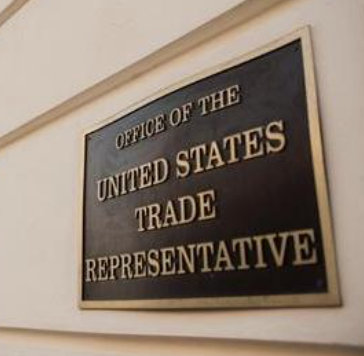


 We're proud to announce the recipients of this year's OSU College of Veterinary Medicine alumni awards!
 David L. Von Tungeln, DVM, Class of 1983 – Research, Rural Production Medicine & Clinical Practice
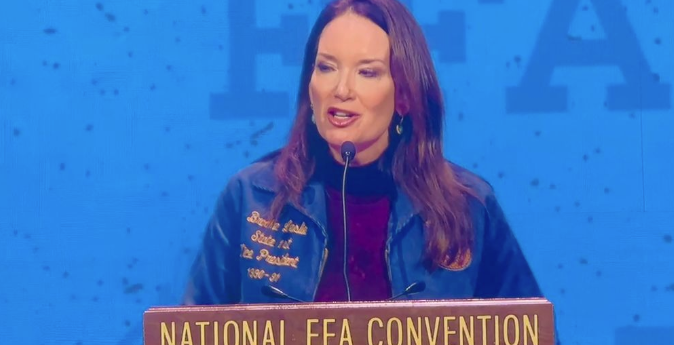


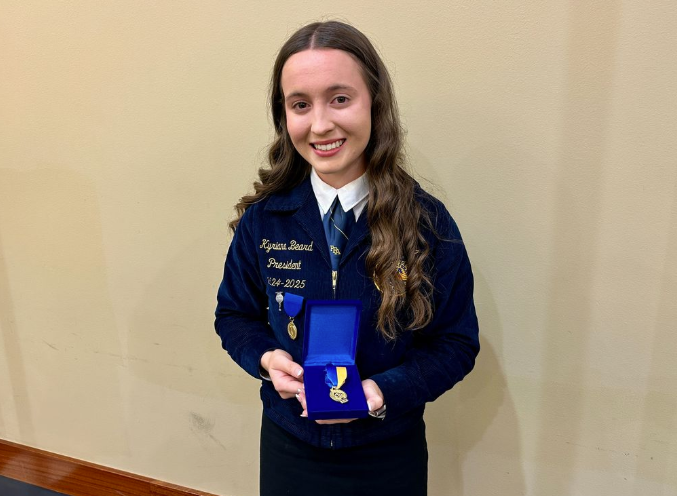



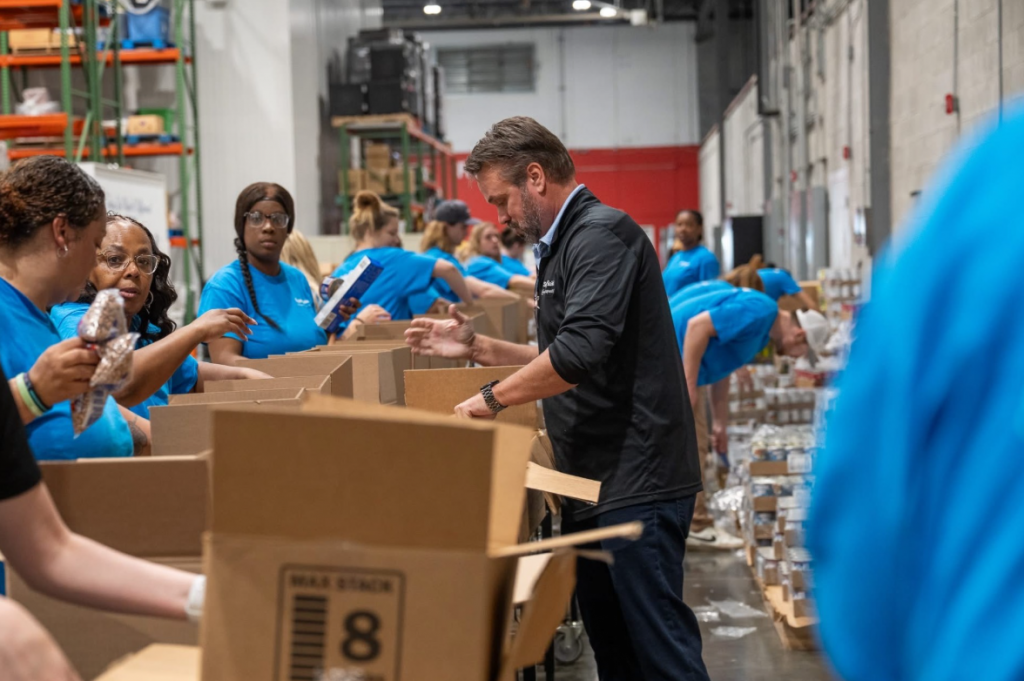

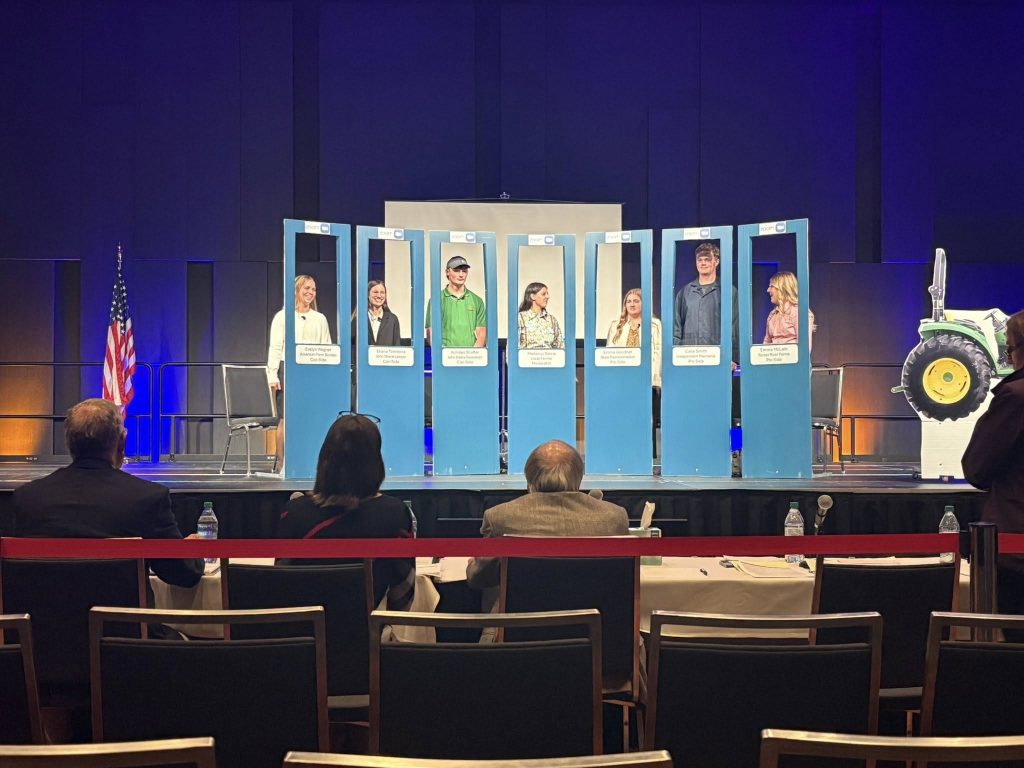

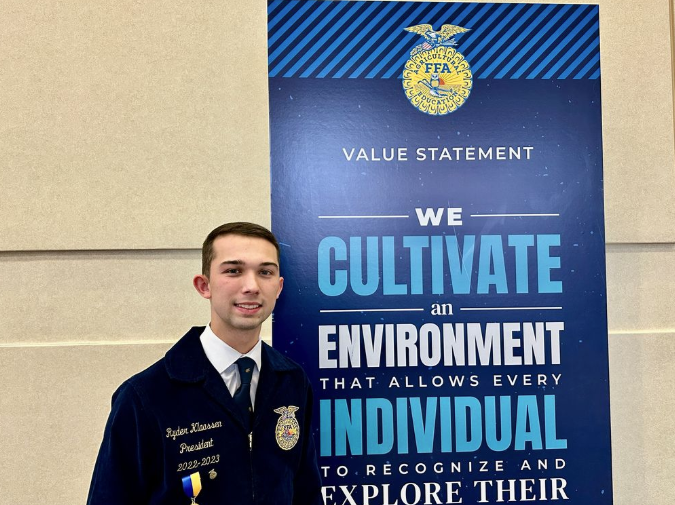

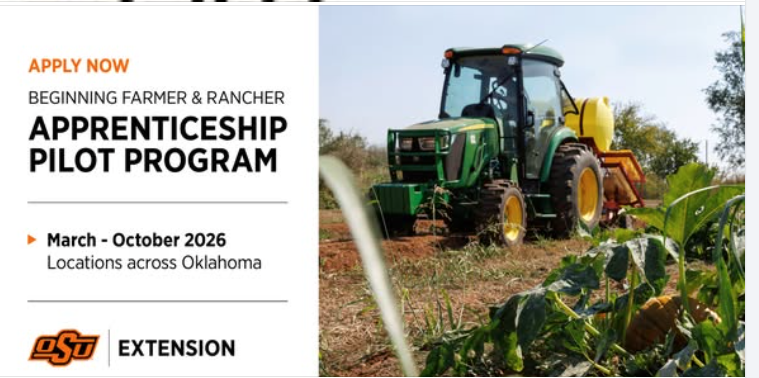



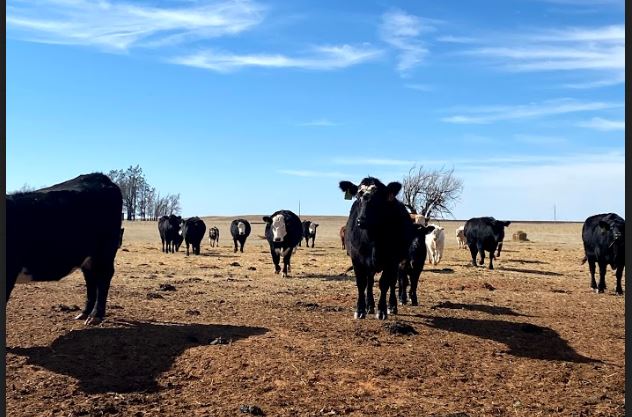


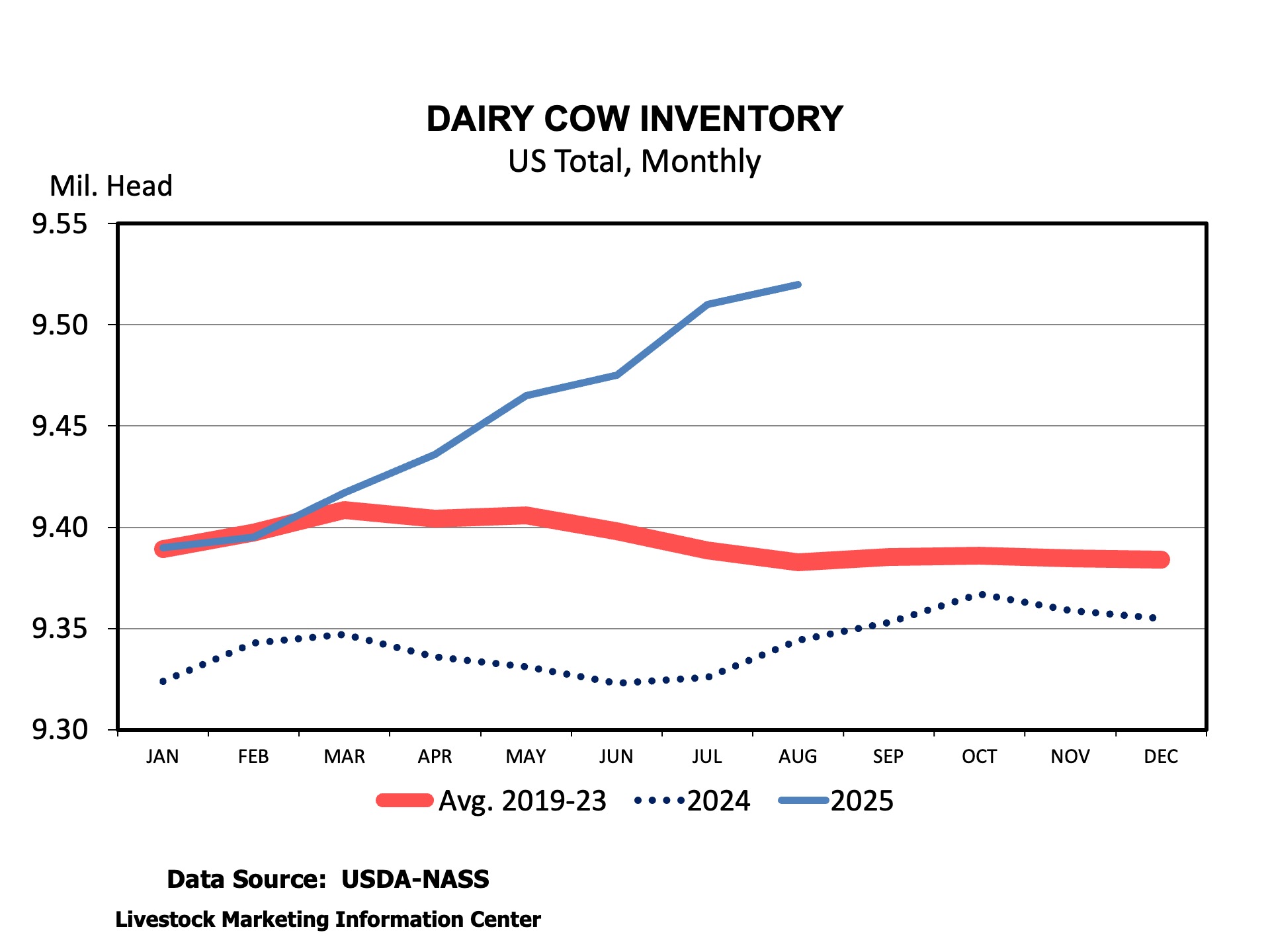
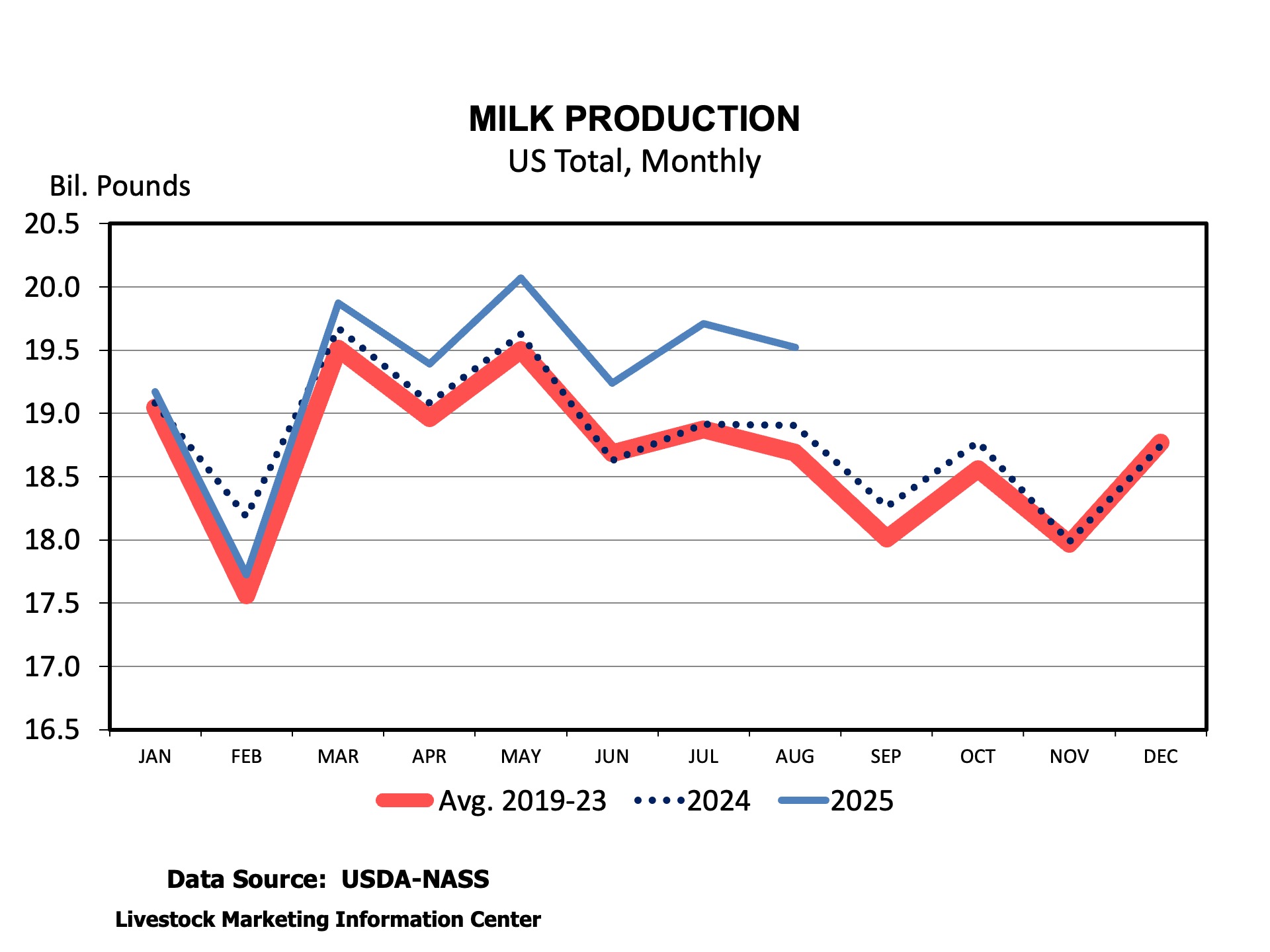
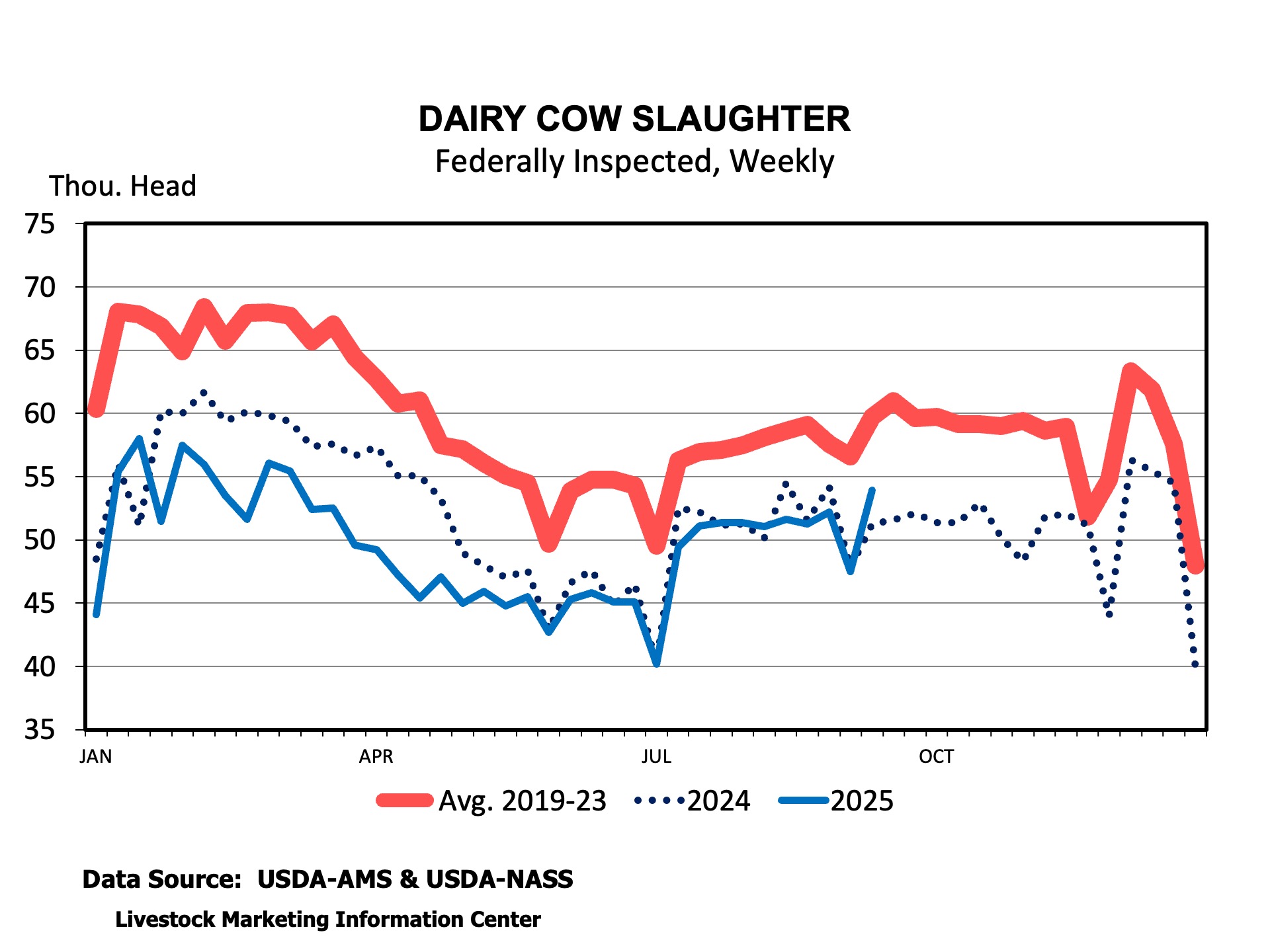
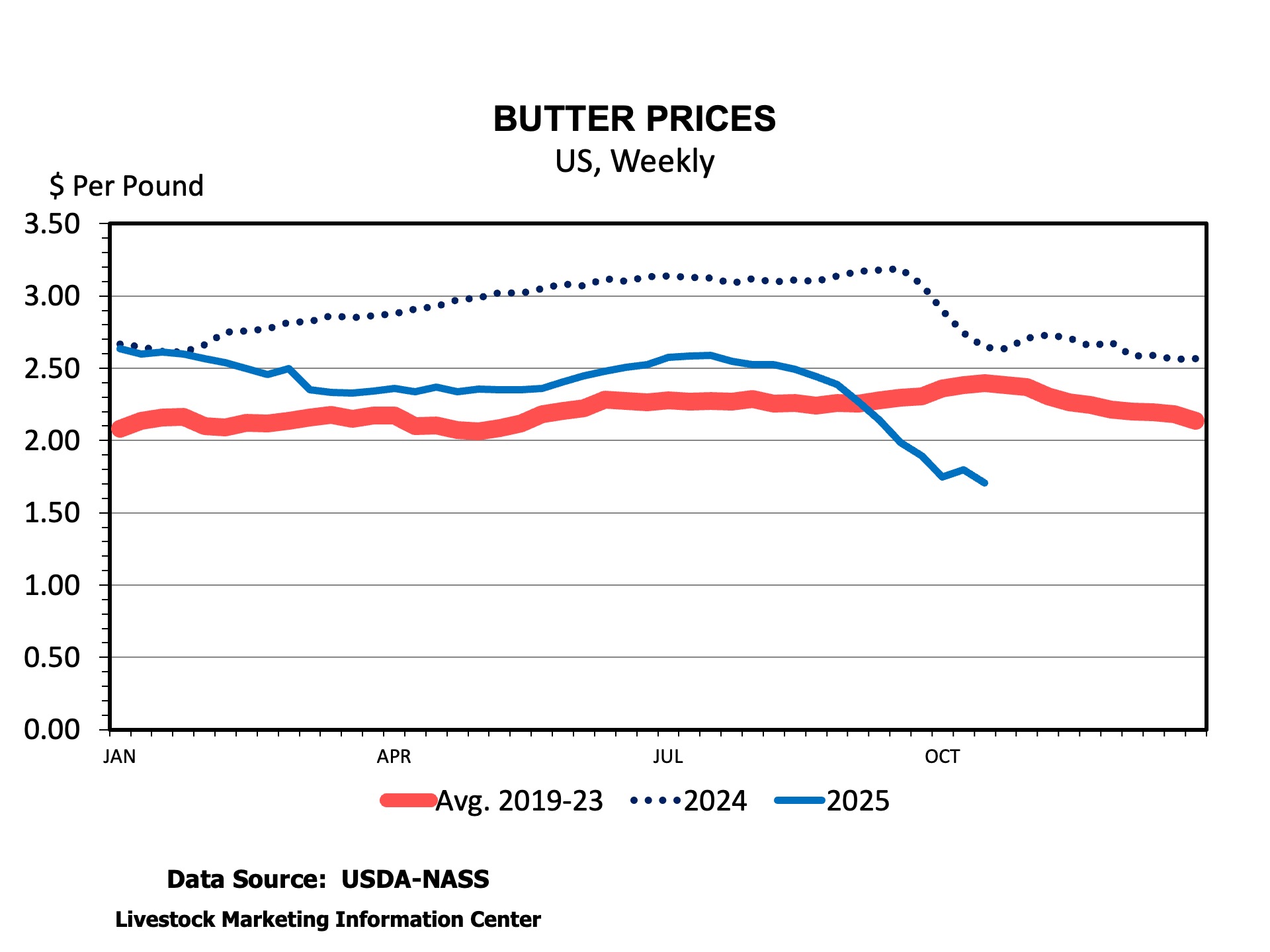
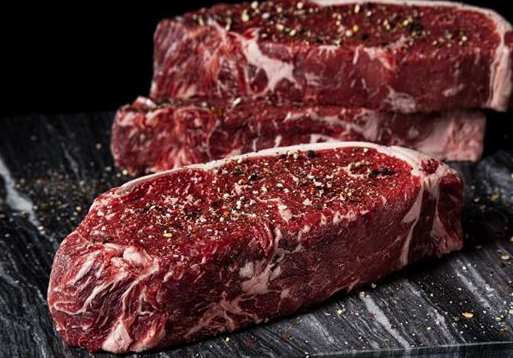
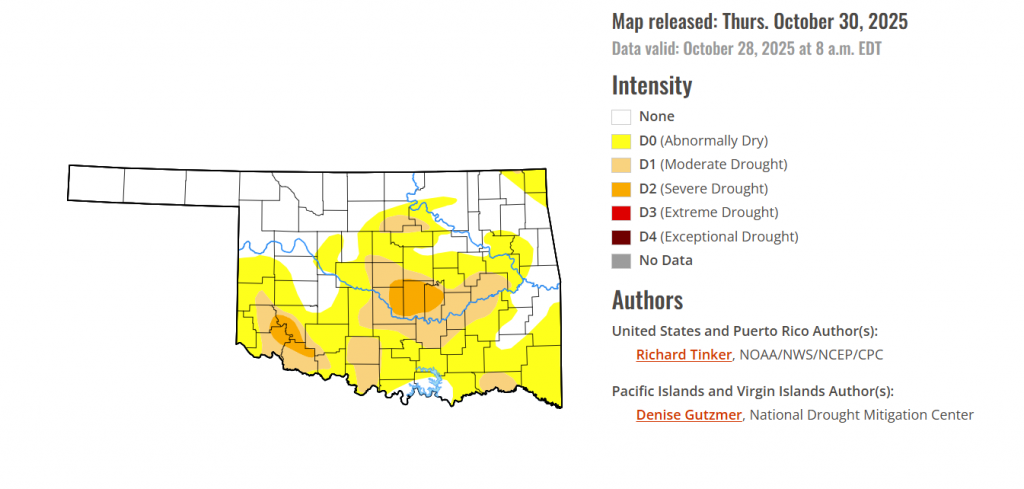
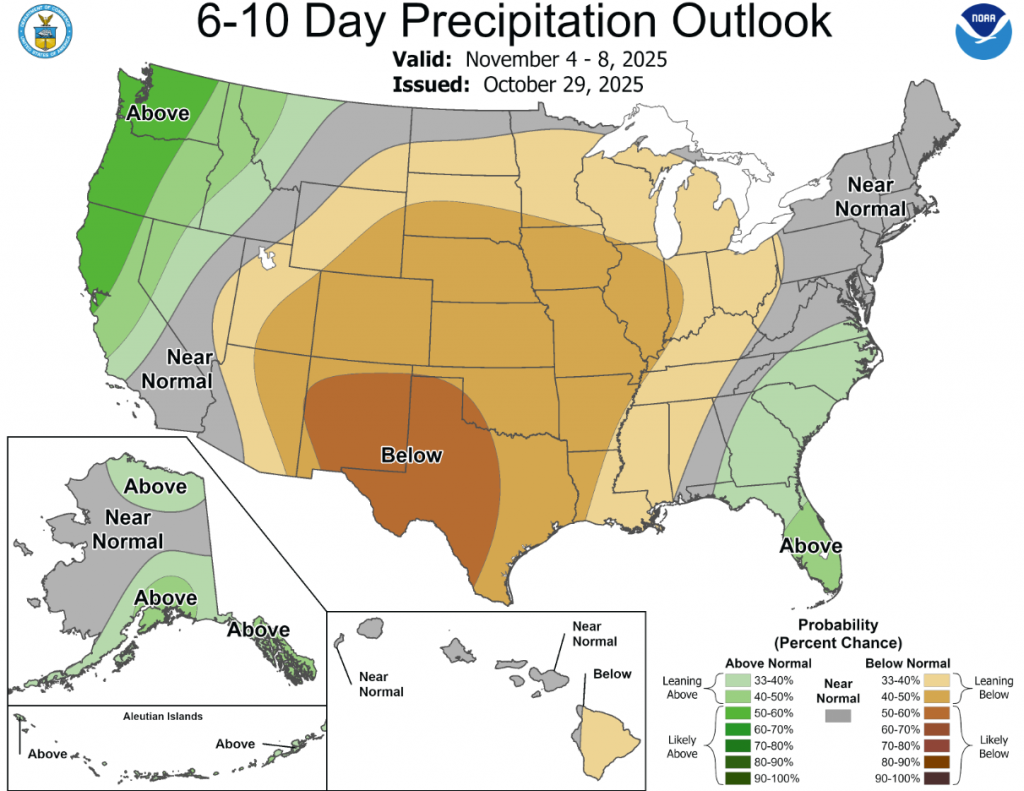
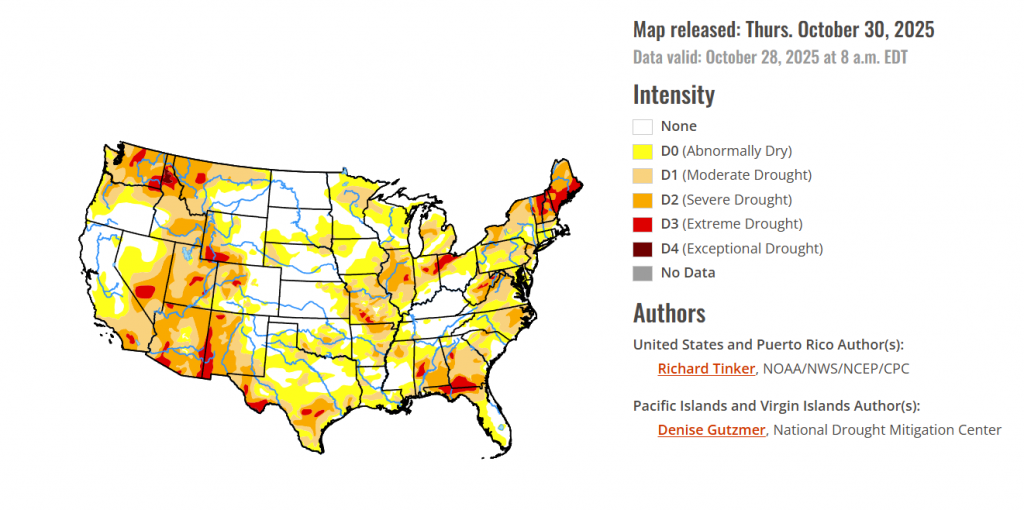

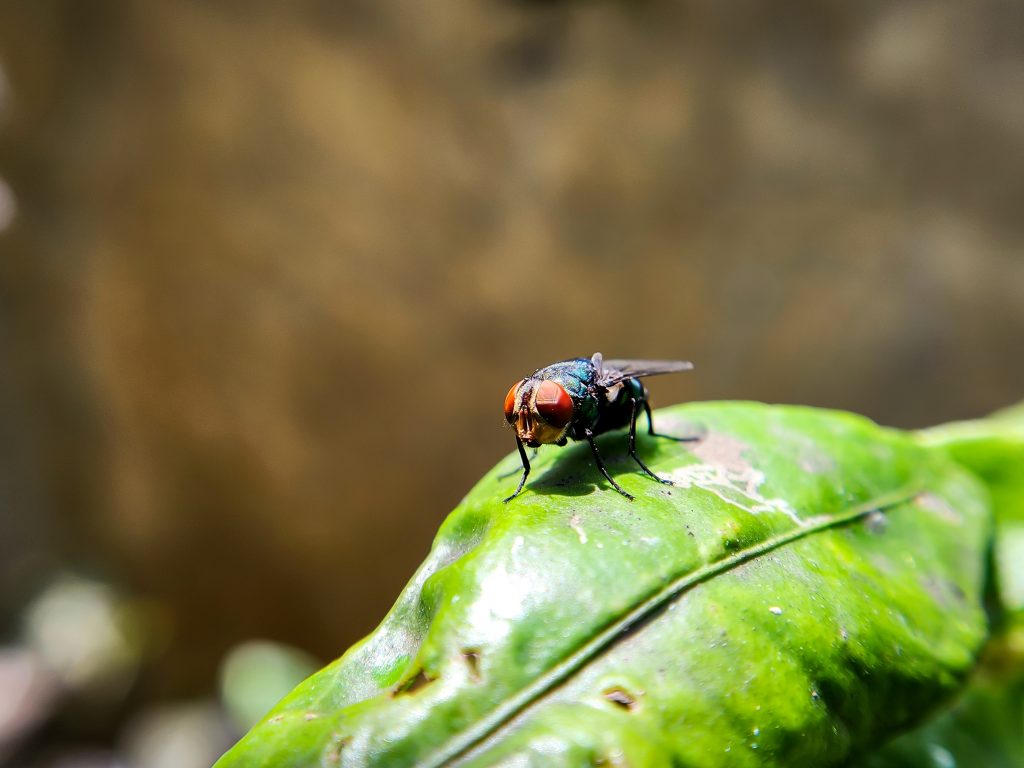
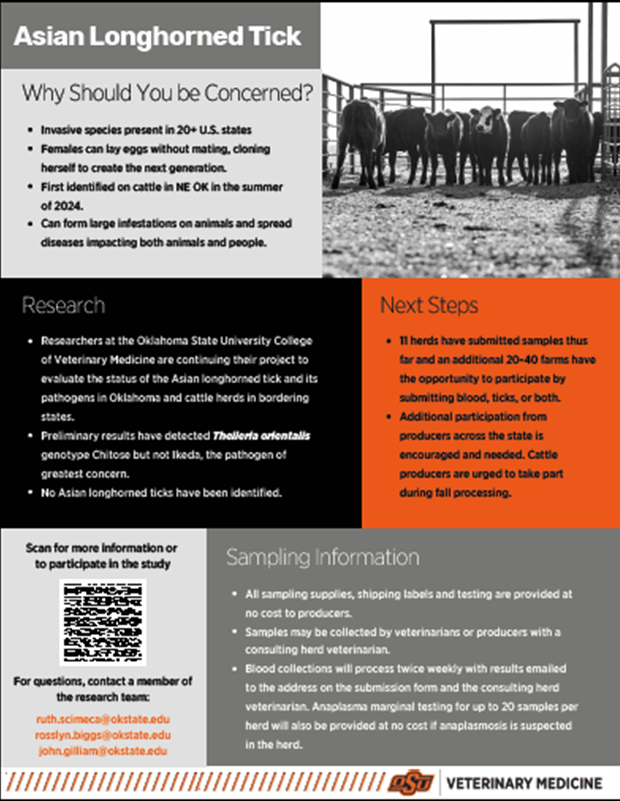

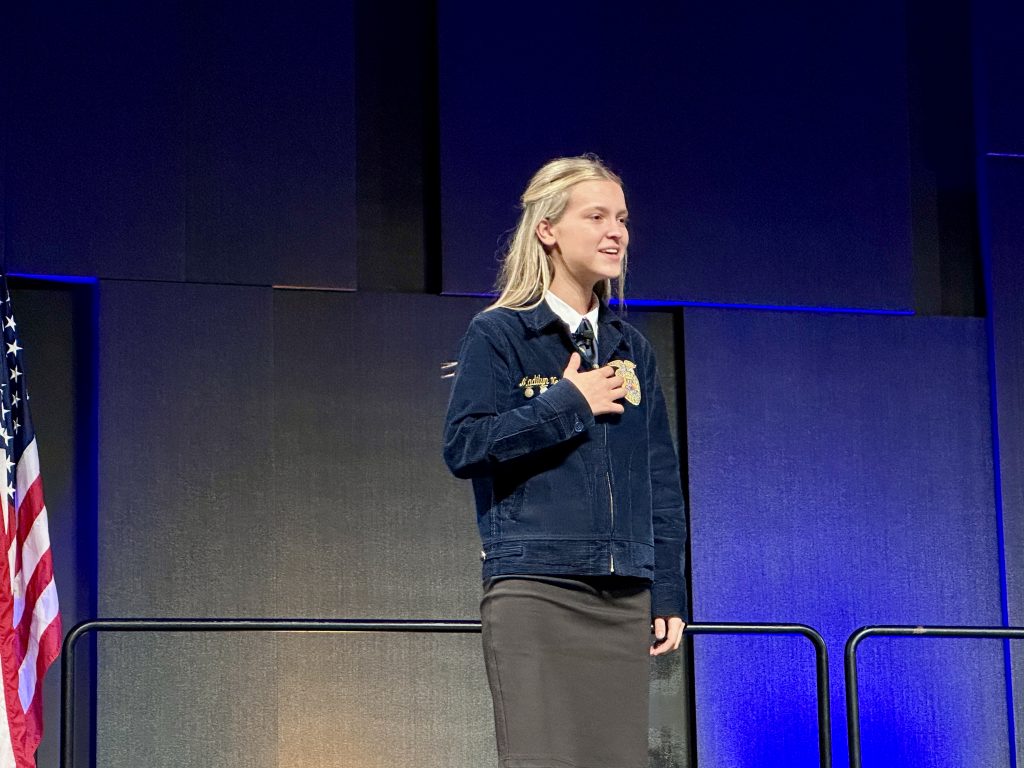
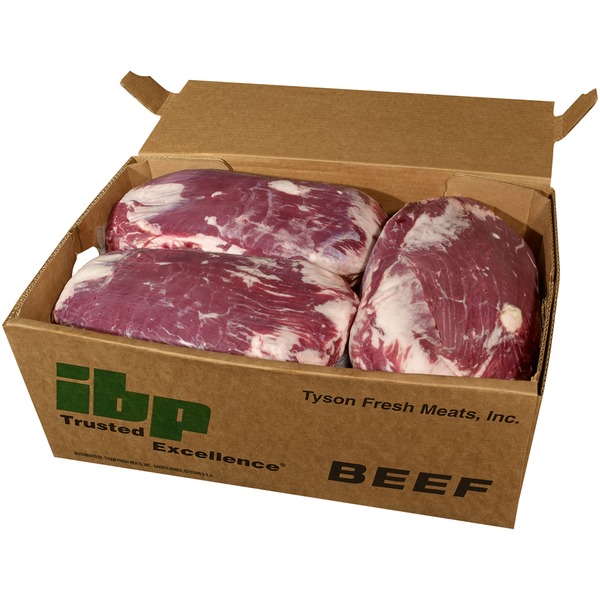

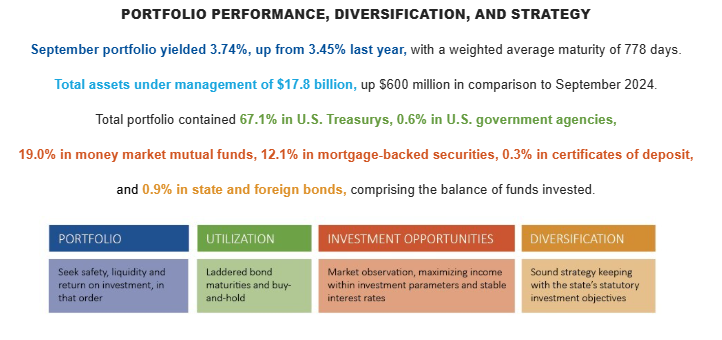
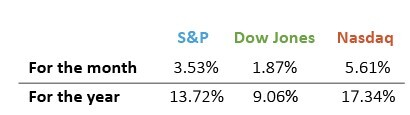
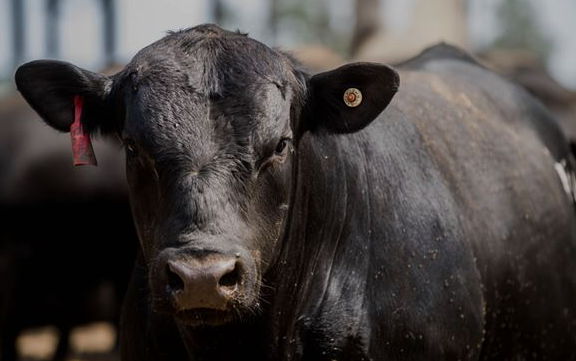
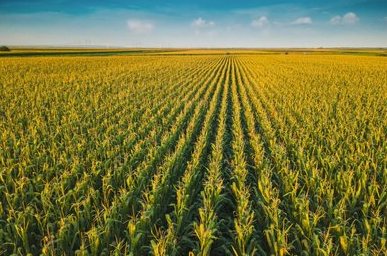

 Homesteading is such an exciting journey of freedom, allowing you to take control of your life, your food sources, and your inner peace. Let's embrace this adventure together to reclaim your strength and deepen your connection with the land!
 WHEN:
 WHERE:
 Grab Your Tickets before they sell out! www.okiehomesteading.com
 Vendor Applications
 Sponsorship Opportunities:
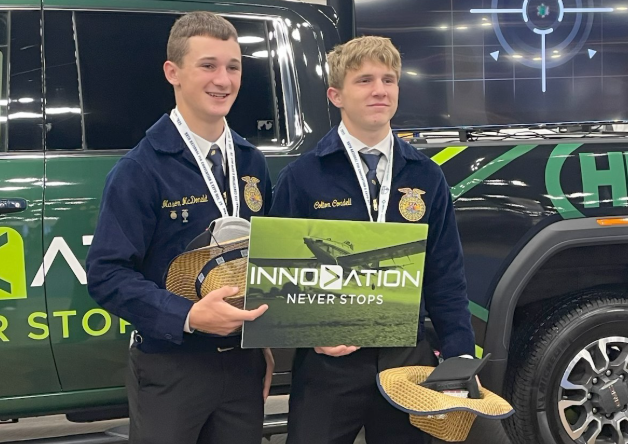


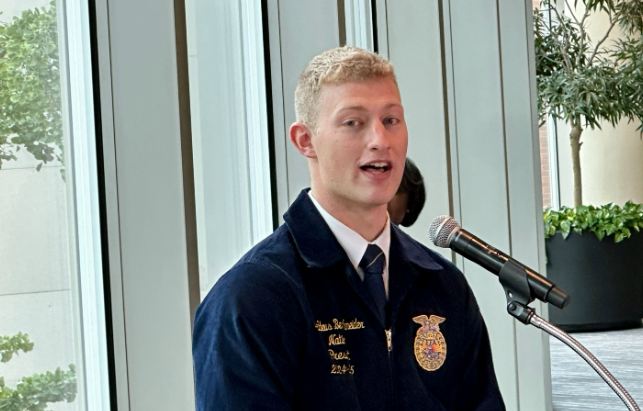

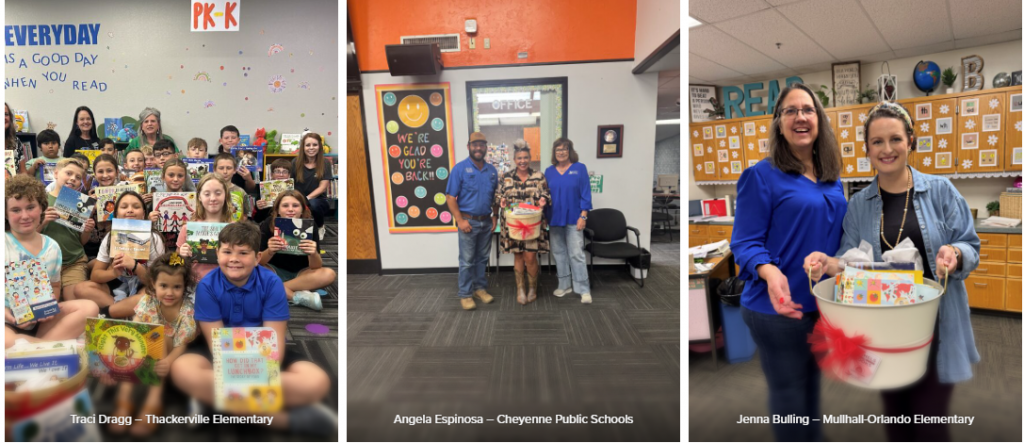
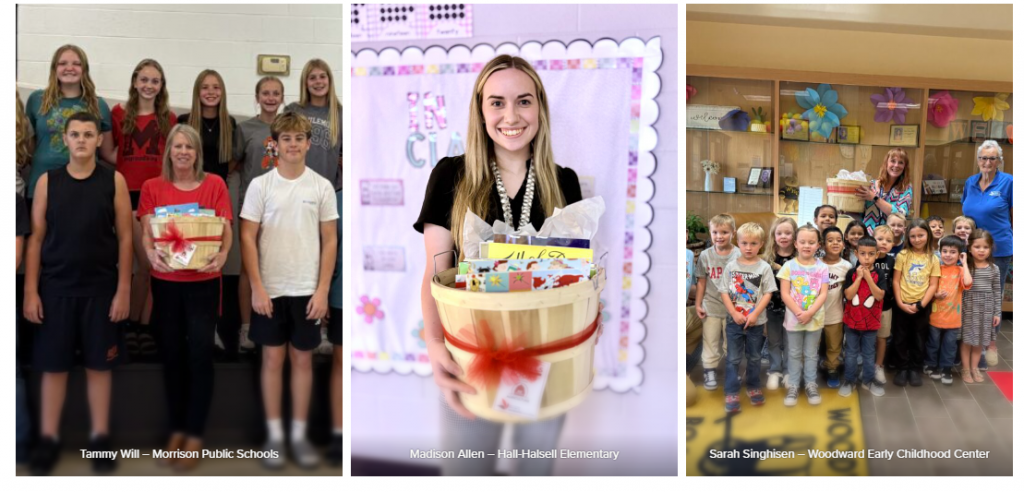

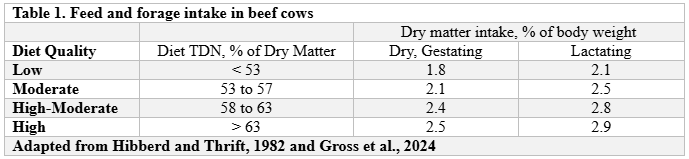
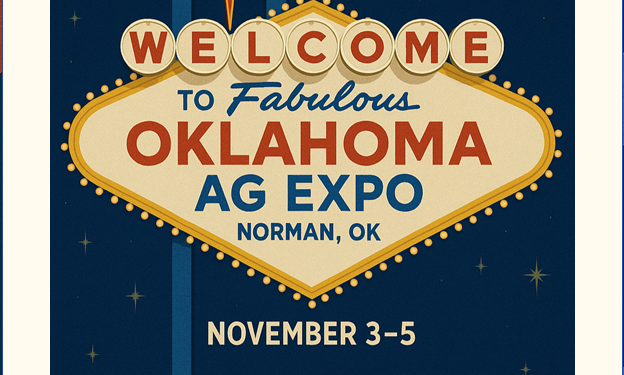
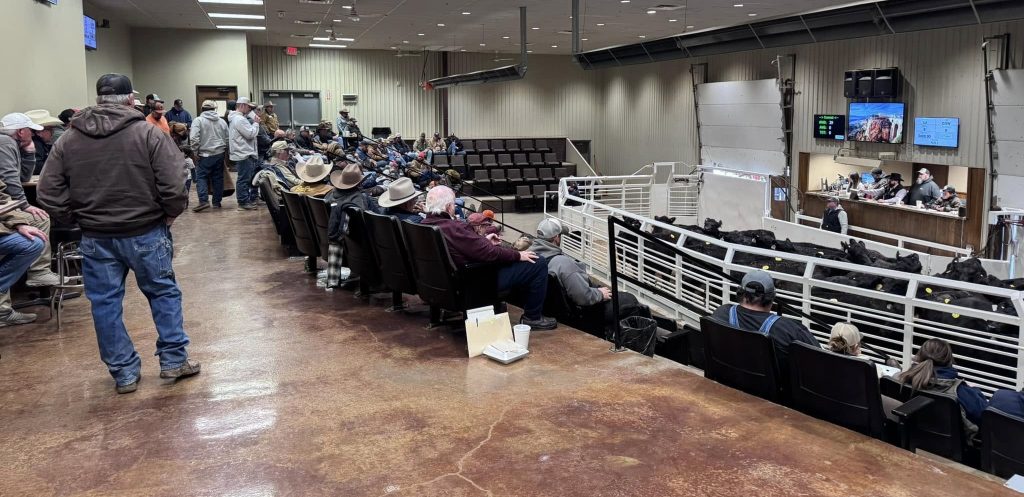



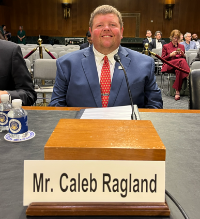


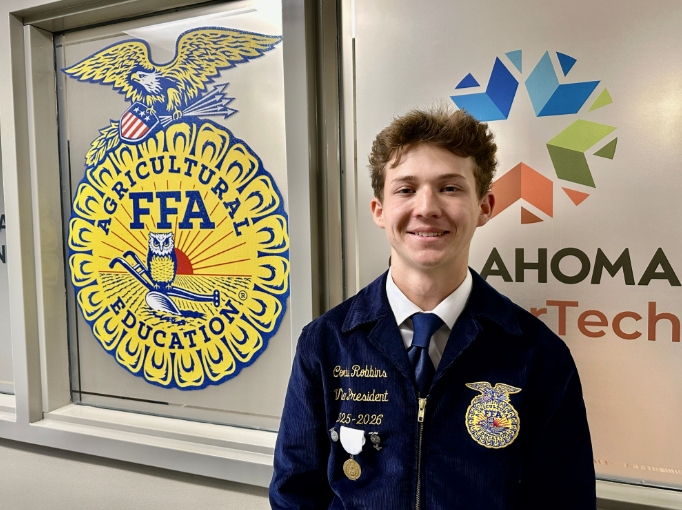
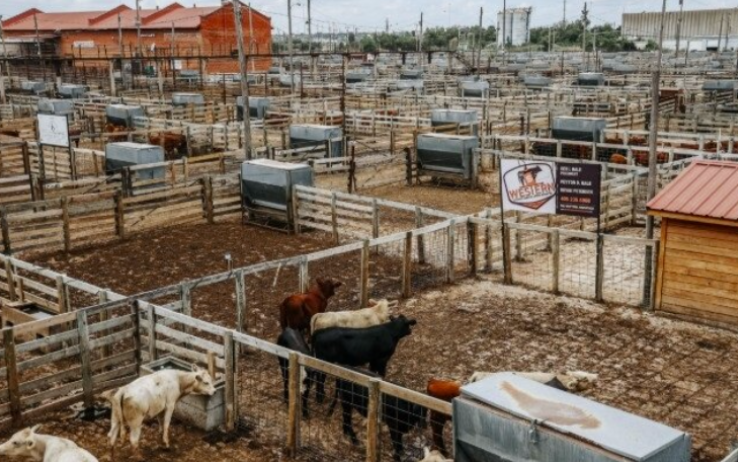
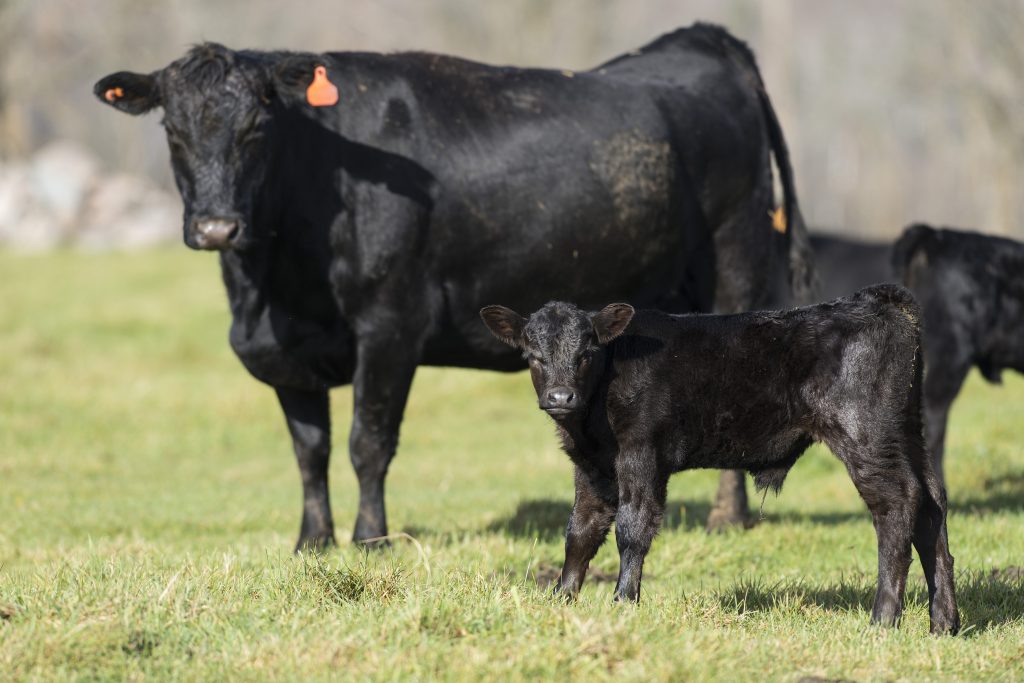
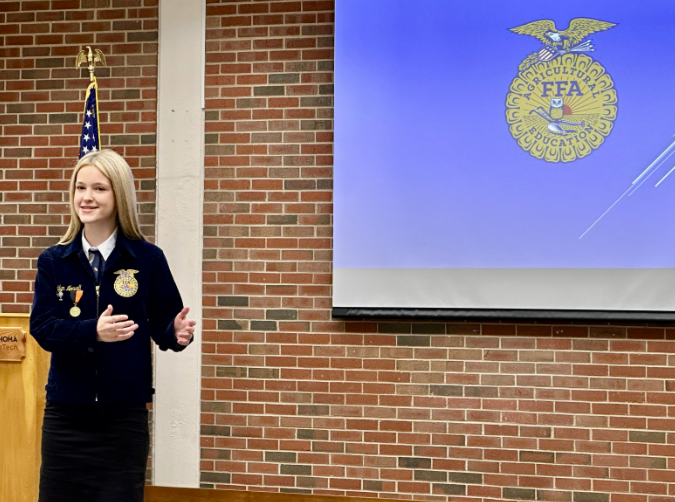
 okla.st/4fqmvrP




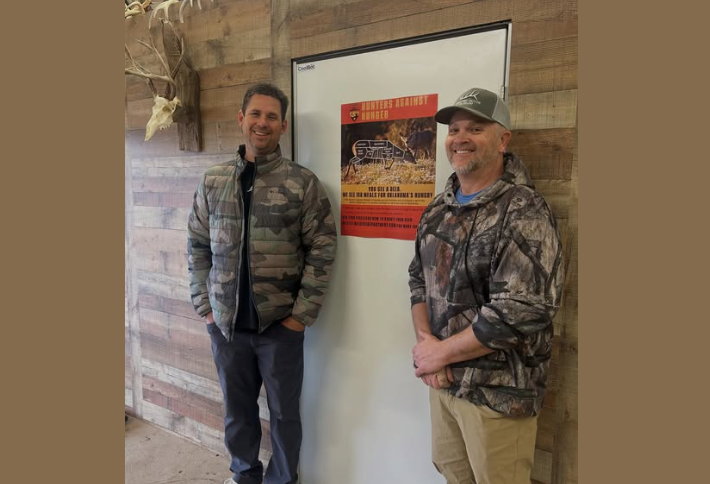

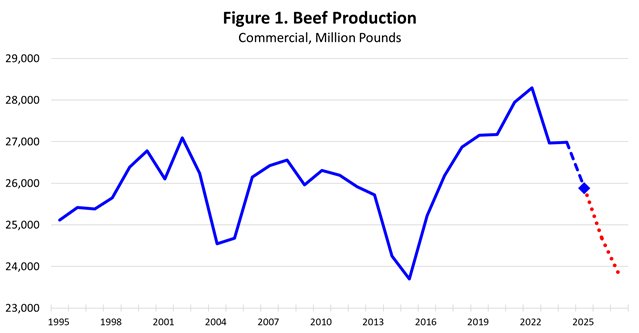
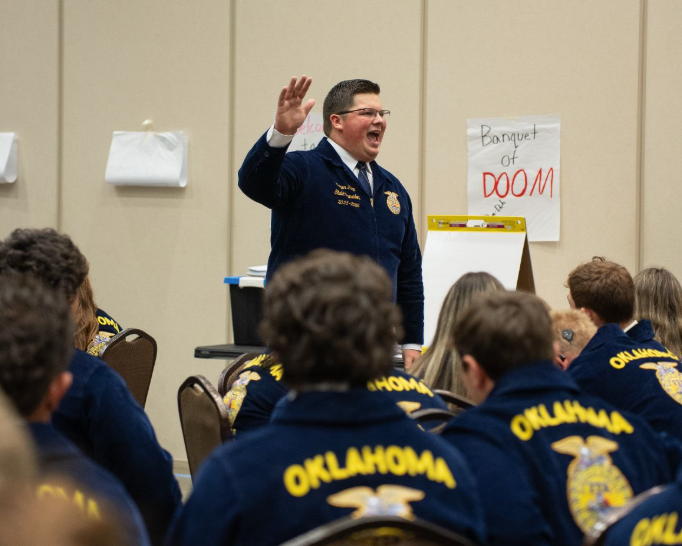

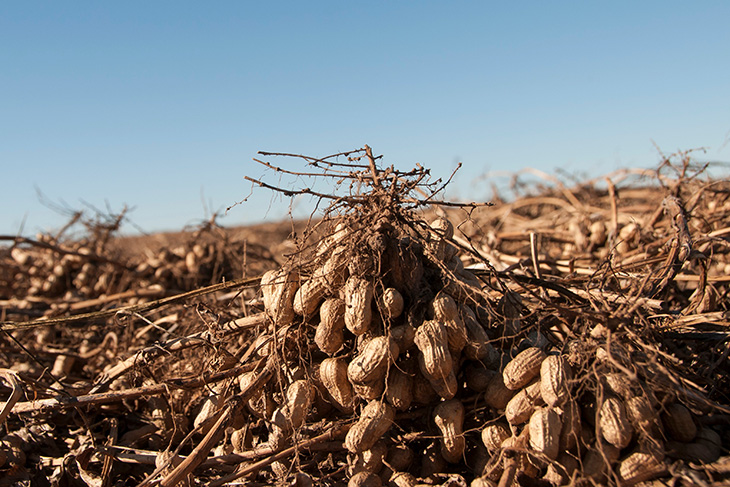
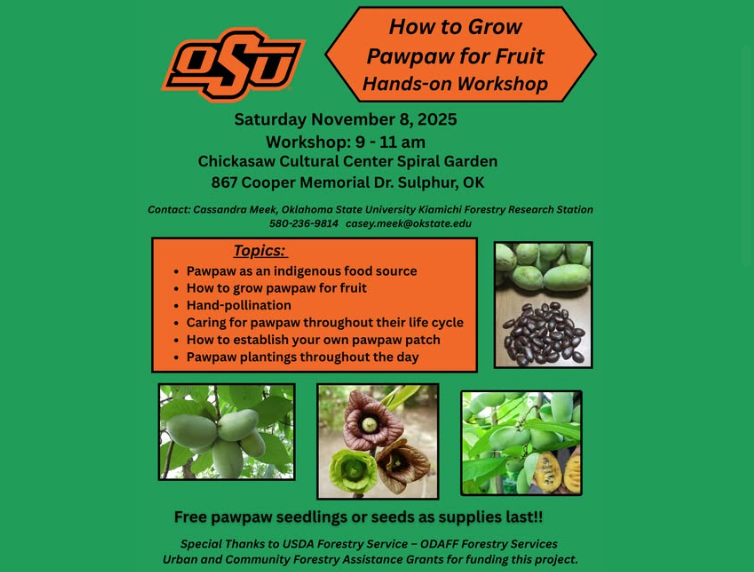
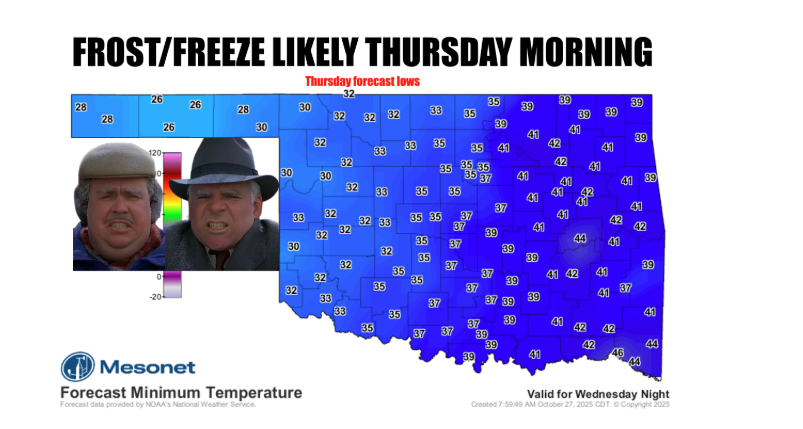
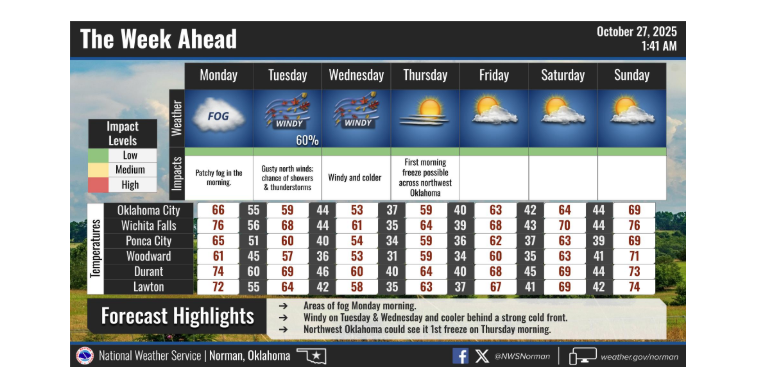
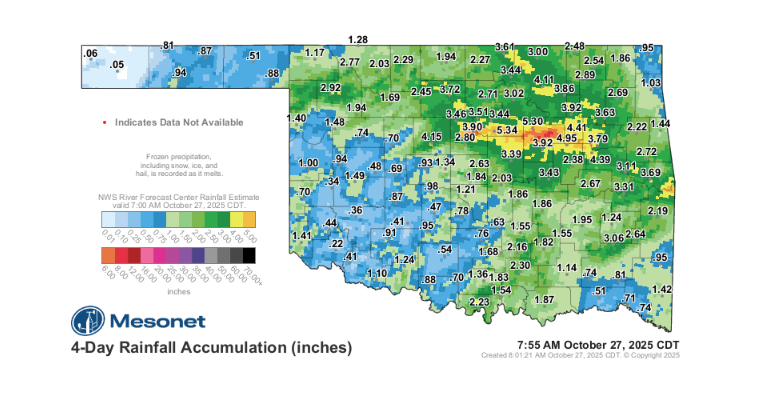
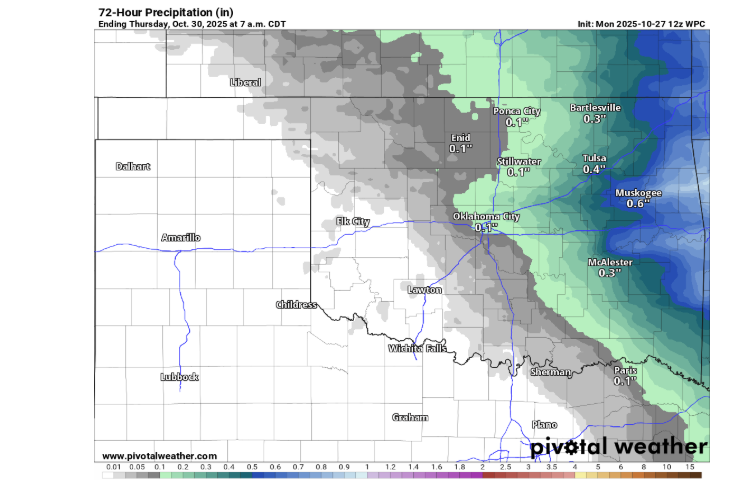
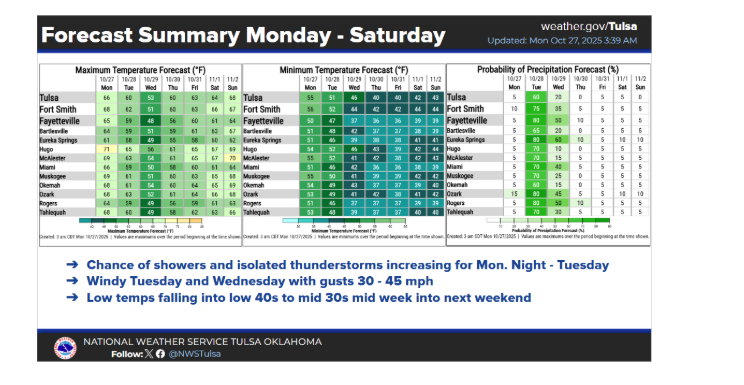
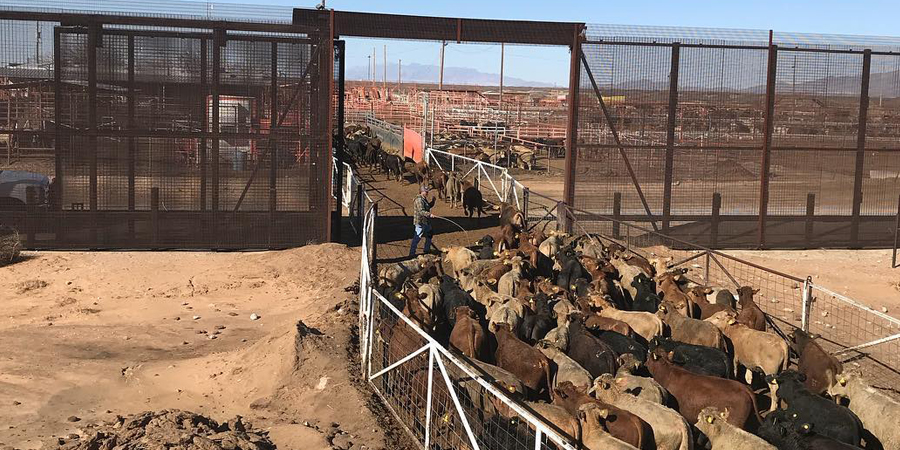

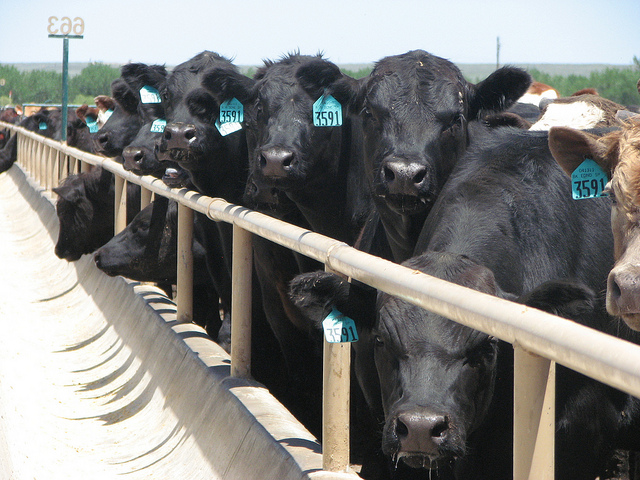


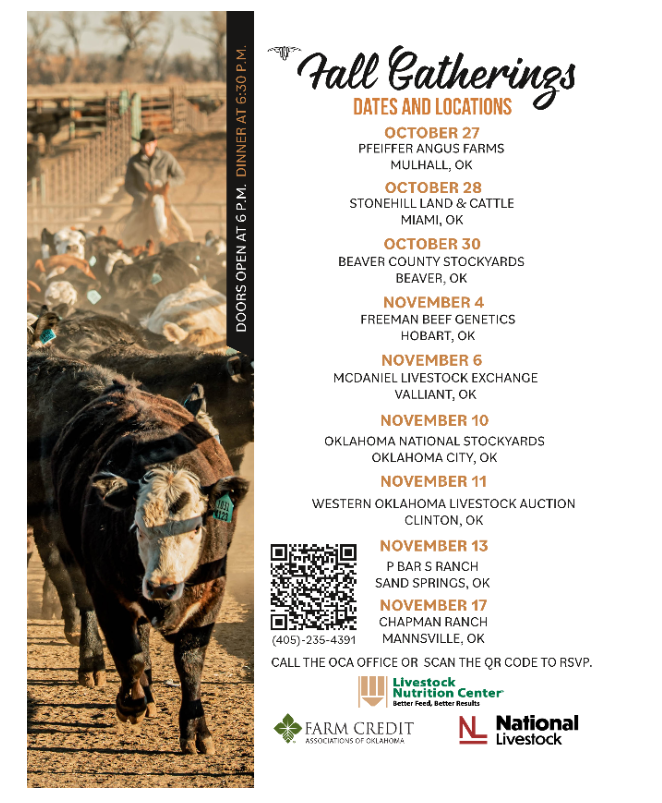
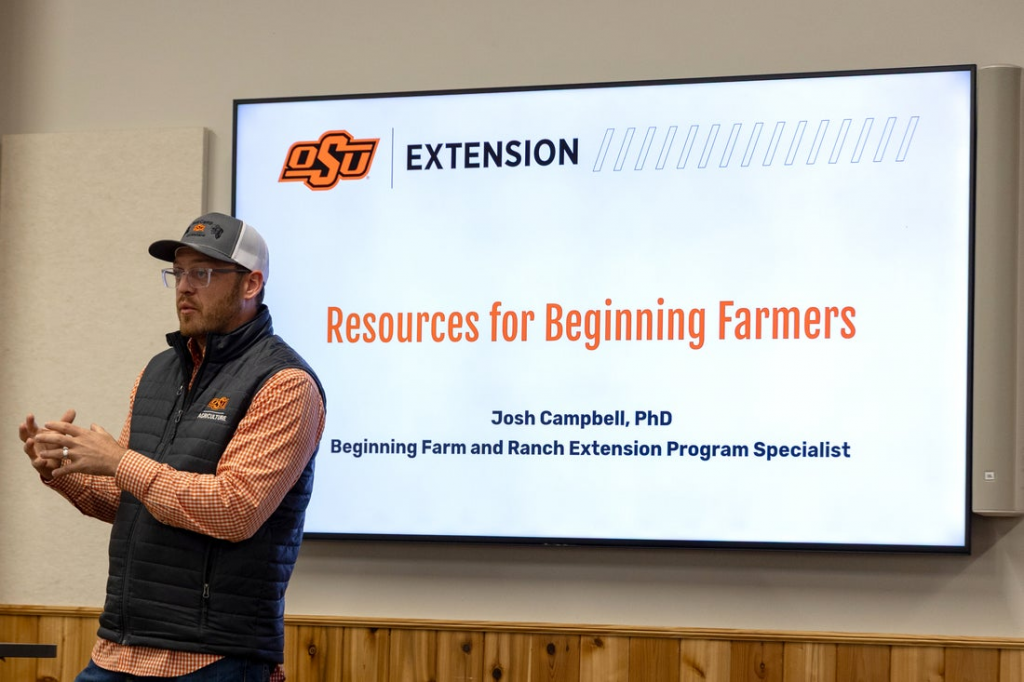


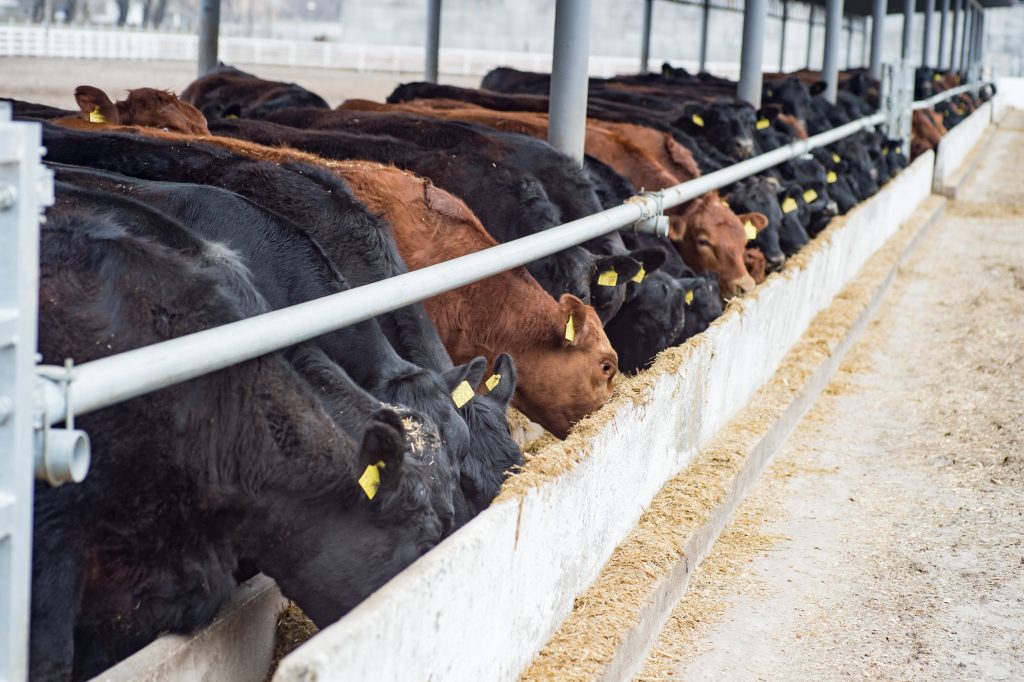


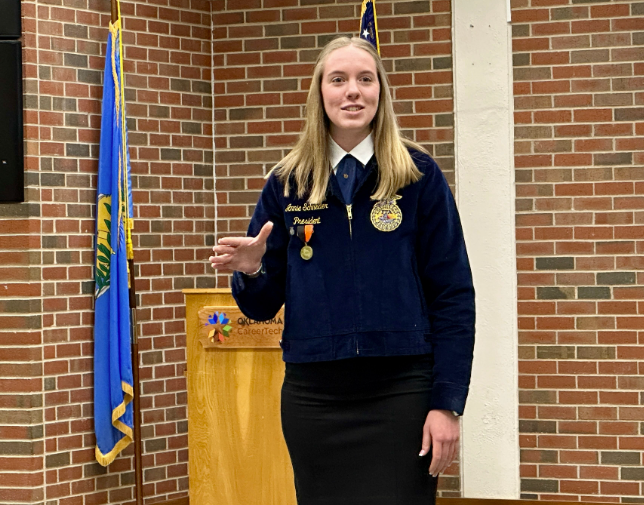

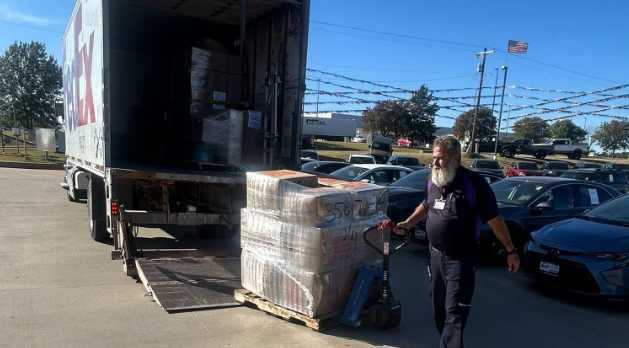

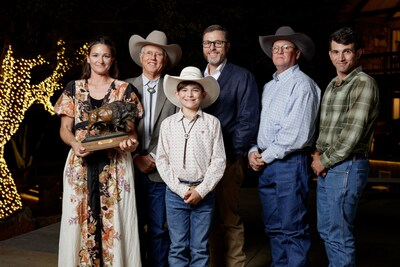
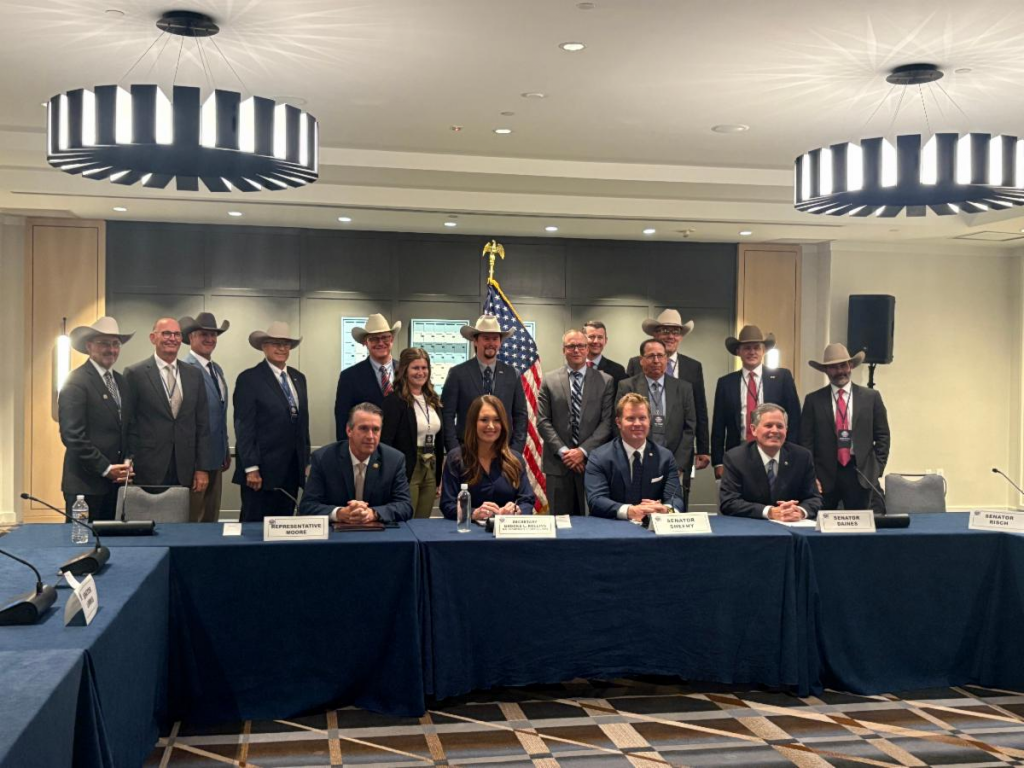
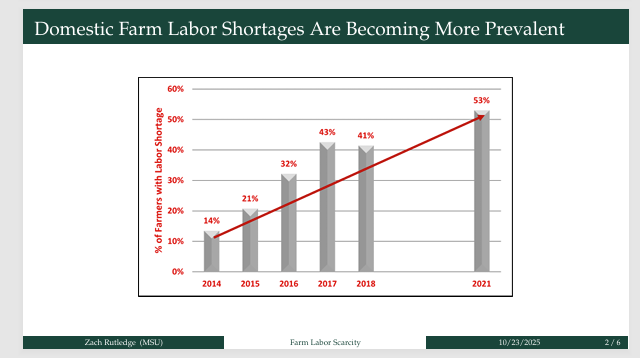
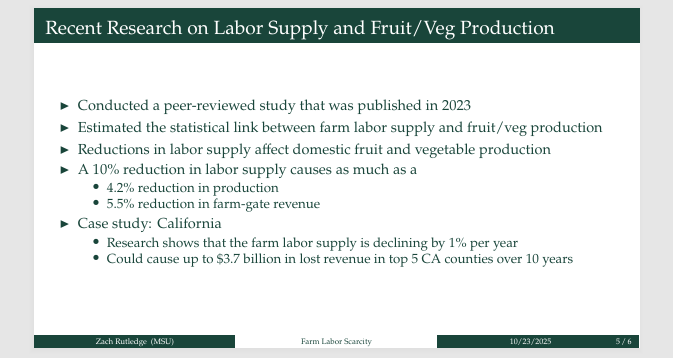
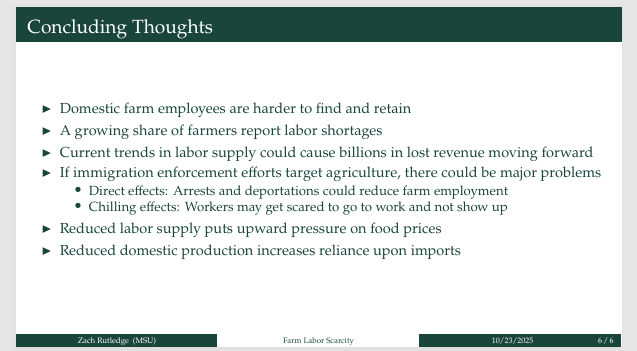
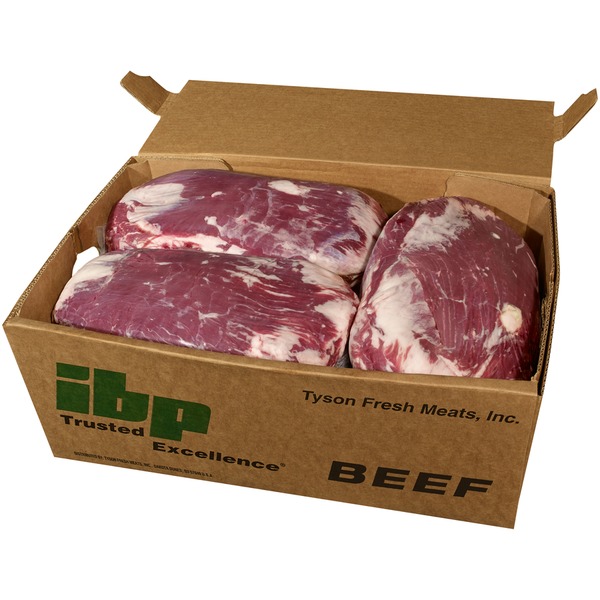

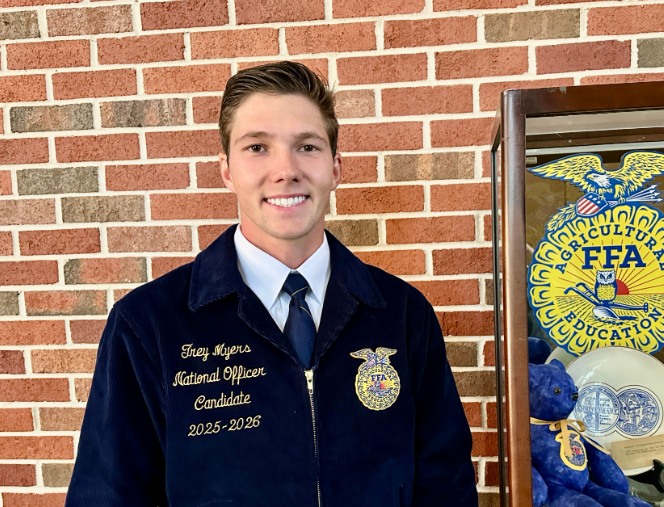
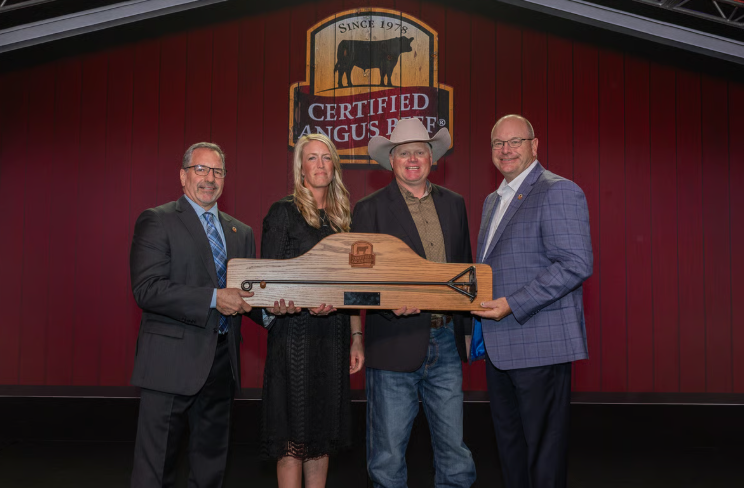



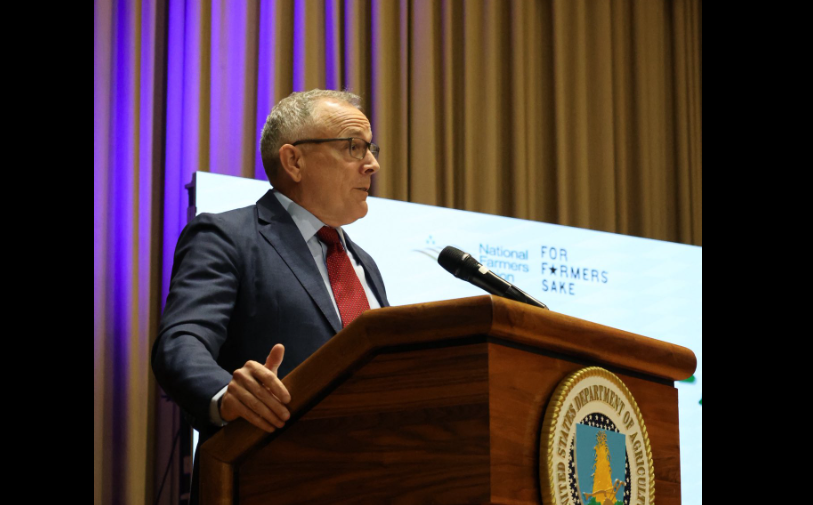
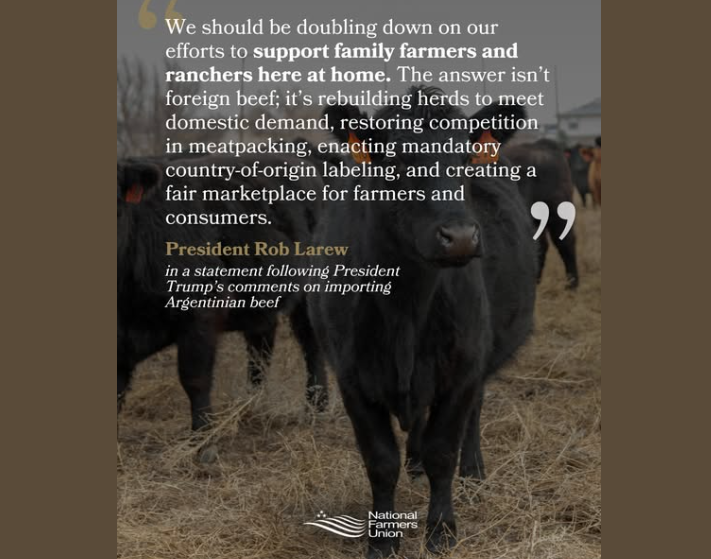
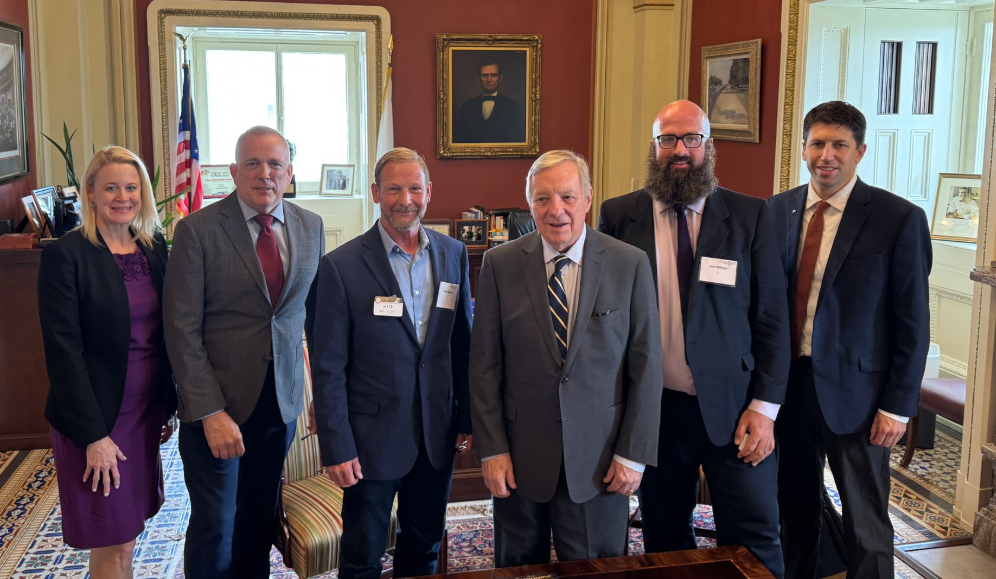

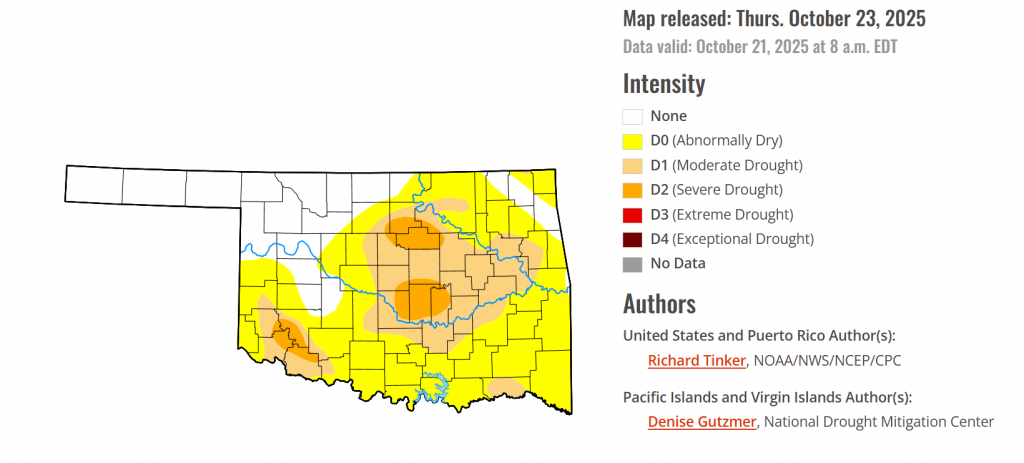
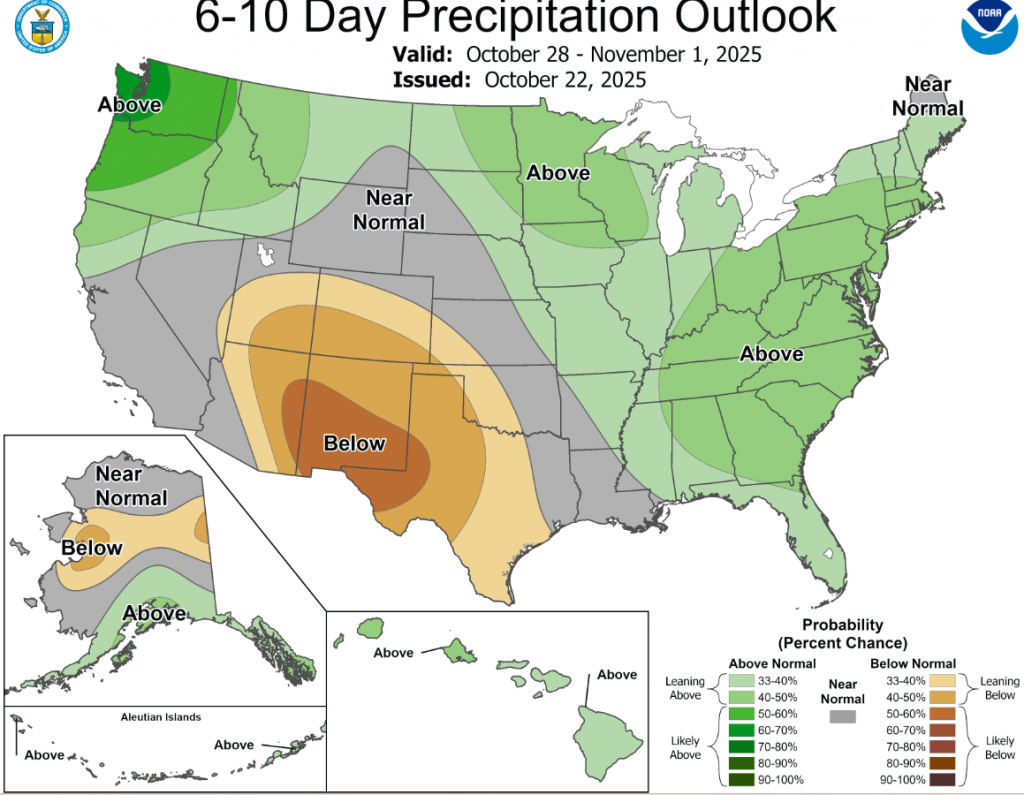
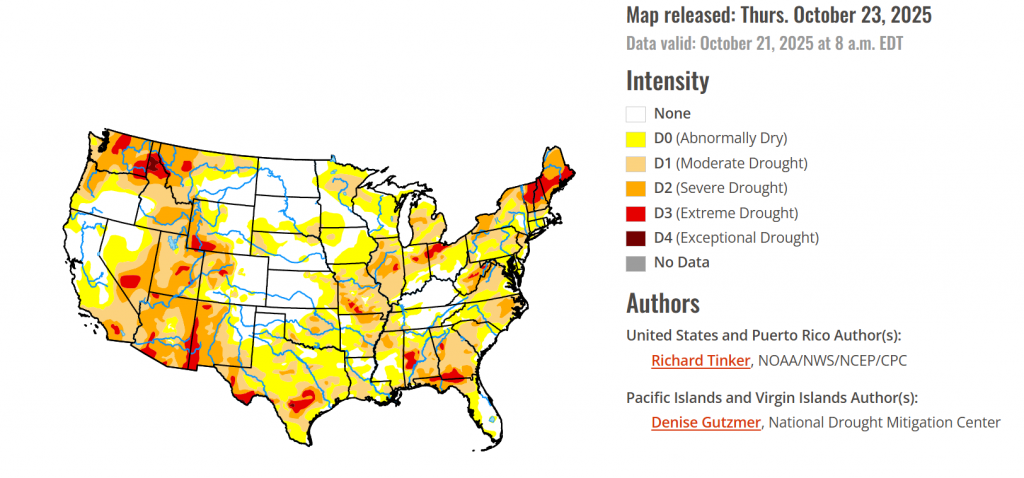
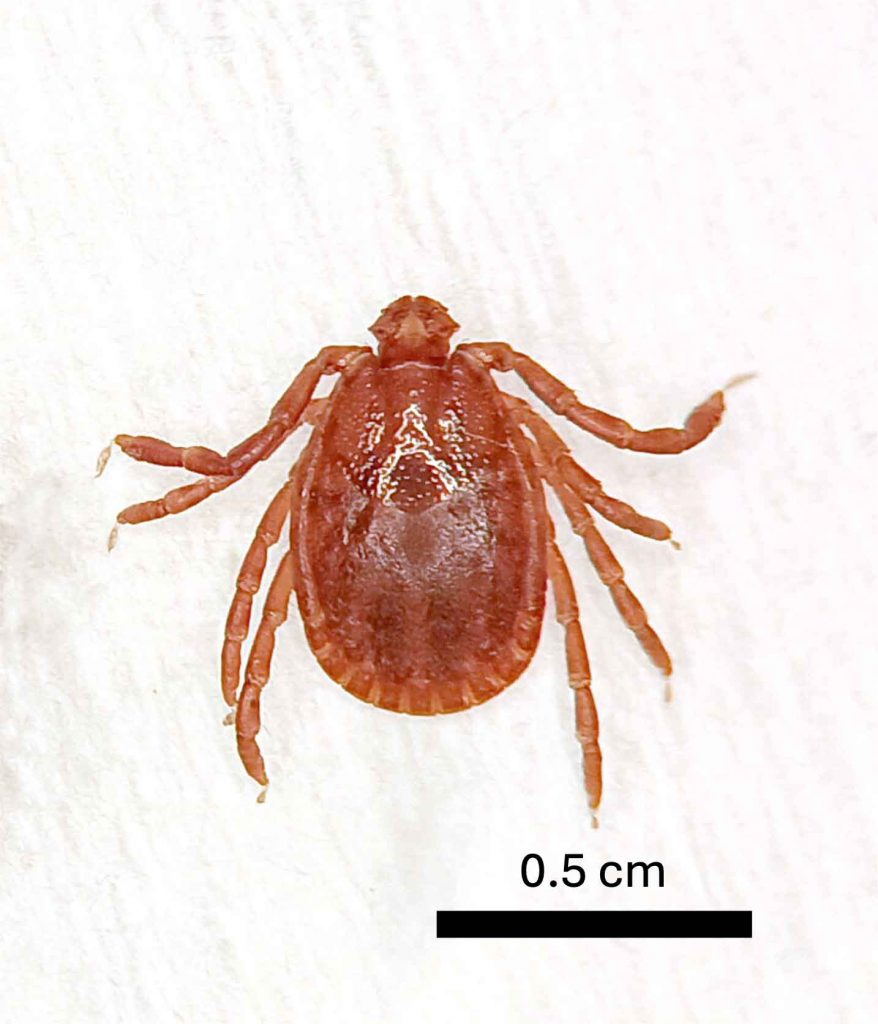

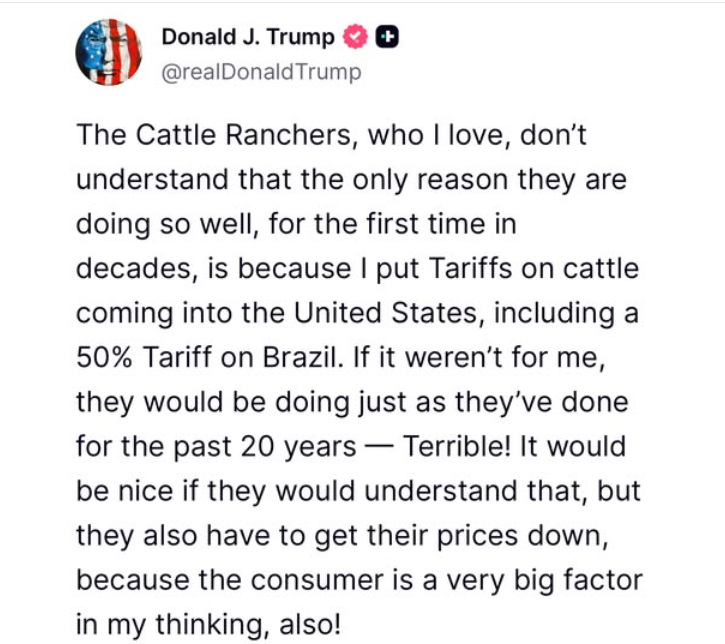
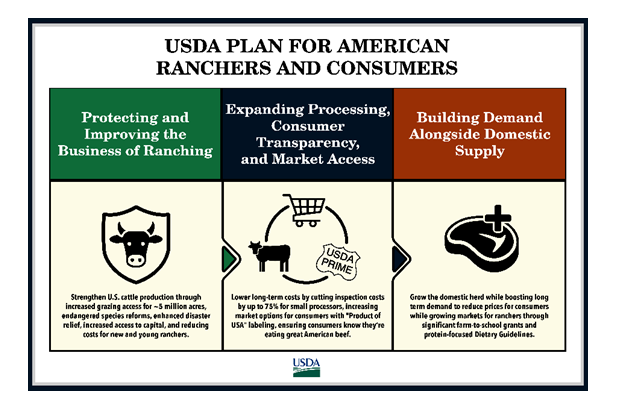


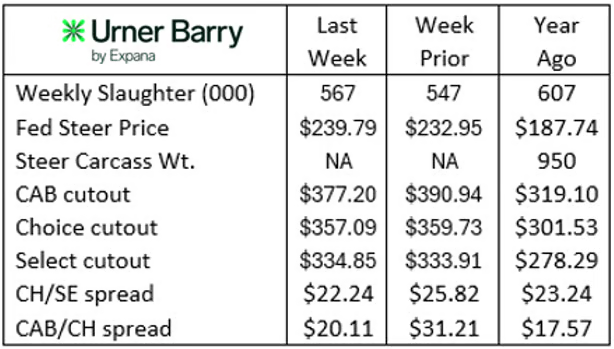
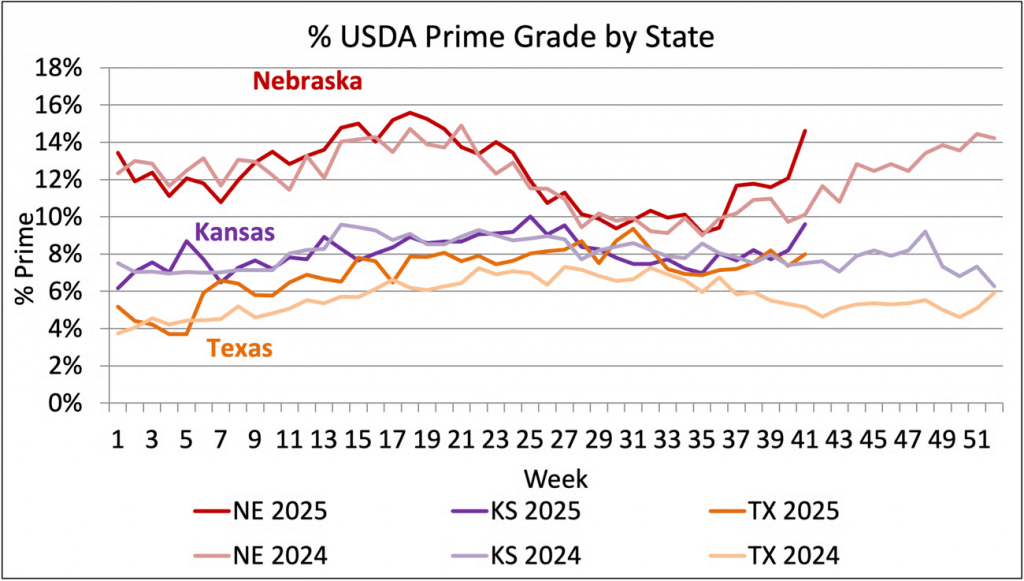



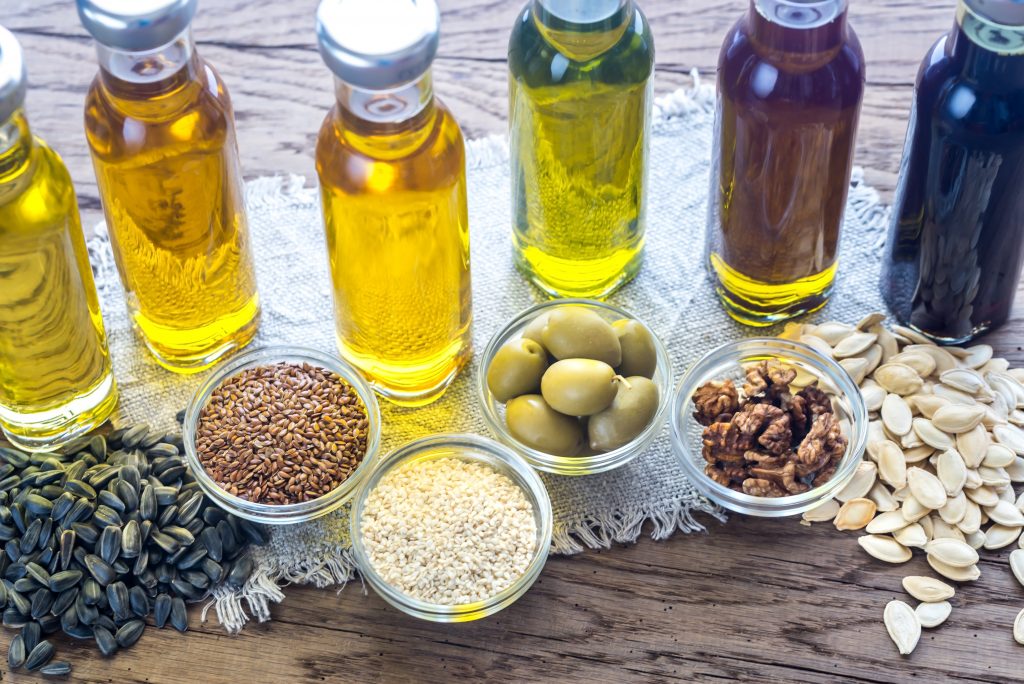
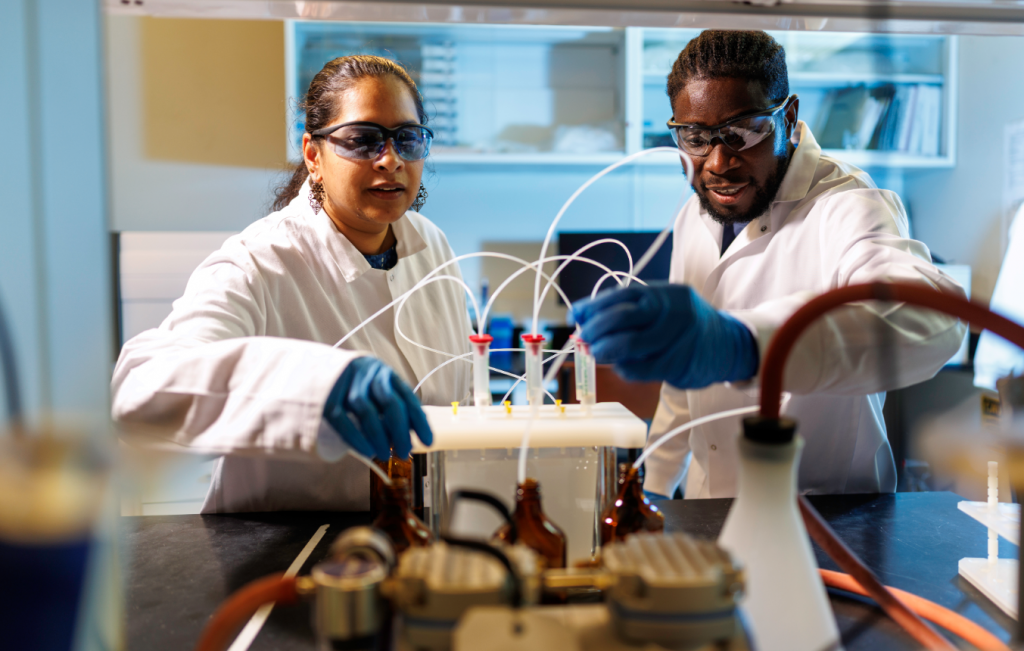
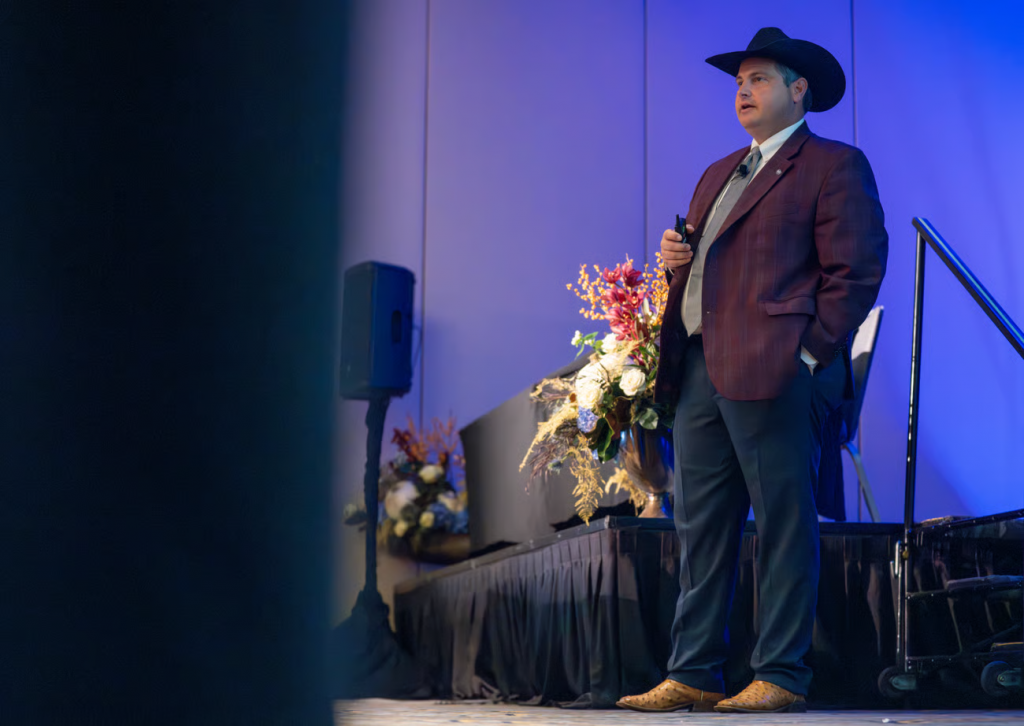
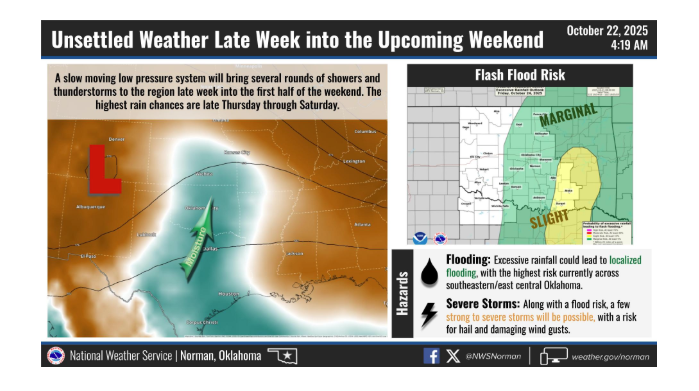
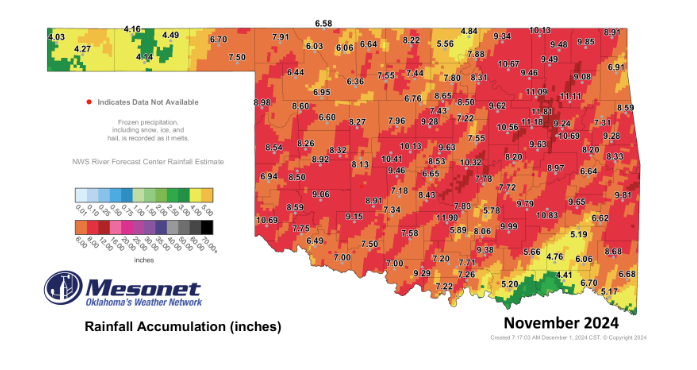
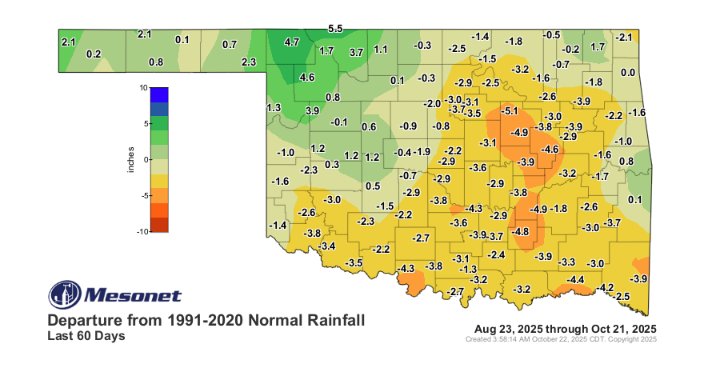
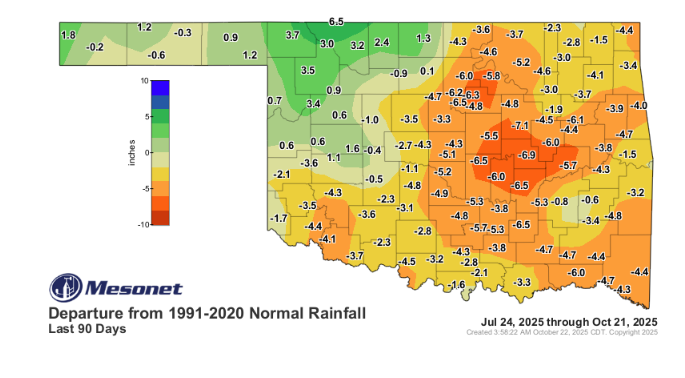
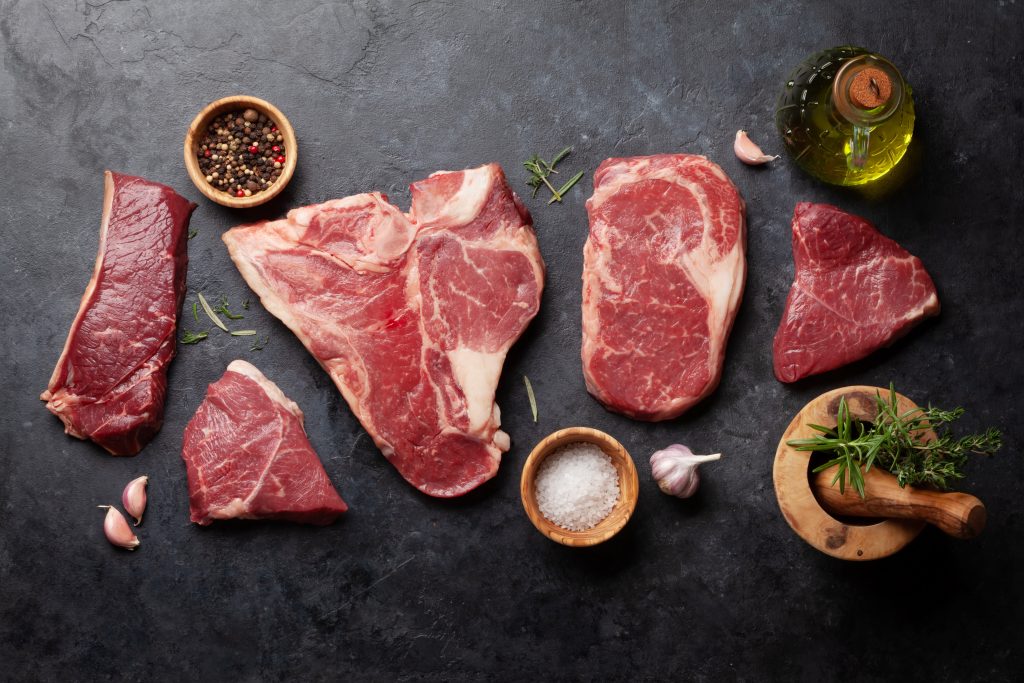

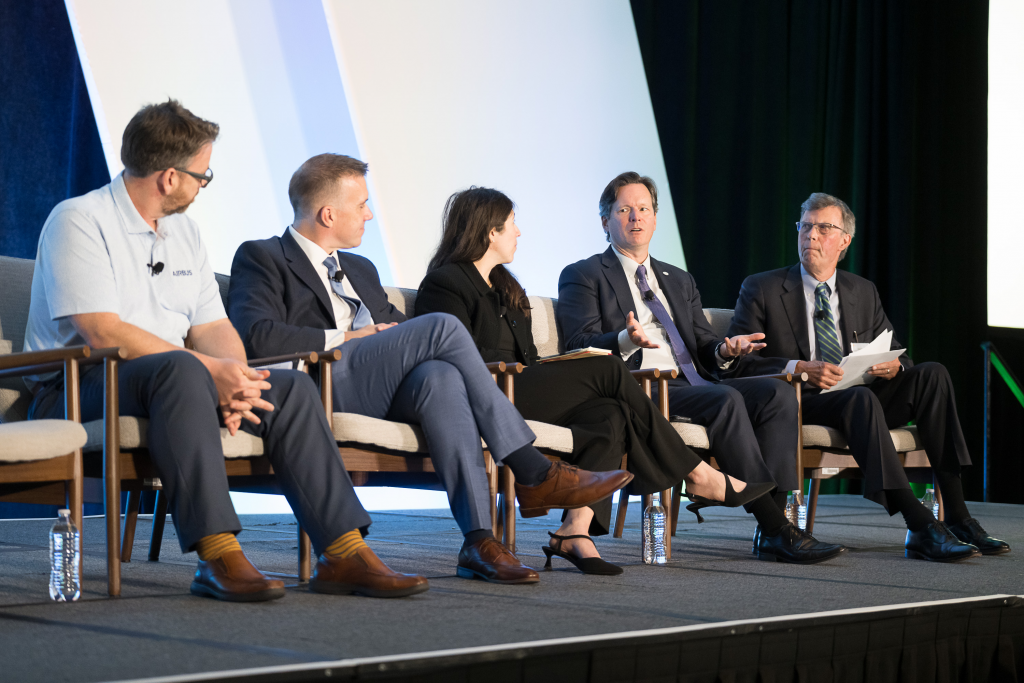



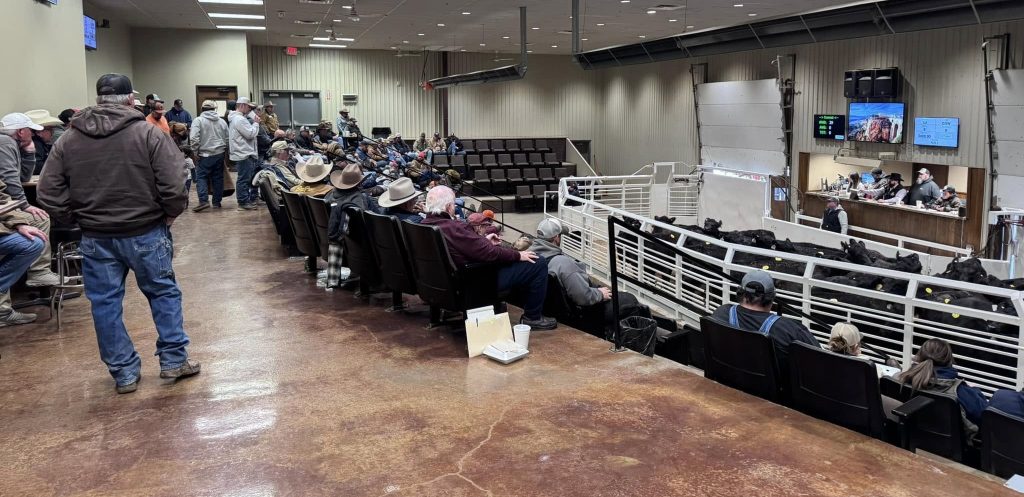


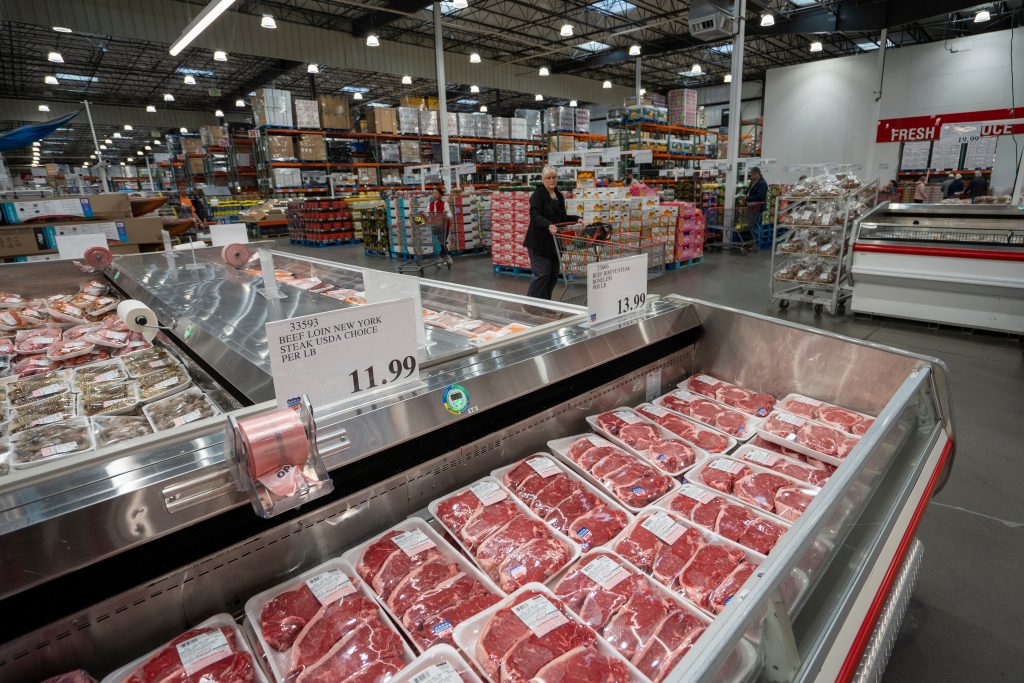
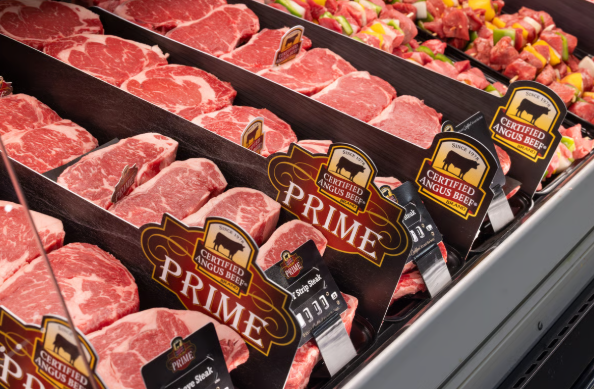


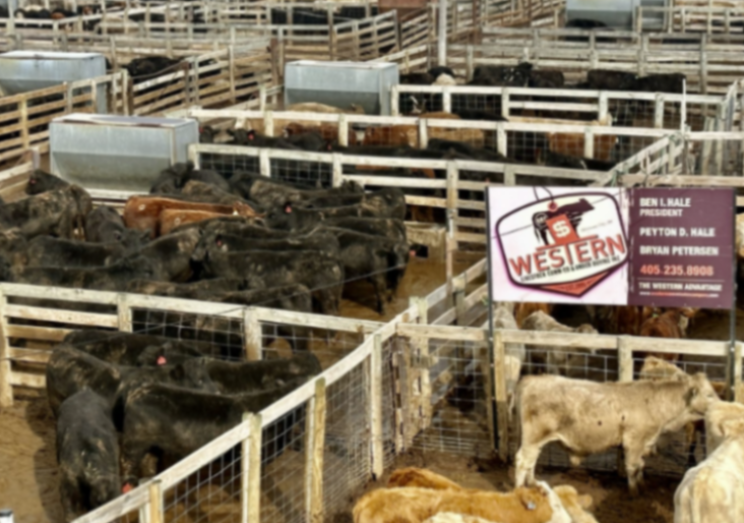




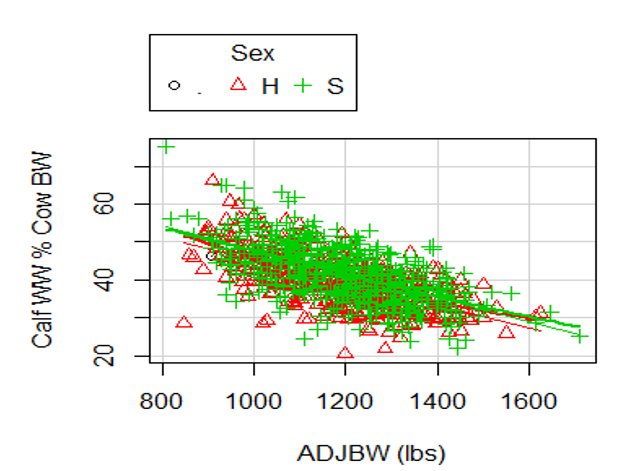
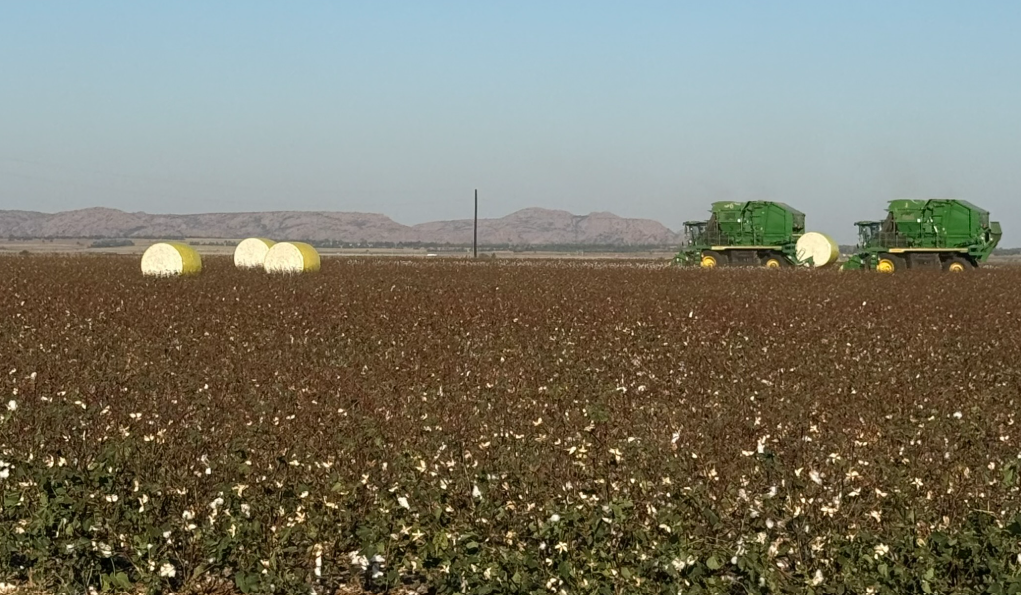

 Best Harvest Garden: Little Sprouts Learning, Muskogee
 Best Pollinator Garden: Tuttle High School, Tuttle
 Best Startup Garden: Middleberg Elementary School: Middleberg
 Best Education-Based Garden: Kingston Public Schools, Kingston





 Episode 425: apple.co/48zTOc0 Most folks around here don't just grow grain — they run a few head too. And with record cattle prices and herd numbers at a 70-year low, there's plenty to talk about.
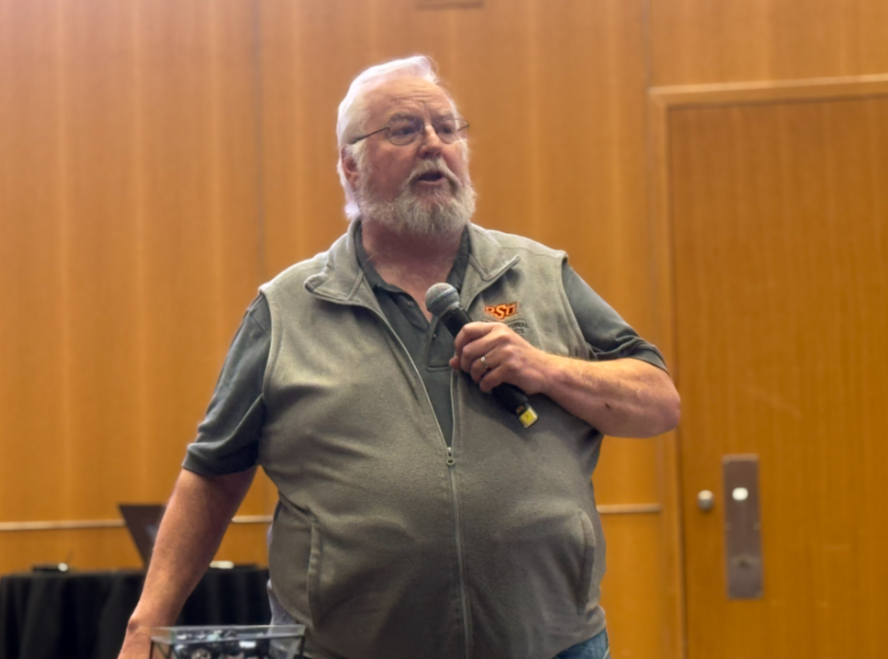
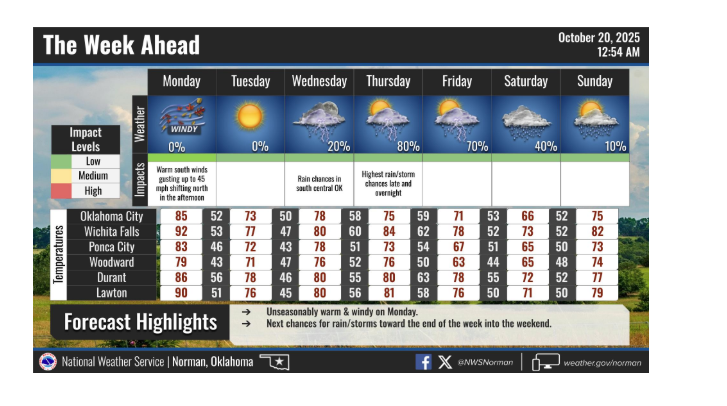
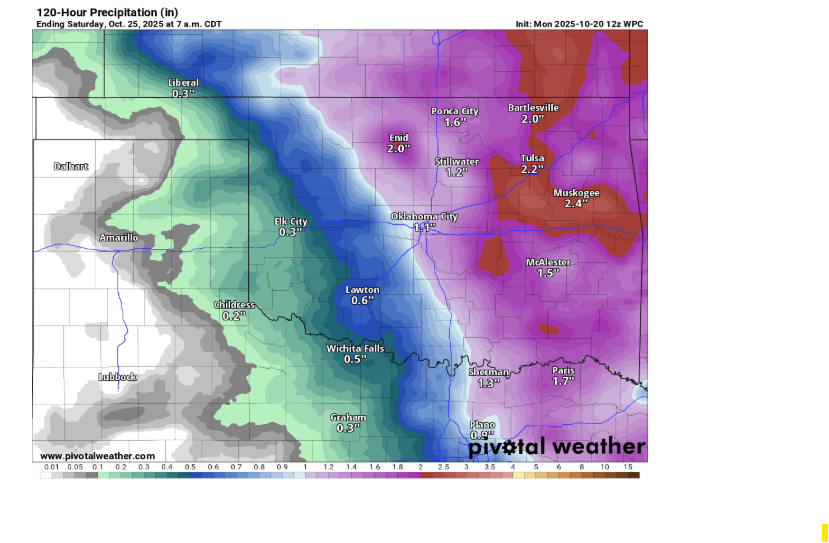
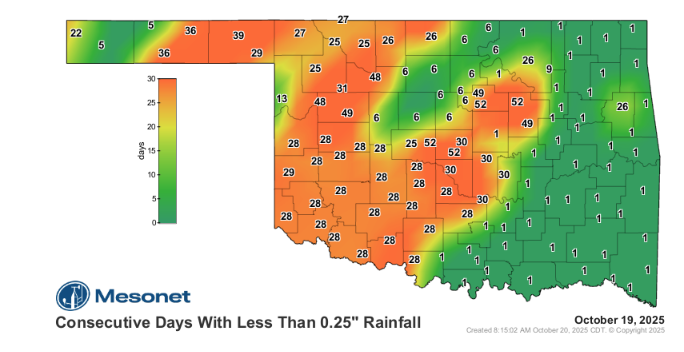
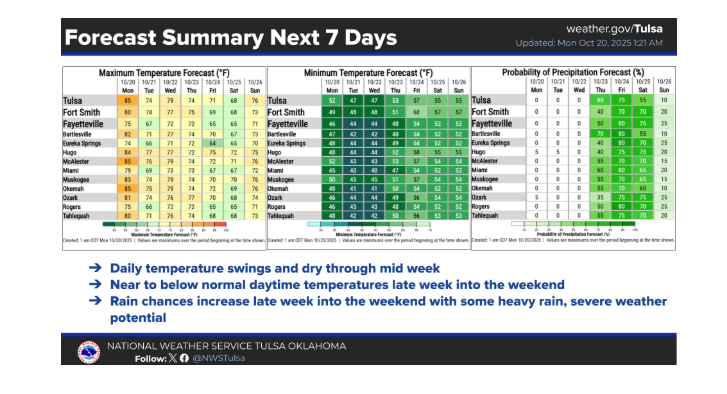
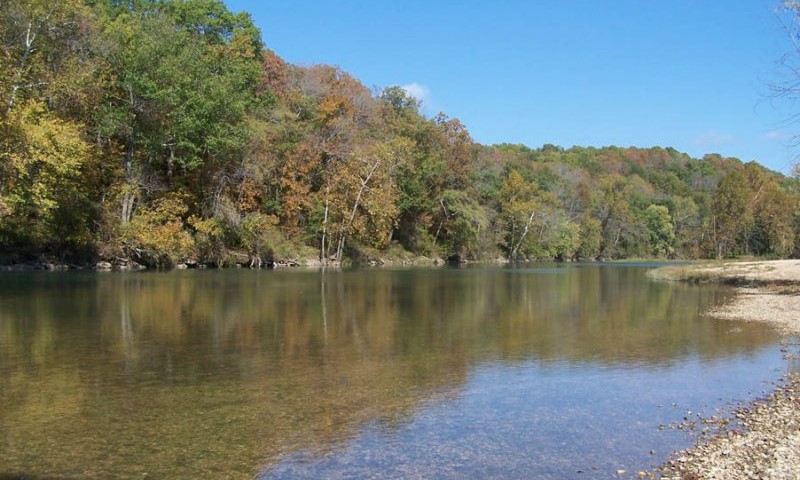

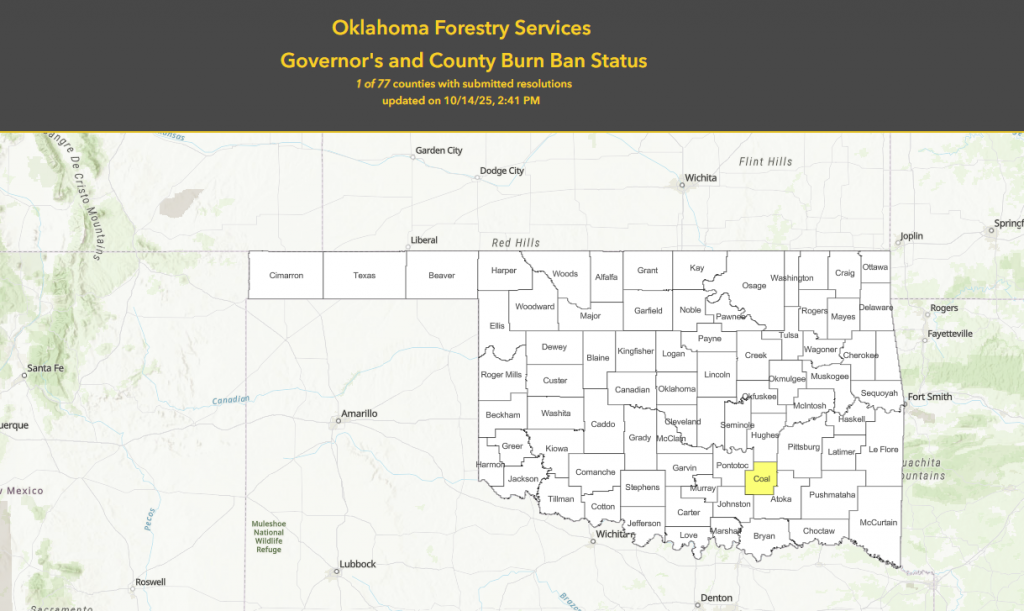

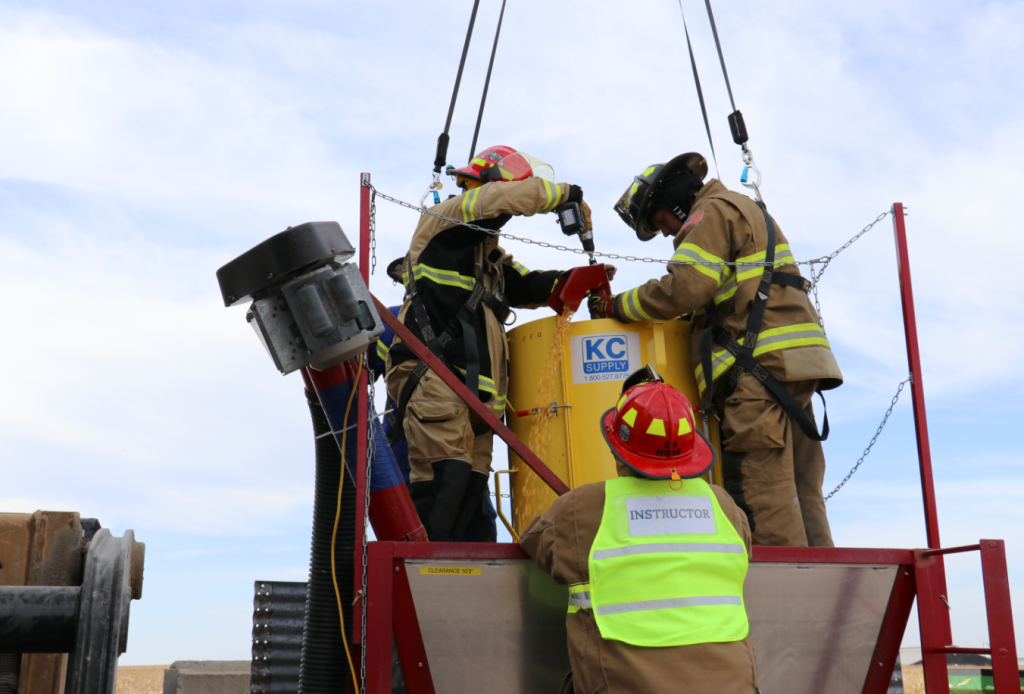

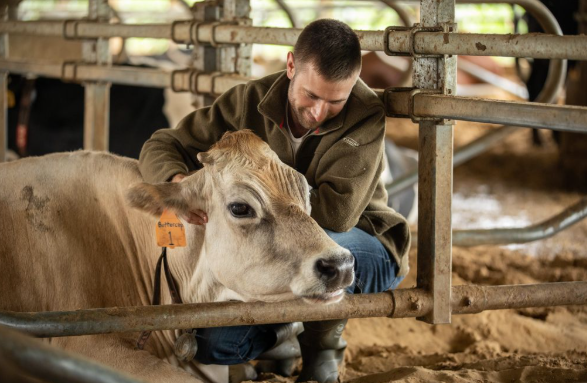

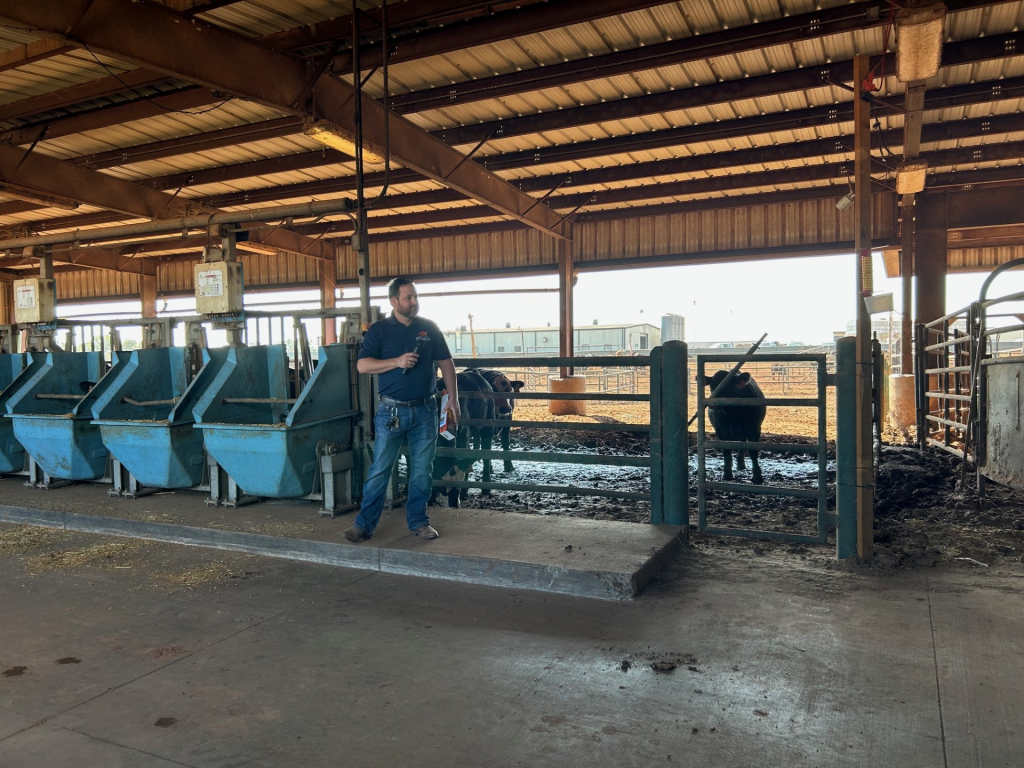
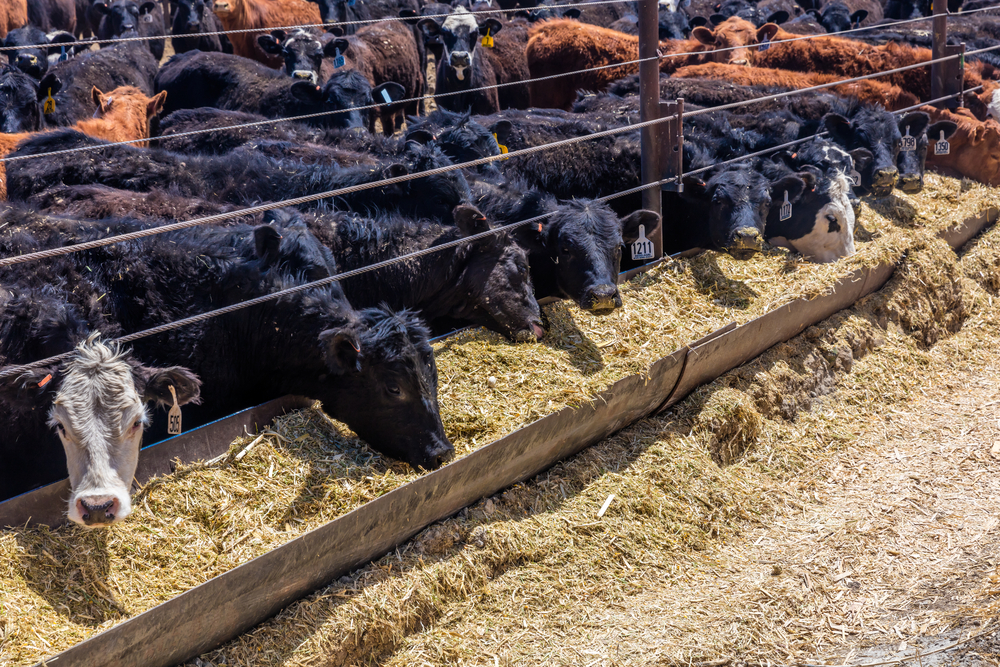
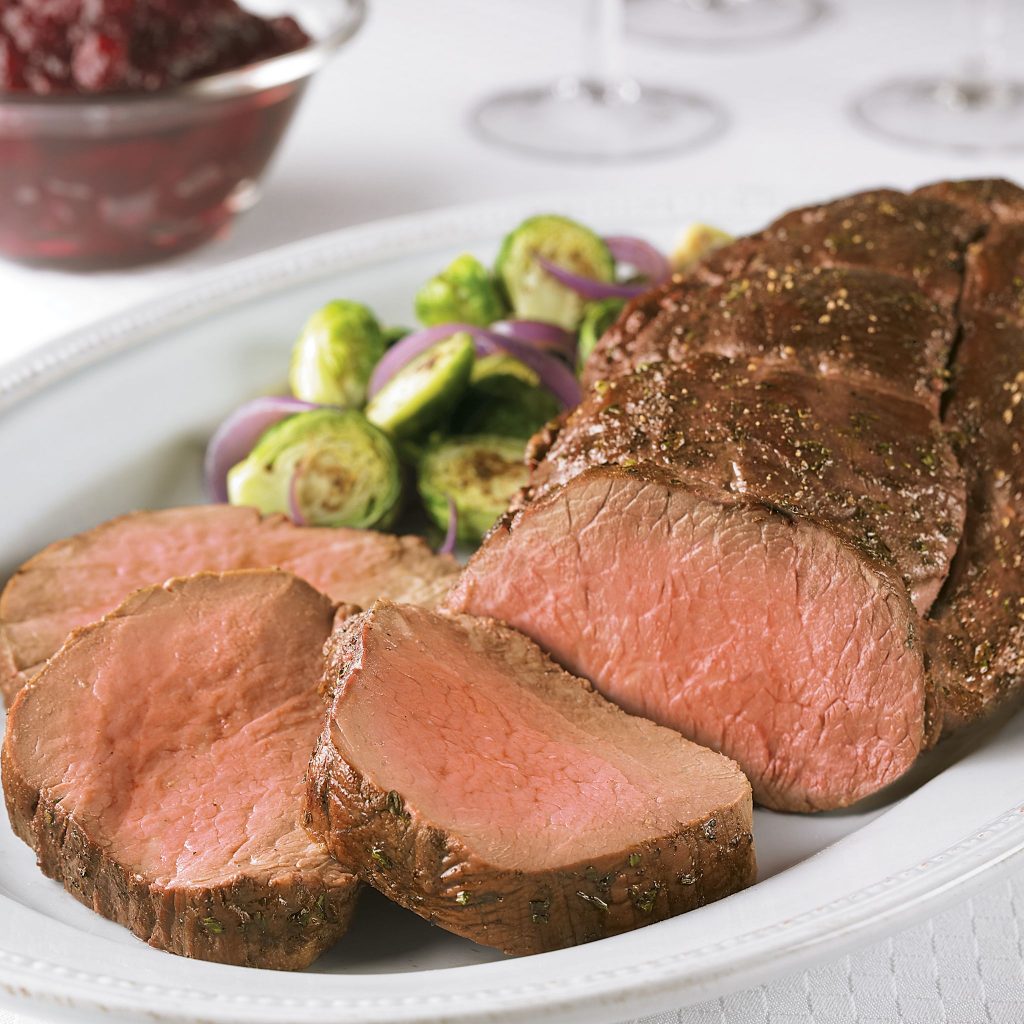
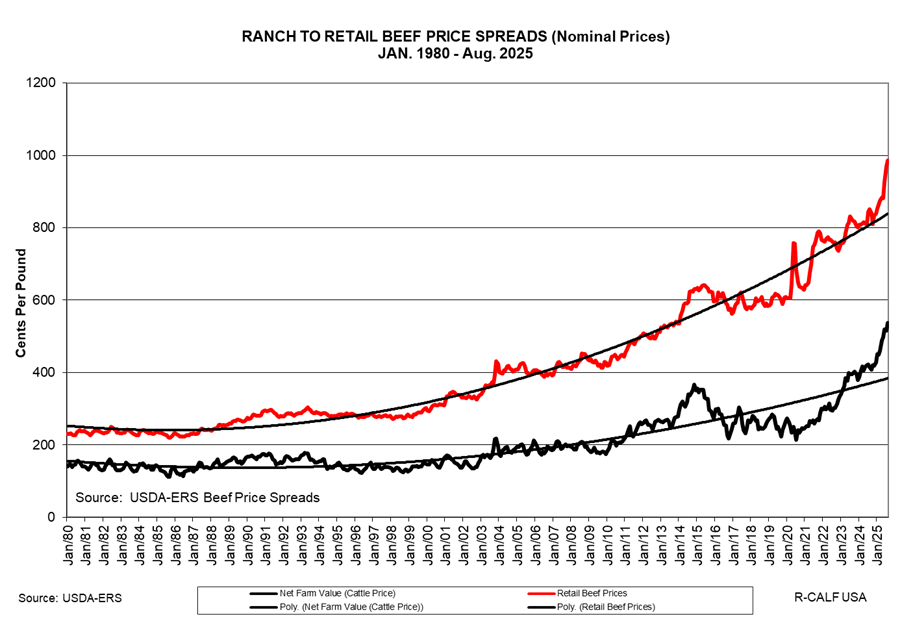
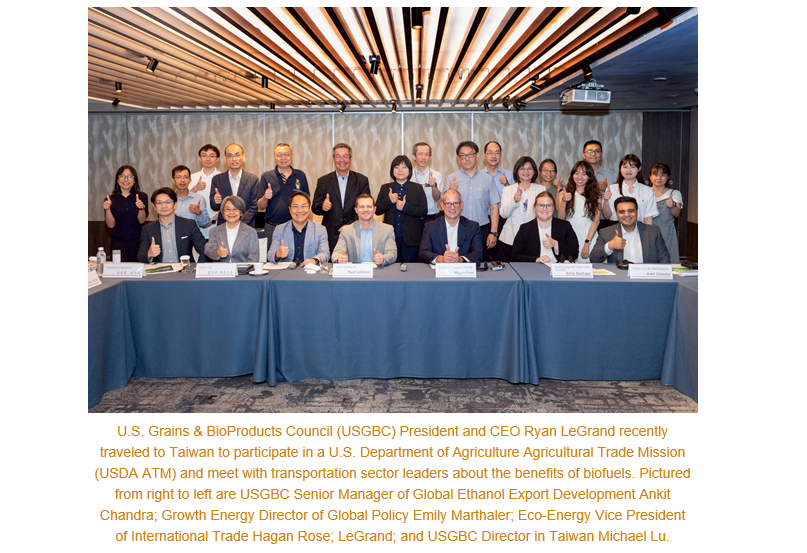



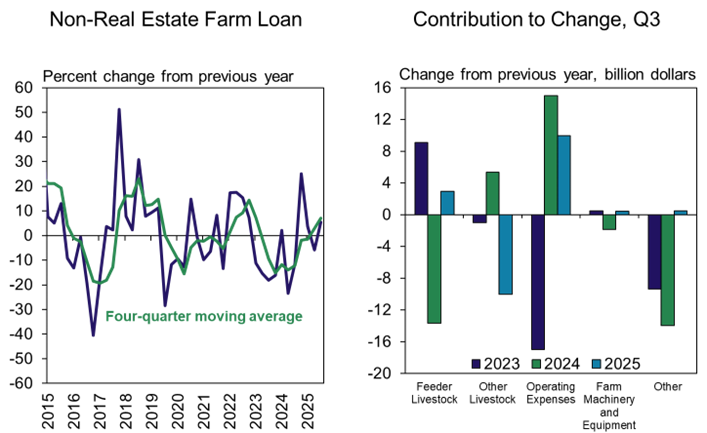
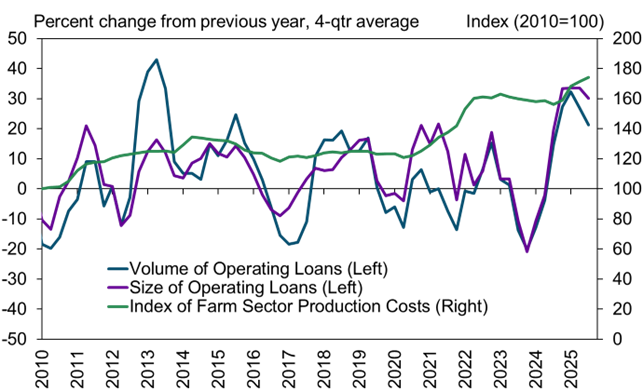
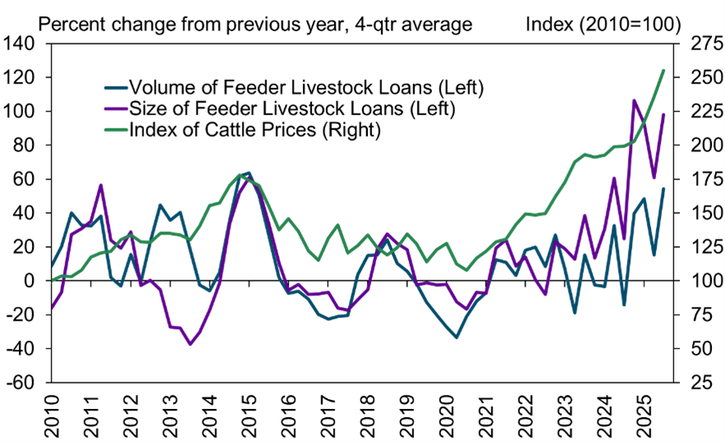
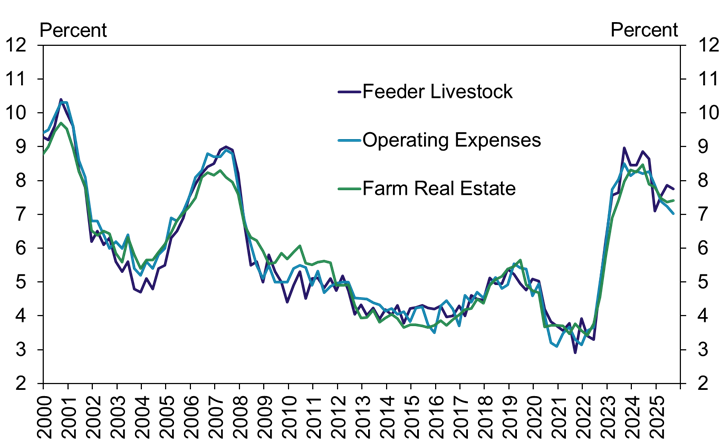
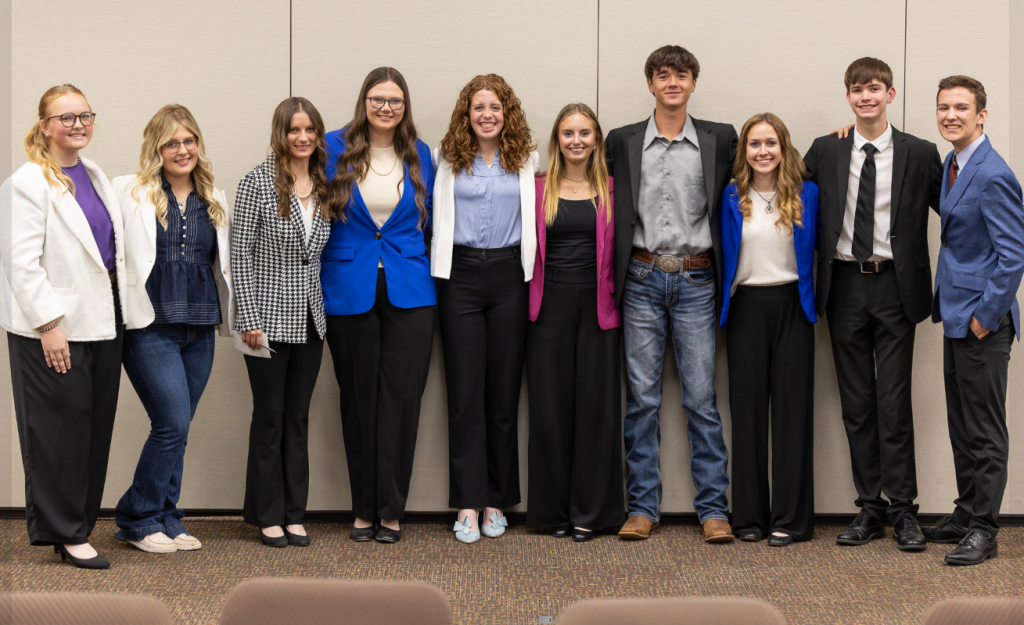
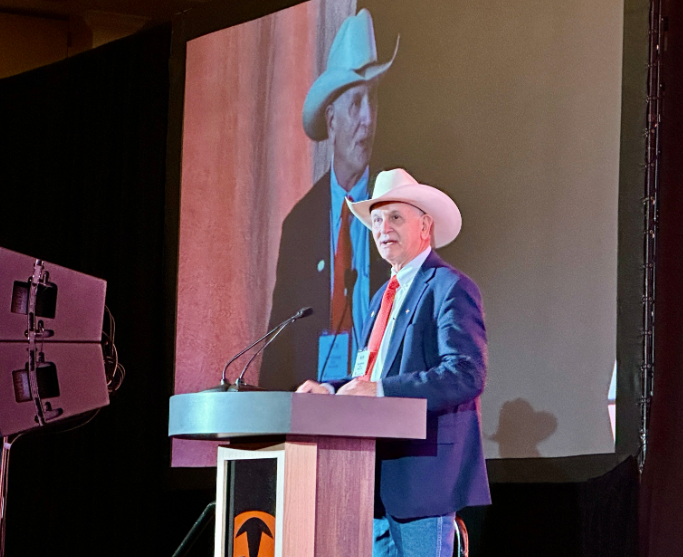


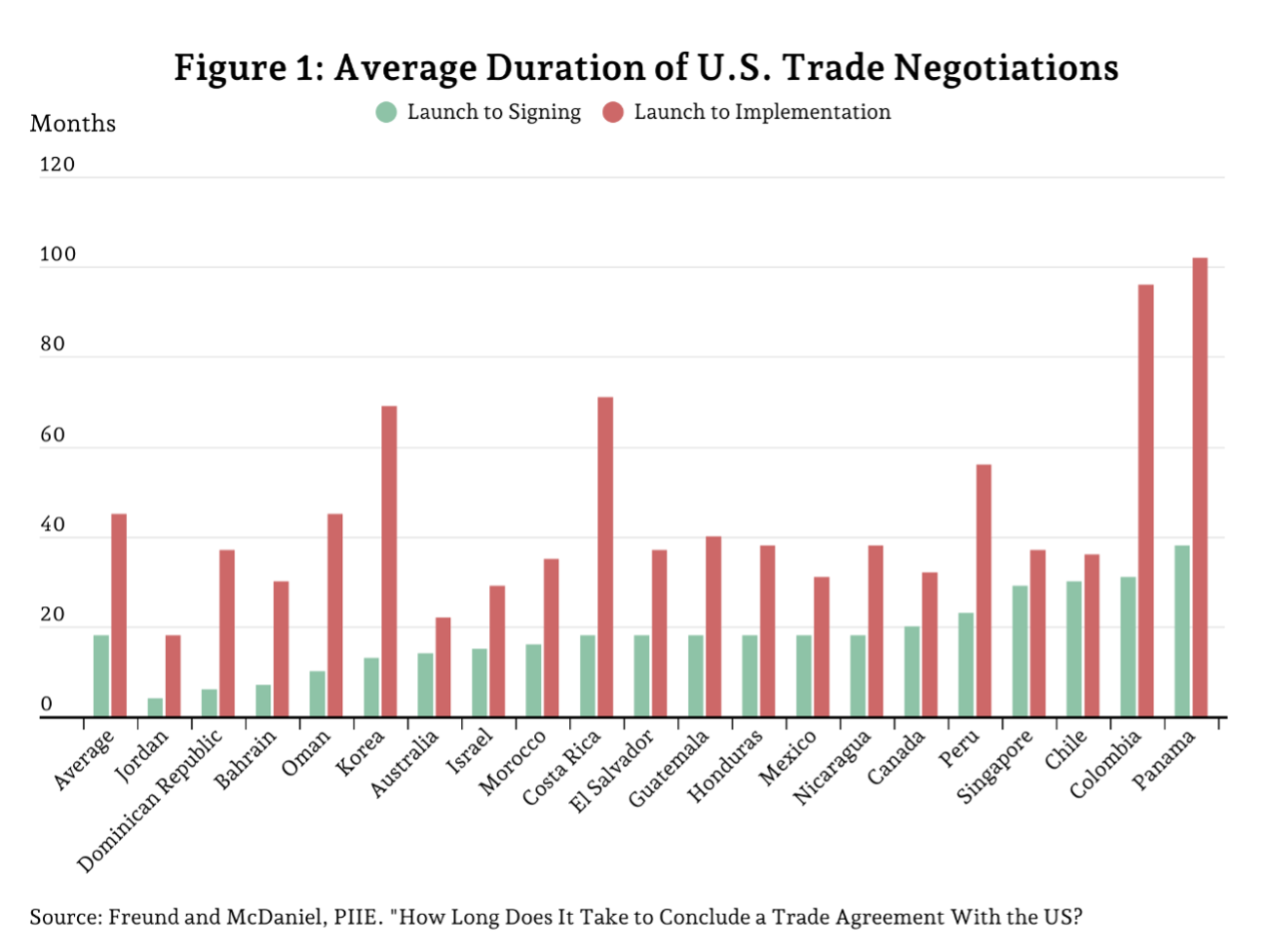
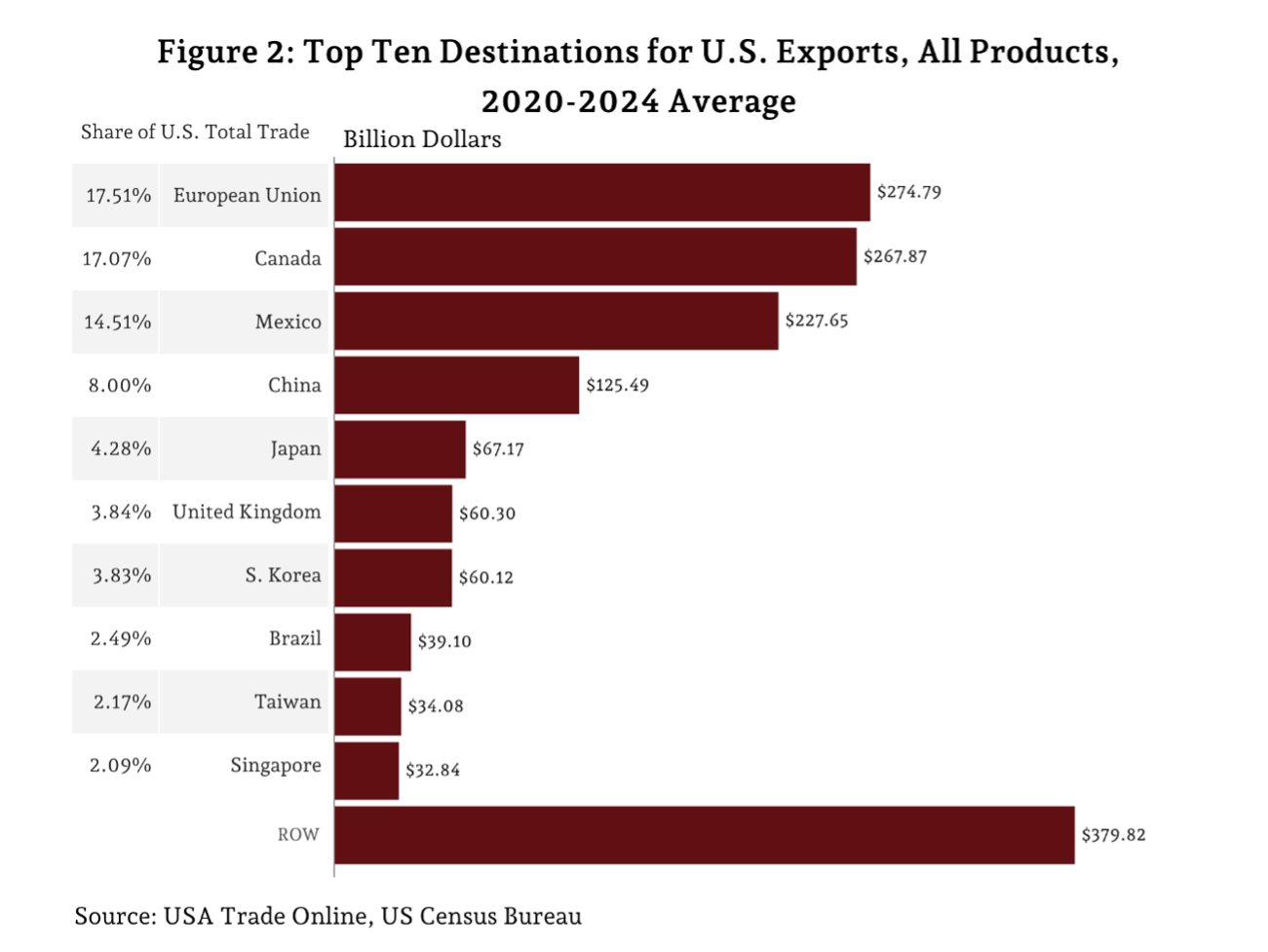
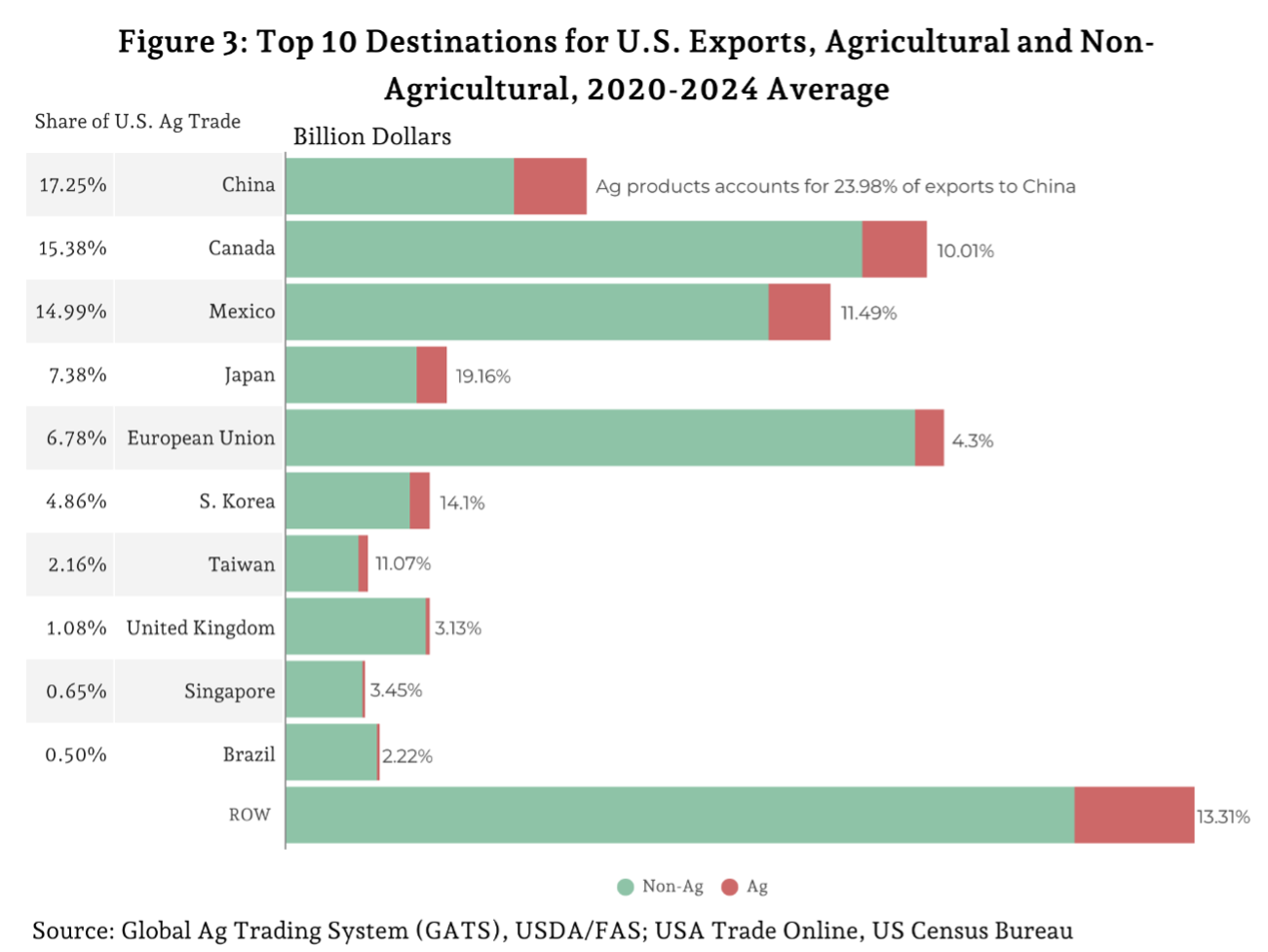
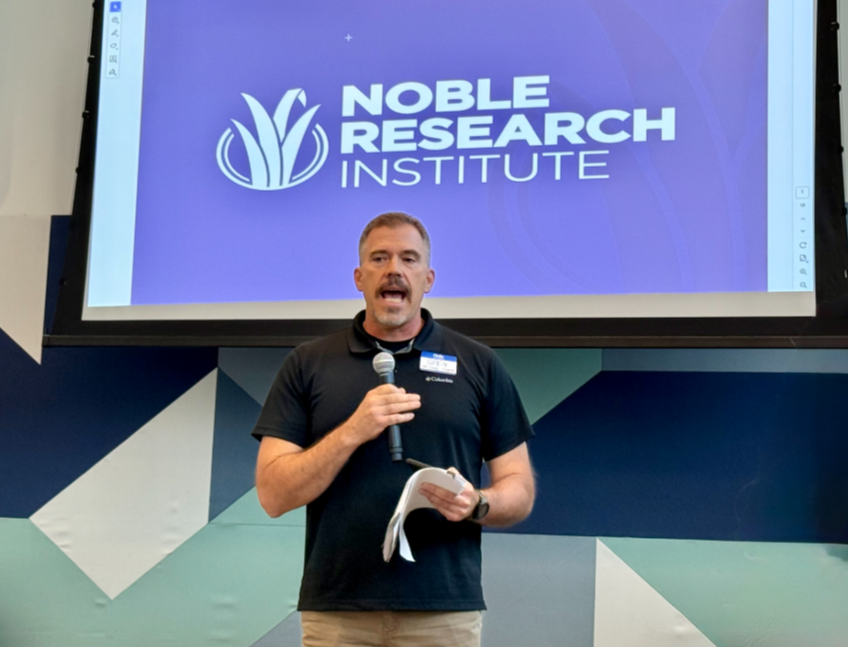
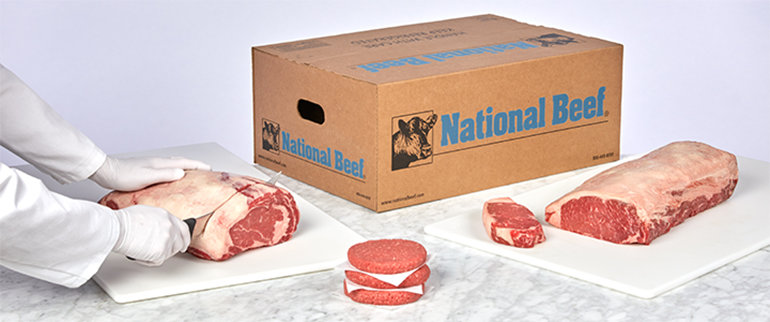
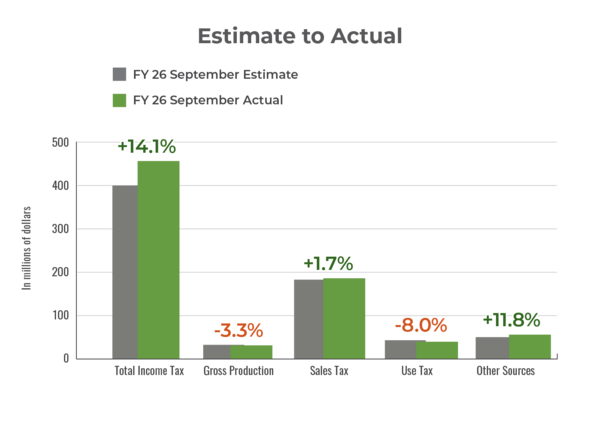
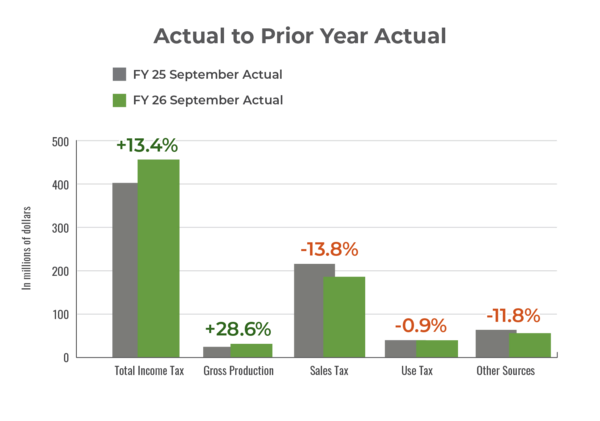
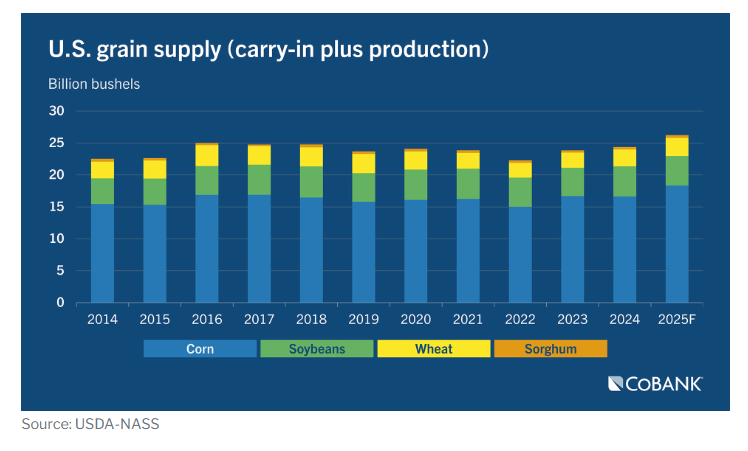
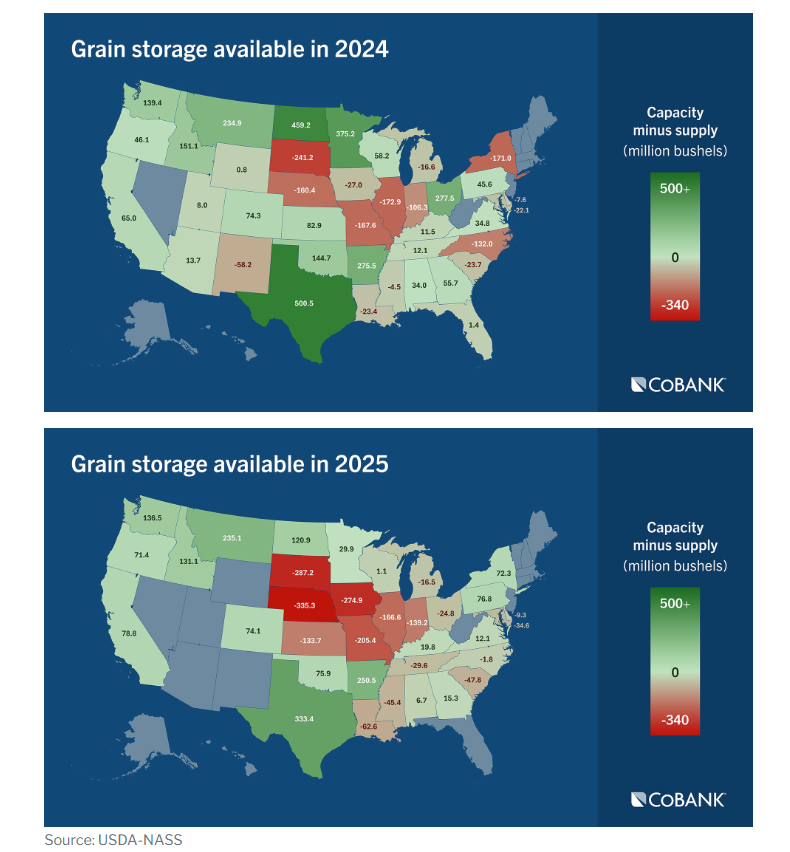
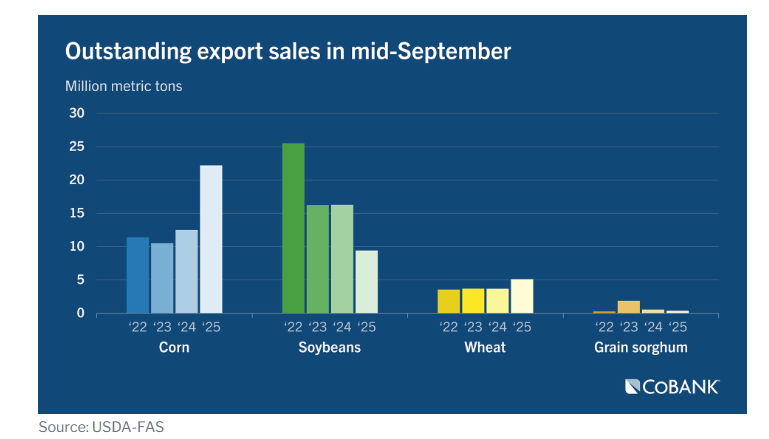
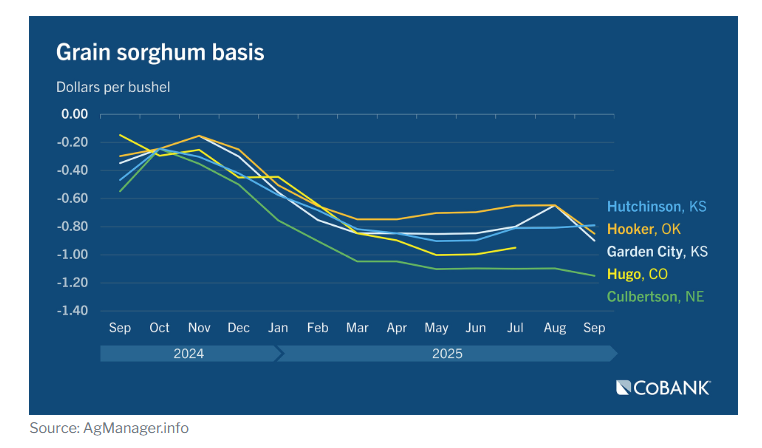
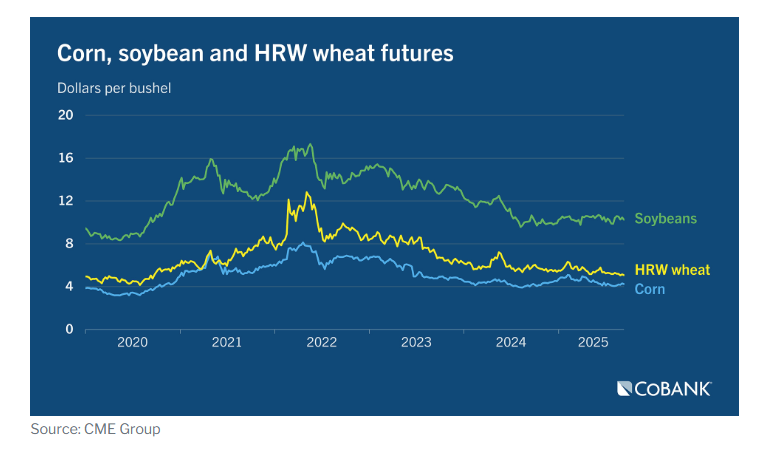
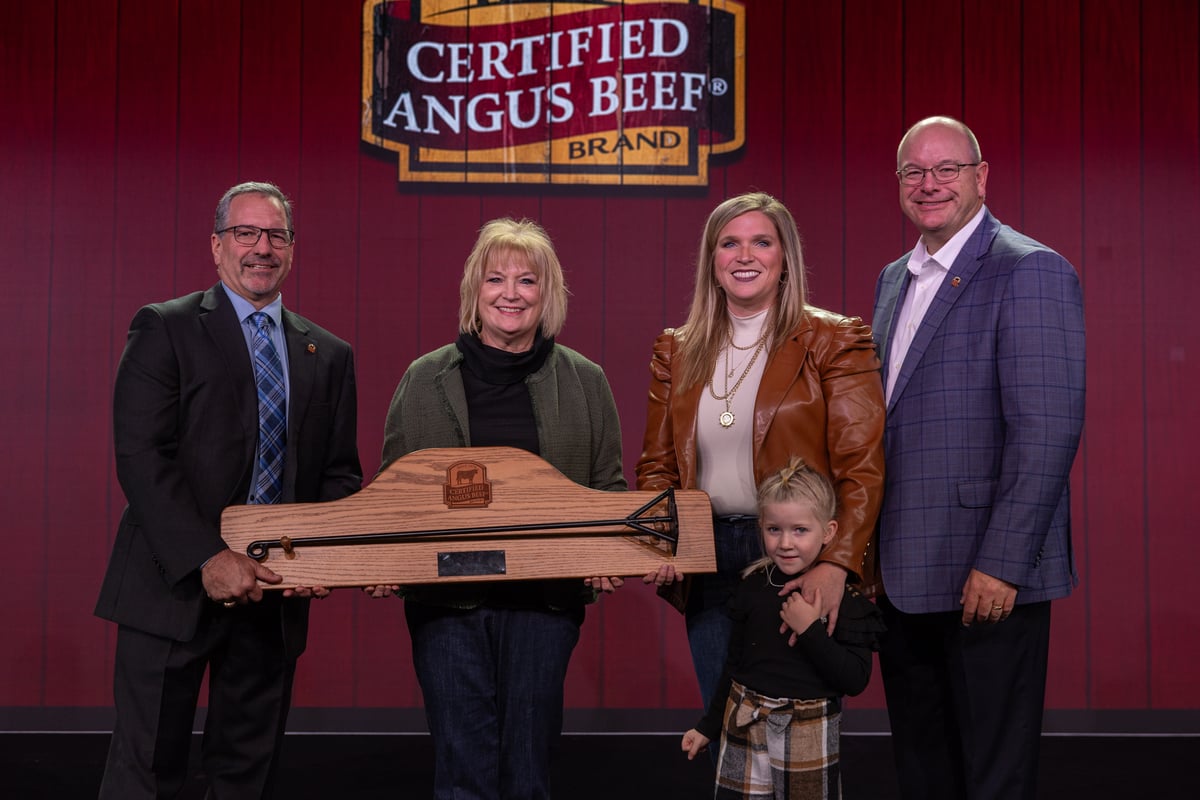
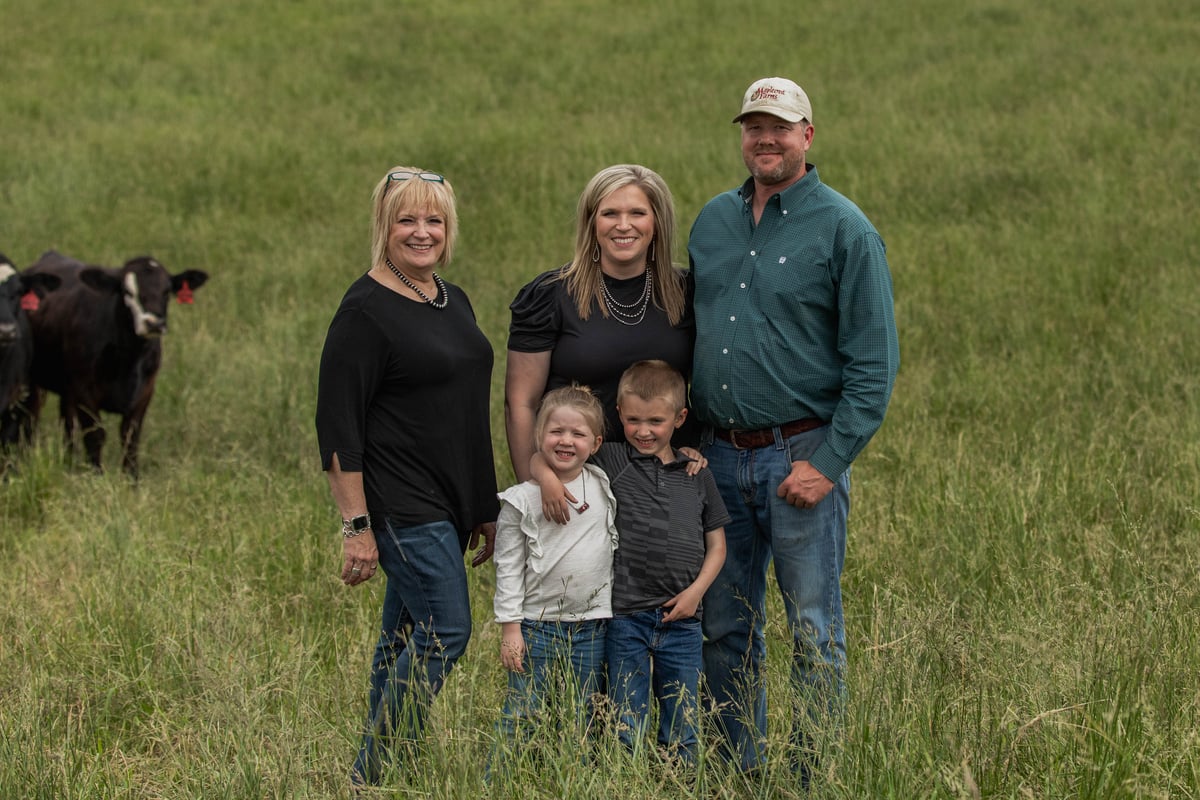
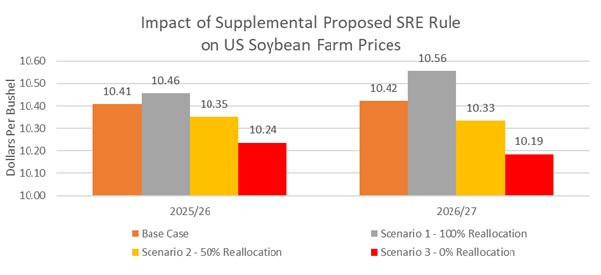
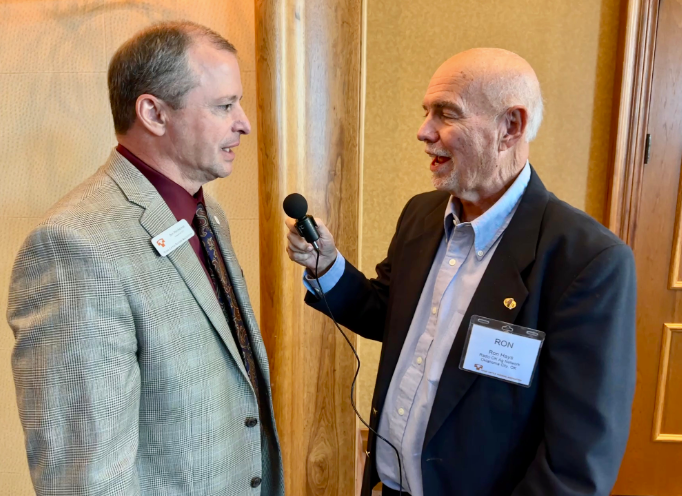
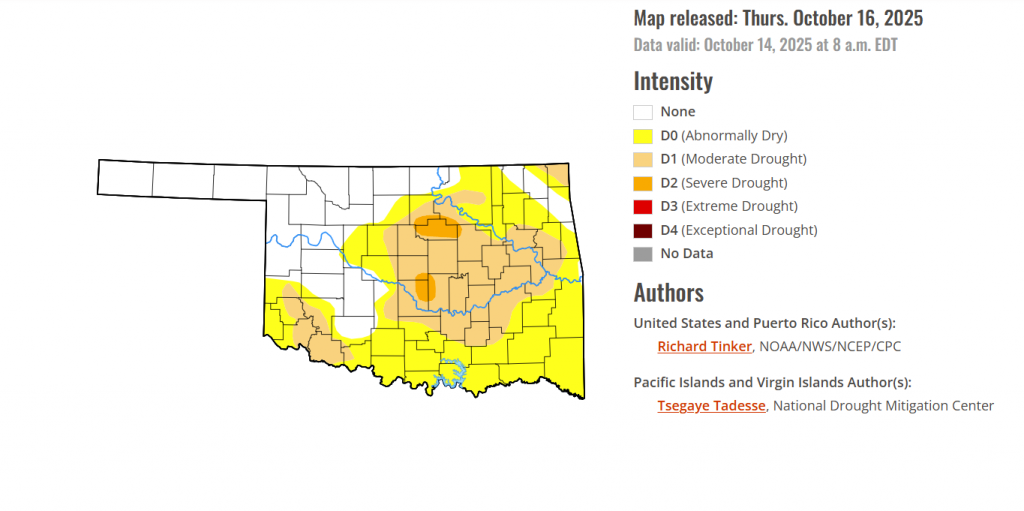
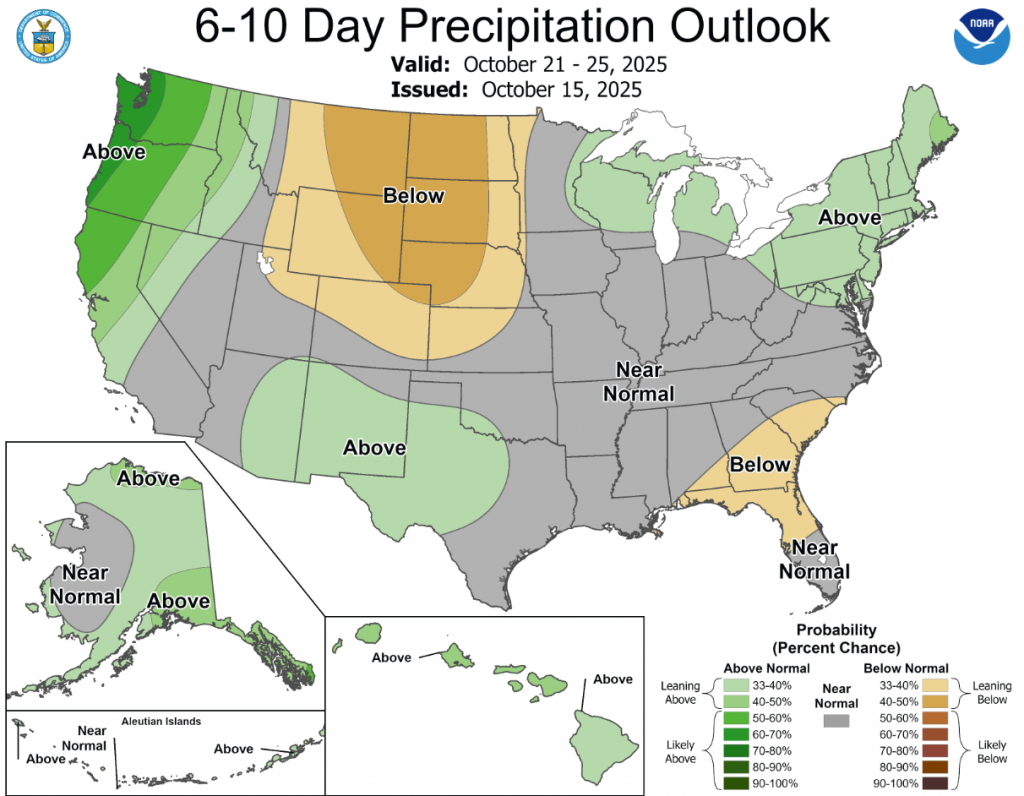
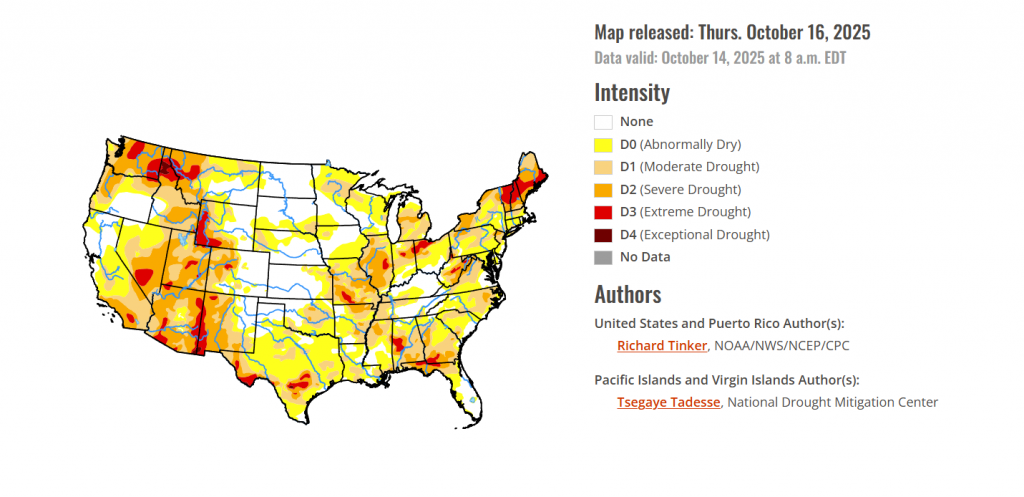

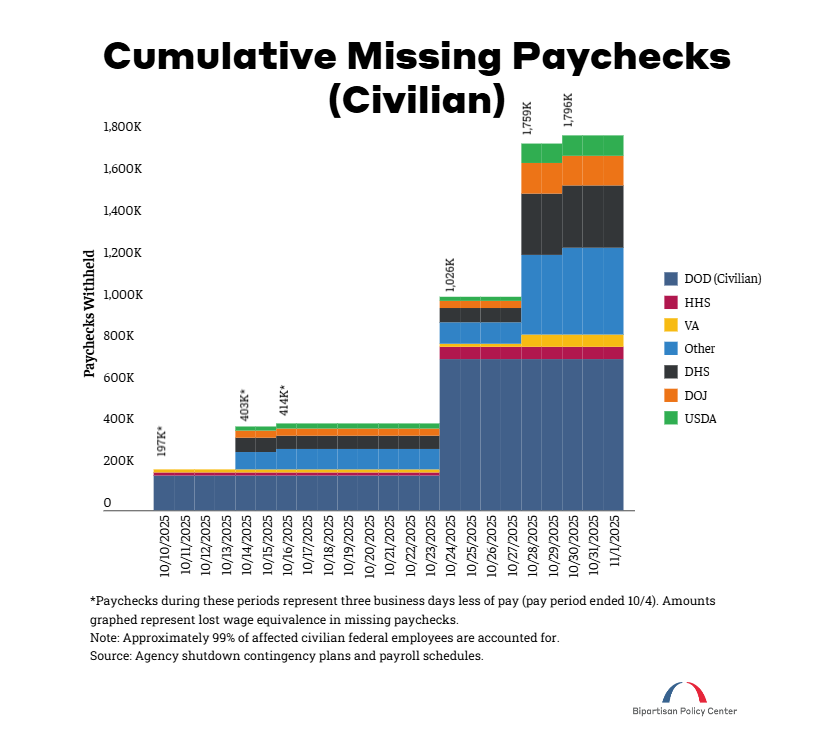
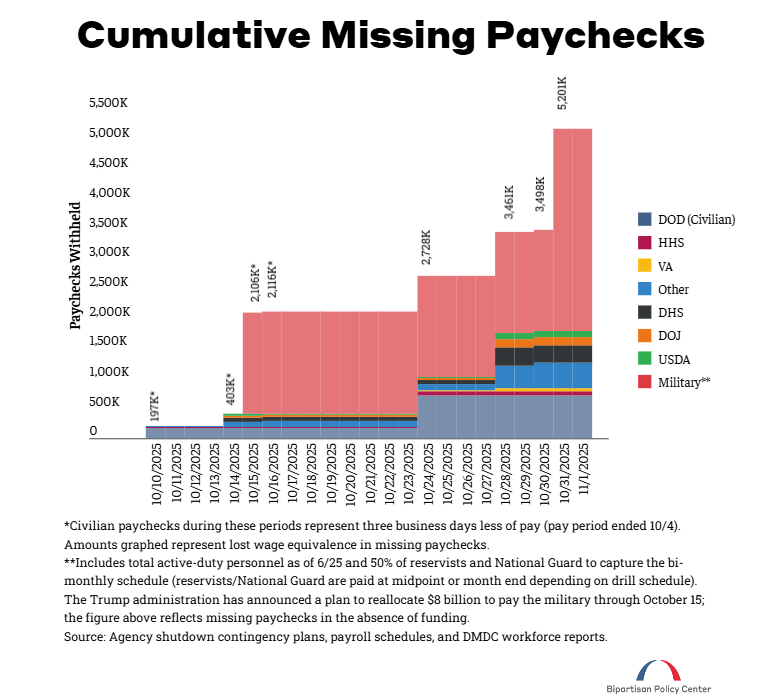
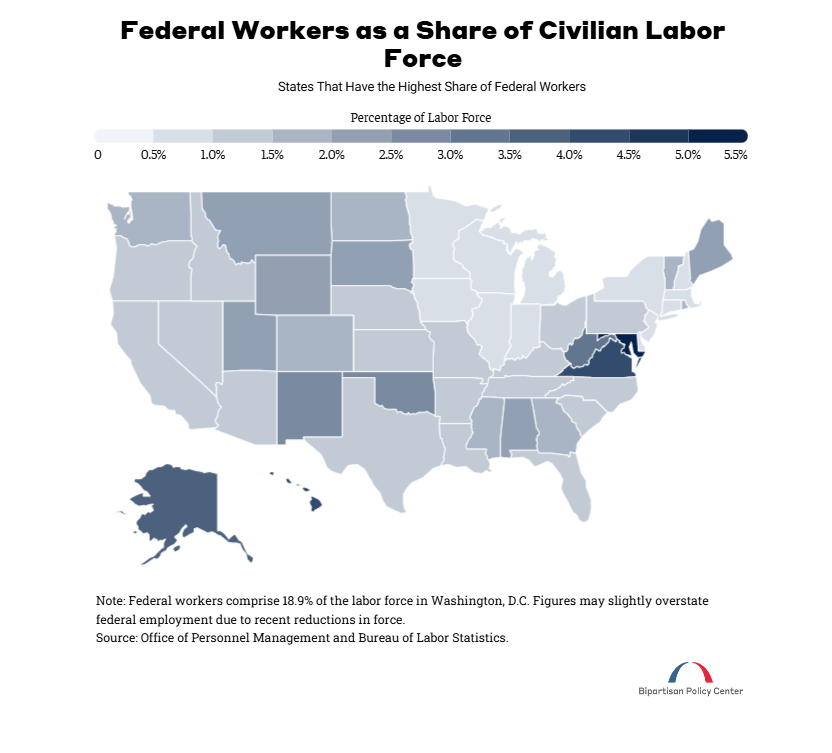
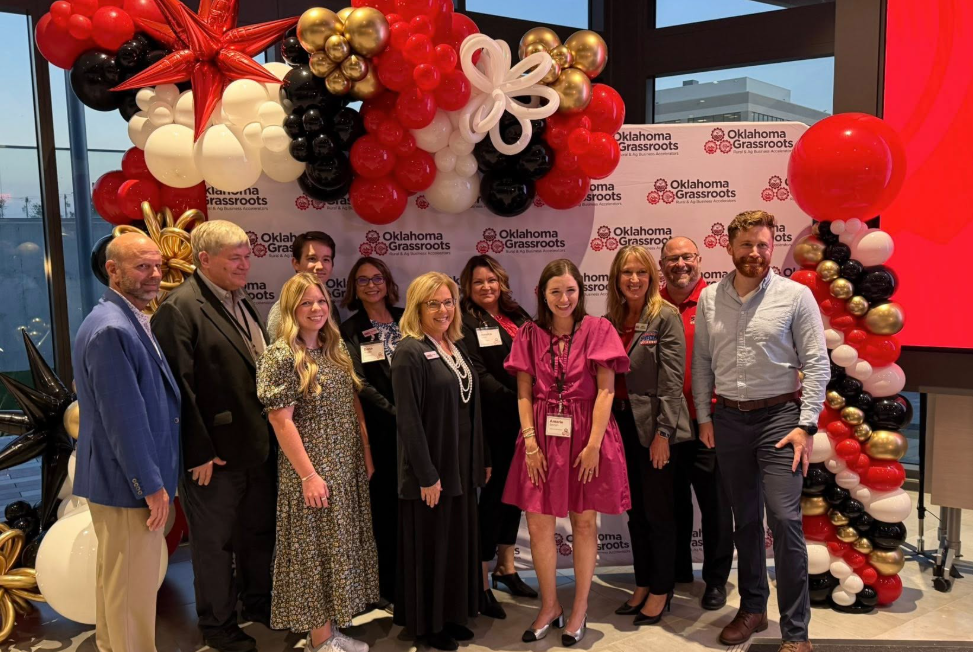

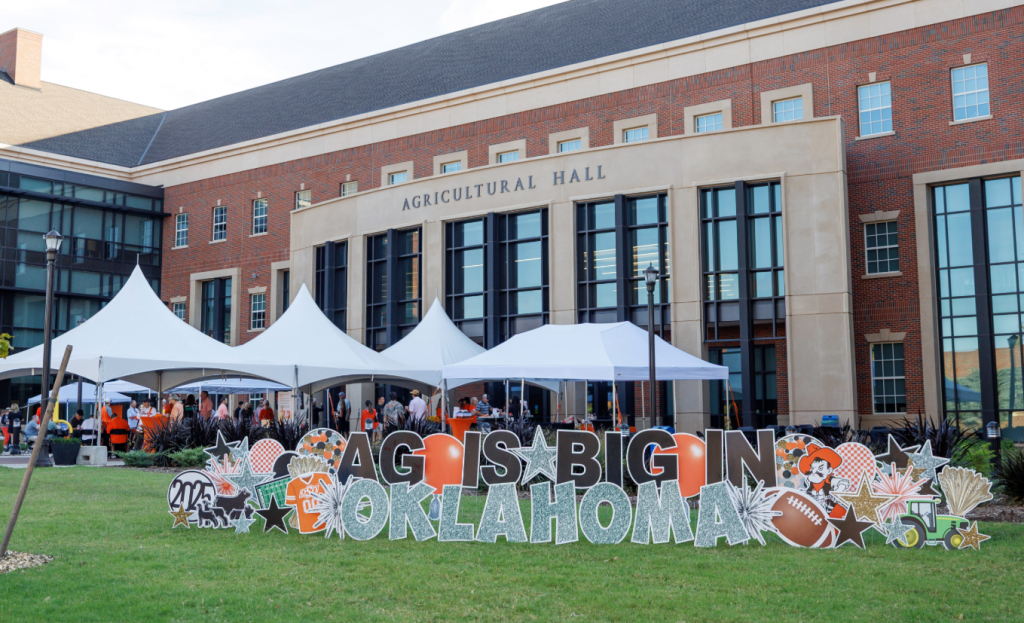
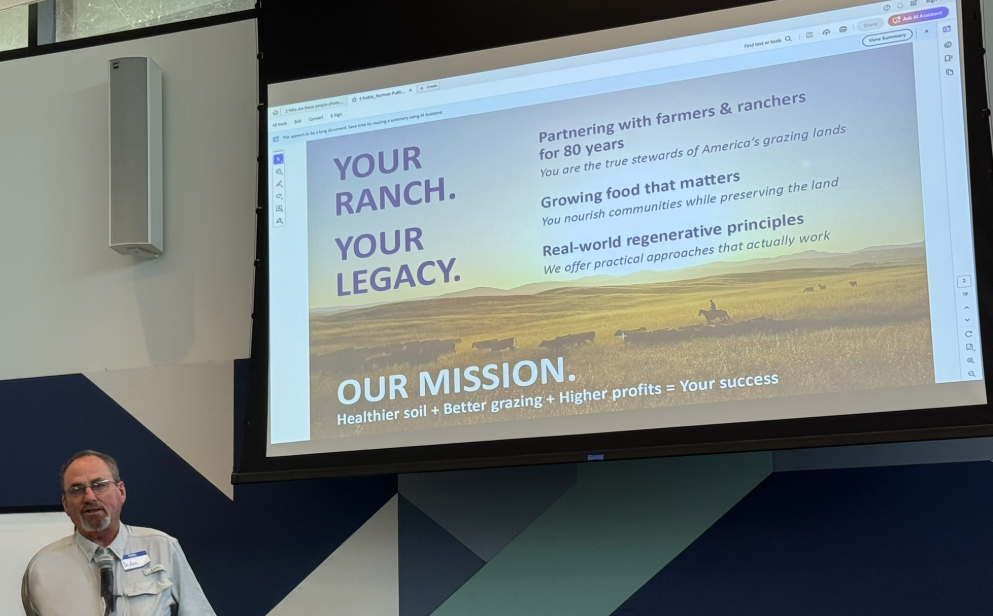
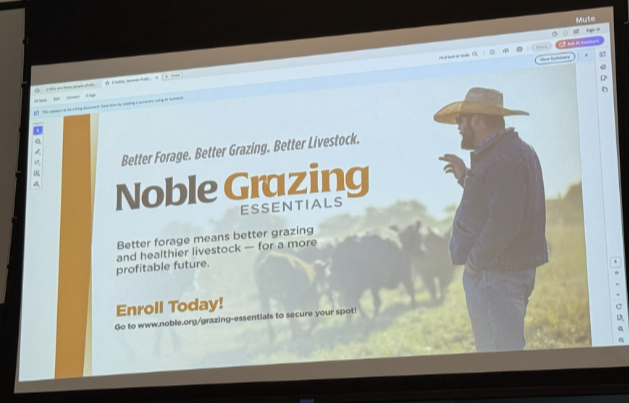

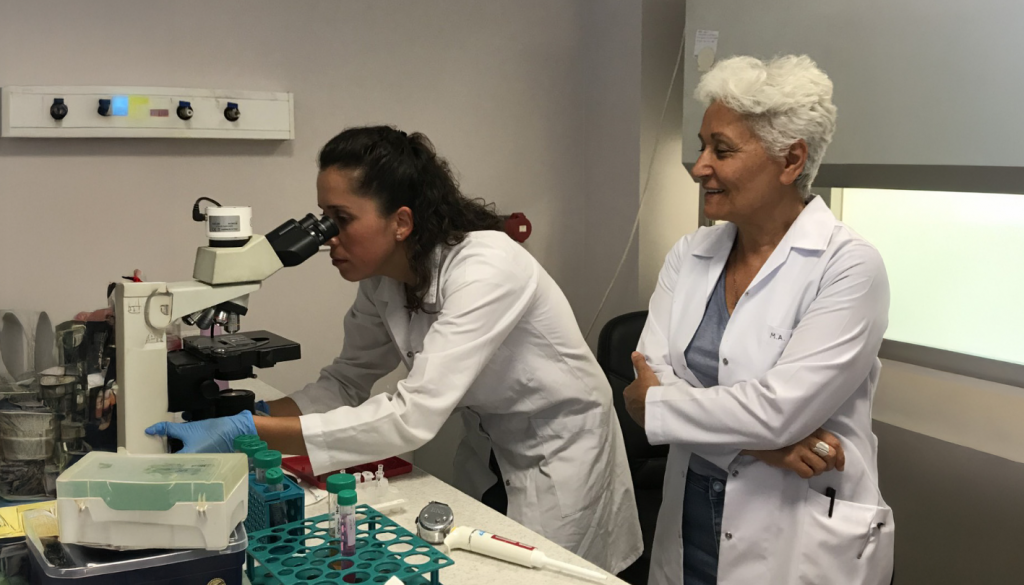

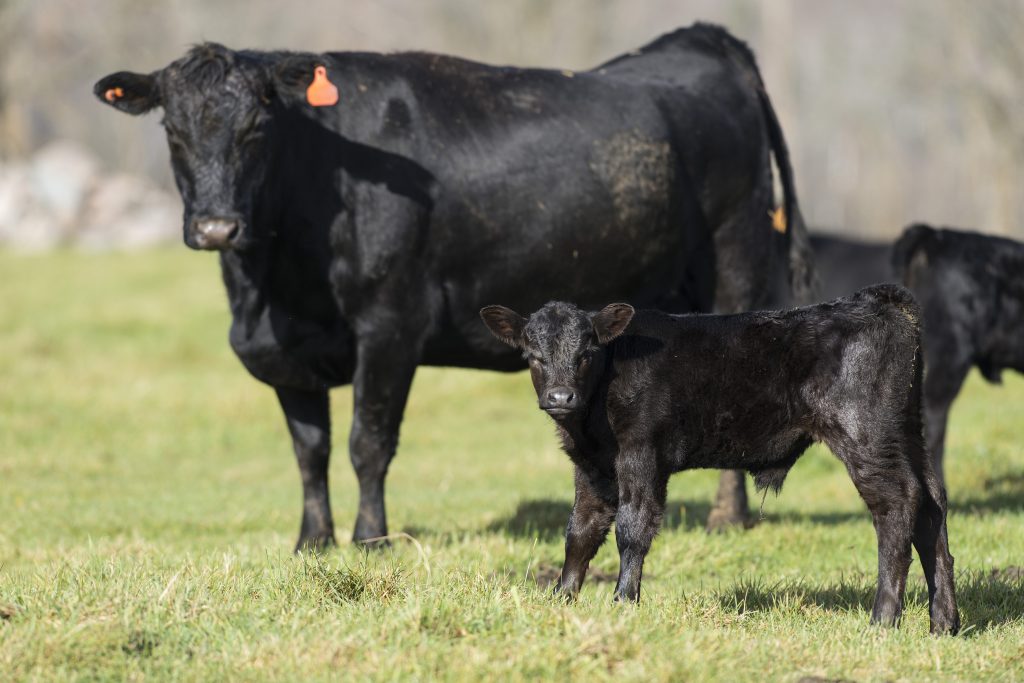
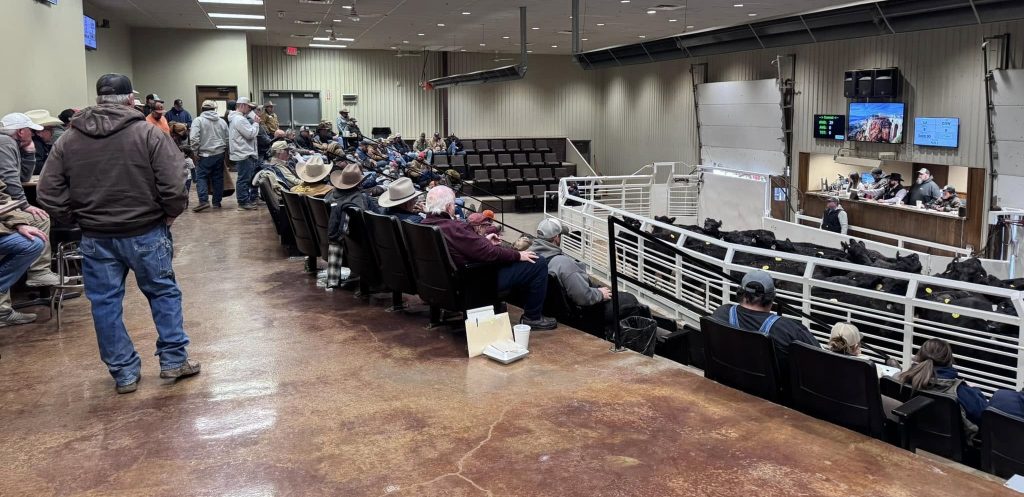

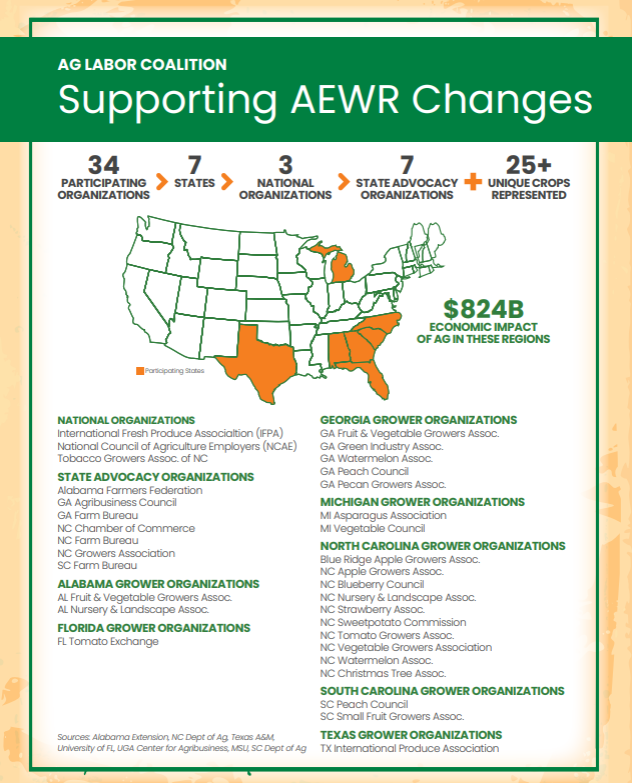
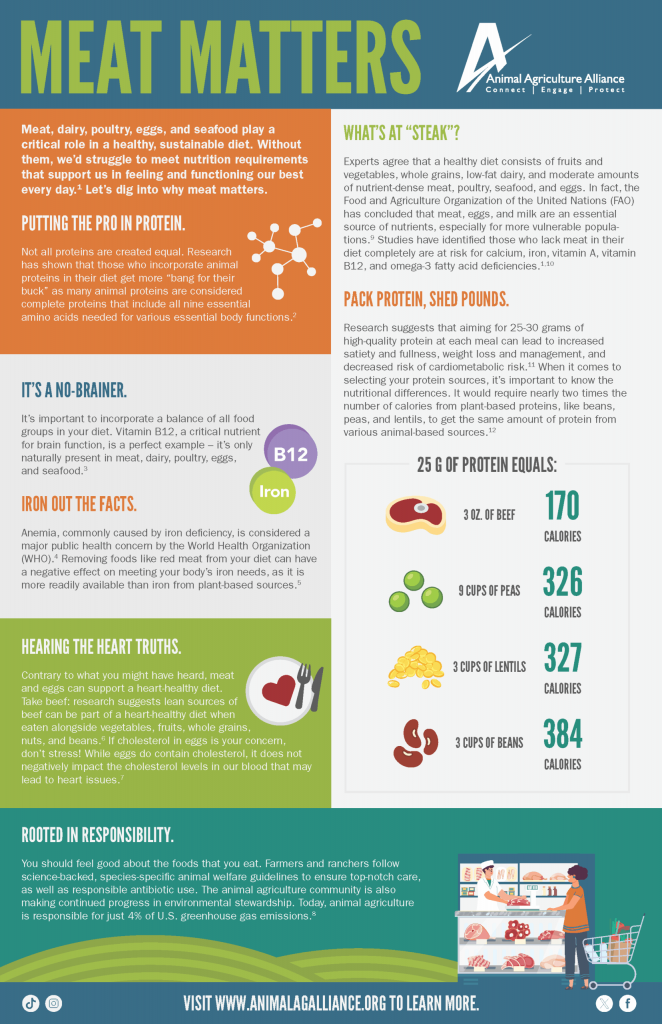
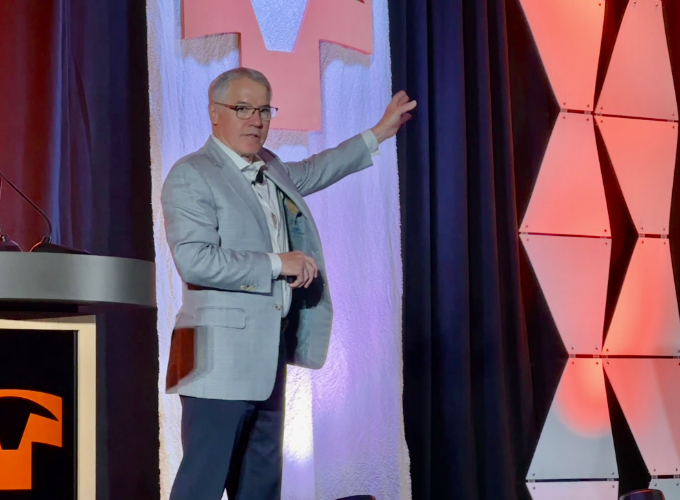
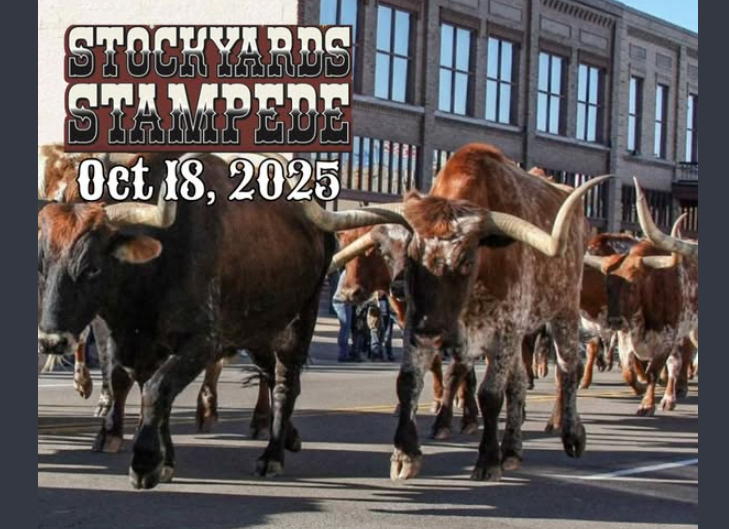
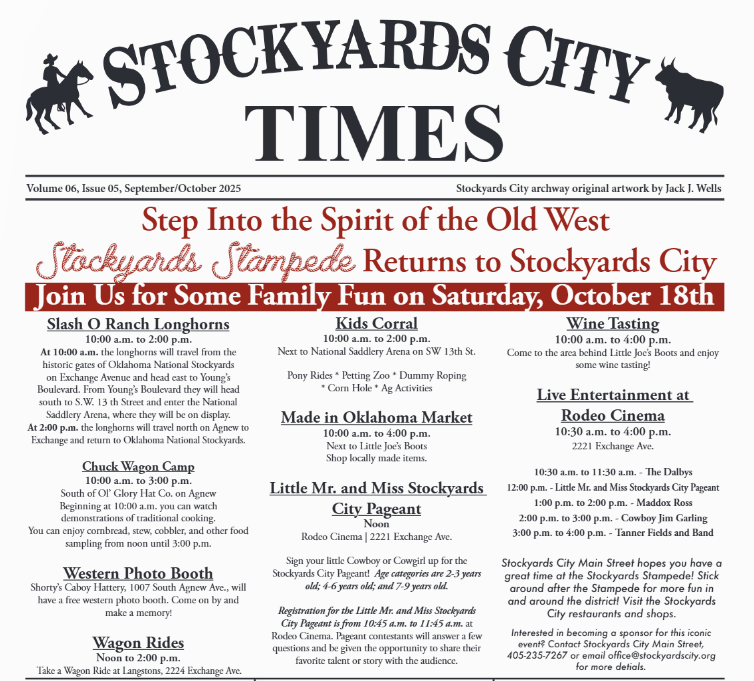
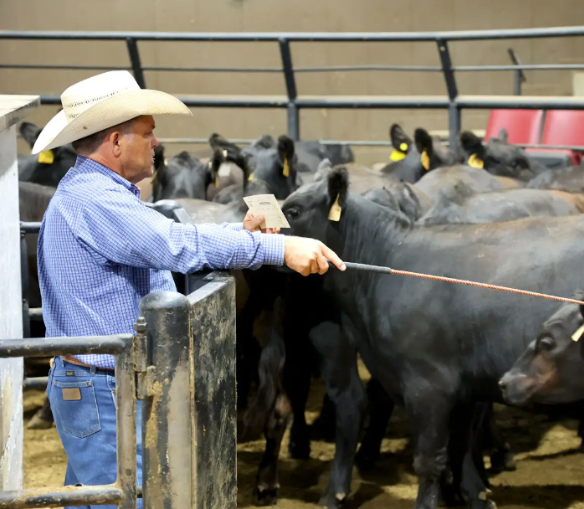
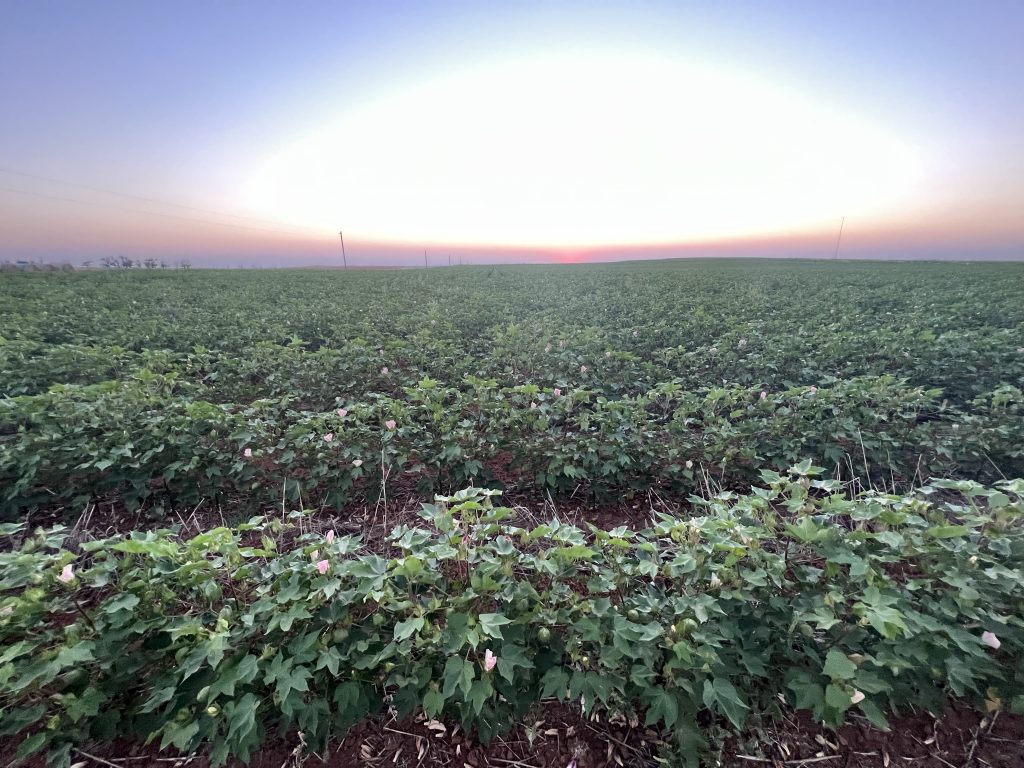
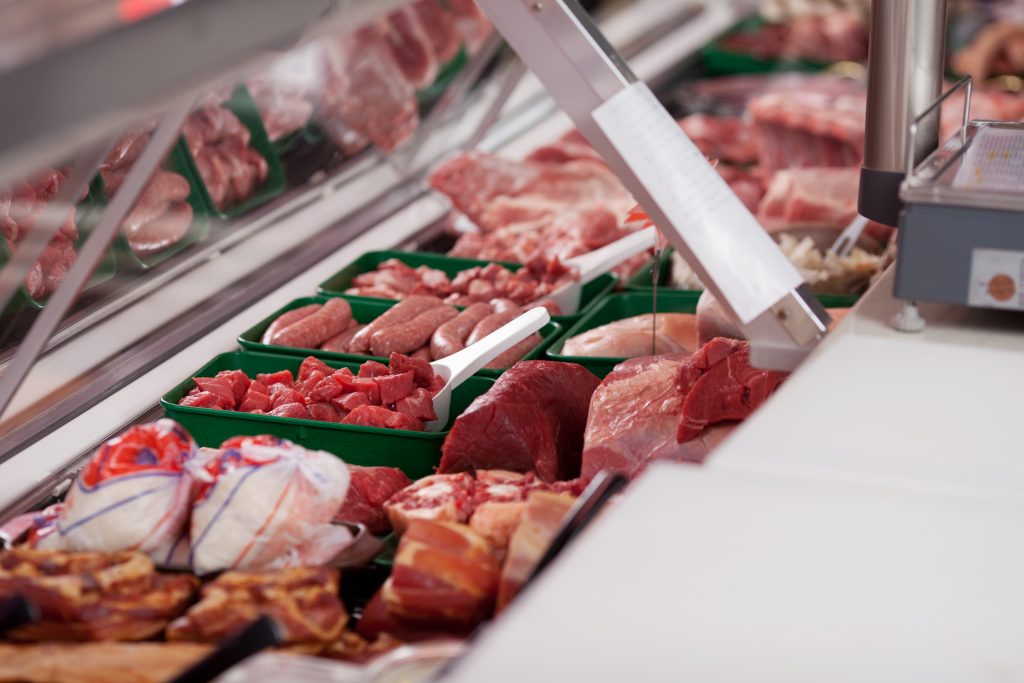

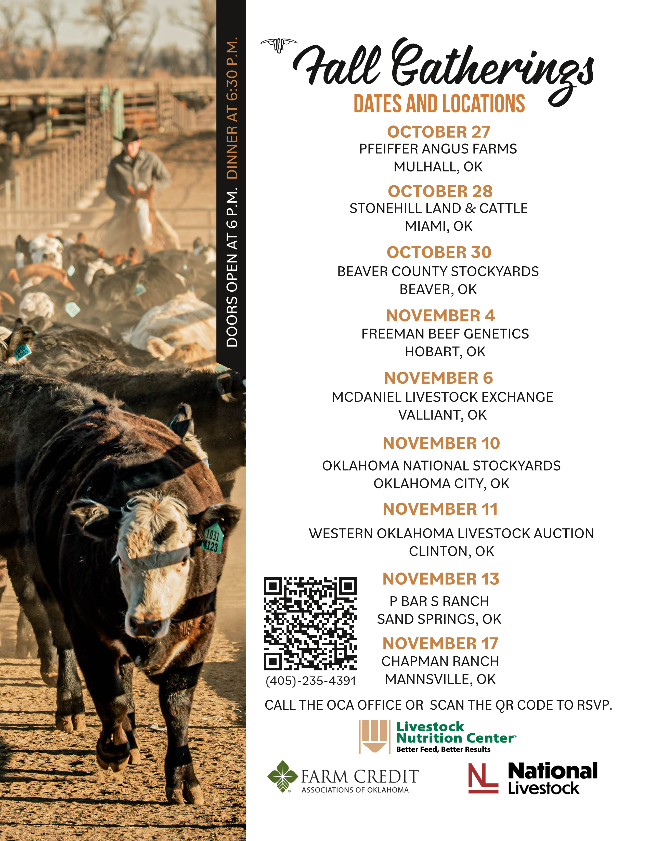
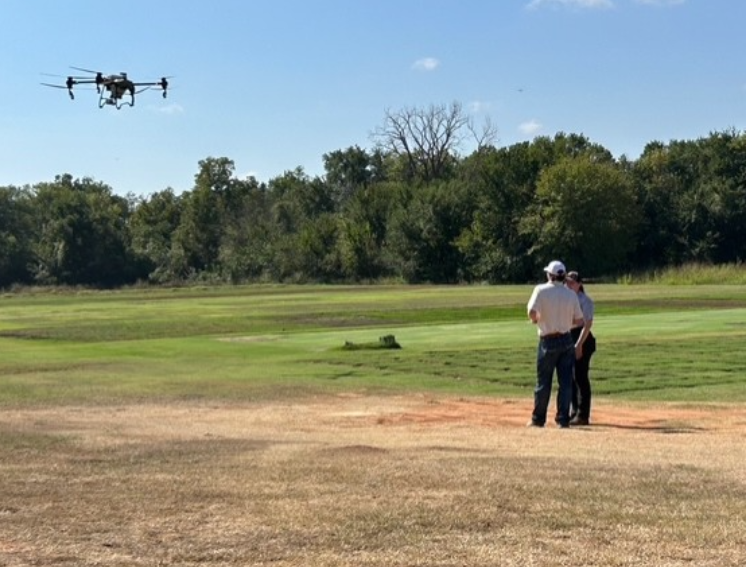

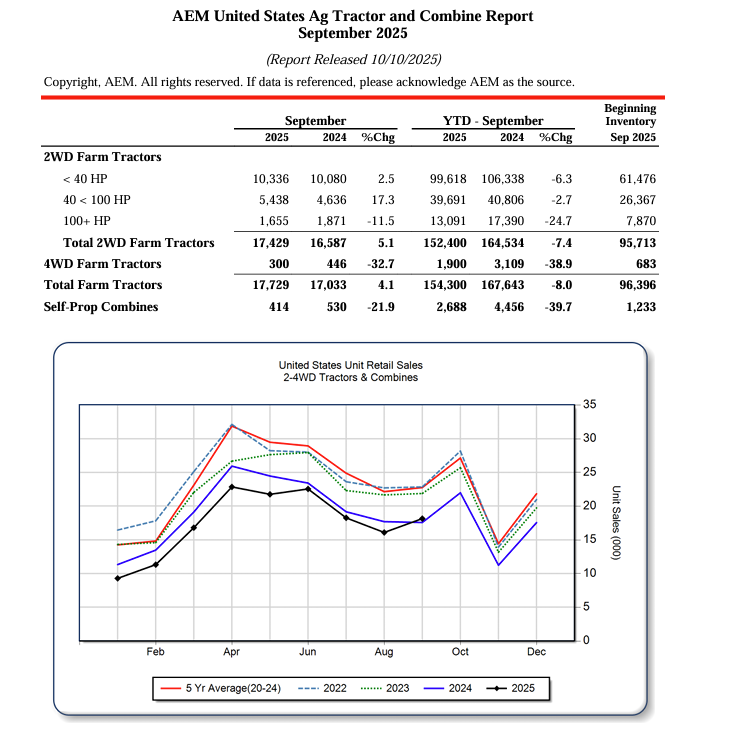


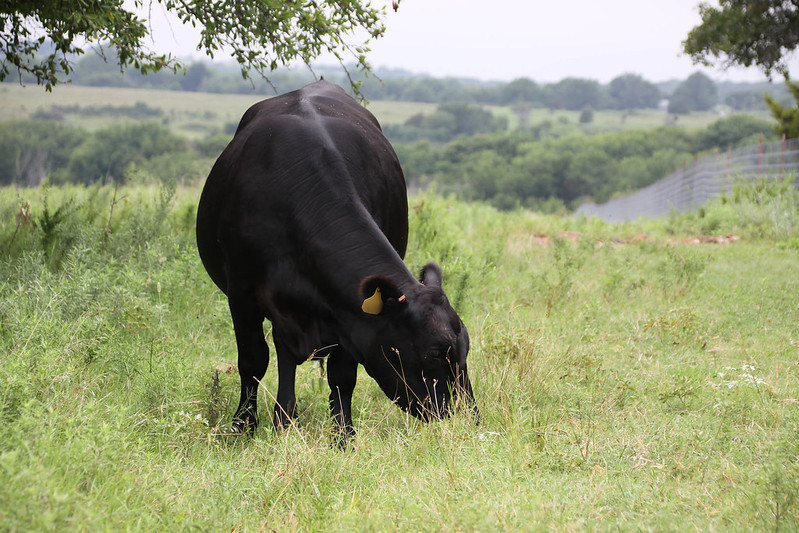
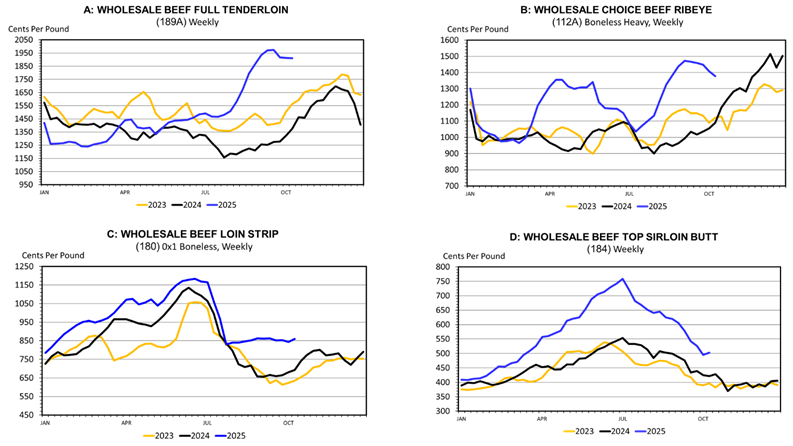
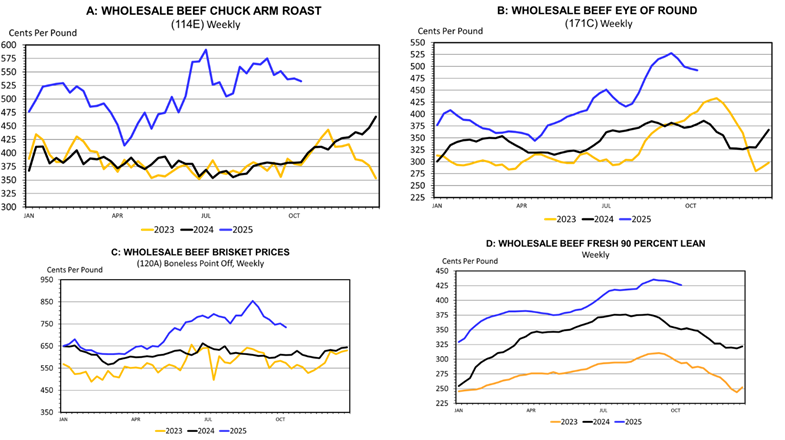
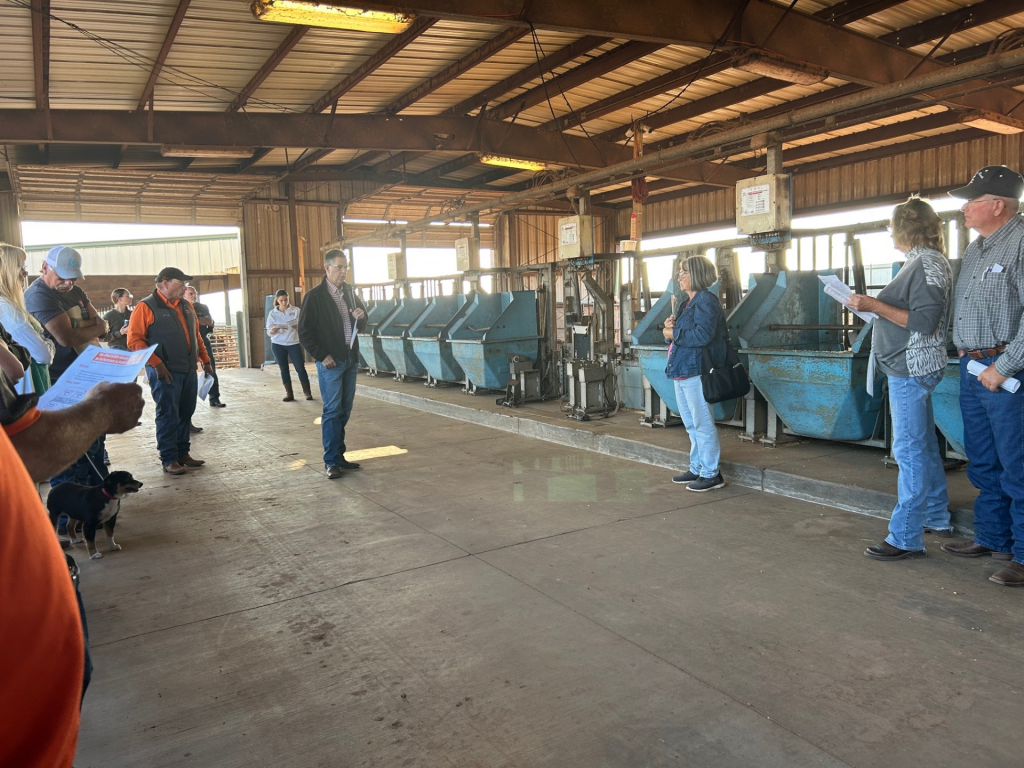
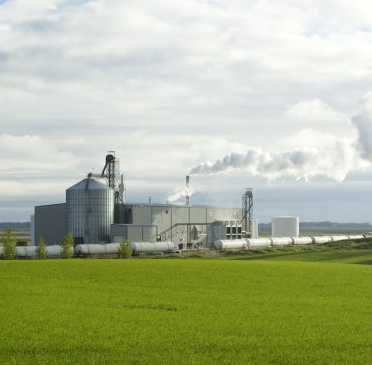

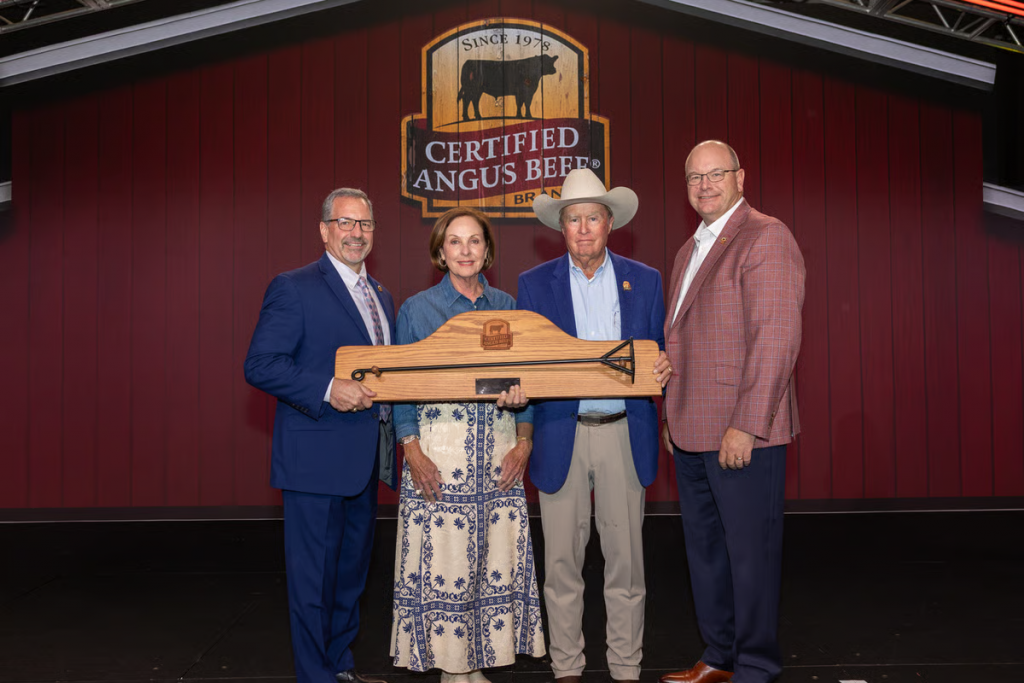
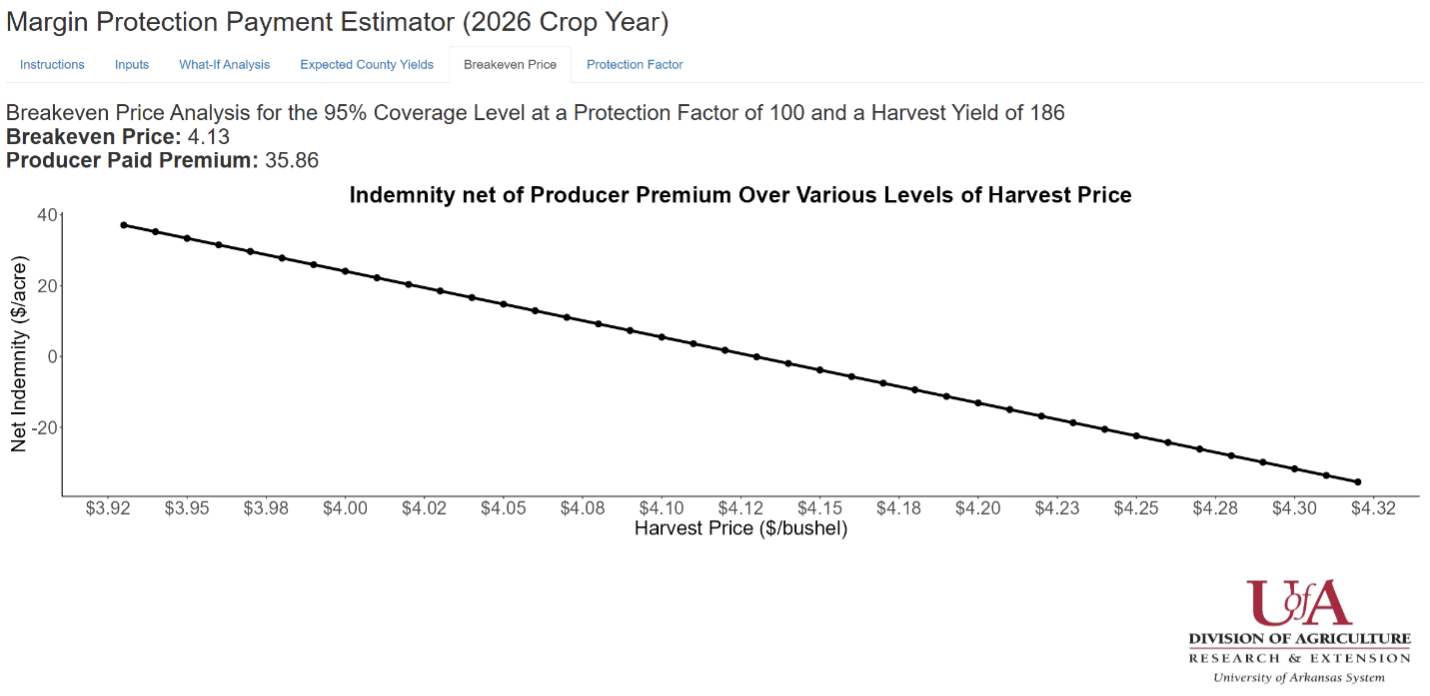
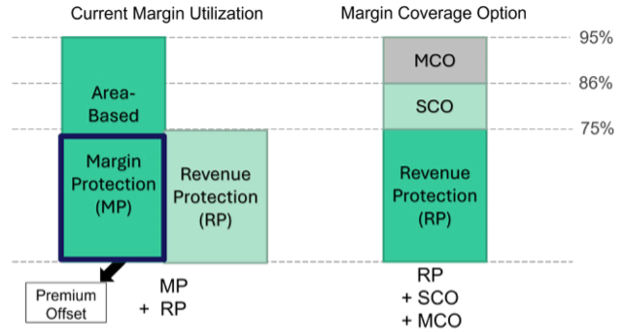
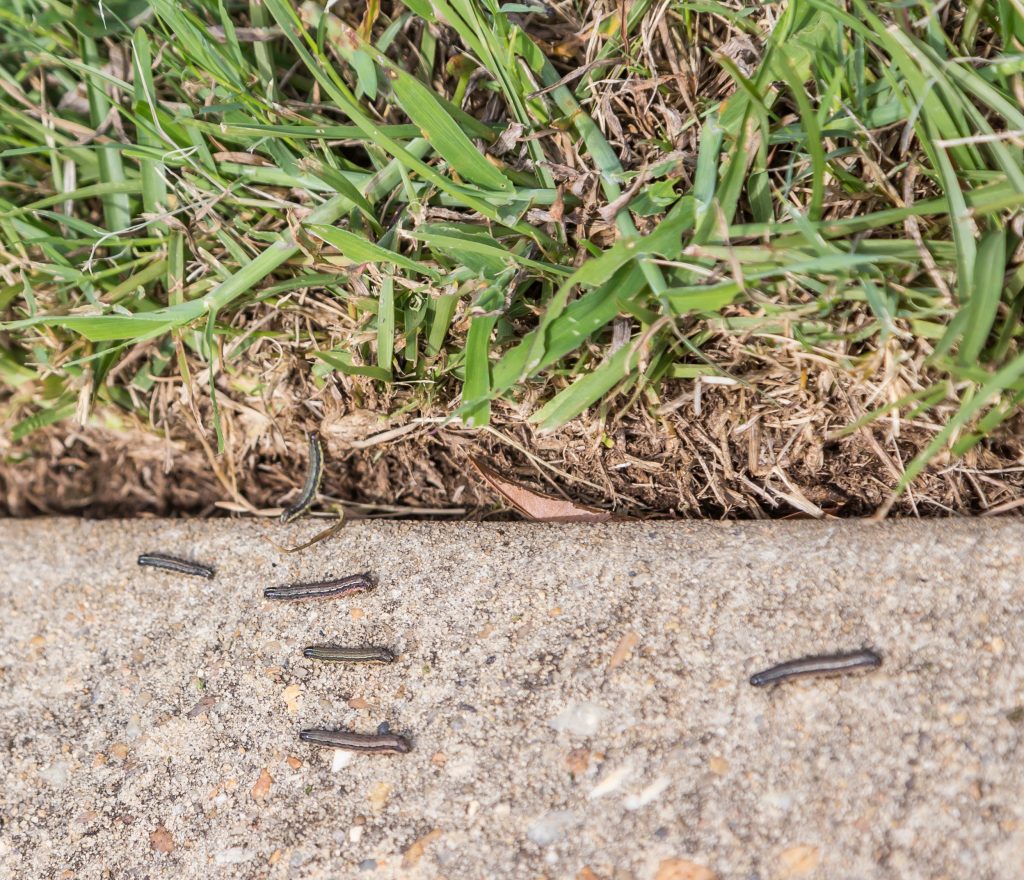
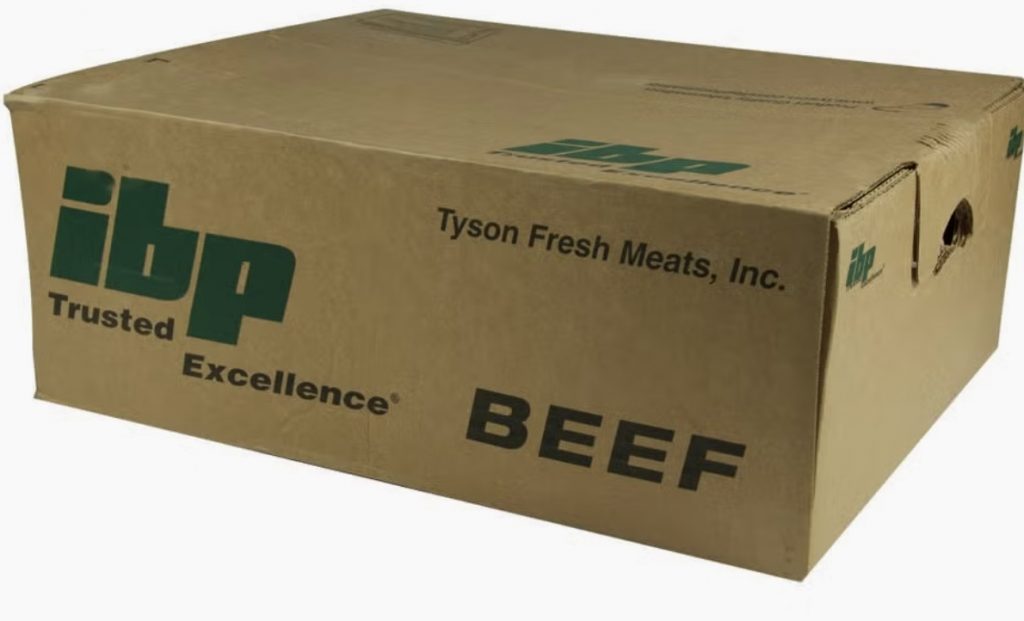


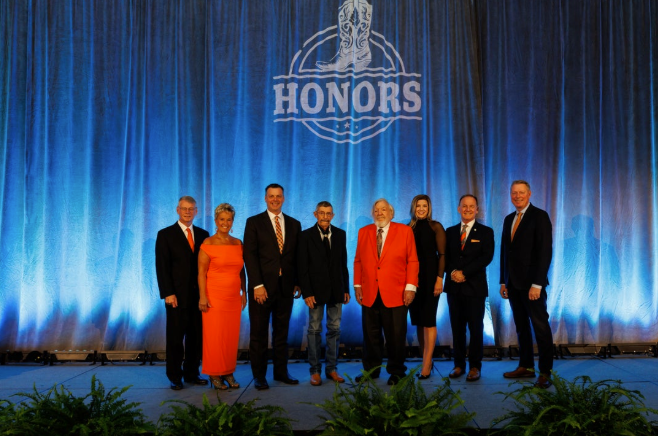
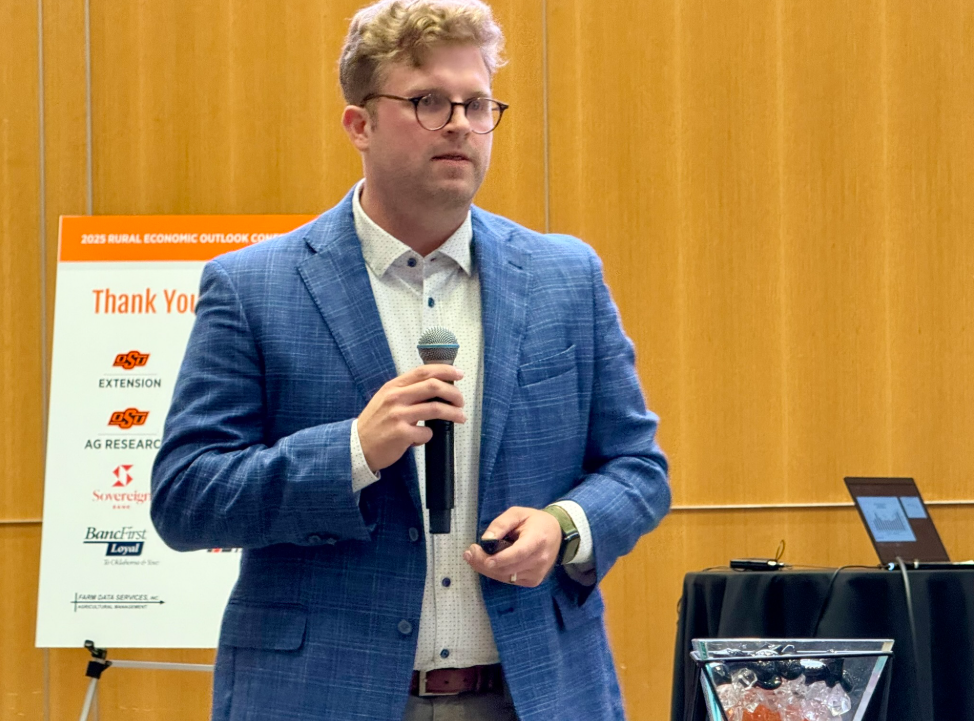
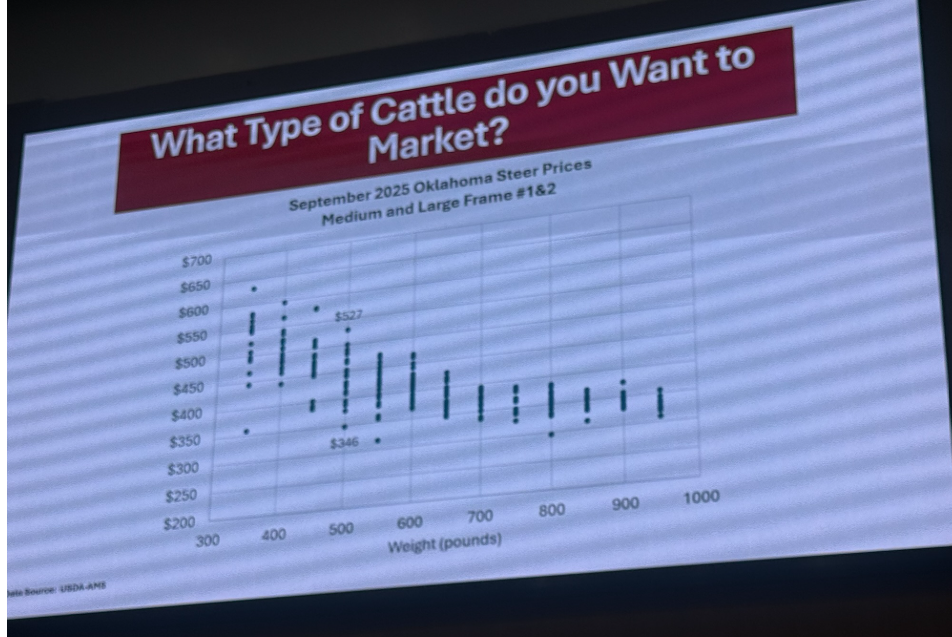
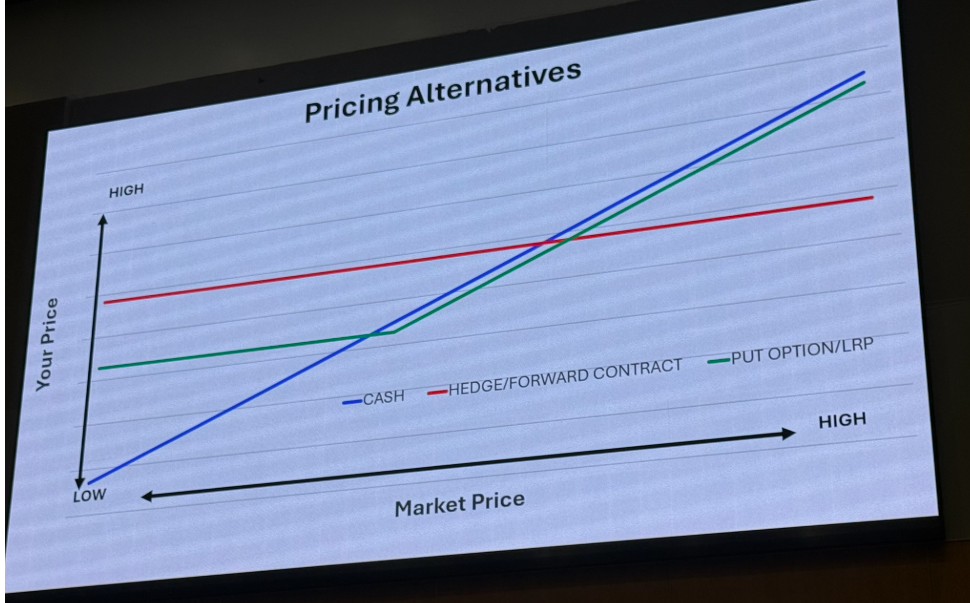
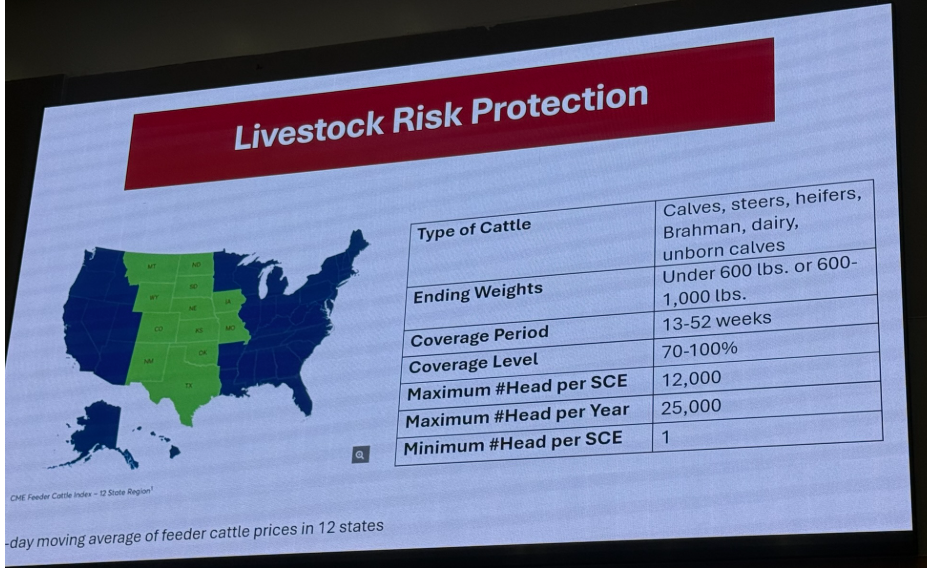
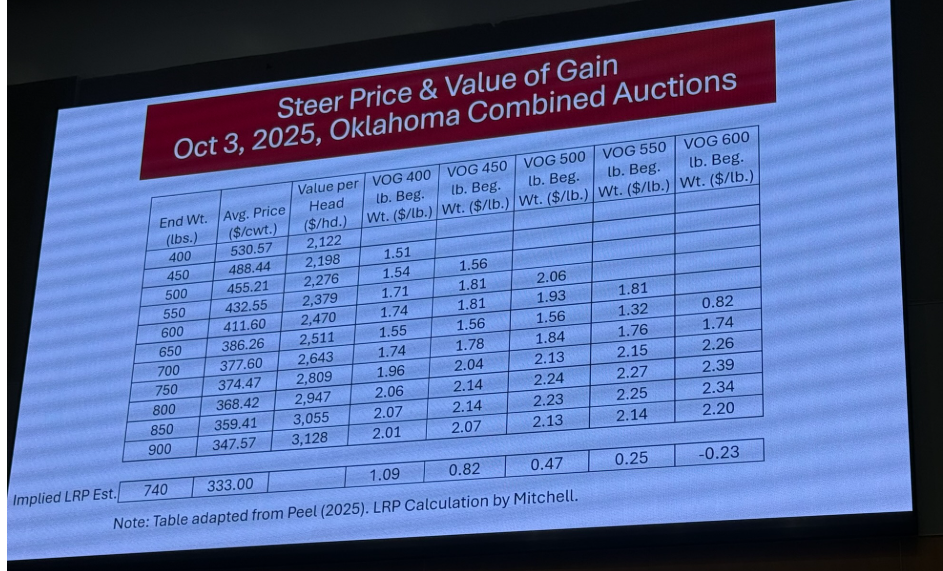
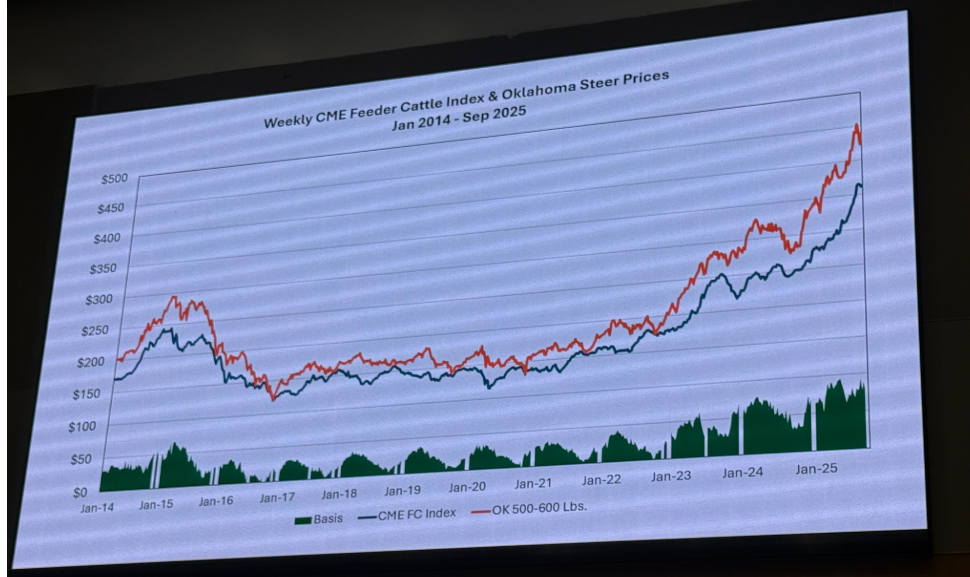
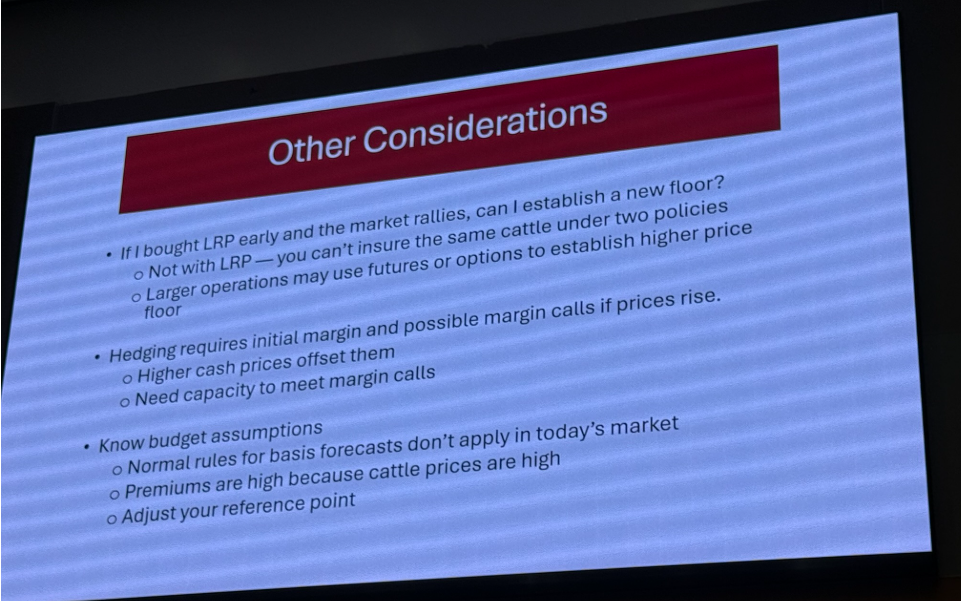
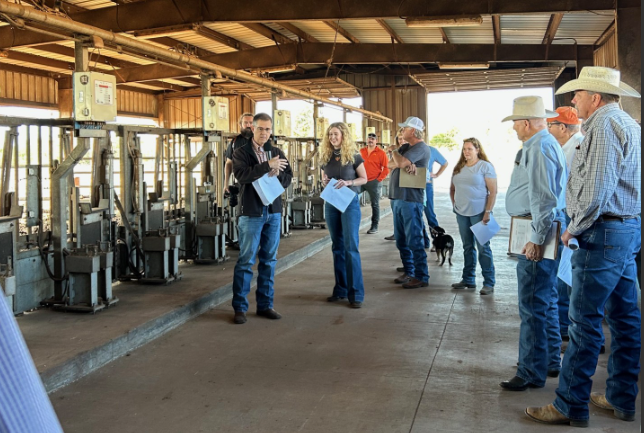
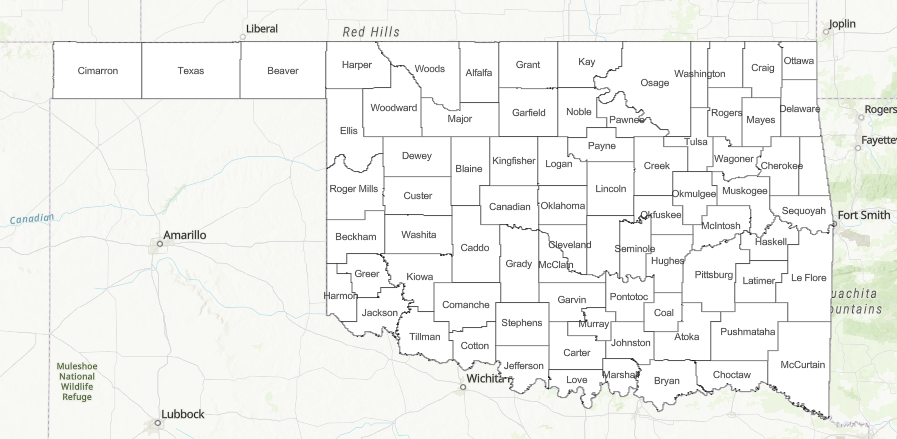

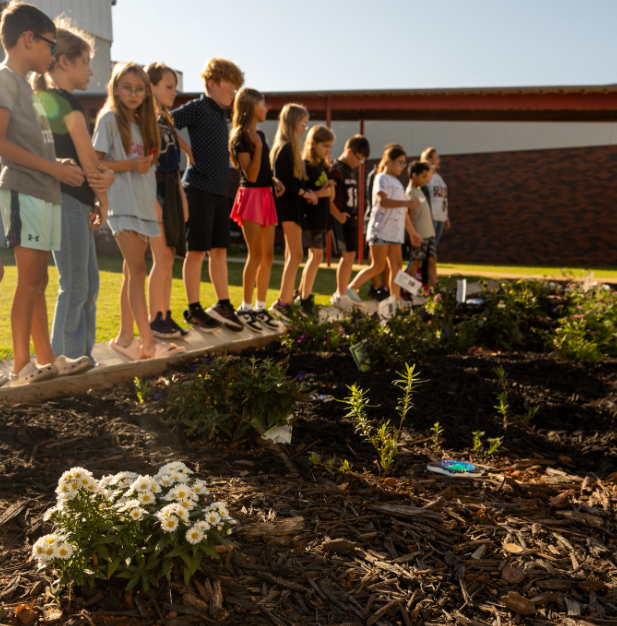
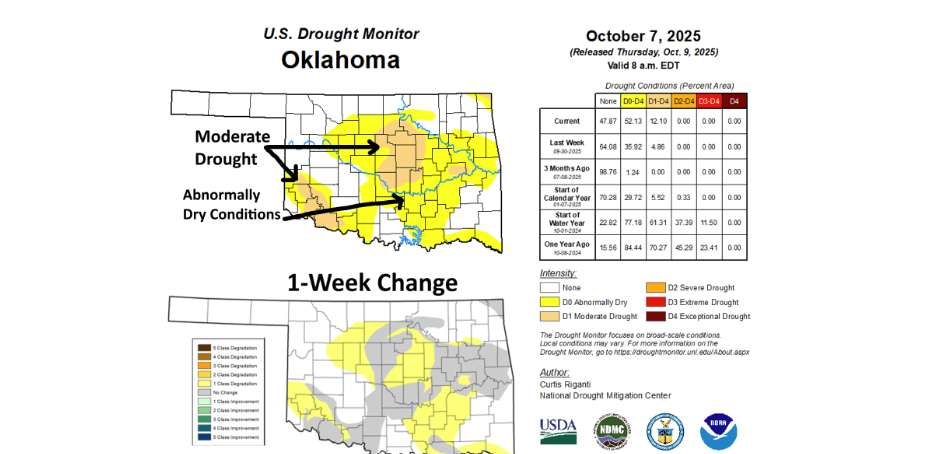
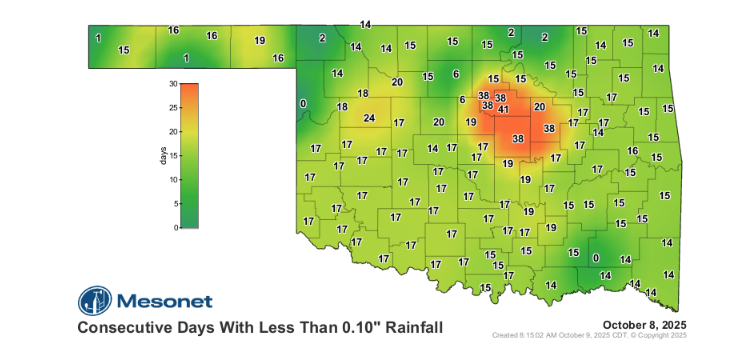
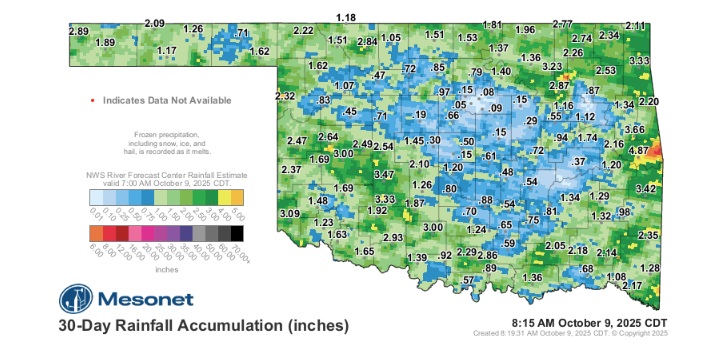
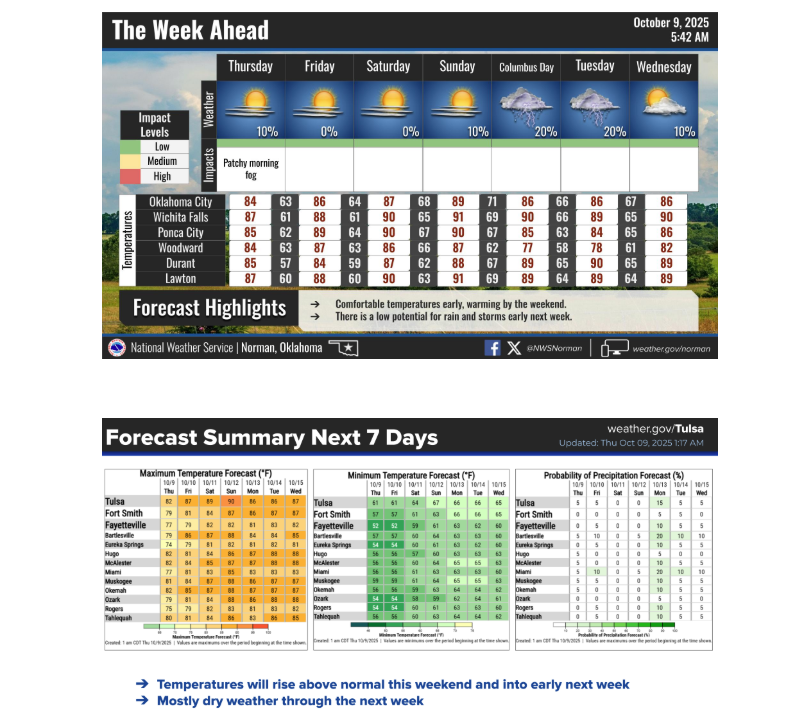
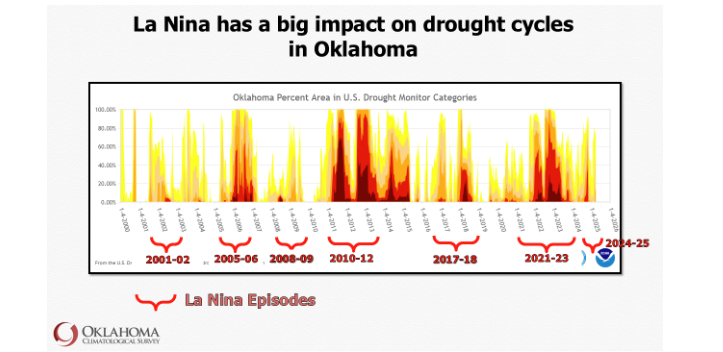
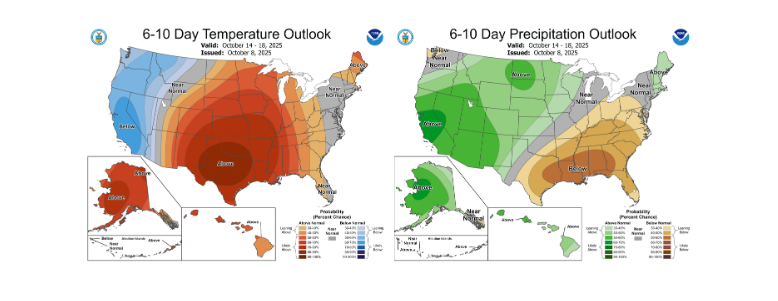
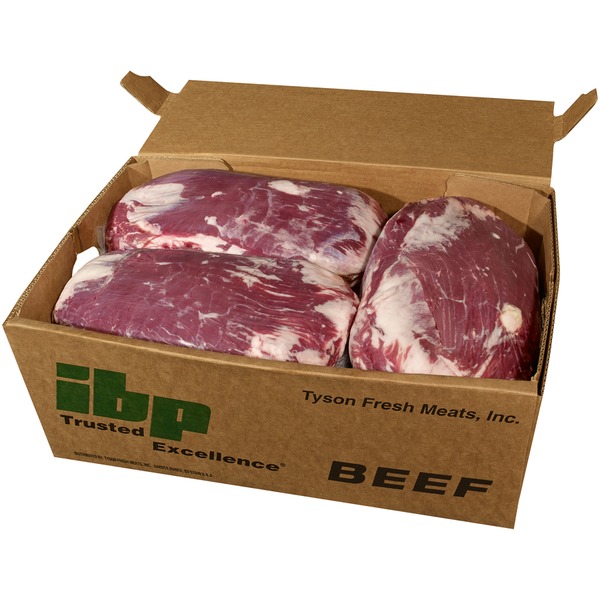
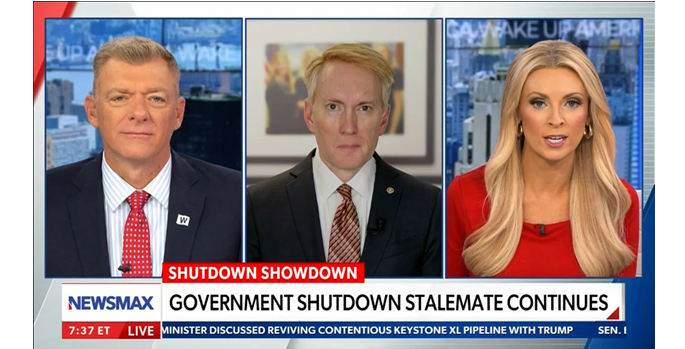
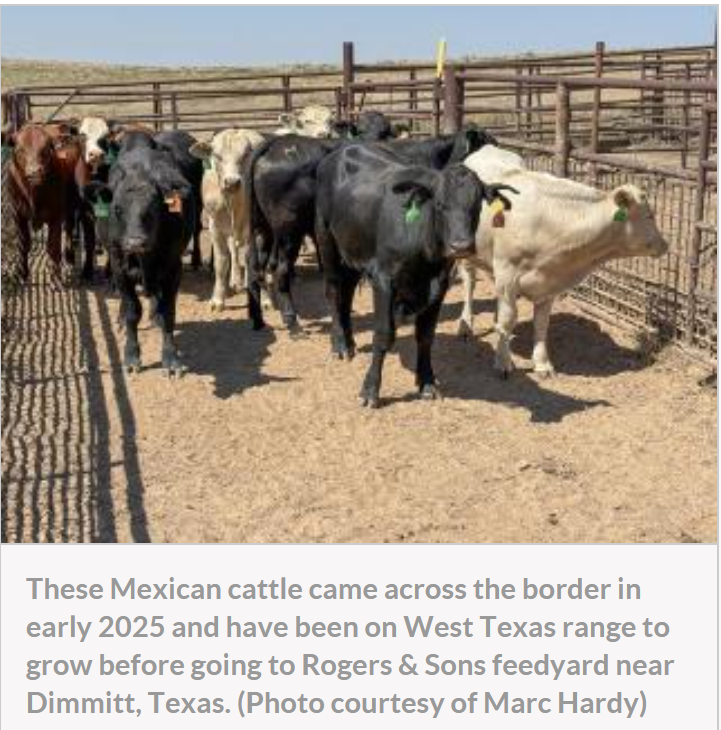
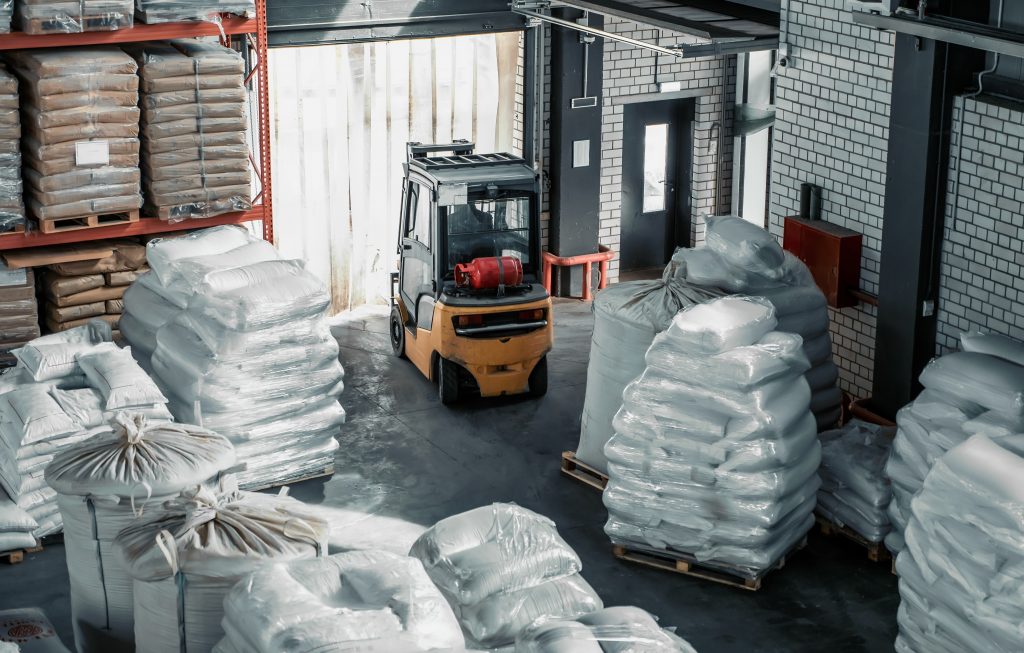
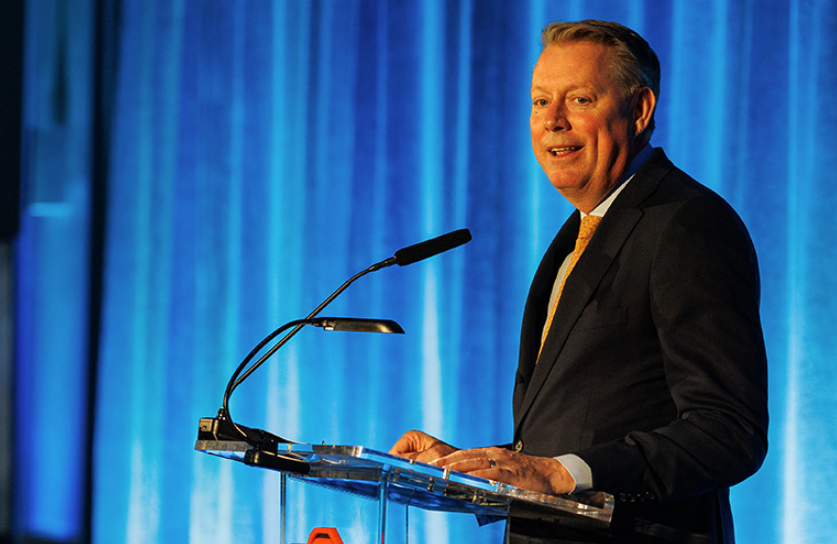
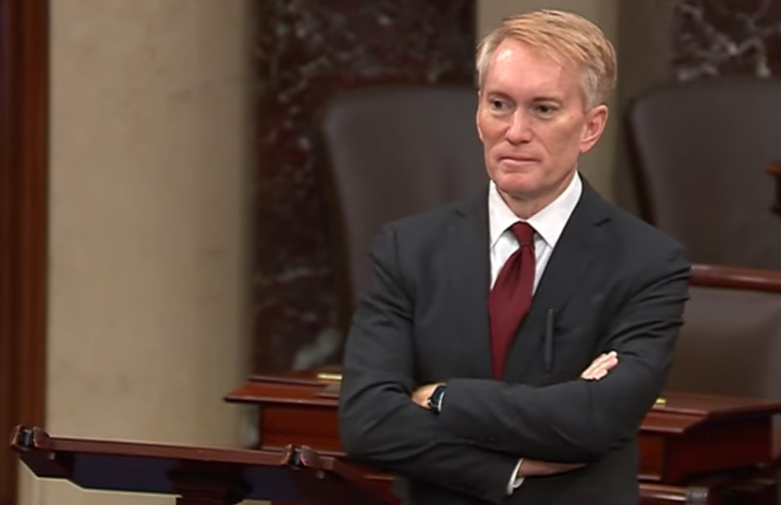
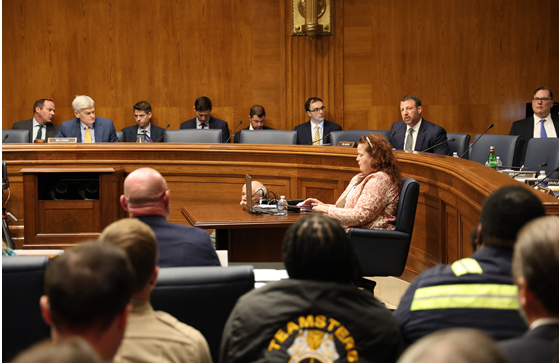
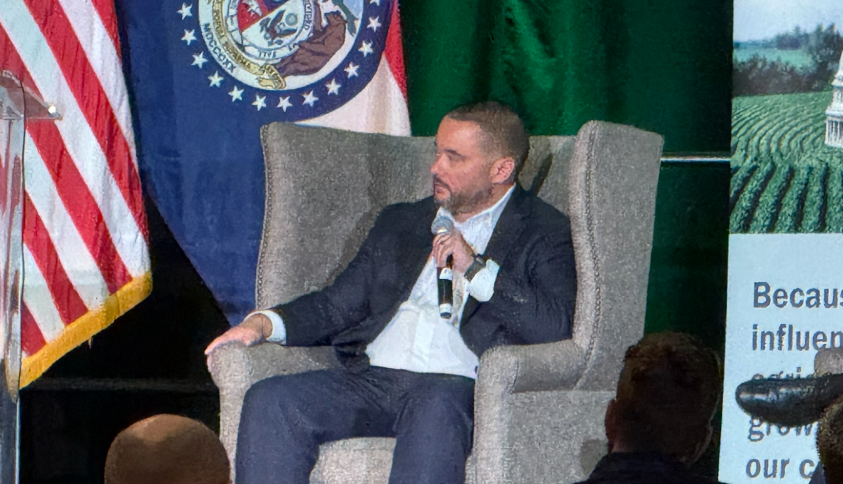


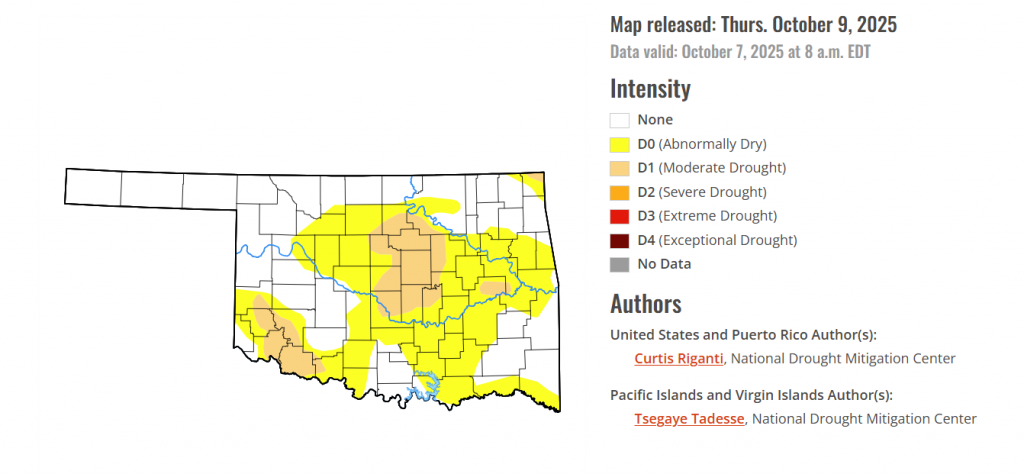
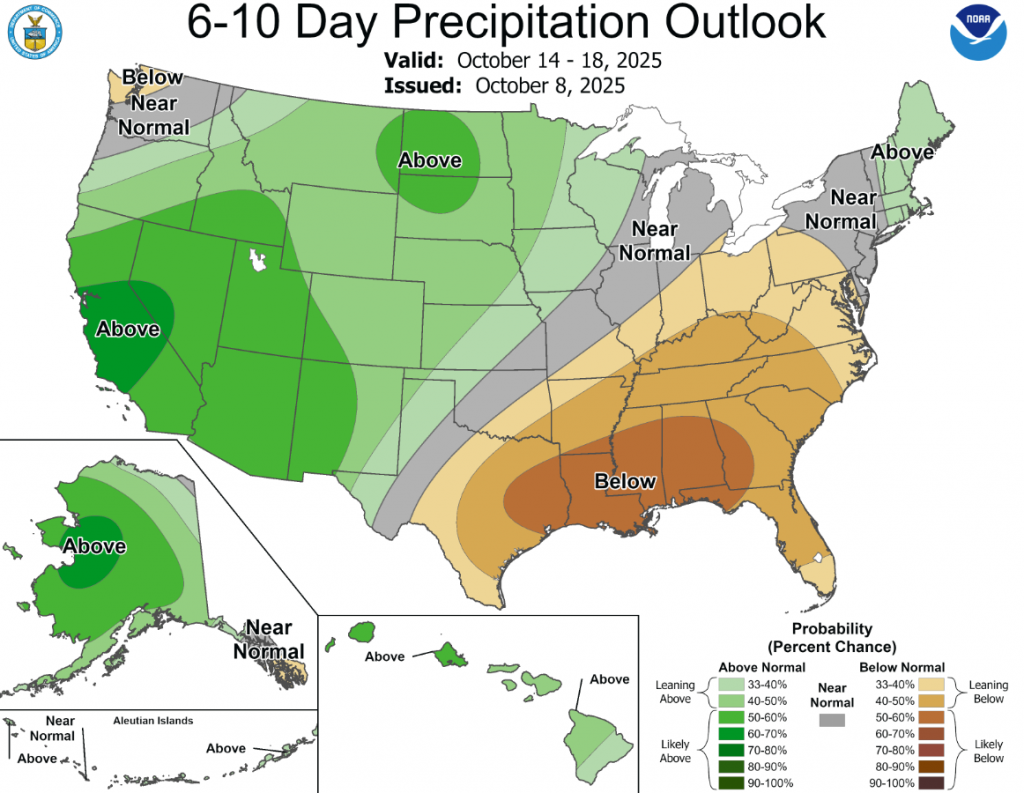
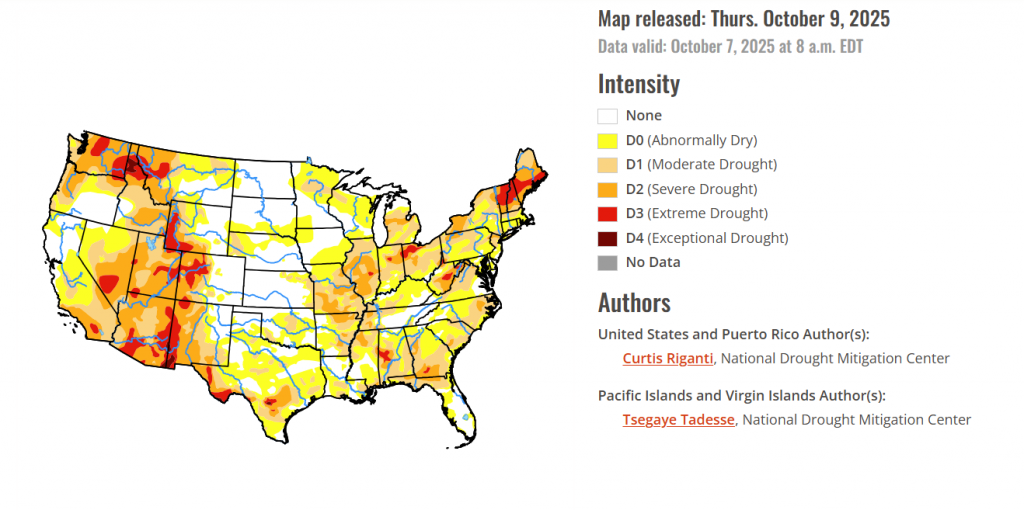
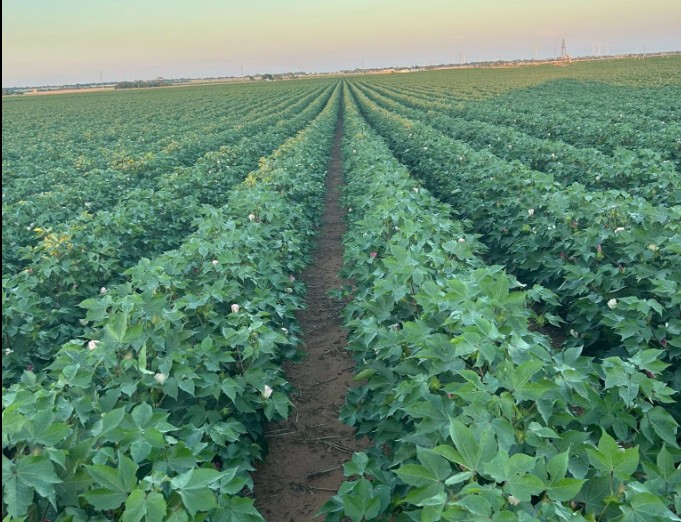
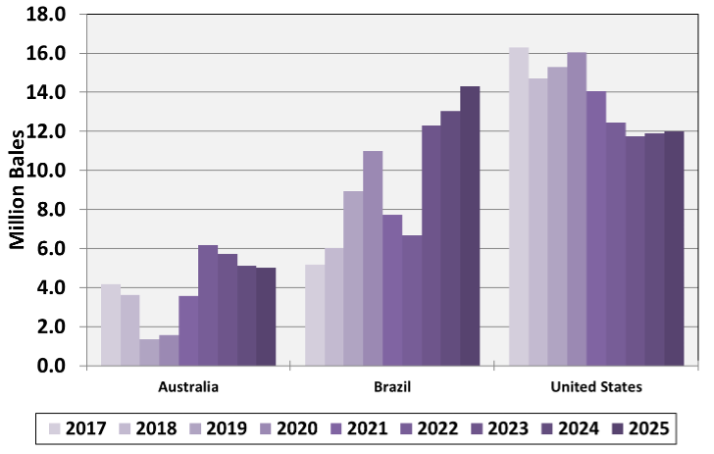
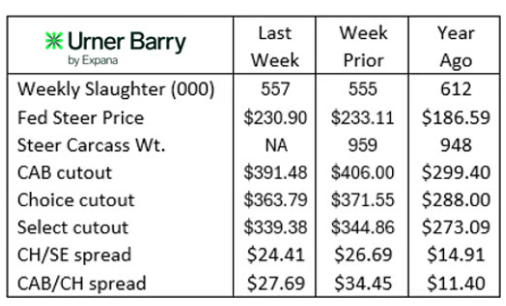
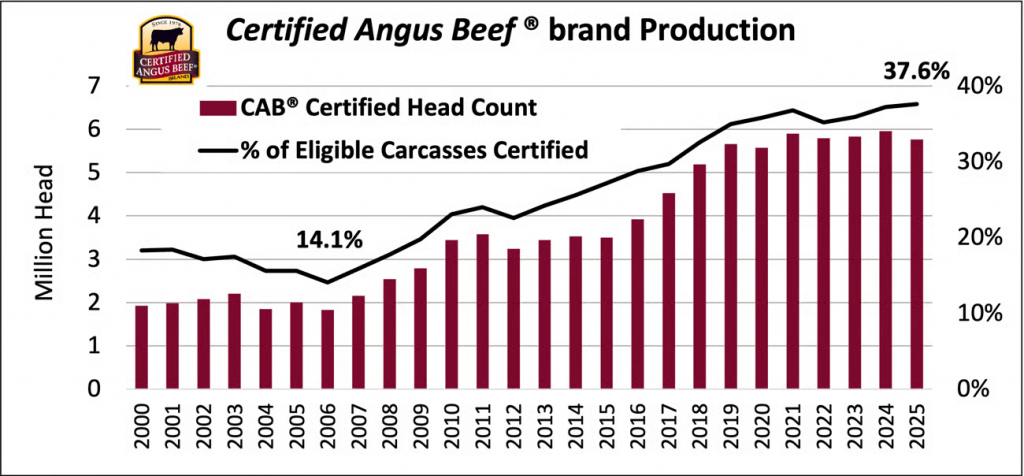

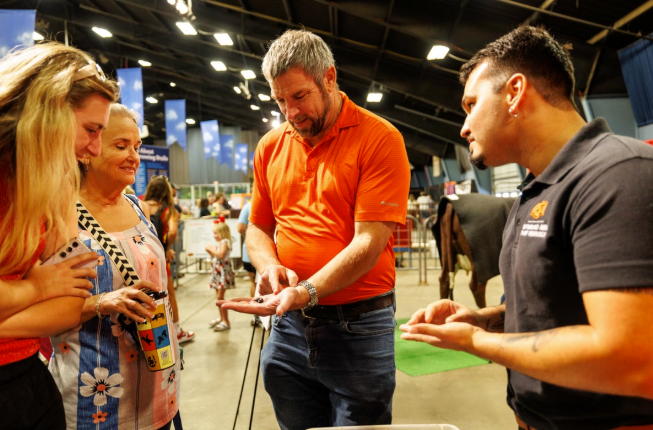
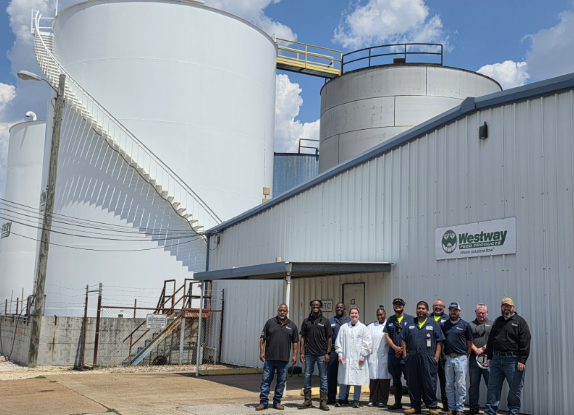

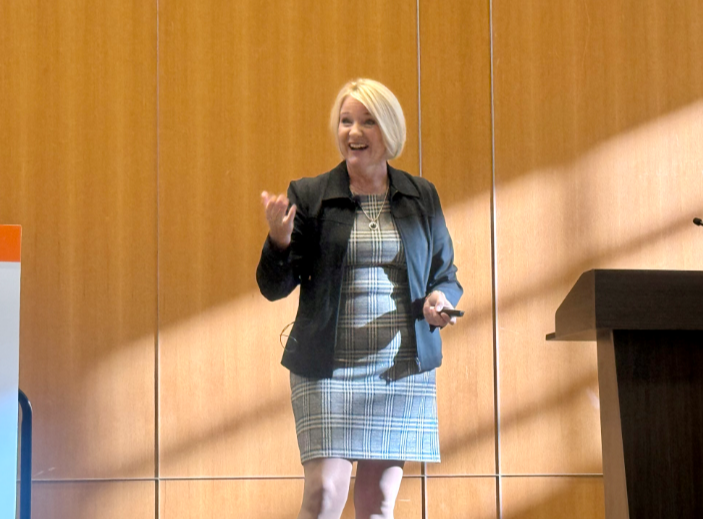
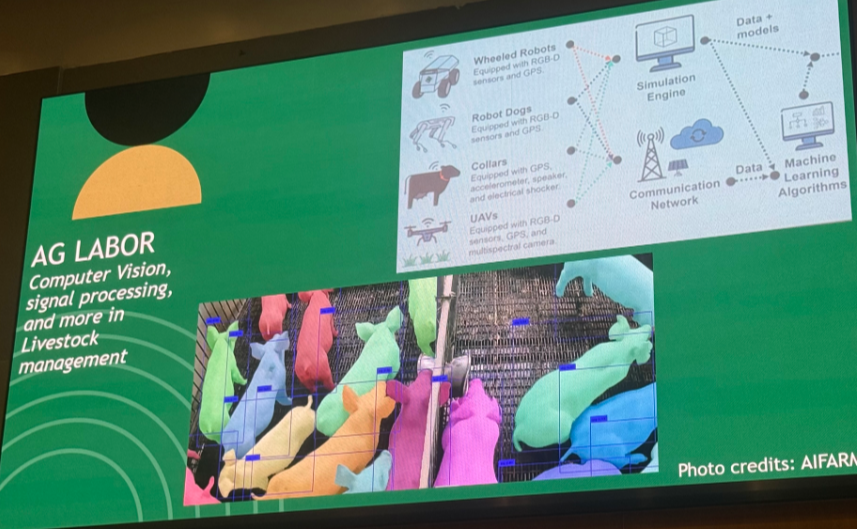
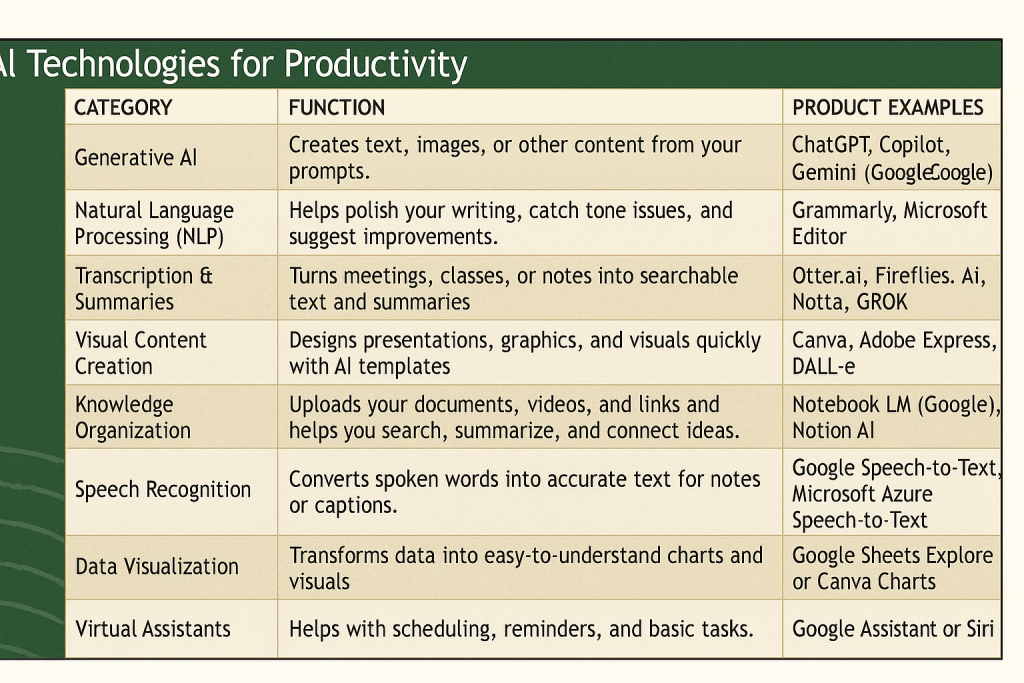
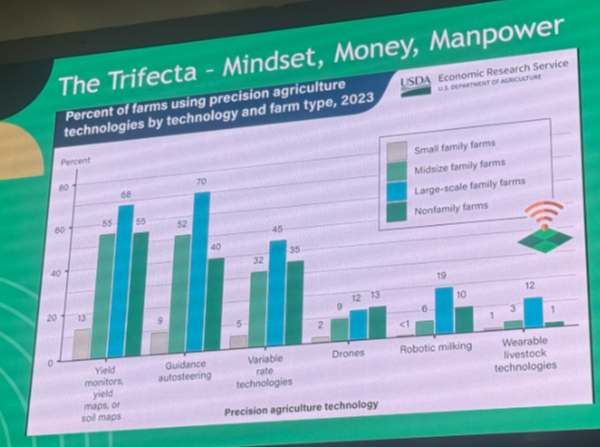
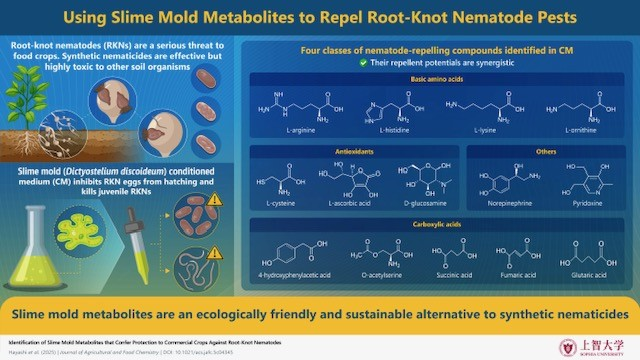
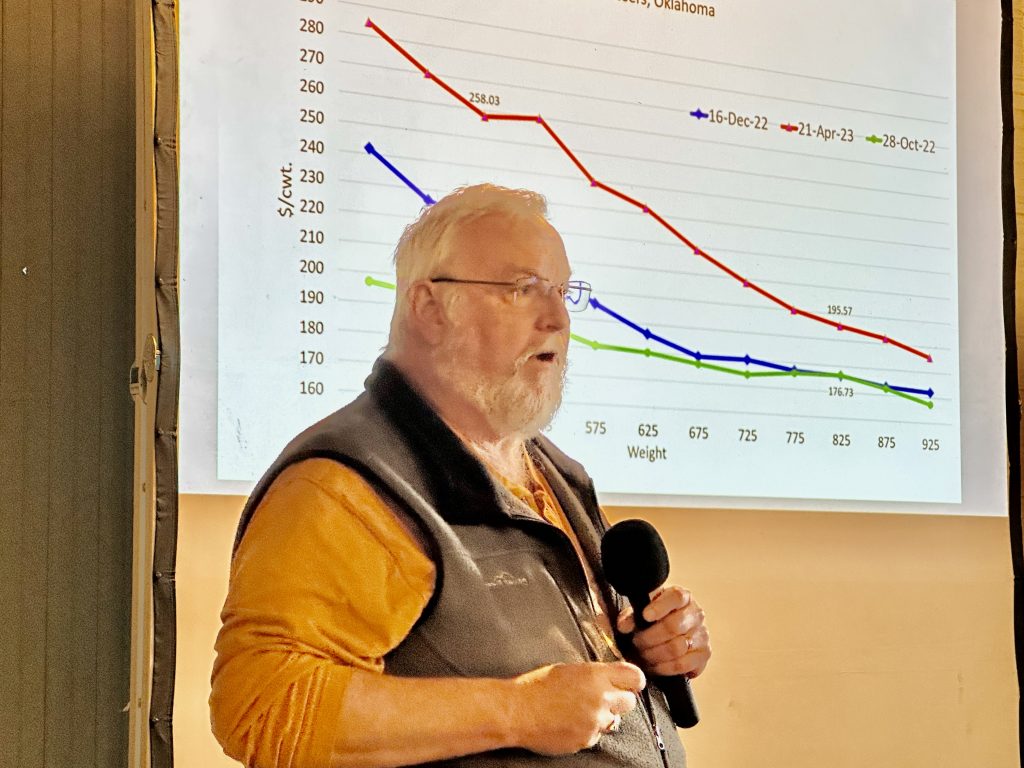

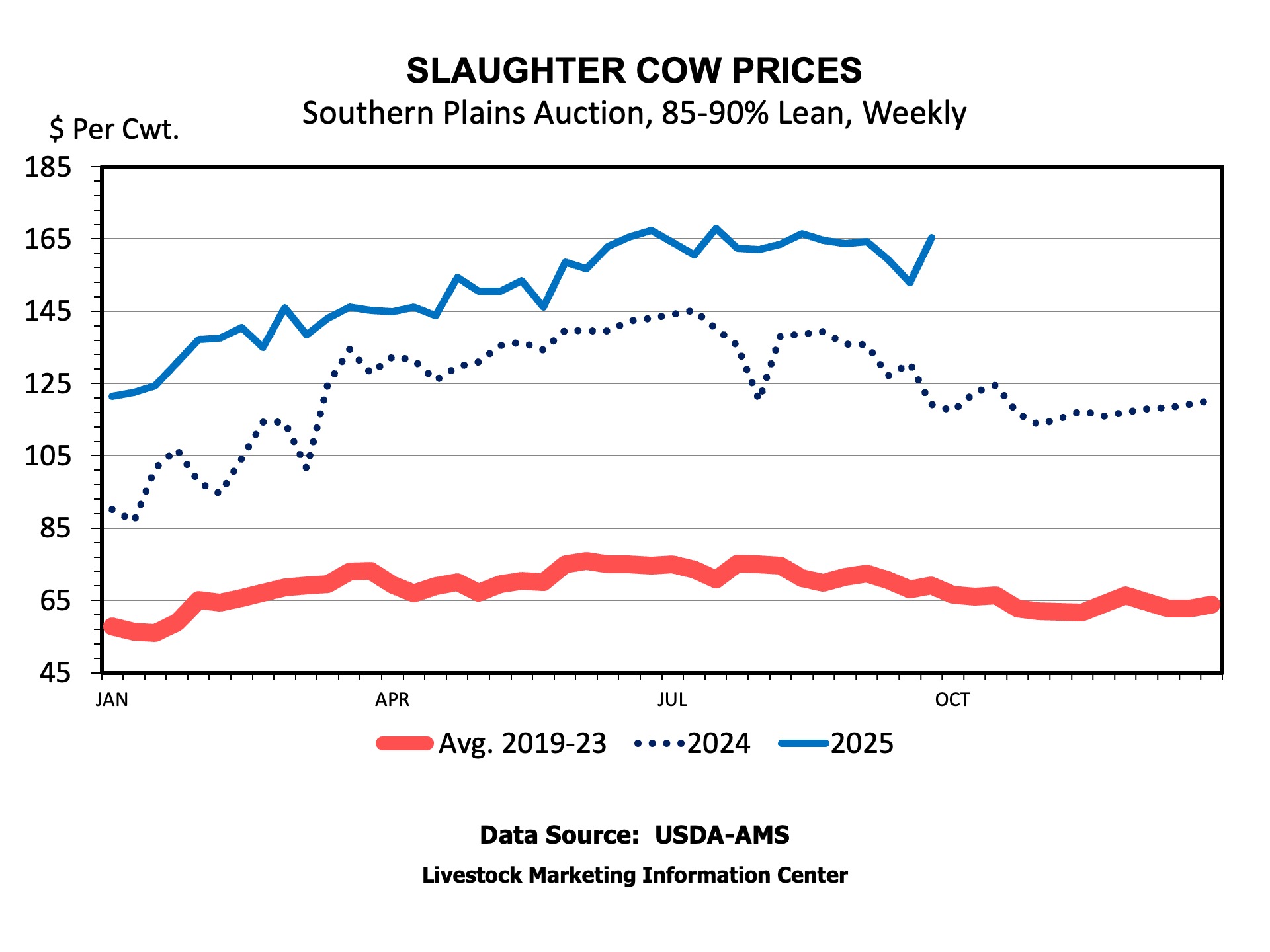
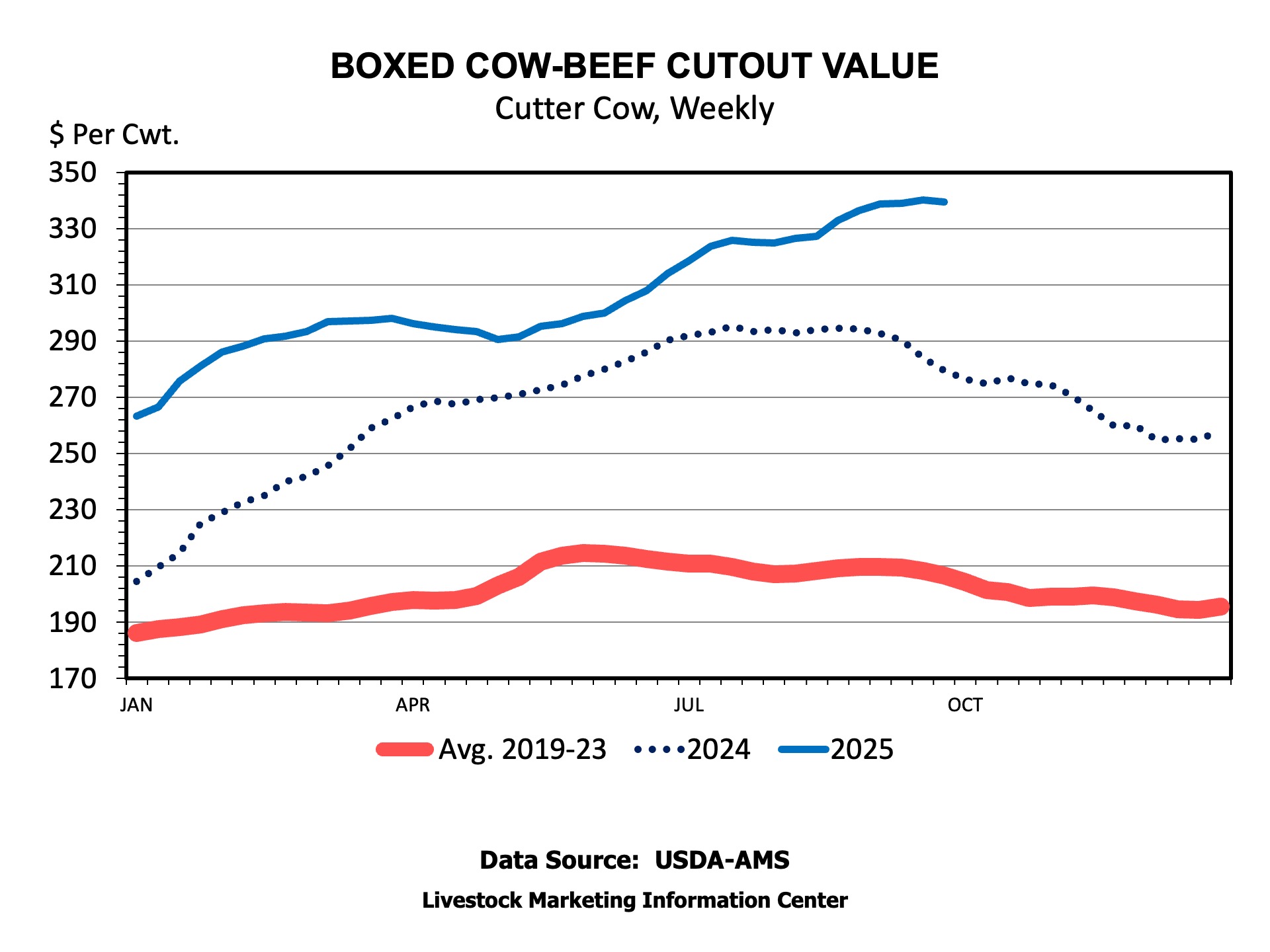
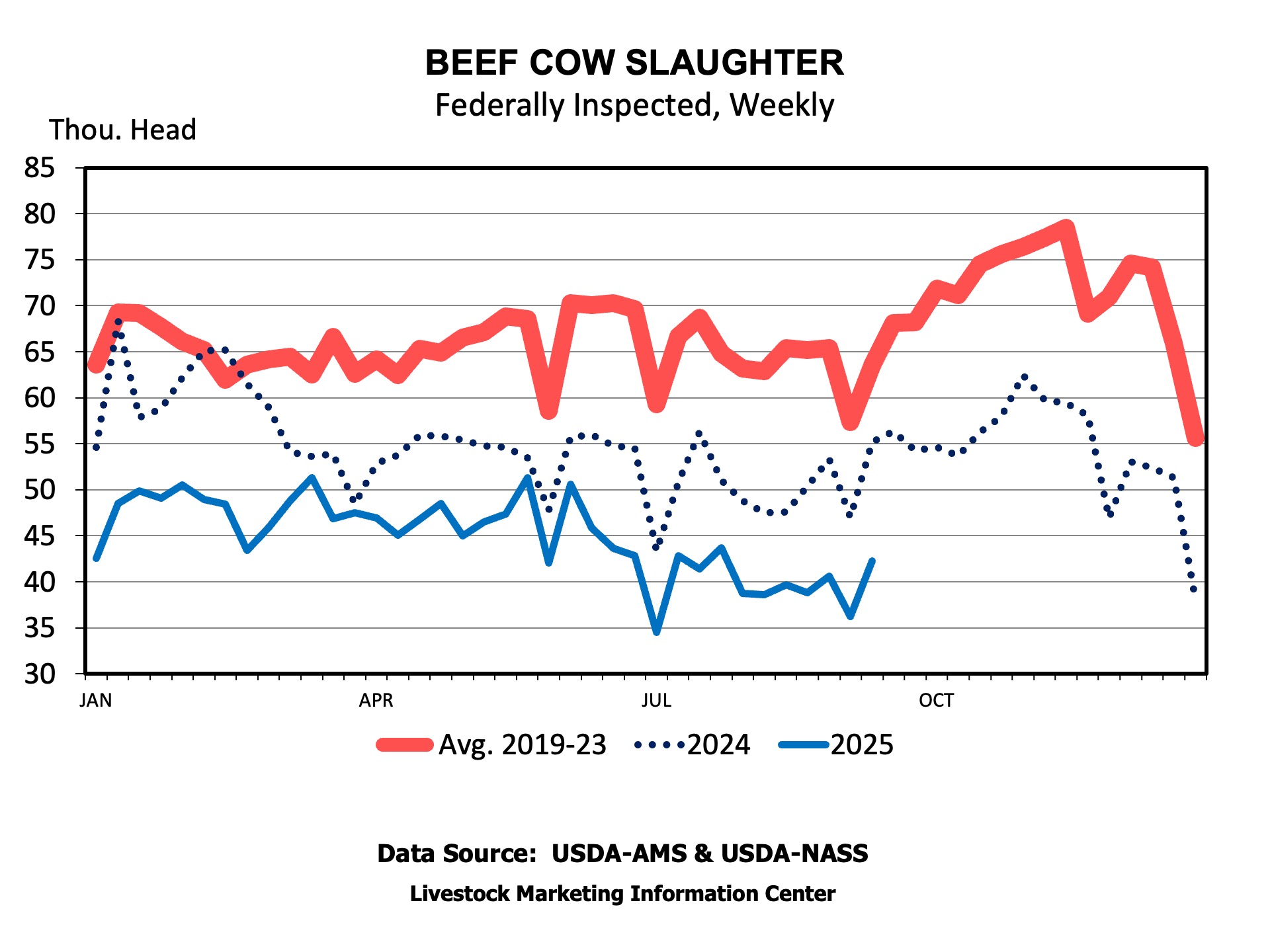
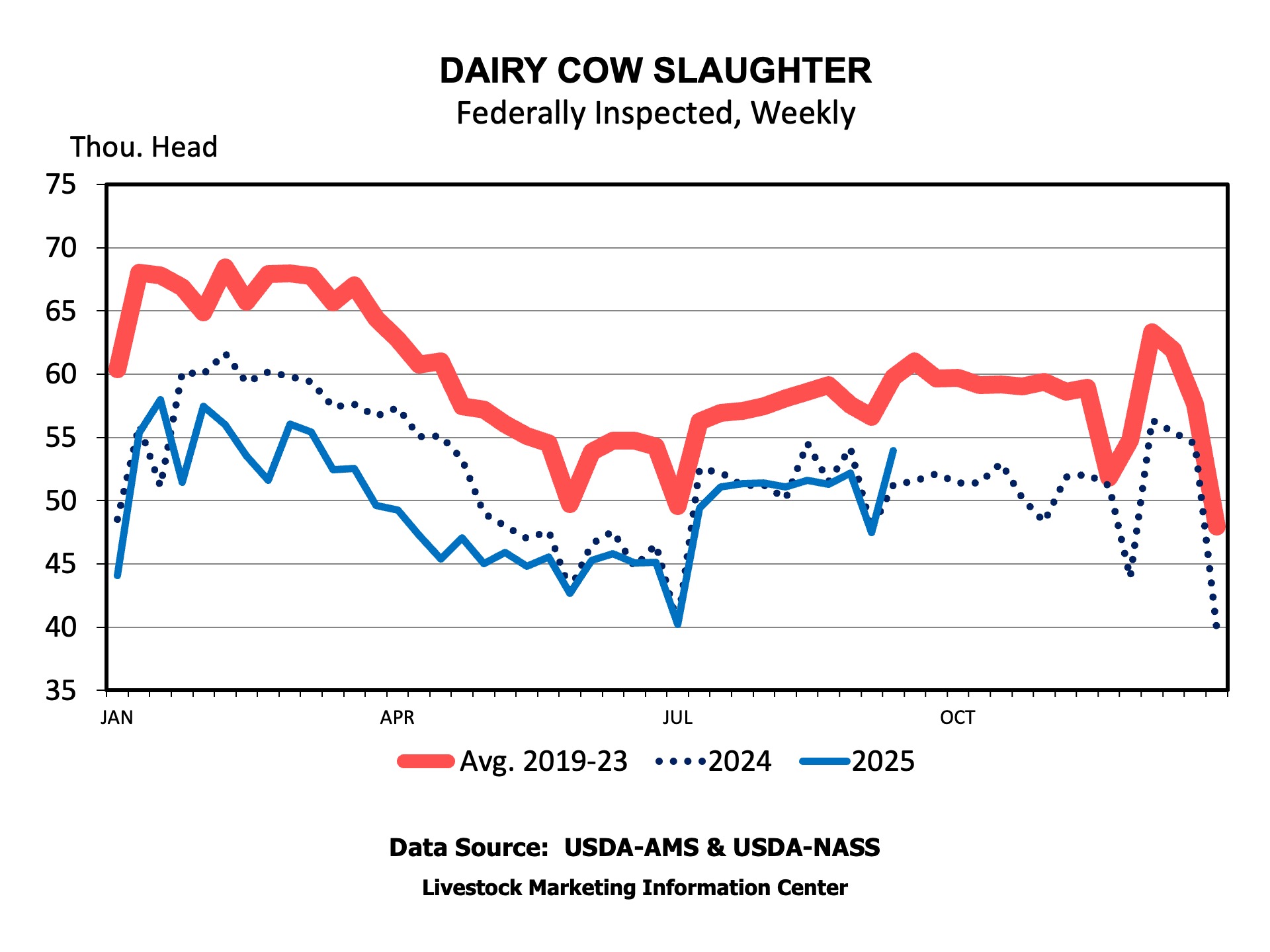
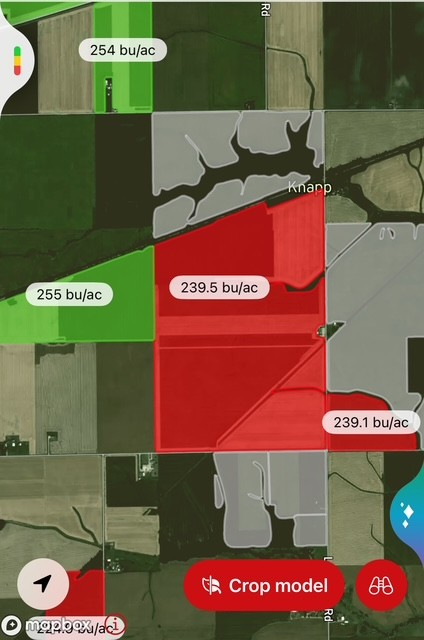
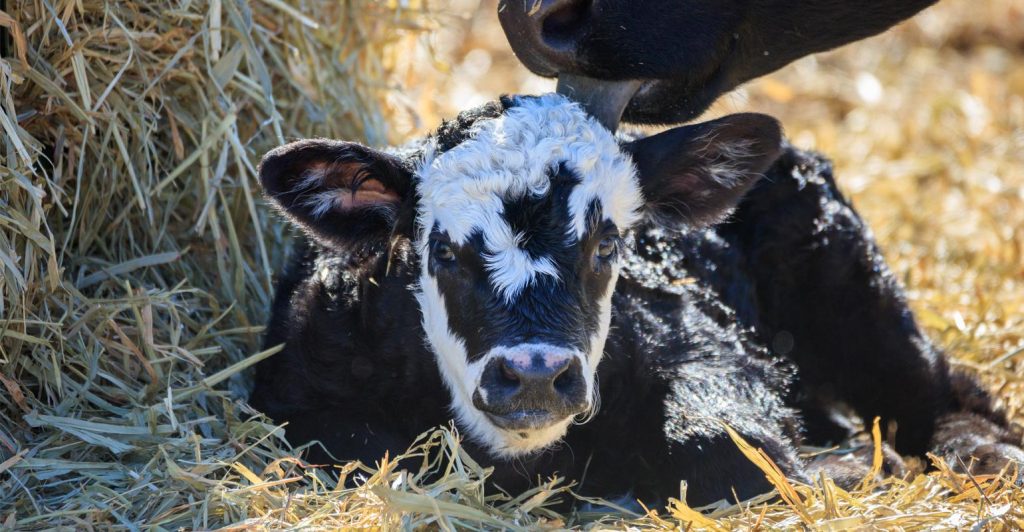

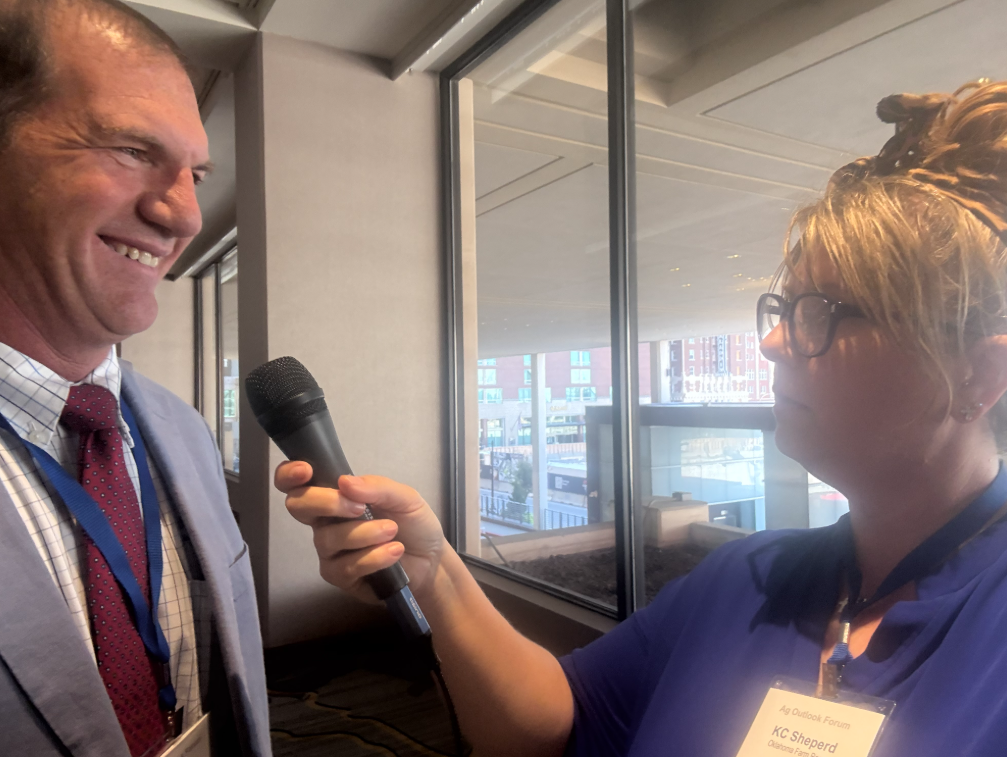
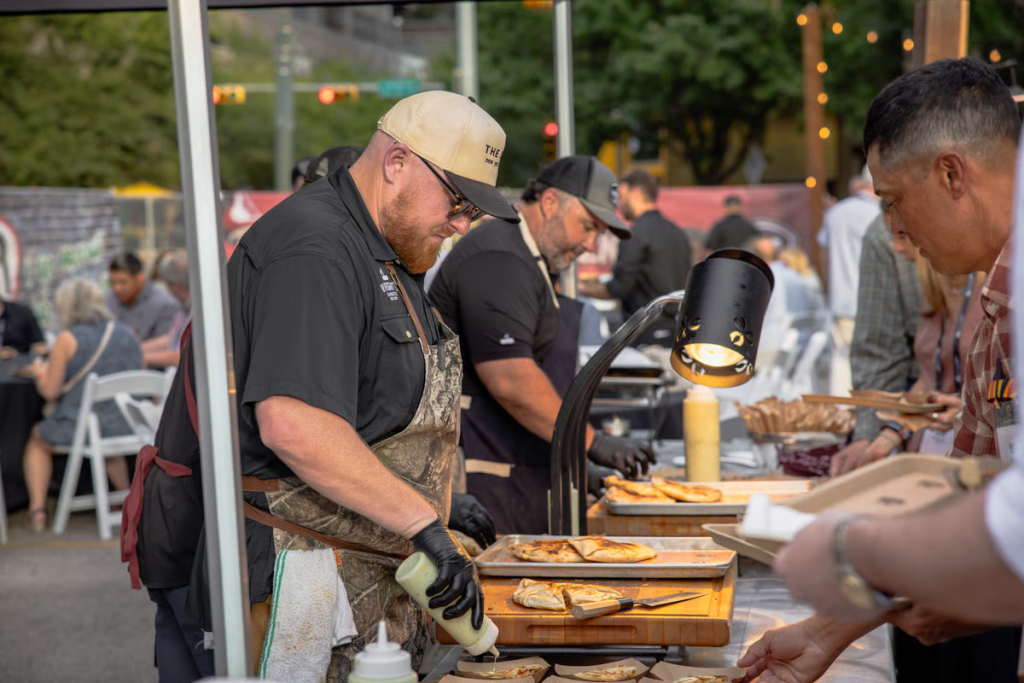

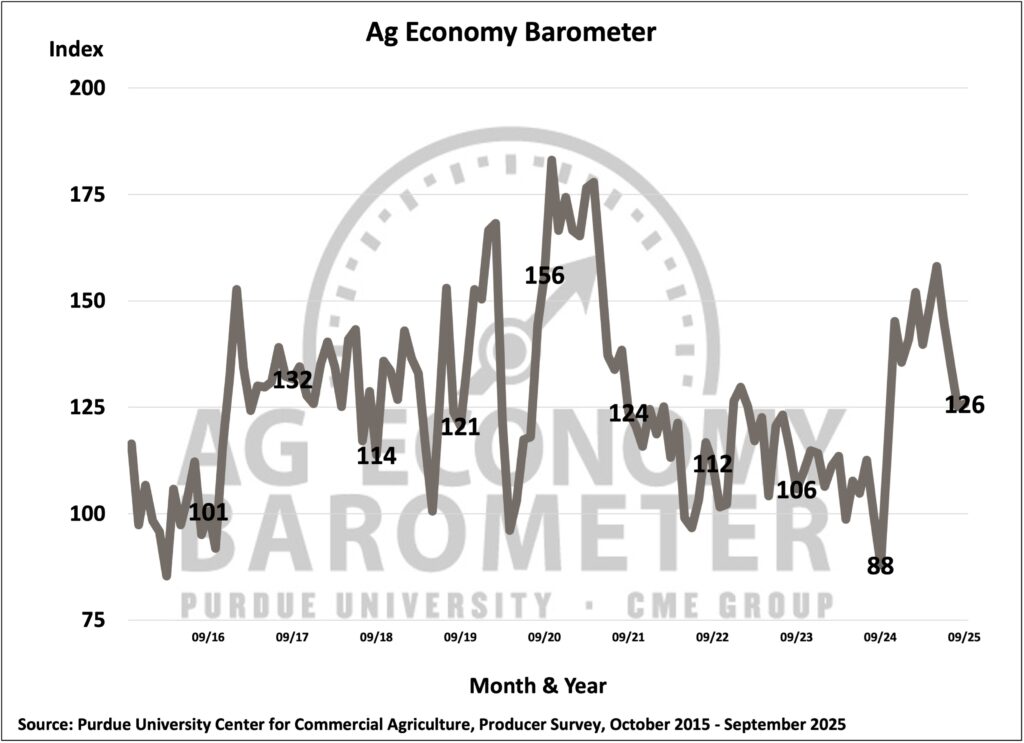
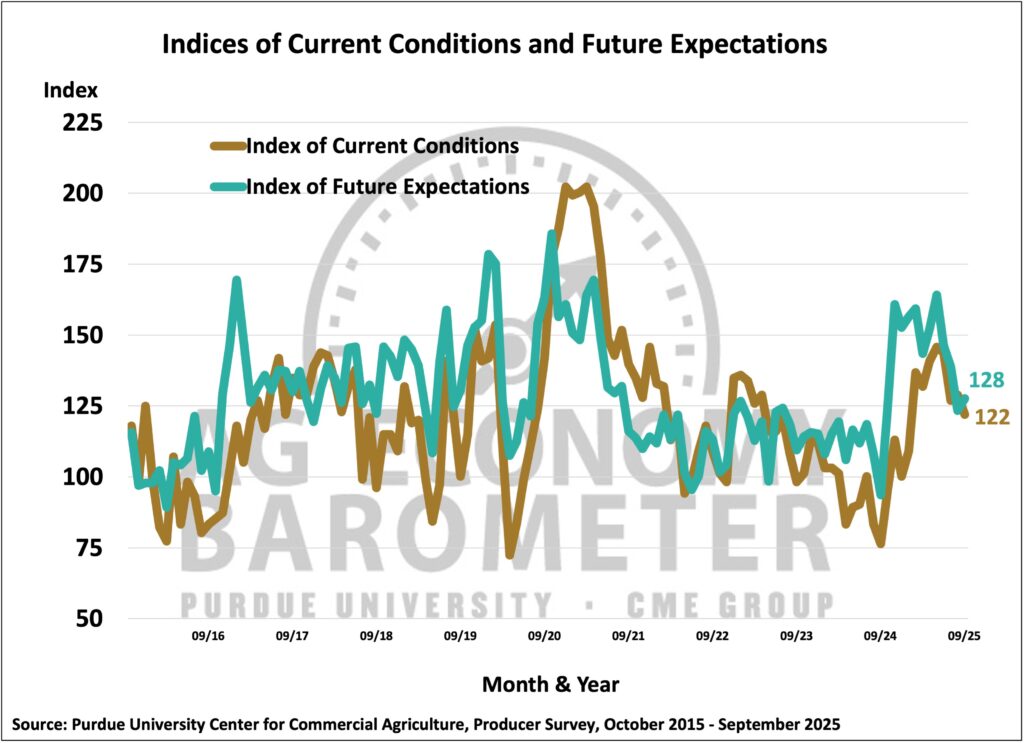
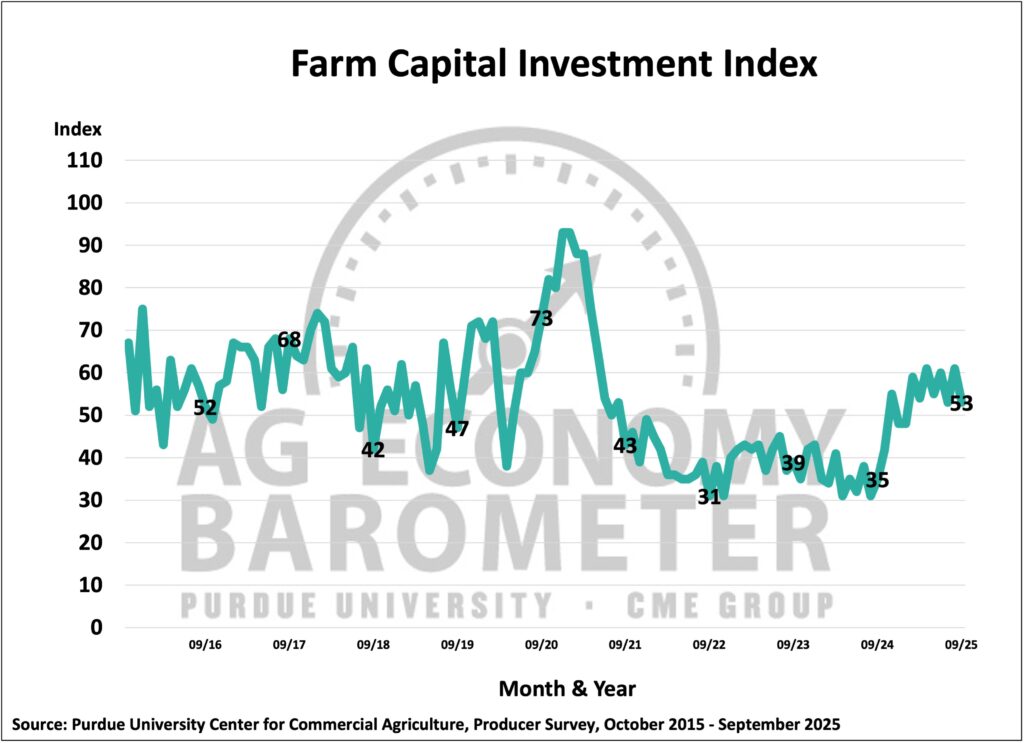
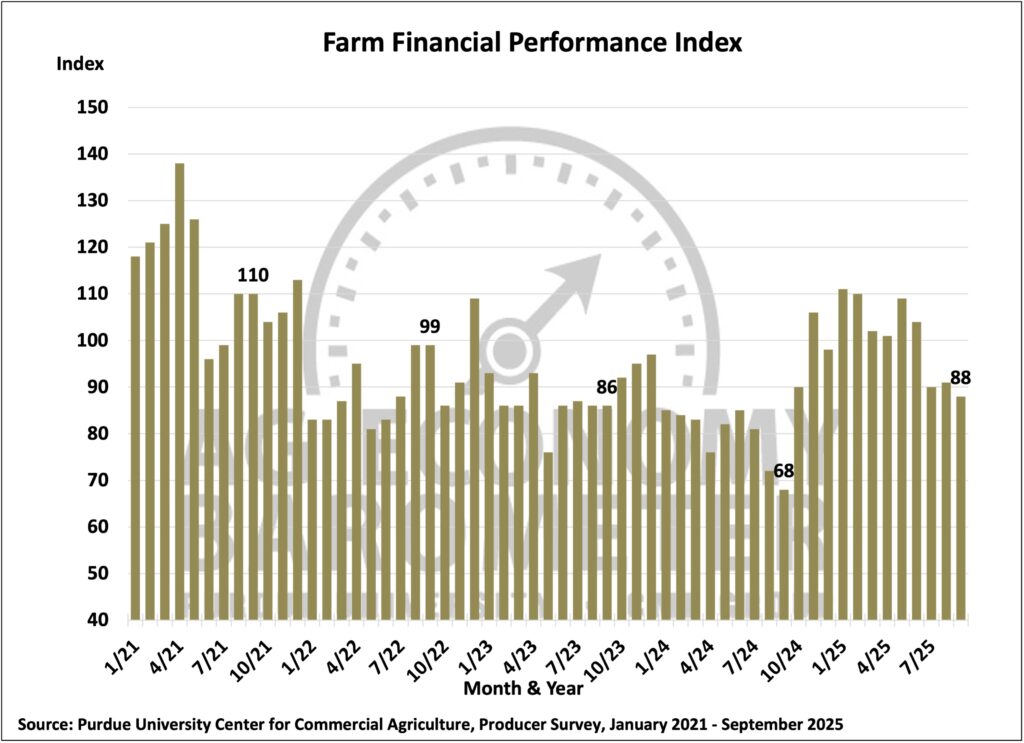
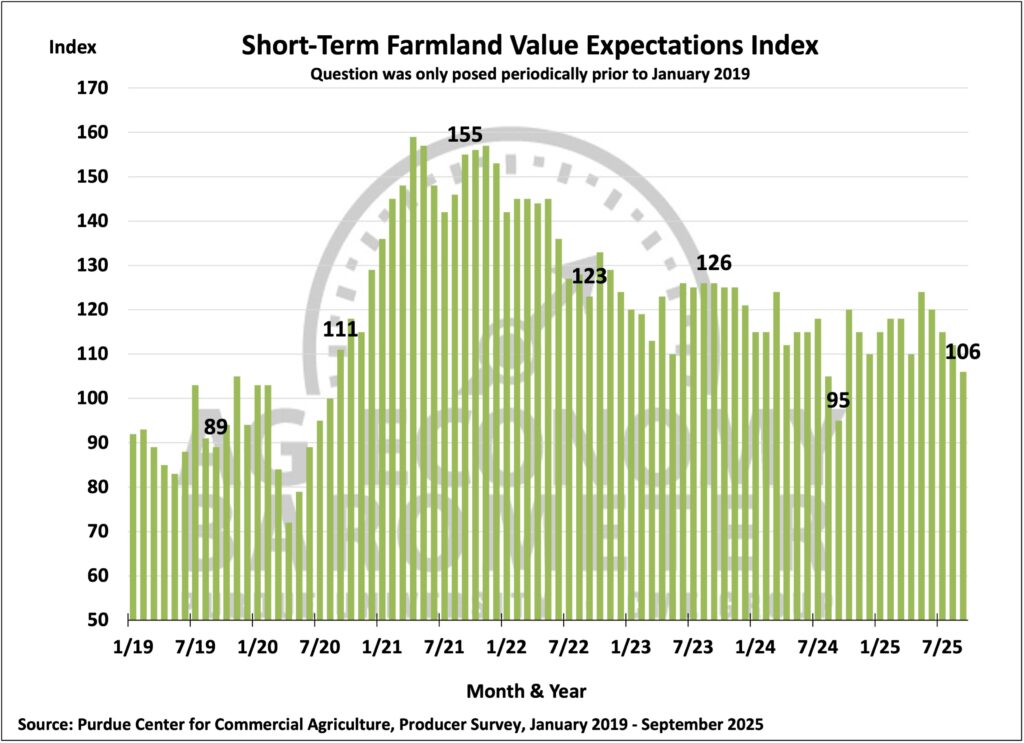
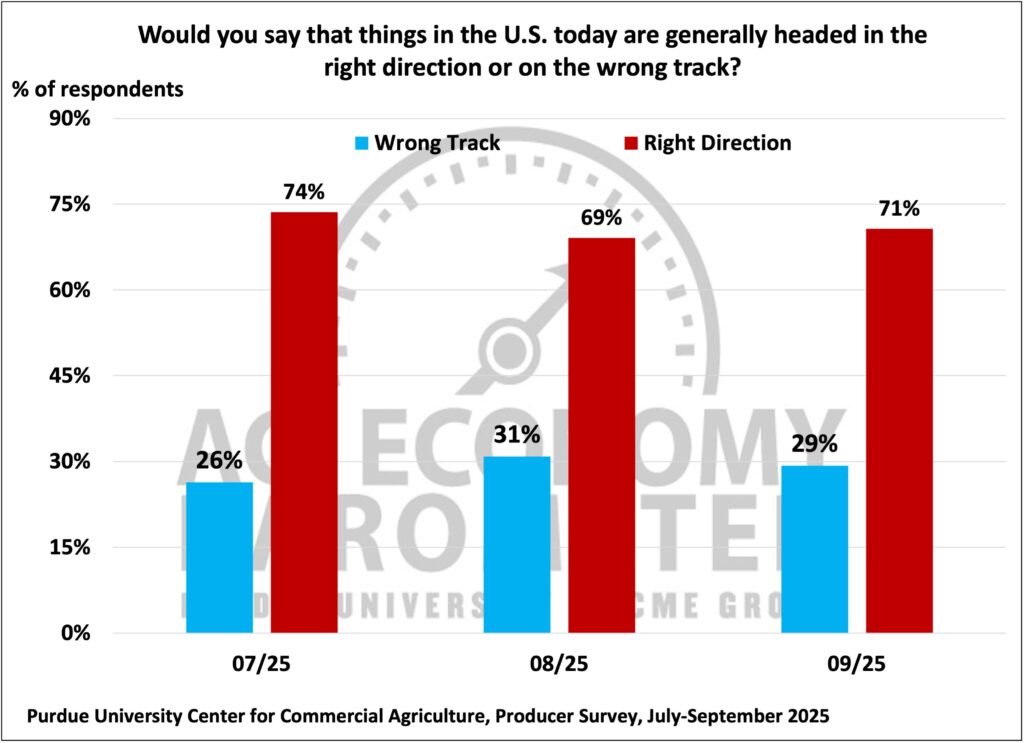
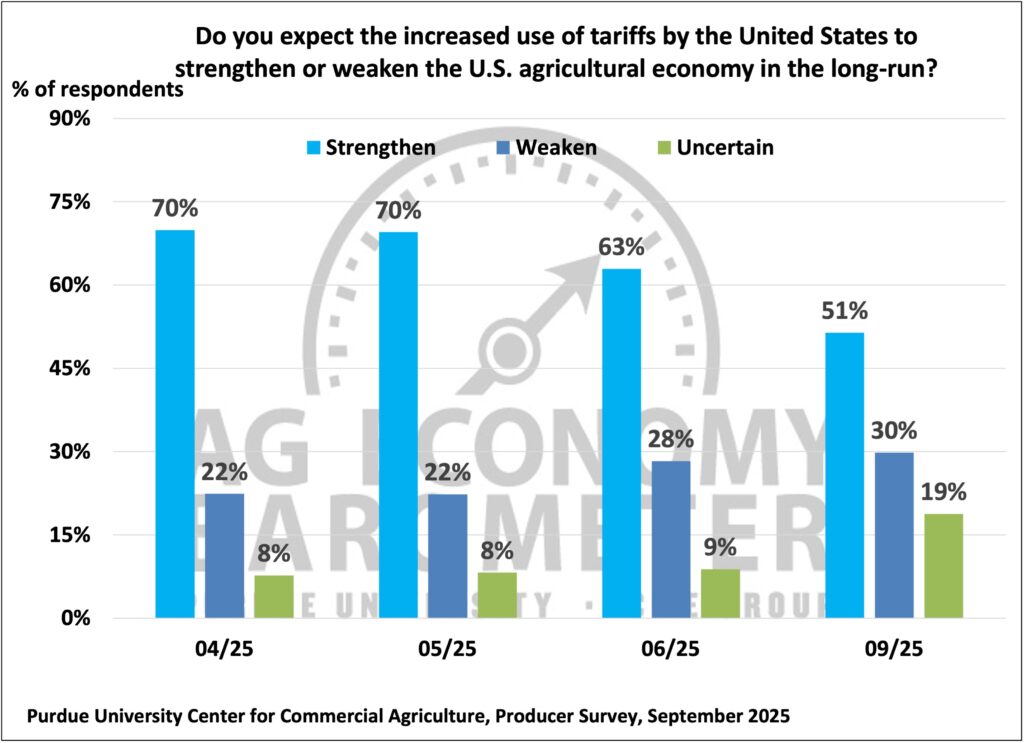
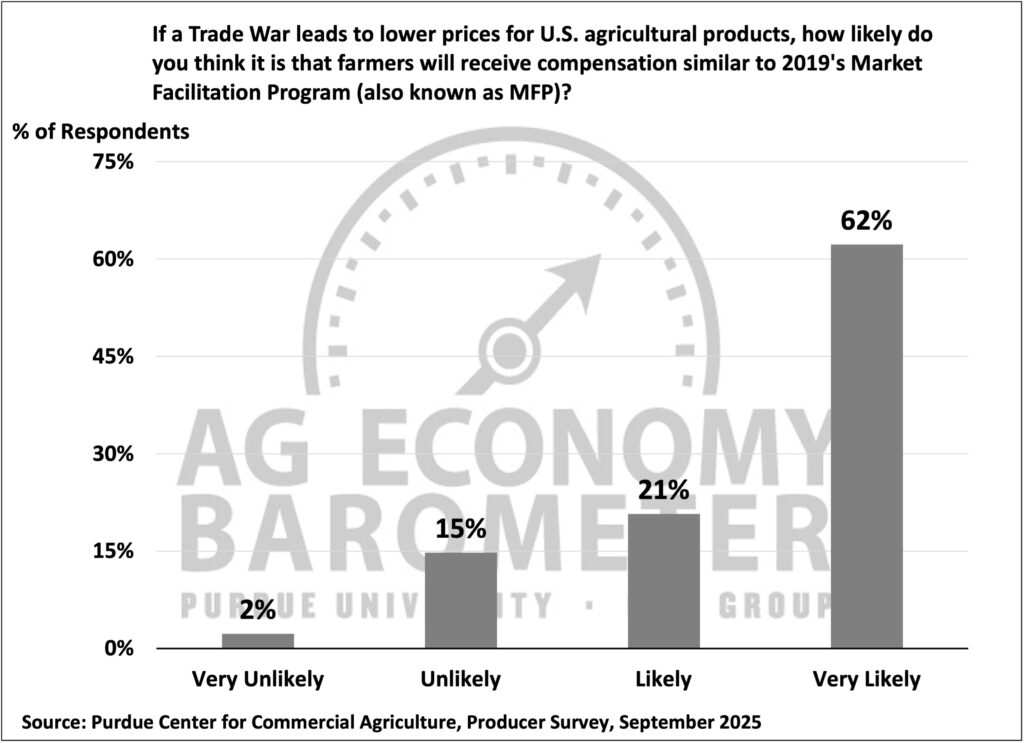
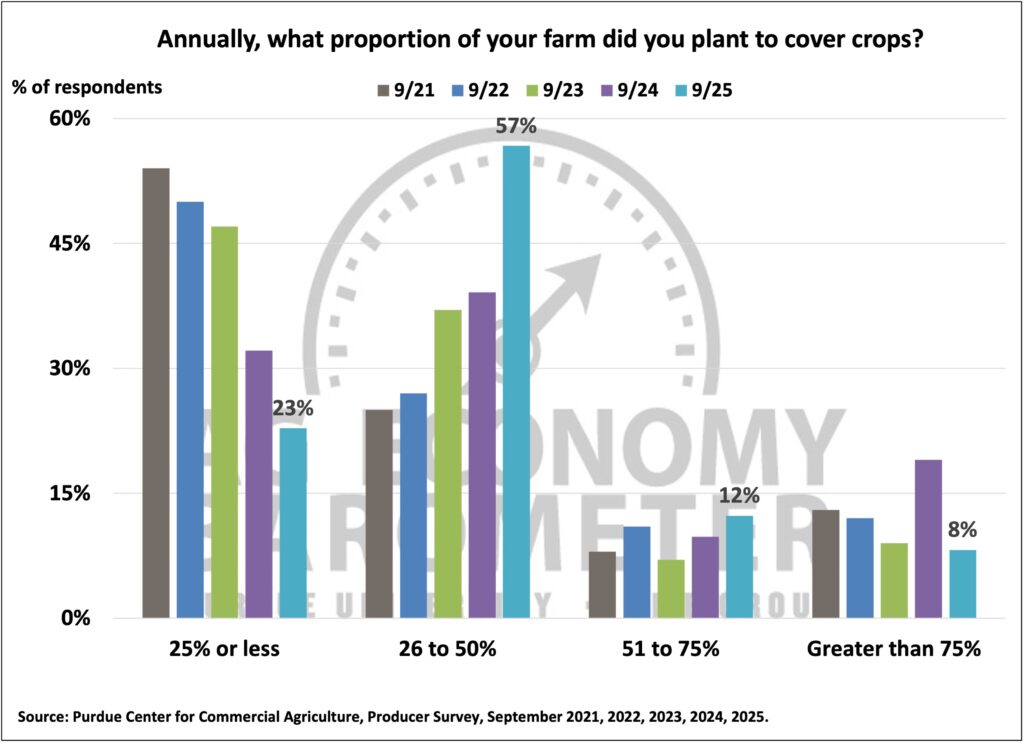



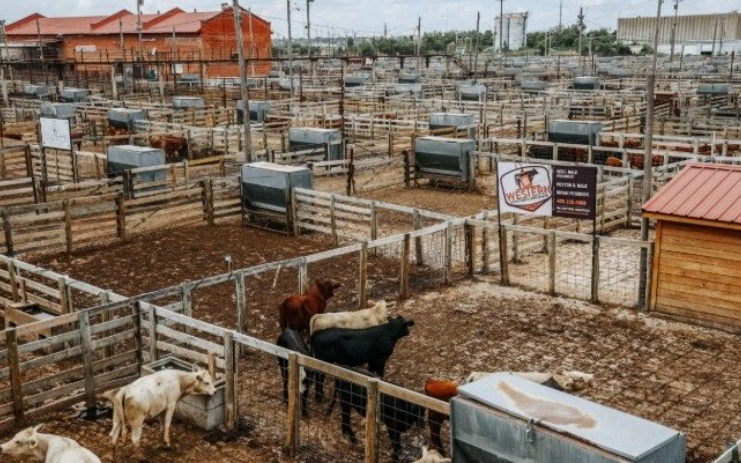
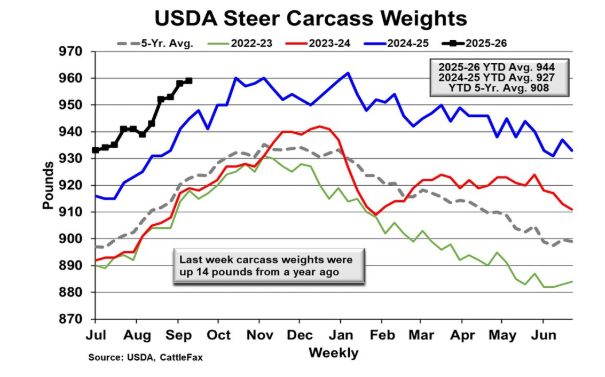
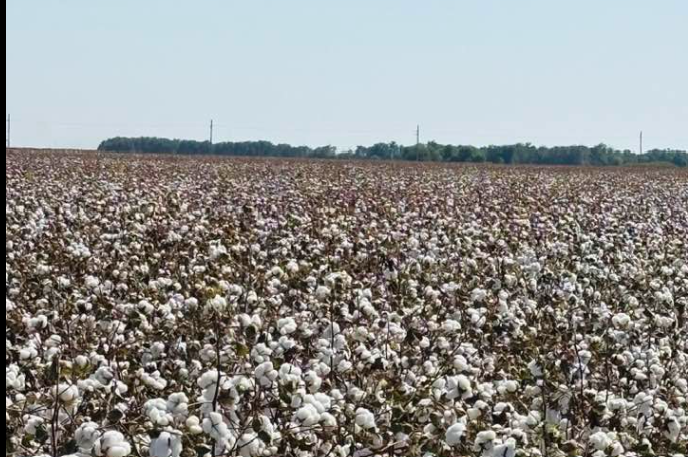
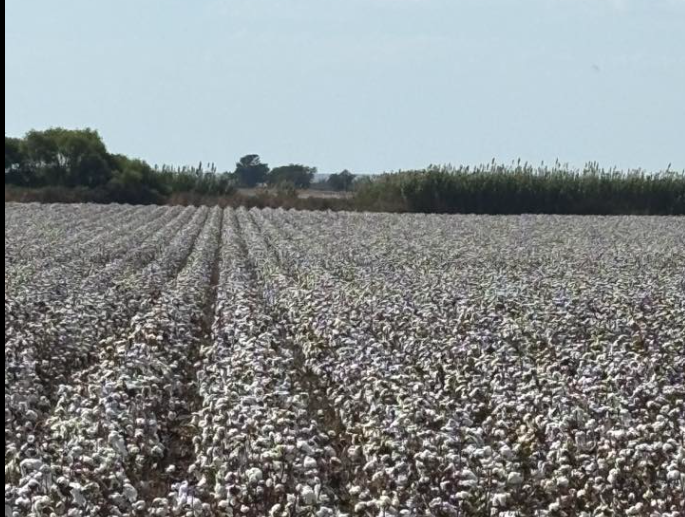
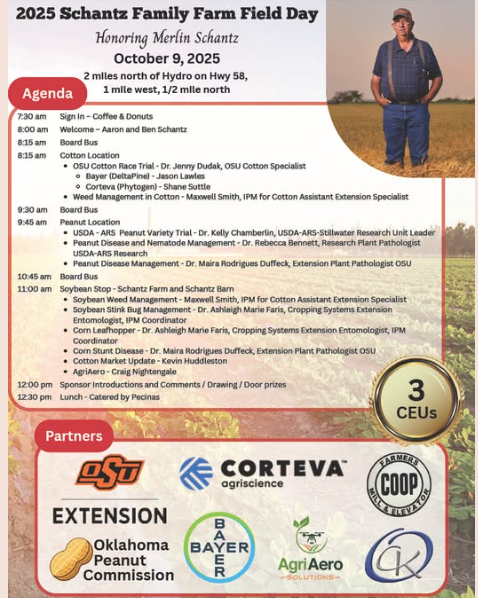
 Field tours, expert speakers, CEUs, door prizes, and a delicious lunch catered by Pecina's — it's all happening just north of Hydro!
 Starts at 7:30 AM with coffee & donuts

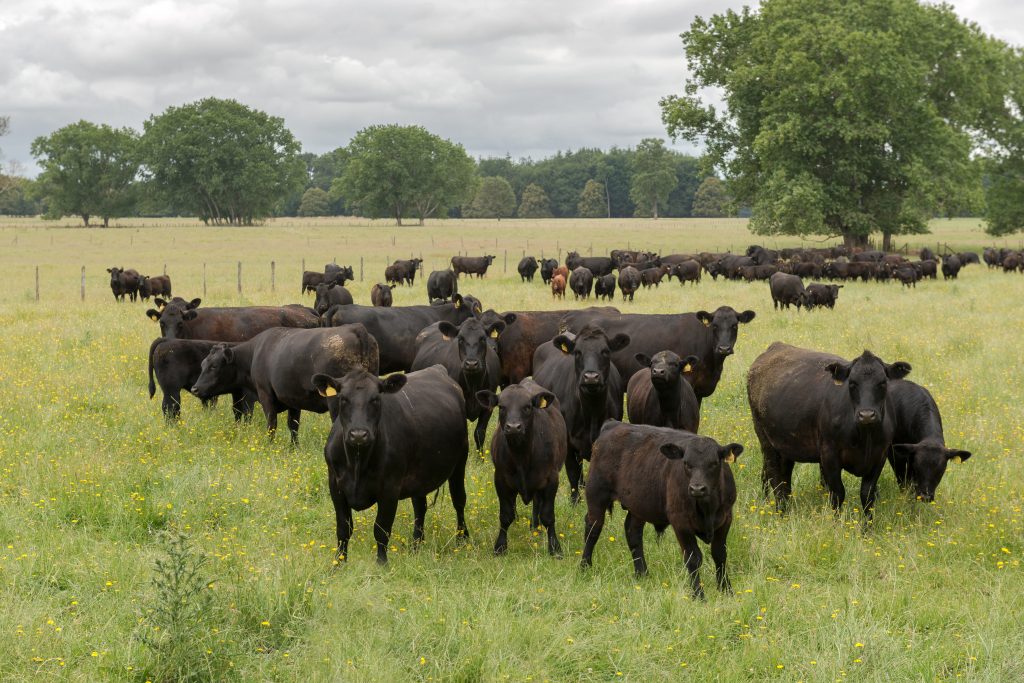
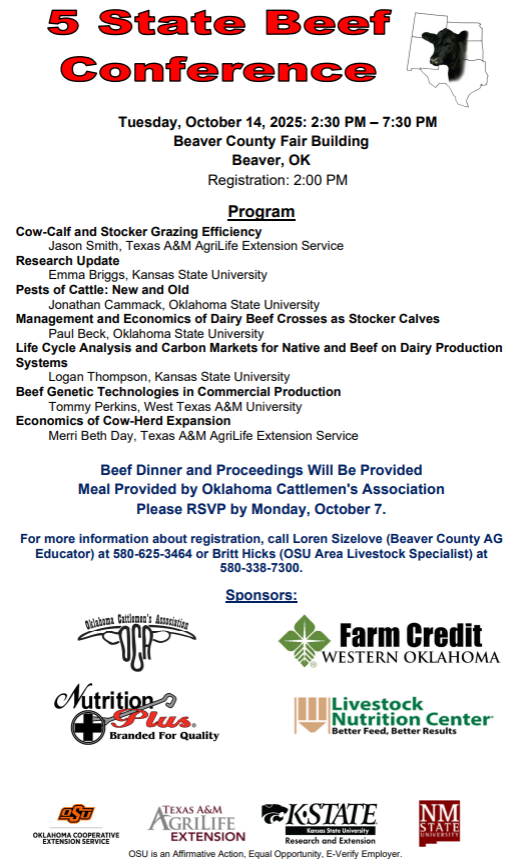
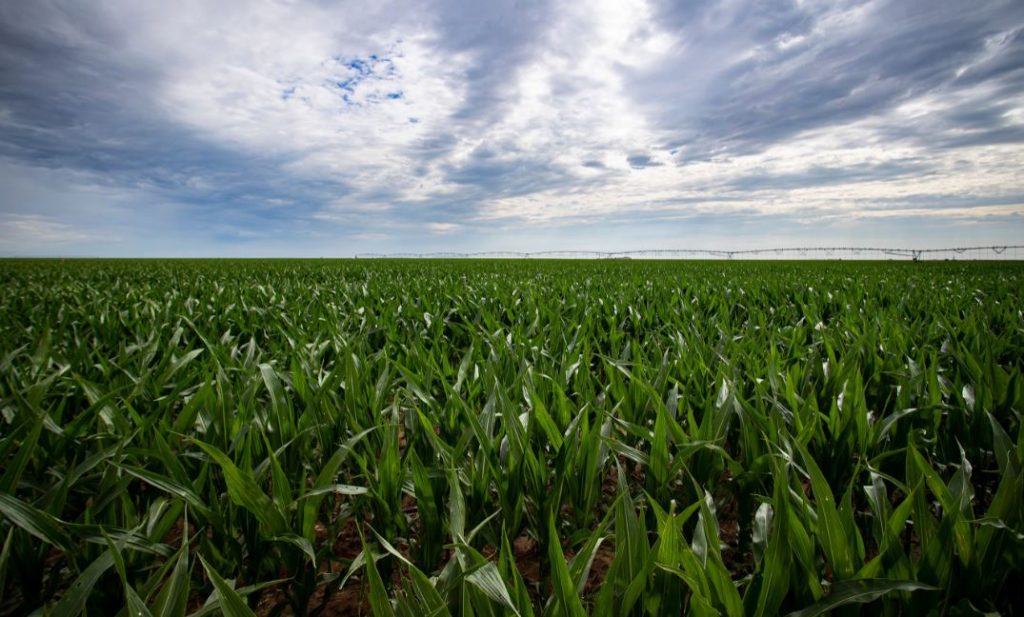
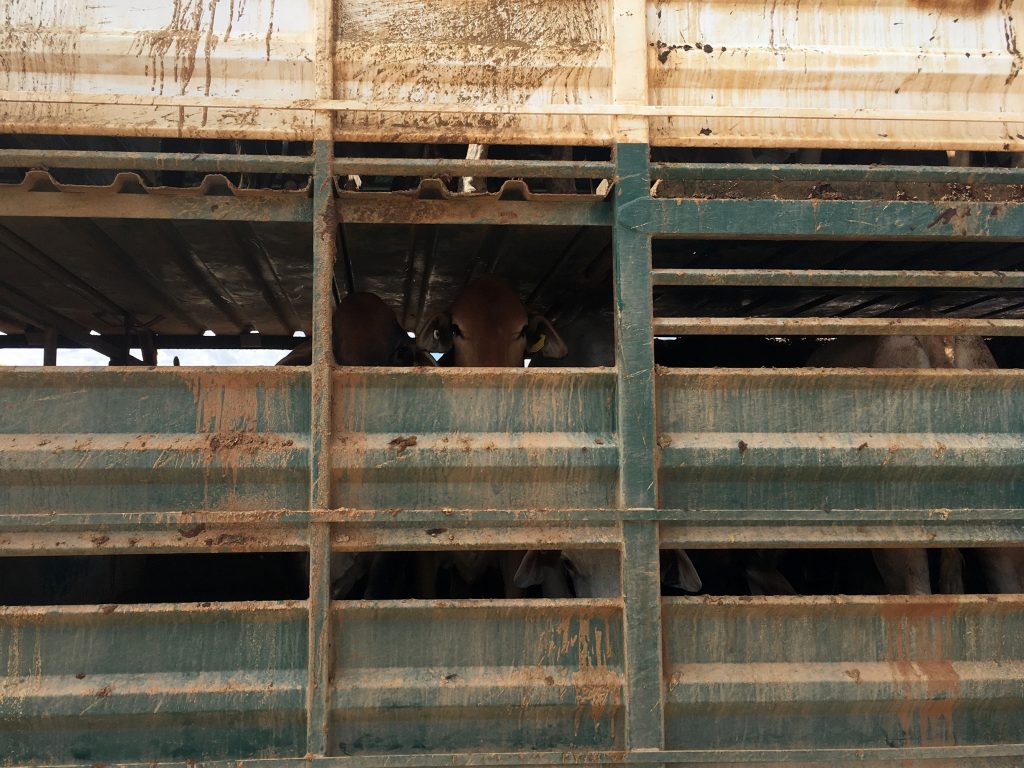
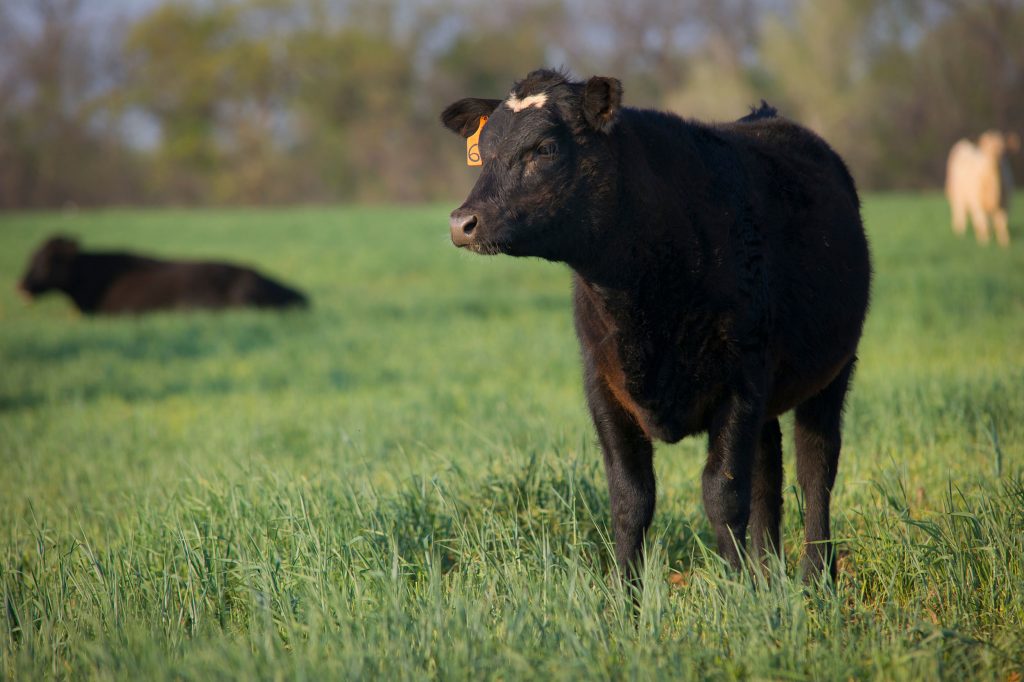


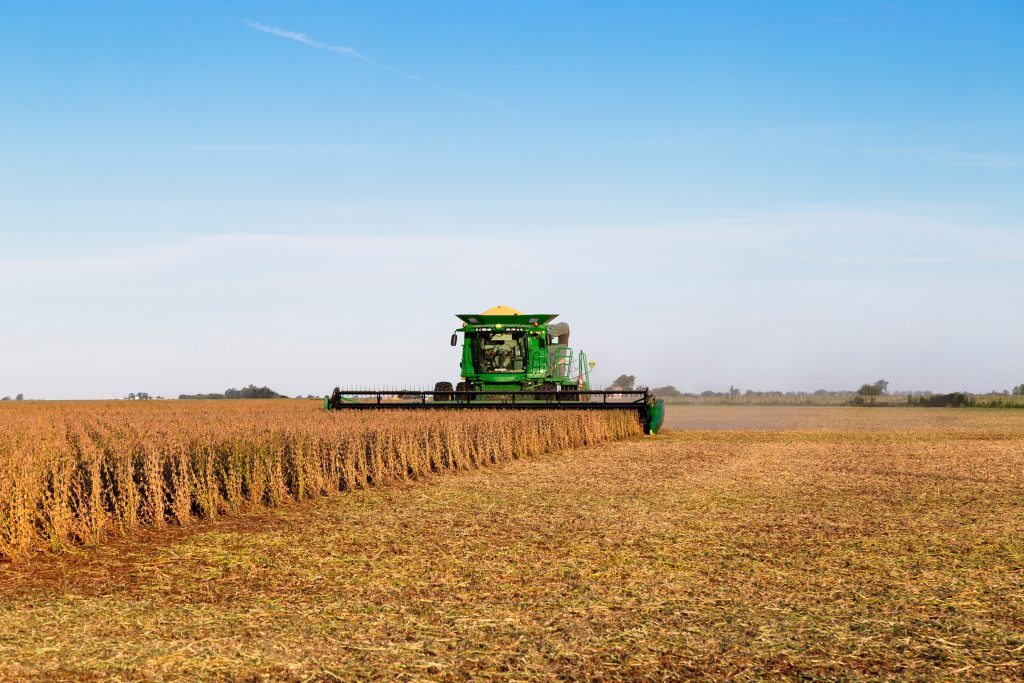
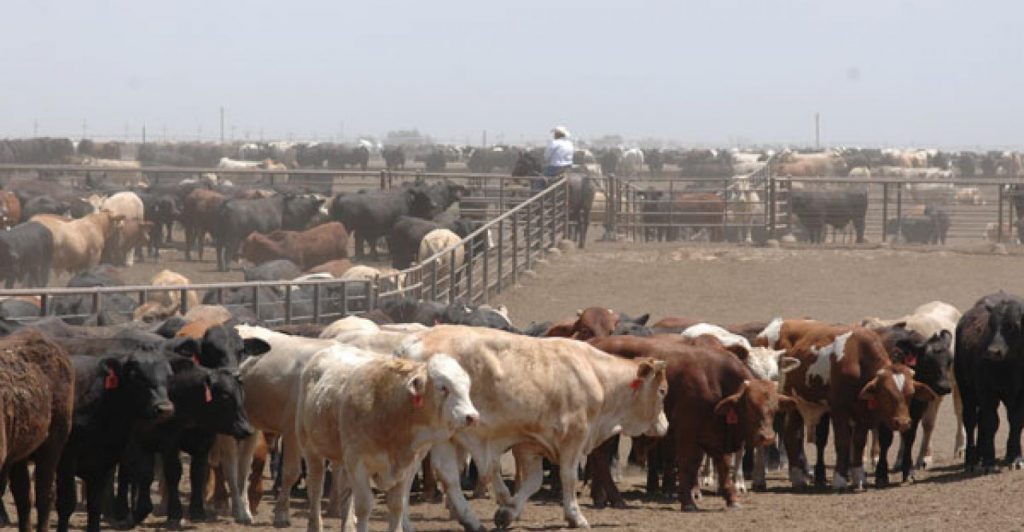
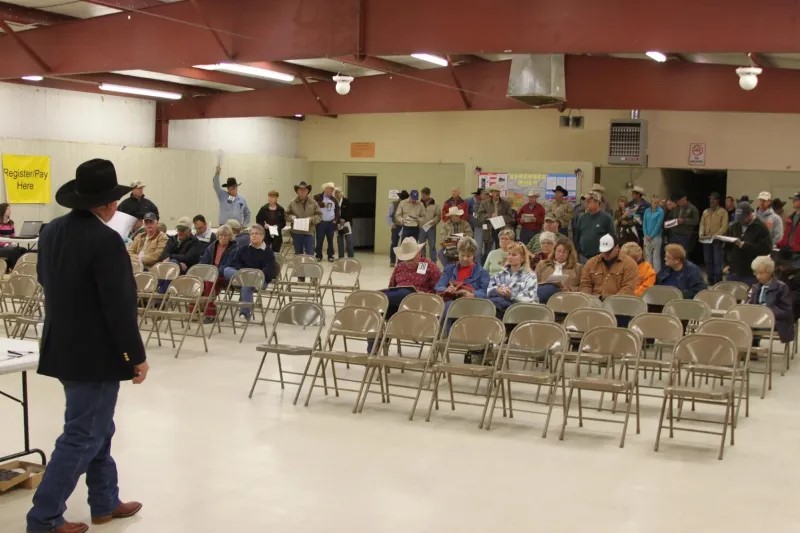
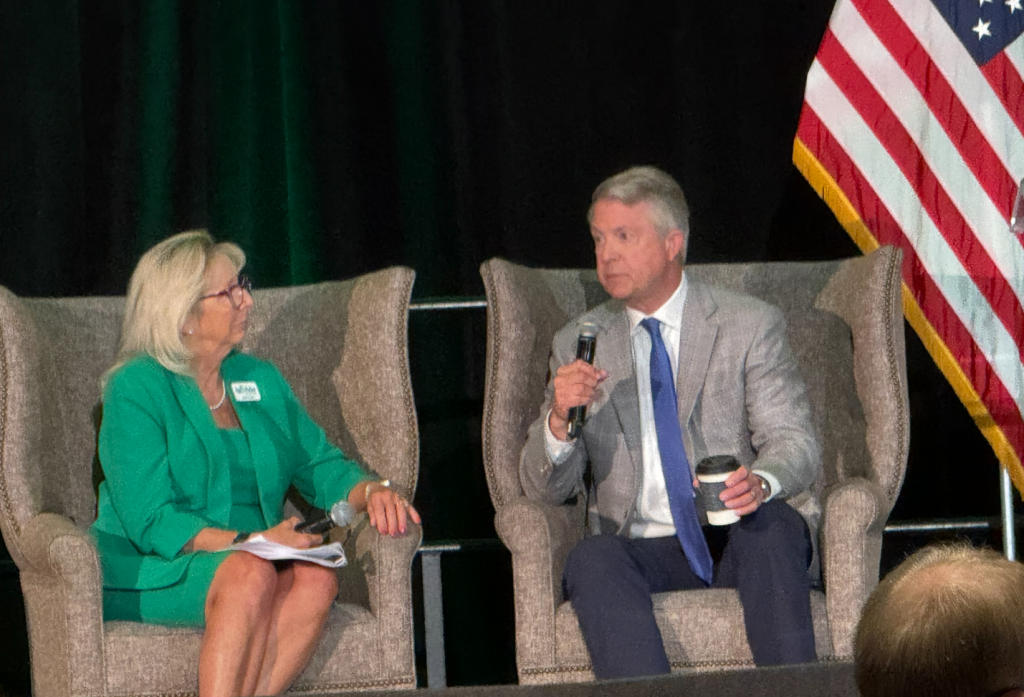


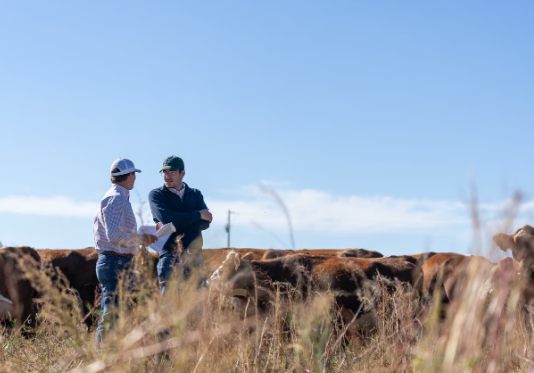
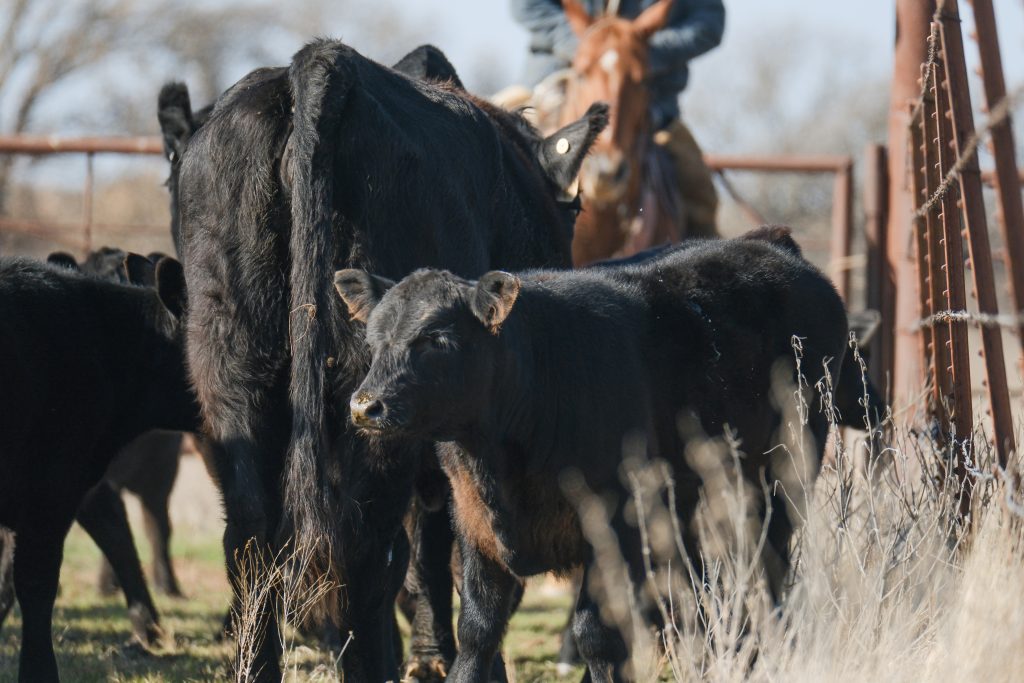
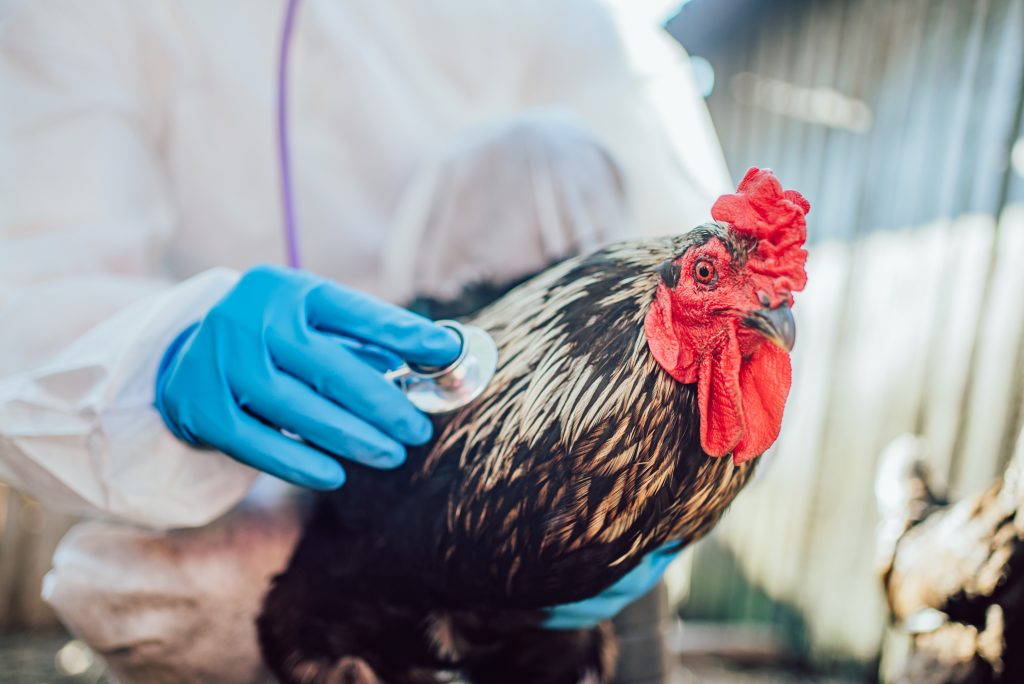
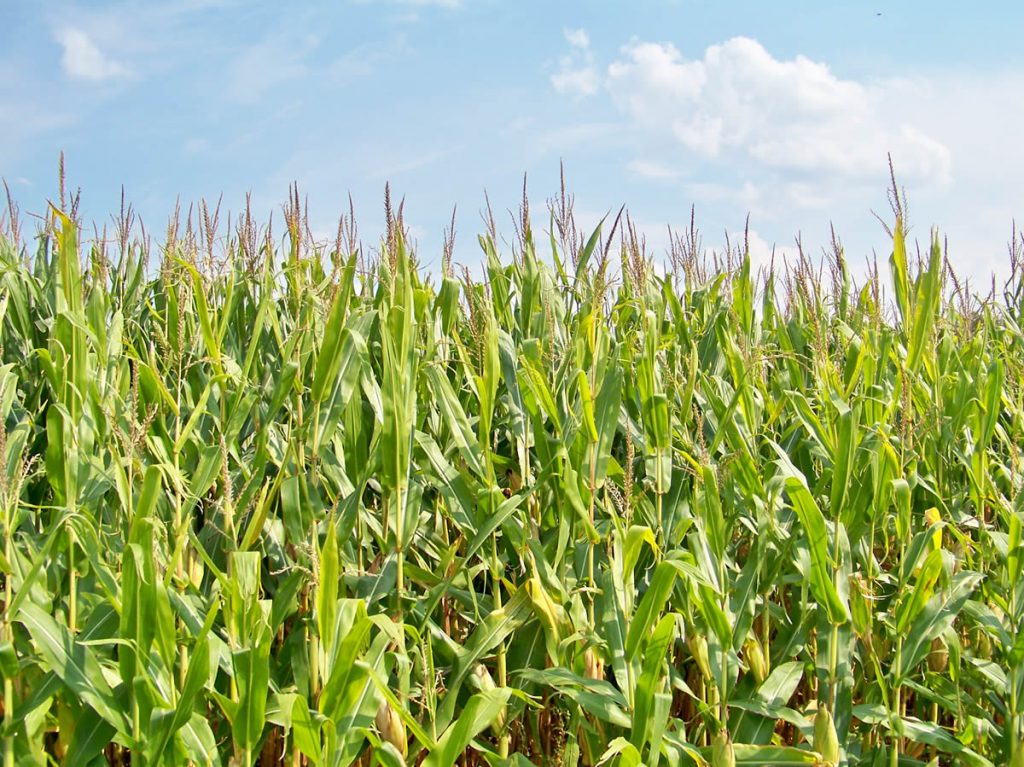
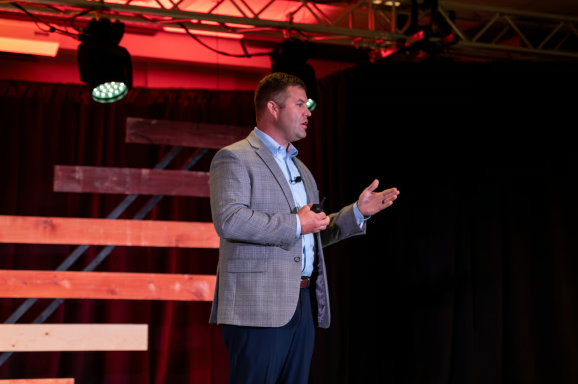

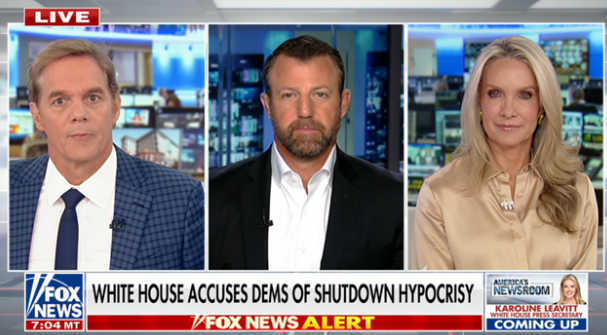
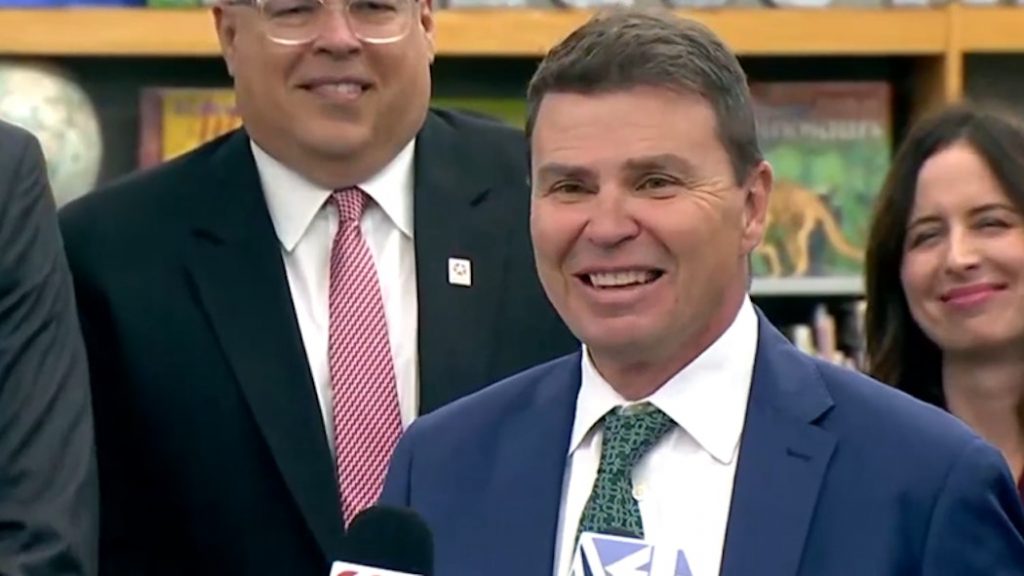
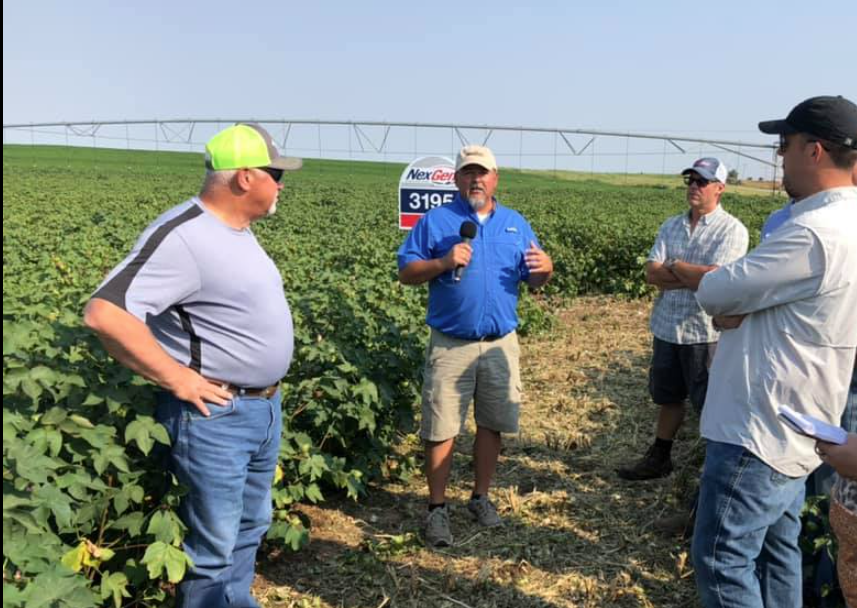
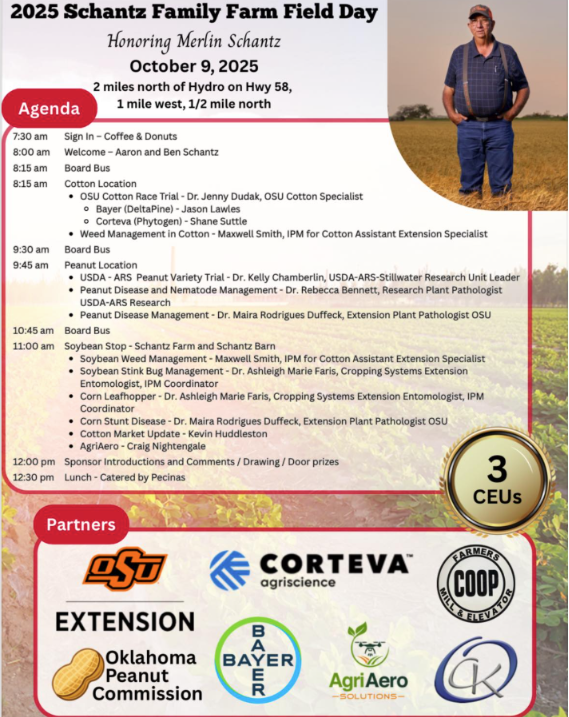
 3 CEUs available for attendees!
 Don't miss this chance to learn, network, and honor a leader in Oklahoma agriculture.
 Sign-in starts at 7:30 AM (coffee & donuts provided)
 Lunch catered by Pecinas