Ag News Archives for 2025-07

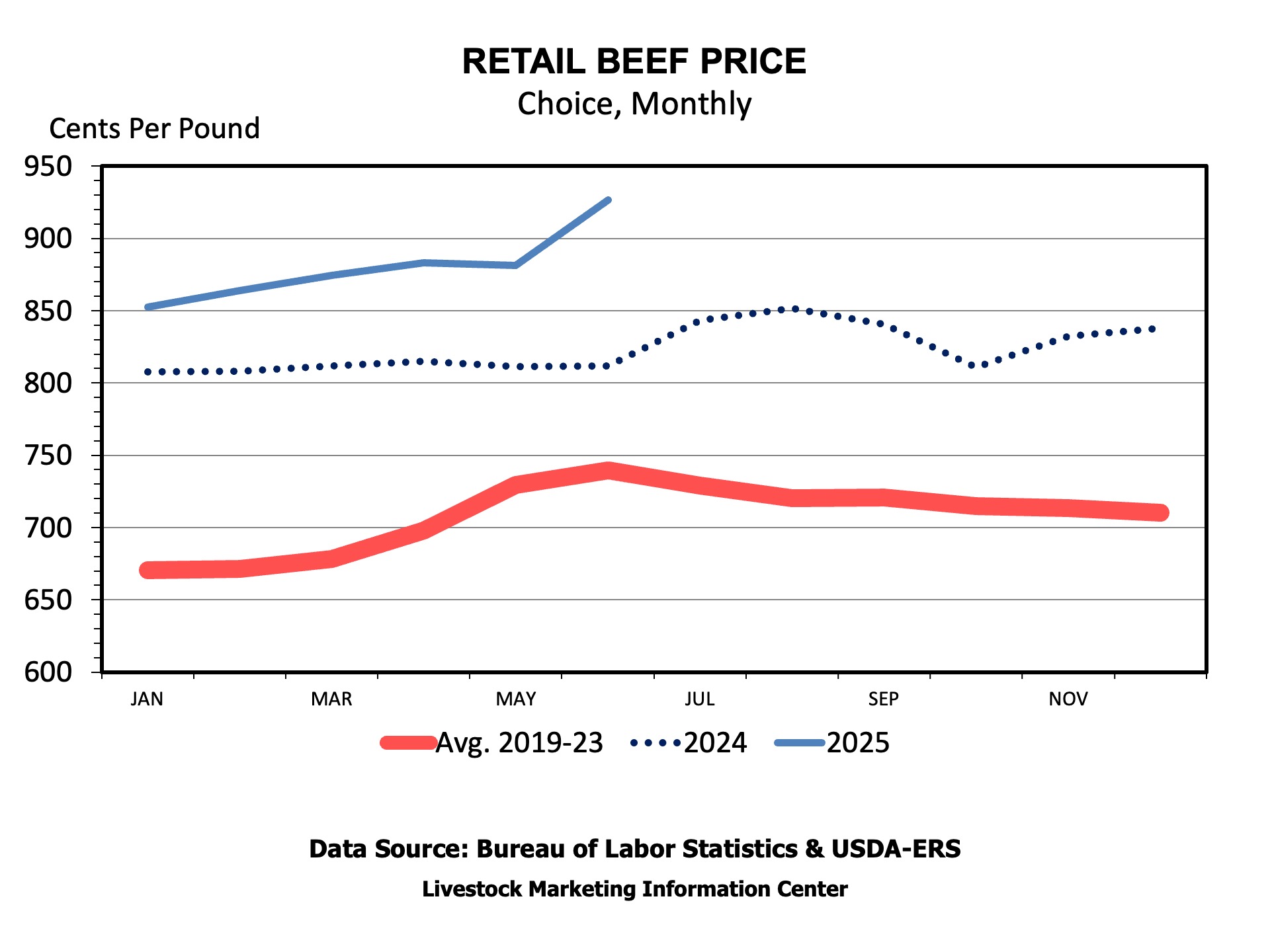
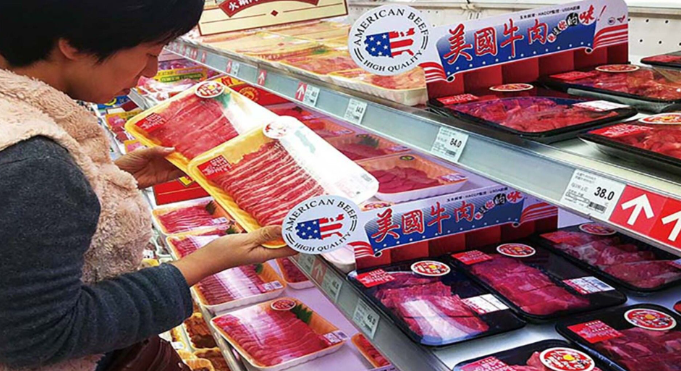
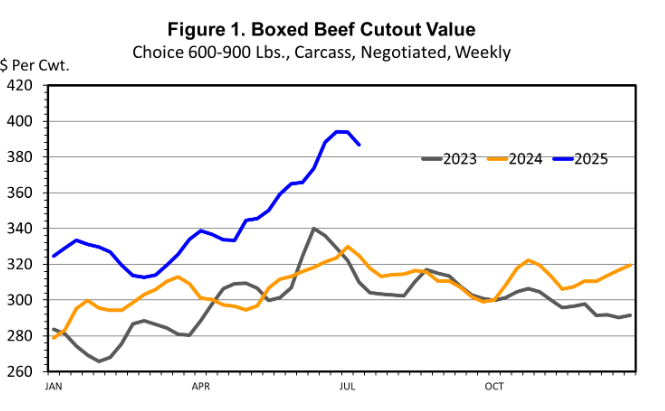
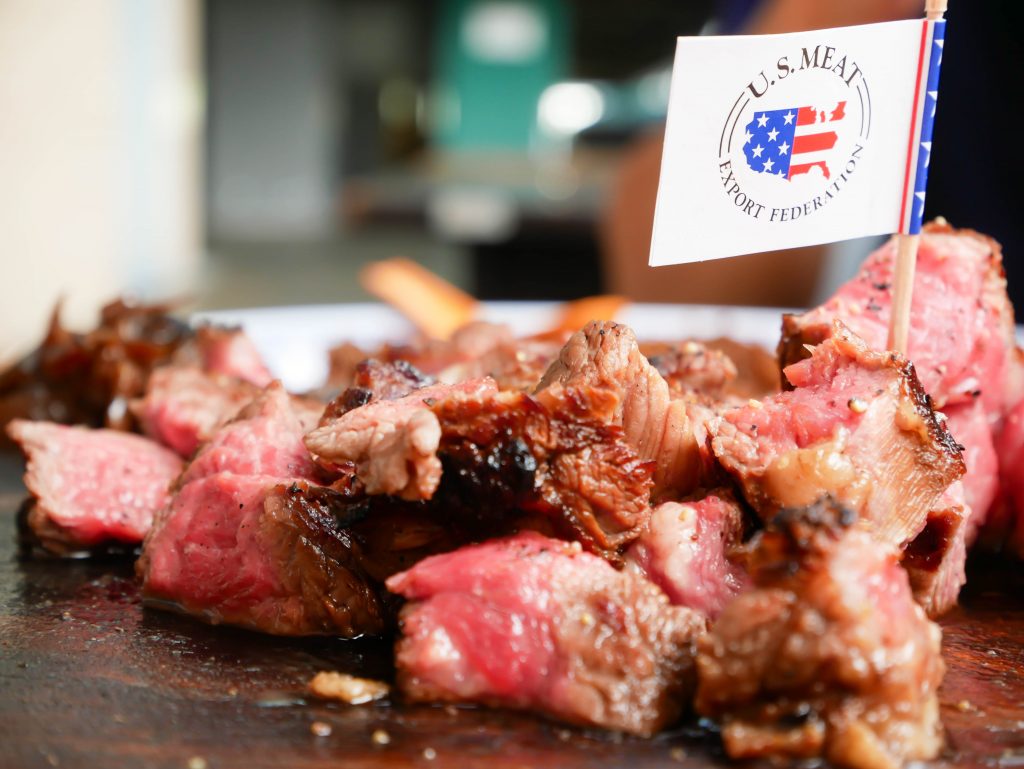
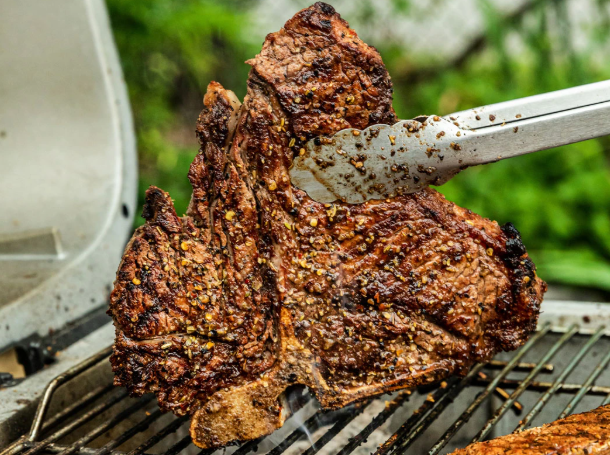
Choice Beef Drops 67 Cents on Last Day of July- Off $4.77 From a Week Ago and Down $35.17 From Its June 27th High

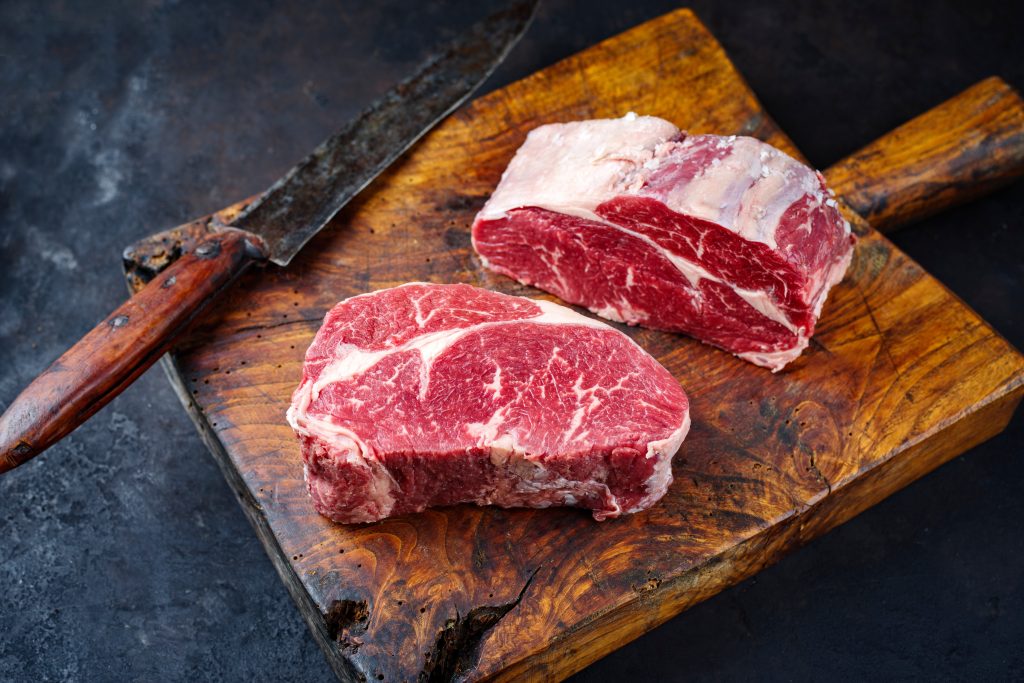
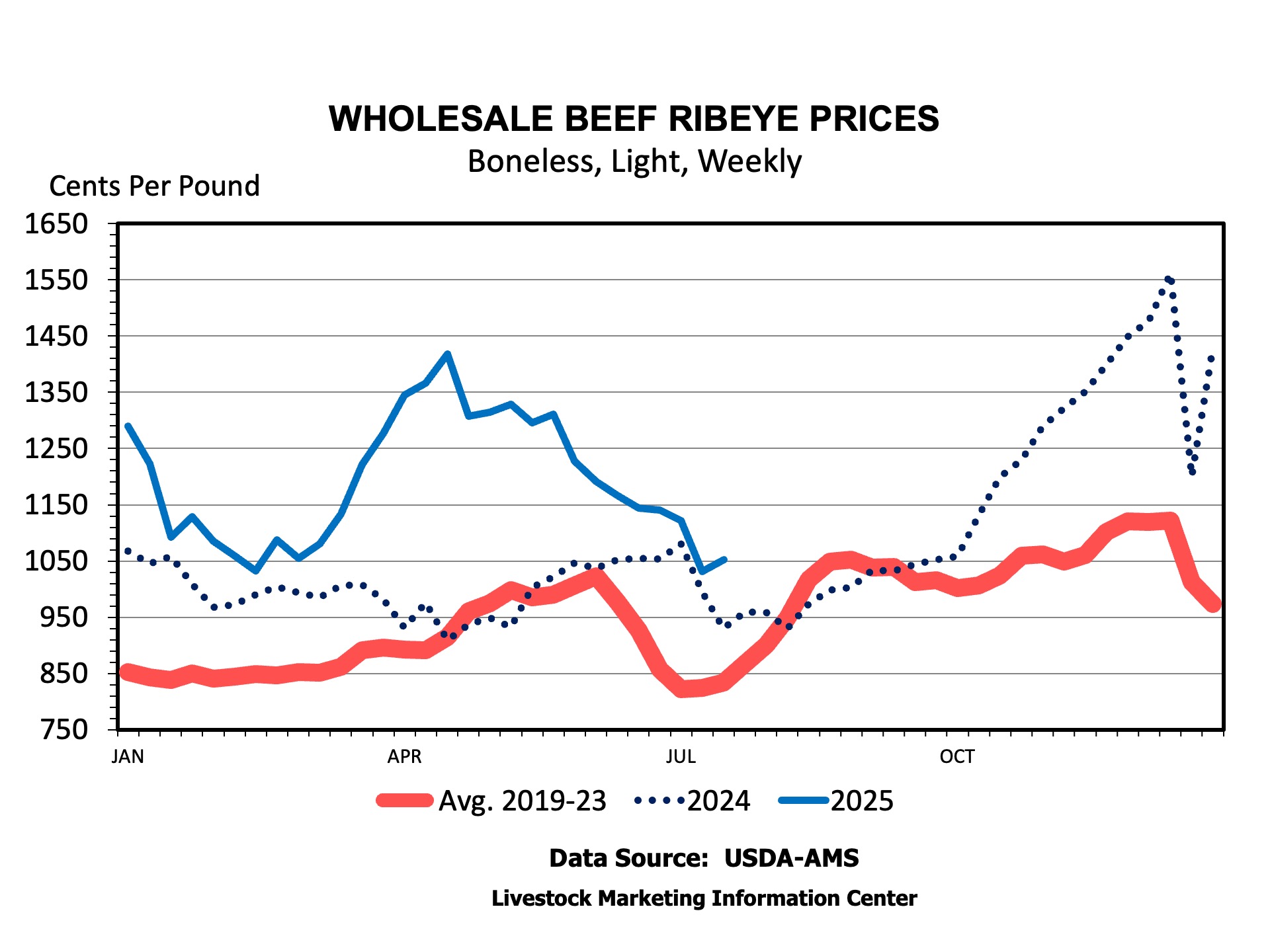
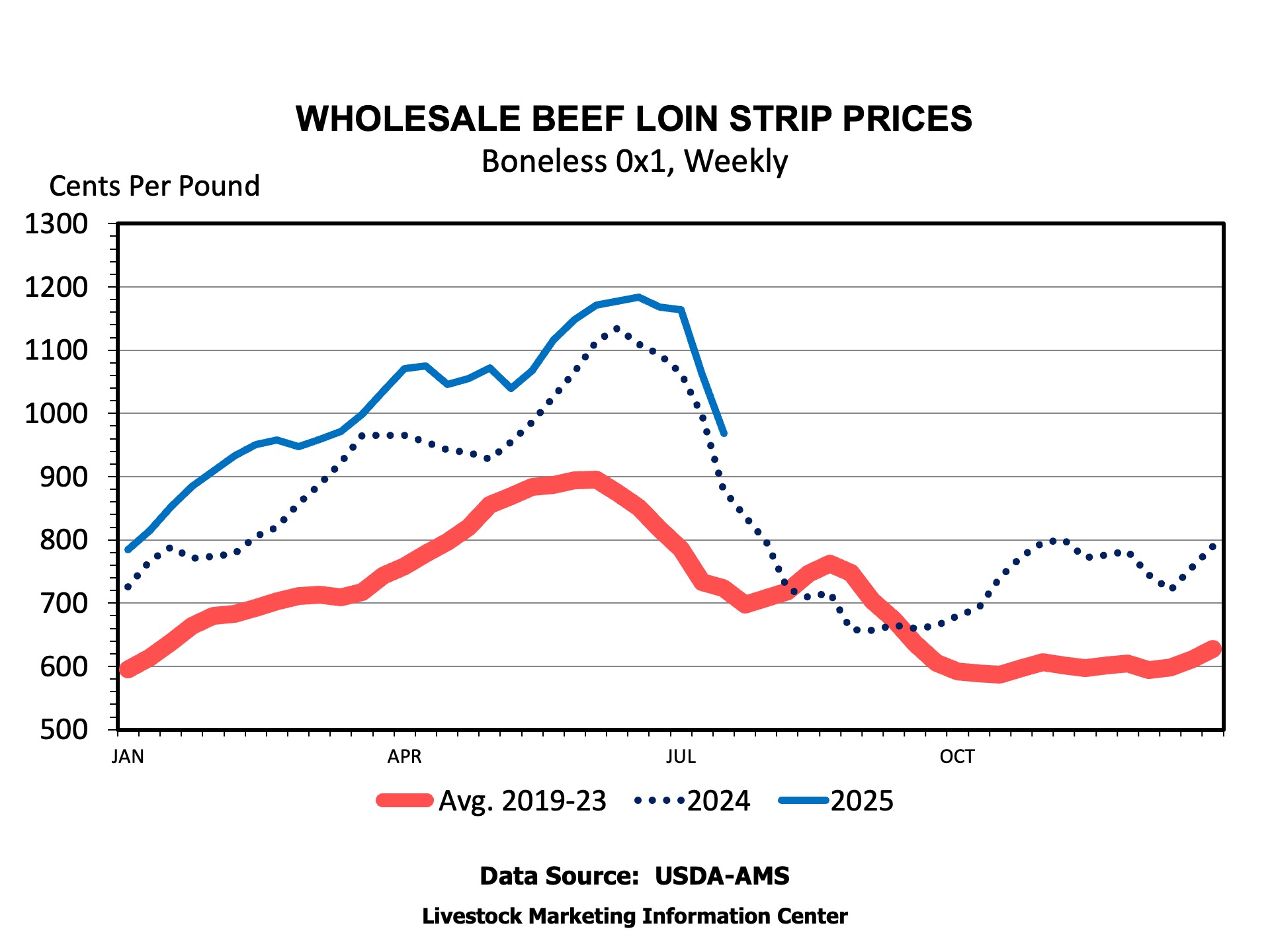
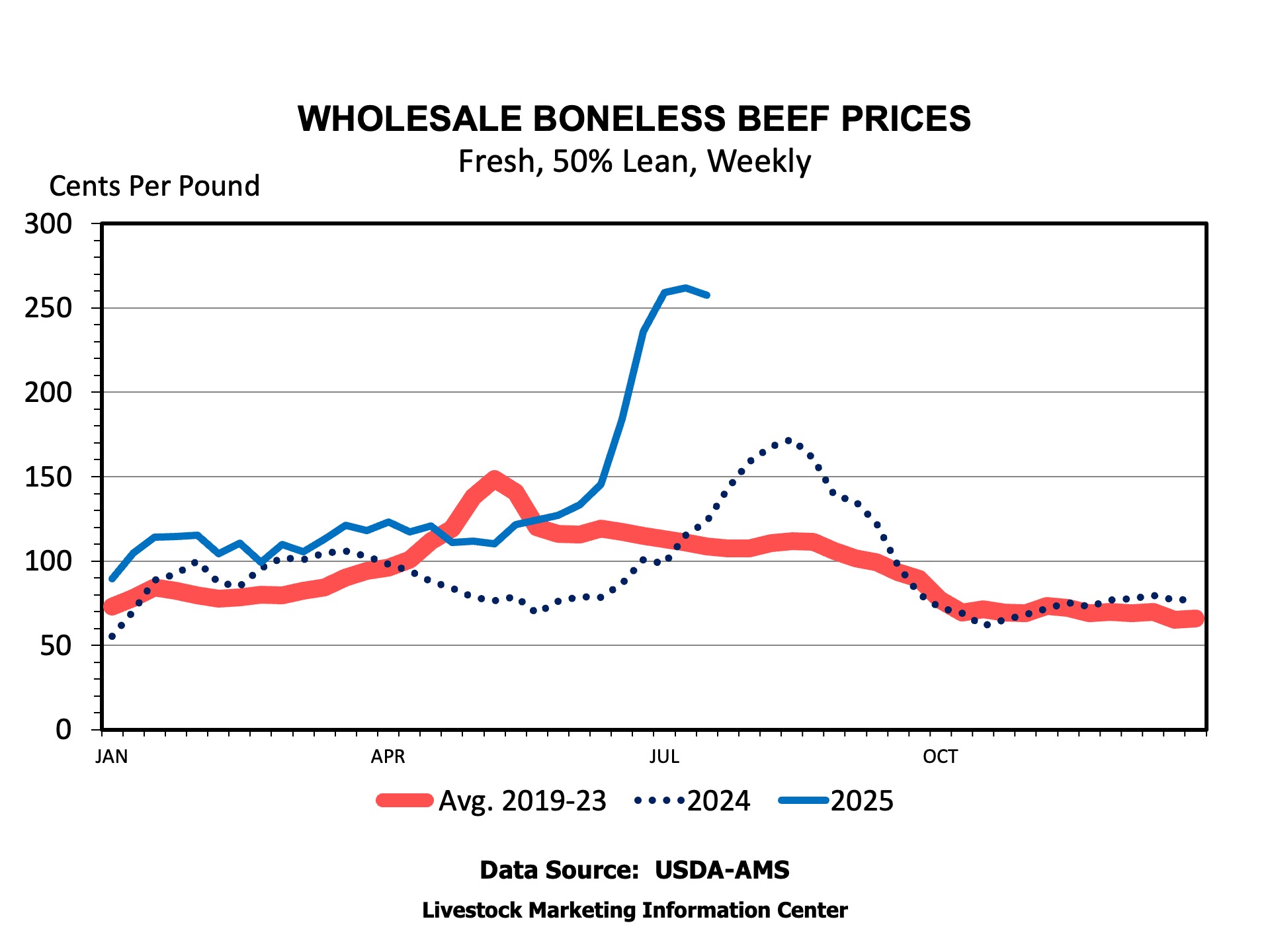
Boxed beef prices were mostly steady to slightly lower on Thursday, July 31, 2025. The Choice cutout closed at $361.32, down $0.67 from the previous day, while Select moved up $0.46 to $341.37, narrowing the spread to $19.95. Total loads reported were 109, down from 168 the day before. The rib primal continued to climb, finishing at $529.35, while the loin dropped to $468.69, down nearly $10 from the prior day. Other primals like round and chuck remained stable, while brisket, plate, and flank showed minor price shifts. Overall, the Choice cutout is now down $35.17 from its June 27 high.

Poultry Industry Files Brief and Proposed Judgement in 20-Year-Old Oklahoma Water Lawsuit

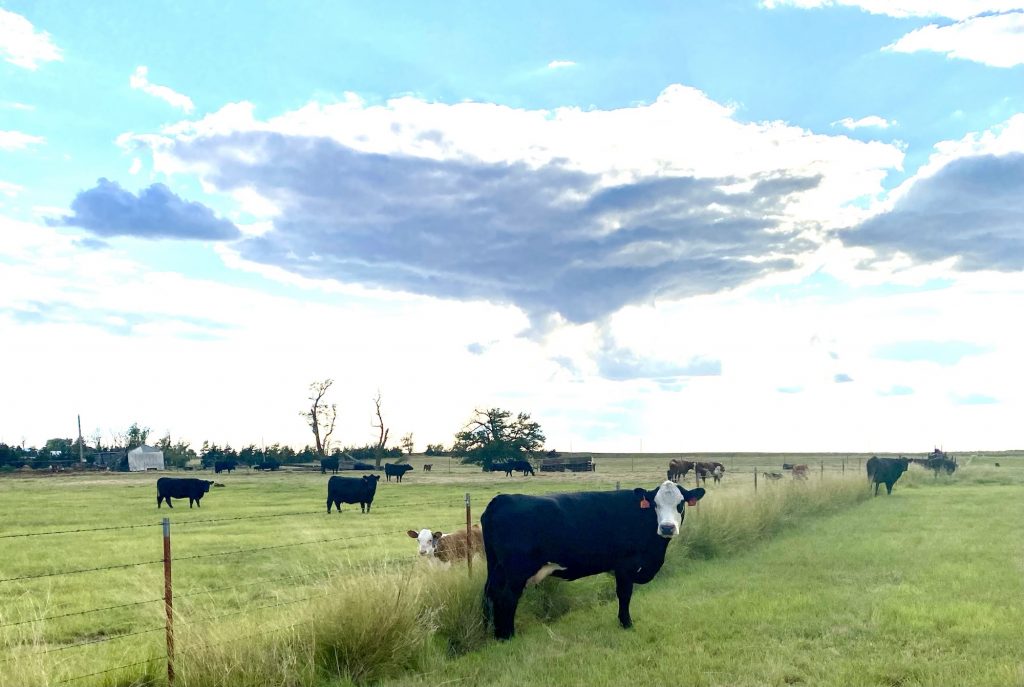
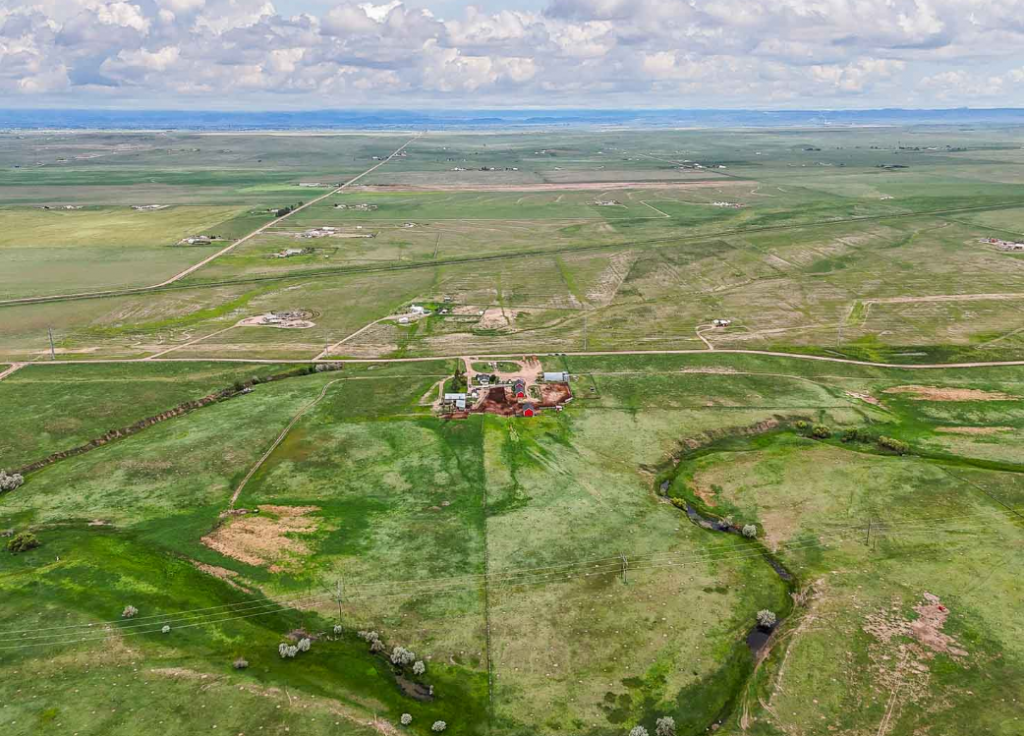
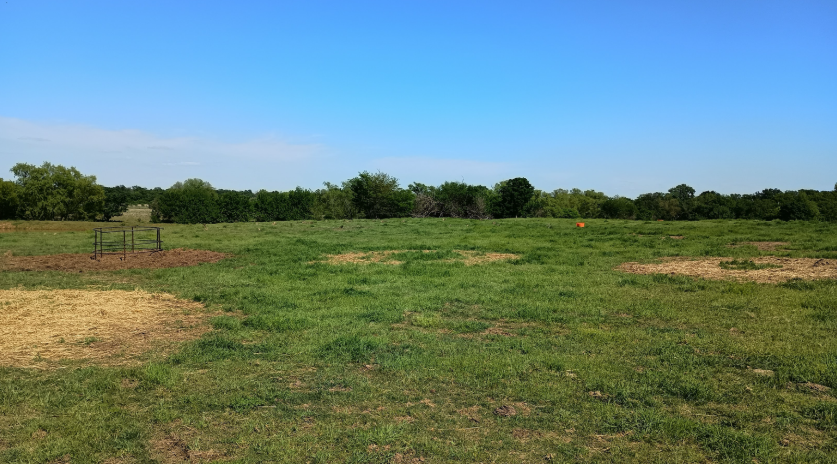
Spreading Poultry litter on pasture near Poteau Oklahoma

The Poultry Federation issued the following statement today after 11 poultry companies filed a joint brief and proposed judgment in State of Oklahoma v. Tyson Foods, Inc. et al., a case with sweeping implications for agriculture in eastern Oklahoma:

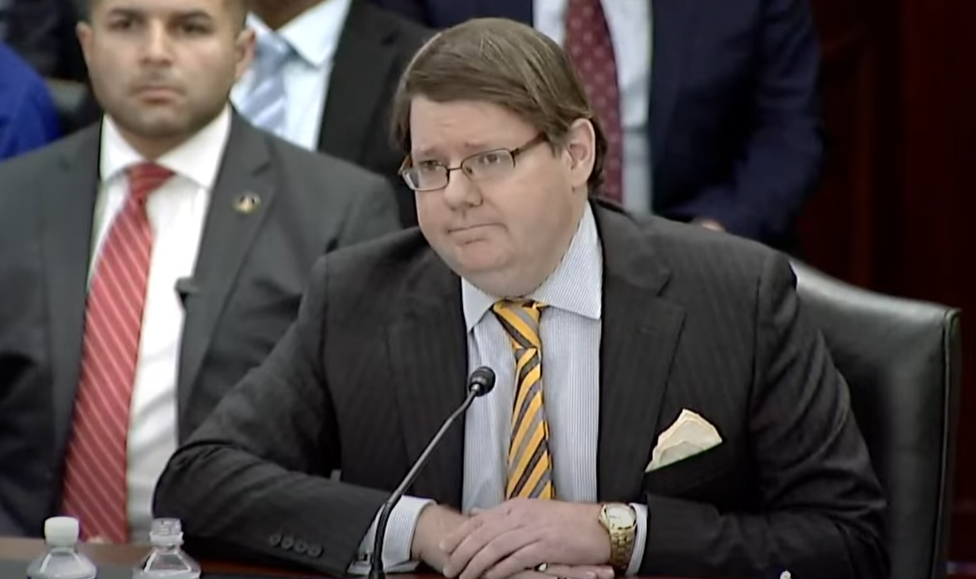
"The Poultry Federation stands firmly with Oklahoma's farmers and ranchers as the poultry industry seeks the court's review of its brief and entry of its proposed judgment," said Marvin Childers, president of the Poultry Federation. "The Attorney General's proposal threatens to shut down a farming practice that has safely fed American families for generations. It targets the use of poultry litter, a safe and natural fertilizer, despite decades of expert evidence and state-approved best management practices. Oklahoma's farmers and private landowners, from grain and cattle producers to fruit growers, have consistently adhered to regulatory guidelines."

Attorney General Gentner Drummond's request would extend far beyond poultry producers, seeking a complete ban on the use of poultry litter as fertilizer on any field over 65 STP in "nutrient-sensitive" watersheds—regardless of the farm's operation, history of compliance, or lack of environmental harm.

"While the vast majority of fields have no measurable impact on water quality, the State's universities and leaders have recognized poultry litter as a critical resource for maintaining productive agriculture," Childers continued. "Oklahoma's agencies report improving water quality within the Illinois River Watershed. Even Oklahoma's state legislature recognized the safety of poultry litter by approving its use at levels far higher than what the Attorney General now claims is dangerous."

The poultry industry's brief and proposed judgment underscores that science-based regulation and full compliance—not vague assumptions—should remain the standard. It warns against government intrusion on private property and rejects liability for landowners when the state's evidence fails to demonstrate specific environmental harm.

Drummond's proposal would also appoint a "Special Master" with sweeping authority to access private property, impose costly mandates, and exercise oversight powers, bypassing normal regulatory channels. This unchecked power grab would upend decades of stewardship, drive up food and operational costs, and unravel Oklahoma's agricultural economy from the ground up.

"Oklahoma families shouldn't have to choose between protecting our environment and protecting our rural economy—especially when the science shows we can do both," Childers continued. 

The Poultry Federation remains committed to ongoing collaboration, conservation, and the stewardship of private land that has defined Oklahoma agriculture for generations. 

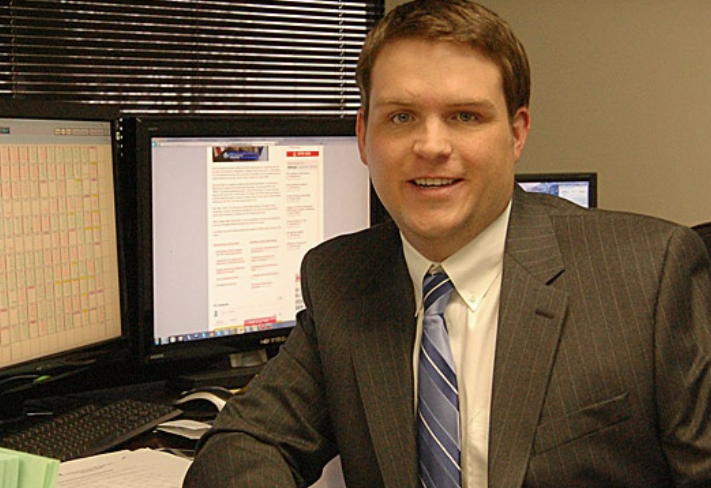
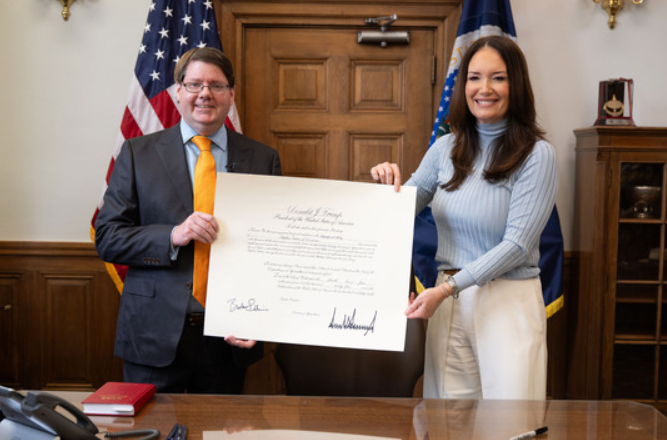
NCBA Congratulates Newly Confirmed USDA General Counsel

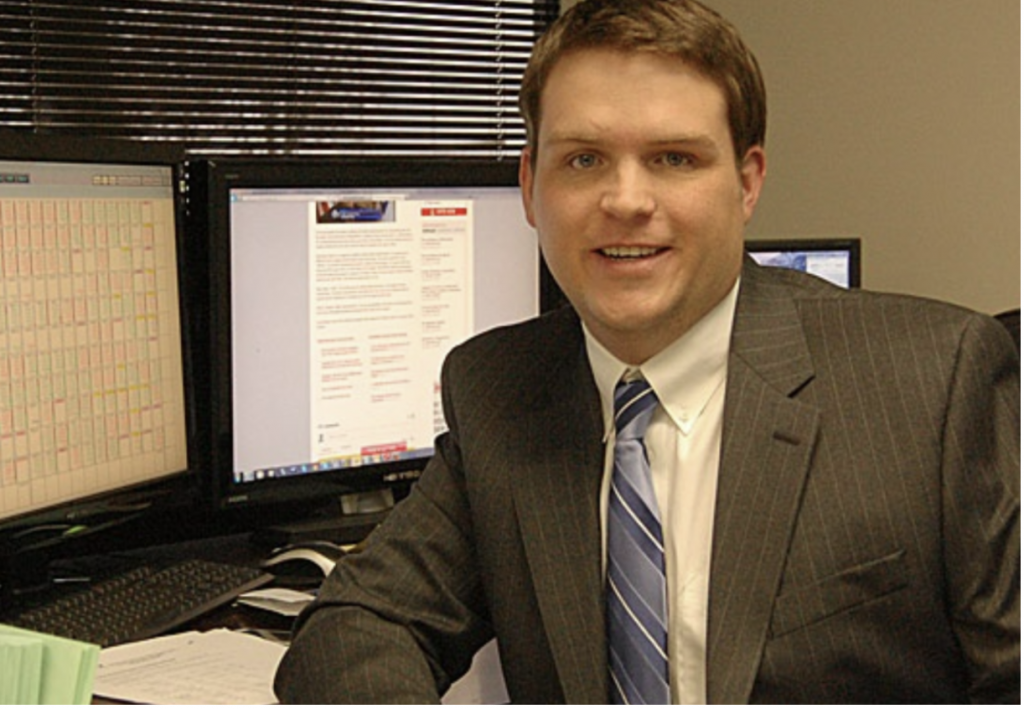
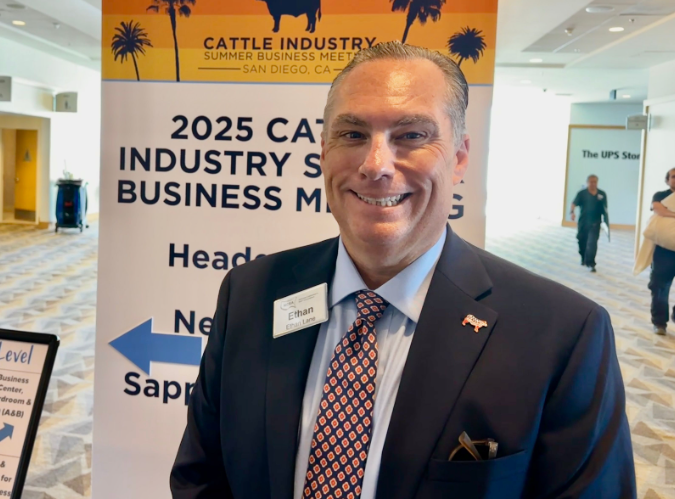
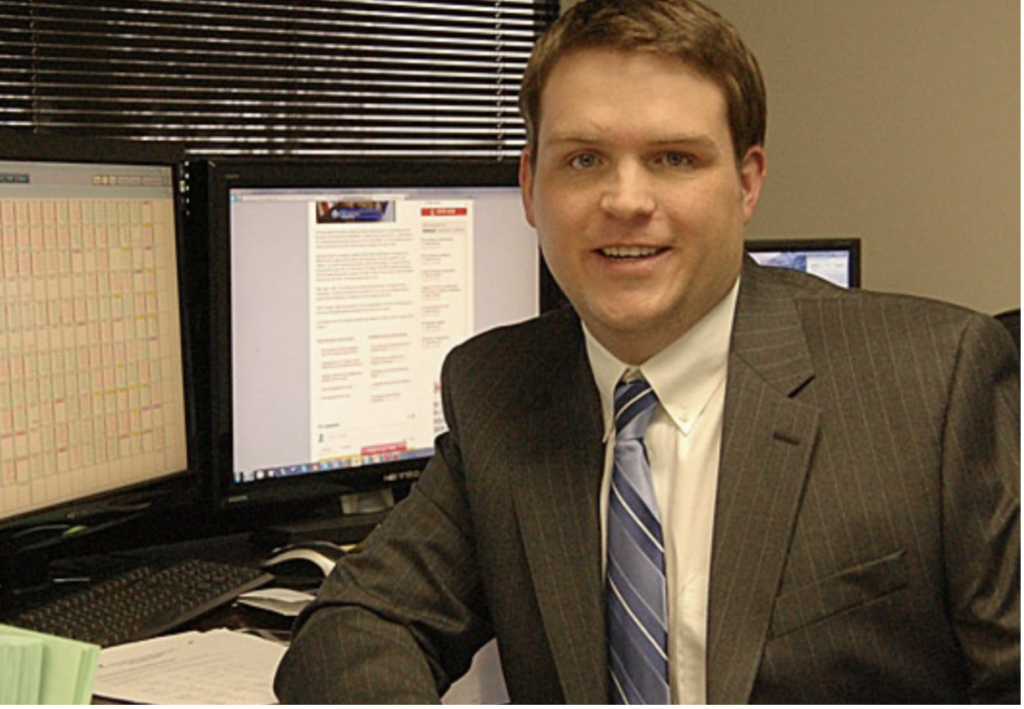
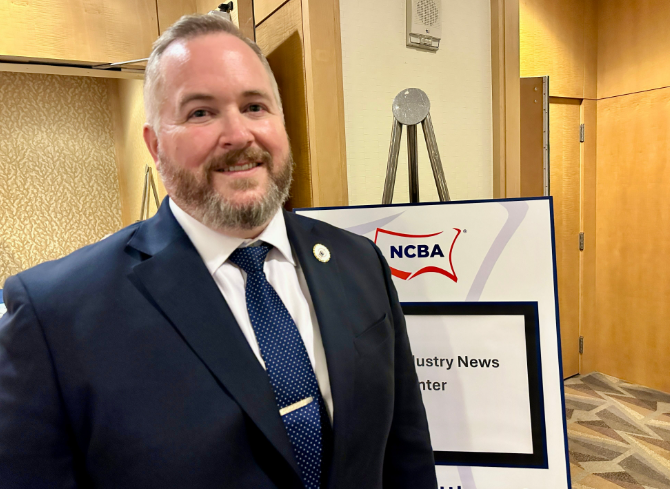
Today, National Cattlemen's Beef Association (NCBA) Senior Vice President of Government Affairs Ethan Lane issued a statement congratulating Tyler Clarkson on his confirmation to serve as the General Counsel of the U.S. Department of Agriculture (USDA):

"U.S. cattle producers congratulate Tyler Clarkson on his Senate confirmation and are excited to have him providing legal counsel to Secretary Brooke Rollins as she continues to cut burdensome, government red tape. Clarkson's experience serving in USDA's Office of the General Counsel in the first Trump administration and expertise on regulatory issues makes him supremely qualified to serve in this role. We also thank the Senate for their work to swiftly confirm more key nominees that will support the work of farmers and ranchers across the country."

USGC Summer Meeting Continues Thursday With Focus On Trade Policy

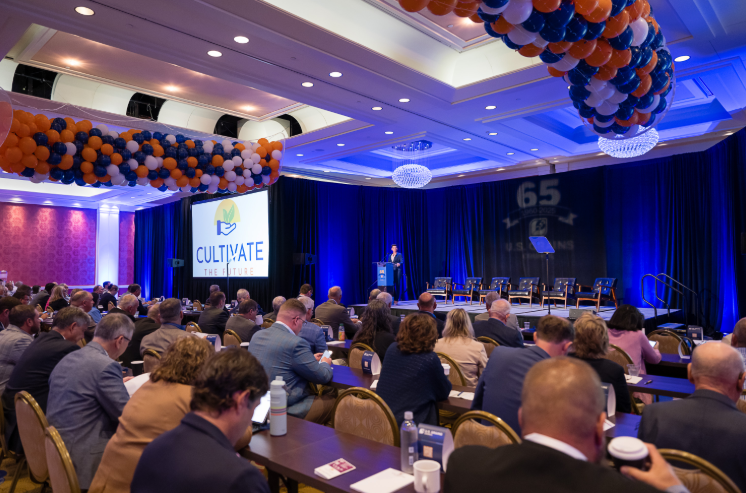
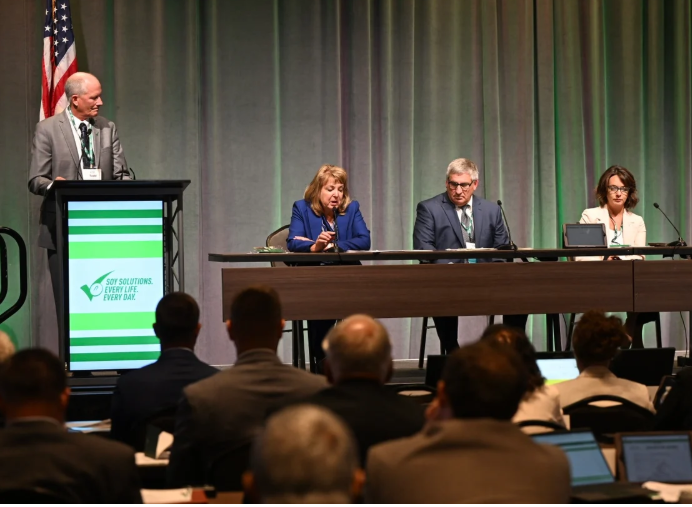
The U.S. Grains Council's (USGC's) 65th Annual Board of Delegates Meeting continued today in Grand Rapids, MI, with commodity sector meetings and discussions on the strength of American agriculture and the latest trade policy developments in Mexico, India and Southeast Asia.

The day began with attendees splitting into sector meetings based on the industries they represent: agribusiness, barley, corn, sorghum and general farm organizations.

The morning wrapped up with a general session that included a presentation on the importance of American agriculture in a changing world from former U.S. Senator Debbie Stabenow and a discussion on shipbuilding challenges by Jay O'Neil, proprietor of HJ O'Neil Commodity Consulting.

"U.S. trade is absolutely critical to the U.S. economy, especially with over 20 percent of U.S. agriculture commodities exported overseas," Stabenow said. "Building additional markets amidst trade uncertainty is even more critical, and it is critical that we maintain strong bipartisan support of agriculture."

The afternoon featured three breakout sessions on U.S. trade policy developments in Mexico, India and Southeast Asia led by AGON Partner Kenneth Smith Ramos; Senior Advisor of Trade Policy for the U.S.-India Strategic Partnership Forum Mark Linscott; and USGC Deputy Regional Director for Southeast Asia and Oceania Chris Markey.

The meeting concludes tomorrow with elections for USGC officers, sector leadership positions and Advisory Team (A-Team) leadership appointments.

Secretary Rollins Applauds Tyler Clarkson on His Senate Confirmation

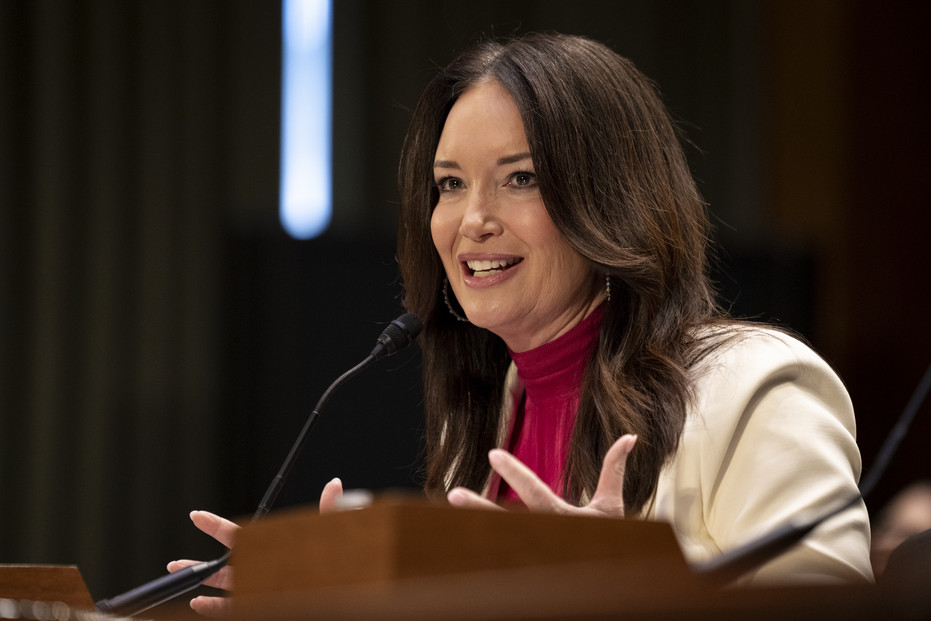
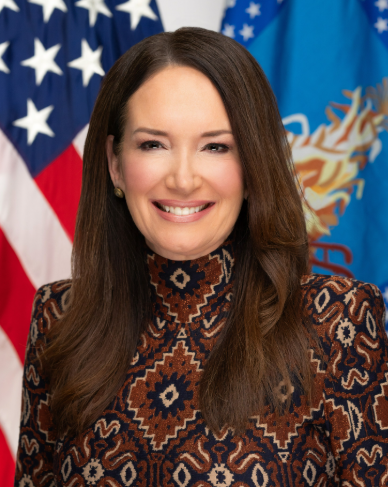
 U.S. Secretary of Agriculture Brooke L. Rollins congratulates Tyler Clarkson on his confirmation to serve as General Counsel at the U.S. Department of Agriculture.

"Tyler Clarkson is a proven legal mind and a true champion for America's farmers and ranchers. From his service as Acting General Counsel during the first Trump Administration to his deep experience in regulatory affairs, Tyler understands how to cut red tape and deliver results for rural America. I am proud to welcome him back to USDA, where he will serve a critical role in implementing USDA's farmer first reorganization, end lawfare against innocent Americans, and ensure American agriculture will be strong, secure, and resilient. Tyler has shown proven leadership that will help us drive forward President Trump's America First agenda," said Secretary Brooke Rollins.

Clarkson most recently worked as a VP Deputy General Counsel at Ginkgo Bioworks, which helps customers with genetic engineering across industries and applications – including agriculture. Clarkson previously served as the Deputy General Counsel, Principal Deputy General Counsel, and Acting General Counsel at USDA. He also worked as a Counselor to the Administrator at OIRA; Tyler worked on regulatory enforcement reform while at OIRA. Previously, he worked as an associate at Freshfields Bruckhaus Deringer focusing largely on cross-border matters. Tyler attended college and law school at the University of Virginia.

USDA Announces Daily Program Celebrating the Great American Farmers Market on the National Mall

U.S. Secretary of Agriculture Brooke L. Rollins invites families, food lovers, and patriots alike to the Great American Farmers Market on the National Mall in Washington, D.C., August 3 – 8, 2025. This weeklong celebration will be a vibrant showcase of American agriculture, with over 50 daily booths from farmers, ranchers, producers, and vendors across the country, offering a diverse array of goods and experiences that embody the heart of rural prosperity and innovation as a celebration of American agriculture and entrepreneurial spirit. The Great American Farmers Market is celebrated in partnership with America250 and hosted during National Farmers Market Week.

"America was founded by farmers, ordinary citizens who tilled the land, fed their families and neighbors, and built a nation rooted in freedom and self-reliance. The Great American Farmers Market is our opportunity to honor that legacy and stand shoulder to shoulder with today's producers who continue in that tradition. President Trump has stood firmly behind America's farmers by cutting taxes and strengthening the farm safety net, and now we're bringing the bounty of their hard work to showcase in our nation's capital," said Secretary Rollins. "Featuring over 50 daily booths from vendors across the country, this market showcases the strength and boundless spirit of American agriculture. A very special thank you to our presenting sponsors who helped make this market possible: Chobani, John Deere, Tractor Supply Company, and Visa. We invite you to come for the food, stay for the fun, and leave inspired by the enduring spirit of American agriculture."

Event Details

When: August 3 – 8, 2025 | 4:00 – 8:00 p.m. ET Daily

Where: National Mall | 1400 Jefferson Dr. SW, Washington, D.C. – across from the USDA Whitten Building | Closest Metro Station: Smithsonian

Admission: Free and open to the public

Bring your shopping bags and blankets and join in on the fun of this historic farmers market and celebration of our nation's 250th birthday!

Check back here for updates and more information on each day's activities.

Star-Studded Lineup You Won't Want to Miss

The week welcomes an exceptional roster of national leaders, including Cabinet members Brooke Rollins, Robert F. Kennedy Jr., Linda McMahon, Kelly Loeffler, Scott Turner, and Lee Zeldin. Joining them are faith and community voices Rachel Campos-Duffy, Dr. Alveda King, Pastor Jentezen Franklin, and Jenny Korn. The week is packed with powerful performances from Big & Rich, LOCASH, Danny Gokey, Mary Millben, and the Free Chapel Band—bringing music, meaning, and patriotic celebration to the heart of the National Mall.

Daily Programming

Sunday, August 3 – America Grows: 250 Years of Liberty and Agriculture

Kicking off the festivities by honoring the deep roots of farming and freedom in America.

Ag Fest Kickoff Concert: Celebrate America250 and the start of our week-long farmers market with a special concert you won't want to miss! Featuring special appearances by Secretary of Agriculture Brooke Rollins and Small Business Administrator Kelly Loeffler, plus performances by Mary Millben, the U.S. Navy Band, Boiled Jam, and headliners Big & Rich.

Daily Market Activities Include:

  • America250 Airstream: Stop by to share what America means to you and celebrate stories, values, and voices from across the nation.
  • Merchandise: Celebrate 250 years of American history with exclusive merch from the America250 tents on the USDA Lawn. Look out for limited-edition farmers market finds at the USDA Giftshop!
  • American-made Dairy: Learn how American dairy farmers produce billions of pounds of milk to help make Chobani's nutritious products – from cow to cup. Grab a sample and score some fun giveaways!
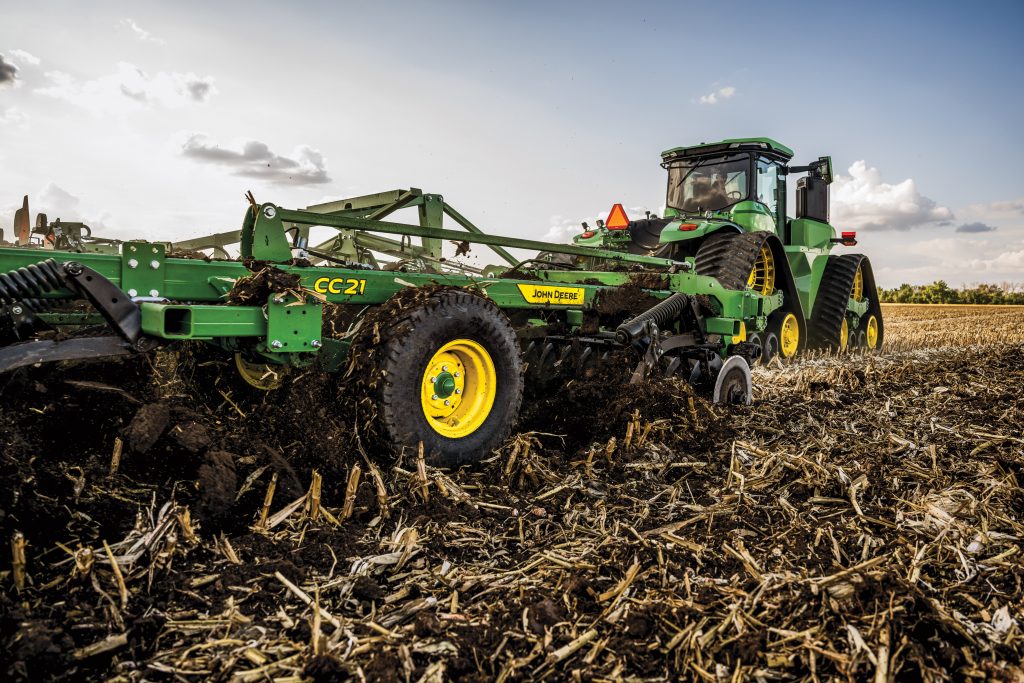
  • Tractor Display: Strike a pose with a John Deere Tractor and the iconic machines that have shaped American farming since 1837.
  • Barnyard Bash: Cool off at Tractor Supply Company's booth with cornhole, kid's activities, giveaways, agricultural education, and more.
  • Small Business Administration (SBA): Connect with the SBA's Rural Affairs team and learn how small farms and businesses can access funding, training, and growth resources tailored for rural communities.
  • Food Safety: Learn about food safety with USDA's Food Safety and Inspection Service (FSIS) general safe food handling practices.
  • Golden Tractor: Snap a memorable photo with this iconic symbol of American agriculture.
  • Live DJ: Enjoy curated daily sets from our family-friendly DJ, who will create a welcoming soundscape for your farmers market shopping experience.
  • National WIC Breastfeeding Week: USDA celebrates National WIC Breastfeeding Week and promotes healthy families through WIC's support services and whole-nutrition access. Look for a privacy booth to support nursing mothers and young families.

Activities for All Ages:

  • Meet Smokey Bear and mascot friends from USDA
  • Stop by Tractor Supply Company's booth to meet a Highland Cow
  • Visit USDA's Farmers Production and Conservation (FPAC) booth for farm fun kids activities and giveaways

Monday, August 4 – Make America Healthy Again (MAHA) Monday

Celebrating the Make America Healthy Again movement.

Program Features: Secretary of Agriculture Brooke Rollins and Secretary of Health & Human Services Robert F. Kennedy Jr. team up with Fox News' Rachel Campos-Duffy for a live cooking demo with healthy, fresh ingredients straight from the Farmers Market.

Activities for All Ages:

  • Stop by USDA's front lawn for Goat Yoga and meet the goats beginning at 6:30 PM (BYOM: Bring your own mat or towel)
  • Stop by the Chobani tent to learn about how its products made with American dairy and fruit support farmers and local communities.
  • Grow and Snack Station with Common Threads

Tuesday, August 5 – Faith and Fellowship Tuesday

Coming together for a day that highlights unity, gratitude, and service in agricultural life.

Program Features: A heartfelt celebration led by Secretary of Agriculture Brooke Rollins, USDA Senior Advisor on Faith and Community Outreach Dr. Alveda King, and Secretary of Housing and Urban Development Scott Turner. The event will feature a panel of faith leaders, including Jenny Korn from the White House Faith Office, and special remarks by Pastor Jentezen Franklin. Featuring musical guest Free Chapel Band and headlining artist Danny Gokey.

Activities for All Ages:

  • Faith and Flowers: Flower arranging fun at the flower truck
  • Meet and greet George Washington

Wednesday, August 6 – Forests and Firefighters: Protecting America's Legacy

Honor those who protect our national treasures and discover how USDA safeguards our landscapes.

Program Features: Secretary of Agriculture Brooke Rollins, Secretary of Education Linda McMahon, and Environmental Protection Agency Administrator Lee Zeldin spotlight the importance of wildfire readiness while celebrating Smokey Bear's 80th birthday and a fiery performance by LOCASH.

Activities for All Ages:

  • Firefighters and Firetrucks: Join real-life heroes and climb aboard a firetruck on Jefferson Drive while learning how to outsmart wildfires!
  • Smokey Bear Birthday Bash: Celebrate with Smokey Bear, learn about wildfire tips, and join a scavenger hunt packed with prizes
  • Stop by the National Forest Foundation (NFF)'s booth to learn about our forests with tree sapling samples
  • Pick up a free Superhero Comic Book by Visa to learn about financial literacy for kids

Thursday, August 7 – America the Beautiful Day

Celebrating the breathtaking beauty of our nation's land, people, and agriculture.

Program Features: From George Washington's cellar to today's science: George Washington will join us to talk about his 250-year-old cherries, connecting our agricultural past to the future of food and farming.

Activities for All Ages:

  • Step onto USDA's lawn at the People's Garden for a hands-on tour, head next door to the Rainfall Simulator and see how healthy soil helps protect our land from erosion and runoff in real time
  • Barnyard Bash: Stop by Tractor Supply Company's booth to meet a Highland Cow and more
  • Visit USDA's Office of Tribal Relations (OTR) booth to learn about Tribal agriculture, traditions, and resources

Friday, August 8 – Farmer and Family First Friday

Ending the week by spotlighting the farmers, ranchers, and producers who keep America growing strong.

Program Features: Family Movie Night featuring a storied classic, Charlotte's Web. Wrap up the Great American Farmers Market with a heartwarming evening under the stars! Snuggle up on a blanket, grab snacks from the market, and join us on the National Mall – movie starts at 6:30pm sharp.

Activities for All Ages:

  • Farmyard Fun with Face Painting and Balloon Animals: Sport a fruity masterpiece on your cheeks, then saddle up with a balloon pig, horse, or cow
  • Stop by USDA's Farmers Production and Conservation (FPAC) booth for farm fun kids activities and giveaways
  • Meet Smokey Bear and mascot friends from USDA

Please refer to this link for a detailed event schedule.


What's at the Market?

Vendors for the Great American Farmers Market: Visitors can shop from an exciting mix of American producers and vendors offering farm-fresh produce and food, handcrafted goods, specialty items, and more. See the full list of vendors below:

Baked Goods

  • Baguette Republic – Rustic, artisanal baked goods
  • Blended Desserts – Brownies, muffins, and sweet treats
  • Grace's Pastries – Pies, pastries, cookies, and gluten-free items
  • VegHeaven – Vegan baked goods

Beef/Pork

  • Angies Acres – American Akaushi Wagyu beef
  • Beck Ranch Premium Meats – Beef and pork (25 varieties) with custom seasonings
  • Chimney Stack Farm – Premium beef and pork cuts
  • EcoFriendly Foods LLC – Full farm range: beef, pork, lamb, goat, poultry, rabbit, and turkey
  • Fischer Farms Natural Foods – Grass-fed beef with hot samples
  • Freedom Valley Farm – Pork belly (45+ varieties)

Dairy

  • Balfour Farm LLC – Artisan cheese (22 varieties) and cured meats
  • Dutch Country Cheese – Classic cheese and curds
  • Leadercreek Holstein – Fresh milk

Food Concessions

  • Ana's Twist – Empanadas, soups, bakery, beverages
  • Bluegrass Kettle Masters – Sweet and salty kettle corn
  • Bun'd Up – Sticky bao buns, rice bowls
  • Just Peachy Pueblo Biscochitos – New Mexico-style cookies
  • Lapp Valley Farm Creamery – Ice cream (16 rich flavors)
  • My Alfajor LLC – Empanadas and Latin cookies
  • NB Food – Asian noodles, egg rolls, bubble tea
  • Nurture Greens (OurFarm DC) – Cold-pressed juices and salad greens
  • Pop's Praiseworthy Popcorn – Hand-crafted gourmet popcorn
  • Redbanks Beef Farm LLC – Beef, pet treats, and skincare
  • Timber Pizza Co. – Artisan wood-fired pizza
  • Uncle Dave's Kettle Korn – Kettle corn in 5 bold varieties

Honey/Beeswax

  • Edgewood Apiaries and Farm – Honey, beeswax candles, balms, soap
  • Neighborhood Nectar – Raw honey and honey drinks
  • Rock Hill Honey Bee Farms – Honeycomb, jams, soap, skincare

Jams, Jellies, Pickles

  • Bad Ass Pickles – Pickled foods (20 varieties)
  • Freedom Pickles – Pickles with a kick (3 varieties)
  • Whisky Ridge Farm – Jams and pickled goods

Produce

  • Artisan Milling Company – Ground corn and grits
  • Communitas Farm – Tomatoes, squash, peppers, cucumbers
  • Foot of the Mountain Farm – Vegetables, fruits, eggs
  • Frey Farms – Watermelon, strawberry and peach agua fresca
  • Kennedy Milling Co. (4Sisters) – Organic Rice (5 varieties)
  • North Florida Elderberry, LLC – Elderberry syrup, lemonade, juice
  • Utah Farm Bureau – Peaches, apples, sweet corn, dried cherries
  • Valley Mill Microgreens – Microgreens, salad greens, grow kits
  • Your Neighbors Farmstand – Tomatoes, corn, peppers, squash, blueberries

Soap

  • Fairy Greens (Everlands Everything LLC) – Lavender-infused bath products
  • Seek Lavender LLC – Lavender oils, herbal remedies, skincare
  • Spark Change – Fire starters, coffee kits, organic accessories

Specialty Meat Producers

  • MeatCrafters – Gourmet sausages and charcuterie (37 varieties)
  • Otis Farms, LLC – Jerky Toppers (dog treats)
  • Red Rose Cattle Company LLC – Handcrafted beef jerky

Specialty

  • Calluna Flower Truck – Cut flowers (20 varieties)
  • Earth-Worker, LLC – Nutritional Supplements (18 varieties)
  • Patrick Ruddy Photography – DC focused photography prints
  • Peculiar Pantry, LLC – Almonds, candy/confectionery, pecans
  • Resilient Earth – Fertilizer products
  • Suka Nuts – Granola, candied pecans, peanuts
  • Virginia Spores & More – Gourmet mushrooms

Regional Showcases

  • American Farmland Trust
  • Kentucky Department of Agriculture
  • Oklahoma Department of Agriculture, Food, and Forestry
  • Shop Kansas Farms

SNAP PARTICIPANTS WELCOME!

We are proud to support nutrition access for those in need. There will be a handful of vendors that accept the Supplemental Nutrition Assistance Program (SNAP).

In the spirit of National Farmers Market week, we encourage everyone around the country to visit their local farmers market. USDA's Agricultural Marketing Service connects consumers to producers at over 8,600 farmers markets nationwide through the National Farmers Market Directory at www.usdalocalfoodportal.com.

THANK YOU to our Generous Presenting Sponsors

USDA gratefully acknowledges the support and sponsorship of the following companies for helping to make this event possible: Chobani, John Deere, Tractor Supply Company, and Visa.

For updates and full programming details, please visit: www.usda.gov/gafm.

Connect With Us!

For updates on this upcoming event and other news, follow USDA on X, Instagram, and Facebook, and follow Secretary Brooke Rollins on X and Instagram.

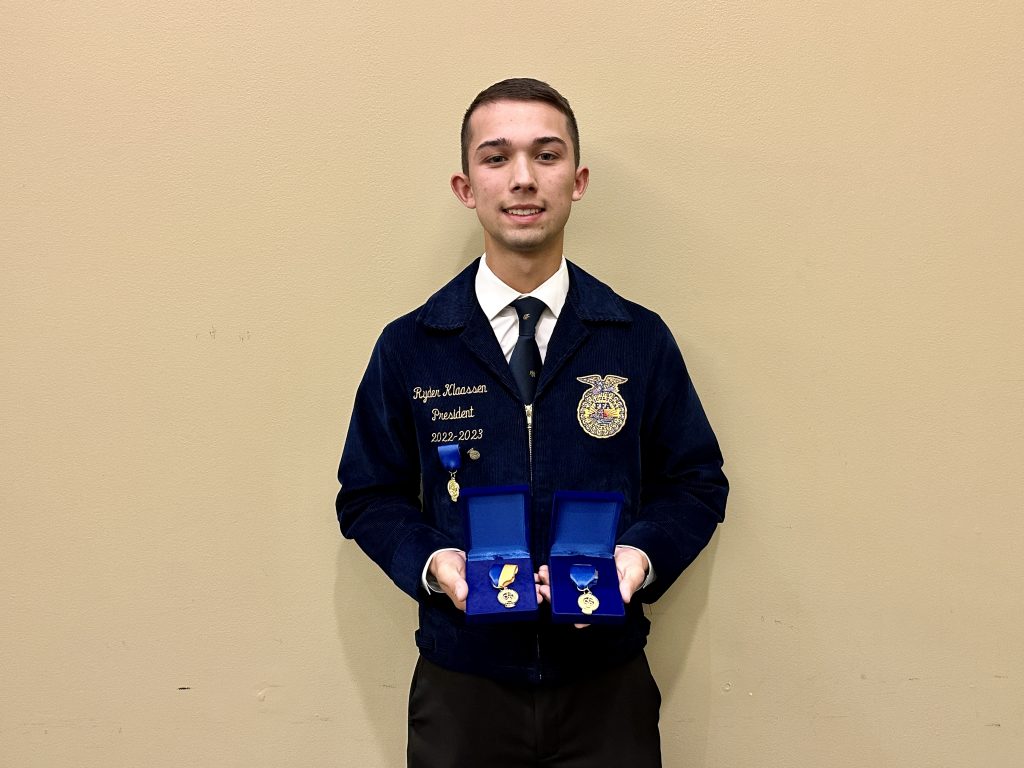
The Perfect Harmony: Alexis Koelling Recognized at NJAS

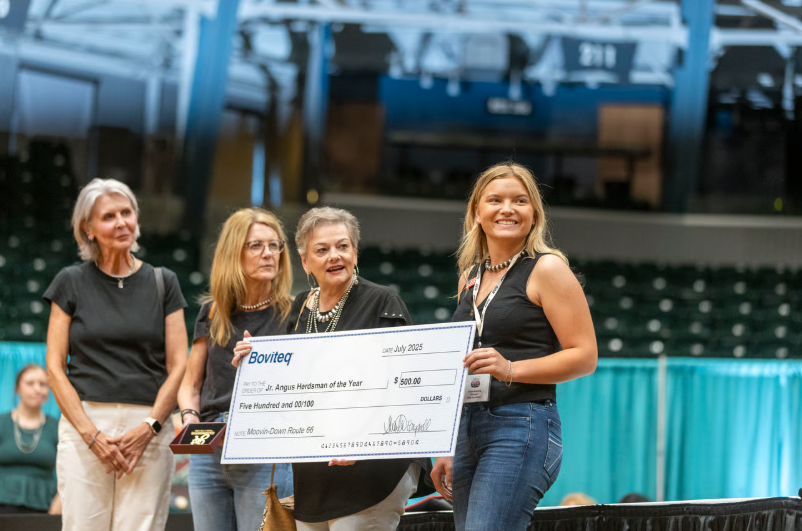
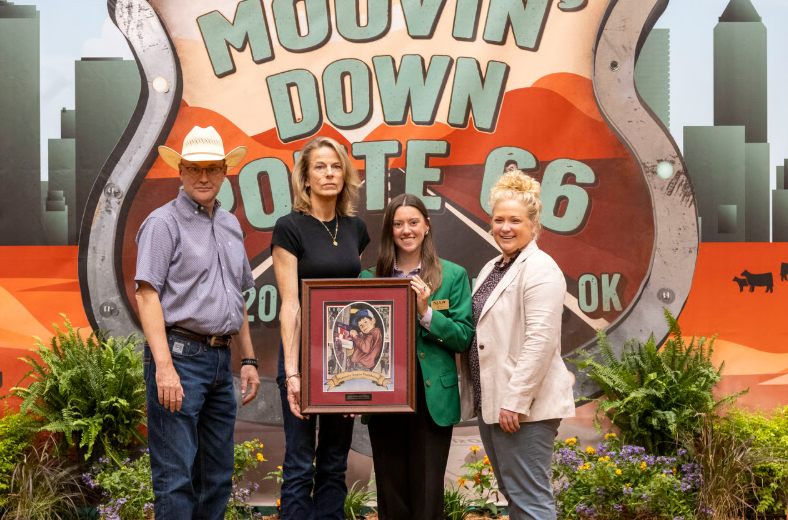
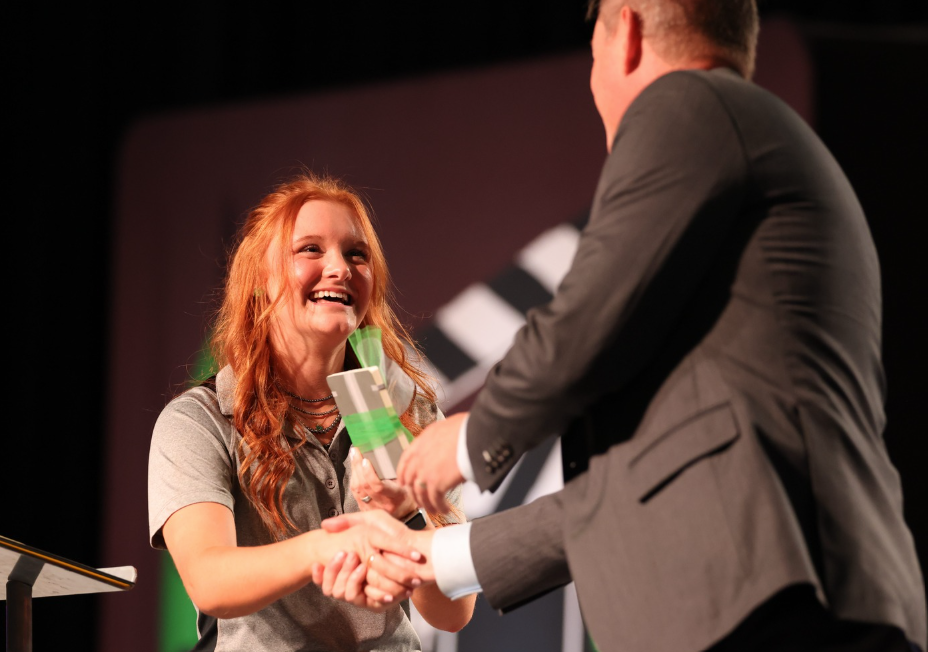
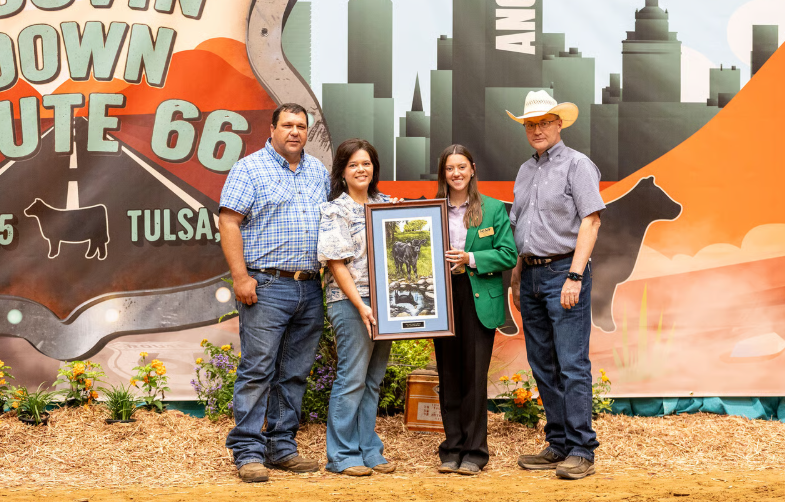
Voted on by her peers, Alexis Koelling, of Bowling Green, Missouri, was selected as the 2025 Junior Herdsman of the Year, during the 2025 National Junior Angus Show in Tulsa, Oklahoma.

To many in the breed, the blonde hair and cowboy hat in the showring is easily recognizable. Even if you didn't know Alexis Koelling by her signature look, however, all it takes is one conversation to recognize she loves to wear the title of "cattlewoman."

The Missouri junior didn't start out exhibiting black-hided cattle, but as she rounds out her career in the National Junior Angus Association (NJAA), Koelling has come to be known as a force in the showring and positive influence in the barn.

"I think that's honestly kind of the coolest part about being named the herdsman — I didn't start with a family that's deeply rooted in the Angus breed, at least to begin with," Koelling explains.

Her passion and focus are just two of the qualities that contributed to her being elected as the 2025 Junior Angus Herdsman of the Year during this year's National Junior Angus Show (NJAS) in Tulsa, Okla. The award was created to honor an outstanding NJAA member in their last year of eligibility. The individual must display a strong work ethic, dedication to their animals and have skills in preparing their cattle for exhibition at a high standard.

In 2023, the family of Tom Wells established the Tom Wells Junior Herdsman Scholarship for the recipient of this award through the Angus Foundation. Tom Wells was an avid junior Angus member and supporter of the National Junior Angus Association. He was very passionate about the Angus breed and the caretakers of Angus cattle. The herdsman of the year award is voted on by NJAA members and recognizes an individual who showcases leadership in the barns and with other junior members. In addition to the $500 Tom Wells Herdsman Scholarship, the recipient also receives a custom belt buckle to commemorate the achievement.

Marching to the beat
"You can do anything you set your mind to," Koelling quotes, naming the lyric from Eminem's "Lose Yourself" as one of her personal mottos.

It's a near perfect summary of how she's established her place in the Angus business.
"I didn't come from a successful big showtime family, but we've had a goal in mind," Koelling explains. "We all came together to make that goal and accomplish that goal."

The industry is competitive, but Koelling said there's room for everyone. With the right kind of focus and determination, she said success is within anyone's grasp. You can look to her own NJAA career as proof.

While last year she checked a major item off her bucket list as she won the National Junior Angus Showmanship Contest, Koelling names 2018-2020 as standout years; she stood in grand drive for all three. In 2019 and 2020, she even brought home a top five banner.

"Those cows are still producing...still being very profitable for us back home," Koelling adds. "I think that's what is most important. It's cool to be successful in the showring but also for those show heifers to turn around and be productive cows."

To her, that's what being a herdsman is all about.

"It's just someone that has the ability to take care of livestock first and foremost," she said, noting that applies to cattle both in the show barn and in the pasture.
  
But it's not all cattle sense. Koelling also lists being personable, showcasing a willingness to help others and a thirst for industry knowledge as key traits.

To know that her peers see those qualities in her is priceless.

"It's humbling," Koelling admits. "It's a nice feeling to know that people recognize that at the end of the day I'm a stock kid...they see what I'm doing back at home, working cows, doctoring calves, whatever it may be, people recognizing that side of me."

While she reflects on the NJAS closing ceremonies now, she has to laugh.

"I was sitting there trying to tell myself that it was okay if I didn't get it," Koelling explains, noting it had been a long-time goal to win the prestigious award. "I would love for that to be on my namesake as I leave. But I knew that there were very accomplished, very successful individuals that were also being nominated for it, so I was really just talking myself down and telling myself that it was okay if I didn't get it."

Award in hand now, Koelling said she is grateful to have made this a reality and is eager to see what's next for her. She'll graduate from Oklahoma State University next May with an animal science-business degree and has her sights set on a career in equipment sales and marketing.

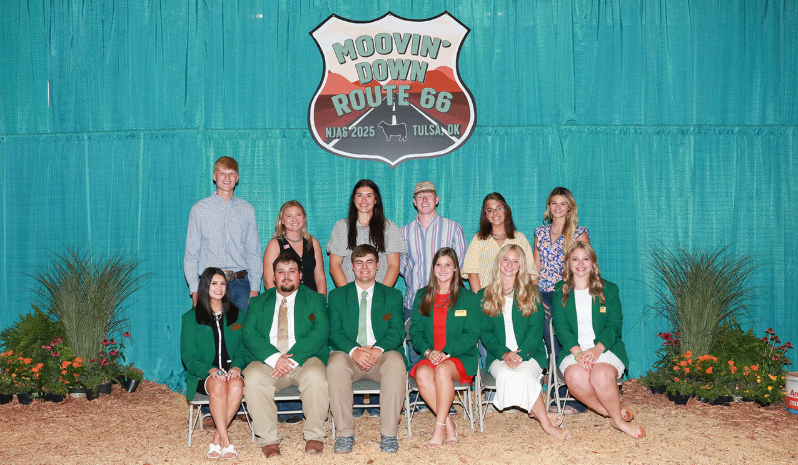
Though she's aging out of her junior show career, she won't be leaving the NJAA behind yet. In addition to being named herdsman, Koelling also earned a green coat this July. She'll spend the next two years serving on the National Junior Angus Board of Directors.

For additional photos of winners, contact the Communications Department at prcomm@angus.org. View results of the 2025 NJAS, including shows, contests, awards and scholarships at www.njas.info. Additional coverage is also available on the NJAA Facebook page and in the September issue of the Angus Journal.


ABOUT THE NATIONAL JUNIOR ANGUS ASSOCIATION. The National Junior Angus Association (NJAA) promotes the involvement of young people in raising Angus cattle while also providing leadership and self-development opportunities for more than 4,500 active members nationwide.

ABOUT THE ANGUS FOUNDATION Established as a 501(c)(3) organization in 1980, the Angus Foundation remains focused on its mission to support Angus education, youth, and research. The organization has distributed more than $4.9 million in youth scholarships since 1998 and has also invested more than $1.4 million in beef cattle research in the past decade.

For more information, contact the Angus Foundation at 816-383-5100.

NCBA Congratulates Newly Confirmed USDA General Counsel

 Today, National Cattlemen's Beef Association (NCBA) Senior Vice President of Government Affairs Ethan Lane issued a statement congratulating Tyler Clarkson on his confirmation to serve as the General Counsel of the U.S. Department of Agriculture (USDA):
 
"U.S. cattle producers congratulate Tyler Clarkson on his Senate confirmation and are excited to have him providing legal counsel to Secretary Brooke Rollins as she continues to cut burdensome, government red tape. Clarkson's experience serving in USDA's Office of the General Counsel in the first Trump administration and expertise on regulatory issues makes him supremely qualified to serve in this role. We also thank the Senate for their work to swiftly confirm more key nominees that will support the work of farmers and ranchers across the country."

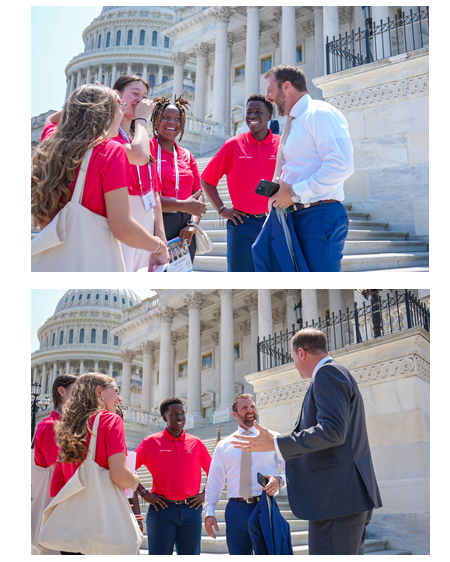
Legislators and Governor Honor Youth Livestock Champions at the Capitol

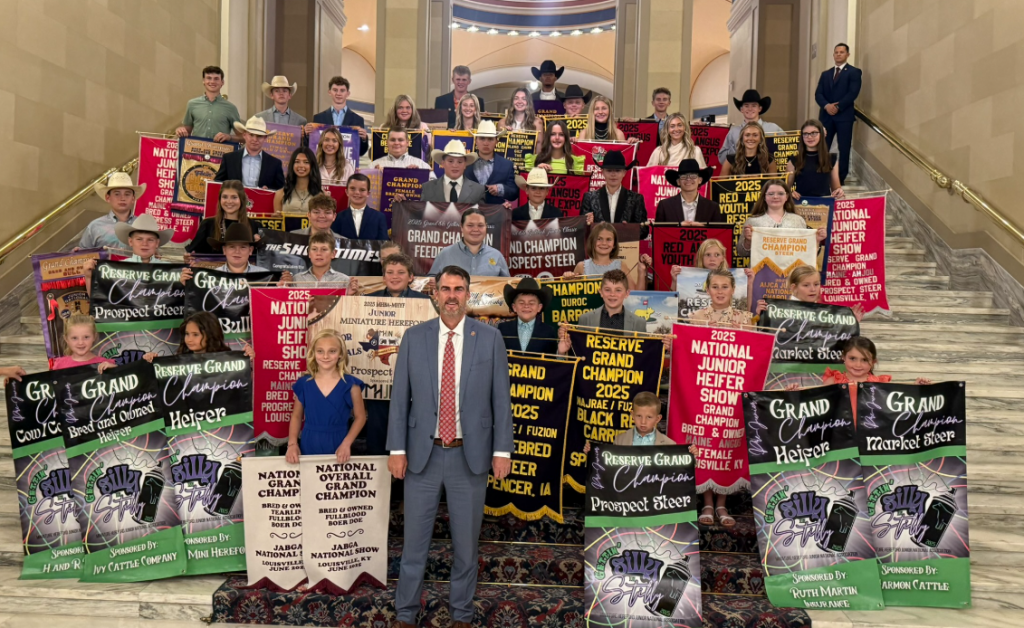
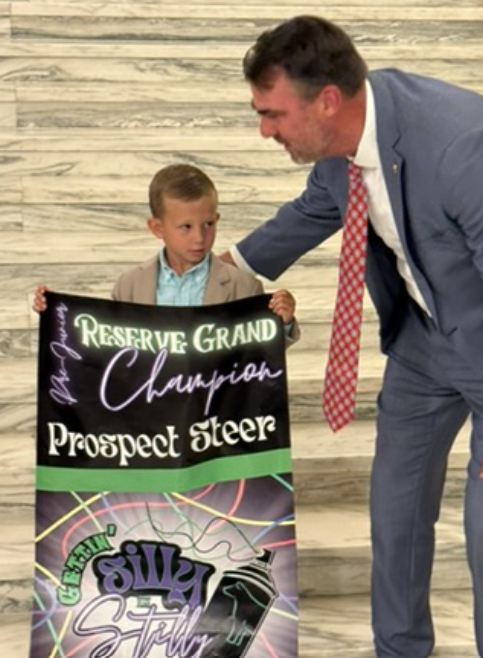
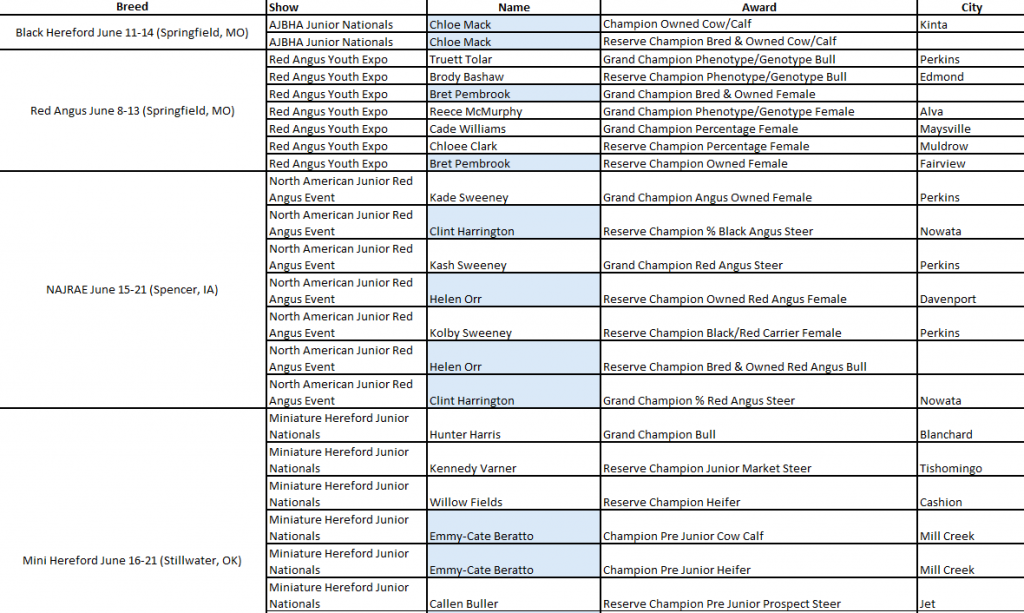
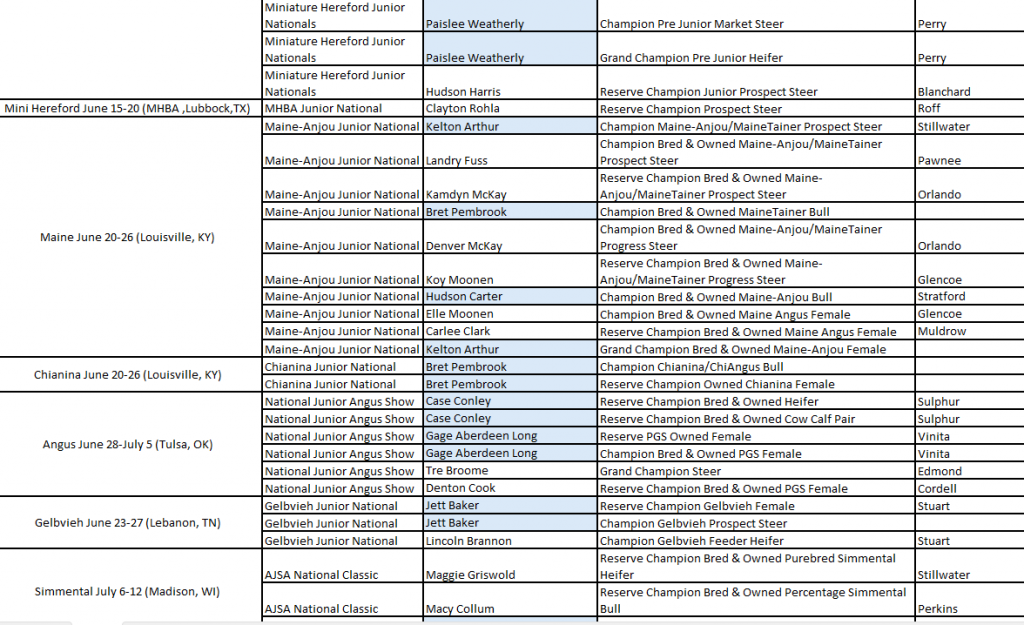
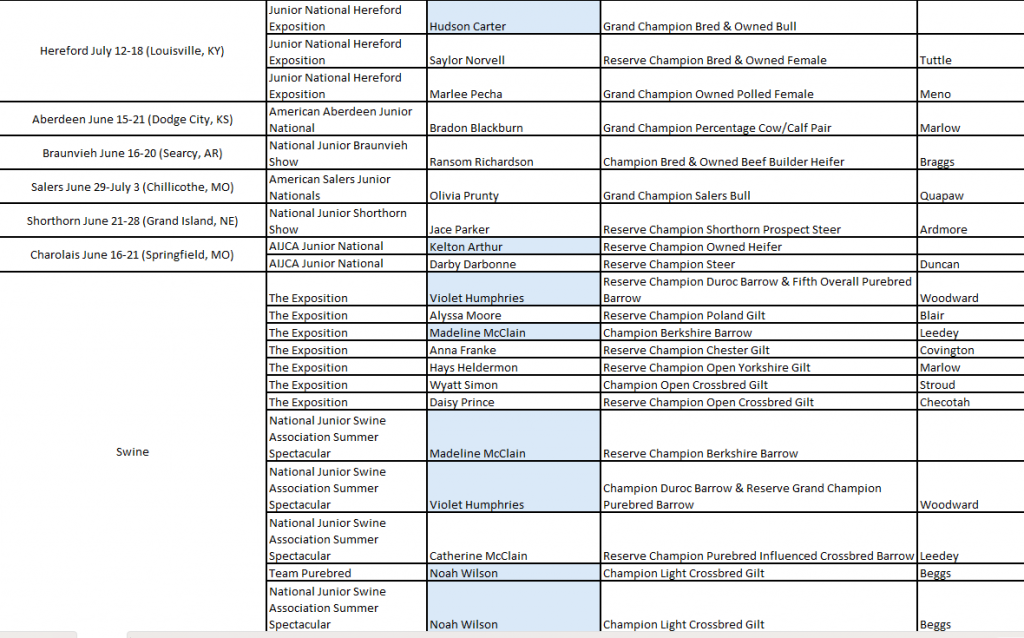
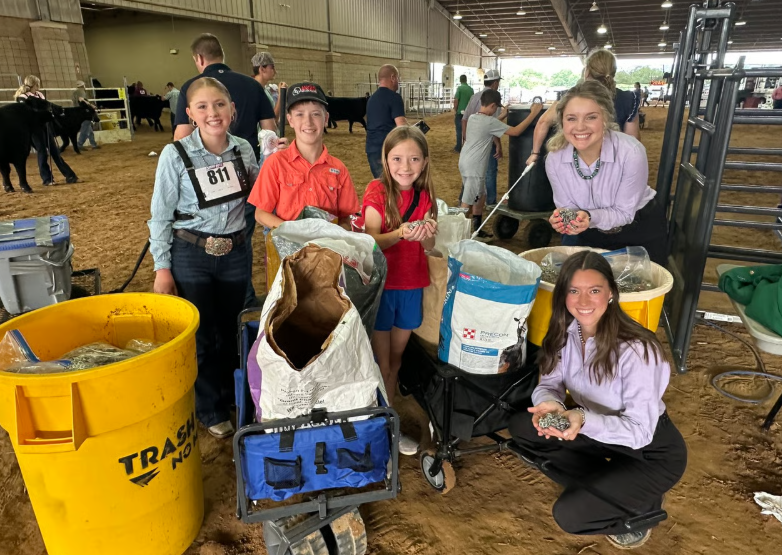
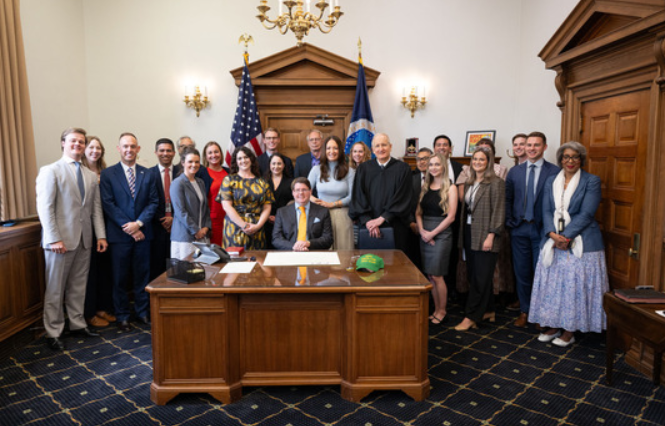
Oklahoma Governor Kevin Stitt, along with Ag Secretary Blayne Arthur and Deputy Commissioner of the Oklahoma Department of Agriculture, Food, and Forestry, JanLee Rowlett, recently hosted a special event to honor the state's national champion junior livestock exhibitors. The students were recognized for winning awards for exhibiting cattle at various shows across the country this summer.

Cattle, Sheep, Goat, and, of course, pig exhibitors who won championships throughout the year were invited by Secretary of Agriculture Blayne Arthur to a tour of the Oklahoma State Capitol to meet various legislators, along with the Governor.

The event began at the State Capitol, where the exhibitors and their parents gathered on the lawn together before moving inside the Capitol to take photos with the Governor and discuss their award recognition with him.

During their time at the Capital, the students and their families were able to tour the facilities. The event concluded with Governor Stitt presenting each student with a letter of recognition for their achievements. The special gathering was a way to formally acknowledge the hard work and success of the young Oklahomans.

Take a look at all these Champions!

2025 Junior Nationals Champions: Oklahoma Winners

USDA invests $106M to keep working forests working

 U.S. Secretary of Agriculture Brooke L. Rollins today announced the U.S. Forest Service is investing $106 million to support state and landowner efforts to conserve private working forestlands across the country. Funded through the Forest Legacy Program, these projects will protect forests vital to the economic and social fabric of local communities – ensuring they remain productive, working forests for Americans and tourists to use and enjoy.

"Just like our farms and ranches, working forests are part of the backbone of rural America – providing jobs, timber, clean water, and places for families to hunt, fish, camp, hike and make lifelong memories," said Secretary Brooke Rollins. "For too long our forests have been left idle, only to burn and devastate communities. President Trump has made it a priority to properly manage our forests, empowering USDA and our state partners to protect and unleash the full potential of their forestlands to help their communities grow and thrive."

In total, the Forest Service will fund 10 projects across 177,000 acres of state- and privately owned forestlands in Arkansas, Hawaii, Iowa, Michigan, Mississippi, New York, Oregon and South Carolina. The investments advance President Trump's Executive Order on Immediate Expansion of American Timber Production by safeguarding forests that supply critical wood products and outdoor recreation opportunities—both of which fuel rural prosperity by creating jobs and supporting rural economies.

The Forest Legacy Program is authorized by the Cooperative Forestry Assistance Act Of 1978 (16 U.S.C. 2103c) and operates through voluntary partnerships with states and landowners with the goal of conserving these lands while balancing other local uses and goals. Projects are selected through competitive state and national processes and carried out through conservation easements or fee-simple acquisitions. Lands conserved through the program either remain in private ownership with long-term protections or become new public lands managed by state or local governments.

Privately owned forests represent 60% of the nation's 704 million forested acres. These lands are essential to the social, economic, cultural, and ecological fabric of local communities and play a critical role in national timber production, supplying 88% of all domestic timber.

To date, the Forest Legacy Program has conserved more than 3.1 million acres of forestland nationwide. To learn more or to view the full list of 2025 projects, visit the Forest Legacy Program webpage. 

Daily Email for July 31, 2025


Oklahoma's Latest Farm

and Ranch News

Thursday July 31, 2025


Howdy Neighbors!

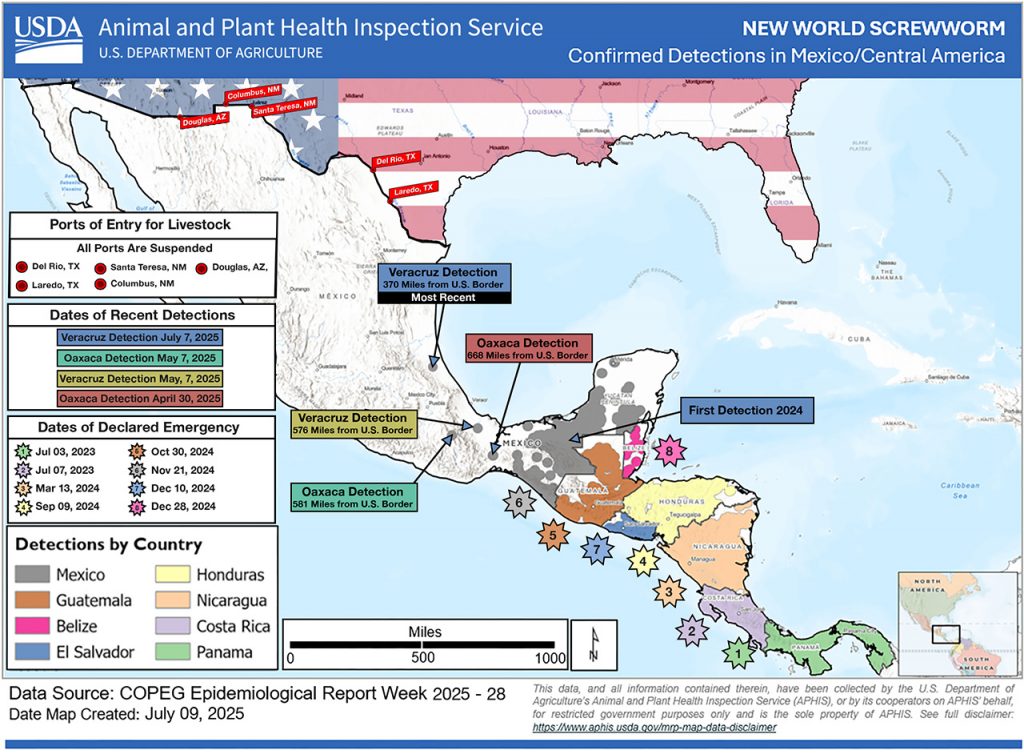
Oklahoma Prepares for Potential New World Screw Worm Invasion With Dr. Rod Hall

Senior Farm and Ranch Broadcaster Ron Hays spoke with Dr. Rod Hall, Oklahoma's State Veterinarian, who addressed concerns about the potential arrival of the New World screw worm in the United States. While the pest is still "several hundred miles south of the Rio Grande River," Dr. Hall emphasized the importance of proactive planning. "We have a plan in place that is a draft plan. We've begun talking to some of our livestock industry people... We're going to be fine-tuning it over the next several weeks," he explained, adding, "We still believe it's going to be several months before we get it—if we do get it."


One of the key tools in the draft plan is controlling animal movement. Dr. Hall stated firmly, "USDA says, and I agree, animal movement restrictions are the best tool that we have when we get it to stop it." These restrictions won't be limited to livestock alone, as the screw worm can infect "any warm-blooded animal... even pets and humans." Despite the likely inconvenience, he reassured producers: "We will find ways for them to [move livestock]. It's just going to be a little more time-consuming and a little more involved."


Reflecting on past control efforts, Dr. Hall discussed the sterile fly program developed in the 1950s, where USDA researchers learned that the female screw worm fly mates only once. "They came up with the idea that if they could irradiate male screw worm flies the eggs would not be viable." This strategy had once eradicated the pest from the U.S., but "these flies that they've been using now for 70 years or so gradually lost their effectiveness. Don't really understand how that happened or why."

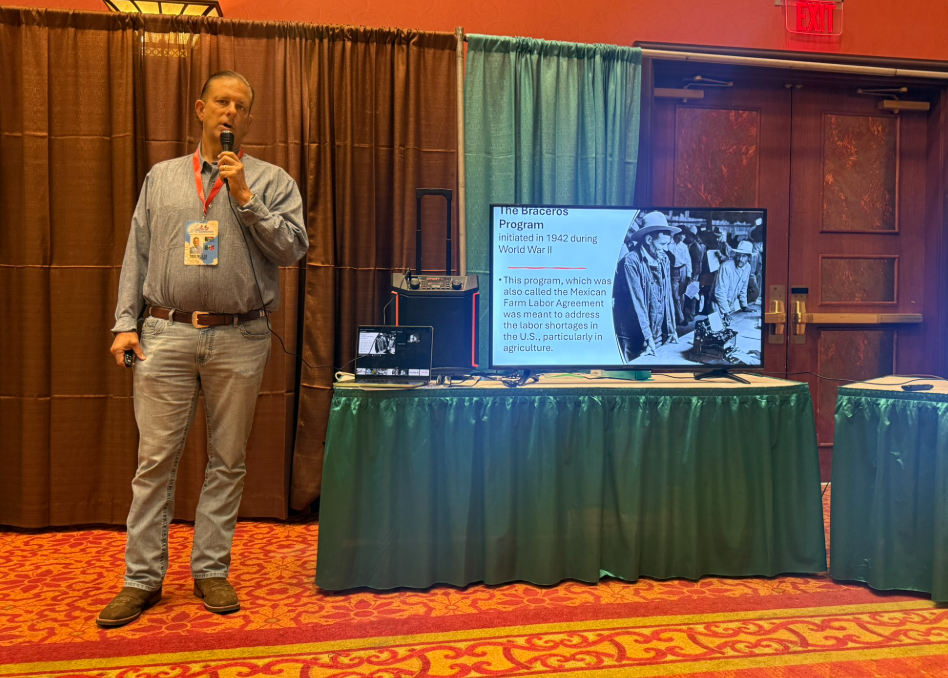
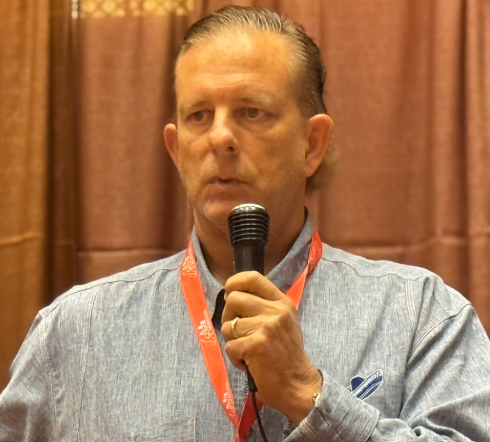
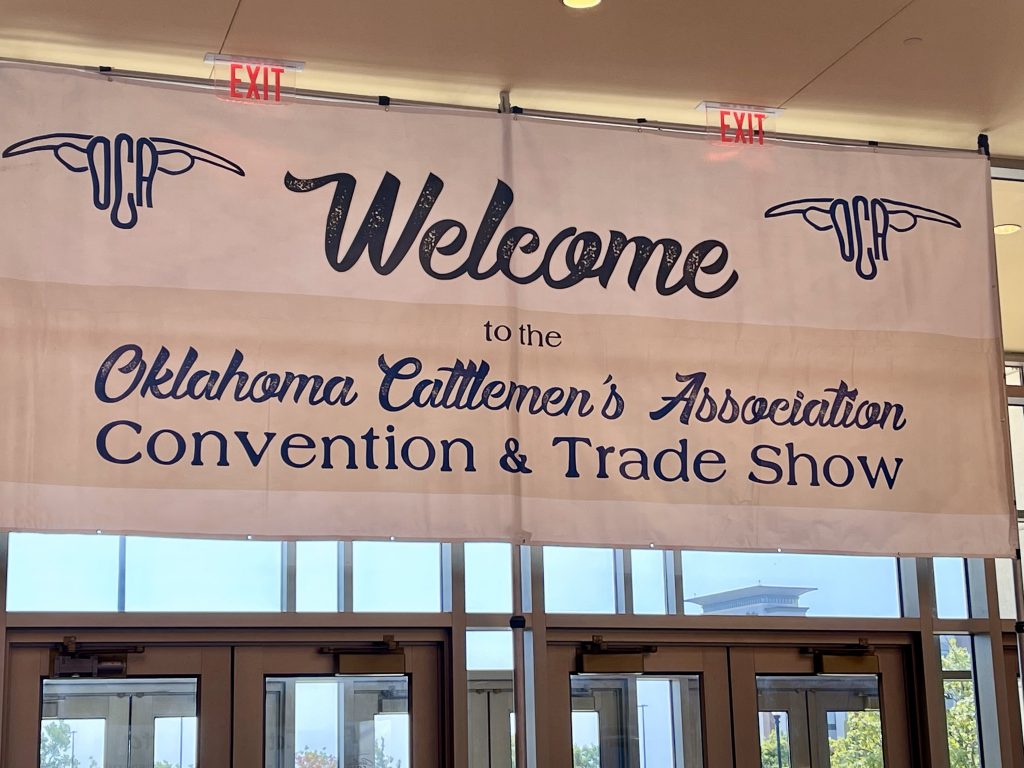
Head Honchos' Todd Miller Offers Insight on H-2A Farm Labor Solutions at OCA Convention

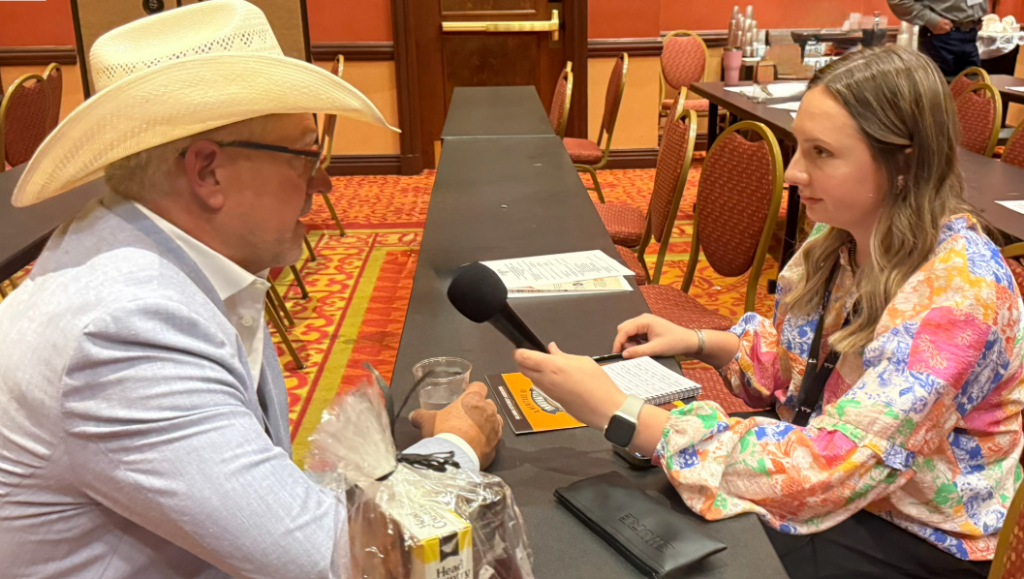
As Oklahoma farmers and ranchers continue to grapple with the ongoing farm labor shortage, Todd Miller, Founder and Owner of Head Honchos, provided valuable insights into the H-2A agricultural worker program.


The H-2A program, a cornerstone for agricultural labor since its origins as the Braceros program in the 1940s, enables U.S. producers to legally employ seasonal foreign workers. According to Miller, Head Honchos acts as a turnkey agency, guiding producers from the initial identification of labor needs through the complex immigration paperwork and even travel logistics to ensure workers arrive at the farm gate, ready to contribute.


"We handle all the immigration paperwork from start to finish–even acting as the travel agent on the back end to make sure we get the workers to your door," said Miller. "It's a tried-and-true process we've been perfecting for 25 years, providing a guaranteed solution to labor needs in over 40 states."

Former Oklahoma Governor, George Nigh passes away at age 98

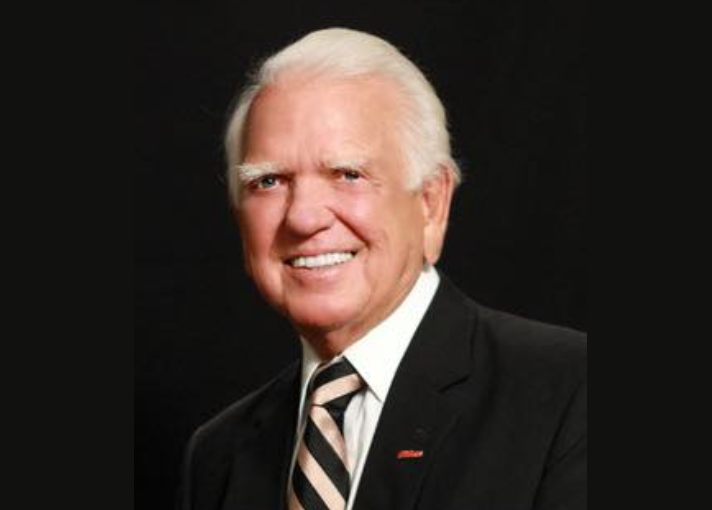
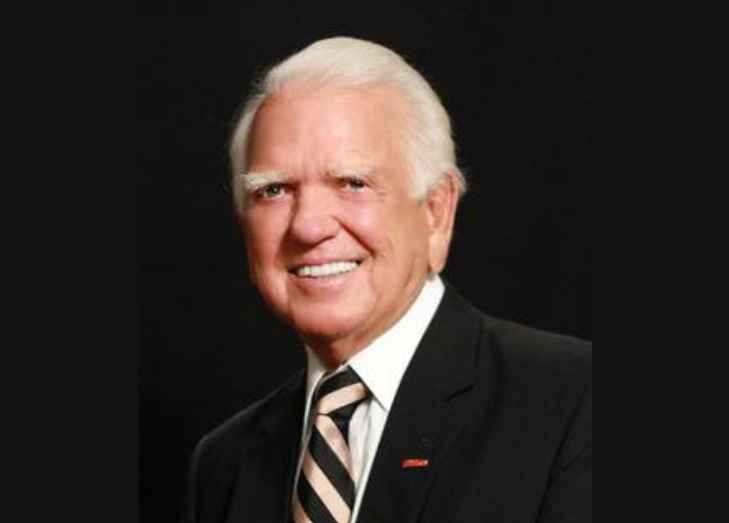
George Patterson Nigh, a prominent figure in Oklahoma politics, died today at the age of 98. Nigh, a native of McAlester, served the state in various capacities for decades, including multiple terms as both lieutenant governor and governor.


Nigh began his career in public service early, elected to the Oklahoma House of Representatives in 1950 as a college senior. During his time in the legislature, he introduced the bill that designated "Oklahoma!" as the official state song.


He went on to serve four non-consecutive terms as Oklahoma's lieutenant governor, a role that saw him briefly assume gubernatorial duties on multiple occasions due to resignations. In 1979, Nigh was elected governor, serving a full four-year term. He was subsequently re-elected in 1982, making him the first Oklahoma governor to win consecutive terms and the first to carry all 77 counties in the state. His governorship focused on areas such as education, tax policy, and infrastructure development.

The vision of the Oklahoma Beef Council is to be a positive difference for Oklahoma's farming and ranching families and the greater beef community, and its mission is to enhance beef demand by strengthening consumer trust and exceeding consumer expectations. 


To learn more, visit www.oklabeef.org. Also, don't forget to like its Facebook page at www.facebook.com/oklabeef for stories on Oklahoma's ranching families and great beef recipes. 


And Check out this video below that helps you learn more about the Beef Checkoff-

Lucas Metal Works is a steel building manufacturer, located in NE Oklahoma, where their roots run deep and their commitment and service to customers remains strong.


Since 1968, Lucas Metal Works has manufactured "Built to Last" products.


Lucas is the innovator of the Lucas Ground Hog®, a nationally recognized arena tool utilized during major arena events around the US and Canada.


With leading expertise in the industry, Lucas manufactures custom, steel buildings comprising of red iron, 40 year warranted roofing and wall panels, in addition to trim and a full line of steel building components. A state-of-the-art facility ensures quality assurance throughout the manufacturing process. And, custom designs and quotes are always free!


"At Lucas, we're big enough to handle the large jobs, and small enough to call our customers, friends."


Give them a call at 918-535-2726 or visit www.lucasmetalworks.com

Political Leaders React To The Death of Former Governor George Nigh

Lankford Comments on Passing of Former Gov. Nigh


"I'm saddened to hear of the passing of former Governor George Nigh, a statesman who dedicated his life to serving Oklahoma. His legacy of leadership, optimism, and public service will be forever cherished. Our prayers are with his family and loved ones," Senator James Lankford said.


Attorney General Gentner Drummond made the following remarks about former Gov. George Nigh, following Nigh's passing this morning. "I am greatly saddened to learn that George Nigh, one of Oklahoma's most noble and admirable leaders, has passed away. Few public servants have had the impact on our state that Gov. Nigh demonstrated. "I ask every Oklahoman to join me in honoring one of the finest men to ever lead our state and to pray for the loved ones he leaves behind. I hope they have white hats in Heaven."


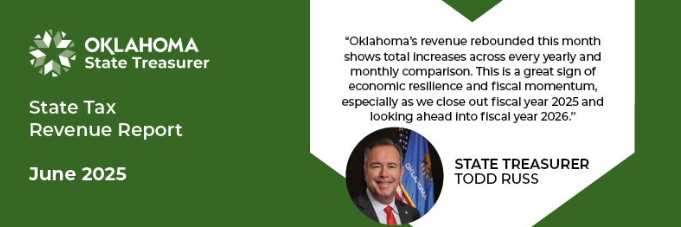
State Treasurer Todd Russ joins the state of Oklahoma in mourning the loss of former Governor George Nigh. "Governor George Nigh was a gracious, principled, and devoted public servant who led Oklahoma with optimism, civility, and a deep commitment to all Oklahomans. His impact on our state's history and his example of bipartisan leadership will be remembered for generations. 

Oklahoma State Dominates, Named National ACT Chapter of the Year

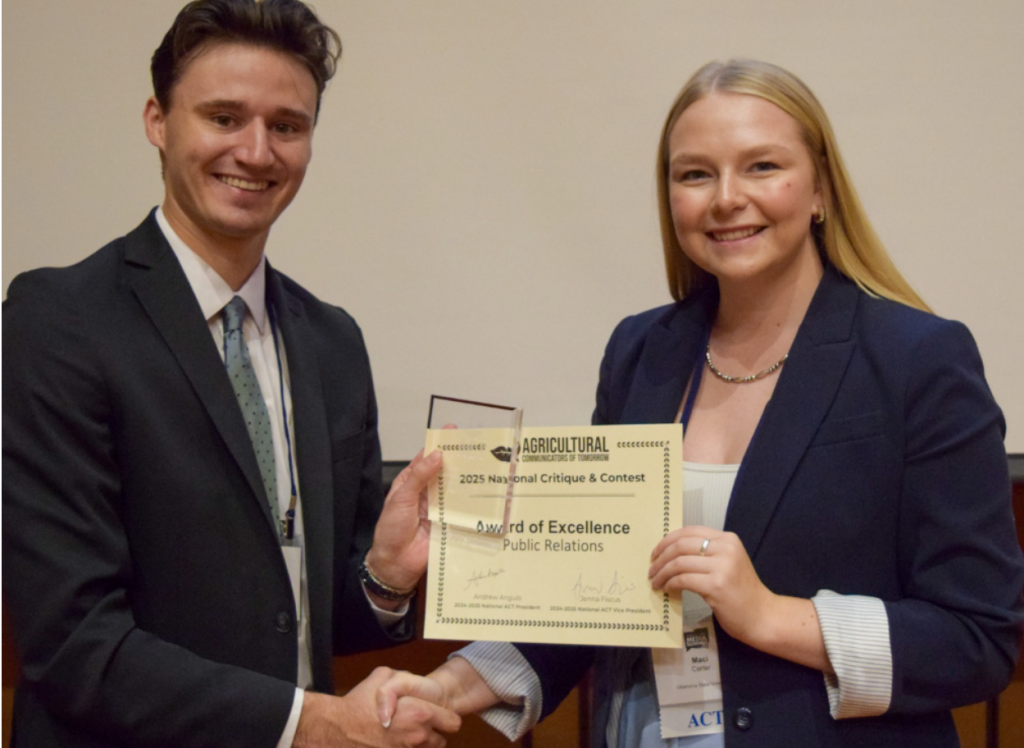
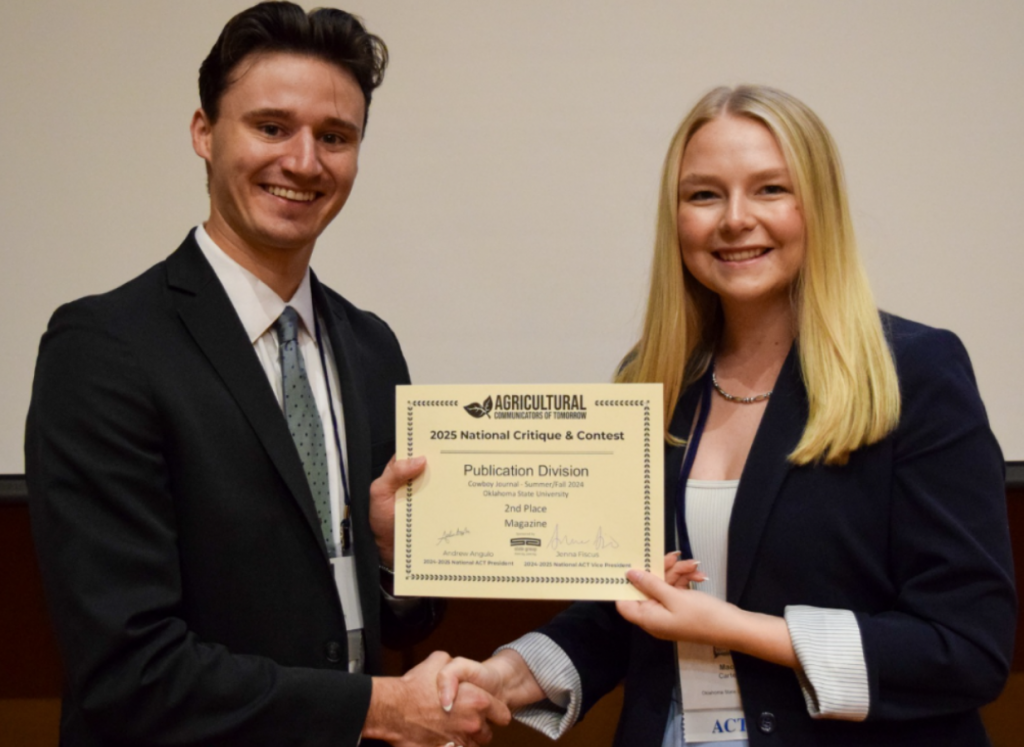
The halls of the National Agricultural Communicators of Tomorrow (ACT) convention echoed with cheers for the orange and black this year, as Oklahoma State University's ACT Chapter proudly claimed the coveted Overall Chapter of the Year award.


Writing Division: OSU students consistently demonstrated their storytelling prowess, with Madison Paden taking 1st Place in Long Feature Story, Trinity White claiming 1st in Long Personality Profile, and Kelsey Dowdle earning 1st in News Story. Sara Howard led the way with a 1st in Short Feature Story, and Alison Chaney tied for 1st in Single Blog Entry.


Publications Division: The Cowboy Journal: Summer/Fall and The Cowboy Journal: Winter/Spring both secured 2nd and 3rd place finishes in the Magazine category, showcasing the chapter's strong editorial and design capabilities. Jill Meador, Kate Schaefer, Bella Bowen, and Taylor Epperson also earned multiple placements in Brochure or Pamphlet.


Electronic Media Division: OSU students excelled in digital storytelling. McKenna Breeding tied for 1st in Long Video Package, and Karli Schwerdtfeger & Brilee Payne clinched 1st in Short Video Package, demonstrating innovative approaches to visual communication.


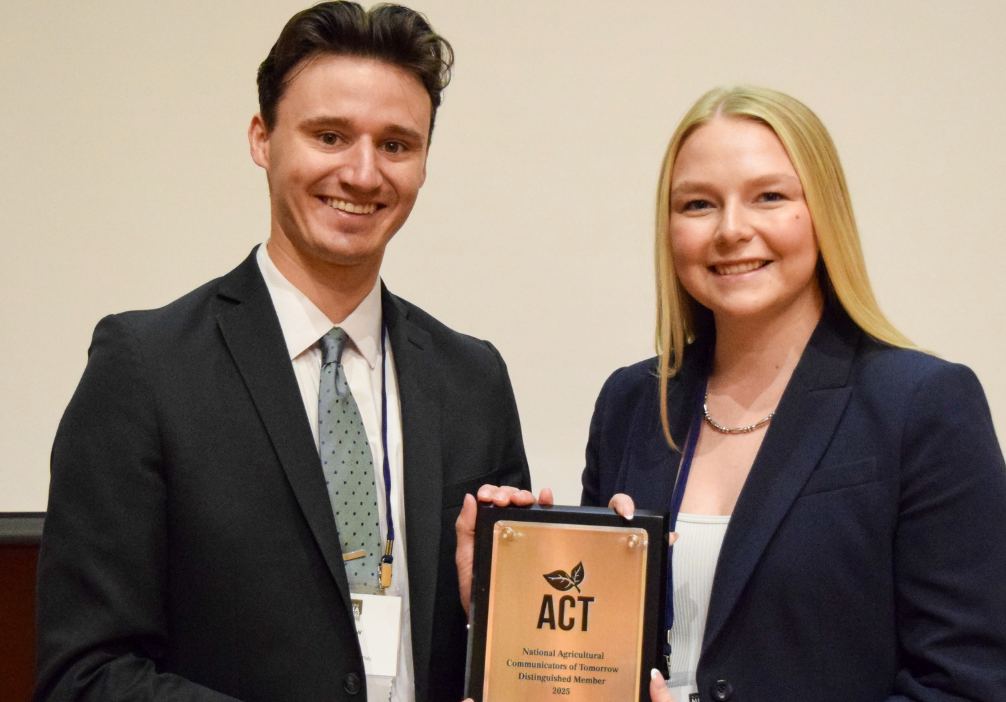
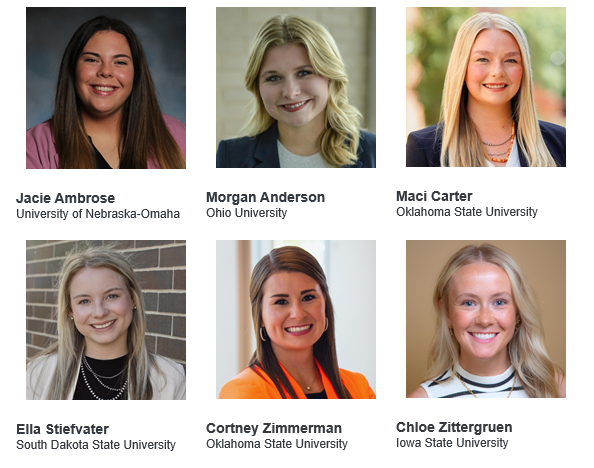
2025 ACT Distinguished Member of the Year: Went to Oklahoma Farm Report's own Maci Carter, who currently serves as the ACT President


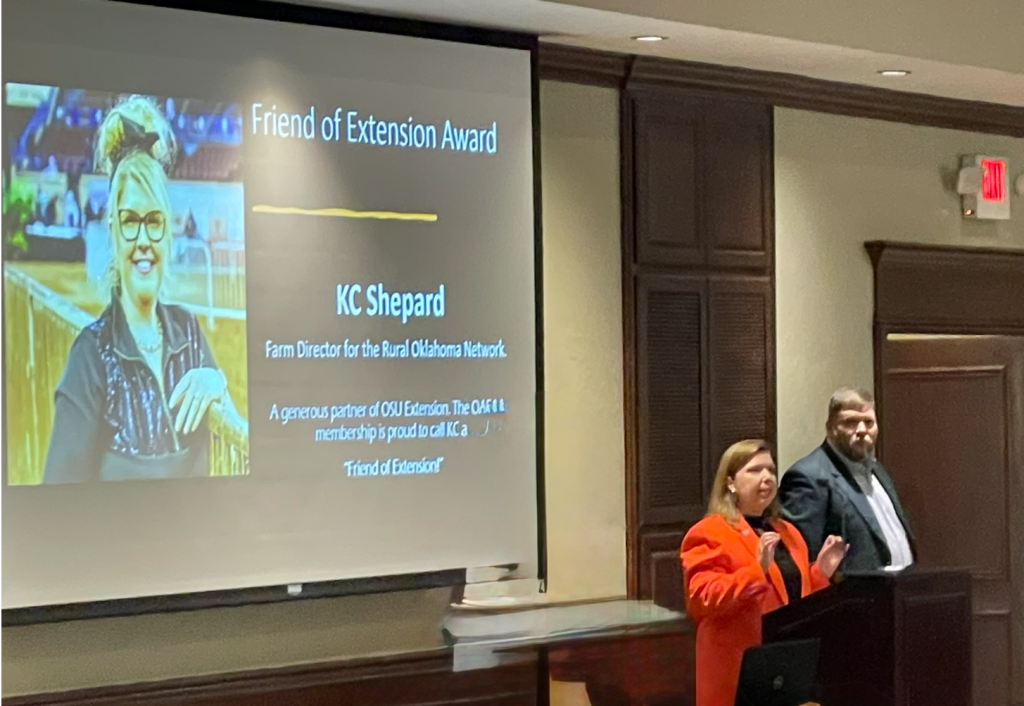
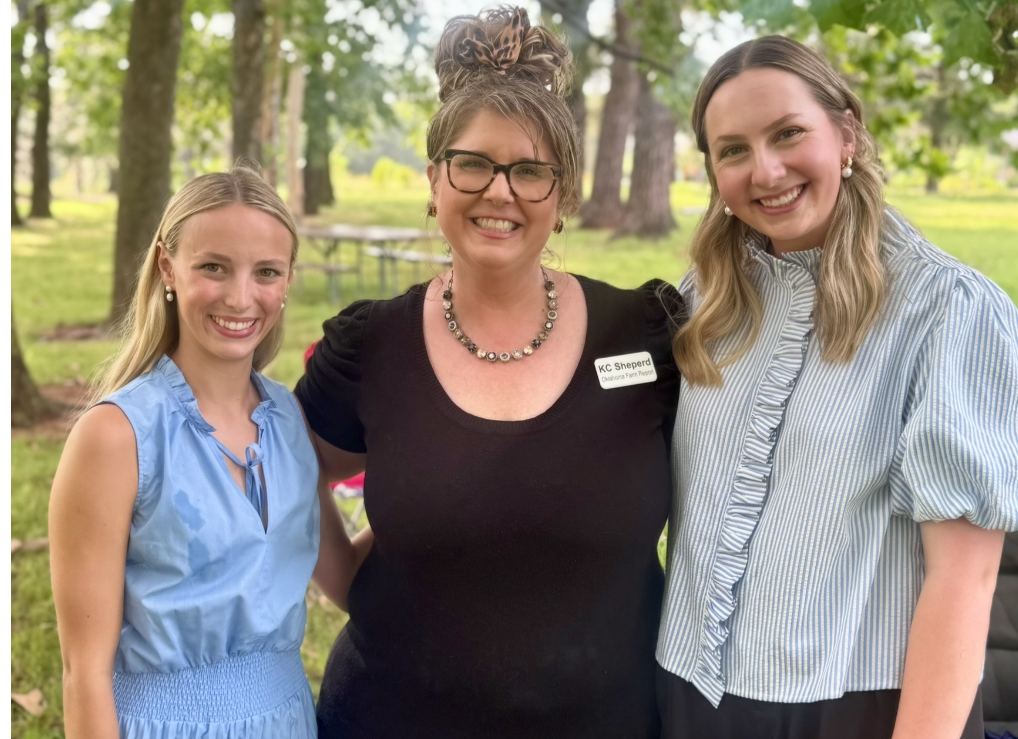
Farm Director, KC Sheperd, also won the 2025 ACT Honored Professional award at the Conference.

Beyond the Wild: Nomads Animal Encounter Offers Up-Close Education and a Home for Rescued Exotics

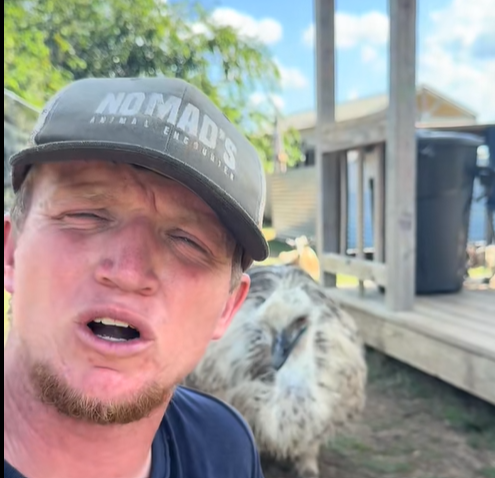
Matt Crabtree, owner of Nomads Animal Encounter in Seminole, Oklahoma, didn't originally set out to run an exotic animal rescue. "I actually went to college for marine biology. I thought I was going to be working with ocean animals." But life took a turn. "My wife is actually from Holdenville and we started off just rescuing animals that got displaced from their homes." What began with dogs and cats quickly expanded into donkeys, lambs, and eventually exotics like coatimundis and wallabies. After a viral Facebook post from a birthday party on their property, Matt says, "We quit our full-time jobs the next day, and this is what we've done ever since."


Today, Nomads is home to a staggering array of animals. "We have coyotes, wolves, foxes, bobcats, and 47 foxes that live here full time. We have deer, yaks, emus, turkeys, raccoons, and three different species of monkeys." Despite this range, they draw a line at dangerous apex predators. "We just don't do any of the big crazy animals because we live right across the street from a school... we don't need anybody getting eaten that sneaks over."


Education is a significant part of Matt's mission, particularly in dispelling myths about exotic pets. "Most of our animals are rescued, donated, confiscated or surrendered exotic pets." He warns, "People get these exotic pets thinking it's going to make them cool... and it could not be further from the truth." Foxes, for instance, are "the most commonly rehomed exotic pet in North America," largely due to their odor. "Red foxes they used to actually use their urine in stink bombs." Even litter training fails: "It will literally run you out of your house."

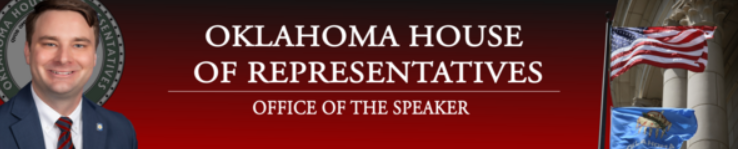
House Speaker Kyle Hilbert Launches "Capitol to Community" Statewide Series

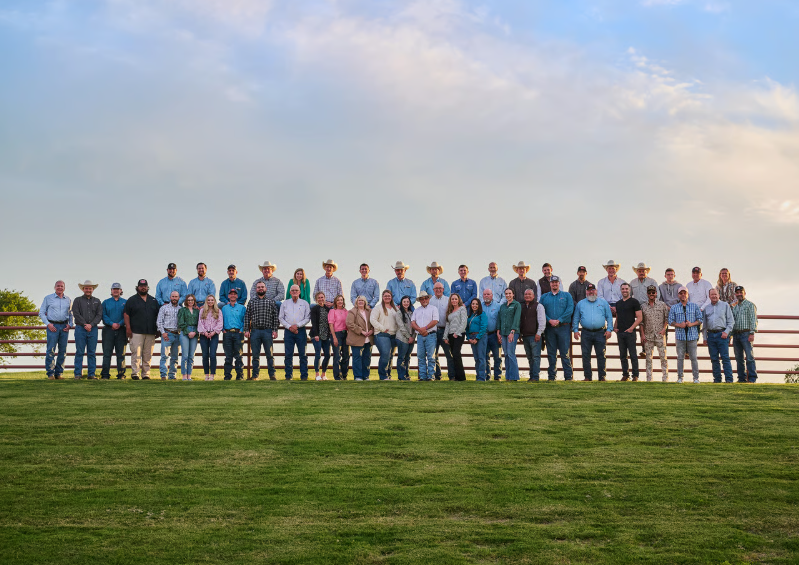
Oklahoma House Speaker Kyle Hilbert has launched a new initiative titled "Capitol to Community", a series of events held across the state over the interim with the goal of strengthening connections between legislators and the Oklahomans they serve.

The format of Capitol to Community will vary depending on the community, but the goal remains consistent: a full day on the ground, engaging directly with local leaders, businesses, educators and residents.


The first stop took place this week in Ada, Oklahoma, with Representative Ronny Johns, R-Ada, hosting members of the House Majority Caucus for a day-long visit focused on community engagement, listening and learning.


"This series is about stepping outside the Capitol walls and meeting people where they are," said Speaker Hilbert. "It's about listening to local challenges, celebrating community successes and ensuring that our legislative goals align with the everyday needs of Oklahomans."

CAB Insider: Trends Entrenched

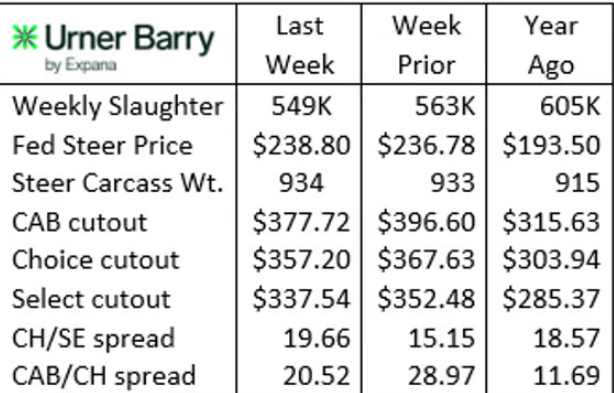
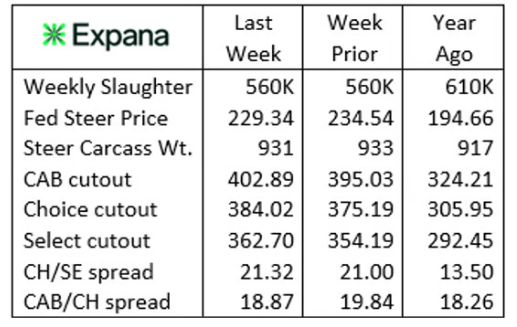
The pace of cattle harvest slowed even more last week with 549,000 head total, down 14,000 head from the week prior. A mechanical issue at one major plant last Monday pulled the head count lower that day, yet abundant harvest capacity did not pick up the slack by Friday, which has been the truncated harvest day in most recent weeks. 


After an early July pullback to the $224/cwt. average, fed cattle prices uncharacteristically ratcheted higher for three weeks, culminating in last week's $238.80/cwt. steer average. 


At the beginning of July the nearby August Live Cattle contract started at $212/cwt., apparently favoring seasonal expectations leading to a major cash market break developing through the month. Since quite the opposite has occurred in the cash market, the August contract has had to hustle to catch up to the reality of the fundamentals. Thus, the August contract as of Tuesday this week traded at $229/cwt., still below the market average but in-line with the southern cash trading range of $230/cwt. last week. 

Checking the Markets...

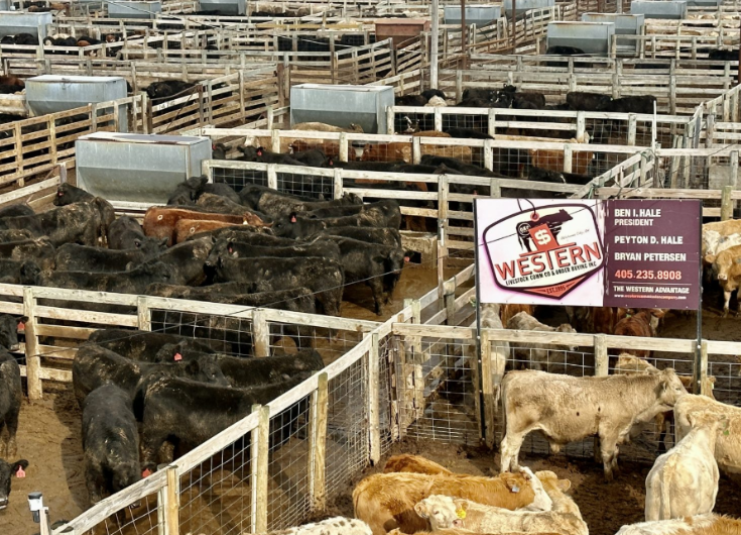
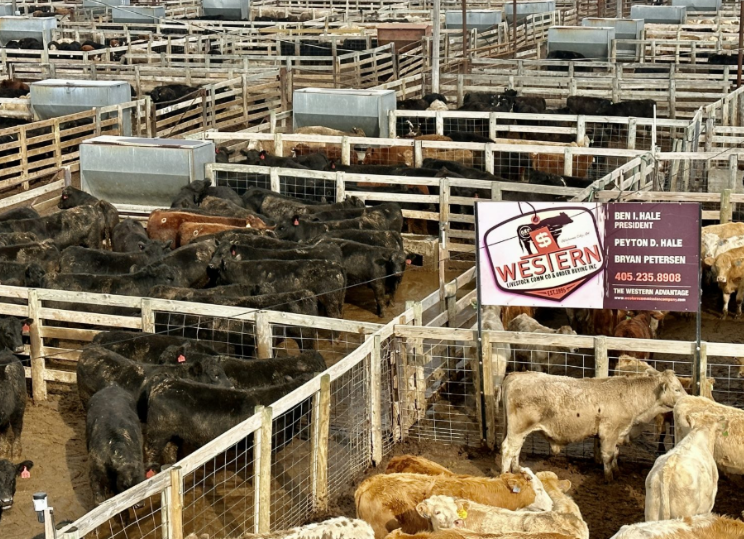
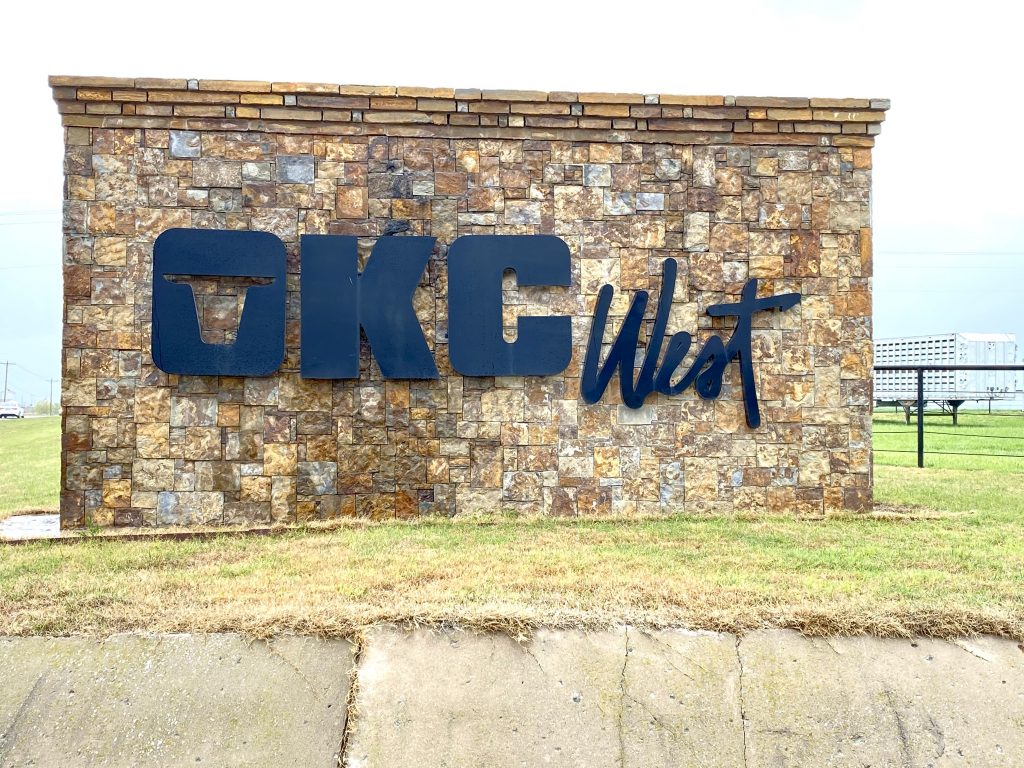
OKC West in El Reno had a run of 5,661 head on Tuesday and Wednesday- National Beef Wire reports "OKC West Sets 26 Records in One Week – New Highs for 5,7,8 ,9 & 10 Weight Steers. OKC West (El Reno, OK) had one of the most remarkable weeks in its history, setting 15 new barn records on Wednesday alone, bringing the weekly total to 26 all-time highs. New records were established across key weight classes, including the 5-, 7-, 8-, 9-, and 10-weight steer categories."

Manager Bill Barnhart writes "Week after week the records keep falling. Who would have thought we would see these kinds of prices a year ago? USDA called our market 5.00-20.00 higher again this week. Positive news is feeding the flames of this market."


According to Cassie Fish at the Beef Read- "Kansas traded a few at $237 and a $235 bid noted. To compare, last week's Kansas top was $237.50 and the average on 3,162 steers was $232.87. There is a general expectation that fireworks may well be seen in the cash market trade before this week is over."


OKC West is our Market Links Sponsor- they sell cattle three days a week- Cows on Mondays, Stockers on Tuesday and Feeders on Wednesday- Call 405-262-8800 to learn more.


Click here for our Markets Page on OklahomaFarmReport.Com- there you will find many of the reports we have linked on the right hand column found on the previous format of our email.

Our daily email is free because of our Sponsors!

OKAgCredit248x160.png
StewartMartinKubota-240.jpg
TulsaFarmShowSquareGraphic240.jpg
okfb.png
AMFeeds.png
Oklahoma-Wheat-Commission_Logo_Vertical_Full-Color_Gray240b-e1736195614699.jpg
GreatPlainsLogoFeb2025Update240.jpg
NAT_Logo_BlackRed160.png
OklaBeefCouncil.png
KIS-Logo240b.png
oca.png
Facebook

© 2025 Oklahoma Farm Report - All rights reserved


Protect Your Brand and Bottom Line: One-Day Internal Auditor Course Returns Aug. 15

 In today's fast-paced food industry, safety and quality are not optional – they are essential. That is why the Robert M. Kerr Food and Agricultural Products Center is offering a one-day Internal Auditor Course on Aug. 15 that is designed to equip food companies with the tools to meet and exceed global food safety standards.

Registration is $350, and participants will receive hands-on training in how to conduct internal audits against GFSI (Global Food Safety Initiative) standards – an essential skill for any company working to stay competitive, compliant, and credible in the marketplace.

Internal audits are not only best practice – they are required. Under Global Food Safety Institute standards, companies must complete a full internal audit at least once per year, with frequency depending on the specific Global Food Safety Institute scheme, operation size, complexity and risk level. In practice, most businesses audit in sections monthly or quarterly, ensuring their entire food safety system is reviewed over the course of the year.

"An effective internal audit system is more than a checklist. It's your first line of defense," said William McGlynn, Food and Agricultural Products Center horticultural processing specialist. "This training gives companies a roadmap to protect their reputation and reduce long-term risk."

The course is ideal for quality assurance managers, plant supervisors and anyone responsible for ensuring food safety in a processing environment. A small investment now can help businesses avoid costly recalls, damaged customer trust or non-compliance penalties later.

  • When: Aug. 15, 2025
  • Where: Robert M. Kerr Food and Agricultural Products Center
  • Cost: $350 per person
  • Includes: Lunch, refreshments and all workshop materials

Seats are limited – register now to reserve a spot, or visit food.okstate.edu for additional details on how the Food and Agricultural Products Center can assist your operation.

The Robert M. Kerr Food and Agricultural Products Center, a part of OSU's Division of Agricultural Sciences and Natural Resources, helps to discover, develop and deliver technical and business information that will stimulate and support the growth of value-added food and agricultural products and processing in Oklahoma.

MEDIA CONTACT: Stephanie Greenlee | Manager, Communications and Media | Office 405-744-0442 | stephanie.greenlee@okstate.edu 

Addressing Questions about Additional Base Acres in the One Big Beautiful Bill

Last summer, Bart Fischer with Texas A&M wrote about a novel new concept for adding base acres to farms that had been proposed in the House Ag Committee-passed version of the 2024 Farm Bill (Farm, Food, and National Security Act of 2024). While that farm bill never came to fruition, the concept ultimately was adopted in the One Big Beautiful Bill (H.R. 1) that was recently signed into law by President Trump.   The provision will allow up to 30 million additional base acres across the nation. Today's article addresses some of the questions we've been asked, while providing an overview of the mechanics. 

  • What will happen to my existing base acres?  Nothing. 
  • If this doesn't affect my existing base acres, then what does it do?  For those farms where recent plantings (described below) exceed the number of existing base acres on the farm, it allows the landowner to add additional base acres. 
  • How does it work? There are essentially two simple components to the additional base provision that address acres planted to both covered and non-covered commodities:
    • Covered Commodities:  If the average number of acres of covered commodities planted (or that were prevented from being planted) on a farm from 2019 through 2023 exceeds the number of existing base acres on the farm, you are eligible to add the difference as additional base acres.
    • Non-Covered Commodities:  You can also add the number of acres of eligible non-covered commodities planted (or that were prevented from being planted) on a farm from 2019 through 2023 as additional base acres, so long as the total does not exceed 15% of the total acres on the farm.
  • If I get additional base acres, what crops will they be assigned to?  They will be assigned in proportion to the covered commodities you planted from 2019 to 2023.
  • If I have "unassigned crop base" from previous changes to U.S. cotton policy, is it eligible to be included in the allocation of additional base acres?  Yes.
  • Will I get these new base acres in time for the 2025 crop year (i.e., the crop I harvest in 2025)? No. The OBBB clearly stipulates that the new base will be in effect for the 2026 crop year.
  • What happens if USDA discovers there are more than 30 million acres of eligible new base?  If the total number of eligible acres across the country exceeds 30 million acres, the Secretary would be required to apply a pro-rata, across-the-board (i.e., no progressive factoring) reduction to all farms to reduce the number of eligible acres to equal 30 million. For example, if USDA determines there are 60 million acres of eligible new base, everyone would see their additional base acres factored by 50% (i.e., 30 million divided by 60 million). 
  • I've read that this concept wasn't vetted and that it was designed to only help one region of the country. Is that true?  No, that's just political nonsense. Yes, the OBBB was a partisan process—reconciliation is notoriously partisan and has been repeatedly used by both political parties—but as we noted above, this provision went through a full committee mark-up last summer and has been thoroughly discussed/vetted over the last year. Finally, while this will certainly provide more benefit to areas like the Northern Plains where more covered commodities are being planted than in the past, we see no evidence that this was done to provide special benefit to any single region.  In fact, it seems obvious to us that it was designed to address repeated complaints from all corners of the country to help landowners who—for whatever reason—have land that is not fully based.
  • Do I need to reach out to my county office?  No. Congress is requiring USDA to go through a notification process with landowners. Further, producers already report their plantings to USDA's Farm Service Agency (FSA), so in theory, FSA already has the data it needs to automate this process. With that said, the bill also provides an opportunity for a landowner to opt out of receiving additional base acres if they wish. Also, for purposes of assigning the new base to crops, for acreage that has been planted to a subsequent crop (other than a covered commodity produced under an established practice of double cropping), the owner gets to elect the covered commodity (but not both) to be used for that crop year in determining the 5-year average. In other words, there will be cases where the process cannot be completely automated.

Bottom line: this is a significant change from previous law that can only help producers (i.e., there is no downside).  As always, the information above is provided for educational purposes only and is subject to change.  USDA is the final authority on how this provision will be implemented, so be on the lookout for details in the weeks and months ahead.


Article courtesy of Southern Ag Today: Fischer, Bart L., and Joe Outlaw. "Addressing Questions about Additional Base Acres in the One Big Beautiful Bill." Southern Ag Today 5(31.4). July 31, 2025. Permalink

EarthOptics Surpasses 5 Million Acres Mapped

 EarthOptics, the leading soil data and measurement platform, has now mapped over 5 million acres of farmland and rangeland across its agronomic and sustainability business lines. This milestone further cements EarthOptics' position as the world's most comprehensive soil intelligence company — and the unrivaled leader in below-ground data.

EarthOptics' rapid scaling is driving a seismic shift in agriculture, from input efficiency to sustainability measurement, spanning the continental U.S. states and multiple continents. The company's robust footprint now fuels the largest soil metagenomic dataset ever assembled, unlocking unprecedented insights into the biological, chemical and physical properties of soil.

"Our vision is to transform how the world understands and manages soil," said Lars Dyrud, CEO of EarthOptics. "Surpassing 5 million acres isn't just a milestone in growth — it's a signal that the future of agriculture depends on deeper, smarter and scalable soil insights. No one is doing this at the scale, speed or accuracy that we are."

EarthOptics' integrated platform combines ground-truth physical samples with its GroundOwlTM multimodal sensor and artificial intelligence (AI) models. This next-generation approach generates the highest-resolution, actionable insights for growers, agronomists, carbon market operators and input providers alike. With thousands of soil samples collected weekly, EarthOptics enables data-driven decisions for fertility planning, tillage, crop planning, carbon credits and biological interventions. The company's technologies are reducing customer costs by minimizing required sampling and unlocking new value from the soil, be it improved yields or verified carbon sequestration.

Their unmatched scale has created the world's most expansive biological soil database, positioning the company at the forefront of predictive agronomy, input optimization and sustainable land management. This biological dataset is already being utilized to facilitate the early detection of pests, pathogens and nutrient deficiencies through AI-based modeling.

Partnering with carbon registries, food brands, ranchers, farmers, agronomists and input companies, EarthOptics is emerging as the leader in scalable soil analytics. With an expanding customer base and increasing demand for trusted data to back sustainability claims, the company's reach is accelerating. For more information, go to www.earthoptics.com.

USMEF Statement on Announcement of a U.S.-Korea Trade Deal

U.S. Meat Export Federation (USMEF) President and CEO Dan Halstrom issued the following statement:

USMEF thanks the Trump administration for making trade negotiations with South Korea a top priority, and we are anxious to learn more details about the U.S.-Korea trade deal. As the largest export destination for U.S. beef and a critical market for U.S. pork, Korea provides a great example of what the U.S. red meat industry can achieve in the global marketplace. Under the Korea-U.S. Free Trade Agreement (KORUS), Korea eliminated tariffs on U.S. pork and the tariff rate for U.S. beef – which was once 40% – will reach zero at the beginning of next year. As a result, the U.S. industry and Korean consumers have benefited immensely, with U.S. beef exports to Korea exceeding $2 billion annually in each of the past four years, and last year pork exports were record-large at $730 million. Korea's domestic beef and pork production have also set records under KORUS, as consumption growth has underpinned larger imports and domestic production – a win for producers and consumers.

We remain hopeful that Korea will address the non-tariff barriers it imposes on U.S. beef, bringing market access in line with international standards. USMEF appreciates the tireless efforts by both USTR and USDA to eliminate these restrictions.

U.S. Grains Council Reacts To Trade Deal With South Korea

Yesterday, President Donald Trump announced another in a series of recent trade deals – this time with the Republic of Korea - that he says amounts to an investment in $350 billion in U.S. goods, including agricultural products, and South Korea will purchase an additional $100 billion in liquified natural gas (LNG) and other energy products.

The President says U.S. goods will be traded at a zero tariff rate with South Korea, while South Korea will pay a 15 percent tariff on U.S. goods. Details will come in the next two weeks when South Korea's president has a planned visit to the White House.

In reaction, U.S. Grains Council President and CEO Ryan LeGrand said:

"South Korea is one of our longest-established trading partners, so the Council is happy to see the Administration show a commitment to building on those years of mutual respect and trade with the negotiation of this newest trade deal. Korea was our fifth largest trading partner in grains in all forms with sales totaling $4.07 billion in the 2023/2024 marketing year, or 5.9 million metric tons in U.S. corn equivalent. The Council has worked in South Korea for nearly 53 years, and the country is our second largest trading partner in U.S. distillers grains with solubles, third in U.S. barley, and sixth in both U.S. corn and ethanol. We look forward to many more years of mutually beneficial trade between our two countries."

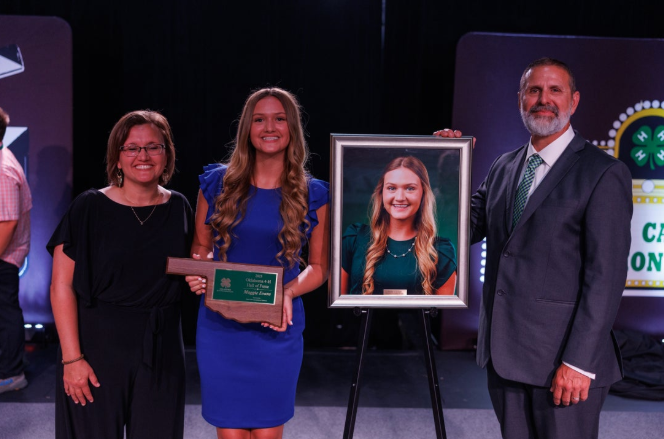
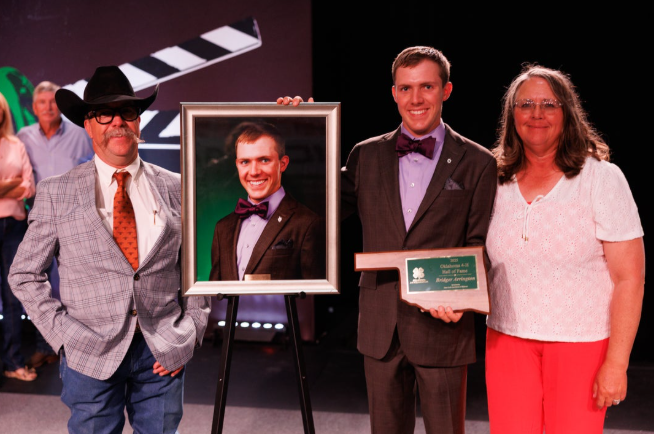
Grady County 4-H'er Maggie Evans inducted into Oklahoma 4-H Hall of Fame

From making a "fantastical surprise dessert" for the Grady County Festival as a 5-year-old to leading statewide initiatives in healthy living and STEM, Maggie Evans' 4-H journey has been defined by creativity, service and resilience. Her decade of dedication to the program has earned her a place in the Oklahoma 4-H Hall of Fame.

Evans, a member of the Rock Island 4-H Club, was honored during the Masonic Charity Foundation of Oklahoma Honor Night Assembly at the 104th State 4-H Roundup at Oklahoma State University. As a Hall of Fame inductee, she received a $5,000 scholarship sponsored by Farm Credit Associations of Oklahoma. She was also named to the Blue Award Group and was awarded a $1,500 Rule of Law Graduating Senior Scholarship sponsored by the Rule of Law Endowment.

With 10 years in 4-H, Evans has built a legacy of leadership across multiple project areas, including healthy living, wildlife and fisheries, STEM and civic engagement. She has served in numerous leadership roles, including Grady County 4-H president, West District president for the south region and state 4-H Ambassador.

"She's had a huge impact not only on her club, where she's been a leader for many years, but also in getting our county Cloverbud program up and running," Liz Taylor, Grady County 4-H educator. "She sees a need in the community and knows she can make a difference."

Evans' passion for healthy living stems from her personal journey with anxiety, which she has shared to encourage others. As a state Healthy Living Ambassador, she helped plan and lead workshops at the state and national levels, including the Ignite Summit and Healthy Living Day. She also created a county SPIN club focused on fitness.

"One of the biggest things 4-H has taught me is that it's okay to take your time to discover what you like to do and what you think you'd be good at," Evans said. "There's a lot of pressure on young people to have everything figured out, but 4-H gave me space to explore."

As a state STEM Innovator, Evans represented Oklahoma at multiple national events and led workshops on astronomy, coding and chemistry in the kitchen. She also organized an eclipse viewing party.

Her civic engagement efforts span from nursing home visits and creating fidget mats for people with Alzheimer's and dementia to national advocacy. She introduced Rep. Frank Lucas at the National 4-H Council Congressional Breakfast and presented a 45-minute briefing at USDA headquarters on improving health outcomes for teens in the United States.

Taylor recalled a moment that illustrated Evans' character and compassion for others.

"The first year Maggie ran for a district office, I was told beforehand to prepare her because she didn't win," Taylor said. "I went to her and said, 'Hey Maggie, I hate to tell you this, you're not going to win your district office.' She was disappointed, but she turned right around and said, 'But how did the other candidates from our county do?' She cared more about other people."

Evans said her 4-H journey has helped her overcome anxiety and build confidence.

"Throughout my time in 4-H, I wasn't always able to stand up and give speeches, teach workshops and lead meetings, but I was surrounded by others who loved me every step of the way," she said. "I hope to be a voice of influence to the youth of Oklahoma. My message is this: Anxiety and other mental health struggles do not define you. There is hope and healing."

She credits her mentors and educators for shaping her 4-H experience.

"My educator has taught me that the goal for every project I undertake is to teach and inspire those I'm teaching," Evans said. "My club leader has taught me that your loves and values will show in everything you do. If you are fully invested and you truly care, your 4-H work will be exciting and engaging."

In addition to her 4-H work, Evans is active in her church, a member of the National Archery in the Schools Program archery team and a former cast member in the Chickasha Community Theatre. She has also participated in fundraising efforts to support her family's mission work in Nicaragua.

"I think the biggest way that I'm seeing this honor is leaving something for younger generations," Evans said. "A lot of the people in my county are a lot younger than me, and I just want to leave a legacy that inspires them to do more and be more in 4-H."

Evans plans to attend Connors State College and complete her basic coursework as a member of the President's Leadership Class. She then hopes to transfer to OSU to continue her education.

"I'm just going in with an open mind about what I want to do," Evans said. "4-H has provided a groundwork for that — exploring different things and understanding it's OK to not have your entire life planned out year by year."

The Oklahoma 4-H Youth Development program provides experiential and hands-on learning opportunities to help youth learn valuable life skills they need to become leaders within their clubs, communities, state and world. Most programming is available at little to no cost. 4-H membership is open to youth in each of Oklahoma's 77 counties where OSU Extension educators are equipped with research-based information to help all residents solve local issues, promote leadership and manage resources.

MEDIA CONTACT: Dakota Ballard | Office of Communications & Marketing, OSU Agriculture | 405-744-9645 | dakota@okstate.edu

Congratulations Maggie!

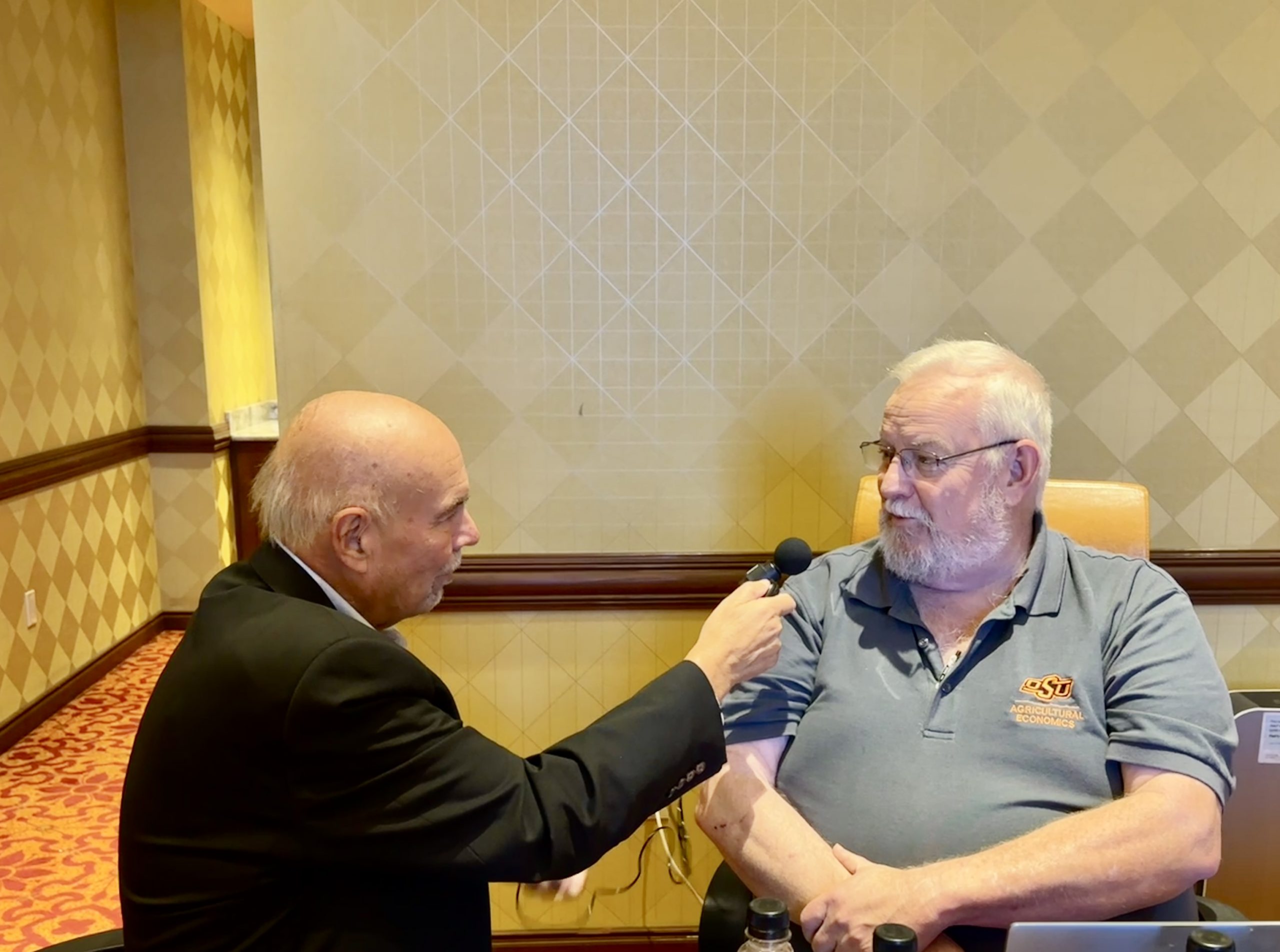
Dr. Rod Hall: Neighboring States May Dictate Oklahoma's Response to New World Screwworm

Listen To Ron Hays And Dr. Rod Hall

In today's Beef Buzz, Senior Farm and Ranch Broadcaster Ron Hays spoke with Dr. Rod Hall, Oklahoma's State Veterinarian, who continued his conversation about concerns about the potential arrival of the New World screw worm in the United States. Oklahoma State Veterinarian Dr. Rod Hall expressed serious concern over the potential arrival of the New World screwworm, emphasizing that Oklahoma may not be able to control its own regulatory fate if the pest makes its way into the state. "That's exactly right, Ron," Hall said. "I've been in contact with some of our states that we send a lot of cattle to... if once we get it in Oklahoma, they will consider the entire state to be affected." He noted that some states will require Oklahoma cattle to be inspected and issued health certificates within five days — a sharp contrast from the standard 30-day window.

Dr. Hall underscored the importance of a coordinated plan between regulators and the cattle industry. "It's important that my team and I have a good plan," he said, "but it's also very important that we work with the industry to make that plan as effective as it needs to be, while still allowing people to stay in business as best we can." He added, "We can't restrict industry so much that we kill our business," acknowledging the need for balance between biosecurity and economic viability.

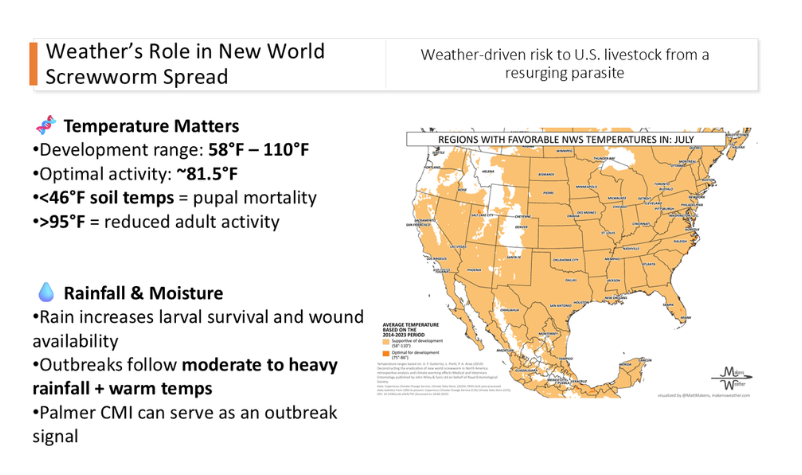
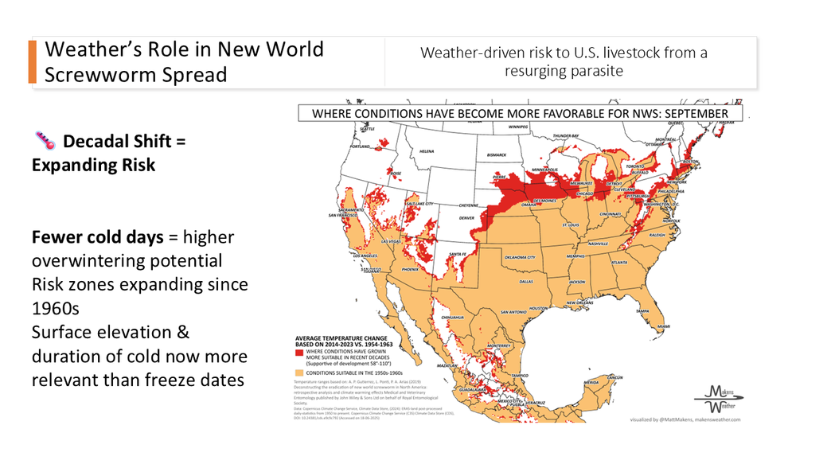
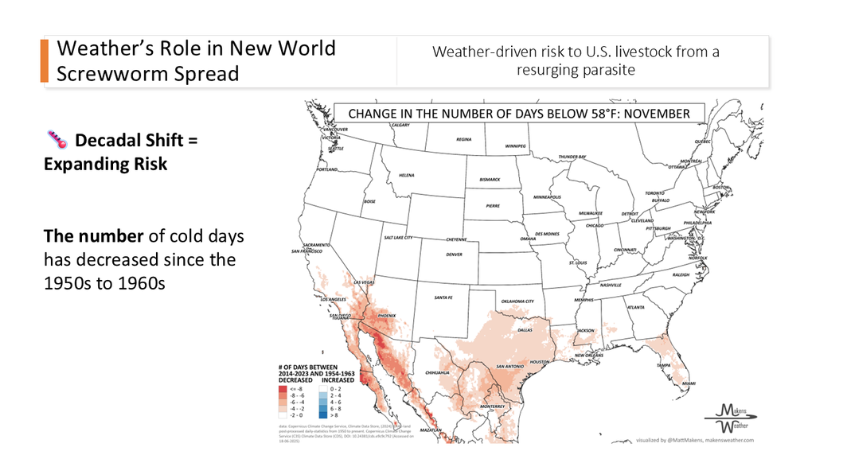
When asked about the seasonal outlook, Hall shared a cautiously optimistic view, pointing to Oklahoma's winter climate as a natural defense. "I believe ground temperatures, or soil temperatures of less than 46 degrees, kill the larvae," he explained. "There certainly are times in the winter where that soil temperature gets colder than that... I think there is a good chance that we might have three or four months out of the year that we could reduce or relax the restrictions to a certain extent."

In terms of preparation, Hall stated that resources and product lists are being developed and made available to producers. "We have a link to a list that USDA has of products that are effective against this," he said. While many commonly used fly products work, he warned, "some of them aren't effective for long enough periods of time... we have to continue to really monitor our stock for wounds and maggots all the time."

Lastly, Hall stressed that early detection and management will be key to minimizing the spread of the pest. "People need to be seeing their livestock and if they see a problem, they need to take care of it right away," he urged. "The sooner we find out about it... the better it'll be for everyone." He concluded with a clear message to the industry: dealing with the screwworm may be inconvenient, but "it will be necessary for us to get rid of the pest."

The Beef Buzz is a regular feature heard on radio stations around the region on the Radio Oklahoma Ag Network and is a regular audio feature found on this website as well. Click on the LISTEN BAR for today's show and check out our archives for older Beef Buzz shows covering the gamut of the beef cattle industry today.

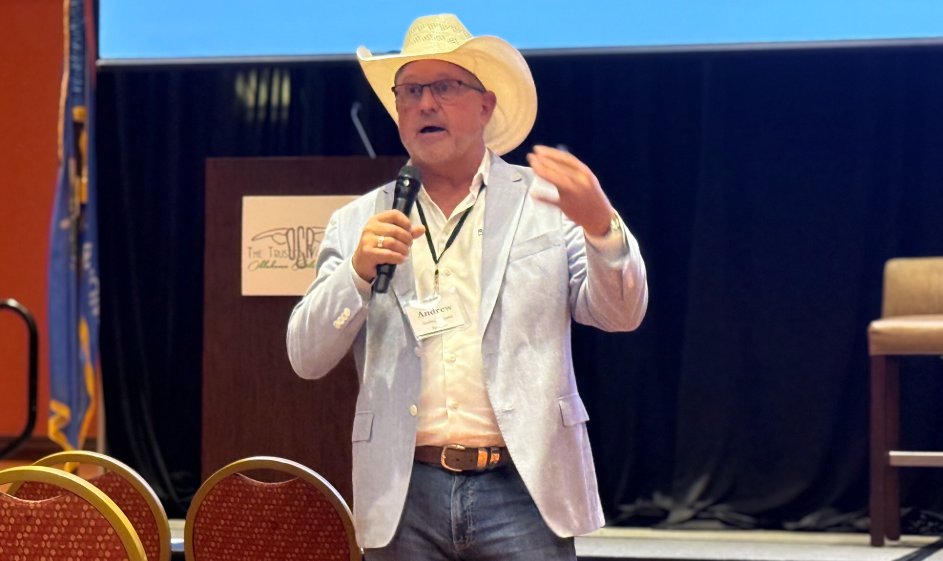
Andrew Coppin of Ranchbot Monitoring Solutions CEO Discusses the Future of Ranch Technology

Listen to Andrew Coppin and Karleigh's Conversation

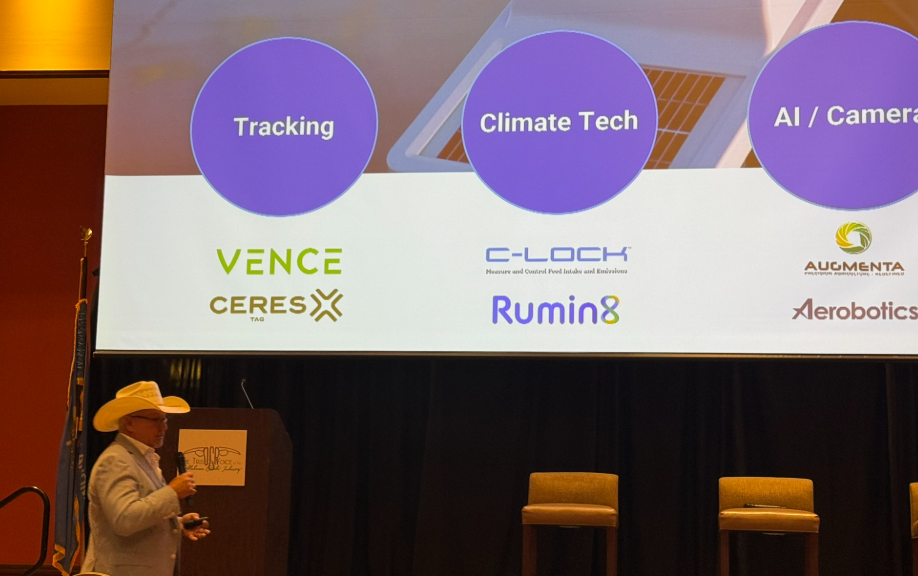
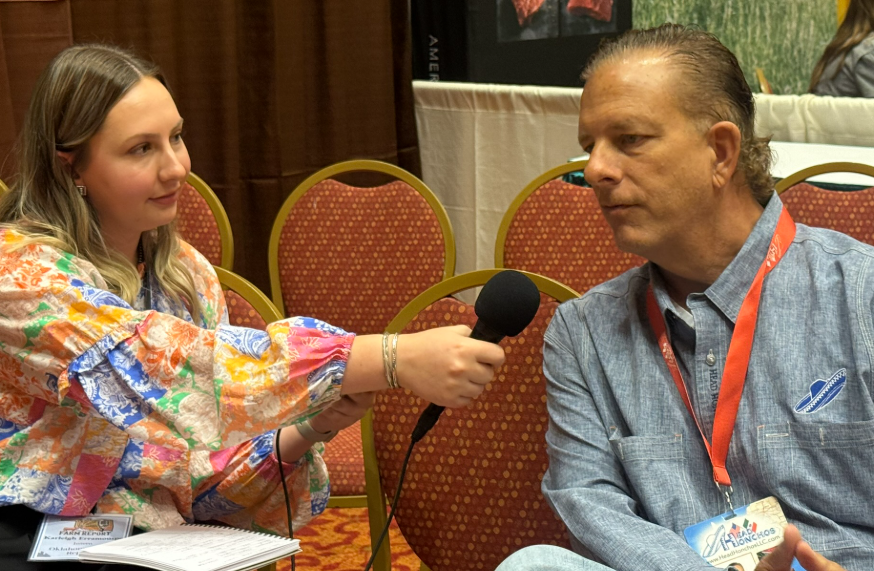
In a recent interview, Andrew Coppin, Co-Founder and CEO of Ranchbot Monitoring Solutions, sat down with Oklahoma Farm Report intern Karleigh Erramouspe to discuss the evolution of technology on America's ranches. Coppin highlighted how innovation is reshaping the way ranchers manage their operations, particularly in terms of resource management.

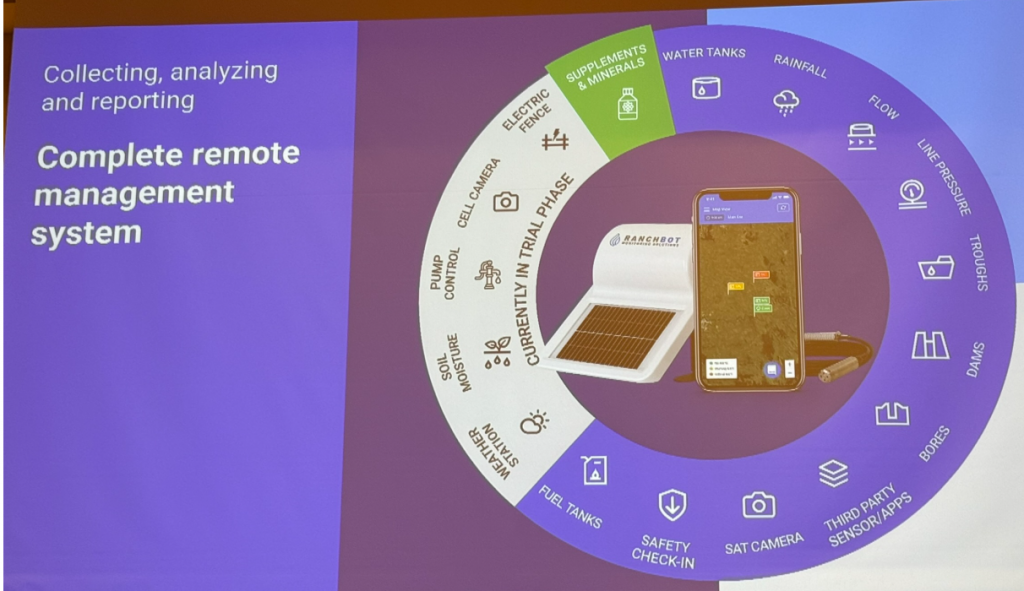
"There's a lot of technology evolving in the ranch tech and ag tech space these days," Coppin shared. "Everything from weighing and identifying your cattle to thinking about your soil and pasture to running your infrastructure on the ranch. We're trying to automate those things so you can effectively have a remote control for the ranch in your pocket on your cell phone."

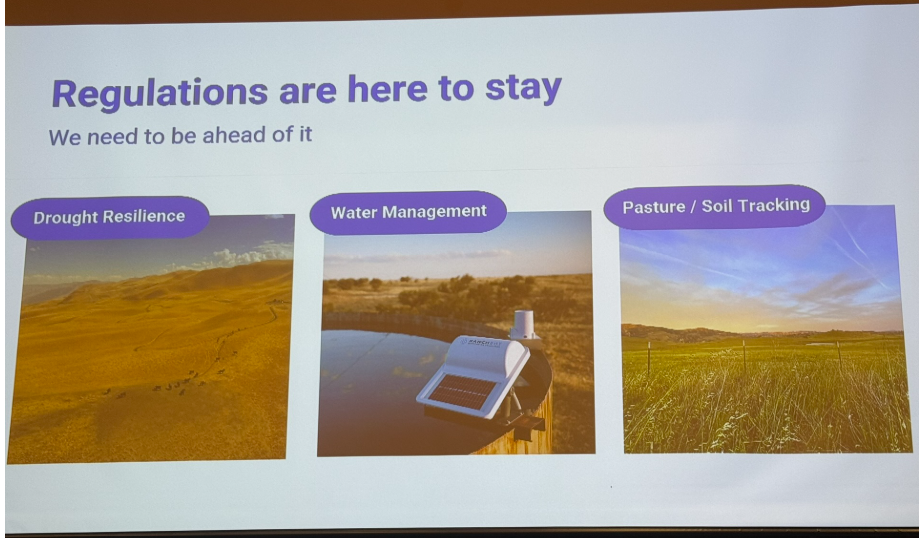
Coppin emphasized the critical role of technology in addressing growing demands and climate volatility. He explained, "We're living in a world where we have to produce more food for our growing population, and with 'weather whiplash', floods and droughts, we're going to need to use better technology to drive outcomes. If we just keep doing what we're doing, that's not going to be good enough."

A key focus for Ranchbot has been developing remote water monitoring solutions that enable ranchers to manage their operations more efficiently and sustainably. Coppin described the benefits explaining, "We build a device that monitors your water ecosystems, and then talks directly to a satellite. So we're monitoring the water levels and water flow rates, and the rancher can put in customized alerts. The device then sends an alert to the satellite and pings you on your cell phone with a text message or an email saying, 'Hey, you've got a problem.' For ranchers, that's an incredible amount of time saving and peace of mind."

Thanks to feedback from producers, Ranchbot's user-friendly and affordable product offerings have expanded beyond water monitoring to include rain gauges, weather stations, water pressure and flow monitoring, and more. All of which are designed to help automate the monitoring and control of ranch infrastructure and natural resources. "While we started with water monitoring, that evolved very quickly into an ecosystem of different things that talk to our device," Coppin explained. "We really become a remote monitoring and control company for any of those things on the ranch you want to be able to turn off, turn on, or control."

Looking ahead, Coppin described his vision of the "ranch of the future" as one seamlessly integrating multiple technologies. "You have optimum grazing periods calculated from soil moisture, temperature, satellite imagery, water quality, animal health, all in one place, so you can make better decisions in real time. I don't think it's ever going to leapfrog rancher intuition, but it's going to allow ranchers to make a lot better decisions," said Coppin.

Coppin also addressed the importance of the "natural capital," a concept gaining traction across the industry. "Ranchers are the largest custodians of natural capital on the planet outside of governments. We think we're working towards a world where they can be rewarded for being good custodians of the soil, pasture, biodiversity, and water. This would be awesome to think that ranchers are sitting on an intangible asset that could be valued for them."

For those interested in learning more or adopting Ranchbot's solutions, head to www.ranch-bot.com.

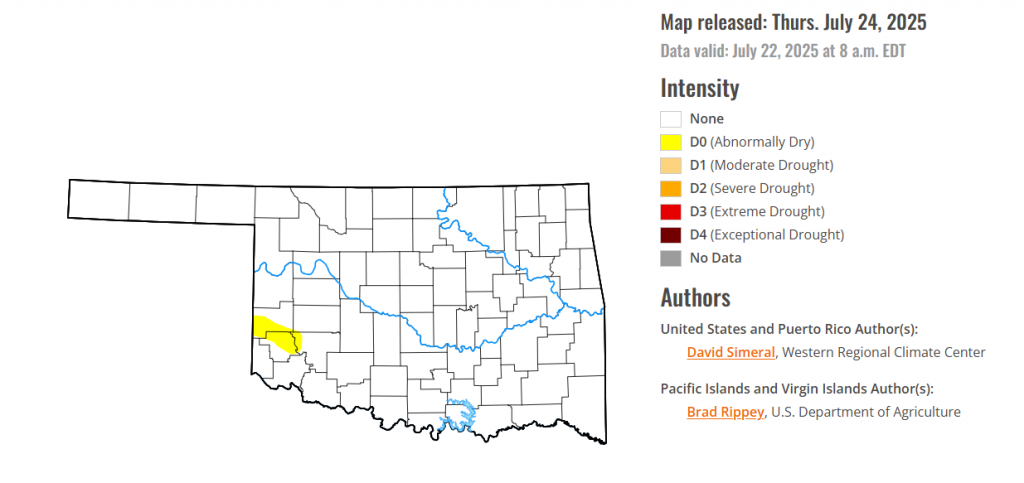
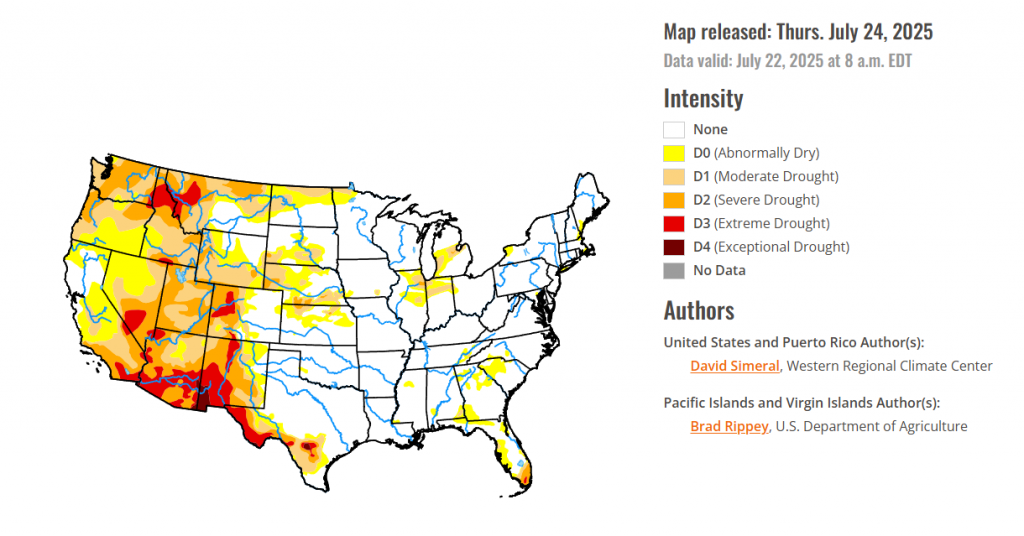
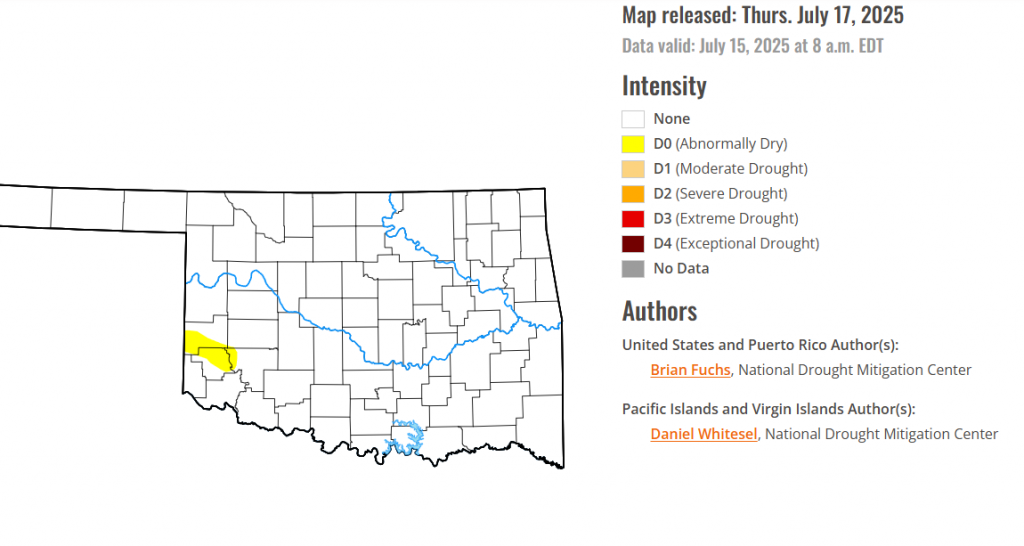
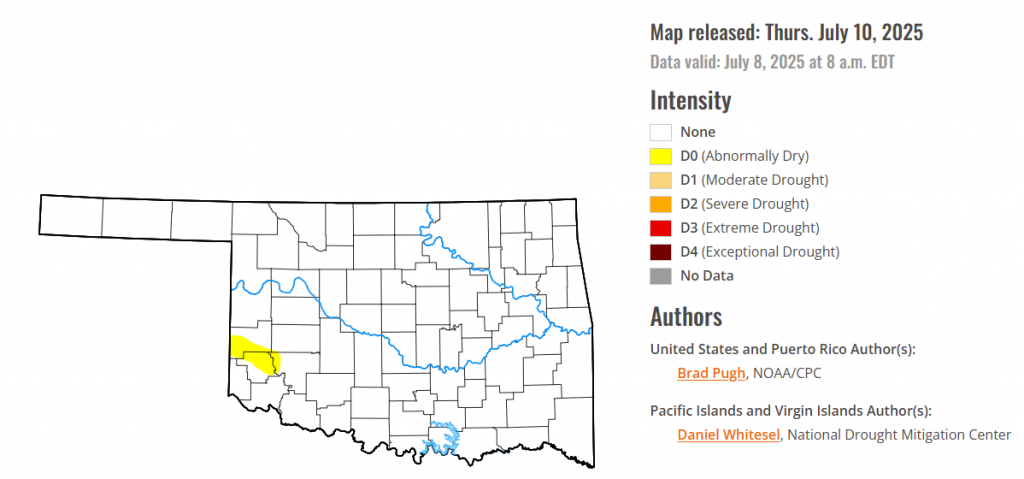
Abnormally Dry Conditions Spread In This Weeks Drought Monitor

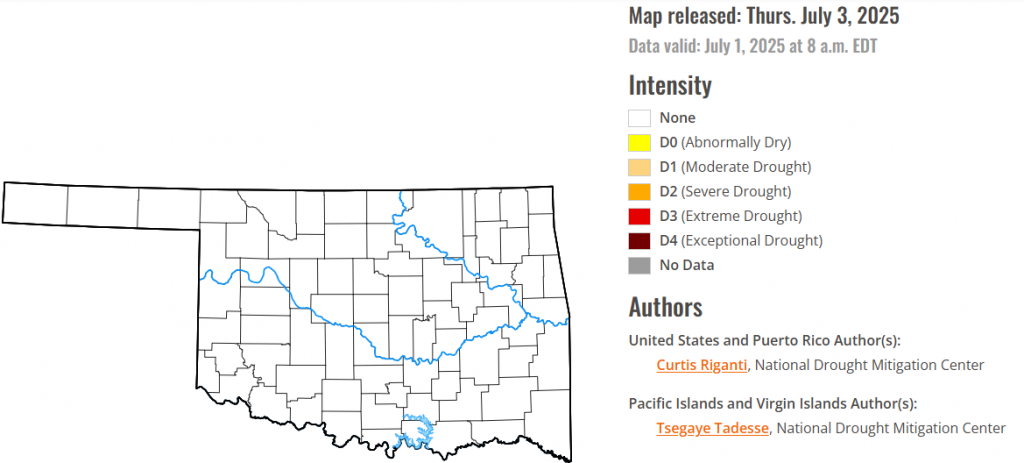
To view the latest Oklahoma drought map, CLICK HERE.

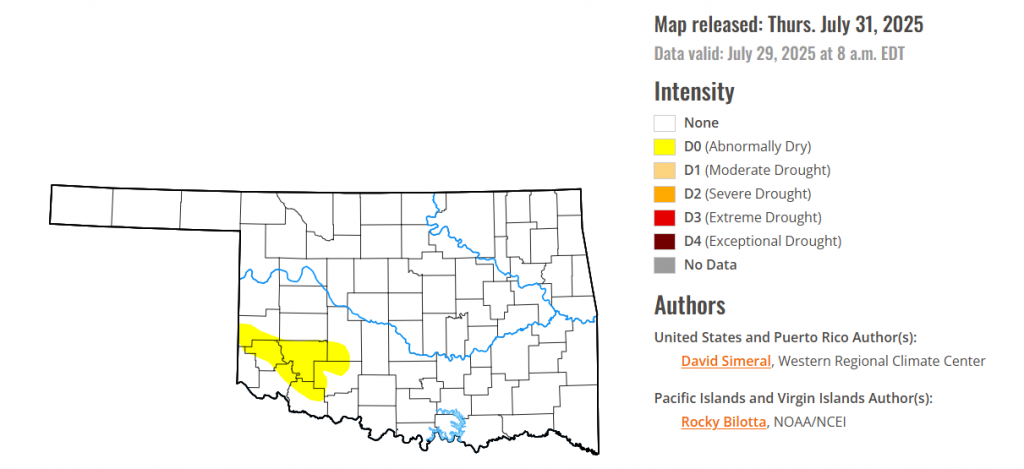
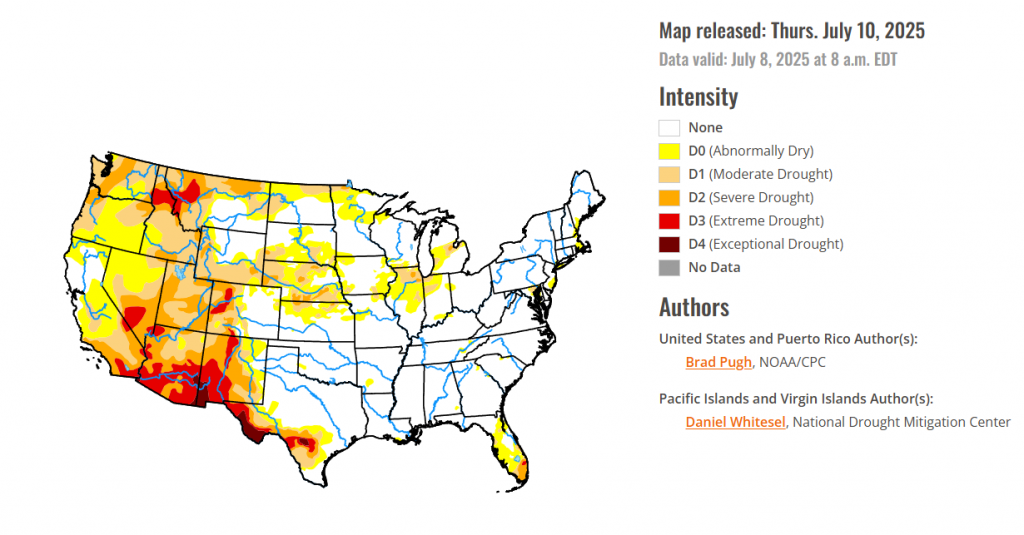
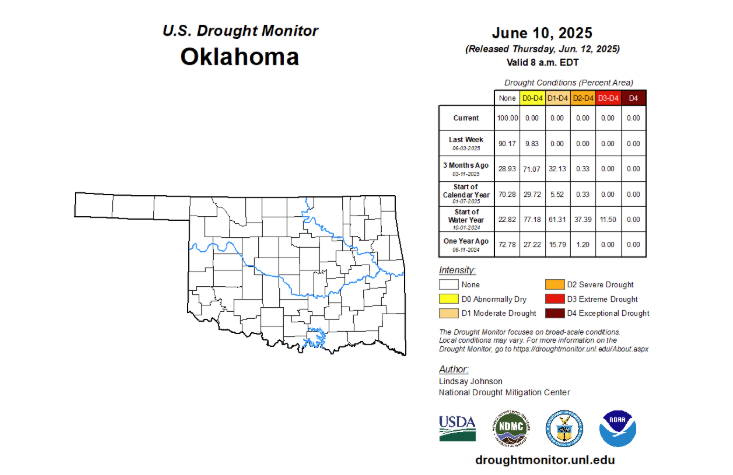
According to the latest Oklahoma drought monitor report, exceptional drought remains at zero percent, unchanged from the start of the calendar year.

Extreme drought or worse conditions remain at zero percent, unchanged since the week of October 29, 2024.

Severe drought or worse conditions remain at zero percent, unchanged since the week of May 29, 2025.

Moderate drought or worse conditions remain at zero percent, unchanged since last week.

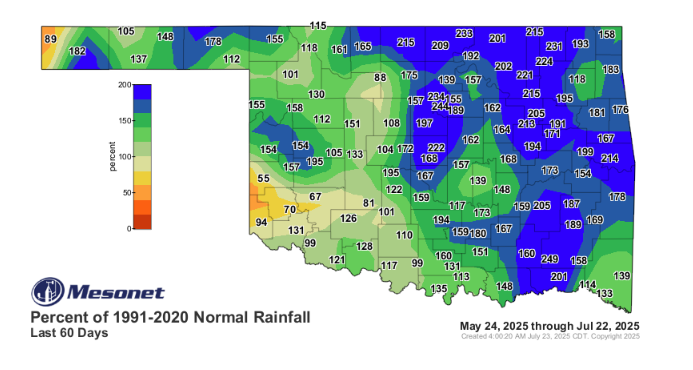
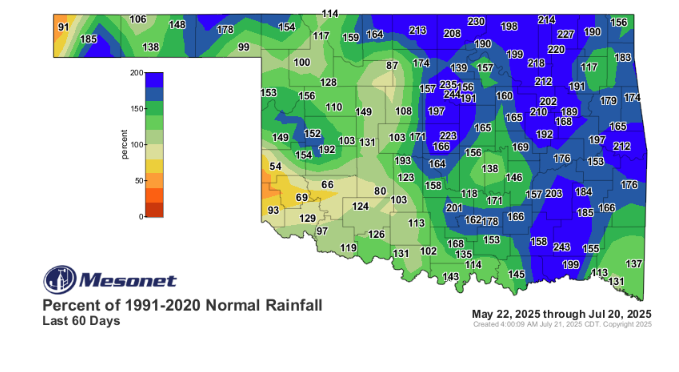
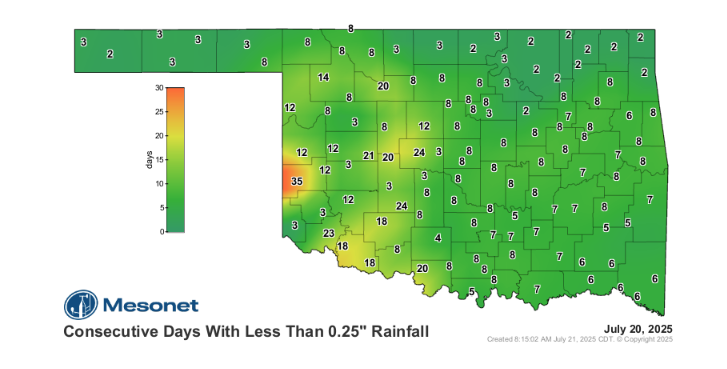
Abnormally dry or worse conditions have persisted this week in parts of Greer county, Beckham county, and Kiowa county and have extended into Jackson county, Tillman county, Comanche county, and Caddo county.

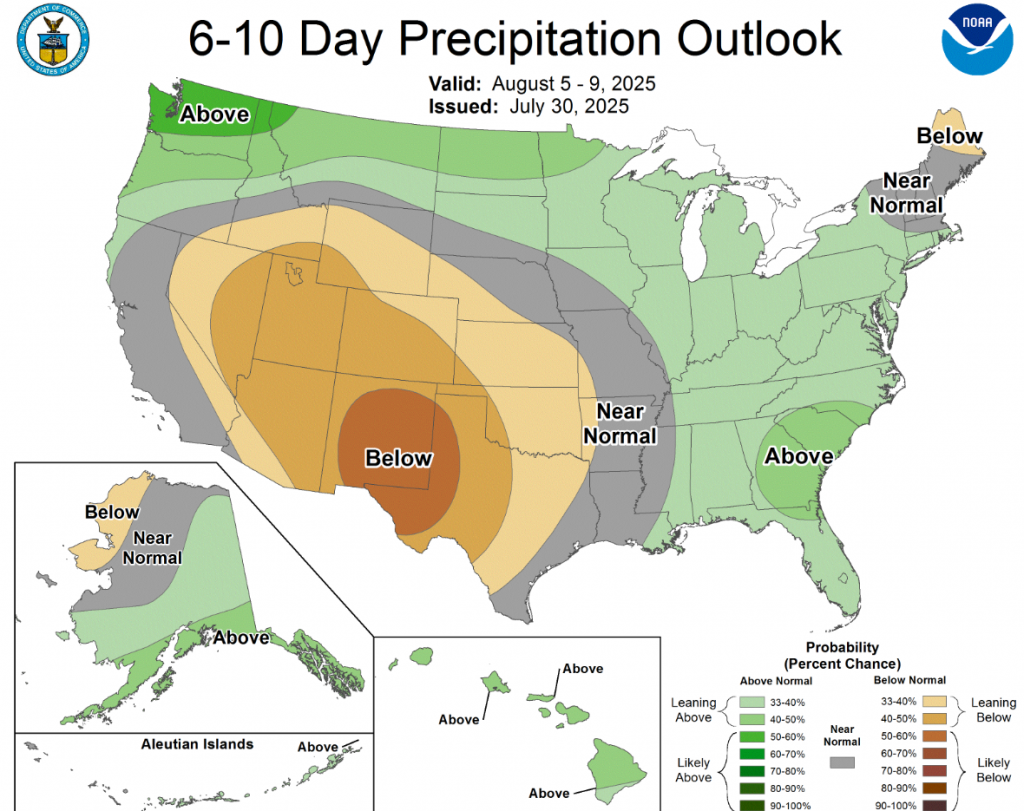
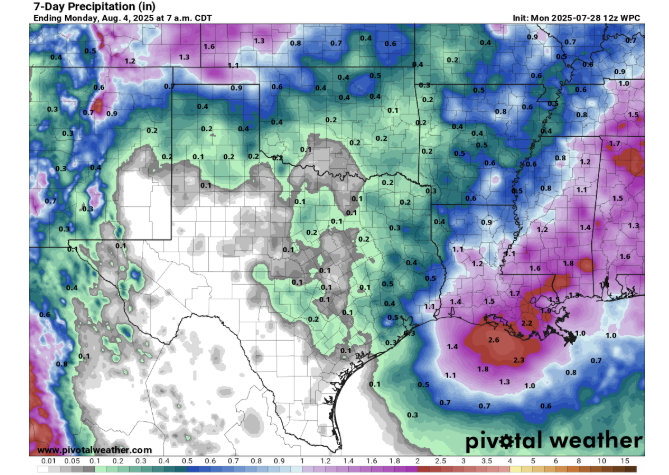
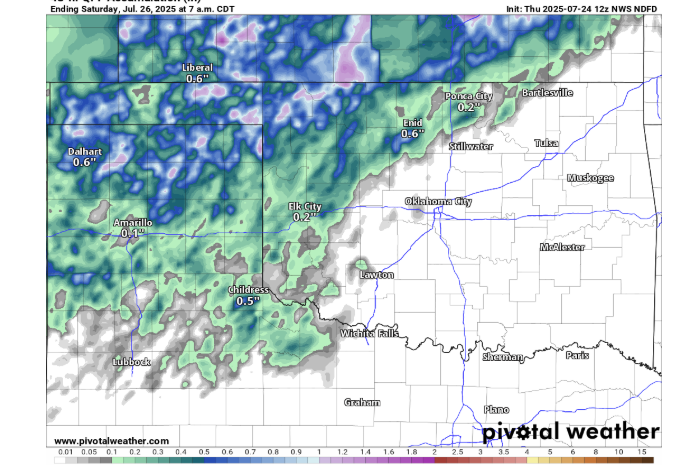
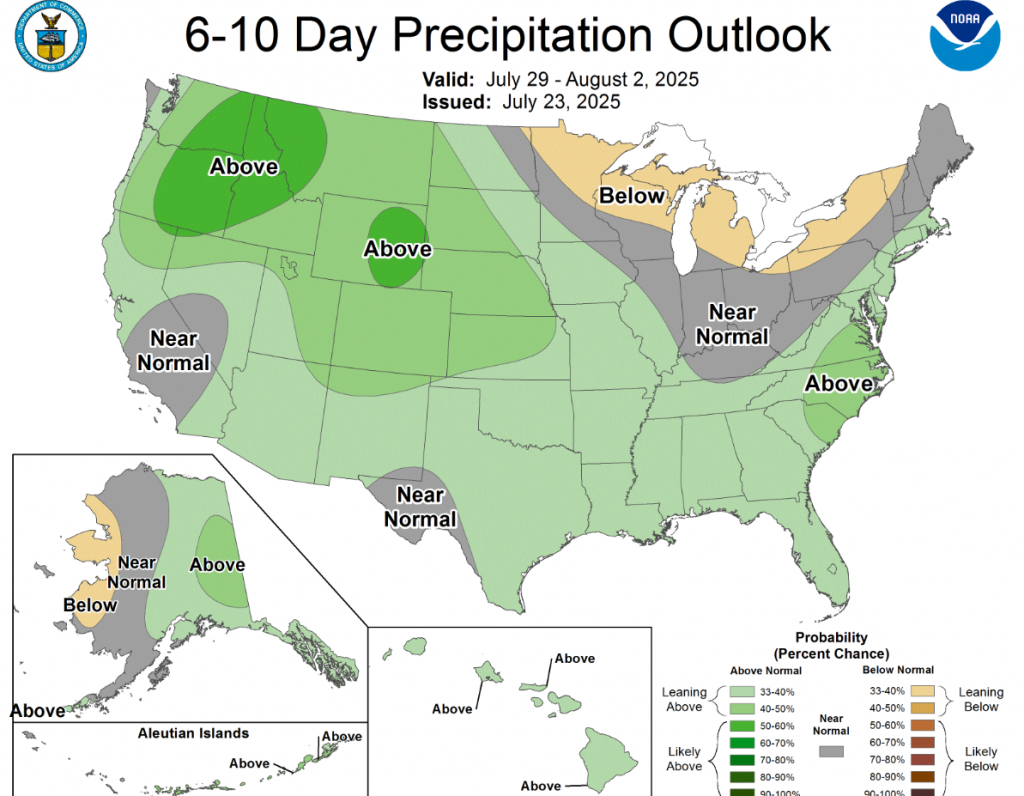
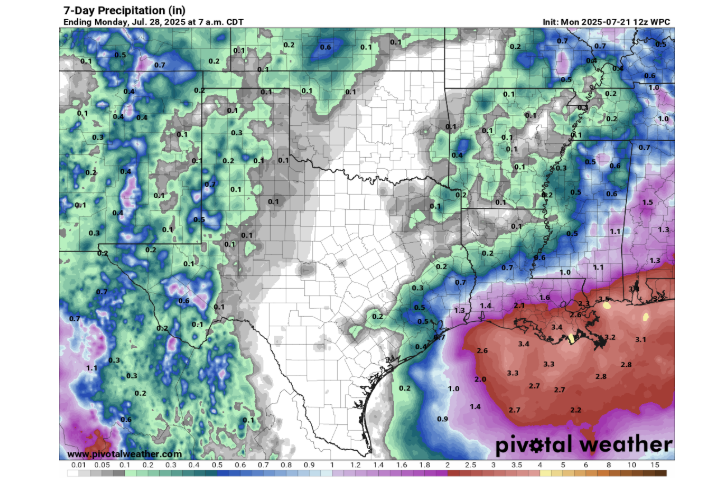
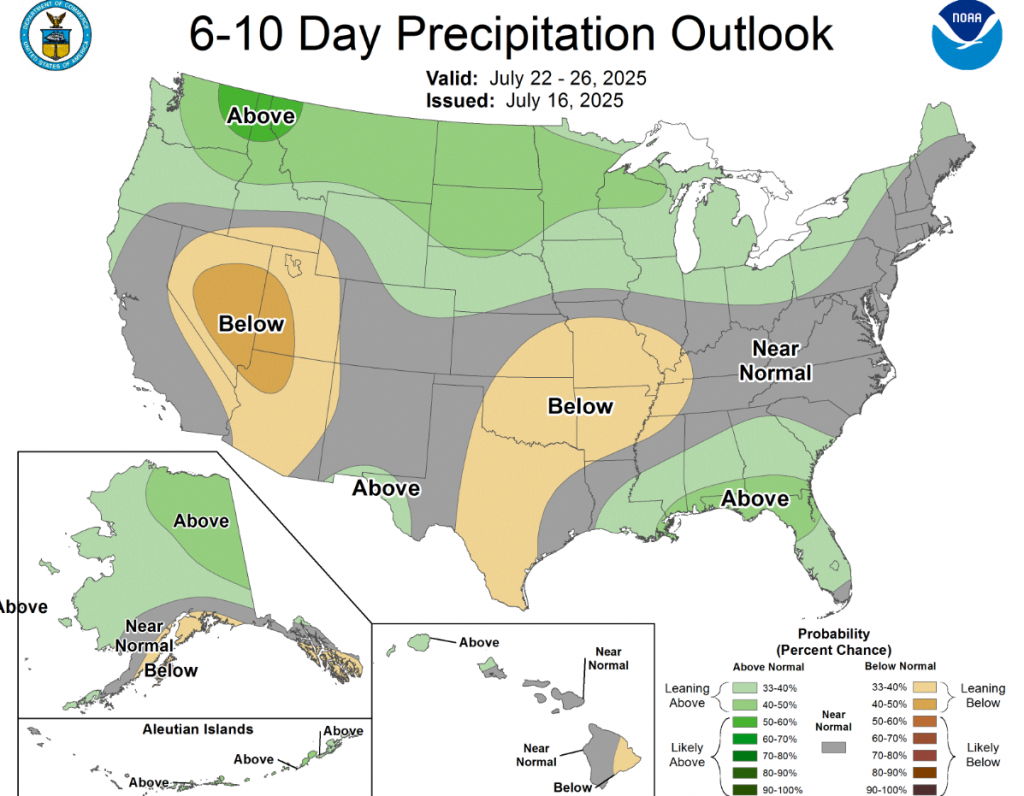
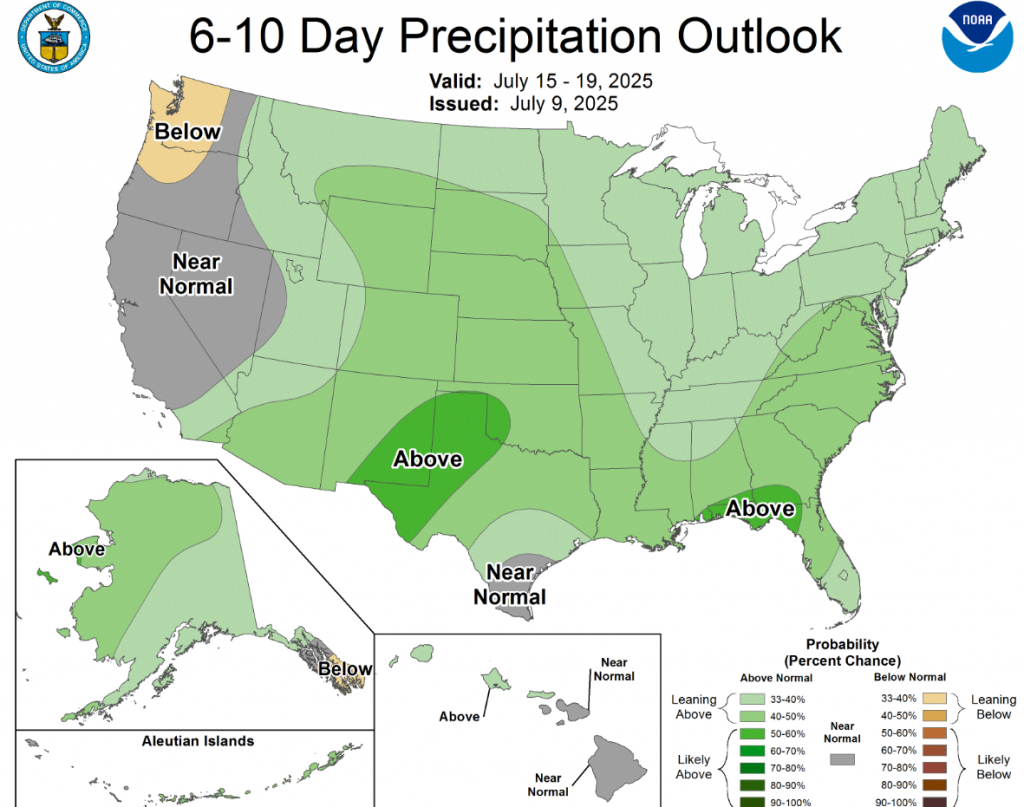
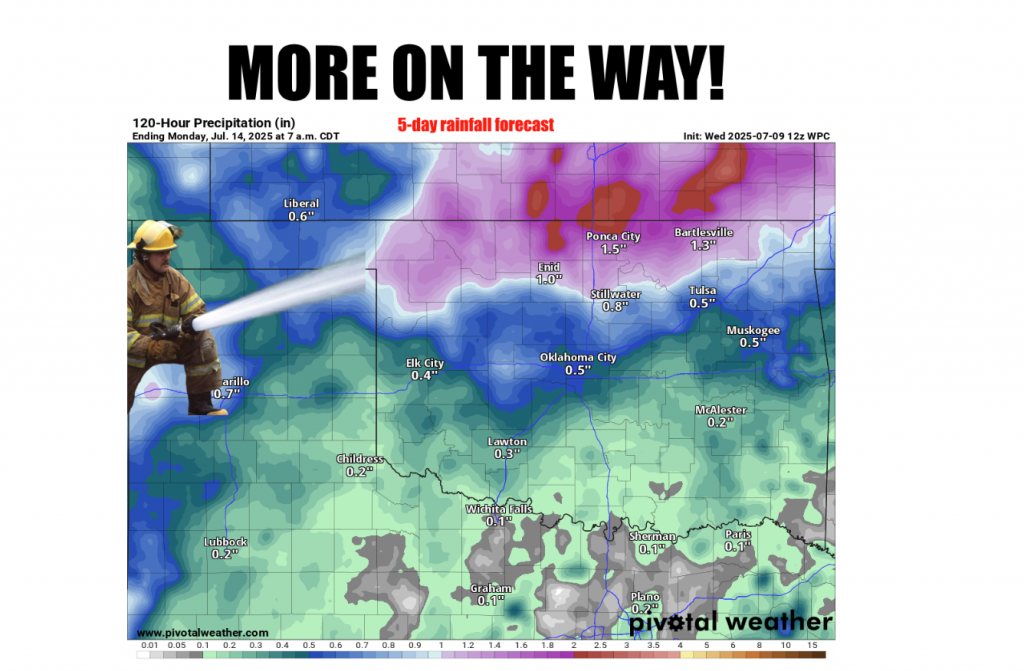
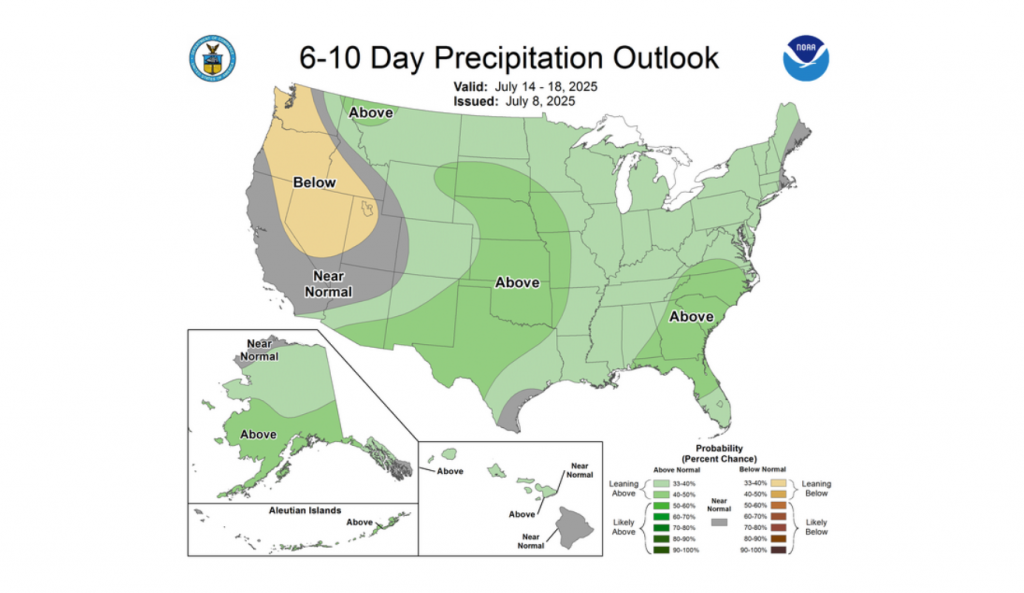
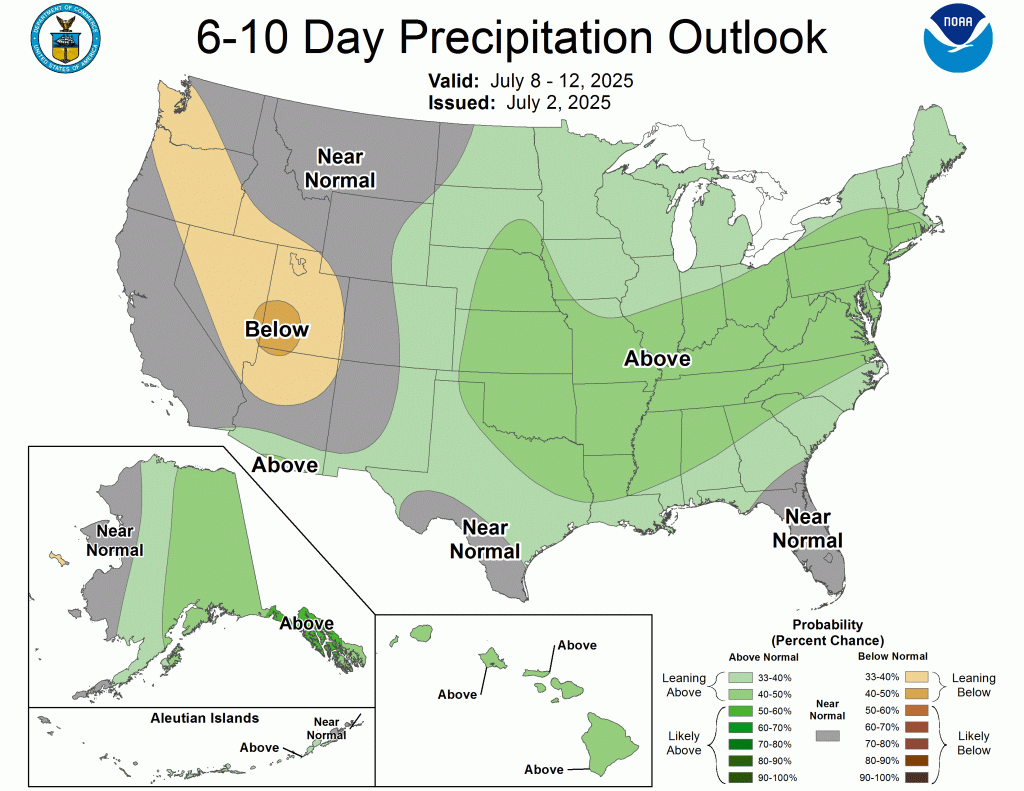
According to the 6-to-10-day precipitation outlook map, most of the state of Oklahoma is leaning below 33-40% chance of rain through August 9 with western oklahoma leaning below 40-50% chance through that same date.

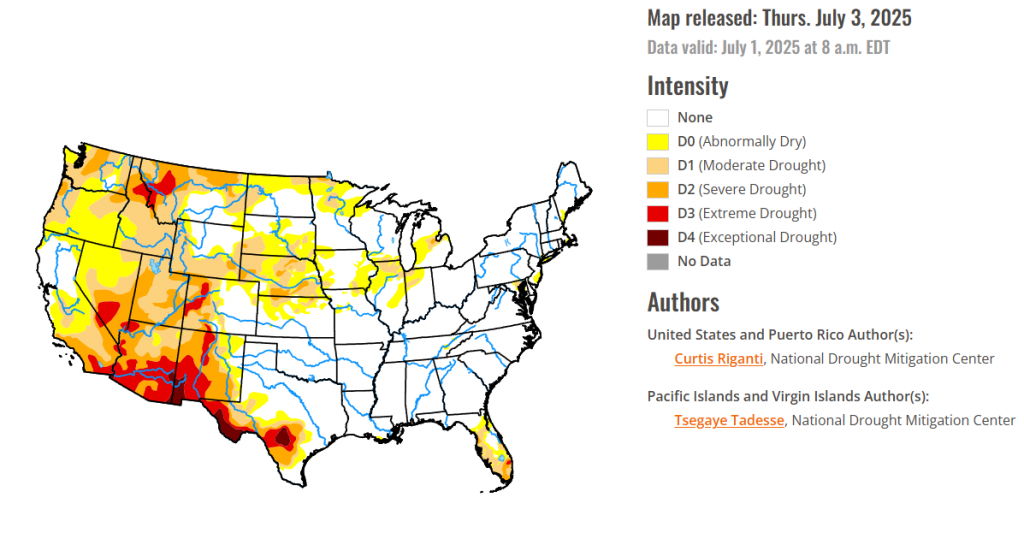
To view the United States Drought Map, CLICK HERE.

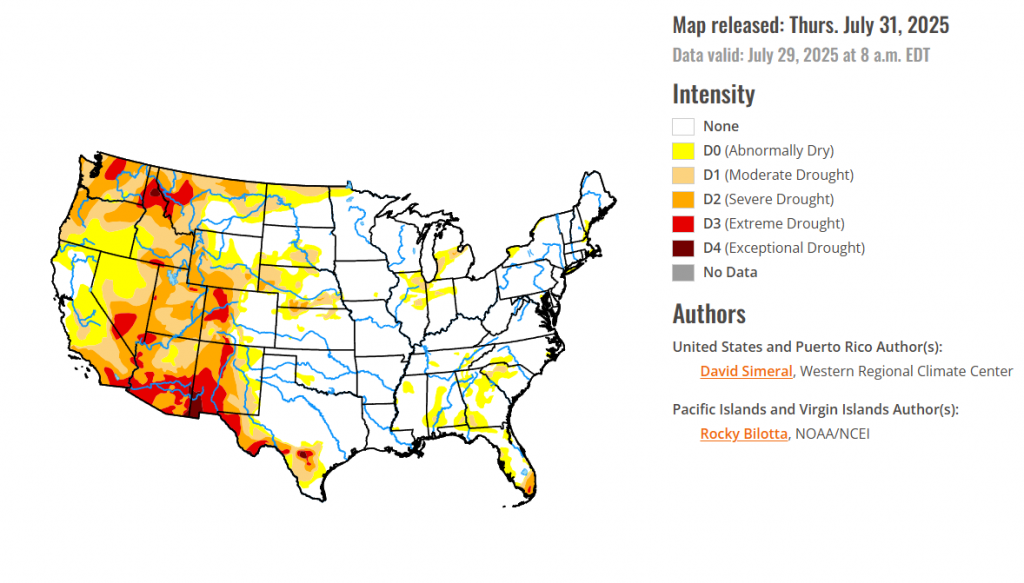
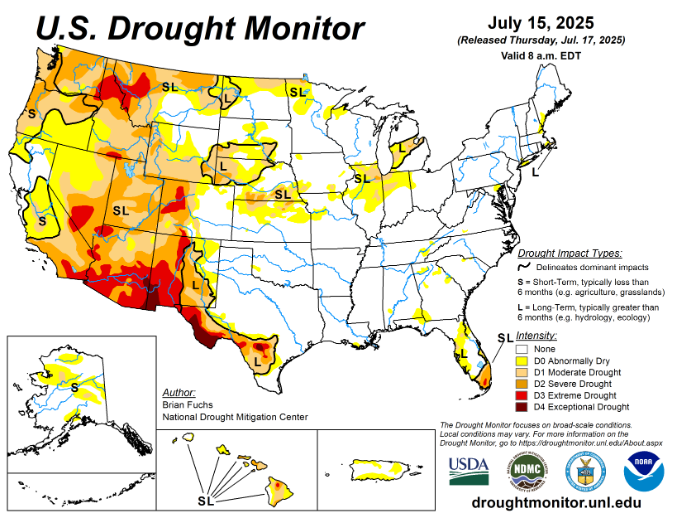
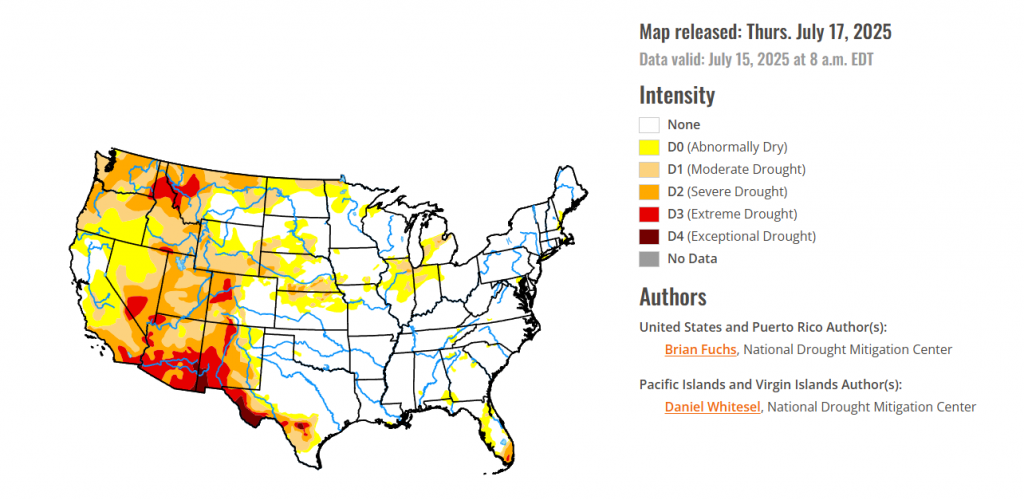
This U.S. Drought Monitor (USDM) week saw continued improvement in drought-related conditions across areas of the Midwest (Michigan, Ohio, Indiana, Illinois, Iowa, Minnesota), central and northern Plains (Kansas, Nebraska, Dakotas, eastern Montana), South (Texas), and in the Desert Southwest (New Mexico). During the past week, the most significant rainfall accumulations were observed across areas of Kansas, Missouri, Iowa, and Minnesota, where they ranged from 3 to 7+ inches. Elsewhere, short-term precipitation shortfalls (past 30 to 60 days) led to continued expansion of Abnormally Dry (D0) areas across the Southeast states including the Carolinas, Georgia, and Alabama as well as the introduction of isolated areas of Moderate Drought (D1) in Alabama, Georgia, and South Carolina where agriculture-related drought impacts are being reported. In the South, drought conditions continued to improve in western portions of Texas as well as in areas of eastern New Mexico where monsoonal storms have provided some minor relief to areas experiencing long-term drought. In the West, conditions continued to deteriorate across the Pacific Northwest (Oregon, Washington, Idaho) and areas of the Intermountain West (Wyoming, Utah, and Colorado), while areas of eastern Montana saw improvement in drought in response to precipitation events during the past few weeks. In terms of reservoir storage in the West, California's major reservoirs continue to be at or above historical averages for the date (July 29), with the state's two largest reservoirs, Lake Shasta and Lake Oroville, at 105% and 116% of average, respectively. In the Southwest, the U.S. Bureau of Reclamation is reporting (July 27) Lake Powell at 32% full (46% of average), Lake Mead at 31% full (51%), and the total Colorado system at 39% of capacity (compared to 44% of capacity the same time last year).

For the Hawaiian Islands, no changes were made on the map this week.

In Alaska, several areas of Abnormally Dry (D0) saw reductions on the map in response to rainfall during the past week.

In Puerto Rico, areas of Abnormally Dry (D0) were reduced in the north-central, northeastern, and southwestern portions of the island.

In the south,On this week's map, improvements were made in areas of South Texas and the Trans Pecos region of Texas in response to above-normal precipitation during the past 30-120 days. In these regions, improvements were made in numerous drought categories (D1-D3). In other areas of the region, degradations occurred in southwestern Oklahoma, northern Mississippi, and central Tennessee, where rainfall has been below normal during the past 30 to 60 day period. For the week, average temperatures were above normal in the eastern and northern areas of the region, with anomalies ranging from 2 to 8 degrees F. Conversely, the western extent of the region, including areas in the southern half of Texas, experienced temperatures ranging from 1 to 4 degrees F below normal.

For the High Plains, On this week's map, improvements continued from Kansas to North Dakota after another week of scattered shower activity with light-to-moderate accumulations. During the past 30 days, drought-related conditions have improved significantly in northern Kansas, eastern Nebraska, southeastern and southwestern South Dakota, and southwestern North Dakota as evidenced in a variety of drought monitoring products including streamflows, soil moisture, and vegetation health indicators. However, conditions have degraded in other parts of the region, including central South Dakota and northern North Dakota. For the week, average temperatures were generally above-normal average (1 to 6 degrees F) across the region, with eastern portions experiencing the largest departure, while far western portions of the Dakotas observed temperatures 1 to 4 degrees F below normal.

In the West, Out West, generally dry conditions prevailed over much of the region except for some isolated shower activity in northeastern California, northwestern Nevada, eastern New Mexico, eastern Colorado, and Montana. On the map, degradations were made across areas of the Pacific Northwest (Oregon, Washington, Idaho) and Intermountain West (Utah, Wyoming, Colorado). In the Pacific Northwest, streamflow activity continues to be well below normal levels across the Cascade Range of Oregon and Washington as well as in the mountain ranges of northern Idaho and western Montana. Similarly, poor surface water conditions were present in many streams and rivers of western Wyoming, Utah, western Colorado, central Arizona, and northern New Mexico. For the week, average temperatures were below normal across most of the region, with anomalies ranging from 2 to 10+ degrees F and the greatest departures observed across California and Nevada.

looking ahead Across the Midwest, Another week with scattered shower activity across drought-affected areas of the region led to continued improvements on the map from Minnesota to Ohio. For the week, rainfall accumulations ranged from 1 to 5 inches, with the heaviest amounts observed in isolated areas of northern Missouri, eastern Iowa, southern Minnesota, central Illinois, and northern Indiana. On the map, improvements were made in Minnesota, Iowa, Wisconsin, Illinois, Indiana, Michigan, and Ohio. Despite recent rainfall events and overall improving conditions across areas of the region, negative soil moisture anomalies are continuing to show up in northern Illinois, northeastern Indiana, and southern Michigan on several soil moisture monitoring data products. For the week, average temperatures were above normal (2 to 10 degrees F) across the region.

To view the 6-10 Day Precipitation Outlook Map, click here.

To view the 6-10 Day Temperature Outlook Map, click here.

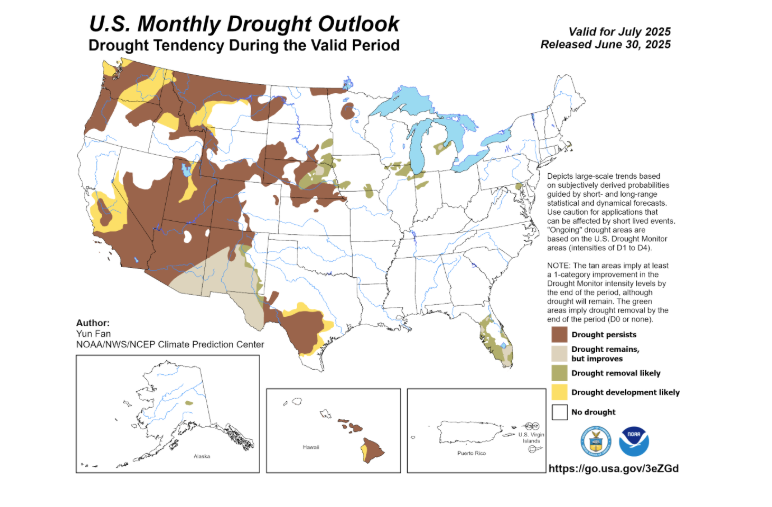
To view the Monthly Drought Outlook Map, click here.

Farmers Would Feel Impact if MAHA Commission Targets Pesticides, Survey Shows

In a new survey, American corn growers say they would face higher costs and reductions in crop yields if they were to lose access to key herbicides like atrazine and glyphosate. The survey comes after the Make America Healthy Again Commission released its preliminary report questioning the safety of the two herbicides.

The survey findings reveal high stakes for the MAHA Commission's next report, a set of policy recommendations expected to be released in August, which could impact a key constituency in President Trump's base. The crop protection tools in question have been thoroughly tested by the Environmental Protection Agency and other regulatory bodies and shown to be safe for their intended uses.

"These results are in line with what I am hearing in conversations among farmers," said Illinois farmer and National Corn Growers Association President Kenneth Hartman Jr. "We are concerned that claims about herbicides in the pending MAHA recommendations could remove access to the tools we need to safely and sustainably produce a crop."

Hartman added that growers hope the president will intervene and ensure that the MAHA Commission follows the science and defers to the EPA on matters related to pesticide policy and regulation.

The survey, which was sponsored by NCGA, included responses from more than 1,000 farmers and was conducted between June 17 and July 2, following the release of MAHA's initial assessment, which mentioned glyphosate and atrazine.

Respondents indicated overwhelmingly – 85% – that weeds are the top pest plaguing their crops and that atrazine and glyphosate were their top two herbicides of choice.


The MAHA Commission, a priority of Health and Human Service Secretary Robert F. Kennedy Jr., was formed in February through a presidential executive order. The commission released its initial assessment in May. That assessment was challenged by corn grower leaders for questioning decades of science proving glyphosate and atrazine to be safe and effective.

NCGA has spent months sounding the alarms about the MAHA Commission's focus on herbicides. The group has said that if the pesticides in the initial assessment were to disappear completely, crop yields could decrease by more than 70% due to pests, weeds and disease.

Herbicides and pesticides, including glyphosate and atrazine have been tested extensively. Before these products are approved for use, companies must submit dozens, if not hundreds, of test results for EPA review and consideration, including tests examining potential effects on child development, dietary exposure, and long-term toxicity. The EPA's reviews, required by law, are repeated at least every 15 years, or sooner if new data becomes available.

"Given that the EPA's robust regulatory process has found these products to be safe when used according to label directions, there is no reason to suggest that they are harmful," Hartman noted. "Doing so will come at a great cost to farmers and rural America."

Learn More about the Survey

USGC Members Arrive in Michigan for 65th Annual Board of Delegates Meeting

U.S. Grains Council (USGC) members touched down earlier this week for the 65th Annual Board of Delegates meeting in Grand Rapids, Michigan.

This meeting will spotlight impactful conversations around new markets and trade policy impacts, a celebration of the Council's 65th anniversary with discussions led by past USGC chairmen and a highlight of USGC program successes.

USGC Chairwoman Verity Ulibarri welcomed attendees with a summary of the Council's work over the past year and a preview of the meeting's upcoming content.

"My theme this year, Cultivate the Future, reflects both the opportunities and challenges of the current environment," Ulibarri said. "At this meeting, we gather to discuss issues facing our industry and explore future demand for feed grains and ethanol around the world."

The conference started with an address from Jamie Zmitko-Somers, director of the Michigan Department of Agriculture and Rural Development, and an update on U.S. agriculture trade by Daniel Whitley, administrator at the Foreign Agricultural Service with the USDA. Former USGC chairmen reflected on their involvement with the Council and the lasting impacts of their work – celebrating 65 years of the U.S. Grains Council.

"The opportunities for developing markets are absolutely endless if the Council and members are willing to grasp them; they exist worldwide," said Vic Miller, USGC Chairman from 2007-2008. "That is the strength of the Council."

Cary Sifferath, USGC vice president; Alicia Koch, USGC director of global ethanol export development; and Kurt Shultz, USGC senior director of global strategy discussed USGC global program successes in Mexico and Nigeria and initiatives sponsored over five years of ATP funding.

"The relational aspect of how the Council works is critical to ensuring long-term success," Koch said. "It is not just a transaction; we have personal connections to the people that we work with, and I think that in light of the current trade environment, our relationships are that much more critical."

USGC President and CEO, Ryan LeGrand concluded the general session with a State of the Council address.

"We are moving the needle for both coarse grains and ethanol... The Council is focused on engagement and partnerships that help find homes for the corn, sorghum, barley, ethanol and distillers' grains that our members produce," LeGrand said.

The day ended with A-Team meetings where members had the opportunity to make recommendations to the board for consideration on future USGC programs and priorities.

The conference will continue Thursday with a presentation on the importance of American agriculture in an ever-changing world from former U.S. Senator Debbie Stabenow. The day will also include breakout sessions on Mexico, India and Southeast Asia featuring the latest developments and challenges in trade policy.

The conference will conclude on Friday with a USGC Board of Delegates meeting, financial, A-team and sector reports and a vote for the new board of directors.

The 65th Board of Delegates meeting runs through Friday in Grand Rapids. Follow along on social media using the hashtag #Grains25 or find more information about the meeting on our website here.

NCC Statement on Executive Action to End De Minimis for Commercial Shipments

The National Cotton Council of America (NCC) today stated support for the executive action announced by the Trump Administration to eliminate the de minimis exemption for all commercial shipments entering the United States, effective August 29th. This decisive move addresses a critical issue that has undermined fair trade and the competitiveness
of American industries, including the cotton and textile sectors. "This executive action is a positive step for American manufacturing and agriculture," said Patrick Johnson, NCC Chairman. "Ending the de minimis loophole levels the playing field and strengthens our domestic supply chains. We appreciate the Trump Administration's efforts to
increase our global competitiveness."

John Deere Unveils Operations Center PRO Service: Empowering Equipment Owners with Next Level Self-Repair Tools

Today, John Deere (NYSE: DE) announced the launch and availability of a new digital tool designed to enhance how equipment owners use, maintain, diagnose, repair, and protect their equipment. Operations Center PRO Service delivers new, industry-leading support capabilities for both connected and non-connected machines across John Deere's agriculture, turf, construction, and forestry equipment portfolio. New and enhanced features include the ability to install software when replacing electronic components or controllers, also known as reprogramming. 

Operations Center PRO Service was developed with customers at the center and adds to the suite of existing digital support tools available to John Deere equipment owners today – including the John Deere Operations Center,  Equipment Mobile, and Shop.Deere.com – providing customers even more control over how they use, maintain, diagnose, repair, and protect their machines. The increased functionality of Operations Center PRO Service also replaces John Deere Customer Service ADVISOR™, which will be phased out over the next year.

"The launch of Operations Center PRO Service is a significant milestone that adds to John Deere's existing tools, and it reaffirms our longstanding commitment to empowering customers to choose how they repair their equipment," said Denver Caldwell, Vice President of Aftermarket & Customer Support. "Importantly, our development of these tools reaffirms John Deere's support of customer self-repair. We view continuously enhancing self-repair as consistent with our mission to ensure John Deere customers have the best machine ownership experience possible." 

In addition to equipment owners, a local service provider can also use Operations Center PRO Service. With a John Deere equipment owner's permission, independent providers can gain access to diagnostic and repair information to support the equipment owner's needs. 

"Our message to our customers is clear," continued Caldwell. "Whether you want the support of your professionally trained and trusted John Deere dealer, to work with another local service provider, or to fix your machine yourself, we've created additional capabilities for you to choose the option that best fits your needs." 

How It Works 

Operations Center PRO Service is based on foundational capabilities that are available at no additional cost upon purchase of John Deere equipment through Operations Center Service Overview and Equipment Mobile, including: 

·       Operator's manuals 

·       Active and stored diagnostic trouble codes 

·       Secure software updates 

·       JDLink™ information 

·       Warranty information 

What's New 

The new Operations Center PRO Service delivers digital repair content filtered by year and model number, providing users with additional relevant machine information to help efficiently and accurately troubleshoot, diagnose, and repair their equipment. It's designed to be intuitive and deliver actionable support in real-time. 

The service capabilities of Operations Center PRO Service are available through an annual license starting at just $195 USD per machine for customers. Specific features now brought together in a single customer interface include: 

·       Machine health insights and diagnostic trouble codes 

·       PIN-specific machine content, including manuals 

·       Software reprogramming for John Deere controllers 

·       Diagnostic Readings 

·       Diagnostic Recordings 

·       Interactive diagnostic tests 

·       Calibrations 

Equipment owners can access Operations Center PRO Service through the John Deere Operations Center. Once connected to the platform, owners will add their equipment into their account using the machine's serial number. Use of an electronic data link may be required for more advanced features within Operations Center PRO Service, including software reprogramming. Certain interactive tests, calibrations, and reprogramming limitations will exist at initial release. John Deere will deliver additional capabilities in future updates. See JohnDeere.com/PROService for further details. 

Operations Center PRO Service is available to John Deere customers in the U.S. and Canada. For more information on how to access all of the digital support tools offered by John Deere, visit Deere.com/RunItYourWay or see your local John Deere dealer. 

Digital Media Kit

FACA Issues MAHA Policy Recommendations

Today, the Food and Agriculture Climate Alliance (FACA) published a new report entitled Nurturing Healthy Soils for Healthy Communities. The report recommends the Make America Healthy Again Commission support policies that reward stewardship and invest in innovation as part of a national strategy to create lasting, healthy outcomes for all communities, rural and urban alike.

The report focuses on three key pillars to help agricultural producers and forest owners keep our soils healthy and our air and water clean:

  1. Advancing voluntary conservation
  2. Supporting sustainable forest management and restoration
  3. Driving agricultural innovation

FACA's four co-chair members issued the following statements endorsing the recommendations:

"Farmers and ranchers are committed to doing right by the land, and we are at the forefront of adopting new practices, innovation, and technology to ensure our soil is healthy for generations to come. That's why we are urging lawmakers to ensure we have access to the research and tools we need to keep growing safe, sustainable and nutritious food, fiber, and renewable fuel for our communities, our country and the world," said Zippy Duvall, President of the American Farm Bureau Federation.

"Healthy soils are key to a healthy diet for families and a sustainable future for our nation's farmers," said Environmental Defense Fund Executive Director Amanda Leland. "Improving soil health and water quality provides us with more nutritious food, preserves rural livelihoods and ensures farmers will be able to pass their operations on for generations to come. EDF is committed to working collaboratively to support our nation's farmers, ranchers and foresters in their ongoing efforts to improve healthy soils and healthy diets."

"The National Council of Farmer Cooperatives is happy to see the release of FACA's Healthy Soils Report. Co-ops have long been leading the way in helping their farmer-owners adopt best practices that protect and promote soil health. This report outlines several recommendations that can strengthen those initiatives in a way that allows farmers to continue to provide nutritious food to millions of Americans," said Duane Simpson, president and CEO, National Council of Farmer Cooperatives.

"Family farmers and ranchers have long been stewards of the land, committed to practices that protect our soil, water and the overall health of our communities. Through collaboration, we can strengthen policies that reward stewardship and invest in innovation. By providing the right tools and support outlined in this report, we can ensure that farmers continue to lead the way—nurturing healthy soils, growing nutritious food and building resilient communities across the country," said Rob Larew, President of National Farmers Union.

To view the report, click here. 

Summer Beef Grilling is in Full Swing

Summer Grilling is in Full Swing

Get grilling with beef! Summer is heating up and it's the perfect time to get grilling. Beef's taste and versatility is second to none and it's a wholesome fit for any family barbecue, tailgate or cookout. Share some of these great resources and how you celebrate life's grilling moments with beef. What's your favorite grilling tip or trick?

Let us know what you are sharing to help others create moments to savor this grilling season by sharing your posts in the MBA Facebook Group and tagging Beef. It's What's For Dinner. in your social media posts!  

Foil Packet Beef and Vegetable Meal

Ingredients:

  • 6 ounces refrigerated fully cooked beef Pot Roast, shredded or fully cooked steak, cubed
  • 6 ounces prepared smoked Beef Sausage
  • 1 cup butternut squash, diced
  • 1 cup zucchini or yellow squash, sliced into 3/4 inch pieces and halved
  • 2 ears sweet corn, cut in half
  • 4 teaspoons vegetable oil
  • 2 teaspoons all-purpose seasoning blend, such as Old Bay

Cooking:

  1. Combine beef and vegetables in large bowl. Add oil and seasoning; toss to coat.
  2. Preheat grill to medium heat (approximately 350°F).
  3. Place a 12" x 12" square of heavy-duty aluminum foil down on work surface. Add 1/4 of beef and vegetable mixture to center of foil. Fold right and left edges in and roll together to close. Fold top and bottom edges in and roll to close package.  Repeat with remaining mixture for a total of 4 packets.
  4. Grill for 10 to 12 minutes until vegetables are tender.

Safe Handling Tips:

  • Wash hands with soap and water before cooking and always after touching raw meat.
  • Separate raw meat from other foods.
  • Wash all cutting boards, utensils, and dishes after touching raw meat.
  • Do not reuse marinades used on raw foods.
  • Wash all produce prior to use.
  • Cook steaks and roasts until temperature reaches 145°F for medium rare, as measured by a meat thermometer, allowing to rest for three minutes.
  • Cook Ground Beef to 160°F as measured by a meat thermometer.
  • Refrigerate leftovers promptly.

For more information on degree of doneness and other cooking tips visit: https://www.beefitswhatsfordinner.com/cooking/determining-doneness

For more information on safe food handling and beef safety, see: https://www.beefitswhatsfordinner.com/cooking/food-safety

OSU Agriculture News: Logan County 4-H'er Bridger Arrington inducted into Oklahoma 4-H Hall of Fame

Bridger Arrington's 4-H journey began with an orphaned, bottle-fed lamb named Val. That first project sparked a passion for agriculture and giving back to the community that has now earned him a place in the Oklahoma 4-H Hall of Fame.

Arrington, a member of the Mulhall-Orlando 4-H Club in Logan County, was honored during the Masonic Charity Foundation of Oklahoma Honor Night Assembly at the 104th State 4-H Roundup at Oklahoma State University. As a Hall of Fame inductee, he received a $5,000 scholarship sponsored by Farm Credit Associations of Oklahoma. He was also named to the Blue Award Group.

Having served as the 2024-2025 Oklahoma 4-H President, Arrington has spent nine years in the program, building a legacy of leadership and service. Along with his project work in agriculture and natural resources, he found success competing in livestock quiz bowl, skill-a-thon, shooting sports, commercial cattle grading and beef advocacy.

"Joining 4-H has been one of the most impactful things I have ever done," Arrington said. "Through 4-H, I have learned how to share the skills I have attained with others, so that they can have the opportunities I have had, and I have learned how to advocate for things I believe in."

He credits his parents, Ryan and Kayce Arrington, as the biggest influences in his 4-H journey.

"My mom was my 4-H leader at Mulhall, and my dad was my 4-H shooting sports coach," he said. "They should probably get this award more than me. They still help even though they're not members anymore."

Community service has been a cornerstone of Arrington's 4-H experience. One of his most meaningful projects has been organizing meal packing events with Stomp Out Starvation, a nonprofit that provides food to people in need worldwide.

"The man in charge of this project brought back a picture book from Haiti, where people were making mud pies out of dirt, salt and whatever flour they could get a hold of just to have something to eat every other day," he said. "It's incredible to see how much of a difference that project can make and how easy it was for anyone to do it. I've had people everywhere from 5 to 90 years old work on this project and make a huge difference."

Arrington's leadership extends across all levels of 4-H. He has served as a local and county officer, Northeast District secretary and state secretary before being elected state president. He has also represented Oklahoma 4-H at national events, including National 4-H Congress, Citizenship Washington Focus and the National Farm Bureau Convention.

"My goal was to help make new leaders who can take my place when I'm gone," he said. "Now that I'm not going to be in 4-H, I want to help those people become officers and become leaders."

Tonya Middleton, agriculture education teacher at Mulhall-Orlando, said Arrington's ability to recognize the strengths in others has made him a natural leader.

"Bridger is one of those young men who brings out the best in everyone," Middleton said. "He sees the good in people, identifies their strengths and helps them find a place where they can grow. That's allowed him to become a leader and an influencer in our chapter and beyond."

She recalled a moment early in his 4-H career that stood out.

"I found him helping a little girl get to the show ring at the Tulsa State Fair," she said. "He was only 12, but he saw that she needed encouragement and stepped up to do it. That's just who he is — whether he's helping coach a cattle grading team or organizing a dance to raise money, he's always looking to bring everybody in to make them part of something."

In addition to his 4-H work, Arrington is a member of the Oklahoma Department of Agriculture, Food and Forestry's Ag Youth Council, the National Technical Honor Society and the Alpha Beta Upsilon chapter of the Phi Theta Kappa honor society.

He is also known for his musical talent, performing the National Anthem on his fiddle at events such as the Oklahoma Youth Expo, Tulsa State Fair and National 4-H Congress.

"To me, being inducted into the Hall of Fame is important because the guy who taught me how to run for office and was kind of my role model — he was state president, then he was in the Hall of Fame," Arrington said. "I've done everything else up until this, and by getting the Hall of Fame, I've become what I wanted to be whenever I was younger in 4-H. I became my role model."

Although he is moving to Idaho to attend commercial flight school, Arrington said he plans to stay connected to 4-H.

"I've already told several people at the state office that I'd like to come back and help with state contests or record books in the future," he said. "I've also met some people in Idaho 4-H and told them I'd like to volunteer. I want to give back, even if it's in a different state."

The Oklahoma 4-H Youth Development program provides experiential and hands-on learning opportunities to help youth learn valuable life skills they need to become leaders within their clubs, communities, state and world. Most programming is available at little to no cost. 4-H membership is open to youth in each of Oklahoma's 77 counties where OSU Extension educators are equipped with research-based information to help all residents solve local issues, promote leadership and manage resources.

MEDIA CONTACT: Dakota Ballard | Office of Communications & Marketing, OSU Agriculture | 405-744-9645 | dakota@okstate.edu

Deputy Ag Secretary Defends USDA Reorganization Proposal to Senate Ag Committee

Stephen Vaden, deputy secretary of Agriculture, testifies on Wednesday before the Senate Agriculture Committee. (Screenshot from Senate Ag Committee livestream)

Jerry Hagstrom, a political correspondent for DTN, reported that Agriculture Deputy Secretary Stephen Vaden recently defended the Trump administration's plan to reorganize the USDA. Vaden appeared at a Senate Agriculture Committee hearing to make his case for the proposed changes.

"President (Donald) Trump made clear his second term would include relocating the sprawling federal bureaucracy to locations outside the National Capital Region," Vaden said in the testimony. "The department's July 24 memorandum begins to deliver on this promise and does so in a way that right-sizes the USDA footprint, eliminates unnecessary management layers, consolidates redundant or duplicative functions and, most importantly, allows USDA to deliver on its mission to the American people within the bounds of its available financial resources."

Agriculture Secretary Brooke Rollins released a reorganization memorandum on July 24 that includes closing USDA's South Building and the Beltsville Agricultural Research Center and moving 2,600 of the 4,600 USDA positions in the Washington area to regional hubs in Raleigh, North Carolina; Kansas City, Missouri; Indianapolis, Indiana; Fort Collins, Colorado; and Salt Lake City, Utah.

Vaden submitted one page of testimony but delivered a short opening statement and then spent the next two hours answering questions from members of the committee.

Vaden has been at USDA for only three weeks, but served as USDA general counsel in the first Trump administration. The Rollins memo "delegates to the deputy secretary all authorities necessary to implement the USDA Reorganization Plan."

Asked repeatedly why the Trump administration had not given the committee advance notice of the reorganization, Vaden said that he understands "the consternation" but said "there was a thought behind that. The employees are the ones most affected by the decision; they should hear about it first, not a leak from somewhere else."

Vaden said that a statutorily required 30-day comment period on the reorganization began the day Rollins released the memorandum on reorganization. That means the comment period will end in late August.

Vaden said USDA is conducting the reorganization under a 1953 law.

The No. 1 reason that the Trump administration has chosen the five hub locations is the cost of living, Vaden said. He explained that decision through the "story" of Ralph Linden, currently the USDA acting general counsel. He said Linden had moved to the Washington area in 1982 and bought a house in suburban Virginia. At that time, the other residents were government employees, but today, the houses cost "seven figures," and Linden's neighbors are two-income households composed of doctors, lawyers and lobbyists. (Linden lives in McLean, Virginia, according to his LinkedIn account.)

In the hub communities, government employees will be able to afford homes and "grow and expand their families," Vaden said.

Sen. Adam Schiff, D-Calif., noted that California is the No. 1 agricultural state but that the nearest hub is in Salt Lake City. Vaden said there is no hub in California because it has a high cost of living.

"We are looking to build the future of USDA," Vaden told Schiff. But Schiff said that with the firings of USDA personnel in California and cuts to programs and grants, "It's hard not to perceive this as a political calculation" to punish California for not voting for Trump.

"That is not the case," Vaden replied, adding that moving employees from Washington, D.C. to Salt Lake City means they are closer to California.

The second reason for choosing the hubs is that USDA already has facilities in those places, particularly in Fort Collins, Colorado, and Salt Lake City.

When Rollins released her organization memo, Senate Agriculture Committee Chairman John Boozman, R-Ark., said it was "disappointing" that the committee had not been briefed, and he quickly scheduled a hearing. But on Wednesday, Boozman praised Rollins for her performance in the few months she has been on the job.

"I look forward to learning more about how this proposal strengthens USDA's ability to deliver on the ground, support implementation of the farm bill, and serve as a reliable partner to the people it was created to support," Boozman said.

Sen. Amy Klobuchar, D-Minn., ranking member on the committee, said, "We have a half-baked agenda that will almost certainly result here in worse services for farmers and families in rural communities."

Klobuchar said she is "extremely concerned about the harm that this reorganization will have on the USDA's research." But Vaden said that only four of USDA's 90 research labs will be closed and that the Beltsville center will be closed over a number of years.

Klobuchar asked Vaden if USDA had consulted with either the American Farm Bureau Federation or the National Farmers Union, but Vaden said the consultation process is occurring after the announcement.

"The first months of this administration do not inspire confidence, given the months of freezes, cancellations, unfreezes, firings, hiring back, lease terminations, firings and subsequent attempts to rehire veterinarians, farm loan officers, and other critical positions," Klobuchar said. "It has injected uncertainty at a time when USDA customers look for certainty and trust."

Sen. John Hoeven, R-N.D., who serves as chairman of the Senate Agriculture Appropriations Subcommittee as well as on the authorizing committee, said he is concerned about the impact of the reorganization on appropriations. Hoeven also pointed out that all the hubs are at least 600 miles from North Dakota. Hoeven said the committee and USDA can debate about "what is magic" about the hubs -- whether there should be five and why there is a hub in Salt Lake City when there is so little agriculture in Utah.

"Is this a process where we are still going to work together?" Hoeven asked. "Is this a fait accompli?"

Vaden replied that Rollins had given him the authority to make changes that are needed.

Several Republican senators spoke enthusiastically about USDA moving employees to the center of the country.

Sen. Roger Marshall, R-Kan., told Vaden, "In your testimony, you were mentioning some of the advantages of moving to some of these communities. And I would just point out that you failed to mention that moving to Kansas City that suddenly you would have the advantage of being a Chiefs fan, rather than suffering through another year here with the Washington Commanders. You failed to mention, to be within an hour of the most storied basketball program in the nation, and just barely two hours away from the first land-grant university in America."

Sens. Michael Bennet, D-Colo., and Ben Ray Lujan, D-N.M., both expressed concerns about the impact of the reorganization on firefighting, but Vaden said the reorganization won't interfere with the Forest Service, a USDA division, during fire season. He also said reorganization will not affect employees who work on disaster relief, although some of them will be asked to move to new locations.

Vaden told Sen. Jerry Moran, R-Kan., that the Foreign Agricultural Service might be among the lesser affected mission areas because its work is "diplomatic," but that he could not guarantee that "there won't be some employee who gets relocated." Moran also noted that the Kansas City USDA commodity office has traditionally played a significant role in Food for Peace, and Vaden noted that all functions in statute will continue.

Sen. Cindy Hyde-Smith, R-Miss., spoke at length about the Agricultural Research Service facilities in Stoneville, Mississippi.

Vaden replied, "The fact that the secretary's memorandum indicates that we are removing a level of middle management between the people on the ground, who actually do the work, and the people who ultimately are responsible for overseeing it, does not mean that automatically everyone who's located in a former regional office of an agency will be moved. And with respect to Stoneville, because of the important research that is actually conducted there, I believe at the current time, USDA's plan, subject of course to consultation with you, is for the staff to remain there."

Sen. John Fetterman, D-Pa., said he understands a lot of farmers in Pennsylvania vote Republican and that he would speak up for the unionized USDA employees. Fetterman asked Vaden whether USDA will pay relocation expenses for employees who agree to move from Washington to the hubs. Vaden said they would be paid subject to limits imposed by Congress.

After the hearing, the American Federal of Government Employees made public a letter to Boozman and Klobuchar in which the union said: "This is not simply a geographic reshuffling. This is a dismantling of our nation's capacity to serve its farmers, protect its food, and respond to climate and economic crises with scientific precision and public accountability. It is a decision that places ideology over integrity, and politics over the people who depend on USDA's critical mission."

Vaden told Sen. Tommy Tuberville, R-Ala., that the reorganization plan will save USDA a total of $4 billion -- $2.2 billion in deferred maintenance and $1.9 billion from employees taking deferred resignations. Tuberville also said he hopes that moving Food and Nutrition Service employees to the hubs means they can help the states lower the error rates on Supplemental Nutrition Assistance Program (SNAP) benefits.

Vaden told Sen. Tina Smith, D-Minn., that the reorganization will "leave the county-level footprint alone," meaning that neither rural development nor Farm Service Agency offices will be affected.

Vaden also told Smith that the Trump administration is going to "consolidate" tribal functions and civil rights functions because there have been "historical inequities" within agencies. Smith reminded Vaden that relationships with tribes are not the same as with other constituencies because "we have a government-to-government relationship with them."

Sen. Raphael Warnock, D-Ga., noted that when the first Trump administration moved the National Institute of Food and Agriculture to Kansas City, the Government Accountability Office said 65% of its Black employees declined to move and asked if the Trump administration will conduct an analysis of the impact of its relocation plans by race.

Vaden said, "We want every employee to join with us regardless of race, gender or any other characteristic."

When Warnock asked if USDA had or would conduct any analysis of the disparate impact of the relocation, Vaden said, "We will take into account our civil rights responsibilities in everything we do. ... You have my word that everything we do will not be based on race."

"I take that as a no," Warnock said.

Sen. Peter Welch, D-Vt., said he is concerned that the reorganization plan shows an "imbalance" between commodities and dairy and specialty crops.

Vaden said the plan should not show a preference for one type of farm over another and urged Welch to call him with ideas over how to avoid that.

Sen. Deb Fischer, R-Neb., expressed disappointment that she did not have an opportunity to present her state's potential as a hub. Still, Vaden assured her none of the research facilities in Nebraska would be negatively affected.

Sen. Joni Ernst, R-Iowa, praised the Trump administration for requiring federal employees to be in the office and for planning to unload office buildings that are not at least 60% occupied.

Ernst said Agriculture Secretary Tom Vilsack "lied" to the committee last year about the percentage of USDA employees who were reporting to the office.

Vilsack told The Hagstrom Report in an email on Wednesday, "I stand by the information (in) the testimony I provided at the hearing the senator referenced and remain confident in its accuracy at the time."

On X, Rollins wrote: "Outstanding work, @DepSecVaden, at today's last-minute hearing on the Hill! While DC elites try to block our #AmericaFirst reorg, @USDA is delivering on President Trump's promise of cutting waste, decentralizing power, & putting staff closer to the farmers & ranchers they serve! The American people are with us. Let's get it done! #DrainTheSwamp"

Choice Boxed Beef Continues Slide- Down $2.20 to $361.99 on Wednesday

Boxed beef prices continued to slide on Wednesday, with the Choice cutout down $2.20 to $361.99 and Select down $1.57 to $340.91. The Choice/Select spread narrowed slightly to $21.08, and total loads moved increased to 168, up from 118 the previous day. The Choice cutout is now down $34.50 from its June 27th high and has fallen to its lowest level since May 27th. On the primal side, the plate dropped another $5.87 to $269.65, and brisket declined to $304.37. Other notable movements included round at $315.51, chuck at $300.00, and rib easing to $520.76.

Political Leaders React To The Death of Former Governor George Nigh

Lankford Comments on Passing of Former Gov. Nigh

"I'm saddened to hear of the passing of former Governor George Nigh, a statesman who dedicated his life to serving Oklahoma. His legacy of leadership, optimism, and public service will be forever cherished. Our prayers are with his family and loved ones," Senator James Lankford said.

Drummond comments on passing of former Gov. George Nigh

Attorney General Gentner Drummond made the following remarks about former Gov. George Nigh, following Nigh's passing this morning. "I am greatly saddened to learn that George Nigh, one of Oklahoma's most noble and admirable leaders, has passed away. Few public servants have had the impact on our state that Gov. Nigh demonstrated. Through multiple terms as Governor and Lieutenant Governor, he led with kindness and impeccable integrity. His contributions to our development and advancement as a state are too numerous to name. And his devotion to serving Oklahoma inspired new generations to take up the mantle of public service through the George and Donna Nigh Public Service Scholarship.  "I ask every Oklahoman to join me in honoring one of the finest men to ever lead our state and to pray for the loved ones he leaves behind. I hope they have white hats in Heaven."

State Treasurer Todd Russ Responds to the Passing of Former Governor George Nigh

State Treasurer Todd Russ joins the state of Oklahoma in mourning the loss of former Governor George Nigh, a statesman who helped shape our state's identity and guided Oklahoma through pivotal years of progress and unity. "Governor George Nigh was a gracious, principled, and devoted public servant who led Oklahoma with optimism, civility, and a deep commitment to all Oklahomans. His impact on our state's history and his example of bipartisan leadership will be remembered for generations. He helped shape my early political perspective as a gentleman and a leader, and I've always admired the way he served with both dignity and humility. We take comfort in the words of Scripture: 'Whoever wants to become great among you must be your servant.' (Matthew 20:26). My thoughts and prayers are with his family and all who were inspired by his life of service."
— Oklahoma State Treasurer Todd Russ

Senate Democratic Leader Kirt comments on passing of former Governor George Nigh

Senate Democratic Leader Julia Kirt issued the following statement on the passing of former Governor George Nigh. "When I learned that Governor George Nigh had passed, I was filled both with deep sadness at his passing and profound gratitude for his incredible life and service to the people of Oklahoma. He was a life-long public servant as an educator, legislator, former lieutenant governor, governor, and president of the University of Central Oklahoma. "Governor Nigh was a visionary and a true statesman, beloved and admired by elected officials on both sides of the aisle. My thoughts and prayers are with Donna and the Nigh family, and I know our entire state joins them in mourning this tremendous loss." – Senate Democratic Leader Julia Kirt, D-Oklahoma City.

Sen. Mann recounts the impact of Governor George Nigh's life and service

Sen. Mark Mann, D-Oklahoman City, issued the following statement honoring the life and mourning the passing of former Governor George Nigh on Wednesday. "I have known Governor Nigh for over thirty years and was proud to have his support in my recent election. His example of servant leadership has inspired me and countless others to live a life of service. Nigh's deep love for Oklahoma transcended partisanship, setting an example for how we all should serve. "In June, I had the opportunity to see the governor and hear him speak. His words were as powerful as ever. His message was simple: a life in service is a life well lived, and Governor Nigh certainly lived a long and meaningful life. "As we reflect on his life and achievements, we are reminded of the power of public service and the enduring influence of a true statesman. His work will continue to inspire and guide Oklahomans, ensuring that his legacy remains relevant and cherished for years to come." – Sen. Mark Mann, D-Oklahoma City.

Pro Tem Paxton Comments on the Passing of Former Governor George Nigh

Senate Pro Tem Lonnie Paxton, R-Tuttle, today released the following statement after the passing of former Oklahoma Governor George Nigh.  "It is with great sadness that former Governor George Nigh has passed away," Pro Tem Paxton said. "Oklahoma is a better state because of his distinguished career in public service. Having been a member in the House of Representatives, lieutenant governor and as governor, he celebrated many accomplishments throughout his distinguished career.  "A committed public servant through-and-through, he began his career as a teacher after college. After his career in government, he went on to lead the University of Central Oklahoma in Edmond as president, where the university center still bears his name at the Nigh University Center. "The impact and legacy Governor Nigh left on the state will not be forgotten. My wife Misti and I share our sympathies and prayers with the Nigh family and his loved ones during this difficult time."

House Democratic Leader Cyndi Munson comments on passing of former Oklahoma Gov. George Nigh

Oklahoma House Democratic Leader Cyndi Munson, D-Oklahoma City, released the following statement of condolences after the passing of former Oklahoma Gov. George Nigh at 98. "Oklahoma lost a legend today," said Leader Munson. "Governor George Nigh defined what it was to be an Oklahoman. He led with dedication, passion, and kindness. I first met Gov. Nigh as a student in a leadership class at the University of Central Oklahoma, and he was my first phone call when I decided to run for office. He always remembered me and supported me, and I would not be where I am today without his guidance. Gov. Nigh was always passionate about encouraging Oklahomans to get involved in leadership in their communities, especially women and younger people. He increased the number of women and minorities serving on state boards and commissions and appointed the first two women to serve on the Oklahoma Supreme Court, paving the way for people like me to serve in public office. My thoughts and prayers are with Donna and the rest of the Nigh family as we remember and honor this great man."

Senator Pugh Honors the Life and Legacy of Governor George Nigh

Senator Adam Pugh, R-Edmond, today issued the following statement on the passing of former Governor George Nigh, reflecting on his impactful leadership as both a statesman and president of the University of Central Oklahoma, located in Edmond. "Governor George Nigh embodied what it means to be a public servant," Senator Pugh said. "His life was marked by tireless dedication to the people of Oklahoma. From his early days in the Legislature to his time as our state's governor, he personifies what it means to be a statesman.  "For those of us in Edmond, his legacy is perhaps felt most strongly through his leadership at the University of Central Oklahoma. As president of UCO, Governor Nigh helped shape the university into a cornerstone institution in our state. He elevated the university's mission, strengthened its reputation and inspired generations of students to believe in the power of a higher education and community. He loved this state deeply and never stopped investing in its future. His impact on higher education and public service will live on through the countless lives he touched. "My thoughts are with his family, his many friends and all Oklahomans who are mourning the loss of this truly remarkable man. May we all strive to serve with the humility, integrity and vision that Governor Nigh exemplified."

Reps Remember George Nigh

Reps. Nicole Miller, R-Edmond, Mike Osburn, R-Edmond, Jim Grego, R-Wilburton and David Smith, R-Arpelar, issued the following statement today following the death of former Oklahoma Governor George Nigh. Nigh was born in McAlester and graduated from McAlester High School. He later graduated from what is now Eastern Oklahoma State College in Wilburton. He later taught social studies at McAlester High School. "George Nigh is absolutely legendary and beloved in our area of the state," said Grego and Smith who share representation of McAlester. "No one cared a bit about his political party. All they knew was he was a fierce advocate for Oklahomans and Oklahoma. He had our best interests at heart and spent a lifetime showing us how to accomplish much through hard work, determination and love of others." Nigh's decades of service to the state included time in the Oklahoma House of Representatives, multiple terms as lieutenant governor and governor. Nigh served as president of the University of Central Oklahoma, located in Edmond, and was a constituent of Miller's. "Oklahoma has lost a legend. George Nigh was the very epitome of what it means to be a public servant. He was a relentless champion for our state and had a unique talent for bringing together people from all walks of life. He innately understood that what makes Oklahoma special is the people who call this state home. During his time in public office and as president of the University of Central Oklahoma, he fiercely told Oklahoma's story. He built UCO into the powerhouse institution it is today, and the university and surrounding Edmond community blossomed during his time at the helm. His mentorship will be greatly missed, and we will keep his family in our prayers."

House Speaker Mourns Loss of Former OK Governor George Nigh

Oklahoma House Speaker Kyle Hilbert, R-Bristow, released the following statement on the passing of Former Governor George Nigh. "Today, we mourn the loss of Governor George Nigh. He represented the Oklahoma Standard through decades of service, from reforming the executive branch and modernizing state agencies to declaring Oklahoma! the official state song. His work helped shape the direction of our state and will be remembered. My thoughts are with his wife, Donna, and the entire Nigh family during this time."

Statement from EPA Regional Administrator Scott Mason on the Passing of Governor George Nigh

Statement from EPA Regional Administrator Scott Mason on the Passing of Governor George Nigh "I am deeply saddened by the passing of former Oklahoma Governor George Nigh. I was privileged to know him as a close friend and learn from him as a cherished mentor. There was no greater champion of Oklahoma, both during his time in office and for decades afterward. With deep knowledge and affection for our state, he brought its history to life through unmatched storytelling and wit. Oklahoma has lost an icon and a legend. My thoughts and prayers are with his wife, former First Lady Donna Nigh, and his entire family at this difficult time." -Scott Mason IV, Regional Administrator, EPA Region 6.

CAB Insider: Trends Entrenched

The pace of cattle harvest slowed even more last week with 549,000 head total, down 14,000 head from the week prior. A mechanical issue at one major plant last Monday pulled the head count lower that day, yet abundant harvest capacity did not pick up the slack by Friday, which has been the truncated harvest day in most recent weeks. 

After an early July pullback to the $224/cwt. average, fed cattle prices uncharacteristically ratcheted higher for three weeks, culminating in last week's $238.80/cwt. steer average. 

At the beginning of July the nearby August Live Cattle contract started at $212/cwt., apparently favoring seasonal expectations leading to a major cash market break developing through the month. Since quite the opposite has occurred in the cash market, the August contract has had to hustle to catch up to the reality of the fundamentals. Thus, the August contract as of Tuesday this week traded at $229/cwt., still below the market average but in-line with the southern cash trading range of $230/cwt. last week. 

Packer leverage has been impossible to find as spot negotiated trade remains unfazed in the wake of handfuls of cutout price cuts throughout the past three weeks. The National Comprehensive Cutout has dropped $0.19/lb. (5%) since the beginning of July while spot fed cattle values increased 6.6%.

Cutout values are expected to continue on a slightly lower trend for a few weeks as the market finalizes a reset coming off of the sharp summer highs. Ground beef demand has been a bit softer lately as buyers watch round primal prices weaken. Rib values were stronger last week but short loin, strip loin and sirloins continued sharply lower retreats from record early July price points.

Trends Entrenched


Last Friday's USDA Cattle Inventory and Cattle on Feed reports made for a big day in updating cattle supply forecasts for the near future. June 2025 feedlot placements were 8% lower than June 2024, greatly missing the average analyst expecations that predicted just a 2.5% reduction. The production sector is more attuned to the impact of the stoppage of Mexican feeder cattle imports and a domestic feeder and calf supply down -0.4% (CattleFax estimate) from Friday's report.

Downstream beef buyers (distributors and grocers) must adjust their price expectations to remain on trend at recent levels with an upward bias. Since early July the national Comprehensive Cutout price has declined 5% from $388.64/cwt. to $369.20/cwt. (17% above a year ago). This classic July downturn shouldn't be mistaken for weakening demand or a shift to a lower trading range for beef. Instead, this normal seasonal dip should be followed by an increase ahead of Labor Day, followed not long after by fourth quarter holiday demand surge. These are historic patterns, subject to unforseen developments impacting the market.

Certified Angus Beef ® brand supply trends will continue to see the push and pull of cattle management responding to tight cattle supplies. Estimates for this year's corn crop suggest an exceptionally large yield, continuing downward price pressure. This, coupled with freshly printed record replacement feeder cattle prices, will work to entrench the modern feedyard motivation to push days on feed to new heights with carcass weights following along to new records. The latest average fed cattle carcass weights are 23 lb. heavier than a year ago and 46 lb. heavier than two years ago. Feedyard and packer margins are assisted through the increased weight per head. In this scenario, excessive external carcass fat is problematic on many pens of cattle but economics have lately been overriding this downfall.

With even tighter cattle supplies ahead in 2026, consumer beef demand remains key to pulling the beef supply chain through the narrowest of the cycle supply lows. So far, higher prices have not diminished traditional CAB cutout premiums. The magnitude of inquiries for the most premium, Certified Angus Beef ® brand Prime product from retail end users has been impressive lately, at even more impressive price levels. Yet with expected further tightening of fed cattle harvest throughput into next year, the proportion of quality carcasses meeting brand standards is keenly important. We cannot grow the pie without the ingredients, and the customer needs every carcass the supply chain can create. 

A parting supply chain bright spot from the Cattle Inventory report shows a slight increase in the beef cow herd this year (CattleFax estimates +0.9%) and a relativley even, yet slightly smaller beef replacement heifer number compared to a year ago. With cow/calf economics looking bright near term, the capital investment in replacements (i.e. opportunity cost in retention) is ever-growing. Ranchers have to compete with feeder cattle prices whether buying replacements or opting to retain them. This means that decisions on expansion are very much individualized from producer to producer and likely won't result in an "all-in" turnaround in heifer retention

44 Farms Drives Angus Foundation's Mission Forward

Bob and Dana McClaren, 44 Farms of Cameron, Texas, were recognized as 2025 Honorary Angus Foundation Inductees at the 2025 National Junior Angus Show in Tulsa, Olka. Pictured is the 44 Farms family and staff.

When it comes to unwavering dedication to the Angus breed and its future, Bob and Dana McClaren of 44 Farms in Cameron, Texas, stand as excellent examples. Since their first contribution to the Angus Foundation in 2007, the McClaren's have continually committed to advancing education, youth and research, earning them recognition as Honorary Angus Foundation Inductees during the 2025 National Junior Angus Show in Tulsa, Oklahoma.

"We are so honored to be named Honorary Angus Foundation inductees," Bob McClaren said. "This is a very big deal to us, and we are so humbled to be inductees. We are grateful to the Foundation for being included. We love Angus cattle, the Angus business, Angus beef, but most of all the great men and women that share the love for this Angus way of life."

Since 1909, the Little River bottom near Cameron, Texas, has been home to 44 Farms. Today, Bob and Dana carry on their family's work on the same land where Bob's great-great-grandparents, Sherwood "S.W."McClaren and his wife, Josie, started the operation.
Alongside the success of their operation, they have worked to advance the mission of the Angus Foundation and the future of the Angus breed. From their early involvement in the Texas Challenge Campaign in 2008 to their recent support of the Legacy Sustaining Fund George Grant Challenge in 2023, McClaren's have consistently answered the call to build and support the Foundation's three pillars of education, youth and research.

Over the years, their contributions to the Angus Foundation have been diverse; donating pregnancies, purchasing a Foundation Heifer Package, supporting the Brick Paver project where their names are forever engraved at the American Angus Association® headquarters, and supporting fundraising events such as the BLACKONTRACK gala and the National Western Stock Show. Bob and Dana's steadfast support has helped lay the steppingstones, both literally and figuratively, for the Foundation's continued success.

"Bob and Dana McClaren are especially deserving of this honor because they embody the spirit of stewardship, leadership, and generosity that defines the Angus Foundation's mission," said Jaclyn Boester, executive director of the Angus Foundation. "Their contributions have not only advanced the breed but also empowered countless individuals through education and opportunity. Their legacy is one of vision and support for the Angus family."

Beyond their charitable contributions, the McClarens are champions of the beef industry. Through 44 Farms, and their Prime Pursuits Program in association with Walmart, 44 Farms has worked to better the beef industry, promote sustainable initiatives, and empower farmers and ranchers. Their passion lies in carrying on a family legacy, building a lasting impact on the beef industry, strengthening the Angus breed and supporting the people who make up the Angus family.

"All the pillars of the Foundation's mission are very important and worthy of support," McClaren said. "We believe that being ahead in research will greatly benefit our youth and increase educational opportunities."

Former Oklahoma Governor, George Nigh passes away at age 98

George Patterson Nigh, a prominent figure in Oklahoma politics, died today at the age of 98. Nigh, a native of McAlester, served the state in various capacities for decades, including multiple terms as both lieutenant governor and governor.

Nigh began his career in public service early, elected to the Oklahoma House of Representatives in 1950 as a college senior. During his time in the legislature, he introduced the bill that designated "Oklahoma!" as the official state song.

He went on to serve four non-consecutive terms as Oklahoma's lieutenant governor, a role that saw him briefly assume gubernatorial duties on multiple occasions due to resignations. In 1979, Nigh was elected governor, serving a full four-year term. He was subsequently re-elected in 1982, making him the first Oklahoma governor to win consecutive terms and the first to carry all 77 counties in the state. His governorship focused on areas such as education, tax policy, and infrastructure development.

Following his time as governor, Nigh continued his public service as president of the University of Central Oklahoma in Edmond from 1992 to 1997. Throughout his life, he was known for his approachable demeanor and consistent presence in Oklahoma public life.

George Nigh leaves a legacy of contributions to the state. In his honor, flags across Oklahoma will be lowered to half-staff.

House Speaker Kyle Hilbert Launches "Capitol to Community" Statewide Series

Oklahoma House Speaker Kyle Hilbert has launched a new initiative titled "Capitol to Community", a series of events held across the state over the interim with the goal of strengthening connections between legislators and the Oklahomans they serve.

The format of Capitol to Community will vary depending on the community, but the goal remains consistent: a full day on the ground, engaging directly with local leaders, businesses, educators and residents.

The first stop took place this week in Ada, Oklahoma, with Representative Ronny Johns, R-Ada, hosting members of the House Majority Caucus for a day-long visit focused on community engagement, listening and learning.

"This series is about stepping outside the Capitol walls and meeting people where they are," said Speaker Hilbert. "It's about listening to local challenges, celebrating community successes and ensuring that our legislative goals align with the everyday needs of Oklahomans."

The first stop of the day began with a meeting at the Chickasaw Nation Department of Commerce, where Governor Bill Anoatubby, among others, briefed attendees on major infrastructure projects and tribal-state partnerships. The group then visited East Central University for a "Lunch & Learn" focused on mental health challenges facing the region. A robust panel featured professionals from Project Aware, The Clinic, Brandon Whitten Institute, and more, offering perspectives on addiction recovery, school mental health programs, and behavioral health services.

In the afternoon, participants toured the ECU campus to examine deferred maintenance needs, followed by visits to the AMRIZE Cement Plant and the Council on Law Enforcement Education and Training (CLEET), which featured hands-on simulations used to train Oklahoma's peace officers.

"As a lifelong Ada resident, I couldn't be more proud to host this first event in House District 25," said Rep. Ronny Johns. "This visit was a chance to showcase our community, but was a reminder of how impactful it can be when state leaders take the time to engage directly with local voices, including those from communities outside their home districts."

Speaker Hilbert emphasized that the series is just beginning. Additional stops in communities across Oklahoma are planned throughout the interim, with Broken Arrow and Woodward next on the list in August and September.

Stark Celebrates New Runway Opening at Wiley Post

A new runway at Wiley Post Airport is officially open, and Rep. Marilyn Stark, R-Bethany, is celebrating what this means for northwest Oklahoma City.

"Wiley Post Airport is a key piece of our district's infrastructure, contributing to economic vitality, job growth and community access," Rep. Stark said. "This runway expansion represents more than asphalt, it's about expanding opportunity, ensuring safety and setting the stage for even more investment in our region. Wiley Post Airport's growth strengthens our local community and helps families in our district thrive. This is an investment in our future. As a legislator, I'm proud to support aviation projects that create long-term value for Oklahoma families and businesses."

Located in Stark's district, Wiley Post Airport plays a key role in Oklahoma City's economic engine. It supports more than 30 aviation businesses, hundreds of based aircraft and a growing number of commercial and private flights. The new runway and related improvements are part of a larger push to make the airport development-ready for even more business activity.

"Northwest OKC is on the rise, and this expansion helps keep the momentum going," Stark said. "This means more access for companies, more convenience for travelers and more growth for our local economy."

The project is tied to the airport's Northeast Hangar Development, which includes 70 acres of land improvements such as a new taxiway, utility lines and secured access from Rockwell Avenue.

Wiley Post Airport is operated by the Oklahoma City Department of Airports and serves as a key reliever airport for Will Rogers World Airport.

Daily Email for July 30, 2025


Oklahoma's Latest Farm

and Ranch News

Wednesday July 30, 2025


Howdy Neighbors!

Casey Matzke Assumes ANCW Presidency with Focus on Education, Promotion, and Legislation

Casey Matzke, the president-elect of the American National CattleWomen (ANCW), shared that she didn't come from a traditional agricultural background, telling Oklahoma Farm Report's Carli Davenport, "My grandparents had some cattle when we were little," she explained, but it wasn't until college that her passion truly formed. "I ended up taking an animal science class as an elective and I immediately fell in love with it." That course led her to double major and eventually join the Aggie CattleWomen collegiate chapter, where her "passion for the industry really blossomed."


Casey explained that ANCW is a national organization made up of "close to 25 different state affiliates across the United States," including Texas and Oklahoma. The group focuses on three core pillars: "education, promotion, and legislation." One distinguishing feature of ANCW is its ability to engage in advocacy work. "Every year, we take a trip to DC and do that," she noted. "That's one thing that's different from Texas CattleWomen, it's written in our bylaws that we can't legislate."


When asked what led her to seek the presidency, Casey reflected on finishing her term as Texas CattleWomen president. "Maybe I can do some great things at the national level, too." After conversations with family and colleagues, she realized it was the right move. "Everybody said this would be a great thing for you to do," she said. Despite early uncertainty, her confidence grew: "I didn't know what I was really getting into, but I was like, you know what? We're going to do it and hopefully we can make a positive impact for the industry."

Mark McCully Reflects on the Lasting Legacy of Bob Funk Sr.

Cattle producers and industry leaders came from around the country to attend the Celebration of Life Memorial Service for Bob Funk, Sr., on Monday. One of those was Mark McCully, CEO of the American Angus Association, who reflected on the legacy of Bob Funk Sr., founder of Express Ranches and a prominent figure in the cattle industry.


"It's been just such an incredible legacy that we celebrated today," McCully said. He recalled meeting Funk more than 30 years ago while judging limousine shows, sharing he "had the opportunity to meet Bob then, take some judging teams to his workout back when they used to host that workout." McCully emphasized Funk's broad influence, stating, "The number of tributes we heard today about how he's reached and impacted the lives of folks all over the world."


Express Ranches earned high praise from McCully for their far-reaching impact across the Angus breed. "Express Ranches have really had such a huge swath in the Angus breed," he noted. McCully admired their multifaceted success: "They've had a focus on the commercial bull market played at the most elite level with the select breeding females and also been super competitive" in the show ring. He credited Funk and the late Jarold Callahan for building a program that achieved excellence across all fronts.

The Future of Ranching? Noble Research Institute Explores Virtual Fencing for Rotational Grazing

Imagine managing your cattle herd from a computer, setting and adjusting grazing boundaries with a few clicks, and significantly reducing the need for traditional fencing. The concept of "remote ranching" is becoming a reality, and the Noble Research Institute is at the forefront of exploring its potential through virtual fencing technology.


Dr. Maria Silveira, Director of Research at the Noble Research Institute, recently discussed her work with Farm Director KC Sheperd, highlighting the pros, cons, and surprising insights from their studies.


How Virtual Fencing Works "Remote, virtual fencing is one of the tools that you can use to manipulate your cow herd from your computer, basically," Silveira explained. The system involves GPS-enabled collars worn by the animals. Ranchers define grazing areas digitally on a map. "If they approach the area, they'll have a sound cue... if they advance further, they'll get a shock stimulus," she detailed. Animals quickly learn to associate the sound with the mild correction, allowing them to remain within the desired boundaries.

Oklahoma Farm Bureau works to improve the lives of all Oklahomans by supporting our state's agriculture community. As Oklahoma's largest general farm organization led by Oklahoma farmers and ranchers, OKFB takes grassroots values and advocates for agriculture at the state Capitol and in Washington, D.C., to ensure our way of life continues for generations to come. Farm Bureau hosts leadership events, supports our state's agricultural youth and connects consumers with agriculture in order to build a brighter future for our state. Become an OKFB member today online at okfarmbureau.org/join. Together, we are rural Oklahoma.

Oklahoma AgCredit supports rural Oklahoma with reliable and consistent credit, today and tomorrow. We offer loans for land, livestock, equipment, operating costs and country homes (NMLSR #809962) to farmers, ranchers and rural businesses across 60 counties. As a cooperative, we are owned by the members we serve. Through our Patronage Program, we have returned more than $74 million to our members since 1997.


For more information on our services or to find a location near you, visit our website here.

Luke Hale: Cattle Prices Keep Climbing Despite Heat and Tight Supply

Luke Hale with Western Livestock kicked off the update by confirming a strong market despite the intense summer heat. "Was a lighter week this week at Oklahoma City," he said, referencing the just under 3,000 head sold. "But it sure didn't stop the markets and the cash markets and what they were doing." He emphasized, "I believe they ended up calling it 8 to 13 higher, with some showing even 20 higher on the feeder steers... feeder heifers and calves were about 10 to 20 higher as well."


The demand for cattle remained robust, driven by tight supplies and strong competition among buyers. "There was no problem with demand and good, good quality cattle that were rolling through there," Hale noted. Despite ongoing reports of low cattle numbers, "it sure hasn't scared away the buyers and the market, prices that those cattle are bringing just seems to continue marching higher week after week."


Hale attributed some of the upward momentum in prices to recent rainfall and improved grazing conditions. "Some good rain over the last couple of months has obviously created a lot of opportunity, as far as lots of grazing," he explained. "That money continues to compete for those lower numbers of cattle, which obviously is where some of these higher prices have been coming from."

Texas Cattle Feeders Association launches New World screwworm resource website alongside state coalition

The Screwworm Coalition of Texas, a coalition of 13 Texas landowner, livestock, equine and wildlife groups, today launched a new website to deliver reliable information about the New World screwworm.


The site compiles information from lead agencies, including the U.S. Department of Agriculture's Animal and Plant Health Inspection Service (USDA-APHIS), Texas Animal Health Commission (TAHC) and Texas Parks and Wildlife Department (TPWD). The new online resource offers the public and media easy access to factual information. It also serves as a platform to dispel rumors and correct misinformation regarding the status, planning, preparedness, prevention and response to New World screwworm in Texas.


The site showcases the efforts underway to combat New World screwworm, including the establishment of the Texas New World Screwworm Response Team by Gov. Greg Abbott directing TAHC and TPWD to lead the state's prevention and response efforts. As outlined in the governor's directive, both agencies are charged with ensuring Texas remains informed, prepared and aligned to prevent the re-emergence of this destructive parasite in the U.S.

Join Congresswoman Stephanie Bice for a town-hall tonight!


Congresswoman Stephanie Bice will be holding a Live town hall Tonight.


The Call-in Event will take place at 7 p.m. CT, with special guests Ways and Means Chairman Jason Smith and Natural Resources Chairman Bruce Westerman.


They will provide a brief update on what's happening in Congress, then we will open the phone lines to take questions.


Cow Calf Corner: Mark Z. Johnson Discusses Expected Beef Yield from a Butcher Calf

Producers who finish their own calves or consumers who purchase a finished butcher calf often face the question of how much beef they will take home after the harvest and cutting process. The answer to the question dictates how much freezer space will be needed. The amount of product yielded from a finished beef calf is often misunderstood. Accordingly, this topic addresses what to expect in terms of the relationship between live weight, carcass weight and actual take home product from the carcass.


Dressing Percentage (DP) is the portion of the live weight that will result in hot carcass weight (HCW) after removal of the head, hide and internal organs. For most fed cattle, the HCW will range from 60 – 64%. HCW will vary and is influenced by gut fill, degree of muscularity and fatness, mud or manure on the hide, and pregnancy status. For example, a 1500 live finished beef calf with a dressing percentage of 63% DP would yield a 945 pound carcass. The 945 pound HCW is not the amount of beef the consumer will take home to put in the freezer. It is noteworthy that a chilled carcass weight will be 2 – 5 percent lower than HCW. A beef carcass is 70 – 75 percent water, as it chills water evaporation will cause the carcass weight to decrease.


External Carcass Fat has the greatest impact on the percentage of retail product from a carcass. As more fat is trimmed away, less weight will be in the packaged meat.

ASA Testifies on Critical Role of U.S. Grain Standards in Global Soy Trade

Brandon Wipf, American Soybean Association director and soybean farmer from Huron, South Dakota, testified before the Senate Agriculture Committee during a hearing on reauthorization of the U.S. Grain Standards Act.


Wipf emphasized the critical role the law has in supporting U.S. ag exports and protecting America's reputation as a reliable supplier.


"Our grain standards, backed by the force and weight of the U.S. government, are one of the strongest reputational enhancements available to U.S. soybean farmers," Wipf said. "The official grain grades provide our international customers with the knowledge that the commodity they receive has been assessed for quality, purity, moisture, and soundness. Should those standards no longer be in place, it would cause chaos in the markets."

Checking the Markets...

Superior Livestock is holding Day Three of their 2025 Video Royale sale today at 10 AM central- 133,826 are selling over the next four days. 


The Beaver County Stockyards sold 3,196 head on Tuesday- Compared to last sale: Feeder steer 15.00-20.00 higher. Steer calves 7.00-12.00 higher. Feeder heifers 9.00-14.00 higher. Heifer calves 11.00 15.00 higher, with 350-400 pound heifer calves 25.00 higher. Quality attractive with few fancy. Despite lower receipts, demand remains strong with notable buying interest from the north.


Tuesday's close in August Live Cattle futures surged $1.85 to settle at $229.725, marking the highest close ever recorded in live cattle futures history. Since July 15th, when the contract settled at $222.40, the market has gained $7.325—a 3.29% increase in just ten trading sessions.


OKC West is our Market Links Sponsor- they sell cattle three days a week- Cows on Mondays, Stockers on Tuesday and Feeders on Wednesday- Call 405-262-8800 to learn more. Click here for our Markets Page on OklahomaFarmReport.Com- there you will find many of the reports we have linked on the right hand column found on the previous format of our email.

Our daily email is free because of our Sponsors!

OKAgCredit248x160.png
StewartMartinKubota-240.jpg
TulsaFarmShowSquareGraphic240.jpg
okfb.png
AMFeeds.png
Oklahoma-Wheat-Commission_Logo_Vertical_Full-Color_Gray240b-e1736195614699.jpg
GreatPlainsLogoFeb2025Update240.jpg
NAT_Logo_BlackRed160.png
OklaBeefCouncil.png
KIS-Logo240b.png
oca.png
Facebook

© 2025 Oklahoma Farm Report - All rights reserved


Ranking Member Klobuchar Opening Statement at Bipartisan Hearing to Review USDA's Reorganization Proposal

U.S. Senator Amy Klobuchar (D-MN), Ranking Member of the Senate Committee on Agriculture, Nutrition, and Forestry, delivered the following opening statement at the Agriculture Committee hearing titled: "Review of the USDA Reorganization Proposal." Testifying at the hearing was USDA Deputy Secretary of Agriculture Stephen Vaden. 

A rough transcript of Klobuchar's full opening statement is available below and a video can be downloaded here.

Senator Klobuchar: Well, thank you very much, Mr. Chairman, and thank you for working with me to hold this hearing at the last moment. And the reason it's short notice is because the Administration put out a half-baked plan with no notice and without consulting agricultural leaders.

As we start this discussion, let me be clear: I support efforts to make USDA work, but I don't think getting rid of 15,000 employees, which has already happened because of early buyouts, because of firing people, because of everything else that's happened, is good for agriculture. I don't think that these tariffs, which have dried up markets when our farmers and ranchers are already working on thin margins, have been good for Agriculture.

We have a half-baked agenda that will almost certainly result here in worse services for farmers and families in rural communities. Coordinated action and influence for rural America and agriculture does not mean just being close to where the producers are. That's true. We have that with Ag, we have 90% of the employees already out in the field. But what you guys are planning on doing or proposing to us is to take that other 10% and break them down and send them to five different hubs, including a state that I would say is not in the top 10 for Agriculture, not even close.

It also means having staff in a place if we want to do our jobs right, where they can meet with their peers in other agencies and interact with key stakeholder groups and members of Congress whittling down USDA resources to do this crucial work puts rural America at a disadvantage when they don't have people in the room where it happens. And we have differences across the aisle, but I think every one of my colleagues understands that you need people that can meet with you. You need people that can go over to the White House so that you don't have people that don't have the interests of rural America in mind making all the decisions. 

I am extremely concerned about the harm that this reorganization will have on the USDA's research. The previous relocation of the Economic Research Service and the National Institute of Food and Agriculture was nothing short of a disaster. A 2023 report by the Government Accountability Office, those reports are used by both Democrats and Republicans to make their points, underscores the threat that these short-sighted actions have on USDA stakeholders. GAO explicitly stated, based on this much smaller relocation, that ERS produced fewer key reports and that NIFA took longer to process grants because of relocation. 

Why would we want that right now, when we've already lost 15,000 employees, when farmers are already suffering, and we have these tariffs walloping them? This means farmers didn't get timely economic information, and researchers were left waiting for critical research funding. This reorganization plan would create similar chaos, but on a much grander scale, which seems to be what this administration is repeatedly about. 

Vacating long-standing research labs, including the very lab where USDA began work on sterilized flies to combat screw worms, and pushing researchers out of federal service will threaten the innovation that our farmers demand and need to combat animal and plant disease. Just this year, 1,600 employees have already left USDA research agencies. And you want to make it even smaller when we're trying to compete with other countries, when we know that so many of our human-based diseases actually start with animals all around the world, when we know that farming and ranching has been the jewel of America's economy.

I hope that today's discussion will shed light on the effects this proposal will have on USDA's ability to respond to wildfires, administer critical nutrition programs, protect civil rights, and meet the needs of our farmers. 

And before I close, I want to point out that this reorganization plan, as I noted at the beginning, was developed without input of Congress or the very stakeholders USDA aims to serve. It is unacceptable that we learned about this proposal just minutes before it was announced. The first months of this Administration do not inspire confidence, given the months of freezes, cancellations, unfreezes, firings, hiring back, lease terminations, firings and subsequent attempts to rehire veterinarians, farm loan officers, and other critical positions. It has injected uncertainty at a time when USDA customers look for certainty and trust. 

I did not vote for you, Mr. Deputy Secretary, but I did think that you would go in based on your experience and be able to do things that would actually help rural America. And I actually took you at your word when you had pledged to work with us on things that would help. That's not what happened here when we had absolutely no notice of what you were going to do. 

Oklahoma Prepares for Potential New World Screw Worm Invasion With Dr. Rod Hall

Listen To Rony Hays And Dr. Rod Hall

In today's Beef Buzz, Senior Farm and Ranch Broadcaster Ron Hays spoke with Dr. Rod Hall, Oklahoma's State Veterinarian, who addressed concerns about the potential arrival of the New World screw worm in the United States. While the pest is still "several hundred miles south of the Rio Grande River," Dr. Hall emphasized the importance of proactive planning. "We have a plan in place that is a draft plan. We've begun talking to some of our livestock industry people... We're going to be fine-tuning it over the next several weeks," he explained, adding, "We still believe it's going to be several months before we get it—if we do get it."

One of the key tools in the draft plan is controlling animal movement. Dr. Hall stated firmly, "USDA says, and I agree, animal movement restrictions are the best tool that we have when we get it to stop it." These restrictions won't be limited to livestock alone, as the screw worm can infect "any warm-blooded animal... even pets and humans." Despite the likely inconvenience, he reassured producers: "We will find ways for them to [move livestock]. It's just going to be a little more time consuming and a little more involved."

Dr. Hall also pointed to Texas as the likely first line of defense, saying, "We'll be closely watching how the Texas Animal Health Commission handles their veterinary inspections." In the event of an outbreak reaching Oklahoma, the state is prepared to mobilize resources. "We have in the neighborhood of about 40 or 50 inspectors... Commissioner Arthur will allow us to utilize them," Hall noted. He also mentioned collaborating with "accredited veterinarians, regular practitioners, OSU Extension personnel, possibly USDA wildlife people."

Reflecting on past control efforts, Dr. Hall discussed the sterile fly program developed in the 1950s, where USDA researchers learned that the female screw worm fly mates only once. "They came up with the idea that if they could irradiate male screw worm flies the eggs would not be viable." This strategy had once eradicated the pest from the U.S., but "these flies that they've been using now for 70 years or so gradually lost their effectiveness. Don't really understand how that happened or why."

Today, a new strain of sterile flies is showing promise, but there are limitations. "It's more effective now than it was two or three years ago. So we've got that going for us," Hall said. However, there's a bottleneck in production: "We're down now to only one plant in the country of Panama It produces about 100 million flies a week but that's not enough." As a result, Dr. Hall stressed the need for vigilance: "We're really dependent on people finding it, notifying the authorities, getting it treated, and preventing movement of any animals that are carrying the screw worm."

The Beef Buzz is a regular feature heard on radio stations around the region on the Radio Oklahoma Ag Network and is a regular audio feature found on this website as well. Click on the LISTEN BAR for today's show and check out our archives for older Beef Buzz shows covering the gamut of the beef cattle industry today.

Beyond the Wild: Nomads Animal Encounter Offers Up-Close Education and a Home for Rescued Exotics

A few of the Foxes who call Nomad's their home (pic courtesy of their FB page)

Listen to KC Visit with Matt Crabtree, Owner at Nomad's Animal Encounter

Matt Crabtree, owner of Nomads Animal Encounter in Seminole, Oklahoma, didn't originally set out to run an exotic animal rescue. "I actually went to college for marine biology. I thought I was going to be working with ocean animals." But life took a turn. "My wife is actually from Holdenville and we started off just rescuing animals that got displaced from their homes." What began with dogs and cats quickly expanded into donkeys, lambs, and eventually exotics like coatimundis and wallabies. After a viral Facebook post from a birthday party on their property, Matt says, "We quit our full-time jobs the next day, and this is what we've done ever since."

Today, Nomads is home to a staggering array of animals. "We have coyotes, wolves, foxes, bobcats, and 47 foxes that live here full time. We have deer, yaks, emus, turkeys, raccoons, and three different species of monkeys." Despite this range, they draw a line at dangerous apex predators. "We just don't do any of the big crazy animals because we live right across the street from a school... we don't need anybody getting eaten that sneaks over."

Pic courtesy of Nomads fB page

Education is a significant part of Matt's mission, particularly in dispelling myths about exotic pets. "Most of our animals are rescued, donated, confiscated or surrendered exotic pets." He warns, "People get these exotic pets thinking it's going to make them cool... and it could not be further from the truth." Foxes, for instance, are "the most commonly rehomed exotic pet in North America," largely due to their odor. "Red foxes they used to actually use their urine in stink bombs." Even litter training fails: "It will literally run you out of your house."

Matt educates the public on wildlife dynamics that even many landowners don't understand. "If you start trying to take out the whole pack of coyotes she can actually do what's called compensative reproduction." He explains, "A female coyote can... reproduce up to 13 in areas where there's low competition." And worse, "those younger generation coyotes tend to be a lot more wild and ferocious" than the older ones they replaced. The lesson? "Pick off the coyotes going after the calves, not just any you see."

Unlike a traditional zoo, Nomads gives visitors the chance to engage closely with animals. "You're walking in there amongst the wolves amongst the foxes 15–16 deer walking around you." With tour guides providing insight, "They teach you about the animals what you can do to help conservation and the animal's personal background." Matt emphasizes, "It is not just playtime. It is a really cool educational experience."

Nomads hosts school trips, church groups, scouts, and homeschoolers. "We can accommodate about 50 people at max but we mostly keep group sizes at 10 or less." As for booking, "Definitely by messaging us on Facebook or TikTok Don't call the phone. I'm not going to answer." With only six staff, the operation runs on passion and hard work, not corporate polish. "People see our following and think we're a huge organization. We are not."

Owner, Matt Crabtree

Matt doesn't shy away from the realities of wildlife. "Zebras cause more injuries on their caretakers than any other two animal species combined." Even sweet-seeming creatures pose risk. "We got a water buffalo... he dislocated my shoulder and cracked some of my ribs just from playing with me." He sums it up bluntly: "Unless you've been in the trenches with them there's so many weird, random things you just wouldn't expect." His advice to would-be exotic animal owners? "Do not buy these things. You do not need them. You cannot keep them."

To Watch Nomad Animal Encounter via Tiktok, click here:

To reach out via Facebook, click here:

To find out more information or to book a tour, click here:

Oklahoma State Dominates, Named National ACT Chapter of the Year

OKFR's Maci Carter, Current President of ACT accepting the award

The halls of the National Agricultural Communicators of Tomorrow (ACT) convention echoed with cheers for the orange and black this year, as Oklahoma State University's ACT Chapter proudly claimed the coveted Overall Chapter of the Year award. This top honor caps an extraordinary year of hard work, creativity, and leadership, underscored by a sweeping collection of individual and group accolades across nearly every division of the national critique and contest.

OSU's triumph as Chapter of the Year wasn't just about a single win; it was a testament to their comprehensive excellence, earning individual Chapter of the Year awards in a remarkable five key categories:

  • Educational Activities
  • Social Activities
  • Leadership
  • Fundraising
  • Community Service

The individual student achievements were equally impressive, painting a clear picture of the depth of talent within OSU's Agricultural Communications program. Students secured top placements across all six divisions of the Critique & Contest:

Writing Division: OSU students consistently demonstrated their storytelling prowess, with Madison Paden taking 1st Place in Long Feature Story, Trinity White claiming 1st in Long Personality Profile, and Kelsey Dowdle earning 1st in News Story. Sara Howard led the way with a 1st in Short Feature Story, and Alison Chaney tied for 1st in Single Blog Entry.

Publications Division: The Cowboy Journal: Summer/Fall and The Cowboy Journal: Winter/Spring both secured 2nd and 3rd place finishes in the Magazine category, showcasing the chapter's strong editorial and design capabilities. Jill Meador, Kate Schaefer, Bella Bowen, and Taylor Epperson also earned multiple placements in Brochure or Pamphlet.

Electronic Media Division: OSU students excelled in digital storytelling. McKenna Breeding tied for 1st in Long Video Package, and Karli Schwerdtfeger & Brilee Payne clinched 1st in Short Video Package, demonstrating innovative approaches to visual communication.

Photography Division: The visual narrative was strong for OSU, with Taylor Epperson capturing 1st in Animal Photo and Brianna Stockwell taking 1st in Food Photo. Anna Hendricks led a strong showing in Photo Series with a 1st place, and Hannah Wilcocks earned 1st in Plant Photo. Taylor Epperson, Olivia Bellah, and Addison Raber also secured multiple top spots across various photo categories.

Design and Layout Division: Creativity in visual communication was evident, with Kiersten Bourquin leading the charge with a 1st in Advertisement. Maddie Dollarhide took 1st in Logo, and Makayla Craig secured 1st in Page Layout. Kaitlyn Broughton's Poster or Flyer also earned a 1st place finish, and Addison Raber's Web Design claimed 1st place.

Public Relations Division: The chapter's strategic communication skills shone through, with Taylor McGill earning 1st in Social Media Campaign, highlighting their ability to engage audiences effectively.

The OSU ACT chapter also celebrated a significant individual honor with Oklahoma Farm Report's Maci Carter being named the 2025 ACT Distinguished Member of the Year, a testament to her outstanding contributions to the chapter's success. Furthermore, Kenna Sandberg was recognized as one of the 2025 ACT Honored Chapter Advisers, a nod to the invaluable guidance provided by the faculty.

The overwhelming success at the 2025 National ACT Awards solidifies Oklahoma State University's position as a national leader in cultivating the next generation of agricultural communicators, ready to tell the vital stories of the industry.

Farm Director, KC Sheperd, also won the 2025 ACT Honored Professional award at the Conference.

See all the awards listed below:

🏆 Congratulations to all of the 2025 National Agricultural Communicators of Tomorrow award winners. Your hard work, creativity, and leadership were on full display this year!

Critique & Contest

Writing Division:

Editorial

1st Place - Jacob Zajkowski, Cornell University

Long Feature Story

1st Place - Madison Paden, Oklahoma State University

2nd Place - Maci Guay, Texas A&M University

3rd Place - Reese Gonsalves, Oklahoma State University

4th Place - Jacob Zajkowski, Cornell University

5th Place - Jaci Allen, Oklahoma State University

Long Personality Profile

1st Place - Trinity White, Oklahoma State University

Tie

1st Place - Allie Herring, Texas Tech University

2nd Place - Mary Wood, Oklahoma State University

3rd Place - Raegon Conrad, Oklahoma State University

4th Place - Grace Bryson, Oklahoma State University

News Story

1st Place - Kelsey Dowdle, Oklahoma State University

2nd Place - Taylor Epperson, Oklahoma State University

3rd Place - Jill Meador, Oklahoma State University

4th Place - Cole Baerlocher, Texas A&M University

Research Related Writing

1st Place - Maci Guay, Texas A&M University

2nd Place - Jordan Murphy, Oklahoma State University

3rd Place - Makayla Craig, Oklahoma State University

Short Feature Story

1st Place - Sara Howard, Oklahoma State University

2nd Place - Jessimar Quintana, University of Florida

3rd Place - Brianna Stockwell, Oklahoma State University

4th Place - Hallie Thompson, Oklahoma State University

5th Place - Abbie Helbach, Oklahoma State University

Short Personality Profile

1st Place - Maci Guay, Texas A&M University

2nd Place - Savannah Sinclair, Texas Tech University

3rd Place - Jacob Zajkowski, Cornell University

4th Place - Sydney Van Pelt, Oklahoma State University

5th Place - Kyra Holt, Texas Tech University

Single Blog Entry

1st Place - Jennie Abbott, University of Illinois-Urbana Champaign

Tie

1st Place - Alison Chaney, Oklahoma State University

Publications Division:

Brochure or Pamphlet

1st Place - Kyra Holt, Texas Tech University

2nd Place - Jill Meador, Oklahoma State University

3rd Place - Kate Schaefer, Oklahoma State University

4th Place - Bella Bowen, Oklahoma State University

5th Place - Taylor Epperson, Oklahoma State University

Magazine

1st Place - The Agriculturist 2024, Texas Tech University

2nd Place - The Cowboy Journal: Summer/Fall, Oklahoma State University

3rd Place - The Cowboy Journal: Winter/Spring, Oklahoma State University

Newsletter or E-Newsletter

1st Place - Molly Freese, Iowa State University

Electronic Media Division:

Long Video Package

1st Place - Jacob Zajkowski, Cornell University

Tie

1st Place - McKenna Breeding, Oklahoma State University

2nd - Hally Frandrup and Louisa Smith, University of Minnesota - Twin Cities

3rd - Taylor McGill & Samantha Stamm, Oklahoma State University

4th Place - Haley Dinterman and Phalen Cary, Oklahoma State University

Audio Advertisement

1st Place - Gretchen Wylie, Texas A&M University

Audio Package

1st Place - Addison Stoddard, Utah State University

Short Video Package

1st Place - Karli Schwerdtfeger & Brilee Payne, Oklahoma State University

2nd Place - Laura Wuebker & Karlee Shiery, Oklahoma State University

Video Advertisement Package

1st Place - NO SUBMISSIONS

Photography Division:

Animal Photo

1st Place - Taylor Epperson, Oklahoma State University

2nd Place - Berkeley Carver, Texas Tech University

3rd Place - Jennie Abbott, University of Illinois-Urbana Champaign

4th Place - Katrina Hageman, Iowa State University

5th Place - Taylor Kelner, Oklahoma State University

Black and White Photo

1st Place - Greyson Murphy, Tarleton State University

2nd Place - Elizabeth Crumm, Kansas State University

3rd Place - Morgan Minnick, Texas Tech University

4th Place - Katrina Hageman, Iowa State University

5th Place - Wyatt Morrow, Wilmington College

Food Photo

1st Place - Brianna Stockwell, Oklahoma State University

2nd Place - Rylee Smith, Oklahoma State University

3rd Place - Maddie Weber, University of Nebraska-Lincoln

Other Photo

1st Place - Greyson Murphy, Tarleton State University

2nd - Olivia Bellah, Oklahoma State University

3rd Place - Katrina Hageman, Iowa State University

4th Place - Addison Raber, Oklahoma State University

5th Place - Taylor Epperson, Oklahoma State University

People Photo

1st Place - Megan Clark, Iowa State University

2nd Place - Taylor Epperson, Oklahoma State University

3rd Place - Morgan Minnick, Texas Tech University

4th Place - Haley Holverson, Iowa State University

5th Place - Kara Miner, Oklahoma State University

Photo Series

1st Place - Anna Hendricks, Oklahoma State University

2nd Place - Shelby Wentz, Abraham Baldwin Agricultural College

3rd Place - Megan Clark, Iowa State University

4th Place - Nicole Stevens, Oklahoma State University

5th Place - Taylor Groat, Oklahoma State University

Plant Photo

1st Place - Hannah Wilcocks, Oklahoma State University

2nd Place - Abby Bell, Oklahoma State University

3rd Place - Jill Meador, Oklahoma State University

4th Place - Colin McIntyre, Missouri State University

5th Place - Addison Raber, Oklahoma State University

Scenic Photo

1st Place - Landry RobertsTexas Tech University

2nd Place - Greyson Murphy, Tarleton State University

3rd Place - Taylor McGill, Oklahoma State University

4th Place - Madison Paden, Oklahoma State University

5th Place - Haley Dinterman, Oklahoma State University

Design and Layout Division:

Advertisement

1st Place - Kiersten Bourquin, Oklahoma State University

2nd Place - Sutton Cartmell, Oklahoma State University

3rd Place - Samantha Bennett, Oklahoma State University

4th Place - Chyann Emerson, Oklahoma State University

5th Place - Griffin Behrens, Oklahoma State University

Infographic

1st Place - Parker Litterick, Iowa State University

2nd Place - Kait Godwin, Oklahoma State University

Logo

1st Place - Maddie Dollarhide, Oklahoma State University

2nd Place - Ashley Euritt, Tru Joi Curtis, Taylor Webb Duhaime and Gwenyth Schowe,

University of Arkansas

3rd Place - LaKacee Lipp, South Dakota State University

4th Place - Kelsey Dowdle, Oklahoma State University

5th Place - Jill Meador, Oklahoma State University

Page Layout

1st Place - Makayla Craig, Oklahoma State University

2nd Place - Brianna Stockwell, Oklahoma State University

3rd Place - Rylee Smith, Oklahoma State University

4th Place - Karstyn Cantrell and Taylor McGill, Oklahoma State University

5th Place - Olivia Bellah, Oklahoma State University

Poster or Flyer

1st Place - Kaitlyn Broughton, Oklahoma State University

2nd Place - Kristin Smith, South Dakota State University

3rd Place - Wyatt Morrow, Wilmington College

Web Design

1st Place - Addison Raber, Oklahoma State University

2nd Place - Cassady Craddock, Oklahoma State University

Blog

1st - Whitnie Yoder, Abraham Baldwin Agricultural College

Public Relations Division:

Press/News Release

1st Place - Gretchen Wylie, Texas A&M University

Public Relations Campaign

1st Place - Tru Joi Curtis, Taylor Webb Duhaime, Gwenyth Schowe, Ashley Euritt, University of Arkansas

2nd Place - Abby Helbach, Elena Santiago and Mckenzie Layton; Oklahoma State University

3rd Place - Briella Prock, Olivia Bellah and Maddy Nissen, Oklahoma State University

4th Place - Oklahoma State University ACT

Public Relations Single Item

1st Place - Allie Herring, Texas Tech University

2nd Place - Griffin Behrens, Oklahoma State University

3rd Place - Hannah Wilcocks, Oklahoma State University

4th Place - Cade Claycomb, Oklahoma State University

5th Place - Bella Bowen, Oklahoma State University

Single Social Media Post

1st Place - Chloe Rogers, California Polytechnic State University

Social Media Campaign

1st Taylor McGill, Oklahoma State University

Division Awards of Excellence:

Sullin's Writing Award of Excellence - Maci Guay, Texas A&M University

Design and Layout Award of Excellence - Makayla Craig, Oklahoma State University

Photography Award of Excellence - Greyson Murphy, Tarleton State University

Electronic Media Award of Excellence - Gretchen Wylie, Texas A&M University

Public Relations Award of Excellence - Taylor McGill, Oklahoma State University

Publications Award of Excellence - Molly Freese, Iowa State University

National ACT "Of the Year" Awards

2025 ACT Honored Professional: KC Sheperd, Radio Host and Director of Farm and Ranch Programming at the Radio Oklahoma Ag Network

2025 ACT Distinguished Member of the Year: Maci Carter, Oklahoma State University

2025 ACT Honored Chapter Adviser: Dr. Courtney Meyers, Texas Tech University & Kenna Sandberg, Oklahoma State University

Chapter of the Year Awards:

Educational Activities: Oklahoma State University

Social Activities: South Dakota State University

Leadership: Oklahoma State University

Fundraising: Oklahoma State University

Member Recruitment and Retention: Utah State University & South Dakota State University

Community Service: Oklahoma State University

Overall Chapter of the Year: Oklahoma State University

State of the Schools Brings Together Education's Biggest Decision-Makers

The Greater Oklahoma City Chamber will host its annual State of the Schools event on Wednesday, August 6, bringing together top education leaders to discuss how schools are adapting to meet the needs of Oklahoma students and the future workforce.

This year's program will explore how K–12 and higher education systems are approaching innovation, equity, and student engagement, both inside and outside the classroom. Attendees will hear directly from state and district leaders about the policies, partnerships, and technologies shaping the next generation of learners.

Speakers include Oklahoma State University President Jim Hess, Oklahoma Secretary of Education Nellie Tayloe Sanders, and superintendents from Oklahoma City, Edmond, and Moore Public Schools.

WHEN & WHERE:
Wednesday, August 6, 2025
11:30 a.m. to 1:00 p.m.
National Cowboy & Western Heritage Museum
1700 NE 63rd Street, Oklahoma City, OK 73111

PROGRAM HIGHLIGHTS:

  • Keynote Speaker:
    Jim Hess, President, Oklahoma State University
  • Fireside Chat:
    Nellie Tayloe Sanders, Oklahoma Secretary of Education
    Moderated by Rhonda Baker, Director of Education, Greater Oklahoma City Chamber
    (Topics to include personalized learning, workforce readiness, and Oklahoma's new Human Potential for Future Industries Task Force.)
  • Superintendent Panel:
    Dr. Jamie Polk, Oklahoma City Public Schools – Flex spaces and student engagement
    Dr. Josh Delich, Edmond Public Schools – Vision and innovation for district growth
    Dr. Robert Romines, Moore Public Schools – Partnerships for housing and student stability

WHY IT MATTERS:
This event offers media a rare opportunity to engage with state and local education leaders on timely topics like emerging classroom technologies, career readiness and cross-sector collaboration. The conversations will offer context, story angles and updates on high-impact initiatives happening across the metro.

MEDIA ACCESS:
Media are encouraged to attend and will have access to:

  • B-roll and photo opportunities throughout the program
  • Post-event interview availability with select speakers
  • A media contact on-site to assist with requests

Service Oklahoma Expands Flexibility in Electronic Titling Rollout

As of July 1, 2025, most motor vehicle titles in Oklahoma are now issued electronically, in line with national standards aimed at improving convenience, security and efficiency. Today, Service Oklahoma announced an added option for customers: individuals without an active lien on their vehicle may now request a paper title for the standard statutory fee.

This update follows feedback from Oklahomans, lawmakers and industry partners and reflects Service Oklahoma's continued commitment to providing flexible, accessible services.

Senate Bill 998 (2021) laid the foundation for digital titling in Oklahoma. Senate Bill 836 (2023), which took effect this month, requires that most vehicle titles be issued electronically.

Since the legislation's passage, Service Oklahoma has worked alongside dealers, lienholders, auctions and licensed operators to prepare for implementation and deliver a system that works for Oklahomans at every stage of the vehicle ownership process.

"We understand that any change to government services takes some getting used to, and I know some Oklahomans were caught off guard by the shift to electronic vehicle titles," said Senator Chuck Hall, one of the co-authors of SB836. "I appreciate Service Oklahoma making this transition smoother and offering residents greater flexibility moving forward by giving people the option to ask for a paper title if they want one. Over time, I'm confident Oklahomans will come to appreciate how electronic titles make the process faster, simpler and more secure."

Supporting a Smoother Transition
Electronic titles are digital records that reduce paperwork and the risk of loss or theft. They are especially helpful because Oklahoma is a title-holding state, where titles are held by the lienholder until a loan is paid off. Moving to an electronic system eliminates the need for lenders to manage thousands of physical documents, resulting in cost savings and fewer errors.

The option to request a paper title, available only when no lien exists, was added through recently submitted administrative rules. This change allows Service Oklahoma to make the option available immediately.

"We've listened closely to customers and legislators over the past few weeks and are making adjustments that reflect the feedback we've received," said Jay Doyle, Chief Executive Officer at Service Oklahoma. "Offering a paper title option for vehicles without a lien gives Oklahomans the flexibility they've asked for while continuing to deliver the advantages of a digital system." 

What Oklahomans Need to Know

  • Electronic titles are the default for vehicles with an active lien and are held by the lienholder
  • Paper title requests may be made when there is no lien, or after a lien is paid off
  • Out-of-state sales or moves: A paper title may still be requested when required
  • How to request: Paper titles may be requested online through OkCARS or in person at any licensed operator location for the standard fee, which has not changed
  • If a paper title is requested at the time of registration and there is no lien, it will be issued in paper form without any additional fees
  • Electronic titles are legal and valid proof of ownership
  • No extra fees apply for electronic titles

The title and registration process itself has not changed. Customers still have two months after purchase to complete registration, and metal plates must be placed on newly purchased vehicles within 10 days.

Service Oklahoma continues to partner with licensed operators across the state to provide accessible, in-person support and remains focused on delivering secure and modern government services.

To learn more, visit service.ok.gov/titles.

Service Oklahoma: Oklahomans Helping Oklahomans
Service Oklahoma's mission is to ease the stress of navigating government services while providing a best-in-class customer experience. Service Oklahoma provides driver license and motor vehicle services on behalf of the state both online and in-person. Service Oklahoma's partnership with licensed operators (formerly tag agents) provides essential services in all 77 counties at 270+ locations across the state. 

The Public Front and Private Fight for Neutral Education and Investments

Over the past year, questions of fairness, neutrality, and institutional trust have taken center stage in both education and finance. The national conversation has zeroed in on how major institutions—whether universities or investment firms—should operate in a society that is increasingly polarized. Some of these battles are highly visible. Others are not.

In higher education, recent developments have drawn widespread attention. One of the nation's most prominent universities came under federal scrutiny following accusations of allowing bias and activism to overshadow academic standards and student safety. That inquiry resulted in a significant settlement—both in terms of dollars and reform. The agreement mandates changes in how the university manages protests, disciplines conduct, and ensures that all students—regardless of faith or background—are treated with dignity.

These events have sparked a broader debate: Should educational institutions be ideological engines, or neutral platforms for learning? Many Americans are asking whether classrooms have become political echo chambers, and whether federal funds are being used to reinforce that trend.

Education exists in the public eye. Everyone sees what's being taught, how campuses are managed, and where dollars are going. These questions play out on news broadcasts, in family discussions, and across school boards nationwide.

But the same questions should be asked about the corporate world—particularly in companies where public funds and retirement savings are invested.

Unlike education, much of the financial sector operates behind the scenes. Corporations are increasingly embracing policies and practices that promote one side of the ideological spectrum, often under the banners of "equity," "inclusion," or "social responsibility." Internal resources—from hiring pipelines to leadership training, employee benefits, and public donations—tend to align in one direction, while little is done to ensure diverse perspectives or equal representation across the organization. This imbalance matters, especially when companies rely on public capital and benefit from employee retirement dollars.

These companies are not operating in a vacuum. They are influencing culture, politics, and the economy with assets they manage on behalf of others, often without consent, and without transparency. That includes funds set aside by parents saving for college, workers saving for retirement, and taxpayers funding public services, each of them trusting their money will be managed with fairness and focus.

As administrator of Oklahoma's 529 college savings program, my office uncovered some of these disturbing practices firsthand. Families entrust us with funds meant for their children's education, and those dollars serve two roles: they help pay tuition and living expenses, but they're also invested in public markets along the way. What happens inside those markets—how companies behave, and what agendas they pursue—has a direct impact on both the cost of college and the values our savings support.

That's where my office has stepped in. We've filed shareholder proposals at major companies—Amazon, Alphabet, GoDaddy, Netflix, Lululemon, and Yum!Brands—not to promote any political viewpoint, but to call for neutral governance. Our message is clear: serve all customers, all employees, and all shareholders, not just the loudest voices.

And we've seen an impact.

Two of these companies responded with meaningful changes. GoDaddy agreed to apply religious accommodation policies for employees. Amazon made adjustments to reduce viewpoint discrimination in its ad systems. These were quiet victories, but real ones.

They proved something important: even one voice at the table can reshape corporate behavior.

The greater challenge, though, is how these companies vote and operate using your investment dollars—through passive index funds and proxy advisors—without your knowledge. Most shareholders never see the votes cast on their behalf. And yet, through this process, ideological agendas advance while neutrality is voted down—even when proposals are measured, practical, and legally sound.

The truth is, the average citizen has no idea how much influence is being exerted in their name—or how little say they have on how their capital is being used. We wouldn't allow public health funds to be invested in tobacco, yet too many Americans are unknowingly tied to political causes and corporate activism through their retirement accounts.

What we need is a national return to stewardship. Neutrality is not automatic. It takes intentional action to undo the politicization that has already occurred. It takes public officials willing to step forward, to shine a light on hidden mechanisms, and to restore the trust that citizens place in financial institutions. That's why my office—alongside 20 other states—sent letters to 27 of the largest asset managers in the country, calling on them to stop using public money to push political agendas.

As I see it, this is about more than financial oversight, it's about moral responsibility. My role isn't just to track returns. It's to guard the integrity of the systems Oklahomans rely on to save for college, grow their businesses, and retire with dignity.

There's no such thing as a neutral institution that won't defend neutrality. And there's no such thing as a passive citizen in times like these.

Senator Mullin Joins Secretary Kennedy to Announce Bold Action to Protect Americans from Synthetic Opioids

On Tuesday,U.S. Senator Markwayne Mullin (R-OK) joined Health and Human Services Secretary Robert F. Kennedy, Jr., U.S. Food and Drug Administration Commissioner Dr. Marty Makary, and other officials to announce bold action to protect Americans against the harmful 7-OH substance. In his remarks, Senator Mullin shared how his family, like millions of others, has been personally affected by addiction and why this announcement is critical for communities across the country.

The decision to schedule 7-OH will give law enforcement officers the proper tools to keep Americans safe. 7-OH has not been proven safe or effective in any use but is showing up in products such as gummies, tablets, and drink mixes. This is an unapproved, dangerous, substance with unproven claims and companies should not be illegally marketing products that contain 7-OH as dietary supplements. Alarmingly, these harmful products are easily available in gas stations, vape retailers, and convenience stores across the country.

"You know, we all get involved in issues for purposes of either passion or personal experiences and with the opioid crisis or the drug epidemic we've had throughout the country, it's affected almost all of us, either directly or indirectly. For us, my wife and I, it's affected us directly. You know, unfortunately, we have family members that we love and we want to take care of, and if you've ever dealt with a family member that is struggling with drug use, and you're the caregiver of that individual, they go missing for days and you're worried about your phone ringing. You're afraid to be away from your phone. The phone rings at two o'clock in the morning, you pick it up because you're afraid to hear what you're worried about 24/7 is they found him dead."

"And typically, it's, 'Hey, I got arrested. I got in a fight. I'm in trouble. Got stabbed. Can you come get me?' The list goes on, and I can give you horror stories of all the phone calls that my wife and I have received over the last 20 years, and then when someone goes and they go to rehab, and you get out, and because, my Lord, we've been to every rehab center you can imagine. I'm sure some of you guys have experienced the same thing, and they're clean, they're doing better, and they find out they can go to a gas station or a vape shop or a skate shop or bike shop, and they can find something that's legal for them to take, that gives them the same high, and they can still pass drug tests, even though they're on probation. And yet, it's a road to the same addiction, and you see the pattern. You see it in their face, you see it in their eyes. You see it in their words. You see it in their behavior."

"And you're going, oh my gosh, here we go again. And you go, get them drug tests, and they're passing. You're going, what is going on? How can they pass this? What are you doing? I'm not doing anything. I'm not doing anything illegal, but you can read it because you've been with that loved one so long. You see it, and you're helpless, and you once again, you know where the road is headed."

"And then, honestly, those that of our family members that have struggled with addiction, when they actually get put in prison, it's probably the first night you actually sleep well, because you know where they're at. You know you're not going to get that phone call. You don't like it, but you can breathe for the first time."

"And in our case, a person gets out after years in prison, and they find it a drugstore again. And these individuals that are selling, know what they're doing. They know the individuals they're targeting. They know the loophole and sell it as a dietary substance... And now that industry has grown from nothing to over a $9 billion industry, more than even opioids that are selling on the street, which is at $5 billion today, because they justify it. It's legal, but it's an addiction that's ruining lives. It's an addiction that's truly killing people because it leads them down the road that sometimes they'll never recover from."

"And we've known this, and for the first time, we have a secretary that not only has a backbone to do something about it, but he does it because he has personal experience. He understands addiction better than probably any of us, and it takes somebody like that that understands the danger that this causes to stand up and push against this."

"I say illegal industry because they're using every loophole they possibly can, and once again, selling it as an energy drink or a dietary but yet, the packages look like it came off the shelf of a cereal box or a candy bar or one of their favorite Mountain Dew drinks, the list goes on. They know who they're targeting. And so, Secretary Kennedy, thank you for standing up and actually doing something about this, because this isn't anything new. This has been around for years. But without your leadership, this would never happen. So, from my family, and every single family that has dealt with this, God, bless you and thank you."

DTN Acquires Grain Discovery, Expanding Digital Capabilities for Agribusinesses

 DTN, the global leader in operational decisioning for energy, agriculture, and weather-driven industries, today announced the acquisition of Grain Discovery. The Canadian agtech company's platform enables seamless grain transactions, CRM-style tools for managing grower relationships, farm-level sustainability data capture, and end-to-end traceability, providing a complete digital workflow for grain buyers, advisors, and producers.

This acquisition enhances DTN Ag Hub, which launches in the fall. DTN Ag Hub is a real-time digital twin of U.S. agriculture at the farm level of detail to answer the most vital questions faced by all ag supply chain players. It will include a suite of solutions for retail and upstream, grain procurement, farmers, and sustainability leaders.

"Grain buyers and producers need to have immediate access to each other in order to make real-time decisions whether they're at their desk, in a truck, or standing in a field," said Grey Montgomery, General Manager for Agriculture at DTN. "Grain Discovery accelerates our time to market for multiple DTN ag solutions, including the MyDTN app, AgHost, and Grain Portal, and our sustainability solutions – particularly for ethanol plants seeking details to qualify for 45z tax credits."

The Grain Discovery Farmer Portal connects grain originators and farmers with a branded mobile app that streamlines bid, offer, and contract management, and opens new opportunities to participate in digital sustainability programs.

"We have built a great product and are making major investments in traceability and AI," said Rory O'Sullivan, co-founder and CEO of Grain Discovery. "DTN delivers us brand trust and access to hundreds of customers across the U.S. market. Further, it feels like the right time to join DTN as they have made significant investments in luring top agtech talent and are on the verge of launching a suite of new intelligence solutions."

Existing Grain Discovery customers will experience business as usual in the immediate term, with all current tools and apps remaining fully operational and supported. Over the next year, customers will gain access to expanded DTN insights, sustainability tools, and commercial network.

Learn more about DTN and its operational decisioning solutions for agriculture.

About DTN

DTN is a global data and technology company that equips operational leaders in energy, agriculture, and weather-driven industries with the decision speed and intelligence to outpace uncertainty. For decades, DTN has been transforming complex data into decision-grade insights for companies in 126 countries around the globe. Built on deep vertical expertise, proprietary data, and trusted ecosystem neutrality, the DTN Operational Decisioning Platform helps customers expand margins, accelerate growth, and manage risk with confidence. We operate 24/7 global weather centers in Minneapolis, Utrecht, Sydney, and Manila, and hold over 160 patents across our portfolio. With more than 1,200 employees in North America, Europe, and the Asia Pacific, DTN proudly serves the industries that feed, fuel, and protect the world.

About Grain Discovery

Grain Discovery is at the forefront of the agri-food industry, providing innovative solutions for procurement, traceability, and certification. Our scalable software streamlines and enhances daily operations for a diverse range of stakeholders, including farmers, elevators, renewable fuel producers, seed retailers, and market advisors.

Kay County commissioner indicted by Multi-County Grand Jury on livestock charge

A Kay County commissioner has turned himself in after he was indicted on 10 felony charges from the Multi-County Grand Jury. Shane Douglas Jones, 36, is charged with one count of larceny of livestock and nine counts of branding with intent to defraud. 

According to investigators, Jones was hired by a cattle auction facility to transport livestock between January 1 and February 12. The indictment states that Jones took at least nine cows and branded them as his own. 

"Cattle theft is a serious crime that undermines Oklahoma's agricultural industry," said Attorney General Gentner Drummond. "We aren't afraid to vigorously prosecute those who steal livestock, regardless of their position in the community." 

If convicted, Jones faces 3-10 years in prison and/or a fine of up to $500,000 for one count of larceny of livestock. The other nine counts of branding with intent to defraud are punishable with 3-10 years in prison or a fine of $500-$1,000 for each count. 

Read the indictment on Jones. 

Every person arrested or indicted is presumed innocent unless and until convicted in a court of law. 

The Oklahoma Cattlemens association had this statement on the matter: "Cattle theft isn't an old west issue.  Unfortunately, it is present today and with high cattle prices, cattle raisers are at greater risk of theft.  OCA greatly appreciates AG Drummond for tackling this issue head on and making a strong statement that cattle theft will be strongly prosecuted in Oklahoma."

Op-ed by Matt Reese, Meristem Crop Performance, talks about The third arc of modern agriculture

The third arc of modern agriculture

By Matt Reese, Meristem Crop Performance. Jeff Dilbeck grew up near Decatur, Ill. He earned a bachelor's degree in ag business from Missouri State University followed by a master's degree in agronomy from the University of Missouri in the mid-90s. Since then, his career with different companies has spanned roles as a farmer and crop consultant to director of commercial business operations for Northern Asia and chief commercial officer. This summer he started with Meristem Crop Performance as Regional Director of Sales for Iowa and Minnesota.

"When I think about it, my career has covered three different arcs of technology impacting grain yields," Dilbeck said. "When I came out of college and worked for American Cyanamid, hard chemistry had peaked and was on the downturn. Then traits had their great impact on yields, and now we have biologicals and plant growth regulators — this is the next arc of performance that will help growers win more often with bigger yields."

This third arc of crop inputs is not new, but it has been dramatically expanding in recent years. As with all change, there is a learning curve. In the case of biological crop inputs, there are many handling, storage and management considerations regarding on-farm implementation. Fortunately, farmers do have resources to help navigate the novelty of biologicals. Industry specialists (like Dilbeck) and research institutions are rising to the occasion to help farmers through this third arc of yield-boosting potential.

This is part of University of Illinois Research Assistant Professor Connor Sible's work as he looks at high yielding corn and soybean production systems.

"Biologicals are not necessarily a new thing. Soybean inoculants, the original biologicals, have been around for decades, but the number of these products coming out is what's changed. It's the scale of the market that's different today," Sible said. "A lot of our job is the education and training surrounding biologicals. What are these products? How are they designed to work? And you need to know your product so that you know how to handle it. You can't just treat these things like fertilizer — put it in the shed and it'll be good until spring when you pull it out. A lot of what we do through the research program is the education — not necessarily to always say which products are or are not working, but providing an overview of the options. And then we do the efficacy work too. Then, based on what we've taught about the products, farmers can make the decision of which one might be the best for their farm."

Successfully embracing the third arc — living biological crop inputs — requires some adjustments but also holds great potential.

"The biology makes a lot of sense from the textbook, understanding the microbes and what they do. Now we've got to make that textbook work in the field by understanding what those interactions are with the different types of soils, planting dates and what biologicals may perform better in those different scenarios," Sible said. "That's where we start setting biologicals up for best chance of success."

The Third Arc is an op-ed series from Meristem Crop Performance. Matt Reese coordinates Media & State Relations and serves as the Content Creator for Meristem Crop Performance based in Powell, Ohio. Contact him at 614-582-3641 or mreese@meristemag.com.

Rancher's Thursday Lunchtime Series: Grazing Management Practices at Work in LeFlore County Oklahoma

The next Ranchers' Thursday Lunchtime Series began last Thursday, July 24 and will continue through August 28.

In this week the series will visit with David Pickle a well-managed cow/calf operation in LeFlore county.

These free webinar sessions are scheduled for Thursdays at noon. Join our Beef Cattle Extension team, experienced ranchers and scientists, to learn and share beef cattle production, grazing management, and parasite control!

Upcoming:

Thursday, July 31 - Zoom Webinar - noon to 1 pm

Grazing and Management at Pickle Farms, LeFlore County – David Pickle, Pickle Farms; Liana Jones, LeFlore County Cooperative Extension; and Brian Freking, Cooperative Extension SE District Livestock Specialist

Approaches to Change Grazing Distribution & Forage Quality in Native Grass– Dr Laura Goodman, Cooperative Extension State Rangeland Ecology Specialist and Dana Zook, Cooperative Extension NW District Livestock Specialist

Thursday, August 14 – Zoom Webinar - noon to 1 pm

Emerson Cattle Grazing Management Practices in McIntosh County – Josh Emerson, Emerson Cattle; Pam Ward, McIntosh County Cooperative Extension; and Earl Ward, Cooperative Extension NE District Livestock Specialist

Thursday, August 21 – Zoom Webinar - noon to 1 pm

Adaptive vs Continuous Grazing Management: Advantages and Antagonisms – Brian Pugh, Cooperative Extension State Forage Agronomist

Thursday, August 28 – Zoom Webinar - noon to 1 pm

Results of the Statewide Parasite Resistance Study – Dr. Rosslyn Biggs, DVM, Cooperative Extension State Beef Cattle Specialist

To register and review the detailed schedule, go to Beef Extension | Oklahoma State University.

OKFB Young Farmers & Ranchers travel to Sulphur for YF&R Summer Conference

More than 70 Oklahoma Farm Bureau Young Farmers and Ranchers gathered in Sulphur for the 2025 YF&R Summer Conference July 25-27.

Farm Bureau members ages 18-35 toured local agricultural facilities, heard from guest speakers and networked with fellow farmers and ranchers during the three-day event.

Jaclyn Darling welcomed the group Friday evening for dinner at the Southern Oklahoma Livestock Auction sale barn in Ada, where members heard from Robert York, CEO of National Livestock.

Saturday morning kicked off with John Kane, weapons of mass destruction coordinator for the Oklahoma Federal Bureau of Investigation, who visited with attendees about agroterrorism.

The tours began at Buchanan Family Pecan Farm near Ardmore, where members had the opportunity to tour the grounds while learning about the family's business.

Members also had the opportunity to visit the Washita Valley Sod Farm where Keith and Mary White gave members a tour of the sod farm and showed the group their cattle herd with E-collars. Mary uses the E-Collars for rotational grazing with her cattle herd, with the E-collar she is able to set up a boundary for where she wants the cattle to graze instead of moving poly wire fence daily.

Members stopped for lunch at the Noble Research Institute, where they heard from Dr. Charles Rohla as he shared Noble's work with the E-collars for cattle.

Members wrapped up the afternoon with a tour of Coffey Ranch from Chuck Coffey himself. Members learned about the ranching operation and how wind turbines on his property have impacted the usage of his ranch by having gravel roads throughout the ranch enabling the family to move around the ranch easier.

The day full of tours wrapped up at Doc's Food Truck Park in Ada, where members played cornhole and listened to live music.

Eddie Wollenberg from SOLA led the group Sunday morning for a vespers service. Kinsey Westwood, OKFB senior director of public policy, wrapped up the morning by sharing with members recent legislative updates.

New Marketing Assistance Loan Program Rates Established for 2026-2031 Crop Years

In an article written by Bridget Bafowaa and Adam Rabinowitz in Southern Ag Today, they write: During the farm bill legislative process in 2024, the House Agriculture Committee proposed increases to the Nonrecourse Marketing Assistance Loan (MAL) rates that were predominantly 10% higher than the existing rates for the major commodities shown in Table 1.  A discussion of the 2024 House and Senate proposals was published in Southern Ag Today on June 24, 2024. While the farm bill was never finalized in 2024, on July 4, 2025, President Trump signed into law the "One Big Beautiful Bill" that included many agricultural provisions.  New MAL rates, similar to the previous House Agriculture Committee proposal, were included in Title I Subtitle C of this bill, effective with the 2026 crop year through the 2031 crop year.

Here we compare the MAL rate of 2018 to the new MAL rate, as well as discuss the function of the MAL as a marketing tool to cover operating costs of production.  Table 1 shows the 2018 loan rate and the new MAL rates. The MAL rate has increased 10% across the board, except for upland cotton which ranges between 6% and 22%. This wide-ranging percentage increase for upland cotton reflects how the MAL rate in the 2018 Farm Bill is specified from $0.45 to $0.52/lb, but the new rate is a flat $0.55/lb.  Given that the loan rate for upland cotton has not actually been below $0.52/lb since the 2018 Farm Bill, this effectively translates to a 6% increase.

Table 1: MAL Rates from the 2018 Farm Bill and the One Big Beautiful Bill

CommodityUnit2018 Farm Bill Loan Rate per UnitNew Loan Rate Per UnitPercentage Increase in Loan Rate from 2018Forecast Operating Cost per Acre for 202612026 Yield Projection2
Barleybu2.502.7510%193.1981.7
Cornbu2.202.4210%457.90183.7
Oatsbu2.002.2010%168.1666.2
Peanutston355.00390.0010%641.803986
Ricecwt7.007.7010%784.297745
Sorghumbu2.202.4210%184.0771.9
Soybeansbu6.206.8210%245.5953.1
Upland Cotton*lb0.45-0.520.556%-22%568.36882
Wheatbu3.383.7210%161.2550.1

1ERS Commodity Cost and Returns, Cost of production forecasts for major U.S. field crops, 2025F-2026F. 6/18/2025
2Food and Agricultural Policy Research Institute (FAPRI) at the University of Missouri, U.S. Agricultural Market Outlook, April 2025,
FAPRI-MU Report #01-25                             
*For upland cotton, the 2018 Farm Bill specifies that the marketing loan rate shall be between $0.45-$0.52/lb and not less than 98%
of the loan rate for the preceding year.  The rate has been $0.52/lb every year since 2018.  

The MAL can be used as part of a broader marketing plan to provide an influx of cash at harvest to help cover operating loans or expenses with potentially more favorable terms.  With certainty of the MAL rate through 2031, farmers should now consider how this tool can be used for their specific operation to allow for more time to market crops after harvest.  A factsheet with additional information is available from the U.S. Department of Agriculture's Farm Service Agency


Reference

Rabinowitz, Adam (June 24, 2024). "Current Farm Bill Negotiations for the Marketing Assistance Loan Program." Southern Ag Today 4(26.1). Available at: https://southernagtoday.org/2024/06/24/current-farm-bill-negotiations-for-the-marketing-assistance-loan-program/.


Bafowaa, Bridget, and Adam Rabinowitz. "New Marketing Assistance Loan Program Rates Established for 2026-2031 Crop Years." Southern Ag Today 5(31.3). July 30, 2025. Permalink

Head Honchos' Todd Miller Offers Insight on H-2A Farm Labor Solutions at OCA Convention

Listen to Todd Miller and Karleigh's Conversation above!

As Oklahoma farmers and ranchers continue to grapple with the ongoing farm labor shortage, Todd Miller, Founder and Owner of Head Honchos, provided valuable insights into the H-2A agricultural worker program.

The H-2A program, a cornerstone for agricultural labor since its origins as the Braceros program in the 1940s, enables U.S. producers to legally employ seasonal foreign workers. According to Miller, Head Honchos acts as a turnkey agency, guiding producers from the initial identification of labor needs through the complex immigration paperwork and even travel logistics to ensure workers arrive at the farm gate, ready to contribute.

"We handle all the immigration paperwork from start to finish–even acting as the travel agent on the back end to make sure we get the workers to your door," said Miller. "It's a tried-and-true process we've been perfecting for 25 years, providing a guaranteed solution to labor needs in over 40 states."

Despite its benefits, Miller noted that the H-2A program has not seen substantial reform since 1986, with the current 10-month limit on worker stays being a top concern among producers. "Everyone needs the workers longer," Miller shared. "The value these workers provide is enormous, but producers have to say goodbye at the end of 10 months, which is the hardest part."

For producers seeking a more permanent solution, Miller explained that Head Honchos also assists with the Green Card program, or permanent resident alien card. Through this avenue, farmers can sponsor dependable workers for a ten-year stay, though the process is more involved and costly.

Head Honchos offers flexible pricing, with annual fees typically ranging from $4,000 to $6,000 for up to four workers, and custom proposals available for larger operations. All paperwork is renewed annually to comply with visa requirements, something Miller says his clients find to be a "great value." Farmers and ranchers interested in learning more can contact Head Honchos at (210) 695-1648 or visit www.headhonchosllc.com.

Beaver County Stockyards Reports Sharply Higher Cattle Prices in Tuesday Sale

According to USDA Market News, the Beaver County Stockyards had a sharply higher market on July 29th:

Compared to last sale: Feeder steer 15.00-20.00 higher. Steer calves 7.00-12.00 higher. Feeder heifers 9.00-14.00 higher. Heifer calves 11.00 to 15.00 higher, with 350-400 pound heifer calves 25.00 higher. Quality attractive with few fancy. Despite lower receipts, demand remains strong with notable buying interest from the north.

Choice Boxed Beef Sharply Lower- Off $3.54 to $364.19 on Tueday

On Tuesday afternoon, the Choice boxed beef cutout declined by $3.54 to $364.19, while the Select cutout dropped $4.37 to $342.48. The Choice/Select spread widened to $21.71. This marks the lowest Choice value since May 27th and places it $32.30 below the recent high set on June 27th. A total of 118 loads were reported.

Primal values were lower across the board. The rib fell $3.82 to $523.13, chuck declined $2.24 to $300.55, and round slipped $2.27 to $320.04. The loin edged up slightly by $0.90 to $478.92, but brisket posted a significant drop of $10.02 to $307.61. The plate dropped $16.95 to $275.52, and the flank fell $12.86 to $223.49.

Join Congresswoman Stephanie Bice Wednesday (7/30) for a Telephone Town Hall

Since being elected, I have regularly hosted Telephone Town Halls in an effort to provide updated information on what's happening in Congress and to hear directly from constituents. 

Join me for my next Telephone Town Hall tomorrow at 7 p.m. CT, with special guests Ways and Means Chairman, Jason Smith and Natural Resources Chairman Bruce Westerman. We'll provide a brief update on what's happening in Congress, then we will open the phone lines to take your questions. 

To call in to the town hall, dial: (833) 305-1731

I look forward to hearing from you!

Stephanie Bice Signature

ASA Testifies on Critical Role of U.S. Grain Standards in Global Soy Trade

Brandon Wipf, American Soybean Association director and soybean farmer from Huron, South Dakota, testified today before the Senate Agriculture Committee during a hearing on reauthorization of the U.S. Grain Standards Act.

Wipf emphasized the critical role the law has in supporting U.S. ag exports and protecting America's reputation as a reliable supplier.

"Our grain standards, backed by the force and weight of the U.S. government, are one of the strongest reputational enhancements available to U.S. soybean farmers," Wipf said. "The official grain grades provide our international customers with the knowledge that the commodity they receive has been assessed for quality, purity, moisture, and soundness. Should those standards no longer be in place, it would cause chaos in the markets."

He called on Congress to act swiftly to reauthorize the law before key provisions expire on September 30. He noted that trusted inspection and grading systems are essential for maintaining access to global markets, especially as U.S. soybean farmers go into the 2025 harvest season.

Read Wipf's full testimony here.

See What's Next in Precision Ag With John Deere at the 2025 Farm Progress Show

John Deere invites you to visit the John Deere lot located on West Progress Avenue (Booth 267) at the 2025 Farm Progress Show to experience the latest advancements in equipment and precision ag technology. On display will be a lineup of equipment and innovations, giving farmers and ranchers a hands-on look at the tools designed to boost productivity and decision-making in the field.

Meet the Experts

John Deere product specialists will be available for one-on-one interviews:

Tuesday, Aug. 26 - Thursday, Aug. 28
8 a.m. - 4 p.m.

In addition to expert interviews, attendees are encouraged to watch live field demonstrations. In the harvest area, the John Deere X9 combine will run alongside a John Deere 8R tractor and grain cart. The tillage demonstration will feature options for different soil preparation strategies, including the John Deere 9RX830 tractor paired with a high-speed disk and the John Deere 9RX640 tractor equipped with a coulter chisel.

From field preparation to harvest and everything in between, John Deere equips farmers and landowners with innovative tools and precision technology. Media are invited to learn more about the latest advancements across the full production cycle.

Precision Ag

Discover how John Deere precision ag technology, including displays, modems, receivers and software, works seamlessly with the John Deere Operations Center™ to help farmers deliver optimal results. By harnessing these tools, farmers improve efficiency, maximize productivity and drive profitability.

Precision Upgrades

Farmers are always looking for ways to get more from their equipment, and John Deere Precision Upgrades make that possible. Learn how these upgrades offer a smart path to modernize existing machines with the latest technology. With a wide range of options available, farmers can adopt precision ag tools no matter where they are on their precision ag technology journey.

Field Preparation

The window for field preparation is short and timing is everything. John Deere tillage equipment and tractors feature integrated precision ag technology designed to help farmers hit that window with greater efficiency and accuracy. Learn how advanced controls, automation and data insights are transforming this essential first step; and view John Deere's autonomous tillage solution.

Planting

Uniform emergence is essential to getting a crop off to the right start. Discover how John Deere planter technologies, such as ExactEmerge™, FurrowVision™ and ExactShot™, are helping farmers achieve optimal seed placement while reducing inputs and improving sustainability. Talk to experts about how John Deere Precision Upgrades for planters help farmers achieve precise seed placement and reduce inputs.

Application

Efficiency in the field means hitting the target every time. Learn how the latest John Deere and Hagie STS sprayers, combined with See & Spray™ technology, deliver precise, data-driven applications to increase accuracy and reduce costs.

Harvest

During harvest, every minute counts. Discover the latest advancements in John Deere combines, front-end equipment and harvest technologies – including Predictive Ground Speed Automation – all designed to maximize productivity when it matters most.

Hay & Forage

From baling to chores around the farm and ranch, John Deere continues to support the needs of livestock producers. Experts will be available to discuss how hay and forage solutions and technologies are helping ranchers tackle more in less time, with more data to make better decisions year to year.

Compact Equipment & Utility Vehicles

See the lineup of land management solutions, including the Gator™ utility vehicles, compact track and wheel loaders and compact tractors along with versatile attachments and accessories. Whether managing food plots, trails or property maintenance, these tools are built to help landowners get more done with confidence.

For additional information or to schedule an interview, contact Kelly Loganbill at kloganbill@bader-rutter.com.

We look forward to seeing you in Decatur, Illinois.

Agricultural Leaders from Corn States Available to Discuss Corn Economy

Overview
As corn prices continue to drop amid reports of record planted acres and yields, NCGA continues to push for market-based solutions to increase demand for corn, including increased ethanol blends and new trade deals. NCGA's board of directors, comprised of farmers from across the country, are prepared to share their experiences and the work of NCGA with the media. Those interested in speaking with these growers should contact Bryan Goodman at goodman@ncga.com to schedule an interview.

Board members, include:
Kenneth Hartman Jr. | NCGA President  
Harman, of Waterloo, Ill., is a fifth-generation farmer who operates a grain farm with his wife and adult daughters. Hartman has spent his career advocating on behalf of corn growers.

Harold Wolle | NCGA Chairman
Wolle, of Madelia, Minnesota, raises corn and soybeans with his son Matt. Wolle has spent decades shaping ag policy in Minnesota and Washington, D.C.

Jed Bower | NCGA First Vice President
Bower, of Washington Court House, Ohio, raises corn and soybeans with his wife, Emily and children, Ethan and Emma, on their fifth-generation family farm. Bower will be sworn in as president of NCGA on Oct. 1.

Texas Cattle Feeders Association launches New World screwworm resource website alongside state coalition

The Screwworm Coalition of Texas, a coalition of 13 Texas landowner, livestock, equine and wildlife groups, today launched a new website to deliver reliable information about the New World screwworm.

The site compiles information from lead agencies, including the U.S. Department of Agriculture's Animal and Plant Health Inspection Service (USDA-APHIS), Texas Animal Health Commission (TAHC) and Texas Parks and Wildlife Department (TPWD).

The new online resource offers the public and media easy access to factual information. It also serves as a platform to dispel rumors and correct misinformation regarding the status, planning, preparedness, prevention and response to New World screwworm in Texas.

The site showcases the efforts underway to combat New World screwworm, including the establishment of the Texas New World Screwworm Response Team by Gov. Greg Abbott directing TAHC and TPWD to lead the state's prevention and response efforts. As outlined in the governor's directive, both agencies are charged with ensuring Texas remains informed, prepared and aligned to prevent the re-emergence of this destructive parasite in the U.S.

Site visitors can learn about sterile Insect technique, the only proven method of eradication of the parasite. Details about current sterile fly production in Panama and progress toward developing new sterile fly production facilities.

Information is also available about broader efforts to strengthen national readiness, including U.S. Agriculture Secretary Brooke Rollins' five-pronged approach to domestic preparedness. That plan also highlights the importance of expanding sterile fly production and distribution.

The site features a detailed list of educational events related to New World screwworm, with additional guidance on practical steps to minimize risk coming soon. Texans can visit screwwormtx.org for the latest updates, resources and educational materials on the New World screwworm.

Daily Email for July 29, 2025


Oklahoma's Latest Farm

and Ranch News

Tuesday July 29, 2025


Howdy Neighbors!

Oklahoma Wheat Harvest Season Completed In This Weeks Crop Progress

The US Winter Wheat Harvest is 80% complete as of July 28, 2025, versus 73% completed a week ago. Spring crop conditions nationally show the US Corn crop is at 73% good to excellent one point lower than last week.


The US Soybean crop is 70% good to excellent, up 2 points from a week ago at 68%.


Cotton crop conditions are 55% good to excellent, down 3 points from last week at 57%.


As for our Summer crops in Oklahoma:


Corn crop conditions are now 67% good to excellent this week vs 70% a week ago.


The soybean crop is 46% good to excellent versus 54% a week ago.


Cotton is 53% good to excellent, versus 63% last week.


Grain Sorghum is 77% good to excellent from a week ago at 80%


Finally, Pasture and Range conditions are 65% good to excellent this week versus 69% a week ago.

OSU's Dr. Jayson Lusk Prepares for Fall Semester with Enrollment Growth and Key Initiatives

Oklahoma State University's Division of Agricultural Sciences and Natural Resources (OSU Agriculture) is gearing up for a dynamic fall semester, with positive enrollment projections, the addition of a key new faculty member, and ambitious plans for facility enhancements. Dr. Jayson Lusk, Vice President and Dean of OSU Agriculture and Regents Professor in Agricultural Economics, recently shared the excitement with Farm Director KC Sheperd during the OCA convention.


Summer has been a period of vibrant activity, with major youth programs drawing hundreds of students to campus. "We had our big three Field Day, where we had about 1500 students from across the country that come in and focus on livestock judging," Dr. Lusk reported. This was quickly followed by the 4-H Roundup, which brought "several hundred students from all around Oklahoma" for various competitions and scholarship opportunities. These events serve as a critical transition point, signaling the shift towards "back to school priorities."


Enrollment trends are strong, with the College of Agriculture anticipating an increase in its student body. Notably, a significant portion of incoming agricultural students are from out-of-state. Dr. Lusk explained that this is not due to turning away Oklahoma residents, but rather reflects OSU's growing reputation. "We have become a place that's very attractive because we've continued to focus on commercial agriculture, on a place that we can learn real-world, hands-on skills," he stated. 

Oklahoma Braces for Relief: Cold Front Promises End to Scorching Heat Wave

After enduring a prolonged and intense heat wave, Oklahomans can finally look forward to a significant shift in weather patterns later this week. State Climatologist Gary McManus announced today that a "rather strong cold front, given the season," is set to enter the state on Thursday, bringing with it a welcome reprieve from the scorching temperatures.


"When you have that sudden switch in temperature when the unbearable heat becomes, uhhhhh...bearable. THAT'S the genius of summer," McManus quipped, describing the anticipated relief.


The state has been under the grip of a relentless heat wave, with some areas experiencing extreme conditions. Grandfield, for example, has logged "10 consecutive days at or above 100" degrees. Across much of Oklahoma, heat index values have been consistently in the triple digits for two straight weeks, a trend expected to continue for the next couple of days before Thursday's much-awaited change.

As Oklahoma's largest John Deere dealer, P&K Equipment is proud to serve our communities & the surrounding areas through 18 Oklahoma locations & 2 Arkansas locations. The entire P&K team is ready to keeping your equipment up & running. So, when it comes time to buy John Deere parts, look no further than GetGreenParts.com. Shop 24/7 from the convenience of wherever you are & have the parts shipped directly to you! This spring and summer- P&K is committed to making it easier than ever to really own your John Deere equipment. And long after the sale- P&K will be here to support you at every step. 

The Oklahoma Wheat Commission promotes greater use of wheat in domestic and international markets through research, market development and public education.


Our Commissioners develop policy and programs, direct the funding, represent producer interests and, of course, promote Oklahoma wheat!


Learn more about the Oklahoma Wheat Commission by clicking here for their website.


Ethan Lane on Legislative Wins and the Road to Implementation

At the Cattle Industry Summer Business Meeting in San Diego, Senior farm and ranch broadcaster Ron Hays spoke with Senior Vice President of Government Affairs for National Cattlemen's Beef Association, Ethan Lane. Our Coverage from San Diego is powered by Farm Data Services of Stillwater.


Following the signing of The One Big Beautiful Bill, Ethan Lane emphasized the importance of closely monitoring how the executive branch implements what Congress has passed. "The lawmaking is done, now the regulatory side kicks off," he explained, highlighting that NCBA's team—like Kent Bacus—will transition from lobbying efforts to overseeing the implementation process. "All that knowledge coming out of this process the last two years translates directly into the implementation phase," Lane noted.


One concern Lane raised is how accurately agencies will follow congressional intent. "It's the telephone game, right? Best intentions of Congress then have to be implemented by the agencies," he warned. He stressed that this process is even more delicate in a "post-Chevron deference world," where federal agencies have far less leeway. "They're gonna have to stay within those confines in a way that historically they haven't had to," Lane said, referencing potential legal challenges if agencies overreach.

Growth Energy Welcomes New Trade Agreement with EU

Growth Energy, the nation's largest biofuel trade association, welcomed news of yet another trade deal recently announced by President Trump and the White House, this time between the U.S. and the European Union.


According to U.S. Department of Agriculture (USDA) Secretary Brooke Rollins the deal includes an agreement for the EU to purchase $750 billion in U.S. energy, including American-made ethanol.


"This is yet another example of this Administration's commitment to American energy dominance, and we applaud President Trump, USDA Secretary Brooke Rollins, and U.S. Trade Representative Jamieson Greer for putting rural America first in their trade negotiations," said Growth Energy CEO Emily Skor. "This latest trade deal with the EU will deliver concrete benefits to the American ethanol industry and to the rural communities it supports. 

Dr. Derrell Peel: Still Looking for Replacement Heifers

In his weekly column for Cow Calf Corner- Dr. Derrell Peel says the July Cattle on Feed (COF) report showed the continued decrease in feedlot inventories. Feedlot placements in June were down 7.9 percent year over year, more than expected. June feedlot marketings were down 4.4 percent year over year, in line with pre-report expectations. 


Over the past six months, total placements were 5.0 percent less than one year earlier while total marketings were down 4.0 percent year over year. Placements decreased by 539 thousand head and marketings decreased by 437 thousand head in the past six months. The difference means that placements decreased by 102 thousand head more than marketings thereby reducing feedlot inventories. Average placements and marketings have generally been falling for roughly five years, at a faster rate recently.


The July COF report also included the quarterly breakdown of steers and heifers in feedlots. Heifers in feedlots decreased by 5.4 percent from last year. However, heifers, as a percentage of total feedlot inventories, was 38.1 percent, up from the April 1 level of 37.6 percent. The number of heifers in feedlots would indicate that heifer retention is not underway to a significant level.


Kate Myers shares Beef For the Bank

In the heart of rural America, where grocery stores are few and far between, one young woman is proving that the next generation of agriculture is not only passionate—but purpose-driven.


Kate Myers, a recent graduate of Lomega High School, is a force behind Beef for the Bank, a non-profit with an inspiring initiative dedicated to supplying local food banks—and families in need—with an essential source of protein: beef. What began as a senior project and FFA Supervised Agricultural Experience (SAE) has grown into a full-scale mission to combat food insecurity in underserved rural communities.


Meet Kate: The force behind beef for the bank

Kate Myers, a recent graduate of Lomega High School, is a force behind Beef for the Bank, a non-profit with an inspiring initiative dedicated to supplying local food banks—and families in need—with an essential source of protein: beef. What began as a senior project and FFA Supervised Agricultural Experience (SAE) has grown into a full-scale mission to combat food insecurity in underserved rural communities. 


Oklahoma Farm Report's Maci Carter Receives NAFB Scholarship

The National Association of Farm Broadcasting (NAFB) Foundation recently awarded college scholarships for 2025, totaling $47,500, to six students pursuing careers in agricultural communications. The students will attend and be recognized for their achievements at a special NAFB Foundation Celebration Luncheon on Nov. 19, 2025, during the NAFB Convention in Kansas City. Since its inception in 1977, the foundation has funded over $1 million in agricultural student scholarships and internship grants.


Maci began her radio career as an intern for us here at Oklahoma Farm Report in 2023, and did such an incredible job that we convinced her to keep working on assignments for us since then! She has received internships from John Deere and, most recently, KOCH this summer. Maci will be a Senior at OSU this fall, pursuing a dual degree in Ag Communications and Ag Business. Maci is also President of the Ag Communicators of Tomorrow (ACT), all while carrying a 4.0 GPA. We are beyond proud of the things she continues to do, and know her future is BRIGHT!


"The NAFB Foundation, with support from our members and corporate donors, is proud to invest in these talented and deserving agriculture communications students," says Meghan Grebner, NAFB Foundation president and broadcast supervisor for Brownfield Ag News. "This investment to cultivate the next generation of farm broadcasters and ag communicators for all of American agriculture is made possible through the generous support of corporate donations, booster club contributions, and funds raised at our annual auction at convention.

Checking the Markets...

Superior Livestock is in day two of their 2025 Video Royale sale today at 10 AM central- 133,826 will sell this week.

Monday auction markets had Oklahoma National with 2,972 head- Compared to last week: Feeder steers and steer calves 8.00-13.00 higher with spots 20.00 higher. Feeder heifers and heifer calves 10.00 20.00 higher. Demand very good.. Joplin reported 4,710 and much higher- Compared to last week feeder steers under 500 lbs. sold 25.00-30.00 higher. Heavier weights sold steady to 8.00 higher. Feeder heifers under 500 lbs. sold 20.00-25.00 higher with heavier weights selling steady to 8.00 higher.


OKC West is our Market Links Sponsor- they sell cattle three days a week- Cows on Mondays, Stockers on Tuesday and Feeders on Wednesday- Call 405-262-8800 to learn more.


Click here for our Markets Page on Oklahoma Farm Report- there you will find many of the reports we have linked on the right-hand column found on the previous format of our email.

Our daily email is free because of our Sponsors!

OKAgCredit248x160.png
StewartMartinKubota-240.jpg
TulsaFarmShowSquareGraphic240.jpg
okfb.png
AMFeeds.png
Oklahoma-Wheat-Commission_Logo_Vertical_Full-Color_Gray240b-e1736195614699.jpg
GreatPlainsLogoFeb2025Update240.jpg
NAT_Logo_BlackRed160.png
OklaBeefCouncil.png
KIS-Logo240b.png
oca.png
Facebook

© 2025 Oklahoma Farm Report - All rights reserved


Mark McCully Reflects on the Lasting Legacy of Bob Funk Sr.

Listen To Ron Hays And Mark McCully

In today's Beef Buzz, Senior Farm and Ranch Broadcaster Ron Hays spoke with Mark McCully, CEO of the American Angus Association. Cattle producers and industry leaders came from around the country to attend the Celebration of Life Memorial Service for Bob Funk, Sr., on Monday. One of those was Mark McCully, CEO of the American Angus Association, who reflected on the legacy of Bob Funk Sr., founder of Express Ranches and a prominent figure in the cattle industry. "It's been just such an incredible legacy that we celebrated today," McCully said. He recalled meeting Funk more than 30 years ago while judging limousine shows, sharing he "had the opportunity to meet Bob then, take some judging teams to his workout back when they used to host that workout." McCully emphasized Funk's broad influence, stating, "The number of tributes we heard today about how he's reached and impacted the lives of folks all over the world."

Express Ranches earned high praise from McCully for their far-reaching impact across the Angus breed. "Express Ranches have really had such a huge swath in the Angus breed," he noted. McCully admired their multifaceted success: "They've had a focus on the commercial bull market played at the most elite level with the select breeding females and also been super competitive" in the show ring. He credited Funk and the late jarold Callahan for building a program that achieved excellence across all fronts.

The legacy of Express Ranches extended beyond business performance—it reflected Funk's deep commitment to people. "He was so passionate about people," McCully said. "He saw talent and he saw ability and he saw heart and commitment in people that he invested in." He described Funk's unique ability "to lift people up and inspire people and to resource them," calling it one of Funk's most powerful qualities and a key part of his enduring legacy.

Funk also played a major role in establishing important cattle events in Oklahoma, including the Cattlemen's Congress. "He wasn't just a guy that said, hey, we need to do this," McCully stated. "He put his resources behind it, his commitment behind these things to make it happen for the benefit of betterment of so many." McCully acknowledged Funk's forward-thinking vision and follow-through, especially in how he helped transform events like the Oklahoma Youth Expo.

Finally, McCully praised Funk's extensive philanthropic contributions to youth in agriculture. "Their scholarship program alone... it's millions I know, of dollars that they have given back to youth," he remarked. Through education funding and foundational support, Funk "enabled young folks to pursue an education and to go on and do great things." According to McCully, that kind of generosity and investment in future generations is "nearly unmatched" and an enduring part of what made Bob Funk Sr. a beloved and respected figure in the cattle industry.

The Beef Buzz is a regular feature heard on radio stations around the region on the Radio Oklahoma Ag Network and is a regular audio feature found on this website as well. Click on the LISTEN BAR for today's show and check out our archives for older Beef Buzz shows covering the gamut of the beef cattle industry today.

Luke Hale Cattle Prices Keep Climbing Despite Heat and Tight Supply

Listen To Ron Hays And Luke Hale

On Tuesdays, Senior Farm and Ranch Broadcaster Ron Hays visits with Ben Hale of Western Livestock Auctions as he talks about the latest in the markets and more. Established in 1995, Western has grown into a multi-generational family-owned and operated business and stands as a symbol of tradition, excellence, and a deep-rooted passion for the cattle industry. Western Livestock Auctions operates the Western Livestock Commission Firm, which sells cattle on Mondays and Tuesdays. They also operate the livestock auction markets in Woodward, Comanche, Waurika, and Knoxville, Iowa. Today, Luke Hale speaks with us.

Luke Hale with Western Livestock kicked off the update by confirming a strong market despite the intense summer heat. "Was a lighter week this week at Oklahoma City," he said, referencing the just under 3,000 head sold. "But it sure didn't stop the markets and the cash markets and what they were doing." He emphasized, "I believe they ended up calling it eight to 13 higher, with some showing even 20 higher on the feeder steers... feeder heifers and calves were about 10 to 20 higher as well."

The demand for cattle remained robust, driven by tight supplies and strong competition among buyers. "There was no problem with demand and good, good quality cattle that were rolling through there," Hale noted. Despite ongoing reports of low cattle numbers, "it sure hasn't scared away the buyers and the market, prices that those cattle are bringing... just seems to continue marching higher week after week."

Hale attributed some of the upward momentum in prices to recent rainfall and improved grazing conditions. "Some good rain over the last couple of months has obviously created a lot of opportunity, as far as lots of grazing," he explained. "That money continues to compete for those lower numbers of cattle, which obviously is where some of these higher prices have been coming from."

Looking beyond Oklahoma City, Hale gave updates on several regional markets. "Waurika has been staying pretty steady... the market has been just as strong there as anywhere else." He noted an uptick in cow and calf dispersals despite favorable pasture conditions: "Seems that some of these guys are wanting to capture some of the prices that are bringing for these animals." He shared specifics, saying, "This week at Comanche, we've got good dispersal of about 75 to 80 head... same thing at Woodward... around of about 500 cows having two dispersals."

To wrap up, Hale invited listeners to reach out for more information. "You're more than welcome to visit the Western Livestock website, westernlivestock.com," he said. He also offered his direct contact: "You can get ahold of me at 940-456-0972," and added, "You can also get ahold to my dad, Ben Hale, at 940-631-2333."

The Future of Ranching? Noble Research Institute Explores Virtual Fencing for Rotational Grazing

Listen to KC Visit with Dr. Maria Silveira about virtual fencing.

Imagine managing your cattle herd from a computer, setting and adjusting grazing boundaries with a few clicks, and significantly reducing the need for traditional fencing. The concept of "remote ranching" is becoming a reality, and the Noble Research Institute is at the forefront of exploring its potential through virtual fencing technology.

Dr. Maria Silveira, Director of Research at the Noble Research Institute, recently discussed her work with Farm Director KC Sheperd, highlighting the pros, cons, and surprising insights from their studies.

How Virtual Fencing Works

"Remote, virtual fencing is one of the tools that you can use to manipulate your cow herd from your computer, basically," Silveira explained. The system involves GPS-enabled collars worn by the animals. Ranchers define grazing areas digitally on a map. "If they approach the area, they'll have a sound cue... if they advance further, they'll get a shock stimulus," she detailed. Animals quickly learn to associate the sound with the mild correction, allowing them to remain within the desired boundaries.

A key concern for many producers is animal welfare. Noble's research directly addressed this. "Our data showed that there's no stress because they learn pretty quick that they shouldn't be there after they hear the sound," Silveira affirmed, indicating that the training period is remarkably fast, taking only "four to five days."

Pros and Cons: A Game-Changer with a Price Tag

The most significant advantage of virtual fencing, according to Silveira, is its ability to "make it much easier to change the animals, rotate the animals." This flexibility is invaluable for implementing rotational grazing systems, optimizing pasture utilization, and reducing labor costs associated with physical fences.

However, the primary limitation remains cost. "The cost still requires the particular technology that we used... is it still quite expensive" Silveira admitted. While various virtual fencing technologies are available on the market, the initial investment can be substantial. Producers may find assistance, as a Noble research partner utilized "cost sharing funds from NRCS that helped him offset some of the costs." (It's worth noting that the USDA-NRCS has indeed implemented programs to help producers adopt virtual fencing, with some cost-share covering collars and subscriptions).

Surprises from the Field

As a soil scientist, Silveira candidly shared her initial skepticism. "I wasn't very positive the technology wasn't actually going to work," she confessed. She anticipated numerous technical issues, such as collars malfunctioning in harsh environments or animals getting tangled. To her surprise, "none of that happened."

Another revelation came from the animal data. The research revealed that without precise management, pastures were often "underutilized." Virtual fencing allowed them to "quantify the pasture utilization," providing valuable insights into grazing patterns. Understanding where cattle prefer to graze can help prevent overgrazing in some areas and underutilization in others, resulting in improved overall pasture management and more effective nutrient distribution.

Who Can Benefit Most?

Silveira believes virtual fencing holds the most value for "producers that don't have a lot of infrastructure." While it's not a complete replacement for a perimeter fence, it offers a cost-effective way to implement rotational grazing and enhance pasture management on operations that lack extensive cross-fencing. It can also be a valuable tool for excluding cattle from sensitive areas or those designated for other uses. However, Silveira cautioned that the technology isn't 100% foolproof, with a small chance of an animal escaping the virtual boundary.

The Noble Research Institute's ongoing work highlights virtual fencing as a powerful tool transforming livestock management, offering producers unprecedented flexibility and data to optimize their land and resources.

Soil health resources for solar development are provided in the new fact sheet from the Center for Rural Affairs

As solar energy projects continue to grow across the U.S., a fact sheet from the Center for Rural Affairs outlines how new development can be designed to protect soil health, reduce erosion, and maintain long-term agricultural productivity. 

The newly released fact sheet, "Soil Health in Solar Development," provides practical guidance for developers, landowners, and communities constructing solar sites with soil conservation in mind. It highlights strategies such as low-impact construction methods, native vegetation establishment, and dual-use solar practices.

"Well-designed solar development can protect the long-term viability of agricultural land that is used for solar sites," said Alex Delworth, senior policy associate with the Center for Rural Affairs. "As more solar is developed in agricultural settings, it is important to support soil health so that at the end of project life the land can be returned to agricultural production, if desired."

One recommendation is to use low-impact construction practices that minimize soil disruption. This includes preserving topsoil, avoiding grading, and adapting panel leg height to the land's natural contours. These approaches contrast with conventional methods that often involve topsoil stripping, soil compaction, and vegetation removal. 

Establishing native vegetation beneath and around solar arrays is also important for erosion control, according to the fact sheet. Deep-rooted perennial native plants anchor soil, improve water infiltration, and help minimize stormwater runoff. Compared to turfgrass or gravel ground cover traditionally used on solar sites, native vegetation offers long-term erosion control and helps store carbon in the soil.

"When carefully planned and managed, solar energy projects can minimize impacts on soil quality and ensure optimal outcomes," said Delworth.

Additionally, the fact sheet talks about the value of dual-use solar practices. Co-locating solar panels with agriculture, such as grazing livestock or growing crops, can keep land in agricultural use while maintaining and enhancing soil health. 

To read and download a copy of "Soil Health in Solar Development," visit cfra.org/publications.

New Trade Deals Benefit America's Farmers

A series of new trade deals between the United States and countries around the world will directly benefit America's farmers and ranchers. American Farm Bureau economists analyzed the importance of trade for rural America in the latest Market Intel.

"Trade is essential to the success of America's farmers and ranchers," said AFBF President Zippy Duvall. "Strong and enduring agreements help connect U.S. farmers to global markets and Farm Bureau has long been a strong advocate for leveling the playing field for American-grown products.

"We appreciate that the administration is making agriculture a priority in ongoing trade discussions. Opening new markets and working to strengthen existing partnerships will help ensure U.S. farmers can continue leading the world in producing safe, sustainable and affordable food for America's families and families around the world."

The Trump administration threatened reciprocal tariffs on several countries if they did not negotiate new trade terms by Aug. 1. Recent trade deals announced ahead of the administration's deadline include:

European Union
Japan
The Philippines
Indonesia
Vietnam
United Kingdom

"Agricultural trade plays a vital role in the American economy. It supports U.S. farmers while driving economic growth and job creation across the country," the Market Intel states. "With more than 20% of U.S. agricultural production sold abroad, exports are a key part of this picture. On average, every dollar of agricultural exports generates $2.06 in additional economic activity within the United States."

In 2023, U.S. agricultural exports were valued at $175.5 billion. Exports supported an additional $187 billion in related activity, for a total of more than $362 billion in economic activity.

To read the full Market Intel, click here.

To subscribe to Market Intels, click here.

Cow Calf Corner: Mark Z. Johnson Discusses Expected Beef Yield from a Butcher Calf

Mark Johnson, Oklahoma State University Extension Beef Cattle Breeding Specialist, offers herd health advice as part of the weekly series known as the "Cow Calf Corner," published electronically by Dr. Derrell Peel, Johnson, and Paul Beck. Today, Johnson discusses Expected Beef Yield from a Butcher Calf.

Producers who finish their own calves or consumers who purchase a finished butcher calf often face the question of how much beef they will take home after the harvest and cutting process. The answer to the question dictates how much freezer space will be needed. The amount of product yielded from a finished beef calf is often misunderstood. Accordingly, this topic addresses what to expect in terms of the relationship between live weight, carcass weight and actual take home product from the carcass.

Dressing Percentage (DP) is the portion of the live weight that will result in hot carcass weight (HCW) after removal of the head, hide and internal organs. For most fed cattle, the HCW will range from 60 – 64%. HCW will vary and is influenced by gut fill, degree of muscularity and fatness, mud or manure on the hide, and pregnancy status. For example, a 1500 live finished beef calf with a dressing percentage of 63% DP would yield a 945 pound carcass. The 945 pound HCW is not the amount of beef the consumer will take home to put in the freezer. It is noteworthy that a chilled carcass weight will be 2 - 5 percent lower than HCW. A beef carcass is 70 – 75 percent water, as it chills water evaporation will cause the carcass weight to decrease.

Chilled Carcass Weight, Primals, Sub-Primals and Retail Cuts

After the carcass is cooled, it will be further processed into cuts of meat. This process is referred to as "breaking down the carcass."  Beef primal cuts are the rib, chuck, shank, brisket, plate, flank, round, short loin and the sirloin. Primal cuts will be further processed into sub-primal or retail cuts. The basic concept is to remove the majority of the bones, separate tender muscles from less tender muscles, to separate thicker muscles from thin muscles and to separate fatter from leaner portions. There are several factors that will influence the amount of beef that will be wrapped for the freezer. The most common factors influencing variation include:

External Carcass Fat has the greatest impact on the percentage of retail product from a carcass. As more fat is trimmed away, less weight will be in the packaged meat.

Superior Carcass Muscularity will increase the percentage of retail product. For example, Dairy-type cattle typically yield lower than beef-type cattle.

Cutting Style or the cutting specs given to the processor can effect the take home yield. This can be a major influence based on the amount of bone-in versus boneless cuts, how much external fat is trimmed off and the amount of fat in the ground beef.

Carcass Aging (typically for 7 – 10 days) offers the advantages of improving tenderness and intensifying the flavor of beef. With respect to carcass yield, long-term aging can have a negative effect.

Bottomline

As a general guideline, expect to take home about 42 percent of the live weight for consumption. If basing the prediction off the HCW, expect to take home roughly two-thirds. If using the 1500 pound live butcher calf with a 63% DP referenced in the above example, you will need freezer storage space for about 630 pounds of cut and wrapped beef. More detailed information is available in the material referenced below.

Reference: https://rutherford.tennessee.edu/wp-content/uploads/sites/200/2022/05/PB1822-How-Much-Meat-to-Expect-from-a-Beef-Carcass.pdf

https://extension.okstate.edu/fact-sheets/print-publications/fapc-food-and-agricultural-products-center/custom-beef-processing-expected-yields-fapc-245.pdf

Casey Matzke Assumes ANCW Presidency with Focus on Education, Promotion, and Legislation

Listen To Carli Davenport And Casey Matzke

Casey Matzke, the president-elect of the American National CattleWomen (ANCW), shared that she didn't come from a traditional agricultural background, telling Oklahoma Farm Report's Carli Davenport, "My grandparents had some cattle when we were little," she explained, but it wasn't until college that her passion truly formed. "I ended up taking an animal science class as an elective and I immediately fell in love with it." That course led her to double major and eventually join the Aggie CattleWomen collegiate chapter, where her "passion for the industry really blossomed."

Casey explained that ANCW is a national organization made up of "close to 25 different state affiliates across the United States," including Texas and Oklahoma. The group focuses on three core pillars: "education, promotion, and legislation." One distinguishing feature of ANCW is its ability to engage in advocacy work. "Every year, we take a trip to DC and do that," she noted. "That's one thing that's different from Texas CattleWomen, it's written in our bylaws that we can't legislate."

When asked what led her to seek the presidency, Casey reflected on finishing her term as Texas CattleWomen president. "Maybe I can do some great things at the national level, too." After conversations with family and colleagues, she realized it was the right move. "Everybody said this would be a great thing for you to do," she said. Despite early uncertainty, her confidence grew: "I didn't know what I was really getting into, but I was like, you know what? We're going to do it and hopefully we can make a positive impact for the industry."

One of Casey's proudest initiatives is Grilling 101, a program she's eager to expand nationally. "Basically, what we do is, I go across Texas and teach people how to grill." Using a basic charcoal grill and affordable cuts like flat-iron steak, she empowers participants—especially youth and college students—with practical cooking skills. "When they leave there, they feel so empowered, they think, oh, man, I can do this on a budget." which is great beef promotion.

Casey with Ag Secretary Blayne Arthur (Pic courtesy of her FB page)

Finally, Casey highlighted upcoming WIRED (Women in Ranching Education and Development) events in Wyoming, Canyon, Texas, and possibly Hawaii next year. She emphasized that ANCW is much more than a membership group. "To me, this is a place where I have met so many amazing women across the United States," she said. "It's more of a sisterhood to me." Whether it's support on the road or encouragement in leadership, she said, "I could always pick up the phone and there would be someone there to take care of me... It has just become more than just a regular organization."

Oklahoma Wheat Harvest Season Completed In This Weeks Crop Progress

The US Winter Wheat Harvest is 80% complete as of July 28, 2025, versus 73% completed a week ago and versus the 81% five-year average.

Spring crop conditions nationally show the US Corn crop is at 73% good to excellent one point lower than last week.

The US Soybean crop is at 70% good to excellent, up 2 points from a week ago at 68%.

Cotton crop conditions are at 55% good to excellent, down 3 points from last week at 57%.

Grain Sorghum is down one point in the good to excellent category at 66% versus 68% a week ago.

Finally- the US Pasture and Range Conditions are at 45% good to excellent this week, up two points from last week at 43%.

 Click here for the complete crop progress report for July 28 as related on  Monday afternoon, July 28, 2025.

In the southern plains- the 2025 Oklahoma winter wheat crop harvest is 100% complete as of yesterday, compared to 98% harvested a week ago

Kansas wheat producers are 99% harvested this week, versus 97% complete last week. Same as this time last year at 99% harvested.

Texas winter wheat harvest is 99% harvested this week versus last week at 97% harvested, compared to 100% a year ago.

As for our Summer crops in Oklahoma:

Corn crop conditions are now at 67% good to excellent this week vs 70% a week ago.

The Oklahoma soybean crop is at 46% good to excellent versus 54% a week ago.

Cotton in Oklahoma is at 53% good to excellent, versus 63% last week.

Grain Sorghum is at 77% good to excellent down 4 points from a week ago at 80%

Pasture and Range conditions are at 65% good to excellent this week versus 69% a week ago.

Checking Summer crops and Pastures in Kansas:

Corn crop conditions are rated 66% good to excellent this week versus 64% a week ago.

Soybean conditions are also rated 68% good to excellent this week, compared to 64% a week ago.

Cotton conditions in Kansas are rated 52% good to excellent this week versus 50% a week ago.

Grain Sorghum crop ratings are at 63% good to excellent this week versus 65% last week.

And Pasture and Range ratings are at 61% good to excellent.

Checking Summer Crops and Pastures in Texas:

Corn crop conditions are rated 63% good to excellent this week.

Cotton conditions in Texas are rated 50% good to excellent this week versus 52% a week ago.

Grain Sorghum crop ratings are 65% good to excellent this week versus 67% a week ago,

And Pasture and Range ratings are at 55% good to excellent this week.

Council Reacts To New Trade Deal With European Union

The U.S. Grains Council (USGC) is encouraged to hear that a trade deal between the U.S and the European Union (EU) was announced today by President Trump and the White House.

U.S. Department of Agriculture Secretary Brooke Rollins said the EU will purchase $750 billion in U.S. energy, including ethanol.

Although the EU threatened 25% and 30% tariffs on U.S. corn and U.S. sorghum, respectively, early in the negotiations, reports also say the EU has agreed to zero tariffs on some ag products, but the EU has not provided a list of specific commodities at this time.

Previously, U.S. corn and sorghum have been held to a "floating tariff" that has calculated to be zero for the majority of the last five years.

"While we are eager to see the details, the Council thanks President Trump, the USDA and the USTR for continuing their tireless effort to bring about fair trade between the U.S. and the EU," said USGC President and CEO Ryan LeGrand. "This deal promises to build upon long-established trade with our eighth largest grains-in-all-forms trading partner worth more than $1 billion in the 2023-2024 marketing year and our fourth largest ethanol trading partner, valued at more than $320 million dollars during the same period."

U.S. Dairy Organizations Testify Before USITC on Global Policies Affecting Dairy Markets

National Milk Producers Federation (NMPF) and U.S. Dairy Export Council (USDEC) Executive Vice President for Policy Development & Strategy, Jaime Castaneda, and Senior Vice President for Global Economic Affairs, Will Loux, testified today before the U.S. International Trade Commission (USITC) on the need for the U.S. government to hold trading partners accountable for policies that disrupt global markets for nonfat milk solids products and harm U.S. dairy producers and exporters. Chief among those concerns were Canadian dairy policies.

Throughout the hearing, Castaneda and Loux highlighted how trade distorting policies and subsidies from Canada, India, Turkey, the European Union, and others have driven artificially low-priced exports from those competitors onto global markets, undercutting U.S producers. The remarks complemented a set of in-depth comments filed on July 16.

"The U.S. is an extremely competitive player in world dairy markets," said Castaneda. "However, Canada's actions are one of the major policy factors undermining fair competition in those markets. We encourage this investigation to include a focus on the full breadth of trade distorting policies that Canada and other major suppliers employ that can undercut U.S. producers and exporters. It is critical that the United States takes steps to curb these anticompetitive practices during the 2026 USMCA review process."

The hearing was part of an ongoing USITC investigation into the global nonfat milk solids market and export competitiveness. As requested by the U.S. Trade Representative, the inquiry and subsequent report will analyze government policies and programs that Canada and other major suppliers maintain that affect the production and exports of nonfat milk solids products from major dairy producing countries. NMPF and USDEC have been urging the U.S. government to take steps to address Canada's continued attempts to circumvent its trade commitments that were intended to limit the offloading of artificially low-priced dairy proteins onto the global market. USTR's initiation of this investigation was a key step in that direction.

"Canada's exports of protein concentrates and isolates have more than doubled since the implementation of USMCA," said Loux in his remarks. "India's subsidized SMP exports were as high as 45,000 metric tons in 2021 and were sold at a 10% discount compared to the global average. Turkey's whey exports—which have quadrupled in the last two years by selling at roughly half the global average—are increasingly moving beyond the Middle East and into critical export markets for U.S. manufacturers, including Southeast Asia and China. It is essential that the United States push back against dishonest trade practices and ensure that U.S. dairy producers can compete on a level playing field around the world."

USITC is scheduled to submit its report to USTR by March 23, 2026.

Complementing this effort, NMPF and USDEC are dedicated to working with the Administration and Congress to leverage the investigation's findings through the 2026 USMCA Review process to ensure that U.S. dairy producers are delivered the market access they were promised and fully benefit from the agreement moving forward.

A Lasting Legacy

Few names carry the weight, respect and impact in the cattle industry like Callahan. Champions of Angus cattle, Jarold Callahan and his wife, Jennifer, have dedicated their lives to the Angus breed and mentoring youth in agriculture. Their passion and commitment have left a lasting impact on generations of cattle breeders, earning them the distinction as 2025 Honorary Angus Foundation Inductees.  

Jarold Callahan's roots in the cattle industry ran deep. They were shaped by his early years on his family's diversified livestock and farming operation in Welch, Oklahoma, and then his education at Oklahoma State University. A gifted communicator with an eye for cattle, he went on to be the judging team coach at Northeastern Oklahoma A&M and Oklahoma State. In 1996, he became President of Express Ranches, where he led one of the largest purebred cattle operations in the world.  

Jarold was known not only for his business insight and keen eye for evaluating stock, but for his belief in the importance of youth involvement and leadership development within the cattle industry.  

He was on the board of the American Angus Association® 2004-2012 and served as President in 2012. In November of 2023, he was inducted into the Saddle & Sirloin Portrait Gallery, one of the highest honors a stockman can receive.  

Beside him every step of the way was his wife, Jennifer. A dedicated partner, Jennifer played an influential role in the success of Express Ranches and the many events, shows and programs they supported. Together, the Callahans championed all aspects of junior livestock programs; supporting organizations like the National Junior Angus Association and the formation of Cattlemen's Congress in 2021.  

Their shared belief in the future of the breed and the youth who will lead it has left a lasting legacy. Jarold's passing in 2023 was felt by many across the cattle industry, but the couple's impact continues through the industry standards he set and the lives they touched. Jennifer's continued presence and support of the Angus breed and youth livestock programs honors the legacy they created together.  

"What stands out most is the Callahans' willingness to support the Angus family," said Jaclyn Boester, executive director of the Angus Foundation. "Their efforts span from cutting-edge genetic research to youth development. Jarold's work in expanding Angus genetics and his role in establishing Cattlemen's Congress demonstrate a deep investment in the Foundation's pillars of education, youth and research. Meanwhile, their consistent support for youth programs ensures that the next generation of cattlemen and women are well-prepared and inspired."  

For additional photos of winners, contact the Communications Department at prcomm@angus.org. View results of the 2025 NJAS, including shows, contests, awards and scholarships at www.njas.info. Additional coverage is also available on the NJAA Facebook page and in the September issue of the Angus Journal.

Growth Energy Welcomes New Trade Agreement with EU

Growth Energy, the nation's largest biofuel trade association, welcomed news of yet another trade deal recently announced by President Trump and the White House, this time between the U.S. and the European Union. According to U.S. Department of Agriculture (USDA) Secretary Brooke Rollins the deal includes an agreement for the EU to purchase $750 billion in U.S. energy, including American-made ethanol. 

"This is yet another example of this Administration's commitment to American energy dominance, and we applaud President Trump, USDA Secretary Brooke Rollins, and U.S. Trade Representative Jamieson Greer for putting rural America first in their trade negotiations," said Growth Energy CEO Emily Skor. "This latest trade deal with the EU will deliver concrete benefits to the American ethanol industry and to the rural communities it supports. It has the potential to unleash a new era of transatlantic trade partnerships and to enhance what's already one of the ethanol industry's strongest trade relationships. We look forward to learning more details about how this agreement addresses the tariff and non-tariff trade barriers that will allow the U.S. ethanol industry to build on the $420 million we exported to the EU in 2024." 

Daily Email for July 28, 2025


Oklahoma's Latest Farm

and Ranch News

Monday July 28, 2025


Howdy Neighbors!

Cattle Producers on Alert: Oklahoma's Weather Outlook Shifts to Drier Conditions Amidst Screw Worm Concerns

After an extraordinary period of drought eradication, Oklahoma's weather patterns are once again shifting, bringing a return to hot summer conditions and the potential for increasing dryness. This comes as agricultural producers across the state, and indeed the country, remain keenly attuned to environmental factors, including the re-emergence of the New World screw worm fly.


According to Matt Makens who spoke at the OCA Meeting to our own Ron Hays, Makens says the recent remarkable lack of drought in the region is a testament to "a series of systems that just didn't stop coming."


Makens pointed to the "real soaker that came through last, late October, early November" as a catalyst, moistening soils and setting the stage for "a gravy train... of just progressive storm after storm after storm with this rainfall." This led to a continuous improvement on the Drought Monitor week by week, a "very remarkable for mid-July, late July" situation.

Dr. Derrell Peel: USDA Reports Don't Show Aggressive Rebuilding of Beef Cow Herds Yet

In today's Beef Buzz, Senior Farm and Ranch Broadcaster Ron Hays spoke with Livestock Market Economist Dr. Derrell Peel to discuss the latest USDA Cattle on Feed report, emphasizing the continuing tightening of cattle numbers. "The July report came in with placements down about 7% from a year ago," Peel said, noting this was even smaller than industry expectations. "The on feed total then comes in about a half a percent smaller," rounding out to 98% of the previous year's level. Despite these declines, Peel said, "marketings was pretty close to expected," though slightly down overall.


Over the past few years, there has been a steady decline in placements and marketings, though Peel acknowledged this hasn't always been reflected in the on-feed totals due to feedlot management strategies. "Feedlots have done a lot of tricks to try to keep inventories high... but I think the overall tightness of numbers is catching up with them." With placements now clearly trailing marketings, Peel warned, "That's going to pull the on feed inventory down faster." The reality, he said, is "there's just fewer cattle out in the country, absolutely."


This tight supply is becoming increasingly visible in feedlot economics. "You have to pay a lot of money, you gotta have a lot of cash to be able to get an animal into the feedlot these days," he said. Rising input costs are putting pressure on all segments beyond the cow-calf producer. "It's all about a Buy-Sell margin... that input cost has gone up dramatically." Peel noted that the challenge lies not only in the cost but also in the timing of inputs and outputs: "That gets trickier and trickier as we go forward."

Debbie Mullen Wins Oklahoma Cattlewoman Of The Year

At the Oklahoma Cattlemen's Association annual convention, Associate Farm Editor Carli Davenport spoke with Debbie Mullen, recently honored as the Cattlewoman of the Year by the Oklahoma CattleWomen's Association, who expressed heartfelt gratitude about the recognition. "I'm just feeling overwhelmed, excited, a bit shocked, but just so happy." A fourth-generation cattle producer, Debbie has been immersed in agriculture her entire life. "I'm back on our home farm raising cattle. Raise a little bit of hay. It's a small operation, but it's who I've been my whole life."


Her involvement with the Oklahoma CattleWomen began out of curiosity and quickly evolved into a leadership role. "Several years ago, I decided to join them, just to see what they were doing." Encouraged by Connie Tabor, she became Southeast Director and helped launch the Green Country CattleWomen, representing McIntosh and Muskogee Counties. Leveraging her teaching experience at Connors State College, she collaborated with Dr. Cheryl DeVuyst from OSU to establish the Connors State Collegiate CattleWomen. "Started out with eight, and it just took off... in May of '25, we ended up with 30."


Debbie's passion lies in advocating for beef and educating others about its value. "We wear our eat beef T-shirts. We pass out beef sticks. We're always advocating for beef." She emphasizes the importance of joining the CattleWomen's Association, explaining, "There are so many avenues we can be involved in and get that message out there." She encourages members, especially students, to share the nutritional benefits of beef and to "always look for opportunities in the community, at the college level, in the schools."

Dating back to 1891, Stillwater Milling Company has been supplying ranchers with the highest quality feeds made from the highest quality ingredients. Their full line of A & M Feeds can be delivered direct to your farm, found at their Agri-Center stores in Stillwater, Davis, Claremore and Perry or at more than 125 dealers in Oklahoma, Arkansas, Kansas and Texas. We appreciate Stillwater Milling Company's long time support of the Radio Oklahoma Ag Network and we encourage you to click here to learn more about their products and services.


National Livestock was founded in 1932 in Oklahoma City. National's Marketing Division offers cattle for sale weekly at the Oklahoma National Stockyards in Oklahoma City. The Finance Division lends money to ranchers across several states for cattle production. The Grazing Division works with producers to place cattle for grazing on wheat or grass pastures. 


National also owns and operates other livestock marketing subsidiaries including Southern Oklahoma Livestock Auction in Ada, Oklahoma, OKC West Livestock Market in El Reno, Oklahoma, and the nation's premier livestock video sale, Superior Livestock Auction. National offers customers many services custom made for today's producer. To learn more, click here for the website or call the Oklahoma City office at 1-800-310-0220.

OKFB hosts fifth-annual FFA Communications Conference

Oklahoma Farm Bureau hosted nearly 100 FFA members at the organization's fifth-annual FFA Communications Conference Monday, July 21, at the Hilton Garden Inn in Edmond.


The one-day conference gave FFA members the opportunity to learn from agricultural communications professionals in several segments of communications to ignite students to share their FFA chapter's story through communications work.


FFA members were split into four breakout sessions, including design, photography, videography and social media.


The design session was taught by Elizabeth Perdue, marketing assistant for Ruth Inman Creative Services. She taught students how to use the design platform Canva to make social media graphics and flyers for their FFA chapters.

USMEF Statement on U.S.-Japan Trade and Investment Agreement

The White House released additional information today on the trade and investment agreement reached with Japan.


U.S. Meat Export Federation (USMEF) President and CEO Dan Halstrom issued the following statement:


USMEF greatly appreciates the Trump administration's agreement with Japan, reassuring and expanding opportunities in the #2 export destination for U.S. beef and pork. In President Trump's first term, the critical U.S.-Japan Trade Agreement was reached, returning U.S. red meat to a level playing field in Japan and restoring its position as an extremely reliable market. According to the information released by the White House, the new agreement focuses on reinforcing the long-term economic partnership between the U.S. and Japan, which for decades has delivered tremendous benefits for the U.S. livestock and meat industries and for Japanese consumers, importers and customers.

Ford Drummond Follows Dad's Footsteps as He Becomes President of the Oklahoma Cattlemen's Association

Osage County Rancher Ford Drummond has become the 40th President of the Oklahoma Cattlemen's Association as the group concluded their 73rd Annual Convention in Norman. Drummond succeeds Dr. Troy Shelby who has served the past two years as President. Drummond moves up from President-Elect. The organization elected Jess Kane of Bartlesville to be their next President-Elect.


Ford Drummond is a part of the Drummond family ranching legacy in Osage County and told the Oklahoma Farm Report's Ron Hays that he is proud to be elected to the same position that his dad, Frederick F. Drummond served in back in 1985. He adds that his mom Janet also is a part of the family's leadership legacy as she served as Cattlewomen President a couple of years later. He says he believes in giving back to the industry that his family has been a part of since the family arrived in the US from Scotland before Oklahoma's statehood. He adds that it has been enjoyable working with Dr. Shelby the last two years as leaders in the organization.


Ford Drummond will serve a two year term as President for the organization, which is a leading advocate for Oklahoma's beef cattle industry, working to protect and promote the interests of cattle producers across the state. The OCA provides a unified voice for ranchers, offering resources, education, and policy support to ensure the long-term success and sustainability of the industry.


Services for Bob Funk Sr, Today at 2pm, Crossings Church

Robert A. Funk, a prominent businessman, philanthropist, beloved father and friend to many, went to be with the Lord on July 15, 2025.


A service honoring the life of Bob Funk, Sr. will be held on Today, July 28th at 2:00 p.m. at Crossings Community Church, located at 14600 N. Portland Avenue, Oklahoma City, OK 73134.


In lieu of flowers, the family kindly requests that memorial contributions be made to Oklahoma Youth Expo (OYE).


For those unable to attend in person, to view the service: https://vimeo.com/event/5257765/f5731b377a

INCYMI--From Field to Forum: Oklahoma Sorghum Experts Connect with Growers

Farm Director KC Sheperd spoke with Dr. Brian Arnall, who joined the discussion to highlight several exciting developments in sorghum research and outreach in Oklahoma. "We've had the opportunity this year, with the support of the Oklahoma Grain Sorghum and US Sorghum groups, to do a concerted effort to get out there and help growers with sorghum." One key initiative is the upcoming "Sorghum in the Field" event on July 29 in Dacoma, which aims to be an interactive and hands-on experience. "We're going to be doing scouting tours. How do we scout for aphids? How do we scout for chinch bugs? Let's cut some plants and get a little dirty."


Unlike traditional seminars, the field day is designed to foster conversation rather than lectures. "We really want it to be a back-and-forth. We don't want this to be a bunch of folks wearing orange talking at the farmers." Along with Dr. Arnall, the event will feature a strong lineup of specialists from Oklahoma State University. The goal is to provide insights into forage trials, soil fertility, cropping systems, and regional adaptations specific to sorghum.


Dr. Arnall also discussed sorghum's vital role in Oklahoma agriculture. "Sorghum is a beautiful crop for us especially in the western part of the state. Sorghum is a tough crop. It has the ability to just shut down when it gets ugly in Oklahoma, it just stops." He emphasized its value for marginal or drought-prone land and its potential as a double-crop option where corn may not be as viable. "We're probably running 250,000 to 400,000 acres of sorghum at any one time so sorghum as a whole is a really important crop for the state."

Checking the Markets...

Superior Livestock kicks off their 2025 Video Royale sale today at 10 AM central- 133,826 will sell over the next four days. Today, yearlings and calves from our region will be selling.


Hot weather will keep the numbers light at the Oklahoma National Stockyardson this last Monday of July- as of 9pm last night- they had 2,746 head on the yards. The sale will start at 8:00 am.


This past week- In the Southern Plains, a few live sales in Kansas ranged from $230.00 to $237.50, though volumes were too light for an adequate market test; the most recent established prices were $230.00–$231.00 in Kansas and $230.00 in the Texas Panhandle.


Boxed beef prices declined on Friday, with the Choice cutout closing at $366.68, down $1.41 from Thursday's $368.09. Compared to last Friday's close of $373.55, the market dropped $6.87 week over week. 


OKC West is our Market Links Sponsor- they sell cattle three days a week- Cows on Mondays, Stockers on Tuesday and Feeders on Wednesday- Call 405-262-8800 to learn more. Click here for our Markets Page on OklahomaFarmReport.Com- there you will find many of the reports we have linked on the right hand column found on the previous format of our email.

Our daily email is free because of our Sponsors!

OKAgCredit248x160.png
StewartMartinKubota-240.jpg
TulsaFarmShowSquareGraphic240.jpg
okfb.png
AMFeeds.png
Oklahoma-Wheat-Commission_Logo_Vertical_Full-Color_Gray240b-e1736195614699.jpg
GreatPlainsLogoFeb2025Update240.jpg
NAT_Logo_BlackRed160.png
OklaBeefCouncil.png
KIS-Logo240b.png
oca.png
Facebook

© 2025 Oklahoma Farm Report - All rights reserved


Kate Myers shares Beef For the Bank

In the heart of rural America, where grocery stores are few and far between, one young woman is proving that the next generation of agriculture is not only passionate—but purpose-driven.

Kate Myers, a recent graduate of Lomega High School, is a force behind Beef for the Bank, a non-profit with an inspiring initiative dedicated to supplying local food banks—and families in need—with an essential source of protein: beef. What began as a senior project and FFA Supervised Agricultural Experience (SAE) has grown into a full-scale mission to combat food insecurity in underserved rural communities.

Meet Kate:

The force behind beef for the bank

Kate Myers, a recent graduate of Lomega High School, is a force behind Beef for the Bank, a non-profit with an inspiring initiative dedicated to supplying local food banks—and families in need—with an essential source of protein: beef. What began as a senior project and FFA Supervised Agricultural Experience (SAE) has grown into a full-scale mission to combat food insecurity in underserved rural communities. 

 "Just like in the city, rural food banks often don't receive enough high-quality protein through donations," Kate explains. Rooted in the values of hard work, stewardship, and service, Kate and her sisters saw not just a need, but an opportunity. 

In 2020, she and her sisters began partnering with local producers and processors to turn donated animals into nutritious, ready-to-use ground beef. Their innovative approach—selling premium cuts like steaks to help cover processing costs—has made the project both sustainable and scalable. 

 "With the help of my family and our FFA advisor, we formulated a plan," Kate explains. "We purchase cattle from local farmers, feed out the steers, and then sell the beef in halves or by the pound. We use the proceeds to fund the donation of ground beef to local feeding programs."

18,000 servings of ground beef 

So far, the program has donated over 4,500 pounds of beef—equivalent to more than 18,000 servings.  

"This is about giving back to the community that gave so much to me," Kate says with conviction. Her work is a powerful reminder that leadership isn't defined by age—it's defined by action. Kate represents the future of agriculture: thoughtful, driven, and deeply committed to feeding not only the world, but her neighbors. "We have the resources and the know-how," she says. "Sometimes it just takes one person to ask—how can I help?" 

Thanks to Kate and her sisters, rural families have received the nutrition they need—and they're just getting started. As Kate heads off to college, her younger sister is stepping in to carry the torch.

Watch Kate's Story

Watch the video to hear more about Kate's journey with Beef for the Bank.  To learn more about this inspiring non-profit, visit beef4thebank.com.

Cow Calf Corner Dr. Derrell Peel: Still Looking for Replacement Heifers

Dr. Derrell Peel, Oklahoma State University Extension Livestock Marketing Specialist, offers his economic analysis of the beef cattle industry as part of the weekly series known as the "Cow Calf Corner," published electronically by Dr. Peel, Mark Johnson, and Paul Beck. Today, Dr. Peel discusses replacement heifers.

The July Cattle on Feed (COF) report showed the continued decrease in feedlot inventories.  Feedlot placements in June were down 7.9 percent year over year, more than expected.  June feedlot marketings were down 4.4 percent year over year, in line with pre-report expectations. 

Over the past six months, total placements were 5.0 percent less than one year earlier while total marketings were down 4.0 percent year over year.  Placements decreased by 539 thousand head and marketings decreased by 437 thousand head in the past six months. The difference means that placements decreased by 102 thousand head more than marketings thereby reducing feedlot inventories.  Average placements and marketings have generally been falling for roughly five years, at a faster rate recently (Figure 1).  Decreased flow of cattle through feedlots corresponds to the decline in total calf crop since the cyclical peak in 2018. 

The July 1 feedlot inventory was 11.124 million head, down 1.6 percent year over year.  This is the eighth consecutive month of year-over-year decreases in feedlot numbers.  The 12-month moving average of feedlot inventories has now dropped to the lowest level since May 2019.  However, the current level is just 2.9 percent below the peak level in September 2022, indicating that feedlot inventories have declined slowly compared to the calf crop..  The estimated 2025 calf crop is 33.1 million head, 8.8 percent lower than the cyclical peak in 2018.  The estimated supply of feeder cattle outside of feedlots in the July Cattle report is the smallest in 29 years of available data. 

The July COF report also included the quarterly breakdown of steers and heifers in feedlots.

Heifers in feedlots decreased by 5.4 percent from last year.  However, heifers, as a percentage of total feedlot inventories, was 38.1 percent, up from the April 1 level of 37.6 percent.  The number of heifers in feedlots would indicate that heifer retention is not underway to a significant level.

The July Cattle report provided a mid-year look at cattle inventories. The report is tricky to interpret since there was no report last year for comparison.  The report showed total cattle inventories at 94.2 million head, down 1.3 percent from the 2023 level.  Most report categories were down in the two-year comparison as the industry was clearly liquidating through 2024. 

The beef cow inventory was reported at 28.65 million head, down 1.5 percent from 2023 but up 2.8 percent compared to the January 1 level.  Historically, this would indicate some herd growth in the first half of the year but there is little other data to corroborate this estimate.  Beef replacement heifers for July 1 were 3.7 million head, down 5.1 percent from two years ago.  The comparison of July to January beef replacement heifers was about the same as two years ago and does not indicate heifer retention.  From the other inventory categories, the estimated supply of feeder cattle outside feedlots is 34.0 million head, the lowest in 29 years of available data.

Taken together, the July Cattle on Feed and the Cattle reports do not indicate significant heifer retention.  My feeling is that some movement towards herd rebuilding may be starting but is very slow and cautious.  It is possible, perhaps even likely, that the January 2025 beef cow herd will be the cyclical low, but the January 2026 inventory will likely be close to unchanged showing very little, if any, growth this year.   

Derrell Peel, OSU Extension livestock marketing specialist, discusses heifer retention and how the lack of herd rebuilding is impacting the market on SunUpTV from July 21, 2025 at https://www.youtube.com/watch?v=JvQvhF-WJ-0

For Extension fact sheets & more visit, https://extension.okstate.edu

Official Statement from the U.S. Cattlemen's Association on the Passing of Lia Biondo

It is with incredible sadness that the U.S. Cattlemen's Association shares the sudden and tragic news of the passing of our dear friend and former colleague, Lia Biondo. Lia lost her life doing what she loved most... riding horses with friends in Montana on July 24, 2025.

Lia served the USCA in many capacities, including as our Director of Federal Policy and later as Executive Vice President. Her unwavering commitment, fearless leadership, and determined spirit left an indelible mark not only on our Association, but on the broader cattle industry and all who had the privilege to know her. Lia was – and will always remain – at the heart of the USCA Family.

Lia's journey into the cattle industry was uniquely her own. Though she did not grow up immersed in ranching traditions, she was a proud horsewoman from Michigan whose passion for the cattle industry burned fiercely. She was never one to back down from a challenge, always approached her work with boldness, and fought fiercely for the causes she believed in. Lia poured her heart and soul into advocating for U.S. cattle producers and brought an energy and authenticity that inspired everyone around her.

To honor Lia's memory and her steadfast belief in supporting women in agriculture, Western Skies Strategies, where Lia worked for almost a decade, will be establishing a scholarship in her name. The scholarship will support women pursuing education in agriculture and natural resources, a nod to Lia's own bold journey. In lieu of flowers and as a remembrance to Lia, donations to this scholarship may be mailed to WSS at 100 North 27th St., Suite 600 D, Billings, MT 59101; checks may be payable to Western Skies Strategies, please ensure that the note field states, "In memory of Lia". More details on the scholarship will be shared as they are finalized.

A memorial service celebrating Lia's life will be held on July 29th at 6:00pm, at the home of Jess Peterson, 4030 Thunder Ridge Road, Billings, Montana. All are welcome – and we know Lia would have loved to see a few cowboy hats in the audience as we gather to remember her. We invite you to keep Lia's loved ones in your thoughts and prayers during this incredibly difficult time. From all of us at the U.S. Cattlemen's Association, thank you for joining us in honoring the legacy of a woman who truly made a difference.

Oklahoma Braces for Relief: Cold Front Promises End to Scorching Heat Wave

After enduring a prolonged and intense heat wave, Oklahomans can finally look forward to a significant shift in weather patterns later this week. State Climatologist Gary McManus announced today that a "rather strong cold front, given the season," is set to enter the state on Thursday, bringing with it a welcome reprieve from the scorching temperatures.

"When you have that sudden switch in temperature when the unbearable heat becomes, uhhhhh...bearable. THAT'S the genius of summer," McManus quipped, describing the anticipated relief.

The state has been under the grip of a relentless heat wave, with some areas experiencing extreme conditions. Grandfield, for example, has logged "10 consecutive days at or above 100" degrees. Across much of Oklahoma, heat index values have been consistently in the triple digits for two straight weeks, a trend expected to continue for the next couple of days before Thursday's much-awaited change.

The incoming cold front promises a dramatic cool-down, just in time for the start of August. "Can you imagine lows in the 60s, and highs in the 80s and low 90s, for 3 or 4 days over the weekend?" McManus enthused, highlighting the stark contrast to the current oppressive conditions.

In addition to cooler temperatures, the cold front will also bring increased chances of rain, particularly across northern Oklahoma. This precipitation will be a welcome bonus after an extended period of dry heat, potentially offering some relief to parched soils.

Residents are advised to continue taking precautions against the heat for the next couple of days, staying hydrated and limiting outdoor activities, before enjoying the significantly cooler and potentially wetter conditions expected by Thursday and through the upcoming weekend.

To read more from Gary McManus on his mesonet ticker, click here:

Oklahoma Farm Report's Maci Carter Receives NAFB Scholarship

The National Association of Farm Broadcasting (NAFB) Foundation recently awarded college scholarships for 2025, totaling $47,500, to six students studying agriculture communications. The students will attend and be recognized for their achievements at a special NAFB Foundation Celebration Luncheon on Nov. 19, 2025, during the NAFB Convention in Kansas City.

Since its inception in 1977, the foundation has funded more than $1 million in agriculture student scholarships and internship grants.

"The NAFB Foundation, with support from our members and corporate donors, is proud to invest in these talented and deserving agriculture communications students," says Meghan Grebner, NAFB Foundation president and broadcast supervisor for Brownfield Ag News. "This investment to cultivate the next generation of farm broadcasters and ag communicators for all of American agriculture is made possible through the generous support of corporate donations, booster club contributions and funds raised at our annual auction at convention."

Receiving the 2025 scholarships are:

  • Jacie Ambrose, St. Paul, NE, studying at the University of Nebraska-Omaha (Robert E. and Patricia A. Schmidt Foundation Scholarship)
  • Morgan Anderson, Amanda, OH, studying at Ohio University (Jack Farmakis Scholarship presented by J.L. Farmakis, Inc.)
  • Maci Carter, Caledonia, OH, studying at Oklahoma State University (John Deere Scholarship)
  • Ella Stiefvater, Salem, SD, studying at South Dakota State University (Orion Samuelson Scholarship sponsored by CME Group, Inc.)
  • Cortney Zimmerman, Spencer, WI, studying at Oklahoma State University (Grow Smart Scholarship presented by BASF)
  • Chloe Zittergruen, Keswick, IA, studying at Iowa State University (Cyndi Young Scholarship presented by Brownfield Ag News)

The NAFB Foundation is a critical component of NAFB, working to keep the quality and viability of the farm broadcasting profession and the ag communications industry at the highest level. In addition to student scholarships and internship grants to participating farm radio stations and networks, the foundation also supports NAFB continuing education plus marketing and research activities.

For more information about the NAFB Foundation or to donate, please visit nafb.com/foundation.

Maci has worked for OKFR since 2023, first as an intern and now as a reporter for field day events. She has done a fantastic job with the Ag Communicators of Tomorrow as the current and Past President, and we look forward to seeing what is in store for Maci's Future!

About NAFBFounded in 1944, NAFB is a non-profit professional organization whose mission is to lead, promote and support growth in agricultural and rural broadcasting for the benefit of its members, audiences and industry. NAFB membership comprises farm broadcasters, ag media sales and marketing professionals, allied industry and associations, and students studying agriculture communications. For more information, visit nafb.com.

NCBA Endorses HELP Act to Support Livestock Haulers

Today, the National Cattlemen's Beef Association (NCBA) urged support for the Hauling Exemptions for Livestock Protection (HELP) Act introduced by Rep. Jeff Hurd (R-CO). This legislation supports livestock haulers by protecting drivers from burdensome hours of service (HOS) and electronic logging device (ELD) mandates.

"When you are hauling cattle, you are dealing with livestock that must be protected from the elements and cannot be easily unloaded until you get to your destination. Livestock haulers need flexibility to complete their trips free from government mandates," said NCBA Policy Division Chair Skye Krebs, an Oregon rancher who hauls livestock and holds a Commercial Driver's License. "During the COVID-19 pandemic, haulers and ranchers like me were granted additional flexibility on hours of service and electronic logging devices. In that time, we proved that we could safely transport our livestock and also support the overall supply chain."

The HELP Act codifies HOS and ELD exemptions that were issued by the Federal Motor Carrier Safety Administration (FMCSA) for about two years during the pandemic. Since then, America's livestock haulers have been burdened by HOS rules again, but this legislation would reinstate permanent exemptions, providing the flexibility necessary to safely transport livestock.

Last week, FMCSA and the National Highway Traffic Safety Administration announced they are withdrawing a proposed rule to mandate speed limiters in trucks. This announcement was welcome news for livestock haulers, but HOS and ELD mandates continue to pose a threat to drivers. NCBA strongly supports the HELP Act and thanks Rep. Hurd for introducing it. We urge Congress to pass this legislation.

NCBA Member Shares One Big Beautiful Bill Insights at Congressional Hearing

Recently, National Cattlemen's Beef Association (NCBA) member and California rancher Kevin Kester testified at a House Ways and Means Committee field hearing on the implementation of the One Big Beautiful Bill. The One Big Beautiful Bill contains numerous wins for cattle farmers and ranchers, thanks to the tireless advocacy of NCBA.

"As a fifth-generation rancher, I feel blessed to raise cattle alongside my wife, children, and grandchildren. I want to see this way of life continue for future generations, which is why it was so important for Congress to pass the One Big Beautiful Bill," said Kester. "I know what it's like to see your farm or ranch burdened by a massive tax bill, and the One Big Beautiful Bill delivers the tax relief we need to save money, grow our operations, and make sure our children and grandchildren can make a living in the cattle business. I'm proud to deliver this message to Congress and appreciate the opportunity to highlight NCBA's work to protect the cattle industry."
 
Over a year ago, NCBA recognized the risk of a massive tax hike on the cattle industry if Congress failed to enact new tax legislation by the end of 2025. NCBA went to work meeting with policymakers, testifying at congressional hearings, and submitting tax comments to make sure that Congress protected family farmers and ranchers from higher taxes. Thanks to NCBA's hard work, the One Big Beautiful Bill contains numerous pro-agriculture tax provisions, including: 

  • Increasing the Death Tax exemption to $15 million per individual or $30 million per couple, adjusted annually for inflation. As land values skyrocket and farms appear to be worth more on paper, increasing the Death Tax exemption protects cattle producers from an additional tax burden when passing their operation on to the next generation. The bill also protects Stepped-Up Basis which helps producers minimize their Death Tax liability.
  • Making the Section 199A Small Business tax deduction permanent, allowing family farms and ranches to deduct 20% of their business income, keeping more of their hard earned money.
  • Increasing the Section 179 deduction to allow farmers and ranchers to deduct business expenses like equipment purchases up to $2.5 million.
  • Making 100% bonus depreciation permanent so farmers and ranchers can deduct the full cost of capital investments like equipment when they purchase them, rather than taking small deductions over several years.
  • Extending itemized deductions for losses incurred due to federally declared disasters.

 
Additionally, the One Big Beautiful Bill includes several key Farm Bill provisions important to cattle producers like expanding the Livestock Forage Disaster Program, funding the Livestock Indemnity Program, supporting voluntary conservation tools, and bolstering foreign animal disease protections.

Importantly, the final version of the One Big Beautiful Bill that was signed into law by President Trump did not include any of the controversial public land sale or eminent domain provisions that previously attracted media attention.

"Stories like Kevin Kester's are why NCBA fought so hard to get the One Big Beautiful Bill signed into law and protect family farms and ranches from massive tax hikes," said NCBA President Buck Wehrbein. "The One Big Beautiful Bill will help family cattle operations of all sizes save more of their hard earned money. The Farm Bill provisions in the law will also help protect the cattle industry from a foreign animal disease outbreak, help producers recover from depredation and drought, and offer more resources for voluntary conservation. NCBA thanks Congress for passing this bill and President Trump for signing it into law. This is the type of victory that will strengthen the cattle industry for years to come."

"The One, Big Beautiful Bill gets a lot right for agriculture. Like many U.S. cattle ranchers, I'm excited about what it delivers and believe we need to keep sharing why these wins are critical to America's economy and future," said Rick Roberti, Northern California rancher and president of the California Cattlemen's Association. "That's why I greatly appreciate Chairman Jason Smith and the House Ways and Means Committee for hosting this field hearing and giving us the chance to highlight the economic benefits tied to agriculture. Having California cattle rancher Kevin Kester testify and share his story was a powerful way to show how these wins will directly support farming and ranching families across the nation for generations to come—from critical tax provisions (including the death tax exemption) and key Farm Bill programs to major investments in animal health."

View the hearing here.
 
Read Kester's testimony here.

OSU's Dr. Jayson Lusk Prepares for Fall Semester with Enrollment Growth and Key Initiatives

Oklahoma State University's Division of Agricultural Sciences and Natural Resources (OSU Agriculture) is gearing up for a dynamic fall semester, with positive enrollment projections, the addition of a key new faculty member, and ambitious plans for facility enhancements. Dr. Jayson Lusk, Vice President and Dean of OSU Agriculture and Regents Professor in Agricultural Economics, recently shared the excitement with Farm Director KC Sheperd during the OCA convention.

Summer has been a period of vibrant activity, with major youth programs drawing hundreds of students to campus. "We had our big three Field Day, where we had about 1500 students from across the country that come in and focus on livestock judging," Dr. Lusk reported. This was quickly followed by the 4-H Roundup, which brought "several hundred students from all around Oklahoma" for various competitions and scholarship opportunities. These events serve as a critical transition point, signaling the shift towards "back to school priorities."

Dr. Lusk at 4H Roundup

Enrollment trends are strong, with the College of Agriculture anticipating an increase in its student body. Notably, a significant portion of incoming agricultural students are from out-of-state. Dr. Lusk explained that this is not due to turning away Oklahoma residents, but rather reflects OSU's growing reputation. "We have become a place that's very attractive because we've continued to focus on commercial agriculture, on a place that we can learn real-world, hands-on skills," he stated. Recruitment strategies include engagement at livestock shows and targeting state FFA officers nationally. Initiatives like student farm activities are also crucial for attracting those without prior agricultural experience, providing "some experience and learn a little bit about agriculture, even if it's a slightly unconventional way." The presence of a "brand new building that's nice and shiny" now on the main university tour is also proving to be a powerful draw for prospective students.

Todd Hubbs via his LinkedIn Page

A significant new addition to the OSU Agriculture team is Todd Hubbs, who will fill a crucial role in grain market outlook, following the retirement of long-time legend Dr. Kim Anderson in July 2024. Dr. Lusk emphasized the importance of this hire, particularly for critical commodities like wheat and cattle. "We just made an offer, had an acceptance from a gentleman named Todd Hubbs," Dr. Lusk announced, highlighting Hubbs' extensive experience in market outlook at the USDA Economic Research Service and previous faculty positions at universities like Illinois. While acknowledging that "nobody can really replace Kim," Dr. Lusk is confident that Hubbs brings "a lot of expertise in terms of just the quantitative side of market outlooks" and will be "a great addition to the team" in providing vital grain outlooks to producers. Hubbs' primary focus will be on extension and research, actively engaging with producers at field days.

Looking ahead to the fall, OSU Agriculture will host a variety of field days across the state, focusing on commodities like cotton and peanuts, building on recent wheat-focused events. These field days, often in collaboration with local producers, showcase "examples of demonstrations using different management practices... different seed varieties," aiming to "create knowledge and convey that knowledge to people who can really use it and put it into practice." A full schedule of these events is available on the OSU Extension website.

Panhandle Crops Field Day

Aug. 21, 2025

  • 3:30 p.m.-8 p.m. at Oklahoma Panhandle Research & Extension Center near Goodwell. Register by Aug. 18.
  • Topics will include irrigation, cotton, regenerative agriculture in semi-arid ecosystems, cover crops, forage systems, soil health, and corn and sorghum diseases and pests. 
  • Check in begins at 3 p.m. ODAFF Pesticide and Certified Crop Advisor CEUs will be offered.

Schedule for Panhandle Crops Field Day

Beyond the immediate academic year, Dr. Lusk shared his excitement for several major new initiatives. Fundraising continues for "new facilities to support our Wheat Improvement Team," which is essential for advancing Oklahoma's leading crop. Furthermore, significant planning is underway for a new Veterinary Teaching Hospital, a project recently bolstered by a historic $250 million state investment in June 2025. This state-of-the-art facility will replace an outdated one, drastically expanding capacity and capabilities for veterinary students and enhancing animal care across Oklahoma.

Finally, OSU Agriculture is developing a "new Beef Center of Excellence," with a primary focus on "human capital and trying to attract talent and people that can affect what is the largest industry in our state" in terms of agriculture. Dr. Lusk concluded by expressing his enthusiasm for these efforts, which aim to "move the needle on in the coming year." With a new semester on the horizon, OSU Agriculture is poised to continue its leadership in agricultural education, research, and outreach. Sources

To see more field days, click here:

Ford Drummond Follows Dad's Footsteps as He Becomes President of the Oklahoma Cattlemen's Association

Ron Hays talks with the new President of the OCA, Ford Drummond

Osage County Rancher Ford Drummond has become the 40th President of the Oklahoma Cattlemen's Association as the group concluded their 73rd Annual Convention in Norman. Drummond succeeds Dr. Troy Shelby who has served the past two years as President. Drummond moves up from President-Elect. The organization elected Jess Kane of Bartlesville to be their next President-Elect.

Ford Drummond is a part of the Drummond family ranching legacy in Osage County and told the Oklahoma Farm Report's Ron Hays that he is proud to be elected to the same position that his dad, Frederick F. Drummond served in back in 1985. He adds that his mom Janet also is a part of the family's leadership legacy as she served as Cattlewomen President a couple of years later. He says he believes in giving back to the industry that his family has been a part of since the family arrived in the US from Scotland before Oklahoma's statehood. He adds that it has been enjoyable working with Dr. Shelby the last two years as leaders in the organization.

Drummond says the organization has a great staff, second to none- and he looks forward to assisting Michael Kelsey and his team in the days ahead. The first priority that he mentioned had to do with the headquarters building of the OCA located at the historic Oklahoma National Stockyards.- "the Stockyards is up in the air- what's going to happen there so our headquarters- that's been an issue- we want what is best for the stockyards but we want to be smart about how we position ourselves down the road."

Drummond inherits what could be a huge issue in the months ahead with the New World Screwworm just a few hundred miles south of the US- Mexico border. He says "it's something I remember my father talking about that they dealt with in the 50s and 60s and it's something that we want to avoid at all costs...we are trying to do all the right steps." He adds "this is an insect- we have dealt with it before and we will deal with it again." He believes that US and State efforts are being put in place to defend the US beef cattle herd if it arrives in the US.

Drummond says he is excited as he takes on the job- noting lots of young families that are taking part in the Convention and he believes that is encouraging- "I'm entering at a great time (or maybe a terrible time) but we have record cattle prices and no drought in the state- things are going well. I think we have a good future with a lot of reason for optimism- we've got good demand for our product and Dr. Peel tells us that we have a few more years of strong cattle prices so now's the time- get involved and stay involved."

Ford Drummond will serve a two year term as President for the organization, which is a leading advocate for Oklahoma's beef cattle industry, working to protect and promote the interests of cattle producers across the state. The OCA provides a unified voice for ranchers, offering resources, education, and policy support to ensure the long-term success and sustainability of the industry.

Dr. Derrell Peel: USDA Reports Don't Show Aggressive Rebuilding of Beef Cow Herds Yet

Listen To Ron Hays and Dr. Derrell Peel

In today's Beef Buzz, Senior Farm and Ranch Broadcaster Ron Hays spoke with OSU Extension Livestock Market Economist Dr. Derrell Peel to discuss the latest USDA Cattle on Feed report, emphasizing the continuing tightening of cattle numbers. "The July report came in with placements down about 7% from a year ago," Peel said, noting this was even smaller than industry expectations. "The on feed total then comes in about a half a percent smaller," rounding out to 98% of the previous year's level. Despite these declines, Peel said, "marketings was pretty close to expected," though slightly down overall.

Over the past few years, there has been a steady decline in placements and marketings, though Peel acknowledged this hasn't always been reflected in the on-feed totals due to feedlot management strategies. "Feedlots have done a lot of tricks to try to keep inventories high... but I think the overall tightness of numbers is catching up with them." With placements now clearly trailing marketings, Peel warned, "That's going to pull the on feed inventory down faster." The reality, he said, is "there's just fewer cattle out in the country, absolutely."

This tight supply is becoming increasingly visible in feedlot economics. "You have to pay a lot of money, you gotta have a lot of cash to be able to get an animal into the feedlot these days," he said. Rising input costs are putting pressure on all segments beyond the cow-calf producer. "It's all about a Buy-Sell margin... that input cost has gone up dramatically." Peel noted that the challenge lies not only in the cost but also in the timing of inputs and outputs: "That gets trickier and trickier as we go forward."

Regarding the quarterly cattle inventory report, Peel pointed to the slow shift in gender dynamics within the feedlots. "The heifers on feed number was down about 5.4% from a year ago," he said, but "as a percentage, heifers on feed actually ticked slightly higher." The figure stands at 38%, "which is still above the long term average." He concluded, "There's no indication that we are aggressively holding back heifers at this point," meaning herd rebuilding is not yet in motion.

Peel closed by highlighting a key inventory figure he watches closely—the July versus January beef cow count. "If the inventory is going up between January and July, that suggests that we're building or increasing the total number of beef cows." Although the comparison to last year's July number isn't possible due to reporting gaps, Peel noted this figure can historically indicate whether herd expansion is underway or not. As of now, no aggressive signs of rebuilding have emerged.

The Beef Buzz is a regular feature heard on radio stations around the region on the Radio Oklahoma Ag Network and is a regular audio feature found on this website as well. Click on the LISTEN BAR for today's show and check out our archives for older Beef Buzz shows covering the gamut of the beef cattle industry today.

Debbie Mullen Wins Oklahoma Cattlewoman Of The Year

Listen To Carli Davenport And Debbie Mullen

At the Oklahoma Cattlemen's Association annual convention, Associate Farm Editor Carli Davenport spoke with Debbie Mullen, recently honored as the Cattlewoman of the Year by the Oklahoma CattleWomen's Association, who expressed heartfelt gratitude about the recognition. "I'm just feeling overwhelmed, excited, a bit shocked, but just so happy." A fourth-generation cattle producer, Debbie has been immersed in agriculture her entire life. "I'm back on our home farm raising cattle. Raise a little bit of hay. It's a small operation, but it's who I've been my whole life."

Her involvement with the Oklahoma CattleWomen began out of curiosity and quickly evolved into a leadership role. "Several years ago, I decided to join them, just to see what they were doing." Encouraged by Connie Tabor, she became Southeast Director and helped launch the Green Country CattleWomen, representing McIntosh and Muskogee Counties. Leveraging her teaching experience at Connors State College, she collaborated with Dr. Cheryl DeVuyst from OSU to establish the Connors State Collegiate CattleWomen. "Started out with eight, and it just took off... in May of '25, we ended up with 30."

Debbie's passion lies in advocating for beef and educating others about its value. "We wear our eat beef T-shirts. We pass out beef sticks. We're always advocating for beef." She emphasizes the importance of joining the CattleWomen's Association, explaining, "There are so many avenues we can be involved in and get that message out there." She encourages members, especially students, to share the nutritional benefits of beef and to "always look for opportunities in the community, at the college level, in the schools."

Winning Cattlewoman of the Year holds deep personal meaning for her. "To be recognized by such outstanding women in the business that we have... It's just the greatest honor I've ever received." Debbie was particularly touched knowing that some of her students were part of the nomination process, adding, "It's just something I'll cherish forever."

Looking ahead, Debbie is focused on growing the Collegiate CattleWomen and expanding youth outreach. "We want to kind of target the kindergarten through third [grades] because they don't have the Ag background." She plans to bring beef education into classrooms and teach children about agriculture's importance early. "Eighty-five percent of what you've learned is by the time you're six years old," she noted, stressing the need to promote "the nutritional value and just what a great, great opportunity it is to be a part of agriculture." Congratulations, Cattlewoman of the year, Debbie Mullen.

Senator Mullin Welcomes Oklahoma Student Leaders to Washington, D.C.

On Thursday,U.S. Senator Markwayne Mullin (R-OK) met with Oklahoma students participating in the Bank of America Student Leaders Summit hosted by the Close Up Foundation. The students shared their goals with Senator Mullin and discussed a variety of topics.

"It is always a pleasure to welcome our great student leaders to the nation's capital. They are the future of this country and I am encouraged by their enthusiasm and determination," said Senator Mullin. "I am proud of all of our students in Oklahoma and it is an honor to be in Washington fighting for them every day. My colleagues and I are committed to leaving a better America for them and the generations that follow."

Cattle Producers on Alert: Oklahoma's Weather Outlook Shifts to Drier Conditions Amidst Screw Worm Concerns

Listen to Ron Hays and Matt Makens

After an extraordinary period of drought eradication, Oklahoma's weather patterns are once again shifting, bringing a return to hot summer conditions and the potential for increasing dryness. This comes as agricultural producers across the state, and indeed the country, remain keenly attuned to environmental factors, including the re-emergence of the New World screw worm fly.

According to Matt Makens who spoke at the OCA Meeting to our own Ron Hays, Makens says the recent remarkable lack of drought in the region is a testament to "a series of systems that just didn't stop coming." Makens pointed to the "real soaker that came through last, late October, early November" as a catalyst, moistening soils and setting the stage for "a gravy train... of just progressive storm after storm after storm with this rainfall." This led to a continuous improvement on the Drought Monitor week by week, a "very remarkable for mid-July, late July" situation.

However, the tide is turning. "We'll see how those drought numbers pan out over the next few weeks, with some of these hot days that are finally building back in here," Makens cautioned. He explained that El Niño and La Niña patterns, while typically neutral during summer months, are likely to lean "neutral to La Niña" as the state heads into fall and winter. For the Southern Plains, this typically means drier conditions. "If we can stay neutral as we did last year, that's better for our moisture prospects," Makens stated, but warned that "if we start talking strong La Niña developing, that's when the drought numbers really more rapidly increase."

Looking ahead, August is expected to be "break even for the state in total," with eastern Oklahoma possibly favored for moisture, while temperatures remain warm through the rest of the year. By September and October, "you'll start to see your drought numbers likely increasing, first off in the West and the northern counties, and then spreading eastward," Makens predicted, describing a "progressively drier" period. Farmers should anticipate "dusting in their wheat" around October or early November, followed by a "window of moisture in late fall, early winter," before much of winter reverts to drier conditions. This forecast, Makens noted, "is almost everything's kind of panning out to look like a rinse cycle repeat from what 2024 ended and started 25 for this upcoming year." The threat of "flash drought" also remains on the table for western Kansas and western Oklahoma, particularly with the current high heat rapidly depleting soil moisture.

Beyond weather, livestock producers are closely monitoring the potential northward spread of the New World screw worm fly from Mexico. Weather patterns heavily influence the movement of this pest. Makens highlighted a "huge connection in spreading screw worm from Mexico into the United States, tied to the North American Monsoon." Fortunately for this year, "the monsoon is not as strong, and that may limit the northward spread of this insect."

The screw worm thrives in temperatures around the lower 80s, and cold weather is a crucial eradicator. "You want to have cold weather," Makens emphasized, noting that soil temperatures typically reach the necessary 46 degrees or colder in October or November in Oklahoma. However, further south in Texas, especially the far southern tip, cold temperatures are often insufficient to eliminate the pest year-round, making it a "favorable region" for screw worm activity. "Weather is a great big eradicator for that pest," Makens affirmed, "So we need Mother Nature to help us there and get us some cold."

In conclusion, Oklahoma faces a complex weather outlook for the remainder of the year. Producers will need to be flexible and adaptable, as Makens advised, to "play this hit and miss game that we're about to see yet again this year" concerning crucial rainfall timing.

To read more from Matt Makens, click here:

Daily Email for July 25, 2025


Oklahoma's Latest Farm

and Ranch News

Friday July 25, 2025


Howdy Neighbors!

It's Time for the Friday Farm Funny! Farming is hard and stressful, so enjoy a little laugh.. Maybe.. the jokes are always bad, so prepare yourself

USDA Relocation: Trump Administration Begins Major USDA Reorganization, Moving DC Staff to Agency Hubs

Todd Neely, DTN Environmental Editor writes in his latest Article that The Trump administration has announced plans to move most employees at the U.S. Department of Agriculture out of Washington, D.C., and relocate them to five regional hubs, USDA said on Thursday in announcing the first phase of an agency reorganization plan.


Most headquarters staff will relocate to five regional hubs in Raleigh, North Carolina; Kansas City, Missouri; Indianapolis, Indiana; Fort Collins, Colorado; and Salt Lake City, Utah.


USDA said the move is just the first phase of a "multi-month" process and that agency senior leaders are expected to notify USDA offices on additional moves to the hubs. "As part of this reorganization, USDA is not conducting a large-scale workforce reduction," U.S. Agriculture Secretary Brooke Rollins said in a memorandum on Thursday.

Abnormally Dry Conditions In Small Parts Of Western Oklahoma In This Week's Drought Monitor

According to the latest Oklahoma drought monitor report, exceptional drought remains at zero percent, unchanged from the start of the calendar year.


Extreme drought or worse conditions remain at zero percent, unchanged since the week of October 29, 2024.


Severe drought or worse conditions remain at zero percent, unchanged since the week of May 29, 2025.


Moderate drought or worse conditions remain at zero percent, unchanged since last week.


Abnormally dry or worse conditions have persisted this week in parts of Greer county, Beckham county and Kiowa county.

Erin Borror: The Never Ever Challenge in Europe Continues 

At the Cattle Industry Summer Business Meeting in San Diego, Senior farm and ranch broadcaster Ron Hays spoke with Erin Borror from the U.S. Meat Export Federation. Our Coverage from San Diego is powered by Farm Data Services of Stillwater.


Borror outlined the complexities of exporting U.S. beef to the European Union, citing high production costs and regulatory hurdles. "You're looking at an incredibly expensive product, the never, ever type concept, right? So non-hormone-treated cattle," she explained. Despite having a 35,000-ton duty-free quota, the U.S. is currently utilizing only 43% of it. "The costs of producing for Europe are tremendous, trying to pass on that beef price into the European market does just limit the total market potential."


Borror also highlighted recent developments with the United Kingdom, noting that while access had been lost due to Brexit, some has now been regained. "It's about 8,700 metric tons right now. It started on June 30. We're honestly still trying to work out the mechanics of like, literally, how this quota can be utilized," she said. Although the UK access comes with "zero tariff," the beef must still meet all EU requirements, making it "that very high-cost product."

The Oklahoma Cattlemen's Association is the trusted voice of the Oklahoma Cattle Industry. With headquarters in Oklahoma City, the OCA has a regular presence at the State Capitol to protect and defend the interests of cattlemen and cattlewomen.


Their Vision Statement explains the highest priority of the organization- "Leadership that serves, strengthens and advocates for the Oklahoma cattle industry."


To learn more about the OCA and how you can be a part of this forward-looking group of cattle producers, click here for their website. For more information- call 405-235-4391.

Midwest Farm Shows is proud to produce the two best Farm Shows in the State of Oklahoma annually- the Tulsa Farm Show each December and the Oklahoma City Farm Show each April.


The Tulsa Farm Show is Oklahoma's premier agricultural and ranching event- and returns to the SageNet Center (Expo Square) December 11,12 & 13, 2025. 


Now is the ideal time to contact the Midwest Farm Show Office at 507-437-7969 and book space at the 2025 Tulsa Farm Show.  To learn more about the Tulsa Farm Show, click here. 


USDA overhaul has drawn opposition from Democratic lawmakers

Klobuchar statment on department of agriculture proposed reorganization plan:

U.S. Senator Amy Klobuchar (D-MN), Ranking Member of the Senate Agriculture, Nutrition, and Forestry Committee, issued the following statement on the Trump Administration's plan to reorganize the U.S. Department of Agriculture:

A reorganization of this scale will impact USDA's ability to provide critical services to Americans and undermine the Agency's trusted expertise that farmers and families count on.


Ranking Member Angie Craig statement on USDA reorganization:

Today, House Agriculture Committee Ranking Member Angie Craig (MN-02) released the following statement regarding Agriculture Secretary Brooke Rollins' planned reorganization of the U.S. Department of Agriculture (USDA).


"The planned reorganization announced by the Agriculture Secretary without notice or input from Congress or key stakeholders and constituencies demonstrates that this administration failed to learn the lessons from previous similar efforts and is willfully risking the effectiveness of the agencies and programs that support America's family farmers.

NCBA Supports Withdrawal of Harmful Speed Limiter Rule

The National Cattlemen's Beef Association (NCBA) shared support for the withdrawal of the speed limiter rule by the Federal Motor Carrier Safety Administration (FMCSA) and the National Highway Traffic Safety Administration (NHTSA), two agencies under the U.S. Department of Transportation.


"America's livestock haulers know how to safely navigate our nation's roads and putting an artificial speed device in the truck with them was only going to create safety hazards, increase risk to drivers and travelers, and push livestock haulers out of their jobs," said NCBA Policy Division Chair Skye Krebs, an Oregon rancher.


"As the holder of a Commercial Driver's License myself, I know how much training and licensing occurs before a hauler gets behind the wheel. We have full faith in the safe practices of our livestock haulers and appreciate FMCSA and NHTSA standing with drivers by withdrawing this rule. NCBA is committed to supporting livestock haulers and protecting the safety of our roadways."

Summer's Return: Gary McManus says Oklahoma Battles Prolonged Heat as Drought Concerns Emerge

After an uncharacteristically wet spring, Oklahoma is now firmly entrenched in its typical hot summer pattern, with State Climatologist Gary McManus signaling a shift towards drier conditions and a watchful eye on potential drought development. While the state recently enjoyed a rare period of drought-free status, localized areas are now showing signs of stress.


"Not drought quite yet," clarified Gary McManus in a recent conversation with Farm Director KC Sheperd, but he noted a "very precarious" situation. Specifically, far southwest Oklahoma, particularly in parts of Greer and Jackson counties (or possibly Roger Mills and Greer counties), has experienced "abnormally dry conditions" (D0 on the Drought Monitor) over the last 60 to 70 days. This yellow shading on the map "doesn't signify drought, but it shows areas either going into drought or coming out of drought," McManus explained. Despite some recent rainfall, it hasn't been enough to alleviate the dryness in this region, making it "the danger point in the state to see that drought come back."


The timing of this dryness is particularly challenging. "It's summer. It is hot. It has been hot, and it looks like it's going to be hot for a while," Sheperd observed. McManus concurred, acknowledging that while 2023 saw a relatively mild and wet period until late July, "it's Oklahoma, it's the southern plains. So eventually that heat dome is going to set overhead and just camp there." This has led to "lots of triple digits on the heat index," making conditions "pretty miserable, even at times when it hasn't been as hot on that thermometer."

This Week on SUNUP With John Michael Riley: Wheat Harvest Winding Down as Summer Crops Face Market Pressure

This week on SUNUP, OSU Agriculture Economist Dr. John Michael Riley discusses the winding down of the wheat harvest and its results.


As Oklahoma's wheat harvest nears completion, Dr. John Michael Riley from Oklahoma State University says producers are seeing mixed results. "We're finally starting to see the light at the end of the tunnel. In fact, the train's almost coming out of that tunnel," he said, noting that the extended harvest season has led to some yield decline. "We dropped off about two to three bushels per acre through late June. Now we're another two to three bushels below that," putting the state average yield somewhere in the mid-50s. Despite these drops, he adds, "It's still been a good harvest, but just not what we probably could have been had the rains not continued to fall."


The rainfall, while helpful earlier in the season, ended up hurting yields as the harvest stretched on. "Overall, about four to six bushels per acre" were lost due to excessive moisture, Riley explained. While individual results varied, he emphasized that "it certainly could have been worse given the level of rainfall that we received over the heavy harvest period."

Lucas' Penny Bill Passes out of Committee

President Trump's call to eliminate production of the penny took a major step forward with the passage of Congressman Frank D. Lucas' legislation – the MINT Act – passing out of the Financial Services Committee. The legislation passed as part of the Common Cents Act authored by House Conference Chair Lisa McClain (R-MI), whose bill text was replaced by the MINT Act.


The Modernize and Improve our National Tender (MINT) Act would cease the production of the penny while ensuring that every penny still in circulation remains as legal tender. It would also allow the Mint to produce the nickel with nickel-plated zinc, giving greater flexibility to producer cheaper coins.


The MINT Act is supported by the United Steelworkers Union – which represents the 250 employees that previously manufactured zinc coin blanks for the penny – saying that the "bill preserves jobs, supports American industry, and delivers savings to taxpayers".

Checking the Markets...

According to the Beef Read- This week's cash trade has been slow to get underway. USDA shows 1.3K cattle sold in Texas Wednesday, 35% to 65% choice at $230, steady with last week and a few hundred in Kansas 65% to 80% choice at $230 also. Fed Cattle Exchange had a few trade Thursday morning in Texas at $231. Boxed Beef prices were modestly higher on Thursday. Choice cutouts edged up $0.57 to $368.09, while Select gained $1.61 to close at $347.00, narrowing the Choice/Select spread to $21.09, down slightly from $22.13 the day before.


Woodward reported 1,994 head of cattle on Thursday- Compared to last week: Feeder steers steady to 5.00 higher with the bulk of the run weighing over 850 pounds. Feeder heifers mostly steady on a light offering. 


OKC West is our Market Links Sponsor- they sell cattle three days a week- Cows on Mondays, Stockers on Tuesday, and Feeders on Wednesday- Call 405-262-8800 to learn more. Click here for our Markets Page on Oklahoma Farm Report, there you will find many of the reports we have linked in the right-hand column found on the previous format of our email.

Our daily email is free because of our Sponsors!

OKAgCredit248x160.png
StewartMartinKubota-240.jpg
TulsaFarmShowSquareGraphic240.jpg
okfb.png
AMFeeds.png
Oklahoma-Wheat-Commission_Logo_Vertical_Full-Color_Gray240b-e1736195614699.jpg
GreatPlainsLogoFeb2025Update240.jpg
NAT_Logo_BlackRed160.png
OklaBeefCouncil.png
KIS-Logo240b.png
oca.png
Facebook

© 2025 Oklahoma Farm Report - All rights reserved


OKFB hosts fifth-annual FFA Communications Conference

Oklahoma Farm Bureau hosted nearly 100 FFA members at the organization's fifth-annual FFA Communications Conference Monday, July 21, at the Hilton Garden Inn in Edmond.

The one-day conference gave FFA members the opportunity to learn from agricultural communications professionals in several segments of communications to ignite students to share their FFA chapter's story through communications work.

FFA members were split into four breakout sessions, including design, photography, videography and social media.

The design session was taught by Elizabeth Perdue, marketing assistant for Ruth Inman Creative Services. She taught students how to use the design platform Canva to make social media graphics and flyers for their FFA chapters.

Ruth Inman of Ruth Inman Creative Services led the social media session, where she taught students how to post effectively across all social media platforms. She also advised students on what content to post for the most engagement with their audience versus content viewers outside of the agriculture industry would not engage with.

The photography session was taught by Mitchell Alcala, photographer for Oklahoma State University Agriculture. He taught students about photo composition, the why for taking a photo and how a photo can tell a story.

JD Rosman, vice president of communications for the Oklahoma Youth Expo, taught the videography session. Rosman taught students how to create a short reel and gave them the opportunity to create their own reel to show them how they can use videos to engage their audience on their FFA chapters' social media pages.

During the morning session, FFA members heard from Oklahoma FFA advisor Scott Nemecek about the importance telling the FFA and agriculture story with those who are not directly involved with agriculture. Kylee Deniz, executive director for the Oklahoma Pork Council, spoke to students about how they can build their personal brand.

OKFB's own Dustin Mielke presented the final session at the FFA Communications Conference, where he shared with FFA members how to combine all the skills they learned into a cohesive messaging strategy to effectively share the FFA story.

Article Courtesy of Oklahoma Farm Bureau

Producers, Traders Looking for Clues on Herd Build-Back in Friday's USDA Cattle Reports

Friday's USDA July 1 Cattle on Feed report isn't expected to unveil anything wild in terms of the typical three categories -- on feed numbers, placements and total number of cattle marketed.

But ShayLe Steward of DTN says what cattlemen and traders alike will be quickly searching for when the report comes out is the quarterly data on how many heifers are on feed. It's hard pinpointing what producers are doing in terms of herd build-back, but if the total number of heifers on feed is less than roughly 37% -- then it's fair to ask the question if some light herd retention has started.

And aside from the data that the Cattle on Feed report yields, cattlemen and traders alike will also be looking at the mid-year inventory report to cross-reference the data and see what the state of the beef cow herd is.

USDA will release its July 1 Cattle on Feed and biannual Cattle inventory reports at 2 p.m. CDT on Friday. Ron Hays is expected to talk to OSU's Dr. Derrell Peel later today, so we will have those numbers for you here.

R-CALF USA Praises Congressional Letter Urging Safeguard Investigation on Lamb Imports

R-CALF USA is praising a letter sent by U.S. Reps. Celeste Maloy (R-UT) and Burgess Owens (R-UT), urging U.S. Trade Representative Jamieson Greer and U.S. International Trade Commission Chair Amy Karpelto initiate a Section 201 safeguard investigation into rising imports of lamb and mutton from Australia and New Zealand.

Sent July 21, the letter calls for action under the Trade Act of 1974, which authorizes a safeguard investigation when rising imports cause serious injury to a domestic industry. If approved, the investigation could lead to tariffs or quotas to give U.S. producers relief and a chance to rebuild.

The lawmakers pointed to the dramatic surge in imports of lamb and mutton– over 500% in volume and more than 2,000% in value since 1994. They emphasized that in 2024 alone, the U.S. imported nearly 30% more lamb than the prior year. The letter states that "as a result, over 70% of lamb consumed in the U.S. now comes from foreign sources, while domestic production has dropped by over 60%."

In 2023, Protect American Lamb, a project under the R-CALF USA Sheep Committee, submitted a formal petition calling for this action, warning that the industry faces collapse without intervention.

"Imports have taken over the lamb market while American sheep producers are going under," said R-CALF USA CEO Bill Bullard. "This investigation is needed to restore fair competition. "This is a national food security issue. Our producers aren't asking for special treatment–they're asking for a chance to compete in their own market."

Ethan Lane on Legislative Wins and the Road to Implementation

Listen To Ron Hays And Ethan Lane Here

At the Cattle Industry Summer Business Meeting in San Diego, Senior farm and ranch broadcaster Ron Hays spoke with Senior Vice President of Government Affairs for National Cattlemen's Beef Association, Ethan Lane. Our Coverage from San Diego is powered by Farm Data Services of Stillwater.

Following the signing of The One Big Beautiful Bill, Ethan Lane emphasized the importance of closely monitoring how the executive branch implements what Congress has passed. "The lawmaking is done, now the regulatory side kicks off," he explained, highlighting that NCBA's team—like Kent Bacus—will transition from lobbying efforts to overseeing the implementation process. "All that knowledge coming out of this process the last two years translates directly into the implementation phase," Lane noted.

One concern Lane raised is how accurately agencies will follow congressional intent. "It's the telephone game, right? Best intentions of Congress then have to be implemented by the agencies," he warned. He stressed that this process is even more delicate in a "post-Chevron deference world," where federal agencies have far less leeway. "They're gonna have to stay within those confines in a way that historically they haven't had to," Lane said, referencing potential legal challenges if agencies overreach.

Despite major wins in the legislation, Lane made clear that NCBA's work is far from over. "We still have a host of issues that we need to work on," he said, pointing to threats like the New World screwworm at the southern border and critical trade efforts. "There's a lot of meat left on this bone," Lane remarked. He also emphasized the $400-per-head value of export markets and added, "We're making headway on the UK deal... This bill was massively consequential... but there is always more to work on."

Lane also offered political insight ahead of the 2025 midterms. "Democrats have failed to figure out what that counterargument looks like," he observed. He noted divisions within the Democratic party over issues like DEI and policy relevance in the "Trump 2.0 era." Lane added, "There's all this historic data... Republicans should lose ground at the midterms... but the Democrats have to show up and make an argument—and so far, we haven't seen them do that in a cohesive way."

Finally, Lane reminded listeners that while legislation is important, voters typically focus on economic conditions. "Jobs and the economy, jobs and the economy, jobs and the economy—that's what drives voters to the polls, period," he stated. He predicted that if Americans feel better off financially by the time of the midterms, it could spell trouble for Democrats. "If people feel like, 'hey, my business is doing better', that is going to be a tougher hill to climb for Democrats than it otherwise would be," Lane concluded.

The Beef Buzz is a regular feature heard on radio stations around the region on the Radio Oklahoma Ag Network and is a regular audio feature found on this website as well. Click on the LISTEN BAR for today's show and check out our archives for older Beef Buzz shows covering the gamut of the beef cattle industry today.

This Week on SUNUP With John Michael Riley: Wheat Harvest Winding Down as Summer Crops Face Market Pressure

Click Here to Listen To John Michael Riley

This week on SUNUP, OSU Agriculture Economist Dr. John Michael Riley discusses the winding down of the wheat harvest and its results.

As Oklahoma's wheat harvest nears completion, Dr. John Michael Riley from Oklahoma State University says producers are seeing mixed results. "We're finally starting to see the light at the end of the tunnel. In fact, the train's almost coming out of that tunnel," he said, noting that the extended harvest season has led to some yield decline. "We dropped off about two to three bushels per acre through late June. Now we're another two to three bushels below that," putting the state average yield somewhere in the mid-50s. Despite these drops, he adds, "It's still been a good harvest, but just not what we probably could have been had the rains not continued to fall."

The rainfall, while helpful earlier in the season, ended up hurting yields as the harvest stretched on. "Overall, about four to six bushels per acre" were lost due to excessive moisture, Riley explained. While individual results varied, he emphasized that "it certainly could have been worse given the level of rainfall that we received over the heavy harvest period."

Turning to summer crops, Riley reports continued market pressure across corn, soybeans, and cotton. Although there was a temporary "bump toward the end of last week" due to heat stress and political news, weekend rains in the Corn Belt reversed that trend. "We're still in this critical growing stage, so that's still going to be something that the market is going to monitor," he said. As for cotton, Riley noted, "Nationally, all of our summer crops are looking really good... that's providing some pressure," while Oklahoma lags "about five to eight percentage points behind where we typically are at because of all those rains."

In terms of pricing, Oklahoma farmers are feeling the squeeze. "We've got tremendous weakness in basis for soybeans, 50 cents to $1 below where we typically are," Riley said. Corn is faring slightly better but still "25 to 50 cents below average." He estimates corn prices in the state are in the "high threes, low fours," soybeans are in the "low nines to mid nines," and cotton is "hovering around 67 cents a pound." While a weakening dollar may offer a slight boost, overall market conditions remain pressured.

This week on SUNUP: 

  • Brian Arnall, OSU Extension soil nutrient management specialist, discusses how Oklahoma's sorghum crop is looking and says nitrates could become an issue for livestock producers. Dr. Arnall also has information on the upcoming Sorghum Experience Oklahoma event.
  • In the Mesonet Weather Report, Emma White shows how the recent heat wave is impacting the cattle comfort index. State climatologist Gary McManus says the drought picture is still looking good, but the consecutive days without a good amount of rainfall are adding up. 
  • John Michael Riley, OSU agricultural economist, says both trade policy and extreme heat have caused issues in the corn market, but recent national rains have helped settle things to an extent. 
  • In Cow-Calf Corner, Mark Johnson, OSU Extension beef cattle breeding specialist, discusses foxtail and how that plant can overtake a pasture and outcompete desirable forages. 
  • SUNUP viewers are encouraged to check out the next Rancher's Thursday Lunchtime Series live webinar on July 31. Topics include grazing and management at Pickle Farms in LeFlore County, as well as approaches to change grazing distributions and forage quality in native grass. 
US Grains Council

Council Reacts to U.S. – Japan Strategic Trade and Investment Agreement

President Donald J. Trump announced a landmark economic agreement with Japan—one of America's closest allies and most important trading partners, reflecting the strength of the relationship between the countries. The agreement includes more than $550 billion in new investment by Japan into core American industries. The agreement also includes Japan purchasing $8 billion in U.S. goods, including corn, soybeans, fertilizer, bioethanol and sustainable aviation fuel. In a statement, U.S. Grains Council President and CEO Ryan LeGrand said: "The U.S. Grains Council applauds the Trump Administration on this agreement with our second largest trading partner – Japan. In the 2023-24 marketing year, Japan was the second largest importer of U.S. corn; the third largest importer of U.S. sorghum; the fourth largest importer of U.S. barley; and the 9th largest importer of U.S. distillers dried grains with solubles, totaling 14 million metric tons in corn-equivalent exports or $5.95 billion. This deal is an embodiment of our countries' longstanding partnership and includes ethanol and SAF that fits into Japan's policies of increasing the use of renewable fuels, that include U.S. ethanol. The Council looks forward to nurturing the important trade relationship for many more years to come."

USMEF Statement on U.S.-Japan Trade and Investment Agreement

The White House released additional information today on the trade and investment agreement reached with Japan.

U.S. Meat Export Federation (USMEF) President and CEO Dan Halstrom issued the following statement:

USMEF greatly appreciates the Trump administration's agreement with Japan, reassuring and expanding opportunities in the #2 export destination for U.S. beef and pork. In President Trump's first term, the critical U.S.-Japan Trade Agreement was reached, returning U.S. red meat to a level playing field in Japan and restoring its position as an extremely reliable market. According to the information released by the White House, the new agreement focuses on reinforcing the long-term economic partnership between the U.S. and Japan, which for decades has delivered tremendous benefits for the U.S. livestock and meat industries and for Japanese consumers, importers and customers.

USMEF looks forward to continued growth and mutual benefits, and we thank the team at USTR and the Trump administration for another agreement reached in the critical Asia Pacific region.

OSU Agriculture News: John Michael Riley receives Ferguson College Excellence in Undergraduate Advising and Mentoring Award

John Michael Riley is the 2025 recipient of the Ferguson College of Agriculture's Excellence in Undergraduate Advising and Mentoring Award.

Riley, associate professor in the OSU Department of Agricultural Economics, teaches courses including Commodity Futures Markets and Agricultural Marketing and Price Analysis. He also teaches a section of OSU's freshman seminar course, where he helps connect students to campus resources and adjust to college life.

In addition to teaching, Riley is the agricultural economics department's undergraduate advising coordinator and actively mentors fellow faculty on advising strategies to support student success.

Riley's mentoring philosophy focuses on meeting students where they are, providing guidance early in their academic journeys and gradually building their self-confidence to take charge of their education.

"It's important to encourage students to take ownership of their academic decisions," Riley said. "I strive to provide relevant information, opportunities and networks to ensure they have the tools to excel and achieve their academic, career and life goals."

Outside the classroom, Riley guides undergraduate research projects and co-advises the Aggie-X Club, a role in which he facilitates professional development tours to agricultural businesses and invites industry speakers to share career insights with students.

"Dr. Riley is dedicated to preparing students for success through meaningful experiences in and out of the classroom," said Cynda Clary, associate dean of academic programs. "He inspires them to achieve beyond their expectations, and it is a privilege to honor him with this award."

Joining the Ferguson College faculty in 2015, Riley quickly became a favorite among students, said Cheryl DeVuyst, agricultural economics department head.

"Students see Dr. Riley as innovative, challenging and effective in the classroom," DeVuyst said. "He is knowledgeable, encouraging and someone students trust for guidance."

Riley believes advisors play a crucial role in empowering students, he said.

"Advising and mentoring have allowed me to create a transformative learning experience for each student," he said. "I aim to be an inspiring advisor and advocate, encouraging students to become independent, eager and self-directed learners."

Klobuchar Statement on Department of Agriculture Proposed Reorganization Plan

U.S. Senator Amy Klobuchar (D-MN), Ranking Member of the Senate Agriculture, Nutrition, and Forestry Committee, issued the following statement on the Trump Administration's plan to reorganize the U.S. Department of Agriculture:

A reorganization of this scale will impact USDA's ability to provide critical services to Americans and undermine the Agency's trusted expertise that farmers and families count on.

I have serious doubts that the Administration adequately considered the impact of this move on research and on services for famers and rural Americans, particularly after the loss of over 15,000 employees in the past six months. The USDA must come before Congress to explain why it wants to adopt this plan, just as farmers have been hit with obscenely high tariffs, families have been walloped by SNAP cuts, and research grants have been frozen and reduced.

Agriculture has always been America's pride and joy. This half-baked proposal – submitted with no consultation with leading Agricultural Senators – will set us back. We must have an immediate hearing before more damage is done."

Press Release

Ranking Member Angie Craig Statement on USDA Reorganization

Today, House Agriculture Committee Ranking Member Angie Craig (MN-02) released the following statement regarding Agriculture Secretary Brooke Rollins' planned reorganization of the U.S. Department of Agriculture (USDA).

"The planned reorganization announced by the Agriculture Secretary without notice or input from Congress or key stakeholders and constituencies demonstrates that this administration failed to learn the lessons from previous similar efforts and is willfully risking the effectiveness of the agencies and programs that support America's family farmers.

"When the first Trump administration relocated USDA's Economic Research Service and National Institute of Food and Agriculture outside of the Washington, D.C. area, about 75 percent of employees impacted declined the move, resulting in a massive brain drain and significant loss of productivity at both agencies. To expect different results for the rest of USDA is foolish and naive. Sadly, farmers will pay the price through a reduction in the quality and quantity of service they already receive from the department.

"That the Administration did not consult with Congress on a planned reorganization of this magnitude is unacceptable. I call on Chairman Thompson to hold a hearing on this issue as soon as possible to get answers. We need to hear from affected stakeholders and know what data and analysis USDA decisionmakers used to plan this reorganization."

A 2023 study by the Government Accountability Office (GAO) evaluating the relocation of the Economic Research Service and National Institute of Food and Agriculture from Washington, DC, to Kansas City, MO, found:

Productivity declined at both agencies.
ERS produced fewer reports.
NIFA took longer to process grants.
Employees at new locations were less experienced than at the prior location.
Employee diversity at the two agencies declined precipitously.
NIFA staff went from 47 percent African American to 19 percent.

NCBA Supports Withdrawal of Harmful Speed Limiter Rule

Today, the National Cattlemen's Beef Association (NCBA) shared support for the withdrawal of the speed limiter rule by the Federal Motor Carrier Safety Administration (FMCSA) and the National Highway Traffic Safety Administration (NHTSA), two agencies under the U.S. Department of Transportation.

"America's livestock haulers know how to safely navigate our nation's roads and putting an artificial speed device in the truck with them was only going to create safety hazards, increase risk to drivers and travelers, and push livestock haulers out of their jobs," said NCBA Policy Division Chair Skye Krebs, an Oregon rancher. "As the holder of a Commercial Driver's License myself, I know how much training and licensing occurs before a hauler gets behind the wheel. We have full faith in the safe practices of our livestock haulers and appreciate FMCSA and NHTSA standing with drivers by withdrawing this rule. NCBA is committed to supporting livestock haulers and protecting the safety of our roadways."

NCBA has partnered with organizations like the Owner-Operator Independent Drivers Association (OOIDA) to raise concerns with this proposed rule. NCBA has recognized that adding another piece of government-mandated technology to trucks will make them less prepared to adjust to road conditions while actually making the roads less safe. NCBA previously joined OOIDA in supporting the DRIVE Act to prevent this dangerous speed limiter mandate. NCBA thanks Secretary of Transportation Sean Duffy and the leadership of FMCSA and NHTSA for withdrawing this proposed rule.

USDA Relocation: Trump Administration Begins Major USDA Reorganization, Moving DC Staff to Agency Hubs

Todd Neely, DTN Environmental Editor writes in his latest Article that The Trump administration has announced plans to move most employees at the U.S. Department of Agriculture out of Washington, D.C., and relocate them to five regional hubs, USDA said on Thursday in announcing the first phase of an agency reorganization plan.

Most headquarters staff will relocate to five regional hubs in Raleigh, North Carolina; Kansas City, Missouri; Indianapolis, Indiana; Fort Collins, Colorado; and Salt Lake City, Utah.

USDA said the move is just the first phase of a "multi-month" process and that agency senior leaders are expected to notify USDA offices on additional moves to the hubs.

"As part of this reorganization, USDA is not conducting a large-scale workforce reduction," U.S. Agriculture Secretary Brooke Rollins said in a memorandum on Thursday.

USDA said 15,364 employees have already voluntarily elected to defer resignation, and workforce reduction has already occurred through voluntary retirements, Rollins said. The agency plans to continue to use voluntary programs to reduce staff. Read more about USDA staffing issues here: .

USDA said it will vacate several buildings in Washington, including the South Building, Braddock Place, and the Beltsville Agricultural Research Center, and return agency employees and functions to the General Services Administration.

In addition, USDA said it would revisit the uses and functions of the USDA Whitten Building, Yates Building and the National Agricultural Library.

The George Washington Carver Center is expected to be used until "space optimization activities" are completed.

"These buildings have a backlog of costly deferred maintenance and currently are occupied below the minimum set by law," USDA said.

"For example, the South Building has approximately $1.3 billion in deferred maintenance and has an average daily occupancy of less than 1,900 individuals for a building that can house over 6,000 employees."

The agency said that all "critical functions" of the USDA would continue uninterrupted.

USDA said moving employees out of Washington would also help them to better afford the costs of living.

By the end of agency reorganization, USDA said it expects to keep a maximum of 2,000 employees in Washington.

"Over the last four years, USDA's workforce grew by 8% and employees' salaries increased by 14.5% -- including hiring thousands of employees with no sustainable way to pay them," USDA said on Thursday.

"This all occurred without any tangible increase in service to USDA's core constituencies across the agricultural sector. USDA's footprint in the National Capital Region is underutilized and redundant, plagued by rampant overspending and decades of mismanagement and costly deferred maintenance. President Trump has made it clear government needs to be scrutinized and after this thorough review of USDA the results show a bloated, expensive, and unsustainable organization."

USDA said it currently has about 4,600 employees within the National Capital Region.

"This region has one of the highest costs of living in the country, with a federal salary locality rate of 33.94%," the agency said.

"In selecting its hub locations, USDA considered where existing concentrations of USDA employees are located and factored in the cost of living. Washington, D.C., will still hold functions for every mission area of USDA at the conclusion of this reorganization."

USDA said the reorganization consists of four "pillars," including aligning USDA workforce size with "available financial resources and agricultural" priorities, bringing USDA closer to its customers, eliminating "management layers and bureaucracy," and consolidating "redundant" support functions.

Earlier this year, Rollins issued a secretarial memorandum exempting national security and public safety positions from the federal hiring freeze.

"These 52 position classifications carry out functions that are critical to the safety and security of the American people, our national forests and the inspection and safety of the nation's agriculture and food supply system," USDA said on Thursday.

"These positions will not be eliminated. However, employees may be subject to relocation."

According to the Thursday memorandum from Rollins, USDA is expected to maintain two additional "core" administrative support locations in Albuquerque, New Mexico, and Minneapolis, Minnesota. In addition, the memo said "critical" service centers and laboratories in St. Louis, Missouri; Lincoln, Nebraska; and Missoula, Montana, would be maintained.

The plan also includes eliminating stand-alone regional offices, including the Agriculture Research Service. Its "residual" functions are expected to be performed by ARS's Office of National Programs, according to Rollins's memo.

"The National Agricultural Statistics Service will consolidate its 12 existing regions into five USDA hubs over a multi-year period," the memo said.

Other changes include:

-- Reducing the Food and Nutrition Service regions from seven to five and aligning locations with the USDA hubs and service centers during a two-year period.

-- Phasing out nine regional offices for the U.S. Forest Service during the next year.

-- The USDA Animal and Plant Health Inspection Service centers are expected to remain at their current locations in the USDA hub regions.

"American agriculture feeds, clothes and fuels this nation and the world, and it is long past time the department better serve the great and patriotic farmers, ranchers and producers we are mandated to support," Rollins said in a statement.

"We will do so through a transparent and common-sense process that preserves USDA's critical health and public safety services the American public relies on. We will do right by the great American people who we serve and with respect to the thousands of hardworking USDA employees who so nobly serve their country."

Article courtesy of DTN

Daily Email for July 24, 2025


Oklahoma's Latest Farm

and Ranch News

Thursday July 24, 2025


Howdy Neighbors!

Trump Unveils Major Trade Deals with Japan and Indonesia

President Trump has announced a trade deal with Indonesia, and U.S. Wheat Associates, which the U.S. Meat Export Federation endorsed. Trump said on social media: "It is my Great Honor to announce our Trade Agreement with the Republic of Indonesia, as represented by their Highly Respected President, Prabowo Subianto. It is agreed that Indonesia will be Open Market to American Industrial and Tech Products, and Agricultural Goods, by eliminating 99% of their Tariff Barriers.


The United States of America will now sell American Made products to Indonesia at a Tariff Rate of ZERO, while Indonesia will pay 19% on all of their products coming into the U.S.A. — The Best Market in the World! In addition, Indonesia will supply the United States with their precious Critical Minerals, as well as sign BIG Deals, worth Tens of Billions of Dollars, to purchase Boeing Aircraft, American Farm products, and American Energy. This Deal is a HUGE WIN for our Automakers, Tech Companies, Workers, Farmers, Ranchers, and Manufacturers. Thank you for your attention to this matter. MAKE AMERICA GREAT AGAIN!"


Trump also annouced a Trade deal with Japan, We just completed a massive Deal with Japan, perhaps the largest Deal ever made. Japan will invest, at my direction, $550 Billion Dollars into the United States, which will receive 90% of the Profits. This Deal will create Hundreds of Thousands of Jobs — There has never been anything like it. Perhaps most importantly, Japan will open their Country to Trade including Cars and Trucks, Rice and certain other Agricultural Products, and other things. Japan will pay Reciprocal Tariffs to the United States of 15%. This is a very exciting time for the United States of America, and especially for the fact that we will continue to always have a great relationship with the Country of Japan. Thank you for your attention to this matter!"

House Ag Hears Directly from Pork Industry the Impacts— and Imminent Consequences—of California's Prop 12 And Chairman Thompson Opening Statement at Prop 12 Hearing

Pat Hord, Ohio pork producer and vice president of the National Pork Producers Council, and Holly Cook, NPPC economist, testified before the full House Agriculture Committee on the implications of California's Proposition 12 for farmers and food prices. On behalf of the industry, they called for Congress to support Committee Chairman Glenn "GT" Thompson's efforts to address this severe threat to the U.S. pork industry, including the spiderweb of state regulations it invites.


Hord shared his family farm's story with the Committee, saying "Despite producing Prop. 12-compliant pork, I am here to say Prop. 12, and an unmitigated regulatory patchwork, threatens our farm."


Prop. 12, a California ballot initiative, bans the sale of pork that does not comply with the state's prescriptive and arbitrary production standards. Though enacted in a single state, Prop. 12 has created sweeping consequences nationwide by fueling market volatility, imposing costly new mandates on producers, and paving the way for a patchwork of inconsistent state regulations. These disruptions have raised pork prices for consumers and continue to push small, multigenerational farms out of business.

New World Screwworm Threat Puts Southwest Cattle Industry on High Alert

At the Cattle Industry Summer Business Meeting in San Diego, Senior farm and ranch broadcaster Ron Hays spoke with Jason Skaggs, CEO of the Texas & Southwestern Cattle Raisers Association. Our Coverage from San Diego is powered by Farm Data Services of Stillwater.


Concerns over the New World screwworm have risen sharply among cattle producers in the Southwest, and Jason Skaggs confirmed it has become a major concern since late 2023. "It's New World screw worms been top of mind since, really, about last October for us," Skaggs said, noting the seriousness with which the association is tracking its northward movement. "You read all the old history books, talk to a lot of the old timers, and they tell you how bad it was." Skaggs also reminded producers that TSCRA maintains a strong presence in Oklahoma, where its special rangers and members are staying alert to the potential threat.


Skaggs emphasized the ongoing U.S. efforts to contain the pest in Panama and Mexico, including support for the COPEG sterile fly facility. But with the pest moving again, the organization is working to raise awareness. "We're trying to get people educated, you know, a whole new generation now, folks that have never had to deal with it," Skaggs explained. He said they're "really trying to revamp and re-up all of our efforts," while also taking "a few pages out of the playbook from the past."

Lucas Metal Works is a steel building manufacturer, located in NE Oklahoma, where their roots run deep and their commitment and service to customers remains strong.


Since 1968, Lucas Metal Works has manufactured "Built to Last" products.


Lucas is the innovator of the Lucas Ground Hog®, a nationally recognized arena tool utilized during major arena events around the US and Canada.


With leading expertise in the industry, Lucas manufactures custom, steel buildings comprising of red iron, 40 year warranted roofing and wall panels, in addition to trim and a full line of steel building components. A state-of-the-art facility ensures quality assurance throughout the manufacturing process. And, custom designs and quotes are always free!


"At Lucas, we're big enough to handle the large jobs, and small enough to call our customers, friends."


Give them a call at 918-535-2726 or visit www.lucasmetalworks.com


The vision of the Oklahoma Beef Council is to be a positive difference for Oklahoma's farming and ranching families and the greater beef community, and its mission is to enhance beef demand by strengthening consumer trust and exceeding consumer expectations. 


To learn more, visit www.oklabeef.org. Also, don't forget to like its Facebook page at www.facebook.com/oklabeef for stories on Oklahoma's ranching families and great beef recipes. 


And Check out this video below that helps you learn more about the Beef Checkoff- .

Oklahoma Agricultural Leadership Program (OALP) Announces New Class

The Oklahoma Agricultural Leadership Program (OAELP) has officially selected its newest class, following an extensive selection process formulated to unite a diverse group of individuals committed to the future of agriculture in the state.


Edmond Bonjour, Director of the Oklahoma Agricultural Leadership Program, explained to Oklahoma Farm Report Intern Karleigh Erramouspe how the process begins with outreach. "We send out about 200 plus invitations to people who had been either nominated or were on a list that we keep running continually," said Bonjour. "And then there are still some people that just apply because they see it in various places or talk to various alumni."


Applicants complete a six- to seven-page online application—a transition that has helped simplify the paper-based system. "Our application is online, which has streamlined the process tremendously, and gets us the information a lot quicker that way," Bonjour noted.

Rancher's Thursday Lunchtime Series Starts Today: Grazing Management Practices at Work around Oklahoma

Dr. David Lalman, Oklahoma State University Professor and Harrington Chair, Extension Beef Cattle Nutrition Specialist regularly offers reports as part of the weekly series known as the "Cow Calf Corner," published electronically by Dr. Peel and Mark Johnson. Today, Dr. Lalman discusses grazing management practices.

The next Ranchers' Thursday Lunchtime Series begins this Thursday, July 24 and will continue through August 28.


In this series we will visit well-managed cow/calf operations in Jackson, LeFlore, and McIntosh counties. These free webinar sessions are scheduled for Thursdays at noon. Join our Beef Cattle Extension team, experienced ranchers and scientists, to learn and share beef cattle production, grazing management, and parasite control!


MULLIN IT OVER COLUMN: "The One Big, Beautiful Bill is Making the Economy Great Again"

U.S. Senator Markwayne Mullin (R-OK) released his latest Mullin It Over column—his third in a series of op-eds breaking down key policy wins from President Trump's 'One Big, Beautiful Bill' which was signed into law on July 4th, 2025.


The One Big, Beautiful Bill is Making the Economy Great Again By Senator Markwayne Mullin


"Oklahomans overwhelmingly voted for President Donald J. Trump to bring down costs and get our economy back on track. As promised, the 'One Big, Beautiful Bill' that became law on the 4th of July delivers the most pro-growth, pro-family, and pro-business policies in American history.

While Washington Democrats scream the same tired lies about "tax cuts for billionaires" until they're blue in the face, Americans know the truth. Our economy was MUCH better for working families and small businesses before Joe Biden took office.

National Corn Growers Association and Ag Data Transparent Launch New Carbon Transparency Project

The National Corn Growers Association (NCGA) and Ag Data Transparent announced a new partnership to bring clarity to farmers interested in carbon market contracts. 


"The rapid expansion of carbon programs and solution providers in agriculture presents immense opportunities – but also significant risks," said Sean Arians, NCGA vice president, Sustainable Production and Value Chain Engagement. "As new programs and players enter the space, farmers are left with limited information, unclear standards, and inconsistent program guidelines, making it difficult to evaluate opportunities and confidently participate." 


Without a neutral, transparent informational foundation, farmers risk unforeseen obligations and uncertain returns. Recognizing this urgent need, NCGA is launching this initiative in partnership with ADT while also working to secure additional funding from industry organizations and businesses. The first phase of this project will launch in Fall 2025. 

Ag Groups React to Framework Of Agreement With Indonesia

The United States and Indonesia announced a new reciprocal trade framework that will eliminate 99% of tariff barriers on U.S. food and agricultural products, significantly expanding market access for American farmers and producers. Click here to read more. Read the reactions of agricultural groups to this news below.


U.S. Wheat Associates (USW) yesterday welcomed the announcement of an agreed-upon framework between the U.S. government and the Republic of Indonesia for negotiating an Agreement on Reciprocal Trade (ART). The proposed trade deal is expected to directly benefit U.S. wheat farmers through the removal of Indonesian tariffs on 99% of U.S. products, a reduction in non-tariff barriers, and new purchase commitments for U.S. agricultural products, including wheat. This development follows a major milestone achieved earlier this month when USW and APTINDO, Indonesia's flour milling association, signed a Memorandum of Understanding (MOU). Under this landmark agreement, APTINDO committed to doubling its annual purchases of U.S. wheat to 1 million metric tons (36.7 million bushels) each year for the next five years, reflecting the rapid growth in demand for wheat foods in Indonesia.


U.S. Meat Export Federation (USMEF) President and CEO Dan Halstrom issued the following statement: USMEF thanks USTR for its tireless efforts to negotiate a meaningful agreement with Indonesia, tackling many challenging issues. Indonesia is a market with incredible potential, in which the opportunity for U.S. beef is estimated at $250 million annually. But today, exports are minimal due to numerous trade barriers. We are encouraged to see that the highlights detailed in the U.S.-Indonesia joint statement include resolving key issues such as import licensing, the commodity balance policy, and Indonesia's onerous plant-by-plant approval process. For both U.S. beef and U.S. pork, these longstanding restrictions have limited exports to Indonesia. Indonesian importers and consumers are demanding U.S. red meat and we look forward to the swift conclusion of these negotiations and expanded export opportunities.


Checking the Markets...

OKC West reports 6,007 head of calves and yearlings this week. Compared to last week: Feeder steers over 800lbs 2.00-4.00 higher except 900-950lbs 11.00 higher. Feeder steers under 800lbs 4.00-9.00 higher. Feeder heifers over 750lbs 2.00-4.00 higher. Grazing type heifers 10.00-15.00 higher. OKC West Manager Bill Barnhart writes "As we move into the "dog days of summer" those fortunate enough to have cattle to sell are getting rewarded handsomely. Week after week we make new all time highs. The pressure is on the buyers who are having to replace cattle that have made lots of money. Where it ends nobody knows."


Boxed beef prices dropped sharply Wednesday afternoon, with Choice cutout closing at $367.52/cwt, down $4.98, and Select at $345.39, down $2.55. This is the lowest Choice has been since June 9 and marks a $28.97 decline from the June 27 high of the year.


OKC West is our Market Links Sponsor- they sell cattle three days a week- Cows on Mondays, Stockers on Tuesday and Feeders on Wednesday- Call 405-262-8800 to learn more. Click here for our Markets Page on Oklahoma Farm Report, where you will find many of the reports we have linked on the right-hand column found on the previous format of our email.

Our daily email is free because of our Sponsors!

OKAgCredit248x160.png
StewartMartinKubota-240.jpg
TulsaFarmShowSquareGraphic240.jpg
okfb.png
AMFeeds.png
Oklahoma-Wheat-Commission_Logo_Vertical_Full-Color_Gray240b-e1736195614699.jpg
GreatPlainsLogoFeb2025Update240.jpg
NAT_Logo_BlackRed160.png
OklaBeefCouncil.png
KIS-Logo240b.png
oca.png
Facebook

© 2025 Oklahoma Farm Report - All rights reserved


Summer's Return: Gary McManus says Oklahoma Battles Prolonged Heat as Drought Concerns Emerge

After an uncharacteristically wet spring, Oklahoma is now firmly entrenched in its typical hot summer pattern, with State Climatologist Gary McManus signaling a shift towards drier conditions and a watchful eye on potential drought development. While the state recently enjoyed a rare period of drought-free status, localized areas are now showing signs of stress.

"Not drought quite yet," clarified Gary McManus in a recent conversation with Farm Director KC Sheperd, but he noted a "very precarious" situation. Specifically, far southwest Oklahoma, particularly in parts of Greer and Jackson counties (or possibly Roger Mills and Greer counties), has experienced "abnormally dry conditions" (D0 on the Drought Monitor) over the last 60 to 70 days. This yellow shading on the map "doesn't signify drought, but it shows areas either going into drought or coming out of drought," McManus explained. Despite some recent rainfall, it hasn't been enough to alleviate the dryness in this region, making it "the danger point in the state to see that drought come back."

The timing of this dryness is particularly challenging. "It's summer. It is hot. It has been hot, and it looks like it's going to be hot for a while," Sheperd observed. McManus concurred, acknowledging that while 2023 saw a relatively mild and wet period until late July, "it's Oklahoma, it's the southern plains. So eventually that heat dome is going to set overhead and just camp there." This has led to "lots of triple digits on the heat index," making conditions "pretty miserable, even at times when it hasn't been as hot on that thermometer."

The combination of high temperatures and receding rainfall (except for parts of northwestern Oklahoma) puts the state "in that danger zone of flash drought starting to occur if we're not careful, and we don't get some rainfall here in the next couple of weeks," McManus warned.

While there's hope for sporadic showers, significant widespread rain isn't immediately on the horizon. McManus indicated some chances for northwestern and possibly central Oklahoma in the coming days, but beyond that, predicting summer rain is "a fool's errand." He noted that the Climate Prediction Center's 8-to-14-day outlook shows increased odds of above-normal precipitation for the southern plains, but cautioned, "what exactly does that mean? Does that mean we're going to have two days during that first week of August where it rains and then that makes that period above normal precipitation? I'm just not seeing a big signal for a lot of rain coming up."

Despite the emerging dryness, Oklahoma's water reservoirs are currently in good shape, largely thanks to an exceptionally wet period in late 2024 and early 2025. "All that rainfall we had, we got the... wettest November on record, and then we got the coup de gras in the drought there in April, when it was the wettest April on record," McManus recalled. This, combined with abundant May and June rains, "continued to fill up those reservoirs."

"Altus-Lugert... it's more than it's been in a long time," McManus stated, adding that while the state is currently in a dry spell, "we can get out a few more weeks" on existing water stores. However, the long-term concern for summer drought, even with full lakes, shifts to "drying out that vegetation, it turning it dead or dormant, and then we get into fire danger," which could then impact fall wheat planting. Most lakes across the state remain above their conservation pool levels, though some managed lakes have released water, and a few, like Lugert Altus, are drawing down.

Regarding larger weather patterns, McManus affirmed, "we're in summer." He explained that while phenomena like El Niño or La Niña typically influence Oklahoma's weather by impacting the jet stream, their effect is minimal during the summer when the jet stream retreats north. However, looking ahead to the cool season, "there is some indication, sort of neutral conditions spiking out with La Niña." La Niña conditions, known for bringing "drier than normal conditions and warmer than normal conditions" to the southern plains in late fall, winter, and early spring, are not favored by Oklahoma. While not "written in permanent ink," the possibility of a weak La Niña exists, while the chances of a beneficial El Niño are "basically down close to zero."

For now, Oklahomans are encouraged to enjoy the state's full lakes and reservoirs, but remain mindful of the creeping dryness and persistent summer heat. As McManus succinctly put it, "we're sitting pretty good for right now. So we'll just see if we can get through summer.

To read more from Gary McManus on his mesonet ticker, click here:

Corn Ranks Number One in Pet Food Ingredients

Corn has officially claimed the top spot as the most-used plant-based ingredient in U.S. pet food, according to a recent report released by the Institute for Feed Education and Research (IFEEDER). The 2024 Pet Food Ingredient Analysis, which was released in March, underscores corn's critical role in one of agriculture's most dynamic markets.

The independent study, which National Corn Growers Association (NCGA) helped support, analyzed more than 600 ingredients used in commercial dog and cat food. Among them, corn ranked as the No. 1 plant-based ingredient, valued for its versatility, digestibility and nutrient density.

Why Corn Matters in Pet Food

Corn isn't just filler. It's a functional, high-quality ingredient with clear benefits for pets, including:

  • Easily digestible carbohydrates – provide energy for active dogs and cats
  • Essential amino acids – support muscle development and maintenance
  • Natural fiber – promotes healthy digestion
  • Rich in antioxidants like vitamin E and lutein – support overall system health
  • Protein and texture – corn gluten meal and bran provide concentrated protein and contribute to stool quality

This nutritional profile makes corn a trusted choice for pet food formulators aiming to deliver complete and balanced diets.

By the Numbers

  • $51.7 billion in U.S. pet food sales (2024); 9.8 million tons of pet food produced
  • States like Missouri, Iowa and Kansas saw over $1 billion each in ingredient purchases
  • Corn is the leading ingredient by value in the Farm of Mill-Based products category at $334 million; corn protein meal follows at $291 million
  • $13.2 billion spent on farm-grown ingredients

A Growing Opportunity for Corn Growers

With sustainability in focus, corn's ability to contribute both primary ingredients and valuable co-products like corn gluten meal aligns with consumer and industry demand for more environmentally responsible options.

NCGA's support of this research reinforces corn's broad market relevance beyond feed and fuel. As the pet food sector continues to grow, corn farmers are well-positioned to meet the need for nutritious, high-performance ingredients.

More About the Study

IFEEDER's independent study was conducted in partnership with the Pet Food Institute, American Feed Industry Association (AFIA) and the North American Renderers Association's research arm called the Fats and Proteins Research Foundation.

Read the full report at: ifeeder.org/research/pet-food-report

Erin Borror: The Never Ever Challenge in Europe Continues

Click Here To Listen To Ron Hays And Erin Borror

At the Cattle Industry Summer Business Meeting in San Diego, Senior farm and ranch broadcaster Ron Hays spoke with Erin Borror from the U.S. Meat Export Federation. Our Coverage from San Diego is powered by Farm Data Services of Stillwater.

Erin Borror outlined the complexities of exporting U.S. beef to the European Union, citing high production costs and regulatory hurdles. "You're looking at an incredibly expensive product, the never, ever type concept, right? So non-hormone-treated cattle," she explained. Despite having a 35,000-ton duty-free quota, the U.S. is currently utilizing only 43% of it. "The costs of producing for Europe are tremendous, trying to pass on that beef price into the European market does just limit the total market potential."

Borror also highlighted recent developments with the United Kingdom, noting that while access had been lost due to Brexit, some has now been regained. "It's about 8,700 metric tons right now. It started on June 30. We're honestly still trying to work out the mechanics of like, literally, how this quota can be utilized," she said. Although the UK access comes with "zero tariff," the beef must still meet all EU requirements, making it "that very high-cost product."

The Middle East offers important export value, particularly in specialty meats. "If you count Egypt in the Middle East, then that would be heavily livers, also some kidneys," Borror stated. She also pointed out growing demand in high-end markets like the UAE and Saudi Arabia. "We remain, you know, very reliant on the Egyptian market for those variety meats," while also targeting "higher-end retail and food service demand" in other Gulf countries.

Africa is another region Borror finds promising, especially for pork variety meats. "There is potential," she said, explaining that Europe currently dominates the region. "We are so reliant on China... can we do business basically at cost, to try to get some of that channel going?" She credited Matt Copeland, who runs USMEF operations in Africa, for "constantly... discovering new kind of matchmaking opportunities."

Looking ahead, Borror emphasized trade negotiations and the importance of reducing barriers. "We have very high barriers in [Southeast Asia]. It's tariff and non-tariff," she noted, adding that the August 1 deadline for reciprocal tariffs looms large. On China, she said, "We need a wider engagement breakthrough to where we can have our beef access restored." She remains cautiously optimistic, saying, "I'm trying to remain optimistic for breakthroughs with these countries."

The Beef Buzz is a regular feature heard on radio stations around the region on the Radio Oklahoma Ag Network and is a regular audio feature found on this website as well. Click on the LISTEN BAR for today's show and check out our archives for older Beef Buzz shows covering the gamut of the beef cattle industry today.

EPA news release banner

Make Gas Cans Great Again By Improving Flow

Today, U.S. Environmental Protection Agency (EPA) issued letters to portable fuel container (PFC or gas can) manufacturers encouraging them to add vents to gas cans to ensure safe and effective refueling. This announcement comes in response to years of complaints about slow, frustrating fuel flow from modern gas cans. With this reminder to manufacturers to incorporate self-closing vented designs, EPA wants to help make it easier and faster for Americans to refuel.

"Part of Powering the Great American Comeback means ensuring manufacturers have the clarity and encouragement to deliver products Americans want," said EPA Administrator Lee Zeldin. "The confusion surrounding gas cans has been a frustration for years. We are proud to address this issue head on. Moving forward, Americans should have gas cans that are compliant, but most importantly, that are effective and consumer friendly."

Today's letter is part of EPA's broader effort to address the issue of regulatory confusion and accurately communicate to make sure manufacturers and the public understand EPA's requirements. This will clear the way for manufacturers and consumers to be able to produce and use gas cans that are safe, compliant, and consumer friendly.

Background

In 2007, EPA finalized a rule requiring PFC manufacturers to reduce evaporative emissions by sealing in gasoline vapors. These rules took effect in 2009 and specifically allow vents as long as they close automatically when not in use. Due to widespread confusion, many manufacturers stopped installing vents altogether.

In 2008, Congress passed the Children's Gasoline Burn Prevention Act, requiring that gas cans be child-resistant, similar to a prescription bottle cap. These child resistance rules led to many of the spring-loaded, hard-to-use nozzles. This is enforced by the Consumer Product Safety Commission (CPSC).

In 2020, Congress enacted the Portable Fuel Container Safety Act, also enforced by CPSC, which mandated flame mitigation devices in cans to prevent flashback ignition. This further complicated nozzle and spout designs.

EPA's evaporative emissions standards were designed to protect public health without compromising usability.

Lucas' Penny Bill Passes out of Committee

President Trump's call to eliminate production of the penny took a major step forward with the passage of Congressman Frank D. Lucas' legislation – the MINT Act – passing out of the Financial Services Committee. The legislation passed as part of the Common Cents Act authored by House Conference Chair Lisa McClain (R-MI), whose bill text was replaced by the MINT Act.

The Modernize and Improve our National Tender (MINT) Act would cease the production of the penny while ensuring that every penny still in circulation remains as legal tender. It would also allow the Mint to produce the nickel with nickel-plated zinc, giving greater flexibility to producer cheaper coins.

The MINT Act is supported by the United Steelworkers Union – which represents the 250 employees that previously manufactured zinc coin blanks for the penny – saying that the "bill preserves jobs, supports American industry, and delivers savings to taxpayers".

Congressman Lucas spoke in favor of his bill before it ultimately passed out of committee with bipartisan support. You can watch his remarks by clicking here or on the image below.

SELECTED QUOTES:

"Last year the Mint lost $85 million from one-cent production. This is the 19th consecutive year the Untied States government has lost money keeping the one-cent piece in circulation...

Over time, the value of our currency – paper and coin – continues to drop... We have to make changes to address that...

The one-cent piece has run its course... The world has changed... Let's just be practical and move forward."

BACKGROUND:

The U.S. Mint spends $3.69 to make and distribute just one penny. Last year, three billion pennies were produced, resulting in losses of over $85 million.
2024 marked the 19th consecutive year that pennies cost more to produce than their worth in buying power.
Due to inflation, pennies are worth 1/33rd of what they were worth when we put President Lincoln's face on them in 1909.
The nickel is also produced at a loss. The fiscal year 2024 unit cost for nickels was almost 14 cents, and the U.S. Mint lost approximately $18 million from nickel production.

Abnormally Dry Conditions In Small Parts Of Western Oklahoma In This Week's Drought Monitor

To view the latest Oklahoma drought map, CLICK HERE.

According to the latest Oklahoma drought monitor report, exceptional drought remains at zero percent, unchanged from the start of the calendar year.

Extreme drought or worse conditions remain at zero percent, unchanged since the week of October 29, 2024.

Severe drought or worse conditions remain at zero percent, unchanged since the week of May 29, 2025.

Moderate drought or worse conditions remain at zero percent, unchanged since last week.

Abnormally dry or worse conditions have persisted this week in parts of Greer county, Beckham county and Kiowa county.

According to the 6-to-10-day precipitation outlook map, most of the state of Oklahoma is leaning above 33-40% chance of precipitation through August 2, while the very northwestern most part panhandle is leaning above 40-50% chance during that same date.

To view the United States Drought Map, CLICK HERE.

This U.S. Drought Monitor (USDM) week saw improvement in drought-related conditions across areas of the Southeast, South, Midwest, central and northern Plains, Intermountain West, and Desert Southwest, where short-term precipitation accumulations (past 30-day period) have helped to improve drought-related conditions. For the week, the most significant rainfall accumulations were observed across northern Kansas and areas of the Midwest including Missouri, Iowa, Illinois, and Indiana where accumulations ranged from 3 to 10+ inches, with the highest accumulations observed in northeastern Kansas. On the map, improving conditions over the past 30 to 60 days led to reduction in areas of drought in the Plains states, Kansas to North Dakota, as well as across drought-affected areas across the Midwest. Elsewhere, short-term dryness led to widespread expansion of areas of Abnormally Dry (D0) across the Southeast states including the Carolinas, Georgia, Alabama, and the Florida Panhandle. In the South, drought conditions continued to improve in Texas, including in the Trans-Pecos region in western Texas where short and mid-term composite drought indicators are showing improving conditions in terms of precipitation, soil moisture, and vegetation health. In the West, conditions were generally dry regionally, however, some isolated monsoon thunderstorms provided a much-needed boost in moisture (2 to 3 inch accumulations during the past week) to drought-affected areas of east-central and southeastern Arizona as well as lesser accumulations observed in central and northern Arizona. In terms of reservoir storage in the West, California's reservoirs continue to be at or above historical averages for the date (July 22), with the state's two largest reservoirs, Lake Shasta and Lake Oroville, at 105% and 117% of average, respectively. In the Southwest, the U.S. Bureau of Reclamation is reporting (July 21) Lake Powell at 31% full (47% of average for the date), Lake Mead at 31% full (52%), and the total Colorado system (July 20) at 39% of capacity (compared to 45% of capacity the same time last year).

In the Hawaiian Islands, rainfall during the past week led to improvements on the map in Maui, Oahu, and Kauai. Rainfall was mainly concentrated in the higher elevations on the windward slopes with the highest weekly total logged in Kauai (17 inches at the Mount Waialeale station).

In Alaska, improving conditions led to the removal of the three areas of Moderate Drought (D1) as well as reductions in areas of Abnormally Dry (D0).

Puerto Rico, a mix of minor improvements and degradations were made on the map this week.

In the south, On this week's map, improvements were made in the Hill Country and Trans-Pecos regions of Texas in response to improving conditions during the past 30-90 days. In these regions, targeted improvements were made in all drought categories (D1-D4). In Tennessee, a mix of degradations and improvements were made on the map in isolated areas of central and eastern Tennessee. For the week, average temperatures were generally above normal in eastern areas of the region, with anomalies ranging from 2 to 8 degrees F. Conversely, the western extent of the region, including much of Texas and Oklahoma, experienced temperatures ranging from 1 to 5 degrees F below normal. Texas reservoirs are reported to be 80% full, with many in the eastern part of the state in good condition (over 90% full), while numerous others in the western portion of the state continue to experience below-normal levels, according to Water Data for Texas (July 23). In terms of streamflow activity (July 23), the U.S. Geological Survey is reporting well above normal streamflows (>90th percentile) across areas of central and eastern Texas, eastern Oklahoma, and north-central Tennessee, while areas of the Texas Gulf Coast and South Texas Plains, northern Louisiana, and southern Mississippi are experiencing below normal levels (1st to 24th percentile range).

For the High Plains, on this week's map, improvements were made in the region, namely in central northern Kansas, southeastern Nebraska, and South Dakota, where shorter-term precipitation (past 30-60 days) was normal to above normal. Additionally, these areas were showing improvements in other drought indicators including soil moisture, streamflow activity, and crop-related vegetation health indices. Conversely, conditions degraded on the map in areas of central South Dakota as well as in northern North Dakota, where dry conditions have prevailed during the past 30 to 60 days. For the week, light-to-heavy rainfall accumulations (ranging from 1 to 10 inches) were observed, with the heaviest amounts impacting northern Kansas and southeastern Nebraska. Below-normal average temperatures (ranging from 1 to 8 degrees F) were logged across most of the entire region.

In the West, Out West, generally dry conditions prevailed over much of the region with the exception of isolated areas of the Four Corners states, which observed monsoon-related thunderstorm activity with accumulations ranging from 1 to 4 inches. The storms led to targeted improvements on the map in Arizona. Likewise, isolated areas of the Pacific Northwest and eastern Plains of Montana and Wyoming observed isolated shower activity with accumulations generally of < 2 inches. On the map, persistent dry conditions led to expansion of areas of drought in southeastern Idaho, western Wyoming, and in eastern and southwestern Montana. For the week, average temperatures were mainly below normal with anomalies ranging from 2 to 10 degrees F and the greatest departures logged were observed in eastern Montana.

looking ahead Across the Midwest, Widespread improvements were made across the region in response to beneficial rainfall observed this week as well as during the past 30-day period. Storms during the past week delivered accumulations ranging from 1 to 6 inches, with the heaviest amounts observed in isolated areas of Missouri, Illinois, Indiana, and Kentucky. On the map, improvements were made in Minnesota, Iowa, Wisconsin, Illinois, Indiana, Michigan, and Ohio. For the week, average temperatures were below normal (2 to 12 degrees F) across the northern tier of the region, while the southern extent saw positive anomalies ranging from 1 to 6 degrees F above normal.

To view the 6-10 Day Precipitation Outlook Map, click here.

To view the 6-10 Day Temperature Outlook Map, click here.

To view the Monthly Drought Outlook Map, click here.

Secretary Rollins Announces USDA Reorganization, Restoring the Department's Core Mission of Supporting American Agriculture

U.S. Secretary of Agriculture Brooke L. Rollins today announced the reorganization of the U.S. Department of Agriculture (USDA), refocusing its core operations to better align with its founding mission of supporting American farming, ranching, and forestry.

Over the last four years, USDA's workforce grew by 8%, and employees' salaries increased by 14.5% - including hiring thousands of employees with no sustainable way to pay them. This all occurred without any tangible increase in service to USDA's core constituencies across the agricultural sector. USDA's footprint in the National Capital Region (NCR) is underutilized and redundant, plagued by rampant overspending and decades of mismanagement and costly deferred maintenance. President Trump has made it clear government needs to be scrutinized, and after this thorough review of USDA, the results show a bloated, expensive, and unsustainable organization.

To be clear, all critical functions of the Department will continue uninterrupted. For example, we are at the height of fire season, and to date, have not only exceeded hiring goals, but have preserved the ability to continue to hire. Earlier this year, Secretary Rollins issued a Secretarial Memorandum exempting National Security and Public Safety positions from the federal hiring freeze. These 52 position classifications carry out functions that are critical to the safety and security of the American people, our national forests, and the inspection and safety of the Nation's agriculture and food supply system. These positions will not be eliminated. However, employees may be subject to relocation.

"American agriculture feeds, clothes, and fuels this nation and the world, and it is long past time the Department better serve the great and patriotic farmers, ranchers, and producers we are mandated to support. President Trump was elected to make real change in Washington, and we are doing just that by moving our key services outside the beltway and into great American cities across the country," said Secretary Rollins. "We will do so through a transparent and common-sense process that preserves USDA's critical health and public safety services the American public relies on. We will do right by the great American people who we serve and with respect to the thousands of hardworking USDA employees who so nobly serve their country."

The reorganization consists of four pillars:

Ensure the size of USDA's workforce aligns with available financial resources and agricultural priorities
Bring USDA closer to its customers
Eliminate management layers and bureaucracy
Consolidate redundant support functions

To bring USDA closer to the people it serves while also providing a more affordable cost of living for USDA employees, USDA has developed a phased plan to relocate much of its Agency headquarters and NCR staff out of the Washington, D.C. area to five hub locations. The Department currently has approximately 4,600 employees within the National Capital Region (NCR). This Region has one of the highest costs of living in the country, with a federal salary locality rate of 33.94%. In selecting its hub locations, USDA considered where existing concentrations of USDA employees are located and factored in the cost of living. Washington, D.C. will still hold functions for every mission area of USDA at the conclusion of this reorganization, but USDA expects no more than 2,000 employees will remain in the NCR.

USDA will vacate and return to the General Services Administration the South Building, Braddock Place, and the Beltsville Agricultural Research Center, and revisit utilization and functions in the USDA Whitten Building, Yates Building, and the National Agricultural Library. The George Washington Carver Center will also be utilized until space optimization activities are completed. These buildings have a backlog of costly deferred maintenance and currently are occupied below the minimum set by law. For example, the South Building has approximately $1.3 billion in deferred maintenance and has an average daily occupancy of less than 1,900 individuals for a building that can house over 6,000 employees.

USDA's five hub locations and current Federal locality rates are:

Raleigh, North Carolina (22.24%)
Kansas City, Missouri (18.97%)
Indianapolis, Indiana (18.15%)
Fort Collins, Colorado (30.52%)
Salt Lake City, Utah (17.06%)

View the Secretary Memorandum (PDF, 2.6 MB)

This is only the first phase of a multi-month process. Over the next month and where applicable, USDA senior leadership will notify offices with more information on relocation to one of the regional hubs.

To make certain USDA can afford its workforce, this reorganization is another step of the Department's process of reducing its workforce. Much of this reduction was through voluntary retirements and the Deferred Retirement Program (DRP), a completely voluntary tool. As of today, 15,364 individuals voluntarily elected deferred resignation.

Image

Growth Energy Congratulates New EPA Air Chief

 Growth Energy, the nation's largest biofuel trade association, issued the following statement on the U.S. Senate's confirmation of Aaron Szabo as Assistant Administrator of the Environmental Protection Agency's (EPA) Office of Air and Radiation:

"We congratulate Assistant Administrator Szabo on his confirmation. We look forward to working with him to build on EPA's momentum in delivering a strong Renewable Fuel Standard (RFS) and expanding access to lower-cost fuels like E15," said Growth Energy CEO Emily Skor.

"Szabo brings more than a decade of public service and regulatory experience to this important role. His leadership will be essential to ensuring homegrown, American biofuels continue to play a central role in improving our nation's environment while growing the bioeconomy. We are committed to continuing to partner with EPA to secure year-round E15 nationwide, drive investment in rural communities, and promote U.S. energy dominance."

EPA news release banner

Senate Confirms President Trump Appointee Aaron Szabo as Assistant Administrator for EPA's Office of Air and Radiation

The U.S. Senate has confirmed Aaron Szabo to serve as the Assistant Administrator of U.S. Environmental Protection Agency's (EPA) Office of Air and Radiation. Appointed by President Donald J. Trump, Aaron Szabo will work in his new role to advance the agency's core mission of protecting human health and the environment and EPA Administrator Lee Zeldin's Powering the Great American Comeback Initiative.

"Aaron has over 10 years of service in the federal government working in various roles to improve the lives of all Americans. He knows firsthand how important it is to have access to clean air and is uniquely and highly qualified to lead the Office of Air and Radiation. I look forward to continue working with him to carry out our mission of protecting human health and the environment," said Administrator Lee Zeldin.

"Thank you to President Trump and Administrator Zeldin for the privilege of leading the amazing career and political staff in EPA's Office of Air and Radiation. I look forward to continuing our focus on our core mission of protecting human health and the environment by providing clean air for all Americans," said Assistant Administrator for Air Aaron Szabo. "We will continue the ambitious and robust agenda set forth in this Administration to Power the Great American Comeback."

The Office of Air and Radiation develops national programs, policies, and regulations that protect Americans' health and the environment by addressing industrial and transportation emissions, monitoring air quality, facility permitting, radiation protection, indoor air, and preserving and restoring the stratospheric ozone layer. As Assistant Administrator, Szabo will lead the Office of Air and Radiation's implementation of key provisions of several of the nation's bedrock environmental laws including the Clean Air Act and the Atomic Energy Act.

Since January 20, 2025, Szabo has been a Senior Advisor to Administrator Zeldin. Prior to EPA, Szabo served as a federal civil servant, first at the Nuclear Regulatory Commission, where he worked on nuclear power plant issues and regulations, and then at the White House Office of Information and Regulatory Affairs, where he worked on major climate and air regulations. He continued his career civil service as the Senior Counsel at the Council on Environmental Quality, where his role expanded to include the National Environmental Policy Act and federal sustainability issues. After more than ten years of federal government service, Szabo joined a government advocacy and consulting company where he provided strategic advice and advocacy to companies looking to engage with the federal government. In 2023, Szabo became a government and regulatory affairs attorney at Faegre Drinker Biddle & Reath, focusing on environmental and energy issues. Szabo holds degrees in economics, government and politics from the University of Maryland, College Park, and a law degree from George Washington University Law School.

Learn more about EPA's Office of Air and Radiation.

Here's what people are saying about Aaron Szabo's presidential appointment:

Senate Environment and Public Works Committee Chairman Shelley Moore Capito (R-WV): "Mr. Szabo is well-qualified to serve as Assistant Administrator for the Office of Air and Radiation at the EPA, and he will play a central role in refocusing the agency back to its core mission alongside Administrator Zeldin. I have confidence Mr. Szabo will help roll back the previous administration's extreme regulatory attacks on reliable energy, American manufacturing, and affordable vehicles that meet the needs of consumers. His depth of experience will guide the agency's use of statutory authority and enforcement tools that impact states and regulated entities. I look forward to working with him to increase energy production, enable innovation, and unleash economic growth while protecting the environment."

Senator John Husted (R-OH): "Aaron understands firsthand how to promote successful growth and a healthy environment. He knows how to serve our communities by keeping their air clean, and I look forward to his work to support Americans' health while the administration helps power the Great American Comeback."

The Alliance for Responsible Atmospheric Policy Executive Director Kevin Fay: "We believe Mr. Szabo has the experience and drive to achieve environmental goals and economic success from our industries. We believe he will continue to work hard to find consensus where possible and identify paths forward for mutual success."

The Aluminum Association, American Chemistry Council, American Forest & Paper Association, American Fuel & Petrochemical Manufacturers, American Iron and Steel Institute, Concrete Reinforcing Steel Institute, The Fertilizer Institute, Industrial Energy Consumers of America, Institute of Makers of Explosives, National Propane Gas Association, National Stone, Sand & Gravel Association, National Wooden Pallet & Container Association, Portland Cement Association, and Steel Manufacturers Association: "We believe that Aaron Szabo is an excellent choice to fight for manufacturing in America, and we offer our strong endorsement for his confirmation as Assistant Administrator for the Office of Air and Radiation of the EPA. Szabo's career as a public servant makes him eminently qualified for this nomination. His work spanned three Presidential administrations. At the White House Council on Environmental Quality (CEQ) and within the Office of Information and Regulatory Affairs (OIRA), Aaron was at the forefront, analyzing and providing sound counsel on numerous air quality and permitting reform regulations. Szabo will work with Administrator Zeldin tirelessly to implement President Trump's smart regulatory policy that aims to put America first."

The American Forest & Paper Association (AF&PA) President and CEO Heidi Brock and American Wood Council (AWC) President and CEO Jackson Morrill: "We believe that Mr. Szabo is eminently qualified for this very important role and will implement President Trump's regulatory agenda in a thoughtful and well-informed manner. We are familiar with Mr. Szabo from his public service for over a decade, including at the White House Council on Environmental Quality, the Office of Information and Regulatory Affairs, and the Nuclear Regulatory Commission. We believe that Mr. Szabo is a highly capable and pragmatic nominee who would help implement reasonable and evidence‐based regulations that follow the intent of Congress to protect the environment without unintentionally causing more harm than good."

Growth Energy CEO Emily Skor: "We congratulate Assistant Administrator Szabo on his confirmation. We look forward to working with him to build on EPA's momentum in delivering a strong Renewable Fuel Standard (RFS) and expanding access to lower-cost fuels like E15. . .Szabo brings more than a decade of public service and regulatory experience to this important role. His leadership will be essential to ensuring homegrown, American biofuels continue to play a central role in improving our nation's environment while growing the bioeconomy.

National Rural Electric Cooperative Association (NRECA) Senior VP Louis Finkel: "Recent EPA actions directly targeting critical, always available generation sources – namely coal- and natural gas-fired power plants – are not only unlawful but are barriers to the Trump Administration's vision of American energy dominance. The Power Plant Greenhouse Gas Rule is particularly harmful to electricity reliability and affordability. EPA, under the leadership of Aaron Szabo, can address this challenge by immediately repealing the rule as well as other unlawful actions and replacing them with commonsense policies consistent with the laws Congress enacted. NRECA is proud to support Aaron Szabo's nominations as an Assistant Administrator... and looks forward to working with [him] to advance U.S. energy security and reliability."

The Independent Petroleum Association of America (IPAA) COO Daniel Naatz: "Aaron Szabo [is] extremely qualified and possess the knowledge, experience, and executive skills to be [an] outstanding leader at the EPA... His unique experience gives him a sound perspective on the dynamic nature between regulators and the industry it is regulating. The Office of Air and Radiation plays an extremely important role for the American oil and natural gas producers, and it is important to have an Assistant Administrator who has the qualifications to understand the detailed nature of the issues facing our industry. Mr. Szabo is an exceptional candidate that certainly meets all those qualifications."

Steel Manufacturers Association: "Congratulations to Aaron Szabo on his confirmation as assistant administrator of the EPA's Office of Air. We look forward to continuing to work with [him] and the great team at EPA to ensure regulations are protective of the environment and the economy."

Make Agriculture Great Again Trade Wins: President Trump Secures Greater Ag Market Access to Australia for American Beef

U.S. Secretary of Agriculture Brooke L. Rollins issued a statement congratulating President Donald J. Trump on the major trade breakthrough that gives greater access to U.S. beef producers selling to Australia:

"American farmers and ranchers produce the safest, healthiest beef in the world. It's absurd that non-scientific trade barriers prevented our beef from being sold to consumers in Australia for the last 20 years. Gone are the days of putting American farmers on the sidelines. This is yet another example of the kind of market access the President negotiates to bring America into a new golden age of prosperity, with American agriculture leading the way," said Secretary Rollins.

President Trump Opens Australian Market to U.S. Beef in Win for American Cattlemen

The National Cattlemen's Beef Association (NCBA) announced that for the first time in 20 years, Australia will accept shipments of fresh and frozen U.S. beef, ending decades of bureaucratic red tape and prolonged negotiations that have prevented American cattle producers from accessing the Australian market. NCBA thanks President Donald J. Trump for delivering yet another trade win for America's cattle farmers and ranchers. "For 20 years, U.S. beef was denied access to Australia while Australia exported $29 billion of beef to U.S. consumers.

The lack of two-way, science-based trade has been a sticking point for many years, and we are pleased that President Trump has successfully opened the Australian market to American beef," said NCBA President and Nebraska cattleman Buck Wehrbein. "NCBA has spent decades working to correct this trade imbalance and we are proud to have a President who is willing to fight for American farmers and ranchers, expand export markets, and fix unfair trade agreements across the world."

The U.S.-Australia Free Trade Agreement took effect in 2005 and was intended to allow U.S. beef to be sold in Australia. Over the last 20 years, Australia has used countless tactics to delay implementation of the agreement and prevent any shipments of fresh or frozen U.S. beef from entering Australia. Over the same 20 year period, Australia has sold $28,759,340,461 worth of their beef in the United States.

"The United States is the gold standard for safe and delicious beef, and we have some of the highest animal health and food safety standards in the world," said NCBA Executive Director of Government Affairs Kent Bacus. "Opening the Australian market to American beef will benefit our producers at home, while also offering Australian consumers the opportunity to enjoy our high-quality beef. We greatly appreciate President Trump delivering another win for America's family farmers and ranchers."

MULLIN IT OVER COLUMN: "The One Big, Beautiful Bill is Making the Economy Great Again"

Today, U.S. Senator Markwayne Mullin (R-OK) released his latest Mullin It Over column—his third in a series of op-eds breaking down key policy wins from President Trump's 'One Big, Beautiful Bill' which was signed into law on July 4th, 2025.

The One Big, Beautiful Bill is Making the Economy Great Again

By Senator Markwayne Mullin

"Oklahomans overwhelmingly voted for President Donald J. Trump to bring down costs and get our economy back on track. As promised, the 'One Big, Beautiful Bill' that became law on the 4th of July delivers the most pro-growth, pro-family, and pro-business policies in American history.

While Washington Democrats scream the same tired lies about "tax cuts for billionaires" until they're blue in the face, Americans know the truth. Our economy was MUCH better for working families and small businesses before Joe Biden took office.

Back in 2017, many doubted President Trump. Then, Congress passed the President's extremely successful Tax Cuts and Jobs Act of 2017 which primarily benefited low- and middle-income families while increasing the share of taxes paid by the wealthiest Americans.

In fact, during President Trump's first term, working families making less than $30,000 saw the largest tax cut of ANY income group (13.5%) thanks to the 2017 Republican tax law. The bottom 20 percent of earners saw their federal tax rate fall to the lowest levels in 40 years. In 2018 and 2019, wages increased 4.9 percent, and real median household income rose by $5,000.

In 2024, President Trump ran on restoring the strongest economy in history and delivering historic tax breaks for working-class Americans. The 'One Big, Beautiful Bill' makes the 2017 Trump Tax Cuts permanent– protecting the average taxpayer from a 22 percent tax hike.

If Congressional Republicans had failed to make the Trump Tax Cuts permanent in this bill, the average working family of four in Oklahoma would've seen a $2,013 tax hike next year. Just one week after it became law, the 'One Big, Beautiful Bill' is already paying off for the millions of Americans who voted for President Trump–and even those who didn't!

Instead of a tax hike, the OBBB delivers an additional $1,300 tax cut for the average American family–the equivalent of roughly nine weeks of groceries for a family of four. On average, workers will see $3,300 more in real income back in their pockets.

Our legislation delivers even more Trump campaign promises, including boosting the Child Tax Credit for over 40 million families, no tax on tips or overtime pay, and additional tax relief for seniors. These policies reflect Republicans' belief that Americans should keep more of their hard-earned tax dollars to spend and save at home instead of sending more money to Washington, D.C. bureaucrats.

While no bill is perfect, I was extremely proud to cast a YES vote on 'One Big, Beautiful Bill' to deliver on many of our MAGA campaign promises.

Remember: every single Democrat in the U.S. House and Senate OPPOSED tax relief and voted FOR the largest tax hike in history on 207 million taxpayers. Luckily, President Trump and Congressional Republicans delivered."

U.S. agricultural leader Kip Tom highlights IICA as the organization best equipped to defend the interests of the agriculture sector

Kip Tom, Vice Chair of Rural Policy at the America First Policy Institute (AFPI), took part in the Second Meeting of Agricultural Federations of the Americas, held at IICA's headquarters in Costa Rica.

SAN JOSÉ, Costa Rica, July 23, 2025 /PRNewswire/ -- Ambassador Kip Tom, a global leader in agribusiness and member of a family dedicated to farming for eight generations in the United States, highlighted the Inter-American Institute for Cooperation on Agriculture (IICA) as the only international organization that is a reliable and relevant ally for the countries of the hemisphere in defending their agricultural interests.

Tom, Vice Chair of Rural Policy at the America First Policy Institute (AFPI) think tank, stated that agricultural development is essential for the countries of the Americas and affirmed that IICA is "a central actor in empowering our farmers, strengthening our food systems, and reducing our dependence on global bureaucracies".

"While others have penalized our farmers, it was IICA that stood up to defend them, recognizing that farmers are the solution, not the problem", said Tom, former U.S. Ambassador to the UN food and agriculture agencies in Rome, during the Second Meeting of Agricultural Federations of the Americas, held at IICA's headquarters in San José, Costa Rica.

The meeting brought together around twenty continental agricultural federations, who discussed strategic challenges and opportunities in the sector, in an effort aimed at building a joint proposal with a forward-looking vision. This second meeting followed the first forum held in July 2024, which laid a foundation for cooperation and dialogue among the agricultural federations of the Americas.

The event was opened by José Francisco González, President of FECAGRO; Costa Rica's Vice Minister of Agriculture and Livestock, Fernando Vargas; and IICA Director General, Manuel Otero.

"We need a strategic and rational defense of the agriculture sector in the Americas, which guarantees global food security and environmental sustainability. Collective construction is the path forward to defend what is vital for the planet and our countries", said Otero.

Rejecting one-size-fits-all models

As an expert on the relationship between agriculture and national security, Tom delivered a keynote address that drew great interest from producers from across the hemisphere, who emphasized the need to generate concrete proposals that deepen the competitiveness and leadership of the Americas in food production.

Tom elaborated on the importance of IICA as a defender of the continent's agricultural interests and as a unifier of efforts aimed at making the region's countries more competitive in global markets. He also addressed the need to confront moves to impose one-size-fits-all production models that fail to respect the productive and cultural characteristics of each country and region.

He specifically praised the role of IICA Director General Manuel Otero.

"I strongly support IICA because I have witnessed Dr. Otero's leadership in the Americas. He has understood that the continent has the natural resources to be the largest producer of food and energy and has encouraged countries to defend their sovereignty in order to have strong economies. Without a doubt, IICA is the right organization to bring the continent together and ensure a world with food security", he stated.

"We see IICA as a key ally to ensure the continent remains united and to work together with the United States to promote democracy, the free enterprise system, and guarantee freedom by strengthening the farmers who produce food and energy for the world".

Reducing dependence

Kip Tom considers himself above all a farmer. His family has farmed in northern Indiana since 1837. Under his leadership, Tom Farms has become one of the largest seed producers in the United States and a leading grain operation, while its expansion into agribusiness ventures like CereServ and GlobalAg has driven innovation in food production and technology.

As a promoter of expanded trade opportunities for farmers in the hemisphere, he spoke during his visit to IICA's headquarters in Costa Rica about the importance of empowering the one billion people around the world who currently suffer from food insecurity, helping them build the capacity to produce their own food and create economic opportunities.

"To do that", he said, "we need to reduce our dependence on imported inputs. For example, many of the products we use to fight insects, disease, and weeds come from outside the continent. That has to change so our countries' economies can grow".

The ambassador said that each country should choose its own production model, according to its natural resources, infrastructure, knowledge development, and human capital.

"We reject the non-tariff barriers that exist in the world. The Europeans are an example. We're providing them with top-quality agricultural products, but they want to know what deforestation policies are in place in the rest of the world. The Europeans want to export their policies and claim to know what's best and most appropriate for everyone. We need to work together to be strong and confront those attitudes", he asserted.

In his keynote speech, Tom emphasized that the time has come to reduce the Americas' dependence on external organizations and strengthen regional cooperation.

"The United States", he stated, "welcomes the role of IICA and the agricultural federations of the Americas in supporting sustainable agriculture and regional food security. IICA is key to advancing policies that empower farmers, promote regional trade, and encourage investment in free agricultural innovation".

"From the cornfields of the United States", he added, "to the coffee plantations of Colombia, from Argentina's cattle ranches to the orchards of Chile, our hemisphere has the ability to feed itself and the world. We cannot remain bound to global institutions that often impose universal policies that undermine our farmers in the Americas and our local economies".

Tom also called for productivity not to be jeopardized: "We must ensure we reduce our carbon footprint as much as possible. But we must not do it at the expense of consumers around the world by increasing food prices. I've seen some private-sector companies in the U.S. approach dairy producers and tell them they have to do things a certain way and bear the cost. Or other companies propose passing the costs on to the consumer. That's not acceptable. Above all, we must ensure an abundant, nutritious, and affordable food supply".

NPPC Celebrates Bill to Save Family Farms

U.S. Representative Ashley Hinson (R-IA) introduced the Save Our Bacon Act to help save family farms across the country by providing certainty against a dangerous and chaotic web of conflicting farm regulations, including California Proposition 12.

National Pork Producers Council President Duane Stateler, a pork producer from McComb, Ohio, spoke to pork producers' support of the bill.

"We sincerely appreciate Representative Hinson for consistently engaging with family farmers and championing legislation that provides the certainty we need to pass along our farms to the next generation. Without legislation to shield America's 60,000+ pork-producing family farms from heavy-handed, multi-state regulations, many producers otherwise would be faced with business-crushing decisions."

Bipartisan support for averting a web of contradictory state laws continues to grow, with support from President Donald Trump, former President Joe Biden, and their respective Agriculture Secretaries, Brooke Rollins and Tom Vilsack.

If left unchecked, Prop. 12, along with a wave of contradictory farm regulations, will soon sweep the nation, to include:

Serious threats of industry consolidation, pushing multi-generation farm families – especially small and medium-size farms – out of business.
Skyrocketing grocery bills, with some pork products experiencing price hikes of as much as 41%.
Far-reaching and harmful impacts on both farmers and consumers.
Unfair costs forced on farmers to pay for out-of-state regulators to audit their farms.
Significant increases in the cost of raising pigs—by as much as 15% on each pig marketed.
Potential harm to pigs, as arbitrary, unscientific laws hamstring farm veterinarians' herd health plans.

Daily Email for July 23, 2025


Oklahoma's Latest Farm

and Ranch News

Wednesday July 23, 2025


Howdy Neighbors!

NCBA's Sigrid Johannes: Final Dietary Guidelines Expected to Favor Beef After Early Setbacks

At the Cattle Industry Summer Business Meeting in San Diego, Senior farm and ranch broadcaster Ron Hays spoke with Sigrid Johannes from the National Cattlemen's Beef Association's Washington, D.C. office.


Sigrid Johannes addressed the policy concerns surrounding the upcoming dietary guidelines, particularly in contrast to the scientific report released in December. "That scientific report was not good for us," she said, citing "bogus recommendations" like swapping meat and eggs for legumes. Johannes emphasized that such substitutions aren't nutritionally equivalent and critiqued the report's outdated warnings about saturated fat. "There was also a lot of language in there about saturated fat and the dangers of red meat, even though the United States as a whole is within 1% of meeting our saturated fat target."


Despite the challenges presented in the report, Johannes remained optimistic about the industry's efforts to influence the final guidelines. "The good news is we've done a lot of work since December to improve the final guidelines," she stated. She pointed out a key distinction between the preliminary scientific report and the actual guidelines, which she expects to be more favorable to beef producers. "There's a lot of debate about how impartial [the scientific report] really is. It's cooked up by 30 hand-selected people not open to a lot of public engagement."

Second Annual 580 Cattle Conference Set to Deliver Big Value for Beef Producers

Farm Director KC Sheperd spoke with Troy White of the 580 cattle conference, which is back for its second year, following a strong debut in 2023. "Last year was our first year, and it was a tremendous success," Troy White shared. "A lot of people showed up and listened to some very powerful speakers." reinforced by the positive response, the organizers have worked to build an even stronger lineup for this year's event. "I'm not so sure that our speaker lineup this year isn't even better than last year," Troy said confidently.


Among the headliners is the return of Dr. Temple Grandin, whose reputation speaks for itself. "She understands animal movement, animal behavior better than anybody has probably in the last 50 or 60 years," Troy noted. "She was Time Magazine's 100 most influential people in the world." Dr. Grandin's continued advocacy for humane livestock practices and neurodiversity makes her a key draw for attendees. Troy added, "The knowledge that Dr. Grandin has in her head is fantastic—and it's hard to keep up with her too."


The speaker lineup also features experts across various specialties in the cattle industry. Dr. Sonja Swiger will speak on New World screwworm research, while Dr. Darrell Peel will return with his insight on beef market trends. "Dr. Peel is such a wealth of knowledge," Troy said. "He'll talk about economics and market trends and everything that matters to us out here in the beef industry."


Texas Agriculture Commissioner Sid Miller And USDA To Deploy Swormlure-5 In Aggressive Effort To Stop Screwworm Crisis

Today, Texas Agriculture Commissioner Sid Miller announced a bold step forward in the battle against the reemergence of the New World Screwworm (NWS) near the United States. Working closely with the U.S. Department of Agriculture (USDA) and Secretary of Agriculture Brooke Rollins, the Texas Department of Agriculture (TDA) is spearheading efforts to reintroduce an improved pest control method to our international Screwworm response: Swormlure Bait.


"The New World Screwworm is not just a Texas problem. This is a nationwide crisis with potential massive implications for American agriculture, which could result in billions of dollars in economic losses and place a heavy burden on our agriculture, wildlife industries, and public health systems," said Commissioner Miller. "We cannot wait for sterile flies alone to turn the tide. That's why we're applying a little cowboy logic and bringing back Swormlure, now with an enhanced formula that's more powerful and effective than ever."


The NWS was eradicated from the United States in the 1960s but experienced an isolated outbreak in the 1970s. It was ultimately eliminated again through a coordinated response that included the release of sterile flies, deployment of the Swormlure-2 attractant, and application of the insecticide, Dichlorvos.

Oklahoma AgCredit supports rural Oklahoma with reliable and consistent credit, today and tomorrow. We offer loans for land, livestock, equipment, operating costs and country homes (NMLSR #809962) to farmers, ranchers and rural businesses across 60 counties. As a cooperative, we are owned by the members we serve. Through our Patronage Program, we have returned more than $74 million to our members since 1997.


For more information on our services or to find a location near you, visit our website here.

Oklahoma Farm Bureau works to improve the lives of all Oklahomans by supporting our state's agriculture community. As Oklahoma's largest general farm organization led by Oklahoma farmers and ranchers, OKFB takes grassroots values and advocates for agriculture at the state Capitol and in Washington, D.C., to ensure our way of life continues for generations to come. Farm Bureau hosts leadership events, supports our state's agricultural youth and connects consumers with agriculture in order to build a brighter future for our state. Become an OKFB member today online at okfarmbureau.org/join. Together, we are rural Oklahoma.

Ben Hale: Cattle Market Surges as Demand Outpaces Supply, Prices Hit New Highs

The cattle market is experiencing exceptional momentum, with Ben Hale noting, "Feeder steers, four to eight higher. Again, steer calves, higher. Feeder heifers, higher. I mean, just keeps climbing." At the Oklahoma National Stockyards, around 4,500 head were moved—up from 4,000 the previous year—underscoring increased demand and activity. "Lots of activity, lots of demand," Hale said, emphasizing that buyers are "just stepping all over themselves, wanting in."


A key factor behind the strong demand is the scarcity of specific cattle types. Hale pointed out, "There's just not many true long yearlings left. There's a lot of 60 and 90-day weaned. But not true long year ones." This has feedlots eager to secure heavier weights, particularly 10-weight cattle fetching impressive prices. "You get these 10-weight cattle, right at three bucks or a little over, lots of money on cattle like that, for sure," he explained.


Compared to last fall, prices have jumped significantly. Hale illustrated this with a striking example: "We had... 580 weight heifers kind of bring 242–250 in the fall, they bring in 350 right now, seven, you know, seven, eight months later." He emphasized the cumulative nature of these increases, saying, "When you go up four or five dollars every week... when you see it in black and white, it just kind of makes it... all more apparent."

Foxtail – The Unwanted Grass

Mark Johnson, Oklahoma State University Extension Beef Cattle Breeding Specialist, offers herd health advice as part of the weekly series known as the "Cow Calf Corner," published electronically by Dr. Derrell Peel, Johnson, and Paul Beck. Today, Johnson discusses foxtail grass.


It is apparent that the ample moisture and cooler than normal temperatures in Oklahoma over the spring and early summer has resulted in a great deal of Foxtail infestation in many pastures and hay meadows. This is a very competitive plant and conditions have been favorable for it this year. This is unfortunate and a problem that needs to be addressed.


What is Foxtail? Foxtail is an annual, warm-season, weedy grass that is problematic. It consist of three varieties, Green Foxtail, Yellow Foxtail and Giant Foxtail. Small infestations can be spot treated, larger infestations can require renovation of an entire pasture. It reproduces annually by seed with germination from April to June and seedheads develop from July to September. Foxtails are characterized by bushy seedheads, which resemble a fox's tail. Foxtails are adaptable and can thrive in various environments, including lawns, pastures, cultivated fields and disturbed areas. 

David Anderson Asks Any Relief in Sight for Consumers?

In an Article by David Anderson of Texas A&M, he talks about high Beef prices. The record high retail beef price reported by the most recent Consumer Price Index (CPI) has prompted a lot of calls about why prices are record high and whether there is any relief in sight.  


While we often write about the great cattle prices for producers who are selling, there is a flip side, and that is consumers who are buying beef.  


Reduced slaughter and beef production, especially in the second quarter of the year, cut supplies just as grilling season heated up seasonal beef demand.  The combination led to a spike in wholesale prices and retail beef prices.  

Is there a chance for consumers to see falling retail beef prices in the coming months?  Normal seasonal production and demand would suggest prices falling from recent highs.  Evidence from the wholesale beef market over the last couple of weeks indicates lower prices.

NFU Celebrates Introduction of the Strengthening Local Food Security Act

National Farmers Union (NFU) proudly supports the Strengthening Local Food Security Act, introduced today by Senators Justice and Reed. This vital legislation establishes a federal program to fund state, tribal and territorial governments to purchase local and regionally produced foods to feed communities and schoolchildren across the United States. 


"For many communities, local food procurement is more than a policy–it's a lifeline," said NFU President Rob Larew. "This legislation not only increases access to fresh, nutritious, and locally grown food, but it also uplifts family farmers and strengthens local economies." 


This proposed program builds on the success of federal and state efforts to strengthen partnerships between local farmers and ranchers, processors, food hubs, food distributors and community-based organizations to deliver fresh, nutritious food to communities across the country. NFU continues to advocate for programs like these and partner with Congress to bring the legislation to fruition.

Envu Launches New Tool to Help Ranchers Get the Most Out of Their Land

Envu™ is making it easier for ranchers and land managers to visualize the long-term cost savings of restoring their rangeland. The new Return on Investment Calculator from Envu can help ranchers and landowners see the cost benefits of using solutions like Rejuvra® herbicide and Invora® herbicide to manage rangeland and pastures.


"Envu is committed to working alongside ranchers to create solutions that save ranchers time and money," said Justin Hossfeld, Envu Range & Pasture Specialist. "Now, ranchers don't have to just take our word for it. With the new Return on Investment Calculator, they can see exactly how investing in Envu Range & Pasture solutions would protect their land from invasive threats and improve the health of the land they depend on for their livelihoods."


Using the new Return on Investment Calculator from Envu, ranchers can see how much money and time they can save by increasing forage availability, reducing grazing strain, and increasing production using innovative solutions like Rejuvra herbicide and Invoraherbicide. 

Checking the Markets...

OKC West had 1,900 Calves yesterday- Steers calves over 500lbs 2.00-7.00 lower, under 500lbs 1.00-5.00 higher. Heifer calves 2.00-7.00 lower. Quality was not as good as last week. They are expecting 3,500 head of yearlings today- 1,400 Feeder Heifers @ 9:00am and 2,100 Feeder Steers @ 11:00am.


Boxed beef prices were mixed Tuesday afternoon, with the Choice cutout inching up $0.43 to $372.50, while Select fell another $2.11 to $347.94. The Choice/Select spread widened to $24.56 as Select has now declined for 10 straight days, dropping a total of $30.52 since July 8th.


OKC West is our Market Links Sponsor- they sell cattle three days a week- Cows on Mondays, Stockers on Tuesday and Feeders on Wednesday- Call 405-262-8800 to learn more.


Click here for our Markets Page on OklahomaFarmReport.Com- there you will find many of the reports we have linked on the right hand column found on the previous format of our email.

Our daily email is free because of our Sponsors!

OKAgCredit248x160.png
StewartMartinKubota-240.jpg
TulsaFarmShowSquareGraphic240.jpg
okfb.png
AMFeeds.png
Oklahoma-Wheat-Commission_Logo_Vertical_Full-Color_Gray240b-e1736195614699.jpg
GreatPlainsLogoFeb2025Update240.jpg
NAT_Logo_BlackRed160.png
OklaBeefCouncil.png
KIS-Logo240b.png
oca.png
Facebook

© 2025 Oklahoma Farm Report - All rights reserved


New Study: Genetic Selection with Dairy Wellness Profit Index® Supports Measurable Productivity Gains for Dairy Producers

A newly published study from Zoetis and Dairy Management Inc. (DMI) provides compelling evidence that genetic selection using the Dairy Wellness Profit Index® (DWP$®) can deliver measurable productivity gains for U.S. dairy producers. The peer-reviewed research, published in the Journal of Dairy Science, demonstrates that selecting for higher DWP$ not only can improve herd health and longevity but can also significantly reduce methane intensity.

The study analyzed 11 commercial dairy herds across diverse U.S. regions, comparing the top and bottom quartiles based on DWP$ rankings. The results showed that cows in the top quartile produced:

·       12.9% lower methane intensity1

·       9.5% lower manure nitrogen intensity1

·       7.3% lower phosphorus intensity1

·       8.0% lower degradable volatile solids intensity1

·       18.1% lower herd turnover, reducing emissions from replacement heifers1

These findings underscore the role of genetic selection as a strategy for improving efficiency in dairy production.

"This study reinforces a core belief at Zoetis: that a healthy animal is a productive animal, and a productive animal is a profitable and sustainable animal," said Brett Bristol, Head of Precision Animal Health at Zoetis. "By selecting for DWP$, producers can make genetic progress that improves herd performance and reduces environmental impact without compromising profitability. This is science delivering real-world impact."

Evaluating Productivity Impacts in Animal Health

To estimate the productivity benefits of genetic progress in dairy herds, the study analyzed milk production and herd turnover metrics along with environmental factors, including methane, nitrogen and phosphorous intensity, from 11 U.S. commercial dairy herds in different regions of the country. Each herd was divided into the top and bottom quartiles based on the 2022 formulation of DWP$ lifetime profitability predictions. The study used a comprehensive, whole-farm simulation model, called the ruminant farm systems model, or RuFaS model, which uses real-time data to evaluate productivity and environmental impacts of dairy farm management decisions.

"Dairy producers are expert managers of their operations," said Tim Kurt, Senior Vice President, Environmental Research Strategy & Group Lead, DMI. "This collaboration delivers valuable, research-based insights that demonstrate how genetic selection and genomic tools can support both environmental and economic goals, ultimately helping producers make informed decisions that benefit their herds and their businesses."

DWP$: A Strategic Tool for the Future of Dairy

Available exclusively through CLARIFIDE® Plus, DWP$ is a multi-trait selection index that incorporates wellness, fertility, production and longevity traits to estimate the lifetime profitability of Holstein and Jersey cattle. By incorporating DWP$ into breeding and culling strategies, producers can build herds that are more resilient, efficient and aligned with economic and environmental goals.

"This is about equipping dairy producers with the tools to lead," Bristol said. "Genetic selection with DWP$ is not just about better cows. It is about building a more sustainable, more profitable future for dairy."

Visit ClarifidePlus.com to learn more about how genetic solutions from Zoetis can help build a healthy, productive and sustainable herd.

About Zoetis

As the world's leading animal health company, Zoetis is driven by a singular purpose: to nurture our world and humankind by advancing care for animals. After innovating ways to predict, prevent, detect, and treat animal illness for more than 70 years, Zoetis continues to stand by those raising and caring for animals worldwide – from veterinarians and pet owners to livestock producers. The company's leading portfolio and pipeline of medicines, vaccines, diagnostics and technologies make a difference in over 100 countries. A Fortune 500 company, Zoetis generated revenue of $9.3 billion in 2024 with approximately 13,800 employees. For more information, visit www.zoetis.com.

DISCLOSURE NOTICES

Forward-Looking Statements: This press release contains forward-looking statements, which reflect the current views of Zoetis with respect to: business plans or prospects, expectations regarding products and other future events. These statements are not guarantees of future performance or actions. Forward-looking statements are subject to risks and uncertainties. If one or more of these risks or uncertainties materialize, or if management's underlying assumptions prove to be incorrect, actual results may differ materially from those contemplated by a forward-looking statement. Forward-looking statements speak only as of the date on which they are made. Zoetis expressly disclaims any obligation to update or revise any forward-looking statement, whether as a result of new information, future events or otherwise. A further list and description of risks, uncertainties and other matters can be found in our most recent Annual Report on Form 10-K, including in the sections thereof captioned "Forward-Looking Statements and Factors That May Affect Future Results" and "Item 1A. Risk Factors," in our Quarterly Reports on Form 10-Q and in our Current Reports on Form 8-K. These filings and subsequent filings are available online at www.sec.gov, www.zoetis.com, or on request from Zoetis.

NAWG's 2025 Summer Intern

Texas A&M graduate student Jaci Dutton joined the National Association of Wheat Growers (NAWG) as their summer policy intern. Jaci, a native of Sonora, Texas, grew up on a livestock ranch where her passion for agriculture first took root. That early exposure inspired her to pursue a degree in Agricultural Economics and a career in agricultural policy.

Currently pursuing her master's degree through Texas A&M's Agricultural and Food Policy Center, Jaci has been deeply involved in campus leadership, including serving as a graduate advisor for AGEC Aggie REPS. Her professional background includes work with the Texas A&M University System Headquarters in the Office of Budgets & Accounting, where she gained valuable insights into the operations of large institutions.

During her internship with NAWG, which concludes in early August, Jaci played a key role in several significant activities, including attending Maryland Commodity Classic, participating in the National Wheat Foundation's Farm Tour, and representing NAWG in multiple meetings with the U.S. Department of Agriculture.

"I am extremely grateful for the time I have spent interning with the National Association of Wheat Growers. This internship has allowed me to gain a deeper appreciation of agricultural policy and the work that goes into creating change that benefits producers," said Jaci. "I am very excited to be back in D.C. next summer to continue working on agricultural issues, building connections, and advocating for producers. I would like to thank the NAWG staff for their unwavering support and the opportunity to work under their guidance."

"Jaci has been an outstanding addition to the NAWG team this summer," said NAWG CEO Chandler Goule. "Her strong work ethic, deep understanding of agricultural issues, and genuine passion for policy made a lasting impact on our organization. We were incredibly fortunate to have her as part of the team, and we're excited to see the great things she will accomplish in the years ahead."

Upon completion of her master's degree in Agricultural Economics through Texas A&M's Agricultural and Food Policy Center in May of 2027, Jaci plans to return to Washington, D.C. to continue her career in agricultural policy and advocating for farmers and ranchers across the United States.

House Ag Hears Directly from Pork Industry the Impacts— and Imminent Consequences—of California's Prop 12

Pic Courtesy of NPPC Facebook page

Pat Hord, Ohio pork producer and vice president of the National Pork Producers Council, and Holly Cook, NPPC economist, testified before the full House Agriculture Committee on the implications of California's Proposition 12 for farmers and food prices. On behalf of the industry, they called for Congress to support Committee Chairman Glenn "GT" Thompson's (R-PA) efforts to address this severe threat to the U.S. pork industry, including the spiderweb of state regulations it invites.

Hord shared his family farm's story with the Committee, saying "Despite producing Prop. 12-compliant pork, I am here to say Prop. 12, and an unmitigated regulatory patchwork, threatens our farm."

Prop. 12, a California ballot initiative, bans the sale of pork that does not comply with the state's prescriptive and arbitrary production standards. Though enacted in a single state, Prop. 12 has created sweeping consequences nationwide by fueling market volatility, imposing costly new mandates on producers, and paving the way for a patchwork of inconsistent state regulations. These disruptions have raised pork prices for consumers and continue to push small, multigenerational farms out of business.

Pat Hord, Ohio pork producer and vice president of the National Pork Producers Council, and GT Thompson

Hord and Cook explained how widespread adoption of measures like Prop. 12 would lead to even more consumers paying higher prices for pork, a result already felt by Californians, who eat 13% of U.S. pork despite producing less than 1% of the U.S. pork supply. There, prices from bacon (+16%) to loins (+41%) increased significantly due to Prop. 12, per USDA.

"A patchwork of conflicting, Proposition 12-style regulations around the country would also lead to even more consolidation of the industry as pork producers are forced to constantly reconstruct their operations or close their doors," said Hord.

Beyond rising consumer prices and industry consolidation, Hord spoke to misconceptions that Prop. 12 enhances food safety (it does not) and animal welfare, citing American Veterinary Medical Association and American Association of Swine Veterinarians opposition to Prop. 12 and how those pen requirements can "unintentionally cause harm" to animal welfare.

Economist Cook discussed the significant financial impacts on producers converting to Prop. 12-compliant housing, as well as USDA research and recent scanner data confirming the impact on consumer costs.

"Proposition 12 has been called an "unfunded mandate," meaning voters approved the measure, but consumers had not demonstrated an ability or willingness to pay the premium required to consume the same volume of pork products," she shared.

A report by USDA economists showed that in the first eight months of implementation, prices for pork products covered under Prop. 12 increased by 20% on average as a result, with many jumping even higher, as noted above.

Cook explained, "It's been more than a year since that report was released, and updated scanner data shows these trends continue to hold. Retail prices in California are still more than 20% higher than before Prop. 12 took effect, while the total sales volume is down by double digits. This means Californians are spending more but consuming less pork than they were before Prop. 12."

, NPPC economist Holly Cook, and House Agriculture Committee Chairman Glenn "GT" Thompson's

Prop. 12 opens a Pandora's box of state regulatory overreach that threatens family farms across the country. This overregulation hurts farmers, increases prices for consumers, and compromises our nation's food security.

On behalf of America's 60,000-plus pork producers, NPPC thanks Chairman Thompson for his efforts to fix Prop. 12 in the farm bill and calls on Congress to help restore regulatory certainty for American family farms by supporting Thompson and other legislators' efforts to fix Prop. 12.

Pat Hord's full testimony can be found here, and Holly Cook's full testimony here. Others testifying before the Committee in the hearing were Matt Schuiteman, farmer and board member, Iowa Farm Bureau, Sioux Center, IA; Travis Cushman, Deputy General Counsel, Litigation & Public Policy, American Farm Bureau Federation, Washington, D.C.; Lilly Rocha, Executive Director, Latino Restaurant Association, Los Angeles, CA; and, Tiffany Dowell Lashmet, Professor & Extension Specialist, Texas A&M AgriLife Extension, Department of Agricultural Economics, Amarillo, TX. Learn more about NPPC's advocacy at fixprop12.com.

National Corn Growers Association and Ag Data Transparent Launch New Carbon Transparency Project

Pic Credit Of National Corn Growers Association

The National Corn Growers Association (NCGA) and Ag Data Transparent announced today a new partnership to bring clarity to farmers interested in carbon market contracts.  

"The rapid expansion of carbon programs and solution providers in agriculture presents immense opportunities - but also significant risks," said Sean Arians, NCGA vice president, Sustainable Production and Value Chain Engagement. "As new programs and players enter the space, farmers are left with limited information, unclear standards, and inconsistent program guidelines, making it difficult to evaluate opportunities and confidently participate."  

Without a neutral, transparent informational foundation, farmers risk unforeseen obligations and uncertain returns. Recognizing this urgent need, NCGA is launching this initiative in partnership with ADT while also working to secure additional funding from industry organizations and businesses. The first phase of this project will launch in Fall 2025. 

In alignment with ADT's mission, this project aims to bring the same level of transparency, simplicity and trust to carbon initiatives in ag that ADT has successfully delivered in the agricultural data sector.  
 

"By building on ADT's trusted brand and established framework, this new carbon-focused initiative will help farmers make informed decisions and navigate both existing and emerging carbon programs with confidence," said Todd Janzen, partner with Janzen Schroeder Ag Law and ADT administrator. 

Agricultural stakeholders who support transparency in the carbon marketplace are encouraged to participate and contribute. Wide industry engagement will improve the initiative's ability to provide a transparent certification and propel the emerging market while limiting risks for farmers. To learn more about the project, interested parties can reach out to Todd Janzen at janzen@aglaw.us. 

Press Release

Ranking Member Angie Craig Statement at Proposition 12 Hearing

Today, House Agriculture Committee Ranking Member Angie Craig (MN-02) delivered the following opening statement at a full committee hearing titled "An Examination of the Implications of Proposition 12." Watch the full hearing here.

[As prepared for delivery.]

Good morning. 

I am proud to say that Minnesota ranks second in the country for hog production, with over 3,000 pig farms operating in the state. As such, I am familiar with the subject of today's hearing and have heard from producers on both sides. Like most controversial cases, it's not so simple.  

Today's topic has been litigated extensively since I first came to Congress. Since California residents voted to enact Proposition 12 in 2018, we've seen challenges to the law, the Supreme Court ruling in favor of the law, numerous proposals and attempts to negate the law through federal legislation, and now a hearing regarding where we go from here. 

Prop 12 is clearly a contentious issue, and it merits thoughtful, bipartisan discussion. Even today, I've seen two different letters citing two sets of data that come to two different conclusions about pork prices in California. Any true representative of farm country knows that Prop 12 is a concern for producers on both sides. 

We cannot ignore the questions and challenges Prop 12 raises. Even the Biden administration's Ag Secretary said we need to treat this issue seriously to ensure stability in the marketplace. I agree that we cannot have 50 states with 50 different regulatory frameworks because of the significant challenges it would present to producers, but I believe that there are ways to avoid that situation.  

I also recognize that many pork producers have made significant financial investments to make their operations Prop 12-compliant to satisfy the desires of California's consumers for premium pork products. It would be unfair to the family farmers who updated their facilities to comply with new rules to keep or gain market access, to change the rules on them after they've already made these investments. 

I think Congress also needs to be mindful of the voters in California who exercised their rights under their state constitution to adopt this policy. We should think carefully before allowing legislators in Washington to override their will. 

While I welcome more attention to this topic, there are additional threats to the livestock sector happening right now that also deserve this Committee's focus. This administration's worldwide trade war could hurt our domestic livestock industry.  

We export 30 percent of the pork we produce, and hogs are constantly moving back and forth across our border with Canada. But today, packers are being forced to render hogs that normally would've been exported. We haven't gained new market access to replace the lost Chinese market, which took a hit during the COVID-era supply chain chaos, and then shrank further after China canceled 12,000 metric tons of U.S. pork imports in retaliation against President Trump's tariffs. 

At the same time, there is an ongoing labor shortage for hog farms and meat processors that is being exacerbated by the administration's chaotic and volatile mass deportation program. 

The administration is eliminating large portions of the meat-packing workforce, which will affect hog prices when packers can't operate facilities at full capacity. 

Just the other week, 200 legal workers at a JBS plant in Iowa had their visas revoked and are being deported.  

Congress can work on solutions to revitalize and strengthen the agricultural guestworker program, but common sense needs to prevail. 

I am hopeful that this Prop 12 hearing will give us some new ideas to work with and possibly yield a viable path forward for all of our nation's hog farmers. I want to thank our witnesses for their testimony today, and I look forward to hearing from them.  

I yield back. 

Secretary Rollins Unveils Weeklong Celebration of American Agriculture with the Great American Farmers Market

U.S. Secretary of Agriculture Brooke L. Rollins announces the kick-off event and programming for the U.S. Department of Agriculture (USDA) Great American Farmers Market on the National Mall in Washington, D.C. In celebration with America 250, the event will be hosted during National Farmers Market Week and will run this summer from Sunday, August 3 to Friday, August 8, daily from 4:00-8:00 p.m. ET.

"America's farmers, ranchers, and producers dedicate their lives to feeding their fellow citizens, and the Great American Farmers Market gives us the perfect opportunity to showcase the rich bounty of our agriculture on the National Mall. No President has supported farmers more than President Trump. Every single day we are fighting for our farmers and ranchers by cutting taxes, strengthening the farm safety net, and delivering huge wins in the One Big Beautiful Bill so producers can continue feeding our nation for generations to come," said Secretary Rollins. "This historic farmers market will give visitors to our nation's capital opportunities to learn, shop, snack, and explore."

The Great American Farmers Market will kick off with a ribbon cutting, live music, and opening ceremony on Sunday, August 3 beginning at 4:00 p.m. ET on the National Mall. This weeklong dynamic showcase of American agriculture will bring together over 50 vendors each day, representing 28 states across the country. Visitors can explore a colorful array of seasonal produce, artisanal baked goods, premium meats, farm fresh dairy, sizzling hot meals, and more. It's a tribute to the creativity and resilience of farmers, growers, and producers who embody the heart of America's agricultural heritage.

Across six days, the Great American Farmers Market will host unique family-friendly programming to showcase the farmers and traditions that make America great:

Sunday, August 3 – America Grows: 250 Years of Liberty and Agriculture

Kick off the week with a celebration of America's 250th birthday, honoring our nation's founding spirit and farming heritage through patriotic tributes and vibrant performances that are rooted in liberty and the land. There will also be a tractor and kid-focused programming for family fun.

Monday, August 4 – Make America Healthy Again (MAHA) Monday

Discover how health and agriculture come together through lively cooking demonstrations by Secretary Rollins and Secretary Kennedy, complemented by wellness-inspired activities like sunset goat yoga. Common Threads will be running a "small bites" demonstration with snack time for kids.

Tuesday, August 5 – Faith and Fellowship Tuesday

A day to reflect, celebrate, and serve through shared spiritual experiences that honor the role of faith in agricultural life and community wellbeing, featuring Dr. Alveda King. Worship bands will perform live, and people of all faiths are welcome.

Wednesday, August 6 – Forests and Firefighters: Protecting America's Legacy

Salute the heroes who safeguard America's landscapes with interactive talks and special meet and greets from Smokey Bear to discuss how Americans of all ages can prevent wildfires.

Thursday, August 7 – America the Beautiful Day

Embrace the beauty of our land with seed-planting for kids, garden tours, and a special visit from George Washington sharing the story behind his legendary 250-year-old cherries.

Friday, August 8 – Farmer First Friday

Close the week by honoring the backbone of American agriculture with tributes, family movie night featuring Charlotte's Web, face painting, and more.

Stay tuned for more programming updates at www.usda.gov/gafm.

Road to Recognition: Juniors Earn Stockman Award at National Show

Three young cattleman and women proved they had the drive, knowledge and grit to earn one of the 2025 National Junior Angus Show's (NJAS) most respected honors. The Minix Stockman Contest, renamed in 2022 to honor the late Ed and Wilma Minix of Black Witch Farm, recognizes juniors who compete in the judging contest, quiz bowl written exam and Skill-a-Thon.

On July 4th in Tulsa, Okla., the top individual in each age division was awarded to Avery Mullen of Kansas (Junior Division), Lane Toledo of California (Intermediate Division), and Lauren Wolter of Illinois (Senior Division).

Each winner received a custom belt buckle and cash prize, celebrating not only their achievements, but their future as leaders in the Angus and livestock industries.

Despite stepping away from participating in contest last year to serve as the 2024-2025 Miss American Angus Queen, Wolter was humbled to learn she had still earned the prestigious Stockman Award.

"It was a complete surprise to me," she said.

Wolter is currently gaining additional experiences in meat judging and research while studying at Kansas State University. "It's fun to be able to apply what I'm learning in school in the Angus world."

Avery Mullen, winner of the junior division, also chimed in with some advice for aspiring contest participants.

"Do all of the contests that you can," said Mullen. "Even though it's hard, you just need to come out of your comfort zone and be confident."

Mullen's family has been a large source of support, especially since participating in these contests is a family tradition.

"My mom did all the contests when she was younger, so I try to do as many as I can too," she said. "My grandma also competed when she was younger. It's something that's really been passed down in our family."

Beyond family influence, it's also the broader agricultural community and its supporters that help young people, like Mullen, succeed.

The Minixes were passionate about empowering youth involved in livestock and helping them become leaders in the agriculture industry. A portion of their estate was donated to the Angus Foundation to benefit juniors who participate in the Stockman Contest and recognize.  excellence, dedication, and leadership in the beef industry.

The National Junior Angus Association (NJAA) strives to give juniors future opportunities in the agriculture industry, and their success is made possible through the continued support of the Angus Foundation.

            Results of the 2025 NJAS, including shows, contests, awards and scholarships, can be found at www.njas.info. Additional coverage is also available on the NJAA social media channels and in the September issue of the Angus Journal.


ABOUT THE NATIONAL JUNIOR ANGUS ASSOCIATION. The National Junior Angus Association (NJAA) promotes the involvement of young people in raising Angus cattle while also providing leadership and self-development opportunities for more than 4,500 active members nationwide.

ABOUT THE ANGUS FOUNDATION Established as a 501(c)(3) organization in 1980, the Angus Foundation remains focused on its mission to support Angus education, youth, and research. The organization has distributed more than $4.9 million in youth scholarships since 1998 and has also invested more than $1.4 million in beef cattle research in the past decade.

Chairman Thompson Opening Statement at Prop 12 Hearing

House Committee on Agriculture Chairman Glenn "GT" Thompson (PA-15) delivered the following opening statement at today's full committee hearing, "An Examination of the Implications of Proposition 12."

Remarks as prepared: 

Good morning, everyone and thank you for joining us at today's important hearing to examine the implications of California's Proposition 12.  

To each of our witnesses, thank you for taking time out of your busy schedule to share your expertise with us.  

In 2018, California passed Proposition 12, a law that imposes arbitrary and unscientific housing standards on any pork, veal, or egg products that a producer may wish to sell into the state.  

Backed by animal rights activists, the requirements of Prop 12 have no standing in reality, and do nothing to improve animal welfare, food safety, or food affordability.  

In fact, California's Department of Food and Agriculture noted in their rulemaking that "animal confinement space allowances prescribed in the Act are not based in specific peer-reviewed published scientific literature or accepted as standards within the scientific community to reduce human food-borne illness, promote worker safety, the environment, or other human or safety concerns." 

Similarly, the American Veterinary Medical Association opposes Prop 12, stating the arbitrary housing requirements do not objectively improve animal welfare and may unintentionally cause harm.  

Such concerns, along with the compliance costs for producers and consumers alike, led Prop 12 all the way to the Supreme Court of the United States.  

After years of litigation, the United States Supreme Court ultimately upheld California's law.  

Importantly, Justice Gorsuch noted several times in the majority opinion that Congress would be well within its power to act in this case.    

I disagree with the Court's decision to uphold Prop 12, but I do agree that Congress can and must act to rectify the burdens Prop 12 has imposed on interstate commerce.     

I am submitting for the record a letter from Secretary of Agriculture Brooke Rollins that outlines the economic impacts we have seen since Prop 12 went into effect on January 1, 2024.  

The letter highlights many concerning economic realities that our producers and consumers are facing in a post-Prop 12 world.  

The average cost of retrofitting or rebuilding facilities to meet Prop 12 standards is estimated at $3,500 to $4,500 per sow.  

The same data shows that compliance costs disproportionately affect small and mid-sized producers, who face tighter margins and have less access to capital.  

In fact, as of the first quarter of 2025, 12 percent of small pork operations have exited the market or shifted production away from breeding, citing regulatory uncertainty and high transition costs.  

On the consumer side, retail pork prices in California have increased by 18.7 percent year-over-year, compared to a 6.3 percent increase nationwide over the same period.  

A recent USDA consumer affordability study found that low-income households in California reduced pork purchases by 22 percent, indicating price increases are affecting food access and affordability for economically vulnerable populations.  

The data shows that both producers and consumers are facing significant cost increases due to Prop 12.  

It begs the question – if producers are paying more, and consumers are paying more, who is winning?  

Thankfully, the complexity and unfairness of Prop 12 has been realized by both sides of the aisle.  

Former Secretary of Agriculture Tom Vilsack testified before this Committee about the harms of Prop 12, stating there would be "chaos in the marketplace" without a fix.  

Our current Secretary of Agriculture Brooke Rollins also thinks that we must act and offered her full support for our efforts.  

She stated that "California has the right to do what California wants to do, but the minute that crosses the border and starts to compromise in such a significant way our pork producers, we need to act."    

That's why I included Section 12007 in the Farm, Food, and National Security Act of 2024.  

This provision is a common-sense, middle-ground approach to protect producers from arbitrary and unscientific mandates. 

It does not undo thousands of state-based agricultural laws, and it does not restrict a states' right to impose standards within their own borders.  

It simply clarifies that states cannot impose, as a condition for sale or consumption, a production standard on livestock, unless that livestock is located within the states' borders.  

This means that Prop 12 will stand in California, but only for those producers within California's borders. Similar state mandates, like Question 3 in Massachusetts, will also stand – but again, only for those producers within their borders.  

Section 12007 enjoys the support of the National Pork Producers Council, American Farm Bureau Federation, and over 900 more national, state, and local farm organizations, as well as the AVMA.  

Despite this support from the agriculture community, false narratives about Section 12007 continue to be told in D.C. and across the countryside. 

Driven by animal rights groups who are parading as farmers and ranchers, I've heard every accusation possible, from China somehow gaining access to our farmland to thousands of state laws being overturned.  

Neither of these carry any weight.  

While false, the China argument is a convenient strawman during a time of heightened scrutiny of China's investments in the United States.  

The truth is that protein conglomerates with foreign ownership have the resources to comply with state-by-state mandates, while small family farmers and ranchers do not. 

The cost of compliance for small producers could actually push them out of the market altogether, leading to further consolidation in the industry, and that would be the true gift to China.  

As we hear from our witnesses today, it is my hope that we all take to heart what they are saying. 

From the producers on the ground, to the economic and legal experts who have watched this unfold, to the consumer advocate who sees higher prices every day in California, it is paramount that we take their concerns seriously.   

In order to protect the right of American farmers and ranchers to raise their animals how they see fit, we must provide a fix for Proposition 12.  

I am proud of the work we did to get to Section 12007, which passed out of Committee last year with a bipartisan vote.  

I look forward to working with my colleagues to include this provision in the upcoming Farm Bill reauthorization. 

Thank you again to our witnesses for being here today. We look forward to hearing from you.  

With that, I yield to the Ranking Member for any opening comments she'd like to make.  

Oklahoma Endures Prolonged Heat Wave, Relief and Rain Chances on the Horizon

Oklahomans continue to battle a persistent heat wave, as State Climatologist Gary McManus reports that hot weather remains firmly in the forecast. While a brief respite from the stifling heat index is expected today, the oppressive conditions are likely to return tomorrow.

The current heat wave, primarily characterized by exceptionally high heat index values, has now stretched to eight days across most of the state. This extended period of extreme "feels like" temperatures has significantly surpassed the count of actual triple-digit air temperatures, highlighting the impact of humidity on perceived heat.

Despite the prolonged heat, McManus notes that the number of true triple-digit air temperature days so far this year is "not too bad" when compared to previous years, offering a small silver lining.

Looking ahead, there are some welcome rain chances in the forecast, though they are not expected to be widespread, particularly across the southeastern half of the state. Nevertheless, "it's better than nothing," says McManus, suggesting that any precipitation would be a welcome relief from the parched conditions.

Residents are advised to continue taking precautions against the heat, staying hydrated, limiting outdoor activity during peak hours, and checking on vulnerable individuals as the heat index remains a significant concern.

To read more from Gary McManus on his mesonet ticker, click here:

Trump Unveils Major Trade Deals with Japan and Indonesia

In an article from DTN's Jerry Hagstrom, he writes: President Donald Trump late Tuesday announced a trade deal with Japan, and USA Rice, perhaps the group most sensitive to U.S. trade policy with Japan, endorsed it.

Trump said on social media: "We just completed a massive Deal with Japan, perhaps the largest Deal ever made. Japan will invest, at my direction, $550 Billion Dollars into the United States, which will receive 90% of the Profits. This Deal will create Hundreds of Thousands of Jobs -- There has never been anything like it. Perhaps most importantly, Japan will open their Country to Trade including Cars and Trucks, Rice and certain other Agricultural Products, and other things. Japan will pay Reciprocal Tariffs to the United States of 15%. This is a very exciting time for the United States of America, and especially for the fact that we will continue to always have a great relationship with the Country of Japan. Thank you for your attention to this matter!"

The White House has not announced details of the deal, but USA Rice immediately announced its support for the agreement.

USA Rice President & CEO Peter Bachmann said in a news release, "With this trade deal, President Trump has further solidified the importance of Japan as a market for high-quality U.S. rice. Japan is consistently among our top export markets in terms of both value and volume, but this will be the first opportunity since the 1990s to further that market access. We thank the president for continuing to prioritize additional rice market access throughout the negotiating process, and we look forward to working with our Japanese counterparts on the implementation of the agreement."

USA Rice explained that the Uruguay Round of trade negotiations conducted between 1986 and 1994 under the auspices of the General Agreement on Trade and Tariffs (GATT), the predecessor of the World Trade Organization, "paved the way for the first major trade agreement with Japan. Japan was allowed to defer tariffication by committing to allow market access for imported rice in annually increasing amounts. In 1999, Japan implemented tariffication ahead of schedule and converted the import quota into a tariff-rate quota (TRQ), with out-of-quota tariffs.

"In exchange for undertaking tariffication, the Uruguay Round's Agriculture Agreement permitted Japan to reduce its minimum access commitment to 682,200 metric tons of milled rice. Between 1999 and 2024, Japan imported on average 326,828 MT of U.S. rice annually valued at an annual average of $222.7 million (not adjusted for inflation). Rice entering Japan outside of the quota is subject to a 341 yen/kg tariff."

ALSO TUESDAY, TRADE DEAL WITH INDONESIA

President Trump on Tuesday announced a trade deal with Indonesia, and U.S. Wheat Associates and the U.S. Meat Export Federation endorsed it.

Trump said on social media: "It is my Great Honor to announce our Trade Agreement with the Republic of Indonesia, as represented by their Highly Respected President, Prabowo Subianto. It is agreed that Indonesia will be Open Market to American Industrial and Tech Products, and Agricultural Goods, by eliminating 99% of their Tariff Barriers. The United States of America will now sell American Made products to Indonesia at a Tariff Rate of ZERO, while Indonesia will pay 19% on all of their products coming into the U.S.A. -- The Best Market in the World! In addition, Indonesia will supply the United States with their precious Critical Minerals, as well as sign BIG Deals, worth Tens of Billions of Dollars, to purchase Boeing Aircraft, American Farm products, and American Energy. This Deal is a HUGE WIN for our Automakers, Tech Companies, Workers, Farmers, Ranchers, and Manufacturers. Thank you for your attention to this matter. MAKE AMERICA GREAT AGAIN!"

The White House also announced the framework of the agreement. "Indonesia will eliminate approximately 99% of tariff barriers for a full range of U.S. industrial and U.S. food and agricultural products exported to Indonesia," the White House said.

"We are excited and grateful to track this wide-reaching government commitment that includes the agreement signed earlier this month between Indonesian flour millers and the U.S. wheat industry," U.S. Wheat Associates President and CEO Mike Spier said in a news release. "We thank the Trump administration, the U.S. Trade Representative and the U.S. Department of Agriculture's Foreign Agricultural Service (USDA-FAS) for their continued work on behalf of American wheat farmers."

U.S. Wheat Associates noted that earlier this month the U.S. wheat export organization and APTINDO, Indonesia's flour milling association, had signed a memorandum of understanding under which APTINDO committed to doubling its annual purchases of U.S. wheat to 1 million metric tons (36.7 million bushels) each year for the next five years, reflecting the rapid growth in demand for wheat foods in Indonesia.

U.S. Meat Export Federation (USMEF) President and CEO Dan Halstrom said, "USMEF thanks USTR for its tireless efforts to negotiate a meaningful agreement with Indonesia, tackling many challenging issues. Indonesia is a market with incredible potential, in which the opportunity for U.S. beef is estimated at $250 million annually. But today, exports are minimal due to numerous trade barriers.

"We are encouraged to see that the highlights detailed in the U.S.-Indonesia joint statement include resolving key issues such as import licensing, the commodity balance policy, and Indonesia's onerous plant-by-plant approval process. For both U.S. beef and U.S. pork, these longstanding restrictions have limited exports to Indonesia. Indonesian importers and consumers are demanding U.S. red meat, and we look forward to the swift conclusion of these negotiations and expanded export opportunities."

Jerry Hagstrom can be reached at jhagstrom@nationaljournal.com

Oklahoma Agricultural Leadership Program (OALP) Announces New Class

Listen to Karleigh and Edmond Bonjour's Conversation Above

The Oklahoma Agricultural Leadership Program (OAELP) has officially selected its newest class, following an extensive selection process formulated to unite a diverse group of individuals committed to the future of agriculture in the state.

Edmond Bonjour, Director of the Oklahoma Agricultural Leadership Program, explained to Oklahoma Farm Report Intern Karleigh Erramouspe how the process begins with outreach. "We send out about 200 plus invitations to people who had been either nominated or were on a list that we keep running continually," said Bonjour. "And then there are still some people that just apply because they see it in various places or talk to various alumni."

Applicants complete a six- to seven-page online application—a transition that has helped simplify the paper-based system. "Our application is online, which has streamlined the process tremendously, and gets us the information a lot quicker that way," Bonjour noted.

Once completed, each application undergoes a thorough review by a team of 25 to 30 evaluators who assess the responses and assign scores. From there, selected individuals are invited to participate in an in-depth interview process. "They will go through a 45-minute interview with me, where they learn about the expectations and requirements of the program," he said. "Then they sit with about five people who reviewed their written application in a one-on-one type of interview, where they are asked follow-up questions and are evaluated further."

Bonjour said one of the program's key goals in reviewing applicants is to create a well-rounded and inclusive group. "We try to put as diverse a group together as we can," he emphasized. "We want it to be as diverse as possible—both age, male, female, ag producers, agribusiness, people from all areas of the state, experienced, unexperienced in ag—because we find that the more diversity we have in the class, the better the group is."

Founded in 1982 with assistance from the W.K. Kellogg Foundation, the Oklahoma Agricultural Leadership Program was established to develop and empower leaders who will guide the state's agricultural future. Based at Oklahoma State University, the program is designed to broaden participants' understanding of the agricultural industry, rural policy issues, and global food systems.

For over four decades, OAELP has played a crucial role in building agricultural and community leadership across Oklahoma. Participants commit to approximately 55 days of programming spread over two years, including in-state seminars, national travel experiences, and an international study tour. These experiences expose participants to different production systems, leadership models, and challenges facing ag professionals at every level.

"We want participants to come out of this program not only more informed, but better connected and more confident in their ability to lead," said Bonjour. "The goal is for them to receive exposure to all aspects of agriculture throughout the state, and then expand that experience nationally and internationally."

But the real impact of the program is often seen after the sessions end. "Ultimately, we hope they will go back to their communities, get more involved, and give agriculture a better voice in the general population," Bonjour added. Alumni of OAELP can be found in leadership roles across state agencies, agricultural organizations, private industry, education, and local government. According to Bonjour, many graduates continue to serve agriculture in meaningful ways—testifying to the long-term value of the program.

The latest class includes:

Ben Beck - Orlando
Jeremiah Campbell - Arnett
Bee Chim - Stillwater
Joshua Dale - Edmond
Melissa Fleming - Gage
Clancy Green - Guymon
Lori Branstetter Henderson - Nowata
Luis Hernandez - Blanchard
Whitney Wilkinson Hinrichsen - Chickasha
Matthew Jantz - Enid
Ryan Jones - Ardmore
Lindsey Linney Kidd - Lone Grove
Dani Marlin - Adair
Hannah McCoon - Oklahoma City
Shelby McManus - Baxter Springs, KS
Lauren Minyard - Lebanon
Clayton Neumann - Ringwood
Lane Newlin - Yukon
Mariah Reimer - Fairfax
Tyler Richter - Morris
Brandi Schieber - Kremlin
Kenneth Watkins - Perkins
Courtney Wilson - Shattuck

Congratulations!

New World Screwworm Threat Puts Southwest Cattle Industry on High Alert

Click Here to Listen to Ron Hays and Jason Skaggs

At the Cattle Industry Summer Business Meeting in San Diego, Senior farm and ranch broadcaster Ron Hays spoke with Jason Skaggs, CEO of the Texas & Southwestern Cattle Raisers Association. Our Coverage from San Diego is powered by Farm Data Services of Stillwater.

Concerns over the New World screwworm have risen sharply among cattle producers in the Southwest, and Jason Skaggs confirmed it has become a major concern since late 2023. "It's New World screw worms been top of mind since, really, about last October for us," Skaggs said, noting the seriousness with which the association is tracking its northward movement. "You read all the old history books, talk to a lot of the old timers, and they tell you how bad it was." Skaggs also reminded producers that TSCRA maintains a strong presence in Oklahoma, where its special rangers and members are staying alert to the potential threat.

Skaggs emphasized the ongoing U.S. efforts to contain the pest in Panama and Mexico, including support for the COPEG sterile fly facility. But with the pest moving again, the organization is working to raise awareness. "We're trying to get people educated, you know, a whole new generation now, folks that have never had to deal with it," Skaggs explained. He said they're "really trying to revamp and re-up all of our efforts," while also taking "a few pages out of the playbook from the past."

In terms of response, Skaggs praised Brooke Rollins and USDA officials for acting quickly, noting the recent announcement of a new sterile fly dispersal facility in South Texas. "Secretary Rollins has been a stalwart for us on this... She announced a new fly disbursement facility down in the Moore Airfield, Mission, Texas area," he shared. He described the response as being both short- and long-term oriented, saying "we're certainly looking at all options."

He also addressed proposed federal legislation that would fund a domestic sterile fly production facility. "We still think that's the tried, true method of battling this pest... meaning in Texas that we can produce our own flies," Skaggs stated. "We need to have that on our own facility here that's funded, hopefully by the federal government." While prevention remains the goal, he warned, "we also want to make sure that we're ready, in case they do" arrive.

Finally, Skaggs noted the increasing workload for the association's special rangers, especially in Oklahoma and Texas, amid growing rural crime. "They work all day and night on cattle theft cases, livestock theft cases, but also complicated cases—bank fraud, check fraud," he said. "We've got 30 special Rangers scattered all through Texas and Oklahoma. They're solely funded from our membership dues," he added, expressing pride in their critical role protecting ranchers and livestock owners across the region.

The Beef Buzz is a regular feature heard on radio stations around the region on the Radio Oklahoma Ag Network and is a regular audio feature found on this website as well. Click on the LISTEN BAR for today's show and check out our archives for older Beef Buzz shows covering the gamut of the beef cattle industry today.

Rancher's Thursday Lunchtime Series: Grazing Management Practices at Work around Oklahoma

Dr. David Lalman, Oklahoma State University Professor and Harrington Chair, Extension Beef Cattle Nutrition Specialist regularly offers reports as part of the weekly series known as the "Cow Calf Corner," published electronically by Dr. Peel and Mark Johnson. Today, Dr. Lalman discusses grazing management practices.

The next Ranchers' Thursday Lunchtime Series begins this Thursday, July 24 and will continue through August 28.

In this series we will visit well-managed cow/calf operations in Jackson, LeFlore, and McIntosh counties.

These free webinar sessions are scheduled for Thursdays at noon. Join our Beef Cattle Extension team, experienced ranchers and scientists, to learn and share beef cattle production, grazing management, and parasite control!

Thursday, July 24 - Zoom Webinar - noon to 1 pm

Grazing Strategies at Abernathy Angus in Jackson County – Reed Abernathy, Abernathy Angus; Halee Salmon, Jackson County Cooperative Extension; and Marty New, Cooperative Extension SW District Livestock Specialist

Thursday, July 31 - Zoom Webinar - noon to 1 pm

Grazing and Management at Pickle Farms, LeFlore County – David Pickle, Pickle Farms; Liana Jones, LeFlore County Cooperative Extension; and Brian Freking, Cooperative Extension SE District Livestock Specialist

Approaches to Change Grazing Distribution & Forage Quality in Native Grass– Dr Laura Goodman, Cooperative Extension State Rangeland Ecology Specialist and Dana Zook, Cooperative Extension NW District Livestock Specialist

Thursday, August 14 – Zoom Webinar - noon to 1 pm

Emerson Cattle Grazing Management Practices in McIntosh County – Josh Emerson, Emerson Cattle; Pam Ward, McIntosh County Cooperative Extension; and Earl Ward, Cooperative Extension NE District Livestock Specialist

Thursday, August 21 – Zoom Webinar - noon to 1 pm

Adaptive vs Continuous Grazing Management: Advantages and Antagonisms – Brian Pugh, Cooperative Extension State Forage Agronomist

Thursday, August 28 – Zoom Webinar - noon to 1 pm

Results of the Statewide Parasite Resistance Study – Dr. Rosslyn Biggs, DVM, Cooperative Extension State Beef Cattle Specialist

To register and review the detailed schedule, go to Beef Extension | Oklahoma State University.

Ag Groups React to Framework Of Agreement With Indonesia

The United States and Indonesia announced a new reciprocal trade framework that will eliminate 99% of tariff barriers on U.S. food and agricultural products, significantly expanding market access for American farmers and producers. Click here to read more. Read the reactions of agricultural groups to this news below.

U.S. Wheat Associates Commends Trump Administration for Advancing U.S. Wheat Trade with Indonesia

U.S. Wheat Associates (USW) yesterday welcomed the announcement of an agreed-upon framework between the U.S. government and the Republic of Indonesia for negotiating an Agreement on Reciprocal Trade (ART). The proposed trade deal is expected to directly benefit U.S. wheat farmers through the removal of Indonesian tariffs on 99% of U.S. products, a reduction in non-tariff barriers, and new purchase commitments for U.S. agricultural products, including wheat. This development follows a major milestone achieved earlier this month when USW and APTINDO, Indonesia's flour milling association, signed a Memorandum of Understanding (MOU). Under this landmark agreement, APTINDO committed to doubling its annual purchases of U.S. wheat to 1 million metric tons (36.7 million bushels) each year for the next five years, reflecting the rapid growth in demand for wheat foods in Indonesia. "We are excited and grateful to track this wide-reaching government commitment that includes the agreement signed earlier this month between Indonesian flour millers and the U.S. wheat industry," said Mike Spier, USW President and CEO. "We thank the Trump Administration, the U.S. Trade Representative and the U.S. Department of Agriculture's Foreign Agricultural Service (USDA-FAS) for their continued work on behalf of American wheat farmers." USW looks forward to the successful negotiation of the ART, anticipating further opportunities to strengthen the economic and trade relations between the United States and Indonesia, ensuring continued growth and market access for high-quality U.S. wheat.

ASA Welcomes U.S.-Indonesia Trade Framework Supporting Ag Exports

Yesterday, the United States and Indonesia issued a joint statement announcing a framework for reciprocal trade between the two countries. As part of the framework, the White House announced Indonesia would eliminate 99% of tariff barriers for all U.S. food and agriculture products. While U.S. soybeans and soy products already enjoyed duty-free access into the market, the framework also announced a commitment from Indonesia to purchase $4.5 billion worth of U.S. agricultural products, including soybeans and soybean meal. In Marketing Year 2023/2024, Indonesia imported $1.23 billion of U.S. soybean products, making the country U.S. soy's fifth largest trading partner by volume according to USDA's Foreign Agricultural Service. Caleb Ragland, American Soybean Association president and Kentucky soybean farmer, said, "We appreciate President Trump and his administration's efforts in maintaining market access for U.S. soybeans into Indonesia, and the commitment from USTR to address non-tariff barriers in that market. We look forward to future deals like this that reduce tariffs and ensure continued and increased market access for U.S. agriculture."

US Grain Council Reacts To Framework Of Agreement With Indonesia

Yesterday, the Trump Administration announced a framework for an agreement on reciprocal trade with Indonesia. The deal will eliminate 99% of tariff barriers for a full range of U.S. food and ag products, unlocking market access for American farmers and producers. In a statement, U.S. Grains Council President and CEO Ryan LeGrand said: "The U.S. Grains Council commends the Trump Administration on its historic trade deal with Indonesia, that will enhance trade for both countries and places a zero tariff on the products the Council represents. In the 2023-24 marketing year, Indonesia was the fourth largest importer for U.S. distillers dried grains with solubles at 1,024,000 metric tons. That translates into a nearly $299 million market, and we hope the deal announced today will not only help see those numbers increase but open doors wider to the full range of products we have to offer."

USMEF Statement on U.S.-Indonesia Trade Framework

The Office of the U.S. Trade Representative (USTR) released a joint statement from the U.S. and Indonesian governments on a framework for negotiating an agreement on reciprocal trade. More details are also in this White House fact sheet. U.S. Meat Export Federation (USMEF) President and CEO Dan Halstrom issued the following statement: USMEF thanks USTR for its tireless efforts to negotiate a meaningful agreement with Indonesia, tackling many challenging issues. Indonesia is a market with incredible potential, in which the opportunity for U.S. beef is estimated at $250 million annually. But today, exports are minimal due to numerous trade barriers. We are encouraged to see that the highlights detailed in the U.S.-Indonesia joint statement include resolving key issues such as import licensing, the commodity balance policy, and Indonesia's onerous plant-by-plant approval process. For both U.S. beef and U.S. pork, these longstanding restrictions have limited exports to Indonesia. Indonesian importers and consumers are demanding U.S. red meat and we look forward to the swift conclusion of these negotiations and expanded export opportunities.

Planted Peanut Acres at 34 Year High

Farmers across the United States planted an estimated 1.9 million acres to peanuts in 2025, according to the U.S. Department of Agriculture (USDA) Acreage report released on June 30th. If realized, this would mark a 100,000 acre increase over last year's value and would be the largest peanut plantings since 1991 (Figure 1). This is also the third consecutive year of peanut acreage increases, up from just 1.45 million acres in 2022. Low competing row-crop prices — especially cotton prices being below 70 cents per lb. — is one factor that made peanuts a somewhat more-favorable alternative in 2025. 

Figure 1: US Planted Peanut Acres by Year

Data Sources: USDA-NASS. Acreage & Crop Production Annual Summary reports.

The 2025 planted peanut area for all major peanut-growing states is equal to or greater than what it was in 2024, as shown in Figure 2. Georgia — the largest producing peanut state — had the biggest increase, adding 50,000 peanut acres to last year's figure for a total of 900,000 acres. Alabama, North Carolina, and Texas added an additional 10,000 acres apiece. Georgia's total would be its highest since 1991, Alabama's its highest since 2015, and Texas' its highest since 2017.

Figure 2: 2025 Planted Peanut Acres by State and Percent Change from 2024

Data source: USDA-NASS. Acreage. 2025.

What could this increased peanut acreage mean for production and markets? The USDA Oil Crops Outlookreleased on July 15th reports an estimated 1.85 million harvested acres and an average peanut yield of 4,000 lb. per acre.1  This would amount to a record-high production of 3.7 million tons, a 476,000 ton increase from the 2024 level. At this level of production and current disappearance projections, 2025/26 marketing year ending stocks are projected to be 1.129 million tons, a 34% increase from the prior year. This expected increase in peanut supply would likely lead to a further decline in peanut contract prices going into next year. Overall, the USDA-ERS projects peanut prices for the 2025/26 marketing year to average $500 per ton, which is in line with the runner contracts offered this spring, and would mark an $18-per-ton decrease from last year. 

Footnote: 1Keep in mind that peanut yields have been inconsistent over the past decade, so averaging 4,000 lb. per acre is far from a guarantee.


References

Sawadgo, Wendiam. "Peanut Yield Trends." Southern Ag Today 4(13.1). March 25, 2024. Available at: https://southernagtoday.org/2024/03/25/peanut-yield-trends/

USDA-ERS. Oil Crops Outlook. July 15, 2025. Available at: https://usda.library.cornell.edu/concern/publications/j098zb08p

USDA-NASS. Acreage. June 30, 2025. Available at: https://usda.library.cornell.edu/concern/publications/j098zb09z

USDA-NASS. Crop Production Annual Summary. Available at: https://usda.library.cornell.edu/concern/publications/k3569432s


Article courtesy of: Sawadgo, Wendiam. "Planted Peanut Acres at Thirty-four Year High." Southern Ag Today 5(30.3). July 23, 2025. Permalink

USCA Congratulates Dudley Hoskins on USDA Under Secretary Nomination

The U.S. Senate Committee on Agriculture, Nutrition, and Forestry advanced the nomination of Dudley Hoskins to the position of USDA Under Secretary for Marketing and Regulatory Programs to the Senate floor.

The Under Secretary role is vital to overseeing programs that safeguard the health, quality, and fair market value of U.S. agricultural products at home and abroad. Mr. Hoskins' extensive experience, including service as Chief of Staff for Marketing and Regulatory Programs during the first Trump administration, Senior Advisor to Secretary Sonny Perdue, and as counsel with the Senate Agriculture Committee, uniquely qualifies him for this leadership post.

"On behalf of USCA, we are pleased to see a nominee of Dudley Hoskins' caliber and practical experience advance in this process. The position of Under Secretary for Marketing and Regulatory Programs is vital to the health and future of the U.S. cattle industry and the broader agricultural sector. Mr. Hoskins brings a deep and demonstrated commitment to fair, transparent, and efficient markets," USCA President Justin Tupper said. 

"USCA looks forward to working with Mr. Hoskins and urges the Senate to work swiftly to confirm this nomination."

NFU Celebrates Introduction of the Strengthening Local Food Security Act

National Farmers Union (NFU) proudly supports the Strengthening Local Food Security Act, introduced today by Senators Justice and Reed. This vital legislation establishes a federal program to fund state, tribal and territorial governments to purchase local and regionally produced foods to feed communities and schoolchildren across the United States. 

"For many communities, local food procurement is more than a policy–it's a lifeline," said NFU President Rob Larew. "This legislation not only increases access to fresh, nutritious, and locally grown food, but it also uplifts family farmers and strengthens local economies." 

This proposed program builds on the success of federal and state efforts to strengthen partnerships between local farmers and ranchers, processors, food hubs, food distributors and community-based organizations to deliver fresh, nutritious food to communities across the country. NFU continues to advocate for programs like these and partner with Congress to bring the legislation to fruition.

"We appreciate the leadership from Senators Justice and Reed in championing this cause," added President Larew. "We urge Congress to work together to deliver this legislation for family farmers, ranchers and our communities." 

Senator Mullin joins Fox News' "The Big Ben Show"

cid40516*image002.png@01DBFA3A.42597E10
U.S. Senator Markwayne Mullin on The Big Ben Show

Last week, U.S. Senator Markwayne Mullin (R-OK), joined the Fox News podcast, "The Big Ben Show" hosted by Ben Domenech. The Senator discussed getting President Trump's nominees confirmed, America leading the way again on the world stage under President Trump, and the influx of jobs to Oklahoma. Highlights below.

On President Trump's Unique Cabinet and Secretary Hegseth's Confirmation:

"If you're going to change D.C., you've got to bring new people in that want change. And it was a resistance... The hardest one to get through, Secretary Hegseth... The President and I sat down and talked about it, and he said, 'What do you think?' And I said, 'Man, just go for it.' He goes, 'I agree. Let's just go for it.' He said, if we can win this one, we can win them all. And he said, 'You think Pete can do it?' And I said, 'Have you seen him? He hasn't backed down.' All the stories coming out about him. He's going right at it. His wife was walking the hallways. And I said he's the perfect one to be the first one out the gate, and it set the tone.

"Literally Hegseth's nomination set the tone for this administration, because he tackled it head on and said, bring it. Don't care. We're going to bring it. And this is the cast of characters that I'm putting around me, and all of them have a passion for change, and the media is losing their ever-loving mind over it because they can't wrap their hand around it, because why? They're doing things different."

On the vacuum left between Trump Administrations:

"The best thing that happened to Trump 45 versus Trump 47, is the world got a taste of 46 and they hated it. They realized the hole that is left when the United States doesn't lead. And when the United States isn't leading what happens around the world?"

On America leading again:

"I met with the Secretary of NATO. I had dinner with him the other night... He said, we need a leader that's going to lead. Otherwise, you have a NATO body that you have a bunch of different fractions. When you have one person that people look at and respect from a strength perspective, not fear, strength... So foreign affairs, we're in the best position we've ever been. I talk to foreign leaders all over the world on a weekly basis and they are excited about America being back."

On the influx of jobs to Oklahoma:

"Oklahoma has received an unbelievable amount of influx in manufacturing jobs, from pharmaceuticals to literally smelting plants, to the Northern Hemisphere's largest paper plant because of the friendly environment it brings... You want an opportunity for your kids to be able to make a living there, and not just get by, not just scrape by, but make a living." 

On the household income in Oklahoma booming under the Trump Administration:

"The average household income in Oklahoma when I first got in office 12 years ago, was $37,000. That has increased to over $50,000 now... But it's continuing to grow every single day and this administration has put it on steroids. So, what we're seeing is that people were having to leave communities like Adair County, they're able to stay there because of the investments happening all around us, and so our kids don't have to leave home anymore. So, our small towns that were dying, they're able to thrive again... they're able to drive and come back and stay right there in their own communities."

On Senator Mullin's role in the Senate:

"We want to be where we can be the most effective... I wouldn't be here if we didn't think we were being effective... But the fact that we're being so dominant in winning right now is exciting to me."

The full interview can be found here.

Texas Agriculture Commissioner Sid Miller And USDA To Deploy Swormlure-5 In Aggressive Effort To Stop Screwworm Crisis

Today, Texas Agriculture Commissioner Sid Miller announced a bold step forward in the battle against the reemergence of the New World Screwworm (NWS) near the United States. Working closely with the U.S. Department of Agriculture (USDA) and Secretary of Agriculture Brooke Rollins, the Texas Department of Agriculture (TDA) is spearheading efforts to reintroduce an improved pest control method to our international Screwworm response: Swormlure Bait.

"The New World Screwworm is not just a Texas problem. This is a nationwide crisis with potential massive implications for American agriculture, which could result in billions of dollars in economic losses and place a heavy burden on our agriculture, wildlife industries, and public health systems," said Commissioner Miller. "We cannot wait for sterile flies alone to turn the tide. That's why we're applying a little cowboy logic and bringing back Swormlure, now with an enhanced formula that's more powerful and effective than ever."

The NWS was eradicated from the United States in the 1960s but experienced an isolated outbreak in the 1970s. It was ultimately eliminated again through a coordinated response that included the release of sterile flies, deployment of the Swormlure-2 attractant, and application of the insecticide, Dichlorvos.

Swormlure is a synthetic bait designed to attract adult screwworm flies and may be highly effective when combined with insecticides such as Dichlorvos in eradicating NWS. Commissioner Sid Miller has directed the TDA to lead development and deployment of this bait to enhance eradication efforts.

"Back then, we used this combination to help wipe out one of the nastiest parasites we've ever faced," Commissioner Miller said. "Swormlure-5, created using modern science and built upon previous versions, Swormlure-2 and Swormlure-4, is a potent synthetic attractant that mimics the scent of open wounds, drawing adult screwworm flies to the bait, where they die."

Swormlure-5 bait, when used as an attractant and capture tool, is highly targeted. The attractant only impacts screwworm and blow flies and should pose no threat to beneficial insects such as honeybees, monarch butterflies, and other pollinators.

"Today, we're doing it smarter, faster, and stronger. Swarmlure-5 bait will attract and trap flies, specifically screwworm and blow flies, which are both better off dead." Miller continued. "In prior research and deployment, this method eliminated approximately 90% of the flies within a two-to-four-week period. The remaining 10% were eliminated with the release of sterile male flies in the areas where traps were deployed."

This effort should reinforce existing sterile fly operations and supercharge early detection and suppression of screwworm fly populations, helping to protect millions of head of cattle, sheep, goats, deer, pets, and even people from the devastating effects of screwworm infestation.

This collaboration with the USDA and Secretary Rollins emphasizes Texas's leadership in agricultural biosecurity. TDA will coordinate the deployment of specialized Swormlure-5 traps to monitor and control potential hotspots in collaboration with the USDA, the Government of Mexico, and other state and federal partners.

"We've beaten the NWS before, and we'll do it again. But it will take all hands on deck," added Miller. "We need another success story like we had in the '70s, and I believe Swormlure-5 bait is the game-changer that will get us there."

Daily Email for July 22, 2025


Oklahoma's Latest Farm

and Ranch News

Tuesday July 22, 2025


Howdy Neighbors!

Oklahoma Winter Wheat Harvest Virtually Complete at 98% in Latest Crop Progress

The US Winter Wheat Harvest is 73% complete as of July 20, 2025, versus 63% completed a week ago and versus the 72% five-year average. In the southern Plains- Oklahoma and Kansas wheat harvest is now 98% complete- and Texas is at 97% done.


Spring crop conditions nationally show the US Corn crop has remained the same for 3 weeks now at 74% good to excellent.


The US Soybean crop is at 68% good to excellent, down 2 points from a week ago at 70%.


Cotton crop conditions are at 57% good to excellent, up 3 points from last week at 54%.


Grain Sorghum is down one point in the good to excellent category at 68% versus 69% a week ago.


Finally- the US Pasture and Range Conditions are at 43% good to excellent this week, which has dropped 3 points from last week at 46%.

Dr. Amanda Silva Recaps a Challenging Wheat Season: From Drought to Downpour, Yields Still Surprise

Dr. Amanda Silva, OSU Extension Small Grains Specialist, described the 2024 wheat season as one of the most chaotic in recent memory. "It's been a really messy year for our wheat growers," she stated. The season began with drought conditions in the fall, shifted into heavy rains by November causing "some stand issues, some flooding," and cycled back into drought followed by excessive rainfall again in April. The volatility in weather created inconsistent field conditions and delayed progress throughout the growing season.


When asked about the most significant challenge for producers, Dr. Silva emphasized it wasn't just one factor, but poor timing of all of them. "The time that we really needed that rain, we were under drought and that drought delayed our planting," she explained. This led to "a lot of late plant" wheat and limited forage availability in the fall. Then, in the spring, heavy storms complicated harvest efforts. "All that rain, those storms was trouble, especially for us to try to get that wheat out of the field," she said.


Harvest timing became a major concern, with moisture and soggy field conditions preventing access. "The wheat was ready to be harvested, but the ground was so wet," she noted. Rain kept returning before the ground could dry, and "we started cutting wheat maybe two weeks after normal." This created fears of pre-harvest sprouting and quality losses. "There is a lot of fear that we'll get sprouting the wheat is going to start germinating while it's still in the head," which can lower test weight and grain quality.

Dr. Shalene McNeill Optimistic About Beef's Role in New Dietary Guidelines

At the Cattle Industry Summer Business Meeting in San Diego, Senior farm and ranch broadcaster Ron Hays spoke with the Executive Director for Nutrition, Health, and Wellness at the National Cattlemen's Beef Association, Dr. Shalene McNeil. Our Coverage from San Diego is powered by Farm Data Services of Stillwater.


Dr. Shalene McNeill expressed anticipation over the forthcoming dietary guidelines, which are currently being finalized. "We're anxiously awaiting the release of the 2025 to 2030 Dietary Guidelines for Americans," she said, noting that the process began under the Biden administration and will wrap up under the Trump administration. McNeill highlighted a sense of optimism despite concerns from earlier drafts, stating, "From all accounts, I think we're expecting potentially to see some maybe big changes in that report that we're optimistic about."


One major concern raised by the advisory committee's initial recommendations was the suggestion to replace beef with plant-based proteins like beans, peas, and lentils. McNeill pushed back on that logic, emphasizing the nutritional distinctions: "From a nutrition standpoint, that was really concerning we know that beef isn't interchangeable with beans, peas, and lentils." She added, "They're great sources of fiber and other nutrients, but they don't replace that high-quality protein in beef." In response, the Beef Checkoff has worked diligently to contribute scientific research supporting the health benefits of beef consumption.

The Oklahoma Wheat Commission promotes greater use of wheat in domestic and international markets through research, market development and public education.


Our Commissioners develop policy and programs, direct the funding, represent producer interests and, of course, promote Oklahoma wheat!


Learn more about the Oklahoma Wheat Commission by clicking here for their website.


As Oklahoma's largest John Deere dealer, P&K Equipment is proud to serve our communities & the surrounding areas through 18 Oklahoma locations & 2 Arkansas locations. The entire P&K team is ready to keeping your equipment up & running. So, when it comes time to buy John Deere parts, look no further than GetGreenParts.com. Shop 24/7 from the convenience of wherever you are & have the parts shipped directly to you! This spring and summer- P&K is committed to making it easier than ever to really own your John Deere equipment. And long after the sale- P&K will be here to support you at every step.

Oklahoma Braces for "Broiling" Summer as Heat Dome Settles In

Oklahoma is on the cusp of another scorching summer, with State Climatologist Gary McManus warning that the state is "set to broil." The dangerous heat, which began over the past weekend, is drawing eerie parallels to the summer of 2023, a year marked by a sudden onset of intense heat and widespread flash drought.


McManus noted the striking similarity to July 21, 2023, when severe heat struck with a vengeance for the first time that summer, quickly leading to the development of flash drought across Oklahoma. That year, temperatures remained warmer than normal for much of the rest of the year. While McManus emphasizes he's "not saying that's gonna happen here, just eerily similar," the current conditions are certainly raising concerns.


A prominent feature of this summer's forecast is the persistent heat dome overhead. These high-pressure systems trap warm air, suppress cloud formation, and significantly reduce the chances of widespread rainfall. While some isolated showers and storms might pop up along the periphery of this heat dome, significant precipitation is not anticipated. This lack of rain, combined with soaring temperatures, creates ideal conditions for the rapid onset of "flash drought."

From Field to Forum: Oklahoma Sorghum Experts Connect with Growers

Farm Director KC Sheperd spoke with Dr. Brian Arnall, who joined the discussion to highlight several exciting developments in sorghum research and outreach in Oklahoma. "We've had the opportunity this year, with the support of the Oklahoma Grain Sorghum and US Sorghum groups, to do a concerted effort to get out there and help growers with sorghum."


 One key initiative is the upcoming "Sorghum in the Field" event on July 29 in Dacoma, which aims to be an interactive and hands-on experience. "We're going to be doing scouting tours. How do we scout for aphids? How do we scout for chinch bugs? Let's cut some plants and get a little dirty."


Unlike traditional seminars, the field day is designed to foster conversation rather than lectures. "We really want it to be a back-and-forth. We don't want this to be a bunch of folks wearing orange talking at the farmers." Along with Dr. Arnall, the event will feature a strong lineup of specialists from Oklahoma State University. The goal is to provide insights into forage trials, soil fertility, cropping systems, and regional adaptations specific to sorghum.

Cow Calf Corner Dr. Derrell Peel: Drought Mostly in the West

Dr. Derrell Peel, Oklahoma State University Extension Livestock Marketing Specialist, offers his economic analysis of the beef cattle industry as part of the weekly series known as the "Cow Calf Corner," published electronically by Dr. Peel, Mark Johnson, and Paul Beck. Today, Dr. Peel discusses drought conditions in Oklahoma.


Drought conditions have diminished significantly in much of the eastern two-thirds of the country while drought continues to expand and deepen in the west, Pacific Northwest and across the northern plains areas of Montana and North Dakota (Figure 1). Drought conditions have improved in the past two months in several major beef cow states including Texas, Oklahoma, Kansas, Nebraska and South Dakota.


Range and pasture conditions in the eight western states (AZ, CA, ID, NV, NM, OR, UT, WA) include 39.9 percent poor and very poor conditions, worse than last year and the five-year average for this date. In the Great Plains region (CO, KS, MT, NE, ND, SD, WY), 25.7 percent of pastures and ranges are in poor to very poor condition, higher than last year and the five-year average. In contrast, Texas and Oklahoma have just 15 percent of ranges and pastures in poor and very poor condition, compared to year-ago and five-year averages both over 26 percent for this date.

Bangladesh Government Commits to Annual Purchases of 700,000 Metric Tons of U.S. Wheat

Under a newly signed Memorandum of Understanding (MOU) with U.S. Wheat Associates (USW), the Government of Bangladesh has committed to purchasing 700,000 metric tons (MT) (25.7 million bushels) of U.S. wheat annually for the next five years. The deal reaffirms the country's commitment to bolstering national food security and advancing trade relations with the United States, while also helping U.S. wheat farmers gain consistent demand in the Bangladesh market. 


"Through this MOU signing, the Bangladesh government reiterates its commitment to deepening and renewing its longstanding friendship with the United States," said USW President and CEO Mike Spier. "The delegation emphasized the need to strengthen and expand trade relations with the Trump Administration, with a particular focus on reducing the existing trade imbalance between the United States and Bangladesh. The agreement also provides an opportunity to demonstrate on a large scale how U.S. farmers can reliably meet the country's need for high-quality milling wheat."


At a signing ceremony in Dhaka on July 20, U.S. Ambassador to Bangladesh Tracey Ann Jacobson joined senior officials from the U.S. Department of Agriculture (USDA) and the Bangladesh Ministry of Food. On behalf of the United States, Joe Sowers, USW Regional Vice President for South and Southeast Asia, signed the MOU with the Government of Bangladesh, represented by Md Abul Hasanath Humayun Kabir, Director General of the Directorate General of Food. 

Michael Kelsey Previews the 2025 OCA Convention and Trade Show

The 2025 Oklahoma Cattlemen's Association (OCA) Convention and Trade Show is just around the corner, and cattle producers across the state are preparing for what promises to be an informative and innovative event. In today's Beef Buzz, Executive Vice President Michael Kelsey shared that the event will be held July 25–26 at the Embassy Suites in Norman, Oklahoma. This year's theme at the convention is "A Heritage of Innovation," emphasizing both tradition and forward-thinking practices in the cattle industry.


One major highlight of the event will be a session with Dr. Rod Hall, who will discuss the potential threat of screw worm infestations. Kelsey expressed concern, stating, "We know that it's not a matter of if, it's a matter of when regarding screw worm." He commended Dr. Hall and Secretary Arthur for their proactive efforts in preparing Oklahoma for such challenges and stressed the importance of staying informed and responsive. "We want to give Dr. Hall an opportunity to update us on that," he said, suggesting the topic may warrant further input from the cattle community.


Weather will also be a key topic, with meteorologist Matt Makens returning to provide insight into current and future climate conditions. Kelsey noted the unusual greenness of the landscape this year, saying, "I've never seen it this deep green, like this. This is phenomenal." Makens' session will explore whether the favorable conditions will persist or give way to drought, particularly in light of possible La Niña patterns. His talks are "always extremely popular, extremely beneficial," according to Kelsey.

Checking the Markets...

The Feeder market starts another week almost as hot as the temperatures- Oklahoma National reports Yearlings Steers $4-$8 higher and Steer Calves steady. Tulsa had steers steady to $5 higher on Monday- and Joplin compared to last week feeder steers sold 2.00-10.00 higher with feeder heifers selling steady to 3.00 higher.


Boxed beef prices softened Monday afternoon, with the Choice cutout down $1.48 to $372.07 and Select off $1.44 to $350.05—bringing Choice to its lowest level since June 10th and a full $24.42 below the June 27th high.


OKC West is our Market Links Sponsor- they sell cattle three days a week- Cows on Mondays, Stockers on Tuesday and Feeders on Wednesday- Call 405-262-8800 to learn more.


Click here for our Markets Page on OklahomaFarmReport.Com- there you will find many of the reports we have linked on the right hand column found on the previous format of our email.

Our daily email is free because of our Sponsors!

OKAgCredit248x160.png
StewartMartinKubota-240.jpg
TulsaFarmShowSquareGraphic240.jpg
okfb.png
AMFeeds.png
Oklahoma-Wheat-Commission_Logo_Vertical_Full-Color_Gray240b-e1736195614699.jpg
GreatPlainsLogoFeb2025Update240.jpg
NAT_Logo_BlackRed160.png
OklaBeefCouncil.png
KIS-Logo240b.png
oca.png
Facebook

© 2025 Oklahoma Farm Report - All rights reserved


NCBA's Sigrid Johannes: Final Dietary Guidelines Expected to Favor Beef After Early Setbacks

Click Here to Listen to Ron Hays and Sigrid Johannes

At the Cattle Industry Summer Business Meeting in San Diego, Senior farm and ranch broadcaster Ron Hays spoke with Sigrid Johannes from the National Cattlemen's Beef Association's Washington, D.C. office. Our Coverage from San Diego is powered by Farm Data Services of Stillwater.

Sigrid Johannes addressed the policy concerns surrounding the upcoming dietary guidelines, particularly in contrast to the scientific report released in December. "That scientific report was not good for us," she said, citing "bogus recommendations" like swapping meat and eggs for legumes. Johannes emphasized that such substitutions aren't nutritionally equivalent and critiqued the report's outdated warnings about saturated fat. "There was also a lot of language in there about saturated fat and the dangers of red meat, even though the United States as a whole is within 1% of meeting our saturated fat target."

Despite the challenges presented in the report, Johannes remained optimistic about the industry's efforts to influence the final guidelines. "The good news is we've done a lot of work since December to improve the final guidelines," she stated. She pointed out a key distinction between the preliminary scientific report and the actual guidelines, which she expects to be more favorable to beef producers. "There's a lot of debate about how impartial [the scientific report] really is. It's cooked up by 30 hand-selected people not open to a lot of public engagement."

Johannes also discussed the new approach being taken with the upcoming guidelines, applauding efforts to streamline the final document. "They are streamlining and cutting this down quite a bit. I'm excited to read seven pages instead of 500." She stressed that simplification would benefit the public: "That's not helpful when it comes to somebody making their grocery list So I think cutting it down, making it a lot clearer and simpler for Americans, is a really good move." Read more about the dietary guidelines process here.

Turning to the broader "Make America Healthy Again" (MAHA) initiative, Johannes explained its origins and potential impact. "It really sort of came together before President Trump even began his second term," she noted, describing it as a coalition of parents, educators, and health advocates seeking alternatives to establishment medicine. "The ramifications for the cattle industry have been pretty wide and varied one place where this really comes out to play is the dietary guidelines," she added, also referencing the MaHA Commission's work on obesity and chronic disease.

Looking ahead, Johannes expressed concern about regulatory shifts tied to MAHA's second major report, due August 12. "The report caused a lot of concern in some parts of Ag," she said, citing criticism of pesticides and GMOs. However, she was relieved that beef was treated fairly: "The only place that beef was mentioned was to talk about what a good source of protein we are." excitingly, we know the beef checkoff was cited as a source, Shalene McNeill said " we saw in the Make America Healthy Again initial report that some of our Beef Checkoff research was actually cited, acknowledging the health benefits of beef eating." Still, vigilance remains essential. "We want to make sure that none of the good work that Maha is doing gets spun off in the wrong direction by making it harder for us to raise cattle," she concluded, especially with regard to critical tools like antibiotics and growth promotants.

The Beef Buzz is a regular feature heard on radio stations around the region on the Radio Oklahoma Ag Network and is a regular audio feature found on this website as well. Click on the LISTEN BAR for today's show and check out our archives for older Beef Buzz shows covering the gamut of the beef cattle industry today.

Press Release

Ranking Member Angie Craig Statement at Hearing on Innovations in Crop Production

Today, House Agriculture Committee Ranking Member Angie Craig (MN-02) delivered the following opening statement at a full committee hearing titled "Past Breakthroughs and Future Innovations in Crop Production." Watch the full hearing here.

[As prepared for delivery.]

Thank you, Mr. Chairman.

American farms are among the most productive on earth, enabling our farmers to feed our country and the world.

They take this responsibility seriously – just as seriously as their commitments to farm using methods that keep their neighbors, consumers and the environment safe.

Today, I am excited that we get to focus on and learn about how cutting-edge biotechnology, tried-and-true crop production techniques and sound policy equip our farmers with the tools they need to continue feeding America's families.

To maintain a high-quality food production system, we need a regulatory framework that is transparent and based on sound science. The moment we begin to stray from these principles is the moment that trust in our food system begins to deteriorate.

That is why I am concerned with so many of the comments and actions coming out of the current administration that seem designed to undermine people's confidence in our regulatory system, attack innovation taking place on our farms and make it harder for family farmers to do their jobs.

Take, for example, the MAHA Commission Report, which was riddled with errors and cited non-existent "studies." Errors and misinformation like these have consequences. It undermines Americans' trust in the food we eat and attacks farmers for the work they do.

Secretary Kennedy's disregard for science and perversion of facts and data is dangerous, erodes confidence in our public health and regulatory systems, and dissuades talented scientists from joining the civil service.

The Environmental Protection Agency has also begun to move backward with the haphazard firing of technical staff and scientists responsible for properly assessing new chemicals and technologies and their impact on our people, food and the environment. This work requires talented toxicologists, chemists and other scientists who collaborate with industry and advocacy groups to protect the environment while ensuring farmers have access to the tools they need.

This uncertainty isn't just bad for the Agency and American citizens that rely on the government to protect their health and the environment, it's bad for business. Innovative products that could have come to market will be stalled in the pipeline as review times get even worse.

American scientists and farmers have unlocked the building blocks of many plants, discovering how to make crops more resilient to drought, increase production yields and reduce resource consumption.

Defunding fundamental science research and firing the civil servants and scientists who work with private companies and farmers to bring technological advancements and new crop tools to market will put us further behind as countries like Brazil, India and China increase the size and scope of their research programs.

We all want science-based regulatory decisions and policy, which is why I urge my colleagues to oppose any further defunding and termination of our research programs and scientists and rather look for opportunities to invest in these efforts and people which we all agree are critical to the future of farm country.

We have before us an impressive panel of witnesses, all of whom have extensive experience in how to effectively use crop protection tools and use groundbreaking technology to bring new and innovative products to market. As we start to move towards the reauthorization of the Pesticide Registration Improvement Act, testimony like yours can help to inform us of what improvements and changes might be made.

Thank you, and I yield back.

Chairman Thompson Opening Statement at Crop Innovation Hearing

House Committee on Agriculture Chairman Glenn "GT" Thompson (PA-15) delivered the following opening statement at today's full committee hearing, "Past Breakthroughs and Future Innovations in Crop Production."

Remarks as prepared:

Good morning, and welcome to today's hearing. I want to begin by thanking Ranking Member Craig for her partnership in hosting this bipartisan hearing, and I appreciate the participation of our colleagues on both sides of the aisle who are here to examine a topic that lies at the very heart of American crop production – innovation.

I'd also like to extend my sincere thanks to our panel of witnesses. You each bring valuable expertise and real-world perspective to this conversation, and we're grateful you've taken time out of your schedules to be with us today. I look forward to hearing your insights on how innovation is shaping the future of agriculture—and what we, as policymakers, can do to support that momentum.

For generations, our farmers have not only fed this country – they've helped to feed the world. And they have done so by continuously adapting and embracing new tools, technologies, and practices. The success of U.S. agriculture has been built through ingenuity, hard work, and the strategic application of science and technology.

From seed to soil to harvest, that innovation has been the engine that drives productivity, efficiency, and stewardship across the entire ag value chain.

Simply put, American agriculture has become the envy of the world because we have embraced science, technology, and a commitment to progress.

Throughout history, producers have benefited from a steady stream of scientific breakthroughs that have changed the face of farming. The introduction of hybrid corn in the early 20th century marked a turning point in yield improvement and reliability. The expansion of modern fertilizers to meet key crop needs drove an additional era of unprecedented productivity. The rollout of biotechnology traits - like insect-resistant Bt cotton and glyphosate-tolerant soybeans – gave farmers important tools to combat pest and weed pressures. These traits alongside proven crop protection tools not only protect crops from devastating losses but also helped producers more effectively steward their land by enabling soil conservation practices like no-till.

Alongside these historic breakthroughs, we've also seen remarkable progress on the next generation of tools to work hand-in-hand with these proven technologies. Innovations in the crop protection space have given producers targeted solutions that improve efficacy while reducing off-target impacts. Biological products, such as biostimulants, are unlocking new ways to strengthen plant health and productivity. And gene editing tools are already leading to the development of crops that are more resilient to drought, disease, and environmental stress, with traits tailored to farmer and consumer needs.

Today, thanks to decades of investment in agricultural innovation and the tireless efforts of our producers, the United States is home to the most abundant, affordable, and safest food supply in the world. We should be proud of that legacy. But we should also recognize that sustaining it will require us to remain forward-looking and focused on reducing the barriers that stand in the way of continued innovation.

For these promising new tools to reach the farm gate and ultimately benefit consumers, rural economies, and the environment, we must have a regulatory environment that is grounded in science, transparent in its decision-making, and predictable in its timelines and outcomes.

When innovators face confusion about which agency has jurisdiction, or when reviews take years with no clear rationale, or when litigation is used as a tool to block technologies that have already been proven safe, we lose more than just time. We lose investment and competitiveness. And we risk falling behind global competitors who are moving faster to deploy the tools of tomorrow.

As a Committee, we have a responsibility to ensure that our regulatory frameworks are built for the 21st century, and effectively protect human health and the environment without stifling innovation. That means modernizing and streamlining roles where appropriate; clarifying approval pathways for new technologies; and making sure that the rules of the road are clear and based on measurable risk, not hypotheticals.

Today's hearing is about honoring the legacy of past breakthroughs while creating the conditions for future success. We'll hear about the incredible potential of emerging technologies, the challenges facing innovators, the real-world impacts on producers, and the opportunities for Congress to create smarter, science-based policy that keeps American agriculture on the cutting edge.

Ben Hale: Cattle Market Surges as Demand Outpaces Supply, Prices Hit New Highs

Click Here to Listen to Ron Hays and Ben Hale

On Tuesdays, Senior Farm and Ranch Broadcaster Ron Hays visits with Ben Hale of Western Livestock Auctions as he talks about the latest in the markets and more. Established in 1995, Western has grown into a multi-generational family-owned and operated business and stands as a symbol of tradition, excellence, and a deep-rooted passion for the cattle industry. Western Livestock Auctions operates the Western Livestock Commission Firm, which sells cattle on Mondays and Tuesdays. They also operate the livestock auction markets in Woodward, Comanche, Waurika, and Knoxville, Iowa.

The cattle market is experiencing exceptional momentum, with Ben Hale noting, "Feeder steers, four to eight higher. Again, steer calves, higher. Feeder heifers, higher. I mean, just keeps climbing." At the Oklahoma National Stockyards, around 4,500 head were moved—up from 4,000 the previous year—underscoring increased demand and activity. "Lots of activity, lots of demand," Hale said, emphasizing that buyers are "just stepping all over themselves, wanting in."

A key factor behind the strong demand is the scarcity of specific cattle types. Hale pointed out, "There's just not many true long yearlings left. There's a lot of 60 and 90-day weaned. But not true long year ones." This has feedlots eager to secure heavier weights, particularly 10-weight cattle fetching impressive prices. "You get these 10-weight cattle, right at three bucks or a little over, lots of money on cattle like that, for sure," he explained.

Compared to last fall, prices have jumped significantly. Hale illustrated this with a striking example: "We had... 580 weight heifers kind of bring 242–250 in the fall, they bring in 350 right now, seven, you know, seven, eight months later." He emphasized the cumulative nature of these increases, saying, "When you go up four or five dollars every week... when you see it in black and white, it just kind of makes it... all more apparent."

Unweaned calves also made an appearance at the stockyards this week, which Hale said is expected for this season: "About normal for them fall-born calves. You know, we usually see them starting to see them in June, and then ramp up through July." He mentioned seeing "two or three deals yesterday that were fall-born calves" coming off cows directly.

Looking ahead, Hale previewed several active sales coming up, including Waurika and Comanche, with a strong offering of "several cows" and "graze and pairs," plus a noteworthy upcoming dispersal. "We're going to have about 90 fall covers at Waurika in about two weeks," Hale shared, adding, "If somebody's wanting some good cows out of Gardner genetics, they'll want to be there." With summer heat bearing down, he assured, "We've got lots of sprinklers and shades running trying to keep them cattle cool and the people to take care of them."

Hale can be contacted at 940-631-2333. Check out more about the marketing options that Western offers by clicking here.

Second Annual 580 Cattle Conference Set to Deliver Big Value for Beef Producers

Listen to KC And Troy Talk about the 580 Cattle Conference

Farm Director KC Sheperd spoke with Troy White of the 580 cattle conference, which is back for its second year, following a strong debut in 2023. "Last year was our first year, and it was a tremendous success," Troy White shared. "A lot of people showed up and listened to some very powerful speakers." reinforced by the positive response, the organizers have worked to build an even stronger lineup for this year's event. "I'm not so sure that our speaker lineup this year isn't even better than last year," Troy said confidently.

Troy White

Among the headliners is the return of Dr. Temple Grandin, whose reputation speaks for itself. "She understands animal movement, animal behavior better than anybody has probably in the last 50 or 60 years," Troy noted. "She was Time Magazine's 100 most influential people in the world." Dr. Grandin's continued advocacy for humane livestock practices and neurodiversity makes her a key draw for attendees. Troy added, "The knowledge that Dr. Grandin has in her head is fantastic—and it's hard to keep up with her too."

The speaker lineup also features experts across various specialties in the cattle industry. Dr. Sonja Swiger will speak on New World screwworm research, while Dr. Darrell Peel will return with his insight on beef market trends. "Dr. Peel is such a wealth of knowledge," Troy said. "He'll talk about economics and market trends and everything that matters to us out here in the beef industry." NCBA's Kent Bacus will also appear to discuss federal legislation and how it affects producers. Additionally, new names have been added like Dr. Ramon Tostra and Dr. Brett Hicks, covering topics from reproduction and bull selection to beef nutrition.

This year's event is set for the Woodward County Event Center, and Troy emphasized the practical, grassroots nature of the conference. "We want to bring good, solid, down-to-earth information that matters to people," he explained. "Anybody can come—anybody that has any interest in Dr. Grandin, autism, beef, animal health. There's really going to be something for everybody." Attendees can also expect an expanded trade show, with companies like Warren CAT, Lanco, and Barbara Dyson Ford, all offering products geared toward beef producers.

Beyond the learning opportunities, the conference will wrap up with food and entertainment. "Like last year, everybody's going to have a steak," Troy said, noting the evening's musical guest will be Jake Tankersley, a recent contestant on The Voice. The fast-paced event opens at noon, kicks off at 1 PM, and aims to wrap up around 7:30 or 8:00 PM. "We don't want people to get bored—we want them to learn as much as they absolutely can," Troy concluded. "It's going to be a great event, great time, lot of knowledge, and we're really proud to be a part of it."

580 Cattle Conference Facebook Page

Wide shot of attendees and booths at the 2024 State Suppliers Expo.

Oklahoma State Suppliers Expo celebrates five years of government-business collaboration

The State of Oklahoma invites businesses to connect and explore partnership opportunities with state agencies at the fifth State Suppliers Expo, happening Aug. 5-6 at the Oklahoma City Convention Center. This free, come-and-go event is open to entrepreneurs from all over Oklahoma who want to learn how to do business with the state, get registered as a bidder, and connect with government leaders about current and upcoming projects.

Last year's expo drew in a record number of 700 attendees representing more than 500 companies. By the end of the event, 121 companies had begun the supplier registration process, eventually allowing them to submit competitive bids toward state government contracts affiliated with their industry. Since visiting the 2024 State Suppliers Expo, attendees have conducted business with state agencies worth roughly $286 million – $147.7 million of that sum being spent with Oklahoma companies.

"The State Suppliers Expo is a unique opportunity for representatives from both the private and public sector to engage in crucial one-on-one discussions about how these products and services can best fulfill the state's needs," said OMES Director Rick Rose. "Collaborating closely with private companies allows state agencies to execute projects more effectively and offer enhanced services to the people of Oklahoma."

For its fifth year, the 2025 State Suppliers Expo is expanding on its key offerings across two full days of procurement education and networking opportunities. Some highlights from this year's agenda include:

A new Higher Education booth featuring the University of Oklahoma and the Oklahoma State University and A&M System on Day 1 of the expo.
Oklahoma County joining the lineup of breakout sessions with a presentation on navigating the county's procurement process, hosted by Oklahoma County Clerk Communications Director Cherokee Ballard.
A breakout session hosted by the Oklahoma Department of Veterans Affairs outlining the unique skills veterans bring to the workforce, the benefits of hiring a veteran, and the lasting value they add to business success and community growth.
"The expo is a great place to see almost all state agencies in one location," said 2024 attendee Mike Carpenter, vice president for government solutions at Arrowhead Consulting in Tulsa, Oklahoma. "Many of the tables have wish lists of the agency's top priorities, so it's easy to spark a conversation about how we can work together on timely projects. It was extremely helpful to walk up to specific agencies and align on answers right then and there."

As of June 30, 380 companies have already signed up to attend the 2025 State Suppliers Expo. The deadline to pre-register for this year's expo has passed, but prospective attendees can register on-site starting at 8 a.m. on both expo days. Learn more about this year's offerings and make a plan to attend Oklahoma's biggest government-business networking event of the year by visiting oklahoma.gov/stateyourbusiness.

"Listen: I know time is tight for everybody," said Carpenter. "We're expected to do more with less and with fewer people or resources to get it done. But if you do business with the State of Oklahoma, this expo is by far the best time investment you can make. There isn't another place where you can visit with this many state agencies directly, get contact information, register as a vendor and find the right statewide contracts to join. Just go to the next expo and every expo after that. You'll be glad you did."

Any Relief in Sight for Consumers?

In an Article by David Anderson he talks about high Beef prices. The record high retail beef price reported by the most recent Consumer Price Index (CPI) has prompted a lot of calls about why prices are record high and whether there is any relief in sight.  While we often write about the great cattle prices for producers who are selling, there is a flip side, and that is consumers who are buying beef.  

Reduced slaughter and beef production, especially in the second quarter of the year, cut supplies just as grilling season heated up seasonal beef demand.  The combination led to a spike in wholesale prices and retail beef prices.  

Is there a chance for consumers to see falling retail beef prices in the coming months?  Normal seasonal production and demand would suggest prices falling from recent highs.  Evidence from the wholesale beef market over the last couple of weeks indicates lower prices.

Starting with the cutout, the Choice boxed beef cutout has declined each week since it hit a record high weekly average value of $394 per cwt 4 weeks ago.  Each of the seven primal cuts that make up the cutout has declined in price over this period.  

Ribeye steaks exhibit the normal seasonal pattern that peaks early in grilling season, then declines after Memorial Day.  Ribeyes hit their annual peak price in late Fall as holiday demand drives them higher. Following the pattern, wholesale beef ribeyes peaked in price at $14.18 per pound.  They have since declined to $10.50 per pound, only slightly ahead of last year.  

Loin strips usually hit their annual wholesale price peak leading up to July 4th.  They hit $11.84 per pound in June and have since dropped to $9.68 per pound.  The price remains higher than last year, but wholesale spot market prices are coming down. 

Wholesale 90 and 50 percent lean boneless beef prices continued to increase into July.  The 50 percent lean price hit an all-time record of $2.62 per pound.  Lean boneless beef is particularly impacted by fed beef supplies, which have been cut due to declining slaughter and seasonally lower weights.  Boneless beef prices tend to decline seasonally after mid-year as we get past the grilling season rush in demand.  

Seasonal price patterns would suggest that there is a chance for a little bit of relief from record high beef prices.  But, only if we compare to the peak price this summer.  Wholesale beef prices are already declining.  

There is a time lag from lower wholesale prices showing up at retail, but lower wholesale prices combined with normal seasonality of various cut prices should lead to the expectation of falling prices in the coming months.  But, it's not likely that prices will decline below year ago levels.  

A Preview

USDA will release the July Cattle on Feed report on Friday.  While market analysts expect lower placements, marketings, and cattle in feedyards than a year ago, the really interesting number will be the number of heifers on feed on July 1.  The heifers on feed will provide some insight into heifer retention.  Also, look for placements in Texas due to the ban on Mexican feeder cattle.  The lack of spayed heifers coming from Mexico is important in evaluating the number of heifers on feed.


Anderson, David. "Any Relief in Sight for Consumers?" Southern Ag Today 5(30.2). July 22, 2025. Permalink

Envu Launches New Tool to Help Ranchers Get the Most Out of Their Land

Envu™ is making it easier for ranchers and land managers to visualize the long-term cost savings of restoring their rangeland. The new Return on Investment Calculator from Envu can help ranchers and landowners see the cost benefits of using solutions like Rejuvra® herbicide and Invora® herbicide to manage rangeland and pastures.

"Envu is committed to working alongside ranchers to create solutions that save ranchers time and money," said Justin Hossfeld, Envu Range & Pasture Specialist. "Now, ranchers don't have to just take our word for it. With the new Return on Investment Calculator, they can see exactly how investing in Envu Range & Pasture solutions would protect their land from invasive threats and improve the health of the land they depend on for their livelihoods."

Using the new Return on Investment Calculator from Envu, ranchers can see how much money and time they can save by increasing forage availability, reducing grazing strain, and increasing production using innovative solutions like Rejuvra herbicide and Invoraherbicide. Additionally, combining the efficacy of Rejuvra herbicide and Invora herbicide with the precision of RangeView®, an innovative digital tracking platform from Envu, can guarantee four years of cheatgrass and ventenata control and five years of mesquite and huisache control through the Envu Long Haul Guarantee. The new Return on Investment Calculator can also be used in tandem with RangeView to provide a comprehensive digital overview for ranchers. 

Rejuvra herbicide stops cheatgrass at the germination level and protects rangelands for up to four years so desirable forage can return. This increase in forage availability reduces grazing pressure on the land and improves the overall ecosystem. A single application of Invora herbicide can reduce the canopy cover of mesquite for 10 years and huisache for five years. Rejuvra herbicide can help reduce feed cost by $50 to $100 per head and reduce labor costs by $15 to $25 per head.

Ranchers and land managers can learn more here and try the new Return on Investment Calculator. 

Use the Rancher's Resilience Grant for Educational Event

During the Stockmanship & Stewardship event Aug. 13-14 in Canyon, there will be an abundance of workshops meant to enhance producers' knowledge of cattle handling and safety, leading to profitability and better animal welfare. Topics being covered include cattle processing, nutrition, horse and cattle safety in the pen, and biosecurity. Attendees will walk away with new knowledge to implement on their ranch or farm. 

If you're attending, plan to explore Canyon! It is home to beautiful southwestern landscapes and wildlife. Palo Duro Canyon State Park is only 14 miles from downtown Canyon and offers incredible scenic views and historical sites. Buffalo Lake Wildlife Refuge is another great location to enjoy hiking or view wildlife and learn about the state's history. Visit the Panhandle-Plains Historical Museum to explore the history of this rugged area. Register now by clicking here.

The Last Stop... Springfield, Missouri

September 4-6

The last stop of the year will be in Springfield, Missouri. This event will highlight of live cattle handling demonstrations, showcasing industry standards in animal and human safety, covering techniques for low-stress handling that can improve cattle health and productivity. Register now by clicking here.

Don't Forget to Use the Rancher's Resilience Grant:

This simple tool allows producers to attend impactful cattle industry events, without busting the budget. Submit the application for the grant at least 21 days prior to the event, complete an online module, and be eligible to receive reimbursement for housing and registration costs. Apply for a grant here.

Support Oklahoma Small Businesses During the Annual Tax-Free Weekend

Support Oklahoma Small Businesses During the Annual Tax-Free Weekend
Certain clothing and footwear items will be exempt from sales tax Friday, August 1 through Sunday, August 3.

 Ahead of the annual Tax-Free Weekend, NFIB State Director Jerrod Shouse is encouraging consumers to shop small. The sales tax holiday, which begins on Friday, August 1 and runs through Sunday, August 3 is a great opportunity to support local businesses.

"Main Street businesses are the foundation of our economy," Shouse said. "They create good-paying jobs for Oklahomans, meet their customers' needs, and keep our communities thriving. Every purchase made at a small business supports the Oklahoma economy, and during the tax-free holiday, your hard-earned dollars go even further. It's a small way to make a big difference here at home."

Background:

According to the Oklahoma Tax Commission, items that qualify for Tax-Free Weekend include any article of clothing or footwear designed to be worn on or about the body, and the sales price is less than $100.

For more information on the tax holiday and qualifying purchases, CLICK HERE.

Foxtail – The Unwanted Grass

Mark Johnson, Oklahoma State University Extension Beef Cattle Breeding Specialist, offers herd health advice as part of the weekly series known as the "Cow Calf Corner," published electronically by Dr. Derrell Peel, Johnson, and Paul Beck. Today, Johnson discusses foxtail grass.

It is apparent that the ample moisture and cooler than normal temperatures in Oklahoma over the spring and early summer has resulted in a great deal of Foxtail infestation in many pastures and hay meadows. This is a very competitive plant and conditions have been favorable for it this year. This is unfortunate and a problem that needs to be addressed.

What is Foxtail?

Foxtail is an annual, warm-season, weedy grass that is problematic. It consist of three varieties, Green Foxtail, Yellow Foxtail and Giant Foxtail. Small infestations can be spot treated, larger infestations can require renovation of an entire pasture. It reproduces annually by seed with germination from April to June and seedheads develop from July to September. Foxtails are characterized by bushy seedheads, which resemble a fox's tail. Foxtails are adaptable and can thrive in various environments, including lawns, pastures, cultivated fields and disturbed areas. Cattle will graze Foxtail when the plants are young and before seedheads develop. Cattle do not like to graze Foxtail after seedheads have developed. The risks associated with grazing mature plants include the seedheads becoming lodged in the mouth, gums, tongue nose or eyes. This can lead to injuries, infections, decreased appetite and weight loss.

Controlling Foxtail

Controlling Foxtail can be a cumbersome process, since it is a grass, most broadleaf herbicides do not control it. Depending on the degree of infestation a combination of herbicides, tillage and mowing may be necessary. Beware that mowing existing Foxtail at this time of year has been ineffective, as the plant will send up another seedhead on a shorter stalk. Seedheads are dense and well populated so a long-term management approach including tillage and herbicide will be most successful as a means to exhaust the seed bank in the soil. Read the reference material below for more information on identifying Foxtail and effective control measures.

Best Management Practices Regarding Foxtail

  • Regularly inspect your pastures and hay for the presence of Foxtail.
  • Never feed hay that is heavily contaminated with mature Foxtail to cattle. In addition to the health issue mentioned above, hay feeding will spread the seed.
  • Cattle that have been grazing infested areas can bring the seed into good pastures, either in their haircoat, feet or gastrointestinal tract. It will take two to three days for seed to pass through the digestive system and the seeds are still viable.

Oklahoma Winter Wheat Harvest Virtually Complete at 98% in Latest Crop Progress

 The US Winter Wheat Harvest is 73% complete as of July 20, 2025, versus 63% completed a week ago and versus the 72% five-year average.

Spring crop conditions nationally show the US Corn crop has remained the same for 3 weeks now at 74% good to excellent.

The US Soybean crop is at 68% good to excellent, down 2 points from a week ago at 70%.

Cotton crop conditions are at 57% good to excellent, up 3 points from last week at 54%.

Grain Sorghum is down one point in the good to excellent category at 68% versus 69% a week ago.

Finally- the US Pasture and Range Conditions are at 43% good to excellent this week, which has dropped 3 points from last week at 46%.

 Click here for the complete crop progress report for July 20 as related on  Monday afternoon, July 21, 2025.

In the southern plains- the 2025 Oklahoma winter wheat crop harvest is 98% complete as of yesterday, compared to 100% harvested a year ago. This week is up 4 points from a week ago at 94%.

Kansas wheat producers are 97% harvested this week, versus 93% complete last week. Down 2 points from a year ago at 99% completed.

Texas winter wheat harvest jumped 7 points to 97% harvested this week versus last week at 90% harvested, compared to 100% a year ago.

As for our Summer crops in Oklahoma:

Corn crop conditions are now at 70% good to excellent this week vs 71% a week ago.

The Oklahoma soybean crop is at 54% good to excellent versus 65% a week ago.

Cotton in Oklahoma remains the same as last week at 62% good to excellent.

Grain Sorghum also remains the same as last week at 80% good to excellent.

Pasture and Range conditions are at 69% good to excellent this week versus 63% a week ago.

Checking Summer crops and Pastures in Kansas:

Corn crop conditions are rated 64% good to excellent this week versus 69% a week ago.

Soybean conditions are also rated 64% good to excellent this week, compared to 69% a week ago.

Cotton conditions in Kansas are rated 50% good to excellent this week versus 44% a week ago.

Grain Sorghum crop ratings are at 65 % good to excellent this weekup one point from a week ago at 64%

And Pasture and Range ratings are 57% good to excellent this week-they were 69% good to excellent one week ago.

Checking Summer Crops and Pastures in Texas:

Corn crop conditions are rated 70% good to excellent this week, the same as last week.

Cotton conditions in Texas are rated 52% good to excellent this week versus 46% a week ago.

Grain Sorghum crop ratings are 67% good to excellent this week versus 71% a week ago,

And Pasture and Range ratings are at 58% good to excellent, which is down 2 points from the 60% of the last two weeks.

June 2025 Investment Report

PORTFOLIO PERFORMANCE, DIVERSIFICATION, AND STRATEGYJune portfolio yielded 3.70%, up from 3.35% last year, with a weighted average maturity of 796 days.Total assets under management of $18.1 billion, up $1.8 billion in comparison to June 2024.Total portfolio contained 66.7% in U.S. Treasurys, 1.4% in U.S. government agencies,19.5% in money market mutual funds, 11.2% in mortgage-backed securities, 0.3% in certificates of deposit,and 0.9% in state and foreign bonds, comprising the balance of funds invested.
Investment

TOTAL FUNDS INVESTED
Funds available for investment at market value include the State Treasurer's investments at $12,721,526,908 and State Agency balances in OK Invest at $3,547,933,304, American Rescue Plan investments at $1,007,591,618, and the Oklahoma Capitol Improvement Authority Legacy Fund at $788,246,125 for a total of $18,065,297,955.
MARKET CONDITIONS
In June the 2-year and 10-year treasury note yields fell 0.18% and 0.17% respectfully to close at 3.72% and 4.23%. The spread between the two maturities will likely continue to grow, based on the long-term pattern and the favorable pricing of the notes given the 50 basis points of rate cuts expected in 2025.

Stock Market
In June, the S&P 500, Dow Jones, and Nasdaq gained by 5.0%, 4.3%, and 6.6%, respectively. The S&P 500 and the Nasdaq ended the month at all-time highs. Domestic equities continued their rally from May and are up more than 25% from their April lows. Retail investors seem to be unfazed by recent tariff policy announcements and are no longer pricing in the headlines unsure of when they will go into effect.
On June 18, 2025, Jerome Powell, Chairman of the Federal Open Market Committee, reaffirmed the Federal Reserve's commitment to its dual mandate of maximum employment and stable prices. The Fed held interest rates steady, citing a solid labor market and moderating inflation. GDP growth slowed in Q1 due to trade-related fluctuations, but private domestic demand remained strong. Inflation has declined from its 2022 highs, though it still exceeds the Fed's 2% target. The median forecast sees inflation falling in the coming years and interest rates gradually declining. The Fed emphasized flexibility in response to economic developments and continued its review of monetary policy strategy. Powell underscored the Fed's responsibility to anchor inflation expectations and acknowledged that trade and policy uncertainties remain elevated. The Fed remains cautious but confident in its current stance amid a complex economic environment.
ECONOMIC DEVELOPMENTS
In June, unemployment fell to 4.1%. According to the Bureau of Labor Statistics (BLS), total non-farm payroll employment increased by 147,000 jobs in June, coming in above consensus expectations of 106,000 jobs. The BLS writes, "Job gains occurred in state government and health care. Federal government continued to lose jobs." May and April employment were revised upwards a combined 16,000 jobs.
The consumer price index (CPI) rose 0.3% in June, after a 0.1% uptick in May, and 2.7% for the year. The BLS wrote, "The index for shelter rose 0.2 percent in June and was the primary factor in the all items monthly increase." Annual core personal consumption expenditures (PCE), the Fed's preferred measure of inflation was 2.7% in May, in line with expectations. The producer price index (PPI) was unchanged in June and May was revised up to 0.3%. Prices for communication and related goods increased 0.8% and prices for traveler accommodation services declined 4.1%. 
Retail sales adjusted for seasonal variation rose 0.6% in June and 3.5% over the last twelve months. According to the Census Bureau, "Non-store retailers were up 4.5% from last year, while food service and drinking places were up 6.6%." The 0.6% gain came as a surprise beat over the expectation of a 0.2% increase. 
In May, the National Association of Realtors reported that existing home sales rose 0.8% month-over-month to a seasonally adjusted annual rate of 4.03 million homes, a 0.7% decrease from a year ago. Total housing inventory rose to 1.54 million. At the end of May, the average 30-year fixed rate mortgage was 6.89%, down 2.0% from a year ago. The median existing home sales price in May was $422,800, up 1.3% from last year.
The U.S. economy, measured by real gross domestic product (GDP), in the third estimate contracted at a 0.5% annualized rate in Q1, in comparison to a Q4 increase of 2.4%. In Q1 net trade was a 4.6% drag on GDP growth. The Bureau of Economic Analysis writes, "the decrease in real GDP in the first quarter primarily reflected an increase in imports, which are a subtraction in the calculation of GDP, and a decrease in government spending. These movements were partly offset by increases in investment, consumer spending, and exports".

COLLATERALIZATION
All funds under the control of this office requiring collateralization were secured at rates ranging from 100% to 110%, depending on the type of investment.

Best regards,signatureTODD RUSS
STATE TREASURER 

Dairy Industry Leaders Form Partnership to Increase Opportunities for Farmers to Implement and Earn from Sustainability Practices

Thanks to a new partnership, dairy producers will soon have additional options for achieving and marketing verified greenhouse gas (GHG) reductions from on-farm sustainability practices. The National Milk Producers Federation (NMPF), California Dairies, Inc., and Athian announced today they have signed a memorandum of understanding (MOU) to develop a "carbon intensity" protocol supported by the FARM Environmental Stewardship (ES) Program, which seeks to define, quantify and verify how production efficiencies and new practice adoption contribute to positive environmental outcomes.

"Facilitating supply chain partnerships is an important part of our mission," said Kendra Tolley, chief product officer for Athian. "So, this MOU is a perfect demonstration of how our technology works to unite common interests around delivering new revenue opportunities for farmers and Scope 3 solutions for food companies."

Athian is a technology company, founded in 2022, to connect food company buyers looking to source Scope 3 reductions with sustainability minded farmers in their supply chain. They have committed through this MOU to work with their Scientific Advisory Board and accredited third party auditors to define, verify and monetize the on-farm practices that will be part of the protocol and then identify buyers for the resulting outcomes (i.e. insets) they generate.

"This partnership supports dairy farmers interested in carbon claim opportunities by creating a streamlined process," said Nicole Ayache, chief sustainability officer for NMPF, which administers the National Dairy FARM Program. "Farms who engage in a protocol that aligns with FARM ES methodology can use data already collected by its evaluation tool to pursue efficiencies benefiting the environment and their business."

As part of the MOU, FARM will contribute advice on quantification methodology as well as data collection and calculation support so farmers who are interested in generating carbon claims can receive additional value from the data they collect for FARM ES evaluations.

California Dairies, Inc., as the largest member-owned milk marketing and processing cooperative in the state, will contribute to the MOU by supporting the development and implementation of this new protocol for the benefit of its farmer members.

"CDI is guided by a promise to move as fast as technology and farmer economics allow," said Darrin Monteiro, SVP, sustainability and member relations at CDI. "This MOU supports our promise, and we believe will play a pivotal role into the future of dairy sustainability."

Get Ready to Roll! Touch-A-Truck Bristow Fuels Community Spirit on August 2nd

The fifth annual Touch-A-Truck Bristow, OK connects neighbors in a way that no other event does, and it's through local truckers! This unique collaboration event will take place Saturday, August 2, 2025 from 9 a.m. to 12 p.m., with the inclusive "Quiet Hour" from 9 a.m. to 10 a.m. at 499 Weatherwood Way, Bristow, OK 74010, at the Bristow Rodeo Arena and Leon Pinson Sports Complex. Our "Quiet Hour" is an hour of time where the horns of the big rigs will remain quiet but there will be the sound of generators. This is to give a less startling experience for families. Survival Flight 12 from Cushing will be landing their helicopter at 10 a.m., weather permitting. Rotary Club of Bristow is working with Community Bank, SpiritBank, and Bristow Creative Arts Center to gather and disperse free school supplies and backpacks from their annual school supply drive.

This community favorite one-day event is connecting different organizations, small businesses, clubs, trucks, and generous individuals to local families and neighbors. Touch-A-Truck is truly about connections and all of the different groups doing work to meet their neighbors' needs and connect with really cool vehicles and big fun too!

Thirty-one artisan and informational vendors will be lined up to share their creations and connections to resources and local clubs with visitors. Food trucks and trailers will join in by selling breakfast and lunch, coffee and lemonade, and desserts, while our host, the Bristow Round Up Club, will be manning a full concession stand. You will find local youth working some of these booths ready to share with visitors about their local 4-H Club. 

In 2021, we started this journey with less than twenty rides, then grew the next two years to have almost forty rides. Last year, Touch-A-Truck filled the air, ground, and sea with fifty-seven "trucks", including boats, a helicopter, and a hot air balloon. Touch-A-Truck Bristow has confirmed sixty-seven trucks with many more awaiting a response. 

️There are seven groups of people making this event happen. These teams work at doing what they do best; cheering each other on, and carrying the work load when it gets too much for one group. This is Bristow. Some of our best connecting work is not just with trucks, food vendors, small business owners, clubs, and organizations, but it's with philanthropists. These individuals give their time, money, and effort to gather, organize, and give items away such as school supplies and backpacks. 

Generous sponsors have covered the costs for families to make this event admission FREE by providing university and local school mascots, bounce houses, a mechanical bull, face painting, dummy roping, and photo opportunity stations.

We are thankful to the entire community for making this possible. This is what coming together looks like. There are just happy people sharing what they do best and giving of their bounty to help others have a joyful back-to-school season.

For more information, please contact Kylie Thomas at touchatruckbristow@gmail.com, call (918) 948-3343, or follow up on Facebook @TouchATruckBristow. To make a tax-deductible donation to provide school supplies to Creek County youth, please make checks payable to "Rotary Club of Bristow" and deposit them with SpiritBank in Bristow. 

Daily Email for July 21, 2025


Oklahoma's Latest Farm

and Ranch News

Monday July 21, 2025


Howdy Neighbors!

Ryder Klassen of Hydro Eakly FFA Named National Finalist for American Star Farmer

The National FFA Organization has announced the 16 finalists for its 2025 top achievement awards: American Star Farmer, American Star in Agribusiness, American Star in Agricultural Placement and American Star in Agriscience. One of those 16 is Oklahoma FFA member Ryder Klassen of Hydro- Eakly FFA. Last fall in Indianapolis, Klassen was named the National Champion Proficiency Award winner in Diversified Crop Production – Entrepreneurship.


Ryder Klaassen rents three farms and grows wheat, black-eyed peas, mung beans, and cotton in rotation. He has negotiated and held several contracts in domestic and global markets. Klaassen is a member of the Hydro-Eakly FFA Chapter in Oklahoma, and his FFA advisor is Chris Klaassen. In our story- that highlights Ryder and the other 15 star finalists- we jump back to last October when Ron Hays talked with Ruder at the National FFA Convention.


The American Star Awards represent the best of the best among thousands of American FFA Degree recipients. The award recognizes FFA members who have developed outstanding agricultural skills and competencies by completing a supervised agricultural experience (SAE) program. A required activity in FFA, an SAE allows members to learn by doing. Members can own and operate an agricultural business, intern at an agricultural business, or conduct an agriculture-based scientific experiment and report the results.

Service and Obituary For Bob Funk Sr.

Robert A. Funk, a prominent businessman, philanthropist, beloved father and friend to many, went to be with the Lord on July 15, 2025. A service honoring the life of Bob Funk, Sr. will be held on Monday, July 28th at 2:00 p.m. at Crossings Community Church, located at 14600 N. Portland Avenue, Oklahoma City, OK 73134.


Born in Duvall, Washington, he was a trailblazing entrepreneur who loved the American West and lived true to its values of honesty, respect, loyalty, self-reliance, and hard work. These principles guided his every decision and action, shaped his remarkable life and inspired those around him.


One of Bob's greatest joys was the Oklahoma Youth Expo (OYE), because he believed wholeheartedly in growing future leaders. He generously donated to create scholarships, purchase animals, and fund the organization's permanent headquarters at the Oklahoma State Fairgrounds. As Chair of the OYE board, his leadership earned him deep respect and admiration across the state.


In recognition of his lasting contributions to Oklahoma through his businesses and community engagement, Bob was inducted into the Oklahoma Hall of Fame in 2017, the state's highest honor.

Ground Beef Drives the Beef Business – Don Close on Consumer Demand and Market Trends

At the recent Cattle Industry Summer Business Meeting in San Diego, Senior farm and ranch broadcaster Ron Hays spoke with senior animal protein analyst from Terrain, Don Close. Our Coverage from San Diego is powered by Farm Data Services of Stillwater.


Don Close described the current cattle market as one of the most unique and strongest he's ever witnessed, driven by two key factors: robust beef demand and surprising price resilience across all weight classes. "The big drivers [are] just how solid beef demand is, the consumer has been incredibly committed with us on this rally," he said. He also noted, "It's really unique to see the price levels we're seeing with all weight classes of cattle, but particularly with calves," emphasizing the restraint cow-calf producers have shown in expanding herds despite the strong market.


When asked about herd rebuilding, Close expressed skepticism that the U.S. cow herd is in meaningful expansion yet. He pointed to the upcoming Cattle on Feed report as critical. "I'm kind of holding my breath here till I get that cattle on feed report to make a complete reevaluation of the market at that time." That report, especially the breakdown of heifers and steers, will be a "bellwether for the remainder of the year," he said, adding that heifer retention will determine how much expansion is truly underway.

National Livestock was founded in 1932 in Oklahoma City. National's Marketing Division offers cattle for sale weekly at the Oklahoma National Stockyards in Oklahoma City. The Finance Division lends money to ranchers across several states for cattle production. The Grazing Division works with producers to place cattle for grazing on wheat or grass pastures. 


National also owns and operates other livestock marketing subsidiaries including Southern Oklahoma Livestock Auction in Ada, Oklahoma, OKC West Livestock Market in El Reno, Oklahoma, and the nation's premier livestock video sale, Superior Livestock Auction. National offers customers many services custom made for today's producer. To learn more, click here for the website or call the Oklahoma City office at 1-800-310-0220.

Dating back to 1891, Stillwater Milling Company has been supplying ranchers with the highest quality feeds made from the highest quality ingredients. Their full line of A & M Feeds can be delivered direct to your farm, found at their Agri-Center stores in Stillwater, Davis, Claremore and Perry or at more than 125 dealers in Oklahoma, Arkansas, Kansas and Texas. We appreciate Stillwater Milling Company's long time support of the Radio Oklahoma Ag Network and we encourage you to click here to learn more about their products and services.

Unlock Ranching Potential: 2025 Grazing School Offers Hands-On Regenerative Training

Sky Toney, a regenerative ranching advisor, joined Farm Director KC Sheperd to share insights about the upcoming 2025 Grazing School, scheduled for August 1–3 in San Marcos, Texas. When asked what a grazing school is, Toney explained, "It's like a workshop where folks can come and get educated and learn some valuable skills that they can bring back to their farm or ranch to make themselves more profitable, care for the land better and the livestock better."


The event will feature leaders from the Noble Research Institute, Holistic Management International, and Understanding Ag—three major players in regenerative grazing. The school will combine both fieldwork and classroom learning for a well-rounded, immersive experience.


The three-day event is structured to rotate between three host ranches in the San Marcos area, each providing a hands-on learning environment. "We're going to go in the mornings to some local ranches, and we rotate each day," Toney explained. Attendees will engage in practical demonstrations like "taking soil samples in a really easy way," learning to use a grazing stick, and assessing forage height. These on-the-ground activities are designed to equip participants with skills they can immediately apply back home.

OSU wheat variety trial results available online

Oklahoma State University annually conducts wheat variety trials across the state to show how different varieties respond to local growing conditions. Information from each unique site provides farmers with detailed information to make sound planting decisions for their operations.


The 2025 trial results are in progress, and the latest wheat harvest results can be found online. "Each year, we test between 20 and 30 cultivars at 20 to 25 sites to deliver timely information to producers on available wheat cultivars that might be well-adapted to Oklahoma," said Jayson Lusk, vice president and dean of OSU Agriculture. "This program, funded by the Oklahoma Wheat Commission and the Oklahoma Wheat Research Foundation, allows producers to choose the best wheat variety for the highest impact on profit."


The harvest results from OSU's Wheat Variety Trials offer an excellent snapshot of the challenges and conditions faced by Oklahoma wheat producers this season, said Amanda Silva, OSU Extension specialist for small grains. Stay Tuned for our Visit With Dr. Silva about this years Wheat harvest wins coming up in the next few days.

OKFB Members Gather to Discuss Water Issues During OKFB Water Working Group Meeting

The Oklahoma Farm Bureau Water Working Group joined together for the group's third meeting July 15 in Oklahoma City.


OKFB members representing all nine OKFB districts gathered to hear from guest speakers, learn about legal and regulatory frameworks, and discuss upcoming policy action surrounding water rights.


Members began their morning hearing from Travis Tripp, Oklahoma Conservation Commission land management director, and Dan Dvorett, Oklahoma Conservation Commission technical programs director. Tripp and Dvorett shared a presentation on the Terry Peach Watershed Restoration Program, along with updates on their Red Cedar fire management program.

Jason Harmon brings new leadership to OSU's Department of Natural Resource Ecology and Management

Jason Harmon recently assumed the role as head of the OSU Department of Natural Resource Ecology and Management.


Harmon joins the department after serving 16 years on faculty at the School of Natural Resource Sciences at North Dakota State University, where he held various leadership roles, including associate director of the school from 2019 to 2022.

A Wisconsin native, Harmon said he looks forward to immersing himself in his new role and community.


"Oklahoma is a new state for me, and I'm eager to understand the issues that matter here, work alongside talented faculty and staff, and support solutions that make a difference for the people who depend on natural resources," he said.

Senator Mullin tells Indian Affairs Committee: "Leave the Politics Out of it and put Indian Country First."

On Thursday, U.S. Senator Markwayne Mullin (R-OK), a member of the Senate Committee on Indian Affairs, emphasized the importance of seeing Native issues through a nonpartisan lens at the nomination hearing to consider Mr. William Kirkland to be President Trump's Assistant Secretary for Indian Affairs within the Department of the Interior.


In his remarks, Senator Mullin discussed his experience as a member of Cherokee Nation, Mr. Kirkland's background, and the crucial responsibility members of the Senate Committee on Indian Affairs have to honor America's federal obligation to Indian Country.


On being a member of Cherokee Nation and serving in the U.S. Senate:

"I'm Cherokee, and I never knew I was special for being Cherokee until I came to D.C., because where I'm from, everybody's Indian or wants to be. And when I came up here, Tom Cole was the first one that came up to me and said, 'Congratulations, we just doubled the size of our Native American Caucus.' That was back in 2013. I was like, 'What do you mean?' He's like, 'Well, I'm Chickasaw and you're Cherokee.' And I said, 'Yeah, we taught you how to read and write.' No, I'm kidding. And we joked about it, because sometimes there's a misunderstanding."


Checking the Markets...

From the National Beef Wire- "On Friday negotiated cash cattle trade was mostly inactive in the Texas Panhandle and Kansas with the last established sales occurring Thursday at $230.00 in the Panhandle and $230.00 to $231.00 in Kansas Trade was light with moderate demand in Nebraska and the Western Cornbelt In Nebraska dressed purchases on Friday were mostly steady at $380.00 on a light test compared to Thursday while live purchases remained at $240.00."


Choice Boxed Beef was little changed on Friday- up 27 cents to $373.55- but that was $5 cheaper than one week ago.


For today- as we start the week- the gate count at the Oklahoma National Stockyards at 9 PM was 4,131 head. The sale will start at 8:00 am. They are expecting to start with 4,200 to 4,400.


OKC West is our Market Links Sponsor- they sell cattle three days a week- Cows on Mondays, Stockers on Tuesday and Feeders on Wednesday- Call 405-262-8800 to learn more.


Click here for our Markets Page on OklahomaFarmReport.Com- there you will find many of the reports we have linked on the right hand column found on the previous format of our email.

Our daily email is free because of our Sponsors!

OKAgCredit248x160.png
StewartMartinKubota-240.jpg
TulsaFarmShowSquareGraphic240.jpg
okfb.png
AMFeeds.png
Oklahoma-Wheat-Commission_Logo_Vertical_Full-Color_Gray240b-e1736195614699.jpg
GreatPlainsLogoFeb2025Update240.jpg
NAT_Logo_BlackRed160.png
OklaBeefCouncil.png
KIS-Logo240b.png
oca.png
Facebook

© 2025 Oklahoma Farm Report - All rights reserved


United Soybean Board Approves FY26 Budget to Strengthen Demand and Resilience of U.S. Soy

 In the year ahead, the United Soybean Board (USB) will boost demand for U.S. Soy, drive on-farm resilience and bring value to the nearly half a million U.S. soybean farmers. Led by its 77 farmer-leaders, USB recently approved a $121.3 million budget for the 2026 fiscal year, strategically allocating funds across vital research, promotion and education investments. This spans the food, feed, fuel, industrial, exports and sustainable production market segments.

"Just like we have done on our farms across the country, USB's farmer-leaders have sharpened their pencils, identifying high-impact opportunities that provide return to America's soybean farmers," said Philip Good, United Soybean Board Chair from Macon, Mississippi. "Times are tough right now in the farm economy, and I can speak from experience dealing with the wettest growing season in my farming career. As soybean farmers navigate trade and input uncertainty, along with unpredictable weather, the Soy Checkoff aims to be the long-term, steady hand on the rudder. We're looking 5-10 years out to ensure that U.S. farmers have viable markets and innovation to protect against weather, weed and disease pressures."

The board approved the budget during the organization's July meeting in Norfolk, Virginia, prioritizing strategic investment in several areas such as animal health and nutrition, infrastructure, production research and international trade. In addition, the board focuses its communication & education efforts on strengthening the reputation of U.S. Soy with customers, amplifying checkoff investments to inform U.S. soybean farmers and partnering with the 30+ state soybean boards on research and outreach.  

Key investments USB is prioritizing in the coming fiscal year include:

  • Food: Expanding high oleic soybeans as a strategic ingredient for the food industry. By leveraging gene editing for faster innovation, this strengthens the domestic supply chain and meets the growing demand from food manufacturers for functional oils that provide heart-health benefits.
  • Feed: Advancing and deploying research and marketing to enhance demand of U.S. soybean meal by supporting health, productivity and profitability of livestock and poultry production.
  • Fuel: Positioning U.S. soybean oil as the preferred feedstock to meet the renewable volume obligation of 5.6 billion gallons of biomass-based diesel in 2026. USB aims to expand soy's biofuel footprint through research demonstrating soy's low carbon intensity and lifecycle greenhouse gas emissions. In addition, investments will increase the overall renewable fuels market through new market development, with soy-based biofuels playing an important role in biodiesel, renewable diesel, Bioheat®, and the marine, air and rail markets.
  • Industrial Uses: Furthering the commercialization of new soy-based technologies with the greatest potential to drive soybean demand. This includes expansion of soy oil-based lubricant and surfactant product lines, development of new uses for soy in tires, commercialization of soybean meal wood adhesives, and certification of soy-based firefighting foam to replace PFAS, known as "forever chemicals." 
  • Exports: Growing U.S. Soy exports into more than 80 established markets while diversifying into new markets through the promotion of U.S. Soy's quality attributes. U.S. Soy provides value through its sustainability, consistency and reliability to downstream customers while demonstrating lower moisture content, superior amino acid profile and greater energy content. Ultimately, this increases animal performance and efficiency, maximizing economic return. Export partnerships also aim to raise consumption of U.S. meat, poultry, and eggs around the globe, which increases the demand for U.S. soybean meal in domestic animal diets. 
  • Sustainable Production: Addressing major yield threats and exploring on-farm cost-saving opportunities. Specific priorities include: mitigating soybean yield loss due to drought and soybean cyst nematode, measures to reduce fertilizer inputs, management systems leading to enhanced productivity and profitability, and advancing weed and slug management strategies in partnership with national extension programs. Investments in sustainable production also further greenhouse gas research and carbon modeling updates to ensure U.S. Soy receives the credit and financial opportunities it's earned in global markets. 

"We're focused on what moves volume and creates value for our farmers, promoting U.S. Soy as a high-quality, sustainable and reliable product, and making every dollar count that's invested in the Soy Checkoff," said Brent Gatton, USB Vice Chair from Bremen, Kentucky, who oversees strategic budget allocation of the FY26 portfolio. "This budget reflects our responsibility to America's soybean farmers and our drive to continue growing opportunities for U.S. Soy, even with reduced collections. We are being very intentional about investment decisions that deliver the highest return back to the farm."  
 
About United Soybean Board: United Soybean Board's 77 volunteer farmer-leaders work on behalf of all U.S. soybean farmers to achieve maximum value for their Soy Checkoff investments. These volunteers create value by stewarding investments in research, education and promotion with the vision to deliver sustainable soy solutions to every life, every day across the priority areas of Health & Nutrition, Innovation & Technology, Infrastructure & Connectivity and Exports. As stipulated in the federal Soybean Promotion, Research and Consumer Information Act, the USDA Agricultural Marketing Service has oversight responsibilities for USB and the Soy Checkoff. For more information on the United Soybean Board, visit unitedsoybean.org. 

Secretary Rollins Announces $675.9 Million in Disaster Assistance for Farmers in Florida

U.S. Secretary of Agriculture Brooke L. Rollins today in Florida met with agricultural leaders and producers and announced additional U.S. Department of Agriculture (USDA) assistance to help producers recover from Hurricanes Idalia, Debby, Helene and Milton. Secretary Rollins signed a block grant agreement with the Florida Department of Agriculture and Consumer Services (FDACS) that provides recovery assistance for Floridian farmers.

In this agreement, FDACS is receiving $675.9M in funding to administer a program that will cover infrastructure, citrus, and timber losses in addition to direct market losses. This funding is part of the $30 billion disaster assistance relief effort authorized by the American Relief Act, 2025. USDA is working with 14 different states, including Florida, to develop and implement block grants to address the unique disaster recovery needs for each state.

"America's farmers and ranchers across the Southeast and in Florida have been hit hard and suffered significant economic losses during the last two hurricane seasons. USDA has worked closely with the State of Florida to ensure those impacted have the relief they need," said Secretary Rollins. "The Trump Administration has our farmers' backs and will ensure they have the resources they need to continue to produce the safest, most reliable, and most abundant food supply in the world."

"I want to thank President Trump, Secretary Brooke Rollins, and the U.S. Department of Agriculture for recognizing the need for critical financial relief for our farmers, ranchers, and growers. Florida's producers have endured back-to-back devastating hurricane seasons, and this funding is a major victory that will help them rebuild, recover, and continue feeding our state and nation. Food production is not just an economic issue, it's a matter of national security — and we appreciate the President's consistent support for our farmers," said Florida Agriculture Commissioner Wilton Simpson.

USDA, Governor Ron DeSantis' office in Florida, and FDACS have finalized a grant agreement that will cover qualifying losses not addressed by other USDA disaster programs. Producers should look for additional program information available through the FDACS.

Additional USDA Supplemental Disaster Assistance

USDA remains committed to implementing the remaining disaster assistance provided by the American Relief Act, 2025 (The Act). On Jul 10, Secretary Rollins launched Stage 1 of the two-stage Supplemental Disaster Relief Program (SDRP) to assist producers who incurred losses of revenue, quality, or production of crops due to weather related events in 2023 and 2024. To date, more than $1 billion in Emergency Livestock Relief Program (ELRP) assistance has been delivered to livestock producers impacted by drought and wildfire in 2023 and 2024. USDA has also provided $7.8 billion so far in direct payments through the Emergency Commodity Assistance Program (ECAP) to help agricultural producers mitigate the impacts of increased input costs and falling commodity prices. Visit the 2023/2024 Supplemental Disaster Assistance public landing page to track the status of USDA disaster assistance. The page is updated regularly and accessible through fsa.usda.gov.

Oklahoma Braces for "Broiling" Summer as Heat Dome Settles In

Oklahoma is on the cusp of another scorching summer, with State Climatologist Gary McManus warning that the state is "set to broil." The dangerous heat, which began over the past weekend, is drawing eerie parallels to the summer of 2023, a year marked by a sudden onset of intense heat and widespread flash drought.

McManus noted the striking similarity to July 21, 2023, when severe heat struck with a vengeance for the first time that summer, quickly leading to the development of flash drought across Oklahoma. That year, temperatures remained warmer than normal for much of the rest of the year. While McManus emphasizes he's "not saying that's gonna happen here, just eerily similar," the current conditions are certainly raising concerns.

A prominent feature of this summer's forecast is the persistent heat dome overhead. These high-pressure systems trap warm air, suppress cloud formation, and significantly reduce the chances of widespread rainfall. While some isolated showers and storms might pop up along the periphery of this heat dome, significant precipitation is not anticipated. This lack of rain, combined with soaring temperatures, creates ideal conditions for the rapid onset of "flash drought."

Flash drought, as defined by experts, is the rapid intensification of drought conditions, often driven by a combination of abnormally high temperatures, strong winds, and reduced precipitation. These factors lead to increased evapotranspiration—the process by which water evaporates from the soil and transpires from plants—quickly depleting soil moisture.

Indeed, concerns about drying conditions are already mounting across parts of Oklahoma, with Southwestern Oklahoma specifically identified as an area to watch for developing flash drought.

The memories of 2023's prolonged heat and drought are fresh in the minds of many Oklahomans, particularly those in the agricultural sector, which bore the brunt of those extreme conditions. While the extent of this summer's heat and drought remains to be seen, the early warning from the State Climatologist underscores the importance of staying informed and preparing for a potentially challenging few months.

To read more From State Climatologist Gary McManus on his mesonet ticker, click here:

Bangladesh Government Commits to Annual Purchases of 700,000 Metric Tons of U.S. Wheat

Joe Sowers (right), USW Regional Vice President for South and Southeast Asia, signed the MOU with the Government of Bangladesh (represented by Md Abul Hasanath Humayun Kabir (left), Director General of the Directorate General of Food). Also present at the event were Food Adviser Ali Imam Majumder, U.S. Ambassador to Bangladesh Tracey Ann Jacobson, the Commerce Secretary, and senior officials from both sides.

Under a newly signed Memorandum of Understanding (MOU) with U.S. Wheat Associates (USW), the Government of Bangladesh has committed to purchasing 700,000 metric tons (MT) (25.7 million bushels) of U.S. wheat annually for the next five years. The deal reaffirms the country's commitment to bolstering national food security and advancing trade relations with the United States, while also helping U.S. wheat farmers gain consistent demand in the Bangladesh market. 

"Through this MOU signing, the Bangladesh government reiterates its commitment to deepening and renewing its longstanding friendship with the United States," said USW President and CEO Mike Spier. "The delegation emphasized the need to strengthen and expand trade relations with the Trump Administration, with a particular focus on reducing the existing trade imbalance between the United States and Bangladesh. The agreement also provides an opportunity to demonstrate on a large scale how U.S. farmers can reliably meet the country's need for high-quality milling wheat."

At a signing ceremony in Dhaka on July 20, U.S. Ambassador to Bangladesh Tracey Ann Jacobson joined senior officials from the U.S. Department of Agriculture (USDA) and the Bangladesh Ministry of Food. On behalf of the United States, Joe Sowers, USW Regional Vice President for South and Southeast Asia, signed the MOU with the Government of Bangladesh, represented by Md Abul Hasanath Humayun Kabir, Director General of the Directorate General of Food. 

This commitment underscores the Bangladesh government's intent to maintain a stable and diversified wheat supply while forging stronger ties with the U.S. agricultural sector. Bangladesh has historically acted as a swing buyer of U.S. wheat when prices are competitive. U.S. wheat purchases have ranged from no imports to the last high of 450,000 MT (16.5 million bushels) in the 2019/20 marketing year. The most recent significant purchase was approximately 150,000 MT (5.51 million bushels) of U.S. hard red spring (HRS) wheat in 2023/24.

"This agreement marks a strategic step toward strengthening Bangladesh's food supply chain while promoting mutually beneficial trade," Sowers said. "The inclusion of U.S. wheat in Bangladesh's procurement quota reflects a concerted effort to address the trade imbalance between our countries."

Rep. Van Orden Tours ARA Member Facility Van Diest Supply Co.

U.S. Representative Derrick Van Orden (R-Wis.) recently toured Van Diest Supply Company's facility in Sparta, Wisconsin, as part of the Agricultural Retailers Association's (ARA) coordination of congressional facility visits for ARA members during congressional recess periods.

"Family-owned businesses like Van Diest Supply Co. are what help keep our farms operational,"said Rep. Van Orden. "Our farmers must have the tools they need to feed the world, and it is critical we keep them supplied and supported to meet the demands of our markets. I thank Van Diest for all their great work in keeping Wisconsin and American agriculture strong."

"We really appreciate the opportunity to meet with Congressman Van Orden to give some feedback and industry insight on the challenges the agriculture industry is working through right now," said Matt Meade, the Wisconsin Ag Area Manager for Van Diest Supply Co. "The future is sure to bring our industry more opportunities, as well as new challenges. The Agricultural Retailers Association was pivotal in getting our chance to share our thoughts." 

Van Diest's Sparta facility operates in the wholesale distribution segment of the agricultural inputs market, serving Wisconsin and Minnesota. They work closely with agricultural retailers to provide excellent service in this seasonally demanding industry. They have two full-time drivers, as well as two staff members who run the warehouse. The Van Diest Supply Company team puts in a tremendous amount of miles across Wisconsin in an effort to make sure their customers are well-supplied with products and well-informed of changing market conditions.

"As the unified voice of ag retailers in Washington and across the country, ARA is proud to help connect our members with their elected officials. Congressional facility visits, such as the one hosted by Jake Van Diest and the Van Diest Supply Co. team with Rep. Van Orden, a member of the House Agriculture Committee, put a local face on our industry. Strengthening these relationships is central to ARA's advocacy mission, and each visit is a meaningful win,"said Hunter Carpenter, ARA's Senior Director of Public Policy.

Learn more about Van Diest Supply Co. here.

Cow Calf Corner Dr. Derrell Peel: Drought Mostly in the West

Dr. Derrell Peel, Oklahoma State University Extension Livestock Marketing Specialist, offers his economic analysis of the beef cattle industry as part of the weekly series known as the "Cow Calf Corner," published electronically by Dr. Peel, Mark Johnson, and Paul Beck. Today, Dr. Peel discusses drought conditions in Oklahoma.

Drought conditions have diminished significantly in much of the eastern two-thirds of the country while drought continues to expand and deepen in the west, Pacific Northwest and across the northern plains areas of Montana and North Dakota (Figure 1). Drought conditions have improved in the past two months in several major beef cow states including Texas, Oklahoma, Kansas, Nebraska and South Dakota.

Range and pasture conditions in the eight western states (AZ, CA, ID, NV, NM, OR, UT, WA) include 39.9 percent poor and very poor conditions, worse than last year and the five-year average for this date. In the Great Plains region (CO, KS, MT, NE, ND, SD, WY), 25.7 percent of pastures and ranges are in poor to very poor condition, higher than last year and the five-year average.  In contrast, Texas and Oklahoma have just 15 percent of ranges and pastures in poor and very poor condition, compared to year-ago and five-year averages both over 26 percent for this date.

To what extent is drought limiting efforts or potential to initiate beef cow herd rebuilding this summer?  Probably not a great deal and certainly less in total than any time in recent years.  Although some producers are still being impacted by drought, most of the current drought regions have relatively low beef cow numbers and would not offset increases in other regions. 

By contrast, ample moisture in some regions is resulting in forage production that is outpacing animal grazing.  In some cases, excessively wet conditions are hindering hay production, at least in terms of quality, if not quantity.  Anecdotal reports from producers and lenders suggest considerable producer interest in retaining heifers but the indications are that the pace is slow.  Upcoming USDA reports will hopefully provide more insight into whether and how much herd building is underway.

Heifer slaughter has been declining in recent weeks and is down 3.5 percent year over year thus far in 2025 (down 5.6 percent in recent weeks).  Beef cow slaughter is down 16.5 percent year over year.  If the current beef cow slaughter rate persists for the remainder of the year, herd culling in 2025 may drop below 9.0 percent, a level that is certainly consistent with herd rebuilding.  Taken together, heifer and beef cow slaughter suggest that the beef cow herd may stabilize and possibly increase fractionally by the end of the year.

Feeder and fed cattle markets have shrugged off the summer doldrums and moved higher in the past week.  Choice boxed beef prices, which pulled back about five percent from the late June highs, stabilized last week and will likely move mostly sideways through the heat of the summer. Cattle prices are expected to remain very strong with muted seasonal tendencies in the fall.

Noble County Farm Bureau Hosts Annual Ice Cream Social in Perry

 Noble County Farm Bureau hosted their annual ice cream social, Monday, July 14, at the Noble County fairgrounds in Perry.

Noble County Farm Bureau members gathered to enjoy ice cream, homemade desserts and hear from local legislators and candidates running in elections in the coming year.

The Noble County Women's Leadership Committee provided a variety of homemade desserts with ice cream and all the fixings for members to enjoy.

Legislators in attendance included current House District 38 Rep. John Pfeiffer, Attorney General candidate John Echols, and House District 38 candidate Madison Bolay.

Pfeiffer announced his candidacy for Oklahoma Labor Commissioner, and provided members with an end-of-season legislative update.

Echols shared his past experience as an Oklahoma House of Representatives member and how his candidacy for Attorney General will help rural Oklahomans.

Bolay discussed his candidacy for House District 38.

OKFB Director of Public Policy Gage Milliman shared the accomplishments and achievements Farm Bureau won in the 2025 Oklahoma legislative session along with a preview of the organization's upcoming August Area Meetings.

Article Courtesy of Oklahoma Farm Bureau

Dr. Shalene McNeill Optimistic About Beef's Role in New Dietary Guidelines

Click Here to Listen to Ron Hays and Shalene McNeill

At the Cattle Industry Summer Business Meeting in San Diego, Senior farm and ranch broadcaster Ron Hays spoke with the Executive Director for Nutrition, Health, and Wellness at the National Cattlemen's Beef Association, Dr. Shalene McNeil. Our Coverage from San Diego is powered by Farm Data Services of Stillwater.

Dr. Shalene McNeill expressed anticipation over the forthcoming dietary guidelines, which are currently being finalized. "We're anxiously awaiting the release of the 2025 to 2030 Dietary Guidelines for Americans," she said, noting that the process began under the Biden administration and will wrap up under the Trump administration. McNeill highlighted a sense of optimism despite concerns from earlier drafts, stating, "From all accounts, I think we're expecting potentially to see some maybe big changes in that report that we're optimistic about."

One major concern raised by the advisory committee's initial recommendations was the suggestion to replace beef with plant-based proteins like beans, peas, and lentils. McNeill pushed back on that logic, emphasizing the nutritional distinctions: "From a nutrition standpoint, that was really concerning we know that beef isn't interchangeable with beans, peas, and lentils." She added, "They're great sources of fiber and other nutrients, but they don't replace that high-quality protein in beef." In response, the Beef Checkoff has worked diligently to contribute scientific research supporting the health benefits of beef consumption.

McNeill also described how the new administration appears more receptive to data showing beef's nutritional value. "We actually saw in the Make America Healthy Again initial report that some of our Beef Checkoff research was actually cited," she noted. This shift suggests a renewed focus on science, with agencies pledging to do "a line-by-line review of what the advisory committee recommended." McNeill emphasized the consistency of evidence showing beef's role in a healthy diet: "Research over the last decade or two has really consistently started to show there's such great benefits of increasing the amount of protein in your diet."

Looking ahead, McNeill suggested that the next set of guidelines might align more closely with public interest in whole, fresh foods. "We've heard that it'll be a shorter report," she shared, while also noting a "revisiting this idea of coming back to real, whole foods, fresh foods, single-ingredient foods like beef." She believes this change fits growing consumer preferences: "Beef is just a wholesome, nutritious food that supports a balanced diet," adding that more families, especially moms, are looking to "get back to the basics with healthy eating."

Finally, McNeill underscored why these guidelines matter so much to beef producers and consumers alike. "If it's not in the dietary guidelines, it's not going to be on the school lunch program, it's not going to be in our military feeding program," she explained. Beyond federal programs, the guidelines shape how health professionals view and recommend food. "It's really critical that we ensure that beef is recognized and acknowledged," McNeill concluded, reaffirming her commitment to making sure "beef is recommended as part of a wholesome and balanced diet."

The Beef Buzz is a regular feature heard on radio stations around the region on the Radio Oklahoma Ag Network and is a regular audio feature found on this website as well. Click on the LISTEN BAR for today's show and check out our archives for older Beef Buzz shows covering the gamut of the beef cattle industry today.

Dr. Amanda Silva Recaps a Challenging Wheat Season: From Drought to Downpour, Yields Still Surprise

Click Here To Listen To KC Sheperd And Dr. Silva

Dr. Amanda Silva, OSU Extension Small Grains Specialist, described the 2024 wheat season as one of the most chaotic in recent memory. "It's been a really messy year for our wheat growers," she stated. The season began with drought conditions in the fall, shifted into heavy rains by November causing "some stand issues, some flooding," and cycled back into drought followed by excessive rainfall again in April. The volatility in weather created inconsistent field conditions and delayed progress throughout the growing season.

When asked about the most significant challenge for producers, Dr. Silva emphasized it wasn't just one factor, but poor timing of all of them. "The time that we really needed that rain, we were under drought and that drought delayed our planting," she explained. This led to "a lot of late plant" wheat and limited forage availability in the fall. Then, in the spring, heavy storms complicated harvest efforts. "All that rain, those storms was trouble, especially for us to try to get that wheat out of the field," she said.

Harvest timing became a major concern, with moisture and soggy field conditions preventing access. "The wheat was ready to be harvested, but the ground was so wet," she noted. Rain kept returning before the ground could dry, and "we started cutting wheat maybe two weeks after normal." This created fears of pre-harvest sprouting and quality losses. "There is a lot of fear that we'll get sprouting the wheat is going to start germinating while it's still in the head," which can lower test weight and grain quality.

Despite those concerns, Dr. Silva was relieved that the state avoided widespread sprouting issues. "Luckily, we really didn't have much sprouting going on in the state," she said. However, test weights did suffer in some locations, especially where wheat sat in the field for weeks. "We see that on test weight reflecting a much lower test weight," she explained, but overall protein levels remained solid: "I think protein, that 12% average, that was good."

Lahoma Wheat Trial Varities from earlier this year

Looking at yields, the results were mixed but not all bad. "I was a little bit surprised in some of the locations," she said, noting better results in the northern part of the state. In Lahoma, for example, "we got outstanding yields in both of the management practices that we test." Dual-purpose plots in Arena also performed well under grazing pressure. However, she also acknowledged tough losses: "We had to terminate some plots which just reflects the reality of our state." Overall, Dr. Silva's recap captured a year of extreme variability, with both bright spots and serious challenges.

To see all the Current Wheat Harvest Results and Trial Locations, click here:

Frightening lawn mower runover in childhood inspires medical career

In the blink of an eye:

Frightening lawn mower runover in childhood inspires medical career

Alexis Mason was 3 when she almost lost her leg to the blades of a riding lawn mower. Her parents and hospital care team weighed the possibility of amputation, a persistent limp, painful complications with skin grafts and myriad other issues. She was discharged after a month, having escaped the worst consequences, and went on to participate in multiple sports in school. But events of that fateful day influenced Mason's career path, and highlight the dangers of small children near lawn mowers.

Read Alexis' Story at the Telling the Story Project website, a collaboration of three agricultural safety centers funded by the National Institute for Occupational Safety and Health (NIOSH). The project's stories weave injury prevention messages into first-hand accounts of farmers and others impacted by agricultural trauma incidents.

"It all worked out in the end, because this interaction with medicine is how I knew I wanted to become a doctor," said Mason, now a physician practicing in her home state of Alabama.

Nearly 10,000 child/youth lawn mower injuries occur in the United States annually, with approximately 5 percent resulting in amputation. Despite improvements in engineering and safety features, pediatric lawn mower-related injury rates have remained constant over the past 40 years. Injuries also include lacerations, burns and eye injuries. On farms, mowing is often the first job involving machinery that is assigned to young people.

Mason offers this piece of lawn mower safety advice, speaking from experience: "Keep children away from the mowing area, and teach them that lawn mowers are not toys." 

MOWER SAFETY RESOURCES

The Childhood Agricultural Safety Network's mower campaign website contains fact sheets and posters for both youth and adults. Both sets of materials include illustrations of key safety topics covering supervision, personal protective equipment, appropriate shoes, child bystanders and debris in the grass. Resources are also available in Spanish.

Among mower safety strategies on the Childhood Agricultural Safety Network website:

  • The American Academy of Pediatrics recommends that children be at least 12 years old to operate push-style lawn mower and 16 to operate a riding mower.
  • Never let a second person ride or jump on a mower.
  • Always wear sturdy, closed-toed shoes. Do not mow in sandals or with bare feet.
  • Before mowing, scan the lawn to remove toys, hoses, tools and large rocks as they could become projectiles.
  • Keep children out of the mowing area.
  • Stay alert to others entering the mowing area.

From Field to Forum: Oklahoma Sorghum Experts Connect with Growers

Click here to Listen to KC Sheperd and Brian Arnall

Farm Director KC Sheperd spoke with Dr. Brian Arnall, who joined the discussion to highlight several exciting developments in sorghum research and outreach in Oklahoma. "We've had the opportunity this year, with the support of the Oklahoma Grain Sorghum and US Sorghum groups, to do a concerted effort to get out there and help growers with sorghum." One key initiative is the upcoming "Sorghum in the Field" event on July 29 in Dacoma, which aims to be an interactive and hands-on experience. "We're going to be doing scouting tours. How do we scout for aphids? How do we scout for chinch bugs? Let's cut some plants and get a little dirty."

Unlike traditional seminars, the field day is designed to foster conversation rather than lectures. "We really want it to be a back-and-forth. We don't want this to be a bunch of folks wearing orange talking at the farmers." Along with Dr. Arnall, the event will feature a strong lineup of specialists from Oklahoma State University. The goal is to provide insights into forage trials, soil fertility, cropping systems, and regional adaptations specific to sorghum.

Dr. Arnall also discussed sorghum's vital role in Oklahoma agriculture. "Sorghum is a beautiful crop for us especially in the western part of the state. Sorghum is a tough crop. It has the ability to just shut down when it gets ugly in Oklahoma, it just stops." He emphasized its value for marginal or drought-prone land and its potential as a double-crop option where corn may not be as viable. "We're probably running 250,000 to 400,000 acres of sorghum at any one time so sorghum as a whole is a really important crop for the state."

For those unable to attend the July event, there will be additional opportunities throughout the year. "We will be out in the Panhandle in August and we're going to be doing an in-depth dive into sorghum production in El Reno on December 10." These events will allow producers across the state to connect with research, attend trainings, and review data collected throughout the growing season.

To stay informed and register for events, Dr. Arnall pointed everyone to a central online resource. "SorghumOklahoma.com, that's a website that has all the information as it changes or as it goes along." He encouraged attendees to register so organizers can plan appropriately, adding, "We'll serve breakfast, we'll have some donuts and such, and we'll have lunch for everybody." Dr. Arnall closed by thanking the key sponsors: "We could not be doing this without the Sorghum Checkoff and the Oklahoma Sorghum Commission, and of course, the Oklahoma Cooperative Extension Service.

To get signed up, and to see more events click here.

Senator Mullin tells Indian Affairs Committee: "Leave the Politics Out of it and put Indian Country First."

On Thursday, U.S. Senator Markwayne Mullin (R-OK), a member of the Senate Committee on Indian Affairs, emphasized the importance of seeing Native issues through a nonpartisan lens at the nomination hearing to consider Mr. William Kirkland to be President Trump's Assistant Secretary for Indian Affairs within the Department of the Interior.

In his remarks, Senator Mullin discussed his experience as a member of Cherokee Nation, Mr. Kirkland's background, and the crucial responsibility members of the Senate Committee on Indian Affairs have to honor America's federal obligation to Indian Country. Highlights below.

On being a member of Cherokee Nation and serving in the U.S. Senate:

"I'm Cherokee, and I never knew I was special for being Cherokee until I came to D.C., because where I'm from, everybody's Indian or wants to be. And when I came up here, Tom Cole was the first one that came up to me and said, 'Congratulations, we just doubled the size of our Native American Caucus.' That was back in 2013. I was like, 'What do you mean?' He's like, 'Well, I'm Chickasaw and you're Cherokee.' And I said, 'Yeah, we taught you how to read and write.' No, I'm kidding. And we joked about it, because sometimes there's a misunderstanding."

On those not from Indian Country misunderstanding Tribal issues:

"But what they don't understand about Indian Country, and tell me if I'm wrong, is we don't look at the world through an 'R' or 'D' lens. We look at it from our heritage perspective... And sometimes people that aren't from Indian Country and they're not Native, they don't understand it. They don't get it. Because politics is their world... Tribal issues, it's a federal responsibility we have, and so you can separate the politics out of it, because we have an obligation."

On Mr. Kirkland's background:

"All our Tribes in Oklahoma are going to be different from the Tribes in the Midwest. And I think one of the coolest things that you have the ability to do is you get to learn all those different needs. And when you go in there with a with a background like yourself, and with Native people at the front of your mind and any decision you make, you have an opportunity to actually get to know them and get to know what their unique challenges are."

On the responsibility of the Senate Committee on Indian Affairs:

"I just hope in this committee, that we try to leave the politics out of it and just put Indian Country first. That's what our responsibility is here. That's why I think this committee is unique because if there's ever a committee that works in a real bipartisan manner, it's this committee, and we have to be careful that we don't we don't separate that because, as I repeat myself again, we have a federal obligation. And regardless if you're a Native or you're not, if we're in this position of authority, if we're in this position to actually affect that, we need to understand that and just all be in the same boat, working together."

On Mr. Kirkland's willingness to serve:

"So, thank you for standing up. Thank you for your family too, to going through this with you, because it's a challenge and your ability to continue to stay in the fight for Indian Country is commendable. So, God bless you."

OKFB Members Gather to Discuss Water Issues During OKFB Water Working Group Meeting

The Oklahoma Farm Bureau Water Working Group joined together for the group's third meeting July 15 in Oklahoma City.

OKFB members representing all nine OKFB districts gathered to hear from guest speakers, learn about legal and regulatory frameworks, and discuss upcoming policy action surrounding water rights.

Members began their morning hearing from Travis Tripp, Oklahoma Conservation Commission land management director, and Dan Dvorett, Oklahoma Conservation Commission technical programs director. Tripp and Dvorett shared a presentation on the Terry Peach Watershed Restoration Program, along with updates on their Red Cedar fire management program.

Rep. Carl Newton of Cherokee joined with the group to discuss his water legislation from the previous Oklahoma legislative sessions.

Members also heard from two surrounding state Farm Bureaus on their water issues, including Kent Askren, Kansas Farm Bureau public policy director and water resource specialist; Jarvis Garestson, Kansas Farm Bureau member and irrigator; Jay Bragg, Texas Farm Bureau Association director of commodity and regulatory activities; and Robert Gordon, Texas Farm Bureau member and irrigator.

Members closed out the meeting with a roundtable discussion on current and upcoming water rights issues.

The OKFB Water Working Group was created by the OKFB Board of Directors and aids in providing input to the board regarding water rights issues in the areas of regulation and policy.

Article Courtesy of Oklahoma Farm Bureau

Daily Email for July 18, 2025


Oklahoma's Latest Farm

and Ranch News

Friday July 18, 2025


Howdy Neighbors!

It's Time for the Friday Farm Funny! Farming is hard and stressful, so enjoy a little laugh.. Maybe.. the jokes are always bad, so prepare yourself.

"Big, Beautiful Bill" Delivers Key Wins for Oklahoma Ag and Businesses, Says Senator James Lankford

Oklahoma Senator James Lankford recently discussed the recently passed "Big, Beautiful Bill," highlighting its significant impact on Oklahomans, particularly the state's agricultural producers and businesses. In an interview with Farm Director KC Sheperd, Senator Lankford clarified key components of the extensive 940-page legislation, which he noted was a "struggle" due to its broad scope.


Crucial Farm Bill Updates Included Senator Lankford emphasized that a substantial portion of the long-overdue Farm Bill was unexpectedly included as the very first chapter of this new, omnibus legislation. "Hardly anybody talked about, but me, the first chapter of it is most of the Farm Bill was actually included in the one big beautiful bill," he stated. He specifically noted that critical elements like reference prices, along with many other aspects that "needed to be updated were finally updated." These long-awaited changes are expected to bring tangible benefits and be "felt pretty quickly" by commodity producers across the state.


Lankford clarified that while this bill represents a "major portion of the farm bill in dealing with all of our commodity prices," it is not the complete Farm Bill. Aspects related to research entities and other programmatic details, which could not be included in this type of cost- and tax-focused legislation, will still need to be addressed in future Farm Bill negotiations. Despite this, he underscored the significance of finally achieving these updates, which had been a point of contention with Democratic colleagues in the previous session.


Dry Conditions Persist In This Weeks Drought Monitor

According to the latest Oklahoma drought monitor report, exceptional drought remains at zero percent, unchanged from the start of the calendar year.


Extreme drought or worse conditions remain at zero percent, unchanged since the week of October 29, 2024.


Severe drought or worse conditions remain at zero percent, unchanged since the week of May 29, 2025.


Moderate drought or worse conditions remain at zero percent, unchanged since last week.


Abnormally dry or worse conditions have persisted this week in parts of Greer county, Beckham county and Kiowa county.


According to the 6-to-10-day precipitation outlook map, most of the state of Oklahoma is leaning below 33-40% chance of precipitation through July 26, while the panhandle is at near normal conditions through that same date.

Dan Halstrom: Global Beef Demand Holding Strong Despite China Trade Gap

At the recent Cattle Industry Summer Business Meeting in San Diego, Senior farm and ranch broadcaster Ron Hays spoke with the President and CEO of US Meat Export Federation Dan Halstrom. Our Coverage from San Diego is powered by Farm Data Services of Stillwater.


Yesterday, we featured the first part of our conversation with Halstrom- click here to read and listen to read and listen to that Beef Buzz. Today, Dan Halstrom emphasized that despite current challenges, particularly the loss of access to China, global demand for U.S. beef remains strong going into the second half of 2025. "We got to remain flexible around China," Hallstrom noted, "but with that in mind, demand even at a $400 choice cutout, is still moving. It is not slowing down." He highlighted surprising strength from regions like Central America and Mexico, which traditionally weren't viewed as high-spending markets but "continue to buy," offering a positive outlook despite trade obstacles.


While acknowledging a slight decline in exports—"we're down about 5% year to date on volume about 3% down on value"—Halstrom framed it as expected. He said, "our forecast for the year was down between five and 7%... which means that we're going to continue to have very good demand." He pointed out that regaining access to China could quickly reverse that trend. "If you throw China back in that mix, those numbers improve," he said. "That, of course, is the hope and a goal."

KIS FUTURES specializes in Futures and Options for Institutions, Commercials, Hedgers, and Individual Traders and executes trades for its clients in the following markets: Livestock, Grains, Energy, Metals, Softs, Financials, Currencies, and Stock Index Futures. For more information, please give them a call Toll Free at (800) 256-2555. Click here for their website to learn more.

And- their iPhone App, which provides all electronic futures quotes is available at the App Store- click here for the KIS Futures App for your iPhone.  

Midwest Farm Shows is proud to produce the two best Farm Shows in the State of Oklahoma annually- the Tulsa Farm Show each December and the Oklahoma City Farm Show each April.


The Tulsa Farm Show is Oklahoma's premier agricultural and ranching event- and returns to the SageNet Center (Expo Square) December 11,12 & 13, 2025. 


Now is the ideal time to contact the Midwest Farm Show Office at 507-437-7969 and book space at the 2025 Tulsa Farm Show.  To learn more about the Tulsa Farm Show, click here. 

Trump nominates Julie Callahan to serve as Chief Agricultural Negotiator

President Trump has picked an assistant U.S. Trade Representative to serve as the agency's chief agricultural negotiator. Julie Callahan, AUSTR for agricultural affairs and commodity policy, was announced as the nominee for the deputy USTR slot on Thursday. Callahan has been with the agency since 2016, serving first as senior director for agricultural affairs, then deputy AUSTR. She was promoted to AUSTR in 2020.


Dr. Callahan previously served as a Deputy Assistant U.S. Trade Representative and Senior Director in the USTR Agriculture Office, focusing on strategic engagement in UN organizations, EU, UK, Turkey, and Eastern European Sanitary and Phytosanitary Issues and agriculture-related Technical Barriers to Trade.


Prior to joining USTR, Dr. Callahan held senior leadership positions in the U.S. Food and Drug Administration, executing strategic and operational planning, aligning FDA analytical and policy approaches to preempt or resolve regulatory issues that arise in international trade, and promoting U.S. public health objectives in US trade positions, including in WTO SPS and TBT Committees, trade negotiations, and FTA implementation. 

Ag Groups React To Julie Callahan's Nomination as USTR's Chief Ag Negotiator

USMEF Statement on Julie Callahan's Nomination as USTR's Chief Ag Negotiator


The White House announced this morning that President Trump has nominated Julie Callahan to serve as chief agricultural negotiator at USTR. Callahan is currently the assistant U.S. trade representative for agricultural affairs and commodity policy. U.S. Meat Export Federation (USMEF) President and CEO Dan Halstrom issued the following statement: At this especially critical time for agricultural trade, President Trump has tapped a proven leader who is a tireless advocate for U.S. farmers, ranchers, and all of U.S. agriculture. Julie Callahan brings an unparalleled level of knowledge, experience, and dedication to this position, and USMEF urges her swift confirmation by the U.S. Senate.


U.S Grains Council Statment Callahan Nominated For Chief Ag Negotiator Role


Today, Julie Callahan, Assistant U.S. Trade Representative (AUSTR) for agricultural affairs and commodity policy, has been nominated by President Trump for the role as Chief Agricultural Negotiator. "We appreciate President Trump for working expeditiously to nominate the AUSTR Callahan for this critical job," said U.S. Grains Council President and CEO Ryan LeGrand. "The Council and I, personally, have worked with Julie for many years and I know, once approved, she will have the producers and agribusinesses top of mind as she conducts her work with trading partners around the world." Callahan has been with the agency since 2016, serving as senior director for agricultural affairs before being promoted to deputy AUSTR in 2020. The President now has nominated people to serve in all of the traditionally held USTR deputy roles.

OSU's Maxwell Smith says Timely Rains and Irrigation Boost Optimism for Cotton Crop

Farm Director KC Sheperd spoke with Cotton Assistant Extension Specialist at Oklahoma State University, Maxwell Smith, who provided insights into this year's cotton season. Cotton growers in southwest Oklahoma are experiencing a positive shift this year, thanks to improved irrigation conditions and early-season rainfall. "Definitely a change of pace from the last three years," said Smith. "About a week and a half ago, the water out of Lake Altus-Lugert was opened up and moving down the canals, and by Wednesday, it was being applied to the field." He noted that producers are more optimistic than in recent seasons: "The crop is looking really good, pest pressure has been really, really low thus far this season."


Compared to previous years of extreme drought or excess rainfall, this year began on a much better footing. "We started this year with a really good moisture profile in our soil, and planting conditions were really good," Smith said. While there was some early weather damage that led to replanting, "intermittent rainfall for about a month" helped establish strong early growth and delayed the need for irrigation, conserving water for later in the season.


Despite the early-season rains, Smith acknowledged the faucet may already be turning off. "In the last two to three weeks, it hasn't rained very much... but getting all that moisture early really stretches us further into the season without relying on irrigation," he explained. This reserve will be critical as the cotton enters peak bloom in late July and August, when plants are most vulnerable to stress. "We have that irrigation water still in our reserves... to help us finish a good crop."

Memorial Services Planned Saturday for Oklahoma Wheat Industry Leader Tom Glazier of Lomega

Tommy (Tom) John Glazier was born January 5, 1943, to Marvin and Eileen (Garms) Glazier in Kingfisher, OK, and left his earthly home on July 15, 2025, at the age of 82.


Glazier served both the Oklahoma Wheat Commission and the Oklahoma Wheat Growers during his lifetime of being a wheat producer. Friends and family will have an opportunity to celebrate his life on Saturday at the Lomega High School Auditorium at 10:00 AM.


Tom was a dedicated farmer, proud supporter of the FFA, and served in many local and state capacities over the years, including the Oklahoma Wheat Growers Association, Oklahoma Wheat Commission, Lomega School Board (for twenty years) as well as the Lomega Lions Club.


Memorials in Tom's memory can be made to the Lomega Education Academic Foundation, PO Box 1275 Kingfisher, OK 73750.

Sorghum Experience Oklahoma coming to Dacoma, Oklahoma – 7/29/25

Sorghum Growers Invited to Hands-On Field Day Focused on In-Season Crop Management July 29, 2025 — Dacoma, Oklahoma


Oklahoma agricultural producers are invited to an exclusive field day dedicated to maximizing sorghum production through real-time, in-crop learning. Scheduled for 8:30 a.m. Tuesday, July 29, this immersive event will take place in a working sorghum field near Dacoma, Oklahoma, offering practical, field-based education during the critical stages of crop development.


Dr. Josh Lofton, Oklahoma State University Extension Cropping Systems Specialist, said the event is designed to bring growers face-to-face with the crop, the tools, and the research driving success in today's sorghum industry.

"This isn't about slideshows or lecture halls," said Dr. Lofton. "It's about being in the field, looking at the plant, and understanding what's happening in real-time. It's about giving growers the knowledge they need, exactly when they need it."

Checking the Markets...

At the Woodward Livestock Market on Thursday- the National Beef Wire offered two examples pf a very strong market- "Woodward Livestock reports 83 Steers (921 lbs) @ $303.00 - and then 64 Heifers (721 lbs) @ $313.00.


In the country for cash cattle trade- Cassie Fish with The Beef reported midday Thursday "In Kansas a regional paid $231, higher than last week's $229.68. Major packers are trying to hold the line and protect margins and they own more inventory thanks to last week's negotiated fed cattle trade volume of 72k head, which was larger than any weekly volume purchased over the prior 4 weeks. Of course to get that done, packers paid the second highest average price for fed cattle of 2025."


OKC West is our Market Links Sponsor- they sell cattle three days a week- Cows on Mondays, Stockers on Tuesday and Feeders on Wednesday- Call 405-262-8800 to learn more.


Click here for our Markets Page on OklahomaFarmReport.Com- there you will find many of the reports we have linked on the right hand column found on the previous format of our email.

Our daily email is free because of our Sponsors!

OKAgCredit248x160.png
StewartMartinKubota-240.jpg
TulsaFarmShowSquareGraphic240.jpg
okfb.png
AMFeeds.png
pkEquipment.png
Oklahoma-Wheat-Commission_Logo_Vertical_Full-Color_Gray240b-e1736195614699.jpg
GreatPlainsLogoFeb2025Update240.jpg
NAT_Logo_BlackRed160.png
OklaBeefCouncil.png
KIS-Logo240b.png
oca.png
Facebook

© 2025 Oklahoma Farm Report - All rights reserved


New Leaders Take the Wheel on Route 66

Newly elected directors for the National Junior Angus Board pose alongside second-term directors during the awards ceremony at the 2025 National Junior Angus Show July 4 in Tulsa, Okla.

From the moment the first trailer rolled into town, Tulsa was buzzing with the energy of more than just competition. For six individuals, the journey down Route 66 for the 2025 National Junior Angus Show (NJAS) led to a green coat and a new chapter of leadership as the newest members of the National Junior Angus Board (NJAB).
It's a journey that resonates with many, including newly elected NJAA Board member, Keeley Shultz.

"I grew up surrounded by Angus cattle on our family operation in Georgia," she says. "But what inspired me to get involved with the NJAA was attending my first junior nationals in Perry, Ga., in 2009. Even though I was too young to show, watching those green jackets in the ring lit a spark, I didn't fully understand at the time. It created a passion that I had no idea would continue fueling me all these years later."

Developing the next generation of industry leaders is a vital component of the National Junior Angus Association (NJAA) mission. Each year, six junior members are elected to serve on the board, where they further develop their leadership skills and represent Angus. The new directors were announced during the awards ceremony at the 2025 NJAS July 4, 2025, in Tulsa, Okla.

The newly elected board members will serve a two-year term, the first year as directors and the second year as officers. The new directors are Adeline Tommell, Fonda, N.Y.; Alexis Koelling, Bowling Green, Mo.; Ava Wood, Willow Spring, N.C.; Bryce Hofing, Coatesville, Ind.; Keely Shultz, Danielsville, Ga.; and Lyle Perrier, Eureka, Kan.

During their term, directors will travel the nation to assist at shows and conferences, support junior members during state and national events and help to advance the NJAA mission.
The "new six," will join second-term members and newly appointed chairman, Ava Leibfried of Platteville, Wis., and vice chairman, Anne Dameron of Towanda, Ill. The officer team also includes foundation director, Grant Solem, Los Olivos, Calif.; secretary, Bryanna Smith, Russell Springs, Ky,; events director, Blake Pillars of Martin, Mich.; and education director, Catie Collison of Lake City, Iowa.

Leibfried is looking forward to spending another year working alongside her fellow second-year directors and is eager to hear the ideas that the "new-six" will bring to the table.
"Watching them step into their roles and bring fresh energy to the board is something I am looking forward to," Leibfried says. "I'm excited to explore ideas we've been discussing as a team for the past year and see how we might turn some of those into reality. There's something really rewarding about taking a long-discussed concept and watching it come to life for the benefit of our juniors."

Meet the new directors

Adeline Tommell joins the NJAB from Fonda, N.Y. Her passion for the Angus breed began at a young age, showing cattle alongside her older brother and helping with her family's feedyard and Angus herd. Since attending her first NJAS in 2018, Tommell has been an active member of both her state and national associations, serving as a voting delegate and holding leadership positions within the New York Junior Angus Association.

he will be a junior at Oklahoma State University (OSU) this fall, majoring in agricultural communications with a minor in pre-law and agricultural policy.

"Growing up in New York, I always felt like agriculture wasn't something most people around me understood," Tommell says. "I showed Angus cattle because I loved the lifestyle, but I didn't realize how big the community was until I joined the NJAA. Suddenly I had a network of people from across the country. That energy, combined with the leadership opportunities, is what pulled me in and kept me involved."

Keely Shultz of Danielsville, Ga., found her passion for Angus cattle early, watching from the sidelines at the 2009 NJAS in Perry, Ga. What began as admiration quickly turned into action.

Since then, she has grown into a young leader, passionate about cattle, people and service.
Shultz currently attends OSU, where she studies agricultural communications and animal science with a focus on beef production and ranch management. She plans to pursue a career in agricultural and youth development while continuing to expand her family's operation, Mirror K Farm.

From serving as a Georgia Junior Angus Association Director to participating in leadership events like the Leaders Engaged in Angus Development (LEAD) and Raising the Bar conferences, Shultz has seen firsthand how the NJAA shapes its members. She's eager to give back and help others find their place within the Angus family.

"The NJAA has given me some of my best memories, from shows and contests to leadership conferences and late-night laughs with friends who feel more like family," Shultz says. "It's an association that truly invests in its juniors, helping us grow not just as exhibitors, but as leaders and advocates for the breed."

Ava Wood is a second-generation Angus breeder from Willow Spring, N.C. Wood has grown up immersed in the Angus breed. In 2025, she served as president of the North Carolina Junior Angus Association and chaired the Junior Board of the Atlantic National Angus Show.

She currently attends North Carolina State University, where she is studying agribusiness management. Through her education and hands-on experience working on her family's farm, Wood has developed an interest in business and marketing. She is passionate about helping juniors find their place within the association and develop skills beyond the showring.

"I want to help younger members feel more confident in getting involved," Wood says. "Whether it's their first show, or first time competing in a contest, I want to be someone they can come to for advice or encouragement."

Bryce Hofing of Coatesville, Ind., has grown up within the NJAA and is passionate about giving back to the organization that has shaped his leadership journey.

Hofing recently graduated from Cascade High School and will attend Kansas State University (K-State) this fall, majoring in Construction Science and Management. He currently serves as Vice President of the Indiana Junior Angus Association and Vice Chairman of the Junior Board of the Atlantic National Angus Show. He also holds leadership positions with the Indiana Junior Beef Cattle Association.

Hofing is excited to serve alongside this group of leaders and to continue building connections within the Angus breed.

"What I love about the Angus breed and the NJAA is how it brings people together across generations, blending tradition with opportunity," Hofing says. "The NJAA gives junior members a place to grow, lead and dream of their future opportunities within agriculture."

Alexis Koelling of Bowling Green, Mo., has been immersed in agriculture from a young age, balancing time between the show barn, hay field and classroom.

She is currently studying agricultural communications and agribusiness at OSU, where she continues to build on her foundation in the livestock industry.
Koelling looks forward to the opportunity to serve as a role model and mentor through the NJAB.

"It means a great deal to me to represent junior members on the board," Koelling says. "I'm incredibly grateful for the opportunity to support and mentor others, just as past board members once did for me. Their guidance and encouragement played a big role in my development, and I'm honored to now be in a position to give back. I'm looking forward to helping junior members feel welcomed and empowered as they grow as young leaders."

Lyle Perrier of Eureka, Kan., is a lifelong Angus enthusiast who grew up on his family's registered Angus operation. From a young age, his days were filled with helping on the ranch, participating in livestock evaluation contests and being actively involved in 4-H and FFA.

Perrier is currently majoring in animal sciences and industry at K-State, where he serves as an assistant business manager for Farmhouse Fraternity, a member of the Student Alumni Board and an Animal Sciences and Industry Mentor. He also holds leadership roles with the Kansas Angus Association and the university's Collegiate Cattlemen's Club.

Perrier is honored to join this exceptional group of junior leaders and represent the Angus breed on a national level.

"I hope to support junior members by being a board member who is never scared to do the dirty work, never afraid to make hard decisions and never too cool to talk with a member at a conference," Perrier says. "This mindset will help impact members in one-on-one settings around the barns and at conferences throughout the year. I hope to be a strong leader within the boardroom and around the barns."

To learn more about the NJAB, visit www.angus.org/NJAA/home/board.

View results of the 2025 NJAS, including shows, contests, awards and scholarships at www.njas.info. Additional coverage is also available on the NJAA Facebook page and in the September issue of the Angus Journal.

Ground Beef Drives the Beef Business – Don Close on Consumer Demand and Market Trends

Here To Ron Hays And Don Close

At the recent Cattle Industry Summer Business Meeting in San Diego, Senior farm and ranch broadcaster Ron Hays spoke with senior animal protein analyst from Terrain, Don Close. Our Coverage from San Diego is powered by Farm Data Services of Stillwater.

Don Close described the current cattle market as one of the most unique and strongest he's ever witnessed, driven by two key factors: robust beef demand and surprising price resilience across all weight classes. "The big drivers [are] just how solid beef demand is, the consumer has been incredibly committed with us on this rally," he said. He also noted, "It's really unique to see the price levels we're seeing with all weight classes of cattle, but particularly with calves," emphasizing the restraint cow-calf producers have shown in expanding herds despite the strong market.

When asked about herd rebuilding, Close expressed skepticism that the U.S. cow herd is in meaningful expansion yet. He pointed to the upcoming Cattle on Feed report as critical. "I'm kind of holding my breath here till I get that cattle on feed report to make a complete reevaluation of the market at that time." That report, especially the breakdown of heifers and steers, will be a "bellwether for the remainder of the year," he said, adding that heifer retention will determine how much expansion is truly underway.

Close offered a clear benchmark for measuring true herd expansion, stating, "I'm of the belief that we've got to get below 36% of heifers as a percent on feed to mathematically be expanding." He explained that while cow slaughter has slowed, "I don't think we can expand by not killing cows, we're totally dependent on the retention rate on those heifers." For context, he reminded listeners that during the last major expansion cycle, from 2014 to 2015, heifer placements dropped to around 32%.

Turning to consumer trends, Close emphasized the growing importance of ground beef in the beef sector's economic picture. "If we're going to succeed in the beef business, we've got to feed that beef ground beef market," he stated. He believes ground beef may now represent as much as 57% of total beef consumption: "I would argue I think we could easily be into the 57% level." This growing demand has driven more rounds and chucks into the grind category, consuming a substantial amount of fed-quality beef.

Lastly, Close highlighted a shift in consumer behavior at retail, especially around premium ground beef offerings. "Absolutely true, particularly the specialty markets, the prime ground beef, the branded ground beef, even wagyu ground beef — there is a full spectrum being offered out there, which is great," he said. These high-end products are selling at a premium and are evidence of consumers' continued willingness to spend on beef, even amid tight supplies and higher prices.

The Beef Buzz is a regular feature heard on radio stations around the region on the Radio Oklahoma Ag Network and is a regular audio feature found on this website as well. Click on the LISTEN BAR for today's show and check out our archives for older Beef Buzz shows covering the gamut of the beef cattle industry today.

OAG Seal

Drummond fights to protect Oklahoma's energy industry from out-of-state lawsuits

Attorney General Gentner Drummond is fighting to protect Oklahoma's vital energy sector and economic sovereignty from overreaching lawsuits. Drummond joined 25 attorneys general in filing a brief with the Supreme Court of Maryland opposing lawsuits that seek to impose massive liability on energy companies based on climate change allegations. 

The brief urges dismissal of three cases, which pose a direct threat to Oklahoma's energy industry, jobs and constitutional rights as a sovereign state. Oklahoma's economy depends heavily on energy production, and these lawsuits represent an unprecedented attempt by out-of-state local governments to control Oklahoma's energy policies and operations. 

"Oklahoma will not stand by while out-of-state local governments attempt to destroy our energy industry through frivolous lawsuits," Drummond said. "These Maryland cases are a direct attack on Oklahoma's sovereignty and the thousands of hardworking Oklahomans who depend on our energy sector for their livelihoods. We will defend our constitutional rights and our economic future against this blatant overreach." 

Among other arguments, the coalition brief observes that "Maryland law cannot resolve an interstate dispute without breaking fundamental principles of federalism as articulated by the U.S. Supreme Court." Attempts to regulate the global atmosphere invade the basic power of every other state to regulate for the health and wellbeing of their own citizens. 

The multistate brief is supported by attorneys general from Alabama, Alaska, Arkansas, Florida, Georgia, Idaho, Indiana, Iowa, Kansas, Kentucky, Louisiana, Mississippi, Missouri, Montana, Nebraska, North Dakota, Ohio, South Carolina, South Dakota, Tennessee, Texas, Utah, West Virginia and Wyoming. 

Read the brief.

Service and Obituary For Bob Funk Sr.

Robert A. Funk, a prominent businessman, philanthropist, beloved father and friend to many, went to be with the Lord on July 15, 2025.

Born in Duvall, Washington, he was a trailblazing entrepreneur who loved the American West and lived true to its values of honesty, respect, loyalty, self-reliance, and hard work. These principles guided his every decision and action, shaped his remarkable life and inspired those around him.

Affectionately known as 'Bob,' he was instrumental in the success of Express Employment Professionals, which he co-founded in 1983 in Oklahoma City, Oklahoma, alongside Bill Stoller. He served as the company's first CEO for 35 years and remained deeply involved as Executive Chairman of the Board until his passing, guiding its growth with vision for more than four decades. His unwavering commitment to creating job opportunities and providing hope through employment helped build Express into one of America's top staffing franchisors. His innovative leadership championed localized staffing solutions tailored to the unique needs of each community, helping businesses grow and connecting millions of people with meaningful work.

Bob's expertise and leadership extended beyond business. He served as Chairman of the Federal Reserve Bank of Kansas City from 2006-2007, a distinction that brought him great pride. His expertise was frequently sought on economic and business matters across the United States. In 2007, he also served as Chairman of the Conference of Chairmen for the Federal Reserve Bank System.

His contributions to the staffing industry were widely recognized, including his induction into the American Staffing Association Hall of Fame in 2023, the Staffing 100 Hall of Fame by Staffing Industry Review in 2017, and the International Franchise Association Hall of Fame in 2010.

Bob deeply cherished his family, holding a special place in his heart for his beloved grandchildren, with whom he shared his time generously and joyfully. Whether telling stories at the Ranch, playing games at the state fair, or enjoying a great steak, Bob was often found laughing, joking, and creating lasting memories with those he loved most. His presence was a constant source of warmth and joy, and his legacy will live on through the moments he so thoughtfully created with his grandchildren and family.

Beyond his entrepreneurial ventures, Bob was a successful cattleman globally renowned for his Angus operations. His love for land and cattle started at an early age, growing up milking cows with his cousin on a small family farm in Washington. His cattle operations were not merely a business but a testament to his deep connection to the American West and his desire to advance the beef industry. His innovative breeding techniques and commitment to quality set new industry standards and made American beef more competitive on the global stage.

His passion for cattle led him to acquire the Briscoe Farm in Yukon, Oklahoma, in 1991, laying the foundation for the Express Ranches enterprise. Bob also established the world champion Express Clydesdales as a global brand ambassador for Express, showing them across the country and internationally. Today, Express Ranches is the largest seedstock cattle operation in the United States. Bob was proud of the outstanding team at the Ranch, led by his dear friend, the late Jarold Callahan.

Giving back and paying it forward was a cornerstone of Bob's life and legacy. As a devout Christian and former minister, his faith drove his passion for philanthropy and his mission to create opportunity for others. This motivation led him to give generously of both time and resources to support young people, especially in agriculture.

Bob founded the Express Ranches Progressive Junior Scholarship Program 30 years ago, through which he donated $5 million in scholarships, helping more than 500 students graduate from college.

One of Bob's greatest joys was the Oklahoma Youth Expo (OYE), because he believed wholeheartedly in growing future leaders. He generously donated to create scholarships, purchase animals, and fund the organization's permanent headquarters at the Oklahoma State Fairgrounds. As Chair of the OYE board, his leadership earned him deep respect and admiration across the state.

In recognition of his lasting contributions to Oklahoma through his businesses and community engagement, Bob was inducted into the Oklahoma Hall of Fame in 2017, the state's highest honor.

Bob also loved the National Cowboy & Western Heritage Museum and believed sincerely in its mission to preserve, educate, and celebrate the rich history of the great American West. His lifestyle aligned perfectly with the Museum's mission, and his contributions in terms of time and money were transformative, advancing the institution's mission and values he held dear.

In 2023, Bob was inducted into the prestigious Hall of Great Westerners in honor of his service to the Museum, which included serving as Board Chair. This recognition was a testament to his deep understanding and appreciation of Western heritage and his significant contributions to its preservation and celebration. His induction into the Hall of Great Westerners was a crowning achievement in his lifelong dedication to this cause.

Bob's legacy, a testament to his enterprising spirit and commitment to his values, will continue to thrive through the businesses he founded, the organizations he supported, and the countless lives he impacted. He loved people. One of the most cherished memories for many was his infectious laugh and pure joy as he hosted the annual Christmas dinner for Express employees, where he would personally hand out gifts, recognize their contributions, and express his heartfelt gratitude.

Bob's kindness knew no bounds. He had a genuine gift for making others feel seen, heard, and valued. He was the kind of man who paused to shake your hand, share a story, listen with intention, or offer help without hesitation. Bob lived with an open heart, and in doing so, he left a lasting mark on everyone he met. He was a source of love, and he was deeply, truly loved. All who knew Bob will feel his absence deeply, but his spirit will continue to inspire.

Bob always said: "I believe you're only as successful as the last person you help in life." There is no doubt that his legacy has impacted countless people across the world and will be felt for generations to come.

Well done, good and faithful servant. — Matthew 25:23

Bob is lovingly survived by his family: son Bob Funk, Jr. and his wife Kim Garrett-Funk, his daughter Julie Bridges and her husband Chris Bridges, his beloved grandchildren, Bailey Morgan and her husband Tyler, Bowen Bridges, Deacon and Olive Funk, and their grandmother Nedra Funk. He is also survived by his sister Joanne Benton, his niece Terri Weldon, husband Darrel, their children Zack and Kelly, their daughter Ella; and son Jeremy Weldon. Niece Jodi Strum, husband Kevin; their children Trent Strum, wife Ivonne, daughter Hadley, and son Travis Strum. Nephew Cory Benton and wife Bethany; their children Luke Benton, Preston Fansher, Julius Wilson, Davis Benton, Jayden Fansher and Journey Benton. Cousins: Ed, Beth and Bob Pease and Dick Trim.

He is also survived by his companion, Janine Regier and her family: Mary Loughridge, Caleb, Katherine and Henry Bills, Jared, Sara and son Ezekiel Bills.

Bob is survived by countless beloved friends, colleagues and employees that he loved dearly.

A service honoring the life of Bob Funk, Sr. will be held on Monday, July 28th at 2:00 p.m. at Crossings Community Church, located at 14600 N. Portland Avenue, Oklahoma City, OK 73134.

In lieu of flowers, the family kindly requests that memorial contributions be made to Oklahoma Youth Expo (OYE).

To view service: https://vimeo.com/event/5257765/f5731b377a

Unlock Ranching Potential: 2025 Grazing School Offers Hands-On Regenerative Training

Sky Toney, a regenerative ranching advisor, joined Farm Director KC Sheperd to share insights about the upcoming 2025 Grazing School, scheduled for August 1–3 in San Marcos, Texas. When asked what a grazing school is, Toney explained, "It's like a workshop where folks can come and get educated and learn some valuable skills that they can bring back to their farm or ranch to make themselves more profitable, care for the land better and the livestock better." The event will feature leaders from the Noble Research Institute, Holistic Management International, and Understanding Ag—three major players in regenerative grazing. The school will combine both fieldwork and classroom learning for a well-rounded, immersive experience.

The three-day event is structured to rotate between three host ranches in the San Marcos area, each providing a hands-on learning environment. "We're going to go in the mornings to some local ranches, and we rotate each day," Toney explained. Attendees will engage in practical demonstrations like "taking soil samples in a really easy way," learning to use a grazing stick, and assessing forage height. These on-the-ground activities are designed to equip participants with skills they can immediately apply back home.

Afternoons will be spent in classroom sessions featuring expert-led presentations from each participating organization. Toney highlighted the uniqueness of the event: "I don't know anywhere else that all three of us come together and do something like this. It's really special." Each group brings its own expertise, making this a rare and valuable learning opportunity for producers of all types. According to Toney, "You get to learn from experts in each one of those organizations," offering a multifaceted understanding of regenerative practices.

The grazing school is open to "anybody that has land and runs livestock," Toney emphasized, noting that it's designed to benefit everyone from large-scale producers to hobby ranchers. The registration fee is $750. "There is financial assistance on the website," Toney shared, adding a personal note: "Years ago, back before I worked for Noble and was a regenerative adviser, I attended one of these workshops, and I got the financial aid because I wasn't able to do it on my own." He credited that experience with launching his journey into regenerative agriculture.

Looking ahead, Toney mentioned that Noble has additional programming lined up beyond the grazing school. "We've got some cool courses, actually, in Ardmore, Oklahoma, towards the end of the summer and coming into the fall," he said. Noble operates seven research ranches in Ardmore and is expanding its outreach across the country, with upcoming events in Texas, South Dakota, Oregon, and Florida. For those interested, Sky recommended visiting the Noble website: "You can always check the website for the latest events and presentations and all that good stuff."

Get signed up here:

National FFA partnering with Vivayic on new leadership labs to foster learning and collaboration

The National FFA Organization recently announced a partnership with Vivayic, the nation's largest learning solution provider for agriculture, to create virtual leadership labs. This unprecedented collection of modules will use a challenge-based learning approach to help prepare FFA members for success. Development of these online programs will start this fall, with plans to make the leadership labs available to FFA members by the summer of 2026. 

"We believe partnering with Vivayic on this project is an exciting step forward in making leadership education more accessible, engaging, and impactful for our members," said Christine White, chief program officer at National FFA Organization. "As we expand to reach more than one million members, this collaboration ensures we're combining innovation with real-world insight to equip every young leader—no matter where they are—with the tools they need to grow and succeed." 

Once complete, the leadership labs will be free and available for FFA members to use online, introducing them to challenges they could face in their everyday lives and helping them learn problem-solving skills in new and active ways. Teachers will be able to customize the labs so they can be integrated into any school subject to make sure students can develop leadership skills alongside their regular curriculum. This collection is the first phase of a 10-year partnership between FFA and Vivayic to create interactive leadership resources that students and teachers can easily use in the future. 

"We're proud to partner with FFA, an organization that shares our passion for shaping future leaders," said Seth Derner, principal and founder of Vivayic. "By combining our expertise in e-learning with their deep-rooted commitment to leadership through agricultural education, we're creating something truly meaningful, which will empower students to grow, lead, and make a lasting impact in their communities."

The National FFA Organization is a school-based national youth leadership development organization of more than 1,027,200 student members as part of 9,235 local FFA chapters in all 50 states, Puerto Rico and the U.S. Virgin Islands.

Ryder Klassen of Hydro Eakly FFA Named National Finalist for American Star Farmer

Ryder Klassen in October 2024 after winning National Proficiency in Diversified Crop Production

The National FFA Organization has announced the 16 finalists for its 2025 top achievement awards: American Star Farmer, American Star in Agribusiness, American Star in Agricultural Placement and American Star in Agriscience. One of those 16 is Oklahoma FFA member Ryder Klassen of Hydro- Eakly FFA.

Last fall in Indianapolis, Klassen was named the National Champion Proficiency Award winner in Diversified Crop Production – Entrepreneurship.

Ryder Klaassen rents three farms and grows wheat, black-eyed peas, mung beans, and cotton in rotation. He has negotiated and held several contracts in domestic and global markets. Klaassen is a member of the Hydro-Eakly FFA Chapter in Oklahoma, and his FFA advisor is Chris Klaassen. Listen to Ron Hays talk with Ryder after that national championship by clicking on the listen bar below:

Ron Hays talks with Ryder Klassen after his national title was announced in October 2024

The American Star Awards represent the best of the best among thousands of American FFA Degree recipients. The award recognizes FFA members who have developed outstanding agricultural skills and competencies by completing a supervised agricultural experience (SAE) program. A required activity in FFA, an SAE allows members to learn by doing. Members can own and operate an agricultural business, intern at an agricultural business, or conduct an agriculture-based scientific experiment and report the results.

Other requirements to achieve the award include demonstrating top management skills; completing key agricultural education, scholastic and leadership requirements; and earning an American FFA Degree, the organization's highest level of student accomplishment.

A panel of judges will interview the finalists and select one winner from each award category for the 98th National FFA Convention & Expo in Indianapolis this fall. The four winners will be announced during the convention.

Bayer, Cargill, Case IH, John Deere and Syngenta sponsor the American FFA Degree recognition program and the American Star Awards.

The finalists are:

American Star Farmer

Nathan Clark from the Locust Trace FFA Chapter in Kentucky

Brady Frascht from the Charles City FFA Chapter in Iowa

Ryder Klaassen from the Hydro-Eakly FFA Chapter in Oklahoma

Benjamin Joseph Scheresky from the Max FFA Chapter in North Dakota

American Star in Agribusiness

Nash McKenzie from the Boonville FFA Chapter in Missouri

John Buryl Neely from the Woodbury FFA Chapter in Tennessee

Blake Twenhafel from the Wescline FFA Chapter in Illinois

Trevor Wright from the Hollister-San Benito FFA Chapter in California

American Star in Agricultural Placement

Braden Compton from the Meade County FFA Chapter in Kentucky

Nevin Erbsen from the Eastland FFA Chapter in Illinois

Caldyn David Huper from the United South Central FFA Chapter in Minnesota

Amanda Osmundson from the Oakdale FFA Chapter in California

American Star in Agriscience

Delana Erbsen of the Eastland FFA Chapter in Illinois

Joanna Hamilton from the Felicity-Franklin FFA Chapter in Ohio

Matthias David Hefty from the DeKalb FFA Chapter in Indiana

Madison Perkins from the Gilmer FFA Chapter in Texas

Visit FFA.org/Stars for more information about the American Star Awards. 

OSU wheat variety trial results available online

Oklahoma State University Agriculture holds wheat variety testing plot tours across the state to provide timely information to producers about available wheat varieties. (Photo by Mitchell Alcala, OSU Agriculture)

Oklahoma State University annually conducts wheat variety trials across the state to show how different varieties respond to local growing conditions. Information from each unique site provides farmers with detailed information to make sound planting decisions for their operations.

The 2025 trial results are in progress, and the latest wheat harvest results can be found online.

"Each year, we test between 20 and 30 cultivars at 20 to 25 sites to deliver timely information to producers on available wheat cultivars that might be well-adapted to Oklahoma," said Jayson Lusk, vice president and dean of OSU Agriculture. "This program, funded by the Oklahoma Wheat Commission and the Oklahoma Wheat Research Foundation, allows producers to choose the best wheat variety for the highest impact on profit."

The harvest results from OSU's Wheat Variety Trials offer an excellent snapshot of the challenges and conditions faced by Oklahoma wheat producers this season, said Amanda Silva, OSU Extension specialist for small grains.

"By comparing varieties side by side across a range of environments, these trials give producers valuable information about how different varieties performed and how they stack up against each other," Silva said. "The data includes yield, test weight, protein concentration, disease resistance, and key traits such as shattering, lodging and heading date. This comprehensive resource helps farmers make informed decisions about both commercially available varieties and OSU candidate lines that would perform in Oklahoma's production systems."

More than 70% of all wheat acres in Oklahoma are planted with varieties developed at OSU, including 39 varieties commercialized by the OSU Wheat Improvement Team since 2000.

As wheat is the No. 1 crop in Oklahoma and accounts for 20% of human calorie consumption, wheat research helps OSU Agriculture serve key constituents and lead in comparative advantage areas in the wheat industry.

Mullin, Army Secretary Driscoll Emphasize Readiness and Highlight Oklahoma Excellence in Fort Sill Tour

On Monday, Army Secretary Dan Driscoll joined U.S. Senator Markwayne Mullin (R-OK) on a tour of Fort Sill. Included in the tour was a visit to Joint C-sUAS University where Senator Mullin showcased how Lawton-Fort Sill is leading the way in equipping our warfighters with cutting edge technology and training.

"The Lawton-Fort Sill community is critical to our mission of being the most prepared and lethal fighting force in the world," said Senator Mullin. "It was an honor to have the Army Secretary in Oklahoma to be able to show him how we are leading the way in supporting our warfighters."

In a rapidly changing technological environment, Senator Mullin and the Secretary also discussed the importance of defending against drones and other modern threats. Readiness was also a key point of the visit as it is critical our warfighters have the most recent technology to protect and advance our interests.

Memorial Services for Oklahoma Wheat Industry Leader Tom Glazier to be Held Saturday in Lomega

Tommy (Tom) John Glazier was born January 5, 1943, to Marvin and Eileen (Garms) Glazier in Kingfisher, OK, and left his earthly home on July 15, 2025, at the age of 82.

Glazier served both the Oklahoma Wheat Commission and the Oklahoma Wheat Growers during his lifetime of being a wheat producer. Friends and family will have an opportunity to celebrate his life on Saturday at the Lomega High School Auditorium at 10:00 AM.

Here is his obituary from the Sanders Funeral Service in Kingfisher:

He graduated from Loyal High School in 1961 and furthered his education, receiving an electronics degree in 1962. Tom served in the Army Reserves from 1964 and was honorably discharged April 30, 1970.

Tom and Cheryl (Shortie) Ann Wehrenberg were married on May 8, 1965, at the Loyal Evangelical Church in Loyal, OK.

Both, Tom & Shortie's lives were rich with a love for agriculture, the Lomega community, and their family.

Tom was a dedicated farmer, proud supporter of the FFA, and served in many local and state capacities over the years, including the Oklahoma Wheat Growers Association, Oklahoma Wheat Commission, Lomega School Board (for twenty years) as well as the Lomega Lions Club.

Tom was awarded the Honorary State FFA Degree. He was especially proud of his children and grandchildren who thrived in the FFA.

Tom would always be one of the first ones at the co-op in the morning enjoying his cup of coffee and honey bun. While also holding his own in any card game that took place, especially those involving pitch.

Tom greatly enjoyed anything related to Lomega Public Schools. He always cheered loud for the Lomega Raiders basketball teams, and you could always count on him to have the same two seats. His adventures—especially those shared with Mike Witt and Gayle Hajny during pig-buying season—was always full of stories worth retelling. In his later years, he became an avid OKC Thunder fan and shared several memories with his cherished friend Linda Hill by his side.

He went by many names—Dad, Papa Tom, Grandpa, Sparkplug, and Turtle—each one a tribute to the bonds he formed and the life he lived. He took pride in all things related to his grandchildren, he loved so dearly. He loved watching his grandchildren grow up and took joy in all they did.

Tom is survived by his son Stacy Glazier, of Loyal, OK and his children, Cody Glazier and wife Destinee Graham, Cali and husband Gage Heath & their son Grant, Trey John Glazier, and Rhett Glazier; son Kyle Glazier and wife Sheri, of Loyal, OK, and their children Kol and Gentri Ann Glazier; daughter-in-law, Lori Glazier of Omega, OK, and her children, Whitney and husband Garrett Parker & their soon to be born daughter, and Rylee Glazier; sisters-in-law Ona Gay Glazier, Karen Littlefield, and Janet Wehrenberg; brother-in-law Eddie Wehrenberg; and numerous nieces and nephews.

Tom was preceded in death by his wife, Cheryl (Shortie) Glazier; son, Dale Glazier; parents Marvin and Eileen (Garms) Glazier; in-laws, Lesly and Lena Wehrenberg; brother Gary Glazier and wife Barbara; brother Les Glazier; sister-in-law Susie Wehrenberg; brothers-in-law Phil Wehrenberg and Jeff Littlefield.

Funeral services will be held at the Lomega High School Auditorium on Saturday, July 19, 2025, at 10 a.m. Interment will be held directly following at the Forest Home Cemetery north of Loyal, OK., under the direction of Sanders Funeral Service.

Memorials in Tom's memory can be made to the Lomega Education Academic Foundation, PO Box 1275 Kingfisher, OK 73750.

Political And Ag Groups React to Passage Of CLARITY Act

House Committee on Agriculture Chairman Glenn "GT" Thompson

"Today's bipartisan passage of the CLARITY Act marks a historic step forward in delivering clear rules of the road for America's digital asset ecosystem. This bill delivers on President Trump's goal of making the United States the crypto capital of the world by providing the regulatory certainty needed to foster innovation, safeguard consumers, and ensure America leads in the next generation of financial technology."

Ranking Member Angie Craig Statement on CLARITY Act Passage

Today, House Agriculture Committee Ranking Member Angie Craig (MN-02) released the following statement regarding the passage of the bipartisan Digital Asset Market Clarity Act of 2025 (H.R. 3633, or "CLARITY Act").

Over the past decade, the American public's interest in, and consequently use of, digital assets like cryptocurrency have increased. The latest Pew Research Center survey estimates 17 percent of U.S. adults – around 44 million people – have invested in, used or traded a cryptocurrency.

"Before today, millions of Americans engaged with digital assets without any consumer protections. We only need to look at the meltdown of FTX, which cost retail investors and pension funds across the country millions in losses, to understand the risk of continuing the status quo. The CLARITY Act takes a step in the right direction by allowing the CFTC and SEC to mitigate undue financial risk and protect everyday Americans participating in digital asset markets. This bill is not perfect. There is more work to be done to prevent those in power, including the president's family business, from the inherent conflicts of interests of participating in the digital asset and other markets while president. I look forward to leading the charge to put strong conflicts of interest and corruption guardrails in place where they do not exist today in the executive branch," said Ranking Member Craig.

The worldwide market capitalization of all "cryptocurrencies" in circulation was approximately $3.86 trillion as of July 17, 2025.1

The CLARITY Act:

· Establishes a comprehensive market structure framework for the issuance and trading of digital assets and provides needed customer protections.

· Imposes customer protection requirements on trading platforms and intermediaries, including ensuring trading is not susceptible to manipulation, customer disclosures, customer fund segregation and addressing market integrity and recordkeeping requirements.

· Outlines specific criteria for when a digital asset is regulated by the Securities and Exchange Commission (SEC) or by the Commodity Futures Trading Commission (CFTC).

· Details a path for crypto companies to issue and trade tokens overseen by the SEC.

· Gives CFTC regulatory authority over the "digital commodities" market, which are markets where digital assets related to blockchain systems are deemed by the SEC to be "mature," or largely decentralized.

Jim Pellman Takes Gavel as Chairman of U.S. Wheat Associates at Summer Meeting

Left to right: Clark Hamilton (ID), past chairman; Mike Carstensen (WA), secretary-treasurer; Jim Pellman (ND), chairman; Gary Millershaski (KS), vice chairman; Mike Spier, president and CEO.

Jim Pellman, wheat farmer from McCluskey, ND, took the gavel as chairman of the U.S. Wheat Associates (USW) Board of Directors at the organization's summer meeting on July 17, 2025, in Boise, ID.  

"Jim brings a broad skill set in agriculture and wheat production to the USW officer team," said USW President and CEO Mike Spier. "Jim deeply believes in the mission of USW to build export demand in a very competitive global market. We look forward to his continued contributions to our work that benefits wheat farmers in his home state of North Dakota and beyond." 

Pellman and his wife, Candace, have two children and grow wheat, barley, canola, corn and soybeans on the farm they started in 1990 near McClusky, ND. After earning a bachelor's degree in agricultural economics from North Dakota State University, Pellman worked as an ag lender and county supervisor with Farmers Home Administration and then several years as a community banker. He served as chief of his community's volunteer fire department and as chairman of a local non-profit housing organization. Pellman represents Sheridan County on the North Dakota Wheat Commission (NDWC).  

"Over the last year as vice chairman, I've had the opportunity to travel and meet USW staff in a few of our 13 foreign offices, and what I have learned is that the insight they provide to our to our customers and the technical services that they provide are invaluable," said Pellman. "In my role as chairman, I plan to meet more of our customers to emphasize the importance U.S. farmers put on raising quality wheat." 

The full slate of officers for USW's 2025/26 fiscal year (July to June) was elected at the winter board meeting on Jan. 15, 2025, in Washington, D.C. In addition to Pellman, Gary Millershaski of Lakin, KS, moved up in the officer rotation to vice chairman and Clark Hamilton of Ririe, ID, moved to the past chair position. Mike Carstensen of Almira, WA, was installed as the newest USW board officer as secretary-treasurer. The officers all started their official terms on July 17 following installation.  

USW state wheat commission members and USW staff also gathered for updates during committee and work group meetings, discussing the USW budget, long range planning, transportation and wheat quality. In addition to officer installation, the full USW Board of Directors meeting included updates on the U.S. and world markets, food aid and industry partners as well as reports from new USW leadership staff.  

USDA Accepting Applications for an Agribusiness Trade Mission to Mexico

The U.S. Department of Agriculture's Foreign Agricultural Service (FAS) is now accepting applications for its upcoming agribusiness trade mission to Mexico City, Mexico, scheduled for November 3–6. U.S. exporters interested in exploring trade opportunities in Mexico's dynamic agricultural market must apply by Thursday, July 31, 2025.

"Strengthening export opportunities for American farmers, ranchers, and agribusinesses is a top priority of USDA," said Deputy Under Secretary for Trade and Foreign Agricultural Affairs Michelle Bekkering. "This trade mission will connect U.S. producers with key buyers in Mexico, expanding economic opportunities, supporting rural prosperity, and keeping American agricultural products globally competitive."

Mexico was the largest export market for U.S. agricultural products in 2024, with sales totaling more than $30 billion, supporting approximately 190,000 U.S. jobs. Agricultural trade between the United States and Mexico under the United States-Mexico-Canada Agreement (USMCA) reached nearly $79 billion in 2024 and has shown consistent growth over the last decade.

To ensure the protection of U.S. livestock herds, in June, Secretary Rollins launched a Bold Plan to combat New World Screwworm (PDF, 434 KB) by protecting our border at all costs, increasing eradication efforts in Mexico, and increasing readiness. USDA also announced the groundbreaking of a sterile fly dispersal facility in South Texas. This facility will provide a critical contingency capability to disperse sterile flies should a NWS detection be made in the southern United States.

Growing U.S. exports to Mexico are supported by factors such as rising disposable income among Mexico's upper middle class, familiarity with U.S. products and food trends, and strong demand for high-quality agricultural goods.

Consumer-oriented products represent the largest share of U.S. agricultural exports to Mexico and have increased by more than 75 percent between 2020 and 2024. USDA anticipates strong export opportunities across several product sectors, including:

  • Beef, poultry, and related products
  • Dairy products
  • Seafood
  • Tree nuts
  • Pet food
  • Baking and food processing ingredients

Additional opportunities exist for U.S. products such as animal feed, rice, pulses, seed potatoes, and livestock genetics.

During the trade mission, U.S. agribusiness representatives will connect directly with buyers from Mexico City and surrounding regions through business-to-business meetings, market briefings, site visits, and networking events led by FAS staff and regional experts.

For more information or to apply, see the Mexico Agribusiness Trade Mission webpage. The application deadline is Thursday, July 31, 2025.

The Mexico trade mission is part of USDA's broader 2025 export promotion strategy. Recent trade missions to Thailand, Guatemala, Hong Kong, and Peru have delivered measurable success for U.S. exporters. Applications are now closed for the trade mission to Taiwan. To learn more about FAS agribusiness trade missions, visit www.fas.usda.gov/topics/trade-missions.

2025 Women In Ag Registration & Agenda

The 2025 Women in Ag & Small Business Conference is just around the corner, on August 7th 2025 at the Hilton Garden Inn & Conference Center in Edmond, Oklahoma.

There is still time to register before the fee increases on July 23rd! Early Registration fee: $65.00. After July 22, 2025, the Registration fee is $100.

For more information or to register, visit our website by clicking on link: https://extension.okstate.edu/events/women-in-ag/

Daily Email for July 17, 2025


Oklahoma's Latest Farm

and Ranch News

Thursday July 17, 2025


Howdy Neighbors!

From His Beginnings to Greatness- A Conversation With Bob Funk, Sr.

Back in August of 2023, Oklahoma Farm Report's Ron Hays sat down with Bob Funk in his ranch home in Yukon to talk about his life- from birth in the state of Washington to his rise in the world of Express Personnel, the Angus Breed and his love for 4-H and FFA youth that were a part of the Oklahoma Youth Expo.


As our state mourns the loss of Bob Funk, Sr this week- this conversation gives you the chance to hear his story- recorded August 11, 2023 and posted by the Oklahoma Youth Expo to provide everyone the chance to hear him tell you his life's story in his words. Learn what has motivated him over the years to serve others and to succeed in his business dealings. Click on the play button in the video graphic below to hear the Hays and Funk conversation.


You can also look for this conversation where ever you get podcasts- search for Perspectives Podcasts from the Oklahoma Farm Report- this episode has just been uploaded with Ron Hays talking with Bob Funk About His Life and Passion to Help Others. Find it on our website by clicking here.

Friends and Leaders React to the Loss of Bob Funk Sr.

Oklahoma House Speaker Kyle Hilbert, R-Bristow, said, "I am deeply saddened to hear of the passing of Bob Funk Sr., a man whose generosity and vision touched countless lives, including my own. As an FFA member, I was honored to receive a college scholarship from him through his generosity with the Oklahoma Youth Expo, an investment in my future that I will never forget. Funk was passionate about education and workforce development, and he dedicated his life to connecting people with opportunity, helping families find stability and hope through meaningful work. Oklahoma is a better place today thanks to Bob Funk and he will be truly missed."


AFR President Scott Blubaugh said, "Bob Funk made a positive difference in so many lives, but it was his unwavering commitment to the agricultural youth of Oklahoma that defines his legacy. He loved to watch our state's young people develop and grow. His generosity has been felt by generations of Oklahomans and will continue to reverberate for years to come. He will be deeply missed."


Tyler Norvell, Executive Director of the Oklahoma Youth Expo:

"Bob Funk Sr.'s connection to the Oklahoma Youth Expo was profound and transformative. His unwavering dedication and dynamic vision drove the Expo's growth into the giant annual event it is today. His passion for empowering young Oklahomans from every county in our state was unparalleled and life-changing. Through their hard work, care and commitment, these young individuals displayed their livestock each year—a testament to their resilience and determination and a reflection of Bob's belief in their potential. Witnessing over 7,500 4-H and FFA members come together every spring filled Bob with immense happiness. Bob was optimistic about Oklahoma's future because he saw firsthand the potential in these fine young men and ladies participating in the Oklahoma Youth Expo. Bob's spirit lives on through the countless lives touched by this event. We are not just indebted to him but committed to carrying forward his vision—to ensure that the Oklahoma Youth Expo remains a platform for growth, learning and community. We will continue to nurture dreams, reward hard work and foster the emergence of the next generation of leaders, just as Bob would have wanted."


House Natural Resources Committee Advances the Black Vulture Relief Act

The House Natural Resources Committee held a full committee markup of several bills, including the Black Vulture Relief Act of 2025. The National Cattlemen's Beef Association (NCBA) commends the House Natural Resources Committee for reporting this legislation out of committee favorably. This legislation addresses an issue that NCBA members have faced for years, as they have dealt with the devastating attacks on their livestock without the ability to protect their cattle from these predators.


"Cattle producers across much of the nation are facing the financial and emotional strain of livestock depredations due to overabundant black vultures. Populations have skyrocketed into the millions in recent years. The current take permit numbers are just not enough to properly manage the population while also protecting newborn calves that make easy targets for these predators," said NCBA President-Elect and Virginia cattleman Gene Copenhaver.


Michael Kelsey with the Oklahoma Cattlemen is also happy with the measure "OCA strongly supports the passage of the Black Vulture Relief Act and greatly appreciates the House Natural Resources Committee advancing the bill. Oklahoma cattle producers have seen far too many black vultures kill baby calves and permanently injure mother cows. OCA looks forward to the bill advancing in the House and as well as the Senate companion bill. Also special thanks to the entire Oklahoma delegation in the both the House and Senate for supporting this legislation!"

Lucas Metal Works is a steel building manufacturer, located in NE Oklahoma, where their roots run deep and their commitment and service to customers remains strong.


Since 1968, Lucas Metal Works has manufactured "Built to Last" products.


Lucas is the innovator of the Lucas Ground Hog®, a nationally recognized arena tool utilized during major arena events around the US and Canada.


With leading expertise in the industry, Lucas manufactures custom, steel buildings comprising of red iron, 40 year warranted roofing and wall panels, in addition to trim and a full line of steel building components. A state-of-the-art facility ensures quality assurance throughout the manufacturing process. And, custom designs and quotes are always free!


"At Lucas, we're big enough to handle the large jobs, and small enough to call our customers, friends."


Give them a call at 918-535-2726 or visit www.lucasmetalworks.com


The vision of the Oklahoma Beef Council is to be a positive difference for Oklahoma's farming and ranching families and the greater beef community, and its mission is to enhance beef demand by strengthening consumer trust and exceeding consumer expectations. 


To learn more, visit www.oklabeef.org. Also, don't forget to like its Facebook page at www.facebook.com/oklabeef for stories on Oklahoma's ranching families and great beef recipes. 


And Check out this video below that helps you learn more about the Beef Checkoff- .

Dan Halstrom: China Beef Blockade Sends U.S. Exports Down 90%

At the recent Cattle Industry Summer Business Meeting in San Diego, Senior farm and ranch broadcaster Ron Hays spoke with the President and CEO of US Meat Export Federation Dan Halstrom. Our Coverage from San Diego is powered by Farm Data Services of Stillwater.


Dan Halstrom addressed one of the most pressing challenges facing U.S. beef exports: lack of access to China. "We continue to be challenged on the beef side, not only with a duty that's relatively high, but more importantly, almost 400 [U.S.] beef establishments are not listed in the China system." This exclusion from China's CIFER system, which is required for importing, has created a major bottleneck. As Halstrom explained, "This is just a political deal of blockade we're down 90% to China in the month of May." The suspension began in early April, and the market has been struggling to adjust ever since.


Despite the setback, Halstrom emphasized that efforts are underway to work around the issue through diversification and flexibility. "We're focused on moving this meat to all the most logical places, other than China, with the hopes that when China comes back, we're that much better prepared." He noted that the U.S. Meat Export Federation has become adept at adapting quickly: "We have the ability to move funding around between our offices we're getting, unfortunately, very good at it.

OKFB District Five State Director

Re-nominated for Second Term on Oklahoma Conservation Commission

Oklahoma Farm Bureau District Five State Director Gary Crawley was reinstated onto the Oklahoma Conservation Commission during the commission's July 7 meeting.


Crawley will continue to serve as the area V commissioner through another five-year term, and he will also act as the district director on the Pittsburg County Conservation District board. Crawley was first appointed as area V commissioner in 2020.


Crawley will represent the conservation districts of Pittsburg, Okfuskee, Checotah, McIntosh, Hughes, Haskell, Latimer, LeFlore, Pontotoc, Coal, Johnston, Atoka, Talihina, Pushmataha, Marshall, Bryan, Kiamichi and Little River.

Corn Grower Leaders Call on Trump to Intervene with MAHA Commission

The president of the National Corn Growers Association (NCGA) and farmer leaders from 19 state-based corn grower groups sent a letter to President Trump today asking him to intervene as the Make America Healthy Again Commission prepares to release policy recommendations that question the safety of pesticides that have been approved by the Environmental Protection Agency.


"Our alarm stems from the initial assessment, released in May, which raised pesticide safety questions that have already been answered repeatedly over the decades by research and regulatory agencies," the letter said. "If such language is included in the policy recommendations, it could significantly hamper the work of America's farmers and raise prices on consumers without providing any additional layer of safety for the American public."


The letter is notable because of the president's popularity among farmers and rural Americans and comes as corn growers express concerns about the aggregate effects of tariffs, low corn prices and rising input costs. A loss of critical production tools would be another blow at an already difficult time.

Texas Farmers Begin Recovery Process After Flooding

In an Article by Melina Walling at the Associated Press, she writes about farmers beginning the cleanup process in Texas.


Across a wide swath of Texas, the inundated rivers that ravaged communities also tore through farms and ranches.


Small farms that offer experiences to visitors, don't sell to wholesalers, or don't have crop insurance are especially vulnerable, said Hannah Burrack, professor and chair of the entomology department at Michigan State University, who has worked with fruit farmers in the aftermath of floods. Burrack said that other crops for consumption, such as fruits and vegetables, become submerged, and they can no longer be sold. Unharvested plants in fields can accumulate, leading to pest issues or creating an unpleasant experience for visitors. And once submerged, "long-term echoes of these short-term stressors" can make trees more vulnerable to disease.


It will take some time for Texas farmers to fully recover, but some are already rebuilding stronger. Ketterman said he thinks they're going to put up sturdier fence posts in the coming weeks as they secure the fence line. They'll lean on each other, too. Many farmers described the tight-knit sense of community as they weathered the storm.

Oklahoma State University Fumigation Workshop

The 2025 Oklahoma Fumigation Workshop will be held on August 6 from 8:00 a.m. to 3:30 p.m. at the Horticulture Education Center in The Botanic Garden at OSU in Stillwater.


 If you need ODAFF CEUs for Fumigation, Category 7C, several will be offered during this workshop. To keep your 7C certification active, you need 10 CEUs by Dec. 31, 2025, if you were certified for this entire cycle (2021-2025). Registration is only available online using a credit card and the deadline is July 30. You can register online by visiting this clicking the read more button below.

Checking the Markets...

OKC West in El Reno saw yearling prices soar Wednesday- just like calf prices did on Tuesday. Manager Bill Barnhart writes "Not much can be said about this week's market except Wow! After weeks of sharply higher sales the market continues to soar higher. USDA called it 4.00-12.00 higher on feeders and 4.00-10.00 higher on calves."


Wholesale Boxed Beef Prices continue to plunge- National Beef Wire reports "Boxed Beef Down $23.64 From June 27 Peak. Boxed beef prices continued to soften, with Choice down $4.87 to $372.85/cwt and Select off $4.67 to $357.91/cwt, narrowing the spread to $14.94. This marks the eighth decline in the last 12 trading days, bringing Choice down $23.64 from the June 27 peak of $396.49.


OKC West is our Market Links Sponsor- they sell cattle three days a week- Cows on Mondays, Stockers on Tuesday and Feeders on Wednesday- Call 405-262-8800 to learn more.


Click here for our Markets Page on OklahomaFarmReport.Com- there you will find many of the reports we have linked on the right hand column found on the previous format of our email.

Our daily email is free because of our Sponsors!

OKAgCredit248x160.png
StewartMartinKubota-240.jpg
TulsaFarmShowSquareGraphic240.jpg
okfb.png
AMFeeds.png
Oklahoma-Wheat-Commission_Logo_Vertical_Full-Color_Gray240b-e1736195614699.jpg
GreatPlainsLogoFeb2025Update240.jpg
NAT_Logo_BlackRed160.png
OklaBeefCouncil.png
KIS-Logo240b.png
oca.png
Facebook

© 2025 Oklahoma Farm Report - All rights reserved


Ag Groups React To Julie Callahan's Nomination as USTR's Chief Ag Negotiator

AFBF Welcomes Callahan Nomination to be Chief Ag Negotiator
American Farm Bureau Federation President Zippy Duvall today commended the nomination of Dr. Julie Callahan to be Chief Agricultural Negotiator in the Office of the United States Trade Representative. "Dr. Callahan is a pro with nearly a decade of experience negotiating trade agreements. She understands how important international partnerships are to agriculture and the critical role of strong export markets to strengthen our farm economy. "As someone who has come through the ranks and worked directly on trade agreements, including reducing both technical barriers and tariffs, Julie will hit the ground running. Her previous experience in the Foreign Ag Service at USDA and also at FDA provide important perspective to inform her work to help resolve challenging issues on the trade front. "We look forward to a swift Senate confirmation process so that Dr. Callahan can be fully empowered to contribute to U.S. trade strategy during these volatile times."

USMEF Statement on Julie Callahan's Nomination as USTR's Chief Ag Negotiator

The White House announced this morning that President Trump has nominated Julie Callahan to serve as chief agricultural negotiator at USTR. Callahan is currently the assistant U.S. trade representative for agricultural affairs and commodity policy. U.S. Meat Export Federation (USMEF) President and CEO Dan Halstrom issued the following statement: At this especially critical time for agricultural trade, President Trump has tapped a proven leader who is a tireless advocate for U.S. farmers, ranchers, and all of U.S. agriculture. Julie Callahan brings an unparalleled level of knowledge, experience, and dedication to this position, and USMEF urges her swift confirmation by the U.S. Senate.

National Corn Growers Applaud Callahan Pick

The leadership of the National Corn Growers Association today applauded the nomination of Dr. Julie Callahan as chief agricultural negotiator at the Office of the U.S. Trade Representative. The nomination comes about a week after NCGA sent a letter, signed by 42 agricultural organizations, to President Trump encouraging him to move quickly on nominating someone for the role. "Corn grower leaders have been very vocal in recent weeks about the need to fill this important position, as the chief ag negotiator plays a critical role in prioritizing agriculture issues in ongoing trade negotiations," said Illinois corn grower and NCGA President Kenneth Hartman Jr. "We are thrilled to see the president listened and chose someone of this caliber to represent the interests of America's farmers. It was a pleasure to congratulate Dr. Callahan in person today during our meeting at the White House."

U.S Grains Council Statement Callahan Nominated For Chief Ag Negotiator Role

Today, Julie Callahan, Assistant U.S. Trade Representative (AUSTR) for agricultural affairs and commodity policy, has been nominated by President Trump for the role as Chief Agricultural Negotiator. "We appreciate President Trump for working expeditiously to nominate the AUSTR Callahan for this critical job," said U.S. Grains Council President and CEO Ryan LeGrand. "The Council and I, personally, have worked with Julie for many years and I know, once approved, she will have the producers and agribusinesses top of mind as she conducts her work with trading partners around the world." Callahan has been with the agency since 2016, serving as senior director for agricultural affairs before being promoted to deputy AUSTR in 2020. The President now has nominated people to serve in all of the traditionally held USTR deputy roles.

National Sorghum Producers Applauds Callahan Nomination for Chief Agricultural Negotiator

National Sorghum Producers today welcomed the nomination of Dr. Julie Callahan as chief agricultural negotiator at the Office of the U.S. Trade Representative. Callahan brings almost 20 years of experience in agricultural trade policy and regulatory affairs. She currently serves as the assistant U.S. trade representative for agricultural affairs and commodity policy, where she oversees agricultural trade policy development, negotiates and implements free trade agreements, and leads USTR's efforts to reduce tariff and nontariff barriers for U.S. agricultural exports. Her work supports the interests of U.S. farmers, ranchers, and food manufacturers across both bilateral and multilateral trade forums. She has also held senior positions at the U.S. Food and Drug Administration and the Foreign Agricultural Service. "Julie Callahan is a proven leader with deep experience navigating the complex, technical challenges that often stand between American farmers and global markets," said NSP Chair Amy France, a farmer from Scott City, Kan. "Her nomination is welcome news for U.S. agriculture, and we look forward to working with her to expand international demand for sorghum and other U.S. commodities." Callahan's nomination comes at a critical time for U.S. agriculture, with shifting global trade dynamics and growing interest in crops like sorghum that offer versatility to customers around the world. NSP urges the U.S. Senate to act swiftly to confirm her to this key role.

U.S. Dairy Industry Celebrates Julie Callahan Nomination for Chief Agricultural Negotiator

The National Milk Producers Federation (NMPF), U.S. Dairy Export Council (USDEC) and the Consortium for Common Food Names (CCFN) commended President Trump's nomination of Dr. Julie Callahan to serve as Chief Agricultural Negotiator for the Office of the U.S. Trade Representative.  "The role of Chief Agricultural Negotiator is critical to ensuring that American dairy farmers have a voice in trade negotiations," said Gregg Doud, president and CEO of NMPF and a former USTR Chief Agricultural Negotiator. "Dr. Callahan is the right choice. Her expertise and leadership in agricultural trade policy is second to none. Dairy farmers and the entire U.S. dairy industry look forward to working with her to open new export markets and hold our trading partners accountable. We ask that the Senate move swiftly to advance her confirmation process."  Callahan currently serves as the Assistant U.S. Trade Representative for Agricultural Affairs and Commodity Policy where she leads on expanding and preserving market access opportunities for U.S. farmers and food manufacturers. Her impressive tenure in agricultural trade policy spans across a variety of leadership roles with USTR and the U.S. Food and Drug Administration, in addition to early career experience with the USDA Foreign Agricultural Service and the American Chemical Society.  "Dr. Callahan's nomination today is a win for U.S. agriculture," said Krysta Harden, president and CEO of USDEC. "The U.S. dairy industry depends on a proactive trade policy agenda to grow. Dr. Callahan brings deep trade policy expertise and an unmatched record of advocating for U.S. farmers and food manufacturers to a role vital to ensuring agriculture has a seat at the negotiating table. We look forward to working with her to drive back trade barriers and build markets for American dairy producers. USDEC calls on the Senate to quickly confirm her as our next Chief Agricultural Negotiator."  "For far too long, the European Union has misused its geographical indications rules to monopolize common food names like 'parmesan' and block fair competition from U.S. producers," said Jaime Castaneda, executive director of CCFN. "In her current role, Dr. Callahan has been leading the charge in preserving market access for U.S. common name producers in the face of these harmful EU policies. Her leadership will be instrumental in working to ensure that the European Union stops taking advantage of American farmers. We are excited for the opportunity to further work with her on this important mission and urge an expeditious confirmation process in the Senate."

Meat Institute Applauds Nomination of Julie Callahan to be the USTR Chief Agriculture Negotiator

The Meat Institute today applauded the nomination of Julie Callahan to be the US Trade Representative (USTR) Chief Negotiator for Agriculture. "Julie has experience in the trenches at USTR negotiating on behalf of US agriculture," said Julie Anna Potts President and CEO of the Meat Institute. "She will explore creative solutions to expand market access for meat and poultry and we also look forward to working with her in removing non-tariff barriers to trade. We urge her swift confirmation in the Senate."

NPPC Congratulates Callahan on USTR Chief Ag Negotiator Nomination
President Trump today nominated Julie Callahan to be the chief agricultural negotiator in the Office of the U.S. Trade Representative, a move lauded by the U.S. pork industry. Speaking on behalf of America's 60,000+ pork producers, NPPC CEO Bryan Humphreys released the following statement. "America's pork producers congratulate and look forward to continuing to engage with U.S. Trade Representative Chief Agricultural Negotiator nominee Julie Callahan. Exceptionally familiar with agriculture and science-based standards, Julie has also been actively engaged with trade negotiations in the Trump administration and is in a unique position to advocate for U.S. agriculture on the world's stage." The USTR chief agricultural negotiator represents the interests of America's farmers and ranchers and the U.S. government in trade talks with foreign nations, working to reduce trade barriers, open new markets, and eliminate unfair trade practices. NPPC has pushed the administration to fill the chief agricultural negotiator position, which is especially critical to American agriculture given ongoing reciprocal trade negotiations. NPPC appreciates President Trump moving forward with filling this vital position and encourages Callahan's swift confirmation.

Sorghum Experience Oklahoma coming to Dacoma, Oklahoma - 7/29/25

Sorghum Growers Invited to Hands-On Field Day Focused on In-Season Crop Management
July 29, 2025 — Dacoma, Oklahoma

Oklahoma agricultural producers are invited to an exclusive field day dedicated to maximizing
sorghum production through real-time, in-crop learning. Scheduled for 8:30 a.m. Tuesday, July 29, this immersive event will take place in a working sorghum field near Dacoma, Oklahoma, offering practical, field-based education during the critical stages of crop development.

Dr. Josh Lofton, Oklahoma State University Extension Cropping Systems Specialist, said the event is designed to bring growers face-to-face with the crop, the tools, and the research driving success in today's sorghum industry.
"This isn't about slideshows or lecture halls," said Dr. Lofton. "It's about being in the field, looking at the plant, and understanding what's happening in real-time. It's about giving growers the knowledge they need, exactly when they need it."

Key Features:

  • In-Crop Demonstrations: See side-by-side comparisons of hybrid performance,
    fertility management, and pest control strategies
  • Hands-On Demos: Interact with the latest precision agriculture tools tailored to mid-season
    sorghum management
  • 100% Focused on Sorghum Production: No filler sessions — every aspect of the agenda is
    targeted to sorghum profitability and sustainability.
  • Tools to Improve Yields and Profitability: Gain insights on input optimization, data-based
    decision-making, and regionally relevant research.
  • Production Strategies: Learn practical methods for enhancing nitrogen strategies tailored to High
    Plains and Southern Plains sorghum systems.
    Growers will leave with tools they can apply immediately to boost yield potential and long-term
    profitability. The event is free to attend, but registration is required to reserve materials and lunch.
    Registration and additional event details will be available soon.
    For early registration interest, contact: SorghumOklahoma.com.
    About the Sorghum Field Day:
    This event is part of an ongoing effort to deliver regionally specific, grower-driven education that supports profitability and sustainability in Oklahoma agriculture sponsored by United Sorghum
    Checkoff Program, Oklahoma Sorghum Commission, and Oklahoma State University Extension.
  • Learn more and Register HERE

Trump nominates Julie Callahan to serve as Chief Agricultural Negotiator

Julie Callahan

President Trump has picked an assistant U.S. Trade Representative to serve as the agency's chief agricultural negotiator. Julie Callahan, AUSTR for agricultural affairs and commodity policy, was announced as the nominee for the deputy USTR slot on Thursday. Callahan has been with the agency since 2016, serving first as senior director for agricultural affairs, then deputy AUSTR. She was promoted to AUSTR in 2020.

Dr. Callahan previously served as a Deputy Assistant U.S. Trade Representative and Senior Director in the USTR Agriculture Office, focusing on strategic engagement in UN organizations, EU, UK, Turkey, and Eastern European Sanitary and Phytosanitary Issues and agriculture-related Technical Barriers to Trade.

Prior to joining USTR, Dr. Callahan held senior leadership positions in the U.S. Food and Drug Administration, executing strategic and operational planning, aligning FDA analytical and policy approaches to preempt or resolve regulatory issues that arise in international trade, and promoting U.S. public health objectives in US trade positions, including in WTO SPS and TBT Committees, trade negotiations, and FTA implementation. She has also served in the USDA Foreign Agricultural Service, and the American Chemical Society.

Dr. Callahan earned her doctoral degree in Marine Chemistry from the University of Massachusetts and a Bachelor of Science in Earth, Atmospheric and Planetary Science from MIT.

Updating FSA Loans in the Farm Bill

Farmers and Lenders Call for FSA Loan Reforms to Meet Current Ag Needs. In an Article from DTN ag Policy Editor, Chris Clayton is talking about updates to the Farm Bill. Farmers, rural bankers and Farm Credit institutions are increasingly turning to USDA's Farm Service Agency loan programs, but they all want higher credit limits, more flexibility on guarantees and faster approval times.

Congress will look to make some adjustments to USDA's loan programs when lawmakers get around to writing several sections of the farm bill, such as credit, that were not addressed in the "One Big Beautiful Bill" signed into law earlier this month.

Bankers, a Farm Credit lender and a Montana farmer testified about farm loans Wednesday before the House Agriculture Subcommittee on General Farm Commodities, Risk Management and Credit on changes they would like to see in FSA farm loan programs.

Rep. Austin Scott, R-Ga., who chairs the subcommittee, said loan limits don't reflect the realities of today's farms. Loan limits are outdated, and the lending process is often slow and burdensome.

FARMER PERSPECTIVE

John Wicks, a Montana farmer, representing the National Farmers Union (NFU) in the hearing told lawmakers he received his first FSA loan when he was 14 years old to buy cattle, and that eventually helped finance his college costs. He also was able to buy a combine quickly with an FSA Beginning Farmer loan when the farm's combine broke down at the start of harvest. At the time, he said his bank was unable to extend another line of credit.

"That not only saved our harvest but also helped me build equity in our operation," Wicks said.

Talking about succession, Wicks said an FSA Farm Ownership Loan made it easier to take over his family farm and the generational debt tied to it "to a relatively safe loan option." Still, the farm ownership loan took months even though the seller was his mother, Wicks said. He didn't have to worry about losing the land but that would not work trying to buy land from outside the family. "In another case you might have somebody outbid you while you are going through all the loan approval," he said. "Preapproval would be great."

Wicks called on Congress to adjust loan limits and make it more feasible for farmers to restructure their debt. He also felt it's important to accelerate the speed of loan approvals.

In his written testimony, Wicks also said NFU members of the group are "deeply disappointed" in USDA's decision this month to remove the "socially disadvantaged" definition for numerous farm programs, including loans. NFU supports providing special assistance to beginning and socially disadvantaged farmers, citing the designation "socially disadvantaged" doesn't discriminate against anyone, but provides support for people who have faced historic disadvantages.

As DTN has reported, this new USDA rule could affect as much as 20% of USDA's farm loan volume.

COMMUNITY BANKS AND FARM LOANS

Brian Gilbert, vice president and ag banking manager at First National Bank of Sioux Falls, South Dakota, testified on behalf of the Independent Community Bankers of America. He told lawmakers that his bank relies on FSA's loan guarantees, especially for beginning farmers. He said that allows producers to lower down payment amounts for those lines of credit.

"Our partnership with them has really expanded in the last couple of years where some of our more sophisticated younger borrowers utilized joint financing where they'll finance a portion -- 45% and we'll finance 50%," Gilbert said.

Two things have helped younger farmers enter the market -- livestock and agribusiness. Gilbert said his bank helps work with livestock producers to secure NRCS conservation funds to build deep pits for a cattle barn or hog operations. Gilbert also said his bank has focused on bringing in more agribusinesses because younger producers also need a job.

"A lot of these young farmers have to have something other than just the farm to tide them over," Gilbert said.

Gilbert also reiterated nonpreferred lenders face longer delays getting FSA approval, which is too slow in today's lending environment for agriculture.

"When a piece of land goes to auction, and we want to finance it through FSA, it's very difficult," Gilbert said.

Independent Community Bankers of America (ICBA) has proposed a USDA Express Loan Program that would require FSA to approve guaranteed loan application within a couple of days in exchange for having a lower guarantee amount of 50% to 75% levels for loans up to $1 million.

"I think we would be OK reducing the level of the guarantee if we can [get] an answer quicker in some cases so the banks or Farm Credit would take more of the burden," Gilbert said.

Gilbert also suggested FSA should consider allowing banks to issue bridge loans that could then be converted to FSA loans as one way to speed up the process. He suggested there is some inconsistency because FSA allows bridge loans in some areas but not others.

FARM CREDIT

Mandy Minick, senior vice president for stakeholder relations at AgWest Farm Credit in Spokane, Washington, said AgWest provided more than $31.35 billion in loans across seven states in the first quarter of 2025. AgWest also relies on USDA commodity and crop insurance programs to make lending decisions. A farmer's ability to buy crop insurance and the strength of that coverage is a key factor in deciding how much credit to extend to a producer.

AgWest Farm Credit has a lot of "high risk" specialty crop farmers who face short windows to harvest and market those crops because of perishability, she explained.

She also agreed it would be important if FSA could find a way to pre-qualify producers ahead of time when it comes to loan guarantees. "Tell us what we need to do to qualify more and come back and look at those loans if you need to," Minick said.

Minick talked about the volume of specialty crops in AgWest's portfolio. Those crops are being affected by a shortage of labor and uncertainty around exports. She also said crop insurance programs around specialty crops are limited, often by region.

VALUE OF CROP, LIVESTOCK INSURANCE TOOLS

Gilbert also said his bank owns a crop insurance agency and offers Livestock Risk Protection (LRP) policies. He told the committee, "LRP has been huge."

LRP removes the risk of daily margin calls that are expensive given the high prices in cattle markets right now. Producers don't have to pay an LRP premium until the end of the period and the cattle are sold. Gilbert said LRP "will stop a huge decline in profitability" among livestock producers.

"The cattle market is so high right now and without a risk protection/price protection there could be a severe loss of money, so this program has been awesome for that," he said.

Minick also reiterated a common theme when it comes to specialty crop producers and others trying to buy whole farm and micro farm crop insurance policies. "Those tools are important, but they are very complex and hard to understand."

Other crop insurance companies have come to AgWest asking them to take over their whole farm insurance portfolios because of the complexity, she said. Agents don't want to take the time to learn about them or they don't know how to work with those customers. Anything to streamline those whole farm programs would be helpful, she added.

SOME AG LENDING NUMBERS

In the grand scheme of farm loans, FSA remains a relatively small lender overall, accounting for $5.39 billion in total loans in FY 2024. FSA issued 24,555 loans in FY 2024.

DTN's Katie Dehlinger this week reported farm banks issued $115.1 billion in agricultural loans in 2024. Farmland-secured lending rose 4.7% to $65.9 billion, while agricultural production loans climbed 8.9% to $49.3 billion.

The Farm Credit System also reported in May that it had $432 billion in total loans on the books, of which $186.8 billion were real-estate mortgage loans and $75.7 billion were production and intermediate-term loans.

2024 HOUSE FARM BILL CREDIT PROVISIONS

The House Agriculture Committee's version of the farm bill drafted last year proposed an array of improvements to FSA loans.

-- FSA direct ownership would go from a $600,000 limit to $850,000.

-- Guaranteed farm ownership loan limits would increase from $2.24 million to $3.5 million and indexed for land values.

-- FSA direct operating loans would go from a $400,000 limit to $750,000.

-- Guaranteed operating loan limits would increase from $1.75 million to $3 million and indexed for inflation.

-- Microloans would increase from $50,000 to $100,000.

-- Allow for refinancing of distressed guaranteed loans into direct loans.

-- Expands EZGuarantee Loan Program to allow for faster approval times.

-- The eligibility requirements for FSA direct real estate loans would be lowered to one year of experience.

To watch the full hearing, click here

See, "Demand for Operating Loans Grows as Delinquency Rates, Bankruptcies Edge Higher," 

Also see, "USDA Ends Programs, Policies Supporting 'Socially Disadvantaged' Farmers and Ranchers,"

EPA Announces Next Phase of Organizational Improvements to Better Fulfill Statutory Obligations to Deliver Clean Air, Land, and Water to All Americans, Modernize Mission Support

U.S. Environmental Protection Agency (EPA) announced the next phase of organizational improvements at the agency to better fulfill statutory obligations and provide clean air, water, and land for all Americans and modernize mission support. These workforce changes impact the Office of Mission Support, Office of the Chief Financial Officer, Office of Enforcement and Compliance Assurance, and Office of Land and Emergency Management. 

"These structural changes reinforce EPA's unwavering commitment to fulfill its statutory obligations and uphold fiscal responsibility. By partnering our operations and mission support services, we can deliver results for American communities while remaining good stewards of taxpayer dollars," said EPA Administrator Lee Zeldin.  

This action is the latest part of EPA's comprehensive reorganization efforts to address agency inefficiencies by delivering organizational improvements to personnel structure that directly benefit the American people and improve EPA's ability to fulfill its core mission while powering the Great American Comeback. 

The new Office of Finance and Administration creates a streamlined, one-stop-shop for all financial and administrative operations. This will create new efficiencies and improve coordination of EPA's facilities and other critical assets nationwide, acquisition activities (contracts), grants management, human capital, information technology, and information management activities. It will also improve communication within the agency, Congressional committees and staff, and other government organizations that conduct oversight or assessments. This will help ensure the agency is being a good steward of tax dollars. 

Changes to the Office of Enforcement and Compliance Assurance will better address pollution problems that impact American communities by re-aligning enforcement with the law to deliver economic prosperity and ensure compliance with agency regulations. 

Updates to the Office of Land and Emergency Management will better equip the agency to swiftly and efficiently fulfill statutory obligations like preventing contamination, cleaning up and returning land to productive use, and responding to emergencies. 

Phase One of EPA's reorganization efforts established a first-of-its-kind Office of State Air Partnerships within the Office of Air and Radiation, implemented changes to the Office of Water to better align regulatory actions with the science that underpins it, created the Office of Applied Science and Environmental Solutions, and added support to the Office of Chemical Safety and Pollution Prevention to work on the backlog of new chemicals and pesticides, among many other improvements.

Dan Halstrom: Global Beef Demand Holding Strong Despite China Trade Gap

Click here to Ron Hays and Dan Halstorm

At the recent Cattle Industry Summer Business Meeting in San Diego, Senior farm and ranch broadcaster Ron Hays spoke with the President and CEO of US Meat Export Federation Dan Halstrom. Our Coverage from San Diego is powered by Farm Data Services of Stillwater.

Yesterday, we featured the first part of our conversation with Halstrom- click here to read and listen to that Beef Buzz. Today, Dan Halstrom emphasized that despite current challenges, particularly the loss of access to China, global demand for U.S. beef remains strong going into the second half of 2025. "We got to remain flexible around China," Hallstrom noted, "but with that in mind, demand... even at a $400 choice cutout, is still moving. It is not slowing down." He highlighted surprising strength from regions like Central America and Mexico, which traditionally weren't viewed as high-spending markets but "continue to buy," offering a positive outlook despite trade obstacles.

While acknowledging a slight decline in exports—"we're down about 5% year to date on volume... about 3% down on value"—Halstrom framed it as expected. He said, "our forecast for the year... was down between five and 7%... which means that we're going to continue to have very good demand." He pointed out that regaining access to China could quickly reverse that trend. "If you throw China back in that mix, those numbers improve," he said. "That, of course, is the hope and a goal."

On the potential for renewed trade ties with China, Halstrom was clear about its massive impact: "You're looking at 80 to $100 a head of our $400 a head is China." The absence of Chinese demand has created ripple effects in Asia. "Part of the reason Japan, Korea and Taiwan aren't higher is because of China," he said, but emphasized that "more customers are better than less." He believes that if China were to return, "the total value will go up, and that's the ultimate goal."

In response to China's absence, Halstrom explained that USMEF is strategically shifting efforts to other Asian markets. "We're doubling down now without China," he said. "Retail is big, food service, especially in Japan." Citing a rebound in Japanese tourism, Halstrom said, "we're going to be at 40 million visitors this year... and so tourism, the food service, is also a focus." He added that they began shifting product to Korea as early as April, stating, "we're already in that mode, and have been for a while."

Finally, Halstrom welcomed increased government support for export promotion through the recently passed big beautiful bill. "The support from the Foreign Ag Service has been phenomenal," he said. "This is good news... to really further penetrate, especially in these less developed countries." The funding will allow USMEF to expand staff and efforts in markets like Indonesia, Colombia, and parts of Africa. Looking ahead, he concluded, "we got to keep pushing... and let the beef demand speak for itself, which, at the moment is record-breaking."

The Beef Buzz is a regular feature heard on radio stations around the region on the Radio Oklahoma Ag Network and is a regular audio feature found on this website as well. Click on the LISTEN BAR for today's show and check out our archives for older Beef Buzz shows covering the gamut of the beef cattle industry today.

CattleCon 2026 Keynote Speakers Announced

CattleCon 2026 speakers Dale Earnhardt, Jr. (left) and Jon Acuff (right).

CattleCon 2026, to be held in Nashville, Tennessee, Feb. 3-5, will feature keynote speakers two-time Daytona 500 and NASCAR champion Dale Earnhardt, Jr. and bestselling author Jon Acuff. These two speakers will inspire and spark innovation. Sharing their unique stories and a bit of humor, they are sure to compel attendees and drum up excitement for the future of the cattle industry. 

A third-generation racer in a family forever connected to American motorsports, Earnhardt Jr.'s innate ability and intrinsic instincts behind the wheel have propelled him to 50 victories and two championships in NASCAR's top two national touring series. His common-sense charisma and down-to-earth disposition have catapulted his popularity well beyond the race track, resulting in a record 15 consecutive NASCAR Most Popular Driver awards. In addition, he is involved in a variety of businesses and is active in charities and non-profit organizations.

New York Times bestselling author Jon Acuff is also joining the CattleCon 2026 line-up. Published in dozens of languages, his work is both critically acclaimed and adored by readers. When he's not writing, Acuff can be found on a stage, as one of INC's Top 100 Leadership Speakers. He's spoken to hundreds of thousands of people at conferences, colleges and companies around the world.

CattleCon 2026 will be in a new location in the heart of downtown Nashville. Music City is full of activities for music lovers, history lovers, sports fans and families. Music City Center, home of CattleCon 2026, is walking distance from well-known attractions like Lower Broadway, the Ryman Auditorium, the Country Music Hall of Fame and Museum, the Johnny Cash Museum and so much more.

Getting to Nashville is made easier with discounted flights on United, early bird rates and a registration payment plan. Cattle producers attending CattleCon 2026 are also eligible to apply for the Rancher Resilience Grant, which provides reimbursement for registration and up to three nights hotel. For more information and to apply, visit www.ncba.org/producers/rancher-resilience-grant. 

CattleCon 2026 registration and housing open Wednesday, Aug. 20. For more information and to register and reserve housing, visit convention.ncba.org. 

Pit stop with a purpose: Angus juniors give back

National Junior Angus Association (NJAA) members came together at the 2025 National Junior Angus Show (NJAS) with a mission to give back through the Angus Impact project. Members representing states across the country brought nearly 1,000 pounds (lb.) of pop tabs, which were donated to Ronald McDonald House Charities of Tulsa in Oklahoma.

Jonwyn Ayres, vice chairman of the 2024-2025 National Junior Angus Board (NJAB), oversaw planning the annual service project.

"The original thought behind this awesome program was: how can Angus families simplistically make an impact with things they can pack in their trailer?" Ayres shares.

After the success of the 2024 Angus Impact project, which donated pop tabs to Ronald McDonald House Charities of Madison in Wisconsin, the NJAB decided to continue outreach again this year. States spent all year collecting to prepare for the final weigh-in at the NJAS steer scale.

"Not only does it have a direct impact on people outside of our community, it's an intentional way for states to get competitive for something that has so much meaning," Ayres says.

State associations capitalized on the opportunity to compete for a cause. Nebraska juniors earned top donor, beating Tennessee by only 15 pounds (lb.). That might seem like a lot when it comes to pop tabs, but 15 lb. was just a small amount of what these states brought in. In total, Nebraska brought 365 lb., while Tennessee had 350 lb.  

Along with pop tabs, states also brought in items like DVDs as well as Xbox and board games, to further support families at the Ronald McDonald House. The Impact Project and items collected supported the charity's mission to provide a comfortable, home-like setting for families when children are receiving treatment at nearby hospitals.

"People might not have seen it, but many of those back offices were absolutely full of those different Impact program items," Ayres says.

Angus Impact is the official community service program of the NJAA. The goal of the project is to help state junior associations be the change through acts of service.

View results of the 2025 NJAS, including shows, contests, awards and scholarships at www.njas.info. Additional coverage is also available on the NJAA Facebook page and in the September issue of the Angus Journal.  

Jason Harmon brings new leadership to OSU's Department of Natural Resource Ecology and Management

Jason Harmon brings a collaborative spirit, commitment to applied science and a vision for strengthening the Department of Natural Resource Ecology and Management's role in addressing today's natural resource challenges. (Photo by Mitchell Alcala, OSU Agriculture)

Jason Harmon recently assumed the role as head of the OSU Department of Natural Resource Ecology and Management.

Harmon joins the department after serving 16 years on faculty at the School of Natural Resource Sciences at North Dakota State University, where he held various leadership roles, including associate director of the school from 2019 to 2022.

A Wisconsin native, Harmon said he looks forward to immersing himself in his new role and community.

"Oklahoma is a new state for me, and I'm eager to understand the issues that matter here, work alongside talented faculty and staff, and support solutions that make a difference for the people who depend on natural resources," he said.

Harmon earned his bachelor's degree in zoology from the University of Wisconsin, where he discovered his passion for ecology and its role in improving lives and the environment. He also received a doctorate in entomology from the University of Minnesota.

Harmon said OSU's natural resource ecology and management department has numerous strengths, including its nationally recognized expertise in areas such as fire ecology, its dynamic mix of established and early-career faculty, and its shared commitment to natural resource stewardship across rangelands, forestry, fisheries and wildlife.

"In this department, we're all working toward a common goal to study natural resource systems and develop tangible, science-based solutions to help stakeholders manage them effectively," he said. "These resources don't maintain themselves. It takes knowledge, care and innovation."

As department head, Harmon is dedicated to supporting students, faculty and staff by listening to their needs, celebrating successes and identifying new opportunities to enhance the department's impact on natural resource challenges.

"I see my role as helping people do their best work – whether that's in the classroom, the lab or out in the field," he said.

The Ferguson College of Agriculture believes in the value of hands-on education and the importance of having a well-rounded student experience. The college's award-winning faculty members are dedicated to developing students and are passionate about adding value to the total educational experience. With 16 majors, a variety of study options and more than 60 student organizations, the college is committed to expanding minds and inspiring purpose. Learn more at agriculture.okstate.edu

Montana Farmers Union Member Delivers Testimony to House Agriculture Subcommittee on Credit and Risk Management

Montana Farmers Union member John Wicks today testified in front of the U.S. House Committee on Agriculture Subcommittee on General Farm Commodities, Risk Management and Credit, to detail the importance of credit and risk management to family farmers. 

In his testimony before the subcommittee, Wicks emphasized the challenges family farmers and ranchers face and how improvements to credit, risk management tools, and other parts of the farm safety net can help them build and sustain successful agricultural operations.

"While access to affordable and reliable credit and well-functioning risk management tools are important for family farmers, we must have fair and competitive markets and a robust farm safety net," said Wicks. "Farm bankruptcies are on the rise. Recent changes to improve the farm safety net may help alleviate some challenges with persistently high input costs and low commodity prices. But farmers will face major economic stress as long as corporate monopolies in agriculture remain unchecked, the way they are today." 

To strengthen support for producers, Wicks presented the following recommendations to improve Farm Service Agency (FSA) loan programs: 

·    Increasing loan limits to reflect the current economic environment;  

·    Making it more feasible for farmers to restructure debt when needed; and   

·    Ensuring these programs meet the unique needs of all types of producers. 

Wicks, a fourth-generation farmer from Montana, owns and operates Tiber Ridge Organics, where he grows lentils, chickpeas, wheat, durum, rye and barley. 

Cover Crops for Southern Farmers & Ranchers

Cover crops can benefit soil health, reduce erosion and protect primary crops from weeds, pests and pathogens. Some cover crops can be used as livestock forage or can provide an additional revenue stream for farmers. The southern U.S. has been slower than other regions to adopt cover cropping. 

In 2019, the Southern Cover Crops Council initiated a multistate project to facilitate research, outreach and education to empower southern farmers to expand their use of cover crops to increase farm profitability and environmental stewardship. 

Bringing together experts from multiple states and disciplines is key to providing farmers across the South with cover crop varieties, information and tools that suit their needs. The multistate framework enables resource sharing and long-term coordination that improves research efficiency and reliability. 

Standardizing Cover Crop Research 

Project members are working together to standardize crop management, data collection and analysis methods across locations so that results are more reliable. They are identifying a common set of biological, physical, chemical and economic measures that can be applied across crop and cover crop combinations throughout the South. 

Evaluating Cover Crop Varieties & Benefits  

Evaluation of cover crop varieties across multiple locations helps showcase the full potential of cover crop benefits. Because the South encompasses a range of landscapes, soil types and production systems, conducting trials in multiple locations has helped provide farmers with site-specific recommendations. For example, researchers have: 

  • Identified top-performing winter legume cover crop species for southern farms (Alabama, Arkansas, Florida, Georgia, Kentucky, Louisiana, Maryland, North Carolina, Tennessee, Texas and Virginia)
  • Determined the optimal seeding rates and termination dates for three cowpea cover crop varieties (Alabama, Florida, Georgia, Kentucky, Louisiana, Puerto Rico, Texas and Virginia)
  • Helped determine the effect of rye cover crop termination timing on pests, diseases and corn crop performance (Florida, Kentucky, North Carolina, Texas and Virginia)
  • Evaluated the potential for sowing cover crops on ridge-tilled soybean fields (Mississippi and Texas)
  • Investigated the effects of cover crops on soil moisture, nutrient cycling and soil microbiology in various agricultural landscapes in the South 
     

Developing Decision Support Tools 

Project members are contributing to the development of a cover crop selector tool and a cover crop seeding rate calculator to assist farmers. 

Fostering Relationships 

Conferences, farmer think tanks, and peer-to-peer networking provided opportunities for farmers, scientists, Extension agents and federal agencies to share needs and solutions. These relationships are key to successful integration of cover crops. 

Guiding Future Research 

Focus groups, interviews and farmer think tanks improved understanding of factors that influence cover crop adoption, providing valuable insights for future research, outreach and education efforts. 

A review of existing literature by project members at the University of Florida showed the historical trajectory of cover crop research and provided a knowledge map that will help guide future research. 

Project members are teaching and training graduate students and postdoctoral fellows, preparing the next generation of scientists and industry professionals with hands-on fieldwork, data analysis and networking experience. 

The Cover Crops for Sustainable Southern Agroecosystems project is supported in part by USDA NIFA through Hatch Multistate Research Fund allocations to participating State Agricultural Experiment Stations at Land-grant Universities.  

Participating institutions include Auburn University, Arkansas Cooperative Extension, Clemson University, University of Florida, University of Georgia, University of Kentucky, Lincoln University, Louisiana State University, Mississippi State University, University of Missouri, University of Puerto Rico, University of Tennessee, Texas A&M AgriLife Research, Virginia Tech and Virginia State University. Learn more about the work.  

"Big, Beautiful Bill" Delivers Key Wins for Oklahoma Ag and Businesses, Says Senator James Lankford

Listen as KC Visits with Senator James Lankford

Oklahoma Senator James Lankford recently discussed the recently passed "Big, Beautiful Bill," highlighting its significant impact on Oklahomans, particularly the state's agricultural producers and businesses. In an interview with Farm Director KC Sheperd, Senator Lankford clarified key components of the extensive 940-page legislation, which he noted was a "struggle" due to its broad scope.

Crucial Farm Bill Updates Included

Senator Lankford emphasized that a substantial portion of the long-overdue Farm Bill was unexpectedly included as the very first chapter of this new, omnibus legislation. "Hardly anybody talked about, but me, the first chapter of it is most of the Farm Bill was actually included in the one big beautiful bill," he stated. He specifically noted that critical elements like reference prices, along with many other aspects that "needed to be updated were finally updated." These long-awaited changes are expected to bring tangible benefits and be "felt pretty quickly" by commodity producers across the state.

Lankford clarified that while this bill represents a "major portion of the farm bill in dealing with all of our commodity prices," it is not the complete Farm Bill. Aspects related to research entities and other programmatic details, which could not be included in this type of cost- and tax-focused legislation, will still need to be addressed in future Farm Bill negotiations. Despite this, he underscored the significance of finally achieving these updates, which had been a point of contention with Democratic colleagues in the previous session.

Protecting Taxpayers and Businesses

A major win for all Oklahomans, according to Lankford, is the commitment to keeping tax rates the same, preventing a "big tax increase" that was anticipated for January of next year.

For businesses, two specific victories stand out:

  • Elimination of the Intangible Drilling Cost Tax: Senator Lankford successfully fought to remove a specific tax on oil and gas producers, ensuring they are "treated the same as every other business" in manufacturing.
  • Permanent Full Expensing: This crucial change allows businesses to immediately write off the full expense of large equipment purchases, such as tractors and trucks, in the year of purchase, rather than depreciating them over several years. "That really changes a lot for a lot of businesses," Lankford explained.

Addressing Misconceptions: SNAP, Medicaid, and More

Senator Lankford also took the opportunity to dispel common misconceptions circulating about the bill:

  • "All About Billionaires" is False: He clarified that the bill maintains current tax rates across all income brackets, preventing scheduled increases for everyone, not just the wealthy.
  • SNAP (Food Stamps) Not Cut: Contrary to rumors, the SNAP program will continue to increase with inflation and will spend more next year than this year. The bill introduces a new requirement for states with an error rate higher than 6% in administering the program to contribute 5-15% of the cost. This aims to reduce fraud and waste, ensuring "only the people who qualify for the SNAP program" receive benefits.
  • Medicaid Changes Explained: Two changes were made to Medicaid:
    • A work requirement was added for "able-bodied adults with no children," mirroring similar requirements in the SNAP program.
    • States are now challenged to fully pay their required portion of Medicaid costs, preventing them from shifting more financial burden onto the federal government. Lankford stressed this is about fairness and fiscal responsibility.
  • No Tax on Tips and Overtime: The bill includes provisions to eliminate taxes on tips, a significant benefit for service industry workers like waiters, waitresses, and rideshare drivers. Additionally, there will be no tax on overtime pay, directly benefiting first responders and law enforcement.
  • Social Security Benefit for Working Seniors: A substantial change increases the standard deduction for working seniors, meaning they will not have to pay taxes on their Social Security benefits simply because they are still employed. This is aimed at protecting a "vulnerable" segment of society.

Looking Ahead: The "Rest of the Farm Bill" and Immigration

While celebrating the passage of this comprehensive bill, Senator Lankford noted that "the rest of the Farm Bill" still needs to be addressed. He referred to this as "the rest of the Farm Bill" that "still needs to be done that hopefully we can get done this fall." He highlighted the aggressive efforts of Senator John Boozman of Arkansas, the lead chairman of agriculture in the Senate, and his staff to complete this remaining legislation.

Regarding immigration, Lankford stated that comprehensive H2A reform is unlikely this year. He believes the President's primary focus remains on border security. Once the border is deemed secure and legal challenges are resolved, Lankford anticipates the administration will then turn to other immigration reforms, potentially addressing DACA and visa programs in the third year of his presidency.

A Tribute to Bob Funk Sr.

Senator Lankford showing a Steer at OYE this past March as part of the Legislative Event

Senator Lankford also spoke about the profound loss of Bob Funk Sr. of Express, praising him as an "incredible" leader who set a "top of the bar" standard for Express Ranch and contributed immensely to the Youth Expo, Boy Scouts, faith-based organizations, and the broader farming and ranching community. He acknowledged the deep grief felt by Funk's family, staff, and the entire state due to this "big loss."

Ongoing Legislative Efforts

The Senator concluded by mentioning recent legislative activity, including a "rescission bill" that set aside approximately $8 billion in foreign aid. He also clarified that recent discussions about PBS and NPR funding did not result in their shutdown, but rather a reduction of 10% from NPR and 15% from PBS, aimed at saving taxpayer dollars while encouraging more sponsorships. Lankford emphasized the ongoing legislative work and the daily effort to address critical issues.

Pic Courtesy of Senator Lankford's FB Page

OSU's Maxwell Smith says Timely Rains and Irrigation Boost Optimism for Cotton Crop

Pic courtesy of Keeff Felty

Listen as KC Visits with OSU's Maxwell Smith

Farm Director KC Sheperd spoke with Cotton Assistant Extension Specialist at Oklahoma State University, Maxwell Smith, who provided insights into this year's cotton season. Cotton growers in southwest Oklahoma are experiencing a positive shift this year, thanks to improved irrigation conditions and early-season rainfall. "Definitely a change of pace from the last three years," said Smith. "About a week and a half ago, the water out of Lake Altus-Lugert was opened up and moving down the canals, and by Wednesday, it was being applied to the field." He noted that producers are more optimistic than in recent seasons: "The crop is looking really good, pest pressure has been really, really low thus far this season."

Lake Altus

Compared to previous years of extreme drought or excess rainfall, this year began on a much better footing. "We started this year with a really good moisture profile in our soil, and planting conditions were really good," Smith said. While there was some early weather damage that led to replanting, "intermittent rainfall for about a month" helped establish strong early growth and delayed the need for irrigation, conserving water for later in the season.

Despite the early-season rains, Smith acknowledged the faucet may already be turning off. "In the last two to three weeks, it hasn't rained very much... but getting all that moisture early really stretches us further into the season without relying on irrigation," he explained. This reserve will be critical as the cotton enters peak bloom in late July and August, when plants are most vulnerable to stress. "We have that irrigation water still in our reserves... to help us finish a good crop."

Smith also warned of potential pest threats as the season progresses. "Anybody who's growing corn or sorghum this year has probably seen all the worm issues," he noted, citing corn earworms moving across crops. While armyworms haven't been prominent in southwest Oklahoma yet, he advised growers to stay vigilant: "There has been word of them moving... definitely something to keep an eye on." Managing plant growth with regulators and monitoring pest pressure will be essential moving forward.

Looking ahead, Smith emphasized a few key steps to ensure success. "We're going to hope for an open fall," he said, "making sure we stay warm, don't have an early freeze." He added, "Timing our irrigation correctly, not overwatering... and staying on top of our pests" will be vital. Smith praised the region's early weed control efforts, saying, "Fields around Oklahoma look really clean, so I'm really proud of how everybody had a good weed program." With careful management and continued good weather, growers have real potential for a strong cotton harvest in 2025.

Smith said there are some field days scheduled for the next few months. For all those events, and more information, click here:

Dry Conditions Persist In This Weeks Drought Monitor

To view the latest Oklahoma drought map, CLICK HERE.

According to the latest Oklahoma drought monitor report, exceptional drought remains at zero percent, unchanged from the start of the calendar year.

Extreme drought or worse conditions remain at zero percent, unchanged since the week of October 29, 2024.

Severe drought or worse conditions remain at zero percent, unchanged since the week of May 29, 2025.

Moderate drought or worse conditions remain at zero percent, unchanged since last week.

Abnormally dry or worse conditions have persisted this week in parts of Greer county, Beckham county and Kiowa county.

According to the 6-to-10-day precipitation outlook map, most of the state of Oklahoma is leaning below 33-40% chance of precipitation through July 26, while the panhandle is at near normal conditions through that same date.

To view the United States Drought Map, CLICK HERE.

The last seven days was highlighted by dryness over much of the West, a continued active pattern bringing substantial rains to the southern Plains, and a wet week over much of the Mid-Atlantic and portions of the Midwest. Texas again stood out with several rain events that brought with them localized flooding. The long-term drought signal is still holding on in portions of southern Texas as recharge to depleted water systems has been slow, even with the rain in the region. Above-normal precipitation was recorded from eastern Nebraska through Illinois, bringing some much-needed rain to parts of northern Illinois. With the active rain pattern, temperatures over the southern Plains were 2-4 degrees below normal from Texas to Kansas and Nebraska while much of the West was 4-6 degrees above normal, with the greatest departures in Arizona and the Pacific Northwest. Warmer-than-normal temperatures dominated much of the eastern portions of the Midwest and the Northeast, where temperatures were 6-8 degrees above normal.

In Hawaii, moderate and severe drought improved on the northwest portion of the Big Island.

In Alaska, abnormally dry conditions expanded over the northern, western and middle portions of the state while moderate drought was improved slightly in the east.

No changes were made in Puerto Rico this week.

In the South, the wettest areas of the region were over central and eastern Texas as well as into portions of eastern Oklahoma and western Arkansas. Dry conditions were mostly over west and southern Texas and along the Oklahoma border in northern Texas. With the rain, temperatures were cooler than normal over much of Texas, with some areas of central Texas 3-5 degrees below normal for the week. Only eastern Arkansas and south Texas were at or above normal for the week. Abnormally dry conditions were improved over southwest Arkansas while much of central Texas had the drought intensities reduced due to the ongoing rains. Some areas of Texas recorded enough rain where a multiple category improvement was made.

For the High Plains, temperatures were mixed over the region with the northern and western areas 2-4 degrees above normal while the southern and eastern areas were 2-4 degrees below normal for the week. The wettest areas this week were in southwest Kansas, northeast Nebraska and portions of northeast Colorado, where over 200% of normal rain was recorded. Dryness continued in eastern Wyoming and in areas of the Dakotas as well as in northeastern Kansas. The wetter pattern over Nebraska over the past several weeks has allowed continued improvement to drought in the state. A full category improvement was made over most of central and northeast Nebraska and into portions of southern South Dakota. Moderate drought and abnormally dry conditions were improved over northeast Colorado while abnormally dry conditions expanded over northeast Kansas.

In The West, Temperatures for the week were warmer than normal over the region with departures of 4-6 degrees above normal. The only areas that were at or below normal were coastal areas of California and eastern New Mexico. Much of the area remained dry and there was only some spotty monsoonal moisture over the Southwest. Some areas of Montana did receive some needed rain, but conditions have been dry overall in that region. Degradation dominated the region for changes this week with no areas seeing improvements on the map. Severe and extreme drought were expanded over western Colorado while moderate drought and abnormally dry conditions were expanded over much of central Wyoming. In northern Utah, severe drought expanded while a new area of extreme drought was introduced. Much of the panhandle of Idaho and into central portions of the state had a full category degradation while severe and extreme drought expanded over western portions of Montana. Moderate and severe drought expanded over much of Washington and Oregon and severe drought expanded over northeast Nevada.

looking ahead Across the Midwest, The wettest areas of the region were from Iowa and into Illinois and Missouri where greater than 200% of normal rain fell this week. The driest areas were in northern Indiana into Ohio and portions of western Missouri, where less than 10% of normal rainfall occurred. Temperatures were at or above normal over most all the region with the eastern extent being the warmest with departures of 2-4 degrees above normal, while parts of western Iowa and southern Missouri were 2-4 degrees below normal. The areas that received the best rains also had improvements this week. In northern Illinois, abnormally dry to severe drought conditions were improved, while abnormally dry and moderate drought over much of eastern Iowa and portions of northwest Iowa also improved. In Minnesota, abnormally dry conditions were improved over the southwest and northern portion of the state with some improvements to moderate and severe drought in the far north. Abnormally dry conditions expanded over northern Indiana and into southwest Michigan, while moderate and severe drought were improved in the eastern areas of lower Michigan. Abnormal dryness and moderate drought improved over northeast Missouri and southern Wisconsin this week.

To view the 6-10 Day Precipitation Outlook Map, click here.

To view the 6-10 Day Temperature Outlook Map, click here.

To view the Monthly Drought Outlook Map, click here.

Scott Opening Statement at Hearing on Credit and Risk Management

House Agriculture Subcommittee on General Farm Commodities, Risk Management, and Credit Chairman Austin Scott (GA-08) delivered the following opening statement at today's hearing: "Financing Farm Operations: The Importance of Credit and Risk Management."

Remarks as prepared:

"This hearing of the General Farm Commodities, Risk Management, and Credit Subcommittee will now come to order. Today, we will hear from lenders representing diverse regions across the country, along with a producer, all of whom bring firsthand insight into the challenges farmers face when seeking the capital necessary for success.

"The reality is that farming is getting tougher every year. Input costs are up and market prices are down. If we don't support today's farmers, there won't be a next generation ready to step in. We must ensure the resources available to those who provide capital to our producers can meet the moment.

"This is why farm bill programs matter. They form the foundation of affordable, reliable credit for producers.

"Lending tools and risk management programs – like crop insurance and commodity programs - work hand in hand to help farmers withstand downturns and sustain their operations. 

"From loan programs to the farm safety net, it is critical that producers and their lenders have as many tools in the toolbox as possible to ensure dependable access to capital. This is essential to maintaining the safest, most abundant food supply in the world. 

"Over the past six years, we've seen nearly $130 billion in ad hoc assistance flow to producers.  While that support was necessary in times of crisis, it's no substitute for a durable, predictable safety net.  We owe it to farmers and lenders alike to build a system that doesn't rely on ad hoc assistance every time disaster strikes.  

"That is exactly what the One Big Beautiful Bill does.  We've strengthened the farm safety net – increased references prices, expanded access to crop insurance, and the opportunity to add additional base acres are just a few of the real improvements that will bring more certainty to producers and reduce risk for lenders. Additionally, the bill significantly raises the federal estate tax exemptions and creates permanence in tax codes, allowing farmers more clarity to plan for their future.  

"But we know the work cannot stop there. Today, our loan programs don't reflect the realities of the modern family farm. Loan limits are outdated, and the lending process is often slow and burdensome. We must ensure that the credit programs at the Farm Service Agency are improved to serve both producers and lenders. 

"That is why today's hearing is so important. The discussion today will help guide the next steps in our farm bill reauthorization process and ensure that the credit title complements the changes we made in the One Big Beautiful Bill. It will also underscore the need to support our producers who take the risk to grow the food, fiber, and fuel our country depends on.  

"I want to thank our witnesses for being here and for all the work you do every day.  Your insight is critical to helping this Committee get it right.  

"With that, I yield to Ranking Member Davids, for any opening remarks she would like to make. "

From His Beginnings to Greatness- A Conversation With Bob Funk, Sr.

Back in August of 2023, Oklahoma Farm Report's Ron Hays sat down with Bob Funk in his ranch home in Yukon to talk about his life- from birth in the state of Washington to his rise in the world of Express Personnel, the Angus Breed and his love for 4-H and FFA youth that were a part of the Oklahoma Youth Expo.

As our state mourns the loss of Bob Funk, Sr this week- this conversation gives you the chance to hear his story- recorded August 11, 2023 and posted by the Oklahoma Youth Expo to provide everyone the chance to hear him tell you his life's story in his words. Learn what has motivated him over the years to serve others and to succeed in his business dealings. Click on the play button in the video graphic below to hear the Hays and Funk conversation.

You can also look for this conversation where ever you get podcasts- search for Perspectives Podcasts from the Oklahoma Farm Report- this episode has just been uploaded with Ron Hays talking with Bob Funk About His Life and Passion to Help Others. Find it on our website by clicking here.

Robert A. "Bob" Funk was born and raised in Duvall, Washington, where his father worked for the county highway department and he was raised in a family of modest means with a strong Christian foundation. Bob's exposure to cattle began with his work on his cousin's farm at 14 years of age and he continued working at the dairy through his high school years. It was there that Bob developed his agriculturally based work ethic and his love for cattle.

After high school, where he was a member of FFA and played basketball and tennis, Bob enrolled at Seattle Pacific University where he completed a Bachelor of Arts degree in business administration and theology. Following his undergraduate studies, Bob completed graduate work for his advanced degrees in business administration and theology from Seattle Pacific University. An integral part of his graduate work was a year's study of theology at the University of Edinburgh in Scotland—quite an experience for a young man from a rural community in Washington.

A true "people person," Funk spent the first 17 years of his early career in the personnel business working for Acme Personnel, a Washington-based personnel services firm, starting as a personnel consultant and rising to first vice president. When the company's president died unexpectedly, Funk and two colleagues purchased and operated several franchises of Acme which ultimately became Express Personnel Services.

In 1983, the partners began arranging to franchise Express and that first year generated gross revenues of $2 million in spite of the depressed economy created by the devastating downturn in the oil industry. In 1983, as a result of the bankruptcy of Acme, the partners acquired the franchise rights to 23 Acme offices across the United States. The number of Express Personnel Franchise has grown from this modest beginning to more than 800 franchises.

Having spent his youth working with cattle, when the opportunity to buy land and get involved in the cattle business presented itself, Bob Funk jumped in with the same drive and determination that he used to build his primary business and he selected Limousin cattle for his first venture into the purebred seedstock business. More than two decades ago, an important chapter of in the history of Express Ranches began with the addition of Angus cattle as Bob Funk and Jarold Callahan negotiated the purchase of the B&L Ranch near Shawnee, Oklahoma, and the B&L Angus cowherd from the Oklahoma Cattlemen's Association Foundation.

With that transaction, Angus cattle became a major part of the growth and expansion of the Express Ranches enterprise. A few years later, after his tenure in academia as both an animal science professor and judging team coach at Oklahoma State University and a successful stint as the Executive Vice President of the Oklahoma Cattlemen's Association, Jarold Callahan joined Express Ranches as the Chief Executive Officer and the growth of Express Ranches moved into high gear.

Today, Express Ranches is an active participant in every phase of the beef production process and has fed as many as 50,000 head of cattle per year and owns an interest in the 30,000 head capacity Xcel Feedyard near Watonga, Oklahoma. The addition of the historic UU Bar Ranch located just outside of Cimarron, New Mexico, added over 164,000 acres of high-altitude rangeland to Express Ranches. A production unit of commercial cows and calves plus 4,000 to 5,000 yearlings have allowed the testing of Express genetics under these semi-arid conditions that are not unlike that experienced by many of its commercial customers.

The genetics developed, tested and marketed by Express are designed to satisfy the needs of every step in the production chain. Carloads of bulls shown at the Denver Stock Show and the sale of junior project cattle that compete in every level of competition have led to an ongoing emphasis on phenotype and structural soundness in the Express breeding programs.

Daily Email for July 16, 2025


Oklahoma's Latest Farm

and Ranch News

Wednesday July 16, 2025


Howdy Neighbors!

We Remember Express Ranches

Bob Funk

Robert "Bob" Funk has died, as announced by his son Bob Funk, Jr. on Facebook. He wrote of his dad "Dad was a true original in every sense of the word. A bold entrepreneur, a tireless advocate for people, and a man who embodied the spirit of the American West. With his signature cowboy hat and unshakable determination, he helped build Express into what it is today: a beacon of hope.


"More than a business leader, he was a man of deep faith, unwavering integrity, and clear vision. He believed in the dignity of work and the potential in every person. His passion for helping people find purpose through employment defined our mission from the very beginning and continues to inspire all we do."


Oklahoma State Secretary of Ag Blayne Arthur responded to our request for her thoughts on the life of Bob Funk. "I was incredibly saddened to hear of the passing of Mr. Bob Funk and share my heartfelt condolences with his family. Oklahoma has lost a true champion for both agriculture and youth development. There are few people who have been as philanthropic and influential to Oklahoma. Mr. Funk had an undeniable passion for young people and supported them in a variety of ways, most notably through his financial support of the Oklahoma Youth Expo. I believe we can all learn a lesson from Mr. Funk's incredible generosity, kindness, and passion for making the world a better place. He will be missed in so many ways and by so many people, but the legacy he built will last for generations."

Dr. Amy Hagerman reminds Producers about Key Deadlines and Evolving Farm Programs

Oklahoma agricultural producers are navigating a critical period with several important deadlines approaching and changes stemming from recent "Big Beautiful Bill" legislation. Farm Director KC Sheperd recently spoke with Dr. Amy Hagerman of Oklahoma State University to break down what farmers need to know.


Looking further ahead, the end of the fiscal year on September 30 brings another wave of important dates. Programs like CRP (Conservation Reserve Program), which may see renewed activity due to new legislation, will likely have deadlines rolling out from late July through August and into late September.


As fall approaches, producers should prepare for elections for ARC and PLC (Agricultural Risk Coverage and Price Loss Coverage) programs. Additionally, Dr. Hagerman highlighted the varied nature of disaster programs across Oklahoma, which will address everything from flooding and tornadoes to lightning strikes. She strongly advised producers to "definitely sign up for those text message announcements from your local Farm Service Agency office, because those are going to give you the latest deadlines in your county."

Kent Bacus: Building Beef Trade Leverage in a Volatile Global Market

At the recent Cattle Industry Summer Business Meeting in San Diego, Senior farm and ranch broadcaster Ron Hays spoke with Executive Director of Government Affairs for the National Cattlemen's Beef Association Kent Bacus. Our Coverage from San Diego is powered by Farm Data Services of Stillwater.


Kent Bacus opened by explaining the trade landscape under President Trump, describing how the administration hit the ground running with an aggressive trade agenda. "On day one, President Trump came in and said, 'Look, here's my executive order on the America First trade policy. This is what we're going to do.'" Bacus emphasized that tariffs were the President's "tool of choice," and while controversial, the cattle industry saw an opportunity. "We've really tried to find out, how can we direct that action in a way that's going to benefit the cattle industry, benefit cattle producers."


He acknowledged the complexity of the global beef trade, noting that the U.S. still faces "outstanding trade issues with Australia, with Brazil," and emphasized the importance of holding trade partners accountable. Still, there have been victories: "What's the first trade deal that's announced? It's with the UK. What's part of that announcement? Beef." He framed this as a direct result of persistent advocacy and a win for producers. "This is part of the bigger initiative for the President to really make our beef and our cattle producers more competitive."

Oklahoma Farm Bureau works to improve the lives of all Oklahomans by supporting our state's agriculture community. As Oklahoma's largest general farm organization led by Oklahoma farmers and ranchers, OKFB takes grassroots values and advocates for agriculture at the state Capitol and in Washington, D.C., to ensure our way of life continues for generations to come. Farm Bureau hosts leadership events, supports our state's agricultural youth and connects consumers with agriculture in order to build a brighter future for our state. Become an OKFB member today online at okfarmbureau.org/join. Together, we are rural Oklahoma.

Oklahoma AgCredit supports rural Oklahoma with reliable and consistent credit, today and tomorrow. We offer loans for land, livestock, equipment, operating costs and country homes (NMLSR #809962) to farmers, ranchers and rural businesses across 60 counties. As a cooperative, we are owned by the members we serve. Through our Patronage Program, we have returned more than $74 million to our members since 1997.


For more information on our services or to find a location near you, visit our website here.

Producers and Landowners Can Now Enroll in USDA's Grassland Conservation Reserve Program

The U.S. Department of Agriculture (USDA) announced that agricultural producers and private landowners can now enroll in the Grassland Conservation Reserve Program (Grassland CRP). The sign-up runs from today, July 14, to Aug. 8, 2025. Grassland CRP, offered by USDA's Farm Service Agency (FSA), is a voluntary working lands conservation program that enables participants to conserve grasslands while also continuing most grazing and haying practices. 


Grassland CRP emphasizes support for grazing operations, plant and animal biodiversity, and grasslands and land with shrubs and forbs under the greatest threat of conversion. 


"Through the conservation of America's essential grasslands, Grassland CRP supports continued agricultural productivity while at the same time prioritizing private lands stewardship," said FSA Administrator Bill Beam. "By offering landowners the best of both worlds — economic viability and working lands preservation — Grassland CRP provisions support USDA's commitment to Farmers First." 

Ben Hale- Feeder and Calf Prices Surge as Green Pasture Drives Demand

On Tuesdays, Senior Farm and Ranch Broadcaster Ron Hays visits with Ben Hale of Western Livestock Auctions as he talks about the latest in the markets and more.Hale reflected on an unusually strong week in the cattle markets. "The numbers at the Oklahoma National Stockyards this week went 7000 head—and higher, higher," Hale remarked, comparing it to 6,200 a year ago. He noted the explosive impact of recent trade disruptions, saying, "With that third time closing the southern border and the Brazil deal, I don't know if I've ever seen the futures take off like they did last week." Despite some board fluctuation, he added, "Most of the buyers are disregarding it and still bidding those feeder cattle up."


Hale emphasized just how exceptional the price action was in local markets. "Woodward was an absolute runaway on Thursday," he said. "It was an absolute... runaway—$10 to $20 higher on steers and $15 to $25 higher on heifers." While Hale acknowledged occasional smaller price runs earlier in the spring, last week's surge stood out.


The calf trade also remained unusually firm. "Usually them soft calves will get a little cheaper this time of year, but it don't seem to be at all," Hale explained. "The bulls just keep staying stout." He suggested that abundant green pasture was pushing demand higher. "For what all you got to do to them to get them ready to graze these guys are saying, 'Hey, we got to have something to put on this green pasture.'"

Secretary Rollins Announces New Plan to Bolster Meat and Poultry Safety

U.S. Secretary of Agriculture Brooke L. Rollins today at the opening of the U.S. Department of Agriculture's (USDA) new, modernized Midwestern Food Safety Laboratory, launched a comprehensive plan to bolster USDA's efforts to combat foodborne illness.


This plan better positions USDA's Food Safety and Inspection Service (FSIS), which is responsible for ensuring meat, poultry, and egg products are safe, wholesome, and properly labeled, to protect the nation's food supply. FSIS will continue to work in close collaboration with partners like the U.S. Food and Drug Administration and the Centers for Disease Control and Prevention to ensure the safety of the entire food supply chain. 


"President Trump is committed to ensuring American consumers have the safest, most abundant, and affordable food supply in the world. When it comes to food safety, USDA is charting a bold new course in giving consumers confidence their meat, poultry, and egg products meet our best-in-class food safety standards," said Secretary Rollins. "I look forward to continued collaboration across the Trump administration, with states, and with food producers from farm to table, to reduce foodborne illness and protect public health."  

Hilliary Communications to Acquire TDS Telecom's Oklahoma Operations, Expansion Brings Future-Ready Broadband to Rural Communities

Hilliary Communications, a family-owned telecommunications company serving customers across rural Oklahoma, Texas, and Iowa, has announced the acquisition of TDS Telecom's Oklahoma network operations.


"Hilliary Communications is dedicated to building a stronger, more connected future for rural communities across Oklahoma," said Dustin Hilliary, co-CEO of Hilliary Communications. "This acquisition positions us to bring fiber internet and modern communications services to more areas of Oklahoma."


The acquisition adds nearly 35,000 new locations to Hilliary Communications' service footprint, including communities across Oklahoma—many in growing rural regions from Elgin and Jones to Adair—marking a major step in the company's mission to connect every Oklahoman to reliable, high-speed internet.

Ways to Help Texas Hill Country

As Texas agricultural lands contend with the significant impact of recent floods, our focus turns to supporting the farmers, ranchers, and rural communities directly affected. When one segment of our farming community faces adversity, the broader network is called upon to assist. Several folks have been asking how you can help, so we are providing a list of ways you can help.


Kerr County Flood Relief Fund

Managed by the Community Foundation of the Texas Hill Country. Funds are distributed directly to vetted local relief groups in Kerrville, Hunt, Ingram, Center Point, and Comfort.

Donate online via their official portal

Mail a check to:

Community Foundation of the Texas Hill Country

241 Earl Garrett St., Kerrville, TX 78028

⸻

Blind Faith Foundation – GoFundMe

A local nonprofit deploying food trucks and emergency services directly in Kerr County. 100% of donations go to victims—not individuals.

Support via → Help Kerr County Flood Victims on GoFundMe


Texas Department of Agriculture:

TDA supports communities that have been adversely impacted by natural disasters. Help Texans in need by making a donation to the STAR Fund today.

⸻

Austin Pets Alive!

Handling animal rescue in Kerr & Williamson counties—provides shelter, transport, veterinary care, and foster services.

Donate online to support their flood response

⸻

Texas Search and Rescue (TEXSAR)

Volunteer-led swift-water response teams currently active in Kerr County. Seeking funds to sustain search and rescue operations.

Can donate directly via TEXSAR's site, fundraising goal: $250K


Please continue to keep the central Texas communities in your prayers.

(list courtesy of Kelly Atwood, Austin Texas)

Checking the Markets...

The week of July 14th sees all the livestock auction markets back with their regular schedules. OKC West had their calf market on Tuesday- they had 2,000 caves-  Steer calves $6.00-10.00 higher. Heifer calves $4.00-9.00 higher. They expect 3,000 head of yearlings today.

Cassie Fish writes about the fat market- "Last week's 5-area negotiated fed steer price topped $237/cwt, over $7/cwt higher, with the cheapest cattle in the south at trading just over $229. Though seasonal weakness is widely anticipated for fed cattle prices, the old dilemma of time and price are a factor. Much of the time the Q3 seasonal low occurs in September, and that's a ways off. Expectations for this week's cash price are generally steady after the big jump last week."


OKC West is our Market Links Sponsor- they sell cattle three days a week- Cows on Mondays, Stockers on Tuesday and Feeders on Wednesday- Call 405-262-8800 to learn more.


Click here for our Markets Page on OklahomaFarmReport.Com- there you will find many of the reports we have linked on the right hand column found on the previous format of our email.

Our daily email is free because of our Sponsors!

OKAgCredit248x160.png
StewartMartinKubota-240.jpg
TulsaFarmShowSquareGraphic240.jpg
okfb.png
AMFeeds.png
pkEquipment.png
Oklahoma-Wheat-Commission_Logo_Vertical_Full-Color_Gray240b-e1736195614699.jpg
GreatPlainsLogoFeb2025Update240.jpg
NAT_Logo_BlackRed160.png
OklaBeefCouncil.png
KIS-Logo240b.png
oca.png
Facebook

© 2025 Oklahoma Farm Report - All rights reserved


Texas Farmers Begin Recovery Process After Flooding

Pic courtesy of Jeff Linder FB page

In an Article by Melina Walling at the Associated Press, she writes about farmers beginning the cleanup process in Texas.

Across a wide swath of Texas, the inundated rivers that ravaged communities also tore through farms and ranches.

In the town of Bend, about two hours north of Austin, Boyd Clark waded into rising waters to help one of his stranded ostrich hens. Matthew Ketterman spent several agonizing hours trapped on top of his truck amid coursing rapids after driving out to check the fences on his exotic game ranch outside Burnet, about an hour south of Bend. And the overflowing San Gabriel River knocked Christmas trees sideways and staff had to get petting zoo animals into a temporary pen at Sweet Eats Adventure Farm in Georgetown, about 65 miles east of Ketterman's ranch.

Pic courtesy of Meteorologist Conley Isom FB page

As authorities work to understand the extent of the loss of human life—as of Friday at least 120 people were killed more than 160 missing —farmers and ranchers are working to assess damage to their properties, crops and animals. Many are facing the task of caring for livestock while salvaging what crops they can and cleaning up the wreckage.

While many farmers lean on a relentless optimism to get through the uncertainty of relying on the weather for a living, extreme weather disasters like catastrophic floods, droughts and wildfires can take a toll. The weather events also pose unique challenges to those who rely on seasonal tourist rushes or who might not have crop insurance.

Pic courtesy of Jeff Linder FB page

It's a double-edged sword: as some farmers turn to agritourism or niche crops to weather unpredictable markets, climate change is also intensifying many of the natural disasters that can make it more difficult for those experiments to succeed. Even the larger operations are not immune; farmers who produce all kinds of crops must plan for emergencies.

"We expect it to happen again. It's never a question of if, but when," said Jon Meredith, co-owner of Sweet Eats, an agritourism outfit that mainly grows Christmas trees. "And so we just continue to try to mitigate our losses and reduce our risk around events like this."

Still surveying the damage, starting repairs

Texas Agriculture Commissioner Sid Miller said there has been so much rain so quickly that some farmers are seeing complete loss or severe damage to their crops and infrastructure, in several counties and beyond the banks of overflowing rivers.

"We've had farm equipment washed down the river. We've had tractors underwater, so they're totaled, won't be able to use those. Irrigation equipment wadded up like a bowl of spaghetti," Miller told The Associated Press. "We're finding cattle dead on top of trees downriver. So it's pretty devastating."

Miller said there are resources available for farmers. Those include the State of Texas Agriculture Relief Fund, which helps farmers access disaster funding, the Hay and Feed Hotline, which donates animal feed and the AgriStress Helpline that provides 24/7 mental health support.

Now comes the task of cleanup: repair miles of destroyed fence line, tally lost livestock and move debris from foliage and mud to piled-up picnic tables.

After a harrowing night waiting for hours to be rescued, Ketterman, who had gotten stuck on his vehicle, felt lucky to be alive. But he and his team were also grieving the loss of a member who died in the flooding on his way to work. They lost some animals to the churning water, as well.

"We're in the hundreds of thousands of dollars of damage, but you know, at the end of the day that's just monetary and we'll recover from that," he said.

Disasters like floods can be tough for specialty farmers

Small farms that offer experiences to visitors, don't sell to wholesalers or don't have crop insurance are especially vulnerable, said Hannah Burrack, professor and chair of the entomology department at Michigan State University, who has worked with fruit farmers in the aftermath of floods.

Clark said ostrich growers can access some U.S. Department of Agriculture programs that cover the loss of grass that birds graze on, but otherwise there isn't much assistance. Ostriches also get too cold in heavy rain. And it cuts down egg production; the hens almost stop laying eggs and mud and water can ruin what few they do.

"It does definitely affect our production this year and our profitability," Clark said.

Burrack said that other crops for consumption like fruits and vegetables get submerged, they can no longer be sold. Unharvested plants in fields can build up, causing pest issues or creating an unpleasant experience for visitors. And once submerged, "long-term echoes of these short-term stressors" can make trees more vulnerable to disease.

Meredith said Sweet Eats was lucky the Christmas season is still months away; they still had a chance to put the trees back up. They would've had a harder time if they were still doing peach trees like they used to. "Because so much of our stuff is pick-your-own, so if we can't be open for customers, then it magnifies the challenges that we face because of cash flow issues," he said.

All farms need to plan for emergencies, climate change

It's not just floods: farms across the country have taken hits due to extreme weather in recent years. Wildfires have damped farm-based businesses in California including pick-your-own apple orchards in the southern part of the state and wineries in the north. An unusually warm winter had Midwestern maple syrup producers scrambling in 2024, while pinching drought has hit pumpkins, along with many other crops, across the West.

It's good business sense to observe how climate change might affect your operation and make adjustments accordingly, said Rob Leeds, an extension educator at Ohio State University who works with farmers, especially those interested in agritourism. He described how after watching a barrage of tornadoes and high winds in recent years, some cattle producers in Ohio have been building tougher barns that more typically would be seen in windswept areas of the West. Some fall-themed agritourism operators have started installing fans and misters, anticipating more hot days later into the fall.

It will take a while for Texas farmers to fully recover, but some are already building back stronger. Ketterman said he thinks they're going to put up sturdier fence posts in the coming weeks as they secure the fence line.

They'll lean on each other, too. Many farmers described the tight-knit sense of community as they weathered the storm.

"We all started calling each other, to make sure we could get our animals out and anything else that we needed to save," said Jon Meredith, co-owner of Sweet Eats. "Just because this is a fact of life. When you live on a river, it's beautiful and enjoyable, but there are occasionally times where things can go south very quickly."


Walling reported from Chicago. Amy Taxin reported from Orange County, Calif.

New "Wheat's on Your Mind" Podcast with Senator Jerry Moran

In this special episode of Wheat's On Your Mind, Kansas U.S. Senator Jerry Moran joins Justin Gilpin and host Arron Harries to dive into the latest developments affecting wheat producers and rural Kansans. 
The trio breaks down the July 4th reconciliation bill, including major wins for agriculture—particularly the updated reference prices in Title I of the Farm Bill and expanded crop insurance options for producers. 
Senator Moran provides an insider's look at how the reconciliation process enabled faster action, while also discussing the long-term impact of the newly secured disaster relief funding and broader economic support for rural communities.

The conversation expands to cover national security, food aid, and export strategy, emphasizing the global importance of Kansas-grown wheat. 
Moran highlights programs like Food for Peace and McGovern-Dole, linking moral responsibility with economic benefit. 
From tariff negotiations to healthcare and rural hospital support, this episode blends ag policy and big-picture strategy in a way that's both practical and powerful for wheat growers and rural advocates.

USGC Lauds USTR's Section 301 Investigation Into Brazil

The U.S. Grains Council appreciates the U.S. Trade Representative (USTR) initiating an investigation under Section 301 of the Trade Act of 1974, announced today.

"The Council is encouraged by the news of the investigation into Brazil that has – for years – placed unfair tariffs on American ethanol imports," said USGC President and CEO Ryan LeGrand.

"Finally, we may see U.S. ethanol, its farmers and producers get a fair shake when it comes to access in Brazil. Our thanks to USTR for its tireless effort to make trade fair for all parties."

Bacon and Colleagues Introduce Bipartisan Legislation to Protect U.S. Farmland from Foreign Ownership

 Recently, Rep. Don Bacon (R-NE-02) along with Reps. Mark Alford (R-MO-04), Michael Bost (R-IL-12), Salud Carbajal (D-CA-24), Henry Cuellar (D-TX-28), Brad Finstad (R-MN-01), Ashley Hinson (R-IA-02), Chrissy Houlahan (D-PA-06), Dan Newhouse (R-WA-04), and Jimmy Panetta (D-CA-19) introduced bipartisan legislation, H.R. 4362, the AFIDA Improvements Act of 2025, to address concerns about foreign farmland ownership.

The AFIDA Improvements Act codifies recommendations published by the GAO to amend the Agricultural Foreign Investment Disclosure Act (AFIDA) to ensure there is timely and detailed data sharing of foreign investments in agricultural land transactions, better oversight and validation of information, and a better way to help identify those foreign entities who do not file notification they have purchased land in the United States. This legislation will help the United States better track and combat the CCP trying to buy up farmland. 

The full text of H.R. 4362 the AFIDA Improvements Act of 2025 can be found here.

"The AFIDA Improvements Act is a bipartisan path to address the national security concerns stemming from the growing purchases of farmland by the Chinese Communist Party. This legislation, among other things, will ensure there is timely and detailed data sharing of foreign investments in agricultural land, better reviewing and validating of information, and identify those foreign entities who do not file notification they have purchased land in the United States," said Rep. Bacon. "Having actual processes in place will strengthen the security of our nation in the event nefarious foreign agents, such as the CCP, try to purchase agricultural lands within our nation. These lands must be protected as they are essential to feeding our country and other parts of the world, feeding livestock, fueling vehicles, and other uses."

"Purchases of American farmland by foreign adversaries are a grave national security risk that has gone on for too long," said Rep. Alford. "The Trump Administration and House Republicans have made confronting this threat a top priority. The AFIDA Improvements Act will provide the necessary data reporting and transparency for land transactions to help the government weed out unscrupulous land deals. This bill is a critical part of protecting U.S. farmland and should be included in any larger package to address this egregious problem."

"We cannot allow foreign adversaries to quietly buy up America's farmland and threaten our food supply and national security," said Rep. Bost. "I'm proud to help lead the reintroduction of the AFIDA Improvements Act to shine a light on these shady land grabs, strengthen reporting requirements, and close loopholes that allow foreign entities to fly under the radar. If we don't act now, we risk selling out our future one acre at a time."

"By modernizing AFIDA, we're taking meaningful steps to safeguard our national security and ensure American farmland stays in American hands," said Rep. Cuellar. "With Texas leading the nation in foreign-held agricultural land, these reforms are especially urgent for my home state. Our farmers and rural communities deserve transparency and accountability to prevent foreign adversaries from quietly buying up the land that feeds our country."

"Food security is national security, and Americans deserve to know how and to what extent foreign investment in American farmland, especially by our adversaries like China, poses a risk to our family farms and food supply," said Rep. Finstad. "As a fourth-generation farmer, I believe it is critical that American farmland be owned by American farmers and I'm proud to join Rep. Bacon in introducing the Agricultural Foreign Investment Disclosure Act, which will help us prevent foreign entity ownership."

"This legislation is a bipartisan, commonsense fix to a growing threat," said Rep. Houlahan. "Adopting these recommendations from the non-partisan GAO is a step forward in protecting America's military installations, farmers, and food security. I want to thank my colleagues from both sides of the aisle for advancing this important legislation."

"With the Secretary of Agriculture now a member of CFIUS, Congress should take the next steps towards policies that strengthen the reporting of foreign land purchases. Rep. Bacon's legislation streamlines the reporting and data sharing of foreign investments into American farmland as another safeguard against the influence of the CCP," said Rep. Newhouse. "We must remain vigilant in the effort to keep foreign adversaries out of our backyards and give authorities the information they need to be successful."

"Foreign entities, especially those tied to adversarial governments like the Chinese Communist Party, buying U.S. agricultural land poses a serious threat to our food and national security," said Rep. Panetta. "The AFIDA Improvements Act implements commonsense, bipartisan reforms to provide transparency, accountability, and tools needed to monitor these transactions. By improving oversight of foreign land purchases, we can better protect America's farmland, our agricultural economy, and the security of our nation."

Last Congress, AFIDA was successfully included in the Farm Bill passed by the House Agriculture Committee. Rep. Bacon looks forward to working with the Committee this Congress to advance this critical initiative.

Dan Halstrom: China Beef Blockade Sends U.S. Exports Down 90%

Click here to Ron Hays and Dan Halstorm

At the recent Cattle Industry Summer Business Meeting in San Diego, Senior farm and ranch broadcaster Ron Hays spoke with the President and CEO of US Meat Export Federation Dan Halstrom. Our Coverage from San Diego is powered by Farm Data Services of Stillwater.

Dan Halstrom addressed one of the most pressing challenges facing U.S. beef exports: lack of access to China. "We continue to be challenged on the beef side, not only with a duty that's relatively high, but more importantly, almost 400 [U.S.] beef establishments are not listed in the China system." This exclusion from China's CIFER system, which is required for importing, has created a major bottleneck. As Halstrom explained, "This is just a political deal of blockade we're down 90% to China in the month of May." The suspension began in early April, and the market has been struggling to adjust ever since.

Despite the setback, Halstrom emphasized that efforts are underway to work around the issue through diversification and flexibility. "We're focused on moving this meat to all the most logical places, other than China, with the hopes that when China comes back, we're that much better prepared." He noted that the U.S. Meat Export Federation has become adept at adapting quickly: "We have the ability to move funding around between our offices we're getting, unfortunately, very good at it." For example, South Korea had a strong May, picking up some of the slack. "Korea had a huge month in May, up 10% I believe it was, or maybe it was 15."

Halstrom explained why the China market is so valuable: it offers a "very complete mix" of beef demand, taking everything from navels to chuck meat to rounds. "The vast majority of the volume are these thin meats and plates for barbecue." While other markets like Korea and Japan can absorb some of those cuts, Halstrom said, "Of course, we'd rather have China in the mix so we can maximize that value back to the producer." Editor's note- Beef carcass navels, also known as beef belly or navel end brisket, is a cut of beef from the ventral (belly) portion of the plate primal, located near the brisket.  It is a flavorful and fatty cut, known for its rich marbling, and is ideal for slow cooking, smoking, or curing. 

When asked about Hong Kong's role, Halstrom clarified that it is still a separate and functioning market. "The plants are still approved to go to Hong Kong. That business is its own deal and growing, but not nearly, of course, as big as China itself." He also highlighted China's premium market segment: "Sam's Club is one of the largest users of U.S. beef...their mix was about 70% U.S. grain-fed and about 30% Australian." With the current U.S. beef shortage, he noted, "sales are going down," and the opportunity to reclaim market share will be immediate once access is restored.

Looking back, Halstrom credited the Trump administration's 2020 China Phase One agreement as a turning point for beef exports. "We went from roughly 200 million in sales to China to 2 billion in two years." That success, he said, gives him hope: "Without a doubt, the Trump administration gets credit for that...so this is what gives me confidence that eventually we'll get this worked out." In the meantime, the industry stays nimble, prepared to reenter China "with a few advertising features" and possibly "the first shipments by air."

The Beef Buzz is a regular feature heard on radio stations around the region on the Radio Oklahoma Ag Network and is a regular audio feature found on this website as well. Click on the LISTEN BAR for today's show and check out our archives for older Beef Buzz shows covering the gamut of the beef cattle industry today.

Chelsea Good Launches Good & Associates, an Agricultural Strategy and Advocacy Firm

Agriculture leader Chelsea Good has launched Good & Associates, a new firm specializing in issues management, government affairs, strategic communications, and industry relations for the agriculture sector.

Good brings more than a dozen years of experience as Vice President of Government and Industry Affairs and Legal at the Livestock Marketing Association (LMA), where she served as a key voice for livestock auction markets and the cattle industry. She will continue to serve LMA as a client of the new firm.

"Two things I love are agriculture and helping others achieve results," Good said. "I'm excited for the opportunity to support a broader range of ag businesses and organizations as they tackle challenges, influence policy, strengthen relationships, and make a lasting impact."

With experience in federal and state policy, industry coalition building, law, and association leadership, Good brings a broad skill set to the new firm. In addition to her work at LMA, she previously served at the Kansas Department of Agriculture as Staff Attorney and Communications Director. 

Good is chairperson of the National Institute of Animal Agriculture and serves on the boards of the American Agricultural Law Association, Kansas Agriculture and Rural Leadership, the Agricultural Business Council of Kansas City, and the United States Animal Health Association. She is past chairperson of the Ranchland Trust of Kansas.

She holds a J.D. from Washburn University School of Law, a Master's in Communication Studies, and three bachelor's degrees — in Agricultural Communications and Journalism, Political Science, and Public Relations — all from Kansas State University.

Good & Associates will offer services including:

  • Issues and crisis management
  • Government affairs and policy development
  • Industry and stakeholder relations
  • Strategic communications
  • Legal, governance, and business advisory support

The firm is based in Leawood, Kansas, and serves clients throughout the United States.

To best serve clients, Good has strategic alliances with a variety of collaborators, including her husband Chad Tenpenny with Tenpenny Law.

For more information about Good & Associates, visit goodandassoc.com. 

Meat Institute & Meat Foundation Provide Updated Resource for Understanding Meat Processing

"Guide to Meat Processing" provides the science behind the ingredients and methodology used for processing meat and poultry products  

ARLINGTON, VA – As policymakers seek to define ultra-processed foods, review ingredients used in food processing and determine a strategy to improve the health of children, the Meat Institute and the Meat Foundation today released an updated "Guide to Meat Processing" to increase understanding of meat production and the unique nature of the ingredients and processes used to make nutrient dense meat and poultry. 

"Robust scientific evidence demonstrates that meat is a rich source of high-quality protein, essential vitamins, and highly bioavailable minerals that are support human health throughout the lifespan," said Julie Anna Potts, President and CEO of the Meat Institute. "Most important, parents know that meat, minimally processed or further processed, provides accessible, affordable nutrients for their children that are not easily replaced by other foods and are essential for growth, brain development and well-being.

"Public discourse around meat consumption is often clouded by confusion over nutrition, processing definitions, labeling practices, and ingredient functions. This guide defines processed meats and provides more transparency on meat and poultry's nutritional importance and safety to better inform key stakeholders and the public."

The Guide explains that all meat is processed and falls into two categories:

Minimally Processed Meats (MPM): Raw, uncooked meat products that have not been significantly transformed compositionally and contain no added ingredients. Products may be reduced in size by fabrication, mincing, grinding, and/or a meat recovery system. Products include: steaks, chops, roasts, grinds and more.

Further Processed Meats (FPM): Products that undergo an alteration, beyond minimal processing. Products may contain approved ingredients and/or be subjected to preservation through salting, curing, drying, or fermentation; thermal processing; batter/ breading; or other processes to enhance sensory, quality, and safety attributes. Products may include ready-to-cook or not ready-to-eat and ready-to-eat products. Examples include: deli meats, hot dogs, sausages, hams, bacon, jerky and more.

The Guide also contains easy-to-read tables explaining ingredients uses and processing methods:

Table 1. Processes Applied to Meat to Create Minimally or Further Processed Meat Items.

Table 2. Common Further Processed Meat Products.

Table 3. Ingredients Commonly Used in Further Processing.

Meat and poultry products are regulated by the U.S. Department of Agriculture's Food Safety and Inspection Service (FSIS). Any meat product with two or more ingredients must comply with strict FSIS ingredient labeling regulations. All ingredients must be included on the product label in descending order of predominance.

The Guide references the best nutritional science available to underscore the importance of nutrient dense processed meats to the healthy dietary patterns of children and vulnerable populations like adolescent girls and the elderly.

Finally, the Guide addresses public health concerns regarding cancer, heart health and obesity.

The guide was written by KatieRose McCullough, Ph.D., MPH Chief Scientist of the Meat Foundation and Senior Director of Science and Public Health at the Meat Institute. An earlier version of this paper was provided to the dietitian and nutritionist community during the 2020-2025 Dietary Guidelines for Americans process.

About the Meat Institute
The Meat Institute represents the full community of people and companies who make the majority of meat American families rely on every day. The Meat Institute's hands-on regulatory and technical expertise, proactive advocacy, unique convening power, collaboration within and beyond animal agriculture, and sector-leading continuous improvement initiatives drive relationships and resources that ensure meat continues to be a vital, trusted pillar of healthy diets and thriving communities for generations to come. To learn more, visit: MeatInstitute.org.

About the Meat Foundation
The Meat Foundation is a 501(c)(3) non-profit organization dedicated to advancing the meat industry through research, education, and scholarships. Born from the merger of the Foundation for Meat and Poultry Research and Education and the NAMI Scholarship Foundation in 2024, the Foundation is committed to driving innovation and fostering the next generation of industry leaders. https://meatfoundation.org/

Oklahoma State University Fumigation Workshop

The 2025 Oklahoma Fumigation Workshop will be held on August 6 from 8:00 a.m. to 3:30 p.m. at the Horticulture Education Center in The Botanic Garden at OSU in Stillwater. If you need ODAFF CEUs for Fumigation, Category 7C, several will be offered during this workshop. To keep your 7C certification active, you need 10 CEUs by Dec. 31, 2025, if you were certified for this entire cycle (2021-2025). Registration is only available online using a credit card and the deadline is July 30. You can register online by visiting this link https://secure.touchnet.com/C20271_ustores/web/store_cat.jsp?STOREID=15&CATID=402. Please contact Edmond Bonjour at 405-744-8134 or edmond.bonjour@okstate.edu for more information or to receive a brochure.

Corn Grower Leaders Call on Trump to Intervene with MAHA Commission

The president of the National Corn Growers Association (NCGA) and farmer leaders from 19 state-based corn grower groups sent a letter to President Trump today asking him to intervene as the Make America Healthy Again Commission prepares to release policy recommendations that question the safety of pesticides that have been approved by the Environmental Protection Agency.

"Our alarm stems from the initial assessment, released in May, which raised pesticide safety questions that have already been answered repeatedly over the decades by research and regulatory agencies," the letter said. "If such language is included in the policy recommendations, it could significantly hamper the work of America's farmers and raise prices on consumers without providing any additional layer of safety for the American public."

The letter is notable because of the president's popularity among farmers and rural Americans and comes as corn growers express concerns about the aggregate effects of tariffs, low corn prices and rising input costs. A loss of critical production tools would be another blow at an already difficult time.

Today's letter zeroed in on the specific effect the recommendations could have on growers.

"If the pesticides in the original report were to disappear completely, crop yields could decrease by more than 70% due to pests, weeds and disease," the grower leaders noted.

The EPA is exacting in its review process of pesticides, the letter explained.

"Every pesticide approved for use must submit dozens, if not hundreds, of test results for EPA review and consideration, including tests examining potential effects on child development, dietary exposure, and long-term toxicity," the letter noted. "The EPA's reviews, required by law, are repeated at least every 15 years, or sooner if new data become available."

The corn grower leaders said they were happy administration members have met with them recently but also said more needs to be done.

"While we appreciate that members of your administration have met with agricultural groups and leaders in recent weeks, our farmers remain deeply troubled," the signatories noted. "The initial assessment and a long list of unfounded statements that key architects of the MAHA report have repeated, are prime fodder for trial attorneys seeking to profit and protectionist trading partners who are determined to erect barriers to American agricultural products."

The administration is expected to release the strategy document in August. The letter is the latest in a series of actions by the nation's corn growers to express their concerns about MAHA's efforts. 

​

Read Letter

2025 College Aggies Online scholarship program kicks off September 8

The Animal Agriculture Alliance is excited to announce the return of its annual College Aggies Online (CAO) scholarship program. The program is set to begin on September 8 and will connect college students from across the country who are passionate about sharing agriculture's story. Over the course of nine weeks, participants will gain the tools, training, and experience needed to become confident communicators about agriculture online and on campus. Collegiate students, clubs, and classes are invited to sign up.

Last year, students were awarded $20,000 in scholarships and prizes for demonstrating exceptional creativity and impactful communication. This year, similar scholarship opportunities are available. The top prize for individual participants is $3,000, and the top prize for clubs and classes is $2,000. Mini scholarships and awards are also available each week of the program.

Throughout the competition, students will have the opportunity to network and receive guidance from social media-savvy farmers and industry professionals while enhancing their communication and consumer engagement skills. Previous mentors include Natalie Kovarik, co-host of Discover Ag podcast; Brandi Buzzard of Buzzard's Beat; and Emily Schaapman, owner of Dairy Girl Fitness.

In the individual division, students earn points by completing weekly challenges, including writing blog posts, designing infographics, publishing social media content, and creating TikTok-style videos.

In the student organization division, collegiate clubs and classes will have the opportunity to host events on their campus to engage with peers about agriculture. Club events include hosting a campus event, food drive, farm tour, and much more.

"College Aggies Online empowers college students to start telling agriculture's story today," said Emily Ellis, director, communications and content, Animal Agriculture Alliance. "As a former participant, CAO provided me the opportunity to step outside of my comfort zone and try new ways to advocate. I highly encourage interested students to sign up and start building resume skills while networking and competing for scholarships."

Students interested in becoming confident and effective communicators for agriculture are invited to sign up now. Registered participants can refer a friend to sign up for the program for the chance to win a $100 gift card.

The 2025 CAO program is sponsored by Dairy Management Inc., Cooper Farms, Dairy's Foundation, Farm Credit, and National Pork Board. Additional support is essential to continuing this important program and providing the future leaders in agriculture with critical training and hands-on experience in communications and engagement. To become a sponsor of this year's program, see the sponsorship opportunities and contact Logan Hall at lhall@animalagalliance.org.

Childhood agricultural injury prevention leader earns top safety award

The world's largest society of agricultural safety and health professionals has awarded its highest honor to Barbara Lee, Ph.D., associate director, National Children's Center for Rural and Agricultural Health and Safety, "in recognition of her lifetime of achievement, deep commitment to professional excellence and transformative impact on the field."

The International Society for Agricultural Safety and Health (ISASH) presented Lee with the Maynard Coe Professional Achievement Award during its annual conference, June 25, in Portland, Maine. Coe served as director of the Farm Division of the National Safety Council for 20 years and worked with universities, farm organizations and the agriculture industry in establishing farm safety as a recognized profession.

"This is a really special award that needs to be shared with a lot of people," Lee said. "I have had the good fortune of working with so many talented and passionate people, and together we have had a positive impact on childhood agricultural injury prevention. We've been able to grow these collaborations and now have safety advocates around the world. It's really important to celebrate the successes we have had."

Lee is a senior research scientist with the National Farm Medicine Center, Marshfield Clinic Research Institute, home to the National Children's Center for Rural and Agricultural Health and Safety. Lee's career embodies the principles and intent of the Maynard Coe Award. Her sustained excellence in research, education, policy and leadership has elevated the standards of practice in agricultural safety and health and helped institutionalize child agricultural injury prevention as a national and international priority.

"Dr. Lee's work and collaborations are of the highest caliber," said Casper Bendixsen, Ph.D., Farm Medicine director. "This recognition is much deserved."

The agricultural worksite is one of the nation's most hazardous, and the only one where children of any age may be present. Among early National Children's Center initiatives was the development of guidelines for parents to match chores with their child's developmental and physical capabilities. Follow-up data demonstrated a 56 percent decline in youth farm injury rates from 1998 to 2009, which ranked among Morbidity and Mortality Weekly Report's Ten Great Public Health Achievements 2001-2010. 

Lee's pioneering efforts began in the late 1980s when she joined the National Farm Medicine Center. In 1992, under her direction, the first national symposium on childhood agricultural injury prevention was held in Marshfield, laying the foundation for a national agenda. In 1997, the National Children's Center was established with a competitive grant from the National Institute for Occupational Safety and Health. The National Children's Center remains a national and international hub for resources, data, consensus guidelines, and outreach strategies designed to protect the most vulnerable members of the agricultural workforce.

Lee's influence extends beyond programmatic leadership. She has authored or co-authored numerous peer-reviewed publications and book chapters and has served in advisory roles for national and international initiatives. She was co-chair of the NIOSH National Occupational Research Agenda (NORA) Council for Agriculture, Forestry, and Fishing and a longstanding member of national advisory groups such as the National Tractor Safety Coalition and the National Coordinated Child Safety Initiative. In 2007, she co-founded the Agricultural Safety and Health Council of America (ASHCA), helping bridge public-private collaborations in agricultural safety. Within ISASH, Lee has long been a central figure. She is a past president (1995-96) and notably the organization's first female president.

In 2024, Dr. Lee transitioned to the role of associate director of the National Children's Center, continuing to mentor emerging leaders, while advancing her individual research on the legal dimensions of childhood agricultural fatalities.

"Dr. Lee's commitment to child agricultural health and safety continues as she mentors and guides emerging leaders within the field and engages in novel research," said Andrea Swenson, Ph.D., National Children's Center director.  

Lee's recent publication, "Child Farm Injuries are Never 'Accidents,'" in the Journal of Agromedicine, has drawn national media attention and ignited critical discourse on responsibility and accountability in rural injury prevention.

The Coe Award consists of a monetary award and a plaque. Lee plans to donate the $1,000 back into the ISASH Endowment Fund.

ISASH was established in 1962 as the National Institute for Farm Safety. ISASH is dedicated to the development of agricultural safety and health professionals, and to providing leadership in the prevention of agricultural injuries and illnesses. ISASH membership includes engineers, educators, insurers, physicians, nurses, veterinarians, epidemiologists, communicators, anthropologists, sociologists and business leaders. Many safety initiatives in U.S. agriculture have involved members of ISASH, including: the slow-moving vehicle emblem; emergency farm rescue; rollover protective structures; and assistive technologies for disabled farmers.

OKFB district five state director reinstated on Oklahoma Conservation Commission

Oklahoma Farm Bureau District Five State Director Gary Crawley was reinstated onto the Oklahoma Conservation Commission during the commission's July 7 meeting.

Crawley will continue to serve as the area V commissioner through another five-year term, and he will also act as the district director on the Pittsburg County Conservation District board. Crawley was first appointed as area V commissioner in 2020.

Oklahoma Farm Bureau District 5 Director Gary Crawley
OKFB District 5 Director Gary Crawley

Crawley will represent the conservation districts of Pittsburg, Okfuskee, Checotah, McIntosh, Hughes, Haskell, Latimer, LeFlore, Pontotoc, Coal, Johnston, Atoka, Talihina, Pushmataha, Marshall, Bryan, Kiamichi and Little River.

Crawley and his wife, Wilma, run a cow-calf operation near Savannah. Crawley also serves fellow rural residents by conducting land appraisals and inspections on a contract basis.

Oklahoma Conservation Commission board members guide and support the state's conservation districts in protecting natural resources as they coordinate and oversee conservation programs, assist districts in program planning and implementation, and resolve conflicts between programs. Commissioners also help develop and approve budgets, monitor progress, and ensure accountability through standardized reporting, auditing and annual reviews. Their role ensures that Oklahoma's conservation efforts are unified, effective and responsive to both environmental needs and community priorities.

Conservation Commission board members are appointed by the governor. Board members concurrently serve as conservation district directors during their term as commission members. At least three members of the Oklahoma Conservation Commission must be actively engaged in farming or ranching, earning a majority of their income from production agriculture.

Secret Service Recording Accountability Act

In order to mark the one year of the Trump assassination attempt in Butler, Pennsylvania, Congresswoman Bice reintroduced the Secret Services Recording Accountability Act. This legislation would require the U.S. Secret Service to record all communications and maintain them for an extended period of time. Finally, this legislation requires the Secret Service, in the event of attempted harm to a person or in the case of actual harm, to turn over the recordings to committees of jurisdiction in the House of Representatives.
 
Congresswoman Bice issued the following statement:


"This legislation is about restoring accountability to the Secret Service. After the attempted assassination of President Trump in 2024, a multitude of questions remained about whether the shooter had been seen and how he was allowed to climb a facility and take aim at the President of the United States. This commonsense legislation will help restore trust in our agencies and ensure that the American people have all the information if a tragedy like this were to happen again in the future."

NCC Shares USDA's Goals to Further Reduce Foodborne Illness

U.S. Secretary of Agriculture Brooke L. Rollins today announced a comprehensive plan to bolster the U.S. Department of Agriculture's (USDA) efforts to combat foodborne illness while speaking at the opening of USDA's new, modernized Midwestern Food Safety Laboratory in Normandy, Missouri.
 
"President Trump is committed to ensuring American consumers have the safest, most abundant, and affordable food supply in the world. When it comes to food safety, USDA is charting a bold new course in giving consumers confidence their meat, poultry, and egg products meet our best-in-class food safety standards," said Secretary Rollins. "I look forward to continued collaboration across the Trump administration, with states, and with food producers from farm to table, to reduce foodborne illness and protect public health."  
 
USDA's new plan to bolster food safety includes:

  • Enhancing microbiological testing and inspection oversight;
  • Equipping FSIS inspectors with updated training and tools;  
  • Charging ahead to reduce Salmonella illnesses;
  • Strengthening state partnerships; and
  • Empowering FSIS inspectors to take action to drive compliance. 

"America's chicken producers appreciate USDA's common sense, and science-based approach to achieve improvements in food safety," said Ashley Peterson, Ph.D., National Chicken Council SVP of Scientific and Regulatory Affairs. "We share the department's goals to further reduce foodborne illness and promote public health with an emphasis on reducing regulatory burdens.
 
"We remain committed to working with USDA's Food Safety and Inspection Service (FSIS) on an approach that will build on the industry's tremendous progress in reducing Salmonella through policy that is based on sound science, is implementable, and will have a meaningful and measured impact on public health."
 
NCC also applauded USDA for withdrawing earlier this year proposed Salmonella regulations that were introduced under the Biden administration.
 
"The Salmonella Framework as it was proposed was based on misinterpretations of the science, would have had no meaningful impact on public health, would have led to an extraordinary amount of food waste, and increased costs for producers and consumers," added Peterson. "We thank Secretary Rollins for her leadership and USDA's commitment to finding a more effective and achievable plan to address Salmonella in poultry products, and we look forward to collaborating on best approaches moving forward." 

Growth Energy Statement on USTR's Section 301 Investigation into Brazil's Unfair Trading Practices

Growth Energy, the nation's largest biofuel trade association, welcomed news that the U.S. Trade Representative (USTR) today initiated an investigation into Brazil's unfair trading practices under Section 301 of the Trade Act of 1974.

"Today's action by USTR is a sign that the old days of Brazil enjoying unfettered access to the U.S. ethanol market while unfairly putting a tariff on American ethanol imports could soon come to an end. On behalf of U.S. ethanol producers across the heartland, we say it's about time," said Growth Energy CEO Emily Skor. "We applaud USTR for taking this concrete step to dig further into Brazil's unfair treatment of American ethanol and hope that it ultimately leads to a more level playing field for U.S. farmers and biofuel producers."

Earlier this year Growth Energy urged USTR to take action against Brazil in response to the country's unfair treatment of American ethanol. Read Growth Energy's letter here.

Historic CO Hereford Ranch Lists for Sale

Pic Credit of Hall and Hall.com

The esteemed Sidwell Hereford Ranch, a cornerstone of the Hereford cattle industry with a rich history spanning six generations, is now available for purchase. Located in Carr, Colorado, this highly functional and well-maintained purebred cattle operation is listed at $4,950,000 by Scott Shuman of Hall and Hall. For more information, visit  https://hallhall.com/property-for-sale/colorado/sidwell-hereford-ranch/a09Nu00000792cr/

Encompassing 1,779± deeded acres in Weld County with prime Highway 85 frontage, the Sidwell Hereford Ranch offers a unique opportunity for agricultural enthusiasts and investors alike. The property features a well-maintained 2,804± square-foot ranch home with three bedrooms and two bathrooms, complemented by a large shop, multiple barns, and a dedicated sale barn, all designed to support a thriving cattle enterprise.

"This is a truly exceptional opportunity to acquire a piece of Colorado's rich ranching heritage," states Scott Shuman, the listing broker with Hall and Hall. ""The Sidwell Hereford Ranch represents not just a highly functional cattle operation, but also over a century of dedication and a remarkable family legacy within the Hereford industry. Its combination of historical significance, location, and recreational appeal makes it a rare and valuable offering in today's market."

The Sidwell family's journey in the Hereford business began in 1908 when Grover Albertus Sidwell established a small herd in Queen City, Missouri. Over the decades, the operation moved to Colorado and evolved, becoming F.A. Sidwell and Sons, and eventually Sidwell Herefords, renowned for its continuous progression of quality and type in its herd. The ranch has proudly hosted numerous live production sales directly on-site and has exhibited many champion animals, selling thousands of bulls throughout its storied history.

Beyond its significant agricultural contributions, the Sidwell family holds a deep connection to the National Western Stock Show in Denver, a tradition that has seen six generations participate. From Grover Albertus Sidwell and his son Frederick making their first trip by railcar, to the involvement of Walter, Harold, Richard, Jerry, Gus, and Joy Booco, the family's legacy is profoundly intertwined with the show's evolution. Members of the Sidwell family have rarely missed an attendance, witnessing firsthand the changes in the livestock industry and maintaining their dedication to the Hereford breed. The family anticipates a seventh generation will soon exhibit in the new Sue Anschutz Rogers Livestock Center, further extending their remarkable presence.

The Sidwell Hereford Ranch not only supports exceptional cattle operations but also offers diverse recreational uses, boasting healthy populations of mule deer and pronghorn. Its convenient location provides easy commuting access to major surrounding areas including Fort Collins, Cheyenne, Greeley, Windsor, and Eaton.

This sale represents a rare chance to acquire a piece of agricultural history and continue the legacy of a family deeply committed to the Hereford breed and the ranching way of life.

About Hall and Hall: Founded in 1946 as an agricultural mortgage company, Hall and Hall has evolved into the largest full-service rural real estate firm in the Rocky Mountain West, Great Plains, and Southwest, and Southeast regions. We offer comprehensive services, including farm and ranch brokerage, loan origination, appraisals, farm/ranch management and staff recruitment, auctions, and consultations on conservation easements and stewardship plans. With over 800,000 acres of land under management and a loan portfolio exceeding $1.2 billion, we are committed to providing unparalleled expertise and personalized service. Our unique partnership across offices in Montana, Wyoming, Idaho, Texas, Oklahoma, Kansas, Nebraska, Colorado, and Virginia ensures that clients benefit from deep local expertise combined with a broad national perspective, empowering them to make informed acquisition and management decisions.

Agriculture Land Market Remains Resilient Amid Economic Uncertainty

Despite ongoing challenges in commodity markets and uncertain farm profitability, agricultural land values have remained remarkably stable through mid-2025, according to Farmers National Company. This resilience is mainly driven by the basic economic principle of supply and demand; there are simply more motivated buyers than willing sellers. 

While producers remain the main buyers of ag land, interest from individual and institutional investors cannot be ignored, Farmers National Company noted. As land values stabilize after reaching peaks within the past five years, investors are increasingly attracted by both annual returns and long-term appreciation. According to Farm Credit Services of America, benchmark Midwest farmland values have increased 56.9% over the past five years and 38.3% over the past decade, reinforcing land's appeal as a long-term asset. 

Inventory remains limited, with listings down 20–25 percent from the peak in 2020–2021. Many long-term landowners are choosing to hold onto their properties, recognizing the stability and value appreciation land offers compared to more volatile investments. 

According to Paul Schadegg, Senior Vice President of Real Estate at Farmers National Company, farm profitability will be a key factor affecting land values in the future.  

"The USDA forecasts 2025 net farm income to be the lowest since 2020. This will likely influence producer purchasing power and investor returns, especially as input costs, commodity prices, and interest rates fluctuate," says Schadegg. "While balance sheets generally remain strong, any negative movements in the ag economy could quickly impact the land market." 

Geopolitical developments also influence the market. Trade policies, tariffs, and global unrest create uncertainty, impacting both domestic and international markets. While renegotiated trade agreements may present future opportunities, current tariffs could decrease demand for U.S. agricultural exports as other countries expand their production and infrastructure. 

Looking into the second half of 2025, those with solid financial positions—both producers and investors—will be best equipped to pursue land purchase opportunities. During periods of volatility, Farmers National Company sees strong demand for real estate and management services as landowners seek answers in today's market.    

Farmers National Company has successfully marketed more than $450 million in land value in the first half of 2025.  

"We have had a strong start to the year and will continue to adapt to the global elements that impact the land value market," Schadegg says. 

OSU'S Dr. Rosslyn Biggs, Practical Considerations for Bovine Castration

Approaches to castration should be made with operational objectives and animal welfare in mind. Producers should consult with their herd veterinarian for a castration protocol that includes consideration for animal age, facilities available, castration method, and pain control.

Calves castrated at younger ages—ideally under three months—generally experience less stress, recover quicker, and have fewer complications. Unless a bull calf is being kept for potential breeding purposes, delaying castration is unnecessary. If castration must be done on older animals, it is critical to use appropriate pain control and consider surgical methods carefully.

Good restraint for bovine castration is essential. Well-designed working facilities with secure head catch and squeeze are good choices in most instances. For smaller calves, restraint can be done in a calf cradle or on the ground with proper equipment. Beef Quality Assurance guidelines should always be followed.

The primary methods used to castrate are surgical removal or elastrator band. The decision on technique should be made in coordination with the herd veterinarian and consider animal well-being and the recovery environment. If banding is chosen, animals should be vaccinated for tetanus prior to the procedure.

Local anesthetic utilized at the time of castration can decrease the initial pain of castration and help provide additional pain control for up to 5 hours after the procedure. Sedatives may also be combined with local anesthetics for broader pain control during castration. Non-steroidal anti-inflammatory drugs (NSAIDS) may also be added to the plan to provide immediate pain control along with longer activity. Certain NSAIDS with a single dose can provide up to 48 hours of pain control. NSAID formulations include oral, injectable, and topical applications. For those that band calves, there are now bands impregnated with the local anesthetic, lidocaine, and provide pain control for more than two weeks after banding.

Research in providing pain control has been shown to promote weight-gain and feed intake following castrations and in calves older than seven days decrease the instance of respiratory disease. Pain medications require veterinary prescription.

House Natural Resources Committee Advances the Black Vulture Relief Act

The House Natural Resources Committee held a full committee markup of several bills, including the Black Vulture Relief Act of 2025. The National Cattlemen's Beef Association (NCBA) commends the House Natural Resources Committee for reporting this legislation out of committee favorably. This legislation addresses an issue that NCBA members have faced for years, as they have dealt with the devastating attacks on their livestock without the ability to protect their cattle from these predators.

"Cattle producers across much of the nation are facing the financial and emotional strain of livestock depredations due to overabundant black vultures. Populations have skyrocketed into the millions in recent years. The current take permit numbers are just not enough to properly manage the population while also protecting newborn calves that make easy targets for these predators," said NCBA President-Elect and Virginia cattleman Gene Copenhaver. "We are seeing the lowest cattle inventory numbers since the 1950s. As cattle producers, we cannot afford to risk newborn calves to predators, like black vultures, if we are going to begin rebuilding the herd. We are thankful for the work of Congressman John Rose for introducing this legislation and for Chairman Bruce Westerman's continued support by advancing this bill through the House Natural Resources Committee."

Background

Black vulture depredation rates have increased across the Southeast in recent years, surpassing 30% in some states like Florida. The bill would allow a cattle producer to "take" (capture, kill, disperse, or transport) black vultures that pose a risk to livestock. Additionally, the bill reduces permitting burdens and red tape by instituting a simple report that producers submit once per year detailing the number of black vultures they took. Streamlining the system and lifting the cap on the number of black vultures that producers can take is a commonsense approach to managing a fully recovered, aggressive predator species.

Oklahoma Cattlemen's statement from Michael Kelsey – "OCA strongly supports the passage of the Black Vulture Relief Act and greatly appreciates the House Natural Resources Committee advancing the bill.  Oklahoma cattle producers have seen far too many black vultures kill baby calves and permanently injure mother cows.  OCA looks forward to the bill advancing in the House and as well as the Senate companion bill.  Also special thanks to the entire Oklahoma delegation in the both the House and Senate for supporting this legislation!"

Friends and Leaders React to the Loss of Bob Funk Sr.

Robert A. Funk, co-founder and executive chairman of Express Employment International, passed away at the age of 85 at his home, Express Ranches, in Yukon, Oklahoma.

A trailblazing entrepreneur and devoted leader, Bob was admired for his steadfast faith, commitment to helping others, and belief in the transformative power of work. Throughout his lifetime, he helped grow Express Employment Professionals into one of the world's leading staffing firms, creating opportunities for individuals and businesses across North America and beyond.

AFR President Scott Blubaugh said, "Bob Funk made a positive difference in so many lives, but it was his unwavering commitment to the agricultural youth of Oklahoma that defines his legacy. He loved to watch our state's young people develop and grow. His generosity has been felt by generations of Oklahomans and will continue to reverberate for years to come. He will be deeply missed."

Pro Tem Lonnie Paxton, R-Tuttle, released the following statement after the passing of Bob Funk. 

"Oklahoma has lost one of its greatest champions with the passing of Bob Funk, a man whose deep faith, strong family values and unshakable belief in the free market defined his extraordinary life and legacy. Bob embodied the entrepreneurial spirit. From founding Express Employment Professionals and creating jobs for hundreds of thousands of people, to building one of the most successful ranch operations in the country, his work ethic and vision were unmatched. He believed in opportunity, in rewarding hard work and in giving people the tools they needed to succeed.

"What truly set Bob apart was his love for Oklahoma and his generosity. Whether it was supporting FFA, the Oklahoma Youth Expo or serving on the boards of various organizations like the Oklahoma City Chamber and the National Cowboy and Western Heritage Museum, Bob gave back with a joyful heart and a servant's spirit. His philanthropic impact will be felt for generations to come.

"For more than 50 years, Bob called Oklahoma home. In that time, he helped shape our state into a better place. My thoughts are with his family and all those who knew and loved him. He leaves behind a remarkable legacy of faith, service and leadership that will continue to inspire Oklahomans." – Senate Pro Tem Lonnie Paxton 

Statement from Larry Nichols, Co-Founder and former Executive Chair of Devon Energy:
"I was sad to learn the news of the passing of Bob Funk Sr., a man whose personal qualities were as remarkable as his professional achievements. He was not only a prominent Oklahoma City businessperson but also a visionary who transformed the city through his tireless work and unwavering dedication. His creation of the globally renowned staffing company Express Employment Professionals provided employment opportunities for millions across this country and beyond. His support for the National Cowboy & Western Heritage Museum and his reimagining of the Oklahoma Youth Expo into the world's largest junior livestock show were testaments to his passion and commitment. His advocacy for CareerTech and contribution to the state's education system will always be remembered and admired."

Oklahoma House Speaker Kyle Hilbert, R-Bristow, today released the following statement on the death of Bob Funk Sr.

"I am deeply saddened to hear of the passing of Bob Funk Sr., a man whose generosity and vision touched countless lives, including my own. As an FFA member, I was honored to receive a college scholarship from him through his generosity with the Oklahoma Youth Expo, an investment in my future that I will never forget. Funk was passionate about education and workforce development, and he dedicated his life to connecting people with opportunity, helping families find stability and hope through meaningful work. Oklahoma is a better place today thanks to Bob Funk and he will be truly missed."

Statement from Tyler Norvell, Executive Director of the Oklahoma Youth Expo:
"Bob Funk Sr.'s connection to the Oklahoma Youth Expo was profound and transformative. His unwavering dedication and dynamic vision drove the Expo's growth into the giant annual event it is today. His passion for empowering young Oklahomans from every county in our state was unparalleled and life-changing. Through their hard work, care and commitment, these young individuals displayed their livestock each year—a testament to their resilience and determination and a reflection of Bob's belief in their potential. Witnessing over 7,500 4-H and FFA members come together every spring filled Bob with immense happiness. Bob was optimistic about Oklahoma's future because he saw firsthand the potential in these fine young men and ladies participating in the Oklahoma Youth Expo. Bob's spirit lives on through the countless lives touched by this event. We are not just indebted to him but committed to carrying forward his vision—to ensure that the Oklahoma Youth Expo remains a platform for growth, learning and community. We will continue to nurture dreams, reward hard work and foster the emergence of the next generation of leaders, just as Bob would have wanted."


Statement from Cathy Keating, former first lady of Oklahoma:
"With a heavy heart, I reflect on the passing of Bob Funk Sr., a remarkable man whose impact on our community and beyond was immeasurable. Having collaborated with him for decades, I can attest to his unwavering commitment to making a difference. He was a true advocate for our state. His dedication to community engagement and charitable endeavors was evident in every project he championed. Whether supporting local schools, healthcare initiatives or cultural institutions, Bob's caring heart drove him to invest financially and with his time and energy. Bob's legacy is woven into the fabric of countless lives that his philanthropic efforts have touched. He understood that true prosperity lies in giving back. His love for the employees at Express Employment Professionals stood out. Few things brought him joy than acknowledging, rewarding and thanking his colleagues nationwide. He recognized that their hard work and dedication were instrumental in advancing the company. Bob's leadership style was one of appreciation and empowerment. He was a dear and cherished friend of Frank and mine, and we will miss him greatly.

State Treasurer Todd Russ Responds to the Passing of Bob Funk Sr.:

State Treasurer Todd Russ joins the state of Oklahoma in mourning the loss of Bob Funk Sr., a visionary leader who built one of the nation's most successful employment companies and invested in youth, agriculture, and rural development."Bob Funk Sr. was a pillar of Oklahoma's business and philanthropic community. His vision, work ethic, and generosity left a lasting mark on our state. From helping Oklahomans find meaningful work to supporting rural development and preserving our Western heritage, his impact will be felt for generations. We take comfort in the words of Scripture: 'Well done, good and faithful servant.' (Matthew 25:21). My thoughts and prayers are with his family during this time of loss."
— Oklahoma State Treasurer Todd Russ

House Democratic Leader Cyndi Munson comments on passing of Bob Funk Sr.

House Democratic Leader Cyndi Munson, D-Oklahoma City, released the following statement of condolences after the passing of Express Employment Professionals co-founder Bob Funk Sr. at 85.

"My heart goes out to my friends Bob Funk Jr. and Kim Garrett-Funk and all of the family of Bob Funk Sr." Leader Munson said. "Mr. Funk is an Oklahoma legend, helping to employ millions in Oklahoma and across our country. His work on the Oklahoma Youth Expo Board–a beloved program for those of us in the Legislature–will be long lasting. He invested in Oklahoma and our future by using his influence to give back to a state he believed in. He will be missed, and his impact will always be remembered. I will be keeping the entire Funk family and all who loved him in my prayers."

We Remember Express Ranches Bob Funk

OYE Board Members Jimmy Harrell, Bob Funk, Sr and Randy Gilbert at 2023 OYE

Robert "Bob" Funk has died, as announced by his son Bob Funk, Jr. on Facebook. He wrote of his dad "Dad was a true original in every sense of the word. A bold entrepreneur, a tireless advocate for people, and a man who embodied the spirit of the American West. With his signature cowboy hat and unshakable determination, he helped build Express into what it is today: a beacon of hope.

"More than a business leader, he was a man of deep faith, unwavering integrity, and clear vision. He believed in the dignity of work and the potential in every person. His passion for helping people find purpose through employment defined our mission from the very beginning and continues to inspire all we do."

Bib Funk with Kelton Arthur at the Sale of Champions at the 2024 OYE

Oklahoma State Secretary of Ag Blayne Arthur responded to our request for her thoughts on the life of Bob Funk. "I was incredibly saddened to hear of the passing of Mr. Bob Funk and share my heartfelt condolences with his family. Oklahoma has lost a true champion for both agriculture and youth development. There are few people who have been as philanthropic and influential to Oklahoma.  Mr. Funk had an undeniable passion for young people and supported them in a variety of ways, most notably through his financial support of the Oklahoma Youth Expo.  I believe we can all learn a lesson from Mr. Funk's incredible generosity, kindness, and passion for making the world a better place. He will be missed in so many ways and by so many people, but the legacy he built will last for generations."

Shortly after word came of Bob Funk's passing, the Oklahoma Youth Expo issued this statement to the public:

"It is famously said that legacy is not just about what one does for oneself, but rather what they do for others and the world around them. 

"This truth could not be more evident than in the wonderful life of Mr. Bob Funk, who's recent passing we are deeply saddened by. 

"Since the Oklahoma Youth Expo's inception in 2002, Mr. Funk has served as the Board Chairman and cornerstone upon which OYE was founded. He was the original visionary of OYE, and under his outstanding and steadfast leadership, OYE has grown into what it is today with its long-standing mission of helping grow the next generation of Oklahoma's ag youth. 

"The Oklahoma Youth Expo is incredibly thankful for Mr. Funk's wise foresight, ambitious vision, and his genuine heart for developing our state's youth. He always saw the potential in those around him, and offered ample support whenever and wherever he could. This is just a glimpse of the tremendous legacy Mr. Funk is leaving behind, and OYE is beyond proud to carry his legacy onward.

"Before his passing, Mr. Funk established the Funk Legacy Onward Endowment as a way of preparing OYE for the generations to come. Thanks to his generosity and the growth of his Endowment, we are humbled to announce that OYE will exist forever–a dream of Mr. Funk's that will continue to cultivate his legacy and support Oklahoma's youth in perpetuity. 

"Mr. Funk will be severely missed, and his loved ones are in our thoughts and prayers. 

"Rest in peace, Mr. Funk. Thank you will never be enough.

"If your chapter, club, family, or friends would like to send the Funk family a letter of condolences and appreciation for all Mr. Bob Funk did for the Oklahoma Youth Expo and the youth of Oklahoma please send them to the OYE office at 

OYE
Attn: Funk Family
21 Land Rush Street
Oklahoma City, OK 73107"

Express Ranches is one of the premiere seedstock cattle operations in the world- and Bob Funk was very proud of his Angus and Hereford cattle. And he and Jarold Callahan were key in bringing a world class cattle show to Oklahoma City- Cattlemen's Congress. From their website- "In 2020, the Cattlemen's Congress was created by a group of visionaries led by Mr. Bob Funk. Its goal was to provide a world class event specifically designed for cattlemen and women to gather, showcase and market their elite cattle genetics. The inaugural Cattlemen's Congress was held in January 2021 and brought nearly 10,000 head of cattle, more than 2,700 exhibitors and thousands of producers to one place, which in turn created record-breaking National Sales during its inception."

Bob Funk honored at the 2023 Cattlemen's Congress with the announcement that he would be inducted into the Hall of Great Westerners

Back in 2023- Mr. Funk was inducted into the Hall of Great Westerners. Here's the bio that was released at that time about a man who had passion for the land, for cattle and for kids.

"Bob Funk Sr. has been in the staffing industry since 1965, beginning his career at a national firm in Seattle before moving to Oklahoma, where he founded Express Employment Professionals in 1971. As Founder, Chairman and Chief Executive Officer, Funk led Express on a trajectory of success that grew the business into one of the nation's largest privately held staffing companies. Today, Express puts more than a half million people to work each year and records more than $3 billion in annual sales. As president and chief executive officer of Express Employment Professionals – Oklahoma, Funk also operates one of the largest and most productive Express franchises with more than 50 offices in Oklahoma, Texas, Arkansas, and Kansas.

"Funk's talent for excellence in business extends beyond the staffing industry. As owner of Express Ranches, he produces some of the nation's finest stock of Angus and Hereford cattle and is the largest Angus genetic seedstock producer in America. Express Ranches is also home to Funk's collection of championship-winning Clydesdales and Percherons, which compete in horse shows across the U.S. and Canada each year.

"He has served nationally as chairman of the Kansas City Federal Reserve Bank, and he also has served on the boards of several local banks as well as the American Staffing Association and Future Farmers of America. He's been chairman of the Greater Oklahoma City Chamber, the National Cowboy & Western Heritage Museum, and the Oklahoma Youth Expo.

"Funk has been named Most Admired CEO by the Journal Record newspaper, Man of the Year by Impact OKC Magazine, and he's been inducted into the Oklahoma Hall of Fame, the International Franchise Association Hall of Fame and the Sales and Marketing Executives International Hall of Fame."

Secretary Rollins Announces New Plan to Bolster Meat and Poultry Safety

U.S. Secretary of Agriculture Brooke L. Rollins today at the opening of the U.S. Department of Agriculture's (USDA) new, modernized Midwestern Food Safety Laboratory, launched a  comprehensive plan to bolster USDA's efforts to combat foodborne illness. This plan better positions USDA's Food Safety and Inspection Service (FSIS), which is responsible for ensuring meat, poultry, and egg products are safe, wholesome, and properly labeled, to protect the nation's food supply. FSIS will continue to work in close collaboration with partners like the U.S. Food and Drug Administration and the Centers for Disease Control and Prevention to ensure the safety of the entire food supply chain. 

"President Trump is committed to ensuring American consumers have the safest, most abundant, and affordable food supply in the world. When it comes to food safety, USDA is charting a bold new course in giving consumers confidence their meat, poultry, and egg products meet our best-in-class food safety standards," said Secretary Rollins. "I look forward to continued collaboration across the Trump administration, with states, and with food producers from farm to table, to reduce foodborne illness and protect public health."   

USDA's Plan to Bolster Food Safety 

1. Enhancing Microbiological Testing and Inspection Oversight 

USDA is making continued enhancements to its Listeria testing method to provide quicker results to industry and to detect a broader set of Listeria species. These additional results highlight conditions where Listeria monocytogenes can thrive in facilities producing ready-to-eat (RTE) products and help industry and FSIS identify potential sanitation problems. In 2025, FSIS has tested over 23,000 samples for Listeria, a more than 200 percent increase in samples from 2024.  

To support these enhanced testing efforts, FSIS is opening its new, modernized Midwestern Laboratory in Normandy, Missouri. During President Trump's first term, FSIS collaborated across the Trump administration and with Congressional leaders to secure funding for a 70,000 square foot, state-of-the-art laboratory to replace the current outdated laboratory in St. Louis. This new facility will play a critical role in analyzing verification samples for foodborne pathogens and chemical residues and will also support efforts to streamline the FSIS laboratory system.  

FSIS is also mobilizing its resources to perform more robust, in-person Food Safety Assessments (FSAs), prioritizing RTE meat and poultry establishments. In 2025, the agency completed 440 FSAs, a 52 percent increase from the same time period in 2024. These reviews proactively identify and address potential food safety concerns.   

2. Equipping FSIS Inspectors with Updated Training and Tools  

This year, FSIS implemented a new weekly questionnaire for frontline inspectors to collect data on specific Listeria monocytogenes-related risk factors at all RTE establishments. This new tool collects important data to identify developing food safety concerns, allowing FSIS inspectors and their supervisors to take timely action to protect consumers. To date, approximately 53,000 weekly questionnaires with over 840,000 new data points have been collected on these risk factors.  

To complement this, FSIS continues to enhance its instructions and related training for inspectors to help them recognize and elevate problems with an establishment's food safety system. New instructions aid inspectors in recognizing how to look beyond individual noncompliances and determine when an establishment has systemic problems that should be elevated and addressed. Since January, the agency also updated its Listeria-specific training and administered it to over 5,200 frontline inspection personnel. This training will strengthen inspectors' understanding of the regulatory requirements in FSIS' Listeria Rule and how to verify establishments have designed and implemented food safety systems that comply with those requirements.  

3. Charging Ahead to Reduce Salmonella Illnesses 

Secretary Rollins has charged FSIS to find a more effective and achievable approach to address Salmonella in poultry products. FSIS withdrew President Biden's proposed Salmonella Framework in April in light of significant concerns raised by stakeholders about the regulatory burden and costly impacts it would have had on small poultry growers and processors. The Trump administration is pursuing a new, common-sense strategy on Salmonella to protect public health while preventing unnecessary regulatory overreach, which will begin by convening listening sessions with key stakeholders to collaborate on best approaches moving forward.  

4. Strengthening State Partnerships 

States are crucial partners in ensuring a safe and strong food supply and provide a vital service in bringing nutritious, affordable American food products to dinner tables across the country. In May, Secretary Rollins announced an additional $14.5 million in funding to reimburse states for their meat and poultry inspection programs and called on Congress to more sustainably fund these critical programs moving forward. This funding is needed to support more than 1,500 American businesses that rely on state inspection, including small and very small meat and poultry processors. The Secretary also signed a Memorandum of Understanding with the National Association of State Departments of Agriculture in May to improve collaboration between USDA and states moving forward. 

Additionally, this year, FSIS signed updated, comprehensive cooperative agreements with all 29 states that operate state meat and poultry programs. These agreements clarify expectations for oversight and enforcement of food safety laws, provide comprehensive training for inspectors, and ensure regular coordination with FSIS. As part of its enhanced oversight of Talmadge-Aiken (TA) state cooperative programs, FSIS has completed in-person reviews at 77 percent (320 of 414) of TA establishments in the first six months of 2025.  

5. Empowering FSIS Inspectors to Take Action to Drive Compliance 

FSIS is exercising its enforcement authorities and issuing notices of intended enforcement or suspending operations at establishments to address recurring noncompliance and ensure safe food production. The agency has taken 103 enforcement actions in 2025 to protect consumers, an increase of 36 percent over the same period in 2024. Additionally, FSIS has instructed its field supervisors to conduct in-person, follow-up visits when systemic issues are identified during a Food Safety Assessment. Follow-up visits by FSIS field supervisors bolster oversight to ensure an establishment fully addresses issues identified during a Food Safety Assessment and could inform enforcement action by FSIS.  

State agriculture departments praise USDA investment in food safety programs

Following today's announcement of "USDA's Plan to Bolster Food Safety," National Association of State Departments of Agriculture CEO Ted McKinney praised its commitment to better equip USDA Food Safety Inspection Service inspectors and strengthen state partnerships.
 
"NASDA commends Secretary Rollins for including states as key partners in USDA's Plan to Bolster Food Safety. State meat and poultry inspection programs have been and continue to be essential to protecting consumers and supporting small and mid-sized producers and processors. This collaboration strengthens our food system and delivers clear benefits to farmers, processors and consumers nationwide," NASDA CEO Ted McKinney said.
 
Background
Twenty-nine states currently lead state meat and/or poultry inspection programs through USDA FSIS cooperative agreements. These inspection programs support about 1,450 small- and medium-sized meat and poultry processors. These agreements are funded primarily through the Talmadge-Aiken and Cooperative Interstate Shipping Programs administered by USDA FSIS.
 
NASDA also praised USDA's increase in funding for USDA food safety cooperative agreement programs earlier this year, which reinforced the vital role states play in ensuring a safe, resilient food supply and ensures that more efficient processing options for local livestock producers remain in operation.

Central Oklahoma Wheat Conference coming up August 4th

The Canadian County OSU Extension Office is hosting the Central Oklahoma Wheat Conference, Monday, August 4, 2025. There will be 2 ODAFF CEU credits offered for private pesticide, commercial applicators, and research & demonstration. The conference will be held at the Canadian Valley Technology Center Seminar Room, 6505 E. Hwy 66. El Reno, OK. We will start at 8:00 a.m. with Ag Coffee Connections, and the first speaker will kick off at 8:30 a.m.

Kyle Worthington, Canadian County Extension Director, has planned the wheat conference around critical management decisions that Oklahoma wheat farmers are faced with annually.  Each speaker will be providing the latest research and cropping consultation, to assist Oklahoma Wheat Farmers to planning a successful 2026 wheat harvest. "The key points from each speaker will provide important decision-making tools, as our area farmers plan timely management decisions in efforts to produce another abundant wheat crop next summer," said Worthington.

The conference agenda and speaker line up will begin with our Ag Coffee Connections from 8-8:30 a.m.   The Keynote speaker is Dr. Amanda Oliveria Silva, OSU Wheat Specialist, addressing the OSU Replicated wheat trial results and newest wheat varieties being released for wheat production at 8:30 a.m.

The following morning speaker will be Dr. Alberto Amador Leal Gonzalez, West District OSU Extension Ag Economist, with a new approach to developing Cash Flow Statements for your Wheat Crop and to provide to your ag lender.  Dr. Ashleigh Faris, OSU Assistant Professor of Entomology and Plant Pathology, focusing on Insect pest monitoring, identification, and control options for wheat with 1 ODAFF Private and Commercial Ag CEU Credit.

The luncheon is sponsored by Banner COOP, CHS, Shawnee Mills, Helena Ag, and Wheeler Brothers Grain.  The luncheon speaker is Mike Schulte, Oklahoma Wheat Commission, providing the current Wheat Council updates, followed by industry updates from our luncheon sponsors.

The afternoon speaker line up begins with Dr. Liberty Galvin, OSU Extension Weed Scientist. She will be presenting her herbicide-resistant weeds and herbicide options.  The capstone speaker will be followed by Josh Bushong, West District OSU Extension Agronomist, as he presents on pre- and post-fertilizer applications and the timeliness of applications to enhance yield potential.

Attendees need to RSVP by contacting the Canadian County OSU Extension Center 405-262-0155 by Wednesday, July 30th to reserve a free meal ticket for the luncheon.

To learn more information and other educational opportunities being offered by the Canadian County OSU Extension Center contact Kyle Worthington, Extension Educator Ag/4-H and CED at 405-262-0155.  

National Farmers Union Endorses Farmers First Act

National Farmers Union (NFU) today endorsed the Farmers First Act, a bipartisan legislation that reauthorizes and increases funding for the Farm and Ranch Stress Assistance Network (FRSAN).

"Farming can be incredibly stressful, and too many rural communities still don't have the mental health support they need," said NFU President Rob Larew. "The Farmers First Act will help connect our farmers and ranchers with essential resources to address farm stress and improve well-being."

FRSAN supports those in farming, ranching and other agriculture-adjacent jobs by connecting them to assistance programs that help manage stress and mental health. According to recent data, the farmer suicide rate is more than double the national average. FRSAN is an essential tool for rural and farming communities to receive crucial mental healthcare, often in areas with little to no access.

"We thank Senators Baldwin and Ernst and Representatives Craig and Feenstra for leading the charge on this important topic and urge Congress to support this legislation," added Larew.

Noble Research Institute Introduces Latest Course, MarketSMART Ranching, Focused on Market-Driven Decision Making for Farmers and Ranchers

Noble Research Institute (Noble), a trusted educational resource for farmers and ranchers since 1945, has introduced its newest course designed to help livestock producers remove speculation from profitable decision-making. MarketSMART Ranching, a comprehensive 2-day educational program, equips participants with practical tools to evaluate livestock enterprises, calculate the return on gain, and make strategic buying and selling decisions based on current market conditions.

The inaugural offering of MarketSMART Ranching will be held September 3-4, 2025, on the campus of Lincoln University in Jefferson City, Missouri. Thanks to a partnership between Noble and Lincoln University, this first course will be offered free of charge. Interested producers can learn more or register here.

"Too many producers are making critical financial decisions based on intuition rather than market data," said Kacie Scherler, a regenerative ranching advisor at Noble Research Institute. "MarketSMART Ranching transforms how producers approach decision making by offering tangible tools to evaluate their livestock enterprises and strategically time their market activities."

MarketSMART Ranching addresses three critical areas that directly impact an operation's profitability:

  • Enterprise Mindset: Participants gain tools to evaluate each livestock enterprise to capture market opportunities better and assess viability through a market-driven lens.
  • Return on Gain: The course teaches a simple per-head method to calculate return on gain, enabling informed selling or retention decisions based on cost-to-keep calculations.
  • Market Dynamics and Opportunities: Producers learn to understand and apply market analysis to identify high-value opportunities or potential threats in real-time market conditions.

MarketSMART Ranching was developed specifically for producers by ag professionals who understand firsthand the challenges of managing profitable operations. Beyond individual skill development, the program creates valuable networking opportunities among forward-thinking farmers and ranchers.

"The ag landscape has become increasingly complex, and our decision-making has to adapt," Scherler explained. "MarketSMART Ranching provides producers with the skills and confidence to interpret market signals and apply that intelligence to their specific operation."

Noble's commitment to increasing profitability for the nation's farms and ranches is reflected in this latest educational offering, which represents a response to producer demand for more sophisticated business management tools in agriculture.

For more information about Noble Research Institute and its educational programs, visit www.noble.org/find-a-course/.

About Noble Research Institute
Noble Research Institute is the nation's largest nonprofit dedicated to farm and ranch management and has been a leading, trusted resource in agriculture since 1945. The organization serves agricultural producers with education, research and consultation on regenerating soil health to improve their land, livestock and livelihood. Demonstrating its ongoing commitment to restoring U.S. grazing lands, Noble actively manages 13,500 acres of working ranchlands to provide real-world insights and applications for farmers and ranchers.  

For more information about Noble Research Institute, visit www.noble.org.

Dr. Amanda Silva talks Wheat Harvest on the latest Red Dirt Agronomy Podcast

It's been a year of surprises for Oklahoma wheat—late rains, shattered heads, and still some solid yields.

Oklahoma wheat growers have faced a wild ride this season—droughts, floods, wind, and more. In this episode, Dr. Amanda Silva from OSU Extension joins the Red Dirt Agronomy crew to unpack the 2025 wheat harvest and the unexpected resilience of this year's crop. 


We hear from Dr. Josh Lofton and Dr. Brian Arnall as they reflect on the evolution of modern wheat management and share insights from statewide variety trials, nitrogen studies, and the ever-challenging Oklahoma climate.

You'll also get an exclusive preview of an upcoming hands-on sorghum event in Woods County on July 29, offering growers and consultants a chance to get dirty and dive deep into forage quality, nitrate testing, and in-field crop assessments. 
Whether you're scouting sorghum or pondering wheat seeding rates, there's something for everyone in this packed episode.

Dr. Amanda Silva joins the Dream Team to break it all down. Give it a listen below..

Daily Email for July 15, 2025


Oklahoma's Latest Farm

and Ranch News

Tuesday July 15, 2025


Howdy Neighbors!

USDA Crop Progress Jumps Ten Points to 63% Complete for This Weeks Winter Wheat Harvest

The US Winter Wheat Harvest is 63% complete as of July 13, 2025, versus 53% completed a week ago, and versus the 64% five-year average.


Spring crop conditions nationally show the US Corn crop has remained the same as last week at 74% good to excellent.


The US Soybean crop is at 70% good to excellent, up from 66% a week ago.


Cotton crop conditions were slightly higher this week at 54% versus a week ago at 52%


Grain Sorghum stands at 69% good to excellent this week versus 67% a week ago.


Finally- the US Pasture and Range Conditions are slowly continuing to climb at 46% good to excellent this week compared to 45% last week.

Tax Certainty Secured: NCBA's Kent Bacus on the One Big, Beautiful Law

At the recent Cattle Industry Summer Business Meeting in San Diego, Senior farm and ranch broadcaster Ron Hays spoke with Executive Director of Government Affairs for the National Cattlemen's Beef Association Kent Bacus. Our Coverage from San Diego is powered by Farm Data Services of Stillwater.


Kent Bacus emphasized the enormous impact of the "one big, beautiful tax law." Bacus, NCBA's Executive Director of Government Affairs, explained that this law provides certainty for producers beyond 2025, something that was previously lacking. "We don't have to worry about expiring provisions at the end of 2025," he said. This long-term stability allows cattle producers to confidently make decisions regarding succession planning, major capital investments, and other future-facing business moves.


Bacus credited the bill's passage to both political leadership and the consistent pressure from cattle producers themselves. He praised President Trump and congressional leaders for the speed at which the bill moved, noting, "Tax bills always take a long time to get done the rate of speed at which they moved speaks volumes." 

Dr. Derrell Peel, Less Beef Meets Summer Beef Demand

Dr. Derrell Peel, Oklahoma State University Extension Livestock Marketing Specialist, offers his economic analysis of the beef cattle industry as part of the weekly series known as the "Cow Calf Corner," published electronically by Dr. Peel, Mark Johnson, and Paul Beck. Today, Dr. Peel analyzes recent beef demand.


The summer doldrums between Independence Day and Labor Day usually means slack beef demand. Indeed, the Choice boxed beef cutout dropped from the end of June to a current weekly average of $386.75/cwt., down from the recent high of $394.19/cwt. However, boxed beef prices remain 19.1 percent above this time last year and have averaged 12.6 percent above one year ago each week in the first half of the year.


Higher average boxed beef prices reflect generally strong beef demand coupled with declining beef production, especially in the second quarter of the year. Total beef production is down 1.7 percent year over year through the first half of the year but is down 4.8 percent in the second quarter. 

As Oklahoma's largest John Deere dealer, P&K Equipment is proud to serve our communities & the surrounding areas through 18 Oklahoma locations & 2 Arkansas locations. The entire P&K team is ready to keeping your equipment up & running. So, when it comes time to buy John Deere parts, look no further than GreenParts.com. Shop 24/7 from the convenience of wherever you are & have the parts shipped directly to you! This spring and summer- P&K is committed to making it easier than ever to really own your John Deere equipment. And long after the sale- P&K will be here to support you at every step.

The Oklahoma Wheat Commission promotes greater use of wheat in domestic and international markets through research, market development and public education.


Our Commissioners develop policy and programs, direct the funding, represent producer interests and, of course, promote Oklahoma wheat!


Learn more about the Oklahoma Wheat Commission by clicking here for their website.


Fall Armyworms Have Arrived in Oklahoma Pastures and Hayfields

Fall armyworms (FAW) are caterpillars that directly damage Bermudagrass and other introduced forage pastures, seedling wheat, soybean and residential lawns. There have been widespread reports of FAW buildups across East Central and Northeast Oklahoma in the first two weeks of July. Current locations exceeding thresholds for control are Pittsburg, McIntosh and Rogers counties.


Female FAW moths lay up to 1000 eggs over several nights on grasses or other plants. Within a few days, the eggs hatch and the caterpillars begin feeding. Caterpillars molt six times before becoming mature, increasing in size after each molt (instars). The first instar is the caterpillar just after it hatches. A second instar is the caterpillar after it has shed its skin for the first time.


A sixth instar has shed its skin five times and will feed, bury itself in the soil, and pupate. The adult moth will emerge from the pupa in two weeks and begin the egg laying process again after a suitable host plant is found. Newly hatched larvae are white, yellow, or light green and darken as they mature. Mature FAW measure 1½ inches long with a body color that ranges from green, to brown to black. 

Ron Hays Talks With Beef Checkoff Visionary Anne Anderson on Our Ag Perspectives Podcast

Anne Ilse Anderson of Austin, Texas was honored with the Cattlemen's Beef Board's fifth annual Beef Checkoff Visionary Award during the General Session of the 2025 Cattle Industry Summer Business Meeting in San Diego, California. This award recognizes an individual in the beef industry who has demonstrated exemplary support of and commitment to the Checkoff's goals and vision.


Oklahoma Farm report's Ron Hays talked in depth about her career with Anderson- you can hear their full conversation by clicking on the listen bar above.


"Anne represents what this award is all about," said Ryan Moorhouse, chair of the Cattlemen's Beef Board. "She's a fellow Texan who's spent decades helping drive beef demand—both here at home and around the world—through education, research and smart marketing. Anne helped lay the groundwork for the Beef Checkoff, and years later, she's still helping shape its future. We're proud to recognize her with the 2025 Visionary Award."

$27.1 Billion for Ag Spending Advanced by Senate Appropriations Committee in 2026

The Senate Committee on Appropriations has approved the Fiscal Year (FY) 2026 Agriculture, Rural Development, Food and Drug Administration (FDA), and Related Agencies Appropriations Act, to invest in America's rural communities, support our nation's farmers and ranchers, keep our food supply secure, and maintain nutritional support for low-income American families.


The measure, which was advanced by a unanimous vote of 27-0, provides $27.1 billion in discretionary funding. Oklahoma is represented on the full Committee by Senator Markwayne Mullin, who also serves as a member of the Agriculture, Rural Development, Food and Drug Administration, and Related Agencies Subcommittee.


"This important bill supports our farmers and rural communities, the safety of our food supply, critical federal nutrition programs, and medical research and advancements. This bill also provides much needed investments in rural housing programs to help address severe affordable housing shortage felt in Maine and states across the country," said Senator Susan Collins, Chair of the Appropriations Committee.

Stronger Higher Market Showcased at Superior's Week in the Rockies Video Sale

Superior Livestock Auction hosted their Week In The Rockies video auction live July 7-11 from The Steamboat Grand Hotel Ballroom in Steamboat Springs, Colorado. Cattle producers sold 303,645 head of calves, yearlings, and bred stock, totaling 2,300 lots from 30 states for this offering.


Strong buyer participation from several bidders throughout the auction resulted in

466 different successful buyers. Cattle were sold on contract to deliver immediately

through April 2026.


Superior Livestock's Week In The Rockies offered five full days of true price discovery coupled with record prices and crowds. Regions 3/4/5/6 Weaned Calves and Calves on Cows started off the week at fully steady to $20 higher on all classes and weights. Beef on Dairy were steady with the last test. Regions 3/4/5/6 Feeder Steers and Heifers were also consistent. Nebraska and Colorado Feeder Steers and Heifers gained traction at $5 to $10 higher. Regions 1&2 Feeder Steers and Heifers kicked off at $4 to $8 higher than earlier tests.

MULLIN IT OVER COLUMN: "How The One Big, Beautiful Bill Sustains And Saves Medicaid"

Today, U.S. Senator Markwayne Mullin (R-OK) released his latest Mullin It Over column—his second in a series of upcoming op-eds breaking down key policy wins from President Trump's 'One Big, Beautiful Bill' which was signed into law on July 4th, 2025.


How The One Big, Beautiful Bill Sustains And Saves Medicaid By Senator Markwayne Mullin "In a huge victory for Oklahoma, Congress recently passed President Donald Trump's "Big, Beautiful Bill," which, among many wins, will deliver the largest-ever tax cut for working and middle-class families, secure the border, and lower energy costs.


Unfortunately, Washington Democrats who are desperate to change the media narrative after a brutal 2024 election loss have made it their mission to lie about this bill and mislead American families — especially on Medicaid program improvements.

Checking the Markets...

This week started red hot at our major Monday markets- Oklahoma National and Joplin- At ONSY- Feeder steers 10.00-20.00 higher, 800-950 lbs lightly tested and steady to 5.00 higher. Steer calves 15.00-25.00 higher. Feeder heifers and heifer calves 10.00-25.00 higher. The Joplin market reported feeder steers sold 5.00-15.00 higher with the most gain on heavy five weights. Feeder heifers under 625 lbs. sold 4.00 -20.00 higher with the most gain on four weights. Feeder heifers over 625 lbs. sold from 2.00 lower to 5.00 higher.


OKC West is our Market Links Sponsor- they sell cattle three days a week- Cows on Mondays, Stockers on Tuesday and Feeders on Wednesday- Call 405-262-8800 to learn more.


Click here for our Markets Page on OklahomaFarmReport.Com- there you will find many of the reports we have linked on the right hand column found on the previous format of our email.

Our daily email is free because of our Sponsors!

OKAgCredit248x160.png
StewartMartinKubota-240.jpg
TulsaFarmShowSquareGraphic240.jpg
okfb.png
AMFeeds.png
pkEquipment.png
Oklahoma-Wheat-Commission_Logo_Vertical_Full-Color_Gray240b-e1736195614699.jpg
GreatPlainsLogoFeb2025Update240.jpg
NAT_Logo_BlackRed160.png
OklaBeefCouncil.png
KIS-Logo240b.png
oca.png
Facebook

© 2025 Oklahoma Farm Report - All rights reserved


Fertilizer Prices Vs Corn Prices Are Now Some of the Worst in History

In an Article from Ag Web by Tyne Morgan, Josh Linville, vice president of Fertilizer for StoneX Financial Inc., says the current fertilizer and corn price ratio is at historic levels, with potash the worst in history, UAN the second worst in history, and urea ranking as the third worst.

If falling corn prices weren't bad enough, fertilizer prices surged higher to finish June. With the corn-to-fertilizer price ratio now some of the worst in history, it's likely farmers will be spending more on fertilizer this fall.

Josh Linville, vice president of fertilizer for StoneX Financial Inc., says the current fertilizer and corn price ratio is at historic levels:

  • Urea: third worst in history
  • UAN: second worst in history
  • Phosphate: worst in history

"When we look at the price of urea versus grain prices, something we look at quite a bit, especially the corn price, values are incredibly high," Linville says. "This is what the farmers are struggling with. They're saying, my corn price and my grain price continues to fall almost daily, and yet my fertilizer prices are insanely too high."

Urea.png
Urea prices compared to corn prices. 

Why Have Fertilizer Prices Surged?

There's a number of reasons, but they are all global. The latest reason was the U.S. bombing Iranian nuclear sites and talk of closing the Strait of Hormuz. Considering Iran is the third-largest producer of urea, the news sent urea prices higher.

Once a ceasefire was announced, urea prices did see a quick drop, which was welcome news to farmers. But just this week, those prices are trending higher again.

"We saw our barge values in the Gulf rise from, they had dropped down to about $345 per ton, and they rallied about $100 a ton. Fortunately, ceasefire was found very, very quickly there, after the attacks and things had calmed down, prices started to fall, and we went from a level of $455 per ton back down to $385," Linville says. "Now all of a sudden India is stepping in with a major purchase, Brazil demand is around the corner, and urea prices have firmed yet this week."

Ranking Member Jim Costa Opening Statement at National Animal Health Laboratory Network Hearing

Today, House Agriculture Subcommittee on Livestock, Dairy, and Poultry Ranking Member Jim Costa (CA-21) delivered the following opening statement at a subcommittee hearing titled "Safeguarding U.S. Agriculture: The Role of the National Animal Health Laboratory Network (NAHLN)." Watch the full hearing here.

Good morning.

I'd like to start by thanking the Chairman for holding this important hearing on the National Animal Health Laboratory Network and thanking our witnesses for their testimony today. Since its inception over 20 years ago, NAHLN has grown to include over 60 labs that make up our detection system for animal disease. As I always say, food security is national security, and the laboratory network plays a key role in ensuring we have a safe and secure food supply chain. 

The laboratory network is part of the foundation that allows us to respond rapidly to animal disease outbreaks while simultaneously keeping our food supply chain safe.

The only way that we can properly trace and avoid further spread or spillover infection is if we are able to quickly and accurately identify it and then use that information to allocate the appropriate resources to address the problem. NAHLN is a great example which highlights the importance of how federal and state governments can and must work together. In California, we have our main Level One Lab at the University of California, Davis, which has played a critical role in coordinating with the laboratory network by providing resources throughout California and the nation in combating Hi-Path Avian Flu.  This is just one example that demonstrates the importance of the laboratory network and the role it plays in the greater effort to prevent animal disease from spreading in the United States.

When we have multi-state outbreaks of animal disease, such as Hi-Path Avian Influenza, it is essential that we have centralized operations to coordinate across states. The role that the NAHLN central office plays in combating disease response came into the spotlight earlier this year in February when Politico reported that the Trump administration fired a quarter of the employees in the central coordinating office. This occurred in the middle of the prolonged Hi-Path Avian Influenza outbreak, and I cannot imagine a worse time to decide to cut positions that coordinate disease response. Think about it. We've seen uninformed and short-sighted decisions such as this one made across the government by this Administration. We have already started to see how these decisions impact our ability to respond to disease, disaster, and other events that put communities in jeopardy.

I have always been supportive of programs that combat animal disease, and it is critical that we continue to support systems such as the Laboratory Network, along with corresponding research that allows us to create better diagnostic tools and preventative measures with the best available science. I look forward to hearing from our expert witnesses about improvements that could be made or more effective ways that we can prevent and detect animal disease.

Thank you, and I yield back.

Hilliary Communications to Acquire TDS Telecom's Oklahoma Operations, Expansion Brings Future-Ready Broadband to Rural Communities

Hilliary Communications, a family-owned telecommunications company serving customers across rural Oklahoma, Texas, and Iowa, has announced the acquisition of TDS Telecom's Oklahoma network operations.

"Hilliary Communications is dedicated to building a stronger, more connected future for rural communities across Oklahoma," said Dustin Hilliary, co-CEO of Hilliary Communications. "This acquisition positions us to bring fiber internet and modern communications services to more areas of Oklahoma."

The acquisition adds nearly 35,000 new locations to Hilliary Communications' service footprint, including communities across Oklahoma—many in growing rural regions from Elgin and Jones to Adair—marking a major step in the company's mission to connect every Oklahoman to reliable, high-speed internet.

TDS Telecom, a Madison, Wisconsin-based company, has been doing business in Oklahoma since 1978. The local TDS Field Service associates will also transfer to the company as part of the agreement. The agreement is expected to close in the second half of 2025 upon completion of customary closing conditions and regulatory approvals.

"This divestiture will allow us to focus more heavily on our core fiber operations," said TDS Telecom President and CEO Ken Dixon. "We are confident our customers and associates will continue to have a positive experience with their new company."

Hilliary Communications will begin immediate planning to upgrade the acquired areas, including deploying fiber-to-the-home networks, modernizing infrastructure, and delivering future-ready broadband and communications services.

"Expanding rural broadband is essential infrastructure for ensuring educational and professional opportunities reach every corner of the state. This announcement represents a meaningful step towards statewide connectivity," said John Budd, Executive Director of the Oklahoma Department of Commerce. "This is how we continue Oklahoma's incredible economic growth, and that growth is strongest when companies are invested in the communities they are serving."

This agreement marks the latest milestone in Hilliary's effort to bring scale, technology, and long-term investment to rural networks, while preserving the local, community-focused service. It is the company's eighth acquisition of independent or regional telecom assets since 2016.

"At Hilliary Communications, we believe every community matters and that dependable, high-speed internet is the modern economic driver to unlock each community's full potential," said Edward E. Hilliary, Jr., co-CEO of Hilliary Communications. "We are excited to bring our team, our mission, and our infrastructure to the communities formerly served by TDS Telecom and to help future-proof them for generations to come."

Hilliary Communications is actively investing in funding and resources to support the expansion and is currently deploying more than $250 million in new broadband infrastructure across Oklahoma, Texas, and Iowa.

The service areas being acquired, shown in light green on the attached map, include dozens of towns across the state, from central Oklahoma communities like Choctaw and Jones, to areas near Tulsa, Oklahoma City, and Lawton.

Stifel served as the exclusive financial advisor to TDS in this transaction; Mazer Telecom Advisors acted as a financial advisor to Hilliary Communications.

About Hilliary Communications

Hilliary Communications is a third-generation, family-owned company that has served rural communities for more than 60 years. Hilliary Communications delivers cutting-edge internet, voice, and television services to tens of thousands of customers across 22 counties in Oklahoma, Texas, and Iowa. Headquartered in Medicine Park, Oklahoma, the company is committed to innovation, excellence, and bridging the digital divide for rural communities. http://hilliary.com

About TDS Telecom

TDS Telecommunications LLC (TDS Telecom/TDS®) delivers high-speed internet, TV entertainment, and phone services to a mix of small to mid-sized urban, suburban and rural communities throughout the U.S. With 1.1 million connections, TDS Telecom's mission is to create a better world through its communications services. Powered by fiber-optics and new industry-leading technologies, TDS Telecom delivers up to 8 Gigabit internet speeds and offers internet-protocol based TV entertainment solutions along with traditional phone services. TDS Telecom also offers businesses VoIP advanced communications solutions, dedicated internet service, and data networking services. Visit tdstelecom.com.

TDS Telecom, headquartered in Madison, Wis., employs 3,300 people and is a subsidiary of Telephone and Data Systems, Inc. Founded in 1969, Telephone and Data Systems provides wireless, broadband, video and voice services to approximately 6 million connections nationwide through its businesses: UScellular and TDS Telecom. Visit tdsinc.com.

Kent Bacus: Building Beef Trade Leverage in a Volatile Global Market

At the recent Cattle Industry Summer Business Meeting in San Diego, Senior farm and ranch broadcaster Ron Hays spoke with Executive Director of Government Affairs for the National Cattlemen’s Beef Association Kent Bacus. Our Coverage from San Diego is powered by Farm Data Services of Stillwater.

Kent Bacus opened by explaining the trade landscape under President Trump, describing how the administration hit the ground running with an aggressive trade agenda. “On day one, President Trump came in and said, ‘Look, here's my executive order on the America First trade policy. This is what we're going to do.’” Bacus emphasized that tariffs were the President’s “tool of choice,” and while controversial, the cattle industry saw an opportunity. “We’ve really tried to find out, how can we direct that action in a way that’s going to benefit the cattle industry, benefit cattle producers.”

He acknowledged the complexity of the global beef trade, noting that the U.S. still faces “outstanding trade issues with Australia, with Brazil,” and emphasized the importance of holding trade partners accountable. Still, there have been victories: “What’s the first trade deal that’s announced? It’s with the UK. What’s part of that announcement? Beef.” He framed this as a direct result of persistent advocacy and a win for producers. “This is part of the bigger initiative for the President to really make our beef and our cattle producers more competitive.”

When asked about China, Bacus didn’t hold back. He celebrated past progress: “Trump one, we had a remarkable win for the beef industry.” But he was sharply critical of the follow-through. “Unfortunately, the Biden administration just didn’t hold them accountable, like we kept asking them to do. Now we need to renegotiate.” He called for stronger enforcement mechanisms to prevent backsliding: “We need to have a trade partner that will actually stick to its word.”

Bacus highlighted several examples of how China has undermined U.S. beef access. “China just failed to renew the export licenses for 396 processing facilities,” effectively shutting many out of the market. He said China was also “finding other ways to back out of commitments they’d made on hormones and other technologies.” This kind of behavior, Bacus warned, undermines trust and shows why “you’ve always got to watch your back” when dealing with China.

Despite the challenges, Bacus stressed that momentum is building through broader trade efforts. “When we start to add up all of these other trade agreements… that builds a lot of leverage against the Chinese.” He said America’s re-engagement in trade policy sends a message: “We’re out there setting these standards, and we’re not going to take it.” Long-term stability is the goal, but “you got to have the right terms in place to make sure they can’t back out of the deal next time there’s somebody else in office.”

Finally, Bacus pointed to the importance of personnel. “You got to get people confirmed. You got to, they got to be appointed and confirmed.” While the process is slow, he expressed optimism about new leadership under Secretary Rollins and Ambassador Greer: “We’ve got some top talent across the board in our government, and not everybody can say that, but we can in agriculture.” As trade talks heat up, Bacus said the cattle industry is ready to work hard: “This is not an administration that believes in nights and weekends it’s not a picnic for us either we’re making up for lost time.”

The Beef Buzz is a regular feature heard on radio stations around the region on the Radio Oklahoma Ag Network and is a regular audio feature found on this website as well. Click on the LISTEN BAR for today’s show and check out our archives for older Beef Buzz shows covering the gamut of the beef cattle industry today.

Ben Hale- Feeder and Calf Prices Surge as Green Pasture Drives Demand

On Tuesdays, Senior Farm and Ranch Broadcaster Ron Hays visits with Ben Hale of Western Livestock Auctions as he talks about the latest in the markets and more. Established in 1995, Western has grown into a multi-generational family-owned and operated business and stands as a symbol of tradition, excellence, and a deep-rooted passion for the cattle industry. Western Livestock Auctions operates the Western Livestock Commission Firm, which sells cattle on Mondays and Tuesdays. They also operate the livestock auction markets in Woodward, Comanche, Waurika, and Knoxville, Iowa.

Hale reflected on an unusually strong week in the cattle markets. "The numbers at the Oklahoma National Stockyards this week went 7000 head—and higher, higher," Hale remarked, comparing it to 6,200 a year ago. He noted the explosive impact of recent trade disruptions, saying, "With that third time closing the southern border and the Brazil deal, I don't know if I've ever seen the futures take off like they did last week." Despite some board fluctuation, he added, "Most of the buyers are disregarding it and still bidding those feeder cattle up."

Hale emphasized just how exceptional the price action was in local markets. "Woodward was an absolute runaway on Thursday," he said. "It was an absolute runaway—10 to 20 higher on steers and 15 to 25 higher on heifers." While Hale acknowledged occasional smaller price runs earlier in the spring, last week's surge stood out. "We've had some five and 10 cent run but I don't know if I've ever seen a market move like it did last week." He attributed part of this to tight supply: "There's still not a lot of them around to go. I mean, they got to fight over them to get them."

The calf trade also remained unusually firm. "Usually them soft calves will get a little cheaper this time of year, but it don't seem to be at all," Hale explained. "The bulls just keep staying stout." He suggested that abundant green pasture was pushing demand higher. "For what all you got to do to them to get them ready to graze these guys are saying, 'Hey, we got to have something to put on this green pasture.'" He added that recent profits were encouraging more movement: "The cattle they've sold has made money. So, you know, that's a good combination."

Looking ahead to market activity, Hale shared upcoming numbers from several key sale barns. "We had about 1200 today at Waurika, probably have 800 or 1000 tomorrow at Comanche, and had a little over 2500 last week at Woodward," he reported. While this week's run might not match those volumes, he said, "We're gonna have pretty good run feeders I got coming." As always, Hale encouraged producers to consider taking advantage of high prices: "I know you got a lot of green grass, but it's also good to cash in on them too—as good as this market is."

Hale can be contacted at 940-631-2333. Check out more about the marketing options that Western offers by clicking here.

Agriculture Land Market Remains Resilient Amid Economic Uncertainty

Despite ongoing challenges in commodity markets and uncertain farm profitability, agricultural land values have remained remarkably stable through mid-2025, according to Farmers National Company. This resilience is mainly driven by the basic economic principle of supply and demand; there are simply more motivated buyers than willing sellers. 

While producers remain the main buyers of ag land, interest from individual and institutional investors cannot be ignored, Farmers National Company noted. As land values stabilize after reaching peaks within the past five years, investors are increasingly attracted by both annual returns and long-term appreciation. According to Farm Credit Services of America, benchmark Midwest farmland values have increased 56.9% over the past five years and 38.3% over the past decade, reinforcing land's appeal as a long-term asset. 

Inventory remains limited, with listings down 20–25 percent from the peak in 2020–2021. Many long-term landowners are choosing to hold onto their properties, recognizing the stability and value appreciation land offers compared to more volatile investments. 

According to Paul Schadegg, Senior Vice President of Real Estate at Farmers National Company, farm profitability will be a key factor affecting land values in the future.  

"The USDA forecasts 2025 net farm income to be the lowest since 2020. This will likely influence producer purchasing power and investor returns, especially as input costs, commodity prices, and interest rates fluctuate," says Schadegg. "While balance sheets generally remain strong, any negative movements in the ag economy could quickly impact the land market." 

Geopolitical developments also influence the market. Trade policies, tariffs, and global unrest create uncertainty, impacting both domestic and international markets. While renegotiated trade agreements may present future opportunities, current tariffs could decrease demand for U.S. agricultural exports as other countries expand their production and infrastructure. 

Looking into the second half of 2025, those with solid financial positions—both producers and investors—will be best equipped to pursue land purchase opportunities. During periods of volatility, Farmers National Company sees strong demand for real estate and management services as landowners seek answers in today's market.    

Farmers National Company has successfully marketed more than $450 million in land value in the first half of 2025.  

"We have had a strong start to the year and will continue to adapt to the global elements that impact the land value market," Schadegg says. 

Simpson Begins Tenure as NCFC CEO as Co-op Leaders Come to Washington

Duane Simpson yesterday assumed the role of President and Chief Executive Officer of the National Council of Farmer Cooperatives (NCFC), succeeding longtime CEO Chuck Conner. His first day on the job came as more than 100 leaders from farmer-owned cooperatives across the country descend on Washington, D.C., for NCFC's annual Washington Conference and fly-in, which will include meetings at nearly 160 congressional offices.

"Thank you for this opportunity to lead NCFC into a new era," Simpson said today, addressing meeting attendees for the first time. "I look forward to working with the NCFC team and all of you to build on our policy success—most notably the recent victory in making Section 199A for co-ops permanent—and to ensure that the organization evolves to meet the changing needs of co-ops around the country."

The 2025 NCFC Washington Conference brings together farmer-directors, co-op executives, and senior staff from across the country to engage directly with policymakers on issues that matter most to agriculture. These include solutions for the agricultural workforce crisis, work on the remaining parts of the farm bill not addressed in budget reconciliation, and safeguarding access to global markets through a strong trade agenda.

The NCFC fly-in will continue through Wednesday, July 16, with meetings across both chambers of Congress as well as with key officials in the administration. NCFC members represent a broad spectrum of American agriculture—from grain and dairy to fruits, vegetables, and livestock—making their unified voice one of the most powerful in food and farm policy.

"The success of the NCFC staff in shaping public policy ultimately rests with all of you," Simpson told attendees. "That is why you being here is so important and why it is vital for all of you to continue to build relationships with policy makers when you return home. I want NCFC to be a partner in these efforts moving forward."

About NCFC

Since 1929, NCFC has been the voice of America's farmer cooperatives. Our members are regional and national farmer cooperatives, which in turn consist of more than 1,600 local farmer cooperatives across the country. NCFC members also includes state and regional councils of cooperatives. Farmer cooperatives allow individual farmers the ability to own and lead organizations that are essential for continued competitiveness in both the domestic and international markets.

America's farmer-owned cooperatives provide a comprehensive array of services for their members. These diverse organizations handle, process and market virtually every type of agricultural commodity. They also provide farmers with access to infrastructure necessary to manufacture, distribute and sell a variety of farm inputs. Additionally, they provide credit and related financial services, including export financing.

Mann Opening Statement at Hearing on Safeguarding U.S. Agriculture

House Agriculture Subcommittee on Livestock, Dairy, and Poultry Chairman Tracey Mann (KS-01) delivered the following opening statement at today's hearing: "Safeguarding U.S. Agriculture: The Role of the National Animal Health Laboratory Network (NAHLN)."

Remarks as prepared:

"Good morning and thank you all for joining us at today's hearing. I am excited to chair this hearing of the House Agriculture Committee's Subcommittee on Livestock, Dairy, and Poultry, where we will focus on the important work of the National Animal Health Laboratory Network, or NAHLN. As a fifth-generation Kansas farm kid I grew up riding pens and doctoring cattle at my family's preconditioning feedlot and I intimately understand the vital role that animal health plays in all livestock and poultry operations.  
  
The National Animal Health Laboratory Network is a critical piece of our ability to respond to and mitigate foreign animal diseases. Originally comprised of 12 laboratories when created in 2002, the NAHLN network has grown to include over 60 State and university laboratories, including the Kansas State Veterinary Diagnostic Laboratory in Manhattan, Kansas.  
  
These labs are strategically placed across the United States to support animal agriculture by developing and increasing the capabilities and capacities to support early detection, rapid response, and appropriate recovery from high-consequence animal diseases. Put simply, they are our first line of defense.  
 
These labs do not operate in a vacuum. The NAHLN network is successful because of partnerships between Federal, State, and university-associated animal health laboratories and experts. This partnership is critical to response efforts when foreign animal diseases are detected, such as Highly Pathogenic Avian Influenza, New World Screwworm, African Swine Fever, and so many more.  
  
Today, you will hear from a panel of experts who work at NAHLN laboratories. These experts will be able to share pertinent information about the critical work they do – whether it be tracking the New World Screwworm outbreak in Mexico, identifying the move of hi-path into dairy cattle in Texas, working with the National Bio and Agro-Defense Facility in Kansas, or crucial swine testing in Iowa.  
  
This hearing could not come at a better time to highlight the work of the NAHLN laboratories and talk about the need for additional resources. As of two weeks ago, funding for NAHLN – as well as funding for the National Animal Disease Preparedness and Response Program and National Animal Vaccine and Veterinary Countermeasures Bank – was substantially increased in the One Big Beautiful Bill.  
  
The One Big Beautiful Bill included $233 million per year for the three-legged stool, with $10 million per year directed towards the NAHLN laboratories, which is on top of existing discretionary funding. This funding will increase diagnostic capabilities, improve research, assist in disease surveillance, and strengthen our overall capacity as a nation to prevent, detect, and mitigate foreign animal diseases. I am proud of the work this Committee did to shore up our animal health resources and protect the herds and flocks that bring so much value to our producers and national security.  
  
I look forward to hearing from our witnesses about the work they do, day in and day out, in their roles with the National Animal Health Laboratory Network. I am excited to hear about how the increased funding will help their operation of these laboratories, which foreign animal diseases they see as the most consequential, and how we as Congress can be good partners to them. Again, thank you all for being here."

Bailey Boyd of Turpin, Okla. has been selected as an American Royal Scholar

The American Royal has selected its 2025 class of Royal Scholars. These outstanding college students will represent the American Royal mission and advocate for the agriculture industry throughout the next year.

The Royal Scholars, who are studying agriculture, food or natural resources, will each receive a $3,000 scholarship. This year's recipients were selected from 166 candidates from 29 states, representing 40 colleges and universities.

"We are proud to continue the legacy of the American Royal and support the future of agriculture with the Royal Scholars program," said Pat Macy, managing director of the American Royal. "These young, accomplished individuals have shown great enthusiasm for the industry, and we are excited to have them represent our mission on the national stage."

The 2025 Royal Scholars are:

·       Dalton "Drew" Blanton of Plant City, Fla., majoring in Food and Resource Economics and minoring in Agricultural and Natural Resource Law at the University of Florida

·       Samantha Bonifas of Roseland, Neb., majoring in Agricultural Economics and minoring in Pre-Law at Kansas State University

·       Bailey Boyd of Turpin, Okla., majoring in Agricultural Education at Oklahoma State University

·       Rayleigh Carter of Marianna, Fla., majoring in Agribusiness and minoring in Energy Finance & Ethical Leadership at Oklahoma State University

·       Makenna Garrett of Bedford, Va., majoring in Plant and Soil Sciences and minoring in Environmental Economics and Politics and Policy and Agronomy at Oklahoma State University

·       Sarah Liepold of Arvada, Colo., majoring in Agricultural Business at the University of Wyoming

·       Mackenzie Malson of Parma, Idaho, majoring in Agriculture Economics and Global Food Systems Leadership and minoring in International Agriculture and Communications and Education for Agriculture at Kansas State University

·       Kamille Mirkin of Jerome, Idaho, majoring in Agricultural Economics and minoring in Ag Commodity Risk Management and Animal Veterinary Science at the University of Idaho

·       Elizabeth Schafer of Owaneco, Ill., majoring in Animal Science and minoring in Agriculture Communications at Kansas State University

·       Kylie Temple of Hermiston, Ore., majoring in Agribusiness and Applied Economics and minoring in Global Food System Leadership at Kansas State University

The 2025 Royal Scholars will be representing the American Royal at events such as the American Royal Livestock Show, Youth Rodeo and Spring Field Trip, as well as attending business and industry visits around the Kansas City area.

America First Trade Win: USDA Blocks Additional Specialty Sugar Imports

Today, the U.S. Department of Agriculture, in alignment with Secretary Rollins' Farmers First policies, announced no additional imports of specialty sugars beyond what U.S. international obligations dictate.

"Production agriculture has seen devastating impacts from natural disasters, Biden-era policies, and extraordinary increases to cost of production," said Deputy Secretary of Agriculture Stephen Alexander Vaden. "Worse, a trade landscape that, over the last four years, favored foreign competitors over America's farmers, ranchers, and producers, lead to what is projected to be the largest agricultural trade deficit on record. President Trump's America First approach is tipping the scales back in favor of American agriculture. Although sugar policy is uniquely designed to protect sugar farmers from the dumping of heavily subsidized foreign sugar, those farmers are not immune from the same distress facing other agricultural producers. Over the last 20 years, sugar imports have more than doubled and producers have lost 15% of the U.S. sugar market to imports, leading to closures of mills and processors—economic and financial losses that impact farmers, rural communities, and consumers. This decision begins to right the ship."

Producers and Landowners Can Now Enroll in USDA's Grassland Conservation Reserve Program

The U.S. Department of Agriculture (USDA) today announced that agricultural producers and private landowners can now enroll in the Grassland Conservation Reserve Program (Grassland CRP). The sign-up runs from today, July 14, to Aug. 8, 2025. Grassland CRP, offered by USDA's Farm Service Agency (FSA), is a voluntary working lands conservation program that enables participants to conserve grasslands while also continuing most grazing and haying practices.  

Grassland CRP emphasizes support for grazing operations, plant and animal biodiversity, and grasslands and land with shrubs and forbs under the greatest threat of conversion.  

"Through the conservation of America's essential grasslands, Grassland CRP supports continued agricultural productivity while at the same time prioritizing private lands stewardship," said FSA Administrator Bill Beam. "By offering landowners the best of both worlds — economic viability and working lands preservation — Grassland CRP provisions support USDA's commitment to Farmers First." 

CRP, USDA's flagship conservation program, celebrates its 40th anniversary this year. For four decades, CRP has provided financial and technical support to agricultural producers and landowners whose accepted acres are placed under contract for 10-15 years and who agree to voluntarily convert the land to beneficial vegetative cover to improve water quality, prevent soil erosion and support wildlife habitat. The American Relief Act, 2025, extended provisions for CRP through Sept. 30, 2025. 

Currently, more than 25.8 million acres are enrolled in CRP, with nearly 9.7 million acres in Grassland CRP.  On May 12, FSA opened General and Continuous CRP enrollment for 2025. FSA is currently reviewing submitted offers and will announce accepted offers at a later date. Due to the 27-million-acre statutory cap, only 1.8 million acres are available for all CRP enrollment this fiscal year.    

Landowners and producers interested in Grassland CRP should contact their local USDA Service Center to learn more or apply for the program before the Aug. 8 deadline.      

FSA helps America's farmers, ranchers and forest landowners invest in, improve, protect and expand their agricultural operations through the delivery of agricultural programs for all Americans. FSA implements agricultural policy, administers credit and loan programs, and manages conservation, commodity, disaster recovery and marketing programs through a national network of state and county offices and locally elected county committees. For more information, visit fsa.usda.gov. 

American Welding Society Announces Upcoming FABTECH Events and Show Specials

AWS Theme for 2025 is "The Future of Welding is Here"
FABTECH is back at McCormick Place in Chicago, IL, from September 8-11. The American Welding Society (AWS) presents a week of exclusive educational opportunities and events.

Attendees will discover what's new and what's next for manufacturing equipment, industry-specific innovations, and advanced solutions to boost productivity and efficiency. This year's theme, "The Future of Welding is Here," highlights AWS' dedication to connecting, collaborating, and shaping the future of the welding industry.

"AWS always brings out the big guns, featuring the best presenters in the world," said Lawrence Bower, CWI and long-time attendee. "This attracts top talent, making the workshops and seminars superb, and the networking with other attendees truly special."

Ways to Take Advantage of AWS Offerings:

Main Booth (B29000): Learn how AWS can advance your career with educational programs and certifications. Take advantage of FABTECH-only offers:

Join or renew your AWS membership with promo code FABTECH2025 to be eligible for the following giveaways:

AWS Individual Members: Get 15 months for the price of 12

AWS Early Career Members: Enter for a chance to win one of 5 exclusive AWS hats.

Enter to win a custom welding helmet.

Arc Junkies Podcast Sessions (B29000): Join Welding Industry Veteran Jason Becker as he hosts daily live podcast sessions at 10:30 AM from our newly renovated AWS booth. From starting your own welding business to navigating the leap from welder to inspector — and tackling the real workforce challenges behind the skills gap — these candid conversations include live Q&A so you can join the discussion.

Monday 9/8: Starting a Welding Business: What I Wish I Knew
Tuesday 9/9: Welder to Inspector: Making the Leap Without Losing Your Identity
Wednesday 9/10: Workforce Concerns Beyond Skilled Labor Shortages
Panel Discussion: Welding the Future: Connecting Education, Certification, and Industry - Hear from educators, employers, and workforce professionals on Wednesday, September 10 from 2:30-3:30pm during an engaging conversation on how they are working together to prepare the next generation of welding professionals. This panel will explore innovative partnerships, evolving curriculum needs, and real-world strategies to close the skills gap.

Arcs and Ales Mixer: On Wednesday, September 10, from 6 – 8 PM, head to Fatpour Tap Works – McCormick for networking, beer, soda, and appetizers (while supplies last). Hosted by Jason Becker of the Arc Junkies podcast.

AWS Bookstore (B29002): Enjoy 40% off all AWS publications and toolkits from show floor inventory (excluding replicas or third-party publications). Enter to win a FREE D1.1 or D1.5.

AWS Welding Track: Maintain certification or earn PDHs with sessions led by industry experts, focusing on best practices and new developments in welding and manufacturing.

AWS Professional Program: Attend sessions on materials joining technology and processes, including additive manufacturing.

Poster Session: Explore graphic displays of technical achievements in welding and support students competing for cash prizes.

Welding Competition (B21107): Test your skills in a high-energy challenge with daily cash prizes. $20 cash entry, Ages 18+.

AWS Foundation (B29000): The AWS Foundation awards over $3 million in scholarships, grants, and fellowships to advance welding education. Visit the AWS booth to learn more about AWS Scholarships and Grants.

AWS Foundation Careers in Welding Mobile Experience (B25110): sponsored by Lincoln Electric and Build Submarines. Learn more about career opportunities in the welding field, be the high score on our virtual welding machines for a daily $1,000 scholarship

Join us at FABTECH 2025 in Chicago to connect, learn, and shape the future of the welding industry. Don't miss out on these exclusive opportunities and be part of an event that celebrates innovation and excellence in welding. For more details on AWS events at FABTECH, visit aws.org/fabtech.

OSU Research Continues: Asian Longhorned Tick

Rosslyn Biggs, DVM, The Asian longhorned tick, Haemaphysalis longicornis, has successfully established itself in countries around the world. It likely entered the United States in 2010 on a human, pet or livestock animal. The tick was first identified on cattle in northeastern Oklahoma in summer 2024.

The Asian longhorned tick parasitizes multiple species, including humans, pets, livestock and wildlife such as birds. Relatively small compared to native ticks, it is a three-host tick that spends 90% of its life off the animal. Larva, commonly called seed ticks, feed on smaller animals. The nymph and adult stages then feed on larger animals including humans and cattle. The four most common animals this tick has been found on within the United States are dogs, white-tailed deer, raccoons and cattle.

The female tick can reproduce without mating and may lay 1,000 to 2,000 eggs at a time. A single female tick has the potential to create an established population in a newly introduced location within two to three weeks.

Severe infestations of the Asian longhorned tick in cattle can lead to death from the stress of excessive blood loss. Production losses, such as decreased milk production and slowed growth are substantial. The Asian longhorned tick has also been recognized as a vector for multiple diseases of both humans and animals, including viral, bacterial and protozoan agents.

In other countries, the tick is the primary vector of Theileria orientalis Ikeda genotype in cattle. The protozoal agent causes clinical signs similar to anaplasmosis-anemia, fever, lethargy, jaundice and death. The mortality rate for cattle infected with T. orientalis Ikeda genotype varies from 3% to 90%. T. orientalis Ikeda genotype has been identified in the United States, but as of this time not in Oklahoma.

Researchers at Oklahoma State University College of Veterinary Medicine are continuing their project to evaluate the status of the pathogenic T. orientalis genotype Ikeda and the Asian longhorned tick in cattle herds from Oklahoma and eastern bordering states. Preliminary results have detected Theileria orientalis genotype Chitose but not Ikeda. No Asian longhorned ticks have been identified. All ticks have either been Amblyomma americanum or Dermacentor species. Additional participation from across the state is needed and encouraged. Cattle producers are urged to take part during fall processing.

Eleven herds have submitted samples thus far, and an additional 20 to 40 farms have the opportunity to participate by submitting blood, ticks, or both. Each participating herd will provide five to 20 blood samples. Herds that test positive to T. orientalis will be followed up with once or twice during the study. Ticks will also be collected from the animals. Tick trapping may also be performed. A maximum of 15 ticks will be analyzed from each sample collection site. All samples will be tested at the Oklahoma Animal Disease Diagnostic Laboratory.

All sampling supplies, shipping labels, and testing are provided at no cost to producers. Samples may be collected by veterinarians or producers with a consulting herd veterinarian. Blood collections will process twice weekly with results emailed to the address on the submission form

and the consulting herd veterinarian. Anaplasma marginale testing will also be provided at no cost, (up to 20 samples per herd) if anaplasmosis is suspected in the herd.

For more information or to participate in the study please contact a member of the research team: Dr. Ruth Scimeca at ruth.scimeca@okstate.edu, Dr. Rosslyn Biggs at rosslyn.biggs@okstate.edu, or Dr. John Gilliam at john.gilliam@okstate.edu.

Dr. Amy Hagerman reminds Producers about Key Deadlines and Evolving Farm Programs

Listen to KC Visit with OSU's Dr. Amy Hagerman about important crop Deadlines

Oklahoma agricultural producers are navigating a critical period with several important deadlines approaching and changes stemming from recent "Big Beautiful Bill" legislation. Farm Director KC Sheperd recently spoke with Dr. Amy Hagerman of Oklahoma State University to break down what farmers need to know.

Immediate Deadlines and Beyond

The most immediate and crucial date for many producers is July 15, which marks significant deadlines for crop reporting and crop insurance. "Those are the near-term deadlines, those July 15 deadlines," Dr. Hagerman emphasized.

Looking further ahead, the end of the fiscal year on September 30 brings another wave of important dates. Programs like CRP (Conservation Reserve Program), which may see renewed activity due to new legislation, will likely have deadlines rolling out from late July through August and into late September.

As fall approaches, producers should prepare for elections for ARC and PLC (Agricultural Risk Coverage and Price Loss Coverage) programs. Additionally, Dr. Hagerman highlighted the varied nature of disaster programs across Oklahoma, which will address everything from flooding and tornadoes to lightning strikes. She strongly advised producers to "definitely sign up for those text message announcements from your local Farm Service Agency office, because those are going to give you the latest deadlines in your county."

The Importance of Documentation and Swift Action

With the wide array of programs and potential disaster scenarios, documentation is paramount. Dr. Hagerman, an agricultural economist, underscored the ongoing importance of record-keeping, especially before a disaster strikes. "Record keeping is always important, but it's especially important to have your records in place before the disaster happens, because that's gonna save you so much time and energy," she advised.

Producers need to ensure their crop reports are filed with the Farm Service Agency (FSA) and that all ownership records for both crops and livestock are readily accessible. "Whether it's cattle or crops, you're going to have to show your acres under crops, under grass, your numbers of cattle that you have grazing at the time. So records. Big deal," she stated.

Following any adverse event, swift action is crucial. Dr. Hagerman recommends two immediate steps:

  1. File a notice of loss with the relevant agency (FSA for programs like Livestock Indemnity Program or your crop insurance provider for damaged fields).
  2. Document losses thoroughly and "don't make any big moves until you get the all clear... from your agency that you're working with."

Navigating FSA Offices in a Digital Age

FSA offices are undergoing changes, including a shift toward more digital processes and altered operational procedures. Dr. Hagerman noted that many offices are currently understaffed due to retirements and other separations.

"Definitely, again, it's that record keeping. Make an appointment with that office. They're not going to do walk-ins as much," she cautioned. Given that some counties are sharing staff, offices may not be open daily, making appointments essential.

Producers should also be aware of a growing trend where some program payments will automatically roll out without requiring an application, similar to the recent ELRP program. "You're going to have to watch your account, kind of get a feel for what kinds of program payments might be coming into your account that you would be eligible for," Dr. Hagerman explained. The increased use of online interfaces like farmers.gov will also require a learning curve for both producers and county office staff. Her advice: "Have some patience, start early, make that appointment."

The "Big Beautiful Bill" and the Farm Bill's Future

Recent legislation, dubbed the "Big Beautiful Bill," has brought some significant changes, though Dr. Hagerman emphasized that the long-term impacts will require careful analysis. "We're going to have to analyze this to see how some of the cuts and the gains balance out over time," she said.

Despite the complexities, there are clear "wins" for agriculture, particularly in farm programs, commodity programs with improved reference prices, and certain crop insurance programs. She also highlighted "some of that movement of some conservation dollars into a little bit more flexible practices that they can be used for." However, these gains are offset by tax changes, making the overall benefit "pretty operation specific."

The pressing question now, according to Dr. Hagerman, is the fate of the full Farm Bill. While some key titles—commodities, conservation, crop insurance, and nutrition—were incorporated into the "Big Beautiful Bill," many other Farm Bill programs are still facing a September 30 expiration.

"Will we get those programs on the agenda, get them floor time, get them out of committees in that window of time, or will they just extend those programs that represent a much smaller portion of the overall spending and just punt them forward for another 12 months?" Dr. Hagerman pondered. "That's the big question for me personally right now."

Is It Time to Pull Bulls?

Mark Johnson, Oklahoma State University Extension Beef Cattle Breeding Specialist, offers herd health advice as part of the weekly series known as the "Cow Calf Corner," published electronically by Dr. Derrell Peel, Johnson, and Paul Beck. Today, Johnson discusses the time to pull bulls .

The old rule of subtracting three months and adding seven days to the current date on the calendar is good to remember when deciding if it's time to pull herd bulls from breeding pastures. If we pulled bulls today, on 07/14/2025, we could expect calving to potentially last until 04/21/2026. Short breeding seasons equate to short calving seasons. Short calving seasons offer the benefit of a more uniform and accordingly more valuable calf crop at weaning. Short breeding seasons are the goal; however, most breeding seasons fall into a range of 45 – 90 days. There are several factors to consider when making this management decision.

  • Bull management and proper care can be accomplished more effectively after bulls are removed from cows. Younger bulls that are still growing will benefit by going back into a dry lot management scenario where it is easier to provide supplemental feed and gain back body condition lost during breeding season. This is the equivalent of re-charging a battery to get them on track for the next breeding season. If using multiple bulls in a pasture, it is logical to leave an older bull (or bulls) on the job while pulling out the younger bulls.
  • When is the date of your latest calf born? Typically, cows need 60 – 75 days post-partum to be prepared to breed back. Two year old cows nursing their first calf are typically the greatest rebreeding challenge.
  • Pregnancy checking can be done sooner when bulls are pulled earlier. Identifying and culling open cows in a timely fashion saves forage and capitalizes on cull cow value now as opposed to lower values moving later into fall.   
  • What is your plan for open cows at pregnancy check? Cull open cows are at record high prices. That being said, a bred cow has more value than an open cow. Do you have a fall calving herd to roll opens into? 
  • If a high percentage of cows return to heat after 40 days of breeding, have bulls rechecked for fertility and cows and bulls examined for reproductive diseases by your veterinarian. Change bulls, if necessary, and re-evaluate the previous year's nutrition program.

Secretary Rollins Terminates COVID-era Program

U.S. Secretary of Agriculture Brooke L. Rollins today announced the termination of the Regional Food Business Centers (RFBC) program. This pandemic-era, Biden program was created using one-time, temporary funding from Congress. The Department is terminating this program that should not have been established in this manner in the first place, but are doing so in a way to honor commitments made to farmers.

"The Biden Administration created multiple, massive programs without any long-term way to finance them. This is not sustainable for farmers who rely on these programs, and it flies in the face of Congressional intent," said Secretary Rollins. "USDA will honor existing commitments for over 450 grants to farmers and food businesses to ensure planning decisions on the farm can continue as normal, however stakeholders should not plan on this program continuing. Any remaining funds will be repurposed to better support American agriculture."

Out of the 12 RFBC's, only 8 have selected or issued Business Builder grants. USDA will honor current and pending commitments to producers and food businesses through the Business Builder subaward program. Due to the broad scope of the program, and a long process of setting up partnerships and conducting work planning, a relatively small number of those Business Builder grants have been awarded to date. RFBC's that have executed or announced Business Builder subawards will have the option to continue managing those existing commitments through May 2026. Centers that have not yet made Business Builder commitments will be terminated; these include the Great Lakes Midwest RFBC, Southeast RFBC, Delta RFBC, and Islands and Remote Areas RFBC.

Beef x Dairy Placements

In An Article from Southern Ag today by Parker Wyatt and Charley Martinez they say Over the last few years, there has been a lot of discussion/questions surrounding the impact of Beef x Dairy (BxD) on the beef supply chain. Anecdotally, BxD calves have gone from day olds being worth $75/head in 2019, to well over $800/head today. Thus, BxD calves have led to increased revenue for dairy producers around the country. Given their worth, dairy producers have increased the amount of BxD offspring in their breeding program. The increase has been noticed by the beef industry and has led to the particular question, "How many head of Beef x Dairy calves are out there?". This is a common question that has been asked at Extension meetings, and most recently, at the 2025 Beef Improvement Federation (BIF) in Amarillo, TX. While it may seem simple to answer, it is quite difficult to answer that simple question. 

Historically (from 2001-2024), the dairy herd size has remained relatively constant at 9.2 million head. Annually, the dairy calf crop is utilized as either future replacement heifers, or they enter the beef supply chain. The ones that enter the beef supply chain are eventually harvested and marketed as fed cattle. The cattle that are straightbred dairy (majority dairy genetics) are reported by the USDA as "dairy" in the fed cattle reports. Figure 1 displays the weekly total live and dressed straightbred dairy fed cattle sales for the time frame April 2012-December 2024. The total number of straightbred dairy fed cattle peaked in May 2016.  Since then, there has been a notable decrease in the total number of both live and dressed straightbred dairy in the fed cattle markets. The January 1 reports show that the difference is not due to dairy replacements. In 2016, dairy replacements were 4.81 million head and have since steadily decreased to 3.91 million head in the 2025 January 1 report. Given that the dairy calf crop has remained stable with the dairy herd, and the number of dairy replacements has not offset the decrease in straightbred dairy fed cattle, then the change in the calf crop must be BxD bred calves. With that in mind, that creates the starting point for calculating BxD estimation.

Figure 1. Weekly Total Live Vs Dressed Steers and Heifers Marketed as Straightbred Dairy in the U.S. From April 2012 through December 2024      

In order to estimate the annual number of total BxD calves in a given year, we first estimate the calf crop and remove replacements by using a combination of that year and the following year's January 1 reports. For example, to estimate the 2024 calf crop (minus replacements), we take the 2024 dairy cow inventory and subtract the 2025 dairy replacement inventory. We then adjust the calf crop estimate by subtracting the total number of cattle marketed as straightbred dairy (reported in the USDA Weekly 5 Market Area Report) for that given year (2024 in our example). This yields our estimate for the total number of BxD calves. It is important to note that we do not adjust the estimated number of possible BxD calves for calving rate and death loss. Thus, our estimate is the maximum amount of BxD calves possible. Table 1 displays BxD headcount estimates by year. 

Table 1. Annual Beef x Dairy (BxD) Headcount Estimates

201620172018201920202021202220232024
2,879,0773,239,7033,695,8634,058,4164,296,3894,824,2714,975,4055,046,5085,178,194

In 2016, maximum BxD headcount estimates were approximately 2.9 million. This number steadily rises to 5.2 million head in 2024. How do these estimates relate to total annual placements? By calculating annual placements from monthly Cattle On Feed reports, and comparing estimates in Table 1, we can estimate the maximum percentage of BxD calves placed in the feedyard annually. Figure 2 displays total annual number of straightbred (SB, red bars) and BxD (green bars) cattle relative to total placements (dark gray bars). While BxD placements have been increasing since 2016, the total number of placements has trended downward since 2021 due to a shrinking national beef herd. This has allowed for a steady increase in the percentage of placements being BxD cattle. 

Figure 2. Annual Headcount for Straightbred (SB), Beef x Dairy (BxD), and Total Placements (2016-2024) 

Table 2 displays the annual percent of placements that could have been BxD cattle. Current estimates show roughly 23% of the total calf crop in 2024 was available for beef on dairy. This number has increased from 13% in 2016.

Table 2. Annual Percent Estimates of Total Placements that are BxD Cattle

201620172018201920202021202220232024
13%14%16%17%19%21%22%22%23%

Given that the national beef herd has shown no signs of rebuilding, and that the number of BxD cattle has increased each year since 2016, we can expect the percentage of placements that are BxD cattle to remain at least steady, if not to increase in the coming years. Because of this expectation, it might be beneficial for fed cattle marketing reports to indicate if marketed cattle are BxD, instead of the current reporting of them as "beef" cattle. This would also make the question posed in the introduction much easier to answer in the future. 


Wyatt, Parker. "Beef x Dairy Placements." Southern Ag Today 5(29.2). July 15, 2025. Permalink southern ag today

Final report from Kansas wheat shows Harvest 93% complete

Pic courtesy of Kansas Wheat FB Page

This is day 12 and the final day of the Kansas Wheat Harvest Reports, brought to you by the Kansas Wheat Commission, Kansas Association of Wheat Growers, Kansas Grain and Feed Association and the Kansas Cooperative Council.

The Kansas wheat harvest is 93 percent complete, near 96 percent complete last year, but ahead of 88 percent average, according to the USDA's National Agricultural Statistics Service crop progress report for the week ending July 13, 2025.

Overall yields for the 2025 crop ranged from slightly below average to excellent, depending on region and weather impacts. While many areas reported strong test weights and good protein levels, rain during harvest lowered grain quality in some locations, leading to yield losses and occasional field abandonment.

Erik Lange, Executive Vice President / Chief Operations Officer for MKC and Interim General Manager for Producer Ag, LLC — a grain marketing joint venture between Mid-Kansas Cooperative (MKC) and CHS Inc. — broke down this year's wheat harvest for their 55 locations in 8 regions across the state of Kansas.

"We've been two days from done for the past 20 days," said Lange, adding that the rain is welcome, but the timing has affected wheat quality and efforts to take harvest in. "Overall, it has been a good harvest, meeting or exceeding expectations from a yield standpoint."

In the CHS southern plains region of Greeley, Wallace, Logan and Wichita counties, this year's wheat quality is good, with test weights averaging over 60 pounds per bushel. Protein is averaging 11.75%, and yields are average to above average, with some pockets a little lower due to drought and stand issues at seeding.

In Seward and Meade counties, test weights are averaging 60.5 pounds per bushel. Protein is averaging 11%, and yields were excellent, above average except for some isolated areas with early season drought and stand issues.

In south central Kansas, Sumner, Harper and Cowley counties, test weights have dropped after rains on the ripe wheat, but the region is averaging 58 pounds per bushel. Protein is averaging 11%, and yields are varied by location — average to slightly below average overall. There was some spots with wheat streak mosaic and related viruses that caused yield and quality loss. Early season drought and stand issues also affected yields. Locations are still taking grain in south central and central Kansas and hope to be finished by mid-week.

In Reno, Harvey, Butler, Sedgwick and southern Marion counties, test weights have been affected by the rains, ending with an average of 57.5 pounds per bushel. Protein averaged 10.9%. This region — especially the northern parts — was above average, with great yields, good stands and good grain fill conditions.

In McPherson, Rice and northern Marion counties, there were some exceptional yields, due to good grain fill conditions and the cool, wet spring. Test weights average 57.7 pounds and protein is 12%. However, due to rains during harvest, there are some fields in McPherson and Sumner counties that will be abandoned and not harvested.

Yields have been good to excellent in the Dickinson/Clay county region, however, there was some WSMV in the southern part of the area that caused up to 30 to 40 percent yield loss. Test weights averaged 58 ½ - 59 pounds and protein was 11.5%.

In northeast Kansas, yields were excellent in northern Pottawatomie County and good in Riley and Wabaunsee counties, but only a small fraction of wheat is grown in this area. Test weights averaged 57.5 to 58 after rain on mature wheat, and they don't test protein in this region.

In the Mid-West Fertilizer region of Labette and Neosho counties, both hard and soft wheat yields were average to below average and quality suffered from rain during harvest, with some wheat laying down. Test weights have been challenged by the rain on mature wheat, and there is some abandonment.

The 2025 Harvest Report is brought to you by the Kansas Wheat Commission, Kansas Association of Wheat Growers, Kansas Grain and Feed Association and the Kansas Cooperative Council.

Stokcman and Stewardship headed to Texas

We're Headed to Texas Next!
This Stockmanship & Stewardship event in Canyon, Texas, Aug. 13-14, will focus on training owners, operators and employees how to protect herd health from foreign animal diseases and includes sessions for improving workforce safety and culture. Some of the highlights in Canyon include a discussion on cattle industry issues and hot topics, a pest and foreign animal disease breakout, and a Secure Beef Supply feedyard demonstration!

Whether you're a cow-calf producer, a feeder or a stocker/backgrounder, there is something to learn for everyone at this event, and you'll be sure to walk away with new connections and ideas.

Have a cattle health or industry question that you want answered by the experts in Texas? Ask here.

REGISTER

Secretary Rollins Applauds Voluntary Removal of Artificial Dyes from Ice Cream

While scooping ice cream on the steps of the U.S. Department of Agriculture Headquarters, U.S. Secretary of Agriculture Brooke L. Rollins congratulated the International Dairy Foods Association (IDFA) announcement on the dairy industry's commitment to eliminate artificial food dyes from their ice creams. This is a voluntary, proactive pledge to eliminate the use of Red 3, Red 40, Green 3, Blue 1, Blue 2, Yellow 5, and Yellow 6 from ice cream and other frozen dairy desserts by 2028.

"I appreciate IDFA members for spearheading this new initiative and finding ways to promote President Trump's Make America Healthy Again agenda. Each one of these endeavors helps families make better choices and pursue healthier lives," said Secretary Rollins.

"I applaud the International Dairy Foods Association for stepping up to eliminate certified artificial colors," Secretary Kennedy said. "The American people have made it clear—they want real food, not chemicals. Together with USDA Secretary Brooke Rollins and FDA Commissioner Marty Makary, we're holding the food industry accountable and driving a nationwide effort to Make America Healthy Again."

"I am proud of ice cream makers and dairy foods companies for stepping up for American families by making this voluntary commitment to provide ice cream and frozen dairy treats without certified artificial colors," said Michael Dykes, D.V.M., president and CEO of the International Dairy Foods Association (IDFA). "Americans are passionate about their ice cream, and the IDFA Ice Cream Commitment will ensure wholesome, indulgent ice cream products made with real milk from American dairy farmers remain a special part of our lives as state and federal policies evolve."

Secretary Rollins was joined by Secretary of Health and Human Services Robert F. Kennedy, Jr. and Food and Drug Administrator Dr. Marty Makary for the IDFA announcement outside of USDA. Rollins, Kennedy, and Makary met with leadership at IDFA and dairy farmers while scooping ice cream.

USDA Crop Progress Jumps Ten Points to 63% Complete for This Weeks Winter Wheat Harvest

 The US Winter Wheat Harvest is 63% complete as of July 13, 2025, versus 53% completed a week ago, and versus the 64% five-year average.

Spring crop conditions nationally show the US Corn crop has remained the same as last week at 74% good to excellent.

The US Soybean crop is at 70% good to excellent, up from 66% a week ago.

Cotton crop conditions were slightly higher this week at 54% versus a week ago at 52%

Grain Sorghum stands at 69% good to excellent this week versus 67% a week ago.

Finally- the US Pasture and Range Conditions are slowly continuing to climb at 46% good to excellent this week compared to 45% last week.

Click here for the complete crop progress report for July 13 as related on  Monday afternoon, july 14, 2025

In the southern plains- the 2025 Oklahoma winter wheat crop harvest is 94% complete as of yesterday, compared to 100% harvested a year ago. This week is up 11 points from a week ago at 83%.

Kansas wheat producers are 93% harvested this week, versus 83% complete last week. Down 3 points from a year ago at 96% completed.

Texas continues a slow rolling harvest this year, they are at 90% harvested this week up 7 points from last week at 83%. versus 96% complete a year ago.

As for our Summer crops in Oklahoma:

Corn crop conditions are now at 71% good to excellent this week vs 72% a week ago.

The Oklahoma soybean crop is at 65% good to excellent versus 59% a week ago.

Cotton in Oklahoma is rated 62% good to excellent this week versus 60% last week.

Grain Sorghum sits at 80% good to excellent this week versus 76% last week.

Pasture and Range conditions are at 63% good to excellent this week down 7 points from last week at 70%.

Checking Summer crops and Pastures in Kansas:

Corn crop conditions are rated 69% good to excellent this week down 3 points from last week at 72%

Soybean conditions are also rated 69% good to excellent this week versus 72% last week.

Cotton conditions in Kansas are rated 44% good to excellent this week versus 37% a week ago.

Grain Sorghum crop ratings are at 64 % good to excellent this week versus 66% a week ago,

And Pasture and Range ratings are 59% good to excellent this week-they were 63% good to excellent one week ago.

Checking Summer Crops and Pastures in Texas:

Corn crop conditions are rated 70% good to excellent this week up 2 points from last week.

Cotton conditions in Texas are rated 46% good to excellent this week versus 42% a week ago.

Grain Sorghum crop ratings are 71% good to excellent this week versus 66% a week ago,

And Pasture and Range ratings remain the same as last week at 60% good to excellent.

Stronger Higher Market Showcased at Superior's Week in the Rockies Video Sale

Superior Livestock Auction hosted their Week In The Rockies video auction live July 7-11 from
The Steamboat Grand Hotel Ballroom in Steamboat Spring, Colorado. Cattle producers sold
303,645 head of calves, yearlings, and bred stock, totaling 2,300 lots from 30 states for this
offering. Strong buyer participation from several bidders throughout the auction resulted in
466 different successful buyers. Cattle were sold on contract to deliver immediately
through April 2026. Superior Livestock went live with the auction at 7 a.m. MT. The Week In
The Rockies Video Auction was broadcast in HD on SLA-TV YouTube, Dish Network Ch. 997
and streamed on Superior Livestock Auction's Click to Bid website.


Superior Livestock's Week In The Rockies offered five full days of true price discovery coupled
with record prices and crowds. Regions 3/4/5/6 Weaned Calves and Calves on Cows started
off the week at fully steady to $20 higher on all classes and weights. Beef on Dairy were
steady with the last test.

Regions 3/4/5/6 Feeder Steers and Heifers were also consistent.
Nebraska and Colorado Feeder Steers and Heifers gained traction at $5 to $10 higher.
Regions 1&2 Feeder Steers and Heifers kicked off at $4 to $8 higher than earlier tests.

Weaned Calves and Calves on Cows from Utah, with no previous test recently, witnessed
levels $60 to $100 per cwt higher than last year. Followed by Region 1 Calves and Calves on
Cows, which matched the levels set in Utah.
Nebraska Weaned Calves and Calves on Cows $20 to $40 higher than last test.

The feature of the Week In The Rockies is the Colorado were Weaned Calves and Calves on Cows which were met with strong demand and an aggressive buyer base at $20 to $40 higher.
North Dakota and South Dakota Weaned Calves and Calves on Cows $10 to $40 higher than the previous test. The highlight of this market came with 400-pound Montana Calves on Cows setting the bar at $542.50 cwt, followed by 375-pound Weaned Calves in Wyoming at $575.00 cwt.

Replacements were in strong demand with big buyer base competing for replacement heifers and strong demand was seen on bred heifers and first calf heifer pairs.


Superior Livestock's next offering is the Video Royale Video Auction, live from the
Winnemucca Events Complex in Winnemucca, Nevada; July 28-August 1. Be sure and visit
www.superiorlivestock.com to view the online auction catalog. For a buyers' number or more
information on becoming a consignor please call the Hudson Oaks office at 800-422-2117.


Top Lots:
REGION 3/4/5/6 WEANED CALVES & CALVES ON COWS:

Janet Austin Cattle, Ringling, OK. 125 Weaned Str Calves @ 400#. VAC PRECON, Other, 70%
Black hided, balance Charolais cross or Red. 50% 1/8 ear. 50% English. Nice set of longtime
weaned light cattle that you can turn out & will be ready for wheat this fall. Cattle are good
enough to go anywhere. $474.00, Jul 20-30 Del.

Scarbrough Land & Livestock, Cleo Springs, OK. 100 Steer Calves @ 400#. VAC 24, Superior
Verified, NHTC, Verified Natural Beef, Veg. Fed Approved, Out of Angus, BWF, Hereford & 2
Charolais cows (approx. 70% out of Wyoming) by pred. Black Angus bulls. Calves are approx.
65% Black, BWF, 25% Red, RWF & 10% Blacknose Charolais. $471.00, Aug 5-15 Del.

Scarbrough Land & Livestock, Cleo Springs, OK. 100 Heifer Calves @ 400#. VAC 24, Superior
Verified, NHTC, Verified Natural Beef, Veg. Fed Approved, Out of Angus, BWF, Red Angus,
Hereford & 1-2 Charolais cows (70% of cows originate out of WY) by pred. Black Angus bulls.
Calves are approx. 65% Black, 25% Red or RWF & 10% Charolais. $434.00, Aug 5-15 Del.

St. Michel's Ranch, Key Biscayne, FL. 100 Weaned Str Calves @ 480#. VAC 60, Out of English
cross & Brahman cross cows by pred. Little Creek & Sable Ridge Brangus & 10% Beef on
Forage Beefmaster bull. $417.00, Aug 4-15 Del.

Clay Dean, Anahauc, TX. 85 Steer Calves @ 585#. VAC 34+, Out of Braford cross, Brangus
cross & Brahman influence cows by pred. reg. Charolais, 1 reg. Red Angus & 1 Black Angus
bull. Approx. 95% Charolais cross, balance Black & Red. $335.00, Oct 19-Nov 3 Del.

Clay Dean, Anahauc, TX. 89 Heifer Calves @ 560#. VAC 34+, Out of Braford cross, Brangus
cross & Brahman influence cows by pred. reg. Charolais, 1 reg. Red Angus & 1 Black Angus
bull. Approx. 95% Charolais cross, Black & Red. $323.00, Oct 19-Nov 3 Del.

Gallacher Land & Cattle, Carrizozo, NM. 99 Weaned Str Calves @ 450#. VAC 45, Superior
Verified, NHTC, Verified Natural Beef, Veg. Fed Approved, Owner Certified Natural Plus,
Superior Progressive Genetics, BQA Certified, Beef CARE Certified, Out of Angus cows by 70%
Gardiner Black Angus & 30% King Hereford bulls. 100% Black hided with 10-15% BWF. $452.00,
Oct 20-Nov 20 Del.

Gallacher Land & Cattle, Carrizozo, NM. 105 Weaned Hfr Calves @ 450#. VAC 45, Superior
Verified, NHTC, Verified Natural Beef, Veg. Fed Approved, Owner Certified Natural Plus,
Superior Progressive Genetics, BQA Certified, Beef CARE Certified, Out of Angus cows by 70%
Gardiner Black Angus & 30% King Ranch Hereford bulls. 100% Black hided with 10-15% BWF.
$410.00, Oct 20-Nov 20 Del.

Hughes Farms LLC, Aline, OK. 375 Weaned Str Calves @ 450#. VAC 60, Superior Progressive
Genetics, Out of Angus, Angus cross, Red Angus, Red Angus cross & Red Angus Charolais
cross cows by DeBruycker Charolais, Upstream Hereford, Black & Red Angus bulls. Approx. 25
hd Hereford colored out of 3,500 hd. Approx. 70% Black hided. $494.00, Dec 1-5 Del.

Hughes Farms LLC, Aline, OK. 750 Weaned Str Calves @ 550#. VAC 60, Superior Progressive
Genetics, Out of Angus, Angus cross, Red Angus, Red Angus cross & Red Angus Charolais
cross cows by DeBruycker Charolais, Upstream Hereford, Black & Red Angus bulls. Approx. 25
hd Hereford colored out of 3,500 hd. Approx. 70% Black hided. $442.00, Dec 1-5 Del.

Hughes Farms LLC, Aline, OK. 300 Weaned Str Calves @ 725#. VAC 60, Superior Progressive
Genetics, Out of Angus, Angus cross, Red Angus, Red Angus cross & Red Angus Charolais
cross cows by DeBruycker Charolais, Upstream Hereford, Black & Red Angus bulls. Approx. 25
hd Hereford colored out of 3,500 hd. Approx. 70% Black hided. $329.00, Dec 1-5 Del.

Hughes Farms LLC, Aline, OK. 375 Weaned Hfr Calves @ 415#. VAC 60, Superior Progressive
Genetics, Out of Angus, Angus cross, Red Angus, Red Angus cross & Red Angus Charolais
cross cows by DeBruycker Charolais, Upstream Hereford, Black & Red Angus bulls. Approx. 25
hd Hereford colored out of 3,500 hd. Approx. 70% Black hided. $439.00, Dec 1-5 Del.

Hughes Farms LLC, Aline, OK. 750 Weaned Hfr Calves @ 515#. VAC 60, Superior Progressive
Genetics, Out of Angus, Angus cross, Red Angus, Red Angus cross & Red Angus Charolais
cross cows by DeBruycker Charolais, Upstream Hereford, Black & Red Angus bulls. Approx. 25
hd Hereford colored out of 3,500 hd. Approx. 70% Black hided. $380.00, Dec 1-5 Del.

Hughes Farms LLC, Aline, OK. 200 Weaned Hfr Calves @ 675#. VAC 60, Superior Progressive
Genetics, Out of Angus, Angus cross, Red Angus, Red Angus cross & Red Angus Charolais
cross cows by DeBruycker Charolais, Upstream Hereford, Black & Red Angus bulls. Approx. 25
hd Hereford colored out of 3,500 hd. Approx. 70% Black hided. $310.00, Dec 1-5 Del.

Broken O's Ranch, Woodward, OK. 115 Steer Calves @ 450#. VAC 34+, Out of Angus, Angus
cross & some Red Angus cows by Black Angus & Red Angus bulls. Pred. OCC or Huseman
genetics. Approx. 90% Black & 10% Red hided. Approx. 70% out of 1st calf hfrs. $463.00, Oct 24
Nov 5 Del.

Broken O's Ranch, Woodward, OK. 300 Steer Calves @ 550#. VAC 34+, Out of Angus, Angus
cross & some Red Angus cows by Black Angus or Red Angus bulls. Pred. OCC or Huseman
genetics. Approx. 90% Black & 10% Red hided. $404.00, Oct 24-Nov 5 Del.

Broken O's Ranch, Woodward, OK. 220 Heifer Calves @ 490#. VAC 34+, Out of Angus, Angus
cross & some Red Angus cows by Black Angus or Red Angus bulls. Pred. OCC or Huseman
genetics. Approx. 90% Black & 10% Red hided. $382.00, Oct 24-Nov 5 Del.

Double Bars Livestock, Grenville, NM. 80 Weaned Str Calves @ 500#. VAC 60, Superior
Verified, NHTC, Verified Natural Beef, Veg. Fed Approved, Owner Certified Natural Plus, Beef
CARE Certified, Out of home raised Black Angus cows by reg. Diamond 7 Black Angus bulls.
100% Black hided. May & June calves. Gentle & will have condition. $440.00, Feb 1-15 Del.

Double Bars Livestock, Grenville, NM. 90 Weaned Str Calves @ 525#. VAC 60, Superior
Verified, NHTC, Verified Natural Beef, Veg. Fed Approved, Owner Certified Natural Plus, Beef
CARE Certified, Out of Black Angus cows by reg. Clavel & Copeland Hereford bulls or out of
Red Angus & Angus Hereford cross cows by reg. Clavel Black Angus bulls. May & June born
calves. Gentle & good condition. Filmed 6/20/25. $416.00, Feb 1-15 Del.

Double Bars Livestock, Grenville, NM. 90 Weaned Hfr Calves @ 500#. VAC 60, Superior
Verified, NHTC, Verified Natural Beef, Veg. Fed Approved, Owner Certified Natural Plus, Beef
CARE Certified, Out of Black Angus cows by reg. Clavel & Copeland Hereford bulls or out of
Red Angus & Angus Hereford cross cows by reg. Clavel Black Angus. May & June born calves.
Gentle & good condition. $396.00, Feb 1-15 Del.

CK Ranch, Brookville, KS. 100 Steer Calves @ 500#. VAC 34+, Superior Verified, NHTC,
Superior Progressive Genetics, Out of first calf hfrs, Red Angus & some RWF or Hereford cows
by CK Ranch, Sandhills, Upstream Hereford, Schuler & Wedel Red Angus bulls. $427.00, Sep
22-Oct 1 Del.

Tommy Bridges, Viola, AR. 192 Weaned Str Calves @ 510#. Approx. 75% Angus & Angus cross,
25% Charolais cross or Red & RWF. Some w/a tic of ear, depending on sort. $428.00, Jul 15-25
Del.

Zach Blair, Atlanta, KS. 101 Steer Calves @ 510#. VAC 24, Superior Progressive Genetics, Out
of Angus & a few F1 BWF cows by Leachman Angus bulls. Pred. solid Black with a few BWF &
2 Charolais cross strs. $410.00, Sep 29-Oct 3 Del.

Sweat Ranch, Wallace, KS. 105 Weaned Hfr Calves @ 500#. VAC 60, Superior Verified,
Superior Progressive Genetics, BQA Certified, Out of Angus cows by Aristocrat Angus bulls.
100% Black hided, few BWF & Brockle Face. $397.00, Nov 5-20 Del.

Sweat Ranch, Wallace, KS. 280 Weaned Str Calves @ 560#. VAC 60, Superior Verified,
Superior Progressive Genetics, BQA Certified, Out of Angus cows by Aristocrat Angus bulls.
100% Black hided, few BWF & Brockle Face. $434.00, Nov 5-20 Del.

Dickinson Ranch, Gorham, KS. 98 Weaned Str Calves @ 550#. VAC 45, Superior Verified,
NHTC, Superior Progressive Genetics, Beef CARE Certified, Pred. SimAngus. Approx. 85-90%
Black, balance Red. 50 yrs of AI breeding for carcass merit & feeding performance. $433.00,
Oct 20-Nov 5 Del.

Big Creek Ranch, Borger, TX. 280 Heifer Calves @ 525#. VAC 24, Owner Certified Natural
Plus, Superior Progressive Genetics, Out of Red Angus & a few Red Angus Hereford cross
cows by Mushrush reg. Red Angus bulls selected for maternal traits & include Impact &
Legionaire bloodlines. 100% Red w/a few RWF. $417.00, Sep 9-27 Del.

Mike Darsey, McLean, TX. 50 Heifer Calves @ 500#. VAC 24, Red Angus FCCP (w/Dangle
Tag), Owner Certified Natural Plus, Superior Progressive Genetics, Out of home raised
reputation Red Angus (Beckton genetics) cows by reg. McEntire Red Angus bulls. $415.00,
Oct 1-15 Del.

Chris Martinsen, Eureka, KS. 78 Weaned Str Calves @ 635#. VAC 45+, Superior Verified,
AngusLink/Angus Verified, NHTC, Superior Progressive Genetics, Angus & Angus cross. Sired
by Gardiner, Hinkson & Hinkle's Prime Cut Angus bulls. Top 25% for growth, $B & feedlot.
$383.00, Oct 10-20 Del.

Chris Martinsen, Eureka, KS. 65 Weaned Hfr Calves @ 610#. VAC 45+, Superior Verified,
AngusLink/Angus Verified, NHTC, Superior Progressive Genetics, Angus & Angus cross. Sired
by Gardiner, Hinkson & Hinkle's Prime Cut Angus bulls. Top 25% for growth, $B & feedlot.
$373.00, Oct 10-20 Del.

A Bar Ranch, Claremore, OK. 410 Weaned Str Calves @ 610#. VAC 60, Superior Verified,
AngusLink/Angus Verified, NHTC, Superior Progressive Genetics, Beef CARE Certified, Out of
reputation Black Angus & Angus Plus cows by reg. Express Ranches Black Angus bulls. 100%
Black hided. Closed herd for 30+ years. $386.00, Dec 15-30 Del.

T&M Farms, Falls City, NE. 90 Weaned Str Calves @ 560#. VAC PRECON, English, English
cross & a few English Exotic cross. 100% Black hided. $412.00, Jul 21-Aug 1 Del.

T&M Farms, Falls City, NE. 80 Weaned Str Calves @ 615#. VAC PRECON, English, English
cross & a few English Exotic cross. 100% Black hided. $387.00, Jul 21-Aug 1 Del.

Hueser Ranch, Wells, KS. 80 Steer Calves @ 660#. VAC 34+, Superior Progressive Genetics,
Out of Angus & SimAngus cross cows by Cow Camp Ranch & Houck Rock Creek Ranch
SimAngus bulls. Portion of calves AI sired. Pred. Black & may be a couple Charolais cross strs,
depending on sort. $377.00, Oct 10-30 Del.

Jason Reed, Pawhuska, OK. 155 Weaned Str Calves @ 650#. VAC 60, Superior Progressive
Genetics, Out of Angus & Angus cross (some Northern origin) cows by reg. Tower Hills Ranch
& Dobson Ranch Black Angus bulls. 100% Black hided. $370.00, Nov 1-15 Del.

Larry Bush DVM, Kingman, KS. 73 Steer Calves @ 710#. VAC 34+, Superior Verified,
AngusLink/Angus Verified, Superior Progressive Genetics, BQA Certified, Angus. 60% AI'd to
ABS sires Fireball 672, LR Holiday & Tehama Patriarch F028. Cleaned up w/sons of Connealy
Emerald, KG Justified & Tehama Tahoe from Harms Plainview Ranch & son of Rainmaker
from Hinkson Ranch. 100% Black hided. EPD average of sires is $Beef 192 & Marbling 1.24.
$353.00, Sep 15-30 Del.

Hachmeister Angus Ranch Kenneth Hachmeister, Natoma, KS. 78 Steer Calves @ 700#.
VAC 34+, Superior Verified, AngusLink/Angus Verified, NHTC, Superior Progressive Genetics,
BQA Certified, Beef CARE Certified, Out of Black Angus (Riverbend, Travelor, Dix Angus,
Foresight, Objective & Cow Camp genetics) cows by Black Angus (Dix & Pelton Angus) bulls.
100% Black hided. Film is a combination of calves @ '24 del. & this year's calves. $345.00, Oct 1
19 Del.

TDCJ Agribusiness Land & Mineral, Huntsville, TX. 184 Weaned Str Calves @ 710#. Superior
Verified, NHTC, BQA Certified, Out of Brahman cross cows by Black Angus & Red Angus bulls.
$344.50, Jul 14-23 Del.

TDCJ Agribusiness Land & Mineral, Huntsville, TX. 77 Weaned Str Calves @ 815#. Superior
Verified, NHTC, BQA Certified, Out of Brahman cross cows by Black Angus & Red Angus bulls.
$311.00, Jul 14-23 Del.

Rocking P Ranch, Latham, KS. 30 Weaned Str Calves @ 750#/ 40 Weaned Hfr Calves @
700# $20.00/CWT Back. VAC 45, Superior Progressive Genetics, Out of Angus, BWF & Red
Angus cows by Fink Charolais bulls. Will be a handful of Black or Red hided calves from
purchased cows on load. $326.00, Jul 15-31 Del.

John Cannon, Howard, KS. 70 Weaned Str Calves @ 775#. VAC 45, Superior Progressive
Genetics, Out of home raised Angus & Angus cross cows by Angus (McCabe Angus & Hillcrest
genetics), Brangus (Suhn & Chimeny Rock genetics) & Ultrablack bulls. Carrying 3/16
Brahman influence. 100% Black hided. $321.00, Aug 18-29 Del.

BEEF DAIRY CROSS:
Sage Asset Management, Hugoton, KS. 112 Beef Dairy Cross Steers @ 450#. VAC PRECON,
Superior Verified, NHTC, Superior Progressive Genetics, Other, Out of Holstein cows AI'd to
reg. Alta Angus (Hook's Joker 8J, Hook's Galant 58G & IR Loadstar 4380, 11SM2096, 11SM2099
Guardian & 11sm2100 Starlight) bulls. Holstein Angus cross & SimAngus. May have White
under belly, socks, star on head &/or tip of tail. $452.50, Dec 1-Jan 1 Del.

Darlington Ridge Farms LLC, Darlington, WI. 112 Beef Dairy Cross Heifers @ 450#. VAC 60,
Superior Verified, NHTC, Superior Progressive Genetics, Other, Out of Holstein cows AI'd to ST
Genetics (Driller, Weigh More & Black Onyx) Angus bulls. Black Onyx & Driller are in top 10 in
feed test. Weigh More is testing now. $435.00, Sep 1-Oct 1 Del.

S-D Feeders, Syracuse, KS. 90 Beef Dairy Cross Steers @ 560#. VAC 60, Superior Verified,
NHTC, BQA Certified, Out of Holstein & some Holstein Jersey cows AI'd to reg. Charolais bulls.
$379.00, Jul 14-25 Del.

S-D Feeders, Syracuse, KS. 100 Beef Dairy Cross Heifers @ 520#. VAC 60, Superior Verified,
NHTC, BQA Certified, Out of Holstein & some Holstein Jersey cows AI'd to reg. Charolais bulls.
$367.00, Jul 14-31 Del.

Arch Diamond LLC, Portales, NM. 160 Beef Dairy Cross Steers @ 600#. VAC 45+, Superior
Verified, NHTC, Superior Progressive Genetics, Out of Holstein cows (closed herd) by ABS
InFocus Beef sires. Bulls selected for growth performance, feed efficiency, carcass yield &
quality. 100% Black w/a few White socks, belly or star. $390.00, Jul 15 Del.

Wildcat Dairy LLC, Fort Morgan, CO. 240 Beef Dairy Cross Heifers @ 625#. VAC 60, Out of
100% home raised Holstein cows by 100% reg. Black Angus (Horizon, Rapid, Lifeline, Classic,
Bold Ruler & Deliverance) bulls. Alta Genetics. 100% AI sired. Bulls used average 247 $Beef.
$380.00, Oct 15-Nov 15 Del.

Wildcat Dairy LLC, Fort Morgan, CO. 240 Beef Dairy Cross Steers @ 650#. VAC 60, Out of
100% home raised Holstein cows by 100% reg. Black Angus (Horizon, Rapid, Lifeline, Classic,
Bold River & Deliverance) bulls. Alta Genetics. 100% AI sired. Bulls used averaged 247 $Beef.
$365.00, Sep 15-Oct 15 Del.

S-D Feeders, Syracuse, KS. 154 Beef Dairy Cross Heifers @ 650#. VAC 60, Superior Verified,
NHTC, Superior Progressive Genetics, BQA Certified, Out of Holstein cows AI'd to reg. Angus
(44 Second Act X811, Quaker Hill Royal Flush, Quaker Hill Disciple, Quaker Hill Big Stuff, 2 Bar
Mile High & Quaker Hill Chieftain) & SimAngus (Cowboy) bulls bred for muscling. Some
w/White under belly, head, socks & tip on tail. $355.00, Jan 1-Feb 1 Del.

S-D Feeders, Syracuse, KS. 253 Beef Dairy Cross Steers @ 750#. VAC 60, Superior Verified,
NHTC, Superior Progressive Genetics, BQA Certified, Out of Holstein Jersey & other dairy cows
AI'd to Angus bulls. $316.00, Jul 14-31 Del.


REGION 3/4/5/6 FEEDER STEERS & HEIFERS:
Garrison Farms LLC Michael Garrison, Kingman, KS. 160 Feeder Steers @ 660#. BQA
Certified, English, English cross & English Exotic cross. Approx. 75% Black or BWF, balance
Red or Blacknose Charolais. $384.00, Sep 1-15 Del.

4F Frizzel Ranch, Sterling City, TX. 226 Feeder Steers @ 700#. VAC 60, Superior Verified,
AngusLink/Angus Verified, NHTC, Verified Natural Beef, Veg. Fed Approved, Owner Certified
Natural Plus, Superior Progressive Genetics, Beef CARE Certified, Out of Black Angus cows by
44 Farms Angus bulls. 100% Black hided. $355.00, Sep 17-Oct 2 Del.

5HL Horwood Cattle Co, Sterling City, TX. 44 Feeder Steers @ 775#/ 25 Feeder Heifers @
700# $16.00/CWT Back. VAC 60, Superior Verified, AngusLink/Angus Verified, NHTC, Verified
Natural Beef, Veg. Fed Approved, Owner Certified Natural Plus, Superior Progressive
Genetics, Beef CARE Certified, Out of Angus cows by 44 Farms, Gardiner, Connealy, Express &
Wilks Angus bulls. 100% Black hided. Cattle are from original Horwood Ranch. Also qualify for
Igenity Terminal Avg. Index Score 6.09. $350.00, Aug 9-23 Del.

Sid Strohl, Pretty Prairie, KS. 65 Feeder Steers @ 810#. VAC PRECON, Other, English &
English cross. 100% Black or BWF. $329.50, Aug 1-15 Del.

Tate Cattle Co. LLC, Lakin, KS. 62 Feeder Steers @ 800#. VAC 45+, Superior Verified,
AngusLink/Angus Verified, NHTC, Superior Progressive Genetics, BQA Certified, Beef CARE
Certified, Out of home raised commercial Black Angus cows by reg. Express Ranch & RA
Brown Ranch Black Angus bulls. Bulls selected for conformation, carcass, growth & fertility
traits. 100% Black hided. $329.00, Nov 18-Dec 2 Del.

Tate Cattle Co. LLC, Lakin, KS. 232 Feeder Steers @ 850#. VAC 45+, Superior Verified,
AngusLink/Angus Verified, NHTC, Superior Progressive Genetics, BQA Certified, Beef CARE
Certified, Out of home raised commercial Black Angus cows by reg. Express Ranch & RA
Brown Ranch Black Angus bulls selected for conformation, carcass, growth & fertility traits.
100% Black hided. $328.00, Oct 10-24 Del.

Tate Cattle Co. LLC, Lakin, KS. 232 Feeder Steers @ 850#. VAC 45+, Superior Verified,
AngusLink/Angus Verified, NHTC, Superior Progressive Genetics, BQA Certified, Beef CARE
Certified, Out of home raised commercial Black Angus cows by reg. Express Ranch & RA
Brown Ranch Black Angus bulls selected for conformation, carcass, growth & fertility traits.
100% Black hided. $330.50, Nov 7-21 Del.

Wiggers Cattle, Halstead, KS. 615 Feeder Steers @ 900#. English, English cross & English
Exotic cross. Pred. Angus sired. 100% Black & BWF. $319.10, Jul 28-30 Del.

Todd Oden, Sterling, KS. 295 Feeder Steers @ 925#. English & English cross. 100% Black &
BWF. $317.25, Aug 25-Sep 8 Del.

Scott Simunek, Bison, OK. 168 Feeder Steers @ 950#. Black Angus & Black Angus cross.
Purchased SLA. $315.00, Dec 15-30 Del.

DH Cattle Co., Burlington, KS. 55 Feeder Steers @ 950#. Angus & Angus cross. 100% Black
hided. $314.00, Jul 14-18 Del.

Hank Keck, Enid, OK. 108 Feeder Steers @ 1030#. VAC PRECON, Black Angus & Black Angus
cross. 100% Black hided. $294.50, Aug 15-30 Del.

5HL Horwood Cattle Co, Sterling City, TX. 86 Feeder Heifers @ 600#. VAC 60, Superior
Verified, AngusLink/Angus Verified, NHTC, Verified Natural Beef, Veg. Fed Approved, Owner
Certified Natural Plus, Superior Progressive Genetics, Beef CARE Certified, Out of Angus cows
by 44 Farms, Gardiner, Connealy, Express & Wilks Angus bulls. 100% Black hided. Cattle are
from original Horwood Ranch. Also qualify for Igenity Terminal Avg. Index Score 6.09. $335.00,
Oct 4-18 Del.

Sid Strohl, Pretty Prairie, KS. 139 Feeder Heifers @ 700#. VAC PRECON, Other, English &
English cross. 100% Black or BWF. $336.00, Aug 1-15 Del.

Bridwell Ranches - West Ranch North, Wichita Falls, TX. 65 Feeder Heifers @ 725#. VAC 60,
Superior Verified, NHTC, Verified Natural Beef, Veg. Fed Approved, Owner Certified Natural
Plus, Superior Progressive Genetics, Beef CARE Certified, Out of home raised Red Angus
Hereford cross cows by RA Brown Red Angus high performance bulls. Bulls in top 10% of
breed for marbling. $341.00, Oct 13-14 Del.

Sid Strohl, Pretty Prairie, KS. 64 Feeder Heifers @ 750#. VAC PRECON, Other, English &
English cross. 100% Black or BWF. $326.00, Aug 1-15 Del.

Heartland Farms, Inc., Goodland, KS. 487 Feeder Heifers @ 830#. Angus & Angus cross.
Approx. 90-95% Black hided, balance Red. $317.00, Oct 1-15 Del.

Brooks Farm, Inc., Clayton, KS. 100 Feeder Heifers @ 800#. VAC 60, Superior Progressive
Genetics, Out of Black Angus cows by Connealy Consensus, Sure Fire, Identified, Hoover Dam,
Protege, In Focus, Retail Product, Predestined, Mondo & Lead On Angus bulls (several top
selling bulls from Cattlemen's Cut, out of Nebr). Several yrs of repeat buyers that sell on the
grid. 100% Black hided. $318.00, Jan 2-16 Del.

Pioneer Ranch LC, Burns, KS. 124 Feeder Heifers @ 850#. English & English cross. 100% Black
hided. $309.50, Aug 1-7 Del.

Chad Johnson, Dwight, KS. 60 Feeder Heifers @ 850#. VAC PRECON, English & English
cross. 100% Black hided. $309.00, Jul 28-Aug 2 Del.


NE & CO - FEEDER STEERS & HEIFERS:
Hanging U Ranch, Yuma, CO. 142 Feeder Steers @ 700#. VAC 60, Ranchers Connecting
Ranchers, NHTC, Verified Natural Beef, Veg. Fed Approved, Owner Certified Natural Plus,
Superior Progressive Genetics, Out of purebred Red Angus cows (Cross Diamond, Pieper &
Beckton genetics, including Epic, Nebula & Julian bloodlines) by Cross Diamond & Reid
Angus (High index/IMF) Black Angus bulls. Approx. 90% Red hided & up to 10% Black hided.
$358.00, Jan 15-Feb 10 Del.

Hanging U Ranch, Yuma, CO. 142 Feeder Steers @ 700#. VAC 60, Ranchers Connecting
Ranchers, NHTC, Verified Natural Beef, Veg. Fed Approved, Owner Certified Natural Plus,
Superior Progressive Genetics, Out of purebred Red Angus (Cross Diamond, Pieper &
Beckton genetics, including Epic, Nebula & Julian bloodlines) cows by Cross Diamond & Reid
Angus (High index/IMF) Black Angus bulls. Approx. 90% Red hided & up to 10% Black hided.
$358.00, Jan 15-Feb 10 Del.

Cedar Top Ranch, Stapleton, NE. 260 Feeder Steers @ 800#. VAC 60, Superior Verified,
NHTC, Verified Natural Beef, Veg. Fed Approved, Owner Certified Natural Plus, Beef CARE
Certified, Out of Angus, Red Angus & Balancer cows by Black Angus bulls. Many sired by CTR
Net Return, Connealy & Payweight. Angus & Angus cross, a few Red. AI program behind cow
herd since 1965. Over 50% AI sired. All bulls are high marbling & high feed efficiency. $348.00,
Sep 20-Oct 10 Del.

J Bar L, Inc. Webb & Diane Johnson, Crawford, NE. 68 Feeder Steers @ 800#. 100% Black &
BWF. $343.00, Sep 15-19 Del.

Pioneer Ranch Rusty, Rachael & Cash Kemp, Tryon, NE. 415 Feeder Steers @ 870#. VAC 60,
Superior Verified, AngusLink/Angus Verified, NHTC, Verified Natural Beef, Veg. Fed Approved,
Owner Certified Natural Plus, Superior Progressive Genetics, BQA Certified, Beef CARE
Certified, Black Angus. Sired by Daigger-Orr & TD Angus bulls. 100% Black hided with approx.
10% BWF. Outstanding yearling strs that have topped SLA sales in past. Buyers option on 8-10
Red Angus & Blacknose Charolais cross. $339.00, Aug 28 Del.

Cedar Top Ranch, Stapleton, NE. 240 Feeder Steers @ 910#. VAC 60, Superior Verified, NHTC,
Verified Natural Beef, Veg. Fed Approved, Owner Certified Natural Plus, Beef CARE Certified,
Out of Angus, Red Angus & Balancer cows by Black Angus & Balancer bulls. Many sired by
Connealy Industry, CTR Net Return & Payweight. Angus & Angus cross, a few Red. AI program
behind cow herd since 1965. Over 80% AI sired. All bulls are high marbling & high feed
efficiency. $330.00, Sep 10-20 Del.

Mart & Cindy McNutt, Sutherland, NE. 328 Feeder Steers @ 950#. VAC PRECON, Superior
Verified, NHTC, Verified Natural Beef, Veg. Fed Approved, Owner Certified Natural Plus,
Superior Progressive Genetics, Beef CARE Certified, Black Angus. 100% Black hided. $325.00,
Sep 8-11 Del.

Scott & Stephanie Timm, Grover, CO. 140 Feeder Steers @ 1000#. 100% Black hided. $302.00,
Aug 15-Sep 10 Del.

Dave Klingsmith, Blue Canyon Township, CO. 185 Feeder Steers @ 1000#. Approx. 90%
Black hided & 10% Red Angus. $303.00, Jul 20-30 Del.

4C Cattle LLC Rhett Curtis, Brush, CO. 50 Feeder Heifers @ 715#. VAC 60, Superior
Progressive Genetics, Out of Red Angus & Red Angus cross cows by reg. Red Angus (Cross
Diamond, sons of Dominic & Profit Maker) bulls. $322.00, Dec 9-20 Del.

Shamrock Ranches, Inc., Wallace, NE. 355 Feeder Heifers @ 750#. Approx. 80% Black &
BWF, balance Red, RWF & Charolais cross. 3 Hereford & 2% Exotic (Simmental & Tarentaise)
cross. $313.00, Sep 17 Del.

Cedar Top Ranch, Stapleton, NE. 400 Feeder Heifers @ 800#. VAC 60, Superior Verified,
NHTC, Verified Natural Beef, Veg. Fed Approved, Owner Certified Natural Plus, Beef CARE
Certified, Out of Angus & Balancer cows by Black Angus & Balancer bulls. Over 50% AI sired
by Connealy Industry, CTR Net Return & CTR Along. AI program 1965. Over 50% AI sired.
Graded over 90% choice in past. All bulls are high marbling & high feed efficiency. $313.00,
Sep 28-Oct 15 Del.

Hebbert Cattle Co., Ashby, NE. 240 Feeder Heifers @ 850#. Superior Verified, NHTC, Angus &
BWF. Sired by Marcy, Hoos & Smith Ranch Angus & Topp Hereford bulls. 100% Black hided.
Buyers option on 3 Red hfrs. $308.00, Aug 1-10 Del.

Odle Livestock, Brush, CO. 52 Feeder Heifers @ 935#. VAC PRECON, Black Angus, Black
Angus cross, Red Angus & Red Angus cross. 48 Black & 4 Red. $282.00, Jul 15-25 Del.
ND, SD, MT, WY, UT, NV & ID FEEDER STEERS & HEIFERS:
Dry Creek Cattle Co LLC, Buffalo, WY. 80 Feeder Steers @ 700#. Out of Angus & Angus
cross cows. Approx. 90% Black, BWF & 10% Red, RWF. $349.00, Sep 1-10 Del.

TA Ranch Operations LP, Saratoga, WY. 129 Feeder Steers @ 750#. VAC 60, Superior
Verified, Superior Progressive Genetics, Out of Angus & Angus cross cows by Diamond Peak
SimAngus bulls. Approx. 90% Black & BWF, 10% Red & RWF. $349.00, Sep 22-26 Del.
N Bar Ranch, Grass Range, MT. 362 Feeder Steers @ 830#. Pred. Angus, Angus cross & Red
Angus cross. Approx. 60% Black hided & 293 hd Red hided in 2 lots. Could be approx. 10% with
up to 1/8 ear. $346.00, Sep 13-27 Del.

Brackett Livestock, Inc., Rogerson, ID. 180 Feeder Steers @ 800#. Superior Verified, Superior
Progressive Genetics, BQA Certified, Beef CARE Certified, Out of Black Angus cross & a few
Red Angus cross cows by 44 Farms, Riverbend & Sitz Stellar bulls. Approx. 90% Black hided.
$344.00, Nov 1-25 Del.

HD Ranch, Thermopolis, WY. 680 Feeder Steers @ 880#. VAC 60, Superior Verified, NHTC,
Verified Natural Beef, Veg. Fed Approved, Superior Progressive Genetics, Beef CARE Certified,
Out of Angus & a few Hereford cows by Angus bulls. Black & BWF. Ranch runs 2,000 pairs.
$338.00, Oct 25-Nov 9 Del.

Chris Nelson, Towner, ND. 109 Feeder Steers @ 925#. Superior Verified, NHTC, Verified
Natural Beef, Veg. Fed Approved, Owner Certified Natural Plus, BQA Certified, Beef CARE
Certified, Out of Black Angus cows by Black Angus bulls. 100% Black hided. $325.00, Sep 15
Oct 1 Del.

Gooseberry Creek Ranch LLC, Worland, WY. 220 Feeder Steers @ 900#. VAC 60, Superior
Verified, NHTC, Verified Natural Beef, Veg. Fed Approved, Owner Certified Natural, BQA
Certified, Beef CARE Certified, Out of Angus cross cows by Diamond D Angus bulls. 100%
Black hided. $327.00, Sep 5-20 Del.

2M Farm, LLC, Leiter, WY. 198 Feeder Steers @ 950#. VAC PRECON, BQA Certified, Approx.
85% solid Red, balance Black, BWF & RWF. $309.50, Sep 20-28 Del.

Running W Cattle Co., Helena, MT. 230 Feeder Steers @ 975#. Superior Verified,
AngusLink/Angus Verified, NHTC, Superior Progressive Genetics, Out of 100% Black Angus
cows by reg. Black Angus (sons of Turning Point, Weigh Up, Rebel, Catalyst & Top Game)
bulls. 40 years of Stevenson Angus Genetics. Cows are heavily influenced by the "Pride" cow
family. $306.00, Aug 31-Sep 15 Del.

Drew & Kayla Anderson, Lemmon, SD. 85 Feeder Heifers @ 690#. VAC 60 & VAC PRECON,
Angus & a few BWF. Purchased cattle from local ranches. $332.00, Jul 20-Aug 1 Del.

Caleb Mehlhoff, Spiritwood, ND. 75 Feeder Heifers @ 700#. VAC PRECON, BQA Certified,
Black Angus, Black Angus Hereford cross, Red Angus & Red Angus Hereford cross. Approx.
80% Black hided, depending on sort. $326.00, Sep 2-12 Del.

Reid Ranch, Poplar, MT. 150 Feeder Heifers @ 720#. 100% Black hided. $325.00, Aug 1-15 Del.
Brackett Livestock, Inc., Rogerson, ID. 183 Feeder Heifers @ 780#. Superior Verified,
Superior Progressive Genetics, BQA Certified, Beef CARE Certified, Out of Black Angus cross &
a few Red Angus cross cows by 44 Farms, Riverbend & Sitz Stellar bulls. Approx. 90% Black
hided, bal. Red & RWF. $314.00, Oct 20-Nov 20 Del.

Josh Williamson, Twin Falls, ID. 60 Feeder Heifers @ 800#. VAC 60, Superior Verified,
Superior Progressive Genetics, Black Angus w/a few Angus cross. Approx. 90% Black & 10%
Red. $330.00, Jul 15-22 Del.

Reid Ranch, Poplar, MT. 440 Feeder Heifers @ 825#. 100% Black hided. $308.00, Aug 1-15 Del.
Robert Ryland, Tryon, NE. 65 Feeder Heifers @ 850#. VAC 60, Red Angus Allied Access,
Superior Progressive Genetics, Beef CARE Certified, Red Angus & Red Angus cross. 100% Red
hided. $313.00, Aug 23 Del.

Range 84 Livestock LLC, Stanton, ND. 248 Feeder Heifers @ 895#. VAC PRECON, BQA
Certified, Black Angus, Black Angus Hereford cross & a few with Simmental influence. 100%
Black hided. Could be a few w/a spot in eye. $304.00, Aug 25-30 Del.
UT - WEANED CALVES & CALVES ON COWS:

Lazy S Ranch, Inc., Laketown, UT. 120 Steer Calves @ 410#. VAC 24, Owner Certified Natural
Plus, Out of pred. Black & BWF w/a few Red & RWF cows by Stevenson & Sitz Black Angus
bulls. Approx. 90% Black hided, balance Red, RWF & a few Charolais cross. $506.00, Nov 1-12
Del.

Wine Cup Cattle Co. Inc., Randolph, UT. 110 Steer Calves @ 450#. VAC 34+, Owner Certified
Natural Plus, Superior Progressive Genetics, Out of Black & BWF cows by Sitz, Riverbend & KG
Black Angus bulls. Approx. 90% Black & BWF, balance Red & RWF. $485.00, Nov 10-20 Del.

Wine Cup Cattle Co. Inc., Randolph, UT. 100 Steer Calves @ 500#. VAC 34+, Superior Verified,
NHTC, Verified Natural Beef, Veg. Fed Approved, Owner Certified Natural Plus, Superior
Progressive Genetics, Approx. 95% Black & BWF, 5% Red, RWF or Charolais cross. Sired by Sitz
& Riverbend bloodlines Black Angus bulls. $450.00, Nov 1-15 Del.

Argyle Ranch, Inc., Randolph, UT. 180 Steer Calves @ 550#. VAC 34+, Owner Certified Natural
Plus, Superior Progressive Genetics, Out of Black & BWF cows by Ken Haas Angus high
carcass (Connealy Consensus, New Design, Ten X, VAR Discovery, Haas GPS, XR Monumental
& Bubs Southern Charm), few Stevenson & MR Angus bulls in top 5% weaning EPD & top 10%
yearling EPD. Approx. 95% Black hided, 5% Red & RWF. $402.00, Oct 25-Nov 10 Del.

Kennedy Ranch LLC, Randolph, UT. 90 Steer Calves @ 560#. VAC 34+, Owner Certified
Natural Plus, Out of Black & BWF cows by Stevenson Black Angus bulls. 100% Black & BWF.
$400.00, Nov 1-15 Del.

Steve & Josey Wilson, Randolph, UT. 95 Steer Calves @ 525#. VAC 34+, Superior Verified,
NHTC, Verified Natural Beef, Veg. Fed Approved, Superior Progressive Genetics, BQA
Certified, Out of Black & BWF cows by Sitz, Riverbend & KG Black Angus bulls. Approx. 100%
Black & BWF. $424.00, Nov 1-15 Del.

Big Creek Ranch, Laketown, UT. 78 Steer Calves @ 620#. VAC 34+, Superior Verified, NHTC,
Verified Natural Beef, Veg. Fed Approved, Superior Progressive Genetics, Out of Black & BWF
cows by Riverbend, Sitz & Silver Bit Angus bulls. Sitz Genetics for 27 years. 100% Black or BWF.
$378.00, Oct 20-Nov 5 Del.

Cory & Shannon Cloward, Castle Dale, UT. 95 Steer Calves @ 600#. VAC 34+, Owner Certified
Natural Plus, Superior Progressive Genetics, Out of SimAngus & Angus cows by Lyman
SimAngus bulls. 100% Black & BWF. $375.00, Oct 25-Nov 10 Del.

Reed Carter Farms & Cattle, Beaver, UT. 304 Weaned Str Calves @ 650#. VAC 45, Superior
Progressive Genetics, Out of SimAngus & Angus cross cows by sons of SAM, County O, STAG
Goodtimes, Coleman Charlo & Boyd Bellringer. Purchased Gib Yardley's better bulls. Approx.
98% Black hided. $360.00, Nov 25-Dec 10 Del.

Abbott Ranch, Arcadia, UT. 154 Weaned Str Calves @ 700#. VAC 45, Superior Verified, NHTC,
Verified Natural Beef, Veg. Fed Approved, Superior Progressive Genetics, Out of Black Angus
& Angus cross cows by Riverbend Black Angus, Diamond Peak & Burton SimAngus bulls.
Approx. 85% Black hided. $343.00, Nov 29-Dec 15 Del.

Cornwall Ranch, Riverside, UT. 80 Weaned Str Calves @ 700#. VAC 45+, Out of Angus cross
cows by Angus cross bulls. Approx. 95% Black hided. $338.00, Oct 20-Nov 7 Del.
REGION 1 WEANED CALVES & CALVES ON COWS:

Carter Cattle Company LLC, Pingree, ID. 60 Steer Calves @ 415#/ 60 Heifer Calves @ 400#
$20.00/CWT Back. VAC 34+, Superior Progressive Genetics, Angus & Angus cross. Black &
BWF. Head counts are approximate. $475.00, Nov 7-15 Del.

Seven Diamond Ranches, Echo, OR. 110 Weaned Str Calves @ 475#. VAC 45, Ranchers
Connecting Ranchers, NHTC, Verified Natural Beef, Veg. Fed Approved, Superior Progressive
Genetics, Out of Reputation Black Angus cows by 44 Farms, Sitz & Stephenson Dot Black
Angus bulls. 100% Black hided. $463.00, Nov 11-28 Del.

Seven Diamond Ranches, Echo, OR. 535 Weaned Str Calves @ 565#. VAC 45, Ranchers
Connecting Ranchers, NHTC, Verified Natural Beef, Veg. Fed Approved, Superior Progressive
Genetics, Out of Black Angus cows sired by 44 Farms, Sitz & Stephenson Diamond Dot Black
Angus bulls. 100% Black hided. $412.00, Nov 10-28 Del.

Flying M Ranch Tim & Sonny Munns, Snowville, UT. 230 Steer Calves @ 470#. VAC 24,
Superior Progressive Genetics, Out of Black Angus & SimAngus cows by Black Angus &
SimAngus bulls. Approx. 80% Black hided, balance Red. $462.00, Oct 20-Nov 5 Del.

Flying M Ranch Tim & Sonny Munns, Snowville, UT. 220 Steer Calves @ 565#. VAC 24,
Superior Progressive Genetics, Out of Black Angus & SimAngus cows by Black Angus &
SimAngus bulls. Approx. 80% Black, bal. Red. $398.00, Oct 20-Nov 5 Del.

Carter Cattle Company LLC, Pingree, ID. 96 Weaned Str Calves @ 500#. VAC 45, Superior
Progressive Genetics, Angus & Angus cross. Pred. Black hided. $434.00, Dec 1-7 Del.

Cactus Ranch LLC, Grouse Creek, UT. 95 Weaned Str Calves @ 500#. VAC 45, Owner
Certified Natural Plus, Superior Progressive Genetics, Out of Black Angus & Red Angus cows
by pred. 5L Red Angus & Redd Ranch Red Angus bulls. Pred. Black hided, balance Red & a
few Charolais. $429.00, Nov 5-25 Del.

Cactus Ranch LLC, Grouse Creek, UT. 240 Weaned Str Calves @ 600#. VAC 45, Owner
Certified Natural Plus, Superior Progressive Genetics, Out of Black Angus & Red Angus cows
by pred. 5L Red Angus & Redd Ranch Red Angus bulls. Pred. Black hided, balance Red & a
few Charolais. $380.00, Nov 5-25 Del.

Tim Transtrum, Pegram, ID. 216 Steer Calves @ 650#. VAC 34+, Superior Progressive
Genetics, Out of Black Angus cows by pred. Black Angus bulls. Approx. 95% Black hided,
balance Red or Charolais cross. $356.00, Oct 20-Nov 5 Del.

Martin & Stone Ranch, Glennville, CA. 71 Weaned Str Calves @ 675#. VAC 45, Superior
Verified, NHTC, Verified Natural Beef, Veg. Fed Approved, Owner Certified Natural Plus,
Superior Progressive Genetics, Beef CARE Certified, Verified Grassfed, Non-GMO Certified,
Out of pred. reg. Red Angus & a few Black Angus cows by Feddes, Bieber, Ludvigson Red
Angus & Riverbend Black Angus (LSF Charter, Bieber Complete, Bieber Dividend, Feddes
Stockmarker & Feddes Coach Wooden) bulls. Bulls in Top 10% in WW, YW, ADG & Top 25%
Ribeye & Marb. $354.00, Jul 16-25 Del.

Rod Jones, Almo, ID. 74 Weaned Str Calves @ 725#. VAC 45, Superior Progressive Genetics,
Out of Black Angus & BWF cows by reg. Black Angus & Black SimAngus bulls. 100% Black
hided. $339.00, Nov 1-15 Del.

Cody Barnard, Woody, CA. 31 Weaned Str Calves @ 700#/ 32 Weaned Hfr Calves @ 670#
$15.00/CWT Back. VAC 45+, Superior Verified, NHTC, Verified Natural Beef, Veg. Fed Approved,
Owner Certified Natural Plus, Superior Progressive Genetics, Out of Angus & SimAngus cows
by reg. 44 Farms & Riverbend Black Angus bulls. $339.00, Jul 16-25 Del.


NE - WEANED CALVES & CALVES ON COWS:
Hall & Sons Cattle Co., Thedford, NE. 535 Weaned Str Calves @ 525#. VAC 45+, Superior
Verified, NHTC, Superior Progressive Genetics, Beef CARE Certified, Out of Angus cows by reg.
Black Angus (Hoffman Ranch, Baldridge Angus, Lonesome River Ranch, TD Angus, Vermilion
Ranch & Miller Angus) & Hoffman Hereford bulls. 100% Black hided w/a few BWF. $456.00,
Dec 15-20 Del.
Hall & Sons Cattle Co., Thedford, NE. 330 Weaned Hfr Calves @ 475#. VAC 45+, Superior
Verified, NHTC, Superior Progressive Genetics, Beef CARE Certified, Out of Angus cows by reg.
Black Angus (Hoffman Ranch, Baldridge Angus, Lonesome River Ranch, TD Angus, Vermilion
Ranch & Miller Angus) & Hoffman Hereford bulls. 100% Black hided w/a few BWF. $426.00,
Dec 15-20 Del.
Hall & Sons Cattle Co., Thedford, NE. 94 Weaned Hfr Calves @ 550#. VAC 45+, Superior
Verified, NHTC, Superior Progressive Genetics, Beef CARE Certified, Out of Angus cows by reg.
Black Angus (Hoffman Ranch, Baldridge Angus, Lonesome River Ranch, TD Angus, Vermilion
Ranch & Miller Angus) bulls. A few sired by Hoffman Hereford bulls. 100% Black hided.
$401.00, Dec 16-21 Del.
Waits Ranch Mike, Wanda & Ty Waits, Tryon, NE. 110 Steer Calves @ 410#. VAC 34+,
Superior Verified, Out of Black Angus (Mytty In Focus, Future Direction & Emblazon
bloodlines) cows by Daigger-Orr & Haynes Black Angus (Patriarch, Cowboy Up & Outright)
bulls. Approx. 90% born in 45 days. Cow herd 100% home raised. 100% Black hided with 3-4
BWF. $547.50, Oct 16 Del.
Sweet Ranch, Hyannis, NE. 110 Steer Calves @ 450#. VAC 34, Superior Progressive Genetics,
Out of Angus & Angus cross cows by Jorgenson Angus bulls. Pred. Black & BWF, could be few
Red. $485.00, Oct 28-Nov 4 Del.
Sweet Ranch, Hyannis, NE. 112 Heifer Calves @ 435#. VAC 34, Superior Progressive Genetics,
Out of Angus & Angus cross cows by Jorgenson Angus bulls. Pred. Black & BWF, could be few
Red. $445.00, Oct 28-Nov 4 Del.
Blackford Ranch LLC, Thedford, NE. 110 Steer Calves @ 500#. VAC 34+, Superior Verified,
NHTC, Superior Progressive Genetics, BQA Certified, Out of Angus & a few BWF cows by
approx. 85% Basin Angus (Monumental, Payweight, Deposit & Jameson) & approx. 15% by
Hoffman Hereford bulls. Have used Basin Angus bulls since 1992. 100% Black hided.
Outstanding vacc. program, 3 rounds of shots. $460.00, Sep 30-Oct 3 Del.
Mike & James Roberts & Nate Lydic, Brady, NE. 84 Weaned Str Calves @ 575#. VAC 45+, Out
of Black Angus cows by Black Angus (sons of Tahoe, Justified & Capitalist) bulls. 100% Black
hided. May be 2 or 3 BWF, depending on sort. $426.00, Dec 2-6 Del.
Cloid & Becky Smith/Jessica Deterding, Eustis, NE. 170 Weaned Str Calves @ 685#. VAC 60,
Out of Black Angus (In Focus, Hoover Dam, Final Answer, Black Granite) cows by reg. Black
Angus (Daigger/Orr, Triangle J, Hueftle, Paydirt, True North Coalition & Franchise bloodlines)
bulls. Approx. 99% Black hided & 1% Red hided. Have harvested 92% Choice, 3% Prime & 50%
CAB in past. $392.00, Nov 18-21 Del.
Tim Dean & Sons, Eustis, NE. 200 Weaned Str Calves @ 680#. VAC 45+, Superior Progressive
Genetics, BQA Certified, Out of Black Angus & a few BWF cows. Hfrs AI'd to Tehema Patriarch
(ABS Genetics), 1/3 cows AI'd to Meyers Fair & Square (ST Genetics), balance by sons of SAV
Powerhouse, Sitz Resilient, SAV Abundance & Connealy Voltage (Kraye, ABS, ST Genetics)
Angus bulls. $398.00, Dec 1-5 Del.
Diamond Bar Ranch Co., Stapleton, NE. 75 Weaned Hfr Calves @ 600#. VAC 60, Superior
Verified, AngusLink/Angus Verified, NHTC, Verified Natural Beef, Veg. Fed Approved, Owner
Certified Natural Plus, Beef CARE Certified, Out of Black Angus cows w/calves AI'd to
Connealy Consensus, Musgrave Exclusive & B/R MVP bulls, cleaned up w/JVC Cavalry &
Dought Me Now (TD Angus) bulls. 100% Black hided. $372.00, Feb 24-28 Del.
N3 Cattle Co., Funk, NE. 72 Weaned Str Calves @ 710#. VAC 60, Angus & Angus cross. Approx.
70% Al sired by Duff Natural Lite & Duff Capitalist, balance by KG Justified, Duff Carried Away
& Payweight 1682 sons. 100% Black hided. $370.00, Dec 13-23 Del.


CO - WEANED CALVES & CALVES ON COWS:
Rebish & Konen Livestock, Dillon, MT. 210 Steer Calves @ 525#. VAC 34, Superior Verified,
NHTC, Superior Progressive Genetics, BQA Certified, Out of Black Angus cows by Felton, KG,
Reminisce & Sitz Angus bulls. 100% Black hided. $425.00, Dec 4-9 Del.
Rebish & Konen Livestock, Dillon, MT. 105 Heifer Calves @ 450#. VAC 34, Superior Verified,
NHTC, Superior Progressive Genetics, BQA Certified, Out of Black Angus cows by Felton, KG,
Sitz & Reminisce Angus bulls. 100% Black hided. $447.50, Dec 4-9 Del.
Duzik Livestock, Craig, CO. 110 Steer Calves @ 450#. VAC 34, Out of pred. SimAngus cows by
SimAngus (Hart & Altenburg) bulls. Approx. 90% Black hided, balance Red. $483.00, Oct 6-18
Del.
Pancost Ranch LLC, Stoneham, CO. 100 Steer Calves @ 500#. VAC 34+, Superior Verified,
NHTC, Verified Natural Beef, Veg. Fed Approved, Owner Certified Natural Plus, BQA Certified,
Beef CARE Certified, Out of pred. Angus & Angus cross w/a few Red Angus & Charolais cross
cows by pred. reg. Black Angus & reg. Cherry Creek Booth SimAngus (Stellar, Hickok &
Absolute) bulls. All bulls have been PAP tested with low PAPs. $449.00, Oct 20-Nov 10 Del.
McArthur Ranch, Stratton, CO. 84 Heifer Calves @ 530#. VAC 34+, Superior Progressive
Genetics, Out of Red Angus cows AI'd to ABS Spartan 50%+ cleaned up with reg. Solid Rock
Red Angus (SR Packed House, SR Silver Bullet & SR Predictable) & Cross Diamond Red Angus
bulls. All have Beckton & Mushrush bloodlines (Lancer, Nebula & Impressive). $441.00, Oct 1-23
Del.
Tecolote Ranches, Kim, CO. 415 Weaned Str Calves @ 600#. VAC 45, Out of reputation Black
Angus, a few Red Angus & BWF cows by reg. Larson Angus Ranch Black Angus bulls & a few
out of Black Angus cows by West Star Hereford bulls. Calves pred. Black & BWF w/a few Red
Angus or RWF. $410.00, Oct 21-Nov 5 Del.
Mike & Julie Livingston, Stratton, CO. 225 Weaned Str Calves @ 660#. VAC 60, Superior
Verified, NHTC, Superior Progressive Genetics, BQA Certified, Beef CARE Certified, Out of
Angus cows (Livingston genetics) AI'd to Sitz Dignity & Heritage, Angus bulls cleaned up with
sons of Sitz Steller & Hickok. Majority of cow herd sired by Renoun, Justified, Mill Bar Hickok,
Sitz Steller, Final Answer, Connealy Thunder & Angus Valley. 50%+ of calves are AI sired.
$365.50, Jan 21-31 Del.
Bradbury Land & Cattle, Byers, CO. 76 Weaned Str Calves @ 650#. VAC 45, Red Angus FCCP,
Superior Progressive Genetics, Out of Red Angus cows by Pieper & Bradbury reg. Red Angus
bulls. Few RWF. $367.00, Oct 18-31 Del.
Blind Badger Ranch, Roggen, CO. 67 Weaned Str Calves @ 700#. VAC 45, Out of Black
Angus & Black Angus Maine Anjou cross cows AI'd to Maine Anjou, Black Angus & Simmental
bulls cleaned up w/reg. Maine Anjou & Black Angus bulls. $367.00, Oct 10-30 Del.
ND & SD - WEANED CALVES & CALVES ON COWS:
Iron Mountain Cattle Co., Waynesboro, PA. 240 Steer Calves @ 440#. VAC 34, Superior
Verified, NHTC, Verified Natural Beef, Veg. Fed Approved, Owner Certified Natural Plus,
Superior Progressive Genetics, Out of Black & a few BWF cows by Iron Mountain reg. Angus
bulls. Black & a few BWF. $487.50, Oct 28-Nov 12 Del.
Iron Mountain Cattle Co., Waynesboro, PA. 250 Heifer Calves @ 440#. VAC 34, Superior
Verified, NHTC, Verified Natural Beef, Veg. Fed Approved, Owner Certified Natural Plus,
Superior Progressive Genetics, Out of Black & a few BWF cows by Iron Mountain reg. Angus
bulls. Black & a few BWF. $442.00, Oct 29-Nov 11 Del.
Allen & Logan Dye, Prairie City, SD. 120 Steer Calves @ 460#. Angus. Sired by front end
Angus bulls. $469.00, Oct 16-31 Del.
Prairie Diamond Ranch, Hebron, ND. 95 Steer Calves @ 525#. VAC 34+, Superior Progressive
Genetics, Out of high-quality Black Angus cows by high quality reg. Ellingson & Talkington
Black Angus bulls. 100% Black hided. Lots of AI calves from 30 yrs of AI breeding & 40 yrs of
performance testing. $454.00, Oct 3-17 Del.
Prairie Diamond Ranch, Hebron, ND. 180 Steer Calves @ 600#. VAC 34+, Superior
Progressive Genetics, Out of high-quality Black Angus cows by high quality reg. Ellingson &
Talkington Black Angus bulls. 100% Black hided. Lots of AI calves from 30 yrs of AI breeding &
40 yrs of performance testing. $415.00, Oct 3-17 Del.
Tim & Garret Meyer, Richardton, ND. 95 Steer Calves @ 550#. VAC 34+, Superior Progressive
Genetics, Out of high-quality Angus cows by high quality reg. Ellingson Angus & Talkington
Angus bulls. Lots of AI sired calves from over 30 yrs of AI breeding. $441.00, Oct 3-22 Del.
Harstad Flying H Ranch, Palermo, ND. 160 Weaned Str Calves @ 695#. VAC 45+, Superior
Progressive Genetics, Out of Angus & Angus cross cows by high quality Strommen,
McCumber Angus & Spickler Angus (sons of Resource, Tremendous, Power Point & Torque)
bulls. 100% Black with a few BWF. $366.00, Feb 1-15 Del.


MT - WEANED CALVES & CALVES ON COWS:
Brown Angus Ranch, Wolf Point, MT. 400 Steer Calves @ 410#. VAC 34+, Owner Certified
Natural Plus, Superior Progressive Genetics, Out of Black Angus cows by reg. Black Angus
(S&D Cowboy, SAV Resource, Pullman Bravo, Ship Wheel Upward, Bobcat Reride, Sitz Stellar,
KG Justified & Bobcat Emerald) bulls. May/June born calves. 100% Black hided. $531.00, Oct 21
24 Del.
Reddig Livestock, Lustre, MT. 840 Steer Calves @ 400#. VAC 34+, Owner Certified Natural
Plus, Superior Progressive Genetics, Out of Black Angus & Hereford Angus cross cows by reg.
Black Angus (Sitz Alliance, 1/2 brothers of Emblazon 54E, Alliance 6809, Sitz Dash, SAV Final
Answer & Stevenson Rainmaker), reg. Red Angus & Hereford (Berry Land & Livestock) bulls.
Calves may be 20% Red hided, depending on sort. $542.50, Oct 15-30 Del.
Reddig Livestock, Lustre, MT. 840 Heifer Calves @ 400#. VAC 34+, Owner Certified Natural
Plus, Superior Progressive Genetics, Out of Black Angus & Hereford Angus cross cows by reg.
Black Angus (Sitz Alliance, 1/2 brothers of Emblazon 54E, Alliance 6809, Sitz Dash, SAV Final
Answer & Stevenson Rainmaker), reg. Red Angus & Hereford (Berry Land & Livestock) bulls.
Calves may be 20% Red hided, depending on sort. $482.00, Oct 15-30 Del.
The Triangle L Trust, Jordan, MT. 120 Steer Calves @ 450#. VAC 34+, Superior Verified, NHTC,
Verified Natural Beef, Veg. Fed Approved, Owner Certified Natural, Superior Progressive
Genetics, Beef CARE Certified, Out of Angus & a few Angus Hereford cross cows by reg.
Currant Creek, Diamond D & McNamee Angus bulls. 100% Black hided. $482.00, Oct 1-25 Del.
Snow Coulee Cattle Co., Opheim, MT. 118 Weaned Str Calves @ 510#. VAC 45, Out of pred.
Red Angus & Red Angus Simmental cross cows by pred. Leland Red Angus, Northern Lites &
Westphal Red Angus bulls. Approx. 95% Red & 5% Black. Last yrs strs weighed 480#. $448.00,
Nov 18-26 Del.
Diamond Cross Ranch LLC, Birney, MT. 210 Steer Calves @ 550#. VAC 24, Superior Verified,
NHTC, Verified Natural Beef, Veg. Fed Approved, Owner Certified Natural Plus, Superior
Progressive Genetics, Beef CARE Certified, Out of Angus cows by Ellingson Angus (Insignia,
Resource, Power Point, Motive & Rough Rider) bulls. 100% Black hided. $423.00, Oct 10-30 Del.
Lost Horse Ranch, Martinsdale, MT. 263 Weaned Str Calves @ 615#. VAC 45, Superior
Progressive Genetics, Angus. Green Mountain Angus genetics. 100% Black hided with up to
5% BWF. $389.00, Dec 15-17 Del.
Lee Grain & Livestock, Billings, MT. 185 Steer Calves @ 650#. Superior Verified, Superior
Progressive Genetics, BQA Certified, Beef CARE Certified, Out of SimAngus cows by Begger's
Diamond V Ranch & Black Summit bulls. All hybrid calves. Begger's Diamond V genetics for
30+ years. Incredible growth & carcass genetics. Reps fed '23 hfrs, ADG 3.53#, Conversion 6.7#
& 40% PR/CAB. $377.00, Oct 20-30 Del.
Steve Hertel, Moore, MT. 134 Steer Calves @ 720#. VAC 34+, Superior Progressive Genetics,
SimAngus. Out of 100% SimAngus cows by Gateway Simmental & Prickly Pear bulls. 100%
Black hided. $352.00, Oct 10-20 Del.


WY - WEANED CALVES & CALVES ON COWS:
TA Ranch Operations LP, Saratoga, WY. 124 Weaned Str Calves @ 375#. Superior Verified,
NHTC, Superior Progressive Genetics, Out of Angus & Angus cross cows by Diamond Peak
SimAngus bulls. 100% Black & BWF. $575.00, Dec 2-6 Del.
TA Ranch Operations LP, Saratoga, WY. 234 Weaned Str Calves @ 400#. VAC 45, Superior
Verified, NHTC, Superior Progressive Genetics, Out of Angus & Angus cross cows by
SimAngus bulls. 100% Black & BWF. $550.00, Oct 22-31 Del.
TA Ranch Operations LP, Saratoga, WY. 224 Weaned Str Calves @ 415#. VAC 45, Superior
Verified, NHTC, Superior Progressive Genetics, Out of Angus & Angus cross cows by Diamond
Peak SimAngus bulls. 100% Black or BWF. $547.50, Nov 18-22 Del.
TA Ranch Operations LP, Saratoga, WY. 200 Weaned Str Calves @ 465#. VAC 45, Superior
Verified, NHTC, Superior Progressive Genetics, Out of Angus & Angus cross cows by Diamond
Peak SimAngus bulls. 100% Black or BWF. $510.00, Nov 18-22 Del.
TA Ranch Operations LP, Saratoga, WY. 128 Weaned Hfr Calves @ 365#. Superior Verified,
NHTC, Out of Angus & Angus cross cows by Diamond Peak SimAngus bulls. 100% Black &
BWF. $546.00, Dec 2-6 Del.
TA Ranch Operations LP, Saratoga, WY. 238 Weaned Hfr Calves @ 390#. VAC 45, Superior
Verified, NHTC, Superior Progressive Genetics, Out of Angus & Angus cross cows by
SimAngus bulls. 100% Black & BWF. $522.50, Oct 22-31 Del.
TA Ranch Operations LP, Saratoga, WY. 212 Weaned Hfr Calves @ 440#. VAC 45, Superior
Verified, NHTC, Superior Progressive Genetics, Out of Angus & Angus cross cows by
SimAngus bulls. 100% Black & BWF. $474.00, Oct 22-31 Del.
TA Ranch Operations LP, Saratoga, WY. 232 Weaned Hfr Calves @ 400#. VAC 45, Superior
Verified, NHTC, Superior Progressive Genetics, Out of Angus & Angus cross cows by Diamond
Peak SimAngus bulls. 100% Black or BWF. $502.50, Nov 18-22 Del.
TA Ranch Operations LP, Saratoga, WY. 104 Weaned Hfr Calves @ 450#. VAC 45, Superior
Verified, NHTC, Superior Progressive Genetics, Out of Angus & Angus cross cows by Diamond
Peak SimAngus bulls. 100% Black or BWF. $466.00, Nov 18-22 Del.
C & T Ranches South, St. Onge, SD. 115 Steer Calves @ 500#. VAC 34+, Superior Verified,
CharAdvantage, NHTC, Verified Natural Beef, Veg. Fed Approved, Beef CARE Certified, Out of
Black Angus & Red Angus cows by Charolais bulls. Few Black & Red calves out of first calf hfrs.
$450.00, Oct 11-23 Del.
C & T Ranches South, St. Onge, SD. 100 Steer Calves @ 575#. VAC 34+, Superior Verified,
CharAdvantage, NHTC, Verified Natural Beef, Veg. Fed Approved, Beef CARE Certified, Out of
Black Angus & Red Angus cows by Charolais bulls. Can be 100% Charolais. $410.00, Oct 11-23
Del.
Dan & Shelley Reinke, Sheridan, WY. 90 Steer Calves @ 620#. VAC 34, Superior Progressive
Genetics, Out of Angus & Angus cross cows by reg. Sinclair Black Angus & Hereford bulls.
100% Black & BWF. $378.00, Oct 28-Nov 10 Del.
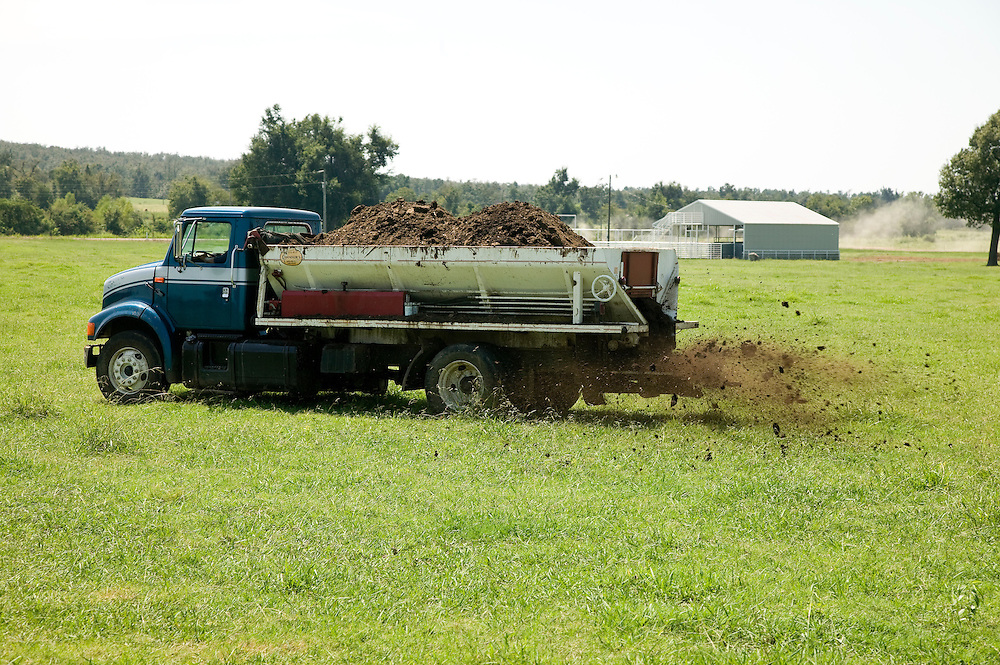
Greater Oklahoma City Aerospace Industry Supports $8.8 Billion in Output and More Than 80,000 Jobs

The Greater Oklahoma City aerospace industry remains a cornerstone of the regional economy, generating $8.8 billion in goods and services and employing more than 45,500 workers with an average salary of $87,000, according to the latest Greater Oklahoma City Region Aerospace and Aviation Industry Survey and Economic Impact Assessment released by the Greater Oklahoma City Chamber and RegionTrack, Inc.

The industry has entered a new era of expansion and diversification. Long anchored by defense aviation, Greater Oklahoma City's aerospace sector now encompasses a broad mix of public and private activities — spanning maintenance, logistics, engineering, training and manufacturing. While Tinker Air Force Base and the FAA's Mike Monroney Aeronautical Center remain foundational to the region's aerospace footprint, the private sector has steadily expanded, particularly in maintenance, repair and overhaul (MRO), aerospace engineering and unmanned aerial systems.

"Oklahoma City's aerospace sector is not only strong today, but also strategically positioned for what's next," said Christy Gillenwater, president and CEO of the Greater Oklahoma City Chamber. "As private-sector investment accelerates alongside our legacy federal assets, our region is becoming one of the most competitive and future-ready aerospace hubs in the nation."

Key findings from the report include:

338 aerospace establishments employing 45,539 workers
$8.8 billion in total output and $4.0 billion in labor income
$87,000 average annual wage, well above the regional average
80,200 total jobs supported when including multiplier effects
$413 million in state and local tax revenue generated annually
Tinker Air Force Base employs nearly 27,000 workers, and the FAA's Mike Monroney Aeronautical Center supports more than 5,100 federal employees and contractors, accounting for over 70% of the region's aerospace employment and output.

Private-sector growth is accelerating, particularly in MRO, aerospace consulting, logistics, and advanced systems. Since 2020, private aerospace firms have added more than 1,100 jobs and increased output by nearly 36%.

Wages in the industry continue to rise, with labor income growing by 48% since 2015. When paired with Oklahoma's low cost of living, the region offers significant advantages in workforce attraction and retention.

The report is designed to support workforce development, infrastructure investment, and strategic planning across the region.

To view the full study or learn more, visit www.greateroklahomacity.com/aerostudy

MULLIN IT OVER COLUMN: "How The One Big, Beautiful Bill Sustains And Saves Medicaid"

Today, U.S. Senator Markwayne Mullin (R-OK) released his latest Mullin It Over column—his second in a series of upcoming op-eds breaking down key policy wins from President Trump's 'One Big, Beautiful Bill' which was signed into law on July 4th, 2025.

How The One Big, Beautiful Bill Sustains And Saves Medicaid

By Senator Markwayne Mullin

"In a huge victory for Oklahoma, Congress recently passed President Donald Trump's "Big, Beautiful Bill," which, among many wins, will deliver the largest-ever tax cut for working and middle-class families, secure the border, and lower energy costs.

Unfortunately, Washington Democrats who are desperate to change the media narrative after a brutal 2024 election loss have made it their mission to lie about this bill and mislead American families — especially on Medicaid program improvements.

Democrats claim the bill guts the program. But in reality, Republicans voted to protect and strengthen Medicaid for those who need it most.

Medicaid's long-term stability is at risk. During the Obama administration, Democrats expanded Medicaid eligibility to include able-bodied adults — adding 20 million able-bodied people to the program rolls between 2013 and 2021. Today, roughly 35 million Americans are living below the poverty line, while over 70 million people are on Medicaid. What's worse, a stunning 36% of Medicaid spending is on able-bodied working-age adults — most of whom are not working.

What was first designed as a critical social safety net for America's most vulnerable — including pregnant women, children, people with disabilities, and low-income seniors and families — has quickly ballooned into an unsustainable mess at risk of bankruptcy.

The Big, Beautiful Bill will protect Medicaid benefits for those who need them most and help move millions of able-bodied adults with no children from welfare to work — all while saving taxpayers billions of dollars. By the way, only in Washington is increasing current Medicaid spending levels by 20% over the next 10 years seen as a "cut."

This bill includes popular Clinton-era work requirements for able-bodied adults ages 19-64 with no dependents, and includes exceptions for pregnant women, new mothers, and those facing short-term hardships. Under this commonsense law, eligible recipients must complete 20 hours of work, education, or volunteering per week to receive taxpayer-funded Medicaid benefits.

To protect and sustain the Medicaid program, the only people who will see a change in coverage are illegal immigrants, those who are already ineligible for the program, and able-bodied adults ages 19-64 with dependents over 14 years old who choose not to work, volunteer, or go to school for just 20 hours per week.

Most Americans recognize that without commonsense reform, Medicaid would be at a higher risk of collapse. As promised, Republicans are getting the waste, fraud, and abuse out of Medicaid to protect the well-being of America's most vulnerable. Despite the Democrats' gross lies, the "Big, Beautiful Bill" will strengthen and protect the social safety net for every eligible American who needs it. In passing President Trump's historic bill, Republicans are ensuring Medicaid can better serve the neediest Americans for generations to come."

Note: To read last week's column, "President Trump Secured the Border, We're Making It Permanent," click here.

Daily Email for July 14, 2025


Oklahoma's Latest Farm

and Ranch News

Monday July 14, 2025


Howdy Neighbors!

Michael Kelsey Discusses Threat Of New World Screwworm Moving Into The U.S.

At the Cattle Industry Summer Business Meeting in San Diego, Senior farm and ranch broadcaster Ron Hays spoke with the executive vice president of the Oklahoma Cattlemen's Association, Michael Kelsey. Our Coverage from San Diego is powered by Farm Data Services of Stillwater.


At the recent cattle industry summer business meetings in San Diego, Michael Kelsey noted that two main topics dominated discussions, one of which was the growing concern over the new world screw worm. "There were two big topics of conversation, one concerning negative, if you will, and that's the screw worm," he said. The urgency escalated during the meeting when news broke that the pest had moved further north in Mexico. "While we're in San Diego, we had developments regarding the movement to Veracruz," he said, adding that the U.S. is taking this more seriously than Mexico. "It's not a matter of if, it is a matter of when," he warned, emphasizing the need for preparation. Kelsey also said regarding the timeline, " That when is probably sooner than any of us would really like."


Kelsey detailed the geographic threat, noting how close the infestation is to the U.S. border. "That's 370 miles from the Rio Grande... about 900 miles from Oklahoma City, it's just not very far at all," he said.

USDA Slightly Lowers Corn Production, Boosts Old-Crop Corn Exports to Record Level

USDA released its July Crop Production and World Agricultural Supply and Demand Estimates (WASDE) reports on Friday. Oklahoma Farm Report's Ron Hays talked with Rich Nelson of Allendale about the USDA Reports shortly after they were released.


USDA increased its estimate of all 2025-2026 wheat production to 1.929 billion bushels, up from 1.921 bb in its June report. USDA estimates ending stocks at 890 million bushels, down from 898 mb in June. Ending stocks for old-crop wheat increased to 851 mb from June's estimate of 841 mb. Total use in new-crop wheat estimated at 2.009 bb is up from 1.984 bb in June, while exports increased to 850 mb from 825 mb last month.


Rich Nelson noted that the USDA made real-time adjustments to the wheat balance sheet, saying, "the wheat balance sheet is considered real time, so to speak," and despite lower harvested acres, "they did bump up this yield a little bit here, and therefore we had a light net increase in production."

Oklahoma, Kansas and Texas Wheat Crops Seen Smaller June Vs July in USDA Crop Production Reports

In the southern plains, the winter wheat harvest is nearly at the end- much later than normal and appears to be smaller than was forecast by USDA in the June USDA Crop Production report. All three states have surpassed the 80% mark in harvest completion as of the start of this week.


Oklahoma's wheat crop is forecast to be slightly smaller in July compared to the June forecast and also under that of 2024 production. The July First report predicts a 104.5 million bushel crop, based on 38 Bushels Per Acre yield on 2.75 million acres harvested. The difference from June to July was the drop of one bushel per acre yield- as June was based on 39 Bushels per Acre and a crop of 107.25 million bushels- July 3% smaller than the June guess. The 2024 crop settled in at 108.3 million bushels on a 39 BPA and 2.85 million acres.


Kansas saw a bigger drop from June to July- the June forecast was for 351.9 million bushels- with the July forecast 4.5% smaller for the state at 335 million bushels- based on 50 BPA and harvesting 6.7 million acres. The 2025 Kansas crop, if realized, is still significantly bigger than in 2024 when the Sunflower State raised 307.45 million bushels on more acres but fewer bushels per acre- just 43 BPA.

Dating back to 1891, Stillwater Milling Company has been supplying ranchers with the highest quality feeds made from the highest quality ingredients. Their full line of A & M Feeds can be delivered direct to your farm, found at their Agri-Center stores in Stillwater, Davis, Claremore and Perry or at more than 125 dealers in Oklahoma, Arkansas, Kansas and Texas. We appreciate Stillwater Milling Company's long time support of the Radio Oklahoma Ag Network and we encourage you to click here to learn more about their products and services.

National Livestock was founded in 1932 in Oklahoma City. National's Marketing Division offers cattle for sale weekly at the Oklahoma National Stockyards in Oklahoma City. The Finance Division lends money to ranchers across several states for cattle production. The Grazing Division works with producers to place cattle for grazing on wheat or grass pastures. 


National also owns and operates other livestock marketing subsidiaries including Southern Oklahoma Livestock Auction in Ada, Oklahoma, OKC West Livestock Market in El Reno, Oklahoma, and the nation's premier livestock video sale, Superior Livestock Auction. National offers customers many services custom made for today's producer. To learn more, click here for the website or call the Oklahoma City office at 1-800-310-0220.

NCBA President Buck Wehrbein Highlights Industry Wins and Emerging Challenges

At the Cattle Industry Summer Business Meeting in San Diego, Senior farm and ranch broadcaster Ron Hays spoke with NCBA President Buck Wehrbein. Our Coverage from San Diego is powered by Farm Data Services of Stillwater.


NCBA President Buck Wehrbein expressed optimism about the current state of the industry. "This has been very enjoyable. High markets are always good, and a lot of good wins in Washington for us." Wehrbein pointed to favorable weather in many regions and a supportive federal government and USDA as major reasons for confidence, adding, "We have a very friendly administration, a very good and friendly Secretary of Ag, so we're pretty happy."


Wehrbein emphasized the importance of recent legislation – the Big, Beautiful Bill," which he said contained significant wins for cattle producers. "Frankly, the one big, beautiful bill cattle people got basically everything we asked for in that." He highlighted key provisions like stepped-up basis and changes to the death tax, and praised the NCBA's Washington staff: "I'm very proud of our staff in Washington, DC, that worked very hard on that and have for a long time."

Cotton extension specialist Jenny Dudak on Cotton Progress In The State

Farm director KC Sheperd had the chance to catch up with Oklahoma State University Cotton Extension Specialist Jenny Dudak to get an update on the current status of Oklahoma's cotton crop. Dudak shared that the fields across the state are in various stages of development. "We've got some stuff that's putting on blooms down in southwest Oklahoma, and then there's some late replant that went in that's still just trying to catch up," Dudak said. The reprieve from rain and the recent heat have provided better growing conditions overall, allowing the crop to progress more evenly across different regions.


Water availability is a key concern this year, even with rain falling throughout the state and the irrigation district, so that might be a possibility this year. While irrigation hasn't started yet, she noted that if no more rain comes within the week, "they'll probably get some irrigation flowing through those canals." She also confirmed that most cotton planting is complete.


When asked about pest pressures, Dudak emphasized the need for timely action. "If you have not sprayed for flea hoppers yet, they are out," she warned, especially in later-planted fields that are now fruiting. She also mentioned the growing presence of corn earworms this year.

Trump Department of Justice Suing California Over Prop 12- Secretary of Ag Rollins Cheers

U.S. Secretary of Agriculture Brooke L. Rollins issued a statement following the Trump Administration's lawsuit against the State of California over the State's intrusive actions that have caused the price of eggs to skyrocket, harming consumers.


Yesterday, the Department of Justice filed a lawsuit against the State of California, Governor Gavin Newsom, Attorney General Rob Bonta, and other state officials over California laws that impose burdensome red tape on the production of eggs and egg products nationally in violation of the Supremacy Clause of the U.S. Constitution.


"California has gone rogue and caused real harm to consumers under its cage-free egg commitments. By not allowing consumer choice, Californian's are forced to buy more expensive eggs. California's actions under Proposition 12 fly in the face of Federal jurisdiction and regulation over food production and safety under the Egg Products Inspection Act. It is one thing if California passes laws that affects its own State, it is another when those laws affect other States in violation of the U.S. Constitution. Thankfully, President Trump is standing up against this overreach," said Secretary Rollins.

Populist Cattle Group Praises President Trump's Planned 50% Brazilian Tariff

President Trump's announcement of a 50% tariff on Brazilian goods beginning Aug. 1 received high praise from R-CALF USA.


In a letter sent to U.S. Commerce Secretary Howard Lutnick in March, the group sought increased tariffs for Brazilian beef, explaining that Brazil and other countries regularly blow through the United States' annual tariff–rate quota limit. Brazil is subject to a beef quota limit of approximately 143.3 million pounds and has no difficulty in paying the current over–quota tariff rate of 26.4% in its effort to capture more of the U.S. beef market away from domestic farmers and ranchers.


The letter pointed out that Brazil had met its quota level in February of 2024 but continued exporting an additional 474 million pounds during the remainder of the year, despite the 26.4% tariffs on that additional amount.

Oklahoma Cattlemen's Education Series Set to be Held at the 73rd Annual Convention and Trade Show

The Oklahoma Cattlemen's Association is set to host the Cattlemen's Education Series from July 25 to 26 at the 73rd Annual Convention and Trade Show in Norman, Okla. Speakers and learning opportunities covering a range of topics important to farm and ranch owners and managers will be included at this event, which is sponsored in part by The National Corn Growers Association.


This year's Cattlemen's Education Series will offer attendees logical and practical insights into key industry topics. Sessions will include a weather outlook from meteorologist Matt Makens, a deep dive into red meat yield innovations featuring Dr. Gretchen Mafi, Dr. Dale Woerner, and Kelly Retallick, and a cattle market outlook presented by Dr. Derrell Peel. Attendees will also explore the role of modern technology in remote ranching during a session led by guest speakers Andrew Coppin and Maria Silveira.


"This year's Cattlemen's Education Series continues our commitment to equipping Oklahoma cattle producers with the knowledge they need to stay ahead in a rapidly evolving industry," said Michael Kelsey, OCA Executive Vice President. "Our goal is to bring relevant, timely topics and some of the best minds in the industry to the table, ensuring our members are prepared to succeed in every aspect of their operations."

Checking the Markets...

The week of July 14th sees all the livestock auction markets back with their regular schedules- including the Oklahoma National Stockyards- they had 6,257 head on the yards as of 9 PM last night. The sale will start at 8:00 am. We are expecting to start with 6,200 to 6,700.


At the end of this past week- the fed cattle market was breaking higher. Cassie Fish in The Beef midday Friday reported "What is fueling today's rally is a very strong negotiated fed cattle market this morning, with bids of $230 in the south and $240 in the north. Thus far, there has been a bit of trade at $240 in western Nebraska but that's it. This is sharply higher than last week and back near the highs scored in mid-June." Stronger prices were later confirmed by the Texas Cattle Feeders Association Market Report Friday evening- showing Fed Steers and Fed Heifers both up $6 in Texas/Oklahoma/New Mexico at $230 a hundred.


OKC West is our Market Links Sponsor- they sell cattle three days a week- Cows on Mondays, Stockers on Tuesday and Feeders on Wednesday- Call 405-262-8800 to learn more.


Click here for our Markets Page on OklahomaFarmReport.Com- there you will find many of the reports we have linked on the right hand column found on the previous format of our email.

Our daily email is free because of our Sponsors!

OKAgCredit248x160.png
StewartMartinKubota-240.jpg
TulsaFarmShowSquareGraphic240.jpg
okfb.png
AMFeeds.png
pkEquipment.png
Oklahoma-Wheat-Commission_Logo_Vertical_Full-Color_Gray240b-e1736195614699.jpg
GreatPlainsLogoFeb2025Update240.jpg
NAT_Logo_BlackRed160.png
OklaBeefCouncil.png
KIS-Logo240b.png
oca.png
Facebook

© 2025 Oklahoma Farm Report - All rights reserved


Fall Armyworms Have Arrived in Oklahoma Pastures and Hayfields

Fall armyworms (FAW) are caterpillars that directly damage Bermudagrass and other introduced forage pastures, seedling wheat, soybean and residential lawns.  There have been widespread reports of FAW buildups across East Central and Northeast Oklahoma in the first two weeks of July.  Current locations exceeding thresholds for control are Pittsburg, McIntosh and Rogers counties.

Female FAW moths lay up to 1000 eggs over several nights on grasses or other plants.  Within a few days, the eggs hatch and the caterpillars begin feeding.  Caterpillars molt six times before becoming mature, increasing in size after each molt (instars). The first instar is the caterpillar just after it hatches. A second instar is the caterpillar after it has shed its skin for the first time. A sixth instar has shed its skin five times and will feed, bury itself in the soil, and pupate. The adult moth will emerge from the pupa in two weeks and begin the egg laying process again after a suitable host plant is found.  Newly hatched larvae are white, yellow, or light green and darken as they mature.  Mature FAW measure 1½ inches long with a body color that ranges from green, to brown to black. 

Large variation in color is normal and shouldn't be used alone as an identifying characteristic.  They can most accurately be distinguished by the presence of a prominent inverted white "y" on their head.  However, infestations need to be detected long before they become large caterpillars.  Small larvae do not eat through the leaf tissue, but instead, scrape off all the green tissue and leave a clear membrane that gives the leaf a "window pane" appearance.  Larger larvae however, feed voraciously and can completely consume leaf tissue.

FAW are "selective grazers" and tend to select the most palatable species of forages on any given site to lay eggs for young larvae to begin feeding.  The caterpillars also tend to feed on the upper parts of the plant first which are younger and lower in fiber content.  Forage stands that are lush due to fertility applications are often attacked first and should be scouted more frequently.

To scout for FAW, plants from several locations within the field or pasture need to be examined.  Examine plants along the field margin as well as in the interior.  Look for "window paned" leaves and count all sizes of larvae.  OSU suggests a treatment threshold is two or three ½ inch-long larvae per linear foot in wheat and three or four ½ inch-long larvae per square foot in pasture.  An easy-to-use scouting aid can be made for pasture by bending a wire coat hanger into a hoop and counting FAW in the hoop.  The hoop covers about 2/3 of a square foot, so a threshold in pasture would be an average of two or three ½ inch-long larvae per hoop sample.  An excellent indicator plant in forage stands is Broadleaf Signalgrass (seen in the foreground of the hay bale picture).  Broadleaf Signalgrass tends to be preferentially selected by female moths and is one of the first species that window paned tissue is observed during the onset of an infestation.

Approximately 70% of the forage consumed during an armyworm's lifetime occurs in the final instar before pupating into a moth.  This indicates that control measures should focus on small instar caterpillars (1/2 inch or less) before forage loss increases exponentially.  Additionally, small larvae are much more susceptible to insecticide control than larger caterpillars. 

Remember, FAW are actively reproducing up until a good killing frost, so don't let your guard down.  If you think you have an infestation of fall armyworm please contact your local County Extension Educator.  Additionally, before considering chemical control consult your Educator for insecticide recommendations labeled for forage use.

For more information or insecticide options consult: 

Oklahoma State University factsheet:

CR-7193, Management of Insect Pests in Rangeland and Pasture 

https://extension.okstate.edu/fact-sheets/management-of-insect-pests-in-rangeland-and-pasture.html

Article Courtesy of Brian C. Pugh, Forage Extension Specialist

Dr. Derrell Peel, Less Beef Meets Summer Beef Demand

Dr. Derrell Peel, Oklahoma State University Extension Livestock Marketing Specialist, offers his economic analysis of the beef cattle industry as part of the weekly series known as the "Cow Calf Corner," published electronically by Dr. Peel, Mark Johnson, and Paul Beck. Today, Dr. Peel analyzes recent beef demand.

The summer doldrums between Independence Day and Labor Day usually means slack beef demand.  Indeed, the Choice boxed beef cutout dropped from the end of June to a current weekly average of $386.75/cwt., down from the recent high of $394.19/cwt.  However, boxed beef prices remain 19.1 percent above this time last year and have averaged 12.6 percent above one year ago each week in the first half of the year (Figure 1). 

Higher average boxed beef prices reflect generally strong beef demand coupled with declining beef production, especially in the second quarter of the year.  Total beef production is down 1.7 percent year over year through the first half of the year but is down 4.8 percent in the second quarter.  Fed (steer + heifer) slaughter was down 6.3 percent in the second quarter leading to a 4.1 percent year-over-year decrease in fed beef production.  Total cow slaughter continued lower, down 11.0 percent in Q2 leading to an 8.5 percent drop in nonfed beef production for the period.

Despite typical mid-summer seasonal weakness, all beef primals are priced above year ago levels with the Rib primal up 7.0 percent, Loin primal up 19.3 percent; Chuck primal up 20.2 percent and the Round primal up 16.4 percent year over year.  Brisket, Short Plate and Flank primals are also sharply higher year over year. Prices for both lean and fatty trimmings continue to push higher with declining beef production.

Cattle prices dropped in late June but bounced this past week on stronger Feeder and Live cattle futures.  Oklahoma auction feeder prices were higher for all weights with calves up $10-$15/cwt. and feeder cattle up $5-$15/cwt.  The 5-market fed cattle price averaged over $235/cwt., pushing up close to the mid-June highs.  Boning cows (average dressing) averaged $165.84/cwt.

FDA Approves Gardenia (Genipin) Blue Color Additive While Encouraging Faster Phase-Out of FD&C Red No. 3

Today, the U.S. Food and Drug Administration announced it had granted Gardenia Blue Interest Group's (GBIG) color additive petition to use the color gardenia (genipin) blue in various foods, at levels consistent with good manufacturing practice. It is the fourth color derived from natural sources approved by the FDA for use in foods in the last two months. 

The FDA action is in line with U.S. Department of Health and Human Services Secretary Robert F. Kennedy, Jr.'s priority to work with industry to phase out the use of all synthetic, petroleum-based dyes from the nation's food supply as part of the administration's broader Make America Healthy Again initiative. 

Since Secretary Kennedy announced a series of measures in April to work with industry to phase out petroleum-based synthetic dyes in food, about 40 percent of the food industry has committed to a voluntary phase-out of such dyes. 

"Every day, children are exposed to synthetic chemicals in food that serve no purpose and threaten their health," Secretary Kennedy said. "The FDA's approval of gardenia blue shows we're finally putting kids first. Thanks to Dr. Marty Makary's bold leadership, we're cutting through industry influence and taking decisive action to Make America Healthy Again." 

Gardenia (genipin) blue is derived from the fruit of the gardenia, a flowering evergreen. The FDA has approved the color additive for use in sports drinks, flavored or enhanced non-carbonated water, fruit drinks and ades, ready-to-drink teas, hard candy, and soft candy. 

"This expedited timeline underscored our serious intent to transition away from petroleum-based synthetic dyes in the food supply, said FDA Commissioner Marty Makary, M.D., M.P.H. "Now, by expanding the palette of available colors derived from natural sources, food manufacturers have a variety of options available that will make it easier to end their use of petroleum-based dyes." 

The three colors derived from natural sources approved in May were: galdieria extract blue, a blue colorant derived from the unicellular red algae Galdieria sulphuraria; calcium phosphate, a white powder; and butterfly pea flower extract, a blue color that can be used to achieve a range of shades including bright blues, intense purple, and natural greens. 

Under section 721 of the Federal Food, Drug, and Cosmetic Act, color additives must be FDA-approved before they may be used in foods. The FDA determines whether a color additive is safe to use by considering the projected human dietary exposure to the color additive, the additive's toxicological data, and other relevant information, such as published literature. Once the FDA approves a color additive, any manufacturer can use the coloring in accordance with the conditions of use. 

In addition to approving a new color additive, the FDA also announced today that it had sent a letter to manufacturers encouraging them to accelerate the phase-out of FD&C Red No. 3 in foods, including dietary supplements, sooner than the January 15, 2027, required deadline. This earlier phase-out was another of the series of measures introduced by Secretary Kennedy in April.

 "The FDA believes that accelerating the phase out of the use of FD&C Red No. 3 in foods will help further the goal of Making America Healthy Again," the FDA said in the letter. On Friday, July 11, Consumer Brands—a national trade association for manufacturers of consumer packaged goods—announced their voluntary commitment to encourage the makers of America's food and beverage products to remove certified Food, Drug & Cosmetic (FD&C) colors from products served in schools nationwide by the start of the 2026–2027 school year.

Dairy Defined Podcast: "Beautiful" Bill's Passage Paves Way for Whole Milk

A massive tax and spending bill is now law — but with half a year left, Congress now can turn its attention to getting whole milk back in schools, NMPF's Paul Bleiberg said in a Dairy Defined podcast.

"One item I'll single out first that we're hopeful to get done really in the next couple months here is the Whole Milk for Healthy Kids Act," Bleiberg, NMPF's executive vice president for government relations, said in a podcast released today. "We had a great voice vote, bipartisan voice vote out of the Senate Agriculture Committee just over a month ago, so we're hoping that we can get that through the Senate and then through the House, and begin that work of getting whole milk and 2% milk back into schools and getting kids better access to the nutrient-dense dairy options that really give them the benefits they need and that they enjoy."Bleiberg also discussed efforts toward agricultural labor reform, the farm bill provisions included in current law and NMPF's policy priorities for the rest of the year. Joining Bleiberg in the podcast is Maria Brockamp, NMPF's new manager of government relations.To learn more about NMPF's policy efforts via a new bill tracker, please visit nmpf.org/bill-tracker. 

You can find and subscribe to the Dairy Defined podcast on Apple Podcasts and Spotify under the podcast name "Dairy Defined."

Media outlets may use clips from the podcast on the condition of attribution to the National Milk Producers Federation.

Tax Certainty Secured: NCBA's Kent Bacus on the One Big, Beautiful Law

Ron Hays Beef Buzzes with Kent Bacus

At the recent Cattle Industry Summer Business Meeting in San Diego, Senior farm and ranch broadcaster Ron Hays spoke with Executive Director of Government Affairs for the National Cattlemen's Beef Association Kent Bacus. Our Coverage from San Diego is powered by Farm Data Services of Stillwater.

Kent Bacus emphasized the enormous impact of the "one big, beautiful tax law." Bacus, NCBA's Executive Director of Government Affairs, explained that this law provides certainty for producers beyond 2025, something that was previously lacking. "We don't have to worry about expiring provisions at the end of 2025," he said. This long-term stability allows cattle producers to confidently make decisions regarding succession planning, major capital investments, and other future-facing business moves.

Bacus credited the bill's passage to both political leadership and the consistent pressure from cattle producers themselves. He praised President Trump and congressional leaders for the speed at which the bill moved, noting, "Tax bills always take a long time to get done the rate of speed at which they moved speaks volumes." But he emphasized the importance of grassroots support: "Our affiliates played a very important role in helping gather that information" through a tax survey of over 1,200 producers, which was crucial in educating lawmakers about the real-world benefits of the 2017 Tax Cuts and Jobs Act.

He detailed several of the key tax provisions that directly benefit cattle producers. "The estate tax exemption levels being bumped up to $15 million per individual, $30 million per couple, indexed for inflation" was a major victory, as was the preservation of the stepped-up basis, which Bacus called "fantastic." Other significant wins include Section 199A, which ensures a 20% deduction for pass-through income, and Section 179, which allows deductions up to $2.5 million on equipment and infrastructure purchases. He also noted that bonus depreciation is back at 100% and permanent, giving producers powerful tools to grow and reinvest.

With the law now permanent, Bacus said the focus shifts toward implementation, working with the IRS to ensure maximum benefit for rural America. "I know that sounds kind of weird to say we're actually going to work with the IRS... but in this case, we are." The permanence of the law is critical, he explained: "This isn't a four-year or five-year window... Congress is going to have to repeal these laws." Bacus believes few politicians would want to go on record as reversing such producer-friendly policies. "No politician is going to want that," he said, stressing how much this permanence helps mom-and-pop operations as it levels the playing field and will allow them to compete with big corporations.

Bacus concluded by calling the law a transformational win for cattle producers and rural communities. "This is a big win for our producers as this is what we can really hang our hats on." He emphasized that the new tax structure allows for more than just stability — it enables innovation, expansion, and the preservation of generational family farms. "This is what we need, these are the kind of tools that we need, and now we've got them," Bacus said, signaling confidence in a stronger, more secure future for the cattle industry.

The Beef Buzz is a regular feature heard on radio stations around the region on the Radio Oklahoma Ag Network and is a regular audio feature found on this website as well. Click on the LISTEN BAR for today's show and check out our archives for older Beef Buzz shows covering the gamut of the beef cattle industry today.

$27.1 Billion for Ag Spending Advanced by Senate Appropriations Committee in 2026

The Senate Committee on Appropriations has approved the Fiscal Year (FY) 2026 Agriculture, Rural Development, Food and Drug Administration (FDA), and Related Agencies Appropriations Act, to invest in America's rural communities, support our nation's farmers and ranchers, keep our food supply secure, and maintain nutritional support for low-income American families.

The measure, which was advanced by a unanimous vote of 27-0, provides $27.1 billion in discretionary funding.  Oklahoma is represented on the full Committee by Senator Markwayne Mullin, who also serves as a member of the Agriculture, Rural Development, Food and Drug Administration, and Related Agencies Subcommittee.

"This important bill supports our farmers and rural communities, the safety of our food supply, critical federal nutrition programs, and medical research and advancements.  This bill also provides much needed investments in rural housing programs to help address severe affordable housing shortage felt in Maine and states across the country," said Senator Collins, Chair of the Appropriations Committee.  "As the Chair of the Appropriations Committee, I will continue to champion this funding as the appropriations process moves forward."  

"Our farmers and ranchers provide the highest quality, lowest cost food supply in the world, and this legislation makes important investments to ensure they can continue this good work," said Senator John Hoeven, Chair of the Agriculture, Rural Development, FDA, and Related Agencies Appropriations Subcommittee.  "As Chairman of Agriculture Appropriations, we made it a priority to support our nation's producers with tools like better access to capital, marketing assistance and funding to prevent pest and disease like the avian flu and chronic wasting disease. At the same time, we invest in agriculture research, food safety and other programs to strengthen rural America."

Bill Highlights:

Agriculture Research: $3.6 billion for agricultural research programs, including $1.9 billion for the Agricultural Research Service and $1.7 billion for the National Institute of Food and Agriculture, which includes $445 million for the Agriculture and Food Research Initiative – the nation's leading competitive grants program for agricultural sciences.  These investments will ensure that American maintains our competitive edge in terms of agricultural production and innovation.

The bill fully funds the National Bio and Agro-Defense Facility to support the protection of the U.S. agricultural economy and maintain our position as a global leader in animal health, biodefense, and biosecurity.

Animal and Plant Health Inspection Service (APHIS): $1.2 billion for APHIS to help protect the nation's animal and plant resources from diseases and pests such as chronic wasting disease, new world screwworm, and avian influenza.  The bill also provides resources to assist ranchers with the cost of electronic identification (EID) tags to comply with animal disease traceability requirements.

Agricultural Marketing Services (AMS): $223 million for AMS to facilitate the marketing of U.S. agricultural products, both domestically and internationally, support domestic commodity purchase programs to support our agricultural producers, and provide and market data to help producers make informed business decisions.  The bill also closes the hemp loophole that has resulted in the proliferation of unregulated intoxicating hemp products being sold across the country.

Food Safety and Inspection Service (FSIS): $1.2 billion for the FSIS to promote the safety and productivity of the nation's $186 billion meat and poultry industry by supporting nearly 8,000 frontline inspection personnel for meat, poultry, and egg products at more than 6,800 facilities in the U.S.  This includes an additional $15 million for the State Meat and Poultry Inspection and Cooperative Interstate Shipment Programs as requested by the Administration.

Farm Service Agency (FSA): $1.6 billion for the FSA. This includes funding to support $10.5 billion of farm loans to ensure that our producers have access to necessary capital.  The bill continues the prohibition on FSA county office closures.

It also provides additional resources to improve the tracking system of foreign-owned land and maintains the Secretary of Agriculture's position on the Committee on Foreign Investment in the United States to protect our farmlands from being bought by our adversaries.

Conservation: $895 million to the Natural Resources Conservation Service for technical and financial assistance to farmers and ranchers to support America's working lands, $52 million for Watershed and Flood Prevention Operations, and decreases funding for the Office of Urban Agriculture.

Rural Development: $3.7 billion to support rural development programs across the U.S., including $1.7 billion for affordable housing rental assistance for low-income families and seniors in rural communities as requested by the Administration; $1 billion in lending authority for Single-Family Housing direct loans and $25 billion in lending authority for the guaranteed Single-Family Housing loans; $1.3 billion for rural water and waste grants and loans; $1.8 billion in grants and loans for rural business and industry programs that promote small business growth in rural areas; $8 billion in lending authority for rural electric loans; and $96 million for rural broadband grants and loans.  The bill also eliminates funding for the Biden-era Rural Partners Network initiative and maintains "Buy American" provisions that maximize the federal governments use domestic products.

Nutrition: $8.2 billion for the Special Supplemental Nutrition Program for Women, Infants, and Children to ensure that that the low-income mothers and their babies have access to healthy and nutritious foods and $425 million for the Commodity Supplemental Food Program to assist our low-income seniors.

International Food Assistance: $1.5 billion for Food for Peace Title II Grants and $240 million for the McGovern-Dole International Food for Education program.

The bill also requires a report outlining the process and agency needs to support a transfer of the Food for Peace program from the U.S. Agency for International Development to the Foreign Agricultural Service.

Food and Drug Administration (FDA): $3.6 billion for the FDA.  Overall, total FDA funding, including user fee revenues, is $7 billion.  The bill provides targeted increases for Food Safety and Inspections, Cosmetics, Diabetes, and the Neurology Drug Program, and a new pilot grant program to help schools transition to safer and healthier foods.

Congressman Don Bacon Offers Measure to Protect US Food Supply Chain

This past week, Rep. Don Bacon (R-NE-02) reintroduced a measure aimed at modernizing and securing America's agricultural sector. H.R. 4155, the American Agricultural Security Act will bolster cyber defenses for our nation's food supply chain.

With the U.S. agri-food sector reporting forty cyberattack incidents in the first quarter of 2024 alone, the American Agricultural Security Act addresses an urgent national security concern. The legislation will establish Centers of Excellence at higher education institutions and create a competitive USDA grant program to strengthen our agricultural cybersecurity infrastructure.

"Our national security and our agricultural industry are inextricably linked," said Rep. Bacon. "There are only nine meals between civilization and total anarchy. For this reason, I introduced the American Agricultural Security Act of 2025 to ensure we stay ahead of emerging threats to our food supply chain."

While new technologies have enabled food production to become one of the most automated industries in the world, adversaries have increasingly looked to undermine our nation's most vital industry through increased cyberattacks. The American Agricultural Security Act addresses these challenges by:

  • Enabling the Secretary of Agriculture to establish Centers of Excellence at institutions of higher education to research and engage in extension on topics related to cybersecurity, biosecurity, and agricultural production.
  • Establishing a competitive grant program within USDA to support research, extension, and education activities that improve the capability of the United States to protect the food and agricultural system from attack or other global catastrophic threats.

The full text of H.R. 4155 the American Agricultural Security Act can be found here.

This bill follows the recent introduction of Cybersecurity in Agriculture Act by Reps. Zach Nunn (R-Iowa) and Don Davis (D-N.C.), which aims to safeguard the nation's agricultural economy from cyber threats by harnessing the expertise of land-grant universities. The bill would establish five Regional Agriculture Cybersecurity Centers across the country to bolster cyberattack readiness, enhance response capabilities and accelerate recovery efforts in the agriculture sector.

Noting the 2021 ransomware attacks at Iowa's NEW Grain Cooperative and Minnesota's Crystal Valley Cooperative and a cyberattack on meatpacking giant JBS that same year, Nunn said these actions threaten supply chains and can force temporary shutdowns across North America.

"Iowa feeds the nation and that makes our farms and cooperatives a prime target for cyberattacks," said Nunn. "We've already seen hackers shut down grain handling and meat processing operations with just a few lines of code, stealing American agricultural technology or holding our food supply for ransom. By leveraging Iowa's leadership in agricultural and cyber defense innovation at institutions like Iowa State, we're putting the nation's top minds to work protecting the backbone of America's economy: our farmers."

The Cybersecurity in Agriculture Act would counter growing cyber threats directly by:

  • Funding university-led research on advanced cybersecurity systems for the agriculture sector.
  • Developing dedicated security operations centers to monitor and respond to cyber threats.
  • Designing sector-specific cybersecurity tools, including threat detection and intrusion prevention systems.
  • Building live testbeds for agricultural cybersecurity technologies.
  • Conducting training and simulation exercises with agriculture industry stakeholders.

"Cybersecurity threats remain a top danger to our agriculture and rural communities," said Davis. "Our local farms need cybersecurity protections to continue operating and working with our top-of-the-line university system in North Carolina, which means a local and reliable partner in the fight against cyber attacks."

South American Buyers Credit USW Seminar with Helping them Learn More About the Benefits of U.S. Wheat

In the Recent US Wheat Letter Blog, More than 50 wheat buyers from Colombia, Chile, Ecuador and Peru attended a Purchasing and Risk Management Seminar conducted by U.S. Wheat Associates (USW). The seminar was part of an ongoing effort by USW's Santiago Office to provide buyers with better tools and knowledge to help make purchasing decisions.

"We see it as an opportunity to promote the benefits of the different classes of U.S. wheat, while also building partnerships and create interest in combined cargoes between different milling companies in the region," USW Regional Director Miguel Galdos explained. The event was held in late May in Lima, Peru.

A video produced on the seminar features several U.S. wheat customers. The video includes words from Juan Carlos Henao, General Manager of Harinera del Valle in Colombia, who expresses his appreciation for USW's work.

"The contributions of U.S. Wheat Associates is important when it comes to training and information, especially in helping us understand the different varieties of wheat grown in the U.S.," Henao explained. "The more information and guidance we receive, the more we benefit."

See the video, which is equipped with English subtitles, below . . .

Secretary Rollins Statement on Increased Federal Fire Preparedness Level

Saturday, the National Multi-Agency Coordination Group (NMAC), composed of wildland fire representatives from each wildland fire agency based at the National Interagency Fire Center (NIFC) in Boise, Idaho, raised the national fire preparedness level one step higher to Preparedness Level 4.

"We are in peak fire season and are rightfully raising the preparedness level to ensure we are protecting our public lands and communities from devastating fires. President Trump, Secretary Burgum, and our State, local, and Tribal partners are prepared to respond," said U.S. Secretary of Agriculture Brooke L. Rollins. "At USDA we are not simply waiting for fire season. We have instituted a series of federal actions and partnerships to properly manage national forestlands. For too long, environmental activists have tied the hands of our public servants from actively managing our forests – and even blocking simple road construction so fire vehicles, apparatus, and staff can get to wildfires and put them out before they destroy homes and communities. We have begun the process to rescind the failed roadless rule to fix this with common sense policies and have declared a national forest emergency so we can clear out dangerous fuel and protect our forests for the future."

Secretary Rollins has made it a top priority for the Department to ensure the entire agency is geared to respond to what is already an above normal summer fire season. We are providing the resources needed to ensure the U.S. Forest Service (USFS) has the strongest and most prepared wildland firefighting force in the world.

As of July 14, the USFS has hired 99% of its 11,300-firefighter hiring target, with full staffing anticipated next week. This is ahead of where the agency has been in previous years. The USFS fire workforce is fully operational for this fire season.

Preparedness levels are dictated by fuel and weather conditions, fire activity, and fire suppression resource availability throughout the country. The five preparedness levels range from the lowest (1) to the highest (5). Each one includes specific management actions and involves increasing levels of interagency resource commitments. As preparedness levels rise, so does the need for incident management teams and suppression resources, which include wildland fire crews, engines, support personnel, helicopters, airtankers and other aircraft, and specialized heavy equipment, such as bulldozers.

The public plays a valuable role in preventing wildfires – as you enjoy the outdoors this summer, please enjoy the outdoors responsibly, stay vigilant, and make sure we aren't unnecessarily putting our firefighters in harms way. For more information, please visit the NIFC webpage.

Ron Hays Talks With Beef Checkoff Visionary Anne Anderson on Our Ag Perspectives Podcast

Ron Hays talks with Anne Anderson of Austin, Texas

Anne Ilse Anderson of Austin, Texas was honored with the Cattlemen's Beef Board's fifth annual Beef Checkoff Visionary Award during the General Session of the 2025 Cattle Industry Summer Business Meeting in San Diego, California. This award recognizes an individual in the beef industry who has demonstrated exemplary support of and commitment to the Checkoff's goals and vision.

Oklahoma Farm report's Ron Hays talked in depth about her career with Anderson- you can hear their full conversation by clicking on the listen bar above.

"Anne represents what this award is all about," said Ryan Moorhouse, chair of the Cattlemen's Beef Board. "She's a fellow Texan who's spent decades helping drive beef demand—both here at home and around the world—through education, research and smart marketing. Anne helped lay the groundwork for the Beef Checkoff, and years later, she's still helping shape its future. We're proud to recognize her with the 2025 Visionary Award."

Anderson and her husband Jim own a cow-calf operation in the Texas Hill Country, combining a deep passion for agriculture with a global business perspective. The Andersons and their partner Brett Morris raise purebred Speckled Parke cattle as well as Speckled Parke/Angus crosses.

Anderson began her career as a clinical dietitian and educator before fully transitioning into agricultural leadership. Since then, Anderson has dedicated more than four decades to advancing the beef industry through innovation and mentorship. Her understanding of consumer nutrition needs and her lifelong passion for beef production have made her a unique and powerful voice in the industry.

Fueled by Generosity, Silent Auction Raises $11,000 for Angus Foundation

With the spirit of Route 66 fueling the fun, the Angus Foundation's mission was driven forward during the 2025 National Junior Angus Show. The annual silent auction raised nearly $11,000 in unrestricted funds to support education, youth and research. Funds raised will support numerous scholarships, conferences and research projects.

"The silent auction is a time-honored tradition that has been going on for over 20 years," said Jimmy Stickley, Angus Foundation Donor Coordinator. "It amazes us each and every year the dedication and creativity individuals and states showcase in an effort to raise money for the Angus Foundation."

The silent auction was open from June 30-July 4, with items available for viewing in person at NJAS and bidding available online via the auction platform Angus Live. The auction featured 100 lots, ranging from gift baskets of state-themed products to vintage Angus ads, native American jewelry and a custom "Angus, The Business Breed," cowhide rug.

The three top-selling items were:

The Promise of Tomorrow Framed Print sold for $531Donor: Angus FoundationBuyer: Richie Longanecker of Lithia, FLThe Kansas City Chiefs Gameday package sold for $511Donor: Jordan and Rachel Hunter, Fair Grove, MOBuyer: Neal and Marya Haverkamp, Bern, KS       Angus Cowhide sold for $411Donor: National Junior Angus Association Board of DirectorsBuyer: Robbie Sand, Alachua, FL2025 Angus Foundation Silent Auction Donors:
Alabama Junior Angus AssociationCAT Cattle Company/Allen and Teri Hays - Fair Grove, MOCertified Angus BeefChris and Carol Wojciechowski - Middlebrook, VAConrad Creations/Elizabeth Conrad - Waterloo, INCurtis and Jaclyn Boester - Creal Springs, ILDavid and Cara Gerken - Cashion, OKDean and Gloria Hurlbut - St. Joseph, MOGeorgia Angus AssociationHillside Angus Ranch/The Washam's - Pierce City, MOJeff and Stacy Bird - St. Joseph, MOJimmy Stickley - Huntsville, OHJordan and Rachel Hunter - Fair Grove, MOKansas Junior Angus AssociationLane Toledo - Visalia, CAMark Wyble - St. Joseph, MOMaryland Junior Angus AssociationMason Valley Cattle Company - Glencoe, OKMichigan Junior Angus AssociationMinnesota Junior Angus AssociationMissouri Junior Angus AssociationMoo U Farm Store - Celeste, TXNational Junior Angus BoardOklahoma Junior Angus AssociationPennsylvania Junior Angus AssociationPhillicia Howard, Savannah, MOSteve and Kris Sticken - Bolckow, MOTennessee Junior Angus AssociationThe Showtimes MagazineTriple 3 Bar S Angus - Scott City, KSVicki Murdock - New Iberia, LA2025 Angus Foundation Silent Auction Buyers
3C Farms LLC - Hartsville, TNAndrew Johnson - Gratiot, WIAPS Angus - Taylorsville, KYBeau Jersild - Chadron, NEBeuerlein Angus Ranch - West, TXBeverly Gardner - Paris, TNBig Timber Cattle Company - Lithia, FLBilly McCoy - Webster City, IABlaine Witt - Davenport, IABrian and Rochelle Rosenhagen - Cheney, KSBringhurst Cattle Company - Lebanon, TNChad Nesom - DeRidder, LAChaffin Angus - Davis, OKCindy Groverman - Santa Rosa, CACircle M Farms LLC - Rockwall, TXCline Cattle Company - Onaga, KSCody and Ashley Murray - Perrin, TXCT Plus 3 Farms - Centerville, IADakota Lovett - Bladen, NEDalebanks Angus/The Perrier Family - Eureka, KSDelaney Davenport - Lawrence, KSDiamond T Ranch - Saint Anthony, NDDouble "A" Angus - Dade City, FLDouglas Livestock - Gentry, ARDry Creek Farm - Berryville, VAElizabeth Stuppy - Sainte Genevieve, MOEvan Farnsworth - McHenry, NDFitzgerald Brothers - Sullivan, INGail Neumeister - Unadilla, NEGibson Cattle - Los Lunas, NMGreiman Family Angus – Garner, IAHeather Peairs - Neosho, MOHi 5 Shorthorn Ranch - Celeste, TXHofing Performance Livestock Farm, LLC - Coatesville, INHoover Angus - Ellston, IAHouk's Angus - Blakesburg, IAJeff and Susan Rhode - Stewartsville, MOJim and Janet Strate, Jr. - Fairmont, OKJimmy Stickley - Huntsville, OHJohn Alexander - Louisa, VAJordan and Rachel Hunter - Fair Grove, MOJorgensen Farms - Exeter, NEJosh and Sarah Nunn - Magnolia, KYKaitlin Platter - Prairie Grove, ARKeith Kimble - Hydro, OKKendra Phillips - Muldrow, OKLindsey Grimes HallMark Lejeune - Elton, LAMeyer Cattle Company - Bowling Green, MONemaha Valley Cattle Company - Bern, KSNewberry Farms LLC - Cedar Hill, TXPayden Dowling - Leawood, KSPfeiffer Angus Farm/John and Gaye Pfeiffer - Mulhall, OKR&L Angus - Westmoreland, KSRadale and Breann Tiner - Bells, TXRed Plains Ranch - Cashion, OKRobbie Sand - Alachua, FLScott and Jennifer Harman - Saint Joseph, MOShasta View Cattle Company - Beatty, ORSteve and Kris Sticken - Bolckow, MOStuckemeyer Angus - Altamont, ILTanna Suits - Rantoul, ILTriple 3 Bar S Angus - Scott City, KSTyler Orman - Blakesburg, IAWill Wright - Fayetteville, TN

Oklahoma, Kansas and Texas Wheat Crops Grow Smaller June to July in USDA Crop Production Reports

In the southern plains, the winter wheat harvest is nearly at the end- much later than normal and appears to be smaller than was forecast by USDA in the June USDA Crop Production report. All three states are past the 80% mark on harvest completed as of the start of this week.

Oklahoma's wheat crop is forecast to be slightly smaller in July compared to the June forecast and also under that of 2024 production. The July First report predicts a 104.5 million bushel crop, based on 38 Bushels Per Acre yield on 2.75 million acres harvested. The difference from June to July was the drop of one bushel per acre yield- as June was based on 39 Bushels per Acre and a crop of 107.25 million bushels- July 3% smaller than the June guess. The 2024 crop settled in at 108.3 million bushels on a 39 BPA and 2.85 million acres.

Kansas saw a bigger drop from June to July- the June forecast was for 351.9 million bushels- with the July forecast 4.5% smaller for the state at 335 million bushels- based on 50 BPA and harvesting 6.7 million acres. The 2025 Kansas crop, if realized, is still significantly bigger than in 2024 when the Sunflower State raised 307.45 million bushels on more acres but fewer bushels per acre- just 43 BPA.

Texas has a predicted wheat crop for 2025 at 59.2 million bushels in the July report, based on 32 BPA on 1.85 million acres harvested. July is ten million bushels smaller than the June estimate- 15% smaller month to month and well under the 80.6 million bushels produced in 2024. The July estimate, if realized, is 27% smaller than the 2024 wheat crop in Texas.

The July USDA Crop Production report, which focuses primarily on wheat production across the country can be seen by clicking here. You can also see details of the WASDE for July and hear our conversation with Rich Nelson of Allendale by clicking here.

According to the numbers released at the national level- winter wheat production is forecast at 1.35 billion bushels, down 3 percent from the June 1 forecast and down less than 1 percent from 2024. As of July 1, the United States yield is forecast at 54.2 bushels per acre, up 0.5 bushel from last month and up 2.5 bushels from last year's average yield of 51.7 bushels per acre. If realized, the United States yield would be the second highest behind 2016.

Hard Red Winter production, at 755 million bushels, is down 4 percent from last month. Soft Red Winter, at
337 million bushels, is down 2 percent from the June forecast. White Winter, at 254 million bushels, is down slightly from last month. Of the White Winter production, 20.1 million bushels are Hard White and 234 million bushels are Soft White.

Durum wheat production is forecast at 79.7 million bushels, down less than 1 percent from 2024.
Based on July 1 conditions, yields are expected to average 38.7 bushels per harvested acre, down 0.6 bushel from 2024. Area harvested for grain or seed is expected to total 2.06 million acres, unchanged from the Acreage report released on June 30, 2025, but up 1 percent from 2024.

Other spring wheat production for grain is forecast at 504 million bushels, down 7 percent from last year. Based on July 1 conditions, yields are expected to average 51.7 bushels per harvested acre, down 0.8 bushel from 2024. If realized, the United States yield would be the second highest behind last year. Area harvested for grain or seed is expected to total 9.75 million acres, unchanged from the Acreage report released on June 30, 2025, but 6 percent below 2024. Of the total production, 469 million bushels are Hard Red Spring wheat, down 7 percent from 2024.

USDA Slightly Lowers Corn Production, Boosts Old-Crop Corn Exports to Record Level

Ron Hays talks about the July WASDE with Rich Nelson of Allendale

USDA on Friday slightly lowered corn production in line with pre-report estimates and boosted old-crop corn exports to a record level.
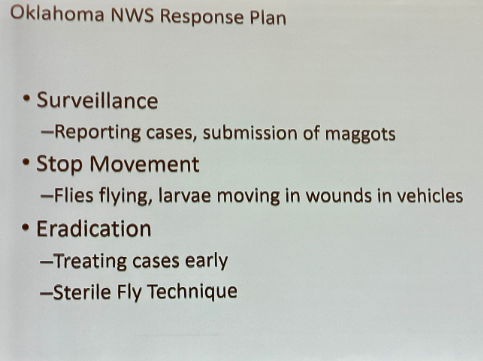
USDA released its July Crop Production and World Agricultural Supply and Demand Estimates (WASDE) reports on Friday. Oklahoma Farm Report's Ron Hays talked with Rich Nelson of Allendale about the USDA Reports shortly after they were released.

Stay tuned throughout the morning and refresh this page often. We will be sending a series of updates with the important highlights from Friday's reports, including commentary from our analysts.

WHEAT

USDA increased its estimate of all 2025-2026 wheat production to 1.929 billion bushels, up from 1.921 bb in its June report. USDA estimates ending stocks at 890 million bushels, down from 898 mb in June. Ending stocks for old-crop wheat increased to 851 mb from June's estimate of 841 mb. Total use in new-crop wheat estimated at 2.009 bb is up from 1.984 bb in June, while exports increased to 850 mb from 825 mb last month.

Rich Nelson noted that the USDA made real-time adjustments to the wheat balance sheet, saying, "the wheat balance sheet is considered real time, so to speak," and despite lower harvested acres, "they did bump up this yield a little bit here, and therefore we had a light net increase in production." He highlighted a reduction in ending stocks to 890 million bushels: "they did drop stocks a little bit. 890... for the most recent update here today." Nelson found the winter wheat situation particularly notable, stating, "last month, they were 782 million bushels, now, 755." He also raised concern about crop quality, adding, "maybe there's some very light quality concerns with those heavy rains right at harvest."

CORN

USDA forecasts the 2025-26 crop corn at 15.705 billion bushels (bb), down 115 million bushels (mb) based on a yield forecast of 181 bushels per acre. Planted acres were lowered 100,000 acres to 95.2 million acres, matching the June 30 crop report. Harvested acres are projected at 86.8 million, down 600,000 acres from June. USDA lowered beginning stocks for the new crop 25 mb to 1.34 bb. On the demand side, the forecast for the 2025-26 corn crop projects total feed and residual use at 5.85 billion bushels, down 50 mb from last month. Ethanol use is pegged at 5.5 bb. Total domestic use is forecast at 12.735 bb, down 50 mb.

Rich Nelson explained that the USDA's numbers for new-crop corn remain somewhat artificial, as they continue to rely on trendline yields rather than adjusting based on current conditions. He said, "these are still a little artificial. USDA, especially in the past 11 years, has really not wanted to move a yield for corn... off the trend needle, so to speak." Because of this, he emphasized that the market is trading a different outlook: "these markets are trading a different yield number... they are trading a view that we're a little higher than that trend estimate."
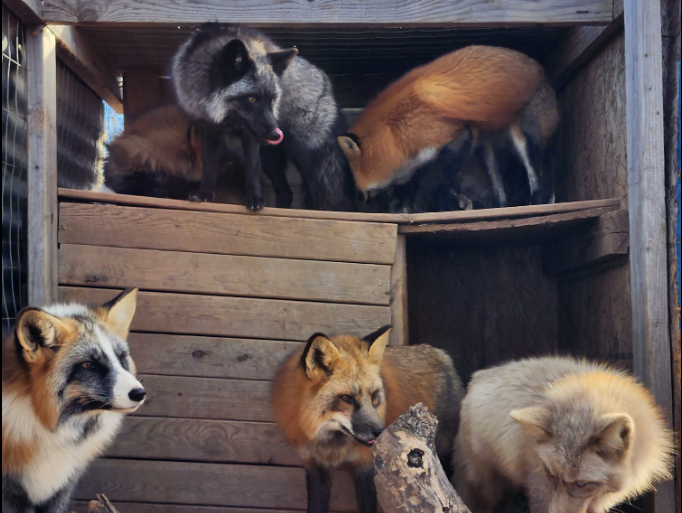
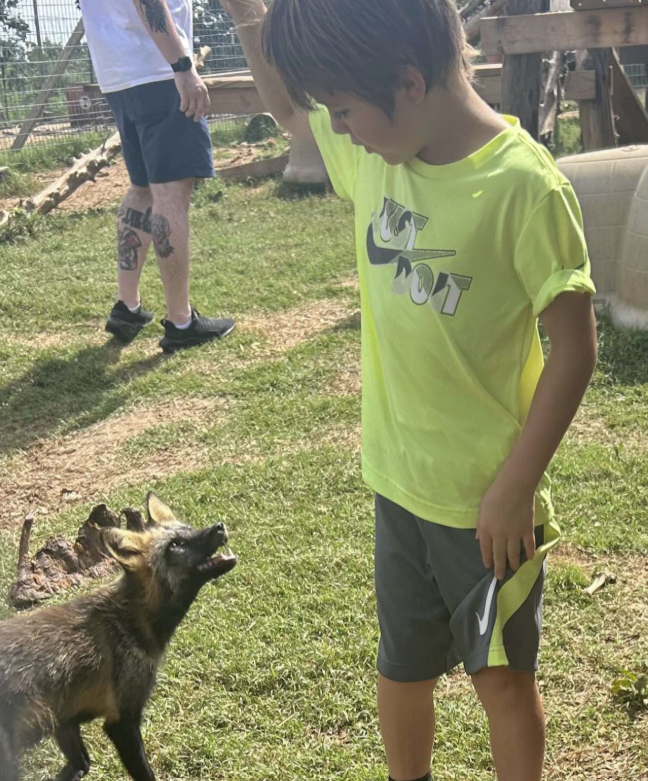
SOYBEANS

USDA integrated its 83.4-million-acre soybean planting estimate into its supply and demand forecast, resulting in a 5-million-bushel decline in production to 4.335 mb. Yield was left unchanged at 52.5 bushels per acre. The forecast for 2025-26 soybean ending stocks increased by 15 mb to 310 mb, within the range of pre-report expectations. Along with lower production, USDA increased crush forecast by 50 mb to 2.54 mb while cutting exports by 70 mb. Total use declined to 4.395 mb. The national average farmgate price dropped by 15 cents to $10.10 per bushel. For the old-crop, 2024-25 season, USDA left ending stocks unchanged at 350 mb but adjusted usage. It increased exports by 15 mb to 1.865 mb and cut the residual from 45 mb to 27 mb. It increased the national average farm gate price by a nickel to $10 per bushel.

Rich Nelson explained that the USDA made minimal changes to soybean estimates in the latest report. He said, "we did see them leave stock numbers unchanged" for old-crop soybeans, though they did make some adjustments elsewhere: "they moved some exports around, moved some crops around." For new-crop soybeans, the USDA also kept stock numbers steady, sticking to their trend-based yield approach. Nelson emphasized that, like corn, the market is trading a different view: "these markets are trading a different yield number a view that we're a little higher than that trend estimate."

Report Theme:

The main point of the report, as explained by Nelson, is that many of USDA's new-crop estimates—especially for corn and soybeans—are still somewhat cautious and based on long-term trend yields rather than current, possibly better, growing conditions. Nelson pointed out that the USDA usually avoids changing yield forecasts early in the season, saying, "USDA... has really not wanted to move a yield for corn or soybeans off the trend needle, so to speak." Because of this, while USDA numbers stay mostly the same, "the markets are trading a different yield number... a view that we're a little higher than that trend estimate." For corn, USDA lowered old-crop ending stocks by 25 million bushels due to export issues. For soybeans, ending stocks stayed the same but exports and crop use were slightly adjusted.

The wheat and cotton parts of the report showed more active changes based on up-to-date data. Nelson said the wheat balance sheet is more "real time," with USDA cutting harvested acres but raising yields, causing a small increase in production. Still, ending stocks dropped, with winter wheat stocks falling from 782 million to 755 million bushels, and there are some concerns about crop quality due to heavy rains at harvest. For cotton, USDA lowered yields by about 9% compared to last year, but higher harvested acres led to more production and increased ending stocks to 4.6 million bales. The beef section showed domestic production down about 3% from last year, but higher imports—especially lean beef from Brazil—are helping to fill the supply gap.

Weather Impact:

Nelson briefly mentioned weather-related concerns when discussing winter wheat. He said there might be "some very light quality concerns with those heavy rains right at harvest," indicating that recent heavy rainfall could affect the quality of the wheat crop.

Cotton and Livestock Updates:

Nelson discussed the cotton situation by noting that "cotton acres are higher this year," but yields have declined about 9% compared to last year. He explained that "despite lower yields, total production is actually a little bit higher because of increased harvested acres." He also pointed out that ending stocks for the new cotton crop are projected to be "4.6 million bales, which is above last year's 4.1 million and well above the prior years' 3.2 million." While yield concerns persist, the acreage gains have helped offset some of the impact, leading to an overall larger stock situation.

Regarding livestock, Nelson said USDA has "lowered beef supply estimates by about 200 million pounds," which reflects about a 3% production decrease from last year. He attributed this in part to "tighter live animal supplies" and noted challenges such as the renewed closure of the Mexican border and tariff adjustments on Brazilian beef imports, which account for about 2.4% of U.S. beef consumption. Despite the production decline, Rich observed that "high domestic wholesale beef prices suggest strong import activity" is helping to meet demand. He emphasized that while overall beef supplies to consumers remain fairly stable, "the live cattle supply remains tight," supporting continued strength in prices. Ground beef demand, particularly reliant on lean beef imports including those from Brazil, remains an important factor in the market outlook.

Key Takeaways:

Nelson highlighted several key takeaways from the USDA's latest World Agricultural Supply and Demand Estimates (WASDE) report. He emphasized that many of the new crop numbers, especially for corn and soybeans, remain somewhat artificial, stating, "These numbers are more or less artificial for now." He pointed out that the market is currently trading on yield expectations above the USDA's trend estimates, noting, "The market itself is trading yields above trend, even though a lot of producers may not want to hear that."

Regarding wheat, Rich found the tightening supply noteworthy, particularly for winter wheat. He mentioned the drop in winter wheat stocks from 782 million bushels last month to 755 million and expressed concern about quality issues due to heavy rains at harvest, saying, "I think there's really interesting argument right now on that winter wheat picture... maybe there's some very light quality concerns with those heavy rains right at harvest." Overall, Rich stressed the importance of watching these evolving supply and quality factors closely, signaling uncertainty and potential tightening in the wheat market.

Looking Ahead to August:

Nelson hinted that the USDA's next report might include further adjustments, especially on corn stocks. He mentioned there's still "a bit more in this, in probably next month's report," referring to potential additional changes related to old crop corn export issues. This suggests that the market should watch for possible updates or revisions coming in August's WASDE report that could impact supply estimates.

For those with further questions, Rich Nelson can be reached at 1-800-2-MARKET or through their website, allendalehub.com.

You can also view the full reports here:

— Crop Production: https://www.nass.usda.gov/...

— World Agricultural Supply and Demand Estimates (WASDE): http://www.usda.gov/...

U.S. PRODUCTION (Million Bushels) 2025-26
JulAvgHighLowJun2024-25
Corn15,70515,74815,95315,62415,82014,867
Soybeans4,3354,3314,3404,2904,3404,366
All Wheat1,9291,9031,9561,8461,9211,971
Winter1,3451,3491,4011,2971,3821,349
HRW755767792735782770
SRW337338353309345342
White254249256239254236
U.S. ENDING STOCKS (Million Bushels) 2024-25
JulAvgHighLowJun
Corn1,3401,3421,4151,3001,365
Soybeans350358380329350
Wheat851848851840841
U.S. ENDING STOCKS (Million Bushels) 2025-26
JulAvgHighLowJun
Corn1,6601,7331,8561,6301,750
Soybeans310304377275295
Wheat890893923842898
WORLD ENDING STOCKS (million metric tons) 2024-25
JulAvgHighLowJun
Corn284.2286.2290.0284.7285.0
Soybeans125.1124.3126.5123.1124.2
Wheat263.6264.3265.0264.0264.0
WORLD ENDING STOCKS (million metric tons) 2025-26
JulAvgHighLowJun
Corn272.1276.8280.0275.0275.2
Soybeans126.1125.5126.0124.3125.3
Wheat261.5264.7276.0260.7262.8
WORLD PRODUCTION (million metric tons) 2024-25
JulAvgHighLowJun
CORN
Argentina50.050.050.549.050.0
Brazil132.0132.9138.0130.0130.0
SOYBEANS
Argentina49.949.350.049.049.0
Brazil169.0169.4171.0168.8169.0

Oklahoma Cattlemen's Education Series Set to be Held at the73rd Annual Convention and Trade Show

The Oklahoma Cattlemen's Association is set to host the Cattlemen's Education Series from July 25 to 26 at the 73rd Annual Convention and Trade Show in Norman, Okla. Speakers and learning opportunities covering a range of topics important to farm and ranch owners and managers will be included at this event, which is sponsored in part by The National Corn Growers Association.


This year's Cattlemen's Education Series will offer attendees logical and practical insights into
key industry topics. Sessions will include a weather outlook from meteorologist Matt Makens, a
deep dive into red meat yield innovations featuring Dr. Gretchen Mafi, Dr. Dale Woerner, and
Kelly Retallick
, and a cattle market outlook presented by Dr. Derrell Peel. Attendees will also
explore the role of modern technology in remote ranching during a session led by guest speakers
Andrew Coppin and Maria Silveira.


"This year's Cattlemen's Education Series continues our commitment to equipping Oklahoma
cattle producers with the knowledge they need to stay ahead in a rapidly evolving industry," said
Michael Kelsey, OCA Executive Vice President. "Our goal is to bring relevant, timely topics and
some of the best minds in the industry to the table, ensuring our members are prepared to
succeed in every aspect of their operations."


To attend the Cattlemen's Education Series, participants must be registered for the Oklahoma
Cattlemen's Association 73rd Annual Convention & Trade Show. Registration provides access
to not only the education sessions but also the full slate of convention events, networking
opportunities, and the expansive trade show. Those interested in attending can secure their spot
by visiting the OCA website by clicking here.

Michael Kelsey Discusses Threat Of New World Screwworm Moving Into The U.S.

Listen to Ron Hays and Michael Kelsey

At the Cattle Industry Summer Business Meeting in San Diego, Senior farm and ranch broadcaster Ron Hays spoke with the executive vice president of the Oklahoma Cattlemen's Association, Michael Kelsey. Our Coverage from San Diego is powered by Farm Data Services of Stillwater.

At the recent cattle industry summer business meetings in San Diego, Michael Kelsey noted that two main topics dominated discussions, one of which was the growing concern over the new world screw worm. "There were two big topics of conversation, one concerning negative, if you will, and that's the screw worm," he said. The urgency escalated during the meeting when news broke that the pest had moved further north in Mexico. "While we're in San Diego, we had developments regarding the movement to Veracruz," he said, adding that the U.S. is taking this more seriously than Mexico. "It's not a matter of if, it is a matter of when," he warned, emphasizing the need for preparation. Kelsey also said regarding the timeline, " That when is probably sooner than any of us would really like."

Kelsey detailed the geographic threat, noting how close the infestation is to the U.S. border. "That's 370 miles from the Rio Grande... about 900 miles from Oklahoma City, it's just not very far at all," he said. He addressed questions raised during the meeting, including whether hurricanes could transport the flies. "A hurricane probably really wouldn't move a fly very much " Kelsey explained, although he admitted that hurricane-related winds might pose some risk. More concerning, he said, are "wildlife movement, people movement, as well as domestic animal movement."

One of the most important takeaways, according to Kelsey, came from discussions with Dr. Burke Healey, Senior Leader for Policy and Operations in Ft. Collins, Colorado from APHIS. "The sterile fly technology is excellent and is very reliable," he affirmed, referring to facilities in South Texas, Mexico, and Panama. However, he pointed out that the USDA's "top strategy is animal movement," not just sterilization. "We need to be able to be ready to institute [controls] ourselves," he said, stressing that cattle movement might need to be strictly regulated, possibly halted altogether if things worsen. "We could get really, really stark and draconian here cattle can't move at all until 'fill in the blank'."

Texas is likely to be the first and hardest hit, Kelsey explained, due to its proximity to the eastern Mexico infestation zones. "It looks like it's kind of coming up the east side of Mexico," he said, pointing out that areas like Corpus Christi and Brownsville are geographically vulnerable. "This thing is not just a cattle pest, it's an animal pest," he emphasized, calling attention to the broader threat to all livestock. While states like California are further from the source, he said, "Texas is going to set the standard for us."

Aside from the screw worm, Kelsey said there was also reason to celebrate during the meetings. The passage of the big, beautiful tax bill was met with relief across the cattle industry. "There was a lot for us to celebrate," he said, especially regarding "estate tax and the whole tax picture in general." Most notably, Kelsey emphasized, "key to all of that is the permanency of it," meaning cattle producers won't have to revisit the issue every election cycle. "That has been critical," he concluded, closing out a meeting marked by both urgency and optimism.

Daily Email for July 11, 2025


Oklahoma's Latest Farm

and Ranch News

Friday July 11, 2025


Howdy Neighbors!

Abnormally Dry Conditions Emerge In This Weeks Drought Monitor

According to the latest Oklahoma drought monitor report, exceptional drought remains at zero percent, unchanged from the start of the calendar year.


Extreme drought or worse conditions remain at zero percent, unchanged since the week of October 29, 2024.


Severe drought or worse conditions remain at zero percent, unchanged since the week of May 29, 2025.


Moderate drought or worse conditions remain at zero percent, unchanged since last week.


Abnormally dry or worse conditions have emerged this week in parts of Greer county, Beckham county and Kiowa county.

New Beef Industry Long Range Plan For 2026-2030 Released at Summer Meeting

The Beef Industry Long Range Plan task force officially unveiled its new five-year plan for 2026-2030 today at the Cattle Industry Summer Business Meeting in San Diego. The mission of the Long Range Plan is to ensure the U.S. beef industry provides sustainable, high-quality beef that meets consumer demands worldwide. After the unveiling of the plan in San Diego, Oklahoma Farm Report's Ron Hays talked with kentucky seedstock producer Joe Lowe about the work of the task force- click on the Listen Bar above to hear their conversation. This and all of our coverage from San Diego is powered by Farm Data Services of Stillwater.


"Since late 2024, our task force has taken a hard look at what's working in the beef industry and where we need to improve," said Joe Lowe, Long Range Plan task force member and eighth-generation seedstock operator at Oak Hollow Angus in Smiths Grove, Kentucky. "The result is a five-year plan that offers flexibility and local adaptation while keeping us all moving toward shared goals. By focusing on results and smart investments, we can keep the U.S. beef industry strong and competitive."


Secretary Rollins Shuts US Southern Border Again to Mexican Cattle As Screwworms Advance

Yesterday, Mexico's National Service of Agro-Alimentary Health, Safety, and Quality (SENASICA) reported a new case of New World Screwworm (NWS) in Ixhuatlan de Madero, Veracruz in Mexico, which is approximately 160 miles northward of the current sterile fly dispersal grid, on the eastern side of the country and 370 miles south of the U.S./Mexico border. This new northward detection comes approximately two months after northern detections were reported in Oaxaca and Veracruz, less than 700 miles away from the U.S. border, which triggered the closure of our ports to Mexican cattle, bison, and horses on May 11, 2025.


While USDA announced a risk-based phased port re-opening strategy for cattle, bison, and equine from Mexico beginning as early as July 7, 2025, this newly reported NWS case raises significant concern about the previously reported information shared by Mexican officials and severely compromises the outlined port reopening schedule of five ports from July 7-September 15. Therefore, in order to protect American livestock and our nation's food supply, Secretary Rollins has ordered the closure of livestock trade through southern ports of entry effective immediately.


"The United States has promised to be vigilant — and after detecting this new NWS case, we are pausing the planned port reopening's to further quarantine and target this deadly pest in Mexico. We must see additional progress combatting NWS in Veracruz and other nearby Mexican states in order to reopen livestock ports along the Southern border," said U.S. Secretary of Agriculture Brooke L. Rollins. 

Great Plains Kubota is Oklahoma's family of full-line Kubota dealerships offering Kubota sales, service, and parts. As an Oklahoma Elite Kubota dealer, we have a large selection of Kubota Tractors, Kubota Mowers, Kubota Utility Vehicles, Kubota Construction Equipment and Kubota's line of Hay Tools. 


Give us a call today at 855-4KUBOTA or stop by any of our Kubota dealerships in Ada, Ardmore, Duncan, Edmond, Shawnee, Norman, Stillwater and our newest location serving western Oklahoma and beyond, Clinton. To schedule a DEMO with one of our Outside Salesmen, email gpsales@gpkubota.com 

Visit us and see why Great Plains Kubota is...the Brand that serves! 

Midwest Farm Shows is proud to produce the two best Farm Shows in the State of Oklahoma annually- the Tulsa Farm Show each December and the Oklahoma City Farm Show each April.


The Tulsa Farm Show is Oklahoma's premier agricultural and ranching event- and returns to the SageNet Center (Expo Square) December 11,12 & 13, 2025. 


Now is the ideal time to contact the Midwest Farm Show Office at 507-437-7969 and book space at the 2025 Tulsa Farm Show.  To learn more about the Tulsa Farm Show, click here. 


Farm Director KC Sheperd Wins Oklahoma State University Friend of Extension Award

Oklahoma Farm Reports very own Farm Director KC Sheperd has been honored with the prestigious Oklahoma State University Friend of Extension Award, recognizing her significant contributions to Oklahoma agriculture and her steadfast support of the Oklahoma Cooperative Extension Service (OCES).


The Oklahoma Cooperative Extension Service relies heavily on the dedication and involvement of key individuals within the state's agricultural community. These vital partnerships enable OCES to effectively deliver research-based information to citizens across Oklahoma. The Oklahoma Association of Extension Agricultural Agents (OAEAA) established the Friend of Extension Award to acknowledge and appreciate the valuable time and effort these supporters donate to OCES.


It is with great pleasure that the OAEAA bestows this honor upon its friends and supporters, celebrating their essential role in advancing agricultural knowledge and practices throughout the state. Sheperd's recognition underscores the impactful relationship between agricultural media and the critical outreach efforts of the Extension Service. "It has been so much fun to cover all of the Events at OSU. I am deeply honored and truly grateful to be named the Oklahoma State University Friend of Extension. Receiving this award is a tremendous privilege, Thank you so much, said Sheperd.

Robby Kirkland Says Southern Feedyards Strained by Cattle Shortage and Border Issues

At the Cattle Industry Summer Business Meeting in San Diego, Senior farm and ranch broadcaster Ron Hays spoke with the chairman of the Texas Cattle Feeders Association, Robby Kirkland. TCFA represents feedlots in Texas, Oklahoma and New Mexico. Our Coverage from San Diego is powered by Farm Data Services of Stillwater.


Robby Kirkland, chairman of the Texas Cattle Feeders Association since October, has spent most of his time in the role dealing with a screw worm outbreak in southern Mexico. "November 24 is when we got the official call that they've had cases in southern Mexico and closed the border," he said. Since that time- the border was closed into the early days of 2025- reopened for a short time, closed again, reopened for less than a week through the entry port in Arizona and now shut totally again.


Editor's Note- Since our interview with Kirkland- screwworms have been found much closer to the US-Mexican border and as of Wednesday evening, July 9th- the US border has been closed for imports of Mexican cattle again.

President Trump Secured the Border, We're Making It Permanent

Today, U.S. Senator Markwayne Mullin (R-OK) released his latest Mullin It Over column—his first in a series of upcoming op-eds breaking down key policy wins from President Trump's 'One Big, Beautiful Bill' which was signed into law on July 4th, 2025.


President Trump Secured the Border, We're Making It Permanent

By Senator Markwayne Mullin


"After four disastrous years of the Biden administration, the American people were fed up with the rampant chaos and lawlessness in our streets. They were tired of a President and a party that spent more time pandering to illegal aliens and supporting criminal activity, than they did actually keeping Americans safe.

Effective parasite control begins with understanding active ingredients

Effective parasite control begins with understanding active ingredients.

Strategic use of active ingredients offers promise in managing parasites.


Using parasiticides in cattle without considering the active ingredients in those products presents dangers for an operation. Using different parasiticide active ingredients can extend the effectiveness of parasite control products and play a significant role in the management of healthier cattle.


Some common, yet misguided, management practices can lead to an operation unintentionally increasing resistance in parasites. One type of parasiticide — macrocyclic lactones — saw the first documented case of resistance more than two decades ago, and now Cooperia and Haemonchus parasites have been demonstrated as resistant to macrocyclic lactones in more than half of all operations examined.Of course parasites must be dealt with, but producers need to find a balance in their management practices.

Day 10, Kansas Wheat Harvest Report

This is day 10 of the Kansas Wheat Harvest Reports, brought to you by the Kansas Wheat Commission, Kansas Association of Wheat Growers, Kansas Grain and Feed Association and the Kansas Cooperative Council.


Reports from western Kansas paint a mixed picture, with yields ranging from slightly below average to above average depending on location and weather patterns. While quality was generally strong—test weights held up well and protein levels were respectable—drought stress, late rains and equipment breakdowns impacted both yield and progress. Farmers highlighted the importance of variety selection and residue management.


Gary Millershaski, who farms in Kearny County, reported that this year's yields have been average to above average. Test weights have been respectable, slightly above average, just dropping off slightly with scattered showers in the area at the tail-end of harvest. They started cutting wheat on June 23 and finished up on Monday of this week, with the exception of one field that got rain and has kept them out for a few days. Millershaski expressed some disappointment with protein levels, which averaged 10.5 to 12 percent.

Checking the Markets...

The upcoming week of July 14th sees all the livestock auction markets back with their regular schedules.


Woodward Livestock on Thursday of this week had yearlings $8 to $12 higher- OKC West was higher across the board this week- many of their top prices the best ever for the market and Joplin was mixed to sharply higher while the Oklahoma National Stockyards were off for the Fourth of July Holiday.


Cassie Fish with The Beef is saying in her latest post "boxed beef prices are finally in their seasonal correction with the middle meats predictively leading the way down and this week's fed cattle trade is at yet another standoff likely to end with cash fed cattle prices higher than last week's steady trade."


OKC West is our Market Links Sponsor- they sell cattle three days a week- Cows on Mondays, Stockers on Tuesday and Feeders on Wednesday- Call 405-262-8800 to learn more.


Click here for our Markets Page on OklahomaFarmReport.Com- there you will find many of the reports we have linked on the right hand column found on the previous format of our email.

Our daily email is free because of our Sponsors!

OKAgCredit248x160.png
StewartMartinKubota-240.jpg
TulsaFarmShowSquareGraphic240.jpg
okfb.png
AMFeeds.png
pkEquipment.png
Oklahoma-Wheat-Commission_Logo_Vertical_Full-Color_Gray240b-e1736195614699.jpg
GreatPlainsLogoFeb2025Update240.jpg
NAT_Logo_BlackRed160.png
OklaBeefCouncil.png
KIS-Logo240b.png
oca.png
Facebook

© 2025 Oklahoma Farm Report - All rights reserved


Cotton extension specialist Jenny Dudak on Cotton Progress In The State

Pic courtesy of Keeff Felty

Listen to KC and Jenny Dudak talk about cotton progress

Farm director KC Sheperd had the chance to catch up with Oklahoma State University Cotton Extension Specialist Jenny Dudak to get an update on the current status of Oklahoma's cotton crop. Dudak shared that the fields across the state are in various stages of development. "We've got some stuff that's putting on blooms down in southwest Oklahoma, and then there's some late replant that went in that's still just trying to catch up," Dudak said. The reprieve from rain and the recent heat have provided better growing conditions overall, allowing the crop to progress more evenly across different regions.

Water availability is a key concern this year, even with rain falling throughout the state and the irrigation district, so that might be a possibility this year. While irrigation hasn't started yet, she noted that if no more rain comes within the week, "they'll probably get some irrigation flowing through those canals." She also confirmed that most cotton planting is complete.

When asked about pest pressures, Dudak emphasized the need for timely action. "If you have not sprayed for flea hoppers yet, they are out," she warned, especially in later-planted fields that are now fruiting. She also mentioned the growing presence of corn earworms this year. "You want to make sure that you are scouting your cotton very thoroughly... as soon as you start putting bowls on," especially for those without enhanced trait protection like WideStrike 3 or Bollgard 3.

Pic courtesy of Keeff Felty

The year's unusual weather has posed challenges throughout the planting season. "It's hard with all the rain, and it's hard when we don't have the rain," Dudak said. She described the growing season as "a year for the books," explaining that both she and local producers have learned a lot about managing cotton under variable moisture conditions. From early-blooming fields in the southwest to slower-developing fields in central Oklahoma, the crop is progressing, but inconsistently.

Dudak concluded by advising producers to remain vigilant with pest and weed control and noted that several producers are participating in variety trials this season. "As far as things that are working better, I have not seen or have not really heard yet," she said, adding that she's looking forward to analyzing yields and grades at the end of the season. When asked for predictions on what she thought might be working best, she said, "I'm trying not to predict. I'm trying to give everything a fair shot."

Secretary Rollins Continues to Expedite Federal Disaster Assistance for Central Texas Flood Victims

 In response to the catastrophic flooding across Central Texas, U.S. Secretary of Agriculture Brooke L. Rollins continues to direct the U.S. Department of Agriculture's (USDA) activation of comprehensive disaster response and recovery resources. USDA personnel across regional, state, and county offices are working to support impacted residents, agricultural producers, and communities with emergency response efforts, recovery resources and guidance, and long-term recovery assistance.

"As a native Texan, this disaster is deeply personal—and I want the people of Central Texas to know the USDA will be by their side through the totality of this response and long-term recovery. Seeing the damage and heartbreak caused by these floods is deeply painful. My heart goes out to every family who has lost a home, a livelihood, or a loved one—my family and I continue to hold each of you in our prayers," said Secretary Rollins. "To ensure a comprehensive response and recovery, President Trump expedited Federal support to this devastating disaster. At USDA we swiftly deployed a variety of food, nutrition, and agricultural support personnel, U.S. Forest Service law enforcement teams, chainsaw crews, and incident management teams to assist with debris clearance, provide emergency meals and nutrition support, and assist farmers and ranchers who have suffered losses with access to USDA's wide range of disaster relief programs."

USDA remains committed to a unified and timely response as Texas transitions from emergency response operations into long-term recovery including:

U.S. Forest Service (USFS) Response

The USFS is actively coordinating with state and local partners across central Texas—including the Texas A&M Forest Service and the Texas Division of Emergency Management—alongside the Federal Emergency Management Agency (FEMA) to support ongoing response and recovery efforts. Trained saw crews and incident management team personnel from Louisiana, Arkansas, and Mississippi have been deployed and are prepared to assist with debris removal, hazard reduction, and road clearance. Additionally, USFS Law Enforcement officers have also been deployed to assist with ongoing search and rescue efforts.

Natural Resources Conservation Service (NRCS) Response

NRCS is actively monitoring watershed structures and dams in the area while engaging with partners on the ground to ensure assistance is provided. NRCS has taken the following actions in coordination with state and local officials:

  • Deployed Starlink devices to all responding NRCS and FSA offices in order to ensure NRCS engineering teams maintain connectivity and USDA maintains uninterrupted service to impacted farmers, ranchers, and communities.
  • Stood up emergency rapid response teams to cover field offices that provide services and support to farmers, ranchers, and program sponsors.
  • Coordinated the inspection of NRCS Watershed flood control structures to ensure structural integrity of watershed structures within the impacted area.
  • Continues to hold Local Food and Agriculture Council meetings in the 21-county disaster area to assess damage and inform the federal response.
  • Texas' NRCS State Conservationist is closely coordinating recovery efforts with the Federal Emergency Management Agency and Texas Division of Emergency Management.
  • Notified impacted stakeholders of assistance available through the Emergency Watershed Protection Program (EWP) which supports recovery efforts by funding projects to stabilize watersheds, reduce erosion, and protect infrastructure.

Nutrition Assistance

USDA's Food and Nutrition Service is providing emergency nutrition support to affected households:

  • On July 8, USDA approved hot food purchases using benefits from the Supplemental Nutrition Assistance Program (SNAP) for households in Bandera, Edwards, Gillespie, Kendall, Kerr, Kimble, and Real counties. The waiver is valid through August 7, 2025.
  • USDA has also waived the standard 10-day reporting deadline for SNAP households in 21 counties to report food lost due to flooding and power outages. This waiver is effective through August 4, 2025.

Food Safety Guidance

USDA's Food Safety and Inspection Service is helping residents reduce the risk of foodborne illness following exposure to flood conditions:

  • Use only bottled water that has not come into contact with flood water
  • Discard any food in non-waterproof containers exposed to flood water
  • Wash and sanitize all cooking tools, dishes, and surfaces thoroughly
  • Discard porous items such as wooden cutting boards, baby bottle nipples, and plastic utensils

For questions about food safety, contact the USDA Meat and Poultry Hotline at 1-888-MPHotline (1-888-674-6854) or email MPHotline@usda.gov. For more information on emergency food safety guidance, visit: www.fsis.usda.gov/food-safety/safe-food-handling-and-preparation/emergencies/severe-storms-and-hurricanes

Animal Health and Safety

The USDA Animal and Plant Health Inspection Service is supporting livestock operations, licensed facilities, and breeders to help ensure animal safety during the disaster response. For more information on protecting livestock during disasters, visit: www.aphis.usda.gov/animal-emergencies/protecting-livestock-during-disaster

Agricultural Disaster Assistance

USDA offers multiple recovery programs to support farmers and ranchers impacted by flooding:

Please find a full overview of USDA disaster programs and eligibility assistance on farmers.gov.

Rural Development Recovery Programs

USDA Rural Development offers financial and technical assistance to support long-term recovery in rural communities:

  • Transitional housing and home repair
  • Foundational infrastructure such as electric, water and waste treatment, and communications
  • Emergency equipment financing
  • Essential community facilities
  • Telemedicine, distance learning and rural high-speed internet connectivity
  • Rural business planning and recovery

Day 11, Kansas Wheat Harvest Report

This is day 11 of the Kansas Wheat Harvest Reports, brought to you by the Kansas Wheat Commission, Kansas Association of Wheat Growers, Kansas Grain and Feed Association and the Kansas Cooperative Council.

Despite early drought, uneven stands and losses to wheat streak mosaic virus, some farmers are reporting better than expected yields, with test weights and protein levels starting strong before tapering off due to late rains. Overall, the 2025 season has been an improvement over recent years.

Stan Remington, CEO of Frontier Ag, described this year's wheat harvest as average overall, though results varied across their trade territory, which stretches from the Colorado border to Ogallah along I-70, and from the Nebraska line south to Ransom and Utica along Highway 4. With harvest now about 90 percent complete in their territory, Remington noted that the 2025 season stands out as above average when compared to the past few years.

In the northwest corner of the state, yields came in a little lower than expected. Fields north of Highway 24 also struggled, with several producers reporting below-average performance. Meanwhile, the Ness County area saw a stronger crop. As with most years, weather conditions made all the difference.

One of the bigger challenges this year came from wheat streak mosaic virus, which showed up more frequently along the I-70 corridor. These areas saw some of the most disappointing harvest results across Frontier Ag's footprint, with Oakley and locations to the east experiencing the most severe impact from the virus. The presence of the virus in concentrated pockets dragged down yields.

Protein levels were also varied across the region. Weather conditions earlier in the growing season took a toll on quality in some areas. In addition, timing of spring rains played a key role. Fields that missed those critical windows saw reduced performance. Scattered showers during harvest also caused occasional delays, slowing progress in some locations.

Brian Linin, a farmer from Goodland, reports that harvest began on July 1 and his crew has about 10 days left. Linin, who farms alongside his dad and son, says their wheat is better than it looked, averaging above 50 bushels per acre so far, much better than last year and slightly above average. 

Last fall's drought conditions forced the Linins to redrill some fields in early November, a decision that significantly improved both stand establishment and yields. In fact, fields drilled later in the season are outperforming the earlier-emerging wheat across the area.

Test weights have been strong, ranging from 58 to 61.5 pounds per bushel, while protein levels are above average, running between 13.5 and 14 percent. Linin reported that drought was the biggest challenge this season, adding, "If we had received rain a month earlier, yields would be so much better."

"Wheat is an excellent crop for this area," said Linin, emphasizing that it fits well into their rotation. The stubble left behind greatly benefits the soil and improves the subsequent crop, and with decent yields, wheat can be a good cash crop.

In Lane County, farmer Ron Suppes, who grows hard white wheat, says he's about 98 percent done with harvest and is working to finish up the last bit between rain showers. He brought in his first load about two weeks ago.

Suppes says recent rains have knocked down test weights, which started out about 61 to 63 pounds per bushel but have since dropped to 57 to 58 pounds. Protein levels have also dropped, starting out at 12 to 12.5 percent and are now sitting closer to 11 percent.

He says one of the biggest challenges this season started last fall, when wheat was planted into very dry soil. That led to uneven stands and staggered maturity across his fields, making harvest more complicated. Suppes planted KS Big Bow, KS Silverado and KS Snow Fox this year, and says all three have held up well despite the season's challenges.

WHAT THEY ARE SAYING: Strong Support for Secretary Rollins' National Security Action Plan

 Following U.S. Secretary of Agriculture Brooke L. Rollins' announcement of the National Farm Security Action Plan, elected leaders and industry stakeholders praised the policy agenda.

Agriculture and Government Leaders Applaud USDA's Plan to Protect National Security by Defending Farm Security:

Secretary of Defense Pete Hegseth: "Foreign ownership of land near strategic bases and US military installations poses a serious threat to our national security. The Farm Security Plan will put America First and keep our bases across the homeland secure."

Attorney General Pam Bondi: "Farm security is national security. The Department of Justice will continue working to prosecute those who threaten American agriculture, investigate cases of potential agro-terrorism, and protect America's farmers from illegal threats at home and abroad."

Secretary of Homeland Security Kristi Noem: "Food policy is national security policy. A country who cannot feed itself, cannot take care of itself, and cannot provide for itself is not secure. We have to be able to feed ourselves to make sure that no other country ever controls us...We will never let any other country control our food supply or control our people because we will always be the great United States of America."

Senator Roger Marshall, M.D.: "Farm security is national security, and it is imperative that we start recognizing this before it is too late. President Trump understands this, and I applaud the work his administration has done to partner with Kansas agriculture and the biodefense industry to ensure that plant and animal diseases do not compromise our food supply."

Senator Tommy Tuberville: "Foreign adversaries like China, Russia, Iran, and North Korea are trying to get their foot in the door by buying up our farmland. In my state of Alabama, we have the fourth-highest amount of foreign-owned land in the U.S. with 2.2 million acres. Not only is this dangerous for our farmers, but it's disastrous for our national security. Thankfully, the Trump administration is taking action to secure our farmland and keep us safe from bad foreign actors."

Senator Tom Cotton: "I've long said that anyone affiliated with the CCP should not own even one inch of American land. Thank you Secretary Rollins and President Trump for this common-sense policy that will protect us from the threat of communist China and make America safer."

Senator Todd Young: "Glad to see the Trump Administration taking action against this national security threat. Nearly two-thirds of Indiana is farmland and our state has led in restricting China's efforts to buy our land."

Senator Cynthia Lummis: "The CCP has no place owning American farmland, and I have been a strong advocate that farm security is national security. I'm glad to see POTUS, Secretary Rollins, Secretary Hegseth, Attorney General Bondi, and Secretary Noem fighting to secure our homeland against foreign threats."

Senator Katie Boyd Britt: "One acre of American farmland owned by the Chinese Communist Party is one acre too many. Secretary Rollins and POTUS's effort today prioritizes U.S. economic and food security. Proud to support this National Farm Security Action Plan."

Senator Ashley Moody: "The days of Communist China buying land on U.S. soil to spy and control our food supply is OVER. Grateful to POTUS and Secretary Rollins for taking a stand and protecting our national security. Making Farmland American Again!"

House Committee on Agriculture Chairman Glenn "GT" Thompson: "President Trump is using every tool at his disposal to keep our nation safe, and that includes securing our food supply. This historic USDA effort reflects his clear understanding that food security is national security, and under his leadership, America's farmers and families are safer and stronger."

Representative Dan Newhouse: "Over the past few years, we have learned about the significant threat the Chinese Communist Party poses to our supply chains and economy here at home. As a member of the House Appropriations Committee and Select Committee on the Chinese Communist Party, I have worked to ensure the CCP does not take roots on American farmland and around sensitive national security sites. Today, I'm encouraged to see the Secretary of Agriculture finally take a seat at the CFIUS table, and I look forward to working with Secretary Brooke Rollins to keep the CCP out of our backyards and away from American farms."

Representative David Kustoff: "The National Farm Security Action Plan will help protect U.S. farmland from foreign ownership, secure agricultural research from foreign interests, and address foreign control over U.S. supply chain. This is especially important for West Tennessee, where farming is our way of life. Bottom line: USDA is putting American farmers first. Thank you Secretary Rollins!"

Representative Beth Van Duyne: "Farm Security is National Security. I am thankful for Secretary Rollins' leadership in this important initiative. The USDA's National Farm Security Action Plan is truly putting American farmers, families, and food security first."

Representative Julia Letlow: "Secretary Rollins said it best - farm security is national security! The Trump Administration is working to protect our food supply and safeguard American Agriculture from foreign threats."

House Select Committee on the Chinese Communist Party: "Secretary Rollins is right. The CCP isn't buying land next to our military bases and research sites by mistake. We can't allow the Chinese Communist Party to turn our own backyard into a battlefield."

Tennessee Governor Bill Lee: "Tennesseans know that our farmland is our national security, our economic future, and our children's heritage. The National Farm Security Action Plan puts America First by defending our farmland from foreign adversaries and protecting our food supply, and I thank the Trump Administration for its bold leadership."

Nebraska Governor Jim Pillen: "Farm Security = Food Security = National Security. Thanks to these actions taken by President Trump and his team, we can further protect the backbone of Nebraska's economy from foreign adversaries like China. Homeland security starts at home, and we will continue to do our part in Nebraska."

Arkansas Governor Sarah Huckabee Sanders: "Arkansas led the nation in kicking Communist China off our farmland and out of our state because we understand that farm security is national security. I applaud President Trump and Secretary Rollins for putting America first with this bold USDA Action Plan to protect our food supply, our economy, and our freedom."

Indiana Governor Mike Braun: "America's farms shouldn't be owned by foreign adversaries. I'm proud to have signed on in support of POTUS' National Farm Security Action Plan. This is a bold plan to kick the CCP out of the heartland and to put American farmers, ranchers, and families FIRST. We won't let foreign adversaries weaken us from within."

Arkansas Secretary of Agriculture Wes Ward: "Under Governor Sanders' leadership, Arkansas was the first state in the country to kick China off our farmland. Thank you President Trump, Secretary Rollins, and Secretary Hegseth for what you are doing to stop our adversaries from destroying our country and for protecting the way of life that provides the food, fiber, fuel, and shelter that we all depend on every single day."

Georgia Commissioner of Agriculture Tyler J. Harper: "Agriculture is national security, period. A nation that cannot feed itself, cannot defend itself, and I'm excited to work together with Sec. Rollins and Sec. Hegseth to champion policies that will strengthen US farm security and protect our nation's farmers, farmland, and food supply."

Iowa Secretary of Agriculture Mike Naig: "I am grateful for Secretary Brooke Rollins' bold leadership in advancing USDA's Ag Security Agenda, which prioritizes safeguarding American agriculture and farmland from those who seek to undermine our nation's food and energy security. Iowa's multi-generation family farms are the backbone of our state's economy and way of life. For decades, Iowa has banned the foreign ownership of farmland, a law we strengthened in 2024, to preserve our agricultural integrity and security while balancing the need for foreign business investment in our state. I fully support Secretary Rollins' and the Trump Administration's efforts to bolster enforcement, increase reporting, and enhance transparency of land ownership laws at the national level to guarantee that our American farmland remains in the hands of Americans."

Kentucky Commissioner of Agriculture Jonathan Shell: "The USDA's leadership in developing this comprehensive Plan shows a clear commitment to putting American farmers and ranchers first. Protecting our farmland and food systems from foreign influence and biosecurity threats is critical not only to our agricultural economy but to the national security of the United States. I'm proud to join colleagues from across the nation in supporting this important work."

Mississippi Commissioner of Agriculture Andy Gipson: "I was honored to join with 11 of my fellow State Ag Commissioners to submit this letter in support of Secretary Rollins farm security plan to protect our Country's food supply - Because Farm Security is National Security."

Oklahoma Secretary of Agriculture Blayne Arthur: "Agriculture is truly the backbone of our nation, and protecting the U.S. now and into the future means protecting our food supply. I applaud the foresight and leadership of Secretary Rollins and her colleagues to defend and strengthen American agriculture. I look forward to supporting these efforts on behalf of our Oklahoma farmers and ranchers and all Americans who count on the safe, reliable, and nutritious food we produce in the United States."

New Jersey State Senator Doug Steinhardt: "I stand firmly with President Trump and Secretary Rollins and applaud their recognition of farm security's direct relationship with national security. In New Jersey, I've led the charge to stop the Chinese Communist Party from buying up our farmland because we know the threat is real and growing. I applaud this bold step by the Trump Administration to prioritize American agriculture and protect the land that feeds our families and fuels our economy."

West Virginia Delegate Josh Holstein: "I am grateful to President Trump and Secretary Rollins for their unwavering defense of American agricultural land from foreign adversaries. Preserving our agricultural independence is not only an economic issue but also a national security issue. In West Virginia, we have fought back against this very issue and it is exciting to see that the Trump Administration is making this an early priority. A strong nation must be able to feed itself, and today's announcement is a vital step in ensuring that remains true for generations to come."

Tennessee State Representative Chris Todd: "President Trump continues his mission to put America first by securing our food supply and protecting our land. If we ever become dependent on another country for our food or fiber, our freedoms will erode quickly, and we will slip into a harsh decline as a nation. Tennessee will continue to do all we can to support the protection of our food, Farms, and freedoms!"

Louisiana State Senator Blake Miguez: "Secretary Rollins and the Trump Administration are boldly leading to Make America Secure Again. The Administration's common sense Action Plan protects American families, protects our farmers and our food, and protects our national security interests."

Pennsylvania State Senator Dawn Keefer: "I'm grateful for the Trump administration's steadfast support of legislators like me who are working to protect our farmland and strengthen America's food supply. Farm security is national security and that's why I'm proud to sponsor PA's Farmland Protection Bill, Senate Bill 386, to help safeguard our farmland from foreign ownership and secure it for future generations."

The Fertilizer Institute President and CEO Corey Rosenbusch: "Agricultural production and critical infrastructure security and resilience go hand-in-hand, and we strongly support the Administration's efforts to designate fertilizers as national-security essential agricultural inputs. Fertilizers are globally-traded commodities and the supply chain for some key products can be impacted by nations that are not always aligned with U.S. interests. We are also grateful for USDA's ongoing engagement with the U.S. Department of the Interior to support the inclusion of inputs including phosphate and potash on DOI's critical minerals list."

National Cattlemen's Beef Association President and Nebraska Cattleman Buck Wehrbein: "America is blessed to have hundreds of thousands of family farms and ranches producing beef right here at home. NCBA strongly agrees with Secretary Rollins that farm security is national security. We are pleased that USDA is protecting our family farms and ranches, scrutinizing foreign acquisitions to ensure they don't threaten American agriculture, protecting U.S. agricultural research from foreign adversaries, and bolstering animal health programs to prevent a foreign animal disease outbreak. Secretary Rollins and President Trump are true friends of American agriculture."

Alabama Cattlemen's Association Executive Vice President Erin Beasley: "Alabama's beef producers know that farm security is national security. We applaud Secretary Rollins for protecting the farmers and families who produce our nation's food."

Arkansas Cattlemen's Association President and Cattle Producer Scott Sullivan: "Arkansas cattle producers stand firmly behind Secretary Rollins' Farm Security is National Security plan. Safeguarding livestock health, securing our food supply chains, and defending our rural communities are core Arkansas Cattlemen's Association principles. We fully support these commonsense measures that protect producers, preserve property rights, and promote resilience in American agriculture."

California Cattlemen's Association President and Rancher Rick Roberti: "Secretary Rollins' plan is a smart, proactive step to protect our farms and ranches while strengthening the security of America's food supply. This action from USDA puts critical tools in place to help prevent major disruptions in our supply chains—an essential move to ensure cattle producers can continue delivering the safest, highest-quality beef to families nationwide. Addressing these risks head-on gives ranchers and farmers like me a greater peace of mind and a stronger foundation for the future."

Colorado Cattlemen's Association President and Rancher Curt Russell: "We thank Secretary of Agriculture Brooke Rollins for her commitment to farmers and ranchers across the nation. The Farm Security is National Security Plan helps bolster farmers and ranchers and ensure agricultural production will be protected now and for future generations."

Idaho Cattle Association Executive Vice President Cameron Mulrony: "The strength of our farms and ranches is vital to the success of America and the American people. The Idaho Cattle Association salutes Secretary Rollins' effort to support our industry's continued efforts to provide consumers with a safe and nutritious product."

Illinois Beef Association Member and Cattle Producer Al Lyman: "The security plan announced today by Secretary Rollins is a great step in maintaining strength in rural America and throughout our food supply chain. We all win from the continued protection and priority that President Trump and his team are placing on America's farmers and food producers."

Iowa Cattlemen's Association President and Cattle Producer Rob Medberry: "We have heard the phrase food security is national security, but now, we are getting to the root of the statement and acknowledging the importance of where our food comes from—the farm. As a producer and representative of Iowa's cattle industry, I applaud Secretary Rollins and her administration for defending this connection and bringing it to the forefront with the Farm Security is National Security plan. This plan addresses key concerns that America's farmers and ranchers have been discussing for years. From ensuring producers have the resources necessary to protect herd health, to eliminating one more obstacle for young farmers trying to purchase land and get started, the Farm Security is National Security plan highlights these issues and more, creating a focus for action that will protect America's agriculture industry. As Americans, we should be proud to have a secure, plentiful, and safe food supply. We must continue to protect it. That starts at the farm."

Kansas Livestock Association Chief Executive Officer Matt Teagarden: "Protecting U.S. livestock from foreign animal disease and securing our nation's food supply is crucial to maintaining national security. We appreciate Secretary Rollins' efforts to defend American agriculture and safeguard the livelihoods of our farmers and ranchers."

Kentucky Cattlemen's Association President and Farmer Randy Warner: "The Kentucky Cattlemen's Association supports Secretary Rollins' Farm Security is National Security plan. Protecting animals from foreign diseases, safeguarding agricultural infrastructure and supply chains, and securing our nation's farmland are all critical to the success of the cattle industry."

Louisiana Cattlemen's Association President and Cattle Producer Jarett Daigle: "Louisiana Cattlemen's Association is appreciative of Secretary Rollins' plan to put farm security first. Agriculture built this land, and we must safeguard it for our future generations!"

Minnesota State Cattlemen's Association Executive Director Kaitlyn Root: "We commend the Secretary for prioritizing agriculture through the Farm Security is National Security plan, an essential step toward strengthening America's future."

Michigan Cattlemen's Association President and Cattle Producer Kevin Gould: "The Michigan Cattlemen's Association proudly extends our full support to Secretary Rollins and her Farm Security is National Security initiative. Agricultural prosperity is the foundation of Michigan's rural communities, and that prosperity begins and ends with strong, family-owned farms. Local ownership of farmland is essential to maintaining a secure and resilient food supply, and our local governments and communities depend on it. We remain committed to supporting USDA leadership in its ongoing efforts to protect and strengthen American agriculture."

Mississippi Cattlemen's Association Executive Vice President Andy Berry: "This initiative strengthens agriculture across Mississippi by keeping our farmland and resources under American control. It protects our crops, livestock, and supply chains from foreign threats while ensuring our farmers and ranchers can keep feeding the state and the nation. It's a smart step for the security and future of Mississippi agriculture."

Missouri Cattlemen's Association Executive Vice President Mike Deering: "Safeguarding our industry from animal disease outbreaks and even agroterrorism is paramount to cattle producers and our consumers. We learned during the COVID nightmare just how volatile our food supply chain truly is and it's clear the Secretary and President Trump believe in being proactive rather than reactive. It's appreciated and refreshing."

Montana Stockgrowers Association President and Rancher Lesley Robinson: "The Montana Stockgrowers Association applauds Secretary Rollins following the announcement of her Farm Security is National Security plan. Through the work our organization has done to raise awareness on producer profitability and industry viability, there is no doubt that food security is an integral part of achieving that. The security of our nation's food systems is a primary component of our nation's security. Not only do agricultural and related industries employ millions of Americans, ranchers also contribute significantly to the GDP, are the backbone of rural economies, and effectively feed the world. America must maintain an abundant and reliable food supply in order to preserve the independence, prosperity, and safety of our nation."

Nebraska Cattlemen President and Cattle Producer Dick Pierce: "Nebraskans know that raising healthy cattle and maintaining productive operations begins with ensuring safety and security. Thankfully, so does President Trump and his team. We're grateful to Secretary Rollins, Secretary Hegseth, and the rest of the Trump Administration for their decisive plan to protect U.S. agriculture, shore up our supply chains, and make sure that Nebraska's ranchers and farmers have the certainty they need to keep feeding the world."

North Carolina Cattlemen's Association Executive Director Milo Lewis: "North Carolina's cattle producers understand that protecting our farms and food supply is essential to protecting our country. We support efforts that strengthen biosecurity, preserve access to safe, nutritious food, and safeguard the land and resources our rural communities depend on. Food security is national security, and we're proud to be part of that mission every day."

North Dakota Stockmen's Association President and Rancher Randy Schmitt: "American agriculture plays a critical role in feeding and clothing the nation and the world. It is also an economic pillar for not only our rural communities, but our entire country. Protecting the health and well-being of our livestock and the safety and security of our entire food supply chain helps ensure food security, as well as the economic stability and resiliency of family farms and ranches like mine."

Ohio Cattlemen's Association President and Cattle Producer Mark Goecke: "Ohio's beef farm families welcomed today's announcement of the new Farm Security is National Security plan by Secretary of Agriculture Rollins. The agricultural protections outlined in the plan from diseases and other significant threats to our industry are greatly appreciated by OCA members. Our association looks forward to learning more about the plan and being a partner in this important effort."

Oklahoma Cattlemen's Association Executive Vice President Michael Kelsey: "Oklahoma Cattlemen's Association members are very appreciative of Secretary Rollins' strong, proactive and science based approach to addressing food security. We haven't seen this type of great leadership at USDA in some time, and it is refreshing and reassuring to Oklahoma cattle producers who take great pride in producing the safest, most wholesome and nutritious animal protein product!"

South Carolina Cattlemen's Association Executive Director Travis Mitchell: "The South Carolina Cattlemen's Association supports all efforts to protect the American farmer and rancher. We applaud Secretary Rollins' Farm Security is National Security plan."

South Dakota Cattlemen's Association President and Rancher Warren Symens: "The South Dakota Cattlemen's Association applauds Secretary Rollin's food security plan and recognizing that agriculture is fundamental to our nation's security. Prioritizing the safety of our food system, strengthening livestock health infrastructure, and addressing supply chain vulnerabilities reflects a clear commitment to not only farmers and ranchers, but to the essential role they play in feeding America."

Tennessee Cattlemen's Association Executive Vice President Charles Hord, Jr.: "The Tennessee Cattlemen's Association appreciates Secretary of Agriculture Brooke Rollins and Secretary of Defense Pete Hegseth for recognizing the importance of agriculture to the future of our country. We agree farm security is national security."

Texas Cattle Feeders Association Chairman-Elect and Cattle Producer Laphe LaRoe: "As beef producers, we know the importance of protecting livestock, land, and people from threats is a top priority. Secretary Rollins' Farm Security is National Security Plan lays the foundation to protect our herds from foreign animal diseases, the industry from cyberthreats and foreign acquisitions, among many other agriculture-first policy actions. Today's announcement ensures economic opportunities for our industry, while providing supply chain resiliency for consumers."

Texas & Southwestern Cattle Raisers Association President and Rancher Carl Ray Polk Jr.: "Texas & Southwestern Cattle Raisers Association is pleased to support Secretary Brooke Rollins and the U.S. Department of Agriculture's action plan, U.S. Farm Security is National Security. Strengthening agricultural research, safeguarding land from foreign adversarial ownership and enhancing animal health protections are essential steps in preserving the integrity of our food system. This plan is a vital measure to prioritize the security of our food supply and support the livelihoods of ranchers, farmers and consumers. A resilient agricultural industry is crucial to our national security and economic stability."

Virginia Cattlemen's Association Executive Director Brandon Reeves: "Food security is national security and the Administration's beefed-up approach ensures America will stay safe, our farmers and ranchers will stay in business, and our land will remain in agricultural production. Virginia Cattlemen's Association commends Secretary Rollins and her team on their tireless efforts to keep America safe through supporting our nation's farmers and ranchers."

West Virginia Cattlemen's Association President and Cattle Farmer Megan Webb: "The West Virginia Cattlemen's Association wants to sincerely thank Secretary Rollins and President Trump for their leadership in launching the National Farm Security Action Plan. This plan recognizes that farm security is national security, and it's a vital step for protecting American agriculture, supporting our rural communities, and ensuring a strong secure food supply. This initiative shows a clear commitment to the men and women who feed our nation."

Wyoming Stock Growers Association Executive Vice President Jim Magagna: "In Wyoming where energy production is so critical, we are accustomed to what we do being important for the security of this nation. We appreciate the recognition that agriculture—an equally important industry in Wyoming—also contributes to national security. Every day, our producers pursue their work with the understanding that it's more than a job, it's about raising healthy, safe food critical to our nation's security."

Director of Public Policy for Tennessee Farm Bureau: "Tennesse Farm Bureau was proud to be at Secretary Rollins' announcement today of the National Farm Security Action Plan on how we protect our farmland. Tennessee Govenor Bill Lee is leading the way! Thank you, Secretary Hegseth, Secretary Noem, Attorney General Bondi, and Senior Counselor Navarro for recognizing this important topic!"

R-CALF USA Praises President Trump's Planned 50% Brazilian Tariff

President Trump's announcement of a 50% tariff on Brazilian goods beginning Aug. 1 received high praise from R-CALF USA.

In a letter sent to U.S. Commerce Secretary Howard Lutnick in March, the group sought increased tariffs for Brazilian beef, explaining that Brazil and other countries regularly blow through the United States' annual tariff–rate quota limit. Brazil is subject to a beef quota limit of approximately 143.3 million pounds and has no difficulty in paying the current over–quota tariff rate of 26.4% in its effort to capture more of the U.S. beef market away from domestic farmers and ranchers.

The letter pointed out that Brazil had met its quota level in February of 2024 but continued exporting an additional 474 million pounds during the remainder of the year, despite the 26.4% tariffs on that additional amount.

"The quota level and over–quota tariff rate were established to prevent Brazil from displacing domestic cattle producers, but the current 26.4% over–quota tariff rate is clearly far too low to discourage excessive Brazilian beef imports, and this is a major contributor to the ongoing exodus of farmers and ranchers from our U.S. cattle industry, which is weakening our domestic food supply chain," said R-CALF USA CEO Bill Bullard.

More recently, R-CALF USA's congressional testimony presented in June pointed out how the U.S. Department of Agriculture had grossly underestimated the volume of Brazilian beef that would penetrate the U.S. market and subsequently harm U.S. cattle producers. The testimony states that when the USDA finalized its 2015 rule to allow fresh beef from Brazil, the agency estimated that Brazil's imports would be about 88,000 pounds per year, and this would result in a harm to U.S. cattle producers of $216 million. But during the past four years, imports of Brazilian beef averaged over 489,000 pounds, which is 455% above the USDA estimate.

"We cannot both continue allowing Brazil and other countries to penetrate our market with their beef and rebuild our diminished beef supply chain, which is necessary to protect our national food security. President Trump's 50% tariff on Brazilian beef is an excellent start, and we hope he will soon do the same for Canada, Mexico, Australia and New Zealand, which – like Brazil – are contributing to the dismantling of our domestic food chain," Bullard concluded.

Trump Department of Justice Suing California Over Prop 12- Secretary of Ag Rollins Cheers

U.S. Secretary of Agriculture Brooke L. Rollins issued a statement following the Trump Administration's lawsuit against the State of California over the State's intrusive actions that have caused the price of eggs to skyrocket, harming consumers.

Yesterday, the Department of Justice filed a lawsuit against the State of California, Governor Gavin Newsom, Attorney General Rob Bonta, and other state officials over California laws that impose burdensome red tape on the production of eggs and egg products nationally in violation of the Supremacy Clause of the U.S. Constitution.

"California has gone rogue and caused real harm to consumers under its cage-free egg commitments. By not allowing consumer choice, Californian's are forced to buy more expensive eggs. California's actions under Proposition 12 fly in the face of Federal jurisdiction and regulation over food production and safety under the Egg Products Inspection Act. It is one thing if California passes laws that affects its own State, it is another when those laws affect other States in violation of the U.S. Constitution. Thankfully, President Trump is standing up against this overreach," said Secretary Rollins.

Secretary Rollins has worked diligently to support American poultry and egg producers, combat avian flu, and lower the cost of eggs for consumers. In February, she announced a five-point plan to combat the avian flu and lower egg prices which has been applauded by agriculture and government leaders across the country. Since the five-point plan was announced, the price of eggs has decreased 63 percent.

NCBA President Buck Wehrbein Highlights Industry Wins and Emerging Challenges

At the Cattle Industry Summer Business Meeting in San Diego, Senior farm and ranch broadcaster Ron Hays spoke with NCBA President Buck Wehrbein. Our Coverage from San Diego is powered by Farm Data Services of Stillwater.

NCBA President Buck Wehrbein expressed optimism about the current state of the industry. “This has been very enjoyable. High markets are always good, and a lot of good wins in Washington for us.” Wehrbein pointed to favorable weather in many regions and a supportive federal government and USDA as major reasons for confidence, adding, “We have a very friendly administration, a very good and friendly Secretary of Ag, so we’re pretty happy.”

Wehrbein emphasized the importance of recent legislation - the Big, Beautiful Bill,” which he said contained significant wins for cattle producers. “Frankly, the one big, beautiful bill cattle people got basically everything we asked for in that.” He highlighted key provisions like stepped-up basis and changes to the death tax, and praised the NCBA’s Washington staff: “I’m very proud of our staff in Washington, DC, that worked very hard on that and have for a long time.”

While many policy developments have been positive, Wehrbein acknowledged emerging threats, particularly the spread of the New World screw worm. “It was October, November when they first found it down there,” he said, referring to southern Mexico. “We tried to work with and encourage the Mexican government which they did not accomplish. So now it’s on the way.” Still, he remains confident: “We know how to get rid of it. That’s the good news. We have some tools now to treat cattle and so forth that we didn’t have back then.”

Wehrbein praised the administration’s approach to the issue, noting that “this administration is committed to helping us with producing the sterile flies and finding the money for that.” He also expressed appreciation for the Secretary of Agriculture: “We’ve got a Secretary of Ag who’s making good decisions and timely decisions, and we really, really appreciate her.” He reiterated NCBA’s role in supporting strong policymaking, saying, “NCBA is doing its best to help her make good, wise decisions.”

Another concern for the industry is the evolving conversation around tariffs, especially with China. “The tariff issue is an interesting one… that’s how many opinions there are on tariffs,” Wehrbein said. He reflected on past trade conditions under Trump: “He was a tariff guy then too, and it seemed like trade worked pretty well.” While acknowledging complexity, he remained pragmatic: “Cattlemen are free traders… but we also realize President Trump ran on this issue. We need to give him a chance to work on it.” Overall, Wehrbein emphasized NCBA’s mission to “help them understand what we need and what’s good for cattle producers and the food chain.”

The Beef Buzz is a regular feature heard on radio stations around the region on the Radio Oklahoma Ag Network and is a regular audio feature found on this website as well. Click on the LISTEN BAR for today’s show and check out our archives for older Beef Buzz shows covering the gamut of the beef cattle industry today.

Farm Director KC Sheperd Wins Oklahoma State University Friend of Extension Award

Oklahoma Farm Reports very own Farm Director KC Sheperd has been honored with the prestigious Oklahoma State University Friend of Extension Award, recognizing her significant contributions to Oklahoma agriculture and her steadfast support of the Oklahoma Cooperative Extension Service (OCES).

The Oklahoma Cooperative Extension Service relies heavily on the dedication and involvement of key individuals within the state's agricultural community. These vital partnerships enable OCES to effectively deliver research-based information to citizens across Oklahoma. The Oklahoma Association of Extension Agricultural Agents (OAEAA) established the Friend of Extension Award to acknowledge and appreciate the valuable time and effort these supporters donate to OCES.

The OAEAA Friend of Extension Award specifically aims to recognize Oklahomans who have made "major contributions to Oklahoma agriculture and who also have provided strong support of the Oklahoma Cooperative Extension Service on county, district and state levels."

It is with great pleasure that the OAEAA bestows this honor upon its friends and supporters, celebrating their essential role in advancing agricultural knowledge and practices throughout the state. Sheperd's recognition underscores the impactful relationship between agricultural media and the critical outreach efforts of the Extension Service. "It has been so much fun to cover all of the Events at OSU. I am deeply honored and truly grateful to be named the Oklahoma State University Friend of Extension. Receiving this award is a tremendous privilege, Thank you so much, said Sheperd.

Also joined by KC are Oklahoma Farm Report's two new hires. Intern Karleigh Erramouspe is currently a sophomore at Oklahoma State University, studying agricultural communications. And Editor/Reporter Carli Davenport, who recently graduated from Southwestern Oklahoma State University with a degree in agricultural business.

Daily Email for July 10, 2025


Oklahoma's Latest Farm

and Ranch News

Thursday July 10, 2025


Howdy Neighbors!

Cheryl DeVuyst Highlights Beef Board Priorities and Progress

At the Cattle Industry Summer Business Meeting in San Diego, Senior farm and ranch broadcaster Ron Hays spoke with Dr. Cheryl DeVuyst, vice chair of the Cattlemen's Beef Board (CBB). Our Coverage from San Diego is powered by Farm Data Services of Stillwater.


Dr. Cheryl DeVuyst, vice chair of the Cattlemen's Beef Board (CBB), shared some key updates. Dr. DeVuyst talked about concerns over tariffs and how U.S. beef exports are adapting. "Our USMEF team, which receives CBB producer dollars, is able to pivot and still be able to get our beef variety meats and beef to those consumers in the other markets," she said. Even with trade issues in China, "we actually have increased the volume to Korea over the past few months," DeVuyst added, noting that beef exports still bring in about $415 per fed head.


DeVuyst also highlighted the success of an educational program by the American Farm Bureau Foundation. "They recently won another award for their beef genetics information that they get to science teachers across the country," she said. These materials help students who may not know much about farming learn about beef production and sustainability. 


OKFB "In the Weeds" Program Cultivates Rural Business Growth

Oklahoma Farm Bureau (OKFB) is making significant strides in supporting rural entrepreneurs and small business owners across the state with its innovative programs, including the recently expanded "In the Weeds" initiative. This program, along with their existing business accelerators, is designed to empower rural Oklahomans to secure funding, develop their businesses, and bring their innovative ideas to fruition.


According to Amarie Bartel, Oklahoma Farm Bureau's Rural Economic Development Coordinator, the organization is committed to fostering growth in the state's rural communities. "We've been so fortunate to expand our scope this year," Bartel explains. "We are now offering a program for any rural small business owner, whether you own a coffee shop or an agricultural operation...anyone in that spectrum now has a program hosted by Oklahoma Farm Bureau called OKFB In the Weeds."


Randy Blach: Ground Beef Drives Record Demand in U.S. Beef Market

At the Cattle Industry Summer Business Meeting in San Diego, Senior farm and ranch broadcaster Ron Hays spoke with CEO of Cattlefax Randy Blach about beef demand. Our Coverage from San Diego is powered by Farm Data Services of Stillwater.


At the Cattle Industry Summer Business Meeting in San Diego, Randy Blach of CattleFax shared some big-picture insights, starting with a bold statement: "Best beef demand in 40 years." He said it's impressive that, even with per capita supply up by a pound or more and prices at record highs, "the consumer hasn't said 'uncle.'" Blach credited this strong demand as a major win for the beef industry in 2024. He also noted that the current consumer loyalty is a testament to beef's value in the marketplace, even amid economic pressures.


Blach also noted that herd rebuilding is slowly starting, thanks to improved weather conditions. "We're seeing a few more heifers retained," he said, although he added that it's not yet a full-blown expansion. "It's been a tough situation we just haven't had consistent enough moisture," but with more confidence in the weather, producers are starting to move forward.

Lucas Metal Works is a steel building manufacturer, located in NE Oklahoma, where their roots run deep and their commitment and service to customers remains strong.


Since 1968, Lucas Metal Works has manufactured "Built to Last" products.


Lucas is the innovator of the Lucas Ground Hog®, a nationally recognized arena tool utilized during major arena events around the US and Canada.


With leading expertise in the industry, Lucas manufactures custom, steel buildings comprising of red iron, 40 year warranted roofing and wall panels, in addition to trim and a full line of steel building components. A state-of-the-art facility ensures quality assurance throughout the manufacturing process. And, custom designs and quotes are always free!


"At Lucas, we're big enough to handle the large jobs, and small enough to call our customers, friends."


Give them a call at 918-535-2726 or visit www.lucasmetalworks.com


The vision of the Oklahoma Beef Council is to be a positive difference for Oklahoma's farming and ranching families and the greater beef community, and its mission is to enhance beef demand by strengthening consumer trust and exceeding consumer expectations. 


To learn more, visit www.oklabeef.org. And Check out this video below that helps you learn more about the Beef Checkoff:

"Stormy Pattern" to Persist, Followed by Brief Heatwave and More Rain

Oklahoma is bracing for a "stormy pattern" in the coming days, characterized by the potential for severe weather, particularly strong winds. This follows recent storm activity that brought significant wind gusts.


State Climatologist Gary McManus indicated that summertime storms, while potentially disruptive due to wind, can also offer beneficial rain and the creation of outflow boundaries, leading to cooler, drier air ideal for outdoor activities like mowing. However, winds reaching speeds of 60 mph are a cause for concern.


A brief respite from the stormy conditions is expected, with a period of no rain or clouds and temperatures exceeding 100 degrees Fahrenheit. This will be short-lived, as rains are predicted to return by the weekend and potentially continue into next week.

Trump Administration Announces Expedited Congressionally Mandated Disaster Assistance for Farmers

U.S. Secretary of Agriculture Brooke L. Rollins announced today that agricultural producers who suffered eligible crop losses due to natural disasters in 2023 and 2024 can now apply for $16 billion in assistance through the Supplemental Disaster Relief Program (SDRP).


To expedite the implementation of SDRP, USDA's Farm Service Agency (FSA) is delivering assistance in two stages. This first stage is open to producers with eligible crop losses that received assistance under crop insurance or the Noninsured Crop Disaster Assistance Program during 2023 and 2024. Stage One sign up will start in person at FSA county offices on July 10 and prefilled applications are being mailed to producers today, July 9. SDRP Stage Two signups for eligible shallow or uncovered losses will begin in early fall.


"American farmers are no stranger to natural disasters that cause losses that leave no region or crop unscathed. Under President Trump's leadership, USDA has worked around the clock to deliver this relief directly to our farmers," said Secretary Rollins. "We are taking swift action to ensure farmers will have the resources they need to continue to produce the safest, most reliable, and most abundant food supply in the world."

Stable Fly Activity Continues

Jonathan Cammack, assistant professor and state Extension specialist, livestock entomology and parasitology, is offering herd health advice as part of the weekly series known as the "Cow Calf Corner," published electronically by Dr. Derrell Peel, Mark Johnson, and Paul Beck. Today Cammack talks about stable flies effect on livestock.


It's hard to believe that in the first week of July that stable flies are still an issue.

While near record rainfall across much of the state has been welcome for forage, hay, and other crop production, it has certainly contributed to pest issues in nearly every aspect of agricultural production, and livestock are no exception.


We typically experience two peaks in stable fly activity during the year: one in the late spring/early summer, and the other in the fall, when daily temperatures stay below ~85°F. A cooler than average June across the entire state (Fig. 1A), coupled with higher than average rainfall (Fig. 1B), has helped stable fly populations proliferate, and remain longer than normal.

Grassroots Cattle Industry Organizations Back Secretary Rollins' National Farm Security Action Plan

Grassroots cattle industry organizations throughout the United States are sharing support for Secretary of Agriculture Brooke Rollins' National Farm Security Action Plan:


National Cattlemen's Beef Association President and Nebraska Cattleman Buck Wehrbein: "America is blessed to have hundreds of thousands of family farms and ranches producing beef right here at home. NCBA strongly agrees with Secretary Rollins that farm security is national security. We are pleased that USDA is protecting our family farms and ranches, scrutinizing foreign acquisitions to ensure they don't threaten American agriculture, protecting U.S. agricultural research from foreign adversaries, and bolstering animal health programs to prevent a foreign animal disease outbreak. Secretary Rollins and President Trump are true friends of American agriculture."


National Cattlemen's Beef Association CEO Colin Woodall: "The cattle industry faces no shortage of challenges, but threats like foreign animal disease and agriterrorism are what keeps us up at night. NCBA has previously worked with the FBI, Homeland Security, and other federal law enforcement to safeguard American agriculture.

OKFB to kick off grassroots policy development season with August Area Meetings

Oklahoma Farm Bureau members around the state are invited to gather and discuss the issues and policies impacting agriculture at the organization's annual August Area Meetings.


The meetings serve as the beginning of Farm Bureau's grassroots policy development season. OKFB members are encouraged to bring their ideas for potential changes and updates to the organization's policy that will help agriculture and rural Oklahoma.


In addition to policy discussions, updates on numerous OKFB programs and events will be shared by committee members and staff.

Checking the Markets...

As we begin the week after the Fourth of July holiday- the big livestock market event is the Superior Livestock Week in the Rockies Sale- 311,727 head will sell over the five days of the sale- Click here for more details from Superior Livestock.


After record prices at OKC West for calves on Tuesday- The barn set new all-time records for both 8-weights and 9-weights on Wednesday, with 59 head at 807 lbs selling for $324.00 and a massive string of 308 head at 906 lbs bringing $309.50. Adding to the momentum, 22 head at 700 lbs sold for $340.00, marking the second-highest 7-weight price ever recorded at OKC West.


OKC West is our Market Links Sponsor- they sell cattle three days a week- Cows on Mondays, Stockers on Tuesday and Feeders on Wednesday- Call 405-262-8800 to learn more.


Click here for our Markets Page on OklahomaFarmReport.Com- there you will find many of the reports we have linked on the right hand column found on the previous format of our email.

Our daily email is free because of our Sponsors!

OKAgCredit248x160.png
StewartMartinKubota-240.jpg
TulsaFarmShowSquareGraphic240.jpg
okfb.png
AMFeeds.png
pkEquipment.png
Oklahoma-Wheat-Commission_Logo_Vertical_Full-Color_Gray240b-e1736195614699.jpg
GreatPlainsLogoFeb2025Update240.jpg
NAT_Logo_BlackRed160.png
OklaBeefCouncil.png
KIS-Logo240b.png
oca.png
Facebook

© 2025 Oklahoma Farm Report - All rights reserved


Image

CoBank Quarterly: Shrinking labor force poised to threaten US economic growth

Declining labor force participation, lower birth rates and a collapse in net migration are combining to squeeze the U.S. labor supply. The looming labor shortage could begin to weigh on businesses and strain economic growth as soon as later this year, according to a new quarterly report from CoBank's Knowledge Exchange. With the labor supply about to get tighter, businesses and industries operating in rural America should be increasing their focus on technology to overcome labor availability challenges.

"Barring an unforeseen change in labor force participation rates or immigration policies, the pool of available workers is set to shrink precipitously in the next few years," said Rob Fox, director of CoBank's Knowledge Exchange. "The problem will be even more acute in states with lower population growth in the Upper Midwest, Corn Belt and the Central Plains. Increased adoption of technology, namely AI and robotics, will likely be at the core of any strategy to address the oncoming labor squeeze."

The labor force participation rate has trended downward since 2000, and the trend may be accelerating. Nearly 2.5 million working-aged people dropped out of the labor force in the past eight months alone. The U.S. fertility rate has plummeted since the Great Financial Crisis in 2008, reducing the number of native-born citizens entering the workforce. The loss of those new workers coincides with baby boom generation retirements, amplifying the impact on the overall labor supply. Those two factors, combined with more restrictive immigration policies and aggressive deportation efforts, will put significant stress on the U.S. labor supply with the potential to impede economic growth.

U.S. Economy

While the economy appears to be running well as evidenced by low unemployment and easing inflation concerns, consumer sentiment remains historically low. A major reason for the sour mood among consumers is the escalating cost of housing. The monthly cost of homeownership in the U.S. rose 60% between 2021 and 2024 and there is little hope of improvement anytime soon. Rising unaffordability of homes has driven the homeownership rate lower for the first time since the aftermath of the 2008 subprime mortgage crisis. For homebuilders, the economic situation and outlook are equally painful. New single-family housing starts have dropped by 16% over the last three months and the index of publicly traded homebuilders is down about 30% since late 2024.

U.S. Government Affairs

President Trump scored a major legislative victory with the passage of the One Big Beautiful Bill Act. As with all budget reconciliation efforts, politics took center stage – and this one may have caused the deepest political rift in a decade. Fights over the farm program policy and funding addressed in the OBBBA left the traditional farm bill coalition in Congress fractured, and longstanding industry alliances in doubt. Farmers and ranchers still walked away with significant wins. But rural economic development programs were cut or left out entirely, and domestic food assistance received its largest funding cut in history. In all, total farm bill program funding took a nearly $200 billion hit.

Grains, Farm Supply & Biofuels

Favorable growing conditions in the U.S. and South America are pressuring corn prices, which fell 7% last quarter on the prospects for a record U.S. harvest this fall. Export demand for old-crop U.S. corn and soybeans remains strong, but new-crop export sales are sluggish amid ongoing trade uncertainty. Sales of new-crop soybeans are historically low due to the lack of Chinese demand. The U.S. winter wheat harvest on the Plains has been hampered by heavy rains, but crop yields are set to be the best in years. U.S. wheat stocks available for blending were up 22.1% year-over-year as of June 1.

Agriculture retailers and farm supply cooperatives enjoyed strong spring agronomy sales due to good weather conditions and increased corn acres. However, pre-sales for the 2026 growing season are projected to soften due to tariff uncertainty, higher interest rates and farmer profitability constraints. As farmers look to minimize losses, many may choose to limit chemical applications. Agriculture retailers are delaying buying decisions and inventory builds due to higher input prices. USDA's latest cost of production estimates show no relief in sight and a slight increase from 2025 into 2026.

Lingering uncertainty surrounding U.S. biofuels policy continues to cast a shadow on the outlook for production and demand. Renewable volume obligations, small refinery exemptions and the 45Z Clean Fuel Production Tax Credit are the three legs the biofuels industry will be balancing on as the year progresses. Soybean oil may be the winner in EPA's proposed RVO change, as it likely shifts more domestic soybean oil to be used for biofuels. EPA indicated it would make its determination of small refinery exemptions by release of the final RVO rule at the end of October which will also impact overall biofuels demand.

Animal Protein & Dairy

Record high beef cattle prices continue to support strong margins for cow-calf producers and feedlot operators, while squeezing packers. Calf prices hit a record $405 per cwt. in May, up 25% year-over-year. Tight supplies have pushed feeder and fed cattle futures up at a similar pace. Feeder cattle futures for the nearby August contract were trading at $302 per cwt., up 18% from a year ago. The supply of Prime and Choice graded beef is at its highest level since 1988, as U.S. beef producers have focused on improving meat quality to effectively boost demand.

Domestic and international demand for pork is gaining momentum with the start of grilling season and lower cold storage inventories. Hog prices have jumped significantly through June. Lean hog futures on the CME surpassed $112 per cwt. in June, the highest since July 2022. The pork carcass cutout value rose to average $103 per cwt. in the second quarter. Inventories of pork in cold storage were down 7% year-over-year, signaling strong international demand for U.S. pork. Domestically, new marketing campaigns are promoting pork's taste and flavor, encouraging an upward move in prices for producers.

The U.S. broiler sector entered 2025 well positioned to serve the restaurant industry's desire to show consumers an inflation-busting animal protein offering. Promotional activity and new chicken menu items throughout the quick service restaurant sector are meeting consumer demand for a value-added meal. Production of eggs and broiler meat are improving and setting new records to help meet the growing demand. Broiler prices have seen an extraordinary boost from value-added product interest. Seasonal market pressure is likely as the year progresses, but demand should remain relatively stable.

The U.S. dairy herd is continuing to grow with 90,000 cows added since January. Most of that growth has occurred in Texas, Idaho, Kansas and South Dakota, all states with new dairy processing assets coming online. Producer margins have been favorable enough for dairy farmers to retain cows for milk production rather than sending them to slaughter to capture record beef prices. U.S. milk production increased by 1.6% year-over-year in May, the highest monthly growth in over two years. Strong production has pushed butter exports to reach 87% of last year's total through May.

Cotton, Rice & Sugar

Expectations for the second smallest U.S. cotton crop in 10 years have lifted cotton prices, but not enough to cover farmers' cost of production. Following two years of drought and disappointing yields, U.S. cotton farmers on the Plains are expected to enjoy bigger yields this year but on a much smaller planted acreage. U.S. Department of Agriculture expects planted acreage for the 2025/26 crop to fall 9.5% to 10.1 million acres. Persistent pressure from a record Brazilian cotton harvest and uncertainty over trade policy with China, continue to limit prices from climbing to profitable levels for U.S. farmers.

Inclement weather during planting season in southern parts of the U.S. curbed long-grain rice acres while medium-grain acreage in California rebounded as rejuvenated reservoirs allowed farmers to irrigate more acreage. The shortfall in long-grain rice will impair the U.S. exports program and domestic millers will compete for scarcer bushels. Global rice prices continue to struggle under the weight of a flood of rice released from record Indian stockpiles. Strong U.S. exports of medium-grain rice, particularly to Japan, are a bright spot for U.S. rice farmers.

Sugar demand faces a multitude of headwinds, including widespread usage of GLP-1 dietary medications reducing consumer demand for snack foods. World and U.S. sugar prices fell last quarter as a result of softening demand. Sugar manufacturers note consumer packaged goods companies have reduced forward bookings, resulting in higher-than-normal inventories. Globally, lower fuel and ethanol prices have caused raw sugar mills to send sugar to the export market rather than to ethanol producers, increasing global sugar supplies.

Food & Beverage

Food and beverage brands are reporting less-than-stellar earnings in the most recent quarter, with companies from PepsiCo to Kraft Heinz lowering their fiscal year guidance. Others are taking a wait-and-see approach to the impact of tariffs and higher prices on their overall performance. KPMG's April 2025 consumer survey found 69% of consumers are eating more at home, with 85% of those citing budget constraints. Restaurants are feeling the shift in consumer spending. Virtually all major chains in the country have experienced notable declines in recent quarters. Restaurants laser-focused on delivering value have had the best success in recent months.

Power & Digital Infrastructure

Given geopolitical unrest following the U.S. strikes on Iranian nuclear facilities, U.S. energy security and the strategic petroleum reserve have received surprisingly little attention. The U.S. is now a net oil exporter, leading some to question whether the U.S. should have a strategic reserve at all. However, calls for the dismantling of the SPR are likely misplaced. While the shale revolution offers an important buffer, the nation's petroleum reserve remains a critical national security asset, providing additional speed and agility when oil supply is scarce. Keeping the SPR at historic low levels limits response options to future events and risks greater consumer price exposure.

Recent changes to the Broadband Equity, Access and Deployment program mark a shift away from the Biden administration's "fiber-first" strategy. Under the new rules, fixed wireless and satellite technologies will now have greater access to BEAD funding provided they meet minimum performance benchmarks. This new direction introduces both strategic opportunities and competitive threats for rural broadband providers. Operators that choose not to participate in BEAD may find themselves vulnerable to government-funded fixed wireless competitors. Alternatively, rural internet service providers can go on the offense and pursue BEAD funding to expand their own footprints, especially in areas where fixed wireless is eligible.

Read The Quarterly. Each CoBank Quarterly provides updates and an outlook for the Macro Economy and U.S. Agricultural Markets; Grains, Biofuels and Farm Supply; Animal Protein; Dairy; Cotton and Rice; Specialty Crops; Food & Beverage industries and Rural Infrastructure.

About CoBank

CoBank is a cooperative bank serving vital industries across rural America. The bank provides loans, leases, export financing and other financial services to agribusinesses and rural power, water and communications providers in all 50 states. The bank also provides wholesale loans and other financial services to affiliated Farm Credit associations serving more than 78,000 farmers, ranchers and other rural borrowers in 23 states around the country. CoBank is a member of the Farm Credit System, a nationwide network of banks and retail lending associations chartered to support the borrowing needs of U.S. agriculture, rural infrastructure and rural communities. Headquartered outside Denver, Colorado, CoBank serves customers from regional banking centers across the U.S. and also maintains an international representative office in Singapore.

President Trump Secured the Border, We're Making It Permanent

Today, U.S. Senator Markwayne Mullin (R-OK) released his latest Mullin It Over column—his first in a series of upcoming op-eds breaking down key policy wins from President Trump's 'One Big, Beautiful Bill' which was signed into law on July 4th, 2025.

President Trump Secured the Border, We're Making It Permanent

By Senator Markwayne Mullin

"After four disastrous years of the Biden administration, the American people were fed up with the rampant chaos and lawlessness in our streets. They were tired of a President and a party that spent more time pandering to illegal aliens and supporting criminal activity, than they did actually keeping Americans safe.

The mandate was clear in November. Americans across the country, and in all 77 counties in Oklahoma, voted for a safer America with President Trump and Republicans at the helm.

Since his first day in office, President Trump has been laser focused on securing our borders and has made monumental strides. The 'One Big, Beautiful Bill' fortifies his efforts and strengthens the resolve to Make America Safe Again.

Under President Trump's leadership, this bill delivers historic investments in border security through improvements to infrastructure, personnel support, and deportation operations. No longer are the days when unknown, dangerous, criminals can just flow across a wide-open border.

This transformational bill includes over $46 billion dollars to finish the southern border wall through 701 miles of primary wall, 900 miles of river barriers, 629 miles of secondary barriers, and 141 miles of additional barriers for pedestrians and vehicles. In support of the physical barriers along the border, $6 billion dollars have been allocated for new technology and cutting-edge surveillance capabilities.

I always say 'love the people, love the call', and our brave CBP and ICE agents need our support now more than ever. Just in the last few days we have seen horrific ambushes against those answering the call of duty. I am proud to say that all of our CBP and ICE officers will be receiving a long overdue bonus of $10,000.

Personnel is a critical component to keeping our border secure and communities safe. $8 billion dollars has been directed to Immigration and Customs Enforcement (ICE) to hire an additional 10,000 agents to ramp up deportations. And Customs and Border Patrol (CBP) will receive over $4 billion dollars to hire more officers.

We are also investing nearly $24 billion in our Coast Guard to bolster and support their efforts to defend our border from every angle.

These are just a few of the many wins included in the President's 'One Big, Beautiful Bill' that will secure our southern border for years to come. This historic legislation is an investment in the future of this country and will make border security permanent for our children and grandchildren.

Our duty is to protect the citizens of this country. The American people want to live in a place where they can actually walk down the streets in their communities and feel safe. Go out for a run in their neighborhood. They want to know that their kids will be safe when they're playing outside and riding their bikes. They want to know that the fentanyl that Joe Biden allowed into our country is not going to kill an innocent child if they accidentally come into contact with it. They want law and order to be restored and as promised, republicans are doing just that."

New Beef Industry Long Range Plan For 2026-2030 Released at Summer Meeting

Ron Hays talks with Task Force Member Joe Lowe about the new Long Range Plan for the Beef Industry

The Beef Industry Long Range Plan task force officially unveiled its new five-year plan for 2026-2030 today at the Cattle Industry Summer Business Meeting in San Diego. The mission of the Long Range Plan is to ensure the U.S. beef industry provides sustainable, high-quality beef that meets consumer demands worldwide. After the unveiling of the plan in San Diego, Oklahoma Farm Report's Ron Hays talked with kentucky seedstock producer Joe Lowe about the work of the task force- click on the Listen Bar above to hear their conversation. This and all of our coverage from San Diego is powered by Farm Data Services of Stillwater.

"Since late 2024, our task force has taken a hard look at what's working in the beef industry and where we need to improve," said Joe Lowe, Long Range Plan task force member and eighth-generation seedstock operator at Oak Hollow Angus in Smiths Grove, Kentucky. "The result is a five-year plan that offers flexibility and local adaptation while keeping us all moving toward shared goals. By focusing on results and smart investments, we can keep the U.S. beef industry strong and competitive."

THE 2026-2030 BEEF INDUSTRY LONG RANGE PLAN

The Beef Industry Long Range Plan is a tool designed to help the beef industry establish a common set of objectives and priorities. It communicates the industry's strategic direction and provides insight on how the industry can serve its stakeholders by growing beef demand.

Since 1995, industry leaders representing key beef industry segments—cow/calf, seedstock, dairy, feeder, animal health, livestock auctions and more—have gathered to develop an aligned, comprehensive plan with the goal of increasing consumer demand for beef. These leaders are brought together to study and compile major areas of opportunity facing beef over the next five years.

The 2026-2030 Long Range Plan identifies six interconnected goals that represent what the industry wants to achieve:

  1. Policy & Supply Chain Viability. The U.S. beef industry has a viable supply chain with the freedom to operate.
  2. Sustainable Industry Outcomes. The U.S. beef industry produces environmentally sound, economically viable and socially acceptable products.
  3. Public Engagement & Building Confidence. The public trusts and demands high-quality, safe and nutrient-dense U.S. beef.
  4. Innovation, Science, Research & Continuous Improvement. The U.S. beef industry continues to innovate and improve, making the industry resilient, credible and successful in the long term.
  5. Stakeholder Engagement. U.S. beef industry stakeholders align on production systems across segments to meet common consumer demands.
  6. Animal Health & Food Safety. U.S. cattle and the beef supply are healthy and safe.

Each goal is paired with a strategic initiative—a broad approach to achieving it—and a success definition. The goals are supported by actionable initiatives, organized to drive alignment and accountability across all segments of the beef supply chain.

"All six goals work together, so progress toward one goal helps move others forward," said Lowe. "For example, strong advocacy can lead to more research and innovation, which supports sustainability and builds trust. And by working together on animal health and other issues, we're better prepared for challenges like disease outbreaks or changing consumer demands."

HOW THE BEEF INDUSTRY USES THE LONG RANGE PLAN

The Long Range Plan Task Force encourages other beef industry businesses and organizations to utilize the plan as input for their own strategic decision-making processes. 

For example, the Beef Checkoff, its committees, and contracting organizations, use pieces of the Long Range Plan as their guidebook. All funding decisions and focus areas of Checkoff projects and programs, by design, must follow the key areas outlined in the plan. Checkoff contractors take this direction and develop Checkoff-funded programs that fall within the scope of the Beef Promotion and Research Act and Order and support the plan's priorities.

"This Long Range Plan reflects the best of what our industry can do when we come together with a shared purpose," said Lowe. "It's built to be flexible, rooted in common-sense priorities and designed to help the industry stay strong no matter what challenges come our way. I'm proud of what we put together, and I'm looking forward to seeing how it can continue moving the beef industry forward in the years ahead."

To view the complete Beef Industry Long Range Plan, a plan summary or get more information, visit BeefLongRangePlan.com.

Effective parasite control begins with understanding active ingredients

Effective parasite control begins with understanding active ingredients

Strategic use of active ingredients offers promise in managing parasites

Using parasiticides in cattle without considering the active ingredients in those products presents dangers for an operation. Using different parasiticide active ingredients can extend the effectiveness of parasite control products and play a significant role in the management of healthier cattle.

Some common, yet misguided, management practices can lead to an operation unintentionally increasing resistance in parasites. One type of parasiticide — macrocyclic lactones — saw the first documented case of resistance more than two decades ago, and now Cooperia and Haemonchus parasites have been demonstrated as resistant to macrocyclic lactones in more than half of all operations examined.1 Of course parasites must be dealt with, but producers need to find a balance in their management practices.

Here are three common active ingredient families and how they work to control parasites:

  • Benzimidazoles — This active ingredient family depletes energy reserves in parasite cells and inhibits the elimination of waste — actions that appear to play an essential role in having a lethal effect on worms because it prolongs the time the parasite is exposed to the drug.2
  • Macrocyclic lactones — Microscopic worms experience paralyzed pharynx, body wall and uterine muscle when exposed to macrocyclic lactones, which leads to death.2 This active ingredient works by binding to receptors that open up parts of the nematode to allow the influx of chemicals that cause the paralysis.
  • Imidazothiazoles — This group of parasite control products stimulates muscle contractions in worms that leads to paralysis.2

The judicious use of parasiticides with different modes of action will control parasites in a herd and also help keep products effective longer in the industry. Keep these tips in mind when developing a management plan for parasiticides:

  • Dosing is based on accurate weight. Underdosing is a contributing factor to parasite resistance.3 Accurate weights help drive accurate dosing, which can help ensure product efficacy.
  • Careful management practices. Small ruminant research demonstrates a trend to replace the current practice of repeated dosing of animals with a move to targeted selective treatments to animals showing clinical signs or reduced productivity.4
  • Use different active ingredients to reduce risk. Most of the commonly used parasiticides are either benzimidazoles, macrocyclic lactones or imidazothiazoles. Thus, resistance to one particular compound may be accompanied by resistance to other members of the same group — also known as side-resistance.4 Theoretically, resistance may be delayed by using products with different modes of action.4

For more information on parasite control products and solutions, talk to your Zoetis representative or visit GetLessParasites.com.

Abnormally Dry Conditions Emerge In This Weeks Drought Monitor

To view the latest Oklahoma drought map, CLICK HERE.

According to the latest Oklahoma drought monitor report, exceptional drought remains at zero percent, unchanged from the start of the calendar year.

Extreme drought or worse conditions remain at zero percent, unchanged since the week of October 29, 2024.

Severe drought or worse conditions remain at zero percent, unchanged since the week of May 29, 2025.

Moderate drought or worse conditions remain at zero percent, unchanged since last week.

Abnormally dry or worse conditions have emerged this week in parts of Greer county, Beckham county and Kiowa county

According to the 6-to-10-day precipitation outlook map, most of the state of Oklahoma is leaning above 40-50% chance of precipitation through July 19, while the westernmost part of the state is likely above 50-60% chance of precipitation through the same date.

To view the United States Drought Map, CLICK HERE.

Drought coverage and intensity continued its decline throughout the Great Plains since the spring with additional heavy rainfall during the first week of July. Despite the extremely heavy rainfall and flash flooding this past week, long-term drought dating back multiple years remains across south-central Texas. Improving drought conditions were made to parts of New Mexico, southwestern Colorado, and Arizona, while drought expanded and intensified across the Pacific Northwest and Northern Intermountain West. Much of the Corn Belt and Midwest remains drought-free, but a continued lack of adequate precipitation led to worsening drought for northern Illinois. Following another week of summertime thunderstorms with heavy rainfall, drought ended for most of the central to southwestern Florida Peninsula. Nearly all of the East, Ohio and Tennessee Valleys, and Lower Mississippi Valley are drought-free. 7-day temperatures (July 1-7), averaged 2 to 4 degrees F above normal across the Pacific Northwest, Northern Great Plains, Midwest, and New England. Cooler-than-normal temperatures were limited to the Southern Great Plains and portions of the Southwest. Parts of northwestern Alaska and the Yukon River Valley are designated with short-term drought, while drought of varying intensity continues for Hawaii. Although Puerto Rico currently remains drought-free, short-term precipitation deficits have increased.

In Hawaii, no changes were made this past week with extreme drought (D3) designated for parts of the Big Island. Moderate to severe drought continues for Maui along with western Molokai. Most of Oahu and Kauai are drought-free.

In Alaska, Much above-normal temperatures during the first week of July contributed to the addition of moderate drought (D1) across northwestern Alaska and along the Yukon River Valley near the Canadian border. A slight reduction of abnormal dryness (D0) was made to better align with valley locations in eastern interior Alaska.

In Puerto Rico, Abnormal dryness (D0) continued to expand across Puerto Rico during the first week of July. Little to no precipitation was observed this past week across the southern and northeastern interior where D0 was added. During the past 60 days, precipitation has averaged below 50 percent throughout these areas as well. USGS monitored wells are showing an increase in depth for southern Puerto Rico, while soils are drying and crop stress is increasing.

In the South, A broad one to two-category improvement was made this past week to much of the ongoing long-term drought areas of Texas along with parts of New Mexico. The heaviest precipitation (5 to 10 inches, or more) occurred across the Edwards Plateau and south-central portions of Texas. According to CoCoRaHS gauge measurements from July 1-7, precipitation amounts ranged from 12 to 18 inches in eastern Burnet and western Williamson counties of Texas. Although 1 to 2-category improvements were made, a long-term drought dating back multiple years with low groundwater and reservoir levels continue. Therefore, an area of long-term drought (D1+) was maintained. The Edwards Aquifer Authority's long-term observation wells at Medina and Uvalde counties remain in extreme (D3) to exceptional (D4) drought levels. Elsewhere, across the Southern Great Plains and Lower Mississippi Valley, no short-term or long-term drought is designated.

For the High Plains, Another round of heavy rainfall (1 to 2 inches, locally more) supported a 1-category improvement to parts of the Northern and Central Great Plains. April through early July is a wet time of year and 90-day precipitation, valid April 9-July 7, averaged more than 150 percent of normal for much of the Dakotas, Nebraska, eastern Colorado, and eastern Wyoming. Conversely, moderate drought (D1) across northeastern North Dakota was expanded westward due to another dry week and above-normal temperatures. The D1 is supported by the 30 to 60-day SPIs along with soil moisture indicators. Eastern Kansas has missed out on the heavy rainfall recently and abnormal dryness (D0) was added to that part of the state. Although precipitation was not that heavy across southwestern Colorado, enough precipitation along with support from SPIs at multiple time scales and the NDMC drought blends warranted small 1-category improvements.

In The West, Based on rapidly declining soil moisture and low 28-day average streamflows, additional degradations were warranted this week for the Pacific Northwest with an expanding coverage of moderate (D1) to severe (D2) drought across Oregon and Washington. Farther to the east, extreme drought (D3) was expanded to include more of northern Idaho. Parts of Utah also had a few areas with degradations based on 28-day streamflow, soil moisture, and high evaporative demand recently. A drier end to the wet season, 60 to 90-day SPI, and low soil moisture supported an expansion of abnormal dryness (D0) across northern to central California. Following recent beneficial precipitation along with timely wetness back to the late spring, improvements were warranted for parts of north-central and eastern Montana. Drought intensity remained nearly steady for the Desert Southwest although locally heavier Monsoon showers led to a small reduction in extreme drought (D3) for eastern and southern Arizona.

looking ahead Across the Midwest, Increasing 30 to 60-day precipitation deficits, worsening soil moisture and pasture conditions, and crop stress support a 1-category degradation for much of northern Illinois. Above-normal temperatures to start July has also led to higher evapotranspiration rates and water demand. Minor degradations were made to parts of Indiana, western Ohio, northwestern Kentucky, and northwestern Missouri where short-term precipitation deficits have increased. Heavier precipitation this past week led to a reduction in abnormal dryness (D0) in eastern Lower Michigan, but moderate drought (D1) was added to western parts of Lower Michigan. Recent heavy precipitation, exceeding 2 inches, led to a 1-category improvement for parts of western Iowa. Significant rainfall (1.5 to 2 inches) supported a 1-category improvement to parts of eastern Iowa, Wisconsin, and northern Minnesota.

To view the 6-10 Day Precipitation Outlook Map, click here.

To view the 6-10 Day Temperature Outlook Map, click here.

To view the Monthly Drought Outlook Map, click here.

Angus Enthusiasts 'Moove' Down Route 66 for a day of Golf and Giving

With sunny skies and scenic views as the backdrop, Angus enthusiasts mooved on down Route 66 for a day of friendly competition at the 24th annual Angus Foundation Golf Tournament hosted at The Canyons at Blackjack Ridge in Sand Springs, Oklahoma. Held in conjunction with the 2025 National Junior Angus Show (NJAS) in Tulsa, the tournament welcomed 95 golfers and raised more than $36,000 to support the Foundation's mission of advancing education, youth and research in the Angus breed.

"Each year, the Angus Foundation Golf Tournament offers a fun, relaxed environment for breeders, supporters and friends of the Angus breed to reconnect while giving back," said Jimmy Stickley, Angus Foundation Donor Coordinator. "The combination of beautiful scenery, camaraderie and meaningful fundraising makes it truly special."

The tournament welcomed 21 teams and raised more than $36,000 to support the Foundation's commitment to education, youth and research.

The tournament winners include:

·       Flight A: Shawn Arthur of Claremore, Okla.; Kelton Arthur of Stillwater, Okla.; Jerrod Arthur of Stillwater, Okla.; and John Longacre of Bristow, Okla.

·       Flight B: Nick Siemens of Bolivar, Mo.; Mike Siemens of Kansas City, Mo.; Trey Hinkson of Cottonwood Falls, Kan., and Jeff Mafi of Coyle, Okla.  

·       Flight C: Grady Clausen of Stockton, IA.; Cale Jensen of Plainfield, IA.; Grant Wilson of Donahue, IA; and Lynn Ewald of Waldorf, Mn.

·       Closest to the Pin: Jason Rynearson of Broken Bow, Nebraska

·       Longest Putt (Women): Ashlyn Vargas of Pryor, Oklahoma

·       Longest Putt (Men): Tyler Norvell of Tuttle, Oklahoma

·       Longest Drive (Women): Ashlyn Vargas of Pryor, Oklahoma

·       Longest Drive (Men): Austin Robertson of Yukon, Oklahoma


Each year, the tournament is supported by numerous sponsors dedicated to the Angus Foundation's mission. This year's event sponsor was Boviteq. NEOGEN continued their sponsorship of the luncheon and event hole flags. Turner Meadow Ranch of Wills Point, Texas, and Deer Valley Farm of Fayetteville, Tennessee, sponsored the club house. Brinkley Angus Ranch of Milan, Missouri, along with Heritage Farm of Shelbyville, Kentucky, sponsored the beverage carts.

Other sponsors included: Certified Angus Beef of Wooster, Ohio, which sponsored the Certified Angus Beef® steak lunch; Slate Group of Lubbock, Texas, sponsored print materials; and CRV of Madison, Wisconsin, Genex of Shawano, Wisconsin, and Zoetis of Parsippany, New Jersey,  sponsored the prizes.  

Tee Box sponsors:

·       Adams Angus Farm - Union Springs, AL

·       American Angus Hall of Fame  

·       Angus Live

·       Bear Mountain Angus - Palisade, NE

·       Circle M Farms - Rockwall, TX

·       Clark Boys - Gretna, VA

·       Collison Embryo and Veterinary Services - Rockwell City, IA

·       Connealy Angus - Whitman, NE

·       Cook Land and Livestock - Clovis, CA

·       Dal Porto Livestock - Anselmo, NE

·       Golden J Farm - Tupelo, MS

·       Groveland Farm - Forest, VA

·       Hoover Angus - Ellston, IA

·       Horstman Cattle Company - West Lafayette, IN

·       Dameron Family in memory of Jennifer Dameron

·       Ingram Angus - Pulaski, TN

·       Leibfried Land & Livestock - Platteville, WI

·       Schilling Cattle - Edson, KS

·       Sousa Show Cattle - Yale, OK

·       Stonewall Ridge Farm - Shelbyville, TN  

·       Styles Angus - Brentford, SD

·       Tuckwiller Land & Cattle - Lewisburg, WV

·       Wann Ranch - Poteau, OK


Hole sponsors:

·       2K Cattle Enterprises - Glen Haven, WI

·       April Valley Farms - Leavenworth, KS

·       Born Pretty Jewelry - Bloomingdale, IN

·       Boyd Beef Cattle - Mayslick, KY

·       Branch View Angus - Hustonville, KY

·       Brown Farms - Rockville, IN

·       BUB Ranch LLC - Koshkonong, MO

·       Circle M Farms - Rockwall, TX

·       Country Lane Farm - Ringle, WI

·       CSL Auctions LLC - Macomb, IL

·       Curtin Show Cattle - Oxford, IA

·       Double Diamond Angus - Chrisman, IL

·       Dyar Angus - Crossville, AL

·       Ella Weldon Cattle Company - Piedmont, OK

·       Express Ranches - Yukon, OK  

·       Global Animal Products - Amarillo, TX

·       Greiman Family Angus - Garner, IA

·       Hilltop Hay & Livestock - Fort Collins, CO

·       J & J Beef Genetics, LLC - Orlando, OK

·       JDH Auction Enterprises - Fair Grove, MO

·       JL Farms - Billings, MT

·       Lazy JB Angus - Montrose, CO

·       Meyer Cattle Company - Bowling Green, MO

·       North Carolina Junior Angus Association

·       Oakley Farms - Livingston, TN

·       Ogeechee Farms- Midville, GA  

·       Olson Land & Cattle - Hereford, TX

·       PDV Angus - Fairplay, MD

·       Pfeiffer Angus Farm - Mulhall, OK

·       Pohlman Cattle Company - Hereford, TX  

·       Rogen Angus - Brandon, SD

·       Roger J. Hill - Camanche, IA, in memory of Lyle Haring

·       Schroeder Angus - Clarence, IA

·       Spade Land and Livestock in memory of David E. Redfern - Burlington, WV  

·       Stertzbach Cattle Company - Louisville, OH

·       Sunny Okanogan Angus Ranch - Omak, WA

·       Tokach Angus Ranch - Saint Anthony, ND

·       Wisconsin Junior Angus Association

·        


Flag sponsors:

·       3b Cattle Co - Grass Valley, CA

·       Alex Cozzitorto - Bryan, TX

·       Alex Popplewell Auctioneer - Smithville, MO

·       Black Pearl Cattle Company – Broken Bow, NE

·       Bockhop Livestock - Belmont, WI

·       Buffalo Valley Angus - Seven Valleys, PA

·       C-I Ranch - Los Olivos, CA

·       C5 Angus - Ancona, IL

·       Col Clint Hunter Auctioneer - Fair Grove, MO

·       Four Corners Farms - St. Francisville, IL

·       Harry H. Bachman Auctioneer - Annville, PA

·       Josh Jasper Auctioneer - Nicholasville, KY

·       Justin Wood - Willow Spring, NC

·       Livestock Launch  

·       Moffitt Angus - Colfax, IA

·       Oregon Angus Association  

·       Phillips Family Angus - Centerville, IA

·       R & K Angus - Buffalo, KY

·       Rance Long - Adair, OK

·       RW Angus - Waterford, CA

·       Schrader Real Estate & Auction Co. - Columbia City, IN

·       Smithland Angus Farm - Russell Springs, KY

·       Spade Land and Livestock in Memory of David E. Redfern - Burlington, WV

·       TWG Ranch - Elizabeth, IL

·       Wood Angus Farm - Willow Spring, NC

Day 10, Kansas Wheat Harvest Report

Pic Credit of Westlake Harvesting Facebook

This is day 10 of the Kansas Wheat Harvest Reports, brought to you by the Kansas Wheat Commission, Kansas Association of Wheat Growers, Kansas Grain and Feed Association and the Kansas Cooperative Council.

Reports from western Kansas paint a mixed picture, with yields ranging from slightly below average to above average depending on location and weather patterns. While quality was generally strong—test weights held up well and protein levels were respectable—drought stress, late rains and equipment breakdowns impacted both yield and progress. Farmers highlighted the importance of variety selection and residue management.

Gary Millershaski, who farms in Kearny County, reported that this year's yields have been average to above average. Test weights have been respectable, slightly above average, just dropping off slightly with scattered showers in the area at the tail-end of harvest. They started cutting wheat on June 23 and finished up on Monday of this week, with the exception of one field that got rain and has kept them out for a few days. Millershaski expressed some disappointment with protein levels, which averaged 10.5 to 12 percent. Overall, the harvest was marked by a multitude of equipment breakdowns, which significantly slowed progress. However, he noted that the KS Dallas variety performed particularly well this year and he will be paying attention to Grain Craft's "Preferred Variety List" when selecting next year's varieties.

Eric Sperber, GM/CEO at Cornerstone Ag in Colby, estimates that harvest, which began on June 21, is about 80 to 85 percent complete in the area. He reported that their volume will likely be down 35 to 40 percent from their five year average, but despite less volume, the quality is very good. Test weights are holding up, even with showers on mature wheat, at 58 to 60 pounds per bushel. Protein is averaging in the upper 12s, ranging from 8 to 16 percent.

He reported that yields have been averaging about 35 bushels per acre, which is slightly below average. Conditions were dry during drilling last fall, and area acres were down. Drought conditions continued up until Memorial weekend, so even the wheat that emerged last fall and looked good in April ran out of gas by the time rains moved into the area. This is especially true for areas to the north of Colby, while areas to the south received a bit more moisture.

"It has been a weird harvest," Sperber said. "It seems like the entire state matured at the same time." He added that wheat in the Colby area ripened before custom harvest crews arrived, causing the first week of harvest to progress more slowly than usual.

Chris Tanner, who farms in Norton County, wrapped up wheat harvest on July 9, after two weeks of hit and miss rains held up harvest in his area. What started out as good test weights and yields on June 23, ended up with fields being insurance adjusted and won't be harvested because of weed pressure and disappointing test weights. Grainfield has been a consistent variety on his farm over the past several years, and KS Bill Snyder is a new variety that yielded very well.

Last fall, the crop emerged with an excellent stand, but the lack of winter precipitation and several cold snaps left the wheat in poor condition coming out of dormancy. A dry spring and a string of hot days further stressed the crop. Tanner said it was "a day away from death in early June" when it finally caught some rain. "With that small amount of rain, it's surprising we had any wheat at all this year," he said. 

The fallow fields were averaging in the 40s to 70s for yields, and the continuous fields were averaging in the mid 20s before the harvest rains came through. A recent downpour—2 inches in just 20 minutes—highlighted the importance of wheat residue left on the soil. As Tanner put it, "There is value to wheat beyond the grain."

Ag Groups React To Reclosure of Southern Boarder for Livestock Trade

R-CALF USA:

U.S. Agriculture Secretary Brooke Rollins today announced the immediate closure of southern border ports to livestock trade in response to the escalating threat of New World Screwworm spreading northward from Mexico. 

The decision follows urgent calls issued last week by R-CALF USA and 19 of its affiliate organizations to halt livestock imports until Mexico has fully eradicated the disease within its borders.  

R-CALF USA CEO Bill Bullard issued the following statement:  

"We applaud Secretary Rollins for taking swift, necessary action to protect the health of the U.S. cattle herd and the integrity of our nation's food supply. American cattle producers and R-CALF USA have been sounding the alarm about what we viewed as a premature reopening, and it's clear the secretary has heard the voice of independent producers.

"This is what it looks like to put America first, not cave to global trade interests. Closing the border isn't just justified, it's essential."

Texas & Southwestern Cattle Raisers Association:

Texas & Southwestern Cattle Raisers Association President Carl Ray Polk Jr. today released the following statement after the U.S. Department of Agriculture (USDA) announced a pause on the phased reopening of ports along the U.S.-Mexico border:


"We continue to strongly support Secretary Rollins' decision to protect the U.S. cattle herd and ensure Mexico is doing its part to prevent the spread of New World screwworm. TSCRA recognizes that pausing the plan to reopen the border to live cattle imports is warranted.


"With the pest now confirmed just 370 miles south of the U.S.-Mexico border, it is more important than ever to ensure Mexico is held accountable for implementing measures to control New World screwworm. Mexico's lack of enforcement of protocols leaves us all vulnerable and Secretary Rollins' firm stance and commitment to accountability are exactly what is needed at time like this. 


"While the risk of northward spread is real, we're grateful for the proactive steps taken by this administration to ensure we are prepared to respond, including the development of a domestic sterile fly dispersal facility. This moment also underscores the urgency of establishing a fully operational sterile fly production facility to support long-term control of the New World screwworm."

FDA Encourages Industry Leaders to Streamline, Enhance Product Recall Communications to Safeguard Foods for Infants and Children

The U.S. Food and Drug Administration today called for increased attention to product recall communications from industry leaders involved in the manufacturing and distribution of infant formula, baby foods, and foods intended for children.

As food production and distribution systems continue to advance alongside new communication technologies, the FDA is encouraging industry to examine how they communicate with the public, and continue to work with the Agency, whenever a product is recalled.

"Today I am asking food industry leaders to join me in my commitment to radical transparency, with a focus on ensuring the safety and wellbeing of infants and children," said FDA Commissioner Marty Makary, M.D., M.P.H. "Protecting our most vulnerable is not just a moral duty—it is our responsibility. For many children, infant formula is their only source of nutrition. That's why it's vital that we use every tool at our disposal to enhance recall communication about these products and other foods for children."

This outreach to industry leaders amplifies and supports the FDA's priorities and recent efforts, including Operation Stork Speed, an FDA Expert Panel on Infant Formula, and increased stakeholder engagement.

"By issuing this letter, we are taking concrete steps to help protect our nation's children. We look forward to working with industry to increase public awareness of recalls involving infant formula, baby foods, and other foods intended for children," said FDA Deputy Commissioner for Human Foods Kyle Diamantas. "We will also be creating a centralized, consumer-oriented webpage on FDA.gov focused on these products, ensuring that parents and caregivers can easily access the information necessary to protect the health and wellbeing of their kids."

These enhancements, which require increased public-private partnerships, and sufficient resources and time, will provide increased information to parents and caregivers about the foods they rely on to nourish their children.

The initiative reflects a commitment to increased collaboration with industry leaders, focused on placing the public's needs first, empowering parents, protecting our children, and fostering a healthier future for generations to come.

Header-Hybrid

Secretary Rollins Prevents Illegal Aliens from Receiving Taxpayer-Funded SNAP Benefits

Today, in conjunction with the U.S. Department of Health and Human Services, Department of Labor, Department of Justice, and Department of Education, the U.S. Department of Agriculture issued notice to all relevant program partners making clear its interpretation of the term "Federal public benefit" as used in Title IV of the Personal Responsibility and Work Opportunity Reconciliation Act of 1996 (PRWORA). The notice also identifies potential USDA programs that provide "Federal public benefits" within the scope of PRWORA.  

"The generosity of the American taxpayer has long been abused by faulty interpretations of 1996 welfare reform law," said Secretary of Agriculture Brooke L. Rollins. "Today's notice makes clear its intent—illegal aliens should not receive government dollars. This effort is one of many by the Department of Agriculture to eliminate waste, fraud, and abuse of USDA's programs and policies." 

On her first full day in office, Secretary Rollins sent a letter to our nation's state, tribal, territory, and local government partners, outlining her vision for the Department. This vision includes taking swift action to minimize instances of fraud, waste, and program abuse and encouraging states to choose policy options that protect both participants and the taxpayer.

On April 24, 2025, the Department issued guidance to all State agencies directing them to ensure that illegal immigrants do not receive federal benefits. The guidance requires enhanced identity and immigration verification practices when determining eligibility for the Supplemental Nutrition Assistance Program (SNAP) and is one of many steps toward fulfilling President Trump's Executive Order 14218, "Ending Taxpayer Subsidization of Open Borders." 

 On May 6, 2025, the Department sent a letter to make certain all records associated with SNAP, including benefit allotments, are shared with the federal government. This will allow for real-time program data analyses and transparency, a concept reflected in President Trump's Executive Order 14243, "Stopping Waste, Fraud, and Abuse by Eliminating Information Silos."

Robby Kirkland Says Southern Feedyards Strained by Cattle Shortage and Border Issues

At the Cattle Industry Summer Business Meeting in San Diego, Senior farm and ranch broadcaster Ron Hays spoke with the chairman of the Texas Cattle Feeders Association, Robby Kirkland. TCFA represents feedlots in Texas, Oklahoma and New Mexico. Our Coverage from San Diego is powered by Farm Data Services of Stillwater.

Robby Kirkland, chairman of the Texas Cattle Feeders Association since October, has spent most of his time in the role dealing with a screw worm outbreak in southern Mexico. "November 24 is when we got the official call that they've had cases in southern Mexico and closed the border," he said. Since that time- the border was closed into the early days of 2025- reopened for a short time, closed again, reopened for less than a week through the entry port in Arizona and now shut totally again.

Editor's Note- Since our interview with Kirkland- screwworms have been found much closer to the US-Mexican border and as of Wednesday evening, July 9th- the US border has been closed for imports of Mexican cattle again. Click here for the word from USDA and click here for the reaction from the NCBA, calling for a full commitment from the Trump Administration to find the resources to build a US based sterile fly facility in south Texas.

The border closure has had a major impact on U.S. feedlots. "A little over a million head typically would come across from Mexico," Kirkland explained, mostly going into feedyards in Texas and surrounding states. With the U.S. cattle herd already at a 75-year low, he said losing those cattle "put our cattle numbers at a real stretch."

The tight cattle supply has created challenges across the industry. "We're... in the mid-80%... capacity standpoint," Kirkland said about feedyard numbers. He stressed it's not just feedlots being affected but also stocker operators and others who rely on those cattle. "It just makes things really tight."

Kirkland said producers are finding ways to adapt. "We can't just sit here and completely rely on the opening," he said. "We still have cattle to graze our lands... and we have to look at what's a new direction." He also pointed out changes like adding more days on feed and using beef-on-dairy cattle. "The market has told us... we want pounds."

The Beef Buzz is a regular feature heard on radio stations around the region on the Radio Oklahoma Ag Network and is a regular audio feature found on this website as well. Click on the LISTEN BAR for today's show and check out our archives for older Beef Buzz shows covering the gamut of the beef cattle industry today.

Secretary Rollins Shuts US Southern Border Again to Mexican Cattle As Screwworms Advance

Yesterday, Mexico's National Service of Agro-Alimentary Health, Safety, and Quality (SENASICA) reported a new case of New World Screwworm (NWS) in Ixhuatlan de Madero, Veracruz in Mexico, which is approximately 160 miles northward of the current sterile fly dispersal grid, on the eastern side of the country and 370 miles south of the U.S./Mexico border. This new northward detection comes approximately two months after northern detections were reported in Oaxaca and Veracruz, less than 700 miles away from the U.S. border, which triggered the closure of our ports to Mexican cattle, bison, and horses on May 11, 2025.

While USDA announced a risk-based phased port re-opening strategy for cattle, bison, and equine from Mexico beginning as early as July 7, 2025, this newly reported NWS case raises significant concern about the previously reported information shared by Mexican officials and severely compromises the outlined port reopening schedule of five ports from July 7-September 15. Therefore, in order to protect American livestock and our nation's food supply, Secretary Rollins has ordered the closure of livestock trade through southern ports of entry effective immediately.

"The United States has promised to be vigilant — and after detecting this new NWS case, we are pausing the planned port reopening's to further quarantine and target this deadly pest in Mexico. We must see additional progress combatting NWS in Veracruz and other nearby Mexican states in order to reopen livestock ports along the Southern border," said U.S. Secretary of Agriculture Brooke L. Rollins. "Thanks to the aggressive monitoring by USDA staff in the U.S. and in Mexico, we have been able to take quick and decisive action to respond to the spread of this deadly pest."

Click here to read agricultural groups reactions to this news.

US Border Closes to Mexican Cattle...Again- NCBA Calls for Immediate Work on US Based Sterile Fly Facility

On Wednesday evening, the National Cattlemen's Beef Association (NCBA) responded to the latest announcement that the U.S. Department of Agriculture (USDA) is again closing southern ports of entry to shipments of cattle due to the detection of New World screwworm in Veracruz, Mexico. USDA discovered this new case in northern Veracruz, indicating that screwworm has traveled 160 miles northward of the location where sterile flies are currently being dropped.

"A key part of USDA's strategy for protecting American agriculture is continuously monitoring conditions on the ground," said NCBA CEO Colin Woodall. "Secretary Rollins has been working to balance the economic needs of U.S. cattle producers who rely on imports while at the same time protecting the overall U.S. cattle herd. The New World screwworm's northward movement jeopardizes the safety of American agriculture, which is why Secretary Rollins paused cattle movement again until we can push the screwworm further from our border."

The screwworm detection in Veracruz is approximately 370 miles south of the U.S./Mexico border. Secretary of Agriculture Brooke Rollins has been continually evaluating the science and listening to USDA veterinary staff who assessed conditions in Mexico to make her determinations.

"Secretary Rollins has made significant gains holding Mexico accountable for their role in eradicating the New World screwworm. She successfully removed bureaucratic barriers to the screwworm sterile fly flights and increased surveillance in Mexico. Unfortunately, screwworm continues to move north through Mexico and it's clear that the United States needs a sterile fly facility of our own here at home. We cannot wait any longer and we urge USDA to immediately begin work on a sterile fly facility," Woodall added.

Earlier this year, USDA announced that Moore Air Base would be the site of a new sterile fly dispersal facility in south Texas. NCBA is now urging USDA to expedite the development of a sterile fly production facility as well to ensure that we can produce enough flies to safeguard the American cattle industry.

NCBA anticipates this situation will continue to evolve and we will monitor conditions, coordinate with stakeholders, and work with USDA to protect U.S. cattle farmers and ranchers.

USDA Announces Availability of Low-Interest Physical Loss Loans for Producers Affected by Natural Disasters

Physical loss loans through the United States Department of Agriculture's (USDA) Farm Service Agency (FSA) can help producers repair or replace damaged or destroyed physical property essential to the success of the agricultural operation, including livestock losses. Examples of property commonly affected include essential farm buildings, fixtures to real estate, equipment, livestock, perennial crops, fruit and nut bearing trees, and harvested or stored crops and hay.

Impacted Area: Oklahoma and Texas

Triggering Disaster: High winds, severe storms and tornadoes that occurred on June 8, 2025

Application Deadline: March 9, 2025

Primary Counties Eligible:

Texas: Fannin


Contiguous Counties Also Eligible:

Texas: Collin, Delta, Grayson, Hunt, and Lamar
Oklahoma: Bryan


More Resources On farmers.gov, the Disaster Assistance Discovery Tool, Disaster Assistance-at-a-Glance fact sheet, and Loan Assistance Tool can help you determine program or loan options. To file a Notice of Loss or to ask questions about available programs, contact your local USDA Service Center.

Ag Groups React To Implementation of Supplemental Disaster Relief Program

National Cotton Council

The National Cotton Council (NCC) commends the Trump
Administration and the U.S. Department of Agriculture (USDA) for the prompt implementation of the Supplemental Disaster Relief Program (SDRP).

"We appreciate the speed and efficiency with which the USDA has moved to get this vital assistance to farmers," said Patrick Johnson, Chairman of the National Cotton Council. "This rollout demonstrates a clear understanding of the urgency facing many U.S. cotton producers."


"The farmer-friendly design of this initial phase will help expedite much-needed relief," Johnson added. "We look forward to the second stage of this critical disaster assistance program, anticipated later this year, which will further support our nation's agricultural producers."

National Association Of Wheat Growers

The U.S. Department of Agriculture (USDA) today announced that producers who experienced eligible crop losses due to natural disasters in 2023 and 2024 can apply for financial relief through the Supplemental Disaster Relief Program (SDRP). USDA will begin accepting applications on Thursday, July 10, at local Farm Service Agency (FSA) offices. To streamline the process, pre-filled applications are being mailed directly to eligible producers.

"Wheat growers have faced numerous challenges over the past year, including extreme weather," said Pat Clements, President of the National Association of Wheat Growers (NAWG). "These funds will help producers recover and continue their critical work of feeding and fueling the world. NAWG appreciates USDA's commitment to delivering this much-needed assistance in a timely manner."

For additional information on eligibility, application procedures, and program details, please visit USDA's SDRP page or contact your local FSA office.

Cheryl DeVuyst Highlights Beef Board Priorities and Progress

Click Here to Listen to Ron Hays and Cheryl DeVuyst

At the Cattle Industry Summer Business Meeting in San Diego, Senior farm and ranch broadcaster Ron Hays spoke with Dr. Cheryl DeVuyst, vice chair of the Cattlemen's Beef Board (CBB). Our Coverage from San Diego is powered by Farm Data Services of Stillwater.

Dr. Cheryl DeVuyst, vice chair of the Cattlemen's Beef Board (CBB), shared some key updates. Dr. DeVuyst talked about concerns over tariffs and how U.S. beef exports are adapting. "Our USMEF team, which receives CBB producer dollars, is able to pivot and still be able to get our beef variety meats and beef to those consumers in the other markets," she said. Even with trade issues in China, "we actually have increased the volume to Korea over the past few months," DeVuyst added, noting that beef exports still bring in about $415 per fed head.

DeVuyst also highlighted the success of an educational program by the American Farm Bureau Foundation. "They recently won another award for their beef genetics information that they get to science teachers across the country," she said. These materials help students who may not know much about farming learn about beef production and sustainability. "That helps the students then be able to understand beef production, the genetic side, and really then understand more about the sustainable product that we do produce," she explained.

With the new fiscal year starting October 1, CBB members are reviewing contractor proposals to decide how to spend limited funds. "This is our busy, busy time," DeVuyst said. She described sitting at a table with fellow producers from all over the country, including Florida, Kansas, and South Dakota, going over projects and asking questions. "We're sitting down with each other and what are the great things about this project," she said.

She explained how producers work together to choose the most impactful projects. "We sit around a table and we go through the limited dollars that we do have and we try to make decisions about how we will fund those projects," DeVuyst said. "We never have enough dollars, but we're really trying to get the best bang for our producer's buck."

When asked why she chose to serve on the CBB, DeVuyst reflected on her background. "I grew up on a dairy farm. I've been involved in agriculture and it's just another way to help really reinforce the great life but also work that we do," she said. Her goal is to help others understand the value of producers. "Our producers... they're scientists, they're environmentalists you really don't realize the amount of technology that goes into what we do," she said.

Press Release Email Header (Official).png

Small Business Optimism Remains Steady in June

The NFIB Small Business Optimism Index remained steady in June, edging down 0.2 of a point to 98.6, slightly above the 51-year average of 98. A substantial increase in respondents reporting excess inventories contributed the most to the decline in the index. The Uncertainty Index decreased by five points from May to 89. Nineteen percent of small business owners reported taxes as their single most important problem, up one point from May and ranking as the top problem again. The last time taxes reached 19 percent was in July 2021.

"Small business optimism remained steady in June while uncertainty fell," said NFIB Chief Economist Bill Dunkelberg. "Taxes remain the top issue on Main Street, but many others are still concerned about labor quality and high labor costs."

Although state-specific data is unavailable, NFIB State Director Jerrod Shouse highlighted how Oklahoma's small business owners are navigating the economy.

"While the dip in certainty reflects what we're hearing from our members across the state, there's no doubt that small business owners are relieved by the passage and signature of the Big Beautiful Bill Act," Shouse said. "By warding off the automatic tax hikes scheduled to take place at the end of the year and making the 20 percent small business deduction permanent, Congress has stood up for Main Street."

Key findings include:

A net negative 5% (seasonally adjusted) of owners viewed current inventory stocks as "too low" in June, down six points from May. This signals a net increase in inventories, with 7% reporting inventories "too low" in June compared to 8% in May. Twelve percent reported current inventories "too high" in June compared to 7% in May. This component contributed the most to the Optimism Index's decline.
The net percent of owners expecting better business conditions fell three points from May to a net 22% (seasonally adjusted). Historically, this is still a positive reading with the 51-year average at a net 3%.
The net percent of owners expecting higher real sales volumes fell three points from May to a net 7% (seasonally adjusted).
Twenty-one percent (seasonally adjusted) plan capital outlays in the next six months, down one point from May.
The percent of small business owners reporting labor quality as the single most important problem for business remained at 16%, unchanged from May. The last time complaints about labor quality fell below 16% was in April 2020. Fewer small business owners reporting labor as their top problem aligns with other data suggesting a more tempered labor market economy-wide.
Eleven percent of owners reported that inflation was their single most important problem in operating their business (higher input costs), down three points from May and the lowest reading since September 2021. Inflation pressures continue to ease on Main Street.
The data on overall health of respondents' business showed substantial deterioration, with declines in the percentages reporting their business was in excellent or good health. When asked to rate the overall health of their business, 8% reported excellent (down six points), and 49% reported good (down six points). Thirty-five percent reported the health of their business was fair (up seven points), and 7% reported poor (up three points).
As reported in NFIB's monthly jobs report, a seasonally adjusted 36% of all small business owners reported job openings they could not fill in June, up two points from May. Of the 58% of owners hiring or trying to hire in June, 86% reported few or no qualified applicants for the positions they were trying to fill. A seasonally adjusted net 13% of owners plan to create new jobs in the next three months, up one point from May.

Labor costs reported as the single most important problem for business owners rose one point in May to 10%.

Seasonally adjusted, a net 33% reported raising compensation, up seven points from May and the largest monthly increase since January 2020. A seasonally adjusted net 19% plan to raise compensation in the next three months, down one point from May.

Fifty percent of owners reported capital outlays in the last six months, down six points from May and the lowest reading since August 2020.

Of those making expenditures, 33% reported spending on new equipment, 18% acquired vehicles, and 13% improved or expanded facilities. Nine percent spent money on new fixtures and furniture and 3% acquired new buildings or land for expansion.

In June, the percent of small business owners reporting poor sales as their top business problem rose one point to 10%, after five consecutive months of remaining unchanged. A net negative 5% of all owners (seasonally adjusted) reported higher nominal sales in the past three months, up eight points from May.

This is the highest reading since January 2023 and the largest monthly jump since April 2021.

The net percent of owners reporting inventory gains fell three points from May to a net negative 8%, seasonally adjusted. Not seasonally adjusted, 14% reported increases in stocks and 18% reported reductions. A net negative 5% (seasonally adjusted) of owners viewed current inventory stocks as "too low" in June, down six points from May. This component contributed the most to the Optimism Index's decline.

Seasonally adjusted, a net 32% plan to increase prices, up one point from May and the highest reading since March of last year. The net percent of owners raising average selling prices rose four points from May to a net 29%, seasonally adjusted. Unadjusted, 11% of owners reported lower average selling prices, and 42% reported higher average prices.

The frequency of reports of positive profit trends was a net negative 22% (seasonally adjusted) in June, four points better than in May. Among owners reporting lower profits, 40% blamed weaker sales, 17% cited the rise in the cost of materials, 10% cited price change for their product(s) or service(s), and 7% cited labor costs. For owners reporting higher profits, 42% credited sales volumes, 32% cited usual seasonal change, and 7% cited higher selling prices.

Three percent of owners reported that financing and interest rates were their top business problem in June, down two points from May. Twenty-six percent of all owners reported borrowing on a regular basis, up one point from May. A net 5% reported their last loan was harder to get than in previous attempts, up one point from May. A net 9% reported paying a higher rate on their most recent loan, up two points from May.

Eleven percent (seasonally adjusted) of owners reported that it is a good time to expand their business, up one point from May. Despite the increase, this remains a low reading historically.

Nineteen percent of small business owners reported taxes as their single most important problem, up one point from May and ranking as the top problem. The last time taxes reached 19 percent was in July 2021. The percent of small business owners reporting government regulations and red tape as their single most important problem remained at 9% for the third consecutive month. Seven percent reported competition from large businesses as their single most important problem, up three points from May.

The NFIB Research Center has collected Small Business Economic Trends data with quarterly surveys since the fourth quarter of 1973 and monthly surveys since 1986. Survey respondents are randomly drawn from NFIB's membership. The report is released on the second Tuesday of each month. This survey was conducted in June 2025.

Daily Email for July 9, 2025


Oklahoma's Latest Farm

and Ranch News

Wednesday July 9, 2025


Howdy Neighbors!

Beef CAN Make America Healthy Again with Dr. Shalene McNeill

At the Cattle Industry Summer Business Meeting in San Diego, Senior farm and ranch broadcaster Ron Hays spoke with the executive director of nutrition research for NCBA, Dr. Shalene McNeil. Our Coverage from San Diego is powered by Farm Data Services of Stillwater.


Dr. Shalene McNeill, Executive Director of Nutrition Research for the National Cattlemen's Beef Association (NCBA), spoke with Ron Hays about the growing interest in nutrition and its implications for the beef industry. As public attention shifts to health, partly driven by Robert F. Kennedy Jr.'s "Make America Healthy Again" initiative, Dr. McNeill sees this moment as both a challenge and a unique opportunity. "In my career as a dietitian, I have never seen nutrition interest as high as it is today," she said, pointing out that people are frustrated by rising rates of obesity and chronic disease despite efforts to eat better.


Dr. McNeill emphasized the foundational role diet plays in health, advocating for a return to basic nutrition principles. "It comes down to getting adequate nutrition, getting enough of the nutrients that you need, getting enough protein in your diet so you're satisfied," she said. Beef can play a central role in helping families achieve a balanced diet, describing it as a "foundational food" that supports overall health and well-being.

Melody Blosser Previews Ag In The Classroom State Summer Conference

Farm Director KC Sheperd spoke with Melody Blosser from Ag in the Classroom who shared the organization's recent summer activities, beginning with the June road trip. "We went to Southern Oklahoma and took 50 teachers on three days of agricultural field trips," she explained. Sponsored by the Oklahoma Beef Council, the trip included stops like Noble Research Institute, Oklahoma Wire and Steel, and various cattle producers and agritourism venues like Dogwood Blooms. Melody emphasized, "It's the best month," describing June as jam-packed with engaging and diverse agricultural experiences.


Following the road trip, Melody and her team attended the national Ag in the Classroom conference in Minnesota with 23 Oklahoma participants. "We had six different breakout sessions that were presented by Oklahoma educators," she noted. Notable presenters included Jerry and Jacqueline from GRDA and Shelly Mitchell. "Our Oklahoma presentations are always received well... standing room only," she proudly shared, emphasizing the positive national reputation of Oklahoma's Ag in the Classroom educators.


Melody described the value these experiences bring to educators: "They get to see the agriculture up close and personal and learn new things that they can use in their own classrooms." Educators could attend their choice of 12 traveling workshops on topics like dairy operations, turf management, and more.

Oklahoma Wheat Commission Sponsoring 2025 Jr. Wheat Show

Mike Schulte from the Oklahoma Wheat Commission discussed several upcoming events and initiatives, including the Junior Wheat Show, set for Wednesday, July 16th at the Payne County Fairgrounds in Stillwater, Oklahoma.


Schulte emphasized the importance of this program for 4-H and FFA students: "We give over $16,000 in scholarships each year to the top five entries in the 4-H and FFA competition," which are awarded on December 3rd at the Embassy Suites. Students are encouraged to participate by submitting 10-pound samples, and they can access the rules on the Oklahoma 4-H and Wheat Commission websites.


This year's growing season posed some challenges due to excessive rainfall, but Schulte remains optimistic: "We are hopeful that we are gonna have a good number as we have progressed with harvest." This Junior Wheat Show is only the visual competition, Schulte noted. the visual samples will be "judged by the lead wheat breeder at Oklahoma State University, Dr. Brett Carver." the top samples will later be sent to "the OSU Food and Agricultural Product Center where they are given milling and baking scores."

Oklahoma Farm Bureau works to improve the lives of all Oklahomans by supporting our state's agriculture community. As Oklahoma's largest general farm organization led by Oklahoma farmers and ranchers, OKFB takes grassroots values and advocates for agriculture at the state Capitol and in Washington, D.C., to ensure our way of life continues for generations to come.


Farm Bureau hosts leadership events, supports our state's agricultural youth and connects consumers with agriculture in order to build a brighter future for our state. Become an OKFB member today online at okfarmbureau.org/join. Together, we are rural Oklahoma.

Oklahoma AgCredit supports rural Oklahoma with reliable and consistent credit, today and tomorrow. We offer loans for land, livestock, equipment, operating costs and country homes (NMLSR #809962) to farmers, ranchers and rural businesses across 60 counties. As a cooperative, we are owned by the members we serve. Through our Patronage Program, we have returned more than $74 million to our members since 1997.


For more information on our services or to find a location near you, visit our website here.


NCBA CEO Colin Woodall Addresses Texas Flood Impact and Federal Relief Efforts

At the Cattle Industry Summer Business Meeting in San Diego, Senior farm and ranch broadcaster Ron Hays spoke with National Cattlemen's Beef Association CEO Colin Woodall about the recent passage of the big beautiful bill and the tragic Texas floods. Our Coverage from San Diego is powered by Farm Data Services of Stillwater.


Woodall quickly highlighted the importance of recent legislative victories and ongoing policy discussions for the cattle industry regarding the passing of the Big Beautiful Bill. He pointed to the passage of tax extensions and the significance of the Farm Bill, noting that both developments have brought momentum to the industry. "It's a good time to be in San Diego for the summer business meeting," Woodall remarked, referencing the positive policy environment.


However, much of the conversation quickly turned to the devastation in Texas caused by severe flooding. Woodall shared concerns from ranchers on the ground, saying, "We're seeing loss of equipment, loss of fences, loss of houses and barns, also loss of cattle. So yes, this is just pure devastation throughout the state of Texas, especially in that central area." Woodall tells the ranchers affected that there will be programs to help them recover from the loss. 

Ag Groups Encourage Trump Administration to Fill Chief Agricultural Negotiator Role

A letter with signatures from 42 agricultural associations, led by the National Corn Growers Association (NCGA), was sent to President Trump today urging him to expeditiously nominate a chief agricultural negotiator in the Office of the United States Trade Representative.


The group said the nomination is critical to prioritizing the needs of American agriculture amidst the ongoing reciprocal trade negotiations.


"The chief agricultural negotiator is an asset to farmers and ranchers across the United States as well as within the federal government," the letter said. "Their voice ensures that agriculture issues are prioritized as negotiations are ongoing and become more complicated."


The role is responsible for conducting and overseeing international negotiations related to trade of agricultural products. The role is political, and each incoming administration is responsible for nominating someone to serve in the position.

Recent Trends in Farm Operating Costs

In May, the USDA Economic Research Service (ERS) released commodity cost and return estimates for crop and livestock products grown in the United States. These estimates are published twice a year and offer insights into the costs faced by the "average" producer at the national and regional levels across the United States. Additionally, on June 18, ERS released cost-of-production forecasts for the 2025 and 2026 production years. This article uses the ERS data to examine changes in operating costs for producers in southern states since 2022, when farm operating costs peaked, and to estimate future cost trends.


Note that ERS divides states into farm resource regions for their estimates. The Prairie Gateway includes most of Texas, parts of New Mexico, Oklahoma, Colorado, and Nebraska, as well as all of Kansas. The Southern Seaboard consists of the easternmost counties of Texas, the northwestern counties of Louisiana, the southeastern counties of Mississippi, and most of Alabama, Georgia, South Carolina, North Carolina, and Virginia. Finally, the Mississippi portal covers the eastern parts of Arkansas and Louisiana, along with the western parts of Tennessee and Mississippi.


The data show that operating costs in the southern United States have decreased from their recent highs in 2022; however, they are still significantly above their 10-year averages. The only exception is cotton in the Prairie Gateway states, where increases in ginning costs (due to higher production in 2023 and 2024) and interest costs were enough to offset reductions in other expenses. Table 1 outlines the changes in specific operating costs from 2022 to 2024, explaining why overall costs have decreased since 2022. Unsurprisingly, reductions in operating expenses are mainly due to lower costs for fertilizer, chemicals, and fuel over the past two years.

Cattle Producers Recognized for Stewardship Efforts with 2025 Regional Awards

Cattle producers from across the country were recognized during the industry's Summer Business Meeting in San Diego through the 2025 Environmental Stewardship Award Program (ESAP). Regional award recipients were honored for their commitment to conservation and stewardship. The national winner will be announced during CattleCon 2026 in Nashville, Tennessee, in February.


"It is an honor to recognize these cattle producers for their commitment to conservation," said NCBA President Buck Wehrbein. "Not only are they protecting natural resources for future generations, but they also serve as stewardship role models for producers across the country."


Regional ESAP winners undertake stewardship efforts unique to their environment, landscape and resources.

Guidance on Delicious Beef Grilling

Mark Johnson, Oklahoma State University Extension Beef Cattle Breeding Specialist, offers herd health advice as part of the weekly series known as the "Cow Calf Corner," published electronically by Dr. Derrell Peel, Johnson, and Paul Beck. Today, Mark talks about grilling beef.


Beef is the ideal dietary protein for grilling. With regard to flavor, beef is generally more interlaced with marbling, the taste fat that translates to a more flavorful and satisfying eating experience. Intact beef cuts can be aged to further intensify flavor which is not an option for other proteins. Beef offers more variety of cuts, all of which result in the same satisfying eating experience.


Beef steaks can be served in a variety of "degree of doneness" options relative to your preference. Likewise, beef offers more options in the amount of time spent in preparation to better fit your schedule. Since beef is the preferred protein among most consumers, it will typically cost more per pound in comparison; nevertheless, the variety of options from a beef carcass leads to choices to fit any budget. 

Checking the Markets...

As we begin the week after the Fourth of July holiday- the big livestock market event is the Superior Livestock Week in the Rockies Sale- 311,727 head will sell over the five days of the sale- Click here for more details from Superior Livestock.


OKC West (El Reno, OK) had a standout day on Tuesday, setting new all-time highs at the barn for 3-, 4-, and 5-weight steers. Leading the charge are 18 head at 326 lbs selling for $540.00, 59 head at 488 lbs bringing $490.00, and 44 head at 528 lbs fetching $420.00. They expect 3,500 head for the yearling sale on Wednesday.


OKC West is our Market Links Sponsor- they sell cattle three days a week- Cows on Mondays, Stockers on Tuesday and Feeders on Wednesday- Call 405-262-8800 to learn more.


Click here for our Markets Page on OklahomaFarmReport.Com- there you will find many of the reports we have linked on the right hand column found on the previous format of our email.

Our daily email is free because of our Sponsors!

OKAgCredit248x160.png
StewartMartinKubota-240.jpg
TulsaFarmShowSquareGraphic240.jpg
okfb.png
AMFeeds.png
pkEquipment.png
Oklahoma-Wheat-Commission_Logo_Vertical_Full-Color_Gray240b-e1736195614699.jpg
GreatPlainsLogoFeb2025Update240.jpg
NAT_Logo_BlackRed160.png
OklaBeefCouncil.png
KIS-Logo240b.png
oca.png
Facebook

© 2025 Oklahoma Farm Report - All rights reserved


"Stormy Pattern" to Persist, Followed by Brief Heatwave and More Rain

Oklahoma is bracing for a "stormy pattern" in the coming days, characterized by the potential for severe weather, particularly strong winds. This follows recent storm activity that brought significant wind gusts.

State Climatologist Gary McManus indicated that summertime storms, while potentially disruptive due to wind, can also offer beneficial rain and the creation of outflow boundaries, leading to cooler, drier air ideal for outdoor activities like mowing. However, winds reaching speeds of 60 mph are a cause for concern.

A brief respite from the stormy conditions is expected, with a period of no rain or clouds and temperatures exceeding 100 degrees Fahrenheit. This will be short-lived, as rains are predicted to return by the weekend and potentially continue into next week.

The forecast for next week suggests a likelihood of below-normal temperatures, which, according to McManus, often indicates an increase in rainfall and associated cloud cover during the summer months. Residents should prepare for continued unsettled weather, transitioning from strong winds to high temperatures, and then back to a rainy, cloudy pattern.

To read more from Gary McManus on his Mesonet ticker, click here:

OKFB to kick off grassroots policy development season with August Area Meetings

Oklahoma Farm Bureau members around the state are invited to gather and discuss the issues and policies impacting agriculture at the organization's annual August Area Meetings.

The meetings serve as the beginning of Farm Bureau's grassroots policy development season. OKFB members are encouraged to bring their ideas for potential changes and updates to the organization's policy that will help agriculture and rural Oklahoma.

In addition to policy discussions, updates on numerous OKFB programs and events will be shared by committee members and staff.

A total of 11 meetings will be held across all nine Farm Bureau districts. Each meeting begins at 6 p.m. and will include a meal. OKFB members can attend the area meeting that is most convenient for them.

After each area meeting, OKFB members will draft grassroots policy proposals in the form of resolutions that will be presented first at county resolutions meetings held in September and October. Resolutions that pass the county level will be presented to the state resolutions committee, which will meet in October, and resolutions approved by the state committee will be passed along to the delegate body at the 2025 OKFB annual meeting in Oklahoma City in November to be considered and voted upon.

OKFB's grassroots policy positions guide the organization's advocacy efforts at both the state and national level as Farm Bureau works to represent family agriculture in Oklahoma City and Washington, D.C.

For questions about OKFB's August Area Meetings, members can contact their field representative or the OKFB public policy department at (405) 523-2300.

Trump Administration Announces Expedited Congressionally Mandated Disaster Assistance for Farmers

U.S. Secretary of Agriculture Brooke L. Rollins announced today that agricultural producers who suffered eligible crop losses due to natural disasters in 2023 and 2024 can now apply for $16 billion in assistance through the Supplemental Disaster Relief Program (SDRP).

To expedite the implementation of SDRP, USDA's Farm Service Agency (FSA) is delivering assistance in two stages. This first stage is open to producers with eligible crop losses that received assistance under crop insurance or the Noninsured Crop Disaster Assistance Program during 2023 and 2024. Stage One sign up will start in person at FSA county offices on July 10 and prefilled applications are being mailed to producers today, July 9. SDRP Stage Two signups for eligible shallow or uncovered losses will begin in early fall.

"American farmers are no stranger to natural disasters that cause losses that leave no region or crop unscathed. Under President Trump's leadership, USDA has worked around the clock to deliver this relief directly to our farmers," said Secretary Rollins. "We are taking swift action to ensure farmers will have the resources they need to continue to produce the safest, most reliable, and most abundant food supply in the world."

This announcement follows Secretary Rollins' comprehensive plan to deliver the total amount of Congressionally appropriated $30 billion in disaster assistance to farmers and ranchers this year. These programs will complement the forthcoming state block grants that USDA is working with 14 different states to develop. This expeditious timeline is in direct contrast to the Biden Administration's USDA where disaster relief programs took an average of 13 months—and in one case 19 months—to reach farmers and ranchers.

To date, USDA has issued more than $7.8 billion in Emergency Commodity Assistance Program (ECAP) payments to more than half a million eligible producers. Additionally, USDA has provided over $1 billion in emergency relief through the Emergency Livestock Relief Program to producers who suffered grazing losses due to drought or wildfires in calendar years 2023 and 2024.

USDA disaster assistance information can be found on farmers.gov, including the Disaster Assistance Discovery Tool, Disaster-at-a-Glance fact sheet, Loan Assistance Tool, and the FarmRaise online FSA education hub. Payment details will be updated here weekly. For more information, contact your local USDA Service Center.

Program Details:

SDRP Stage One

FSA is launching a streamlined, pre-filled application process for eligible crop, tree, and vine losses by leveraging existing Noninsured Crop Disaster Assistance Program (NAP) and Risk Management Agency (RMA) indemnified loss data. The pre-filled applications will be mailed on July 9, 2025.

Eligibility

Eligible losses must be the result of natural disasters occurring in calendar years 2023 and/or 2024. These disasters include wildfires, hurricanes, floods, derechos, excessive heat, tornadoes, winter storms, freeze (including a polar vortex), smoke exposure, excessive moisture, qualifying drought, and related conditions.

To qualify for drought related losses, the loss must have occurred in a county rated by the U.S. Drought Monitor as having a D2 (severe drought) for eight consecutive weeks, D3 (extreme drought), or greater intensity level during the applicable calendar year.

Producers in Connecticut, Hawaii, Maine, and Massachusetts will not be eligible for SDRP program payments. Instead, these states chose to cover eligible crop, tree, bush, and vine losses through separate block grants. These block grants are funded through the $220M provided for this purpose to eligible states in the American Relief Act.

How to Apply

To apply for SDRP, producers must submit the FSA-526, Supplemental Disaster Relief Program (SDRP) Stage One Application, in addition to having other forms on file with FSA.

SDRP Stage One Payment Calculation

Stage One payments are based on the SDRP adjusted NAP or Federal crop insurance coverage level the producer purchased for the crop. The net NAP or net federal crop insurance payments (NAP or crop insurance indemnities minus administrative fees and premiums) will be subtracted from the SDRP calculated payment amount.

For Stage One, the total SDRP payment to indemnified producers will not exceed 90% of the loss and an SDRP payment factor of 35% will be applied to all Stage One payments. If additional SDRP funds remain, FSA may issue a second payment.

Future Insurance Coverage Requirements

All producers who receive SDRP payments are required to purchase federal crop insurance or NAP coverage for the next two available crop years at the 60% coverage level or higher. Producers who fail to purchase crop insurance for the next two available crop years will be required to refund the SDRP payment, plus interest, to USDA.

SDRP Stage 2

FSA will announce additional SDRP assistance for uncovered losses, including non-indemnified shallow losses and quality losses and how to apply later this fall.

Stable Fly Activity Continues

Jonathan Cammack, assistant professor and state Extension specialist, livestock entomology and parasitology, is offering herd health advice as part of the weekly series known as the "Cow Calf Corner," published electronically by Dr. Derrell Peel, Mark Johnson, and Paul Beck. Today Cammack talks about stable flies effect on livestock.

It's hard to believe that in the first week of July that stable flies are still an issue.

While near record rainfall across much of the state has been welcome for forage, hay, and other crop production, it has certainly contributed to pest issues in nearly every aspect of agricultural production, and livestock are no exception. We typically experience two peaks in stable fly activity during the year: one in the late spring/early summer, and the other in the fall, when daily temperatures stay below ~85°F. A cooler than average June across the entire state (Fig. 1A), coupled with higher than average rainfall (Fig. 1B), has helped stable fly populations proliferate, and remain longer than normal.

Stable flies typically develop in the hay, manure, and urine mixture that occurs around round bale feeding sites. While you might have done a great job over the winter moving the placement of your hay bales to prevent the accumulation of that wasted hay and allow it the chance to dry out (Fig. 2), the immense amount of rainfall we have experienced so far this year has kept that material wet, and stable fly numbers up.

In the absence of the hot, dry stretch that characterizes a normal summer, there are things we can do to help reduce stable fly numbers. Larvicide insect growth regulator (IGR) products such as Novaluron (ExhaltTM WDG) and Cyromazine (flynexx® granules) can be applied as granulars or sprays (dissolved in water) on top of these remaining patches of hay where the cattle fed on round bales. These insecticide products will dissolve and infiltrate into the stable fly breeding site (the decomposing hay, manure, and urine) and come into contact with or be consumed by larval stable flies, thus preventing their development to the adult stage. Alternatively (or better yet: additionally), you can periodically turn, till, or disc these areas of wasted hay to help this material dry out, and make the environment less suitable for stable fly development.

Due to the preferential feeding on the lower legs of animals, insecticidal ear tags are not typically effective for stable fly management.

Randy Blach: Ground Beef Drives Record Demand in U.S. Beef Market

Listen Here to Ron Hays and Randy Blach

At the Cattle Industry Summer Business Meeting  in San Diego, Senior farm and ranch broadcaster Ron Hays spoke with  CEO of Cattlefax Randy Blach about beef demand. Our Coverage from San Diego is powered by Farm Data Services of Stillwater.

At the Cattle Industry Summer Business Meeting in San Diego, Randy Blach of CattleFax shared some big-picture insights, starting with a bold statement: “Best beef demand in 40 years.” He said it’s impressive that, even with per capita supply up by a pound or more and prices at record highs, “the consumer hasn’t said ‘uncle.’” Blach credited this strong demand as a major win for the beef industry in 2024. He also noted that the current consumer loyalty is a testament to beef’s value in the marketplace, even amid economic pressures.

Blach also noted that herd rebuilding is slowly starting, thanks to improved weather conditions. “We’re seeing a few more heifers retained,” he said, although he added that it’s not yet a full-blown expansion. “It’s been a tough situation we just haven’t had consistent enough moisture,” but with more confidence in the weather, producers are starting to move forward.

He highlighted the importance of ground beef, which makes up more than half of all U.S. beef consumption. “When you’ve got 53% of your total beef consumption in the form of ground beef, we have to think about that,” Blach said. He pointed out that premium grinds with better flavor are popular—even though prices can range from $4 to $12 per pound. “Consumers vote with their pocketbook, and so far, they’ve definitely said we want more.”

Blach wrapped up with a warning: higher prices could eventually hurt demand. “That’s always the hardest thing,” he said. But so far, the industry has managed supply by using imports to blend with domestic trim. “That’s been a win for our industry,” he said, especially in keeping ground beef values strong during tight supplies. He emphasized the importance of staying proactive to keep consumers engaged and protect long-term demand.

The Beef Buzz is a regular feature heard on radio stations around the region on the Radio Oklahoma Ag Network and is a regular audio feature found on this website as well. Click on the LISTEN BAR for today’s show and check out our archives for older Beef Buzz shows covering the gamut of the beef cattle industry today.

Grassroots Cattle Industry Organizations Back Secretary Rollins' National Farm Security Action Plan

Grassroots cattle industry organizations throughout the United States are sharing support for Secretary of Agriculture Brooke Rollins' National Farm Security Action Plan:

National Cattlemen's Beef Association President and Nebraska Cattleman Buck Wehrbein: "America is blessed to have hundreds of thousands of family farms and ranches producing beef right here at home. NCBA strongly agrees with Secretary Rollins that farm security is national security. We are pleased that USDA is protecting our family farms and ranches, scrutinizing foreign acquisitions to ensure they don't threaten American agriculture, protecting U.S. agricultural research from foreign adversaries, and bolstering animal health programs to prevent a foreign animal disease outbreak. Secretary Rollins and President Trump are true friends of American agriculture."

National Cattlemen's Beef Association CEO Colin Woodall: "The cattle industry faces no shortage of challenges, but threats like foreign animal disease and agriterrorism are what keeps us up at night. NCBA has previously worked with the FBI, Homeland Security, and other federal law enforcement to safeguard American agriculture. This announcement from Secretary Rollins, alongside Secretary Hegseth, Attorney General Bondi, and Secretary Noem, is welcomed news for America's cattle producers. We look forward to working with USDA, the Department of Defense, and federal law enforcement partners to continue protecting America's cattle industry."

Alabama Cattlemen's Association Executive Vice President Erin Beasley: "Alabama's beef producers know that farm security is national security. We applaud Secretary Rollins for protecting the farmers and families who produce our nation's food."

Arkansas Cattlemen's Association President and Cattle Producer Scott Sullivan: "Arkansas cattle producers stand firmly behind Secretary Rollins' Farm Security is National Security plan. Safeguarding livestock health, securing our food supply chains, and defending our rural communities are core Arkansas Cattlemen's Association principles. We fully support these commonsense measures that protect producers, preserve property rights, and promote resilience in American agriculture."

California Cattlemen's Association President and Rancher Rick Roberti: "Secretary Rollins' plan is a smart, proactive step to protect our farms and ranches while strengthening the security of America's food supply. This action from USDA puts critical tools in place to help prevent major disruptions in our supply chains—an essential move to ensure cattle producers can continue delivering the safest, highest-quality beef to families nationwide. Addressing these risks head-on gives ranchers and farmers like me a greater peace of mind and a stronger foundation for the future."

Colorado Cattlemen's Association President and Rancher Curt Russell: "We thank Secretary of Agriculture Brooke Rollins for her commitment to farmers and ranchers across the nation. The Farm Security is National Security Plan helps bolster farmers and ranchers and ensure agricultural production will be protected now and for future generations."

Florida Cattlemen's Association President and Cattle Producer Rick Moyer: "Florida's cattle producers understand that national security starts with a safe, secure, and resilient food supply. Secretary Rollins' Farm Security is National Security plan is a forward-thinking approach that recognizes the critical role agriculture plays in protecting our country. We applaud this effort to strengthen animal health protections, guard against cyber threats, and ensure America's farmland and food systems remain secure."

Idaho Cattle Association Executive Vice President Cameron Mulrony: "The strength of our farms and ranches is vital to the success of America and the American people. The Idaho Cattle Association salutes Secretary Rollins' effort to support our industry's continued efforts to provide consumers with a safe and nutritious product."

Illinois Beef Association Member and Cattle Producer Al Lyman: "The security plan announced today by Secretary Rollins is a great step in maintaining strength in rural America and throughout our food supply chain. We all win from the continued protection and priority that President Trump and his team are placing on America's farmers and food producers."

Iowa Cattlemen's Association President and Cattle Producer Rob Medberry: "We have heard the phrase food security is national security, but now, we are getting to the root of the statement and acknowledging the importance of where our food comes from—the farm. As a producer and representative of Iowa's cattle industry, I applaud Secretary Rollins and her administration for defending this connection and bringing it to the forefront with the Farm Security is National Security plan. This plan addresses key concerns that America's farmers and ranchers have been discussing for years. From ensuring producers have the resources necessary to protect herd health, to eliminating one more obstacle for young farmers trying to purchase land and get started, the Farm Security is National Security plan highlights these issues and more, creating a focus for action that will protect America's agriculture industry. As Americans, we should be proud to have a secure, plentiful, and safe food supply. We must continue to protect it. That starts at the farm."

Kansas Livestock Association Chief Executive Officer Matt Teagarden: "Protecting U.S. livestock from foreign animal disease and securing our nation's food supply is crucial to maintaining national security. We appreciate Secretary Rollins' efforts to defend American agriculture and safeguard the livelihoods of our farmers and ranchers."

Kentucky Cattlemen's Association President and Farmer Randy Warner: "The Kentucky Cattlemen's Association supports Secretary Rollins' Farm Security is National Security plan. Protecting animals from foreign diseases, safeguarding agricultural infrastructure and supply chains, and securing our nation's farmland are all critical to the success of the cattle industry."

Louisiana Cattlemen's Association President and Cattle Producer Jarett Daigle: "Louisiana Cattlemen's Association is appreciative of Secretary Rollins' plan to put farm security first. Agriculture built this land, and we must safeguard it for our future generations!"

Michigan Cattlemen's Association President and Cattle Producer Kevin Gould: "The Michigan Cattlemen's Association proudly extends our full support to Secretary Rollins and her Farm Security is National Security initiative. Agricultural prosperity is the foundation of Michigan's rural communities, and that prosperity begins and ends with strong, family-owned farms. Local ownership of farmland is essential to maintaining a secure and resilient food supply, and our local governments and communities depend on it. We remain committed to supporting USDA leadership in its ongoing efforts to protect and strengthen American agriculture."

Minnesota State Cattlemen's Association Executive Director Kaitlyn Root: "We commend the Secretary for prioritizing agriculture through the Farm Security is National Security plan, an essential step toward strengthening America's future."

Mississippi Cattlemen's Association Executive Vice President Andy Berry: "This initiative strengthens agriculture across Mississippi by keeping our farmland and resources under American control. It protects our crops, livestock, and supply chains from foreign threats while ensuring our farmers and ranchers can keep feeding the state and the nation. It's a smart step for the security and future of Mississippi agriculture."

Missouri Cattlemen's Association Executive Vice President Mike Deering: "Safeguarding our industry from animal disease outbreaks and even agroterrorism is paramount to cattle producers and our consumers. We learned during the COVID nightmare just how volatile our food supply chain truly is and it's clear the Secretary and President Trump believe in being proactive rather than reactive. It's appreciated and refreshing."

Montana Stockgrowers Association President and Rancher Lesley Robinson: "The Montana Stockgrowers Association applauds Secretary Rollins following the announcement of her Farm Security is National Security plan. Through the work our organization has done to raise awareness on producer profitability and industry viability, there is no doubt that food security is an integral part of achieving that. The security of our nation's food systems is a primary component of our nation's security. Not only do agricultural and related industries employ millions of Americans, ranchers also contribute significantly to the GDP, are the backbone of rural economies, and effectively feed the world. America must maintain an abundant and reliable food supply in order to preserve the independence, prosperity, and safety of our nation."

Nebraska Cattlemen President and Cattle Producer Dick Pierce: "Nebraskans know that raising healthy cattle and maintaining productive operations begins with ensuring safety and security. Thankfully, so does President Trump and his team. We're grateful to Secretary Rollins, Secretary Hegseth, and the rest of the Trump Administration for their decisive plan to protect U.S. agriculture, shore up our supply chains, and make sure that Nebraska's ranchers and farmers have the certainty they need to keep feeding the world."

North Carolina Cattlemen's Association Executive Director Milo Lewis: "North Carolina's cattle producers understand that protecting our farms and food supply is essential to protecting our country. We support efforts that strengthen biosecurity, preserve access to safe, nutritious food, and safeguard the land and resources our rural communities depend on. Food security is national security, and we're proud to be part of that mission every day."

North Dakota Stockmen's Association President and Rancher Randy Schmitt: "American agriculture plays a critical role in feeding and clothing the nation and the world. It is also an economic pillar for not only our rural communities, but our entire country. Protecting the health and well-being of our livestock and the safety and security of our entire food supply chain helps ensure food security, as well as the economic stability and resiliency of family farms and ranches like mine."

Ohio Cattlemen's Association President and Cattle Producer Mark Goecke: "Ohio's beef farm families welcomed today's announcement of the new Farm Security is National Security plan by Secretary of Agriculture Rollins. The agricultural protections outlined in the plan from diseases and other significant threats to our industry are greatly appreciated by OCA members. Our association looks forward to learning more about the plan and being a partner in this important effort."

Oklahoma Cattlemen's Association Executive Vice President Michael Kelsey: "Oklahoma Cattlemen's Association members are very appreciative of Secretary Rollins' strong, proactive and science based approach to addressing food security. We haven't seen this type of great leadership at USDA in some time, and it is refreshing and reassuring to Oklahoma cattle producers who take great pride in producing the safest, most wholesome and nutritious animal protein product!"

South Carolina Cattlemen's Association Executive Director Travis Mitchell: "The South Carolina Cattlemen's Association supports all efforts to protect the American farmer and rancher. We applaud Secretary Rollins' Farm Security is National Security plan."

South Dakota Cattlemen's Association President and Rancher Warren Symens: "The South Dakota Cattlemen's Association applauds Secretary Rollin's food security plan and recognizing that agriculture is fundamental to our nation's security. Prioritizing the safety of our food system, strengthening livestock health infrastructure, and addressing supply chain vulnerabilities reflects a clear commitment to not only farmers and ranchers, but to the essential role they play in feeding America."

Tennessee Cattlemen's Association Executive Vice President Charles Hord, Jr.: "The Tennessee Cattlemen's Association appreciates Secretary of Agriculture Brooke Rollins and Secretary of Defense Pete Hegseth for recognizing the importance of agriculture to the future of our country. We agree farm security is national security."

Texas & Southwestern Cattle Raisers Association President and Rancher Carl Ray Polk Jr.: "Texas & Southwestern Cattle Raisers Association is pleased to support Secretary Brooke Rollins and the U.S. Department of Agriculture's action plan, U.S. Farm Security is National Security. Strengthening agricultural research, safeguarding land from foreign adversarial ownership and enhancing animal health protections are essential steps in preserving the integrity of our food system. This plan is a vital measure to prioritize the security of our food supply and support the livelihoods of ranchers, farmers and consumers. A resilient agricultural industry is crucial to our national security and economic stability."

Texas Cattle Feeders Association Chairman-Elect and Cattle Producer Laphe LaRoe: "As beef producers, we know the importance of protecting livestock, land, and people from threats is a top priority. Secretary Rollins' Farm Security is National Security Plan lays the foundation to protect our herds from foreign animal diseases, the industry from cyberthreats and foreign acquisitions, among many other agriculture-first policy actions. Today's announcement ensures economic opportunities for our industry, while providing supply chain resiliency for consumers."

Virginia Cattlemen's Association Executive Director Brandon Reeves: "Food security is national security and the Administration's beefed-up approach ensures America will stay safe, our farmers and ranchers will stay in business, and our land will remain in agricultural production. Virginia Cattlemen's Association commends Secretary Rollins and her team on their tireless efforts to keep America safe through supporting our nation's farmers and ranchers."

West Virginia Cattlemen's Association President and Cattle Farmer Megan Webb: "The West Virginia Cattlemen's Association wants to sincerely thank Secretary Rollins and President Trump for their leadership in launching the National Farm Security Action Plan. This plan recognizes that farm security is national security, and it's a vital step for protecting American agriculture, supporting our rural communities, and ensuring a strong secure food supply. This initiative shows a clear commitment to the men and women who feed our nation."

Wyoming Stock Growers Association Executive Vice President Jim Magagna: "In Wyoming where energy production is so critical, we are accustomed to what we do being important for the security of this nation. We appreciate the recognition that agriculture—an equally important industry in Wyoming—also contributes to national security. Every day, our producers pursue their work with the understanding that it's more than a job, it's about raising healthy, safe food critical to our nation's security."

OKFB "In the Weeds" Program Cultivates Rural Business Growth

Oklahoma Farm Bureau (OKFB) is making significant strides in supporting rural entrepreneurs and small business owners across the state with its innovative programs, including the recently expanded "In the Weeds" initiative. This program, along with their existing business accelerators, is designed to empower rural Oklahomans to secure funding, develop their businesses, and bring their innovative ideas to fruition.

According to Amarie Bartel, Oklahoma Farm Bureau's Rural Economic Development Coordinator, the organization is committed to fostering growth in the state's rural communities. "We've been so fortunate to expand our scope this year," Bartel explains. "We are now offering a program for any rural small business owner, whether you own a coffee shop or an agricultural operation...anyone in that spectrum now has a program hosted by Oklahoma Farm Bureau called OKFB In the Weeds."


Getting "In the Weeds" on Funding

The "In the Weeds" program is a four-part class offered quarterly in eight locations across Oklahoma. Its primary focus is to demystify the process of securing funding for small businesses. "We are getting in the weeds on how to secure funding," Bartel emphasizes. "We cover all different types of funding, whether you need a loan or you need an investor. We're helping rural small business owners to navigate that landscape."

Farm Director KC Sheperd highlighted the inherent innovative spirit of agricultural producers, noting that they are the original innovators. Bartel echoed this sentiment, stating, "I always tell folks that rural Oklahomans and agriculturists are the original innovators. By necessity, we solve problems. It's who we are and what we do."


Hands-On Learning for Real-World Success

The program provides practical, hands-on experience. Bartel detailed the current session: "In Session Three...we're going over the topic of unlocking lending opportunities. If someone wants a loan, such as a small business loan, they will be asked to fill out an application. And maybe that can be daunting." To counter this, her team has created an example lending application for participants to practice with. "Oftentimes things aren't so overwhelming if you've done it before," she added. This approach ensures participants walk away with the necessary tools to pursue funding confidently.

The "In the Weeds" program is not exclusive to innovators; it welcomes any small business in need of a loan, or those who anticipate needing one in the future. "Just because it doesn't apply to you right now doesn't mean it won't ever," Bartel advised. "Go ahead and come on and put the tool in your toolbox because it will make life easier in the future." This includes agricultural producers, Main Street business owners, and innovators alike.


Locations and How to Sign Up

For those interested in attending, signing up is straightforward. "They sign up on the Farm Bureau website," Bartel explained. "It's okfarmbureau.org/intheweeds." The website clearly outlines the eight class locations: Fairview, Pryor, Alva, Drumright, Duncan, Wilburton, Elk City, and Ada. Participants can choose the location most convenient for them. As an added bonus, OKFB provides dinner for attendees, so pre-registration is essential for meal planning.


Bragging Rights: Success Stories from OKFB Programs

The impact of OKFB's programs is evident in the numerous success stories of participating businesses. Bartel proudly shared some of these achievements:

  • Innovative Prototypes: A participant who created a drone for treating invasive species is "almost on his last round of his prototype," demonstrating significant progress from an initial idea.
  • Market Expansion: A self-contained firefighting apparatus developed by a founder has expanded from cotton warehouse applications to securing interest from the Department of Defense, showcasing impressive market diversification.
  • Job Creation: Founders coming out of the programs have collectively created an impressive 74 jobs across the state.
  • Capital Raised: Participants have successfully raised substantial capital, with some founders securing more than $11 million in venture capital and lending. Additionally, founders have obtained over $2 million in grants and loans.

"Our founders are in it, they're achieving success, and they make me so proud that I get to work with them," Bartel expressed.

Looking ahead, Bartel confirmed that Session Three of "In the Weeds" will continue throughout the summer, kicking off on June 25 in Fairview and Pryor, with other locations following suit. The accelerator side of the house is also busy, with two new cohorts working through the curriculum for AG Accelerate Oklahoma and Activate Oklahoma.

If you're a rural entrepreneur or small business owner in Oklahoma looking to grow, innovate, or secure funding, OKFB's programs offer a valuable resource. For more information on all of their initiatives, visit okfarmbureau.org/accelerator. Don't sell yourself short – this could be the perfect time to get involved and take your business to the next level.

To learn more watch the youtube video below:

Best Prices Ever at OKC West for Calves on Tuesday July 8, 2025

According to the National Beef Wire- "OKC West (El Reno, OK) had a standout day on Tuesday, setting new all-time highs at the barn for 3-, 4-, and 5-weight steers. Leading the charge are 18 head at 326 lbs selling for $540.00, 59 head at 488 lbs bringing $490.00, and 44 head at 528 lbs fetching $420.00. The barn's 6-weight sale is also making waves, with 61 head at 617 lbs bringing $377.50 — now ranking as the second-highest price ever recorded for that weight class at OKC West."

The yearling sale on Wednesday is expecting 3,500 head.

What They Are Saying: Lankford Delivers Major Victory for Charitable Giving with Key Tax Provision in One Big Beautiful Bill

US Senator James Lankford (R-OK), Chairman of the Senate Values Action Team and a member of the Senate Finance Committee, secured an important policy provision for charitable giving in the One Big Beautiful Bill that passed the Senate and was signed into law last week. Lankford led efforts to restore and make permanent a tax deduction for non-itemizers up to $2,000 per couple. This change will enable more Americans to support churches, charities, and nonprofits that serve the most vulnerable.

The provision restoring the non-itemizer deduction has earned strong support from leading charitable, faith-based, and nonprofit organizations nationwide, including the Charitable Giving Coalition, Faith and Giving, Christian Alliance for Orphans (CAFO), the Nonprofit Alliance, the Association of Fundraising Professionals, the Association of Art Museum Directors, the National Council of Nonprofits, the League of American Orchestras, the National Association of Charitable Gift Planners, Philanthropy Southwest, the Evangelical Council for Financial Accountability (ECFA), Mental Health Matters (MHM), the Council for Advancement and Support of Education (CASE), United Philanthropy Forum, the Ethics and Religious Liberty Commission (ERLC), and the Council for Christian Colleges and Universities (CCCU).

"Permanently restoring and expanding the charitable deduction is a powerful policy change that will encourage additional giving," said Brian Flahaven, Chair of the Charitable Giving Coalition. "Continuing to strengthen the charitable deduction in the Senate bill sends a clear message that encouraging private philanthropy is a national priority. The Coalition is immensely grateful to Senators James Lankford, Chris Coons, and our other bipartisan Senate champions for their unwavering commitment to America's charities and the communities they serve."

"Faith and Giving is deeply grateful to Senator Lankford, Senate Finance Chairman Mike Crapo, and their colleagues for including a more robust charitable deduction for non-itemizers in the reconciliation package," said Brian Walsh, Executive Director of Faith and Giving. "Giving by individuals is the financial lifeblood of many thousands of American faith-based organizations. Yet since 2018 giving to religion has fallen billions of dollars short of keeping pace with inflation. The temporary non-itemizer deduction incentivized substantial additional giving in 2020 and 2021. This larger and permanent non-itemizer charitable deduction will help stimulate even more giving by lower- and middle-income taxpayers to congregations and other faith-based organizations across the country."

"To honor and incentivize American generosity are among the most consequential investments we can make as a nation. Private giving fuels so much of what makes life good and beautiful in our communities – from education, arts, and the great outdoors to houses of worship that nurture faith, family, relationships and character," said Jedd Medefind, President of the Christian Alliance for Orphans (CAFO). "Private giving also undergirds virtually every effort to give a hand-up to the hurting – both via financial support and, critically, in building communities of supporters whose hearts and volunteer service follow their giving. This is truly America at her best."

"The Nonprofit Alliance applauds the strong bipartisan support for the Charitable Act and Senator Lankford's leadership on this important legislation to establish a permanent charitable deduction of up to $2,000," said Shannon McCracken, President and CEO of The Nonprofit Alliance. "While giving from itemizers has continued to increase over the last several years, smaller contributions from everyday givers have declined. It is critically important to democratize giving and engage more Americans in the act of giving to support and sustain organizations across diverse cause areas – and the Charitable Act does that."

"Since the temporary charitable deduction for non-itemizers was allowed to expire in 2022, the Association of Fundraising Professionals' Fundraising Effectiveness Project has reported a sustained decline in gifts from small donors, with a drop of 8.9% in 2024 alone," said H. Art Taylor, President and CEO of the Association of Fundraising Professionals. "This trend of continued reliance solely on large-dollar donors is unsustainable for a healthy, resilient, charitable sector. A permanent charitable deduction for non-itemizers will help reverse this decline by empowering and incentivizing everyday Americans to give, ensuring that charitable giving remains broad-based, diverse, and reflective of all communities. On behalf of our more than 26,000 fundraising professional members that raise more than $115 billion annually for charities, we thank Senator Lankford and our other bipartisan Congressional champions for their leadership in championing the original Charitable Act to restore this proven giving incentive."

"The Association of Art Museum Directors thanks Senator Lankford for his tireless work to restore a meaningful tax incentive for all Americans to be generous," said Christine Anagnos, Executive Director of the Association of Art Museum Directors. "Donations to art museums make possible free and reduced admissions, educational programs, and a host of community services. The permanent reestablishment of a significant tax deduction for gifts made by people who do not itemize will encourage the participation of donors from every economic and demographic category and ensure that charitable service extends to every sector."

"Nonprofits are the backbone of this country, providing critical support to improve local communities and save live," said Diane Yentel, President and CEO of the National Council of Nonprofits. "These vital organizations are led by our neighbors who step up to fill the gaps unmet by government or the private sector. On behalf of the National Council of Nonprofits' network of more than 33,000 nonprofit organizations, I applaud Senator Lankford's leadership in enacting a universal charitable deduction to provide the American people with a new way to support the essential work of nonprofits and their ability to serve local communities."

"Charitable giving provides essential support for the live performances and educational programming provided by orchestras and nonprofit arts organizations nationwide," said Simon Woods, President and CEO of the League of American Orchestras. "We are grateful to Senator Lankford for his leadership in advancing the permanent non-itemizer charitable deduction, which will fuel increased generosity by today's donors and incentivize future generations to invest in the work of the nonprofit sector."

"We applaud Senator Lankford and his colleagues for including a permanent, non-itemizer charitable deduction in their reconciliation package," said Michael Kenyon, President and CEO of the National Association of Charitable Gift Planners. "The deduction would be paid for by a modest floor on the itemized charitable deduction that will ensure all taxpayers are incentivized to give money away. We encourage Congress to ensure this increased and permanent deduction is included in the final version of the bill as we know once a donor starts to support a cause or organization, they are much more likely to continue giving in the future, instilling a habit of philanthropy that will drive more dollars to charity for years to come from a new generation of givers."

"The charitable deduction for non-itemizers is a vital step toward strengthening philanthropy by providing tax incentives that can help reverse declines in charitable giving and engagement," said Tony Fundaro, President and CEO of Philanthropy Southwest. "Members of Philanthropy Southwest continue to face unprecedented needs in their communities, and the inclusion of this provision in the tax bill encourages giving at all levels, empowering more Americans to support nonprofits tackling our most pressing challenges. We are grateful to Senator Lankford for championing generosity in our communities, his leadership on the Charitable Act, and his commitment to supporting the charitable sector."

"I thank Senate Finance Committee Chairman Mike Crapo for including a non-itemizer charitable deduction in this legislation, and I greatly appreciate the work of leaders like Senator James Lankford and Senator Chris Coons to urge that this common-sense provision be made more robust and permanent," said Michael Martin, President and CEO of the Evangelical Council for Financial Accountability (ECFA). "America is well-served by supporting habits of giving among all taxpayers—regardless of whether they itemize on their tax forms or not."

"I commend the efforts of policymakers who recognize the importance of making the charitable deduction permanent for non-itemizers," said Dan Cosgrove, President and CEO of Mental Health Matters (MHM)."Encouraging generosity across all taxpayers strengthens our communities and fosters a culture of giving that benefits everyone. This provision ensures that acts of charity are rewarded, regardless of tax filing status, promoting fairness and compassion in our tax system."

"For more than a century, the charitable deduction has played a vital role in encouraging Americans to support the missions of schools, colleges, universities, and charitable organizations across the nation," said Sue Cunningham, President and CEO of the Council for Advancement and Support of Education (CASE). "Yet, access to this incentive has long been limited to those who itemize their tax returns. The Senate's proposal in the budget reconciliation bill to make the charitable deduction available to all taxpayers is a transformative step. If enacted, we believe that it would broaden participation in giving and strengthen the capacity of institutions to fund scholarships, support students, advance research, and serve their communities. We commend Senator James Lankford for his leadership and thoughtful engagement in making this a priority in the reconciliation bill, and we thank Senator Chris Coons and the bipartisan coalition of more than 20 Senators and 60 House members who continue to champion charitable giving as a cornerstone of civic life."

"As a proud partner in advocating for this critical policy, United Philanthropy Forum and our network of nearly 100 philanthropy-serving organizations have long championed modernizing giving incentives," said Deborah Aubert Thomas, President and CEO of the United Philanthropy Forum. "Making the deduction permanent will create lasting pathways for everyday Americans to invest in the nonprofits that anchor their communities—from food banks to youth programs to places of worship. We thank Senator Lankford and colleagues for their leadership in ensuring that charitable giving remains a cornerstone of American civic life and accessible to all."

"Southern Baptists generously give to support missions, ministries, and most importantly, the works of their local church in commitment to the Great Commission," said Brent Leatherwood, President of the Ethics and Religious Liberty Commission. "Recognizing the importance of charitable giving, Southern Baptists have consistently called for the government to implement policies that incentivize charitable giving to fuel these services. The ERLC is grateful for Senator Lankford's tireless effort to enact a robust universal charitable deduction to encourage all taxpayers, including those that do not itemize their returns, to give generously."

"The Council for Christian Colleges and Universities is deeply grateful to the Senate for including an increase to the universal charitable deduction in the current reconciliation bill," said the Council for Christian Colleges and Universities. "Our faith calls us to give — and our students learn to live generously by seeing that even small gifts can make a lasting difference. A universal charitable deduction doesn't just support Christian higher education — it fosters a culture of generosity that supports communities. By expanding this deduction and ensuring inclusion in the final bill, the Senate is helping to sustain faith-based higher education for the next generation."

Background

Lankford remains the leading voice in the Senate working to protect and expand charitable giving. In 2023, he introduced the bipartisan Charitable Act with Senator Chris Coons (D-DE) to restore and strengthen the non-itemized deduction for charitable contributions, allowing all taxpayers to deduct donations regardless of whether they itemize.

He also introduced the Safeguarding Charity Act to protect the independence of tax-exempt organizations from burdensome federal regulations. The bill clarifies that tax-exempt status does not constitute federal financial assistance, shielding churches, nonprofits, and private schools from costly and unnecessary government overreach.

Cattle Producers Recognized for Stewardship Efforts with 2025 Regional Awards

Cattle producers from across the country were recognized during the industry's Summer Business Meeting in San Diego through the 2025 Environmental Stewardship Award Program (ESAP). Regional award recipients were honored for their commitment to conservation and stewardship. The national winner will be announced during CattleCon 2026 in Nashville, Tennessee, in February.

"It is an honor to recognize these cattle producers for their commitment to conservation," said NCBA President Buck Wehrbein. "Not only are they protecting natural resources for future generations, but they also serve as stewardship role models for producers across the country."

Regional ESAP winners undertake stewardship efforts unique to their environment, landscape and resources. The 2025 ESAP Regional winners are:

Region I: Whispering Hills Farm, Lawrenceburg, Kentucky
Mike Wilson took a neglected and overgrown farm in the heart of Kentucky and gave it life. He carefully crafted his operation around the limitations of the land and resources, and adapted when necessary to make it a thriving, profitable operation that can be passed down to the next generation of stewards. Wilson is an active participant in the Environmental Quality Incentives Program (EQIP) as well as the Conservation Stewardship Program (CSP), working with the Natural Resources Conservation Service to implement a variety of practices including pipeline, heavy use area protection, watering troughs, fencing, and forage and biomass plantings to help facilitate prescribed grazing. In addition to livestock related enhancements, he is an advocate for keeping the balance between agriculture and wildlife. He has partnered with state foresters to improve woodland, and he removes invasive species to enhance plant diversity. Wilson continues to serve as a role model to fellow cattle producers, influencing them to take positive steps towards stewardship and conservation efforts.

Region II: M&D Overstreet Ranch, Kathleen, Florida
M&D Overstreet Ranch sits at an urban-wildland interface in central Florida, surrounded by one of the fastest-growing regions in the country. The Overstreet's story is one of endurance, responsibility and a deep-rooted belief in leaving the land better than they found it. Mark Overstreet, paralyzed from the waist down since 1970, has never let his disability keep him from stewarding the land. With modified equipment, sheer determination and an unbreakable spirit, he continues to oversee rotational grazing, soil restoration and water conservation projects that benefit not just the cattle, but all of Florida. M&D Overstreet Ranch uses controlled burns to restore native grasslands, lime rock lakes to recharge the aquifer, and wildlife corridors to protect species like deer, turkeys and wading birds. Overstreet remains a mentor and advocate, proving that true leadership isn't about personal success, it's about lifting others up. His work ensures that Florida's ranching traditions, environmental stewardship and community values will endure for generations to come. 

Region III: Smith Family Farms, Bankston, Iowa
In the family since 1853, the 100% no-till Smith Family Farms is located in the rolling hills of northeast Iowa, today owned and operated by Jack Smith, his wife Maria, and their two sons. The Smith's agriculture philosophy is based on soil health, which is accomplished through the three pillars of no-till, cover crops and cows. The Smiths have developed a cow herd that thrives in their environment by grazing throughout most of the year, limiting additional feed resources, and calving out in the field. Rotational grazing is another cornerstone for environmental stewardship, whether rotating on cover crops, corn residue permanent pastures, or converting Conservation Reserve Program fields to pastures. In addition to their conservation efforts, the family is dedicated to preserving the state's history through the Iowa Barn Foundation, which has saved more than 300 barns. Above all, the Smiths share their story and mentor others on their environmental and operational practices. 

Region IV: McFaddin Ranch, Victoria, Texas
Founded in 1877, McFaddin Ranch is a living testament to the resilience and innovation of Texas ranching. Located near the Gulf Coast, McFaddin Ranch has worked for decades to hone grazing management practices to match the environment and optimize ecosystem services. From proper stocking densities, genetics, handling, forage quality and flood and drought management, co-owner and general manager Bob McCan continually seeks out new tools and approaches that enhance all aspects of the operation. These efforts have improved wildlife habitat, protected and enhanced water quality, and increased carbon sequestration. These stewardship efforts are helping the ranch meet its goals of integrating research-proven strategies to maintain thriving wildlife and livestock populations through complementary practices, using economic, environmental and social sustainability to guide decisions, and continuing the family's ranching legacy. In addition, McCan shares what he's learned through leadership roles at the state, national and international levels.

Region V: G&G Livestock and Cathey Cattle Company, Polson, Montana
Greg and Lynn Gardner started G&G Livestock; daughter Brittany Cathey and son-in-law Wacey Cathey later launched Cathey Cattle Company as their own direct-to-consumer beef business. Located on the Flathead Indian Reservation, the family works together to manage cattle and care for the land. Efficient range management is the family's focus with efforts including weed control, grazing management and water development. By implementing a deferred rest rotation system, the family has seen their pastures develop deeper roots, rebound more quickly from grazing and increased grass production year to year. The family is active in the community and supports conservation causes that improve natural resources. They partnered with USDA-NRCS to install additional fencing and livestock watering systems, treat invasive weeds, improve pasture and range conditions through forage plantings, and develop grazing management plans leading to measurable improvements to rangeland health.

Region VII: Wine Glass Ranch, Imperial, Nebraska
Jeff and Connie Pribbeno and their son and daughter-in-law Logan and Brianna Pribbeno own and operate Wine Glass Ranch, located in western Nebraska near the Colorado border. The Pribbenos believe long-term care for their operation's ecology translates to profitability, which is why they have married together the values of ranching for profit and environmental stewardship to make a living. The cow-calf, stocker and grain operation thrives despite the arid climate and fragile sandy soil. The family installed more than 200 miles of cross fence, creating 90 paddocks for their rotational grazing system. At any given point, 95% of the ranch is resting, and this practice has increased plant diversity and the return of native grasses such as Sand Bluestem and Indian grass, a species difficult to grow in sandy soil. With a focus on soil health, the Pribbenos work closely with several state and federal agencies on conservation projects and those partnerships have helped them with their stewardship efforts.

Ag Groups Encourage Trump Administration to Fill Chief Agricultural Negotiator Role

A letter with signatures from 42 agricultural associations, led by the National Corn Growers Association (NCGA), was sent to President Trump today urging him to expeditiously nominate a chief agricultural negotiator in the Office of the United States Trade Representative.

The group said the nomination is critical to prioritizing the needs of American agriculture amidst the ongoing reciprocal trade negotiations.

"The chief agricultural negotiator is an asset to farmers and ranchers across the United States as well as within the federal government," the letter said. "Their voice ensures that agriculture issues are prioritized as negotiations are ongoing and become more complicated."

The role is responsible for conducting and overseeing international negotiations related to trade of agricultural products. The role is political, and each incoming administration is responsible for nominating someone to serve in the position.

The signatories applauded the president for addressing international trade and promoting U.S. trade interests.

"We are also encouraged by your administration's willingness to address unfair trade practices that are distorting markets and creating supply chain vulnerabilities in the U.S. food system," the letter noted. "To ensure that meaningful progress is made, we seek the nomination and confirmation of a chief agricultural negotiator to prioritize agriculture issues at the negotiating table and to secure wins for rural America."

The letter comes as farmers and ranchers are facing challenging economic conditions with low prices, high input costs, increased global competition and languishing markets. Farmers and ranchers heavily rely on exports to be successful, and the momentum generated by the ongoing reciprocal trade negotiations is promising.

Read letter here

The Heartbeat of Louisiana Juniors, LeBeoufs Named 2025 Advisors of the Year

Taking on the role of advisors for the Louisiana Junior Angus Association (LJAA) in 2018, Kurt and Angie LeBeouf have dedicated themselves wholeheartedly to guiding junior Angus members throughout the state. Ask anyone the couple has spent time with, and they'll say, Kurt and Angie are the epitome of Louisiana hospitality.

"As long as I have shown, I have not known a junior to view them as their advisor," Kara Nesom said. "Though it is their title, everyone views them as family. They value having such personal connections with each child that no junior ever goes unnoticed."

With a blend of patience, organization and investment in each junior member's success, they have helped to increase junior involvement on both a state and national level; amplified fundraising efforts; played an integral part in hosting events such as the 2024 Leaders Engaged in Angus Development Conference (LEAD) and the 2025 Eastern Regional Angus Show; and sparked renewed energy for the Louisiana junior program, earning them the title of Advisor of the Year at the 2025 National Junior Angus Show (NJAS) in Tulsa, Oklahoma, on July 5, 2025.

"Advisor of the year, wow," Angie LeBeouf said. "The fact that parents and juniors took time out of their schedule to write a letter to nominate us was the most humbling. We know that we would not have received this award if it had not been for our amazing juniors. They sure do make us look good."

She continued, "When you ask what it means to us, it means we did something right along the way, we hopefully made an impact in a life and that sure does feel good to know."

Their dedication speaks volumes about the impact they've made, not only through their efforts behind the scenes but through the relationships they've built. That impact hasn't gone unnoticed by those around them, especially within Louisiana Angus.

"The LeBeoufs have gone beyond that of typical advisors," said Jennifer Ourso Straney, chair of the Louisiana Angus Auxiliary. "They have extended helping hands to children across the state who need assistance or may not have the resources to participate."

As parents of former NJAA members and long-time supporters of the Angus breed, the LeBeoufs bring extensive experience and passion to their advisor roles. They work tirelessly to educate youth on the importance of leadership, livestock and active participation, ensuring each junior has the tools to thrive both in and out of the ring. From organizing travel to coordinating educational events and contests, they are the driving force behind the LJAA's success and continued growth.

"Whether it is helping fill out applications, physically bringing a child to a show, or just simply giving advice and encouragement before entering the ring, they have served as a second set of parents to some junior members," Ourso Straney explained.

Kurt and Angie's mentorship extends to every aspect of junior involvement, including hands-on guidance with scholarship applications and public speaking practice. They lead with enthusiasm and passion, encouraging new members to step into leadership roles and ensuring juniors have opportunities to shine on the national level.

"The LeBeoufs are committed to showcasing the best of Louisiana, from the people to its hospitality," Ourso Straney said.

Their commitment to community and service is evident in every event and junior they support. Whether lending a helping hand or offering a word of encouragement, the LeBeoufs embody the spirit of servant leaders, always willing to go above and beyond to create meaningful experiences for youth in Louisiana."

"When Kurt and Angie took on the role of advisors for Louisiana, they came in wanting to provide opportunities for all juniors in the state and increase the involvement in their state," said Caitlyn Brandt, American Angus Association® director of events and junior activities. "Kurt and Angie's daughters found their place within the Angus family, and I think that's why they have always had the mindset of "what can we do to help?". This attitude was evident when they hosted the 2025 Eastern Regional Junior Angus Show and Angie was making awards in their living room. Or their involvement and hospitality in the 2024 LEAD Conference."

"Even now that Lani and Kara have both aged out of the junior Angus associations, the LeBeoufs are still serving as advisors," Brandt explains about this year's award winner. "They have a passion for Angus and a passion for juniors, so it was a perfect fit."

Their unwavering support and exceptional leadership are transforming the LJAA into a leading junior program. For their impact and heartfelt dedication, Kurt and Angie LeBeouf are more than deserving of this recognition, as they are undoubtedly the heartbeat of the Louisiana Junior Angus family.

The Advisor of the Year award was started in 1980 to recognize the incredible work of state advisors for their respective junior Angus associations and their contributions to supporting Angus youth.

For additional photos of winners, contact the Communications Department  at prcomm@angus.org. View results of the 2025 NJAS, including shows, contests, awards and scholarships at www.njas.info. Additional coverage is also available on theNJAA Facebook page and in the September issue of the Angus Journal.

Cattle Farmers and Ranchers Agree Farm Security is National Security

Today, the National Cattlemen's Beef Association (NCBA) praised Secretary of Agriculture Brooke Rollins' Farm Security is National Security action plan. As part of the announcement, the U.S. Department of Agriculture (USDA) is releasing a number of farm security and national security policies strongly supported by NCBA and America's cattle farmers and ranchers.
 
"America is blessed to have hundreds of thousands of family farms and ranches producing beef right here at home," said NCBA President and Nebraska cattleman Buck Wehrbein. "NCBA strongly agrees with Secretary Rollins that farm security is national security. We are pleased that USDA is protecting our family farms and ranches, scrutinizing foreign acquisitions to ensure they don't threaten American agriculture, protecting U.S. agricultural research from foreign adversaries, and bolstering animal health programs to prevent a foreign animal disease outbreak. Secretary Rollins and President Trump are true friends of American agriculture."
 
Secretary Rollins was joined by Secretary of Defense Pete Hegseth, Attorney General Pam Bondi, Secretary of Homeland Security Kristi Noem, and several other leaders from the Trump administration and Congress for the rollout of these farm security and national security policies.
 
"The cattle industry faces no shortage of challenges, but threats like foreign animal disease and agriterrorism are what keeps us up at night," said NCBA CEO Colin Woodall. "NCBA has previously worked with the FBI, Homeland Security, and other federal law enforcement to safeguard American agriculture. This announcement from Secretary Rollins, alongside Secretary Hegseth, Attorney General Bondi, and Secretary Noem, is welcomed news for America's cattle producers. We look forward to working with USDA, the Department of Defense, and federal law enforcement partners to continue protecting America's cattle industry."
 
As part of the action plan, USDA will increase their oversight of foreign land acquisitions, strengthen inspections to root out dangerous products coming through U.S. ports of entry, invest in preventing the spread of devastating diseases, and counter cybersecurity threats.
 
NCBA has long supported adding the Secretary of Agriculture to the Committee on Foreign Investment in the United States (CFIUS). CFIUS is an interagency panel chaired by the Secretary of the Treasury with additional involvement from the Secretaries of State, Defense, Commerce, Homeland Security, Energy, the Attorney General, and senior White House officials that reviews foreign purchases to ensure they do not threaten U.S. national security. As part of this announcement, Secretary Rollins will be joining CFIUS—a significant win for protecting America agriculture from foreign threats. This move will ensure the Secretary of Agriculture is fully aware of foreign transactions moving forward and can ensure they do not harm American farmers and ranchers.  
 
Additionally, the plan calls for investing in cybersecurity and strengthening screenings at ports of entry. NCBA worked with members of Congress earlier this year to introduce the Farm and Food Cybersecurity Act. This legislation would help identify and mitigate cybersecurity threats to the food and agriculture sectors. Additionally, NCBA has also supported strengthened inspection at U.S. ports of entry and use of the Beagle Brigade to sniff out potentially dangerous products coming into the country. Last year, U.S. Customs and Border Protection quarantined over 1.3 million agricultural items coming into the United States that could have brought disease, invasive species, or other threats to U.S. agriculture.
 
NCBA has also continued to focus on countering foreign animal diseases. NCBA secured $153 million per year for the National Animal Vaccine and Veterinary Countermeasures Bank in the One Big Beautiful Bill, with a total investment in cattle health programs of $233 million per year. The vaccine bank currently houses the foot-and-mouth disease vaccine and test kits, which makes sure we are prepared to combat any outbreak.

Beef CAN Make America Healthy Again with Dr. Shalene McNeill

listen here to Ron Hays And Dr. Shalene McNeill

At the Cattle Industry Summer Business Meeting in San Diego, Senior farm and ranch broadcaster Ron Hays spoke with the executive director of nutrition research for NCBA, Dr. Shalene McNeil. Our Coverage from San Diego is powered by Farm Data Services of Stillwater.

Dr. Shalene McNeill, Executive Director of Nutrition Research for the National Cattlemen's Beef Association (NCBA), spoke with Ron Hays about the growing interest in nutrition and its implications for the beef industry. As public attention shifts to health, partly driven by Robert F. Kennedy Jr.'s "Make America Healthy Again" initiative, Dr. McNeill sees this moment as both a challenge and a unique opportunity. "In my career as a dietitian, I have never seen nutrition interest as high as it is today," she said, pointing out that people are frustrated by rising rates of obesity and chronic disease despite efforts to eat better.

Dr. McNeill emphasized the foundational role diet plays in health, advocating for a return to basic nutrition principles. "It comes down to getting adequate nutrition, getting enough of the nutrients that you need, getting enough protein in your diet so you're satisfied," she said. Beef can play a central role in helping families achieve a balanced diet, describing it as a "foundational food" that supports overall health and well-being.

When discussing the integrity of beef nutrition research, Dr. McNeill stressed the scientific rigor behind Beef Checkoff-funded studies. "We always do take the high road with scientific evidence," she noted, adding that research is conducted by respected scientists and published regardless of the results. This commitment to transparency and quality has built credibility over time, making beef science more acceptable to health professionals and institutions that influence dietary guidelines.

Addressing concerns over the scientific grounding of the "Make America Healthy Again" conversation, Dr. McNeill distinguished it from the robust body of research supporting beef consumption. "There will be controversies over the scientific rigor of any report, but what I can assure you is that the scientific evidence on beef is very strong," she stated. Having reviewed a vast amount of beef-related studies, she reaffirmed that beef consistently shows benefits when included in a healthy, balanced diet.

Closing out the conversation, Dr. McNeill highlighted what she sees as beef's most compelling selling point: its combination of taste and nutrition. "Beef has craveability and deliciousness in a nutrient-rich package that you really don't find in many other foods," she said. A three-ounce serving of beef provides half of the daily recommended protein and over ten essential nutrients, making it a convenient and enjoyable way to maintain a nutritious diet.

Daily Email for July 8, 2025


Oklahoma's Latest Farm

and Ranch News

Tuesday July 8, 2025


Howdy Neighbors!

USDA Crop Progress Shows US Winter Wheat Harvest Now Just Past Half Completed

The US Winter Wheat Harvest has now pushed across the halfway mark in the 18 states that the National Ag Statistics Service compiles wheat crop data. 53% of the US Wheat harvest is complete, versus 37% a week ago, 62% a year ago and versus the 54% five year average.


Spring crop conditions nationally show the US Corn crop up slightly in the good to excellent categories at 74% good to excellent- up one percentage point from a week ago and up 6 points versus the five year average of 68%.


The US Soybean crop is unchanged from the last two weeks at 66% good to excellent condition and versus 68% good to excellent at this point a year ago.


Cotton crop conditions edged higher in this week's report to 52% good to excellent- up one point from last week and up seven points compared to the 45%good to excellent rating of this week in 2024. Corn crop conditions are now at 72% good to excellent this week versus 68% a week ago and 66% a year ago.


The Oklahoma soybean crop is at 59% good to excellent this week versus 53% a week ago and 55% a year ago. Cotton in Oklahoma is rated 60% this week- well under the 67% of a week ago. Grain Sorghum sits at 76% good to excellent this week- the same condition of the crop as last week. And Pasture and Range conditions are at 70% good to excellent this week versus 71% good to excellent one week ago.

Oklahoma Wheat Harvest 85% Complete; Mixed Bag of Yields and Quality


Oklahoma wheat harvest moved forward at a slow pace over the 4th of July weekend, with rain showers hitting several parts of the Panhandle, Northern, and Northeast Oklahoma at different times. There is a region in the Goodwell, Guymon and Hooker area that is still working on irrigated wheat production that has been delayed due to rains this past week. In North Central Oklahoma, little progress has been made, with producers cutting just to check moisture samples while fighting with mud. In Northeast Oklahoma, progress was made over the weekend, but rain showers yesterday evening have put harvest at a standstill as of today.


Several producers are weighing options as weeds become more of an issue. Test weights have dropped significantly in many parts of North Central Oklahoma in the 56 lbs. to 58 lbs. per bushel. Many producers have been surprised test weights have been holding up as good as they have been despite everything the crop has been through.


The statewide average for test weight is still reported at 59 lbs. as much heavier weights were harvested earlier in the season. Yields across the state are ranging from the mid 40's to mid 50's for the most part, with some lower yielding wheat being reported due to heavy rains.

One Big Beautiful Law Delivers Many of the Cattle Industry Priorities for 2025 

Senior Farm and Ranch Broadcaster Ron Hays spoke with Ethan Lane from the National Cattlemen's Beef Association (NCBA) to discuss the recently enacted big beautiful bill. On the Fourth of July, President Donald Trump signed the one big beautiful bill into law. This wide-reaching legislation includes the permanent extension and expansion of the Trump tax cuts from 2017. One of the most notable features is the significant increase in death tax exemptions. "The exemptions go up significantly," noted Ron, highlighting the impact on estate and gift taxes for farmers and ranchers.


Ethan Lane of the National Cattlemen's Beef Association emphasized the importance of this law for cattle producers nationwide. "This was a huge bill for a lot of our priorities," Lane said, referencing tax reforms and agricultural protections.


Among the provisions are reimbursements for livestock losses from federally protected predators and strengthened defenses against foreign animal diseases. Lane explained, "It bolsters the three-legged stool for protecting the cattle industry from foreign animal disease," including continued funding for the FMD Vaccine Bank to be housed at the National Bio and Agro-Defense Facility in Manhattan, Kansas. 

As Oklahoma's largest John Deere dealer, P&K Equipment is proud to serve our communities & the surrounding areas through 18 Oklahoma locations & 2 Arkansas locations. The entire P&K team is ready to keeping your equipment up & running. So, when it comes time to buy John Deere parts, look no further than GetGreenParts.com.


Shop 24/7 from the convenience of wherever you are & have the parts shipped directly to you! This spring and summer- P&K is committed to making it easier than ever to really own your John Deere equipment. And long after the sale- P&K will be here to support you at every step.

The Oklahoma Wheat Commission promotes greater use of wheat in domestic and international markets through research, market development and public education.


Our Commissioners develop policy and programs, direct the funding, represent producer interests and, of course, promote Oklahoma wheat!


Learn more about the Oklahoma Wheat Commission by clicking here for their website.


Annual Forage Sign Up Deadline is July 15th- Clay Burtrum Calls It Valuable Coverage for Cattlemen

Oklahoma Farm Report's Ron Hays talked recently with Clay Burtrum of Farm Data Services about the upcoming deadline to enroll for Annual Forage crop insurance, which is July 15, 2025. The Annual Forage policy covers annual crops like wheat and triticale when they are used for grazing. It also covers summer crops like Sudan when being used for feed.


Burtrum says that there is only one signup per year and it does require you to pick your intervals in 2 month increments- and a potential payout will be based on rainfall for those two months. One advantage that Farm Data Services offers is access to utilizing Matt Makens of Makens Weather, who "can pin it down to your grids and give you information that can pinpoint what that weather forecast can do for you."


Burtrum says Annual Forage works well with other Livestock related risk management products that RMA has developed and he adds "all of these programs are tools that help us stay in business."


Oklahoma's Wet Wheat Season Yields Surprising Success: Bayer WestBred Reports on Harvest

Despite a harvest season characterized by extreme and persistent rainfall, Oklahoma's wheat producers are celebrating "absolutely astonishing yields," according to Lance Embree, seed account manager at Bayer WestBred. While the excessive moisture presented significant obstacles, the unexpected bounty is providing a much-needed boost for farmers.


"You definitely hit the nail on the head there with it being challenging," Embree told Farm Director KC Sheperd, recounting one customer in eastern Oklahoma who received a staggering "37 inches of rain since March." These widespread "weather delays," particularly in the southern, south-central, and eastern parts of the state, made for a difficult harvest.


Yet, amidst the wet conditions, a surprising outcome emerged. Embree reported that "for the most part, even with all the rains, test weights are holding up," often remaining in the "58, 59, 60 pound test weight" range. The true highlight, however, has been the yields. "Just absolutely astonishing yields that I'm hearing," he exclaimed, with reports of "80s, 90 bushel dryland yield in this central corridor" and many others seeing "50, 60 bushel wheat."

Early Look at Wheat Test Plot Results Tops Meeting In Okeene Today

Oklahoma wheat growers will get a significantly earlier look at Oklahoma State

University's preliminary wheat variety trial results – well ahead of planting season – during the Oklahoma Wheat Growers Association (OWGA) annual meeting Tuesday in Okeene.

This marks a major shift from previous years, when variety trial data was typically released later in the summer which is too late for many producers to use when selecting seed wheat for the fall. The earlier reveal gives farmers a critical edge with timely, research-based insights into top-performing varieties for planting this fall.


"This is a game-changer for growers who rely on this data to make planting decisions," said OWGA Executive Director Jeff Hickman. "Sharing preliminary results now gives producers the opportunity to act on the information while there's still time to make decisions about seed wheat."

The event takes place in Okeene, a hub for wheat production in Oklahoma. Activities begin with an exclusive 10 a.m. tour of Mountain Country Foods, a pet treat manufacturing, packaging, and distribution facility. The meeting itself will be held at The Corner Event Center, 101 N Main Street. Check-in opens at 11:30 a.m., with Oklahoma Ag Credit serving steaks for lunch at 11:45 a.m. The program kicks off at 12:15 p.m. and wraps up by 4:15 p.m.


The meeting is open to all wheat producers and agribusiness professionals. Registration is free for OWGA members and only $50 for non-members, which includes a one-year OWGA membership.

Slow Mexican Border Reopening Planned

Dr. Derrell Peel, Oklahoma State University Extension Livestock Marketing Specialist, offers his economic analysis of the beef cattle industry as part of the weekly series known as the "Cow Calf Corner," published electronically by Dr. Peel, Mark Johnson, and Paul Beck. Today Dr. Peel discusses boarder reopinng plans.


USDA-APHIS has announced a slow phased reopening of the Mexican border for imports of cattle, bison and horses in the coming weeks. Progress has been made in containing the spread of New World Screwworm (NWS) in Mexico with expanded control measures and increased cooperation with Mexican officials. The plan calls for opening ports farthest away from southern Mexico (i.e. Arizona) with the least risk of transporting NWS to and across borders and sequentially reopening ports in New Mexico and Texas between July and September. 


Each phase of reopening will be contingent on continuing assessment and progress in NWS containment and control in Mexico. The Arizona and New Mexico ports are all at roughly the same latitude with Douglas, AZ the farthest west, roughly 200 miles west of Santa Teresa, NM. The following discussion will use Mexico City as a reference point for relative port locations. NWS affected areas in Mexico are all south of Mexico City.

Checking the Markets...

The big livestock market event this week is the Superior Livestock Week in the Rockies Sale- 311,727 head will sell over the five days of the sale- Click here for more details from Superior Livestock.


The Oklahoma National Stockyards is off this week after the Fourth of July Holiday- they return on July 14th. Cattle Futures started the week off with a bang- Live Cattle Futures up $1.85 to $2.05 on the front months and Feeder Cattle Futures were up over $4 a hundred on Monday.


OKC West is our Market Links Sponsor- they sell cattle three days a week- Cows on Mondays, Stockers on Tuesday and Feeders on Wednesday- Call 405-262-8800 to learn more.


Click here for our Markets Page on OklahomaFarmReport.Com- there you will find many of the reports we have linked on the right hand column found on the previous format of our email.

Our daily email is free because of our Sponsors!

OKAgCredit248x160.png
StewartMartinKubota-240.jpg
TulsaFarmShowSquareGraphic240.jpg
okfb.png
AMFeeds.png
pkEquipment.png
Oklahoma-Wheat-Commission_Logo_Vertical_Full-Color_Gray240b-e1736195614699.jpg
GreatPlainsLogoFeb2025Update240.jpg
NAT_Logo_BlackRed160.png
OklaBeefCouncil.png
KIS-Logo240b.png
oca.png
Facebook

© 2025 Oklahoma Farm Report - All rights reserved


Recent Trends in Farm Operating Costs


In May, the USDA Economic Research Service (ERS) released commodity cost and return estimates for crop and livestock products grown in the United States. These estimates are published twice a year and offer insights into the costs faced by the "average" producer at the national and regional levels across the United States. Additionally, on June 18, ERS released cost-of-production forecasts for the 2025 and 2026 production years. This article uses the ERS data to examine changes in operating costs[1] for producers in southern states since 2022, when farm operating costs peaked, and to estimate future cost trends.

Figure 1 compares operating costs for selected crops in 2022, 2023, and 2024 based on ERS data. Note that ERS divides states into farm resource regions for their estimates. The Prairie Gateway includes most of Texas, parts of New Mexico, Oklahoma, Colorado, and Nebraska, as well as all of Kansas. The Southern Seaboard consists of the easternmost counties of Texas, the northwestern counties of Louisiana, the southeastern counties of Mississippi, and most of Alabama, Georgia, South Carolina, North Carolina, and Virginia. Finally, the Mississippi portal covers the eastern parts of Arkansas and Louisiana, along with the western parts of Tennessee and Mississippi.

The data show that operating costs in the southern United States have decreased from their recent highs in 2022; however, they are still significantly above their 10-year averages. The only exception is cotton in the Prairie Gateway states, where increases in ginning costs (due to higher production in 2023 and 2024) and interest costs were enough to offset reductions in other expenses. Table 1 outlines the changes in specific operating costs from 2022 to 2024, explaining why overall costs have decreased since 2022. Unsurprisingly, reductions in operating expenses are mainly due to lower costs for fertilizer, chemicals, and fuel over the past two years.

Unfortunately for producers, the recent decline in operating costs is likely to be temporary. Table 2 presents the ERS forecasts for corn, cotton, peanuts, and soybeans' operating expenses in 2025 and 2026, alongside the 2024 cost estimates for comparison. The forecasts indicate that operating expenses will remain close to their 2024 level this year and are expected to rise slightly in 2026. Note that the commodity cost forecasts are reported at the national level rather than the regional level. However, regional and national trends are highly correlated in the ERS cost estimates. Therefore, it is reasonable that regional cost forecasts would resemble the national forecast provided by ERS.

[1] Operating costs for all crops include seed, fertilizer, chemicals, custom services, fuel/lube/electricity, repairs, purchased irrigation water, and interest on operating inputs. In addition, cotton operating costs includes ginning, and peanut operating costs includes commercial drying.

Article Courtesy Of Southern Ag Today: Andrew Wright Assistant Professor and Extension Specialist

NCBA CEO Colin Woodall Addresses Texas Flood Impact and Federal Relief Efforts

At the Cattle Industry Summer Business Meeting  in San Diego, Senior farm and ranch broadcaster Ron Hays spoke with  National Cattlemen's Beef Association CEO Colin Woodall about the recent passage of the big beautiful bill and the tragic Texas floods. Our Coverage from San Diego is powered by Farm Data Services of Stillwater.

Woodall quickly highlighted the importance of recent legislative victories and ongoing policy discussions for the cattle industry regarding the passing of the Big Beautiful Bill. He pointed to the passage of tax extensions and the significance of the Farm Bill, noting that both developments have brought momentum to the industry. “It’s a good time to be in San Diego for the summer business meeting,” Woodall remarked, referencing the positive policy environment.

However, much of the conversation quickly turned to the devastation in Texas caused by severe flooding. Woodall shared concerns from ranchers on the ground, saying, “We’re seeing loss of equipment, loss of fences, loss of houses and barns, also loss of cattle. So yes, this is just pure devastation throughout the state of Texas, especially in that central area.” Woodall tells the ranchers affected that there will be programs to help them recover from the loss. He stressed the importance of documentation, advising producers to maintain multiple copies of their operation records: “It’s Texas today, but it’s fires in the West, it’s hurricane season coming up. Just make it a whole lot easier to get some help in recovery from the federal government.”

Woodall reassured producers that disaster assistance programs remain in place despite budget concerns. “Yeah, the programs are there and will continue to be there. And if something is falling short, we know that Congress has a history of stepping up and trying to make people whole.” Woodalls word to those effected is "Make sure you're reaching out to us to the NCBA to the Texas southwestern cattle raisers association and your local county organization" additionally he stated “Let us know what you’re dealing with the better idea we have of the amount of devastation, the amount of losses, is going to make it a whole lot easier for us to be an advocate.”

Wrapping up, Woodall emphasized NCBA’s advocacy role in national disaster response: “We do that with every natural disaster share [the stories] with USDA, share them with the White House, share them with Congress.” He reinforced the link between agriculture and national well-being, stating, “Food security is national security.” Texas officials, including Governor Abbott, are responding across regions like the Hill Country, Concho Valley, and Central Texas, while Texas A&M AgriLife Extension and the Veterinary Emergency Team continue relief work. Woodall and others remain committed to helping ranchers recover in this “once in a millennium” flooding event.

The Beef Buzz is a regular feature heard on radio stations around the region on the Radio Oklahoma Ag Network and is a regular audio feature found on this website as well. Click on the LISTEN BAR for today’s show and check out our archives for older Beef Buzz shows covering the gamut of the beef cattle industry today.

Clean Fuels Testifies on EPA's 2026-27 RFS Rule Proposal

Today, Clean Fuels Alliance America CEO Donnell Rehagen delivered oral testimony at the Environmental Protection Agency's Public Hearing on Proposed Renewable Fuel Standards for 2026 and 2027. Multiple Clean Fuels staff and member companies also testified, thanking EPA Administrator Lee Zeldin and EPA staff for proposing a much-needed step-change in the RFS Biomass-Based Diesel obligations. Clean Fuels also encouraged the agency to maintain the proposed volumes as it addresses outstanding small refinery exemption petitions. 

"Our industry has made substantial investments over the past several years in both biofuel production, feedstock supply, and distribution infrastructure. Domestic production of biodiesel and renewable diesel has doubled since 2020 and continues to grow. We supplied more than 5 billion gallons of biodiesel, renewable diesel and SAF to the U.S. market in 2024, and we are poised to deliver more in 2026," Rehagen testified. "EPA's acknowledgement of the industry's investments in new capacity and intent to provide consistent RFS growth are greatly appreciated." 

Rehagen concluded, "We are pleased that since the proposed rule came out the markets have reacted in a positive fashion. However, uncertainty around small refinery exemptions still hangs over the industry. We ask that you sustain the volumes as proposed to ensure that our capacity is fully utilized."

Melody Blosser Previews Ag In The Classroom State Summer Conference

Farm Director KC Sheperd spoke with Melody Blosser from Ag in the Classroom who shared the organization's recent summer activities, beginning with the June road trip. "We went to Southern Oklahoma and took 50 teachers on three days of agricultural field trips," she explained. Sponsored by the Oklahoma Beef Council, the trip included stops like Noble Research Institute, Oklahoma Wire and Steel, and various cattle producers and agritourism venues like Dogwood Blooms. Melody emphasized, "It's the best month," describing June as jam-packed with engaging and diverse agricultural experiences.

Following the road trip, Melody and her team attended the national Ag in the Classroom conference in Minnesota with 23 Oklahoma participants. "We had six different breakout sessions that were presented by Oklahoma educators," she noted. Notable presenters included Jerry and Jacqueline from GRDA and Shelly Mitchell. "Our Oklahoma presentations are always received well... standing room only," she proudly shared, emphasizing the positive national reputation of Oklahoma's Ag in the Classroom educators.

Melody described the value these experiences bring to educators: "They get to see the agriculture up close and personal and learn new things that they can use in their own classrooms." Educators could attend their choice of 12 traveling workshops on topics like dairy operations, turf management, and more.

The conversation also touched on the variety of agricultural careers students can learn about through these programs. "No matter what field you want to go into, there is a connection to agriculture," Melody explained. One highlight was a turf management session tied to the Minnesota Vikings, arranged through a local connection. These unexpected connections reveal the wide scope of potential agricultural careers for students.

A special moment at the national conference was the recognition of Heather Buckmaster from the Beef Council. "She was honored as the partner for agriculture literacy It's called the PAL Award," (Partner for Agricultural Literacy) Melody said. She expressed her gratitude for Buckmaster's support, adding, "We can't say thank you enough for that partnership." The award was especially meaningful since Oklahoma hadn't had a winner in quite some time. Congratulations, Heather Buckmaster!
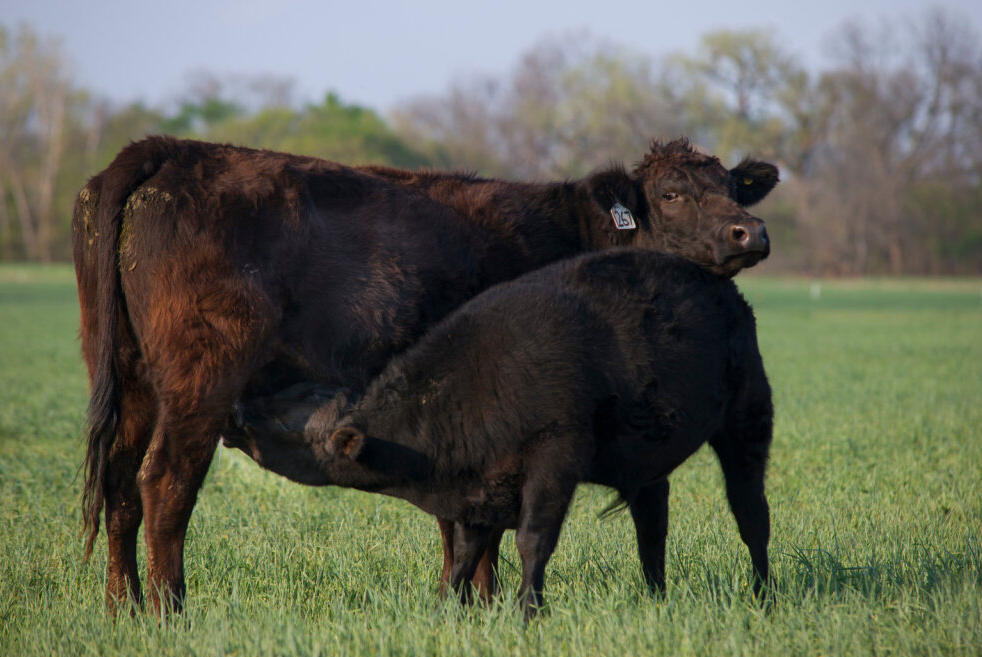
Looking ahead, Melody previewed the upcoming state summer conference on July 10th at MetroTech. The conference will have 5 breakout sessions educators can choose from. "Typically, we have between 250 to 300 educators that join us," she said, inviting attendees from all grade levels to participate. "There is something at every breakout session for whatever grade" she emphasized. The theme, "Find Your Hive in 25," reflects a focus on building partnerships and discovering available classroom resources from agricultural organizations. Melody emphasized the opportunity to make connections and network with agricultural groups and teach your students about them.

Finally, Melody encouraged newcomers to join the Ag in the Classroom community. "There's always room for one more at the Ag in the Classroom table," she quoted Jamie Allen. She highlighted how these events foster lasting friendships and collaboration. "It's our last big event," Melody said of the summer conference, but teased more to come—like a specialty crop tour and a student-led outreach initiative called "Building the Bridge," where high schoolers will teach younger students about agriculture. "So many fun things going on," she concluded with enthusiasm.

🎯 Designed for 3rd–5th grade teachers, this engaging session is packed with free classroom tools, student-led learning strategies, and a mix of literacy, science, and ranch life fun. From sparking inquiry to supporting student ownership, it's a boot-stompin' experience you won't forget!
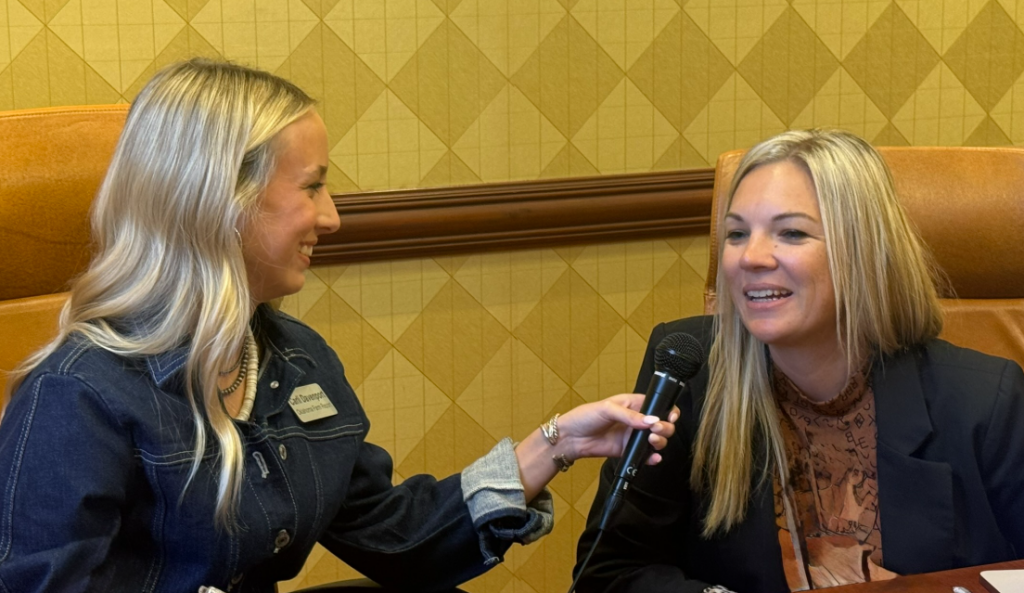
📅 Date: July 10, 2025

🕣 Time: 8:30 AM – 4:15 PM

📍 Location: Metro Technology Center

1900 Springlake Dr, Oklahoma City, OK 73111

🍽️ Lunch provided

📝 Register by July 3, 2025

🔗 Register here (link in bio)

🐶 You don't want to miss these two sessions full of inspiration and practical takeaways!

Guidance on Delicious Beef Grilling

Mark Johnson, Oklahoma State University Extension Beef Cattle Breeding Specialist, offers herd health advice as part of the weekly series known as the "Cow Calf Corner," published electronically by Dr. Derrell Peel, Johnson, and Paul Beck. Today, Mark talks about grilling beef.

Beef is the ideal dietary protein for grilling. With regard to flavor, beef is generally more interlaced with marbling, the taste fat that translates to a more flavorful and satisfying eating experience. Intact beef cuts can be aged to further intensify flavor which is not an option for other proteins. Beef offers more variety of cuts, all of which result in the same satisfying eating experience. Beef steaks can be served in a variety of "degree of doneness" options relative to your preference. Likewise, beef offers more options in the amount of time spent in preparation to better fit your schedule. Since beef is the preferred protein among most consumers, it will typically cost more per pound in comparison; nevertheless, the variety of options from a beef carcass leads to choices to fit any budget. 

Consider The Cut

Middle meats from the beef carcass like ribeye, strip loin, filet and sirloin steaks are very tender and can be cooked quickly at high temperatures on the grill. Typically steaks or middle meats will be the more expensive cuts to purchase. Burgers, made from ground beef will be less expensive than middle meats and can result in the same savory beef flavor.

Practice Safety

Oklahoma State University Cooperative Extension fact sheets offer guidance on safe and delicious grilling. Key recommendations include:

  • Use a food thermometer to ensure a safe internal temperature of burgers of 160 degrees F.
  • Prevent cross-contamination and practice safe food handling. Use a clean platter to remove burgers from the grill and discard any leftover marinades.
  • Keep children and pets away from the grilling area and never leave a lit grill unattended. Keep the grill at least 10 feet from structures.
  • Keep burgers (and other perishable food like dairy products) chilled and covered prior to cooking.

More information about safe grilling can be found in the fact sheet referenced below.

Reference: https://extension.okstate.edu/fact-sheets/keep-food-safe.html

Article by: Mark Z. Johnson, Oklahoma State University Extension Beef Cattle Breeding Specialist

Secretary Rollins's Leadership Secures Our Herds and Our Food Supply

 An Op-Ed By Robby Kirkland, Texas Cattle Feeders Association Chairman & Owner of Kirkland Beef. Our nation's cattle inventory has plummeted to a 73-year low, creating a serious challenge for the American beef industry and the consumers who depend on it. In the face of this, we need decisive, responsible leadership to ensure families can continue to afford high-quality American beef. That is precisely what we have in Agriculture Secretary Brooke Rollins, whose recent announcement of a phased, science-based reopening of the border to Mexican feeder cattle is a critical and welcome step forward.

This decision was not made lightly. It is the result of months of rigorous work and firm diplomacy. Secretary Rollins didn't just ask our partners in Mexico to improve their New World Screwworm (NWS) detection and treatment—she held them accountable, demanding and verifying results. When standards weren't met, she stood her ground.

The proof is in the data. Five USDA-APHIS teams across Mexico have been on the ground, ensuring the sterile fly distribution meets our stringent U.S. standards. Their surveillance confirms the NWS outbreak has not moved northward for more than eight weeks, and case numbers in Mexico have stabilized. This is not a matter of hope; it is a matter of science. If we believe in making decisions based on evidence, we can and should have confidence in this reopening.

That confidence is backed by an ironclad, multi-layered safety protocol. Thanks to stringent USDA oversight, the U.S. and Mexico have maintained a safe cattle trade for decades. Under Secretary Rollins's leadership, those protections are now even stronger. The reopening is not a return to the old standard but an advancement of it.

The process will be meticulous and phased, not a flood of new cattle. It begins with a single port in Douglas, Arizona—a location chosen specifically for its low geographic risk and its proven history of successful collaboration with USDA-APHIS. Every animal will be subject to thorough inspection and mandatory, preventative treatment protocols. Other ports will be considered only when this initial phase is proven safe and effective.

This careful approach allows us to address our domestic cattle shortage while upholding our highest duty: protecting the health of the U.S. herd.

The economic stakes are clear. For over 25 years, an average of 1.15 million head of Mexican cattle have crossed our border safely each year, playing a vital role in America's food security. This trade, strengthened under the USMCA, has provided U.S. consumers with a consistent supply of high-quality beef. Mexican producers, responding to American demand, have invested heavily in improved genetics, diversifying our supply chain and helping to meet consumer demand at a time when it has never been higher.

We in the cattle industry do not want NWS in the United States. Our livelihoods depend on the health of our herds. We are confident that the science-based protocols and decisive leadership demonstrated by Secretary Rollins and the Trump administration will protect our industry while

ensuring a steady, high-quality beef supply for Americans. This is the right plan to secure our border, herds, and food supply.

Robby Kirkland is Chairman of the Texas Cattle Feeders Association Board of Directors and is the Owner of Kirkland Feedyard

Oklahoma Wheat Commission Sponsoring 2025 Jr. Wheat Show

Listen here to Ron Hays and Mike Schulte

Mike Schulte from the Oklahoma Wheat Commission discussed several upcoming events and initiatives, including the Junior Wheat Show, set for Wednesday, July 16th at the Payne County Fairgrounds in Stillwater, Oklahoma. Schulte emphasized the importance of this program for 4-H and FFA students: "We give over $16,000 in scholarships each year to the top five entries in the 4-H and FFA competition," which are awarded on December 3rd at the Embassy Suites. Students are encouraged to participate by submitting 10-pound samples, and they can access the rules on the Oklahoma 4-H and Wheat Commission websites.

This year's growing season posed some challenges due to excessive rainfall, but Schulte remains optimistic: "We are hopeful that we are gonna have a good number as we have progressed with harvest." This Junior Wheat Show is only the visual competition, Schulte noted. the visual samples will be "judged by the lead wheat breeder at Oklahoma State University, Dr. Brett Carver." the top samples will later be sent to "the OSU Food and Agricultural Product Center where they are given milling and baking scores."

Participation in the Junior Wheat Show has grown significantly, geographically and numerically, in recent years. Schulte noted: "We've seen more students entering from the north-central regions of the state as well as southwestern parts," expanding beyond its traditional base in northwestern Oklahoma. He added that yearly variation in growing conditions means "it may be someone else's year that typically it wouldn't have been."

Additionally, this year, a trade team from Equidor will be coming for a visit. Schulte said, "Next week we do have a group of Ecuadorian Millers that are coming in from four of the largest mills in that region." The visit will include technical evaluations at OSU's Food and Ag Product Center, as well as farm and elevator tours. Ecuador has historically been a strong market for U.S. wheat but had "dropped from the market in 2023, 2024." according to Schulte. This visit is part of efforts to revive trade: "Our hope is we can facilitate more trade and discussion efforts."

Finally, Schulte highlighted the broader international outreach coordinated with U.S. Wheat across the wheat belt, involving delegations from "Peru, Ecuador, Chile, and Mexico" and even "the Far East, from Taiwan." He expressed hope that advancements in variety development—specifically in blending hard and soft red winter wheat—will meet evolving market needs, especially in snacks and baked goods: "We're going to be working on specific blends that can be used for snacks, like cakes and pastries as well as crackers." This diversification could open new markets for U.S. wheat producers.

Impasse with China Weighs Heavily on May Exports of U.S. Red Meat

Listen to USMEF's Dan Halstrom

Exports of U.S. pork and beef trended lower in May, due primarily to steep declines in shipments to China, according to data released by USDA and compiled by the U.S. Meat Export Federation (USMEF). 

As USMEF President and CEO Dan Halstrom details, in April and the first half of May, China's total tariff rate on U.S. pork peaked at 172%, while the rate for U.S. beef was 147%. Even following a May 14 joint announcement temporarily easing tariffs for 90 days, China's rates still stand at 57% for U.S. pork and 32% for U.S. beef. In addition, most U.S. beef production is ineligible due to China's failure – since February – to renew expiring beef plant and cold storage facility registrations. 

May pork exports totaled 224,162 metric tons (mt), down 11% from a year ago, while value fell 10% to $646.5 million. Although these were the lowest monthly totals since September 2023, shipments increased year-over-year to Mexico, Central America and Colombia, and were record-large to Cuba. Pork exports to all of these markets are on a record pace in 2025.

Through the first five months of the year, pork exports were down 6% in volume (1.22 million mt) and 5% in value ($3.43 billion) compared to the record pace of 2024.

Beef exports totaled 97,266 mt in May, down 12% and the lowest in nearly five years. Export value was $798.7 million, down 11.5% and the lowest in 18 months. But exports to leading market South Korea were outstanding, posting the largest monthly volume in more than two years and the highest value in nearly three years. May beef exports also trended higher year-over-year to Central and South America, the Dominican Republic, the United Arab Emirates and Africa. 

January-May beef exports were down 5% from last year's pace at 508,293 mt, while value declined 3% to $4.15 billion. A detailed summary of the May export results for U.S. pork, beef and lamb is available from the USMEF website

Day 9, Kansas Wheat Harvest Nears End, Battling Rain and Mixed Quality

Pic Courtesy of Kansas Wheat FB page

This is day 9 of the Kansas Wheat Harvest Reports, brought to you by the Kansas Wheat Commission, Kansas Association of Wheat Growers, Kansas Grain and Feed Association and the Kansas Cooperative Council.

Kansas wheat farmers have been facing a challenging wheat harvest due to persistent rains on mature wheat. While test weights have suffered because of this, the 2025 crop has shown stronger yields than the past three drought-stricken years.

Officially, the Kansas wheat harvest is 82 percent complete, behind 90 percent complete last year but ahead of 77 percent average, according to the USDA's National Agricultural Statistics Service crop progress report for the week ending July 6, 2025. 

Josh Debes, a wheat farmer in northern Barton County, is among those still navigating the final stretch of harvest. Rainfall over the past week has forced Debes to chase dry fields across the county in hopes of finishing before another rain delay sets in. His wheat crop, already stressed by drought and a high incidence of wheat streak mosaic virus, is now facing quality declines due to the rain.

"We started with test weights at 60 pounds per bushel on our better fields," Debes said. "But test weights have dropped since the wheat has been rained on." Equally stressful has been a constant stream of equipment breakdowns that have kept one or both combines out of fields when Mother Nature has opened up a window for cutting.

Despite the setbacks, Debes expects to harvest more bushels this year than in either of the past two years, when extreme drought nearly wiped out his wheat entirely. "Morale is low, but at least we've got bushels to sell to cover the costs of getting this fall's sorghum crop in the ground," he added.

Jeff Boyd, CEO of Garden City Coop, reported that wheat harvest in their trade territory is 90 to 95 percent complete. Rains over the holiday weekend have slowed progress, and it may be another two days before combines can roll again in Finney County. Recent storms have also caused lodging in some fields. 

Harvest began June 14 at their Hooker, Oklahoma, location. Boyd noted that test weights are averaging around 59 pounds per bushel, and protein levels are coming in at 11.8 percent. Overall, Boyd expects an average to above-average crop in terms of total bushels, with quality landing around average. Yields have ranged widely from the 30s to the 80s, with some of the strongest wheat coming from Finney and Lane counties. Yields have tended to decrease further north. The wheat streak mosaic virus complex has impacted yields and test weights in certain areas, while unusually high humidity has caused threshing issues with some varieties.

In Atchison County, Jay Armstrong wrapped up his Soft Red Winter wheat harvest on July 2 with a farm-wide average of 119 bushels per acre. Only 4.2% of wheat grown in Kansas is SRW, according to USDA/NASS's winter wheat variety survey for 2025. While Armstrong reported good — but not exceptional — quality and test weights, the biggest challenge this season was getting the crop out between frequent rain delays. His harvested acres have already been planted to doublecrop soybeans. The 2025 Harvest Report is brought to you by the Kansas Wheat Commission, Kansas Association of Wheat Growers, Kansas Grain and Feed Association and the Kansas Cooperative Council. To follow along with harvest updates on social media, use #wheatharvest25. Tag us at @kansaswheat to share your harvest story and photos

USDA Crop Progress Shows US Winter Wheat Harvest Now Just Past Half Completed

The US Winter Wheat Harvest has now pushed across the halfway mark in the 18 states that the National Ag Statistics Service compiles wheat crop data. 53% of the US Wheat harvest is complete, versus 37% a week ago, 62% a year ago and versus the 54% five year average.

Spring crop conditions nationally show the US Corn crop up slightly in the good to excellent categories at 74% good to excellent- up one percentage point from a week ago and up 6 points versus the five year average of 68%.

The US Soybean crop is unchanged from the last two weeks at 66% good to excellent condition and versus 68% good to excellent at this point a year ago.

Cotton crop conditions edged higher in this week's report to 52% good to excellent- up one point from last week and up seven points compared to the 45%good to excellent rating of this week in 2024.

Grain Sorghum stands at 67% good to excellent this week versus 64% good to excellent last week and 59% good to excellent one year ago.

Finally- the US Pasture and Range Conditions improved week over week- helped by a big improvement in Texas. The US Pasture and Range condition is at 45% good to excellent versus 43% good to excellent of last week and the five year average of 44%.

Click here for the complete Crop Progress Report for July 6 as released on Monday afternoon, July 7, 2025.

In the southern plains- the 2025 Oklahoma winter wheat crop harvest continues to lag the 2024 harvest as we now stand at 83% harvested versus 100% complete at this point in 2024- Oklahoma wheat harvest did improve by 12 points from the 71% harvest from a week ago.

Kansas wheat producers had the peddle to the metal as June turned into July as harvest advanced from 53% reported in the last week of June to 82% this week- which compares to 90% at this time a year ago.

Texas harvested very little this past week- moving the harvested number from 80% to 83% over the last week- and that's versus 91% a year ago.

As for our Summer crops in Oklahoma:

Corn crop conditions are now at 72% good to excellent this week versus 68% a week ago and 66% a year ago.
The Oklahoma soybean crop is at 59% good to excellent this week versus 53% a week ago and 55% a year ago.
Cotton in Oklahoma is rated 60% Good to excellent this week- well under the 67% of a week ago.
Grain Sorghum sits at 76% good to excellent this week- the same condition of the crop as last week.
And Pasture and Range conditions are at 70% good to excellent this week versus 71% good to excellent one week ago.

Checking Summer crops and Pastures in Kansas:

Corn crop conditions are rated 72% good to excellent this week- six points better than a week ago.
Soybean conditions are also rated 72% good to excellent this week versus 67% good to excellent last week.
Cotton conditions in Kansas are rated 37% good to excellent this week versus 31% a week ago.
Grain Sorghum crop ratings are 66% good to excellent this week versus 60% a week ago,
And Pasture and Range ratings are 63% good to excellent this week-they were 66% good to excellent one week ago.

Checking Summer Crops and Pastures in Texas

Corn crop conditions are rated 68% good to excellent this week- one point better than a week ago.
Cotton conditions in Texas are rated 42% good to excellent this week versus 40% a week ago.
Grain Sorghum crop ratings are 66% good to excellent this week versus 68% a week ago,
And Pasture and Range ratings are 60% good to excellent this week-they were 50% good to excellent one week ago


USCA Comments on Passage of One Big Beautiful Bill

The U.S. Cattlemen's Association (USCA) commented on the successful passage of "The One, Big, Beautiful Bill", which includes several provisions critical to the U.S. livestock industry: 

Livestock Indemnity Program 

  • Establishes a payment rate for losses due to predation at 100% of the market value and losses due to adverse weather or disease at 75% of the market value. 
  • Introduces additional payments for unborn livestock death losses incurred on or after January 1, 2024, at a rate determined by the Secretary, not exceeding 85% of the payment rate for the lowest weight class of livestock. 

Livestock Forage Disaster Program 

  • Allows for two monthly payments and specifying eligibility criteria based on grazing periods. 

Emergency Assistance 

  • Provides emergency assistance for cattle with specific payment rates and eligibility criteria. 

Death Tax 

  • Increases the estate and gift tax exemption amounts. Specifically, it changes the exemption amount from $5 million to $15 million and updates the applicable years for the exemption.  

Foreign Animal Disease Prevention 

  • Specifies funding allocations for foreign animal disease prevention programs. 

"This comprehensive piece of legislation, signed by the President on July 4, includes several issues that USCA has long advocated for and we will continue to engage in discussions as this moves forward," USCA President Justin Tupper said. 

Judge Vaden Sworn in as Deputy Secretary at the U.S. Department of Agriculture

Today, Judge Stephen Alexander Vaden was sworn in as the Deputy Secretary of the U.S. Department of Agriculture. Vaden, of Union City, Tennessee, joins Secretary of Agriculture Brooke L. Rollins to not only deliver on the promises of President Trump but also to execute the agriculture and nutrition policies of the One Big Beautiful Bill.

"I am so excited to welcome Deputy Secretary Vaden to the USDA team," said Secretary Rollins. "His policy and legal acumen will be a tremendous asset to the Department, and I look forward to his partnership as we continue to revitalize rural America and make certain American farmers continue to provide the safest, most affordable, and most abundant food supply in the history of the world."

"I thank President Trump and Secretary Rollins for their trust in me to support the incredible men and women of American agriculture," said Deputy Secretary Vaden. "I look forward to getting to work to support the Secretary in Making Agriculture Great Again."

Judge Vaden previously served as General Counsel to the United States Department of Agriculture during President Trump's first term. In 2020, President Trump appointed Judge Vaden to serve on the United States Court of International Trade. He is a native of Union City, Tennessee, and he continues to help manage his family farm.

NCBA Statement on Reopening of First Port of Entry in Douglas, AZ

Today, National Cattlemen's Beef Association (NCBA) CEO Colin Woodall released a statement on the opening of the first port of entry at Douglas, Arizona to shipments of cattle, bison, and horses:

"Since day one, Secretary Rollins has been focused on America first policies that support America's cattle producers, like defending us from the New World screwworm. Raising cattle is an extremely varied business, and no two ranches run the same way. Secretary Rollins' decision to reopen the Douglas port of entry to live cattle imports will help relieve the economic pain for some producers throughout the country who depend on cattle moving through that port for their businesses.

"Cattle moving through this port will go through a robust double-inspection. Before entering the port, cattle will be inspected for any wounds or other health conditions. If any wounds are detected, the entire lot of cattle will be rejected by veterinary authorities. Cattle will also receive an anti-parasitic medication and then be quarantined for three days before moving through the port. Once on the other side, cattle will receive another round of veterinary inspection. Opening the Douglas port is the first phase of USDA's plan and they will continue assessing biosecurity at every step of the process.

"Throughout this situation, Secretary Rollins has held Mexican officials accountable to ensure they are joining the fight against the screwworm, she has pushed for a domestic sterile fly facility in Texas, and she released a five-point plan to combat New World screwworm. We appreciate that she is always working to support America's hardworking, patriotic family farmers and ranchers."

National Wheat Foundation Names Anne Osborne as Executive Director

The National Wheat Foundation (NWF) Board of Directors is pleased to announce the appointment of Anne Osborne as Executive Director, effective July 1, 2025. Osborne has served as the Foundation's Project Manager since January 2021, playing a key role in the expansion and success of its core programs.

Under Osborne's leadership, the Foundation's signature initiative—the National Wheat Yield Contest (NWYC)—has grown significantly. The contest now includes over 30 industry partners and receives more than 500 entries annually across five categories. It has led the way in innovation with the introduction of a digital yield category and an enhanced focus on wheat quality, attracting collaboration from all sectors of the wheat value chain.

"Anne has consistently shown strategic leadership, creativity, and a deep commitment to collaboration in her role with the Foundation. She is exceptionally well-suited to guide the organization into the future. As the sole member of the National Wheat Foundation, NAWG relies heavily on the Foundation's exceptional work in education, outreach, and research," said Pat Clements, President of the National Association of Wheat Growers (NAWG).

A lifelong advocate for growers, Osborne brings extensive experience in agriculture. She has held leadership roles in several organizations including the North Dakota Corn Growers Association, National Corn Growers Association, and Ag in the Classroom. Osborne has also served on church boards, local school boards, and worked directly with producers through roles at DuPont and as a sales agronomist in central North Dakota. She holds a Bachelor of Science in Agricultural Education from Montana State University.

Gary Broyles, Montana wheat farmer and Chair of the National Wheat Foundation, added:

"Appointing Anne ensures continuity in our programs and strengthens our ability to expand partnerships and continue impactful education, outreach, and research. Her leadership will benefit the entire wheat industry."

Early Look at Wheat Test Plot Results Tops Meeting Tuesday In Okeene

Pic Credit of https://www.oklahomaag.com/

Oklahoma wheat growers will get a significantly earlier look at Oklahoma State
University's preliminary wheat variety trial results - well ahead of planting season - during the Oklahoma
Wheat Growers Association (OWGA) annual meeting Tuesday in Okeene.
This marks a major shift from previous years, when variety trial data was typically released later in the
summer which is too late for many producers to use when selecting seed wheat for the fall. The earlier
reveal gives farmers a critical edge with timely, research-based insights into top-performing varieties for
planting this fall.
"This is a game-changer for growers who rely on this data to make planting decisions," said OWGA
Executive Director Jeff Hickman. "Sharing preliminary results now gives producers the opportunity to act
on the information while there's still time to make decisions about seed wheat."
The event takes place in Okeene, a hub for wheat production in Oklahoma. Activities begin with an
exclusive 10 a.m. tour of Mountain Country Foods, a pet treat manufacturing, packaging, and distribution
facility. The meeting itself will be held at The Corner Event Center, 101 N Main Street. Check-in opens at
11:30 a.m., with Oklahoma Ag Credit serving steaks for lunch at 11:45 a.m. The program kicks off at
12:15 p.m. and wraps up by 4:15 p.m.
The meeting is open to all wheat producers and agribusiness professionals. Registration is free for OWGA
members and only $50 for non-members, which includes a one-year OWGA membership. Register online
at oklahomaag.com or call 580-233-9516.
The afternoon program features:

  • Variety performance results presented by Dr. Brett Carver, OSU's world-renowned wheat
    geneticist;
  • A presentation by Dr. Liberty Galvin on the rising threat of herbicide-resistant weeds in
    Oklahoma wheat fields;
  • Updates from local agribusiness leaders, including Okeene Milling Company, Sooner Plains Ag
    Cooperative, and Mountain Country Foods.
    "This year's meeting is about helping farmers make informed decisions that lead to better yields and more
    profitability," said OWGA President Dennis Schoenhals of Kremlin. "We're excited to bring this data to
    growers sooner when it can make a difference."
    The OWGA meeting is made possible in part by the Oklahoma Wheat Commission, with support from
    Oklahoma wheat producers through the wheat checkoff program. Checkoff dollars provide benefits to all
    wheat producers in the state by investing in research and development of new, more profitable varieties
    by the OSU wheat breeding team led, by Dr. Carver, along with domestic and international market
    development leading to improved prices for Oklahoma grown wheat, and consumer and producer
    education initiatives. For more information, visit oklahomaag.com or call the OWGA office at 580-233-
    9516.

One Big Beautiful Law Delivers Many of the Cattle Industry Priorities for 2025

Senior Farm and Ranch Broadcaster Ron Hays spoke with Ethan Lane from the National Cattlemen's Beef Association (NCBA) to discuss the recently enacted big beautiful bill. On the Fourth of July, President Donald Trump signed the one big beautiful bill into law. This wide-reaching legislation includes the permanent extension and expansion of the Trump tax cuts from 2017. One of the most notable features is the significant increase in death tax exemptions. “The exemptions go up significantly,” noted Ron, highlighting the impact on estate and gift taxes for farmers and ranchers.

Ethan Lane of the National Cattlemen’s Beef Association emphasized the importance of this law for cattle producers nationwide. “This was a huge bill for a lot of our priorities,” Lane said, referencing tax reforms and agricultural protections. Among the provisions are reimbursements for livestock losses from federally protected predators and strengthened defenses against foreign animal diseases. Lane explained, “It bolsters the three-legged stool for protecting the cattle industry from foreign animal disease,” including continued funding for the FMD Vaccine Bank to be housed at the National Bio and Agro-Defense Facility in Manhattan, Kansas. 

The law also delivers sweeping changes to tax policy that directly benefit producers. Lane detailed, “This bill increases the estate tax and gift tax exemption to $15 million per individual, $30 million per couple,” with annual inflation adjustments. These changes, he noted, are now permanent, eliminating uncertainty for families worried about losing ground due to reverting tax thresholds. Additional wins include expanding the Section 199A small business deduction from 20% to 23%, doubling Section 179 expensing limits, and reinstating 100% bonus depreciation for five years.

Finally, Lane praised the legislative process itself, calling it a model of proper governance. “I think it's incredibly important and hasn't been talked about enough that the House of Representatives effectively used regular order to pass this bill,” he said. Committees across the House held extensive markups, including a near-record 27-hour session by the Energy and Commerce Committee. “The result is a bill that has a lot of imprints of different members in it,” Lane noted, making it not only bipartisan in parts but deeply representative of diverse stakeholder interests across agriculture.

The Beef Buzz is a regular feature heard on radio stations around the region on the Radio Oklahoma Ag Network and is a regular audio feature found on this website as well. Click on the LISTEN BAR for today’s show and check out our archives for older Beef Buzz shows covering the gamut of the beef cattle industry today.

Oklahoma Wheat Harvest 85% Complete; Mixed Bag of Yields and Quality

Pic Courtesy of OK Wheat Commission

Oklahoma wheat harvest moved forward at a slow pace over the 4th of July weekend, with rain showers hitting several parts of the Panhandle, Northern, and Northeast Oklahoma at different times. There is a region in the Goodwell, Guymon and Hooker area that is still working on irrigated wheat production that has been delayed due to rains this past week.  In North Central Oklahoma, little progress has been made, with producers cutting just to check moisture samples while fighting with mud. In Northeast Oklahoma, progress was made over the weekend, but rain showers yesterday evening have put harvest at a standstill as of today.

Several producers are weighing options as weeds become more of an issue. Test weights have dropped significantly in many parts of North Central Oklahoma in the 56 lbs. to 58 lbs. per bushel. Many producers have been surprised test weights have been holding up as good as they have been despite everything the crop has been through.

Photo courtesy of OK Wheat commission FF Page Via Chase Wittum

The statewide average for test weight is still reported at  59 lbs. as much heavier weights were harvested earlier in the season. Yields across the state are ranging from the mid 40's to mid 50's for the most part, with some lower yielding wheat being reported due to heavy rains.

Management-intensive producers have reported higher yields ranging in the mid-60s to mid-80s. Producers had better wheat in many Northern parts of the state but now will see some yield loss due to lower test weights. Protein ranges have been all over the board from 9.8% to 14.2% depending on management and location. Protein average for the state of Oklahoma is at 11.2%. 

The Oklahoma Wheat Commission is calling harvest 85% completed as of today.  

This will be the last harvest report of the season and will be considered a fair representation of quality in the state, even though some quality targets will be lower than expected on what remains.

**It should be noted some minor instances of sprout has been reported at a 1% to 3% level, but in most regions the crop is still holding up without much sprout damage.  If sprout becomes more of an issue, then producers will most likely opt to utilize for feed wheat.

Intensively managed wheat reported to be making in the mid 60's. No protein was reported at this time. This region is considered to be 95% harvested.

Photo courtesy of OK Wheat commission FF Page Via Chase Wittum

Garber/Kremlin/Hunter/PondCreek- Producers have been fighting mud in this region all harvest, with little movement over the past 5 days. Test weights have declined some ranging from 55 lbs. to 58 lbs. per bushel. Yields reported in the mid-40s to mid-50s for the most part. Some intensively managed fields making in the mid 60's.  Protein averaging 11.2%. This region is considered to be 57% harvested.

Tonkawa/PoncaCity/Blackwell/Braman- Test weights being reported at 56 lbs. to         58 lbs. per bushel.  This region has had heavy rains the last 5 days putting harvest at a standstill for the past week. Yields on early cuttings range from the low 40s to the mid-50s for the most part. It is worth noting that a significant portion of this region has experienced severe flooding and hail events.  Also several fields will most likely be abandoned due to heavy weed issues.  Protein on early cuttings averaging 11.1%.  This region is considered 52% harvested.

Northeast Oklahoma

Afton/Miami- Producers have fought rain in this region all harvest, but towards the beginning of the weekend a couple days was suitable for cutting, with producers making progress. Rain showers yesterday also halted further progress. This region reporting two classes -- Hard Red Winter and Soft Red Winter wheat.  This region reported at 80% percent complete.

**Hard Red Winter Class, test weights have been averaging 56 lbs. per bushel.  Yields are ranging in the mid 20's to mid 50's depending on variety and location.

**Soft Red Winter Class, test weights have been averaging 56 lbs. per bushel. Yields are ranging in the mid 20's to mid 50's depending on variety and location. We did have a couple of yields reported in the low 70's.

Wheat Classes And What They Are Used For

Hard Red Winter (HRW) – A versatile wheat with excellent milling and baking characteristics for pan bread. Hard Red Winter wheat is also a choice for Asian noodles, hard rolls, flat breads, general purpose flour and cereal.

Soft Red Winter (SRW) – A versatile, weak-gluten wheat with excellent milling and baking characteristics suited for cookies, crackers, pretzels, pastries and flat breads.

Panhandle

Balko/Goodwell/Guymon/Hooker- A large portion of dryland harvest has now been completed in all regions of the Panhandle.   Dryland wheat harvest is 98 percent complete. A great deal of irrigated wheat harvest has taken place in central regions of the Panhandle around the Balko area, while producers in the Guymon and Hooker region have been delayed with rains and high humidity. Dryland wheat yields reported from 20 bushels to 50 bushels per acre depending on variety and location.   Irrigated wheat yields from 80 bushels to 120 bushels per acre.  Test weights on dryland wheat ranging from 55 lbs. to 62 lbs. per bushel depending on variety and location.   Test weight on irrigated wheat that was reported ranging from 57 lbs. to 61 lbs. per bushel.   Protein average for the Panhandle has varied more so than other years but many parts of the region looking at 12% averages.  The Panhandle region is considered 75 percent completed with harvest.

Below, see the 7-day forecast provided by the Oklahoma Mesonet.

Daily Email for July 7, 2025


Oklahoma's Latest Farm

and Ranch News

July 7, 2025


Howdy Neighbors!

Welcome to the New Email! We hope you love our makeover! We will still strive to include all your latest farm and ranch News daily, and always feel free to send us feedback, stories, ideas, etc.. at kc.sheperd@radiooklahoma.net! We are so glad you are here!


Secretary Rollins Praises President Trump's One Big Beautiful Bill

U.S. Secretary of Agriculture Brooke L. Rollins issued the following statement after President Donald J. Trump signed the One Big Beautiful Bill into law:

"The One Big Beautiful Bill marks the start of a new golden age for America and American agriculture. This historic piece of legislation makes permanent the largest tax cuts in history.


"It provides immediate tax relief to farmers, ranchers, and rural Americans by increasing the small business expensing threshold and permanently extending the Small Business Deduction. Through the President's leadership, the bill Makes Agriculture Great Again, bolsters the farm safety net, makes crop insurance more affordable, and protects two million family farms from the death tax.


"While expanding programs to support the farmers who feed, fuel, and clothe America, this legislation also tackles the fraud and waste that has run rampant in the Supplemental Nutrition Assistance Program (SNAP). The bill holds states accountable for their error rates, strengthens work requirements, and prevents illegal aliens from receiving SNAP.


Ag Groups and Lawmakers Comment on Big Beautiful Bill

American Farm Bureau Federation President Zippy Duvall commented today on final passage of the One Big Beautiful Bill Act.


"Farm Bureau applauds the House and Senate for passing legislation that will bring certainty to America's farmers and ranchers. Modernizing important farm safety net programs and making permanent critical tax provisions could be the difference between staying in business or shutting down the family farm.


"Lawmakers took a big step toward ensuring America's farmers and ranchers can continue to keep pantries filled for America's families."


National Cattlemen's Beef Association (NCBA


"Since day one, NCBA has been working with Congress to make sure the One Big Beautiful Bill includes policy priorities for America's hardworking family farmers and ranchers," said NCBA President Buck Wehrbein, a Nebraska cattleman. "I'm proud that this legislation protects farms and ranches from being split up and sold off to pay a high Death Tax bill. I'm also glad the One Big Beautiful Bill protects pro-business tax deductions for cattle producers, lowers our taxes overall, and funds programs like the Livestock Forage Disaster Program, Livestock Indemnity Program, voluntary conservation programs, and invests in keeping foreign animal diseases out of the United States."

US Custom Harvester Details Mixed Bag for Western Kansas Wheat Crop

Farm Director KC Shepered spoke with Paul Paplow, who provided an update on his harvesting work, confirming that his team is currently in western Kansas, specifically around Tribune. "We got done in Pratt, Kansas... then I moved out to Tribune and joined the rest of the crew," he said. The crew has been active in the area for about a week, harvesting wheat crops that yield between 25 and 60 bushels per acre. Test weights have varied significantly, ranging from 52 to 61 pounds. "The quality's been kind of up and down. A lot of freeze damage, hail damage, wind damage, drought—a little bit of everything," Paplow explained.


The weather has been a critical factor in this year's harvest. "We've been lucky," Paplow said, noting that they managed to avoid most rain delays. "When we finished in Pratt, we got a good rain the night that we finished." They faced a half-day delay in Tribune due to weather, but otherwise enjoyed hot, dry conditions ideal for harvesting. Regarding Wheat Streak Mosaic, Paplow shared, "I, myself, have not seen much... usually every year we see it, but I have not noticed anything that we've cut ourselves.


The impact of rainfall has been mixed. "Some of the rain came a little too late in places," Paplow noted. "Down in Texas and Oklahoma, with all the rain, it just really destroyed the quality of the crop." He added that some harvesters have struggled with wet field conditions, but his crew is equipped for such challenges: "We run four-wheel drive and duals on all of our machines... we have tracks that we'll put on when it gets really wet."

National Livestock offers a comprehensive suite of services for cattle producers. Their Marketing Division facilitates weekly cattle sales at the Oklahoma National Stockyards. The Finance Division provides loans to ranchers for cattle production across multiple states. Additionally, the Grazing Division helps producers find suitable wheat or grass pastures for their cattle.


National Livestock also owns and operates other significant livestock marketing businesses, including Southern Oklahoma Livestock Auction, OKC West Livestock Market, and Superior Livestock Auction. For more information, you can visit their website or call their Oklahoma City office at 1-800-310-0220. To learn more, click here for the website or call the Oklahoma City office at 1-800-310-0220.

Dating back to 1891, Stillwater Milling Company has been supplying ranchers with the highest quality feeds made from the highest quality ingredients. 


Their full line of A & M Feeds can be delivered direct to your farm, found at their Agri-Center stores in Stillwater, Davis, Claremore and Perry or at more than 125 dealers in Oklahoma, Arkansas, Kansas and Texas. 


We appreciate Stillwater Milling Company's long time support of the Radio Oklahoma Ag Network and we encourage you to click here to learn more about their products and services.

The Cost of Growth: Balancing Carcass Size and Cow Efficiency With Dr. David Lalman

In today's Beef Buzz, Senior Farm and Ranch Broadcaster Ron Hays spoke with Dr. Dave Lalman, Oklahoma State University's extension beef cattle specialist At the recent Beef Improvement Federation (BIF) meeting in Amarillo, Texas, Dr. Lalman highlighted a major industry trend: the consistent rise in carcass weights. "The thing that really stuck out to me is the never-ending arms race for growth in carcass weight," Lalman stated. He noted that average steer carcass weights are now "around 930," and have been steadily increasing for decades.


This push for heavier carcasses is being reinforced by the meat industry's economics. Dr. Lalman says According to Dr. Ty Lawrence of West Texas A&M, "from a feed yard profitability and a packing plant efficiency stand point they're going to basically desire and maybe even incentivize continued increase in carcass weight." He suggested the industry may someday see carcasses weighing "1500 pounds," Ron pointed out this would require adjustments across infrastructure, including transportation and packing plant facilities. Dr. Lalman responded that infrastructure is already adapting and will have to continue to.


Drought Free Oklahoma Continues in the latest Drought Monitor

According to the latest Oklahoma drought monitor report, exceptional drought remains at zero percent, unchanged from the start of the calendar year.

Extreme drought or worse conditions remain at zero percent, unchanged since the week of October 29, 2024.


Also Severe drought, moderate drought or worse conditions remain at zero percent.


Abnormally dry or worse conditions also stayed at zero Percent, same as last week.

According to the 6-to-10-day precipitation outlook map, most of the state of Oklahoma is leaning above 40-50% chance of precipitation through July 12. The panhandle has a 33-40% chance of rain through that same date.

From Kansas to Oklahoma: Soil Health Bus Tour Showcases Resilient Farms and Innovative Grazing

Farm Director KC Sheperd spoke with Aaron Sawyer, Director of No-Till on the Plains, who discussed the group's recent "soil health bus tour," which began in Kansas and ventured into Oklahoma. "We left Kansas yesterday morning and met, met our Oklahoma friends," Sawyer said, sharing that they visited Tom Cannon's farm to explore "crop diversity rotations" and soil structures. Despite receiving "over two and a half inches of rain," Sawyer was impressed that they experienced minimal mud, noting it as a testament to improved soil structure and health.


Their journey also included a stop at the Noble Foundation in Ardmore, Oklahoma, where they observed ranches undergoing soil health practices. The following day brought them to Mountain View for a visit with Fusion Ag, where they toured "pasture cropping and some of their mixes." Sawyer remarked on the unusual weather: "So far it's rained at about every stop we've been on, and it's cool. Overcast and in the eighties, 1st of July. That's not normal Oklahoma."


A significant contrast was observed between no-till and conventionally tilled fields. As Sawyer explained, "in the no-till fields, you didn't see a lot of ponding," whereas tilled fields displayed "a lot of gully erosion." One standout moment was when Tom Cannon pointed out runoff in his field and asked Sawyer to notice the clarity of the water: "What was coming off was clean—it wasn't carrying soil with it."

OSU's Rosslyn Biggs, DVM: Got Foot Rot?

Foot rot is a common disease affecting cattle. It creates swelling and lameness in one or more feet. The condition can lead to severe lameness, decreased weight gain, and reduced overall production. If treatment is not initiated in a timely manner, deeper structures of the foot may become affected, leading to chronic disease and potentially permanent damage.


The primary agent responsible for foot rot is Fusobacterium necrophorum, which is a common bacteria of healthy skin. However, it requires an opportunity to invade deeper tissues such as injury or wet skin. This bacterium often acts in conjunction with others, such as Porphyromonas levii, Staphylococcus aureus, Escherichia coli, and Trueperella pyogenes.


Environmental factors play a significant role in the transmission of foot rot. Moisture, nutrient deficiencies (particularly in iodine, zinc, selenium, and copper), and injuries from walking on abrasive surfaces can compromise skin integrity, facilitating bacterial invasion. Standing in pens or lots heavily contaminated with mud, feces, and urine softens the skin, increasing the opportunity for infectious agents to invade. High temperatures and humidity can also cause the skin to become more fragile, making it more susceptible to infection.

Oklahoma Sees Strong Revenue Rebound in June, Capping Fiscal Year 2025 with Growth


Oklahoma tax revenues rebounded in June after a seasonal May dip, with the latest monthly collections totaling $1.48 billion, a 15.1% increase over May and a 3.3% gain compared to June 2024. The growth closes out Fiscal Year 2025 on a strong note, signaling a resilient economic base as Oklahoma enters the new fiscal year.


Total collections over the past 12 months reached $16.92 billion, a 0.2% increase over the previous 12-month period, indicating solid year-end momentum despite ongoing national and global uncertainty.


"Oklahoma's revenue rebounded this month, showing total increases across both yearly and monthly comparisons—a strong sign of economic resilience and fiscal momentum as we close out fiscal year 2025 and look ahead to 2026," said State Treasurer Todd Russ, "As we prepare to celebrate Independence Day, it's encouraging to see so many signs that Oklahomans are working hard, spending responsibly, and helping build a stable foundation for the year ahead."


Checking the Markets...

As we begin the week after the Fourth of July holiday- the big livestock market event is the Superior Livestock Week in the Rockies Sale- 311,727 head will sell over the five days of the sale- Click here for more details from Superior Livestock.


A big feature of the market ahead of the Fourth was the sharp drop in Boxed Beef Prices- Choice Beef fell $5.11 on Thursday. After the holiday- the Oklahoma National Stockyards is off this week after the Fourth of July Holiday- they return on July 14th.


OKC West is our Market Links Sponsor- they sell cattle three days a week- Cows on Mondays, Stockers on Tuesday and Feeders on Wednesday- Call 405-262-8800 to learn more.


Click here for our Markets Page on OklahomaFarmReport.Com-- there you will find many of the reports we have linked on the right hand column found on the previous format of our email.

Our daily email is free because of our Sponsors!

OKAgCredit248x160.png
StewartMartinKubota-240.jpg
TulsaFarmShowSquareGraphic240.jpg
okfb.png
AMFeeds.png
pkEquipment.png
Oklahoma-Wheat-Commission_Logo_Vertical_Full-Color_Gray240b-e1736195614699.jpg
GreatPlainsLogoFeb2025Update240.jpg
NAT_Logo_BlackRed160.png
OklaBeefCouncil.png
KIS-Logo240b.png
oca.png
Facebook

© 2025 Oklahoma Farm Report - All rights reserved


Slow Mexican Border Reopening Planned

Dr. Derrell Peel, Oklahoma State University Extension Livestock Marketing Specialist, offers his economic analysis of the beef cattle industry as part of the weekly series known as the "Cow Calf Corner," published electronically by Dr. Peel, Mark Johnson, and Paul Beck. Today Dr. Peel discusses boarder reopinng plans.

USDA-APHIS has announced a slow phased reopening of the Mexican border for imports of cattle, bison and horses in the coming weeks.  Progress has been made in containing the spread of New World Screwworm (NWS) in Mexico with expanded control measures and increased cooperation with Mexican officials.  The plan calls for opening ports farthest away from southern Mexico (i.e. Arizona) with the least risk of transporting NWS to and across borders and sequentially reopening ports in New Mexico and Texas between July and September.  Each phase of reopening will be contingent on continuing assessment and progress in NWS containment and control in Mexico.  The Arizona and New Mexico ports are all at roughly the same latitude with Douglas, AZ the farthest west, roughly 200 miles west of Santa Teresa, NM.  The following discussion will use Mexico City as a reference point for relative port locations.  NWS affected areas in Mexico are all south of Mexico City.

The first port scheduled to open, on July 7, is Douglas Arizona.  Douglas, AZ is located roughly 1230 highway miles from Mexico City and by latitude and longitude is some 828 miles north and roughly 690 miles west.  In 2023, the most recent complete year of border cattle trade with Mexico, the Douglas port was the second largest port in volume of cattle crossed and accounted for just under 15 percent of total annual feeder cattle imports. Nogales, AZ, the second largest cattle port in 2023 is not currently scheduled for reopening.  In total, Arizona ports accounted for 27.5 percent of total imports of Mexican cattle in 2023.

The Columbus, New Mexico port is scheduled to reopen on July 14.  Columbus is about 1209 miles from Mexico City and is roughly 828 miles north and 550 miles west of Mexico City.  Columbus was the fourth largest volume port in 2023, with just under 11 percent of total annual imports. 

Santa Teresa, New Mexico, located just west of El Paso, Texas, is the largest port for cattle imports and accounted for about 43 percent of total Mexican cattle imports in 2023.  The port is scheduled to reopen on July 21.  Santa Teresa is roughly 1160 miles from Mexico City and is approximately 828 miles north and 483 miles west of the Mexican capital. The New Mexico ports represented 53.4 percent of Mexican cattle imports in 2023.

The Texas port of Del Rio is scheduled to reopen on August 18.  Del Rio is roughly 823 miles from Mexico City and is located roughly 690 miles north and less than 100 miles west of Mexico City.  The Del Rio port accounted for less than two percent of total cattle imports from Mexico in 2023.

The port at Laredo, Texas is slated to open on September 15.  The port accounted for just over one percent of cattle imports in 2023.  This port is closest to southern Mexico, some 700 highway miles from Mexico City and according to latitude and longitude is about 550 miles due north of Mexico City.  The Texas ports accounted for just over 19 percent of cattle imports in 2023, including Presidio, Texas, which represented nearly eight percent of total imports and is not currently on the list of ports scheduled to reopen.   

In the weeks from early February to May 11, a total of 224,834 Mexican cattle crossed the border.  The current list of ports scheduled to reopen accounted for roughly 71 percent of total imports in 2023.  Given the remaining weeks of the year and the likelihood that ports will not jump to historic capacity immediately, total possible imports for the year are likely to be significantly reduced for the year.  Fewer Mexican cattle were expected this year in any event, compared to the last two years, and with the disruptions thus far, total cattle imports in 2025 may be in the range of 400 to 700 thousand head, depending on how smoothly the reopening process proceeds. 

Oklahoma's Wet Wheat Season Yields Surprising Success: Bayer WestBred Reports on Harvest

Westlake Harvesting FB Page Harvesing in Kansas

Listen to KC Sheperd talk to Lance Embree at Bayer Westbred

Despite a harvest season characterized by extreme and persistent rainfall, Oklahoma's wheat producers are celebrating "absolutely astonishing yields," according to Lance Embree, seed account manager at Bayer WestBred. While the excessive moisture presented significant obstacles, the unexpected bounty is providing a much-needed boost for farmers.

"You definitely hit the nail on the head there with it being challenging," Embree told Farm Director KC Sheperd, recounting one customer in eastern Oklahoma who received a staggering "37 inches of rain since March." These widespread "weather delays," particularly in the southern, south-central, and eastern parts of the state, made for a difficult harvest.

Yet, amidst the wet conditions, a surprising outcome emerged. Embree reported that "for the most part, even with all the rains, test weights are holding up," often remaining in the "58, 59, 60 pound test weight" range. The true highlight, however, has been the yields. "Just absolutely astonishing yields that I'm hearing," he exclaimed, with reports of "80s, 90 bushel dryland yield in this central corridor" and many others seeing "50, 60 bushel wheat."

Embree explained that while early spring was dry, "timely rains later in the season" were crucial for these impressive yields, even as some of the in-season downpours "affected quality and test weight a little bit."

Top Performing Varieties and Regional Considerations

Looking at specific Bayer WestBred varieties, Embree highlighted strong performers. "WB 4792, an older product, but just a very, very solid, high performing product," continued to excel, particularly in western Oklahoma. Moving eastward, "WB 4422 just having a really good year," boasting strong test weights, protein levels in the "11 to 12 range," and excellent standability, which helped it withstand the heavy rains.

When advising producers on variety selection, Embree underscored the importance of local agronomic issues due to Oklahoma's diverse landscape. For instance:

  • In eastern Oklahoma, where wheat often follows corn, Fusarium head blight is a primary concern.
  • In the central corridor, producers should prioritize varieties with good low pH tolerance or herbicide tolerance for continuous wheat cropping systems.
  • In western Oklahoma, the focus shifts to forage production and drought tolerance.

Embree also noted that both WB 4792 and WB 4422 demonstrated "strong tolerance to wheat streak mosaic," an issue that impacted parts of Kansas and the Texas Panhandle this year.

Looking Ahead: Stable Strategies and New Innovations

For future planting seasons, Embree urged producers to "take your time, evaluate what you saw on your farm," and examine multiple years of test plot data from their specific area rather than focusing on a single year's "plot winner." He cautioned that "challenging, as this year was, next year will be different, and we'll have a different set of challenges," underscoring the need for a stable variety selection strategy.

Finally, Embree shared news of exciting new product launches from Bayer WestBred, including a new Clearfield herbicide-tolerant wheat, WB 4445 CLP Plus, and a new CoAxium line, WB 4459 AX. These varieties are designed to offer enhanced weed control options for growers in central Oklahoma and south-central Kansas, reflecting the ongoing commitment to innovation in seed technology. To learn more from Bayer Westbred, click here:

NCBA CEO: Secretary Rollins is Putting American Cattle Producers First

Each week, Beltway Beef brings you the latest policy news affecting the U.S. cattle and beef industry. Hear from subject-matter experts, producers, and industry leaders on the topics that impact the business viability of farms and ranches across the country.

NCBA CEO Colin Woodall joins to share the latest information on the New World screwworm and conversations happening at the NCBA Summer Business Meeting in San Diego. Woodall explains how Secretary of Agriculture Brooke Rollins is putting America's cattle producers first with her strong, decisive action to combat the screwworm. He further explains the importance of Secretary Rollins' phased approach to reopening ports of entry to shipments of cattle, which supports America's cattle producers who rely on this trade. This Podcast is brought to you by NCBA

Annual Forage Sign Up Deadline is July 15th- Clay Burtrum Calls It Valuable Coverage for Cattlemen

Cattle on Wheat Pasture

Ron Hays talks Annual Forage Policies with Clay Burtrum of Farm Data Services

Oklahoma Farm Report's Ron Hays talked recently with Clay Burtrum of Farm Data Services about the upcoming deadline to enroll for Annual Forage crop insurance, which is July 15, 2025. The Annual Forage policy covers annual crops like wheat and triticale when they are used for grazing. It also covers summer crops like Sudan when being used for feed.

Burtrum says that there is only one signup per year and it does require you to pick your intervals in 2 month increments- and a potential payout will be based on rainfall for those two months. One advantage that Farm Data Services offers is access to utilizing Matt Makens of Makens Weather, who "can pin it down to your grids and give you information that can pinpoint what that weather forecast can do for you."

Burtrum says Annual Forage works well with other Livestock related risk management products that RMA has developed and he adds "all of these programs are tools that help us stay in business."

Burtrum says in his cattle operation that the Annual Forage coverage paid out well this past growing season on wheat being utilized for wheat pasture.

Contact Clay Burtrum and Farm Data Services for your crop & livestock insurance needs at (800)-579-8164- or go to their website for more info- click here for that.

USDA Welcomes 2025 Class of E. Kika De La Garza Fellows

The U.S. Department of Agriculture (USDA) today welcomed 30 faculty and staff from Hispanic-Serving Institutions (HSI) and Hispanic-Serving School Districts around the nation to the 2025 class of E. Kika De La Garza (EKDLG) Fellows.

The EKDLG Fellows came to Washington, D.C. to learn how USDA services and programs can benefit them, their students, and their communities. USDA recognizes that HSIs are at the forefront of building and sustaining the next generation of the food, agriculture, natural resources, and human sciences workforce. "To develop agricultural leaders in both the public and private sectors, HSIs must take positive steps to engage and create partnerships to build capacity," said Dr. Lisa R. Ramírez, director of USDA's Office of Partnerships and Public Engagement.

E. Kika De La Garza Education, High School, and Science Fellows will spend one week meeting with leaders from different USDA agencies in the Washington, D.C. area learning more about national and regional issues, policymaking and research. Following that weeklong session, E. Kika De La Garza Science Fellows will spend an additional week collaborating with top scientists from USDA's Agricultural Research Service.

Since the E. Kika De La Garza Fellows Program was established in 1998, USDA has hosted nearly 450 faculty and staff, in a key effort to strengthen relationships with Hispanic-Serving Institutions. All E. Kika De La Garza fellows are faculty or staff at Hispanic-Serving higher education institutions (HSIs) or Hispanic-Serving School Districts (HSSDs). These are higher education institutions and K-12 school districts with Hispanic student enrollment of 25 percent or more. Currently, there are more than 600 Hispanic-Serving Institutions nationally serving more than two million students.

The 2025 E. Kika De La Garza Education Fellows are:

Adijat Adebola, CUNY Bronx Community College (N.Y.)
Erik C.D. Belmal, Rio Hondo College (Calif.)
David A. Byrd, Coastal Bend College (Texas)
Steven Chumbley, Texas A&M University - Kingsville (Texas)
Nicolle Fernandes, CUNY Fiorello H. La Guardia Community College (N.Y.)
Laura Fischer, Texas Tech University (Texas)
Pam Geddes, Northeastern Illinois University (Ill.)
Teesta Jain, City Colleges of Chicago - Harry S. Truman College (Ill.)
Jessica Johnson, Central New Mexico Community College (N.M.)
Jamie A. Levitt, California State University, Fresno (Calif.)
Sofía Macchiavelli Girón, Universidad del Sagrado Corazon (P.R.)
Pamela N. Martinez, New Mexico State University (N.M.)
Lindsay Peelman, Monterey Peninsula College (Calif.)
Selena Plancarte Arizmendi, California State University Monterey Bay (Calif.)
Lisanette Rosario, CUNY Hostos Community College (N.Y.)
Janitza Saavedra Lugo, University of Puerto Rico, Mayagüez (P.R.)
Sonali Saha, Miami Dade College (Fla.)
Ken Sweat, Arizona State University West Valley (Ariz.)
Rick Wiedenmann, Southeast New Mexico College (N.M.)

The 2025 E. Kika De La Garza Education High School Fellows are:

Daniel Delcher, Essex County Schools of Technology (N.J.)
Rafael Iniguez, Parlier Unified School District (Calif.)
Claudia Villalobos, IDEA College Preparatory San Benito (Texas)

The 2025 E. Kika De La Garza Science Fellows are:

Tolulope A. Agunbiade, Texas A&M University - Kingsville (Texas)
Alicia V. Barriga, University of Puerto Rico, Mayagüez (P.R.)
Jenny Fisher, Indiana University Northwest (Ind.)
Simeng Li, Cal Poly Pomona (Calif.)
Lin Luotao, University of New Mexico (N.M.)
Juliana Rangel, Texas A&M University (Texas)
Noemí Rodríguez, CUNY New York City College of Technology (N.Y.)
Nadim Zgheib, The University of Texas Rio Grande Valley (Texas)

The E. Kika De La Garza Fellows Program is part of USDA's Hispanic-Serving Institutions National Program, which is committed to supporting a 21st century agricultural workforce through professional development, workforce development and exposure to opportunities for faculty, staff and students. Through this program, USDA also partners with the Hispanic Association of Colleges and Universities to provide high quality internship experiences, placing more than 3,000 interns since 1994. This program demonstrates USDA's commitment to ensuring access to the Department's programs, services and resources.

Emergency Action Plan Workshop Scheduled for July 22!

EAP Workshop in Tulsa, 2014
Workshop Highlights Tailored Framework: Focused on Oklahoma's Dam Emergency Action Planning (EAP) process.
Stakeholder Collaboration: Build connections to strengthen community resilience.
Hands-On Strategies: Develop ready-to-use tools and skills for emergency planning.
Interactive Sessions: Learn through compelling videos, activities, and expert-led discussions.
6-Hour Certificate of Completion Provided

Key Topics

  • Why EAPs matter
  • Components of effective EAPs
  • How EAPs fit into broader emergency planning
  • Tools and resources for long-term success
  • Audience-driven insights tailored to Oklahoma communities

*Topics are tentative and subject to change

Fees & Registration

Fees
Dam owners and public officials: $30 Other registrants: $50

Registration
Please fill out the Registration form and complete payment to secure your spot.

Oklahoma Set for Brief Heat Spike Before Cooler, Wetter Weather Returns

Oklahoma is bracing for a short-lived return of summer heat this week, but residents shouldn't expect a prolonged scorcher. According to State Climatologist Gary McManus, the warmer temperatures will be fleeting, with another cool-down and rain chances on the horizon.

"So far, we've had very little in the way of heat wavy material to work with," McManus noted, reflecting on the season's mildness. He added, "Even now, after the long holiday weekend, we dealt with more rain than heat!"

The mercury is expected to climb again this week, with Thursday looking like the hottest day. However, relief is on its way. "Then we get another cold front Friday, more rain chances, and then another Saturday meant more for June than July," McManus explained, suggesting a pattern more typical of early summer than mid-July.

While some severe weather is possible, especially on Tuesday, McManus anticipates it will primarily manifest as severe winds—a common occurrence during summer thunderstorms, which he likened to the aftermath of "eating Taco Bell." He reassured that this activity is "Pretty normal for July thunderstorms, even during uncommon July weather."

Crucially, there's no immediate threat of a "dreaded heat dome" forming over the state, offering Oklahomans a reprieve from the intense, stagnant heat waves that can often define summer.

To read more from Gary McManus on his mesonet ticker, click here:

ASA Hires New Sr. Director of Marketing & Communications

The American Soybean Association is pleased to announce the hiring of Mariah Wollweber as senior director of marketing and communications. Wollweber joins ASA's senior leadership team today, based in the Washington, D.C. office.

Stephen Censky, chief executive officer of ASA, said, "I'm thrilled to welcome Mariah to the ASA team. As a fifth-generation farmer with considerable experience managing a wide range of communications on policy issues important to farmers and rural America, I know that she will do an excellent job."

Wollweber said, "ASA is known for turning the needs of soybean growers into meaningful legislative results. I'm proud to join their mission to champion American farmers and amplify their voices where it matters most."

Wollweber comes to ASA after serving as senior director of communications for USTelecom: The Broadband Association, where she helped drive communications strategy across cross-functional teams, shaped narratives on complex legal and regulatory issues, and worked directly with the organization's senior leadership to develop messaging and press strategies.

She previously served as director of communications and partnerships for the National Association of Wheat Growers, where she led communications strategy for advocacy campaigns on agricultural policy and managed the association's digital platforms.

Prior to joining NAWG, Wollweber worked as a public relations specialist for the Denver Regional Council of Governments, as a public relations and sales coordinator for Visit Spokane, and briefly as a journalist and producer for a news station in Spokane. She grew up showing livestock and driving trucks and tractors on her family's wheat farm in eastern Washington, where they still farm today.

Sign-up for Natural Disaster Relief Beginning Soon

This Article Courtesy of Bart Fischer and Joe Outlaw, Texas A&M

As we noted back in December 2024, the American Relief Act provided $30.78 billion in relief for agricultural producers—$10 billion for economic assistance and $20.78 billion for natural disaster relief. 

Signup for the economic assistance—known as the Emergency Commodity Assistance Program (ECAP)—began on March 19, 2025, and runs through August 15, 2025. Initial ECAP payments were factored by 85% to ensure total program payments do not exceed available funding. If all goes as planned, FSA may issue a second payment in August.

USDA has also started rolling out the $20.78 billion in natural disaster assistance. For example, on May 29, 2025, USDA announced that approximately $1 billion in Emergency Livestock Relief Program (ELRP) payments were being issued to affected producers. At this point, anticipation is building for sign-up to begin for the Supplemental Disaster Relief Program (SDRP). SDRP is the successor to the Wildfires and Hurricanes Indemnity Program (WHIP) and the Emergency Relief Program (ERP) summarized in Table 1.

Table 1. Recent History of Natural Disaster Relief for Agricultural Producers

ProgramCrop YearAuthorizing StatuteEnactment Date
WHIP2017P.L. 115-1232/9/18
WHIP+2018 & 2019P.L. 116-206/6/19
ERP2020 & 2021P.L. 117-439/30/21
ERP2022P.L. 117-32812/29/22
SDRP2023 & 2024P.L. 118-15812/21/24

Authorizing Statutes are clickable links.

SDRP will provide assistance to producers for necessary expenses related to losses of revenue, quality or production of crops (including milk, on-farm stored commodities, crops prevented from planting, and harvested adulterated wine grapes), trees, bushes, and vines, as a consequence of droughts, wildfires, hurricanes, floods, derechos, excessive heat, tornadoes, winter storms, freeze, including a polar vortex, smoke exposure, and excessive moisture occurring in calendar years 2023 and 2024. While the details will be released by USDA once approved by OMB, following are a few key observations:

  • Sign-up Date. USDA has announced a target date of July 7, 2025, for sign-up to begin. While that date may slip a bit as OMB finalizes its review, all indications are that a sign-up announcement is imminent. 
  • Funding. While $20.78 billion was reserved for natural disaster assistance, Congress earmarked $2 billion for livestock (via ELRP), and block grants to states for hurricane relief must also be funded from that total. As a result, the amount available for SDRP will be significantly less than $20.78 billion.  
  • Factoring. When compared against projected losses, there is virtually no question that USDA will have to implement a payment factor.  Recall, the Biden Administration noted that—had they implemented a flat payment factor for ERP 2022—it would have been 27%. Their solution at the time was to implement progressive factoring instead, an approach that U.S. Secretary of Agriculture Brooke Rollins has repeatedly rejected. So, while we know there will not be progressive factoring, we do not know what the flat factor will be. Regardless, we'd argue that you shouldn't get too hung up on the payment factor. Why? USDA will simply estimate projected payments, compare it to available funding, and set the factor accordingly. In other words, if USDA's approach with SDRP is generous in calculating payments, then it will require a more significant factor to make sure it doesn't exceed available funding. The most important part to remember is that USDA will be allocating a historic amount of disaster funding in the months ahead...and any payment factor will be applied uniformly to all program applicants.
  • Sequence.  USDA has noted that SDRP sign-up will focus first on those with indemnified losses. USDA is targeting September 15, 2025, to begin sign-up for those with uncovered losses (i.e., shallow losses) including producers without crop insurance, and quality losses.

We will provide additional details once SDRP is officially released.


Fischer, Bart L., and Joe Outlaw. "Sign-up for Natural Disaster Relief Beginning Soon." Southern Ag Today 5(27.4). July 3, 2025. Permalink

Beef Raised by Michigan Cattleman Served at White House 4th of July Celebration

The Michigan Cattlemen's Association (MCA) is pleased to announce that Michigan beef was on display at the White House 4th of July celebration in Washington, D.C.

Michigan cattle producer and former Michigan Cattlemen's Association board member Don Nevill raised some of the high-quality beef that was served to the White House's guests, a guest list that includes major dignitaries, servicemembers, Cabinet officials, and senior White House staff.

"I'm incredibly honored to have beef from my farm in Michigan served at the White House for the 4th of July, said Nevill. "I've been in the cattle business my whole life and I'm just blown away by this opportunity."

Nevill traveled to Washington, D.C. from his family farm in Michigan to participate in the event where he had the opportunity to see President Donald J. Trump, walk the White House grounds, and view fireworks. Nevill has been involved in the cattle industry his whole life, starting with his own herd of Angus cattle at age 14. Today, Nevill and his family own Nevill Supply, Inc., an agricultural equipment and supply store in Clare. Much of the equipment they sell is used on their own farming operation and the shop operates under the principle of "farmers serving farmers." Nevill is an active member of the Michigan Cattlemen's Association and the National Cattlemen's Beef Association.

"It's a huge honor for Michigan's cattle producers to be featured at the White House in this special way," said Michigan Cattlemen's Association Executive Vice President Sara Horton Flokstra. "We are so proud of our members like Don Nevill for the daily hard work they put into raising a safe, high-quality, and wholesome product like beef. We hope the White House attendees enjoyed the beef and continue their 4th of July celebration with a juicy steak or a delicious burger."

The Michigan Cattlemen's Association has been serving Michigan's beef producers since 1960 with services, promotional activities, and policy advocacy. The association represents Michigan's 15,000 cattle producers ensuring they have a voice across the state. The Michigan Cattlemen's Association is also an affiliate of the National Cattlemen's Beef Association, the national trade association for cattle farmers and ranchers in all 50 states.

Trump's "Big Beautiful Bill" Signed into Law, Drawing Response from Ag Sector

Following President Donald J. Trump's signing of the One Big Beautiful Bill into law, the National Cattlemen's Beef Association (NCBA) today highlighted key provisions in the bill that deliver wins for America's family farmers and ranchers.

"Since day one, NCBA has been working with Congress to make sure the One Big Beautiful Bill includes policy priorities for America's hardworking family farmers and ranchers," said NCBA President Buck Wehrbein, a Nebraska cattleman. "I'm proud that this legislation protects farms and ranches from being split up and sold off to pay a high Death Tax bill. I'm also glad the One Big Beautiful Bill protects pro-business tax deductions for cattle producers, lowers our taxes overall, and funds programs like the Livestock Forage Disaster Program, Livestock Indemnity Program, voluntary conservation programs, and invests in keeping foreign animal diseases out of the United States."
 
All of NCBA's tax priorities are included in the One Big Beautiful Bill along with numerous Farm Bill provisions.  
 
Tax Provisions for American Cattle Producers

Death Tax: The bill increases the Death Tax exemption to $15 million per individual or $30 million per couple, adjusted annually for inflation. This means if the value of your farm or ranch plus equipment, cattle, and other assets are less than $15 million individually or $30 million as a couple, you will pay no Death Tax. The Death Tax has forced many farmers and ranchers to sell off land, equipment, or cattle to pay the high tax. NCBA supports fully eliminating the Death Tax, but until then, this increased threshold is a huge victory for protecting more family farms and ranches than ever before.
 
Section 199A: The Section 199A Small Business tax deduction is made permanent at 20% by this bill. Section 199A allows small businesses, like family farms and ranches, to deduct 20% of their business income, helping them save more of their hard-earned money.
 
Section 179: Section 179 allows small businesses to deduct the cost of equipment. Thanks to the One Big Beautiful Bill, farmers and ranchers will now be able to deduct up to $2.5 million in qualified equipment expenses. The phaseout threshold for this deduction is increased to $4 million and these limits will be adjusted annually for inflation.

Bonus Depreciation: Bonus depreciation allows small business owners to deduct the cost of equipment upfront, rather than deduct depreciation over several years. Under this bill, 100% bonus depreciation is made permanent.

Disaster-Related Casualty Loss: The Big Beautiful Bill permanently extends itemized deductions for personal casualty losses resulting from federally declared disasters. This is an extension of the Federal Disaster Tax Relief Act that was previously supported by NCBA and enacted in December 2024.

Farm Bill Provisions for American Cattle Producers

Livestock Forage Disaster Program: The Big Beautiful Bill increases to two monthly payments for the Livestock Forage Disaster Program and expands the program by allowing it to kick in after 4 consecutive weeks of drought, rather than the previous 8 consecutive weeks.

Livestock Indemnity Program: The bill funds indemnity payments at 100% of the market value for livestock losses due to predation and 75% of market value for losses due to adverse weather. Additionally, there will be payments made for the loss of unborn livestock.

Voluntary Conservation Programs: The Big Beautiful Bill funds several voluntary conservation programs for six years, including:

  • $18.5 billion for the Environmental Quality Incentives Program.
  • $8.1 billion for the Conservation Stewardship Program.
  • $4.1 billion for the Agricultural Conservation Easement Program.
  • $2.7 billion for the Regional Conservation Partnership Program.

 
Animal Disease Prevention: The bill increases annual funding for animal disease prevention and cattle health to $233 million per year. This funding goes towards the "three-legged stool" programs that NCBA supports, including:

  • $153 million per year for the National Animal Vaccine and Veterinary Countermeasures Bank (NAVVCB), which houses the foot-and-mouth disease vaccine and test kits.
  • $70 million for the National Animal Health Laboratory Network (NAHLN).
  • $10 million per year for the National Animal Disease Preparedness and Response Program (NADPRP).

Additionally, the One Big Beautiful Bill does not include controversial provisions to sell public lands or expand eminent domain.

"NCBA thanks our state affiliates and congressional leaders for passing this legislation and we thank President Trump for signing it into law, showing he is a true friend to America's cattlemen and cattlewomen," Wehrbein added.

NPPC President Duane Stateler, a pork producer from McComb, Ohio, said, "The 'One Big, Beautiful Bill' is one of the most consequential pieces of legislation for American agriculture in years. It helps producers protect our herds by fending off foreign animal diseases, and it also cuts red tape, allowing us to more easily pass down our farms to the next generation." 

"NPPC thanks President Trump for signing "One Big, Beautiful Bill" into law and Chairmen Thompson and Boozman for listening to our input and shepherding this legislation through their respective chambers. We look forward to continuing to work with congressional partners this year on a 'skinny' farm bill, which should include measures to prevent a patchwork of conflicting state farming regulations and bring further certainty to the pork industry."

NPPC advocated for the following pork priorities that were included in the "One Big, Beautiful Bill:"

  • Preserving necessary resources to protect the nation's food supply through foreign animal disease (FAD) prevention, including:

o    National Animal Vaccine and Veterinary Countermeasures Bank

o    National Animal Health Laboratory Network
o    National Animal Disease Preparedness and Response Program
o    National Veterinary Stockpile

  • Maintaining market access programs for U.S. pork.

o    Funding for the Market Access Program (MAP) and Foreign Market Development Program (FMD) was maintained. The MAP and FMD programs build export markets for U.S. agricultural products through generic marketing and promotion and the reduction of foreign import constraints. 
o    Also, $285 million for a new "Supplemental Agricultural Trade Promotion Program" will support critical market access.

  • Maintaining resources for the feral swine eradication program to protect the health of our herds.

o    Established in the 2018 Farm Bill, the hugely successful Feral Swine Eradication and Control Pilot Program helps address the threat feral swine pose to agriculture, ecosystems, and human and animal health, especially through FADs like African swine fever.

  • Making the Qualified Business Income Deduction permanent, allowing producers to make organizational decisions for their businesses not based solely on tax liability.
  • Making Bonus Depreciation permanent at 100% to provide producers with flexibility to plan cash flows for major asset acquisitions.
  • Changing the way the Business Interest Expense Limitation is calculated to avoid harming producers who rely on borrowing to make improvements or normalize cash flow in poor market conditions.
  • Increasing the Estate Tax Exemption and making it permanent to prevent new tax exposure for family-owned farms.

Substantially increasing the expensing limitations of Section 179 to provide producers flexibility in planning cash flows around major asset acquisitions.

Secretary Rollins Praises President Trump's One Big Beautiful Bill

President Donald Trump speaks at a celebration and rally at the Iowa State Fairgrounds on Thursday evening before a crowd of thousands of people who came to support him. Trump celebrated the passage of his tax cuts and policy legislation, the One Big Beautiful Bill, which he plans to sign into law on Friday. (DTN photo by Chris Clayton)

President Donald Trump kicked off a yearlong celebration of the country's 250th anniversary with a rally Thursday night at the Iowa State Fairgrounds where he took a victory lap for Congress passage of his tax-and-spending policies in the massive "One Big Beautiful Bill."

Trump spoke in sweltering heat and humidity for more than an hour before a crowd of thousands as he pointed to a historic win with the passage of the legislation and he dismissed criticisms from Democrats and others who oppose the bill and his administration's policies. He recounted his election win as the start of a "golden age" for the country.

"With this bill, every major promise I made to the people of Iowa in 2024 became a promise kept," he said.

The event was the start of America250 as the beginning of a yearlong celebration of the Declaration of Independence.

Trump tied the celebration of the country's history to his return to office and the passage of the budget reconciliation bill.

"Very simply, the One Big Beautiful Bill would deliver the strongest border on Earth, the strongest economy on Earth, the strongest military on Earth, and ensure the United States of America will remain the strongest country anywhere," he said.

He highlighted some of the wins in the bill such as making the 2017 tax cuts permanent and no tax on tip income -- a $25,000 deduction for workers in the bill for individuals making $150,000 or less.

Talking to the farmers in the audience, Trump reiterated the claim the $15 million estate-tax exemption for individuals ($30 million for married couples) in the legislation would save 2 million family farms from the estate tax.

"We're losing our farms like nobody's ever seen before," Trump said. He added, "You pass away, you leave everything to your children and they have to pay a big estate tax, or a death tax as we call it, and they couldn't do it. They go out and borrow money and all of a sudden the bank is foreclosing on the farm. That can happen. (Now) you have no more estate tax."

Few farms are caught up in the estate tax under current law. About 3,200 heirs paid the estate tax in 2022, according to the IRS, and 379 of those estates reported farm assets on their balance sheets. The value of farm assets made up about 2% of all property declared by taxed estates, or about $2.7 billion in value. Stocks, bonds, cash and other real estate accounted for nearly $72 billion of all assets.

Trump said the legislation will spur a new round of economic growth in the country.

"We've saved our country. We've got the hottest country anywhere in the world, as said by many, many, and we will ignite trillions of dollars economic growth, increase take home pay for the typical family by more than $10,000 a year," Trump said.

Trump also talked about trade deals, pointing to the United Kingdom agreeing to accept U.S. beef and ethanol. "I got beef and I got ethanol into Europe. You saw the United Kingdom, they didn't want to do it. You know they never took our beef and they never took our ethanol, but we said you gotta do it."

He then touched on a new trade deal with Vietnam signed this week, which will open up its markets to U.S. products with zero tariff. "You're going to be giving them vast amounts of farm products, including beef, pork, poultry, dairy and pure Iowa ethanol. You're going to be giving them all of those -- all of those products," Trump said.

While pressing that his immigration policies have completely shut down illegal border crossings, Trump said Department of Homeland Security Secretary Kristie Noem should find a way to ensure farmers are not losing workers to immigration raids. It's a proposal the president continues to reiterate although no formal actions have been taken.

"We want to them to help our farmers," Trump said. "I don't want to take people away from the farmers. We're going to do something. I think that's going to be good, because we want all the criminals. Everybody agrees we're finding the criminals, the murderers, the drug dealers. We're getting them the hell out."

Trump acknowledged farm labor is challenging, "they bend over all day. We don't have too many people who can do that. They work very hard."

In touting the 250th anniversary celebrations, Trump said there will be celebrations at national parks across the country and events tied to state fairs as well. He also said there will be an Ultimate Fighting Championship event at the White House.

Agriculture Secretary Brooke Rollins, who also spoke at the rally, told the crowd USDA will open a farmers market on the National Mall in August. "I want to invite all of you, every farmer, every rancher, every producer from every state who sells their beautiful crops and their products, and their pork and their beef to join us in Washington," Rollins said.

U.S. Secretary of Agriculture Brooke L. Rollins issued the following statement after President Donald J. Trump signed the One Big Beautiful Bill into law:

"The One Big Beautiful Bill marks the start of a new golden age for America and American agriculture. This historic piece of legislation makes permanent the largest tax cuts in history.

"It provides immediate tax relief to farmers, ranchers, and rural Americans by increasing the small business expensing threshold and permanently extending the Small Business Deduction. Through the President's leadership, the bill Makes Agriculture Great Again, bolsters the farm safety net, makes crop insurance more affordable, and protects two million family farms from the death tax.

"It puts American Farmers First by preventing countries such as China and Brazil from flooding our markets with biofuel feedstocks that compete with American grown soy, milo, and corn. It extends the 45Z clean fuel tax credit to enhance our domestic energy security.

"While expanding programs to support the farmers who feed, fuel, and clothe America, this legislation also tackles the fraud and waste that has run rampant in the Supplemental Nutrition Assistance Program (SNAP). The bill holds states accountable for their error rates, strengthens work requirements, and prevents illegal aliens from receiving SNAP.

"President Trump's One Big Beautiful Bill is a win for farmers, ranchers, rural communities, and American taxpayers. His leadership on this landmark piece of legislation is yet another example of an America First promise made and a promise kept," said Secretary Rollins.

Article courtesy of DTN's Chris Clayton

Clean Fuels Welcomes Extensions and Improvements to §45Z Tax Incentive

Today, Clean Fuels Alliance America welcomed Congress' improvements to the §45Z Clean Fuel Production Credit included in the "One Big Beautiful Bill" and thanked President Trump for signing them into law. Clean Fuels looks forward to working with the administration and the U.S. Treasury on prompt, clear rules implementing the tax credit for 2025 and beyond.

"Clean Fuels thanks Congress for working overtime to provide certainty for biodiesel and renewable diesel producers – especially small companies – so they can resume production and industry growth. Clean Fuels especially thanks Sen. Chuck Grassley (R-IA) for securing an enhancement to the Small Agri-Biodiesel Producer Credit to help small producers as they make the transition to the §45Z Clean Fuel Production Credit," said Kurt Kovarik, Clean Fuels' Vice President of Federal Affair. "While the extension of the §45Z credit with transferability through 2029 provides some immediate stability, our industry continues to urge Treasury to promptly propose and finalize clear, reliable rules for the credit."

Enactment of the "One Big Beautiful Bill" immediately extends the availability of the §45Z Clean Fuel Production Credit and enables taxpayers to transfer it through 2029, providing forward-looking certainty and enabling small producers to fully access the value of the credit.

It also extends the §40A Small Agri-Biodiesel Producer Credit for the remainder of 2025 through 2026 and enhances the value to $0.20 per gallon. Small biodiesel facilities with production of 60 million gallons per year can access this credit in addition to §45Z and use the same transferability rules as §45Z. Clean Fuels thanks Sen. Chuck Grassley (R-IA) for securing this extension to help provide certainty to small producers as they make the transition to §45Z. The bill further directs Treasury to clarify "qualified sales" rules and allow additional fuel sales arrangements, one of several technical issues that must be addressed with prompt rules and guidance. Beginning in 2026, Treasury will exclude emissions from indirect land use change (ILUC) when determining the lifecycle GHG emissions of a fuel, which will help level the credit value for domestic crop-based fuels and other low-CI feedstocks. And the law will restrict the credit to fuels made from feedstocks grown in the United States, Canada or Mexico, giving a further boost to American farmers and agriculture.

To Some on This July Fourth, These Truths Aren't Self-Evident

OP ED Courtesy of: Urban Lehner, Editor Emeritus at DTN

"We hold these truths to be self-evident, that all men are created equal, that they are endowed by their Creator with certain unalienable Rights, that among these are Life, Liberty and the pursuit of Happiness."

On the Fourth of July, we celebrate the passage in 1776 of the Declaration of Independence, whose second paragraph opens with these lofty words. Americans revere the Declaration both for its role in the nation's founding and as a summary of the nation's ideals.

Our nation's founding took place during a historical period known as the Enlightenment, or the Age of Reason. In that heady era philosophers like Locke, Montesquieu and Rousseau were espousing new ideas that found expression in the Declaration of Independence, the Constitution and the Bill of Rights.

It's no exaggeration to say that Enlightenment-era ideas fueled the American revolution, as well as the French Revolution a few years later. They include beliefs in:

-- the power of human reason to understand the world and in mankind's ability to make continual progress;

-- the importance of individual liberties and rights;

-- the social contract, by which individuals gave their consent to be governed, and cannot legitimately be governed without that consent;

-- the rule of law and the equality of individuals before the law;

-- limitations on the powers of governments;

-- religious freedom, but also the separation of church and state;

-- the need to challenge traditional authority.

Many Americans share those beliefs; for many of us they're almost conventional wisdom. But in the Enlightenment's heyday in the 17th and 18th centuries, when absolute monarchs ruled France, Austria and other European countries, they seemed radical. (Most of the Enlightenment philosophers, it should be said, were reformers, not revolutionaries.)

Yet, as we celebrate this 249th anniversary of the Declaration, it's worth noting that these beliefs aren't shared unanimously even today. Recent years have seen the rise of an influential group of American intellectuals who are as skeptical of them as were many of the monarchs who ruled Europe during the Enlightenment.

These "post-liberal" intellectuals say liberal democracy has failed -- and the failure began with the Enlightenment. As Vice President J.D. Vance counts himself among them, their ideas are worth taking seriously.

Post-liberals think the Enlightenment ideas put too much emphasis on individual liberty, too little on the common good, on the welfare of the community. That's the short version.

For the longer one, go back to the Enlightenment ideas I listed earlier. To a greater or lesser extent, and appreciating that not all post-liberals think exactly alike, the post-liberals have problems with many of them. To them,

-- Mankind's ability to progress is far from unlimited; humans are inherently and irretrievably flawed. Besides, progress toward ever-increased individual freedom isn't really progress.

-- Rather than individual liberties, we need to focus on social cohesion and healthy communities. Overemphasis on individual autonomy has "atomized" us, breaking down important social bonds.

-- "Consent of the governed" is a meaningless abstraction. Rather than consenting to be governed, we inherit social traditions and structures at birth.

-- Rule of law is important, equality before the law somewhat less so. Both need to reflect traditional values.

-- We don't want an all-powerful state, but we need a government with the power to order a community and promote shared values and traditions.

-- Religion can be an important part of social cohesion; government should promote it. The state should also work to nudge the culture in a socially conservative direction.

-- Challenges to traditional authority are often rooted in concerns for individual rights and are thus problematic.

These post-liberal ideas don't sound much like the truths the authors of the Declaration of Independence found self-evident.

In self-defense, some post-liberals contend many of the founding fathers were more socially conservative than the Declaration implies. Others say the Declaration's ideals were fine but have been taken too far. These social liberals say they just want to restore some balance between concern for the individual and concern for the community.

Still, it's hard to avoid thinking that Thomas Jefferson, the principal author of the Declaration, must be rolling over in his grave.

Article Courtesy of Urban Lehner, Editor Emeritus at DTN

US Custom Harvester Details Mixed Bag for Western Kansas Wheat Crop

Pic Credit of Paplow Harvesting facebook

Listen to KC Visit with US Custom Harvester Paul Paplow

Farm Director KC Shepered spoke with Paul Paplow, who provided an update on his harvesting work, confirming that his team is currently in western Kansas, specifically around Tribune. "We got done in Pratt, Kansas... then I moved out to Tribune and joined the rest of the crew," he said. The crew has been active in the area for about a week, harvesting wheat crops yielding between 25 to 60 bushels per acre. Test weights have varied significantly, ranging from 52 to 61 pounds. "The quality's been kind of up and down. A lot of freeze damage, hail damage, wind damage, drought—a little bit of everything," Paplow explained.

Weather has been a critical factor in this year's harvest. "We've been lucky," Paplow said, noting that they managed to avoid most rain delays. "When we finished in Pratt, we got a good rain the night that we finished." They did face a half-day delay in Tribune due to weather but otherwise enjoyed hot, dry conditions ideal for harvesting. Regarding Wheat Streak Mosaic, Paplow shared, "I, myself, have not seen much... usually every year we see it, but I have not noticed anything that we've cut ourselves."

Paplow highlighted that this year's harvest is noticeably better than last year's, particularly in Kansas. "The crop out in Tribune's a lot better this year. Overall in Kansas, there's a lot more bushels than what we harvested last year." He contrasted this with Texas, where "last year they had a good crop," but conditions have not been as favorable this year. While yields are up, he emphasized that "the quality of the wheat's been down this year compared to last year," due to erratic test weights and weather challenges.

The impact of rainfall has been mixed. "Some of the rain came a little too late in places," Paplow noted. "Down in Texas and Oklahoma with all the rain, it just really destroyed the quality of the crop." He added that some harvesters have struggled with wet field conditions, but his crew is equipped for such challenges: "We ourselves run four-wheel drive and duals on all of our machines... we have tracks that we'll put on when it gets really wet."

Looking ahead, Paplow said, "Right now I'm in Tribune. We sent a couple of machines up to Brewster and one to Colby this morning." The crew will next head to Nebraska for a short stint, followed by a move to Great Falls, Montana, in about 10 days. For those needing assistance, he encouraged people to reach out via U.S. Custom Harvesters, Inc. "If they reach out to Mandy at the USCHI office, she can send out mass emails. Someone will reach out to you if they meet those requirements."

Light Up the 4th Of july with Beef on the Grill

Three grilling recipes sure to add a spark to your Independence Day celebration.

Put on your red, white and blue, set up those lawn chairs and fire up the grill. The Beef. It's What's For Dinner. brand, funded by the Beef Checkoff, has amazing recipes, perfect for throwing on the grill and keeping everyone happy while you wait for the Fourth of July fun to light up the sky.

If you plan to start celebrating early in the day, these Country Style Bourbon BBQ Short Ribs have you covered with easy prep that won't take you out of the fun. Slow cooked then finished on the grill this mouth-watering dish is ideal for prepping ahead of time. The ribs can simmer while you enjoy the festivities of the day and then go straight to the grill for that extra flavor when it's time for your Fourth of July feast.


As easy as the slow-cooker is, this recipe might have it beat. With a little planning ahead, you can enjoy Strip Steak earlier in the week and save some extra for a quick and easy Grilled Steak Flatbread. Leftover steak is new again, accompanied by onions, roasted red peppers, blue cheese, arugula and drizzled with balsamic syrup. Not only is it easy to prep and easy to customize, this flatbread will send sparks through your tastebuds, turning leftovers into a fun, main course for the fourth.

For those who are all about tradition – it is the Fourth of July after all - you can't go wrong with burgers on the grill. Seasoned with chipotle chili powder and topped with pepper jack cheese, these Spicy Cheeseburger Sliders will sizzle on the grill and in your mouth. And if you have guests who don't like the spice, burgers are perfect for customizing with different toppings.

No matter how you plan to celebrate or what recipe you choose, BeefItsWhatsForDinner.com has all of the recipes and cooking tips you need. And with beef on the grill, your party guests will be fueled for a night of fireworks.

Ag Groups and Lawmakers Comment on Big Beautiful Bill

Growth Energy Applauds Big Beautiful 45Z Extension

Growth Energy, the nation's leading biofuel trade association, hailed final passage of the President's 'Big Beautiful' budget reconciliation bill, which extends the 45Z tax credit for clean fuel production.

"The president wants to go big on American energy dominance, and this legislation delivers," said Emily Skor, CEO of Growth Energy. "An extension of 45Z will unlock billions of dollars in new investments across rural America supporting strong, stable markets for America's farmers and positioning American biofuel producers to compete in global fuel markets. We applaud our champions in the House and Senate, who fought hard to ensure that U.S. biofuel producers are positioned to deliver more clean energy, hold down fuel costs, and restore industrial might across the heartland." 

Farm Bureau Applauds Final Passage of One Big Beautiful Bill

American Farm Bureau Federation President Zippy Duvall commented today on final passage of the One Big Beautiful Bill Act.

"Farm Bureau applauds the House and Senate for passing legislation that will bring certainty to America's farmers and ranchers. Modernizing important farm safety net programs and making permanent critical tax provisions could be the difference between staying in business or shutting down the family farm.

"More than half of farmers are losing money, so an increase in reference prices is desperately needed, and tax tools will help farmers and ranchers plan for the next season and the next generation.

"Lawmakers took a big step toward ensuring America's farmers and ranchers can continue to keep pantries filled for America's families."  

ASA Commends House Support for Ag in Budget Bill

The House of Representatives passed the "One Big Beautiful Bill Act" this afternoon by a vote of 218-214. After months of debate and drafting, the legislation includes several American Soybean Association priorities, specifically securing key farm programs like crop insurance and tax provisions like the 45Z Clean Fuel Production Credit.

"At a time of great uncertainty for the agriculture economy, the support of Congress to enhance key programs and vital domestic markets for our farmers is critical," said ASA President Caleb Ragland, a Kentucky soybean grower. "ASA thanks the House for maintaining several crucial farm programs and tax provisions that support U.S. soybean growers."

The President plans to sign this legislation into law on July 4.

Lucas on Trump's Big, Beautiful Bill: "Delivers Real Results to Oklahomans"

Congressman Frank D. Lucas (OK-03) released the following statement after voting to pass H.R. 1, the One, Big, Beautiful Bill Act.

"With the One, Big, Beautiful Bill now heading to President Trump's desk, it's important to remember how we got here. Over the last four years, America was headed in the wrong direction – from unchecked taxpayer spending to unmitigated illegal immigration. This historic legislation addresses these crises by fulfilling critical campaign promises: it secures the border, cuts spending, lowers taxes, and roots out waste, fraud, and abuse. While the legislative process is rarely smooth, this bill will deliver real results to Oklahomans and the American people." 

The bill passed the House 218-214. It now heads to President Trump to be signed into law.

House of Representatives Passes the One Big Beautiful Bill Act

Today, The House of Representatives, passed H.R. 1, the One Big Beautiful Bill Act. In response, the National Association of Wheat Growers (NAWG) President Pat Clements issued the following statement.

"Thank you to members of the House and Senate for working together to send this bill to the President's desk. This legislation will empower America's wheat producers to invest in their operations, remain globally competitive, and support national food security and economic resilience. NAWG commends Congress for recognizing the vital role of wheat producers in the food supply chain and looks forward to continued collaboration with policymakers as the bill heads to the President for signature."

The One Big Beautiful Bill Act, reflects some of NAWG's top policy priorities, including:

  • Enhancing the Farm Safety Net: Increases reference prices for ARC and PLC programs, with an inflation adjuster and an improved price escalator to keep pace with rising market and input costs; also boosts funding for supplemental disaster assistance programs.
  • Strengthening Crop Insurance: Expands access to affordable crop insurance options for producers.
  •  Expanding Market Opportunities: Provides an increase in funding for agricultural trade promotion programs.

NCBA Commends House for Final Passage of One Big Beautiful Bill

Today, National Cattlemen's Beef Association (NCBA) Senior Vice President of Government Affairs Ethan Lane issued a statement on the final passage of the One Big Beautiful Bill:

"America's cattle farmers and ranchers are pleased by the final passage of the One Big Beautiful Bill. This legislation will protect family farmers and ranchers from the devastation of the Death Tax, it will avoid a massive year-end tax hike that could have put cattle operations out of business, it expands and protects many of the small business tax deductions that family producers rely on to save more of the hard-earned money, and it funds critical foreign animal disease prevention measures that protect cattle health.

"The National Cattlemen's Beef Association and our state affiliate partners have been supporters of this legislation since day one. We are thankful to all the leaders who were instrumental in getting this bill across the finish line including Speaker Mike Johnson, House Majority Whip Tom Emmer, Senate Majority Leader John Thune, Senate Majority Whip John Barrasso, House Agriculture Committee Chairman GT Thompson, House Ways and Means Committee Chairman Jason Smith, Senate Agriculture Committee Chairman John Boozman, and Senate Finance Committee Chairman Mike Crapo. We look forward to President Trump making it official by signing by this bill into law."

Ranking Member Angie Craig Statement on Disgraceful Republican Budget

Today, House Agriculture Committee Ranking Member Angie Craig (MN-02) released the following statement regarding the passage of the Republican budget. The legislation, which steals health care coverage and food from millions of Americans to fund tax breaks for the already rich, now heads to the president's desk to become law. 

"Today marks a grave turning point for our country, one which leaves rural communities and farmers behind, and places us on the road toward increased hunger, less prosperity and fewer opportunities for working families. This bill takes food away from millions of children, seniors, veterans and people with disabilities. Congressional Republicans have sold out ordinary Americans to pay for tax breaks for the ultra-rich and large corporations. The Republican budget is a disgrace, and every single person who voted for it should be ashamed."

NCBA Commends House for Final Passage of One Big Beautiful Bill

Today, National Cattlemen's Beef Association (NCBA) Senior Vice President of Government Affairs Ethan Lane issued a statement on the final passage of the One Big Beautiful Bill:

"America's cattle farmers and ranchers are pleased by the final passage of the One Big Beautiful Bill. This legislation will protect family farmers and ranchers from the devastation of the Death Tax, it will avoid a massive year-end tax hike that could have put cattle operations out of business, it expands and protects many of the small business tax deductions that family producers rely on to save more of the hard-earned money, and it funds critical foreign animal disease prevention measures that protect cattle health.

"The National Cattlemen's Beef Association and our state affiliate partners have been supporters of this legislation since day one. We are thankful to all the leaders who were instrumental in getting this bill across the finish line including Speaker Mike Johnson, House Majority Whip Tom Emmer, Senate Majority Leader John Thune, Senate Majority Whip John Barrasso, House Agriculture Committee Chairman GT Thompson, House Ways and Means Committee Chairman Jason Smith, Senate Agriculture Committee Chairman John Boozman, and Senate Finance Committee Chairman Mike Crapo. We look forward to President Trump making it official by signing by this bill into law."

Release: Congresswoman Bice Supports One Big Beautiful Bill

After voting to support H.R. 1, the One Big Beautiful Bill, Congresswoman Bice issued the following statement:

"H.R. 1 is about delivering real support to hardworking Americans. Whether you're an oil field worker, a server, a working mom, or an hourly employee putting in overtime, this legislation will benefit you. The One Big Beautiful Bill prevents a massive tax hike on businesses and families across Oklahoma by preserving the 2017 Tax Cuts and Jobs Act. It also supports workers by removing taxes on tips and overtime pay, focusing on Oklahomans who help our state grow and thrive. In addition, this legislation strengthens national security by funding Border Patrol agents and physical infrastructure along our southern border. Finally, it unleashes American energy independence, by reducing barriers to permitting, ensuring access to affordable and reliable energy for families throughout Oklahoma and across the nation."

Congressman Josh Brecheen voted "yes" to pass the One Big Beautiful Bill.

The Congressman issued this official statement:

"After a long night working with the White House and leadership, I voted yes to pass the One Big Beautiful Bill after I was convinced our efforts would result in the best possible outcome.

We had major concerns going into this week after the Senate reversed several conservative provisions we fought for in the House version of the bill, including major deficit and spending cuts and priorities like ending the Green New Scam. 

Some of these changes were created by the parliamentarian, others were not. These changes were of grave concern to me. 

While today's bill is not perfect, after days of prayerful consideration and examination of the facts, I ultimately came to the conclusion it was the best bill we could politically achieve after meeting with the President, the Vice President, and their team. The explanation of the problem of going back to the Senate for further changes—and how that would have only made the bill worse because the liberals of the conference would extract more liberal concessions, not conservative concessions—resonated with me.  

The House Freedom Caucus fought to make this bill better at every stage—and we succeeded. We secured transformational wins for fiscal responsibility, border security, energy independence, welfare reform, and tax relief. We secured significant commitments on continuing to move the ball forward on the American First agenda, and thanks to President Trump's leadership, the work to dismantle the swamp's agenda isn't finished—it's just getting started."

Missouri Corn Growers Commend Key Farm Provisions In One Big Beautiful Bill Passage

The Missouri Corn Growers Association (MCGA) is commending Congress for including key farm provisions in the One Big Beautiful Bill, marking critical wins for farmers, rural communities, and the U.S. agricultural economy.

"We needed Congress to step up with policies that protect farmers' ability to stay in business," said MCGA President Matt Lambert of Laclede, Mo. "We've been working hard for several years to secure improvements to the farm safety net, expand global markets, and extend tax tools that are essential to our operations. While this isn't the comprehensive farm bill we envisioned, these measures still deliver real benefits for Missouri corn farmers in today's challenging environment."

NCC Statement on House Passage of One Big Beautiful Bill Act

The National Cotton Council (NCC) applauds the U.S. House of
Representatives for its passage of the One Big Beautiful Bill Act (OBBBA), which includes
provisions critical to the future of U.S. agriculture. The bill now heads to President Trump's
desk for his signature.


"The National Cotton Council commends the House of Representatives for their diligent work
and support in passing the One Big Beautiful Bill Act," said NCC Chairman Patrick Johnson.
"This legislation represents a significant step forward for cotton producers, the cotton supply
chain, and the broader agricultural community providing vital support to help us continue to
provide the world with the highest quality fiber while navigating ongoing challenges."
"We look forward to working collaboratively with the USDA on implementation to help
ensure that the benefits of the OBBBA are realized across the country," Johnson stated.

Joseph Geevarghese, Executive Director of Our Revolution—the nation's largest independent political organizing group founded by Sen. Bernie Sanders in 2016—issued the following statement in response to the final passage of Donald Trump's billionaire tax scam:


"Republicans have passed the most dangerous legislation of our lifetimes. This bill hands billionaires and corporations a trillion-dollar tax break, paid for by ripping health care from 17 million people, gutting funding for rural hospitals, slashing clean energy investments, and cutting food assistance for millions of children.

"This reckless sellout to the billionaire class will trigger the largest transfer of wealth from working- and middle-class Americans to the ultra-wealthy in our nation's history. This isn't just bad policy — it's a moral failure that will cost an untold number of lives. Every lawmaker who voted for this shameful legislation must be held accountable at the ballot box."This bill should end any talk of a Republican realignment around the working class. It is not economic policy — it's class warfare that cements the power of an emerging American oligarchy, rewards the donor class, and hands the reins of government to a corporate kleptocracy."

NCGA Reflects on Passage of Budget Reconciliation

The U.S. House of Representatives today passed H.R. 1, the One Big Beautiful Bill Act, which will now be sent to President Donald J. Trump for his signature. National Corn Growers Association (NCGA) President Kenneth Hartman, Jr. issued the following statement in response to the final legislative steps for this budget reconciliation legislation:

"As the One Bill Beautiful Bill Act heads to the president's desk and becomes law, the legislation contains several important and longstanding priorities for corn growers, including the extension of key tax provisions and investments in commodity and trade promotion programs."

NCFC Statement on Congressional Passage of Budget Bill Making Section 199A Permanent

The National Council of Farmer Cooperatives (NCFC) today praised the final passage of the budget reconciliation bill by Congress, highlighting the permanent extension of Section 199A as a major victory for America's farmers and cooperatives.

"With this bill now headed to the president's desk, Congress has taken decisive action to prevent a massive tax increase on agriculture—an increase that would have exceeded more than $2 billion had Section 199A been allowed to expire," said Chuck Conner, President and CEO of NCFC. "Making Section 199A permanent ensures that farmer-owned cooperatives and the producers who rely on them are treated fairly in the tax code."

"This is a vital step forward in safeguarding the cooperative model—a model that keeps more value in rural communities, strengthens the family farm, and supports a resilient agricultural economy," Conner said. "Congress has demonstrated that it understands what's at stake for rural America."

NCFC also recognized Congress for extending other key tax provisions in the bill, including Section 179 expensing and the clean fuel production credit under Section 45Z. These measures provide co-ops and producers with long-term incentives to invest in innovation, infrastructure, and sustainability.

"As we await the president's signature, we urge the administration to move quickly to enact this important legislation," said Conner. "America's farmers and co-ops need the certainty and support this bill delivers."

ARA Policy Priorities Included in Budget Reconciliation

Some of the Agricultural Retailers Association's (ARA) key policy priorities were included in the One Big Beautiful Bill (OBBB) Act, which passed both chambers of Congress this week.

"ARA's priorities in the OBBB help ensure that American agriculture continues to thrive and remain competitive. ARA advocated for included measures such as the preservation of the Section 199A deduction, bolstering of the farm safety net, investments in ag research, and numerous conservation initiatives that will safeguard our natural resources for future generations of farmers," said Richard Gupton, ARA's Senior Vice President of Public Policy and Counsel. "We look forward to continuing our collaboration with policymakers to advance initiatives that benefit farmers, retailers, and the industry as a whole. Together, we can ensure the future of American agriculture remains vibrant, competitive, and productive."

NFU Responds to Reconciliation Bill Passage, Calls for Full Farm Bill Policy

National Farmers Union (NFU) President Rob Larew made the following statement after the passage of the budget reconciliation bill in the House and Senate.

"We appreciate the efforts of the House and Senate Agriculture Committees to include long-overdue investments for family farmers and ranchers in this legislation. The bill strengthens the farm safety net, supports biofuels and conservation, and extends key tax incentives that help keep family farm operations viable. These wins reflect persistent advocacy from our Farmers Union members across the country, who raised their voices during our Week of Action in May.

"However, these gains are paired with harmful tradeoffs. Cuts to SNAP divide the farm bill coalition and reductions in Medicaid will have harmful effects on millions of Americans. Farm policy should unite us. This approach undermines the foundation of the farm bill and puts its future at risk. 

"Now, we urge lawmakers to build on these investments and finish the job. A comprehensive farm bill policy is still urgently needed, one that strengthens rural communities, ensures fair markets, and reflects the full scope of challenges facing today's farm families. We look forward to continuing our work with both House and Senate leaders to get this done." 

Texas cattle raisers applaud passage of the One Big Beautiful Bill

Texas & Southwestern Cattle Raisers Association President Carl Ray Polk Jr. released a statement on the passage of the One Big Beautiful Bill that was sent to President Donald Trump's desk today: 

"The One Big Beautiful Bill delivers a permanent solution to the estate tax burden that has long threatened family ranching, often forcing heirs to sell off land to cover the cost. Through critical investments, this legislation helps the U.S. prepare for foreign animal diseases. We're grateful to lawmakers who understand the importance of safeguarding both the legacy and health of the cattle industry." 

NSP Applauds House Passage of Reconciliation Bill with Major Ag Wins

National Sorghum Producers today applauded final congressional passage of the "One Big Beautiful Bill," a sweeping reconciliation package that includes major policy victories for sorghum farmers. The bill passed the House of Representatives Thursday in a narrow 218–214 vote following earlier Senate approval. President Donald Trump is expected to sign the legislation on Independence Day.

The bill delivers significant gains for sorghum growers, including:

Increased reference prices under Title I of the Farm Bill

Improvements to PLC and ARC programs to strengthen the commodity safety net

Crop insurance improvements to enhance producer risk management

Expanded trade development funding to grow export markets

Extension of the 45Z clean fuel production credit benefiting biofuel-related sorghum demand

Permanent extension of key tax provisions important to farmers and rural businesses

"This is a strong step forward for producers who have waited too long for the certainty they need to plan ahead," said NSP Chair Amy France, a farmer from Scott City, Kan. "We thank House Agriculture Chairman Glenn 'GT' Thompson and Senate Agriculture Committee Chairman John Boozman for their leadership in making sure farmers were at the center of this effort."

The legislation passed after weeks of intense negotiations and culminated in a dramatic House vote, with Speaker Mike Johnson (R-La.) uniting a narrow Republican majority. The Senate passed the measure earlier this week, 51–50, with Vice President JD Vance casting the tie-breaking vote.

"On behalf of sorghum producers nationwide, we're grateful to congressional leaders and the administration for making agriculture a top priority," NSP CEO Tim Lust said.

President Trump is expected to sign the bill into law during a July 4 ceremony at the White House, marking a symbolic and substantial legislative milestone for his administration.

Texas cattle raisers applaud passage of the One Big Beautiful Bill

Texas & Southwestern Cattle Raisers Association President Carl Ray Polk Jr. released a statement on the passage of the One Big Beautiful Bill that was sent to President Donald Trump's desk today:

"The One Big Beautiful Bill delivers a permanent solution to the estate tax burden that has long threatened family ranching, often forcing heirs to sell off land to cover the cost. Through critical investments, this legislation helps the U.S. prepare for foreign animal diseases. We're grateful to lawmakers who understand the importance of safeguarding both the legacy and health of the cattle industry."

NCBA Secures Wins for Cattle Farmers and Ranchers in the One Big Beautiful Bill

Following President Donald J. Trump's signing of the One Big Beautiful Bill into law, the National Cattlemen's Beef Association (NCBA) today highlighted key provisions in the bill that deliver wins for America's family farmers and ranchers.

"Since day one, NCBA has been working with Congress to make sure the One Big Beautiful Bill includes policy priorities for America's hardworking family farmers and ranchers," said NCBA President Buck Wehrbein, a Nebraska cattleman. "I'm proud that this legislation protects farms and ranches from being split up and sold off to pay a high Death Tax bill. I'm also glad the One Big Beautiful Bill protects pro-business tax deductions for cattle producers, lowers our taxes overall, and funds programs like the Livestock Forage Disaster Program, Livestock Indemnity Program, voluntary conservation programs, and invests in keeping foreign animal diseases out of the United States."

All of NCBA's tax priorities are included in the One Big Beautiful Bill along with numerous Farm Bill provisions.

Tax Provisions for American Cattle Producers

Death Tax: The bill increases the Death Tax exemption to $15 million per individual or $30 million per couple, adjusted annually for inflation. This means if the value of your farm or ranch plus equipment, cattle, and other assets are less than $15 million individually or $30 million as a couple, you will pay no Death Tax. The Death Tax has forced many farmers and ranchers to sell off land, equipment, or cattle to pay the high tax. NCBA supports fully eliminating the Death Tax, but until then, this increased threshold is a huge victory for protecting more family farms and ranches than ever before.

Section 199A: The Section 199A Small Business tax deduction is made permanent at 20% by this bill. Section 199A allows small businesses, like family farms and ranches, to deduct 20% of their business income, helping them save more of their hard-earned money.

Section 179: Section 179 allows small businesses to deduct the cost of equipment. Thanks to the One Big Beautiful Bill, farmers and ranchers will now be able to deduct up to $2.5 million in qualified equipment expenses. The phaseout threshold for this deduction is increased to $4 million and these limits will be adjusted annually for inflation.

Bonus Depreciation: Bonus depreciation allows small business owners to deduct the cost of equipment upfront, rather than deduct depreciation over several years. Under this bill, 100% bonus depreciation is made permanent.

Disaster-Related Casualty Loss: The Big Beautiful Bill permanently extends itemized deductions for personal casualty losses resulting from federally declared disasters. This is an extension of the Federal Disaster Tax Relief Act that was previously supported by NCBA and enacted in December 2024.

Farm Bill Provisions for American Cattle Producers

Livestock Forage Disaster Program: The Big Beautiful Bill increases to two monthly payments for the Livestock Forage Disaster Program and expands the program by allowing it to kick in after 4 consecutive weeks of drought, rather than the previous 8 consecutive weeks.

Livestock Indemnity Program: The bill funds indemnity payments at 100% of the market value for livestock losses due to predation and 75% of market value for losses due to adverse weather. Additionally, there will be payments made for the loss of unborn livestock.

Voluntary Conservation Programs: The Big Beautiful Bill funds several voluntary conservation programs for six years, including:

$18.5 billion for the Environmental Quality Incentives Program.
$8.1 billion for the Conservation Stewardship Program.
$4.1 billion for the Agricultural Conservation Easement Program.
$2.7 billion for the Regional Conservation Partnership Program.

Animal Disease Prevention: The bill increases annual funding for animal disease prevention and cattle health to $233 million per year. This funding goes towards the "three-legged stool" programs that NCBA supports, including:
$153 million per year for the National Animal Vaccine and Veterinary Countermeasures Bank (NAVVCB), which houses the foot-and-mouth disease vaccine and test kits.
$70 million for the National Animal Health Laboratory Network (NAHLN).
$10 million per year for the National Animal Disease Preparedness and Response Program (NADPRP).

Additionally, the One Big Beautiful Bill does not include controversial provisions to sell public lands or expand eminent domain.

"NCBA thanks our state affiliates and congressional leaders for passing this legislation and we thank President Trump for signing it into law, showing he is a true friend to America's cattlemen and cattlewomen," Wehrbein added.

Amcot Applauds Strong Cotton and Tax Provisions in OBBBA

Amcot commends Congress and the Trump Administration for enacting the One Big Beautiful
Bill Act (OBBBA), which includes key provisions that strengthen the competitiveness of U.S.-
grown cotton and improve the farm safety net for America's producers.
The updates to the marketing loan program and enhancements to Price Loss Coverage (PLC) for
seed cotton demonstrate Congress's clear understanding of the challenges our growers face in
today's global marketplace.


"These provisions provide critical tools for cotton growers to manage risk and remain viable in
the face of rising production costs, volatile agricultural prices, and increasing competition from
foreign-grown cotton along with man-made fibers," said Meredith Allen, Chairman of Amcot.
"We're grateful for the hard work of so many who made this legislation a reality."


Amcot also appreciates the permanent improvements to the tax code that reinforce the role of
agricultural cooperatives and family farms. Predictable tax policy is essential to long-term
investment and stability in rural America.


The OBBBA contains significant measures to support American agriculture. Amcot is grateful
for the congressional leadership and industry advocacy organizations that made these
improvements possible. Amcot especially appreciates the tireless work of the National Cotton
Council of America and the National Council of Farmer Cooperatives in leading an
unprecedented coordination of agricultural voices in this effort.


We look forward to continuing our work with policymakers to ensure the success of U.S. cotton
growers.

Teamsters Ratify Contract at Tyson

– Teamsters Local 577 members at Tyson Foods of Amarillo voted overwhelmingly to ratify a new four-year collective bargaining agreement that raises wages and expands benefits.

"This victory is what Texas Teamsters are all about — coming together as one so we can fight for a better life for ourselves and our families," said Al Brito, President of Local 577. "Let this be a lesson to everyone else in the meatpacking industry — if you're not happy with work, it doesn't have to stay that way. You can win a better future with the Teamsters."

"If you work in one of the most dangerous industries in the nation, you should be able to support your family and look forward to retirement," said Jesse Case, Director of the Teamsters Food Processing Division. "Teamster strength is critical for working families in the meatpacking industry."

The workers secured the agreement following a credible strike threat at the largest beef processing plant in the U.S. The new contract includes massive improvements, including 32 percent wage increases, more paid time off, and expanded retirement benefits.

"We're the top plant there is, the people who work here are some of the hardest workers there are, and we deserve the best contract," said Connie Hernandez, a member of the Tyson Teamsters Negotiating Committee. "We finally got it, and that makes me proud to be a Teamster."

Teamsters Local 577 represents workers in a wide variety of industries throughout North Texas. For more information, go to teamsterslocalunion577.com.

House Votes to Approve Trump's Big Beautiful Bill

House Committee on Agriculture Chairman Glenn "GT" Thompson (PA-15) released the following statement following the passage of the One Big Beautiful Bill:

"The One Big Beautiful Bill is a game-changer for America.

"This historic legislation delivers the largest tax cut in American history, providing direct relief to working families and boosting take-home pay. It slashes wasteful Washington spending, eliminates red tape, and makes major investments in border security, energy independence, and national defense. It is the codification of President Trump's campaign promises.

"The One Big Beautiful Bill is a victory for rural America, making the largest investment in agriculture in decades, restoring integrity to SNAP, and saving millions of family farms from the death tax. This bill gives President Trump the tools he needs to keep America safe, strong, and free."

Drought Free Oklahoma Continues in the latest Drought Monitor

To view the latest Oklahoma drought map, CLICK HERE.

According to the latest Oklahoma drought monitor report, exceptional drought remains at zero percent, unchanged from the start of the calendar year.

Extreme drought or worse conditions remain at zero percent, unchanged since the week of October 29, 2024.

Severe drought or worse conditions remain at zero percent, unchanged since the week of May 29, 2025.

Moderate drought or worse conditions remain at zero percent, unchanged since last week.

Abnormally dry or worse conditions also stayed at zero Percent, same as last week.

According to the 6-to-10-day precipitation outlook map, most of the state of Oklahoma is is leaning above 40-50% chance of precipitation through july 12. The panhandle has a 33-40% chance of rain through that same date.

To view the United States Drought Map, CLICK HERE.

Over the past week, scattered heavy rains fell over parts of the central Great Plains and Upper Midwest. Rain amounts were especially heavy in parts of Nebraska and Minnesota, where locally 8 or more inches of rain fell. These rains helped to alleviate drought and abnormal dryness in some areas. A few areas of the Dakotas, Minnesota, Indiana and Illinois that missed heavier rains saw localized degradations. Heavy monsoonal rain and thunderstorms also occurred in parts of west Texas and New Mexico, leading to some improvements to ongoing drought and abnormal dryness there. Meanwhile, most areas west of the Continental Divide remained dry or mostly dry. This continued dry weather led to further degradation in drought and abnormal dryness, especially in the Northwest, where severe and extreme drought developed or expanded in coverage. Conditions in the Southeast and central Gulf Coast were mostly quiet this week, though a few areas in east Tennessee and southern Louisiana saw localized abnormal dryness develop given short-term precipitation deficits and declining soil moisture. Heavier rains fell across parts of Florida, leading to some reduction in drought and abnormal dryness coverage in the Florida Peninsula. Well-above-normal temperatures occurred in the Ohio Valley, Mid-Atlantic and Lower Great Lakes regions, where temperatures ranging from 4-8 degrees above normal, and locally 10 degrees hotter than normal, were common. The Northwest was also warmer than normal this week, with most areas checking in with warm anomalies of 2-6 degrees. Southeast New Mexico and west Texas finished the week 2-8 degrees cooler than normal owing to rain and clouds from the North American Monsoon, which became much more active this week.

In Hawaii, A mix of improvements and degradations occurred across Hawaii, where vegetation and streamflows responded to recent rainfall or lack thereof.

In Alaska, Scattered heavier showers fell across parts of Alaska, while some locations that missed out saw fire danger increase, leading to a mix of improvements and degradations.

Puerto Rico Short-term rainfall deficits continued to build in north-central and south-central Puerto Rico, leading to localized increases in abnormal dryness coverage.

In the South, Heavy monsoonal rains fell this week across portions of west Texas, with local amounts of 2-3 inches or more. Heavy rains of 2-3 inches or more also fell across parts of northeast Oklahoma, and southwest Tennessee. Elsewhere, rainfall amounts of at least 2 inches were less common, while southern Arkansas and northern Louisiana, northwest Oklahoma and portions of central Texas saw mostly dry weather this week. In west Texas, under the monsoonal rainfall, temperatures were 4-8 degrees cooler than normal in some areas. Elsewhere across the region, temperatures were mostly 2-4 degrees warmer than normal in Arkansas and northern Mississippi, while temperatures were mostly 2-6 degrees warmer than normal in Tennessee. Outside of Texas, the South region remained almost entirely free of drought or abnormal dryness. However, around a few localized areas of short-term precipitation and soil moisture deficits, a few small areas of abnormal dryness developed in southern Louisiana and eastern Tennessee. In west Texas, heavy rains from the North American Monsoon helped to partially alleviate short- and long-term precipitation deficits and improve soil moisture quantity.

For the High Plains, Nebraska and Kansas, saw scattered heavy rains fell in parts of both states, especially in central and eastern areas, leading to localized improvements to ongoing drought and abnormal dryness. In some areas that missed heavier rains this week, temperatures ranging from 4-8 degrees hotter than normal led to degrading conditions, as streamflow and soil moisture levels dropped. Long-term drought over the last few years has continued to take a toll on trees in eastern Nebraska, as the bur oak, elm, hackberry, ash and red oak populations saw increased mortality or significant loss in canopy. Short- and long-term precipitation deficits continued to grow in parts of northern Colorado, which along with drops in soil moisture and streamflow led to localized worsening of drought or abnormal dryness. Meanwhile, heavier rains in the last couple of weeks in southeast Wyoming led to improving conditions there. The western half of Wyoming, in contrast, has continued to see rapid drying, leading to poor vegetation health and locally decreasing streamflow and soil moisture. Moderate and severe drought grew in coverage in parts of southwest Wyoming, while abnormal dryness grew in coverage northeast of Yellowstone National Park.

In The West, Heavy monsoonal rains fell this week in parts of New Mexico, excluding the far northwest. Elsewhere, this week's weather was almost entirely dry. Combined with warmer-than-normal temperatures (mostly by 2-6 degrees) in the Northwest states, this led to widespread degradation in drought and abnormal dryness for central and northern Utah, Idaho, parts of northern and much of western Montana, and Washington. Very low streamflows and large short-term precipitation deficits contributed to widespread expansion of severe and extreme drought in western Montana and adjacent Idaho. Short-term severe drought also occurred in parts of central and north-central Washington, where deficits in precipitation and streamflow continued to grow. In much of New Mexico, excluding the far west and northwest portions, near- or below-normal temperatures were common this week along with some heavier rainfall amounts exceeding 2 inches (locally exceeding 5 inches). The improved soil moisture and lessened precipitation deficits led to widespread improvements to ongoing drought and abnormal dryness in southeast, southwest and north-central New Mexico. Exceptional drought expanded slightly along part of the Arizona-New Mexico state line where deficits in groundwater and precipitation continued to mount.

looking ahead Across the Midwest, heavy rains brought some relief to drought-stricken areas in northern Missouri, Iowa, Wisconsin, and Michigan's Upper Peninsula, while other parts of Illinois, northwest Indiana, and Minnesota saw a mix of improvements and worsening conditions. Most of the region experienced warmer-than-normal temperatures, with some areas 4-10 degrees above average. The High Plains received very heavy rainfall, particularly in southwest and central Nebraska and parts of the Dakotas and northern Kansas, leading to significant flash flooding and alleviating drought conditions, with central Nebraska seeing a two-category improvement. However, western Wyoming and northwest Colorado saw drought worsen due to dry conditions. Temperatures were mostly near to slightly above normal. In the West, heavy monsoonal rains provided much-needed relief and improved drought conditions in most of New Mexico. In contrast, dry weather combined with warmer temperatures led to widespread drought expansion and degradation in Utah, Idaho, Montana, and Washington, with severe and extreme drought expanding in western Montana and parts of Washington.

To view the 6-10 Day Precipitation Outlook Map, click here.

To view the 6-10 Day Temperature Outlook Map, click here.

To view the Monthly Drought Outlook Map, click here.

July is National Grilling Month!

Cleaning your grill is a crucial step toward food safety. A quick brush before and after each use can prevent residue buildup!

No need to fear: The pink juice coming from your steak isn't blood, it's a protein called myoglobin!

Food safety starts with reaching the correct internal temperature. Next time you fire up the grill, don't forget to grab your meat thermometer! https://bit.ly/3yQvFy6

Pressing your burgers while grilling may seem satisfying, but it squeezes out all the flavorful juices that keep your patty delicious. Let the heat do the work—leave the burger alone for a juicier, more flavorful bite every time.

The average steak should be cooked for approximately 4 minutes on each side. This timing ensures a balanced sear and even internal temperature (make sure it reaches 145°F)!

Information provided by the Animal Ag Alliance

From Kansas to Oklahoma: Soil Health Bus Tour Showcases Resilient Farms and Innovative Grazing

Pic Courtesy of No Till on the Plains FB page

Farm Director KC Sheperd spoke with Aaron Sawyer, Director of No-Till on the Plains, who discussed the group's recent "soil health bus tour," which began in Kansas and ventured into Oklahoma. "We left Kansas yesterday morning and met, met our Oklahoma friends," Sawyer said, sharing that they visited Tom Cannon's farm to explore "crop diversity rotations" and soil structures. Despite receiving "over two and a half inches of rain," Sawyer was impressed that they experienced minimal mud, noting it as a testament to improved soil structure and health.

Their journey also included a stop at the Noble Foundation in Ardmore, Oklahoma, where they observed ranches undergoing soil health practices. The following day brought them to Mountain View for a visit with Fusion Ag, where they toured "pasture cropping and some of their mixes." Sawyer remarked on the unusual weather: "So far it's rained at about every stop we've been on, and it's cool. Overcast and in the eighties, 1st of July. That's not normal Oklahoma."

A significant contrast was observed between no-till and conventionally tilled fields. As Sawyer explained, "in the no-till fields, you didn't see a lot of ponding," whereas tilled fields displayed "a lot of gully erosion." One standout moment was when Tom Cannon pointed out runoff in his field and asked Sawyer to notice the clarity of the water: "What was coming off was clean—it wasn't carrying soil with it."

The tour also explored unique land management techniques at the Noble Foundation, such as targeted grazing. "They're using a goat herd!" Sawyer said, adding, "I had never seen 937 mama goats with babies out on pasture." The goats were rotated every few days, contributing to brush control in what Sawyer called "the green glacier of brush" overtaking pastures. This multi-species grazing approach was new to Sawyer, but he acknowledged its potential: "It's neat to see that multi-species grazing aspect."

As for future plans, Sawyer explained this bus tour would be the only one for the year due to the intense effort required to coordinate such events. However, he shared excitement about upcoming workshops: "We're gonna have a two-day kind of fundamental, intermediate...on rangeland one day and cropland the next day" in Greensburg, Kansas. He encouraged listeners to learn more at their website, saying, "You can check us out on our website, no-till.org. We're on all social media."

Daily Email for July 3, 2025


Oklahoma's Latest Farm

And Ranch News

Thursday, July 3, 2025


Have a Safe Fourth of July- See You Monday July 7, 2025- Happy Birthday America!!!!!

 
Howdy Neighbors!

Here Are Your Top Stories in Today's Oklahoma Farm and Ranch News:


  • Oklahoma Wheat Commission Calls Harvest 82% Complete-


  • Raising up A New Generation Of Farmers And Ranchers


  • The Finger Prints They Are A Changing


  • Good News and Bad News on the New World Screwworm From State Vet Dr Rod Hall


  • And More Farm & Ranch News Below

Oklahoma Wheat Commission Calls Harvest 82% Complete

According to the Oklahoma Wheat Commission, Oklahoma wheat harvest has moved forward the last couple of days with harvesting still going on in Central and Northern parts of the state where rains have been missed. Large portions of North Central Oklahoma along the I-35 corridor have been plagued with rain this past week which has hindered any movement in that region. Some producers in that area were going to try this afternoon, but many think it will be tomorrow or Friday at the earliest before they can get back in fields if it doesn't rain again.


The majority of harvest today and the last couple days has been taking place in the Panhandle and in Northeast Oklahoma, where they finally missed out on heavy rains. The statewide average for test weight is still reported at 59 lbs. as much heavier weights were harvested earlier in the season. (Test weights are ranging now from 55 lbs. to 60 lbs. per bushel depending on variety, environment and location.) Yields across the state are ranging from the mid 40's to mid 50's for the most part, with some lower yielding wheat being reported due to heavy rains.


Harvest has edged forward- and is now at 82% complete, according to the Wheat Commission.

Sponsor Spotlight

Midwest Farm Shows is proud to produce the two best Farm Shows in the State of Oklahoma annually- the Tulsa Farm Show each December and the Oklahoma City Farm Show each April.


The Tulsa Farm Show is Oklahoma's premier agricultural and ranching event- and returns to the SageNet Center (Expo Square) December 11,12 & 13, 2025. 


Now is the ideal time to contact the Midwest Farm Show Office at 507-437-7969 and book space at the 2025 Tulsa Farm Show.  To learn more about the Tulsa Farm Show, click here. 


Raising Up a New Generation of Ranchers- Texas Tech Ranch Management Program With Clint Rusk

In today's Beef Buzz, Senior Farm and Ranch Broadcaster Ron Hays spoke with Dr. Clint Rusk, who shared that there has long been interest in developing a ranch management program at Texas Tech. "The ranchers in west Texas came to town and asked the Dean of Ag for some help. They suggested that maybe it would be good if Texas Tech had a ranch management program." This interest, coupled with successful models like the one at Texas Christian University that began in 1956 and Texas A&M Kingsville's program from the early 2000s, inspired Tech to create its own version tailored for current and aspiring ranch managers.


Dr. Rusk has been involved in the beef industry for multiple years- serving as Department Head for Animal Sciences at Oklahoma State University and as a Breed Executive for the American International Charolais Association be fore landing in Lubbock.


Dr. Rusk explained that the development of the program was guided by a 15-member advisory committee - and the consensus was to create a two-year master's program consisting of two semesters of coursework and two six-month-long ranch internships. This structure was designed to blend academic learning with practical experience.

The Finger Prints Are a Changing...

The email that you read this morning has changed in appearance several times over the nineteen years it has been electronically published- and it's about to undergo another facelift this coming Monday.


Back in 2006, yours truly (Ron Hays) had just switched from the dominant radio network in the state to the much smaller but home owned Radio Oklahoma Network. We had a much smaller broadcast footprint- but people had grown up over the thirty years before that listening to Ron Hays- and this email was seen as one way to remind them that Ron was still around even as the work was being done by Tim West and Wayne Griggs to add the stations to the new network from the older group to make the Radio Oklahoma Ag Network the number one Farm and Ranch Radio Network in the state(which it has become)!


Here's what the early email looked like:

You can click on the picture of it to jump back 19 years to read that edition if you want a feel of the farm and ranch news of that day- our only sponsor was Midwest Farm Shows- I am still so thankful for John Sampson believing in us so much back then- and for John RIles and family still standing strong as our original sponsors today.


By my count- my finger prints have been placed on about 5,000 of these emails since then- my boss Tim West likes to call it the Bible of farm news in our state- and I have been blessed to be a part of the lives of so many people each day as they read our content.


This coming Monday- things will look different- and I will be stepping back from being the primary finger print person in the days to come- our incredibly talented Farm and Ranch Director of our Programming on the radio network- KC Sheperd- will take the lead in shaping what the email looks like and the content found in it. I will still be contributing the daily Beef Buzz and some other stories- but KC is ready and up for the job. I wish her the very best.


AND I thank each and every one of you for allowing me into your home or place of business each day- thank you for making us one of the first things you read each morning.- It's been an honor to serve you. Don't go away- great things are ahead- but the Finger Prints- they are a changing! Apologies to Bob Dylan :)


Support Our Sponsors!


KIS logo


For our farmers who have either- always have had cotton on their farms- or those who have more recently have added the fiber crop to their operations- we have a daily report heard on several of our Radio Stations- It's Called Cotton Talk!


Click on the Button below to listen to our most recent report


Making the Most of Damaged Wheat: Feeding Low Bushel Weight and Sprouted Wheat

Weekly, Oklahoma State University Extension Beef Cattle Nutrition Specialist Paul Beck offers his expertise on the beef cattle industry. This is part of the weekly series known as the "Cow Calf Corner," published electronically by Dr. Derrell Peel, Mark Johnson, and Beck. Today, he provides information on making the most of damaged wheat when feeding beef cattle.


This year's weather has delayed harvest and left many wheat growers with fields of low test weight and sprouted grain. This damage causes large discounts at the elevator because the grain does not meet standards for milling or export. Wheat that does not meet market specs still have value as livestock feed either as part of supplements for grazing cattle or in mixed diets to growing and finishing cattle.


Hard red winter wheat, the most common type grown in the Southern Plains, is discounted when test weight is below 60 lb/bushel and discounts increase as bushel weight decrease. Sprouted wheat, premature germination in the head caused by harvest delays when there is rain or high humidity at harvest, is discounted even further. While these defects lower grain value for human consumption, they don't automatically reduce feed value—especially for ruminants.


We invite you to listen to us on great radio stations across the region on the Radio Oklahoma Ag Network weekdays-

if you missed this morning's Farm News - or you are in an area where you can't hear it- click below for this morning's Farm news from Ron Hays and KC Sheperd on RON.


Sponsor Spotlight


The Oklahoma Cattlemen's Association is the trusted voice of the Oklahoma Cattle Industry. With headquarters in Oklahoma City, the OCA has a regular presence at the State Capitol to protect and defend the interests of cattlemen and cattlewomen.


Their Vision Statement explains the highest priority of the organization- "Leadership that serves, strengthens and advocates for the Oklahoma cattle industry."


To learn more about the OCA and how you can be a part of this forward-looking group of cattle producers, click here for their website. For more information- call 405-235-4391.


Oklahoma Braces for Mild July 4th, Celebrates Record-Wet June and Drought's End

Oklahomans are preparing for a "really hot" Fourth of July holiday, according to State Climatologist Gary McManus, marking a stark shift from a June that delivered record-breaking rainfall and, for the first time in nearly six years, completely eradicated drought from the state.


This coming Friday will be a gift with highs in the 80s, mostly," McManus noted, offering a brief respite before the holiday heat intensifies. While heat index values will creep into the 90s, he added, "all this week, not bad. Not bad at all." However, he warned of the impending heatwave for the holiday, stating, "Next week... not as not bad, but it still could be worse." He anticipates a slight calming of the rain, despite recent heavy downpours. "It does look like the rain will calm down just a bit. It got out of hand last night. Again. There will be rain chances, but nothing on the too-heavy side, at least the way it looks now. So to sum up, not too bad (except for fireworks!)."

Market Update with Paul Dyskstra For July 2

The past two weeks have each featured a federally inspected cattle harvest total of 560,000 head, a 52,000 head per week step back from the same period a year ago. 


Focusing on just fed steers and heifers, the weekly average for the two-week period was 462,000 head harvested, 36,500 head fewer than a year ago. The upcoming Independence Day holiday will darken packing plants on Friday, creating yet another weekly pullback in processing volume. This Monday's harvest was quite large as packers boosted daily totals to make up for the holiday, while Saturday's harvest volume will provide an opportunity to further cover missed volume. 


The past two weeks brought on a significant decline in fed cattle values, unwinding the steep escalation that had taken average fed steer values to $238/cwt. The rapid slippage pulled the market down $9/cwt. for the period with last week's average value at $229.34/cwt. 

Good News and Bad News on New World Screwworm from Dr. Rod Hall

Oklahoma State Veterinarian Dr. Rod Hall has written an open letter on the latest on what is going on with New World Screwworm:


I wanted to give you all an update on the New World Screwworm situation. The good news is that no new cases north of the cases in the southern Mexican states of Veracruz and Oaxaca that were discovered in early May have been found. Mexico is now allowing sterile fly dispersal flights seven days a week and a little over one million sterile flies are being dispersed over the area of the farthest north cases.


The bad news is that cattle from the Southern Mexican states and from Central America are moving to feedyards in northern Mexico with poor mitigation efforts to inspect and/or treat them. This could potentially allow some NWS flies to be present just south of the US/Mexico border.


We are continuing to meet with our Oklahoma NWS Working Group as well as a Working Group of State Veterinarians and USDA veterinarians to develop plans to respond to NWS if cases are confirmed in the USA.

Let's Check The Markets!
OKC West is our Market Links Sponsor- they sell cattle three days a week- Cows on Mondays, Stockers on Tuesday and Feeders on Wednesday- Call 405-262-8800 to learn more.
 

We are changing how we present markets to you on our website- click on the Blue Button to see our Markets Page that is evolving


Wholesale Boxed Beef Prices were mixed- Choice Beef was down 74 cents and Select Beef was up 25 cents on Wednesday, July 2, 2025


Click on the Button below for the latest report from USDA Market News


OKC West had 2,531 head on Wednesday July 2, 2025.


Compared to last week: Feeder steers and steer calves unevenly steady in a light test. Steers 850-950lbs 6.00-10.00 higher. Feeder heifers and heifer calves 2.00-7.00 higher. Demand good. Quality average to fancy. Futures started the day lower and closed dollars higher but seemed to have no impact on today's cash market.


Click below for the complete closing report.


Each afternoon we are posting a recap of that day's markets as analyzed by Justin Lewis of KIS futures - click below for the latest update on the Livestock and Grain Futures Trade..
 
Okla Cash Grain:  
Daily Oklahoma Cash Grain Prices- as reported by the Oklahoma Dept. of Agriculture- The report available after the close of the Futures Trade for that day.
 

Our Oklahoma Farm Report Team!!!!


Ron Hays, Senior Farm/Ranch Broadcaster and Editor


KC Sheperd, Farm Director and Editor


Dave Lanning, Markets and Production


Pam Arterburn, Calendar and Template Manager

Podcasts From Oklahoma Farm Report and More

Two of our regular reports are also podcasts that you can subscribe to- Our daily Farm and Ranch News with KC Sheperd- available here on the Apple Podcast Platform


The second is our daily Beef Buzz with Ron Hays- available here on the Apple Podcast Platform


Periodically- we offer interviews on our Ag Perspectives Podcast series- this podcast is available here.


Ron has also has a series of podcasts from interviews with newsmakers at the Cattlemen's Congress- Click here or you can find them on your favorite Podcast platform- look for them by searching for Cattlemen's Congress Conversations.


We are making plans to jump back into regular installments of what has been called the Road to Rural Prosperity- a new name and fresh content is in the works- for now- click on the blue button below for one of our favorites that is a timeless classic.


The link below is one of our most recent podcasts- Ron spotlighting the Life and Times of John Pfeiffer, Jr, the latest Oklahoma Ag Hall of Fame Inductee.


Facebook  Twitter  Youtube  

Our thanks to Midwest Farms Shows, P & K Equipment, Oklahoma Farm Bureau, Great Plains Kubota, Stillwater Milling Company, National Livestock Credit Corporation, Oklahoma Beef Council, Stewart Martin Kubota, Oklahoma Wheat Commission, Oklahoma AgCredit, the Oklahoma Cattlemens Association, and  KIS Futures for their support of our daily Farm News Update.


For your convenience, we have our sponsors' websites linked here- just click on their name to jump to their website- check their sites out and let these folks know you appreciate the support of this daily email, as their sponsorship helps us keep this arriving in your inbox on a regular basis- at NO Charge!


We also appreciate our Market Links Sponsor - OKC West Livestock! 


We invite you to check out our website at the link below too that includes an archive of these daily emails, audio reports and top farm news story links from around the globe.

God Bless!
Reach Out To Us:

Tim West

President/General Manager

Rural Oklahoma Networks


405-317-6361


***************


Mike Henderson

Executive Director of

Hilliary Media Group


405-615-4922


KC Sheperd
Farm Director
Radio Oklahoma Ag Network

405-443-5717

Ron Hays
Senior Farm/Ranch Broadcaster
Radio Oklahoma Ag Network

405.473.6144

Secretary Rollins Announces New Slate of Presidential Appointments to USDA

Secretary of Agriculture Brooke L. Rollins announced the latest slate of presidential appointments, bringing new leadership to key roles within the Department. These appointees have been selected to implement President Trump's America First agenda at the U.S. Department of Agriculture (USDA), ensuring the needs of America's farmers, ranchers, and producers remain a top priority.

"USDA is doing incredible work to put Farmers First all across the nation. Under President Trump's leadership, we are rolling back regulations, expanding market access, and uplifting rural America. I welcome our latest Presidential Appointees to the People's Department and look forward to continuing our fight to put Farmers First," said Secretary Rollins.

Dr. Justin Ransom Appointed as Administrator of the Food Safety Inspection Service (FSIS)

Dr. Ransom serves as Administrator of the Food Safety and Inspection Service (FSIS), bringing with him over two decades of strategic leadership responsibilities in food safety, quality systems, animal welfare, and sustainability. His experience spans major food system organizations, including Tyson Foods, McDonald's, and OSI Group. Dr. Ransom began his career at the USDA's Agricultural Marketing Service, where he played a key role in developing technical standards for the National School Lunch Program, instrument grading systems, and trade facilitation.

Michelle Bekkering Appointed as Deputy Under Secretary for Trade and Foreign Agricultural Affairs

Michelle Bekkering serves as Deputy Under Secretary for Trade and Foreign Agricultural Affairs. She has served the Director of National Engagement at the U.S. Global Leadership Coalition. Bekkering has also worked at the International Republican Institute from posts in Washington, D.C. and Indonesia. She served in numerous positions in the U.S. Government including the National Security Council under President George W. Bush and as an aide to Congressman Dana Rohrabacher (R-CA). Bekkering grew up on a diversified family farm and currently resides with her husband Mark and daughter Hadley in Washington, D.C.

Peter Laudeman Appointed as Senior Policy Advisor for Trade and Foreign Agricultural Affairs

Peter Laudeman serves as the Senior Policy Advisor for Trade and Foreign Agricultural Affairs. Laudeman most recently served as the Director of Trade Policy for U.S. Wheat Associates. Prior to U.S. Wheat Associates, Laudeman worked in the agricultural biotechnology and crop protection industry as well as for the National Corn Growers Association.

Jacqueline Thomas Appointed as Director of External Communications for Farm Production and Conservation Mission Area

Jacqueline Thomas serves as Director of External Communications for USDA's Farm Production and Conservation (FPAC) mission area. Most recently, she served as a Director of Public Affairs at a K Street communications firm, as a Communications Director for a Republican member in the U.S. House of Representatives, and in the first Trump Administration as Deputy Press Secretary at U.S. Customs and Border Protection.

John Greene appointed as Chief Operating Officer for the Rural Development Business Center

John Greene serves as Chief Operating Officer for the Rural Development Business Center, bringing with him nearly 50 years of engineering, operations, and management experience in the private sector. Greene most recently served as the CEO of Mytra Consulting, and prior to that, Greene was the CEO of New Lisbon Holdings. Greene started his career as an engineer with AT&T. He attended the U.S. Naval Academy, has a bachelor's degree from North Central College in Illinois, and has an IT Networking Certificate from Carnegie-Mellon University.

Limousin & Lim-Flex Bring the Heat to Perry for the 2025 NJLSC!

The cattle show began on Tuesday, June 24 with Tyler Bush evaluating the Steers, Lim-Flex Cow/Calf Pairs, Limousin Cow/Calf Pairs, Bred & Owned Lim-Flex Females, Bred & Owned Limousin Females, Bred & Owned Lim-Flex Bulls, Bred & Owned Limousin Bulls. 

The morning began with the Prospect Steer Show. The Grand Champion Prospect Steer, PC MATER 450M, born 09/10/2024, and was sired by LFL DELUXE EDITION 6029D ET. The steer was exhibited by Colt Parkinson, Levelland, Texas. Reserve Champion Prospect Steer, OC MAC 455M, was exhibited by Carly Walker, Kathleen, Ga., born 10/07/2024, was sired by M6 TEN ACES 1919.

The Progress Steer Show soon followed with he Grand Champion Progress Steer being RICHARDSON'S MUHAMMAD ALI. He was born 03/07/2024, was sired by MAYC GOLD BUCKLE 624G, and was exhibited by Hank Dykes, Moultrie, Ga. The Reserve Champion Progress Steer was SAWK TUPAC 483M ET, born 03/03/2024, was sired by HERE I AM, and was exhibited by Jacee Parrish, Liberty, Texas.

Grand Champion Lim-Flex Cow/Calf honors went to KESC LUCY'S MARVEL 5L ET. She was born 02/11/2023 as a 25% Lim-Flex out of RATLIFF GETCHA SUM 909G ET. The pair was exhibited by Kesler Collins, Flanagan, Ill. The Reserve Champion Pair was TASF LULLABY 786L ET. She was born 05/21/2023 as a 50% Lim-Flex, sired by CONLEY EXPRESS 7211. The pair was exhibited by Luke Thomas, Boonsboro, Md.

Grand Champion Purebred Limousin Cow/Calf honors went to TASF LOOKIN' CLASSY 778L ET. She was born 04/29/2023 and was sired by TASF CROWN ROYAL 960C ET. The pair was exhibited by Claire Kessler, Crawfordsville, Ind. SSUL ROYAL CHARMED 3205L ET was the Reserve Champion Limousin Cow/Calf Pair. She was born on 01/06/2023, sired by TASF CROWN ROYAL 960C ET and exhibited by Abigail Hutchins, Hawthorne, Fla.

The Grand Champion Bred and Owned Lim-Flex Female was SENNETT MAPLE 1M ET and was exhibited by Claire Sennett, Waynetown, Ind. She was born 01/24/2024, and is a 54% Lim-Flex, sired by sired by FWLY CAN DO, out of LFCC IT'S MY BIRTHRIGHT 43H ET. Ben Spencer, Gibbon, Neb., exhibited the Reserve Champion Bred and Owned Lim-Flex Female. J6 CAITLYN 4.0 was sired by DEBV KODIAK 213K ET, out of J6 CAITLYN 685K ET and is a 57% Lim-Flex born 04/17/2024. The third overall was KQLL 4317M ET. She was born 09/02/2024, sired by PVF BLACKLIST 7077 and out of CELL CARDI 1403J ET. This 25% Lim-Flex was exhibited by Kyle Linhart, Leon, Iowa.

In the Bred & Owned Limousin Female Show, Kylee Gaston, Eastland, Texas, won Grand Champion Bred and Owned Limousin Female. KAKG SHE'S THE ONE 408M ET is a 11/21/2024, Purebred, sired by ELCX KINGS LANDING 599 D ET and out of DL HOSANNA 526H ET. Reserve Champion Bred and Owned Limousin Female was exhibited by Claire Kessler, Crawfordsville, Ind. With TASF CKES MY GIRL 923M, 82% Limousin, born 10/10/2024, and sired sired by RATLIFF KILLIN TIME ET and out of TASF JUST AS CLASSY 541J ET. Third Overall Bred and Owned Limousin Female was FC MABEL 436M, a Purebred, sired by KOYLE APACHE 8A, out of FC SHADOW DANCER 233K, born 03/26/2024, and exhibited by exhibited by Hattie Fosdick, Fairbury, Ill.

Cogan Schilling, Goodland, Kan. showed the Grand Champion Bred and Owned Lim-Flex Bull. OLD 24 MANHATTAN was sired by MAYC GOLD BUCKLE 624G and out of SCHILLING GARNISHMENT. He is a 54% Lim-Flex born 04/03/2024. The Reserve Champion banner went to LFL MAGIC MAN 4130 M who was sired by LFL KINGSBURY 2074 K and out of LFL FIESTA 8126 F. He is a 73% Lim-Flex, born 07/31/2024, and exhibited by Colt Parkinson, Levelland, Texas. The Third Overall Lim-Flex Bull went to DLTM MALACHI 426M, a 42% Lim-Flex, born 02/08/2024, sired by DEBV GLADIATOR 917G and out of SJH FRONTIER GAL 8707. He was exhibited by Dalton Miller, Treynor, Iowa.

In the Bred and Owned Limousin Bull Show, Ava Miller, Treynor, Iowa showed the Grand Champion. AVAM MICKEY MOUSE 401M was born 01/01/2024 and is a 73% Limousin who was sired by ALTER EGO and out of AVAM KIKI 205K. The Reserve Champion Bred and Owned Limousin Bull was KBCY SLEDGE 080M ET, sired by KLS SULL CHARMER ET, out of ELCX KISSED 206K ET, a 80% Limousin, born 11/16/2024, and exhibited by Shane Kendall, Magnolia, N.C. The Third Overall Bred and Owned Limousin Bull came went to Claire Kessler, Crawfordsville, Ind. with CKES MR. CLASSY 841M ET.  He was born on 11/05/2024 and is a 81% Limousin, sired by AUTO LUCKY GUY 140D ET and out of TASF JUST AS CLASSY 541J ET.

Photos and additional coverage may be found on the Facebook pages for the North American Limousin Junior Association and the North American Limousin Foundation.

A complete list of winners follows.

2025 National Junior Limousin Show & Congress
June 24, 2025
Perry, Ga.
Judge: Tyler Bush

Champion Prospect Steer:PC MATER 450M, 09/10/2024, 67% Lim-Flex, homozygous black, double polled, sired by LFL DELUXE EDITION 6029D ET, out of LFL DAIRY MAID 6032 D, exhibited by Colt Parkinson, Levelland, Texas.

Reserve Prospect Steer:OC MAC 455M, 10/07/2024, 25% Limousin, scurred, white/cream/grey, sired by M6 TEN ACES 1919, out of SBLX ZITY NIGHTS, exhibited by Carly Walker, Kathleen, Ga.

Champion Progress Steer:RICHARDSON'S MUHAMMAD ALI, 03/07/2024, 57% Lim-Flex, double black, double polled, sired by MAYC GOLD BUCKLE 624G, out of MRRC FOXY 815F ET, exhibited by Hank Dykes, Moultrie, Ga.

Reserve Progress Steer:SAWK TUPAC 483M ET, 03/03/2024, 25% Limousin, double black, polled, sired by HERE I AM, out of ELCX GOOD ONE 900G ET, exhibited by Jacee Parrish, Liberty, Texas.

Grand Champion Lim-Flex Cow/Calf Pair:KESC LUCY'S MARVEL 5L ET, 02/11/2023, 25% Lim-Flex, homozygous black, double polled, sired by PVF MARVEL 9185, out of RATLIFF GETCHA SUM 909G ET, exhibited by Kesler Collins, Flanagan, Ill.

Reserve Lim-Flex Cow/Calf Pair:TASF LULLABY 786L ET, 05/21/2023, 50% Lim-Flex, homozygous black, homozygous polled, sired by CONLEY EXPRESS 7211, out of TASF WHISKEY LULLABY 357W, exhibited by Luke Thomas, Boonsboro, Md.

Grand Champion Limousin Cow/Calf Pair:TASF LOOKIN' CLASSY 778L ET, 04/29/2023, 82% Limousin, homozygous black, double polled, sired by TASF CROWN ROYAL 960C ET, out of TASF FOREVER CLASSY 216F ET, exhibited by Claire Kessler, Crawfordsville, Ind.

Reserve Champion Limousin Cow/Calf Pair:SSUL ROYAL CHARMED 3205L ET, 01/06/2023, Purebred, homozygous black, double polled, sired by TASF CROWN ROYAL 960C ET, out of RATLIFF HOWBOUTIT 008H ET, exhibited by Abigail Hutchins, Hawthorne, Fla.

Grand Champion Bred & Owned Lim-Flex Female:SENNETT MAPLE 1M ET, 01/24/2024, 54% Lim-Flex, homozygous black, heterozygous polled, sired by FWLY CAN DO, out of LFCC IT'S MY BIRTHRIGHT 43H ET, exhibited by Claire Sennett, Waynetown, Ind.

Reserve Champion Bred & Owned Lim-Flex Female:J6 CAITLYN 4.0, 04/17/2024, 57% Lim-Flex, double black, double polled, sired by DEBV KODIAK 213K ET, out of J6 CAITLYN 685K ET, exhibited by Ben Spencer, Gibbon, Neb.

3rd Overall Bred & Owned Lim-Flex Female:KQLL 4317M ET, 09/02/2024, 25% Limousin, homozygous black, double polled, sired by PVF BLACKLIST 7077, out of CELL CARDI 1403J ET, exhibited by Kyle Linhart, Leon, Iowa.

Grand Champion Limousin Female:KAKG SHE'S THE ONE 408M ET, 11/21/2024, Purebred, homozygous black, heterozygous polled, sired by ELCX KINGS LANDING 599 D ET, out of DL HOSANNA 526H ET, exhibited by Kylee Gaston, Eastland, Texas.

Reserve Champion Limousin Female:TASF CKES MY GIRL 923M, 10/10/2024, 82% Limousin, homozygous black, double polled, sired by RATLIFF KILLIN TIME ET, out of TASF JUST AS CLASSY 541J ET, exhibited by Claire Kessler, Crawfordsville, Ind.

3rd Overall Limousin Female:FC MABEL 436M, 03/26/2024, Purebred, red, double polled, sired by KOYLE APACHE 8A, out of FC SHADOW DANCER 233K. exhibited by Hattie Fosdick, Fairbury, Ill.

Grand Champion Lim-Flex Bull:OLD 24 MANHATTAN, 04/03/2024, 54% Lim-Flex, heterozygous black, homozygous polled, sired by MAYC GOLD BUCKLE 624G, out of SCHILLING GARNISHMENT, exhibited by Cogan Schilling, Goodland, Kan.

Reserve Lim-Flex Bull:LFL MAGIC MAN 4130 M, 07/31/2024, 73% Lim-Flex, homozygous black, homozygous polled, sired by LFL KINGSBURY 2074 K, out of LFL FIESTA 8126 F, exhibited by Colt Parkinson, Levelland, Texas.

3rd Overall Lim-Flex Bull:DLTM MALACHI 426M, 02/08/2024, 42% Lim-Flex homozygous black, homozygous polled, sired by DEBV GLADIATOR 917G, out of SJH FRONTIER GAL 8707, exhibited by Dalton Miller, Treynor, Iowa.

Grand Champion Limousin Bull:AVAM MICKEY MOUSE 401M, 01/01/2024, 76% Limousin, homozygous black, homozygous polled, sired by ALTER EGO, out of AVAM KIKI 205K, exhibited by Ava Miller, Treynor, Iowa.

Reserve Limousin Bull:KBCY SLEDGE 080M ET, 11/16/2024, 80% Limousin, double black, double polled, sired by KLS SULL CHARMER ET, out of ELCX KISSED 206K ET, exhibited by Shane Kendall, Magnolia, N.C.

3rd Overall Limousin Bull:CKES MR. CLASSY 841M ET, 11/05/2024, 81% Limousin, homozygous black, double polled, sired by AUTO LUCKY GUY 140D ET, out of TASF JUST AS CLASSY 541J ET, exhibited by Claire Kessler, Crawfordsville, Ind.

Lim-Flex Female Show Division Winners:
Division I Champion:KQLL 4317M ET, 09/02/2024, 25% Lim-Flex, homozygous black, double polled, sired by PVF BLACKLIST 7077, out of CELL CARDI 1403J ET, exhibited by Kyle Linhart, Leon, Iowa.
Division I Reserve:PRF R&K ATTA GIRL, 01/29/2025, 25% Lim-Flex, homozygous black, homozygous polled, sired by B C LOOKOUT 7024, out of PRF R&K LAINEY, exhibited by Samantha Pecco, Ewing, Ky.

Division II Champion:J6 CAITLYN 4.0, 04/17/2024, 57% Lim-Flex, double black, double polled, sired by DEBV KODIAK 213K ET, out of J6 CAITLYN 685K ET, exhibited by Ben Spencer, Gibbon, Neb.
Division II Reserve:LDIL MILLIE 324M ET, 05/19/2024, 64% Lim-Flex, double black, double polled, sired by MAYC GOLD BUCKLE 624G, out of AUTO CALLIE 403D ET, exhibited by Ellie Dill, Marshfield, Mo.

Division III Champion:SENNETT MAPLE 1M ET, 01/24/2024, 54% Lim-Flex, homozygous black, heterozygous polled, sired by FWLY CAN DO, out of LFCC IT'S MY BIRTHRIGHT 43H ET, exhibited by Claire Sennett, Waynetown, Ind.
Division III Reserve:KBCY TWILIGHT USUSPECT 070L ET, 10/20/2023, 71% Lim-Flex, black, homozygous polled, sired by MAGSWL USUAL SUSPECT 538U, out of KBCY DAWN 028F ET, exhibited by Shane Kendall, Magnolia, N.C.

Limousin Female Show Division Winners:
Division I Champion:KAKG SHE'S THE ONE 408M ET, 11/21/2024, Purebred, homozygous black, heterozygous polled, sired by ELCX KINGS LANDING 599 D ET, out of DL HOSANNA 526H ET, exhibited by Kylee Gaston, Eastland, Texas.
Division I Reserve:TASF CKES MY GIRL 923M, 10/10/2024, 82% Limousin, homozygous black, double polled, sired by RATLIFF KILLIN TIME ET, out of TASF JUST AS CLASSY 541J ET, exhibited by Claire Kessler, Crawfordsville, Ind.

Division II Champion:FC MABEL 436M, 03/26/2024, 87% Limousin, red, double polled, sired by KOYLE APACHE 8A, out of FC SHADOW DANCER 233K. exhibited by Hattie Fosdick, Fairbury, Ill.
Division II Reserve:JLOZ MISS WILD FLOWER 315H, 03/10/2024, 76% Limousin, homozygous black, homozygous polled, sired by TASF CROWN ROYAL 960C ET, out of TASF HERIKA 453H, exhibited by Joise Ozburn, Unionville, Tenn.

Division III Champion:KLCS MK MAE'DIA 011M, 01/04/2024, 79% Limousin, double black, double polled, sired by RATLIFF JUMP START 340J ET, out of KLCS MK JAM PACKED, exhibited by Keely Shultz, Danielsville, Ga.
Division III Reserve:LEGACY'S MEG, 01/26/2024, 79% Limousin, double black, double polled, sired by TASF HOLE IN ONE 411H ET, out of LEGACY'S GODDESS, exhibited by Jocelyn Ruppert, Witt, Ill.

Lim-Flex Bull Show Division Winners:
Division I Champion:LFL MAKERS MARK 4152 M, 09/08/2024, 54% Lim-Flex, homozygous black, heterozygous polled, sired by LFL JOHNNY 1117 J, out of LFL JUTE 1135 J, exhibited by Colt Parkinson, Levelland, Texas.
Division I Reserve:DRSY LEGACY'S MAN OF STEEL, 10/18/2024, 60% Lim-Flex, double black, double polled, sired by LEGACY'S KING KONG, out of RATLIFF JOY RIDE 142J ET, exhibited by Jocelyn Ruppert, Witt, Ill.

Division II Champion:OLD 24 MANHATTAN, 04/03/2024, 54% Lim-Flex, heterozygous black, homozygous polled, sired by MAYC GOLD BUCKLE 624G, out of SCHILLING GARNISHMENT, exhibited by Cogan Schilling, Goodland, Kan.
Division II Reserve:LFL MAGIC MAN 4130 M, 07/31/2024, 73% Lim-Flex, homozygous black, homozygous polled, sired by LFL KINGSBURY 2074 K, out of LFL FIESTA 8126 F, exhibited by Colt Parkinson, Levelland, Texas.

Division III Champion:DLTM MALACHI 426M, 02/08/2024, 42% Lim-Flex, homozygous black, homozygous polled, sired by DEBV GLADIATOR 917G, out of SJH FRONTIER GAL 8707, exhibited by Dalton Miller, Treynor, Iowa.

Limousin Bull Show Division Winners:
Division I Champion:KBCY SLEDGE 080M ET, 11/16/2024, 80% Limousin, double black, double polled, sired by KLS SULL CHARMER ET, out of ELCX KISSED 206K ET, exhibited by Shane Kendall, Magnolia, N.C.
Division I Reserve:CKES MR. CLASSY 841M ET, 11/05/2024, 81% Limousin, homozygous black, double polled, sired by AUTO LUCKY GUY 140D ET, out of TASF JUST AS CLASSY 541J ET, exhibited by Claire Kessler, Crawfordsville, Ind.

Division II Champion:LLKT MACH 7, 05/16/2024, Purebred, homozygous black, heterozygous polled, sired by ELCX KINGS LANDING 599 D ET, out of LLKT MISS ELECTRA 719E ET, exhibited by Jacob Keaton, Wolfforth, Texas.
Division II Reserve:OLD 24 MOUNTAIN TIME, 04/02/2024, 82% Limousin, heterozygous black, homozygous polled, sired by MAYC GOLD BUCKLE 624G, out of SCHILLING KISHA, exhibited by Cogan Schilling, Goodland, Kan.

Division III Champion:AVAM MICKEY MOUSE 401M, 01/01/2024, 76% Limousin, homozygous black, homozygous polled, sired by ALTER EGO, out of AVAM KIKI 205K, exhibited by Ava Miller, Treynor, Iowa.
Division III Reserve:CHAC MARTY 503M ET, 02/23/2024, Purebred, red, polled, sired by ALTER EGO, out of CHAC LUCY 404C ET, exhibited by Logan Chachere, Dayton, Texas.

OP ED: Too Early to Resume Mexican Cattle Imports from Bill Bullard, R-Calf CEO

R-CALF USA supports Agriculture Secretary Brooke Rollins, and we want to continue supporting her. Within just months of her confirmation, she took decisive action to end the nightmarish criminal charges the U.S. Department of Agriculture had leveled against the Maude family in South Dakota, and she closed the Mexican border to cattle, bison, and equine imports when the New World Screwworm–previously detected in southern Mexico–was detected about 700 miles south of the U.S. border.

We breathed a sigh of relief, believing Secretary Rollins was going to work to strengthen the family farm system of agriculture in the United States. In other words, we believed Secretary Rollins would cease the decades-long practices of her predecessors to side with big agribusinesses whenever there was a conflict between Big Ag and independent farmers and ranchers.

Here are some examples: 

Big Ag wanted to import beef from Brazil and Paraguay, countries not free of foot-and-mouth disease. Independent producers said no. The previous agriculture secretary's analysis concluded that not only would importing beef from these countries increase the then–current risk of introducing FMD into the United States, but also the expected imports were forecasted to lower domestic cattle prices, with Brazilian imports causing independent cattle producers to incur a loss of more than $216 million and Paraguayan imports causing them to incur up to $24 million in losses. In both cases, the previous agriculture secretary sided with Big Ag and approved the importation of beef from Brazil and Paraguay, despite the increased risk of FMD and despite the economic harm the decision was known to inflict on family–scale farmers and ranchers.

Another example is the recent electronic identification eartag mandate. Big Ag wanted it, but independent cattle producers did not. The agriculture secretary estimated the mandate would cost Big Ag nothing, as all the costs–$26.1 million worth of them–were to be borne by cattle producers. Again, the agriculture secretary sided with big agribusinesses.  

And now, despite our hopes and expectations that our new agriculture secretary would begin shifting the USDA's helping hand away from Big Ag and toward independent cattle producers, it appears its déjà vu all over again.

Agriculture Secretary Brooke Rollins recently announced the U.S. would resume imports of live cattle from Mexico as early as July 7 through an Arizona port, with four more ports scheduled to reopen between July 14 and Sept. 15. Mexico has not yet eradicated the New World Screwworm. In fact, the secretary's news release clearly indicates that Mexico is still experiencing outbreaks stating, "We have not seen a notable increase in reported NWS cases in Mexico ... over the past eight weeks."

For reasons the secretary does not explain, there was an explosion of New World Screwworm outbreaks in Panama in 2023, with detections increasing from 25 cases per year to more than 6,500 cases in one year. And just one year later, in 2024, the New World Screwworm made its way into Mexico. We don't yet know what caused that explosive increase just two short years ago.

While we applaud the U.S. for helping Mexico eradicate the New World Screwworm, we don't understand why the secretary is exposing the U.S. cattle herd to this unnecessary and avoidable risk by reopening the U.S. border to Mexican cattle before it completely eradicates this dangerous pest. If the mitigation measures currently deployed are as effective as the secretary says, then Mexico should be able to eradicate the pest in short order. We see no justifiable reason that our domestic cattle herd should be exposed to any additional risk until we know definitively that the pest can, in fact, be eradicated in Mexico.

At the very least, the secretary should issue a proposed rule and provide all its research and findings regarding why she believes the border should be reopened so quickly. This will give independent cattle producers an opportunity to carefully consider the secretary's position and to provide thoughtful comments before this action is taken.

A big part of the push to reopen the Mexican border is coming from Big Ag, which wants to achieve trade continuity, also known as trade normalization, enabling access to lower–cost Mexican cattle despite the higher risk.

But waiting until the risk is completely neutralized is a better option–one that would incentivize the rebuilding of our U.S. cattle herd and encourage new entrants into our industry. This will only happen if the price point for cattle remains at a level that provides domestic producers with the opportunity to be profitable. We must sever our nation's dependency on foreign supply chains for our food, and by prioritizing the health of our U.S. cattle herd, the marketplace will help us rebuild and strengthen our domestic beef supply chain.

This is an Op Ed from R calf CEO Bill Bullard

Engelbert Strauss Elevates Sustainable Sourcing Through U.S. Cotton Trust Protocol Membership

The U.S. Cotton Trust Protocol has today announced that Engelbert Strauss, a leading brand for workwear and protective clothing, is the latest member to join the program. This membership underscores STRAUSS' commitment to responsible
sourcing and highlights the growing importance of supply chain transparency for brands worldwide, particularly within the workwear sector.


By integrating the Trust Protocol's robust traceability platform, STRAUSS gains unparalleled
visibility into the journey of U.S. Cotton and Protocol Cotton within its supply chain. It further
strengthens STRAUSS' comprehensive sustainability framework, which is designed to embed
more responsible and ecologically friendly practices throughout its entire value chain – from
the initial raw materials to the final product and beyond. This includes actively supporting
farmers in cultivating cotton responsibly, ensuring that the core components of their high-performance workwear align with stringent environmental and social benchmarks.


"As a family-owned business, we're committed to doing our part to ensure a more sustainable
future," said Henning Strauss, CEO of STRAUSS. "Responsible sourcing has always been
important to us—not only to protect natural resources for future generations, but also to
support the people behind the materials we use. U.S.-grown cotton plays an important role in
our products for the American market, and by joining the U.S. Cotton Trust Protocol, we hope
to contribute to a system that values transparency, encourages sustainable farming practices,
and supports fair conditions for farmers."


Since its establishment in 2020, the Trust Protocol stands as a voluntary sustainability program
and traceability platform for U.S. Cotton. It is distinguished by its quantifiable and verifiable
objectives aimed at fostering responsible cotton production and driving ongoing improvements
across key sustainability indicators. Offering unmatched transparency and independently
verified data, the program meticulously tracks cotton's journey through the supply chain. The
Trust Protocol recently announced its sixth consecutive year of record growth in enrolled acres
and growers,
demonstrating continued progress in responsible and environmental stewardship
despite challenging growing conditions. Other additions to the program's growing roster of
brand and retailer members include URBN, Macy's Inc, and American Eagle Outfitters.


"We are pleased to welcome Engelbert Strauss as the newest member of the Trust Protocol,"
said Daren Abney, Executive Director of the U.S. Cotton Trust Protocol. "Their proactive
commitment to sustainable sourcing and the integration of eco-friendly practices into their
workwear production is commendable. Through their participation in our program, STRAUSS
will gain access to invaluable data and tools, equipping them to measure and improve their
environmental impact while addressing the increasing demand for responsibly grown cotton
within the specialized workwear sector."


About the U.S. Cotton Trust Protocol


The U.S. Cotton Trust Protocol is the voluntary sustainability program for U.S. cotton growers
and traceability platform for all U.S. Cotton. It brings quantifiable and verifiable goals and
measurement to the issue of responsible cotton production and drives continuous
improvement in six key sustainability areas: land use, soil health, water management,
greenhouse gas emissions, energy use, and fiber quality. The Trust Protocol underpins and
verifies U.S. cotton's sustainability progress through sophisticated data collection and
independent third-party verification.
About Engelbert Strauss


Engelbert Strauss, or simply STRAUSS, is a global leader in workwear design and manufacturing.
Founded in 1948, the family-owned company is overseen by brothers Henning and Steffen
Strauss, the third generation of the Strauss family. Its iconic ostrich logo reflects the family's
name and roots – Strauss means ostrich in German. The Ostrich is trusted by tradespeople,
builders, farmers, and DIYers across the globe for its pioneering style of technical, multi-pocket
workwear that melds performance and function with comfort and design. Now firmly
established in the U.S., STRAUSS ships nationwide, operates a flagship store in Venice,
California, and maintains a strong presence at trade shows across the country. For more,
visit STRAUSS.com.

Oklahoma Sees Strong Revenue Rebound in June, Capping Fiscal Year 2025 with Growth

Oklahoma tax revenues rebounded in June after a seasonal May dip, with the latest monthly collections totaling $1.48 billion, a 15.1% increase over May and a 3.3% gain compared to June 2024. The growth closes out Fiscal Year 2025 on a strong note, signaling a resilient economic base as Oklahoma enters the new fiscal year.

Total collections over the past 12 months reached $16.92 billion, a 0.2% increase over the previous 12-month period, indicating solid year-end momentum despite ongoing national and global uncertainty.

"Oklahoma's revenue rebounded this month, showing total increases across both yearly and monthly comparisons—a strong sign of economic resilience and fiscal momentum as we close out fiscal year 2025 and look ahead to 2026," said State Treasurer Todd Russ, "As we prepare to celebrate Independence Day, it's encouraging to see so many signs that Oklahomans are working hard, spending responsibly, and helping build a stable foundation for the year ahead."

Key Takeaways from the June 2025 Tax Revenue Report:

Income tax collections surged by 44.6% month-over-month, totaling $593.9 million, as filing activity normalized after the post-season lull.
Sales and use taxes grew 1.6% from May, totaling $582.6 million, indicating steady consumer spending despite national headwinds.
Motor vehicle tax revenue rose 4.5%, reaching $81.3 million, reflecting stable demand in the auto sector.
Oklahoma's Business Conditions Index rose to 50.6, signaling steady economic expansion.
Ties to National Trends:

Nationally, state revenues have shown mixed results as the U.S. economy continues to adjust to high interest rates and cautious consumer behavior. However, Oklahoma remains comparatively strong, with a diversified economy and balanced fiscal framework.

The U.S. unemployment rate fell to 4.1% in June, while Oklahoma's remains lower at 3.1%, reflecting sustained local job strength.
Inflation remains moderate, with a 2.4% Consumer Price Index, preserving household purchasing power.
Manufacturing exports from Oklahoma grew 6.4% in Q1, underscoring growth in tradable sectors that support rural and industrial communities.
While some revenue categories show volatility, the overall fiscal picture remains stable, aided by conservative budgeting and resilient sectors such as energy, logistics, and agriculture.
"These numbers show that Oklahoma's economy is not only weathering national pressures but closing the year with signs of stability and adaptability," said Treasurer Russ. "We're seeing consistent strength in core areas like employment, household spending, and exports—an encouraging sign as we begin a new fiscal year."

Access the Full Report

The complete June 2025 Tax Revenue Report is available at treasurer.ok.gov including breakdowns by tax category, sector, and month.

The Cost of Growth: Balancing Carcass Size and Cow Efficiency With Dr. David Lalman

In today's Beef Buzz, Senior Farm and Ranch Broadcaster Ron Hays spoke with Dr. Dave Lalman, Oklahoma State University's extension beef cattle specialist At the recent Beef Improvement Federation (BIF) meeting in Amarillo, Texas, Dr. Lalman highlighted a major industry trend: the consistent rise in carcass weights. "The thing that really stuck out to me is the never-ending arms race for growth in carcass weight," Lalman stated. He noted that average steer carcass weights are now "around 930," and have been steadily increasing for decades.

This push for heavier carcasses is being reinforced by the meat industry's economics. Dr. Lalman says According to Dr. Ty Lawrence of West Texas A&M, "from a feed yard profitability and a packing plant efficiency stand point they're going to basically desire and maybe even incentivize continued increase in carcass weight." He suggested the industry may someday see carcasses weighing "1500 pounds," Ron pointed out this would require adjustments across infrastructure, including transportation and packing plant facilities. Dr. Lalman responded that infrastructure is already adapting and will have to continue to.

However, this growth presents a dilemma for cow-calf producers. Lalman explained, "Profitability on a given land base is calculated on a per-acre basis. There's a strong relationship between feed intake and cow size." Larger cows need more feed and land, yet Dr. Lalman remarks, "Weaning weights are not increasing," leading to what he called "a more expensive factory that's producing no more widgets." This disconnect creates a challenge in balancing efficiency with productivity.

Despite this, Lalman remains optimistic about managing cow size and improving feedlot performance. He emphasized that even with a "1,150 to 1,200 pound cow," the industry has the capability to produce large finished steers. But increasing average cow size to 1300, 1400 pounds changes the math, says Ron, by raising land and feed requirements. Indicating again that the industry must change as to keep up with the trend. It's a trade-off: "how much is the added carcass weight worth versus what is the additional cost?"

Finally, on rebuilding the U.S. cow herd, Lalman urged strategic planning. "If you don't do that, you eventually are not in the cow-calf business any longer." He recommended heifer retention, especially for those with the skills and the interest, and leveraging tools like OSU's Master Cattleman Program, extension office, and breed associations. "We have the capability to do both at the same time today," meaning raising efficient, cost-effective cows that also perform well in feedlots. "We'd be happy to help people with that question," he concluded.

The Beef Buzz is a regular feature heard on radio stations around the region on the Radio Oklahoma Ag Network and is a regular audio feature found on this website as well. Click on the LISTEN BAR for today's show and check out our archives for older Beef Buzz shows covering the gamut of the beef cattle industry today.

Grilling Pork Tips for your Summer BBQ

  • To prevent pork from sticking to the grate, scrub grates clean and coat with vegetable oil or a nonstick vegetable oil spray prior to using.
  • Do not use sharp utensils that may pierce the pork when flipping, as piercing allows flavor-filled juices to escape. Use spatulas or tongs for turning.
  • Frequently flipping pork on a cooler area of the grill is better than accidentally burning it on an area that is too hot.
  • Sugar-based sauces (many commercial barbeque sauces) tend to burn if applied too early. Baste during the last few minutes of cooking.
  • The Best way to ensure Peak Deliciousness is to cook by temperature with a digital meat thermometer. Grill pork over direct, medium heat, turning once half way through.

Here's some tasty Recipe Options!

CARNITAS TACOS

Tender carnitas piled high with vibrant toppings makes for a flavor-packed meal that's both hearty and fresh. The juicy, slow-cooked pork pairs perfectly with rice, black beans, and pico de gallo. Try it in a bowl, with warm tortillas or stacked on a pile of salty tortilla chips

INGREDIENTS

Before we get cooking, here's everything you need. Check items off as you go — at home or in the store.

  • 4 lbs pork shoulder
  • 2 tsp salt
  • 1 tsp pepper
  • 1 tsp dried oregano
  • 2 bay leaves
  • 1 tbsp ground cumin
  • 1 large naval orange, halved

For serving

  • cooked white or brown rice
  • black beans, warmed
  • pico de gallo
  • diced avocados
  • lime wedges
  • jalapeños (optional)

DIRECTIONS

  • Trim the fat from the pork shoulder.
  • In a small bowl, combine salt, pepper, oregano, and cumin. Mix together and spread over the entire pork shoulder.
  • Place the pork shoulder in a slow cooker. Squeeze juice from the orange halves over top.
  • Add the spent orange halves and bay leaves to the slow cooker. Cover and cook on low for about 6 hours until falling apart tender and the internal temperature reaches 145°F or above.
  • Use tongs or a slotted spoon to transfer the cooked meat to a large bowl. Use two forks to shred the meat into bite-sized pieces, then moisten/season with cooking juices to taste. Cover to keep warm and set aside.
  • Serve pork with warm tortillas and toppings of your choice.

*Whole muscle pork cuts are safe to eat when cooked to 145°F and allowed to rest for 3 minutes.

TEX-MEX STUFFED PEPPERS

These Tex-Mex stuffed peppers are a bold and flavorful twist on a classic, filled with seasoned ground pork, black beans, and melty cheese. Baked until tender, they're the perfect balance of smoky, savory, and cheesy goodness. Top with fresh avocado, salsa, or a dollop of sour cream for an easy, crowd-pleasing meal.

INGREDIENTS

Before we get cooking, here's everything you need. Check items off as you go — at home or in the store.

  • 12 oz 96% lean ground pork
  • ½ cup water
  • 6 tbsp couscous
  • 4 large bell peppers (red, yellow, and/or orange)
  • ¾ cup salsa, plus more for serving
  • 1 cup frozen corn, thawed
  • 2 tsp chili powder
  • salt and black pepper, to taste
  • ¼ cup shredded Monterey Jack, Cheddar, or Mexican blend cheese

DIRECTIONS

  • Preheat the oven to 350°F.
  • In a small saucepan over medium-high heat, bring water to a boil.
  • Stir in couscous, cover, and remove from heat. Set aside for at least 5 minutes.
  • In a large skillet over medium-high heat, cook the ground pork. Stir occasionally while breaking it into crumbles until no longer pink, about 4 minutes.
  • Remove tops from the peppers and scrape out the seeds. Set aside.
  • In a large bowl, combine the cooked couscous and pork with salsa, corn, and chili powder. Season with salt and pepper to taste.
  • Fill peppers with the pork mixture. Arrange peppers in a shallow baking pan and bake for 10 minutes.
  • Sprinkle cheese on top and continue baking for another 5 minutes. Peppers should be tender and the internal temperature should reach 160°F.
  • Serve peppers with salsa on the side and enjoy!

*Ground pork is safe to eat when cooked to 160°F.

Find more delicious recipes for Pork here!

Pro Tem Paxton Approves Interim Study Requests for 2025 Legislative Interim

Senate President Pro Tem Lonnie Paxton, R-Tuttle, has approved a series of interim study requests that will be considered during the Oklahoma Senate's interim period.

Interim studies have been assigned to relevant Senate committees and will be scheduled at the discretion of each committee chair. All approved studies must be completed by October 31.

These studies allow lawmakers to take a deeper dive into important issues facing the state ahead of the 2026 legislative session.

"Interim studies are a vital part of the legislative process," Pro Tem Paxton said. "They give lawmakers time to dig deeper into complex or emerging issues that may not receive full attention during the fast-paced legislative session. These studies allow us to engage with subject matter experts, agency officials, industry leaders and everyday Oklahomans to gather a full range of perspectives. They also give us the opportunity to identify policy gaps, evaluate program effectiveness and explore innovative solutions that can lead to meaningful, informed legislation. Ultimately, this in-depth work helps ensure we are crafting smarter, more efficient policies that better serve the people of Oklahoma."

Committee chairs are currently reviewing the studies assigned to them and will announce hearing dates and times once finalized. Study schedules and meeting notices will be posted on the Senate website at oksenate.gov.

All scheduled hearings will be open to the public and livestreamed on the Senate website to ensure transparency and accessibility for all Oklahomans.

To view a list of approved interim studies for consideration, click here.

Day 8, Despite Hurdles, Kansas Wheat Harvest Pushes Forward

Pic courtesy of Kansas Wheat FB Page and High Plains Harvesting

This is day 8 of the Kansas Wheat Harvest Reports, brought to you by the Kansas Wheat Commission, Kansas Association of Wheat Growers, Kansas Grain and Feed Association and the Kansas Cooperative Council.  

While yields and protein levels remain generally average, Kansas wheat farmers are facing significant challenges this year, including the widespread impact of wheat streak mosaic virus and related diseases, drought during the growing season and scattered rainfall during harvest. 

Mike McClellan, who farms in Rooks County with his nephew Cade Beesley, started harvest about five days ago. Their crew includes hired hand Dave and Cade's son, Coy. With about two-thirds left to cut, they're making steady progress.

Yields have been above average compared to the past three years and are landing around average overall. Protein levels are ranging from 11.5 to 15.5 percent, and test weights on their better fields, those not hit by wheat streak mosaic virus, have been coming in at 58 to 60 pounds per bushel.

McClellan said their biggest challenges this year have been drought and wheat streak mosaic virus. The virus hit hard in the spring, with large pockets showing up across fields, more widespread than usual. The impact has been noticeable, with lower yields, reduced plant height, and lighter test weights in affected areas. Scattered rain showers during harvest have added to the test weight struggles.

Jackson Hoelker with Skyland Grain in Kingman County says harvest is nearly a month in, with cutting beginning the first week of June. Yields are coming in between 50 and 55 bushels per acre. Protein levels range from 10.5 to 11.5 percent, and test weights, which began around 60 to 63 pounds, have dropped slightly and are now closer to 58.

Hoelker estimates harvest is 85 to 90 percent complete. For the most part, everything that can be cut has been, but growers will need fields to finish drying out before they can finish the rest. While they haven't seen much sprouting in the area, the biggest challenge this year has simply been how long the harvest is taking to complete.

Jason Ochs, who farms in Hamilton County, reported that harvest began on June 20, but some of the wheat has had several rain showers since it has been ripe. Other areas have received very little rain the past three years. Wheat in the area is short and hard to get it all in the header. The moisture came a little too late, but they did have perfect grainfill weather, cool and rainy. Yields are ranging based on conditions, but test weights have been decent, ranging from 59 to 61 pounds per bushel. He mentioned some wheat streak mosaic virus in the area. Ochs has seen some wind shatter from 40 mile per hour winds. While the wheat is short, the residue out there "makes a huge difference for the next crop," he said. "It retains moisture and protects from sun and wind."

The 2025 Harvest Report is brought to you by the Kansas Wheat Commission, Kansas Association of Wheat Growers, Kansas Grain and Feed Association and the Kansas Cooperative Council. To follow along with harvest updates on social media, use #wheatharvest25. Tag us at @kansaswheat to share your harvest story and photos.

Secretary Rollins Announces "Great American Farmers Market" to Celebrate America 250 on National Mall

In celebration with America 250, U.S. Secretary of Agriculture Brooke L. Rollins today announced the U.S. Department of Agriculture (USDA) will be hosting the Great American Farmers Market on the National Mall in Washington, D.C., during National Farmers Market Week. The market will run this summer from August 3rd to August 8th, and musical performers, farmers, and vendors will be invited to join the historic event.

"There is no greater celebration of America's legacy than through American agriculture! Farmers helped found our nation and for centuries have diligently passed down the craft of feeding, fueling, and clothing their fellow patriots. The Great American Farmers Market is a celebration of the almost 250 years since our inception and a chance to honor the heart of our nation: agriculture," said Secretary Rollins.

The Great American Farmers Market will commemorate America's 250th anniversary by recognizing agriculture as the cornerstone of our history, providing direct market access for America's farmers, bringing rural America to the heart of Washington, inspiring the next generation of farmers and ranchers, and Making America Healthy Again with fresh food grown by our farmers.

USDA was founded by President Abraham Lincoln as the "People's Department" during the Civil War. USDA remains the only federal agency located directly on the National Mall, which signifies the importance of American agriculture and the work of USDA. President Trump is following Lincoln's legacy through his commitment to "Growing America," by prioritizing support for small family farmers and ensuring their vital role in the nation's prosperity.

USDA has hosted a farmers market since 1995 to provide direct market access for vendors in the Washington, D.C., area. The Great American Farmers Market will expand this major market opportunity to farmers across all 50 states.

The ribbon cutting and grand opening of the Great American Farmers Market will be on August 3rd, 2025. For market hours, daily programming updates, and vendor sign-ups, visit our website. Vendors including farmers, ranchers, bakers, dairy producers, beverage producers, fishermen, food concessions, and meat processors are encouraged to apply. To learn more about other farmers markets across the country, visit www.usdalocalfoodportal.com.

OSU's Rosslyn Biggs, DVM: Got Foot Rot?


Foot rot is a common disease affecting cattle.  It creates swelling and lameness in one or more feet. The condition can lead to severe lameness, decreased weight gain, and reduced overall production. If treatment is not initiated in a timely manner, deeper structures of the foot may become affected, leading to chronic disease and potentially permanent damage.

The primary agent responsible for foot rot is Fusobacterium necrophorum, which is a common bacteria of healthy skin. However, it requires an opportunity to invade deeper tissues such as injury or wet skin. This bacterium often acts in conjunction with others, such as Porphyromonas levii, Staphylococcus aureus, Escherichia coli, and Trueperella pyogenes.

Environmental factors play a significant role in the transmission of foot rot. Moisture, nutrient deficiencies (particularly in iodine, zinc, selenium, and copper), and injuries from walking on abrasive surfaces can compromise skin integrity, facilitating bacterial invasion. Standing in pens or lots heavily contaminated with mud, feces, and urine softens the skin, increasing the opportunity for infectious agents to invade. High temperatures and humidity can also cause the skin to become more fragile, making it more susceptible to infection.

Foot rot can affect cattle of all ages, with increased incidences during or following wet, humid conditions. The first signs include sudden onset of lameness, swelling and redness of the tissue between the claws, and ulcerative type lesions in the interdigital space. The tissue is often necrotic with a characteristic foul odor. Swelling is typically evenly distributed around both digits and the hairline of the hoof, leading to separation of the claws. Affected animals are extremely painful in the affected foot and may also exhibit a loss of appetite.

Diagnosis starts with a thorough examination of the foot, looking for the characteristic signs mentioned above. It is important to differentiate foot rot from other conditions causing lameness. Swelling attributable to foot rot involves both claws, whereas other conditions often involve only one. Joint infections, sole abscesses, and sole ulcers may be mistaken for foot rot if a proper examination is not performed.

Early treatment of foot rot is usually successful. It begins with cleaning and examining the foot to confirm the diagnosis. Antibiotics as prescribed by a veterinarian are the primary treatment. Non-steroidal anti-inflammatory products should be utilized for pain relief. Veterinary consultation is necessary in situations where the animal does not respond quickly to the initial treatment as foot rot is likely not the cause of the animal's lameness. In cases where deeper foot structures are damaged, more aggressive therapy may be necessary.

Foot rot prevention focuses on maintaining interdigital skin health. This includes providing a well-balanced mineral program and minimizing environmental conditions that may cause skin or hoof injury. Preventing cattle from standing in wet, manure-infested areas is crucial.  Footbaths may be helpful for animal in confinement, but typically are not practical for pastured cattle. A foot rot vaccine is available that may aid in prevention, but producers should consult their local veterinarian to determine the best options. Foot rot is a major cause of lameness in cattle and can have a severe economic impact on animal health, performance, and operation profitability. Prompt diagnosis and treatment, along with effective preventive measures, are essential in managing this disease. Producers should consult with their veterinarian to develop prevention and treatment protocols well in advance of widespread herd problems.

Good News and Bad News on New World Screwworms- Courtesy of Dr. Rod Hall

Oklahoma State Veterinarian Dr. Rod Hall has written this open letter on the latest on what is going on with New World Screwworm:

I wanted to give you all an update on the New World Screwworm situation.

The good news is that no new cases north of the cases in the southern Mexican states of Veracruz and Oaxaca that were discovered in early May have been found.  Mexico is now allowing sterile fly dispersal flights seven days a week and a little over one million sterile flies are being dispersed over the area of the farthest north cases.

The bad news is that cattle from the Southern Mexican states and from Central America are moving to feedyards in northern Mexico with poor mitigation efforts to inspect and/or treat them.  This could potentially allow some NWS flies to be present just south of the US/Mexico border.

We are continuing to meet with our Oklahoma NWS Working Group as well as a Working Group of State Veterinarians and USDA veterinarians to develop plans to respond to NWS if cases are confirmed in the USA.

We are working on purchasing and putting together sample submission kits to place at OSU County Extension offices.  If producers find suspicious fly larvae they will be able to take representative larvae to the office and the Extension personnel will prepare the samples and ship them to OSU Plant Disease & Insect Diagnostic Lab for identification.  If veterinarians find suspicious samples, or clients bring them samples, they will submit the samples to OADDL for identification.

If you see fly larvae (maggots) in a wound on a live animal, please call the Oklahoma Department of Agriculture, Animal Industry Services office at 405-522-6141.  If it's after hours, please call my mobile phone.  We will help you with instructions on how to handle the specimens and submission.

I've also attached a one page graphic with information in case you'd like to print them out to post in offices or other places.

I want to emphasize that the risk of any fly larvae that you find at this time being true screwworm larvae is very low.  The things that should make you be more suspicious are maggots in a live animal, especially deep in a wound, a nasty odor, or a large amount of reddish fluid oozing from the wound.  Please call us if you suspect something, and let us help you decide whether to submit samples.

Thanks, we'll keep you updated, and contact us with questions.  Have a safe and happy 4th of July weekend.

State Tax Revenue Report - June 2025

June Revenue

Revenue total of $16.92B for the last 12 months, a increase of $38.57M, or 0.2%, over the last year.
- Year over year monthly comparisons show an overall increase of $47.1M or 3.3%.
- Increase in revenue of 15.1% over last month.

- Three tax sources increased over the last month. 
    - Total Income Tax of $593.9M up 44.6%,
    - Total Sales and Use Tax of $573.3M up 2.7%,
    - Motor Vehicle Tax of $77.9M up 6.5%,
    - Gross Production Tax of $89.8M down 2.1% and
    - Other Tax Sources of $131.2M down 11.8%.

The state's Business Conditions Index for June increased to 50.6, up slightly from May's 50.5. Components of the overall June index were: new orders at 52.4; production or sales at 48.8; delivery lead time at 56.6; inventories at 45.9; and employment at 49.2. According to ITA data, the Oklahoma manufacturing sector exported $2.4 billion in goods for the first four months of 2025, compared to $2.2 billion for the same period in 2024, for a 6.6% gain.

About

Formally known as the Gross Receipts Report, this report is a timely, broad view of the state's economy and releases in conjunction with the General Revenue Fund report. Providing information to state agencies for budgetary planning purposes, the General Revenue Fund acts as the state's main operating account and receives a portion of the state's gross receipts as well as state, city and county funds.

June Charts

12-Month Period End Comparison

Tax Revenue total of $16.92 billion, up $38.6 million or 0.2 percent.

May 2025 Categories

· Combined individual income tax and corporate income tax $6.5 billion, up $391.5 million or 6.4 percent.

o Individual tax of $5.6 billion, up $405.4 million or 7.8 percent.

o Corporate tax of $898.0 million, down $14.0 million or 1.5 percent.

· Combined sales tax and use tax–including city and county remittances–of $6.9 billion, down $307.1 million or 5.2 percent.

o Sales tax of $5.6 billion, down $307.1 million or 5.2 percent.

o Use tax, received on out-of-state and Internet purchases, of $1.2 billion, up $54.4 million or 4.6 percent.

      Oil and gas gross production tax of $1.01 million, down $80.9 million or 7.3 percent.

·       Motor vehicle tax of $888.2 million, down $10.0 million or 1.1 percent.

·       Other sources, including 70 different revenues, of $1.62 billion, down $9.4 million or 0.6 percent.

Monthly Comparison

Monthly YOY Variance

Tax Revenue total of $1.48 billion, up $47.1 million or 3.3 percent for June 2025 vs. 2024.

· Income tax of $593.9 billion, up $58.1 million or 10.8 percent.

o Individual tax of $456.6 million, up $52.5 million or 12.9 percent.

o Corporate tax of $137.3 million, up $5.6 million or 4.23 percent.

· Sales and use tax of $582.6 million, down $19.3 million or 3.2 percent.

o Sales tax of $487.8 million, down $16.0 million or 3.2 percent.

o Use tax of $94.8 million, down $3.4 million or 3.4 percent.

·       Gross production taxes of $89.1 million, up $6.0 million or 7.3 percent.

·       Motor vehicle taxes of $81.3 million, up $5.3 million or 6.9 percent.

·       Other sources of $129.4 million, down $2.9 million or 2.2 percent.

Month-Over-Month Comparison

Tax revenue total of $1.48 billion, up $193.5 million or 15.1 percent from last month.

· Increase in income tax of $183.2 million or 44.6 percent.

· Increase in sales and use tax of $9.2 million or 1.6 percent.

· Decrease in gross production taxes of $0.7 million or 0.8 percent.

· Increase in motor vehicle taxes of $3.5 million or 4.5 percent.

· Decrease in other sources of $1.7 million or 1.3 percent.

Oklahoma Wheat Commission Calls Harvest 82% Complete- North Central Farmers Continue Struggles

Oklahoma Wheat Harvest Makes Progress in Panhandle and Northeast Oklahoma, Stalled in Many Parts of North Central Regions. July 2, 2025

Oklahoma wheat harvest moves forward the last couple of days with harvesting still going on in Central and Northern parts of the state where rains have been missed. Large portions of North Central Oklahoma along the I-35 corridor have been plagued with rain this past week which has hindered any movement in that region. Some producers in that area were going to try this afternoon, but many think it will be tomorrow or Friday at the earliest before they can get back in fields if it doesn't rain again. The majority of harvest today and the last couple days has been taking place in the Panhandle and in Northeast Oklahoma, where they finally missed out on heavy rains. The statewide average for test weight is still reported at 59 lbs. as much heavier weights were harvested earlier in the season. (Test weights are ranging now from 55 lbs. to 60 lbs. per bushel depending on variety, environment and location.) Yields across the state are ranging from the mid 40's to mid 50's for the most part, with some lower yielding wheat being reported due to heavy rains. Management intensive producers have reported higher yields ranging in the mid 60's to mid 80's. Producers had better wheat in many Northern parts of the state but now will see some yield loss due to lower test weights. Protein ranges have been all over the board from 9.8% to 14.2% depending on management and location. Protein average for the state of Oklahoma is at 11.2%.

The Oklahoma Wheat Commission is calling harvest 82% completed as of today.

**It should be noted some minor instances of sprout has been reported at a 2 to 3% level, but in most regions the crop is still holding up without much sprout damage.

North Central and Northern Oklahoma

Okeene/Fairview/Ringwood/Lahoma- Test weights still coming in favorable ranging from 58 lbs. to 60 lbs. per bushel with many still 60 plus. Yields ranging from the mid 40's to mid 50's for the most part, with intensive management fields making 60 to 80 bushels. Protein reports are varying across this area with lower than expected proteins in some areas and much higher than expected proteins in other parts. The protein average in this region is at 11.8%. The Fairview/Ringwood/Lahoma areas are reported at 95% complete.

McWillie/Helena/Goltry- Test weights still averaging 60 lbs. per bushel on later cuttings. Yields ranging from high 30's to mid 50's depending on management practices. Some intensively managed wheat reported to be making in the mid 60's. No protein was reported at this time. This region is considered to be 95% harvested.

Kremlin/Hunter/PondCreek- Producers have been fighting mud in this region all harvest, with little movement over the past 5 days. Test weights have declined some ranging from 55 lbs. to 58 lbs. per bushel. Yields reported in the mid 40's to mid 50's for the most part. Some intensively managed fields making in the mid 60's. Protein averaging 11.2%. This region considered to be 55% harvested. Harvest has been at a standstill the last couple days, some producers were planning on trying to get into the field this afternoon if moisture dries down and no more rain comes.

Tonkawa/PoncaCity/Blackwell/Braman- Test weights being reported at 56 lbs. to 58 lbs. per bushel. This region has had heavy rains the last 5 days putting harvest at a standstill for the past week. Yields on early cuttings ranging from low 40's to mid 50's for the most part. It should be noted that a large area in this region has suffered severe flooding and hail events. Also several fields will most likely be abandoned due to heavy weed issues. Protein on early cuttings averaging 11.1%. This region is considered 50% harvested. One producer was going to try to get back into the fields today, while others think it will be tomorrow or Friday at the earliest, if no more rain comes.

Northeast Oklahoma

Afton/Miami- Producers have fought rain in this region all harvest, but the last couple days they have not received heavy rains in this region like in other parts of Northern Oklahoma, which has allowed them to make great progress. This region reporting two classes -- Hard Red Winter and Soft Red Winter wheat. This region reported at 60% percent complete.

**Hard Red Winter Class, test weights have been averaging 56 lbs. per bushel. Yields are ranging in the mid 20's to mid 50's depending on variety and location.

**Soft Red Winter Class, test weights have been averaging 56 lbs. per bushel. Yields are ranging in the mid 20's to mid 50's depending on variety and location.

Wheat Classes And What They Are Used For

Hard Red Winter (HRW) – A versatile wheat with excellent milling and baking characteristics for pan bread. Hard Red Winter wheat is also a choice for Asian noodles, hard rolls, flat breads, general purpose flour and cereal.

Soft Red Winter (SRW) – A versatile, weak-gluten wheat with excellent milling and baking characteristics suited for cookies, crackers, pretzels, pastries and flat breads.

Panhandle

Balko/Goodwell/Guymon/Hooker- A large portion of dryland harvest has now been completed in all regions of the Panhandle. Dryland wheat harvest is 90 percent complete. A great deal of irrigated wheat harvest has taken place in central regions of the Panhandle around the Balko area, while producers have started to get into irrigated wheat around the Guymon and Hooker areas the last couple days. Dryland wheat yields reported from 20 bushels to 50 bushels per acre depending on variety and location. Irrigated wheat yields from 80 bushels to 120 bushels per acre. Test weights on dryland wheat ranging from 55 lbs. to 62 lbs. per bushel depending on variety and location. Test weight on irrigated wheat that was reported ranging from 58 lbs. to 61 lbs. per bushel. No protein reported.

Below, see the 7-day forecast provided by the Oklahoma Mesonet.

NWS Days 1-5 Precipitation Forecast The Days 1-5 Precipitation Forecast is produced by the National Weather Service's Weather Prediction Center for July 2-7, 2025.

Market Update with Paul Dyskstra For July 2

The past two weeks have each featured a federally inspected cattle harvest total of 560,000 head, a 52,000 head per week step back from the same period a year ago. 


Focusing on just fed steers and heifers, the weekly average for the two-week period was 462,000 head harvested, 36,500 head fewer than a year ago. The upcoming Independence Day holiday will darken packing plants on Friday, creating yet another weekly pullback in processing volume. This Monday's harvest was quite large as packers boosted daily totals to make up for the holiday, while Saturday's harvest volume will provide an opportunity to further cover missed volume. 

The past two weeks brought on a significant decline in fed cattle values, unwinding the steep escalation that had taken average fed steer values to $238/cwt. The rapid slippage pulled the market down $9/cwt. for the period with last week's average value at $229.34/cwt. 

The passing of the early summer seasonal high in fed cattle values came two weeks earlier than last year but was aligned with that of 2023. 

Carcass cutout values continued to sail higher last week with the Certified Angus Beef ® cutout surpassing the $400/cwt. waypoint to average $402.89/cwt. Commodity USDA Choice carcasses were similarly inflated with a weekly gain of $8.83/cwt. while USDA Select was up $8.51/cwt. 

After months of deeply red margins, the magnitude of change—in opposing directions—of fed cattle and boxed beef market prices has landed packers back in a profitable position. Estimates vary, but one source indicated black ink slightly above $100/cwt., based on spot cash market values. 

Progress Not Complacency

Any endeavor with measurable goals provides opportunity for reflection on progress and satisfaction for achievement. Cattlemen and women have many achievements to be proud of, with significant improvements in food safety, animal welfare, production efficiency and consumer satisfaction. There are several metrics within each of these areas, and others not mentioned, that have seen rapid enhancement in the last few decades. 

It's all too evident that progress potentially leads to complacency. For the beef sector to remain relevant and continue to increase sustainability we must not stop to congratulate ourselves for long. We should often recognize tremendous progress, but then reassess and adjust goals to align with the evolving future. 

Applying this specifically to the quality and eating satisfaction of our beef products provides a prime example. In the history of modern carcass grading, the USDA quality grade and premium branded beef mix has never been richer in quality. We've taken a few opportunities to highlight all-time highs in U.S. average carcass quality in the first six months of this year. If not for record marbling in fed steer and heifer carcasses, our downstream customers would have faced unfulfilled demand for premium quality beef cuts. 

Current market values for corn, fed cattle and boxed beef have collaborated to incentivize even greater marbling achievement than genetic advancement alone would have realized under different economic circumstances. The latest national USDA Prime grade percentages have topped 12% and for the past 12 weeks, CAB certification rates have been above 39%. Both are astoundingly good measures.  

As far as quality grade is concerned, these measures have led some in the industry to suggest that we've arrived at the destination.. Perhaps, it could even reaffirm an ideology that carcass quality is just "fed on" rather than "bred on." While indeed exceptional, there may be a bit of a misleading narrative resulting from recent trends.  

The record-wide gap between cost of gain versus fed cattle price is a significant factor in elongating feedyard stays for cattle. The unintended, negative consequences of these conditions are record-large proprotions of yield grade 4 and 5 carcasses. In the likely event that future feed costs or carcass cutout values shift, shrinking incremental cost of gain at heavier weights, potential exists that feeding days shorten and average total carcass fat content declines. This adjustment can't be predicted, but given that markets are ever-changing, we should guide decisions on the probability that carcass quality will not always be artificially propped up on extremes. 

This is where the free will of cattlemen to breed and raise cattle as preferred will continue to present value differentiation. The fact that some choose to apply some (or a lot) of focus on genetics for carcass traits, while others do not, will persist as a significant margin opportunity. 

Beef demand has been exceptional because of dramatic increases in consumer satisfaction for a few decades. Since taste ranks at the top of the list when it comes to what drives consumers to choose beef, we know where our figurative "bread is buttered." Packers continue to share a decent portion of their cutout premiums upstream to the cattle feeder, despite a growing proportion of higher-quality carcasses. Once the health and feed conversion components are accounted for, what else shall a cattlemen do to add value to their product? Nichè markets and verified production claims are viable margin drivers. But the differences in carcass value between the poorest and the best carcass outcomes are so tremendous, that even a half-hearted try toward excellence provides one of the largest payoff opportunities in the business. 

Daily Email for July 2, 2025


Oklahoma's Latest Farm

And Ranch News

Wednesday, July 2, 2025

Howdy Neighbors!

Here Are Your Top Stories in Today's Oklahoma Farm and Ranch News:


  • Trumps One Big Beautiful Bill Clears Senate, Sending It to House


  • Ag Groups React To Passage Of the One Big Beautiful Bill


  • Meat Is Having A Moment- Glynn Tonsor Talks About Rising Meat Demand


  • Independence Day And Beef


  • Ben Hale and Ron Talk Markets Ahead of Fourth of July


  • And More Farm and Ranch News Below

Trump's One Big Beautiful Bill Clears Senate, Sending it to the House

Vice President JD Vance on Tuesday broke a 50-50 tie in the Senate to pass President Donald Trump's centerpiece legislation on tax cuts and spending, the "One Big Beautiful Bill."


The bill includes improvements to the farm safety net with as much as $68.3 billion in program changes over 10 years. That includes raising reference prices under the Price Loss Coverage program (PLC) and the Agriculture Risk Coverage (ARC) program. For the current crop year, the Senate bill has language that USDA will provide producers with the higher calculated payment rate in 2025 for ARC or PLC. Producers would then go back to choosing which program they prefer in 2026 and beyond. The Senate change will add more than $54 billion to PLC and ARC over 10 years.


Crop insurance programs would see about $6.3 billion in increased spending over 10 years, with higher subsidies for some supplemental area-based plans and other improvements to premium support.


Congress is trying to get the bill to the president's desk by July 4, though there are differences between the House version passed in May and the Senate bill.


Sponsor Spotlight

Stewart Martin Kubota is passionately committed to providing our customers with the highest quality products, most innovative solutions, and services delivered with integrity and professionalism. Stewart Martin Kubota has four locations to serve you in Bixby, Broken Arrow, Okmulgee and Muskogee. Stewart Martin offers a full line of tough Kubota tractors, mowers, utility vehicles, construction equipment and farm / hay implements.


Remember, If it's not orange, it's a lemon! Visit us at stewartmartinkubota.com


Ag Groups React to Passage of Trumps Big Beautiful Bill

Multiple groups are applauding the OBBB-

American Farm Bureau says "Farm Bureau applauds the U.S. Senate for passing the reconciliation package. Farmers and ranchers are the foundation of America's food supply chain, and they need the certainty that this legislation will provide. Improvements to farm safety net programs that reflect today's agricultural economy and maintaining important tax provisions will directly benefit farm and ranch families.


National Cattlemen's Beef Association (NCBA) Senior Vice President of Government Affairs Ethan Lane thanked the Senate for passing the One Big Beautiful Bill and urged the House to quickly pass the revised version of the bill so President Trump can sign it into law:


"The Senate version of the One Big Beautiful Bill protects family farmers and ranchers across the country from a massive tax hike at the end of the year, increases the Death Tax exemption, makes the Section 199A tax deduction permanent, increases the Section 179 tax deduction, funds foreign animal disease prevention programs, and delivers so many more wins for cattle producers.


The National Cotton Council


"The NCC appreciates the momentous effort that has gone into crafting and passing the One

Big Beautiful Bill," said NCC Chairman, Patrick Johnson. "We are grateful for the Senate's

commitment to delivering meaningful enhancements to the cotton safety net, which is

absolutely critical for the stability and future of our industry."

Meat Is Having A Moment- Glynn Tonsor Talks About Rising Meat Demand


In our latest Beef Buzz, Senior Farm and Ranch Broadcaster Ron Hays spoke with Kansas State's Dr. Glynn Tonsor who shared that "meat is having a moment," a phrase that would echo throughout their discussion. Tonsor emphasized that this resurgence is being driven by shifting consumer habits and dietary interests. He explained that in 2025, "we're actually seeing a decline in the prevalence of vegan vegetarian diets," and instead, there's "more interest in meat protein in general." The broader public discussion around protein, health, and fitness has helped shine a positive spotlight on meat.


Dr. Tonsor attributed much of the renewed interest in meat to younger, more active consumers: "Physical fitness... demands more protein, and meat is benefiting from that." This trend is showing up in pop culture too, with Tonsor observing, "Those of us that watch probably too much TV see protein referenced in commercials more than we did a few years ago."


Tonsor says 2024 cattle prices would have been at least 10% lower if we had not had the stronger beef demand that was in place this past year.


Support Our Sponsors!


KIS logo


For our farmers who have either- always have had cotton on their farms- or those who have more recently have added the fiber crop to their operations- we have a daily report heard on several of our Radio Stations- It's Called Cotton Talk!


Click on the Button below to listen to our most recent report


Independence Day and Beef

Mark Johnson, Oklahoma State University Extension Beef Cattle Breeding Specialist, offers herd health advice as part of the weekly series known as the "Cow Calf Corner," published electronically by Dr. Derrell Peel, Johnson, and Paul Beck. Today, Johnson discusses the nutritional value of beef.


Our nation's Independence Day, also known as the Fourth of July, is genuinely unique to the U.S. It is a day which commemorates the ratification of the Declaration of Independence by the Second Continental Congress on July 4, 1776, establishing the United States of America. It is a federal holiday featuring celebrations with fireworks, family reunions, concerts, barbeques and baseball games. For those of us fortunate enough to be in production agriculture, the holiday also frequently involves wheat harvest, hay baling, Junior National cattle shows and grilling beef.


With Independence Day falling on a Friday in 2025, this three day weekend provides additional grilling opportunities to enjoy beef.  


We invite you to listen to us on great radio stations across the region on the Radio Oklahoma Ag Network weekdays-

if you missed this morning's Farm News - or you are in an area where you can't hear it- click below for this morning's Farm news from Ron Hays and KC Sheperd on RON.


Sponsor Spotlight


The vision of the Oklahoma Beef Council is to be a positive difference for Oklahoma's farming and ranching families and the greater beef community, and its mission is to enhance beef demand by strengthening consumer trust and exceeding consumer expectations. 


To learn more, visit www.oklabeef.org. Also, don't forget to like its Facebook page at www.facebook.com/oklabeef for stories on Oklahoma's ranching families and great beef recipes. 


And Check out this video below that helps you learn more about the Beef Checkoff- .


Western Livestock's Ben Hale Sees Market Strength Ahead of Fourth of July Holiday

On Tuesdays, Senior Farm and Ranch Broadcaster Ron Hays visits with Ben Hale of Western Livestock Auctions as he talks about the latest in the markets and more. Established in 1995, Western Livestock Auctions operates the Western Livestock Commission Firm, which sells cattle on Mondays and Tuesdays at the Oklahoma National Stockyards. They also operate the livestock auction markets in Woodward, Comanche, Waurika, and Knoxville, Iowa.


Hale noted the sale in Oklahoma City was a "Pretty good one, higher money on these yearling cattle," with strong demand and prices bouncing back. Compared to last year, "Had about 4750 yesterday compared to about 2450 a year ago." He emphasized that both steer and heifer markets were up, saying, "Just a lot of demand, very active bidding by lots of bidders."


After the Fourth Holiday- Hale told Hays that they are planning a benefit rollover auction for Scott Dobrinski at he Woodward Livestock Auction on July 10th. We have details in our conversation with Ben Hale- check it out by clicking on the Blue Button below.

AFR Opposes Border Reopening That Could Endanger U.S. Cattle Herd

On June 30, 2025, U.S. Secretary of Agriculture Brooke Rollins announced risk-based port re-openings for cattle, bison and equines from Mexico beginning as early as July 7, 2025. The borders had been closed to live cattle imports since May 11, 2025, due to the threat of New World Screwworms (NWS) entering the U.S. at that time NWS had been detected as close as 700 miles from the U.S.-Mexico border.


American Farmers & Ranchers Cooperative President Scott Blubaugh: "The decision to reopen the U.S.-Mexico border to live cattle imports at this time is premature and we strongly urge Secretary Rollins to reconsider. New World Screwworms pose a significant threat to the health of the U.S. cattle herd and the economic livelihood of thousands

of U.S. ranchers. The potential consequences are not limited to one region, but would affect every rancher across the country. We cannot afford to jeopardize the entire U.S. cattle herd by taking unnecessary risks."

OSU Agriculture partners with nonprofit to fight food insecurity

Connections between grocery stores, local producers and consumers could help combat food insecurity in the state, according to Oklahoma State University researchers and Hunger Free Oklahoma, a nonprofit organization that works to ensure Oklahomans have access to affordable, nutritious foods.


Sophia Darrow, a horticulture graduate student in the OSU Ferguson College of Agriculture, is conducting surveys centered around the barriers grocery stores face and assessing programs and policies that hinder food security.


"This project is a unique opportunity for Sophia because she gets to work with nonprofits and industry partners. She is assessing real-world problems with real-world solutions that have a direct impact on our state," said Justin Quetone Moss, department head for the OSU Department of Horticulture and Landscape Architecture and Darrow's research supervisor.


New Study Shows Corn Farming is a Major Engine for U.S. Economy

The United States is the world's largest producer and exporter of corn, and corn farmers are bolstering the U.S. economy and building strong communities, according to a new study released by the National Corn Growers Association (NCGA). Corn grower leaders say they could make an even bigger contribution to the U.S. economy through increased sales of ethanol and the cultivation of new foreign markets.


The study, entitled The Economic Value of Corn Farming in the United States for 2024, noted the contribution of corn farming and its upstream linkages extended across 506 different industry sectors in all 50 states, generating an estimated $123 billion in total economic output in 2024. The report also shows that corn farming supported over 440,000 jobs and provided $29 billion in wages, strengthening communities in rural America and across the entire nation.


"These findings show that the corn industry is an essential contributor to the nation's agricultural and economic value chains," said NCGA Chief Economist Krista Swanson. "The study demonstrates the positive ripple effect of corn production, vital to a healthy U.S. economy."


Let's Check The Markets!
OKC West is our Market Links Sponsor- they sell cattle three days a week- Cows on Mondays, Stockers on Tuesday and Feeders on Wednesday- Call 405-262-8800 to learn more.
 

We are changing how we present markets to you on our website- click on the Blue Button to see our Markets Page that is evolving


Wholesale Boxed Beef Prices were mixed- Choice Beef was up 4 cents to $395.60 and Select Beef was down sharply $4.04 on Tuesday, July First.


Click on the Button below for the latest report from USDA Market News


OKC West is combining their Tuesday and Wednesday sales this week- expecting 2,500 head today ahead of the Fourth of July Holiday. 


The button below is the recap of last week's sales.


Each afternoon we are posting a recap of that day's markets as analyzed by Justin Lewis of KIS futures - click below for the latest update on the Livestock and Grain Futures Trade..
 
Okla Cash Grain:  
Daily Oklahoma Cash Grain Prices- as reported by the Oklahoma Dept. of Agriculture- The report available after the close of the Futures Trade for that day.
 

Our Oklahoma Farm Report Team!!!!


Ron Hays, Senior Farm/Ranch Broadcaster and Editor


KC Sheperd, Farm Director and Editor


Dave Lanning, Markets and Production


Pam Arterburn, Calendar and Template Manager

Podcasts From Oklahoma Farm Report and More

Two of our regular reports are also podcasts that you can subscribe to- Our daily Farm and Ranch News with KC Sheperd- available here on the Apple Podcast Platform


The second is our daily Beef Buzz with Ron Hays- available here on the Apple Podcast Platform


Periodically- we offer interviews on our Ag Perspectives Podcast series- this podcast is available here.


Ron has also has a series of podcasts from interviews with newsmakers at the Cattlemen's Congress- Click here or you can find them on your favorite Podcast platform- look for them by searching for Cattlemen's Congress Conversations.


We are making plans to jump back into regular installments of what has been called the Road to Rural Prosperity- a new name and fresh content is in the works- for now- click on the blue button below for one of our favorites that is a timeless classic.


The link below is one of our most recent podcasts- Ron spotlighting the Life and Times of John Pfeiffer, Jr, the latest Oklahoma Ag Hall of Fame Inductee.


Facebook  Twitter  Youtube  

Our thanks to Midwest Farms Shows, P & K Equipment, Oklahoma Farm Bureau, Great Plains Kubota, Stillwater Milling Company, National Livestock Credit Corporation, Oklahoma Beef Council, Stewart Martin Kubota, Oklahoma Wheat Commission, Oklahoma AgCredit, the Oklahoma Cattlemens Association, and  KIS Futures for their support of our daily Farm News Update.


For your convenience, we have our sponsors' websites linked here- just click on their name to jump to their website- check their sites out and let these folks know you appreciate the support of this daily email, as their sponsorship helps us keep this arriving in your inbox on a regular basis- at NO Charge!


We also appreciate our Market Links Sponsor - OKC West Livestock! 


We invite you to check out our website at the link below too that includes an archive of these daily emails, audio reports and top farm news story links from around the globe.

God Bless!
Reach Out To Us:

Tim West

President/General Manager

Rural Oklahoma Networks


405-317-6361


***************


Mike Henderson

Executive Director of

Hilliary Media Group


405-615-4922


KC Sheperd
Farm Director
Radio Oklahoma Ag Network

405-443-5717

Ron Hays
Senior Farm/Ranch Broadcaster
Radio Oklahoma Ag Network

405.473.6144

Meat vs. Myth: What you need to know about Red Meat

Article Courtesy of Courtesy Blogger at Animal Ag Alliance. All posts are the author's opinion and do not necessarily represent the view of the Animal Ag Alliance.  

To me, there are three quintessential things about the summer season— warm evenings, time spent outdoors, and the classic sizzle of meat on a grill. The month of July, specifically, is known as National Grilling Month, when individuals can share time and meals with those around them. A classic regular on a grill is none other than meat, and there is no better time to fire up the barbecue than July.  

When you pass through the grocery aisle making selections for this year's backyard get-together, it's important to consider the truth of the products that might end up in your cart. Among the many myths that circulate around food and farming, meat is often characterized by a few of them. Let's dive deeper into three common misconceptions about meat consumption and uncover the truth about them, together. 

Myth #1: Red meat is bad for you 

The misconception that red meat is "bad" for you has been around for decades, due to early research that linked cholesterol with heart disease, and linked cholesterol directly to red meat. However, studies have shown that "lean red meat can be successfully included in recommended heart-healthy dietary patterns." A study published in the American Journal of Clinical Nutrition also found that there was no significant association between unprocessed red meat consumption and increased risk of heart disease, stroke, or type 2 diabetes when consumed in moderate amounts. For context, the USDA defines unprocessed red meat as meat that is preserved by refrigeration or freezing only. 

In addition, red meat is an excellent source of essential nutrients and plays an integral role in a healthy, balanced diet. Beef, especially lean options, provides high levels of protein, iron, zinc, and B vitamins, including B12 and niacin. According to the Nutrition Journal within the National Library of Public Medicine, each of these nutrients is critical in muscle maintenance, cognitive health, and immune function. The iron found in red meat is special too because it's heme iron – a form of iron that is more readily absorbed by the body when compared to non-heme iron, which is typically found in plant sources.  

Myth #2: "Natural" meat is healthier  

When walking down the grocery store aisle, packaging and different labels can become overwhelming. Buzzwords like "all-natural," "hormone-free," and "farm-raised" are placed on various products throughout the shelves. While these phrases sound appealing, the labels can be misleading. They don't always reflect meaningful differences in nutritional quality, although it may seem that way at first glance.  

The USDA defines "natural" as meat that contains no artificial ingredients or added colors and is only minimally processed. The definition, or physical label for that matter, does not refer to how the animal was raised, what it was fed, or if it received antibiotics or hormones. 

In U.S.-raised poultry and pork, the usage of hormones is not legally permitted, as prohibited by the USDA. If a package of chicken has a label with "no added hormones," it should also acknowledge that there are federal regulations that prohibit the use of hormones in all poultry. While the label is technically true, it's not a unique feature of the product because hormone-free is a regulation that all U.S. pig and poultry farmers must adhere to.  

Meat is an important part of a healthy diet, providing high-quality protein and other nutrients.

In beef production, growth hormones can be used, but only in small or regulated amounts. Even then, these hormones must be approved by the Food and Drug Administration (FDA) and used under strict guidelines. According to the USDA, there are large safety margins for any hormones used in beef products, and consistent testing shows that any hormone levels in beef are well below any level that would affect human health. 

Labels like "all-natural" can create the perception that there are superior health benefits and advantages to the products the labels are on, although there is no true nutritional difference. Instead of focusing on the physical labels, it's important to focus on the facts of nutrition labels and USDA grading. 

Myth #3: Grass-fed beef is better than grain-fed 

As we've discussed, people are increasingly conscious of the food that's on their plate, especially the labels that are associated with it. Specifically, terms like "grass-fed" or "grain-finished" can be overwhelming and sometimes misleading. A common assumption is that grass-fed beef is more nutritious than grain-fed beef, but it's important to recognize that both types of beef offer nutritional value and can play an active role in a balanced diet. 

These terms that are used on beef packaging refer primarily to how cattle were fed during the finishing phase of growth. The differences between these labels can be separated by description. For example:

  • "Grass-fed" beef indicates that cattle have consumed grass at some point in their lives.  
  • "Grass-finished" beef means cattle were fed grass or forage for the entirety of their lives.  
  • "Grain-fed" beef indicates the cattle have consumed grain at some point in their lives, but not necessarily the entirety of it.  
  • "Grain-finished" beef refers to cattle being fed a grain-based diet during their finishing period, which is often done to help with overall flavor and tenderness.  

Nutritionally speaking, grass-finished beef may be a slightly leaner option for beef. On the other hand, grain-finished beef is often more marbled, which contributes to tenderness and flavor. Regardless of the feeding method, lean beef options are available with both grass-fed and grain-fed options.

With all of these myths, context is important as you navigate grocery store aisles and make your selections. At the end of the day, it all comes down to personal preference – but no matter what you chose to purchase, you can feel good about it.  As you fire up the grill this summer, enjoy the instant sizzle of red meat hitting the grill and the knowledge of what's on your plate. 

All posts are the opinion of the author and do not necessarily represent the view of the Animal Ag Alliance.  

Oklahoma Braces for Mild July 4th, Celebrates Record-Wet June and Drought's End

Oklahomans are preparing for a "really hot" Fourth of July holiday, according to State Climatologist Gary McManus, marking a stark shift from a June that delivered record-breaking rainfall and, for the first time in nearly six years, completely eradicated drought from the state.

"This coming Friday will be a gift with highs in the 80s, mostly," McManus noted, offering a brief respite before the holiday heat intensifies. While heat index values will creep into the 90s, he added, "all this week, not bad. Not bad at all." However, he warned of the impending heatwave for the holiday, stating, "Next week... not as not bad, but it still could be worse." He anticipates a slight calming of the rain, despite recent heavy downpours. "It does look like the rain will calm down just a bit. It got out of hand last night. Again. There will be rain chances, but nothing on the too-heavy side, at least the way it looks now. So to sum up, not too bad (except for fireworks!)."

June: A Month of Extremes and Relief

June 2025 proved to be a remarkable month for Oklahoma's weather, overwhelmingly dominated by "tornadoes and heavy rains," as McManus described. The month concluded as the sixth-wettest June on record, with a statewide average of 7.22 inches of precipitation, nearly 3 inches above normal. The state also experienced a significant surge in preliminary tornado counts, reaching 25 – just three shy of the June 1995 record.

However, the silver lining to this active weather was the long-awaited elimination of drought. "June saw drought completely eliminated from Oklahoma for the first time in nearly six years," McManus announced. The U.S. Drought Monitor confirmed that no drought (D1-D4) existed in Oklahoma as of June 3, a milestone not seen since July 23, 2019. By the following week, all abnormally dry conditions (D0) were also gone, marking an end to a drought episode that began in August 2021 and peaked on October 1, 2022, when 86% of the state experienced extreme drought or worse.

Record Tornado Activity

The 25 confirmed tornadoes in June contribute to a preliminary total of 86 for January through June 2025, significantly surpassing the state's long-term annual average of 58.8. While most of June's tornadoes were weaker EF0 or EF1 categories, some caused notable damage. An EF1 twister struck McAlester on June 7, badly damaging downtown brick buildings, homes, and businesses. The month's strongest tornado was an EF2 that touched down in Ellis County, near Arnett, traveling 12 miles into Roger Mills County with a width of at least 500 yards.

Saturated Soils and Full Lakes

The abundant rains of June, building on record totals from April and heavy May precipitation, have led to significantly swollen bodies of water across Oklahoma. "Some reservoirs reported levels more than 20 feet above the conservation pool," McManus stated, highlighting the dramatic turnaround. Even the perennially dry lakes of southwest Oklahoma are now approaching normal levels. The Oklahoma Mesonet's soil moisture sensors indicate "near-saturated conditions in the top two feet of soil across most of the state," which is a crucial factor in keeping temperatures down. "To have that soil moisture up as we get into July... is always a great thing because that tends to keep us cooler," McManus added.

Looking Ahead: Heat but No Drought

Despite the forecast for a hot July, the Climate Prediction Center (CPC) projects no new drought development through the end of the month. While "slightly increased odds of above-normal temperatures across all of Oklahoma" are expected, precipitation chances remain "equal chances of above-, near-, or below-normal." McManus cautioned that "rapid drought development" can occur in July and August if temperatures spike without rain, potentially turning the state into a "gigantic easy bake oven." However, the promising forecast for "a little bit more rainfall" over the upcoming weekend and early next week, coupled with increased cloud cover, is vital in preventing the formation of an intense "heat dome."

To read more from McManus on his Mesonet Ticker, click here:

Raising Up a New Generation of Ranchers- Texas Tech Ranch Management Program With Clint Rusk

Pic Credit Of Texas Tech Ranch Management Website

In today's Beef Buzz, Senior Farm and Ranch Broadcaster Ron Hays spoke with Dr. Clint Rusk, who shared that there has long been interest in developing a ranch management program at Texas Tech. "The ranchers in west Texas came to town and asked the Dean of Ag for some help. They suggested that maybe it would be good if Texas Tech had a ranch management program." This interest, coupled with successful models like the one at Texas Christian University that began in 1956 and Texas A&M Kingsville's program from the early 2000s, inspired Tech to create its own version tailored for current and aspiring ranch managers.

Dr. Rusk has been involved in the beef industry for multiple years- serving as Department Head for Animal Sciences at Oklahoma State University and as a Breed Executive for the American International Charolais Association be fore landing in Lubbock.

Dr. Rusk explained that the development of the program was guided by a 15-member advisory committee made up of experienced ranchers, Donnell Brown with the R.A Brown ranch, and Joe Leathers with the 6666 ranch, to name a couple. "They sat down with us and we just talked through how we should build this program." The consensus was to create a two-year master's program consisting of two semesters of coursework and two six-month-long ranch internships. This structure was designed to blend academic learning with practical experience.

Enrollment in the program has grown quickly, showing strong interest from students across the country. "We started with five students last fall... this fall we'll have 17 graduate students." Dr. Rusk noted the diversity of applicants, stating, "We have students from as far away as Florida... Oklahoma State University... Laramie, Wyoming, from the University of Wyoming, and... New Mexico." He emphasized the goal of eventually graduating around 20 students a year.

According to Dr. Rusk, the value of the program lies not just in the degree itself, but in the dedication it reflects. "I don't know if it's as much about the master's degree itself as the fact that these students were willing to commit themselves to a program." He drew a contrast with earlier generations, saying, "My dad didn't go to college... but they didn't have the training that our students are having today." The program addresses the increasing complexity and technological demands of modern ranching.

Finally, Dr. Rusk stressed the need for well-trained ranch managers in today's agricultural labor market. "Help is hard to find in ag today... we have a shortage of trained labor source, especially in the manager category." For those interested in learning more, he said, "Most of them call me... the word of mouth is really how we've gotten the students." With a promising start, the Texas Tech Ranch Management Program is aiming to meet a growing demand in the ranching industry.

The Beef Buzz is a regular feature heard on radio stations around the region on the Radio Oklahoma Ag Network and is a regular audio feature found on this website as well. Click on the LISTEN BAR for today's show and check out our archives for older Beef Buzz shows covering the gamut of the beef cattle industry today.

Congratulations to the 2025 NJLSC Showmanship Winners!

Winning the showmanship contest at the National Junior Limousin Show & Congress is one of the highlights of any junior member's career. Four age divisions of members from the North American Limousin Junior Association competed in the National Limousin Showmanship Contest on Monday, June 23, 2025. The contest was held during the National Junior Limousin Show & Congress, June 20 - June 26, in Perry, Ga. Todd and Holly Alford, served as the judges for the contest.

The top ten showmen from each age division were selected.

In the novice division, ages five to nine, Champion Showman was Kharis Wilson, Marchfield, Mo. Rounding out the top ten included: Reserve Champion Showman, Hank Dykes, Moultrie, Ga.; third, Maren Ratcliff, Olpe, Kan.; fourth, Cogan Schilling, Goodland, Kan.; fifth, Benson Matlock, Greenfield, Ind.; sixth, Hattie Fosdick, Fairbury, Ill.; seventh, Gabriel Minor, Strafford, Mo.; eighth, Carrina Schmalshof, Avon, Ill.; ninth, Mackenzie Byars; tenth, Abbigail Byers, Johnson City, Tenn.

The junior division consists of members ages ten to 13, Grand Champion Junior Showman, Colt Parkinson, Levelland, Texas; Reserve Champion Showman, Clara Chappell, Bourbonnais, Ill.; third, Libba Dykes, Moultrie, Ga.; fourth: Sadie Eggers, Humboldt, Kan.; fifth, Keaton Shultz, Danielsville, Ga.; sixth, Kynlee Mae Thomas, Ropesville, Texas; seventh, Jocelyn Ruppert, Witt, Ill.; eighth, Ty Freed, Fairbury, Ill.; ninth, D'lelah Laber, Hillsboro, Ohio; tenth, Arden Kildow, Beulaville, N.C.

Bailey Haddon, Reelsville, Ind., was the Grand Champion Intermediate Showman, an age division consisting of youth ages 14 to 16. Rounding out the top ten included: Reserve Champion Showman, Landon Clark, Gainsville, Ga.; third, Claire Sennett, Waynetown, Ind.; fourth, Dalton Miller, Treynor, Iowa; fifth, Tinley Luebbe, Staplehurst, Neb.; sixth, Ellie Dill, Marshfield, Mo.; seventh, Rowdy Berry, Port Orchard, Wash.; eighth, Justus Curry, Abernathy, Texas; ninth, Max Rost, Niangua, Mo.; tenth, Bailey Varnes, Lake Butler, Fla.

In the final division, members ranging in age from 17 to 21, Grand Champion Senior Showman went to Keely Shultz, Danielsville, Ga. Rounding out the top ten were: Reserve Champion Showman, Carter Kornegay, Tulsa, Okla.; third, Taylor Holloway, Fort White, Fla.; fourth: Tyla Thomas, Sterling, Colo.; fifth, Kyle Linhart, Leon, Iowa; sixth, Alyssa Slimmer, Sabillasville, Md.; seventh, Shane Kendall, Magnolia, N.C.; eighth, Baylee Smith, Checotah, Okla.; ninth, Carson Curry, Abernathy, Texas; tenth: Abigail Turner, Interlachen, Fla.

NASDA concludes successful trade mission with Moroccan delegation in California

The National Association of State Departments of Agriculture concluded an inbound trade mission with a high-level Moroccan agricultural delegation June 22–28, 2025. The visit further strengthened bilateral agricultural cooperation and deepened ties between the U.S. and Morocco, laying important groundwork for continued engagement. The mission also opened new avenues for collaboration and future trade opportunities.   

"This visit was an important step in further strengthening agricultural ties between Morocco and the U.S.," NASDA CEO Ted McKinney said. "It's clear there is a strong appetite on both sides to build long-term trade relationships grounded in shared values and innovation." 

The weeklong visit built on NASDA's January 2024 trade mission to Morocco, where Moroccan leaders expressed strong interest in expanding agricultural partnerships with the U.S. The California-based program provided Moroccan public and private sector leaders with a firsthand look at the quality, innovation and accessibility of American agricultural products. Highlights included attendance at the Salinas Biological Summit—where the delegation met one-on-one with California Secretary of Food and Agriculture Karen Ross following her remarks. The delegates discussed shared agricultural priorities and future collaboration.

Throughout the mission, delegates explored opportunities for trade collaboration and knowledge sharing in areas such as artificial intelligence, regulatory alignment, port logistics, water and soil resource management, biotechnology, food safety, drought resilience and high-value commodities including tree nuts and citrus.  

  The delegation included senior officials from Morocco's food safety authority, executives from leading Moroccan agricultural organizations Stellar International Enterprises, AMA Holding, Moulins Atlantic and Mundiriz, and others. Representatives from the Kansas and New Mexico departments of agriculture and the Western United States Agricultural Trade Association also joined portions of the program, providing broader U.S. regional perspectives.

 The mission was conducted under USDA's Regional Agricultural Promotion Program, through which NASDA was awarded funding to advance its broader efforts to expand global market access for U.S. agricultural producers through strategic international engagement. The mission was organized in partnership with USDA's Foreign Agricultural Service in Rabat, the California Department of Food and Agriculture and the Almond Board of California.

More fish, fewer injuries: IFISH 6 Conference Addresses Commercial Fishing Safety In Journal Of Agromedicine

Global production of seafood continues to rise, along with concern for the health and safety of workers in commercial fishing and the related industries of aquaculture and seafood processing. The Food and Agriculture Organization (FAO) estimates that approximately 80 commercial fishing workers lose their lives each day.

Seafood accounts for 15 percent of the world population's animal protein intake. China, Indonesia, India, Peru, Russia and the United States are the largest seafood producers by volume, according to the latest data. The top aquaculture producers were China, Indonesia, India, Viet Nam and Bangladesh. In 2022, world aquaculture production surpassed capture fisheries for the first time in history.

Reducing occupational safety and health risk in aquatic food production was the focus of the Sixth International Fishing Industry Safety and Health (IFISH) Conference, which generated 27 articles published in a recent issue of the peer-reviewed Journal of Agromedicine. The special issue highlights topics discussed during the conference, the only international gathering of fishing, aquaculture, and seafood processing safety experts and researchers. Nearly 170 occupational safety and health researchers, safety professionals, industry members, and students from 31 countries gathered in January 2024 in Rome.

"The opportunity to curate this special issue for the Journal of Agromedicine, featuring the impactful work from IFISH6, has reinforced the critical importance of research in protecting the lives and well-being of those in the fishing, seafood processing and aquaculture sectors," said Senior Guest Editor Jennifer Lincoln, Ph.D., Injury Epidemiologist, National Institute for Occupational Safety and Health (NIOSH). "This collection represents a significant step forward in our collective understanding and commitment to creating safer work environments for these workers."

The IFISH Conference first occurred in 2000, encouraging dialogue among researchers, industry and worker organizations, aimed at decreasing injury and illness in the seafood industry.

Few occupations are as old, or as hazardous, as commercial fishing.

"One consistent message from IFISH was clear: fishermen prioritize safety and are ready to embrace solutions that are both practical and relevant,"  Lincoln said. "Often, it takes someone willing to bridge connections between groups to truly identify these workable solutions."

The Journal of Agromedicine is the world's top source of peer-reviewed agricultural safety and health research. It is edited by the National Farm Medicine Center, Marshfield Clinic Research Institute, and published by Taylor and Francis Group. The journal's website provides searchable, archived abstracts from this (Volume 30, Issue 2) and all issues.

IFISH is advised and organized by the Food and Agriculture Organization of the United Nations, the Northeast Center for Occupational Health and Safety and the National Institute for Occupational Safety and Health.

Day 7, Kansas Wheat Harvest Report Shows Some Areas Still Wet, causing Delays

Pic courtesy of Kansas Wheat FB Page, 📍Photo from Marion County, KS

This is day 7 of the Kansas Wheat Harvest Reports, brought to you by the Kansas Wheat Commission, Kansas Association of Wheat Growers, Kansas Grain and Feed Association and the Kansas Cooperative Council.     

Harvest progress continues across Kansas, with some areas moving slowly due to wet conditions while others have managed to dodge the rain and are preparing to wrap up harvest. Farmers and custom harvesters are adapting to challenges to keep things moving.

Shane Eck with the Pawnee County Coop Association in Larned reports that harvest is 75% to 85% complete in their region. Harvest conditions have been mostly favorable as they have missed most of the heavy rain events but had some scattered rains.

Yields are ranging from 20 to 60 bushels per acre, which is, for the most part, an improvement over the drought-stricken crops of the past two years. They have already exceeded their take of wheat from last year and are above their five-year average. Test weights were averaging 58 pounds with some lower numbers in rainfall areas. Test weights and yields have been impacted by wheat streak mosaic virus and other associated viral diseases which have become more common in the region over the past three years. Proteins are averaging around 12%.

Paul Penner, a farmer in Marion County, has been harvesting on and off due to repeated rain delays. Wet conditions have made progress slow, and Penner estimates he has about three to four days left to go. He's working to balance wrapping up harvest while also getting soybeans in the ground without damaging fields.

Test weights started around 60 pounds but have since dipped, now ranging closer to 56 to 59 pounds following the recent rains. The wet fields have been one of the biggest challenges this season. Penner planted KS Providence, AG Radical and AP Prolific, all of which are performing well so far.

Custom harvester Jacob Hermesch is cutting wheat near Kinsley, Kansas, where recent rains have made fields difficult to access without specialized equipment. Hermesch said tracks have made the difference this season, allowing his crew to keep working while others are sidelined by the mud.

"I got my combine stuck four times in one day," Hermesch said. "But the tracked machine just walks right through it, no problem."

Despite good wheat in the area, the wet conditions are slowing progress and putting extra stress on equipment. Hermesch estimates yields are ranging from 30 to 70 bushels per acre, depending on how well the crop was managed. He noted that demand for help is high in the Kinsley area, especially from farmers short on equipment. Even with the challenges he has faced, Hermesch is open to picking up more acres, especially closer to home along Highway 36.

The 2025 Harvest Report is brought to you by the Kansas Wheat Commission, Kansas Association of Wheat Growers, Kansas Grain and Feed Association and the Kansas Cooperative Council. To follow along with harvest updates on social media, use #wheatharvest25. Tag us at @kansaswheat to share your harvest story and photos.

Making the Most of Damaged Wheat: Feeding Low Bushel Weight and Sprouted Wheat to Beef Cattle

Weekly, Oklahoma State University Extension Beef Cattle Nutrition Specialist Paul Beck offers his expertise on the beef cattle industry. This is part of the weekly series known as the "Cow Calf Corner," published electronically by Dr. Derrell Peel, Mark Johnson, and Beck. Today, he provides information on making the most of damaged wheat when feeding beef cattle.

This year's weather has delayed harvest and left many wheat growers with fields of low test weight and sprouted grain. This damage causes large discounts at the elevator because the grain does not meet standards for milling or export. Wheat that does not meet market specs still have value as livestock feed either as part of supplements for grazing cattle or in mixed diets to growing and finishing cattle.

Hard red winter wheat, the most common type grown in the Southern Plains, is discounted when test weight is below 60 lb/bushel and discounts increase as bushel weight decrease. Sprouted wheat, premature germination in the head caused by harvest delays when there is rain or high humidity at harvest, is discounted even further. While these defects lower grain value for human consumption, they don't automatically reduce feed value—especially for ruminants.

Feeding Value and Nutritional Considerations

Despite its poor appearance, low test weight or sprouted wheat retains much of its energy and protein content as animal feed. In fact, the nutrient composition often compares well to regular wheat:

·   Crude Protein: Often 12–14%, depending on variety and growing conditions.

·   Total Digestible Nutrients (TDN): Generally 80–85%, making it a high-energy feed.

·   Sprouting Effect: Enzymatic changes during sprouting may actually increase starch digestibility, though spoilage is a concern if storage is poor.

The main challenge is balancing the ration correctly. Wheat is high in starch and low in fiber, so overfeeding can lead to digestive upsets like acidosis or founder making feeding management a key consideration.

Tips for Feeding Damaged Wheat Safely

1.         Limit Inclusion: Start with low levels and increase gradually.

Supplementing grazing cattle: limit feeding to 0.3 to 0.5% of bodyweight per feeding or as only ½ of less of a supplement fed at a higher rate. No more than 2 to 3 pounds per day for a growing calf or 4 to 6 pounds for a mature beef cow. Increase feeding frequency when feeding wheat, doubling the feeding rate and feeding every other day is not recommended.

Growing and finishing cattle on mixed rations: wheat can replace part of the corn. We recommend no more than 1/3 of the total ration or ½ of the grain in the concentrate portion of the ration. Feeding management becomes more important when feeding highly digestible grains like wheat.

2.         Process with Care: Processing increases digestibility of wheat by 20 to 30%. Coarsely rolling wheat improves digestibility but avoid fine grinding. When processing is too fine the starch in wheat is digested too fast in the rumen and increases the risk of ruminal acidosis.

3.         Balance the Ration: Wheat should be fed with adequate roughage (hay, silage, or straw) to maintain rumen health. Avoid low-roughage low-fiber diets.

4.         Monitor Intakes Closely: Watch for signs of overeating, scours, or bloating when feeding sprouted or damaged wheat.

Other Considerations

Storage is Key: Keep wheat dry and cool. Sprouted grain with higher moisture is especially vulnerable to spoilage.

Test for Mycotoxins or Mold: Sprouted wheat may be more prone to spoilage. If stored improperly, mold and toxins (like vomitoxin or aflatoxin) can develop. Always test suspect lots before feeding.

Feeding downgraded wheat can be a benefit for cattle producers to gain access to a high-energy feed at a discount — provided it's done safely and with proper nutrition support. Before incorporating low-quality wheat into your feeding program, consult with a livestock nutritionist or Extension specialist to balance the ration and ensure safety with careful management.

Resource: David Lalman and Greg Highfill. Feeding High Quality, Low Test Weight and Sprouted Wheat. AFS-3029. https://extension.okstate.edu/fact-sheets/feeding-high-quality-low-test-weight-and-sprouted-wheat.html

Lawmakers comment on the Passage of Trump's Big Beautiful Bill

Lankford Secures Major Wins for Oklahoma Families, Energy Producers, and Small Businesses in One Big Beautiful Bill

US Senator James Lankford (R-OK), a member of the Senate Finance and Homeland Security Committees, released the following statement after the passage of the One Big Beautiful Bill, which delivers the largest tax cut in history for hardworking Americans, secures the border, strengthens Medicaid program integrity, and rebuilds the military, all while cutting out-of-control spending.

 "This is a big, beautiful win for Oklahoma families, workers, seniors, and small businesses," said Lankford. "This bill halts the largest tax increase in history, secures the border, and contains the most significant entitlement reform in years. I fought to make sure Oklahoma values were reflected in this package – protecting charitable giving, supporting energy jobs, and making it easier for businesses to grow and hire American workers." Lankford secured key wins in the One Big Beautiful Bill to support Oklahoma families, job creators, and charitable giving. He secured the charitable deduction for non-itemizers, allowing couples to deduct up to $2,000 in donations. This will help more Americans support local churches, charities, and non-profits. Lankford also led the repeal of the Biden administration's tax penalty on oil and gas producers by restoring key investment deductions. This will allow energy producers to reinvest, create jobs, and keep energy prices stable. He also worked to make full, immediate expensing permanent so businesses can deduct the full cost of equipment and technology up front. This will drive expansion, innovation, and job creation across Oklahoma.

 Background Lankford has been outspoken on what it would have meant for Oklahomans if the One Big Beautiful Bill hadn't passed the Senate and if President Trump's 2017 Tax Cuts expire: A staggering 63,000 jobs were projected to be lost. The average Oklahoma family faced a $2,013 tax increase. Nearly 449,000 households would have seen their child tax credit reduced by 50%. Over 233,000 small business owners would have been hit with significant tax hikes. More than 1.5 million families would have had their standard deduction cut in half.

 To read more about how this bill helps families, seniors, the vulnerable and disabled, farmers and ranchers, small businesses, as well as strengthens our national defenses, unleashes American energy, and secures the border, see below: 

 How this bill helps families

This bill delivers the largest tax cut in history, which will result in higher wages and higher take-home pay. This is also the most substantial entitlement reform in years, which will help our safety net programs stay viable for those in need. The average family will save about $5,000 in additional taxes next year. There will be no tax on tips, an increased standard deduction for seniors, no tax on overtime, and a tax break for those who buy new cars made in America. This bill will also give families $2,200 per child up to 16 years old every year. It will also create a savings account for every child born between 2025 and the end of 2028 – each account would start with a $1,000 deposit that parents can invest for their kids, giving kids a financial boost from birth.In Oklahoma, the long-run wage increase is projected to go from $4,800 to $9,100 according to the Council of Economic Advisers. In Oklahoma, the take-home pay increase for a family of four is projected to go from $6,500 to $10,800 according to the Council of Economic Advisers. This bill also expands the adoption tax credit and indexes it for inflation. It also allows for tribal governments to decide when a child qualifies as having special needs to extra help under the credit. When adoption can cause as much as $60,000, this tax credit will make it easier for families to welcome a child in need into their lives and homes. Police officers, firefighters, truckers, linemen, and others who work overtime will take home an average of more than $1,300 a year because of the no tax on overtime in this bill. Those who buy a new American-made car will be able to write off some of the interest from their car loan, which will help families and American manufacturing.

 How this bill helps seniors

Seniors who make less than $75,000 as an individual or a couple who makes less than $150,000 will see a $6,000 increase in their standard deduction regardless of whether they are receiving Social Security yet or not.

 How this bill helps vulnerable and disabled patients

This bill is good news for vulnerable and disabled patients because it protects the aged, blind, and disabled from changes to Medicaid. It also blocks Biden's nursing home staffing mandate that threatened rural care facilities, it boosts physician payments to offset cuts that the Biden administration had implemented, and it ensures continued access to care and incentivizes innovation, especially for those with rare diseases or who need access to telehealth options. It also prohibits tax dollars from going to Planned Parenthood through Medicaid.

 How this bill helps farmers and ranchers

This bill delivers wins for rural America by expanding the farm safety net, strengthening crop insurance, and supporting agricultural trade. The bill also restores accountability in nutrition programs and ensures food assistance serves Americans in need, not illegal immigrants. This bill would keep two million family farms safe from the death tax by making permanent death tax exemptions from the 2017 Trump Tax Cuts and Jobs Act. How this bill incentivizes giving to charitySen. Lankford was proud to lead on restoring a tax deduction for non-itemizers – up to $2,000 per couple – which will help more Americans support charities, houses of worship, and non-profits, especially those that serve the most vulnerable. 

 How this bill helps energy production

Sen. Lankford also led a repeal of the Biden administration's unfair tax penalty on oil and gas producers by restoring key investment deductions, which will allow domestic energy producers to reinvest, create jobs, and keep energy costs stable. 

 How this bill helps businesses

Sen. Lankford worked to make full, immediate expensing permanent, so businesses can deduct investments like equipment and technology up front, which will help fuel job creation and business expansion. How this bill cracks down on illegal immigration. This bill devotes $160 billion to hire more Border Patrol Agents, more ICE officers, and to finish the border wall and invest in technology to secure the border.

 How this bill helps our air traffic control systemThe bill invests $12.5 billion to modernize America's air traffic control system, by replacing outdated equipment, upgrading safety infrastructure, and expanding controller training so we continue to have the safest skies in the world. 

 How this bill strengthens our national defense

This bill provides $150 billion to strengthen our military, rebuild our defense industrial base, and support border security missions. It also funds the Golden Dome initiative, boosts efforts to counter China, improves the quality of life for our servicemembers, invests in the tools needed to improve Pentagon accountability and delivers a clean audit.

Ranking Member Angie Craig Testifies Against "Big Ugly Bill" at Rules Committee Hearing

The more the American people learn about this "Big Ugly Bill" and its nearly $200 billion cut to food assistance, the less they like it.

A recent Fox News poll found 59 percent of voters oppose this bill. The American people are not buying what the Republicans are selling – even on Fox News.

The American people, like House Democrats, want to reduce waste, fraud and abuse. This bill does not reduce waste, fraud or abuse – it gives government sponsored tax breaks to the wealthiest among us and pay for it by taking food and health care away from seniors, children, veterans and people with disabilities. And it isn't truly paid for. It adds nearly $4 trillion to the national debt. So much for fiscal responsibility.

The American people – including Minnesotans – know the cost of living is too high. This bill does not lower the cost of living – it makes meeting basic needs, like groceries and accessing medical care, more expensive.

The American people want efficient and effective governance. This bill does not improve good governance; it makes it worse by pushing billions in new expenses onto state and county governments – forcing our state and local governments into a position where they need to decide between taking food away from their friends and neighbors, slashing other local services or raising taxes to pay for these new bills Republican politicians in Washington, DC, are trying to pass along to them.

In Minnesota alone – where the burden for SNAP cuts will fall to the counties – the Association of Minnesota Counties projects they will have to raise property taxes by an average of more than 5 percent to pay for it. And by much more in some counties.

Republicans have managed to do the impossible. Miraculously, they've created a bill that takes food and health care away from millions of Americans in a way that does not save taxpayer dollars but instead adds trillions of dollars to the national debt. Minnesotans, and Americans in every corner of the country, are asking why and how is this possible. It's simple. Republicans picked tax breaks for large corporations over hard-working American families.

Republicans are selling the American people down the river.

This bill sells out our farmers and the families they feed. It sells out the farm bill coalition that should be focused on passing a full, five-year farm bill with 12 bipartisan titles. It sells out the hopes and dreams of the 42 million Americans struggling to keep food on the table. It sells out more than 300 rural hospitals that are at risk of closing due to Medicaid cuts.

This bill cuts hundreds of billions of dollars from SNAP, our most effective anti-hunger program, by taking $6 a day out of the pockets of vulnerable seniors, veterans, children and people with disabilities – and putting that money into the pockets of billionaires.

Taking food away from the people who need it forces seniors to choose between having a meal and paying for medicine. It forces our nation's children to go to bed hungry.

And let me tell you what else – this Republican bill takes food away from veterans struggling to reintegrate into civilian life in our country right now.

Many veterans suffer from behavioral or physical health issues connected to their service. One in three working-age veterans with disabilities isn't sure where their next meal will come from. One in four working-age veterans who can't find work is food insecure.

Our veterans can't pay for meals with "Support the Troops" bumper stickers, and they can't eat thoughts and prayers.

It doesn't stop there.

This bill takes food away from former foster youth leaving the foster care system, who may not have the same level of support from families that many of us benefited from when we were just starting to make our way in the world as 18- or 19-year-olds. Where are your values?

The American people are right not to trust this bill. This bill does not save us a cent. It passed trillions in debt to our children and grandchildren and it's a political loser. I honestly don't understand what the hell my colleagues are doing. It does not make government work better. It makes people worse off. It does not lower costs for ordinary Americans. It makes life more expensive.

This bill was a disgrace when it left this chamber, and it is more of a disgrace now. I yield back.

Klobuchar Statement on Senate Passage of the Republican Reconciliation Bill-

U.S. Senator Amy Klobuchar (D-MN), Ranking Member of the Senate Committee on Agriculture, Nutrition, and Forestry, released the following statement on the Senate passage of the Republican reconciliation bill:

"This bill is bad for families trying to put food on the table, for rural economies already dealing with the impact of tariffs, and for state and local governments working to make critical investments in the future.

"SNAP serves 42 million Americans – children, seniors, people with disabilities and veterans. This bill will terminate food assistance for nearly 3 million of them and will reduce benefits for millions more.

"These cuts also mean farmers, who are already operating on razor-thin margins, will see billions in lost revenue and rural, independent grocers will be in jeopardy.

"On top of that, the bill shifts massive costs to the states. State and local governments will be forced to choose: provide food assistance or reduce other critical services like law enforcement or health care. Even worse, the bill rewards states who have the highest error rates by delaying their SNAP cost-shift.

"The message to the country and the nation's governors is this: raise your error rate and it delays your cuts for a year. Keep your error rate high for another year, you get no cuts again. Yet states with lower error rates must pay hundreds of millions of dollars.

Rather than shifting costs to states that they cannot pay for, what we should be doing is working together to bring down costs and to pass a bipartisan Farm Bill that will support all of rural America and make sure that families can put food on the table."

Ag Groups React to Passage of Trumps Big Beautiful Bill


Farm Bureau Applauds Senate Passage of One Big Beautiful Bill
-

"Farm Bureau applauds the U.S. Senate for passing the reconciliation package. Farmers and ranchers are the foundation of America's food supply chain, and they need the certainty that this legislation will provide. Improvements to farm safety net programs that reflect today's agricultural economy and maintaining important tax provisions will directly benefit farm and ranch families.

"Prices being paid to farmers continue to fall, while expenses remain stubbornly high. The combination is taking a toll – America lost more than 141,000 farms in a five-year period, leading to more consolidation of family farms. Increases to reference prices as well as investments in conservation, research and trade are desperately needed, especially since it's been seven years since passage of a new farm bill. Farmers will stand a better chance of enduring tough times so they can plant for another season.

"Important tax provisions will also help farmers save money that can be used to pay bills, invest in new technologies, and pass the family farm to the next generation.

"We now urge the House to pass the bill and get it to the president's desk for his signature to ensure America's farmers and ranchers can continue putting food on the table for America's families."

Statement of NCFC President and CEO Chuck Conner on Senate Passage of the Budget Reconciliation Bill-

"The National Council of Farmer Cooperatives applauds the United States Senate for passing the budget reconciliation bill—a critical step toward delivering long-overdue certainty to America's farmers and cooperatives. The Senate package includes essential provisions that strengthen the rural economy, bolster global competitiveness, and lay the groundwork for long-term resilience in the face of market disruptions.

"We commend the Senate for advancing permanent tax relief through the extension of Section 199A, a key priority for farmer co-ops that ensures they are not penalized for doing business together. Equally important are the provisions extending Section 179 expensing and the clean fuel production credit under Section 45Z, which provide producers and co-ops with the incentives and tools they need to innovate, invest, and lead the transition to a more sustainable agricultural future.

"We also appreciate the Senate's attention to the needs of production agriculture by updating reference prices and commodity title support to reflect today's economic realities. Combined with a significant increase in funding for market development programs, these provisions will help producers reach new markets and stay competitive amid global uncertainty.

"Now, it's time for the House of Representatives to act. We urge lawmakers to take up the Senate package without delay and send it to the president's desk before the July 4th recess. America's farmers can't afford to wait."

NCBA Encouraged by Senate Passage of Big Beautiful Bill, Urges House Action-

 Today, National Cattlemen's Beef Association (NCBA) Senior Vice President of Government Affairs Ethan Lane thanked the Senate for passing the One Big Beautiful Bill and urged the House to quickly pass the revised version of the bill so President Trump can sign it into law:

"The Senate version of the One Big Beautiful Bill protects family farmers and ranchers across the country from a massive tax hike at the end of the year, increases the Death Tax exemption, makes the Section 199A tax deduction permanent, increases the Section 179 tax deduction, funds foreign animal disease prevention programs, and delivers so many more wins for cattle producers.

"The Senate version of the bill also does not include controversial provisions that have gained national attention. The bill does not include any sale of public lands, and it does not include controversial language on eminent domain. NCBA's grassroots policy supports landowners' private property rights, and we oppose the expanded use of eminent domain.

"It's time for the House to pass this bill and send it to President Trump's desk so he can sign it into law."

ASA Applauds Senate Ag Support in Budget Bill

After over 24 hours of amendment debate, the "One Big Beautiful Bill Act" passed the Senate by a vote of 51-50, with Vice President Vance breaking the tie. The budget legislation, which paves the way for much of President Trump's domestic agenda, included several American Soybean Association priorities, specifically securing key farm program and tax provisions. The bill now moves back to the House for final consideration.

"ASA applauds the Senate for its support of agriculture and the farm economy in this legislation. Soybean growers have long championed comprehensive revisions to the 45Z Clean Fuel Production Credit, an improved safety net for agriculture, and increased support for research and market expansion," said ASA President Caleb Ragland, a Kentucky soybean grower. "The modified biofuel tax credits, enhancements to crop insurance and support for MAP and FMD, among other agriculture provisions included in this legislation will support U.S. farmers and expand market opportunities domestically. ASA urges the House to maintain these key agricultural provisions that support our rural economies as they consider this legislation."

The House is expected to consider the Senate changes to the budget reconciliation legislation this week. If the chamber approves the legislation it will head to the President's desk for signature, with a goal of July 4.

NCC Statement on Senate Passage of the One Big Beautiful Bill Act

The National Cotton Council (NCC) applauds the efforts of the U.S.
Senate, and the Senate Agriculture Committee, to ensure passage of the One Big Beautiful Bill
(OBBB) Act. This key legislation includes language that strengthens the farm safety net and
provides necessary enhancements to support farmers navigating the current economic
environment.


"The NCC appreciates the momentous effort that has gone into crafting and passing the One
Big Beautiful Bill," said NCC Chairman, Patrick Johnson. "We are grateful for the Senate's
commitment to delivering meaningful enhancements to the cotton safety net, which is
absolutely critical for the stability and future of our industry."


The NCC strongly supports the OBBB Act and now urges the U.S. House of Representatives
to swiftly take up and pass this legislation.

NCGA Expresses Support for Portions of Senate Reconciliation Bill-

The National Corn Growers Association (NCGA) applauded pieces of the Budget Reconciliation bill, which passed the U.S. Senate today.

"NCGA has worked closely with members of Congress as they drafted and voted on this legislation," said Illinois farmer and NCGA President Kenneth Hartman Jr. "We are particularly pleased to see the permanent extension of certain tax provisions, which will provide more certainty to corn farmers around the country as they plan for the future of their businesses."

 The bill contains many of NCGA's federal tax priorities, including: 

  • Permanently extending key provisions from the Tax Cuts and Jobs Act of 2017, including the expanded estate and gift tax exemptions, the qualified business income deduction and 100% bonus depreciation.
  • Extending and modifying the clean fuel production tax credit, referred to as 45Z. The tax credit can help the biofuels industry make inroads into the aviation sector and attract investment into opening new markets for U.S. corn. One positive inclusion in the Senate's 45Z language is its allowance of transferability of the credit. However, the Senate language reduces the value of the credit from $1.75 to $1.00 and shortens the lifetime of the credit from 2031 to 2029, actions that could injure the new market's growth potential.

The bill also contains several of NCGA's longstanding farm bill priorities, including: 

  • Addressing the affordability of federal crop insurance coverage for producers, including support for beginning farmers and ranchers.
  • Doubling mandatory funding for trade promotion programs, which will develop new markets and promote U.S. goods, helping to boost U.S. agricultural exports.  
  • Strengthening the producer safety net by investing in modifications to the Agriculture Risk Coverage and Price Loss Coverage commodity programs that are more responsive to the current economic environment.

"While we would prefer to advance major agricultural legislation through a comprehensive farm bill, we are appreciative of the Senate leadership for getting a bill with many of our tax and farm bill priorities passed," said Hartman.

NCGA has also advocated for policies to ensure that all base acres and payments better reflect growers' recent planting history and is disappointed that meaningful reforms to existing base acres was not included in the bill.

U.S. Senate Delivers Wins for Pork Producers in 'One Big Beautiful Bill

The Senate passed by a slim margin—with Vice President J.D. Vance casting the tiebreak—its version of the "One Big Beautiful Bill." It includes many provisions important to pork, among them tax and animal health language.


National Pork Producers Council President Duane Stateler, a pork producer from McComb, Ohio, said, "We appreciate the efforts of Agriculture Chair John Boozman and other Senate leadership to ensure key animal health provisions were included in the bill, along with tax and other measures important to agriculture. Foreign animal diseases (FADs) threaten not only the livelihoods of pork producers but also our food supply chain at large. We thank our congressional leaders for these important steps to help keep our pork supplies safe, secure, and affordable for American families."


The legislation fully funds measures and programs that help prevent, prepare for, and respond to FADs, including $233 million per fiscal year for the following:

  • $10 million per year for the National Animal Health Laboratory Network (NAHLN)
  • $70 million per year for the National Animal Disease Preparedness and Response Program (NADPRP)
  • $153 million per year for the National Animal Vaccine and Veterinary Countermeasures Bank (NAVVCB)

The package also extends several key provisions of President Trump's 2017 Tax Cuts and Jobs Act (TCJA), which are set to expire or begin phasing out at the end of 2025. These include provisions advantageous to agriculture related to bonus depreciation, estate tax exemptions, Section 179 expensing, and the qualified business income deduction.

The House version of the bill contains similar tax and animal health provisions. The next step on the path to passage is House consideration of the changes included in the Senate bill passed July 1. NPPC is hopeful for swift passage to preserve these key inclusions.

Senate Advances Trump's 'One Big Beautiful Bill' with Major Agricultural Wins

National Sorghum Producers applauds the U.S. Senate's passage of its reconciliation package, which includes several important provisions that will strengthen the farm safety net and deliver meaningful benefits for sorghum growers. The legislation, passed by a 51-50 vote, now returns to the House for further consideration ahead of the president's July 4 deadline.

The package includes a $50 billion increase for the Price Loss Coverage (PLC) program, reduced crop insurance premiums, and new investments in trade promotion, agricultural research, disaster assistance and tax policy certainty for family farms.

The legislation also extends the Section 45Z clean fuel production credit through 2029 and maintains strong language on domestic feedstock eligibility supported by U.S. farm groups. NSP supports the long-term stability this credit provides and will continue to advocate for biofuels policy that recognizes the value of sorghum in the energy economy.

"These are critical improvements that will help sorghum producers manage risk, plan for the future, and stay competitive," said NSP Chair Amy France, a farmer from Scott City, Kan. "We're grateful to Chairman Boozman and other leaders in the Senate Ag Committee who ensured these priorities were part of the final bill."

NSP will continue working with lawmakers in both chambers to ensure the strongest possible outcome for sorghum producers as the bill advances.

EPA to open public docket and host listening sessions on Clean Water Act Section 401 implementation challenges

The U.S. Environmental Protection Agency (EPA) invites public input on implementation challenges associated with Clean Water Act (CWA) Section 401. The agency will use input received to determine next steps to address identified areas of regulatory uncertainty or implementation challenges regarding the scope of certification. 

"Central to the Powering the Great American Comeback is rejecting the false, binary choice between environmental protection and economic and energy development. It is critical that EPA meets its statutory requirements without weaponizing them against beneficial infrastructure projects," said Senior Advisor for Water Jessica Kramer. "It is our responsibility to guarantee Clean Water Act Section 401 is only being used for its statutory purpose – to ensure permitted projects protect water quality while delivering real prosperity for all Americans." Once the notice is published in the Federal Register, the public will have 30 days to provide input on implementation challenges and regulatory uncertainty related to the 2023 rule. EPA will host two virtual listening sessions for the public. Information on the Federal Register notice, listening session dates, times, and registration instructions, and how to provide written input will be made available at a later date on EPA's CWA-401 website.

Background The agency first announced this effort in its May 21 memorandum, clarifying the specific and limited role that state and Tribes play in the federal licensing and permitting process under Clean Water Act Section 401. Recently, questions have been raised about potential applications of the 2023 Rule's scope of certification. Clean Water Act Section 401 protects water quality by giving states and authorized Tribes the authority to grant, deny, or waive certification of proposed federal licenses or permits that may discharge into waters of the United States. 

Ranchers Push for Mexican Gray Wolf Delisting

Today, the Public Lands Council (PLC) and the New Mexico Cattle Growers Association (NMCGA) announced their support for the Enhancing Safety for Animals (ESA) Act. Introduced by Rep. Paul Gosar (AZ), the ESA Act would delist the Mexican gray wolf and separate the populations in the U.S. and Mexico, allowing for proper management of the species.

"Now is the time to recognize the catastrophic impact that bad federal policy has on local communities. For too long, ranchers in states near our southern border have shouldered the burden of managing this species with limited tools and little support from the federal government who has imposed all manners of burdens. Ranchers and rural communities face daily challenges such as livestock predation and threats to community safety due to overpopulated wolf packs. We commend Congressman Gosar for introducing the Enhancing Safety for Animals Act and working to bring some relief to these communities." said PLC Executive Director Kaitlynn Glover.

"The Fish and Wildlife Service has been recovering the Mexican wolf for more than 25 years.  Despite what it reports, the wolf is recovered numerically and genetically. During that time, the Fish and Wildlife Service has ignored the threat these apex predators cause our citizens and their livelihoods. Enough. The time has come to delist the Mexican wolf and to stop the insanity of tying wolf recovery in the United States, where it has been a success, to recovery of the wolf in Mexico, where all work to date has been an utter failure.  Thank you, Congressman Gosar, for listening and acting on this issue." said New Mexico Cattle Growers Association President-Elect Tom Paterson.

Background

The Mexican grey wolf is listed under the Endangered Species Act as a 10(J) experimental population and the federal protections that come with that listing has made it incredibly hard to manage this abundant apex predator. Established science shows that this species is recovered and should not have been listed to begin with. Mexican wolf populations have skyrocketed in southwestern states such as New Mexico and Arizona and rural communities along with ranchers, are feeling the negative economic impacts of not being able to effectively manage the species. According to Wolves Among Us, for Catron County, NM, "Using an average market valuation as of the fourth quarter of 2024 for the 77 reported head of cattle (bulls, cows, yearlings, calves) confirmed as Mexican wolf depredations, the market value of those livestock based on the market value of a cow was $169,400."

Daily Email for July 1, 2025


Oklahoma's Latest Farm

And Ranch News

Tuesday, July 1, 2025

 
Howdy Neighbors!

Here Are Your Top Stories in Today's Oklahoma Farm and Ranch News:


  • USDA Announces Phased Reopening of Southern Ports For Livestock Trade


  • And- Cattle Industry React to USDA Plan


  • Oklahoma Wheat Commission Says Start And Stop Harvest Continues - Now 78% Complete


  • Frank Lucas Urges Strong Responce To New World Screwworm


  • Acreage Drops for Cotton But Rises for Sorghum in Oklahoma


  • USDA Calls Oklahoma Wheat Harvest 71% Complete- Sees Slight Improvement in US Corn and Cotton Ratings


  • And More Farm and Ranch News Below
 

USDA Announces the Phased Reopening of Southern Ports for Livestock Trade


U.S. Secretary of Agriculture Brooke L. Rollins today announced risk-based port re-openings for cattle, bison, and equines from Mexico beginning as early as July 7, 2025. The U.S. Department of Agriculture (USDA), following extensive collaboration between USDA Animal and Plant Health Inspection Service (APHIS) experts and their counterparts in Mexico to increase New World Screwworm (NWS) surveillance, detection, and eradication efforts, are set to begin a phased reopening of the southern ports starting with Douglas, Arizona.


Progress has been made in several critical areas since the ports were closed on May 11th, including: resolution of challenges with conducting flights in Mexico that has allowed our team to consistently conduct sterile NWS fly dispersal 7 days each week and dispersal of more than 100 million flies each week. We also sent five teams of APHIS staff to visit/observe and gain a deeper understanding of Mexico's NWS response and allow us the opportunity to share our feedback. We have not seen a notable increase in reported NWS cases in Mexico, nor any northward movement of NWS over the past eight weeks.


Cattle Industry Responds to Plan to Reopen US-Meixican Border Gradually

Today, the National Cattlemen's Beef Association (NCBA) announced support for the U.S. Department of Agriculture's (USDA) plan to strategically reopen key ports of entry to shipments of live cattle, bison, and horses.


NCBA CEO Colin Woodall said after the USDA announcement "Today's announcement to reopen key ports of entry is a measured, thoughtful approach by Secretary Rollins to allow some trade while also ensuring the American cattle industry is protected from this pest."


ALSO on board with Secretary Rollins is the Texas Cattle Feeders Association. "TCFA welcomes Secretary Rollins' announcement to resume imports of Mexican feeder cattle.

We express our appreciation to Secretary Rollins, USDA-APHIS Administrator Michael Watson

and the entire USDA-APHIS team who have worked tirelessly to conduct a science-based

assessment and implement risk-based strategies in response to the incursion of New World

Screwworm in southern Mexico," stated TCFA Chairman Robby Kirkland.  Read the full TCFA statement here.


One group that wants no Mexican feedeer cattle until there are no NWS in Mexico is R-Calf USA.- Their CEO, Bill Bullard, offers this "We support Secretary Rollins and appreciate her swift, decisive response to the screwworm outbreak. However, we believe the border should remain closed until Mexico has fully eradicated screwworm within its borders."


Sponsor Spotlight

Oklahoma AgCredit supports rural Oklahoma with reliable and consistent credit, today and tomorrow. We offer loans for land, livestock, equipment, operating costs and country homes (NMLSR #809962) to farmers, ranchers and rural businesses across 60 counties. As a cooperative, we are owned by the members we serve. Through our Patronage Program, we have returned more than $74 million to our members since 1997.


For more information on our services or to find a location near you, visit our website here.


Oklahoma Wheat Commission Says Start and Stop Harvest Continues- Now 78% Complete

Oklahoma wheat harvest has made great strides over the past 5 days, with production halting on and off due to rain showers across Oklahoma this past week. Producers have also been fighting high humidity if weather was clear for them to get started, making it short days for harvesting. Last night heavy rains paused harvest in many parts of North Central Oklahoma along the I-35 corridor, heavy rains were also received in Northeast Oklahoma in the Afton/Miami area. Several parts of the Panhandle also received moisture last night with previous heavier rains over the weekend that have stopped producers from getting into the fields in some places. (Producers and harvesters made great progress in Southwest, South Central, Central, Western and Northwest Oklahoma over the last 5 days. The locations in these regions are 90 to 95 percent complete with harvest still taking place in all locations as a handful of producers try to finish up.) Areas reported today will be locations in Central, North Central, Panhandle and Northeast Oklahoma.


Read more at the blue button link below- The Wheat Commission says the harvest is now 78% compelte as of June 30, 2025

Frank Lucas Urges Strong Response to New World Screwworm

Senior Farm and Ranch Broadcaster Ron Hays talked to Congressman Frank Lucas about the escalating concern over the New World screwworm. This pest, once eradicated from the United States, is now encroaching from the south due to "lax monitoring and enforcement." Congressman Lucas emphasized the severe threat this poses to livestock, wildlife, and even humans, recalling a time when, "in two weeks' time, an untreated animal, a cow, a calf, a steer, will be eaten alive." The conversation highlighted the critical need for immediate and aggressive action to prevent a repeat of the devastating outbreaks of the 1930s to early 1960s.


Secretary of Agriculture Brooke Rollins has taken swift and decisive action to combat the screwworm's advance. Congressman Lucas praised her efforts, noting that she "put the hammer down on our neighbors to the south a few weeks ago and said, We cannot allow any screw worm flies to get to the United States. And she sealed the border." This bold move was a direct message to southern neighbors regarding their "sloppy" monitoring. Beyond sealing the border, Secretary Rollins is pushing for increased production of sterile screwworm flies at existing facilities in Panama and is taking emergency action to construct a new sterilization facility in South Texas. The goal is to quickly "get the production up and get these things under control."


Support Our Sponsors!


KIS logo


For our farmers who have either- always have had cotton on their farms- or those who have more recently have added the fiber crop to their operations- we have a daily report heard on several of our Radio Stations- It's Called Cotton Talk!


Click on the Button below to listen to our most recent report


MidYear Acreage Report- Smaller Plantings of Cotton But a Jump in Sorghum in Oklahoma

Farm Director KC Sheperd spoke with Troy Marshall, who provided insights into the recently released June 1st acreage report, which offers updated data on crop planting and harvesting intentions. "This one really looks at, as of June 1st, what's changed, what are we seeing, what's in the ground, what's intended to be in the ground here as we wrap up the planting season,"


Focusing on Oklahoma, Marshall shared detailed numbers for key crops. "Looking at corn, we're looking at 430,000 acres being planted... that's down about 4% for planted and just under 10% for harvested compared to last year." For soybeans, he reported 500,000 acres intended for planting, down 1%, but estimated that 440,000 acres would be harvested—"a little over 8% increase from last year." Cotton saw the most significant drop in Oklahoma: "370,000 acres planted, which is down just under 15% from last year." Sorghum, in contrast, experienced a boost with 440,000 acres—"up about 18, almost 19% over last year."


We invite you to listen to us on great radio stations across the region on the Radio Oklahoma Ag Network weekdays-

if you missed this morning's Farm News - or you are in an area where you can't hear it- click below for this morning's Farm news from Ron Hays and KC Sheperd on RON.


Sponsor Spotlight


Oklahoma Farm Bureau works to improve the lives of all Oklahomans by supporting our state's agriculture community. As Oklahoma's largest general farm organization led by Oklahoma farmers and ranchers, OKFB takes grassroots values and advocates for agriculture at the state Capitol and in Washington, D.C., to ensure our way of life continues for generations to come. Farm Bureau hosts leadership events, supports our state's agricultural youth and connects consumers with agriculture in order to build a brighter future for our state. Become an OKFB member today online at okfarmbureau.org/join. Together, we are rural Oklahoma.


USDA Calls Oklahoma Wheat Harvest 71% Complete- Sees Slight Improvement in US Corn and Cotton Ratings


In the southern plains- the 2025 Oklahoma winter wheat crop harvest continues to lag the 2024 harvest badly- but was able to make good progress in the latest week. USDA says the crop is now 71% harvested- up from the 35% a week ago but well behind the 99% harvested number of 2024.


Our neighbors in Texas have hit 80% of the wheat crop harvested, down five points from where they were a year ago and five points behind the five year average. In Kansas, the harvest has hit the halfway mark at 53% versus 76% in 2025 but just three points under the five year average.


The condition of the U.S. corn crop increased slightly while soybean conditions remained unchanged last week, according to USDA NASS's weekly Crop Progress report released on Monday. In the US Cotton, the 2025 Cotton Crop improved by four points from a week ago to 51% good-to-excellent.


Pasture and range conditions in Oklahoma this week stands at 71% good-to-excellent which is down six points of a week ago at 77%. The year ago Pasture Range rating for Oklahoma was just 53% good-to-excellent.

Unusual Relief: Oklahoma Experiences Widespread Drought-Free Conditions, Gary McManus Confirms

Farm director KC Sheperd spoke with Oklahoma State Climatologist Gary McManus who shared remarkably positive news regarding the state's drought conditions, a welcome change from previous discussions.


For the second consecutive month, Oklahoma is experiencing a complete absence of drought or even abnormally dry conditions, a phenomenon not seen since the spring of 2019. McManus highlighted that this lack of drought extends to surrounding states, preventing any dry spell from creeping back into Oklahoma, stating, "There's just a little bit of dry weather over there in the... Eastern New Mexico. But you know, even that in my opinion, nowhere close to... encroaching on Oklahoma." This widespread relief is considered "very unusual" but greatly appreciated.


Despite the current favorable conditions, McManus cautioned about the typical climatological shift as summer progresses, noting, "Other than our normal climatological pattern where we're entering the summer, our rain should start to go away a little bit."

Thompson and Boozman: FY24 SNAP Error Rate Underscores Need for State Cost Share

House Committee on Agriculture Chairman Glenn "GT" Thompson (PA-15) and Senate Committee on Agriculture, Nutrition, and Forestry Ranking Member John Boozman (R-AR), released the following statement on the FY 2024 SNAP Payment Error Rate:


"Another year, another troubling payment error rate in SNAP, a clear sign that the program lacks the state accountability measures hardworking taxpayers deserve. The status quo, slap-on-the-wrist penalties from USDA have failed at maintaining program integrity in SNAP. This is exactly why we need to get the One Big Beautiful Bill to the President's desk. Its historic reforms will give states skin in the game on SNAP benefits and ensure they have a real incentive to improve oversight and stop improper payments before they happen."

Dr. Derrell Peel- Temperatures, Fireworks and Hamburger Prices are Hot for Independence Day

Dr. Derrell Peel, Oklahoma State University Extension Livestock Marketing Specialist, offers his economic analysis of the beef cattle industry as part of the weekly series known as the "Cow Calf Corner," published electronically by Dr. Peel, Mark Johnson, and Paul Beck. Today, Dr. Peel analyzes temperatures hamburgers and firework costs for this years upcoming Independence Day.


Coming into the July 4 holiday, wholesale ground beef prices pushed to new record levels. Prices for 90 percent lean trimmings, which are the backbone of ground beef markets, have increased continually the past three years


Decreased cow slaughter, down 5.8 percent year over year in 2023 and another 15.4 percent decrease in 2024, has been followed by a further 11.9 percent year over year decline in the first 23 weeks of 2025. This has resulted in a more than 18 percent drop in nonfed beef production from the cyclical peak in 2022 to 2024 and an additional decrease of 8.9 percent thus far in 2025. The 90 percent lean trimmings price the last week of June was $401.45 cwt., a record high and the first time 90s prices have exceeded $400/cwt.

Let's Check The Markets!
OKC West is our Market Links Sponsor- they sell cattle three days a week- Cows on Mondays, Stockers on Tuesday and Feeders on Wednesday- Call 405-262-8800 to learn more.
 

We are changing how we present markets to you on our website- click on the Blue Button to see our Markets Page that is evolving


Wholesale Boxed Beef Prices were mixed- Choice Beef was down 93 cents and Select Beef was up $1.17 on Monday June 30, 2025


Click on the Button below for the latest report from USDA Market News


Oklahoma National Stockyards had 4,764 head on Monday, June 30, 2025.


Compared to last week: Feeder steers steady to 3.00 higher. Feeder heifers 1.00-4.00 higher. Steer calves steady to 4.00 higher. Heifer calves 3.00-6.00 higher. Demand very good for all classes. One for every order today and quality plain thru attractive. Slaughter cattle prices moved sharply lower last week but limited feeder supplies continues to push trade activity and demand for feeders. Just a week into summer and rain is still falling in different areas of the state. Grass pastures in very good condition. 


Click below for the complete closing report.


The Joplin Regional Stockyards had a total run of 5,686 head on Monday June 30, 2025.


Compared to last week feeder steers sold steady to 20.00 higher with the most gain on 4 and 5 weight calves. Feeder heifers sold from 7.00 lower to 8.00 higher. Supply was light with good demand. 


Click on the button below for details of the trade as compiled by the USDA Market News Service.


Each afternoon we are posting a recap of that day's markets as analyzed by Justin Lewis of KIS futures - click below for the latest update on the Livestock and Grain Futures Trade..
Okla Cash Grain:  
Daily Oklahoma Cash Grain Prices- as reported by the Oklahoma Dept. of Agriculture- The report available after the close of the Futures Trade for that day.
 

Our Oklahoma Farm Report Team!!!!


Ron Hays, Senior Farm/Ranch Broadcaster and Editor


KC Sheperd, Farm Director and Editor


Dave Lanning, Markets and Production


Pam Arterburn, Calendar and Template Manager

Podcasts From Oklahoma Farm Report and More

Two of our regular reports are also podcasts that you can subscribe to- Our daily Farm and Ranch News with KC Sheperd- available here on the Apple Podcast Platform


The second is our daily Beef Buzz with Ron Hays- available here on the Apple Podcast Platform


Periodically- we offer interviews on our Ag Perspectives Podcast series- this podcast is available here.


Ron has also has a series of podcasts from interviews with newsmakers at the Cattlemen's Congress- Click here or you can find them on your favorite Podcast platform- look for them by searching for Cattlemen's Congress Conversations.


We are making plans to jump back into regular installments of what has been called the Road to Rural Prosperity- a new name and fresh content is in the works- for now- click on the blue button below for one of our favorites that is a timeless classic.


The link below is one of our most recent podcasts- Ron spotlighting the Life and Times of John Pfeiffer, Jr, the latest Oklahoma Ag Hall of Fame Inductee.


Facebook  Twitter  Youtube  

Our thanks to Midwest Farms Shows, P & K Equipment, Oklahoma Farm Bureau, Great Plains Kubota, Stillwater Milling Company, National Livestock Credit Corporation, Oklahoma Beef Council, Stewart Martin Kubota, Oklahoma Wheat Commission, Oklahoma AgCredit, the Oklahoma Cattlemens Association, and  KIS Futures for their support of our daily Farm News Update.


For your convenience, we have our sponsors' websites linked here- just click on their name to jump to their website- check their sites out and let these folks know you appreciate the support of this daily email, as their sponsorship helps us keep this arriving in your inbox on a regular basis- at NO Charge!


We also appreciate our Market Links Sponsor - OKC West Livestock! 


We invite you to check out our website at the link below too that includes an archive of these daily emails, audio reports and top farm news story links from around the globe.

God Bless!
Reach Out To Us:

Tim West

President/General Manager

Rural Oklahoma Networks


405-317-6361


***************


Mike Henderson

Executive Director of

Hilliary Media Group


405-615-4922


KC Sheperd
Farm Director
Radio Oklahoma Ag Network

405-443-5717

Ron Hays
Senior Farm/Ranch Broadcaster
Radio Oklahoma Ag Network

405.473.6144

The New American Engine: U.S. Soy Fuels Clean Energy, Biobased Products and Farm Resilience

From your running shoes to the renewable fuels moving our trucks, trains, and ships, soybeans are quietly transforming America's economy and giving farmers new ways to stay competitive in a changing world. As soybean farmers navigate volatile export markets, they're leveraging homegrown innovation to build domestic demand across the food, energy and animal feed sectors. This U.S.-grown crop also provides a renewable alternative to petroleum in everyday products, which power a sustainable future.

"U.S. Soy is creating a big ripple effect with a $120 billion impact on the U.S. economy, and it's our job as farmers to feed and fuel the world," said Philip Good, Chair of the United Soybean Board and Mississippi farmer who raises soybeans, corn, cotton, beef cattle and catfish. "As farmers, we know that challenges are also opportunities. Whether it's at the United Soybean Board or on my farm, these domestic markets are an opportunity right now for us to develop and continually expand."

A Strategic Pivot Toward Domestic Resilience

About 60% of U.S. soybeans are exported, making farmers vulnerable to tariffs and shifts in global trade. Today, half a million U.S. soybean farmers collectively invest in U.S. markets — biofuels, biobased products, human nutrition and the poultry, dairy and pig feed sectors that provide value through domestic channels and provide long-term stability. However, export markets and growing international demand for U.S. Soy still remain top of mind for the agriculture industry.

Domestic markets have always been on soybean farmers' radar. Thirty years ago, they created the biofuels market through the United Soybean Board. In the last 15 years, soy usage in biofuels has grown from 80 million bushels to a staggering 1.2 billion bushels. This can be attributed to farmers' strategic foresight, and those numbers continue to grow.

From Fuel Tanks to Firefighting Foam

Soybean oil is now being used to fuel commercial trucks, school buses, and even trains, with all six Class 1 railroads committed to expanding their use of soy-based biofuels. By 2030, clean fuels will eliminate over 50 million metric tons of CO2-equivalent greenhouse gas emissions annually and already reduce emissions by more than 70% on average compared to traditional petroleum diesel.

The innovation doesn't stop at fuel. Soy is also found in more than 1,000 consumer products, from PFAS-free firefighting foam, which can potentially utilize the protein from 12 million bushels of soybeans, to synthetic turf, shoes, tires, plastics, plywood, and even emergency services [see accompanying infographic]. A surge in demand for soy-based products across various sectors is helping to diversify markets and keep farm families in business.

"U.S. Soy is no longer solely an animal feed or export crop, it's a platform for American innovation," said Lucas Lentsch, CEO of the United Soybean Board. "These investments aren't abstract. They're happening on the farm and in the market today, creating real impact and new value for companies, consumers and farmers. This isn't niche, it's the future of American manufacturing and energy. With soy as a drop-in replacement, a petroleum use today is a soy innovation tomorrow," Lentsch said.

Sustainable Production that Starts at the Source

U.S. soybean farmers are global leaders in sustainable production. Through cover crops, conservation tillage, and precision technologies, they're producing more with less while improving soil and water health. Initiatives like Farmers for Soil Health, funded by the U.S. Department of Agriculture and led by the soy, corn and pork commodity groups, aim to double cover crop acreage and reach 30 million acres by 2030.

"As farmers, we know sustainability isn't a buzzword, it's how we operate every day," said Good. "My 99-year-old father once taught me to treat our soil like a bank account and make more deposits than withdrawals, and that's stuck with me through my farming career. Whether it's reducing emissions through cleaner fuels or replacing petroleum in everyday products, we're showing how U.S. agriculture can drive innovation and protect the planet at the same time."

Big Numbers, Big Impact – U.S. Soy:

  • Contributes $124 billion to the U.S. economy and supports more than 500,000 on-farm jobs 
  • Remains America's No. 1 agricultural export, adding more than $31 billion to the U.S. economy. 
  • Adds $9.8 billion to the GDP annually and generates $1 billion in tax revenue 
  • Displaces about 10.7 million barrels of oil a year through the biobased products industry. 
  • Surrounds us in more than 1,000 products in the streets we drive on, the shoes we wear and the biofuels for our vehicles.

About United Soybean Board: United Soybean Board's 77 volunteer farmer-leaders work on behalf of all U.S. soybean farmers to achieve maximum value for their Soy Checkoff investments. These volunteers create value by investing in research, education and promotion with the vision to deliver sustainable soy solutions to every life, every day across the three priority areas of Infrastructure & Connectivity, Health & Nutrition, and Innovation & Technology. As stipulated in the federal Soybean Promotion, Research and Consumer Information Act, the USDA Agricultural Marketing Service has oversight responsibilities for USB and the Soy Checkoff.

MAKE AGRICULTURE GREAT AGAIN TRADE WINS: President Trump Secures Win for American Poultry Producers, Expands Market Access to Namibia

U.S. Secretary of Agriculture Brooke L. Rollins announced American poultry producers will have greater market access to Namibia, which will now accept fresh, frozen, and chilled poultry exports from the United States. The Trump Administration continues to take bold action to break down non-tariff barriers and defend current market access for farmers and ranchers.

"President Trump is renegotiating the status quo of bad trade deals that have left behind American farmers and ranchers for far too long. Our agriculture is the best in the world, and under President Trump's leadership, we are providing more markets for farmers to share their bountiful harvest. The announcement today is a win for farmers, a win for exporters, and a win for freedom-loving nations who want access to safe, high-quality U.S. food," said Secretary Rollins.

Effective July 1, U.S. exporters are now eligible to ship fresh, frozen, or chilled poultry and poultry products to Namibia, unlocking a market valued at $15 million. In addition, USDA successfully negotiated the removal of burdensome export and transit permit requirements for processed poultry products—reopening a previously restricted channel.

Namibia's decision to recognize U.S. food safety standards and the work performed by the USDA's Food Safety and Inspection Service, affirms the global reputation of USDA's inspection system, which ensures that American poultry products are not only competitively priced, but rigorously verified for safety and wholesomeness.

This trade win follows four years of inaction by the Biden Administration, which caused the agricultural trade balance to go from a trade surplus under President Trump to a nearly $50 billion trade deficit under President Biden. Secretary Rollins has traveled to the U.K. and Italy, and will travel to Japan, Vietnam, India, Peru, and Brazil over the next three months to fight for American farmers and ranchers. Other USDA Trade Missions this year include the Dominican Republic, Taiwan, Côte d'Ivoire, and Mexico.

Trump's One Big Beautiful Bill Clears Senate, Sending it Back to House

Vice President JD Vance on Tuesday broke a 50-50 tie in the Senate to pass President Donald Trump's centerpiece legislation on tax cuts and spending, the "One Big Beautiful Bill."

The bill also includes several farm bill provisions that will improve the farm program safety net.

In the big picture, the bill makes permanent some of President Trump's 2017 tax cuts and extends others in the process. The bill also makes deep cuts to social programs such as Medicaid and the Supplemental Nutrition Assistance Program (SNAP). The bill adds as much as $175 billion for border and immigration enforcement.

Congress is trying to get the bill to the president's desk by July 4, though there are differences between the House version passed in May and the Senate bill.

The House passed its version of the bill in May on a 215-214-1 vote. Republicans hold a razor-thin margin in the House, but conservatives likely now will be asked to accept the Senate version of the bill. The House made steeper cuts to spending than the Senate.

GOP leaders in the Senate cut some late deals this week to secure votes, such as excluding certain states from having to pay a share of food assistance even though they have the highest error rates for payment in the country.

TAX PROVISIONS

The Senate bill makes permanent a 20% deduction for qualified business income for smaller businesses. The Senate language is different from the House, which increases the qualified business income deduction to 23%.

When it comes to buying equipment, the bill reinstates 100% bonus depreciation from 2025-2030 and also increases the Section 179 deduction for smaller businesses to $2.5 million.

The bill would increase the estate tax exemption to $15 million for single tax filers and $30 million for married couples starting in 2026 and the exemption would be indexed for inflation.

The Senate version also adds a provision that would allow income tax resulting from the sale of farmland to a qualified farmer to be paid in four annual installments instead of all at once. Such farmland must have been in agriculture production for the past 10 years to qualify and must remain in agriculture for 10 years after the sale occurs.

The Senate also extends the 45Z Clean Fuel Production Credit. Under the bill, only feedstocks from the U.S., Canada and Mexico would qualify for the tax credit. The Senate bill extends the 45Z through the end of 2029, compared to the House bill that extends the credit through 2031.

The Senate also expanded the Small Agri-Biodiesel Producer credit from 10 cents to 20 cents a gallon.

In another late move on the bill, senators removed some tax provisions that would have penalized wind and solar developers for using materials from China. To receive some other tax breaks, the Senate bill will require wind and solar projects to be placed in service by the end of 2027 to qualify.

The National Council of Farmer Cooperatives also noted the Senate provides permanent tax relief to cooperatives through the Section 199A provision.

The National Cattlemen's Beef Association pointed to tax relief on estate taxes, Section 199A and the Section 179 deduction. NCBA also noted the Senate bill doesn't include "controversial provisions" such as public land sales or eminent domain. NCBA called on the House to pass the bill and send it to the president.

For individuals, the bill also increases the standard income deduction as well as the child tax credit for couples and exempts taxes on tips for people through 2028.

AG PROVISIONS IN THE BILL

The bill includes improvements to the farm safety net with as much as $68.3 billion in program changes over 10 years.

That includes raising reference prices under the Price Loss Coverage program (PLC) and the Agriculture Risk Coverage (ARC) program. For the current crop year, the Senate bill has language that USDA will provide producers with the higher calculated payment rate in 2025 for ARC or PLC. Producers would then go back to choosing which program they prefer in 2026 and beyond. The Senate change will add more than $54 billion to PLC and ARC over 10 years.

Crop insurance programs would see about $6.3 billion in increased spending over 10 years, with higher subsidies for some supplemental area-based plans and other improvements to premium support.

Disaster relief programs at USDA for livestock are improved at a cost of about $2.9 billion over 10 years.

The Dairy Margin Coverage (DMC) is increased, and the bill also reduces crop-insurance premiums for farmers.

Another provision would boost economic assistance to textile mills as well.

Payment limits would increase from $125,000 to $155,000 for individuals, and then the payment limit would increase based on an inflation index. The bill also removes income caps for farmers or entities that draw 75% or more of their income from agriculture or forestry.

The bill also has provisions that would allow USDA to enroll up to 30 million new base acres for farmers based on the production history of that ground.

In conservation, the bill takes back as much as $16 billion from the Inflation Reduction Act (IRA) and rolls those funds into the 10-year budgets for USDA's main conservation programs. Still, the CBO forecasts that move as a nearly $1.8 billion in cuts compared to what the IRA and farm bill funding could have provided for conservation programs.

Other provisions in agriculture would double funding for USDA trade promotion programs as well.

FOOD AID CUTS

The bill was projected to cut food aid for low-income people by $185.9 billion over 10 years, mainly by tightening provisions around the country's largest food-aid support program, the Supplemental Nutrition Assistance Program (SNAP). Work restrictions would be tightened for able-bodied adults, people ages 55-64 and parents with children over age 14. The bill also restricts the Agriculture secretary from offering waivers to SNAP work requirements based on areas with higher unemployment rates. Combined, the work requirements would reduce SNAP spending by $92 billion over 10 years.

Oddly enough, one of the last debates on the bill guts one of the SNAP saving provisions Republicans in Congress touted the most. The bill would require paying as much as 15% of the SNAP benefits based on USDA's report of their annual error rates. That provision would kick in 2028 and shift more than $4 billion in annual costs to states. Another cost shift to states increases their percentage of the administrative costs as well.

However, to secure the vote of Sen. Lisa Murkowski, R-Alaska, the Senate added a provision that would give states with the highest SNAP error rates another two additional years to bring their error rates down before being penalized.

Beyond Alaska, the language helps both GOP-led states and Democratic-led states of Maryland, Oregon, New York, Massachusetts, New Jersey, New Mexico, Florida, Georgia and the District of Columbia, Sen. John Boozman, R-Ark., chairman of the Senate Agriculture Committee, noted.

Sen. Amy Klobuchar, D-Minn., ranking member of the Senate Agriculture Committee, tried Wednesday to strip that provision from the bill, but her amendment was voted down.

"The biggest hypocrisy of the entire bill: the Republicans have rewarded states that have the highest error rates in the country, ten states with the highest error rates, just to help Alaska, which has the highest error rate," Klobuchar noted. She added, "For the rest of us, all of the states in the Midwest that are doing their best, they have got to pay in."

Just Monday, Boozman joined House Agriculture Committee Chairman Glenn "GT" Thompson, R-Pa., to issue a news release highlighting USDA's latest report error rates and praising how the legislation will hold states accountable. "Its historic reforms will give states skin in the game on SNAP benefits and ensure they have a real incentive to improve oversight and stop improper payments before they happen," the news release stated.

Article Courtesy of DTN's Chris Clayton can be reached at Chris.Clayton@dtn.com

Follow him on social platform X @ChrisClaytonDTN

OSU Agriculture partners with nonprofit to fight food insecurity

An OSU horticulture graduate student is conducting surveys centered around the barriers grocery stores face while assessing programs and policies that hinder food security. (Photo by Mitchell Alcala, OSU Agriculture)

Connections between grocery stores, local producers and consumers could help combat food insecurity in the state, according to Oklahoma State University researchers and Hunger Free Oklahoma, a nonprofit organization that works to ensure Oklahomans have access to affordable, nutritious foods.

Sophia Darrow, a horticulture graduate student in the OSU Ferguson College of Agriculture, is conducting surveys centered around the barriers grocery stores face and assessing programs and policies that hinder food security.

"This project is a unique opportunity for Sophia because she gets to work with nonprofits and industry partners. She is assessing real-world problems with real-world solutions that have a direct impact on our state," said Justin Quetone Moss, department head for the OSU Department of Horticulture and Landscape Architecture and Darrow's research supervisor.

Darrow said she recognized a link between the capabilities of local producers and the needs of grocers. By surveying select grocery stores in Oklahoma about the challenges they face in sourcing produce, she hopes to increase market access for local growers.

"Through the horticulture lens, I see the disparities in Oklahoma's fruit and vegetable production and health," Darrow said. "Consumer education, represented in both nutrition and business, is crucial to sustaining local producers, and right now, fruit and vegetable producers experience hardships and difficulties in production because consumers are not educated on a healthy diet." 

Darrow said her goal is to connect the fields of horticulture, nutrition and business together to create awareness for people in the food industry and adjacent fields and policymakers, leading to better support, understanding and resources within the food system.

"We will remedy the disparity in local food systems by identifying the importance of local food systems, creating the necessary resources for producers and consumers and by identifying the importance of the consumption and promotion of specialty crops," Darrow said.

Through her study on grocers, Darrow hopes to help shed light on market accessibility for local producers and increase consumer awareness regarding local economies and quality diets.

"By doing this survey and having conversations, we will better understand the position grocers are in, learn where they are experiencing success, the areas they need support and how to use resources to help them," she said.

A second survey being conducted by Hunger Free Oklahoma is related to food as a source of health and well-being. The survey will identify the state's current, past and future efforts related to food as a means of healing and wellness.

Larsen said the hope is that the surveys will give an understanding of where to intervene to help increase access to locally grown foods in grocery stores and increase the number of programs available to patients living with diet-related chronic conditions.

"The Oklahoma Food is Medicine Coalition is thankful for the support Sophia is providing. Her research is helping us identify barriers and opportunities for growth for some truly impactful programs," said Lauran Larson, senior manager of food and health at Hunger Free Oklahoma. 

NCGA Holds Fifth Annual Women and Mentors Retreat

With connection and collaboration at the heart of its mission, the National Corn Growers Association (NCGA) hosted its fifth annual Women and Mentors Retreat on June 25 and 26 in Chicago, Illinois.

The Women and Mentors retreat is designed to create a diverse network of individuals who wish to empower women in agriculture.

Throughout the conference, participants learned to "Quiet their Inner Critic" with help from author, Randi Braun, explored their strengths through the CliftonStrengths Assessment, learned ways to embrace authenticity with Felecia Pryor, Chief People Officer of John Deere, and worked through project development ideas in a team setting. Sponsor representatives Kianna Wilson from FMC and Kate Greif from BASF also shared impactful sessions to add to the variety of topics covered at the conference.

Hearing from accomplished leaders like Jennifer Houston, Lori Stevermer and Verity Ulibarri in a panel led by our own NCGA Chief Economist, Krista Swanson, made for an engaging and rewarding retreat experience.

Attendee Hailey Gilbert from Michigan was looking for an opportunity to network and grow when the Women and Mentors Retreat was introduced to her by a past employer. Gilbert walked away from the conference feeling refreshed and encouraged. "All the speakers were really strong examples of women in agriculture, so I'm taking away tangible leadership skills and interpersonal skills," said Gilbert.

After two days of connection, growth and energy, cohorts were created to extend the impact of the retreat beyond its scheduled time. Mentorship groups are comprised of farmers, industry professionals, sponsor representatives, male allies and anyone who shares in the mission of acknowledging the vital role women play in the agriculture industry.

"We feel it's very important to elevate the role of women in agriculture, so that they can continue to grow as leaders and lead future customer organizations," said Jarah Hauger, a representative of an event sponsor, John Deere.

FFA Leaders Experience Innovation at Helena

Pic Credit Of Helena Agri-Enterprises

Helena Agri-Enterprises (HAE) recently welcomed 2024-2025 FFA (Future Farmers of America) National Officers, Thad Bergschneider, President, and Caroline Groth, Eastern Region Vice President, to Memphis, Tenn., where they met with Helena executives and toured the facilities at Helena Products Group (HPG).

FFA National Officers Meet with Helena Executives and Tour HPG Innovation Center

Nearing its 100-year anniversary, FFA is the largest youth organization in the nation with over 1,000,000 members and 9,200 chapters spread across the United States, Puerto Rico and Virgin Islands. The organization is providing a pipeline for the next generation of agricultural leaders, giving vocational opportunities for members to gain hands-on experience in agriculture. Thad Bergschneider, President, believes vocational agriculture education is at the heart of FFA's mission to equip the next generation of ag leaders.

"Learning to do, doing to learn, it's in our motto," says Bergschneider. "It's exactly what we stand for and the way that we believe education should happen on the local level."

Bergschneider is a native of Franklin, Ill. While he grew up on a farm, he didn't know if he would fit in the National FFA Organization. Encouragement from his father to try out the organization his freshman year of high school led him to enterprises in raising turkeys and working on JP Bergschneider Farms. He later became the 2023-2024 Illinois FFA State President. Upon completing his time as National President, he will return to the University of Illinois at Urbana-Champaign to study Finance in Agribusiness.

Caroline Groth, Eastern Region Vice President, is a native of Lexington, Ky. While she isn't from a traditional production ag community, her experiences in 4H showing sheep prepared her to join FFA her freshman year of high school. She went on to raise 50 heads of Southdown ewes with her siblings and became the 2023-2024 Kentucky FFA State President. Upon completing her time in office, she will return to the University of Kentucky to study Agricultural Economics and Agricultural Education.

While in Memphis, Bergschneider and Groth spent time with Helena executives, including President & CEO Eric Cowling. They learned how new technology is created and brought to market through research and development and product formulation. From roundtable discussions with leadership to lab demonstrations with chemists, these National Officers got to experience the cornerstone of Helena — people, products and knowledge.

FFA National Officers Dive into the World of Product Formulation at the HPG Innovation Lab

"People. Products. Knowledge. It was cool at the beginning of the day. They said you're at the people right now. You're meeting us. You're going to go learn about our products, and at the end of the day, you are going to be knowledgeable," says Groth. "I feel like we've reached that spot. We've learned about your products, we've met your people and had your wisdom poured over us."

Tune into Episode 91 of the FieldLink® Podcast to hear more about Thad and Caroline's recent visit with Helena in Memphis, Tenn. They reflect on the importance of ag education, share takeaways from HPG's Innovation Center and offer their perspective on FFA's impact. Visit helenaagri.com to learn more about community involvement and agricultural stewardship at Helena.

Ben Hale- High Bids On Yearling Cattle & Rollover Benefit Auction

Ron Hays Speaks With Ben Hale Of Western Livestock

On Tuesdays, Senior Farm and Ranch Broadcaster Ron Hays visits with Ben Hale of Western Livestock Auctions as he talks about the latest in the markets and more. Established in 1995, Western has grown into a multi-generational family-owned and operated business and stands as a symbol of tradition, excellence, and a deep-rooted passion for the cattle industry. Western Livestock Auctions operates the Western Livestock Commission Firm, which sells cattle on Mondays and Tuesdays. They also operate the livestock auction markets in Woodward, Comanche, Waurika, and Knoxville, Iowa.

Ben Hale of Western Livestock, opened with a strong report from the Oklahoma National Stockyards leading into the July 4th holiday. Hale noted the sale was a "Pretty good one, higher money on these yearling cattle," with strong demand and prices bouncing back. Compared to last year, "Had about 4750 yesterday compared to about 2450 a year ago." He emphasized that both steer and heifer markets were up, saying, "Just a lot of demand, very active bidding by lots of bidders."

Discussing the overall market dynamics, Hale explained that recent dips were short-lived. "We kind of thought that summer slump on these soft calves would be bad but, yesterday it came roaring back." He acknowledged that while not all the cattle were immediately ready for market — "not cattle that are ready to go do something, you're gonna have to do something to them" — the buying interest was strong. Ron noted that grass availability must also be a driving demand: "The fact that a lot of folks have got grass has to help demand." Hale agreed.

Hale commented on the upbeat attitude in the country cattle markets, even with recent prices. "Attitude's has got to be pretty good," he said, adding that "true yearlings they're very hard to find," and when they do show up, there's "a lot of activity trying to get them bought." The lack of long-weaned yearlings added to the competitive bidding.

On the schedule side, Hale shared upcoming plans: "Going to have a 150–200 cows today at Woodward and about 1200 plus cattle at Waurika today," but added, "we're done for the rest of the week." He clarified that the Oklahoma City market would be off early next week, but "Comanche, Waurika, and Woodward will all be back on schedule starting next week." He also highlighted an upcoming benefit event, saying, "Thursday, July 10th...you've got auction back and got a special benefit auction."

That benefit auction, a "rollover benefit auction for Scott Dobrinski," will support a local family in need. Hale explained, "We just wanted to do a little something to help Scott and his wife." A donated steer will be auctioned repeatedly to raise funds. "We just launched it and we've already had people calling wanting to donate" he said. He encouraged listeners to visit the Woodward Livestock Auction Facebook page or reach out to Luke, Seth, mike, or Hale himself for donation details.

AFR Opposes Risky Border Reopening That Could Endanger U.S. Cattle Herd

On June 30, 2025, U.S. Secretary of Agriculture Brooke Rollins announced risk-based port re-openings for cattle, bison and equines from Mexico beginning as early as July 7, 2025. The borders had been closed to live cattle imports since May 11, 2025, due to the threat of New World Screwworms (NWS) entering the U.S. at that time NWS had been detected as close as 700 miles from the U.S.-Mexico border.


American Farmers & Ranchers Cooperative President Scott Blubaugh: "The decision to reopen the U.S.-Mexico border to live cattle imports at this time is premature and we strongly urge Secretary Rollins to reconsider. New World Screwworms pose a significant threat to the health of the U.S. cattle herd and the economic livelihood of thousands
of U.S. ranchers. The potential consequences are not limited to one region, but would affect every rancher across the country. We cannot afford to jeopardize the entire U.S. cattle herd by taking unnecessary risks."


About American Farmers & Ranchers/Oklahoma Farmers Union: AFR is a membership services organization established in 1905 as Oklahoma Farmers Union. AFR provides educational, legislative and cooperative programs across the state and serves as a watchdog for Oklahoma's family farmers and ranchers and rural communities. The organization is actively supportive of the state's agricultural industry and rural population with membership consisting of farmers actively involved in production agriculture and non-farmers adding their voice in support of AFR principles.

Celebrating Service and Community: Veteran Farmer Award

The American Farm Bureau Federation, with support from Farm Credit, is seeking applicants for the Veteran Farmer Award of Excellence. The award recognizes U.S. military veterans or service members for excellence in farming or agriculture and positively impacting local communities.

The honoree will receive a $10,000 cash prize plus reimbursement in travel and other expenses incurred for him/her and one guest to attend the American Farm Bureau Convention in Anaheim, California, Jan. 9-14, 2026.

"We're proud to elevate and celebrate veterans for their service to our country and their involvement in agriculture and local communities," said AFBF President Zippy Duvall. "We greatly appreciate the sacrifices of veterans and active service members so we can enjoy the freedoms we have in our country, and highlight their contributions to agriculture, too."

Retired Army Col. Joe Ricker of Indiana was recognized as the inaugural recipient of the Veteran Farmer Award of Excellence last year. Ricker started At Ease Orchard, a nonprofit that introduces veterans, first responders and their family members to beekeeping and other farm activities. He also founded Veterans IN Farming, which provides veterans in Indiana with training and support to succeed in farming.

Veteran Farmer Award of Excellence applications are due by 5 p.m. Eastern on Sept. 2. Applicants are not required to be Farm Bureau members. The national award recipient will be recognized by AFBF through various outlets and should be willing to share their story and represent the veteran farmer community. The recipient will be notified in mid-September, with the winner announced publicly on Veterans Day, Nov. 11. Learn more and apply here. 

The Oklahoma Foundation Seed Stock is turning 75!

Oklahoma Foundation Seed Stocks Inc. has been the nonprofit bridge linking OSU Ag Research plant breeders to certified seed growers since 1950. The foundation ensures large quantities of genetically pure seeds from wheat, barley, bermudagrass and more are made available to certified seed growers to ensure varieties are not reduced by genetic mixing.

This year marks 75 years that Oklahoma Foundation Seed Stocks has been forming valuable partnerships across the state to bring ag producers the highest quality seeds for growing their crops. We want to celebrate all we have accomplished through these relationships.

Please join us to celebrate the 75th anniversary of Oklahoma Foundation Seed Stocks and enjoy free giveaways and cinnamon rolls made with our very own OSU wheat varieties.

When: Aug. 1 from 9 to 11 a.m.

Where: Foundation Seed Stocks facility (201 South Range Rd.) in Stillwater

RSVP by: July 23

Event schedule:

·    Introduction - Wade Thomason, department head for the OSU Department of Plant and Soil Sciences

·    About the Foundation Seed Stocks - Jeff Wright, director of operations for OFSS

·    The Agronomy Discovery Center: A game changer for OSU Agriculture - Jayson Lusk, dean and vice president for OSU Agriculture

·    The future of OSU wheat research - Brett Carver, OSU Regents professor and wheat genetics chair

·    The hurdles & home runs for Oklahoma Agriculture (tentative) - Blayne Arthur, Oklahoma secretary of agriculture

·    Closing and announcement of tour - Scott Senseman, associate vice president of OSU Ag Research 

·    Social time & optional tour of the OFSS facility - Jeff Wright and Brett Carver

REGISTER NOW

Meat Is Having A Moment- Glynn Tonsor Talks About Rising Meat Demand

Ron Hays Beef Buzzes With Agriculture Economist Glynn Tonsor

In our latest Beef Buzz, Senior Farm and Ranch Broadcaster Ron Hays spoke with Dr. Glynn Tonsor who shared that “meat is having a moment,” a phrase that would echo throughout their discussion. Tonsor emphasized that this resurgence is being driven by shifting consumer habits and dietary interests. He explained that in 2025, “we're actually seeing a decline in the prevalence of vegan vegetarian diets,” and instead, there’s “more interest in meat protein in general.” The broader public discussion around protein, health, and fitness has helped shine a positive spotlight on meat.

Dr. Tonsor attributed much of the renewed interest in meat to younger, more active consumers: “Physical fitness... demands more protein, and meat is benefiting from that.” This trend is showing up in pop culture too, with Tonsor observing, “Those of us that watch probably too much TV see protein referenced in commercials more than we did a few years ago.” He also cited growing enthusiasm at industry events like the World Pork Expo, where “hog prices are up,” and a new campaign is underway with the message: “What pork can do for you.”

Still, Tonsor urged caution amid the excitement, pointing to serious global and domestic risks: “The conflicting force is the macroeconomic uncertainty.” He listed challenges including tariffs, domestic unemployment and inflation rates, and elevated risk out of the Middle East. While meat demand is strong, he reminded listeners that “a necessary and sufficient condition includes being able to pay for it.” Economic pressure on consumers could quickly shift the landscape.

This connection between consumer wallets and ranch economics is key: “2024 cattle prices would've been at least 10% lower... if we did not have consumer demand growth.” Tonsor stressed that producers need to remain alert: “We can't take that for granted.” Consumer demand, while strong now, is a dynamic force, and economic fluctuations can ripple across the livestock industry quickly.

Finally, Tonsor emphasized the importance of distinguishing between consumption volume and consumer spending: “The average American consumes well over 20 pounds of meat, more today than they did 20 years ago,” largely driven by chicken. But he made clear that beef leads in value: “The amount being paid for those pounds is much higher,” which results in “more dollars in the industry” and higher cattle prices. His bottom line was clear: “All three meats are ‘in’... the public wants meat protein.”

The Beef Buzz is a regular feature heard on radio stations around the region on the Radio Oklahoma Ag Network and is a regular audio feature found on this website as well. Click on the LISTEN BAR for today’s show and check out our archives for older Beef Buzz shows covering the gamut of the beef cattle industry today.

R-CALF USA Statement on Phased Reopening of Southern Border to Livestock

U.S. Secretary of Agriculture Brooke Rollins today announced the phased, risk-based reopening of select southern ports for cattle, bison, and equine imports from Mexico, set to resume as early as July 7, 2025.

R-CALF USA CEO Bill Bullard issued the following statement on Secretary Rollins' announcement of the phased reopening of the southern border:

"We support Secretary Rollins and appreciate her swift, decisive response to the screwworm outbreak. However, we believe the border should remain closed until Mexico has fully eradicated screwworm within its borders."

Kansas Wheat Harvest, Day 6 shows harvest Half way Complete

Pic courtesy of Westlake Harvesting FB page

This is day 6 of the Kansas Wheat Harvest Reports, brought to you by the Kansas Wheat Commission, Kansas Association of Wheat Growers, Kansas Grain and Feed Association and the Kansas Cooperative Council.

Harvest continues across Kansas, with the USDA reporting it halfway complete, behind last year but close to the five-year average. Farmers are still seeing the effects of heavy rainfall, with muddy fields and delayed progress in several areas. Despite the setbacks, farmers across the state continue to make progress as June comes to an end.

Officially, the Kansas wheat harvest is 53 percent complete, well behind 76 percent complete last year but near 56 percent average, according to the USDA's National Agricultural Statistics Service crop progress report for the week ending June 29, 2025. Winter wheat conditions were rated 24 percent poor to very poor, 28 percent fair and 48 percent good to excellent.

In south central Kansas and north along the I-135 corridor, excessive rainfall on mature wheat has made harvest difficult. As fields start to dry out and combines cut around mud holes, some localized quality issues are being reported.

In Edwards County, farmer Danny Hattrup started cutting around June 17 and is now about two-thirds of the way through harvest. He's hoping to wrap things up within the next week. Progress has been slowed by rain delays and lingering muddy spots, which have made fieldwork more complicated than usual.

On Monday, the field Hattrup was cutting was yielding around 50 bushels per acre, with a test weight a little below an average year, around 59 pounds per bushel. Hattrup planted two different wheat varieties this season, and both are performing about the same so far.

This past weekend, harvest became a true team effort with help from his daughters, Brooke and Shelby and his son-in-law Cole, all pitching in to keep things moving.

Harvest is underway in Scott County, where Brinlee McNary, grain merchandiser for the Scott Coop, reported they took in their first load on June 20. She said timely spring rains helped the wheat significantly in the area, contributing to a strong start. The elevator has received about 40 percent of its expected volume so far.

Yields have been highly variable, ranging from 40 to 80 bushels per acre, but McNary noted yields are a little higher than in an average year. Protein levels have ranged from 7 to 15 percent, with the average coming in just under 12 percent.

McNary said the main challenges of this harvest have been the wet conditions and the presence of wheat streak mosaic virus, which has affected some fields in the area.

The 2025 Harvest Report is brought to you by the Kansas Wheat Commission, Kansas Association of Wheat Growers, Kansas Grain and Feed Association and the Kansas Cooperative Council. To follow along with harvest updates on social media, use #wheatharvest25. Tag us at @kansaswheat to share your harvest story and photos.

Independence Day and Beef

Mark Johnson, Oklahoma State University Extension Beef Cattle Breeding Specialist, offers herd health advice as part of the weekly series known as the "Cow Calf Corner," published electronically by Dr. Derrell Peel, Johnson, and Paul Beck. Today, Johnson discusses the nutritional value of beef.

Our nation's Independence Day, also known as the Fourth of July, is genuinely unique to the U.S. It is a day which commemorates the ratification of the Declaration of Independence by the Second Continental Congress on July 4, 1776, establishing the United States of America. It is a federal holiday featuring celebrations with fireworks, family reunions, concerts, barbeques and baseball games. For those of us fortunate enough to be in production agriculture, the holiday also frequently involves wheat harvest, hay baling, Junior National cattle shows and grilling beef. With Independence Day falling on a Friday in 2025, this three day weekend provides additional grilling opportunities to enjoy beef.      

Beef is the ideal dietary protein to enjoy when celebrating the Fourth of July. Why? The U.S. beef industry excels in the efficient, sustainable production of high quality beef. The process by which cattle upgrade plants means they are adding nutrients to the human food supply that would not exist without cattle. And beef is nutritionally unparallelled. Beef is rich in nutrients while relatively low in calories. Beef is highly digestible and gives your body the nutrients it needs with great taste and eating satisfaction.

The essential nutrients provided by beef include:

  • Iron, which helps your body use oxygen.
  • Choline, which supports nervous system development.
  • Protein, which helps preserve and build muscle.
  • Vitamins B6 and B12 help maintain brain function and give you energy.
  • Phosphorus, which helps build strong bones and teeth.
  • Zinc, which helps maintain a healthy immune system.
  • Niacin, which supports energy production and metabolism.
  • Riboflavin, which helps convert food into fuel.
  • Selenium, which helps protect cells from damage

A three ounce serving of cooked beef provides only 175 calories but provides 100% of your daily vitamin B12, as well as approximately half your daily needs of Zinc, Protein and Selenium. 

Beef is a nutritional powerhouse.

Happy Independence Day!

Tuesday 7/01/25 Early Morning Market Analysis with Ron Hays

RON's Ron Hays has a pre-opening look at today's agricultural Markets.

Click the audio tab below for today's report.

Ron Hays offers an early morning look at where the markets might be headed today


Ron salutes our daily email sponsors!
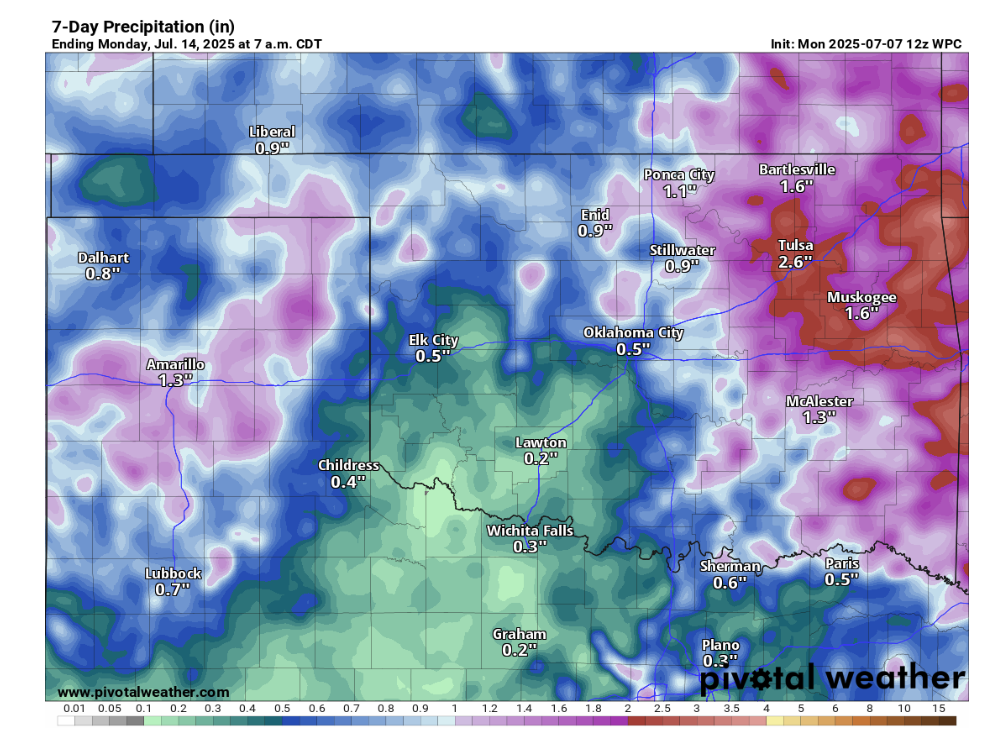
Upcoming Events

November

S M T W T F S
1 2 3 4 5 6 7
8 9 10 11 12 13 14
15 16 17 18 19 20 21
22 23 24 25 26 27 28
29 30          

Visitor Polls

Do you like the new website?
Add a Comment
(Fields are Optional)

Your email address is never published.