According to the latest Oklahoma Crop Progress and Condition Report, Winter wheat jointing reached 35 percent, down 9 percentage points from the previous year and 2 points from the five-year average. Conditions were rated 33 percent good to excellent, 40 percent fair, and 27 percent poor to very poor. Last week's conditions rated 37 percent good to excellent, 34 percent fair, and 29 percent poor to very poor.
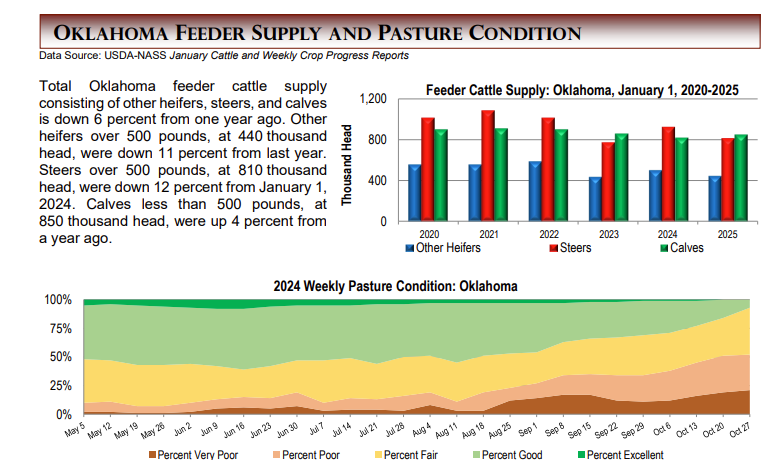
Pasture and range conditions rated 30 percent good to excellent, 35 percent fair, and 26 percent poor to very poor. Last week's conditions rated 20 percent good to excellent, 36 percent fair, and 44 percent poor to very poor.
Livestock conditions rated 48 percent good to excellent, 37 percent fair, and 15 percent poor to very poor. Last week's conditions rated 59 percent good to excellent, 29 percent fair, and 12 percent poor to very poor.
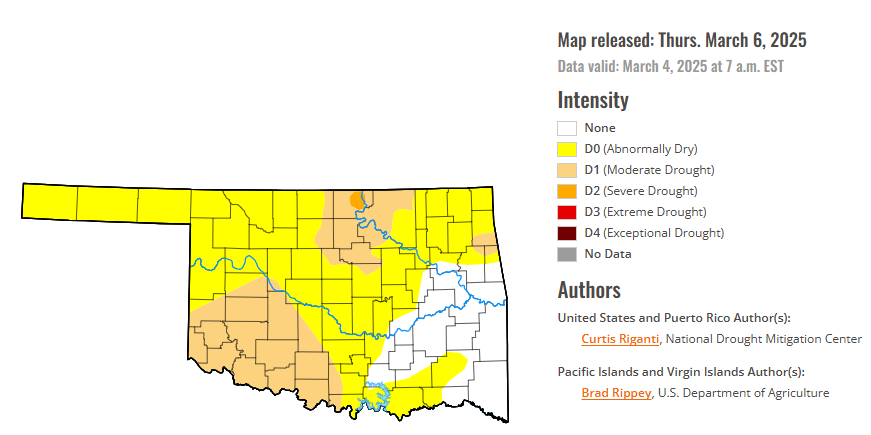
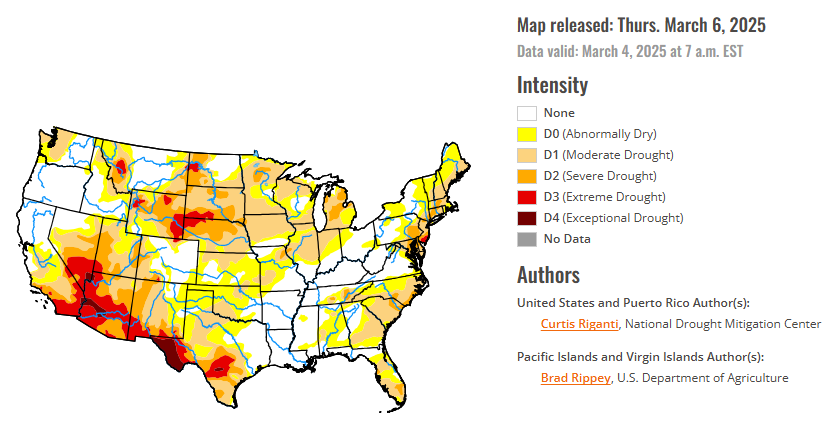
Rainfall totals in Oklahoma averaged 0.49 inches. According to the March 25th US Drought Monitor Report, drought conditions were rated 77 percent abnormally dry to exceptional drought, up 43 points from the previous year. Additionally, 48 percent of the state was in the moderate drought to exceptional drought categories, up 39 points from the previous year. Statewide, temperatures averaged in the lower 60s. Topsoil moisture conditions were rated short to very short, and subsoil moisture conditions were rated short to adequate. There were 6.2 days suitable for fieldwork.
Winter wheat jointed reached 9 percent, down 6 percentage points from last year and up 2 points from the five-year average. Winter wheat conditions rated 49 percent good to excellent, 34 percent fair, and 17 percent poor to very poor. Last week's conditions rated also 49 percent good to excellent, 34 percent fair, and 17 percent poor to very poor.
Winter wheat headed reached 22 percent, up 2 percentage points from the previous year but down 2 points from the five-year average. Winter wheat conditions rated 26 percent good to excellent, 41 percent fair, and 33 percent poor to very poor. Last week's conditions rated 28 percent good to excellent, 33 percent fair, and 39 percent poor to very poor.
Corn planted reached 55 percent, equal to the previous year up 2 percentage points from the five-year average. Corn emerged reach 35 percent, up 1 percentage point from the previous year and 11 from the five-year average. No corn condition ratings were provided.
Sorghum planted reached 46 percent, up 5 points from the previous year, and up 3 points from the five-year average. Sorghum emerged reached 34 percent. No sorghum condition ratings were provided.
Range and pasture conditions rated 11 percent good to excellent, 24 percent fair, and 65 percent poor to very poor. Last week's conditions rated 9 percent good to excellent, 20 percent fair, and 65 percent poor to very poor.
The Office of Management and Enterprise Services (OMES), in partnership with Gov. Kevin Stitt and the Oklahoma Division of Government Efficiency (DOGE-OK), has introduced new automated lawn mowers to service the State Capitol grounds. This innovative approach is better for the soil and will reduce costs, reinforcing the state's commitment to fiscal responsibility and sustainability.
OMES recently purchased seven automated mowers for $24,000 to maintain approximately one acre around the Capitol grounds. These "Auto Mows" replace traditional contracted landscaping services. In the past, contractors would submit bids to the state totaling between $350,000 and $600,000 annually. By investing in this technology, Oklahoma is significantly cutting maintenance expenses while continuing to upkeep the grounds.
"This is a smart, efficient use of taxpayer dollars," Gov. Stitt said. "We are always looking for ways to reduce spending while maintaining top-tier services. By embracing automation, we're saving hundreds of thousands of dollars each year and setting an example for how government can operate more efficiently."
Beyond cost savings, the automated mowers offer several key benefits. They naturally manage weeds in the grass without requiring herbicides or pesticides. Additionally, each mower is equipped with GPS tracking and built-in alarms to ensure security. For added safety, the mowers automatically shut off their blades if lifted.
"We are committed to adopting technology that improves efficiency and delivers the best value for Oklahomans," said Bonnie Campo, director of OMES Outreach. "These mowers align with our mission to make government operations smarter and more sustainable."
OMES is exploring opportunities to expand this initiative to other state properties in the future, further optimizing costs and environmental impact across Oklahoma.
The National Association of Wheat Growers (NAWG) announced today that its CEO, Chandler Goule, will be stepping down from his position in July 2025.
"The past nine years at NAWG have been incredibly rewarding. I am confident that NAWG is in a stronger position today than when I first started. One of my proudest accomplishments has been winning our Prop 65 case against the state of California, ensuring that facts and science guided the outcome. I encourage all wheat farmers to stay actively engaged with NAWG—your participation amplifies your voice and strengthens our industry. As for me, I won't be going far—where that leads is still to be determined," said Chandler Goule NAWG CEO Chandler Goule.
"We are deeply grateful for Chandler's nine years of dedicated service to NAWG and the wheat industry. He has been a pleasure to work with, and his leadership has been instrumental in our many successes. We've both agreed to go our separate ways and wish him the very best in his future endeavors," said NAWG President Pat Clements.
Listen to Stevie White talking with Troy Marshall about the latest Prospective Plantings Reports for Oklahoma, Texas, and Kansas.
The Prospective Plantings and Quarterly Grain Stocks Report was released today, and Associate Farm Editor Stevie White had the chance to talk with USDA State Statistician Troy Marshall about the results and how that data compares to the January reports.
Surveys were conducted on March 1st to get the updated data for today's report, and Oklahoma winter wheat was reduced by 100,000 acres compared to the January seedings report to 4.15 million acres planted, down 5% from last year. Texas's numbers were unchanged from last year at 5.5 million acres, but down 300,000 acres from the January projections. Kansas estimates about 7.3 million acres of wheat planted, down 4 % from last year and also down 100,000 acres from the January report.
"For wheat, I think a lot of that is driven around a lot of the weather and planting conditions that we saw as we go through," Marshall said. "We are still seeing reports of drought with the drought monitor over the last couple of weeks. We did see some rain come through, but it was kind of spotty this last weekend, but we have some pretty good chances for next week, so hopefully everyone who has wheat in will get something going there."
Along with the rain, if it arrives, Oklahoma producers will be looking to put corn in the ground soon as Texas has already started.
Nationally, corn acres are estimated to be greater this year and that increase is mirrored in the tri-state area being discussed. Oklahoma projected plantings are up 7% from last year to 480,000. In Texas, the 2.45-million-acre projection is up 14% from this time last year. In Kansas, 6.4 million acres reflects a 2% increase over last year.
Oklahoma grain sorghum planting projections were up 8% to 400,000 acres from this time last year. Texas's projected sorghum acres increased 12 percent from last year to 1.9 million acres. Kansas's 3.1 million acres increased by 3 percent over last year.
The numbers for projected upland cotton acres were down at the national level to 9.7 million acres, a 12 percent drop from last year. Oklahoma will plant 24% fewer cotton acres- 330,000, if USDA is correct. Texas's projected acres were down 8% from last year to 5.5 million acres. Kansas's projections were actually up 7% to 140,000.
All of the three states also saw a decrease in acres intended to be harvested for hay. Oklahoma is down about 2% from last year; Texas is down about 10%, and Kansas is down about 4%.
"We are seeing some similar themes across the states which, for the most part, are reactant to that harvest from last year and some of the moisture levels that we've had as producers plan for the upcoming planting year," Marshall concluded.
Lesly Weber McNitt, a longtime leader in Washington agricultural and policy circles, started this week as vice president of public policy at the National Corn Growers Association.
McNitt previously worked at NCGA between from 2017 to 2021 managing the organization's trade and biotech portfolios. In her new role, McNitt will lead NCGA's Washington office, serve as the organization's chief advocate and manage a staff of 11 people.
Corn grower leaders say McNitt is a perfect fit for the role.
"I have worked with countless advocates, lobbyists and ag leaders over the years, and I can easily say that Lesly is one of the best," said NCGA CEO Neil Caskey. "Her skills, experience and strategic vision position her as the leader we need as we navigate a challenging economic environment and advance our legislative agenda on behalf of the nation's corn growers."
McNitt said she is ready to hit the ground running.
"I am thrilled to return to NCGA in this new capacity," McNitt said. "Farmers are operating amid a dynamic policy and regulatory landscape with real repercussions for their livelihoods. I am honored to once again work with the NCGA team to advocate on behalf of our growers in the halls of power in Washington."
McNitt's agricultural experience is extensive, having served in a number of top-level positions, including chief of staff for the Farm and Foreign Agricultural Services, senior professional staff for the House Committee on Agriculture and most recently as a leader at the Eleanor Crook Foundation, a U.S. philanthropy dedicated to ending global malnutrition.
McNitt replaces Brooke S. Appleton who left the organization in February to serve as a deputy under secretary at the U.S. Department of Agriculture.
Attorney General Gentner Drummond made the following remarks today in the wake of Gov. Stitt's forced ouster of Oklahoma Forestry Services Director Mark Goeller.
"It should be inconceivable to think that the courage, skill and herculean work of firefighters across the state would be rewarded with the sudden and inexplicable ouster of Director Goeller," Drummond said. "Honestly, the Governor's action is baffling. While the wildfires that swept through our state this month exacted a heavy toll, the death and devastation would have been far, far worse without the strong coordinated effort of firefighters and Oklahoma Forestry Services.
"Director Goeller is a seasoned professional who is highly regarded in his field. He – and all those who battled the fires – have earned the gratitude and respect of Oklahomans. It is outrageous that the Governor's response to their bravery would be to push out the director mere weeks after that deadly firestorm."
Listen to KC Sheperd talking with Rich Nelson from Allendale about the recent prospective plantings and quarterly grain stocks reports.
Today, the USDA released the Prospective Plantings and Quarterly Grain Stocks Reports. Farm Director KC Sheperd spoke with Rich Nelson from Allendale, who provided insights into the reports' implications, highlighting both surprises and ongoing concerns.
"We had our update as far as what's left over for these crops as of March 1st," Nelson began, discussing the grain stocks report. "Quite a surprise for these reports. Normally, these are hard to guess, and the trade is quite wrong on a few of these numbers. In this case, 8.2 billion bushels of corn are leftover on the trade estimate, 1.9 billion bushels of soybeans are leftover on the trade estimate, and certainly, for our discussion as far as wheat, there are 1.2 billion bushels left over on the trade estimate, for the most part. So very surprising, the trade got these numbers correct for old crop stocks mid-year."
Turning to acres, Nelson highlighted a significant corn acreage projection. "USDA gave us a 95.3 million acre estimate for corn. This is the largest of all time," he stated. "But the market has not really taken this as a big bearish surprise. A lot of the trade had moved up its prior views in recent days. So for corn, they're really calling today's report quite neutral."
Soybean acreage was closer to trade expectations. "For soybeans, as far as acres, they came in relatively close to the average trade guess, 83.5, so a more or less than neutral acres and neutral stock number. So neutral for soybeans," Nelson explained.
However, the wheat report presented some surprises. Nelson noted. "USDA already gave us a January estimate for winter wheat planted acres. That, of course, is revised on this report and will be revised again in June. USDA took off a full 600,000 off those winter wheat acres. That's a bit hefty for what they normally would do on this revision.
"Also another surprise for us, other spring wheat; the trade had mistakenly looked at only a minimal decline for those plantings up in North Dakota, Minnesota, and Montana. In this case, USDA said, 'No, we're going to go from 10.6 to 10.0.' So as far as spring wheat, I believe these are record lows or near-record lows for other spring here. So a little concerned about this tighter supply on wheat than we expected to see."
If realized, this represents the second-lowest all-wheat planted area since 1919, which Nelson agrees is pretty significant: "It certainly is. It is bullish, but given the fact that much of our world competitors, over the past 15 years, have kind of filled that gap. They've been picking up wheat acres while we've been dropping them. It has likely supported the price, but probably not as exciting of a price as it would sound normally here."
Planting conditions and weather remain a major concern. "That's going to be one thing directly ahead of us here. So we've got the planting estimates in front of us now; the question is, what actually goes in these into the ground here, especially given our forecast, which is still suggesting some problems here for Texas, up through Kansas," Nelson stated.
Cotton acreage also saw a notable adjustment. "On this report, USDA suggested 9.9 million acres of plantings. That's down 1.3. It doesn't sound exciting, but keep in mind, we only have 9 to 11 total. This is about a 12% drop in cotton plantings from last year, so an aggressive drop, and certainly something that will get the trade's attention here," Nelson explained.
Looking ahead, Nelson identified key factors to watch. "We have three main issues directly in front of us. We have this week's discussion about tariff structures. We'll see if the trade gets any shocks out of that. Once we get past this week's news, then, of course, our discussion really turns towards plantings, moisture concerns here in these next few weeks, and whether we will have any excess rains on the eastern Corn Belt or lasting dryness in the West. A big issue for us, which is still quite a bit of concern, is this mid-summer forecast, which is agreed upon by both public and private forecasters. It is going to be something which does give this market a little bit of yield risk and maybe higher prices in the coming months."
When cattle leave the ranch, who ensures they land on the best menus? A few weeks ago in Austin, Texas, foodservice leaders, chefs and distributors gathered at the Certified Angus Beef Foodservice Leaders Summit to do just that—ensure the beef you raise is not only served but celebrated.
With discussions on Certified Angus Beef ® Prime, profitable beef cut swaps and targeted branding, the message was clear: demand for high-quality Angus beef continues to grow. Foodservice specialists like Bryant Frederick (Sysco Lincoln, NE) and Joseph Estrada (INPELSA, Peru) were recognized for their commitment to getting more beef to plates worldwide. Mark and Cole Gardiner from Gardiner Angus Ranch also joined for a discussion about their multigenerational ranch and their pursuit of quality and customer service.
The investments you make in genetics, nutrition and stewardship shape the quality that chefs and consumers seek. The choices made in foodservice, from menu development to beef education, help drive demand for the product you work hard to produce.
That's why attendees spent an afternoon at the Luling Foundation learning more about cattle production and land stewardship from our production team experts. Your role does not stop at the ranch gate. Staying connected to foodservice trends ensures the beef your raise is valued and sought after in restaurants and beyond.
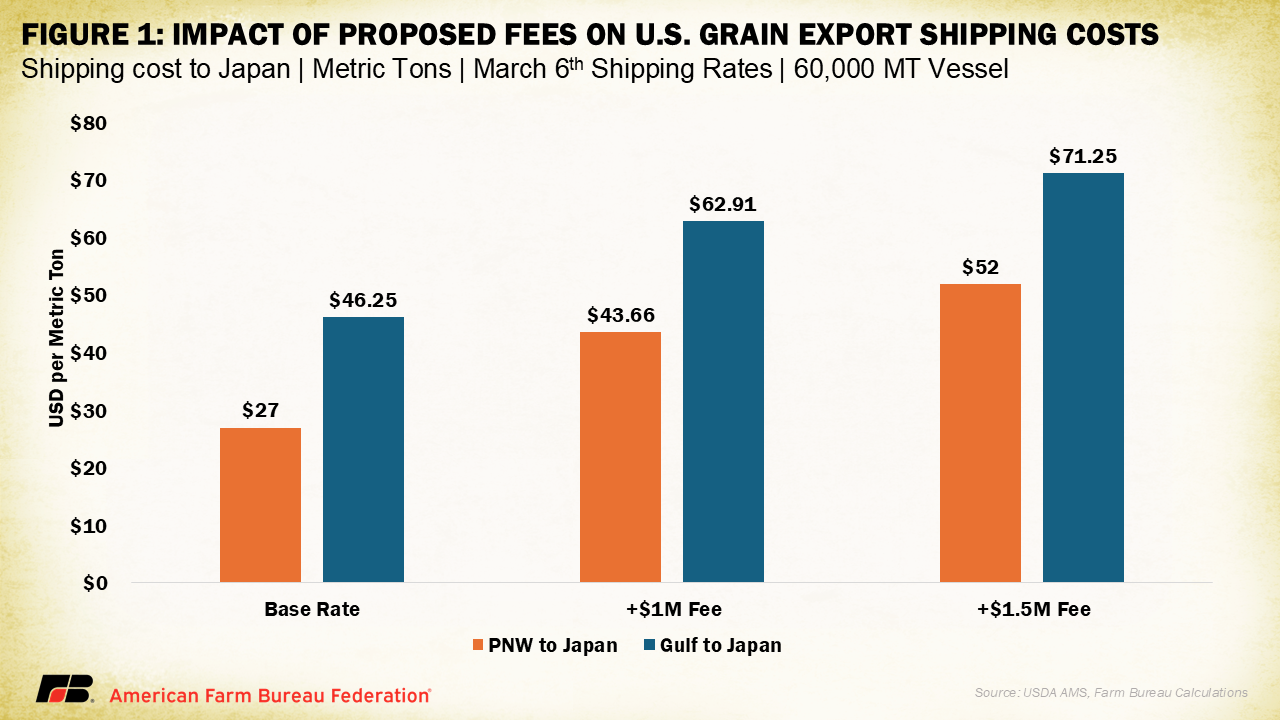
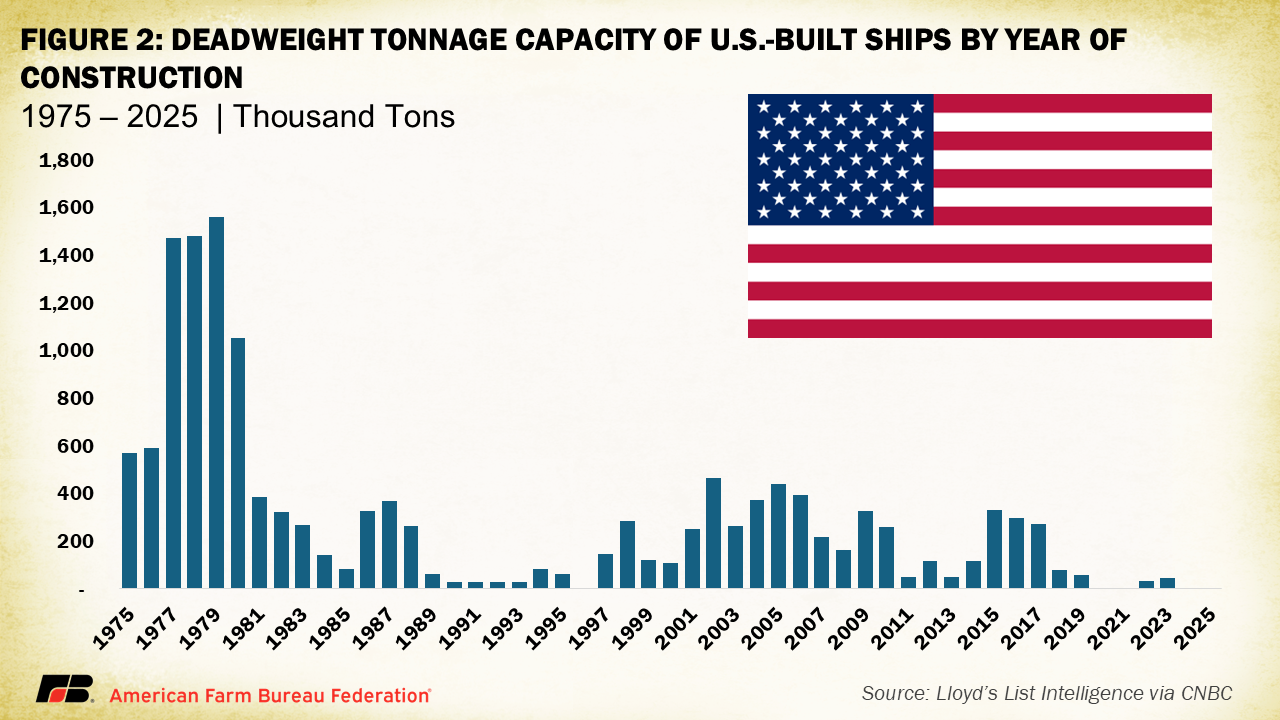
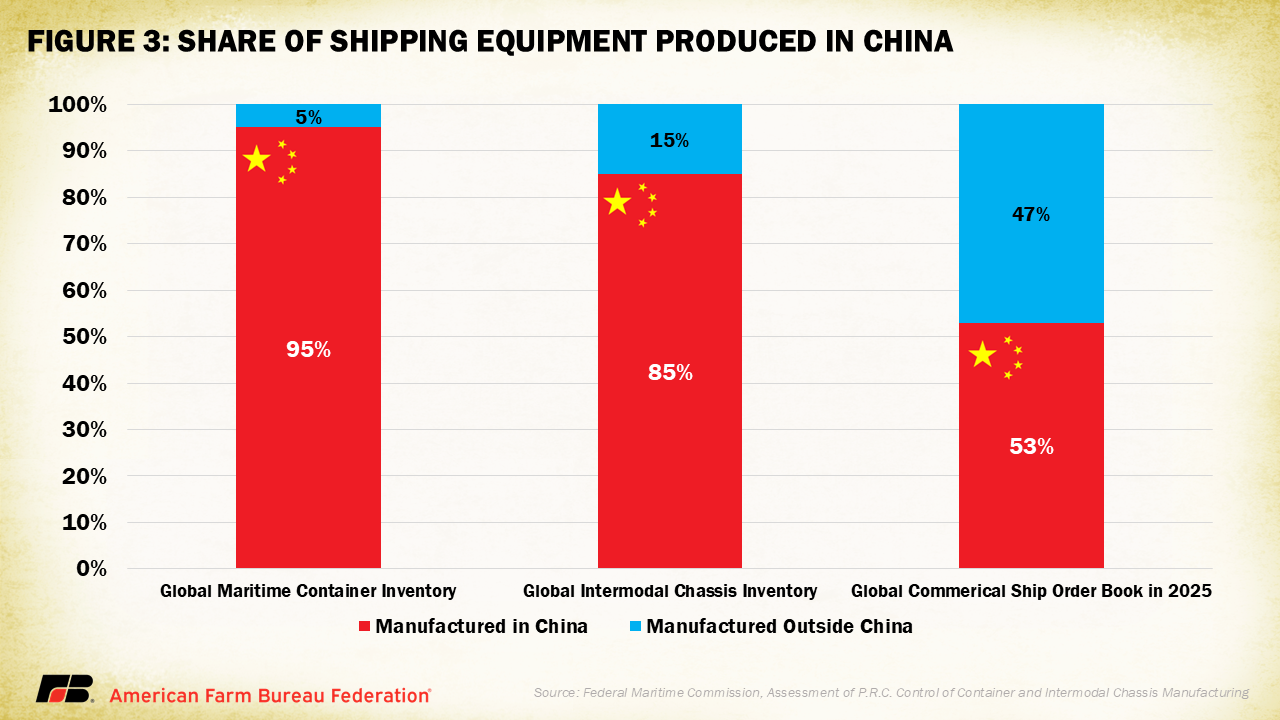
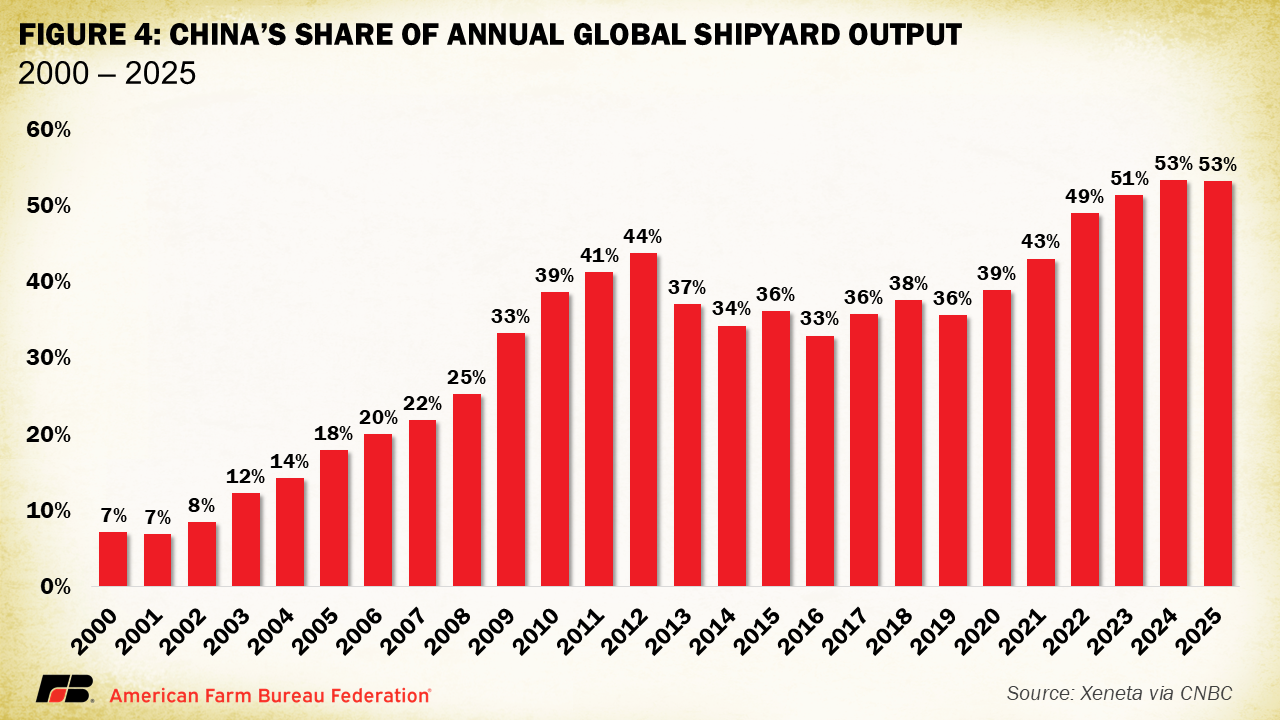
"At a time when the price of inputs is already high, this port fee will be another added cost to family farmers – making their tight margins even tighter. The Administration's ship tax would make it more expensive to do business at U.S. ports, drive up costs for U.S. producers, increase uncertainty about whether they can export their products and push our foreign customers into the arms of competing countries where port access is cheaper. Reshoring shipbuilding would create jobs and improve national security, but it cannot be done overnight.
Growth Energy, the nation's largest biofuel trade association, issued the following statement after U.S. Department of Agriculture (USDA) Secretary Brooke Rollins announced that USDA would release $537 million of funds obligated under the Higher Blends Infrastructure Incentive Program (HBIIP)—a program that makes it easier for fuel retailers to offer fuel options made with higher-ethanol blended fuels including E15, a fuel blend made with 15% American ethanol that can be used in 96% of all cars on the road today.
"The release of this funding will empower retailers to offer more American-made biofuels, which drives demand for ethanol and the corn used to make it," said Growth Energy CEO Emily Skor. "More ethanol also means lower fuel costs for consumers, making the release of these funds a huge win for everyone in the biofuels supply chain, from the farm to the fuel tank. We applaud Sec. Rollins and the Trump Administration for their leadership, and for delivering on their promise to support American farmers and biofuel producers. We look forward to seeing how retailers put these funds to good use and will continue to work with the Administration as it aims to drive American energy dominance and rural growth by expanding access to homegrown biofuels."
Sec. Rollins made the announcement while visiting Growth Energy Member Elite Octane's plant in Atlantic, Iowa. Growth Energy Vice President of Market Development Jake Comer was on-hand with Sec. Rollins at other events throughout the day, along with other key biofuel leaders from Iowa.
Through grant writing for the HBIIP program, per-gallon incentives, and direct financial support, Growth Energy has driven more than $1 billion in investments in new biofuels infrastructure since 2011, the year the U.S. Environmental Protection Agency (EPA) approved Growth Energy's waiver request that ultimately allowed the sale of E15 in cars made in 2001 or newer.
About E15
E15 is a fuel blend made of gasoline and 15% bioethanol. The U.S. Environmental Protection Agency (EPA) has approved its use in all cars, trucks, and sport utility vehicles (SUVs) made in model year 2001 and newer—representing more than 96% of all vehicles on the road today. E15 can be found at over 3,700 gas stations in 33 states and is legal for sale in every state except California. Last summer drivers saved 10 to 30 cents per gallon by filling up with E15 compared to regular, or E10. In some areas, E15 saved drivers as much as a dollar per gallon at the pump.
Nationwide adoption of E15 would save consumers $20.6 billion in annual fuel costs, put an additional $36.3 billion in income into the pockets of American families, and generate $66.3 billion for the U.S. GDP. Learn more about E15 here.
Producers surveyed across the United States intend to plant 95.3 million acres of corn in 2025, up 5% from last year, according to the Prospective Plantings report released today by USDA's National Agricultural Statistics Service (NASS).
Planted acreage intentions for corn are up or unchanged in 40 of the 48 estimating states. Acreage increases of 400,000 acres or more from last year are expected in Iowa, Minnesota, Nebraska, and South Dakota. If realized, the planted area of corn in Idaho, Nevada, North Dakota, Oregon, and South Dakota will be the largest on record.
Soybean growers intend to plant 83.5 million acres in 2025, down 4% from last year. Acreage decreases from last year of 300,000 or more are expected in Illinois, Iowa, Minnesota, Nebraska, North Dakota, and South Dakota. Record high acreage is expected in New York and Ohio.
The Prospective Plantings report provides the first official, survey-based estimates of U.S. farmers' 2025 planting intentions. NASS's acreage estimates are based on surveys conducted during the first two weeks of March from a sample of nearly 74,000 farm operators across the nation. Other key findings in the report are:
All wheat planted area for 2025 is estimated at 45.4 million acres, down 2% from 2024.
Winter wheat planted area, at 33.3 million acres, is down 2% from the previous estimate and down less than 1% from last year.
Area planted to other spring wheat for 2025 is expected to total 10.0 million acres, down 6% from 2024.
Durum wheat planted is expected to total 2.02 million acres for 2025, down 2% from last year.
All cotton planted area for 2025 is expected to total 9.87 million acres, down 12% compared to last year.
Today, NASS also released the quarterly Grain Stocks report to provide estimates of on-farm and off-farm stocks as of March 1. Key findings in that report include:
Corn stocks totaled 8.15 billion bushels, down 2% from the same time last year. On-farm corn stocks were down 11% from a year ago, while off-farm stocks were up 12%.
Soybeans stored totaled 1.91 billion bushels, up 4% from March 1, 2024. On-farm soybean stocks were down 6% from a year ago, while off-farm stocks were up 13%.
All wheat stored totaled 1.24 billion bushels, up 14% from a year ago. On-farm all wheat stocks were up 13% from last year, while off-farm stocks were up 14%.
Durum wheat stored totaled 38.7 million bushels, up 6% from March 1, 2024. On-farm Durum stocks were up 15% from a year ago, while off-farm stocks of Durum wheat were down 3%.
The Prospective Plantings, Grain Stocks, and all other NASS reports are available online at nass.usda.gov.
The Spring Data Users' Meeting will be held on April 29, 2025, from 12 – 2:30 p.m. ET. This meeting will be held virtually on Zoom, is free to attend, and is open to the public. Registration is required to attend.
Have a question about the Prospective Plantings or Grain Stocks report? Join #NASS Agricultural Statistics Board Chair Lance Honig for a live #StatChat @usda_nass on X today at 1:30 p.m. EDT.
Here is Your Daily Oklahoma Farm and Ranch News Update:
Winter Wheat Struggles in Oklahoma: Mike Schulte Details a Mixed Outlook Ahead
April Bringing Showers- But Northwestern Oklahoma May be Left Out
OCA's Michael Kelsey: State Lawmakers Have Hit the Halfway Mark of 2025 Session
Attend the 10th Annual Texas A&M AgriLife Hemphill County Beef Conference
Ahead of USDA Prospective Plantings Report at 11 AM- FBN Survey Predicts Acreage Shifts: Corn Up, Soybeans Down
Emergency Commodity Assistance Program (ECAP): What you Need to Know
Secretary Rollins Announces Aggressive International Travel Agenda to Expand Market Access
Proposed Port Service Fees Would Impact Red Meat Exports
Winter Wheat Struggles in Oklahoma: Mike Schulte Details a Mixed Outlook Ahead
On last week's Crop Progress Report, winter wheat conditions in Oklahoma fell 9 percentage points from the previous week to 37 percent good to excellent. Oklahoma Wheat Commission's Mike Schulte says drought is just one more challenge that Oklahoma wheat producers are dealing with.
"Producers certainly are facing some challenging times, just with the overall crop this past year from planting," Schulte said. "We have had an extremely dry winter and they are trying to make those management decisions about what they are going to do."
He noted that producers in Southwest Oklahoma are deciding whether to see out their wheat crops to maturity or rip them up to plant cotton. In the Central and Northern regions, the wheat was planted so late that it is emerging from dormancy much smaller than usual, and combined with a lack of rainfall and high, drying winds, producers are really praying for rain.
Weather forecasts predict a wetter, cooler trend moving into April, which is creating a higher degree of optimism for the wheat crop.
Oklahoma Farm Bureau works to improve the lives of all Oklahomans by supporting our state's agriculture community. As Oklahoma's largest general farm organization led by Oklahoma farmers and ranchers, OKFB takes grassroots values and advocates for agriculture at the state Capitol and in Washington, D.C., to ensure our way of life continues for generations to come.
Farm Bureau hosts leadership events, supports our state's agricultural youth and connects consumers with agriculture in order to build a brighter future for our state. Become an OKFB member today online at okfarmbureau.org/join. Together, we are rural Oklahoma.
April Bringing Showers- But Northwestern Oklahoma May Be Left Out (for now)
As we wrap up March- which has included historic wind and some hail across many parts of Oklahoma- it looks like we could have significant rain dead ahead- more in southeastern Oklahoma- less in the Northwest. Heaviest rains will roll in as we welcome the OKC Farm Show Thursday through Saturday.
Meanwhile- As we start the week- there is Red Flag fire danger for the Panhandle- Here's the word from the National Weather Service in Amarillo- RED FLAG WARNING IN EFFECT FROM 10 AM TO 10 PM CDT TUESDAY FOR STRONG WINDS AND LOW RELATIVE HUMIDITY FOR THE ENTIRE TEXAS AND OKLAHOMA PANHANDLE...
The National Weather Service in Amarillo has issued a Red Flag Warning for strong winds and low relative humidity, which is in effect from 10 AM to 10 PM CDT Tuesday. (Blowing dust will be common Tuesday in our Panhandle counties)
Over this past weekend- some rain arrived- see the Mesonet graphic below- Vinita was the weekend winner with 1.3 inches of rain. (The map is clickable so you can see who exactly got how much)
More on the active weather pattern as the week unfolds.
OCA's Michael Kelsey: State Lawmakers Have Hit Halfway Point of 2025 Session
Senior Farm and Ranch Broadcaster Ron Hays caught up with the Oklahoma Cattlemen's Association's Executive Vice President, Michael Kelsey, to get a legislative update about what is being done in the Oklahoma State Capitol.
The Oklahoma House and Senate deadline week has just ended, and the two legislative branches must have their bills in the hands of the other. Kelsey said that the legislative session is at about the halfway point. He noted that the House passes an abundance of bills compared to that of the Senate, making for an interesting progression through the remainder of the legislative session.
"Traditionally, the House and the Senate start squaring off over the budget a little later in the sessions, but so far, they have been communicating and doing very well together," Kelsey observed hopefully.
Concerning the budget, funding for OSU's College of Veterinary Medicine is a top priority for OCA. Also on their list is landowner property rights related to green energy. Kelsey noted a setback bill regarding wind energy has been advanced. They are also watching legislation related to fertilizer specific to city sewage, which advanced a moratorium to spread it from the Senate this week.
For our farmers who have either- always have had cotton on their farms- or those who have more recently have added the fiber crop to their operations- we have a daily report heard on several of our Radio Stations- It's Called Cotton Talk!
Click on the Button below to listen to our most recent report
Attend the 10th Annual Texas A&M AgriLife Hemphill County Beef Conference
Senior Farm and Ranch Broadcaster Ron Hays is talking with Andy Holloway about the 10th Annual Texas A&M AgriLife Hemphill County Beef Conference, which will be held on April 29-30 at the Jones Pavilion in Canadian, Texas.
Reputed to be one of the best standalone beef conferences in the United States, the Hemphill County Beef Conference is the brainchild of Holloway, Texas AgriLife Extension Agent.
Holloway started the conference in 2015, expecting attendance from Hemphill County and surrounding areas. He never expected his little county beef conference to become a national event.
"In 2015, I started with eighty-five people; we charged $100 per person for people to attend," he shared. "I was told that nobody would pay $100 to come to an extension beef cattle meeting, but we had Minnie Lou Bradley as our keynote speaker, and we had critical issues and the right speakers to speak to those things, and we have carried on that tradition through all of these years."
We invite you to listen to us on great radio stations across the region on the Radio Oklahoma Ag Network weekdays-
if you missed this morning's Farm News - or you are in an area where you can't hear it- click below for this morning's Farm news from Ron Hays and KC Sheperd on RON.
Oklahoma AgCredit supports rural Oklahoma with reliable and consistent credit, today and tomorrow. We offer loans for land, livestock, equipment, operating costs and country homes (NMLSR #809962) to farmers, ranchers and rural businesses across 60 counties. As a cooperative, we are owned by the members we serve. Through our Patronage Program, we have returned more than $74 million to our members since 1997.
For more information on our services or to find a location near you, visit our website here.
Ahead of Today's USDA Reports- FBN Survey Predicts Acreage Shifts: Corn Up, Soybeans Down
Farmers Business Network (FBN) has released its annual survey of planted acres, offering insights ahead of the USDA's Prospective Plantings report due out at 11 AM today. Farm Director KC Sheperd caught up with Cody Bills, representing FBN, who shared key findings, highlighting significant shifts in crop acreage across the United States.
"This is the fifth year that we've done this survey, and we've been really happy with our results over the last four years," Bills stated, emphasizing the survey's reliability. "We've had a standard error, standard mean error of about 1.2 million acres. Now that seems like a lot, but when you think about it in terms of percent, it's just a 1.33% standard error." He further noted the survey's accuracy compared to analyst estimates: "That compares to an average analyst guess that has about a 2.04 standard error...just about 35% more accurate than the average analyst guess."
The survey, which garnered responses from nearly 1,000 FBN members, primarily focused on corn and soybean acreage. "The way I think about this report is it is a corn and soybean acreage report. That's where we have the most confidence because we have the most participants reporting on their corn and soybean acreage," Bills explained.
Key findings indicate a notable increase in corn acreage. "Corn acres, according to the data, suggests that we would see 95 and a half million acres. So that's up 4.9 million acres from last year, and it's about one and a half million acres above that ag outlook forum that was released in in January," Bills reported. Conversely, soybean acreage is projected to decrease. "Soybeans, it's pointing more toward 83 and a half million acres. So that's down 3.6 million acres from last year, and about 500,000 acres below what the Ag Outlook Forum suggested."
The Emergency Commodity Assistance Program is a one-time payment to farmers administered by USDA's Farm Service Agency (FSA). Congress laid out the formula for ECAP in the American Relief Act of 2025, as explained in a previous Market Intelfrom January with estimates in striking distance of the final USDA payment rates. Essentially, the per-acre payments were set as either a percentage of estimated losses per-acre for each commodity or as a percentage of the commodity's reference price. Eligible commodities will receive a prescribed per-acre payment on all planted acres and on 50% of acres prevented from being planted. Acres planted for harvest, grazing, haying, silage or other similar purposes in the 2024 crop year qualify. The per-acre payments as set by the USDA are found in the table below on the linked page.
Notably, the initial round of payments will only pay 85% of the per-acre payment to ensure that enough funding is available for all farmers who sign up. After the ECAP application period closes on August 15, a second payment may be issued with the remaining funds up to the additional 15% of the per-acre payments. Farmers can estimate their total expected payments using a USDA-provided ECAP calculator.
Secretary Rollins Announces Aggressive International Travel Agenda to Expand Market Access
U.S. Secretary of Agriculture Brooke Rollins will visit six international markets in her first six months as Secretary to expand markets and boost American agricultural exports. At a time when the agricultural trade deficit is at nearly $50 billion following the previous administration's little to no action in the international marketplace, the United States Department of Agriculture (USDA) is working to diversify global markets, strengthen existing markets, and hold existing trading partners accountable for their end of the deal.
"President Trump has the backs of our farmers and ranchers," said Secretary Rollins. "USDA remains committed to expanding market access around the world. I am going abroad to sell the bounty of American agriculture and to ensure the prosperity of our hard-working agricultural producers. Everything is on the table to get more markets for our products."
This year, Secretary Rollins will visit Vietnam, Japan, India, Peru, Brazil, and the United Kingdom. Other USDA Trade Missions include Hong Kong, the Dominican Republic, Taiwan, Côte d'Ivoire, and Mexico.
Proposed Port Service Fees Would Impact Red Meat Exports
The office of U.S. Trade Representative (USTR) held hearings this week on a proposal to impose a service fee for each U.S. port call of a Chinese-operated ship, or a per-net-ton service fee applied on the ship's carrying capacity.
The U.S. Meat Export Federation (USMEF) submitted comments supporting the overall intent of strengthening the U.S. shipbuilding industry, but pointing out that the proposed fees could price some products like variety meats out of the marketplace and could dramatically reduce port calls in key locations such as the Port of Oakland, which is the largest outlet for waterborne red meat exports. It is a key gateway for chilled meat shipments to Asian markets.
According to USMEF President and CEO Dan Halstrom, it would take years for the U.S. shipbuilding industry to rebuild to meet the needs of U.S. agriculture and other exporters. Under the port fee proposal, options for those exporters would be very limited while that rebuilding takes place. USMEF joined more than 300 agricultural and business associations in submitting a letter to USTR outlining those concerns.
OKC West is our Market Links Sponsor- they sell cattle three days a week- Cows on Mondays, Stockers on Tuesday and Feeders on Wednesday- Call 405-262-8800 to learn more.
Today's First Look:
Ron on RON Markets as heard on K101
mornings with cash and futures reviewed- includes where the Cash Cattle market stands, the latest Feeder Cattle Markets Etc.
Oklahoma National Stockyards had 4,460 head on the yards as of 9 PM last night. The sale will start at 8:00 am. We are expecting to start with 4,500 to 4,700.
Last Monday, March 24th- Compared to the previous week: Feeder steers and steer calves 4.00-8.00 higher, 600-700 lbs to 15.00 higher. Feeder heifers 3.00-10.00 higher. Heifer calves 5.00-12.00 higher. Demand very good for all classes. A very bullish Cattle On Feed report last Friday, had cattle futures trading in the green early, but only to end the day in the red. Quality average, few attractive. Very dry, windy conditions continue but rain is in the forecast for midweek. Southern parts of the state expected to see most of this moisture.
Here's our regular feature that is a part of the Monday Daily Email- market commentary from Bob Rodenberger, a partner with Stockman Oklahoma Livestock Marketing.
Daily Oklahoma Cash Grain Prices- as reported by the Oklahoma Dept. of Agriculture- The report available after the close of the Futures Trade for that day.
Ron Hays, Senior Farm/Ranch Broadcaster and Editor
KC Sheperd, Farm Director and Editor
Dave Lanning, Markets and Production
Stevie White, Farm News and Email Editor
Pam Arterburn, Calendar and Template Manager
Podcasts From Oklahoma Farm Report and More
Two of our regular reports are also podcasts that you can subscribe to- Our daily Farm and Ranch News with KC Sheperd- available here on the Apple Podcast Platform
The second is our daily Beef Buzz with Ron Hays- available here on the Apple Podcast Platform
Periodically- we offer interviews on our Ag Perspectives Podcast series- this podcast is available here.
Ron has also has a series of podcasts from interviews with newsmakers at the Cattlemen's Congress- Click here or you can find them on your favorite Podcast platform- look for them by searching for Cattlemen's Congress Conversations.
We are making plans to jump back into regular installments of what has been called the Road to Rural Prosperity- a new name and fresh content is in the works- for now- click on the blue button below for one of our favorites that is a timeless classic.
The link below is one of our most recent podcasts- Ron spotlighting the Life and Times of Dr. Kim Anderson, who has just retired from OSU.
For your convenience, we have our sponsors' websites linked here- just click on their name to jump to their website- check their sites out and let these folks know you appreciate the support of this daily email, as their sponsorship helps us keep this arriving in your inbox on a regular basis- at NO Charge!
We invite you to check out our website at the link below too that includes an archive of these daily emails, audio reports and top farm news story links from around the globe.
U.S. Secretary of Agriculture Brooke Rollins today announced the U.S. Department of Agriculture (USDA) will release obligated funding under the Higher Blends Infrastructure Incentive Program (HBIIP) for 543 projects totaling $537 million in 29 states. This includes new projects approved within the first 100 days of the Trump Administration and advances President Trump's January 20th Executive Order on Unleashing American Energy, underscoring our commitment to farmers, ranchers and small business owners in rural areas, and their essential role in building a stronger, more energy secure America.
Secretary Rollins made the announcement today during an event at Elite Octane LLC in Atlantic, Iowa—a state that leads the nation in ethanol and biodiesel production, with 42 ethanol plants capable of producing over 4.7 billion gallons annually and 10 biodiesel plants with the annual production capacity of 416 million gallons.
"President Trump is honoring our commitment to America's farmers, ranchers and small businesses, especially here in Iowa where corn and soy growers are crucial to supporting ethanol and biodiesel production," Secretary Rollins said. "Under the President's leadership, we are moving away from the harmful effects of misguided climate policies like the Green New Deal. Instead, USDA will deploy energy investments that prioritize the needs of our rural communities. Through HBIIP, we will expand access to domestic, homegrown fuels which will increase good paying jobs for hardworking Americans, restore rural prosperity and strengthen our nation's energy security."
Background:
USDA is aggressively exploring additional ways to unleash American energy and incentivize the production and use of homegrown U.S. biofuels, including working alongside the Environmental Protection Agency (EPA) to develop Renewable Volume Obligations (RVO) that support the biofuel industry, as well as supporting EPA's review of any potential emergency fuel waivers to allow the nationwide year-round sale of E15. In the current agricultural economy, U.S. biofuels remain a bright spot and tremendous opportunity.
Established at USDA Rural Development during President Trump's first term, HBIIP helps expand the production of domestic biofuels by helping fueling stations install the pumps, storage containers, and other necessary infrastructure needed to offer biofuel options at the pump.
HBIIP investments directly impact American farmers. The expansion of biofuel infrastructure broadens the availability of fuels like E15, E85, and B20, made from American-made agricultural commodities. Additionally, this program protects American farmers from retaliatory trade practices, diversifies the nation's energy supply, creates jobs and supports economic growth in rural communities.
Oklahoma residents are urged to stay vigilant as the state faces the possibility of another round of severe weather this week, just days after a significant hailstorm. State Climatologist Gary McManus warns of potential tornadoes, large hail, and a high fire danger.
"Fresh off our the hail from Saturday night/Sunday morning, we have another POTENTIAL round of significant severe weather on the line for Tuesday," McManus states, emphasizing the immediacy of the threat. He highlights the potential for large hail, noting, "Tornadoes? Sure, but the hail'll could be what gets ya, putting knots on your noggin faster'n you can rub 'em."
However, the formation of these storms is not guaranteed. "Now obviously storms actually have to form in the first place, and there is an indication a somewhat strong cap, or lid on the atmosphere, will be in place," McManus explains. This "cap," a layer of warm air, could inhibit the development of thunderstorms."This layer of warm air thousands of feet above the surface would act as a dead-stop for that air rising explosively upwards and forming thunderstorms."
Despite this potential barrier, if sufficient heating occurs, severe weather is likely. "If we get enough heating along and ahead of that dryline that will be in place, however...watch out," McManus cautions. He also notes that the forecast is subject to change. "This forecast will continue to evolve and shift around a bit, and maybe get a bit better (i.e., less violent). Always remember, though, that it could get worse. Like in far SE OK the following day."
Adding to the concern is the increased fire danger. "And if there's gonna be a dry line, with all that dead/dormant vegetation out there waiting on some rain to green up, that means there's gonna be some fire danger. LOTS of fire danger, possibly," McManus warns.
Amidst the potential hazards, there is a silver lining: rain. "I guess the good news with all this is we can at least get some rain. Well, that and I'll be getting anxious/excited about the weather, which will lead to multiple bouts of Cherry Pop-Tart consumption!" McManus jokes, injecting a bit of levity. "But that rain, along with the storms Tuesday and Wednesday, we should see several consecutive days with good chances of moisture."
However, the distribution of rainfall will be uneven. "Holy flooding threat, Batman! Those are some major amounts down in southeast OK. Unfortunately, NW OK sees a forecast of Corporal Amounts," McManus points out, highlighting the stark contrast in projected rainfall across the state.
McManus reminds Oklahoma Residents to stay informed and prepared while acknowledging the potential for significant rainfall, albeit with varying distribution.
Listen to Ron Hays talking with Andy Holloway about the 10th Annual Texas A&M AgriLife Hemphill County Beef Conference.
Senior Farm and Ranch Broadcaster Ron Hays is continuing his conversation with Andy Holloway about the 10th Annual Texas A&M AgriLife Hemphill County Beef Conference, which will be held on April 29-30 at the Jones Pavilion in Canadian, Texas. Click here to hear and read the first part of their discussion.
After last year's event attracted more than 800 cattlemen and women from 26 states, Holloway, the Texas AgriLife Extension Agent who began the event in 2015, expects another great turnout at the 2025 event.
"Happy Days Are Here Again" is the theme of the event, mirroring the time when President Franklin D. Roosevelt used it as his campaign slogan after the Great Depression and then again after World War II because it truly was happier days for the nation.
"That is exactly the analogy that we want to set forth in this conference, because we have has a lot of tough years in the beef cattle business, but now, we have record beef cattle prices, historic profits from the cow calf segment, and even the feedyards are making big bucks on cattle that are being killed," Holloway said.
A major draw to the event is the world-class lineup of speakers. This year, as has become tradition, Cattlefax's Troy Applehans will kick off the presentations. Matt Makens, Colorado's Climatic Scientist and Meteorologist, will provide the likelihood of remaining in a La Niña or a return of El Niño weather systems. A new speaker to the event will be Collin Woodall of the National Cattlemen's Beef Association will discuss "The Future of Beef Cattle Production in the USA on the Heels of the Green New Deal."
"It just pleases me so much to have the CEO of NCBA as one of our big speakers this year," Holloway said. "Collin asked me if he could come and make a presentation, and I was so delighted to have him as a special guest and speaker."
Holloway mentioned a "real interesting panel," which will be moderated by Ben Weinheimer, CEO of the Texas Cattle Feeders Association. Robby Kirkland, Kirkland Feedyard Vega, Texas & TCFA Chairman, and his wife, Amy Kirkland, Director of Texas Beef Council, Colin Woodall, of NCBA, and John Stika, Certified Angus Beef President, will all be included on the panel.
"Then, on Wednesday, April 30, we have probably the strongest second-day lineup we've ever had in the history of our conference," Holloway touted.
Dr. Randall Spare from the Ashland, Kansas Veterinary Clinic, has changed the genomics of his region by emphasizing artificial insemination in local commercial cowherds. His presentation is aptly titled "The Value of Artificial Insemination to a Commercial Cowherd."
Dr. Morgan Treadwell, Texas A&M AgriLife Range Specialist, is to present on "Understanding the 2024 Wildfire Energy Impact & Forage Trajectory."
"She is going to talk about some new technology that NASA has brought," Holloway shared. "We always have a powerful keynote speaker, and we may have a surprise visitor that I can't announce yet. I hope I can announce it in another week or two."
From Wooster, Ohio, Dan Owolabi will present the keynote address, and Holloway says that the inspiration projected from his speeches is second to none. "I guarantee you that you may not know his name today or are drawn to the conference because of his name, but when you hear him and you leave the conference, you'll never forget the experience you had from Dan's presentation," Holloway hyped. "We've got a powerful lineup. We've got ranchers on panels; we've got some breakout sessions that are going on, so it's going to be a terrific time to come and learn."
A Texas Barbeque lunch will be served on Tuesday, April 29, and Certified Angus Beef Prime Rib will be served for dinner that evening. Wednesday's lunch will be CAB Kansas City strip steaks right off the grill.
"People always enjoy the food that we serve, and we try to roll out the red carpet for every person right here in Hemphill County in Canadian, Texas," Holloway stated.
More information, the agenda, and tickets to attend can be found at hemphillcotxbeef.com.
The Beef Buzz is a regular feature heard on radio stations around the region on the Radio Oklahoma Ag Network and is a regular audio feature found on this website as well. Click on the LISTEN BAR for today's show, and check out our archives for older Beef Buzz shows covering the gamut of the beef cattle industry today.
The Oklahoma Beef Cattle Summit is to be held at the Pontotoc County Agri-Plex in Ada, Oklahoma, on Thursday, April 17. The doors open at 8 a.m., and the agenda includes an impressive array of informative and educational seminars.
From 8:45 a.m. until 9:30 am, OSU's Ryan Reuter and Australian-national Mark Trotter will speak on Virtual Fencing (Animal Behavior). We featured an episode of the Red Dirt Agronomy Podcast that included Trotter discussing his work in Australia on our website.
At 9:30 a.m., OSU's David Lalman will talk about Beef Cattle Nutrition, and Jonathan Cammack, OSU's Assistant Professor in the Department of Entomology and Plant Pathology, will discuss new biosecurity threats (ALT) at 10 a.m.
At 11 a.m., John Gilliam, Clinical Professor, Food Animal Production Medicine and Field Service at OSU, will talk to producers about euthanasia.
Oklahoma Cattlemen's Association President Michael Kelsey will provide an update on what OCA is watching at the state capitol at noon, before the meetings break up for lunch during which, Heather Buckmaster will provide an Oklahoma Beef Council update.
After lunch, at 1:30 p.m., Session 1 on Record Keeping will be presented by Brian Freking, Ada Area Livestock Specialist and Earl Ward, Northeast Area Livestock Specialist, both OSU extension agents. Breakout Session 2 will cover Environmental Stewardship with Mike Trammell and Brian Pugh, both OSU educators and agronomists.
Attendees may enjoy a short break before OSU Livestock Marketing Specialist Dr. Derrell Peel will provide a Market Outlook. The Summit will conclude with a BQA Certification and Evaluation, along with door prizes presented by Erin Hubbard and Casey Russell, OSU.
Register and RSVP for lunch before April 9 by calling or emailing Erin Hubbard at (580) 332-2153 or erin.r.hubbard@okstate.edu. See the full agenda below or visit the website.
Dr. Derrell Peel, Oklahoma State University Extension Livestock Marketing Specialist, offers his economic analysis of the beef cattle industry as part of the weekly series known as the "Cow Calf Corner," published electronically by Dr. Peel, Mark Johnson, and Paul Beck. Today, Dr. Peel compares four years of March feeder cattle market conditions.
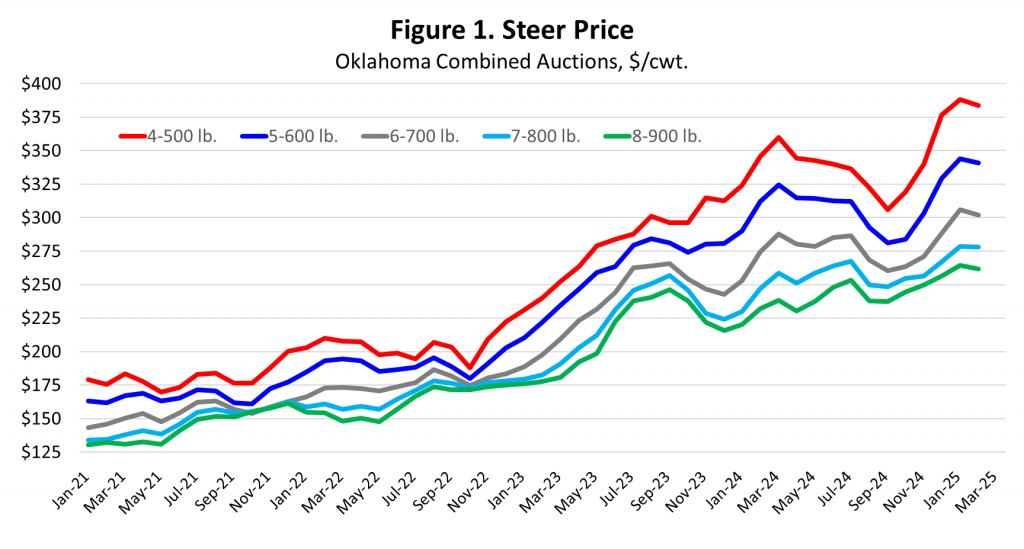
As March wraps up, it is interesting to look back at feeder cattle markets over the past four years. Figure 1 shows Oklahoma combined auction prices by weight for M/L, No 1 steers in March since 2022. Not only have feeder cattle prices risen dramatically, but the relationship between light and heavy weight feeder cattle has changed significantly. The change in relative prices across weight groups reflects market signals about how resources should be used for cattle production.
As an example, Table 1 summarizes the prices and relationships between calf prices and feeder cattle for 475- and 775-pound steers. These prices are highlighted in Figure 1. In total, prices for calves increased by 94.6 percent from 2022 to 2025 while prices for 775-pound steers increased by 85.2 percent. Prices for the feeder steers increased faster initially in 2023 before the calf prices increased sharply in 2024 and 2025. In 2023, the March feeder prices were 75.3 percent of the calf price level but by 2025, the feeder price was 71.3 percent of calf price.
The price relationships between calves and feeder cattle determine the value of adding additional to calves as stockers. Table 1 includes the value of 300 pounds of gain between the 475-pound calves and 775-pound feeders. In 2022, the value of gain was $0.72/pound and increased to $1.03/pound by 2025. Over the four years, the value of gain increased by 43.1 percent.
Table 1. March Prices and Value of Gain, M/L, No. 1 Steers, Oklahoma Combined Auctions
Weight
2022
2023
2024
2025
% Chg.2022-2025
Lbs.
$/Cwt.
475
$205.34
$249.40
$350.85
$399.55
+94.6
% Chg. YOY
+21.5
+40.7
+13.9
775
$153.84
$187.85
$252.89
$284.93
+85.2
% Chg. YOY
+22.1
+34.6
+12.7
775 as % of 475
74.9
75.3
72.1
71.3
VOG
($/lb.)
$0.72
$0.90
$0.98
$1.03
+43.1
% Chg. YOY
+25.0
+8.2
+5.8
YOY = Year over Year; VOG = Value of Gain
The increase in calf prices means that cow-calf revenue has increased dramatically in the past four years. Based on the March prices in Table 1, calf revenue has increased from $975.37/head in 2022 to $1,897.86/head, an increase of $922.49/head. In contrast, gross revenue for 300 pounds of stocker gain have increased from $216/head in 2022 to $309/head in 2025. If we assume that it would be possible to stock two head of stockers per cow, the total stocker revenue increase would be $186 on a per cow equivalent. In other words, cow-calf revenue has increased 424 percent more than stocker revenue from 2022 to 2025.
Current market conditions clearly favor calf production over stocker production. That is to say, grass has more value marketed as weaned calves compared to stocker-based gain. Cow-calf producers have increased incentives to maximize calf production compared to retaining calves for increased stocker gain. Stocker producers face challenging margins and limited opportunities in the current market. The combination of increased calf production incentives and relatively cheap feedlot cost of gain means that stockers are squeezed into a limited role generally favoring lighter beginning weights and faster turnover of stockers.
Listen to Ron Hays getting a legislative update from OCA's Michael Kelsey.
Senior Farm and Ranch Broadcaster Ron Hays caught up with the Oklahoma Cattlemen's Association's Executive Vice President, Michael Kelsey, to get a legislative update about what is being done in the Oklahoma State Capitol.
The Oklahoma House and Senate deadline week has just ended, and the two legislative branches must have their bills in the hands of the other. Kelsey said that the legislative session is at about the halfway point. He noted that the House passed an abundance of bills compared to that of the Senate, making for an interesting progression through the remainder of the legislative session.
"Traditionally, the House and the Senate start squaring off over the budget a little later in the sessions, but so far, they have been communicating and doing very well together," Kelsey observed hopefully.
Concerning the budget, funding for OSU's College of Veterinary Medicine is a top priority for OCA. Also on their list is landowner property rights related to green energy. Kelsey noted a setback bill regarding wind energy has been advanced. They are also watching legislation related to fertilizer specific to city sewage, which advanced a moratorium to spread it from the Senate this week.
"The Commissioners of Land Office, the school land commission was the subject of a few bills that are really positive," Kelsey pointed out. "One of them, in particular, passed from the Senate and is going over the House, now helps in the process when a lease transfers, specifically in a case when someone who has been a leaseholder has done something of a value-added strategy that they own."
He explained that when a lease holder makes an improvement to leased land, such as building a fence, the lease hold owns the fence, not the CLO, and continues to own the fence even if the lease transfers. The bill aims to bridge the gap between the new lease owner and trying to recognize the value of the fence relative to the land instead of pulling the fence up due to a lack of agreement of the amount of added value, the person who owns the fence will have an option to reach an agreement with the new lease holder to keep the fence in place.
He mentioned two labeling bills and one bill to ban the sale of lab-grown meat in the State of Oklahoma. "NCBA is pushing the labeling bills only because they don't want to government to say what can and cannot be produced and sold," Kelsey said. "I trust this legislature, but I don't know what this legislature is going to look like twenty or thirty years from now, and if we start banning food types, then we are creating a really slippery slope and can get into some trouble."
He clarified that while the FDA has approved lab-grown meat products, there isn't currently any available to purchase in Oklahoma. Currently, the prices of lab-grown protein products is so high, it won't be a reasonable option for most consumers anyway.
"Let's just make sure they label it so the consumer knows what they are getting because if you start banning things, you give the government the authority to say what we can and cannot have in our grocery stores, and that is pretty dangerous," he emphasized.
Early in the session, OCA prioritized advocating not cutting income taxes on the grounds that it would be made up for by increasing property taxes and more; however, Kelsey said that conversation has begun to die down as no one is able to predict the health of the economy in the immediate future.
Kelsey described conversations he has heard between legislators off-record by saying, "In light of some of the federal policies – tariffs, cutting expenses on the federal level, and all of those types of things – maybe we should just see where we are at, and that is some of the discussion. We appreciate that because we agree."
Kelsey noted how shocked he was this session at the lack of bills regarding water that he saw as last year, water was a hot topic. "Based upon last year, I was anticipating that we would see a plethora of water bills," Kelsey said. "A half dozen or so were filed, and I think only one has made it to this point, and it doesn't have a lot of steam. We may not have a big water discussion bill-wise as we move through this session. Now, that doesn't mean we won't talk about the issue and queue it up for next year, but it just has not elevated itself as a major issue."
Kelsey reported that things could get interesting during the second half of 2025 due to an unknown dynamic: "When bills cross the proverbial rotunda, then different dynamics start to play because now the author of the bill is not the original author. This senator, in the case of a House bill, is carrying a bill that somebody else wrote – a House author is carrying a Senate bill that somebody else wrote. That just gives it a different dynamic, so sometimes those bills can be stalled a little bit, and sometimes, they can gain a new life. Other times, they are traded off for other things."
He rests assured that it is a normal part of the internal checks and balances system that has to be worked through. He believes that there are fewer bills this session than in previous sessions.
About the new Oversight Committee Process in the House, he said it can be looked at in one of two ways: either as another hurdle for a bill to pass or another opportunity to kill the bill, depending on the legislator's feelings about it.
"Personally, I have appreciated the two-part Oversight Committee Process," Kelsey stated. "It has given us an opportunity on a couple of bills that we have been working on to tweak and approve them because of some things that came up that we weren't aware of."
He anticipates the DOGE factor to come into play during the appropriations and budgeting process as Governor Kevin Stitt has made clear that he wants fewer employees at the end of his term than at the beginning.
"We also have the fact that inflation has driven up the cost of everything, and that includes the services that the government provides," Kelsey pointed out. "It is going to be a challenge to reduce the level of spending overall because of inflation – that doesn't mean government has necessarily grown, it just means that things have gotten more expensive, and we all know that."
The 60th Legislative session in Oklahoma must be concluded by the end of the day on May 30, 2025. the Sine Die Adjournment must occur by 5:00 p.m- although it could happen earlier if the two bodies can finish their budget work earlier.
For too long, overregulation has had detrimental impacts on our economy. Businesses have been forced to navigate a maze of bureaucratic red tape rather than focusing on what they do best—creating jobs, innovating, and serving their customers. The disastrous policies of the previous administration made it difficult for hardworking Americans and small business owners to thrive. That's why we are taking action to ensure these burdensome regulations never return.
At the forefront of this effort is my legislation, the Regulation Reduction Act. This bill takes steps to stop the unchecked expansion of federal regulations by requiring executive agencies to repeal three or more existing rules before implementing new ones. The numbers speak for themselves: in 2022, regulatory compliance costs exceeded $3 trillion, with the average U.S. company spending $277,000 annually just to keep up. That's nearly $13,000 per employee in regulatory costs—money that could be better spent on wages, investments, and innovation.
Additionally, the House has taken decisive action to protect businesses and consumers from costly and unnecessary energy regulations. This week, two resolutions that reverse Biden's overreaching mandates are being considered by the House.
The first resolution is H.J. Res 24, legislation that I authored to push back against the Department of Energy's misguided mandates on walk-in coolers and freezers, essential equipment used in pharmacies, convenience stores, food processing facilities, food banks, restaurants, and many other establishments. The Department of Energy estimated that this rule carries a price tag of a billion dollars, however, real cost will be significantly higher as DOE failed to calculate equipment and operational costs in their estimates. Consequently, the implementation of this rule would have threatened to disrupt supply chains and led to higher prices for consumers at a time when inflation was already stretching American families to their limits.
The second resolution H.J. Res 75, authored by my colleague Rep. Craig Goldman (R-TX), overturns the previous administration's energy conservation rules for commercial refrigerators and freezers. These regulations imposed hefty compliance costs on businesses of all sizes, driving up prices and restricting consumer choices. From mom-and-pop convenience stores to major food suppliers, businesses across the country rely on affordable and efficient refrigeration systems.
The federal government should be helping, not hindering, economic growth. The previous administration's overregulation suppressed consumer choice, raised costs, and stifled innovation. Thanks to President Trump and House Republicans, we are fighting back to create a regulatory environment that works for, not against the American people. By passing these critical measures, we are taking meaningful steps to cut red tape, restore economic freedom, and ensure that government policies empower businesses instead of burdening them.
House Democratic Leader Cyndi Munson, D-Oklahoma City, gave an update on House Democratic priorities as the First Session of the 60th Oklahoma Legislature reaches its halfway point.
"I am pleased to announce House Democrats passed 30 bills off the House Floor that are now eligible to be heard in the Senate," Leader Munson said. "All of these bills were in line with our priorities of lowering costs for working families, supporting public education, creating better access to healthcare and childcare, and protecting the most vulnerable Oklahomans. I am proud of every Member of the House Democratic Caucus for standing up for the rights of all Oklahomans and devoting their time and energy to working on policies we know will help the State of Oklahoma."
Bills passed off the House Floor by House Democrats include but are not limited to:
HB 1848, Rep. Suzanne Schreiber, HD-70
An Employer tax credit for sharing in childcare costs to strengthen our workforce infrastructure.
HB 1111, Rep. Ellen Pogemiller, HD-88
Creates an elderly simplified application project for SNAP for 60+ or individuals with a disability.
HB 1852, Rep. Suzanne Schreiber, HD-70
Protects consumers to ensure understanding of annual subscription commitments and requires reminder prior to renewal.
HB 1982, Rep. Trish Ranson, HD-34
Requires textbook vendors have electronic materials available at time of sale.
HB 1493, Rep. Jacob Rosecrants, HD-46
Requires at least 30 minutes of daily recess for all-day Pre-K through 5th grade, leaving scheduling to local school boards.
HB 1955, Rep. John Waldron, HD-77
Improves the National Board Certification process for Oklahoma teachers.
HB 1849, Rep. Suzanne Schreiber, HD-70
For recruitment and retention of early childcare teachers offering no cost childcare incentive.
HB 1834, Rep. Ellyn Hefner, HD-87
creates the Disaster Savings Account Act for a savings account designed to help individuals and families prepare for and recover from natural disasters, such as storms, floods, wildfires, and other severe weather events.
HB 1831, Rep. Ellyn Hefner, HD-87
Creates the Oklahoma Community Health Workers Act: the legislative foundation to recognize Community Health Workers as an essential part of the healthcare system.
HB 1389, Rep. Melissa Provenzano, HD-79
Covers diagnostic and supplemental mammograms with no cost-sharing.
HB 1853, Rep. Suzanne Schreiber, HD-70
Expands deductibles to include cash payments for out-of-pocket medical services.
HB 1137, Rep. Ron Stewart, HD-73
Allows state funding for the Office of Liaison for Missing and Murdered Indigenous Persons.
HB 2235, Leader Cyndi Munson, HD-85
Updates compensation for those who are wrongfully convicted.
"While I am happy with the work we were able to accomplish, there is still so much more to do," Leader Munson said. "Members of the House Democratic Caucus filed over 200 pieces of legislation that would raise the minimum wage, modernize and expand the sales tax relief credit, raise teacher and support staff pay, expand Oklahoma's Promise, and ensure every child in our state has access to nutritious meals at schools. Unfortunately, these bills were not given a hearing by legislative Republican leaders. Moving bills through the legislative process is not an easy task, but Members of our Caucus continue—and will continue—to put in the hard work it takes to ensure everyday Oklahomans have the best chance of prosperity and success. We will never give up working to fight for all Oklahomans all across our state—we are committed to improving the lives of everyone."
The office of U.S. Trade Representative (USTR) held hearings this week on a proposal to impose a service fee for each U.S. port call of a Chinese-operated ship, or a per-net-ton service fee applied on the ship's carrying capacity.
The U.S. Meat Export Federation (USMEF) submitted comments supporting the overall intent of strengthening the U.S. shipbuilding industry, but pointing out that the proposed fees could price some products like variety meats out of the marketplace and could dramatically reduce port calls in key locations such as the Port of Oakland, which is the largest outlet for waterborne red meat exports. It is a key gateway for chilled meat shipments to Asian markets.
According to USMEF President and CEO Dan Halstrom, it would take years for the U.S. shipbuilding industry to rebuild to meet the needs of U.S. agriculture and other exporters. Under the port fee proposal, options for those exporters would be very limited while that rebuilding takes place. USMEF joined more than 300 agricultural and business associations in submitting a letter to USTR outlining those concerns.
R-CALF USA will host its 2025 National Convention and Trade Show, themed "All In," from June 17-19, 2025, at The Lodge at Deadwood. The convention will focus on sharing expertise, driving action, and strengthening the national organization's strategy to restore profitability and prosperity in the U.S. cattle and sheep industries.
A key highlight of the event will be discussions surrounding R-CALF USA's 13 priorities for the Trump administration and Congress, including mandatory country of origin labeling (MCOOL) for beef; tariffs and tariff rate quotas; overturning the mandatory electronic identification (EID) rule; reforming the mandatory beef checkoff program; and supporting and finalizing Packers and Stockyards Act rulemakings.
"There has never been a more important time for American producers to be 'All In' on saving their industry, and we are planning an event that will reflect just that," said R-CALF USA Marketing Director Jaiden Moreland. "We look forward to what we expect to be another highly successful event in Deadwood."
Preconvention activities and meetings will kick off Tuesday afternoon, June 17, with committee and policy development meetings, followed by an affiliate council meeting. The evening will feature a welcome reception offering appetizers, drinks, early registration check-in, and trade show access.
On Wednesday, June 18, and Thursday, June 19, attendees will hear from industry experts, government officials, and key stakeholders on pressing issues, legislative updates, reforms, litigation, and other topics. A full agenda and list of speakers will be announced later.
Sponsorship and trade show vendor spots are available, with a registration deadline of May 1. Applications for the Kimmi Lewis Scholarship are now open, and the deadline to apply is also May 1. Early bird registration for attendees is open, with prices subject to increase on June 1. For more details, hotel accommodation, or to register to attend or sponsor the event, visit www.RCALFconvention.com.
Listen to Ron Hays talking with Mike Schulte about the mixed outlook for Oklahoma Wheat.
On last week's Crop Progress Report, winter wheat conditions in Oklahoma fell 9 percentage points from the previous week to 37 percent good to excellent. Oklahoma Wheat Commission's Mike Schulte says drought is just one more challenge that Oklahoma wheat producers are dealing with.
"Producers certainly are facing some challenging times, just with the overall crop this past year from planting," Schulte said. "We have had an extremely dry winter and they are trying to make those management decisions about what they are going to do."
He noted that producers in Southwest Oklahoma are deciding whether to see out their wheat crops to maturity or rip them up to plant cotton. In the Central and Northern regions, the wheat was planted so late that it is emerging from dormancy much smaller than usual, and combined with a lack of rainfall and high, drying winds, producers are really praying for rain.
Weather forecasts predict a wetter, cooler trend moving into April, which is creating a higher degree of optimism for the wheat crop.
"The verdict is still out, but be see yield drag in the field when we do have a later planted crop that is out there a lot of times based on weather conditions in Oklahoma, so I think producers are cautious about this one and the thoughts are that we've got some challenges as we move ahead and before we get this one in the bin," Schulte stated.
He noted that there are two wheat crops in the fields: those that were dusted in during last year's flash drought and those that were planted late after rainfall records were broken in a matter of days last November.
"In many instances, we got rains, but we got it all at one time," Schulte explained. "Then, it really got too late for them to get back in the fields, so the stands weren't as good on those early plantings as we would have liked in a lot of those areas. There were those producers that opted to wait for the rain, so that pushed us back into the last two weeks of November and the first week of December in a lot of instances."
Due to the variety of management decisions during planting, there are areas across the state with wheat in various stages of maturity, from jointing to past first hollow stem and others that are still two to three weeks behind.
"It will be interesting to see how we get this one out as far as harvest dates moving into the future," Schulte commented.
The OSU Wheat Variety Testing Plot Tours, which Oklahoma Wheat Commission sponsors, are to begin on April 21 at 10 a.m. at Jimmy Kinder's property near Walters, Oklahoma. The schedule for subsequent tours can be found here.
"There is a lot work being done on later planted wheat varieties, so producers are going to be looking at those varieties that are in the plots and how management decisions can be made with those later planted varieties as well as those varieties that are going to hold up in the drought-tolerant situations that we have been breeding for in the research program over the last four or five years in Oklahoma," Schulte detailed.
Photos of fields from across the state that have been submitted appear to be doing reasonably well, considering the circumstances. Schulte said, "They could look better, but our hope is that if we do get moisture in the beginning or middle of April, maybe things will look better, and we'll have something better to talk about as we start those plot tours toward the end of April."
Here is Your Daily Oklahoma Farm and Ranch News Update:
Drought Continues to Spread across Oklahoma: Rain is Expected for Some
Quarterly Hogs and Pigs Inventory: United States Hog Inventory Down Slightly
Enhancing U.S. Beef Trade: Robby Kirkland's Testimony Highlights Needs
Cattle on Feed Falling in Hypercycle
Navigating the Changing Landscape of Agri Finance: Insights from the American Bankers Association
Congressman Tom Cole Secures Economic Assistance for Farmers in Oklahoma
This Week on SUNUP: Dr. John Michael Riley Analyzes the Impact of Exports on Wheat Futures Prices
P&K Celebrating 40 Years of Service to Farmers and Ranchers
And- More Story Links for Your Weekend Reading
Drought Continues to Spread across Oklahoma: Rain is Expected for Some
According to the latest Oklahoma drought monitor report, exceptional drought remains at zero percent, unchanged from the start of the calendar year.
Extreme drought or worse conditions remain at zero percent, unchanged since the week of October 29, 2024.
Severe drought or worse conditions have increased to 14.10 percent, up from 13.6 percent last week.
Moderate drought or worse conditions have increased to 47.52 percent, up from 42.48 percent last week.
Abnormally dry or worse conditions have increased to 76.95 percent, up from 73.22 percent last week.
As for our neighbors, drought-related impacts further spread and intensified across parts of Texas amid March winds, dust, and dryness. In fact, two previously separate areas of drought were connected across Texas and Oklahoma. Meanwhile, little rain has fallen since mid-February across Arkansas and portions of neighboring states.
On March 18—for the second time in 5 days—a ferocious dust storm across the southern High Plains and neighboring regions led to sharp visibility reductions and increasingly stressful conditions for rangeland, pastures, and winter grains. The dust, lofted by high winds, was drawn into a storm system crossing the central Plains and upper Midwest.
Kansas Drought Monitor shows Moderate Drought increased from 48.56 percent last week, to 56.84 percent. Texas Drought ratings increased from 62.46 percent a week ago to 69.66 percent.
The Oklahoma Wheat Commission promotes greater use of wheat in domestic and international markets through research, market development and public education.
Our Commissioners develop policy and programs, direct the funding, represent producer interests and, of course, promote Oklahoma wheat!
Learn more about the Oklahoma Wheat Commission by clicking here for their website.
Quarterly Hogs and Pigs: U.S. Hog Inventory Down Slightly- Okla. Sow Numbers Drop 6%
As of Mar.1, there were 74.5 million hogs and pigs on U.S. farms, down slightly from March 2024 and down 1% from Dec. 1, 2024, according to the Quarterly Hogs and Pigs report published today by the U.S. Department of Agriculture's National Agricultural Statistics Service (NASS).
Other key findings in the report were:
Of the 74.5 million hogs and pigs, 68.5 million were market hogs, while 5.98 million were kept for breeding.
Between December 2024 and February 2025, 33.7 million pigs were weaned on U.S. farms, down slightly from the same time period one year earlier.
From December 2024 through February 2025, U.S. hog and pig producers weaned an average of 11.65 pigs per litter.
U.S. hog producers intend to have 2.91 million sows farrow between March and May 2025, and 2.96 million sows farrow between June and August 2025.
Iowa hog producers accounted for the largest inventory among the states, at 24.3 million head. Minnesota had the second largest inventory at 9.2 million head. North Carolina was third with 8.1 million head.
Oklahoma remains a top five state in the number of breeding animals (sows) with 440,000 head as of March first. That's despite a six percent drop in sow numbers compared to a year ago in the state. The top five sow states in this latest report are Iowa, North Carolina, Illinois, Minnesota and Oklahoma.
Enhancing U.S. Beef Trade: Robby Kirkland's Testimony Highlights Needs
National Cattlemen's Beef Association (NCBA) member and chairman of the Texas Cattle Feeders Association (TCFA) Robby Kirkland testified before the House Ways and Means Committee earlier this week, and Senior Farm and Ranch Broadcaster Ron Hays is featuring portions of Kirkland's comments during the hearing titled American Trade Negotiation Priorities.
Kirkland highlighted the benefits of past trade agreements for U.S. cattle producers and the need for greater access to foreign markets. "The United States has some of the safest and most efficient production practices in the world," he said. "We utilize science and technology to produce 18 percent of the world's beef with 6% of the world's cattle, while generating only two percent of the U.S.'s greenhouse gasses."
He highlighted the trust that consumers near and abroad have in U.S. beef and that 85% of it is consumed stateside. However, certain cuts, such as short ribs, tongues, livers, and other organ meats, are in high demand in Asia and Latin America.
"Even facing global economic headwinds, demand for U.S. beef remains strong," Kirkland noted. "In 2024, we exported 10.45 billion dollars' worth of beef, which equates to a value of $415 per head of fed cattle."
For our farmers who have either- always have had cotton on their farms- or those who have more recently have added the fiber crop to their operations- we have a daily report heard on several of our Radio Stations- It's Called Cotton Talk!
Click on the Button below to listen to our most recent report
The cattle market moves in cycles, usually lasting nine to 10 years. The current cycle is already in its 12th year, including its seventh year of contraction, the longest since the1990-2004 cycle. The current feedback loop of high prices and the sale of beef cows for slaughter instead of breeding is creating an unprecedented updraft, leading to record prices and leaving it anyone's guess when the cycle might return to Earth.
USDA estimated cattle and calves on feed on March 1 at 11.56 million head, down 2% from last year and slightly below average analyst expectations. (The monthly Cattle on Feed report measures cattle on feed in U.S. feedlots with capacity of 1,000 or more head as of the first of the month.)
This was a very bullish report. Placements of cattle into feedlots in February were 1.55 million head, 18% below the same time in 2024 and the lowest number for any month since June 2016. This drop was anticipated after months of elevated placements through 2024. Cattle available to be placed on feed have begun drying up and feedlot inventories have declined since the start of the year. This will lead to fewer fed cattle being available for beef production during the summer months when beef demand is typically the highest (Figure 2). This sharp decline could be the first sign of herd rebuilding and an indication that the current cattle cycle is coming to an end. However, this is not your typical cattle cycle.
We invite you to listen to us on great radio stations across the region on the Radio Oklahoma Ag Network weekdays-
if you missed this morning's Farm News - or you are in an area where you can't hear it- click below for this morning's Farm news from Ron Hays and KC Sheperd on RON.
As Oklahoma's largest John Deere dealer, P&K Equipment is proud to serve our communities & the surrounding areas through 18 Oklahoma locations & 2 Arkansas locations. The entire P&K team is ready to keeping your equipment up & running. So, when it comes time to buy John Deere parts, look no further than GetGreenParts.com.
Shop 24/7 from the convenience of wherever you are & have the parts shipped directly to you! This spring and summer- P&K is committed to making it easier than ever to really own your John Deere equipment. And long after the sale- P&K will be here to support you at every step.
Navigating the Changing Landscape of Agricultural Finance: Insights from the American Bankers Association
The agricultural sector is undergoing significant transformations, and the American Bankers Association (ABA) is at the forefront of advocating for policies that ensure farmers and ranchers have access to crucial financial resources. Farm Director KC Sheperd recently visited with Ed Elfman from the ABA, who shed light on the organization's priorities and the challenges facing agricultural lenders and producers.
Elfman emphasized ABA's commitment to supporting agricultural lending across the United States, given that 82% of the banks in the United States have agriculture in their portfolios.
Elfman articulated the ABA's central mission to ensure that "We're getting money out to those farmers and ranchers to make sure that they're able to do what they need to do. Then we're always keeping track of things in Washington, DC, to make sure that credit can continue to flow out to rural America." This underscores the organization's dual role as both a credit facilitator and a policy advocate.
Congressman Tom Cole Secures Economic Assistance for Farmers in Oklahoma
Today, Congressman Tom Cole (OK-04) announced that he has secured a total of $10 billion for economic assistance for farmers through his legislation, the American Relief Act. An estimated total of over $230 million of that dollar amount will go to farmers and producers in Oklahoma specifically. After securing the funding, Congressman Cole released the following statement:
"As a lifelong Oklahoman, I know firsthand just how important our farmers, ranchers, and producers are. While the agriculture industry does drive our state's economy, farmers are essential to not only Oklahoma, but to the entire country. Therefore, today, I am proud to announce that I have secured over $230 million in economic assistance for farmers in the state of Oklahoma, which will bridge the gap until a new Farm Bill is passed through Congress," said Congressman Cole. "As the representative for over 13,000 farms and ranches in Oklahoma's Fourth District alone, I will always ensure that these farmers and ranchers are properly represented in Congress. I would also like to thank both House Agriculture Committee Chairman G.T. Thompson of Pennsylvania and former Chairman of the House Agriculture Committee Frank Lucas of Oklahoma for helping target the money in ways that would most benefit the hardworking producers that are the backbone of the rural economy."
This Week on SUNUP: Dr. John Michael Riley Analyzes the Impact of Exports on Wheat Futures Prices
This week on SUNUP, OSU Agriculture Economist Dr. John Michael Riley analyzes why the export market is impacting the futures price for wheat.
Springtime brings a lot of activity with crops and that spills over into the crop markets.
Wheat markets saw some positive trends nearing the end of March with prices above $6 per bushel on the futures market due to persistent drought conditions throughout most of the wheat country.
"Since then, rains to the North of us have created a little bit of pressure, but I think the biggest pressure that we are seeing in regard to wheat is exports," Riley detailed. "We are certainly seeing exports starting to lag a little bit. They've been keeping up pace for the most part through the beginning of 2025, but since then, there is certainly some pressure coming from the export side of things given a lot of anticipation of tariffs and retaliatory tariffs given the changes in regard to our administration."
In Oklahoma, wheat prices are $0.20 to $0.30 below the futures market, depending on location. "Earlier in the year, we're speaking to weakening basis across most of our crops," Riley said. "That is still persistent in some of our other commodities, but we've certainly seen wheat basis improve from those weaker levels that we started 2025 with."
P&K Celebrating 40 Years of Service to Farmers and Ranchers
It all began back in 1985 when Barry Pollard bought his first John Deere dealership in Kingfisher, Oklahoma. Over the past 40 years- the P&K name has expanded to 20 locations across Oklahoma and Arkansas- and into Iowa and Illinois as well.
This weekend- it's time to celebrate that beginning- and P&K is hosting an Open House and 40th Anniversary Celebration at the location where it began- Kingfisher.
Check out the details below- and if you are in the area on Saturday- stop in and celebrate with them!!!!
OKC West is our Market Links Sponsor- they sell cattle three days a week- Cows on Mondays, Stockers on Tuesday and Feeders on Wednesday- Call 405-262-8800 to learn more.
Today's First Look:
Ron on RON Markets as heard on K101
mornings with cash and futures reviewed- includes where the Cash Cattle market stands, the latest Feeder Cattle Markets Etc.
Each afternoon we are posting a recap of that day's markets as analyzed by Justin Lewis of KIS futures - click below for the latest update on the Livestock and Grain Futures Trade..
Daily Oklahoma Cash Grain Prices- as reported by the Oklahoma Dept. of Agriculture- The report available after the close of the Futures Trade for that day.
Ron Hays, Senior Farm/Ranch Broadcaster and Editor
KC Sheperd, Farm Director and Editor
Dave Lanning, Markets and Production
Stevie White, Farm News and Email Editor
Pam Arterburn, Calendar and Template Manager
Podcasts From Oklahoma Farm Report and More
Two of our regular reports are also podcasts that you can subscribe to- Our daily Farm and Ranch News with KC Sheperd- available here on the Apple Podcast Platform
The second is our daily Beef Buzz with Ron Hays- available here on the Apple Podcast Platform
Periodically- we offer interviews on our Ag Perspectives Podcast series- this podcast is available here.
Ron has also has a series of podcasts from interviews with newsmakers at the Cattlemen's Congress- Click here or you can find them on your favorite Podcast platform- look for them by searching for Cattlemen's Congress Conversations.
We are making plans to jump back into regular installments of what has been called the Road to Rural Prosperity- a new name and fresh content is in the works- for now- click on the blue button below for one of our favorites that is a timeless classic.
The link below is one of our most recent podcasts- Ron spotlighting the Life and Times of Dr. Kim Anderson, who has just retired from OSU.
For your convenience, we have our sponsors' websites linked here- just click on their name to jump to their website- check their sites out and let these folks know you appreciate the support of this daily email, as their sponsorship helps us keep this arriving in your inbox on a regular basis- at NO Charge!
We invite you to check out our website at the link below too that includes an archive of these daily emails, audio reports and top farm news story links from around the globe.
Cow-Calf Boot Camp is back this spring! This hands-on, three-day OSU Extension program is designed for both beginning and experienced producers looking to improve their management skills and boost profitability.
The Cow/Calf Boot Camp is designed for both new and experienced cattle producers who are serious about increasing their level of management and their bottom line.
We have packed as much cow knowledge as possible into the three day agenda covering all aspects of cow-calf production. Come prepared to work hard, learn a lot, and make new friends.
At the camp, you'll get hands-on experience with live cattle, tackle real-world management problems, visit local operations and learn from OSU Extension Educators & Specialists. Since 2011, 14 camps have been held with over 560 graduates!
April 8-10, 2025
Kingfisher County Fairgrounds
$150 (includes instruction, five meals and an OSU Beef Cattle Manual)
Contact Dana Zook or call the Garfield County OSU Extension Office to register.
Listen to KC Sheperd and Cody Bills at FBN discuss the Planted Acres Report.
Farmers Business Network (FBN) has released its annual survey of planted acres, offering insights ahead of the USDA's official report. Farm Director KC Sheperd caught up with Cody Bills, representing FBN, who shared key findings, highlighting significant shifts in crop acreage across the United States.
"This is the fifth year that we've done this survey, and we've been really happy with our results over the last four years," Bills stated, emphasizing the survey's reliability. "We've had a standard error, standard mean error of about 1.2 million acres. Now that seems like a lot, but when you think about it in terms of percent, it's just a 1.33% standard error." He further noted the survey's accuracy compared to analyst estimates: "That compares to an average analyst guess that has about a 2.04 standard error...just about 35% more accurate than the average analyst guess."
The survey, which garnered responses from nearly 1,000 FBN members, primarily focused on corn and soybean acreage. "The way I think about this report is it is a corn and soybean acreage report. That's where we have the most confidence because we have the most participants reporting on their corn and soybean acreage," Bills explained.
Key findings indicate a notable increase in corn acreage. "Corn acres, according to the data, suggests that we would see 95 and a half million acres. So that's up 4.9 million acres from last year, and it's about one and a half million acres above that ag outlook forum that was released in in January," Bills reported. Conversely, soybean acreage is projected to decrease. "Soybeans, it's pointing more toward 83 and a half million acres. So that's down 3.6 million acres from last year, and about 500,000 acres below what the Ag Outlook Forum suggested."
Bills also addressed wheat acreage, a significant crop in Oklahoma. "We're projecting 46 point 3 million acres of wheat. So that would be 200,000 acres up over last year, but 700,000 acres below the Ag Outlook Forum." He noted regional shifts in wheat planting, particularly in North Dakota, Montana, and Kansas. "In Kansas, we did see a shift out of winter wheat into corn, and that was pretty notable there."
Cotton and sorghum acreage also saw adjustments. "Cotton was 11.2 million acres," Bills stated, noting regional variations. "We also saw, particularly in the Mississippi area, shifts out of cotton and into corn." Sorghum acreage is projected at "5.8 million acres, compared to 6.3 million last year." Bills attributed this to "the uncertainty on policy" affecting demand.
The shift towards corn planting is largely attributed to price incentives. "When you look at corn, we had a 470 spring price versus 466 last year. So we're about where we were last year; soybeans' spring price was $10.54; it's a little over $1 lower than where we were last year," Bills explained. He also cited demand uncertainties. "There's just uncertainty on the demand side of the equation, and then on the supply side of the equation, South America is increasing ending stocks."
Producers can access the full report on FBN's website. "We posted on the Farmers Business Network, so that's where you'll be able to find it. So I would go to fbn.com," Bills advised. He also highlighted FBN's Price Transparency Tool: "You go to FBN, submit a receipt from one of your past input purchases, and it activates your ability to see price transparency, historical prices, for these inputs that you're purchasing."
U.S. Secretary of Agriculture Brooke Rollins will visit six international markets in her first six months as Secretary to expand markets and boost American agricultural exports. At a time when the agricultural trade deficit is at nearly $50 billion following the previous administration's little to no action in the international marketplace, the United States Department of Agriculture (USDA) is working to diversify global markets, strengthen existing markets, and hold existing trading partners accountable for their end of the deal.
"President Trump has the backs of our farmers and ranchers," said Secretary Rollins. "USDA remains committed to expanding market access around the world. I am going abroad to sell the bounty of American agriculture and to ensure the prosperity of our hard-working agricultural producers. Everything is on the table to get more markets for our products."
Background:
This year, Secretary Rollins will visit Vietnam, Japan, India, Peru, Brazil, and the United Kingdom. Other USDA Trade Missions include Hong Kong, the Dominican Republic, Taiwan, Côte d'Ivoire, and Mexico.
India: The United States is India's sixth largest supplier of agricultural products. The U.S. has a $1.3 billion trade deficit with India.
Brazil: The United States has a $7 billion trade deficit with Brazil.
United Kingdom: The UK is the United States' fourteenth largest agricultural export market. U.S. producers face disproportionately high tariffs and small tariff rate quota volumes when exporting to the UK.
Japan: Japan is a top five market for many key U.S. commodities, including corn, beef, pork, wheat, rice, and soybeans. The U.S., however, faces competition from other countries in many of these markets.
Vietnam: Vietnam is the United States' tenth largest agricultural export market. The U.S. has no trade agreement with Vietnam while major competitors like China do.
Peru: Peru is the United States' third largest market for agricultural exports in South America, and the U.S. remains Peru's second largest agricultural supplier. Key prospects for U.S. agricultural exports to Peru include ethanol, dairy products, meat, tree nuts, and pulses.
Listen to KC Sheperd talk with Bob Rodenberger about the latest in the cattle markets.
Farm Director KC Sheperd is back talking with Bob Rodenberger, a Stockman Oklahoma Livestock Marketing partner, as he gives the latest on the cattle markets.
"It's a good market, fundamentally; we shouldn't see any hiccups, and there is a lot of potential to keep making money on your home-raised calves if you are one of them that makes yearlings out of them or if you have been buying calves to carry over to grass," Rodenberger detailed. "There is still a good margin for these people to make money, but you've got to have some sort of risk protection. I keep harping that over and over."
He emphasized how margin protection won't prevent producers from making more money when the calves are sold but guarantees what they are worth now.
He noted how good the Apache sale was this week with the pens full of local cattle but anticipates lessening numbers as time goes on. With beef demand at an all time high, reduced cattle numbers will maintain strong markets.
"Fifty percent of our beef demand and consumption is hamburger," Rodenberger said. "We don't have enough cow kill, so they are having to grind a bigger percentage of the carcass, and that is what has maintained a good part of the market for what fat cattle are worth."
While Rodenberger has long anticipated consumers balking at beef prices, this has yet to happen. His biggest fear about the cattle markets is what he calls the "black swan effect," which is set off by changing political or outside investor activities.
Higher carcass weights have thus far enabled the industry to keep up with beef demand, but cattle can only grow so big.
Listen to Ron Hays talking with Andy Holloway about the upcoming Hemphill County Beef Conference.
Senior Farm and Ranch Broadcaster Ron Hays is talking with Andy Holloway about the 10th Annual Texas A&M AgriLife Hemphill County Beef Conference, which will be held on April 29-30 at the Jones Pavilion in Canadian, Texas.
Reputed to be one of the best standalone beef conferences in the United States, the Hemphill County Beef Conference is the brainchild of Holloway, Texas AgriLife Extension Agent.
Holloway started the conference in 2015, expecting attendance from Hemphill County and surrounding areas. He never expected his little county beef conference to become a national event.
"In 2015, I started with eighty-five people; we charged $100 per person for people to attend," he shared. "I was told that nobody would pay $100 to come to an extension beef cattle meeting, but we had Minnie Lou Bradley as our keynote speaker, and we had critical issues and the right speakers to speak to those things, and we have carried on that tradition through all of these years."
The tradeshow was incorporated in 2016, when the event was moved to the Jones Pavillion, and sixteen vendors showed up including two Corporate Sponsors. Last year, 2024, 850 people attended the conference from 26 states, and 110 tradeshow vendors rented booth space.
"It has really taken off in a lot of ways," Holloway said. "We have some of the best educational information in the country. It rivals the NCBA Convention, the TSCRA Annual Convention, and other things like that right out here in the little ol' town of Canadian, Texas, right in the middle of the prairie where the cow calf industry is king."
He highlighted how the growth of the conference happened through word of mouth as people who previously attended shared their experiences with others. "We've been told over and over that they've never once been treated so kindly and hospitality is our king; we feed people good and we give them the best presentations that are available in the country," he commented. "Then, we have some people tell us that they just like being with other ranchers just like they are."
He described typical attendees as ranchers, cattlemen, and cowboys who raise and manage cattle for a living and as farmers who have cows. "Here in the Texas panhandle, Oklahoma panhandle, and all over this region, we have a lot of farmers," he said. "With the decline of water that is in the Texas panhandle, the Ogallala Aquifer's decline. People are looking at the cattle business more seriously than they ever have before."
He detailed a new segment of interest from the dairy industry with dairy beef crosses. "We have a real diverse group of people at this conference, and they come because they are eager to learn the things that producers want to share with each other in the networking part," Holloway shared. "There's another component to our conference that is really special, and that is our tradeshow exhibitors."
The Hemphill County Beef Conference's trade show is unique because of the close connections that the vendors have with attendees. Networking opportunities, access to technology, and many more benefits spring from the closeness of vendors and attendees.
"There is a lot of business that gets done. There is a lot of advancement in knowledge, too," Holloway listed. "Through our surveying over the years, we can say that over a hundred million dollars in added value over these ten years, based on anonymous surveys that ranchers fill out at the time of the conference, has been achieved. That's something I'm really proud of because it really speaks to the value of the conference and why people attend."
More information, the agenda, and tickets to attend can be found at hemphillcotxbeef.com.
The Beef Buzz is a regular feature heard on radio stations around the region on the Radio Oklahoma Ag Network and is a regular audio feature found on this website as well. Click on the LISTEN BAR for today's show, and check out our archives for older Beef Buzz shows covering the gamut of the beef cattle industry today.
As we continue to see rural landowners offered renewable energy leases, it's important to remember the phases these agreements often include and what may happen during each phase. If you are presented with a lease agreement for a renewable energy project and are considering it, talk with an attorney with experience in the area before signing. In many cases, you can go to your state bar association's website and look for members in your area and talk with them to better understand their experience with these agreements. At the same time, you can reach out to groups like the American Agricultural Law Association to see if any of their members may have experience in your area. Working with an attorney early on can help ensure you get a fair deal that protects your interests.
Wind and solar energy agreements usually have three stages: an easement period, an option period, and a lease period. In the first stage, the easement period, the landowner allows the developer to study the land to see if it's good for a wind or solar project. The developer may survey the land, place sensors to measure wind and sunlight and study the impact on the environment and wildlife. They will also check if the land is suitable for construction. This stage can last anywhere from one to three years. During this time, the landowner can still use the land if they don't interfere with the developer's equipment on the property during the surveying. At the same time, the landowner will continue to receive rental payments.
During the second phase, called the option to lease, the developer works on getting permits and funding for the project. For example, in Maryland, they need approval from the Public Service Commission and other permits to start construction. Other states may need different permits from local governments and approval to connect to the power grid. This phase usually lasts two to five years. The developer is not required to proceed with the project during this time. The landowner can still use the land as usual and will also receive rental payments for the land during this phase.
The third and final phase is the lease. In this phase, solar panels or wind turbines are installed, and the landowner starts receiving lease payments. This phase includes building, operating, possible renewal, and eventually removing the equipment. All told this phase of the agreement may run for 30 or more years with renewals included. The landowner will have limits on how they can use the land to avoid interfering with the project.
This agreement could end early in the first phase if the surveys show the property is unsuitable for renewable energy development. It could also end in the second phase if the permitting is not approved. As mentioned earlier, it's important to always talk with an attorney and have the agreement reviewed before signing it.
OSU and Peruvian University of Applied Sciences students present their final architectural concepts at the completion of the Studio Exchange Program. (Photo courtesy of Alyssa Hardaway)
International collaboration is not uncommon for students in the Oklahoma State University Ferguson College of Agriculture. The Studio Exchange Program, a partnership between the OSU Department of Horticulture and Landscape Architecture and the Peruvian University of Applied Sciences, or UPC, celebrated its 20th year of in-person collaboration in spring 2025.
The Studio Exchange Program, established in 1998 by the late Charles Leider, a former OSU landscape architecture professor, was created to incorporate global learning in design education for both architecture and landscape architecture students. Since the program's beginning, UPC architecture students have traveled to Stillwater 20 times, said Bo Zhang, OSU landscape architecture associate professor.
In February, a group of UPC architecture students traveled to Stillwater to participate in the program. UPC students were teamed with OSU landscape architecture students enrolled in the Studio 3 course, led by Zhang, and tasked with completing an architectural scenario of a maritime museum in Lima, Peru.
Prior to starting their projects in the studio, OSU students spent three weeks completing individual research on Peruvian culture, climate and architectural conditions while UPC students worked on architectural concepts. After the UPC students arrived in Stillwater, the teams spent three weeks working together incorporating principles of architectural and landscape architectural design to complete their museum concepts.
Zhang said participants gain more than technical design experience through the program. Students also develop skills including teamwork, empathy, critical thinking and communication.
"When the students are paired together, they have to learn how to communicate with each other, problem solve, share design approaches and collaborate to meet project deadlines," Zhang said.
Marcos Rivarola, professor in the UPC School of Architecture, said the exchange experience provides students an opportunity to visualize a career in architecture or landscape architecture.
"It's not only lines and colors and paintings, it's real," Rivarola said. "The students have a partner who thinks differently than them and it's crucial that they find agreements in their project work."
Architects and landscape architects work closely together to create functional spaces, and the program's collaborative nature gives students an understanding of this professional relationship, said Michael Holmes, OSU landscape architecture program director and professor.
"The goal is for students to be a sponge and take in as much as they can," Holmes said. "The Peruvian and U.S. students are encouraged to share their cultures and ideas because they're going to be working across disciplines and will collaborate once they get into their careers."
Thomas Caverlee, a second-year landscape architecture student, said this project was a positive learning experience.
"The program mirrors how I imagine the real world will be," Caverlee said. "Not everything can be your own idea, and you have to compromise to come up with ideas together to complete the final product."
Rafael Vergara Rebosio, professor at the UPC School of Architecture and consultant for the university's Office of Academic Excellence, said the program's cross-cultural collaboration is one of its most meaningful aspects.
"It's enriching for both universities to learn from each other," he said. "Students learn to work together not only in a different context but also with a different profession in a real-world setting."
At the program's conclusion, teams presented their final museum scenarios to OSU and UPC faculty. Their projects were evaluated on how effectively the building and landscape design integrate, Zhang said.
After the presentations, students were presented with certificates for program completion. Four teams were also recognized with awards for Best Team Collaboration, Best Landscape Architecture, Best Architecture and Leader of Facilitating Collaborations.
"The certificates recognize the students' personal and professional advancements through the program," Zhang said. "It's a challenging and rewarding experience for the students. They overcome intercultural, interdisciplinary, language and measurement system challenges, but also inspire each other during the process. I'm proud of them."
UPC student Renzo Barrios said he is proud of what he accomplished during this experience. Barrios and his partner, OSU landscape architecture student Coleman Junell, were presented the Best Team Collaboration Award.
"I feel proud of everything I've experienced and learned, and if I had the opportunity to do it again, I would," Barrios said. "I will continue to focus on my future career and hope to enjoy it alongside the students I made connections with during the program."
The Ferguson College of Agriculture believes in the value of hands-on education and the importance of having a well-rounded student experience. The college's award-winning faculty members are dedicated to developing students and are passionate about adding value to the total educational experience. With 16 majors, a variety of study options and more than 60 student organizations, the college is committed to expanding minds and inspiring purpose. Learn more at agriculture.okstate.edu.
The Oklahoma Senate on Thursday passed a key energy bill from Sen. Grant Green, R-Wellston, that would establish the state's first residential property setbacks for wind turbines.
Senate Bill 2 aims to protect property owners' rights with reasonable setbacks, where no wind energy facilities may be constructed if the base of any turbine is located within 0.25 nautical miles of a residential dwelling or property that is not related to the wind farm.
"Oklahoma law currently offers homeowners no protections from the noises and dangers of wind farms," Senator Green said. "Without this much-needed regulatory change, someone could purchase land and build a wind farm in a resident's backyard, without any consideration for their property values or quality of life. But we must strike a balance without impeding on property owners' rights."
Reasonable residential setbacks strike a balance and are a rational compromise when the law already requires wind turbines to be distanced from schools, hospitals and airports.
"I have faced relentless criticism over this bill from those who refuse to offer constructive feedback or engage in the tough conversations needed to find balanced solutions that drive good policy. While this legislation may not go as far as some would like, it is a vital first step toward safeguarding Oklahomans' private property rights. Senate Bill 2 attempts to find a compromise that ensures property owners aren't forced to live in fear of unwanted developments while also allowing energy producers to operate without excessive government interference."
Senate Bill 2 now advances to the House, where it is coauthored by Rep. John Pfeiffer, R-Orlando.
Oklahoma House leadership today celebrated the successful passage of key caucus priority bills off the House floor as the deadline to get House bills out of the house of origin concludes the first phase of legislative work. House leadership has worked diligently to advance measures that reflect the values and priorities of all Oklahomans.
"Our caucus remains committed to delivering results that improve the lives of our constituents, and I'm proud of the work we've accomplished so far this session," said Hilbert. "Our members have worked diligently through a new two-tiered committee structure that successfully got bills further along in the process than in previous sessions at this time. The bills we have passed off the House floor address critical needs across our state. We look forward to working with the Senate to see them signed into law."
The House successfully passed 438 House bills and 1 House Joint Resolution off the floor.
"The two-tiered committee structure implemented by Speaker Hilbert has been a game changer for the legislative process," said House Floor Leader Josh West, R-Grove. "This system allows for more thorough vetting of legislation, ensuring that bills receive the scrutiny and debate they deserve before reaching the House floor. It has streamlined our workflow and ultimately led to better policy outcomes for the people of Oklahoma."
Before session begins, the majority caucus comes together to collaboratively establish a legislative agenda that reflects the priorities and values of their constituents. The House remains dedicated to safeguarding taxpayer dollars by implementing key legislation that reflects a commitment to accountability, economic development and efficient government spending. The House is working to eliminate wasteful spending, promote transparency and invest in initiatives that drive long-term prosperity for the state.
The following list includes bills that passed the House by the deadline that align with caucus priorities:
House Bill 1087 - extends the teacher salary schedule from 25 years of experience to 35 years of experience to encourage quality teachers to stay in the classroom longer
House Bill 1276 – requires schools to adopt a bell-to-bell cell phone ban unless local school boards choose to allow student cell phone use in a policy that must be approved annually
House Bill 1374 - allows a business producing electricity only for itself to avoid regulation as a public utility
House Bill 1412 - removes chronic absenteeism from the state school report cards and replaces it with a measure of instructional time, rewarding districts that spend more days and time with students in the classroom
House Bill 1491- authorizes a member of a board of education to place an item on the Board's agenda if two Board members have provided written request for the item
House Bill 1727 - waives the OHLAP scholarship financial eligibility requirements for the children of public school teachers
House Bill 2103 - gives flexibility to who can serve on the Judicial Nominating Commission
House Bill 2288 - allows teachers to draw down their earned retirement benefits while continuing to work in a public school classroom
House Bill 2516 and House Bill 2518 - create revolving funds for the Oklahoma Military Department to help bolster state military installations
House Bill 2728 - also known as the Regulations from the Executive in Need of Scrutiny (REINS) Act of 2025, establishes new statutory requirements for state agencies adopting major administrative rules, enhancing economic impact analysis and legislative oversight
House Bill 2729 - establishes that state courts, hearing examiners, or administrative officers must independently interpret state statutes, regulations, and sub-regulatory documents without deferring to a state agency's interpretation
House Bill 2751- creates setback requirements for industrial wind and solar facilities
House Bill 2854 - puts a moratorium on statutory geographic restrictions for two and four year colleges across the state, allowing the Oklahoma State Regents to meet their constitutional obligation to help degree-seeking students enter critical workforce areas
House Joint Resolution 1004 - resolves a 2023 lawsuit against the Oklahoma Department of Mental Health and Substance Abuse Services and aims to improve competency restoration services in the State of Oklahoma
House Joint Resolution 1024 - sends changes to the structure of the Judicial Nominating Commission to a vote of the people
The new two-tiered committee structure in the House had its intended effect – to more thoroughly vet bills and ensure that language coming to the floor was much closer to final language than in years past.
The Emergency Commodity Assistance Program is a one-time payment to farmers administered by USDA's Farm Service Agency (FSA). Congress laid out the formula for ECAP in the American Relief Act of 2025, as explained in a previous Market Intel from January with estimates in striking distance of the final USDA payment rates. Essentially, the per-acre payments were set as either a percentage of estimated losses per-acre for each commodity or as a percentage of the commodity's reference price. Eligible commodities will receive a prescribed per-acre payment on all planted acres and on 50% of acres prevented from being planted. Acres planted for harvest, grazing, haying, silage or other similar purposes in the 2024 crop year qualify. The per-acre payments as set by the USDA are found in the table below.
Notably, the initial round of payments will only pay 85% of the per-acre payment to ensure that enough funding is available for all farmers who sign up. After the ECAP application period closes on August 15, a second payment may be issued with the remaining funds up to the additional 15% of the per-acre payments. Farmers can estimate their total expected payments using a USDA-provided ECAP calculator.
ECAP: How do I Apply?
Applications opened on March 19 and will close on August 15. Farmers who reported eligible commodities as planted acres or prevent plant acres to FSA as of March 10 will be mailed a pre-filled ECAP application. After verifying and completing the ECAP application, farmers should submit it to their local FSA county office in person, electronically via Box or One-span, fax, or online with a login.gov account. Each farmer will submit one single application, even if they have acres in multiple counties or states.
In addition to the application, there are four forms farmers must have on file with FSA for payment, including: AD-2047 (Customer Data Worksheet), CCC-902 (Farm Operating Plan for an individual or legal entity), AD-1026 (Highly Erodible Land Conservation (HELC) and Wetland Conservation (WC) Certification), and Form SF-3881 (Direct Deposit). Forms CCC-901 (Member Information for Legal Entities) and CCC-943 (75 percent of Average Gross Income from Farming, Ranching, or Forestry) will be required where applicable. According to USDA, if farmers have participated in past FSA programs all but form CCC-943, which is new, will likely already be on file.
ECAP: Am I eligible?
For eligibility, farmers must be actively engaged in farming, have an interest in input expenses for a covered commodity, reported eligible planted and prevent plant acres to FSA via FSA-578 (Report of Acreage) form and, if applicable, submitted a CCC-576 (Notice of Loss) form. If eligible acreage has not previously been reported to FSA, it must be reported by the August 15 deadline.
ECAP payments are capped at $125,000 for farmers and ranchers with less than 75% of their average gross income across tax years 2021, 2022 and 2023 derived from farming, ranching or forestry. The cap is increased to $250,000 for farmers with 75% or more of their average gross income derived from farming, ranching or forestry. There is no traditional adjusted gross income maximum to receive aid, and economic aid payment limitations are unrelated to any other program's payment limits.
ECAP Recap
The Emergency Commodity Assistance Program is a one-time payment to farmers included in the American Relief Act of 2025, which was passed by Congress and signed by President Biden in December 2024. The Trump administration met the 90-day legislative deadline to initiate the program, with applications open March 19 through August 15. Payments will be made on a flat per-acre rate on acres planted, or prevented from planting, to eligible commodities for the 2024 crop year.
ECAP will bring much-needed relief to farmers across the country, who are staring down their third year of negative returns on every acre they plant in a time of intense trade-related uncertainty. Farmers, ranchers and rural communities impacted by natural disasters will now wait for word on the additional $21 billion in disaster aid also passed as part of the American Relief Act of 2025.
Written by Betty Resnick, AFBF Economist. Article and images provided by AFBF MarketIntel.
Jacey Duncan, a sixth-grade science and middle school STEM teacher at Oklahoma Union Public Schools, has been named the 2025 Teacher of the Year by Oklahoma Ag in the Classroom.
"Mrs. Duncan, since beginning her teaching career, has taken advantage of every opportunity with Oklahoma Ag in the Classroom," said State AITC Coordinator, Emily Ague. "She is an incredible advocate for agriculture in her classroom and shares her knowledge and experience with other teachers at our State AITC Summer Conference and National AITC Conference."
Duncan focuses on implementing agriculture into her classroom regularly and receives numerous grants to provide opportunities for her students, including learning the use and operation of drones in agriculture.
"By combining hands-on activities, technological integration and real-world applications, I aim to equip my students with the skills and knowledge necessary to thrive in the evolving field of agriculture," Duncan said. "These lessons foster a deeper understanding of agricultural literacy and inspire students to explore careers in agricultural technology, innovation and sustainability."
Through agricultural literacy, Duncan teaches about high-tech farming, robots and automation in agriculture, and innovation and sustainability.
"Since my teaching career began in 2019, I have been surrounded by passionate educators that utilize Oklahoma AITC resources within their classroom and celebrate the collaboration from interacting with other educators and stakeholders on the importance of agriculture literacy in the classroom," Duncan said. "My Ag in the Classroom story is one of collaboration, innovation and utilizing technology inside the classroom to enhance student understanding of the origins of our food, fiber and fuel."
Duncan brings in community members involved in industry to share with her students an accurate representation of agriculture and its direct impact on our daily lives.
"One of Jacey's most remarkable qualities is her commitment to fostering curiosity and critical thinking in her students," said Oklahoma Union Public Schools Principal, Levi Robbins. "She does not just teach the basics of horticulture; she encourages her students to ask questions, explore different viewpoints and understand the global impact of agriculture. Whether she's guiding students in planting their first garden or speaking at the National Ag in the Classroom Conference, Jacey's dedication to enriching her students' understanding of the agricultural world is evident in all she does."
Duncan is to be honored by the Oklahoma Department of Agriculture, Food and Forestry as part of the state's annual Ag Day at the Capitol celebration on Tuesday, April 22. Oklahoma AITC Teacher of the Year Sponsors include the Oklahoma Farm Bureau Women's Leadership Committee and the Oklahoma Soybean Board.
Dr. John Michael Riley discusses the highs and lows of current grain markets.
This week on SUNUP, OSU Agriculture Economist Dr. John Michael Riley analyzes why the export market is impacting the futures price for wheat.
Springtime brings a lot of activity with crops and that spills over into the crop markets.
Wheat markets saw some positive trends nearing the end of March with prices above $6 per bushel on the futures market due to persistent drought conditions throughout most of the wheat country.
"Since then, rains to the North of us have created a little bit of pressure, but I think the biggest pressure that we are seeing in regard to wheat is exports," Riley detailed. "We are certainly seeing exports starting to lag a little bit. They've been keeping up pace for the most part through the beginning of 2025, but since then, there is certainly some pressure coming from the export side of things given a lot of anticipation of tariffs and retaliatory tariffs given the changes in regard to our administration."
In Oklahoma, wheat prices are $0.20 to $0.30 below the futures market, depending on location. "Earlier in the year, we're speaking to weakening basis across most of our crops," Riley said. "That is still persistent in some of our other commodities, but we've certainly seen wheat basis improve from those weaker levels that we started 2025 with."
Wheat jointing in Oklahoma is at 27%, which is normal for this time of the year, despite drought conditions and heavy winds.
Riley continued to talk about soybeans, corn, and cotton. Click the listen bar at the top of the page to listen to the complete audio report.
This week on SUNUP:
Paul Beck, OSU Extension beef cattle specialist, says waiting to graze stressed pastures until the grasses have a strong root system will help with pasture recovery during drought.
Liberty Galvin, OSU Extension weed management specialist, has guidance for applying herbicide on drought-stressed wheat fields.
Today, Congresswoman Bice celebrated the bipartisan House passage of her legislation H.J.Resolution 24. The resolution permanently overturns burdensome regulations on walk-in coolers and freezers from the previous Administration. At the tail end of the Biden Administration, the Department of Energy unveiled new regulations that imposed stricter energy efficiency standards on walk-in coolers and freezers. These regulations increase the costs for small business owners and consumers across the nation.
"Today, in a bipartisan fashion, the House acted to overturn more last-minute environmental regulations from the Biden Administration. Walk-in coolers and freezers are essential for pharmacies, convenience stores, food processing facilities, food banks, restaurants, and many other establishments nationwide," Congresswoman Bice stated. "This regulation, which had an estimated cost of a billion dollars, would have been crippling for businesses throughout the country, especially in rural areas. We must continue to push back against federal overreach, and I appreciate the support of my colleagues on this critical measure."
"Biden's regulations limited consumer choice, raised prices, and put unnecessary financial burdens on American businesses and families. House Republicans continue to reverse this regulatory non-sense and lower costs for businesses and families," Chairwoman McClain said.
"The Biden-Harris Administration placed new and harmful regulations on commercial refrigeration units, yet another example of needless regulation raising prices for businesses and families while failing to provide cost savings or increasing food safety," said Chairmen Guthrie and Latta. "These Congressional Review Act resolutions are a critical part of our work to eliminate costly and burdensome regulations that failed to serve the American people. Thank you to Congressman Goldman and Congresswoman Bice for your leadership on these important issues."
Congresswoman Bice Spoke today on the House Floor to Encourage Passage
Congresswoman Bice's Floor Remarks:
Thank you, Mr. Speaker, and first, let me say I rise obviously in strong support of House Joint Resolution 24, legislation that I authored, which uses the Congressional Review Act to overturn regulations by the Biden administration.
I was extremely excited this morning to be notified that I have a statement of Administrative policy support from President Trump on this legislation.
In December of 2024, the Department of Energy enacted new energy efficiency standards for walk in coolers and freezers, equipment vital to pharmacies, convenience stores, food processing facilities, food banks, restaurants, and many other establishments nationwide.
These regulations will impose significant financial burdens on small businesses, which will have to absorb major upgrade cost to the meet these new aggressive standards.
At a time when our focus should be on lowering the cost of living for our constituents, it's clear most of these expenses will be borne by consumers in the form of increased prices.
Furthermore, they threaten significant operational disruption for many enterprises that rely on this equipment.
We have heard from many businesses in rural areas which will have to go through extensive structural and electrical upgrades to accommodate the new equipment.
These same businesses have reported that getting their refrigerators and freezers repaired is a process which is already taking too long and expensive, and will become even more so.
For businesses looking to enter underserved markets, this will be another barrier in doing so.
For businesses operating on a narrow profit margin, this could be what sends them under.
Recognizing these detrimental impacts, I fought against the adoption of this rule and expressed my disapproval last year during the public comment period.
Like many of the rules handed down by the Biden Administration, this effort will have a harsh economic impact while failing to achieve its own stated goal.
DOE estimates that the rule would carry a minimum price tag of nearly a billion dollars with minimal energy usage reduction.
My colleague mentioned that it would be a savings of $6 billion / 30 years, but what he didn't mention to you is the cost of new equipment, replacement equipment with these new energy efficiency standards could be 10s of thousands of dollars adding up to billions and billions of dollars that are going to be borne by these businesses.
I'm grateful President Trump has taken the decisive action to halt these rules by having the Department of Energy postponed the effective date of these standards providing breathing room for businesses.
However, more work needs to be done and Congress has a role to play.
My resolution seeks to ensure that these overreaching regulations are permanently overturned.
By doing so, we will protect small businesses from unnecessary compliance cost and preserve the diversity of choice available to consumers.
This action aligns with our broader commitment to rollback burdensome regulations that stifle economic growth and infringe upon individual freedoms.
In fact, according to the National Association of Manufacturers, in 2022, the total cost of regulations is estimated over $3 trillion.
We cannot continue to allow burdensome regulations on every aspect of our lives and our businesses.
I urge my colleagues to support House Joint Resolution 24, legislation that will reduce burdens on businesses and serve in the best interest of the American people.
Today, House Agriculture Ranking Member Angie Craig (D-MN-02) led a bipartisan, bicameral effort to designate today, March 27th, as National Women in Agriculture Day.
"As the first woman to serve as ranking member of the House Agriculture Committee in its 205-year history, I take particular pride in introducing this year's National Women in Agriculture Day resolution. From the Pioneer Era to today, women have played a critical role in American agriculture. Women are farmers, ranchers, foresters and agri-business owners. This resolution honors and celebrates their hard work."
The resolution, which Ranking Member Craig introduced with Congresswoman Kat Cammack (R-FL-03), honors the essential role of women in American agriculture. Senators Joni Ernst (R-IA) and Tina Smith (D-MN) introduced companion legislation in the Senate.
Background
According to the 2022 Census of Agriculture, women accounted for 36 percent of the country's 3.3 million producers.
Compared to male producers, women in agriculture are slightly younger and more likely to live on the farm they operate.
Around 40.5 percent of beginning farmers are women.
As of Mar.1, there were 74.5 million hogs and pigs on U.S. farms, down slightly from March 2024 and down 1% from Dec. 1, 2024, according to the Quarterly Hogs and Pigs report published today by the U.S. Department of Agriculture's National Agricultural Statistics Service (NASS).
Other key findings in the report were:
Of the 74.5 million hogs and pigs, 68.5 million were market hogs, while 5.98 million were kept for breeding.
Between December 2024 and February 2025, 33.7 million pigs were weaned on U.S. farms, down slightly from the same time period one year earlier.
From December 2024 through February 2025, U.S. hog and pig producers weaned an average of 11.65 pigs per litter.
U.S. hog producers intend to have 2.91 million sows farrow between March and May 2025, and 2.96 million sows farrow between June and August 2025.
Iowa hog producers accounted for the largest inventory among the states, at 24.3 million head. Minnesota had the second largest inventory at 9.2 million head. North Carolina was third with 8.1 million head.
Oklahoma remains a top five state in the number of breeding animals (sows) with 440,000 head as of March first. That's despite a six percent drop in sow numbers compared to a year ago. The top five sow states in this latest report are Iowa, North Carolina, Illinois, Minnesota and Oklahoma.
Total hog and pigs in Oklahoma in this report remains just over two million head- 2.09 million head as of March one making the Sooner state the 10th largest pig inventory state in the US.
To obtain an accurate measurement of the U.S. swine industry, NASS surveyed 4,455 operators across the nation during the first half of March. The data collected were received online through NASS's Respondent Portal, by mail, telephone and through face-to-face interviews.
Physical loss loans through the United States Department of Agriculture's (USDA) Farm Service Agency (FSA) can help producers repair or replace damaged or destroyed physical property essential to the success of the agricultural operation, including livestock losses. Examples of property commonly affected include essential farm buildings, fixtures to real estate, equipment, livestock, perennial crops, fruit and nut bearing trees, and harvested or stored crops and hay.
Impacted Area: Oklahoma and Texas Triggering Disaster: Wildfire Occurring March 4th through March 14, 2025 Application Deadline: November 24, 2025 Primary Counties Eligible: Texas: Castro, Ochiltree, San Patricio Contiguous Counties Also Eligible: Oklahoma: Beaver and Texas Texas: Aransas, Bee, Deaf Smith, Hale, Hansford, Jim Wells, Lamb, Lipscomb, Live Oak, Nueces, Parmer, Randall, Refugio, Roberts, Swisher
Triggering Disaster 2: High Winds that occurred March 4th through March 14, 2025 Application Deadline: November 24, 2025 Primary Counties Eligible: Texas: Eastland, Ellis, Fannin, Lamb, Scurry, Swisher Contiguous Counties Also Eligible: Oklahoma: Bryan Texas: Armstrong, Bailey, Borden, Briscoe, Brown, Callahan, Castro, Cochran, Collin, Comanche, Dallas, Delta, Erath, Fisher, Floyd, Garza, Grayson, Hale, Henderson, Hill, Hockley, Hunt, Johnson, Kaufman, Kent, Lamar, Lubbock, Mitchell, Navarro, Nolan, Palo Pinto, Parmer, Randall, Shackelford, Stephens, Tarrant
More Resources On farmers.gov, the Disaster Assistance Discovery Tool, Disaster Assistance-at-a-Glance fact sheet, and Loan Assistance Tool can help you determine program or loan options. To file a Notice of Loss or to ask questions about available programs, contact your local USDA Service Center.
The cattle market moves in cycles, usually lasting nine to 10 years. The current cycle is already in its 12th year, including its seventh year of contraction, the longest since the1990-2004 cycle. The current feedback loop of high prices and the sale of beef cows for slaughter instead of breeding is creating an unprecedented updraft, leading to record prices and leaving it anyone's guess when the cycle might return to Earth.
Cattle on Feed
USDA estimated cattle and calves on feed on March 1 at 11.56 million head, down 2% from last year and slightly below average analyst expectations. (The monthly Cattle on Feed report measures cattle on feed in U.S. feedlots with capacity of 1,000 or more head as of the first of the month.)
This was a very bullish report. Placements of cattle into feedlots in February were 1.55 million head, 18% below the same time in 2024 and the lowest number for any month since June 2016. This drop was anticipated after months of elevated placements through 2024. Cattle available to be placed on feed have begun drying up and feedlot inventories have declined since the start of the year. This will lead to fewer fed cattle being available for beef production during the summer months when beef demand is typically the highest (Figure 2). This sharp decline could be the first sign of herd rebuilding and an indication that the current cattle cycle is coming to an end. However, this is not your typical cattle cycle.
Beyond the Average Cattle Cycle – A Hypercycle
The cattle cycle is the expansion and contraction of the cattle inventory as a response to farmers' and ranchers' perceived profitability of the beef cattle industry. Most cycles last about 10 years, but this is not your typical cattle cycle. The industry is now in its 12th year of the current cycle, and the seventh year of its contraction phase.
Multiple years of drought and deteriorating pasture conditions combined with high feed prices and inflation-driven supply costs are the major factors that drove farmers to sell their cattle, dropping the cattle inventory to a 73- year-low in 2024that continued through 2025. Now, drought is creeping into the picture again with some form of drought occurring in states where about 60% of the country's cattle are raised.
Interest rates remain elevated, and inflation-driven supply costs have come down only slightly. Higher cattle prices are good for sellers but are less desirable for newcomers or the mid-career rancher looking to expand. According to USDA's 2022 Census of Agriculture, the average farmer's age has increased from 57.5 years old in 2017 to 58.1 years old in 2022. Now imagine a rancher near 60 years old with a cattle herd and good prices. The prospect of selling while prices are good is enticing compared to the alternative of taking on debt at high interest rates to maintain infrastructure or purchase expensive cattle with uncertain market conditions ahead.
Going a little deeper, fed steer prices, along with prices for calves and feeder cattle, have been rising since 2020 and brought some much-needed profitability to struggling ranchers (Figure 3). USDA's Cold Storage report estimates the quantity of meat and other products in U.S. warehouse freezers. According to the report released on March 25, beef in cold storage was down 6% from last month and 2% from last year. This slight decline in cold storage is evidence of continued strong demand. It also may indicate some buying to get ahead of any future export demand changes from tariffs. The packers that process beef are seeing this higher demand and sticky high prices for beef and are offering higher prices to the feedlots, who offer higher prices to ranchers for their cattle and calves.
In a normal cattle cycle, ranchers would see the best prices of their life and expand. However, today's ranchers know these prices can't be trusted to stick around, so they are sending some of their cows to market because they are worth more now than the calves they would produce will be worth in 18-24 months. Most ranchers won't sell their entire herd, but they may sell enough to continue the tight supply and keep prices elevated. This could continue the feedback loop and sustain the contraction phase of this "hypercycle."
Looking Ahead – Cattle Markets
Futures markets for both feeder cattle (700-900lbs) and live cattle (market ready) responded by dropping through Wednesday (March 26) afternoon, despite a strong opening on Monday (March 24). Futures markets are responding to economic anxiety, a softening stock market and the potential impact of tariffs. A weakening economy could mean weakening demand for beef. Tariffs, especially on our biggest trade partners, would further weaken export demand in the months ahead, if they triggered retaliation against our beef.
The cash market, on the other hand, remained very strong with the 5-area average price for live delivered steers at a record-high last week of $213.23/cwt. The choice beef cutout value rose $10.86 in just two days to $337.86/cwt on March 26. This was a massive move in price and is the highest cutout value since record prices were set in June 2023. These higher beef prices will be a test of demand, but they could also be a result of the strong consumer sentiment to get ahead of the looming tariff deadline. If demand for beef remains strong at these price levels, prices for cattle and beef will likely remain elevated as we move closer to grilling season when demand for beef traditionally peaks for the year.
Futures markets are indicating that cattle are worth more now than they will be later in the year. If trade isn't disrupted, and domestic demand remains strong in grilling season, further contraction and elevated prices may continue. This trend would extend the contraction of the cattle inventory and keep this "hypercycle" alive.
Written by Bernt Nelson, AFBF Economist. Text and images provided by AFBF MarketIntel.
This Secretarial natural disaster designation allows the United States Department of Agriculture (USDA) Farm Service Agency (FSA) to extend much-needed emergency credit to producers recovering from natural disasters through emergency loans. Emergency loans can be used to meet various recovery needs including the replacement of essential items such as equipment or livestock, reorganization of a farming operation, or to refinance certain debts. FSA will review the loans based on the extent of losses, security available, and repayment ability.
According to the U.S. Drought Monitor, these counties suffered from a drought intensity value during the growing season of 1) D2 Drought-Severe for eight or more consecutive weeks or 2) D3 Drought-Extreme or D4 Drought-Exceptional.
Impacted Area: Kansas and Oklahoma Triggering Disaster: Drought (Fast-Track) Application Deadline: November 25, 2025 Primary Counties Eligible: Kay Contiguous Counties Also Eligible: Oklahoma: Garfield, Grant, Noble, Osage Kansas: Cowley, Sumner
More Resources On farmers.gov, the Disaster Assistance Discovery Tool, Disaster Assistance-at-a-Glance fact sheet, and Loan Assistance Tool can help you determine program or loan options. To file a Notice of Loss or to ask questions about available programs, contact your local USDA Service Center.
Cotton producers in Oklahoma may be eligible for Loan Deficiency Payments (LDP) from the U.S. Department of Agriculture (USDA) Farm Service Agency (FSA). LDPs are payments made to producers who, although eligible to obtain a Marketing Assistance Loan, agree to forgo the loan in return for a payment on the eligible commodity. The deadline to apply for an LDP on 2024 crop-year cotton is May 31, 2025.
"Under current market conditions, Loan Deficiency Payments can provide cash flow and help cotton producers stabilize farm income and manage risk," said Jaramie Karcher, deputy state executive director in Oklahoma.
An LDP triggers when the adjusted world price (AWP) for cotton falls below the loan rate. The loan rate for 2024-crop base quality upland cotton is $0.52 per pound. Extra-long staple cotton is not eligible for LDPs.
For a commodity, in this case upland cotton, to be eligible for an LDP, the producer must have beneficial interest in the commodity, defined as having title, possession and control of the commodity, and is responsible for loss of or damage to the commodity. Producers must have a LDP Agreement and Request, form CCC-633EZ, Page 1 on file with the local FSA office on or before the date of losing beneficial interest in the crop. Page 3 of the CCC-633EZ form must be submitted when payment is requested, but no later than May 31 of the year following the normal harvest.
LDPs are not subject to payment limitations, actively engaged in farming and cash-rent tenant rules; however, adjusted gross income provisions are applicable.
Other eligibility requirements may apply; consult your local FSA office for more information.
FSA helps America's farmers, ranchers and forest landowners invest in, improve, protect and expand their agricultural operations through the delivery of agricultural programs for all Americans. FSA implements agricultural policy, administers credit and loan programs, and manages conservation, commodity, disaster recovery and marketing programs through a national network of state and county offices and locally elected county committees. For more information, visit fsa.usda.gov.
The Rural Firefighters Delivering Agriculture Safety and Health (RF-DASH) program is excited to announce the addition of its first full-time trainer. With support from the CHS Foundation and the Upper Midwest Agricultural Safety and Health Center, Tim Zehnder, whose background combines farming, rescue and emergency preparedness, will provide training events throughout the United States and help implement the program on farms and ranches.
Agriculture is one of the most dangerous occupations in the nation. Building upon research from the National Farm Medicine Center showing that rural emergency responders are highly trusted sources of safety information, RF-DASH trains and assists rural fire departments to advocate for emergency preparedness and hazard reduction.
The RF-DASH program is entering its ninth year and has extended to 16 states and five Canadian provinces. The program has directly trained more than 170 first responders. Many of these individuals have gone on to train members of their own and neighboring departments. The RF-DASH team recently launched a monthly virtual Community of Practice meeting to build connections between RF-DASH trainers across North America. In addition, the team is set to release an online version of the course with support from the University of Wisconsin Institute for Clinical and Translational Research.
Zehnder is employed by Ex Environmental and brings a wealth of experience to the trainer's role. He started his fire service career in 1990 in Truman, Minn., rising to the rank of chief, and has gone on to serve as fire training program manager at South Central College in North Mankato, Minn., and director of fire science at Mid-Plains Community College in McCook, Neb., as well as serving with the McCook Fire Department until 2020.
Zehnder has been very active with the rescue side of the fire service, including grain bin rescue, farm vehicle extrication, and confined space, among other fire service courses. Zehnder and Jay Pennfield co-produced a grain bin rescue video for Fire Engineering Books and Videos.
"I am very excited to take the RF-DASH program to the next level," Zehnder said. "This program brings the rural fire service and the farm and ranch community together to not only make it safer for the responding department, but to give the farm and ranch community the opportunity to make their places safer for their families and employees."
During the next 18 months, the team will build custom grain harvesting, handling, and storage modules for the program and execute 18 trainings in the U.S., concentrating in the U.S. grain belt.
"This is going to be an exciting time for the RF-DASH program," said Casper Bendixsen, Ph.D., the principal investigator of the project. "We have had so much interest in the training modules from around the country. Thanks to new funding from the CHS Foundation, we can finally meet the demand for in-person training at farms that handle grain."
New RF-DASH lead trainer Tim Zehnder (right) at the October 2024 Agricultural Rescue Training event in Marshfield, Wis., with Christine Johnston (Maryland Extension) and Ron Naab (Allenton Fire).
Spring's arrival in the Northern Hemisphere typically brings a period of weather-related market volatility, a pattern that has held true this crop year. However, ongoing uncertainty from dynamic policy changes is shaking the usual seasonal in the U.S. wheat trade outlook.
Weather Market Whiplash
In February, concerns over cold and dry conditions in the Black Sea and the U.S. propelled futures markets to their highest levels since October 2024. However, as fears of winterkill eased with insulating snowfall across the region, futures prices experienced a sharp decline. Between February 18 and March 3, CBOT wheat futures plummeted by 70 cents, KBOT by 74 cents, and MGEX by 68 cents.
Markets have since recovered, finding support at established psychological price floors. Markets will continue monitoring the weather in the U.S. Southern Plains, especially after unseasonably warm temperatures and severe windstorms intensified existing dryness. Additionally, attention will be given to conditions in the Black Sea region as drought continues, and to crop development within the European Union, where heavy moisture has emerged as a persistent issue following last year's unusually wet growing season that adversely affected yields.
Throughout February, cold and dry weather in the Black Sea and U.S. added an additional risk premium to markets, sending futures to their highest level since October of 2024. Since then, the risk premium has slowly eroded from the market, as winterkill anxiety subsides, the USD weakness, and tariffs create export uncertainty. KBOT wheat futures dropped 74 cents between February 18 and March 3, but have since recovered, bouncing up from a psychological support price of $5.50/bu. Source: ProphetX
Tariffs and Trade Exert a Bearish Influence
The implementation of new tariffs has had a chilling effect on trade prospects, the full extent of which remains to be seen. This policy-induced uncertainty, coupled with the inherent market volatility, creates a complex and challenging landscape for U.S. wheat. The situation changes daily, but U.S. Wheat Associates continues to monitor the tariff landscape and evaluate its impacts on trade as information becomes available.
The U.S. Trade Representative's (USTR) proposed Section 301 remedies against China's maritime and shipbuilding sectors, including substantial port fees and mandated U.S.-vessel usage, have further dampened the trade outlook. U.S. Wheat Associates (USW), along with exporters, customers, farmers, and other industry stakeholders, has voiced concerns about the negative impact on U.S. wheat exports and agricultural competitiveness. While no measures have been implemented, the proposed actions are already negatively impacting the U.S. export outlook in the near term.
The USDA World Agricultural Supply and Demand Estimates (WASDE) only considers trade policies that are in effect at the time of publication. Further, unless a formal end date is specified, the report also assumes these policies remain in place. Nevertheless, the March WASDE also added to the bearish sentiment. Ending stocks in major exporting countries increased by 6% from last month to 57.2 MMT on production increases for Australia and Argentina and declines for the U.S., Russia, and the European Union. Overall, the combined impact of decreased exports and higher ending stocks weighs wheat markets as supplies remain adequate.
Positive Highlights
Despite these headwinds, a slight weakening of the U.S. dollar offers a glimmer of hope, potentially enhancing the competitiveness of U.S. grains in the global market. Additionally, recent bearish trends have aligned U.S. wheat classes more closely with global origins. The spread between U.S. HRW and the cheapest global origins are nearing their most consistently narrow margin to date. Boosted by the increased competitiveness, marketing year 2024/25 wheat sales currently sit at 20.8 MMT, a 13% increase from last year, putting them at 92% of USDA's projected exports with just 10 weeks left in the marketing year. For the marketing year 2025/26, sales hover around 961,000 MT, a 20% increase from this time last year as many exporters swap from old crop to new crop delivery periods.
For the marketing year 2025/26, sales hover around 961,000 MT, a 20% increase from this time last year as many exporters swap from old crop to new crop delivery periods. Source: USDA Export Sales Data.
Looking ahead, wheat markets will remain sensitive to weather developments and policy changes, particularly in the months leading up to the Northern Hemisphere harvest. Clarity on tariffs and the trade outlook is expected on April 2, while upcoming rains in the Black Sea and Southern Plains may influence crop conditions. For important new crop updates and market information, market participants should monitor the USDA Prospective Plantings Report, due on March 28, the USW Harvest Reports, USW Price Report, and the May 2025 WASDE.
Here is Your Daily Oklahoma Farm and Ranch News Update:
In Memory of Former Congressman Wes Watkins
Bill to Establish Year-Round Standard of Time in Oklahoma Failed in the House
Breedr's Platform: Empowering Ranchers with Data-Driven Decisions
American Simmental Association Releases New Tools for Predicting Efficiency in the Feedlot
BASF Launches Largest Yield Challenge to Boost Fungicide Use
OSU Extension Seeks Cotton Producers for Variety Trials and Harvest Aid Demos
Griswold Cattle Co. Grass to Grid Bull Sale - Saturday, March 28 in Stillwater, OK
Farm to You Exhibit Helps Kids Learn About Where Food Comes From
In Memory of Former Congressman Wes Watkins
Long-time Congressman Wes Watkins, who represented the area of the state known as Little Dixie as both a Democrat and, later, towards the end of his political career, a Republican, has died. He was 86.
He ran twice as a Governor - once as a Democrat and then later as an Independent. It was after that second unsuccessful run for Governor that he ran for another term as Congressman, and that is when Republicans in the state persuaded him to run as a member of the GOP. He did, and he won.
The Oklahoma FFA Association has posted this tribute to a man who loved the organization deeply:
"We are deeply saddened to announce the passing of former Congressman Wes Watkins, a steadfast champion of agricultural education and a lifelong supporter of FFA.
"Wes served as Oklahoma State FFA President from 1958 to 1959. His experience in FFA sparked a deep passion for service, leadership, and education. After earning degrees in agricultural education from Oklahoma State University, Wes went on to serve in the Oklahoma State Senate and later in the U.S. House of Representatives, where he advocated tirelessly for rural communities, career and technical education, and economic development.
National Livestock was founded in 1932 in Oklahoma City. National's Marketing Division offers cattle for sale weekly at the Oklahoma National Stockyards in Oklahoma City. The Finance Division lends money to ranchers across several states for cattle production. The Grazing Division works with producers to place cattle for grazing on wheat or grass pastures.
National also owns and operates other livestock marketing subsidiaries including Southern Oklahoma Livestock Auction in Ada, Oklahoma, OKC West Livestock Market in El Reno, Oklahoma, and the nation's premier livestock video sale, Superior Livestock Auction. National offers customers many services custom made for today's producer. To learn more, click here for the website or call the Oklahoma City office at 1-800-310-0220.
Bill to Establish Year-Round Standard of Time in Oklahoma Failed in the House
Rep. Kevin West, R-Moore, on Tuesday lost his fight to lock the state into standard time and stop the twice-yearly time change to daylight saving time.
House Bill 1223 would have established year-round standard of time in Oklahoma after daylight saving time ends Nov. 2. The bill failed to pass the House and advance to the Senate.
"Congratulations to all the members who voted no on this bill," West said. "You just ensured that we will continue to change the clocks twice each year, even though the majority of Oklahomans want us to lock the clock."
West has authored several bills that would send to a vote of the people a question on whether to adopt permanent standard time in Oklahoma, stopping the twice-yearly time change. The measures have not advanced through the full legislative process.
Breedr's Platform: Empowering Ranchers with Data-Driven Decisions
Ian Wheal is founder and CEO of Breedr, which turns real-world livestock data into actionable insights, improving farmer profit and promoting sustainable meat production. Senior Farm & Ranch Broadcaster Ron Hays caught up with Wheal to hear about the innovative platform.
Wheal was raised on a cow calf operation in Australia. His father spent a lot of time building co-ops and supply chains and created some of the first contracts with retailers in Australia, so networking ranchers to produce better beef supply chains was always a part of his life.
"Breedr is focused on how to bring that to individual producers," Wheal explained. "How do we enable these supply chains to be able to vertically collaborate but still put a lot of power in the hands of ranchers so that no one gets left behind?"
The platform is composed of three major elements, which Wheal explained: "One is super easy data collection on the ranch. That is, with a phone, connecting an EID and a weigh scale and logging your births and inventory."
For our farmers who have either- always have had cotton on their farms- or those who have more recently have added the fiber crop to their operations- we have a daily report heard on several of our Radio Stations- It's Called Cotton Talk!
Click on the Button below to listen to our most recent report
American Simmental Association Releases New Tools for Predicting Efficiency in the Feedlot
The American Simmental Association has officially released the $Gain economic subindex, as well as the Dry Matter Intake (DMI) Expected Progeny Difference (EPD) in an alpha release format on Herdbook. The purpose of these traits is to help breeders better characterize terminal performance by evaluating genetic differences for feed intake and the profitability potential associated with growth relative to intake.
One of the more recent concerns in the business has been related to feed "efficiency" in feeder cattle. The reason for the quotes around "efficiency" is that in many cases, the tools developed to address feed conversion have been related to biological efficiency rather than economic efficiency, which can sometimes be antagonistic to meaningful improvement. A solution to this is the $Gain economic subindex developed by International Genetic Solutions to more appropriately address selection for improved feedlot performance by optimizing the economic efficiency during the finishing phase. Unlike traditional single-trait selection for dry matter intake (DMI) or residual feed intake (RFI), $Gain balances both the economic component of average daily gain (ADG) and DMI, ensuring that the most profitable animals are identified. The result of $Gain is already factored into both $API and $TI, meaning the relationship of value of gain to the cost of intake is already factored into both indexes.
We invite you to listen to us on great radio stations across the region on the Radio Oklahoma Ag Network weekdays-
if you missed this morning's Farm News - or you are in an area where you can't hear it- click below for this morning's Farm news from Ron Hays and KC Sheperd on RON.
The Oklahoma Pork Council, a farmer-led organization, represents the interests of all Oklahoma pig farmers. From large-scale commercial operators to first-time 4-H and FFA exhibitors, our mission is to positively impact every Oklahoman who raises pigs. At Oklahoma Pork, we focus our efforts within four strategic intentions to serve our farmers: foreign animal disease preparedness, workforce at all levels, image enhancement, and freedom to operate. Learn more by visiting okpork.org.
BASF Launches Largest Yield Challenge to Boost Fungicide Use
Over the last 20 years, BASF fungicides have protected an estimated 30 billion bushels and 260 million acres of corn and soybeans. As commodity prices and environmental pressures increasingly factor into farmer decision-making, only an estimated 45% of corn and soybean acres were protected by fungicide applications in 2024. As a result, BASF is launching its largest yield challenge ever, the Real Results Yield Challenge, providing farmers and their local retailers greater access and support to stage yield trials with Veltyma®, Revytek® and Revylok™ fungicides across all key geographies.
Senior Farm and Ranch Broadcaster Ron Hays got to chat with BASF's Senior Technical Marketing Manager Albre Brown about the Real Results Yield Challenge.
"If you have been using our products in the past, you have become used to that high level performance," Brown said. "We still want people to have that option to participate, so in order to participate, they would only have to put a skip in their fields to see the difference in the performance there."
The grower would take photos of the skip and return the yield benefits to show the difference between their untreated side of the field and their treated side of the field. The untreated potion can be as small as a single row of crops.
OSU Extension Seeks Cotton Producers for Variety Trials and Harvest Aid Demos
Oklahoma State University Extension is calling on cotton producers across the state to participate in two research initiatives: variety trials and harvest aid demonstrations.
"We're looking for locations to plant our race trials," said Jenny Dudak, OSU Extension Cotton Specialist, in a recent interview with KC Sheperd of the Oklahoma Farm Report. "It would be a good opportunity for producers to evaluate various varieties on their fields and see what works best on their operations."
Dudak explained that the variety trials involve planting multiple cotton varieties side-by-side, allowing producers to observe their performance throughout the growing season. "Producers can go and look at those varieties – see what they're liking about them – their statures, how they're maturing, different things like that," Dudak said. At the end of the season, yield data is collected, providing valuable insights for future planting decisions.
The program provides the seed, and producers manage the cotton as they would their own crop. Dudak emphasized the importance of considering factors like maturity length and herbicide tolerance when selecting varieties, especially given Oklahoma's diverse growing conditions.
Griswold Cattle Co. Grass to Grid Bull Sale - Friday, March 28 in Stillwater, OK
The Griswold Cattle Company Grass to Grid Bull Sale is to be held on Friday, March 28, at 9313 East 6th Avenue, Stillwater, Oklahoma, beginning at 12:30 p.m.
Ahead of the sale on Thursday- Guests are invited to a steak dinner at the sale facility at 6 p.m. featuring OSU's Dr. Derrell Peel talking about cattle market outlook
The sale will include 202 Angus, Simmental, Maine & Hereford service-age bulls, 23 fall-bred heifers, 160 commercial first-calf heifer pairs and 60 commercial open heifers.
Cattle may be viewed all day, and videos can be viewed here. Access the sale catalog here.
Farm to You Exhibit helps Students Learn the Origin of Food
It's not every day Oklahoma school children get to milk a cow, but thanks to an agricultural learning opportunity through Oklahoma State University Extension, students across the state are learning about where their food comes from and how food helps their bodies grow.
Farm to You is a walk-through educational experience with nine stations designed for students in first through sixth grades and is part of OSU Extension's Community Nutrition Education Programs. The hands-on activities help children learn where their food comes from and guides them to develop the skills they need to make healthy lifestyle choices, said Parker Jackson, Community and Nutrition Education Programs educator and program coordinator with OSU Extension.
"With this exhibit, our goal is to help students not only learn where their food comes from but also help them make the connection of how good nutrition affects the body," he said.
The Farm to You exhibit is free for schools. There are space and personnel requirements, and details are available on the website. Teachers may request a Farm to You visit via email from the website. Jackson said there are dates still available for the spring semester, and he currently is getting requests for visits next fall semester.
OKC West is our Market Links Sponsor- they sell cattle three days a week- Cows on Mondays, Stockers on Tuesday and Feeders on Wednesday- Call 405-262-8800 to learn more.
Today's First Look:
Ron on RON Markets as heard on K101
mornings with cash and futures reviewed- includes where the Cash Cattle market stands, the latest Feeder Cattle Markets Etc.
OKC West in El Reno had 8,059 head on Tuesday and Wednesday of this week.
According to USDA Market News- "Compared to last week: Feeder steers sold steady to 3.00 higher. Feeder heifers traded 3.99-.5.00 higher. Quality attractive demand good. Steer and heifer calves sold 5.00-8.00 higher. Demand remains good for grazing and stockers."
Meanwhile Bill Barnhart with OKC West offers these thoughts on the market's Facebook page- "After last week's big rally in cash fats, 210 in the South and 215 in the North, cattle feeders came to play at the auction this week. Last week's record prices were pushed higher again on somewhat lighter receipts. Choice boxes are also on a run and closed at 338 today giving packers some air from recent red ink and an appetite for higher cattle costs. Cattle feeders will no doubt price cattle higher again this week. The trade area is in need of rain and may see cattle continue to move to town."
Each afternoon we are posting a recap of that day's markets as analyzed by Justin Lewis of KIS futures - click below for the latest update on the Livestock and Grain Futures Trade..
Daily Oklahoma Cash Grain Prices- as reported by the Oklahoma Dept. of Agriculture- The report available after the close of the Futures Trade for that day.
Ron Hays, Senior Farm/Ranch Broadcaster and Editor
KC Sheperd, Farm Director and Editor
Dave Lanning, Markets and Production
Stevie White, Farm News and Email Editor
Pam Arterburn, Calendar and Template Manager
Podcasts From Oklahoma Farm Report and More
Two of our regular reports are also podcasts that you can subscribe to- Our daily Farm and Ranch News with KC Sheperd- available here on the Apple Podcast Platform
The second is our daily Beef Buzz with Ron Hays- available here on the Apple Podcast Platform
Periodically- we offer interviews on our Ag Perspectives Podcast series- this podcast is available here.
Ron has also has a series of podcasts from interviews with newsmakers at the Cattlemen's Congress- Click here or you can find them on your favorite Podcast platform- look for them by searching for Cattlemen's Congress Conversations.
We are making plans to jump back into regular installments of what has been called the Road to Rural Prosperity- a new name and fresh content is in the works- for now- click on the blue button below for one of our favorites that is a timeless classic.
The link below is one of our most recent podcasts- Ron spotlighting the Life and Times of Dr. Kim Anderson, who has just retired from OSU.
For your convenience, we have our sponsors' websites linked here- just click on their name to jump to their website- check their sites out and let these folks know you appreciate the support of this daily email, as their sponsorship helps us keep this arriving in your inbox on a regular basis- at NO Charge!
We invite you to check out our website at the link below too that includes an archive of these daily emails, audio reports and top farm news story links from around the globe.
Genetic improvements within the U.S. dairy herd are fueling historic gains in key milk components needed to produce cheese, butter and a variety of other popular dairy foods. While U.S. fluid milk production has remained relatively flat in recent years, butterfat and protein levels within the nation's milk supply are growing at a record pace as more producers are employing genetics to optimize milk composition.
The steady upswing in milk components is paying dividends for dairy producers and positioning dairy processors for continued growth. Over 80% of the U.S. milk supply goes into manufactured dairy products that rely on butterfat and protein content. Demand for those two key milk components is rising as $8 billion of new dairy processing capacity is slated to come online through 2027.
The combination of genetics and market incentives have propelled milkfat and protein to record levels both on a percentage and per-pound basis. Butterfat posted its fourth straight annual record when evaluating data going back over a century. In 2021, milkfat broke through the 4% ceiling and bested a 76-year-old record that stood since the close of World War II. In 2024, butterfat levels charged even higher to average 4.23% nationally, based on calculations using monthly data from USDA's National Agricultural Statistics Service.
Protein content has been climbing, too, with new consecutive yearly records posted from 2016 to 2024. The 2024 milk marketing year finished with a 3.29% average protein content. This bookends a tremendous upward move considering protein levels stood at 3.04% in 2004, based on Federal Milk Marketing Order data.
Some people may question if the U.S. dairy industry can keep up with this historic pace of change on component production. This question is particularly important as overall U.S. milk production has stalled in recent years. Not only did U.S. milk output post its first back-to-back years of declining production since the 1960s at -0.04% and -0.23% in 2023 and 2024 respectively, in 2022 milk growth was a meager 0.07%.
This situation makes growth in milk components even more critical, especially considering the generational investment in dairy processing with over $8 billion of new processing assets coming online through 2027. These record milk component levels are important as over 80% of the U.S. milk supply goes into manufactured dairy products, where product yields are driven by milk components, not fluid milk volume.
For deeper perspective, look at pounds, as that drives processing throughput. From 2001 to 2010, milk, butterfat, and protein production, on a per-pound basis, all improved in a tight window ranging from 13.8% to 15.4%. That meant tracking milk composition from dairy farm patrons was a straightforward endeavor.
Since then, growth rates for milk, butterfat, and protein production have decoupled, and butterfat and protein significantly outpaced growth in milk production.
Source: USDA, CoBank
New science brought new opportunity
The game-changing story for the upward movement in components is genomics. Its predictive power comes from comparing an individual's unique DNA sample to the overall population. This has become the dominant force in reshaping the composition of milk headed to dairy processing plants.
The dairy cow is the most studied domestic animal on the planet and the power of that rich data collection is driving genetic change. That may sound like a bold statement, but progress is being driven by the over 100 million dairy cattle records in the database maintained by the Council on Dairy Cattle Breeding. The only other warm-blooded species with larger genetic datasets than dairy cows are humans and lab mice. However, those two species do not have the comprehensive phenotypic dataset that exists in the dairy cattle sector. That dataset drives accuracy for genomic predictions.
Sources: Council on Dairy Cattle Breeding, National Cooperator Database
Genomic testing on dairy heifer calves is growing at an exponential rate, which further fuels momentum. After genomic technology was released in 2009 to the dairy industry, it took seven years to genotype the first 1 million dairy males and females. Then, it took two years to reach the 2 million threshold. As confidence in the system gradually grew, dairy farmers began running more tests with each successive year, further building momentum. By March 2021, the dairy industry moved past 5 million tests and flew past the 10 million mark in December 2024. Of those tests, 66% have been run on U.S. dairy cattle and the remaining 34% of tests are compiled from 72 other countries.
Genetic progress, and thus improvement in milk components, takes place two ways via genomic testing, both revealing about 70% of a young calf's potential before she matures into a cow. The first improvement comes via sire selection. Artificial insemination companies select the most elite young bulls from genomic test results. Dairy farms then purchase frozen bull semen from those companies to sire the next generation. The second improvement is on farm, as dairy farmers also can genomic test their own heifer calves and keep the best from each year's crop to become milk cows.
Prior to this heighted focus on genetics, management factors such as improved nutrition and feeding programs, more digestible forages and grains, and enhancements in cow comfort set a moderate pace for improvement in milk, butterfat, and to a lesser extent, protein production. Genetics, while playing a role, stood somewhat secondary to improvements from management practices on the dairy farm. Once genomics were introduced, genetic selection for specific traits became the driving factor for improving milk, and more importantly, butterfat and protein yields.
Source: Council on Dairy Cattle Breeding
The best way to illustrate this evolving narrative is to compare genetics with management. (Management accounts for every factor outside of genetic improvement in dairy cows.) In a dataset compiled by USDA, and later maintained by CDCB, management factors were the lead driving force into the production improvements realized on U.S. dairy farms from 1957 through the 1980s. From 1980 through 2000, the bundle of management factors and genetics were near equal in delivering gains to milk production. By 2000, genetics started to overtake management factors as breakthroughs in reproduction technology, such as breeding synchronization, made artificial insemination programs easier to implement.
The wide adoption of genomics by artificial insemination companies and dairy farmers by 2009 empowered the genetic revolution for milk production growth. By 2015, genetics contributed over 60% to improvements in milk production. By 2022, the number topped 70% based on the milk production gains from cows born that year. The use of gender-sorted semen to create heifer calves from the top half of the herd amplified genetic gains. By 2024, 61% of all dairy semen sold in the U.S. came from this category. This trend gave rise to the beef semen on dairy cow trend or what some farmers would say, "sexed semen on the best and beef semen on the rest." In recent years, another movement has emerged: Dairy farmers are creating conventional and in vitro fertilized embryos from elite females, further accelerating genetic progress.
It's important to mention that CDCB only reports milk production. If the trends for butterfat and protein were measured, they would be nearly identical to CDCB's results, based on published reports by dairy cattle geneticists.
Base change brings perspective
All of this brings us to base change. By 1965, it became apparent that genetic progress in dairy cattle had improved so much that it was time for a base change to have more equal comparisons between improvements from genetic traits over time. This base change or "roll back" on traits was first proposed to keep genetic evaluation numbers from appearing inflated or unrealistic. Every five years, CDCB hits the reset button and starts tracking the next cohort of dairy cows. The adjusted genetic base enables producers to easily compare new cow evaluations with previous ones. The larger the change, the larger the genetic gains.
Fast forward to the present and the April 2025 genetic evaluations mark the 11th such base change.
Sources: USDA Animal Genomics and Improvement Laboratory, Council on Dairy Cattle Breeding
This April, Holsteins will experience the largest base change in its genetic history. Overall, Holsteins led all major dairy breeds by having a 45-pound rollback on butterfat. That is 87.5% higher than the 24-pound base change in 2020. Remember, that rollback or base change is a sign of progress. The larger the change, the larger the genetic gains. While not quite as large on a percentage basis, protein production will roll back 30 pounds in the upcoming April genetic evaluations. This is 1.67 times the improvement from 2020 when 18 pounds of protein were trimmed off U.S. genetic evaluations.
To fully appreciate how large this genetic base change has become in the genomic era, one simply needs to look back a few years. In 2015, the Holstein base rolled back 17 pounds for butterfat and a mere 15 pounds five years earlier in 2010. When it comes to protein, the shift was even smaller at 12 pounds and 14 pounds, respectively, in 2015 and 2010.
The data from Holsteins are important to the overall dairy industry because it has the largest dairy cattle population base in the U.S. Last year, 83% of dairy bull semen sold in the U.S. came from Holsteins. As a result, genetic progress in this breed plays a pivotal role in production gains delivered to dairy processing plants.
The Jersey breed represents the next largest group of dairy cows. When combined with Holsteins, the two breeds and crosses among them comprise over 95% of the U.S. dairy cow population. Like Holsteins, Jerseys have made gains with a 20-pound base change for butterfat and a 15-pound roll back for protein in the April 2025 genetic evaluations.
Market incentives and heritability form a power base
Selecting for highly heritable traits and having a market incentive to do so has formed a strong foundation for dairy producers to develop their herds to produce more butterfat and protein. Heritability estimates for butterfat and protein pounds range from 20% to 25% among peer-reviewed studies. Milk, stature, and body weight are the only other of the 49 traits presently reported for dairy cows with the same heritability range. Therefore, genetic selection could very well push butterfat content to over 5% in the next decade if herd management, particularly nutrition, can keep up with genetics. Meanwhile, protein is highly and positively correlated to butterfat in the world of dairy cattle genetics; if progress is made on one trait, the other follows suit.
If 5% butterfat and 3.5% protein doesn't sound possible, consider that based on the December 2024 CDCB genetic evaluations, the top Holstein bull available to sire the next generation was $1,484 NM$. (The Net Merit Index – NM$ – is the most universally implemented trait index across all major dairy breeds represented in one measurement based on U.S. dollars.) In contrast, the theoretical "Super Cow" is $5,722 NM$, based on an evaluation of over 7 million Holstein genotypes in the CDCB database by AGIL senior research geneticist, Paul VanRaden. For additional perspective, in some parts of the world, milk from water buffalo averages over 7% butterfat.
All this points to the foundational premise that the butterfat and protein boom has just begun, as the Net Merit index suggests a 400% upside potential. Even when the industry hits that limit, producing components with less feed and other inputs will push Net Merit even higher. Therefore, genetic selection and genomic testing will be driving butterfat and protein production for the foreseeable future.
The authors would like to thank external reviewers including John Cole, Chad Dechow, Tom Lawlor, Jay Weiker, George Wiggans, and Nate Zwald.
Today, Congressman Tom Cole (OK-04) announced that he has secured a total of $10 billion for economic assistance for farmers through his legislation, the American Relief Act. An estimated total of over $230 million of that dollar amount will go to farmers and producers in Oklahoma specifically. After securing the funding, Congressman Cole released the following statement:
"As a lifelong Oklahoman, I know firsthand just how important our farmers, ranchers, and producers are. While the agriculture industry does drive our state's economy, farmers are essential to not only Oklahoma, but to the entire country. Therefore, today, I am proud to announce that I have secured over $230 million in economic assistance for farmers in the state of Oklahoma, which will bridge the gap until a new Farm Bill is passed through Congress," said Congressman Cole. "As the representative for over 13,000 farms and ranches in Oklahoma's Fourth District alone, I will always ensure that these farmers and ranchers are properly represented in Congress. I would also like to thank both House Agriculture Committee Chairman G.T. Thompson of Pennsylvania and former Chairman of the House Agriculture Committee Frank Lucas of Oklahoma for helping target the money in ways that would most benefit the hardworking producers that are the backbone of the rural economy."
How to apply for assistance:
Producers must submit Emergency Commodity Assistance Program (ECAP) applications to their local Farm Service Agency (FSA) county office by August 15, 2025. Only one application is required for all ECAP eligible commodities nationwide. ECAP applications can be submitted to FSA in-person, electronically using Box and One-Span, by fax, or by applying online at fsa.usda.gov/ecap utilizing a secure login.gov account.
If not already on file for the 2024 crop year, producers must have the following forms on file with FSA:
For any questions regarding the application and forms above, please contact your local FSA county office.
If a producer does not receive a pre-filled ECAP application, and they planted or were prevented from planting ECAP eligible commodities in 2024, they should contact their local FSA office.
Please stay tuned for future announcements as additional disaster assistance is released and available to Oklahomans.
To view the latest Oklahoma drought map, CLICK HERE.
According to the latest Oklahoma drought monitor report, exceptional drought remains at zero percent, unchanged from the start of the calendar year.
Extreme drought or worse conditions remain at zero percent, unchanged since the week of October 29, 2024.
Severe drought or worse conditions have increased to 14.10 percent, up from 13.6 percent last week.
Moderate drought or worse conditions have increased to 47.52 percent, up from 42.48 percent last week.
Abnormally dry or worse conditions have increased to 76.95 percent, up from 73.22 percent last week.
According to the 6-to-10-day precipitation outlook map, the majority of Oklahoma is leaning above a 33-40% chance of precipitation through April 5. Only the Northwestern corner of the state is leaning above a 33-40 % chance of precipitation through that April 5 date.
To view the United States Drought Map, CLICK HERE.
On March 18—for the second time in 5 days—a ferocious dust storm across the southern High Plains and neighboring regions led to sharp visibility reductions and increasingly stressful conditions for rangeland, pastures, and winter grains. The dust, lofted by high winds, was drawn into a storm system crossing the central Plains and upper Midwest, leading to widespread reports of "dirty" rain and snow. On March 19-20, significant accumulations of wind-driven snow occurred from parts of Kansas and Nebraska into northern Michigan, while locally severe thunderstorms erupted across the Midwest. More than a dozen tornadoes were spotted on March 19 across Illinois and Indiana. Farther east, however, parts of the Carolinas experienced a rash of spring wildfires, with the Black Cove and Deep Woods Fires near Saluda, North Carolina, collectively charring some 6,000 acres of vegetation and destroying at least 20 structures. Some of the fuel for fires in the Carolinas was provided by trees downed by Hurricane Helene about 6 months ago. Elsewhere, dry weather dominated the southern Plains and the Southwest, while late-season precipitation fell in northern and central California and the Northwest. According to the California Department of Water Resources, the average water equivalency of the high-elevation Sierra Nevada snowpack climbed nearly to 25 inches, essentially ensuring a normal seasonal accumulation. For the second week in a row, near- or below-normal temperatures dominated the West, although warmer weather arrived late in the drought-monitoring period. Conversely, warm weather prevailed in many areas east of the Rockies, with consistently chilly conditions limited to portions of the nation's northern tier.
In the Southern Plains, drought-related impacts further spread and intensified across parts of Texas and Oklahoma, amid March winds, dust, and dryness. In fact, two previously separate areas of drought were connected across Texas and Oklahoma. Meanwhile, little rain has fallen since mid-February across Arkansas and portions of neighboring states. While the short-term dryness has been favorable for spring fieldwork, rain will soon be needed across the mid-South for pastures, fall-sown small grains, and recently planted summer crops. By March 23, nearly one-half (46%) of the intended rice acreage had been planted in Louisiana, along with 36% in Texas. In Arkansas, 10% of the corn and 2% of the rice had been planted by March 23, while 7% of the winter wheat had headed. Pastures in Arkansas—rated 27% very poor to poor on March 23—were just starting to exhibit some stress from short-term dryness. On that date, rangeland and pastures in Texas were in much worse shape (71% very poor to poor), reflecting drought at multiple time scales and the impact of recent blowing dust.
In the High Plains, major storm systems continued to "undercut" the Dakotas and portions of neighboring states. Notably, severe drought (D2) was broadly expanded in South Dakota, where season-to-date snowfall totals were broadly at least 1 to 2 feet below average. With the northern Plains' drought occurring at multiple time scales, current impacts include poor conditions for rangeland, pastures, and winter wheat. In contrast, late-season storminess across the northern Intermountain West, including much of northern and western Wyoming, led to improved mountain snowpack, more favorable spring and summer runoff prospects, and reductions in drought coverage and intensity.
In the West, occasional precipitation continued to fall across roughly the northern half of the region, further improving high-elevation snowpack, as well as spring and summer runoff prospects. Drought improvements of up to one category were introduced from the northern Great Basin to the northern Rockies. Meanwhile, dry weather returned across the Southwest, following some late-season precipitation that was heaviest in parts of southern California but did not reach the southern Rockies. In fact, significant increases of all drought categories were introduced in New Mexico, parts of which have been affected by the same windy, dusty weather that has been plaguing the southern Plains.
Looking ahead, Drought-easing rain across southern Texas will gradually shift eastward along the Gulf Coast. Five-day rainfall totals could reach 2 to 8 inches or more across the western half of the Gulf Coast region, with higher totals leading to flooding in southern and coastal Texas. Meanwhile, active weather will also prevail in the vicinity of a nearly stationary front draped across the northern United States. The front will separate cold air to the north from warmth farther south, with accumulating snow expected during the weekend from parts of the northern Plains eastward into northern New England. Meanwhile, Midwestern 5-day rainfall could total 1 to 2 inches, accompanied at times by locally severe thunderstorms. Elsewhere, persistent low pressure near the northern Pacific Coast will maintain showery, unsettled conditions from the Northwest to the northern Rockies, while mostly dry weather will persist in the Southwest, despite a cooling trend.
The NWS 6- to 10-day outlook for April 1-5 calls for above-normal precipitation nearly nationwide, with northern and central California and the western Great Basin having the greatest likelihood of experiencing wet conditions. Elevated odds of near- or below-normal precipitation should be limited to southern Texas. Meanwhile, warmer-than-normal weather from the southern half of the Plains to the middle and southern Atlantic Coast should contrast with below-normal temperatures in the Far West and across the nation's northern tier. The likelihood of near- or below-normal temperatures in northern California and the Pacific Northwest, along with portions of the Great Lakes and Northeastern States. Warmer-than-normal conditions will cover the remainder of the country. Meanwhile, wetter-than-normal weather nearly nationwide should contrast with near- or below-normal precipitation across southern sections of the Rockies and High Plains, along with the Rio Grande Valley.
To view the 6-10 Day Precipitation Outlook Map, click here.
To view the 6-10 Day Temperature Outlook Map, click here.
To view the Monthly Drought Outlook Map, click here.
Oklahoma small business owners can learn how to craft a business plan with the LivePlan platform to help their venture grow with the second installment of Oklahoma Farm Bureau's In The Weeds masterclass series offered through the organization's Oklahoma Grassroots Rural and Ag Business Accelerators program.
The "Crafting your Business Blueprint with LivePlan" masterclass will be offered at eight different sites spread across Oklahoma on four different dates, ensuring local business owners in each region of the state have an opportunity to attend the in-person session.
The session will equip entrepreneurs with the knowledge and tools they need to use LivePlan confidently to develop strategic business plans that drive growth and success for their ventures. The session aims to equip business owners with valuable insights and practical skills to elevate their business planning to the next level.
The sessions will also cover use of LivePlan's forecasting tool. This feature allows business owners to make financial plans, which can be beneficial when pursuing financing such as loans. An added benefit, OKFB will pay for six months of a LivePlan license for the business owner's use at no cost to the business owner.
The locations and dates for the Crafting your Business Blueprint with LivePlan masterclass are:
April 2 – Fairview and Pryor
Fairview: Northwest Tech Center
Pryor: Northeast Tech Center
April 23 – Alva and Drumright
Alva – Northwest Tech Center
Drumright – Central Tech Center
May 14 – Duncan and Wilburton
Duncan – Red River Tech Center
Wilburton – Eastern Oklahoma State Collage
June 4 – Elk City and Ada
Elk City – Arrowhead Center
Ada – Pontotoc Tech Center
Each class will be held from 5:30 p.m. to 7 p.m., and dinner will be provided at each location.
The event is free for business owners to attend, but registration is required and is available online on the OKFB website at okfarmbureau.org/intheweeds.
OKFB's In The Weeds program is a four-session masterclass series designed to break down barriers that often exist between entrepreneurs and funding. Remaining sessions in 2025 include Unlocking Lending Opportunities with TEDC in summer and Custom Solutions for Market-Specific Needs in fall.
Every once in a while, the stars align and our elected officials, political appointees, and career USDA employees get it right and, in this case, right on time. On December 21, 2024, President Biden signed the American Relief Act of 2025—the continuing resolution (CR) that funds the government through March 14, 2025, and extended the 2018 Farm Bill provisions through September 30, 2025—into law. Also included in the CR was $10 billion for economic assistance for farmers and $20 billion to cover losses due to natural disasters. In a nod to the dire conditions in the countryside, Congress stipulated that USDA had 90 days to get the program developed and the assistance flowing. Agricultural committee leadership in both the House and Senate kept the pressure on Congressional leadership to include help for our nation's struggling farmers, and Congress delivered. All that needs to be said is "well done and thank you."
Between the time the CR was signed into law and Secretary Rollins was confirmed, career USDA-FSA employees were working on developing implementation details and software updates so they could meet the Congressional mandate of 90 days. Once confirmed, Secretary Rollins made getting the funding out by the deadline one of her top priorities. Again, all that needs to be said is "well done and thank you."
As was reported by every agricultural news outlet, on March 18, 2025—and ahead of schedule—USDA-FSA announced that signup was open for the Emergency Commodity Assistance Program (ECAP), the economic disaster part of the CR that will provide up to $10 billion to eligible producers. This program provides economic assistance payments to eligible producers of specific commodities to help mitigate the impacts of increased input costs and falling commodity prices during the 2024 crop year. Specific program details are available from USDA here (https://www.fsa.usda.gov/resources/programs/emergency-commodity-assistance-program).
As my colleagues and I have written in Southern Ag Today multiple times over the past six months, the assistance was badly needed, and I know it is much appreciated. Now farmers are beginning to email with questions about the timing and potential benefits from the natural disaster program. I know that the Secretary and USDA are working diligently to finalize this program, but I have a favor to ask in the interim: send a "thank you" email to House and Senate Agricultural Committee leadership (and their staff) and Secretary Rollins thanking them for their hard work on getting this much needed assistance out the door. All of their emails are easy to find, and if you do that you also deserve a ... "well done and thank you."
Listen to Ron Hays's featured comments from Robby Kirkland's testimony during the House Ways and Means Committee meeting.
National Cattlemen's Beef Association (NCBA) member and chairman of the Texas Cattle Feeders Association (TCFA) Robby Kirkland testified before the House Ways and Means Committee earlier this week, and Senior Farm and Ranch Broadcaster Ron Hays is featuring portions of Kirkland's comments during the hearing titled American Trade Negotiation Priorities.
Kirkland highlighted the benefits of past trade agreements for U.S. cattle producers and the need for greater access to foreign markets. "The United States has some of the safest and most efficient production practices in the world," he said. "We utilize science and technology to produce 18 percent of the world's beef with 6% of the world's cattle, while generating only two percent of the U.S.'s greenhouse gasses."
He highlighted the trust that consumers near and abroad have in U.S. beef and that 85% of it is consumed stateside. However, certain cuts, such as short ribs, tongues, livers, and other organ meats, are in high demand in Asia and Latin America.
"Even facing global economic headwinds, demand for U.S. beef remains strong," Kirkland noted. "In 2024, we exported 10.45 billion dollars' worth of beef, which equates to a value of $415 per head of fed cattle."
He highlighted that Korea, Japan, and China accounted for 58% of total beef exports, while the U.S. government has done little over the past few years to expand foreign markets, allowing competing countries to secure those neglected markets.
"We need to re-engage and level the playing field," Kirkland urged. "Unfortunately, U.S. Beef faces a fifty percent tariff in Thailand, a thirty percent tariff in Vietnam, and many non-tariff barriers in Australia, Europe, and China. We need Congress and the Trump Administration to ensure fair trade in these markets while securing new agreements with allies like the United Kingdom."
Emphasizing how much Americans love ground beef, he pointed out that the U.S. doesn't produce enough lean ground beef to supply domestic demand and imports beef from other countries.
"We must ensure that any country that is granted access to the U.S. consumers does not put them or the U.S. cattle herd at risk," Kirkland insisted. "This is a major concern with Brazil, Paraguay, and other countries that have had a history of foot and mouth disease and a highly questionable record on food and animal health."
He compelled Congress and the Trump administration to hold those partners accountable so that the safety of U.S. consumers and the U.S. cattle herd can be preserved.
"There is a long, mutually beneficial history of cattle and beef trade between the U.S., Mexico, and Canada," he said. "This partnership is competitive due to the success of the U.S.-Mexico-Canada Agreement."
He detailed that most of the cattle feeding and processing capacity in North America is located in the United States, and live cattle imports from Canada and Mexico represent 2 percent of our overall cattle herd,11 and only 6.5 percent of total annual slaughter. Cattle imports fill seasonal lows in feedlots and packing plants and keep those segments of production running at optimal capacity, especially in the Southwest.
"Demand for U.S. beef is on the rise because of its strong reputation for safety, quality, and positive eating experience," Kirkland pointed out. "America's farmers and ranchers have benefitted from market-driven, science-based, trade policies, and we must continue to remove the trade barriers so that U.S. cattle producers can capitalize on overseas consumer demand."
When asked about the imbalance of imports from and exports to Australia over the past 20 years, 29 billion dollars' worth of beef has been sold to America while no U.S. beef has been exported to Australia. "Australia has exhausted all of their approval processes over the past twenty years, and we believe in science-based protocols," Kirkland said. "We don't believe there are any science-based protocols there. We fully believe that the U.S. deserves full access to the Australian market."
The Beef Buzz is a regular feature heard on radio stations around the region on the Radio Oklahoma Ag Network and is a regular audio feature found on this website as well. Click on the LISTEN BAR for today's show, and check out our archives for older Beef Buzz shows covering the gamut of the beef cattle industry today.
Service Oklahoma has launched CDL Modernized Skills Test statewide, providing a more streamlined, transparent and efficient process for Commercial Driver License (CDL) applicants. This modernization ensures that Oklahoma's commercial drivers are better prepared, helping to reduce drive test hurdles, support workforce development and keep goods moving across the state.
CDL applicants will now experience a consistent and predictable testing process, replacing the previous system that required drivers to prepare for multiple test versions without knowing which one they would take. With a single, standardized drive test and an updated CDL Driver Manual, drivers will have clear expectations, eliminating guesswork and allowing them to focus on essential skills.
"These updates make CDL drive tests more accessible and practical for drivers while ensuring Oklahoma continues to have a strong, prepared workforce," said Diedra O'Neil, Chief Strategy & Operating Officer of Service Oklahoma. "By reducing unnecessary obstacles, we're making it easier for commercial drivers to get on the road safely and efficiently—benefiting not just CDL applicants but also businesses and industries that rely on them."
Other states that have implemented CDL Modernized Skills Test, following guidance from the American Association of Motor Vehicle Administrators (AAMVA), have reported higher pass rates and better-prepared drivers. The new test prioritizes real-world, skills-based assessments over mechanical memorization, ensuring applicants can perform the practical maneuvers required for safe commercial driving.
Key CDL Modernization Test Features
Clearer Test Guidelines: The updated CDL Driver Manual outlines exactly what applicants will be tested on, allowing for more effective preparation.
Shorter Vehicle Inspections: The new pre-trip inspection process cuts inspection time from 40 minutes to just 15 minutes on average, making testing more efficient.
Standardized Skills Test: All applicants will now complete four specific skills—forward stop, straight-line backing, forward offset tracking and reverse offset backing—replacing the previous system of six unknown maneuvers.
Detailed Practice Setup: The new skills test includes precise control skills dimensions and cone setups, allowing applicants to accurately practice in advance.
Easier Scheduling & Availability: CDL applicants can now schedule drive tests in advance using Service Oklahoma's online check-in system, ensuring easy access to testing appointments.
Service Oklahoma has worked closely with both their state-owned testing facilities as well as commercial truck driving schools and third-party examiners to ensure a smooth statewide rollout of Modernized Skills Test. These improvements do not create delays in testing availability—appointments remain open and accessible for applicants ready to test.
The CDL Modernized Skills Test will be fully implemented at Service Oklahoma locations statewide starting March 25, with all CDL tests at commercial truck driving schools transitioning to the new format by April.
How to Schedule a CDL Drive Test CDL applicants can schedule their Modernized Skills Test in three simple steps:
Step 1: Obtain and Hold Your Commercial Learner Permit (CLP) Before scheduling a CDL drive test, applicants must:
Successfully complete and pass the necessary written tests for the type of CDL they are pursuing.
Hold their CLP for a minimum of 14 full days before taking the skills test. Testing can be scheduled for the 15th day after obtaining a CLP.
Step 2: Schedule Your Drive Test Appointment
Once eligible, applicants can schedule a CDL drive test appointment online:
Visit service.ok.gov/locations and utilize the online check-in system to find nearby locations and book an appointment.
Select your service by choosing "Drive Test," then selecting "CDL Drive Test – Commercial Drivers" to find locations near you. Click "Save my spot" to schedule your appointment. A valid driver license number is required to schedule an appointment.
Step 3: Prepare for Your Test To ensure success, CDL applicants should:
Study the CDL Driver Manual for a full understanding of the Modernized Skills Test requirements.
Practice required skills and maneuvers before the test and prepare for the pre-trip inspection, ensuring familiarity with the vehicle components that will be reviewed.
Be ready for the full drive test process, which typically takes about two hours.
For more details on CDL testing and preparation, visit service.ok.gov/CDL.
Service Oklahoma: Oklahomans Helping Oklahomans Service Oklahoma's mission is to ease the stress of navigating government services while providing a best-in-class customer experience. Service Oklahoma provides driver license and motor vehicle services on behalf of the state both online and in-person. Service Oklahoma's partnership with licensed operators (formerly tag agents) provides essential services in all 77 counties at 270+ locations across the state.
Listen to KC Sheperd visit with Ed Elfman with ABA on the challenges facing ag lenders and ag producers.
The agricultural sector is undergoing significant transformations, and the American Bankers Association (ABA) is at the forefront of advocating for policies that ensure farmers and ranchers have access to crucial financial resources. Farm Director KC Sheperd recently visited with Ed Elfman from the ABA, who shed light on the organization's priorities and the challenges facing agricultural lenders and producers.
Ed Elfman, ABA
Elfman emphasized ABA's commitment to supporting agricultural lending across the United States, given that 82% of the banks in the United States have agriculture in their portfolios.
Elfman articulated the ABA's central mission to ensure that "We're getting money out to those farmers and ranchers to make sure that they're able to do what they need to do. Then we're always keeping track of things in Washington, DC, to make sure that credit can continue to flow out to rural America." This underscores the organization's dual role as both a credit facilitator and a policy advocate.
Several key issues are currently at the forefront of the ABA's agenda. First, the agricultural economy itself remains a critical concern. "I will tell you whether it's good or bad. We're always watching the ag economy," Elfman stated. He also highlighted regional economic disparities, noting, "There's definitely some nervousness in the south and southeast as far as the ag economy goes."
The Farm Bill is another significant focus. "We really want to get a long-term farm bill done because it creates stability for bankers and farm customers and everybody else across the board," Elfman explained. He also advocated for the modernization of reference prices, asserting, "They're woefully behind."
Additionally, tax reform is a prominent issue. "The third big thing I think everybody in DC is really talking about is tax reform through the reconciliation process," he noted.
The changing structure of farm operations also presents unique challenges. "When you look at the last Ag Census, compared to the most recent Ag Census, you'll see some more consolidation in agriculture," Elfman observed. This trend, he explained, creates obstacles for smaller banks, as "if you have these larger and larger operations, it's going to be harder and harder for smaller banks to finance those large operations." However, he also noted the positive trend of "an emergence of more and more smaller, beginning farmers, again."
To address these challenges, ABA is advocating for improvements in the Farm Service Agency (FSA). Elfman offered a specific example of inefficiencies: "If you fill out loan documentation through FSA and you forget to put your middle name, what currently happens is all the paperwork you've sent to a farm service agency gets turned around." He proposed that "you can't go to the next page unless all fields have been filled out" in an online application to improve efficiency.
Furthermore, ABA emphasizes the importance of economic assistance programs like ECAP. "So for us, it's trying to make sure that we're using that program to help people get through this next year here, because some folks are going to be pretty short," Elfman stated.
ABA is also promoting the ACRE Act, which aims to lower interest rates for farmers and ranchers. "ACRE will create more competition in the lending space and help lower interest rates for farmers and ranchers," he explained.
Staying Informed
For those seeking more information, the ABA provides resources on its website:
aba.com/agbanking: Resources on farm bill and other agricultural banking matters.
The ABA's efforts are crucial in ensuring that the agricultural sector has the financial support it needs to thrive in a constantly evolving environment.
Congressman Tom Cole (OK-04) released the following statement after hearing about the passing of Wes Watkins:
"I was deeply saddened to learn of the sudden and unexpected passing of my dear friend and distinguished public servant, Wes Watkins of Stillwater, Oklahoma.
"Wes was a remarkable man and had a brilliant career in Congress, serving on two of the House's most powerful committees, the Appropriations Committee and the Ways and Means Committee. Amazingly, he did so first as a Democrat (1977-1991) and then as a Republican (1997-2003). Wes also served as a State Senator in the 1970s and twice ran for Governor of Oklahoma (1990 and 1994), first as a Democrat and then as an Independent.
"Even though they ran against one another in a three-way race, former Governor Frank Keating nominated Wes for a cabinet level position in his first Administration. However, the Democratic dominated State Senate of that era refused to confirm his nomination – but Wes had the last laugh the next year when he reclaimed his old congressional seat as a Republican.
"Wes was the only person in Oklahoma history to carry a congressional seat as a Democrat, as an Independent in his 1994 Governor's race, and finally as a Republican. No politician was ever as popular in the historic Third District, also known as Little Dixie. Wes Watkins' remarkable electoral journey both symbolized and propelled Oklahoma's own political transformation.
"I was privileged to serve as Wes' lead political consultant in his final three congressional campaigns. I never worked for a more popular figure in a congressional district or a harder working man or a more energetic and effective campaigner than Wes. He was an institution in southeast Oklahoma, serving his constituents ably, honorably, and tirelessly throughout his political career.
"Wes Watkins may have changed political parties, but he never changed his political principles. He also never lost his passion for public service or let down the people he worked so hard to represent.
"Wes Watkins loved three things above all else – his family, the people of Oklahoma, and Oklahoma State University. He served all of them with love, dedication, and genuine distinction.
"The soulmate and cherished partner of Wes Watkins' life was his beloved wife, Lou. You literally cannot think of one without thinking of the other. Their marriage was truly a match made in heaven.
"I will miss my friend Wes. The people of Oklahoma will miss him more. As one of his television ads once claimed, there simply was 'no better man.'
"I extend my deepest sympathies to Lou, Wes' children and grandchildren, and to all of Wes Watkins' countless friends, former staffers, and admirers. Oklahoma has lost one of its favorite sons, most distinguished public servants, and ardent champions," said Congressman Cole.
Statewide Discussion: Elevated fire weather today across the Panhandle, northwestern and far-western Oklahoma while moderated conditions are expected elsewhere. As has been previously discussed, given the composite fuel moisture along and north of I-44 less intense fire weather is required to support problematic to extreme fire behavior. As with most weather systems that traverse the Southern Great Plains during seasonal transition, there is a wet side and a fire-effective side. We will see this tomorrow and to greater extent Saturday as the dryline flexes from west to east pulsing into the Panhandle and extreme western Oklahoma tomorrow and closer to US-183 on Saturday. Energy Release Component, with direct correlation to resistance to control, has eclipsed the 80th Percentile (deep red) north of I-44 with pockets of +90th Percentile (purple). Firefighters should anticipate heavy resource commitment on any wildfire that becomes established – especially where heavier fuels are present.
A Fuels & Fire Behavior Advisory has been issued for most of the northern half of Oklahoma -Available HERE.
Today: The highest fire danger indices today will develop in the Oklahoma Panhandle and northwestern counties, while rain chances develop later today and into the overnight hours again focused in south-central to southeastern Oklahoma along the Red River. A few stray showers this morning in west-central Oklahoma and over the southern Flint Hills will provide some benefit for today, otherwise, higher relative humidity values will hold fine-dead fuel moisture above a critical threshold.
Fire Behavior:
Northwestern/Oklahoma Panhandle: Above normal temperature in the 83°-87° range under partly-cloudy skies with afternoon relative humidity values 15-24% will yield fine-dead fuel moisture at 4% with some locations observing 3% in the western Panhandle. Southwest winds will increase into the afternoon sustained around 20 mph with some higher gusts supporting potential for rapid rates of fires spread. Rangeland fuels in the area will support head fire rates of spread 182-261 ft/min (+/- 2.1 mph) and flame lengths 13-15 ft on fully established wildfires. Southwest winds will relax slightly after sunset coupled with excellent overnight moisture recovery supporting good probability of successful initial attack noting that large fire (>300 acres) remains a concern.
North-Central/Northeastern Oklahoma: A rather slow-moving rain shower in the southern Flint Hills over parts of Osage County will dampen fire danger concern in that isolated area, otherwise very good overnight moisture recovery leading into afternoon relative humidity values generally above 30% will lessen the potential for impactful wildfire occurrence today. Temperature in the mid-80°s with some sky cover and afternoon relative humidity values 28-35% will hold fine-dead fuel moisture at 6% today. South-southwest winds sustained 13-21 mph with a few gusts nearing 30 mph will support potential fire rapid rates of fire spread in the grass-dominated fuels. Rangeland fuels will support head fire rates of spread 157-226 ft/min and flame lengths 12-17 ft. Where brush fuels, including juniper, are present, expect single/group tree torching coupled with short-range spotting. Fire weather relaxes further after sunset with excellent overnight moisture recovery anticipated offering good probability for successful initial attack efforts. Given some favorable conditions, it is expected that private lands prescribed/controlled burning will be prevalent in the area.
Western/Southwestern Oklahoma: With atmospheric moisture in place, relative humidity values are not expected to dip below 30% in most locations as temperature warms into the 79°-83° range. Fine-dead fuel moisture will hover around 6% this afternoon while composite fuel moisture remains very dry pointing to high resistance to control on any established wildfire. As daytime heating increases, southerly winds will also increase to 16-21 mph gusting around 30 mph supporting potential for rapid rates of fire spread. Rangeland fuels will support head fire rates of spread 145-208 ft/min and flame lengths 11-15 ft during peak burning conditions. Excellent overnight moisture recovery will support very good opportunity for successful initial attack efforts noting that large fire occurrence cannot be ruled out.
South-Central/Southeastern Oklahoma: Wetting rainfall amounts in far south-central Oklahoma combined with soil temperature nearing 60° will support vigorous green-up in the coming days and seasonality is pushing budding on many of the woody species. Rain chances develop over a similar footprint as yesterday into the evening and overnight. Given those areas of rainfall and higher afternoon relative humidity values limiting fine-dead fuel receptiveness, fire behavior will be a bit more muted today. Temperature 77°-83° with some sky cover and afternoon relative humidity values >35% will hold 1-Hr fuel moisture to =/+7% this afternoon. South winds 7-13 mph with some higher gusts will yield fire spread potential in grass-dominated fuels to less than 90 ft/min affording excellent probability of successful initial attack. Timber fuel types will exhibit ROS +/- 20 ft/min and FL 1.5-4 ft. Rain chances overnight and excellent overnight moisture recovery will halt burning conditions this evening.
Outlook: Large and significant fire occurrence concern has subsided for a few days affording fire crews good opportunity control recent wildfires. Elevated concern remains in place now and through the near-term forecast focused on northwestern Oklahoma and surrounding areas where there is little (or nil) optimism for wetting rains in the current 7-Day Quantitative Precipitation Forecast. This is compounded by the notable area spanning across the northwestern counties from I-35 west through the Oklahoma Panhandle where persistent lack of precipitation and drying conditions have thrust composite fuel moisture into critical concern. During the seasonal transition, much more dynamic weather systems are expected to have both a storm side and a fire-effective side often predicated by dryline intrusion and subsequent cold front passage. While no critical fire weather is evident in the near-term forecast, we need to remain mindful of two things: 1) Given current fuel moisture profiles, less intense fire weather is required to support problematic and extreme fire behavior. And, 2) Vigilance in discerning dynamic forecast components is required to fully assess wildland fire occurrence and severity in the predicted environment.
County Burn Bans: Click HERE for current burn ban information.
The House passed multiple bills today that relate to the Oklahoma energy industry, from determining how energy is regulated "behind the meter" to setbacks on wind turbines and solar panels.
House Bill 2751, by Rep. Trey Caldwell, is the culmination of work done by multiple House members who filed wind setback bills this session. The bill puts in place a setback from wind turbines in counties that meet certain wind speed and population density requirements.
The bill puts in place:
A setback of 1.5x the tip height of a wind turbine from the property line or a half mile from an occupied dwelling, whichever is greater, in the counties that meet the criteria
average wind speed below 9.5 mph according to Oklahoma Climatological Survey and;
population density greater than 8.5 per square mile according to the 2020 US Census
"At the end of the day, the intent of this legislation is to provide a foundational regulatory framework for wind energy development in the state of Oklahoma while also protecting private property rights. This does not ban wind turbines in the state of Oklahoma. It simply says you have to be a good neighbor," said Caldwell, R-Faxon. "I appreciate the work of our Republican House members who came together to find a compromise that, while it doesn't make everyone happy, addresses this issue in a way that works for all of Oklahoma. This bill ensures every county in the state of Oklahoma can make the determination on their own how they want to handle wind development in their local area."
There are multiple ways local control is protected in HB2751. The legislation allows a property owner to waive a setback distance from a proposed turbine, if desired. It also gives local county commissioners the ability to put to a vote of the people the option to either opt-in to these setback limitations or opt-out, as desired. Finally, 10% of registered voters in a county can put an opt-in or opt-out on the ballot for local election through an initiative petition.
"This bill sets fair baseline standards for wind development in Oklahoma," said House Speaker Kyle Hilbert, R-Bristow. "This balances the needs of western and eastern Oklahoma and gives every county the ability to further determine how they want to handle wind development locally. Our caucus came into this session determined to find a solution that works for Oklahoma and you saw the fruition of that work come to light today with a two-thirds majority voting in favor of this legislation."
The bill requires the Oklahoma Corporation Commission to maintain a list of counties and their wind setback status. It also does not apply to existing wind turbines in Oklahoma.
Also passed today are:
House Bill 1374 - allows businesses producing electricity only for itself to avoid regulation as a public utility
House Bill 2142 - limits wind turbines near military instillations and operations
House Bill 2156 – places setbacks on solar energy and industrial battery storage facilities
House Bill 2157 - establishes an advisory committee to study renewable energy solutions and its benefits to the agriculture industry
House Bill 2747 - adjusts various standards related to electric utilities
House Bill 2752 - expands prohibitions on wind turbine construction via eminent domain to include solar, hydrogen and various related infrastructure
House Bill 2756 - requires electric utilities seeking to build new facilities to solicit and acquire a Certificate of Authority from the Corporation Commission
The bills will now move to the Senate for further consideration.
House Democratic Leader Cyndi Munson, D-Oklahoma City, gave condolences after the passing of former U.S. Rep. Wes Watkins at 86.
Watkins represented Oklahoma's 3rd Congressional District for a cumulative 20 years.
"I send my sincerest condolences to Lou Rogers Watkins, Congressman Watkin's son, and everyone who knew and loved Congressman Wes Watkins," Leader Munson said. "He served Oklahoma well and cared deeply about creating access to education for Oklahomans and opportunities for our universities. He was a great example of public service to our state and worked to leave Oklahoma better than he found it. He will be greatly missed."
House Speaker Kyle Hilbert, R-Bristow, comments on the passing of former Congressman Wes Watkins:
"I am sorry to hear of today's passing of former Congressman Wes Watkins. Being an FFA state officer changed the trajectory of my life, and I know FFA had a similar impact on Congressman Watkins. I remember speaking with him on the day of my graduation from Oklahoma State University and he shared how important ag teachers were in his run for Congress. He had a heart for students and spent his life making Oklahoma better and we are grateful for his service - his legacy will live on long beyond his life while he was with us. My heart goes out to Lou and his family during this difficult time and we honor him today for all he accomplished for the state of Oklahoma, the countless Oklahomans he inspired and a life well-lived. Oklahoma is better thanks to his contributions."
Long time Congressman Wes Watkins, who represented the area of the state known as Little Dixie as both a Democrat and later towards the end of his political career, a Republican, has died. He was 86.
He ran twice as a Governor- once as a Democrat and then later as an Independent. It was after that second unsuccessful run for Governor that he ran for another term as Congressman and that is when Republicans in the state persuaded him to run as a member of the GOP. He did and he won.
The Oklahoma FFA Association has posted this tribute to a man who loved the organization deeply: "We are deeply saddened to announce the passing of former Congressman Wes Watkins, a steadfast champion of agricultural education and a lifelong supporter of FFA.
"Wes served as Oklahoma State FFA President from 1958 to 1959. His experience in FFA sparked a deep passion for service, leadership, and education. After earning degrees in agricultural education from Oklahoma State University, Wes went on to serve in the Oklahoma State Senate and later in the U.S. House of Representatives, where he advocated tirelessly for rural communities, career and technical education, and economic development.
"Reflecting on his journey, Wes once shared, "There are two things that send shivers down my spine: one is seeing Old Glory flying over the nation's Capitol as I walk by at night, and the other is witnessing FFA members in their blue jackets."
"Wes's life exemplified the transformative power of FFA, inspiring countless members to pursue leadership and service. His legacy will continue to motivate future generations to always look for ways to Make Things Better.
"Congressman — the Oklahoma FFA family honors you. Your legacy lives on in every blue corduroy jacket, every rising leader, and every life changed through agricultural education.
"In lieu of flowers, the Watkins family asks that donations be made to the Oklahoma FFA Foundation – Wes and Lou Watkins Making Things Better Trust."
On Tuesday, U.S. Senator Markwayne Mullin (R-OK), a member of the Senate Armed Services Committee, spoke with Lawton-Fort Sill community leaders about issues facing our national defense, addressed DOGE cuts concerns, answered questions about advancing the community, and bolstered his support for Lawton's lasting impact on the state and our national defense industrial base.
As the Senator noted in his remarks, a crucial piece to Lawton-Fort Sill's standing as a premiere national defense hub is the Fires Innovation Science and Technology Accelerator (FISTA). It is a model private-public partnership for communities to replicate across the country to support America's warfighters. As our nation transitions to modern warfare, our defense needs have changed, and it's more important than ever that we adapt to the needs of today's warfighter. Partnerships like FISTA put Lawton at the center of advanced weaponry and engineering, which attracts high-paying jobs and business from across the nation to Oklahoma's growing defense industrial base.
"What you guys are doing with FISTA is remarkable. It shows partnership, a private-public partnership," said Sen. Mullin "It is something that while other communities may have tried it, I would say Lawton has led it in understanding what it is actually capable of doing."
"The Lawton Fort Sill Chamber of Commerce is grateful for the work our Oklahoma delegation is doing in Washington, D.C. and appreciates each of them taking the time to meet with the Lawton community leaders to update us on the future of our country under the current administration," Austin Rabon, Chairman of the Lawton Fort Sill Chamber of Commerce.
Additional highlights from Sen. Mullin's remarks are below:
"The President came in very strong on this, saying that he wants to make reforms. He doesn't want to weaken our military, he wants to strengthen it. But we feel like there's a lot of opportunities to strengthen it by being more efficient, being more efficient on how we spend the money, being more efficient on the programs that we do, looking at what programs we're paying for that shouldn't be there."
"There's some technology that we're paying for that we started developing 12 years ago. I'm sorry, that technology's out of date. There's technology that we're still working on, platforms we're still working toward, that was designed to fight the war on terror, not the conventional fight that's facing us down the road. We're still paying those... That's part of the cuts. We're saying there's no point in us still using that platform of technology that is not useful today."
"General Brown... was very proud of what we're doing in Oklahoma. I will tell you, that's continued throughout the Department of Defense and you guys, by setting that standard so high for other communities to look at, is a huge bragging point for me. So, thank you for giving me something to hang on."
"I think we have a true, once in a generation, opportunity to make real changes for the generations that come behind us."
The American Simmental Association has officially released the $Gain economic subindex, as well as the Dry Matter Intake (DMI) Expected Progeny Difference (EPD) in an alpha release format on Herdbook. The purpose of these traits is to help breeders better characterize terminal performance by evaluating genetic differences for feed intake and the profitability potential associated with growth relative to intake.
One of the more recent concerns in the business has been related to feed "efficiency" in feeder cattle. The reason for the quotes around "efficiency" is that in many cases, the tools developed to address feed conversion have been related to biological efficiency rather than economic efficiency, which can sometimes be antagonistic to meaningful improvement. A solution to this is the $Gain economic subindex developed by International Genetic Solutions to more appropriately address selection for improved feedlot performance by optimizing the economic efficiency during the finishing phase. Unlike traditional single-trait selection for dry matter intake (DMI) or residual feed intake (RFI), $Gain balances both the economic component of average daily gain (ADG) and DMI, ensuring that the most profitable animals are identified. The result of $Gain is already factored into both $API and $TI, meaning the relationship of value of gain to the cost of intake is already factored into both indexes.
The $Gain prediction is expressed as the difference in daily profitability of animals in the feedlot based on their combination of DMI and ADG expected progeny differences (EPD). ADG is positively weighted by the value of a pound of gain, and DMI is negatively weighted by the cost of a pound of dry matter.
$Gain and DMI can be viewed in the EPD suite on Herdbook.org.
Founded in 1968, the American Simmental Association is headquartered in Bozeman, MT. ASA is committed to leveraging technology, education, and collaboration to accelerate genetic profitability for the beef industry. In keeping with its commitment, ASA, along with its partners, formed International Genetic Solutions — the world's largest genetic evaluation of beef cattle. Learn more at www.simmental.org
Each week, Beltway Beef brings you the latest policy news affecting the U.S. cattle and beef industry. Hear from subject-matter experts, producers, and industry leaders on the topics that impact the business viability of farms and ranches across the country.
On this episode, NCBA Executive Director of Government Affairs Kent Bacus joins to share an update on the U.S. Treasury Department's new interim final rule that protects small businesses, including farms and ranches, from excessive mandates under the Corporate Transparency Act. The interim rule is a sigh of relief for cattle producers who are no longer required to file invasive beneficial ownership information with the Financial Crimes Enforcement Network (FinCEN), a division of the U.S. Department of the Treasury. Bacus explains how the Trump administration and Treasury Secretary Scott Bessent reeled in the Corporate Transparency Act and ensured it was focused on criminals and money launderers instead of law-abiding family farmers and ranchers. He also details NCBA's engagement on this issue to protect cattle producers from government overreach.
Article and audio provided by National Cattlemen's Beef Association.
Last week's fed cattle trade was highlighted by sales late Friday that featured substantially higher prices as packer demand for spot market cattle pressed prices higher in all regions. The five-area weighted average for the week summarized strong market support with a $212.76/cwt. live steer price and $335.15/cwt. dressed price in the north.
The north-south price spread remains a factor in the market, although smaller at this time than the record-wide spread in the $10/cwt. range last summer. Nebraska and Iowa prices were reported from $212/cwt. to $215/cwt. live, while Texas and Kansas prices were between $209/cwt. and $210/cwt.
The March price pattern has been exceptionally bullish, with this latest development bringing the month's fed cattle price increase to just over $14/cwt.
Carcass cutout values have also reflected a very strong price trend through March as healthy demand has been met with lower weekly fed cattle harvest head counts to culminate in higher values. Even so, increasing cattle costs for the packer have outpaced boxed beef price increases. As such, packer margins remain well below breakeven in spot market calculations.
Price increases across several cuts were noted last week, but most notable is demand and higher values focused on middle meats. Ribeyes and strip loins were the highlight attractions in last week's CAB pricing report with the week-over-week price change spiking nearly straight upward for each. Wholesale ribeye rolls were up $0.80/lb., or 7% on the week prior, while 0x1 strip loins were up $0.85/lb., or 8% on the week. Top sirloins were up next with a $0.20/lb. single-week increase to bring that wholesale price change to 4% for the week.
Carcass Quality Spreads Pop
In the last edition of the Insider we focused on the total carcass value contribution between the four major beef carcass primals. A summary of that discussion revealed the chuck and round primals contributed a slightly larger share of total carcass value in the past two years. This is due to increasing demand for cuts from end meats that could be easily substituted as lean grinding material in the face of limited cull cow harvest.
An adjustment of focus this week swings attention back to the pricing power that middle meats exert in the beef market. In particular, high quality steak and roast items such as ribeyes, strip loins, tenderloins and sirloins carry an outsized share of the load when it comes to generating pricing separation up and down the carcass quality spectrum.
Beginning in January, typical seasonal trends pressured quality price spreads rapidly lower as beef demand shifted away from middle meats. The premium between USDA Choice and Select dropped from December's record $38/cwt. to the season's low $12.20/cwt. in early March. A similar, less pronounced narrowing between CAB and Choice cutout values narrowed that gap to $16/cwt. for the period.
The latest market highlights show middle meats surging to higher prices as spring demand sets in early and smaller recent harvest totals create urgency for buyers. As carcass cutout prices have shifted swiftly upward, the spread between CAB, Choice and Select have widened. Last weeks' Urner Barry report pegged the CAB-Choice spread at $20/cwt. and Choice-Select spread at $16/cwt. Today's daily USDA weighted report indicates the Choice-Select spread has widened to $20/cwt.
The pattern depicted in the chart's timeline, beginning in February, shows the trends for the combined rib and loin primals compared to the combined chuck and round primals. The price spreads for the cutout values are weighted for the share of total carcass value contributed by each. Note the divergence in price spread direction between CAB and USDA Select. The rib and loin primals are shown with widening price spreads for quality recently while the chuck and round spreads are narrowing.
Summarizing total carcass value, the CAB-Select carcass price spread in the first quarter was narrowest in mid-February at $29.65/cwt. and has quickly widened to $36.54/cwt. It's yet to be seen if spring demand, and the price spreads that come with it, are here to stay through the spring season. Price spreads narrowed last year from late March into early April, but remained rather strong in the two previous years.
Carcass quality, including CAB carcass certification rates and combined Choice and Prime quality grades, are running at peak historic levels. The latest CAB acceptance rates touched 43% of Angus-type carcasses and have since pulled back to a still-stellar 41%. Demand ahead of spring holidays, plus the pace of packer harvest schedules, will be the key factors in the equation.
The North American Limousin Foundation President makes appointments to several committees each year. These committees exist to ensure certain aspects of the association run properly. They give a voice to the membership by bringing their needs and concerns to the board. The following is a description of the ten committees and a list of their members.
Nominating Committee
This committee networks with the NALF membership to identify the most qualified candidates for directors to serve on the NALF board and provide leadership for the organization. The committee's recommendations for directors shall be published in the Limousin Latest E-Newsletter. Nominations from outside the nominating committee must be made to the NALF office no later than Oct. 1.
Chairman: Bruce Lawrence; Members as described in By-Laws.
Commercial Marketing & Breed Promotion Committee
Increases demand and commercial market share through advertising, promotion and execution of programs directed to demonstrate and enhance the commercial value of Limousin genetics. They also provide input as to educational efforts directed toward commercial producers and content directed toward NALF members on subjects related to serving the needs of commercial producers. This is the primary committee liaison with alliance entities. They are also responsible for budgets pertaining to advertising, commercial marketing and promotion, and commercial programs.
Chairman: Joey Freund; Staff: Mark Anderson, Tammy Anderson, Tatum Swink; Consultant: Mallory Blunier; Board Members: Rob Brawner, Jay Wilder, Trent Coleman, Brian Duplaga, Bruce Lawrence, Kim Getz, Rod Reynolds.; Members: Kevin Ochsner, Heidi Anderson, Chisum Peterson, Warren Symens, Andy Stirn, Wade Beckman, Joe Moore, Monty Smith, Chad DiPeso, Shelby Skinner, Kiley Mckinna.
Finance Committee
Oversees development and execution of NALF's annual operating budget consistent with long-term board approved financial objectives. Monitor income and expenses on a monthly basis and coordinate with other committees as to executing their plan of work in accordance to approved budget guidelines. Recommend mid-year adjustments to the budget as might be deemed necessary to achieve targeted year-end financial performance objectives. Provide oversight for execution of the board approved investment policy and track performance of investments. Review year-end financial performance including report from auditor.
Chairman: Lance Sennett; Staff: Mark Anderson; Board members: Austin Hager, Bruce Lawrence, Joey Freund, Lance Sennett, Rob Brawner, George Hubbard.
Membership Committee
Increase membership, registrations, transfers, and involvement of members in activities of the NALF and their respective state Limousin associations. This committee provides input as to educational efforts directed toward NALF members for more effective production and marketing of Limousin genetics. They are also responsible for budgets pertaining to member marketing activities and for projecting revenue for member registration and transfer activity.
Chairman: Bart Mitchell; Staff: Mark Anderson, Alison Jones, Stephanie Kramer-Beddo, Tatum Swink, Tammy Anderson; Board members: Austin Hager, Jay Wilder, Lance Sennett, Bart Mitchell, Bruce Lawrence, Kim Getz; Members: Ty Heavin, Bret Begert, Jonny Parkinson, Shana Holloway, Tadd Thomas, Kiley Mckinna.
NALJA Committee
Serve as the committee liaison between the NALF board of directors and the board of directors for the North American Limousin Junior Association (NALJA). Monitor fundraising, expenditures and financial management of NALJA as well as executions of NALJA sponsored activities. Review NALJA action relative to rules and regulations, selection of judges, sites for NALJA events and recognition of NALJA members.
Chairman: George Hubbard; Staff: Tatum Swink, Mark Anderson, Tammy Anderson; Board members: Bart Mitchell, Jay Wilder, Bruce Lawrence; Members: Bret Begert, Randy Corns, Amber Parkinson, Skyler Davis, Ty & Susie Heavin, Kaylee Sue Laber, Shana Holloway, Jordon Ruppert, Eliza Truel.
Breed Improvement Committee
Guides the development of NALF's performance related functions including EPDs, ultrasound data collection, NALF sponsored research, DNA and animal typing-services for parentage and other traits, genetic defects, and genomic-enhanced EPDs.
Chairman: Dr. Matt Spangler; Staff: Mark Anderson, Tammy Anderson, Alison Jones; Consultant: Bob Weaber; Board members: Dr. Matt Spangler, Lance Sennett, Bart Mitchell, Austin Hager, Joey Freund, Rob Brawner, Mark Haden, Jay Wilder, Casey Fanta, Brian Duplaga, Trent Coleman, Bruce Lawrence, Rod Reynolds, William Long; Members: Wade Beckman, Curt Wieczorek, Gary Gates, Tosha Shores, John Ferrat, Tadd Thomas, Joel Franseen, Lucas Anderson, Jerry Wulf, Lyle Keeton, Ashley Wiser.
Rules & Regulations Committee
Assist staff in updating materials in the member's manual, including rules, regulations and by-laws. Guides operation and further development of NALF's data processing functions to facilitate industry-leading service to members, while enhancing office efficiency in the delivery of such services.
Chairman: Joey Freund; Staff: Mark Anderson, Alison Jones; Board members: Bart Mitchell, Rob Brawner, Austin Hagar; Members: Warren Symens, Mark Smith, Jack Glendenning, Bret Begert, Gary Fuchs, Joe Moore, Curt Wieczorek.
Show Committee
Increase participation, merchandising value, and satisfaction members receive through exhibiting cattle in NALF'S MOE events. Responsibilities of this committee include development and execution of the MOE budget including work with official sponsors, selection of judges for Level I, maintain an approved judges list, review and recommend to the board any changes in MOE policies, rules and requirements, select MOE awards, and generally resolve MOE issues as needed.
Chairman: Lance Sennett; Staff: Tatum Swink, Mark Anderson, Tammy Anderson; Board Members: Jay Wilder, George Hubbard, Bruce Lawrence; Members: Thad Fosdick, Randy Corns, Clay Schilling, Chris Thomas, Troy Gullota, Ronn Cunningham, Ty Heavin, Heather Henderson, Shelby Skinner, Amber Parkinson, Mark Blake.
Visions Committee
Looks at and develops new programs. They also evaluate the market and beef industry for opportunities for Limousin cattle and oversees research projects for the NALF.
Chairman: Trent Coleman; Staff: Mark Anderson, Bob Weaber, Alison Jones, Tammy Anderson; Board members: Dr. Matt Spangler, Austin Hagar, Joey Freund, Bart Mitchell, Bruce Lawrence, Lance Sennett, William Long, Casey Fanta, Rob Brawner; Members: Kevin Ochsner, Curt Wieczorek, Wade Beckman, Dan Hunt, Tosha Shores, Warren Symens, Remy Carmichael, Tadd Thomas, Gary Gates, Jerry Wulf, Lucas Anderson, Troy Gulota, Lyle Keeton, Ashley Wiser.
Staffing Committee
Manages any new and current positions, along with the executive director, at NALF and helps make hiring decisions.
Chairman: Austin Hager; Members: Joey Freund, Bruce Lawrence, Lance Sennett, Rob Brawner, George Hubbard.
Rep. Kevin West, R-Moore, on Tuesday lost his fight to lock the state into standard time and stop the twice-yearly time change to daylight saving time.
House Bill 1223 would have established year-round standard of time in Oklahoma after daylight saving time ends Nov. 2. The bill failed to pass the House and advance to the Senate.
"Congratulations to all the members who voted no on this bill," West said. "You just ensured that we will continue to change the clocks twice each year, even though the majority of Oklahomans want us to lock the clock."
West has authored several bills that would send to a vote of the people a question on whether to adopt permanent standard time in Oklahoma, stopping the twice-yearly time change. The measures have not advanced through the full legislative process.
Instead, last session, the Legislature passed and the governor signed into law Senate Bill 1200. The measure specifies that should a federal law ever authorize states to observe daylight saving time year-round, Oklahoma shall adopt it year-round.
West said this was tried before. In 1974, the entire nation was mandated to go to daylight saving time. That winter, several states, including Oklahoma, petitioned the federal government to end it because the sun wasn't up until after 8 a.m. There were complaints of children going to school in the dark and employees starting the work day before the sun rose. The act was ultimately repealed in 1975.
Federal law allows states to be on standard time year-round. Arizona, Hawaii and most U.S. territories currently do this. The law requires states that wish to adopt daylight saving time year-round to ask permission from the government to do so, but so far the federal government has not granted any of these requests.
West also pointed out that the Sunshine Protection Act in Congress would require states to be on daylight saving time year-round. The act would allow states to not participate only if they take legislative action to do so. The act has not passed.
States that choose not to opt out of daylight saving time are required to set their clocks forward an hour at 2 a.m. the second Sunday of March each year and back an hour at 2 a.m. the first Sunday of November.
This map indicating sunrise and sunset times during a summer on permanent Standard time was shared on Facebook by KOCO Chief Meteorologist Damon Lane from Oklahoma City.
West said he's heard from numerous constituents, parents and business owners over the course of his legislative service that there is a strong desire to stop the changing of the clocks. He's also studied the issue in detail. In a previous legislative study, he invited experts to discuss the science of time change and the detriments of changing the clock twice yearly.
The U.S. Congress first implemented daylight saving time through the Standard Time Act in 1918 during World War I as a way to "add" more daylight hours to conserve energy. The act also established five time zones across the U.S. The Uniform Time Act in 1966 mandated the country use daylight saving time but allowed states to opt out and to stay on standard time year-round.
The thought behind daylight saving time is that by setting the clocks back an hour in November, more daylight time is gained in the early mornings. When an hour is added in March, more daylight is gained in the evenings.
West said there are additional concerns such as health-related risks, increased auto accidents and work-related injuries that could rise when we first switch to permanent daylight saving time.
West said he's received an enormous amount of positive feedback from Oklahomans who support not having to change the clock twice yearly, specifically noting the time it takes to adjust to the change.
"I'm disappointed this legislation failed," West said. "I feel the majority of Oklahomans do not want their clocks to keep changing twice each year. They will have to let their voices be heard on this matter."
Kevin West serves District 54 in the Oklahoma House of Representatives. His district includes parts of Cleveland and Oklahoma counties.
The Oklahoma House of Representatives provided the information above.
Here is Your Daily Oklahoma Farm and Ranch News Update:
OSU's Dr. Amy Hagerman Offers Roadmap for Help After Devastating Wildfires
Drought Intensifies in Oklahoma as Rainfall Deficit Deepens
Dr. Derrell Peel: Cattle Producers in Northern Mexico are Facing Dire Circumstances
Oklahoma Man Arrested for Alleged Cattle Theft in Harmon County, Okla.
House Passes Bill Banning Lab Grown Meat
NCBA Outlines Trade Priorities in Ways and Means Hearing
Chickens Before Eggs- HPAI Remains a BIG Problem
OSU's Dr. Amy Hagerman Offers Roadmap for Oklahoma Producers After Devastating Wildfires
Recent wildfires have devastated Oklahoma's agricultural landscape, leaving producers reeling. In a recent interview, with Farm Director KC Sheperd, Oklahoma State University's Dr. Amy Hagerman offered crucial advice for those affected and outlined available assistance programs.
"Yeah, the first thing is always safety when getting back into those areas," Dr. Hagerman emphasized. "Make sure the hotspots are out, and you're cleared to get back into those areas. Then it's assessing damages safely."
The fires, characterized by their intensity and widespread impact, have resulted in significant losses, including livestock, barns, machinery, and pastures. Dr. Hagerman stressed the importance of meticulous documentation. "Pictures and video are going to be really important early on. Document those losses, and get them into the appropriate organizations," she advised, urging producers to contact the Farm Service Agency (FSA), crop insurance agents, and insurance companies promptly.
Navigating the various assistance programs can be complex, as different types of losses require different approaches. "We've got a fact sheet coming out in the next couple of weeks and in it, we'll walk through each one of those programs that are for each different kind of loss that a producer experiences," Dr. Hagerman explained.
Dating back to 1891, Stillwater Milling Company has been supplying ranchers with the highest quality feeds made from the highest quality ingredients. Their full line of A & M Feeds can be delivered direct to your farm, found at their Agri-Center stores in Stillwater, Davis, Claremore and Perry or at more than 125 dealers in Oklahoma, Arkansas, Kansas and Texas.
We appreciate Stillwater Milling Company's long time support of the Radio Oklahoma Ag Network and we encourage you to click here to learn more about their products and services.
Drought Intensifies in Oklahoma as Rainfall Deficit Deepens
Oklahoma is experiencing a severe dry spell, with drought conditions intensifying across much of the state. According to State Climatologist Gary McManus, the situation is becoming increasingly dire, marked by a prolonged lack of significant rainfall.
"The last time Medford received at least a quarter-inch of rain (or melted snow/ice) in a single day was back on Nov. 18 at 0.59 inches. They've only received 1.01 inches since," McManus reports. This stark statistic highlights the severity of the dry period, emphasizing the minimal precipitation received in recent months.
Looking at the broader state picture, historical rainfall data reveals alarming trends. "NW OK has had their 2nd-driest last 120 days in the last 100+ years, an average of 4″ below normal," McManus notes. This places the current dry spell within a historical context, illustrating the rarity and severity of the current conditions.
While some areas are faring slightly better, the overall picture remains concerning. "Some areas are a bit better off, but still mostly top-15 driest last 120 days on record. So a bit better, but still really bad," McManus clarifies.
Dr. Derrell Peel: Cattle Producers in Northern Mexico are Facing Dire Circumstances
Dr. Derrell Peel, Oklahoma State University Extension Livestock Marketing Specialist, was invited to speak at the annual meeting of the Unión Ganadera Regional De Chihuahua in Chihuahua, Mexico last week. The cattle industry there is facing multiple threats simultaneously that has cattle producers on the defense and struggling to survive. Dr. Peel shared his observations with Senior Farm and Ranch Broadcaster Ron Hays.
"The Chihuahua Cattlemen's Union was having their annual meeting and asked me to speak at that," Dr. Peel explained. "I learned a number of things down there that really reenforced what we have been seeing."
Drought has been the major issue in northern Mexico the past two years. Chihuahua receives just a little over 16 inches of rain per year on average but has received a total of only 19.2 inches in the last 28 months, since the end of the rainy season in 2022. Drought has forced producers to liquidate cows and reduce the herd in the region. Pastures are bare and feed is in short supply. Some cows have been relocated to central Mexico, where conditions improved in 2024 after a drought in 2023. Cattle producers are trying to hold onto remaining animals for now, hoping that a normal rainy season will arrive in June.
For our farmers who have either- always have had cotton on their farms- or those who have more recently have added the fiber crop to their operations- we have a daily report heard on several of our Radio Stations- It's Called Cotton Talk!
Click on the Button below to listen to our most recent report
Great Plains Kubota is Oklahoma's family of full-line Kubota dealerships offering Kubota sales, service, and parts. As an Oklahoma Elite Kubota dealer, we have a large selection of Kubota Tractors, Kubota Mowers, Kubota Utility Vehicles, Kubota Construction Equipment and Kubota's line of Hay Tools.
Give us a call today at 855-4KUBOTA or stop by any of our Kubota dealerships in Ada, Ardmore, Duncan, Edmond, Shawnee, Norman, Stillwater and our newest location serving western Oklahoma and beyond, Clinton.
To schedule a DEMO with one of our Outside Salesmen, email gpsales@gpkubota.com Visit us and see why Great Plains Kubota is... the brand that serves!
The latest news from the Oklahoma State Capitol is available daily on the Radio Oklahoma News Network.
Click on the blue button to hear from our Radio Oklahoma Network News Director Jacquelyn Farris
Oklahoma Man Arrested for Alleged Cattle Theft in Harmon County, Okla.
Mark Dennis, a Hollis, Okla. man, was arrested March 12 at his residence on felony charges for larceny of livestock following an investigation by Texas & Southwestern Cattle Raisers Association Special Ranger Chris Ward and Harmon County Sheriff Steve Cornett. Dennis is awaiting formal charges for four counts of larceny of a domestic animal.
According to authorities, Dennis unlawfully took possession of four Red Angus cows between the ages of three and five years from a property in Harmon County March 9-10.
Dennis attempted to sell two of the cows and concealed the remaining livestock. Sheriff Cornett successfully located and recovered the hidden cattle. All stolen livestock have since been returned to their rightful owner.
Texas & Southwestern Cattle Raisers Association would like to thank Sheriff Cornett and the Harmon County District Attorney's Office for their efforts in recovering the stolen cattle and advancing the case for prosecution.
We invite you to listen to us on great radio stations across the region on the Radio Oklahoma Ag Network weekdays-
if you missed this morning's Farm News - or you are in an area where you can't hear it- click below for this morning's Farm news from Ron Hays and KC Sheperd on RON.
Midwest Farm Shows is proud to produce the two best Farm Shows in the State of Oklahoma annually- the Tulsa Farm Show each December and the Oklahoma City Farm Show each April.
Coming up NEXT WEEK will be the Oklahoma City's premier spring agricultural and ranching event with returns to the State Fair Park April 3-4-5, 2025.
Now is the ideal time to contact the Midwest Farm Show Office at 507-437-7969 and book space at the 2025 Oklahoma City Farm Show. To learn more about the Oklahoma City Farm Show, click here.
House Passes Bill Banning Lab Grown Meat
The Oklahoma House of Representatives has passed a measure prohibiting the manufacture and sale of cultivated meat products in the state.
House Bill 2829, authored by Rep. Ty Burns, R-Pawnee, would make it unlawful to manufacture, sell, hold or offer for sale any cultivated meat product in Oklahoma. Violators would be guilty of a misdemeanor upon conviction and food sellers could face suspension or revocation of their licenses. The measure allows the Oklahoma State Department of Health to adopt rules for enforcement and provides an exemption for research conducted by governmental entities or institutions of higher education.
"Oklahoma has a proud agricultural heritage and this bill is about protecting our ranchers, farmers and consumers from an unregulated and potentially misleading industry," Burns said. "Real meat comes from real animals and we want to ensure that Oklahoma's food supply remains transparent and safe for our citizens."
Cultivated meat, also known as lab-grown meat, is produced from cultured animal cells rather than traditional livestock. Supporters of HB2829 argue that banning its sale in Oklahoma will protect the integrity of the state's meat industry and prevent consumer confusion.
HB2829 passed the House 72-18 and now moves to the Senate for consideration.
NCBA Outlines Trade Priorities in Ways and Means Hearing
Today, National Cattlemen's Beef Association (NCBA) member and chairman of the Texas Cattle Feeders Association (TCFA) Robby Kirkland testified before the House Ways and Means Committee. In the hearing titled American Trade Negotiation Priorities, Kirkland highlighted the benefits of past trade agreements for U.S. cattle producers and the need for greater access to foreign markets. This is also the time for the U.S. government to hold our trading partners accountable for unfair practices and non-equivalent food safety standards.
"U.S. cattle producers produce the highest quality beef in the world and benefit greatly from market-based, science-based, and rules-based trade policies. Unfortunately, in recent years, our government stepped back from market access negotiations while our competitors negotiated robust trade agreements and gained a critical advantage in key markets where U.S. agricultural products face higher tariffs and a brick wall of non-tariff barriers," said TCFA Chairman and Texas cattle producer Robby Kirkland. "It is long past time for the U.S. to re-engage in trade talks to secure preferential access with our allies like the United Kingdom and in key markets in Asia, Africa, Latin America, and the Middle East."
The U.S. cattle and beef industry has greatly benefitted from robust trade agreements that leveled the playing field for U.S. farmers and ranchers and improved many rural economies across our country. However, not all trade partners have lived up to their commitments and must be held accountable.
Editor's Note- Texas Agrilife Extension Livestock Market Economist Dr. David Anderson offers this analysis on how we are doing in getting eg production back on track across the US.
While some of us might be tired of reading (and writing) about eggs, there is some new data out that sheds some more light on the pace of production recovery. USDA released its Chickens and Eggs report on Friday, March 21st. For eggs, two of the most important numbers in the report are: the number of table egg layers and the number of pullets on March 1st. These numbers tell us where we are currently in short-term supplies and where we are headed in flock rebuilding.
The report indicated that there were 285.1 million table egg layers on March 1. That was down 8.7 million from February 1 and down 28.3 million from last March. It was the fewest table egg layers for any month since October 2015 and the fewest for March 1 since 2011. HPAI continued in full swing during February, far outstripping the ability to replace lost birds.
The number of pullets, young hens heading to egg production, of all types was up 6.8 million or 5.5 percent over March of 2024. About 500,000 more were available than in February. While pullet production facilities have not been immune from HPAI occurrences, their numbers are growing as the industry responds to high prices and short supplies. Beyond the increased number of pullets, more eggs in incubators and eggs per 100 layers running ahead of a year ago indicate some more growing supplies.
OKC West is our Market Links Sponsor- they sell cattle three days a week- Cows on Mondays, Stockers on Tuesday and Feeders on Wednesday- Call 405-262-8800 to learn more.
Today's First Look:
Ron on RON Markets as heard on K101
mornings with cash and futures reviewed- includes where the Cash Cattle market stands, the latest Feeder Cattle Markets Etc.
Each afternoon we are posting a recap of that day's markets as analyzed by Justin Lewis of KIS futures - click below for the latest update on the Livestock and Grain Futures Trade..
Daily Oklahoma Cash Grain Prices- as reported by the Oklahoma Dept. of Agriculture- The report available after the close of the Futures Trade for that day.
Ron Hays, Senior Farm/Ranch Broadcaster and Editor
KC Sheperd, Farm Director and Editor
Dave Lanning, Markets and Production
Stevie White, Farm News and Email Editor
Pam Arterburn, Calendar and Template Manager
Podcasts From Oklahoma Farm Report and More
Two of our regular reports are also podcasts that you can subscribe to- Our daily Farm and Ranch News with KC Sheperd- available here on the Apple Podcast Platform
The second is our daily Beef Buzz with Ron Hays- available here on the Apple Podcast Platform
Periodically- we offer interviews on our Ag Perspectives Podcast series- this podcast is available here.
Ron has also has a series of podcasts from interviews with newsmakers at the Cattlemen's Congress- Click here or you can find them on your favorite Podcast platform- look for them by searching for Cattlemen's Congress Conversations.
We are making plans to jump back into regular installments of what has been called the Road to Rural Prosperity- a new name and fresh content is in the works- for now- click on the blue button below for one of our favorites that is a timeless classic.
The link below is one of our most recent podcasts- Ron spotlighting the Life and Times of Dr. Kim Anderson, who has just retired from OSU.
For your convenience, we have our sponsors' websites linked here- just click on their name to jump to their website- check their sites out and let these folks know you appreciate the support of this daily email, as their sponsorship helps us keep this arriving in your inbox on a regular basis- at NO Charge!
We invite you to check out our website at the link below too that includes an archive of these daily emails, audio reports and top farm news story links from around the globe.
Mr. Chairman and members of the Committee, I am Dan Glessing, a fifth-generation dairy farmer from Waverly, Minnesota. My wife, Seena, and I, along with our four children, milk 70 Holsteins and grow corn, soybeans, alfalfa, and oats on our family farm.
I am President of the Minnesota Farm Bureau Federation, and I am pleased to offer this testimony on behalf of the Minnesota Farm Bureau Federation and the American Farm Bureau Federation, which is the largest general agriculture organization in the country.
The success of American agriculture relies upon a robust, safe, and dependable transportation system. Farmers and ranchers do not have the option to work remotely — our livelihoods are tied to the land.
However, the products we grow and raise must travel far beyond our farm gates to reach markets, processors, and consumers. That journey begins on rural roads and bridges, which serve as the critical first link in our transportation supply chain. That is why Congress needs to consider the benefits of the SHIP-IT Act, introduced last Congress by Reps. Dusty Johnson and Jim Costa. The SHIP-IT Act is a positive first step in addressing our supply chain shortfalls as it would streamline the process for hiring truck drivers, of which there are not enough of, make it safer for trucks by expanding safe parking opportunities, takes a serious look at increasing truck weights for vehicles with six axles, and allows for easier transportation of agricultural commodities within a 150 air-mile radius.
A great example of the impact of transportation policy on farmers all the way through the supply chain to consumers has been Highly Pathogenic Avian Influenza, which has significantly impacted Minnesota poultry populations and diminished the national supply of eggs. Getting eggs into your frying pan is a complex series of supply chain moves, but they all start on a farm in rural America. The Federal Motor Carrier Safety Administration (FMCSA) issued an emergency declaration exempting hours of service regulations for commercial motor vehicle operations engaged in the emergency transport of live chickens.
While this declaration is helpful – it makes an even greater point to the agriculture supply chain. The decisions made in this committee and the regulatory burden faced by agriculture have a direct impact on the price of food for consumers and the livelihoods of farmers from Minnesota and across America.
My testimony today will outline several key issues affecting our nation's agriculture industry and transportation infrastructure.
I. Infrastructure Investment and Jobs Act (IIJA)
The American Farm Bureau Federation continues to support the Infrastructure Investment and Jobs Act (IIJA) for its essential investments in our nation's infrastructure. These investments will help keep U.S. agriculture competitive in the global market, which is all the more essential when, for the first time in many of our lifetimes, the U.S. has become a net importer of food. Ensuring that our farmers and ranchers have access to reliable transportation infrastructure is more critical now than ever.
II. National Highway Trust Fund
The National Highway Trust Fund is the backbone of our transportation infrastructure, providing crucial funding for the maintenance and improvement of roads and bridges in rural communities. However, the fund faces long-term sustainability challenges. Farm Bureau supports increasing Highway Trust Fund fees to reflect advancements in fuel efficiency and rising inflation. We also advocate for ensuring that all road users, regardless of energy source, contribute fairly to the fund's revenue.
Investments in roads and bridges must not only address urban congestion but also the unique needs of rural America. Over 46% of America's rural roads are rated as "poor" or "mediocre," and over 10% of rural bridges are structurally deficient.1 When a bridge closure forces a farmer to take a 50-mile detour just to transport their grain to a local elevator, it's not just an inconvenience, it's a direct hit to their bottom line. I urge this committee to work with Farm Bureau to prioritize long-term, sustainable funding solutions for the National Highway Trust Fund.
III. Electronic Logging Devices and Hours-of-Service Exemptions
Transportation regulations must also take into account the unique needs of agriculture. Farmers and ranchers aren't hauling inanimate goods that can sit in a truck for hours. We are transporting live animals, and every additional stop or delay poses risks to their health and safety.
The IIJA recognized this by providing an exemption for livestock and insect haulers from Hours-of-Service regulations within a 150 air-mile radius of their final destination. We appreciate this committee's work in securing that exemption, and we ask for continued support to ensure that regulations reflect the realities of agricultural transportation.
IV. Conclusion
In closing, I urge this committee to prioritize the needs of rural America as you consider transportation infrastructure investments and regulatory policies. By maintaining strong rural road and bridge funding, ensuring fair contributions to the Highway Trust Fund, and upholding necessary exemptions for agricultural haulers, we can ensure a sustainable future for American agriculture.
Thank you for the opportunity to testify today. I look forward to your questions. Watch the hearing live at 10 a.m. ET, Wednesday, March 26 here
Treasurer Todd Russ, along with Governor Kevin Stitt, Pro Tempore Lonnie Paxton and Speaker Kyle Hilbert, today celebrated Oklahoma's strong financial standing after S&P Global Ratings upgraded the state's credit rating. S&P Global Ratings raised Oklahoma's issuer credit rating to 'AA+' from 'AA,' marking the state's highest rating in decades. Additionally, the agency upgraded its rating to 'AA' from 'AA-' on appropriation-backed debt issued by the Oklahoma Capitol Improvement Authority (OCIA) and the Oklahoma Development Finance Authority (ODFA). S&P also assigned an 'AA' rating to OCIA's upcoming $256 million bond issue for the Oklahoma Department of Transportation (ODOT) that is expected to price mid-April.
S&P revised the outlook on Oklahoma's rating to Positive from Stable in July 2023. The latest upgrade reflects the state's commitment to responsible financial management, including consistently positive financial results, a dedication to funding pension liabilities, and maintaining high reserve balances to cushion against economic uncertainty. Oklahoma's credit rating was 'AA+' in 2016 before experiencing a downgrade, but through years of disciplined financial management and economic growth, the state has regained its strong standing. This return to 'AA+' reflects the commitment to responsible budgeting, maintaining healthy reserves, and fostering economic growth—ensuring long-term stability for taxpayers and businesses alike.
"Oklahoma's financial discipline is paying off, and this upgrade is a testament to the careful stewardship of our state's finances," said Treasurer Todd Russ. " I am incredibly proud of our team's hard work in managing the state's investments, ensuring liquidity, and strengthening our reserves. This rating increase reflects not only our commitment to sound fiscal policy but also the stability of Oklahoma's financial position. As our economy continues to diversify—from energy to aerospace, manufacturing, and technology—our ability to manage revenues responsibly ensures we can support long-term growth while protecting taxpayers from economic uncertainty. "
Governor Stitt echoed these sentiments, saying, "Oklahoma is proof that conservative fiscal leadership works. We've become stronger and more competitive because we've balanced our budget, built up record savings, and cut taxes. Our goal has always been putting Oklahoma on a path of long-term financial stability—and we're seeing the results here today. Businesses and families around the country can trust that Oklahoma is a smart place to build, grow, and succeed."
Lt. Governor Matt Pinnell also highlighted the importance of the state's financial strength: "Oklahoma has one of the strongest economies in the nation, as reflected by this credit rating increase. Our state balances having both minimal debt and strong reserves with the lowest costs of living and doing business. With our strong financial standings, Oklahoma is set up for long-term success to impact generations to come."
Pro Tem Lonnie Paxton, R-Tuttle reinforced the impact of strong fiscal policies and legislative leadership: "Oklahoma's credit rating upgrade is a direct reflection of our commitment to responsible fiscal stewardship and the progress our state continues to make. Over the past several years, we have prioritized policies that strengthen our financial foundation, reduce liabilities and ensure long-term economic growth. In December, I was honored to be part of a delegation of state leaders who traveled to New York to present to the credit rating agencies. We successfully highlighted our prudent budgeting, strong reserve funds and pro-growth economic policies. This upgrade affirms that our efforts are working, and it positions Oklahoma for continued success. We will continue working to keep Oklahoma on this trajectory, fostering a business-friendly environment and making smart investments in our state's future."
House Speaker Kyle Hilbert recognized the significance of securing the credit rating upgrade: "Oklahoma's strong financial stewardship and pro-growth policies continue to position our state for long-term economic success. I appreciate Treasurer Todd Russ and other legislature for advocating on behalf of Oklahoma and highlighting our commitment to fiscal responsibility. Enhancing our bond ratings allows us to build a stronger economic foundation while keeping costs low for taxpayers."
S&P's report acknowledges Oklahoma's efforts to diversify its economy beyond energy, highlighting growth in aerospace, transportation, and renewable energy industries. The agency also cited the state's historically conservative budgeting approach and strong financial oversight as key factors in the credit upgrade. With the state's reserves projected to total over $2 billion and continued economic growth, Oklahoma is well-positioned to maintain financial stability and withstand future economic challenges.
Animal rights and activist groups are increasingly using legislation and litigation to impact how (and if) animals can be raised and processed for food. Oftentimes, these efforts focus on raising the cost for farmers and ranchers to stay in business – and raising costs of animal-based foods in the grocery store.
Three experts with unique perspectives on this issue will share their insights at the Animal Agriculture Alliance's 2025 Stakeholders Summit, set for April 30-May 2 in Arlington, Va. In this panel discussion, speakers will discuss how farmers and ranchers, industry leaders, and company executives can position themselves for continued success.
Dayna Ghirardelli, Executive Director, Sonoma County Farm Bureau, will explain how her organization helped counter a ballot measure to end large-scale farming in the county.
Ryann Glenn, Partner, Husch Blackwell, will share how attendees can ensure their sustainability narratives withstand legal scrutiny and avoid "greenwashing" accusations.
Mike Bober, President and CEO, Pet Advocacy Network, will explore challenges and opportunities for animal agriculture under the new administration, offering strategies for navigating change and uncertainty.
Discounted registration rates are available through April 4. Alliance members receive an additional discount. Learn more about the benefits of membership and join today.
Listen to Ron Hays talking with Albre Brown about this year's BASF Real Results Yield Challenge.
Over the last 20 years, BASF fungicides have protected an estimated 30 billion bushels and 260 million acres of corn and soybeans. As commodity prices and environmental pressures increasingly factor into farmer decision-making, only an estimated 45% of corn and soybean acres were protected by fungicide applications in 2024. As a result, BASF is launching its largest yield challenge ever, the Real Results Yield Challenge, providing farmers and their local retailers greater access and support to stage yield trials with Veltyma®, Revytek® and Revylok™ fungicides across all key geographies.
Senior Farm and Ranch Broadcaster Ron Hays got to chat with BASF's Senior Technical Marketing Manager Albre Brown about the Real Results Yield Challenge.
"If you have been using our products in the past, you have become used to that high level performance," Brown said. "We still want people to have that option to participate, so in order to participate, they would only have to put a skip in their fields to see the difference in the performance there. "
The grower would take photos of the skip and return the yield benefits to show the difference between their untreated side of the field and their treated side of the field. The untreated potion can be as small as a single row of crops.
Even growers who have never tried BASF products before can participate in the Yield Challenge. Brown encouraged comparing the other fungicides that growers might be using with the results of BASF products.
"In 2025, we want to encourage growers to protect their soybean acres with our performance-driven fungicides by participating in the Real Results Yield Challenge to see at the difference that product makes for themselves," Brown urged.
In previous comparisons, BASF fungicides have outperformed competing brands eight out of ten times and outperformed untreated acres nine out of ten times. "This is a really strong, consistent return on a grower's investment," Brown said. "When you choose to apply a BASF fungicide preventatively, you are going to get season-long residual activity, controlling disease, and then ultimately, at the end of the season, that will increase the bushels per acre. Right now, with low commodity prices, every bushel counts."
She detailed how much the Veltyma fungicide application can mitigate the effects of tar spot, which is on the rise in corn in the Midwest. It also protects against southern rust, northern corn leaf blight, southern corn leaf blight, and gray leaf spot. Applying the product next to a skipped row with no application is a clear way to see the benefits of Veltyma.
Once a field is infected, the residue remains in the field, awaiting the right environmental conditions to make a comeback. "So, by applying Veltyma this year, you are going to get protection for years to come," Brown asserted. "It is a long-term integrated pest management strategy that you have to apply when treating these key corn diseases, and soybean diseases, too."
Participants in the Real Results Yield Challenge will be able to experience the results and benefits of BASF performance-driven fungicides in their own fields while comparing the results against their current approach. Farmers interested in participating in the Real Results Yield Challenge are encouraged to contact their BASF authorized retailer or local BASF representative.
Instead of answering, "Where's the beef?" Michigan State University scientists are gaining a deeper understanding of what's in the beef. A paper recently published by two MSU researchers highlights new data on how the nutrient composition and healthfulness of beef is impacted by what beef cattle feed on.
Jenifer Fenton, professor in the MSU Department of Food Science and Human Nutrition.
Funded by the Greenacres Foundation, Fenton and Rowntree, whose work is also supported by MSU AgBioResearch, examined fatty acids and other organic compounds in grass-finished beef from cattle raised using rotational grazing methods, specifically studying whether analyzing the nutritional components in beef can lead to accurate predictions on what cattle were fed.
Being able to determine the feedstuff cattle ate — such as grass, supplemental feeds or grains — based on the nutrients found in beef could create an approach for how grass-finished beef can be authenticated.
Previous research of theirs published in 2022 in Frontiers in Sustainable Food Systems confirmed several nutritional benefits of grass-finished beef compared to grain-finished beef from cattle fed barley, oats or corn. Those benefits included less fat, more omega-3 polyunsaturated fatty acids (which support heart health) and a lower omega-6 to omega-3 ratio. Too high of a ratio can cause inflammation in the body and heighten disease risk.
"There's variation in beef, yet we tend to put it under one umbrella," Rowntree said. "I often say beef is healthy, but there's nuance to it."
Jason Rowntree, C.S. Mott Professor of Sustainable Agriculture in the MSU Department of Animal Science.
Fenton said the omega-6 to omega-3 ratio in grass-finished beef is usually about 2-to-1. However, some samples her team previously collected had ratios as high as 28.3-to-1.
"How you feed the animal can change the omega-6 to omega-3 profile dramatically," Fenton said. "Salmon is one example that gets talked about a lot. Farm-raised salmon when fed corn and soy contain higher amounts of omega-6 fatty acids compared to wild salmon, which contain more omega-3 fatty acids because they're feeding on small fish that eat algae.
"The same concept is true for beef. When cattle are fed a high proportion of corn and soy, the beef has higher amounts of omega-6s relative to omega-3s. On the commercial project we did prior, we saw wide variations in the ratio from 2-to-1 all the way to 20-to-1 and more, but the beef samples should've all been close to 2-to-1 because they were purportedly grass-finished. So, we've been working to identify potential supplemental feeds that might explain the variation."
Beef cattle at the MSU Upper Peninsula Research and Extension Center (Photo Credit: Jenifer Fenton and Sidney Fenton).
For some farmers and ranchers who practice rotational grazing and produce beef labeled to be grass-finished, fresh forage isn't always available for cattle due to snow cover and other seasonal interruptions. As a result, cattle are fed supplemental feeds such as hay, baleage (baled silage), soybean hulls and other diets.
The American Grassfed Association provides an approved list of supplemental feeds for cattle grown to produce grass-finished beef, but Fenton and Rowntree sought to provide evidence that could support ways to accurately authenticate grass-finished beef. They did this by observing differences among the fatty acids and secondary metabolites in the beef they sampled and then predicted which feeds were fed to cattle based on the information they recorded.
Secondary metabolites refer to bioactive compounds that aren't associated with cell growth or development but play a role in how organisms function and survive in relation to their environment. Previous studies — including one funded partly by M-AAA and published by Fenton and Rowntree in 2023 in Foods — have demonstrated how secondary metabolites produced by plants responding to their environment have antioxidants and anti-inflammatory agents that can be transferred to cattle fed on grass.
Rowntree, who also serves as the co-director for the MSU Center for Regenerative Agriculture, said land management will continue to be an important research topic moving forward to ensure the feedstuff cattle eat and graze on is nutrient dense.
Research students collecting samples at the MSU Upper Peninsula Research and Extension Center (Photo Credit: Jenifer Fenton and Sidney Fenton).
"There is a unique demand for understanding the nutrient density of the food we produce," Rowntree said. "Our premise is that healthy soils equal healthy land, and healthy land equals healthy plants, animals and people. Understanding how management influences the nutrients in food is a growing and much needed area."
For this project, Fenton, Rowntree and the team examined beef from four cattle groups at the MSU Upper Peninsula Research and Extension Center, with each group being fed different feeds and/or exposed to different environments. Group 1 fed on the pasture and was supplemented with hay. Group 2 fed on the pasture and was supplemented with baleage. Group 3 fed on the pasture and was supplemented with soybean hulls. Group 4 was confined and fed baleage and soybean hulls.
From the data, the team could predict what each group was fed with accuracies of 100%, 50%, 41% and 97%, respectively. Hay — based on its 100% accuracy prediction — was described in the paper as the "gold standard" to supplement with fresh forage for a reliable authentication of grass-finished beef. Likewise, the team could predict with a high degree of certainty which beef samples came from cattle fed solely forage- or feed-based diets.
Fenton said while a few differences among the samples confirmed certain supplemental feeds, such as hay, present more favorable characteristics in grass-finished beef than others, all the feeds they tested remain stable options to supplement with fresh forage.
Research students observing beef cattle at the MSU Upper Peninsula Research and Extension Center (Photo Credit: Jenifer Fenton and Sidney Fenton).
"I think a farmer can feel assured that if they feed these byproducts at a rate similar to what was done in the study during the winter or at other points in time, the ones we've measured won't greatly influence the omega-6 to omega-3 ratio," Fenton said.
The next step of this research is currently underway as the team conducts similar tests to examine the nutritional profile of beef from cattle fed distillers grains. Additionally, Fenton said partners from Cal Poly Pomona, Chapman University and Utah State University are monitoring how metabolic genes change in response to what cattle eat, as well as the extent to which bioactive compounds from biodiverse pastures accumulate in grass-finished beef.
Fenton said one area of research needing to be further explored, noting the team may investigate it in the future, is how human health is affected when eating beef from cattle fed different diets and how consumers choose among different beef products.
"We'd like to work toward taking the grass-finished beef with a nutrient profile favoring human health and then beef from conventionally fed cattle and feeding it to humans to see if there's data that shows lower inflammatory markers or a more beneficial cholesterol profile between the two," Fenton said.
Article, images, and audio provided by Michigan State University. Access the original article here.
Michigan State University AgBioResearch scientists discover dynamic solutions for food systems and the environment. More than 300 MSU faculty conduct leading-edge research on a variety of topics, from health and climate to agriculture and natural resources. Originally formed in 1888 as the Michigan Agricultural Experiment Station, MSU AgBioResearch oversees numerous on-campus research facilities, as well as 15 outlying centers throughout Michigan. To learn more, visit agbioresearch.msu.edu.
After a competitive application process, 10 new Trailblazers have been selected for the program's fourth cohort of beef community spokespeople. The Trailblazers program, developed by the National Cattlemen's Beef Association (NCBA), a contractor to the Beef Checkoff, takes advocacy to an unprecedented level by giving participants the tools and training they need to promote beef to new audiences while addressing and correcting myths. The following new Trailblazers will collaborate with previous Trailblazers to promote community, mentorship, connection, and continue creating opportunities to elevate voices from the grassroots level.
Emma Coffman, Texas
Tierra Kessler Duke, Oregon
Dylan Gilbert, Alabama
Meredith Halweg, Colorado
Mike McMillan, Arkansas
Lauren Moylan, Kansas
Kim Rounds, Colorado
Tyler Schuster, Texas
Stephanie Teskey, Arizona
Calli Williams, South Dakota
"We are entering our fourth year of the Trailblazers program and continue to see an overwhelming response of interest and an increased number of applications from beef community members," said Chandler Mulvaney, director of grassroots advocacy and spokesperson development at NCBA. "The new cohort will join an existing community of 40 Trailblazers who are safeguarding and promoting positive stories for the Beef Checkoff."
Trailblazers receive in-depth training to become expert communicators, excel in media interviews and understand how to build confidence in beef-related practices when talking to consumers. Throughout the year, Trailblazers experience advanced training from subject matter experts, learning how to effectively engage on various social media platforms, interact with the media, and enhance public speaking skills.
Trailblazer Macey Hurst of Missouri said the following about her experience, "The Trailblazers program is everything I expected and more. The knowledge secured from sessions and roundtable discussions provided a lot of clarity and confidence going forward in my advocacy journey. And the opportunities to put that knowledge into practice on panels and in interviews pushed me outside of my comfort zone in a way that encouraged me to continue learning and excited to do it again."
Trailblazers will meet online and in person to foster constant growth and refinement of skillsets when speaking about beef. Upon joining the advanced advocacy program, Trailblazers serve as industry spokespeople and inform beef advocates at the local and state levels on advocacy, media and spokesperson best practices. Every year, 10 new Trailblazers are accepted into the community building program.
For more information on the Trailblazers program and other beef advocacy efforts, contact Chandler Mulvaney at cmulvaney@beef.org.
Listen to Ron Hays talking with Ian Wheal about the Breedr platform and what it can do for producers. (Photo of Ian Wheal from Breedr website.)
Ian Wheal is founder and CEO of Breedr, which turns real-world livestock data into actionable insights, improving farmer profit and promoting sustainable meat production. Senior Farm & Ranch Broadcaster Ron Hays caught up with Wheal to hear about the innovative platform.
Wheal was raised on a cow calf operation in Australia. His father spent a lot of time building co-ops and supply chains and created some of the first contracts with retailers in Australia, so networking ranchers to produce better beef supply chains was always a part of his life.
"Breedr is focused on how to bring that to individual producers," Wheal explained. "How do we enable these supply chains to be able to vertically collaborate but still put a lot of power in the hands of ranchers so that no one gets left behind?"
The platform is composed of three major elements, which Wheal explained, "One is super easy data collection on the ranch. That is, with a phone, connecting an EID and a weigh scale and logging your births and inventory."
Wheal said they often call themselves a succession planning tool because the new generation is reaching for apps to manage farm data, so Breedr wants to make that easy for them.
"That isn't just about productivity on the ranch," Wheal stated. "That data is very valuable when you're marketing your cattle and how that goes through into a supply chain. We are trying to interlink that."
He explained that Breedr is bonded and assists with private treaty sales into feedyards through the supply chain so we can continue tracking those cattle. Then, when they reach the packing plants, the data will flow back through the feedyard to the cow calf operation.
"When you want to make decisions on culling, you aren't just thinking about phenotypically what it looks like, you are starting to say, 'Did its progeny kill well? Did it feed well? How do I make better decisions on my ranch to produce a product that my customer wants?' That is the feedyard, but in the end, it is the consumer."
The platform is a good fit for producers who are already using EID to increase their productivity. "We have a whole team of people in America to help you on that journey, and that would include importing historic data and getting it set up for you, so we make it super simple," Wheal assured.
Even if a producer is using more rudimentary methods to record data, Wheal recommends his podcast, The Future of Beef, as an avenue to learn about the innovations being utilized on many top ranches around the world. It also reveals the ranchers' feelings about supply chains, animal management, genomics, genetics, feeding, and more.
"You can learn stuff there and then apply it through the app as well," he advised.
The app is also great for feedyards looking for cattle with data showing good growth rates and feeding conversions. The Breedr team regularly works with feedyards on animal health systems, induction, sorting, and genomics sorting at the gate.
"Feedyards often have a little higher level of data, but that is the data that we need the cow calf guys to have also to make these decisions," Wheal said, bringing the conversation full circle.
The cow calf operations that can get the most benefit from the app are processing cattle through a chute and gathering individual weaning weights on calves.
"We have 20-head ranches up to 150,000-head ranches, so it can work at any one of those levels," Wheal detailed. "The important thing is how do you think about your change on your ranch and how do you want to move into the future? We want to take you on that journey with us, so you can learn."
Producers using the app can expect better returns on their beef, and they don't have to do it alone. "We also have a retained ownership fund where we can help people retain ownership on those cattle," Wheal explained. "We work with seventy-odd feedyards; we could help you pick the right feedyard for you to go and custom feed them if you want to. We try to take the scary bits of doing new things out of it. We are really looking for ranches that want to improve, and this is all about continually improving."
More information, including an explanatory video, can be found at breedr.co.
The Beef Buzz is a regular feature heard on radio stations around the region on the Radio Oklahoma Ag Network and is a regular audio feature found on this website as well. Click on the LISTEN BAR for today's show and check out our archives for older Beef Buzz shows covering the gamut of the beef cattle industry today.
Syngenta Crop Protection has signed an agreement with Agrauxine by Lesaffre to private label and exclusively distribute Syngenta's products STROVEQ® and SPREXIMA®. STROVEQ is a systemic resistance inducer and SPREXIMA, is a biofungicide. These products will be sold and distributed in the ornamental market in the US. This agreement further strengthens the collaboration between Agrauxine and Syngenta.
Both STROVEQ and SPREXIMA utilize Agrauxine's unique strains of Saccharomyces cerevisiae yeast. STROVEQ is a systemic resistance Inducer (SRI) that acts preventively to prepare plants to defend against fungal attacks. SPREXIMA prevents disease infections by protecting fruits, flowers and wounds.
"We are extremely excited to partner with Syngenta" states Ariel Gohlke, North American Regional Manager for Agrauxine. "This agreement is another opportunity to expand the reach of our technology. Syngenta will be an excellent partner for us to reach more markets with our unique products."
Syngenta has been investing significantly in strengthening its portfolio of biological solutions for both plant and seed health. It has continued to expand its portfolio of cutting-edge biological solutions through various commercial and research collaborations.
"Syngenta consistently looks to bring new innovations to serve the Ornamental market," says Carson Cashwell, Ornamental Market Manager for Syngenta. "Our partnership with Agrauxine will provide Ornamental growers with new solutions to help protect their crops while leveraging Syngenta's existing portfolio and team."
The agreement states that Syngenta shall have the right to sell the products at its discretion and is authorized to distribute through its own distribution channels in the US. The initial term of the agreement is 5 years.
About Syngenta
Syngenta Crop Protection is a leader in agricultural innovation, bringing breakthrough technologies and solutions that enable farmers to grow productively and sustainably. We offer a leading portfolio of crop protection solutions for plant and soil health, as well as digital solutions that transform the decision-making capabilities of farmers. Our 18,300 employees serve to advance agriculture in more than 90 countries around the world.
About Agrauxine
Agrauxine, a Lesaffre business unit, is dedicated to developing bio-solutions for plant care. Our mission is to support sustainable, high-performing agriculture with innovative solutions based on the fermentation of microorganisms.
STROVEQ and SPREXIMA are registered trademarks of a Syngenta Group Company.
Milking Belle the cow is one of the students' favorite stations in Oklahoma State University Extension's Farm to You interactive display. Farm to You helps children learn about where food comes from and how it nourishes the body to grow healthy muscles and bones. (Photo by Mitchell Alcala, OSU Agriculture)
It's not every day Oklahoma school children get to milk a cow, but thanks to an agricultural learning opportunity through Oklahoma State University Extension, students across the state are learning about where their food comes from and how food helps their bodies grow.
Farm to You is a walk-through educational experience with nine stations designed for students in first through sixth grades and is part of OSU Extension's Community Nutrition Education Programs. The hands-on activities help children learn where their food comes from and guides them to develop the skills they need to make healthy lifestyle choices, said Parker Jackson, Community and Nutrition Education Programs educator and program coordinator with OSU Extension.
"With this exhibit, our goal is to help students not only learn where their food comes from but also help them make the connection of how good nutrition affects the body," he said.
The first station is called Oklahoma Farm Land. The students sit on a rug with an outline of Oklahoma and discuss the different crops grown around the state, as well as those that can't grow here. Watermelon is the students' favorite crop to discuss.
Jackson also asks the students to guess how many farms there are in Oklahoma. With answers ranging from 50 to 1 million, he informs them that Oklahoma has about 78,000 working farms that range in size.
The next station, called A Farmer's Life, is the students' favorite because they get to milk Belle, the artificial cow. They also learn more about daily life on a farm. The Farmers Market is the third station and uses the USDA's MyPlate to help students build their plates using food models. This allows them to visualize portion sizes and healthy food choices.
The remaining six stations take the students through the body, including the mouth, stomach, intestines, muscles, bones and brain, and show them how foods affects all parts of the body. While in the mouth station, students sit on tooth-shaped chairs and get to brush them with a giant toothbrush.
"Each of the stations not only have great information, but also a physical activity to help instill the importance of being active," Jackson said.
Kristen Rupert, a reading teacher at Will Rogers School in Vinita, Oklahoma, said she is glad her students had the opportunity to experience Farm to You earlier this semester. She believes the experience is so positive, this was the second year she had requested Farm to You come to the Vinita school system.
"I think it's important for students to learn about nutrition and taking care of themselves," she said. "Vinita is a rural town, but, surprisingly, a lot of children don't know where their food comes from. They believe everything comes from the grocery store."
Rupert said she likes that each station takes only a few minutes to go through.
"The kids get great information, and movement is incorporated into each station, but kids' attention spans can be short," she said. "Each station keeps them engaged and learning before they move on."
Rupert invites the high school ag students to help with the Farm to You presentation, and her students enjoy the interaction with the high schoolers.
"The younger kids enjoy being with the older ag students, and it's a great opportunity for the older students to be good role models," she said. "I recommend other educators to bring Farm to You to their schools. It's a busy day, but worth it."
The Farm to You exhibit is free for schools. There are space and personnel requirements, and details are available on the website. Teachers may request a Farm to You visit via email from the website. Jackson said there are dates still available for the spring semester, and he currently is getting requests for visits next fall semester.
OSU Extension uses research-based information to help all Oklahomans solve local issues and concerns, promote leadership and manage resources wisely throughout the state's 77 counties. Most information is available at little to no cost.
The Oklahoma Cattlewomen are encouraging all young Beef Advocates to join this statewide competition open to Oklahoma youth from grades 5th – 12th. The contest is being held April 4th, starting at 9:00 am and should be wrapped up by noon depending upon how many contestants.
This year the event will be located at the Oklahoma Farm Bureau headquarters. The address is 2501 N. Stiles Avenue, OKC. You need not pre-register but if you know you plan to attend, please email Ddee Haynes or Tammi Didlot at the email addresses shown below so we can have some general idea of how many to expect.
Goal: Create and implement youth advocates who will further their knowledge of beef education and consumer interaction.
Competition: There will be two mock interactions.
1. Media – the contestant will participate in a mock media interview. The interviewer will ask pre-determined questions with the option to ask follow-up questions. A panel of judges will observe the interaction for knowledge, articulation, poise and the contestant's ability to explain beef production and present the beef community in a positive manner.
2. Peer – A staged conversation between contestant and his/her peer which includes beef production and/or nutrition. A panel of judges will observe each contestant on their ability to relay to their peers appropriate and accurate information regarding beef community and beef nutrition.
*EMBARGOED UNTIL 10 AM ET, WEDNESDAY, MARCH 26, 2025*
Comments as prepared by Dan Glessing, President, Minnesota Farm Bureau Federation
To the House Committee on Transportation and Infrastructure
Subcommittee on Highways and Transit
"America Builds: How Trucking Supports American Communities"
March 26, 2025
Mr. Chairman and members of the Committee, I am Dan Glessing, a fifth-generation dairy farmer from Waverly, Minnesota. My wife, Seena, and I, along with our four children, milk 70 Holsteins and grow corn, soybeans, alfalfa, and oats on our family farm.
I am President of the Minnesota Farm Bureau Federation, and I am pleased to offer this testimony on behalf of the Minnesota Farm Bureau Federation and the American Farm Bureau Federation, which is the largest general agriculture organization in the country.
The success of American agriculture relies upon a robust, safe, and dependable transportation system. Farmers and ranchers do not have the option to work remotely — our livelihoods are tied to the land.
However, the products we grow and raise must travel far beyond our farm gates to reach markets, processors, and consumers. That journey begins on rural roads and bridges, which serve as the critical first link in our transportation supply chain. That is why Congress needs to consider the benefits of the SHIP-IT Act, introduced last Congress by Reps. Dusty Johnson and Jim Costa. The SHIP-IT Act is a positive first step in addressing our supply chain shortfalls as it would streamline the process for hiring truck drivers, of which there are not enough of, make it safer for trucks by expanding safe parking opportunities, takes a serious look at increasing truck weights for vehicles with six axles, and allows for easier transportation of agricultural commodities within a 150 air-mile radius.
A great example of the impact of transportation policy on farmers all the way through the supply chain to consumers has been Highly Pathogenic Avian Influenza, which has significantly impacted Minnesota poultry populations and diminished the national supply of eggs. Getting eggs into your frying pan is a complex series of supply chain moves, but they all start on a farm in rural America. The Federal Motor Carrier Safety Administration (FMCSA) issued an emergency declaration exempting hours of service regulations for commercial motor vehicle operations engaged in the emergency transport of live chickens.
While this declaration is helpful – it makes an even greater point to the agriculture supply chain. The decisions made in this committee and the regulatory burden faced by agriculture have a direct impact on the price of food for consumers and the livelihoods of farmers from Minnesota and across America.
My testimony today will outline several key issues affecting our nation's agriculture industry and transportation infrastructure.
I. Infrastructure Investment and Jobs Act (IIJA)
The American Farm Bureau Federation continues to support the Infrastructure Investment and Jobs Act (IIJA) for its essential investments in our nation's infrastructure. These investments will help keep U.S. agriculture competitive in the global market, which is all the more essential when, for the first time in many of our lifetimes, the U.S. has become a net importer of food. Ensuring that our farmers and ranchers have access to reliable transportation infrastructure is more critical now than ever.
II. National Highway Trust Fund
The National Highway Trust Fund is the backbone of our transportation infrastructure, providing crucial funding for the maintenance and improvement of roads and bridges in rural communities. However, the fund faces long-term sustainability challenges. Farm Bureau supports increasing Highway Trust Fund fees to reflect advancements in fuel efficiency and rising inflation. We also advocate for ensuring that all road users, regardless of energy source, contribute fairly to the fund's revenue.
Investments in roads and bridges must not only address urban congestion but also the unique needs of rural America. Over 46% of America's rural roads are rated as "poor" or "mediocre," and over 10% of rural bridges are structurally deficient.1 When a bridge closure forces a farmer to take a 50-mile detour just to transport their grain to a local elevator, it's not just an inconvenience, it's a direct hit to their bottom line. I urge this committee to work with Farm Bureau to prioritize long-term, sustainable funding solutions for the National Highway Trust Fund.
III. Electronic Logging Devices and Hours-of-Service Exemptions
Transportation regulations must also take into account the unique needs of agriculture. Farmers and ranchers aren't hauling inanimate goods that can sit in a truck for hours. We are transporting live animals, and every additional stop or delay poses risks to their health and safety.
The IIJA recognized this by providing an exemption for livestock and insect haulers from Hours-of-Service regulations within a 150 air-mile radius of their final destination. We appreciate this committee's work in securing that exemption, and we ask for continued support to ensure that regulations reflect the realities of agricultural transportation.
IV. Conclusion
In closing, I urge this committee to prioritize the needs of rural America as you consider transportation infrastructure investments and regulatory policies. By maintaining strong rural road and bridge funding, ensuring fair contributions to the Highway Trust Fund, and upholding necessary exemptions for agricultural haulers, we can ensure a sustainable future for American agriculture.
Thank you for the opportunity to testify today. I look forward to your questions.
Watch the hearing live at 10 a.m. ET, Wednesday, March 26 here.
Today, House Agriculture Committee Ranking Member Angie Craig (MN-02) criticized the USDA's decision to stop $500 million in funding meant for food banks nationwide when hunger and demand are increasing.
"People are struggling with grocery costs, and the decision to prevent $500 million worth of food from reaching local communities is reckless. This comes on the heels of USDA cutting $1 billion in funding for family farmers to supply food banks with locally grown food – and all this at a time when Republicans are trying to cut SNAP by $230 billion. Make no mistake, all of these cuts will take even more money out of farmers' pockets and increase stress on our food banks. The USDA is supposed to fight hunger and support farmers in America. Its recent actions are doing the exact opposite."
Background
Through the Emergency Food Assistance Program (TEFAP), the USDA purchases a variety of healthy foods like fruits, vegetables and other staples from American farmers and makes those foods available to local emergency food distributing organizations, like food banks, soup kitchens and food pantries.
Food banks are experiencing rising demand as inflation remains high and U.S. food insecurity rates climb.
In 2023, more than 50 million people turned to charitable food assistance for help.
Over 20 percent of the food distributed through Feeding America food banks and local hunger-relief programs comes from TEFAP. In 2023, Feeding America food banks provided 5.3 billion meals.
Republicans are pushing for a massive $230 billion cut to SNAP benefits in reconciliation. Cutting support for community food banks while also slashing individual food assistance programs will increase hunger in America. SNAP provides 9 meals for every meal provided by the largest network of food banks.
U.S. Secretary of Agriculture Brooke Rollins announced today that the U.S. Department of Agriculture (USDA) will release previously obligated funding under the Rural Energy For America Program (REAP), Empowering Rural America (New ERA) and Powering Affordable Clean Energy (PACE) programs. This announcement underscores the Trump Administration's commitment to rural communities — including the farmers, ranchers, and small businesses at their core — and their essential role in building a stronger, more energy secure America.
Recipients will have 30 days to review and voluntarily revise their project plans to align with President Trump's Unleashing American Energy Executive Order issued on January 20, 2025. This process gives rural electric providers and small businesses the opportunity to refocus their projects on expanding American energy production while eliminating Biden-era DEIA and climate mandates embedded in previous proposals. USDA Rural Development is informing awardees individually about this opportunity. Respondents will be asked to answer several questions and provide a short narrative description of any proposed changes.
"President Trump made tackling America's energy emergency a top priority from day one, and this review allows rural energy providers and small businesses to realign their projects with that mission," said Secretary Rollins. "We're ensuring these investments support U.S. energy production while putting America's farmers, ranchers, and rural businesses first."
This updated guidance reflects a broader shift away from the Green New Deal and the so-called Inflation Reduction Act (IRA) and toward practical energy investments that prioritize the needs of rural communities.
"The IRA was marketed as a cure-all but delivered more bureaucracy than benefits for rural families," said Secretary Rollins. "This course correction puts those investments back to work to support President Trump's vision for energy independence and sets rural America on a path to lasting prosperity."
Listen to KC Sheperd talking with Jenny Dudack about the need for volunteers to participate in variety trials and harvest aid demonstrations.
Oklahoma State University Extension is calling on cotton producers across the state to participate in two research initiatives: variety trials and harvest aid demonstrations.
"We're looking for locations to plant our race trials," said Jenny Dudak, OSU Extension Cotton Specialist, in a recent interview with KC Sheperd of the Oklahoma Farm Report. "It would be a good opportunity for producers to evaluate various varieties on their fields and see what works best on their operations."
Dudak explained that the variety trials involve planting multiple cotton varieties side-by-side, allowing producers to observe their performance throughout the growing season. "Producers can go and look at those varieties - see what they're liking about them – their statures, how they're maturing, different things like that," Dudak said. At the end of the season, yield data is collected, providing valuable insights for future planting decisions.
The program provides the seed, and producers manage the cotton as they would their own crop. Dudak emphasized the importance of considering factors like maturity length and herbicide tolerance when selecting varieties, especially given Oklahoma's diverse growing conditions.
In addition to variety trials, OSU Extension is also seeking participants for harvest aid demonstrations. "We would come in and spray various harvest aids," Dudak explained, noting the goal is to showcase different products and their effectiveness.
For both initiatives, OSU Extension is looking for fields that are easily visible from the road to allow for broader observation and learning. While a picker or stripper with a weigh scale is preferred for the variety trials, it is not a strict requirement. Dudak also welcomes both irrigated and dryland fields to capture the full range of cotton production in Oklahoma.
"Anybody across the state can participate," Dudak emphasized, highlighting the need for diverse participation. The data collected will be published on the OSU website to help producers make informed decisions for the 2026 season.
Producers interested in participating in either the variety trials or the harvest aid demonstrations can contact Jenny Dudak directly at jdudak@okstate.edu.
In a move to create a more predictable and accessible voting process, Senate Pro Tempore Lonnie Paxton, R-Tuttle, today passed Senate Bill 652 off the Senate Floor.
Senate Bill 652 is a measure aimed at increasing voter turnout through a more consistent and targeted election schedule.
Senate Bil 652 passed unanimously, 47-0, off the Senate Floor with bipartisan support. The legislation modifies authorized election dates and establishes a streamlined schedule. It also provides a more structured and less fragmented approach to elections.
"This measure is about making elections more predictable and voter-friendly," Pro Tem Paxton said. "By consolidating election dates, we reduce voter confusion, increase participation and allow for more efficient election administration across our counties. Too often, voter turnout suffers because elections are scattered throughout the year. With a more structured election schedule, we provide consistency and give voters greater opportunity to plan ahead and participate in the democratic process."
Senate Bill 652 aims to improve voter engagement by aligning elections with timeframes when turnout has historically been stronger. By minimizing the number of low-turnout special elections and ensuring voters can anticipate election dates well in advance, the measure seeks to make it easier for Oklahomans to exercise their right to vote.
If signed into law, the provisions of Senate Bill 652 will take effect for elections held after January 1, 2026. The measure will now go to the House of Representatives for consideration.
The Oklahoma House of Representatives has passed legislation aiming to increase transparency and oversight of federal funds received by state agencies.
House Bill 1221, also known as the State Accounts for Federal Expenditures (SAFE) Act, would create accounts to be used by agencies for federal funds received under competitive grant awards, direct monetary payments to the agency not associated with an established federal program the agency operates, and block grants.
The bill would mandate that any state agency receiving federal funds through these mechanisms must place those funds into separate SAFE accounts, which would be subject to rigorous reporting to the legislative and executive branches.
Rep. Kevin West, R-Moore, authored the SAFE Act, which would subject expenditures from these federal accounts to legislative approval through a concurrent resolution. If the Legislature disapproves any proposed expenditure, the agency would be required to notify the federal government and withdraw its application for the corresponding funding.
"The SAFE Act ensures federal funds are spent in alignment with Oklahoma's priorities through a transparent process," West said. "This gives elected lawmakers a stronger voice on how our state agencies are spending federal funds and ensures Oklahoma taxpayers can trust how their state government is spending these dollars. I appreciate the strong support for this bill in the House and hope to see it move quickly in the Senate."
HB1221 outlines specific exemptions, including temporary funding increases in existing federal programs already managed by state agencies, federal unemployment dollars managed by the Oklahoma Employment Security Commission (OESC), and certain competitive grants received by the Oklahoma Department of Transportation (ODOT) for the 8-year Construction Work Plan or grants from the Federal Railroad Administration.
Additionally, agencies would be required to present their grant-seeking activities and federal funding reports during legislative hearings or budget performance reviews.
"We know the Trump administration has promised and is already delivering on sending more federal dollars down to the states where we can best determine how to use those funds to best benefit Oklahomans. This legislation ensures federal funds being redirected to the state have full legislative review and control to ensure state agencies are aligning expenditures with legislative intent," said House Speaker Kyle Hilbert, R-Bristow. "We are excited about the opportunities flexibility with these federal funds will bring to our state and this legislation will maintain accountability at the state level for those funds."
Having passed the House 78-18, the SAFE Act now moves to the Senate for consideration, where it is authored by Sen. Avery Frix, R-Muskogee.
Last week, U.S. Environmental Protection Agency (EPA) Administrator Lee Zeldin traveled across the country to Superfund sites, disaster recovery areas, and met with state and local officials. His first stop was to St. Louis, Missouri to visit the West Lake Superfund site, Coldwater Creek site, and to participate in a roundtable hosted by Sen. Josh Hawley (R-MO), with local stakeholders. On National Agriculture Day (Ag Day), Administrator Zeldin was with the Missouri Farm Bureau at Stemme Farms to discuss Ag issues.
Following his visit to the Show-me state, Administrator Zeldin was in Arizona for a series of meetings and attended a roundtable with the Arizona Chamber of Commerce. He then met with the Ak-Chin Tribe and concluded his time in Arizona with Governor Hobbs.
Administrator Zeldin then headed to Hawaii to tour the Maui to meet with community leaders, local officials, and EPA staff to survey recovery efforts following the 2023 Maui wildfires. He visited the Red Hill Bulk Fuel Storage Facility. Later in the day, he met with the Hawaii Department of Health to discuss ways that EPA and Hawaii DOH are continuing to work together to provide clean air, land and water.
Cooperative Federalism is a main pillar of Administrator Zeldin's Powering the Great American Comeback initiative, and the Administrator remains committed to commonsense reform and improving partnerships with state and local counterparts across the country.
Read more below about Administrator Zeldin's visit and check out some great local coverage and social media posts.
"ST. LOUIS, Mo. (First Alert 4) - EPA Administrator Lee Zeldin spoke with a number of Show Me State ag workers Tuesday, where they had a chance to hear directly from the newly appointed leader of the agency about his plans for the Environmental Protection Agency (EPA) and it's future.
"These same ag folks were able to ask questions about how the EPA may impact farmers in the future, raise concerns about fuel, food security, water impacts and the waters of the United States.
...
"Zeldin's visit follows his visit to multiple irradiated sites in the St. Louis area, alongside Senator Josh Hawley who pledged a visit to the area several months ago.
"Hawley pushed the EPA chief to speed up the cleanup of West Lake Landfill, a Superfund site since 1970.
...
"Even before Zeldin was confirmed as the EPA leader, he promised Hawley he'd visit the landfill and see the extent of contamination in the area. Monday morning, at a roundtable discussion, he heard residents speak about high cancer rates and what it was like to live in the shadow of Manhattan Project nuclear waste.
"'You are here as an example of a community that has been left behind and is in need of help,' said Zeldin."
"Several north St. Louis County residents spent nearly an hour discussing in often gripping detail how radioactive waste exposure sickened them and their loved ones. Zeldin then asked local staffers to prepare in three weeks a timetable about what it would take to clean up West Lake Landfill.
"'What are the resources that are needed? What are the barriers that are in front of us? What are the assumptions that you need to make in order to give us the most ambitious timeline possible?' Zeldin said. 'I'm not asking for a long report. I don't want you guys to spend the next three weeks working on this instead of advancing the issues that we're talking about. So informally, something quick — that's just a timeline and assessment from the team as to where we are.'
...
"Asked why the St. Louis region would be prioritized when there are many other places in the country with heavily polluted areas, Zeldin said he was particularly moved by residents who shared their stories with him.
"'Anyone who's been listening in the last hour, this hits different,' Zeldin said."
"BRIDGETON, Mo.—The new head of the U.S. Environmental Protection Agency is pledging additional resources to the effort to clean up the Superfund site at the West Lake landfill as the St. Louis region continues to grapple with the legacy of nuclear contamination dating back to its involvement with the development of nuclear weapons since World War II. "Lee Zeldin, who promised Missouri U.S. Senator Josh Hawley he would visit the site if confirmed as EPA administrator, did so on Monday, along with a stop along Coldwater Creek and time spent with advocates for radiation victims.
...
"Zeldin said the DOGE recommendations so far have translated into billions of dollars in cuts in a reorganization that he hopes leads to more direct support for communities in need of cleanup. "'My goal is that if a dollar that is spent that the dollar is spent on directly remediating the environmental issue. I do not want to see a dollar spent to some group to tell us that we have an issue that needs to get dealt with,' he said, referring to the Biden administration's financial support of environmental justice organizations.
...
"Zeldin tasked a regional EPA administrator with coming up with a brief report over the next three weeks that describes the challenges and resources necessary to act on 'the most ambitious timeline possible.'"
"PHOENIX (AZFamily) — U.S. Senator Mark Kelly met with new Environmental Protection Agency administrator Lee Zeldin in Phoenix as part of a roundtable discussion Wednesday on the environment and ways to improve air quality in Arizona
"Zeldin said the EPA aims to protect the public but believes it can be done more efficiently.
... "The EPA has been on the front line for years, protecting the public and holding companies accountable when they pollute soil and water resources.
"'We actually want to put more resources into Superfund work,' said Zeldin. 'It is important that we are fulfilling our statutory obligations exponentially.'"
"PHOENIX, Ariz. (KVOA) - Sen. Jake Hoffman has teamed up with the Trump administration to address environmental regulations impacting Arizona's economy. This collaboration aims to reduce what they consider harmful regulations that increase costs for families in the state.
"On Tuesday evening, Hoffman held a roundtable discussion at the Arizona Senate. The meeting included U.S. Environmental Protection Agency Administrator Lee Zeldin and representatives from various industries, including Arizona Public Service and Honeywell Aerospace. The focus was on policy reforms that could enhance Arizona's economic potential.
...
"Administrator Zeldin's visit to Arizona included this roundtable as part of a two-day tour. His meetings with elected officials and industry leaders were aimed at discussing environmental reforms and economic growth."
"Arizona's air quality and specifically Maricopa County's pollution problems were the focus of a discussion between Arizona Sen. Mark Kelly and Environmental Protection Agency Director Lee Zeldin on Wednesday.
"Kelly welcomed Zeldin to Phoenix so he could meet with local industry leaders and officials as the state struggles with air quality, specifically Maricopa County not meeting the ambient air quality standard and statewide planning to dissipate pollution.
"Kelly said emissions have decreased in Maricopa County, while ozone levels are steadily increasing.
...
"Zeldin said he will meet with the EPA team to figure out how to accomplish as much as possible to improve air quality in Arizona.
"'If anything, for any great reason, is going to take a little bit more time, I'm going to want to know why,' Zeldin said."
"During his visit, Administrator Zeldin met with Ak-Chin Indian Community Tribal Council Members Dennis Antone, Lisa Garcia and Cecil Peters, as well as Roman Orona, Ak-Chin Indian Community Environmental Manager and EPA National Tribal Caucus Representative, and other members of the community. The Ak-Chin Indian Community engages in farming and agriculture, and the discussion during the meeting focused on water issues and pesticides.
...
"'We appreciate Administrator Zeldin coming to the Ak-Chin Community, and of his willingness to seek the Native environmental perspective,' said Orona. 'I look forward to working with Administrator Zeldin and the Trump administration to further tribal participation in the federal government's partnership in Indian County.'
"Last month, Zeldin addressed the joint Region 8 and Region 9 Tribal Operations Committee meeting to express his commitment to EPA's continued relationship with federally recognized tribes."
Today, National Cattlemen's Beef Association (NCBA) member and chairman of the Texas Cattle Feeders Association (TCFA) Robby Kirkland testified before the House Ways and Means Committee. In the hearing titled, American Trade Negotiation Priorities, Kirkland highlighted the benefits of past trade agreements for U.S. cattle producers and the need for greater access to foreign markets. This is also the time for the U.S. government to hold our trading partners accountable for unfair practices and non-equivalent food safety standards.
"U.S. cattle producers produce the highest quality beef in the world and benefit greatly from market-based, science-based, and rules-based trade policies. Unfortunately, in recent years our government stepped back from market access negotiations while our competitors negotiated robust trade agreements and gained a critical advantage in key markets where U.S. agricultural products face higher tariffs and a brick wall of non-tariff barriers," said TCFA Chairman and Texas cattle producer Robby Kirkland. "It is long past time for the U.S. to re-engage in trade talks to secure preferential access with our allies like the United Kingdom and in key markets in Asia, Africa, Latin America, and the Middle East."
The U.S. cattle and beef industry has greatly benefitted from robust trade agreements that leveled the playing field for U.S. farmers and ranchers and improved many rural economies across our country. However, not all trade partners have lived up to their commitments and must be held accountable.
"We must ensure that any country that is granted access to the U.S. does not put U.S. consumers or the U.S. cattle herd at risk. This is a major concern with Brazil, Paraguay, and other countries who have a history of Foot-and-Mouth Disease and highly questionable records on food safety and animal health. We need Congress and President Trump to hold these trade partners accountable and ensure the safety of American consumers and our cattle herd. At the same time, we need to begin enforcing our trade agreement with Australia that was granted access to the U.S. market through our free trade agreement. For 20 years, Australia has exported nearly $29 billion of beef to the U.S. market, but we have been prohibited from selling $1 worth of U.S. beef in Australia. The 20-year delay in the approval of U.S. beef is completely unjustified because we are internationally recognized as having the highest food safety and animal health standards in the world. For years, we have been told by the Australian government that we are in the final stages of approval, yet we continue to see delays. U.S. cattle and beef do not pose a threat to Australian consumers and Australian livestock, and this is not how allies and trade partners should behave. All we are seeking is fair trade." added Kirkland.
Rep. Cody Maynard, R-Durant, on Monday passed a bill in the House that would allow the establishment of transactional gold and silver depository in Oklahoma.
House Bill 1197 would allow the state treasurer to either establish a depository in the state or contract with a third-party vendor to give citizens the option of buying and depositing gold or silver and to use a transaction card to spend their assets.
"This would give our citizens an additional option for saving and transacting in a way that protects against inflation and economic uncertainty," Maynard said. "This measure would establish Oklahoma as the first state to allow a person to use their gold or silver as a spendable asset."
Maynard explained that about $800 billion in gold exists in the United States that currently is not usable by the average citizen. This legislation unlocks the resource, giving citizens purchasing power and could allow local banks to tie into the transactional aspect of the process. He said software already exists to allow the types of calculating necessary to determine the current price of gold or silver and convert it to U.S. dollars.
He said gold and silver have been recognized as a type of money for more than 5,000 years. The U.S. Constitution leaves the matter of gold and silver being used as legal tender to the states, and this allows the state to exercise this right on behalf of the citizens who wish to use it in this way.
HB1197 now moves to the Senate where it is authored by Sen. David Bullard, R-Durant.
This week, more than 50 farmer cooperative leaders from across the country traveled to the nation's capital as part of the National Council of Farmer Cooperatives' (NCFC) Washington fly-in. The delegation met with members of Congress and key policymakers to urge the permanent extension of the Section 199A tax provision, which is vital to ensuring a level playing field for farmer co-ops and producer-members.
"Farmer cooperatives play a crucial role in the economic success of rural communities, and Section 199A is essential to ensuring they can continue to compete and thrive," said Chuck Conner, president and CEO of NCFC. "This week's fly-in underscores the broad and deep support for maintaining this critical tax provision and highlights the real-world impact it has on America's farmers and ranchers. I would also like to thank our colleagues at the National Milk Producers Federation who brought several dairy farmers to Washington to participate in the fly-in."
The Section 199A deduction was originally enacted as part of the 2017 Tax Cuts and Jobs Act (TCJA) to maintain the tax benefits that farmer co-ops and their producer-members had previously received under the Domestic Production Activities Deduction (Section 199). The provision helps co-ops return more value to their members, reinvest in rural communities, and maintain their competitive position in the agricultural supply chain.
During their meetings on Capitol Hill, co-op leaders emphasized that without a permanent extension, farmers and their cooperatives could face significant financial uncertainty. The potential expiration of Section 199A would put farmer co-ops at a disadvantage compared to their competitors.
"Section 199A is not just a tax issue—it's a fairness issue," Conner continued. "We appreciate the bipartisan support this provision has received, and we urge Congress to act swiftly to provide long-term certainty for co-ops and their members."
About NCFC
Since 1929, the National Council of Farmer Cooperatives has been the voice of America's farmer cooperatives, representing their interests in legislative and regulatory affairs. NCFC's members include regional and national farmer cooperatives, which in turn consist of nearly 1,600 local farmer cooperatives across the country. These cooperatives handle, process, and market almost every type of agricultural commodity; furnish farm supplies; and provide credit and related financial services, including export financing. Earnings from these activities are returned to their farmer members on a patronage basis, helping improve their income from the marketplace. Farmer cooperatives also provide over 200,000 jobs, with a total payroll in excess of $12 billion, and contribute significantly to the economic well-being of rural America.
U.S. Environmental Protection Agency (EPA) Administrator Lee Zeldin addressed the Environmental Council of the States' 2025 Spring Meeting, which convenes state environmental agency heads, highlighting his commitment to cooperative federalism. Administrator Zeldin also discussed permitting reform, PFAS, revising "waters of the United States," and the agency's emergency response and disaster recovery efforts in East Palestine, Los Angeles, Western North Carolina, and elsewhere.
"Cooperative Federalism is a main pillar of the Powering the Great American Comeback initiative. In developing our nation's environmental statutes, Congress recognized the important role of states and their co-equal authority with EPA. Our legislators understood that states are best positioned to work with unique communities and implement laws. However, in too many instances and across too many Administrations, EPA has retained control of implementing many laws from its perch in the nation's capital. It's this kind of commonsense reform I want to partner with states to achieve," said Administrator Zeldin.
Administrator Zeldin announced the Powering the Great American Comeback initiative in his first week at the agency. The initiative consists of five pillars that will guide the EPA's work over the first 100 days and beyond. It will help the agency advance its core mission of protecting human health and the environment while energizing the greatness of the American economy. During his remarks, Administrator Zeldin provided more detail on his vision for Pillar 3, "Permitting Reform, Cooperative Federalism, and Cross-Agency Partnership."
Advancing Cooperative Federalism
In one of his first acts as Administrator, Zeldin signed a final rule approving the State of West Virginia's request for Class VI primacy. By granting the state primacy for Class VI wells under the Safe Drinking Water Act, EPA recognizes that West Virginia is best positioned to protect underground sources of drinking water while bolstering energy independence and dominance. This marks the fourth time a state has received primacy for Class VI wells since 2018 and the third approval under President Trump's leadership. Administrator Zeldin also announced that he directed the Office of Water to fast-track the agency's review and approval of state primacy under the Safe Drinking Water Act.
Two weeks ago, EPA took 31 historic actions in the greatest and most consequential day of deregulation in U.S. history. A majority of those actions focused on returning decisions rightly back to the states and working in partnership. These include, but are not limited to: ending the so-called "Good Neighbor Plan," which the Biden-Harris Administration used to expand federal rules to more states and sectors beyond the program's traditional focus and led to the rejection of nearly all State Implementation Plans; working with states and tribes to resolve the massive backlog with State Implementation Plans and Tribal Implementation Plans (SIPs/TIPs) that the Biden-Harris Administration refused to resolve; reconsidering the exceptional events rulemaking to work with states to prioritize the allowance of prescribed fires within SIPs and TIPs; reconstituting the Science Advisory Board and Clean Air Scientific Advisory Committee; and prioritizing the coal ash program to expedite state permit reviews and update coal ash regulations.
Rep. Cody Maynard, R-Durant, on Monday passed the Strategic Bitcoin Reserve Act in the Oklahoma House of Representatives.
House Bill 1203 would allow Oklahoma's state savings accounts and pension funds to invest in digital assets like Bitcoin.
"This is a groundbreaking initiative to position Oklahoma as a national leader in embracing sound money principles and cutting-edge fiscal policy," Maynard said. "It's aligned with President Trump's vision for digital assets and financial stability."
HB1203 would authorize the state treasurer to invest up to 5% of the funds in the state General Revenue Stabilization Fund and Constitutional Reserve Fund in bitcoin or any other digital asset with a market cap of over $500 billion and stable coins. Any state retirement pension also may invest in the same manner if the legislation is enacted.
Maynard said the investments would be managed prudently to meet the needs of fund managers. They would generate reliable returns for citizens and safeguard purchasing power against inflationary pressures. He said Bitcoin has proven to be stable over the last 10 years, producing an average annual return of about 49%.
"Bitcoin represents freedom from bureaucrats printing away our purchasing power," Maynard said. "As a decentralized form of money, Bitcoin cannot be manipulated or created by government entities. It is the ultimate store of value for those who believe in financial freedom and sound money principles."
The Strategic Bitcoin Reserve Act would ensure Oklahoma is prepared for a future where digital assets play a pivotal role in the global economy, Maynard said. By allowing state funds to responsibly invest in Bitcoin, the legislation would provide a hedge against inflation and reinforce Oklahoma's commitment to fiscal responsibility and forward-thinking governance.
"This bill is about protecting the hard-earned money of Oklahoma's citizens," Maynard continued. "By diversifying our state's savings and pension funds into digital assets, we are not only securing a stronger financial future for our state but also demonstrating Oklahoma's leadership in adopting innovative fiscal policies."
The Strategic Bitcoin Reserve Act underscores Maynard's belief in leveraging technology to empower individuals and governments alike. With Bitcoin's finite supply and decentralized nature, he said it represents a unique opportunity to strengthen Oklahoma's financial foundation and ensure sustainable growth for generations to come.
Maynard pointed out that without the passage of this legislation, fund managers could currently invest in Bitcoin or in riskier digital currencies without any cap, so this legislation puts prudent guardrails around the state's investment of taxpayer dollars.
HB1203 now moves to the Senate where it is authored by Sen. Avery Frix, R-Muskogee.
The American renewable fuels industry presented oral arguments to the U.S. Supreme Court today in Environmental Protection Agency (EPA) v. Calumet Shreveport Refining, LLC, et al., a case that addresses where challenges to small refinery exemptions (SREs) decisions under the Renewable Fuel Standard (RFS) can be brought.
Growth Energy and the Renewable Fuels Association (RFA) jointly intervened on EPA's behalf, urging the Court to reject an argument by refineries that would allow them to "forum shop" for more favorable venues to challenge recent SRE denials despite clear direction from Congress that those decisions should be adjudicated in the U.S. Court of Appeals for the D.C. Circuit.
"Congress clearly intended to streamline review of SRE decisions to ensure consistency and uniformity for assessing SRE petitions," said Growth Energy and RFA in a joint statement. "Today, the American biofuels industry came together to argue in front of the nation's highest court, and to defend farmers and ethanol producers from the oil industry's attempts to create an inefficient and fractured body of law governing the SRE program."The Supreme Court granted certiorari from an outlier ruling by the U.S. Court of Appeals for the Fifth Circuit, which held that challenges to the SRE denials at issue were properly brought before it. Numerous other Circuit Courts disagreed, finding instead that the D.C. Circuit is the proper venue for these SRE challenges and creating the "circuit split" on venue that the Supreme Court is poised to resolve.
Here is Your Daily Oklahoma Farm and Ranch News Update:
Winter Wheat & Pasture Conditions in Oklahoma Show Big Drop Vs Last Week
Dr. Derrell Peel: Cattle-On-Feed Shows Tighter Supply in Feedlots- 18% Fewer Placements
Sunflower Fields Draw Unexpected Visitors to Horn Canna Farm: An Agritourism Success Story
Mark Johnson: Best Management Practices of Replacement Heifers
Oklahoma Grazing Lands Coalition Hosts Workshop on Effective Grazing and Stockmanship March 29th
Broad Agriculture Coalition Urges Congress to Permanently Extend Section 199A Tax Provisions
US House Passes Rep. Frank Lucas Sponsored Ag Related Bills
Oklahoma Youth Top AFR Agriculture Achievement Contest
Winter Wheat & Pasture Conditions in Oklahoma Show Big Drop Vs Last Week
According to the latest Oklahoma Crop Progress and Condition Report, Winter wheat jointing reached 27 percent, down 6 percentage points from the previous year, and 1 point from the five-year average. Conditions were rated 37 percent good to excellent, 34 percent fair, and 29 percent poor to very poor. Last week's conditions rated 46 percent good to excellent, 25 percent fair, and 29 percent poor to very poor.
In Kansas this week, the 2025 wheat crop stands at 49% good to excellent, up 1 percentage point from last week.
In Texas, winter wheat headed reached 17 percent, equal to the previous year but down 4 points from the five-year average. Winter wheat conditions rated 31 percent good to excellent, up 3 points from last week.
Pasture and range conditions in Oklahoma rated 20 percent good to excellent, 36 percent fair, and 44 percent poor to very poor. Last week's conditions rated 29 percent good to excellent, 45 percent fair, and 26 percent poor to very poor.
The Texas, Pasture and Range conditions for this week are at 8% good to excellent, down 1 point from last week.
Stewart Martin Kubota is passionately committed to providing our customers with the highest quality products, most innovative solutions, and services delivered with integrity and professionalism. Stewart Martin Kubota has four locations to serve you in Bixby, Broken Arrow, Okmulgee and Muskogee. Stewart Martin offers a full line of tough Kubota tractors, mowers, utility vehicles, construction equipment and farm / hay implements.
Dr. Derrell Peel: Cattle-On-Feed Shows Tighter Supply in Feedlots- 18% Fewer Placements
Senior Farm and Ranch Broadcaster Ron Hays talked to OSU Extension Livestock Market Economist Dr. Derrell Peel after the latest USDA Cattle of Feed Report was released on Friday afternoon, and Dr. Peel believes that the numbers reflect the tightening supply of beef cattle.
It held some minor surprises with placements lowered to 82% of last year for February. Marketings met expectations at 91% of last year, and the March 1 Total Cattle-On-Feed number was a tic higher than 2% less than last year.
"For several months, I've been expecting to see these numbers start coming down, so I think that part of it is just a function of the fact that we simply don't have as many cattle," Dr. Peel shared. "When you add that February would have been the tail end of the border closure from Mexico. More of that would have shown in January, but there may have been a little bit of that still showing up in the February numbers as well."
He predicted that the struggle for cattle numbers at the feedlot level will become more apparent in the future. He will be watching the Cattle On Feed numbers closely for the next month or two to see if these reductions will be a continuing trend.
Sunflower Fields Draw Unexpected Visitors to Horn Canna Farm: A Rural Agritourism Success Story
Dustin and Nikki Snow were representing their rural agritourism venue located near Carnegie, Oklahoma, Horn Canna Farm, at the Local Ag Summit recently, and were happy to explain to Farm Director KC Sheperd how they diversified their operation. Established in 1928, Horn Canna Farm has been under family ownership and management for, going on, five generations.
In 2019, the Snows were trying to improve their soil with a cover crop and planted sunflowers. "The sunflowers were amazing," Dustin said. "I was really quite proud of myself because I grew this wonderful crop. That was during COVID, and we decided to invite people out to the farm. We knew it would be a blessing to people because they were stuck in their houses, and it was a safe place to go."
Located 1.5 hours from Oklahoma City, 3 hours from Tulsa, and 3.5 hours from Dallas, the Snow family was doubtful if many would make the drive, but according to Nikki, it has opened up an entirely different crowd to them.
"Where we didn't think that anybody would drive that far for the cannas – that is a little bit older demographic of the typical gardener – not necessarily the Instagram crowd. The sunflowers provided this totally different opportunity for people to come out and take their really amazing Instagram photos. They really drew people in ways that we weren't anticipating."
For our farmers who have either- always have had cotton on their farms- or those who have more recently have added the fiber crop to their operations- we have a daily report heard on several of our Radio Stations- It's Called Cotton Talk!
Click on the Button below to listen to our most recent report
Mark Johnson: Best Management Practices of Replacement Heifers
Mark Johnson, Oklahoma State University Extension Beef Cattle Breeding Specialist, offers herd health advice as part of the weekly series known as the "Cow Calf Corner," published electronically by Dr. Derrell Peel, Johnson, and Paul Beck. Today, Johnson talks about best management practices of replacement heifers.
In order to maximize profit potential it is important to have heifers calving at two years of age. Research shows heifers becoming pregnant early in their first breeding season, (specifically the first 21 days) remain in the herd longer and produce more total calf weaning weight over their lifetime in production.
How do we select and manage replacement heifers so that they are having fertile heats and ready to conceive by 14-15 months of age? Genetics, photoperiod, level of nutrition and growth rate all influence when beef heifers reach puberty; that being said, heifers that have reached 65% of their mature weight by this age should have reached puberty and be ready to breed. Obviously, age should be taken into account, (along with other selection criterion), when selecting replacements, with older heifers having an advantage. Heifers calves born earlier in the calving season, are produced by cows that conceived earlier in the breeding season.
We invite you to listen to us on great radio stations across the region on the Radio Oklahoma Ag Network weekdays-
if you missed this morning's Farm News - or you are in an area where you can't hear it- click below for this morning's Farm news from Ron Hays and KC Sheperd on RON.
The vision of the Oklahoma Beef Council is to be a positive difference for Oklahoma's farming and ranching families and the greater beef community, and its mission is to enhance beef demand by strengthening consumer trust and exceeding consumer expectations.
To learn more, visit www.oklabeef.org. Also, don't forget to like its Facebook page at www.facebook.com/oklabeef for stories on Oklahoma's ranching families and great beef recipes.
And Check out this video below that helps you learn more about the Beef Checkoff-
Oklahoma Grazing Lands Coalition Hosts Workshop on Effective Grazing and Stockmanship March 29th
The Oklahoma Grazing Lands Coalition is gearing up for a significant event in Shawnee on March 29th, focusing on enhancing grazing management and livestock handling practices. Farm Director, KC Sheperd sat down to visit with Kim Barker, a farmer and rancher from Waynoka, and Rebekah Napier, representing the coalition, shared details about the upcoming workshop.
Kim Barker explained the coalition's origins and purpose. "Grazing Land Coalition began in the early nineties," he stated. "We exist to promote better grazing management and improved grazing lands in Oklahoma."
Rebekah Napier elaborated on the March 29th event. "We've invited Wayne Knight from the Holistic Management International Organization and Don Nada, who is a stockmanship expert," she said. "Wayne will be addressing issues related to grazing land management, and holistic management topics, and Don will be addressing stockmanship issues." Don Nada, she noted, was mentored by the legendary Bud Williams in proper stockmanship techniques, focusing on effective communication with livestock.
Broad Agriculture Coalition Urges Congress to Permanently Extend Section 199A Tax Provisions
Nearly 270 farm groups, agribusiness associations, and farmer cooperatives are calling on Congress to permanently extend the expiring provisions of Section 199A as lawmakers advance the federal budget process.
In a joint letter to Congress, the coalition emphasized the critical role Section 199A plays in maintaining the competitiveness of farmer co-ops and their members against corporations that benefited from the permanently reduced corporate tax rate under the 2017 Tax Cuts and Jobs Act.
"Section 199A has been instrumental in ensuring that farmer cooperatives and their members can compete on a level playing field. Each year, co-ops pass approximately 95% of the benefit—more than $2 billion—directly back to farmers across rural America," the letter states. "This deduction has driven job creation, economic growth, and rural investment. It has provided vital support to producers as they navigate unprecedented challenges, including a pandemic, global instability, extended periods of low commodity prices, and the highest inflation in a generation."
Without congressional action, Section 199A—along with many other provisions of the 2017 Tax Cuts and Jobs Act affecting farmers—will expire at the end of 2025. The expiration would result in a significantly higher tax burden for farmers and ranchers nationwide. Making Section 199A permanent is essential to providing cooperatives and their members with financial certainty in an increasingly unpredictable economic environment.
H.R. 1325, the Commercial Remote Sensing Amendment Act, updates requirements for NOAA's Office of Commercial Remote Sensing Regulatory Affairs so that Congress can monitor how regulations are impacting the growth and improvement of the commercial remote sensing industry, which serves as a crucial resource for other industries such as agriculture, trade, and energy. This will improve crop production and our ability to prepare for natural disasters.
H.R. 1326, the DOE and USDA Interagency Research Act, will help address cross-cutting research challenges between the Department of Energy and the Department of Agriculture in order to advance crop science, maximize carbon storage, enhance precision agriculture technologies, and more.
Congressman Lucas spoke in favor of these bills on the House floor today. You can watch his remarks by clciking on the graphic above.
Oklahoma Youth Top AFR Agriculture Achievement Contest
Twenty agricultural youth from across Oklahoma have earned top placings in the 2025 American Farmers & Ranchers (AFR) Agricultural Achievement Contest. The contest was conducted in conjunction with the Oklahoma Youth Expo (OYE) in Oklahoma City March 11-21. This year, AFR presented $15,000 in prizes to contestants prior to the Oklahoma Youth Expo Grand Drive March 20. Our coverage of the 2025 OYE was powered by Hilliary Communications.
The AFR Agricultural Achievement Contest recognizes outstanding youth in Oklahoma who display exceptional showmanship skills and possess extensive knowledge of the livestock industry, including production, management, processing and end-product utilization.
"As an organization, we are proud to offer development and scholarship opportunities to the youth of Oklahoma," said AFR President Scott Blubaugh. "Our annual Agricultural Achievement contest in particular is a great way for us to support the future of Oklahoma agriculture."
Participation in the AFR Agricultural Achievement Contest is limited to Oklahoma junior and senior high school students who exhibit an animal at OYE. Contestants participate in showmanship rounds with their OYE animal and take a written test about the livestock industry.
The picture above is one of several hundred that we captured at the 2025 OYE- click here for our photo album found on Flickr.
OKC West is our Market Links Sponsor- they sell cattle three days a week- Cows on Mondays, Stockers on Tuesday and Feeders on Wednesday- Call 405-262-8800 to learn more.
Today's First Look:
Ron on RON Markets as heard on K101
mornings with cash and futures reviewed- includes where the Cash Cattle market stands, the latest Feeder Cattle Markets Etc.
Oklahoma National Stockyards had 6,500 head on Monday, March 24, 2025.
Compared to last week: Feeder steers and steer calves 4.00-8.00 higher, 600-700 lbs to 15.00 higher. Feeder heifers 3.00-10.00 higher. Heifer calves 5.00-12.00 higher. Demand very good for all classes. A very bullish Cattle On Feed report last Friday, had cattle futures trading in the green early, but only to end the day in the red. Quality average, few attractive. Very dry, windy conditions continue but rain is in the forecast for midweek. Southern parts of the state expected to see most of this moisture.
The Joplin Regional Stockyards had a total run of 8,937 head on Monday March 24, 2025.
Compared to last week feeder steers sold from 2.00 lower to 10.00 higher with the gain on lighter steers. Feeder heifers sold steady to 7.00 higher. Supply was heavy with very good demand.
Click on the button below for details of the trade as compiled by the USDA Market News Service.
Each afternoon we are posting a recap of that day's markets as analyzed by Justin Lewis of KIS futures - click below for the latest update on the Livestock and Grain Futures Trade..
Daily Oklahoma Cash Grain Prices- as reported by the Oklahoma Dept. of Agriculture- The report available after the close of the Futures Trade for that day.
Ron Hays, Senior Farm/Ranch Broadcaster and Editor
KC Sheperd, Farm Director and Editor
Dave Lanning, Markets and Production
Stevie White, Farm News and Email Editor
Pam Arterburn, Calendar and Template Manager
Podcasts From Oklahoma Farm Report and More
Two of our regular reports are also podcasts that you can subscribe to- Our daily Farm and Ranch News with KC Sheperd- available here on the Apple Podcast Platform
The second is our daily Beef Buzz with Ron Hays- available here on the Apple Podcast Platform
Periodically- we offer interviews on our Ag Perspectives Podcast series- this podcast is available here.
Ron has also has a series of podcasts from interviews with newsmakers at the Cattlemen's Congress- Click here or you can find them on your favorite Podcast platform- look for them by searching for Cattlemen's Congress Conversations.
We are making plans to jump back into regular installments of what has been called the Road to Rural Prosperity- a new name and fresh content is in the works- for now- click on the blue button below for one of our favorites that is a timeless classic.
The link below is one of our most recent podcasts- Ron spotlighting the Life and Times of Dr. Kim Anderson, who has just retired from OSU.
For your convenience, we have our sponsors' websites linked here- just click on their name to jump to their website- check their sites out and let these folks know you appreciate the support of this daily email, as their sponsorship helps us keep this arriving in your inbox on a regular basis- at NO Charge!
We invite you to check out our website at the link below too that includes an archive of these daily emails, audio reports and top farm news story links from around the globe.
The Oklahoma House of Representatives has passed a measure prohibiting the manufacture and sale of cultivated meat products in the state.
House Bill 2829, authored by Rep. Ty Burns, R-Pawnee, would make it unlawful to manufacture, sell, hold or offer for sale any cultivated meat product in Oklahoma. Violators would be guilty of a misdemeanor upon conviction and food sellers could face suspension or revocation of their licenses. The measure allows the Oklahoma State Department of Health to adopt rules for enforcement and provides an exemption for research conducted by governmental entities or institutions of higher education.
"Oklahoma has a proud agricultural heritage and this bill is about protecting our ranchers, farmers and consumers from an unregulated and potentially misleading industry," Burns said. "Real meat comes from real animals and we want to ensure that Oklahoma's food supply remains transparent and safe for our citizens."
Cultivated meat, also known as lab-grown meat, is produced from cultured animal cells rather than traditional livestock. Supporters of HB2829 argue that banning its sale in Oklahoma will protect the integrity of the state's meat industry and prevent consumer confusion.
HB2829 passed the House 72-18 and now moves to the Senate for consideration.
Oklahoma is experiencing a severe dry spell, with drought conditions intensifying across much of the state. According to State Climatologist Gary McManus, the situation is becoming increasingly dire, marked by a prolonged lack of significant rainfall.
"The last time Medford received at least a quarter-inch of rain (or melted snow/ice) in a single day was back on Nov. 18 at 0.59 inches. They've only received 1.01 inches since," McManus reports. This stark statistic highlights the severity of the dry period, emphasizing the minimal precipitation received in recent months.
Looking at the broader state picture, historical rainfall data reveals alarming trends. "NW OK has had their 2nd-driest last 120 days in the last 100+ years, an average of 4" below normal," McManus notes. This places the current dry spell within a historical context, illustrating the rarity and severity of the current conditions.
While some areas are faring slightly better, the overall picture remains concerning. "Some areas are a bit better off, but still mostly top-15 driest last 120 days on record. So a bit better, but still really bad," McManus clarifies.
He further elaborates on regional disparities, stating, "Southeast OK and their surplus of 0.6 inches."
The core issue, as McManus explains, is the deviation from normal rainfall patterns. "The 120-day rainfall departure maps tell the story. So yes, drought is intensifying once again across Oklahoma, spreading rapidly in the blast furnace fire weather conditions we've seen over the last few weeks."
Adding to the concern is the lack of forecasted relief. "The worst part of the story is no good rains showing up just yet across much of the driest areas. The SE third of the state comes out okay in the forecast," McManus reveals.
However, there is a glimmer of hope. "The best part? Our normal wettest time of the year (for all but the Panhandle) is just starting, with 35-50% of our normal precip being accounted for in the April-June time frame. The Panhandle normally sees most of their precip in the summer months, tied into the Desert Southwest monsoon season," he points out.
McManus concludes with a crucial reminder: "Remember, these maps show what we would NORMALLY expect, based on past conditions (i.e., 'normals'). NOT getting that is how droughts increase." This emphasizes that the current drought is a direct result of deviating from these established rainfall norms.
We are past the earliest spring freeze that we have seen, but knowing Oklahoma McManus says "It is Oklahoma, though, so expect a blizzard in April sometime. Not this week, though, and not next week, either. Probably. Rain? Well, you know how it goes...again, Oklahoma. Those that need it won't get it, and those that don't need it soon will anyway."
To read more from McManus on his mesonet ticker, click here:
Listen to Ron Hays talking with Dr. Derrel Peel about Peel's observations during a trip to Chihuahua, Mexico.
Dr. Derrell Peel, Oklahoma State University Extension Livestock Marketing Specialist, was invited to speak at the annual meeting of the Unión Ganadera Regional De Chihuahua in Chihuahua, Mexico last week. The cattle industry there is facing multiple threats simultaneously that has cattle producers on the defense and struggling to survive. Dr. Peel shared his observations with Senior Farm and Ranch Broadcaster Ron Hays.
"The Chihuahua Cattlemen's Union was having their annual meeting and asked me to speak at that," Dr. Peel explained. "I learned a number of things down there that really reenforced what we have been seeing."
Drought has been the major issue in northern Mexico the past two years. Chihuahua receives just a little over 16 inches of rain per year on average but has received a total of only 19.2 inches in the last 28 months, since the end of the rainy season in 2022. The result is the critical drought situation shown in Figure 1. Drought has forced producers to liquidate cows and reduce the herd in the region. Pastures are bare and feed is in short supply. Some cows have been relocated to central Mexico, where conditions improved in 2024 after a drought in 2023. Cattle producers are trying to hold onto remaining animals for now, hoping that a normal rainy season will arrive in June.
"Add to that that the border has still been closed. There is still a little bit of a backlog of cattle trying to get through," Dr. Peel said. "Those guys that don't have any feed are trying to hold on to those calves until they can get them across the border – if they can."
Mexican producers are hoping that normal activity at the border returns swiftly, and it's close. "The weekly data shows that we are moving back to normal volume of cattle crossing the border. We are not there yet. It has been a slow process, and it is happening at a time when they are really not able to hang on to these cattle very well," Dr. Peel shared.
November and December typically account for over 22 percent of annual Mexican cattle shipments to the U.S., along with another 7.2 percent in January, but much of that was preempted by the border closure. The drought and feed scarcity have made it very difficult and expensive to hold cattle waiting for access to the U.S. market. Although the border reopened in early February with restricted volumes, some cattle have been rerouted into domestic Mexican markets.
"There are a lot more protocols in place now, so it is a much more extended process, and the restrictions at the border, in terms of the volume that can cross on a daily basis, is a function of USDA personnel availability and so on," Dr. Peel explained. "It has been tough to get things scheduled and get in the queue, as you will, to get cattle across and to get caught up on their normal flow of cattle through the border."
Dr. Peel spoke about how much the genetics of Mexican cattle have improved over recent years as they introduce more and more Canadian and U.S. genetics into their herds. "There are probably still some old stereotypes out there about Mexican cattle, but they are really not appropriate anymore," Dr. Peel asserted. "The cattle that you would see, particularly in Northern Mexico, are going to be exactly what you would find in Texas and New Mexico and the Southern parts of the U.S. There is really no difference in those cattle on either side of the border."
Dr. Peel emphasized that the ones producing those cattle are just trying to survive the circumstances that they are enduring.
In 2024, 37.7 percent of Mexican cattle imports into the U.S. were spayed heifers, much higher than the average of 15.7 percent in the previous 20 years. The sharp increase in heifer exports is likely further indication of drought-forced liquidation of herds in northern Mexico. Since the border reopened in February, 42.2 percent of Mexican cattle imported into the U.S. have been spayed heifers. This is due, in part, to the additional challenge that heifers must be exported within 180 days after spaying. This means that any heifers spayed up until the border closure on November 22, 2024, must cross the border by May 21, 2025.
Some heifers spayed earlier last fall have reached the six-month limit and have been marketed in the domestic Mexican market at sharply lower values due to the sudden supply surge in Mexico. Heifers have a maximum 159-day window for export as they must wait a minimum of 21 days after spay surgery but be exported by 180 days after surgery. Heifers must be fully healed from the surgery, and realistically, this means waiting at least a month before exporting. With the uncertainty of border access until recently, it is likely that few heifers were spayed since November, so heifer exports are expected to drop in the coming months, at least for a while. Total Mexican cattle exports to the U.S. are expected to be significantly lower year over year in 2025 due to the slow start to exports in the first quarter of the year, fewer heifers in the export mix, and the likelihood that total cattle numbers are down, meaning that there are simply less Mexican cattle available for export.
The final challenge for Mexican cattle producers is the looming U.S. tariffs on Mexican products. Many questions remain about if, when, and by how much trade will be restricted going forward. The additional uncertainty adds to the stress and challenges of Mexican producers in this very difficult time.
Dr. Peel discussed the increasing drought and how it could impact heifer retention this spring on SunUpTV from March 22, 2025, at https://www.youtube.com/watch?v=QdwMv2urmjk
The Beef Buzz is a regular feature heard on radio stations around the region on the Radio Oklahoma Ag Network and is a regular audio feature found on this website as well. Click on the LISTEN BAR for today's show and check out our archives for older Beef Buzz shows covering the gamut of the beef cattle industry today.
Monday evening, U.S. Senator Markwayne Mullin (R-OK) hosted a live telephone town hall event with thousands of Oklahomans across the state. During the call, Senator Mullin addressed the recent devastating wildfires and took questions on DOGE cuts, border security, returning education to the states, and tariffs, among other topics. Click here to listen and see below for highlights.
On the devastating wildfires impacting Oklahoma:
"First, as we start this tele town hall meeting, we want to keep in mind that there's a lot of families that are still hurting from the wildfires that took place and that are actually still taking place across Oklahoma. Christie's, my wife, aunt and uncle who live in Stillwater, they lost their house and everything in it. And I know our family's not any different than anybody else. All of us were impacted in some way. Our family is here to help personally, plus our office is here to help too. So, if there's anything that comes up from the federal assistance side, we've been coordinating closely with Governor Stitt. Of course, you know, he lost his house out on the ranch, and had issues there too. But I can tell you him and I have talked on a regular basis. He is working with us on the federal side, in the coordination, making sure that it takes place. But if there's a question that you have, someone that you that you know, or you may have been personally impacted, don't hesitate to reach out to our office."
On waste, fraud, and abuse in the federal government:
"The President was very clear. I mean, promises made, promises kept. I can't repeat that enough. Promises made, promises kept by the President. When he came out there and he said he was going to hold the government accountable for the people again, and make the government work for the people again, and that's exactly what he's doing. And you see the left losing their loving mind over it, because he's actually doing something that, truthfully, you can go back and find the video that Chuck Schumer and Nancy Pelosi talked about it in a forum in 2010... where they literally talked about exactly what DOGE is doing, except the Democrats never did it, and President Trump is doing it."
On returning education to the states:
"Keep in mind, there was 4,200 employees that worked for the Department of Education, and they set policy for teachers to teach, and none of them were teaching. They were never designed to be educators... They weren't teaching the students, but yet, they were trying to tell our teachers in Bixby, Oklahoma, or in Choctaw, Oklahoma, or Chickasa... how to teach their students in their classroom. And what President Trump is saying is, let's put it back in the hands of the teachers. Let's take the money, let the school board, and allow the superintendent and allow the principal and allow the teachers to be involved in how to educate their kids."
"Where we went wrong was, we took the Department of Education and started thinking a lot of people from Washington, DC knew best how to teach our kids... You're just going to see a lot more involvement out of your local school boards and a lot more responsibility going to your superintendent, your principal and your teachers in the classrooms."
On deporting criminal illegal aliens:
"The President's well within his authority to do it, he should be able to do it. I mean, why is it bad to be deporting illegals that are here illegally? Obviously, they're here illegally. These same judges didn't do one single thing to stop the previous administration from allowing these criminals to come into our country, and now when we're trying to deport them out of our country, now all of a sudden, these judges are speaking up? That's a problem... They don't want them in their neighborhood."
On false rumors about cuts to benefits:
"The President has made it very clear, we're not cutting benefits to anybody, not anyone on Social Security, not anybody on Medicare, Medicaid or VA benefits. That's absolutely not happening. Now are we looking at making cuts because they're bloated? Yes. Are we looking at shrinking the workforce in some of these places? Absolutely. The critical ones, no. But the government has absolutely impregnated itself since COVID... We've just seen a lot more employees coming in than we should have."
On tariffs:
"That's why you see a huge boost in manufacturing coming back to the United States. You're seeing foreign companies that have been shipping their products into the United States, now they are saying that they're going to invest in our manufacturing, which is exactly what the President wants. And at the same time, we're not looking for a trade war for anybody. We're just looking to be treated fairly, and fairly means the same. We want you to be treated just like we're being treated."
"We are looking for 20 to 30 ranchers with about 20 head of cattle each to take part in this study," Biggs said. "Supplies, blood testing and shipping are all covered, and we are offering tick identification through testing samples."
Biggs said the study will look for signs of anaplasmosis, a treatable, tick-borne bacterial infection that can affect humans and pets as well as Theileria orientalisgenotype Ikeda, an incurable disease spread by the Asian longhorned tick that can cause anemia and death.
Recent studies show the Asian longhorned tick is moving west from the southeastern United States. Oklahoma became the 21st state to report the Asian longhorned tick in summer 2024.
"In addition to our Oklahoma producers who may want to participate, we encourage producers in neighboring states to reach out for testing supplies," Biggs said. "We want to work with ranchers in the east and northeast areas where the tick has been detected."
Jonathan Cammack, state Extension specialist for livestock entomology and parasitology, warns producers of the potential hazards this tick is capable of introducing to livestock herds.
"The pathogenic Ikeda strain of Theileria orientalis is not yet in Oklahoma but likely will be as it is present in Arkansas, Missouri and Kansas, and there is no vaccine or cure," Cammack said. "Once an animal gets this pathogen, it will have it for life, and if the infected animal is moved or sold, the pathogen can then spread to other animals."
While symptoms of Theileria orientalis are similar to anaplasmosis, Cammack said producers should look for responsiveness to antibiotics, as anaplasmosis signs are treatable.
"This is going to be the initial study in Oklahoma to determine the prevalence and distribution of the Asian longhorned tick," Cammack said. "It's going to help guide our ability to respond to this new invasive species and pathogen issue within cattle in the state."
Cammack said as ticks become more active in the spring, producers can learn how to identify the Asian longhorned tick in wooded areas.
"In terms of size, this pest is extremely small," he said. "They are 3 to 5 millimeters across in length and a dark mahogany brown color that blends in very well with leaf litter and other kinds of plant material this time of year."
Biggs said the team is taking samples through the end of 2025, and those interested in participating in the study can sign up online.
"We have a goal to assist producers in a collaborative way," Biggs said. "Once we get the results of this test, we will work with our partners in the Ferguson College of Agriculture, Extension and the Oklahoma cattle industry to make sure we have an approach with animal health and environmental impacts in mind to address diseases this tick brings."
For more information, watch Biggs and Cammack discuss the Asian longhorned tick study on SUNUP.
OSU Ag Research is Oklahoma's premier research and technology development agency in agriculture, natural resources and the life sciences.
MEDIA CONTACT: Gail Ellis | Office of Communications & Marketing, OSU Agriculture | 405-744-9152 | gail.ellis@okstate.edu
In severe cases, southern rust can cause up to 45% yield loss.
Corn growers found an unexpected visitor in their fields last season — southern rust.
Southern rust spread into over 100 new U.S. counties compared to the 2023 season, catching some corn growers by surprise. In fact, it claimed the No. 2 spot behind tar spot in terms of U.S. corn bushels lost to disease in 2024, according to the Crop Protection Network.
Southern rust an annual concern in the South
Caused by the pathogen Puccinia polysora, southern rust covers corn leaves with orange pustules, inhibiting the plant from receiving sunlight and disrupting photosynthesis.
"Without necessary photosynthesis, you start seeing some tip back on the ears and you don't see the 100% grain fill," says Jorge Guzman, LG Seeds agronomist. "Kernels don't mature enough, and your yields might be affected."
Guzman, who serves growers in Texas and New Mexico, says his growers are used to southern rust. The disease thrives in warm, humid conditions and wet mornings that are commonplace early in the season.
Losses were limited in his territory this season, but that's not always the case. Southern rust can cause up to 45% yield loss in severe cases, according to the Crop Protection Network.
Southern rust versus common rust
Distinguishing between southern and common rust can be challenging, but doing so is important. While the two diseases may look similar, common rust typically does not cause yield loss — a key difference between it and its southern counterpart.
To distinguish between tar spot and southern rust, brush your finger over the lesion. If the spot starts to rub off, it's southern rust.
Guzman advises corn growers to scout frequently, especially during pollination, and to pay attention to the pustules' size, color and shape to help classify the disease.
"If you spot orange pustules that are more circular than oval on your corn leaves, you may want to spray for southern rust — but don't wait too long," he warns. "If a week goes by without action, it's going to be harder to control."
An unexpected visitor in the North
Seeing first-time pressure in several counties, LG Seeds Agronomist TeeJay Hagen had a different experience with his growers.
"To have southern rust this far north is a little unique," Hagen says. "The disease doesn't overwinter, so spores work their way up the Corn Belt as the winds blow." According to Corn ipmPIPE, southern rust reports were confirmed in over half of South Dakota's counties last season; these were the first confirmed cases in the state since 2020.
"Luckily, the disease appeared late summer, so while there wasn't enough time for a fungicide application, it was late enough to not cause significant yield loss either," Hagen adds.
Because this disease cannot overwinter, concerns about a repeat in 2025 are limited. However, Hagen says this disease is still something to keep an eye on.
"In the Upper Midwest, southern rust is something growers need to keep on the radar, but there's probably more concerning issues this far north, like tar spot or northern corn leaf blight," Hagen says. "Our biggest pest is corn rootworm, so there are other issues you probably want to take care of first."
Multiple management solutions
Regardless of geography, both agronomists stress the importance of having a preventative plan in place to fight back against southern rust and other diseases. Fungicides are a common grower solution.
"If disease is a concern, it's always good to come in with a preventative program," says Guzman. "A preventative fungicide application has a lot of benefits, including control of southern rust." Fungicides also reduce the risk of infection across the whole disease lineup, targeting more than one disease, Hagen adds.
Especially when coupled with fungicides, hybrid selection can also help protect against this disease. "We have hybrids with really good resistance to southern rust," Guzman says. "If you have any concern with hybrids or have ideal conditions for rust, it's always good to cross-check your plan with your agronomist."
LG Seeds is a dealer-driven national seed brand offering solid agronomic support, straightforward service and consistent plant performance that yields. LG Seeds' portfolio of broad trait choices and tailored genetics brings corn, soybean, sorghum and alfalfa products to fit farmers' performance goals. For more information visit LGSeeds.com and follow us on Facebook, Instagram, LinkedIn and X, formerly known as Twitter.
ABOUT AGRELIANT GENETICS
AgReliant Genetics is committed to providing trusted seed solutions that help farmers grow. We do this by focusing solely on seed and delivering one-of-a-kind, high-performing hybrids. Founded in 2000 by global seed companies KWS and Limagrain, AgReliant Genetics benefits from direct access to a global corn germplasm pool and has a top four corn research program. Through our seed brands, AgriGold® and LG Seeds in the U.S. and PRIDE® Seeds in Canada, we proudly offer the latest innovation to our farmer customers, whether they grow corn, soybeans, sorghum or alfalfa. Discover more at AgReliantGenetics.com.
Today, House Committee on Agriculture Chairman Glenn "GT" Thompson (PA-15) delivered the following opening statement at today's full committee hearing "The CFTC at 50: Examining the Past and Future of Commodity Markets."
Remarks as prepared:
Good morning and welcome to the House Committee on Agriculture.
Fifty years ago, the Commodity Futures Trading Commission opened its doors and began operation as the world's first independent regulatory agency specifically focused on derivatives.
From its early days of safeguarding agricultural futures markets to today's global swaps markets, the Commission plays a critical role in adapting to an increasingly interconnected and dynamic world economy.
Over the decades, well-regulated derivatives markets have been an anchor of stability during periods of tremendous change, from financial crises and global supply chain disruptions to technological advancements and market globalization.
Today's hearing is to examine the full arc of the Commission's fifty-year history and to assess its long-term success in meeting the purposes of the Commodity Exchange Act which it is chartered to implement.
In a little over a hundred words, Section Three of the Act lays out an ambitious agenda to protect market participants and ensure resilient, fair, and dynamic American markets.
The first sentence reads "It is the purpose of this Act to serve the public interest...through a system of effective self-regulation...under the oversight of the Commission." In this sentence, Congress established the principle that industry participants are partners in regulation. As partners, they have both rights and duties under the Act.
This is an extraordinary feature of our regulatory system. By holding regulated parties accountable to outcomes and not just compliance checklists, Congress sought to expand the responsibility for promoting market integrity.
The purpose continues, laying out the principles of market integrity and customer protection that are the bedrock of the Commission's work and essential to a healthy functioning marketplace.
Section 3 closes with the final purpose of the Commodity Exchange Act: "to promote responsible innovation and fair competition..." This too, is a remarkable charge. Unique among federal financial laws, Congress has unambiguously set out the expectation that new ideas, new products, and new services should be welcomed across derivatives markets. It articulates the principle that the Commodity Exchange Act is not intended to be static or to govern static markets.
As we examine the Commission's success over the past 50 years, we should start our inquiry here, with the purpose of the Commodity Exchange Act, and consider whether the Commission is fulling that statutory mandate.
Joining us are six expert witnesses whose careers span the history of the Commission. They were there for the most pivotal moments in the Commission's history and their work shaped the markets that exist today. We are honored to have them with us today to share their insights into the work of the Commission and its impact on global derivatives markets.
Today, House Agriculture Committee Ranking Member Angie Craig (MN-02) delivered the following opening statement at a full committee hearing titled "The CFTC at 50: Examining the Past and Future of Commodity Markets." Watch the full hearing here.
Thank you, Chairman Thompson for holding this very important hearing not only to look back at the successful 50-year history of the CFTC, but also to look forward and see what's potentially ahead for the agency for the next 50 years.
This Committee – more than most – has historically worked on a bipartisan basis when it comes the issues that impact farmers and ranchers across the country. That bipartisanship has also traditionally extended to the Committee's work and oversight of derivatives markets and the CFTC.
Whether it was the 2008 CFTC Reauthorization or the crafting of the derivatives title of the Dodd-Frank Act, history has shown that this Committee achieves great legislative outcomes when Republicans and Democrats work together, and I believe there is potential for more bipartisan success in this area in this Congress.
We all know that a well-regulated financial system keeps our country strong and prosperous while protecting Americans and their livelihoods. For 50 years, the CFTC has been the cop on the beat in overseeing U.S. derivative markets and making sure they work, not just for Wall Street, not just for the exchanges and clearinghouses themselves, but for Main Street Americans whose livelihoods are impacted by these markets every day.
But to have effective oversight over these markets and protect the customers who use them takes resources. Last July, at a Subcommittee hearing on reauthorizing the CFTC, we heard from commercial end users of these markets about the agency's "stagnant funding" and how the agency needs sufficient resources otherwise its ability to ensure the integrity of the more traditional commodity markets for risk management purposes will be diminished. If the users of these markets get it, we should too.
Even in the FIT '21 bill passed last year, the House recognized that the CFTC would need additional resources to implement the bill's new requirements and provisions. I believe the funding provided by that bill was a good first step, but if we are going to hand the agency new responsibilities, we need to find a more permanent solution to the agency's funding needs. So, I look forward to working with my friends across the aisle to develop a meaningful, durable plan that provides the CFTC with the resources that will allow it to bring its strong history of regulatory achievement to new markets, including digital assets like crypto.
I want to thank our witnesses coming in today and for your testimony. All of you have been either working for or with the CFTC for many years, and I appreciate the perspectives you bring to the table. But I particularly want to thank Mr. Schryver for your participation. Your members need these markets to hedge their risks and obtain price discovery.
While we can acknowledge the need and role speculators can play in these markets, the truth is that these markets are for your members and all other commercial end-users. If these markets ever stop providing utility to these end-users, then they will have truly become the gambling halls they are often accused of being.
Again, Mr. Chairman, thank you for holding this hearing, and with that, I yield back.
Listen to Ron Hays talk with Ben Hale about the latest in the cattle markets.
On Tuesdays, Senior Farm and Ranch Broadcaster Ron Hays visits with Ben Hale of Western Livestock Auctions as he talks about the latest in the markets and more. Established in 1995, Western has grown into a multi-generational family-owned and operated business and stands as a symbol of tradition, excellence, and a deep-rooted passion for the cattle industry. Western Livestock Auctions operates the Western Livestock Commission Firm, which sells cattle on Mondays and Tuesdays. They also operate the livestock auction markets in Woodward, Comanche, and Knoxville, Iowa.
At yesterday's sale in Oklahoma City, the numbers were down, but the prices were once again very high by $4 - $10.
He noted the latest Cattle On Feed Report's indications of reduced cattle supply and said, "All of the fundamentals of it look like this thing is going to be extremely stout."
He reported lower seven-weight feeders bringing more than $3 per pound, and grazers in the same weight range brought $3.15 to $3.16.
"Those lightweights, we were happy when we got them over three bucks, but now, we just kind of set them in at $3.50 and they go," Hale said. "Bulls won't be much behind them. It is just a great time to be marketing cattle right now. The problem is that there just isn't a lot of them around."
While high premiums make the decision to retain heifers more difficult, Hale reported that customers are keeping some and that he has bought some for clients who intend to keep them as replacement cows.
"There is some of that going on even as dry as it is around and with the wheat stressing a little bit, there has been pockets of rain, but overall, we need a pretty big rain out west, south, and southwest," Hale insisted.
He expects the cow sale at Comanche to be lighter tomorrow, and Woodward will likely be as it was last week or a little better on Thursday.
Hale can be contacted at 940-631-2333. Check out more about the marketing options that Western offers by clicking here.
Oklahoma Farm Bureau continued the organization's tradition of supporting Oklahoma's agricultural youth by purchasing premiums at the 2025 Oklahoma Youth Expo Sale of Champions Friday, March 21, in Oklahoma City, in addition to overall sponsorships of Oklahoma's largest youth livestock show.
OKFB's financial support of OYE in 2025 totaled more than $70,000.
OKFB purchased more than $43,000 worth of premiums at the sale, supporting 64 4-H and FFA members who showcased their livestock at the sale.
At the beginning of the sale, OKFB was recognized as the purchaser of the most animals at the 2024 sale with the OYE volume buyer award, which OKFB president Rodd Moesel accepted.
In addition to the support of students' livestock projects at the sale, OKFB supported OYE as a platinum sponsor, including sponsorship of the ag mechanics and engineering contest. OKFB also purchased the chalice for the OYE grand champion steer, which was exhibited by Madilyn Norvell of the Amber-Pocasset FFA chapter.
Beyond monetary sponsorships, the OKFB Foundation for Agriculture hosted a hog carcass contest and collected donated pigs for the foundation's Pork for Packs program, which provides protein sticks to hungry Oklahoma children in collaboration with the Regional Food Bank of Oklahoma and the Food Bank of Eastern Oklahoma.
While some of us might be tired of reading (and writing) about eggs, there is some new data out that sheds some more light on the pace of production recovery. USDA released its Chickens and Eggs report on Friday, March 21st. For eggs, two of the most important numbers in the report are: the number of table egg layers and the number of pullets on March 1st. These numbers tell us where we are currently in short term supplies and where we are headed in flock rebuilding.
The report indicated that there were 285.1 million table egg layers on March 1. That was down 8.7 million from February 1 and down 28.3 million from last March. It was the fewest table egg layers for any month since October 2015 and the fewest for March 1 since 2011. HPAI continued in full swing during February, far outstripping the ability to replace lost birds.
The number of pullets, young hens heading to egg production, of all types was up 6.8 million or 5.5 percent over March of 2024. About 500,000 more were available than in February. While pullet production facilities have not been immune from HPAI occurrences, their numbers are growing as the industry responds to high prices and short supplies. Beyond the increased number of pullets, more eggs in incubators and eggs per 100 layers running ahead of a year ago indicate some more growing supplies.
On the price side of eggs, many have noted in the last couple of weeks falling wholesale egg prices. For the week of March 22nd USDA-AMS reported egg prices delivered to warehouses of $3.96 per dozen. That is down from the peak of $8.51 per dozen for the first week of March. Egg prices tend to be highly volatile and this data highlights that. Based on data from the chickens and eggs report, it does not appear that growing supplies are driving lower prices. The most likely factor is demand economics. For almost all goods, people buy fewer quantities of an item when its price goes up. It appears that consumers are reacting to record high prices by purchasing fewer eggs which results in lower prices.
The bottom line is that while there are fewer table egg layers currently, increased egg production appears to the on the way. While egg prices are volatile, increased supplies, given a respite from HPAI caused chicken losses, will keep prices trending lower.
Listen to KC Sheperd's visit with OSU's Dr. Amy Hagerman about the wildfire aftermath.
Recent wildfires have devastated Oklahoma's agricultural landscape, leaving producers reeling. In a recent interview, with Farm Director KC Sheperd, Oklahoma State University's Dr. Amy Hagerman offered crucial advice for those affected and outlined available assistance programs.
"Yeah, the first thing is always safety when getting back into those areas," Dr. Hagerman emphasized. "Make sure the hotspots are out, and you're cleared to get back into those areas. Then it's assessing damages safely."
The fires, characterized by their intensity and widespread impact, have resulted in significant losses, including livestock, barns, machinery, and pastures. Dr. Hagerman stressed the importance of meticulous documentation. "Pictures and video are going to be really important early on. Document those losses, and get them into the appropriate organizations," she advised, urging producers to contact the Farm Service Agency (FSA), crop insurance agents, and insurance companies promptly.
Navigating the various assistance programs can be complex, as different types of losses require different approaches. "We've got a fact sheet coming out in the next couple of weeks and in it, we'll walk through each one of those programs that are for each different kind of loss that a producer experiences," Dr. Hagerman explained.
For livestock losses, the Livestock Indemnity Program (LIP) accessed through the Farm Service Agency, offers crucial support. "Now this is a unique program in that it's not just for the cattle that died in the fire, but if you had cattle that had injuries that had to be euthanized, they're also eligible for that program," she clarified. "Also cattle with injuries that had to be culled from the herd are eligible for this program. If you are still able to recoup some market value by selling them as cull cows, you can still get money from the program, but it will be the difference between what you got at the sale barn and what the program would actually pay."
Damage to fences and pastures falls under the Emergency Conservation Program (ECP). "This program is unique in that it isn't full-time available. You have to request it from your Farm Service Agency office," Dr. Hagerman noted, highlighting the importance of early application. She also cautioned, "It's important not to remove the fence until FSA has given the all-clear that they will accept your application."
Hay and grazing losses are addressed by the Emergency Assistance for Livestock, Honeybees, and Farm-Raised Fish (ELAP) program. "The ELAP program is going to cover a couple of different things. First, it's going to be the cost of bringing the hay onto your operation," she explained.
Dr. Hagerman also mentioned the FSA's emergency loan program, which can assist with replacing burned-down structures. "They do have an emergency loan program that can help cover replacing things that have burned down in the fire," she said.
However, some losses may fall outside these programs. "Equipment I think is one of those things that can fall outside of those programs," Dr. Hagerman acknowledged. "And it's important also to realize that none of these programs pay for 100% of what's lost."
Looking ahead, Dr. Hagerman urged producers to take preventative measures. "We are not out of danger yet," she cautioned, emphasizing the continued risk of wildfires. She recommended consulting the OSU fact sheet "Wildfire: Preparing the Farm and Ranch" (IDE 1048) for guidance on fireproofing homes, buildings, and equipment. "Do you have a gravel lot that your equipment is sitting on, or is it sitting in tall grass? If it's sitting in tall grass, you're more likely to see some damages from fire than if you've got it sitting on a gravel pad somewhere."
She also stressed the importance of creating firebreaks and having an evacuation plan. "Do you have an evacuation plan for your livestock for your home?" she asked.
Finally, Dr. Hagerman highlighted the new ECAPs program and reminded producers of upcoming deadlines. "April 15th is a big deadline. The ECAP applications are due by April 15th; also, your ARC and PLC election is due by April 15th," she said.
Agriculture is truly the heart of America – and as a lifelong Oklahoman, I know this firsthand.
While my home state is a leader in many things like aviation and energy, it is agriculture that really drives our state's economy. In fact, Oklahoma ranks first in the nation in the production of rye, third in the nation in the production of wheat, fifth in the production of cattle, sixth in the production of pecans and grain sorghum, seventh in peanuts, and twelfth in watermelon. Agriculture really is such a large part of life in Oklahoma, and our farmers, ranchers, producers, and growers are essential to not only our state, but the entire nation.
In return, we must make sure that our nation's farmers are never left behind. As the representative for over 13,000 farms and ranches in Oklahoma's Fourth District alone, I will always fight to ensure America's farmers, ranchers, and rural communities are not neglected in Congress.
Through the Farm Bill, which is passed every five years, we are able to provide our farmers with the protection and stability they need to maintain healthy crops and produce. This legislation typically includes programs like crop insurance, which is vital in a state like Oklahoma where droughts and natural disasters are likely to jeopardize a harvest or destroy crops entirely, and conservation, which is critical to the longevity and fruitfulness of our natural resources and, in turn, makes it more likely for crops to yield a better harvest. Although I do not sit on the committee of jurisdiction for the Farm Bill, I always work closely with Congressman Frank Lucas (OK-03), who is the former Chairman of the House Committee on Agriculture, and the rest of the Oklahoma delegation to ensure that Oklahoma's agriculture industry is taken care of through this legislation.
Additionally, in my role as Chairman of the House Appropriations Committee, I am committed to preserving funding for our country's farmers, ranchers, and rural communities through the Agriculture, Rural Development, Food and Drug Administration, and Related Agencies Subcommittee. In fact, this week, I will be meeting with the Western Farm Credit Group, the Oklahoma Cattleman's Association, and the Oklahoma Conservation Commission Group to hear about what I can do to best represent them.
At the end of the day, there are no better stewards of the land than those whose livelihood depends on it. Our farmers and ranchers are truly the heart and foundation of this great nation. So, to all of those who work in the agricultural industry – thank you for all you do to put food on our tables and fuel the American people.
Mark Dennis, a Hollis, Okla. man, was arrested March 12 at his residence on felony charges for larceny of livestock following an investigation by Texas & Southwestern Cattle Raisers Association Special Ranger Chris Ward and Harmon County Sheriff Steve Cornett. Dennis is awaiting formal charges for four counts of larceny of a domestic animal.
According to authorities, Dennis unlawfully took possession of four Red Angus cows between the ages of three and five years from a property in Harmon County March 9-10.
Dennis attempted to sell two of the cows and concealed the remaining livestock. Sheriff Cornett successfully located and recovered the hidden cattle. All stolen livestock have since been returned to their rightful owner.
Texas & Southwestern Cattle Raisers Association would like to thank Sheriff Cornett and the Harmon County District Attorney's Office for their efforts in recovering the stolen cattle and advancing the case for prosecution.
On today's Cow-Calf Corner, Scott Clawson, M.S., Oklahoma State University Cooperative Extension Service NE Area Agricultural Economics Specialist writes about strategizing for hay season.
The value of a hay bale is determined by a complex set of supply and demand factors. We can summarize this by saying that hay, especially in drought conditions, acts an essential item for the cowherd. Thus, it will be purchased for the cows regardless of price until it reaches a point where liquidation of cows becomes necessary. While western Oklahoma is parched, most two-lane highways in eastern Oklahoma have hay for sale and fertilizer spreaders are starting to shake off the cobwebs.
The market determines what the value of the hay is. This issue is separate from what it costs to produce hay. It seems like no conversation about the cattle business can occur without comparisons to 2014. From December 2014 to January 2025, fertilizers, chemicals (including herbicides), and fuel have increased by 13%, 15%, and 9%, respectively1. During the same period, supply/repair costs and machinery costs have risen by 38% and 51%, respectively1. Admittedly, this comparison is not bulletproof. It compares two points in time and the categories are broad, but it suggests that the cost of owning and maintaining equipment warrants further analysis on the ranch. The graph illustrates the price trend of haying machinery and attachments. Careful consideration and planning will be needed when replacing these assets.
So, now what? Are there other strategies to consider? Currently, there is a decent chance that hay could be purchased at a lower price than the cost of production (assuming all costs are considered). A ranch that has adequate hay storage could explore scaling back hay production this year and buying hay on the open market. This would create the opportunity to reduce equipment wear and tear, extend its lifespan, increase grazable acres, and potentially lower fertility inputs. Having adequate hay storage capacity provides multiple risk management and business opportunities. Building or expanding that capacity could serve as a worthwhile investment as cattle prices allow money to be reinvested.
Running cows and row crop farming don't always overlap, but in this matter, they do. The price of our crops (hay, corn, etc.) is sensitive to changes in supply. Sufficient hay inventory and expected production will continue to pressure hay prices. As cattle prices continue to flex their muscles, how we allocate these profits will have long-term implications for the ranch.
1Agriculture Prices (February 2025). USDA, National Agriculture Statistics Service
Join Oklahoma Ag in the Classroom on a three day road trip adventure, "Oklahoma Agriculture: South Central Oklahoma." We will travel from Pauls Valley, OK south to destinations such as Springer, Ardmore, Madill, and more to experience agriculture in the surrounding areas. Stops will include: cattle ranches, pecan production, flower farms, and so much more!
H.R. 1325, the Commercial Remote Sensing Amendment Act, updates requirements for NOAA's Office of Commercial Remote Sensing Regulatory Affairs so that Congress can monitor how regulations are impacting the growth and improvement of the commercial remote sensing industry, which serves as a crucial resource for other industries such as agriculture, trade, and energy. This will improve crop production and our ability to prepare for natural disasters.
H.R. 1326, the DOE and USDA Interagency Research Act, will help address cross-cutting research challenges between the Department of Energy and the Department of Agriculture in order to advance crop science, maximize carbon storage, enhance precision agriculture technologies, and more.
Congressman Lucas spoke in favor of these bills on the House floor today. You can watch his remarks by clicking here or on the image below.
The Commercial Remote Sensing Amendment Act modifies provisions relating to the licensing of private remote sensing space systems. The bill decreases from 120 to 60 days the amount of time in which the National Oceanic and Atmospheric Administration must review and decide on an application for a license to operate a private remote sensing space system.
Further, the bill expands annual reporting on the licensing of private remote sensing systems to include a list of all applications, listed by tier, as well as the rationale for each tier categorization.
Additionally, the report must include all terms, conditions, or restrictions placed on licensees. The bill also extends the requirement for annual reports from September 30, 2020, to September 30, 2030.
Congressman Lucas previously introduced this bill in the 117th and 118th Congresses. It passed the House by voice on both occasions.
The purpose of the DOE and USDA Interagency Research Act is to authorize the longstanding research partnership between the U.S. Department of Energy (DOE) and the U.S. Department of Agriculture (USDA). H.R. 1326 directs DOE and the USDA to carry out cross-cutting and collaborative research and development activities focused on the joint advancement of DOE and USDA mission requirements and priorities through a memorandum of understanding or other appropriate interagency agreement. It also directs the Secretaries to submit a report to Congress on these activities.
Congressman Lucas previously introduced this bill in the 118th Congress. It passed the House by voice on both occasions.
A measure modifying the dates for certain elections has successfully passed the House floor and is now one step closer to becoming law.
Rep. Mike Osburn, R-Edmond, introduced House Bill 2106 to increase voter participation in all elections while ensuring Oklahomans have plenty of opportunities to cast their votes.
Under the current system, there are 12 possible election dates in odd-numbered years and seven in even-numbered years. House Bill 2106 streamlines this process by establishing five election days annually, scheduled in February, April, June, August and November.
"House Bill 2106 is a common sense bill that streamlines our election calendar, reducing voter fatigue and making it easier for Oklahomans to participate in the voting process," Osburn said. "Consolidating elections not only helps keep voters engaged but also ensures a more efficient use of taxpayer dollars and maintains Oklahoma's election security."
The bill ensures that major election dates, such as those in November, remain unchanged while reducing the number of special election dates. It preserves exceptions for special elections called by the governor and establishes clear guidelines for when additional elections can be scheduled.
While the new structure would affect the timing of some special elections, propositions and candidate races, all other elections, including the absentee and early voting processes, would remain unaffected.
HB2106 passed the House floor 92-0 and now moves to the Senate.
Growth Energy, the nation's largest biofuel trade association, submitted comments to the U.S. Trade Representative (USTR) today, urging the agency to change course and either revise or remove new recently-proposed rules aimed at combating China's efforts to dominate global shipping.
In April 2024, USTR began a Section 301 investigation into China's practices that target the maritime, logistics, and shipbuilding sectors for dominance. USTR ultimately found that China's efforts to maintain a competitive advantage in these three sectors were "unreasonable" and that they "burden or restrict U.S. commerce." In response to this finding, USTR proposed new fees that would make it more expensive to ship U.S. goods using Chinese vessels, and new restrictions on shipping that would effectively mandate that all U.S. goods be exported on U.S.-flagged, U.S. built vessels, with only limited exceptions.
"The noted fees and costs of compliance with the proposed requirements to use U.S.-flagged and operated vessels will be significant and result in higher, less-competitive prices and decreased demand for U.S. exports while also increasing the price of imported inputs for ethanol's production. This will upend domestic supply chains while increasing port consolidation, port congestion, costs, other compliance requirements, and clearance time by customs that will add to the burden and cost of producing and exporting U.S. ethanol," said Growth Energy Senior Vice President of Regulatory Affairs Chris Bliley in submitted comments. "Some of our members are already experiencing reluctance from shippers to enter future transactions without shouldering the risk associated with this proposal. At the same time, other countries are taking actions to ease the cost of trade and expand their ethanol exports—most notably, Brazil is currently seeking a trade agreement with the European Union (EU) that would give their ethanol industry greater, easier access to that market."
"As a result of the potential harm to the U.S. ethanol industry, we ask for you to remove the proposed fees and restrictions on services," the comments concluded. "These new requirements would cause a significant upheaval that American producers can ill afford."
Growth Energy has also signed onto other comments urging USTR to change course, including a coalition letter signed by 317 trade associations submitted by the National Retail Federation (NRF) outlining the damage the proposed fees and restrictions would do to American commerce.
Exports of U.S. ethanol set a record in 2024, topping 1.9 billion gallons worth $4.3 billion. During the same period the American ethanol industry maintained a $3.9 billion trade surplus.
Indiana soybean farmer and American Soybean Association director Mike Koehne testified before the United States Trade Representative on the office's Section 301 investigation into China's targeting of the Maritime, Logistics, and Shipbuilding Sectors for Dominance. Koehne's voice before USTR was especially significant because ASA was the only agriculture commodity group represented in which testimony specifically addressed concerns about the direct impacts of the proposal on U.S. agriculture.
In addition to serving on the ASA Board of Directors, Koehne is on the U.S. Soybean Export Council board and is chairman of the Soy Transportation Coalition. The first-generation farmer shared how he is personally dependent on maritime commerce, explaining that some of his crops are shipped by barge down the Ohio River before ending up on a bulk vessel in the Gulf. The soybeans he grows are shipped by container because they are premium-based commodities—specialty products based specifically on their export markets, namely Japan and Taiwan.
"With its inland waterways, rail, and roadways, I believe our transportation system is our competitive edge. ASA supports the goal of increasing domestic shipbuilding capacity to aid in the export of U.S. agriculture. However, the proposed solution offered by USTR in this investigation creates unintended consequences for soybean farmers like me. We have already seen negative impacts on the futures prices for soybeans because of market reactions to this proposal," Koehne explained in verbal testimony.
One of the greatest determining factors for U.S. soybean prices is the landed price of goods in destination markets. The landed price includes the cost of goods (such as soybeans), insurance, and freight. USTR's proposed solution to counter China's shipbuilding industry would significantly increase freight rates for U.S. soy and soy products, in turn making the landed price of U.S. soy products less desirable compared to beans from Brazil and Argentina—U.S. soy's largest competitors in the export market.
America's agriculture producers are already suffering from a down farm economy. While they support efforts to boost American manufacturing and develop a thriving domestic maritime economy, farmers cannot take on the additional financial burden USTR's remedies, as proposed, would inflict.
Koehne connected the dots on what the USTR plan would mean for soy prices: "Imposing port fees on most of the maritime fleet that exports from and imports to the U.S. will increase costs for U.S. farmers—both in terms of inputs like fertilizer, seed, etc., and getting crops to market. At the same time, our competitors in Brazil and Argentina will not be subject to the same regulations. While well-intended, this proposal would ensure U.S. soybeans will bear higher costs and be less competitive in the global marketplace."
As the #1 agriculture export in the U.S., soybean farmers rely on an efficient maritime commerce system to move their crop to market. ASA urges USTR to work with domestic industries to set long-term goals that increase U.S. maritime competitiveness without negatively impacting U.S. agriculture.
The president of National Corn Growers Association today asked the Trump administration to grant exemptions on bulk shipments for America's commodity groups as it considers implementing fees against Chinese vessels to level the playing field between U.S. and Chinese shipbuilders.
The request came through comments submitted by Illinois farmer and NCGA President Kenneth Hartman Jr. to the Office of the United States Trade Representative, which is part of the administration.
"Corn farmers are currently facing numerous challenges in the farm economy, including rising input costs, volatility in commodity prices, and stagnant market access opportunities," Hartman said. "Adding further financial strain through higher transportation costs could result in more instability for our members, particularly those who depend on global export markets to remain competitive."
The restrictions are an outgrowth of the Trump administration's efforts to address a report showing China has given its shipbuilding and maritime industry an unfair advantage through financial support, barriers for foreign firms, intellectual property theft, procurement policies and forced technology transfers.
To address the issue, the Office of the United States Trade Representative issued a proposal that would impose steep restrictions on Chinese operators and U.S. carriers using Chinese-made ships. The restrictions could include fees of up to $1 million per U.S. port call servicing Chinese operators and fees up to $1.5 million per entry for all Chinese-built vessels, scaled based on the percentage of an operator's fleet built in China.
The proposed fees are expected to increase the cost of transporting bulk grain, which includes corn. According to a Market Intel by the American Farm Bureau Federation, these exporters could face an additional $372 million to $930 million in annual transportation costs. These costs could translate to an additional $.34 to $.64 per bushel of corn, which is almost always passed down to the farmer.
Additional shipping costs couldn't come at a worse time for corn growers.
"Corn farmers are currently facing numerous challenges in the farm economy, including rising input costs, volatility in commodity prices, and stagnant market access opportunities," Hartman noted. "Adding further financial strain through higher transportation costs could result in more instability for our members, particularly those who depend on global export markets to remain competitive."
While NCGA supports initiatives to strengthen American manufacturing and shipbuilding capabilities, Hartman said, an exemption for bulk grain shipments would allow the U.S. to address the problems caused by the Chinese government without hurting America's farmers.
According to the latest Oklahoma Crop Progress and Condition Report, Winter wheat jointing reached 27 percent, down 6 percentage points from the previous year, and 1 point from the five-year average. Conditions were rated 37 percent good to excellent, 34 percent fair, and 29 percent poor to very poor. Last week's conditions rated 46 percent good to excellent, 25 percent fair, and 29 percent poor to very poor.
Pasture and range conditions rated 20 percent good to excellent, 36 percent fair, and 44 percent poor to very poor. Last week's conditions rated 29 percent good to excellent, 45 percent fair, and 26 percent poor to very poor.
Livestock conditions rated 47 percent good to excellent, 38 percent fair, and 15 percent poor to very poor. Last week's conditions rated 59 percent good to excellent, 29 percent fair, and 12 percent poor to very poor.
Extreme winds, lack of rainfall, and wildfires were reported across much of the state resulting in reduced soil moisture and crop conditions. Rainfall totals in Oklahoma averaged 0.01 inches. According to the March 18th US Drought Monitor Report, drought conditions were rated 73 percent abnormally dry to exceptional drought, up 29 points from the previous year. Additionally, 42 percent of the state was in the moderate drought to exceptional drought categories, up 38 points from the previous year. Statewide, temperatures averaged in the lower 50's to lower 60's. Topsoil and subsoil moisture conditions were rated short to adequate. There were 5.8 days suitable for fieldwork.
Winter wheat conditions rated 49 percent good to excellent, 34 percent fair, and 17 percent poor to very poor. Last week's conditions rated 48 percent good to excellent, 35 percent fair, and 17 percent poor to very poor.
Winter wheat headed reached 17 percent, equal to the previous year but down 4 points from the five-year average. Winter wheat conditions rated 31 percent good to excellent, 32 percent fair, and 37 percent poor to very poor. Last week's conditions rated 28 percent good to excellent, 33 percent fair, and 39 percent poor to very poor.
Corn planted reached 45 percent, up 1 percentage point from the previous year and up 2 points from the five-year average. Corn emerged reached 23 percent, down 11 points from the previous year, but up 2 points from the five-year average. No corn condition ratings were provided.
Sorghum planted reached 37 percent, up 1 point from the previous year, and up 2 points from the five-year average. Sorghum emerged reached 20 percent. No sorghum condition ratings were provided.
Range and pasture conditions rated 8 percent good to excellent, 21 percent fair, and 71 percent poor to very poor. Last week's conditions rated 9 percent good to excellent, 20 percent fair, and 65 percent poor to very poor.
Each All For One Livestock Show participant is paired with one or two 4-H or FFA student volunteers and an animal. (Photo provided by Liana Palmer, LeFlore County Extension)
Oklahoma State University Extension educators in LeFlore County are enriching the lives of Oklahomans with a livestock exhibition event for special needs children.
OSU Extension educators and other personnel hosted the second annual All For One Livestock Show on Feb. 28 in Poteau.
"The ag community here is very inclusive," said Liana Palmer, OSU Extension ag educator in LeFlore County. "Everybody wants to support these kids; it's a heartwarming program."
Palmer had the idea to host a show in 2024 after visiting schools in the county and seeing the need for hands-on agriculture opportunities in the classroom.
"When I met with these special needs kids and took farm animals into the schools, I saw these kids' reactions and how excited they were, how they were so engaged with what I was trying to teach them," she said.
The All For One Livestock Show pairs special needs children with a local 4-H or FFA student volunteer to accompany them around the show ring with a lamb, goat or pig. Show participants interact with the animals, are applauded for their efforts in the ring and receive a blue ribbon.
"We want to meet them where they're at," Palmer said. "They are in the spotlight. We read what's special about them, what's important to them. It's their moment."
In 2024, 80 children participated. This year, that number grew to 87. Palmer said she hopes the event can continue to expand and spark similar shows in other areas of the state.
"There are so few things for kids with special needs to get involved in that's focused on them," she said. "Some families travel to other towns or cities to find these types of resources. It's extremely important to have something kids can grab ahold of in life, find something that they enjoy and like, and so many kids with special needs really love animals."
Each child interacts with their volunteer and animal on their unique level, touching the animals, holding the lead rope at the end of the animal's halter, and moving alongside the animal. The bleachers along the show ring are filled with fellow participants, parents and other supporters who cheer and clap as children are recognized.
Palmer said the event can be exhilarating but also overwhelming for children. New this year, organizers set up a sensory break station for participants to visit away from the announcer's jarring microphone and crowd noise.
"We're going to continue meeting the children's needs as we grow this event," she said. "We'll keep communicating with the schools, therapists and specialists to determine how to provide a more inclusive environment."
As the superintendent of LeFlore Public Schools and a proud parent of a participant, Justin Kennedy said he's grateful to Palmer and her OSU Extension colleagues for establishing such a meaningful and impactful event for children.
"They do an incredible job of including everybody," he said. "To see this barn fill up, it's exciting. I'm so proud of everyone that's made the effort to cheer these kids on. They get to win and be in a supportive environment. My heart as a parent is full today."
Kennedy and Palmer are blown away by the involvement of LeFlore County's 4-H and FFA communities.
"When you step into a livestock barn, you see there's still a lot of kids who want to make a difference," Palmer said. "Everybody is looking for connection, and when we can bring people together, I think something really special happens."
OSU Extension uses research-based information to help all Oklahomans solve local issues and concerns, promote leadership and manage resources wisely throughout the state's 77 counties. Most information is available at little to no cost.
MEDIA CONTACT: Gail Ellis | Office of Communications & Marketing, OSU Agriculture | 405-744-9152 | gail.ellis@okstate.edu
A team of livestock and grain producers recently traveled with the U.S. Meat Export Federation (USMEF) to Monterrey, Mexico, for a firsthand look at market conditions and to participate in the Expo Carnes trade show. The group also visited a broad array of retail outlets featuring U.S. beef, pork and lamb, ranging from traditional markets to Costco, as well as high-end grocery stores and butcher shops.
For David Hardin, a corn, soybean and pork producer from Indiana, the interactions showed that while Mexico is a well-developed market, there is still potential for growth, particularly for higher value products.
Matthew Lucas, also a grain and pork producer from Indiana, says the trip gave him a close-up view of the growing competition in Mexico and the work USMEF does to defend the U.S. industry's hard-earned position as the market's leading red meat supplier.
Held every other year in Monterrey, Expo Carnes is the largest red meat trade show in Latin America. In addition to hosting a pavilion of U.S. exporters inside the show, USMEF also conducts large grilling demonstrations outside the show's entrance, featuring the USMEF mobile grill truck.
Mexico was the leading destination for U.S. pork in 2024 at a record-setting 1.15 million metric tons, valued at $2.6 billion. Beef exports to Mexico climbed 13% in value to $1.35 billion in 2024, with volume up 10% at 232,488 metric tons.
For questions or to schedule and interview, please contact me or email Joe Schuele.
Cow Calf Boot Camp is coming up this spring! This yearly "camp" is a unique OSU Extension program that is an all-encompassing three-day educational opportunity for cow calf producers. This one-of-a-kind program is designed for both beginner and experienced producers who are interested in increasing their level of management and their bottom line. These three days are packed full of hands-on information dealing with nutrition, health, forage management, and economics of cow calf production taught by OSU Extension Educators and Specialists. At the camp, participants can expect to work "hands on" with live cattle, solve management problems in small groups, visit local operations, and have ample opportunity for questions and discussion. Since 2011, 14 camps have been held and over 560 people have graduated.
This year's Cow Calf Boot camp will be hosted at the Kingfisher County Fairgrounds in Kingfisher, Oklahoma April 8th-10th. Registration is $150 and includes educational instruction, 5 meals, and an OSU Beef Cattle Manual. If you are interested, do not delay! Registration is being handled through the Garfield County Extension Office. To register, contact Dana Zook at dana.zook@okstate.edu or call the Garfield County OSU Extension office for registration and fee information about this year's camp 580-237-7677.
Listen to KC Talk with Kim and Rebekah about the big Event coming up March 29th.
The Oklahoma Grazing Lands Coalition is gearing up for a significant event in Shawnee on March 29th, focusing on enhancing grazing management and livestock handling practices. Farm Director, KC Sheperd sat down to visit with Kim Barker, a farmer and rancher from Waynoka, and Rebekah Napier, representing the coalition, shared details about the upcoming workshop.
Coalition's Mission and Upcoming Event:
Kim Barker explained the coalition's origins and purpose. "Grazing Land Coalition began in the early nineties," he stated. "We exist to promote better grazing management and improved grazing lands in Oklahoma."
Rebekah Napier elaborated on the March 29th event. "We've invited Wayne Knight from the Holistic Management International Organization and Don Nada, who is a stockmanship expert," she said. "Wayne will be addressing issues related to grazing land management, and holistic management topics, and Don will be addressing stockmanship issues." Don Nada, she noted, was mentored by the legendary Bud Williams in proper stockmanship techniques, focusing on effective communication with livestock.
Statewide Workshops and Educational Opportunities:
The Shawnee workshop is part of a broader effort by the Oklahoma Grazing Lands Coalition to provide educational opportunities across the state. "We have another event on April 4th, a field day up at Allen Newport's place up by Newkirk," Barker revealed. "This fall, there'll be lots more things going on. We try to provide opportunities for grazing management, soil health, livestock handling, and, of course, the business side for profit."
Barker also highlighted the coalition's commitment to bringing in experts on various topics. "We've done programs in the past on soil health. We've had Nicole Masters here from New Zealand and Alejandro Cillo from Mexico," he said. "We bring in speakers that are relevant to what we think people need to know."
Registration Details and Workshop Focus:
Napier emphasized the need for pre-registration. "We need folks to register and they can do that at readyset graze.eventbrite.com," she explained. "That gives us a head count so we can know how much lunch to bring in. The cost is $50, or if you bring two people, it's a little bit cheaper at $75 for both."
Barker added that the workshop will include a discussion on problem-solving. "We wanna know what specifically we can do for the people that come, what their issues are so we can help them," he said.
The Oklahoma Grazing Lands Coalition's workshop promises to be a valuable resource for producers looking to improve their grazing management and livestock handling skills.
For More Information or to get signed up, click below!
Here is Your Daily Oklahoma Farm and Ranch News Update:
An Era Ends- OYE Sale of Champions Wraps Up Decades of Memories in the Jim Norick Arena
New OG&E Coliseum Set to Make New Memories for Equine and Livestock Shows- and More
David Weaber Discusses Challenges in Herd Expansion
Special Ranger Makes Arrests Amid 82-head Cattle Theft Across Texas and Oklahoma
USDA Secretary Rollins Names Three Key Leaders to USDA Posts
NACD Applauds Selection of Aubrey Bettencourt as NRCS Chief
CRFB: Navigating Fiscal Responsibility in a Complex Budget Landscape
Packer Ownership, Taxes Focus of LMA's D.C. Fly-In
An Era Ends as the Oklahoma Youth Expo Concludes Their Time in Norick with Sale of Champions
After a sixty year run- the Oklahoma Youth Expo said a final goodbye to Jim Norick arena with the Sale of Champions, featuring the top 213 market animals that were shown this week at the 2025 OYE.
$1.4 Million was paid to the 4-H and FFA members who participated in the 2025 sale- led by the Grand Champion Market Steer that was sold for $100,000- shown by Amber Pocasset's Madilyn Norvell. The buyers of the Grand Champion Steer at the OYE included Express Employment, Express Ranches, Livestock Nutrition Center, McAfee and Taft, Bank of Western Oklahoma, OKC Visitors Bureau, Hilliary Communications and Oklahoma Ford Dealers.
The Grand Champion market barrow was once again purchased by Westgate Market- and this year's exhibitor was Kaleb Dorr of Wagoner FFA. His barrow was sold for $30,000.
The Grand Champion Market Lamb- owned by Skylar Dooley of Lomega 4-H- was auctioned off for $15,000 and purchased by CSTK Trailers and Oklahoma Ford Dealers.
Sayde Allen of Canute FFA owned both the Reserve Grand Champion Lamb and the Grand Champion Goat- and the OYE decided to sell them together in the Sale of Champions the result was a bid for $25,000 for both animals- with the buyers including McDonalds, Bank of Western Oklahoma, Diamond Hats, Pfeiffer Farms and Oklahoma State Fair.
Oklahoma AgCredit supports rural Oklahoma with reliable and consistent credit, today and tomorrow. We offer loans for land, livestock, equipment, operating costs and country homes (NMLSR #809962) to farmers, ranchers and rural businesses across 60 counties. As a cooperative, we are owned by the members we serve. Through our Patronage Program, we have returned more than $74 million to our members since 1997.
For more information on our services or to find a location near you, visit our website here.
New OG&E Coliseum Set to Enhance Event Experience for Equine and Livestock Shows- and More
While touring the new OG&E Coliseum being built at the OKC Fairgrounds with Oklahoma Farm Bureau President and MAPS-4 Venues Subcommittee Member, Rodd Moesel, Senior Farm and Ranch Broadcaster Ron Hays took to opportunity to discuss the ins and outs of the new facility with him.
Currently, the Jim Norick Arena is the most used public facility in Oklahoma City with more than 200 days out of each year booked for events. While the equine industry claims most of those days, stock shows claim many, as do high school basketball games, wrestling tournaments, and concerts.
"The biggest things are agricultural events, horse shows and stock shows," Moesel summarized.
One of the last major events at the Norick was OYE- with the building expected to be shut down in a matter of weeks. It is anticipated that the first event in the new Coliseum will be happening in early June.
He told how Populace, the architectural and engineering firm for the facility, visited with many of the current users of the facility during the design process. They also visited other premises in Tulsa, Fort Worth, Kansas City, and more to find the best parts of each facility that could be incorporated into the new OG&E Coliseum.
David Weaber Discusses Challenges in Herd Expansion
Senior Farm and Ranch Broadcaster Ron Hays is continuing his conversation with senior animal protein research analyst David Weaber at Terrain about herd rebuilding. Part one of the discussion can be found here.
Simply due to the rising cost of doing business, Weaber feels that herd growth will be modest and intentional. "It takes a big pile of money," he said. "In the 2010-2012 territory, if you were spending $1,700 or $1,800 on a bred heifer, you were spending plenty. Today, they are at least $1,000 higher than that. Carrying costs are another $1,000 higher than they were back then. The economic signal isn't as big as maybe what we perceive, just because that cost and revenue relationship is not record large either, so that is a bit of a challenge."
Weaber doesn't expect to see any signs of expansion in the slaughter cattle sector before 2028. "We passed on expanding the cow herd this past fall, so we'll have to wait until fall of '25 before we retain heifers," he detailed. "We breed those in the summer of '26, they calve in 2027. It is a push to get anything in terms of fed cattle supply growth anytime, even in the back half of 2028, is the earliest you could get that done."
Weaber said beef supplies will become tighter before then because the females will be removed from the supply chain when they are retained as future mama cows. Already tight beef supplies have resulted in a good "trade-in" value for cull cows, and once producers begin retaining heifers, they can expect higher prices on the animals that they do sell as demand will be extremely high as supplies are further tightened.
For our farmers who have either- always have had cotton on their farms- or those who have more recently have added the fiber crop to their operations- we have a daily report heard on several of our Radio Stations- It's Called Cotton Talk!
Click on the Button below to listen to our most recent report
Special Ranger makes Arrests amid 82-head Cattle Theft across Texas and Oklahoma
A lengthy investigation led by Texas & Southwestern Cattle Raisers Association Special Ranger John Vance led to the two arrests and two warrants for men involved in stealing 82 head of cattle. The two men arrested were charged with theft of livestock–organized criminal activity which involved six ranches and a sale barn.
Joey Dickey, 43, was arrested in Wise County and later transferred to the Cherokee County Jail in Oklahoma. Brian Tribble, 58, was arrested in Tarrant County and transferred to Wise County Jail. Warrants have been issued for Braxton Calvert, 26, and Timothy Greer, 42, in connection with the case.
According to Special Ranger Vance, the case was initially opened in June 2024. In November 2024, a TSCRA market inspector identified one of the stolen, branded cows at a sale barn in West Texas, leading to the identification of a suspect.
Throughout the investigation, Special Ranger Vance and local detectives gathered crucial evidence, obtained witness statements and conducted suspect interviews, ultimately linking multiple cases together as part of a single criminal enterprise that spanned across four counties in Texas and Oklahoma.
Texas & Southwestern Cattle Raisers Association would like to thank the Cherokee County Sheriff's Office and Wise County Sheriff's Office for their joint efforts in this investigation to successfully bring this case to prosecution.
We invite you to listen to us on great radio stations across the region on the Radio Oklahoma Ag Network weekdays-
if you missed this morning's Farm News - or you are in an area where you can't hear it- click below for this morning's Farm news from Ron Hays and KC Sheperd on RON.
Oklahoma Farm Bureau works to improve the lives of all Oklahomans by supporting our state's agriculture community. As Oklahoma's largest general farm organization led by Oklahoma farmers and ranchers, OKFB takes grassroots values and advocates for agriculture at the state Capitol and in Washington, D.C., to ensure our way of life continues for generations to come. Farm Bureau hosts leadership events, supports our state's agricultural youth and connects consumers with agriculture in order to build a brighter future for our state. Become an OKFB member today online at okfarmbureau.org/join. Together, we are rural Oklahoma.
USDA's Brooke Rollins Names Three Key Leaders to USDA Posts
Bill Beam, Aubrey Bettencourt and Pat Swanson have been named to lead USDA's Farm Service Agency, Natural Resources Conservation Service and Risk Management Agency, respectively.
Bill Beam to serve as the Administrator for the Farm Service Agency. Beam is the Owner and Operator of Beam Farms Inc., a fourth-generation farmer raising corn, soy, wheat, hay, specialty crops and beef in Elverson, Pennsylvania. Beam served as the Deputy Administrator for Farm Programs of the FSA/USDA from 2018-2021 and became the Deputy Administrator of FSA towards the end of President Trump's first term in the White House.
Aubrey Bettencourt will be the new Chief of the NRCS. She is a third-generation California farmer and most recently served as the Global Director of Government Relations and External Affairs at Netafim, an international company specializing in irrigation technology. Among other positions, Bettencourt previously served as President and CEO of the Almond Alliance of California, Deputy Assistant Secretary for Water and Science at the U.S. Department of the Interior, California State Executive Director of USDA's Farm Service Agency, and Executive Director of the California Water Alliance.
Pat Swanson will serve as the Administrator for the Risk Management Agency (RMA) within Farm Production and Conservation. Most recently, Pat has served as a director for the American Soybean Association (ASA) and completed her term on the Federal Crop Insurance Corporation Board. Along with her husband, Don, Pat has experience running a crop insurance agency, helping farmers in southeastern Iowa manage risk through crop, forage, pasture and livestock insurance. Pat and her family run a seventh-generation farm near Ottumwa, Iowa. They raise soybeans, corn, and have a cow-calf operation. Pat is an alumna of Iowa State University and is passionate about advocating for farmers through her involvement with Iowa 4-H, CommonGround Iowa and her work with ASA.
NACD Applauds Selection of Aubrey Bettencourt as NRCS Chief
The National Association of Conservation Districts (NACD) applauds the appointment of Aubrey Bettencourt to serve as Chief of the United States Department of Agriculture's Natural Resources Conservation Service (NRCS).
As Chief, Bettencourt will lead NRCS staff and conservation programs that provide critical resources and technical assistance to America's farmers, ranchers, and forest landowners to invest in their operations to improve working lands conservation, increase the competitiveness of American agriculture, and improve the quality of our air, water, soil, and wildlife habitats.
"NACD welcomes Aubrey Bettencourt to the helm of NRCS at a critical time for America's producers and our conservation delivery system," said NACD President Gary Blair. "Our country's 3,000 local conservation districts play a vital role in the effective administration of NRCS conservation programs, and they stand ready to work closely with Chief Bettencourt to serve our producers and champion the effectiveness of voluntary, locally led conservation. Chief Bettencourt's extensive experience in farming, conservation, and government programs will enable her to be highly effective in this role."
CRFB: Navigating Fiscal Responsibility in a Complex Budget Landscape
Chris Towner, representing the Committee for a Responsible Federal Budget (CRFB), recently visited with Farm Director KC Sheperd to provide insights into the organization's mission and the current state of federal fiscal policy. The CRFB, a nonpartisan, non-profit think tank based in Washington D.C., focuses on advocating for policies that place the national debt on a downward path relative to the economy.
Towner emphasized the CRFB's commitment to fiscal responsibility, stating, "We push for fiscal responsibility efforts. So that's either making sure any tax cuts are paid for with requisite spending cuts, or making sure that any spending increases are paid for with requisite tax increases."
Despite the challenging fiscal environment, he maintained a sense of purpose. "We like to say it could have been worse if we weren't here trying to push them to do the fiscal responsible thing," he said.
He highlighted the broad reach of the federal budget, particularly its impact on the agricultural sector. "The federal budget touches pretty much every policy sphere in the country and especially in agriculture," he noted. He pointed to the farm bill, which includes "agriculture subsidies" and "food stamp benefits," as a key example. "The reality is that we're spending a lot more than we take in, in federal revenues on an annual basis. And thus, everything is put at risk when we're starting to borrow a little bit too much."
Packer Ownership, Taxes Focus of LMA's D.C. Fly-In
Livestock Marketing Association, or LMA, members gathered in Washington, D.C., March 9-11. Throughout their annual fly-in, the group also advocated for key Tax Cuts and Jobs Act provisions to be extended before expiring. They also expressed thanks for Congress passing Livestock Dealer Statutory Trust in 2020, which improves recovery when livestock dealers default.
Three Oklahoma Market Owners participated in the 2025 FLY IN- Ben and Seth Hale of Woodward and Chris Boerjan of Wister.
LMA President Mike VanMaanen, who owns Eastern Missouri Commission Co. was pleased with time invsted by the LMA members:
"I'm just so proud of the number of members who took time away from their busy schedules and families to come advocate for our industry on Capitol Hill," he said. "We're so much stronger together. The relationships built and maintained on the trip will make sure our industry's interests are considered in federal policy decisions."
OKC West is our Market Links Sponsor- they sell cattle three days a week- Cows on Mondays, Stockers on Tuesday and Feeders on Wednesday- Call 405-262-8800 to learn more.
Today's First Look:
Ron on RON Markets as heard on K101
mornings with cash and futures reviewed- includes where the Cash Cattle market stands, the latest Feeder Cattle Markets Etc.
Oklahoma National Stockyardshad 6,119 at 9 PM head on the yards. The sale will start at 8:00 am. We are expecting to start with close to 6,500.
Compared to last week: Feeder steers 5.00-10.00 higher. Feeder heifers 2.00-6.00 higher. Demand very good for feeder cattle. Steer calves 3.00-6.00 higher. Heifer calves mostly steady. Grass accounts continue very active but numbers of these so far some lighter than last week. Several nice sets of feeders available. March winds continue to blow and more Fire Weather Warnings are posted for this week across the state. So far, no meaningful rains are in the forecast.
Daily Oklahoma Cash Grain Prices- as reported by the Oklahoma Dept. of Agriculture- The report available after the close of the Futures Trade for that day.
Ron Hays, Senior Farm/Ranch Broadcaster and Editor
KC Sheperd, Farm Director and Editor
Dave Lanning, Markets and Production
Stevie White, Farm News and Email Editor
Pam Arterburn, Calendar and Template Manager
Podcasts From Oklahoma Farm Report and More
Two of our regular reports are also podcasts that you can subscribe to- Our daily Farm and Ranch News with KC Sheperd- available here on the Apple Podcast Platform
The second is our daily Beef Buzz with Ron Hays- available here on the Apple Podcast Platform
Periodically- we offer interviews on our Ag Perspectives Podcast series- this podcast is available here.
Ron has also has a series of podcasts from interviews with newsmakers at the Cattlemen's Congress- Click here or you can find them on your favorite Podcast platform- look for them by searching for Cattlemen's Congress Conversations.
We are making plans to jump back into regular installments of what has been called the Road to Rural Prosperity- a new name and fresh content is in the works- for now- click on the blue button below for one of our favorites that is a timeless classic.
The link below is one of our most recent podcasts- Ron spotlighting the Life and Times of Dr. Kim Anderson, who has just retired from OSU.
For your convenience, we have our sponsors' websites linked here- just click on their name to jump to their website- check their sites out and let these folks know you appreciate the support of this daily email, as their sponsorship helps us keep this arriving in your inbox on a regular basis- at NO Charge!
We invite you to check out our website at the link below too that includes an archive of these daily emails, audio reports and top farm news story links from around the globe.
Agricultural Retailers Association (ARA), CropLife America (CLA), and the Council of Producers and Distributors of Agrotechnology (CPDA) are pleased to announce the release of a new resource designed to assist farmers and agricultural retailers in navigating the forthcoming changes to pesticide labels under the Environmental Protection Agency's (EPA) Endangered Species Act (ESA) Workplan.
To support our stakeholders, we have developed a decision guide that will facilitate the understanding and implementation of the updated label requirements. This tool aims to provide clarity on new label language so that farmers and retailers can effectively comply with the new regulations while maintaining a focus on both environmental sustainability and agricultural productivity.
"These label changes will bring challenges, but they also present an opportunity for us to demonstrate our commitment to responsible pesticide use and environmental protection," said Daren Coppock, president and CEO of ARA. "We are excited to collaborate with our industry partners to help farmers and retailers access the support they need."
"Farmers and retailers play a crucial role in helping ensure pesticide products are used responsibly and effectively. By our associations coming together to create resources, we aim to meet a need that helps stakeholders feel confident in navigating new regulations," said Alexandra Dunn, president and CEO of CLA.
"CPDA is committed to supporting our members and the agricultural community in adapting to evolving regulatory landscapes and providing ESA mitigation tools such as Drift Reduction Agents (DRA's) to reduce the need for No Spray Buffer zones where possible," said Terry Kippley, president and CEO of CPDA. "We believe that this crucial industry collaboration to create resources will empower our industry to meet the needs of both environmental stewardship and agricultural productivity."
We encourage all industry participants to utilize this resource as we collectively uphold our commitment to responsible and effective pesticide use. Visit the ESA page on the CLA website for more information and other helpful resources.
Nearly 270 farm groups, agribusiness associations, and farmer cooperatives are calling on Congress to permanently extend the expiring provisions of Section 199A as lawmakers advance the federal budget process.
In a joint letter to Congress, the coalition emphasized the critical role Section 199A plays in maintaining the competitiveness of farmer co-ops and their members against corporations that benefited from the permanently reduced corporate tax rate under the 2017 Tax Cuts and Jobs Act.
"Section 199A has been instrumental in ensuring that farmer cooperatives and their members can compete on a level playing field. Each year, co-ops pass approximately 95% of the benefit—more than $2 billion—directly back to farmers across rural America," the letter states. "This deduction has driven job creation, economic growth, and rural investment. It has provided vital support to producers as they navigate unprecedented challenges, including a pandemic, global instability, extended periods of low commodity prices, and the highest inflation in a generation."
Without congressional action, Section 199A—along with many other provisions of the 2017 Tax Cuts and Jobs Act affecting farmers—will expire at the end of 2025. The expiration would result in a significantly higher tax burden for farmers and ranchers nationwide. Making Section 199A permanent is essential to providing cooperatives and their members with financial certainty in an increasingly unpredictable economic environment.
(Left to Right) OYE Vice Chairman Jimmy Harrel, AFR Cooperative Vice President Toby Wallace, AFR Cooperative President Scott Blubaugh, AFR Board Member Ron Ramming, AFR Agent Randy Gilbert, and Executive Operation Coordinator Ashley White with 2025 AFR Cooperative Ag Achievement Contest winners.)
Twenty agricultural youth from across Oklahoma have earned top placings in the 2025 American Farmers & Ranchers (AFR) Agricultural Achievement Contest. The contest was conducted in conjunction with the Oklahoma Youth Expo (OYE) in Oklahoma City March 11-21. This year, AFR presented $15,000 in prizes to contestants prior to the Oklahoma Youth Expo Grand Drive March 20.
The AFR Agricultural Achievement Contest recognizes outstanding youth in Oklahoma who display exceptional showmanship skills and possess extensive knowledge of the livestock industry, including production, management, processing and end-product utilization.
"As an organization, we are proud to offer development and scholarship opportunities to the youth of Oklahoma," said AFR President Scott Blubaugh. "Our annual Agricultural Achievement contest in particular is a great way for us to support the future of Oklahoma agriculture."
Participation in the AFR Agricultural Achievement Contest is limited to Oklahoma junior and senior high school students who exhibit an animal at OYE. Contestants participate in showmanship rounds with their OYE animal and take a written test about the livestock industry. The top 20 finalists are individually assessed on their showmanship skills in a specific class. The combined scores from the test and showmanship evaluations determined the Top Ten contestants, who then advanced to a personal interview. Contestants ranked eleventh through twentieth were determined based solely on their test and showmanship scores. These final contestants were asked questions pertaining to the applicant's livestock project and their overall knowledge of the livestock industry.
The 2025 AFR Ag Achievement Top Ten are:
First Place: Taryn McCaa, Elmore City-Pernell
Second Place: Claire Janssen, Amber-Pocasset
Third Place: Addyson Schneberger, Hydro-Eakly
Fourth Place: Poplyn Robinson, Dale
Fifth Place: Paisley Beshear, Wister
Sixth Place: Charli Paneque, Norman
Seventh Place: Kyriana Beard, Stillwater
Eighth Place: Lauren Crosthwait, Stillwater
Ninth Place: Kylee Bell, Dover
Tenth Place: Allison Criner, Porter
Eleventh Place: Ella Allen, Konawa
Twelfth Place: Taylor Marrs, Tecumseh
Thirteenth Place: Heath Laubach, Mooreland
Fourteenth Place: Breya Sargent, Norman
Fifteenth Place: Dade DeLozier, Adair
Sixteenth Place: Darla Fesmire, Oklahoma Union
Seventeenth Place: Abbiegail Shobe, Grove
Eighteenth Place: Kynseth Zubrod, Guthrie
Nineteenth Place: Katlin Adams, Amber-Pocasset
Twentieth Place: Hailey Helmke, Fox
The AFR Ag Achievement Contest is just one of many AFR Youth Program traditions. The organization also hosts a youth leadership summit, statewide scholarships, speech contests, livestock judging and grading competitions, and many other development opportunities. For more information on this contest or other AFR Youth Program projects, contact AFR Youth Development Program afryouth@afrmic.com.
AFR Cooperative is a membership services organization established in 1905 as Oklahoma Farmers Union. AFR provides educational, legislative and cooperative programs across the state and serves as a watchdog for Oklahoma's family farmers and ranchers and rural communities. The organization is actively supportive of the state's agricultural industry and rural population with membership consisting of farmers actively involved in production agriculture and non-farmers adding their voice in support of AFR principles.
Mark Johnson, Oklahoma State University Extension Beef Cattle Breeding Specialist, offers herd health advice as part of the weekly series known as the "Cow Calf Corner," published electronically by Dr. Derrell Peel, Johnson, and Paul Beck. Today, Johnson talks about best management practices of replacement heifers.
In order to maximize profit potential it is important to have heifers calving at two years of age. Research shows heifers becoming pregnant early in their first breeding season, (specifically the first 21 days) remain in the herd longer and produce more total calf weaning weight over their lifetime in production.
How do we select and manage replacement heifers so that they are having fertile heats and ready to conceive by 14-15 months of age? Genetics, photoperiod, level of nutrition and growth rate all influence when beef heifers reach puberty; that being said, heifers that have reached 65% of their mature weight by this age should have reached puberty and be ready to breed. Obviously, age should be taken into account, (along with other selection criterion), when selecting replacements, with older heifers having an advantage. Heifers calves born earlier in the calving season, are produced by cows that conceived earlier in the breeding season.
After heifers are selected, how do we arrive at the target weight they need to gain from weaning until their first breeding season? First, we need an accurate estimate of the average mature cow weight. By using the weights taken at weaning time on the 4 to 7-year-old cows and adjusting to a Body Condition Score of 5 (Chapter 20 Beef Cattle Manual) we can calculate the average mature weight of the cowherd.
What is the best way to feed to reach that Target Weight? In a normal Oklahoma year, spring-born heifers weaned in fall are old enough to make good use of wheat pasture typically available by late November and gain 1.5 lb. per day (or better) to reach targeted weight. With wheat pasture conditions sporadic this year in Oklahoma, it is comforting to know that heifers can be grown very slowly through the winter months and fed harder for a couple of months going into breeding season in order to reach target weight by breeding season. This is the development method referred to as SLOW-FAST in Chapter 29 of the newest edition of the OSU Beef Cattle Manual. The SLOW-FAST feeding method for replacement heifers can also be a more cost-effective means of reaching the target weight than feeding for a consistent daily gain over the entire feeding period.
Mark Johnson, OSU Extension beef cattle breeding specialist, discusses bull preparation for breeding season on Cow-Calf Corner segment of SunUpTV at https://www.youtube.com/watch?v=w4y5aiq5qq4
"The National Council of Farmer Cooperatives (NCFC) appreciates the U.S. Trade Representative's (USTR) efforts to bolster domestic shipbuilding and reduce reliance on foreign-built vessels. However, we harbor significant reservations regarding the proposal to impose substantial fees—up to $1.5 million per port call—on Chinese-built ships entering U.S. ports.
"While the intent to rejuvenate the U.S. shipbuilding industry is commendable, the immediate ramifications of such fees could harm American agriculture. A substantial portion of our agricultural exports relies on international maritime transport, with many products shipped aboard Chinese-built vessels due to their prevalence in the global fleet. Imposing hefty fees on these ships will lead to increased transportation costs passed down to U.S. exporters, thereby diminishing the competitiveness of American agricultural products in global markets.
"We urge the USTR and policymakers to carefully consider the potential unintended consequences of this proposal on the agricultural sector. It is crucial to ensure that measures aimed at strengthening one industry do not inadvertently harm farmers and our food security.
"The NCFC remains committed to working collaboratively with the administration to find balanced solutions that support domestic industries without compromising the competitiveness and viability of American agriculture."
Listen to Ron Hays talking with Dr. Derrell Peel about the latest Cattle-On-Feed Report.
Senior Farm and Ranch Broadcaster Ron Hays talked to OSU Extension Livestock Market Economist Dr. Derrell Peel after the latest USDA Cattle of Feed Report was released on Friday afternoon, and Dr. Peel believes that the numbers reflect the tightening supply of beef cattle.
It held some minor surprises with placements lowered to 82% of last year for February. Marketings met expectations at 91% of last year, and the March 1 Total Cattle-On-Feed number was a tic higher than 2% less than last year.
"For several months, I've been expecting to see these numbers start coming down, so I think that part of it is just a function of the fact that we simply don't have as many cattle," Dr. Peel shared. "When you add that February would have been the tail end of the border closure from Mexico. More of that would have shown in January, but there may have been a little bit of that still showing up in the February numbers as well."
He predicted that the struggle for cattle numbers at the feedlot level will become more apparent in the future. He will be watching the Cattle On Feed numbers closely for the next month or two to see if these reductions will be a continuing trend.
"I think we are going to see these feedlot inventories continue to come down," Dr. Peel predicted. "Marketings will come down. That will ultimately lead to a decrease in beef production."
He acknowledged the normality of a seasonal reduction in feedlot numbers at this time of year but noted that this one was sharper than normal.
About the broader market conditions, Dr. Peel commented, "We've got extremely strong fed-cattle prices, and I think this says that moving forward, we know the tightening supply of cattle are ahead of us, yet. They haven't shown up so much on the feedlot level – I think the feeder cattle numbers out in the country are very tight, and that's going to be particularly true if we are starting to hold back some heifers."
He summarized the implications by saying, "All of that means that springtime is typically the peak for, not only light-weight cattle prices, but also fed cattle prices seasonally, but we may not see too much of a seasonal decline as we move towards the summer here simply because tighter supplies and a supportive trend may keep us from falling very much."
For feedlots, these higher prices mean much tighter margins. "They are getting some help with the cost of gain being quite a bit better over the last few months as we've seen larger corn supplies, but the cheaper cost of gain doesn't offset the fact that the feeder cattle price coming into the feedlot is very high and the numbers are tight, so feedlots are going to struggle with both maintaining capacity and the cost of those cattle coming in."
He pointed out that the trend of feeding cattle longer to grow them larger was a short-term remedy, but it has reached its limit of making up for fewer numbers as inventories decrease further.
The Beef Buzz is a regular feature heard on radio stations around the region on the Radio Oklahoma Ag Network and is a regular audio feature found on this website as well. Click on the LISTEN BAR for today's show and check out our archives for older Beef Buzz shows covering the gamut of the beef cattle industry today
Listen to KC Sheperd talk with Bob Rodenberger about the latest in the cattle markets.
Farm Director KC Sheperd is back talking with Bob Rodenberger, a Stockman Oklahoma Livestock Marketing partner, as he gives the latest on the cattle markets.
Seven thousand head of cattle are expected to sell in Oklahoma City today, a lesser number than the five-year average, but according to Rodenberger, that is where mediocrity ends in the cattle markets.
"This market is as high as we've ever seen it. If you are waiting for a higher market, I would tell you to take what is available and sell them," Rodenberger advised. "From a two-weight calf to a twelve-hundred pound killing cow, I mean – it is a seller's market."
He noted $2.10 fat cattle in Texas and Kansas, and $2.17 fat cattle in Iowa.
Rodenberger doesn't know how long the market can sustain such high prices, but with beef demand exceeding his expectations so far, the outlook is positive.
The sale in Apache is expecting average numbers about twelve- to fifteen-hundred this week, with larger runs expected in mid-April to mid-May, depending on how long wheat pastures can hold up. As normal, he advised buyers to protect their margins in the current market conditions.
The Oklahoma Department of Veterans Affairs (ODVA) is proud to announce a new partnership with Major Talent, a workforce development organization dedicated to equipping Veterans with the tools and confidence needed to take ownership of their career journey.
Through this collaboration, Oklahoma Veterans will gain access to a comprehensive suite of career-building resources, including military-to-civilian skills translation support, professional resume writing, interview preparation, and job placement strategies. These services are designed to help Veterans navigate today's competitive job market and transition successfully into meaningful civilian careers.
"Our mission at ODVA is to serve and support those who have served us," said Jay Bynum, Executive Director of ODVA. "This partnership with Major Talent reflects our ongoing commitment to empower Oklahoma Veterans with real opportunities for personal and professional success."
Major Talent specializes in working with transitioning service members and Veterans by offering tailored career development programs that align with individual skills, experience, and goals. The tools provided through this initiative will help Veterans clearly articulate their military experience in terms that resonate with civilian employers.
"This is about more than just finding a job," said a spokesperson for Major Talent. "It's about helping Veterans take charge of their futures with purpose, clarity, and confidence."
Veterans interested in these services can learn more through the ODVA website (https://oklahoma.gov/veterans.html) or by contacting Randall Coon at randall.coon@odva.ok.gov.
OFS STATISTICS for March 23, 2025 / OFS Preparedness Level: 1 – 2 – 3 – 4 – 5
Statewide Discussion: Elevated fire weather indices over very dry, dormant fuels will hold fire danger concern in place across Oklahoma again today. Green-up in the cool-season herbaceous species has initiated along some roadsides, grazed pastures and some yard grasses offering opportunities in the fuelscape to be taken advantage of, although wildland fuels remain predominantly available overall and are proving increasingly resistant to control. A more active weather pattern midweek through the weekend does bring some rain chances back into the mix with the highest probability of wetting rains focused in southeastern, south-central and eastern counties while the west and northwestern counties will see limited to nil opportunity for such benefits. Of note, composite fuel moisture continues to degrade with areas along and north of I-44 surpassing the 80th Percentile. This observation translates into concerning resistance to control, especially on established wildfires and comes with the expectation of increased firefighting resource demands and longer duration commitment.
Today: Overnight moisture recovery was somewhat improved over previous days delaying the start to active burning conditions today, although warm dry and breezy conditions this afternoon will again support moderate to rapid rates of fire spread in all wildland fuel types. The strongest alignment of fire weather and receptive fuels will develop midday through early evening across northern Oklahoma stretching from northwestern Oklahoma into the north-central counties north of I-40. With respectable overnight moisture recovery and relaxing winds tonight, initial attack efforts, while challenging, are expected to be largely successful noting that large fire activity (>300 acres) is entirely possible.
Fire Behavior:
Northwestern/Oklahoma Panhandle: Hot, dry conditions continue throughout western Oklahoma today. Fire weather conditions and critically low fuel moisture support a fire environment that will display high resistance to control wildfire. The morning humidity recovery is better today than over the past couple of days, but it is expected to return to the teens at midday. Today's temperatures will range from 74-83 degrees, relative humidity 14-22%, and winds southwest 15-20mph with gusts up to 30mph. Fine dead fuel moisture will be 3% in the height of the burning period, noon to 1800. In rangeland areas, fire spread rates are anticipated to range between 50 and 222 feet per minute (1-2.5 mph), with flame lengths of 10-19 feet. Grass-dominated fuels will likely burn at head fire rates of spread between 113 and 547 feet per minute (2.2-6.2 mph), generating flame lengths of 11-22 feet. Areas with brush fuels, such as juniper, may experience torching and crown runs that could lead to spotting as far as 0.5 miles away.
North-Central/Northeastern Oklahoma: Elevated to near critical fire weather conditions will develop again today. Fuel conditions are critically low, and very little green-up has occurred due to a lack of moisture after the dormant season. Greenup is expected to be delayed until rainfall occurs. Today's temperatures will range from 73-77 degrees, relative humidity 17-22%, and winds southwest 5-10mph with gusts up to 15mph. Fine dead fuel moisture will be 3% in the height of the burning period, noon to 1800. In rangeland areas, fire spread rates are anticipated to range between 50 and 222 feet per minute (1-2.5 mph), with flame lengths of 10-19 feet. Grass-dominated fuels will burn at head fire rates of spread between 113 and 547 feet per minute (2.2-6.2 mph), generating flame lengths of 11-22 feet. Areas with brush fuels, such as juniper, may experience torching and crown runs that could lead to spotting as far as 0.5 miles away. Timber understory fuels are expected to support head fire spread rates between 40 and 176 feet per minute (1 to 2 mph), with 9 to 18-foot flame lengths. Timber litter fuel types are likely to spread at rates of 10 to 26 feet per minute, generating flame lengths of 5 to 7 feet. Additionally, brush fuels may exhibit concerning fire behavior, including torching and spotting up to 0.1 miles. A wetter weather pattern remains on track to develop mid to late week, with northward moisture returning into the region and multiple opportunities for beneficial rains in much of the area.
Western/Southwestern Oklahoma: Elevated to near-critical fire weather conditions. Both dead and live fuel moisture levels are critically low. Today's temperatures will range from 74-83 degrees, relative humidity 14-22%, and winds southwest 15-20mph with gusts up to 30mph. Fine dead fuel moisture will be 3% in the height of the burning period, noon to 1800. In rangeland areas, fire spread rates are anticipated to range between 50 and 222 feet per minute (1-2.5 mph), with flame lengths of 10-19 feet. Grass-dominated fuels will likely burn at head fire rates of spread between 113 and 547 feet per minute (2.2-6.2 mph), generating flame lengths of 11-22 feet. Areas with brush fuels, such as juniper, may experience torching and crown runs that could lead to spotting as far as 0.5 miles away.
South-Central/Southeastern Oklahoma: With warmer temperatures and low relative humidity, expect elevated burning conditions today throughout southeastern Oklahoma. The wind will be lighter today, which will help lessen the spread rates. Fuel moisture conditions are still critically low. Today's temperatures will range from 71-77 degrees, relative humidity 18-24%, and winds southwest 5-10mph with gusts up to 15mph. Fine dead fuel moisture will be 4% in the height of the burning period, noon to 1800. Timber litter fuel types are likely to spread at rates of 10 to 26 feet per minute, generating flame lengths of 5 to 7 feet.
Outlook: A weather pattern change ushering in more active weather overall, will offer some opportunity for wetting rains in the coming days with best opportunity in the south-central, southeastern and eastern counties. Given increasing soil temperature and seasonality, a shot of wetting rainfall in those areas will likely spur vigorous green-up in the herbaceous fuels while heavier brush and timber fuels remain viable given drying conditions. Unfortunately, the outlook for most of western and northwestern Oklahoma is not so optimistic. With a more unsettled weather pattern, we will be closely monitoring for fire-effective weather in those areas given the state of fuels and potential for significant fire activity in the northwestern and Panhandle Counties.
County Burn Bans: Click HERE for current burn ban information.
Listen to KC Sheperd talking with Dustin and Nikki Snow about how they diversified their multigenerational canna farm.
Dustin and Nikki Snow were representing their rural agritourism venue located near Carnegie, Oklahoma, Horn Canna Farm, at the Local Ag Summit recently, and were happy to explain to Farm Director KC Sheperd how they diversified their operation. Established in 1928, Horn Canna Farm has been under family ownership and management for, going on, five generations.
In 2019, the Snows were trying to improve their soil with a cover crop and planted sunflowers. "The sunflowers were amazing," Dustin said. "I was really quite proud of myself because I grew this wonderful crop. That was during COVID, and we decided to invite people out to the farm. We knew it would be a blessing to people because they were stuck in their houses, and it was a safe place to go."
Located 1.5 hours from Oklahoma City, 3 hours from Tulsa, and 3.5 hours from Dallas, the Snow family was doubtful if many would make the drive, but according to Nikki, it has opened up an entirely different crowd to them.
"Where we didn't think that anybody would drive that far for the cannas – that is a little bit older demographic of the typical gardener – not necessarily the Instagram crowd. The sunflowers provided this totally different opportunity for people to come out and take their really amazing Instagram photos. They really drew people in ways that we weren't anticipating."
Nikki pointed out that they are a working farm and that the work isn't glamorous, but they have added props to their sunflower fields to add to the photos taken there and they try to add new ones each year.
"The highlight last year was a blue, vintage door that just popped against the sunflowers, and we had a working piano, so people sat in the middle of a flower field to play a piano, and that was huge," Nikki described.
She said that people like it because they can come and walk in the fields at their leisure with no hustle or bustle and take as long as they like to get the pictures that they want for only $5 per person.
"I'm still speechless that people would come to our little farm just to see a few sunflowers and cannas because of the distance we are from... population, and there is really no other draw in our area," Dustin said. "It is amazing to have people come that far and to be able to share with them what we do and experience people from other walks of life. That is really the biggest blessing of the whole thing."
Dustin and Nikki Snow.
The farm's Sunflower Days are planned for the third full week of September, from Friday, September 12 through Sunday, September 21, from 9 a.m. until 8 p.m.
"We have had photographers contact us and set up mini sessions and spend the day out there. We have had wedding engagements, and people bring their horses... People bring their own props; they use our props. The creativity has no bounds and so it is super fun," Nikki said.
"This is a list of ingredients from foods — carrageenan, riboflavin, monosodium glutamate and 20 others that I can't pronounce." – HHS Secretary Robert F. Kennedy Jr.
This column isn't here to call out specific food ingredients — carrageenan, for example, has made many an ice cream pint hold together well, proving the value of the raw seaweed extract. But if the idea is to take a more critical look at food ingredients that sound more like science experiments gone bad than healthy, nutritious products, we might just offer one helpful hint: Take a look at the plant-based "dairy" substitutes section and see what you find.
It takes a lot of substances to turn a slurry of chemicals, emollients, emulsifiers, additives and colorings — plus few almonds, oats, etc. — into something that looks like a dairy product. Things like, "mixed tocopherols." Or "gellan gum," (which, admittedly, is used in ice cream if you want it to stay stable when placed in flaming alcohol). Or "calcium disodium edta," (which is also good at treating lead poisoning), among others.
Again, not casting aspersions on anything, just noting that your grandmother probably didn't talk much about these ingredients over Thanksgiving dinner. Meanwhile, milk is made of... milk, with some vitamin fortification that dates back nearly a century. Cheese is made of... milk, with some additives that follow processes developed over generations. And other dairy products are made of... milk, with whatever else helps keep it safe and stable for consumers who are, in the end, experiencing the same nutrition and wholeness their forebears would have recognized in earlier, less pronunciation-challenged times.
This revelation isn't anything new: In fact, Dairy Defined did a whole quiz on this theme in 2022 that's still fun to complete. But it bears repeating as food policy gets a new look. Plant-based products or products derived from the fermentation of a fungus that are engineered to superficially resemble dairy are, by definition, imitations or (poor) substitutes of something that was already out there, already serving a public that understood what it did and what was in it. But in this case, the imposters want to call their product the same thing as the real thing, implying equivalencies in nutrition that just aren't there and creating confusion in the marketplace.
And that needs to stop.
The last three FDA commissioners, serving both Republicans and Democrats, all recognized the problem — all that's left is action. Regardless of one's feelings about specific ingredients or the values they bring to specific foods, being transparent about what something is and what it isn't, is an important principle from which to build.
Truth in labeling. Not hard to say. And long past time to do.
Madilyn Norvell with her Grand Champion Market Steer- the last one to ever be selected in Norick Arena
After a sixty year run- the Oklahoma Youth Expo said a final goodbye to Jim Norick arena with the Sale of Champions, featuring the top 213 market animals that were shown this week at the 2025 OYE.
$1.4 Million was paid to the 4-H and FFA members who participated in the 2025 sale- led by the Grand Champion Market Steer that was sold for $100,000- shown by Amber Pocasset's Madilyn Norvell. She called winning the market steer's Grand Champion trophy at both this show as well as earlier in 2025's National Western in Denver as being "memorable" since both shows were in their last year in an old show facility- to be replaced in 2026 with new Coliseums.
The buyers of the Grand Champion Steer at the OYE included Express Employment, Express Ranches, Livestock Nutrition Center, McAfee and Taft, Bank of Western Oklahoma, OKC Visitors Bureau, Hilliary Communications and Oklahoma Ford Dealers.
The Reserve grand Champion steer was owned by young Hadlie Bell of Bristow FFA- selling for $30,000 and purchased by Oklahoma Ag Credit, Diamond Hats and the Oklahoma Association of Electric Coops. The Bronze Steer was the Reserve Crossbred shown by Denver McKay of Mulhall Orlando FFA- Denver receiving $15,000 for his market steer.
Hadlie Bell of Bristow FFA with her Reserve Grand Champion Market Steer
The Grand Champion market barrow was once again purchased by Westgate Market- and this year's exhibitor was Kaleb Dorr of Wagoner FFA. His barrow was sold for $30,000.
Kaleb Dorr of Wagoner FFA with his Grand Champion Market Barrow
The second best Market Barrow in the the OYE show of 1,749 market hogs shown was the top Crossbred- owned by Emma Selvidge of Morris FFA- her barrow was purchased by Oklahoma Pork Council, Blue and Gold Sausage and Oklahoma Ford Dealers.
Emma Selvidge of Morris FFA guides her Reserve Grand Champion Market Barrow as it is sold for $15,000.
The third best barrow in the 2025 show received the Bronze Medallion- and was owned by Gracie Little of McLoud FFA. Her barrow was purchased for $10,000 by the Oklahoma Ford Dealers, AFR and Bancfirst.
At the Sale of Champions- Skylar Dooley of Lomega 4-H with her Grand Champion Market Lamb
The Grand Champion Market Lamb- owned by Skylar Dooley of Lomega 4-H- was auctioned off for $15,000 and purchased by CSTK Trailers and Oklahoma Ford Dealers.
Sayde Allen of Canute FFA owned both the Reserve Grand Champion Lamb and the Grand Champion Goat- and the OYE decided to sell them together in the Sale of Champions the result was a bid for $25,000 for both animals- with the buyers including McDonalds, Bank of Western Oklahoma, Diamond Hats, Pfeiffer Farms and Oklahoma State Fair.
The Bronze Market Lamb was shown by Sayde's little sister, Layne Allen of Canute 4-H, and her Lamb was purchased by Boot Barn, Oklahoma Ford Dealers and Bank of Western Oklahoma for $7,500.
Reserve Grand Champion Market Goat owned by Adison Thompson of Noble FFA
The second best Market Goat at the 2025 OYE was shown by Adison Thompson of Noble FFA(above)- and her Reserve Grand Champion Market Goat was sold for $12,500- purchased by Bank of Western Oklahoma, Diamond Hats and Pfeiffer Farms.
The Bronze Goat was exhibited by Baylor Pearson of El Reno FFA- and was purchased for $7,500 by Cavenders, Oklahoma Ford Dealers and Pfeiffer Farms.
The Oklahoma Farm Report team was snapping pictures from start to finish- and you can see them as we add them to our Flickr album for 2025- available here. There are over 900 pictures for you to check out from the 2025 show. If you want to look back to the 2024 OYE- click here for our pictures from last year's event.
Our coverage of the 2025 Oklahoma Youth Expo is sponsored by Hilliary Communications. More than 60 years ago, the Hilliary Family acquired a small telephone company in rural southwest Oklahoma. Now in its third generation, the company has grown from a single exchange with just 100 access lines covering 22 square miles to now serving more than 19,000 customers in 22 counties throughout Oklahoma & Texas. The company also offers IP television service and internet speeds up to 1 Gig. Click here to learn more about Hilliary Communications.
Listen to Ron Hays talking with Rodd Moesel about the new OG&E Coliseum being built at OKC Farigrounds.
While touring the new OG&E Coliseum being built at Oklahoma State Fair Park, with Oklahoma Farm Bureau President and MAPS-4 Venues Subcommittee Member, Rodd Moesel, Senior Farm and Ranch Broadcaster Ron Hays took to opportunity to discuss the ins and outs of the new facility with him.
Farm Bureau Board Members on Tour
Currently, the Jim Norick Arena at the OKC Fairgrounds is the most used public facility in Oklahoma City with more than 200 days out of each year booked for events. While the equine industry claims most of those days, livestock shows claim many, as do high school basketball games, wrestling tournaments, and concerts.
"The biggest things are agricultural events, horse shows and stock shows," Moesel summarized.
He told how Populace, the architectural and engineering firm for the facility, visited with many of the current users of the facility during the design process. They also visited other premises in Tulsa, Fort Worth, Kansas City, and more to find the best parts of each facility that could be incorporated into the new OG&E Coliseum.
Coliseum Suites with great views.
"As a committee, we were like the final sounding board before things went out to bid and to city council," Moesel stated. "We were trying to make sure that those things were listened to and included in the plans. I was very impressed with the city staff and with the architects that put all of this together."
While he acknowledges the prominence of the Jim Norick Arena during its sixty-year lifespan, Moesel looks forward to seeing positive reactions from people once they see the new facility's extra amenities that will allow for more convenient and safe handling and movement of animals, more space in the arena, and wider, more comfortable seating for spectators with better views.
Outside the main entrance.
"Hopefully, everybody will be excited about the new arena once we get to move in and start using it," he prompted.
Coliseum escalators
With events already booked in the new arena as soon as this June, plans are being made to demolish the Jim Norick Arena about sixty days after the new facility is put in use so that construction can begin on the "connector" which will connect the new coliseum to the existing stalling barns. During the tour- it was revealed that the Norick name will be used within that facility that will connect the new Coliseum with the SuperBarn- as they anticipate calling a portion of it the Jim Norick Practice Ring.
The challenge is to fine the final dollars for the new "connector" as it is expected to cost about $27 million dollars- with $20 million dollars currently committed. Some private funds may augment the current public dollars to make that piece of the puzzle a reality as soon as possible.
As for the Coliseum itself- "There is still a lot more to do, but it will be a huge step when we get to move in here," Moesel shared. "I'm very excited to hear what people's reactions are and very grateful to Mayor [David] Holt. I'm sure he appointed me to represent the agricultural community to be sure that ag was included in the plans because of how important it is to the use of this building. Hopefully, we have listened to people enough and have a lot of features that will serve agriculture and our state well."
Through multiple tours of the building's construction, Moesel is confident that the building will last for many years to come and represent the state well during national events and through its planned Made In Oklahoma features.
One week after the greatest and most consequential day of deregulation in U.S. history, praise for the 31 historic actions U.S. Environmental Protection Agency (EPA) is undertaking under President Trump and Administrator Lee Zeldin keeps pouring in. Combined, these announcements represent the most momentous day in the history of the EPA. While accomplishing EPA's core mission of protecting the environment, the agency is committed to fulfilling President Trump's promise to unleash American energy, lower cost of living for Americans, revitalize the American auto industry, restore the rule of law, and give power back to states to make their own decisions.
Here's what people are still saying:
Senator Jim Risch (R-ID): "Thank you President Trump and Administrator Zeldin for taking 31 actions to undo the disastrous Green New Deal and usher in the Golden Age of American prosperity. Promises made. Promises kept."
Representative Pete Stauber (R-MN-08): "President Biden enacted a number of harmful regulations that made it more expensive to purchase a car, heat our homes, operate a business, and manufacture right here in the United States. I am pleased to see this administration take historic action to roll back these burdensome regulations that raised the cost of living for every American family. Promises made, promises kept."
West Virginia Attorney General JB McCuskey: "Thank you Administrator Zeldin—my team and I in the West Virginia Attorney General's office stand with you!"
AdvaMed President and CEO Scott Whitaker: "We look forward to working with the EPA on its review of the NESHAP rule related to medical device sterilization. The medtech industry sterilizes 20 billion medical technologies annually in the U.S. and it is important that these regulations continue to be rooted firmly in the latest science. We are committed to ensuring the sterilization process remains safe for facility employees and communities."
Always on Energy Research Vice President Isaac Orr and Director of Research Mitch Rolling: "Last week, the Environmental Protection Agency announced it would roll back the Biden administration's greenhouse gas emissions standards on power plants. That's great news for consumers, who will suffer from widespread blackouts and billions of dollars in costs if the rules are not repealed... Under President Donald Trump, the EPA is wisely poised to reprioritize grid reliability while continuing to protect the environment."
Americans for Tax Reform President Grover Norquist: "Administrator Zeldin's bold deregulatory action at EPA will unleash American energy and reduce costs for American families. The Obama administration's faulty Endangerment Finding has been used as justification for years to stifle the production and use of energy in America. Thanks to President Trump and Administrator Zeldin, the government's expensive web of overregulation is being unwoven."
America's Power President and CEO Michelle Bloodworth: "Electricity consumers – homes, businesses, factories, and data centers – should be grateful for Administrator Zeldin's leadership in reconsidering regulations that are forcing coal-fired power plants to close prematurely, undermining the reliability of America's electricity supply, and increasing electricity prices. Today's announcement recognizes the need for dependable and affordable sources of electricity at a time when the demand for electricity is increasing rapidly and the U.S. faces stiff competition from other countries. President Biden's Clean Power Plan is one of several rules that EPA will be reconsidering. EPA designed the rule to force the closure of coal-fired power plants and ignored the objections of energy providers and state utility commissioners who expressed serious concerns about the reliability impacts of the rule. Other EPA rules that are being reconsidered would add unnecessary costs to the $70 billion that has already been invested over the last two decades to install advanced environmental controls on the coal fleet. These unnecessary costs would be passed on to electricity consumers. President Trump has also provided very strong leadership by declaring a national energy emergency. One of the reasons for this emergency is the premature retirement of coal-fired power plants. One-third of the nation's coal fleet is expected to retire over the next five years unless decisive steps are taken to prevent these retirements. Most of these coal retirements will occur in regions of the country that face the risk of electricity shortages. Reconsideration of EPA rules is an important step, and we look forward to working with the Administration as it takes other steps to prevent coal retirements and protect electricity consumers."
David Blackmon: "EPA Administrator Lee Zeldin, acting on authorization from President Donald Trump on Wednesday, rolled out bombshell plans Wednesday for what would become the largest revamp of federal climate and energy regulations in U.S. history. Armed with Trump's Day 1 executive order to conduct a review of 'the legality and continuing applicability' of the Obama EPA's 2009 endangerment finding related to greenhouse gases, Zeldin announced what he called '31 historic actions' which would, if successful, completely revamp the agency's approach to imposing its will under the Clean Air Act."
Bull Moose Project: "When historians write about how America was made great again, they'll list Administrator Zeldin's accomplishments as KEY. It's time to power America."
Committee to Unleash Prosperity: "Our new hero, EPA Administrator Lee Zeldin, announced that his agency is reviewing with the intent of reversing 31 of the costliest regulations it has ever imposed. This includes electric vehicle mandates, the greenhouse gas endangerment finding, the Clean Power Plan, and the social cost of carbon."
Harps Food Stores Chairman and CEO Kim Eskew: "I would also like to express my thanks that the EPA will be reconsidering the Technology Transitions Rule. Harvard and Floy Harp founded Harps in 1930. They started the first store with $500 in cash that Harvard had saved while working in the citrus industry in California. The first store was Harps Cash Grocery, located in Springdale, AR. Over the next 71 years, the business continued to grow. In 2001, the company did a leveraged buy-out with the Employee Stock Ownership Plan, purchasing outstanding stock from the family and management. Harps is now the 16th largest employee-owned company in the United States. Our approximately 7,000 associates serve our customers at 148 locations across six states. However, costly and overburdensome government regulations threaten the future of our business and thousands like it across the country."
Independent Women's Forum Center for Energy and Conservation Director Grabiella Hoffman: "Last week, EPA Administrator Lee Zeldin announced over 30 deregulatory actions to move his agency away from costly, ineffective net-zero climate policies. Billed as the largest deregulatory effort undertaken at the EPA, Administrator Zeldin announced 31 actions to prioritize human health and the environment over climate alarmism."
Institute for Energy Research: "Lee Zeldin, President Trump's Administrator of the Environmental Protection Agency (EPA), announced the biggest deregulation in U.S. history to rescind the onerous regulations from the Obama and Biden administrations. The agency is reviewing regulations with the intent of reversing 31 of the costliest regulations the agency has previously imposed, including backdoor electric vehicle (EV) mandates, the greenhouse gas endangerment finding, the Clean Power Plan, the social cost of carbon, and the mercury and air toxicity standards. These moves help fulfill President Trump's promise to unleash American energy, revitalize the U.S. auto industry, restore the rule of law and give power back to the States... EPA Administrator Lee Zeldin is taking a hatchet to Obama and Biden's regulatory agenda, looking to revise or rescind 31 onerous regulations that add costs to Americans for goods and energy... These limitations not only took away options for Americans but could have been disastrous for the sustainability of the U.S. power grid as base load plants were attacked in favor of intermittent solar and wind plants... Still, the direction from the EPA Administrator's actions is clear: significant deregulation that will make it easier to build and make things in America is coming."
Iron Mining Association of Minnesota: "[W]e appreciate the agency taking an in-depth look at some rules, including Taconite Mercury Air Emissions. Mercury levels vary significantly across our iron formation. While that information was provided to regulators, it was not taken into consideration when setting a limit. The reconsideration doesn't mean the standards go away. They may stay the same or be adjusted. We respect our environment and the standards that are in place to protect the place we live and work."
National Review Editors: "This reconsideration is part of a wider deregulatory drive announced by Zeldin, which is designed to 'unleash American energy,' lower the cost of living, and return more power to the states to decide certain environmental matters. Needless to say, this reflects the priorities of an administration that focuses far more on the cost of regulation than did its predecessor, a change much for the better. The intent is to roll back 'trillions' in regulatory costs and hidden 'taxes' so that cars, for example, should be more affordable, as would running a business or starting up new manufacturing... The status quo is a policy disaster. We've festooned ourselves with ruinously expensive regulations and harmed our energy producers. The rules have benefited America's geopolitical rivals by reducing the degree to which this country can take advantage of its abundant natural resources. Adding insult to injury, the regulations will have no material effect on the climate."
National Review Senior Writer Noah Rothman: "Zeldin's maneuver helps restore a measure of sanity to U.S. policymaking that Justices John Paul Stevens, David Souter, Stephen Breyer, Anthony Kennedy, and Ruth Bader Ginsburg found unconvincing. In 2007, the liberal majority on that Court rejected the notion that the United States should not aggressively regulate greenhouse gas emissions because other nations were more aggressive contributors to this global problem, and hamstringing ourselves would do little to address the issue. In addition, the justices determined that the Clean Air Act was designed to be as 'capacious' as possible so it would cover whatever environmental cause célèbre came down the pike. It was a classic attempt to impose not just public policy but ideology on the country from the Supreme Court bench. The endangerment finding was just one misbegotten progeny of this decision, and Zeldin is amply justified in chipping away at its legacy."
Texas Public Policy Foundation: "The Trump administration's actions represent a return to proper constitutional limits on federal power. After years of environmental regulations being misused to promote an anti-fossil fuel ideology and illegally shift power from the states to the federal government, this administration is finally returning the EPA to its statutory role. Life: Powered applauds President Trump, Administrator Zeldin, Energy Secretary Chris Wright, and Interior Secretary Doug Burgum for their commitment to regulatory sanity. These actions will help restore the 'cooperative federalism' that made American environmental regulation successful in the first place - focusing on technology-driven solutions rather than ideological mandates. As our energy sector regains its freedom to innovate and grow, Americans will benefit from more affordable, reliable energy and continued environmental progress."
University of Houston Endowed Professor of Space Architecture Larry Bell: "These EPA regulatory rollbacks will end trillions of inflationary expenses and hidden 'taxes' for American citizens, households and businesses, reducing costs of home heating, gasoline, car purchases, and countless other expenses. EPA regulatory reforms under consideration will benefit industry and job growth as well."
U.S. Steel Spokesperson Andrew Fulton: "We welcome the historic EPA actions by Administrator Zeldin and President Trump. From our Minnesota iron mines to our Pennsylvania and Indiana steel mills, this commonsense approach protects the environment and will help keep steel like ours mined, melted and made in the USA."
WSJ Editorial Board: "Environmental Protection Agency administrator Lee Zeldin on Wednesday proposed a host of important rule changes. The most important may be his move to reconsider the 2009 so-called endangerment finding that declares greenhouse gases are a pollutant subject to agency regulation. Cue the panic and misinformation campaign... But withdrawing the finding wouldn't change the Court's fundamental holding that 'it is primarily the office of Congress, not the federal courts, to prescribe national policy in areas of special federal interest' like climate. This is all the more reason why the Obama-Biden EPA power grab endangers the constitutional separation of powers by usurping Congress's authority. President Trump isn't shrinking from legal fights, and scrapping EPA's endangerment finding is one well worth having."
A lengthy investigation led by Texas & Southwestern Cattle Raisers Association Special Ranger John Vance led to the two arrests and two warrants for men involved in stealing 82 head of cattle. The two men arrested were charged with theft of livestock–organized criminal activity which involved six ranches and a sale barn.
Joey Dickey, 43, was arrested in Wise County and later transferred to the Cherokee County Jail in Oklahoma. Brian Tribble, 58, was arrested in Tarrant County and transferred to Wise County Jail. Warrants have been issued for Braxton Calvert, 26, and Timothy Greer, 42, in connection with the case.
According to Special Ranger Vance, the case was initially opened in June 2024. In November 2024, a TSCRA market inspector identified one of the stolen, branded cows at a sale barn in West Texas, leading to the identification of a suspect.
Throughout the investigation, Special Ranger Vance and local detectives gathered crucial evidence, obtained witness statements and conducted suspect interviews, ultimately linking multiple cases together as part of a single criminal enterprise that spanned across four counties in Texas and Oklahoma.
Texas & Southwestern Cattle Raisers Association would like to thank the Cherokee County Sheriff's Office and Wise County Sheriff's Office for their joint efforts in this investigation to successfully bring this case to prosecution.
Today, United States Department of Agriculture (USDA) announced key presidential appointments to the Farm Production and Conservation (FPAC) mission area. The National Association of Wheat Growers (NAWG) CEO Chandler Goule provided the following statement in response.
"NAWG looks forward to partnering with these highly qualified individuals. Their expertise and leadership will be crucial as we work together to support the needs of wheat growers and rural communities across the nation."
Appointees include:
· Brooke Appleton – Deputy Under Secretary for Farm Production and Conservation
· Andrew Fisher – Chief of Staff for Farm Production and Conservation
· Aubrey Bettencourt – Chief of the Natural Resources Conservation Service
· Bill Beam – Administrator for the Farm Service Agency
· Pat Swanson – Administrator for the Risk Management Agency
· Colton Buckley – Chief of Staff for the Natural Resources Conservation Service
Members of the Senate Democratic Caucus issued the following statements in reaction to the president's executive order dismantling the U.S. Department of Education.
"We have seen nothing so far that gives me confidence this change will be well-planned or avoid negatively impacting student learning. Swift policy shifts at the state level have already had a negative impact on the classroom. Educators are left scrambling to understand what's happening while simultaneously trying to support students and prepare for the upcoming school year. This is truly alarming. However, Oklahoma Senate Democrats are committed to doing everything in our power to protect Oklahoma's students." – Senate Democratic Leader Julia Kirt, D-Oklahoma City.
"Turning over the reins to those in our state that have consistently pulled down children's opportunities leading to Oklahoma ranking 49th in education should make every parent concerned about their child's future opportunities. Rolling back protections for every student to receive appropriate educational interventions jeopardizes our future workforce and economy." – Assistant Senate Democratic Leader Carri Hicks, D-Oklahoma City.
"Only an act of Congress can end the U.S. Department of Education, however, President Trump's executive order to decimate this agency, the cutting of experienced staff in half, eliminating federal oversight, ridding accurate data collection, gutting the civil rights division and education research arm, greatly harms American children, particularly, our most underserved children. We already have local control of our students' education. Let's not be deceived." – Sen. Regina Goodwin, D-Tulsa.
"This action by the Trump administration is alarming and will do nothing to improve student outcomes. Upending programs geared towards those with learning disabilities and in high-poverty environments without any forethought or solid plan will be disastrous. Furthermore, turning these programs over to the state of Oklahoma, whose education system is in disarray and almost dead last in rankings under the inept leadership of Superintendent Ryan Walters, will compound our problems. Walters is woefully underprepared and incapable of handling the responsibilities he currently has, let alone being handed new ones." – Sen. Mark Mann, D-Oklahoma City.
National Farmers Union (NFU) and Coldiretti issued a joint declaration and letter to U.S. President Donald Trump and European Commission President Ursula von der Leyen on the ongoing trade dispute between the United States and the European Union.
"Farmers on both sides of the Atlantic are feeling the stress and uncertainty from the threat of tariffs," said NFU President Rob Larew. "Trade tensions will raise costs, disrupt supply chains and restrict markets causing farmers, consumers and businesses alike to suffer."
"We urge our leaders to begin negotiations as soon as possible to prevent further economic hardships on American and European farmers and communities. Farmers across the globe depend on a strong transatlantic partnership between the United States and the European Union," added President Larew."
"The trade war puts agricultural producers at risk and must be stopped before it causes further damage," Coldiretti President Ettore Prandini emphasized. "We share with our American colleagues the same concerns about the negative effects of this escalation and the need to restore a constructive relationship between the European Union and the United States."
Presidents Larew and Prandini sent a joint letter calling for "diplomatic efforts that prioritize fairness, stability and sustainable trade policies" to President Trump and President von der Leyen earlier today.
Presidents Larew and Prandini also sent a signed joint declaration in which NFU and Coldiretti state that U.S. and Italian farmers' work is "vital for national economies, global food security and environmental stewardship."
Coldiretti is the leading organization representing agricultural entrepreneurs in Italy and Europe. NFU is the second largest general farm organization in the U.S., representing family farmers and ranchers across the country.
The National Association of Conservation Districts (NACD) applauds the appointment of Aubrey Bettencourt to serve as Chief of the United States Department of Agriculture's Natural Resources Conservation Service (NRCS).
As Chief, Bettencourt will lead NRCS staff and conservation programs that provide critical resources and technical assistance to America's farmers, ranchers, and forest landowners to invest in their operations to improve working lands conservation, increase the competitiveness of American agriculture, and improve the quality of our air, water, soil, and wildlife habitats.
"NACD welcomes Aubrey Bettencourt to the helm of NRCS at a critical time for America's producers and our conservation delivery system," said NACD President Gary Blair. "Our country's 3,000 local conservation districts play a vital role in the effective administration of NRCS conservation programs, and they stand ready to work closely with Chief Bettencourt to serve our producers and champion the effectiveness of voluntary, locally led conservation. Chief Bettencourt's extensive experience in farming, conservation, and government programs will enable her to be highly effective in this role."
Aubrey Bettencourt is a third-generation California farmer and most recently served as the Global Director of Government Relations and External Affairs at Netafim, an international company specializing in irrigation technology. Among other positions, Bettencourt previously served as President and CEO of the Almond Alliance of California, Deputy Assistant Secretary for Water and Science at the U.S. Department of the Interior, California State Executive Director of USDA's Farm Service Agency, and Executive Director of the California Water Alliance.
Here is Your Daily Oklahoma Farm and Ranch News Update:
The Last Grand Drive in the Big House- Madilyn Norvell Takes Top Honors in the Market Steer Show
Severe Drought or Worse Conditions in Oklahoma Goes from Almost Zero to 13.6 Percent
Understanding the Impact of the Sackett v. EPA Decision on WOTUS with Mary-Thomas Hart
President Trump Approves Major Disaster Declaration for Oklahoma
Cooper Kline Discusses His Lifelong Connection to the Oklahoma Youth Expo
Apply now for Oklahoma Agricultural Leadership Program Class XXII
OYE Show Honorees Dusty Birchfield & Guy Shoulders Spotlighted Just Ahead of Grand Drive
The Last Grand Drive in the Big House- Grand Steer Shown by Madilyn Norvell
After sixty years of livestock shows in the Jim Norick Arena- the Grand Champion drive of the four market species at the 2025 Oklahoma Youth Expo wrote the final chapter of the storied facility. And the final species for the 2025 show, as usual, was the market steer show. The lead judge for the steer show, Bob May of Wisconsin, called it the greatest set of steers he has ever seen in a single show- and he then proceeded to walk up and down the line of the ten breed and Crossbred champions before walking up to the Crossbred Champion and pointing to and congratulating Madilyn Norvell of Amber Pocasset FFA for showing the final Grand Champion Market Steer to ever show in the Norick Arena.
Earlier- the Market Barrow Grand Drive led off the evening of picking the top markets animals for the last time in the Norick Arena- and at the top of 1750 barrows shown this week- the judges selected the Champion Hampshire shown by Kaleb Dorr of Wagoner FFA to be the 2025 Grand Champion.
The Grand Champion Market Goat was shown by Sayde Allen of Canute FFA while the Grand Champion Market Lamb was shown by Skylar Dooley of Lomega 4-H.
We have lots more details about the Grand Drive- and the Sale Lineup for the OYE Premium Auction that is set for 4 PM today in the Big House.
As Oklahoma's largest John Deere dealer, P&K Equipment is proud to serve our communities & the surrounding areas through 18 Oklahoma locations & 2 Arkansas locations. The entire P&K team is ready to keeping your equipment up & running. So, when it comes time to buy John Deere parts, look no further than GetGreenParts.com. Shop 24/7 from the convenience of wherever you are & have the parts shipped directly to you! This spring and summer- P&K is committed to making it easier than ever to really own your John Deere equipment. And long after the sale- P&K will be here to support you at every step.
Severe Drought or Worse Conditions in Oklahoma have Increased to 13.6 Percent
According to the latest Oklahoma drought monitor report, exceptional drought remains at zero percent, unchanged from the start of the calendar year.
Extreme drought or worse conditions remain at zero percent, unchanged since the week of October 29, 2024.
Severe drought or worse conditions have increased to 13.6 percent, up from 0.33 percent which was set on January 2.
Moderate drought or worse conditions have increased to 42.48 percent, up from 32.13 percent last week.
Abnormally dry or worse conditions have decreased to 73.22 percent, up from 71.07 percent last week.
As for our neighbors, During major dust storms on March 14 and 18, wind gusts in Lubbock, Texas, were clocked to 82 and 78 mph, respectively. The March 14 gust was a spring (March-May) record for Lubbock—and marked the highest non-convective gust on record in that location. As the dust blew, numerous wildfires raged in numerous areas of southern Kansas and the northern panhandle of Texas.
In Kansas, expansion or introduction of dryness (D0) and moderate to severe drought (D1 to D2) resulted from mostly warm, dry, windy weather.
Kansas Drought Monitor shows Moderate Drought increased from 28.24 percent last week, to 48.56 percent. Texas Drought ratings increased from 53.72 percent a week ago to 62.46 percent. As the dust blew
Understanding the Impact of the Sackett v. EPA Decision on WOTUS with Mary-Thomas Hart
Senior Farm and Ranch Broadcaster, Ron Hays, is continuing his conversation with National Cattlemen's Beef Association Chief Counsel Mary-Thomas Hart about EPA's intent to revise the Waters of the U.S. rule and conform it to align with the intent of the Supreme Court's Sackett v. EPA decision. To see the first part of their conversation, click here.
"If you have owned or managed land since 1972, the year the Clean Water Act was passed into law, you have now dealt with fourteen regulatory iterations of a WOTUS definition," Hart pointed out. "That is no way to manage a business. That is not a tool that anyone can use to effectively plan future land management decisions."
She emphasized the necessity of a clear regulatory standard when land management sustainability decisions are being planned. She revealed that the 2006 Rapanos v. United States decision sent the EPA on a mission to create a regulatory definition for WOTUS.
"We started with the Obama rule in 2015. It was obviously a significant federal overreach. We saw a lot of dryland being regulated as WOTUS or potentially regulated as WOTUS. That rule was pulled back by the Trump administration during his first term and replaced with the Navigable Waters Protection Rule. That rule was pulled back by the Biden administration and I would say the Biden WOTUS definition tried to find some middle ground between the Obama and Trump rules, but in the end, didn't provide the regulatory clarity that landowners need."
For our farmers who have either- always have had cotton on their farms- or those who have more recently have added the fiber crop to their operations- we have a daily report heard on several of our Radio Stations- It's Called Cotton Talk!
Click on the Button below to listen to our most recent report
President Donald J. Trump Approves Major Disaster Declaration for Oklahoma
FEMA announced that federal disaster assistance is available to the state of Oklahoma to supplement recovery efforts in the areas affected by the severe storms, straight-line winds, tornadoes and flooding from Nov. 2-5, 2024.
Public Assistance federal funding is available to the state, tribal and eligible local governments and certain private nonprofit organizations on a cost-sharing basis for emergency work and the repair or replacement of facilities damaged by the severe storms, straight-line winds, tornadoes and flooding in Adair, Garvin, Jefferson, Lincoln, Okfuskee, Oklahoma, Stephens and Washita counties.
Federal funding is also available on a cost-sharing basis for hazard mitigation measures statewide.
Tonia A. Pence has been named as the Federal Coordinating Officer for federal recovery operations in the affected area. Additional designations may be made at a later date if requested by the state and warranted by the results of further assessments.
We invite you to listen to us on great radio stations across the region on the Radio Oklahoma Ag Network weekdays-
if you missed this morning's Farm News - or you are in an area where you can't hear it- click below for this morning's Farm news from Ron Hays and KC Sheperd on RON.
The Oklahoma Wheat Commission promotes greater use of wheat in domestic and international markets through research, market development and public education.
Our Commissioners develop policy and programs, direct the funding, represent producer interests and, of course, promote Oklahoma wheat!
Learn more about the Oklahoma Wheat Commission by clicking here for their website
Cooper Kline Discusses His Lifelong Connection to the Oklahoma Youth Expo
Broadcasting live from the Oklahoma Youth Expo, Farm Director KC Sheperd visited with State FFA Secretary Cooper Kline whose mother has been involved with the show for many years.
"I've been coming here since before I could walk," Kline said. "The Oklahoma Youth Expo has been a really big part of my life. I have gotten to exhibit show animals here and I have gotten to watch people exhibit animals that I raised, whether that was in the sheep or the hog barn working alongside my family there. This place really has a lot of core memories within our family. It is something that is really near and dear to my heart and I'm really happy that I get to give back a little bit on the staff side this year."
A North Rock Creek High School Graduate and Chandler resident, Kline currently attends Oklahoma State University. Many of his fellow students hailing from the Midwest or California or other areas of the United States are seeing OYE for the first time and according to Kline, they are astounded by the experience.
"Normally, you have one species in the barn at a time, and we have the world's biggest junior livestock show, and we are doing it all at once and it is extremely functional," he said. "They think it is truly an amazing time."
A maximum of 30 professionals from across the state in production agriculture, agribusiness or other ag sectors are selected to participate in the 20-month program featuring the following components: 10 three-day seminars and study tours within Oklahoma, one three-day seminar in northern Oklahoma and Kansas, a seven-day seminar in Pennsylvania and Washington, D.C., and a two-week international experience.
For more than 40 years, OALP has enhanced knowledge and leadership skills for Oklahomans involved in agriculture. Applicants must be at least 25 years old and are chosen for the program based on their potential to serve as an agricultural leader in the state.
"Experiential learning is a key part of our program," said Edmond Bonjour, OALP director since 2010. "Participants enjoy increasing their knowledge about agriculture in the state, nationally and internationally, and incorporate what they learn into their operations or businesses."
Sirloin Club Continues Tradition of Picking Show Honorees
It's a tradition that started well before the the name and structure of the Oklahoma Youth Expo came into existence early this century.
The OYE- and before that- the Oklahoma Junior Livestock Show and before that- the Oklahoma City Spring Livestock Show- were honoring men and ladies who have invested their time and resources and helped make the show each March a success.
The Sirloin Club is the group that spearheads this annual selection and recognition- and has since 1969.
Thursday night- just ahead of the Grand Drive- two men who have helped OYE run bigger and better were named the 2025 Show Honorees.
Dusty Birchfield, who has been at the spring show each year since almost at birth, was named Show Honoree- since the early days of OYE in the early 2000s- he has been the driving force behind the lights, fireworks, videos and more that are a part of the Grand Drive.
Also named as a 2025 Show Honoree was Guy Shoulders, who has spend much of his life as a Ag Educator or working with Ag Educators at the State level in Oklahoma and Kansas.
We talked with both Dustry and Guy on Thursday just ahead of them getting their Blue Sport Coats signifying their induction into this special body- listen to their stories by clicking on the Blue Button below
OKC West is our Market Links Sponsor- they sell cattle three days a week- Cows on Mondays, Stockers on Tuesday and Feeders on Wednesday- Call 405-262-8800 to learn more.
Today's First Look:
Ron on RON Markets as heard on K101
mornings with cash and futures reviewed- includes where the Cash Cattle market stands, the latest Feeder Cattle Markets Etc.
Each afternoon we are posting a recap of that day's markets as analyzed by Justin Lewis of KIS futures - click below for the latest update on the Livestock and Grain Futures Trade..
Daily Oklahoma Cash Grain Prices- as reported by the Oklahoma Dept. of Agriculture- The report available after the close of the Futures Trade for that day.
Ron Hays, Senior Farm/Ranch Broadcaster and Editor
KC Sheperd, Farm Director and Editor
Dave Lanning, Markets and Production
Stevie White, Farm News and Email Editor
Pam Arterburn, Calendar and Template Manager
Podcasts From Oklahoma Farm Report and More
Two of our regular reports are also podcasts that you can subscribe to- Our daily Farm and Ranch News with KC Sheperd- available here on the Apple Podcast Platform
The second is our daily Beef Buzz with Ron Hays- available here on the Apple Podcast Platform
Periodically- we offer interviews on our Ag Perspectives Podcast series- this podcast is available here.
Ron has also has a series of podcasts from interviews with newsmakers at the Cattlemen's Congress- Click here or you can find them on your favorite Podcast platform- look for them by searching for Cattlemen's Congress Conversations.
We are making plans to jump back into regular installments of what has been called the Road to Rural Prosperity- a new name and fresh content is in the works- for now- click on the blue button below for one of our favorites that is a timeless classic.
The link below is one of our most recent podcasts- Ron spotlighting the Life and Times of Dr. Kim Anderson, who has just retired from OSU.
For your convenience, we have our sponsors' websites linked here- just click on their name to jump to their website- check their sites out and let these folks know you appreciate the support of this daily email, as their sponsorship helps us keep this arriving in your inbox on a regular basis- at NO Charge!
We invite you to check out our website at the link below too that includes an archive of these daily emails, audio reports and top farm news story links from around the globe.
The National Corn Growers Association (NCGA) applauded today the announcement of newly appointed leadership for the U.S. Department of Agriculture's Farm Production and Conservation (FPAC) mission area. NCGA President Kenneth Hartman Jr. released the following statement congratulating the leaders on their new roles:
"The work of the FPAC mission area is critically important to corn growers and we are excited to have experienced leaders in place at the Farm Service Agency, Risk Management Agency, and Natural Resources Conservation Service," said Hartman. "We had the privilege of working with Brooke Shupe Appleton and benefited greatly from her leadership while she was on staff with NCGA. We are eager to work with this talented team to support farmers across the country."
USDA announced the following key presidential appointments to the Farm Production and Conservation (FPAC) mission area:
Brooke Appleton - Deputy Under Secretary for Farm Production and Conservation
Andrew Fisher - Chief of Staff for Farm Production and Conservation
Aubrey Bettencourt - Chief of the Natural Resource Conservation Service
Bill Beam - Administrator for the Farm Service Agency
Pat Swanson - Administrator for the Risk Management Agency; and
Colton Buckley - Chief of Staff for Natural Resources Conservation Service
Growth Energy, the nation's largest biofuel trade association, bestowed its highest honor – the America's Fuel Award – on Dan Sanders, the immediate past chair and current vice chairman of the Growth Energy Board and the CEO of Front Range Energy. The award recognizes an individual who has gone above and beyond as a champion for the renewable fuels industry. It was presented at Growth Energy's 16th annual Executive Leadership Conference (ELC).
"Dan has been at the forefront of biofuels advocacy and innovation for nearly 20 years," said Growth Energy CEO Emily Skor. "With his father, he founded Front Range Energy in Windsor, Colorado, expanding the footprint of biofuels into the Rocky Mountains. He also led our industry through a global pandemic, major shifts in federal policy, and key regulatory battles as chairman of Growth Energy. From engaging with lawmakers to recruiting new members, he always shows up, he always makes time—not for recognition, but rather, to do his part for the greater good of the industry. We are tremendously grateful for his continued leadership."
Sanders holds a business management degree from Arizona State University and has served on Growth Energy's board of directors since 2013. Sanders was the second chairman to serve Growth Energy, succeeding founding chairman Jeff Broin in 2019, and serving for four years.
Past winners of America's Fuel Award include Iowa Senator Chuck Grassley, Nebraska Governor Jim Pillen (R), former Secretary of Agriculture Tom Vilsack, and Raymond E. Defenbaugh, CEO and chairman of Big River Resources LLC in West Burlington, Iowa – along with many others who have made significant contributions to the U.S. bioethanol industry.
Sen. Adam Pugh, R-Edmond, and Sen. Ally Seifried, R-Claremore, who lead the Senate Education Committee, issued the following statements about President Donald Trump's executive order to return education to the states.
Senator Adam Pugh, R-Edmond, Chairman of the Senate Education Committee:
"President Trump's executive order gives Oklahoma a unique opportunity to return accountability and transparency to the state. I am all for ending the heavy-handed, one-size-fits all approach that has been going on for decades through federal mandates from the U.S. Department of Education. Returning more power to the states, with no interruption in services to kids that need it most, will allow more flexibility in education and create innovation, which is something I have been working on for years. I am in ongoing discussions with our federal delegation to understand what exactly this means for Oklahoma. My plan is to continue working with all stakeholders to ensure we are well-positioned to take on a greater leadership role in shaping our own education system. I will continue to advocate for the policies that put students and families first."
Senator Ally Seifried, R-Claremore, Senate Education Committee Vice Chair:
"The Trump Administration's announcement to upend the U.S. Department of Education is welcome news given the ineffective bureaucracy it has become. For too long, the U.S. Department of Education has imposed burdensome regulations and mandates that hinder innovation and limit the ability of states to address the unique needs of their students. By shifting decision-making authority back to the states, we can cut through federal red tape and empower local leaders, educators and parents to craft policies that best serve their communities. To be clear - this approach is not about reducing funding for critical programs but about ensuring those dollars are spent more effectively. States will retain funding for students with special needs and other essential programs, while gaining the flexibility to allocate resources based on what works best for their schools — not what a federal bureaucracy dictates. Education decisions should be made closer to the classroom, where leaders understand the specific challenges and opportunities their students face."
Listen to KC Sheperd talking with Chris Towner of the CRFB.
Chris Towner, representing the Committee for a Responsible Federal Budget (CRFB), recently visited with Farm Director KC Sheperd to provide insights into the organization's mission and the current state of federal fiscal policy. The CRFB, a nonpartisan, non-profit think tank based in Washington D.C., focuses on advocating for policies that place the national debt on a downward path relative to the economy.
CRFB's Mission and Approach:
Towner emphasized the CRFB's commitment to fiscal responsibility, stating, "We push for fiscal responsibility efforts. So that's either making sure any tax cuts are paid for with requisite spending cuts, or making sure that any spending increases are paid for with requisite tax increases."
Despite the challenging fiscal environment, Towner maintained a sense of purpose. "We like to say it could have been worse if we weren't here trying to push them to do the fiscal responsible thing," he said.
Impact of Federal Budget on Agriculture:
Towner highlighted the broad reach of the federal budget, particularly its impact on the agricultural sector. "The federal budget touches pretty much every policy sphere in the country and especially in, in agriculture," he noted. He pointed to the farm bill, which includes "agriculture subsidies" and "food stamp benefits," as a key example. "The reality is that we're spending a lot more than we take in, in federal revenues on an annual basis. And thus, everything is put at risk when we're starting to borrow a little bit too much."
Government Funding and Budgetary Challenges:
Addressing the recent avoidance of a government shutdown, Towner expressed concern about the ongoing budgetary challenges. "We're funded through the end of the fiscal year now, which is both good news, but also just kind of a testament to just how pathetic it is that Congress can't really get its act together," he said. He criticized the delayed budget process, stating, "Congress hasn't really done the budget process, on time, in full, in almost 30 years now. So they're really not doing great."
Hurdles for the Agricultural Sector:
Towner identified the renewal of the farm bill as a significant hurdle for the agricultural sector. "I think the biggest hurdle is trying to get to a bipartisan agreement on the renewal of a farm bill right now," he said. He also noted the potential impact of the upcoming tax bill on SNAP benefits, stating, "I do think part of though that tax bill will include some changes maybe not to agricultural subsidies, but certainly to snap benefits."
CRFB's Resources and Nonpartisan Approach:
Towner encouraged the public to access the CRFB's resources, stating, "All of our materials are on our website, crfb.org." He emphasized the organization's nonpartisan approach, saying, "We are a really nonpartisan organization. We're really mostly trusted for our numbers. We do objective analysis." He concluded, "We're the accountants in the room. We're not really trying to push an agenda other than reducing the amount that we're borrowing on an annual basis."
The U.S. Grains Council (USGC) released its 2024/25 Sorghum Quality Report today and for the sixth year in a row, U.S. sorghum was, on average, graded above the necessary requirements for U.S. No. 1 certification.
"The Council's mission is to develop markets, enable trade and improve lives, and what better way to support that mission than to offer transparent reports on grain quality as a service to our partners worldwide to empower them to make the best purchasing decisions," said Verity Ulibarri, USGC chairwoman. "We hope it provides valuable information about the quality of U.S. sorghum to the U.S. industry's valued overseas customers and end-users who count on our products every day."
The report, funded through the U.S. Department of Agriculture's Foreign Agricultural Service Agricultural Trade Promotion (USDA-FAS) program and the United Sorghum Checkoff Program (USCP), provides international customers and other interested parties accurate, unbiased information about the 2024/25 U.S. sorghum crop.
Data was drawn from 95 samples collected from 15 participating elevators in the central and southern regions of the U.S., an area representing nearly 100 percent of all U.S. sorghum exports.
The samples were collected by the Amarillo Grain Exchange and analyzed at the Grain Quality Testing Lab at Kansas State University's Grain Science Department, where scientists calculated averages and standard deviations for each quality factor tested and reported results for the U.S. aggregate.
Total sorghum damage came in at 0.3 percent in the aggregate and no heat damage was observed in the samples. Kernel diameter, an indicator of maturity and resiliency, was similar to last year and the five-year average of previous studies.
Additionally, tannins were absent from the sorghum samples for the sixth year in a row and starch and oil content both increased from last year's crop.
American Agri-Women applauds the appointment of Karen Budd-Falen as Associate Deputy Secretary for the Department of Interior.
American Agri-Women President Rose Tryon said, "I am so thankful that Karen made the difficult choice to leave her ranch in Wyoming to return to Washington, D.C. This is an important appointment for the people of the rural West."
Karen Budd-Falen is a Cheyenne rancher and lawyer. She represents private property owners, ranching and farming organizations, and local governments in asserting their rights of consistent review, cooperation, and coordination in federal agency decisions. She has helped private property owners protect their constitutionally guaranteed property rights and has supported grazing and multiple uses on federal/public lands. Karen served three years in the Reagan Administration, U.S. Department of the Interior, Washington, D.C., as a Special Assistant to the Assistant Secretary for Land and Minerals Management. She later served as a law clerk to the Assistant Solicitor for Water and Power. In 1987, Karen worked for two years as an attorney at Mountain States Legal Foundation, a public interest legal foundation in Denver, Colorado. Most recently, Karen worked in the prior Trump Administration as Deputy Solicitor for Wildlife and Parks at the Department of the Interior. As Deputy Solicitor, Karen was the lead attorney in revising the regulations implementing the Endangered Species Act (ESA), appealing wetland maps on the National Wildlife Refuge System, and was the Interior's representative in revising the regulations implementing the National Environmental Policy Act (NEPA).
About American Agri-Women American Agri-Women (AAW) promotes the welfare of our national security through a safe and reliable food, fiber and mineral supply. Since 1974, AAW members have worked together to educate consumers; advocate for agriculture; and offer networking and professional development opportunities. For more information, or to join, visit AmericanAgriWomen.org. Find AAW on social media at: facebook.com/AgriWomen and twitter.com/Women4Ag
House Democratic Leader Cyndi Munson, D-Oklahoma City, released the following statement after an Executive Order was signed to begin the dismantling of the US Department of Education:
"I have many concerns about this attempt by the president to usurp legislative authority by working to dismantle a federal agency without congressional approval," Leader Munson said. "I am especially concerned with the future of Oklahoma's public education system being led by our current State Superintendent, who will be given more power and less accountability. This may be a win for him, but not for Oklahoma students, teachers, or families. He will feel even more emboldened to make similar declarations without legislative approval to implement religion in our classrooms, advocate for public dollars going to private schools, and cut programs that help our most vulnerable students who need access to disability services and meal programs. While this Executive Order leaves a lot of uncertainty, Oklahoma House Democrats will continue to advocate for our public schools, teachers, and students. We will continue to hold the State Superintendent accountable to Oklahomans, not the president."
The U.S. Department of Agriculture (USDA) today announced key presidential appointments to the Farm Production and Conservation (FPAC) mission area. These appointees will lead efforts to advance President Trump's America First agenda and ensure that farmers, ranchers, and producers have the support they need to keep feeding, fueling, and clothing America.
"FPAC is the most farmer-facing mission area at USDA, housing the Farm Service Agency, the Risk Management Agency, and the Natural Resources Conservation Service—agencies producers rely on every day," said U.S. Secretary of Agriculture Brooke Rollins. "Following this week's $10 billion economic assistance announcement, these appointees will help ensure that support gets to farmers and ranchers without bureaucratic delays. Strong leadership in FPAC means real results, less red tape, and a USDA that works for those who feed, fuel, and clothe America. I'm proud to welcome these new leaders who will champion our farmers and rural communities."
The FPAC mission area plays a vital role in delivering USDA programs directly to farmers and ranchers across the country, from disaster assistance and risk management to conservation efforts that protect and enhance working lands. These newly appointed leaders will be instrumental in executing these programs efficiently and effectively, reinforcing the Trump Administration's commitment to rural America.
Brooke Appleton Appointed as Deputy Under Secretary for Farm Production and Conservation
Brooke Shupe Appleton serves as the Deputy Under Secretary for Farm Production and Conservation. Most recently, Appleton served as Vice President of Public Policy for the National Corn Growers Association. In this role, Appleton led NCGA's Washington, D.C. office, overseeing advocacy for policy effecting corn farmers across the country. Previously, Appleton served as the Chief of Staff to the Deputy Secretary at USDA during the first Trump Administration. Prior to her time at USDA, Appleton worked at the National Association and Wheat Growers and started her career on Capitol Hill working for U.S. Representative Sam Graves of Missouri. Appleton holds a Bachelor of Science in Agribusiness Management from the University of Missouri-Columbia and was raised on her family's row crop and cattle farm in Stanberry, Missouri.
Andrew Fisher Appointed as Chief of Staff for Farm Production and Conservation
Andrew Fisher serves as Chief of Staff for Farm Production and Conservation (FPAC). Most recently, Andrew served as a Legislative Assistant for U.S. Senator Mitch McConnell (R-KY) and previously held the same position for U.S. Senator Roy Blunt (R-MO). He holds a Bachelor of Science in Agriculture Economics from the University of Missouri. Andrew grew up on a farrow to wean hog operation where he also assisted his grandfather with backgrounding cattle.
Aubrey Bettencourt Appointed as Chief of the Natural Resource Conservation Service
Aubrey Bettencourt will serve as Chief of the Natural Resource Conservation Service (NRCS). Aubrey is a prominent leader in agriculture, water, and sustainability, most recently serving as the Global Director of Government Relations and External Affairs for Netafim, an Orbia Company. Her previous roles include serving as President and CEO of the Almond Alliance and Deputy Assistant Secretary for the U.S. Department of the Interior in the first Trump Administration. Her work reflects a strong commitment to water policy, agricultural support, and sustainable practices, supported by her family's farming roots in Kings County, California. Aubrey holds a degree in History from Westmont College.
Bill Beam Appointed as Administrator for the Farm Service Agency
Bill Beam will serve as the Administrator for the Farm Service Agency (FSA) within Farm Production and Conservation. Bill is from Elverson, Pennsylvania where he owns and operates Beam Farms Inc. with his family. In addition to growing corn, soybeans, wheat and hay, Beam Farms has a sawdust and wood shavings business that serves the wood industry and agriculture throughout Pennsylvania and surrounding states. Bill has served on various boards and committees including the Pennsylvania Soybean Board, United Soybean Board, United States Soybean Export Council, Rural Investment to Protect Our Environment and Tel Hai Board. Bill formerly served as Deputy Administrator of Farm Programs for FSA in the first Trump Administration.
Pat Swanson Appointed as Administrator for the Risk Management Agency
Pat Swanson will serve as the Administrator for the Risk Management Agency (RMA) within Farm Production and Conservation. Most recently, Pat has served as a director for the American Soybean Association (ASA) and completed her term on the Federal Crop Insurance Corporation Board. Along with her husband, Don, Pat has experience running a crop insurance agency, helping farmers in southeastern Iowa manage risk through crop, forage, pasture and livestock insurance. Pat and her family run a seventh-generation farm near Ottumwa, Iowa. They raise soybeans, corn, and have a cow-calf operation. Pat is an alumna of Iowa State University and is passionate about advocating for farmers through her involvement with Iowa 4-H, CommonGround Iowa and her work with ASA.
Colton Buckley Appointed as Chief of Staff for Natural Resources Conservation Service
Colton Buckley serves as the Chief of Staff for the Natural Resources Conservation Service. Most recently, Colton served as the Chief Executive Officer of the National Association of Resource Conservation and Development Councils. Previously, Colton was appointed to the Texas A&M University System Board of Regents by Governor Rick Perry, the Texas Commissioner of Agriculture's Advisory Council, and the Workforce Solutions of West Central Texas Board of Directors, representing rural economic development. He is a proud alumnus of Turning Point USA. Colton holds a Bachelor of Science in Agricultural Services and Development from Tarleton State University, a Master of Arts in Communication from Liberty University, and was raised on his grandparents' cattle ranch in Gatesville, Texas.
Listen to Ron Hays talking with David Weaber about the high cost of herd rebuilding.
Today's best of BeefBuzz features the second part of Senior Farm and Ranch Broadcaster Ron Hays's conversation with senior animal protein research analyst David Weaber at Terrain about herd rebuilding, first published on March 4. Part one of the discussion can be found here.
Simply due to the rising cost of doing business, Weaber feels that herd growth will be modest and intentional. "It takes a big pile of money," he said. "In the 2010-2012 territory, if you were spending $1,700 or $1,800 on a bred heifer, you were spending plenty. Today, they are at least $1,000 higher than that. Carrying costs are another $1,000 higher than they were back then. The economic signal isn't as big as maybe what we perceive, just because that cost and revenue relationship is not record large either, so that is a bit of a challenge."
Weaber doesn't expect to see any signs of expansion in the slaughter cattle sector before 2028. "We passed on expanding the cow herd this past fall, so we'll have to wait until fall of '25 before we retain heifers," he detailed. "We breed those in the summer of '26, they calve in 2027. It is a push to get anything in terms of fed cattle supply growth anytime, even in the back half of 2028, is the earliest you could get that done."
Weaber said beef supplies will become tighter before then because the females will be removed from the supply chain when they are retained as future mama cows. Already tight beef supplies have resulted in a good "trade-in" value for cull cows, and once producers begin retaining heifers, they can expect higher prices on the animals that they do sell as demand will be extremely high as supplies are further tightened.
He advised producers to adhere to better risk management and planning practices as they move forward with cautious optimism. "There are more dollars at risk than we have ever had," Weaber said. "So actively manage it. Don't stick your head in the sand. Cost structure is of paramount importance. If you don't understand your costs, you can't run a risk management program. If you are a cow-calf producer and you don't know your cost of production within $10 a hundred weight, I'm going to challenge you to go sharpen your pencil and... you can't do anything risk management-wise unless you know what that cost is. We can't forget about reproductive performance and its paramount mission on the ranch. If you can't get cows bred, then none of the rest of it matters."
He noted that many producers are still healing from the last drought as they are looking down the barrel at another drought period coming as mature cow sizes continue to escalate. "I would venture to guess that most ranches today need to produce forty or fifty percent more calories from their forage resource than they did twenty years ago, and none of them have reduced stocking levels forty percent," he concluded. "We are asking more of the resource than we probably should be, and that isn't a bad thing over the next three or four years if we have a fairly slow herd expansion to get some of this range healed up and in better shape. That would be okay as well."
The Beef Buzz is a regular feature heard on radio stations around the region on the Radio Oklahoma Ag Network and is a regular audio feature found on this website as well. Click on the LISTEN BAR for today's show and check out our archives for older Beef Buzz shows covering the gamut of the beef cattle industry today.
Congresswoman Stephanie Bice issued the following statement after President Trump's Executive Order on the Department of Education:
"Today's decision empowers parents and renews commitments to put the educational needs of our children above the desires of Washington bureaucrats. This executive order will reduce regulations and streamline the process of sending funding to states and localities."
Background: Federal funding for students with disabilities under the Individuals with Disabilities Education Act, Title I funding for low-income schools and federal student loan payments will remain unchanged under the order while Secretary McMahon works on a plan to bring these funds closer to states, localities, and more importantly, students. Furthermore, the White House's executive order calls for the "uninterrupted delivery of services, programs, and benefits on which Americans rely."
The American Carbon Alliance (ACA) expressed disappointment today over Governor Larry Rhoden's decision to sign HB 1052 into law, restricting eminent domain for carbon pipelines.
"This ill-advised legislation comes at a time when South Dakota farmers and ethanol producers desperately need new markets to restore profitability," said Tom Buis, CEO of the American Carbon Alliance. "Instead of supporting economic growth, this decision creates unnecessary roadblocks and sends the wrong message to agriculture and rural communities."
Buis emphasized the lost opportunity for South Dakota to capitalize on growing markets for low-carbon biofuels, including sustainable aviation fuel. "Other states are moving forward, and it's unfortunate to see South Dakota take a step back," he said.
Since 1979, the U.S. Department of Education has spent over $3 trillion with virtually nothing to show for it. Despite per-pupil spending having increased by more than 245% over that period, there has been virtually no measurable improvement in student achievement. President Trump's executive order regarding the U.S. Department of Education.
"President Trump's executive order is another promise kept to the American people. This administration ran on returning education to parents and communities, dismantling bureaucratic red tape in Washington, and removing billions of dollars in progressive DEI and gender ideology programs from America's schools. No one can argue that federal control over education is working. The definition of insanity is doing the same thing over and over expecting a different outcome. I fully support President Trump's effort to bring education closer to students and families and away from cold empty buildings in Washington." – Senator Markwayne Mullin
Previous Spring Livestock Show Honorees Surround the 2025 OYE Show Honorees Dusty Burchfield and Guy Shoulders as they are inducted ahead of the Grand Drive
It's a tradition that started well before the the name and structure of the Oklahoma Youth Expo came into existence early this century.
The OYE- and before that- the Oklahoma Junior Livestock Show and before that- the Oklahoma City Spring Livestock Show- were honoring men and ladies who have invested their time and resources and helped make the show each March a success.
The Sirloin Club is the group that spearheads this annual selection and recognition- and has since 1969.
Thursday night- just ahead of the Grand Drive- two men who have helped OYE run bigger and better were named the 2025 Show Honorees.
Dusty Burchfield, who has been at the spring show each year since almost at birth, was named Show Honoree- since the early days of OYE in the early 2000s- he has been the driving force behind the lights, fireworks, videos and more that are a part of the Grand Drive.
Also named as a 2025 Show Honoree was Guy Shoulders, who has spend much of his life as a Ag Educator or working with Ag Educators at the State level in Oklahoma and Kansas.
We talked with both Dusty and Guy on Thursday just ahead of them getting their Blue Sport Coats signifying their induction into this special body- listen to their stories by clicking on the Listen Bars below:
Ron Hays talks with 2025 OYE Show Honoree Dusty BurchfieldRon Hays talks with 2025 Show Honoree Guy Shoulders
Click here for the full schedule for the 2025 OYE. The Oklahoma Farm Report team will be snapping pictures from start to finish- and you can see them as we add them to our Flickr album for 2025- available here. If you want to look back to the 2024 OYE- click here for our pictures from last year's event.
Our coverage of the 2025 Oklahoma Youth Expo is sponsored by Hilliary Communications. More than 60 years ago, the Hilliary Family acquired a small telephone company in rural southwest Oklahoma. Now in its third generation, the company has grown from a single exchange with just 100 access lines covering 22 square miles to now serving more than 19,000 customers in 22 counties throughout Oklahoma & Texas. The company also offers IP television service and internet speeds up to 1 Gig. Click here to learn more about Hilliary Communications.
Madilyn Norvell of Amber Pocasset FFA with her Grand Champion Market Steer at the 2025 OYE
After sixty years of livestock shows in the Jim Norick Arena- the Grand Champion drive of the four market species at the 2025 Oklahoma Youth Expo wrote the final chapter of the storied facility. And the final species for the 2025 show, as usual, was the market steer show. The lead judge for the steer show, Bob May of Wisconsin, called it the greatest set of steers he has ever seen in a single show- and he then proceeded to walk up and down the line of the ten breed and Crossbred champions before walking up to the Crossbred Champion and pointing to and congratulating Madilyn Norvell of Amber Pocasset FFA for showing the final Grand Champion Market Steer to ever show in the Norick Arena.
It's already been an incredible year for Norvell- who won the National Western Market Steer Show back in January and sold her Grand Champion Market Steer in the mile high city for a record for that show of $210,000. It's unlikely that she will see that kind of money at the Premium Sale for the OYE on Friday afternoon- but she does have the honor of leading off the sale of the top market animals at this year's sale with her steer named Ricky. The full sale lineup is now available- click here to check it out.
Hadlie Bell of Bristow FFA- Showing her Grand Champion Market Steer at the 2025 OYE
Reserve Grand Champion Market Steer was the Champion Chianina- owned and shown by Hadlie Bell of Bristow FFA. The Bronze Medallion Steer(third best) was shown by Denver McKay of Mulhall-Orlando FFA-Denver had the Reserve Champion Crossbred steer. These three steers were the best of 516 steers shown in 2025.
Kaleb Dorr- owner of the Grand Champion Market Barrow
Over seventeen hundred barrows showed up and participated in the 2025 OYE- and the best of the best was the Champion Hampshire barrow- shown by Kaleb Dorr of Wagoner FFA- Kaleb was showing his Champion Hampshire barrow in the Grand Drive.
Reserve Grand Champion Market Barrow was shown by Emma Selvidge of Morris FFA. The Bronze Medallion Market Barrow was the reserve Dark Cross shown by Gracie Little of McLoud FFA.
Skylar Dooley of Lomega FFA with her Grand Champion Market Lamb
There were just over a thousand market lambs on the Fairgrounds showing in the 2025 Oklahoma Youth Expo wether lamb contest- and when the dust settled in the Grand Champion Market Lamb competition- Skylar Dooley with her Champion Division One Black Faced Cross was best of show- the Lomega 4-Her showed the Grand Champion Market Lamb.
Reserve Grand Champion Market Lamb was the Champion Division 2 Black Faced Cross- owned and shown by Sayde Allen of Canute FFA.
The Bronze Medallion market lamb was the Reserve Champion Division One Black Faced Cross- shown by Layne Allend of Canute 4-H.
Sayde Allen of Canute FFA takes Grand Champion Honors with her Market Goat
Speaking of Sayde Allen of Canute FFA- she was at the top of the 2025 OYE Market Goat show- winning with her Division 5 Market Goat on Thursday evening.
Reserve Grand Champion Market Goat was shown by Adison Thompson of Noble FFA. The third best goat in the 2025 show- the Bronze Medallion Goat was shown by Layne Allen of Canute 4-H.
These twelve animals will lead off the Premium Sale on Friday afternoon at 4 PM at the final event for the OYE in 2025- and the final event for the OYE in the Jim Norick Arena. The Big House will be closed around the first of May with the OG&E Coliseum- the replacement for the sixty year old Arena- expected to be open for business by the first of June.
Click here for the full schedule for the 2025 OYE. The Oklahoma Farm Report team will be snapping pictures from start to finish- and you can see them as we add them to our Flickr album for 2025- available here. If you want to look back to the 2024 OYE- click here for our pictures from last year's event.
Our coverage of the 2025 Oklahoma Youth Expo is sponsored by Hilliary Communications. More than 60 years ago, the Hilliary Family acquired a small telephone company in rural southwest Oklahoma. Now in its third generation, the company has grown from a single exchange with just 100 access lines covering 22 square miles to now serving more than 19,000 customers in 22 counties throughout Oklahoma & Texas. The company also offers IP television service and internet speeds up to 1 Gig. Click here to learn more about Hilliary Communications.
The Sale Order for the 2025 Sale of Champions is now available- Check it out below!
Today, the U.S. Department of Agriculture (USDA) announced the appointment of Dr. Jaye L. Hamby as the Director of the National Institute of Food and Agriculture (NIFA). As Director, Dr. Hamby will lead USDA's efforts to advance agricultural innovation, community outreach, and fostering the next generation of agricultural leaders.
"Dr. Hamby's deep-rooted experience in agriculture—from hands-on work in farming to decades of leadership in research and innovation—makes him the ideal choice to lead NIFA," said U.S. Secretary of Agriculture Brooke Rollins. "His commitment to advancing agricultural research, extension, and education will help drive solutions to the industry's most pressing challenges and ensure the continued strength and global competitiveness of U.S. agriculture."
Dr. Hamby, a Tennessee native, grew up on his family's cow-calf operation and developed a deep connection to agriculture through 4-H and FFA, eventually serving as a national FFA officer. He then earned a bachelor's degree in agricultural education from the University of Tennessee before completing his master's and doctorate degrees in agricultural education at Oklahoma State University. Over the course of his career, he has directed hundreds of research efforts specializing in concept testing, product marketing, value driver analysis, and following market trends and strategies to support agricultural producers.
American Farm Bureau Federation President Zippy Duvall commented today on USDA's decision to resume publication of its July Cattle and County Estimates for Crops and Livestock reports.
"Both the July Cattle Report and County Estimates reports are crucial tools for farmers and ranchers to understand their markets and make business decisions. We're grateful USDA made the correct call to restore these reports, after input from AFBF and many other agricultural organizations.
"As we said in a letter to USDA last spring, the July Cattle Report is a tentpole of cattle market transparency, and the County Estimates report is used to build vital crop insurance products. Congress appropriated the funds to produce these reports, underscoring just how important they are. We look forward to the release of the first edition in early May."
The Cotton Objective Yield Survey was also discontinued last year. The Department has not announced a reinstatement of that report.
"We encourage NASS to consider resuming the Cotton Objective Yield Survey as well," Duvall said. "Cotton farmers have faced several years of challenges with prices well below break-even. While the County Estimates will certainly provide some additional useful information, there will be a gap during the pivotal summer and fall growing months."
U.S. Secretary of Agriculture Brooke Rollins hosted a stakeholder update today to provide the first progress report on the U.S. Department of Agriculture's (USDA) five-pronged strategy to combat highly pathogenic avian influenza (HPAI) and lower egg prices. Less than a month after the plan's rollout, USDA reports significant advancements across all five areas.
"Egg prices are falling, farmers are getting the relief they need, and we are seeing meaningful progress in the fight against avian flu," said Secretary Rollins. "USDA is making targeted investments and driving innovation to keep our food supply strong and affordable —delivering real results for American families and producers."
Since February 26, wholesale egg prices have dropped nearly 50%. The New York wholesale egg price, which peaked at $8.53 per dozen, has steadily declined to $4.08 as of March 19. While seasonal Easter demand may cause fluctuations, the downward trend underscores the effectiveness of USDA's approach.
Progress on USDA's Five-Pronged Strategy
Strengthening Biosecurity Measures
USDA has expanded biosecurity assessments to commercial poultry producers nationwide, prioritizing egg-laying facilities in top-producing states. More than 130 facilities have undergone assessments in 2025, with 38 assessments completed last week alone.
To help prevent further outbreaks, USDA now offers two free, voluntary biosecurity assessments: one focused on wildlife risk mitigation and another on general biosecurity improvements. Additionally, all farms affected by HPAI must complete a biosecurity audit before restocking flocks. USDA is covering up to 75% of costs for the highest-risk biosecurity improvements.
Expediting Relief for Farmers to Accelerate Repopulation
To provide financial relief and support faster repopulation, USDA increased the indemnity rate for layer hens by 2.41x on February 27, raising compensation to $16.94 per bird.
Reducing Regulatory Burdens to Expand Supply & Lower Prices
USDA is working with FDA and industry stakeholders to evaluate solutions that can help expand supply safely, minimize burdens on farmers and consumers, and promote innovative approaches to disease management. The Department continues to explore ways to reduce the extent of depopulations while maintaining food safety standards.
Investing $100 Million in Avian Flu Research & Vaccine Development
USDA's Animal and Plant Health Inspection Service (APHIS) launched a $100 million funding opportunity, in consultation with the U.S. Department of Health and Human Services (HHS), the Centers for Disease Control and Prevention (CDC), the National Institutes of Health (NIH) and the Food and Drug Administration (FDA), to support research into HPAI prevention, therapeutics, and potential vaccines. In consultation with HHS, USDA will also explore prevention strategies to promote biosecurity in agriculture and in humans, to ensure limited impact on American farmers. Funding will be awarded through a competitive process, with priority given to projects that:
Develop novel therapeutics to address HPAI in poultry,
Advance research on avian influenza risk pathways to improve biosecurity and outbreak response, and
Explore vaccine candidates to protect poultry while minimizing trade disruptions.
USDA APHIS will host a webinar on April 1 at 12 p.m. ET that will provide details for interested applicants.
Exploring Temporary Import-Export Adjustments to Stabilize Supply
USDA has secured new egg import commitments from Turkey and South Korea, with discussions ongoing with other countries to further expand supply in the short term. Additionally, U.S. shell egg exports have declined by 8%, ensuring more eggs remain in the domestic market to help stabilize prices.
USDA continues working closely with HHS, CDC, NIH, and FDA to coordinate a science-based response to HPAI and remains committed to regular public updates on progress.
The U.S. Dairy Export Council (USDEC), National Milk Producers Federation (NMPF), and Guatemalan Dairy Development Association (ASODEL), signed a memorandum of understanding yesterday that will strengthen ties between the U.S. and Guatemalan dairy industries as they advocate for free and fair trade policies and promote greater dairy consumption.
The agreement outlines objectives aimed at strengthening communication and knowledge-sharing between the two industries, underscoring the economic and social significance of the dairy sector, and addressing trade barriers that negatively impact both producers and consumers alike.
"This agreement marks an important milestone in the U.S. dairy industry's ongoing dedication to collaborating with and supporting our partners in Guatemala and throughout Latin America," said Krysta Harden, president and CEO of USDEC. "A strong trade relationship benefits both U.S. and Guatemalan dairy sectors, and it's clear that imposing misguided trade barriers harms everyone, particularly Guatemalan consumers. We are excited to work together to continue to build a strong partnership between our two industries."
"The U.S. and Guatemalan dairy sectors share values and common goals," said Gregg Doud, president and CEO of NMPF. "We're thrilled to collaborate with ASODEL to champion effective, forward-thinking policies that will strengthen the dairy industry in the Americas and globally."
"ASODEL is dedicated to improving the competitiveness and long-term viability of the Guatemala dairy industry," said Ramiro Pérez, director general of ASODEL. "This collaboration with USDEC and NMPF strengthens our capacity to fulfill that mission, supporting not only our members but also Guatemalan consumers who rely on both domestic and imported dairy products."
The agreement complements similar agreements USDEC and NMPF have made throughout Latin America, including with the Colombian Association of Dairy Industry (Asoleche), Sociedad Rural Argentina, the Inter-American Institute for Cooperation on Agriculture (IICA) and the Chilean Federacion Nacional de Productores de Leche (Fedeleche).
An outdated prohibition almost cost Heidi Nicholas her marriage. On paper, anyway.
When the chance arose to buy Empire Livestock — a business with six livestock auction markets across New York — she seized it. Nicholas understood the markets' vital role in the region and saw no one else stepping up to keep them running.
But there was one major obstacle: her husband owned Nicholas Meat, a packing company in Pennsylvania. A Packers and Stockyards Act requirement, which predates modern livestock auctions, prohibits livestock market owners from owning packing companies.
Even though Nicholas planned to purchase the auction markets with personal, non-marital funds — and had the documents to prove that — she faced pushback from USDA's Agricultural Marketing Services' Packers and Stockyards Division.
At one point, she even told the authorities the couple would divorce if that's what it took. That's how strongly she felt.
Eventually, she was able to complete the sale.
But what about established auction market owners? Nicholas pointed out in many areas, there aren't enough packers and processors to encourage competition or meet demand. Allowing markets to be part of the solution, such as opening a local locker or investing in a pooled funds regional packer, would support both markets and processors — while benefiting the producers who rely on these services.
A solution was recently reintroduced in the 119th Congress. The Amplifying Processing of Livestock in the United States, or the A-PLUS Act, and Expanding Local Meat Processing Act (HR 1648 and SB 782), would allow livestock market owners to invest in small and regional packers.
Supporting the bills was just one reason Livestock Marketing Association, or LMA, members gathered in Washington, D.C., March 9-11. Throughout their annual fly-in, the group also advocated for key Tax Cuts and Jobs Act provisions to be extended before expiring. They also expressed thanks for Congress passing Livestock Dealer Statutory Trust in 2020, which improves recovery when livestock dealers default.
For first-time participant Teto Medina Wallace, who is manager and lead auctioneer for Santa Teresa Livestock Auction in New Mexico, it was an unforgettable experience — and one he cannot recommend enough to fellow LMA members.
"I came here with high expectations, but this has completely blown me away," Medina Wallace said. "The quality of everything we've done and what I've learned... Just being in the halls of the heart and arteries of our nation has been something that has moved me tremendously."
Nicholas agreed.
"I'm 66 years old and it's the first time I've ever been to D.C.," she said. "So, to be able to tour the Capitol and be in the agricultural committee room of the House of Representatives. It was so intriguing."
Additionally, the two participants enjoyed the connections they made, both with policymakers and their fellow LMA members. Both were able to extend personal invitations to elected officials to visit their auction markets firsthand. They also had the rare opportunity to talk shop with other livestock marketers from 20 different states across the U.S.
Wallace Medina said he was impressed by the group's ability to come together and work toward common goals, even though their operations may have differences.
LMA President Mike VanMaanen, who owns Eastern Missouri Commission Co., agreed.
"I'm just so proud of the number of members who took time away from their busy schedules and families to come advocate for our industry on Capitol Hill," he said. "We're so much stronger together. The relationships built and maintained on the trip will make sure our industry's interests are considered in federal policy decisions."
Members who participated in the fly-in were: Justin Cozzi, Dos Palos Y, California; Jarod Cozzi, Dos Palos Y, California; Bowdy Griffin, Galt, California; Joe Nelson, Lanesboro, Minnesota; Barb Nelson, Lanesboro, Minnesota; Laura Fidler, Fairview, Illinois; Addison Fidler, Fairview, Illinois; Cody Hanold, Bowling Green, Missouri; Mike VanMaanen, Bowling Green, Missouri; Neil Bouray, Mankato, Kansas; Justin French, Broken Bow, Nebraska, and Burwell, Nebraska; Rich Robertson, Crawford, Nebraska; Alicia Robertson, Crawford, Nebraska; Devon Baum, Elgin, Nebraska; Jay Nordhausen, Ogallala, Nebraska, and North Platte, Nebraska; Jeff Ebersdorfer, Mitchell, South Dakota; Molly Ebersdorfer, Mitchell, South Dakota; Larry Schnell, Dickinson, North Dakota; Jake Billington, Twin Falls, Idaho; Sara Evans, Paris, Kentucky; Randel Arnett, Paris, Kentucky; Steve Sterchi, Oakland, Kentucky; Jim Akers, Lexington, Kentucky; Jackson Tolle, Maysville, Kentucky; Mark Barnett, Guthrie, Kentucky; Wade Leist, Boyne City, Michigan; Josh LeMaster, Gaffney, South Carolina; Amanda LeMaster, Gaffney, South Carolina; Chris Boerjan, Wister, Oklahoma; Ben Hale, Woodward, Oklahoma; Seth Hale, Woodward, Oklahoma; Bracken Marburger, Milano, Texas; Stephanie Marburger, Milano, Texas; Teto Medina Wallace, Santa Teresa, New Mexico; John Robertson, Coleman, Texas; Christi Robertson, Coleman, Texas; Mandy Geistweidt, Fredericksburg, Texas; Brian Glick, Belleville, Pennsylvania; Heidi Nicholas, Loganton, Pennsylvania; Chad McNew, Greencastle, Pennsylvania; Jeff Showalter, Staunton, Pennsylvania; Beth Showalter, Staunton, Pennsylvania; Nick Boyer, Staunton, Pennsylvania; and Kristina Boyer, Staunton, Pennsylvania.
PORTFOLIO PERFORMANCE, DIVERSIFICATION, AND STRATEGY
February portfolio yielded 3.59%, up from 3.13% last year, with a weighted average maturity of 835 days.
Total assets under management of $17.5 billion, up $1.6 billion in comparison to February 2024.
Total portfolio contained 66.1% in U.S. Treasurys, 2.7% in U.S. government agencies,
11.8% in mortgage-backed securities, 18.5% money market mutual funds, 0.2% in certificates of deposit, and 0.8% in state bond issues and foreign bonds, comprising the balance of funds invested.
TOTAL FUNDS INVESTED
Funds available for investment at market value include the State Treasurer's investments at $12,360,936,817 and State Agency balances in OK Invest at $3,182,797,299, American Rescue Plan investments at $1,116,156,430, and the Oklahoma Capitol Improvement Authority Legacy Fund at $800,720,470 for a total of $17,460,611,016.
MARKET CONDITIONS
In January the 2-year and 10-year treasury notes fell 0.21% and 0.33% respectively to 3.99% and 4.21%. Long term treasury yields declined from their January peak amid rising market uncertainty as investors seek to interpret how policy changes move markets.
In February the S&P 500, Dow Jones, and Nasdaq fell 1.4%, 1.6%, and 4.0% respectively beginning a needed correction in the leading indexes. Leading market strategists believe that this near-term uncertainty and volatility will be succeed by stronger growth in the future.
On March 7 Fed Chair Jerome Powell spoke at the University of Chicago Booth School of Business U.S. Monetary Policy Forum in New York. He addressed the uncertainty of consumer sentiment driven by inflation fears supported by tariffs that may affect future spending adding, "sentiment readings have not been a good predictor of consumption growth in recent years". The Federal Reserve is focused on the dual mandate. Unemployment remains low and inflation has come down from its 7% peak. Powell reassured the audience that the Fed will be making decisions with clarity and restraint, well positioned to react to changes in information accordingly.
ECONOMIC DEVELOPMENTS
In February, unemployment rose to 4.1% from 4.0% in January. According to the Bureau of Labor Statistics, total non-farm payroll employment increased by 151,000 jobs in February, coming in below consensus expectations of 160,000 jobs. Employment trended up in health care, financial activities, transportation and warehousing, and social assistance. Federal government employment declined.
The consumer price index (CPI) rose 0.2% in February and 2.8% for the year. The Bureau of Labor Statistics writes, "the index for shelter rose 0.3% in January account for nearly half of the monthly all items increase". Annual core personal consumption expenditures (PCE), the Fed's preferred measure of inflation was 2.6% in January. The producer price index (PPI) was unchanged in February. Within the unchanged figure, there were several mixed results. The price index for chicken eggs jumped 53.6% and the price of gasoline declined 4.7%.
In January, the National Association of Realtors reported that existing home sales fell 4.9% over last month to a seasonally adjusted annual rate of 4.08 million homes, up 2.0% year over year. Total housing inventory rose to 1.18 million. At the end of January, the average 30-year fixed rate mortgage was 6.95%, up 3.9% from a year ago. The median existing home sales price in January was $396,900, up 4.8% from last year.
The U.S. economy, measured by real GDP, expanded at a 2.3% annualized rate in Q4, in comparison a Q3 increase of 3.1%. Growth was held back by downturns in investment and exports that were partly offset by solid consumer spending. Imports were down while the trade deficit reached a record high, highlighting the timeliness of the protective tariff policy that the administration maintains is a long-term solution to inflation. The Bureau of Economic Analysis writes, "the increase in real GDP in the fourth quarter primarily reflected increases in consumer spending and government spending that were partly offset by a decrease in investment. Imports, which are a subtraction in the calculation of GDP, decreased".
COLLATERALIZATION
All funds under the control of this office requiring collateralization were secured at rates ranging from 100% to 110%, depending on the type of investment.
56 Years Bragging on Kids at the Oklahoma Youth Expo with Larry Peck
NASS Reinstates Select Reports- Including Mid Year Cattle Inventory Report- Cattlemen Cheer
Ag Leaders and Groups Respond to USDA's Expedited Rollout of ECAP
Paul Beck: Protecting Your Ranch and Livestock from Wildfires
State Treasurer Todd Russ Responds to Fed's Decision to Hold Rates
Thursday at OYE - Final Morning Minute of 2025 with KC Sheperd- Market Animal Shows Conclude With Grand Drive Tonight
Clearing the Smoke: Oklahoma Experts Clarify Prescribed Burns vs. Wildfires
Recent fire dangers across Oklahoma have sparked confusion and misinformation about prescribed burns, leading experts to clarify the critical differences between controlled burns and wildfires. Trey Lam of Oklahoma Conservation and John Weir, an OSU extension specialist, addressed these concerns with Farm Director KC Sheperd, emphasizing the importance of responsible land management.
Lam began by defining the terms. "If you say a controlled burn is someone burning a trash barrel or a brush pile, or if you have a single person who goes out there and says, well, I think I'll burn my pasture off, and they're by themselves, that's not a controlled burn," he explained.
He contrasted this with prescribed burns, which involve meticulous planning and execution. "A prescribed burn has a burn plan written by a professional who's trained and certified as a prescribed burn planner," Lam stated. "They look at several different things... weather, wind, humidity, temperature... they look at the fuel load... fire breaks... back burns... and they will also have a group of people... enough labor there and enough equipment."
Lam stressed the importance of weather awareness. "When they get out there that day, you know how fickle the Oklahoma weather can be. If the weather's not right, they don't light the fire," he said.
The Oklahoma Pork Council, a farmer-led organization, represents the interests of all Oklahoma pig farmers. From large-scale commercial operators to first-time 4-H and FFA exhibitors, our mission is to positively impact every Oklahoman who raises pigs.
At Oklahoma Pork, we focus our efforts within four strategic intentions to serve our farmers: foreign animal disease preparedness, workforce at all levels, image enhancement, and freedom to operate. Learn more by visiting okpork.org.
Senior Farm and Ranch Broadcaster, Ron Hays, is talking with the National Cattlemen's Beef Association Chief Counsel Mary-Thomas Hart about the latest update on the Waters of the U.S. rule.
In an earlier conversation with Hays, Hart was disappointed in the Biden Administration's EPA's implementation of WOTUS. She said., "I think the Biden EPA acted out of spite after the Sackett decision. They implemented the rule that they were required to implement, but then sent out some internal guidance to staff across the country saying that they need to take a pretty aggressive approach to implementing WOTUS, and staff across the country did that."
Hart was hopeful that the Trump administration would pull back some of those internal measures so that day-to-day operations would once again align with the true intent of the Sackett decision.
About a week ago, EPA Administrator Lee Zeldin indicated intentions to begin resolving issues left by the Biden administration by making WOTUS more farmer- and rancher-friendly.
56 Years Bragging on Kids at the Oklahoma Youth Expo with Larry Peck
Broadcasting live from the Oklahoma Youth Expo, Farm Director KC Sheperd visited with Larry Peck, Owner/Editor of the Sentinel Leader and former owner of Ag Youth Magazine. He has been a familiar face during the show, providing pictures and coverage of OYE, previously known as the Oklahoma City Spring Livestock Show, for 56 years.
Peck remembers when it was known as the Fat Livestock Show, and Barn 3 was a former airport hangar.
He recalled the number of photographers he has used over the years saying, "At the first OYE, it was just my wife, Mary, Franke Allen, Dwayne Harrell, with the Department of Ag, and Ron Hays, were the only ones in the ring. When it was all said and done, we had the Ag Youth photo team and a lot of people in the barn and even parents and students were on the Ag Youth photo team. At one time, we were publishing fifty-thousand photos per day."
Peck's own children, grandson, and granddaughters also helped capture the special moments of the show. Peck retired from Ag Youth Magazine two years ago and has since purchased the Sentinel Leader, which they have made into a Youth Magazine as well.
For our farmers who have either- always have had cotton on their farms- or those who have more recently have added the fiber crop to their operations- we have a daily report heard on several of our Radio Stations- It's Called Cotton Talk!
Click on the Button below to listen to our most recent report
NASS Reinstates Select Reports- Including Mid Year Cattle Inventory Report- NCBA Cheers
Issued March 19, 2025, by the Agricultural Statistics Board of the U.S. Department of Agriculture, National Agricultural Statistics Service. For more information, contact Troy Joshua at Troy.Joshua@usda.gov or (202) 690-3222.
The USDA's National Agricultural Statistics Service (NASS) is reinstating the July Cattle report, as well as County Estimates for Crops and Livestock. The county estimate reinstatement is effective for the 2024 crop season for the row crops (corn, cotton, peanuts, rice, sorghum, soybeans) and for the 2025 crop season for the small grain crops (barley, oats, wheat).
One group that quickly responded to the USDA announcement was NCBA- cheering the reinstatement of the mid year Cattle Inventory report.
"The return of the July Cattle Report and County Estimates is a big win for cattle producers who utilize these reports to efficiently run their operations and make important marketing decisions. These reports are not costly to produce and the amount they are used by the U.S. agriculture sector make them extremely cost-effective," said NCBA Executive Director of Government Affairs Tanner Beymer. "NCBA thanks USDA-NASS for bringing back these vital reports and continuing to deliver timely, accurate, and useful statistics that bring transparency to livestock markets across the country."
We invite you to listen to us on great radio stations across the region on the Radio Oklahoma Ag Network weekdays-
if you missed this morning's Farm News - or you are in an area where you can't hear it- click below for this morning's Farm news from Ron Hays and KC Sheperd on RON.
National Livestock was founded in 1932 in Oklahoma City. National's Marketing Division offers cattle for sale weekly at the Oklahoma National Stockyards in Oklahoma City. The Finance Division lends money to ranchers across several states for cattle production. The Grazing Division works with producers to place cattle for grazing on wheat or grass pastures.
National also owns and operates other livestock marketing subsidiaries including Southern Oklahoma Livestock Auction in Ada, Oklahoma, OKC West Livestock Market in El Reno, Oklahoma, and the nation's premier livestock video sale, Superior Livestock Auction. National offers customers many services custom made for today's producer. To learn more, click here for the website or call the Oklahoma City office at 1-800-310-0220.
Ag Leaders and Groups Respond to USDA's Expedited Rollout of the Emergency Commodity Assistance Program
House Committee on Agriculture Chairman Glenn 'GT' Thompson (PA-15) issued the following statement after Secretary Brooke Rollinsannounced USDA would be issuing up to $10 billion directly to agricultural producers through the Emergency Commodity Assistance Program (ECAP) for the 2024 crop year:
"Grappling with rising input costs, declining commodity prices, record debt levels, and a lingering agricultural trade deficit, America's farmers and ranchers are teetering on the edge of a financial cliff. That's exactly why I fought to ensure this assistance was included in last year's continuing resolution.
"I commend the Trump Administration for moving swiftly to stand up this vital program and provide much-needed relief to farm country. Secretary Rollins and the team at USDA deserve credit for cutting through red tape and prioritizing farm families facing financial uncertainty.
"While this relief is a crucial financial bridge for many, it is no substitute for the enactment of a strong, five-year farm bill that delivers risk management tools our farmers can rely upon for the long run. I look forward to delivering on this promise in partnership with congressional colleagues and the Trump Administration."
Paul Beck: Protecting Your Ranch and Livestock from Wildfires
Weekly, Oklahoma State University Extension Beef Cattle Nutrition Specialist Paul Beck offers his expertise on the beef cattle industry. This is part of the weekly series known as the "Cow Calf Corner," published electronically by Dr. Derrell Peel, Mark Johnson, and Beck. Today, Beck offers advice to protect ranches and livestock from wildfires.
Wildfires are a threat to ranchers this spring with dry conditions and high winds creating the perfect conditions for devastating events such as the fires across Oklahoma last weekend. Protecting your livestock and property requires preparation, quick action, and resilience. Here are key strategies to help you stay ahead of the flames.
Prepare ahead of time by creating defensible spaces around pastures and buildings by clearing brush, dead trees, and other flammable debris from around homes barns, and equipment. Mow or tightly graze firebreaks along property lines and roads to slow the spread fire. Build lots, corrals, fences, and ranch buildings from fire-resistant materials to reduce the fire risk.
Livestock evacuation and safety are important considerations in your disaster planning. Identify safe areas like large open pastures with short grass or crop fields with green growing grass or tilled soil. Ensure trucks and trailers for livestock transport are in good condition and have an evacuation plan in place. Stock emergency water, feed, and first aid supplies.
State Treasurer Todd Russ Responds to Fed's Decision to Hold Rates
The Federal Reserve's decision to hold interest rates steady was a critical, albeit painful, choice. Reducing inflation remains a challenge, and with a new administration working to get everything under control, Treasurer Todd Russ recognizes the difficulty of curbing rising costs.
"I share their concerns that inflation has not yet been meaningfully reduced despite current rates," said Treasurer Russ. "While these high rates put pressure on everyday American lives, bringing inflation down is paramount for our economy's long-term success. The impact extends beyond financial markets—it affects the housing market, grocery bills, and childcare costs. To improve the quality of life for everyday Oklahomans, inflation must stay low."
It's clear the Fed feels lowering rates too soon could undermine the progress made in stabilizing prices and could erode value for the working class. By maintaining the current rate, the Federal Reserve is ensuring that inflation remains under control and avoiding a potential bounce back in inflation, which would be harder to control despite ongoing efforts.
Thursday at OYE - KC Hosts Morning Minute While Market Animal Shows Conclude - With the Final Grand Drive at Jim Norick
KC will be talking with Executive Vice President of the OYE, Kass Newell about today being the final drive at the Jim Norick Arena.
Watch live or go and watch the Morning Minute on demand later on any of these Facebook pages.
As for the schedule-
8:00 a.m. MoorMan's ShowTec Market Barrow Show – Barn 6 Performance Arena - Dark Crossbred
MoorMan's ShowTec Market Lamb Show – State Fair Arena Ring 2 - Black-Faced Crossbred (two divisions)
Sunglo Market Steer Show – State Fair Arena Ring 1 - Crossbred (Division 1 Light, Division 2 Middle, Division 3 Heavy)
9:00 a.m. Farm Credit OYE Market Goat Showmanship – Super Barn Arena
AFR Goat Showmanship (Immediately following OYE Goat Showmanship) – Super Barn Arena
5:00 p.m. Scholarship Presentations – State Fair Arena
6:00 p.m. Grand Drive – State Fair Arena Order: Market Barrows, Market Goats, Lambs, & Market Steers
Let's Check The Markets!
OKC West is our Market Links Sponsor- they sell cattle three days a week- Cows on Mondays, Stockers on Tuesday and Feeders on Wednesday- Call 405-262-8800 to learn more.
Today's First Look:
Ron on RON Markets as heard on K101
mornings with cash and futures reviewed- includes where the Cash Cattle market stands, the latest Feeder Cattle Markets Etc.
OKC West in El Reno had 9,519 head on Tuesday and Wednesday of this week
According to USDA Market News- "Compared to last week: Feeder steers traded 1.00-3.00 higher. Feeder heifers 3.00-5.00 higher. Demand good for feeders, especially heifers as outside interests were in the stands. Steer and heifer calves sold mostly steady from last weeks sharply higher market. Demand remains very good. Grass buyers continue to be very aggressive."
Meanwhile- Bill Barnhart- Manager of OKC West- offered comments and a market analysis from the National Beef Wire- it was an incredible Wednesday at OKC West! " Another big week at the sale as the early wheat run comes to an end. Incredibly, the market pushed higher yet again. Check out the excerpt from the National Beef Wire. Slaughter is down as packers try to manage their red ink. Beef demand is excellent and choice boxes are in the middle of a big rally closing at 329 today. There has been no fat trade yet this week but cattle feeders will price cattle higher again after achieving 205 late last week."
From the National Beef Wire-
"OKC West set all-time records for 7-, 8-, 9-, and 10-weight steers on Wednesday, marking a historic day at the sale barn. Seventy head of 7-weight steers (700 lbs) sold for $320.00, while 107 head of 8-weight steers (819 lbs) brought $294.00—both setting new highs. The 9-weight class saw 55 head at 904 lbs sell for $274.00, and 15 head of 10-weight steers (1,005 lbs) set a new record at $259.00. Among 7-weights, 4 of the top 10 highest sales in history were broken, while 9 out of the top 10 records for 8-weight steers were surpassed. Eight of the top 10 all-time highs for 9-weight steers fell, while six of the top 10 records for 10-weight steers were also broken, making it a dominant day for heavier cattle at OKC West."
Each afternoon we are posting a recap of that day's markets as analyzed by Justin Lewis of KIS futures - click below for the latest update on the Livestock and Grain Futures Trade..
Daily Oklahoma Cash Grain Prices- as reported by the Oklahoma Dept. of Agriculture- The report available after the close of the Futures Trade for that day.
Ron Hays, Senior Farm/Ranch Broadcaster and Editor
KC Sheperd, Farm Director and Editor
Dave Lanning, Markets and Production
Stevie White, Farm News and Email Editor
Pam Arterburn, Calendar and Template Manager
Podcasts From Oklahoma Farm Report and More
Two of our regular reports are also podcasts that you can subscribe to- Our daily Farm and Ranch News with KC Sheperd- available here on the Apple Podcast Platform
The second is our daily Beef Buzz with Ron Hays- available here on the Apple Podcast Platform
Periodically- we offer interviews on our Ag Perspectives Podcast series- this podcast is available here.
Ron has also has a series of podcasts from interviews with newsmakers at the Cattlemen's Congress- Click here or you can find them on your favorite Podcast platform- look for them by searching for Cattlemen's Congress Conversations.
We are making plans to jump back into regular installments of what has been called the Road to Rural Prosperity- a new name and fresh content is in the works- for now- click on the blue button below for one of our favorites that is a timeless classic.
The link below is one of our most recent podcasts- Ron spotlighting the Life and Times of Dr. Kim Anderson, who has just retired from OSU.
For your convenience, we have our sponsors' websites linked here- just click on their name to jump to their website- check their sites out and let these folks know you appreciate the support of this daily email, as their sponsorship helps us keep this arriving in your inbox on a regular basis- at NO Charge!
We invite you to check out our website at the link below too that includes an archive of these daily emails, audio reports and top farm news story links from around the globe.
BASF hosted 74 cotton farmers and their families across five meetings in December, January and February to share the results from over 200 Agronomic Performance Trials (APT). The farmers in attendance participated in the trials and helped plant, grow and harvest BASF test plots for cotton seed. These trials help BASF determine which varieties of FiberMax® and Stoneville® cotton seed to advance for limited release the following year1.
"Feedback from farmers is at the center of BASF innovation and the Agronomic Performance Trial program is integral to our cotton seed portfolio and allowing us to help farmers do the Biggest Job on Earth," said Kenny Melton, Western Region Agronomic Services Manager for BASF. "Since 2006, APT farmers have been a cornerstone of advancing new varieties and we are extremely grateful for their partnership and contributions."
The Agronomic Performance Trial Summits were held in Texas (San Antonio, Fort Worth, Lubbock, Amarillo) and Charleston, South Carolina. Farmers in attendance were shown trial data from all test plots, new information regarding the advanced varieties and updated information on chemicals. The APT program helped introduce six new varieties of FiberMax and Stoneville cotton for the 2025 growing season1.
"Getting to see the new varieties on our farm under our conditions has been a benefit to our operation," said Billie Fuston, a cotton farmer from Turkey, Texas. "Seeing the new technology and how it performs on different soils, plus the opportunity to attend the summit and compare notes with other producers in different areas is a big benefit as well."
The variety trials allow BASF to evaluate performance under real world grower conditions, with larger plots and varied production management programs, as well as in broader geographies with more locations. In 2024, APT were planted in 210 locations, leading to six new varieties being added to the BASF cotton seed portfolio for the 2025 growing season.
1 Availability of cottonseed containing the Axant™ Flex technology for the 2025 growing season and beyond is subject to many factors, and such seed may not be available in all cotton-growing areas. Commercial sales of cottonseed containing the Axant Flex technology will be subject to contractual terms and conditions and stewardship obligations, which may include among other requirements or restrictions on where the crop resulting from such seed may be sold, transferred and/or exported. BASF does not guarantee any publicized results and each grower is solely responsible for farming management practices and decisions, including, without limitation, selecting seed best suitable for the intended growth and use under grower's local conditions.
About BASF's Agricultural Solutions division
Everything we do, we do for the love of farming. Farming is fundamental to provide enough healthy and affordable food for a rapidly growing population, while reducing environmental impacts. That's why we are working with partners and experts to integrate sustainability criteria into all business decisions. With €919 million in 2024, we invest in a strong R&D pipeline, combining innovative thinking with practical action in the field. Our solutions are purpose-designed for different crop systems. Connecting seeds and traits, crop protection products, digital tools and sustainability approaches, to help deliver the best possible outcomes for farmers, growers and our other stakeholders along the value chain. With teams in the lab, field, office and in production, we do everything in our power to build a sustainable future for agriculture. In 2024, our division generated sales of €9.8 billion. For more information, please visit www.agriculture.basf.com or our social media channels.
About BASF
BASF Corporation, headquartered in Florham Park, New Jersey, is the North American affiliate of BASF SE, Ludwigshafen, Germany. BASF has approximately 16,000 employees in North America and had sales of $19.7 billion in 2024. For more information about BASF's North American operations, visit www.basf.com/us.
At BASF, we create chemistry for a sustainable future. Our ambition: We want to be the preferred chemical company to enable our customers' green transformation. We combine economic success with environmental protection and social responsibility. Around 112,000 employees in the BASF Group contribute to the success of our customers in nearly all sectors and almost every country in the world. Our portfolio comprises, as core businesses, the segments Chemicals, Materials, Industrial Solutions, and Nutrition & Care; our standalone businesses are bundled in the segments Surface Technologies and Agricultural Solutions. BASF generated sales of €65.3 billion in 2024. BASF shares are traded on the stock exchange in Frankfurt (BAS) and as American Depositary Receipts (BASFY) in the United States. Further information at www.basf.com.
Today, Growth Energy, the nation's largest biofuel trade association, welcomed over 400 industry leaders and innovators to Amelia Island, Florida, for the organization's 16th annual Executive Leadership Conference (ELC). ELC gathers Growth Energy members from across the country to engage in executive-level educational programming, strategic planning, and networking within the biofuels industry.
Growth Energy CEO Emily Skor kicked off the conference with a keynote speech exploring the current political landscape, highlighting policy priorities, and outlining an industry game plan for 2025. "We have the roadmap to a stronger America," said Skor. "Biofuels deliver for the American people no matter who's in power."
One of the industry's top policy priorities, according to Skor, is securing year-round access to E15, a more affordable fuel blend made with 15% American ethanol that can be used in 96% of cars on the road today. In her keynote, Skor was optimistic in her assessment of the industry's chances for securing a permanent, legislative fix that allows E15 to be sold all year long, without interruption. "We have a President whose base includes rural America, and permanent, national E15 will raise paychecks and farm incomes," she said. "We have a Congress that campaigned on the cost of living, and higher blends lead to lower fuel costs. We have a coalition that is bigger and broader than it's ever been, and we are closer to victory than we've ever been."
Skor also highlighted the importance of a strong Renewable Fuel Standard (RFS), reliable access to foreign markets, and updates to the tax code—three policy areas that empower renewable fuel producers to directly support growth in the farm economy.
Aside from the keynote address, the program for this year's ELC also features more than 20 executive-level educational panels and sessions featuring top-tier speakers from throughout the renewable fuels, retail, public, and agricultural sectors. The event is ongoing in Amelia Island, Fla. Follow along on social using the hashtag #ELC2025.
FEMA announced that federal disaster assistance is available to the state of Oklahoma to supplement recovery efforts in the areas affected by the severe storms, straight-line winds, tornadoes and flooding from Nov. 2-5, 2024.
Public Assistance federal funding is available to the state, tribal and eligible local governments and certain private nonprofit organizations on a cost-sharing basis for emergency work and the repair or replacement of facilities damaged by the severe storms, straight-line winds, tornadoes and flooding in Adair, Garvin, Jefferson, Lincoln, Okfuskee, Oklahoma, Stephens and Washita counties.
Federal funding is also available on a cost-sharing basis for hazard mitigation measures statewide.
Tonia A. Pence has been named as the Federal Coordinating Officer for federal recovery operations in the affected area. Additional designations may be made at a later date if requested by the state and warranted by the results of further assessments.
Last week, Oklahoma State Treasurer Todd Russ traveled to Washington, D.C., to advocate for policies that protect taxpayers and strengthen financial opportunities for Oklahomans.
During the visit, Treasurer Russ joined fellow state leaders in urging Congress to preserve the tax-exempt status of municipal bonds. These bonds finance nearly 75% of U.S. infrastructure and support critical projects such as schools, roads, and water systems. Over the last 10 years Oklahoma taxpayers have saved nearly $602 million on projects financed with tax-exempt bonds. Preserving the tax-exempt status of municipal bonds is estimated to save state and local governments an estimated $824 billion over the next 10 years.1 This exemption keeps borrowing costs low, supports critical infrastructure projects, and helps prevent unnecessary tax increases for communities.
"While I'm not advocating for more public debt, however if bonding is necessary, discounting the costs to the taxpayers is extremely important as we develop infrastructure. Oklahoma depends on tax-exempt municipal bonds to fund critical infrastructure projects across our state—roads, schools, hospitals, and water systems," said Treasurer Russ. "Without this exemption, borrowing costs would rise, putting greater financial strain on local cities and counties who would pass it onto taxpayers. Preserving this status is essential to keeping our communities strong and ensuring we can continue building for the future without unnecessary financial burdens."
Treasurer Russ also called on the federal government to return over $38 billion in unclaimed U.S. savings bonds to state Unclaimed Property divisions. These funds belong to Americans who have lost track of their investments, and state programs have a proven track record of reuniting residents with their rightful property.
The trip also included a strategic meeting with the National Association of State Treasurers (NAST), where Treasurer Russ collaborated with colleagues to advance financial policies benefiting all states. Key discussions covered infrastructure financing, responsible investment practices, and strengthening unclaimed property programs.
"Our job is to protect taxpayers and advocate for responsible fiscal policy," said Treasurer Russ. "By working with leaders in Washington, we ensure Oklahoma remains financially strong while fighting for policies that benefit our citizens."
Continuing collaboration with the White House and federal leaders remains a priority as the office works to protect Oklahoma taxpayers and strengthen our state's financial future.
Listen to KC Sheperd talking with Cooper Kline about his lifelong connection to OYE.
Broadcasting live from the Oklahoma Youth Expo, Farm Director KC Sheperd visited with State FFA Secretary Cooper Kline whose mother has been involved with the show for many years.
"I've been coming here since before I could walk," Kline said. "The Oklahoma Youth Expo has been a really big part of my life. I have gotten to exhibit show animals here and I have gotten to watch people exhibit animals that I raised, whether that was in the sheep or the hog barn working alongside my family there. This place really has a lot of core memories within our family. It is something that is really near and dear to my heart and I'm really happy that I get to give back a little bit on the staff side this year."
A North Rock Creek High School Graduate and Chandler resident, Kline currently attends Oklahoma State University. Many of his fellow students hailing from the Midwest or California or other areas of the United States are seeing OYE for the first time and according to Kline, they are astounded by the experience.
"Normally, you have one species in the barn at a time, and we have the world's biggest junior livestock show, and we are doing it all at once and it is extremely functional," he said. "They think it is truly an amazing time."
Kline emphasized that OYE, along with FFA and 4-H, are programs to develop the work ethics, responsibility, and other skills to prepare them for success in life. He told how big of a part of his life FFA has been for himself and generations of his predecessors.
"It really wasn't a question of if I would do it, just how involved I would be," he shared. "That eighth-grade year, I fell in love! There was no stopping me once I got into those first few contests and a few of those leadership conferences. I started meeting people and making friends and realizing that this is something that I am truly passionate about."
Even as he was an active member in school, Kline knew that he would one day want to give back to the program that had given him so much. "Getting to serve this year along with seven of my best friends has been absolutely incredible!" he admitted, encouraging other FFA members to jump on the opportunity to serve as a state officer when they get the chance. "Just going through the process changes you so much as a person, and you really get a better understanding of what we are doing within Oklahoma FFA and the people that are a part of it. I don't think there is a better youth organization, but I might be a little biased."
Beginning in seventh or eighth grade, Kline started his show pig production project with a few sows, deterring from his family's preference for sheep. His project has grown to include 25 sows and a handful of boars that he sells semen from to producers across the United States along with the show prospects his pigs produce.
"It has been a really cool thing to see that project grow, and then help other members start their ESA projects, whether it be from a breeding standpoint or replacement gilt standpoint – just being able to play a small role in that is really a great opportunity."
Kline intends to continue his FFA Star project for the rest of his life. "I truly love the industry with my whole heart," he said. "If there is anything I can do to help improve it or to help that FFA or 4-H member take that next step in it, that's what I want to do."
6th Overall Chester Gilt (Perfect Game x Custom Made), Shown by Braylie Sapp & placed by Branden Sapp (provided by Kline Swine Facebook page).
Some of the Chester gilts that Kline raised placed, 6th, 8th, and 10th overall at the 2025 OYE letting him know that his breeding program is headed in the right direction.
The 98th State FFA Convention is to be held May 6-7, at the BOK Center in Tulsa, and Kline has been inundated with calls and texts from members expressing their excitement for the event.
"I know one thing I am really excited about," Kline shared. "The very first time I went to the FFA Convention was my brother's Senior year in 2018 and Dave Roever was the keynote speaker. We are getting him back this year! He has an amazing message, so I've been encouraging everyone to stay for that right before the Degree Ceremony!"
With the Wounded Warrior Project, Roever is a Vietnam veteran of solid character and a recipient of the Purple Heart. His gripping story of hope in the face of seemingly insurmountable obstacles has given him a unique perspective of life and paired with an impressive storytelling ability, his message is sure to impact those who hear it.
Click here for the full schedule for the 2025 OYE. The Oklahoma Farm Report team will be snapping pictures from start to finish- and you can see them as we add them to our Flickr album for 2025- available here. If you want to look back to the 2024 OYE- click here for our pictures from last year's event.
Our coverage of the 2025 Oklahoma Youth Expo is sponsored by Hilliary Communications. More than 60 years ago, the Hilliary Family acquired a small telephone company in rural southwest Oklahoma. Now in its third generation, the company has grown from a single exchange with just 100 access lines covering 22 square miles to now serving more than 19,000 customers in 22 counties throughout Oklahoma & Texas. The company also offers IP television service and internet speeds up to 1 Gig. Click here to learn more about Hilliary Communications.
Listen to Ron Hays talking with Mary-Thomas Hart about the impact of the Sackett decision on WOTUS.
Senior Farm and Ranch Broadcaster, Ron Hays, is continuing his conversation with National Cattlemen's Beef Association Chief Counsel Mary-Thomas Hart about EPA's intent to revise the Waters of the U.S. rule and conform it to align with the intent of the Supreme Court's Sackett v. EPA decision. To see the first part of their conversation, click here.
"If you have owned or managed land since 1972, the year the Clean Water Act was passed into law, you have now dealt with fourteen regulatory iterations of a WOTUS definition," Hart pointed out. "That is no way to manage a business. That is not a tool that anyone can use to effectively plan future land management decisions."
She emphasized the necessity of a clear regulatory standard when land management sustainability decisions are being planned. She revealed that the 2006 Rapanos v. United States decision sent the EPA on a mission to create a regulatory definition for WOTUS.
"We started with the Obama rule in 2015. It was obviously a significant federal overreach. We saw a lot of dryland being regulated as WOTUS or potentially regulated as WOTUS. That rule was pulled back by the Trump administration during his first term and replaced with the Navigable Waters Protection Rule. That rule was pulled back by the Biden administration and I would say the Biden WOTUS definition tried to find some middle ground between the Obama and Trump rules, but in the end, didn't provide the regulatory clarity that landowners need."
In the middle of the Biden administration in 2023, the Sackett v. EPA Supreme Court decision turned all of the previous WOTUS standards upside down. EPA Administrator Lee Zeldin is now beginning the process of defining and hopefully clarifying the new standards and terms of that decision.
"I hope that it doesn't take us another fifty years to get some finality on a WOTUS definition, but we will work really hard to ensure that in the next four years, we can find a definition that works for everyone including landowners and can hold up in court," Hart stated.
NCBA and its membership have long been heavily engaged in the WOTUS definition process by filing comments, participating in agency rulemakings, and hosted EPA staff at various ranches to discuss different water features.
"One of the most valuable things that producers get from an NCBA membership is not only representation on Capitol Hill, not only representation at the agency but when it is time, NCBA will litigate. And litigate WOTUS, we did! We have sued EPA, defended EPA when it came to the Navigable Waters Protection Rule, and then in other WOTUS-related cases that make their way up to the Supreme Court, we file amicus briefs."
She detailed how NCBA filed an amicus brief with the Supreme Court and its arguments were used in the final decision. "It was certainly a career highlight, but also a testament to the value of the arguments presented by cattle producers across the nation for why we need a clear WOTUS definition," she finished.
The Beef Buzz is a regular feature heard on radio stations around the region on the Radio Oklahoma Ag Network and is a regular audio feature found on this website as well. Click on the LISTEN BAR at the top of the story for today's show and check out our archives for older Beef Buzz shows covering the gamut of the beef cattle industry today.
To view the latest Oklahoma drought map, CLICK HERE.
According to the latest Oklahoma drought monitor report, exceptional drought remains at zero percent, unchanged from the start of the calendar year.
Extreme drought or worse conditions remain at zero percent, unchanged since the week of October 29, 2024.
Severe drought or worse conditions have increased to 13.6 percent, up from 0.33 percent which was set on January 2.
Moderate drought or worse conditions have increased to 42.48 percent, up from 32.13 percent last week.
Abnormally dry or worse conditions have increased to 73.22 percent, up from 71.07 percent last week.
According to the 6-to-10-day precipitation outlook map, the majority of Oklahoma is near normal chances of precipitation through March 29. Only the panhandle is leaning below a 33-40 % chance of precipitation through that March 29 date.
To view the United States Drought Map, CLICK HERE.
For the drought-monitoring period ending the morning of March 18, significant precipitation fell in parts of the eastern and western United States, while warm, dry, windy weather led to worsening drought across portions of the central and southern Plains and neighboring regions. In recent days, major spring storms have fueled an extraordinarily active period of U.S. weather, featuring high winds, blowing dust, fast-moving wildfires, severe thunderstorms, torrential rain, and wind-driven snow. Some locations experienced multiple hazards within hours, or even simultaneously. High winds and blowing dust were especially severe across the southern High Plains and parts of the Southwest on March 14 and 18, with some locations reporting wind gusts topping 80 mph and visibilities of one-half mile or less. In Oklahoma alone, mid-March wildfires tore across at least 170,000 acres of land and destroyed more than 200 residences. Farther north, wind-blown snow affected portions of the central Plains and upper Midwest, mainly on March 15—and again on March 19-20, early in the new drought-monitoring period. Meanwhile, a severe weather outbreak from March 14-16 spawned nearly 150 tornadoes from the mid-South into the eastern U.S., based on preliminary reports from the National Weather Service. Early reports indicated that the extreme weather resulted in dozens of fatalities, with causes of death ranging from wildfires to tornadoes to chain-reaction collisions. Elsewhere, occasionally heavy precipitation locally trimmed drought severity, with some of the most extensive improvement occurring in the Southeast.
In the Southern Plains, dire conditions have developed in recent days, where any benefit from last November's record-setting rainfall is quickly diminishing. During major dust storms on March 14 and 18, wind gusts in Lubbock, Texas, were clocked to 82 and 78 mph, respectively. The March 14 gust was a spring (March-May) record for Lubbock—and marked the highest non-convective gust on record in that location. As the dust blew on March 14, numerous wildfires raged in Oklahoma, as well as neighboring areas in southern Kansas and the northern panhandle of Texas. The dusty scene was repeated on March 18, with visibilities as low as one-quarter to one-half mile widespread across western Texas. According to the U.S. Department of Agriculture, statewide topsoil moisture in Texas was rated 71% very short to short on March 16, while 71% of the rangeland and pastures were rated in very poor to poor condition. For the week ending March 18, broad expansion of all drought categories was noted in Oklahoma and Texas. Farther east, however, heavy rain led to large reductions in the coverage of dryness and drought in much of Tennessee.
In the High Plains, significant changes were largely limited to Kansas, where expansion or introduction of dryness (D0) and moderate to severe drought (D1 to D2) resulted from mostly warm, dry, windy weather. By March 16, the U.S. Department of Agriculture indicated that statewide topsoil moisture in Kansas was rated 47% very short to short. Elsewhere, some drought improvement was introduced in central Wyoming, largely based on favorable snowpack observations.
In the West, a pair of Pacific storm systems delivered widespread precipitation, which was heaviest along the West Coast and in the Cascades and Sierra Nevada. Parts of central and southern California and the Pacific Northwest noted up to one category of drought improvement. According to the California Department of Water Resources, the water equivalency of the high-elevation Sierra Nevada snowpack improved to nearly 25 inches by March 18, effectively ensuring a "normal" season. Notably, snowpack in the southern Sierra Nevada has greatly improved with recent storms, following an imbalanced start to the winter wet season during which much heavier precipitation fell in the northern Sierra Nevada. Although meaningful precipitation extended into the Southwest, snowpack deficits are so significant that any improvement in the overall drought and water-supply situation has been extremely limited. Additionally, harsh winds across the lower Southwest have led to extensive blowing dust in recent days, particularly across the areas of southern New Mexico experiencing severe to exceptional drought (D2 to D4).
Looking ahead, a low-pressure system moving into eastern Canada on Thursday will drag a cold front through the eastern United States. Locally severe thunderstorms may affect the middle Atlantic States on Thursday, followed by widespread Northeastern precipitation—rain and snow—lingering through Friday. Meanwhile, conditions across the nation's mid-section will improve, following Wednesday's blizzard from the central Plains into the upper Midwest and a widespread high-wind event. Still, an elevated wildfire threat will persist at least through Friday in parts of the south-central U.S., including the southern High Plains. Farther north, a pair of Pacific disturbances will move eastward near the Canadian border. The initial system will be fairly weak, but the second storm will intensify during the weekend across the northern Plains and upper Midwest. Impacts from the latter system, which will persist into early next week, should include late-season snow from the Cascades to the Great Lakes region; another round of windy weather across the nation's mid-section; and potentially severe thunderstorms across portions of the South, East, and lower Midwest.
The NWS 6- to 10-day outlook for March 25-29 calls for the likelihood of near- or below-normal temperatures in most areas from the Mississippi River eastward, while warmer-than-normal weather will broadly prevail from the Pacific Coast to the Plains. Meanwhile, near- or above-normal precipitation across much of the country should contrast with drier-than-normal conditions in the Southeast, excluding southern Florida, and an area stretching from the Four Corners region to the central High Plains. Areas with the greatest likelihood of experiencing wetter-than-normal weather include southern Texas and the Pacific Northwest.
To view the 6-10 Day Precipitation Outlook Map, click here.
To view the 6-10 Day Temperature Outlook Map, click here.
To view the Monthly Drought Outlook Map, click here.
Oklahoma Agricultural Leadership Program Class XXI traveled to Kenya for its two-week international experience in February 2025. (Photo by Mitchell Alcala, OSU Agriculture)
A maximum of 30 professionals from across the state in production agriculture, agribusiness or other ag sectors are selected to participate in the 20-month program featuring the following components: 10 three-day seminars and study tours within Oklahoma, one three-day seminar in northern Oklahoma and Kansas, a seven-day seminar in Pennsylvania and Washington, D.C., and a two-week international experience.
For more than 40 years, OALP has enhanced knowledge and leadership skills for Oklahomans involved in agriculture. Applicants must be at least 25 years old and are chosen for the program based on their potential to serve as an agricultural leader in the state.
"Experiential learning is a key part of our program," said Edmond Bonjour, OALP director since 2010. "Participants enjoy increasing their knowledge about agriculture in the state, nationally and internationally, and incorporate what they learn into their operations or businesses."
The seminar schedule combines hands-on experiences, classroom instruction and tour-based approaches. Topics include leadership, communication, credit, finance, state and national government, water issues and topics specific to certain regions of the state. Many of the seminars focus on experiential learning where participants visit successful and progressive agricultural producers and businesses.
The application, available on the OALP website, and all other supporting materials are due by May 1. Interviews will be held in June, and the first seminar series begins in August. Class XXII will graduate in April 2027.
"Each class is unique, and we strive to build a cohesive group to ensure participants can learn by sharing ideas and discussing what they have witnessed during our sessions and tours," Bonjour said. "We help build leadership skills and capacity of our participants for the betterment of the food and fiber industries."
For more information about OALP or applying for Class XXII, contact Bonjour at 405-744-8134 or edmond.bonjour@okstate.edu.
OSU Extension uses research-based information to help all Oklahomans solve local issues and concerns, promote leadership and manage resources wisely throughout the state's 77 counties. Most information is available at little to no cost.
Today, the U.S. Environmental Protection Agency (EPA) and the Department of Justice (DOJ) announced that U.S. District Court Judge Mark A. Goldsmith for the Eastern District of Michigan accepted Hino Motors, Ltd.'s guilty plea to a one-count criminal information charging it with having engaged in a multi-year criminal conspiracy to defraud both the United States government and American consumers and illicitly smuggle goods into the country. Judge Goldsmith also sentenced Hino Motors, Ltd., a Toyota subsidiary, to pay a criminal fine of $521.76 million, serve a five-year term of probation — during which it is prohibited from importing any diesel engines it has manufactured into the United States — and implement a comprehensive compliance and ethics program and reporting structure. The court also entered a $1.087 billion forfeiture money judgment against the company.
According to court records, between 2010 and 2019, Hino Motors, Ltd. engineers submitted and caused to be submitted false applications for engine certification approvals in violation of the federal Clean Air Act. Hino Motors, Ltd. engineers regularly altered emission test data, conducted tests improperly and fabricated data without conducting any underlying tests. The engineers also submitted fraudulent carbon dioxide emissions test data, which resulted in false fuel consumption values being calculated for its engines, and failed to disclose software functions that could adversely affect engines' emission control systems. As a result of the fraud, Hino Motors, Ltd. imported and sold over 105,000 non-conforming engines between 2010 and 2022. These engines were primarily installed in heavy-duty trucks manufactured and sold by Hino nationwide.
"Hino falsely certified compliance with the Clean Air Act so that it could profit off Americans while harming them by sending illegal, polluting engines into the United States," said Acting Assistant Administrator Jeffrey Hall for EPA's Office of Enforcement and Compliance Assurance." Today's plea and sentencing demonstrates that companies who intentionally evade our nation's environmental laws, including by fabricating data to feign compliance with those laws, deserve punishment and will be held criminally accountable."
"Hino unlawfully imported over 105,000 engines that did not comply with U.S. emissions standards and lied about what it was doing. Hino's criminal conduct gave it an unfair business advantage over other law-abiding companies, including American companies, and generated over $1 billion in gross proceeds," said Acting Assistant Attorney General Adam Gustafson of the Justice Department's Environment and Natural Resources Division (ENRD). "We are committed to upholding the rule of law by prosecuting fraud and enforcing our Clean Air Act emissions standards."
"Our office is steadfast in its commitment to holding corporate actors accountable when they lie to government regulators, illicitly smuggle goods into our county, and then fraudulently sell those goods to American consumers," said Acting U.S. Attorney Julie Beck for the Eastern District of Michigan.
"By pleading guilty, Hino Motors, Ltd. has admitted to orchestrating a deliberate and years long fraud scheme that put profit over principle," said FBI Criminal Investigative Division Assistant Director James C. Barnacle, Jr. "It doesn't matter how complex the scheme is, the FBI is committed to holding individuals and organizations responsible for their actions."
Special agents of EPA's Criminal Investigation Division and FBI's Detroit Field Office investigated the criminal case.
The North American Limousin Foundation is excited to introduce its new Director of Activities Tatum Swink, of Severance, Colorado! Tatum will lead the North American Junior Limousin Association and its 10-member board that serves all junior members of the historic NALJA association into the future.
Tatum comes from a strong cattle background growing up on a small ranch in Perkins, Oklahoma and showed cattle extensively throughout her youth and as a 4-H member. Tatum obtained her bachelor's degree in communications and marketing from Oklahoma State University. While in college she worked for a seedstock operation in Oklahoma and interned at various shows including the Tulsa State Fair. Tatum has also attended and helped youth exhibit their cattle at various junior national and major national livestock shows around the country.
After graduation at OSU, Tatum moved to Colorado and took on the role of Marketing and Communications Manager for the Colorado Cattlemen's Association for the last 2 years. Tatum produced magazines, weekly electronic news communications, along with social media output and ad design work. She worked directly with ranchers and commercial cattle producers in the state of Colorado at the CCA.
Tatum commented "I'm excited to work with the Junior board and youth membership at NALJA along with NALF members of the storied Limousin breed. I'm also eager to bring my passion and experience to an already outstanding program and help it progress and grow into the future! I look forward to meeting everyone and assist members in any way possible!"
Mark Anderson, Executive Director at NALF, said, "We are extremely excited to have Tatum join the team and work with our junior membership who have gone on to successful careers paths or became breeders that still belong to the association today with successful Limousin cattle operations. She possesses a diverse and unique skill set with strong cattle background, communication and leadership skills that will benefit both NALF and NALJA members into the future."
The U.S. Department of Agriculture (USDA) is encouraging dairy producers to enroll in Dairy Margin Coverage (DMC), an important safety net program that helps offset milk and feed price differences. This year's DMC signup began Jan. 29 and the deadline to enroll is March 31, 2025.
The American Relief Act, 2025 extended provisions of the Agricultural Improvement Act of 2018 (2018 Farm Bill) authorizing DMC for coverage year 2025.
DMC provides dairy operations with risk management coverage that pays producers when the difference (the margin) between the national price of milk and the average cost of feed falls below a certain level selected by the program participants.
DMC offers different levels of coverage minus a $100 administrative fee. The administrative fee is waived for dairy producers who are considered limited resource, beginning, socially disadvantaged or a military veteran.
DMC payments are calculated using updated feed and premium hay costs, making the program more reflective of actual dairy producer expenses. These updated feed calculations use 100% premium alfalfa hay.
For more information on DMC, visit the DMC webpage or contact your local USDA Service Center.
Today, the National Cattlemen's Beef Association (NCBA) thanked the U.S. Department of Agriculture National Agricultural Statistics Services' (USDA-NASS) for reinstating the July Cattle Report and the County Estimates for Crops and Livestock. These reports were discontinued last year but have provided critical data to farmers and ranchers for years.
"The return of the July Cattle Report and County Estimates is a big win for cattle producers who utilize these reports to efficiently run their operations and make important marketing decisions. These reports are not costly to produce and the amount they are used by the U.S. agriculture sector make them extremely cost-effective," said NCBA Executive Director of Government Affairs Tanner Beymer. "NCBA thanks USDA-NASS for bringing back these vital reports and continuing to deliver timely, accurate, and useful statistics that bring transparency to livestock markets across the country."
A proposal from the U.S. Trade Representative (USTR) to impose new fees on ocean carriers with ties to China could take a major toll on America's farmers and ranchers. Two-thirds of all agriculture exports by volume are shipped overseas, and the cost of transporting them to international trading partners could increase dramatically.
In an effort to address China's dominance in global shipbuilding and logistics, the Trump administration has proposed a series of fees targeting Chinese-operated vessels and Chinese-built vessels that access American ports. Individual fees would go as high as $1.5 million per port call. American Farm Bureau Federation economists analyzed the impact in the latest Market Intel report.
"Depending on [the fees applied], whether it's the $1 million fee on Chinese-operated vessels, the $1.5 million fee on Chinese-built vessels, or both ... bulk agricultural exporters could face an additional $372 million to $930 million in annual transportation costs," the Market Intel states. "On a per-unit basis, these compounded fees translate to an increase of 9.5 to 27.8 cents per bushel of soybeans — representing a substantial margin loss in global markets where competitiveness is often determined by mere pennies per bushel."
Bulk agricultural exports, particularly grains and oilseeds, are especially vulnerable. In 2024, the U.S. exported over 106 million metric tons of bulk agricultural products. Important imports like fertilizer, machinery and specialty crop supplies would also be impacted if carriers pass fee increases on to the consumer.
"Farmers support the goals of creating a level playing field for trade and strengthening the nation's supply chain," said AFBF President Zippy Duvall. "Unfortunately, farmers may feel the brunt of increased costs in exporting their goods. They've lost money on almost all major crops for the past three years. Higher freight rates could make things even worse by reducing their competitiveness overseas."
USTR also proposes to set minimum requirements for shipping on U.S.-flagged, U.S.-operated and U.S.-built vessels. China controls more than 5,500 commercial vessels used for trade, compared to around 100 for the United States. Building more American ships will be a challenge. There are far fewer U.S. shipyards than in Asia and American ships take longer to build – up to four years – compared to Asian shipyards where a ship can be built in as little as 12 months.
A dozen Tribal executives and other local, Tribal, state and federal leaders gather for United Indian Nations of Oklahoma quarterly meeting
Gathering of local, Tribal, state and federal leaders as well as advocacy organizations will meet March 20 to discuss sovereignty, education, health care, energy, gaming and other key policy areas in Indian Country
WHAT:
CATOOSA, Oklahoma – United Indian Nations of Oklahoma (UINO) will hold its Quarterly Meeting on Thursday, March 20, 2025, at Hard Rock Hotel & Casino Tulsa. This high-level gathering will feature a dozen tribal executives, other tribal leaders and state officials in one room discussing critical issues affecting Oklahoma tribes, including sovereignty, Indian education, health care, energy development, gaming policy, and legislative updates. With pressing issues impacting tribal governance, this meeting provides a platform for leaders to collaborate on policy priorities that help shape the future of Indian Country in Oklahoma. (Full agenda is attached)
WHERE:
Hard Rock Hotel & Casino Tulsa 777 W. Cherokee Street, Catoosa, OK 74015
WHEN:
Thursday, March 20, 2025
8 a.m. – 9 a.m. Breakfast & Registration
9 a.m. – 12 p.m. Panels & Speakers
12 p.m. – Lunch Keynote with Tulsa Mayor Monroe Nichols
1 p.m. – 5 p.m. Panels & Speakers
WHO:
Speakers include:
Tribal Executives:
Principal Chief Chuck Hoskin Jr. (Cherokee Nation)
Chief Ben Barnes (Shawnee Tribe)
Principal Chief David Hill (Muscogee Nation)
Chairman Forrest Tahdooahnippah (Comanche Nation)
President Deborah Dotson (Delaware Nation)
Vice-President Tasha Mousseau (Wichita and Affiliated Tribes)
Chief Randle Carter (Sac and Fox Nation)
Chairman Bobby Gonzales (Caddo Nation
Assistant Chief RJ Walker (Osage Nation)
Lt. Governor Hershel Gorham (Cheyenne and Arapaho Tribes)
Chief Billy Friend (Wyandotte Nation)
Chairman Jake Keyes (Iowa Nation)
Tulsa Mayor Monroe Nichols (Luncheon Speaker)
Oklahoma Attorney General Gentner Drummond (Guest Speaker)
Scott Davis, Principal Deputy Assistant Secretary of the Department of the Interior (Virtual Keynote)
Key Tribal leaders and policy experts will discuss Indian education, health care, energy, gaming and more.
Legislative and Warrior Up to Vote initiative updates.
About United Indian Nations of Oklahoma
The United Indian Nations of Oklahoma (UINO) is an 501(c)(4) organization of Tribal Nations and Tribal People dedicated to protecting and enhancing the sovereignty of Tribal Nations in Oklahoma.
Contact:
Margo Gray, Executive Director United Indian Nations of Oklahoma Phone: (918) 381-2759
The Federal Reserve's decision to hold interest rates steady was a critical, albeit painful, choice. Reducing inflation remains a challenge, and with a new administration working to get everything under control, Treasurer Todd Russ recognizes the difficulty of curbing rising costs.
"I share their concerns that inflation has not yet been meaningfully reduced despite current rates," said Treasurer Russ. "While these high rates put pressure on everyday American lives, bringing inflation down is paramount for our economy's long-term success. The impact extends beyond financial markets—it affects the housing market, grocery bills, and childcare costs. To improve the quality of life for everyday Oklahomans, inflation must stay low."
It's clear the Fed feels lowering rates too soon could undermine the progress made in stabilizing prices and could erode value for the working class. By maintaining the current rate, the Federal Reserve is ensuring that inflation remains under control and avoiding a potential bounce back in inflation, which would be harder to control despite ongoing efforts.
Rep. Josh Riley (D-NY) today introduced "The Lowering Egg Prices Act" with Dusty Johnson (R-SD), Pat Harrigan (R-NC), and Kristen McDonald Rivet (D-MI), that would cut bureaucratic red tape that forces farmers to discard hundreds of millions of eggs each year.
The bill mirrors the National Chicken Council's (NCC) petition last month to the Food and Drug Administration (FDA) to reverse or modify a 15-year old regulation that forces the broiler industry (chickens raised for meat) to discard perfectly nutritious and safe eggs.
Federal regulations require the refrigeration of eggs 36 hours after they are laid. But that rule does not distinguish between table eggs (which are raw products that need to be refrigerated), and breaker eggs (which are pasteurized for use in everyday grocery products like salad dressing, cake mix, and pasta).
This has forced the broiler industry to throw away nearly 400 million perfectly good eggs each year. The Lowering Egg Prices Act will fix this problem by granting regulatory discretion on the refrigeration requirement for broiler eggs, thus putting hundreds of millions of breaker eggs back on the market.
NCC lent its support to the bill. "I want to thank Rep. Riley for his leadership on this important issue, and thank Reps. Johnson, Harrigan and McDonald Rivet for lending their support to this commonsense effort," said NCC President Harrison Kircher. "With Easter right around the corner, coupled with ongoing high egg prices, we should be doing everything we can to help the egg supply, and this is low-hanging fruit."
Also today, a bipartisan group of more than a dozen members of the House of Representatives wrote to Acting FDA Commissioner Dr. Sara Brenner urging the agency to grant NCC's petition.
"The rule requires the broiler industry to discard eggs that don't meet certain refrigeration requirements," the letter says. "Those requirements make sense for table eggs, which are raw products, but the rule makes no sense for broiler eggs, which are pasteurized. The FDA and the U.S. Department of Agriculture (USDA) said as much in a 2020 joint risk assessment, which concluded that broiler eggs present an extremely low public risk due to the 'extremely high pasteurization efficiency' of the egg-breaking pasteurization process."
Today, Growth Energy, the nation's largest biofuel trade association, welcomed John Deere as its newest member. A global leader in the production of agricultural, construction, forestry, and turf equipment and solutions, John Deere has helped its customers produce food, fiber, fuel, and infrastructure worldwide for nearly 200 years.
"John Deere is among the world's most recognizable brands, and we're thrilled to welcome them to our membership network," said Growth Energy CEO Emily Skor. "John Deere's decades of experience providing renewable fuel-compatible solutions to their customers demonstrates their commitment to a vibrant rural economy, and their membership at Growth Energy underscores the strong connection between biofuels and the farm economy. We look forward to leveraging their agricultural expertise as we work to champion policies that advance the biofuel industry and expand the bioeconomy."
"Renewable fuels like corn ethanol deliver clear benefits by enhancing energy independence, reducing prices at the pump, and lowering emissions, all of which are made possible by our farmer customers," said Cory Reed, President of the Worldwide Agriculture & Turf Division for Production & Precision Agriculture at John Deere. "John Deere has long worked with farmers to advance and promote the use of crop-based renewable fuels, and we're proud to partner with Growth Energy to continue this critical work through policy advocacy, industry engagement, and public education."
John Deere joins Growth Energy as a premium associate member, and will also have a non-voting seat on the association's board of directors. To learn more about Growth Energy's membership, click here.
Listen to KC visit with OK Conservations Trey Lam and OSU Extensions John Weir on Controlled and Prescribed Burns
Recent fire dangers across Oklahoma have sparked confusion and misinformation about prescribed burns, leading experts to clarify the critical differences between controlled burns and wildfires. Trey Lam of Oklahoma Conservation and John Weir, an OSU extension specialist, addressed these concerns with Farm Director KC Sheperd, emphasizing the importance of responsible land management.
Distinguishing Prescribed Burns from Uncontrolled Fires:
Trey Lam began by defining the terms. "If you say a controlled burn is someone burning a trash barrel or a brush pile, or if you have a single person who goes out there and says, well, I think I'll burn my pasture off, and they're by themselves, that's not a controlled burn," he explained.
He contrasted this with prescribed burns, which involve meticulous planning and execution. "A prescribed burn, has a burn plan written by a professional who's trained and certified as a prescribed burn planner," Lam stated. "They look at several different things... weather, wind, humidity, temperature... they look at the fuel load... fire breaks... back burns... and they will also have a group of people... enough laborer there and enough equipment."
Lam stressed the importance of weather awareness. "When they get out there that day, you know how fickle the Oklahoma weather can be. If the weather's not right, they don't light the fire," he said.
Landowner Responsibility and Fire Prevention:
Lam also offered advice on preparing land for fire danger. "You sure want to keep your grass mowed close around your house, maybe even a little bit up outside your yard fence," he suggested. "You don't want to have your firewood stacked up next to the house. You don't wanna have trash or cardboard or that kind of thing." He recommended using fire-resistant building materials and creating green firebreaks with cover crops.
The Scale of Prescribed Burns and Wildfire Reality:
John Weir provided a broader perspective on burning practices in Oklahoma. "Landowners in Oklahoma burn anywhere from one and a half to 2 million acres a year every year in this state," he revealed. "Do you hear about that? No. Does it make the news? No."
He contrasted this with wildfire acreage. "In the last 10 years about 200,000 acres in the state is what the average is," Weir stated. "So wildfires burn a 10th of what landowners intentionally burn every year. But we don't hear about that. All we hear about is a wildfire."
Weir emphasized the planning involved in prescribed burns. "The majority of them have a written fire plan that they develop or have somebody help them develop if they're not real familiar with it, have adequate equipment," he said. "The difference between a prescribed burn and a controlled burn is a prescribed burn is on a specific piece of land under specific conditions for goals and objectives."
Weather Monitoring and Burn Bans:
Weir stressed the importance of weather monitoring. "They're constantly watching the weather, they're seeing what it is," he said. "They're picking the right day for them, not only to help control and contain that fire, but also to manage their smoke."
He also addressed the effectiveness of burn bans. "Burn bands are only as good as what's going on," Weir argued. "To me, burn bands are like gun control. They don't help, they don't stop anything. And all they do is limit the people that are good and honest in trying to get something done with doing it."
Resources for Prescribed Burn Information:
Weir provided resources for those seeking information on prescribed burns. "We got a lot of great information from OSU that we put out," he said. "Go to our website, OSU extension and search through our fact sheets. We also have an online, prescribed fire course." He also suggested contacting local conservation districts, the Natural Resource Conservation Service, and other organizations.
Both agreed that now is the time to be award of the high fire danger across the state, and make sure all precautions are taken when burning. More resources are available here:
The U.S. Grains Council published its 2024/2025 Corn Export Cargo Quality Report today as a companion to the 2024/2025 Corn Harvest Quality Report, published last fall. The new report provides information about the quality of the most recent U.S. corn crop at harvest as it enters the international merchandising channels.
The average aggregate quality of U.S. corn samples tested for the U.S. Grains Council's (USGC's) 2024/2025 Corn Export Cargo Quality Report released today was better than or equal to U.S. No. 2 on all grade factors.
"It's difficult to understate the role of transparency in building trust between business partners, and the Council seeks to make detailed, accurate information about the quality of U.S. corn available to buyers around the world and facilitate international trade," said Verity Ulibarri, USGC chairwoman. "As always, we acknowledge the tremendous work done by the analysts that contribute so much to the report and to the Federal Grain Inspection Service (FGIS) of the U.S. Department of Agriculture for providing samples for study."
The export cargo quality report is a companion to the 2024/2025 Corn Harvest Quality Report, published last fall. The new report provides information about the quality of the most recent U.S. corn crop at harvest as it enters the international merchandising channels.
Both reports provide reliable information on U.S. corn quality from the farm to the customer based on transparent and consistent methodology, offering an early view of grading factors established by the U.S. Department of Agriculture, moisture content and other characteristics not reported elsewhere. The reports identify any noticeable changes occurring between these two time periods caused by shipping and logistics.
The 2024/2025 Corn Export Cargo Quality Report is based on 425 yellow commodity corn samples collected from export shipments as they underwent inspection and grading processes performed by the FGIS or other licensed inspectors.
The 2024 U.S. corn crop experienced favorable growing conditions that contributed to the highest projected yield average on record and warm, dry periods in September and October permitted a timely harvest and maintained the quality of the crop.
Average test weight, that came in at 58.3 pounds per bushel, was higher than in 2023/2024 and the five-year average of prior crops (5YA). Broken corn and foreign materials registered at 2.5 percent after moving through export channels, lower than the 5YA. All samples tested below the U.S. Food and Drug Administration action level for aflatoxins and deoxynivalenol.
The Council's eight international offices will roll out the new results in a series of crop quality seminars in the coming months. These outreach activities help establish clear expectations with buyers and end-users regarding the quality of corn this marketing year.
Attorney General Gentner Drummond is urging legislators to significantly strengthen government transparency by passing House Bill 2163. His push for the measure comes during Sunshine Week, an annual event spotlighting the importance of public records and open government.
Authored by Rep. John Pfeiffer and Sen. Brent Howard, HB 2163 would statutorily create the Public Access Counselor unit in the Office of the Attorney General to review complaints where the requester believes a state department, board or commission has not addressed the request in a timely and reasonable manner. The measure passed out of the House Government Oversight Committee early this month and is expected to be considered next week by the full House.
"Transparency and accountability are critical for a government truly answerable to the people," said Drummond. "Citizens have a right to know how their hard-earned tax dollars are being spent and what their elected officials are doing to improve their lives."
Drummond created the public access counselor position shortly after taking office. While the individual in that post, former state Sen. Anthony Sykes, has successfully worked with multiple agencies to ensure compliance with open records and open meetings, the public access counselor has lacked the ability to investigate and prosecute any unlawful acts.
"It is my hope that legislators will ensure the Open Records and Open Meeting Acts have teeth by approving HB 2163," said Drummond.
With more than 20% of U.S. agricultural production destined for foreign markets, exports are critical to the financial success of American farmers and ranchers. In 2024, U.S. farmers exported over 144 million metric tons of agricultural products, valued at more than $105 billion, through ocean ports. These ocean shipments represented nearly 60% of total agricultural export value and 65% by volume, underscoring the vital role of maritime transport in delivering U.S. agriculture to global customers. However, recent proposals to impose substantial fees on Chinese-built and -operated vessels entering U.S. ports could have far-reaching consequences for agricultural trade.
Proposed Fees on Chinese-Built and -Operated Vessels
The Trump administration has proposed a series of fees targeting ocean carriers with ties to China. These fees are part of broader efforts to counter China's growing dominance in global shipbuilding and logistics, while attempting to stimulate U.S. shipbuilding capacity. The proposal includes:
Fees up to $1 million per entrance on Chinese-operated vessels.
Fees up to $1.5 million on Chinese-built vessels, scaled based on the percentage of an operator's fleet built in China.
Additional fees on operators with future orders placed with Chinese shipyards.
A gradual requirement to shift a growing percentage of U.S. exports onto U.S.-flagged and U.S.-built vessels.
The U.S. Trade Representative's (USTR) office argues these measures are necessary to counteract China's unreasonable targeting of the maritime, logistics and shipbuilding sectors for dominance. The concern is that China's monopolization reduces competition, displaces foreign firms and increases dependencies on Chinese supply chains. The fee proposals are currently open for public comment until March 24, with a public hearing scheduled on the same day. Following the hearing and review of public feedback, USTR will decide on how to implement the proposed measures.
Potential Impacts on U.S. Agriculture
While addressing China's maritime dominance is a valid national security concern, these proposals may unintentionally – and disproportionally – penalize U.S. farmers and ranchers who rely on affordable and efficient shipping. Over 21% of all vessels calling at U.S. ports in 2024 were Chinese-built, meaning a substantial share of vessels transporting U.S. goods — including agricultural products — could be subject to these fees.
Bulk agricultural exports, particularly grains and oilseeds, are especially vulnerable. In 2024, the U.S. exported over 106 million metric tons of bulk agricultural products. Assuming an average vessel capacity of 60,000 metric tons, approximately 1,770 vessel movements per year support these exports. Applying the 21% figure for Chinese-built vessels translates to about 372 vessel trips per year facing the proposed fees.
Many dry bulk vessels arriving at U.S. ports from China often come partially loaded or even empty, since China's primary exports to the U.S. are manufactured goods typically shipped in container vessels. Once in the U.S., these bulk carriers are essential to agriculture, frequently loaded with grains, oilseeds, and other commodities for export.
Container ships, by contrast, typically arrive in the U.S. full and return to China empty or lightly loaded. This is why container shipping rates are much higher from Asia to the U.S. than in the reverse direction — importers bear most of those costs on the inbound leg.
For bulk carriers, the opposite is true: they may arrive empty but leave full with U.S. agricultural products. That means U.S. exporters, particularly farmers, are more exposed to any added vessel fees, since they rely on filling those ships for outbound sales. In effect, while container shipping fees weigh more heavily on U.S. importers, dry bulk shipping fees fall squarely on U.S. exporters — leaving farmers to absorb the brunt of higher transportation costs.
Depending on whether the $1 million fee on Chinese-operated vessels, the $1.5 million fee on Chinese-built vessels, or both cumulative fees are applied, bulk agricultural exporters could face an additional $372 million to $930 million in annual transportation costs. On a per-unit basis, these compounded fees translate to an increase of 9.5 to 27.75 cents per bushel of soybeans — representing a substantial margin loss in global markets where competitiveness is often determined by mere pennies per bushel.
For example, as of March 6,the rate for shipping grain from the U.S. Gulf to Japan was $46.25 per metric ton. From the Pacific Northwest, the rate stood at $27 per metric ton. On a ship holding 60,000 metric tons, a $1 million fee would increase these rates to $62.91 and $43.66 per metric ton, respectively. A $1.5 million fee would push them further, to $71.25 and $52 per metric ton respectively. Such increases will make U.S. products less competitive on the global market and most of this would be passed back to farmers through lower prices or widened basis levels.
Containerized agricultural exports, which account for around 30% of U.S. waterborne ag exports by volume, would not feel the same level of direct impact. The World Shipping Council estimates the proposed fees could add $600 to $800 per container, but because container ships often arrive in the U.S. full and return to Asia empty, these costs are expected to fall more heavily on imports. However, many U.S. farmers and ranchers rely on imported inputs — such as fertilizer, feed ingredients, machinery and specialty crop supplies — that can be transported in containers. Higher container shipping costs could therefore raise input prices, squeezing producers' margins. If carriers pass additional charges onto outbound containerized exports, value-added ag products like meat, dairy, processed foods and specialty crops would also face rising costs.
U.S. Port Competitiveness and Timing Challenges
One component of the proposal includes a phased requirement mandating that a growing percentage of U.S. exports be transported on U.S.-flagged and U.S.-built vessels. The schedule starts with 1% of exports immediately, rising to 15% after seven years, with a portion explicitly required to move on U.S.-built ships. While the goal is to bolster U.S. shipbuilding and maritime capabilities, these mandates present a serious logistical challenge. Meeting them depends entirely on the capacity of U.S. shipyards to ramp up production—something the current system is ill-equipped to do.
In addition to immediate cost increases, the U.S. shipbuilding sector faces deep-rooted structural challenges that limit its ability to ramp up commercial vessel production in the near term. Unlike the sprawling, high-volume shipyards of Asia, U.S. shipyards are fewer in number, smaller in scale and primarily focused on specialized, military or Jones Act-compliant ships — not the container vessels that dominate global trade. On average, U.S. shipyards require anywhere from 18 months to over four years to complete a vessel, far outpaced by Asian shipyards, where ships are routinely built in 12 to 24 months. This disparity is fueled by several factors: U.S. yards have significantly higher labor costs, lower levels of automation and fragmented supply chains. Many U.S. facilities still rely on outdated production methods, lacking the modular, highly automated processes common in South Korean, Chinese or Japanese yards. Compounding the issue are rigid union contracts that have, over time, constrained modernization efforts.
Meanwhile, countries like China, South Korea and Vietnam not only benefit from government subsidies, tax breaks and low-interest financing for shipbuilding, but also from their proximity to steel producers, engine manufacturers and component suppliers, further reducing construction timelines and costs. Their large, specialized workforce provides an additional edge, making their shipyards the go-to for global shipping companies looking for faster turnaround and lower prices. Even if the U.S. introduced new incentives today, expanding domestic shipbuilding capacity to rival these competitors would be a multiyear endeavor — years in which American farmers could face persistently higher shipping costs and reduced export competitiveness.
This reality is underscored by long-term data on U.S. shipbuilding output. Figure 2 illustrates the annual deadweight tonnage — a measure of how much weight a ship can safely carry, including cargo, fuel, passengers, crew and supplies — added by U.S. shipbuilders since 1975. Within this range, in 1979, U.S. yards peaked by adding 1.59 million tons of new deadweight capacity. However, production has nearly collapsed. U.S. shipyards added zero deadweight tonnage in three of the last five years and less than 50,000 tons in the other two. At this point there is simply not enough active U.S. construction capacity available to replace Chinese-built ships without severely disrupting trade.
This is particularly concerning given the vast imbalance in global fleet ownership. China controls a global fleet of more than 5,500 commercial vessels used for trade, while the U.S. controls around 100. Adding to this, approximately 70% of Chinese-owned vessels are registered under the Chinese flag, whereas only about 43% of the U.S. fleet sails under the U.S. flag. This stark disparity means the U.S. lacks both the fleet scale and control to mitigate near-term shipping disruptions.
The bottlenecks don't stop at shipyards. U.S. port performance is another glaring weak link in the logistics chain. According to the World Bank's 2023 Container Port Performance Index, foreign ports consistently outperform U.S. ports. Not a single U.S. port cracks the top 50 globally, while six U.S. ports fall into the bottom 50 out of 405 evaluated worldwide. Ports in countries like China, Oman, Colombia and Vietnam routinely surpass U.S. ports in efficiency. Charleston, South Carolina, is the highest-ranked American port at 53rd place, while all major West Coast ports — such as Los Angeles, Long Beach and Oakland — as well as Houston and Savannah, languish in the bottom 100. Despite the billions invested in infrastructure, U.S. ports struggle with long vessel turnaround times and outdated processes.
Global Competitiveness and Supply Chain Dependencies
The competitive disadvantage for U.S. farmers is exacerbated by the fact that major agricultural competitors such as Brazil and Argentina would not be subject to similar fees. Higher transportation costs could shift buyer preferences toward lower-cost producers. Additionally, China remains a top importer of U.S. soybeans and other products. Additional retaliatory tariffs or restrictions could further harm U.S. market access.
Moreover, the broader global shipping ecosystem is heavily influenced by Chinese production. Chinese firms control 95% of global maritime container inventory production, 85% of global intermodal chassis production and 53% of the global commercial ship order book. Between 2000 and 2025, China's share of global shipyard output surged from just 7% to over 53%, underscoring their dominance. Major carriers like MSC, Maersk, CMA CGM and Hapag Lloyd rely heavily on Chinese-built vessels.
Conclusion
Addressing China's dominance in global shipbuilding and logistics is an important policy goal, particularly given supply chain vulnerabilities and national security concerns. However, imposing fees on Chinese-built and -operated vessels could impose significant near-term costs on U.S. agriculture, and U.S.-built shipping requirements could strangle trade down the road. Farmers and ranchers, already operating on tight margins, would face higher freight rates, reduced competitiveness and potential loss of market share — all while U.S. shipbuilding capacity remains years away from scaling up.
Even before implementation, the uncertainty surrounding these proposals is already creating logistical complications for both importers and exporters who depend on reliable ocean shipping. Delays in carrier scheduling, shifts in vessel availability and rising freight premiums add risk across supply chains.
These policies, whose primary impacts would be to impose costs on Chinese ships and U.S. imports, would have the unintended consequence of seriously undermining American farmers' ability to compete in global markets.
Written by Daniel Munch, Economist for AFBF MarketIntel
Issued March 19, 2025, by the Agricultural Statistics Board of the U.S. Department of Agriculture, National Agricultural Statistics Service. For more information, contact Troy Joshua at Troy.Joshua@usda.gov or (202) 690-3222
The USDA's National Agricultural Statistics Service (NASS) is reinstating the July Cattle report, as well as County Estimates for Crops and Livestock. The county estimate reinstatement is effective for the 2024 crop season for the row crops (corn, cotton, peanuts, rice, sorghum, soybeans) and for the 2025 crop season for the small grain crops (barley, oats, wheat).
NASS is the federal statistical agency responsible for producing official data about U.S. agriculture and is committed to providing timely, accurate and useful statistics in service to U.S. agriculture.
Listen to Ron Hays talking with Mary-Thomas Hart about EPA's intent to revise the WOTUS rule.
Senior Farm and Ranch Broadcaster, Ron Hays, is talking with the National Cattlemen's Beef Association Chief Counsel Mary-Thomas Hart about the latest update on the Waters of the U.S. rule.
In an earlier conversation with Hays, Hart was disappointed in the Biden Administration's EPA's implementation of WOTUS. She said., "I think the Biden EPA acted out of spite after the Sackett decision. They implemented the rule that they were required to implement, but then sent out some internal guidance to staff across the country saying that they need to take a pretty aggressive approach to implementing WOTUS, and staff across the country did that."
Hart was hopeful that the Trump administration would pull back some of those internal measures so that day-to-day operations would once again align with the true intent of the Sackett decision.
About a week ago, EPA Administrator Lee Zeldin indicated intentions to begin resolving issues left by the Biden administration by making WOTUS more farmer- and rancher-friendly.
Hart noted the long association between WOTUS and the significant nexus test, which is a legal standard used to determine if wetlands and tributaries fall under the Clean Waters Act by assessing whether they have a more than insubstantial or speculative effect on the chemical, physical, or biological integrity of traditional navigable waters. However, in the Supreme Court Sackett v. EPA decision, the significant nexus test was ruled not compatible with the Congressional intent of the Clean Water Act.
It determined that the only waters that were considered WOTUS are relatively permanent waters and wetlands that have a continuous surface connection to other relatively permanent waters.
"So now, EPA is tasked with applying and defining those terms," Hart explained. "They started with continuous surface connection, so we were really excited to see that guidance. and then in addition to releasing that guidance, EPA announced that they would be collecting information from stakeholders for the next thirty days. That notice was posted to the federal register."
She emphasized that the terms need clarification and her team at NCBA is looking forward to working with EPA to ensure that the definition and implementation of WOTUS across the EPA, Army Corp of Engineers, and state regulators, conform with the intent of the Sackett decision.
According to Hart, cattle producers have always asked to be able to look at the land and water resources that they manage and know whether or not any of it is subject to federal regulation.
"That hasn't been the case for a long time," Hart said. "In the Sackett decision - a unanimous 9-0 decision – the Supreme Court held not only more aggressive prior definitions of WOTUS violated the Clean Water Act, but they also found constitutional violations because a landowner has a right to know when they might be violating a law, when they might be subject to criminal penalties."
Because the Clean Water Act includes criminal penalties, the EPA owes it to landowners and other stakeholders to ensure clear and easy-to-understand definitions of WOTUS, relative permanence, and continuous surface connection.
"Our goal at the end of the day is regulatory certainty and a WOTUS standard that can stand the test of time," Hart concluded.
The Beef Buzz is a regular feature heard on radio stations around the region on the Radio Oklahoma Ag Network and is a regular audio feature found on this website as well. Click on the LISTEN BAR at the top of the story for today's show and check out our archives for older Beef Buzz shows covering the gamut of the beef cattle industry today.
Here is Your Daily Oklahoma Farm and Ranch News Update:
USDA Expediting $10 Billion in Direct Economic Assistance to Agricultural Producers
Night of Stars Gilt Sale Generates $1.24 Million for FFA and 4-H Gilt Owners
Pros and Cons of Gene Editing: Insights from Dr. Alison Van Eenennaam
Pollard Farms 26th Annual Bull & Female Sale Today in Waukomis, Oklahoma
The Growth and Impact of the Oklahoma Youth Expo Ag Mechanics Contest with Jerry Renshaw
Yesterday was National Ag Day; Ag Community Celebrated
Tallying Up the Latest Retaliatory Tariffs
Wednesday at OYE - Market Animal Shows Continue
USDA Expediting $10 Billion in Direct Economic Assistance to Agricultural Producers
U.S. Secretary of Agriculture Brooke Rollins, on National Agriculture Day, announced that the U.S. Department of Agriculture (USDA) is issuing up to $10 billion directly to agricultural producers through the Emergency Commodity Assistance Program (ECAP) for the 2024 crop year. Administered by USDA's Farm Service Agency (FSA), ECAP will help agricultural producers mitigate the impacts of increased input costs and falling commodity prices.
"Producers are facing higher costs and market uncertainty, and the Trump Administration is ensuring they get the support they need without delay," said Secretary Rollins. "With clear direction from Congress, USDA has prioritized streamlining the process and accelerating these payments ahead of schedule, ensuring farmers have the resources necessary to manage rising expenses and secure financing for next season."
Authorized by the American Relief Act, 2025, these economic relief payments are based on planted and prevented planted crop acres for eligible commodities for the 2024 crop year. To streamline and simplify the delivery of ECAP, FSA will begin sending pre-filled applications to producers who submitted acreage reports to FSA for 2024 eligible ECAP commodities soon after the signup period opens TODAY. Producers do not have to wait for their pre-filled ECAP application to apply. They can visit fsa.usda.gov/ecap to apply using a login.gov account or contact their local FSA office to request an application once the signup period opens.
By the way- multiple groups have cheered the rolling out of the $10 Billion in help for farmers- Check out our Ag News on our website to see comments from American Farm Bureau, National Farmers Union, Congressman Frank Lucas and others.
Midwest Farm Shows is proud to produce the two best Farm Shows in the State of Oklahoma annually- the Tulsa Farm Show each December and the Oklahoma City Farm Show each April.
Up next will be the Oklahoma City's premier spring agricultural and ranching event with returns to the State Fair Park in just two weeks from now- April 3-4-5, 2025.
Now is the ideal time to contact the Midwest Farm Show Office at 507-437-7969 and book space at the 2025 Oklahoma City Farm Show. To learn more about the Oklahoma City Farm Show, click here.
Night of Stars Gilt Sale Generates $1.24 Million for FFA and 4-H Gilt Owners
The top 128 gilts out of 3,000 that were shown last week at the 2025 OYE Gilt show were in the spotlight on Tuesday night at the 2025 Night of Stars Gilt Sale- and it was another million dollar result for the 4-H and FFA consignors. Gilts were sold to breeders who liked their pedigrees and genetics from coast to coast with buyers mentioned from Maryland to California during the course of the three hour plus sale.
After the last lot was sold- officials reported the sale generated $1.24 million dollars with a per gilt average of $9,583 per gilt- just slightly under the 2023 sale.
Fourteen of the gilts topped $25,000 on the night- including the high selling gilt that was in the middle of a bidding war in the second half of the sale lineup. Lot 97, the 35th Dark Cross ended up bringing $80,000 for her owner, Kylen Kamp of Laverne FFA.
Early in the sale- the Reserve Supreme Commercial Gilt- Lot 4- owned by Catherine McClain of Leedey FFA- brought $75,000 (banner of her gilt shown above). The gilt that judges called the best of the Commercial show- the Supreme Champion Commercial Gilt shown by Mayla Coleman of Madill FFA was priced by bidders at $60,000.
Click on the blue button below to read more about the highest selling gilts of last night- including four purebred lots that were prices at $25,000 or more.
Our coverage from the 2025 OYE is powered by Hilliary Communications
Pros and Cons of Gene Editing: Insights from Dr. Alison Van Eenennaam
Dr. Alison Van Eenennaam is a Cooperative Extension Specialist in the Department of Animal Science at the University of California, Davis, and runs the Animal Genomics and Biotechnology Laboratory. She recently spoke about gene editing at K-State's Cattlemen's Day. Senior Farm and Ranch Broadcaster Ron Hays is featuring comments from her conversation with K-State's radio network after her presentation.
Yesterday, she explained what gene editing is and some opportunities it presents for the beef industry. Click here for that conversation. Today, she is discussing some of the pros and cons of the practice.
The main benefit of gene editing is to introduce useful genetic variations into an animal without altering anything else. "I see it as a synergistic improvement on conventional breeding programs," Dr. Van Eenennaam said. "It is a targeted way to introduce useful genetic variations into breeding programs."
The risks of gene editing are centered mostly around the public's perception of the practice, specifically animal activist groups that make money from creating fear around GMOs. "They have found a very lucrative business model in creating fear around that technology," the doctor explained. "They have said genome-edited products in their definition of what a GMO is. Of course, they are because they make a lot of money doing this!"
For our farmers who have either- always have had cotton on their farms- or those who have more recently have added the fiber crop to their operations- we have a daily report heard on several of our Radio Stations- It's Called Cotton Talk!
Click on the Button below to listen to our most recent report
KIS FUTURES specializes in Futures and Options for Institutions, Commercials, Hedgers, and Individual Traders and executes trades for its clients in the following markets: Livestock, Grains, Energy, Metals, Softs, Financials, Currencies, and Stock Index Futures. For more information, please give them a call Toll Free at (800) 256-2555. Click here for their website to learn more.
And- their iPhone App, which provides all electronic futures quotes is available at the App Store- click here for the KIS Futures App for your iPhone.
Pollard Farms 26th Annual Bull & Female Sale Today in Waukomis, Oklahoma
The Pollard Farms 26th Annual Bull & Female Sale will be held today, Wednesday, March 19, 2025 at 12:30 PM. It will be at the ranch located at 504 East Wood Road (1 mile East of Hwy. 81) outside of Waukomis, Oklahoma.
The sale is to offer 110 Registered Angus Bull lots and 40 Registered Angus Female lots consisting of fall bred heifers, fall bred cows and spring calving pairs. There will also be approximately 75 Fall 18-22 Month-Old Bulls and 35 Spring Yearling Bulls.
Pollard Farms offers free delivery on multiple purchases within 250 miles to a centralized location, or a $50 discount on bulls that are picked up on the day of the sale.
For more information, visit www.pollardfarms.com, or reach out to Dr. Barry & Roxanne Pollard on the ranch line at 580-758-1464 or by emailing pollard@enid.com. You can also contact ranch manager Jeremy Lester at 405-714-0557 or the MCS Sale manager, Matt Sims at 405-641-6081 or by emailing matt@mcsauction.com.
We invite you to listen to us on great radio stations across the region on the Radio Oklahoma Ag Network weekdays-
if you missed this morning's Farm News - or you are in an area where you can't hear it- click below for this morning's Farm news from Ron Hays and KC Sheperd on RON.
Dating back to 1891, Stillwater Milling Company has been supplying ranchers with the highest quality feeds made from the highest quality ingredients. Their full line of A & M Feeds can be delivered direct to your farm, found at their Agri-Center stores in Stillwater, Davis, Claremore and Perry or at more than 125 dealers in Oklahoma, Arkansas, Kansas and Texas. We appreciate Stillwater Milling Company's long time support of the Radio Oklahoma Ag Network and we encourage you to click here to learn more about their products and services.
The Growth and Impact of the Oklahoma Youth Expo Ag Mechanics Contest with Jerry Renshaw
Ag Mechanics has always been a big deal in the world of ag education with a lot of students enjoying welding and building projects, and perhaps the most prestigious venue to showcase these creations is at the Oklahoma Youth Expo Ag Mechanics Contest. Senior Farm and Ranch Director Ron Hays caught up with the contest superintendent, Jerry Renshaw, to discuss the growing success of the event.
This year marked the sixth anniversary since the contest's inception, and it was the biggest yet with 270 projects entered, a 35-project increase from last year. "We were almost full," Renshaw said, anticipating a move to another building soon.
The projects represent the creativity and skill of participants ranging from nine years old to high school seniors. The contest was created to allow more students to participate at OYE.
"In this ag mechanics show, probably 82% are students that do not show livestock," Renshaw revealed. "This is another avenue for these kids to build projects that exemplify their skills and compete with the lifelong skill that comes out of it."
Yesterday was National Ag Day; Ag Community Celebrated
U.S. Secretary of Agriculture Brooke Rollins released the following message in recognition of National Agriculture Day to honor the farmers, ranchers, and producers who feed, fuel, and clothe the world:
"Today on National Agriculture Day, we recognize the people who make it all possible. The farmers, the ranchers, and the producers who dedicate their lives to feeding, to fueling, and to clothing our nation.
"Agriculture isn't just an industry — it is a way of life. I know that firsthand. Growing up in agriculture and being a part of 4H and FFA shaped who I am today. It taught me that farming is about more than the work. It's about perseverance and innovation and a deep respect for the land.
"Every day, through challenges and triumphs, the men and women in agriculture show up. They adapt, they solve problems, and they push forward ensuring that future generations can continue this proud tradition.
"So today, let's just not celebrate agriculture. Let's celebrate the people behind it. To every farmer, to every rancher, and to every producer, we see you, we appreciate you, and we thank you. Happy National Agriculture Day!"
Trade has become a hot topic this year, with a lot of uncertainty. Trade policy decisions being made in Washington will impact farmers and ranchers in the countryside. This Market Intel report is part of a series exploring different topics related to agricultural trade, including the potential impacts of trade policy changes and Agricultural Exports 101.
Tariffs can be a double-whammy for farmers. Farmers not only end up paying more for inputs, they also often take the brunt of retaliatory tariffs. With over 20% of U.S. agricultural goods exported, retaliatory tariffs can pose a major threat to farmers' ability to turn a profit. The most recent rounds of U.S.-imposed tariffs, and subsequent retaliation, are no different. The three top countries targeted for tariffs to date: Mexico, Canada and China, are also our top three markets for agriculture exports at $30.3 billion, $28.3 billion and $24.7 billion, respectively, in 2024.
The imposition of tariffs on imports to the U.S., and subsequent retaliatory measures by other governments, is occurring so rapidly that it's hard to keep track of which tariffs have been announced, which have been paused, and which are in force from our own government – let alone from our many trading partners.
From Inauguration Day through March 18, 2025, an additional 20% of tariffs have been applied to all Chinese products, 25% to most Canadian and Mexican products (which were subsequently paused through April 2 on USMCA-compliant products) and 25% to all steel and aluminum imports from all countries.
Canada and China have already implemented retaliatory tariffs in response to U.S.-imposed tariffs. The European Union also recently announced that they plan on imposing tariffs on U.S. products in early April.
8:00am MoorMan's ShowTec Market Barrow Show – Barn 6 Chester White, Hampshire, Poland China, Light Crossbred
MoorMan's ShowTec Market Lamb Show – State Fair Arena Hair Sheep, Southdown, Shropshire, Dorset, White Faced Crossbred, Natural, & Hampshire
Sunglo Market Steer Show – State Fair Arena Angus, Charolais, Chianina, Hereford, Limousin, Maine–Anjou, Shorthorn, Simmental, AOB (Gelbvieh, Saler, and all other breeds not listed)
Farm Credit Market Goat Show – Super Barn Arena All Divisions
OKC West is our Market Links Sponsor- they sell cattle three days a week- Cows on Mondays, Stockers on Tuesday and Feeders on Wednesday- Call 405-262-8800 to learn more.
Today's First Look:
Ron on RON Markets as heard on K101
mornings with cash and futures reviewed- includes where the Cash Cattle market stands, the latest Feeder Cattle Markets Etc.
OKC West in El Reno had 2,500 head of calves and stockers on Tuesday, March 18, 2025.
Compared to last week: Steer and heifer calves sold mostly steady from last weeks sharply higher market. Demand remains very good. Grass buyers continue to be very aggressive.
Each afternoon we are posting a recap of that day's markets as analyzed by Justin Lewis of KIS futures- click belowfor the latest update on the Livestock and Grain Futures Trade..
Daily Oklahoma Cash Grain Prices- as reported by the Oklahoma Dept. of Agriculture- The report available after the close of the Futures Trade for that day.
Ron Hays, Senior Farm/Ranch Broadcaster and Editor
KC Sheperd, Farm Director and Editor
Dave Lanning, Markets and Production
Stevie White, Farm News and Email Editor
Pam Arterburn, Calendar and Template Manager
Podcasts From Oklahoma Farm Report and More
Two of our regular reports are also podcasts that you can subscribe to- Our daily Farm and Ranch News with KC Sheperd- available here on the Apple Podcast Platform
The second is our daily Beef Buzz with Ron Hays- available here on the Apple Podcast Platform
Periodically- we offer interviews on our Ag Perspectives Podcast series- this podcast is available here.
Ron has also has a series of podcasts from interviews with newsmakers at the Cattlemen's Congress- Click here or you can find them on your favorite Podcast platform- look for them by searching for Cattlemen's Congress Conversations.
We are making plans to jump back into regular installments of what has been called the Road to Rural Prosperity- a new name and fresh content is in the works- for now- click on the blue button below for one of our favorites that is a timeless classic.
The link below is one of our most recent podcasts- Ron spotlighting the Life and Times of Dr. Kim Anderson, who has just retired from OSU.
For your convenience, we have our sponsors' websites linked here- just click on their name to jump to their website- check their sites out and let these folks know you appreciate the support of this daily email, as their sponsorship helps us keep this arriving in your inbox on a regular basis- at NO Charge!
We invite you to check out our website at the link below too that includes an archive of these daily emails, audio reports and top farm news story links from around the globe.
Listen to KC Sheperd talking with Larry Peck about the rich history of OYE.
Broadcasting live from the Oklahoma Youth Expo, Farm Director KC Sheperd visited with Larry Peck, Owner/Editor of the Sentinel Leader and former owner of Ag Youth Magazine. He has been a familiar face during the show, providing pictures and coverage of OYE, previously known as the Oklahoma City Spring Livestock Show, for 56 years.
Peck remembers when it was known as the Fat Livestock Show, and Barn 3 was a former airport hangar.
He recalled the number of photographers he has used over the years saying, "At the first OYE, it was just my wife, Mary, Franke Allen, Dwayne Harrell, with the Department of Ag, and Ron Hays, were the only ones in the ring. When it was all said and done, we had the Ag Youth photo team and a lot of people in the barn and even parents and students were on the Ag Youth photo team. At one time, we were publishing fifty-thousand photos per day."
Peck's own children, grandson, and granddaughters also helped capture the special moments of the show. Peck retired from Ag Youth Magazine two years ago and has since purchased the Sentinel Leader, which they have made into a Youth Magazine as well.
Through the years, Peck has observed much of the history of the 110-year-old livestock show and, like many others, has mixed feelings about the destruction and replacement of the building known to some as the Big House, The Arena to others, and officially, as the Jim Norick Arena.
"As stock showers go, or back home at Sentinel, you talk about we are going to show down in The Arena," Peck said. "It is The Arena, no matter whether you are in Phoenix or Kansas City or Denver; it is The Arena."
Sheperd shared her memories of how any event held in the Jim Norick Arena felt like something big and noted how much more prominent OYE's Grand Drive feels now as the limo that is driven into the arena.
"The thing about The Arena that a lot of people don't realize is that you hear the blowers up here and you hear people scrambling and hurrying to get dressed, and it's all go, go, go! When you get down to The Arena, it's on!" Peck commented. "It's real quiet and surreal, and it is on! It is time to get on it until they select a winner, and then there is a cheer. It is pretty amazing to walk down in there."
Turning the conversation to the Night of Stars Gilt Sale which Peck covered the night before his conversation with Sheperd. "I can remember the first one that Blake started, and man has it grown!" Peck said, also revealing that he assisted as a ringman during the earlier events. "It has outgrown me! That deal is so big. They had another million-dollar sale with purebreds going back. That is just a really good deal."
Peck emphasized the number of sponsors that support the multiple Showmanship competitions held during OYE. "It is just amazing, the number of people who volunteer their time for this week – which is really a whole year to get here. Tyler Norvell, down through all of the show staff – it is amazing, the amount of work they do to put this thing on."
Peck has experienced the show from nearly every angle, having been an ag teacher himself who brought students to the show. "One year, we showed sixty-eight head of lambs here," he shared. "We also showed cattle and hogs – that was before they had goats. I was lucky to have a whole set of good parents. With those good parents, come good kids, and with good kids, come good livestock. I was blessed to have good livestock."
In all of his 30 years as an ag teacher, Peck's students only missed getting into the premium sale in 1985. "I missed it one year, and that just haunts me to this day," he said. "We had five grand reserves, but the ones I remember most is the kid that stood sixth. It is just amazing to watch them grow up and get sixth from where they came from. Maybe that was the only hog or sheep they had. That is what OYE is."
Students across multiple states look forward to devoting their Spring Breaks to OYE and are rewarded with many additional activities such as The Stomp, the This Ones for the Girls event, and many others.
"It's not cheap to come up here," Peck pointed out. "If you bring a family up here for four or five days, it's a vacation cost, but we are treated really well. The people in the barn treat everyone really well and they've got it figured out how to get in and out – I don't know how they do it. My grandfather told me one time that it takes a long time to load 10,000 watermelons. Can you imagine loading thirty thousand animals, unloading them, then putting them back in and leaving? I don't know how they do it. It takes an amazing crew to pull that off."
Peck and his wife Mary will present the Grand Drive to be held at the end of the week. "Celeste Rule was the secretary of the original show, and she is still doing well, but Mary and I have taken over that presentation so we will always be here at the Grand Drive," Peck said.
Other reasons to be present are Peck's grandchildren showing livestock this year. Sheperd pointed out that it could be said that the Peck family was raised at the OYE because of the multiple generations of involvement with the show, and he didn't disagree. "It actually raised Mary and I both, because I started teaching at 21, and she and I were married and this is what we did," he said. "She was a 4-H agent.
Click here for the full schedule for the 2025 OYE. The Oklahoma Farm Report team will be snapping pictures from start to finish- and you can see them as we add them to our Flickr album for 2025- available here. If you want to look back to the 2024 OYE- click here for our pictures from last year's event.
Our coverage of the 2025 Oklahoma Youth Expo is sponsored by Hilliary Communications. More than 60 years ago, the Hilliary Family acquired a small telephone company in rural southwest Oklahoma. Now in its third generation, the company has grown from a single exchange with just 100 access lines covering 22 square miles to now serving more than 19,000 customers in 22 counties throughout Oklahoma & Texas. The company also offers IP television service and internet speeds up to 1 Gig. Click here to learn more about Hilliary Communications.
House Committee on Agriculture Chairman Glenn 'GT' Thompson (PA-15) issued the following statement after Secretary Brooke Rollins announced USDA would be issuing up to $10 billion directly to agricultural producers through the Emergency Commodity Assistance Program (ECAP) for the 2024 crop year:
"Grappling with rising input costs, declining commodity prices, record debt levels, and a lingering agricultural trade deficit, America's farmers and ranchers are teetering on the edge of a financial cliff. That's exactly why I fought to ensure this assistance was included in last year's continuing resolution.
"I commend the Trump Administration for moving swiftly to stand up this vital program and provide much-needed relief to farm country. Secretary Rollins and the team at USDA deserve credit for cutting through red tape and prioritizing farm families facing financial uncertainty.
"While this relief is a crucial financial bridge for many, it is no substitute for the enactment of a strong, five-year farm bill that delivers risk management tools our farmers can rely upon for the long run. I look forward to delivering on this promise in partnership with congressional colleagues and the Trump Administration."
House Agriculture Committee Ranking Member Angie Craig (MN-02) released the below statement regarding the U.S. Department of Agriculture's rollout of the Emergency Commodity Assistance Program:
"I am proud to have helped secure $10 billion for our farmers, who have been dealing with tough economic conditions, and I congratulate the Agriculture Department for meeting Congress' deadline for rolling the program out. I hope that producers start to feel the benefit of the ECAP program soon. But to truly help meet the needs of farm country, we need to pass a bipartisan farm bill. Farmers need access to markets, reliable program funding, trade opportunities and the power of American research and innovation. Ad hoc assistance is appreciated but does not provide the long-term certainty and support of a bipartisan farm bill. We need to ensure a partisan reconciliation process does not cut the legs out from under the farm bill."
The Farm Service Agency (FSA) will begin sending pre-filled applications to producers who submitted acreage reports to FSA for 2024 eligible ECAP commodities once the signup period opens on March 19, 2025. Producers do not have to wait to receive their pre-filled ECAP application from FSA to apply. They can visit fsa.usda.gov/ecap and apply using a login.gov account or contact their local FSA office to request an application once the signup period opens.
"I am glad to see this crucial funding reach the hardworking Oklahomans that keep our food on the table," said Congressman Frank D. Lucas. "I'd like to thank Secretary Rollins for working alongside us on the House Agriculture Committee to ensure our farmers and ranchers receive the assistance they need in a timely fashion."
Producers who have already submitted their 2024 acreage reports to the Farm Service Agency (FSA) will receive pre-filled ECAP applications in the mail. You can also apply in person at your local FSA office or visit fsa.usda.gov/ecap.
Producers who have not previously submitted 2024 crop year acreage or filed a notice of loss for prevented planted crops must submit an acreage report by the Aug. 15, 2025, deadline.
For more information, visit fsa.usda.gov.
American Farm Bureau Federation President Zippy Duvall also commented on USDA's announcement:
"We're pleased Secretary Rollins prioritized delivery of the first $10 billion in much-needed aid. It will help farmers who are facing low commodity prices while wrestling with inflation, high interest rates and increased supply costs. For the third straight year, farmers lost money on almost every major crop planted.
"AFBF engaged with lawmakers to ensure they understood the challenges facing rural America, and we were pleased that aid for farmers was included in the December continuing resolution. We urge USDA to move quickly to distribute the remaining aid approved by Congress, including support for farmers hit hard by natural disasters.
"Farmers are committed to growing the food America's families rely on. This emergency assistance is critical in helping farm families navigate an agricultural economy under severe strain, ensuring they can continue to make ends meet until market conditions improve."
National Farmers Union(NFU) President Rob Larew gave the following statement:
"Farmers Union fought hard to secure this funding at the end of 2024, and we're pleased to see Secretary Rollins take quick action to distribute the much-needed relief for family farmers and ranchers," said NFU President Rob Larew. "With growing uncertainty and economic volatility, this support is essential—but it's not enough. We remain committed to working with lawmakers on delivering a comprehensive, five-year farm bill that gives farmers the long-term certainty they deserve."
NFU successfully advocated for the inclusion of both economic and disaster aid for farmers and ranchers in the American Relief Act, 2025, passed by the 118th Congress in December 2024.
NFU has repeatedly called on Congress to pass a new, comprehensive farm bill to avoid further economic strain caused by volatile commodity prices and higher input costs.
The National Cotton Council (NCC) extends its gratitude to President Trump and Secretary Brooke Rollins for their swift action in providing up to $10 billion in direct economic assistance to agricultural producers through the Emergency Commodity Assistance Program (ECAP). This timely support is a crucial lifeline for cotton producers facing increased input costs and market uncertainties.
This critical assistance will lessen the financial burden on cotton producers and help stabilize the industry during these challenging times. NCC continues to urge Congress about the necessity of a new farm bill with a meaningful improvement in the safety net applicable for the 2025 crop.
We encourage all eligible cotton producers to take advantage of the ECAP program by submitting their applications to their local FSA county office by August 15, 2025. For more information on eligibility and application procedures, please visit fsa.usda.gov/ecap.
"Thank you, Secretary Rollins, and everyone at USDA for working hard to deliver this crucial economic assistance to farmers in a timely manner," said Chandler Goule NAWG CEO "As we celebrate National Agriculture Day today, the timeliness in the program delivery is crucial as America's farmers continue to face dire economic challenges.
"NAWG is proud to have worked with key stakeholders and Congress last to ensure this critical assistance was included in last year's continuing resolution. While this ad hoc assistance is much needed, the short-term relief cannot replace a robust long-term farm bill. NAWG continues to urge lawmakers to work quickly to pass a farm bill that strengthens the farm safety net in the 119th Congress.".
Starting March 19th, farmers will be able to apply for ECAP at their local Farm Service Agency (FSA) office, online at fsa.usda.gov/ecap, or by returning the prefilled applications that will be mailed out to producers who submitted acreage reports to FSA for 2024 eligible ECAP commodities. Today, FSA also announced the payment rates for eligible commodities, which is $30.69 per acre for wheat. Applications for these funds will run from March 19, 2025, to August 15, 2025. Producers can learn more about the application process by visiting fsa.usda.gov/ecap or contacting their local FSA office.
National Farmers Union President Rob Larew issued the following statement regarding the ongoing trade dispute between the United States and Canada and its impact on dairy farmers:
"Policymakers are focused on U.S. trade policy without solving the underlying problems in the dairy industry—corporate consolidation and continued overproduction. Broad dairy tariffs don't solve these problems; they destabilize the industry, drive up costs and create more uncertainty for American dairy farmers, processors and rural communities.
"The number of U.S. dairy farms has plummeted by 84% since 1992, and tariffs only add to the uncertainty, making it even harder for family farmers to stay in business. Canada's dairy system operates differently, but rather than undermining a system that ensures fair prices for farmers, we should be advancing policies that guarantee U.S. dairy farmers receive a fair price for their milk.
"Family farmers are always the first to feel the impacts of a trade dispute. We look forward to working with policymakers on enacting forward-looking reforms that foster fair competition and profitable markets for all farmers."
On Monday, March 17, 2025, U.S. Environmental Protection Agency (EPA) Administrator Lee Zeldin traveled to St. Louis, Missouri, to meet with Senator Josh Hawley (R-MO) and community members for a roundtable discussion on the West Lake Landfill. They discussed the work EPA and Senator Hawley are doing to help those impacted. The West Lake landfill Superfund Site was added to the National Priorities List in 1990.
EPA Administrator Lee Zeldin sits down with Senator Josh Hawley (R-MO) and community members for a roundtable discussion on the West Lake Landfill Superfund site and its impact to the community and active cleanup efforts.
Following the roundtable discussion, Administrator Zeldin, alongside Sen. Hawley, traveled to the West Lake Landfill Superfund Site. After touring West Lake, the group traveled to view portions of Coldwater Creek. EPA and U.S. Army Corps of Engineers are actively involved with cleaning up Superfund sites like the St. Louis Airport Site, which includes Coldwater Creek.
EPA Administrator Lee Zeldin gathers with St. Louis, Missouri, leadership to discuss the effects of the West Lake Landfill Superfund site.
"The St. Louis community has been dealing with the effects of West Lake Landfill for decades, and hearing directly from those most impacted will help this Administration align EPA priorities to continue to help them," said Administrator Zeldin. "I want to thank Senator Hawley for putting together the roundtable and continuing to be a strong advocate for his constituents. When I was going through my confirmation process, I promised Senator Hawley that EPA will enthusiastically recommit to the urgent need of cleaning up West Lake."
"The government caused this mess. The government lied about it. Now the government needs to clean it up. And the government must also compensate Missourians who have been poisoned for decades by radioactive waste. I'm grateful Administrator Zeldin heard victims' testimonies firsthand and has promised to take action," said Senator Hawley (R-MO).
"Meeting with Administrator Zeldin, Senator Hawley, and community stakeholders at sites associated with the Manhattan Project was a priority of mine," said EPA Region 7 Administrator Jim Macy. "Monday's tour showcased the important work EPA Region 7 is undertaking to drive the cleanup work to completion and we remain committed to continuing our community engagement efforts."
On Tuesday, March 18, 2025, Administrator Zeldin celebrated National Agriculture Day in Chesterfield, Missouri, at Stemme Farms, participating in a roundtable discussion hosted by the Missouri Farm Bureau. Local farmers, elected officials and Farm Bureau leadership talked about water issues, crop protection and pesticides, biofuels, and more. Following the roundtable, Administrator Zeldin toured the farm.
EPA Administrator Lee Zeldin sits down with American farmers from Missouri to celebrate National Agriculture Day, and discuss challenges and opportunities.
"There is no better place to celebrate National Agriculture Day than with American farmers. Our farmers are facing hardships with overregulation from the previous Administration and EPA is working rapidly to unburden all Americans," said Administrator Zeldin.
"We were pleased to host EPA Administrator (Lee) Zeldin on National Ag Day right here in the Show-Me-State so he could hear firsthand about agricultural issues impacting our farmers," said Garrett Hawkins, President of Missouri Farm Bureau. "Waters of the U.S., crop protection and biofuels are topics that hit at the heart of our industry. It's of tremendous value to our members that our voices are included in the conversations that are happening steering federal policy."
Vaccine Storage and Handling: Why the Temperature Matters
It is generally accepted that cattle vaccines should be stored at temperatures between 35° F and 46° F. But what happens if they aren't?
"Exposure to temperatures beyond the optimal range has the potential to negatively impact the effectiveness of both killed and modified-live vaccines," says Dr. Catherine Dowling, a beef technical services veterinarian with Zoetis. "The extent of that impact will depend on a variety of factors — including the vaccine type, for how long and to what extreme the vaccine has been exposed."
What happens when vaccines are exposed to freezing temps?
"Vaccine freezing presents some unique hazards, and killed vaccines are especially susceptible," Dr. Dowling says. "In a best-case scenario, the vaccine, or the adjuvant within it, will simply be rendered ineffective. This means that the animal's immune response to that vaccine will not be as robust as it could be if the product was handled properly prior to administration."
More serious consequences may occur if the vaccine includes a Gram-negative bacterial component, often found in products used for scours and respiratory disease prevention. When these types of vaccines are exposed to freezing temperatures, it releases compounds within the bottle called endotoxins.
"Endotoxins are normally contained very well within the bacterial cell walls, but they can burst as a result of freezing temperatures, leaving us with a situation called free endotoxins," Dr. Dowling explains. "Vaccines containing free endotoxins may cause animals to experience a severe, life-threatening reaction after vaccination, with symptoms closely resembling anaphylaxis."
What happens to vaccines exposed to temperatures above 46° F?
Just like with freezing, exposure to temperatures above the labeled range can reduce vaccine potency and effectiveness. That's why it's important to keep vaccines cool and out of direct sunlight as much as possible. For modified-live vaccines specifically, this likely means mixing only one bottle at a time and using the product within an hour of mixing, as heat and sunlight quickly work to degrade the vaccine after it's mixed.
Is your farm refrigerator a culprit?
It's easy to think about chuteside scenarios in which a product may be exposed to temperatures outside the ideal range, but it's also important to consider where vaccines are typically stored — your on-farm refrigerator. You may be surprised at the variability in temperatures within your refrigerator.
In fact, a University of Arkansas case study comparing 191 on-farm refrigerators found that only 26.7% of refrigerators kept the temperature within the acceptable range.1
Dr. Dowling recommends keeping a thermometer near the vaccines in the refrigerator and recording the temperature at different times throughout the day to ensure vaccines are stored according to label directions. Avoid storing vaccines in the door or at the back of the refrigerator to limit the risk of temperature variability or freezing.
Always refer to the product label for product storage and administration specifics and contact your local veterinarian or Zoetis representative with any questions.
About Zoetis
As the world's leading animal health company, Zoetis is driven by a singular purpose: to nurture our world and humankind by advancing care for animals. After innovating ways to predict, prevent, detect, and treat animal illness for more than 70 years, Zoetis continues to stand by those raising and caring for animals worldwide – from veterinarians and pet owners to livestock producers. The company's leading portfolio and pipeline of medicines, vaccines, diagnostics and technologies make a difference in over 100 countries. A Fortune 500 company, Zoetis generated revenue of $9.3 billion in 2024 with approximately 13,800 employees. For more information, visit www.zoetis.com.
Photo of NASDA and Congressional Agricultural Trade Caucus members taken at a meeting on Capitol Hill. Front row: Commissioner Amanda Beal (ME), Director Director Lisa Charpilloz Hanson (OR), Director Paul Brierley (AZ) and Director Derek Sandison (WA). Back row: United States Representatives Adrian Smith (R-NE) and Jimmy Panetta (D-CA), Commissioner Doug Goehring (ND) and NASDA President, Secretary Wes Ward (AR).
"Today, we recognize the vital role of international trade in bolstering the American economy and expanding trade opportunities for local food producers," said NASDA CEO Ted McKinney. "By connecting U.S. agriculture with new global marketplaces, we create long-term growth and greater opportunities for farmers and ranchers across the country."
National Agriculture Trade Day serves as an opportunity to celebrate American farmers, ranchers and agricultural businesses for their vital contributions to feeding the world.
National Ag Trade Day, as part of National Ag Week, seeks to raise awareness about the benefits of agricultural trade, while advocating for the development of new markets to further support U.S farmers, ranchers and food producers. In 2023, agriculture, food and related industries contributed 5.5% to U.S. gross domestic product and provided 10.4% of U.S. employment, underscoring the sector's economic significance.
To learn more about how your commissioner, secretary or director promotes agricultural products from your state, visit nasda.org/nationalagtradeday. Join the conversation by following NASDA on social media and using #AgTradeDay in your social media posts!
Fire Department Activity: Heavy Initial Attack (35 Fires Burning 54,857.65 Acres)
Statewide Discussion: A continuous burning period through the overnight hours with relative humidity values in the single digits driving across the state overnight as a dryline pushed east ahead of a strong cold front with very strong gusty winds. OFS and Fire Department personnel have been responding to new fires, some large, and tackling blow outs on some existing fires have taxed incident responders ahead of another concerning day with concerning fire danger. Strong winds through the day will continue to challenge control lines on current wildfire footprints from the last several days. Cooler temperatures, clouds and somewhat improved relative humidity values will offer little assistance in overall fire danger today given the composite fuel moisture values and persistent winds that will pose potential for rapid to extreme rates of fire spread again today. Fire danger will remain firmly in place through the week and weekend for most of Oklahoma noting that rain chances to build in this weekend in eastern Oklahoma.
OFS Resources Outside of OFS Protection: Resource Hotline (800) 800-2481
• OFS has 4 Suppression Groups assigned to ongoing wildfires.
• Burns Flat – Aerial Supervision Module and 2 CL415 Scoopers - Wind Speed and Gust Spread may prohibit operations.
• OHP with OFS Operations Chief – Reconnaissance and Mapping
Today: Red Flag Warning in effect today for a large area of Oklahoma. In the post-frontal environment trace amounts of rain/snow/sleet did fall in areas of western Oklahoma, and much cooler temperatures will prevail with improved relative humidity values. Very strong west to northwest winds and low composite fuel moisture will continue to support very active burning conditions challenging existing fires on the landscape as well as potential for extreme fire behavior on new fires that become established. The significant fire potential will be highest in southwestern Oklahoma where skies will clear and relative humidity values will fall back into critical level again. Winds do relax in the overnight hours with moderate overnight moisture recovery on tap improving opportunity for gaining containment on open wildfire incidents.
Fire Behavior:
• Northwestern/Oklahoma Panhandle: Red Flag Warning and High Wind Warning. A cold front moved through the area last night, bringing significantly cooler temperatures. This morning, relative humidity levels range from 50% to 87% in some locations but are expected to drop to the 25-30% range this afternoon as temperatures will be much cooler, between 35°F and 45°F. There will be cloud cover throughout the day, with a chance of light snow flurries, which could help replenish fine dead fuel moisture by up to 6-7% this afternoon. Northwest winds this morning are gusting over 40 mph, with some gusts exceeding 60 mph. Rangeland fuels are likely to exhibit extreme fire behavior, with spread rates between 561 and 850 feet per minute (7.0-9.6 mph) and flame lengths of 20-25 feet on fully established, free burning fires. In areas where brush fuels, including juniper, are present, expect torching and crown runs that may generate long-range spotting up to 0.5 miles. The strong cold front will continue moving quickly south and east early today. Gusty northwest winds will persist through the afternoon, though the stronger gusts will decrease during the afternoon. Light winds are expected early Thursday, but will shift to southerly and increase by Thursday afternoon.
• North-Central/Northeastern Oklahoma Red Flag Warning: Near-critical fire weather conditions are expected this morning due to gusty southwest winds and low humidity levels. As a result, the Red Flag Warning will remain in effect until 1 PM today. Later in the day, increasing humidity levels behind a cold front will help alleviate fire weather concerns, although gusty west to northwest winds are still anticipated. Temperatures will decrease throughout the day, and cloud cover will contribute to rising humidity levels. Fire weather conditions are expected to improve by mid to late afternoon as winds begin to weaken. This afternoon, temperatures will range from the 50s to 60s, with some cloud cover and relative humidity values between 20% and 30%. This will lead to fine-dead fuel moisture levels of 6-7%. Winds will shift to the west this morning after the passage of the cold front, becoming northwest in the afternoon. Morning winds will be sustained at 25-32 mph, with gusts exceeding 45 mph, which will support extreme rates of fire spread, torching, crowning, and spotting distances of approximately 0.25 miles. Grass-dominated fuels are expected to exhibit head fire rates of spread between 561 and 850 feet per minute (7.0-9.6 mph) and flame lengths of 20-25 feet on fully established, free burning fires. Timber fuels will show rates of spread of 46-70 feet per minute and flame lengths of 10-12 feet.
• Western/Southwestern Oklahoma – Red Flag Warning: This morning, relative humidity levels range from 50% to 60% in some locations but are expected to drop to the 25-30% range this afternoon as temperatures will be much cooler, between 45°F and 50°F. While some areas have slightly lower fuel loading, rangeland fuels overall will exhibit high rates of fire spread on any established fire. Mostly cloudy sky cover and relative humidity values 25-30% will yield fine-dead fuel moisture at 6%. Northwest winds will be sustained 30-35 mph gusting to near 50 mph. Rangeland fuels will support head fire rates of spread 308-453 ft/min (3.8-5.6 mph) and flame lengths 22-27 ft. Anticipate torching and spotting in brush fuel types up to 0.5 miles.
• South-Central/Southeastern Oklahoma - Wind Advisory: Recent fire activity has been challenging but has mostly been managed effectively during initial attacks. Today's forecast indicates temperatures between 55°F and 60°F, with afternoon relative humidity dropping to 15% to 25%. This combination will lead to fine dead fuel moisture levels around 4% to 5%. In the morning, winds will be steady from the west at 15 to 20 mph, with gusts reaching up to 27 mph. By afternoon, the wind will shift to the northwest, potentially increasing rates of fire spread. Grass-dominated fuels will support head fire spread rates of 561 to 850 feet per minute (7.0 to 9.6 mph), generating flame lengths of 20 to 25 feet. Timber fuel types will demonstrate rates of spread of 46 to 70 feet per minute, with flame lengths of 10 to 12 feet. Additionally, brush fuels are likely to exhibit problematic fire behavior, including torching and spotting.
Outlook: Dry-return flow tomorrow will usher in much drier air across the state with relative humidity values below 25% statewide although lower wind speeds will relax fire spread potential when compared to previous days. Nonetheless, wildfires will present resistance to control as composite fuel moisture continues to degrade. Elevated fire weather over readily receptive fuels remains in place through the week and into Saturday ahead of some improving rain chances in eastern Oklahoma while central and western Oklahoma currently have very limited rainfall potential with no benefit from the forecast amounts.
County Burn Bans: Click HERE for current burn ban information.
Weekly, Oklahoma State University Extension Beef Cattle Nutrition Specialist Paul Beck offers his expertise on the beef cattle industry. This is part of the weekly series known as the "Cow Calf Corner," published electronically by Dr. Derrell Peel, Mark Johnson, and Beck. Today, Beck offers advice to protect ranches and livestock from wildfires.
Wildfires are a threat to ranchers this spring with dry conditions and high winds creating the perfect conditions for devastating events such as the fires across Oklahoma last weekend. Protecting your livestock and property requires preparation, quick action, and resilience. Here are key strategies to help you stay ahead of the flames.
Prepare ahead of time by creating defensible spaces around pastures and buildings by clearing brush, dead trees and other flammable debris from around homes barns and equipment. Mow or tightly graze firebreaks along property lines and roads to slow the spread fire. Build lots, corrals, fences, and ranch buildings from fire resistant materials to reduce the fire risk.
Livestock evacuation and safety are important considerations in your disaster planning. Identify safe areas like large open pastures with short grass or crop fields with green growing grass or tilled soil. Ensure trucks and trailers for livestock transport are in good condition and have a evacuation plan in place. Stock emergency water, feed and first aid supplies.
In conditions with high winds and low relative humidity that have put us in a Fire Weather Warning in much of Texas and across Oklahoma any fires that develop will spread rapidly. Stay informed by monitoring local weather and fire updates on the radio and weather apps.
Coordinate with neighbors and be sure people know your location, mutual aid in these situations can be lifesaving. Finally assess damage quickly to document losses for insurance and recovery aid.
Being proactive can mean the difference between safety and disaster. Work with your local fire departments and extension services to improve your wildfire response plan. A well-prepared ranch is a safer ranch. All cattle operations will benefit from a written emergency action plan customized to the operation. The National Beef Quality Assurance Manual available at BQA.org is a great resource in putting a plan together.
Today, U.S. Secretary of Agriculture Brooke Rollins celebrated National Agriculture Day, reinforcing the importance of American farmers, ranchers, and producers as outlined in President Donald J. Trump's official proclamation marking the occasion.
"Today on National Agriculture Day, we recognize the people who make it all possible. The farmers, the ranchers, and the producers who dedicate their lives to feeding, to fueling, and to clothing our nation," said Secretary Rollins. "Every day, through challenges and triumphs, the men and women in agriculture show up. They adapt, they solve problems, and they push forward ensuring that future generations can continue this proud tradition. To every farmer, to every rancher, and to every producer, we see you, we appreciate you, and we thank you."
In his proclamation, President Trump underscored the essential role of American agriculture in the nation's economy and way of life:
"From the earliest days of our Republic, our farmers and agricultural communities have been the source of American success — enduring the elements and defying hard conditions to cultivate our land and feed the people. Farming is indelibly engrained in our history, customs, and culture, and stands to this day as the bedrock of our economy and way of life.
"For centuries, American farmers and ranchers have been the lifeblood of the American economy. Today and every day, we extend our unending gratitude to the dedicated men and women in farming communities who embody the timeless virtues of hard work and self-reliance. As we continue our new chapter of American prosperity, we commit to embolden the heroes of our agricultural community who work tirelessly with their unwavering American pride to nourish our Nation, feed our families, and fuel our way of life."
In honor of National Agriculture Week, the U.S. Department of Agriculture is highlighting the voices of farmers, ranchers, and producers from across the country who embody the resilience and commitment that sustain American agriculture.
Oklahomans are stepping up to help their neighbors in need after recent wildfires left many families displaced. From local bagpiper to a beloved soccer coach, residents are turning to the community to help those who have lost their homes. I'm passing along their GoFundMes, in the event you are able to include in your ongoing coverage to help those impacted.
How to Help:To make it easier for people who want to support those affected, all verified fundraisers related to the wildfires can be found on our Winter Storms Relief centralized hub. GoFundMe's Trust & Safety team is actively monitoring the platform and our dedicated crisis response team will be reviewing related fundraisers so that those affected can receive the quick and trusted help they need.
Let me know if you need help getting in touch with a fundraiser organizer. For your convenience, photos shared on the GoFundMe are public and available for use with attribution to the GoFundMe fundraiser.
Help support the McKinley Family after the Stillwater fire: (Stillwater) Scott and Brittany McKinley lost everything when wildfires swept through Stillwater, OK, on March 14, turning their home to ashes just as their spring break with their two young daughters began. Known for their generosity and hospitality, they now need support as they navigate the challenges of rebuilding, replacing essentials, and recovering from this devastating loss. Andrew Turner, one of the fundraiser organizers, shared Scott is known for playing his bagpipes at funerals to soothe grief. In a recent Facebook video, Scott is seen playing the bagpipes in front of what used to be his home. You can also find additional GoFundMes for the Mckinley family here (Help GTOA Official Scott McKinley's Family / Andrew Turner: (918) 724-4402) and here (Help support the McKinley Family after the Stillwater fire.)
Support the Abai Family After Wildfire Loss: (Stillwater) Coach Clement Abai, his wife Dr. Mumbe Kithakye, and their children, Mwende and KeKe, lost their Stillwater home in the recent wildfires, leaving them in urgent need of support. A dedicated mentor and leader in the soccer community, Clement has given so much to others, and now the community is rallying to help his family rebuild and recover from this devastating loss.
Help the Maxwell-Moranz Family Rebuild: (Stillwater,OK) The Maxwell-Moranz family lost their home and all their belongings in the Stillwater wildfires, escaping with only their lives. Now, after years of giving back to their community, Dr. Lara Maxwell, a dedicated OSU professor, and her husband, Dr. Moranz, who has supported local farmers and ranchers, need urgent support to secure housing, essentials, and begin rebuilding.
Additionally, here are other families impacted by the wildfires , in the event you would like to include in your coverage.
Help John & Connie Nash Rebuild after Wildfire: (Cleveland, OK) Shyanne Nash is raising funds for her parents, John and Connie Nash, who lost their home of 17 years in Cleveland, Oklahoma, to a wildfire on March 14, 2025. As her parents were left with only the clothes on their backs, she set up a GoFundMe to help them recover.
Help Andrine & Kevin Rebuild After Wildfires:(Stillwater,OK) Andrine and Kevin lost everything when devastating wildfires tore through Stillwater, leaving them with only the clothes on their backs, their pets, and each other. As they face the overwhelming task of rebuilding, the community is rallying to support them with donations to help secure housing, replace essentials, and begin the long road to recovery.
Help the Mayhue Family Rebuild After Fire (Oklahoma City):"Today, Friday, March 14th, tragedy struck the Mayhue family when their home caught fire due to a power pole that sparked in the high Oklahoma winds. Within moments, everything they had built was gone. Their home has been declared a total loss—but their story doesn't end here" Crystal, the organizer, can be reached at (405) 623-8623.
Wildfire Took All: Help Terry & Charlie (Cleveland):"My amazing Grandparents, Terry & Charlie Burger, lost their house, absolutely everything they owned and all of their beloved dogs due to a wildfire that had overtaken the entire area Friday March 14th 2025". Marissa can be reached at (918) 497-9799. Her grandparents are open to speaking with media as well.
Support My Sister and Autistic Grandson - LOST Everything (Norman):Today, my sister and her family faced the unimaginable. In a matter of moments, record-breaking winds fueled devastating wildfires in Oklahoma, leaving them with no choice but to flee for their lives," the GoFundMe reads. "Among them is her 9-year-old grandson, a beautiful, nonverbal autistic child, for whom she has full-time guardianship". You can reach Tonya at (303) 217-1187.
To help get back a little of what was lost. (Stillwater):"As most of you know my daughter and I have been living with my parents in the house we built when I was 12. Everything my parents owned, everything I own, memories, heirlooms, everything is gone". Sara can be reached at (405) 880-6829.
Extreme weather events, like drought, jointly impact agricultural production and rural infrastructure, including transportation infrastructure. An important part of this transportation infrastructure is the Mississippi River. It serves as one of the most critical networks for moving agricultural commodities from production to consumption areas, including export markets. In 2020, U.S. agricultural exports totaled $146 billion, increasing 7 percent year over year (U.S. Department of Agriculture's Foreign Agricultural Service, 2021). Approximately 46 percent of grain exports were moved by barge in 2020. Soybeans, the leading U.S. agricultural export, rely heavily on barge transportation, with 53 percent of exports and 28 percent of total supplies moved by barge in 2020.
Despite this reliance on barges for moving U.S. grain, little is known about the link between extreme weather, rural transportation infrastructure, and crop prices. In 2022 and 2023, the Lower Mississippi River reached historic lows. In October, the U.S. Geological Survey (USGS) Memphis stream gauge read -12.0 feet and -10.8 feet in 2023 and 2022, respectively. The previous record was set in 1988 when the USGS Memphis stream gauge read -10.7 feet. These record-low water levels increased transportation costs and barge freight rates as documented by previous Southern Ag Today articles (Biram, et al., 2022; Gardner, Biram, and Mitchell, 2023; Biram, Mitchell, and Stiles, 2024). Higher transportation costs are transmitted to row crop producers through lower cash bids or a weakening of local crop basis (calculated as the cash price minus the futures price). Historic lows in Mississippi River levels during the fall harvest of the last three years have highlighted the need to measure the impact of these low river levels on rural infrastructure and communities.
Mitchell and Biram (2025) measure the impact of low water levels on the Mississippi River using Arkansas soybean basis data across 12 regional grain markets from USDA's Agricultural Marketing Service and stream gauge data from USGS. They use a "low river" status measure that affects a grain market once the river gauge height falls below negative five feet and is weighted by the distance between a grain elevator and the closest public Mississippi River port. They find that when the river stream gauge in Memphis, Tennessee reads -5 feet, Arkansas soybean basis weakens (widens) by $0.58 per bushel, $0.29 per bushel, and $0.12 per bushel for grain markets that are 5 miles, 10 miles, and 25 miles from the closest Mississippi River port, respectively. Similarly, they find that Mississippi soybean basis weakens (widens) by $0.55 per bushel, $0.28 per bushel, and $0.11 per bushel for the same distances to grain markets. Figure 1 below shows the degree of the impact of low river levels on soybean basis in Arkansas with markets near the river experiencing weaker basis than of those further from the river.
Figure 1. Impact of Low Mississippi River Levels on Soybean Basis in Dollars per Bushel in Arkansas
Note: Each line represents a different stream gage height threshold. The term "marginal effect" denotes the change in Arkansas soybean basis, measured in dollars per bushel, for every additional mile between a grain market and a river port.
Gardner, Grant, Hunter Biram, and James Mitchell. "Low River Levels, Barge Freight, and Widening Basis." Southern Ag Today 3(39.1). September 25, 2023. Permalink
Banner of Lot 4 at 2025 Night of Stars- Reserve Supreme Commercial Gilt
The top 128 gilts out of 3,000 that were shown last week at the 2025 OYE Gilt show were in the spotlight on Tuesday night at the 2025 Night of Stars Gilt Sale- and it was another million dollar result for the 4-H and FFA consignors. Gilts were sold to breeders who liked their pedigrees and genetics from coast to coast with buyers mentioned from Maryland to California during the course of the three hour plus sale.
After the last lot was sold- officials reported the sale generated $1.24 million dollars with a per gilt average of $9,583 per gilt- just slightly under the 2023 sale.
Fourteen of the gilts topped $25,000 on the night- including the high selling gilt that was in the middle of a bidding war in the second half of the sale lineup. Lot 97, the 35th Dark Cross ended up bringing $80,000 for her owner, Kylen Kamp of Laverne FFA. His family show pig operation actually bred her at their farm in Laverne. Throughout the sale- bidding between two or more prospective buyers who liked the genetics pushed gilts into a final bid of five figures.
High Selling Gilt of the sale- $80,000
Early in the sale- the Reserve Supreme Commercial Gilt- Lot 4- owned by Catherine McClain of Leedey FFA- brought $75,000 (banner of her gilt shown above). The gilt that judges called the best of the Commercial show- the Supreme Champion Commercial Gilt shown by Mayla Coleman of Madill FFA was priced by bidders at $60,000.
The two gilts that started the sale- the Supreme Champion and Supreme Reserve Champion Purebreds- the top Durocs of the over 900 purebred animals that were shown- had the highest price tags of the Purebred portion of the sale. Lot 1- the Duroc Champion- was sold for $55,000 by Maverick Mosteller of Ft. Gibson 4-H while the Reserve Duroc- Lot 2- commanded $45,000 at the front end of the sale. She was shown by Briar Mann of Morris FFA.
Supreme Champion Purebred and Champion Duroc- Highest Selling Purebred of 2025 Night of Stars
Two other purebred gilts brought $25,000 or more- the 12th lot in the sale- the Champion Chester- sold for $30,000. She was exhibited by Ryker Johnson of the Adair FFA. Lot 43, the sixth place Berkshire, brought $25,000 for Kinley Claytor of Harrah FFA.
Besides the top selling crossbreds mentioned above- seven other commercial gilts brought $25,000 or more:
Lot 25- 5th Dark Cross- $30,000 Holden Winters, Altus FFA Lot 26- 6th Dark Cross- $25,000 Adison Thompson, Noble FFA Lot 38- 13th Dark Cross- $35,000 Dusty River Mann, Morris 4-H Lot 60- 21st Dark Cross- $45,000 David Claytor, Harrah FFA Lot 89- 6th Light Cross- $35,000 Gracie Ray, Midway FFA Lot 115- 46th Dark Cross- $30,000 Jentry Terrell, Prague FFA Lot 125- 52nd Dark Cross- $37,500 Hannah Long, Dibble FFA
Click here for the full schedule for the 2025 OYE. The Oklahoma Farm Report team will be snapping pictures from start to finish- and you can see them as we add them to our Flickr album for 2025- available here. (We have LOTS of pictures from the Legislative Showmanship Contest) If you want to look back to the 2024 OYE- click here for our pictures from last year's event.
Our coverage of the 2025 Oklahoma Youth Expo is sponsored by Hilliary Communications. More than 60 years ago, the Hilliary Family acquired a small telephone company in rural southwest Oklahoma. Now in its third generation, the company has grown from a single exchange with just 100 access lines covering 22 square miles to now serving more than 19,000 customers in 22 counties throughout Oklahoma & Texas. The company also offers IP television service and internet speeds up to 1 Gig. Click here to learn more about Hilliary Communications.
U.S. Secretary of Agriculture Brooke Rollins, on National Agriculture Day, announced that the U.S. Department of Agriculture (USDA) is issuing up to $10 billion directly to agricultural producers through the Emergency Commodity Assistance Program (ECAP) for the 2024 crop year. Administered by USDA's Farm Service Agency (FSA), ECAP will help agricultural producers mitigate the impacts of increased input costs and falling commodity prices.
"Producers are facing higher costs and market uncertainty, and the Trump Administration is ensuring they get the support they need without delay," said Secretary Rollins. "With clear direction from Congress, USDA has prioritized streamlining the process and accelerating these payments ahead of schedule, ensuring farmers have the resources necessary to manage rising expenses and secure financing for next season."
Authorized by the American Relief Act, 2025, these economic relief payments are based on planted and prevented planted crop acres for eligible commodities for the 2024 crop year. To streamline and simplify the delivery of ECAP, FSA will begin sending pre-filled applications to producers who submitted acreage reports to FSA for 2024 eligible ECAP commodities soon after the signup period opens on March 19, 2025. Producers do not have to wait for their pre-filled ECAP application to apply. They can visit fsa.usda.gov/ecap to apply using a login.gov account or contact their local FSA office to request an application once the signup period opens.
Producer Eligibility
Eligible producers must report 2024 crop year planted and prevented planted acres to FSA on an FSA-578, Report of Acreage form. Producers who have not previously reported 2024 crop year acreage or filed a notice of loss for prevented planted crops must submit an acreage report by the Aug. 15, 2025, deadline. Eligible producers can visit fsa.usda.gov/ecapfor eligibility and payment details.
Applying for ECAP
Producers must submit ECAP applications to their local FSA county office by Aug. 15, 2025. Only one application is required for all ECAP eligible commodities nationwide. ECAP applications can be submitted to FSA in-person, electronically using Box and One-Span, by fax or by applying online at fsa.usda.gov/ecap utilizing a secure login.gov account.
If not already on file for the 2024 crop year, producers must have the following forms on file with FSA:
Except for the new CCC-943, most producers, especially those who have previously participated in FSA programs, likely have these forms on file. However, those who are uncertain and want to confirm the status of their forms or need to submit the new Form-943, can contact their local FSA county office.
If a producer does not receive a pre-filled ECAP application, and they planted or were prevented from planting ECAP eligible commodities in 2024, they should contact their local FSA office.
ECAP Payments and Calculator
ECAP payments will be issued as applications are approved. Initial ECAP payments will be factored by 85% to ensure that total program payments do not exceed available funding. If additional funds remain, FSA may issue a second payment.
ECAP assistance will be calculated using a flat payment rate for the eligible commodity multiplied by the eligible reported acres. Payments are based on acreage and not production. For acres reported as prevented plant, ECAP assistance will be calculated at 50%. For ECAP payment estimates, producers are encouraged to visitfsa.usda.gov/ecap to use the ECAP online calculator
American Agri-Women (AAW), the nation's leading coalition of women in farming, ranching, and agribusiness, supports Congressman Jim Costa (CA-21) for Ranking Member of the House Agriculture Committee for the 119th Congress.
AAW President Rose Tryon said "Congressman Costa has always made time for those of us visiting the hill from the agricultural industry. He is willing to listen to our concerns, he and his staff have shown their understanding of various complex agricultural issues".
As a lifelong farmer and a veteran member of Congress with over 18 years of service, Congressman Costa's district encompasses parts of Fresno and Tulare counties, representing a broad range of commodities, production systems, and rural communities. This experience allows him to understand the complexity of the American agricultural system and nutrition programs. His focus has been crafting balanced solutions and supporting producers and rural communities. He understands that food security is national security.
AAW remains committed to promoting fair regulations, reducing red tape, and ensuring that rural voices are a priority in national policy discussions. As always, American Agri-Women stand ready as a resource to help shape agricultural policy and secure the growth and success of U.S. agriculture for generations to come.
The U.S. Department of Agriculture announced today that starting on March 19 farmers can apply for the Emergency Commodity Assistance Program. Corn growers are eligible for the program with a payment rate of $42.91 per acre for the 2024 crop year.
The new program was authorized by Congress through the American Relief Act, which passed in December. The economic assistance comes as growers are facing multiple years of low crop prices paired with high input costs.
"USDA has made implementation of economic assistance a priority," said Illinois farmer and National Corn Growers Association President Kenneth Hartman Jr. "We appreciate that the process should be straightforward for corn growers to apply and receive assistance."
The sign-up period will run through August 15, and USDA will mail pre-filled applications to producers over the coming days. Growers can also go online, beginning tomorrow or to their local Farm Service Agency to complete the process.
Initial payments will be factored by 85% to ensure the total program does not exceed the funding provided by Congress. Once the sign-up period ends in August, USDA may provide a second payment if additional funds are still available.
Congress also passed $20 billion in disaster assistance for the 2023 and 2024 crop years. Details for those programs will be shared at a later date, according to USDA officials.
House Committee on Agriculture Chairman Glenn 'GT' Thompson (PA-15) issued the following statement after Secretary Brooke Rollins announced USDA would be issuing up to $10 billion directly to agricultural producers through the Emergency Commodity Assistance Program (ECAP) for the 2024 crop year:"Grappling with rising input costs, declining commodity prices, record debt levels, and a lingering agricultural trade deficit, America's farmers and ranchers are teetering on the edge of a financial cliff. That's exactly why I fought to ensure this assistance was included in last year's continuing resolution.
"I commend the Trump Administration for moving swiftly to stand up this vital program and provide much-needed relief to farm country. Secretary Rollins and the team at USDA deserve credit for cutting through red tape and prioritizing farm families facing financial uncertainty.
"While this relief is a crucial financial bridge for many, it is no substitute for the enactment of a strong, five-year farm bill that delivers risk management tools our farmers can rely upon for the long run. I look forward to delivering on this promise in partnership with congressional colleagues and the Trump Administration."
Courtesy of USDA:
Eligible Commodities and Payment Rates
The commodities below are eligible for these per-acre payment rates:Wheat - $30.69Eligible oilseeds:Corn - $42.91Canola - $31.83Sorghum - $42.52Crambe - $19.08Barley - $21.67Flax - $20.97Oats - $77.66Mustard - $11.36Upland cotton & Extra-long staple cotton - $84.74Rapeseed - $23.63Long & medium grain rice - $76.94Safflower - $26.32Peanuts - $75.51Sesame - $16.83Soybeans - $29.76Sunflower - $27.23Dry peas - $16.02 Lentils - $19.30 Small Chickpeas - $31.45 Large Chickpeas - $24.02 Producer Eligibility
Eligible producers must report 2024 crop year planted and prevented planted acres to FSA on an FSA-578, Report of Acreage form. Producers who have not previously reported 2024 crop year acreage or filed a notice of loss for prevented planted crops must submit an acreage report by the Aug. 15, 2025, deadline. Eligible producers can visit fsa.usda.gov/ecap for eligibility and payment details.
Applying for ECAP
Producers must submit ECAP applications to their local FSA county office by Aug. 15, 2025. Only one application is required for all ECAP eligible commodities nationwide. ECAP applications can be submitted to FSA in-person, electronically using Box and One-Span, by fax or by applying online at fsa.usda.gov/ecap utilizing a secure login.gov account.
If not already on file for the 2024 crop year, producers must have the following forms on file with FSA:Form AD-2047, Customer Data Worksheet.Form CCC-901, Member Information for Legal Entities (if applicable).Form CCC-902, Farm Operating Plan for an individual or legal entity.Form CCC 943, 75 percent of Average Gross Income from Farming, Ranching, or Forestry Certification (if applicable).AD-1026, Highly Erodible Land Conservation (HELC) and Wetland Conservation (WC) Certification.SF-3881, Direct Deposit. Except for the new CCC-943, most producers, especially those who have previously participated in FSA programs, likely have these forms on file. However, those who are uncertain and want to confirm the status of their forms or need to submit the new Form-943, can contact their local FSA county office.
If a producer does not receive a pre-filled ECAP application, and they planted or were prevented from planting ECAP eligible commodities in 2024, they should contact their local FSA office.
ECAP Payments and Calculator
ECAP payments will be issued as applications are approved. Initial ECAP payments will be factored by 85% to ensure that total program payments do not exceed available funding. If additional funds remain, FSA may issue a second payment.
ECAP assistance will be calculated using a flat payment rate for the eligible commodity multiplied by the eligible reported acres. Payments are based on acreage and not production. For acres reported as prevented plant, ECAP assistance will be calculated at 50%.
For ECAP payment estimates, producers are encouraged to visit fsa.usda.gov/ecap to use the ECAP online calculator.
U.S. Secretary of Agriculture Brooke Rollins, on National Agriculture Day, announced that the U.S. Department of Agriculture (USDA) is issuing up to $10 billion directly to agricultural producers through the Emergency Commodity Assistance Program (ECAP) for the 2024 crop year. Administered by USDA's Farm Service Agency (FSA), ECAP will help agricultural producers mitigate the impacts of increased input costs and falling commodity prices.
"Producers are facing higher costs and market uncertainty, and the Trump Administration is ensuring they get the support they need without delay," said Secretary Rollins. "With clear direction from Congress, USDA has prioritized streamlining the process and accelerating these payments ahead of schedule, ensuring farmers have the resources necessary to manage rising expenses and secure financing for next season."
Authorized by the American Relief Act, 2025, these economic relief payments are based on planted and prevented planted crop acres for eligible commodities for the 2024 crop year. To streamline and simplify the delivery of ECAP, FSA will begin sending pre-filled applications to producers who submitted acreage reports to FSA for 2024 eligible ECAP commodities soon after the signup period opens on March 19, 2025. Producers do not have to wait for their pre-filled ECAP application to apply. They can visit fsa.usda.gov/ecap to apply using a login.gov account or contact their local FSA office to request an application once the signup period opens.
Eligible Commodities and Payment Rates
The commodities below are eligible for these per-acre payment rates:
Wheat - $30.69
Eligible oilseeds:
Corn - $42.91
Canola - $31.83
Sorghum - $42.52
Crambe - $19.08
Barley - $21.67
Flax - $20.97
Oats - $77.66
Mustard - $11.36
Upland cotton & Extra-long staple cotton - $84.74
Rapeseed - $23.63
Long & medium grain rice - $76.94
Safflower - $26.32
Peanuts - $75.51
Sesame - $16.83
Soybeans - $29.76
Sunflower - $27.23
Dry peas - $16.02
Lentils - $19.30
Small Chickpeas - $31.45
Large Chickpeas - $24.02
Producer Eligibility
Eligible producers must report 2024 crop year planted and prevented planted acres to FSA on an FSA-578, Report of Acreage form. Producers who have not previously reported 2024 crop year acreage or filed a notice of loss for prevented planted crops must submit an acreage report by the Aug. 15, 2025, deadline. Eligible producers can visit fsa.usda.gov/ecap for eligibility and payment details.
Applying for ECAP
Producers must submit ECAP applications to their local FSA county office by Aug. 15, 2025. Only one application is required for all ECAP eligible commodities nationwide. ECAP applications can be submitted to FSA in-person, electronically using Box and One-Span, by fax or by applying online at fsa.usda.gov/ecap utilizing a secure login.gov account.
If not already on file for the 2024 crop year, producers must have the following forms on file with FSA:
Except for the new CCC-943, most producers, especially those who have previously participated in FSA programs, likely have these forms on file. However, those who are uncertain and want to confirm the status of their forms or need to submit the new Form-943, can contact their local FSA county office.
If a producer does not receive a pre-filled ECAP application, and they planted or were prevented from planting ECAP eligible commodities in 2024, they should contact their local FSA office.
ECAP Payments and Calculator
ECAP payments will be issued as applications are approved. Initial ECAP payments will be factored by 85% to ensure that total program payments do not exceed available funding. If additional funds remain, FSA may issue a second payment.
ECAP assistance will be calculated using a flat payment rate for the eligible commodity multiplied by the eligible reported acres. Payments are based on acreage and not production. For acres reported as prevented plant, ECAP assistance will be calculated at 50%.
For ECAP payment estimates, producers are encouraged to visit fsa.usda.gov/ecap to use the ECAP online calculator.
More Information
FSA helps America's farmers, ranchers and forest landowners invest in, improve, protect and expand their agricultural operations through the delivery of agricultural programs for all Americans. FSA implements agricultural policy, administers credit and loan programs, and manages conservation, commodity, disaster recovery and marketing programs through a national network of state and county offices and locally elected county committees. For more information, visit fsa.usda.gov.
Here is Your Daily Oklahoma Farm and Ranch News Update:
Night of Stars Gilt Sale: OYE's Elite Swine Take Center Stage Tuesday
Oklahoma Winter Wheat Reaches 10 Percent Jointed, according to Latest Crop Progress Report
Dr. Alison Van Eenennaam on Gene Editing
Dr. Derrell Peel Says There Is No Such Thing as a Free Cow Lunch
Senate Pro Tempore Lonnie Paxton Tops Legislative Showmanship at OYE
Secretary Rollins Takes Action to Streamline U.S. Pork and Poultry Processing
JanLee Rowlett Shares Year of Youth in Agriculture Campaign on OYE Morning Minute
OYE Tuesday- CareerTech Day - This One's for the Girls and Barrows Kick Off Market Show
Night of Stars Gilt Sale: OYE's Elite Swine Take Center Stage Tuesday
The top 130 gilts of the over 3,000 that showed up and were evaluated in the Crossbred and Purebred divisions of the 2025 Oklahoma Youth Expo will be sold at the Night of Stars Gilt Sale tonight.
Show manager Blake Kennedy with Kennedy Ventures is excited that another great set of gilts are ready to be sold in a hybrid sale where you can bid in person at the OKC Fairgrounds or participate online at CCI Live. A total of 70 crossbred and 60 purebred gilts will be offered. More details about the OYE Purebred Gilt Show are available here while the Crossbred Gilt show details are available here.
Kennedy says that in the show swine business, "I would say that if you don't know about the Night of Stars Gilt Sale in Oklahoma City, you may be living under a rock."
He adds, "There is a sale order posted online but to be honest with you, the order does not actually determine the quality of the animals."He reminded everyone that "It takes just 2 people to be interested in the same one to really push the price up."
Lots 1 and 2 will be the Supreme Champion Purebred gilts- the Champ and the Reserve Champ Duroc. Kennedy says there has been a lot of buzz around the top Duroc shown by Maverick Mosteller of Ft Gibson 4-H(pictured above) and he would not be surprised that if this gilt does not challenge the record price for a purebred gilt we have seen at previous Night of Star sales.
The vision of the Oklahoma Beef Council is to be a positive difference for Oklahoma's farming and ranching families and the greater beef community, and its mission is to enhance beef demand by strengthening consumer trust and exceeding consumer expectations.
To learn more, visit www.oklabeef.org. Also, don't forget to like its Facebook page at www.facebook.com/oklabeef for stories on Oklahoma's ranching families and great beef recipes.
And Check out this video below that helps you learn more about the Beef Checkoff-
Oklahoma Winter Wheat Reaches 10 Percent Jointed, according to Latest Crop Progress Report
According to the latest Oklahoma Crop Progress and Condition Report, Winter wheat jointing reached 10 percent, up 10 points from the previous week but down 5 points from the five-year average. Conditions were rated 46 percent good to excellent, 25 percent fair, and 29 percent poor to very poor. Last week's conditions rated 46 percent good to excellent, 33 percent fair, and 21 percent poor to very poor.
In Kansas this week, the 2025 wheat crop stands at 48% good to excellent, down 4 percentage points from last week.
In Texas, winter wheat headed reached 15 percent, up 2 percentage points from the previous year but down 3 points from the five-year average. The wheat crop conditions are now at 28% good to excellent, unchanged from last week.
Pasture and range conditions in Oklahoma rated 29 percent good to excellent, 45 percent fair, and 26 percent poor to very poor. Last week's conditions rated 33 percent good to excellent, 42 percent fair, and 25 percent poor to very poor.
The Texas Pasture and Range conditions for this week are at 9% good to excellent, unchanged from last week.
Dr. Alison L. Van Eenennaam is a Cooperative Extension Specialist in the Department of Animal Science at the University of California, Davis and runs the Animal Genomics and Biotechnology Laboratory. She recently spoke about gene editing at K-State's Cattlemen's Day. Senior Farm and Ranch Broadcaster Ron Hays is featuring comments from her conversation with K-State's radio network after her presentation.
Dr. Van Eenennaam explained gene editing as altering the DNA within an animal rather than introducing transgenic DNA. "You are, maybe, inactivating a gene that makes an animal susceptible to a disease," she detailed. "That is an example being put through the regulatory process at the moment."
She described pigs resistant to Porcine Reproductive and Respiratory Syndrome (PRRS) as no longer having the protein that the virus binds to in order to infect the pig.
Alternately, adding genes can be equally beneficial. She described replacing alleles, or gene variants from one breed to another. For example, introducing the polled gene from Angus cattle to horned Holsteins without crossing the two breeds or diminishing the Holstein's strength as a dairy animal.
For our farmers who have either- always have had cotton on their farms- or those who have more recently have added the fiber crop to their operations- we have a daily report heard on several of our Radio Stations- It's Called Cotton Talk!
Click on the Button below to listen to our most recent report
Dr. Derrell Peel Says There is No Such Thing as a Free Cow Lunch
Dr. Derrell Peel, Oklahoma State University Extension Livestock Marketing Specialist, offers his economic analysis of the beef cattle industry as part of the weekly series known as the "Cow Calf Corner," published electronically by Dr. Peel, Mark Johnson, and Paul Beck. Today, Dr. Peel analyzes the relationship between costs of production and profitability for various beef producers.
Cow-calf producers are enjoying record calf prices but maximizing profits still requires managing costs. In fact, one of the reasons given for the slow start to heifer retention is that high costs of production means that producer returns are not yet high enough to initiate herd rebuilding. While producers may not be able to influence the general input market conditions and prices, Figure 1 shows that the variable costs of production per cow vary tremendously across producers, with profitability differences largely due to cost management (KSU, 2021). Low profitability producers have a total variable cost of production 37.1 percent higher than the top third of profitability among producers. Total feed (pasture + non-pasture) costs ranged from 69.1 percent (top third of profitability) to 66.3 percent (bottom third of profitability) of total variable costs but total feed costs for low profitability producers were 31.6 percent higher. The top third of profitability included higher pasture costs but significantly lower non-pasture feed costs and, thus, lower total feed costs.
Non-pasture feed costs in include harvested forages (hay) and purchased supplement feed. Hay costs are frequently overlooked or undervalued, especially for producers who make their own hay. In Oklahoma, other (non-alfalfa) hay is primarily used for beef cattle production. Figure 2 provides a broad measure of hay use calculated as tons of other hay per beef cow per year. This quantity has increased from less than one ton of hay per cow prior to 1980 to an average of about 2.4 tons of hay per beef cow in the last decade.
We invite you to listen to us on great radio stations across the region on the Radio Oklahoma Ag Network weekdays-
if you missed this morning's Farm News - or you are in an area where you can't hear it- click below for this morning's Farm news from Ron Hays and KC Sheperd on RON.
Stewart Martin Kubota is passionately committed to providing our customers with the highest quality products, most innovative solutions, and services delivered with integrity and professionalism. Stewart Martin Kubota has four locations to serve you in Bixby, Broken Arrow, Okmulgee and Muskogee. Stewart Martin offers a full line of tough Kubota tractors, mowers, utility vehicles, construction equipment and farm / hay implements.
Senate Pro Tempore Lonnie Paxton Tops Legislative Showmanship at 2025 OYE
It was the biggest Legislative and Celebrity Showmanship ever for the Oklahoma Youth Expo- and the night was filled with laughter and the sounds of honest farm animals as members of the Oklahoma Legislature, a member of the US Senate, State Elected Officials and Sponsors and Supporters of 4-H and FFA across the state all interacted with Oklahoma youth at the 2025 OYE Legislative and Celebrity Showmanship Contest.
The final count of those showing on Monday night was 148- more than a dozen more than a year ago.
Lawmakers and others had the chance to show a barrow, a lamb, a goat or a steer- and the winner in the four categories competed by showing steers to be selected as the Grand Champion of the evening.
Winning the Grand Championship for 2025 is the current Senate Pro Tempore Lonnie Paxton. Senator Paxton represents District 23 and calls Tuttle, Oklahoma home.After his win- KC Sheperd caught up with him and visited with him for a few moments.
In our story linked below- we have pictures of the other lawmaker winners for the night in the various species- and ahead of the show- Oklahoma Farm Report's Ron Hays caught up with the Oklahoma Speaker of the House- Kyle Hilbert of Bristow. Hilbert won the Legislative Showmanship Contest in 2023. He is one of several products of the FFA now serving in the State Legislature- and he talked with Ron about the value of the show program to 4-H and FFA members- why lawmakers are pleased to have the chance to interact with these students and the value of theses students to the future of our state. Hilbert also offered a quick update on the legislative session to date- and even offered a bit of advice to novice showmen and ladies- "pay attention to what your student tells you to do with your animal and keep your eye on the judge."
Secretary Rollins Takes Action to Streamline U.S. Pork and Poultry Processing
U.S. Secretary of Agriculture Brooke Rollins today announced new actions to reduce burdens on the U.S. pork and poultry industries, allowing for greater efficiency while maintaining food safety standards. The directive instructs the Food Safety and Inspection Service (FSIS) to eliminate outdated administrative requirements that have slowed production and added unnecessary costs for American producers.
"America leads the world in pork and poultry production, and we are committed to ensuring our producers remain competitive on a global scale without being held back by unnecessary bureaucracy," said Secretary Rollins. "Under President Trump's leadership, we are cutting unnecessary red tape, empowering businesses to operate more efficiently, and strengthening American agriculture –all while upholding the highest food safety standards."
Under the new policy, FSIS will extend waivers allowing pork and poultry facilities to maintain higher line speeds, ensuring they can meet demand without excessive government interference. Rulemaking to formalize these speed increases will begin immediately. Additionally, FSIS will no longer require plants to submit redundant worker safety data, as extensive research has confirmed no direct link between processing speeds and workplace injuries. These reforms will strengthen U.S. food production, reduce costs for producers, and support a more resilient supply chain.
JanLee Rowlett Shares Year of Youth in Agriculture Campaign on OYE Morning Minute
Broadcasting live from the Oklahoma Youth Expo, Farm Director KC Sheperd visited with JanLee Rowlett, Deputy Commissioner at Oklahoma Department of Agriculture, Food & Forestry, about how ODAFF's Year of Youth in Agriculture is playing out at the 110th event previously known as the Spring Livestock Show.
"We are very excited about 2025 being the Year of Youth in Agriculture in Oklahoma, but we invite anybody that wants to participate around the country to join us," Rowlett said.
The year's distinction was the brainchild of Ag Secretary Blayne Arthur who hopes that by elevating and encouraging future generations of ag leaders and producers, the public will become more aware of the ones who will help feed, fuel, and clothe them in the future. Governor Kevin Stitt made the official proclamation earlier this year.
"We are thrilled to have the support and partnership with 4-H and FFA here in the state as well as Oklahoma Youth Expo to help us highlight the opportunities that there are for our youth in this state and in this industry," Rowlett stated. "We also want to take this opportunity to talk about careers in ag and getting those kids back in rural Oklahoma to continue to be involved in ag."
OYE Tuesday Schedule - CareerTech Day - Barrows Kick Off Market Animal Show and Night of Stars Gilt Sale
Today is known as CareerTech Day at the 2025 OYE. After a day full of showing market goats, sheep, and mini cattle, the Night of Stars Gilt Sale will begin at 6 p.m in Expo Hall, then at 6:30 pm, in Barn 8, the OCA Futurity Steer Sale will be held.
8:00 a.m. MoorMan's ShowTec Market Barrow Show – Barn 6 Performance Arena Berkshire, Duroc, Hereford, Spotted, Yorkshire
1:00 p.m.-3 p.m. ExpOSUre: Livestock Docs
2:00 p.m. Champions' Tribute Market Goat and Market Lamb Show – State Fair Arena Ring 2
MoorMan's ShowTec OYE Sheep Showmanship (immediately following Champions' Tribute) – State Fair Arena Ring 2
AFR Sheep Showmanship (Immediately following OYE Sheep Showmanship) – State Fair Arena Ring 2
OCA Futurity Steer Show – State Fair Arena Ring 1
Pre-junior Mini Hereford Steer Show (immediately following OCA Futurity Steer) – State Fair Arena Ring 1
Pre-junior Mini Hereford Heifer Show (immediately following steers) – State Fair Arena Ring 1
3:00 p.m.-5 p.m. This One's for the Girls – Barn 3 Sales Pavilion
6:00 p.m. Night of Stars Gilt Sale – Expo Hall
6:30 p.m. Purebred Shorthorn Steer Show – State Fair Arena Ring 1
OKC West is our Market Links Sponsor- they sell cattle three days a week- Cows on Mondays, Stockers on Tuesday and Feeders on Wednesday- Call 405-262-8800 to learn more.
Today's First Look:
Ron on RON Markets as heard on K101
mornings with cash and futures reviewed- includes where the Cash Cattle market stands, the latest Feeder Cattle Markets Etc.
Oklahoma National Stockyards had 7,800 head on Monday, March 17, 2025.
Compared to last week: Feeder steers 5.00-10.00 higher. Feeder heifers 2.00-6.00 higher. Demand very good for feeder cattle. Steer calves 3.00-6.00 higher. Heifer calves mostly steady. Grass accounts continue very active but numbers of these so far some lighter than last week. Several nice sets of feeders available. March winds continue to blow and more Fire Weather Warnings are posted for this week across the state. So far, no meaningful rains are in the forecast.
The Joplin Regional Stockyards had a total run of 9.825 head on Monday March 17, 2025.
Compared to last week feeder steers sold steady to 15.00 higher with the most gain on heavy 5 weight steers. Feeder heifers sold steady to 8.00 higher. Supply was heavy with very good demand. 14 head of steers weighing 551 lbs. sold for 400.00/cwt., which is 100.00 dollars per head more than last week. 48 head of steers weighing 601 lbs. sold for 359.00/cwt., which is 132.00 dollars per head over last week. Supply included:
Click on the button below for details of the trade as compiled by the USDA Market News Service.
Daily Oklahoma Cash Grain Prices- as reported by the Oklahoma Dept. of Agriculture- The report available after the close of the Futures Trade for that day.
Ron Hays, Senior Farm/Ranch Broadcaster and Editor
KC Sheperd, Farm Director and Editor
Dave Lanning, Markets and Production
Stevie White, Farm News and Email Editor
Pam Arterburn, Calendar and Template Manager
Podcasts From Oklahoma Farm Report and More
Two of our regular reports are also podcasts that you can subscribe to- Our daily Farm and Ranch News with KC Sheperd- available here on the Apple Podcast Platform
The second is our daily Beef Buzz with Ron Hays- available here on the Apple Podcast Platform
Periodically- we offer interviews on our Ag Perspectives Podcast series- this podcast is available here.
Ron has also has a series of podcasts from interviews with newsmakers at the Cattlemen's Congress- Click here or you can find them on your favorite Podcast platform- look for them by searching for Cattlemen's Congress Conversations.
We are making plans to jump back into regular installments of what has been called the Road to Rural Prosperity- a new name and fresh content is in the works- for now- click on the blue button below for one of our favorites that is a timeless classic.
The link below is one of our most recent podcasts- Ron spotlighting the Life and Times of Dr. Kim Anderson, who has just retired from OSU.
For your convenience, we have our sponsors' websites linked here- just click on their name to jump to their website- check their sites out and let these folks know you appreciate the support of this daily email, as their sponsorship helps us keep this arriving in your inbox on a regular basis- at NO Charge!
We invite you to check out our website at the link below too that includes an archive of these daily emails, audio reports and top farm news story links from around the globe.
Mark Turner is the new wildlife specialist for OSU Extension and has a background in habitat management for game species. (Photo by Mitchell Alcala, OSU Agriculture)
The North Carolina native specializes in applied habitat management, centered on game species like white-tail deer and wild turkeys. He studies forest management, prescribed fire, management of early successional communities, food plots and other tools landowners can use to improve property management.
"If we apply better management for deer and turkey, we can expect bigger ecosystem impacts and improve the restoration of native plants and other things that are good for a broad suite of other non-game wildlife species," Turner said.
His early experiences learning how to hunt and manage his family's farm had a profound impact on his life. Once he discovered the profession of wildlife management, he pursued it as a career.
"Fly fishing and spending time outside is initially what got me into this field," Turner said. "I enjoy turkey and deer hunting, so getting out on properties that I work with to burn and cut trees to manage their habitat is fun as well."
Turner earned a bachelor of science degree in fisheries, wildlife and conservation biology from North Carolina State University, a master of science degree in wildlife sciences from Auburn University and a doctorate in natural resources from the University of Tennessee. He also spent time studying Osceola turkeys in Florida before joining the OSU Extension team.
OSU Extension uses research-based information to help all Oklahomans solve local issues and concerns, promote leadership and manage resources wisely throughout the state's 77 counties. Most information is available at little to no cost.
MEDIA CONTACT: Gail Ellis | Office of Communications & Marketing, OSU Agriculture | 405-744-9152 | gail.ellis@okstate.edu
Listen to Ron Hays talking with Jerry Renshaw about the growth in Ag Mechanics at OYE.
Ag Mechanics has always been a big deal in the world of ag education with a lot of students enjoying welding and building projects, and perhaps the most prestigious venue to showcase these creations is at the Oklahoma Youth Expo Ag Mechanics Contest. Senior Farm and Ranch Director Ron Hays caught up with the contest superintendent, Jerry Renshaw, to discuss the growing success of the event.
This year marked the sixth anniversary since the contest's inception, and it was the biggest yet with 270 projects entered, a 35-project increase from last year. "We were almost full," Renshaw said, anticipating a move to another building soon.
The projects represent the creativity and skill of participants ranging from nine years old to high school seniors. The contest was created to allow more students to participate at OYE.
"In this ag mechanics show, probably 82% are students that do not show livestock," Renshaw revealed. "This is another avenue for these kids to build projects that exemplify their skills and compete with the lifelong skill that comes out of it."
Renshaw detailed the common skills students exemplify are welding, measuring, squaring, painting, metal cutting and grinding, but projects have evolved to encompass cell phone operating components on chutes, trailers, hydraulic systems, and suspension systems.
The contest relies heavily on sponsorships and Renshaw is proud that more and more companies continue to step up to pour their resources into tomorrow's tradesmen and women.
Renshaw himself taught ag for 28 years and focused on Ag Mechanics during his career. "It is worthwhile to me," he said. "I walk away smiling because John Doe over here could build this project, we are accomplishing goals. He is accomplishing an opportunity for himself."
It is common for the projects created by the students to be sold and others are mere protypes to begin selling more just like them. Additionally, the students gain exposure to potential employers who can use their skills leading to future career opportunities.
Renshaw looks forward to seeing the growth of the contest over the coming years. "The trajectory that we are on now, is about seventy percent," he said. "We are on track to keep growing ten percent each year over the year before. Next year, we could say that we could break the 300-mark. One day, that is going to lead to an over-crowding problem and get us into the next building."
Ag teachers are excited about the growing interest in ag mechanics among students as well, because it provides opportunities to reach more students in their classrooms. "They are getting excited about it and getting on board, and what is neat about the evolution of this is that our counties are starting to get more involved to have a county ag mechanics show."
He added that the Southwest and Northwest districts already have district shows that continue to grow. There are also jackpot ag mechanic shows popping up across the state as more and more people see the value in the skills students gain.
"Dr. Nathan Smith, who is my co-superintendent, takes care of getting what we call the 'U.S.A. guys' and that means University Student Assistants to help the judges, and they are now getting class credit at OSU for helping at this contest being proctors to the judges," he said with excitement.
The 2025 event employed 34 judges broken up into 17 pairs to cover 8 divisions. "Some judges did two divisions or helped in another division here or there, but divisions are so big that we have three pairs of judges in there. That means they will have to collaborate together at the end of all of those classes to see who their champion, reserve, and bronzes are," Renshaw explained. "Then, we'll have a top-set of five judges or so for the Grand Champion Drive that is derived from all of the divisions."
For the second year in a row, Smithfield Foods employees in South Dakota, North Carolina, Illinois and Virginia raised more than $700,000 to support their local United Way organizations.
Smithfield's Sioux Falls, South Dakota, employees posted the highest total again this year, raising more than $512,000 for the Sioux Empire United Way, their partner of more than 30 years. The organization's mission is to lead, sustain and nurture a unified, effective response to community needs in Lincoln, McCook, Minnehaha and Turner counties.
Employees at Smithfield's Monmouth, Illinois, location contributed more than $158,000 to the United Way of Greater Warren County, an increase of more than 50% over the past two years. The funds will support their local United Way in improving resilience, well-being and a sense of belonging for every individual in the county regardless of their cultural or socioeconomic background.
Employees in Clinton, North Carolina, raised more than $43,000 for the United Way of Sampson County, supporting its continuing work to advance the common good by focusing on education, income and health to create long-lasting changes for everyone in the community.
Smithfield's Wilson, North Carolina, employees raised $5,700 for the United Way of Wilson County, which provides support to 24 nonprofit agencies in the area. The contributions will help their local United Way provide programs and services that deliver results in the areas of education, income and health.
Smithfield's employees in Smithfield, Virginia, support the United Way of South Hampton Roads and the United Way of the Virginia Peninsula through volunteerism, food drives and financial donations. These nonprofits focus on education, health and financial stability and provide services to children, support for veterans and investments in local nonprofits.
Trade has become a hot topic this year, with a lot of uncertainty. Trade policy decisions being made in Washington will impact farmers and ranchers in the countryside. This Market Intel report is part of a series exploring different topics related to agricultural trade, including the potential impacts of trade policy changes and Agricultural Exports 101.
Tariffs can be a double-whammy for farmers. Farmers not only end up paying more for inputs, they also often take the brunt of retaliatory tariffs. With over 20% of U.S. agricultural goods exported, retaliatory tariffs can pose a major threat to farmers' ability to turn a profit. The most recent rounds of U.S.-imposed tariffs, and subsequent retaliation, are no different. The three top countries targeted for tariffs to date: Mexico, Canada and China, are also our top three markets for agriculture exports at $30.3 billion, $28.3 billion and $24.7 billion, respectively, in 2024.
Retaliatory Tariffs in Effect as of March 18, 2025
The imposition of tariffs on imports to the U.S., and subsequent retaliatory measures by other governments, is occurring so rapidly that it's hard to keep track of which tariffs have been announced, which have been paused, and which are in force from our own government – let alone from our many trading partners.
From Inauguration Day through March 18, 2025, an additional 20% of tariffs have been applied to all Chinese products, 25% to most Canadian and Mexican products (which were subsequently paused through April 2 on USMCA-compliant products) and 25% to all steel and aluminum imports from all countries.
Canada and China have already implemented retaliatory tariffs in response to U.S.-imposed tariffs. The European Union also recently announced that they plan on imposing tariffs on U.S. products in early April.
Canada Retaliatory Tariffs – Tranche I
In 2024, Canada was the second-largest destination for U.S. agricultural products by value. Effective March 4, the date a 25% tariff on all Canadian products (excluding energy, which received a 10% tariff) went into effect, Canada imposed a 25% tariff on roughly $21 billion (CA$30 billion) of U.S. products. Over a quarter of the retaliatory tariffs are on a total of $5.8 billion of U.S. agricultural products, according to Canadian trade value statistics for 2024.
On a value basis, several processed food products including chocolates and other confectionery products are the most impacted, along with coffee. Additionally hard-hit U.S. agricultural products include $425 million in wine, $363 million of fresh fruit, $212 million of dairy products, $211 million of poultry and $160 million of rice. On a percentage of exports basis, watermelons are among the most impacted products. In 2024, 97% of our country's $114 million in watermelon exports were shipped north to Canada.
Canada has vowed to go dollar-for-dollar with U.S. tariffs and is currently seeking comment on which products should be included in an additional round of tariffs on approximately $87 billion worth of U.S. exports. It is likely that this second tranche of exports will cover all U.S. agricultural exports to our northern neighbor. Canada also announced an additional set of tariffs on March 12 on approximately $21 billion of U.S. exports in response to the U.S. steel and aluminum tariffs, but the list did not include any agricultural products.
China Retaliatory Tariffs
While agricultural products escaped the first round of China's retaliatory tariffs, they were squarely targeted in the second round, which went into effect for products shipped out of the U.S. after March 10 and that have not arrived in China by April 12. An additional 15% tariff was added for chicken, wheat, corn and cotton and a 10% tariff was placed on a huge swath of agricultural products, including sorghum, soybeans, pork, beef, fruits, vegetables and dairy products. In total, China, our third-largest agricultural export destination in 2024, placed additional tariffs on approximately $21 billion of U.S. product based on 2024 export data (not including tariffs on seafood and forestry products).
The top five products impacted, in terms of value of 2024 exports, are soybeans ($12.8 billion), cotton ($1.5 billion), grain sorghum ($1.3 billion), frozen boneless bovine meat ($1 billion) and in-shell pistachios ($627 million). China has made up a quarter or more of U.S. global agricultural exports for 10 targeted products over the last five years: macadamia nuts (99%, $12 million), frozen swine carcasses (96%, $25 million), grain sorghum (88%, $1.3 billion), frozen swine offal (75%, $593 million), soybeans (53%, $12.8 billion), frozen unboned hams, shoulders and cuts thereof (45%, $7 million), in-shell hazelnuts (38%, $8 million), cotton, not carded or combed (29%, $1.5 billion), frozen boneless bovine meat (27%, $1 billion) and in-shell pistachios (25%, $627 million).
Notably, nearly all (97%) of the targeted products (HS codes) were already subjected to retaliatory tariffs of upwards of 55% dating back to April 2018 (Section 232 Retaliation) and February 2020 (Section 301 Retaliation).
Impacts on Agriculture
It is too early to measure the full impact on American agriculture of the retaliatory tariffs currently in place, or that of the additional retaliatory tariffs that are likely to be implemented shortly by Canada and the EU. We do know, however, that tariffs (and subsequent increased consumer prices) will certainly decrease demand for U.S. products in our second- and third-largest agricultural export markets. Farmers do not get to set their own prices and are subject to the whims of these markets. All they can do is plant a good crop, tend to it, pray for good weather, and hope to make a profit after harvest.
Methodology Note: Tariffs are placed on products based on Harmonized System (HS) Codes. Globally, HS Codes are harmonized at the six-digit level. Both China and Canada placed tariffs on the U.S. at the 8-digit level and 10-digit level, respectively, which are unique to each nation. Analysis of Canada's tariffs was done using Canadian-reported imports from the U.S. and an exchange rate for 2024 of CA$1.37 Canadian per U.S. dollar. The Canadian HS Codes were matched to U.S.-defined agricultural categories at the six-digit level.
Impact of Chinese tariffs were calculated using U.S. Census Bureau trade data via USDA GATS and matched at the six-digit level. For nearly all products, all ten-digit HS Codes were included for each six-digit category. An exception was soybeans, though most soybeans exported to China are under impacted H.S. codes, according to the American Soybean Association. The use of trade data at the six-digit level may lead to a slight overestimation of the impact of China's retaliatory tariffs on U.S. products.
Listen to Ron Hays talk with Ben Hale about the latest in the cattle markets.
On Tuesdays, Senior Farm and Ranch Broadcaster Ron Hays visits with Ben Hale of Western Livestock Auctions as he talks about the latest in the markets and more. Established in 1995, Western has grown into a multi-generational family-owned and operated business and stands as a symbol of tradition, excellence, and a deep-rooted passion for the cattle industry. Western Livestock Auctions operates the Western Livestock Commission Firm, which sells cattle on Mondays and Tuesdays. They also operate the livestock auction markets in Woodward, Comanche, and Knoxville, Iowa.
The sale in Oklahoma City had good numbers, running 7,800 yesterday compared to 6,400 last year. Prices were $4 to $9 higher across the board, including grazing steers and feeders. Light heifers were called steady to stronger.
"Grass fever makes for a strong market," Hale said.
Oklahoma City has continually experienced good numbers of five and six-weight steers and upwards to the tight seven weights that do well on turnout. Buyers have come to depend upon finding them there consistently further strengthening the market.
Value-added cattle continue to bring top-dollar. Hale described a group of eighteen steers averaging 581 pounds a piece that brought $3.80 per pound. While that group topped the market, many others in that weight-class brought prices in the mid-three-dollar range.
"Then you get those tight seven-weight steers that are thin enough to turn back out – some of those brought $3.10-$3.15, and it just makes for a stout market," Hale said.
Woodward is anticipating plenty of good, bred, stock cows in today's sale with good numbers also expected on Thursday. Wednesday's sale in Comanche will have some good cows and a group of light roping calves.
The unusually high winds are causing growing concerns about drying conditions going into spring in the countryside.
Hale can be contacted at 940-631-2333. Check out more about the marketing options that Western offers by clicking here.
U.S. Secretary of Agriculture Brooke Rollins released the following message in recognition of National Agriculture Day to honor the farmers, ranchers, and producers who feed, fuel, and clothe the world:
"Today on National Agriculture Day, we recognize the people who make it all possible. The farmers, the ranchers, and the producers who dedicate their lives to feeding, to fueling, and to clothing our nation.
"Agriculture isn't just an industry — it is a way of life. I know that firsthand. Growing up in agriculture and being a part of 4H and FFA shaped who I am today. It taught me that farming is about more than the work. It's about perseverance and innovation and a deep respect for the land.
"Every day, through challenges and triumphs, the men and women in agriculture show up. They adapt, they solve problems, and they push forward ensuring that future generations can continue this proud tradition.
"So today, let's just not celebrate agriculture. Let's celebrate the people behind it. To every farmer, to every rancher, and to every producer, we see you, we appreciate you, and we thank you. Happy National Agriculture Day!"
Today, the U.S. Environmental Protection Agency (EPA) commemorates National Agriculture Day by celebrating America's rich agricultural history, and the critical role farmers and ranchers play as stewards of our land and natural resources, while providing Americans with a safe, abundant, and affordable food supply.
"Agriculture is the foundation of the American economy and embodies the core of our American values. Under President Trump's leadership, we are affirming our commitment to commonsense policies, to clear and consistent rules for all states, farmers, and small businesses. EPA is proud to work alongside our nation's great farmers to usher in the Golden Age of American Success," said Administrator Zeldin.
As of 2022, over 45% of all U.S. land is dedicated to producing the food that feeds the nation's families, making the agricultural sector one of the most important sectors in the U.S. economy. Under the Trump Administration, EPA is committed to working closer than ever with American farmers and ranchers, as well as the industries that support them, to provide certainty and regulatory clarity to the entire agricultural community.
Last week, EPA kicked off these efforts with Administrator Lee Zeldin announcing that the agency would review the definition of "waters of the United States." EPA will move quickly through this rule making process to ensure that a revised definition follows the law, reduces red-tape, cuts overall permitting costs, and lowers the cost of doing business in communities across the country while protecting the nation's navigable waters from pollution. Administrator Zeldin was joined by Senate Agriculture Chairman John Boozman (R-AR), Senator Kevin Cramer (R-ND), Senator Joni Ernst (R-IA), Senator Katie Britt (R-AL), Western Caucus Chairman Doug LaMalfa (R-CA-01), Representative Derrick Van Orden (R-WI-03), and Farm Bureau President Zippy Duvall for the announcement.
EPA's actions, including the 31 deregulatory actions the agency announced last week, support Administrator Zeldin's "Powering the Great American Comeback Initiative," upholding the agency's mission of protecting human health and the environment while energizing the greatness of the American economy. The plan outlines the agency's priorities and consists of five pillars that will guide EPA's work over the first 100 days and beyond.
Pillar 1: Clean Air, Land, and Water for Every American
Farmers and ranchers are the foremost stewards of the environment, and their partnership is critical to ensuring clean air, land and water for all citizens.
Pillar 2: Restore American Energy Dominance
Pursuing energy independence and energy dominance will cut costs for everyday Americans including the farmers, ranchers, and businesses supporting them. American farmers power the nation's families and workforce, forming a strong connection between the agriculture and power sectors. Together, EPA is working with farmers and ranchers to help support the production and development of clean, renewable fuels, while reducing dependence on imported oil.
Pillar 3: Permitting Reform, Cooperative Federalism, and Cross-Agency Partnership
It is vital for EPA to work with the agriculture industry, and our partners at the state and federal levels to ensure certainly and reduce burdens so agribusiness can continue to thrive, while safeguarding our environment, supporting our economy, and creating American jobs. EPA is working to improve the speed and efficiency of our review of new pesticides while protecting human health and the environment, to help our farmers grow more food and protect crops from pest damage, diseases, and weeds.
Pillar 4: Make the United States the Artificial Intelligence Capital of the World
Agriculture is uniquely positioned to benefit tremendously from the advancements of AI. As we rapidly advance into the age of AI, it is important that the United States lead the world in this field which can be used to support technologies to advance agricultural production and environmental protection.
Pillar 5: Protecting and Bringing Back American Auto Jobs
Bringing back American auto jobs and investing in domestic manufacturing will help revitalize American industries. We will partner with industry leaders to explore ways to strengthen the connection between two powerhouses of the American economy: the auto industry and agriculture.
2024 Colvin scholarship recipients with namesake Mick Colvin, and his wife, Virginia.
Investing in the future of the beef industry, Certified Angus Beef (CAB) will award $100,000 to college students passionate about food and agriculture from the Colvin Scholarship Fund. Applications are across three categories and open through April 14.
The Colvin Scholarship Fund, named in honor of Louis M. "Mick" Colvin, co-founder and former executive director of CAB, aims to empower students dedicated to advancing the beef industry. Over its two-decade legacy, the fund has supported more than 175 students pursuing educational and professional goals in agriculture. With increasing support from brand partners, this amount continues to grow.
Students with all types of career aspirations are encouraged to apply via the three categories: production agriculture, undergraduate, and graduate.
"The Colvin Scholarship Fund represents our commitment to nurturing the future leaders of the beef business," says Danielle Matter, director of brand experience and education. "Alongside our partners, we are helping aspiring professionals across food and agriculture to reach their goals."
The 2025 Colvin Scholarship supports the next generation of agricultural leaders who are dedicated to preserving farm and ranch traditions, researching and developing improved beef quality practices and devoting their careers, studies and activities to making the beef industry even better.
"I've admired the Certified Angus Beef ® brand for years," says Ryan Heitschmidt, 2024 Colvin recipient and West Texas A&M University animal science major. "To have a company that directly supports my education and future pursuits, that will lead to a career in the industry, means a lot."
CAB president, John Stika with 2024 Colvin grantees (from left) Ryan Heitschmidt (undergraduate recipient), Megan Eckhardt (graduate recipient), and Carsten Loseke (production agriculture recipient).
The production agriculture, undergraduate and graduate scholarship categories each have tailored requirements including essay questions, resumes, and letters of recommendation.
Applications for the 2025 Colvin Scholarship will undergo a comprehensive selection process, considering factors based upon the applicants' academic achievements, extracurricular involvement, communication skills and commitment to the beef industry. A selection committee comprised of industry experts and CAB representatives will carefully review each application to identify the most deserving candidates.
A few of the Colvin scholars with top donor, Jensen Meat Company, at the 2024 Colvin Scholarship auction held at the brand's Annual Conference.
Scholarship recipients will receive financial support and the opportunity to connect with industry leaders and mentors. Top-place winners in each category will receive $7,500 USD and an all-expense paid trip to the 2025 CAB Annual Conference in Austin, Texas providing them with a platform to connect with professionals from across the beef industry.
Listen to Ron Hay's featured content from Dr. Alison Van Eenennaam talking about the pros and cons of gene editing technology.
Dr. Alison Van Eenennaam is a Cooperative Extension Specialist in the Department of Animal Science at the University of California, Davis, and runs the Animal Genomics and Biotechnology Laboratory. She recently spoke about gene editing at K-State's Cattlemen's Day. Senior Farm and Ranch Broadcaster Ron Hays is featuring comments from her conversation with K-State's radio network after her presentation.
Yesterday, she explained what gene editing is and some opportunities it presents for the beef industry. Click here for that conversation. Today, she is discussing some of the pros and cons of the practice.
The main benefit of gene editing is to introduce useful genetic variations into an animal without altering anything else. "I see it as a synergistic improvement on conventional breeding programs," Dr. Van Eenennaam said. "It is a targeted way to introduce useful genetic variations into breeding programs."
The risks of gene editing are centered mostly around the public's perception of the practice, specifically animal activist groups that make money from creating fear around GMOs. "They have found a very lucrative business model in creating fear around that technology," the doctor explained. "They have said genome-edited products in their definition of what a GMO is. Of course, they are because they make a lot of money doing this!"
According to Dr. Van Eenennaam, the general public has yet to form an opinion of gene editing, and she touted the usefulness of the technology. Editing the genes of naturally horned cattle to be born polled to prevent dehorning is a win for everyone. Creating disease-resistant animals is also a hard one to argue against.
"These are the types of traits that are good to be coming out first because more difficult to argue that disease susceptible pigs are better than disease-resistant pigs, so I think there are some difficult moral quandaries that people will have go in their heads and think about," she said. "I think it's great when you have those kinds of dilemmas because it makes you think about what it is that I really hate about GMOs."
Some countries, like Argentina and Brazil, are already close to full acceptance of gene editing practices so long as genes being introduced are from the same species. Dr. Van Eenannaam emphasized the multiple studies regarding the safety of gene editing.
"They (Argentina and Brazil) have made regulatory determinations around a few cattle examples: the slick characteristic which is a knockout of the prolactin receptor gene which results in a phenotype where the animal is about one degree cooler than a non-edited animal," Dr. Van Eenannaam explained. "They have made the determination that is a knockout – that is an analogist to a conventional mutation – that they aren't going to treat any differently, so it's not an approval, per se, because it's no different from breeding and we don't approve breeding either. It is just saying, 'Nothing to see here, guys.'"
She explained that South Africa has determined that all genome editing is GMO and has to go through a full GMO approval process.
"The U.S. is taking the approach that all intentional alterations introduced by editing will be treated as new animal drugs, and then they break it down into categories like low-risk applications. Those would be things where you are mimicking an existing allele that we already eat, so slick, for example, would be one. In that category, they make a decision – if it is not risky – that they are going to exercise something called enforcement discretion which means that they are going to allow that product to go to market because they have evaluated it and determined that it is low risk. So, there is no need to enforce the new animal drug rules which say that you cannot market an unapproved animal drug when it is a low-risk product."
The Beef Buzz is a regular feature heard on radio stations around the region on the Radio Oklahoma Ag Network and is a regular audio feature found on this website as well. Click on the LISTEN BAR at the top of the story for today's show and check out our archives for older Beef Buzz shows covering the gamut of the beef cattle industry today
Today on National Ag Day, the National Association of State Departments of Agriculture celebrates the significant contributions agriculture has made in strengthening our nation's security and prosperity. NASDA is a proud partner of the ninth annual Feeding the Economy report, a national study that highlights the economic impact of U.S. food and agriculture sectors.
"The annual Feeding the Economy report alongside National Ag Day illuminates the essential contributions of farmers, ranchers and all food producers, driving economic growth and stability for the entire nation," NASDA CEO Ted McKinney said. "As we celebrate National Agriculture Day, we're proud that today's report demonstrates the continued strength our industry of both across the states and globally."
Join NASDA in celebrating National Ag Week and the launch of the Feeding the Economy report as we highlight the impact of each state's agriculture and food industry on social media, and access the full report at FeedingTheEconomy.com
The Office of Management and Enterprise Services, which oversees Oklahoma's disbursement of American Rescue Plan Act State and Local Fiscal Recovery Funds (ARPA-SLFRF), is recognizing the Oklahoma Water Resources Board (OWRB) for its progress addressing critical wastewater infrastructure in northeast Oklahoma through the Inola Wastewater Modernization and Upgrade project.
The state Legislature appropriated $14 million from the ARPA-SLFRF for this project, which will address needed maintenance of the City of Inola's existing wastewater line and develop the new Tulsa Port of Inola to create a centralized wastewater treatment facility and discharge point. The project is slated to provide a modern and sustainable wastewater treatment system for the Tulsa metro area that ensures enough capacity for adequate and resilient service for current residents and the area's potential growth. Additional funding was provided through the OWRB Tribal Matching Fund, Muscogee Creek Nation, Rogers County ARPA-SLFRF and other sources. This is one of nine ARPA-SLFRF projects under the direction of the OWRB to transform water and wastewater infrastructure across the state.
"I'm thankful for the investment being made in the Port of Inola project," said Sen. Julie McIntosh, R-Wagoner. "This will be instrumental in modernizing our infrastructure and fueling economic growth in the Tulsa metro area. With moneys allocated to develop a state-of-the-art wastewater treatment facility and implement critical system upgrades, this investment is set to drive expansion and create new job opportunities."
"The people of Oklahoma deserve infrastructure that is modern, resilient and capable of supporting both our communities and our economy," said Rep. Tom Gann, R-Inola. "This investment ensures the Port of Inola project delivers just that by addressing long-standing infrastructure challenges and laying the foundation for growth in northeast Oklahoma. Projects like this demonstrate our commitment to transparency, effectiveness and responsible stewardship of federal relief funds to create real, lasting benefits for Oklahomans."
The Tulsa Port Authority will use the pandemic relief funds to transition Inola's current wastewater treatment system from a lagoon system to a treatment plant at the Port of Inola, a proposed 2,200-acre industrial park, providing more efficient capacity for all water from the city and port. Additionally, it will provide adequate treatment for wastewater, effectively meeting environmental water quality standards, before it is discharged into the Verdigris River.
With a population of approximately 1,800 people, the Inola project is anticipated to positively impact the rural communities disproportionality impacted by infrastructure deficiencies and job availability during the COVID-19 pandemic. According to the Rogers County Port Authority, the Tulsa metro area lost 20,000 manufacturing jobs and 60,000 retail and hospitality jobs to the pandemic. By improving this critical infrastructure, the Port of Inola project aims to reverse these losses and create new opportunities for businesses and workers alike.
The sustainability of Inola and the Tulsa metro area relies on resilient wastewater infrastructure for public health, as well as pandemic-proof infrastructure to support jobs in critical industries like manufacturing. The American Rescue Plan Act serves to alleviate the harms caused to communities across the country in the wake of the COVID-19 pandemic. The act allowed states to tackle both the negative impacts to the economy, as well as support investments into vital water infrastructure projects. The Port of Inola project addresses the needs of the community by bolstering both critical infrastructure and economic recovery.
"Strong communities and are built on strong infrastructure, and the Port of Inola project exemplifies the progress that is possible when leaders at all levels work together," said Julie Cunningham, executive director of OWRB. "We especially appreciate the governor and state legislators for their continued commitment to investing in reliable water and wastewater systems that are the foundation of economic growth and long-term prosperity, and we look forward to the lasting opportunities this project will bring to Oklahomans across the entire region."
With all appropriate funds now disbursed to the OWRB, this project is moving forward and is slated to be completed by October 2026, bringing the Tulsa metro area closer to a stronger, more resilient future. For more information, check out the OWRB ARPA webpage.
Despite a rain delay Angus enthusiasts in Madison, WI, enjoy a day of golf in support of the Angus Foundation at its 2024 golf tournament. The Angus Foundation will host its 24th Annual golf tournament on July 1, in conjunction with the 2025 National Junior Angus Show.
Tee off for a good cause! The Angus Foundation invites all golf lovers and Angus enthusiasts to enjoy a day on the green at the 24th Annual Angus Foundation Golf Tournament, held in conjunction with the 2025 National Junior Angus Show in Tulsa, Oklahoma. Set against the scenic backdrop of The Canyons at Blackjack Ridge Golf Course in Sand Springs, Oklahoma, this event promises a day of friendly competition and fun—all while supporting the Foundation's mission to advance education, youth and research. Mark your calendars for Tuesday, July 1 and get ready to swing for the future of Angus!
"We are excited to host the 24th Annual Angus Foundation Golf Tournament," said Jaclyn Boester, executive director of the Angus Foundation. "We are grateful for our all of our event sponsors and are looking forward to a great day with our Angus family and supporting the future of our breed."
Sponsorship options are available for state and regional Angus associations, individuals, businesses, farms and ranches. There are promotional opportunities at eight sponsorship levels: luncheon, beverage/player cart, tournament prizes, clubhouse, hole-in-one, tee box, hole and flag. Sponsors will be recognized in the tournament program; tournament luncheon; post-event news release; Angus Journal; and the Angus Foundation website. The sponsorship deadline is May 1, 2025.
Player registration is open through June 20. Adult registration is $125, and National Junior Angus Association members can register for $100. Players receive 18 holes of golf, golf cart rental, a continental breakfast and a Certified Angus Beef® brand lunch. Mulligans will be available at the course for $10 with a limit of one per player. After the registration deadline, adult player registration will be $135 and junior members will be $110.
For player registration, sponsorship opportunities or more information about the golf tournament, contact Kris Sticken or Jimmy Stickley with the Angus Foundation at 816-383-5100, or visit angus.org/foundation.
About the Angus Foundation Established as a 501(c)(3) organization in 1980, the Angus Foundation remains focused on its mission to support Angus education, youth, and research. The organization has distributed more than $4.9 million in youth scholarships since 1998 and has also invested more than $1.4 million in beef cattle research in the past decade.
For more information, contact the Angus Foundation at 816-383-5100.
Euchee Valley Fire (Payne County) – 8,512 Acres / 65% Contained
Hellroaring Creek Fire (Pawnee County) – 10,186 Acres / 80% Contained
Fire Department Activity: Heavy Initial Attack (35 Fires Burning 54,857.65 Acres) Source: OFS Fire Department Wildfire Reporting Tool ** Statistics above include fire reporting submitted by fire departments from fire activity on 03/14/2025**
Statewide Discussion: Heavy resource commitment yesterday was dedicated to improving containment on existing fires, battling flare-ups from some of those fires and responding to new wildfire incidents. Today, those fires will be challenged by yet another round of extreme fire weather over critically dry fuels in much of Oklahoma. There is a high significant fire occurrence (>5,000 acres) probability in western Oklahoma with those probabilities extending into the central regions of the state. Another Wildfire Outbreak is possible and given the approaching dry, cold front, a Megafire (burning <100,000 acres) cannot be ruled out. Near-critical fire weather and increasingly resistant to control fire behavior will remain in place through Friday statewide.
Firefighters – Extreme rates of spread on established wildfires will outpace suppression capability and prohibit frontal assault. Anchor the fire near the heel and work the flanks progressing toward the head. When engaged in structure protection, ensure that escape routes to safety zones are established and made known. Take a minute to make a plan rather than making a plan each minute.
OFS Resources Outside of OFS Protection: Resource Hotline (800) 800-2481
OFS has 5 Suppression Groups assigned to ongoing wildfires.
Burns Flat – Aerial Supervision Module and 2 CL415 Scoopers - Wind Speed and Gust Spread may prohibit operations.
OHP with OFS Operations Chief – Reconnaissance and Mapping
Today: Red Flag Warning in effect today until 8:00 PM for most of Oklahoma. Critical to Extreme fire weather will develop early in the burning period with poor overnight moisture recovery in many areas of the state ahead of increasing southwest to west winds coupled with very dry fuels as relative humidity again falls below critical threshold. A dry cold front will migrate into the state in the early morning hours ushering in a shift to northwest winds topping High Wind Warning threshold and potentially explosive fire growth with extreme rates of fire spread. The highest concerns today are two-fold: 1) Existing fires will be challenged by critical fire weather with many of those fires in high-density population areas, and 2) Northwestern/Western Oklahoma where there is a high probability of significant wildfire occurrence.
Fire Behavior:
Northwestern/Oklahoma Panhandle: Red Flag Warning. Poor overnight moisture recovery will facilitate very active fire behavior potential this morning with conditions rapidly deteriorating through the day ahead of a dry cold front in the overnight hours. Relative humidity this morning around 20% at some locations will dip into the 8-15% range this afternoon as temperature heats up to 75°-90°. There will be some cloud cover and bowing dust providing some fuel shading although fine dead fuel moisture will register 2-3% this afternoon. Generally southwest winds this morning will intensify through the day sustained 24-35 mph gusting in excess 45 mph during peak heating today. Rangeland fuels will readily exhibit extreme fire behavior with rates of spread 320-540 ft/min (3.6-6.1 mph) and flame lengths 17-24 ft. Where brush fuels, including juniper, are present, expect torching and crown runs generating long-range spotting to 0.5 miles. A cold front will cross the area around midnight with ends becoming northwest challenging the east flanks of any going fire.
North-Central/Northeastern Oklahoma: The existing fires on the landscape will be significantly challenged today with critical to extreme fire weather including stout winds. Temperature in the 80°s with some sky cover and relative humidity values 17-27% will yield fine-dead fuel moisture at 3-4% this afternoon. South-southwest winds sustained 19-25 mph with some gusts over 35 mph will support extreme rates of fire spread and torching/crowing with spotting distances +/- 0.25 miles. Grass-dominated fuels will support head fire rates if spread 220-356 ft/min (2.5-4.0 mph) and flame lengths 14-19 ft. Timber fuels will exhibit ROS 38-80 ft/min and FL 5-7 ft. The cold front will migrate over the area in the early morning hours potentially supporting rapid fire growth on the east and south flanks of any going fire.
Western/Southwestern Oklahoma: While some areas have slightly lower fuel loading, rangeland fuels overall will exhibit extreme rates of fire spread on any established fire. Temperature will warm into the low-80°s to 90° with some scattered sky cover and relative humidity values 8-16% yielding fine-dead fuel moisture at 2-3%. Southwest winds will intensify into the afternoon sustained 22-30 mph gusting to near 50 mph. Rangeland fuels will support head fire rates of spread 300-440 ft/min and flame lengths 15-21 ft. Anticipate torching and spotting in brush fuel types up to 0.5 miles. The frontal boundary will arrive in the early morning hours with intense wind field potentially blowing out eastern flanks of going fires.
South-Central/Southeastern Oklahoma: Recent fire activity has proven challenging although primarily successful during initial attack. Large fire probabilities have notably increased. Today, temperature 78°-83° and afternoon relative humidity 25-32% will yield fine-dead fuel moisture in the 6-7% range. Southerly winds sustained 17-22 mph gusting 30 mph will support problematic rates if fire spread. Grass-dominated fuels will support head fire rates of spread 1503-219 ft/min with flame lengths 11-15 ft. Timber fuel types will exhibit ROS 30-50 ft/min and FL 3.5-8 ft. Brush fuel types will support problematic fire behavior with torching and spotting.
Outlook: On the heels of dangerous fire conditions today, dry conditions prevail through the week with elevated to near-critical fire weather fully anticipated. The next opportunity for any rainfall develops late in the weekend and is confined, at this time, to eastern Oklahoma. Extended range outlooks do not offer much optimism for relief pointing to above normal temperature and below normal rainfall in the 6-10 Day Outlook.
County Burn Bans: Click HERE for current burn ban information.
House Committee on Agriculture Chairman Glenn "GT" Thompson (PA-15) and Senate Committee on Agriculture, Nutrition, and Forestry Chairman John Boozman (R-AR) issued the following statement after USDA's announcement to allow pork and poultry producers to operate at increased line speeds:
"This is great news for American meat and poultry companies that continuously lead food and worker safety standards worldwide. We applaud Secretary Rollins for taking quick and decisive action to allow these businesses to expand their operations in a safe and efficient manner. We look forward to continued collaboration with the Administration throughout the rulemaking process."
AWS A3.0M/A3.0:2025 – The latest welding terminology standard from AWS is now available. This updated reference includes new terms for additive manufacturing and nondestructive examination to support accuracy in welding documentation.
The American Welding Society (AWS) has released AWS A3.0M/A3.0:2025 – Standard Welding Terms and Definitions Including Terms for Additive Manufacturing, Adhesive Bonding, Brazing, Soldering, Thermal Cutting, Thermal Spraying, and Nondestructive Examination (AWS A3.0M/A3.0:2025), the latest edition of the industry's most comprehensive welding terminology reference. Now available for purchase through the AWS Bookstore, this essential reference provides updated definitions and terminology used across a wide range of industries, including manufacturing, construction, aerospace, automotive, education, and more.
As welding technology evolves, so does its nomenclature. AWS A3.0M/A3.0:2025 introduces new terms for additive manufacturing and nondestructive examination, ensuring professionals have the most up-to-date terminology to support their work.
"Using accurate welding terminology is critical," said Stephen Borrero, Secretary to the AWS A2 Committee on Definitions and Symbols. "Clear and consistent definitions ensure professionals can communicate effectively and avoid costly mistakes. A misinterpreted term in a welding procedure, inspection report, or blueprint can create safety hazards, cause project delays, and result in expensive errors."
More than just a reference reflecting the latest advancements in fabrication, inspection, and welding technology, AWS A3.0M/A3.0:2025 is an essential tool for preventing miscommunication and ensuring precision, consistency, and compliance across the welding industry.
To support industry professionals, AWS A3.0M/A3.0:2025 offers:
Consistent Welding Terminology – Ensures standardized language across projects, reducing misinterpretation and improving accuracy in specifications, reports, and procedures.
Expanded Coverage – Introduces new terms for Additive Manufacturing and Nondestructive Examination.
Essential Reference – A trusted resource for engineers, welders, educators, and industry professionals who rely on clear, precise communication.
Whether drafting welding specifications, studying for certification, or working on the shop floor, AWS A3.0M/A3.0:2025 is the go-to resource for welding definitions.
Purina Animal Nutrition, along with the Land O'Lakes Foundation, has reopened its annual scholarship program designed to assist students with experience in livestock production and animal stewardship in pursuing their passions and furthering their education.
Undergraduate students and current high school seniors who have experience raising and caring for small or large livestock, equine and/or poultry are eligible to apply for a $5,000 scholarship. Four students will be awarded based on applications that illustrate the impact animal agriculture has had on their lives along with details on academic achievements, leadership skills, community involvement and a clear vision for their future.
Scholarship applications will be accepted March 18 through April 17, and awardees will be notified in June. Funds will be distributed for the Fall 2025 semester at their current or anticipated educational institution. The scholarship is open to all high school seniors who plan to enroll in full-time undergraduate study at an accredited two- or four-year college, university or vocational-technical school for the entire upcoming academic semester/term and undergraduate students enrolled in an accredited two- or four-year college, university or vocational-technical school.
The Center for Beef Advocacy (CBA), funded by the Beef Checkoff, invites you to the next installment of the Building Better Webinar Series on April 3 from noon–1:00 p.m. MST.
Join us for "Advocacy in the Age of Data: Building Better Consumer Connections", featuring David Friedlander, Sr. Director of Market Research. This exclusive webinar will explore how consumer engagement data can help beef advocates build stronger, more impactful connections.
As an MBA graduate and beef advocate, this Beef Checkoff-funded webinar is designed just for you. Register today!
David Friedlander, Sr. Director of Market Research
Join our upcoming webinar with David Friedlander, a key member of the National Cattlemen's Beef Association Scientific Affairs team, specializing in market intelligence and consumer insights.
David has over 20 years of experience in developing, supporting, and enhancing national and global brands. He is currently serving as Senior Director at the National Cattlemen's Beef Association. He is a thought leader in understanding consumer behavior and the key drivers of beef consumption.
Prior to his role at NCBA, David worked with a number of media companies ranging from WWE to National Geographic Partners. In his various leadership roles, he leveraged his consumer insights to understand current and potential audiences, grow market share, and increase revenue. Milestones included:
· Global marketplace, native-language audience segmentation
· National Geographic newsstand testing using biometric feedback
· On-air, print, and digital best practices
· Test/enhance Anthony Bourdain's travel app for on-air and online content David grew up in Northern Virginia where he graduated from Marymount University with a degree in Business Administration. David and his wife, Kelly, currently reside in Westminster, Colorado. Their recently married son, Eric, currently serves in the Navy band and is stationed in Jacksonville, Florida. When David and Kelly are not on the hiking or biking trails, you can find them enjoying a meal with nearby friends.
U.S. Secretary of Agriculture Brooke Rollins today announced new actions to reduce burdens on U.S. chicken processing facilities, allowing for greater efficiency while maintaining food and worker safety standards. The directive instructs the Food Safety and Inspection Service (FSIS) to eliminate outdated administrative requirements that have slowed production and added unnecessary costs for American producers.
"I want to thank Secretary Rollins and the Trump administration for adhering to science-based principles and following 25 years of experience, studies and data on increased line speeds in chicken processing plants," said National Chicken Council President Harrison Kircher. "The current approach has created significant uncertainty for companies with waivers and a competitive disadvantage for those without them. We appreciate the administration moving to ensure a level playing field and help increase the global competitiveness of the U.S. broiler industry. We look forward to providing input as the rulemaking process begins and request that the agency work expeditiously to finalize a rule."
A pilot program using almost two dozen chicken processing plants was initiated under the Clinton administration allowing line speeds of up to 175 birds per minute (bpm). It is important to note that the part of the processing line (evisceration) that deals with the speed increase is almost entirely automated. This modernized system has been studied, debated, and reviewed in depth for two and a half decades to assure its effectiveness in further modernizing chicken inspection while improving food safety and protecting workers. Research has confirmed that higher evisceration line speeds in chicken processing plants do not lead to increased food safety risks.
The part of the processing line (evisceration) that deals with the speed increase is almost entirely automated. While the industry has been safely increasing line speeds over the past 30 years, the poultry industry's injury and illness rate has fallen 89 percent, according to the most recent data from the U.S. Department of Labor, demonstrating the tremendous advancements the industry has made in improving safety for its workforce.
Furthermore, a new, independent study was released by FSIS in January that found that the risk of musculoskeletal disorders (MSDs), like carpel tunnel syndrome, among workers at poultry processing plants was not influenced by evisceration line speed.
Line speeds are based on many factors, including a plant being able to maintain process control, producing safe food, keeping workers safe, and staffing considerations. If a plant determines that one of these factors calls for slowing down the line, the plant will do so. USDA maintains the regulatory authority to slow down or stop a production line in poultry processing plants if deemed unsafe. Chicken processing plants in Canada, Belgium, Germany, Brazil and Argentina, among others, all operate at line speeds of 200+ bpm, using the same equipment, putting the U.S. at a competitive disadvantage in the global marketplace.
Mark Johnson, Oklahoma State University Extension Beef Cattle Breeding Specialist, offers herd health advice as part of the weekly series known as the "Cow Calf Corner," published electronically by Dr. Derrell Peel, Johnson, and Paul Beck. Today, Johnson talks about breeding soundness examinations on bulls.
A significant portion of reproductive failures in cow-calf enterprises are due to the fertility of the herd bull. With turnout just around the corner, it's time to focus on your bull battery. Most spring calving cow-calf operations are 30-60 days from the start of the breeding season. There are some important management considerations to keep in mind during this pre-turnout period: 1) have a veterinarian conduct a breeding soundness exam (BSE) on all potential herd sires, 2) monitor body condition score of your bulls on inventory to make sure they are in Body Condition Score of 6 by turnout, 3) and slowly transition the newly purchased young bulls to a forage-based diet.
Bull breeding soundness is one of the most economically important traits for cow-calf producers. Accordingly, a BSE is recommended to measure a bull's potential to achieve satisfactory conception rates. The BSE should include an examination of the reproductive anatomy, scrotal measurement, sperm motility, sperm morphology (physical characteristics), locomotion, eyesight and body condition score. A bull that passes the BSE appears to be sound for breeding purposes as best as science can determine at that point in time. Bulls should have a BSE 6-8 weeks prior to turnout. If a bull fails the BSE, this allows producers to have enough time to replace the animal with a sound bull for the breeding season.
Each year cow-calf operations purchase yearling bulls to replace sub-fertile bulls or poor genetics. If new bulls have been developed on a grain-based, high-energy diet they have the potential to be over-conditioned. New bulls should be gradually transitioned to a lower energy, forage-based grazing system over the 30-60 days before being turned out on cows. This period can allow the bull to shed excess fat and reach an optimum body condition for the breeding season. These bulls should be kept in a large enough pen or pasture so they can get daily exercise. When multiple bulls are used in a single pasture, they should be exposed to each other prior to turnout to minimize bull interactions once they join the cowherd. Bottom line: it's time to plan for your next breeding season.
Lawmakers who participated in the 2025 OYE Legislative and Celebrity Showmanship Contest
It was the biggest Legislative and Celebrity Showmanship ever for the Oklahoma Youth Expo- and the night was filled with laughter and the sounds of honest farm animals as members of the Oklahoma Legislature, a member of the US Senate, State Elected Officials and Sponsors and Supporters of 4-H and FFA across the state all interacted with Oklahoma youth at the 2025 OYE Legislative and Celebrity Showmanship Contest.
The final count of those showing on Monday night was 148- more than a dozen more than a year ago. Ahead of the show on Sunday, OYE's Bray Haven explained to Oklahoma Farm Report's Ron Hays that the Legislative/Celebrity Showmanship is an event designed to showcase the 4-H and FFA youth who are the heart of the Oklahoma Youth Expo and remind lawmakers that many of them are Oklahoma's leaders of tomorrow.
One of the keys is that pairing up of lawmakers with youth from their area- and Haven says its "really important not just for the Oklahoma Youth Expo and that interaction with that youth and their lawmaker on the importance of this program and their continued support of facilities and economic development dollars that they are choosing to invest...and the opportunity for those students to have direct interaction with their legislator- not a lot of activities get that type of interaction with their elected official and whether it's education or agriculture issues- I think the agriculture community as a whole needs this type of opportunity."
Lawmakers and others had the chance to show a barrow, a lamb, a goat or a steer- and the winner in the four categories competed by showing steers to be selected as the Grand Champion of the evening.
Winning the Grand Championship for 2025 is the current Senate Pro Tempore Lonnie Paxton. Senator Paxton represents District 23 and calls Tuttle, Oklahoma home. After he was declared the overall winner, Farm Director KC Sheperd talked with him- listen to their conversation by clicking on the LISTEN BUTTON below:
KC Sheperd celebrates with Senator Lonnie Paxton after winning the OYE Legislative Showmanship Contest for 2025
Senator Paxton won in the Steer division and there was actually a co- winner with him in the Steer division- Rep. Josh West from District 5.
Rep Josh West winning in the Steer Showmanship
Winning the Hog Showmanship was Senator Chuck Hall, who represents District 20 and lives in Perry, Oklahoma.
Senator Chuck Hall winning the Swine Showmanship
Winning the Lamb Showmanship division was Rep. Nick Archer of Elk City, Oklahoma.
Rep Nick Archer taking top honors in Sheep Showmanship
Winning the Goat Showmanship was Rep Mark Lawson from Sapulpa, Oklahoma.
Rep Mark Lawson winning in the Legislative Goat Showmanship
Ahead of the show- Oklahoma Farm Report's Ron Hays caught up with the Oklahoma Speaker of the House- Kyle Hilbert of Bristow. Hilbert won the Legislative Showmanship Contest in 2023. He is one of several products of the FFA now serving in the State Legislature- and he talked with Ron about the value of the show program to 4-H and FFA members- why lawmakers are pleased to have the chance to interact with these students and the value of theses students to the future of our state. Hilbert also offered a quick update on the legislative session to date- and even offered a bit of advice to novice showmen and ladies- "pay attention to what your student tells you to do with your animal and keep your eye on the judge." Listen to their conversation by clicking on the play button below:
Ron Hays talks with Oklahoma House Speaker, Kyle Hilbert at the 2025 OYE Legislative Showmanship
Click here for the full schedule for the 2025 OYE. The Oklahoma Farm Report team will be snapping pictures from start to finish- and you can see them as we add them to our Flickr album for 2025- available here. (We have LOTS of pictures from the Legislative Showmanship Contest) If you want to look back to the 2024 OYE- click here for our pictures from last year's event.
Our coverage of the 2025 Oklahoma Youth Expo is sponsored by Hilliary Communications. More than 60 years ago, the Hilliary Family acquired a small telephone company in rural southwest Oklahoma. Now in its third generation, the company has grown from a single exchange with just 100 access lines covering 22 square miles to now serving more than 19,000 customers in 22 counties throughout Oklahoma & Texas. The company also offers IP television service and internet speeds up to 1 Gig. Click here to learn more about Hilliary Communications.
The National Pork Producers Council (NPPC) today extended deep appreciation for the U.S. Department of Agriculture's (USDA) plan to make permanent the New Swine Inspection System (NSIS) increased line speed program.
"America's pork producers thank U.S. Agriculture Secretary Brooke Rollins and the Food Safety and Inspection Service (FSIS) for this needed action that will provide financial security and more stability for pork producers," said NPPC President Duane Stateler, a pork producer from McComb, Ohio. "Without this program, some pork producers could have incurred an additional loss of nearly $10 a head."
NPPC is grateful that USDA, under Secretary Rollins' leadership, recognizes that food safety remains without compromise – while greater efficiency benefits producers and consumers.
Since 2019, NPPC has advocated for increased line speeds.
In November 2021, FSIS permitted increased line speeds at six pork packing plants while simultaneously gathering data to evaluate potential worker impacts.
In December 2023, FSIS extended the trials for an additional 90 days.
In February 2024, FSIS again extended the trials through Jan. 15, 2025. In April 2024, USDA Deputy Under Secretary for Food Safety Sandra Eskin discussed the pilot program with producers at NPPC's legislative action conference.
In May 2024, U.S. Senate Committee on Agriculture, Nutrition, and Forestry Ranking Member John Boozman (R-AR) introduced his Farm Bill framework, making permanent the program, among several NPPC priorities.
In January 2025, FSIS released the results of a months-long study at six plants, concluding that "line speeds were not determined to be the leading factor in worker musculoskeletal disorder (MSD) risk at these plants."
NPPC looks forward to continued engagement with Secretary Rollins and FSIS to increase NSIS line speed adoption at additional plants
Paul Dykstra presents during a Learning Lounge session at the 2025 Cattle Industry Convention in San Antonio, Texas.
As the price of doing business in the beef industry trends higher alongside higher cattle prices, understanding the market signals for quality beef has become relevant to all segments of the supply chain. During the 2025 Cattle Industry Convention's trade show in San Antonio, Texas, Angus Genetics Inc. (AGI®) President Kelli Retallick-Riley and Certified Angus Beef's (CAB) Paul Dykstra discussed how recognizing these market signals and using genetic tools can open doors to greater profitability for cattlemen.
Dykstra summarized what market signals are telling cattlemen based on demand. The National Beef Quality Audit, funded by the Beef Checkoff program, was one such source he spent time applying to real-world data. Although several years away from the next National Beef Quality Audit, Dykstra said some of the quality targets for the next audit are already being met or are on pace to be hit.
"In 2024 we've already surpassed the goal for percent Prime," he said.
Dykstra said the reasons for progress in quality grade trends as an industry can be traced back to several areas like genetic progress, the inclusion of distillers' byproducts in feed rations, the adaptation of camera system quality grading and increased out-weights from the feedyard with longer days on feed.
"There are several factors that are very important there, lending to this wonderful trend line," Dykstra said showing a graph of U.S. Department of Agriculture Quality Grade trends over the past 25 years (see Figure 1). Since 2006, which was the low in modern U.S. quality grade, the industry has seen increases in Choice, Prime and premium Choice, like CAB. At the same time there has been a simultaneous decline in USDA Select grade, Dykstra said. "Which I think is key, and we need not forget about that important feature of this quality grade improvement."
Dykstra said he thinks the Prime supply growth deserves further conversation as an area of industry focus. From 2018-2020, there was a surplus of Prime tonnage that the foodservice industry wasn't ready to purchase, and beef suppliers had to lean on the grocery sector for sales. Dykstra said it was a success for the industry to continually improve available pounds of Prime, and it should fuel conversations today.
"Those in the cow-calf business may feel a little insulated from these dollar amounts as you're not thinking as much about selling carcasses," he said. "But of course we all do eventually end up the recipient of these dollar outcomes based on quality."
Retallick-Riley went on to talk about opportunities for commercial cattlemen to capture value on their investment in genetics and management, ultimately gaining a larger slice of premiums for higher quality grades.
Previously differentiating higher-quality feeder cattle in the market has been a steep challenge for commercial cattlemen.
"In most cases, the feedyard's picking up those premiums, or maybe even the packers, but some of those premiums aren't necessarily being driven back into the cow-calf producer's pockets," Retallick-Riley said.
"That's where AngusLink comes in," she continued. "This is a way that we're using $Values to add value to commercial feeder calves based on the genetic investment you're making." AngusLink's Genetic Merit Scorecard includes a beef score, feedlot score and grid score directly tied to $Values.
And it's working, Retallick-Riley said. With growing enrollments in fiscal year 2024, premiums of nearly $30 million were returned to the cow-calf producer. With that kind of success, producers are taking the opportunity to wisely reinvest in better genetics.
The first and easiest way to improve those genetics, and in turn improve your Genetic Merit Scores, is buying the right bull for your operation's goals, she said.
"The first part that we look at is starting with your foundation, starting with your bull selection criteria," Retallick-Riley said. "A lot of our commercial cow-calf producers are looking at finding bulls to target CAB."
As producers are shopping for registered Angus bulls, they can simply look for the Targeting the Brand™ logo. That logo is a selection tool for producers aiming for groups of fed cattle to hit 50% CAB or above. Angus cattle must meet a 0.65 MARB EPD and $55 grid value ($G).
"When you guys go home and you take that bull, obviously you're taking the genetic material with him not the management," she said, "He's going to have a huge impact in your herd and using the genetic tools for selection is essential."
A recent Cattle-Fax survey shows that more than 80% of cow herds are Angus-influenced and likewise, those same producers are going to choose Angus bulls 70% of the time.
"So how do we harness all of these things together to ensure that we can take advantage of these great ingredients? We can also try to build a great cow herd," Retallick-Riley said.
As producers retain heifers and work to build a better cow herd, taking the step to learn more about their genetic makeup is also important, she said.
"One of the best things about the Angus breed is that we have a lot of diversity," she said. "We have those high-terminal carcass quality genetics, but we also have cattle that obviously have to go back into the herd to have a maternal impact."
Genomic testing can help. Individually testing Angus-based commercial females with GeneMax Advantage gives cattlemen tools that tie directly to the American Angus Association database.
"That's important because the more phenotypes that we have behind those genomic predictions, the higher accuracy they are, the Angus database has millions of phenotypes," she said.
GeneMax also gives producers results that include the same Angus $Values you find on registered Angus bulls and in the AngusLink calculations, tying the entire commercial pathway together.
Retallick-Riley noted commercial cattlemen are finding that helpful.
"It's making our bull selections a lot clearer," she said. "One of the enhancements on GeneMax Advantage is now that we have Angus $Values—that beef value and grid value we just talked about—to target those Certified Angus Beef premiums. You can directly compare your commercial cow herd to your registered Angus bull that you want to go out there and buy from your seedstock bull supplier."
Producers can see where their cowherd needs improvement and easily look for a bull that will help them improve.
Ultimately, the goal is putting more dollars in a producer's pocket, Dykstra said.
In 2024, more than two million carcasses were Angus-type and eligible for CAB, had they met all 10 specifications for the brand.
"Today about 37% of black-hided animals are making it into our brand, based on the brand standards, and through our licensed packing partners." Dykstra points out the marbling distribution of those that did not qualify: approximately 10 percent were within 30 points of making into the Certified Angus Beef ® brand (See Figure 2.)
"So that tells me there's opportunity," he said.
With the different breeding decisions, "we can push a large number of animals across the line. So the opportunity is there to capture premiums that we're not capturing today."
Text and images provided by the American Angus Association.
The House and Senate passed a concurrent resolution today honoring and thanking firefighters and first responders who have been and continue to fight widespread wildfires across the state.
High winds, low humidity and ongoing drought conditions brought high fire chances last week and those conditions continue into this week.
House Concurrent Resolution 1008, by House Speaker Kyle Hilbert and Senate Pro Tem Lonnie Paxton, recognizes and thanks the firefighters and first responders who jumped into action over the weekend and asks the state to pray for all those impacted by the fires.
"These fires have ravaged our state and I saw the destruction firsthand in my district as Creek County and the city of Mannford were severely impacted. These are our neighbors, and they need help not only today, but in the days and weeks ahead," said Speaker Hilbert, R-Bristow. "Without the quick action of our local firefighters and first responders, I know the impact could have been far worse. We are grateful for their service and continued dedication to keeping our state and citizens safe."
Hundreds of wildfires broke out beginning Friday, starting in western Oklahoma and continuing eastward, damaging or destroying pasture, crops, barns, buildings, homes, businesses, infrastructure and other assets. At least four Oklahomans lost their lives as a result of the wildfires or the high winds or a combination of both and hundreds of others were injured as a result.
The resolution recognizes the paid and volunteer firefighters in both rural and incorporated areas, along with the firefighting personnel of many Native American tribes and many first responders for using their training and expertise to combat the fires, to preserve property, to save lives, to treat injured persons and to provide all forms of assistance to those impacted by the fires.
"The Senate stands firm with our House counterparts in this resolution, affirming our support for the firefighters, law enforcement, emergency personnel and countless volunteers, who have shown incredible courage and resilience in the face of these destructive fires," said Pro Tem Paxton, R-Tuttle. "As Oklahomans begin the difficult process of recovery, the state stands ready to assist those who have lost homes, property and livelihoods. We will do everything within our power to help impacted families and communities rebuild. Oklahoma is strong because of its people, and together, we will overcome this tragedy."
The resolution states "the Oklahoma House of Representatives and the Oklahoma State Senate wish to express gratitude and most sincere appreciation on behalf of all people of the State of Oklahoma for the professional services, courage, dedication and the spirit of public service demonstrated by both paid and volunteer firefighters, the firefighting personnel of several Native American tribes and all first responders during this critical period of time."
Copies of the HCR 1008 will be distributed to the Oklahoma State Firefighters Association, the Oklahoma Fire Chiefs Association, the Professional Firefighters of Oklahoma and to the several Native American tribes the firefighting personnel of which were called into service during the severe weather high wind event.
Registrations for more than 750 beef and pork facilities allowing them to export to China expired on Sunday, leaving questions about market access for U.S. red meat processors. U.S. Meat Export Federation (USMEF) President and CEO Dan Halstrom explains that the pork facility registrations were updated over the weekend, maintaining access for more than $1 billion in product annually, largely pork variety meat.
On the beef side, exporters are still waiting for those facility registrations to be renewed, though the pork facility updates are encouraging.
The registrations were first issued under the 2020 Phase One Trade Agreement with China and are now reaching their 5-year expiration. The establishment registrations by the China General Administration of Customs (GACC) are needed for products to clear customs upon entry. Beef produced prior to the March 16 expiration is still eligible for shipment to China.
Halstrom thanked USDA and USTR for their efforts to resolve this issue, noting facility registration delays are just one example of the many non-tariff trade barriers that often frustrate U.S. exporters.
Rep. Molly Jenkins, R-Coyle, today expressed her heartfelt sympathy and support to the residents in her district following the recent wildfires that have caused significant damage to the community.
"My heart goes out to the people in District 33 affected by these devastating fires," Jenkins said. "I am incredibly grateful to the brave men and women who fought the fires and carried out evacuations, as well as the first responders and emergency personnel who worked tirelessly to protect lives and property. I am praying for the families who have lost their homes and those beginning the difficult process of rebuilding. Recovering from such a loss is never easy, but I have faith in the strength and resilience of our communities. I am committed to supporting these families as they navigate the challenges ahead and ensuring they have the resources needed to rebuild and recover.
"The 33 Road Fire remains active, burning nearly 34,000 acres with only 20% containment. I am working with state and local officials to ensure that all of our communities receive the resources and support they need during this challenging time. Our district is strong and resilient, and I have no doubt this community will come together and emerge even stronger."
According to the latest Oklahoma Crop Progress and Condition Report, Winter wheat jointing reached 10 percent, up 10 points from the previous week but down 5 points from the five-year average. Conditions were rated 46 percent good to excellent, 25 percent fair, and 29 percent poor to very poor. Last week's conditions rated 46 percent good to excellent, 33 percent fair, and 21 percent poor to very poor.
Pasture and range conditions rated 29 percent good to excellent, 45 percent fair, and 26 percent poor to very poor. Last week's conditions rated 33 percent good to excellent, 42 percent fair, and 25 percent poor to very poor.
Livestock conditions rated 59 percent good to excellent, 29 percent fair, and 12 percent poor to very poor. Last week's conditions rated 51 percent good to excellent, 35 percent fair, and 14 percent poor to very poor.
Rainfall totals in Oklahoma averaged 0.01 inches. According to the March 13th US Drought Monitor Report, drought conditions were rated 71 percent abnormally dry to exceptional drought, up 26 points from the previous year. Additionally, 32 percent of the state was in the moderate drought to exceptional drought categories, up 28 points from the previous year. Statewide, temperatures averaged in the lower 50's to lower 60's. Topsoil and subsoil moisture conditions were rated adequate to short. There were 5.5 days suitable for fieldwork.
Winter wheat conditions rated 48 percent good to excellent, 35 percent fair, and 17 percent poor to very poor. Last week's conditions rated 52 percent good to excellent, 31 percent fair, and 17 percent poor to very poor.
Winter wheat headed reached 15 percent, up 2 percentage points from the previous year but down 3 points from the five-year average. Winter wheat conditions rated 28 percent good to excellent, 33 percent fair, and 39 percent poor to very poor. Last week's conditions rated 28 percent good to excellent, 32 percent fair, and 40 percent poor to very poor.
Corn planted reached 32 percent, equal to the previous year but down 1 percentage point from the five-year average. No corn condition ratings were provided.
Sorghum planted reached 26 percent, equal to the previous year, and up 1 point from the five-year average. No sorghum condition ratings were provided.
Range and pasture conditions rated 9 percent good to excellent, 20 percent fair, and 65 percent poor to very poor. Last week's conditions rated 9 percent good to excellent, 26 percent fair, and 71 percent poor to very poor.
U.S. Secretary of Agriculture Brooke Rollins today announced new actions to reduce burdens on the U.S. pork and poultry industries, allowing for greater efficiency while maintaining food safety standards. The directive instructs the Food Safety and Inspection Service (FSIS) to eliminate outdated administrative requirements that have slowed production and added unnecessary costs for American producers.
"America leads the world in pork and poultry production, and we are committed to ensuring our producers remain competitive on a global scale without being held back by unnecessary bureaucracy," said Secretary Rollins. "Under President Trump's leadership, we are cutting unnecessary red tape, empowering businesses to operate more efficiently, and strengthening American agriculture –all while upholding the highest food safety standards."
Under the new policy, FSIS will extend waivers allowing pork and poultry facilities to maintain higher line speeds, ensuring they can meet demand without excessive government interference. Rulemaking to formalize these speed increases will begin immediately. Additionally, FSIS will no longer require plants to submit redundant worker safety data, as extensive research has confirmed no direct link between processing speeds and workplace injuries. These reforms will strengthen U.S. food production, reduce costs for producers, and support a more resilient supply chain.
Tyler Murray named American Angus Association® regional manager for the Illinois, Indiana, Michigan and Wisconsin region.
The American Angus Association® hired Tyler Murray in March to fill the role of regional manager for the Illinois, Indiana, Michigan and Wisconsin area. Murray will serve as an Association resource for producers in the region using registered Angus genetics.
"The people. That's what makes the breed so great," said Murray reflecting on why he was eager to be a part of the Association's staff. "I've never had a bad day working with the people in this breed."
The Iowa native grew up showing Angus cattle and maintains a registered Angus herd with his family in Buffalo Center, Iowa. Murray was a member of the National Junior Angus Association and participated in the program's national show and leadership programs. In 2022, he exhibited the Grand Champion FFA and Open Angus Bull at the Iowa State Fair. These experiences, along with his time as the Association's 2024 fall regional manager intern, has prepared him for the role. Murray traveled with veteran regional managers during his internship; learning first-hand what it takes to serve all types of producers.
"I learned a lot about how to interact with members," said Murray. "My favorite part of the internship was getting out to producers' places and better understanding their operations; it was huge to have that opportunity."
Murray began serving in the role part time on March 14 under the guidance of Casey Jentz, who served as regional manager for the area for 10 years before being promoted to chief operating officer of the Association earlier this spring. Murray is finishing his degree in animal science at Iowa State University, where he is a member of the Block and Bridle Club and Collegiate Cattlemen's organization. Following graduation in May, he will transition into the role full time.
"Tyler's enthusiasm for the Angus breed is contagious. He is very passionate about the cattle business and is eager to become more involved," said Levi Landers, director of member and field services for the Association. "We saw tremendous professional growth from Tyler during his internship and are fortunate to now have him join our team."
The Association has 13 regional managers who serve across the United States as full-time staff members of the Association. They work with cattle breeders in their designated regions to promote Angus cattle, help commercial cattlemen utilize Angus programs and assist breeders who want to get started in the Angus business.
Regional managers also work with breeders to ensure their advertising needs are being met through the Angus Journal and Angus Beef Bulletin. They can often be found working at Angus sales and shows, representing the Association at livestock conventions and serving as a liaison between the organization, its membership, users of Angus genetics, industry partners and academia. To view the full list of regional managers serving Angus producers, visit angus.org/about/regional-managers.
By Jessica Harman, American Angus Association Communications Specialist
Sen. Shane Jett, R-Shawnee, issued the following statement in response to the devastating wildfires impacting communities throughout Oklahoma, including areas of Senate District 17.
"With over 170,000 acres burned, the loss of almost 300 structures, and most tragically, the loss of human life this week from Oklahoma wildfires, the confluence of mitigating factors was prime for much worse outcomes had it not been for the heroic efforts of our full time and volunteer firefighters' rapid response, private citizens helping one another, and some very sophisticated homegrown tools of computer modeling and satellite imagery to provide situational awareness for boots on the ground collaboration, coordination, and partnerships among our broader firefighting statewide team.
While our local FDs were heavily committed in extreme burning conditions prioritizing protection of life and property, the Oklahoma Forestry Service, in a multistate collaborative partnership including national assets from the National Weather Service (NWS), provided real time predictive services to inform fire departments and incident responders with high level situational awareness.
The OFS in close coordination with the NWS satellite detection rapidly assessed fire potential and values at risk issuing rapid fire warnings that were supplemented with local authority evacuation information. These innovations developed in Oklahoma are being evaluated for further application across the United States.
Even with all the technology and manpower fully deployed, there were still reports of 911 calls unable to send a response. In these cases, it was neighbors helping neighbors when firefighters were elsewhere deployed and unable to respond to new fire suppression needs.
In these past few days, once again, we showcased the Oklahoma Standard. Praises all around for the amazing partnership of Oklahomans protecting Oklahomans. But for the grace of God the outcomes could have been far worse.
We are truly heartbroken over the destruction of people's homes and the loss of lives. Let's pray for each other. May God bless and protect Oklahoma."
Matt Ziegler is director of public policy at the National Corn Growers Association.The following is an Op-Ed by him.
Inflation, tariffs and the economy are the talk of the town in Washington these days. And state and national corn grower advocates have been making a strong case that these concerns are precisely why American consumers need consistent, year-round access to higher blends of ethanol.
The reason is simple: Ethanol saves drivers money at the pump, is good for the environment and is an economic engine for farmers and rural America. It also is home grown and provides the United States with energy security. Ethanol has something for everyone.
Unfortunately, though, the nation still operates on a dated policy that interrupts access to fuel with 15% ethanol blends – often called E15 or Unleaded 88 – during the summer months.
NCGA has worked with the U.S. Environmental Protection Agency to provide waivers that allow for continued access to this fuel over the last several summers, but this approach does not provide farmers or consumers with the long-term certainty they need. And as the nation struggles with inflation and higher gas prices, we need a long-term and permanent fix.
That's why we have worked with key congressional allies who recently re-introduced the Nationwide Consumer and Fuel Retailer Choice Act, which would allow for year-round access to these fuels.
State and national corn grower leaders and allies – including those in your state – have been relentless in working to get this legislation across the finish line.
We came close to a win in December when legislation, designed to keep the government funded through March included language eliminating the outdated E15 policy. At the eleventh hour, the language was removed much to our disappointment.
We re-upped our efforts this year. We recently sent the leadership in the House and Senate a letter with close to 9,000 signatures from farmers and our allies calling for action.
We also teamed up with congressional sponsors of the bill as they held a press conference on Capitol Hill this month to rally support for our efforts.
As some in Washington talk about what they're against; we are in a unique position to talk about what we are for. And luckily, we have some heavy hitters on our side, including President Donald J. Trump who has expressed his support for eliminating barriers to ethanol.
But while we have a lot going for us, we also have several challenges. If inflation, tariffs and economic concerns are helping us make our case, they also are causing a lot of distractions, impeding our ability to attract the attention of policymakers and the media.
We are also having to navigate a very divided Congress. This includes divisions in each party and between Democrats and Republicans. We had hoped, for example, to include language that would address this issue in a new bill to fund the government, but because Republican control of the House is so tight, Speaker Mike Johnson (R-La.) kept the legislation strictly focused on government funding, so he wouldn't lose votes.
But I still think there are many opportunities over the days ahead to get this legislation passed and signed by the president. We will need you to help us achieve this goal. If you're not already a member, consider joining your state corn grower group and sign up for the National Corn Growers Association's advocacy alerts, so you can make your voice heard on this and other issues.
While America runs on ethanol, public policy wins are fueled by people like you and the thousands of corn growers across the country! So, join our efforts.
Here's to working toward and hoping for an ethanol win in the near future.
Ziegler is director of public policy at the National Corn Growers Association.
The National Pork Producers Council (NPPC) is pleased to announce successful efforts to renew registrations of all 300+ U.S. pork harvesting and cold storage facilities eligible to export to China."U.S. pork producers now have maintained access and increased certainty to export their products to the 1.4-billion-person Chinese market," said NPPC CEO Bryan Humphreys. "NPPC's leadership and focus on market access for U.S. pork is paying off, and we're not stopping here." Over the past few months, the U.S. Department of Agriculture and the U.S. Trade Representative have actively engaged with China's General Administration of Customs to renew the registration of U.S. pork facilities that were set to expire or had recently expired. These U.S. facilities have been renewed to export to China for five years.China remains an important destination for certain types of U.S. pork products, such as offals, that return more value to U.S. pork producers than in other markets. This underscores the continued focus by NPPC on access to as many markets as possible, ensuring high value destinations are accessible for the many different types of pork products produced in the U.S.Exports account for more than 25% of U.S. pork production and support more than 140,000 U.S. jobs. In 2024, U.S. pork producers exported $8.6 billion of pork products.
Also in 2024, more than 367 thousand metric tons of U.S. pork were exported to China, worth over $1.1 billion. Approximately 55% of pork variety meats (offal) exports go to China. NPPC will continue to advocate for market access for U.S. pork products and facilities.
U.S. Secretary of Agriculture Brooke Rollins announced today that USDA will be delivering any assistance it can for communities and agricultural producers affected by the weekend storms that cut a path of devastation through the South and Midwest.
These storms have sparked tornadoes, dust storms and wildfires that have engulfed hundreds of square miles, left hundreds of thousands of homes without power and taken dozens of lives.
"My heart goes out to the families that have lost loved ones, homes, businesses and livelihoods," said Secretary Rollins. "President Trump has ordered his administration to assist the state and local efforts in any way we can, and USDA stands ready to deliver that help to those who need it. USDA will be there for the people and communities we serve as they recover and rebuild from this devastation."
Food safety guidance:
USDA's Food Safety and Inspection Service (FSIS) is helping affected residents take steps to reduce their risk of foodborne illness as they return to their homes after severe weather.
During a power outage, the refrigerator will keep food at a safe temperature (below 40°F) for up to 4 hours. A full freezer will hold a safe temperature for approximately 48 hours (24 hours if it is half full). Discard any perishable food items in the refrigerator and freezer after these timeframes.
**IN CASE OF FLOODING**
Drink only bottled water that has not been in contact with flood water. Screw caps are not waterproof, so discard any bottled water that may have come in contact with flood water. If you don't have bottled water, learn how to safely boil or disinfect water at FSIS Consumer's Guide to Food Safety: Severe Storms and Hurricanes webpage.
Discard any food or beverage that is not in a waterproof container if there is any chance it may have been in contact with flood water. Containers with screw caps, snap lids, pull tops and crimped caps are not waterproof.
Thoroughly wash all metal pans, utensils and ceramic dishes that came in contact with flood water with hot soapy water. Rinse, then sanitize, by boiling them in clean water or by immersing them for 15 minutes in a solution of one of tablespoon unscented, liquid chlorine bleach per gallon of drinking water.
Discard wooden cutting boards, plastic utensils, baby bottle nipples and pacifiers that may have come in contact with flood water – they cannot be saved after contact with flood water.
For questions about food safety, call the Meat and Poultry Hotline at 1-888-674-6854, Monday - Friday from 10 a.m. to 6 p.m. ET (English or Spanish), email MPHotline@usda.gov or live chat at Ask USDA.
Risk management and disaster assistance for agricultural operations:
USDA offers several risk management and disaster assistance options to help producers recover after disasters.
Even before disasters strike, USDA provides tools for producers to manage their risk through the Federal Crop Insurance Program, a public-private partnership between USDA's Risk Management Agency and private companies and agents. For crops that do not have crop insurance available, the Noninsured Crop Disaster Assistance Program (NAP) is available through the local Farm Service Agency. This risk protection includes crop production loss and tree loss for certain crop insurance products. Producers should reach out to their crop insurance agent or local Farm Service Agency (FSA) office for more information.
Producers who suffer losses and are signed up for Federal Crop Insurance or NAP are asked to report crop damage to their crop insurance agent or local FSA office, respectively, within 72 hours of discovering damage and follow up in writing within 15 days.
Livestock and perennial crop producers often have more limited risk management options available, so there are several disaster programs for them. Key programs offered by USDA's Farm Service Agency include:
The Tree Assistance Program provides cost share assistance to rehabilitate or replant orchards and vineyards when storms kill or damage the trees, vines or bushes. NAP or Federal Crop Insurance often only covers the crop and not the plant.
It is also critical that producers keep accurate records to document damage or loss and to report losses to their local USDA Service Center as soon as possible.
USDA's Food and Nutrition Service (FNS) is also ready to work with the Federal Emergency Management Agency (FEMA), and standing by for requests for assistance from states and local authorities, to provide emergency nutrition assistance to people in need.
USDA Rural Development (RD) also stands ready to partner with rural communities in their long-term recovery after enduring natural disasters. RD offers programs and services to help people repair and rebuild their homes, businesses, infrastructure and more. Learn more about how RD can support your rural recovery needs at Rural Development Disaster Assistance | Rural Development (usda.gov).
Listen to Ron Hays's featured comments from Dr. Alison Van Eenennaam talking about gene editing. (Photo borrowed from U.C. Davis website.)
Dr. Alison L. Van Eenennaam is a Cooperative Extension Specialist in the Department of Animal Science at the University of California, Davis and runs the Animal Genomics and Biotechnology Laboratory. She recently spoke about gene editing at K-State's Cattlemen's Day. Senior Farm and Ranch Broadcaster Ron Hays is featuring comments from her conversation with K-State's radio network after her presentation.
Dr. Van Eenennaam explained gene editing as altering the DNA within an animal rather than introducing transgenic DNA. "You are, maybe, inactivating a gene that makes an animal susceptible to a disease," she detailed. "That is an example being put through the regulatory process at the moment."
She described pigs resistant to Porcine Reproductive and Respiratory Syndrome (PRRS) as no longer having the protein that the virus binds to in order to infect the pig.
Alternately, adding genes can be equally beneficial. She described replacing alleles, or gene variants from one breed to another. For example, introducing the polled gene from Angus cattle to horned Holsteins without crossing the two breeds or diminishing the Holstein's strength as a dairy animal.
"That would be when you introduce an allele that is already in your species, so its not transgenic, but it adds value to, for example, Holsteins, because, now, as a dominant trait, none of their calves would have to be dehorned," Dr. Van Eenennaam revealed.
Collaborating with other companies, the U.C. Davis team has worked on several projects including a knock-out growth trait in sheep, and surrogate sire bulls which she elaborated upon:
"That is a concept where potentially, you could have for example, a tropically adapted bull working in an environment where he is well suited, but you would like, ideally, for his semen to be coming from Angus, so you can basically do A.I. on legs, because you could naturally service with elite germplasm using that technology," Dr. Van Eenennaam described. "There are a lot of applications where you could potentially add some real benefits to the beef industry."
She said that there are two basic methods to ensuring that the gene edits are reproduced in an animal's offspring. "You can take a cell line of an existing animal that is the best bull you've ever had, but you'd also like him to have a disease-resistant trait, so you could edit in that cell line, then you could clone it – like Dolly cloning – then basically, you get the same bull, but with the edit. So that is one way to do it," she described.
"The other way is to basically edit the next generation, so you would go in just after the sperm has fertilized the egg – that is called a zygote. You would introduce the editing reagents to that one-cell zygote and hopefully, you will get both mom and dad alleles changed to whatever you are trying to edit them to. Then that cell will start to divide and become an embryo and ultimately, a cow that would have the edits in it there. Those are the two major approaches," she concluded.
The Beef Buzz is a regular feature heard on radio stations around the region on the Radio Oklahoma Ag Network and is a regular audio feature found on this website as well. Click on the LISTEN BAR at the top of the story for today's show and check out our archives for older Beef Buzz shows covering the gamut of the beef cattle industry today.
Investments in capacity and feedstock processing support a step-change in volumes
Today, Clean Fuels Alliance America, American Farm Bureau Federation, American Soybean Association, National Oilseed Processors Association, North American Renderers Association, and U.S. Canola Association sent a letter to EPA Administrator Lee Zeldin encouraging the agency to establish robust, timely Renewable Fuel Standard volumes for 2026 and beyond. The letter asks that EPA propose and finalize the 2026 biomass-based diesel volume at 5.25 billion gallons.
"We write today to ask that EPA without delay set 2026 RFS standards and adopt a robust step change in biomass-based diesel and advanced biofuel volumes," the letter states, adding a request for the 2026 biomass-based diesel volume to be 5.25 billion gallons, along with a commensurate increase in the advanced biofuel volume. "Setting these volumes for 2026 and establishing consistent growth for 2027 and beyond based on the industry's investments and projections will ensure that American consumers can access affordable and clean transportation options. These volumes will support farm security, create jobs and economic opportunity, and further President Trump's goal for U.S. energy dominance."
Kurt Kovarik, Clean Fuels' VP of Federal Affairs, added, "Clean fuels are essential to U.S. energy security. Production of biodiesel and renewable diesel has doubled in the last few years, following investments in new capacity as well as in feedstock collection and processing. EPA needs to make a step-change in the RFS volumes for biomass-based diesel and advanced biofuels to account for proven production capacity and to support continued investment and economic growth."
KC Sheperd and Blake Kennedy Preview the OYE Night of Stars Gilt Sale being held Tuesday evening, March 18
The top 130 gilts of the over 3,000 that showed up and were evaluated in the Crossbred and Purebred divisions of the 2025 Oklahoma Youth Expo will be sold at the Night of Stars Gilt Sale Tuesday night.
Show manager Blake Kennedy with Kennedy Ventures is excited that another great set of gilts are ready to be sold in a hybrid sale where you can bid in person at the OKC Fairgrounds or participate online at CCI Live. A total of 70 crossbred and 60 purebred gilts will be offered. More details about the OYE Purebred Gilt Show is available here while the Crossbred Gilt show details are available here.
Kennedy says that in the show swine business "I would say that if you don't know about the Night of Stars Gilt Sale in Oklahoma City, you may be living under a rock."
Kennedy adds "There is a sale order posted online but to be honest with you, the order does not actually determine the quality of the animals." And Kennedy reminds everyone "It takes just 2 people to be interested in the same one to really push the price up."
Kennedy says that some folks who have seen the videos that were made of all of the animals in the sale this past Saturday afternoon are impressed enough to let him know that they are purchasing a plane ticket and will be there at the Fairgrounds in person on Tuesday night.
The staging location for the sale has been moved this year to the Oklahoma Expo Hall allowing OYE to keep the gilts cleaner and have more space to showcase them and to hold the live and online sale.
The leadoff lots for the 2025 sale will be the Purebred Supreme and Reserve Supreme gilts- the Champion and the Reserve Champion Durocs. The Supreme Champion is owned and shown by Maverick Mosteller of Ft. Gibson 4-H while Lot 2, the Reserve Champion Duroc, is owned by Briar Mann of Morris FFA.
Supreme Champion Purebred Gilt- Owned by Maverick Mosteller of Ft Gibson 4-H
Lot 3 will be the Supreme Champion Crossbred- owned and shown by Mayla Coleman of Madill FFA. Lot 4 is the Reserve Supreme Champion Crossbred owned and shown by Catherine McClain of Leedey FFA.
See details of the entire lineup on the Kennedy Ventures website by clicking here.
Click here for the full schedule for the 2025 OYE. The Oklahoma Farm Report team will be snapping pictures from start to finish- and you can see them as we add them to our Flickr album for 2025- available here. If you want to look back to the 2024 OYE- click here for our pictures from last year's event.
Our coverage of the 2025 Oklahoma Youth Expo is sponsored by Hilliary Communications. More than 60 years ago, the Hilliary Family acquired a small telephone company in rural southwest Oklahoma. Now in its third generation, the company has grown from a single exchange with just 100 access lines covering 22 square miles to now serving more than 19,000 customers in 22 counties throughout Oklahoma & Texas. The company also offers IP television service and internet speeds up to 1 Gig. Click here to learn more about Hilliary Communications.
Rep. Jim Shaw, R-Chandler, issued the following statement in response to the devastating wildfires that swept through House District 32 late last week, forcing evacuations, destroying homes and leaving many without power.
"The wildfires that tore through our communities last week have left a trail of destruction and heartbreak. My heart goes out to all those affected, including the Ferguson family, who suffered an unimaginable loss. Allen Ferguson, a beloved youth wrestling coach in Chandler, tragically lost his life while trying to save his son, Will, who remains in critical condition. Allen was a hero, and his dedication to his family and our community will never be forgotten.
I want to express my deepest gratitude to the first responders, firefighters and volunteers who have worked tirelessly to protect lives and property. The resilience and generosity of our community has been evident in the way neighbors have come together to support one another in this time of crisis.
My prayers are with all those who have lost their homes, livelihoods and loved ones. In the face of such devastation, our community's strength and compassion continues to shine. We will stand together to support those in need as we begin the long road to recovery.
My office is available to help connect those affected by the fires with resources and support. We will continue working with state and local officials to assist in recovery efforts as our communities rebuild."
Listen to KC Sheperd talking with JanLee Rowlett about Oklahoma's Year of Youth in Agriculture Campaign.
Broadcasting live from the Oklahoma Youth Expo, Farm Director KC Sheperd visited with JanLee Rowlett, Deputy Commissioner at Oklahoma Department of Agriculture, Food & Forestry, about how ODAFF's Year of Youth in Agriculture is playing out at the 110th event previously known as the Spring Livestock Show.
"We are very excited about 2025 being the Year of Youth in Agriculture in Oklahoma, but we invite anybody that wants to participate around the country to join us," Rowlett said.
The year's distinction was the brainchild of Ag Secretary Blayne Arthur who hopes that by elevating and encouraging future generations of ag leaders and producers, the public will become more aware of the ones who will help feed, fuel, and clothe them in the future. Governor Kevin Stitt made the official proclamation earlier this year.
"We are thrilled to have the support and partnership with 4-H and FFA here in the state as well as Oklahoma Youth Expo to help us highlight the opportunities that there are for our youth in this state and in this industry," Rowlett stated. "We also want to take this opportunity to talk about careers in ag and getting those kids back in rural Oklahoma to continue to be involved in ag."
The public can join ODAFF in celebrating the opportunities for young people in the agriculture industry throughout 2025 by sharing stories of youth in ag and tagging #OKAg and #AgYouth25 on social media.
Rowlett acknowledged the multitude of ag youth stories at OYE but also recognized the number of youth involved in other areas of agriculture who are not at the show this week. More information about the Year of Youth in Agriculture campaign can be found on the ODAFF website, and businesses hosting or sponsoring other youth events are encouraged to get involved by using the hashtags as well.
"We want to hear about all of the opportunities that there are for these kids all year, and beyond," Rowlett asserted. "We really want to bring these opportunities beyond the ag community because we are really good about talking about these opportunities within our own circles, but we want to take this to the general public and let them know how important our industry is and about the future of this industry and what all opportunities we have for youth in ag."
Click here for the full schedule for the 2025 OYE. The Oklahoma Farm Report team will be snapping pictures from start to finish- and you can see them as we add them to our Flickr album for 2025- available here. If you want to look back to the 2024 OYE- click here for our pictures from last year's event.
Our coverage of the 2025 Oklahoma Youth Expo is sponsored by Hilliary Communications. More than 60 years ago, the Hilliary Family acquired a small telephone company in rural southwest Oklahoma. Now in its third generation, the company has grown from a single exchange with just 100 access lines covering 22 square miles to now serving more than 19,000 customers in 22 counties throughout Oklahoma & Texas. The company also offers IP television service and internet speeds up to 1 Gig. Click here to learn more about Hilliary Communications.
Here is Your Daily Oklahoma Farm and Ranch News Update:
Legislative Showmanship Contest at OYE Set for This Evening
Understanding Beef Consumer Trends with NCBA's Dr. Mandy Carr Johnson
House and Senate Pass the CR- President Trump Signs to Keep Government Operating
OYE's Morning Minute Happening at 9 AM with KC Sheperd
Jason Harmon selected to lead OSU Department of Natural Resource Ecology and Management
Brett Reaser of Shattuck FFA Takes Top Honors at OYE Ag Mechanics Contest
Certified Angus Beef: Chuck and Round Cutout Contribution Increases
After the Firestorm That Roared on Friday- State AG Drummond Reminds All- No Gouging Those Impacted
More from OYE- Purebred Gilt Show and Today's Sked
OYE Legislative and Celebrity Showmanship Set for Monday Evening
Over the past twenty years- the Oklahoma Youth Expo have invited lawmakers to come to the Jim Norick Arena during the OYE and learn from a 4-H and FFA member from their area about how they show their animal- a pig, lamb, goat or Steer or Heifer. (The picture above shows a smiling State Rep John Pfeiffer winning the contest in 2024)
Oklahoma Farm Report's Ron Hays talked just ahead of the 2025 Showmanship with Bray Haven, Vice President of Operations for the Oklahoma Youth Expo about the why and the value of this long standing part of the spring livestock show. The 2025 Showmanship is set for 6 PM Monday evening in the Norick Arena. He calls it a "can't miss event" for legislators.
Haven tells Hays that the Legislative/Celebrity Showmanship is an event designed to showcase the 4-H and FFA youth who are the heart of the Oklahoma Youth Expo and remind lawmakers that many of them are Oklahoma's leaders of tomorrow.
One of the keys is that pairing up of lawmakers with youth from their area- and Haven says its "really important not just for the Oklahoma Youth Expo and that interaction with that youth and their lawmaker on the importance of this program and their continued support of facilities and economic development dollars that they are choosing to invest...and the opportunity for those students to have direct interaction with their legislator- not a lot of activities get that type of interaction with their elected official and whether it's education or agriculture issues- I think the agriculture community as a whole needs this type of opportunity."
Oklahoma Farm Bureau works to improve the lives of all Oklahomans by supporting our state's agriculture community. As Oklahoma's largest general farm organization led by Oklahoma farmers and ranchers, OKFB takes grassroots values and advocates for agriculture at the state Capitol and in Washington, D.C., to ensure our way of life continues for generations to come.
Farm Bureau hosts leadership events, supports our state's agricultural youth and connects consumers with agriculture in order to build a brighter future for our state. Become an OKFB member today online at okfarmbureau.org/join. Together, we are rural Oklahoma.
Understanding Beef Consumer Trends with NCBA's Dr. Mandy Carr Johnson
Senior Farm and Ranch Broadcaster Ron Hays is talking with the Senior Executive Director of Scientific Affairs at the National Cattlemen's Beef Association, Dr. Mandy Carr Johnson, about beef consumer market research.
"We monitor their changes in perceptions, their buying habits, and what is truly driving demand," Carr-Johnson explained. The information is gathered through daily field surveys recording data from thousands of consumers each month.
Over the past couple of years, the data has indicated a shift towards a greater desire for health, nutrition, and wellness. Additionally, consumers are more curious about animal welfare and learning how their food is raised.
"We know that consumers like eating beef, and we don't want to jeopardize that great eating experience, but we need to make sure they know that beef can be convenient and versatile and fit many different budgets," Carr-Johnson explained.
House and Senate Pass the CR- President Trump Signs to Keep Government Operating
U.S. Secretary of Agriculture Brooke Rollins Friday applauded President Trump and Republican leadership in Congress for securing critical victories for American farmers, ranchers, and rural communities through the passage of a continuing resolution that keeps essential funding in place.
"This continuing resolution allows USDA to continue to uphold President Trump's commitment to America's farmers and ranchers while making sure the critical programs our customers rely on remain available," said Secretary Rollins. "President Trump and Republicans in Congress have taken action to support agriculture by making smart policy fixes that protect farmers and strengthens markets. It also ensures that those who safeguard our land and resources are recognized for their heroic work through critical pay reform for our Forest Service wildland firefighters."
Chuck Connor with the National Council of Farmer Cooperatives was pleased that the CR is now behind us- but says there is so much still to be done- sooner rather than later:
"With this critical step complete, Congress must now urgently focus on priorities essential to the success of American agriculture.
"As the budget reconciliation process advances, Congress must permanently extend the Section 199A tax provisions set to expire at year's end. Ensuring tax fairness through a permanent extension is essential to maintaining stability and encouraging investment across rural America.
"Additionally, Congress must swiftly pass a new five-year farm bill. Since the last bill in 2018, rural economic conditions have significantly evolved, and emerging trade disputes present new hurdles for producers and farmer cooperatives. America's farmers and ranchers need a farm bill tailored to the economic realities and challenges they currently face."
For our farmers who have either- always have had cotton on their farms- or those who have more recently have added the fiber crop to their operations- we have a daily report heard on several of our Radio Stations- It's Called Cotton Talk!
Click on the Button below to listen to our most recent report
KC's guests this morning will be ODAFF's Deputy Commissioner JanLee Rowlett as she explains the OSU Exposure at this year's OYE as well as the state of Oklahoma's Year of Ag Youth efforts.
Next up will be Scott Eisenhower, General Manager of P&K Equipment, long time supporter of the OYE.
Finally- OYE's Tyler Norvell will stop by and offer a preview of the Legislative and Celebrity Showmanship happening tonight- and the Night of Stars Gilt Show happening Tuesday evening.
Watch live or go and watch the Morning Minute on demand later on any of these Facebook pages.
We invite you to listen to us on great radio stations across the region on the Radio Oklahoma Ag Network weekdays-
if you missed this morning's Farm News - or you are in an area where you can't hear it- click below for this morning's Farm news from Ron Hays and KC Sheperd on RON.
Oklahoma AgCredit supports rural Oklahoma with reliable and consistent credit, today and tomorrow. We offer loans for land, livestock, equipment, operating costs and country homes (NMLSR #809962) to farmers, ranchers and rural businesses across 60 counties. As a cooperative, we are owned by the members we serve. Through our Patronage Program, we have returned more than $74 million to our members since 1997.
For more information on our services or to find a location near you, visit our website here.
Jason Harmon selected to lead OSU Department of Natural Resource Ecology and Management
Harmon, an insect ecologist, is a faculty member and researcher at the North Dakota State University School of Natural Resource Sciences, where he was the school's associate director from 2019 to 2022.
His recent research involves multi-use projects on rangelands to support high productivity levels for producers while conserving wildlife and pollinators, maintaining high soil productivity, and supporting an active floral and plant community. He is experienced in virtual fence technology similar to research collaborations ongoing at OSU.
"The use of technology like virtual fencing, remote sensing, geographic information systems and drones are powerful tools that can gather more accurate information useful to people," Harmon said. "They help our broad vision of supporting healthy environments in a working landscape model."
Shattuck FFA's Brett Reaser Wins Big at Oklahoma Youth Expo Ag Mechanics Show
The 6th Annual Ag Mechanics Show at the 110th Oklahoma Youth Expo proved to be a resounding success, showcasing the remarkable talent of young agricultural mechanics. With over 270 projects submitted and judged and more than $50,000 in awards and prizes at stake, the competition was fierce.
Ultimately, Brett Reaser of the Shattuck FFA Chapter emerged victorious, claiming the Grand Champion Overall prize with his 20 foot Hydraulic Tilt Trailer. It is the second year in a row that a student from Shattuck FFA won the overall Grand Championship for the OYE Ag Mechanics- 2024 saw Colton Jones of Shattuck FFA in the same spot that Reaser is in here in 2025.
Farm director KC Sheperd caught up with Reaser to discuss his winning project, a meticulously crafted 20-foot hydraulic tilt trailer. "So I built a 20-foot hydraulic tilt trailer," Reaser explained, "so it has Bluetooth functionality to it so I can run the deck via my phone." He detailed the trailer's impressive features, including a one-piece gooseneck construction, independent 12,000-pound jacks, and two 8,000-pound axles, culminating in a 16,000-pound Gross Vehicle Weight Rating (GVWR). "They try to hold about 11,000 pounds of payload," he added.
The competition was stiff, with Brody Bazor from the Marietta FFA Chapter taking Reserve Grand Champion with his Sheep Shearers, and Jackson Voyles of the Thackerville 4-H Club earning Bronze with his Stock Trailer.
Certified Angus Beef: Chuck and Round Cutout Contribution Increases
Total beef cattle harvest last week was up 12,000 head from the prior week at 578,000 head, 6,000 head fewer than the same week last year. In the past three years, federally inspected cattle harvest has increased from March 1 through the middle of June. This corresponds with increasing beef demand as grilling season develops. As we're just ahead of St. Patrick's Day, there are a number of weeks ahead before spring demand begins in earnest.
Spot fed cattle prices remained unchanged through most of the week but Friday's trade sparked values higher. The summary for the week featured live prices in the north at $200 to $202/cwt. and $315/cwt. dressed. The southern market traded primarily at $197/cwt., culminating in a 5-area weighted average of $199.97/cwt.
Carcass weights made a significant turnaround in the latest confirmed data for the week of February 17. Steer carcasses averaged 949 lb., a 9 lb. decline on the week, while heifers dropped 10 lb. to average 866 lb. Extreme cold and precipitation were likely the primary contributors to the decline. Combined steer and heifer carcass weights are down 37 lb. year to date.
Price Gouging Statute in Effect for Counties Ravaged by Wildfires
Friday was a historic day across most of Oklahoma as high winds brought dust from Texas into the state- and wildfires roared across the landscape in what was literally for many locations- a firestorm.
After the firestorm- Attorney General Gentner Drummond is warning businesses that the Emergency Price Stabilization Act is in effect following today's declaration of emergency for 12 counties devastated by yesterday's wildfires.
The law, also referred to as the price gouging statute, prohibits an increase of more than 10 percent for the price of goods and services and helps protect citizens from unfair price hikes. The statute is in effect for Cleveland, Creek, Dewey, Grady, Lincoln, Logan, Oklahoma, Pawnee, Payne, Pottawatomie, Roger Mills and Stephens Counties.
Drummond cautioned that anyone who violates the Act is subject to legal consequences.
"Oklahoma consumers reeling from the wildfires can be assured they will be protected from unfair price hikes and fraud," he said.
More than 130 wildfires were reported across the state during yesterday's windstorm, and some of those wildfires still are not contained.
.
More from OYE- Purebred Gilt Results Ahead of Night of Stars- and Today's Schedule
Over 900 Purebred gilts were evaluated on Thursday and Friday of the 2025 Oklahoma Youth Expo- and when judges Ben Bobell and Blane Olsen had the nine breed champions all around them- they liked the top Durocs from earlier in the day- making the Champion Duroc owned by Maverick Mosteller of Ft. Gibson 4-H the Supreme Champion of the Show- earning Maverick the right to have the first Purebred gilt to sell this coming Tuesday night at the 21st annual OYE Night of Stars Gilt Sale.
More details from last Thursday and Friday from Barn 6 are available here as sixty gilts were selected for the Night of Stars Sale happening Tuesday evening
******************************************
It's another busy day at the 2025 OYE- as we transition from breeding animals to market animals- and end the day with the 21st Annual Legislative & Celebrity Showmanship that starts at 6 PM.
OKC West is our Market Links Sponsor- they sell cattle three days a week- Cows on Mondays, Stockers on Tuesday and Feeders on Wednesday- Call 405-262-8800 to learn more.
Today's First Look:
Ron on RON Markets as heard on K101
mornings with cash and futures reviewed- includes where the Cash Cattle market stands, the latest Feeder Cattle Markets Etc.
Oklahoma National Stockyardshad 7,213 head on the yards at 9 PM on Sunday. The sale will start at 8:00 am. We are expecting to start with 7,000 to 7,500.
On March 10th- Compared to the previous week: Feeder steers 5.00-10.00 higher. Feeder heifers 3.00-8.00 higher. Stocker steers and steer calves 5.00-15.00 higher. Stocker heifers and heifer calves mostly steady in a light test of calves. Demand is very good for all classes. Increased action from northern accounts. Timely rains and warmer weather is improving an already good demand for grass cattle. Supply included some heifers that were previously held for replacements. Quality mostly average to attractive
Here's our regular feature that is a part of the Monday Daily Email- market commentary from Bob Rodenberger, a partner with Stockman Oklahoma Livestock Marketing.
Daily Oklahoma Cash Grain Prices- as reported by the Oklahoma Dept. of Agriculture- The report available after the close of the Futures Trade for that day.
Ron Hays, Senior Farm/Ranch Broadcaster and Editor
KC Sheperd, Farm Director and Editor
Dave Lanning, Markets and Production
Stevie White, Farm News and Email Editor
Pam Arterburn, Calendar and Template Manager
Podcasts From Oklahoma Farm Report and More
Two of our regular reports are also podcasts that you can subscribe to- Our daily Farm and Ranch News with KC Sheperd- available here on the Apple Podcast Platform
The second is our daily Beef Buzz with Ron Hays- available here on the Apple Podcast Platform
Periodically- we offer interviews on our Ag Perspectives Podcast series- this podcast is available here.
Ron has also has a series of podcasts from interviews with newsmakers at the Cattlemen's Congress- Click here or you can find them on your favorite Podcast platform- look for them by searching for Cattlemen's Congress Conversations.
We are making plans to jump back into regular installments of what has been called the Road to Rural Prosperity- a new name and fresh content is in the works- for now- click on the blue button below for one of our favorites that is a timeless classic.
The link below is one of our most recent podcasts- Ron spotlighting the Life and Times of Dr. Kim Anderson, who has just retired from OSU.
For your convenience, we have our sponsors' websites linked here- just click on their name to jump to their website- check their sites out and let these folks know you appreciate the support of this daily email, as their sponsorship helps us keep this arriving in your inbox on a regular basis- at NO Charge!
We invite you to check out our website at the link below too that includes an archive of these daily emails, audio reports and top farm news story links from around the globe.
Today, Ranking Member of the Subcommittee on Nutrition and Foreign Agriculture Jahana Hayes (CT-05) was joined by Ranking Member Angie Craig (MN-02) and all House Committee on Agriculture Democrats in a letter to Speaker Mike Johnson (LA-04) and Ag Committee Chairman "GT" Thompson (PA-15) expressing serious concerns about the future of a bipartisan farm bill and threats to the Supplemental Nutrition Assistance Program (SNAP).
The proposed Republican budget framework adopted by the House of Representatives on February 25, 2025, directs the Committee on Agriculture to eliminate $230 billion, which is impossible to do without cutting SNAP funding and putting over 42 million Americans at risk of food insecurity. In the letter, the Committee Members reiterate the need for bipartisan farm bill negotiations and to work together to avoid efforts that jeopardize this vital food safety net program.
"At a time when people across the country are struggling with the high cost of groceries, this program helps more than 42 million Americans each month keep food on the table by providing a modest but meaningful $6 per person per day," wrote the members. "Cuts of this enormity would increase food costs for the typical family of four participating in the program by $175 per month, or $2,100 per year. The fallout would be felt by nearly 17 million children, over 7 million seniors, and 1.2 million veterans that depend on SNAP."
"Cutting SNAP by $230 billion means taking away $23 billion in income from farmers and ranchers, and adding more uncertainty to an already reeling food supply chain. This will have significant negative impacts on the farmers who grow the food, manufacturers that package it, truckers who distribute it, and stores and small businesses in our communities that sell it. SNAP dollars stimulate the economy; every $1.00 in SNAP benefits generates an additional $1.50 in economic activity. In 2020 alone, SNAP created nearly 45,000 new jobs in supporting industries, including agriculture, manufacturing, transportation, and municipal services. It also supported 200,000 grocery industry jobs with wages totaling more than $6.7 billion. SNAP is particularly impactful in rural communities and small towns, where people participate at higher rates than urban areas, and where SNAP dollars provide even higher returns to the local economy."
House Democrats stand united in protecting this vital nutrition program which feeds millions of children, seniors and families and stimulates growth in the local agriculture economy, and remain committed to working to find an acceptable agreement.
Dr. Howard Hill was inducted into the NPPC Hall of Fame at the industry's annual business meeting – the National Pork Industry Forum – held March 12-14 in Orlando, Florida.
Hill joined Murphy Farms (now part of Smithfield) in 1994 as director of veterinary services and multiplication, where he led the successful eradication of pseudorabies from the company's North Carolina herds. He also played a key role in the development of artificial insemination practices, propelling the company's transition to 100% artificial insemination and establishing new standards in swine production. As chief operating officer for Iowa Select Farms from 2000 to 2013, he helped shape one of the largest and most innovative pork producers in the country.
In addition to his work in veterinary practice and pork production, Hill has been a vocal advocate for the pork industry, serving as president of the American Association of Swine Veterinarians in 1996 and NPPC in 2014.
Why it matters: NPPC Hall of Fame inductees are recognized for devoting their lives to positively shaping the pork industry. They focus on critical aspects of pork production and related issues while playing a significant role in advancing NPPC's mission to advocate for the social, environmental, and economic sustainability of U.S. pork producers and their partners.
Scotty Herriman of South Coffeyville is the recipient of the Oklahoma Leopold Conservation Award.
The award honors farmers, ranchers, and forestland owners who go above and beyond in their management of soil health, water quality and wildlife habitat on working land.
Scotty, a farmer from Nowata County, was revealed as the award recipient at the Oklahoma Association of Conservation Districts' Annual Meeting on February 25. He and his wife Jo received $10,000 for being selected.
Given in honor of renowned conservationist Aldo Leopold, the award recognizes farmers and forestland owners who inspire others with their dedication to environmental improvement. In his influential 1949 book, A Sand County Almanac, Leopold called for "a land ethic," an ethical relationship between people and the land they own and manage.
Oklahoma landowners were encouraged to apply (or be nominated) for the award early last year. Applications were reviewed by an independent panel of agricultural and conservation leaders. The first Oklahoma Leopold Conservation Award was presented to Jimmy and Ginger Emmons of Leedey in 2017. Last year's award was presented to the Williams Family of Red Rock.
About Scotty and Jo Herriman
Nowata County Farm Bureau members Scotty and Jo Herriman of South Coffeyville were named the recipients of the Oklahoma Leopold Conservation Award at the Oklahoma Association of Conservation Districts Annual Meeting on Tuesday, Feb. 25.
The Herrimans' 2,000-acre farm in northeast Oklahoma sits along the Verdigris River, a fertile river bottom cleared and terraced for growing corn, soybeans, wheat and milo.
The road to conservation began in 2007 with a torrential downpour that caused the nearby Verdigris River to crest over 30 feet, breaking a levee that flooded the Herriman's home along with a local refinery, resulting in 42,000 gallons of oil spilling into the river.
The Herriman's lost three decades' worth of topsoil and were left with 13 acres of crops to harvest.
Scotty said poor crop yields in 2008 followed the flood, and he was pushed to consider changing how he farmed.
Following the flood, he adopted no-till practices by incorporating soybeans and strip-till corn. Scotty added cover crops into his rotation starting with cereal rye, which he now sells as seed to farmers for cover crops. The Herrimans have also hosted many farm tours to showcase the soil health benefits of cover crops.
The Herriman Farm was also one site for the Oklahoma Conservation Commission and American Farmland Trust's "Soil Health Case Studies" in 2022. The study analyzed the financial impacts of conservation practices on 350 acres of the farm. It found the farm's net income increased by $4 per acre, per year, achieving a 7% return on investment.
The Herrimans have been repeat winners in the National Corn Growers Association's yield contest for dryland corn in Oklahoma. Other sources of pride for Scotty and Jo are their three grown sons, each with agricultural careers.
The Herrimans have always been willing to try innovative techniques, such as terracing, prescribed burning, and brush management. In 1978, they purchased land that included 26-acre Chouteau Lake, the largest lake in Nowata County. The land was full of scattered timber and had poor drainage. Three acres of large trees along the lake act as a riparian area and natural buffer. Several fishing clinics have been hosted at the lake that serves as a popular community resource.
Scotty's passion for working with other conservation-minded people led the governor to appoint him to the Oklahoma Conservation Commission where he served for a decade, two years as chairman. He also served as president of the Oklahoma Soybean Association.
Accolades
"The Herriman family has long been at the forefront of implementing sustainable conservation efforts on their farm while sharing the importance of conservation efforts with their fellow Oklahoma agriculturalists," said Kerry Givens, Oklahoma Farm Bureau Foundation for Agriculture President. "Their love of the land along with their passion to share their knowledge with fellow agriculturalists has made Scott and Jo pillars in Oklahoma's agricultural community."
Dr. Derrell Peel, Oklahoma State University Extension Livestock Marketing Specialist, offers his economic analysis of the beef cattle industry as part of the weekly series known as the "Cow Calf Corner," published electronically by Dr. Peel, Mark Johnson, and Paul Beck. Today, Dr. Peel analyzes the relationship between costs of production and profitability for various beef producers.
Cow-calf producers are enjoying record calf prices but maximizing profits still requires managing costs. In fact, one of the reasons given for the slow start to heifer retention is that high costs of production means that producer returns are not yet high enough to initiate herd rebuilding. While producers may not be able to influence the general input market conditions and prices, Figure 1 shows that the variable costs of production per cow vary tremendously across producers, with profitability differences largely due to cost management (KSU, 2021). Low profitability producers have a total variable cost of production 37.1 percent higher than the top third of profitability among producers. Total feed (pasture + non-pasture) costs ranged from 69.1 percent (top third of profitability) to 66.3 percent (bottom third of profitability) of total variable costs but total feed costs for low profitability producers were 31.6 percent higher. The top third of profitability included higher pasture costs but significantly lower non-pasture feed costs and, thus, lower total feed costs.
Non-pasture feed costs in Figure 1 include harvested forages (hay) and purchased supplement feed. Hay costs are frequently overlooked or undervalued, especially for producers who make their own hay. In Oklahoma, other (non-alfalfa) hay is primarily used for beef cattle production. Figure 2 provides a broad measure of hay use calculated as tons of other hay per beef cow per year. This quantity has increased from less than one ton of hay per cow prior to 1980 to an average of about 2.4 tons of hay per beef cow in the last decade.
The quantity of other hay per cow currently averages 4,800 lbs. per year, which implies roughly 160 days of hay feeding per cow at 30 lbs./cow/day if all the hay was fed. However, a significant quantity of hay is lost to storage and feeding wastage. Round bales are especially prone to storage and feeding losses of 20 to 40 percent or more if not managed carefully. Additionally, it is noted that average cow size has increased over time. Whether this is a good thing is a different question that should be addressed as a separate consideration. Nevertheless, in many cases, stocking rates have not been adjusted over time to reflect larger cows, leading to overstocked pastures and the need to feed more hay.
Economists often say there is no such thing as a free lunch. However, grazing and hay management provide considerable opportunity for cow-calf producers to manage and reduce cow-calf cost of production. Cows are the most efficient forage harvesting machine in cow-calf operations and provide an opportunity to reduce total feed costs by extending grazing time and reducing hay needs. Hay costs roughly twice as much as grazing per pound of forage consumed by cows. There is no free lunch for cows but having the cows do most of the work with grazing is as close as you can get. March is an excellent time to plan grazing for the coming growing season with an eye to reducing hay needs next fall and winter.
U.S. Wheat Associates (USW), the National Association of Wheat Growers (NAWG), and the National Wheat Foundation announced the results of a comprehensive Life Cycle Analysis (LCA) showing a continuous improvement in the sustainability of U.S. wheat production. The analysis indicates wheat farmers have dramatically reduced greenhouse gas emissions, energy use, water use, land use and soil erosion on a per-bushel basis.
The study was conducted by a team of researchers from Texas A&M University AgriLife Research and Colorado State University's AgNext Institute. The LCA measured environmental changes from raw inputs through delivered grain, analyzing local production practices at 110 archetype farms across primary U.S. wheat growing regions between 1978 and 2018.
Key findings include:
Greenhouse gas emissions are down 33% due to more prescriptive use of fertilizers and precision input application.
Energy use is down 57% thanks to improved fuel efficiency and reduced tillage.
Water use is down 46% with higher yield per water unit and reduced irrigation.
Land use is down 45% through multiple production improvements and lower planted area.
Soil erosion is down 60% due to reduced tillage and other production improvements.
"Other studies have shown improvement in wheat's environmental footprint but did not take the full diversity of a crop grown across the United States into account," said USW Vice President of Policy Dalton Henry. "Now, the results of this LCA set a more accurate baseline of information that we can share with customers here at home and overseas."
In 2024, Kansas farmer Derek Sawyer traveled with other wheat growers to South America to promote U.S. wheat exports.
"Several of the customers we met asked for specific facts about how we produce our wheat," said Sawyer. "We produce a food ingredient so the results of this study will be a great way to build confidence that our wheat is produced sustainably with less impact on the environment."
Methodology
The research team created 110 "archetype farms" across representative wheat-producing counties and collected data on both retrospective and modern practices in each county over time. To reach study conclusions, the team analyzed a massive amount of data using a widely accepted Agricultural Policy Environmental Extender (APEX1) model and "openLCA" life cycle assessment software.
The LCA results encompass all U.S. wheat farms, accounting for different production types, rotations, yield potential, and wheat classes. The study also provides additional details about what is behind the reduction in greenhouse gas emissions in wheat production.
"Most of the reduction resulted from fewer nitrogen fertilizer emissions from fields and reduced emissions associated with diesel fuel," Henry said. "In addition, wheat is produced today with more precise and prescriptive fertilizer and crop protection application with more than 70 percent produced in conservation tillage systems."
Henry said the LCA results represent all wheat production across the United States but cautions that the results cannot be accurately compared to production in another country nor directly compared against other crops.
The sponsors are sharing the results of this first-ever U.S. wheat life cycle analysis with the global grain trade in the spirit of transparency about how this high-quality food ingredient is grown.
"With this important study, we invite customers and stakeholders to join us to continue measuring and sharing the positive sustainability trends in U.S. production," Henry said.
Listen to USW's audio report on the Life Cycle Analysis here. For a downloadable MP3 of the audio report, emailralphloos@uswheat.org.
U.S. Wheat Associates' (USW) is to "develop, maintain, and expand international markets to enhance wheat's profitability for U.S. wheat producers and its value for their customers." USW activities in more than 100 countries are made possible through producer checkoff dollars managed by 17 state wheat commissions and cost-share funding provided by USDA's Foreign Agricultural Service. USW maintains 15 offices strategically located around the world to help wheat buyers, millers, bakers, wheat food processors and government officials understand the quality, value and reliability of all six U.S. wheat classes. For more information, visit www.uswheat.org
The National Association of State Departments of Agriculture is excited to announce the hiring of Logan Moss as Associate Director Public Policy. As Associate Director, Moss will lead NASDA's Animal Agriculture and Natural Resources and Environment Policy Committees.
"I am honored to join the NASDA team and help advance its critical mission of enhancing American food and agricultural communities through policy, partnerships and public engagement," Moss said. "My background has given me a unique perspective of the challenges producers face and the importance of sound, collaborative policymaking in supporting this vital industry. I look forward to working with state agriculture departments to ensure agriculture continues to have strong representation in our nation's capital and remains a cornerstone of our economy."
Moss joins NASDA as a graduate of the University of Arkansas where he earned a master's degree in agricultural economics, and he most recently served as an Extension Associate under the Flinchbaugh Chair in Agricultural Policy at Kansas State University. As a lifelong agriculturalist and outdoorsman, he brings valuable expertise and a deep passion for agriculture, making him a strong asset to NASDA's policy team. Logan's first day at NASDA as a full-time employee is March 17, 2025
Jessica Shelly is the Director of Student Dining Services for Cincinnati Public Schools in Cincinnati, Ohio. She's responsible for overseeing the service of more than 60,000 meals a day in the lunchroom operations at 65 schools.
And in 2023, her school system tried something different: It offered its students lactose-free milk. The hugely successful pilot project has now been adopted district-wide, improving nutrition, boosting school lunch participation and reducing food waste. The Cincinnati model points to a promising path for milk in schools, as student bodies become more diverse and millions of children rely on school meals as their main nutrition source for the day.
"These are kids who may not be able to go home to a refrigerator full of food, and so it's our job to make sure that we are providing them with the most healthy and nutritious meals possible when they're here with us at school," she said. "Part of that is making sure they have all the nutrients and protein they need, and we know that milk plays a large role in that."
You can find and subscribe to the Dairy Defined podcast on Apple Podcasts and Spotify under the podcast name "Dairy Defined."
Media outlets may use clips from the podcast on the condition of attribution to the National Milk Producers Federation.
"This is an important opportunity for USDA to maximize the ability of farmers and U.S. biofuel producers to tap into new markets for clean fuels," said Growth Energy CEO Emily Skor. "Strong guidelines will ensure that farmers can get credit for all their work to grow more crops using fewer resources, but we need to give them the flexibility to deploy innovations that make sense for their land and geography. By recognizing the full spectrum of innovations taking place on U.S. farms, and applying those standards to production incentives like 45Z, we can fast-track the production of new fuels made from American-grown feedstocks."
Most importantly, Growth Energy called on USDA and the U.S. Treasury to work to include CSA practices as part of the 45Z Clean Fuel Production Credit. "Although Section 45Z provides an incentive for reduced CI [carbon intensity] transportation fuel, it completely neglects the important role of CSA practices – and farmers – in reducing CI," said Growth Energy in its comment. "In doing so it suppresses farmer interest in engaging in those practices and makes it more difficult for biofuel producers to take advantage of the Section 45Z incentive."
Additionally, Growth Energy called on USDA "to expand the technical guidelines to recognize a broader collection of CSA practices," such as manure application and use of green ammonia. The association also urged USDA to streamline traceability requirements and make it easier for growers to quantify the full value of key practices.
Coleta Bratten, Chair, High Plains Resource Conservation & Development Council (HPRCD) has announced that HPRCD, Dewey County Conservation District, the Bank of Western Oklahoma, USDA-NRCS, and the Oklahoma Conservation Commission will host a Ranch Conversation in Taloga, Oklahoma on March 20, 2025. Bratten said "we are honored that our Congressman Frank Lucas will take time to visit the Ranch Conversation. He will speak at 10:00 am." Bratten added, "The major changes occurring rapidly and sometimes overnight that are affecting agriculture will be a major focus of the Conversation".
Dr. Amy Hagerman, OSU Extension Service will update participants on where we are in the farm Bill development process, current ad hoc programs, and the implications of rapid changes in USDA funding changes/freezes/employee separations/effects of tariffs. Dr. Hagerman's Extension program at OSU focuses on improving the public's understanding of federal and state policies and assisting in farm and ranch risk management and resilience to adverse events. She is nationally recognized for her expertise in these areas.
The Ranch Conversation will be held at the Dewey County Fairgrounds, 111 Sexton Street in Taloga. It will begin at 9:30am and finish by 3:30 pm, with registration starting at 9:00 am. She said that "HPRCD is well known for using Ranch Conversations as a way to bring agricultural producers, rural people, and agencies that deliver programs together to provide information, answer questions, and exchange ideas." HPRCD first created and used Ranch Conversations in the early 2000s to bring stakeholders with different interests together to seek solutions to avoid listing the Lesser Prairie Chicken and other at-risk species in the region as endangered. Bratten said, "The Council was opposed to any unnecessary regulations that might be forced upon landowners by a government action. The process was successful in delaying the listing for over 20 years." Bratten said, as it was in the first Ranch Conversation in 1999, this information to be provided on March 20 is critical to producers as they try to make decisions regarding their operations and better understand the government's intentions for the future of agriculture." This event will be even more special as Jimmy Emmons, Oklahoma's "Mr. Soil Health" will speak as will Trey Lam, Executive Director of the Oklahoma Conservation Commission.
This meeting features a special presentation from Dr. Karen Hickman, OSU Extension Professor of Natural Resource Ecology and Director of the Governmental Sciences Program. She serves as President of the Society for Range Management. Dr. Hickman will speak on JuJube: Where it is and what to do about it. JuJube is the fastest spreading invasive species in Dewey and surrounding counties. Other speakers at the Dewey County Ranch Conversation will provide information to producers and community leaders about state and federal programs and possible funding opportunities and other assistance that might be available to them. "Bratten said that the pandemic has altered the way we were accustomed to doing business. HPRCD believes that there has been a lack of and now a need for outreach meetings where agency leaders can meet face-to-face with farmers, ranchers, and community leaders and provide firsthand information about current programs." There is no charge to attend the Conversation and lunch will be provided.
The Ranch Conversation will feature speakers from USDA-Natural Resources Conservation Service, USDA-Farm Service Agency, USDA-Agricultural Research Service, USDA-Risk Management Agency, Oklahoma Conservation Commission, US Fish & Wildlife Service, and the Oklahoma Wildlife Conservation Department. USDA-Rural Development will present information about programs that are available to help communities grow and improve their local community. Tom Lucas, coordinator for the meeting said "This is a rare opportunity to meet leaders from all agencies who provide services and programs to rural Oklahoma. This Conversation is packed with information. The update on current events makes this a meeting producers shouldn't miss."
High Plains RC&D is a non-profit corporation that serves a federally authorized Resource Conservation & Development region that includes Beaver, Cimarron, Dewey, Ellis, Harper, Texas, Woods, and Woodward Counties. The RC&D, based in Buffalo, has served this region for 32years and has been responsible for creating many new jobs and businesses utilizing natural resources, and adding over $2 billion in economic impact. The RC&D has been recognized regionally and nationally for its work in creating businesses using Eastern Red Cedar, and for its support of wildlife programs. High Plains RC&D was a partner in the Prairie States Coalition, which was a five-state initiative that was named one of the national models for rural economic recovery by the US Economic Development Administration. Ranch conversations will be held throughout the High Plains region in the coming months.
Agricultural producers and community leaders from neighboring states are encouraged to attend. For those planning to attend the lunch, please RSVP by phone to: (580) 328-5366 or e-mail to tom.lucas717@gmail.com by 5:00 pm on March 18, 2025.
Over 130 Lawmakers and Guests a Part of the 2024 Legislative and Celebrity Showmanship
Ron Hays talks with OYE's Bray Haven about the 2025 Legislative Showmanship Contest
Over the past twenty years- the Oklahoma Youth Expo have invited lawmakers to come to the Jim Norick Arena during the OYE and learn from a 4-H and FFA member from their area about how they show their animal- a pig, lamb, goat or Steer or Heifer.
Oklahoma Farm Report's Ron Hays talked just ahead of the 2025 Showmanship with Bray Haven, Vice President of Operations for the Oklahoma Youth Expo about the why and the value of this long standing part of the spring livestock show. The 2025 Showmanship is set for 6 PM Monday evening in the Norick Arena. He calls it a "can't miss event" for legislators.
Haven tells Hays that the Legislative/Celebrity Showmanship is an event designed to showcase the 4-H and FFA youth who are the heart of the Oklahoma Youth Expo and remind lawmakers that many of them are Oklahoma's leaders of tomorrow.
One of the keys is that pairing up of lawmakers with youth from their area- and Haven says its "really important not just for the Oklahoma Youth Expo and that interaction with that youth and their lawmaker on the importance of this program and their continued support of facilities and economic development dollars that they are choosing to invest...and the opportunity for those students to have direct interaction with their legislator- not a lot of activities get that type of interaction with their elected official and whether it's education or agriculture issues- I think the agriculture community as a whole needs this type of opportunity."
In 2024- the overall winner was State House Deputy Floor Leader John Pfeiffer, who showed a steer. Other winners from the three remaining animal divisions included State Senators Lonnie Paxton and Chuck Hall as well as U.S. Senator James Lankford.
The Legislative and Celebrity Showmanship is one of several events happening Monday through Friday of this week as the OYE says a final goodbye to the Jim Norick Arena at the OKC Fairgrounds. The Arena is set to be demolished in May and the new OG&E Coliseum will take its place in June, with the 2026 OYE to have many of their events in the new facility.
The tunnel from the Super Barn down to the Jim Norick Arena- being used for the final time this week by OYE before being demolished
Click here for the full schedule for the 2025 OYE. The Oklahoma Farm Report team will be snapping pictures from start to finish- and you can see them as we add them to our Flickr album for 2025- available here. If you want to look back to the 2024 OYE- click here for our pictures from last year's event.
Our coverage of the 2025 Oklahoma Youth Expo is sponsored by Hilliary Communications. More than 60 years ago, the Hilliary Family acquired a small telephone company in rural southwest Oklahoma. Now in its third generation, the company has grown from a single exchange with just 100 access lines covering 22 square miles to now serving more than 19,000 customers in 22 counties throughout Oklahoma & Texas. The company also offers IP television service and internet speeds up to 1 Gig. Click here to learn more about Hilliary Communications.
Slickfoot Fire (Delaware County) – 289 Acres / 100% Contained
Scraper Hollow Creek Fire (Cherokee County) – 165 Acres / 90% Contained
New State Fire (Pittsburg County) – 200 Acres / 90% Contained Fire Activity with OFS Response Outside of the Protection Area: 4 Fires Burned 49,975 Acres Acres
Euchee Valley Fire (Payne County) – 8,512Acres/9 Structures / 50% Contained
Hellroaring Creek Fire (Pawnee County) – 10,186 Acres / 50% Contained
Stripes Fire (Creek County) – 436.0 Acres / 75% Contained
Fire Department Activity: Heavy Initial Attack (26 Fires Burning 49,990.1 Acres) Source: OFS Fire Department Wildfire Reporting Tool
Statewide Discussion: Critical fire weather over readily receptive fuels will again develop in the Oklahoma Panhandle today while elevated concern remains in place statewide with very dry air overspreading the state. Oklahoma will continue to endure a period of notable fire danger entering into next week with a return to dry, south winds on Monday priming much of Oklahoma for another round of extreme fire danger for portions of the state. Monday and Tuesday will present fire environment conditions consistent with past wildfire out breaks on the Southern Great Plains coupled with escalating probability of significant fire occurrence (fires greater than >5,000 acres) targeting central and western Oklahoma. A Fire Weather Watch is in effect for both Monday and Tuesday for areas of the state both north of I-44 and counties immediately south of I-44. Over the course of the next several days, there is little, if any, opportunity for improvement in fire weather or wildland fuels, driving increasing rates of new wildfire occurrence with large and significant fire potential in place.
Today: Red Flag Warning in effect today until 8:00 PM for the Oklahoma Panhandle counties. A Fire Weather Watch is in effect for a large portion of the state for both Monday and Tuesday ahead of the next dry storm system ratcheting up fire danger in Oklahoma. Relative humidity values will drop below 20% statewide testing recent fires with enhanced burning conditions. This will, however, assist in identifying potential problem areas ahead of challenging days to come. In general, winds will be calm today for March in Oklahoma limiting fire spread. Initial attack activity is very likely to be heavy although initial attack efforts will be largely successful. Continued commitment to improving containment lines, mop-up and patrol on current wildfire incidents will be paramount to limiting potential for escape fires tomorrow and Tuesday.
OFS Resources Outside of OFS Protection: Resource Hotline (800) 800-2481
OFS has 5 Suppression Groups assigned to ongoing wildfires.
Burns Flat – Aerial Supervision Module and 2 CL415 Scoopers
OHP with OFS Operations Chief – Reconnaissance and Mapping
Fire Behavior:
Northwestern/Oklahoma Panhandle: Red Flag Warning in the Oklahoma Panhandle Counties today. Following a chilly start, temperature will warm into the mid-60°s under mostly-clear skies with afternoon relative humidity values 9-9% following marginal to moderate overnight moisture recovery. Fine-dead fuel moisture will become very receptive with 3% observations across the area and local 2% observations likely in the Warned Area. Given persistent and accelerated drying, composite fuel moisture reflected in Energy Release Component is climbing into the +80th Percentile range translating to increasing resistance to control and heavier resource commitment on incidents. West-northwest winds sustained 10-14 mph with some higher gusts will support head fire rates of spread in rangeland fuels generally 148-187 f/min and flame lengths 12-15 ft in rangeland fuels noting that where fuels and topography are aligned with wind direction ROS exceeding 200 ft/min is likely. Marginal overnight moisture recovery is expected to be marginal spurring an extended burning period although winds will remain lighter limiting fire spread potential in the overnight hours.
North-Central/Northeastern Oklahoma: Under clearing skies this afternoon, temperature 61°-64° with relative humidity values 14-18% will yield very receptive fine-dead fuel moisture at 4% with some 3% observations likely. Fortunately light and variable winds becoming westerly generally less than 10 mph will limit fire spread potential to less than 100 ft/min with flame lengths +/-10 ft in grass-dominated fuels. Timber and brush fuel types will exhibit ROS 25-50 ft/min and FL 6 ft offering good probability of successful initial attack. Note that torching and short-range spotting remains likely.
Western/Southwestern Oklahoma: Marginal overnight moisture recovery will spur an early start to the burning period as temperature warms into the mid- to upper-60°s under clearing skies with afternoon relative humidity values 13-19% yielding 3% 1-Hr fuel moisture. Light and variable winds through much of the day becoming west-southwesterly late in the burning period will hold rangeland fire behavior to +/- 90 ft/min and flam lengths +/-9 ft offering very good probability of successful initial attack today.
South-Central/Southeastern Oklahoma: Temperature in the mid- to upper-60°s with afternoon relative humidity values 14-18% will support extremely receptive fine-dead fuel moisture observations for the area at 3% prompting the expectation for notable increase in new wildfire occurrence. Light and variable winds becoming southwest late in the burning period generally less than 10 mph will limit fire spread potential. Grass-dominated fuels will exhibit head fire rates of spread <90ft/min with flame lengths +/-10 ft. Timber and brush fuel types will support ROS +/-40 ft/min and FL 5 ft. Problematic fire behavior should be anticipated in juvenile pine plantations and where juniper is present exhibiting torching and short-range spotting.
Outlook: A dry-return flow weather pattern tomorrow (Monday) is a recognizable weather pattern that is known to result in heavy initial attack activity and troublesome wildfire occurrence when occurring over dry, available fuels. The highest probabilities on Monday will reside along and north of I-44 presenting increasing concern for recent fire activity to present elevated risk of escape. Tuesday, will also present escalating potential for significant fire occurrence and potential wildfire outbreak with focus in western and northwestern Oklahoma.
County Burn Bans: Click HERE for current burn ban information.
Brett Reaser sitting on his award winning trailer at the 2025 OYE
Listen as KC Visits with Brett Reaser
The 6th Annual Ag Mechanics Show at the 110th Oklahoma Youth Expo proved to be a resounding success, showcasing the remarkable talent of young agricultural mechanics. With over 270 projects submitted and judged and more than $50,000 in awards and prizes at stake, the competition was fierce. Ultimately, Brett Reaser of the Shattuck FFA Chapter emerged victorious, claiming the Grand Champion Overall prize with his 20 foot Hydraulic Tilt Trailer. It is the second year in a row that a student from Shattuck FFA won the overall Grand Championship for the OYE Ag Mechanics- 2024 saw Colton Jones of Shattuck FFA in the same spot that Reaser is in here in 2025.
Brett Reaser, Shattuck FFA
Farm director KC Sheperd caught up with Reaser to discuss his winning project, a meticulously crafted 20-foot hydraulic tilt trailer. "So I built a 20-foot hydraulic tilt trailer," Reaser explained, "so it has Bluetooth functionality to it so I can run the deck via my phone." He detailed the trailer's impressive features, including a one-piece gooseneck construction, independent 12,000-pound jacks, and two 8,000-pound axles, culminating in a 16,000-pound Gross Vehicle Weight Rating (GVWR). "They try to hold about 11,000 pounds of payload," he added, expressing his excitement and happiness at winning the grand prize, a trip to Hawaii.
Reaser shared the inspiration behind his project, revealing a personal connection. "Actually, it kind of goes back to a story," he began. "My family had a 20-foot trailer as a bumper pull, and it was kind of just a crappy trailer. I didn't wanna really... it's a bad trailer. And I was like, let's build something nice and something I can use for my family." He explained that his father wanted a tilt trailer, prompting him to design and build the impressive project. "I was lucky enough to have their support from family all around, and I'm very excited, very happy with how it turned out."
Reaser is a junior in high school and is in his third year of FFA welding. "I'm very excited about having this project here at Hawaii, and I look forward to my senior year," he said. When asked about his plans for next year, he responded, "We'll see. I haven't decided on any projects next year, but I'll see what I come up with."
The competition was stiff, with Brody Bazor from the Marietta FFA Chapter taking Reserve Grand Champion with his Sheep Shearers, and Jackson Voyles of the Thackerville 4-H Club earning Bronze with his Stock Trailer.
Brody Bazor, Marietta FFA
The 6th Annual Ag Mechanics Show highlighted Oklahoma's young agriculturalists' exceptional skills and ingenuity, with Reaser's innovative trailer standing out as a testament to their dedication and talent. This year's competition set the bar high for Next year's applicants.
Jackson Voyles, Thackerville 4H
This is the third year that young Jackson Voyles has had a project at the OYE Ag Mechanics contest- and the second year in a row that he claimed the Bronze Medallion of the show. In 2024, Voyles built a cattle scales and won with it. Here in 2025, he decided to build a livestock trailer (she above) and after 205 hours- it was complete. Now, it's for sell and he told Oklahoma Farm Report's Ron Hays that he's had a couple of people that have stopped and seen him at the show and may be prospects to buy it.
Click here for the full schedule for the 2025 OYE. The Oklahoma Farm Report team will be snapping pictures from start to finish- and you can see them as we add them to our Flickr album for 2025- available here. If you want to look back to the 2024 OYE- click here for our pictures from last year's event.
Our coverage of the 2025 Oklahoma Youth Expo is sponsored by Hilliary Communications. More than 60 years ago, the Hilliary Family acquired a small telephone company in rural southwest Oklahoma. Now in its third generation, the company has grown from a single exchange with just 100 access lines covering 22 square miles to now serving more than 19,000 customers in 22 counties throughout Oklahoma & Texas. The company also offers IP television service and internet speeds up to 1 Gig. Click here to learn more about Hilliary Communications.
House Speaker Kyle Hilbert, R-Bristow, issued the following response to wildfires in his House district and statewide.
"The devastation across my House district and the state is hard to put into words. My heart breaks for those Oklahomans who have lost their homes and had damage to their property. We have a lot of hurting Oklahomans today who need our support. I want to thank our dedicated first responders and firefighters who have worked tirelessly in very tough conditions and continue to fight fires on the ground. We urge our nonprofit, church and community partners to stand with us as we help impacted Oklahomans get back on their feet."
Senate Pro Tempore Lonnie Paxton today issued the following statement regarding the devastating wildfires affecting communities across Oklahoma.
"The wildfires burning across our state have caused immense destruction, forcing families from their homes and straining our emergency response efforts," Pro Tem Paxton said. "Governor Stitt's decisive action on the emergency declaration is a critical step in ensuring our communities receive the necessary resources to combat these fires and begin the recovery process.
"I want to extend my deepest gratitude to the brave first responders, firefighters, law enforcement and emergency personnel who are working tirelessly—often at great personal risk—to protect lives and property. Their dedication and sacrifice in these challenging conditions are truly commendable.
"Our thoughts and prayers are with the families impacted by these fires, especially those who have suffered losses. We urge all Oklahomans to remain vigilant, follow emergency directives and support those in need during this difficult time. Together, we will recover and rebuild stronger than ever."
Senator Chuck Hall, R-Perry, issued the following statement regarding the ongoing wildfires affecting communities across the state and District 20.
"The wildfires that swept across Oklahoma have left devastation in their wake," Sen. Hall said. "As I toured the devastation this morning with emergency management officials and Governor Kevin Stitt, I saw firsthand the homes, businesses and livelihoods that have been destroyed. We are unfortunately feeling this impact of these fires statewide. Our hearts go out to those who have lost property or been displaced.
"On the state level, we will do whatever we can to help in the immediate aftermath, which is why I appreciate Governor Stitt's action on issuing an emergency declaration, which will help ensure our local communities receive the state and federal resources they need to battle these fires and begin the recovery process. I also deeply thank him for taking me up on the invitation and coming to tour the damage with me and others this morning.
"I want to thank the first responders, firefighters, law enforcement, emergency personnel and volunteers who are putting themselves in harm's way to protect lives and property.
"My deepest sympathies are with all those impacted, and I encourage Oklahomans to support their neighbors in need. Our state is strong, and together, we will recover and rebuild."
Rep. Trish Ranson, D-Stillwater, released the following statement after wildfires moved through Stillwater, destroying several homes.
"I am grateful for the brave men and women at Stillwater Emergency Management, Stillwater Police Department and Stillwater Fire Department for evacuating folks safely and quickly during yesterday's fires," Ranson said. "Their efforts to get neighbors out of harm's way saved lives. Although several homes and neighborhoods were lost and severely damaged, relief efforts are underway by the State, City and County officials. I am praying for Stillwater and urge everyone to utilize the resources available to them. We must continue to look out for one another and support each other where we can. We will do whatever we can to heal from this devastation. We are Stillwater strong."
House Democratic Leader Cyndi Munson, D-Oklahoma City, released the following statement after historic statewide wildfires.
"My deepest gratitude to all of the brave first responders who put their lives on the line every day to keep Oklahomans safe—thank you," Leader Munson said. "As more information on the aftermath of yesterday's devastating fires is shared, I am praying for those who are without their homes and businesses and who are injured. Please remember you are not alone in this. I urge Oklahomans to look out for one another as we experience more weather today and continue to recover from yesterday. There are resources for Oklahomans who need them. Please take advantage of them. In times like these, it is important we stick together and help our neighbors."
Senator Grant Green, R-Wellston, today issued the following statement and expressed his deepest condolences to the families affected by the devastating wildfires that have swept through the state, claiming at least one life.
"The devastation in our state is unimaginable, and I grieve and pray alongside those who are suffering, especially with the family who lost their loved one," Sen. Green said. "These fires have tragically destroyed homes, displaced families, lives and have left a lasting impact on us all. In the face of this hardship, I have been humbled by the resilience of Oklahomans and the unwavering dedication of our first responders, firefighters and emergency personnel who have worked around the clock to ensure the safety of others.
"The volunteers, relief organizations and neighbors who have stepped up in the wake of disaster is nothing short of encouraging. Their generosity and selflessness embody the Oklahoma Standard. From providing shelter and supplies to helping with evacuations and recovery efforts, Oklahomans have come together in an extraordinary way. We will continue working with state and local officials to ensure resources are available for those in need.
"I urge residents to remain vigilant and follow emergency guidance as we move forward. My office remains in contact with emergency management officials and will help connect anyone with the resources they need in this tragic aftermath."
To read the governor's executive order, click here.
For more information from the Oklahoma Department of Emergency Management, click here.
Attorney General Gentner Drummond is warning businesses that the Emergency Price Stabilization Act is in effect following today's declaration of emergency for 12 counties devastated by yesterday's wildfires.
The law, also referred to as the price gouging statute, prohibits an increase of more than 10 percent for the price of goods and services and helps protect citizens from unfair price hikes. The statute is in effect for Cleveland, Creek, Dewey, Grady, Lincoln, Logan, Oklahoma, Pawnee, Payne, Pottawatomie, Roger Mills and Stephens Counties.
Drummond cautioned that anyone who violates the Act is subject to legal consequences.
"Oklahoma consumers reeling from the wildfires can be assured they will be protected from unfair price hikes and fraud," he said.
More than 130 wildfires were reported across the state during yesterday's windstorm, and some of those wildfires still are not contained.
Maverick Mosteller of Ft. Gibson 4-H showing his Supreme Champ Purebred Gilt at 2025 OYE
Ron Hays talks with OYE Purebred Gilt judge Ben Bobell
Over 900 Purebred gilts were evaluated on Thursday and Friday of the 2025 Oklahoma Youth Expo- and when judges Ben Bobell and Blane Olsen had the nine breed champions all around them- they liked the top Durocs from earlier in the day- making the Champion Duroc owned by Maverick Mosteller of Ft. Gibson 4-H the Supreme Champion of the Show- earning Maverick the right to have the first Purebred gilt to sell this coming Tuesday night at the 21st annual OYE Night of Stars Gilt Sale.
Reserve Supreme Champion of the Purebred commercial gilt show was the reserve champion Duroc- owned and shown by Briar Mann of Morris FFA.
About sixty of the best purebred gilts from the nine breeds will be a part of the Night of Stars Sale- which last year generated a record $1.6 million dollars from the 130 gilts that were sold. The two high purebred gilts that sold last year brought $45,000 each- the Reserve Supreme gilt that was a Berk and the fifth place Spot from the 2024 show.
The Champions and the Reserve Champions in the Purebred Gilt Show at 2025 OYE
Breed Champions for the 2025 OYE Gilt Show included:
Our coverage of the 2025 Oklahoma Youth Expo is sponsored by Hilliary Communications. More than 60 years ago, the Hilliary Family acquired a small telephone company in rural southwest Oklahoma. Now in its third generation, the company has grown from a single exchange with just 100 access lines covering 22 square miles to now serving more than 19,000 customers in 22 counties throughout Oklahoma & Texas. The company also offers IP television service and internet speeds up to 1 Gig. Click here to learn more about Hilliary Communications.
Keep up on the 2025 OYE by clicking here for the complete schedule
U.S. Secretary of Agriculture Brooke Rollins today applauded President Trump and Republican leadership in Congress for securing critical victories for American farmers, ranchers, and rural communities through the passage of a continuing resolution that keeps essential funding in place.
"This continuing resolution allows USDA to continue to uphold President Trump's commitment to America's farmers and ranchers while making sure the critical programs our customers rely on remain available," said Secretary Rollins. "President Trump and Republicans in Congress have taken action to support agriculture by making smart policy fixes that protect farmers and strengthens markets. It also ensures that those who safeguard our land and resources are recognized for their heroic work through critical pay reform for our Forest Service wildland firefighters."
"The Senate passage of the continuing resolution to fund federal government operations through the remainder of the fiscal year puts behind us a process that has stretched on for more than six months. With this critical step complete, Congress must now urgently focus on priorities essential to the success of American agriculture.
"As the budget reconciliation process advances, Congress must permanently extend the Section 199A tax provisions set to expire at year's end. Ensuring tax fairness through a permanent extension is essential to maintaining stability and encouraging investment across rural America.
"Additionally, Congress must swiftly pass a new five-year farm bill. Since the last bill in 2018, rural economic conditions have significantly evolved, and emerging trade disputes present new hurdles for producers and farmer cooperatives. America's farmers and ranchers need a farm bill tailored to the economic realities and challenges they currently face."
Save these dates! Oklahoma Water Resources Board is pleased to announce the fifth round in our series of stakeholder input meetings, in locations across the state, focused on the 2025 update of Oklahoma's Comprehensive Water Plan (OCWP). While anyone may attend, we request participation from local officials, water utility suppliers, regulated industry, commercial agricultural producers, economic development entities, and representing organizations.
** Round 5 Focus **
Presentation of draft 2025 Recommendations gathered from meetings and focus groups
*Remaining Round 5 in-person meetings will be held from 1:00 - 4:00 pm as follows:
March 25| NE – OSU-Tulsa, 700 N Greenwood Ave., Tulsa; B.S. Roberts Conference Room Present on Middle Arkansas, Grand, Eufaula, and Lower Arkansas OCWP Regions
March 26 | SE – Kiamichi Technology Center, 13739 SE 202nd Rd, Talihina; Conference Room Present data on the Blue-Boggy and Southeast OCWP Regions
March 27 | Central – Robert R. Lester Training Center ODPS, 3600 N. MLK Ave, OKC, Classroom A Present data on the Upper Arkansas and Central OCWP Regions
*** Regions Covered for each meeting ***
Missed the Previous meetings? or just want to refresh your memory?
U.S. Senators Amy Klobuchar (D-MN), Ranking Member of the Senate Committee on Agriculture, Nutrition, and Forestry, and John Thune (R-SD), Senate Majority Leader and Member of the Senate Committee on Agriculture, Nutrition, and Forestry, introduced the Crop Insurance for Future Farmers Act. This bipartisan legislation would help beginning farmers and veterans receive more affordable crop insurance protections by increasing and extending the beginning farmer and rancher crop insurance premium discount from five years to ten years. The Crop Insurance for Future Farmers Act will align the beginning farmers crop insurance programs with the United States Department of Agriculture's (USDA) other beginning farmer programs. Representatives Randy Feenstra (R-IA) and Angie Craig (D-MN) lead companion legislation in the House.
"Even under the best of circumstances, starting a farm means taking on a great deal of risk. Our bipartisan legislation will support these new farmers, along with our nation's veterans, by ensuring that they have access to affordable crop insurance, " Klobuchar said. "Expanding this successful program will provide needed certainty to farmers as they continue to build their farms and grow their businesses."
"Investing in future generations of farmers and ranchers is critical to growing South Dakota's agriculture economy and supporting rural communities," said Thune. "Crop insurance is the cornerstone of the farm safety net, and I'm proud to lead this legislation that would improve its effectiveness for beginning farmers and ranchers by providing more affordable options during their first 10 years of operation."
"Born and raised in rural Iowa, ensuring that the next generation of Iowa farmers and producers can continue long-held family traditions and grow the food and fuel that our nation and the world depend on is important to me, vital to our economy, and critical to our national security. To keep our farmland in the hands of Iowa farmers and away from China and our foreign adversaries, we need to cut operating costs for our young and beginning farmers so that they can grow, compete, and succeed – instead of calling it quits because of financial barriers," said Feenstra. "That's why I introduced the Crop Insurance for Future Farmers Act to lower the cost of crop insurance for the next generation of Iowa farmers during their first ten years in operation – the most vulnerable of any business. This relief will help our young producers plant their roots in our rural communities, promote farm profitability, and strengthen Iowa's status as the breadbasket to the world. From repealing the federal death tax to cutting the cost of crop insurance, we can invest in the future of Iowa agriculture, keep our enemies away from our farmland, and power our economy forward."
"New, beginning and veteran farmers rely on farm safety net programs like crop insurance to get their feet underneath them and build successful operations," said Craig. "I'm proud of the bipartisan work Rep. Feenstra and I are doing to support new and beginning farmers and implement commonsense policies that will help generations of family farmers not only survive but thrive."
Yesterday, U.S. Environmental Protection Agency (EPA) Administrator Lee Zeldin announced the agency will undertake 31 historic actions in the greatest and most consequential day of deregulation in U.S. history, to advance President Trump's Day One executive orders and Power the Great American Comeback. Combined, these announcements represent the most momentous day in the history of the EPA. While accomplishing EPA's core mission of protecting human health and the environment, the agency is committed to fulfilling President Trump's promise to unleash American energy, lower cost of living for Americans, revitalize the American auto industry, restore the rule of law, and give power back to states to make their own decisions.
Here's what people are saying:
On The Greatest Day of Deregulation in U.S. History:
Governor Greg Gianforte (R-MT): "After years of overreaching, burdensome regulations costing Americans, President Trump and Administrator Zeldin have launched the biggest deregulatory action in U.S. history. A historic move that will bring much-needed relief to Montanans."
Senate Majority Leader John Thune (R-SD): "The EPA's deregulation actions to remove Biden-era rules will help lower energy costs and return the agency to its core mission. I applaud Administrator Zeldin for working to ensure we have an all-of-the-above energy approach that promotes grid resilience and unleashes American energy."
Senate Environment and Public Works Committee Chairman Shelley Moore Capito (R-WV): "The action taken by the Trump EPA today is exactly what needs to be done to secure American energy dominance and restore the communities who have been negatively impacted by regulations and overreach from the Biden administration. I have long been vocal about the damaging effects of the Clean Power Plan 2.0 and the urgency in stopping this rule and others, like the so-called Good Neighbor Plan and the tailpipe rule. Today's action begins the process of rolling back the most harmful, anti-energy regulations of the past four years that have impaired our electric reliability. Moving forward, we must continue to invest in baseload power generation through resources like coal and natural gas, while maintaining our all-the-above energy approach and important priorities like nuclear and carbon capture technology."
Senator Kevin Cramer (R-ND): "Administrator Zeldin is spot on! 'This isn't about abandoning environmental protection—it's about achieving it through innovation and not strangulation.' The EPA and President Trump are restoring energy sanity to America!"
Senator Joni Ernst (R-IA): "President Biden's unrelenting regulatory agenda created $1.8 trillion in new regulations, $1.3 trillion came from one agency—the EPA. Thank you, Administrator Zeldin, for taking unprecedented action to undo the Green New Scam and lower costs!"
Representative Troy Balderson (R-OH-12): "Under the leadership of President Trump and Administrator Lee Zeldin, the EPA is taking desperately needed action to end the disastrous 'Green New Deal' and restore common sense to the agency's regulatory regime. From revising the 'Waters of the United States' rule to overhauling the Biden administration's most egregious regulations such as the electric vehicle mandate and 'Clean Power Plan 2.0,' the EPA is putting our country on the path to energy dominance and economic prosperity, all while ensuring America remains blessed with clean air and water."
Representative Eric Burlison (R-MO-07): "President Trump and Administrator Zeldin are building a pro-growth regulatory environment that will support industry and unleash American energy for years to come. Thank you for restoring common sense to the White House!"
Representative Mike Collins (R-GA-10): "The era of overregulation is over, and we are lucky to have a president that prioritizes freedom, growth, and prosperity instead of government control. Thank you, President Trump and Administrator Zeldin."
Representative Julie Fedorchak (R-ND-AL): "Today's action by the EPA is great news for North Dakota's energy producers, farmers, businesses, and families. This administration is taking decisive action to eliminate unnecessary, burdensome regulations that have made it harder for our energy producers to power the country and for our farmers to feed the world. My first congressional action was writing a letter to President Trump urging him to promptly overturn 20 burdensome Biden-administration rules as soon as possible. Today, six of those rules were targeted to be overturned. By rolling back these costly regulations, we're restoring common sense and releasing our farmers and energy producers to do their jobs. These rollbacks are a direct response to the concerns I raised in my letter to President Trump, and I'm grateful to see the EPA listening to the voices of North Dakotans."
Representative Russell Frye (R-SC-03): "Deregulation for the win! Thank you, Administrator Zeldin, for supporting American citizens and paving the way for the Great American Comeback."
Representative Morgan Griffith (R-VA-09): "Excessive overregulation of American industries is partly responsible for the demise of good-paying manufacturing jobs and affordable American energy. I welcome Administrator Zeldin's actions to perform an agency review over many of these regulations. In line with the EPA's 'Powering the Great American Comeback Initiative,' I look forward to supporting thoughtful policies that restore American energy dominance, prepare the United States to lead on artificial intelligence, and enable our industries to deliver American-made goods and affordable, reliable energy across the country."
Representative Harriet Hageman (R-WY-AL): "We can be champions of abundance or lords of scarcity, and today's deregulatory actions mark a historic step toward reigniting domestic energy production, lowering costs, and ending energy poverty. The EPA's decision to formally reconsider the endangerment finding is based on good science, and we must fully remove the endangerment finding's harmful influence to provide relief to industries and consumers while securing a rational, commonsense-based policy framework for the future."
Representative Diana Harshbarger (R-TN-01): "Unleashing American energy is a key part of the plan to restore our economy, and President Trump has said from day one that he will make this happen. Promises made, promises kept."
Representative Richard Hudson (R-NC-09): "It's a GREAT DAY for DEREGULATION! President Trump's EPA is taking 31 actions to unleash American energy independence, lower costs and strengthen our economy. Thank you for powering America's new Golden Age, Administrator Zeldin!"
Representative John Joyce, M.D. (R-PA-13): "In a historic day of deregulation, EPA Commissioner Lee Zeldin took the first steps toward freeing our economy from the burdens of overbearing regulations. President Trump promised to end the rule of the bureaucracy during his Joint Address to Congress. Less than a week later, he fulfilled this promise to finally allow our energy industry to flourish, our auto industry to be revitalized, and states to make their own decisions once again. The Golden Age of America has arrived."
Representative Mary Miller (R-IL-15): "President Trump's first term proved that cutting burdensome regulations means more jobs and a stronger economy. Now he's fighting for us again! Administrator Zeldin's EPA rollback on Green Bad Deal Scam regulations is another huge win for American businesses and workers."
Representative Gary Palmer (R-AL-05): "The Biden-Harris Administration waged war on American energy for four years, which was the main driver of inflation. EPA's actions yesterday took a huge step towards reducing cost of living for American families. Thank you, Administrator Zeldin, for initiating these actions to rollback regulations, lower costs for American families, increase our energy dominance and UNLEASH American energy! These actions prove that Lee Zeldin is the right man for the American people."
Representative August Pfluger (R-TX-11): "A MASSIVE WIN for American energy! Administrator Zeldin is taking critical steps toward restoring common sense to our environmental policies. For too long, burdensome mandates have stifled American energy production, driven up costs and undermined our economic competitiveness."
Representative Adrian Smith (R-NE-03): "I appreciate President Trump and Administrator Zeldin's bold and decisive action to rollback barriers to American energy abundance. The Biden administration's EV mandate was unworkable for Americans living in rural areas like those in the Third District and promised to make us more dependent on supply chains controlled by the Chinese Communist Party. Those hurt the most by these misguided, job-killing policies are typically the ones who can afford it least. Options, not mandates, bring the best outcomes. The Biden administration's crushing power plant rules not only undermined grid reliability, they threatened our economic growth. Nearly half of Nebraska's electricity comes from coal, including the power supplying our EV charging stations. Innovation is fueled by abundance. The Biden-Harris war on affordable energy is over."
Representative Randy Weber (R-TX-14): "FINALLY—some common sense at the EPA! We're rolling back Biden's radical red tape, unleashing American energy, and lowering costs for hardworking families. Less bureaucracy, more energy, and a stronger America."
Representative Rudy Yakym (R-IN-02): "Biden-era regulations have increased costs and weakened America's energy independence for too long. Thank you, Administrator Zeldin, for working to lower costs, strengthen our manufacturing industries, and restore American energy dominance!"
West Virginia Attorney General's Office: "The West Virginia Attorney General's Office has been at the forefront in this fight against burdensome and illegal regulation of our energy producers. Thank you to the Trump Administration for affirming our efforts with today's historic actions."
American Exploration & Production Council CEO Anne Bradbury: "America is stronger and more secure when we are energy dominant – and that dominance is maintained through the implementation of commonsense and durable energy policies. AXPC has long called for modifications to several EPA-administered rules so that they are workable, effective and build on the significant emissions reductions made by American independent producers of oil and natural gas. Our companies are global leaders in energy production, emissions reductions and reporting transparency, and we commend EPA Administrator Zeldin for taking important steps to improve EPA's regulatory framework. We look forward to continuing to work with the Trump Administration and EPA on the next step to support updating these rules so that the American people can continue to benefit from affordable, reliable and clean made-in-America energy."
American Forest & Paper Association: "AF&PA has long communicated the need to dramatically improve the regulatory process to better serve the public interest, create jobs and strengthen the competitiveness of U.S. pulp, paper and wood products manufacturers. Today's regulatory action recognizes that our mostly rural manufacturing facilities play a fundamental role in America's economic success and must not be stymied by poorly designed regulations. We deeply appreciate the Administration recognizing that the complexity and volume of these regulations failed to balance costs and benefits, disregarded the best available science, and posed significant challenges for our industry. We stand ready to work with Administrator Zeldin to enact policies that follow the best reading of the law and allow our industry to continue as an American manufacturing success story."
American Fuel & Petrochemical Manufacturers (AFPM) President and CEO Chet Thompson: "We appreciate the administration revisiting rules like the RMP, PM2.5 NAAQS and emissions standards for certain chemical manufacturing facilities since each imposes hundreds of millions of dollars in compliance costs on U.S. manufacturers without delivering corresponding benefits to consumers, the environment or public health. Sound science and common sense needs to be the basis of every EPA regulation so that U.S. manufacturers are positioned to meet the dual challenge of supplying energy and products to a growing world while also reducing the environmental impact of our operations and products. The previous administration missed this mark all too often."
American Petroleum Institute's President Mike Sommers: "Voters sent a clear message in support of affordable, reliable and secure American energy, and the Trump administration is answering the call by moving forward on many of the priorities in API's five-point policy roadmap. As this regulatory process moves forward, we are committed to working with Secretary Zeldin on commonsense policies that advance American energy dominance."
Cato Director of Energy and Environmental Policy Travis Fisher: "This reckoning was a long time coming. The EPA has overreached in its regulations for decades, especially on carbon dioxide, and now it's getting back to basics. The American people do not support the previous administration's aggressive regulatory approach to everything from power plants to vehicles. If they did, Congress would have no problem giving the EPA clear authority to carry out that agenda. Administrator Zeldin is on the correct side of this issue—many of the rules he wants to rescind are not based on clear legislative authority, so getting rid of them is the right thing to do."
Competitive Enterprise Institute's Director of Center for Energy and Environment Daren Bakst: "The Biden EPA ignored the will of Congress, infringed on individual freedom, trampled on property rights, and tried to force the country to use unreliable sources of electricity, such as wind and solar. This isn't environmental protection; it is economic and social control. And it needs to end. Today, EPA Administrator Lee Zeldin announced a comprehensive deregulatory agenda to undo numerous Biden-era rules, from the de facto EV mandate to the Clean Power Plan 2.0. He also announced that the EPA will be reconsidering the 2009 endangerment finding, which is the basis for the agency's greenhouse gas regulations. Americans want and deserve a clean environment. What they don't deserve is the EPA imposing regulations without regard for costs and tradeoffs, such as the effect its regulations have on driving up costs, hurting reliable energy, limiting mobility, killing off jobs and industries, and disproportionately hurting the poor. To properly reform the EPA, in addition to the incredible work of the Trump administration, it will also require Congress to do its part because many of the problems are caused by flaws in the environmental statutes, such as the Clean Air Act and Clean Water Act. That's why CEI is leading a major effort to reform the EPA. I commend Zeldin for his leadership and urge Congress to work with CEI and anyone else who wants to make much needed reforms to the EPA. Environmental protection doesn't have to mean economic and societal sabotage. By modernizing the EPA, we can have an EPA that appreciates this fact and is truly working for the American people."
Institute for Energy Research President Tom Pyle: "The Biden administration burdened American families and businesses with a slew of harmful regulations, driving up the cost of energy, cars, heating, and even day-to-day operations. These policies have made it harder and more expensive to build, produce, and thrive in the United States. I commend President Trump and Administrator Zeldin for their leadership in challenging these overreaching regulations that have stifled the American economy and raised the cost of living for everyone. Through petitions, court filings, regulatory comments and public outreach, our organization has fought to raise awareness about the immense costs of regulatory policies that far outweigh their environmental benefits. Reining in federal control and fixing these harmful rules have always been a top priority for our organization. Today's announcement marks an important step in shielding the American people from government overreach and reaffirming our nation's commitment to prosperity."
Interstate Natural Gas Association of America's President & CEO Amy Andryszak: "INGAA applauds the efforts of President Trump and Administrator Zeldin to streamline environmental regulations, and the announcement to reconsider many federal air regulations of importance to our member companies. Chief among them is the flawed Good Neighbor Rule, which the U.S. Supreme Court stayed last year due the substantial likelihood that the rule is illegal. Today's announcement puts EPA on a path to unwinding this harmful regulation and returning implementation to the States. INGAA is also pleased the EPA will reconsider the Methane Rule for Oil & Gas (known as 'OOOOb/c'), on which we previously filed a petition with EPA seeking corrections to certain unworkable aspects. The agency will now be able to make these much-needed changes, which will result in a clear and reasonable federal methane standard for gas pipeline operators. Other issues of importance to our membership, like revisions to the GHG Reporting Program, reconsideration of National Emissions Standards for Hazardous Air Pollutants (NESHAPs), and revising the prior administration's 'Social Cost of Greenhouse Gases,' provide opportunities to right-size federal environmental regulations while ensuring a level playing field. INGAA looks forward to working with EPA to achieve practical and clear federal air regulations."
Judicial Watch President Tom Fitton: "Historic move by Administrator Zeldin and President Trump. Regulatory burdens increase inflation and decrease liberty."
National Association of Manufacturers President and CEO Jay Timmons: "President Donald Trump and EPA Administrator Lee Zeldin have answered the calls of manufacturers across the country to rebalance and reconsider burdensome federal regulations harming America's ability to compete."
National Mining Association President and CEO Rich Nolan: "The reliability alarms are blaring as power demand growth from AI and data centers is colliding with eroding generation; until now, our energy policy has turned a blind eye to that reality. Everyone from the authorities charged with keeping the lights on to the manufacturers driving our economy have been pleading for a stop to the closures of well-operating plants. When the experts—from FERC to NERC and even the RTOs—tell us we're teetering on the edge of failure, we must believe them. Urgent and decisive action to stop rules that were specifically designed to target, and prematurely close, well-operating coal power plants is not only appropriate, it's necessary and long overdue."
U.S. Chamber of Commerce's Marty Durbin: "American businesses were crippled with an unprecedented regulatory onslaught during the previous administration that contributed to higher costs felt by families around the country. The Chamber supports a more balanced regulatory approach that will protect the environment and support greater economic growth. We provided constructive feedback to the previous administration about business concerns with rules like Waters of the United States, Clean Power Plan, air quality standards, risk management and the social cost of carbon, as well as efforts to cooperatively work with states on compliance plans, among other areas of concern. We have been working with the Trump Administration to help bring commonsense reforms to the agency's regulations that will provide certainty to businesses and reduce regulatory costs and will continue to do so."
West Virginia Coal Association President Chris Hamilton: "We are deeply grateful to President Trump and Administrator Zeldin for their leadership in rolling back these anti-coal regulations. For years, our industry has faced undue pressure from excessive regulatory measures that have led to job loss and stifled industry growth and innovation. Today's announcement marks a crucial shift towards a more balanced approach to energy development. We believe this will not only benefit our state but contribute to a stronger national energy policy."
On Reconsidering the 2009 Endangerment Finding:
White House Office of Management and Budget Director Russ Vought: "EPA's regulation of the climate affects the entire national economy—jobs, wages and family budgets. It's long overdue to look at the impacts on our people of the underlying Obama endangerment finding."
U.S. Department of the Interior Secretary Doug Burgum: "The United States produces energy smarter, cleaner, and safer than anywhere else in the world. To achieve President Trump's vision for energy dominance, we are prioritizing innovation over regulation to attain an affordable, reliable, clean and secure energy future for all Americans."
U.S. Department of Energy Secretary Chris Wright: "The 2009 Endangerment finding has had an enormously negative impact on the lives of the American people. For more than 15 years, the U.S. government used the finding to pursue an onslaught of costly regulations—raising prices and reducing reliability and choice on everything from vehicles to electricity and more. It's past time the United States ensures the basis for issuing environmental regulations follows the science and betters human lives."
U.S. Department of Transportation Secretary Sean Duffy: "Thanks to President Trump's leadership and the hard work of Administrator Zeldin, we are taking another important step toward ushering in a golden age of transportation. The American people voted for a government that prioritizes affordable, safe travel and lets them choose the vehicles they drive. Today we are delivering on that promise, and this will allow the DOT to accelerate its work on new vehicle fuel economy standards that will lower car prices and no longer force Americans to purchase electric vehicles they don't want."
Office of Information and Regulatory Affairs Administrator Jeff Clark: "Since 2009, I've consistently argued that the endangerment finding required a consideration of downstream costs imposed on both mobile sources like cars and stationary sources like factories. Under the enlightened leadership of President Trump and Administrator Zeldin, the time for fresh thought has finally arrived."
Texas Railroad Commissioner Wayne Christian: "President Trump promised Americans he'd scrap Net Zero, the Green New Deal and other radical environmental policies that stifle American fossil fuel production and inhibit his mission to re-establish American Energy Dominance. The Net Zero agenda is a fantasy built on a house of cards, and EPA Administrator Zeldin's reconsideration of the 'endangerment finding' will knock it down. Because America reduced EPA's six major regulated pollutants by 78% over the last half century, the Left had to invent CO2 as a pollutant – creating a boogeyman – to justify their continued war on fossil fuels. I applaud President Trump and EPA Administrator Zeldin in their effort to challenge climate catastrophists and put America's reliable energy producers first."
The Heritage Foundation Center for Energy, Climate and Environment Director Diana Furchtgott-Roth: "I applaud Administrator Zeldin for taking bold action to reconsider the 2009 Endangerment Finding. In 2025 more is known about the science behind climate change, and it's high time to take another look at the data. The Endangerment Finding, largely based upon outdated research from 2007, underpins a broad array of EPA regulations under the Clean Air Act. These include auto emissions regulations and the Obama-era Clean Power Plan, later overturned by the Supreme Court. EPA regulations have contributed to an increase in car prices, which are now almost $50,000 for a new car, up from $23,000 in 2009. It's remarkable that the same people who decry the work of this administration are also the ones defending antiquated science. I'm glad to see Lee Zeldin taking action to bring the EPA into the 21st century."
On Reconsidering Regulations on Power Plants (Clean Power Plan 2.0):
Representative Ryan Zinke (R-MT-01): "The truth is that the Biden administration deliberately targeted Montana coal, setting regulation standards designed to shut down Colstrip. These standards were unfair, unreasonable, and would have had devastating effects on electricity reliability and affordability for Montana customers had they continued. When I pressed the previous administration on these issues, their response was dismissive at best and outright antagonistic at worst. President Trump rolling back these disastrous policies is the right move. It will drive down energy costs for every American, allow job growth and expansion to return to Montana, and provide much-needed security for our plant operators. President Trump is unleashing Montana energy, and I fully support it."
National Rural Electric Cooperative Association CEO Jim Matheson: "Today's EPA announcements are another critical step that puts our nation on a path towards a more reliable and resilient electric grid—and not a moment too soon. Electricity demand is skyrocketing, yet bad public policy decisions are forcing always-available generation resources to retire faster than they can be reliably replaced. EPA's unlawful and unachievable Power Plant Rule exceeded the agency's authority and jeopardized reliable and affordable energy across the nation. We deeply appreciate this administration's commitment to American energy dominance and sound policies that protect our environment, without leaving American consumers in the dark."
On the Biden-Harris EV Mandate:
Senate Finance Committee Chairman Mike Crapo (R-ID): "The previous Administration pushed a radical green agenda that harmed American consumer choice in the automobile industry. The Biden EPA's tailpipe rule restricts Americans' access to affordable, reliable vehicles fueled by American-made energy products. It's time to stop helping China and start bolstering American businesses."
Alliance for Automotive Innovation President and CEO John Bozzella: "It's positive the new leadership at EPA intends to revisit current greenhouse gas emissions rules. A balanced approach to emissions in the U.S. is key to preserving vehicle choice, keeping the industry globally competitive and in a position to support the country's economic and national security in the years ahead. As we've said for a long time, the existing GHG rules are extremely challenging to achieve. Even in the best of circumstances we called them the 'ragged edge of achievable.' Just like we said when Secretary Duffy announced a review of the CAFE program in January, because U.S. tailpipes are overseen by three federal agencies and multiple rules, any changes to EPA's standards will have to be coordinated with the other emissions rules overseen by the Departments of Transportation and Energy."
American Fuel & Petrochemical Manufacturers (AFPM) President and CEO Chet Thompson: "The previous administration finalized vehicle rules that no gas, diesel or traditional hybrid can meet on their own. The standards would ban most new gas-powered cars, harming consumers, the U.S. economy, and our national security. We welcome the news that EPA Administrator Zeldin is reopening these regulations to restore consumer choice and make good on the President's promise to end EV mandates. This is an opportunity to work collaboratively with fuel manufacturers, automakers and consumer groups on revised standards that factor in lifecycle emissions and spur true competition among fuels and powertrains, while protecting our people and the environment."
American Trucking Associations President and CEO Chris Spear: "We commend President Trump and EPA Administrator Zeldin for restoring common sense to our nation's environmental laws and demonstrating bold leadership on this critical issue that affects not only the 8.5 million men and women who work in trucking, but all Americans. GHG3 in its current form is unachievable given the state of battery-electric technology and the sheer lack of charging infrastructure. This rule has been an albatross for the trucking industry, threatening to reduce equipment availability, increase costs for businesses and consumers, and cause major supply chain disruptions. It is critically important that the federal government set realistic standards with achievable targets and timelines. Prior to the imposition of GHG3, EPA used a collaborate process that served the agency and the trucking industry well and allowed us to make monumental progress to reduce emissions. As a result, sixty trucks today emit the same amount as one truck manufactured in 1988. The trucking industry welcomes the resumption of this productive partnership with EPA. Crafting a new national rule will prevent states like California from attempting to make an end run around the administration, creating a patchwork of impossible mandates that would jeopardize our economy. ATA looks forward to working with the Trump Administration to develop realistic, technology-neutral federal emissions standards that will benefit our environment, preserve and create jobs, and set our industry and supply chain up for success."
Clean Freight Coalition's Executive Director Jim Mullen: "The trucking industry has made significant improvements on tailpipe emissions over the last several decades, and we will work with the Administration on reasonable and achievable solutions that continue to deliver cleaner commercial vehicles forward. We will continue to advocate for a national regulatory framework that is technology neutral and achieves the greatest benefit for the environment without unnecessarily burdening the industry, the economy, and all consumers of goods in our country."
Growth Energy CEO Emily Skor: "We're glad to see EPA reconsider this rule, which arbitrarily puts its thumb on the scale for a single vehicle technology instead of embracing homegrown renewable fuels. We look forward to working with EPA as they restructure these standards in a way that achieves the agency's environmental and economic goals by maximizing the use of American biofuels. Growth Energy has previously submitted comments and an amicus brief objecting to the tailpipe emissions rule. As Growth said in the amicus brief, the benefits of biofuels 'are readily available right now, all while enhancing energy security and supporting U.S. jobs.' Growth observed that the rule, in its original form, was 'a missed opportunity.'"
Renewable Fuels Association: "The Renewable Fuels Association applauds the Trump administration and EPA for taking decisive action to roll back the overreaching light-duty tailpipe emissions rule. The original regulation effectively mandated a transition to electric vehicles while ignoring the proven emissions-reducing benefits of ethanol and other renewable fuels. By reconsidering, the EPA can restore fairness to its regulatory framework and recognize that low-cost liquid fuels like ethanol must be part of securing America's energy future. We look forward to working with the administration to protect consumer choice and boost domestic energy production."
On Reconsidering Particulate Matter National Ambient Air Quality Standards:
American Chemistry Council (ACC) Vice President for Regulatory and Scientific Affairs Dr. Kimberly Wise White, Ph.D.: "ACC appreciates EPA's plans to revisit the previous Administration's PM2.5 NAAQS rule and issue guidance to increase flexibility and provide clear direction on permitting obligations. EPA's decision is an important step towards growing domestic chemical production in a streamlined, efficient, and protective way. Today's announcement helps promote the broader regulatory certainty necessary to foster continued industry growth, innovation, and expansion and strengthen our manufacturing economy. ACC members are committed to the health and safety of the communities where we operate and the products we manufacture. We are a safer and cleaner industry than ever before. Responsible Care®, our mandatory world-class safety and environmental performance program, is what sets us apart. Responsible Care practitioners have a 4x better worker safety rate than the U.S. manufacturing sector as a whole and a 3x better worker safety rate than the business of chemistry overall. ACC and its industry partners will continue to work with this Administration, Congress and EPA to support America's great comeback. America's success relies on American chemistry."
American Iron and Steel Institute (AISI) President and CEO Kevin Dempsey: "We also applaud the reconsideration of the stringent particulate matter (PM2.5) national ambient air quality standard set by the last administration that would result in excessive costs and lost growth opportunities for steel producers. American steel producers are among the cleanest in the world and have invested significantly in state-of-the-art technologies to continually improve our operations. We look forward to the issuance of a common sense standard that is protective of human health while allowing for continued progress and growth in American steelmaking."
American Wood Council (AWC) President and CEO Jackson Morrill: "The American Wood Council is pleased the EPA has decided to revisit the 2024 PM NAAQS that has created permitting gridlock across the country and harmed American manufacturing. The 9 µg/m3 standard lowered the limit to near background levels while doing nothing to address the largest sources of particulate matter, such as wildfire smoke. In effect, our industry's ability to modernize mills to reduce emissions and improve air quality is severely limited by the current rule due to a lack of permit headroom. The U.S. wood products industry is committed to protecting human health and maintaining safe air quality and welcomes the EPA moving to modernize the NAAQS implementation and permitting process using sound science and realistic modeling inputs. AWC looks forward to continuing to work with the EPA on a more streamlined permitting process that protects people and allows American manufacturing and rural economies to thrive."
Steel Manufacturers Association's President Phillip Bell: "President Trump has vowed to bring back manufacturing and that is exactly what he is doing. Administrator Zeldin's bold actions today demonstrate that EPA will be returning to their core mission of common-sense regulations that protect our air, our water, and our economy. Steel manufacturing in the United States is the cleanest in the world, yet our members are facing one of the heaviest regulatory burdens globally, which dramatically affects our competitiveness. In recent years, EPA has finalized several regulations that require manufacturers to achieve the implausible or impossible. For instance, last year the Biden administration ignored strong warnings that their proposed particulate matter (PM2.5) regulation would have a chilling effect on economic growth. EPA's early reconsideration of PM2.5 replaced a standard that was already amongst the most stringent globally with a rule that closely approaches naturally occurring background levels. Much-needed new manufacturing facilities that would have been permitted under the previous, protective standard will have difficulty receiving permits under the new standard. As President Trump continues to prioritize domestic manufacturing, the need for regulatory certainty is clear. Administrator Zeldin has put EPA on a path to create a lasting PM2.5 standard that will continue to protect human health but will also allow our economy to grow and manufacturers to continue to create good-paying jobs. We look forward to working with Administrator Zeldin and his team on the reconsideration of PM2.5 and more and thank him for fighting for manufacturing in America."
On Reconsidering Regulations Throttling the Oil and Gas Industry (OOOO b/c):
GPA Midstream: "GPA Midstream is grateful to see the US Environmental Protection Agency (EPA) taking proactive actions on regulatory matters affecting midstream. We appreciate EPA's decision to reconsider OOOO b/c rules and the Greenhouse Gas Reporting Program, as well as others we believe will help increase efficiency and cost-effectiveness of midstream operations. These operations are vital to the supply chain that provides affordable, reliable, and cleaner energy to power and heat American homes and businesses."
Independent Petroleum Association of America (IPAA) President and CEO Jeff Eshelman: "IPAA commends President Trump and Administrator Zeldin for their efforts to reform and streamline this broad set of rules and regulations. Among the initiatives EPA is announcing today are reconsideration of two regulatory actions IPAA and other sectors of the industry have specifically petitioned EPA to address. IPAA appreciates the EPA's effort to reconsider its Subpart OOOOb and Subpart OOOOc regulations and its Subpart W greenhouse gas reporting program affecting oil and natural gas producers. Reconsideration provides a pathway for making these regulations more cost-effective and well-structured. Subparts OOOOb and OOOOc are regulatory programs which if implemented as currently structured could result in 300,000 small, existing wells being shut down. Subpart W has been a key issue for IPAA because of its role in regulatory planning and the Methane Emissions Reduction Program (MERP) which includes the methane tax. IPAA and our members remain committed to working with the EPA to improve the Subpart OOOO rules and the accuracy of Subpart W reporting while encouraging continued progress toward reducing methane emissions."
On Reconsidering Multiple National Emission Standards for Hazardous Air Pollutants for American Energy and Manufacturing sectors:
American Chemistry Council: "We applaud EPA for taking this critical step to revisit these regulations. The HON rule, as adopted by the previous Administration, disregards relevant scientific evidence, overlooks significant practical concerns, and exceeds the EPA's statutory authority. This rulemaking jeopardizes the production of essential chemistries that are crucial for public health and national security and that are used in countless everyday products and critical industries such as agriculture, healthcare, semiconductor manufacturing, and more. Further, the previous Administration's final rule advanced these requirements on an unworkable timeline, forcing significant capital expenditures for requirements that in some cases are not technically feasible. Additionally, the EPA rule concerning ethylene oxide use in commercial sterilizers threatens to severely restrict access to vital medical products nationwide. We commend the EPA for their commitment to reevaluating these policies. We look forward to working with EPA throughout this process to develop appropriate, science-based requirements that help protect public health and safety without imposing unnecessary regulatory burdens on domestic manufacturers and undermining American competitiveness."
American Iron and Steel Institute (AISI) President and CEO Kevin Dempsey: "AISI strongly supports EPA's reconsideration of emission limits on integrated facilities, taconite ore processors and coke plants. The previous administration imposed these three onerous and costly regulations on the steel industry which would adversely impact nearly every step and aspect of the integrated steelmaking process, degrade the international competitiveness of our critical domestic steel sector, and threaten quality middle-class jobs despite EPA's own scientific findings that the existing emissions standards already provide an ample margin of safety against risks to public health and the environment."
American Wood Council (AWC) President and CEO Jackson Morrill: "[W]e are pleased the EPA is reconsidering several recently finalized NESHAPs. While the EPA is still working on the NESHAP for the wood product industry, we hope the EPA can finalize it quickly using the significant flexibility under the Clean Air Act to meet the obligations of the law without imposing additional, unnecessarily burdensome requirements."
Cleveland-Cliffs Chairman, President, and CEO Lourenco Goncalves: "The actions taken by President Trump's EPA will provide needed relief from ill-conceived and deeply flawed air regulations that jeopardized the future of iron ore mining, coke making and integrated iron and steel production in the United States. We look forward to working with EPA to demonstrate that the United States has the most environmentally friendly integrated steel industry in the world and that American steel producers will continue to lead in clean steelmaking through technological advancements. Cleveland-Cliffs applauds President Trump and Administrator Zeldin for these actions and for their recognition that reasonable, commonsense regulation of the steel industry will enable the Great American Comeback."
On Ending the Troubled "Good Neighbor Rule":
American Iron and Steel Institute (AISI) President and CEO Kevin Dempsey: "We were also encouraged to hear that EPA is reconsidering the Cross State Air Pollution Rule (Good Neighbor Plan). The impact of these requirements would have imposed significant costs on a steel industry that already controls its nitrogen oxide (NOx) emissions under other existing regulatory requirements, for little or no impact on downwind ozone. We look forward to working with EPA as it reconsiders these regulations to ensure continued innovation and growth in the world-leading American steel industry."
On Reconsidering the Technology Transition Rule:
Representative Neal Dunn (R-FL-02): "I'm tremendously grateful to President Trump and EPA Administrator Zeldin for taking this extraordinary step to lower the cost of living for American families and businesses. With this announcement, the administration will protect small businesses such as grocers and restaurants from onerous regulations that would drive up operating costs and force them to pass that cost on to the consumer. This is why I introduced a resolution under the Congressional Review Act to nullify these Biden-era regulations, like the technology transition and HFC management rules. Today's announcement is a massive victory for American business owners and families."
Food Industry Association President and CEO Leslie Sarasin: "FMI is pleased the EPA has agreed to reconsider the Technology Transitions Rule to allow EPA time to review the incredible burdens placed on the food industry and its unrealistically tight implementation timelines. We thank EPA Administrator Lee Zeldin and President Trump for recognizing the need to reduce the regulatory burden on businesses and the cost of living for consumers. A thorough evaluation of the rule in its current form is critical to preventing grocery stores across the country from paying billions in unnecessary refrigeration premiums that would have further driven up food prices. A balanced approach will provide retail stores with much-needed assurance given the implementation challenges due to lack of available technology, installers and other factors."
National Grocers Association President and CEO Greg Ferrara: "On behalf of the National Grocers Association (NGA), the nation's leading trade association representing independent grocers and wholesale distributors, we would like to express our sincerest gratitude that the EPA will be reconsidering the Restrictions on the Use of Certain Hydrofluorocarbons under Subsection (i) of the American Innovation Act, or the Technology Transitions Rule. We applaud the EPA for following through on President Trump's promise to lower the cost of living for American families. The Technology Transitions Rule would have only served to increase the cost of groceries for all Americans."
House Democratic Leader Cyndi Munson, D-Oklahoma City, issued the following statement regarding extreme winds, wildfires, and evacuation notices in Oklahoma.
"As we experience extreme winds and wildfires in Oklahoma, I urge everyone to listen to the professionals and evacuate when needed," Leader Munson said. "I know this is a scary time right now, so let's look out for each other. Check on your friends and family, pay attention to the news, and offer help if you can. Many people have already lost their homes or are in danger of losing their homes, and it is important we stay vigilant for ourselves and our fellow Oklahomans. As evacuation orders are issued, please do what you can to keep the roads clear for emergency vehicles and for those who are evacuating. Be considerate and don't partake in any activities that could start a wildfire. Report any wildfires immediately by calling 911. Stay safe, stay smart, and stay considerate. I am thinking of and praying for Oklahomans who are having to evacuate, especially those who have already lost their home. During these times of fear and uncertainty, it is important to remember we are in this together and we will do whatever it takes as a state to help those who need it."
2025 Lois Britt Memorial Pork Industry Scholarship Winners
The National Pork Producers Council (NPPC) proudly announced the recipients of the 2025 Lois Britt Memorial Pork Industry Scholarship and Neil Dierks Scholarship at the National Pork Industry Forum. Sponsored in partnership with CME Group and the National Pork Industry Foundation (NPIF), these awards recognize exceptional university students dedicated to advancing careers in the U.S. pork industry and shaping its future.
"These scholarship recipients embody the future of our industry," said Lori Stevermer, outgoing NPPC president. "During my years of service with NPPC, I've witnessed the difference we can make by speaking up and championing the pork industry. These young leaders share that same passion and determination, inspiring confidence in their ability to meet challenges and embrace opportunities. NPPC is proud to invest in these talented individuals who will shape a stronger, more resilient future for us all."
"We are very pleased with our long-standing partnership with NPPC to support hard- working students through scholarships," said John Ricci, managing director and global head of agricultural products at CME Group. "This year's recipients are the future leaders of the U.S. food system, and we congratulate them on their achievements and look forward to following their success."
The 2025 winners of a $2,500 Lois Britt Memorial Pork Industry Scholarship are:
James DeRouchey — Kansas State University
Graca Goettsch — Iowa State University
Georgia Horosky — Wilmington College
Victorria Meylor — University of Wisconsin – Platteville
Riki Nardiello — Texas A&M University
Harper Parson — Texas A&M University
Elizabeth Staggs — Purdue University
Jackson Sterle — Iowa State University
Olivia Stodghill — Iowa State University
Elizabeth Thome — University of Minnesota-Twin Cities
The Lois Britt Memorial Pork Industry Scholarship program, sponsored by CME Group and NPIF, is awarded to undergraduates in a two-year swine program or a four-year college of agriculture program. The scholarship program was introduced in 1990 and renamed in 2006 in honor of Lois Britt, a former NPPC board director. A lifetime supporter of agriculture, Britt spent 34 years with the North Carolina Cooperative Extension and finished her career after 15 years with Murphy-Brown LLC (now Smithfield) in public and government relations. She was inducted into the NPPC Pork Industry Hall of Fame and the North Carolina Pork Council Hall of Fame and was awarded the North Carolina 4-H Lifetime Achievement Award, among many other achievements.
The 2025 winners of a $5,000 Neil Dierks Scholarship are:
Gabrielle Doughan — Iowa State University
Katlyn McClellan — South Dakota State University
The Neil Dierks Scholarship, founded in 2021 and sponsored by NPIF, is awarded to current or applied-for-acceptance graduate students in a swine program. Dierks served as NPPC's CEO for 20 years. Retiring in December 2021 after 31 years with NPPC, Dierks made countless lasting contributions to the U.S. pork industry and established NPPC as a top-tier advocacy organization and the global voice of the U.S. pork industry. He was inducted into the NPPC Pork Industry Hall of Fame in 2022.
Each week, Beltway Beef brings you the latest policy news affecting the U.S. cattle and beef industry. Hear from subject-matter experts, producers, and industry leaders on the topics that impact the business viability of farms and ranches across the country.
On this episode, NCBA Chief Counsel Mary-Thomas Hart joins to share an update on the Trump Administration's new focus on Waters of the U.S. (WOTUS). Hart explains how the Environmental Protect Agency (EPA) is currently accepting feedback on WOTUS with the goal of bringing regulations in line with the Supreme Court's Sackett v. EPA decision. Hart describes how NCBA has engaged on WOTUS through numerous presidential administrations and explains how cattle producers can engage directly with the EPA to shape a future WOTUS definition.
Here is Your Daily Oklahoma Farm and Ranch News Update:
Near Hurricane Force Winds and Extreme Fire Danger TODAY
Moderate Drought Now Covers One-Third of Oklahoma
Farmers Grapple with Climate Uncertainty, Seek Clear Policy and Partnerships
Mayla Coleman of Madill FFA Shows Supreme Champion Crossbred Gilt at 2025 OYE
Matt Perrier Believes Improved Genetics Help the Bottom Line of Ranchers
Celebrating 70 Years: CattleWomen Reflect on Legacy, Mentorship, and the Future of Beef
This Week on SUNUP: Dr. John Michael Riley on How the Value of the U.S. Dollar Impacts Cotton Prices
BASF Launches Real Results Yield Challenge to Show the Benefits of Performance-Driven Fungicides
Oklahoma Faces Near Hurricane Force Winds and Critical Fire Danger: "Firestorm" Possible
Today is shaping up as a very dangerous day across a large part of Oklahoma. In checking around the internet early this morning- this seems to catch wind potential during the bulk of today statewide- courtesy of News9.
According to the Fire Situation Report from the Oklahoma Department of Agriculture- "Friday will bring a statewide threat for High Significant Wildfire potential meaning that fires exceeding 5,000 acres are increasingly likely given fire weather and wildland fuels forecasts.
"Rates of spread in rangeland fuels will readily exceed 3 mph on established fires. Furthermore, conditions on Friday continue to trend toward Wildfire Outbreak and a Firestorm cannot be ruled out.
"Fire weather relaxes only slightly through the weekend following a dry cold front passage with elevated to near-critical fire weather in place. Dry-Return Flow on Monday will further enhance composite fuel dryness leading into another round of Wildfire Outbreak potential and the likelihood of critical fire weather both Monday and Tuesday ahead another frontal boundary midweek."
The Oklahoma Wheat Commission promotes greater use of wheat in domestic and international markets through research, market development and public education.
Our Commissioners develop policy and programs, direct the funding, represent producer interests and, of course, promote Oklahoma wheat!
Learn more about the Oklahoma Wheat Commission by clicking here for their website.
Moderate Drought Now Covers One-Third of Oklahoma
According to the latest Oklahoma drought monitor report, exceptional drought remains at zero percent, unchanged from the start of the calendar year.
Extreme drought or worse conditions remain at zero percent, unchanged since the week of October 29, 2024.
Severe drought or worse conditions are unchanged at 0.33 percent since January 2.
Moderate drought or worse conditions have increased to 32.13 percent, up from 25.66 percent last week.
Abnormally dry or worse conditions have decreased to 71.07 percent, down from 80.89 percent last week.
As for our neighbors, Last week brought substantial precipitation (over 1.5 inches) to parts of Louisiana and eastern Texas. Abnormal dryness is affecting extreme northwestern Arkansas, but Louisiana is one of only 2 states completely free of dryness and drought on the Drought Monitor.
Light to moderate precipitation fell on a small area in northwestern Kansas and adjacent areas, reducing dryness and drought severity. Farther south, continued subnormal precipitation induced a broad area of deterioration in central and western Kansas and smaller portions of southern Colorado, but heavier amounts eased conditions in eastern Kansas. During the last 90 days, less than half of normal precipitation was measured across south-central and southwestern Kansas. At the same time, a few swaths from northern Kansas recorded above-normal amounts. Southwestern Kansas was particularly dry during the last 90 days, receiving less than 25 percent of normal.
Kansas Drought Monitor shows Moderate Drought increased from 24.82 percent last week, to 28.24 percent. Texas Drought ratings decreased very slightly from 53.92 percent a week ago to 53.72 percent.
Farmers Grapple with Climate Uncertainty, Seek Clear Policy and Partnerships
At the National Farmers Union convention, Jon Doggett, former CEO of the National Corn Growers, discussed the evolving landscape of climate-smart agriculture, highlighting both progress and missed opportunities.
"When we started these conversations 30 years ago or more, you know, we didn't even know what questions we wanted to ask," Doggett explained, reflecting on the initial challenges. He noted a significant shift in farmer perception over time. "Back in the 90s, farmers by a very low percent thought that there was climate change at a rate much lower than the general population. That's flipped. Farmers and ranchers now believe there's climate change at a much higher percentage than the rest of America."
Doggett emphasized the importance of genuine partnerships between farmers and policymakers. "Farmers and what they want is actual partnerships," he stated. However, he expressed concern about recent policy uncertainties. "Climate is a dirty word for this administration, and they push back pretty hard on it. We need some answers pretty quickly because we are getting to the season when people need to put seed in the ground. I think there are a lot of questions that need to be answered before that happens, and I'm hopeful, but not optimistic."
For our farmers who have either- always have had cotton on their farms- or those who have more recently have added the fiber crop to their operations- we have a daily report heard on several of our Radio Stations- It's Called Cotton Talk!
Click on the Button below to listen to our most recent report
Mayla Coleman of Madill FFA Shows Supreme Champion Crossbred Gilt at 2025 OYE
After sorting through over 2,000 crossbred gilts, the judges took little time during the Supreme drive to pick the Dark Cross Champion as the Supreme Champion Crossbred Commercial Gilt at the 2025 Oklahoma Youth Expo. The gilt is owned and was shown by Mayla Coleman of the Madill FFA. The gilt will be the first Crossbred sold this coming Tuesday night at the 2025 Night of Stars Gilt Sale at the OYE in Expo Hall.
Last year, the 2024 Supreme Crossbred Gilt was the first gilt sold and the highest priced at $175,000. Click here for our story from the 2024 Night of Stars Gilt Sale, which was a record-setting event.
The Reserve Supreme Champion Crossbred Gilt was the reserve champion dark cross shown by Catherine McClain from the Leedey FFA.
The Bronze Medallion Crossbred Gilt was the third high dark cross entry shown by Hayden Green of Wellston FFA.
Four breeds were shown on Thursday in Barn 6- Breed champs include Chesters- Ryker Johnson, Adair FFA; Herefords- Audrey Cooper, Ft Gibson FFA; Polands- Reese Branch- Duncan FFA and Spots- Bella Gilcrease, Turner 4-H.
Our coverage of the 2025 Oklahoma Youth Expo is sponsored by Hilliary Communications. Click here to learn more about Hilliary Communications.
We invite you to listen to us on great radio stations across the region on the Radio Oklahoma Ag Network weekdays-
if you missed this morning's Farm News - or you are in an area where you can't hear it- click below for this morning's Farm news from Ron Hays and KC Sheperd on RON.
P&K Equipmentis the largest John Deere dealer across Oklahoma, with 18 locations, as well as an additional two locations in Arkansas. We are proud to serve our communities & the surrounding areas. P&K is committed to keeping your equipment running strong. In these colder months, sign up for our P&K Advantage maintenance & inspection specials. And year-round, it's easier than ever before to buy genuine John Deere parts online at GetGreenParts.com. Pick up your order in stores or have it shipped directly to you! P&K Equipment is committed to taking care of you long after the sale.
Matt Perrier Believes Improved Genetics Help the Bottom Line of Ranchers
Matt Perrier, a Kansas seedstock producer, spoke with Senior Farm and Ranch Broadcaster Ron Hays about opportunities in the cattle industry of today.
"It is an exciting time to be in the beef industry, and all of us look at those supply and demand fundamentals and try to figure out where we fit and where we go from here," Perrier commented.
His own outfit, Dalebanks Angus Ranch, focuses on improving genetics in commercial cowherds. His clientele, the commercial cattle raisers, are likely more excited about the current market conditions.
He said, "Commercial cow/calf folk are seeing prices for all classes of cattle that we have never seen before."
He spoke of a man who believes that the current market conditions are still primarily demand-driven and that the supply side of it still has yet to kick in.
Celebrating 70 Years: CattleWomen Reflect on Legacy, Mentorship, and the Future of Beef
The American National CattleWomen (ANCW) celebrated its 70th anniversary, bringing together generations of women dedicated to the beef industry. Ruth Coffey, a fifth-generation cattle rancher and past ANCW president, shared her insights with Farm Director KC Sheperd on the organization's history, the importance of mentorship, and the crucial role women play in shaping the future of agriculture.
Coffey, wearing her mother's coat, spoke of her family's long-standing involvement with cattlewomen. "My mom was a cattle woman – actually, Oklahoma Cattlewomen president in 1979," she recalled. "She always wanted me to be involved and give service to other organizations."
She emphasized the importance of mentorship within the organization. "That's the great thing about our cattlewomen," Coffey said. "We love to be able to mentor and bring up the next generations to continue sharing our beef stories of how we take care of our cattle and feed the world."
Coffey described her journey to becoming ANCW president as "a unique decision." "I couldn't imagine being a part of such a large organization of ladies that represent cattlewomen from all of our states," she explained. "It was so comforting as I went to each of the state meetings how much of just a unified spirit [there is] and how we pushed for our ability to be able to spread the word about beef."
This Week on SUNUP: Dr. John Michael Riley Details how the Value of the U.S. Dollar Impacts Cotton Prices
This week on SUNUP, OSU Agriculture Economist Dr. John Michael Riley discusses the highs and lows of current grain and cotton markets.
When asked whether the turmoil in the stock markets have been affecting the crop markets, Riley said, "For the most part, at the agricultural farm level, we don't always see that spill over into what we experience with our ag market prices. The biggest impact is how these events are playing into the value of our dollar."
He said that cotton sees the most impact from the comparative value of the U.S. dollar against foreign currencies. Wheat and Soybeans are also impacted on a lesser scale as roughly half of each of those crops is exported each year. Very little corn is exported, so it will be impacted the least.
He reported that cotton markets have improved over the last few days as the U.S. dollar has weakened.
Wheat increased $0.20 since last week, purportedly due to export optimism. In the latest USDA Crop Progress report, winter wheat conditions rated 46% good to excellent.
While corn markets have weakened some since early February, they still show strength in opposition to soybeans.
Soybeans have fallen over the past few days. Global soybean supplies are strong, adding pressure to the market.
BASF Launches Real Results Yield Challenge to Show farmers Firsthand the Benefits of Performance-Driven Fungicides
Over the last 20 years, BASF fungicides have protected an estimated 30 billion bushels and 260 million acres of corn and soybeans. As commodity prices and environmental pressures increasingly factor into farmer decision-making, only an estimated 45% of corn and soybean acres were protected by fungicide applications in 2024. As a result, BASF is launching its largest yield challenge ever, the Real Results Yield Challenge, providing farmers and their local retailers greater access and support to stage yield trials with Veltyma®, Revytek® and Revylok™ fungicides across all key geographies.
"With the Real Results Yield Challenge, we want to give farmers doing the Biggest Job on Earth the opportunity to see firsthand the yield potential that is being left in their field by not protecting their acres with BASF performance-driven fungicides," said Scott Kay, Vice President, BASF Agricultural Solutions U.S. "We are confident in our performance-driven fungicide innovations and believe seeing is believing. In more than 1,000 large-scale nationwide head-to-head comparisons over three years, BASF performance-driven fungicides outperformed other corn and soybean fungicides more than 80% of the time."
Participants will be able to experience the results and benefits of BASF performance-driven fungicides in their own fields, while comparing the results against their current approach. Farmers interested in participating in the Real Results Yield Challenge are encouraged to contact their BASF authorized retailer or local BASF representative.
OKC West is our Market Links Sponsor- they sell cattle three days a week- Cows on Mondays, Stockers on Tuesday and Feeders on Wednesday- Call 405-262-8800 to learn more.
Today's First Look:
Ron on RON Markets as heard on K101
mornings with cash and futures reviewed- includes where the Cash Cattle market stands, the latest Feeder Cattle Markets Etc.
Each afternoon we are posting a recap of that day's markets as analyzed by Justin Lewis of KIS futures - click below for the latest update on the Livestock and Grain Futures Trade..
Daily Oklahoma Cash Grain Prices- as reported by the Oklahoma Dept. of Agriculture- The report available after the close of the Futures Trade for that day.
Ron Hays, Senior Farm/Ranch Broadcaster and Editor
KC Sheperd, Farm Director and Editor
Dave Lanning, Markets and Production
Stevie White, Farm News and Email Editor
Pam Arterburn, Calendar and Template Manager
Podcasts From Oklahoma Farm Report and More
Two of our regular reports are also podcasts that you can subscribe to- Our daily Farm and Ranch News with KC Sheperd- available here on the Apple Podcast Platform
The second is our daily Beef Buzz with Ron Hays- available here on the Apple Podcast Platform
Periodically- we offer interviews on our Ag Perspectives Podcast series- this podcast is available here.
Ron has also has a series of podcasts from interviews with newsmakers at the Cattlemen's Congress- Click here or you can find them on your favorite Podcast platform- look for them by searching for Cattlemen's Congress Conversations.
We are making plans to jump back into regular installments of what has been called the Road to Rural Prosperity- a new name and fresh content is in the works- for now- click on the blue button below for one of our favorites that is a timeless classic.
The link below is one of our most recent podcasts- Ron spotlighting the Life and Times of Dr. Kim Anderson, who has just retired from OSU.
For your convenience, we have our sponsors' websites linked here- just click on their name to jump to their website- check their sites out and let these folks know you appreciate the support of this daily email, as their sponsorship helps us keep this arriving in your inbox on a regular basis- at NO Charge!
We invite you to check out our website at the link below too that includes an archive of these daily emails, audio reports and top farm news story links from around the globe.
The National Pork Producers Council (NPPC) elected new officers and board members to lead the organization through the 2025-2026 term. These seasoned leaders will continue to advocate for policies benefiting U.S. pork producers, ensuring the industry's growth, sustainability, and resilience on a national level.
"The strength of NPPC lies in the leadership and vision of those who serve," said NPPC CEO Bryan Humphreys. "Our newly elected officers and board members bring decades of experience and a deep commitment to advancing and defending the interests of U.S. pork producers. Their leadership will be instrumental as we tackle challenges, drive progress, and ensure a strong future for our industry."
2025-2026 NPPC Board Officers:
President: Duane Stateler, McComb, Ohio
A fifth-generation pork producer, Duane operates Stateler Family Farms alongside his son, Anthony. He has been actively involved in national and state-level agricultural policy discussions and serves as a strong voice for producers on sustainability and environmental stewardship. In this video, Duane shares his thoughts on the year ahead and his vision for the industry. Hear more from him on the importance of the National Pork Industry Forum and his priorities as president in this audio news release.
President-Elect: Rob Brenneman, Washington, Iowa
Rob owns and operates Brenneman Pork, a multi-generational family farm. A dedicated industry advocate, he has served on the NPPC Board of Directors since 2021 and held leadership roles with the National Pork Board and Iowa Pork Producers Association.
Vice President: Pat Hord, Bucyrus, Ohio
As CEO of Hord Family Farms, Pat has led a diversified agricultural operation, overseeing the growth of the family business while remaining involved in industry policy. Pat has been a key advocate for U.S. pork producers, shaping policy at the national level through his work with NPPC committees.
Immediate Past President: Lori Stevermer, Easton, Minnesota
Co-owner of Trails End Farm, Lori has long been involved in pork industry leadership, advocating for producers at the state and national levels. She has represented U.S. pork producers in trade discussions and policy forums, ensuring their interests are well-represented. In this video, Lori reflects on her time as president and shares her perspective on the road ahead for the industry.
With gratitude and appreciation, NPPC extends thanks to departing board members Scott Hays, Dwight Mogler, and Russ Vering for their dedicated service and significant contributions to the organization.
Re-elected Packer Processor Industry Council Representative:
Craig Edsill, Ambler, Pennsylvania
Craig is the CEO and Chairman of Clemens Family Corporation, a leader in the pork industry known for its commitment to sustainable production practices and innovation. He continues to be an advocate for policies that strengthen the industry and protect the interests of pork producers, serving on various NPPC committees.
Newly Elected NPPC Board Members:
John Anderson, Belgrade, Minnesota
John is a lifelong pork producer and leader of Anderson Family Farms, a diversified operation including farrow-to-finish pork and crop production. With years of experience in industry advocacy, succession planning, and risk management, he is committed to advancing the pork industry and ensuring its future sustainability.
Trish Cook, Winthrop, Iowa
Trish is a co-owner of CBL Farms and Cook Brothers Ltd. and has served in leadership roles with the Iowa Pork Producers Association. She is committed to advocating for policies that protect U.S. pork producers and ensure the industry's long-term viability.
Jackie Bowman Ponder, Greenwood, Indiana
Jackie combines legal expertise and hands-on experience in pork production to advocate for policies that promote the industry's growth. She co-owns Bowman Family Holdings, Inc., overseeing operations, legal compliance, and government relations while managing a diverse farming operation.
Current NPPC Board of Directors:
Steve Malakowsky, Wells, Minnesota (Allied Industry Director)
Francis Forst, Lamar, Missouri
Bob Ivey, Beaufort, North Carolina
Todd Marotz, Sleepy Eye, Minnesota
Dr. Jeremy Pittman, Waverly, Virgina
Ed Reed, Three Rivers, Michigan
Jeb Stevens, Osgood, Indiana
Neill Westerbeek, Clinton, North Carolina
Full bios for NPPC's board officers and directors can be found here.
NPPC's Nominating Committee (two-year terms):
Adam Krause, Clear Lake, South Dakota
Adam operates K&K Farms Inc. and has hands-on experience in both livestock and crop production. He is an active leader in the South Dakota Pork Producers Council, having recently completed his term as president, and continues to contribute through community initiatives.
Jarrod Lorenz, Kalamazoo, Michigan
As General Manager of H & H Farms, Jarred oversees the operations of both Lorenz Family Farms and Arrow Farms. He is an active member of the Michigan Pork Producers Association and a graduate of the Pork Leadership Institute, where he enhanced his leadership skills and industry knowledge.
For more information on NPPC leadership and priorities, visit nppc.org.
We knew that a second Trump Administration would be as different from the Biden years as night is from day. President Trump has wasted no time delivering tangible results that will have a tremendously positive impact on Oklahoma.
The most significant actions affecting our state are President Trump's executive orders regarding illegal immigration and border security. While the previous administration refused to enforce federal law and secure our southern border, President Trump immediately made it clear there is a new sheriff in town.
One of his first orders included a commonsense declaration that Americans have known for years now: Our porous southern border is a national emergency, and we are suffering from an invasion. No state has been immune from the effects. Years of an open border have in effect made every state a border state.
In Oklahoma, we have suffered greatly. The invasion of illegal marijuana grows is the most glaring example. These facilities are run by organized crime syndicates and drug cartels, using illegal immigrants from China, Mexico and South America as cheap labor. It should be no surprise that this criminal element also engages in human trafficking, sex trafficking, and distribution of dangerous drugs like fentanyl.
I created an Organized Crime Task Force to partner with state, tribal and local law enforcement so we could fight back against the saturation of illegal marijuana operations. When I was sworn in as your Attorney General, Oklahoma had more than 12,000 licensed marijuana grows. Today there are fewer than 2,800 – and we are not letting up.
Under the Biden Administration, federal law enforcement refused to detain and deport most of the criminals we caught. They simply released them with a polite request to "report back" for a "hearing" at a later date. Under President Trump's direction, any individual who is in our country illegally gets deported.
President Trump also has issued executive orders designed to address the incentives our country provides to illegal immigrants. One of these orders, "Protecting the Meaning and Value of American Citizenship," declares that children born on or after Feb. 19, 2025, must have at least one parent who is a U.S. citizen or legal permanent resident in order to automatically obtain U.S. citizenship.
Another order, "Ending Taxpayer Subsidization of Open Borders," is designed to ensure that the federal government only provides services to U.S. citizens and those who are legally eligible to receive them. The implementation of this order would save American taxpayers untold billions of dollars and would remove one of the most notorious incentives that can fuel illegal immigration.
Contrast these actions with the Biden Administration, which encouraged illegal immigration through open borders and then rewarded illegal aliens with taxpayer-funded luxury hotel rooms.
Oklahomans benefit greatly from the Trump Administration's new approach. It truly is a night and day difference from the Biden White House, and our communities are safer and more secure as a result.
Rabies is a fatal viral disease that affects the central nervous system of all mammals. The disease has no cure and poses a significant risk to human and animal health. Understanding how rabies is transmitted, recognizing its clinical signs, and implementing preventive measures are important for cattlemen to protect their families, livestock and companion animals.
Rabies is caused by a virus, which primarily spreads through the saliva of infected animals via bites. Wild animals, especially bats, skunks, raccoons, and foxes, are the most common carriers. However, domesticated animals, including dogs, cats, cattle, small ruminants, and horses can also be infected and spread the virus.
From 2022 to 2024, a total of 123 were confirmed positive for rabies in Oklahoma. 15 of the 123 positive cases were cattle. Other species that were positive included skunks, bats, cattle, horses, goats, dogs, cats, and deer. As of March 15, 2025, 8 positive cases have been identified in cattle, dogs, and skunks.
Cattle can become infected through direct contact with positive animals, usually through bites or other breaks in the skin. Close contact between cattle and wildlife or between cattle and infected domestic animals can further facilitate the spread of the disease. Rabies is also a zoonotic disease, meaning it can be transmitted to humans. Cattlemen must take precautions to minimize the risk of exposure to themselves and their families if any animal shows neurological signs consistent with rabies.
Rabies in cattle typically develops within 3 to 12 weeks but can range from several days to up to 6 months. The disease usually progresses in 3 phases. However, the phases are highly variable in clinical signs and variable in length.
1. Prodromal Phase: This early stage is marked by subtle changes in behavior. Cattle may become more nervous or aggressive, exhibit a loss of appetite, and show signs of fever or drooling. They might also appear lethargic or have difficulty swallowing.
2. Excitative Phase: As the disease progresses, cattle may show more noticeable signs of aggression, restlessness, and confusion. In some cases, they may bite or try to attack other animals. Some cattle may also become disoriented or exhibit strange vocalizations.
3. Paralytic Phase: In the final stage of the disease, cattle become progressively paralyzed. The muscles involved in swallowing may become affected, leading to excessive drooling and an inability to eat or drink. Paralysis eventually spreads to the respiratory muscles, leading to death.
Rabies can be prevented through strategies that focus on animal vaccination and wildlife management. Rabies vaccination is not typically included in most herd health protocols but should be strongly considered in rabies-endemic areas, especially for highly valuable seedstock or other animals that are regularly handled by humans. All animals with either high monetary or sentimental value, such as show animals, bulls, and donor females, are recommended to be vaccinated for rabies annually. Additionally, cats, dogs, and horses should always be vaccinated for rabies under the supervision of a veterinarian.
Another effective way to reduce the risk of rabies transmission is to control the presence of wildlife. Producers should consider eliminating food sources that attract wildlife, removing habitats that might harbor rabid animals, and installing barriers to limit wildlife interactions. Monitoring wildlife populations in the area and reporting suspicious behavior in animals can also help identify potential threats.
In the event that animals are bitten or exposed to a potentially rabid animal, immediate action should be taken. This includes isolating the affected animal and contacting a veterinarian. Animal and public health officials should be consulted for post-exposure protocols. In Oklahoma, public health officials can be reached at 405-426-8710, 24 hours a day. Human exposure should always be taken seriously as post-exposure prophylaxis must be administered in a timely fashion to prevent this deadly disease.
Rabies remains a serious threat to both animal and human health. By understanding the risks associated, recognizing the clinical signs of the disease, and taking proactive preventive measures such as vaccination and wildlife control, cattlemen can significantly reduce rabies risk. Preventative strategies are essential to safeguarding all domestic animals at the ranch.
Listen to Ron Hays talk with Mandy Carr Johnson about beef consumer research.
Senior Farm and Ranch Broadcaster Ron Hays is talking with the Senior Executive Director of Scientific Affairs at the National Cattlemen's Beef Association, Dr. Mandy Carr Johnson, about beef consumer market research.
"We monitor their changes in perceptions, their buying habits, and what is truly driving demand," Carr-Johnson explained. The information is gathered through daily field surveys recording data from thousands of consumers each month.
Over the past couple of years, the data has indicated a shift towards a greater desire for health, nutrition, and wellness. Additionally, consumers are more curious about animal welfare and learning how their food is raised.
"We know that consumers like eating beef, and we don't want to jeopardize that great eating experience, but we need to make sure they know that beef can be convenient and versatile and fit many different budgets," Carr-Johnson explained.
A tool that has proven helpful for her and her team is focused on consumer groups. "We get groups of consumers together on a topic and we dig deep into their thoughts about how animals are raised, or what their beliefs are about sustainability in beef, what are their underlying challenges or what are their positive perceptions. We dig into things like nutrition and what consumers are looking for."
A major focus of research has been related to food safety and things that affect it, such as pathogens and microbiology. "We know salmonella has had the least reduction across all foods when it comes to human illness, so what does that mean for beef and how can we reduce the likelihood that a beef product causes a salmonella outbreak," Carr-Johnson detailed.
After the most recent National Beef Quality Audit, conducted once every five years, denoted an increase in foreign objects found in carcasses, cuts, and consumer products. "We don't ever want a consumer to ever get a beef product with foreign objects in it, like BBs," Carr-Johnson said.
Every packing plant in the nation has reported finding foreign objects in beef, so research is being done on foreign object detection in live animals so adjustments can be made in processing to remove the object before it reaches the consumer.
Johnson emphasized the importance of a strong science foundation backing the Beef Checkoff's marketing techniques. "Conducting research on beef and understanding how it can fit into a healthy diet, in a healthy lifestyle, is important," Carr-Johnson said. "As diets come and go, what role does beef have across all of them in helping maintain good energy, maintain good muscle mass as we age, post-surgical recovery – how can beef be part of that every day in any life stage, whether it's an adolescent wanting to play sports, or it is aging Americans who want to stay strong."
The Beef Buzz is a regular feature heard on radio stations around the region on the Radio Oklahoma Ag Network and is a regular audio feature found on this website as well. Click on the LISTEN BAR at the top of the story for today's show and check out our archives for older Beef Buzz shows covering the gamut of the beef cattle industry today.
For the uneasy, the commercials may not be the most pleasant to watch: Overweight Americans sticking themselves with a needle to lose weight. But GLP-1 drugs may be good for the meat industry.
The commercials may also give protein producers discomfort as they follow the success of the drugs in helping Americans eat less food. Does it make financial sense to invest the focus, dollars, and livelihood in meat production if diet drugs are curbing Americans' hunger for food?
Don't give up on those hogs, cattle, sheep, or chickens yet.
GLP-1 Users More Likely to Eat Meat
A Kansas State University researcher has learned something that may surprise some people who raise or invest in livestock. Dr. Glynn Tonsor, an agricultural economist told American Farmland Owner from his office in Manhattan, "We found that people using GLP-1 drugs are much more likely to eat meat regularly compared to non-users," Tonsor said.
Dr. Glynn Tonsor bio:
Professor of agricultural economics at Kansas State University
KSU faculty since 2010
Leads Monthly Meat Demand Monitor
Grew up on farrow-to-finish swine farm in Monroe City, Missouri
GLP-1 is the abbreviation for glucagon-like peptide-1
"GLP-1 agonists are a class of medications that mainly help manage blood sugar (glucose) levels in people with Type 2 diabetes," the Cleveland Clinic website's explains.
"Some GLP-1 agonists can also help treat obesity. GLP-1 agonists are most often injectable medications, meaning you inject a liquid medication with a needle and syringe.
You give the shots in the fatty tissue just under your skin (subcutaneous injection). Areas of your body you can give the injections include your belly, outer thighs, upper buttocks and the backs of your arms."
Ozempic, Mounjaro, Trulicity, and Wegovy are among the most well-known GLP-1's.
RELATED: This "CBS This Morning" report looks at the pros and cons of using GLP-1 diet drugs to lose weight. Watch that here.
The growing popularity of the drugs has sparked significant conversation in the health and wellness world. While these medications are primarily used for weight management, their increasing availability and widespread advertising are also beginning to impact consumer behavior in surprising ways.
Tonsor has been analyzing how these trends could influence the meat industry. He works with fellow agricultural economist, Dr. Justin Bina from Arizona State University (Bina earned his three degrees from Kansas State).
Although GLP-1 drugs themselves have been around for a while, they are becoming increasingly accessible to the public, with more aggressive marketing and claims surrounding their benefits.
"The products themselves aren't necessarily new, but they're more available. And there are more claims around them," Tonsor explained.
"We've seen these ads everywhere, and even The Economist magazine covered them, signaling the growing public interest."
Tonsor's research, which tracks trends in consumer food behavior, found that roughly 15% of U.S. adults are now using GLP-1 drugs, a figure on the higher end of public estimates. This number has risen steadily, aligning with the rising prominence of these drugs in the media and medical communities.
Tonsor and Bina look at how GLP-1 use intersects with meat demand. They collaborate on the Monthly Meat Demand Monitor, which tracks consumer behavior related to meat consumption.
They found that people using GLP-1 drugs are consuming meat more frequently than those not on these medications. "This supports the notion that these drugs, while designed to help with weight loss, are leading some individuals to be more selective about their food choices."
That selectivity, their research found, is positive news in the meat industry. "In many cases, this means a higher consumption of protein-rich foods like meat."
GLP-1 Users Seek High-Protein Food Sources
The study shows that the majority of GLP-1 users are focused on eating high-protein foods, which can help them manage their calorie intake while still providing the nutrients their bodies need.
Tonsor explained, "The logic is that when people on GLP-1 drugs are more conscious of nutrient content, they tend to favor high-protein foods like beef, pork, and chicken. By choosing nutrient-dense proteins, they are able to satisfy their appetite with fewer calories overall, which fits into their weight management strategy."
For a U.S. meat industry concerned about whether President Donald Trump's increased tariffs will limit exports, it can see potential in continued domestic demand aided by some GLP-1 users.
"If GLP-1 use continues to grow, we could see more stable meat demand, even in the face of rising food prices," he noted.
"One reason for this is that GLP-1 users tend to be less price-sensitive when it comes to purchasing meat. This is particularly true for higher-income individuals, who are more likely to be using these drugs. These consumers are less impacted by price increases, as their purchasing decisions are driven more by habit and nutritional value than by cost."
Tonsor's research found that GLP-1 users are generally more affluent and less sensitive to price fluctuations. "GLP-1 users are typically male, younger than 45, and have higher household incomes, typically above $100,000," Tonsor shared.
"This demographic is less likely to be swayed by price hikes, meaning that even in a more inflationary food environment, they may continue to purchase meat as part of their regular diet."
Producers like you have spoken, and NPB is taking action. Demand is the driving force behind pork's future, and in 2025, NPB is making a bold investment to increase demand by launching a new consumer campaign. This is more than a campaign—it's a transformational shift to ensure pork remains relevant and desirable in the marketplace.
This initiative isn't just about making noise, it's about delivering real results. Success requires taking risks, embracing change, investing in innovation and staying ahead of the curve.
This week, at the National Pork Industry Forum, NPB gave a sneak preview of the campaign, which will be fully launched in May. The team is working hard to test, refine and prepare to make a bold, industry-wide push to redefine pork's place on the plate.
The upcoming brand campaign highlights the flavor and versatility of pork to appeal to Millennial and Gen Z Americans. It enables industry supply chain partners to focus on selling flavor instead of just pork. This research-backed, digitally-focused campaign connects consumer motivations and emotions. Just wait until consumers...
TASTE WHAT PORK CAN DO.
The risk of doing nothing is big. The result of doing something is bigger.
Canadian exports from Smithfield's Tar Heel, NC facility have resumed. Last week, Canada temporarily suspended imports from this facility following an issue with a limited number of certain offal shipments. We are grateful to the USDA and the Canadian Food Inspection Agency for a quick resolution of this matter.
About Smithfield Foods Smithfield Foods, Inc. (Nasdaq: SFD) is an American food company with a leading position in packaged meats and fresh pork products. With a diverse brand portfolio and strong relationships with U.S. farmers and customers, we responsibly meet demand for quality protein around the world.
esterday in Washington, D.C., the U.S. ethanol industry – including leaders from the U.S. Grains Council (USGC), Growth Energy and the Renewable Fuels Association (RFA) – signed a quadripartite Memorandum of Understanding (MOU) with Petrolimex, the largest petroleum distributor in Viet Nam, recognizing the economic, environmental, human health and energy security benefits of increasing the use of fuel ethanol in transportation fuel mixes.
The MOU will help Petrolimex align its business with the Government of Viet Nam's recent directive to promote the implementation of greater ethanol usage in the country.
The U.S. ethanol industry leaders said collectively that "This event is a big first step toward building Viet Nam's capacity to leverage fuel ethanol so the country may take advantage of all the benefits ethanol provides. It promises to deepen our bilateral economic cooperation and trade between our countries. The U.S. ethanol industry is excited to work with the leaders in Viet Nam to bolster Petrolimex's and Viet Nam's fuel ethanol supply chain and infrastructure."
U.S. ethanol industry leaders signing the MOU included USGC Chairwoman Verity Ulibarri, Growth Energy CEO Emily Skor and RFA General Counsel and Vice President, Government Affairs Edward S. Hubbard, Jr.
The ceremony also included Vietnamese representatives including the Minister of Industry and Trade (MOIT) Nguyen Hong Dien, Petrolimex Vice General Director Nguyen Xuan Hung, Vietnamese Ambassador Nguyen Quoc Dzung, and other leaders. Also present were representatives from the U.S. Department of State and U.S. Department of Energy.
The MOU follows the Viet Nam Ministry of Industry & Trade in December 2024 signing into law a directive aiming to boost fuel ethanol utilization across the country. The directive outlines steps and measures for industry and government stakeholders to promote fuel ethanol, develop new pricing mechanisms for ethanol blended gasoline and weigh potential policy actions related to the expanded use of fuel ethanol.
About the U.S. Grains Council
The U.S. Grains Council develops export markets for U.S. barley, corn, sorghum and related products including distiller's dried grains with solubles (DDGS) and ethanol. With full-time presence in 28 locations, the Council operates programs in more than 50 countries and the European Union. The Council believes exports are vital to global economic development and to U.S. agriculture's profitability. Detailed information about the Council and its programs is online at www.grains.org.
About Growth Energy
Growth Energy represents producers and supporters of ethanol working to bring consumers better choices at the fuel pump, grow America's economy and improve the environment for future generations. The organization's national campaign – online at www.GetBiofuel.com – serves as the leading source of information for consumers seeking cleaner, more affordable fueling options. For more information on our organization, visit www.GrowthEnergy.org, follow on Twitter @GrowthEnergy, or connect on Facebook.
About the Renewable Fuels Association
The Renewable Fuels Association is the leading trade association for America's ethanol industry. Its mission is to advance the development, production, and use of ethanol fuel by strengthening America's ethanol industry and raising awareness about the benefits of renewable fuels. RFA's members are working to help America become cleaner, safer, more energy independent and economically secure. For more information, visit EthanolRFA.org.
February GRF collections 2.6% above monthly estimate
OKLAHOMA CITY (March 14, 2025) – General Revenue Fund collections in February totaled $462.7 million, which is $11.5 million, or 2.6%, above the monthly estimate. This is $9.5 million, or 2%, below collections in February 2024. Total GRF collections for the first eight months of fiscal year 2025 are $5.3 billion, which is $51.9 million, or 1%, above the estimate, and $42.8 million, or 0.8%, below prior year collections for the same period.
"The state's general revenue remained on track with estimates last month, even pushing slightly ahead," said State Chief Operating Officer and OMES Director Rick Rose. "Higher-than-expected collections in gross production taxes for gas and oil offset the decline in income and sales tax categories. With four months left in the current fiscal year, we anticipate the GRF will stay relatively aligned with the Board of Equalization's current projections."
On Feb. 14, the state BOE met and certified re-estimates for FY 2026, which set the Legislature's appropriation authority at $12.3 billion for the 2025 legislative session. The February 2025 BOE packet also includes updated projections for the remainder of FY 2025.
As state government's main operating fund, the GRF is the key indicator of state government's fiscal status and the predominant funding source for the annual appropriated state budget. GRF collections are revenues that remain for the appropriated state budget after rebates, refunds, other mandatory apportionments and after sales and use taxes are remitted back to municipalities. In contrast, gross collections, reported by the state treasurer, are all revenues remitted to the Oklahoma Tax Commission.
Listen to KC Sheperd talk with Bob Rodenberger about the latest in the cattle markets.
Farm Director KC Sheperd is back talking with Bob Rodenberger, a Stockman Oklahoma Livestock Marketing partner, as he gives the latest on the cattle markets.
Rodenberger described a "seller's market" and advised producers not to miss its opportunities. "It's as good as any of us have ever seen," he said. "It doesn't matter if you have a baby calf or a killing cow. They are all worth more than they've ever been worth."
He said that some political pressures are affecting agricultural markets and remarked on the reduced U.S. cattle herd and continually steady beef production. "That is based off of genetics and everything everybody is doing in the industry to make it a better product."
His outlook remains positive so long as adequate spring rains fall, and he advised buyers to protect their margins with LRP or other options.
He anticipates an influx of numbers in late April/early May as grazing cattle come off of wheat pastures.
Statewide Discussion: Fire behavior on any wildfire today will likely exhibit very-rapid to extreme rates of fire spread and prove highly resistant to control with accelerated drying in recent days. We have updated the probability of significant fire occurrence map to reflect the most current weather and wildland fuels inputs upgrading to 'High Significant Fire Potential – Outbreak Possible' for a portion of the state extending from the Oklahoma City Metro to the Tulsa Metro including locations along I-44. Rates of fire spread on fires established in tall-grass and rangeland fuels will move 2.5 to 6 mph (faster in some cases) while extreme fire behavior including torching, spotting and crown fire will be observed on established fires.
Firefighters should avoid frontal assault as fires will likely outpace suppression capacity. Instead, establish an anchor point near the heel of the fire flanking the fire edge progressing toward the head fire. Dedicate resources to protect values at risk when possible maintaining escape routes to safety zones.
Today: Red Flag Warning in effect for all 77 counties in Oklahoma today. The highest level of fire environment factors (weather, fuels, topography and values at risk) will be focused on north-central and northeastern Oklahoma today. Truthfully, this is a matter of gauging the level of extreme as the entirety of Oklahoma will experience extreme fire behavior indices and likely witness that potential. The length of the critical burning period today, or when rates of fire spread +/-3 mph will range from 5-10 hours indicating that fires exceeding 5,000 acres are likely and potential for a Wildfire Outbreak or possibly a Firestorm is present.
A dryline will drive across the state from west to east today resulting in afternoon relative humidity values less than 20% nearly statewide. The dryline will be followed by a dry cold front will enter far northwestern Oklahoma later this afternoon with winds shifting from southwest to northwest pushing the east flank of any going fire driving rapid fire growth potential. Winds will decrease to some extent later in the overnight period although only modest overnight moisture recovery will result in a very extended burning period ahead of near-critical fire weather over readily receptive fuels tomorrow.
OFS Resources Outside of OFS Protection: Resource Hotline (800) 800-2481
Guthrie - Suppression Group
Weatherford – Suppression Group
Woodward – Suppression Group
Burns Flat – Aerial Supervision Module and 2 CL415 Scoopers Winds will likely prohibit firefighting aviation today
Fire Behavior:
Northern/Northeastern Oklahoma: Historic fire environment conditions will develop around midday persisting well into the evening hours with extreme fire expected on any established wildfire. Temperature 69°-77° under a few clouds and potentially dust coupled with afternoon relative humidity values 11-16% will yield very receptive 1-Hr fuel moisture at 3%. 4% observations may occur if dust shades the fuels. Winds will increase into midday with southwest winds sustained 24-34 mph gusting 40-65 mph. Grass-dominated and rangeland fuels will exhibit dangerous fire behavior with rates of spread 290-450 ft/min (3.2 – 5.1 mph) with flame lengths 15-22 ft. Firefighters should anticipate extreme fire behavior in mixed and timber fuels with group torching, spotting to 0.5 miles and crown runs in brush an juniper fuels. Based on current forecasts, the cold front will arrive during the overnight hours.
Northwestern/Oklahoma Panhandle): Partly cloudy to mostly clear skies with dust expected will provide some fuel shading, although temperatures 60°-68° coupled with afternoon relative humidity values 12-22% will yield receptive fine-dead fuel moisture at 3-4%. An approaching cold front will likely be over the area during peak burning conditions with southwesterly winds becoming wet then northwest sustained 29-40 mph gusting to 65 mph. Rangeland fuels will support rates of fire spread 305-505 ft/min (3.4-5.7 mph) and flame lengths 16-22 ft. Mixed fuels (grass/brush) will exhibit ROS 130-170 ft/min and flame lengths +/-14 ft with torching and moderate-range spotting likely. With the frontal boundary a slight chance of isolated shower will be present through a portion of the day.
Western/Southwestern Oklahoma: Critical fire weather will develop early in the burning period persisting well into the overnight hours. A cool start with marginal overnight moisture recovery will transition temperature in the upper-60°s to low70°s and afternoon relative humidity values 9-15% with 1-Hr fuel moisture at 3% across the area noting that a 2% observation is possible. Dust in the air will providing some fuel shading, although any fire that becomes established will be subjected to a lengthy period of extreme fire behavior. Southwesterly winds sustained 29-40 mph with some gusts to 65 mph will drive extreme rates of fire spread on any established fire. Rangeland fuels will exhibit head fire rates of spread 350-540 ft/min (3.9-6.1 mph) during peak burning conditions with flame lengths 16-23 ft. Short grass will offer slightly reduced rates of spread and firefighters are encouraged to use heavily grazed areas or wheat fields as opportunities on the fire environment.
South-Central/Southeastern Oklahoma: Recent fire activity will be subjected to anomalous fire weather today and any fire on the landscape will exhibit potential for extreme rates of spread and rapid transition to extreme fire behavior especially where pine and/or juniper species are present. Temperature 74°-84° under mostly-clear skies with afternoon relative humidity values 10-19% will yield very receptive fine-dead fuel moisture at 3-4%. Calm winds this morning will become southwest-sustained 19-28 mph, gusting 30-45 mph, supporting extreme rates of fire spread. Grass-dominated fuels will exhibit head fire ROS at 220-320 ft/min (+/-3 mph) with FL up to 17 ft. Mixed fuels ROS +/-150 ft/min with FL 12 ft should be anticipated. Extreme fire behavior in the pine-dominated fuels is likely on any established wildfire, including group-torching, crown fire runs, and spotting to 0.75 mi. ROS in those pine stands will have the potential to be 160 ft/min with an average FL 17 ft. Conditions will persist after sunset, gradually calming a bit in the early morning hours.
Outlook: There is no immediate relief in sight to building fire danger concerns continuing after today. While the strength of fire weather will slightly relax Saturday and Sunday, indices rapidly increase Monday and Tuesday when widespread critical fire weather is again expected across most of Oklahoma. Energy Release Component values, or composite fuel moisture, continue to decrease, translating to less critical fire weather supporting potential for problematic or extreme fire behavior.
County Burn Bans: Click HERE for current burn ban information
Join us in Fort Worth, Texas, from April 11-13, 2025, for the premier livestock event in the Southwest – the Cattle Raisers Convention & Expo. This year's highlights include compelling sessions featuring industry experts, impactful general sessions and a dynamic expo showcasing over 280 exhibitors with the latest in livestock technology and practices.
Main-stage speakers include:
Opening Session: Weather Outlook
Friday, April 11, 8-9 a.m.
Speaker: Brian Bledsoe, Brian BledsoeWX, LLC
Description:In an industry where the weather can make or break your operation, staying informed is crucial. Join us for our opening session, where leading meteorologist Brian Bledsoe, a trusted voice in agricultural weather forecasting for more than 25 years, delivers actionable insights to help cattle raisers stay ahead of unpredictable weather patterns. With his unique blend of meteorology expertise and understanding of agriculture, this session will empower you to make smarter decisions for your operation's success.
General Session: CattleFax Market Outlook
Friday, April 11, 3-4 p.m.
Speaker: Randy Blach, CattleFax
Description:Everything from U.S. beef supply and demand, market volatility and drought implications on domestic beef prices will be discussed in this prime-time CattleFax Outlook on today's beef business.
General Session: The Evolution of Agritech: Enabling the Ranch of the Future
Saturday, April 12, 8-9:30 a.m.
Speakers: Eric Yates, Vence; Evon Onusic, Frontiers Market; Andrew Coppin, Ranchbot; Terrell Miller, CattleMax
Moderator: Callee Fischer, Superior Livestock Productions
Description: From barbed wire to artificial intelligence, agricultural technology has always driven productivity and profitability on the ranch. With the U.S. agritech market expected to exceed $32 billion by 2030, adopting these innovations is becoming a matter of when. Join agritech leaders to explore how ranchers are using these tools to save time, cut costs and secure the future of ranching for the next generation.
Keynote Session: The Business of Sustainability: Strengthening Beef's Future Through Industry Partnerships
Saturday, April 12, 1:30 – 2:30 p.m.
Speakers:Ms. Julia Shuck, Costco; Mr. Luke McKelvie, McDonald's; Mr. Jack Scott, Nestlé Purina
Moderator:James Clement III, TSCRA natural resources and wildlife committee chairman
Description: The future of beef isn't just about sustainability — it's about relationships. From ranch to retailer, every link in the supply chain plays a role in ensuring a strong, high-quality and resilient beef supply. But what does real partnership look like? Join top industry leaders from Costco, McDonald's and Nestlé Purina as they discuss why investing in agriculture is not just a responsibility, but a strategic advantage. This session will explore how leading brands are working with ranchers and supply chain partners to drive innovation, protect resources and ensure a thriving beef industry for generations to come.
Educational session highlights include:
New World screwworm: The Threat Returns
Friday, April 11, 1:30-2:30 p.m.
Speakers: Dr. Lewis R. 'Bob" Dinges, Texas Animal Health Commission; Dr. Burke Healey, USDA's APHIS
Description: New World screwworm infestations pose a significant risk to livestock, wildlife and the agricultural industry. Dr. Dinges and Dr. Healey will share insights on how state and federal agencies work together to detect, prevent and control this destructive pest. From surveillance strategies to rapid response efforts, this discussion will highlight the latest policies and actions to protect animal health and minimize economic impact. Stay informed on what this means for producers and landowners in the fight against screwworms.
Risk Management: Turning Uncertainty into Opportunity
Saturday, April 12, 10–11 a.m.
Speaker: Caitlyn Grudzinski, Commodity and Ingredient Hedging (CIH)
Description: Compare Livestock Risk Protection (LRP) vs. Chicago Mercantile Exchange (CME) Risk Management during different periods of time. Look at current profit/loss levels and historical price swings to understand capital at risk for ranchers. Learn how to adjust profit/loss potential and take advantage of market volatility through risk management strategies. Discuss margin implications of hedging vs. staying open at current price levels.
In her first month, U.S. Secretary of Agriculture Brooke Rollins has moved swiftly to advance key priorities focused on efficiency and agricultural prosperity. From addressing industry challenges to streamlining government operations, she has focused on policies that reinforce the U.S. Department of Agriculture's (USDA) commitment to serving America's farmers, ranchers, and rural communities.
Secretary Rollins assumed office with a clear vision and unwavering determination to put the American farmer first. She announced a comprehensive five-pronged plan to combat avian flu and lower egg prices; traveled to Colorado, Georgia, Kansas, Kentucky, Missouri, North Carolina, and Texas to see and hear firsthand from farmers and ranchers; worked with the Department of Government Efficiency (DOGE) to streamline USDA operations by cutting wasteful spending and saving American taxpayers millions; ended illegal immigrants' access to taxpayer funded food stamps; previewed her vision for rural prosperity; convened policy briefings with USDA staff; promoted and amplified the Trump Administration's commitment to American agriculture in over 25 media interviews; and spoke with various associations, elected officials and foreign counterparts related to international trade and agriculture priorities.
For an overview of Secretary Rollins' first month in action, watch the following video:
Week One
On Secretary Rollins' first week at USDA, she:
Delivered opening remarks at the Department of Agriculture to more than 400 USDA employees, stakeholders, and congressional members and staff as they welcomed her to her first full day on the job.
Issued a memorandum to rescind all DEIA programs and celebrations.
Released the first tranche of funding following a comprehensive review to ensure that USDA is utilizing taxpayers' dollars effectively.
Traveled to Kentucky to meet directly with farmers and the local agricultural community, including a fireside chat with over 100 farmers.
Convened multiple briefings with her policy team, including a 10:00 pm meeting with the DOGE-USDA team, where they slashed additional fraud and waste.
Traveled to Kansas and Missouri to meet with farmers and ranchers to discuss the challenges and opportunities sharing the agriculture industry.
Met with U.S Forest Service firefighters, who helped fight the recent wildfires in California, thanking them for their service.
Sent a letter to the nation's governors, sharing her vision for a more prosperous America and requesting their partnership.
Convened briefings on avian flu and egg prices.
Reviewed and implemented findings from the Department of Government Efficiency to enhance the USDA workforce and eliminate wasteful spending.
Announced her intention to seek a federal solution to bar China from buying U.S. farmland.
Hosted a roundtable with two dozen farmers to hear their perspective on the best approaches to combat avian flu and ultimately lower egg prices.
Met with Secretary Bobby Kennedy to discuss how they can work together to Make America Healthy Again.
Week Two
On Secretary Rollins' second week at USDA, she:
Announced a $1 billion-dollar comprehensive strategy to curb highly pathogenic avian influenza (HPAI), protect the U.S. poultry industry, and lower egg prices.
Published an op-ed in the Wall Street Journal detailing her five-pronged plan to combat avian flu and lower egg prices.
Participated in President Trump's first Cabinet meeting of his historic second term.
Directed the Food and Nutrition Service (FNS) to immediately clarify and enforce all rules restricting SNAP beneficiaries to U.S. citizens and legal residents only – taxpayer resources will not be used to support illegal immigration.
Hosted a roundtable with governors at the White House to discuss their strategy and partnership to combat Avian Flu.
Toured a poultry facility in Texas, participated in a roundtable with local farmers to solicit feedback on tackling bird flu and lowering the cost of eggs.
Delivered remarks at the National Association of State Departments of Agriculture (NASDA) Winter Policy Conference.
Announced a $75 million Stewardship Agreement for the construction and maintenance of strategically placed fuel breaks on national forests in California and Oregon.
Week Three
On Secretary Rollins' third week at USDA, she:
Attended President Trump's Joint Address to Congress alongside fellow Cabinet members where the President restated the importance of new trade policies for America's farmers.
Traveled to Asheville, North Carolina to survey wildfire and Hurricane Helene damage, and speak directly with brave U.S. Forest Service members to thank them for their service and to hear their perspective on preventing and curtailing fires.
Delivered remarks at American Farm Bureau with members representing all 50 states.
Thanked President Donald J. Trump for taking action to adjust tariffs imposed on imports from Canada and Mexico that fall under his historic United States-Mexico-Canada Agreement (USMCA).
Successfully worked with DOGE to cancel a $10 million a year contract.
Delivered remarks to hundreds of local leaders at the National Association of Counties, previewing her vision for restoring rural prosperity to America.
Delivered remarks at Commodity Classic to a standing-room only crowd of over 3,500, where she announced the Department's plan to distribute the economic and disaster aid passed by Congress late last year.
Week Four
On Secretary Rollins' fourth week at USDA, she:
Delivered remarks at the National Rural Electric Cooperative Association's (NRECA) annual meeting, focusing on USDA's continuous efforts to help electric cooperatives sustain and revitalize rural communities across the country.
Traveled to Atlanta to meet with elected officials to discuss the Georgia's top agricultural priorities before participating in a roundtable with local farmers and producers.
Joined Fox News and Fox Business to discuss President Trump's trade agenda and lowering the price of eggs.
Participated in the first meeting of the Make America Healthy Again Commission with Secretary Kennedy.
Announced her continued work on the 2025-2030 Dietary Guidelines for Americans alongside Secretary Kennedy.
Met virtually with Mexico's Secretary of Agriculture and Rural Development to discuss tariffs and trade priorities.
Spoke with Canada's Minister of Agriculture and Agri-Food to discuss the US-Canada trade relationship and specifically highlight the importance of addressing barriers to U.S. dairy products.
Canceled a grant worth $600,000 for a study on menstrual cycles in transgender men.
Throughout her first month, Secretary Rollins has taken bold action to advance President Trump's America First agenda and ensure the U.S. Department of Agriculture does not stray from the core mission of serving American farmers, ranchers, and producers.
And we are just getting started! Stay tuned for big news next week for American agriculture.
Oklahoma is bracing for a dangerous combination of high winds and critical fire weather. State Climatologist Gary McManus is warning of a "bomb cyclone" moving into the region. The term, while sounding dramatic, accurately describes the rapidly intensifying weather system poised to impact the state.
Understanding the "Bomb Cyclone":
McManus explained the phenomenon, stating, "So we have what some are calling a 'bomb cyclone' moving into Kansas tomorrow. A bomb cyclone is a surface low pressure system that has undergone 'bombogenesis.'" He then clarified the technical term, "In other words, a bomb cyclone (or bombogenesis) is a term used to describe an explosively intensifying low-pressure system."
To put it simply, McManus said, "This surface low up in Kansas will generate wind gusts of 50-70+ mph in Oklahoma tomorrow, which will combine with low relative humidity and high temperatures in the 70s and 80s to produce critical fire weather."
Critical Fire Weather and "Firestorm" Potential:
The resulting fire danger is severe. "Critical fire weather?" McManus asked rhetorically, then answered, "That's correct." He quoted the Oklahoma Department of Agriculture, Food & Forestry's "Fire Situation Report," which warned of "a statewide threat for High Significant Wildfire potential."
The report went further, stating, "Furthermore, conditions on Friday continue to trend toward Wildfire Outbreak and a Firestorm cannot be ruled out." A firestorm is a very intense and destructive fire that creates and sustains its own wind system, characterized by strong, turbulent winds and often accompanied by tornado-like whirls, making it extremely difficult to control.
The fire situation is exacerbated by the current drought conditions. "Our current drought situation doesn't help matters," McManus noted, though he clarified, "It's not the most critical factor--most of the vegetation out there is still dormant... but it can impact those longer-term fuels in the soils or on the ground." McManus noted we don't see any rain in the forecast for a bit.
Regional Weather Contrasts:
McManus also highlighted the stark contrast in weather conditions across the region. "Don't feel too jealous about that rain to our east. That looks like it will have a 2-day tornado outbreak along with the moisture," he said. "Not that our next 2 days are gonna be much better, of course, but even wildfires and blowing dust in 75 mph winds are better than what they'll get over that way."
Preparing for the Dangerous Conditions:
McManus emphasized the need for immediate preparation, urging, "Time to prepare, as well as for the fire danger expected today (and through the next week)." Residents are advised to:
Be aware of the extremely high fire danger and avoid any outdoor burning.
Secure loose objects that could be carried by high winds.
Stay informed about weather updates and warnings.
Have a plan in place in case of wildfire.
The combination of high winds, dry conditions, and potential for rapid fire spread makes this a particularly dangerous period for Oklahoma.
To read more from Gary McManus on his mesonet ticker, click here:
A trade war is escalating between the U.S. and several of its top trade partners—including China, Canada, Mexico, and even the European Union—causing uncertainty with tariff implementation, temporary suspensions, and negotiations all taking place over the past week. ASA is monitoring this rapidly evolving situation and its impact on U.S. soy growers. Here is a breakdown of the latest developments:
President Trump's across-the-board tariffs on imported steel and aluminum went into effect yesterday at a 25% rate.
These duties, levied under Section 232 of the Trade Expansion Act of 1962, are in addition previous tariffs levied against China, Canada, and Mexico under the International Emergency Economic Powers Act (IEEPA).
To date, China has retaliated with a 10% tariff against U.S. soy.
The European Union has released a list of U.S. export products the bloc could hit with retaliatory tariffs. Whole soybeans are on that list. However, those tariffs – should they move forward – would not go into effect until mid-April after consultation amongst EU member states and stakeholders.
U.S. soybean exports (whole beans, soybean meal, and soybean oil) are also on the target list for potential retaliation under Canada's second retaliatory strike.
According to the Tax Foundation, the combined tariffs imposed by the United States affect more than $1 trillion worth of imports.
It is expected the next round of tariffs imposed will be reciprocal tariffs in early April.
ASA and USSEC submitted joint comments on non-reciprocal trade agreements to the Office of the U.S. Trade Representative. The comments focus on tariff and non-tariff barriers U.S. soybean exports face in global marketplaces. They also highlight markets that the Trump administration should target for potential new agreements.
Recap: Last week, President Trump's 25% tariffs on goods from Mexico and Canada took effect just after midnight in the early morning hours of March 4. Canada responded swiftly with plans to impose 25% tariffs on nearly $100 billion of U.S. imports over two tranches, and Mexico's president said it would also soon retaliate. The U.S. added an additional 10% tariff on Chinese imports overnight, compounding the 10% export tax imposed on China a month ago and existing duties on the country's goods. China's comeback was quick: 10% retaliatory tariffs on U.S. soybeans and additional actions that limit market access.
ASA responded with a press release reiterating that its members do not support the use of tariffs, which threaten important markets and raise input costs for farmers, as a negotiation tactic. The statement underscored that the interconnected nature of agricultural supply chains means tariffs have immediate negative, and in many cases lasting, impacts on their farms and the country's rural economy.
"Farmers are frustrated. Tariffs are not something to take lightly and 'have fun' with. Not only do they hit our family businesses squarely in the wallet, but they rock a core tenet on which our trading relationships are built, and that is reliability. Being able to reliably supply a quality product to them consistently," said Caleb Ragland, ASA president and soy farmer from Magnolia, Kentucky.
On March 6, the administration announced it would temporarily suspend tariffs on Canada and Mexico. ASA followed this announcement with a statement of appreciation for the tariff reprieve but continued urging the administration to seek non-tariff solutions to continue market access.
"Cross-border trade between our three nations is vital for the continued success of U.S. agriculture, and we appreciate the president's work to protect our sector," Ragland said in the statement. "We were particularly heartened to see a drop in duties for imports of Canadian potash, on which our farmers rely."
ASA on Tariffs in the News:
ASA leaders and staff have been inundated with media requests from national and international media, in addition to agriculture media, regarding tariffs and the impact on U.S. soybean farmers. Here is a list of just some of that widespread coverage:
Dr. John Michael Riley discusses the highs and lows of current grain markets.
This week on SUNUP, OSU Agriculture Economist Dr. John Michael Riley discusses the highs and lows of current grain and cotton markets.
When asked whether the turmoil in the stock markets have been affecting the crop markets, Riley said, "For the most part, at the agricultural farm level, we don't always see that spill over into what we experience with our ag market prices. The biggest impact is how these events are playing into the value of our dollar."
He said that cotton sees the most impact from the comparative value of the U.S. dollar against foreign currencies. Wheat and Soybeans are also impacted on a lesser scale as roughly half of each of those crops is exported each year. Very little corn is exported so it will be impacted the least.
He reported that cotton markets have improved over the last few days as the U.S. dollar has weakened.
Wheat increased $0.20 since last week, purportedly due to export optimism. In the latest USDA Crop Progress report, winter wheat conditions rated 46% good to excellent.
While corn markets have weakened some since early February, it still shows strength in opposition to soybeans.
Soybeans have fallen over the past few days. Global soybean supplies are strong, adding pressure to the market.
This week on SUNUP:
Brian Arnall, OSU Extension soil nutrient management specialist, discusses topdress nitrogen management for the wheat crop this spring. Dr. Arnall also has tips for corn planting and preparing for summer crops.
Kris Hiney, OSU Extension equine specialist, says now is the perfect time for pasture management for horse owners.
State climatologist Gary McManus discusses the increasing drought and how that will impact wildfire potential.
SUNUP invites viewers to check out the documentary about our sister show, Oklahoma Gardening, which is celebrating 50 years of broadcasting in Oklahoma.
John Michael Riley, OSU agricultural economist, says the value of the U.S. Dollar impacts cotton prices the most.
Finally, SUNUP travels to Poteau for a heartwarming story about how the LeFlore County OSU Extension office and the community organized a unique livestock show. The goal? To provide a sense of belonging and purpose to a group of children who are often overlooked.
Oklahoma Agriculture Starts at SUNUP!
Weekly Statewide Broadcast: Saturday at 7:30 a.m. & Sunday at 6 a.m. on OETA (PBS) Stream Anytime:YouTube.com/SUNUPtv
Farm and ranch families from across the nation donated 34.8 million pounds of food and raised $658,606 to help fight hunger and assist in other community service outreach in 2024 through Farm Bureau's "Harvest for All" program. Combined, the monetary and food donations totaled the equivalent of 29 million meals.
Criteria for tracking Harvest for All donations included dollars and pounds of food donated by state and county Farm Bureaus, as well as volunteer hours, reported from the grassroots up as part of the annual campaign.
The spirit of farm communities has always been one of working together and giving back. Now in its 23rd year, Harvest for All is spearheaded by members of Farm Bureau's Young Farmers & Ranchers program, but members of all ages from across the nation contribute to the effort. Their participation helps ensure Americans who are facing food insecurity can enjoy the bounty of food farmers and ranchers produce.
In addition to raising food and funds, farmers and ranchers tallied 24,200 hours for local food insecurity efforts and other community service.
"Young farmers and ranchers and other Farm Bureau members have worked to help provide food to those in need around our country through the Harvest for All campaign for more than two decades," said Ryan MacKay of Massachusetts, chair of AFBF's YF&R Committee. "We're pleased to continue helping to address hunger and put food on the tables of those in need."
Florida Farm Bureau took top honors for donating the most food, 26 million pounds. This included a variety of volunteer and food donation activities to supplement Farmers Feeding Florida product recovery initiatives.
Illinois Farm Bureau tallied the most volunteer hours, nearly 21,000. Members committed to nourishing their neighbors in need by volunteering at local food banks across the state throughout the year.
Michigan Farm Bureau took top honors for raising the most money, $364,800. A variety of fundraising activities conducted with assistance from the Michigan Farm Bureau family of companies led to this top-notch total.
Thanks to the generosity of Nationwide, these state organizations received a $500 grant for donation to a local food bank of their choice or for another Harvest for All project.
Second-place winners were New York Farm Bureau for 8.4 million pounds of food donated, Michigan Farm Bureau for 2,700 hours of donated volunteer time and Illinois Farm Bureau for $159,265 in donated funds. Each of the second-place winners received a $250 grant from Nationwide to donate to the local food bank of their choice.
Most Innovative Winner
In addition, Pennsylvania Farm Bureau received a $250 grant from Nationwide for "most innovative" program. Members joined forces with the Pennsylvania Youth Livestock Expo to host a "stock the livestock trailer with food" community event and toy donation drive. Outreach about the initiative to members of the non-farming public was conducted though a social media campaign jointly conducted by PFB and PAYLE.
The awards were presented during AFBF's FUSION Conference, held March 7-10 in Denver.
Since Harvest for All was launched, Farm Bureau families have gathered 474 million pounds of food, logged more than 267,000 volunteer hours and raised $12.2 million in donations. In 2023, AFBF earned a prestigious Power of Associations Summit Award from the American Society of Association Executives, in recognition of Harvest for All's success in addressing hunger in rural America over the past 20-plus years.
U.S. Environmental Protection Agency (EPA) Lee Zeldin announced yesterday that EPA will work with the United States Army Corps of Engineers to deliver on President's Trump's promise to review the definition of "waters of the United States." The agencies will move quickly to ensure that a revised definition follows the law, reduces red-tape, cuts overall permitting costs, and lowers the cost of doing business in communities across the country while protecting the nation's navigable waters from pollution. Given the U.S. Supreme Court's watershed decision in Sackett v. Environmental Protection Agency, it is time for EPA to finally address this issue once and for all in a way that provides American farmers, landowners, businesses, and states with clear and simplified direction.
Here's what people are saying:
Cabinet Members
U.S. Secretary of Agriculture Brooke Rollins: "Farmers and ranchers are the best stewards of the land and need water regulations that are clear and practical, not burdensome. Thank you, Administrator Zeldin, for your leadership on this critical rule. USDA supports EPA's revisions to WOTUS that provide certainty and recognize the key role that agriculture plays in protecting our natural resources. We'll keep pushing for policies that let producers focus on what they do best—feeding, fueling and clothing our nation."
Congress
Senate Majority Leader John Thune (R-SD): "The EPA's announcement that it plans to roll back the Biden admin's overreaching WOTUS rule is welcome news for property owners and producers throughout South Dakota. I look forward to seeing a WOTUS rule that reflects the needs of those it will impact most."
Senate Environment and Public Works Committee Chairman Shelley Moore Capito (R-WV): "I commend EPA and USACE for taking this first step to carefully provide the clarity landowners, farmers, businesses, and local governments have been asking for by refining the scope of WOTUS without excessive overreach. This action ensures that only wetlands with a true, continuous connection to jurisdictional waters fall under federal oversight, while eliminating ambiguity and unnecessary burdens for landowners and aligning with the Supreme Court's Sackett decision. Delivering a framework that is both clear and legally sound, refining key definitions, and rescinding prior vague and inconsistent guidance brings predictability to those who rely on clear and workable water regulations. It also reaffirms the importance of public input, with dedicated stakeholder engagement opportunities to ensure a balanced approach moving forward. I applaud the Trump administration for taking this smart, targeted approach to WOTUS that creates clarity without overreach and protections without confusion."
Senator Katie Britt (R-AL): "President Donald Trump is doing exactly what he said he was going to do. Here we are, just a few mere weeks into this administration, and once again, we get to say 'promises made, promises kept.' There is no issue that when I travel the state of Alabama, literally every single county, that doesn't come up more than this one. So, Mr. Administrator, I can't thank you enough for getting to work day one . . . This was the very top of a long list of things that I wanted to see the EPA change course on, and that's because it affects the daily lives of so many Alabamians."
Senator Kevin Cramer (R-ND): "Our farmers, ranchers and landowners in North Dakota have always managed their water with the same respect as their land. There are a lot of people in the previous administration who just ignored the Sackett decision. The Biden rule was like putting a highway patrolman on every car, to seek their permission to go 65. This is a great new day, and I think you'll be overwhelmed with good comments from Midwestern farmers. I look forward to participating and finding common ground based on common sense."
Senator Mike Crapo (R-ID): "The Trump Administration continues to deliver on promises to reduce the size and scope of the federal government in places where it does not belong--like momentary puddles and groundwater ditches. I thank Administrator Zeldin for his quick actions to revise WOTUS decisions within the law and under the Supreme Court's clear ruling on navigable waters. It's time to give water management policies back to state and local on-the-ground experts once and for all."
Senator Joni Ernst (R-IA): "For far too long, we have seen this grip of federal government really impacting daily Iowans' lives... They've threatened our communities, threatened our livelihoods. I am really grateful that President Trump is righting this wrong and bringing more common sense back into the regulatory environment, especially surrounding our waters of the United States."
Senator Deb Fischer (R-NE): "It is past time to give Americans clarity and certainty about the federal government's authority to regulate WOTUS. The EPA is taking steps to revise Biden-era regulatory overreach and deliver clarity."
Senator Chuck Grassley (R-IA): "Great news for Iowa farmers today as the Trump Administration takes steps to roll back Obama/Biden WOTUS overreach and give clarity to farmers and landowners. Washington needs to adopt a commonsense binding definition of 'WOTUS.'"
Senator John Hoeven (R-ND): "The Clean Water Act is clear about what constitutes the 'waters of the U.S.' Despite this, both the Biden and Obama administrations sought to extend their reach well past federal law to impose burdensome and costly permitting on our farmers, energy producers and construction industry, to name a few. We've been pushing back on this expanded WOTUS rule for years, advancing legislation to block its implementation and defund the regulation, while supporting efforts to fight it in court. We welcome today's announcement to roll back the latest iteration of WOTUS and look forward to working with the Trump administration to ensure North Dakotans' concerns are addressed as this rule is brought back into line with federal law."
Senator Jim Lankford (R-OK): "Administrator Zeldin is right—we need clean water while also supporting our farmers and ranchers! His work reforming the Waters of the United States rule will help bring about the Great American Comeback."
Senator Cynthia Lummis (R-WY): "I am thrilled to learn that sanity has returned to the EPA. Today's announcement by the agency outlines a path toward a sensible WOTUS definition that will provide clarity to Wyoming landowners in line with congressional intent and the Supreme Court's ruling in Sackett. I applaud Administrator Zeldin for his efforts to reduce the federal government's footprint in what should be state and local jurisdiction. We want clean water for all Americans supported by clear and consistent rules for all states, farmers, and small businesses. The previous Administration's definition of 'waters of the United States' placed unfair burdens on the American people and drove up the cost of doing business. Our goal is to protect America's water resources consistent with the law of the land while empowering American farmers, landowners, entrepreneurs and families to help Power the Great American Comeback."
Senator Jim Risch (R-ID): "Idaho's farmers, ranchers, and landowners have been forced to comply with federal overreach for too long. Thank you President Trump and Administrator Zeldin for rolling back unreasonable WOTUS regulations."
Senator Tommy Tuberville (R-AL): "Biden's Waters of the U.S. ruling put unnecessary and burdensome regulations on our farmers and landowners. I am glad to see EPA Administrator Zeldin restore common sense and sound science to the EPA."
House Conference Chairwoman Lisa McClain (R-MI-09): "I am glad to see the Trump administration will conduct a review of this overreaching regulation, and I appreciate the years of hard work to reverse this decision by Chairman Sam Graves of the Transportation and Infrastructure Committee and others. Biden found a way to give the federal government even more control over the American people. If there was a drop of water, the Biden administration was determined to regulate it. Revising this rule will also help grow our economy and lower costs. This is a common-sense win for farmers, ranchers, landowners, your average mom-and-pop small business owner, and American families."
House Energy and Commerce Chairman Brett Guthrie (R-KY-02): "For far too long, the 'waters of the United States' (WOTUS) rule has harmed the small businesses, farms, manufactures and homebuilders who have been forced to comply with its overly burdensome provisions. Today's guidance from the EPA will help to update this rule to ensure that overly broad definitions are no longer having a negative impact on communities across our country. Thank you, Administrator Zeldin for your work on this important issue."
House Transportation and Infrastructure Chairman Sam Graves (R-MO-06): "I strongly welcome this action by the President and Administrator Zeldin to provide desperately needed clarity on WOTUS. This is great news for farmers, small businesses, manufacturers, home builders, infrastructure builders, local communities and property owners across the country. The Biden Administration, with its costly and burdensome WOTUS rule, created confusion, uncertainty, and hardship for everyone by pushing the federal government's regulatory powers far beyond the intent of the Clean Water Act. Even worse, they ignored the Supreme Court's Sackett ruling that should have reigned in their illegal rulemaking. I'm glad that we and the American people now have allies in the Trump Administration who support a predictable, reasonable, workable, and stable regulatory environment that will protect water quality, protect the rights of states and individuals, and allow America to build infrastructure projects."
House Committee on Agriculture Chairman Glenn 'GT' Thompson (R-PA-15): "The Administration's decision to revise the definition of 'Waters of the United States' is a crucial step in correcting years of regulatory overreach and continuous uncertainty for farmers, ranchers and rural communities. By aligning federal water protections with the Supreme Court's Sackett decision, the EPA is restoring clarity, cutting burdensome red tape, and empowering local and state governments to manage their own water resources while ensuring economic growth and environmental stewardship. I thank Administrator Zeldin for listening to America's farmers and bringing much needed relief to our rural communities."
House Western Caucus Chairman Doug LaMalfa (R-CA-01): "During the Obama and Biden Administrations, landowners had their rights severely curtailed due to overly expansive interpretations of WOTUS. The EPA weaponized WOTUS, directing the Army Corps to target basic land management actions, like a farmer plowing a furrow, and absurdly claimed them to be 'mini mountain ranges' that altered U.S. waterways. I'm grateful for both the Supreme Court and the Trump Administration for reining in abuse and restoring the intent of WOTUS. As a farmer myself, I'm elated for the clarity, reasonableness and fairness that the revised WOTUS rule will bring."
Representative Jim Baird (R-IN-04): "The Biden Administration's WOTUS rule hurt farmers and landowners in Indiana and across the country. I'm grateful to Administrator Zeldin for standing up for Indiana's farmers and common sense, providing much-needed clarity on this rule, and stopping this burdensome government overreach!"
Representative Troy Balderson (R-OH-12): "I'm leading the legislation to nullify the Biden-era Clean Power Plan 2.0, which will shut down America's most critical power plants & devastate the reliability of our grid. I applaud Administrator Zeldin & the EPA for reconsidering this dangerous rule."
Representative Troy Balderson (R-OH-12): "I'm leading the legislation to nullify the Biden-era Clean Power Plan 2.0, which will shut down America's most critical power plants & devastate the reliability of our grid. I applaud Administrator Zeldin & the EPA for reconsidering this dangerous rule."
Representative Michael Baumgartner (R-WA-05): "A ditch is not a river, and a puddle is not a lake. For years, the EPA's overreach has burdened Eastern Washington's farmers, landowners and small businesses. Administrator's Zeldin's steps will bring much-needed clarity and sanity to the meaning of 'Waters of the United States,' and put decisions about our land and water back into the hands of the people who know them best – our local communities. By clarifying water regulations and cutting red tape, we empower our farmers, ranchers and communities to thrive while ensuring the preservation of our vital water resources for generations to come. Clear rules pave the way for progress, allowing the land to continue feeding America, just as the rivers and streams of our region have nourished its people for centuries."
Representative Cliff Bentz (R-OR-02): "I am glad to see progress is being made on providing clear WOTUS guidelines. Farmers and ranchers deserve regulatory certainty to manage their land without unnecessary bureaucratic overreach."
Representative Mike Bost (R-IL-12): "Remember the Obama-era Waters of the U.S. rule that put EPA bureaucrats in control of every waterway, ditch and farmland pond in America? President Trump rolled back this crippling overregulation during his first term, only for Biden to bring the hammer down on our farmers once again when he took office. Well, the Trump administration is fighting back once more, moving quickly to revise WOTUS to ensure it complies with federal law and no longer overburdens our farmers with red tape and high permitting costs. We all believe in keeping our water clean and safe, but that doesn't have to come at the expense of the hardworking men and women in rural America who feed us and fuel our economy."
Representative Ron Estes (R-KS-04): "Today the EPA announced it would review the definition of Waters of the United States, or WOTUS. For too long, Kansas farmers and ranchers have dealt with ambiguity and uncertainty as a zealous EPA attempted to dictate every pond and puddle in our state. Kansans are good stewards of the resources here in the Sunflower State and don't need bureaucrats in the swamp regulating the small water reserves on their land. This WOTUS announcement will relieve the burdensome provisions from the last administration while providing clarity and flexibility for the farmers, ranchers, communities and stakeholders who are caretakers of our water resources."
Representative Randy Feenstra (R-IA-04): "For years, I have called for the Biden administration's radical interpretation of WOTUS to be thrown in the trash. This blatant government overreach saddles our producers with unnecessary red tape, increases operating costs, and empowers bureaucrats over landowners. I am very appreciative to President Trump and EPA Administrator Zeldin for working to write a new and much fairer WOTUS rule that will support Iowa farmers and our rural communities."
Representative Brad Finstad (R-MN-01): "American farmers are the best environmentalists in the world, yet the previous administration tried to regulate every stream, puddle and creek on their land. I applaud the EPA's decision to revise the WOTUS rule so that it aligns with the Sackett v. EPA Supreme Court ruling. This will provide our farmers with clarity and allow them to continue feeding and fueling the world without being burdened by unnecessary regulations."
Representative Vince Fong (R-CA-20): "California farmers and ranchers are essential to feeding our nation, but the Biden Administration's overreaching WOTUS rule threatened their livelihoods with burdensome regulations. Biden's EPA weaponized WOTUS to impose federal control over private land, creating unnecessary red tape for our agricultural producers. I applaud the Trump Administration for rejecting this overreach and restoring common-sense water policies to our communities."
Representative Ronny Jackson (R-TX-13): "Biden weaponized Waters of the United States, causing regulatory whiplash for our farmers and ranchers. President Trump is making it right, bringing WOTUS in line with the Supreme Court's ruling and restoring clarity. Big win for Texas ag! Thank you, President Trump and Administrator Zeldin!"
Representative Dusty Johnson (R-SD-AL): "I look forward to seeing the EPA's revised WOTUS rule. Our farmers and ranchers are great stewards of our land—it's time to cut burdensome red tape imposed on them from prior Administrations."
Representative Julia Letlow (R-LA-05): "President Biden's Waters of the U.S. rules represented massive government overreach, adding bureaucracy and uncertainty to the lives of our farmers. By fixing Biden's unconstitutional WOTUS regulations, President Trump is providing relief for Louisiana farmers and landowners."
Representative Tracey Mann (R-KS-01): "Nearly two years ago, the Supreme Court made it clear that President Biden's EPA abused the Clean Water Act to enact regulatory chaos with their definition of WOTUS. America's farmers, ranchers and agricultural producers are the original conservationists of the land, and they need a simple, consistent definition of water that gives them certainty as they feed, fuel and clothe the world. Today's announcement is a win for Kansas farmers, rural communities and private landowners. I applaud President Trump and Administrator Zeldin for their relentless efforts to remove handcuffs and protect and defend America's landowners. When government shrinks, freedom expands."
Representative Dan Newhouse (R-WA-04): "I applaud the EPA and Administrator Lee Zeldin's decision to ensure the definition of 'waters of the United States' is aligned with the Sackett decision to provide long-term certainty for landowners. The Administrator's efforts to overturn the harmful regulations of the previous administration is a critical step towards achieving American energy dominance and eliminating unnecessary regulatory burdens on farmers, landowners, and businesses. I will continue to be an advocate for protecting the rights of private landowners against federal government overreach."
Representative Zach Nunn (R-IA-O3): "Iowa's farmers know the devastating impact the Waters of the United States rule has had on U.S. agriculture. That is why I voted against WOTUS and am pleased to see the Trump administration's decision to revise the rule."
Representative Burgess Owens (R-UT-04): "Finally—common sense is making a comeback at the EPA. I applaud Administrator Zeldin's bold steps to roll back job-killing regulations, cut red tape, and unleash American energy dominance. Reversing burdensome emissions mandates and redefining WOTUS to align with the Supreme Court's Sackett decision is a huge victory for workers, farmers, and families across Utah and the nation."
Representative David Rouzer (R-NC-07): "I commend President Trump and EPA Administrator Lee Zeldin for putting an end to the overreaching WOTUS rule. It has been a significant burden to our farmers, businesses, and communities. With the Trump Administration's leadership, we are ensuring the federal government will no longer overstep its boundaries in regulating our waters and will instead adhere to what the law actually says. By aligning with the Supreme Court's ruling in the Sackett case, we are reining in federal overreach, eliminating the subjectivity of bureaucrats used to create law that was never intended by Congress, and protecting states' rights. This is a win for common sense, the people and the Constitution."
Representative Adrian Smith (R-NE-03): "This is a great step toward putting WOTUS abuse to bed. The EPA has threatened property rights and livelihoods of rural Americans with bureaucratic overreach for far too long. The Biden administration's failure to appropriately comply with the Supreme Court's 2023 ruling or seek public input has only perpetuated uncertainty. EPA regulations must never put undue burdens on American farmers, ranchers and small businesses and should properly reflect congressional intent in the Clean Water Act."
Representative Beth Van Duyne (R-TX-24): "Fantastic news! Yesterday, EPA Administrator Lee Zeldin announced that the EPA will fix the burdensome Biden-era Waters of the United States rule. President Trump continues to reverse harmful burdens imposed by Biden and I applaud this important step to restore rights to America's families, farmers, job creators and landowners."
Representative Tim Wahlberg (R-MI-05): "Agriculture is an integral part of our economy. I am glad to see the Trump administration's recent announcement that the EPA will revise the onerous Biden-era WOTUS rule which placed unfair burdens on small businesses, manufacturers and farmers."
Representative Daniel Webster (R-FL-11): "This is great news! Fixing the Waters of the U.S. rule will ease regulatory burdens for farmers, small businesses, critical infrastructure projects and everyday Americans. Thank you, Administrator Zeldin for fighting back against regulatory overreach."
State Leaders
Governor Kelly Armstrong (R-ND): "This is a big win for North Dakota farmers and ranchers, energy producers and industry, lifting the WOTUS threat that's been hanging over their heads for years. Thanks Administrator Zeldin and President Trump for working to roll back this red tape and let our producers feed and fuel the world."
Governor Brad Little (R-ID): "For too long, the federal government has weaponized WOTUS to stonewall farming, ranching & American industry. While D.C. bureaucrats have been dragging their feet on Sackett, President Trump is taking action in the first 100 days. A huge win for rural America!"
Governor Jim Pillen (R-NE): "The WOTUS rollback from President Trump and Administrator Zeldin is GREAT news for agriculture. Nebraska's water is the lifeblood of our state and core to the work our farmers and ranchers do. The Obama/Biden-era EPA rules were out of touch with reality, and Nebraskans are grateful for the return of common sense under the Trump Administration.
Governor Sarah Huckabee Sanders (R-AR): "DC bureaucrats and liberal special interests used WOTUS to punish farmers and grab power over every ditch, pond, and puddle in America—the very definition of government overreach. Thank you, President Trump and Administrator Zeldin, for cutting this ridiculous red tape!"
Lieutenant Governor Scott Bedke (R-ID): "This is great news for farmers, businesses, and the Gem State. The bureaucratic blunders on WOTUS will soon be coming to an end, while cutting costs and protecting our nation's waters."
Stakeholders
Associated Builders and Contractors Vice President of Regulatory, Labor and State Affairs Ben Brubeck: "On behalf of contractors across America that have long faced uncertainty regarding Clean Water Act permitting, ABC thanks President Trump and Administrator Zeldin for initiating action to establish a clear definition of WOTUS. By ensuring full implementation of the U.S. Supreme Court's ruling in Sackett v. Environmental Protection Agency, the EPA and USACE can enact unambiguous boundaries on the scope of the federal government's authority to maintain key water quality protections. Doing so will enable developers and contractors to efficiently comply with these important environmental regulations while avoiding unnecessary delays to critical infrastructure projects."
American Farm Bureau President Zippy Duvall: "Farm Bureau appreciates the Environmental Protection Agency for taking a step toward providing clarity in how farmers and ranchers should comply with the Waters of the U.S. rule. The Supreme Court clearly ruled, almost two years ago, that the government overreached in its interpretation of what waters fell under federal jurisdiction, but inaction and vague implementation guidelines by EPA led to permitting delays, litigation and uncertainty. I'm pleased that EPA Administrator Lee Zeldin has listened to the concerns of farmers and is making strides toward getting rid of the guesswork. The foundation he laid today is the first step toward creating clear WOTUS implementation guidelines, which will help farmers protect the environment while ensuring they can grow the food America's families rely on."
American Rivers President and CEO Tom Kiernan: "Our nation's health, wealth and security depends on healthy rivers and streams. Weakening the Clean Water Act threatens safe, reliable drinking water for tens of millions of Americans, and could drastically increase water treatment costs for farmers. Our rivers were literally on fire prior to the Clean Water Act and any step back to those days, any step to limit what water sources receive protections, is a step in the wrong direction. We urge the administration to listen to Americans, who overwhelmingly want clean, safe water."
American Road & Transportation Builders Association President and CEO Dave Bauer: "After years of WOTUS whiplash, EPA Administrator Zeldin and President Trump have taken a step in the right direction by paving the way for clearer federal water permitting requirements consistent with the Supreme Court's unanimous Sackett decision. This long-overdue guidance is critical for reducing the regulatory uncertainty that delays infrastructure improvements and needlessly increases their costs. We look forward to working with the Trump Administration to finalize the rule."
National Association of Home Builders Chairman Buddy Hughes: "NAHB commends the EPA for moving to make changes to the WOTUS rule that will protect our nation's waterways and provide builders and developers the clarity and certainty they need in the federal wetlands permitting process to help house America's citizens. Obtaining a Clean Water Act Section 404 permit under WOTUS can take upwards of a year, and these permitting delays put home building projects on hold and increase construction costs. Today's action by the EPA will help alleviate federal permitting roadblocks that are exacerbating the nation's housing affordability crisis."
National Cattlemen's Beef Association's (NCBA) Chief Counsel Mary-Thomas Hart: "For years, NCBA has worked across the federal government – educating members of Congress, participating in agency rulemakings, and fighting for cattle producers in federal court – to secure a WOTUS definition that protects both our nation's natural resources and Americans' property rights. We are proud of the Trump Administration's effort to further conform the WOTUS definition to the Supreme Court's decision in Sackett v. EPA. Today's guidance is an important step toward refocusing the Clean Water Act to its original purpose. NCBA thanks EPA Administrator Zeldin for his work to finally close a decades-long chapter of severe regulatory whiplash."
National Stone, Sand & Gravel Association (NSSGA): "NSSGA thanks President Trump and Administrator Zeldin and the Trump administration for Waters of the United States guidance which will help provide clarity and certainty for our members after years of confusion and a regulatory patchwork."
U.S. Chamber of Commerce's Marty Durbin: "American businesses were crippled with an unprecedented regulatory onslaught during the previous administration that contributed to higher costs felt by families around the country. The Chamber supports a more balanced regulatory approach that will protect the environment and support greater economic growth. We provided constructive feedback to the previous administration about business concerns with rules like Waters of the United States, Clean Power Plan, air quality standards, risk management, and the social cost of carbon, as well as efforts to cooperatively work with states on compliance plans, among other areas of concern. We have been working with the Trump Administration to help bring commonsense reforms to the agency's regulations that will provide certainty to businesses and reduce regulatory costs and will continue to do so."
Listen to KC Sheperd visit with ANCW Past President Ruth Coffey about the organization's 70th Anniversary.
The American National CattleWomen (ANCW) celebrated its 70th anniversary, bringing together generations of women dedicated to the beef industry. Ruth Coffey, a fifth-generation cattle rancher and past ANCW president, shared her insights with Farm Director KC Sheperd on the organization's history, the importance of mentorship, and the crucial role women play in shaping the future of agriculture.
A Legacy of Service and Mentorship:
Coffey, wearing her mother's coat, spoke of her family's long-standing involvement with cattlewomen. "My mom was a cattle woman - actually, Oklahoma Cattlewomen president in 1979," she recalled. "She always wanted me to be involved and give service to other organizations."
She emphasized the importance of mentorship within the organization. "That's the great thing about our cattlewomen," Coffey said. "We love to be able to mentor and bring up the next generations to continue sharing our beef stories of how we take care of our cattle and feed the world."
From Oklahoma to National Leadership:
Coffey described her journey to becoming ANCW president as "a unique decision." "I couldn't imagine being a part of such a large organization of ladies that represent cattlewomen from all of our states," she explained. "It was so comforting as I went to each of the state meetings how much of just a unified spirit [there is] and how we pushed for our ability to be able to spread the word about beef."
Inspiring the Next Generation:
A key theme of the celebration was inspiring the next generation. Coffey stressed the power of storytelling. "You know, when I was growing up, the people that I remember most when I was a child were the people that told stories and also told how they did things in the cattle industry," she said.
She also highlighted the need to support young people entering the industry. "I have met people who are fresh out of college, they don't have the upfront monies to be able to buy a veterinary business or a ranch or whatever," Coffey noted. She suggested connecting these individuals with experienced ranchers to help them "make a vision for them to where they can continue in agriculture and continue on with our stories."
Telling the Beef Story:
Coffey shared an impactful statement on the panel: "If we don't tell our stories, somebody else will." She followed that up with, "There are plenty of people that think they know what we do, and they don't have even a finger in agriculture. I feel like that is something we must stay on. When we're asked to get out there and try to explain to our consumers and those that don't know anything about agriculture - our schools and every place that we can think of - that they aren't getting a true vision of what we do, get out there and spread the word to them as what you do and how you go about it."
Women's Impact on the Industry:
Coffey discussed how women have changed the beef industry. "I believe women have changed our industry by making themselves available more," she said. "You know, in the past, we stayed at home most generally and took care of our kids and our families. Those are the unsung heroes, but they don't have the speaking opportunities to be able to share with people. And so I feel like women must continue to make themselves available and and be able to be out there and tell our story so we can make sure the next generations know what we do."
Looking to the Future:
Coffey expressed hope for the future of cattlewomen. "It's my hope and prayer that the ladies coming up in our collegiate cattlewomen groups come and be a part of our organizations," she said. "And they see the importance of why we do what we do to get our word out and continue and find the best ways to reach the public when they're in our organizations."
Kelli Payne moderated a panel with Ag Secretary Blayne Arthur, Coffey, and Heather Buckmaster about "Honoring our Past and Preserving our Future."
Debris and splintered trees are scattered throughout the countryside after a tornado in McCurtain County in 2022. (Photo by Todd Johnson, OSU Agriculture)
With the risk of wildfires, tornadoes, floods and more on the horizon this spring, Oklahoma State University Extension reminds Oklahomans of the following resources available before, during and after a natural disaster.
An OSU Extension office is located in every county of Oklahoma to provide information and education in agriculture and natural resources, community health, family and consumer sciences, rural economic development, and 4-H.
OSU Extension uses research-based information to help all Oklahomans solve local issues and concerns, promote leadership and manage resources wisely throughout the state's 77 counties. Most information is available at little to no cost.
The House passed two measures this week that would reform the way judges are vetted and selected in Oklahoma.
The state's Judicial Nominating Commission (JNC), established in 1967 by an amendment to the state Constitution, is charged with nominating the three most qualified candidates for appointment by the governor to fill vacancies on the Supreme Court, the Court of Criminal Appeals, and the Court of Civil Appeals, as well as district and associate district judgeships when vacancies occur outside the normal election process for those positions. Currently, six of the 15 members of the commission are attorneys and nine are non-lawyers.
"A majority of Oklahomans are ready to modernize how state judicial applicants are vetted and appointed," said Speaker Pro Tem Anthony Moore, R-Clinton, who is the author of the bills. "The judiciary provides a vital check and balance function as laws are created, and it is important the system remains above reproach and is managed by those who know the law best. These two measures would update the nominating process in a way that would benefit the public while preserving the integrity of this system."
House Speaker Kyle Hilbert, R-Bristow, added, "These changes have been a long work in progress as we've listened to and considered the concerns of all Oklahomans. Our ultimate goal is for those who are most familiar with the law to promote judicial candidates that have demonstrated a strong record of competence, a commitment to administer justice based on existing law, and who have exhibited the highest moral character. These bills would allow us to make some much-needed changes to this long-established process."
House Joint Resolution 1024 would send to a vote of the people a state question asking whether to amend the Oklahoma Constitution to make changes to the structure and terms of the members serving on the JNC.
If approved, the question would establish that at least one member of the JNC be from each of the state's five congressional districts at the time of their appointment. If the state were to get another congressional seat, a change to the composition of the commission would be automatic.
The six JNC members appointed by the governor and the six members of the Bar Association would serve six-year terms. The change would remove restrictions allowing the three at-large members to either be an attorney or have a familial relationship with an attorney. It would remove the prohibition on political appointments, allowing all appointments to be from one political party, if desired. It also would allow those appointed by House and Senate leaders to succeed themselves beyond their initial two-year terms. A yes vote would limit commissioners from serving more than 12 years.
House Bill 2103 seeks to modernize the statutory portion of the JNC. It would prohibit any JNC member from participating in the decision-making process if the member is related to a nominee to the third degree either through ancestry or by marriage. The measure establishes penalties for violation and disclosure requirements, including the amount of any contributions made to the judicial campaign of any applicant.
Both measures now move to the Senate where they are authored by Todd Gollihare, R-Kellyville.
NPPC 2024-2025 President Lori Stevermer and National Pork Board President Al Wulfekuhle presented Dave Preisler with the Paulson-Whitmore State Executive Award in recognition for his dedication and contributions to the pork industry.
The National Pork Producers Council (NPPC) proudly announces Dave Preisler as the recipient of the distinguished Paulson-Whitmore State Executive Award. Established in partnership with the National Pork Board (NPB), this award honors state executives who demonstrate exceptional leadership and commitment to advancing the pork industry. Preisler's 28-year tenure as executive director of the Minnesota Pork Producers Association has left a lasting impact on Minnesota's agricultural community and the industry at large.
"At every step of his career, Dave Preisler has been a steadfast advocate for farmers, ensuring our voices were heard and our needs addressed," said Lori Stevermer, NPPC president and pork producer from Easton, Minn. "His leadership, particularly during times of crisis, has been instrumental in strengthening Minnesota's pork industry and beyond. This recognition is a testament to his unwavering dedication and the positive influence he has had on producers nationwide."
Preisler's journey in agriculture began in northwestern Minnesota, where his passion was sparked by educators and programs like FFA. He started his career as a high school agriculture teacher before transitioning to the University of Minnesota Extension, where he cultivated relationships that would shape his lifelong advocacy for farmers.
In 1994, Preisler took the helm at Minnesota Pork Producers Association, working tirelessly to shape policy, foster innovation, and navigate industry challenges. His leadership was especially critical during the COVID-19 pandemic when disruptions threatened farmers' livelihoods. Preisler played a pivotal role in securing resources, facilitating communication, and ensuring stability within the supply chain.
Beyond crisis response, Preisler championed key initiatives, including Minnesota's Feedlot Rules and the Ag Resources, Education, and Extension Together initiative. These efforts emphasized collaboration and long-term sustainability, reinforcing the resilience of Minnesota's agricultural sector.
Preisler's impact extends far beyond state lines. His ability to bridge the gap between farmers, policymakers, and industry stakeholders has strengthened the pork industry nationwide. Even after retiring from Minnesota Pork in 2022, he continues to serve agriculture as a Le Sueur County commissioner, remaining a steadfast advocate for rural communities.
Reflecting on his career, Preisler shared, "This award is not about me alone—it represents all who believe in the future of agriculture and the strength of our communities. I am deeply grateful to the farmers I have had the privilege to work alongside and to the dedicated teams at Minnesota Pork, NPPC, and NPB, whose support and collaboration have been invaluable every step of the way."
Presented annually at the National Pork Industry Forum, the Paulson-Whitmore State Executive Award recognizes individuals who have made significant contributions to their state's pork industry and to the broader mission of NPPC and NPB. Named after influential past state executives Don Paulson of Minnesota and Rex Whitmore of Wisconsin, the award underscores the essential role of state organizations in advancing the pork industry's success.
To learn more about Dave Preisler's contributions and his impact on the pork industry, watch this video highlighting his career and legacy.
NPPC 2024-2025 President Lori Stevermer presented Dr. Howard Hill with the NPPC Hall of Fame award in recognition of his contributions to the pork industry.
The National Pork Producers Council (NPPC) is proud to announce the induction of Dr. Howard Hill into the NPPC Hall of Fame during the 2025 National Pork Industry Forum (NPIF). This prestigious award recognizes individuals who have dedicated their lives to advancing the pork industry.
"Dr. Howard Hill has been a driving force in both veterinary science and swine production," said Bryan Humphreys, NPPC CEO. "His work has had a lasting impact on animal health and disease management, and his leadership has raised the bar for the entire industry. His commitment to advancing the pork industry—whether on the farm or through policy—has shaped the future for generations to come."
Dr. Hill's career has spanned several decades, marked by pioneering work in veterinary diagnostics and disease eradication. His expertise and leadership were instrumental in tackling challenges like pseudorabies, African swine fever, and porcine reproductive and respiratory syndrome. His groundbreaking work at Iowa State University's Veterinary Diagnostic Laboratory laid the foundation for significant advancements in swine health, ensuring the resilience of the industry in the face of emerging threats.
In 1994, Dr. Hill joined Murphy Farms as director of veterinary services and multiplication, where he led the successful eradication of pseudorabies from the company's North Carolina herds. He also played a key role in the development of artificial insemination practices, propelling the company's transition to 100% artificial insemination and establishing new standards in swine production.
As Chief Operating Officer at Iowa Select Farms from 2000 to 2013, Dr. Hill helped shape one of the largest and most innovative pork producers in the country. His efforts to combat disease and promote sustainable practices led to the growth and success of the company, setting a model for the industry.
Beyond his work in veterinary practice and production, Dr. Hill has been a vocal advocate for the pork industry. He served as president of the American Association of Swine Veterinarians in 1996 and the National Pork Producers Council in 2014, engaging in policy advocacy and fostering international trade relationships to benefit U.S. pork producers. His contributions to the industry have been recognized with numerous honors, including the Howard Dunne Memorial Award, the Science with Practice Award from Iowa State University, and the Animal Science Hall of Fame Award.
"Dr. Hill's influence on the pork industry goes beyond his work in veterinary science and production," said Lori Stevermer, NPPC president and Minnesota pork producer. "Through his leadership, mentorship, and dedication to industry collaboration, he has shaped policies, strengthened producer networks, and inspired the next generation of agricultural leaders. His commitment to both innovation and community has left a lasting mark on the pork sector and those who follow in his footsteps."
Dr. Hill's legacy is carried on through his family's farming operations, which combine sustainable practices with a commitment to livestock health and agricultural innovation. From swine finishing farms to purebred Angus cattle and crop production, the Hill family embodies the values Dr. Hill has championed throughout his career.
NPPC proudly recognizes Hall of Fame inductees each year at the National Pork Industry Forum for their remarkable contributions to advancing the pork industry. Their work reflects NPPC's mission to support the social, environmental, and economic sustainability of U.S. pork producers and their partners. Dr. Hill's outstanding career stands as a true testament to the dedication, resilience, and visionary leadership that has shaped the future of agriculture.
To learn more about Dr. Hill's journey and his lasting impact on the pork industry, watch the video showcasing his contributions.
After sorting through over 2,000 crossbred gilts- the judges took little time during the Supreme drive to pick the Dark Cross Champion as the Supreme Champion Crossbred Commercial Gilt at the 2025 Oklahoma Youth Expo. The gilt is owned and was shown by Mayla Coleman of the Madill FFA. The gilt will be the first Crossbred sold this coming Tuesday night at the 2025 Night of Stars Gilt Sale at the OYE in Expo Hall.
Last year- the 2024 Supreme Crossbred Gilt was the first gilt sold- and had the high price sold for at $175,000. Click here for our story from the 2024 Night of Stars Gilt Sale- which was a record setting event.
The Reserve Supreme Champion Crossbred Gilt was the reserve champion dark cross- shown by Catherine McClain from the Leedey FFA.
The Bronze Medallion Crossbred Gilt was the third high dark cross entry- shown by Hayden Green of Wellston FFA.
Fourth High Crossbred gilt was also from the Dark Cross division- shown by Barry Horsley of Midway FFA, while the fifth highest Crossbred gilt for the 2025 show was the Champion Light Cross- shown by Paige Bishop of El Reno 4-H.
Our coverage of the 2025 Oklahoma Youth Expo is sponsored by Hilliary Communications. More than 60 years ago, the Hilliary Family acquired a small telephone company in rural southwest Oklahoma. Now in its third generation, the company has grown from a single exchange with just 100 access lines covering 22 square miles to now serving more than 19,000 customers in 22 counties throughout Oklahoma & Texas. The company also offers IP television service and internet speeds up to 1 Gig. Click here to learn more about Hilliary Communications.
Today, Ranking Member Angie Craig (D-MN-02) led Democratic Members of the House Agriculture Committee in sending a letter to U.S. Secretary of Commerce Howard Lutnick, expressing concerns over the Trump administration's whiplash tariffs, which have seeded uncertainty and chaos throughout the agricultural sector.
"Right now, across the country, many farmers are beginning to calve and are preparing for planting season. The last thing they need is uncertainty about whether fertilizer and energy prices will shoot up or if they can move their cattle across the northern border to feedlots in Canada," the lawmakers wrote.
The letter writers continued: "There is nothing fun about tariffs for farmers. The more the Administration threatens to implement and then remove tariffs the less reliable we appear. This leads to an unstable business environment and harms our credibility with our neighbors. [...] American farmers have fought hard for decades to gain access to foreign markets, and they rely on partnerships with our allies in North America to be successful and turn a profit. The Administration's current stance on trade policy is a bad deal for farmers and a bad deal for Americans. We urge you to pursue trade negotiation through established channels and abandon the chaotic approach to tariffs that the administration has employed."
The Democratic Members of the House Agriculture Committee who joined Ranking Member Craig as signatories of the letter are: Representatives Shontel Brown (OH-11), David Scott (GA-13), Jim Costa (CA-21), Jim McGovern (MA-02), Alma Adams (NC-12), Jahana Hayes (CT-05), Sharice Davids (KS-03), Andrea Salinas (OR-06), Don Davis (NC-01), Jill Tokuda (HI-02), Nikki Budzinski (IL-13), Eric Sorensen (IL-17), Gabe Vasquez (MN-02), Jonathan Jackson (IL-01), Shri Thanedar (MI-13), Adam Gray (CA-13), Kristen McDonald Rivet (MI-08), Shomari C. Figures (AL-02), Eugene Vindman (VA-07), Josh Riley (NY-19), John Mannion (NY-22), April McClain Delaney (MD-06), Salud Carbajal (CA-24) and Chellie Pingree (ME-01).
Here is Your Daily Oklahoma Farm and Ranch News Update:
Congressman Frank Lucas Sees 2nd Reconciliation Bill Later This Year as Best Vehicle for 2025 Farm Bill
Administrator Lee Zeldin Announces EPA Will Revise Waters of the United States Rule
Ag Community Responds to EPA's Intent to Revise WOTUS Rule
NCBA's Dr. Jessica Lancaster on Revolutionizing Cattle Grading Systems
A letter from State Veterinarian Rod Hall to Poultry Stakeholders
Proposed Bioprocessing Plant Sparks Community Dialogue in Eastern Oklahoma
USDA, HHS Share Update on Dietary Guidelines for Americans Process
Congressman Frank Lucas Sees 2nd Reconciliation Bill as Best Vehicle for 2025 Farm Bill
Senior Farm and Ranch Broadcaster Ron Hays got to speak with the Third District Congressman of Oklahoma Frank Lucas, who formerly served as House Ag Committee Chairman and Science Committee Chairman.
The big question in the minds of ag producers across the nation, for about two years, is when will a farm bill be finalized. During the Lame Duck Session in 2024, the decision was made to extend the existing and outdated farm bill to the end of September 2025 and add $10 billion in economic aid to help farmers with disaster relief.
The more pressing issue in government is how to fund it so that budget reconciliation can be considered and ways to reprogram enough money to extend tax relief measures begun in 2017. Then, they will begin the regular appropriations process, and Lucas is hopeful that the second reconciliation bill will include the farm bill.
"Chairman Thompson is optimistic that we can go quicker than that, but I have enough callouses and scars to know that we still have a struggle ahead of us to get it done," Congressman Lucas admitted.
National Livestock was founded in 1932 in Oklahoma City. National's Marketing Division offers cattle for sale weekly at the Oklahoma National Stockyards in Oklahoma City. The Finance Division lends money to ranchers across several states for cattle production. The Grazing Division works with producers to place cattle for grazing on wheat or grass pastures.
National also owns and operates other livestock marketing subsidiaries including Southern Oklahoma Livestock Auction in Ada, Oklahoma, OKC West Livestock Market in El Reno, Oklahoma, and the nation's premier livestock video sale, Superior Livestock Auction. National offers customers many services custom made for today's producer. To learn more, click here for the website or call the Oklahoma City office at 1-800-310-0220.
Administrator Zeldin Announces EPA Will Revise Waters of the United States Rule
U.S. Environmental Protection Agency (EPA) Administrator Lee Zeldin announced today that EPA will work with the United States Army Corps of Engineers to deliver on President's Trump's promise to review the definition of "waters of the United States." The agencies will move quickly to ensure that a revised definition follows the law, reduces red-tape, cuts overall permitting costs, and lowers the cost of doing business in communities across the country while protecting the nation's navigable waters from pollution. Given the U.S. Supreme Court's watershed decision in Sackett v. Environmental Protection Agency, it is time for EPA to finally address this issue once and for all in a way that provides American farmers, landowners, businesses, and states with clear and simplified direction. Administrator Zeldin was joined by Senate Agriculture Chairman John Boozman (R-AR), Senator Kevin Cramer (R-ND), Senator Joni Ernst (R-IA), Senator Katie Britt (R-AL), Western Caucus Chairman Doug LaMalfa (R-CA-01), Representative Derrick Van Orden (R-WI-03), and Farm Bureau President Zippy Duvall for the announcement.
"We want clean water for all Americans supported by clear and consistent rules for all states, farmers, and small businesses," said EPA Administrator Zeldin. "The previous Administration's definition of 'waters of the United States' placed unfair burdens on the American people and drove up the cost of doing business. Our goal is to protect America's water resources consistent with the law of the land while empowering American farmers, landowners, entrepreneurs, and families to help Power the Great American Comeback."
"Farmers and ranchers are the best stewards of the land and need water regulations that are clear and practical, not burdensome," said U.S. Secretary of Agriculture Brooke Rollins. "Thank you, Administrator Zeldin, for your leadership on this critical rule. USDA supports EPA's revisions to WOTUS that provide certainty and recognize the key role that agriculture plays in protecting our natural resources. We'll keep pushing for policies that let producers focus on what they do best—feeding, fueling and clothing our nation."
Ag Community Responds to EPA's Intent to Revise WOTUS Rule
House Committee on Agriculture Chairman Glenn 'GT' Thompson (PA-15) issued the following statement applauding EPA Administrator Lee Zeldin'sannouncement on the Trump Administration's plan to review and revise the definition of Waters of the United States:
"The Administration's decision to revise the definition of 'Waters of the United States' is a crucial step in correcting years of regulatory overreach and continuous uncertainty for farmers, ranchers, and rural communities. By aligning federal water protections with the Supreme Court's Sackett decision, the EPA is restoring clarity, cutting burdensome red tape, and empowering local and state governments to manage water resources, while ensuring continued economic growth and environmental stewardship. I thank Administrator Zeldin for listening to America's farmers and delivering much-needed relief to our rural communities."
Click the links below to read more ag community responses.
For our farmers who have either- always have had cotton on their farms- or those who have more recently have added the fiber crop to their operations- we have a daily report heard on several of our Radio Stations- It's Called Cotton Talk!
Click on the Button below to listen to our most recent report
OYE Thursday Schedule- Breeding Gilts Show Continues, Commercial Heifer Show
The Gates of the Oklahoma Youth Expo Open at 8 a.m. for Does and Breeding Ewes to move in along with Ag Mechanics Trailer. Late morning- the Supreme Commercial Gilt Drive will help line up the best crossbreds for the Night of Stars Gilt sale that happens next Tuesday night. Here's the Thursday schedule:
We invite you to listen to us on great radio stations across the region on the Radio Oklahoma Ag Network weekdays-
if you missed this morning's Farm News - or you are in an area where you can't hear it- click below for this morning's Farm news from Ron Hays and KC Sheperd on RON.
The Oklahoma Pork Council, a farmer-led organization, represents the interests of all Oklahoma pig farmers. From large-scale commercial operators to first-time 4-H and FFA exhibitors, our mission is to positively impact every Oklahoman who raises pigs.
At Oklahoma Pork, we focus our efforts within four strategic intentions to serve our farmers: foreign animal disease preparedness, workforce at all levels, image enhancement, and freedom to operate. Learn more by visiting okpork.org.
NCBA's Dr. Jessica Lancaster on Revolutionizing Cattle Grading Systems
Senior Farm and Ranch Broadcaster Ron Hays caught up with Dr. Jessica Lancaster, NCBA Senior Director of Product Quality Research, to talk about modernizing the yield grade system in the U.S.
The current system hasn't been upgraded since 1965, but the cattle certainly have changed. "We are using pretty old estimates that are still directionally correct but still have a lot of opportunity to truly value the cattle we see today," Lancaster said. "We can utilize new science and computing technologies to really get us better answers than we have ever been able to have before."
Currently, the Beef Checkoff is conducting research using beef carcasses and 3-D imaging to better understand composition. They are using ultrasound and radar technology to study the compositions of live cattle as well.
"Over the next year or two, we will do the largest cutout study that has probably ever been done before in the industry," Lancaster said. "The first yield grade study was probably 165 head, so we will certainly beat that looking at over 1,000 head. That will give us some great answers to where we head next on this topic."
A letter from State Veterinarian Rod Hall to Poultry Stakeholders
The following is a letter from State Veterinarian Dr. Rod Hall to veterinatians and anyone involved in poultry production regarding Highly Pathogenic Avian Influenza:
"Please warn your stakeholders to protect their flocks against HPAI, and please contact us if you encounter high numbers of sick/dead animals so we are aware and can begin planning in case it does turn out to be a disease that we take action on.
In Oklahoma, we had one commercial poultry farm infected in early 2022 and four commercial poultry farms infected in December 2024. We've had 10 backyard poultry flocks infected since the beginning of the outbreak. Thankfully, we've had no human cases that have been reported.
I want to discuss the latest case today. Monday night, I received a call from OADDL telling me they had received positive results for HPAI in some guineas that had been submitted by a private practitioner. This was a surprise because I had not been notified that there were any suspicious cases that were going to have testing performed. It is a law that a veterinarian, laboratory, or animal owner must notify the state veterinarian's office if they suspect a foreign animal or highly consequential disease. By us not knowing anything about the pending testing, it put us trying to catch up, learn about the specifics of the case and the flock, notify the proper people, and begin making plans to handle the case. Thankfully, my team was able to contact the veterinarian and the poultry owner that night and get the response moving forward. The point is that, especially to the veterinarians reading this, please contact my office if you suspect a foreign animal, highly contagious, zoonotic, or otherwise consequential disease, and let us help you make sure it's being handled appropriately.
Proposed Bioprocessing Plant Sparks Community Dialogue in Northeastern Oklahoma
A proposed bioprocessing plant in eastern Oklahoma, designed to convert poultry litter into renewable natural gas and fertilizer, is generating both interest and concern among local residents. Brent Rendel, owner of Rendel Farms, and Miles Walker, Managing Director at Argo, key figures in the project, recently discussed the initiative and the public meetings held to address community questions.
Brent Rendel explained the impetus behind the project, stating, "There are a lot of chickens in eastern Oklahoma and chickens are great at eating and they're also great at pooping, and we've gotta do something with all of that litter."
He highlighted the collaboration with Argo, which proposed a European-established concept of generating renewable natural gas from poultry litter. "We are planning to develop and build a renewable natural gas plant that will be using a significant amount of poultry litter to make – not only natural gas – but also a nitrogen fertilizer product and a phosphorus and potassium solid fertilizer product," Rendel said.
Miles Walker from Argo Development elaborated on the project's appeal, noting, "The project itself is really exciting because it's taking this concept that's well established in Europe and really finding more value for poultry litter."
He addressed the novelty of using poultry litter in digesters, stating, "But what's new about this is it's a litter digester, which really only been done in Europe." Walker also emphasized the project's scale, revealing that 164,000 tons of poultry litter will be processed per year.
USDA, HHS Share Update on Dietary Guidelines for Americans Process
On Wednesday, following the inaugural meeting of the Make America Healthy Again Commission, U.S. Secretary of Agriculture Brooke Rollins and U.S. Secretary of Health and Human Services Robert F. Kennedy, Jr. announced their continued work on the 2025-2030 Dietary Guidelines for Americans (Guidelines).
The public comment period closed on February 10, 2025. The Department of Health and Human Services (HHS) and U.S. Department of Agriculture (USDA) are currently conducting a line-by-line review of the Scientific Report of the 2025 Dietary Guidelines Advisory Committee—released in 2024 by the prior administration—and are committed to releasing the final Guidelines ahead of its statutory deadline of December 31, 2025. Moving forward beyond 2025, HHS and USDA are looking to make holistic process improvements to ensure transparency and minimize conflicts of interest.
"It is the dawn of a new day," Secretary Brooke Rollins said. "The Trump-Vance Administration supports transformational opportunities to create and implement policies that promote healthy choices, healthy families, and healthy outcomes. Secretary Kennedy and I have a powerful, complementary role in this, and it starts with updating federal dietary guidance. We will make certain the 2025-2030 Guidelines are based on sound science, not political science. Gone are the days where leftist ideologies guide public policy."
"We are going to make sure the dietary guidelines will reflect the public interest and serve public health, rather than special interests," HHS Secretary Robert F. Kennedy, Jr. said. "This is a giant step in making America the healthiest country in the world."
The Federal government has provided dietary advice for the public for more than 100 years through bulletins, posters, brochures, books, and—more recently—websites and social media. Dietary guidance has generally included advice about what to eat and drink for better health, but the specific messaging has changed throughout the years to reflect advances in nutrition science and the role of specific foods and nutrients on health.
Let's Check The Markets!
OKC West is our Market Links Sponsor- they sell cattle three days a week- Cows on Mondays, Stockers on Tuesday and Feeders on Wednesday- Call 405-262-8800 to learn more.
Today's First Look:
Ron on RON Markets as heard on K101
mornings with cash and futures reviewed- includes where the Cash Cattle market stands, the latest Feeder Cattle Markets Etc.
OKC West in El Reno had 8,917 head on Tuesday and Wednesday of this week
According to USDA Market News- Compared to last week: Feeder steer traded 10.00-15.00 higher, few instances to 20.00 higher. Feeder heifers sold fully 15.00-20.00 higher. Steers and heifer calves sold 10.00-20.00 higher. Demand good. Warmer temperatures mid week has grass grazers in a more active mood.
Meanwhile- OKC West Manager Bill Barnhart writes on the OKC West Facebook page his thoughts on the market of this week- " Wow! What a rebound at the auction this week. After last week's fading feeder market buyers returned in full force this week pushing prices sharply higher. The turnaround started with an impressive jump in the futures, some feeder contracts a full 10.00 higher than last week, live cattle 7.00 higher. Needless to say the stocker market soared Tuesday mostly 10.00-20.00 higher to all time records. The feeder sale Wednesday followed with the same excitement and was likewise 10.00-20.00 higher. Packers were out today with higher bids but getting none bought. Cattle feeders facing higher replacement costs will be tough to trade with. What a difference a week makes.
Each afternoon we are posting a recap of that day's markets as analyzed by Justin Lewis of KIS futures - click below for the latest update on the Livestock and Grain Futures Trade..
Daily Oklahoma Cash Grain Prices- as reported by the Oklahoma Dept. of Agriculture- The report available after the close of the Futures Trade for that day.
Ron Hays, Senior Farm/Ranch Broadcaster and Editor
KC Sheperd, Farm Director and Editor
Dave Lanning, Markets and Production
Stevie White, Farm News and Email Editor
Pam Arterburn, Calendar and Template Manager
Podcasts From Oklahoma Farm Report and More
Two of our regular reports are also podcasts that you can subscribe to- Our daily Farm and Ranch News with KC Sheperd- available here on the Apple Podcast Platform
The second is our daily Beef Buzz with Ron Hays- available here on the Apple Podcast Platform
Periodically- we offer interviews on our Ag Perspectives Podcast series- this podcast is available here.
Ron has also has a series of podcasts from interviews with newsmakers at the Cattlemen's Congress- Click here or you can find them on your favorite Podcast platform- look for them by searching for Cattlemen's Congress Conversations.
We are making plans to jump back into regular installments of what has been called the Road to Rural Prosperity- a new name and fresh content is in the works- for now- click on the blue button below for one of our favorites that is a timeless classic.
The link below is one of our most recent podcasts- Ron spotlighting the Life and Times of Dr. Kim Anderson, who has just retired from OSU.
For your convenience, we have our sponsors' websites linked here- just click on their name to jump to their website- check their sites out and let these folks know you appreciate the support of this daily email, as their sponsorship helps us keep this arriving in your inbox on a regular basis- at NO Charge!
We invite you to check out our website at the link below too that includes an archive of these daily emails, audio reports and top farm news story links from around the globe.
Listen to Ron Hays talking with Matt Perrier about opportunities in the current beef industry.
Matt Perrier, a Kansas seedstock producer, spoke with Senior Farm and Ranch Broadcaster Ron Hays about opportunities in the cattle industry of today.
"It is an exciting time to be in the beef industry, and all of us look at those supply and demand fundamentals and try to figure out where we fit and where we go from here," Perrier commented.
His own outfit, Dalebanks Angus Ranch, focuses on improving genetics in commercial cowherds. His clientele, the commercial cattle raisers, are likely more excited about the current market conditions.
He said, "Commercial cow/calf folk are seeing prices for all classes of cattle that we have never seen before."
He spoke of a man who believes that the current market conditions are still primarily demand-driven and that the supply side of it still has yet to kick in.
"I would argue that a little bit, but I think his point is a valid one," Perrier said. "Since we haven't started keeping heifers back yet, we think it is pretty crazy right now, but it will quite likely get even crazier!"
Perrier urged producers to stay focused on quality – both for beef and breeding cattle – to maintain high beef demand. "As long as we keep that quality up, I think we should be in the driver's seat for a good long time."
The last time that the U.S. cowherd came back from a hard reduction in numbers, a jump in quality was observed that is likely still playing out today. Perrier hopes that producers will rebuild the herd with the same focus on quality to continue moving quality forward.
Perrier has been producing the Practically Ranching podcast for about two years. Its focus audience is ranchers seeking help finding practical decisions for profitability. "We talk about everything from rural development to the cattle market to vaccines and health," he explained. "There are so many things that we have to be aware of as we make decisions as ranchers." New episodes are released every other week.
Perrier noted the rising age of the ranching population and has noticed a growing number of ranches being passed to younger generations, along with a lot of consolidation of ranches.
"That is something that we all have to recognize," Perrier said. "It's not good, bad, or indifferent, but it may be hard. As we see these generations change, I think we are going to see a little different mindset and a little different structure of the cattle industry. Adapting to change has never been ranchers' strong suit, but as we look long-term, it is going to be something that we are all going to have to be ready for."
The Beef Buzz is a regular feature heard on radio stations around the region on the Radio Oklahoma Ag Network and is a regular audio feature found on this website as well. Click on the LISTEN BAR at the top of the story for today's show, and check out our archives for older Beef Buzz shows covering the gamut of the beef cattle industry today.
John Deere (NYSE: DE) recently earned nine 2025 AE50 Awards for outstanding innovation in engineering and technology for agricultural, food and biological systems. Annually, the American Society of Agricultural and Biological Engineers (ASABE) recognizes the 50 most innovative product-engineering designs in the food and agricultural industry as chosen by international engineering experts. AE50 winners include machines, systems, components, software and services that rank highest for innovation, significant engineering advancement and impact for the markets they serve.
This year, John Deere received AE50 Awards for the following innovations:
"The AE50 Awards demonstrate the work done by our team to provide applicable products and technology to our customers," said Jon Chase, vice president of marketing and shared services for John Deere's ag and turf divisions. "The John Deere team works with our dealers and farmers to innovate the tools and technology that help them be more productive and efficient by doing more with less."
Here's a recap of this year's winners:
300M Series Self-Propelled Sprayers. These sprayers are highly maneuverable, making them ideal for narrow-access roads, and are fully integrated with John Deere precision ag technology with advanced spray control systems, delivering high quality crop protection.
Implement Control Mode (ICM) with eDrive Kit. John Deere now has the ability to offboard electric power generated by an EVT transmission to enable precise control and enhanced drivability for third party implements. Examples include the Spudnik potato harvesters and JOSKIN manure tankers.
See & Spray™ Premium. John Deere See & Spray Premium technology is available on certain models of John Deere and Hagie sprayers from the factory or as a Precision Upgrade. See & Spray technology activates individual spray nozzles when target weeds are "seen" by boom-mounted cameras. The cameras scan over 2,100 square feet of crop per second as the sprayer is in motion. Onboard processors then determine whether an individual plant is a crop or weed and sends commands to individual ExactApply™ nozzles, which deliver a precise dose of herbicide only where the weed is recognized. The technology is currently available for application on corn, soybean, cotton and fallow fields and can cut herbicide usage by more than 50%*.
C-Series Air Carts. The C-Series air cart line offers reduced maintenance and improved seeding accuracy with features including corrosion-resistant AccuRate™ stainless steel meters that are electronically controlled; faster calibrations and improved seeding confidence from the start with the industry-exclusive EZCal™ calibration system; the ability to know how many acres are left by using the tank scales.
5ML Tractor Cab. Designed specifically for the tight spaces of orchard and vineyard environments, the John Deere 5ML specialty tractor offers advanced technology and impressive horsepower, with options up to 130-engine horsepower. The all-new cab provides exceptional comfort and access to John Deere precision technology, similar to larger John Deere models. Standard features include JDLink™, integrated AutoTrac™ straight-line guidance via the center console display, and compatibility with the latest G5 Display and StarFire™ receiver. Growers can customize the tractor with a standard axle model or the new 5ML narrow model, which has a working width as narrow as 61", enabling it to handle big tasks in small spaces.
AutoSelect Pulsing with Multi Rate. AutoSelect Pulsing with Multi Rate is a new functionality available with ExactApply nozzles compatible with model year 2023 and newer John Deere self-propelled sprayers. This functionality delivers multiple rates across the boom — up to 11 unique sections, leading to more precise product placement and increased rate range for variable rate prescription and curve compensation.
Milk Sustainability Center. The Milk Sustainability Center (MSC) is a cloud-based solution that serves dairy farmers by integrating their machinery, milking equipment and herd management software brands into one platform to support monitoring and recommendations. MSC was founded by John Deere and DeLaval and is developed by Dairy Data Warehouse which integrates the agronomic data from the John Deere Operations Center™ and animal data from existing systems to support dairy farm efficiency and profitability.
Active Slope Adjustment. The innovative Active Slope Adjustment technology provides active material re-distribution on the cleaning shoe by a variable speed conveyor belt during sidehill operation. Additionally, through its active pre-cleaning attributes, the performance in level-land, high-grain and material-other-than grain conditions is increased.
9RX 710, 770 and 830 Tractors. Three new 9RX models, 710, 770, and 830 hp, are powered by the JD18 engine from John Deere Power Systems. This Final Tier 4/Stage V-compliant 18-liter engine meets emissions requirements using exhaust-gas recirculation technology, eliminating the need for diesel exhaust fluid (DEF), potentially saving farmers the cost of hundreds of gallons of DEF per season. The new tractors give farmers the confidence to pull wider implements, reducing the number of spring and fall passes, and with the higher engine and hydraulic power they can pull fully loaded air seeders over virtually any type of terrain without slowing down.
Additional information on the award-winning John Deere solutions can be found at Deere.com.
*Results based on internal John Deere strip trials in corn, soybeans, and cotton in Arkansas, Nebraska, and Texas, in typical growing conditions, with varying weed size, crop canopy, and field conditions, using targeted spray of non-residual herbicide only, and using current software/algorithm at time of trials. Results vary based on crop; for details. Individual results will vary.
Growth Energy, the nation's largest biofuel trade association, commended the U.S. Environmental Protection Agency (EPA) today after the agency announced that it would reconsider its Multi-Pollutant Emissions Standards for Model Years 2027 and Later Light-Duty and Medium-Duty Vehicles, otherwise known as the "tailpipe emissions rule."
"We're glad to see EPA reconsider this rule, which arbitrarily puts its thumb on the scale for a single vehicle technology instead of embracing homegrown renewable fuels," said Growth Energy CEO Emily Skor. "We look forward to working with EPA as they restructure these standards in a way that achieves the agency's environmental and economic goals by maximizing the use of American biofuels."
Growth Energy has previously submitted comments and an amicus brief objecting to the tailpipe emissions rule. As Growth said in the amicus brief, the benefits of biofuels "are readily available right now, all while enhancing energy security and supporting U.S. jobs." Growth observed that the rule, in its original form, was "a missed opportunity."
Applications are being accepted for college scholarships that are awarded by America's dairy farmers and importers through the National Dairy Promotion and Research Board (NDB).
Eleven scholarships worth $2,500 each will be awarded, in addition to a $3,500 James H. Loper Jr. Memorial Scholarship to one outstanding recipient. NDB funds, in part, Dairy Management Inc. (DMI), which manages the national dairy checkoff program.
Undergraduate students in their sophomore through senior year for the 2025-2026 academic school year and enrolled in college/university programs that emphasize dairy are eligible. Relevant majors may include communications/public relations, journalism, marketing, business, economics, nutrition, food science and agriculture education.
Scholarships are awarded based on academic achievement, an interest in a career in a dairy-related discipline, and demonstrated leadership, initiative and integrity. Candidates must complete an application form, submit an official transcript of all college courses, and write a short statement describing their career aspirations, dairy-related activities and work experiences.
Completed applications must be received no later than May 15, 2025, at 11:59 p.m. CST. Questions about the program can be submitted to ndbscholarships@dairy.org
Service Oklahoma is making it easier for Oklahomans to obtain a REAL ID and other essential driver license services by expanding Seasonal Saturday hours at key locations across the state. As the May 7, 2025, REAL ID deadline approaches, these extended weekend hours provide a critical option for residents who need services outside of regular business hours.
In the first weekend, more than 540 customers have already taken advantage of these extended hours, highlighting the strong demand for Saturday service.
Seasonal Saturdays Provide More Flexibility for Oklahomans To accommodate the expected seasonal surge, Service Oklahoma has expanded Saturday service at select locations across the state. These locations join the existing year-round Saturday availability at OKC Classen and Tulsa Eastgate, ensuring more citizens have access to services when they need them.
Seasonal Saturday Locations (8 a.m. – 1 p.m., March through October):
OKC Classen (6015 N Classen Blvd, Building 4)
OKC I-240 (728 E Interstate 240 Service Rd.)
Tulsa Eastgate (14002 East 21st Street)
Broken Arrow (1635 S Main St.)
With the May 7, 2025, REAL ID deadline approaching, Seasonal Saturdays provide a convenient opportunity for Oklahomans to apply for their REAL ID without disrupting their workweek.
"With the upcoming REAL ID deadline on May 7, 2025, we know many Oklahomans are looking for flexible options to update their driver licenses," said Jay Doyle, Chief Executive Officer of Service Oklahoma. "Expanding Seasonal Saturday service allows us to meet customers where they are, offering services when they need them most, outside of traditional business hours."
To make the most of their visit, customers can check wait times, find the nearest location with the shortest wait and get in line remotely at service.ok.gov/locations.
REAL ID Deadline: Less Than 2 Months Away Oklahomans are reminded that beginning May 7, 2025, a REAL ID-compliant driver license or identification card (or another federally accepted form of identification such as a passport) may be required for domestic flights within the U.S. and accessing certain federal buildings and military bases.
Get in line remotely to save time at Service Oklahoma locations using the online check-in system
Expanding Services to Meet Oklahomans Where They Are Alongside Seasonal Saturdays, Service Oklahoma continues to introduce improvements that make driver license services faster and more accessible for Oklahomans.
Dedicated Drive Test Centers Reduce Wait Times Service Oklahoma now offers two dedicated Drive Test Centers—one in Oklahoma City and one in Broken Arrow—designed to help new drivers complete their drive tests quickly and efficiently.
These locations only administer drive tests, reducing wait times and ensuring drivers can test and be on their way as quickly as possible. After passing their test, drivers will receive their new license in the mail. Oklahomans can check availability and join the waitlist online, saving even more time, at service.ok.gov/drivetestcenter.
Sweet Sixteen Guarantee Ensures Teens Can Test on Their Birthday The Sweet Sixteen Guarantee ensures that eligible 16-year-olds can schedule a guaranteed drive test appointment on their birthday, seven days a week, including Sundays, or the first day they are eligible.
To qualify for a Sweet Sixteen Drive Test appointment, teens must:
Be at least 16 years old on the date of their birthday appointment
Have held their Learner Permit for at least 180 days
Have completed 50 hours of behind-the-wheel training
Have completed the free online Work Zone Safe Course
Have no traffic convictions within 180 days of their drive test appointment
Parents and teens can schedule a Sweet Sixteen Drive Test appointment online at service.ok.gov/birthday.
With Seasonal Saturdays, dedicated Drive Test Centers and the Sweet Sixteen Guarantee, Service Oklahoma continues to prioritize convenience, efficiency and flexibility for all Oklahomans.
"We know Oklahomans value their time, and we're working to provide modern, efficient service options that make visiting Service Oklahoma as quick and convenient as possible," said Diedra O'Neil, Chief Strategy & Operating Officer. "From online services to expanded Saturday hours and dedicated Drive Test Centers, we're continuously improving how we serve citizens across the state."
Service Oklahoma: Oklahomans Helping Oklahomans Service Oklahoma's mission is to ease the stress of navigating government services while providing a best-in-class customer experience. Service Oklahoma provides driver license and motor vehicle services on behalf of the state both online and in-person. Service Oklahoma's partnership with licensed operators (formerly tag agents) provides essential services in all 77 counties at 270+ locations across the state.
The NFIB Small Business Optimism Index fell by 2.1 points in February to 100.7. This is the fourth consecutive month above the 51-year average of 98 and is 4.4 points below its most recent peak of 105.1 in December. The Uncertainty Index rose four points to 104 – the second highest recorded reading.
"Uncertainty is high and rising on Main Street and for many reasons," said NFIB Chief Economist Bill Dunkelberg. "Those small business owners expecting better business conditions in the next six months dropped and the percent viewing the current period as a good time to expand fell, but remains well above where it was in the fall. Inflation remains a major problem, ranked second behind the top problem, labor quality."
"With labor costs rising, Oklahoma's small business owners are feeling the squeeze from both workforce challenges and inflationary pressures," said NFIB Oklahoma State Director Jerrod Shouse. "The Legislature must use this session to address health insurance costs and other much-needed reforms that will boost Oklahoma's small business community and our economy."
Key findings include:
· The net percent of owners expecting the economy to improve fell ten points from January to a net 37% (seasonally adjusted).
· Twelve percent (seasonally adjusted) of owners reported that it is a good time to expand their business, down five points from January. This is the largest monthly decrease since April 2020.
· Sixteen percent of owners reported that inflation was their single most important problem in operating their business, down two points from January and now just below labor quality as the top issue. The last time it was this low was in October 2021.
· The net percent of owners raising average selling prices rose 10 points from January to a net 32% (seasonally adjusted). This is the largest monthly increase since April 2021, and the third highest in the survey's history. The percent of owners lowering their prices is 10 points lower than it was one year ago.
· Seasonally adjusted, a net 29% plan price hikes in the next three months, up three points from January and the highest reading in 11 months.
· Labor costs reported as the single most important problem for business owners rose three points to 12%, only one point below the survey's highest reading of 13% reached in December 2021. The last time labor costs ranked this high was in February 2023.
· The frequency of reports of positive profit trends was a net negative 24% (seasonally adjusted), up one point from January.
· A net 2% of owners reported that their last loan was harder to get than in previous attempts (down one point). The last time this reading was this low was in February 2022.
· Twenty-four percent of all owners reported borrowing on a regular basis, down three points from January and the lowest since May 2022.
This month, NFIB introduced a new question to the survey to better understand how small business owners evaluated the overall health of their business. Eleven percent of owners reported the health of their business as excellent, 55% reported it as good, 27% reported it as okay, and 6% reported bad.
As reported in NFIB's monthly jobs report, a seasonally adjusted 38% of all small business owners reported job openings they could not fill in February, up three points from January and the highest reading since August 2024. Of the 53% of owners hiring or trying to hire in January, 89% reported few or no qualified applicants for the positions they were trying to fill.
A seasonally adjusted net 15% of owners plan to create new jobs in the next three months, down three points from January.
The percent of small business owners reporting labor quality as the single most important problem for business rose one point from January to 19%, surpassing inflation as the top issue. Labor costs reported as the single most important problem for business owners rose three points in February to 12%, only one point below the highest reading of 13% reached in December 2021.
Seasonally adjusted, a net 33% reported raising compensation, unchanged from January. A seasonally adjusted net 18% plan to raise compensation in the next three months, down two points from January.
Fifty-eight percent of owners reported capital outlays in the last six months, unchanged from January. Of those making expenditures, 37% reported spending on new equipment, 30% acquired vehicles, and 13% improved or expanded facilities. Twelve percent spent money on new fixtures and furniture and 5% acquired new buildings or land for expansion. Nineteen percent (seasonally adjusted) plan capital outlays in the next six months, down one point from January.
A net negative 12% of all owners (seasonally adjusted) reported higher nominal sales in the past three months, down two points from January. The net percent of owners expecting higher real sales volumes fell six points from January to a net 14% (seasonally adjusted). This is the second consecutive month real sales expectations declined after surging from recession levels after the election.
The net percent of owners reporting inventory gains was unchanged from January at a net negative 6%, seasonally adjusted. Not seasonally adjusted, 8% reported increases in stocks and 19% reported reductions.
A net negative 5% (seasonally adjusted) of owners viewed current inventory stocks as "too low" in February, down four points from January. A net negative 1% (seasonally adjusted) of owners plan inventory investment in the coming months, down one point from January.
The net percent of owners raising average selling prices rose 10 points from January to a net 32%, seasonally adjusted. Sixteen percent of owners reported that inflation was their single most important problem in operating their business, down two points from January and just under labor quality as the top issue. The last time it was this low was October 2021. Unadjusted, 6% of owners reported lower average selling prices and 38% reported higher average prices. Price hikes were the most frequent in the finance (53% higher, 10% lower), wholesale (47% higher, 0% lower), agriculture (45% higher, 12% lower), and retail (45% higher, 5% lower) sectors.
Seasonally adjusted, a net 29% plan price hikes, up three points from January. The frequency of reports of positive profit trends was a net negative 24% (seasonally adjusted), one point worse than in January. Among owners reporting lower profits, 40% blamed weaker sales, 13% cited usual seasonal change, 11% cited labor costs, and 9% blamed the rise in the cost of materials. For owners reporting higher profits, 52% credited sales volumes, 15% cited usual seasonal change, and 13% cited higher selling prices.
A net 2% reported their last loan was harder to get than in previous attempts. The last time this reading was this low was in February 2022. Three percent of owners reported that financing and interest rates were their top business problem in February, unchanged from January. A net 4% reported paying a higher rate on their most recent loan.
The NFIB Research Center has collected Small Business Economic Trends data with quarterly surveys since the fourth quarter of 1973 and monthly surveys since 1986. Survey respondents are randomly drawn from NFIB's membership. The report is released on the second Tuesday of each month. This survey was conducted in February 2025.
Jason Harmon's research involves multi-use projects on rangelands to support production while conserving wildlife and pollinators. (Photo by Hayley Eberle, OSU Agriculture)
Harmon, an insect ecologist, is a faculty member and researcher at the North Dakota State University School of Natural Resource Sciences, where he was the school's associate director from 2019 to 2022.
His recent research involves multi-use projects on rangelands to support high productivity levels for producers while conserving wildlife and pollinators, maintaining high soil productivity, and supporting an active floral and plant community. He is experienced in virtual fence technology similar to research collaborations ongoing at OSU.
"The use of technology like virtual fencing, remote sensing, geographic information systems and drones are powerful tools that can gather more accurate information useful to people," Harmon said. "They help our broad vision of supporting healthy environments in a working landscape model."
Harmon grew up in Wisconsin with a curiosity for nature and ecology. He said his interest in the field led to a career in lifelong learning.
"That's why I went to grad school and became a faculty member – to help people while also trying to conserve nature and the environment," he said. "Serving both communities and finding that intersection is where we both thrive."
He received a bachelor's degree in zoology from the University of Wisconsin and earned a doctorate in entomology from the University of Minnesota. Harmon also completed post-doctoral work at the University of Wisconsin and the University of California-Davis.
"I look forward to Dr. Harmon meeting our ag producers and state leaders while bringing his expertise to our faculty and students," said Jayson Lusk, vice president and dean for OSU Agriculture. "Bringing Dr. Harmon on board will help further our mission areas in teaching, research and Extension, and I am extremely pleased he is joining our team this summer."
Harmon has held several leadership roles within the NDSU School of Natural Resource Sciences and will draw upon that experience when he officially arrives at the OSU Department of Natural Resource Ecology and Management later this spring.
To view the latest Oklahoma drought map, CLICK HERE.
According to the latest Oklahoma drought monitor report, exceptional drought remains at zero percent, unchanged from the start of the calendar year.
Extreme drought or worse conditions remain at zero percent, unchanged since the week of October 29, 2024.
Severe drought or worse conditions remain at 0.33 percent, unchanged since January 2.
Moderate drought or worse conditions have increased to 32.13 percent, up from 25.66 percent last week.
Abnormally dry or worse conditions have decreased to 71.07 percent, down from 80.89 percent last week.
According to the 6-to-10-day precipitation outlook map, most of the state is leaning below a 33 – 40% chance of precipitation through March 22. A small southern pocket in Southwest Oklahoma is leaning below a 40-50% chance of precipitation. The central section of the panhandle near normal chances of precipitation, while the far western tip is leaning above a 33-40 % chance of precipitation through that March 22 date.
To view the United States Drought Map, CLICK HERE.
Last week brought substantial precipitation (over 1.5 inches) to parts of western Washington, the central and southern Sierra Nevada, southwestern California, portions of the western Mississippi Valley from southern Minnesota into Louisiana and eastern Texas, a swath across the Gulf Coast and South Atlantic States, and the eastern tiers of the mid-Atlantic and Northeast. The highest totals (3 to locally 8 inches) were recorded across northern Florida and adjacent Georgia, and northwesternmost Washington. More than 3 inches also fell on scattered small patches of the Sierra Nevada, in a swath from central Mississippi through western Georgia, and central South Carolina. In contrast, only a few tenths of an inch of precipitation barely dampened most of the Ohio Valley and adjacent Appalachians, and from the central and western Plains to the Pacific Coast, although some of the higher elevations of the central Rockies recorded moderate amounts. Central and southern portions of the Florida Peninsula also recorded a few tenths of an inch at best. Meanwhile, it was an abnormally warm week across the entire northern tier of the country outside far western Washington, from the central Plains eastward through the mid-Atlantic, and across central and southern Texas. Daily maximum temperatures averaged 12 to 15 deg. F above normal for the 7-day period over the central and northern Dakotas and adjacent Minnesota. Somewhat below-normal temperatures were observed from the central Rockies westward to the Pacific Coast and southward to the Mexican Border.
In the Southern Plains, subnormal precipitation in eastern and southern Tennessee led to some expansion of D0 and D1 there, but most of the central and eastern South Region, from eastern portions of Oklahoma and Texas through Mississippi and western Tennessee, is free of dryness and drought. There are a few isolated areas of dryness across Mississippi, and abnormal dryness is also affecting extreme northwestern Arkansas. But Louisiana is one of only 2 states completely free of dryness and drought on the Drought Monitor. In contrast, some degree of dryness covers the central and western sections of Texas and Oklahoma. Rainfall along the Red River (south) led to some improvements across southern Oklahoma and adjacent Texas, but some degree of dryness remains on the map there. Other parts of Texas and Oklahoma saw little or no precipitation, leading to areas of dryness and drought intensification. The greatest drought intensity (D4, exceptional drought) covers a large part of the Big Bend as well as portions of central Texas, were patches of D4 are surrounded by a large area of D3 (extreme drought). Since mid-December, less than 5 percent of normal precipitation has fallen on the Big Bend while large sections of central, southern, and western Texas reported less than half of normal since mid-January. Generally 20 to 50 percent of normal for the 2-month period was also observed across the Oklahoma Panhandle and adjacent areas. With dry weather, seasonably increasing temperatures, and periods of high winds, conditions could deteriorate rapidly across central and northwestern Texas, reaching into parts of adjacent Oklahoma and New Mexico.
In the High Plains, light to moderate precipitation fell on parts of the region last week, reducing dryness and drought severity in the middle of the Region across several patches in Wyoming, adjacent northern Colorado, part of north-central Nebraska, and a small area in northwestern Kansas and adjacent areas. Farther south, continued subnormal precipitation induced a broad area of deterioration in central and western Kansas and smaller portions of southern Colorado, but heavier amounts eased conditions in eastern Kansas. The depiction across the Dakotas did not change. During the last 90 days, less than half of normal precipitation was measured across south-central and southwestern Kansas, southeastern Colorado, and a few patches across the Dakotas. At the same time, much of Wyoming, central and northeastern Colorado, and a few swaths from northern Kansas through Nebraska and southwestern South Dakota recorded above-normal amounts. Southwestern Kansas and southeastern Colorado were particularly dry during the last 90 days, receiving less than 25 percent of normal.
In the West, areas of moderate precipitation, with isolated heavy amounts, affected the Sierra Nevada, southwestern California, western Washington, and some of the higher elevations across Arizona, Utah, eastern Nevada, and southern Idaho. Most of the large West Region, however, recorded several tenths of an inch or less. Similar to the situation across central and western Texas, dryness and drought may be intensifying at a fairly quick clip across New Mexico, and a large part of the state deteriorated by one category this week. That includes a larger area of D3 along the southern tier of the state, with a small area of D4 introduced in the state's southwestern interior. Farther west, no intensification was noted this week, but a broad area of D3 and D4 persists across southern California, southern Nevada, and much of Arizona. From central sections of Utah and Nevada southward to the Mexican border and southwestward through southern California, less than half of normal precipitation has fallen since mid-December. The lowest totals (just 2 to 25 percent of normal) extend across the southern Four Corners area. Conditions are considerably better north of Utah and central Nevada, with D3 restricted to a small part of western Montana, and more than half of the area free from dryness and drought.
Looking ahead, the March 13-17 period starts out unusually mild in a large part of the central and eastern U.S. while relatively cool weather stretches from the Rockies to the Pacific Coast. On March 13, temperatures may reach the upper 70's deg. F as far north as central South Dakota, central Indiana, West Virginia, and North Carolina. Portions of central and southern Texas are expected to top 90 deg. F. It'll be a little cooler in the mid-Atlantic and Northeast, with highs in the low 60's deg. F at best, and probably not above 45 deg. F in most of New England. As the period progresses, warm air pushes south and east toward the Atlantic Ocean while a shot of cold air invades the northern Plains. Lows are expected to drop into the teens in parts of the northern Plains that are expected to top 75 deg. F just two days earlier. The cold intrusion looks to be short-lived, with the air mass moderating as it pushes east. On March 17, warmer weather is expected to again build into the Plains. Meanwhile, the western half of the CONUS remains relatively cool. Much of the Sierra Nevada, Cascades, Pacific Northwest Coast, and northern California are anticipating more than 4 inches of precipitation for the 5-day period, with 5 to locally 8 inches possible in northwestern California and adjacent Oregon. Elsewhere from the Rockies westward, fairly widespread light to moderate precipitation is forecast, with heavier totals of 1.5 to locally 4.0 inches falling on some of the higher elevations (particularly in central and northern Idaho) and parts of the central and southern California Coastline. Most lower elevations should expect lesser amounts of several tenths to an inch. Farther east, a swath of heavy rain is anticipated from the lower Ohio Valley southward into portions of the Gulf Coast States. More than 1.5 inches is forecast there, with amounts exceeding 3 inches possible in northeastern Mississippi, northern Alabama, and central Tennessee. Moderate amounts of at least 0.5 inch should fall elsewhere from the Mississippi River to the Atlantic Seaboard, with lesser totals expected over most of Maine, southern Florida, and the western Great Lakes. In the middle of the country, at least a few tenths of an inch of precipitation are forecast for the east-central and northeastern Great Plains and the Upper Mississippi Valley, with amounts approaching of slightly exceeding an inch over most of Minnesota and adjacent portions of South Dakota and Iowa. Dry weather is anticipated across the High Plains and the southern half of the Great Plains, with a few tenths of an inch falling at best.
The Climate Prediction Center's 6-10 day outlook valid March 18-22, 2025 favors a continuation of below-normal temperatures from the Rockies westward, and warmer than normal weather over most of the central and eastern states. Odds for unusual warmth top 60 percent from the Ohio Valley and mid-Atlantic northward to the Canadian border while there is over a 70 percent chance of unusually cool conditions in the western Great Basin. Hawaii has significantly enhanced odds for above-normal temperatures (over 60 percent), and the dry areas of southern Alaska should also average warmer than normal, although with lower probabilities. Meanwhile, subnormal precipitation continues to be favored across most of Texas and Oklahoma, and there are slightly enhanced chances for drier than normal weather over part of North Dakota and along the South Atlantic Seaboard. The rest of the country should average near- or wetter-than-normal, with the best odds for surplus precipitation over and near the Pacific Northwest. Above-normal precipitation is also favored for the western half of Hawaii and for the dry areas in Alaska.
To view the 6-10 Day Precipitation Outlook Map, click here.
To view the 6-10 Day Temperature Outlook Map, click here.
To view the Monthly Drought Outlook Map, click here.
Students and leaders gather to celebrate and advocate for agriculture and agricultural education
On Tuesday, March 18, FFA student members, advisors, and leaders across the country will come together to share the importance of agriculture with elected officials and their communities as part of National Ag Day.
National Ag Day, which is being celebrated on March 18th this year with the theme "Together, We Grow," is a day designated to celebrate the industry that feeds, fuels, clothes, and sustains a growing world and the critical role agriculture plays in our culture and economy. Organized by the Agriculture Council of America, this day is an opportunity for others to learn how agriculture provides safe, abundant and affordable products and its essential role in producing food, fiber and fuel.
The National FFA Organization, the nation's premier school-based student leadership organization with over one million members in all 50 states, the U.S. Virgin Islands, and Puerto Rico, uses National Ag Day as another opportunity to celebrate and advocate for agricultural education and the impact of agriculture on our world. FFA is a key component of agricultural education that prepares the next generation of leaders in the science, business, and technology of agriculture, helping each student develop their potential for premier leadership, personal growth, and career success.
National FFA CEO Scott Stump, National FFA Foundation President Molly Ball, and National FFA Manager of Advocacy, Literacy and Ag-Based Experiences Celya Glowacki will visit Washington, D.C., alongside four FFA National Officers - President Thaddeus Bergschneider, Secretary Luke Jennings, Central Region Vice President Mary Schrieber, and Eastern Region Vice President Caroline Groth. These FFA leaders will meet with leaders on Capitol Hill, hear from USDA representatives, and discuss the state of the industry with corporate and industry partners.
"Agriculture is not just about providing food and fiber; it is the foundation of innovation, sustainability, and community development. Every day, farmers and agricultural professionals work tirelessly to adopt advanced technologies, improve yields, and care for the environment, ensuring that future generations can thrive," said Scott Stump, CEO of the National FFA Organization. "Ag Day is a reminder of the collective effort and dedication it takes to keep our world nourished, clothed, and thriving. Together, we can honor those who make it all possible and inspire others to contribute to this vital field."
Advocacy and educational efforts will also take place elsewhere across the country next week, timed with National Ag Day. For example, Delaware FFA will hold a thank you luncheon at Legislative Hall for elected officials and FFA students to discuss current agricultural issues and partner with New Jersey FFA to provide workshops for Washington D.C.'s three FFA chapters.
To learn more about the National FFA Organization, visit www.ffa.org.
Listen to KC Sheperd talking with Jon Doggett about missed opportunities in climate-smart agriculture.
At the National Farmers Union convention, Jon Doggett, former CEO of the National Corn Growers, discussed the evolving landscape of climate-smart agriculture, highlighting both progress and missed opportunities.
"When we started these conversations 30 years ago or more, you know, we didn't even know what questions we wanted to ask," Doggett explained, reflecting on the initial challenges. He noted a significant shift in farmer perception over time. "Back in the 90s, farmers by a very low percent thought that there was climate change at a rate much lower than the general population. That's flipped. Farmers and ranchers now believe there's climate change at a much higher percentage than the rest of America."
Doggett emphasized the importance of genuine partnerships between farmers and policymakers. "Farmers and what they want is actual partnerships," he stated. However, he expressed concern about recent policy uncertainties. ""Climate is a dirty word for this administration, and they push back pretty hard on it. We need some answers pretty quickly because we are getting to the season when people need to put seed in the ground. I think there are a lot of questions that need to be answered before that happens, and I'm hopeful, but not optimistic."
For farmers seeking to participate in climate-smart agriculture programs, Doggett offered practical advice. "My best advice is go down to the NRCS office, sit down with that person, and say, 'I want to do something here. What's available? How does it work?'" He also stressed the value of peer-to-peer learning. "Find out who else in your county is involved in these programs, go talk to that person, and see what worked, what didn't work."
Additionally, he called producers everywhere to advocate for themselves through the ballots by knowing what they want and who represents them. "There is no ag vote anymore," Doggett insisted, remembering a $250 million Senate race in Montana in which neither candidate appealed to the agricultural sector through advertising. "But we still have an ag voice, and we are going to have to start using that voice more and more."
Regarding conservation and agricultural policy, Doggett outlined key principles. "It needs to be voluntary, incentive-based, predictable, and a commitment made is a commitment that must be met."
In Partnership with the Agricultural Retailers Association, The Fertilizer Institute and D.C. Legislative and Regulatory Services, Inc., Research will Study Important Farmer Attitudes
With the market for agricultural drones and related farm-level services rapidly expanding, Stratovation Group is launching a farmer-centric research study to cut through the hype and deliver the farmer perspective on drone adoption, trusted advisors, challenges, and opportunities.
In collaboration with powerhouse partners—the Agricultural Retailers Association (ARA), The Fertilizer Institute (TFI), and D.C. Legislative and Regulatory Services, Inc. (DCLRS), —Stratovation Group, a leading research, marketing and communications firm in the agriculture industry, is launching this groundbreaking study to capture farmers' real-world perceptions of agricultural drone technology.
"There's no shortage of talk about drones in agriculture, but what's missing is real, data-driven insight straight from the farm gate," said Cam Camfield, CEO of Stratovation Group. "This study will provide that clarity—offering actionable intelligence for equipment manufacturers, ag retailers, input suppliers and policymakers alike. We will dig deep into how and why farmers are, or aren't, integrating drones and drone services into their operations for crop scouting, seeding, input application, and other critical tasks."
Partner Collaboration Driving Effort
The involvement of major partners in the agricultural sector underscores the industry's commitment to understanding the future of ag technology. This broad collaboration will drive the research, ensuring reach and impact to shape how the industry supports farmers in drone adoption.
According to Camfield, the study's industry partners are keenly aware of the positive impact offered by agricultural technology. Their roles in advocating for smart, sustainable agricultural innovations, such as drone use, makes each of them valuable collaborators on this research.
"ARA's leadership in advocating for agricultural retailers means our study will also help capture insights and nuances from the professionals who work directly with farmers, helping to bring cutting-edge solutions to the field," he said. "ARA's involvement is critical in understanding how drones and the retail sector fit into modern precision agriculture strategies.
"TFI's expertise in agricultural inputs and sustainability will help put a spotlight on how drone technology intersects with responsible nutrient management and environmental stewardship. With its deep understanding of fertilizer application and regulatory landscapes, TFI's participation will ensure that this study delivers practical, forward-looking insights, for farmers and industry stakeholders alike, regarding the use of drones for field-level applications,"
DCLRS also plays an essential role in securing informed insights to share with lawmakers and regulators. DCLRS clients supply much of the crop protection and public health pesticides that protect the food, natural fibers and biofuel supply Americans depend upon. Those perspectives will help shape the survey approach.
"Even the best data won't drive policy change on its own—lawmakers need a direct bridge between research findings and legislative action. Farmers need be able to access the tools of modern ag technology. Without strong advocacy, regulatory bottlenecks could slow down adoption, delaying benefits to farmers. This research will provide balanced, informed perspectives directly from farmers."
Research Sponsors Will Glean Deep Insights
Stratovation Group is kicking off its sponsor invitation phase with companies that wish to leverage this exclusive data to refine marketing strategies, develop new products, and gain an edge in the evolving agricultural drone marketplace.
Stratovation Group will share a select topline of survey results with ag media during major agricultural events in late 2025 and early 2026, with the comprehensive survey results and exclusive data reserved for sponsors.
Survey Highlights & Impact:
Who: Large, full-time row crop and specialty crop farmers across the U.S.
What: Survey capturing current use, future intent, barriers to adoption, and ROI perspectives.
When: Q1-Q3, 2025
Why: To provide real-world farmer-direct insights that drive better decisions for manufacturers and retailers.
Stratovation Group is an all-in-one, diversified research, marketing consulting, and strategic communications firm dedicated to helping innovative companies and organizations understand and solve complex challenges.
The Environmental Protection Agency (EPA) and its Administrator, Lee Zeldin, announced today their intent to amend the definition of "continuous surface connection" under Waters of the United States (WOTUS) in response to recent legal developments.
"As ranchers and landowners, the Texas and Southwestern Cattle Raisers Association is pleased with Administrator Zeldin and the EPA for committing to align policy with the Supreme Court's Sackett decision," said Texas and Southwestern Cattle Raisers Association President Carl Ray Polk Jr. "As stewards of natural resources, we welcome a clear, consistent rule that will allow us to continue our work with certainty and responsibility."
On today's Cow-Calf Corner, Barry Whitworth, DVM, Senior Extension Specialist, Oklahoma State University Cooperative Extension Service, talks about Foot And Mouth Disease.
The World Organization for Animal Health confirmed an outbreak of Foot and Mouth Disease (FMD) in cattle in Hungary on March 6, 2025. The last reported case of FMD in Hungary occurred on December 31,1973. This is following a previous reported case of FMD in Germany on January 10, 2025. Hungary has not seen a case of FMD in fifty years and Germany has not had a case in forty years. The United States (US) has not experienced a case of FMD since 1929, but the Hungary and Germany experiences remind all livestock producers in the US that FMD is still a threat to livestock operations.
FMD is a highly contagious viral disease of cloven-hoofed animals. Important livestock species, that can be infected with the virus, are cattle, pigs, sheep, and goats. The disease is not a public health threat. Unfortunately, the disease can spread easily and cause severe economic hardship.
FMD is caused by the Foot and Mouth Disease Virus (FMDV) in the Picornaviridae family. The seven known serotypes of the virus are O, A, C, SAT 1, SAT 2, SAT 3, and Asia 1. Serotype O is the most common. The serotypes have multiple subtypes. The large number of serotypes makes vaccine development difficult since immunity to one serotype does not protect against others.
FMDV can be found in all fluids excreted from infected animals. This includes saliva, urine, feces, fluid from vesicles, semen, amniotic fluid, and aborted fetuses. Expired air from infected animals can transmit the virus in the right environment. The virus can enter the body through inhalation, ingestion, and direct contact with infected animals. The virus can also be spread by contaminated objects and feed.
Clinical signs of the disease can vary between species. The most common clinical sign are blisters or vesicles on the tongue, gums, teats, and the interdigital space of the hooves. Other typical symptoms found are fever, loss of appetite, excessive drooling or salivation, lameness, and decreased milk production in dairy animals. In severe cases, particularly in young animals, FMD can cause heart inflammation, leading to sudden death. Most adult animals recover in two to three weeks. Although, some animals never return to full production or have permanent issues such as hoof malformation, chronic lameness, chronic mastitis, and weight loss.
FMD is a difficult disease to control. Most animals in the US are very susceptible to FMD. If an outbreak were to occur in the US, the disease could spread rapidly, unless detected early and eliminated. The United States Department of Agriculture (USDA) has worked hard at keeping the disease out of the US. Animal Plant and Health Inspection Service (APHIS) continues to work with the Department of Homeland Security's Customs and Border Protection at screening cargo at the border. The US restricts importation of animals and animal products from areas affected by FMD. APHIS deploys veterinarians worldwide to assist other countries in their efforts to control and eradicate the disease.
If a case of FMD occurs in the US, livestock producers will probably be the first to see it. For this reason, livestock producers should be familiar with the clinical signs of the disease. Any suspicious signs should be reported to their veterinarian. Livestock producers should maintain a good biosecurity plan. A key part of that plan should be to control who may enter their livestock operation. It is especially important to limit those who have traveled outside the US.
FMD is a constant threat to the US livestock industry. An outbreak would have significant economic consequences. US cattle producers should remain vigilant at keeping this disease out of the US. For more information about FMD, cattle producers may want to visit the Secure Beef Supplywebsite at https://www.securebeef.org.
Over the last 20 years, BASF fungicides have protected an estimated 30 billion bushels and 260 million acres of corn and soybeans1. As commodity prices and environmental pressures increasingly factor into farmer decision making, only an estimated 45% of corn and soybean acres were protected by fungicide applications in 20242. As a result, BASF is launching its largest yield challenge ever, the Real Results Yield Challenge, providing farmers and their local retailers greater access and support to stage yield trials with Veltyma®, Revytek® and Revylok™ fungicides across all key geographies.
"With the Real Results Yield Challenge, we want to give farmers doing the Biggest Job on Earth the opportunity to see firsthand the yield potential that is being left in their field by not protecting their acres with BASF performance-driven fungicides," said Scott Kay, Vice President, BASF Agricultural Solutions U.S. "We are confident in our performance-driven fungicide innovations and believe seeing is believing. In more than 1,000 large-scale nationwide head-to-head comparisons over three years, BASF performance-driven fungicides outperformed other corn and soybean fungicides more than 80% of the time3."
Participants will be able to experience the results and benefits of BASF performance-driven fungicides in their own fields, while comparing the results against their current approach. Farmers interested in participating in the Real Results Yield Challenge are encouraged to contact their BASF authorized retailer or local BASF representative.
-"The EPA's announcement today on WOTUS marks a significant step toward regulatory clarity for America's farmers and ranchers. By aligning with the Supreme Court's decision in Sackett v. EPA, the coming new rule will eliminate the ambiguous 'significant nexus' test, ensuring that only wetlands with a continuous surface connection to navigable waters fall under federal jurisdiction. This change would respect the rights of landowners and reduces unnecessary regulatory burdens, allowing agricultural producers to focus on their essential role in feeding and fueling our nation. We appreciate the EPA's efforts to listen to the concerns of the agricultural community and provide a clear, workable definition that protects our water resources without overreaching.
"NCFC remains committed to collaborating with federal agencies to ensure that environmental policies are both effective and practical for those who steward our nation's lands."
About NCFC
Since 1929, NCFC has been the voice of America's farmer cooperatives. Our members are regional and national farmer cooperatives, which are in turn consist of nearly 2,000 local farmer cooperatives across the country. NCFC members also include 17 state and regional councils of cooperatives. Farmer cooperatives allow individual farmers the ability to own and lead organizations that are essential for continued competitiveness in both the domestic and international markets.
America's farmer-owned cooperatives provide a comprehensive array of services for their members. These diverse organizations handle, process and market virtually every type of agricultural commodity. They also provide farmers with access to infrastructure necessary to manufacture, distribute and sell a variety of farm inputs. Additionally, they provide credit and related financial services, including export financing.
Total beef cattle harvest last week was up 12,000 head from the prior week at 578,000 head, 6,000 head fewer than the same week last year. In the past three years, federally inspected cattle harvest has increased from March 1 through the middle of June. This corresponds with increasing beef demand as grilling season develops. As we're just ahead of St. Patrick's Day, there are a number of weeks ahead before spring demand begins in earnest.
Spot fed cattle prices remained unchanged through most of the week but Friday's trade sparked values higher. The summary for the week featured live prices in the north at $200 to $202/cwt. and $315/cwt. dressed. The southern market traded primarily at $197/cwt., culminating in a 5-area weighted average of $199.97/cwt.
Carcass weights made a significant turnaround in latest confirmed data for the week of February 17. Steer carcasses averaged 949 lb., a 9 lb. decline on the week, while heifers dropped 10 lb. to average 866 lb. Extreme cold and precipitation were likely the primary contributors to the decline. Combined steer and heifer carcass weights are down 37 lb. year to date.
Urner Barry cutout values indicate lower prices last week. But, USDA weighted average prices noted slightly higher prices, up just over $1/cwt. on average. Earlier this week prices continued to drift higher, confirming the short term turnaround.
Carcass quality trends are on the uptick, with historical expectations to see marbling trends top out for the year this month. The latest USDA Choice percentage is 73%, just half a point below a year ago, while USDA Prime is fractionally higher than a year ago at 10.9% of fed steers and heifers.
The proportion of Angus-type carcasses qualifying for the brand has been up and down in 2025. Yet as expected, CAB qualification has been trending higher within seasonal patterns. Similar to annual quality grade trends, the brand's acceptance rate tends to find the annual high in March each year. With the brand's 43% acceptance rate marking a new all-time record, the latest highlight in production trends rounds out February.
Chuck and Round Cutout Contribution
When we talk about highly marbled Certified Angus Beef ® brand beef cuts, we typically think ribeyes, tenderloins and strip steaks. These are among a class of beef cuts that enjoy the limelight and capture tremendous consumer demand. As well, these cuts enjoy the largest premium markups of any subprimal from USDA Select up through USDA Choice, Premium Choice CAB® and CAB® Prime.
In the past two years the chuck and round carcass primals have edged their way upward relative to their contribution to total carcass value. One of the primary reasons for this is the decline in domestic supply of lean grinding beef from cull cows. In 2022, U.S. cow harvest reached a peak for the cycle as drought pushed producers to send cows to town in volume. The culling trend continued and the declining cow inventory pulled total weekly cow slaughter 21% smaller in 2024 than that of 2022. This was one major factor pushing 90% lean grinding beef prices up 26.5% over the two-year period.
In 2024, average wholesale and retail beef prices saw net increases across all quality grade and brand classes. Yet the contribution to total carcass value from each of the primals shifted around the carcass in response to tighter lean ground beef supplies. That condition remains a factor in the current market as chuck shoulder clods and round knuckles, for instance, show continued price strength.
In the fed cattle supply this is not just a phenomenon reserved for the leaner, USDA Select grade carcasses. The 2024 Certified Angus Beef ® brand cutout trend featured the loin primal contributing 27.8% of the total carcass value, slightly less than the 29.5% contribution in 2023. The rib primal similarly pulled back from 19.1% in 2023 to 18.2% of value contribution last year. Picking up the slack in 2024, the CAB chuck primal contribution increased to 24.9% of total value, a 1.7 point increase. The CAB round primal increased nearly the same as the chuck, up 1.4 points to average 18.4% of total carcass value last year.
This trend is not necessarily an indication of poor middle meat demand, rather it's a reflection of a slight uptick in demand for end meats that are lean enough to be used as substitutions for grinders. These shifts aren't expected to be permanent but are more likely to remain in place as long as domestic cow harvest remains historically low.
Carcass premiums garnered through the Certified Angus Beef ® brand continue to extend their reach across the entire carcass. The premium derived from the CAB chuck moved up to $13.52/cwt. above USDA Choice in 2024, a $3.86/cwt. increase in two years. The CAB round premium was $9.01/cwt. over Choice last year, $1.46/cwt. higher than the prior year but similar to the spread observed in 2022. Comparatively, the Choice-Select price spread for the chuck was $2.44/cwt in 2024. with the price spread for the round primal at $2.57/cwt.
Statewide Discussion: Predominantly dry conditions today across Oklahoma will continue to prime wildland fuels, supporting increasing wildfire occurrence coupled with enhanced resistance to control. While a few rain/storm opportunities appear in the near-term forecast, those opportunities will be reserved for the southeastern counties and extreme eastern Oklahoma. Otherwise, concern continues to increase as a powerful windstorm will traverse the Southern Plains on Friday, prompting very-high to extreme fire danger across Oklahoma. Fire danger concern will continue through the weekend ahead of another concerning period of fire-effective weather over wildland fuels exhibiting high resistance to control.
Today: Continued drying conditions have primed wildland fuels, supporting increasing initial attack and emergence of large wildfires (>100 acres in timber or >300 acres grass/brush). Overnight moisture recovery was slightly improved over recent days, although dry air will overspread most of Oklahoma today, supporting very receptive fine fuels. Wind speeds will support moderate rates of spread, facilitating a good probability of successful initial attack efforts. A disturbance approaching from the west will spur some potential for isolated storms in southeastern Oklahoma.
Northern/Northeastern Oklahoma: Wildland fire activity increased across the area yesterday with both wildfire and prescribed/controlled burning on the landscape. Today, temperatures 75°-82°with some sky cover and relative humidity values 20-27% will yield fine-dead fuel moisture at 4-5%. Southerly winds are expected to remain in place through the burning period, sustained 7-12 mph with some higher gusts this afternoon. Grass-dominated fuels in the area will support head fire rates of spread 65-120 ft/min and flame lengths 11-15 ft. The expectation of very good overnight moisture recovery and calm winds into the overnight hours will support a very good probability of a successful initial attack.
Northwestern/Oklahoma Panhandle: Under mostly clear skies today, temperature will warm into the upper-60°s in the western Panhandle to the mid-70°s in the northwestern counties. Afternoon relative humidity values will sink into the 10-20% range, yielding receptive fine-dead fuel moisture values at 3-4%. Light winds this morning will become strongest in the Panhandle counties, where northerly winds sustained around 17 mph with some gusts nearing 25 mph will support head fire rates of spread in rangeland fuels 116-180 ft/min with flame lengths +/-12 ft. Variable winds in the northwestern counties will be eerily calm at times, limiting fire spread potential to less than 95 ft/min, offering very good opportunity for initial attack success.
Western/Southwestern Oklahoma: Above normal temperatures combined with another dry afternoon will continue to degrade the benefit of recent rainfall and continue to prime fuels to support increasing fire behavior potential. Temperature 75°-82° under partly-cloudy skies with afternoon relative humidity values 11-19% will yield fine-dead fuel moisture at 3-4%. West to southwest winds sustained 11-18 mph with some gusts 25 mph along the Red River will support moderate rates of fire spread in rangeland fuels. During peak burning conditions, head fire rates of spread 105-170 ft/min are likely coupled with flame lengths 10-12 ft. Overnight moisture recovery is not expected to be very good, facilitating accelerated drying, although winds do relax, offering a good opportunity for a successful initial attack.
South-Central/Southeastern Oklahoma: Composite fuel moisture continues to dry down following recent rains. An abundance of prescribed and controlled burning yesterday will merit thorough mop-up ahead of strengthening fire weather later this week. Today, temperatures in the low-80°s with afternoon relative humidity values ranging from 14% along I-35 to 40% in far southeastern Oklahoma as rain/storm chances develop. South-southwest winds sustained 9-13 mph with some higher gusts will support moderate rates of spread in grass fuels at +/-95 ft/min with flame lengths +/-9 ft. Timber litter will continue to exhibit muted fire behavior with ROS +/-20 ft/min and FL 3 ft, offering good initial attack opportunity
Outlook: Wildland fuels continue to register intensifying Energy Release Components ahead of ominous fire weather coming Friday when the probability of significant fire occurrence and wildfire outbreak continues to increase. The Friday weather system is analogous to past weather events occurring in March that have resulted in dangerous wildfire occurrences. Following today, we hold elevated fire weather in place across Oklahoma on Thursday although relative humidity values will be somewhat improved. Nonetheless, increasing wildfire occurrence is expected and those fires will exhibit increasing resistance to control. Prescribed fire and controlled burning activities are strongly discouraged for the remainder of the week as we enter a period of persistent fire danger concern that continues into next week.
Based on updated fuels and weather intelligence, the OFS working alongside the National Weather Service as well as Texas A&M Forest Service and Kansas Forest Service, has increased the probability of significant wildfire potential into the 'High' category, emphasizing the possibility of a Southern Great Plains Wildfire Outbreak.
County Burn Bans: None - Click HERE for current burn ban information
Gathered for the 2024 Agency Partners of the Year awards presentation are, from left, Commissioner Janet C. Barresi, OMES Capital Assets Management Administrator Nathan Wald, OMES Construction Services and Property Claims Manager Darren Garvin, Commissioner Theresa Flannery, and DRS Director Melinda Fruendt.
The award recognizes OMES' outstanding efforts to assist the Oklahoma School for the Deaf (OSD) following a severe storm, which caused significant damage to its Sulphur facility. OMES team members Darren Garvin, Mary Jackson and Nathan Wald all helped OSD recover from damage following the April 2024 tornado.
While the tornado did not directly hit the OSD campus, there was severe water damage and repairs needed to be made immediately. As the state's property manager, OMES, along with DRS staff, needed to ensure students could safely return for their first day of school, which was only 90 days away.
OMES also quickly utilized a change in statute to declare an emergency on behalf of DRS so that work could be completed quickly. An addition to Title 61 now allows the OMES Risk Management director to declare an emergency in response to an insurance event.
"Through their exceptional dedication and collaboration, Darren, Mary and Nathan worked closely with DRS and the school to help repair the facility for the first day of class," said DRS Chief of Operations Randy Weaver. "Their efforts not only supported the school's recovery but also demonstrated the resilience and teamwork that OMES embodies."
"This school is part of the Sulphur community," said Sen. Jonathan Wingard, R-Ada. "Knowing they have the town, county and state's support gives families the reassurance that we serve all Oklahomans, especially the most vulnerable."
"I am immensely proud of how our state agencies came together to serve these students during a critical time," said Rep. Ryan Eaves, R-Atoka. "Their contributions are what public service is all about, serving others. Their work will have a lasting impact and directly benefit the school and its families."
The OMES team members were celebrated for their roles in ensuring the repairs were completed on time, and their efforts have earned them a distinguished service award. OMES remains committed to supporting Oklahoma's communities and ensuring state agencies have the resources they need to succeed, even during severe weather.
From left, OMES Senior Construction Project Manager Daniel Linehan, OMES Deputy General Counsel Mary Jackson, Nathan Wald and Darren Garvin.
Today, U.S. Environmental Protection Agency (EPA) Administrator Lee Zeldin took action to decrease the risk of future catastrophic wildfires. Specifically, he directed EPA staff to revisit the Obama-Biden Administration's Exceptional Events rulemaking and prioritize the allowance of prescribed fires within State and Tribal Implementation Plans (SIPs/TIPs). This announcement comes in the wake of expeditiously completing the agency's largest wildfire hazardous material removal effort in its history responding to fires in Los Angeles County.
"The Trump Administration is tackling our emergency response duties head on and taking action to reduce the likelihood of these devastating disasters in the future," said EPA Administrator Zeldin. "EPA plays an important role in ensuring the best forest management practices while protecting human health and the environment. Revisiting this rulemaking will ensure that EPA doesn't get in the way of making preventative efforts like prescribed burns easier to protect communities."
Prescribed fires are necessary to protect communities from catastrophic wildfires like the ones that caused untold damage to residents and businesses in Los Angeles. When EPA reviews SIPs and TIPs, EPA will work to ensure states and other entities that work within those states can use prescribed fires to properly manage their forests, without being unfairly penalized when it comes to assessing their air quality.
Administrator Zeldin also directed the EPA Office of Air and Radiation to convene meetings with state and tribal air agencies and state, local, and federal forest managers to evaluate ways to ease unnecessary burdens that prevent prescribed fires. These unnecessary burdens are related to, but not limited to, Exceptional Events, Regional Haze, Interstate Transport, and International Transport.
This was announced in conjunction with a number of historic actions to advance President Trump's Day One executive orders and Power the Great American Comeback. Combined, these announcements represent the greatest and most consequential day of deregulation in the history of the United States. While accomplishing EPA's core mission of protecting the environment, the agency is committed to fulfilling President Trump's promise to unleash American energy, lower costs for Americans, revitalize the American auto industry, restore the rule of law, and give power back to states to make their own decisions.
Today, U.S. Environmental Protection Agency (EPA) Administrator Lee Zeldin announced that a notice will be published in the Federal Register seeking nominations for the Science Advisory Board (SAB) and Clean Air Scientific Advisory Committee (CASAC). Nominations will be accepted for 30 days following publication of the Federal Register notice.
"Reconstituting the Science Advisory Board and Clean Air Scientific Advisory Committee are critical to ensuring that the agency receives scientific advice consistent with its legal obligations to advance our core mission of protecting human health and the environment," said EPA Administrator Zeldin. "I look forward to receiving nominations to build an independent group of advisors to aid the agency's rulemaking."
In January, EPA announced its decision to reset these federal advisory committees to reverse the politicization of SAB and CASAC under the Biden-Harris Administration.
In 1978, Congress directed EPA to establish an SAB to provide independent scientific advice to the Administrator on science that underlies agency rulemaking.
Following the nomination period, members will be carefully selected for their scientific expertise. Nominations can be submitted on each board's respective website. To learn more about SAB and submit a nomination, visit: www.epa.gov/sab To learn more about CASAC and submit a nomination, visit: www.epa.gov/casac
This was announced in conjunction with a number of historic actions to advance President Trump's Day One executive orders and Power the Great American Comeback. Combined, these announcements represent the greatest and most consequential day of deregulation in the history of the United States. While accomplishing EPA's core mission of protecting the environment, the agency is committed to fulfilling President Trump's promise to unleash American energy, lower costs for Americans, revitalize the American auto industry, restore the rule of law, and give power back to states to make their own decisions.
American Farm Bureau Federation President Zippy Duvall commented today on the Environmental Protection Agency's announcement to begin efforts to clarify how EPA will implement the Waters of the United States rule to comply with the U.S. Supreme Court's ruling in Sackett v. EPA.
"Farm Bureau appreciates the Environmental Protection Agency for taking a step toward providing clarity in how farmers and ranchers should comply with the Waters of the U.S. rule.
"The Supreme Court clearly ruled, almost two years ago, that the government overreached in its interpretation of what waters fell under federal jurisdiction, but inaction and vague implementation guidelines by EPA led to permitting delays, litigation and uncertainty.
"I'm pleased that EPA Administrator Lee Zeldin has listened to the concerns of farmers and is making strides toward getting rid of the guesswork. The foundation he laid today is the first step toward creating clear WOTUS implementation guidelines, which will help farmers protect the environment while ensuring they can grow the food America's families rely on."
Listen to KC Sheperd talking with Brent Rendel and Miles Walker about the plans for a new bioprocessing plant in Eastern Oklahoma.
A proposed bioprocessing plant in eastern Oklahoma, designed to convert poultry litter into renewable natural gas and fertilizer, is generating both interest and concern among local residents. Brent Rendel, owner of Rendel Farms, and Miles Walker, Managing Director at Argo, key figures in the project, recently discussed the initiative and the public meetings held to address community questions.
Addressing Poultry Litter Challenges:
Brent Rendel explained the impetus behind the project, stating, "There are a lot of chickens in eastern Oklahoma and chickens are great at eating and they're also great at pooping, and we've gotta do something with all of that litter."
He highlighted the collaboration with Argo, which proposed a European-established concept of generating renewable natural gas from poultry litter. "We are planning to develop and build a renewable natural gas plant that will be using a significant amount of poultry litter to make - not only natural gas - but also a nitrogen fertilizer product and a phosphorus and potassium solid fertilizer product," Rendel said.
Argo's Perspective:
Miles Walker from Argo Development elaborated on the project's appeal, noting, "The project itself is really exciting because it's taking this concept that's well established in Europe and really finding more value for poultry litter."
He addressed the novelty of using poultry litter in digesters, stating, "But what's new about this is it's a litter digester, which really only been done in Europe." Walker also emphasized the project's scale, revealing that 164,000 tons of poultry litter will be processed per year.
Addressing Community Concerns:
The public meetings have been crucial for addressing community concerns. Rendel acknowledged the initial pushback, stating, "When they first heard about it, all they heard was mountain of chicken litter, and that's all they needed to know."
He explained the plant's design, which minimizes odor and environmental impact. "The litter immediately goes out of the truck and in through the processing system and into the digesters, which are completely enclosed tanks," he said, emphasizing the containment of the litter.
"Overcoming the rhetoric online is a challenge, and some people will refuse to believe you," Rendel admitted, highlighting the difficulty of combating misinformation. However, he stressed the importance of transparency, saying, "It is important that we listen to the public's concerns, and if we can't answer those concerns, we're not doing our job."
Upcoming Meetings and Next Steps:
Walker announced the next public meeting, stating, "Our next one is April 2nd, and that one's with the Oklahoma DEQ - really focused on the air permit." He explained the purpose of the meeting, saying, "We also had to do some air modeling to determine, you know, fence line impacts and a permit to ensure, we protect the acute and chronic hazards that may come from the plant."
Rendel encouraged public participation, stating, "We want everybody to just show up, because as you know, if you don't talk about it, you can become misinformed."
Looking ahead, Walker outlined the project's timeline, stating, "We're gonna work our way through a few other permitting items and get through financing, which is obviously a big part of this. We'll look to move to construction sometime in the late summer or early fall."
The proposed bioprocessing plant represents a significant development for eastern Oklahoma, offering a potential solution to poultry litter management and a source of renewable energy. The ongoing dialogue between the developers and the community will be crucial in shaping the project's future.
The April 2nd public meeting will be held at the City of Miami Civic Center Banquet Hall: 129 5th Avenue NW, Miami, OK 74354.
House Committee on Agriculture Chairman Glenn 'GT' Thompson (PA-15) issued the following statement applauding EPA Administrator Lee Zeldin's announcement on the Trump Administration's plan to review and revise the definition of Waters of the United States:
"The Administration's decision to revise the definition of 'Waters of the United States' is a crucial step in correcting years of regulatory overreach and continuous uncertainty for farmers, ranchers, and rural communities. By aligning federal water protections with the Supreme Court's Sackett decision, the EPA is restoring clarity, cutting burdensome red tape, and empowering local and state governments to manage water resources, while ensuring continued economic growth and environmental stewardship. I thank Administrator Zeldin for listening to America's farmers and delivering much needed relief to our rural communities."
Here is Your Daily Oklahoma Farm and Ranch News Update:
USDA Shows 25 Million Bushel Increase in US Wheat Stocks in Latest WASDE
NFU President Rob Larew Addresses Farm Bill Uncertainty, Fairness, and the Future of Agriculture
OYE Ready to Start Ten Day Run- The Word from Kass Newell
Commercial Breeding Gilts Start with Dark Cross Classes at OYE
Dr. Glynn Tonsor Reports Strong Beef Demand in 2024 but 2025 Demand is Less Certain
Oklahoma Braces for "Wild" Weekend: Fire Danger and Severe Weather Loom
OSU's Mark Johnson Discusses Bull to Female Ratios
From the State Capitol-Watershed Restoration Act Passes House
USDA Shows 25 million bushel increase in US Wheat stocks in latest WASDE
USDA released its March Crop Production and World Agricultural Supply and Demand Estimates (WASDE) reports on Tuesday.
Farm Director, KC Sheperd talked with Rich Nelson of Allendale, where key insights emerged regarding the latest WASDE (World Agricultural Supply and Demand Estimates) report, highlighting the market's delicate balance amidst trade uncertainties. Nelson's analysis focused on the surprising increase in U.S. wheat stocks, the looming impact of political decisions on exports, and the trends concerning the beef market.
Nelson pointed to the unexpected surge in U.S. wheat ending stocks, stating, "But wheat... that's where we saw the surprise. A 25 million bushel increase in US wheat stocks to 819 million bushels." This deviation from market expectations, he explained, adds pressure to domestic prices and impacts export competitiveness.
The discussion quickly turned to the volatile trade landscape. "Trade wars, potential tariffs... these are wildcards," Nelson emphasized, stressing the vulnerability of U.S. wheat exports to geopolitical fluctuations. He further addressed the Russia-Ukraine situation, noting, "The Russia-Ukraine war could be a short-term bearish issue if an agreement is made," while acknowledging the inherent uncertainty of the ongoing conflict.
Dating back to 1891, Stillwater Milling Company has been supplying ranchers with the highest quality feeds made from the highest quality ingredients. Their full line of A & M Feeds can be delivered direct to your farm, found at their Agri-Center stores in Stillwater, Davis, Claremore and Perry or at more than 125 dealers in Oklahoma, Arkansas, Kansas and Texas. We appreciate Stillwater Milling Company's long time support of the Radio Oklahoma Ag Network and we encourage you to click here to learn more about their products and services.
NFU President Rob Larew Addresses Farm Bill Uncertainty, Fairness, and the Future of Agriculture
On the final day of the 123rd Annual National Farmer's Union Convention, Senior Farm and Ranch Broadcaster Ron Hays had the opportunity to visit with the organization's president, Rob Larew, to discuss three priorities called the NFU's Special Order of Business.
In 2025, the first order is centered around the prospect of a new farm bill. Larew provided details on the group's collective views. "We know that we need changes to the existing safety net. We know that the current farm bill is inadequate for today's conditions. We want to make sure that Congress doesn't take their eye off of the ball with getting a farm bill finished, and make sure that it is strong enough and relevant for the next five years."
The next priority concerns fairness for farmers. It relates to farmers' rights to repair, mandatory country of origin labeling and preventing monopolies from becoming commonplace in the food and ag industries to keep things fair for farmers.
Of the latter, Larew said, "We are actually pretty bullish on this because I think President Trump not only understands America first but also understands that monopolies can invoke too much power out there."
OYE Ready to Start Ten Day Run- The Word from Kass Newell
The first day of the show has arrived, and the OKC Fairgrounds is buzzing with excitement as the Oklahoma Youth Expo is running parallel with the state high school basketball tournament.
In the barns, OYE Executive Vice President Kass Newell tells Oklahoma Farm Report's Ron Hays that her staff and team of more than a hundred volunteers are ready to coordinate the dozens of events that make up the 2025 Oklahoma Youth Expo- called over the years the "world's largest junior livestock show."
For 2025- there were just over 32,000 entries received at the show's headquarters on the south edge of OKC Fairgrounds, and all of the species had more entries than in 2024.
It's the last year to utilize the historic Jim Norick Arena- and OYE will move into "the Big House" for one more time on Sunday morning after basketball wraps up their final run of Championships.
Meanwhile- the breeding animal shows will be full speed ahead, with the MoorMan's ShowTec Commercial Breeding Gilt Show kicks off at 8 AM in the Barn 6 Performance Arena- the Dark Cross Division begins the OYE show schedule with the hope of each exhibitor to see their animal selected to get "up the hill" and make the main show ring for a chance to be placed in their respective class- and the ultimate hope is to be later selected to be one of the 120 or so gilts that will be in the Night of Stars Gilt Sale next Tuesday, March 18.
Our coverage of the 2025 Oklahoma Youth Expo is sponsored by Hilliary Communications. More than 60 years ago, the Hilliary Family acquired a small telephone company in rural southwest Oklahoma. Now in its third generation, the company has grown from a single exchange with just 100 access lines covering 22 square miles to now serving more than 19,000 customers in 22 counties throughout Oklahoma & Texas. The company also offers IP television service and internet speeds up to 1 Gig. Click here to learn more about Hilliary Communications.
For our farmers who have either- always have had cotton on their farms- or those who have more recently have added the fiber crop to their operations- we have a daily report heard on several of our Radio Stations- It's Called Cotton Talk!
Click on the Button below to listen to our most recent report
KIS FUTURES specializes in Futures and Options for Institutions, Commercials, Hedgers, and Individual Traders and executes trades for its clients in the following markets: Livestock, Grains, Energy, Metals, Softs, Financials, Currencies, and Stock Index Futures. For more information, please give them a call Toll Free at (800) 256-2555. Click here for their website to learn more.
And- their iPhone App, which provides all electronic futures quotes is available at the App Store- click here for the KIS Futures App for your iPhone.
The latest news from the Oklahoma State Capitol is available daily on the Radio Oklahoma News Network.
Click on the blue button to hear from our Radio Oklahoma Network News Director Jacquelyn Farris
We invite you to listen to us on great radio stations across the region on the Radio Oklahoma Ag Network weekdays-
if you missed this morning's Farm News - or you are in an area where you can't hear it- click below for this morning's Farm news from Ron Hays and KC Sheperd on RON.
Midwest Farm Shows is proud to produce the two best Farm Shows in the State of Oklahoma annually- the Tulsa Farm Show each December and the Oklahoma City Farm Show each April.
They would like to thank all of you who participated this past December in their 2024 Tulsa Farm Show.
Up next will be the Oklahoma City's premier spring agricultural and ranching event with returns to the State Fair Park April 3-4-5, 2025.
Now is the ideal time to contact the Midwest Farm Show Office at 507-437-7969 and book space at the 2025 Oklahoma City Farm Show. To learn more about the Oklahoma City Farm Show, click here.
Dr. Glynn Tonsor Reports Strong Beef Demand in 2024 but 2025 Demand is Less Certain
Senior Farm and Ranch Broadcaster Ron Hays features comments from Kansas State University Extension Livestock Market Economist Dr. Glynn Tonsor, who talks about beef demand by looking at the lagging data directly from USDA. While there are no numbers yet for early 2025, all of the data for 2024 is in.
According to Tonsor, domestic beef demand in December 2024 was almost 4% higher than in December 2023, and for 10 of the 12 months in the year, beef demand was higher.
"When you have demand increasing, and supply turned out a little bit up, but we were actually expecting it to be down, and we are pretty confident it will be down in 2025," Tonsor said. "That demand pull was key to those higher prices in 2024 that most cattlemen experienced."
Regarding export demand, foreign demand for beef was up 5% in December 2024. On a monthly basis, foreign demand for beef was higher in each of the 12 months of the year.
Oklahoma Braces for "Wild" Weekend: Fire Danger and Severe Weather Loom
Editor's Note- The National Weather Service in Norman released this graphic above on Tuesday late afternoon- summarizing the dangers of this coming Friday- the story below is from the Mesonet Ticker authored by Gary McManus:
Oklahoma is facing a volatile weekend with a dangerous combination of high winds, critical fire weather, and potential severe storms, according to State Climatologist Gary McManus. McManus is warning Oklahoma residents to prepare for a "wild" weekend, highlighting the state's precarious position on the national weather map.
"This weekend's weather is going to be wild across the country," McManus stated, emphasizing the widespread nature of the impending weather system. However, he pointed out that Oklahoma faces a unique combination of hazards. "You'll see that Oklahoma gets the high winds and critical fire weather portion of the Venn diagram, with a bit of severe weather thrown in across eastern Oklahoma for bad measure."
While the primary concern is fire danger, eastern Oklahoma also faces the threat of severe storms. "We do have severe weather in the forecast on Wednesday as well," McManus noted, indicating that the threat is not limited to the weekend. He also addressed the tornado risk, stating, "All hazards will be possible, but you know the drill...tornado threat is low, but not zero." He then gave a stark reminder, "The last 'low but not zero' we had on March 4 resulted in 13 twisters."
OSU's Mark Johnson discusses Bull to Female Ratios
Mark Johnson, Oklahoma State University Extension Beef Cattle Breeding Specialist, offers herd health advice as part of the weekly series known as the "Cow Calf Corner," published electronically by Dr. Derrell Peel, Johnson, and Paul Beck. Today, Johnson discusses ideal bull to female ratios.
Breeding season is approaching and bull turnout is only weeks away for herds that plan to start calving next January. We are fortunate in Oklahoma to have a large number of outstanding registered seedstock breeders who are, and will be, marketing bulls in volume in our state. The opportunity to invest in genetics to improve the profit potential of your operation leads to several questions and requires planning.
The first goal of breeding season is to get cows bred early in breeding season, resulting in more calves born earlier in calving season, shorter breeding/calving seasons, older calves at weaning, and ultimately, more pay weight at weaning due to calf age. The typical beef calf gains about 2 lbs./day up until weaning; accordingly a calf born one heat cycle (21 days) earlier will wean off about 40 lbs. heavier. How do we get this accomplished? By having an adequate amount of bulls to get cows serviced. The following shows a conservative expectation of the number of cows we should expect bulls to cover in a defined breeding season.
From the State Capitol- Watershed Restoration Act Passes House
Rep. Mike Dobrinski, R-Okeene, today passed a measure in the House that would expand a program to eradicate harmful trees and shrubs in certain watersheds statewide.
House Bill 2162 would create the Terry Peach Watershed Restoration Act. The act would build on legislation enacted in 2023 that created a pilot program focused on the North Canadian Watershed with the goal of exploring solutions to the infestation of red cedars and other invasive species. The measure is named after former Oklahoma Secretary of Agriculture Terry Peach who died in 2022.
"The goal is not only to improve water flow to drought-stricken areas of the state, but to protect residential properties and critical infrastructure from the great fire danger these trees and shrubs create," Dobrinski said. "The state has millions of acres it maintains, and it's imperative we protect our grazing lands and wildlife habitats and ultimately our economy."
HB2162 would remove the pilot status of the program and would create a revolving fund to be administered by the Oklahoma Conservation Commission to accomplish the goals of the program. The estimated cost of expansion is $10 million, which would have to be approved through the appropriations' process. Dobrinski said the return on investment to the state should be greater than this initial investment.
OKC West is our Market Links Sponsor- they sell cattle three days a week- Cows on Mondays, Stockers on Tuesday and Feeders on Wednesday- Call 405-262-8800 to learn more.
Today's First Look:
Ron on RON Markets as heard on K101
mornings with cash and futures reviewed- includes where the Cash Cattle market stands, the latest Feeder Cattle Markets Etc.
OKC West in El Reno had 2,000 head of stockers and calves on Tuesday, March 11, 2025.
Compared to last week: Steer and heifer calves sold 15.00-20.00 higher. Demand good. Warmer temperatures mid week has grass grazers in a more active mood.
Each afternoon we are posting a recap of that day's markets as analyzed by Justin Lewis of KIS futures - click below for the latest update on the Livestock and Grain Futures Trade..
Daily Oklahoma Cash Grain Prices- as reported by the Oklahoma Dept. of Agriculture- The report available after the close of the Futures Trade for that day.
Ron Hays, Senior Farm/Ranch Broadcaster and Editor
KC Sheperd, Farm Director and Editor
Dave Lanning, Markets and Production
Stevie White, Farm News and Email Editor
Pam Arterburn, Calendar and Template Manager
Podcasts From Oklahoma Farm Report and More
Two of our regular reports are also podcasts that you can subscribe to- Our daily Farm and Ranch News with KC Sheperd- available here on the Apple Podcast Platform
The second is our daily Beef Buzz with Ron Hays- available here on the Apple Podcast Platform
Periodically- we offer interviews on our Ag Perspectives Podcast series- this podcast is available here.
Ron has also has a series of podcasts from interviews with newsmakers at the Cattlemen's Congress- Click here or you can find them on your favorite Podcast platform- look for them by searching for Cattlemen's Congress Conversations.
We are making plans to jump back into regular installments of what has been called the Road to Rural Prosperity- a new name and fresh content is in the works- for now- click on the blue button below for one of our favorites that is a timeless classic.
The link below is one of our most recent podcasts- Ron spotlighting the Life and Times of Dr. Kim Anderson, who has just retired from OSU.
For your convenience, we have our sponsors' websites linked here- just click on their name to jump to their website- check their sites out and let these folks know you appreciate the support of this daily email, as their sponsorship helps us keep this arriving in your inbox on a regular basis- at NO Charge!
We invite you to check out our website at the link below too that includes an archive of these daily emails, audio reports and top farm news story links from around the globe.
Today, National Cattlemen's Beef Association's (NCBA) Chief Counsel Mary-Thomas Hart issued the following statement in response to the Environmental Protection Agency's (EPA) release of guidance for implementing the "continuous surface connection" definition under the Waters of the United States (WOTUS) rule.
"For years, NCBA has worked across the federal government – educating members of Congress, participating in agency rulemakings, and fighting for cattle producers in federal court – to secure a WOTUS definition that protects both our nation's natural resources and Americans' property rights. We are proud of the Trump Administration's effort to further conform the WOTUS definition to the Supreme Court's decision in Sackett v. EPA. Today's guidance is an important step toward refocusing the Clean Water Act to its original purpose. NCBA thanks EPA Administrator Zeldin for his work to finally close a decades-long chapter of severe regulatory whiplash."
U.S. Environmental Protection Agency (EPA) Administrator Lee Zeldin announced today that EPA will work with the United States Army Corps of Engineers to deliver on President's Trump's promise to review the definition of "waters of the United States." The agencies will move quickly to ensure that a revised definition follows the law, reduces red-tape, cuts overall permitting costs, and lowers the cost of doing business in communities across the country while protecting the nation's navigable waters from pollution. Given the U.S. Supreme Court's watershed decision in Sackett v. Environmental Protection Agency, it is time for EPA to finally address this issue once and for all in a way that provides American farmers, landowners, businesses, and states with clear and simplified direction. Administrator Zeldin was joined by Senate Agriculture Chairman John Boozman (R-AR), Senator Kevin Cramer (R-ND), Senator Joni Ernst (R-IA), Senator Katie Britt (R-AL), Western Caucus Chairman Doug LaMalfa (R-CA-01), Representative Derrick Van Orden (R-WI-03), and Farm Bureau President Zippy Duvall for the announcement.
"We want clean water for all Americans supported by clear and consistent rules for all states, farmers, and small businesses," said EPA Administrator Zeldin. "The previous Administration's definition of 'waters of the United States' placed unfair burdens on the American people and drove up the cost of doing business. Our goal is to protect America's water resources consistent with the law of the land while empowering American farmers, landowners, entrepreneurs, and families to help Power the Great American Comeback."
"Farmers and ranchers are the best stewards of the land and need water regulations that are clear and practical, not burdensome," said U.S. Secretary of Agriculture Brooke Rollins. "Thank you, Administrator Zeldin, for your leadership on this critical rule. USDA supports EPA's revisions to WOTUS that provide certainty and recognize the key role that agriculture plays in protecting our natural resources. We'll keep pushing for policies that let producers focus on what they do best—feeding, fueling and clothing our nation."
The definition of "waters of the United States" guides Clean Water Act implementation, including whether farmers, landowners and businesses must secure costly permits before they can pursue a project. To date, EPA has failed to follow the law and implement the Supreme Court's clear holding in Sackett. It is critical that Americans know which waters are subject to federal jurisdiction under the Clean Water Act to grow our economy and lower costs for American families while protecting human health and the environment.
EPA will start its review by expeditiously obtaining input from stakeholders who were sidelined during the previous administration. The agency will seek targeted information on the key challenges that Americans are facing. The agency will also undertake a rulemaking process to revise the 2023 definition of "waters of the United States" with a focus on clarity, simplicity and improvements that will stand the test of time. While this rulemaking process proceeds, the agency will provide guidance to those states implementing the pre-2015 definition of "waters of the United States" to ensure consistency with the law of the land.
A priority for the Trump Administration will be working cooperatively with state partners, empowering them and local officials to protect their treasured water bodies while accelerating economic opportunity. As a result, decisions will be made efficiently and effectively while benefiting from local knowledge and expertise.
EPA's review will be guided by the Supreme Court's decision in Sackett v. Environmental Protection Agency, which stated that the Clean Water Act's use of "waters" encompasses only those relatively permanent, standing or continuously flowing bodies of water forming streams, oceans, rivers and lakes. The Sackett decision also clarified that wetlands would only be covered when having a continuous surface connection to waterbodies that are "waters of the United States" in their own right.
Listen to Ron Hays talking with Congressman Frank Lucas about the farm bill outlook and his success with CFIUS.
Senior Farm and Ranch Broadcaster Ron Hays got to speak with the Third District Congressman of Oklahoma Frank Lucas, who formerly served as House Ag Committee Chairman and Science Committee Chairman.
The big question in the minds of ag producers across the nation, for about two years, is when will a farm bill be finalized. During the Lame Duck Session in 2024, the decision was made to extend the existing and outdated farm bill to the end of September 2025 and add $10 billion in economic aid to help farmers with disaster relief.
The more pressing issue in government is how to fund it so that budget reconciliation can be considered and ways to reprogram enough money to extend tax relief measures begun in 2017. Then, they will begin the regular appropriations process, and Lucas is hopeful that the second reconciliation bill will include the farm bill.
"Chairman Thompson is optimistic that we can go quicker than that, but I have enough callouses and scars to know that we still have a struggle ahead of us to get it done," Congressman Lucas admitted.
Trade wars with Canada, Mexico, China, and Europe, the war in Ukraine, resilient inflation, and other critical issues are sucking the oxygen from the room so that there just isn't enough for the farm bill at this time.
"Hopefully, by funding the federal government, we take a big step in starting to peel this onion so we can get things back on track and back in focus," Lucas offered.
The reference prices created in 2014 and adjusted in 2018 for the farm bill currently in use no longer reflect production costs; unforeseen weather patterns and disasters have occurred, so updating the farm bill is of critical importance but may take longer to accomplish. These are some of the reasons that the farm bill extension included the additional $10 billion, and Ag Secretary Brooke Rollins is working frantically to distribute the funds.
"We put some pretty restrictive language in there about how quickly [the money] had to come out," Congressman Lucas explained. "She understands how important this is but remember that she doesn't have all of her division heads and assistant secretaries in place, yet. So, they are working at the top level on a skeleton staff, and while you have the career civil servants who work very hard to follow the law and implement the farm bill, they don't make policy decisions. I expect the money to be out shortly, and I expect it to be distributed in a dramatically simpler fashion than anything you saw come out of the Biden administration."
Changing gears to CFIUS, short for the Committee on Foreign Investment in the United States. CFIUS is a US government interagency group that reviews foreign investments in US businesses to assess potential national security risks. Through his position on the House Financial Services Committee, Lucas gained widespread support for the Agricultural Risk Review Act (H.R. 1713) which adds the Secretary of Agriculture as a permanent member on CFIUS. It also requires CFIUS to consider referrals for reportable agricultural land transactions from USDA. Click here to see the original press release about this.
"This is an issue I have had concerns about for years – the better part of a decade – about foreign ownership of agricultural land, but not just land ownership: also, ownership of processing plants, transportation, and retail sides of the equation," Lucas shared. "I couldn't get anybody to pay attention here in D.C. until it turned out a few years ago that the Chinese has purchased farmland near a couple of U.S. military bases. Then, all of the sudden, people got excited!"
When people began paying attention, it became known that foreign ownership of U.S. land had grown to 40 million acres, and that number was measured in 2021. "They don't buy red, shale hills and sand dunes," Lucas noted. "They buy good land."
Lucas's bill was passed with last year's appropriations bill gaining approval for one year. He has since reintroduced the bill to make the language permanent, and it was passed out of the Financial Services Committee unanimously a few days ago.
"We don't do anything on Financial Services unanimously, so I'm very proud of that," Lucas said. "So I think we are taking big steps towards making it permanent law, and our listeners know that it has always been against the law for foreign entities to own land in places like Oklahoma, but by using shell corporations – LLCs that own LLCs – they have worked their way around that, and I am trying to overcome that just as my state officials back in Oklahoma are working frantically to enforce state law, too."
Getting the Ag Secretary a seat on CFIUS, means that any foreign entity wanting to buy a large parcel that affects the U.S. food supply must appear before the committee and present their intentions and funding sources to request permission to purchase the parcel.
"It is just like if they wanted to buy a rocket factory, or a factory that builds missiles, bullets, bombs, or secretive radar equipment or computer chips that go into defense equipment; they have to justify that their actions will have no impact on the national food security of this country, and if they can't justify that, then CFIUS can say no and they can't buy it," Lucas explained.
He spoke more about the difficulty of working in the current legislative environment due to the near even split in parties in the House and Senate. He also discussed some of the reasons why the farm bill wasn't passed during the Lame Duck Session. Click the listen bar at the top of the page to hear the entire conversation.
The following is a letter from State Veterinarian Dr. Rod Hall to veterinatians and anyone involved in poultry production regarding Highly Pathogenic Avian Influenza:
"Please warn your stakeholders to protect their flocks against HPAI, and please contact us if you encounter high numbers of sick/dead animals so we are aware and can begin planning in case it does turn out to be a disease that we take action on.
In Oklahoma, we had one commercial poultry farm infected in early 2022 and four commercial poultry farms infected in December 2024. We've had 10 backyard poultry flocks infected since the beginning of the outbreak. Thankfully, we've had no human cases that have been reported.
I want to discuss the latest case today. Monday night, I received a call from OADDL telling me they had received positive results for HPAI in some guineas that had been submitted by a private practitioner. This was a surprise because I had not been notified that there were any suspicious cases that were going to have testing performed. It is a law that a veterinarian, laboratory, or animal owner must notify the state veterinarian's office if they suspect a foreign animal or highly consequential disease. By us not knowing anything about the pending testing, it put us trying to catch up, learn about the specifics of the case and the flock, notify the proper people, and begin making plans to handle the case. Thankfully, my team was able to contact the veterinarian and the poultry owner that night and get the response moving forward. The point is that, especially to the veterinarians reading this, please contact my office if you suspect a foreign animal, highly contagious, zoonotic, or otherwise consequential disease, and let us help you make sure it's being handled appropriately.
I also want to use this case to illustrate a common theme in the backyard poultry cases we've seen. This flock had chickens, guineas, and ducks. The chickens stayed in a fairly small area, but the guineas and ducks were free range. The ducks especially went to a pond that was near the house where wild waterfowl visit. Almost every case we've seen in backyard flocks has a pond or other water source nearby that has wild waterfowl on it at least occasionally. Almost every case has either had the domestic poultry interact with wild waterfowl near the pond or the wild waterfowl come near the domestic poultry looking for food. This disease is very deadly to domestic poultry, especially chickens and turkeys. Please educate and warn your family, friends, neighbors, clients, and stakeholders to do everything they can to prevent interactions of their domestic poultry with wild waterfowl.
We receive some funding from USDA to do surveillance for HPAI. One way we utilize that funding is a program aimed at backyard poultry, If a flock owner is experiencing high numbers of sick or dead birds, they can contact my office. We'll have one of our inspectors pick up one or two of the sick or dead birds and get them to OADDL for HPAI testing. If it is not HPAI, the lab will do a necropsy and other tests to help the owner understand what is causing the problem.
The Highly Pathogenic Avian Influenza outbreak is continuing to impact the United States and, to a lesser extent, Oklahoma. The outbreak began in very early 2022 and has resulted in the death of more than 140 million domestic poultry on more than 1,600 premises in all 50 states. The disease has spilled over into dairy cattle, and more than 975 herds in 18 states have been infected and suffered loss of milk production and sick cows. 70 humans have become ill from exposure to the virus from working on poultry or dairy farms.
So, the moral of the story is: Please warn your stakeholders to protect their flocks against HPAI, and please contact us if you encounter high numbers of sick/dead animals so we are aware and can begin planning in case it does turn out to be a disease we take action on.
Thanks for partnering with us in our work to keep Oklahoma livestock safe."
Rod Hall, DVM | State Veterinarian Oklahoma Department of Agriculture, Food and Forestry 2800 N. Lincoln Blvd. OKC, OK 73105 405.522.0270 | c. 580.257.0254 Email Rod Here www.ag.ok.gov/ais
Listen to Ron Hays talking to Dr. Jessica Lancaster about modernizing the yield grade system.
Senior Farm and Ranch Broadcaster Ron Hays caught up with Dr. Jessica Lancaster, NCBA Senior Director of Product Quality Research, to talk about modernizing the yield grade system in the U.S.
The current system hasn't been upgraded since 1965, but the cattle certainly have changed. "We are using pretty old estimates that are still directionally correct, but still have a lot of opportunity to truly value the cattle we see today," Lancaster said. "We can utilize new science and computing technologies to really get us better answers than we have ever been able to have before."
Currently, the Beef Checkoff is conducting research using beef carcasses and 3-D imaging to better understand composition. They are using ultrasound and radar technology to study the compositions of live cattle as well.
"Over the next year or two, we will do the largest cutout study that has probably ever been done before in the industry," Lancaster said. "The first yield grade study was probably 165 head, so we will certainly beat that looking at over 1,000 head. That will give us some great answers to where we head next on this topic."
The research and development of the new grading system gets its direction from a working group of stakeholders that encompass all sectors of the beef production chain so they can guide the development in helpful directions.
"We know producers have done an excellent job when we've given them the tools to improve, and we are hoping that this can be the next tool to really help them capture the value and opportunity through the genetics we have on the red meat yield potential," Lancaster commented.
The outcomes of the research will be released in the next couple of years and will be shared with producers before the new technology is released so that any potential kinks can be worked out ahead of time.
"We will see in the next few years how it plays out, what this new standard looks like, but we are so excited and hopeful for the opportunities on the horizon," Lancaster shared.
She realizes that while the research may be slow, any solutions developed from it must be durable to withstand the speed of commerce in environments like that of packing plants with cleaning agents and sanitizers.
According to Lancaster, producers are ready for an upgrade, too. "We have seen record attendance at the sessions we have hosted here at convention and some positive buzz happening out in the industry about this ground-breaking research we are doing."
The Beef Buzz is a regular feature heard on radio stations around the region on the Radio Oklahoma Ag Network and is a regular audio feature found on this website as well. Click on the LISTEN BAR at the top of the story for today's show, and check out our archives for older Beef Buzz shows covering the gamut of the beef cattle industry today.
The Meat Institute today called for the removal of non-tariff barriers to trade and for access to new markets for meat and poultry products. The comments were submitted in response to the U.S. Trade Representative (USTR) Jamieson Greer's request for comments on unfair trade practices and non-reciprocal trade arrangements.
"The Meat Institute welcomes the opportunity to work with the Trump Administration to reassert U.S. leadership to advance U.S. meat, poultry, food, and agriculture trade in a manner that revitalizes our farm communities and supports broad-based economic growth," said Meat Institute President and CEO, Julie Anna Potts. "The Trump Administration has a unique opportunity to once again demonstrate American leadership in the global trade environment for the benefit of American workers and the U.S. economy. Policies, like those put forth in the America First Trade Policy Agenda, that seek to open markets and reduce trade barriers enable domestic companies, especially small- and medium-sized U.S. meat and poultry packers and processors, to more effectively plan production, make sourcing decisions, and establish export processes."
The following are key industry concerns explained in detail in the comments (here):
China Continues to Renege on Commitments Made in the U.S.-China Phase One Agreement
China's Retaliatory Tariffs on U.S. Meat Exports Constrain Growth
Despite Progress, Persistent Regulations Impede U.S. Beef and Pork Exports to Taiwan
Opportunities to Access Growing Markets in Southeast Asia are Constrained by Persistent Trade Barriers
Removing Ongoing Restrictions on Beef, Addressing Other Emerging Concerns are Necessary to Fully Implement KORUS (US Korea Free Trade Agreement)
European Union and United Kingdom Policies Unduly Restrict Meat and Poultry Exports
Increasing Establishment Registration Requirements Risk Undermining Market Access for U.S. Meat and Poultry Exports in Global Markets, like Hong Kong
The U.S. meat and poultry industry is the economic engine powering the agriculture sector. According to the U.S. Census Bureau, meat and poultry processing is a $227.9 billion industry. Meat and poultry packers and processors employ more than 532,000 workers paying average hourly wages of $22. In 2021, the meat and poultry industry produced 27.95 billion pounds of beef, 27.67 billion pounds of pork, 53.2 million pounds of veal, 138.4 million pounds of lamb and mutton, and 50.4 billion pounds of poultry. Based on USDA Economic Research Service trade multipliers, in 2021, U.S. meat and poultry exports contributed additional export activity of more than $44 billion, supporting workers, communities, producers, and companies along the meat and poultry supply chain.
About the Meat Institute The Meat Institute represents the full community of people and companies who make the majority of meat American families rely on every day. The Meat Institute's hands-on regulatory and technical expertise, proactive advocacy, unique convening power, collaboration within and beyond animal agriculture, and sector-leading continuous improvement initiatives drive relationships and resources that ensure meat continues to be a vital, trusted pillar of healthy diets and thriving communities for generations to come. To learn more, visit: MeatInstitute.org.
The National Association of Farm Broadcasting (NAFB), through its foundation, recently awarded 11 internship grants totaling $33,000 to member farm broadcasting stations and networks. The grants help provide students with on-the-job experience in agriculture broadcasting, from live reports covering agricultural events to a look outside the studio into the business model of a broadcast entity.
Each station or network awarded a grant will select a deserving agricultural communications student for the internship experience. The students will also attend and be recognized for their achievements at a special NAFB Foundation Celebration Luncheon during NAFB's Convention in November in Kansas City.
"The NAFB Foundation is proud to invest $33,000 in internship grants that will help cultivate the next generation of farm broadcasters through hands-on, practical experience," says Meghan Grebner, NAFB Foundation president and broadcast supervisor for Brownfield Ag News. "This investment is made possible through the generous support of corporate donations, booster club contributions, and funds raised at our annual auction. Together, we are strengthening farm broadcasting and building better communicators for all of American agriculture."
Receiving the 2025 internship grants are:
· Agriculture News Daily Corp.
· Brownfield Ag News
· Iowa Agribusiness Radio Network
· Northern Ag Network
· Ohio Ag Net
· Radio Oklahoma Ag Network
· Rural Radio Network
· WITY Radio (Danville, IL)
· WSGW Radio (Saginaw, MI)
· WYXY Classic 99.1 FM (Champaign, IL)
· Your Edge Network
Since its inception in 1977, the foundation has funded $329,500 in internship grants. The grant program is funded through generous donations from corporate donors, including J.L. Farmakis, Illinois Farm Bureau and the National Cattlemen's Beef Association.
The NAFB Foundation is a critical component of NAFB, working to keep the quality and viability of the farm broadcasting profession and the ag communications industry at the highest level. In addition to student scholarships and internship grants to participating farm radio stations and networks, the foundation also supports NAFB continuing education plus marketing and research activities.
For more information about NAFB Foundation or to donate, please visit nafb.com/foundation.
NAFB is a non-profit professional organization whose mission is to lead, promote, and support growth in agricultural and rural broadcasting for the benefit of its members, audiences, and industry.
Today, following the inaugural meeting of the Make America Healthy Again Commission, U.S. Secretary of Agriculture Brooke Rollins and U.S. Secretary of Health and Human Services Robert F. Kennedy, Jr. announced their continued work on the 2025-2030 Dietary Guidelines for Americans (Guidelines).
The public comment period closed on February 10, 2025. The Department of Health and Human Services (HHS) and U.S. Department of Agriculture (USDA) are currently conducting a line-by-line review of the Scientific Report of the 2025 Dietary Guidelines Advisory Committee—released in 2024 by the prior administration—and are committed to releasing the final Guidelines ahead of its statutory deadline of December 31, 2025. Moving forward beyond 2025, HHS and USDA are looking to make holistic process improvements to ensure transparency and minimize conflicts of interest.
"It is the dawn of a new day," Secretary Brooke Rollins said. "The Trump-Vance Administration supports transformational opportunities to create and implement policies that promote healthy choices, healthy families, and healthy outcomes. Secretary Kennedy and I have a powerful, complementary role in this, and it starts with updating federal dietary guidance. We will make certain the 2025-2030 Guidelines are based on sound science, not political science. Gone are the days where leftist ideologies guide public policy."
"We are going to make sure the dietary guidelines will reflect the public interest and serve public health, rather than special interests," HHS Secretary Robert F. Kennedy, Jr. said. "This is a giant step in making America the healthiest country in the world."
BACKGROUND
The Federal government has provided dietary advice for the public for more than 100 years through bulletins, posters, brochures, books, and—more recently—websites and social media. Dietary guidance has generally included advice about what to eat and drink for better health, but the specific messaging has changed throughout the years to reflect advances in nutrition science and the role of specific foods and nutrients on health.
"Ethanol exports set a record in 2024, and we support USTR's efforts make trade more fair and more beneficial for the rural economy," said Growth Energy CEO Emily Skor. "President Trump's commitment to an America First trade policy agenda will help bring the economic and environmental benefits of U.S. ethanol to more markets around the world, just as it does here at home."
"We are grateful for USTR's work to date, and have already seen what positive, mutually beneficial exchanges can yield in terms of market access. We look forward to a continuation of these efforts and know that USTR will follow through on its commitment to address unfair trade barriers as this administration works to negotiate new trade agreements that support domestic strength in the rural economy," added Skor.
Growth Energy's comments called for reciprocal tariffs on Brazil, where producers enjoy unfettered access to U.S. markets while Brazil refuses to lift unfair barriers to U.S. biofuels. They also urged USTR to demand China fulfill an unmet commitment to dramatically increase imports of U.S. ethanol and other agricultural commodities. And they called attention to unscientific caps and restrictions on crop-based biofuels for meeting emissions reductions targets in the European Union., United Kingdom, and under the International Civil Aviation Organization (ICAO). Read Growth Energy's full letter to USTR here.
Today, Congresswoman Bice supported H.R. 1968, the Full-Year Continuing Appropriations and Extensions Act, which funds the federal government through September 30, 2025. This legislation is a clean continuing resolution (CR) which prevents a government shutdown and supports our troops, veterans, and CBP agents. The CR includes additional funding for our veterans' healthcare and benefits, provides pay raises for junior enlisted servicemembers, and increases funding for air traffic control priorities. It also provides needed flexibility for the Department of Defense so they can meet current priorities and respond to emerging threats. Contrary to false reports, the legislation does not cut toxic exposure funds for veterans or eliminate COPS grants or WIC funding.
Congresswoman Bice issued the following statement:
"While I would have preferred to negotiate new appropriations bills rather than a CR, a shutdown would be an unnecessary distraction that would hamper the abilities of Congress and the Trump Administration. This bill will freeze spending levels and help support the administration as they work to secure the border, safeguard our nation, and root out waste and fraud. The Senate should immediately take up this legislation so we can avoid the harmful effects of a government shutdown."
According to recent data from the Association of Equipment Manufacturers (AEM), U.S. sales of Ag tractors and combines continue to decline in February 2025, in contrast to February of last year.
U.S. sales of agricultural tractors declined 17.7% in February, while U.S. sales of combines dropped 48%.
"While the recent decline in agricultural tractor and combine sales reflect current market challenges, including global trade concerns and tariffs, we continue to remain optimistic about the long-term future of agricultural equipment," said AEM Senior Vice President Curt Blades. "The resilience and adaptability of our industry have been proven time and time again. We are confident that, through innovation and collaboration, equipment manufacturers can navigate these challenges and emerge stronger, continuing to support the essential work of farmers and agricultural professionals worldwide."
Canadian sales of agricultural tractors increased 18.6% in February, while Canadian combine sales are down 32.1%.
Tonight, Congressman Brecheen voted in favor of the continuing resolution.
"Tonight, I voted for the CR so we can continue President Trump's agenda. This wasn't the ideal situation, but with President Trump requesting it while he champions DOGE impounding funds (also applicable to this CR), this will greatly empower the process of cutting spending with FY26 appropriations bills. Speaker Johnson deserves credit for following through on his commitment to ensuring it was a truly clean CR, it contains no earmarks, and increases defense funding while also decreasing overall spending by $7 billion," said Congressman Josh Brecheen.
Some key elements in the CR include:
A 14.5% pay increase for junior enlisted officers in the military – the largest increase in 40 years.
$6 billion to bolster our military readiness and bring shipbuilding back to the United States.
No funding for earmarks, which taxpayers spent over $14 billion on last year.
Reverses $20 billion in increased IRS enforcement spending made under the Inflation Reduction Act.
Rescinds $10 billion from slush fund at the Department of Commerce.
Corn grower leaders joined Rep. Adrian Smith (R-Neb.) and Congressional biofuels leaders at a press conference on Capitol Hill today to push for passage of legislation that would extend consumer access to fuels with 15% ethanol blends, known as E15 and Unleaded 88.
"Eliminating barriers to high blends of ethanol would be good for farmers and the economy," said Illinois farmer and NCGA President Kenneth Hartman Jr. "Especially as we face uncertainty in our foreign markets, increasing demand for corn domestically would be a much-needed boost for farmers and rural communities.
The press conference comes as corn grower leaders push for a way to use the legislative process to eliminate an obsolete policy that bans the sale of E15 during the summer months.
Corn growers have intensified efforts in recent months to convince Congress to act to extend consumer access to E15.
Nearly 9,000 Corn growers and advocates from across the country signed a letter sent last week to House and Senate leaders calling for action on the issue.
Growers had hoped that E15 access would be included in the continuing resolution that is being voted on this week, but that bill, packaged to keep the government funded, did not include mention of the language when it was introduced on Sunday.
"We are very disappointed that extended access to E15 was not included in the continuing resolution," Hartman noted during the press conference. "We appreciate the work of our allies in Congress who champion corn growers and our priorities and call on Congress to address this issue as soon as possible."
In February, the Nationwide Consumer and Fuel Retailer Choice Act was introduced in both chambers of Congress with the support of congressional allies.
In addition to Rep. Smith, those speaking at the press conference today were Sen. Deb Fischer (R-Neb.), Nikki Budzinski (R-Ill.), Ashley Hinson (R-Iowa), Mike Flood (R-Neb.) and Jim Baird (R-Ind.)
Dr. Derrell Peel, Oklahoma State University Extension Livestock Marketing Specialist, teamed up with Kellie Curry Raper, Oklahoma State University Extension Livestock Marketing Specialist, for this economic analysis of the beef cattle industry as part of the weekly series known as the "Cow Calf Corner," published electronically by Dr. Peel, Mark Johnson, and Paul Beck. Today, Dr. Peel analyzes the role of stockers in the cattle market.
Oklahoma Quality Beef Network (OQBN) producers in 2024 were rewarded with the highest overall average premium in program history at $22.12/cwt (Figure 1). OQBN is a third-party certified VAC-45 preconditioning program offered through Oklahoma Cooperative Extension. Producers follow an OQBN calf health management protocol to qualify for certification and eligibility to market cattle through OQBN. Extension personnel provide guidance to producers and certification to potential buyers that protocols have been followed. OQBN premiums reported here are measured as the weighted average premium for OQBN VAC-45 calves relative to non-preconditioned calves of the same sex and weight class at the same sale.
OQBN feeder steers earned an average of $23.36/cwt more than non-preconditioned calves. The weight range for OQBN steers was 400 to 799 pounds with nearly 40% of those in the 600-699 pound category (Table 1). Premiums ranged from $10.04/cwt to $37.56/cwt across those weights (Figure 2). OQBN steers averaged increased revenue of $150.73 per head.
For OQBN heifers, the average premium over non-preconditioned calves was $19.39/cwt. Heifer weights ranged from 300 to 799 pounds. Heifer premiums exhibited a tighter pattern of premiums than steers, with values ranging from $9.11 to $24.45/cwt. On average, heifers brought $106.03 per head in increased revenue compared to non-preconditioned heifers. Historically, lighter weights have tended to bring higher premiums per cwt. However, that pattern is not as evident in this year's data. For steers, 4-weights and 7-weights brought the highest premiums per hundredweight, while for heifers there is no clear pattern.
Figure 1
Table 1. OQBN Weight Distribution and Average Premiums, 2024
Average Premium Relative to Non-preconditioned Cattle
Steers
Heifers
$/cwt
$23.36
$19.39
$/head
$150.73
$106.03
Figure 2
The 2024 fall marketing season for OQBN included 7 fall sales across 6 Oklahoma livestock markets with total OQBN enrollment of 1,452 head. This year's data includes 7,900 head marketed in 1,014 lots, including 94 OQBN lots. As expected, sales with more OQBN calves or other preconditioned calves tended to have higher premiums for those calves, as those sales usually attract a larger number of buyers to compete for preconditioned calves.
Certified preconditioning programs are one marketing strategy for cow-calf producers in marketing their calves. Past research at OSU indicates that 80% of the time, certified preconditioning nets positive returns. Every producer's situation is different. Different resources. Different constraints. Different opportunities. We encourage you to assess your situation and implement recommended calf health management practices to the fullest extent possible. These practices can not only enhance your bottom line, but they also benefit the beef supply chain as a whole – which is why many buyers are willing to pay more for calves with these management attributes. Calves are healthier, grow better, and ultimately result in higher quality beef for consumers. OQBN has no minimum requirement on number of head enrolled, so the program is accessible to all producers, large and small. More information about the OQBN protocol, past market premiums, upcoming marketing opportunities, program enrollment and Extension educator contact information can be found at https://extension.okstate.edu/programs/oklahoma-quality-beef-network/.
Ron Hays talks with Executive Vice President of the OYE, Kass Newell
The first day of the show has arrived, and the OKC Fairgrounds is buzzing with excitement as the Oklahoma Youth Expo is running parallel with the state high school basketball tournament.
In the barns, OYE Executive Vice President Kass Newell tells Oklahoma Farm Report's Ron Hays that her staff and team of more than a hundred volunteers are ready to coordinate the dozens of events that make up the 2025 Oklahoma Youth Expo- called over the years the "world's largest junior livestock show." Listen to Ron and Kass by clicking on the Listen Bar Above.
For 2025- there were just over 32,000 entries received at the show's headquarters on the south edge of OKC Fairgrounds, and all of the species had more entries than in 2024.
It's the last year to utilize the historic Jim Norick Arena- and OYE will move into "the Big House" for one more time on Sunday morning after basketball wraps up their final run of Championships.
Meanwhile- the breeding animal shows will be full speed ahead, with the MoorMan's ShowTec Commercial Breeding Gilt Show kicks off at 8 AM in the Barn 6 Performance Arena- the Dark Cross Division begins the OYE show schedule with the hope of each exhibitor to see their animal selected to get "up the hill" and make the main show ring for a chance to be placed in their respective class- and the ultimate hope is to be later selected to be one of the 120 or so gilts that will be in the Night of Stars Gilt Sale next Tuesday, March 18.
Newell says that the 2025 schedule sees the Ag Mechanics Show, bigger again in 2025 with 350 entries headed for the fairgrounds, set to happen on Saturday this year in The Pavilion.
Other changes here in 2025 include the Cattle Fitting Contest moving to the first Friday of the show- March 14(in Barn 8) and the Ewe show happening on Sunday in the Superbarn Arena.
Our coverage of the 2025 Oklahoma Youth Expo is sponsored by Hilliary Communications. More than 60 years ago, the Hilliary Family acquired a small telephone company in rural southwest Oklahoma. Now in its third generation, the company has grown from a single exchange with just 100 access lines covering 22 square miles to now serving more than 19,000 customers in 22 counties throughout Oklahoma & Texas. The company also offers IP television service and internet speeds up to 1 Gig. Click here to learn more about Hilliary Communications.
ODAFF is excited to announce the Oklahoma Agriculture License Plate Contest!
ALL talented Oklahoma-based artists, students and adults, are invited to participate in designing a new license plate that celebrates and promotes agriculture across our state.
Please share this great opportunity with artists you know!
Attorney General Gentner Drummond is urging Congressional leaders to pass the "No DeepSeek on Government Devices Act." The legislation will ban the use and download of the Chinese Communist Party's artificial intelligence software on government devices.
Drummond is part of a 21-state coalition that recently sent a letter to Congress, outlining the threat DeepSeek poses to the United States. The platform can send user data directly to the Chinese Communist Party. Users may also unknowingly be creating accounts in China, making their identities and online behavior visible to the Chinese government.
"The growing threat of Chinese technology infiltrating our government systems demands immediate action. Oklahoma cannot stand idle while foreign adversaries gain backdoor access to our data," Drummond said. "I strongly encourage Congress to pass the 'No DeepSeek on Government Devices Act' to ensure that America's critical infrastructure and sensitive information remain protected from those who seek to do us harm."
China continues to be one of the biggest national security threats facing the U.S. In 2023, a Chinese spy balloon was caught flying over the country. In December, the U.S. Treasury Department was notified it had been hacked by China and gained access to employees' workstations and stole data from a committee that reviews foreign investments for national security risks. In November, it was announced that China had been conducting cyberespionage aimed at Americans who work in government and politics.
DeepSeek has already been blocked on government devices in Canada, Australia, South Korea and Taiwan. Italy has blocked the program across the entire country. DeepSeek is also linked to China Mobile which has close ties to the Chinese military and has been sanctioned by the U.S. government.
"Congress should protect America's national security by banning DeepSeek on government devices. If it has not already taken action to administratively ban DeepSeek, we trust that the Trump Administration would swiftly implement this ban to protect our national security from America's 'potent and dangerous' adversary," the attorneys general wrote.
National Farmers Union (NFU) on Tuesday concluded the 123rd Anniversary Convention in Oklahoma City after the assembled delegates voted to finalize NFU's 2025 policy priorities. NFU welcomed over 450 family farmers, ranchers and supporters to Oklahoma City for the three-day convention.
"This is a challenging moment for family farmers. Rising costs, corporate consolidation and uncertainty around federal programs—including the lack of a renewed farm bill—are creating real hardships," said NFU President Rob Larew. "Yet through it all, the state of Farmers Union remains strong, resilient and prepared to turn the policies set at this convention into action for a stronger future in agriculture."
"NFU's democratic, grassroots efforts that determine the organization's policy priorities each year have unified family farmers and ranchers for 123 years," said NFU Vice President Jeff Kippley. "We are leaving Oklahoma City feeling energized and ready to tackle the challenges ahead."
NFU hosted many prominent speakers to share their wealth of knowledge and expertise, including:
U.S. Representative Angie Craig (MN-02)
Jon Doggett, Former CEO of the National Corn Growers Association
Vanessa Maria Graber, Journalism and Media Education Director, Free Press
R.J. Gray, President and CEO of Oklahoma Agriculture Cooperative Council, Inc.
Chuck Hoskin, Jr., Principal Chief of the Cherokee Nation
Sarah Melotte, Staff Writer, the Daily Yonder
Harrison Pittman, Director, National Agriculture Law Center
Jim Schultz, CEO of Open Prairie
Todd R. Vogts, Ph.D., Assistant Professor of Media at Sterling College
Majority and minority staff from the Senate and House Agriculture Committees
NFU also announced a Farmers Union Week of Action to take place May 5-9. Farmers Union members will join together both in Washington, D.C., and in their communities across the nation to call on Congress to make farmers, ranchers and rural Americans a priority.
NFU will host America's family farmers and ranchers again at the 124th Anniversary Convention in New Orleans, March 7-9, 2026.
Today, Congresswoman Bice supported H.R. 1968, the Full-Year Continuing Appropriations and Extensions Act, which funds the federal government through September 30, 2025. This legislation is a clean continuing resolution (CR) which prevents a government shutdown and supports our troops, veterans, and CBP agents. The CR includes additional funding for our veterans' healthcare and benefits, provides pay raises for junior enlisted servicemembers, and increases funding for air traffic control priorities. It also provides needed flexibility for the Department of Defense so they can meet current priorities and respond to emerging threats. Contrary to false reports, the legislation does not cut toxic exposure funds for veterans or eliminate COPS grants or WIC funding.
Congresswoman Bice issued the following statement:
"While I would have preferred to negotiate new appropriations bills rather than a CR, a shutdown would be an unnecessary distraction that would hamper the abilities of Congress and the Trump Administration. This bill will freeze spending levels and help support the administration as they work to secure the border, safeguard our nation, and root out waste and fraud. The Senate should immediately take up this legislation so we can avoid the harmful effects of a government shutdown."
Listen to Ron Hays talking with Dr. Glynn Tonsor about beef demand.
Senior Farm and Ranch Broadcaster Ron Hays features comments from Kansas State University Extension Livestock Market Economist Dr. Glynn Tonsor, who talks about beef demand by looking at the lagging data directly from USDA. While there are no numbers yet for early 2025, all of the data for 2024 is in.
According to Tonsor, domestic beef demand in December 2024 was almost 4% higher than in December 2023, and for 10 of the 12 months in the year, beef demand was higher.
"When you have demand increasing, and supply turned out a little bit up, but we were actually expecting it to be down, and we are pretty confident it will be down in 2025," Tonsor said. "That demand pull was key to those higher prices in 2024 that most cattlemen experienced."
He spoke more about pork and chicken demand last year. Click the listen bar at the top of the page to hear the whole conversation.
Regarding export demand, foreign demand for beef was up 5% in December 2024. On a monthly basis, foreign demand for beef was higher in each of the 12 months of the year.
"Not only was domestic demand up in ten of the twelve, but foreign demand was up in all twelve, so combining those two, demand for U.S. beef was quite strong in 2024," Tonsor emphasized. "That underpinned those elevated cattle prices in 2024."
One concerning thing that may impact consumer attitudes in 2025 is the high price of eggs. Tonsor suspects that it may open a broader food-price discussion.
Tonsor explained, "For context, the percentage of our budget that is spent on food is very good around the world, and the percentage of our budget that is spent on eggs is a very small set of that for food. I want to be sensitive to it, but I think we overstate the direct impact that eggs have on consumer's budgets and so forth, but what is very relevant is if it impacts their sentiment."
While the relevance for eggs is indirect from the meat and livestock industry, it can cause consumer pessimism, and they may tighten their wallets, causing what Tonsor called a "self-induced recession."
"There is a real risk that the egg narrative turns into an adverse sentiment situation for consumers and becomes a headwind as 2025 develops," Tonsor said.
The Beef Buzz is a regular feature heard on radio stations around the region on the Radio Oklahoma Ag Network and is a regular audio feature found on this website as well. Click on the LISTEN BAR at the top of the story for today's show, and check out our archives for older Beef Buzz shows covering the gamut of the beef cattle industry today
Today, House Agriculture Committee Ranking Member Angie Craig (D-MN-02) responded to President Trump's order to double tariffs on all steel and aluminum from Canada from 25 percent to 50 percent.
"There are times that tariffs can be strategic. This is not one of them. The Administration is ignoring the real and immediate economic impact its trade policy is having on rural communities and family farmers. A trade war on one of our largest trading partners hurts manufacturers, farmers and consumers. Making tractors requires a lot of steel, and increasing the cost of metal will squeeze farm equipment manufacturers and retailers and make it a lot more expensive for family farmers to buy the equipment they need. For consumers, increasing the price of aluminum makes everything from baking sheets to foil to canned foods and drinks more expensive. I am very concerned that this whiplash approach to trade will increase costs for family farmers and hardworking Americans. And it is certainly creating uncertainty for businesses up and down the supply chain."
Rep. Mike Dobrinski, R-Okeene, today passed a measure in the House that would expand a program to eradicate harmful trees and shrubs in certain watersheds statewide.
House Bill 2162 would create the Terry Peach Watershed Restoration Act. The act would build on legislation enacted in 2023 that created a pilot program focused on the North Canadian Watershed with the goal of exploring solutions to the infestation of red cedars and other invasive species. The measure is named after former Oklahoma Secretary of Agriculture Terry Peach who died in 2022.
"The goal is not only to improve water flow to drought-stricken areas of the state, but to protect residential properties and critical infrastructure from the great fire danger these trees and shrubs create," Dobrinski said. "The state has millions of acres it maintains, and it's imperative we protect our grazing lands and wildlife habitats and ultimately our economy."
HB2162 would remove the pilot status of the program and would create a revolving fund to be administered by the Oklahoma Conservation Commission to accomplish the goals of the program. The estimated cost of expansion is $10 million, which would have to be approved through the appropriations' process. Dobrinski said the return on investment to the state should be greater than this initial investment.
Dobrinski said the pilot program created previously has already proven enormously successful, with the Oklahoma Conservation Commission eradicating many invasive species in the initial watershed area. The commission also has provided training and support for rural fire departments and burn associations to continue the work.
He said part of the program has been educational with Conservation Commission crews educating the public on eradication methods and how to maintain areas that have been cleared of invasive species.
He said without this measure, the state risks significant damage from wildfires.
"What we saw happen in California this year is a horrible example of what could happen if we don't address this problem," he said.
The bill passed the House on a vote of 88 to 4. It now moves the state Senate where t is authored by Sen. Casey Murdock, R-Felt.
Listen to Ron Hays talk with Ben Hale about the latest in the cattle markets.
On Tuesdays, Senior Farm and Ranch Broadcaster Ron Hays visits with Ben Hale of Western Livestock Auctions as he talks about the latest in the markets and more. Established in 1995, Western has grown into a multi-generational family-owned and operated business and stands as a symbol of tradition, excellence, and a deep-rooted passion for the cattle industry. Western Livestock Auctions operates the Western Livestock Commission Firm, which sells cattle on Mondays and Tuesdays. They also operate the livestock auction markets in Woodward, Comanche, and Knoxville, Iowa.
During the conversation, Hale was attending a meeting with the Livestock Marketing Association in Washington, D.C., where he met with Senator Markwayne Mullin, Congressman Frank Lucas, U.S. Representative Stephanie Bice, and others.
"I had a real good talk with some of them about issues in the cattle industry," he shared. "It's easy to get good reactions from those folks because they pretty well see it the same way we do, so it's been a good trip here at D.C."
At the Oklahoma National Stockyards in Oklahoma City, 5,000 head changed hands on Monday. "Compared to about 6,200 head a year ago, it was stronger on feeders - $2 to $5 better. The grazers were about $4 - $8 better this week, again."
Rain put some producers off in Comanche last week, so Hale expects good numbers at tomorrow's sale as those missed loads return. He also anticipates good numbers at the Woodward sale later this week, similar to last week's sale.
Hale can be contacted at 940-631-2333. Check out more about the marketing options that Western offers by clicking here.
During the National Farmer's Union Convention, Senior Farm and Ranch Broadcaster Ron Hays had the opportunity to visit with the organization's president, Rob Larew, to discuss three priorities called the NFU's Special Order of Business.
In 2025, the first priority is centered around the prospect of a new farm bill. Larew provided details on the group's collective views. "We know that we need changes to the existing safety net. We know that the current farm bill is inadequate for today's conditions. We want to make sure that Congress doesn't take their eye off of the ball with getting a farm bill finished, and make sure that it is strong enough and relevant for the next five years."
The next priority concerns fairness for farmers. It relates to farmers' rights to repair, mandatory country of origin labeling and preventing monopolies from becoming commonplace in the food and ag industries to keep things fair for farmers.
Of the latter, Larew said, "We are actually pretty bullish on this because I think President Trump not only understands America first but also understands that monopolies can invoke too much power out there."
Looking positively at the people President Trump has placed in the Department of Justice, the Federal Trade Commission, and the USDA, NFU's membership is generally optimistic about the new administration's willingness to push back on monopolies.
"We are seeing a lot stronger support as a result of that," Larew shared. "We are hoping to build support in the House of Representatives for it. In the past, President Trump has also signaled support for this, and along with that America first agenda, we think it is a perfect fit, so we are really hopeful."
WTO compliance has long been the biggest barrier to country-of-origin labeling. More about that here.
Larew is encouraged by the WTO's diminishing relevance. He said, "I think that there are creative minds out there that can craft this in such a way that it can be both WTO compliant and serve the American farmer and rancher."
The third priority is broadly related to the uncertainty surrounding federal programs that aid farmers. Most of the unrest has been brought on by funding freezes and reduced staffing in county offices. "While we don't know what the final outcome of that will be, we know that we need the federal government to show us the game plan and make sure that they are communicating it to USDA. For example, we want to help the ag committees in the House and the Senate understand what USDA is doing," Larew commented.
He highlighted how the currently limited information being shared with farmers is adding to the uncertainty of the ag community. With low commodity prices and high input costs, farmers and ranchers need to know they can rely on federal aid programs.
He noted that leaders in both the House and Senate Agriculture Committees are also frustrated with the lack of information coming out of the USDA and are seeking more clarity and transparency about many things being done through DOGE.
Larew expressed disappointment that the farm bill still hasn't reached completion and emphasized the importance of help from the executive branch to get it finalized. He pointed out cuts being made to the ag committee, saying that an even stronger farm bill is becoming more and more important in the current environment.
He mentioned that he understands that Trump's application of tariffs is to encourage demand for more domestic manufacturing, but he also acknowledged how it will raise farmer input costs and depress market prices.
"Farmers' Union supports that. We want good U.S. paying jobs here, but we can't do it by pushing farmers out of business," Larew stated. "Even though we were pleased with the last Trump administration for putting the market facilitation payments in place, there is no guarantee that that money will be there. Secondly, farmers would much rather get their return out of the marketplace rather than a handout."
Commenting on the current mood of NFU members, Larew said that it depends on what they produce as cattle producers are experiencing very strong markets while row crop producers are struggling under thin margins; however, most operations are diversified with the production of both, so the stress of uncertainty is prevalent across the board.
"It is all about trying to bring more certainty out of our federal government," Larew said. "As farmers and ranchers, we face enough uncertainty on a daily basis."
Larew spoke more about engaging and encouraging the next generation of producers and said that it boils down to making the farm profitable for sustainability because, at the end of the day, it is a business. Click the listen bar at the top of the page to hear the complete conversation.
"I commend Riceland Foods' Chief Operating Officer, Ben Noble, for his testimony today before the Senate Committee on Agriculture, Nutrition, and Forestry. At a time of significant uncertainty—marked by persistently low commodity prices and high input costs—Noble delivered a compelling call for a new farm bill that reflects the realities of today's agricultural economy.
"One critical issue highlighted in his testimony is the looming expiration of key tax provisions from the Tax Cuts & Jobs Act at the end of this year. As Noble emphasized, the Section 199A deduction is particularly vital for farmer cooperatives like Riceland, enabling them to pass tax benefits directly to their farmer-members. This strengthens farm operations and supports rural economies.
"We join in urging Congress to act swiftly—both to pass a comprehensive, five-year farm bill and to make permanent these essential tax provisions without delay."
About NCFC
Since 1929, NCFC has been the voice of America's farmer cooperatives. Our members are regional and national farmer cooperatives, which are in turn consist of nearly 2,000 local farmer cooperatives across the country. NCFC members also include 17 state and regional councils of cooperatives. Farmer cooperatives allow individual farmers the ability to own and lead organizations that are essential for continued competitiveness in both the domestic and international markets.
America's farmer-owned cooperatives provide a comprehensive array of services for their members. These diverse organizations handle, process and market virtually every type of agricultural commodity. They also provide farmers with access to infrastructure necessary to manufacture, distribute and sell a variety of farm inputs. Additionally, they provide credit and related financial services, including export financing.
When President Trump imposed 25% tariffs on imports from Mexico and Canada, news pundits were quick to focus on potential price impacts for retail goods. However, this emphasis on consumer prices overlooks a serious problem: The United States is now dependent on other countries for its daily food needs. As the U.S. keeps setting records for its global food deficit, tariffs are one of the few options Washington can use to start rebuilding America's domestic food production.
Americans might be stunned to learn that the United States is now a "net food importer." Alarmingly, America's agricultural trade deficit hit a staggering $39 billion in 2024, the largest in U.S. history. America, once the world's breadbasket, is now hugely dependent on overseas food producers.
How did this happen?
Over the past 30 years, Washington has pursued "free trade" policies, including the elimination of tariffs, intended to lower consumer prices. This sounded great, in theory. However, the real-world result has been the ongoing dismantlement of America's domestic beef supply chain and commercial sheep industry.
Under "free trade," overseas cattle producers enjoy a price advantage. They pay their workers lower wages, and their safety and environmental standards are weaker than those mandated for America's domestic farmers. As a result, importers make large profits by bringing in cheap meat and produce, leading to lower-quality, potentially unsafe food for U.S. families.
This has successfully eroded America's domestic ability to meet its food needs. Consider that, since 1980, the U.S. population has grown by roughly 115 million people. In the same time frame, our nation has lost more than 650,000 beef cow farms — over half of all its beef cow farms. The U.S. has also lost 78% of its feedlots and 54% of its federally inspected food plants. The Big Four of meatpackers now control 85% of the fed cattle industry.
In 2024 alone, U.S. beef imports were more than 37% higher than the previous five-year average. Even as Americans buy more beef and lamb, they increasingly get it from cheap global imports, and too much of it is produced under lax standards.
E. coli is a rising problem in beef imports, and the sheer volume of imports means America's food safety inspectors can examine and test only a small portion of incoming meat products.
This is the sad result of an overly globalized food chain. America urgently needs more cattle and sheep farmers and ranchers. That's why Mr. Trump's tariffs on Mexico and Canada are helpful first steps toward incentivizing domestic cattle production. That won't happen without tariffs because global importers continually replace domestic production with cheaper imports. America's remaining sheep industry is a perfect example. Imported lamb has now captured 70% of the domestic lamb market, leaving U.S. sheep producers with a mere 30%. Even as Americans consume more lamb, domestic lamb production continues to fall.
Although Mr. Trump's new tariffs on Canada and Mexico are welcome, much more is needed. In the face of a rising wave of tainted meat imports and the dismantling of America's domestic cattle and sheep supply chains, Mr. Trump should rapidly implement additional tariffs and quotas on global beef, mutton and lamb imports, including from Australia, New Zealand and South America.
The United States can no longer pretend that its domestic cattle and sheep industries will somehow prosper when importers continually drive down domestic livestock prices. Unfair trade practices have increased food safety concerns and reduced the number of domestic livestock farmers and ranchers.
That's hardly the means to ensure America's future food security. The time is now to impose tariffs on global meat imports.
Bill Bullardis the CEO of R-CALF USA, the nation's largest non-profit trade association exclusively representing the U.S. cattle industry.
Here is Your Daily Oklahoma Farm and Ranch News Update:
Harrison Pittman Explains How Changing Political Agendas Affect Agricultural Policies
Cherokee Nation Principal Chief Chuck Hoskin, Jr.: The Evolution of 1839 Cherokee Meat Co.
Oklahoma Winter Wheat Conditions Improve, Pasture and Range Conditions Decline
OYE Eve- Getting Ready for the Commercial Gilt Show
Representative Danny Sterling Hails Youth Talent, Discusses Legislative Session
Food & Ag Community to MAHA Commission: "We Must Use Sound Science"
Dr. Derrell Peel: Strong Cattle Markets Threatened by Uncertainty and Volatility
Wildfire Risks Expected to Escalate throughout the Week with Warming Trend and Drying Conditions
Harrison Pittman Explains How Changing Political Agendas Affect Agricultural Policies
During the National Farmer's Union Convention, Farm Director KC Sheperd caught up with Harrison Pittman, director of the National Agricultural Law Center based in northwest Arkansas, to talk about legal concerns of ag producers.
"Today, primarily we talked about the Supreme Court Loper Bright decision that deals with the scope of federal authority, and legalese on how courts give deference to what degree of agency action and agency interpretations of statutes which is a huge deal for the future of ag."
During the meeting, many topics were covered, including the Supreme Court Loper Bright decision that deals with the scope of federal authority and legalese on how courts interpret and give deference to various scopes of agency action. They also discussed foreign ownership of agricultural land, tariffs, and suspensions of import licenses.
Of the latter, Pittman said, "I hope that is something that goes away pretty quickly because that is beyond tariffs. Tariffs mean you are being charged a higher cost for importing into the country. This means that you don't get to import at all. That, I hope, gets resolved favorably somehow, sooner rather than later."
Stewart Martin Kubota is passionately committed to providing our customers with the highest quality products, most innovative solutions, and services delivered with integrity and professionalism. Stewart Martin Kubota has four locations to serve you in Bixby, Broken Arrow, Okmulgee and Muskogee. Stewart Martin offers a full line of tough Kubota tractors, mowers, utility vehicles, construction equipment and farm / hay implements.
Cherokee Nation Principal Chief Chuck Hoskin, Jr.: The Evolution of 1839 Cherokee Meat Co.
Cherokee Nation Principal Chief Chuck Hoskin, Jr., a speaker at the National Farmer's Union Annual Convention held in downtown Oklahoma City this week, visited with Senior Farm and Ranch Broadcaster Ron Hays about the Cherokee Nation's 12,000 sq./ft. meat processing facility located in Tahlequah, Oklahoma.
The facility really "beefed" up production during the COVID pandemic. "It was born out of what we all experienced, which was a bottleneck in terms of meat," Hoskin said. "That was at a time during the pandemic when we were not only all trying to feed ourselves, but as the Cherokee Nation, we were trying to meet some of the needs of a lot of elders who needed to stay inside so they would be safe."
Hoskin and other Cherokee leaders decided that there was no better time to step fully into an industry that they had already been considering. Utilizing funds from the CARES Act, the nation invested in the small processing facility.
"It has created some jobs and opportunities to have some local producers bring in their product, including us, we have a small cattle operation," he said. "Then, it has allowed us to distribute that product to things like our elder programs and our programs for kids. Those are the things that I think we ought to be doing in the Cherokee nation."
Oklahoma Winter Wheat Conditions Improve, Pasture and Range Conditions Decline
According to the latest Oklahoma Crop Progress and Condition Report , Winter wheat progress was reported as slightly behind normal with some field progressing to the jointing stage. Conditions were rated 46 percent good to excellent, 33 percent fair, and 21 percent poor to very poor. Last week's conditions rated 35 percent good to excellent, 36 percent fair, and 29 percent poor to very poor.
In Kansas this week, the 2025 wheat crop stands at 52% good to excellent, up 2 percentage points from last week.
In Texas, the 2025 wheat crop is now at 28% good to excellent, down 6 points from last week.
Pasture and range conditions in Oklahoma rated 33 percent good to excellent, 42 percent fair, and 25 percent poor to very poor. Last week's conditions rated 35 percent good to excellent, 33 percent fair, and 32 percent poor to very poor.
The Texas Pasture and Range conditions for this week are at 9% good to excellent, unchanged from last week.
For our farmers who have either- always have had cotton on their farms- or those who have more recently have added the fiber crop to their operations- we have a daily report heard on several of our Radio Stations- It's Called Cotton Talk!
Click on the Button below to listen to our most recent report
The Move In at the 22025 Oklahoma Youth Expo is in full swing- especially if you are involved in the Gilt Show- Here's the Tuesday schedule- with perhaps the highlight being the tradition of "The Stomp" on Tuesday afternoon:
8:00 AM- Barns Open for Commercial Heifers and Breeding Gilts
Barns are open for all species equipment and tack move-in
4:00 PM- All Commercial Breeding Gilts Must be in place
THE STOMP Ban 6- Performance Arena
5:00 PM- All Commercial Breeding Gilt Cards Due via Self Check in (Online)
6:00 PM Light Commercial Gilt Classification- Optional
We invite you to listen to us on great radio stations across the region on the Radio Oklahoma Ag Network weekdays-
if you missed this morning's Farm News - or you are in an area where you can't hear it- click below for this morning's Farm news from Ron Hays and KC Sheperd on RON.
The vision of the Oklahoma Beef Council is to be a positive difference for Oklahoma's farming and ranching families and the greater beef community, and its mission is to enhance beef demand by strengthening consumer trust and exceeding consumer expectations.
To learn more, visit www.oklabeef.org. Also, don't forget to like its Facebook page at www.facebook.com/oklabeef for stories on Oklahoma's ranching families and great beef recipes.
And Check out this video below that helps you learn more about the Beef Checkoff- .
Representative Danny Sterling Hails Youth Talent, Discusses Legislative Session
Representative Danny Sterling of the Oklahoma House of Representatives, District 27, recently participated in a judging panel at the Oklahoma Electric Cooperative (OEC), where he witnessed the speaking skills and research presentations of the state's young people.
"We are here to acknowledge the dedication and investigative efforts of these young individuals," Representative Sterling stated, expressing his admiration for their accomplishments. "Their presence instills a profound sense of optimism regarding the future of our state."
Representative Sterling dispelled prevalent misconceptions about youth, asserting, "While young people are often subject to negative stereotypes, the caliber of presentations witnessed this evening would undoubtedly alter such perceptions."
Turning to legislative matters, he outlined the current activities at the State Capitol. "The legislative session is progressing through its various stages," he explained. "We have concluded the committee phase of proposed legislation and are now commencing floor deliberations in both the House and Senate." He detailed the procedural sequence of bill passage, culminating in the constitutionally mandated budget formulation during late April and May.
Food & Ag Community to MAHA Commission: "We Must Use Sound Science"
More than 300 organizations have sent a letter to health, agriculture and environmental leaders in D.C. calling for sound science and data to be used by the Make America Healthy Again Commission in upcoming evaluations for products essential to food and agriculture. The letter specifically focuses on the importance of pesticides, biotechnology, and food and feed ingredients for farmers and consumers, and it also highlights the ways in which these products are already robustly regulated to ensure their safe use.
Pesticides are called out by the signatories as being essential to protect crops and ensure U.S. consumers can continue to access a safe, abundant and affordable food supply. Biotechnology is important for improving crop yields and sustainability while also improving nutritional outcomes for consumers. Food and feed products are subject to a robust regulatory framework to certify any ingredients permitted for food use are safe for consumers. If access to any of these products is undermined, it could result in higher food costs for consumers or a greater reliance on foreign imports that may be less safe.
"We have long been supporters of quality, science-based regulation to ensure the products we provide consumers are safe, healthy and nutritious," said Caleb Ragland, American Soybean Association president and Kentucky soy farmer.
"We're pleased to discuss the long track record of safety around the products we use and the food we grow on our farms. However, it is essential we continue to use credible science and evidence in regulating these products so we can continue to provide safe, affordable food to the American people and consumers around the world," said Ragland.
Dr. Derrell Peel: Strong Cattle Markets Threatened by Uncertainty and Volatility
Dr. Derrell Peel, Oklahoma State University Extension Livestock Marketing Specialist, offers his economic analysis of the beef cattle industry as part of the weekly series known as the "Cow Calf Corner," published electronically by Dr. Peel, Mark Johnson, and Paul Beck. Today, Dr. Peel analyzes uncertainty and volatility in the cattle market.
Cattle prices continue to generally grind higher amid a whirlwind of political activities and rhetoric that have buffeted markets at all levels. Markets have been whipsawed with on-again, off-again political announcements that create debilitating uncertainty in equity, futures and cash markets with negative impacts on producers, consumers and the complex supply chains of agricultural and food markets.
Despite that, ever tightening supply fundamentals are supporting higher cattle and beef prices. Feeder cattle of all classes and fed cattle have set new record high prices since the beginning of the year. Estimated feeder supplies outside of feedlots on January 1 were down 0.5 percent year over year. The number of heifers in feedlots on January 1 was down 3.4 percent year over year with heifers making up 38.7 percent of total cattle on feed. The January 1 inventory of beef replacement heifers was down 1.0 percent year over year and beef replacement heifers as a percent of the beef cow herd is at the lowest level since 2011. All of these indicate that no heifer retention was underway at the end of 2024.
Wildfire Risks Expected to Escalate throughout the Week with Warming Trend and Drying Conditions
Solidly wetting rains occurred at most locations across the southern half of Oklahoma, providing both amount and duration, boosting composite fuel moisture. Fire weather this week will drive escalating fire danger ahead of a potent storm system arriving on Friday. Wildfire activity is expected to increase through the week with a warming trend and drying conditions. Large and significant wildfire potential is anticipated, coupled with the increasing probability of a Southern Great Plains Wildfire Outbreak with Friday's weather system. Prescribed and controlled burning is also expected to increase in frequency early in the week, and practitioners are strongly encouraged to ensure thorough mop-up and extended periods of patrol.
Unfortunately, most of the northern half of Oklahoma did not receive the precipitation that occurred further south, and by Tuesday afternoon, Energy Release Component will have eclipsed the 80th Percentile, resulting in significant resistance to control. Initial attack activity is expected to increase steadily this week with increasing large fire potential (>300 Acres) building to significant fire potential (>5,000 Acres) Friday.
OKC West is our Market Links Sponsor- they sell cattle three days a week- Cows on Mondays, Stockers on Tuesday and Feeders on Wednesday- Call 405-262-8800 to learn more.
Today's First Look:
Ron on RON Markets as heard on K101
mornings with cash and futures reviewed- includes where the Cash Cattle market stands, the latest Feeder Cattle Markets Etc.
Oklahoma National Stockyards had 5,000 head on Monday, March 10, 2025.
Compared to last week: Feeder steers 5.00-10.00 higher. Feeder heifers 3.00-8.00 higher. Stocker steers and steer calves 5.00-15.00 higher. Stocker heifers and heifer calves mostly steady in a light test of calves. Demand is very good for all classes. Increased action from northern accounts. Timely rains and warmer weather is improving an already good demand for grass cattle. Supply included some heifers that were previously held for replacements. Quality mostly average to attractive. Rains this past week reduced receipts some today.
The Joplin Regional Stockyards had a total run of 9,762 head on Monday March 10, 2025.
Compared to last week feeder steers sold 10.00-25.00 higher. Feeder heifers sold 5.00-25.00 higher. Supply was heavy with very good demand. A high percentage of the cattle offered today were high quality and buyers were needing cattle. Four weight steers sold up to 495.00/cwt. with five weight steers selling up to 420.00/cwt. S
Click on the button below for details of the trade as compiled by the USDA Market News Service.
Each afternoon we are posting a recap of that day's markets as analyzed by Justin Lewis of KIS futures - click below for the latest update on the Livestock and Grain Futures Trade..
Daily Oklahoma Cash Grain Prices- as reported by the Oklahoma Dept. of Agriculture- The report available after the close of the Futures Trade for that day.
Ron Hays, Senior Farm/Ranch Broadcaster and Editor
KC Sheperd, Farm Director and Editor
Dave Lanning, Markets and Production
Stevie White, Farm News and Email Editor
Pam Arterburn, Calendar and Template Manager
Podcasts From Oklahoma Farm Report and More
Two of our regular reports are also podcasts that you can subscribe to- Our daily Farm and Ranch News with KC Sheperd- available here on the Apple Podcast Platform
The second is our daily Beef Buzz with Ron Hays- available here on the Apple Podcast Platform
Periodically- we offer interviews on our Ag Perspectives Podcast series- this podcast is available here.
Ron has also has a series of podcasts from interviews with newsmakers at the Cattlemen's Congress- Click here or you can find them on your favorite Podcast platform- look for them by searching for Cattlemen's Congress Conversations.
We are making plans to jump back into regular installments of what has been called the Road to Rural Prosperity- a new name and fresh content is in the works- for now- click on the blue button below for one of our favorites that is a timeless classic.
The link below is one of our most recent podcasts- Ron spotlighting the Life and Times of Dr. Kim Anderson, who has just retired from OSU.
For your convenience, we have our sponsors' websites linked here- just click on their name to jump to their website- check their sites out and let these folks know you appreciate the support of this daily email, as their sponsorship helps us keep this arriving in your inbox on a regular basis- at NO Charge!
We invite you to check out our website at the link below too that includes an archive of these daily emails, audio reports and top farm news story links from around the globe.
Oklahoma Forestry Services is urging an elevated level of caution as the risk of wildfire increases throughout the week.
Dry conditions are expected for nearly the entire state leading up to a forecast of possible late-week extreme fire weather. As conditions get warmer and drier throughout the week, large and significant wildfire potential is anticipated. By Thursday, fuels across the western and northern counties will be right for wildfires that will be difficult to control once ignited. There is an increasing probability of a Southern Great Plains Wildfire Outbreak with Friday's forecast weather system.
"Seasonal wildland fuel dryness will increase as we progress through the week," said State Forester Mark Goeller. "OFS is keeping a close eye on wildland fuel moisture levels and fire weather forecasts to ensure maximum preparedness. We hope everyone across Oklahoma will do their part to prevent wildfire ignitions."
Prescribed and controlled burning is expected to increase in frequency early in the week. Anyone conducting outdoor burns is strongly encouraged to monitor the burn daily and extinguish any hot spots that would possibly allow the fire to escape control lines.
All Oklahomans are encouraged to take the following precautions:
Avoid all activities that may spark wildfire.
Immediately report fires by calling 911.
Evacuate as informed by law enforcement and emergency responders.
Monitor for wildfire incidents and issued warnings.
Oklahoma Forestry Services is the state's lead wildland firefighting agency. For wildfire information, county burn ban resolutions, a daily Fire Weather Matrix and the Oklahoma "Wildfire Situation Report" visit forestry.ok.gov.
Listen to KC and Allendale's Rich Nelson talk WASDE
USDA released its March Crop Production and World Agricultural Supply and Demand Estimates (WASDE) reports on Tuesday.
Farm Director, KC Sheperd talked with Rich Nelson of Allendale, where key insights emerged regarding the latest WASDE (World Agricultural Supply and Demand Estimates) report, highlighting the market's delicate balance amidst trade uncertainties. Nelson's analysis focused on the surprising increase in U.S. wheat stocks, the looming impact of political decisions on exports, and the trends concerning the beef market.
Wheat Stocks and Trade Volatility:
Nelson pointed to the unexpected surge in U.S. wheat ending stocks, stating, "But wheat... that's where we saw the surprise. A 25 million bushel increase in US wheat stocks to 819 million bushels." This deviation from market expectations, he explained, adds pressure to domestic prices and impacts export competitiveness.
The discussion quickly turned to the volatile trade landscape. "Trade wars, potential tariffs... these are wildcards," Nelson emphasized, stressing the vulnerability of U.S. wheat exports to geopolitical fluctuations. He further addressed the Russia-Ukraine situation, noting, "The Russia-Ukraine war could be a short-term bearish issue if an agreement is made," while acknowledging the inherent uncertainty of the ongoing conflict.
Cotton Outlook:
Like other commodities, there were no changes in production for cotton. Nelson added that there were no changes in domestic demand or exports. The stock estimates of 4.9 million bales was the highest in the previous two years, but could change as the planting season nears.
Beef Market Concerns:
Nelson also expressed concern regarding the beef market, highlighting the slow rise in U.S. beef production and the concurrent increase in imports. "Beef production is concerning," he stated. "The slow rise domestically, coupled with the increase in imports, indicates a shift in market dynamics. We need to watch this closely." This trend signals a potential shift in domestic market dynamics and increased reliance on foreign supply.
WASDE's Holding Pattern:
Looking ahead, Nelson predicted a period of relative stability in upcoming WASDE reports. "Frankly, I expect the next few WASDE reports to hold relatively steady. Until we get a clearer picture of these trade issues, the numbers are likely to remain in a holding pattern," he concluded. This "holding pattern" reflects the market's dependence on clarity regarding trade policies and geopolitical developments.
USDA's Next Steps and Market Monitoring:
The USDA is set to incorporate upcoming tariffs into future reports, particularly those scheduled for early April, demonstrating the growing influence of political decisions. The agency will also be closely monitoring wheat export estimates, considering the Russia-Ukraine situation and recent U.S. export sales. Additionally, USDA will continue to monitor and potentially adjust beef production and trade estimates.
Looking Ahead: Prospective Plantings and Grain Stocks:
The upcoming March 31st meeting, where prospective plantings and quarterly grain stocks reports will be discussed, takes on heightened significance. This meeting will provide crucial insights into future supply and demand trends, helping market participants navigate the current landscape of uncertainty.
Nelson said the unexpected rise in wheat stocks, coupled with trade uncertainties and beef market concerns, creates a challenging environment for market participants, and the coming months will be critical in determining the long-term trajectory of these markets.
USDA held pat on every corn domestic number and made few changes globally.
Corn production for the 2024-25 crop was 14.867 billion bushels (bb). USDA held the national yield at 179.3 bushels per acre. Harvested acres were 82.9 million.
For demand, projected total Feed and Residual use is 5.775 bb. Ethanol use is forecast at 5.5 bb. Total domestic use is forecast at 12.665 bb.
Corn exports are pegged at 2.45 bb.
Ending stocks for the 2024-25 crop were 1.54 bb.
The farmgate price for 2024-25 was $4.35 a bushel.
Globally, USDA also held pat on production for both Brazil and Argentina. Brazil's production was held at 126 million metric tons (mmt) but Brazil's exports were also lowered 2 mmt to 44 mmt. Argentina's production was maintained at 50 mmt and exports at 36 mmt.
Globally, 2024-25 corn beginning stocks came in at 313.95 million metric tons, down 1.86 mmt. Global ending stocks were pegged at 288.94 mmt, down 1.37 mmt.
SOYBEANS
USDA left soybean ending stocks unchanged at 380 million bushels (mb). The agency made no revisions to the supply and demand table, leaving production at 4.37 mb, crush at 2.4 mb and exports at 1.825 mb. The national average farmgate price declined 15 cents to $9.95 per bushel.
Globally, soybean ending stocks were cut nearly 3 million metric tons to 121.41 mmt, due mostly to higher crush. Argentina's production was left unchanged at 49 mmt; however, its domestic crush use was increased by 1 mmt. Brazil's 169-mmt production estimate was unchanged.
LIVESTOCK, POULTRY, AND DAIRY:
Historical red meat, poultry, and egg supply and use estimates are adjusted to reflect revisions in slaughter, inventory, cold storage, and production data. Total red meat and poultry production for 2025 is raised on higher beef and chicken production forecasts, which is partially offset by lower pork and turkey production forecasts. The higher beef production forecast is due to heavier dressed weights more than offsetting lower slaughter. Pork production is lowered on a slower rate of slaughter in the first quarter, partially offset by heavier dressed weights. USDA will release the
Quarterly Hogs and Pigs report on March 27, providing a further indication of hog supplies for slaughter in the second half of the year. Broiler production is raised on improved returns and the latest placement and hatchery data. Turkey production is lowered on the latest hatchery data. Egg production is lowered due to Highly Pathogenic Avian Influenza (HPAI)-related culling of the egg laying flock through early March that is expected to affect production through the first three quarters of 2025.
The beef export forecast for 2025 is raised, with increased production allowing for additional supplies in the second half of the year. Beef imports are raised on strong shipments during January and continued strong demand for lean processing beef. Pork exports are reduced on lower expected domestic supplies and increased global price competition. Broiler exports are reduced on the latest trade data and continued price competition from global exporters dampening U.S. shipments. Turkey exports are lowered on the lower expected domestic supplies.
Cattle price forecasts are lowered for the first half of 2025 based on recent prices. The second half is unchanged as demand for cattle is expected to remain strong. Hog price forecasts are lowered for the second and third quarters, based on recent prices and slightly weaker demand than previously expected. The broiler price forecast is lowered based on lower expected prices during the first half of the year. The 2025 turkey price is lowered on recent prices and weaker demand. Egg price forecasts are reduced on latest prices showing a downward turn, as market demand slows after several weeks of increasing prices in response to HPAI-related reductions in production.
The milk production forecast for 2025 is reduced on lower expected output per cow more than offsetting slightly higher cow inventories. Imports are unchanged on a fat basis and reduced on a skim-solids basis. Exports are lowered on a fat basis, primarily due to lower cheese exports. On a skim-solids basis, exports are lowered due to lower expected shipments of cheese, dry skim milk products, and lactose. Domestic use is increased on both a fat and skim-solids basis. Cheese, butter, nonfat dry milk (NDM), and whey price forecasts are all lowered on recent prices. The Class III price is lowered on the lower price expectations for cheese and whey. The Class IV price is also reduced due to lower butter and NDM prices. The all milk price estimate for 2025 is lowered to $21.60 per cwt.
COTTON:
There are no changes to this month's 2024/25 U.S. cotton balance sheet. The 2024/25 season average upland farm price projection is reduced to 63 cents per pound. For the 2024/25 world cotton balance sheet, production, consumption, and trade are increased while ending stocks are reduced this month. Beginning stocks are unchanged. Higher production for China more than offsets reductions for Pakistan and Argentina. Consumption is raised for Pakistan, Bangladesh and Egypt, more than offsetting small changes elsewhere. Exports by Brazil and Turkey are increased, exceeding reductions for Australia and Egypt. Imports by China are lowered but are more than offset by increases for Pakistan, Bangladesh and Egypt. Ending stocks for 2024/25 are lowered 80,000 bales.
Senator Amy Klobuchar (D-MN), Ranking Member of the Senate Committee on Agriculture, Nutrition, and Forestry, and Martin Heinrich (D-NM), Ranking Member of the Senate Committee on Energy and Natural Resources, are pressing the U.S. Department of Agriculture for more information about the possible firing of an additional 7,000 Forest Service employees.
"We write with strong concerns regarding reports that the U.S. Department of Agriculture may terminate an additional 7,000 Forest Service personnel," wrote the Senators. "These workers are critical in the management of the 193 million-acre National Forest System and are responsible for wildfire prevention, timber production, and watershed restoration."
"As extreme weather events — particularly wildfires — grow more frequent and severe, the Forest Service's work is more important than ever," the Senators continued. "Such a drastic reduction in staff will harm the Forest Service's ability to respond to wildfire and make Americans less safe."
We write with strong concerns regarding reports that the U.S. Department of Agriculture (USDA) may terminate an additional 7,000 Forest Service personnel, nearly a quarter of the agency. These workers are critical in the management of the 193 million-acre National Forest System and are responsible for wildfire prevention, timber production, and watershed restoration. As extreme weather events—particularly wildfires—grow more frequent and severe, the Forest Service's work is more important than ever. Such a drastic reduction in staff will harm the Forest Service's ability to respond to wildfire and make Americans less safe.
Last month, the USDA reportedly terminated more than 3,000 Forest Service employees. Last week's Merit Systems Protection Board decision was an important, but temporary, step to rectify the terminations, but USDA has not confirmed that these employees have been reinstated, and great concern remains about the long-term status of these and other Forest Service employees. Because of these men and women, the Forest Service carried out wildfire prevention activities on a record-breaking 4.28 million acres last year and more than 11 million acres in the last three years. The administration's reported actions threaten this lifesaving work and raise significant questions about the impact on the Forest Service's ability to keep towns and critical infrastructure safe from wildfires.
Given the importance of this issue, we request additional information, provided no later than March 13, 2025.
Are Forest Service wildland firefighters included in the USDA's Forest Service workforce reduction plans?
How many Forest Service employees being considered in workforce reduction plans are certified to respond to wildfires?
Has USDA conducted an analysis on how the significant reduction in the size of the Forest Service will impact its ability to prevent and respond to wildfires?
Has USDA conducted an analysis on how the significant reduction in the size of the Forest Service will impact hazardous fuels reduction work?
Forest Service staff are critical to preventing and stopping wildfires. Earlier this year, they were pivotal in combating the wildfires that raged across Los Angeles and are currently working to protect the wildfire-threatened homes and communities in Georgia and the Carolinas. The Forest Service must remain able to quickly respond to wildfires and other disasters, as well as conduct critical wildfire prevention work. We look forward to your timely response on this important matter.
Farmers need to capture as much crop as possible during harvest and, today, John Deere (NYSE: DE) helped move that progress with the release of new combine headers, including a three-piece hinge draper reel system and a new 18-row corn head with 30" spacing. The new front-end equipment is designed to improve productivity – no matter the crop situation.
"Our goal is to ensure John Deere combines are as productive as possible, and that all starts with the header," said Bergen Nelson, go-to-market manager for harvest equipment. "These headers are built to consistently feed the combine, keeping harvest productive and efficient. We know that how the crop is taken off the field is as important as how the field is left behind and all that starts with the front end."
Hinged Draper
For model year 2026, John Deere introduces a new three-piece CAM reel with dense pack fingers. This three-piece CAM reel is engineered for high performance harvesting, particularly in challenging crops such as pulses and edibles, which have a shorter stature and lower podding. The innovative design helps recover down and lodged crops, minimizing grain loss and increasing productivity. The dense pack fingers have 32% more tines compared with previous flip-over reels, providing an efficient material sweep from the knife to maximize grain capture. With an ability to maintain consistent reel-to-knife relationship, the three-piece reel helps enhance feeding capacity, ensuring every seed counts.
Corn Head
The new CF18 30 is an 18-row, 30-inch-spaced folding corn head. The header is designed to optimize the production system for growers to match the frame width of 36-row planters to eliminate having to harvest a wide/narrow "guess" row. The CF18 30 can decrease the number of passes by 11% per quarter section, compared with the CF16 30. The CF18 30 is compatible with StalkMaster™ and is engineered for use with the John Deere X9 combine series.
For more information on combine headers from John Deere or to determine the best header for your operation, visit your local John Deere dealer or deere.com.
While a biosecurity manager plays a key role in creating and maintaining biosecurity plans, everyone on a cattle operation has a part to play in protecting cattle health. Collaboration between team members simplifies biosecurity measures and ensures effective contingency planning. Dr. Molly Lee will provide a new tool kit for biosecurity managers that builds on the Secure Beef Supply plan and producers will provide personal experiences on developing and implementing biosecurity plans on their cattle operations.
Oklahoma is facing a volatile weekend with a dangerous combination of high winds, critical fire weather, and potential severe storms, according to State Climatologist Gary McManus. McManus is warning Oklahoma residents to prepare for a "wild" weekend, highlighting the state's precarious position on the national weather map.
A Convergence of Hazards:
"This weekend's weather is going to be wild across the country," McManus stated, emphasizing the widespread nature of the impending weather system. However, he pointed out that Oklahoma faces a unique combination of hazards. "You'll see that Oklahoma gets the high winds and critical fire weather portion of the Venn diagram, with a bit of severe weather thrown in across eastern Oklahoma for bad measure."
Severe Weather Potential:
While the primary concern is fire danger, eastern Oklahoma also faces the threat of severe storms. "We do have severe weather in the forecast on Wednesday as well," McManus noted, indicating that the threat is not limited to the weekend. He also addressed the tornado risk, stating, "All hazards will be possible, but you know the drill...tornado threat is low, but not zero." He then gave a stark reminder, "The last 'low but not zero' we had on March 4 resulted in 13 twisters."
McManus also tempered expectations by adding, "First you gotta get the storms to develop, and that's definitely not a sure thing. If they do, watch out."
Uncertainty and Caution:
McManus expressed uncertainty about the severity of Friday's storm chances in southeastern Oklahoma. "I'm not bullish on Friday's storm chances across SE OK. Heck, I'm not even cowish," he quipped. He also cautioned against focusing solely on the weekend, saying, "We have to get by tomorrow first before we can worry about Friday, because we do have severe weather in the forecast on Wednesday as well."
Preparing for the Weekend:
Given the forecasted conditions, Oklahomans are advised to take precautions. Residents should:
Be aware of the high fire danger and avoid outdoor burning.
Stay informed about weather updates and warnings.
Prepare for potential severe storms, including strong winds and hail.
Have a plan in place in case of a tornado warning.
McManus's update serves as a stark reminder of Oklahoma's unpredictable weather, urging residents to remain vigilant and prepared for the "wild" weekend ahead. Sadly, rain chances appear to be non-existent over the next few weeks for most of Oklahoma.
Justin and Andrea Wierman with their children, (l to r) Brody, Paityn, Reese and Blayne.
Veteran agronomic professional Justin Wierman has joined Meristem Crop Performance, one of the fastest-growing crop input suppliers in America. Wierman becomes Meristem's Sales Representative for Illinois.
"Justin is a dynamic and results-oriented leader with more than 16 years of experience serving farmers and driving the adoption of new technology," said Mitch Eviston, Meristem founder and CEO in announcing the new hire. "He's another great addition to our team of all-stars and it will be exciting to see him boost the traction we are already getting in Illinois."
Wierman comes to Meristem from Bayer Crop Science, where he spent more than four years delivering whole-farm agronomic solutions to growers; incorporating seed, chemistry, digital tools and other crop production services. Wierman says it is Meristem's people, product portfolio and approach that attracted him to the company.
"Meristem is bringing a lot of innovation to the crop input business right now and I'm really excited to be a part of this team," says Wierman. "As I've been working with farmers using a variety of other tools to meet challenges, I've noticed the success many are having with Meristem products in other parts of the grain belt, and I look forward to bringing that to central Illinois. Delivering microbes through the BIO-CAPSULE® is truly a game-changer when it comes to making this beneficial biology work toward gaining a better ROI (return on investment) for farmers."
Wierman grew up near Atwood, Illinois, where his early love of farming developed on the family grain farm operated by his grandfather and uncle. A Certified Crop Advisor (CCA), he earned his bachelor's degree of science and agribusiness at Illinois State University and now is back in his hometown, where he lives with his wife Andrea and their four children. He's been a volunteer coach of football, baseball, basketball, and softball for more than nine years, and for six years has served as a school board member. "Those COVID years were a challenge, and I think we can navigate about anything after that experience," he smiles. Before working with Bayer, he gained experience as a field sales agronomist with GROWMARK, a seed manager with Illini FS and a district sales manager with Great Lakes Hybrids.
"Justin knows farmers," says Nathan Louiso, Meristem VP of Sales for the Eastern U.S. "He has a lot of industry experience leading people and knows how to help others apply new technology to be successful." Louiso says Justin's deep experience with seed and plant nutrition will prove important in allowing farmers to realize a greater return on every acre.
"The more I dug into this company," says Wierman, "I found the products and the people to be fascinating and honestly working to bring great upside potential for the farmers. These biologicals are a new frontier and I'm excited to get in on the early stages of bringing these benefits to the farmers in my area." About Meristem Crop Performance Meristem® Crop Performance, Inc. (www.meristemag.com) helps farmers produce more bushels for less cost per bushel. Meristem is the global leader in delivering live, in-field biologicals through the patented BIO-CAPSULE™ Technology platform. Meristem significantly reduces waste and increases productivity in crop input systems through accelerated access to innovation, improved supply chain efficiency, and advanced concentrates. Learn more at www.meristemag.com.
The National FFA Organization, the nation's premier school-based student leadership organization with over one million members, recently hosted its first Next Gen Conference of the year in Orlando, Florida, from March 4-8. Next Gen Conferences help FFA student members map out future career opportunities in agriculture. This conference brought 75 high school sophomores, juniors and seniors together to experience plant science careers and companies through informational sessions, roundtable discussions, and tours. Next Gen conferences are one impactful way FFA prepares students for the more than 350 careers in agriculture, equipping them with the knowledge and skills needed to make their best next steps after high school graduation.
The Next Gen Conference: Plant Systems tour locations around Orlando included:
· Wekiwa Gardens Greenhouse
· Scott's Miracle Gro Research Lab
· Showcase of Citrus
· Cherrylake Tree Farm
"It's always a privilege watching students attend Next Gen Conferences as they are eager to learn, network and grow," said Joe Martin, program specialist, advocacy, literacy & ag-based experiences, National FFA Organization. "Once the conference is over, they're even more empowered to continue equipping themselves with the skills they need to pursue their own individual goals."
The 75 students selected to participate were chosen from a competitive applicant pool. Students were asked to share about their Supervised Agricultural Experience, the work-based learning portion of agricultural education that applies concepts learned in the classroom to internships or entrepreneurship. Supervised Agricultural Experiences of students who attended the conference included landscape installation placements, greenhouse management, vegetable production, and nursery operations.
The following 75 high school students were selected to attend the conference in Orlando through a competitive application process.
Alaska Liam Wade
California Kimberly Mercado-Frausto
Florid Angelisse Thomson Louis Bentley
Iowa Savannah Flores Alaina Hartl McKinley Otto Chase Sorenson
Idaho Paislie Lancaster Lucy Smith Lillian Bremer Brandon Little
Illinois Emma Howell Addison Nowlan Alex Joos Aidan Unhold Kurt Zimmerman
Next Gen Conferences occur three times a year to prepare the next generation of leaders who will feed, fuel, clothe, and sustain the world through educational and career exploration opportunities that set them up for success after graduation.
To learn more about the National FFA Organization, visit www.ffa.org, and to learn more about the Next Gen Conference, visit www.ffa.org/participate/next-generation-conference. The next conference will take place in June in Pennsylvania and will be focused on agricultural education.
The House passed legislation off the floor today that would allow for additional state investments in infrastructure tied to Oklahoma's five military bases.
House Speaker Kyle Hilbert authored House Bill 2516 and House Bill 2518, which create revolving funds at the state Treasury for use by the Oklahoma Military Department. The Base Infrastructure Needs and Development (BIND) fund will have a technology and a schools component that will allow for additional support to the state's military bases in the hopes of preventing any future base closures and expanding operations when possible.
"Oklahoma has a long history across multiple branches of the military and we want to send a loud signal that the state supports our bases," said Hilbert, R-Bristow. "These funds will allow funds to accrue over time so we are able to take advantage of potential expansion opportunities as they become available and fight against any potential closures in the future."
House Bill 2516 creates the BIND-Schools Fund, which can be used to make infrastructure investments improving common education facilities located on military bases in the state. House Bill 2518 creates the BIND-Technology Fund, which can be used to make infrastructure investments including the purchase of license and software associated with military simulation training.
Both funds are intended to decrease the likelihood of military base and other military infrastructure closure or increase the likelihood of military base and other military infrastructure expansions in the state.
"The military plays an important role in our state's economy, but also in the values we live in our state," said Floor Leader Josh West, R-Grove, and an Army veteran. "There is no greater investment than shoring up our military bases and making sure we are poised for any needed growth in our military in the years to come."
Both bills passed with overwhelming bipartisan support and will now head to the Senate for further consideration.
Easter and Passover are just around the corner and if dying eggs for an Easter egg hunt is one of your annual traditions, you may be in for a shock when it comes to egg prices. Egg prices are setting new records in 2025. The combination of inflation and highly pathogenic avian influenza (HPAI) has caused egg prices to rise more than 350% per dozen compared to this time last year. In fact, some restaurants are having to raise menu prices just to keep up with the cost of eggs. But what is responsible for this rise in price? This Market Intel will evaluate the two biggest causes of record high-egg prices and how these prices are ultimately driven by big challenges in farm country.
Egg Prices and Highly Pathogenic Avian Influenza
Eggs are considered an inelastic good. This means that even when egg prices change, consumers still buy about the same amount of eggs. Unlike other products, in many applications such as baking, eggs don't have good substitutes. They are also a healthy – and typically the most affordable – source of protein, which makes them desirable even if prices go up. This relatively unchanging demand for eggs means that supply factors can have a big impact on egg prices.
The loss of egg-laying chickens from HPAI is the biggest factor driving up egg prices. Since 2022, HPAI has affected over 166 million birds including 127 million egg layers. That's an average loss of 42.3 million egg layers per year, or about 11% of the 5-year average annual layer inventory of 383 million hens since the outbreak began. These losses have resulted in reduced egg supplies and record egg prices. According to USDA's Economic Research Service (ERS), the monthly national average price for large Grade A eggs in January was a record-high $4.95 per dozen. Some 12 million birds, mostly layers, were lost in February, bringing the total number of birds affected so far in 2025 to over 35 million and driving egg prices even higher. The daily national average price for a dozen large eggs was $8.15 per dozen on March 4, 2025.
This outbreak has been different than the 2014-2015 outbreak. In 2015, the virus came on strong and basically disappeared after a year affecting over 50 million birds. In past outbreaks of Avian Influenza, we've seen hot weather kill off the virus. Instead of disappearing when the seasons change, the virus has continued to circulate in wild birds as well as our nation's poultry flock. Another difference between the current outbreak and the one that occurred in 2015 is there are a lot more backyard flocks in the U.S. compared to 2015. This means more birds that are vulnerable to getting the virus, and more opportunities for the virus to spread along the flyways where migratory birds travel.
Remarkable Resilience
According to USDA National Agricultural Statistics Service's (NASS) annual Chickens and Eggs Summary, the average inventory of U.S. egg-laying hens was 375 million, down 14 million, or 3.5% from 389 million hens prior to the 2022 outbreak of HPAI. In 2024, table egg production was about 93.1 billion eggs, down 2.5 billion eggs or 2.6% from 2021. The industry at all levels has shown remarkable resilience in keeping eggs on grocery store shelves and providing an essential protein source to American consumers. Since 2022, egg farmers have lost on average 11% of the laying flock every year due to HPAI, yet they astonishingly managed to keep the annual average layer flock size just 3.5% below pre-outbreak levels.
Egg Prices and the Farmer
Higher prices for eggs do not mean farmers are getting rich. On the contrary, these prices are a result of the farmer's loss of millions of birds to disease. USDA Animal and Plant Health Inspection Service (APHIS) does have an indemnity program that provides compensation to the grower or owner for infected or exposed poultry and eggs that are destroyed to control HPAI. However, it can take up to a year for a farm to complete cleaning and raise new chicks to egg-laying age. This indemnity does not cover costs during the time the farm goes without income. On top of the economic loss, the death of an entire flock, sometimes millions of birds, from avian influenza is a traumatic experience for farm families.
The United States' primary control and eradication strategy for HPAI in domestic poultry, as defined by the World Organization for Animal Health (OIE), is de-population. When HPAI is detected, the entire flock is de-populated, for several reasons. When HPAI is present in even one bird in a poultry house or barn, it typically spreads through the whole facility. Another reason is to prevent spillover into other houses on the premises or wild birds that could spread the virus which also leads to a greater risk for mutation. Research has shown that de-population is the most humane and effective method of control. HPAI affects multiple organs in birds with a mortality rate near 100%. This is a higher mortality rate than the Ebola virus in humans.
Inflation and Cost of Production
Inflation is another, if less dramatic, factor driving up egg prices. While inflation has slowed over the last couple of years, it's important to remember inflation is a measure of growth. Slowing inflation doesn't mean prices are going down, it means they are getting expensive more slowly. According to Bureau of Labor and Statistics (BLS), the unadjusted Consumer Price Index (CPI) for all items for urban consumers rose 0.5% in January bringing CPI inflation for the year to 3%. The unadjusted 12-month CPI for eggs contributed to this, rising 53% from Jan. 2024 to Jan. 2025. Shorter term, the CPI for eggs was up 13.8% in just two months, from Dec. 2024 to Jan. 2025.
Inflation does more than drive up the price of eggs in the grocery store, it also raises the cost of everything it takes to produce eggs on the farm and get them on grocery store shelves. According to USDA's latest farm income forecast estimates, total farm production expenses fell by 0.6%. Despite this drop, production costsfor expenses like labor wages, interest and fuel are still historically high following price spikes in 2022 and 2023. USDA NASS's Prices Paid by Farm Type Index for Livestock Farms increased by 36% from Jan. 2020 to Jan. 2025. Even with higher prices for eggs, input costs and the added risk from HPAI makes being an egg farmer a risky business.
Another elevated supply cost for egg farmers is the price of chicks. Chicks that go on to become egg-laying hens cost more to replace than chicks that are used for meat production, which are called broilers. However, flocks used to provide eggs for laying hens are susceptible to avian influenza just like any other birds. Both sides of poultry production—egg layers and broilers—are suffering from increased replacement costs due to HPAI.
Summary
The two biggest factors driving egg prices to record levels are HPAI and inflation. HPAI is continuing to cause problems for poultry and egg farmers across the country with over 166 million birds affected since the outbreak began. Even though egg prices are at record levels, farmers are not getting rich. Expenses remain historically high, and farmers are continuing to fight through the risk of losing their flock to this devastating disease.
This Market Intel will be followed by another that dives into the biology and science of potential strategies for mitigating HPAI.
Mark Johnson, Oklahoma State University Extension Beef Cattle Breeding Specialist, offers herd health advice as part of the weekly series known as the "Cow Calf Corner," published electronically by Dr. Derrell Peel, Johnson, and Paul Beck. Today, Johnson discusses the value proposition of bulls.
Breeding season is approaching and bull turnout is only weeks away for herds that plan to start calving next January. We are fortunate in Oklahoma to have a large number of outstanding registered seedstock breeders who are, and will be, marketing bulls in volume in our state. The opportunity to invest in genetics to improve the profit potential of your operation leads to several questions and requires planning.
The first goal of breeding season is to get cows bred early in breeding season, resulting in more calves born earlier in calving season, shorter breeding/calving seasons, older calves at weaning, and ultimately, more pay weight at weaning due to calf age. The typical beef calf gains about 2 lbs./day up until weaning; accordingly a calf born one heat cycle (21 days) earlier will wean off about 40 lbs. heavier. How do we get this accomplished? By having an adequate amount of bulls to get cows serviced. The following shows a conservative expectation of the number of cows we should expect bulls to cover in a defined breeding season.
12 - 15 month old bulls = 10 – 12 females
15 - 18 month old bulls = 12 – 18 females
18 - 24 month old females = 18 – 25 females
24 mo. & older = 25 – 35 females
2 – 6 year old bulls = 25 – 35 females
Rule of Thumb: One female per month of age at turnout (after passing yearling Breeding Soundness Exam)
For example: If I have 60 heifers to breed and plan to turn out 15-month-old bulls, I will need four bulls.
What is the typical life expectancy of a breeding bull? Typically up to the age of 6 is "prime of life" for breeding bulls. This isn't to say that all bulls will break down at this age, but is more likely to happen after age six. Often when an older bull goes bad, it isn't discovered until after breeding season when we are doing pregnancy checks.
More than 300 organizations have sent a letter to health, agriculture and environmental leaders in D.C. calling for sound science and data to be used by the Make America Healthy Again Commission in upcoming evaluations for products essential to food and agriculture. The letter specifically focuses on the importance of pesticides, biotechnology, and food and feed ingredients for farmers and consumers, and it also highlights the ways in which these products are already robustly regulated to ensure their safe use.
Pesticides are called out by the signatories as being essential to protect crops and ensure U.S. consumers can continue to access a safe, abundant and affordable food supply. Biotechnology is important for improving crop yields and sustainability while also improving nutritional outcomes for consumers. Food and feed products are subject to a robust regulatory framework to certify any ingredients permitted for food use are safe for consumers. If access to any of these products is undermined, it could result in higher food costs for consumers or a greater reliance on foreign imports that may be less safe.
"We have long been supporters of quality, science-based regulation to ensure the products we provide consumers are safe, healthy and nutritious," said Caleb Ragland, American Soybean Association president and Kentucky soy farmer. "We're pleased to discuss the long track record of safety around the products we use and the food we grow on our farms. However, it is essential we continue to use credible science and evidence in regulating these products so we can continue to provide safe, affordable food to the American people and consumers around the world," said Ragland.
Corn Refiners Association President and CEO John Bode weighed in, stating, "We strongly support public health initiatives based on a science- and risk-based analysis of the entirety of the evidence. Government actions based on urban legend are a disservice to public health and consumer trust. Failing to base government actions on the totality of the scientific record would undermine President Trump's efforts to limit grocery costs for consumers."
"The vegetable-based protein and oils produced by NOPA members support a healthy, balanced and affordable diet backed by decades of research and analysis. We welcome the opportunity presented by the Make America Healthy Again Commission for an informed dialogue on our industry's contributions to a healthier America and continued support for a science and risk-based food policy that does not discriminate against ingredients that have long been a cornerstone of modern nutrition and our farm economy," said Devin Mogler, NOPA president and CEO.
American Farm Bureau Federation President Zippy Duvall said, "Farmers and ranchers share the goal of advancing the health of Americans. We're always looking for ways to do better, but meaningful discussions must reflect the years of sound science, technology and innovation that has enabled farmers to grow a safe and abundant food supply for America's families."
The letter was sent to U.S. Health and Human Services Secretary Robert F. Kennedy, Jr., U.S. Department of Agriculture Secretary Brooke Rollins and U.S. Environmental Protection Agency Administrator Lee Zeldin. It also discusses the importance of retaining quality data standards to prevent misleading or outlier studies from reducing access to much-needed products. The signers expressed openness to working with the Make America Healthy Again Commission on the shared goal of improving health outcomes for all Americans.
The American Soybean Association represents U.S. soybean farmers on domestic and international policy issues important to the soybean industry. ASA has 26 affiliated state associations representing 30 soybean-producing states and nearly 500,000 soybean farmers. More information at soygrowers.com.
The American Farm Bureau Federation is the national advocate for farmers, ranchers and rural communities. Just as the work of feeding our nation begins on the farm, we believe that's where the policy that shapes agriculture should begin as well. Every year, Farm Bureau members in more than 2,800 counties meet to discuss and vote on policies affecting their farms, ranches and communities. Those policies then set the agenda for their state Farm Bureaus and ultimately AFBF. To learn more, go to fb.org.
The Corn Refiners Association is the national trade association representing the corn refining industry of the United States. CRA and its predecessors have served this important segment of American agribusiness since 1913. Corn refiners manufacture sweeteners, starch, advanced bioproducts, corn oil and feed products from corn components such as starch, oil, protein and fiber. More at corn.org.
Organized in 1930, the National Oilseed Processors Association represents the U.S. soybean, canola, flaxseed, safflower seed and sunflower seed-crushing industries. NOPA's membership is engaged in the processing of oilseeds for meal and oil that are utilized in the manufacturing of food, feed, renewable fuels and industrial products. Our 18 members operate over 70 U.S. soybean and softseed solvent extraction plants across 21 states, crushing approximately 97% of all soybeans processed in the United States, the equivalent to more than 2 billion bushels annually. Learn more at NOPA.org.
The winner of the American Farm Bureau Young Farmers & Ranchers Collegiate Discussion Meet is Callie Robinson of Tennessee. She was awarded the top prize following a discussion on how young farmers and ranchers can diversify their farm and ranch businesses to increase revenue.
Robinson is a junior studying agricultural communications at the University of Tennessee, Knoxville. She will receive her degree in May 2026.
The Collegiate Discussion Meet is designed to replicate a committee meeting where discussion and active participation are expected from each collegiate participant. Participants are judged on their ability to exchange ideas and information on an agricultural topic and find answers or solutions related to it.
Robinson qualified for the national competition upon winning the Tennessee Farm Bureau Collegiate Discussion Meet. As the national winner, she received a total of $3,100 in scholarship funds from competitive event sponsor CHS Foundation.
In addition to Robinson, three finalists participated in three rounds of discussion before making it to the Final Four round: Lilly Pryor, Indiana; Ashlee Purvine, Oklahoma; and Morgan Simpson, North Carolina. They each received a total of $2,100 in scholarship funds courtesy of CHS Foundation.
Thirty-five competitors participated in this year's Collegiate Discussion Meet. All competitors (including the four finalists) received a $100 scholarship courtesy of CHS Foundation in recognition of their efforts and making it to the national level; students advancing to the "Sweet 16" round (including the four finalists) received an additional $500 scholarship. CHS provided a total of $18,500 in scholarship funds for the competition.
AFBF's YF&R program engages young Farm Bureau members between the ages of 18-35 by offering opportunities to develop as strong, effective leaders for service in both Farm Bureau and their communities.
The Collegiate Discussion Meet was held during AFBF's FUSION Conference, March 7-10 in Denver.
According to the latest Oklahoma Crop Progress and Condition Report , Winter wheat progress was reported as slightly behind normal with some field progressing to the jointing stage. Conditions were rated 46 percent good to excellent, 33 percent fair, and 21 percent poor to very poor. Last week's conditions rated 35 percent good to excellent, 36 percent fair, and 29 percent poor to very poor.
Pasture and range conditions rated 33 percent good to excellent, 42 percent fair, and 25 percent poor to very poor. Last week's conditions rated 35 percent good to excellent, 33 percent fair, and 32 percent poor to very poor.
Livestock conditions rated 54 percent good to excellent, 33 percent fair, and 15 percent poor to very poor. Last week's conditions rated 51 percent good to excellent, 35 percent fair, and 14 percent poor to very poor.
Rainfall totals in Oklahoma averaged 1.34 inches. According to the March 4th US Drought Monitor Report, drought conditions were rated 81 percent abnormally dry to exceptional drought, up 46 points from the previous year. Additionally, 26 percent of the state was in the moderate drought to exceptional drought categories, up 22 points from the previous year. Statewide, temperatures averaged in the upper 40's to lower 50's. Topsoil and subsoil moisture conditions were adequate to short. There were 5.4 days suitable for fieldwork.
Winter wheat conditions rated 52 percent good to excellent, 31 percent fair, and 17 percent poor to very poor. Last week's conditions rated 54 percent good to excellent, 32 percent fair, and 14 percent poor to very poor.
Winter wheat headed reached 10 percent, equal to the previous year and down 6 points from the five-year average. Winter wheat conditions rated 28 percent good to excellent, 32 percent fair, and 40 percent poor to very poor. Last week's conditions rated 34 percent good to excellent, 33 percent fair, and 33 percent poor to very poor.
Corn planted reached 24 percent, up 5 percentage points from the previous year and 1 point from the five-year average. No corn condition ratings were provided.
Sorghum planted reached 20 percent, up 3 percentage points from the previous year, and 1 point from the five-year average. No sorghum condition ratings were provided.
Range and pasture conditions rated 9 percent good to excellent, 26 percent fair, and 65 percent poor to very poor. Last week's conditions rated 9 percent good to excellent, 26 percent fair, and 65 percent poor to very poor.
The National Agri-Marketing Association (NAMA) proudly announces the recipients of its top three industry awards, recognizing outstanding leadership, innovation, and dedication to the agribusiness sector. This year's honorees include Mark Orr, CEO of GROWMARK, Inc., as Agribusiness Leader of the Year; Michele Egan, Marketing Manager at Novonesis, formerly Chr. Hansen, as NAMA Marketer of the Year; and Bob Petersen, retired Executive Director of the Agricultural Business Council of Kansas City, as Ag Association Leader of the Year.
Agribusiness Leader of the Year – Mark Orr, GROWMARK, Inc.
Mark Orr, CEO of GROWMARK, Inc., has demonstrated an exceptional commitment to leadership and innovation within the agricultural industry. With a career spanning decades, Orr has propelled GROWMARK's growth by fostering strategic partnerships, advancing supply chain solutions, and championing sustainable agronomic practices. Under his leadership, the company has expanded its reach and strengthened the cooperative model, benefiting member-owners. His visionary approach ensures the long-term success of the agribusiness community while addressing pressing industry challenges such as workforce development and supply chain resilience.
NAMA Marketer of the Year – Michele Egan, Novonesis, formerly Chr. Hansen
Michele Egan, North America Marketing Manager at Chr. Hansen, is recognized for her transformative marketing strategies in the animal nutrition sector. Her leadership in launching BOVAMINE DEFEND® Plus, including the highly successful "BEEF UP" campaign, drove $4 million in sales growth and significantly increased customer engagement. Egan's innovative approach to agribusiness marketing, combined with her deep understanding of market trends and customer needs, has positioned Chr. Hansen as a leader in probiotic solutions for cattle. Her commitment to the industry extends beyond her company, with longstanding leadership roles in NAMA at both the local and national levels.
Ag Association Leader of the Year – Bob Petersen, Agricultural Business Council of Kansas City (Retired)
Bob Petersen has spent his career fostering collaboration, advocacy, and education within the agricultural sector. As a founding leader and longtime Executive Director of the Agricultural Business Council of Kansas City, he expanded the organization's influence, growing its membership to over 700 stakeholders. His leadership in launching the Ag Outlook Forum and securing the relocation of key USDA agencies to Kansas City highlights his lasting impact on national agribusiness policy and workforce development. Petersen's legacy of service continues to inspire industry professionals and future agricultural leaders.
"These three individuals embody the passion, expertise, and dedication that drive agribusiness forward," said Jennifer Pickett, CEO, NAMA. "Their leadership and contributions are shaping the future of agriculture, and we are honored to recognize their achievements."
The awards will be presented at the upcoming 2025 Agri-Marketing Conference, where industry leaders will gather to celebrate innovation and excellence in agribusiness marketing.
About NAMA The National Agri-Marketing Association (NAMA) is the premier organization for professionals in agribusiness marketing and communications. Through networking, professional development, and industry recognition, NAMA fosters excellence and innovation across the agricultural marketing community.
The U.S. Environmental Protection Agency (EPA) is announcing its intent to reconsider the regulation governing the review of chemicals already in commerce by initiating a rulemaking that will ensure the agency can efficiently and effectively protect human health and the environment and follow the law.
"Chemicals are a vital part of our country's economy. Our manufacturing and industrial sectors should have safe access to the chemicals necessary to advance and improve our daily lives through the production of products including household goods, electronics and other technologies," said EPA Administrator Lee Zeldin.
"Today's announcement will allow EPA to develop a path forward to ensure a timely review of chemicals while bolstering our commitment to safeguard public health and the environment. This action will help advance American competitiveness and Power the Great American Comeback," continued Administrator Zeldin.
Earlier this year, Administrator Zeldin announced his "Powering the Great American Comeback" initiative to advance the agency's core mission while energizing the American economy. Under the Toxic Substances Control Act (TSCA), EPA is charged with reviewing the thousands of chemicals already in commerce to make sure they don't harm people or the environment, supporting Pillar One of the Administrator's initiative, clean air, land and water for every American, as well as Pillar Three to advance permitting reform, cooperative federalism and cross-agency partnership by better integrating best workplace standards from across the Federal government and industry and aiming to adhere to Congress's tight timelines for risk evaluations.
Consistent with President Trump's Executive Order 14219 requiring the review of regulations to ensure consistency with Administration policy and agencies' statutory authority, EPA has completed a review of the Biden-era regulation, Procedures for Chemical Risk Evaluation under TSCA (2024 Risk Evaluation Framework Rule), which outlines the process EPA must follow when conducting chemical risk evaluations. After completing this review and considering public comments and concerns, including those from other Federal agencies, the agency intends to initiate further rulemaking in the near future that will reexamine multiple aspects of this rule for consistency with the law and Administration policy.
In this rulemaking, EPA will rely on its statutory authority as dictated by Congress in TSCA and the Lautenberg Chemical Safety for the 21st Century Act, which Administrator Zeldin voted for while a Member of Congress. This includes reviewing whether the approach taken by the Biden Administration to make a single risk determination for a chemical is consistent with TSCA.
EPA will also include, among additional considerations, whether the agency must evaluate all conditions of use of a chemical at the same time in the three years generally allotted by Congress to conduct this review. Additionally, the agency will reconsider whether and how the use of personal protective equipment (PPE) and industrial controls in an occupational work environment should be incorporated into risk evaluations. The agency will reconsider regulatory definitions expanded by the Biden Administration and evaluate whether the regulation should define terms more broadly than the definitions in the statute.
EPA will provide updates as more information is available including the public comment period on any new, proposed rule.
DATE & TIME Wednesday, March 12, 2025 1-2:15 p.m. ET
DESCRIPTION Join the National Milk Producers Federation for an informative webinar to learn about the legal rights and responsibilities of agricultural employers regarding immigration enforcement. Gain valuable insights into how to prepare for and respond to enforcement actions, including I-9 audits and workplace visits, while maintaining compliance with federal regulations. Expert speakers will provide practical guidance and actionable steps to protect your workforce and your business.
SPEAKERS Leon Sequeira is an attorney with more than two decades of experience in law, politics and public policy. He provides legal and business advice to employers and trade associations on complex employment and immigration matters. Leon's broad legal practice includes defending employers in government investigations and litigation, challenging federal agency actions and regulations in court, and advising employers on legislative and regulatory matters.
Jaime Castaneda is NMPF's Executive Vice President for Policy & Strategy. In this role he oversees the organization's domestic policy initiatives as well as international trade. He also provides government relations and advocacy support for the U.S. Dairy Export Council, leading the U.S. dairy industry in international trade negotiations. In his more than 35-year career in agriculture, he has held policy positions with USDA and the National Center for Food and Agricultural Policy.
Paul Bleiberg currently serves as Executive Vice President, Government Relations at NMPF. In this capacity, he leads the organization's policy and legislative efforts and oversees the organization's regulatory department. During his NMPF tenure, Bleiberg has worked with Congress and the executive branch to achieve significant dairy policy gains, including strengthening the dairy safety net and risk management programs and securing new resources to support on-farm dairy sustainability endeavors.
REGISTRATION This session is specifically intended for cooperative staff, dairy farmers and associate members affiliated with NMPF. NMPF reserves the right to deny participation in this webinar to non-members.
This webinar will not be recorded due to the sensitivity of the topic and to ensure a safe space for open discussion. This allows participants to freely ask questions and share concerns without fear of public disclosure. Register Now
Invest in Our Land — an organization focused on amplifying farmers' voices in the policy discussions that directly impact their farms and their families' futures —is sharing a new interactive map that reveals how much money farmers in every state stand to lose if Congress follows through on plans to cut current funding levels for agriculture conservation.
Based on an analysis of NRCS data conducted by Jonathan Coppess, Associate Professor and Director of the Gardner Agriculture Policy Program at the University of Illinois Urbana-Champaign, the new map projects how eliminating the remaining conservation funding that was originally appropriated by the Inflation Reduction Act is likely to filter down to the state level.
· Farmers would lose approximately $12.5 billion overall. If lawmakers follow through on rolling back the remaining IRA funds, dozens of states would miss out on hundreds of millions of dollars each, including:
o 6 states could lose more than $400 million in funding: Arkansas, California, Minnesota, Missouri, Mississippi and Texas.
o 15 states could lose over $300 million in funding, including all of the above plus Georgia, Illinois, Iowa, Kansas, Louisiana, Montana, Oregon, Washington and Wisconsin.
o 34 states would lose at least $200 million in funding, including all of the above plus Alabama, Colorado, Florida, Idaho, Indiana, Kentucky, Michigan, Nebraska, New Mexico, North Carolina, North Dakota, Ohio, Oklahoma, Pennsylvania, South Carolina, South Dakota, Tennessee, Utah and Virginia.
· Home states of key congressional leaders would lose $1.6 billion. The decision to protect current levels of conservation funding will be made by Republican leaders in the House and Senate, in collaboration with the chairs of their respective Agriculture Committees. Collectively, farmers in these lawmakers' home states are at risk of losing $1.6 billion if they opt to eliminate funds that were appropriated under the IRA.
o Arkansas (Senate Ag Chair John Boozman): $665 million
o Louisiana (Speaker Mike Johnson): $363 million
o South Dakota (Senate Majority Leader John Thune): $292 million
o Pennsylvania (House Ag Chair G.T. Thompson): $277 million
"For farmers like me, all we want to do is take care of our farms and take care of our families, so we can keep growing the food, fuel and fiber that so many of our fellow Americans depend on," said Jared Phillips of Branch Mountain Farm in Prairie Grove, Arkansas. "Cutting conservation funding at a time when we're already dealing with so much uncertainty isn't the answer. These funds help us make valuable improvements that protect our land against extreme weather while also boosting our business. It's a win-win all the way around, and I hope our leaders don't take these valuable tools away when we need them most."
About Invest in Our Land
Invest in Our Land is dedicated to amplifying the voices of farmers across the U.S. and educating the public on the vital importance of safeguarding the future of American agriculture. In 2025, the organization is spotlighting the success stories of farmers and ranchers from across America's heartland to raise awareness about the need for Congress to continue its support for conservation funding.
Excellence in animal care is built on continuous improvement. Some days, that can feel like a marathon with no end in sight.
But Carlson Dairy of Pennock, MN, is dedicated to the journey. Perhaps because they've seen it pay off in a more prosperous operation that can be handed to the next generation. And maybe because, with the help of family, farm workers and neighbors, success isn't so much a marathon as it is a relay.
"Certainly, we have a long way to go," said Kindra Carlson. "There are so many things that we're trying to keep pushing ourselves to do better."
Carlson Dairy LLP is owned and operated by Curtney, Chad and Carl Carlson, member-owners of First District Association. The dairy was recently awarded the 2024 FARM Excellence Award for Animal Care & Antibiotic Stewardship, honoring the farm's commitment to continuous improvement in animal welfare and judicious use of antibiotics. When it comes to cow care, Kindra Carlson said each cow is looked at as an individual and treated almost like a member of the Carlson family.
"We do work hard to treat cows individually and I think that comes with a hands-on approach," she said. "We're able to recognize and treat a cow however they need to be, whether they're healthy from a breeding and reproductive standpoint, veterinary care standpoint, or if there are issues with illness those cows can get picked out of the herd pretty quickly and taken care of as needed."
Kindra credits much of this to the dedication each Carlson has. "My husband, my brother-in-law and father-in-law are on the farm every day working alongside our employee base."
Carlson Dairy uses FARM Program resources to help educate employees on best practices. "We really try to work with our employees and utilize the resources around us," Kindra said. "I think that is a really important part of our farm and hopefully we've instilled it into our kids, to find the best people around you and bring them into your operation."
The Carlsons equip their workforce with as many resources as possible, encouraging employees to explore the 'why' behind dairy, Kindra said. The farm ensures all employees have annually signed Cow Care Agreements and have signed training logs during the onboarding process for new employees. Posters for correct handling of calves, non-ambulatory cows and transporting animals can be found throughout the farm, in both English and Spanish.
Brothers Chad and Carl Carlson do their best to seek out resources for their predominantly Spanish-speaking workforce. "It's certainly helpful that we're able to access bilingual trainers through vendors that we work with and that are also willing to come in and spend a day and help train," said Kindra. "Helping them to learn the why behind what we're doing, I think, is a big thing."
Kindra also credits her cooperative and other vendor relationships with providing helpful resources. "Having resources at First District Association with their staff that's fully devoted and employed to focus on the FARM Program, they're able to bring us resources," she explained. "We've also had a number of resources, from our nutritionists and feed company brought in."
Carlson Dairy wasn't the only First District recipient of a 2024 FARM Excellence Award. First District's Nicole Frank won the FARM Evaluator of the Year category.
In addition to the co-op, some of the most important relationships are with neighboring farms. Carlson Dairy works closely with their neighboring farms, specifically when it comes to managing their 1,400 acres of row crops. "Several of our neighbors that are quite large crop farmers will plant alfalfa and corn for us. We harvest those acres and also do a lot of work with them from a manure standpoint," she said. "That's been really beneficial for us to have the support of our community and those farms around us."
NMPF Chairman Randy Mooney with Nicole Frank, FARM evaluator for First District Association, accepting the 2024 FARM Excellence Award in Animal Care & Antibiotic Stewardship on behalf of Carlson Dairy LLP. Separately, Frank won her own award for FARM Evaluator of the Year.
Carl and Agnes Carlson, Chad's great-grandparents, started Carlson Dairy with eight cows in a small red barn in 1891. Since then, the Carlsons have taken the all-hands-on-deck approach for their now-2,000 cow operation, ensuring the farm's longevity and success.
"Family is extremely important to us and our legacy within dairy," said Kindra Carlson. "We love animals, we love our cows and we want to do right by the environment. And our goal is to have eight, maybe even ten or more generations on this farm."
The Agricultural Retailers Association (ARA) membership has confirmed the 2025 public policy priorities that will steer the association's advocacy efforts with federal legislators and regulators on behalf of agricultural retailers.
"ARA provides a powerful and clear voice on issues important to ag retail as determined by the association's members," said ARA Public Policy Committee Chair and Board Member Mike Twining with Willard Agri-Service.
"Together, our influence on policy that is important to the ag retail industry is much greater than when we act individually. Taking time to meet with our elected officials as part of the ARA Fly-In is time incredibly well spent."
"Meeting with federal lawmakers and agency officials is a critical part to engaging with ARA," said ARA Senior Vice President, Public Policy & Counsel Richard Gupton.
"This engagement ensures the ag retail industry is represented when key policy decisions are made by Congress and results in a significant return on investment for such an essential segment of America's agricultural supply chain."
The Greater Oklahoma City Chamber announced today that Dennis Pruitt, CEcD, will join the organization as senior vice president of economic development. Pruitt will lead the Chamber's business recruitment and expansion efforts, economic research, industry sector development and destination retail initiatives. He will also lead the Greater Oklahoma City Partnership, a 10-county regional economic development alliance.
Pruitt brings more than 30 years of experience in economic and community development. He most recently served as vice president of business development for the Missouri Partnership, a statewide public-private organization focused on economic growth across urban and rural communities. A recognized leader in economic development, Pruitt is actively involved in the International Economic Development Council and previously chaired its international committee.
"We are incredibly fortunate to have a leader of Pruitt's caliber choose to lead our economic development program," said Christy Gillenwater, president and CEO of the Greater Oklahoma City Chamber. "His proven success in business recruitment and development—both domestic and international—combined with his deep understanding of planning and community development will be invaluable to our mission. His extensive network within the site selection industry and experience in building regional and statewide coalitions and partnerships will be instrumental in driving economic momentum across our region. He will be a transformative leader for our economic development initiatives."
Pruitt was drawn to the position by the region's tremendous potential. "This is an exciting opportunity to serve at a world-class chamber that is focused on community leadership and economic progress," he said. "I look forward to collaborating with the quality companies, organizations and governmental entities that work hard every day to position this dynamic 10-county region for growth."
Pruitt has been with the Missouri Partnership since 2008. He previously worked in economic development with the Montgomery County Action Council in Independence, Kansas, and as a planner for the cities of Independence and Hutchinson, Kansas. He holds a bachelor's degree from Harding University, a master's degree from Texas A&M University, and is a graduate of the University of Oklahoma's Economic Development Institute. He is also a certified economic developer through the International Economic Development Council.
Pruitt will begin his role in Oklahoma City in late March.
###
About the Greater Oklahoma City Chamber The Greater Oklahoma City Chamber has been the voice of Oklahoma City business and industry for more than a century, taking an active role in helping create a business climate in Oklahoma City that is conducive to its long-term growth and vitality. The Chamber supports its members and the business community through its divisions of Economic Development, Education, Government Relations, Marketing and Communications, and Membership. Visit Oklahoma City is also a division of the Chamber, promoting Oklahoma City as a first-class visitor destination.
Listen to KC Sheperd talking with Harrison Pittman about legal concerns for agriculture.
During the National Farmer's Union Convention, Farm Director KC Sheperd caught us with Harrison Pittman, director of the National Agricultural Law Center, to talk about legal concerns of ag producers.
"Today, primarily we talked about the Supreme Court Loper Bright decision that deals with the scope of federal authority, and legalize on how courts give deference to what degree of agency action and agency interpretations of statutes which is a huge deal for the future of ag."
During the meeting, many topics were covered, including the Supreme Court Loper v. Bright decision that deals with the scope of federal authority and legalese on how courts interpret and give deference to various scopes of agency action. They also discussed foreign ownership of agricultural land, tariffs, and suspensions of import licenses.
Of the latter, Pittman said, "I hope that is something that goes away pretty quickly because that is beyond tariffs. Tariffs mean you are being charged a higher cost for importing into the country. This means that you don't get to import at all. That, I hope, gets resolved favorably somehow, sooner rather than later."
Regulations and litigation surrounding pesticides have changed the most since Pittman took his position in 2001. "The regulatory process was never super easy," he said. "Now, it is even more difficult. I don't think I'm saying anything ground-shaking there."
Making things even more challenging are the diverse agendas introduced by each new administration over the years. "Every administration is a new chef in the kitchen, and they each bring their own fingerprints to it," Pittman struggled to explain. "Some, for ag, are more pronounced than others, but in the last three or four administrations, agriculture has kind of been right in the middle of a lot."
He cited the debates about tariffs, calling President Trump's tariff policies and intended use of tariffs "new territory."
"In my knowledge, we don't have a lot of precedent for tying tariffs to other domestic priorities," he said. "Particularly, the funds generated from tariffs being used to offset the cost of things like tax cuts, which has been publicly stated as a goal of the tariffs."
Pittman explained that the real issue for agriculture has been the retaliatory tariffs. He remembered the loss of market share due to retaliatory action on corn and soybeans from China, Argentina, and Brazil in 2018.
"It will be interesting to watch as we now levy tariffs more broadly, and there is talk of going even against the European Union with tariffs," he said. "I don't know anybody who truly knows how to predict that – both to what degree they are implemented and then what the impact is by, A.) threatening them, even when you don't do them, then B.) the retaliatory tariffs when you do. Then, of course, this notion of suspending import licenses. That is a big dang deal."
He pointed out that 96 percent of agricultural consumers don't live in the U.S.A., so having those markets is of utmost importance to producers.
About the potential for a government shutdown on March 14, Pittman is concerned. "Reconciliation is a separate legislative process than the budget; those are two separate things. March the fourteenth and reconciliation are technically separate, but they are so politically intertwined right now that it has concerned me about whether or not the competing sides will be able to have enough consensus to bump forward on a March 14th deal."
He explained further that the next step is whether or not the House will pass the most recent version of the budget resolution. It will be a different conversation when it goes to the Senate, and what will happen if it doesn't pass.
"Margins, particularly in the House, is so tight between the two parties that every member is sort of a congress to themselves, so they all have some leverage, particularly on the Republican side right now, because it is the majority, so we'll see," he concluded.
Here is Your Daily Oklahoma Farm and Ranch News Update:
Celebrating the Legacy: Final Year of OYE at Jim Norick Arena
NFU Presents National Milt Hakel Ag Journalism Award to KC Sheperd
NCBA's Samantha Werth: Unlocking Financial Benefits Through Grazing Management
Oklahoma Wheat Farmers Choose OSU Varieties Again in 2025
January Beef Exports Above Year-Ago; Pork Trends Modestly Lower
Proposed Bioprocessing Project Near Quapaw May Help with Chicken Litter Problem
Drummond Praises Halt of Controversial Hydroelectric Plan on Kiamichi River
Weekend Rains Helpful for Southern Oklahoma Farmers and Ranchers
Celebrating the Legacy: Final Year of OYE at Jim Norick Arena
As they gear up for the Oklahoma Youth Expo (OYE), the organization's president, Tyler Norvell took time out of his busy schedule to tell Senior Farm and Ranch Broadcaster Ron Hays all about the big event slated for March 10 – 12, 2025, at State Fair Park in Oklahoma City.
This year's event will be the 110th annual Spring Livestock Show, and it promises to be bigger and better than ever before. Norvell said, "It has gotten bigger, maybe not in the number of animals that show up, they have held steady over the last couple of years, but where we have gotten bigger is the Skill-a-thon, where any kid can come and take a test for free and compete for over $15,000 worth of scholarships."
The Ag Mechanics Contest exploded from 50 entries in 2020 to 350 entries this year. "We don't want financial resources to be a reason a kid doesn't come and be a part of this event," Norvell insisted. "There is something for everybody, no matter what your situation is. I think we have accomplished that now, but we are going to look for more ways to give more opportunities."
With all of the exciting things going on at OYE, the bittersweet undertone is the fact that 2025 will be its last year in the original Jim Norick Arena and its 60th year in "The Big House."
Hays and Norvell talk about the legacy of the Norick Arena and what's ahead in future years with the new facilities that will help OYE, Cattlemen's Congress and all of the other events held annually at the OKC Fairgrounds be bigger and better- take a listen by clicking on the Blue Button below.
Oklahoma AgCredit supports rural Oklahoma with reliable and consistent credit, today and tomorrow. We offer loans for land, livestock, equipment, operating costs and country homes (NMLSR #809962) to farmers, ranchers and rural businesses across 60 counties. As a cooperative, we are owned by the members we serve. Through our Patronage Program, we have returned more than $74 million to our members since 1997.
For more information on our services or to find a location near you, visit our website here.
NFU Presents Milt Hakel Award for Ag Journalistic Excellence to KC Sheperd
At National Farmers Union's (NFU) 123rd Anniversary Convention, the organization awarded KC Sheperd of Radio Oklahoma Ag Network with the 2025 Milt Hakel Award for Excellence in Agricultural Journalism. Of course, our audience knows KC as our lead broadcaster who has been a part of our team for over five years and helps us deliver farm and ranch news and more on our statewide radio network, our website, social media and this email report.
Sheperd often partners with, covers, and conducts interviews at AFR/Oklahoma Farmers Union (OFU) events, bringing the latest and most relevant issues for AFR/OFU members and in the agriculture industry to the ears of a larger audience. AFR/OFU President Scott Blubaugh led the efforts to nominate Sheperd for the award.
For over 35 years, the NFU has presented the Milt Hakel Award for Excellence in Agricultural Journalism award to reporters or news outlets that demonstrate exceptional coverage of agricultural issues. The award is named in honor of Milton D. Hakel, a highly respected Farmers Union communicator. In 1991, Radio Oklahoma Ag Network's Senior Farm Broadcaster, Ron Hays, received the award from the general farm group.
NCBA's Samantha Werth: Unlocking Financial Benefits Through Grazing Management
Senior Farm and Ranch Broadcaster Ron Hays is talking with the Director of Sustainability at the National Cattlemen's Beef Association, Samantha Werth, about grazing management.
Werth offered resources to help producers with their grazing management decisions, from templates to put their ideas on paper to regional contacts to ask about rotational grazing, adaptive management, or stocking rates.
NCBA has worked with the Texas A&M Center for Grazing Lands and Ranch Management to develop a value for creating a grazing management plan. Working through a set of "if/then" scenarios, the two organizations are researching the financial benefits of adopting certain practices.
"The true value is giving yourself the time to sit and really think about every parcel of your land and where the opportunities lie and what sorts of goals you can set to reach your ultimate profitability goals," Werth described.
For our farmers who have either- always have had cotton on their farms- or those who have more recently have added the fiber crop to their operations- we have a daily report heard on several of our Radio Stations- It's Called Cotton Talk!
Click on the Button below to listen to our most recent report
No Surprise- Oklahoma Wheat Farmers Choose OSU Varieties Again
Oklahoma State University (OSU) varieties continue to lead planted acres of Hard Red Winter Wheat across the state of Oklahoma, according to the March 2025 "Oklahoma Variety Report" from USDA National Agricultural Statistics Service. For the seventh year in a row, the top five leading wheat varieties planted in the state were developed by OSU with another three listed in the top eight this year. 12 of the top 25 varieties listed by the USDA report were developed by OSU. Over 49% of the wheat acres planted for the 2025 season are OSU developed.
Doublestop CL Plus variety takes the top spot for the fourth year in a row as one in eight acres in Oklahoma were planted to this variety this past fall, with Green Hammer in second place for the second year in a row, and Smith's Goldmaintaining its number three location with Showdown moving from 6th place last year to the number four position. It should be no surprise to see the upward movement in Showdown, as it is widely adapted from west Texas to central Kansas, including the Oklahoma panhandle and has a very high yield ceiling. Showdown shows good standability and responds well to grazing with adequate seeding density. Showdown also incorporates dual-biotype Hessian fly resistance.
OK Corral the OSU beardless variety that is great for grazing as well as grain, and has been a favorable replacement for Deliver, moved from seventh spot to fifth place. Mainstay varieties Gallagher and Endurance moved into the sixth and eight spots respectively. Moving from number 16 to 7th spot, Strad CL Plus made great strides. Strad CL Plus follows right in line and is known as the Doublestop CL Plus upgrade for straw strength, forage production and earlier maturity. The top eight OSU developed varieties totals 45.7% of the Oklahoma's seeded acreage for the 2025 crop that is now in the ground.
We invite you to listen to us on great radio stations across the region on the Radio Oklahoma Ag Network weekdays-
if you missed this morning's Farm News - or you are in an area where you can't hear it- click below for this morning's Farm news from Ron Hays and KC Sheperd on RON.
Oklahoma Farm Bureau works to improve the lives of all Oklahomans by supporting our state's agriculture community. As Oklahoma's largest general farm organization led by Oklahoma farmers and ranchers, OKFB takes grassroots values and advocates for agriculture at the state Capitol and in Washington, D.C., to ensure our way of life continues for generations to come. Farm Bureau hosts leadership events, supports our state's agricultural youth and connects consumers with agriculture in order to build a brighter future for our state. Become an OKFB member today online at okfarmbureau.org/join. Together, we are rural Oklahoma.
January Beef Exports Above Year-Ago; Pork Trends Modestly Lower
Exports of U.S. beef trended higher than a year ago in January, according to data released by USDA and compiled by the U.S. Meat Export Federation (USMEF). Pork exports were slightly below last January's large totals, despite another outstanding performance in Mexico and Central America.
January beef exports reached 102,840 metric tons (mt), up 3% year-over-year, while value increased 5% to $804.6 million. Growth was driven in part by larger exports to China and Canada, while exports to South Korea were steady in volume but higher in value. Strong value increases were also achieved in other key markets, including Taiwan, the Caribbean, Central America and the ASEAN. Exports of beef variety meat were the largest in nearly two years, led by larger shipments to Mexico, Egypt, Canada and China/Hong Kong.
"Demand for U.S. beef came on strong in the Asian markets late last year, and that momentum largely continued in January," said USMEF President and CEO Dan Halstrom. "The performance in Korea is especially encouraging, given the country's political turmoil and slumping currency. It is also gratifying to see exports trending higher to China, though we are concerned about access to the market moving forward, as many U.S. beef and pork plants are awaiting word on their eligibility beyond mid-March."
Pork exports totaled 243,965 mt in January, down 3% from a year ago, while value eased 2% to $668 million. Shipments soared to Central America and continued to trend higher to leading market Mexico. Exports also increased year-over-year to China/Hong Kong, the Philippines, Australia and New Zealand, but these results were offset by sharply lower shipments to Japan, Korea and Colombia.
Proposed Bioprocessing Project near Quapaw May Help Utilize Chicken Litter
Argo Development Partners, in conjunction with the Miami Area Economic Development Service, Inc. (MAEDS), will hold an open house for the Oklahoma Bioprocessing Project on Tuesday, March 11, from 6 to 7:30 p.m.
The public meeting will be held at the Miami Civic Center at 129 5th Ave. NW in Miami, Oklahoma.
The meeting will begin with a brief overview by MAEDS followed by a presentation from Argo Development Partners and other local stakeholders. The meeting will include a time for questions and comments from the public. Commenters will be limited to 3 minutes by the moderator, and the meeting is expected to be 90 minutes in duration.
According to the sponsors of the proposal- the project will use anaerobic digestion technology to convert poultry litter into renewable natural gas and fertilizer.
"This meeting is designed to be an information session for the public; there is no specific permit or decision related to this meeting," said Miles Walker, managing director with Argo Development Partners. "There will be an additional meeting on April 2 in Miami, hosted by the Oklahoma Department of Environmental Quality, to address Argo's request for an air permit."
Drummond Praises Halt of Controversial Hydroelectric Plan on Kiamichi River
In a victory for residents of Southeast Oklahoma, Attorney General Gentner Drummond said he is grateful the Federal Energy Regulatory Commission (FERC) is putting the brakes on a proposed hydroelectric power plant on the Kiamichi River in Pushmataha County.
FERC found the updated Proposed Study Plan insufficient to proceed with the study planning process in a letter last month to Southeast Oklahoma Power Corporation (SEOPC). The Dallas-based SEOPC must file a second updated Proposed Study Plan with FERC that includes the required explanations by March 22.
"This is welcome news for Oklahomans who treasure the Kiamichi River and how this proposal would adversely impact property owners, wildlife and the river itself," said Drummond.
He has been a staunch opponent of efforts by SEOPC to establish a transmission line extending through Pushmataha and McCurtain counties to provide power for Texas. In an August 2024 letter to FERC, Drummond had urged rejection of the application, noting that SEOPC provided only limited information to the commission and had not requested the proper state licenses or permits for the project.
Moreover, Drummond argued that the project appeared to be inconsistent with numerous mechanisms in the State's Water Settlement Agreement with the Choctaw Nation and the Chickasaw Nation that are intended to preserve the flow of the Kiamichi River and protect the region.
"As the chief law officer of the State of Oklahoma, I will not tolerate violation of Oklahoma law or flagrant disregard for the sovereignty or federal law, protected rights of a tribal nation and similarly situated property owners," the Attorney General wrote in the letter. "Most of the proud Oklahomans who call the Kiamichi region home have lived there for generations. I intend, as Oklahoma's Attorney General, to ensure that their private property rights are safeguarded to the full extent of the law."
Weekend Rains Helpful for Southern Oklahoma Farmers/Ranchers
Parts of southern Oklahoma got over an inch of rain over this just concluded weekend- but not much moisture was happening north of Interstate 40.
Check out the graphic above- it's clickable back to the Oklahoma Mesonet so you can explore totals on a Mesonet station by station basis.
Pauls Valley and Madill seemed to the winners- both with just over 1.8 inches of rainfall.
The news is not great for the next ten days if you are looking for rain anywhere in the state- northeastern Oklahoma may have a slight chance this coming Friday- and that is about it.
Let's Check The Markets!
OKC West is our Market Links Sponsor- they sell cattle three days a week- Cows on Mondays, Stockers on Tuesday and Feeders on Wednesday- Call 405-262-8800 to learn more.
Today's First Look:
Ron on RON Markets as heard on K101
mornings with cash and futures reviewed- includes where the Cash Cattle market stands, the latest Feeder Cattle Markets Etc.
Oklahoma National Stockyardshad 4,301 head on the yards at 9 PM last night. The sale will start at 8:00 am. We are expecting to start with 4,000 to 4,500- the rains of this weekend holding down numbers.
According to USDA Market News last Monday- March 3rd- Compared to the previous week: Feeder steers and heifers steady to mostly 4.00 lower. Stocker steers and steer calves 8.00-12.00 higher. Stocker heifers and heifer calves mostly steady. Demand moderate to good for feeders as cattle futures continue to trade in the red. Buyers more finicky for kind and condition. Demand still very good for stockers and calves, especially steers. Rain is expected to move across the state later this evening. Western Oklahoma received nice rains yesterday, putting a very slight dent in the drought. Quality average to attractive but cattle coming off wheat in average to fleshy conditions
Here's our regular feature that is a part of the Monday Daily Email- market commentary from Bob Rodenberger, a partner with Stockman Oklahoma Livestock Marketing.
Each afternoon we are posting a recap of that day's markets as analyzed by Justin Lewis of KIS futures - click below for the latest update on the Livestock and Grain Futures Trade..
Daily Oklahoma Cash Grain Prices- as reported by the Oklahoma Dept. of Agriculture- The report available after the close of the Futures Trade for that day.
Ron Hays, Senior Farm/Ranch Broadcaster and Editor
KC Sheperd, Farm Director and Editor
Dave Lanning, Markets and Production
Stevie White, Farm News and Email Editor
Pam Arterburn, Calendar and Template Manager
Podcasts From Oklahoma Farm Report and More
Two of our regular reports are also podcasts that you can subscribe to- Our daily Farm and Ranch News with KC Sheperd- available here on the Apple Podcast Platform
The second is our daily Beef Buzz with Ron Hays- available here on the Apple Podcast Platform
Periodically- we offer interviews on our Ag Perspectives Podcast series- this podcast is available here.
Ron has also has a series of podcasts from interviews with newsmakers at the Cattlemen's Congress- Click here or you can find them on your favorite Podcast platform- look for them by searching for Cattlemen's Congress Conversations.
We are making plans to jump back into regular installments of what has been called the Road to Rural Prosperity- a new name and fresh content is in the works- for now- click on the blue button below for one of our favorites that is a timeless classic.
The link below is one of our most recent podcasts- Ron spotlighting the Life and Times of Dr. Kim Anderson, who has just retired from OSU.
For your convenience, we have our sponsors' websites linked here- just click on their name to jump to their website- check their sites out and let these folks know you appreciate the support of this daily email, as their sponsorship helps us keep this arriving in your inbox on a regular basis- at NO Charge!
We invite you to check out our website at the link below too that includes an archive of these daily emails, audio reports and top farm news story links from around the globe.
Dr. Derrell Peel, Oklahoma State University Extension Livestock Marketing Specialist, offers his economic analysis of the beef cattle industry as part of the weekly series known as the "Cow Calf Corner," published electronically by Dr. Peel, Mark Johnson, and Paul Beck. Today, Dr. Peel analyzes uncertainty and volatility in the cattle market.
Cattle prices continue to generally grind higher amid a whirlwind of political activities and rhetoric that have buffeted markets at all levels. Markets have been whipsawed with on-again, off-again political announcements that create debilitating uncertainty in equity, futures and cash markets with negative impacts on producers, consumers and the complex supply chains of agricultural and food markets.
Despite that, ever tightening supply fundamentals are supporting higher cattle and beef prices. Feeder cattle of all classes and fed cattle have set new record high prices since the beginning of the year. Estimated feeder supplies outside of feedlots on January 1 were down 0.5 percent year over year. The number of heifers in feedlots on January 1 was down 3.4 percent year over year with heifers making up 38.7 percent of total cattle on feed. The January 1 inventory of beef replacement heifers was down 1.0 percent year over year and beef replacement heifers as a percent of the beef cow herd is at the lowest level since 2011 (Figure 1). All of these indicate that no heifer retention was underway at the end of 2024.
Heifer retention could begin and may be starting at this time. While there is no data to verify yet, every year some level of unplanned (impulse) breeding of heifers (not designated as replacements) occurs and this typically accelerates in the early stages of herd expansion. These heifers are currently included in the "Other Heifer" category of inventory and are part of the estimated feeder supply. If impulse heifer breeding increases this year, it will represent a one-for-one reduction in feeder supplies and will increase bred heifers entering the herd in 2026. Additionally, heifer calves may be retained in 2025 for breeding in 2026 and calving in 2027. All of this will lead to reduced feeder supplies though 2025 and beyond, further supporting feeder cattle prices. Even if cattle producers are ready and intend to begin herd rebuilding, drought threats remain that may limit what is possible.
Consumers can expect to continue seeing high beef prices that may push even higher in the coming months. Heavier carcass weights helped maintain beef production in 2024 and will continue to do so this year. Eventually, however, reduced cattle slaughter will reduce beef production. Beef markets will ration smaller beef supplies with even higher beef prices as long as demand remains robust.
Uncertainty and volatility from external turbulence will likely continue to impact cattle markets. However, as long as these do not result in a major macroeconomic disruption (i.e. recession), cattle markets are expected to continue strong. The biggest threat to cattle and beef markets is the potential loss of consumer demand that would result from a significant macroeconomic meltdown. Fasten your seatbelts, cattle markets are gaining altitude, but turbulence is expected.
One of the main factors driving the recent increase in egg prices is the spread of Highly Pathogenic Avian Influenza (H5N1), also known as the bird flu. This strain has been more active recently, with its spread linked to the migratory patterns of wild birds. Waterfowl, such as ducks and geese, are natural carriers of the virus. These waterfowl can unknowingly transmit the disease to domestic poultry during migration, often without showing symptoms. The virus typically spreads from wild birds to farmed birds through contaminated feed, water sources, clothing or equipment. Implementing good management practices is critical to preventing outbreaks. The bird flu virus spreads rapidly and is devastating. If bird flu is detected in a flock of any size and scale, the entire flock must be humanely euthanized as part of the disease response plan, to contain the disease and prevent it from spreading to other flocks.
Since the beginning of the bird flu outbreak in 2022, the U.S. Department of Agriculture (USDA) reports that over 1,400 poultry flocks in all 50 states and Puerto Rico have been impacted. This includes both large commercial farms and small flocks owned by individuals. Ohio, the second-largest egg-producing state in the U.S., has been hit particularly hard, with over 10 million birds being euthanized since the virus started spiking in late December 2024. Many of these birds were egg-laying hens, commonly referred to as "layers" in the poultry industry. Iowa leads the nation in egg production, while California ranks tenth. Together, they account for 38% of the flocks affected and humanely euthanized due to bird flu.
In a commercial farm, where birds are often housed in large-scale facilities, the virus can spread quickly, leading to significant animal mortality. For example, a flock of 20,000 layers can generate approximately 117,600 eggs in a week. If the flock must be humanely euthanized due to bird flu, those eggs will not reach the supply chain to be available in grocery stores. Nearly 100 million egg-laying birds have been affected since the beginning of the outbreak in 2022, which means approximately 5.8 million eggs per week have not been produced.
When bird flu is detected, birds from the flock are humanely euthanized and the farm must undergo thorough cleaning, disinfection, and a mandatory idle period of at least 14 days. During this period, birds are not allowed in the barn, and this restriction is often extended for additional virus surveillance. Afterward, a new flock of laying hens needs time to reach maturity and begin producing eggs, which can take up to six months. This extended timeline contributes to significant delays in restoring normal egg supply levels to the market.
Other factors are also driving up egg prices. First, egg consumption typically rises during winter months, which increases demand. Second, beginning January 1, 2025, new cage-free laws went into effect, such as those in Michigan, which require hens to be raised in more spacious, open environments. While these cage-free systems are intended to improve animal welfare, they come with higher operational costs for farm producers. Maintaining these more spacious systems is more expensive, which leads to higher prices for consumers.
Although bird flu poses a minimal risk to humans, with only 68 reported human cases since 2024—most of which were in California and linked to dairy cattle, which can also contract bird flu—it is important to emphasize that properly cooked eggs and meat are safe to consume. There is no risk of transmission through pasteurized milk or properly prepared and cooked poultry products.
As spring approaches, coinciding with the migration of wild birds, risks of new outbreaks can continue impacting the agriculture industry. To help prevent the spread of the disease, people who keep poultry should follow good management practices. If you keep backyard chickens, it's recommended to keep them in coops or confined areas to minimize contact between domestic and wild birds, and to implement strategies such as having dedicated footwear worn only while caring for animals, washing hands before and after working with animals, and regularly cleaning and disinfecting animal housing and equipment.
Reporting Possible Cases
For Domestic Animals:
Bird owners should watch for sudden deaths in their flocks, reduced egg production, decreased water intake, diarrhea, coughing, or other signs of illness. If you suspect bird flu, contact the Michigan Department of Agriculture and Rural Development (MDARD) at 800-292-3939 during regular hours or 517-373-0440 after hours.
For Wildlife:
If you encounter unusual deaths in wild birds or other wildlife, report it to the Michigan Department of Natural Resources (DNR) through their Eyes in the Field app (select the "Diseased Wildlife" option) or by calling the DNR Wildlife Disease Laboratory at 517-336-5030.
Ron Hays is talking with Cherokee Nation Principal Chief Chuck Hoskin, Jr. about 1839 Cherokee Meat Co.
Cherokee Nation Principal Chief Chuck Hoskin, Jr., a speaker at the National Farmer's Union Annual Convention held in downtown Oklahoma City this week, visited with Senior Farm and Ranch Broadcaster Ron Hays about the Cherokee Nation's 12,000 sq./ft. meat processing facility located in Tahlequah, Oklahoma.
The facility really "beefed" up production during the COVID pandemic. "It was born out of what we all experienced, which was a bottleneck in terms of meat," Hoskin said. "That was at a time during the pandemic when we were not only all trying to feed ourselves, but as the Cherokee Nation, we were trying to meet some of the needs of a lot of elders who needed to stay inside so they would be safe."
Hoskin and other Cherokee leaders decided that there was no better time to step fully into an industry that they had already been considering. Utilizing funds from the CARES Act, the nation invested in the small processing facility.
"It has created some jobs and opportunities to have some local producers bring in their product, including us, we have a small cattle operation," he said. "Then, it has allowed us to distribute that product to things like our elder programs and our programs for kids. Those are the things that I think we ought to be doing in the Cherokee nation."
The facility was named 1839 Cherokee Meat Co. in reminiscence of the conclusion of the Trail of Tears and the optimism the Nation felt as they rebuilt on new lands.
Primarily, the facility markets to the Cherokee Nation's food distribution programs. "We are really buying from ourselves, but before we started doing that, we were seeing some success selling locally," Hoskin shared. "I think the future is branded beef that people want to see in stores with the Cherokee label, so I think that is the next step. The evolution is to make sure that we have a high-end product that will be sought after regionally and around the country."
Cherokee branded beef is currently available to be purchased at the facility with the goal of building a reputation through consumer confidence.
Through the PRIME Act, the Cherokee Nation hopes to assume regulatory responsibility for the products it is producing. "We regulate in other spaces; there is no reason we can't regulate in that space," Hoskin stated. "USDA is essentially signing an agreement with us for us to do that in our own facility. That will free up resources from the USDA. It will allow us to lean into our own expertise with the capacity to regulate, and I think that is the future and what ought to be in the final farm bill."
The Beef Buzz is a regular feature heard on radio stations around the region on the Radio Oklahoma Ag Network and is a regular audio feature found on this website as well. Click on the LISTEN BAR at the top of the story for today's show, and check out our archives for older Beef Buzz shows covering the gamut of the beef cattle industry today.
Listen to Farm Director KC Sheperd visit with Representative Danny Sterling
Representative Danny Sterling of the Oklahoma House of Representatives, District 27, recently participated in a judging panel at the Oklahoma Electric Cooperative (OEC), where he witnessed the speaking skills and research presentations of the state's young people.
"We are here to acknowledge the dedication and investigative efforts of these young individuals," Representative Sterling stated, expressing his admiration for their accomplishments. "Their presence instills a profound sense of optimism regarding the future of our state."
Representative Sterling dispelled prevalent misconceptions about youth, asserting, "While young people are often subject to negative stereotypes, the caliber of presentations witnessed this evening would undoubtedly alter such perceptions."
Turning to legislative matters, Representative Sterling outlined the current activities at the State Capitol. "The legislative session is progressing through its various stages," he explained. "We have concluded the committee phase of proposed legislation and are now commencing floor deliberations in both the House and Senate." He detailed the procedural sequence of bill passage, culminating in the constitutionally mandated budget formulation during late April and May.
Addressing the volume of legislative proposals, Representative Sterling acknowledged the rigorous vetting process. "Of the approximately 2,500 bills introduced, a significantly smaller number, roughly 200, will ultimately reach the Governor's desk," he clarified. He also described the process of gubernatorial vetoes and potential legislative overrides.
As a representative with a background in agriculture, Sterling expressed concern regarding the perceived rural-urban divide. "I maintain that this division is largely a misconception," he stated. "It is not that urban legislators are antagonistic towards rural interests, but rather that they often lack a comprehensive understanding of the issues."
In his capacity as Rural Caucus Chair, he actively encourages urban legislators to engage with rural concerns. "We must extend our dialogue beyond those already familiar with these issues," he emphasized, highlighting the interconnectedness of rural and urban communities. He cited water resources as a salient example of a shared concern.
Regarding education, Representative Sterling, who serves as Vice Chair of the Common Education Committee, emphasized the committee's commitment to equitable representation of diverse educational pathways. "We strive to balance the interests of public, virtual, and private education," he stated. "Our paramount objective is to prioritize the welfare of students and their families." He acknowledged the presence of numerous education-related bills during the current session, noting that their eventual passage remains uncertain.
In conclusion, Representative Sterling reiterated his confidence in the state's future, citing the impressive display of talent among Oklahoma's youth.
Statewide Discussion: Solidly wetting rains occurred at most locations across the southern half of Oklahoma, providing both amount and duration, boosting composite fuel moisture. Fire weather this week will drive escalating fire danger ahead of a potent storm system arriving on Friday. Wildfire activity is expected to increase through the week with a warming trend and drying conditions. Large and significant wildfire potential is anticipated, coupled with the increasing probability of a Southern Great Plains Wildfire Outbreak with Friday's weather system. Prescribed and controlled burning is also expected to increase in frequency early in the week, and practitioners are strongly encouraged to ensure thorough mop-up and extended periods of patrol.
Unfortunately, most of the northern half of Oklahoma did not receive the precipitation that occurred further south, and by Tuesday afternoon, Energy Release Component will have eclipsed the 80th Percentile, resulting in significant resistance to control. Initial attack activity is expected to increase steadily this week with increasing large fire potential (>300 Acres) building to significant fire potential (>5,000 Acres) Friday.
Today: Warmer weather with a much drier airmass will overspread Oklahoma today as dry-return flow becomes established. Southwest winds coupled with relative humidity values less than 30% over the bulk of the state will enhance drying in the northern half of the state where wetting rains did not materialize and initiate drying at points along and south of I-40. Wildfire activity will be muted in the south while increasing in frequency north, where receptive fuels reside coupled with degrading composite fuel moistures leading to resistance to control. Overall, initial attack activity is expected to be successful, and prescribed fire practitioners are encouraged to complete thorough mop-up given the anticipation of escalating fire danger this week.
Northern/Northeastern Oklahoma: Temperature will warm into the mid- to upper-70°s under clear skies with afternoon relative humidity values 15-22% yielding receptive fine-dead fuel moisture at 4% at most locations. Light winds this morning will become southwest sustained 9-16 mph with some gusts over 20 mph (especially north-central). Native, grass-dominated fuels will exhibit head fire rates of spread 120-170 ft/min and flame lengths 11-17 ft. Mixed-fuels will exhibit ROS +/-40 ft/min and FL 8-10 ft. Timber-litter further east will present ROS +/-20 ft/min and FL 3-5 ft. The probability of successful initial attack remains good with limited large fire potential.
Oklahoma Panhandle/Northwest Oklahoma: A few locations in the Oklahoma Panhandle did accumulate wetting rainfall amounts – barely – which will largely be overcome with very strong drying conditions today. A significant portion of northwest Oklahoma continues to add to the days since wetting rain that now sits at 111 days for a sizeable area. Today, following a chilly start, the temperature will warm into the 74°-80° range under clear skies with afternoon relative humidity values 7% (Cimarron County) to 20% further east with most locations registering around 15% this afternoon. Fine-dead fuel moisture will become very receptive at 3% this afternoon, supporting active fire behavior. Southwest winds sustained 13-18 mph with some higher gusts will support moderate to rapid rates if fire spread. Rangeland fuels will exhibit head fire rates of spread 130-200 ft/min and flame lengths 11-15 ft during peak burning conditions, while shorter-stature grass loadings will support RO +/-95 ft/min and FL 6-10 ft. Initial attack efforts will likely prove challenging, and large fire occurrence cannot be ruled out.
Western/Southwestern Oklahoma: Wetting rainfall south of I-40 on Saturday will serve to improve composite fuel moisture and prompt a flush of greening in cool-season grasses offering some opportunities on the fireground although warm/dry conditions will rapidly bring dormant grass loadings back into play. Temperature 72°-79° under clear skies and relative humidity values this afternoon 20-29% will offer fine-dead fuel moisture at 5% across the area. Southwest winds sustained 9-15 mph with some higher gusts this afternoon will support head fire rates of spread in prevalent rangeland fuels at 85-130 ft/min with flame lengths 7-11 ft. The probability of a successful initial attack is very good, although areas of wet ground will hamper or prohibit engine access in many areas.
South-Central/Southeastern Oklahoma: Wetting rainfall has improved composite fuel moisture, decreasing resistance to control. Grass-dominated fuels will come back online for burning today while timber-litter and brush fuels will likely serve as a heat sink on the fireground. Under clear skies, temperature will warm into the low- to mid-70°s coupled with afternoon relative humidity values 24-34% yielding fine-dead fuel moisture at 6% across most of the area. Southwest winds sustained 5-10 mph with limited gusts will yield manageable rates of fire spread noting that suppression efforts will likely be complicated by wet ground limiting access for engines and equipment. Grass-dominated fuels will exhibit ROS generally less than 95 ft/min and FL 6-9 ft. Timber-litter will struggle to exceed ROS of 20 ft/min offering very good probability of a successful initial attack.
Outlook: Overnight moisture recovery will be, at best, moderate tonight supporting accelerated drying of wildland fuels into midweek. A mid-week disturbance has potential for some rain chances in southeastern Oklahoma Wednesday, otherwise, dry conditions are expected. By Thursday, fuels across the western and northern counties will support escalating fire behavior potential coupled with worsening resistance to control. A potent storm system on Friday is poised to bring Very-High to Extreme Fire Danger indices supporting potential for a Southern Great Plains Wildfire Outbreak. Current forecast data emphasizes the threat across northern and western Oklahoma.
County Burn Bans: None - Click HERE for current burn ban information.
Fmr. Iowa Senator Tom Harkin accepts NFU's Meritorious Service to American Agriculture award at NFU's 123rd Anniversary Convention in Oklahoma City. Pictured from left to right: John Hansen, President, Nebraska Farmers Union; Aaron Lehman, President, Iowa Farmers Union; Fmr. Iowa Senator Tom Harkin; Rob Larew, President, National Farmers Union.
National Farmers Union (NFU) honored former U.S. Senator Tom Harkin of Iowa with the 2025 Award for Meritorious Service to American Agriculture, its highest distinction, at the opening banquet of the 123rd Anniversary Convention.
"Senator Tom Harkin was steadfastly committed to American family farmers throughout his life and 40-year career in the U.S. Congress," said NFU President Rob Larew. "NFU is proud to honor him with the 2025 Award for Meritorious Service to American agriculture, recognizing his dedication to family farmers and our communities. He's been a friend and a staunch ally to Farmers Union for decades. We congratulate him on this well-deserved recognition."
Harkin made agriculture a top priority during his time in the U.S. Congress. serving on the House Agriculture Committee during his 10-year stint in the U.S. House of Representatives from Iowa's 5th Congressional District. Harkin then served five consecutive terms in the U.S. Senate, including serving as chair on the Senate Committee on Agriculture, Nutrition and Forestry.
During his tenure in Congress, Harkin always served in the best interests of his family farmer constituents. Notably, Harkin co-authored the Biofuels Security Act of 2006 to promote renewable fuels and energy security. Harkin also held assignments on the Subcommittee on Hunger, Nutrition and Family Farms, the Subcommittee on Rural Revitalization, Conservation, Forestry and Credit, and was co-chair of the Senate Rural Health Caucus, where he advocated for more robust health care policy. He helmed the Senate Agriculture Committee during the negotiation and passage of the 2008 Farm Bill.
In his early life, Harkin spent time working on farms in the Des Moines, Iowa, area, which instilled in him from a young age the importance of family-based agriculture. Since retiring from the Senate in 2014, Harkin has continued his service to American agriculture by founding The Harkin Institute for Public Policy and Citizen Engagement at Drake University, with a goal to connect people with policy.
The photo of Senator Harkin accepting the award can be found here.
We're excited to announce that Dry Matter Intake (DMI) and $Gain expected progeny differences (EPD) are now officially published on every animal on Herdbook. Two new trait predictions that empower producers to make informed decisions to select for animals that balance biological and economic efficiency by selecting for cattle that balance intake and growth for greater feedlot profitability.
DMI EPD: expressed as the difference in pounds of daily dry matter intake. $Gain EPD: expressed as the difference in daily profitability of animals in the feedlot based on their combination of DMI and ADG EPD.
By incorporating these trait predictions into selection strategies, seedstock and commercial producers alike can better optimize feedlot performance and feed intake goals.
If you have any questions, contact ASA Geneticist, Lane Giess, at lgiess@simmgene.com.
National Farmers Union announced the launch of the Farmers Capital Fund, a $25 million investment initiative dedicated to supporting early- and growth-stage companies that accelerate agricultural productivity while advancing the economic success of family farmers and ranchers.
By investing in innovative, economically sustainable solutions, the Farmers Capital Fund will promote cutting-edge technologies, operational efficiencies and market expansion opportunities that enhance farm profitability. The fund is strategically aligned with National Farmers Union's mission of fostering a fair and resilient food system that benefits both producers and rural communities.
"Family farmers and ranchers are the backbone of rural America, and their ability to thrive depends on access to innovation and opportunity," said Rob Larew, president of National Farmers Union. "The Farmers Capital Fund is a crucial step toward ensuring that emerging technologies and new business models work for independent producers—not against them. By prioritizing economic sustainability, productivity and profitability, this fund will help shape a stronger, more equitable future for agriculture."
Administered in partnership with Open Prairie, a recognized leader in agricultural investment, the Farmers Capital Fund will focus on sectors ranging from ag-tech and automation to conservation, efficiency and value-added food production. Investments will be guided by three core principles: economic sustainability, productivity and profitability, with an emphasis on solutions that reduce input costs, improve resource efficiency, and expand market access for farmers.
Open Prairie CEO and Managing Partner Jim Schultz noted: "The partnership with National Farmers Union and Open Prairie has been long standing. We are honored to expand our relationship with their farmer and rancher members to develop new investments that impact the farmgate and ranch gate."
On Friday, Clean Fuels Alliance America expressed frustration over ongoing delays in the Renewable Fuel Standard program. EPA this evening finalized a rule to delay compliance with the 2024 RFS standards; the compliance deadline would have fallen on March 31. The rule also updates the definition of "biodiesel" in the program to reference the most recent ASTM quality specifications.
In December, EPA proposed a partial waiver of the 2024 cellulosic biofuel standard, anticipating a shortfall of available cellulosic (D3 or D7) RINs. EPA further proposed to delay compliance until the next quarterly reporting deadline, to give obligated parties an additional 90 days to plan 2024 compliance strategies. EPA today is taking no action on the partial waiver but is deferring the 2024 compliance deadline for an unspecified period until it finalizes a decision on the waiver.
"The biomass-based diesel industry needs policy certainty that supports our continued growth and significant contribution to American energy security," said Kurt Kovarik, Clean Fuels' Vice President of Federal Affairs. "In response to the proposed waiver of cellulosic volumes, Clean Fuels asked EPA to make decisions on outstanding small refinery exemptions to assess the potential impact on 2024 RIN availability. It is frustrating that EPA is delaying important program decisions and adding to uncertainty for our industry."
Last June, Clean Fuels petitioned EPA to reconsider the low volumes for biomass-based diesel and advanced biofuels set for 2024 and 2025, which were set significantly below production capacity and trends. Clean Fuels has also filed a lawsuit over EPA's failure to meet the November 2024 deadline to set 2026 RFS volumes.
Ron Hays talks with Tyler Norvell as we arrive at the start of the 2025 Oklahoma Youth Expo
As they gear up for the Oklahoma Youth Expo (OYE), the organization's president, Tyler Norvell took time out of his busy schedule to tell Senior Farm and Ranch Broadcaster Ron Hays all about the big event slated for March 10 – 21, 2025, at State Fair Park in Oklahoma City.
This year's event will be the 110th annual Spring Livestock Show, and it promises to be bigger and better than ever before. Norvell said, "It has gotten bigger, maybe not in the number of animals that show up, they have held steady over the last couple of years, but where we have gotten bigger is the Skill-a-thon, where any kid can come and take a test for free and compete for over $15,000 worth of scholarships."
The Ag Mechanics Contest exploded from 50 entries in 2020 to 350 entries this year. "We don't want financial resources to be a reason a kid doesn't come and be a part of this event," Norvell insisted. "There is something for everybody, no matter what your situation is. I think we have accomplished that now, but we are going to look for more ways to give more opportunities."
With all of the exciting things going on at OYE, the bittersweet undertone is the fact that 2025 will be its last year in the original Jim Norick Arena and its 60th year in "The Big House."
Ron and Tyler talk about the Big House, the growth of the world's largest Junior Livestock Show- now the OYE, the sponsors who support the OYE, the volunteers who help make the show a success and what may be ahead for the OYE. Click on the audio to hear their full conversation.
At National Farmers Union's (NFU) 123rd Anniversary Convention, the organization awarded KC Sheperd of Radio Oklahoma Ag Network with the 2025 Milt Hakel Award for Excellence in Agricultural Journalism.
Sheperd is the Farm Director for the Radio Oklahoma Ag Network, bringing agriculture updates, market updates, farm news and agricultural living news to listeners in Oklahoma.
Sheperd often partners with, covers, and conducts interviews at AFR/Oklahoma Farmers Union (OFU) events, bringing the latest and most relevant issues for AFR/OFU members and in the agriculture industry to the ears of a larger audience.
"KC has dedicated her on-air career to informing Oklahoma residents about important issues that impact their livelihoods, and it's an honor to present her with this award," said NFU President Rob Larew. "Radio networks in these rural areas serve as a lifeline for our farming and ranching communities and KC brings the issues dominating the agricultural sphere to the fields and homes of Oklahoma farmers and ranchers."
For over 35 years, the NFU has presented the Milt Hakel Award for Excellence in Agricultural Journalism award to reporters or news outlets that demonstrate exceptional coverage of agricultural issues. The award is named in honor of Milton D. Hakel, a highly respected Farmers Union communicator. In 1991, Radio Oklahoma Ag Network's Senior Farm Broadcaster, Ron Hays, received the award from the general farm group.
The Radio Oklahoma Ag Network Farm Broadcast Team- KC Sheperd and Ron Hays- Winners of the Milt Hakel Award from NFU in 2025 and 1991
The National Farmers Union is holding their 2025 National Convention in downtown Oklahoma City- returning to the state for their national meeting for the first time in 35 years. The meeting continues through Tuesday as members and delegates gather to celebrate the achievements of the membership and set policy priorities for the coming year.
Oklahoma State University (OSU) varieties continue to lead planted acres of Hard Red Winter Wheat across the state of Oklahoma, according to the March 2025 "Oklahoma Variety Report" from USDA National Agricultural Statistics Service. For the seventh year in a row, the top five leading wheat varieties planted in the state were developed by OSU with another three listed in the top eight this year. 12 of the top 25 varieties listed by the USDA report were developed by OSU. Over 49% of the wheat acres planted for the 2025 season are OSU developed.
Doublestop CL Plus variety takes the top spot for the fourth year in a row as one in eight acres in Oklahoma were planted to this variety this past fall, with Green Hammer in second place for the second year in a row, and Smith's Gold maintaining its number three location with Showdown moving from 6th place last year to the number four position. It should be no surprise to see the upward movement in Showdown, as it is widely adapted from west Texas to central Kansas, including the Oklahoma panhandle and has a very high yield ceiling. Showdown shows good standability and responds well to grazing with adequate seeding density. Showdown also incorporates dual-biotype Hessian fly resistance. OK Corral the OSU beardless variety that is great for grazing as well as grain, and has been a favorable replacement for Deliver, moved from seventh spot to fifth place. Mainstay varieties Gallagher and Endurance moved into the sixth and eight spots respectively. Moving from number 16 to 7th spot, Strad CL Plus made great strides. Strad CL Plus follows right in line and is known as the Doublestop CL Plus upgrade for straw strength, forage production and earlier maturity. The top eight OSU developed varieties totals 45.7% of the Oklahoma's seeded acreage for the 2025 crop that is now in the ground.
The OSU varieties offer a genetically diverse portfolio with wide adaptation across most regions of the state. Producers looking for high yielding varieties with the Gold-n- Grain ™ trademark provide the best qualities for millers and bakers. (One message rings loud and clear, based on Wheat Quality Council and preferred variety lists--, millers and bakers are sourcing from Oklahoma for the most suitable wheat quality.) Other core varieties for producer use include Bentley, Butlers Gold, High Cotton, Duster and Uncharted. Newer OSU varieties released in 2020, continued advanced movement into the survey this year with significant gains in acreage. These include Uncharted, a variety that represents a significant breakthrough in Barley Yellow Dwarf protection and novel leaf rust resistance. Trailing not far behind is Butler's Gold, a short season wheat that gives more options to producers growing multiple crops, and High Cotton, just released this past year with increased acreage and seed availability for the 2024 planting season, made the list for the first time.
What does High Cotton have to offer?
· The increased yield of this variety is expected to offset potential declines in planted wheat acreage in the future and help maintain the nation's current food supply.
· With yield, High Cotton exceeds Showdown, Smith's Gold, Bentley and Gallagher wheat varieties by 5 to 13 bushels per acre. It performed at 17% above average in OSU statewide yield trials.
· Its test weight has averaged 1.2 pounds per bushel above the average research trials, and the Wheat Quality Council found it to have acceptable milling and baking attributes.
· It has dual moderate resistance to leaf and stripe rust as well as resistance to other common wheat diseases in Oklahoma.
· High Cotton is a dual-purpose wheat that provides early grazing opportunities while sustaining winter dormancy.
Newer Releases for the Future
Thanks to wheat improvement programs like the one at OSU, producers continue to have improved and expanded options of wheat varieties to plant. Whether it is improved stress or pest tolerance or increased yields coupled with end-use quality expected by our food industry, the Oklahoma Wheat Improvement Team at OSU is working to develop varieties that are meeting producers' changing needs.
Most importantly, OSU wheat varieties are locally adapted but globally marketed.
It is important to note the varieties released by the Wheat Improvement Team at OSU have been through several years of testing for quality-based attributes that domestic and foreign customers expect in their milling and baking operations. Variety development programs that rush a variety to release may not provide the same level of scrutiny for end-use performance. By finding important traits that are beneficial to grain buyers, the OSU Wheat Improvement Team is also working to penetrate a wider segment in the food sector by creating varieties that have dual benefit to farmers and end users. Click here for the 2025 USDA Oklahoma Wheat Variety Survey.
Ron Hays talks with OYE's Tyler Norvell about the 2025 Oklahoma Youth Expo
As they gear up for the Oklahoma Youth Expo (OYE), the organization's president, Tyler Norvell took time out of his busy schedule to tell Senior Farm and Ranch Broadcaster Ron Hays all about the big event slated for March 10 – 21, 2025, at State Fair Park in Oklahoma City.
This year's event will be the 110th annual Spring Livestock Show, and it promises to be bigger and better than ever before. Norvell said, "It has gotten bigger, maybe not in the number of animals that show up, they have held steady over the last couple of years, but where we have gotten bigger is the Skill-a-thon, where any kid can come and take a test for free and compete for over $15,000 worth of scholarships."
The Ag Mechanics Contest exploded from 50 entries in 2020 to 350 entries this year. "We don't want financial resources to be a reason a kid doesn't come and be a part of this event," Norvell insisted. "There is something for everybody, no matter what your situation is. I think we have accomplished that now, but we are going to look for more ways to give more opportunities."
With all of the exciting things going on at OYE, the bittersweet undertone is the fact that 2025 will be its last year in the original Jim Norick Arena and its 60th year in "The Big House."
Norvell recalled stories told of how the Exchange Building at the Stockyards burned to the ground the same year that the Jim Norick Arena was built, as if it was meant to be.
"It is going to be sad to see it torn down," Norvell admitted. "I'm the youngest of the generation that remembers the NFR being here in Oklahoma City. Nobody remembers that. Nobody remembers that Reba McEntire was discovered in that arena, singing the National Anthem. There is so much history."
Adding to that sentiment, he told of the Oklahoma City Bombing Memorial that President Bill Clinton attended that was held in the Jim Norick Arena.
"We can't help but be excited for the new arena, the OG&E arena as it will be called," Norvell added. "It is state of the art. There is less seating – it will hold about 4,500 – 5,000 people – but that is plenty big for what we want to do, and that is to pack the house. I like that there will be a nice restaurant and bar area where you can watch the show from. From anywhere on the concourse, you can watch the event that is going on."
He mentioned alleys and tunnels under the facility to move animals through with less interruption to the show. A Promenade will connect the stalling areas to the new arena and will provide plenty of indoor space for trade show vendors. It is scheduled to be completed by the end of 2026. In the meantime, animals will have to be walked around the construction zone where it is being built which may present some challenges for next year's event.
"There may be challenges next year, but hey, I'm super excited about the future," Norvell said.
Hays and Norvell talked more about the uniqueness of the show, the enormous effort it takes to make it happen each year, the need for more large animal veterinarians, and more. Click the listen bar at the top of the page to hear the complete conversation.
Norvell concluded with an invitation to anyone in the public to attend the Grand Drive at the end of the week. On Thursday, March 20, Scholarship Presentations will begin at 5 pm, followed by the Grand Drive at 6 p.m. The show order will be market barrows, market goats, lambs, and market steers.
"We are so proud of the fact that you never pay to park here, and never pay to get in the gate," Norvell stated. "The only reason you are going to pay any money to us, if you come, is if you want a corndog or something to drink. We will always strive to be free and accessible."
Norvell emphasized that OYE will be the last big event held in the Jim Norick Arena before its demolition, and encouraged anyone who wants to gain one more big memory in "The Big House" to attend the Grand Drive on Thursday, or to place a bid on an exhibitor at the Sale of Champions on Friday, March 21, at 4 p.m.
Just days into her new role on Oklahoma Pork's board of directors, Jaye Schuelke-Daily joined her Smithfield colleagues Conley Nelson, Nick Gilliland, and Travis Vaughan for a half-day update at Oklahoma Pork.
Earlier this week, our staff at the Oklahoma Pork Council enjoyed an educational opportunity to meet with key decision makers from the Smithfield Foods Midwest Pork Division. Organized by longtime Oklahoma Pork supporter Conley Nelson as he leads his retirement transition over the coming months, the meeting proved to be a meaningful connection with one of our state's largest pork production systems.
Conley, who serves as Midwest General Manager for Smithfield Foods, was joined by his successor Nick Gilliland who currently works for Smithfield Foods in Iowa, Smithfield's Oklahoma Production Manager Travis Vaughan, and Oklahoma Pork's newest board member Jaye Schuelke-Daily. All four of these Smithfield leaders shared more about their own backgrounds before Conley provided Oklahoma Pork's full staff with an informative presentation on the Midwest segment of Smithfield's business - including opportunities for stronger cooperation with Oklahoma Pork. Together, our four person Oklahoma Pork Council team then presented more about current work within all four of our organization's strategic intentions and an update on the animal activists targeting pork production in our state.
Exports of U.S. beef trended higher than a year ago in January, according to data released by USDA and compiled by the U.S. Meat Export Federation (USMEF). Pork exports were slightly below last January's large totals, despite another outstanding performance in Mexico and Central America.
January beef exports reached 102,840 metric tons (mt), up 3% year-over-year, while value increased 5% to $804.6 million. Growth was driven in part by larger exports to China and Canada, while exports to South Korea were steady in volume but higher in value. Strong value increases were also achieved in other key markets, including Taiwan, the Caribbean, Central America and the ASEAN. Exports of beef variety meat were the largest in nearly two years, led by larger shipments to Mexico, Egypt, Canada and China/Hong Kong.
"Demand for U.S. beef came on strong in the Asian markets late last year, and that momentum largely continued in January," said USMEF President and CEO Dan Halstrom. "The performance in Korea is especially encouraging, given the country's political turmoil and slumping currency. It is also gratifying to see exports trending higher to China, though we are concerned about access to the market moving forward, as many U.S. beef and pork plants are awaiting word on their eligibility beyond mid-March."
Pork exports totaled 243,965 mt in January, down 3% from a year ago, while value eased 2% to $668 million. Shipments soared to Central America and continued to trend higher to leading market Mexico. Exports also increased year-over-year to China/Hong Kong, the Philippines, Australia and New Zealand, but these results were offset by sharply lower shipments to Japan, Korea and Colombia.
"U.S. pork is coming off a record-breaking year in 2024 and we see opportunities for continued growth this year," Halstrom said. "Our Western Hemisphere markets are obviously critical to this success, so the White House pausing tariffs on some goods imported from Mexico and Canada is certainly encouraging news. Duty-free access to Mexico, Canada and other free trade agreement partners has definitely underpinned global demand for U.S. red meat and delivered essential returns at every step of the supply chain. The majority of U.S. red meat exports are to countries with which we have trade agreements. Maintaining trust and access to these markets is critical to the continued success of the U.S. industry."
Demand for U.S. beef remains resilient in key markets
January beef exports to leading value market Korea were steady with last year at 18,801 mt, while value climbed 7% to $182.4 million. Although January shipments were below the levels achieved in the fourth quarter of 2024, Korea's demand for U.S. beef has held up well despite ongoing economic uncertainty stemming from the impeachment of embattled President Yoon Suk Yeol, with the Korean won recently trading at its lowest levels versus the U.S. dollar since 2009.
Beef exports to China totaled 15,920 mt in January, up 35% from the low volume posted a year ago, while value climbed 34% to $137.3 million. Similar to Korea, China's demand for U.S. beef rebounded significantly in the second half of 2024. However, the U.S. industry faces great uncertainly in China as the registrations for most exporting establishments are set to expire March 16. U.S. officials are working to resolve the issue but if these plants are no longer eligible after mid-March, this will largely unravel the market access gains achieved under the U.S.-China Phase One Economic and Trade Agreement, and the billions of dollars in trade this agreement unlocked for the U.S. industry. U.S. beef will soon be subject to an additional 10% tariff in China, bringing the total to 22% effective March 10. Exports to Hong Kong (which totaled 2,838 mt in January, valued at $25.7 million) are not impacted by the plant eligibility situation and are not subject to the retaliatory tariffs.
Beef exports to the Middle East rebounded impressively in 2024 and continued to trend higher in January. Exports totaled 5,120 mt, up 5% from a year ago, while value increased 13% to $21.5 million. This was driven primarily by robust beef variety meat shipments to Egypt, which were the highest since December 2022 and climbed 10% in volume (3,994 mt) and 25% in value ($6.9 million). Although beef muscle cut exports to the United Arab Emirates (UAE) were below last year in volume (308 mt, down 34%), value climbed 18% to $5.9 million. Shipments to the UAE had slowed sharply toward the end of 2024 due to issues related to halal certification.
Other January results for U.S. beef exports include:
Beef exports to Mexico were down slightly from a year ago, declining 2% in both volume (19,724 mt) and value ($110.1 million). Beef variety meat exports were a bright spot, however, as volume reached the highest level since 2016, climbing 16% to 11,871 mt, valued at $31.3 million (up 15%). Mexico is the top export destination for U.S. exports of beef tripe, intestines, hearts and lips. In January, exports of U.S. beef tripe to Mexico accounted for $8.14 per every head of fed cattle harvested, lips were $3.84, hearts were $2.34 and intestines were $0.49.
January exports to Canada climbed 20% from a year ago to 8,457 mt, while value increased 2% to $65.9 million. The modest increase in value was mainly due to variety meat making up a larger share of the product mix, as variety meat exports jumped 154% to 1,300 mt, the highest since 2012.
Exports to the Caribbean, which were record-large in 2024, continued to expand in January as shipments increased 3% to 2,757 mt, valued at $24.6 million (up 18%). Growth was driven mainly by strong demand in the Dominican Republic, the Bahamas the Netherlands Antilles and Turks and Caicos.
Central America also took record shipments of U.S. beef last year. Although January exports to the region were down slightly in volume (1,931 mt, down 1%), export value soared 24% to $15.7 million. Exports to Costa Rica climbed 92% to 556 mt, with value more than doubling to $4.5 million (up 125%). Robust growth was also achieved in Honduras. Exports to top market Guatemala were 5% below last year's high level but remained strong at 850 mt, and export value increased 13% to $7.35 million.
January exports to South America dipped 7% from a year ago to 1,371 mt, but value still climbed 13% to just under $10 million. Shipments to Chile were up 41% (to 380 mt) from last year's low volume and jumped 53% in value to $3.6 million. Although exports to Colombia remained below last year at 339 mt (down 30%), export value reached $3.2 million – up 12% from a year ago and the highest since February 2024. Exports to Colombia slowed last year due to H5N1-related restrictions, but have been gradually rebounding since full access was restored in late September.
Beef exports to Taiwan totaled 3,140 mt, down 2% from a year ago, but value increased 7% to $38.5 million. Shipments to Taiwan gained momentum in the second half of 2024, reaching the second highest value on record at $709.2 million. Taiwan has one of the highest unit export values for U.S. beef and in January, the U.S. captured 73% of Taiwan's imported chilled beef market.
Japan's demand for U.S. beef took a step back in January, declining 10% from a year ago to 19,076 mt, while value dropped 9% to $139.5 million. Variety meat exports – mainly tongues and skirts – fell 12% in volume (3,265 mt) and 24% in value ($29.6 million).
Despite the decline to Japan, January exports of beef variety meat reached 25,838 mt – up 11% from a year ago and the highest since May 2023. Value fell 3% to $86.4 million, reflecting the fact that tongues to Japan are the highest-value item in this category. In addition to the aforementioned growth in Egypt, Mexico and Canada, variety meat shipments also increased to China/Hong Kong, Chile, Trinidad and Tobago, the Bahamas, Costa Rica and Panama.
January beef exports equated to $371.37 per head of fed slaughter, up 3% from a year ago. Exports accounted for 12.7% of total beef production and 10.2% for muscle cuts only, each down slightly from a year ago.
Mexico and Central America shine again for pork exports, but shipments decline to Japan, Korea
Coming off a monster year in which shipments topped $2.5 billion in value for the first time, pork exports to Mexico continued to climb in January. Exports increased 2% from a year ago to 104,502 mt, the fourth highest on record, while value jumped 7% to $222 million. Mexico accounts for about half of U.S. ham production and more than 10% of total U.S. pork production, and it is the second largest destination for U.S. pork variety meat, trailing only China.
U.S. pork's presence in Mexico continues to expand even as it faces heightened competition from Brazil. Capitalizing on temporary duty-free access, the Brazilian industry shipped about 43,000 mt of pork to Mexico in 2024, capturing 3% market share. Mexico's pork imports from Canada, Chile and Europe also currently enter at zero duty.
Pork exports to Central America were also record-large in 2024 and did not miss a beat in January. Fueled by robust growth in top markets Honduras and Guatemala and sharply higher shipments to Costa Rica and Nicaragua, exports to the region soared 22% from a year ago in volume (14,510 mt) and 30% in value ($46.5 million). Consumer education programs and seminars, most of which focus on the loin, have helped position U.S. pork as a versatile, center-of-the-plate protein enjoyed by a rapidly growing number of Central American households.
Also on the heels of a record year, pork exports to New Zealand raced to a rapid start with January exports jumping 71% from a year ago to 1,063 mt, valued at just under $4 million (up 67%). With exports also increasing modestly to Australia, January exports to Oceania were up 7% in volume (10,369 mt) and 4% in value ($36.8 million).
Other January results for U.S. pork exports include:
Although well below the volumes seen earlier this decade, pork exports to China/Hong Kong gained momentum in the second half of 2024 and continued to trend higher in January. Exports climbed 6% from a year ago to 37,596 mt, while value increased 9% to $92.3 million. This included more than 14,000 mt of muscle cuts, up 59% from a year ago, valued at $33.8 million (up 61%). Similar to beef, pork exporters serving China face uncertainty about their eligibility after mid-March. China is the largest destination for U.S. pork variety meat, taking 322,000 mt last year, and no alternative market can approach this volume at the price Chinese buyers pay. U.S. pork will also face heightened retaliatory duties effective March 10, when China's effective tariff rate will increase from 37% to 47% (a combination of the 12% most favored nation rate + a 25% Section 232 metal tariff retaliation from 2018 + a new 10% duty).
January pork exports to the Philippines remained higher year-over-year as shipments were up 3% to 3,145 mt and value increased impressively – climbing 31% to $6.9 million. The Philippine Department of Agriculture recently announced plans to allocate more in-quota imports (tariffed at 15% versus 25% out-of-quota) to meat processors, which could result in more in-quota treatment for U.S. pork.
After a fairly steady year in 2024, pork exports to Japan slowed in January to 22,272 mt, down 21% from a year ago, while value also fell 21% to $90.8 million. Frozen pork has accounted for a larger share of U.S. exports to Japan, due in part to the persistently weak yen. The yen has rallied modestly in March, mainly on speculation that the Bank of Japan is ready to raise interest rates.
Pork exports to Korea saw significant growth in 2024, achieving an annual value record of $728 million. But exports slowed in the fourth quarter, and this trend continued in January as shipments fell 21% to 16,453 mt, valued at $52.7 million (down 22%). U.S. pork enters Korea at zero duty, but the market is highly competitive as several other suppliers also have trade agreements that include duty-free access.
Pork exports to the Caribbean were record-large in 2024 but took a step back in January, falling 11% in volume (8,706 mt) and 2% in value ($27.6 million). But Cuba continued to be bright spot, with shipments climbing 65% to 925 mt and value more than doubling to $3.3 million (up 107%).
Colombia's soaring demand for U.S. pork also slowed in January, as exports declined 19% from a year ago to 8,491 mt, valued at $28.1 million (down 12%). Colombia posted a record performance in 2024, with pork export value jumping 32% to $360 million.
January pork exports equated to $58.26 per head slaughtered, down 3% from a year ago. Exports accounted for 27.1% of total pork production and 23.8% for muscle cuts only, down from the year-ago ratios of 28.3% and 24.3%, respectively.
Lamb exports fairly steady, with growth continuing in Mexico and Caribbean
January exports of U.S. lamb fell 7% from a year ago to 282 mt, while value was down 1% to $1.68 million. But muscle cut exports increased slightly in both volume (255 mt) and value ($1.46 million), led by robust growth in Mexico, Trinidad and Tobago and the Netherlands Antilles. These gains were partially offset by sharply lower shipments to Canada.
Complete January export results for U.S. pork, beef and lamb are available from USMEF's statistics web page.
Momentum is building for a legislative solution allowing the sale of 15% ethanol fuel blends year-round.
Corn growers may have their best opportunity yet to advance a legislative solution that would allow the year-round sale of 15% ethanol fuel blends, also known as E15 or Unleaded 88.
Such a move would stoke demand for corn and support growers who are battling stagnant corn prices and spiking input costs.
Nebraska Senator Deb Fischer and her co-sponsors have reintroduced an E15 bill, which has broad bipartisan support. Nearly 9,000 corn growers and advocates from 47 states even sent a letter to House and Senate leadership this week calling for action on the measure.
But the work is not done, and growers nationwide need to rally to the cause in order to make year-round E15 a reality.
In this episode of the Cobcast, we're joined by Sen. Fischer herself to discuss the importance of E15 legislation for corn farmers and the agricultural economy.
Along with NCGA CEO Neil Caskey, she spotlights the coalition of support for the bill, the benefits of E15 for consumers and the environment, and the need for better messaging about agriculture's impact.
They also touch on the current economic challenges facing farmers, the impact of tariffs, and the legislative progress needed to make E15 a permanent option.
Support for R-CALF USA's efforts to halt the electronic eartag mandate continues to gain momentum as hundreds of cattle producers gathered at events and fundraisers across South Dakota, Nebraska, North Dakota, and Texas in early 2025.
From January 31 through February 8, R-CALF USA and its South Dakota state affiliate, the South Dakota Stockgrowers Association (SDSGA), upheld their 20-year tradition of sharing a booth at the Black Hills Stock Show, focusing on membership recruitment, fundraising, and providing a place for cattle producers from across the Midwest to gather and discuss industry issues.
The booth drew a strong presence, featuring the 2025 R-CALF USA saddle, handmade by Baxter Badure of Belvidere; a saddle rack crafted by Leroy Wicks of Dupree; and SDSGA's engraved commemorative Henry Repeating Arms .357 Big Boy rifle.
R-CALF USA Marketing Director Jaiden Moreland represented R-CALF USA throughout the 10-day event, meeting with legislators and reporting high success in membership growth and fundraising.
"It's always a pleasure getting to promote our two organizations and building on our long-time partnership," said Moreland. "We're proud to provide a space where ranchers can connect and stay informed on critical industry issues like the EID mandate."
Building on a successful start to the 2024-2025 rollover calf sale fundraiser season, Crawford Livestock Market in Crawford, Nebraska, hosted a fundraiser on January 10. A heifer donated by Dyesville Angus/Jack and Penny Dye of Hermosa, South Dakota, was auctioned off, raising nearly $6,000 for R-CALF USA.
Additional fundraisers followed, including a January 20 event at Winner Livestock Auction in Winner, South Dakota, where a calf donated by Lonnie and Pam Dreyer of Winner, South Dakota, raised $15,000. Another rollover took place on February 4 at Huron Continental Marketing in Huron, South Dakota, where R-CALF USA Region III Director Ron Volk of Sentinel Butte, North Dakota, donated a heifer calf that raised over $3,000.
The series of fundraisers concluded on February 27 at Valentine Livestock Auction in Valentine, Nebraska, where a calf donated by Miles Ranch/Craig, Joy, and Caleb Miles of Brownlee, Neb.; Greg and Marie Arendt of Valentine, Neb.; and Brett Galbraith of Wood, S.D., raised over $20,000.
Meanwhile, producer meetings held across South Dakota, North Dakota, and Nebraska provided key organizational and industry updates, particularly regarding the EID mandate and ongoing litigation. Hundreds of producers attended meetings, beginning with two on January 2 in Faith and Lemmon, South Dakota, followed by a meeting on January 3 in Belfield, North Dakota. On January 16, a meeting was held in Atkinson, Nebraska, at Atkinson Livestock Market, and on January 27, another meeting took place in Yorktown, Texas.
"I've been so encouraged by the participation of producers coming to these meetings and learning about the issues we're fighting for," said R-CALF USA Membership Chair Theresa Fox. "We've got to hold steady and continue the outreach to engage everyone in the industry."
Meetings continued in February with a producer meeting and member social at the Black Hills Stock Show in Rapid City, South Dakota, on February 5. Additional meetings followed on February 13 in Yankton, South Dakota, and on February 22 at Platte Livestock Market in Platte, South Dakota, and at Winner Livestock Auction in Winner, South Dakota.
These meetings were made possible by sponsorship from several businesses and individuals, including Gooseneck Implement, Lemmon, S.D. and Dickinson, N.D.; Maher JM Angus, Morristown, S.D.; Keffeler Kreations, Faith, S.D.; D Lazy T Ranch, Opal, S.D.; Fox Hole Ranch/Randy and Laura Fox, Newell, S.D.; Paul's Feed & Seed, Faith, S.D.; Faith Veterinary Services, Faith, S.D.; Wedge Tent Ranch/Bart and Shannon Carmichael, Faith, S.D.; Dakota's Propane Gas Co-op, Lemmon, S.D.; Dakota Plains Credit Union, Ellendale, N.D.; Clay County Famers Union, Vermillion, S.D.; Lincoln County Farmers Union, Canton, S.D.; South Dakota Farmers Union/Brian Hansen, Huron, S.D.; West Plains Inc., Beach, N.D.; Paramount Service and Supply, Glendive, Mont.; Atkinson Livestock Market, Atkinson, Neb.; Platte Livestock Market, Platte, S.D.; and the R-CALF USA Calendar Committee.
The Oklahoma Department of Veterans Affairs (ODVA) is honored to assist with the Veterans History Project in collaboration with the National Archives on Saturday, March 8, 2025, from 9:00 AM to 5:00 PM at 9009 SE 15th St., Midwest City, OK. This event aims to preserve the stories and experiences of Oklahoma's veterans for future generations.
Additionally, D-Dent will be on-site from 9:00 AM to 2:00 PM with their mobile clinic, offering free dental treatment to veterans. This initiative helps provide much-needed oral healthcare to those who have served our country.
Veterans interested in participating in the Veterans History Project or seeking dental services are encouraged to attend. No registration is required, but early arrival is recommended. Proof of service is required.
While a biosecurity manager plays a key role in creating and maintaining biosecurity plans, everyone on a cattle operation has a part to play in protecting cattle health. Collaboration between team members simplifies biosecurity measures and ensures effective contingency planning. Dr. Molly Lee will provide a new tool kit for biosecurity managers that builds on the Secure Beef Supply plan and producers will provide personal experiences on developing and implementing biosecurity plans on their cattle operations.
The Agriculture Council of America (ACA) has announced the 2025 National Ag Day video winners. The winners were chosen based on the theme: Agriculture: Why Food Security Equals National Security.
The first-place winner, Tuongvy Nguyen of Saint Petersburg, Florida, receives a $1,500 prize. The second-place winner, Kristen Dallas from Las Vegas, Nevada will receive $1,000. Isabella Newell from Waltonville, Illinois is the third-place winner, and she receives $500. All three winning entries will be played during the Ag Day event at USDA on National Ag Day, March 18. All three winning entries can be viewed online at https://www.agday.org/2025-contest-winners.
The Ag Day Essay Contest is sponsored by CHS Inc., National Association of Farm Broadcasting, Farm Progress and Successful Farming.
In its 52nd year, National Ag Day encourages every American to understand how food and fiber products are produced; appreciate the role agriculture plays in providing safe, abundant, and affordable products; value the essential role of agriculture in maintaining a strong economy and acknowledge and consider career opportunities in the agriculture, food, and fiber industry.
Listen to Ron Hays talking with Samantha Werth about grazing management.
Senior Farm and Ranch Broadcaster Ron Hays is talking with the Director of Sustainability at the National Cattlemen's Beef Association, Samantha Werth, about grazing management.
Werth offered resources to help producers with their grazing management decisions, from templates to put their ideas on paper to regional contacts to ask about rotational grazing, adaptive management, or stocking rates.
NCBA has worked with the Texas A&M Center for Grazing Lands and Ranch Management to develop a value for creating a grazing management plan. Working through a set of "if/then" scenarios, the two organizations are researching the financial benefits of adopting certain practices.
"The true value is giving yourself the time to sit and really think about every parcel of your land and where the opportunities lie and what sorts of goals you can set to reach your ultimate profitability goals," Werth described.
The priority of Werth's work is to ensure the sustainability of both the lands and the operations working on them.
"The biggest thing that we are starting to look into is the land use change aspect," Werth described. "That has been a huge issue, especially in Texas. It has been experiencing the most rapid rate of conversion from grazing lands to other development types, and that is truly scary to think about. We have to think about what the drivers are to the land use changes, and what are ways that we can help work with our producers so that they are able to keep their lands."
Werth also serves as the executive director of the U.S. Roundtable for Sustainable Beef, and some have asked why NCBA is involved with it. Werth answered, "NCBA is at the table representing that diverse producer prospective. One of the things that we determined early on in the formation of the roundtable was that there was a lot going on in sustainability without consideration of producers and what that means for them. We really wanted to form a space where we could have those conversations."
NCBA has found its space at the roundtable to be very valuable in hearing the needs of retailers, sharing the needs of producers, and finding a productive space in the middle that serves both ends of the chain.
"It is a way to understand these corporate and financial pressures that we are seeing further down the supply chain and finding how to work together to ensure that producers are able to do what they love to do," Werth commented.
Grazing management planning is one area where Werth is seeing benefits for the producer at the roundtable. "We are able to focus on what is good for you and your operation. What will give you the best decision making that we can do?" she said. "Then, we use that information to have more fruitful discussions further down the supply chain to help them understand that here's what we can do versus here's what you are asking us to do. Then, ultimately, getting the same result."
The Beef Buzz is a regular feature heard on radio stations around the region on the Radio Oklahoma Ag Network and is a regular audio feature found on this website as well. Click on the LISTEN BAR at the top of the story for today's show, and check out our archives for older Beef Buzz shows covering the gamut of the beef cattle industry today.
Here is Your Daily Oklahoma Farm and Ranch News Update:
Latest Drought Monitor Shows One Fourth of Oklahoma Now in Moderate Drought
Keeff Felty Reflects on His Year as NAWG President
Inside "Cowboys at the Capitol": Grassroots Advocacy for Missouri Cattle Producers
THIS WEEK ON SUNUP: Turkey Season, Body Condition Scores & Prescribed Fire
Trump Puts Tariffs Against Canada and Mexico on Hold Til April 2
Tribal Grant Awards Establish New Extension Roles
Blackjack, McFerran and Pfeiffer Angus Holding 2025 Bull Sale Saturday March 8
Last Call for Nominations to be Made for 2025 Oklahoma Ag Hall of Fame- Deadline is Tomorrow!
Latest Drought Monitor Shows One Fourth of Oklahoma Now in Moderate Drought
According to the latest Oklahoma drought monitor report, exceptional drought remains at zero percent, unchanged from the start of the calendar year.
Extreme drought or worse conditions remain at zero percent, unchanged since the week of October 29, 2024.
Severe drought or worse conditions are unchanged at 0.33 percent since January 2.
Moderate drought or worse conditions have increased to 25.66 percent, up from 18.43 percent last week.
Abnormally dry or worse conditions remain at 80.89 percent, unchanged since last week.
As for our neighbors, temperatures were mostly warmer than normal. Scattered drought degradations occurred in the western halves of Texas and Oklahoma, due to increasing precipitation deficits and locally decreasing streamflow and soil moisture. Groundwater and reservoir levels continued to drop in central Texas in the San Antonio area amid very large precipitation deficits, leading to the development of a small area of exceptional drought. Similar conditions in southwest Texas led to the expansion of exceptional drought along the Rio Grande to the El Paso area.
In southern Kansas, abnormal dryness expanded in response to unusually dry weather throughout the last few months.
Kansas Drought Monitor shows Moderate Drought unchanged from 24.82 percent last week. Texas Drought ratings increased slightly from 49.01 percent a week ago to 53.92 percent.
P&K Equipmentis the largest John Deere dealer across Oklahoma, with 18 locations, as well as an additional two locations in Arkansas. We are proud to serve our communities & the surrounding areas. P&K is committed to keeping your equipment running strong. In these colder months, sign up for our P&K Advantage maintenance & inspection specials.
And year-round, it's easier than ever before to buy genuine John Deere parts online at GetGreenParts.com. Pick up your order in stores or have it shipped directly to you! P&K Equipment is committed to taking care of you long after the sale.
Keeff Felty Reflects on His Year as President of NAWG
Senior Farm and Ranch Broadcaster Ron Hays had the chance to talk with Altus, Oklahoma, farmer and outgoing National Association of Wheat Growers (NAWG) President Keeff Felty as he completed his year serving wheat farmers in that capacity.
Several years ago, Felty's friend and neighbor, Bob Howard, asked him to serve with the Oklahoma Wheat Growers Association. He readily accepted and served for a few years before becoming a state delegate on the NAWG board of directors. "At my first NAWG meeting, I volunteered to be on the budget committee. That was in January 2017, then I got elected to Secretary in March 2020 – two weeks before COVID shut everything down," he shared.
He has since moved through the different chairs in NAWG leadership until he was elected president during the 2024 Commodity Classic.
Each year since 2023, farmers have been looking for an updated farm bill to be approved and are now hoping it will finally happen in 2025. Felty noted that it is the second full year that the farm bill has been extended. With the new Secretary of Agriculture, Brooke Rollins, and the Ag Committee working towards finalizing the bill this year, optimism is still present.
Inside "Cowboys at the Capitol": Grassroots Advocacy for Missouri Cattle Producers
In today's BeefBuzz, Senior Farm and Ranch Broadcaster Ron Hays is talking with Mike Deering, Executive Vice President of the Missouri Cattlemen's Association, about the organization's success at advancing policy initiatives that benefit Missouri cattle producers.
"It is largely because of our membership," Deering said. "We have a grassroots program called 'Cowboys at the Capitol.' We have our members at the Capitol every single Wednesday at legislative sessions, to where it isn't lobbyists, it is producers talking to legislators."
The strategy of success doesn't stop there. Deering explained further, "We are also engaged in the process, and we elect leaders who have common sense and an appreciation and understanding of the importance of that industry, not only to our state, but also to feeding the country.
He noted that the organization strongly supported Missouri's new governor, Mike Kehoe, a Missouri Cattlemen's Association member and producer.
For our farmers who have either- always have had cotton on their farms- or those who have more recently have added the fiber crop to their operations- we have a daily report heard on several of our Radio Stations- It's Called Cotton Talk!
Click on the Button below to listen to our most recent report
OKFB YF&R Committee Collects more than 2,000 pounds of Food with Fill the Sack Food Drive
The Oklahoma Farm Bureau Young Farmers and Ranchers committee gathered more than 2,000 pounds of food plus cash donations to help feed Oklahomans facing food insecurity through the committee's Fill the Sack food drive.
The food drive collected a total of 2,036 pounds of food items along with $1,425 cash contributions that were donated to local food assistance programs across the state and to the Regional Food Bank of Oklahoma in Oklahoma City.
"Our Young Farmers and Ranchers are proud of the donations our Farm Bureau members and county organizations from all across our state made to help our fellow Oklahomans who face food insecurity," said Jacob Beck, OKFB YF&R chair. "As farmers and ranchers who are committed to growing and raising the crops and livestock that help feed Oklahomans, it is important for us to do our part to ensure that no Oklahoman goes to bed hungry."
County Farm Bureau offices served as donation collection points for local Farm Bureau and community members to donate food or money. More than 30 county Farm Bureaus directly contributed donations to the food drive, along with the OKFB Women's Leadership Committee and Farm Bureau staff.
The food drive ran from January through mid-February, with the OKFB Leadership Conference on Feb. 18 serving as the main collection point for donations made by county Farm Bureaus.
We invite you to listen to us on great radio stations across the region on the Radio Oklahoma Ag Network weekdays-
if you missed this morning's Farm News - or you are in an area where you can't hear it- click below for this morning's Farm news from Ron Hays and KC Sheperd on RON.
The Oklahoma Wheat Commission promotes greater use of wheat in domestic and international markets through research, market development and public education.
Our Commissioners develop policy and programs, direct the funding, represent producer interests and, of course, promote Oklahoma wheat!
Learn more about the Oklahoma Wheat Commission by clicking here for their website
THIS WEEK ON SUNUP: Turkey Season, Body Condition Scores & Prescribed Fire
Dave Lalman, OSU Extension beef cattle specialist, explains why body condition scores are important to cow-calf operations. Dr. Lalman also discusses a data set collected that reinforces OSU findings on these scores.
State climatologist Gary McManus talks about the recent rainfall event and looks ahead for the rest of March.
Derrell Peel, OSU Extension livestock marketing specialist, says there is a lot of unknown in the cattle markets given the new administration's possible policy decisions.
Mark Johnson, OSU Extension beef cattle breeding specialist, explains why the cheapest bulls may not be the best options for your long-term cattle production goals.
Ag Secretary Rollins Praises Trump on Adjustments to Ag Related Tariffs with Canada and Mexico
On Thursday evening- U.S. Secretary of Agriculture Brooke Rollins praised President Donald J. Trump's action to make adjustments to tariffs imposed on imports from Canada and Mexico that fall under his historic United States-Mexico-Canada Agreement (USMCA) in addition to a reduction of tariffs on potash, a key ingredient in fertilizers that farmers depend on.
"President Trump's announcement which includes a reduction of tariffs on potash not already covered under the USMCA from 25% to 10% is a critical step in helping farmers manage and secure key input costs at the height of planting season while reinforcing long-term agricultural trade relations," said Secretary Rollins. "The temporary tariff exemption for Canada and Mexico is a smart, strategic move to keep trade negotiations on course while delivering real results for American agriculture. Canada must commit to fair trade practices—including those in dairy, eggs, and poultry, and Mexico must maintain open markets. Once again, the President's leadership ensures that U.S. farmers remain at the forefront—fighting for fair trade, lower costs, and stronger market access."
Several Ag Groups cheered the decision by the White House for this decision- click on the blue buttons below to read those we have gathered ahead of sending you this email
Oklahoma State University Extension is teaming up with Native American tribes to hire three additional Extension educators in northeast Oklahoma.
One position is sponsored by a grant awarded by the Fully Recognized Tribes Extension Program via the U.S. Department of Agriculture-National Institute of Food and Agriculture; Lexi Patrick has been hired to work directly with the Osage Nation on agriculture, 4-H, and family and consumer sciences projects.
Two new educators are funded with support from the Native American Agriculture Fund. Educator Jamie Foster in Ottawa County works with the region's Inter-Tribal Council to conduct family and consumer sciences and 4-H activities. The Inter-Tribal Council includes participation from the following nine tribes: the Eastern Shawnee Tribe of Oklahoma, the Miami Tribe of Oklahoma, the Modoc Nation, the Ottawa Tribe of Oklahoma, the Peoria Tribe of Indians of Oklahoma, the Seneca-Cayuga Nation, the Shawnee Tribe, the Quapaw Nation and the Wyandotte Nation.
Alicia Morgan is the director of alternative education at the Miami Innovation Center in Miami, Oklahoma, where Foster visits regularly to facilitate programming. Foster recently hosted a barn quilt class for students at the alternative school, many of whom are Native American.
Blackjack, McFerran and Pfeiffer Angus Holding 2025 Bull Sale Saturday March 8
Keith and Janet Grissom, Keith and Amber McFerran and John and Gaye Pfeiffer invite you to their 2025 Bull Sale this Saturday, March 8th at 12 noon- being held once again at Blackjack Farms in Seminole, Oklahoma.
They believe their offering of Angus, Simmental and Sim-Angus Bulls will improve your herd.
The offering is semen tested and fully guaranteed.
The winner will be inducted into the Oklahoma Agriculture Hall of Fame, which is the state's most prestigious award honoring distinguished Oklahoma agriculture producers. The Governor's Outstanding Achievement in Agriculture award honors leaders in the agriculture industry who exemplify personal values, performance and achievement.
Last year, Terry Stuart Forst, a fifth-generation Oklahoman who manages the state's oldest and most continuous family-operated ranch became the 27th inductee into the Oklahoma Agriculture Hall of Fame, and the first female to earn the state's most prestigious agricultural honor.
Nominations will be accepted through Saturday, March 8.
The inductee will be honored with a recognition ceremony during Oklahoma Ag Day at the State Capitol on April 22, 2025.
Let's Check The Markets!
OKC West is our Market Links Sponsor- they sell cattle three days a week- Cows on Mondays, Stockers on Tuesday and Feeders on Wednesday- Call 405-262-8800 to learn more.
Today's First Look:
Ron on RON Markets as heard on K101
mornings with cash and futures reviewed- includes where the Cash Cattle market stands, the latest Feeder Cattle Markets Etc.
Each afternoon we are posting a recap of that day's markets as analyzed by Justin Lewis of KIS futures - click below for the latest update on the Livestock and Grain Futures Trade..
Daily Oklahoma Cash Grain Prices- as reported by the Oklahoma Dept. of Agriculture- The report available after the close of the Futures Trade for that day.
Ron Hays, Senior Farm/Ranch Broadcaster and Editor
KC Sheperd, Farm Director and Editor
Dave Lanning, Markets and Production
Stevie White, Farm News and Email Editor
Pam Arterburn, Calendar and Template Manager
Podcasts From Oklahoma Farm Report and More
Two of our regular reports are also podcasts that you can subscribe to- Our daily Farm and Ranch News with KC Sheperd- available here on the Apple Podcast Platform
The second is our daily Beef Buzz with Ron Hays- available here on the Apple Podcast Platform
Periodically- we offer interviews on our Ag Perspectives Podcast series- this podcast is available here.
Ron has also has a series of podcasts from interviews with newsmakers at the Cattlemen's Congress- Click here or you can find them on your favorite Podcast platform- look for them by searching for Cattlemen's Congress Conversations.
We are making plans to jump back into regular installments of what has been called the Road to Rural Prosperity- a new name and fresh content is in the works- for now- click on the blue button below for one of our favorites that is a timeless classic.
The link below is one of our most recent podcasts- Ron spotlighting the Life and Times of Dr. Kim Anderson, who has just retired from OSU.
For your convenience, we have our sponsors' websites linked here- just click on their name to jump to their website- check their sites out and let these folks know you appreciate the support of this daily email, as their sponsorship helps us keep this arriving in your inbox on a regular basis- at NO Charge!
We invite you to check out our website at the link below too that includes an archive of these daily emails, audio reports and top farm news story links from around the globe.
House Democratic Leader Cyndi Munson, D-Oklahoma City, issued the following statement after the passing of former Oklahoma City First Lady Terri Cornett.
"My heart goes out to former Oklahoma City Mayor Mick Cornett and everyone who knew and loved Terri Cornett," Leader Munson said. "Terri was a beautiful soul who knew the importance of supporting the arts and the impact they have on the culture and community of Oklahoma City. She was also a genuine person who always had time to smile and say hello. Terri always showed kindness to me and encouraged me in my public service–I'll always cherish those moments. She will be missed and remembered by all of Oklahoma, especially those who continue to follow in her footsteps and advocate for the arts."
Oklahoma Farm Bureau members 35-55 connected with fellow agricultural leaders and expanded their knowledge of Oklahoma agriculture Saturday, Feb. 15, in Stillwater at OKFB's Winter 2025 Generation Bridge winter gathering.
The nearly 40 event attendees went on a full tour of the new Agricultural Hall and learned about the recent construction of the building and the new learning and research opportunities it provides for students, faculty and staff at the Oklahoma State University Ferguson College of Agriculture.
Once the tour concluded, the attendees enjoyed lunch at Hideaway Pizza where they also received a legislative update from OKFB Director of Public Policy Gage Milliman.
The group rounded out the event with an OSU Cowboys basketball game against the Texas Tech Red Raiders.
Generation Bridge hosts gatherings throughout the year to provide opportunities for mid-career agriculturalists to stay connected with Farm Bureau while preparing them for service and leadership opportunities in Farm Bureau and throughout Oklahoma's agriculture industry.
A bill that would allow the Oklahoma Highway Patrol (OHP) to donate surplus vehicles to rural law enforcement agencies passed the House Government Oversight Committee today with unanimous support.
House Bill 2724, Co-authored by Rep. Mark Chapman, R-Broken Arrow, and by Rep. Ross Ford, R-Broken Arrow, amends the Oklahoma Surplus Property Act to permit the donation of OHP vehicles that have surpassed 90,000 miles to law enforcement agencies in counties with populations under 100,000. This measure would provide rural law enforcement with reliable, cost-effective vehicles, helping to equip officers with the tools they need to carry out their duties.
Under current law, surplus OHP vehicles are often sold or decommissioned once they reach high mileage, but HB2724 ensures that these vehicles are put to use in communities where resources may be limited. The bill emphasizes the continued use of these vehicles for valid law enforcement purposes, contributing to the safety and effectiveness of law enforcement agencies in smaller, rural communities across the state.
"This bill helps rural law enforcement agencies that often struggle to secure adequate resources," Chapman said. "By allowing surplus OHP vehicles to be donated instead of sold or decommissioned, we are providing officers in smaller communities with better equipment to serve and protect Oklahomans."
HB2724 now moves to the House floor for further consideration. If signed into law, the measure would take effect Nov. 1, 2025.
In a victory for residents of Southeast Oklahoma, Attorney General Gentner Drummond said he is grateful the Federal Energy Regulatory Commission (FERC) is putting the brakes on a proposed hydroelectric power plant on the Kiamichi River in Pushmataha County.
FERC found the updated Proposed Study Plan insufficient to proceed with the study planning process in a letter last month to Southeast Oklahoma Power Corporation (SEOPC). The Dallas-based SEOPC must file a second updated Proposed Study Plan with FERC that includes the required explanations by March 22.
"This is welcome news for Oklahomans who treasure the Kiamichi River and how this proposal would adversely impact property owners, wildlife and the river itself," said Drummond.
He has been a staunch opponent of efforts by SEOPC to establish a transmission line extending through Pushmataha and McCurtain counties to provide power for Texas. In an August 2024 letter to FERC, Drummond had urged rejection of the application, noting that SEOPC provided only limited information to the commission and had not requested the proper state licenses or permits for the project.
Moreover, Drummond argued that the project appeared to be inconsistent with numerous mechanisms in the State's Water Settlement Agreement with the Choctaw Nation and the Chickasaw Nation that are intended to preserve the flow of the Kiamichi River and protect the region.
"As the chief law officer of the State of Oklahoma, I will not tolerate violation of Oklahoma law or flagrant disregard for the sovereignty or federal law, protected rights of a tribal nation and similarly situated property owners," the Attorney General wrote in the letter. "Most of the proud Oklahomans who call the Kiamichi region home have lived there for generations. I intend, as Oklahoma's Attorney General, to ensure that their private property rights are safeguarded to the full extent of the law."
Today, Growth Energy, the nation's largest biofuel trade association, welcomed a new letter from 16 state attorneys generalcalling on Congress to pass legislation allowing the year-round sale of E15, a higher ethanol-blended fuel that costs less than ordinary fuel and supports economic growth in rural America.
"We're grateful to Iowa Attorney General Brenna Bird and her colleagues for leading the charge to finally make year-round E15 the law of the land," said Emily Skor, CEO of Growth Energy. "There's no reason for delay. President Trump wants E15, and we have bipartisan, bicameral support in Congress to get this over the finish line before the summer driving season. This long-overdue fix will bring certainty to the marketplace, save consumers money, drive rural growth, and reinforce American energy dominance."
Argo Development Partners, in conjunction with the Miami Area Economic Development Service, Inc. (MAEDS), will hold an open house for the Oklahoma Bioprocessing Project on Tuesday, March 11, from 6 to 7:30 p.m.
The public meeting will be held at the Miami Civic Center at 129 5th Ave. NW in Miami, Oklahoma.
The meeting will begin with a brief overview by MAEDS followed by a presentation from Argo Development Partners and other local stakeholders. The meeting will include a time for questions and comments from the public. Commenters will be limited to 3 minutes by the moderator, and the meeting is expected to be 90 minutes in duration..
The Oklahoma Bioprocessing Project will be located on US-69 N. The project will use anaerobic digestion technology to convert poultry litter into renewable natural gas and fertilizer. The meeting will include further details on the project including engineering, operating plans, partners, permits, health and safety, and community benefits.
"This meeting is designed to be an information session for the public; there is no specific permit or decision related to this meeting," said Miles Walker, managing director with Argo Development Partners. "There will be an additional meeting on April 2 in Miami, hosted by the Oklahoma Department of Environmental Quality, to address Argo's request for an air permit."
The bioprocessing project is proposed will be located on land owned by the Rendel family operated under a long-term lease.
"This is a great opportunity for anyone with questions or concerns about the project to learn more about the science and technology by this endeavor," said Shannon Duhon, president and chief executive officer of MAEDS.
"Creating jobs and expanding the tax base in Ottawa County are prime objectives for MAEDS, but it is also important to us that all residents have an opportunity to understand the nature of the project and have a forum to address their concerns."
"The professional learning bus tour is an incredible opportunity for teachers to experience Oklahoma agriculture and return to their classroom with a network of resources, experiences and curriculum to share with their students," said AITC Coordinator, Emily Ague. "Whether you're deeply involved in agriculture or have never set foot on a farm, we encourage you to join us—no matter your background or experience level."
Teachers will travel with AITC from Pauls Valley to experience agriculture in South Central Oklahoma. Sponsored by the Oklahoma Beef Council, road trip highlights will include tours of cattle ranches, pecan production and flower farms.
"Without the Oklahoma Beef Council's support, many educators across Oklahoma would not be exposed to accurate information about agriculture literacy or activities to share with students," said former AITC Teacher of the Year, Amber Bales. "I love the collaboration between all stakeholders and enjoy the camaraderie."
The cost per teacher is $75. Hotel and meals are provided.
Gathered for a $15,000 donation to the Oklahoma Wildlife Conservation Foundation are, from left, ODWC Director Wade Free, OMES Capital Assets Management Administrator Nathan Wald, mender co-founder and CEO Kent Taggart, and OWCF Executive Director Sean McCabe. (Photo by Maddy Remington, OMES Outreach.)
The Oklahoma Wildlife Conservation Foundation, a nonprofit partner of the Oklahoma Department of Wildlife Conservation, recently received a $15,000 donation from global IT Asset Disposition company mender as a result of the state's ITAD program, administered by the Office of Management and Enterprise Services. OMES joined ODWC and mender at an Oklahoma Wildlife Commission meeting on March 3 to formally present the donation, which will directly support wetland development, as well as migratory bird and waterfowl conservation projects in regions across the state.
"Working closely with the Oklahoma Wildlife Conservation Foundation, we are very appreciative of this investment in Oklahoma's conservation efforts," said Wade Free, director of the Oklahoma Department of Wildlife Conservation. "Our mission is to protect Oklahoma's wildlife and habitats, and that stewardship relies on partnerships. We appreciate the joint efforts of OMES and mender to turn technology disposal into something that supports our mission and benefits Oklahoma's natural resources."
The OMES ITAD program is a cost-saving and cybersecurity-enhancing initiative that ensures outdated state technology assets – such as laptops, desktops and phones – are securely refurbished or responsibly disposed of. Launched in partnership with mender, an R-2 certified company that adheres to the strict guidelines required of this disposal, the program protects sensitive state data while reducing electronic waste that would otherwise end up in Oklahoma landfills or waterways.
Since its launch in February 2024, the ITAD program has generated $381,000 in savings, properly disposed of 700 kilograms of hazardous materials and processed multiple semitrucks of surplus IT assets monthly. By prioritizing refurbishment, securely dismantling outdated devices and recovering valuable materials, the program prevents toxic waste from polluting Oklahoma's natural resources.
"Mender helps organizations reduce waste, improve efficiency and reinvest proceeds into conservation," said Kent Taggart, co-founder and CEO of mender. "We're proud to partner with the State of Oklahoma to create value while supporting efforts like those of the Oklahoma Department of Wildlife Conservation to keep Oklahoma's land thriving for generations to come."
As part of its commitment, mender donates 5% of profits from the state's processed IT assets to the Oklahoma Wildlife Conservation Foundation, further amplifying the program's positive impact on Oklahoma's environment. With fewer than 10 states implementing similar programs, Oklahoma is leading the way in IT asset management by maximizing responsible disposal, enhancing data security and making the most of taxpayer investments.
"This effort demonstrates how responsible IT disposal can create meaningful, lasting impact beyond the technology sector," said Nathan Wald, OMES Capital Assets Management administrator. "Our ITAD program is more than just end-of-life IT management – it's a statewide initiative that improves efficiency, generates savings and gives back to Oklahoma communities."
OMES remains committed to supporting customer agencies in achieving their missions while driving cost-savings and responsible stewardship of state assets.
State agencies, cities, counties and education entities across Oklahoma can participate in the OMES ITAD program. For more information or to get started, contact OMES IT Asset Manager William Habekott at william.habekott@omes.ok.gov.
U.S. Secretary of Agriculture Brooke Rollins surveyed natural disaster damage and met with U.S. Forest Service members in Western North Carolina yesterday, where recent wildfires and hurricanes have caused significant destruction. During her visit, Secretary Rollins toured the Blue Ridge Parkway to witness the devastation left by Hurricane Helene. She then received a wildfire operational briefing and participated in a U.S. Forest Service roundtable with local leaders in Asheville.
"I met with North Carolinians who have suffered unimaginable loss from recent natural disasters," said Secretary Rollins. "The U.S. Forest Service was well-prepared, assessing wildfire risks in advance and strategically positioning resources to respond quickly. Thanks to their efforts, they were able to contain the fires swiftly. USDA continues to work closely with state and local agencies, as well as first responders, to support these communities and restore the public lands that so many rural residents depend on."
Following a disaster survey along the Blue Ridge Parkway, Secretary Rollins participated in a U.S. Forest Service briefing on wildfire operations in the region. She then held a partner roundtable with local officials, community members, and U.S. Forest Service personnel to discuss disaster recovery efforts.
Listen to KC Sheperd talk with Bob Rodenberger about the latest in the cattle markets.
Farm Director KC Sheperd is back talking with Bob Rodenberger, a Stockman Oklahoma Livestock Marketing partner, as he gives the latest on the cattle markets.
Rodenberger described a $30 - $35 upward swing in the feeder market since last November. "It is still good," he said. "There is tremendous demand for every animal walking – from a three weight to a nine weight."
He described a strong market for killing cows with 10-year-old seven-month bred cows bringing $2,200. He advised, "If you have old cows, and you are needing to replace them, now is the time to be shucking your old livestock because it is the best salvage market we've had."
Political uncertainties concerning tariffs and layoffs have caused wide swings in the futures markets, and Rodenberger admitted, "In his speech, Trump did say that agriculture was going to struggle a little bit, but he said, 'I'll come through for you.' He came through with subsidies the last time we had this problem."
Drought is another challenge plaguing cattle producers and tempering their ability to grow their cattle herds.
U.S. Secretary of Agriculture Brooke Rollins today praised President Donald J. Trump's action to make adjustments to tariffs imposed on imports from Canada and Mexico that fall under his historic United States-Mexico-Canada Agreement (USMCA) in addition to a reduction of tariffs on potash, a key ingredient in fertilizers that farmers depend on.
"President Trump's announcement which includes a reduction of tariffs on potash not already covered under the USMCA from 25% to 10% is a critical step in helping farmers manage and secure key input costs at the height of planting season while reinforcing long-term agricultural trade relations," said Secretary Rollins. "The temporary tariff exemption for Canada and Mexico is a smart, strategic move to keep trade negotiations on course while delivering real results for American agriculture. Canada must commit to fair trade practices—including those in dairy, eggs, and poultry, and Mexico must maintain open markets. Once again, the President's leadership ensures that U.S. farmers remain at the forefront—fighting for fair trade, lower costs, and stronger market access."
Listen to KC Sheperd discussing mushrooms with Jacob DeVecchio.
While attending the Local Ag Summit last month, Farm Director KC Sheperd was intrigued to learn that mushroom farming is a growing commerce in Oklahoma. Fueled by his passion for them, Jacob DeVecchio Founder of Oklahoma Fungi is the self-established head of fungi education in the state.
"Mushroom farming is quite common in Oklahoma," DeVecchio said. "J-M Farms produces roughly 28 million pounds of mushrooms per year. Now, it is getting into the hands of smaller producers. I have really been encouraging them to reduce the waste and increase the soil nutrition, as well as our food nutrition, to help everyone and earth at the same time."
DeVecchio described a stigma surrounding mushrooms regarding a bad taste. "Most people don't have deliciously cooked mushrooms. They just have a button mushroom that is maybe lightly sautéed with a little bit of salt and pepper, but there are many other great ways to prep mushrooms."
He said that one of the most common methods of cooking morel mushrooms in Oklahoma is breaded and fried, but he said they can also be stuffed with mozzarella beforehand to mimic a mozzarella cheese stick.
"I always tell people that if they like button mushrooms, there are so many more species that you will love," DeVecchio shared. "And if you don't like button mushrooms, then don't worry about it. You can try lots of others that have different profiles and textures, etc."
Lion's mane mushrooms, along with others, have recently been growing in popularity for use in health supplements and more. "The lion's mane mushroom is named for the way it looks, and it is really great for your brain, your gut, and for the soil," DeVecchio shared. "These mushrooms don't only provide benefits while they are growing, but also after you have harvested them and you are eating them – whether cooking, making a tincture, or making a mushroom salt – they are still adding these nutritional benefits to your diet."
DeVecchio described a Ready to Fruit kit for inspired mushroom growers to get started. The kit comes ready to grow so the cultivator only needs to cut an "X" in the package and begin growing their own mushroom.
"This is the easiest way," he said. "It's kind of like buying a plant seedling that is already ready, and you just have to grow it out until it fruits."
For established farms, DeVecchio said that growing mushrooms can add value to their operations. "Mushrooms can grow off of a lot of agricultural bi-products, so you can incorporate some of the bi-products and natural waste into feeding mushrooms instead of composting it to make a little more money off of the mushrooms or save some money by incorporating them into your diet. You will also save some waste from the farm and increase the ability for the organic matter to go back into your soil to help your other crops."
One very valuable mushroom, the Cordyceps militaris mushroom, has received a lot of attention from the TV show "The Last of Us." It is reputed by athletes to help increase energy and stamina and has anti-inflammatory effects and antioxidant activity. It commands a relatively high price compared to other common mushrooms due to its limited availability and cultivation challenges.
"Mushrooms can be beneficial for our guts and brains," DeVecchio commented. "It is really fascinating that they are good for the earth to grow them; they are good for our bodies to eat them, and they are good for our brains to consume lots of them."
While all mushrooms can be used in some ways, many are poisonous; however, according to DeVecchio, there is no way to discern a poisonous mushroom based on its characteristics.
"When it comes to identifying a poisonous mushroom, the only way is either with a field test kit to check for toxins inside of it or to send it off for DNA sequencing, so that is why we say, 'When in doubt, throw the mushroom out.' Even if you do know what the name of the mushroom is, we still recommend getting a second opinion from a mushroom forager, like myself, or from someone that you think is trustworthy," DeVecchio cautioned.
More information can be found at OklahomaFungi.com. The organization offers free cultivation classes, foraging classes, fermentation classes, and more.
DeVecchio went on to describe popular mushrooms native to Oklahoma, including lion's mane. Listen to the complete audio by clicking the listen bar at the top of the page.
The winner will be inducted into the Oklahoma Agriculture Hall of Fame, which is the state's most prestigious award honoring distinguished Oklahoma agriculture producers. The Governor's Outstanding Achievement in Agriculture award honors leaders in the agriculture industry who exemplify personal values, performance and achievement.
Last year, Terry Stuart Forst, a fifth-generation Oklahoman who manages the state's oldest and most continuous family-operated ranch became the 27th inductee into the Oklahoma Agriculture Hall of Fame, and the first female to earn the state's most prestigious agricultural honor.
"U.S. soybean farmers are appreciative of the administration's announcement March 6 temporarily suspending tariffs on Canada and Mexico," said Caleb Ragland, ASA president.
"Cross-border trade between our three nations is vital for the continued success of U.S. agriculture, and we appreciate the president's work to protect our sector. We were particularly heartened to see a drop in duties for imports of Canadian potash, on which our farmers rely," the soybean farmer from Magnolia, Kentucky, explained.
International trade is a critical pillar of U.S. agriculture, and soybeans are the country's largest exported commodity. Over 50% of the domestic soybean crop is destined for customers around the world, so market access—both expansion and maintenance—is a top priority for ASA.
"We encourage the administration to immediately engage with its counterparts in China to pursue a continuation of the Phase One trade agreement negotiated by President Trump and signed in 2020. The Phase One agreement brought much-needed tariff relief for farmers while addressing issues pertaining to market access, intellectual property protections and other issues important to U.S. agriculture and our country at large.
Instead of a tit-for-tat trade war, U.S. soybean farmers support engaged negotiations by the Trump administration to bring about commitments to expand market access in China and protect farmers from retaliation. This is especially critical considering the current challenging farm economy," Ragland said.
The Meat Institute today applauded President Trump's negotiations to delay tariffs on Canada and Mexico, critical markets for the U.S. meat and poultry industry.
"The North American integrated meat and poultry supply chain, made possible by President Trump's USMCA, produces the highest quality meat products in the world," said Meat Institute President and CEO Julie Anna Potts. "The US exported $5.3 billion of meat and poultry products to Mexico and $2.28 billion to Canada in 2024. These are real dollars for livestock producers and the US economy. We appreciate President Trump's negotiations with Mexico and Canada to keep these key markets open and prevent possible price hikes for consumers."
President Trump announced on social media he will suspend tariffs on USMCA-compliant imports from Mexico and Canada until April 2, 2025. Later in the day he extended the suspension to goods from Canada too. This decision exempts meat, poultry, and live animal imports from Mexico and Canada from the 25 percent tariff.
About the Meat Institute The Meat Institute represents the full community of people and companies who make the majority of meat American families rely on every day. The Meat Institute's hands-on regulatory and technical expertise, proactive advocacy, unique convening power, collaboration within and beyond animal agriculture, and sector-leading continuous improvement initiatives drive relationships and resources that ensure meat continues to be a vital, trusted pillar of healthy diets and thriving communities for generations to come. To learn more, visit: MeatInstitute.org.
A letter signed by nearly 9,000 corn growers and advocates from 47 states was sent to House and Senate leadership today calling for action to remove an obsolete federal policy that prevents the sale of fuel with 15% ethanol blends, often referred to as E15, during the summer months.
"A legislative solution for consumers to access year-round E15 comes at no cost yet would provide critical support to our nation's energy sector, overdue relief to American families, and provide necessary economic security to rural communities," the letter said.
The letter was sent by the National Corn Growers Association (NCGA) to Senate Majority Leader John Thune (R-S.D.), Minority Leader Chuck Schumer (D-N.Y.), House Speaker Mike Johnson (R-La.) and Minority Leader Hakeem Jeffries (D-N.Y.).
The sheer number of signatures in the letter is testament to the strong sentiment about increased ethanol demand among farmers, especially as commodity prices drop and input costs increase.
"Standardizing year-round E15 will result in an increase in corn demand of about 2.3 billion bushels per year," the letter stated. "Considering that about one-third of corn produced in the U.S. is used for ethanol production, this demand creation will result in an impressive improvement in profitability for operations across the nation – and rural communities will reap the benefits."
Moving a legislative fix to year-round E15 across the finish line has been a goal of growers for years. Congress came close to approving a legislative fix at the end of 2024 but fell short.
In mid-February, corn grower allies in the House and Senate introduced the Nationwide Consumer and Fuel Retailer Choice Act to address the issue and, along with corn grower leaders, have pushed hard for its passage.
"Given that the United States sources over 85 percent of its potash from Canada, this exemption is crucial to prevent supply disruptions and cost increases that could adversely affect farmers nationwide.
"Canadian potash, a vital nutrient for U.S. crop production, plays an indispensable role in ensuring robust crop yields and maintaining the competitiveness of American agriculture. While this reduction will ease access to potash, if other imported fertilizer products remain subject to tariffs, those costs will be passed on to growers.
"Tariffs on imports will impact the cost and availability of other crop inputs used by farmers, and retaliation to tariffs will cost U.S. producers in terms of access to offshore markets. However, today's decision is helpful and much appreciated.
"We commend the administration's responsiveness to concerns raised by ARA, other agricultural industry stakeholders, and members of Congress. This is a step in the right direction, and ARA remains committed to collaborating to promote policies that support the agricultural supply chain, safeguard food security, and enhance the prosperity of farming communities across the nation."
American Farm Bureau Federation President Zippy Duvall commented today on President Trump's decision to delay tariffs on Mexico and Canada until April 2, 2025.
"Farm Bureau appreciates President Trump for delaying tariffs on imports from Mexico and Canada for another month. The pause will ensure farmers and ranchers can continue to export American agricultural goods to both countries without fear of retaliatory tariffs.
"Ensuring the safety of America's families and leveling the playing field for trade is a worthy goal, but unfortunately, farmers and rural communities often suffer from tariff retaliation. More than 20% of U.S. farm income comes from exports, with Mexico and Canada being agriculture's largest trading partners, and approximately 85% of potash – a key ingredient in fertilizer – is imported from Canada.
"Farm Bureau has been engaging with the White House, USDA, and the U.S. Trade Representative's office to emphasize the impact of tariffs on America's farmers and ranchers, who are already suffering through a third straight year of losses on almost all major crops. We encourage the administration to continue working toward permanently resolving issues with Mexico and Canada to preserve important markets and to ensure farmers have access to the supplies they need to keep America's pantries stocked."
Liberty Galvin studies the timing of herbicide application based on weed growth and development as an OSU Extension weed science specialist. (Photo by Mitchell Alcala, OSU Agriculture)
Oklahoma State University alumna Liberty Galvin is a valuable resource for producers seeking assistance in weed management for their crops.
The Bartlesville, Oklahoma, native joined the OSU Extension team in late 2023 as a specialist in weed science and precision weed management, building upon her foundational OSU bachelor of science degree in environmental science. Galvin also earned minors in soil science and agronomy while participating in study-abroad endeavors at OSU. Her academic pursuits and experience in project management led her to complete a master of science in international agricultural development from the University of California-Davis.
Galvin then pivoted to a horticulture agronomy doctorate with an emphasis on weed science at UC Davis before returning to Oklahoma to begin her OSU career.
"I love being back in Oklahoma. I enjoyed California and learned a lot about diverse agricultural systems, but I missed Oklahoma," she said. "Our population is small enough in Oklahoma that we are still beholden to our neighbors and communities. I can be friendly, and people will reciprocate."
Galvin describes her doctorate in weed science as unconventional because while a lot of her colleagues focus on herbicide application, her background involves more applied ecology than herbicide technology.
"I look at the environment and how plants grow and try to exploit weak points in the weed's life cycle," she said. "In Oklahoma, the timing of herbicide application is so difficult because of weather and soil type differences, so this year I'm going to look at the timing of application based on weed growth and development as well as weather conditions in real-time."
Galvin focuses on weed seed bank dynamics, including ideal temperature and moisture for germination, and more recently, tillage options to control herbicide-resistant weeds. Understanding weed biology can help producers and land managers use tools more efficiently with the long-term goal of reducing herbicide use.
Galvin gained vast experience in people management, leading projects and learning how to be a good listener during her master's degree and time studying abroad in Sierra Leonne. She said these traits contribute to an effective Extension specialist.
"I have friends and family in Oklahoma, and I understand the value of talking to people," she said. "Learning how to work and be highly adaptable to different environments from a social perspective is what I took from my master's degree."
In addition to her role as an assistant professor in the OSU Department of Plant and Soil Sciences and her Extension position, Galvin is a member of the OSU Wheat Improvement Team. She delivered 3,400 continuing education hours to producers in 2024. Anyone interested in weed science-related CEU hours can contact her directly at lbgalvin@okstate.edu to coordinate.
OSU Extension uses research-based information to help all Oklahomans solve local issues and concerns, promote leadership and manage resources wisely throughout the state's 77 counties. Most information is available at little to no cost.
Caleb Ragland, president, American Soybean Association: "Farmers are frustrated. Tariffs are not something to take lightly and 'have fun' with. Not only do they hit our family businesses squarely in the wallet, but they rock a core tenet on which our trading relationships are built, and that is reliability. Being able to reliably supply a quality product to them consistently."
Josh Gackle, chairman, American Soybean Association: "We do everything we can to create domestic demand, whether it's through biofuels or feeding our product to livestock. But you can't eliminate the export market and expect there's going to be a price that farmers can run their farms on."
Lori Stevermer, president, National Pork Producers Council: "Mexico is our number one market for exports, so any type of disruptions are of concern, especially the retaliatory tariffs that might come back to us. It's also important to note that we, as an industry, get young, weaned pigs from Canada that would be affected by those tariffs also, which would add cost to our producers. Those pigs are raised in states like Minnesota and Iowa."
Dave Puglia, CEO, Western Growers Association: "In the last month, the looming threat of these tariffs was enough to prompt some major Canadian grocery chains to either cancel orders from American growers as they pivoted to other countries capable of supplying them or to require American growers to secure a foreign product supply to supplant their U.S.-grown crops. There is no question that with the move to impose these tariffs, our members will confront sweeping retaliatory actions that effectively block our American-grown fresh produce from those markets. The risk is not just an immediate one. Years after the China tariffs and the predictable Chinese tariffs imposed in retaliation on many of our members' U.S.-grown products, our ability to sell into the Chinese market remains handicapped in no small part because other countries took advantage of the disruption and captured much of that market. This lingering economic harm is quite likely to be replicated this time on a broader scale as Canada and Mexico represent the top two export markets for fresh produce grown in the United States."
Kenneth Hartman, president, National Corn Growers Association: "Farmers are facing a troubling economic landscape due to rising input costs and declining corn prices. We ask President Trump to quickly negotiate agreements with Mexico, Canada and China that will benefit American farmers while addressing issues important to the United States. We call on our trading partners to work with the president to resolve these issues so that that we can restore vital market access."
Krysta Harden, CEO, U.S. Dairy Export Council: "Exports are fundamental to the health of the U.S. dairy industry. One day's worth of milk production out of every six is destined for international consumers, and U.S. dairy sales to Mexico, Canada, and China account for 51% of our total global exports. That's a lot at stake."
Farmers for Free Trade: "There will be significant national economic implications with all these tariffs in effect. Based on 2024 data, the new rates will result in an estimated $300 billion more in tariffs, or over $824 million in extra taxes on U.S. importers per day."
Rob Larew, president, National Farmers' Union: "The tariffs announced today, along with retaliatory measures from China and Canada, will have serious consequences for American agriculture. Our farmers are the backbone of this country, and they need strong, fair trade policies that ensure they can compete on a level playing field—not be caught in the middle of international disputes. We are already facing significant economic uncertainty, and these actions only add to the strain. [...] Promises alone won't pay the bills or keep farms afloat. Without a clear plan, family farmers will once again be left to bear the burden of decisions beyond their control, and eventually, so will consumers. We urge the administration to work with our trading partners to prevent further harm to rural communities."
Zippy Duvall, president, American Farm Bureau Federation: "Farmers and ranchers are concerned with the decision to impose increased tariffs on imports from Canada, Mexico and China – our top trading partners. Last year, the U.S. exported more than $83 billion in agricultural products to the three countries. Approximately 85% of our total potash supply – a key ingredient in fertilizer – is imported from Canada. For the third straight year, farmers are losing money on almost every major crop planted. Adding even more costs and reducing markets for American agricultural goods could create an economic burden some farmers may not be able to bear."
Gary Wertish, president, Minnesota Farmers' Union: "[f]armers, this is their livelihood. It's not a game. We're dealing with low, low prices and high input costs. So, the margin's not there. And you know this, this is definitely going to hurt farmers and consumers."
Justin Sherlock, president, North Dakota Soybean Growers Association: "You know, we haven't really recovered from the first trade war with China. And right now, producers have very little to fall back on. This is the time of year when most family farm operations are working to renew their operating loans with their lending institutions and their banks. So, you know, are the banks going to continue to provide lending services to us if we can't guarantee that we can pay back our operating loans? [...] This could potentially really hurt a lot of family farms, and you know, whether they're able to stay in business in 2025."
Brian Duncan, president, Illinois Farm Bureau: "We remain deeply concerned with the use of tariffs and their potential to spark retaliation on America's farmers. Illinois farmers' products — from grains and feed, corn, soybeans, ethanol, beef, pork, and more — rely on access to foreign markets and will undoubtedly be impacted by these new tariffs, either through increased prices or decreased market access. This uncertainty, coupled with an already struggling farm economy, has farmers worried as we head into planting season."
Nick Levendofsky, president, Kansas Farmers Union: "This isn't a game. It's not a reality TV show. It's reality. There's nothing fun or funny about this, when you've got markets that have been built up for years and decades, frankly, that are now being put into question and people are wondering if they're going to be able to raise the crop, make it work, pay for things that they need to pay for, make a living, all of those things. [...] It's a global market, but when you're upsetting your neighbours, your biggest trading partners that are easy-access markets, then you're cutting your nose off to spite your face, is what you're doing, and then you get the retaliatory tariffs, which then causes us to pay more for all these products."
As we did in 2020 to mark our 40th anniversary, in 2025, our 45th year, U.S. Wheat Associates (USW) is remembering and celebrating the people who produce the wheat and their enduring partnerships with their state commissions, the USDA's Foreign Agricultural Service (FAS), wheat buyers, and wheat food processors around the world.
Wheat farmers in post-World War II United States were producing more wheat than ever before. So, to improve marketing opportunities, they organized and reached out to the U.S. Department of Agriculture (USDA) for help. These visionary state wheat leaders ultimately formed two regional organizations to coordinate export market development: Western Wheat Associates and Great Plains Wheat Market Development Association. These organizations merged to form USW in 1980.
We are sharing this historical perspective on the founding of Great Plains Wheat and its activities, originally published in March 2020.
Wheat production on the Great Plains took root in the late-1860s with Mennonite farmers emigrating to the heartland of the United States to escape religious persecution in the Crimea. They planted the hardy, drought-resistant winter wheat seed they carried with them to Kansas and Nebraska, and "Turkey Red" would become the parent for most hard red winter (HRW) wheat varieties well into the 20th Century.
After surviving the infamous "Dust Bowl" of the 1930s, inconsistent quality and yields, and the challenges of a world war, Plains farmers pooled their time, talent, and treasure to improve their industry. They established the Western Kansas Development Association in 1947 with a "Farm and Wheat Division" (which later became the Kansas Association of Wheat Growers). Three years later, with knowledge of a similar effort by farmers in Oregon, Nebraska formed the Nebraska Wheat Research Foundation. It was funded by about 300 members who agreed to authorize local elevators to collect one-half of one cent per bushel that would be spent to "help stabilize wheat production."
Improved agronomics and varieties followed but added to a burdensome wheat surplus in the 1950s. This caught the attention of the U.S. government, which created federally managed grain reserves to help increase cash prices. In 1954, Public Law (PL) 480, now known as the "Food for Peace" program, was implemented to help expand exports of surplus agricultural products while supporting so-called "friendly" nations as the Cold War intensified.
Yet "there had been no effort to promote wheat exports by growers," according to Marx Koehnke, author of Kernels and Chaff: A History of Wheat Market Development. The Nebraska Wheat Board, formed in 1955, changed that as the first Plains state organization to sign an agreement with USDA's Foreign Agricultural Service (FAS) to co-fund and implement export market development activities. They sponsored two teams of government buyers and milling industry representatives from Italy in 1956 and Greece in 1957, who observed wheat production, handling, milling, and baking in Nebraska, Kansas, and Oklahoma. The resulting purchases of U.S. wheat encouraged signing of the first regional agreement between Plains farm organizations and FAS to promote U.S. wheat exports in Europe and Latin America.
A two-month long survey trip in 1957 to evaluate the market opportunities in Europe by representatives from Nebraska, the newly formed Kansas Wheat Commission, and FAS proved to be a pivotal activity. The insight into customer needs gained from that trip formed a basis for some export development strategies that USW still emphasizes almost 70 years later.
In its report, the survey team made these recommendations:
Establish a permanent presence in the market (the Nebraska and Kansas wheat commissions opened a U.S. wheat export office in Rotterdam, The Netherlands, in January 1958);
Discourage production of "low-grade" wheat worldwide;
Establish tighter grade specifications for U.S. wheat exports;
Make information about the milling and baking quality of wheat in each cargo available to the buyers before arrival.
A survey of South American markets added the recommendation that grower organizations should help wheat buyers, most of whom were government officials, and write specifications for U.S. wheat to ensure they received the best quality at the best value.
Something for Themselves
According to Kernels and Chaff, the Nebraska wheat organizations first discussed a regional organization in 1958. Their contacts at FAS recommended that an organization of Plains states must also promote U.S. hard red spring wheat (HRS). That is why North Dakota farmers were represented at a meeting in Dodge City, Kan., where influential Kansas farmer Herbert Clutter advocated a regional organization so "growers can be in a position to do something for themselves instead of expecting others to do something for them."
With a goal to add more resources from more farmers to export market development, Plains state wheat leaders drafted bylaws and proposed a name for a regional organization. On Dec. 15, 1958, state commissions from Nebraska, Kansas and Colorado made the commitment to form and fund Great Plains Wheat Marketing Development Association, Inc., later shortened to Great Plains Wheat, Inc. (GPW). Over the next 10 years, state commissions from Oklahoma, Texas, North Dakota, South Dakota, and Minnesota would join GPW.
The new organization took over already established export promotion offices in Rotterdam and Lima, Peru. A prior agreement with Pacific Northwest (PNW) states Oregon and Washington to promote HRW in Asian markets transferred to Western Wheat Associates (WWA) after it was established in 1959. Garden City, Kan., was selected as the first GPW headquarters office and the organization integrated into a Washington, D.C., office originally opened by the Nebraska Wheat Growers Association in 1958 to coordinate contact with FAS officials.
Those officials had a big influence on the expansion of GPW's activities in the early years. With foreign currency funds growing from PL480 sales, FAS strongly encouraged GPW to study broader opportunities in South America, Central America, the Caribbean, and Africa. Of course, the U.S. government wanted to move wheat from reserve stocks into PL480 export markets and that required trade servicing and local support that GPW provided, but FAS also supported GPW's export development efforts in commercial markets.
Better Quality Needed
No matter where U.S. HRW was being promoted, the issue of quality was a significant constraint. Because U.S. wheat grade standards at the time included much more tolerance for defects, overseas customers had legitimate concerns about imported U.S. supplies. Export supplies often came out of long-term storage, and limited oversight of grain inspectors licensed by USDA occasionally created complaints about short sales and out-of-specification cargos.
Based on previous survey work, GPW started collecting samples of U.S. wheat export cargos in Europe, and established a wheat and flour testing site in Lima. This yielded information GPW could use to inform grain handlers and government reserve managers about problems. The organization also advocated for expanded storage at U.S. Gulf elevators and for limiting the export of government-owned reserve stock wheat to PL480 markets. Progress on such changes was slow, however, and alternative exporters like the Canadian Wheat Board aggressively touted quality relative to U.S. wheat. The general reputation for poor quality persisted. More work needed to be done.
GPW turned to James Doty, one of GPW's cereal consultants and head of Doty Laboratories in Kansas City, Mo., to start conducting wheat quality analysis on HRW export supplies as the laboratory had been doing for U.S. flour mills. The "Doty Report" on the 1960 HRW crop quality was the first in an annual effort to inform overseas buyers, millers, and wheat food processors about each year's crop, which has expanded to include all six U.S. wheat classes in the annual USW Crop Quality Report.
The need to build U.S. wheat into a quality supplier grew with market development to Europe, most of Latin America, the Middle East, North Africa, Nigeria, and South Africa, and to Asian markets through contracts with WWA. Herbert Hughes, a dedicated wheat leader from Nebraska who had served as the first Vice President of GPW, was selected to chair a Grain Standards Committee that identified crucial changes to U.S. wheat grade standards for HRW and HRS were needed to remain competitive in global markets.
According to Kernels and Chaff, Hughes warned the GPW board and staff in 1963 that improving the official standards "is a fight we cannot...and must not lose."
GPW promoted the changes to country elevators and their farmer customers, farm organizations, local and state officials, and the grain trade, ultimately winning support from Secretary of Agriculture Orville Freeman. USDA held several hearings on the proposed wheat grade standards. With government export subsidies in place at the time, GPW argued that improved standards would allow the government to adjust the subsidy more accurately.
USDA implemented revised standards in 1964 and adjusted the export subsidy based on grade. The results of a GPW cargo sample study and "reactions of many buyers attested to definite improvement in quality of [exported U.S. wheat]. Compliments were taking the place of complaints..." wrote Koehnke in Kernels and Chaff.
Organization Expands with Export Sales
GPW programs were supporting significant export sales growth in Latin America with offices now added in Bogota, Colombia; Rio de Janeiro, Brazil; and Panama City, Panama. In 1965, for example, GPW developed mobile demonstrations and school lunch programs that introduced pasta made from HRW to Brazilian children and families. GPW supported a new baking school in Caracas, Venezuela, and baking trade schools in Colombia. Even in the face of tight specifications enacted among members of the European Economic Community, U.S. HRW and HRS continued flowing to the port of Rotterdam to be offloaded to barges and smaller vessels for delivery to European customers. Trade service and technical assistance to developing markets in Africa came from a GPW office in Rome. Coverage of the Middle East shifted from an office in Beirut, Lebanon, to Cairo, Egypt.
In addition to its local market development support, GPW invested significant effort in general promotion of U.S. HRW and HRS wheat as well as reports back to the farmers and state organizations who directed and co-funded its activities. Brochures, wheat sample cards, and a series of films about U.S. wheat were produced. Printed newsletters translated to local languages kept customers informed about U.S. and global wheat market supply and demand factors, and a magazine called The Great Plainsmen informed stakeholders at home about progress.
GPW leaders and staff, like their counterparts at WWA, had to operate within the parameters of active government policies and regulations for most of its existence. For example, they fought through the battle of the "Great Grain Robbery" by the Soviet Union and advocated for more information from USDA to help farmers and their overseas customers that led to weekly commercial sales reports. Their testimony about the critical need for more oversight of export grain inspection informed the Grain Standards Act of 1977 that established the Federal Grain Inspection Service and independent certification of export specifications.
Tried...and Tried Again
With more than 800 names identified in the Kernels and Chaff book index and hundreds of export market development activities in dozens of countries, a complete survey of Great Plains Wheat, Inc., achievements in this space would be almost impossible. Marx Koehnke summarized the experience well.
"Ideas were tried and rejected, and tried again, before success was achieved...Many problems had to be solved; but with a spirit of compromise...and a determination to succeed, a viable organization was formed. By collaboration with its sister WWA and of course with FAS, many successful projects were accomplished."
Sources for this post include:
Marx Koehnke, Kernels and Chaff, A History of Wheat Marketing Development (self-published, 1986).
Richard K. Baum, Western Wheat Associates, U.S.A., Inc., The First Twenty Years, 1959 – 1979 (self-published, 1979).
USDA National Agricultural Statistics Service, News Release, Kansas Wheat History, October 2017.
Legislation would open marine fuel markets to biodiesel and renewable diesel made from U.S. agriculture
Today, Clean Fuels Alliance America and other groups representing agriculture and maritime fleets thanked Senate and House champions for introducing the bipartisan Renewable Fuel for Ocean-Going Vessels Act. Sens. Pete Ricketts (R-NE) and Amy Klobuchar (D-MN) sponsored the legislation in the Senate. Reps. Mariannette Miller-Meeks (R-IA), John Garamendi (D-CA) and six others sponsored identical legislation in the House of Representatives.
The legislation designates renewable fuel used in ocean-going vessels as an "additional renewable fuel" eligible for credit under the Renewable Fuel Standard. It will enable companies to preserve Renewable Identification Number credits (RINs) in the RFS program when renewable fuel is used in certain maritime vessels.
Joining Clean Fuels in supporting the legislation are National Oilseed Processors Association (NOPA), North American Renderers Association (NARA), World Shipping Council, Iowa Biodiesel Board, California Advanced Biofuels Alliance, and other groups seeking to increase use of low-carbon fuels and reduce carbon emissions in international shipping and travel.
"Global shipping companies are looking to U.S. farmers and fuel producers to take the lead in providing clean fuels," said Kurt Kovarik, Vice President of Federal Affairs for Clean Fuels. "This commonsense legislation will remove a regulatory roadblock and enable U.S. biodiesel and renewable diesel producers in partnership with soy and canola growers to meet the needs of shipping companies at a competitive price. It will allow refiners and blenders to keep RFS credits for fuel used in ocean-going vessels that are currently being sacrificed."
Devin Mogler, President & CEO of NOPA, said, "Biodiesel and renewable diesel produced from U.S. oilseeds such as soybeans and canola present practical, immediate, affordable and abundant solutions to reduce the environmental impact of marine transportation. Their adoption can help support the transition to a more sustainable maritime sector while growing the U.S. economy and supporting American agriculture."
Kent Swisher, President & CEO of the North American Renderers Association, added, "NARA supports the Renewable Fuel for Ocean-Going Vessels Act, which boosts low-carbon marine biofuels and strengthens the circular economy. This legislation advances cleaner shipping, energy security, and sustainability. We look forward to working with stakeholders to drive these solutions forward."
Joe Kramek, President and CEO of the World Shipping Council, emphasized, "The U.S. needs to remove the unintended regulatory barrier for supplying renewable fuels to marine vessels and to make the necessary infrastructure investments to supply gas and liquid fuels to ships directly from the existing pipeline network. If we do both, we open a very significant opportunity for the U.S. energy sector."
"In these challenging times for biodiesel producers, expanding the marine fuel market presents a vital opportunity," said Grant Kimberley, executive director of the Iowa Biodiesel Board. "A legislative change like this would break down a regulatory barrier that hinders U.S. biodiesel producers from meeting demand for affordable, accessible clean fuel in the marine market. Iowa's farmers stand ready to unleash American energy with the fuel they help produce."
Background: The RFS excludes "fuel used in ocean-going vessels" from the definition of transportation fuels and from refiners' and blenders' obligations. Refiners and blenders are currently required to retire RINs from any biodiesel and renewable diesel used in vessels with Class 3 engines operating in international waters, including the Great Lakes. In 2023 and 2024, 11.2 million D4 RINs were retired under this rule.
The Environmental Protection Agency, however, allows companies to generate and use RINs for "additional renewable fuel," which includes heating oil and jet fuel. The Renewable Fuel for Ocean-Going Vessels Act would expand the RFS definition of additional renewable fuel and allow companies to use or sell the RINs associated with biodiesel and renewable diesel used in ocean-going vessels.
Here is Your Daily Oklahoma Farm and Ranch News Update:
Senator Lankford Addresses Border Security, Federal Job Cuts, and Farm Bill
NCBA's Kent Bacus Supports Tarriff Policies of Trump 2.0
Windy Weather brings Fire Danger
LMA Applauds the Re-Introduction of the A-PLUS Act
USDA Probationary Employees Reinstated- For Now
Jonathan Cammack on Getting a Jump Start on Fly Season
Lucas Continues Push for USDA's Seat at the Table for Oversight of Foreign Ownership of Ag Land
Express Ranches Spring Bull Sale Set for Tomorrow- Friday March 7th
Senator Lankford Addresses Border Security, Federal Job Cuts, and Farm Bill
Oklahoma Senator James Lankford held a "Pen and Pad" with Oklahoma reporters today, addressing a range of topics from border security to federal job cuts and press freedom.
Lankford highlighted the significant drop in border crossings, stating that the number has decreased from 12,000 people per day, eighteen months ago, to less than 200 recently. He acknowledged that January and February are typically low months but emphasized the "remarkable drop" in a short time.
Regarding tariffs, Lankford noted the unknowns surrounding the administration's direction, suggesting that tariffs are being used as a negotiating tool. He recalled the $48 billion in agricultural subsidies during the previous administration due to tariff impacts.
Lankford emphasized the focus on stopping fentanyl flow from Mexico, acknowledging methamphetamine as the "biggest killer" in Oklahoma.
The Oklahoma Pork Council, a farmer-led organization, represents the interests of all Oklahoma pig farmers. From large-scale commercial operators to first-time 4-H and FFA exhibitors, our mission is to positively impact every Oklahoman who raises pigs. At Oklahoma Pork, we focus our efforts within four strategic intentions to serve our farmers: foreign animal disease preparedness, workforce at all levels, image enhancement, and freedom to operate. Learn more by visiting okpork.org.
NCBA's Kent Bacus Supports Tarriff Policies of Trump 2.0
Senior Farm and Ranch Broadcaster Ron Hays spoke with National Cattlemen's Association executive director of government affairs Kent Bacus about trade tariffs.
President Trump has imposed tariffs on Canada, China, and Mexico - and the administration is interacting with them in an effort to resolve the concerns the President has - especially in reducing or eliminating the flow of fentanyl into the US.
During his first term in office, Trump's use of tariffs did result in good things for agriculture. "For the last four years, we have essentially had a dormant trade policy," Bacus said of the actions of the former Biden administration. "We weren't talking about opening markets and other things, and it's been very frustrating as someone who actively works on trade and trying to open new opportunities for cattle producers."
He described the new Trump administration as one that wants to move quickly to address the issues that have plagued Americans for the past few years. He added that it shouldn't surprise anyone that Trump uses tariffs as a tool because he used them very strategically and effectively during his first presidency to bring China to the table.
Oklahoma's fire danger is poised to escalate as dry and breezy conditions return following a brief respite provided by eastward-moving rainfall. While yesterday's precipitation significantly reduced fire activity and aided in containing several large blazes, the state is now bracing for increasing risks.
The recent rainfall has created a temporary window of relief, resulting in "light initial attack activity in the state and supported containment of several large fires occurring in recent days." However, this reprieve is expected to be short-lived.
"Although cooler temperatures are forecast for today, dry and breezy conditions will prompt drying conditions today over dormant fuels, setting the stage for increasing fire danger indices Thursday and Friday," officials warn.
A Fire Weather Watch has been issued for parts of the Oklahoma Panhandle for tomorrow, with "elevated fire weather across much of western and northern Oklahoma." This indicates a heightened risk of wildfires in these regions.
For our farmers who have either- always have had cotton on their farms- or those who have more recently have added the fiber crop to their operations- we have a daily report heard on several of our Radio Stations- It's Called Cotton Talk!
Click on the Button below to listen to our most recent report
LMA Applauds the Re-Introduction of the A-PLUS Act
Livestock Marketing Association, or LMA, applauds the reintroduction of the Amplifying Processing of Livestock in the United States, or A-PLUS, Act in the 119th Congress.
Brody Peak, chairman of the association's government and industry affairs committee, said the bill (SB 782, HR 1648) would remove an outdated restriction prohibiting livestock auction market owners from owning or investing in a small or regional packer or meat marketing business.
"Livestock auction market owners deserve the freedom to operate," he said. "If they choose to supplement their marketing business by owning a local meat locker or investing in a regional packer, this should be encouraged, not banned."
We invite you to listen to us on great radio stations across the region on the Radio Oklahoma Ag Network weekdays-
if you missed this morning's Farm News - or you are in an area where you can't hear it- click below for this morning's Farm news from Ron Hays and KC Sheperd on RON.
National Livestock was founded in 1932 in Oklahoma City. National's Marketing Division offers cattle for sale weekly at the Oklahoma National Stockyards in Oklahoma City. The Finance Division lends money to ranchers across several states for cattle production. The Grazing Division works with producers to place cattle for grazing on wheat or grass pastures.
National also owns and operates other livestock marketing subsidiaries including Southern Oklahoma Livestock Auction in Ada, Oklahoma, OKC West Livestock Market in El Reno, Oklahoma, and the nation's premier livestock video sale, Superior Livestock Auction. National offers customers many services custom made for today's producer. To learn more, click here for the website or call the Oklahoma City office at 1-800-310-0220.
USDA Probationary Employees Reinstated- For Now
Nearly 5,700 USDA employees who were fired over the past month must get their jobs back -- at least temporarily -- after a federal employment board ruled their terminations were unlawful.
The Merit Systems Protection Board issued an order Wednesday requiring USDA to bring back the fired workers to their jobs for at least the next 45 days while the board continues its investigation. The Merit Systems Protection Board (MSPB) is an independent agency that protects federal employees from wrongful termination, retaliation and political interference.
The MSPB granted the temporary stay in job terminations following a case brought by the Office of Special Counsel on behalf of a U.S. Forest Service employee who was still in his probationary period -- meaning he had worked in his position for less than two years. The Office of Special Counsel alleged USDA leadership engaged in a prohibited practice by sending identical termination letters to every probationary employee saying they were fired based on performance issues.
The Office of Special Counsel pointed to guidance from the White House Office of Personnel Management (OPM) to terminate all probationary employees not designated as "mission critical." The Office of Special Counsel asserted the probationary employees were not fired based on their individual job performance, "but rather because they were performing functions that the Government wished to eliminate." The Office of Special Counsel said the terminations were not due to performance but instead resembled a mass restructuring of the Department of Agriculture.
The firings were part of a sweeping move by the Trump administration's Department of Government Efficiency (DOGE), led by Elon Musk.
The board ordered all probationary employees at USDA that had been terminated since Feb. 13 to be included in the stay, which extends to April 18.
Jonathan Cammack on Getting a Jump Start on Fly Season
Jonathan Cammack, assistant professor and state Extension specialist, livestock entomology and parasitology, is offering herd health advice as part of the weekly series known as the "Cow Calf Corner," published electronically by Dr. Derrell Peel,Mark Johnson, and Paul Beck. Today, Cammack gives advice on getting an early start on fly season.
As we finally start to warm up, it's never too early to start thinking about our fly management program for the upcoming season. Management of horn flies should be approached from multiple angles, using as many of the tools as we have available. A two-pronged approach of combining insecticide products targeted at different life stages, such as an ear tag for adult control, and a feed-through insect growth regulator (IGR) for larval control, will give you the highest probability of success in the battle against these pests.
Ear tags are an effective method for control of adult horn flies and should be administered to the animals once the threshold of 200 flies per animal is reached. Most ear tags have an effective life of approximately 4 months, under ideal conditions. In the hot, Oklahoma summers, expect the lifespan of an ear tag to be 3 months or less. Waiting to tag animals until horn fly numbers reach the threshold of 200 flies per animal will help ensure that the ear tags are still effective once we reach peak fly season in mid to late summer. If horn flies are active: it's never too late to tag, but it can be too early. Make sure to use a different chemical class than you did last year, to help slow the development of insecticide resistance. If picking a synthetic pyrethroid tag, choose one that is synergized, and contains piperonyl butoxide (PBO) as an active ingredient. A good, yearly rotation schedule for ear tags is shown below.
Ok. Congressman Lucas Continues Push for USDA's Seat at the Table for Oversight of Foreign Ownership of Farmland
At Wednesday's House Financial Services Committee markup, Oklahoma Third District Congressman Frank Lucas saw widespread support for his long-standing priority, the Agricultural Risk Review Act (H.R. 1713). The legislation passed unanimously out of the committee after Congressman Lucas spoke in support of the bill. You can watch his remarks here.
H.R. 1713 adds the Secretary of Agriculture as a permanent member on the Committee on Foreign Investment in the United States (CFIUS), the interagency committee charged with reviewing the national security implications of foreign investments in the economy. The bill also requires CFIUS to consider referrals for reportable agricultural land transactions from USDA. A section of this bill was included under the Consolidated Appropriations Act of 2024 last Congress. H.R. 1713 would make these provisions permanent law.
"As a fifth-generation farmer and rancher, I know firsthand that food security is national security. That is why I have long advocated for giving the Secretary of Agriculture a voice in national security discussions," said Congressman Lucas. "I am proud to reintroduce this bill and work to ensure this effort can now become permanent law."
Express Ranches Spring Bull Sale Set for Friday, March 7th in Yukon
The 31st Annual Spring Bull Sale at Express Ranches is happening on Friday, March 7th- beginning at 11 AM. On offer will be 335 Angus Bulls and 34 Hereford Bulls.
You can check out the bulls in person starting at 12 noon today- and the Friday schedule includes viewing of the lots and breakfast at 7:30 am ahead of sale time at 11 AM.
Attend the sale in person or participate on two online platforms- LiveAuctions.TV or LiveAg.
OKC West is our Market Links Sponsor- they sell cattle three days a week- Cows on Mondays, Stockers on Tuesday and Feeders on Wednesday- Call 405-262-8800 to learn more.
Today's First Look:
Ron on RON Markets as heard on K101
mornings with cash and futures reviewed- includes where the Cash Cattle market stands, the latest Feeder Cattle Markets Etc.
OKC West in El Reno had 13,398 head on Tuesday and Wednesday of this week.
According to USDA Market News- Compared to last week: Feeder steers under 900 lbs sold 1.00-3.00 lower; over 900 steady to 3.00 higher. Feeder heifers traded 3.00-8.00 lower. Demand moderate to good despite the lower market buys were very aggressive. Steer and heifer calves sold fully steady compared to last weeks sharply higher market. Demand remains good for calves and stocker cattle. Rain is in the forecast for most of the week.
Meanwhile- OKC West Manager Bill Barnhart offers these comments on the OKC West Facebook page: "It was another nice run at the auction this week. 4,000 stockers sold Tuesday to great demand as the market was fully steady with last week's record prices. Feeder buyers Wednesday did not keep up the pace with last week's wild market. Although very good, feeders lost ground by 3.00-5.00 except on heavyweight steers which actually sold higher. Live Cattle on the board rallied today but have lost about 10.00 since their late January highs. Cash fats have also lost ground with cattle feeders caving last week selling at 197, 2.00 lower. Packers have been masterful managing inventories and keeping a lid on prices. Another good run expected next week."
Each afternoon we are posting a recap of that day's markets as analyzed by Justin Lewis of KIS futures - click below for the latest update on the Livestock and Grain Futures Trade..
Daily Oklahoma Cash Grain Prices- as reported by the Oklahoma Dept. of Agriculture- The report available after the close of the Futures Trade for that day.
Ron Hays, Senior Farm/Ranch Broadcaster and Editor
KC Sheperd, Farm Director and Editor
Dave Lanning, Markets and Production
Stevie White, Farm News and Email Editor
Pam Arterburn, Calendar and Template Manager
Podcasts From Oklahoma Farm Report and More
Two of our regular reports are also podcasts that you can subscribe to- Our daily Farm and Ranch News with KC Sheperd- available here on the Apple Podcast Platform
The second is our daily Beef Buzz with Ron Hays- available here on the Apple Podcast Platform
Periodically- we offer interviews on our Ag Perspectives Podcast series- this podcast is available here.
Ron has also has a series of podcasts from interviews with newsmakers at the Cattlemen's Congress- Click here or you can find them on your favorite Podcast platform- look for them by searching for Cattlemen's Congress Conversations.
We are making plans to jump back into regular installments of what has been called the Road to Rural Prosperity- a new name and fresh content is in the works- for now- click on the blue button below for one of our favorites that is a timeless classic.
The link below is one of our most recent podcasts- Ron spotlighting the Life and Times of Dr. Kim Anderson, who has just retired from OSU.
For your convenience, we have our sponsors' websites linked here- just click on their name to jump to their website- check their sites out and let these folks know you appreciate the support of this daily email, as their sponsorship helps us keep this arriving in your inbox on a regular basis- at NO Charge!
We invite you to check out our website at the link below too that includes an archive of these daily emails, audio reports and top farm news story links from around the globe.
Listen to Ron Hays talking with Mike Deering about the Missouri Cattlemen's Association's success at advancing policy initiatives in their state Capitol.
In today's BeefBuzz, Senior Farm and Ranch Broadcaster Ron Hays is talking with Mike Deering, Executive Vice President of the Missouri Cattlemen's Association, about the organization's success at advancing policy initiatives that benefit Missouri cattle producers.
"It is largely because of our membership," Deering said. "We have a grassroots program called 'Cowboys at the Capitol.' We have our members at the Capitol every single Wednesday at legislative sessions, to where it isn't lobbyists, it is producers talking to legislators."
The strategy of success doesn't stop there. Deering explained further, "We are also engaged in the process, and we elect leaders who have common sense and an appreciation and understanding of the importance of that industry, not only to our state, but also to feeding the country.
He noted that the organization strongly supported Missouri's new governor, Mike Kehoe, a Missouri Cattlemen's Association member and producer.
"He gets it," Deering stated. "When it comes to agriculture, he is going to make it a priority of his administration, and we are quite blessed because his predecessor, Mike Parson, was a member and producer as well. Getting the right people elected is half the battle."
Deering admitted that getting members to show up at the state Capitol every Wednesday wasn't easy to do, but it boiled down to helping them understand how much legislation affects their operations, both in short- and long-term applications.
"We've been able to pass policies in the state that do yield an immediate short-term benefit, whether that is stopping the taxation of disaster assistance in our state so that producers can use that money in its entirety," Deering detailed. "That puts money back in your pocket instantly."
The association also led the first reduction in farmland property taxes in Missouri's history. They helped change laws related to limited liability so that a rancher isn't immediately issued a citation and made to appear in court.
"We stress to producers that everything that we do, everything that we talk about really means that we need to have our grandkids in mind when we do those things, because the biggest threat to agriculture is the aging farmer," Deering asserted. "If we don't repopulate the land with the next generation, we are going to have serious problems."
He noted that as time passes, each generation is further and further removed from the family farm, so legislative protections like the Right to Farm language added to the Missouri constitution through the efforts of the Missouri Cattlemen's Association and its members are becoming more and more important.
"The Right to Farm has benefitted our state. We were very happy to do that back in 2014; ever since then, the Humane Society of the United States and other extremist organizations have not been present at our Capitol," Deering shared. "That ended it, that day."
Currently, the organization's focus is on private property rights. "Missouri is kind of the energy highway for the East Coast," Deering commented. "So we have transmission lines coming in at an insane pace, and they are sending all of that energy to the East Coast and taking private land for private gain, and it is wrong, so when it comes to eminent domain, we are still pretty laser-focused on that."
He admitted that the organization isn't opposed to eminent domain but pointed out that it was always intended to be used as a last resort for critical needs and infrastructure in the state.
"It was not intended to be used by out of state for-profit private companies that come in, stomp all over landowner rights and take private land for private gain," he asserted.
The organization is also focused on legislation related to mRNA vaccines and the labeling of beef products. "That legislation in Missouri is a trial attorney's dream come true," Deering explained. "It basically allows anyone to sue any farmer to prove what vaccines they used, etc. First and foremost, there is no mRNA vaccine approved for use in the beef cattle industry whatsoever, but that burden of proof would still be on the producer."
The legislation also relates to using GMO products in the production of beef. "So, any steer that at GMO feed grains, which is almost all of the feed grains, would have to be segregated and the product would have to be labeled separately," Deering described. "How in the world would you do that? I don't know, but litigation would prove that somewhere down the line. It would devalue Missouri commodities and set our industry back in a big way. We have some legislatures who are so anti-vaccine that they are not focused on science or the detriment that they would cause to our industry."
The Beef Buzz is a regular feature heard on radio stations around the region on the Radio Oklahoma Ag Network and is a regular audio feature found on this website as well. Click on the LISTEN BAR at the top of the story for today's show, and check out our archives for older Beef Buzz shows covering the gamut of the beef cattle industry today.
As conditions evolve, accurate reports on conditions and drought impacts are critical. Whether your area is currently wet, close to normal, or dry, please consider reporting conditions and any drought impacts you see or hear via the Condition Monitoring Observer Reports (CMOR) from the National Drought Mitigation Center.
You can use the Condition Monitoring Observer Reports (CMOR) system to report drought-related conditions and impacts within the U.S. and its territories. This is a nation-wide service provided by the National Drought Mitigation Center, based at the University of Nebraska-Lincoln, developed in partnership with the National Integrated Drought Information System and the U.S. Department of Agriculture. Your report will become part of the permanent record, appearing immediately on an interactive map visible to the public, including authors of the U.S. Drought Monitor and the media.
Senator Amy Klobuchar (D-MN), Ranking Member of the Senate Committee on Agriculture, Nutrition, and Forestry, led 14 other Senators in urging President Trump to reconsider recently imposed tariffs that threaten American farmers, ranchers, businesses, and consumers. The tariffs on Canada, Mexico, and China, will make it harder for farmers to sell their products, increase input costs, and make it harder for Americans to put food on the table.
In a letter to President Trump, the Senators wrote: "At a time when farmers operate on razor-thin margins due to low commodity prices and increased input costs, the chaos and uncertainty of these tariffs threatens their livelihoods. In addition to making it harder for farmers to sell their products, these tariffs will make it harder for Americans to put food on the table."
The Senators continued, "Farm families should not be left as collateral damage in an unnecessary trade war. We strongly encourage you to reconsider the current tariffs plan and instead consider a more targeted approach that supports American farmers, ranchers, and businesses."
The letter was joined by Senators Patty Murray (D-WA), Dick Durbin (D-IL), Mark Warner (D-VA), Michael Bennet (D-CO), Kirsten Gillibrand (D-NY), Brian Schatz (D-HI), Mazie Hirono (D-HI), Tammy Duckworth (D-IL), Tina Smith (D-MN), Ben Ray Luján (D-NM), Raphael Warnock (D-GA), Peter Welch (D-VT), Adam Schiff (D-CA), and Elissa Slotkin (D-MI).
We write to express our deep concern about the impacts of your recent trade announcements on farmers, ranchers, and businesses across the country.
At a time when farmers operate on razor-thin margins due to low commodity prices and increased input costs, the chaos and uncertainty of these tariffs threatens their livelihoods. In addition to making it harder for farmers to sell their products, these tariffs will make it harder for Americans to put food on the table.
Half of all U.S. agricultural exports go to Canada, Mexico, and China. As tariffs on these countries take effect, we know that their impacts are not temporary--tariffs can permanently shift market share to other countries, costing our farmers, ranchers, and other exporters for generations.
Damage to our trade relationships with Mexico and Canada has drastic consequences for American agriculture. With more than 40 percent of U.S. corn exports going to Mexico and more than 40 percent of U.S. ethanol exports going to Canada, corn growers in particular will experience significant market disruption with some of our nation's most critical allies.
On top of shutting farmers out of critical export markets, these tariffs will drive up input costs. Tariffs on imports like potash will continue to increase fertilizer costs for farmers by as much as $1.70 an acre for corn and $1.42 an acre for soybeans.
Our nation's farmers and ranchers feed America and the world. In recent years, agricultural exports have been a bright spot in our economy, growing over 150 percent in the last twenty-eight years. Nearly 20 percent of all U.S. agricultural production is exported to customers around the world, supporting more than one million jobs across the country. For America's pork producers, exports create more than $66 in value for each hog marketed. And soybeans, which are the top export crop in the U.S., could face significant losses in sales and market share.
American farmers have spent decades building these export markets – and they have made clear that they need trade, not aid. Paying off farmers for the damage caused by this impending trade war cannot and should not be a replacement for meaningful and steady trade policy.
Farm families should not be left as collateral damage in an unnecessary trade war. We strongly encourage you to reconsider the current tariffs plan and instead consider a more targeted approach that supports American farmers, ranchers, and businesses.
The Oklahoma House of Representatives yesterday passed legislation addressing election procedures in the event of a tied vote. House Bill 1678, authored by Rep. Tammy Townley, R-Ardmore, requires a second election be held when a tie occurs in primary, runoff or general elections.
"This bill ensures elections are decided by voters, not by chance," Townley said. "I was surprised to learn that races could be settled by a random drawing. With the technology we have, there's no reason a tied election can't go to a runoff. This bill takes that step to make our elections fair and transparent."
House Bill 1678 amends Title 26, Section 8-105 of Oklahoma Statutes, directing that if a tie vote occurs, a second vote will be scheduled for the next available election date. Additionally, if the tie persists after the second vote, the race would be decided by a public drawing conducted by the election board.
The bill, inspired by the 2024 primary election in Carter County where a sheriff's race was decided by a random drawing after a tie, aims to modernize election procedures to prevent outcomes based on luck. Townley's office began working on the proposal immediately after learning that a race could be determined by a drawing instead of by the people.
"Oklahomans deserve a process that is fair and reflects their votes, not one that relies on chance," Townley added.
HB1678 passed the House 56-28 and now moves to the Senate for further consideration. If passed and signed into law, the bill will take effect on Nov. 1, 2025.
Registration is due to the Noble Co. OSU Extension office no later than Tuesday, April 1! Don't wait, get on the list today!
Persons with disabilities who require alternative means for communications, program information or reasonable accommodations, need to contact Chad Webb at 580-336-4621 or chad.webb@okstate.edu at least two weeks prior to the event.
The Oklahoma Farm Bureau Young Farmers and Ranchers committee gathered more than 2,000 pounds of food plus cash donations to help feed Oklahomans facing food insecurity through the committee's Fill the Sack food drive.
The food drive collected a total of 2,036 pounds of food items along with $1,425 cash contributions that were donated to local food assistance programs across the state and to the Regional Food Bank of Oklahoma in Oklahoma City.
"Our Young Farmers and Ranchers are proud of the donations our Farm Bureau members and county organizations from all across our state made to help our fellow Oklahomans who face food insecurity," said Jacob Beck, OKFB YF&R chair. "As farmers and ranchers who are committed growing and raising the crops and livestock that help feed Oklahomans, it is important for us to do our part to ensure that no Oklahoman goes to bed hungry."
County Farm Bureau offices served as donation collection points for local Farm Bureau and community members to donate food or money. More than 30 county Farm Bureaus directly contributed donations to the food drive along with the OKFB Women's Leadership Committee and Farm Bureau staff.
The food drive ran from January through mid-February with the OKFB Leadership Conference on Feb. 18 serving as the main collection point for donations made by county Farm Bureaus.
To view the latest Oklahoma drought map, CLICK HERE.
According to the latest Oklahoma drought monitor report, exceptional drought remains at zero percent, unchanged from the start of the calendar year.
Extreme drought or worse conditions remain at zero percent, unchanged since the week of October 29, 2024.
Severe drought or worse conditions remain at 0.33 percent, unchanged since January 2.
Moderate drought or worse conditions have increased to 25.66 percent, up from 18.43 percent last week.
Abnormally dry or worse conditions remain at 80.89, unchanged since last week.
According to the 6-to-10-day precipitation outlook map, the southern part of the state is leaning below a 33 – 40% chance of precipitation through March 15. The Northern portion of the state is near normal chances of precipitation, except for the panhandle, which is leaning above a 33-40% chance of precipitation. Additionally, the far western tip of the panhandle leaning above 40-50 % chance of precipitation through that March 15 date.
To view the United States Drought Map, CLICK HERE.
In the last week, a few swaths of precipitation occurred across the country, including the Sierra Nevada, northwest California and western portions of Washington and Oregon. Some high elevation areas of the West received precipitation as well, mostly outside of the desert Southwest. Some areas of the Upper Midwest and Northeast received a quarter of an inch of precipitation to locally over an inch. At the end of the current drought monitoring period (Tuesday morning), a powerful storm system was emerging into the Great Plains, delivering thunderstorms, high winds and wind-driven snow to parts of the Great Plains and Midwest. While some of this precipitation fell overnight Monday into early Tuesday morning, most of this precipitation will not be accounted for until next week's U.S. Drought Monitor (USDM) update. Temperatures generally ranged from 5-15 degrees warmer than normal in the Great Plains, with locally warmer readings in the Dakotas and eastern Montana. With some exceptions, temperatures were mostly within 5 degrees of normal across the rest of the Contiguous U.S.
The Southeast U.S. had a mostly dry week, which led to degradations to short- and long-term drought conditions across parts of the Carolinas, Georgia, Alabama and Florida. Mostly dry weather in the lower Midwest and southern Great Plains led to expansion of ongoing abnormal dryness and drought. Drought coverage and severity also increased in the Southwest and in Hawaii, while short-term abnormal dryness developed in south-central Alaska. Improvements to snowpack in parts of Idaho, western Wyoming and southwest Montana led to some improvements to conditions there.
In the Southern Plains, temperatures were mostly warmer than normal, with much of Texas and Oklahoma finishing the week 6-10 degrees above normal. A line of thunderstorms associated with this week's powerful low-pressure systems produced widespread rain of 0.5-1 inches in central and western Oklahoma and central north Texas, though areas east of there did not receive precipitation from this storm system until after the Tuesday morning data cutoff. Scattered drought degradations occurred in the western halves of Texas and Oklahoma, due to increasing precipitation deficits and locally decreasing streamflow and soil moisture. Groundwater and reservoir levels continued to drop in central Texas in the San Antonio area amid very large precipitation deficits, leading to the development of a small area of exceptional drought. Similar conditions in southwest Texas led to the expansion of exceptional drought along the Rio Grande to the El Paso area.
In the High Plains, temperatures were above normal, with most locations east of the Rocky Mountains finishing the week between 9 and 15 degrees warmer than normal. Some precipitation fell in mountainous areas of Colorado and Wyoming, and snow occurred Monday night into Tuesday morning in parts of the northeast Colorado plains into western and central Nebraska. Most of the High Plains region east of the Rocky Mountains did not see any changes to ongoing drought or abnormal dryness, except for southern Kansas, where abnormal dryness expanded in response to unusually dry weather in the last few months. In western Colorado, moderate and severe drought expanded in coverage due to very low snowpack and growing precipitation deficits. Recent precipitation in west-central Wyoming led to localized improvements to drought conditions there.
In the West, precipitation fell across higher elevations of California, northern Idaho and western areas of Oregon and Washington this week. For the most part, drier weather occurred elsewhere. Temperatures were warmer than normal in most of the West, with the warmest conditions of 9-15 degrees above normal occurring in the central and eastern plains of Montana. Recent improvements to snowpack in northeast Nevada, Idaho and southwest Montana led to localized improvements to drought conditions. Meanwhile, to the south across Utah, Arizona and New Mexico, this week's continued dry weather led to widespread drought degradation as short- and long-term precipitation deficits grew amid soil moisture, streamflow and groundwater deficits. Drought conditions are especially bad from Phoenix westward to far southeast California, where exceptional drought developed this week.
Looking ahead, through the evening of Monday, March 10, the National Weather Service Weather Prediction Center is forecasting parts of coastal and high elevation California, along with portions of the high elevation West to receive 0.75 or more inches of precipitation, though this is mostly expected to miss New Mexico, Montana, northern Idaho, Washington and Oregon. A few other corridors of at least a half inch of precipitation are forecast across northern Nebraska, from southeast Oklahoma to South Carolina and the Florida Panhandle, and in New England. Some areas of the Southeast may receive at least 1 inch of rainfall.
Looking ahead to March 11-15, the National Weather Service Climate Prediction Center forecast favors above-normal precipitation in the northern Contiguous U.S. and strongly favors above-normal precipitation in the western, and especially southwestern, U.S. Below-normal precipitation is favored in most of Texas, especially in far southern reaches of the state. Colder-than-normal temperatures are favored across the West, while warmer-than-normal weather is favored across most of the central and eastern Contiguous U.S.
To view the 6-10 Day Precipitation Outlook Map, click here.
To view the 6-10 Day Temperature Outlook Map, click here.
To view the Monthly Drought Outlook Map, click here.
OSU Extension educator Jamie Foster teaches a section on the community benefits of barn quilts to students at the Miami Innovation Center, an alternative school for grades 7-12 in Miami, Oklahoma. The students made barn quilts, and Foster encouraged them to enter the designs in the Ottawa County Fair. (Photo provided by Jamie Foster)
Oklahoma State University Extension is teaming up with Native American tribes to hire three additional Extension educators in northeast Oklahoma.
One position is sponsored by a grant awarded by the Fully Recognized Tribes Extension Program via the U.S. Department of Agriculture-National Institute of Food and Agriculture; Lexi Patrick has been hired to work directly with the Osage Nation on agriculture, 4-H, and family and consumer sciences projects.
Two new educators are funded with support from the Native American Agriculture Fund. Educator Jamie Foster in Ottawa County works with the region's Inter-Tribal Council to conduct family and consumer sciences and 4-H activities. The Inter-Tribal Council includes participation from the following nine tribes: the Eastern Shawnee Tribe of Oklahoma, the Miami Tribe of Oklahoma, the Modoc Nation, the Ottawa Tribe of Oklahoma, the Peoria Tribe of Indians of Oklahoma, the Seneca-Cayuga Nation, the Shawnee Tribe, the Quapaw Nation and the Wyandotte Nation.
Alicia Morgan is the director of alternative education at Miami Innovation Center in Miami, Oklahoma, where Foster visits regularly to facilitate programming. Foster recently hosted a barn quilt class for students at the alternative school, many of whom are Native American.
"The students asked when Jamie was coming back to help them finish their projects," Morgan said. "She is so good with these kids and treats them with no preconceived notions. Jamie loves teaching here just as much as we do, and that's what makes the difference in their lives."
The Native American Agriculture Fund will also support Shelby Lofton's dual-educator role for OSU Extension and the College of the Muscogee Nation. Her position is a collaboration between the original Morrill Act of 1862, establishing land-grant institutions in the U.S., and the Equity in Educational Land-Grant Status Act of 1994, which provided land-grant status to tribal colleges.
Lofton will join the College of the Muscogee Nation's Extension director and horticulture educator on campus to facilitate Extension outreach programs among the Muscogee Nation counties of Creek, Hughes, Okfuskee, Okmulgee, McIntosh, Muskogee, Tulsa, Rogers and Wagoner.
"Oklahoma State University and the College of the Muscogee Nation have always shared a spirit of partnership and synergy," said Chris Azbell, Extension coordinator of the College of the Muscogee Nation. "The new Extension educator positions exemplify OSU's commitment to working with tribal colleges and universities and tribal governments. As the old adage says, 'A rising tide lifts all ships,' and this relationship clearly illustrates how meaningful collaboration can positively impact all Oklahoma citizens."
Nancy Johnson, OSU Extension northeast district director, said joining forces with tribal nations is one of the best partnerships she has been involved in throughout her career.
"Working together with the nations and tribes in Oklahoma is just one way we can offer research-based information to clientele in the areas of agriculture, family and consumer sciences, and youth development, and in turn, we learn from their traditional knowledge," she said.
Learn more about OSU Extension outreach efforts among the state's Native American tribes by contacting Johnson at nancy.johnson@okstate.edu.
OSU Extension uses research-based information to help all Oklahomans solve local issues and concerns, promote leadership and manage resources wisely throughout the state's 77 counties. Most information is available at little to no cost.
MEDIA CONTACT: Gail Ellis | Office of Communications & Marketing, OSU Agriculture | 405-744-9152 | gail.ellis@okstate.edu
The American Farm Bureau Federation and Alabama Farmers Federation today presented Sen. Katie Britt (R-AL) with the Outstanding New Member of Congress Award. This award recognizes a member of Congress who is in, or has recently completed, their first term and has already proven to be a reliable partner for agriculture.
"I'm honored to present the Outstanding New Member of Congress Award to Senator Katie Britt," said AFBF President Zippy Duvall. "Her leadership is needed to help address the challenges facing America's farmers and ranchers."
Senator Britt was elected to her first term in 2022, and she has been an outspoken advocate for farmers by supporting sensible environmental regulations, calling for labor reform and promoting agriculture as a profession for young farmers. She also cosponsored legislation to repeal the estate tax to ensure farmers and ranchers can pass their farms onto the next generation.
"With increasing uncertainty in farming caused by high supply prices, shrinking paychecks and the lack of a new, modernized farm bill, we need lawmakers like Senator Britt to continue working to create opportunities for America's farmers and ranchers," Duvall said.
Alabama Farmers Federation nominated Britt for the award in honor of her service to rural America in Washington, D.C., including her dedication to farmers not just in Alabama but around the nation.
Alabama Farmers Federation President Jimmy Parnell said, "Senator Britt is a rising star with a bright future in the U.S. Senate. She grew up in rural Alabama and has already proven herself to be a strong proponent of agriculture. Senator Britt understands that farmers must thrive for rural communities to survive. I believe there is no new member of Congress more deserving of this recognition than our friend Senator Katie Britt."
AFBF's Outstanding New Member of Congress Award recognizes members of Congress who have served no more than one full term in Congress at the time of nomination and exemplify agricultural leadership and support of Farm Bureau policies. Recipients are chosen for having a philosophy or record that demonstrates a commitment to sound agricultural policies supported by Farm Bureau, the private enterprise system, fiscal conservatism and reduced federal regulation of businesses and individuals.
Brazilian beef was first banned in Japan in 2012 due to concerns over Bovine Spongiform Encephalopathy (BSE), also known as Mad Cow Disease. Brazil is currently in talks with Japan to begin beef shipments once again. Although Japanese imports of Brazilian beef were negligible prior to 2012, the possible reentry of Brazilian beef into the Japanese market could pose a significant challenge to U.S. beef exports.
The importance of Japan to global beef trade and U.S. beef exports cannot be overstated. Japan is the third largest beef importing country in the world and the second largest market for the U.S. In 2024, U.S. beef exports reached $10.5 billion. That year, exports to Japan accounted for 18% of the total (USDA, 2025a, 2025b). While Japan is important to U.S. export disappearance, the U.S. is especially important to Japan as its leading supplier. In 2024, for instance, Japan imported $1.8 billion worth of U.S. beef. This was 43% of Japan's total beef imports, exceeding imports from Australia ($1.7 billion and 39%), and significantly larger than countries such as Canada, New Zealand, and Mexico. Despite the current strong position of U.S. beef in Japan, this could be challenged by the reentry of Brazilian beef into the Japanese market.
Around the time of the U.S.-China trade war in 2018, Brazil emerged as the leading global beef exporter, surpassing the U.S., Australia, and India (Figure 1). The rise of Brazil as a major beef exporter is largely due to increased demand in China. (https://southernagtoday.org/2023/01/12/chinas-import-of-u-s-beef-continues-to-increase-but-how-does-the-u-s-compare-to-other-competing-countries/). As China emerged as the leading beef importing country (almost $14 billion in 2024), Brazil became its leading supplier accounting for 45% of total Chinese imports in 2024, far exceeding other exporting countries.
With exports already exceeding those of major exporters such as the U.S. and Australia, does Brazil have the capacity to gain a significant share of the Japanese foreign beef market? In 2024, cattle and beef production in Brazil was based on 192.5 million head of cattle (including all beef and dairy cows and calves). Over the past couple of years, Brazil's national cow herd has been liquidating, leading to higher supplies of slaughter cattle and total production. Last year, Brazil's national herd was reduced by 2% and was expected to continue shrinking midway through 2025 (Aquino, 2024). Despite the shrinking herd, Brazil has maintained its share of world trade. Given the expectation of rebuilding, Brazil's herd could rebuild at a higher pace to capitalize on the new demand from the Japanese market.
Future Japanese demand will be based on a combination of quality and quantity. Over the last few decades, Japanese beef consumers have trended more towards the preferences of the typical U.S. beef consumer. Products like ground beef, steaks, burgers, and fajitas have become increasingly popular in Japan. The key question is whether Brazil can match the quality of U.S. beef in Japan. Quantity is a lesser obstacle for Brazil with this potential market opportunity.
Listen to Keeff Felty reflecting on his years of service to U.S. wheat growers with Ron Hays.
Senior Farm and Ranch Broadcaster Ron Hays had the chance to talk with Altus, Oklahoma, farmer and outgoing National Association of Wheat Growers (NAWG) President Keeff Felty as he completed his year serving wheat farmers in that capacity.
Several years ago, Felty's friend and neighbor, Bob Howard, asked him to serve with the Oklahoma Wheat Growers Association. He readily accepted and served for a few years before becoming a state delegate on the NAWG board of directors. "At my first NAWG meeting, I volunteered to be on the budget committee. That was in January 2017, then I got elected to Secretary in March 2020 – two weeks before COVID shut everything down," he shared.
He has since moved through the different chairs in NAWG leadership until he was elected president during the 2024 Commodity Classic.
Keeff Felty (Photo provided by NAWG)
Each year since 2023, farmers have been looking for an updated farm bill to be approved and are now hoping it will finally happen in 2025. Felty noted that it is the second full year that the farm bill has been extended. With the new Secretary of Agriculture Brooke Rollins, and the Ag Committee working towards finalizing the bill this year, optimism is still present.
"The biggest issue with the whole thing is getting through budget reconciliation to see where all of that settles out and how long that may potentially take," he noted.
Considering the debates surrounding GMO wheat, Felty said that it is still a topic of ongoing conversation but noted that Argentina has developed a drought-tolerant gene that is gaining traction.
NAWG has long advocated for common-sense strategies concerning regulatory policies, and under the new Trump administration, they are hopeful that the tides are finally turning.
"Common sense is a great place to start the process on a lot of the different things that we work on, and applying common sense to regulations, using the scientific data, and working through the process and the structure of the way that we derive conclusions over how to use things as we go forward is going to be another critical aspect as we keep our heads level, I suppose," Felty said.
As president of a national association, Felty was interviewed a lot during the Commodity Classic and said that he was asked about his opinions on President Trump's tariff policies, to which he simply replied, "Patience."
For how long, he couldn't say but urged others to be patient and watch how things play out. As to his time serving other wheat growers on both state and national levels, Felty said that it has been an "interesting journey." He added, "I'm really glad that I did it. It has been an experience of a lifetime."
At today's House Financial Services Committee markup, Congressman Frank D. Lucas (OK-03) saw widespread support for his long-standing priority, the Agricultural Risk Review Act (H.R. 1713). The legislation passed unanimously out of the committee after Congressman Lucas spoke in support of the bill. You can watch his remarks here.
H.R. 1713 adds the Secretary of Agriculture as a permanent member on the Committee on Foreign Investment in the United States (CFIUS), the interagency committee charged with reviewing the national security implications of foreign investments in the economy. The bill also requires CFIUS to consider referrals for reportable agricultural land transactions from USDA. A section of this bill was included under the Consolidated Appropriations Act of 2024 last Congress. H.R. 1713 would make these provisions permanent law.
"As a fifth-generation farmer and rancher, I know firsthand that food security is national security. That is why I have long advocated for giving the Secretary of Agriculture a voice in national security discussions,"said Congressman Lucas."I am proud to reintroduce this bill and work to ensure this effort can now become permanent law."
Background:
During the 118th Congress, the Agricultural Security Risk Review Act passed the House under the Consolidated Appropriations Act of 2024 and was then signed into law by President Biden.
The Agricultural Risk Review Act would add the Secretary of Agriculture as a permanent member to the Committee on Foreign Investment in the United States (CFIUS) for any transactions related to the purchase of agriculture land, agricultural biotechnology, or any other transaction related to the U.S. agriculture industry, as determined by the USDA Secretary.
CFIUS is currently chaired by the Secretary of the Treasury, and Members of the Committee include the heads of the Departments of Justice, Homeland Security, Commerce, Defense, State, Energy, the Office of the U.S. Trade Representative, and the Office of Science & Technology Policy.
While the Secretary of Treasury can designate the Secretary of Agriculture as a lead agency for transactions on a case-by-case basis, the Secretary of Agriculture is not a permanent Member.
During a House Agriculture Committee hearing in the 118th Congress, then-USDA Secretary Vilsack discussed the implications of a permanent placement of the USDA Secretary on CFIUS, saying, "Being a permanent member would allow us to educate the other members of CFIUS what to look for and what to be sensitive to when it comes to agriculture and agricultural production."
The legislation is cosponsored by Reps. Jill Takuda (D-HI), Andy Barr (R-KY), Zachary Nunn (R-IA), David Rouzer (R-NC), Monica De La Cruz (R-TX), and John Rose (R-TN).
U.S. Senator Amy Klobuchar (D-MN), Ranking Member of the Senate Committee on Agriculture, Nutrition, and Forestry, released the following statement on the Merit System Protection Board ordering the U.S. Department of Agriculture (USDA) to temporarily reinstate fired probationary employees.
"This decision is an important but temporary step to help the Department of Agriculture continue to serve rural communities and farmers. It is one thing to institute reforms. It is another to gut services and stop or delay work on avian flu, wildfires, rural hospitals and infrastructure projects, farm loans, and disaster relief. USDA should immediately comply with this order."
R-CALF USA welcomes the 25% tariffs on Canadian and Mexican beef and cattle, and we want more. Here's why:
For decades now we've argued that free trade, meaning when tariffs are reduced to zero, was harming American farmers and ranchers, particularly cattle and sheep farmers and ranchers. Our logical arguments against free trade included that many foreign countries had lower wages, lower production standards, relaxed environmental standards, and weaker currencies. We argued that each of these advantages give foreign countries an inherent pricing advantage over domestic producers. But our logical arguments were simply dismissed based on the theoretical underpinnings of free trade. The free trade architects simply said none of that really mattered, that America can outcompete anyone and would come out on top in a zero-tariff world.
What wishful thinking that was!
Since zero tariffs for cattle and beef went into effect between the U.S., Canada and Mexico in 1994, the U.S. has lost about 285,000 beef cattle farms and ranches, our national cattle herd has shrunk by about 6.5 million mother cows, and we've eliminated over 87,000 farmer feeders from our domestic supply chain's marketing outlets.
What zero tariffs did was allow global importers to displace domestic farmers and ranchers, domestic cattle, and domestic cattle feeding opportunities with cheaper imports and this has resulted in the alarming contraction of our domestic beef supply chain.
Zero tariffs threaten our national security by dismantling our domestic food supply chain and by forcing Americans to become more and more dependent on foreign supply chains for such important staples as beef and lamb.
Zero tariffs on lamb and mutton have all but destroyed our nation's commercial sheep industry. While the cattle industry has been shrinking for decades, the sheep industry is nearing the loss of the critical infrastructure needed to produce even 30% of the lamb meat consumed in America. In less than a generation, the sheep industry has lost nearly five million sheep from the U.S. sheep herd, lost over half of our full-time domestic sheep producers, and our nonglobal domestic lamb packing plants are struggling to survive as there aren't enough domestic lambs available to keep their packing plants running at economical levels.
Cattle producers and decision makers should take a close, critical look at the sheep industry, the industry we view as the cattle industry's canary in the coal mine. Like the cattle industry, the sheep industry has shrunk in terms of its number of producers, number of sheep, and number of marketing outlets. And even though sheep numbers are at the lowest level in history, lamb prices have been erratic and falling and remain too low to incentivize herd expansion.
How can that be? The reason of course is that domestic sheep production is fast being displaced with cheaper imports from Australia, so much so that the U.S. sheep producer now only maintains 30% of the domestic market, with imports maintaining a 70% share. So, the sheep industry is the first livestock sector in America to succumb almost completely to price depressing imports.
Now look at the cattle industry. Our domestic cattle herd has been declining in size for decades - due to prolonged periods of low prices, the reduction of cattle grazing on federally managed rangeland, and rising imports. Most recently there was a widespread drought, which accelerated the decline in the U.S. cattle herd, but it wasn't the reason the herd has been in decline for decades. A look at what's left of the cattle industry's cattle cycle reveals that since 1996, the herd size at the peak of each rebuilding phase of the cattle cycle remained millions of head fewer than each previous peak, meaning our herd size is on a long-term, downward trajectory.
Even though the nation's herd size is historically small, the domestic cattle industry is not rebuilding as expected in the face of high prices. And why is this?
Just look at the record beef imports in 2024. In 2024, beef imports alone (not including the beef derived from imported live cattle) were more than 37% higher than the previous five-year beef import average.
And this is why we fully support the 25% tariffs on imports of beef and cattle from Canada and Mexico; and why we want both tariffs and tariff rate quotas on imports of lamb and mutton from Australia and New Zealand.
We can no longer pretend that our domestic cattle and sheep industries will somehow prosper when global importers are continually allowed to leverage down domestic livestock prices by satisfying increased consumer demand for beef and lamb with cheaper imports. This is a recipe for weakening America's food security.
America needs more cattle and sheep farmers and ranchers and more cattle and sheep. Tariffs and tariff rate quotas are the economic tool that will incentivize domestic market forces to make this happen.
Livestock Marketing Association, or LMA, applauds the reintroduction of the Amplifying Processing of Livestock in the United States, or A-PLUS, Act in the 119th Congress.
Brody Peak, chairman of the association's government and industry affairs committee, said the bill (SB 782, HR 1648) would remove an outdated restriction prohibiting livestock auction market owners from owning or investing in a small or regional packer or meat marketing business.
"Livestock auction market owners deserve the freedom to operate," he said. "If they choose to supplement their marketing business by owning a local meat locker or investing in a regional packer, this should be encouraged, not banned."
Lee Mora, an auction market owner from Fortuna, California, echoed Peak's sentiment.
"Rural communities are losing agriculture infrastructure that is critical to the ability of ranchers to diversify with value added products," he said. "Having local processing is vital to keeping these family operations thriving. In many cases, there is little to no outside investment that can be made to keep these plants open."
"Allowing registered livestock market owners to invest in these smaller plants is essential to keeping local processing plants operating in these rural communities. It allows for competition at the livestock market which helps both entities thrive and ultimately benefits the local ranching community."
LMA appreciates Rep. Mark Alford (R-MO), Rep. Jimmy Panetta (D-CA), Rep. Dusty Johnson (R-SD), Sen. Ben Ray Lujan (D-NM) and Sen. Joni Ernst (R-IA) for leading this effort.
In the wake of a challenging year for U.S. corn and soybean producers, an updated study shows how exports of pork and beef provide support to their bottom lines. In 2024, U.S. pork and beef exports of $19.1 billion – an increase of $1 billion over 2023 and down just 2% from the 2022 record – had a significant impact on the corn and soybean industries, according to an independent study conducted by the Juday Group and released by the U.S. Meat Export Federation (USMEF). The study quantified the returns that beef and pork exports brought to U.S. corn and soybean producers.
Nationally, U.S. pork and beef exports accounted for $2.24 billion in market value to corn, $525 million to distiller's dried grains with solubles (DDGS), and $1.12 billion to soybeans in 2024.
"Domestic feed usage is critical to our industries and the continued growth in red meat exports is encouraging. A significant share of the corn and soybeans we grow locally is ultimately exported through pork and beef," says USMEF Vice Chair Dave Bruntz, who raises corn, soybeans and fed cattle in south-central Nebraska. "This study demonstrates how beef and pork exports drive value directly back to producers."
Corn and soybean growers support the promotion of U.S. pork, beef and lamb by investing a portion of their checkoff dollars in market development efforts conducted by USMEF.
Key findings from the study, which utilized 2024 statistics provided by USDA's National Agricultural Statistics Service and calculations by the Juday Group, include:
Exporting corn through U.S. beef and pork
Beef and pork exports accounted for 525.1 million bushels of U.S. corn usage, which equated to a market value of $2.24 billion (at an average 2024 corn price of $4.27 per bushel).
Beef and pork exports accounted for 3.04 million tons of DDGS usage, equating to $525 million (at an average 2024 price of $172.56 per ton).
Beef and pork exports contributed an estimated total economic impact of 14%, or $0.59, of bushel value at an average price of $4.27 per bushel in 2024.
Exporting soybeans through U.S. pork
Pork exports accounted for 100.7 million bushels of U.S. soybean usage, which equated to a market value of $1.12 billion (at an average 2024 soybean price of $11.11 per bushel).
Pork exports contributed an estimated total economic impact of 13.2% of bushel value, or $1.46, at an average price of $11.11 per bushel in 2024.
Handouts detailing the impact of red meat exports at the national level are available here:
Each week, Beltway Beef brings you the latest policy news affecting the U.S. cattle and beef industry. Hear from subject-matter experts, producers, and industry leaders on the topics that impact the business viability of farms and ranches across the country.
On this episode, two NCBA members join to share insights from their testimonies before Congress. Kansas Livestock Association President and cattle producer Troy Sander appeared before the House Agriculture Committee to talk about the cattle industry's top policy priorities including passing the Farm Bill, reducing taxes, protecting the herd from New World screwworm, and protecting the Beef Checkoff. On the same day, Washington Cattlemen's Association member and rancher Kent Clark testified before the House Natural Resources Committee on the risk that dangerous predator reintroduction has on cattle producers and rural communities. Sander and Clark share information about their personal backgrounds and their key message to policymakers.Kansas cattle producer and NCBA member Troy Sander testifies before the House Agriculture Committee (Photo Credit: House Agriculture Committee)Washington rancher and NCBA member Kent Clark testifes before the House Natural Resources Committee (Photo Credit: House Natural Resources Committee)
Oklahoma Senator James Lankford held a "Pen and Pad" with Oklahoma reporters today, addressing a range of topics from border security to federal job cuts and press freedom.
Border Security and Tariffs
Lankford highlighted the significant drop in border crossings, stating that the number has decreased from 12,000 people per day, eighteen months ago, to less than 200 recently. He acknowledged that January and February are typically low months but emphasized the "remarkable drop" in a short time.
Regarding tariffs, Lankford noted the unknowns surrounding the administration's direction, suggesting that tariffs are being used as a negotiating tool. He recalled the $48 billion in agricultural subsidies during the previous administration due to tariff impacts.
Lankford emphasized the focus on stopping fentanyl flow from Mexico, acknowledging methamphetamine as the "biggest killer" in Oklahoma.
Federal Job Cuts and Office Closures
Lankford addressed concerns about potential federal office closures and job cuts in Oklahoma. He stated his office is "tracking" the situation, distinguishing between empty office spaces and those currently in use. He cited the US Attorney's office in Muskogee as an example where a planned closure was reversed after inquiries.
Regarding job cuts at Tinker Air Force Base, Lankford clarified that the reported 600 figure represents probationary employees, not a planned reduction in active personnel. He stressed the importance of strategic cuts, referencing President Clinton's approach to "reinventing government." Lankford emphasized that losing 600 civilian employees at Tinker would severely impact operations.
Farm Bill:
Farm Director KC Sheperd asked Lankford about the ongoing discussions and efforts to finalize the legislation.
Lankford responded by detailing his recent discussions with the House Agriculture Committee Chairman GT Thompson of Pennsylvania. "I talked to the House Chairman on that last week. He is pushing it. He met with the White House again and tried to get this as fast as possible. He would love to do it in the first two quarters of the year to be able to get it passed in the House. Feels like they will be ready to do that," Lankford stated.
While the House appears to be moving swiftly, the Senate's progress is contingent on the new ranking member, Senator Amy Klobuchar, getting up to speed. "The Senate, I think, will be close to ready to do that, but that's a matter of getting new ranking member, Amy Klobuchar, in that role. 'Cause as you know, Debbie Stabenow retired, so we've got a new Democratic leader on that side. And so it's a matter of her staff getting up to speed fast enough to be able to get it done," Lankford explained.
Despite the Senate's need to adjust to new leadership, Lankford remains optimistic about the Farm Bill's passage this year. "Yes, there's a focus on getting a Farm Bill done this year," he affirmed. However, he tempered expectations by providing a broader timeline. "I think the best case scenario is the third quarter of the year, but it could be as early as this summer as well."
This timeline suggests that while a swift passage is desired, the complexities of the Farm Bill and the necessary adjustments in the Senate might push the final vote toward the summer months. Farmers and ranchers across Oklahoma will be closely monitoring the developments as Congress works to finalize this crucial piece of legislation.
Budget Deliberations and SNAP
Regarding potential budget cuts to agricultural programs, including SNAP, Lankford clarified that the current budget blueprint is very general. He compared it to a family discussing future financial goals, emphasizing that specific decisions will come later in the process. He acknowledged concerns from Hunger Free Oklahoma about potential losses in SNAP assistance.
Doge Cuts and Employee Concerns
Lankford acknowledged concerns from federal employees who received termination notices citing "performance reasons" despite limited tenure or positive reviews. He explained that probationary employees can be removed, but he is pushing for a more strategic approach. He noted that cabinet secretaries are now taking a more active role in the process.
Cybersecurity and Russia
Lankford addressed concerns about Russian cyber threats, stating that Russia "privatized cyber attacks" by allowing private actors to sell access points to the government. He expressed doubt about reports of a pause in cyber operations against Russia, stating that Secretary Pete Hegseth understands the threat.
Press Freedom
Lankford affirmed his commitment to free press and free speech, citing the First Amendment. He addressed the White House's decision to exclude the Associated Press from press briefings, stating that it reflects a "longstanding frustration" with the AP's coverage. He also expressed his own past frustrations with AP reporting. However, he added that the US does not throw journalists in jail and that freedom of the press is vital.
Executive Authority and Government Efficiency
Lankford discussed the balance of power between the executive and legislative branches. He acknowledged the executive branch's authority but stressed the importance of oversight. He cited difficulties in obtaining information from agencies due to unfilled political positions. He also mentioned that many people are happy to see the government taking action.
Lankford also posted remarks from President Trump's Speech
Oklahoma State Treasurer Todd Russ today emphasized that the America First Investment Policy, issued by President Trump, aligns with Oklahoma's longstanding efforts to prioritize American and state-based investments. For years, Treasurer Russ and Governor Stitt have worked to strengthen the financial future of Oklahoma by reducing exposure to adversarial foreign interests, particularly Chinese investments, and focusing on U.S. and Oklahoma businesses.
"We have made it no secret that our priority is investing in America—especially in Oklahoma," said Treasurer Russ. "Governor Stitt and I have already taken the necessary steps to reduce reliance on China in our public funds and the State's investment portfolio, prioritizing economic security and strengthening industries right here at home."
"I applaud Treasurer Russ' efforts to align Oklahoma's finances with Oklahoma values," said Governor Stitt. "We are pulling our investments from our adversaries, standing up against ESG and other ideologically driven investing efforts and focusing our investments on the long-term successes of Oklahoma's key industries. I'm proud to partner with Treasurer Russ to continue to make Oklahoma top ten in everything we do."
Oklahoma has led the way in manufacturing, aerospace, energy production, and agriculture, ranking among the top states in automotive manufacturing, wind energy, and oil and gas production. The state has also experienced record domestic migration, attracting businesses and individuals looking for economic opportunity and a strong business climate.
With the President's new executive order directing agencies to ensure investments align with national security and economic priorities, Oklahoma's approach stands as a model. The State Treasurer's Office will continue to:
Ensure Oklahoma businesses remain a top investment priority – Supporting industries that drive job creation and long-term economic stability.
Further reduce exposure to adversarial foreign entities – Continuing efforts to eliminate unnecessary risk and align with America's national security priorities.
Encourage domestic investment growth – Working to create an environment where U.S. and Oklahoma-based businesses thrive.
Promote transparency and accountability – Ensuring Oklahomans know where their money is invested and that their funds support American prosperity.
"We are not waiting for Washington to tell us how to invest our money—we have already made these decisions to benefit Oklahomans," Treasurer Russ added. "We will continue to champion pro-growth policies that support our workers, our industries, and our state's economic leadership."
Delivering Excellence with Every Cattle Moo-vement
Wednesday, March 5th 6:00 - 7:00 CDT
Biosecurity is vital for cattle transporters to understand and prevent the spread of diseases to ensure the health of the livestock during transit. Following regulations and guidelines from programs like Beef Quality Assurance Transportation (BQAT) and Secure Beef Supply (SBS) ensures that transporters are well-prepared with contingency plans and biosecurity measures. NCBA's Allison Rivera will provide regulatory updates for the transportation sector before Jesse Fulton, state BQA coordinator in Nebraska, explains how biosecurity and contingency planning using Secure Beef Supply resources can benefit transporters. Colby Carpenter, whose family owns a trucking business, will share how their company has integrated biosecurity steps into their everyday work.
Listen to Ron Hays talking with Kent Bacus about President Trump's tariff policies.
Senior Farm and Ranch Broadcaster Ron Hays spoke with National Cattlemen's Association executive director of government affairs Kent Bacus about trade tariffs.
President Trump has imposed tariffs on Canada, China, and Mexico- and the administration is interacting with them in an effort to resolve the concerns the President has- especially in reducing or eliminating the flow of fentanyl into the US.
During his first term in office, Trump's use of tariffs did result in good things for agriculture. "For the last four years, we have essentially had a dormant trade policy," Bacus said of the actions of the former Biden administration. "We weren't talking about opening markets and other things, and it's been very frustrating as someone who actively works on trade and trying to open new opportunities for cattle producers."
He described the new Trump administration as one that wants to move quickly to address the issues that have plagued Americans for the past few years. He added that it shouldn't surprise anyone that Trump uses tariffs as a tool because he used them very strategically and effectively during his first presidency to bring China to the table.
"We had been out of that market for thirteen years, and it was President Trump taking an aggressive position with them that got us back into that market," Bacus recalled. "We saw the same things with Japan. We saw, obviously, a lot of improvements to the U.S./Mexico/Canada Agreement (USMCA). We resolved some pretty big issues with the Europeans that previous administrations just hadn't been able to do, so it may make people uncomfortable and cause a bit of uncertainty, but in that uncertainty is opportunity."
According to Bacus, the USMCA could use some updates, as Mexico and Canada have not fulfilled their commitments under the agreement.
"Mexico has really walked back from that robust sanitary and phytosanitary agreement that we have, and those commitments," he pointed out. "The fact that they want to restrict GMO corn and a lot of other things for political purposes are signs that they have not lived up to their commitments."
He noted that Canada always tries to protect their dairy market by doubling down on supply management. "It looks like they have skuttled that bill to codify that government-run dairy program that they have," he explained. "It is heavily subsidized and punitive. Those are just a couple of examples. There are a lot of other things on the agricultural side and in the broader sphere that show that Canada and Mexico still have things that they need to make right as far as the USMCA."
Bacus agrees that the U.S. needs good trade partners in North America and a trade agreement that represents today's needs. Updating the USMCA is, as it should be, a priority for the current administration.
"It is definitely something that NCBA and cattlemen are going to watch very closely because, not only do we need the rest of the agreement to improve, but we need to protect those provisions that have made us so successful here in North America," Bacus stated. "That is the unrestricted trade we have with Canada and Mexico. We have a highly integrative, robust supply chains, but we are the dominant producers and we are the beneficiaries from this, and we've got to continue that."
The Beef Buzz is a regular feature heard on radio stations around the region on the Radio Oklahoma Ag Network and is a regular audio feature found on this website as well. Click on the LISTEN BAR at the top of the story for today's show, and check out our archives for older Beef Buzz shows covering the gamut of the beef cattle industry today.
Senate Pro Tem Lonnie Paxton, R-Tuttle, today introduced Senate Joint Resolution 6. The measure was presented by Senator Brian Guthrie, R-Bixby, and advanced 16-3 in the Senate Rules Committee.
Senate Joint Resolution 6 is a measure designed to reform the Oklahoma Judicial Nominating Commission (JNC) and brings the state's judicial selection process more in line with the federal model.
Under the proposed reforms, the governor would select judicial candidates, and the state Senate would then be tasked with confirming or rejecting those nominees. This change would introduce greater transparency and accountability to the process, ensuring Oklahoma's judiciary reflects the will of the people while maintaining the independence of the judicial branch.
"The proposed changes will bring clarity and fairness to the process," Pro Tem Paxton said. "The JNC, which is supposed to be an independent body, lacks the transparency necessary to inspire public trust. It's time to shift toward a process where elected officials, who are accountable to the voters, are directly involved in the selection of judges. With the Senate's role in confirming judges, Oklahomans will have a better understanding of who is being appointed and how decisions are made.
"I appreciate Senator Brian Guthrie who carried the bill and presented it today in the Rules Committee. He did a great job of laying out the argument as to why we need to move to this model."
Critics argue that the current system is opaque, with limited public input and little clarity about how decisions are made or how nominees are selected. Additionally, the JNC process has been criticized for being prone to partisanship and favoritism, with accusations of backroom deals that prevent fair representation of all Oklahomans.
Senate Joint Resolution 6 seeks to remedy these shortcomings by empowering the Governor to make judicial appointments directly, followed by Senate confirmation.
"The current system is done behind closed doors and simply isn't working in the best interest of Oklahomans," said Senator Guthrie, R-Bixby, who presented SJR6. "The federal selection process has worked for more than 200 years. With the Senate's role in confirming judges, Oklahomans will have a better understanding of who is being appointed and how decisions are made. The legislature will be able to hold nominees accountable, and voters will know their interests are being represented at every step of the process. I appreciate Pro Tem Paxton's faith in me to present this meaningful reform and look forward to helping it through the process."
This model mirrors the federal process, where the President selects judicial nominees and the U.S. Senate provides oversight through confirmation hearings and votes. This change will give Oklahoma's voters more confidence that their judicial system is being shaped by accountable officials rather than an unelected commission shrouded in secrecy.
If passed, it will be presented to Oklahoma voters for approval in a statewide vote.
Here is Your Daily Oklahoma Farm and Ranch News Update:
Safety Zone Calf Catcher: Protecting Ranchers and Calves Alike
Donald Trump's Address to Joint Session of Congress- "I Love Farmers"
David Weaber Discusses Challenges in Herd Expansion- It Ain't Cheap
NAWG Celebrates 75 Years of Wheat Advocacy at 2025 Commodity Classic
Secretary Rollins Previews Her Vision for Restoring Rural Prosperity
Several Ag Groups Release Statements about President Trump's Tariff Policies
NPPC's Stevermer Calls on House Agriculture Committee to Reinstitute Prop. 12 Fix in Farm Bill
Safety Zone Calf Catcher: Protecting Ranchers and Calves Alike
For farmers and ranchers, calving season is a crucial time, often filled with long hours and potential hazards. Dan Leo, owner of Safety Zone Calf Catchers, has developed a device that aims to make this period safer and more efficient. His invention, the Safety Zone Calf Catcher, is designed to be mounted on ATVs or UTVs, allowing for the safe capture and processing of calves. Farm Director KC Sheperd caught up with him to get the spill on the "magic device."
"Essentially, the calf catcher itself is designed to fit on the left-hand side of either an ATV or a side-by-side," explains Leo. "It's set up so you can catch a calf. You're safe while you're processing, and you can use them to pair out. There's just a lot of big advantages to it."
The inspiration for the Calf Catcher came from Leo's own experience. "This goes back some 14 years ago," he recalled. "We thought through the process and how we could make it. The original prototype, we've still got our operation today, and we've run, I don't know, probably, ten or fifteen thousand calves calves through it over the years."
Midwest Farm Shows is proud to produce the two best Farm Shows in the State of Oklahoma annually- the Tulsa Farm Show each December and the Oklahoma City Farm Show each April.
They would like to thank all of you who participated in their 2024 Tulsa Farm Show.
Up next will be the Oklahoma City's premier spring agricultural and ranching event with returns to the State Fair Park April 3-4-5, 2025.
Now is the ideal time to contact the Midwest Farm Show Office at 507-437-7969 and book space at the 2025 Oklahoma City Farm Show. To learn more about the Oklahoma City Farm Show, click here.
President Trump to Congress- "I Love Farmers"
This picture shows President Donald Trump looking out over the joint session of Congress Tuesday night- and if you look at the front row- the lady in white is your US Secretary of Ag Brooke Rollins.
She was not mentioned by name by Trump but he did mention that she was on the case of lowering the price of eggs- one of the failures mentioned by the President that was left over the previous administration.
The President did proclaim during his address that "I love my farmers." He tells the farm community to have have some patience as he works on improving trade via strategic tariffs- "it's gonna be great- it will be fun- I love you!"
Trump spoke for about an hour and 40 minutes, notching the longest address a president has delivered before a joint session of Congress, according to the American Presidency Project at the University of California at Santa Barbara. He beat the previous record for a longest speech by about 12 minutes- that previous long winded address was given by Bill Clinton in 2000.
"To my fellow citizens, America is back," Trump declared at the start of his Tuesday speech.
One Reaction about the speech from the Oklahoma Congressional delegation comes from Senator James Lankford- here's the video reaction he offered to us late last night.
David Weaber Discusses Challenges in Herd Expansion: It Ain't Cheap
Senior Farm and Ranch Broadcaster Ron Hays is continuing his conversation with senior animal protein research analyst David Weaber at Terrain about herd rebuilding. Part one of the discussion can be found here.
Simply due to the rising cost of doing business, Weaber feels that herd growth will be modest and intentional. "It takes a big pile of money," he said. "In the 2010-2012 territory, if you were spending $1,700 or $1,800 on a bred heifer, you were spending plenty. Today, they are at least $1,000 higher than that. Carrying costs are another $1,000 higher than they were back then. The economic signal isn't as big as maybe what we perceive, just because that cost and revenue relationship is not record large either, so that is a bit of a challenge."
Weaber doesn't expect to see any signs of expansion in the slaughter cattle sector before 2028. "We passed on expanding the cow herd this past fall, so we'll have to wait until fall of '25 before we retain heifers," he detailed. "We breed those in the summer of '26, they calve in 2027. It is a push to get anything in terms of fed cattle supply growth anytime, even in the back half of 2028, is the earliest you could get that done."
Weaber said beef supplies will become tighter before then because the females will be removed from the supply chain when they are retained as future mama cows. Already tight beef supplies have resulted in a good "trade-in" value for cull cows, and once producers begin retaining heifers, they can expect higher prices on the animals that they do sell as demand will be extremely high as supplies are further tightened.
For our farmers who have either- always have had cotton on their farms- or those who have more recently have added the fiber crop to their operations- we have a daily report heard on several of our Radio Stations- It's Called Cotton Talk!
Click on the Button below to listen to our most recent report
NAWG Celebrates 75 Years of Wheat Advocacy at 2025 Commodity Classic
Today, the National Association of Wheat Growers (NAWG) held a press conference at the 2025 Commodity Classic to celebrate the organization's 75th anniversary. The event brought together current and past leaders of the organization to reflect on the organization's accomplishments and discuss the future of the wheat industry. The group discussed the future of wheat advocacy, including continued efforts to get a long-term farm bill signed into law that meets the needs of today and makes a meaningful investment in the farm safety net.
"This event recognizes the hard work of those who have been part of NAWG's history and reaffirms our ongoing commitment to ensuring that wheat growers and rural America can continue to thrive for generations to come. I am confident NAWG has a bright future ahead of us," said Chandler Goule, NAWG CEO.
"As we look back at these past 75 years, it is amazing to see all that NAWG has accomplished. Our work is more important than ever, and the next 75 years will be vital as we continue to move the industry forward. It's been an honor to serve as NAWG's President," said Keeff Felty, NAWG President.
Throughout its 75-year history, NAWG has played a pivotal role in advancing wheat production through alliances, advocacy, and innovation. The press conference highlighted key milestones from the past, including being the first trade organization to beat California's Prop 65. NAWG continues to lead the way in protecting producers' access to crop protection tools, maintaining a robust farm safety net, and ensuring the wheat community can compete globally.
We invite you to listen to us on great radio stations across the region on the Radio Oklahoma Ag Network weekdays-
if you missed this morning's Farm News - or you are in an area where you can't hear it- click below for this morning's Farm news from Ron Hays and KC Sheperd on RON.
Dating back to 1891, Stillwater Milling Company has been supplying ranchers with the highest quality feeds made from the highest quality ingredients. Their full line of A & M Feeds can be delivered direct to your farm, found at their Agri-Center stores in Stillwater, Davis, Claremore and Perry or at more than 125 dealers in Oklahoma, Arkansas, Kansas and Texas. We appreciate Stillwater Milling Company's long time support of the Radio Oklahoma Ag Network and we encourage you to click here to learn more about their products and services.
Secretary Rollins Previews Her Vision for Restoring Rural Prosperity
Today, U.S. Secretary of Agriculture Brooke Rollins delivered remarks to hundreds of local leaders at the National Association of Counties. There, she previewed her vision for restoring rural prosperity to America. She discussed the importance of the President's efforts to rein in out-of-control government spending and federal overreach to return more power to the people. She also addressed the wildfires in the Carolinas and provided an update on the Department's distribution of economic and disaster aid passed by Congress in December.
See excerpts as prepared below:
On the wildfires in North and South Carolina:
"The brave men and women of the U.S. Forest Service are working closely with our state and local partners to stamp out the fires. We have deployed hundreds of firefighters—and we will deploy more if needed. To all of the leaders here from North and South Carolina... Please tell the people of your states that we have your back."
On the importance of rural communities:
"America's rural towns have and always will be the beating heart of our nation.... Families moved west to start a new life in a new land. They came together to build churches, schools, and city halls. They settled fields and forests and weathered hardships beyond what we can comprehend. They risked all they had to open storefronts and stand up Main Streets. They celebrated life's joys together and cared for those who fell on hard times....
Several Ag Groups Release Statements about President Trump's Tariff Policies
President Donald Trump imposed 25% tariffs on goods from Mexico and Canada just after midnight in the early morning hours of March 4. Many ag groups issued statements about the action.
Click the links below to read each organization's take.
NPPC's Stevermer Calls on House Agriculture Committee to Reinstitute Prop. 12 Fix in Farm Bill
The National Pork Producers Council (NPPC) President Lori Stevermer, a pork producer from Easton, Minn., testified today on the "State of the Livestock Industry" before the U.S. House Agriculture Subcommittee on Livestock, Dairy, and Poultry.
In her testimony detailing pork producers' farm bill priorities, Stevermer emphasized the need for a federal solution for the problems caused by one state's overreaching regulation threatening all of U.S. agriculture – California Proposition 12.
"California Proposition 12 reaches far beyond California to include farmers in other states – and even other countries," said Stevermer. "The outcomes of Prop. 12 defy common sense – and create a patchwork of differing state regulations, if Congress doesn't act."
"America's 60,000+ pork producers are grateful House Agriculture Committee Chairman G.T. Thompson addressed Proposition 12 through Sec. 12007 of the Farm, Food, and National Security Act of 2024, and we encourage the Committee to reinstitute this language in the 2025 Farm Bill."
OKC West is our Market Links Sponsor- they sell cattle three days a week- Cows on Mondays, Stockers on Tuesday and Feeders on Wednesday- Call 405-262-8800 to learn more.
Today's First Look:
Ron on RON Markets as heard on K101
mornings with cash and futures reviewed- includes where the Cash Cattle market stands, the latest Feeder Cattle Markets Etc.
OKC West in El Reno had 4,500 head of calves and stockers on Tuesday, March 4, 2025.
Compared to last week: Steer and heifer calves sold fully steady compared to last weeks sharply higher market. Demand remains good for calves and stocker cattle. Rain is in the forecast for most of the week'
Each afternoon we are posting a recap of that day's markets as analyzed by Justin Lewis of KIS futures - click below for the latest update on the Livestock and Grain Futures Trade..
Daily Oklahoma Cash Grain Prices- as reported by the Oklahoma Dept. of Agriculture- The report available after the close of the Futures Trade for that day.
Ron Hays, Senior Farm/Ranch Broadcaster and Editor
KC Sheperd, Farm Director and Editor
Dave Lanning, Markets and Production
Stevie White, Farm News and Email Editor
Pam Arterburn, Calendar and Template Manager
Podcasts From Oklahoma Farm Report and More
Two of our regular reports are also podcasts that you can subscribe to- Our daily Farm and Ranch News with KC Sheperd- available here on the Apple Podcast Platform
The second is our daily Beef Buzz with Ron Hays- available here on the Apple Podcast Platform
Periodically- we offer interviews on our Ag Perspectives Podcast series- this podcast is available here.
Ron has also has a series of podcasts from interviews with newsmakers at the Cattlemen's Congress- Click here or you can find them on your favorite Podcast platform- look for them by searching for Cattlemen's Congress Conversations.
We are making plans to jump back into regular installments of what has been called the Road to Rural Prosperity- a new name and fresh content is in the works- for now- click on the blue button below for one of our favorites that is a timeless classic.
The link below is one of our most recent podcasts- Ron spotlighting the Life and Times of Dr. Kim Anderson, who has just retired from OSU.
For your convenience, we have our sponsors' websites linked here- just click on their name to jump to their website- check their sites out and let these folks know you appreciate the support of this daily email, as their sponsorship helps us keep this arriving in your inbox on a regular basis- at NO Charge!
We invite you to check out our website at the link below too that includes an archive of these daily emails, audio reports and top farm news story links from around the globe.
Rod Bain looks at the concerns and the efforts to address HPAI, lower egg supplies, and consumer egg prices in this edition of "Agriculture USA".
Consumers are feeling the pinch as egg prices reach record highs, a consequence of reduced egg-laying flocks due to the ongoing outbreak of highly pathogenic avian influenza (HPAI). Industry stakeholders and the U.S. Department of Agriculture (USDA) are actively seeking solutions to stabilize the market. Rod Bain, joined by USDA Chief of Staff Kailee Tkacz Buller, looks at the concerns and the efforts to address HPAI, lower egg supplies, and consumer egg prices in this edition of "Agriculture USA".
"Prices are at record highs," USDA World Agricultural World Outlook Board Chairman Mark Jekanowski stated, highlighting the severity of the situation. "The daily New York Shell Egg price - official USDA egg price - collected in New York recently passed $8 per dozen."
The impact of HPAI on poultry and egg supplies is a significant concern. "We have experienced repeated HPAI events over about the last 18 months, which have really cut the size of that layer flock and not provided an opportunity to rebuild that flock," explained Agriculture Chief Economist Seth Meyer during the USDA's recent Ag Outlook Forum.
USDA economist Megan Scweitzer predicts further price increases. "We're predicting prices for eggs to increase by 41.1%," she stated, noting that "the average price of eggs in 2024 was $3 and 17 cents."
The reduced layer bird population directly contributes to the supply shortage. "We have lost another 7.4 million layer birds," said Agriculture Department chief economist Seth Meyer. "We can add on the scale of four to 6 million back into the flock a month. So we have lost, since the WASDI report, a month and a half of rebuild, so that will push those higher prices out a little further."
In response to the crisis, the USDA has unveiled a comprehensive, five-pronged strategy with up to $1 billion in funding. "We are investing up to $1 billion to combat avian flu and reduce egg prices for consumers," declared Buller.
Key components of the strategy include:
Enhanced Biosecurity: "We are going to invest in biosecurity measures for all US poultry producers," stated Buller. "We will begin with the egg layers, but we do hope to get further down the poultry chain."
Indemnification for Depopulation: "We will continue to indemnify producers, and we will increase that rate based on the fair market value," said Buller.
Regulatory Relief: Actions are being taken to reduce regulatory burdens on egg and poultry producers, are being conducted between the USDA and the FDA.
Exploration of Vaccines and Therapeutics: "We are working closely with our friends at HHS and with the trade sector and our friends in the poultry and dairy industry to explore potential vaccines to explore potential therapeutic options and other strategies to really protect egg-laying chickens," Buller explained.
International Trade and Best Practices: "We will work through that with countries," said Buller, addressing temporary egg export and import options. "Turkey is a country that we already work with right now to import some eggs, and we do know that they're gonna be importing additional eggs, and so we're open to having those continued conversations until the price situation rectifies here in the US."
The USDA is also evaluating international best practices to bolster domestic egg production and safety. The department aims to stabilize the market and alleviate the financial burden on consumers.
The combination of HPAI outbreaks and market fluctuations has created a challenging environment for both producers and consumers. The USDA's comprehensive strategy aims to mitigate the impact of avian influenza and restore stability to the egg market.
This week, the National Association of Wheat Growers (NAWG) welcomes Anthony Peña as the new Policy Manager. Anthony brings valuable experience from his nearly three-year tenure as Government Relations Manager at the Pacific Northwest Waterways Association (PNWA). Before PNWA, Peña served for years with U.S. Senator Patty Murray as Regional District Director and Representative. Anthony is from Vancouver, Washington, and attended Eastern Washington University to earn his Bachelor of Arts degree.
"We are thrilled to welcome Anthony to our policy team at this critical time for wheat growers," said Chandler Goule, NAWG CEO. "His combination of association advocacy experience and congressional background will be invaluable as we work to advance policies that support the vitality of America's wheat industry."
At PNWA, Anthony developed expertise in issues directly relevant to wheat producers, including transportation infrastructure, waterway maintenance, and international trade logistics – all crucial elements for the competitiveness of U.S. wheat in global markets. His understanding of the Pacific Northwest's role in agricultural exports will bring an important perspective to NAWG's policy initiatives.
"I'm honored to join the National Association of Wheat Growers and build on my experience advocating for the infrastructure that wheat growers depend upon," said Anthony. "Having worked on waterway issues critical to moving wheat to market, I understand the interconnected challenges facing the industry. I look forward to working directly with wheat producers to learn more and advance the policies that enhance their competitiveness and profitability."
Oklahoma's fire danger is poised to escalate as dry and breezy conditions return, following a brief respite provided by eastward-moving rainfall. While yesterday's precipitation significantly reduced fire activity and aided in containing several large blazes, the state is now bracing for increasing risks.
The recent rainfall has created a temporary window of relief, resulting in "light initial attack activity in the state and supported containment of several large fires occurring in recent days." However, this reprieve is expected to be short-lived.
"Although cooler temperatures are forecast for today, dry and breezy conditions will prompt drying conditions today over dormant fuels setting the stage for increasing fire danger indices Thursday and Friday," officials warn.
A Fire Weather Watch has been issued for parts of the Oklahoma Panhandle for tomorrow, with "elevated fire weather across much of western and northern Oklahoma." This indicates a heightened risk of wildfires in these regions.
"Initial attack activity is expected to increase through the remainder of the workweek ahead of another chance of rainfall with highest probabilities across southern Oklahoma," authorities anticipate.
Today's weather conditions are particularly concerning. "Low dewpoint temperature today will support strong drying conditions as most locations in Oklahoma will see afternoon relative humidity values dip below 30% this afternoon and observations in the teens in western Oklahoma," the forecast indicates. "Winds will remain rather stout through much of the day gradually decreasing from west to east through day into the evening."
While "initial attack activity, while challenging, is expected to be successful with some large fire potential present," firefighters are being cautioned about the terrain. "Firefighters are reminded that recent rainfall has created soft ground in many areas that may limit or even prohibit engine access to firelines."
To mitigate these challenges, firefighters are urged to "identify existing features that may be used to contain fires such as roads, wet drainages, fuel type changes, ag fields, etc."
Residents are advised to exercise caution and remain vigilant as fire danger increases. Pay close attention to local fire warnings and avoid activities that could spark wildfires. Windy conditions are expected to stick around through the weekend.
Oklahoma Panhandle/Northwest Oklahoma: A chilly start will give way to temperature 53°-57° under clear skies and afternoon relative humidity values 16-23%. Fine-dead fuel moisture will settle in around 5% this afternoon under drying conditions yielding increasing fuel receptiveness. Generally northwest winds in the area will be sustained 7-14 mph with some higher gusts in the northwest counties above 20 mph. One exception will be in Cimarron County where winds will relax as they become southwesterly this afternoon. On fires that do become established, rangeland fuels will exhibit head fire rates of spread 85-130 ft/min with flame lengths 9-11 ft. Initial attack efforts should be successful with limited large fire potential.
Western Oklahoma: Temperature 55°-63 under clear skies and afternoon relative humidity values 16-22% will support rapid drying conditions and increasing fuel receptiveness as breezy winds continue. Fine-dead fuel moisture will register 5% across much of the area with some pockets of 4% observation likely. Northwest winds 10-15 mph with some gust nearing 25 mph this afternoon will support moderate to rapid rates of fire spread. Rangeland fuels where grazing has been absent will support head fire rates of spread 110-160 ft/min and flame lengths 10-13 ft during peak burning conditions this afternoon. Winds are expected to relax after sunset offering good initial attack probability of success although a large fire (>300 acres) cannot be ruled out.
Central Oklahoma: Solidly wetting rainfall amounts over the last three days has improved composite fuel moisture although drying conditions today through Friday will support gradually increasing wildfire occurrence where wet ground will hamper fire engine access. Temperature in the low- to mid-50°s under clear skies coupled with relative humidity values 20-26% will serve to enhance drying of fine fuels with 1-Hr fuel moisture this afternoon tapping 5% at many locations. Northwest winds sustained 14-19 mph into the afternoon gusting 21-29 mph will result in moderate to rapid rates of spread in tall-grass fuels where grazing/haying has been absent. In tall-grass dominated fuelscapes, head fire rates of spread 110-160 ft/min are likely with flame lengths 10-13 ft. Note that on fires that become fully established in a free burning state will have potential to produce ROS +/-200 ft/min and FL 14-17 ft. Mixed fuels and timber fuels will exhibit moderated fie behavior offering good opportunity for initial attack success. Winds are expected to relax into the evening again boosting probability of successful initial attack.
Eastern Oklahoma: Rainfall amounts of an inch or more wee common from yesterday's storm system resulting in a good wetting of wildland fuels. Drying conditions will develop today with temperatures in the 50°s under clear skies and relative humidity values dipping below 30% in many areas. Northwest winds will remain rather stout through the day sustained 14-20 mph gusting at times near 30 mph further enhancing fuel drying. Firefighters should expect erratic burning conditions and the highest fire behavior indices in unsheltered, grass-dominated fuels. Tall grass fuels will exhibit max rates of spread at 150 ft/min and flame lengths +/-14 ft. Mixed and timber-litter fuels will offer muted fire behavior and excellent probability of initial attack success
Outlook: Following the drying conditions today, dry-return flow on Thursday will support the expectation of increasing wildfire occurrence. Fortunately, we will see some mis-alignment in the fire environment given heavier cloud cover that will prevent 1-Hr fuel moisture from reaching full potential. Nonetheless, high fire danger indices are expected across western Oklahoma including the Oklahoma Panhandle where a Fire Weather Watch is currently in effect for Thursday. Fire danger continues on Friday as a cold front moves into the state increasing large fire potential while significant fire potential remains limited. Optimism for another round of rainfall, lacking the severe component this time, enters the forecast on Saturday with emphasis across the southern regions of Oklahoma. Recent rains have calmed the build-up of concerning Energy Release Comopnent and further improvement could come with weekend rains before another period of increasing fire dange develops next week. The 6-10 Day Temperature and Precipitation Outlooks point to warm and dry conditions across the state boosting fire danger and the expectation of increasing wildfire occurrence and large fire potential.
Dairy farmers from across the nation celebrated fairer milk prices for farmers and pledged to work together to meet challenges on labor, trade and other issues at the National Milk Producers Federation's Board of Directors meeting, which concluded today.
"We're in a fast-moving environment, with a new administration and things changing every day," said NMPF Board Chairman Randy Mooney, a farmer from Rogersville, MO, in remarks at the meeting. "We are happy to have NMPF watching out for us here in Washington."
NMPF's board meeting brought together more than 50 farmers and dairy-cooperative leaders at the nation's largest dairy farmer trade organization, which serves as the policy voice for dairy farmers and the cooperatives they own in Washington.
Dairy farmers at the meeting heard presentations updating pressing dairy issues, including agricultural labor, trade and H5N1 bird flu, which has now been circulating in dairy cattle for roughly one year. Milk producers also celebrated a policy win – nationwide adoption of a new Federal Milk Marketing Order that begins taking effect on June 1. The plan, spearheaded by NMPF, culminates a four-year process of seeking fairer pricing for farmers and cooperatives.
"The top two issues we have today are immigration and tariffs," Mooney said. "Nothing else means anything else to us if we don't have anyone to milk our cows." On trade, he said day-to-day turbulence doesn't change dairy's commitment to building exports. "We intend to play in the world market, and we will invest in the world market to do it," he said.
NMPF's board also charted a path toward a successor organization to the Cooperatives Working Together export assistance program, which has helped dairy build overseas markets. Reflecting that reformation, the board voted to rename the program NEXT (NMPF Exports & Trade) while authorizing a new business plan for final approval in June. The board also welcomed two new directors:
Mark Leichtfuss of FarmFirst Dairy Cooperative in Wisconsin, and; Richard Hill of Upstate Niagara Cooperative in New York. The board also created the Dr. Peter Vitaliano Legacy Scholarship as part of NMPF's National Dairy Leadership Scholarship Program. The award, named for a recently retired longtime NMPF economist, will be used to help support a student who demonstrates attributes exemplified by Dr. Vitaliano to honor his decades of commitment to the success of U.S. dairy producers and cooperatives.
This week, U.S. Environmental Protection Agency (EPA) Administrator Lee Zeldin shared the great strides the EPA has taken to safeguard clean air, land, and water while Powering the Great American Comeback in his first month on the job. The Administrator has wasted no time identifying and eliminating waste and abuse from the agency, taking steps to unleash American energy, overseeing a record-breaking cleanup effort following the California wildfires, ending the Biden-era EV mandate, lowering consumer prices on appliances by rolling back Biden-era regulations and more. He also highlighted President Trump's leadership and vision for a stronger, more prosperous union in the President's Joint Address to Congress.
Read what Administrator Zeldin had to say in his exclusive op-ed for the National Review:
"The golden age of American success is upon us. In just one month, the Trump administration has achieved more than most presidents accomplish in four years. It's about promises made, promises kept.
"I was sworn in as the 17th administrator of the Environmental Protection Agency just one month ago, and we have already taken great strides to power the great American comeback. We are working tirelessly to ensure clean air, land, and water for every American, while simultaneously driving economic growth by unleashing energy dominance, pursuing permitting reform, making the United States the AI capital of the world, and bringing back American auto jobs.
"Under President Trump's leadership, the EPA will strive to accomplish all this while fulfilling our commitment to the rule of law, advancing cooperative federalism, and being good stewards of your hard-earned tax dollars.
"In my first days, I crisscrossed the country while overseeing an unprecedented emergency response, slashed wasteful spending, and championed American energy independence — all while restoring accountability within the agency.
"Working with DOGE, we cancelled $171 million in wasteful DEI and environmental-justice grants and contracts, and another $1 million in media subscriptions; $50 million of this now-cancelled funding went to the Climate Justice Alliance, which believes that 'climate justice travels through a Free Palestine.' The days of shoveling millions of dollars to far-left radical organizations in the name of climate equity are over.
"Further, my team uncovered extensive troubling developments with $20 billion in 'gold bars' that the Biden EPA 'tossed off the Titanic.' These taxpayer funds were parked at an outside financial institution to rush out the door and circumvent proper oversight; $20 billion was given to just eight pass-through nongovernmental entities in an effort riddled with self-dealing, conflicts of interest, and an extreme lack of qualifications. The Department of Justice has been working hard to assist us so that we can remain accountable to American taxpayers.
"In just a few short weeks, we have taken significant measures to spearhead America's return to energy dominance. We approved West Virginia's application for primacy over Class VI wells, giving the state primary authority to protect groundwater and bolstering energy dominance. I was honored to join President Trump's National Energy Dominance Council, and have taken action to lower appliance costs for everyday Americans by overhauling the Biden-era WaterSense program. I will work alongside my cross-agency counterparts to slash energy costs for families struggling to heat their homes, fill their gas tanks, and afford groceries, while reducing American dependence on foreign adversaries.
"We also ended Covid-era remote work and proudly renamed our Gulf of America division.
"I have also taken action regarding California's outsized heavy hand on national vehicle regulations, transmitting the Biden administration's California waiver rules to Congress — a step that the Biden administration deliberately avoided. This had prevented members of Congress from deciding on the Biden administration's allowing California to create a separate, stricter regime of regulations that provided a different model for states to follow. Congress can now decide the fate of these waivers through the Congressional Review Act. This move protects consumer choice and vehicle affordability.
"At President Trump's direction, the EPA executed the largest wildfire hazardous waste cleanup in agency history and finished in just 28 days — beating the 30-day timeline set for us.
"I am committed to understanding firsthand the environmental challenges that communities face rather than managing from behind a desk in Washington. I was honored to join Vice President JD Vance in East Palestine, Ohio, on the two-year anniversary of the tragic train derailment. I also traveled to survey wildfire damage in Los Angeles and met with affected residents. I checked in on hurricane recovery efforts in Western North Carolina and toured improved water infrastructure in Flint, Michigan.
"In just 30 days, we have revived both the EPA's environmental mission and its commitment to American prosperity. By prioritizing results over ideology, fiscal responsibility over wasteful spending, and cooperation over confrontation, we are demonstrating that environmental protection and economic growth are complementary.
"President Trump will deliver his joint address to Congress today. In it, he will outline his inspiring path forward for our nation. It's about promises made, promises kept as we enter the golden age of American success to achieve a stronger, more prosperous union. This is just the beginning. I look forward to four more years of winning as the EPA does its part to power the Great American Comeback."
A measure modifying the dates certain elections may be held is now eligible for consideration on the House floor.
Rep. Mike Osburn, R-Edmond, authored House Bill 2106 to increase voter turnout for all elections while ensuring voters have ample opportunity to have their voices heard at the ballot box.
Under current law, there are 12 possible election dates in odd-numbered years and seven possible dates in even-numbered years. HB2106 provides for five election days in every year to be held in February, April, June, August and November.
"House Bill 2106 is a commonsense reform that helps combat voter fatigue by streamlining our election calendar," Osburn said. "Part of the reason we have low voter turnout is because we have too many elections. By reducing the number of low-turnout elections, we make it easier for Oklahomans to participate in the democratic process while also ensuring a more efficient and cost-effective system. This bill is a win for voters, a win for election integrity and a win for fiscal responsibility."
HB2106 ensures major election dates remain in the months where they have traditionally been held while reducing the number of dates special election dates. The bill maintains exceptions for special elections called by the governor and outlines specific circumstances for additional election dates, specifying when they can be held.
Currently, special elections, propositions and candidate races scheduled for these specific dates would be affected. All other elections, as well as the absentee and early voting processes, would remain unaffected.
HB2106 passed the House Government Oversight Committee 12-4 and may now be considered on the House floor.
House Bill 1166, authored by Rep. Mike Kelley, R-Yukon, passed the Government Oversight Committee with a 17-0 vote and is now eligible for consideration on the House floor. The bill reforms Oklahoma's annexation process, ensuring greater transparency and stronger protections for property owners.
"Landowners deserve a voice when their property is being considered for annexation," Kelley said. "HB1166 ensures that cities and towns cannot expand their boundaries without proper consent and accountability. This bill is about fairness, transparency and protecting the rights of Oklahomans."
Under HB1166, cities and towns must obtain written approval from a majority of affected property owners before annexing land. For municipalities with a population of 12,000 or less, annexations are limited to 8 square miles at a time and require consent from at least 65% of landowners and 25% of residents in the area.
The bill also enhances public notification requirements by mandating newspaper announcements, mailed notices to property owners and a public hearing within 14-30 days of publication. If a city proceeds with annexation without majority consent, it must present a detailed service plan outlining essential services such as water, sewer, fire protection and police coverage. These services must be implemented within 10 years or the annexed land will be automatically removed from the city's jurisdiction.
Additionally, HB1166 prohibits cities from annexing land owned by state public trusts without full consent and ensures that property owners who successfully challenge annexation in court are entitled to recover legal fees.
"This legislation prioritizes property rights and prevents cities from annexing land without accountability," Kelley said. "It sets clear expectations for municipalities while ensuring that Oklahomans receive the services they're promised."
With yesterday's committee approval, HB1166 is eligible to be heard on the House floor.
Congressman Tom Cole (OK-04) released the following statement after attending President Donald Trump's address to a joint session of Congress last night:
"As we heard in the President's speech last night, the Trump Administration is reversing the damage that the previous administration caused in order to make America strong again. Our border is finally secure, and illegal crossings have reached a record low. President Trump is moving quickly to restore common sense through actions like removing biological men from women's sports, drilling our energy right here at home, increasing American shipbuilding, pushing to renew the Trump tax cuts, cracking down on evil terrorist organizations, and more," said Congressman Cole. "As always, it was an honor to attend last night's joint address of Congress, and I look forward to continuing to work with the Trump Administration to deliver on the mandate of the American people."
Tonight, Congresswoman Bice attended President Trump's Joint Address to Congress. She reacted to the speech with the following video on X, Facebook, & Instagram.
Remarks from the Congresswoman's video:
Hey, it's Congresswoman Stephanie Bice.
I'm here in Statuary Hall, just wrapped up the joint address to Congress by President Trump.
What a remarkable night.
He really laid out his vision for the next 4 years.
We've already seen tremendous success in the border, in reducing rules and regulations as it relates to energy production, and he has a lot more to go.
The economy, I think, is next on the list, and we'll see some of the economic impacts, I believe, with the tariffs that are being put forward, trying to negotiate a better deal for Americans.
I was thrilled to have a General Thomas Mancino, the adjunct General of the Oklahoma National Guard, with me as my guest tonight.
The National Association of Wheat Growers (NAWG) welcomed its new officer team today at Commodity Classic 2025 in Denver, CO. These officers will begin their one-year terms, continuing NAWG's mission to promote the needs of our nation's wheat growers.
Pat Clements of Kentucky will serve as President, Jamie Kress of Idaho will serve as Vice President, Nathan Keane of Montana will serve as Treasurer, and Chris Tanner of Kansas will serve as Secretary. Keeff Felty of Oklahoma will take on the role of Past President. These officers were elected on January 16, 2025, during NAWG's annual meeting in Washington, D.C.
"We are excited to have these dedicated and strong leaders serving on the NAWG officer team," said Chandler Goule, NAWG CEO. "Their combined experience and passion will help us continue to build a better future for wheat growers and rural America."
Leaders from the National Milk Producers Federation (NMPF) and the U.S. Dairy Export Council (USDEC) released the following statements today in response to retaliatory measures announced by Mexico, Canada and China.
"The President believes tariffs are necessary to address the opioid crisis in the United States. We urge Mexico and Canada to take U.S. concerns seriously," said Gregg Doud, President and CEO of NMPF. "Mexico and Canada are valuable trading partners that American agriculture depends on, and trade with those countries is critical to the well-being of dairy farmers. Let's focus on getting the concerns ironed out quickly so we can focus on bolstering these critical trade relationships. Then, let's put those tariff tools to work, driving change with the trading partner that's brushed off U.S. concerns for far too long – the European Union."
"Exports are fundamental to the health of the U.S. dairy industry. One day's worth of milk production out of every six is destined for international consumers and U.S. dairy sales to Mexico, Canada and China account for 51% of our total global exports. That's a lot at stake," said Krysta Harden, President and CEO of USDEC. "Dairy farmers and manufacturers are counting on a swift resolution to this impasse and urge a redoubling of efforts at the negotiating table to find a workable way forward that addresses U.S. national security concerns while also preserving export flows that are vital to supporting American farmers and workers. We're eager to focus on working with the Administration on expanding global opportunities for American dairy products in ways that build on the existing base of sales to our trading partners."
Jonathan Cammack, assistant professor and state Extension specialist, livestock entomology and parasitology, is offering herd health advice as part of the weekly series known as the "Cow Calf Corner," published electronically by Dr. Derrell Peel, Mark Johnson, and Paul Beck. Today, Cammack gives advice on getting an early start on fly season.
As we finally start to warm up, it's never too early to start thinking about our fly management program for the upcoming season. Management of horn flies should be approached from multiple angles, using as many of the tools as we have available. A two-pronged approach of combining insecticide products targeted at different life stages, such as an ear tag for adult control, and a feed-through insect growth regulator (IGR) for larval control, will give you the highest probability of success in the battle against these pests.
Ear tags are an effective method for control of adult horn flies and should be administered to the animals once the threshold of 200 flies per animal is reached. Most ear tags have an effective life of approximately 4 months, under ideal conditions. In the hot, Oklahoma summers, expect the lifespan of an ear tag to be 3 months or less. Waiting to tag animals until horn fly numbers reach the threshold of 200 flies per animal will help ensure that the ear tags are still effective once we reach peak fly season in mid to late summer. If horn flies are active: it's never too late to tag, but it can be too early. Make sure to use a different chemical class than you did last year, to help slow the development of insecticide resistance. If picking a synthetic pyrethroid tag, choose one that is synergized, and contains piperonyl butoxide (PBO) as an active ingredient. A good, yearly rotation schedule for ear tags is shown below.
IGRs are a great method for managing larval horn flies, and larvae of other biting and nuisance flies that develop in decomposing organic matter such as manure. Feed-through IGRs are consumed by the cattle, and pass through their digestive tract and are excreted in the manure, which serves as a food source for larval flies. When the larvae consume this IGR in the manure, they will not successfully complete their development to the adult stage. Start feeding minerals or supplemental feeds containing IGRs during the month of March and continue through October. We want to make sure all of the manure in pastures contains the IGR, so we can start to have an impact on developing fly larvae (particularly horn flies) as soon as the adults become active and start laying eggs in the manure, and throughout the remainder of the fly season. Products that are registered as feed throughs for cattle contain either the active ingredient Methoprene (examples: Altosid® IGR, Dipteracide®, Pertinent IGR) or Diflubenzuron (examples: ClariFly®, JustiFly®, HerdGuardTM). If you have been feeding your cattle hay over the winter, it is likely that the hay, manure, and urine mixture surrounding your round bale feeding sites is a breeding site for stable flies. During the spring, as it starts to rain more frequently, this wasted hay can remain wet, and continues to be a source of development for stable flies. Premise granular IGR products such as Novaluron (ExhaltTM WDG) and Cyromazine (flynexx® granules) can be spread around on top of this wasted hay surrounding the round bales. These products will dissolve and come into contact with or be consumed by larval stable flies and prevent their development to the adult stage.
Taking the two-pronged approach outlined here can help minimize the impacts of horn flies and other nuisance and biting flies on your herds.
Compared to last year, pre-planting relative financial risk between corn, cotton, and soybean production has changed for many mid-south crop producers. The change in pre-planting financial risk can be illustrated using projected crop insurance prices and crop budgets for 2024 and 2025. Crop insurance prices in this analysis were determined February 1-28 and crop budgets were University of Tennessee Crop Budgets for non-irrigated production. For ease of comparison, actual production history (APH) is unchanged between years and is equal to the target yield in the crop budgets.
Table 1 shows the difference between the crop insurance revenue guarantee for corn, cotton, and soybeans at a 75% buy-up coverage in 2024 and 2025. The crop insurance coverage per bushel or pound is the revenue guarantee divided by the APH. The crop insurance coverage level for corn increased slightly from $3.50/bu to $3.53/bu; however, coverage was reduced for cotton ($0.62/lb to $0.52/lb) and soybeans ($8.66/bu to $7.91/bu). At the same time, from 2024 and 2025, cost of production changed by +/- 2-3% depending on the commodity (Table 2). Cost of production will vary based on geographic location, targeted yield, and production practices.
Cost of production should be estimated for two separate measures—cash costs and economic costs. Cash costs are expenses that need to be paid during the production and marketing year, while economic costs include cash costs as well as ownership and other non-cash costs. In the short run, farms can operate covering cash costs, however, economic costs need to be covered for the operation to remain viable in the long-term. The cash and economic cost per bushel or pound are calculated by dividing cost by target yield (breakeven cash and economic cost per bushel or pound).
The crop insurance coverage per bushel or pound divided by the cash or economic cost provides an estimate of the relative financial risk by year and commodity. The analysis in Table 2 shows that in 2024, 74-75% of the economic cost of production for corn, cotton, and soybeans was covered by Revenue Protection crop insurance, compared to 76% for corn, 65% for cotton, and 67% for soybeans in 2025. For the start of the 2025 crop year, the financial risk mitigated by crop insurance favors corn over soybeans and cotton.
Calculating relative cash and economic risk exposure between commodities produced on a farm can help guide crop insurance purchasing decisions (buyup coverage, unit structure, and companion policies) and guide a marketing and price risk management strategy to secure prices beyond crop insurance protection.
Table 1. Revenue Protection Crop Insurance for Corn, Cotton, and Soybeans, 2024 and 2025
2024 Crop Insurance
Commodity
Projected Crop Insurance Price($/bu or $/lb)
APH(bu or lb)
Coverage Level (%)
Revenue Guarantee ($/acre)
Crop Insurance Coverageper bu or lb
Corn
$4.66
175
75%
$612
$3.50
Cotton
$0.83
1,150
75%
$716
$0.62
Soybeans
$11.55
50
75%
$433
$8.66
2025 Crop Insurance
Commodity
Projected Crop Insurance Price($/bu or $/lb)
APH(bu or lb)
Coverage Level (%)
Revenue Guarantee ($/acre)
Crop Insurance Coverage per bu or lb
Corn
$4.70
175
75%
$617
$3.53
Cotton
$0.69
1,150
75%
$595
$0.52
Soybeans
$10.54
50
75%
$395
$7.91
*Crop insurance coverage per bushel or pound is calculated as the revenue guarantee divided by the APH.
Table 2. 2024 and 2025 Estimated Cost of Production for Non-Irrigated Corn, Cotton, and Soybeans and Relative Crop Insurance Coverage
2024 Cost of Production
Cash Costs ($/acre)
Economic Costs ($/acre)
Target Yield(bu or lb)
Cash Cost ($ per bu or lb)
Economic Cost ($ per bu or lb)
Crop Insurance Coverage divided by Cash Cost (%)
Crop Insurance Coverage divided by Economic Cost (%)
Corn
$697
$825
175
$3.98
$4.71
88%
74%
Cotton
$777
$958
1,150
$0.68
$0.83
92%
75%
Soybeans
$464
$579
50
$9.28
$11.58
93%
75%
2025 Cost of Production
Cash Costs ($/acre)
Economic Costs ($/acre)
Target Yield(bu or lb)
Cash Cost ($ per bu or lb)
Economic Cost ($ per bu or lb)
Crop Insurance Coverage divided by Cash Cost (%)
Crop Insurance Coverage divided by Economic Cost (%)
Corn
$696
$817
175
$3.98
$4.67
89%
76%
Cotton
$760
$932
1,150
$0.66
$0.81
78%
64%
Soybeans
$477
$587
50
$9.54
$11.74
83%
67%
*Cash and economic cost per bushel or pound are calculated as cash/economic cost divided by target yield
President Donald Trump said during his speech before a joint session of Congress on Tuesday night that his administration will continue to use tariffs and expand energy production as a way to create fair trade and to combat the cost of living by making energy cheaper for American families.
Trump's tariffs levied against China, Mexico and Canada have taken center stage in rural America, where farmers already are looking for relief from low commodity prices and high input prices and raising questions about where new markets will emerge.
The current debate in rural America centers on whether the Trump tariffs will exacerbate problems in agriculture or level the playing field with trading partners across the world who already have in place tariffs on U.S. ag products.
Early on Tuesday, China announced retaliatory tariffs against U.S. ag products in response to a 10% tariff slapped on all Chinese imports into the U.S., https://www.dtnpf.com/....
"Other countries have used tariffs against us for decades," Trump said. "This system is not fair to the United States. Whatever they tariff us, we tariff them. Whatever they tax us, we tax them. If they do non-monetary tariffs to keep us out of their market, then we do non-monetary barriers to keep them out of our market. We will take in trillions of dollars and create jobs like we have never seen before."
Trump said U.S. farmers should be ready to sell more of their products at home.
"Our farmers, starting on April 2, there may be a little bit of an adjustment period," Trump said about the date for more tariffs taking effect.
"To our farmers, have a lot of fun, I love you too."
Trump said that expanding energy production will be a centerpiece of his economic plan to bring down the cost of living.
Though there are many challenges facing farmers and ranchers, the price of eggs has become a poster child for the effects of inflation and higher energy prices.
The Trump administration in recent weeks announced a new plan on how to combat the spread of bird flu, https://www.dtnpf.com/....
"(Former President) Joe Biden especially let the price of eggs get out of control, and we are working hard to get it back down," Trump said.
This picture shows President Donald Trump looking out over the joint session of Congress Tuesday night- and if you look at the front row- the lady in white is your US Secretary of Ag Brooke Rollins.
She was not mentioned by name by Trump but he did mention that she was on the case of lowering the price of eggs- one of the failures mentioned by the President that was left over the previous administration.
The President did proclaim during his address that "I love my farmers." He tells the farm community to have have some patience as he works on improving trade via strategic tariffs- "it's gonna be great- it will be fun- I love you!"
Trump spoke for about an hour and 40 minutes, notching the longest address a president has delivered before a joint session of Congress, according to the American Presidency Project at the University of California at Santa Barbara. He beat the previous record for a longest speech by about 12 minutes- that previous long winded address was given by Bill Clinton in 2000.
"To my fellow citizens, America is back," Trump declared at the start of his Tuesday speech.
"A major focus of our fight to defeat inflation is rapidly reducing the cost of energy. The previous administration cut the number of new oil and gas leases by 95%, slowed pipeline construction to a halt and closed more than 100 power plants. We have never seen anything like it. My administration is also working on a gigantic natural gas pipeline in Alaska, among the largest in the world, where Japan, South Korea and other nations want to be our partner with trillions of dollars being spent by them. It will truly be spectacular."
After 43 days in office, Trump told Congress his administration has accomplished more in that time than most administrations do in four years.
"Six weeks ago, I stood beneath the dome of this capitol and proclaimed the dawn of the golden age of America," Trump said. "From that moment on, it has been nothing but swift and unrelenting action to usher in the greatest and most successful era in the history of our country. I return to this chamber tonight to report that America's momentum is back. Our spirit is back. Our pride is back. Our confidence is back. And the American dream is surging bigger and better than ever before."
Trump's speech was interrupted early on by Democratic Rep. Al Green of Texas who stood up and confronted Trump. After refusing to sit and allow Trump to continue, Green was escorted from the chamber by the House sergeant at arms at the order of House Speaker Mike Johnson, R-La.
Trump followed the action by Johnson by calling Biden the "worst president in history" as some Democrats sat holding signs that read "Musk Steals" among other statements in what was a contentious atmosphere at the capitol.
Trump said his administration is focused on eliminating the "flagrant waste of taxpayer dollars" through the work of the Department of Government Efficiency, or DOGE, and went on to list some of what he and Elon Musk, who Trump said on Tuesday evening heads the department, claim are "hundreds of billions dollars of fraud."
Trump said his administration is taking back federal dollars identified as fraudulent and paying down the debt and to balance the federal budget.
Although not mentioned by Trump in his speech, permanent year-round E15 sales nationally has become a rallying point for agriculture and biofuels producers alike.
Ahead of the speech, Renewable Fuels Association President and CEO Geoff Cooper said in a statement to DTN that an E15 fix is important to farmers.
"America's ethanol producers and farmers stand ready to play a major role in President Trump's agenda for American energy independence," Cooper said.
"Expanding access to E15 fuel will not only create a stronger internal market for American farmers but will also boost domestic fuel production, lower costs for consumers and reduce reliance on foreign energy sources. We look forward to working with President Trump and Congress to ensure Americans can take advantage of everything E15 and biofuels have to offer."
In a YouTube video published today, ranch group R-CALF USA explains its strong support for the 25% tariffs President Trump imposed today on imports from Canada and Mexico. But the group goes even further to request similar tariffs on beef imports from Australia, New Zealand and South America, and it wants tariffs and tariff rate quotas on mutton and lamb meat imported from Australia and New Zealand.
As explained by R-CALF USA CEO Bill Bullard, the theory and practice of free trade, as exemplified by zero tariffs, has all but destroyed the United States commercial sheep industry and is causing the rapid contraction of the domestic beef supply chain.
He said foreign countries have an inherent pricing advantage over domestic producers due to lower wage rates, lower production standards, relaxed environmental standards, and weaker currencies. According to Bullard, those factors enable global importers to leverage down domestic producer prices, which results in the dismantling of domestic food supply chains and displacement of domestic production with cheaper imports.
This, he said, threatens United States food security by forcing American consumers to become more and more dependent on foreign supply chains for their food.
Bullard said the zero tariff regime over the past few decades has forced hundreds of thousands of domestic cattle and sheep operations out of business, has reduced U.S. cattle and sheep inventories by millions of head, and has reduced the number of marketing outlets available to domestic producers.
He explained that non-global, domestic lamb packing plants are struggling to survive because there are not enough domestic lambs available to keep their packing plants running at economical levels.
Rhetorically, he asked why the U.S. cattle industry was not in an expansion phase given the historically high prices producers are receiving for their cattle. His reasoning is that the reduction in the size of the U.S. cattle herd, though accelerated by the recent widespread drought, was actually caused by prolonged periods of depressed prices, reduced cattle grazing on federally managed rangeland, and rising imports. Citing the historical cattle cycle as evidence, he explained that the U.S. cattle herd has been on a downward trajectory for decades.
Pointing to the record level of beef imports in 2024, which he said were more than 37% higher than the previous five-year average, Bullard makes the case that increased consumer demand for both beef and lamb were being satisfied by cheaper global imports.
"We can no longer pretend that our domestic cattle and sheep industries will somehow prosper when global importers are continually allowed to leverage down domestic livestock prices by satisfying increased consumer demand for beef and lamb with cheaper imports. This is a recipe for weakening America's food security.
"America needs more cattle and sheep farmers and ranchers and more cattle and sheep. Tariffs and tariff rate quotas are the economic tool that will incentivize domestic market forces to make this happen." he said.
"We appreciate the new tariffs that President Trump has enacted and we're hopeful this is just a start. We're asking the president to implement additional tariffs and tariff rate quotas on imports of beef, mutton and lamb from around the world, including from Australia, New Zealand, and South America," Bullard added.
Today, House Agriculture Committee Ranking Member Angie Craig (D-MN-02) responded to President Trump's State of the Union address.
"Right now, farm country and rural Americans need stability and opportunity. Since coming to office, this Administration has caused chaos and uncertainty for our nation's family farmers. Mass firings of employees and funding freezes at USDA have threatened thousands of rural development projects, jeopardized financial security for farmers and undermined market opportunities abroad. Farmers and the USDA employees who support them deserve better.
"Today's tariff announcement has caused widespread concern, alarming U.S. producers who feed our nation and the world. Retaliatory tariffs threaten to jeopardize farm operations and our food supply. This will result in higher costs for farmers and families alike.
"Adding to this uncertainty is the fact that this Administration and congressional Republicans want to shrink the food economy by cutting SNAP by $230 billion to pay for tax handouts to billionaires. This proposed Republican budget would take money from the farmers who grow our food, the truckers who haul it, the manufacturers who make its packaging and the grocers who sell it – risking hundreds of thousands of jobs throughout the food supply chain and driving grocery costs up for the American people."
Today, House Agriculture Committee Ranking Member Angie Craig (D-MN-02) responded to President Trump placing 25 percent tariffs on goods from Mexico and Canada and 20 percent on goods from China.
"These tariffs hurt farm country, plain and simple. Farmers, ranchers, and producers need stability, and today's tariffs do the opposite. They will increase input costs for farmers and threaten market access to three of our largest trade partners. This is simple math. Making farmers pay more for fertilizer and fuel drives up the cost of food. Making manufacturers pay more for aluminum and steel hurts sales and risks jobs. Making builders pay more for timber increases the cost of housing. None of this helps lower costs for the middle class."
Leaders from the National Milk Producers Federation (NMPF) and the U.S. Dairy Export Council (USDEC) released the following statements today in response to retaliatory measures announced by Mexico, Canada and China.
"The President believes tariffs are necessary to address the opioid crisis in the United States. We urge Mexico and Canada to take U.S. concerns seriously," said Gregg Doud, President and CEO of NMPF. "Mexico and Canada are valuable trading partners that American agriculture depends on, and trade with those countries is critical to the well-being of dairy farmers. Let's focus on getting the concerns ironed out quickly so we can focus on bolstering these critical trade relationships. Then, let's put those tariff tools to work, driving change with the trading partner that's brushed off U.S. concerns for far too long – the European Union."
"Exports are fundamental to the health of the U.S. dairy industry. One day's worth of milk production out of every six is destined for international consumers and U.S. dairy sales to Mexico, Canada and China account for 51% of our total global exports. That's a lot at stake," said Krysta Harden, President and CEO of USDEC. "Dairy farmers and manufacturers are counting on a swift resolution to this impasse and urge a redoubling of efforts at the negotiating table to find a workable way forward that addresses U.S. national security concerns while also preserving export flows that are vital to supporting American farmers and workers. We're eager to focus on working with the Administration on expanding global opportunities for American dairy products in ways that build on the existing base of sales to our trading partners."
Today, U.S. Environmental Protection Agency (EPA) Administrator Lee Zeldin, with the assistance of the Department of Government Efficiency (DOGE), identified and cancelled another 21 grants amounting to $116,449,761 total immediate taxpayer savings. The third round of EPA cuts in partnership with DOGE marks more than $287 million taxpayer dollars saved since the Administrator was sworn in 31 days ago.
"At EPA, we are working in partnership with DOGE to fulfill President Trump's promise to rein in wasteful federal spending. In just 31 days, our line-by-line review of agency spending has brought the total taxpayer dollars saved to more than $287 million. We will not stop until we ensure every taxpayer penny spent is to advance clean air, land and water and Power our Great American Comeback for all Americans," Administrator Zeldin said.
These grant cancellations represent more than $116 million saved as the EPA prioritizes policies aligned with President Trump's commitment to safeguard human health and the environment while reviving the economy and unleashing American energy dominance.
Last week, Administrator Zeldin announced the cancellation of 20 grants for wasteful DEI and environmental justice programs saving more than $60 million. Prior to that, the Administrator cancelled nine DEI and environmental justice contracts resulting in nearly $60 million of taxpayer savings, terminated a $50 million Biden-era environmental justice grant to the Climate Justice Alliance, ended more than a million dollars in media subscriptions, and uncovered extensive troubling developments with $20 billion in "gold bars" the Biden EPA parked at an outside financial institution to rush out the door and circumvent proper oversight. As has been reported, the Justice Department has an ongoing investigation regarding these funds.
EPA continues to work diligently to implement President Trump's executive orders and implementation memos.
Today, Congressman Tom Cole (OK-04) released the following statement in response to concerns that the National Weather Center's lease will be terminated:
"As a resident of Moore, I know firsthand how important the National Weather Center in Norman is. The center saves lives by alerting the American people when a tornado, hurricane, or any other severe storm is coming their way. Therefore, my staff and I are in contact with the Administration to ensure that they understand how valuable and vital the National Weather Center is – especially with storm season right around the corner," said Congressman Cole. "I am confident once all the facts are known, the National Weather Center will remain operational and in Oklahoma."
Receipts for the last 12 months total $16.87B, a decrease of $39.99M, or 0.2%, when comparing revenue from the previous year. Year over year monthly comparisons show an overall decrease of $9.4M or 0.8%. While Tax sources show a mix of increases and decreases with Gross Production Tax or "GPT" totals equaling $97.1M, up $2.6M or 2.8% over February of last year. Tax sources for the same time period show total income tax increased 5.9% and total sales and use tax decreased 3.2%.
"Strong year-over-year growth in income tax and oil & gas production tax recovery signal resilience amid economic fluctuations. Oklahoma's economy continues to navigate these shifts while the Fed's maintain a tight position," said Treasurer Todd Russ.
OK Unemployment for January — 3.3% seasonally adjusted rate, remaining the same since October.
US Unemployment for December — 4.1% seasonally adjusted rate, increasing 0.1% from December.
Consumer Price Index — Up 0.5% in January on a seasonally adjusted basis, after increasing 0.4% in December.
The index for shelter rose 0.4% in January, accounting for nearly 30% of the monthly all items increase. The energy index rose 1.1% over the month, as the gasoline index increased 1.8%. The index for food also increased in January, rising 0.4% as the index for food at home rose 0.5% and the index for food away from home increased 0.2%.
The index for all items less food and energy rose 0.4% in January. Indexes that increased over the month include motor vehicle insurance, recreation, used cars and trucks, medical care, communication, and airline fares. The indexes for apparel, personal care, and household furnishings and operations were among the few major indexes that decreased in January. The all items index rose 3.0% for the 12 months ending January, after rising 2.9% over the 12 months ending December.
The state's Business Conditions Index for January increased over last month.
Jan. 48.7 Feb 46.9 March 53.3 April 54.7 May 48.4 June 47.5
July 49.3 Aug. 48.0 Sept. 45.7 Oct. 52.1 Nov. 50.2 Dec 52.7
Components of the overall January index were: new orders at 49.4; production or sales at 48.3; delivery lead time at 59.3; inventories at 55.5; and employment at 59.1. According to the latest U.S. International Trade Administration data, Oklahoma expanded 2024 year-to-date manufacturing exports by $1.3 billion from the same period in 2023 for a 22.7% gain.
As a timely, broad view of the state's economy the report releases in conjunction with the General Revenue Fund report. Providing information to state agencies for budgetary planning purposes, the General Revenue Fund acts as the state's main operating account and receives a portion of the state's gross receipts as well as state, city and county funds.
12-Month Period End Comparison
Gross receipts total $16.87 billion, down $39.99 million or 0.2 percent.
Combined individual income tax and corporate income tax $6.3 billion, up $246.8 million or 4.0 percent.
Individual tax of $5.4 billion, up $283.7 million or 5.5 percent.
Corporate tax of $911.5 million, down $37.0 million or 3.9 percent.
Combined sales tax and use tax–including city and county remittances–of $6.9 billion, down $144.5 million or 2.0 percent.
Sales tax of $5.7 billion, down $213.1 million or 3.6 percent.
Use tax, received on out-of-state and Internet purchases, of $1.2 billion, up $68.6 million or 5.9 percent.
Oil and gas gross production tax of $996.9 million, down $196.3 million or 16.5 percent.
Motor vehicle tax of $912.4 million, up $38.2 million or 4.4 percent.
Other sources, including 70 different revenues, of $1.64 billion, up $15.9 million or 1.0 percent.
Monthly Comparison
Gross receipts total $1.18 billion, down $9.4 million or 0.8 percent for February 2025 vs. 2024.
Income tax of $407.9 million, up $22.7 million or 5.9 percent.
Individual tax of $393 million, up $25.2 million or 6.8 percent.
Corporate tax of $14.9 million, down $2.5 million or 14.1 percent.
Sales and use tax of $502.4 million, down $16.6 million or 3.2 percent.
Sales tax of $413.6 million, down $23.2 million or 5.3 percent.
Use tax of $88.8 million, up $6.5 million or 8.0 percent.
Gross production taxes of $97.1 million, up $2.6 million or 2.8 percent.
Motor vehicle taxes of $60.5 million, down $15.5 million or 20.4 percent.
Other sources of $113 million, down $2.6 million or 2.3 percent.
Month-Over-Month Comparison
Gross receipts total $1.18 billion, down $331.8 million or 21.9 percent from last month.
Decrease in income tax of $198.2 million or 32.7 percent.
Decrease in sales and use tax of $106.5 million or 17.5 percent.
Increase in gross production taxes of $13 million or 15.5 percent.
Decrease in motor vehicle taxes of $12 million or 16.6 percent.
Decrease in other sources of $28.1 million or 19.9 percent.
Last week, the U.S. Department of the Treasury (UST) Financial Crimes Enforcement Network announced the suspension of the March 21 Corporate Transparency Act (CTA) beneficial owner reporting deadline.
In addition, UST announced it will not "enforce any penalties or fines associated with the beneficial ownership information reporting rule" under the CTA for any domestic companies or U.S. citizens. The agency stated it is preparing a proposed rulemaking to narrow the scope of the rule to foreign reporting companies only.
"Due to the numerous extensions of the filing deadline, the past few months have been a roller coaster ride for farmers and ranchers who were originally included in the filing requirement," said R-CALF USA CEO Bill Bullard. "We're pleased the Treasury Department has made clear that there is no present deadline, and that the filing requirement will be narrowed, hopefully in a way that excludes our domestic producers."
The Oklahoma Farm Bureau Women's Leadership Committee invites Farm Bureau women from across the state to learn and grow in agriculture during the 2025 OKFB WLC Conference April 25-26 at the Hilton Garden Inn in Lawton.
Featuring breakout sessions, keynote speakers, a pre-conference tour and fellowship, the conference will include a wide array of information, resources and networking focused on Oklahoma agriculture and rural living.
Attendees who wish to participate in the pre-conference tour must register for the tour by March 24, limited spots are available and can be reserved by sending $25 with your completed registration form.
The tour will depart from the Hilton Garden Inn at 11 a.m on Friday, April 25. The tour will begin with a lunch stop at the Meers restaurant. Other stops will include a tour of Holy City, the Wichita Mountains National Wildlife Refuge Visitor's Center and a trip to Mount Scott before heading back to the hotel for dinner.
Registration for the event is now open through Monday, March 24. The PDF registration form can be found on the OKFB website's applications center at okfarmbureau.org/applications.
Child care will be available for infants to 10-year-old children. Those interested in using the child care service must complete the child care portion of the registration form, which must be submitted by March 24.
Each county is invited to donate one item toward the silent auction that will be held during the conference, which will benefit OKFB's Foundation for Agriculture.
There is no cost to attend the WLC Conference, but attendees are responsible for booking their own rooms. Attendees who wish to attend the pre-conference tour must send in $25 with their registration form by March 24 to guarantee their spot on the tour. The tour is limited to 50 attendees.
Overnight accommodations are available at the Hilton Garden Inn Lawton for $139 per night. Attendees must book their own hotel rooms for the conference. Reservations can be made online at okfb.news/WLChotel25 using the group code G2504O or by phone at (580) 280-2100.
Cost
There is no cost to attend the WLC Conference, but attendees are responsible for booking their own rooms. Attendees who wish to attend the pre-conference tour must send in $25 with their registration form by March 24 to guarantee their spot on the tour. The tour is limited to 50 attendees.
Accommodations
Overnight accommodations are available at the Hilton Garden Inn Lawton for $139 per night. Attendees must book their own hotel rooms for the conference. Reservations can be made online at okfb.news/WLChotel25 using the group code G2504O or by phone at (580) 280-2100.
Oklahoma's January 1, 2025 inventory of all cattle and calves, at 4.60 million head, was down 100 thousand from the January 1, 2024 inventory. All cows and heifers that calved, at 1.99 million head, were up 2 percent. Bulls, at 150 thousand head, were unchanged from January 1, 2024. All heifers over 500 pounds, at 800 thousand head, were down 6 percent from last year. Steers over 500 pounds, at 810 thousand head, were down 12 percent from January 1, 2024. The 2024 annual calf crop for Oklahoma, at 1.85 million head, was up 3 percent from the previous year.
The United States all cattle and calves inventory went down 1 percent; totaling 86.7 million head on January 1, 2025. All cows and heifers that have calved, at 37.2 million head, were down slightly from the 37.4 million head on January 1, 2024. The 2024 annual calf crop for the United States was estimated at 33.5 million head, down slightly from the previous year.
The Oklahoma House of Representatives on Monday passed legislation to eliminate the "doctrine of Chevron deference," a legal test that limited courts' ability to interpret ambiguous administrative rules.
In June 2024, the U.S. Supreme Court overturned the Chevron deference, which directed courts to defer to an agency's interpretation of administrative rules rather than independently determining legislative intent.
Rep. Gerrid Kendrix, R-Altus, authored House Bill 2729 to officially end Chevron deference, entrusting courts with the responsibility of interpreting legislative intent related to administrative rules under legal scrutiny.
"As legislators, we are elected by our constituents and entrusted to secure and protect their unalienable rights," said Kendrix, who serves as chair of the House Administrative Rules Committee. "When agencies that create administrative rules, which hold the weight of law, are allowed to interpret these rules themselves, unelected bureaucrats are effectively writing laws that bypass the legislative process. This undermines the intent of both the U.S and Oklahoma Constitutions. House Bill 2729 ensures that unelected agencies do not have the final word in establishing law."
"Lawmaking is the job of lawmakers," said House Speaker Kyle Hilbert, R-Bristow. "By eliminating the Chevron deference, we are restoring proper checks and balances and reaffirming that agencies cannot expand their own authority beyond what the law allows."
HB2729 also directs that, after applying standard interpretative methods, ambiguous rules must be resolved in favor of those that limit agency authority and promote individual liberty.
The measure passed the House 79-16 and now moves to the Senate for consideration.
Today, Public Lands Council (PLC) Secretary and Colorado grazing permittee Robbie LeValley testified before the House Natural Resources Subcommittee on Oversight and Investigations about the unnecessary burdens borne by livestock producers when the U.S. Fish and Wildlife Service introduces experimental populations under Section 10(j) of the Endangered Species Act (ESA).
LeValley outlined that while Section 10(j) authorizes broader use of deterrents and lethal take for these populations, these tools are rarely used in practice. Livestock producers are exposed to significant regulatory burdens that prevent their ability to protect their families and livestock from species like the gray wolf, Mexican Gray Wolf, and Grizzly Bear that have been introduced in areas they were not previously found.
"Experimental populations carry the burden of regulatory systems built on hope that a 10(j) population can thrive, and one day be part of the numbers that can lead to a "recovered" population. For wolves and bears, and other species that are undoubtedly recovered, additional 10(j) populations unnecessarily expand the regulatory burdens over a wider area since their success little bearing on the species' ultimate listing status," said PLC Secretary Robbie LeValley.
"Across the country, the ESA has become a barrier to sound management of land and wildlife resources. Populations introduced under Section 10(j) have all of the burdens of the Act, without any of the regulatory certainty. In a time where Congress is considering how best to reduce ESA burdens and make recovery more effective, there is huge opportunity to address landowner concerns and make the existing tools provided by the Act work for both wildlife and the ranchers that interact with these animals the most," LeValley added.
The National Association of Conservation Districts (NACD) has released a report about the impacts of recent Executive Orders and funding freezes on America's locally led conservation delivery system, including conservation districts and the producers and communities they serve. The report was informed by a survey the association distributed to conservation districts last month, which received over 350 responses from across 45 states and territories.
Informed by the survey responses, the report underscores three major themes:
The funding freeze has widespread impacts on producers, conservation, and local economies.
NRCS terminations and staffing shortages will have long-term impacts on the quality and timeliness of technical assistance and overall service.
We must act to protect partnerships and the future of the voluntary, locally led conservation delivery system.
The federal funding pause is also having impacts on infrastructure, and placing strain on state, Tribal, and local governments. In response to the survey, conservation districts across the country shared concern for projects that have been put on hold. These include projects to repair high-hazard dams, recover from and mitigate future impacts of wildfires, and replace culverts and other water systems to maintain water quality.
The report also includes an extensive collection of anonymized quotes from conservation districts. These quotes explore the varied impacts of these actions across the country.
Many respondents commented on the termination of federal employees, deeply concerned about the lost investment in communities, reduced productivity, and diminished quality and timeliness of service to America's producers. "Good, qualified employees were hired over the last year and were making a positive impact on our situation," said one conservation district. "These same employees were the ones that were fired in the first round [...]. Losing these valuable employees directly effects the ability of the agency to fulfill the existing contracts with our same producers that are struggling to exist."
Other respondents noted critical impacts are not always obvious at first glance. "Our county had the most NRCS EQIP [Environmental Quality Incentives Program] contracts in the state last year," said another conservation district that then detailed potential impacts to public health. "We are in a sensitive ecological area, and cover crops and no-till have taken off in a big way as a way to continue dairy production in the area while also protecting our groundwater. Our e-coli positive wells have decreased significantly in recent years, in part due to large-scale practice shifts. I am deeply concerned about the effect that funding loss will have on our groundwater and public health; a hidden cost that doesn't show up in a farm balance sheet."
Read the report and more quotes from respondents that detail impacts on producers, communities and local economies, conservation district operations, staffing, and more here.
Today, U.S. Secretary of Agriculture Brooke Rollins delivered remarks to hundreds of local leaders at the National Association of Counties. There, she previewed her vision for restoring rural prosperity to America. She discussed the importance of the President's efforts to rein in out-of-control government spending and federal overreach to return more power to the people. She also addressed the wildfires in the Carolinas and provided an update on the Department's distribution of economic and disaster aid passed by Congress in December.
See excerpts as prepared below:
On the wildfires in North and South Carolina:
"The brave men and women of the U.S. Forest Service are working closely with our state and local partners to stamp out the fires. We have deployed hundreds of firefighters—and we will deploy more if needed. To all of the leaders here from North and South Carolina... Please tell the people of your states that we have your back."
On the importance of rural communities:
"America's rural towns have and always will be the beating heart of our nation.... Families moved west to start a new life in a new land. They came together to build churches, schools, and city halls. They settled fields and forests and weathered hardships beyond what we can comprehend. They risked all they had to open storefronts and stand up Main Streets. They celebrated life's joys together and cared for those who fell on hard times....
"That is why I truly believe that restoring rural prosperity isn't simply about bringing back jobs, although that is important. It's about restoring hope to our communities. It's about protecting and preserving the quintessential American way of life."
On optimizing USDA:
"We are returning the Department of Agriculture to its core mission of supporting farmers and ranchers. I am proud to work with the Department of Government Efficiency to streamline inefficiencies across the Department....
"At the same time, I understand that this review process has caused concern among some of your farmers who participate in longstanding USDA farm programs. In many instances, they had no way of knowing whether these programs were funded through the farm bill or through IRA funds. We are working to review these programs as quickly as possible."
On economic and disaster aid:
"To provide short term relief to rural communities who have been hit by the difficult economic circumstances over the last four years, we are also working around the clock to distribute the $30 billion in economic and disaster aid that Congress passed in December.
"Congress gave us 90 days to start distributing the first $10 billion in economic assistance—and we are on track to begin applications on or before March 20.
"This program will be called the Emergency Commodity Assistance Program, or E-CAP—and I have directed my team to develop a simple, fair, and user-friendly application process.
"We are simultaneously working on rapid implementation of the $20 billion in disaster assistance due to weather conditions outside farmers' control."
On tax reform:
"As President Trump works with Congress to extend and perhaps even expand tax cuts, I will work alongside him to repeal the death tax to continue the proud legacy of family farms. I also welcome your suggestions to encourage businesses to move production out of foreign nations and back to small towns across America."
On the farm bill:
"I am also committed to working with Congress to get a new farm bill across the finish line this year. We have a terrific team of members in the House and Senate leading those efforts, and I stand ready to assist them. Together, we can avoid punting a full five-year farm bill for a third time, and instead provide farmers the certainty they need to plan for the future."
On rural prosperity:
"Finally, and most importantly, over the coming weeks I will be unveiling a new initiative to work with our federal, state, and local partners to develop a bold strategy to revive rural communities. We will talk more about these details in the weeks ahead, but here are a few principles that will guide our work:
"We will ensure that USDA's Rural Development programs are running as efficiently and effectively as possible to support the people they are intended to serve. We are carefully considering how we can improve programs to incentivize greater growth.
"We will invite the private sector to participate in this national endeavor, encouraging innovative solutions such as satellite internet, new and better healthcare options, and excellent childcare and schools, among many other ideas.
"We will also acknowledge that the federal government is not always the best solution—and we will look for ways to restore more power to you—the local leaders who know your communities better than anyone in Washington."
"TFI and ARA acknowledge the Trump administration's commitment to strengthening American industry, including the agriculture economy. However, we are concerned about the impact of the 25 percent tariffs on Canadian imports to farmers and the entire agriculture supply chain.
"The 25 percent tariffs on critical fertilizer imports from Canada, including potash, ammonium sulfate, nitrogen fertilizers and sulfur will drive up the cost of production for U.S. farmers. These costs ripple throughout the agriculture community, ultimately leading to higher prices at the grocery store.
"We urge continued engagement between the U.S. and Canada to resolve the outstanding border security issues, and barring a quick agreement, we request the Trump administration to provide a strategic carve out from the tariffs, which should also include critical minerals designation for potash as well as phosphate."
Montana Farmers Union (MFU) President Walter Schweitzer today testified in front of the U.S. House Committee on Agriculture Subcommittee on Livestock, Dairy and Poultry, to detail the current state of the livestock industry.
Here are President Schweitzer's full opening remarks:
"Thank you, Chairman Mann and Ranking Member Costa, for the invitation to testify today. My name is Walter Schweitzer and I am the President of Montana Farmers Union.
"I am a third-generation Montana farmer. All of my grandparents homesteaded in the state. I raise Registered Black Angus cattle, hay, and grain. I am also an international agriculture consultant and have been involved in international trade. My testimony today will mostly be about two themes: competitive markets and reducing uncertainty.
"I believe we must build a more resilient food system, one that is more diverse than the one we have today, with additional local and regional production, markets, and infrastructure. During the pandemic, we saw how fragile our highly consolidated food system is. But it doesn't have to be this way.
"When I first started farming, we had several packing plants, flour mills, bakeries, and home-delivered milk in most of our major communities. Now almost all of these are gone. We had family-owned grocery stores in every small community that had shelves full of Montana-produced food. Now most of the food produced in Montana is shipped a thousand miles away to be processed, packaged, and shipped back to large corporate-owned grocery stores. This is not a resilient food supply, and our food security is at risk.
"We can start addressing these problems by focusing on one of Montana's biggest businesses: the cattle industry. Prices are relatively high today, but market volatility and uncertainty will remain high without more oversight of competition laws.
"For beef, just four firms control more than 80 percent of packing. Cattle ranchers are hesitant to reinvest in rebuilding their herds when they are at the mercy of four large multinational packers.
"We must push back against the monopolies with strong enforcement of competition laws. For over a century, the Packers and Stockyards Act has protected the ability of independent family farmers and ranchers to compete in a fair and open marketplace, without fear of retaliation or discrimination. But those protections eroded– until the last few years. Recent updates to the Packers and Stockyards Act strengthened protections for family livestock producers. Lawmakers should maintain these common-sense, farmer-focused actions.
"We should better equip USDA to enforce these rules by passing the Meat and Poultry Special Investigator Act, which would dedicate more resources to fight monopolistic practices in livestock markets.
"The cattle sector would be more competitive with passage of the Cattle Price Discovery and Transparency Act to ensure a robust cash market for cattle.
"Passing and enforcing a strong agricultural right to repair law would save American farmers $4 billion per year in repair costs and $3 billion in crop loss due to down time each year.
"Another way to address the lack of competition is by starting our own marketing channels. Montana Farmers Union worked with several direct-to-market producers to form meat processing cooperatives – like the Montana Premium Processing Co-op and Glacier Processing Co-op – that leveraged USDA grants and low-interest loans to build new plants. Ranchers in our co-ops now have additional markets and consumers have more choices to purchase locally.
"We also need to make sure that consumers know what they're buying. Truthful and accurate labels are important to American producers and helpful for consumers. That's why Farmers Union supports the bipartisan American Beef Labeling Act, which requires mandatory country-of-origin labeling for beef. I urge you to reinstate COOL to make markets fairer and more competitive for American cattle producers and consumers.
"There are many livestock producers who are facing a lot more uncertainty due to early actions by the administration to pause federal grants and layoff tens of thousands of federal workers.
"Some farmers and ranchers voluntarily enroll in USDA's conservation programs to improve their farm operation and protect natural resources. Many farmers have told us they are not being reimbursed. Even if the funds eventually come through, the uncertainty is bad for long-term planning.
"I hope that this subcommittee will keep a close eye on these cuts and how they affect farmers and ranchers.
"Finally, one of the best ways to reduce uncertainty in the livestock sector is to advance a strong farm bill that includes improved livestock disaster and insurance offerings. The farm bill is long overdue and I urge you to push back against proposed agriculture, conservation, and nutrition cuts. I believe that investing in food security is national security and should be as much of a priority as investing in our military.
"Thank you for the opportunity to testify. I look forward to answering your questions."
In response to the tariffs imposed between the United States and its trading partners, Illinois farmer and National Corn Growers Association President Kenneth Hartman Jr. released the following statement:
"Farmers are facing a troubling economic landscape due to rising input costs and declining corn prices. We ask President Trump to quickly negotiate agreements with Mexico, Canada and China that will benefit American farmers while addressing issues important to the United States. We call on our trading partners to work with the president to resolve these issues so that that we can restore vital market access."
U.S. Senator Amy Klobuchar (D-MN), Ranking Member of the Senate Committee on Agriculture, Nutrition, and Forestry, released the following statement on the Administration imposing tariffs on products from Canada, Mexico, and China.
"These across-the-board tariffs will make it harder for Americans to put food on the table and will squeeze farmers who will lose valuable export markets and see higher input costs. This will raise prices for the average family by more than $1,200 a year, raise gas prices by as much as 50 cents a gallon, and raise fertilizer costs for corn and soybean farmers. Already, we are seeing retail stores and refineries increase prices—and retaliation from other countries that will raise prices even more. Farmers have spent decades building export markets, only to have them ripped away overnight. While I support targeted tariffs, these sweeping, across-the-board tariffs will set our country back."
The National Milk Producers Federation announced today the creation of the Dr. Peter Vitaliano Legacy Scholarship as part of the National Dairy Leadership Scholarship Program. The award will be used to help support a student who demonstrates attributes exemplified by Dr. Vitaliano to honor his longtime commitment to the success of U.S. dairy producers and cooperatives.
"NMPF and the NMPF Board of Directors are honored to establish the Dr. Peter Vitaliano Legacy Scholarship," said NMPF President and CEO Gregg Doud. "This commitment embodies his passion for education and commitment to making a difference in the dairy industry. We are recognizing Peter's legacy and investing in the pipeline of future leaders."
The program also hopes to raise $500,000 this year for an endowment to support the longevity of the program, including this new legacy scholarship.
Vitaliano served as the Vice President of Economic Policy and Market Research for NMPF through 2024, leading efforts in implementing, conducting and communicating all economic analysis supporting the Federation's programs relating to domestic and international dairy policy. He has extensive experience with, and knowledge of, U.S. dairy markets and domestic and international agricultural and trade policy.
Since 1992, he served as project director for numerous contracts between NMPF and the various national dairy promotion organizations, including the National Dairy Research and Promotion Board, Dairy Management, Inc., and the U.S. Dairy Export Council, conducting market information and economic research relating to domestic and international dairy markets.
"This scholarship is more than just financial support; it is a commitment to nurturing the dreams and aspirations of future generations of dairy leaders," said Chris Kraft, NMPF scholarship committee chairman and a member of NMPF's Board of Directors, representing Dairy Farmers of America. "By investing in the future of dairy, we are not only honoring the achievements of those who came before but also paving the way for those who will come next."
The scholarship is designed to support individuals who demonstrate a passion for the industry through community engagement, academic interests and advocacy. Individuals selected for the Vitaliano Legacy Scholarship will also demonstrate experience with mentoring, coaching, or teaching.
The Vitaliano Legacy Scholarship will be available to applicants in the 2025-26 application cycle. To find out more information, or to donate, please visit the scholarship webpage.
Farmer members of the American Soybean Association have for years consistently maintained their position that they do not support the use of tariffs, which threaten important markets and raise input costs for farmers, as a negotiation tactic. The interconnected nature of agricultural supply chains means tariffs have immediate negative, and in many cases lasting, impacts on their farms and the country's rural economy.
President Trump's 25% tariffs on goods from Mexico and Canada took effect just after midnight in the early morning hours of March 4. Canada responded swiftly with plans to impose 25% tariffs on nearly $100 billion of U.S. imports over two tranches, and Mexico's president said it would also soon retaliate. The U.S. added an additional 10% tariff on Chinese imports overnight, compounding the 10% export tax imposed on China a month ago and existing duties on the country's goods. China's comeback was quick: 10% retaliatory tariffs on U.S. soybeans and additional actions that limit market access.
"Farmers are frustrated. Tariffs are not something to take lightly and 'have fun' with. Not only do they hit our family businesses squarely in the wallet, but they rock a core tenet on which our trading relationships are built, and that is reliability. Being able to reliably supply a quality product to them consistently," said Caleb Ragland, American Soybean Association president and soy farmer from Magnolia, Kentucky.
Ragland explained, "As the #1 export crop for the U.S., soybean producers face huge, disproportionate impacts from trade flow disruptions, particularly to China, which is our largest market. And we know foreign soybean producers in Brazil and other countries are expecting abundant crops this year and are primed to meet any demand stemming from a renewed U.S.-China trade war. Soybean farmers still have not fully recovered market volumes from the damaging impacts of the 2018 trade war, and this will further exacerbate economic hardship on our farmers."
In the 2023/2024 marketing year, U.S. exporters shipped 46.1 million metric tons (MMT) of soybeans to foreign markets, accounting for nearly $24 billion in sales. During the 2018 trade war with China, U.S. agriculture experienced over $27 billion in losses, with soybeans accounting for 71% of those losses. Soy farmers continue to struggle with long-term reputational impacts, as the markets they worked for years to build—over 40 years for China!—are grounded in being able to supply a reliable, quality crop.
Unlike in 2018, farmers are in a more tentative financial situation in 2025. Commodity prices are down nearly 50% from three years ago. And, they are operating their farms during a time when costs for land and inputs like seed, pesticides and fertilizer are high, meaning much slimmer margins and less savings to draw from when tariffs make circumstances go south.
Mexican President Claudia Sheinbaum has said she plans to announce retaliatory tariff and non-tariff measures against the U.S. at an upcoming rally in Mexico City's central square.
Ragland said of Mexico and Canada, "ASA represents nearly half a million farmers in the United States who grow soybeans, and those farmers rely on two-way trade coming in and out of Mexico and Canada. Not only are those two markets vital for the export of whole soybeans, soy meal and soy oil, but we also rely on them for fertilizer and other products needed to successfully produce our crops. For instance, around 87% of the potash we use here in the U.S. is imported from Canada."
Since the North American Free Trade Agreement, NAFTA, was ratified in 1993 and then continuing under USMCA, which was signed into law five years ago in January 2020, Mexico and Canada have developed into major trading partners for soy, our country's #1 agricultural export. Mexico is the second-largest customer for whole soybeans, soybean meal, and soybean oil. Canada is U.S. soy's fourth-largest customer for soybean meal. The U.S. imports the bulk of its potash from Canada, along with other crop inputs, equipment and more.
ASA and soy farmers are urging the administration to reconsider these tariffs and potential upcoming tariffs to which President Trump has alluded and continue negotiations with the three countries that include non-tariff solutions.
Attorney General Gentner Drummond is cautioning Oklahomans to be on the lookout for fraudsters after this morning's severe weather. Drummond said the number of contractor fraud incidents spike in the weeks and months after storms and tornadoes.
"In the wake of disaster, these bad actors often target vulnerable homeowners desperate to rebuild," Drummond said. "While the urge to quickly repair storm damage is understandable, taking time to carefully select a reputable contractor is crucial to protecting yourself and your property."
The Consumer Protection Unit at the Attorney General's Office has some tips to avoid contractor scams:
Ask for referrals from trusted family, friends and colleagues who have recent experience with home repairs. Local recommendations can provide valuable insights into a contractor's reliability and quality of work.
Get multiple written estimates from different contractors. These detailed proposals should clearly outline the scope of work, materials and total project costs. This approach helps homeowners compare options and identify any unusually high or suspiciously low bids.
Verify the contractor's local credentials and community standing. Established local businesses with a physical address and proven track record are typically more trustworthy than fly-by-night operators who appear after a disaster.
Be extremely cautious of contractors who demand large upfront payments or insist on cash transactions. Reputable contractors typically have structured payment plans and accept various payment methods.
Watch for red flags like high-pressure sales tactics, unsolicited offers or contractors who show up uninvited to offer repairs. Legitimate professionals understand that storm victims need time to make informed decisions.
Take the time to research before signing an agreement or contract. If something seems too good to be true, it probably is.
As this week marks National Consumer Protection Week, the Attorney General's Office reminds all Oklahomans to stay vigilant and informed about their consumer rights, especially during challenging times like these.
Anyone can call the Attorney General's Consumer Protection Unit at 1-833-681-1895 to find out if complaints have been filed against a contractor or to file a complaint against a contractor.
Involving children in meal planning and preparation can help establish a solid foundation of healthy eating habits. (Photo by Adobe Photo Stock)
National Nutrition Month in March is a time to focus on making informed food choices and developing habits around healthy eating and physical activity.
Due to poor health behaviors, Oklahoma ranks as one of the top 10 states for obesity, cardiovascular deaths and physical inactivity. Good nutrition is the cornerstone to help modify poor food choices and get on the road to better health.
"Good nutrition starts at home. Get into the spirit of National Nutrition Month by trying a new fruit and vegetable every week of March," she said. "Explore new recipes as a family, and let each person pick something new to try. Those new recipes may become family favorites."
Romano encourages parents to let their children help with all stages of meal planning, preparation and cleanup. Children will work on their fine motor skills with food preparation, and they can learn math skills, too.
"Children love to help and be involved," she said. "Let them assist with age-appropriate tasks because it brings them a sense of accomplishment."
During National Nutrition Month, make it a point to sit down together for at least one meal each day. Electronics are common in most households, but Ramono suggests practicing mindful eating at home by eliminating screen time during meals. Instead, use the time to talk and learn about everyone's day or make plans for an outdoor activity for the weekend. It won't take long before these daily meals together become a habit.
OSU Extension's Community Nutrition Education Programs offer both adult and youth programming. The adult program helps people build skills to lead healthier lives and stretch their food dollars. The youth program includes nutrition education options that focus on healthy living and offers fun recipes kids can make themselves. Contact the local OSU Extension office for more information about the Community Nutrition Education Programs.
"Working outside the home can pose a challenge to eating a healthy lunch. While it's convenient to grab a meal at a fast-food restaurant, taking the time to plan your work-day lunches can pay big dividends," Romano said. "You'll have healthier options when making lunch at home, plus it's less expensive than eating out."
Schools should offer lunches that follow healthy eating guidelines, but some children may prefer a lunch from home. Sandwiches on whole-grain bread with lean meats, cut-up fruits and veggies with a dipping sauce and string cheese make a tasty, healthy lunch for students.
When food shopping, read labels. Pay close attention to added sugars, sodium content, calories per serving and fat content. The shopping trip can also be a financial literacy opportunity for your children. Set a budget and let children help shop for the foods needed for planned meals.
"Good nutrition is a road we need to travel every day, not just during National Nutrition Month," Romano said. "However, this month is a good time to start developing healthier habits that will last."
OSU Extension uses research-based information to help all Oklahomans solve local issues and concerns, promote leadership and manage resources wisely throughout the state's 77 counties. Most information is available at little to no cost.
Written by Trisha Gedon for OSU Division of Agricultural Sciences and Natural Resources.
NPPC President and Minnesota pork producer Lori Stevermer testifies before the U.S. House Agriculture Subcommittee on Livestock, Dairy, and Poultry, sharing insights in her 'State of the Livestock Industry: Producer Perspectives' hearing testimony.
The National Pork Producers Council (NPPC) President Lori Stevermer, a pork producer from Easton, Minn., testified today on the "State of the Livestock Industry" before the U.S. House Agriculture Subcommittee on Livestock, Dairy, and Poultry.
In her testimony detailing pork producers' farm bill priorities, Stevermer emphasized the need for a federal solution for the problems caused by one state's overreaching regulation threatening all of U.S. agriculture – California Proposition 12.
"California Proposition 12 reaches far beyond California to include farmers in other states – and even other countries," said Stevermer. "The outcomes of Prop. 12 defy common sense – and create a patchwork of differing state regulations, if Congress doesn't act."
"America's 60,000+ pork producers are grateful House Agriculture Committee Chairman G.T. Thompson addressed Proposition 12 through Sec. 12007 of the Farm, Food, and National Security Act of 2024, and we encourage the Committee to reinstitute this language in the 2025 Farm Bill."
A sampling of the multitudes of problems Prop. 12 includes:
Widespread, damaging consequences for farmers and consumers alike.
Inconsistent stipulations – deeming cooked bacon legal and uncooked bacon illegal, despite both products coming from the same pig.
Forcing producers thousands of miles away from California to pay for outside regulators to audit their farms.
Threatening to put farm families out of business by significantly increasing the cost of raising pigs.
Increasing prices at the grocery store, as much as 41% for certain pork products.
In May 2024, the U.S. House Agriculture Committee passed their bipartisan 2024 Farm Bill, which included 100% of pork producers' priorities. NPPC is calling for the reintroduction and passage of the same farm bill as quickly as possible.
Stevermer also addressed and emphasized the importance of trade to U.S. agriculture and pork production, noting the critical need for "policies that foster the free flow of goods and expand export markets – primarily through trade agreements."
Trade policies that allow businesses to trade fairly and with certainty "are critical to the continued success of America's pork producers, U.S. agriculture, and the overall American economy," Stevermer said in comments, adding that "the United States needs more comprehensive trade agreements that eliminate or significantly reduce tariff and non-tariff barriers to U.S. exports."
Here is Your Daily Oklahoma Farm and Ranch News Update:
Oklahoma Winter Wheat Conditions Rate 35 Percent Good to Excellent
David Weaber Discusses the Challenges of U.S. Cow Herd Rebuilding
If you Wear Cotton, You're Invited to this year's Denim Ball, April 4th & 5th
Dr. Derrell Peel Analyzes the Role of Stockers in Today's Cattle Market
NASDA Members Advocate for Expansion of "Food as Medicine" Programs
Cattlemen Thank Trump Administration for Protecting Small Businesses from Corporate Transparency Act
West Texas Farm Wins 'Bin Buster' with Pioneer® Brand Sorghum
Tariff Wars- Trump Imposes New Tariffs as of Today- China and Canada Pushing Back
Oklahoma Winter Wheat Conditions Rate 35 Percent Good to Excellent
According to the latest Oklahoma Crop Progress and Condition Report released on March 3, 2025, winter wheat grazed reached 47 percent, down 10 points from the previous year with no data on a five-year average. Conditions were rated 35 percent good to excellent, 36 percent fair, and 29 percent poor to very poor.
In Kansas this week, the 2025 wheat crop stands at 54% good to excellent..
In Texas, the 2025 wheat crop is now at 34% good to excellent
Pasture and range conditions in Oklahoma rated 35 percent good to excellent, 33 percent fair, and 32 percent poor to very poor.
The Texas Pasture and Range conditions for this week are at 9% good to excellent.
The vision of the Oklahoma Beef Council is to be a positive difference for Oklahoma's farming and ranching families and the greater beef community, and its mission is to enhance beef demand by strengthening consumer trust and exceeding consumer expectations.
To learn more, visit www.oklabeef.org. Also, don't forget to like its Facebook page at www.facebook.com/oklabeef for stories on Oklahoma's ranching families and great beef recipes.
And Check out this video below that helps you learn more about the Beef Checkoff- .
David Weaber Discusses the Challenges of U.S. Cow Herd Rebuilding
Senior Farm and Ranch Broadcaster Ron Hays is visiting with animal protein research analyst at Terrain, David Weaber, about herd rebuilding.
Like others, Weaber believes the U.S. cow herd is at the bottom as far as quantity is concerned but cautions that growth will likely happen very slowly. "If you look at the January Inventory Report, some mild growth – I won't call it restocking or rebuilding, yet – was seen in Texas and Oklahoma. They were up a little more than a hundred thousand head combined. That is over six million beef cows between those two states."
Even still, the total nationwide cattle numbers were down half a percent. States like Missouri, Nebraska, South Dakota, and Colorado experienced declines. In Texas, cow numbers increased by 60,000 head, but beef replacement heifers decreased by 60,000 head, indicating that there isn't a strong push toward rebuilding yet.
Speculating on the cause, Weaber said, "If we look at what is going on in the country, I think there are a lot of ranches working on healing up balance sheets, trying to get their leverage position back in line after the last drought that we went through – we fed a lot more hay. Some of those ranches fed five years' of hay in three years or three years' in two. I would encourage folks that if you don't have two years' worth of hay in your stackyard, figure out a way to start working towards that."
If you Wear Cotton, You're Invited to this year's Denim Ball, April 4th & 5th
The Oklahoma Cotton Council is preparing to host its 6th annual Denim Ball, a celebration of the cotton industry that promises a blend of casual fun and fundraising. Farm Director KC Sheperd had the chance to visit with Charity Martin, Executive Director of Member Services with the Oklahoma Cotton Council. This year's event will be held at the historic 1st National Center, a venue that combines classic architecture with modern amenities.
"This year, the event will be more informal," said Martin. "We're kicking things off with a happy hour on Friday and a party in the vault on Saturday." The unique setting of the 1st National Center's vault adds a touch of intrigue to the festivities.
Beyond the social events, the Denim Ball offers a range of activities. "We'll also have a golf tournament, recognition of new members of the Cotton Hall of Fame, and a silent and live auction to raise funds for the advancement of the cotton industry," Martin explained. The event serves as both a celebration of the industry's achievements and a crucial fundraising opportunity."
Sponsorship opportunities are still available for those interested in supporting the cause, though the window is closing. "Sponsorship opportunities are closing soon, but there's still time to participate," Martin emphasized. "We encourage everyone to reach out for more information about the different sponsorship levels."
For our farmers who have either- always have had cotton on their farms- or those who have more recently have added the fiber crop to their operations- we have a daily report heard on several of our Radio Stations- It's Called Cotton Talk!
Click on the Button below to listen to our most recent report
Dr. Derrell Peel Analyzes the Role of Stockers in Today's Cattle Market
Dr. Derrell Peel, Oklahoma State University Extension Livestock Marketing Specialist, offers his economic analysis of the beef cattle industry as part of the weekly series known as the "Cow Calf Corner," published electronically by Dr. Peel, Mark Johnson, and Paul Beck. Today, Dr. Peel analyzes the role of stockers in the cattle market.
Shrinking cattle inventories in recent years leads to a wide range of impacts on the multi-sectored cattle industry. Figure 1 shows the rising feeder prices and changes in price relationships that impact economic incentives of the various cattle production activities. As feeder cattle prices have risen, the prices for lightweight animals have increased faster and more than heavy feeder cattle. This has particular implications for stocker producers.
The cattle industry includes several production sectors, all of which contribute to the singular objective of producing slaughter-ready cattle. Broadly speaking, the cow-calf sector is the primary sector producing the supply of calves for the entire industry. At the other end, the feedlot sector ensures that cattle are finished with carcasses producing high-quality beef. In between, the stocker (or backgrounding) sector consists of many varied and flexible activities and arbitrage that serve several different functions for the cattle industry.
We invite you to listen to us on great radio stations across the region on the Radio Oklahoma Ag Network weekdays-
if you missed this morning's Farm News - or you are in an area where you can't hear it- click below for this morning's Farm news from Ron Hays and KC Sheperd on RON.
Great Plains Kubota is Oklahoma's family of full-line Kubota dealerships offering Kubota sales, service, and parts. As an Oklahoma Elite Kubota dealer, we have a large selection of Kubota Tractors, Kubota Mowers, Kubota Utility Vehicles, Kubota Construction Equipment and Kubota's line of Hay Tools.
Give us a call today at 855-4KUBOTA or stop by any of our Kubota dealerships in Ada, Ardmore, Duncan, Edmond, Shawnee, Norman, Stillwater and our newest location serving western Oklahoma and beyond, Clinton. To schedule a DEMO with one of our Outside Salesmen, email gpsales@gpkubota.com Visit us and see why Great Plains Kubota is... rand that serves!
NASDA Members Advocate for Expansion of "Food as Medicine" Programs
Today at the National Association of State Department of Agriculture 2025 Winter Policy Conference, NASDA members voted to support federal programs and policies that expand "food as medicine" initiatives and strengthen their connection to local and regional food systems.
NASDA CEO Ted McKinney highlighted the significance of the policy update stating, "Food as medicine programs create new opportunities for small and medium-sized farmers to engage with regional and public health-focused initiatives, ensuring more individuals have access to nutritious foods that support their health. Supplying local programs with nutritious products from nearby farms creates a win-win for farmers, ranchers and consumers in those communities."
Recognizing the significant potential at the intersection of agriculture and healthcare, the organization's newly amended national feeding and nutrition assistance program policy now states, "NASDA supports the utilization of federal funding to create food as medicine programs, such as medically tailored meals, that will use agriculture products to create improved health outcomes and reduce medical treatment costs."
NASDA is a nonpartisan, nonprofit association which represents the elected and appointed commissioners, secretaries and directors of the departments of agriculture in all 50 states and four U.S. territories. NASDA grows and enhances American food and agricultural communities through policy, partnerships and public engagement. To learn more about NASDA, please visit www.nasda.org.
Cattlemen Thank Trump Administration for Protecting Small Businesses from Corporate Transparency Act
Today, the National Cattlemen's Beef Association (NCBA) thanked President Donald Trump and U.S. Treasury Secretary Scott Bessent for suspending enforcement of the Corporate Transparency Act (CTA) and limiting the scope of the law to protect family farms and ranches from excessive regulations.
"Family farmers and ranchers across the country are breathing a sigh of relief thanks to President Trump and Secretary Bessent suspending the Corporate Transparency Act reporting requirements for American citizens," said NCBA President Buck Wehrbein, a Nebraska cattleman. "We appreciate President Trump's common-sense approach and continued support for rural America and the hard-working cattle producers who feed our nation."
For months, the CTA reporting requirements have been subject to litigation, temporary enforcement pauses, and other changes that have created confusion for small business owners across the country. The announcement from the U.S. Department of the Treasury provides some short-term protection from the CTA's enforcement penalties while the agency works to craft new regulations that protect U.S. citizens from burdensome reporting requirements.
"For over a year, cattle producers have been extremely concerned with the ever-changing direction of the Corporate Transparency Act and the steep punishment associated with non-compliance," said NCBA Executive Director of Government Affairs Kent Bacus. "Without President Trump's intervention, millions of small business owners may have been in violation with the law. We greatly appreciate Treasury developing a new rule that provides certainty for small businesses and protects American agriculture."
NCBA continues to encourage cattle producers to consult with their attorney and/or tax professional about this latest development.
West Texas Farm Wins 'Bin Buster' with Pioneer® Brand Sorghum
Farmers never know what a season may bring, but a good team helps navigate challenges and celebrate successes.
Kenny Rathjen and Monte Simerly of K&M Farms in Dalhart, Texas, did both last season when the pair took home the Bin Buster award in the 2024 National Sorghum Producers Yield Contest. Verified by the National Sorghum Producers, they won first place with a Pioneer® brand hybrid yielding 240.01 bu/A. With the help of their agronomist and Pioneer brand seeds, the team made important decisions that acted as catalysts for success.
K&M Farms started the 2024 season by planting a 50-acre field of Pioneer brand 85P75 under pivot irrigation. When weeds began to show up early in the season, their agronomist suggested they try a different herbicide application. Rathjen said that collaborative decision-making helped take their field of Pioneer brand sorghum to the next level.
"June was starting to get a little weedy," Rathjen said. "After visiting with my agronomist, we decided to spray it, which created a lot more tillers. That really helped the yield in this particular circle."
Tariff Wars- Trump Moves Forward With Tariffs on Canada, Mexico and China- China Pushes Back
This is going to be a very fluid situation in the near term- Associated Press and others are reporting that China is adding tariffs to a variety of US goods- China will impose additional tariffs of up to 15% on imports of key U.S. farm products, including chicken, pork, soy and beef, beginning March 10.
China suspended the soybean import qualifications from three U.S exporters and halted the imports of U.S. lumber from Tuesday, their customs department said in a statement.
The three U.S. companies affected are CHS Inc, Louis Dreyfus Company Grains Merchandising LLC and EGT.
This all follows U.S. President Donald Trump's order to raise tariffs on imports of Chinese products.
President Trump's new tariffs include a 25% levy on mostimports from Canada and Mexico, with an additional 10% tariff on Canadian energy exports. Tariffs on Chinese goods were increased from 10% to 20%.
Canadian Prime Minister Justin Trudeau, meanwhile, says Ottawa would impose immediate 25% tariffs on more than $20 billion worth of U.S. imports. Tariffs on an additional $86 billion worth of products will take effect in 21 days.
US Ag futures are in the red this morning in the overnight trade in response to the unknowns of the impacts from the tariffs and the Ukraine tensions- Jason Britt, President of Central States Commodities says on X that "Corn and Bean markets acting like with these tariffs you never export anything ever again. Let's just see what things do and how much they actually slow. If you need it you pay for it. Soybeans in a seasonal decline anyway and corn exports have plenty of room to slow and still meet USDA numbers."
Let's Check The Markets!
OKC West is our Market Links Sponsor- they sell cattle three days a week- Cows on Mondays, Stockers on Tuesday and Feeders on Wednesday- Call 405-262-8800 to learn more.
Today's First Look:
Ron on RON Markets as heard on K101
mornings with cash and futures reviewed- includes where the Cash Cattle market stands, the latest Feeder Cattle Markets Etc.
Wholesale Boxed Beef Prices are unavailable this morning- USDA's page for them is not taking you to the updated numbers.
Oklahoma National Stockyards had 11,500 head on Monday, March 3, 2025.
Compared to last week: Feeder steers and heifers steady to mostly 4.00 lower. Stocker steers and steer calves 8.00-12.00 higher. Stocker heifers and heifer calves mostly steady. Demand moderate to good for feeders as cattle futures continue to trade in the red. Buyers more finicky for kind and condition. Demand still very good for stockers and calves, especially steers. Rain is expected to move across the state later this evening. Western Oklahoma received nice rains yesterday, putting a very slight dent in the drought. Quality average to attractive but cattle coming off wheat in average to fleshy conditions.
The Joplin Regional Stockyards had a total run of 13,100 head on Monday March 3, 2025.
Compared to last week feeder steers under 500 lbs. sold 5.00-15.00 lower. Weights over 500 lbs. sold steady to 8.00 higher. Feeder heifers under 500 lbs. sold steady to 11.00 lower. Heavier weights sold steady to 12.00 higher. Supply was heavy with very good demand. Buyers were aggressively bidding to purchase calves that are weaned and vaccinated along with older cattle that are ready to go. Nine head of fancy 513 lb. steers sold for 405.00/cwt.. The value added cattle, (Purina, MFA, JRS programs), with the required ear tag sold for a premium.
Click on the button below for details of the trade as compiled by the USDA Market News Service.
Each afternoon we are posting a recap of that day's markets as analyzed by Justin Lewis of KIS futures - click below for the latest update on the Livestock and Grain Futures Trade..
Daily Oklahoma Cash Grain Prices- as reported by the Oklahoma Dept. of Agriculture- The report available after the close of the Futures Trade for that day.
Ron Hays, Senior Farm/Ranch Broadcaster and Editor
KC Sheperd, Farm Director and Editor
Dave Lanning, Markets and Production
Stevie White, Farm News and Email Editor
Pam Arterburn, Calendar and Template Manager
Podcasts From Oklahoma Farm Report and More
Two of our regular reports are also podcasts that you can subscribe to- Our daily Farm and Ranch News with KC Sheperd- available here on the Apple Podcast Platform
The second is our daily Beef Buzz with Ron Hays- available here on the Apple Podcast Platform
Periodically- we offer interviews on our Ag Perspectives Podcast series- this podcast is available here.
Ron has also has a series of podcasts from interviews with newsmakers at the Cattlemen's Congress- Click here or you can find them on your favorite Podcast platform- look for them by searching for Cattlemen's Congress Conversations.
We are making plans to jump back into regular installments of what has been called the Road to Rural Prosperity- a new name and fresh content is in the works- for now- click on the blue button below for one of our favorites that is a timeless classic.
The link below is one of our most recent podcasts- Ron spotlighting the Life and Times of Dr. Kim Anderson, who has just retired from OSU.
For your convenience, we have our sponsors' websites linked here- just click on their name to jump to their website- check their sites out and let these folks know you appreciate the support of this daily email, as their sponsorship helps us keep this arriving in your inbox on a regular basis- at NO Charge!
We invite you to check out our website at the link below too that includes an archive of these daily emails, audio reports and top farm news story links from around the globe.
Today, two members of the National Cattlemen's Beef Association (NCBA) testified before two separate congressional committees on policy priorities for the cattle industry and to share their personal experience with dangerous predator reintroduction.
Troy Sander, a Kansas cattle producer and president of the Kansas Livestock Association, appeared before the House Agriculture Committee urging policymakers to pass a Farm Bill, pass tax legislation to protect family farms and ranches, and strengthen policies that protect our food security.
"Cattle producers are seeing higher prices for their livestock, but the entire industry continues to face pressure from rising input costs, taxes, and overregulation coming from Washington," said Sander. "I urge Congress to pass new legislation that lowers taxes and finally ends the Death Tax, pass a Farm Bill, protect beef promotion efforts, and roll back harmful regulations that hurt farmers and ranchers."
Kent Clark, a Washington rancher and member of the Washington Cattlemen's Association, addressed the House Natural Resources Committee to explain his experiences with the reintroduction of dangerous predator species in rural communities throughout the West.
"Too often, Washington bureaucrats pursue policies like reintroducing experimental populations of dangerous wolves and grizzly bears right in the heart of ranching communities. Sadly, ranchers like me have seen the devastating impact of these decisions with these predators harming our cattle and threatening rural residents," said Clark. "My message to Congress is to listen to rural communities and rethink policies that may sound good in Washington but will make life harder in rural America."
Today, Congressman Tom Cole released the following statement after severe weather hit Ada, Oklahoma last night:
"My thoughts are with those who have been affected by the severe weather that swept through Ada last night. I would also like to thank the emergency crews and first responders who have responded with urgency and efficiency. I will continue to monitor the situation and will help to ensure that whatever assistance is necessary will be made available," said Congressman Cole.
National Farmers Union President Rob Larew commented today on the President's decision to implement tariffs on Canada, Mexico and China.
"The tariffs announced today, along with retaliatory measures from China and Canada, will have serious consequences for American agriculture. Our farmers are the backbone of this country, and they need strong, fair trade policies that ensure they can compete on a level playing field—not be caught in the middle of international disputes.
"We are already facing significant economic uncertainty, and these actions only add to the strain. Trade policies must come with real, tangible protections for the farmers directly affected. We've heard there's a strategy in place—now we need to see it. Promises alone won't pay the bills or keep farms afloat.
"Without a clear plan, family farmers will once again be left to bear the burden of decisions beyond their control, and eventually, so will consumers. We urge the administration to work with our trading partners to prevent further harm to rural communities."
Today, House Agriculture Committee Ranking Member Angie Craig (D-MN-02) delivered the following opening statement at a Livestock, Dairy, and Poultry Subcommittee hearing titled "The State of the Livestock Industry: Producer Perspectives." Watch the full hearing here.
Good morning. I want to thank Chairman Mann and Ranking Member Costa for convening this hearing. I also want to thank the witnesses for being here. As spring approaches, I know this is a busy season for you, and I appreciate you coming to Washington during such a critical time to update us.
I am concerned about the state of the industry. We have animal disease outbreaks, high input costs, a hold up of USDA cost-share payments and a destabilized trade environment. None of these things provide certainty for producers or make life more affordable for American families.
Some of this uncertainty could be reduced by a bipartisan farm bill. One that strengthens our animal disease preparedness by investing in the research and infrastructure needed to effectively combat animal disease outbreaks.
We talked about the many reasons we need a bipartisan farm bill last month in our full committee hearing, so I won't belabor the point, but I hope we can navigate through a partisan reconciliation bill to achieve a bipartisan farm bill this year. Producers need it.
The livestock and poultry industry faces some very serious issues with avian influenza. While I appreciate USDA has given some thought to a new plan to fight the spread in poultry, questions remain. How will it impact trade? Does USDA have the staff to implement this strategy? I'm looking forward to hearing from our panelists today about how this USDA's approach to hi-path will impact their operations as well as their suggestions for how Congress can work with the Trump administration to better combat this disease.
Finally, farmers are worried that trade fights and continued consolidation will hurt their bottom line. The last time this Administration started a similar trade war, it cost U.S. farmers nearly $30 billion, around a billion of which was in part due to China launching retaliatory tariffs on U.S. pork.
At a time when family farms across the country are disappearing, policymakers should be focused on facilitating access to reliable markets and making the food you produce more affordable for hardworking families. The tariffs on our largest trading partners that went into effect today are going to be devastating to you and to family paychecks across our nation.
Thank you again for being here and to the Livestock Subcommittee for hosting this hearing. I yield back.
Listen to Ron Hays talk with Ben Hale about the latest in the cattle markets.
On Tuesdays, Senior Farm and Ranch Broadcaster Ron Hays visits with Ben Hale of Western Livestock Auctions as he talks about the latest in the markets and more. Established in 1995, Western has grown into a multi-generational family-owned and operated business and stands as a symbol of tradition, excellence, and a deep-rooted passion for the cattle industry. Western Livestock Auctions operates the Western Livestock Commission Firm, which sells cattle on Mondays and Tuesdays. They also operate the livestock auction markets in Woodward, Comanche and Knoxville, Iowa.
Oklahoma City's sales ran 11,500 head on Monday, compared to 8,800 last year. He called feeder steers and heifers steady to a bit lower, but the market for stocker cattle was very good at roughly $6 to $10 higher.
Hale thinks the much-needed rain in Western Oklahoma may have caused some producers to keep grazing their wheat for a little longer. Reports from Southwest Oklahoma have shown that certain pockets in the area received 1 to 1.5 inches of rain on the drought-stricken pastures.
"Several places with wheat got some rain yesterday," he said. "Some guys that were going to pull cattle of may stay on to graze out, and it sure isn't going to do anything but make this grazing deal stronger."
Hale anticipates good runs this week and the next as most producers need to move cattle off of wheat, but he expects a slowdown after that.
Hale can be contacted at 940-631-2333. Check out more about the marketing options that Western offers by clicking here.
Halstrom talks about the importance of the Canadian, Mexican and Chinese markets for U.S. red meat exports.
The White House has announced that new tariffs on goods imported from Mexico and Canada and an increase in the tariff rate assessed on certain goods from China took effect today.
U.S. Meat Export Federation (USMEF) President and CEO Dan Halstrom issued the following statement:
USMEF is obviously disappointed that no agreements have yet been reached that would avoid or postpone tariffs on goods from Mexico and Canada, as well as the tariff increase on goods from China. We are reviewing the retaliatory measures announced by Canada and China and are watching for details on the response from Mexico. These three markets accounted for $8.4 billion in U.S. red meat exports last year, including nearly $4 billion to Mexico. While the United States is the primary supplier of pork and beef to Mexico, U.S. red meat has already been facing heightened competition in this critical market.
Last year U.S. beef exports equated to more than $415 per fed steer or heifer slaughtered and pork exports equated to more than $66 per head slaughtered. These exports, a large share of which are underutilized cuts and variety meat, help producers maximize the value of every animal produced and allow U.S. consumers to enjoy more of the cuts they prefer.
The Oklahoma House of Representatives passed House Bill 1373, also known as the Commercial Solar Facility Decommissioning Act, in a 94-0 vote Monday. The bill, authored by Rep. Brad Boles, R-Marlow, now moves to the Senate for consideration.
HB1373 would establish critical statutory protections for landowners hosting industrial solar facilities by ensuring that solar companies are held accountable for decommissioning responsibilities. Currently, Oklahoma lacks regulations governing the removal of solar infrastructure if a company goes out of business or if a company decides not to decommission the solar facility in a timely manner once it ends production.
"This bill would make sure that landowners are not left with the financial and logistical challenges of decommissioning solar facilities," Boles said.
This bill would also introduce new requirements that solar companies must follow such as requiring financial assurance to the landowner that must be at least equal to the estimated amount by which the cost or removing the solar power facilities from the landowner's property and restoring the property to as near as reasonably possible the condition of the property prior to the solar facility installation on the property.
Provisions of HB1373 would include requiring solar facility agreements to outline detailed decommissioning plans and ensure land is restored to a tillable state after facility removal. The bill outlines financial assurances from operators to cover removal and land restoration costs, would place responsibility for these expenses on facility operators rather than landowners, and would prohibit contractual provisions that exempt operators from their decommissioning obligations.
HB1373 previously passed the House Energy Committee and the Energy & Natural Resources Oversight Committee unanimously before securing full House approval.
The measure will now advance to the Oklahoma Senate for further consideration. If passed and signed into law, the bill would take effect on Nov. 1.
Listen to Ron Hays talking with David Weaber about the challenges of rebuilding the U.S. cow herd.
Senior Farm and Ranch Broadcaster Ron Hays is continuing his conversation with senior animal protein research analyst David Weaber at Terrain about herd rebuilding. Part one of the discussion can be found here.
Simply due to the rising cost of doing business, Weaber feels that herd growth will be modest and intentional. "It takes a big pile of money," he said. "In the 2010-2012 territory, if you were spending $1,700 or $1,800 on a bred heifer, you were spending plenty. Today, they are at least $1,000 higher than that. Carrying costs are another $1,000 higher than they were back then. The economic signal isn't as big as maybe what we perceive, just because that cost and revenue relationship is not record large either, so that is a bit of a challenge."
Weaber doesn't expect to see any signs of expansion in the slaughter cattle sector before 2028. "We passed on expanding the cow herd this past fall, so we'll have to wait until fall of '25 before we retain heifers," he detailed. "We breed those in the summer of '26, they calve in 2027. It is a push to get anything in terms of fed cattle supply growth anytime, even in the back half of 2028, is the earliest you could get that done."
Weaber said beef supplies will become tighter before then because the females will be removed from the supply chain when they are retained as future mama cows. Already tight beef supplies have resulted in a good "trade-in" value for cull cows, and once producers begin retaining heifers, they can expect higher prices on the animals that they do sell as demand will be extremely high as supplies are further tightened.
He advised producers to adhere to better risk management and planning practices as they move forward with cautious optimism. "There are more dollars at risk than we have ever had," Weaber said. "So actively manage it. Don't stick your head in the sand. Cost structure is of paramount importance. If you don't understand your costs, you can't run a risk management program. If you are a cow-calf producer and you don't know your cost of production within $10 a hundred weight, I'm going to challenge you to go sharpen your pencil and... you can't do anything risk management-wise unless you know what that cost is. We can't forget about reproductive performance and its paramount mission on the ranch. If you can't get cows bred, then none of the rest of it matters."
He noted that many producers are still healing from the last drought as they are looking down the barrel at another drought period coming as mature cow sizes continue to escalate. "I would venture to guess that most ranches today need to produce forty or fifty percent more calories from their forage resource than they did twenty years ago, and none of them have reduced stocking levels forty percent," he concluded. "We are asking more of the resource than we probably should be, and that isn't a bad thing over the next three or four years if we have a fairly slow herd expansion to get some of this range healed up and in better shape. That would be okay as well."
The Beef Buzz is a regular feature heard on radio stations around the region on the Radio Oklahoma Ag Network and is a regular audio feature found on this website as well. Click on the LISTEN BAR for today's show and check out our archives for older Beef Buzz shows covering the gamut of the beef cattle industry today
American Farm Bureau Federation President Zippy Duvall commented today on President Trump's decision to impose increased tariffs on imports from Canada, Mexico and China.
"Farmers support the goals of ensuring security and fair trade with other nations, but additional tariffs, along with expected retaliatory tariffs, will take a toll on rural America.
"Farmers and ranchers are concerned with the decision to impose increased tariffs on imports from Canada, Mexico and China - our top trading partners. Last year, the U.S. exported more than $83 billion in agricultural products to the three countries.
"Approximately 85% of our total potash supply – a key ingredient in fertilizer – is imported from Canada. For the third straight year, farmers are losing money on almost every major crop planted. Adding even more costs and reducing markets for American agricultural goods could create an economic burden some farmers may not be able to bear.
"We ask the president to continue working with our international partners to find ways to resolve disagreements quickly, so farmers can focus on feeding families in America and abroad."
Mark Johnson, Oklahoma State University Extension Beef Cattle Breeding Specialist, offers herd health advice as part of the weekly series known as the "Cow Calf Corner," published electronically by Dr. Derrell Peel, Johnson, and Paul Beck. Today, Johnson discusses the value proposition of bulls.
Definition of Value Proposition – a statement that defines how a product or service can meet a customer's needs and help them achieve their goals.
Each bull you consider for purchase in a cow-calf operation needs to be evaluated relative to the benefits offered to your operation's bottom line. For example:
You are an Oklahoma cow-calf producer who needs two more Angus bulls this spring and has narrowed the selection list down to the following five bulls which you have available to purchase private treaty:
The bulls are all spring yearlings and will be approximately 15 months of age at turnout and accordingly should be expected to cover 15 cows this year. All the bulls have passed a Breeding Soundness Exam and sell with a registration paper and a Breeding Soundness Warranty. So the buying decision boils down to identifying the right bulls for this operation. The right bulls to buy are the ones most capable of adding value to the calf crop sired relative to their purchase price. In order to do so the bulls need to:
Complement the females to which they will be mated
Offer genetic values of economic relevance to the marketing endpoint of the calves they will sire.
Your operation intends to use the bulls as terminal sires on spring calving cows, four to six years of age. After weaning, the calves will run on cool season grass until marketed as yearlings. In this operation the trait of primary economic importance is Yearling Weight (YW).
What bulls would you buy and why?
In order to calculate the profit potential of each bull, we will assume each bull will sire 125 calves over their lifetime of service, each will have the same salvage value and the value of a pound of YW sired will be $2.50.
Using the least expensive bull as our starting point:
Bull 5 serves as the baseline for least YW sired with a 108 YW EPD at expense of $5,500
Bull 1 is expected to sire 12 pounds more YW per calf, this multiplied by 125 calves results in an additional 1,500 pounds. 1,500 pounds of YW at a value of $2.50 equals $3,750. The purchase price of bull 1 is $4,500 more than bull 5. $3750 - $4,500 = $ -750. So, Bull 1 is a worse choice than bull 5 by $750.
Bull 2 is expected to sire 33 pounds more YW per calf, this multiplied by 125 calves results in an additional 4,125 pounds. 4,125 pounds of YW at a value of $2.50 equals $10,312.50. The purchase price of bull 2 is $2,500 more than bull 5. $10,312.50 - $2,500 = $7,812.50. So, Bull 2 is a superior choice than bull 5 by $7812.50.
Bull 3 is expected to sire 37 pounds more YW per calf, this multiplied by 125 calves results in an additional 4,625 pounds. 4,625 pounds of YW at a value of $2.50 equals $11,562.50. The purchase price of bull 3 is $7,000 more than bull 5. $11,562.50 - $7,000 = $4,562.5. So, Bull 3 generates $4562.50 more relative to his purchase price than bull 5.
Bull 4 is expected to sire 49 pounds more YW per calf, this multiplied by 125 calves results in an additional 6,125 pounds. 6,125 pounds of YW at a value of $2.50 equals $15,312.50. The purchase price of bull 2 is $2,000 more than bull 5. $15,312.50 - $2,000 = $13,312.50. So, Bull 4 is a vastly superior choice than bull 5 by $13,312.50.
Another way of looking at the "Value Proposition" of each bull. Over their lifetime of service:
Bull 5 will sire 125 calves at a cost of $5,500. Using Bull 5's YW EPD of 108 as the baseline for YW:
Bull 4 will sire 125 calves while paying this cow-calf operation $7,812.50 for the opportunity. Value added of $15,312 minus purchase price of $7,500
Bull 2 will sire 125 calves while paying this cow-calf operation $2,312.50 for the opportunity. Value added of $10,312.50 minus purchase price of $8,000
Bull 3 will sire 125 calves at a cost of $937.50
Value added of $11,562.50 minus purchase price of $12,500
Bull 1 will sire 125 calves at a cost of $6,250
Value added of $3,750 minus purchase price of $10,000
Takeaways:
Initial cost of the bull is only one part of the profit equation. Value added to calves is equally important.
Identifying the trait (or traits) of primary economic importance is critical to determining the Value Proposition of each bull.
You need to have a budget. Your budget needs to be realistic.
When multiple traits have economic importance, determining the Value Proposition of a bull is more challenging. Will require looking at current levels of production in traits of importance in order to determine where to focus selection pressure.
Listen to KC Sheperd talking with Dan Leo about the Safety Zone Calf Catcher.
For farmers and ranchers, calving season is a crucial time, often filled with long hours and potential hazards. Dan Leo, owner of Safety Zone Calf Catchers, has developed a device that aims to make this period safer and more efficient. His invention, the Safety Zone Calf Catcher, is designed to be mounted on ATVs or UTVs, allowing for the safe capture and processing of calves. Farm Director KC Sheperd caught up with him to get the spill on the "magic device."
"Essentially, the calf catcher itself is designed to fit on the left-hand side of either an ATV or a side-by-side," explains Leo. "It's set up so you can catch a calf. You're safe while you're processing, and you can use them to pair out. There's just a lot of big advantages to it."
The inspiration for the Calf Catcher came from Leo's own experience. "This goes back some 14 years ago," he recalled. "We thought through the process and how we could make it. The original prototype, we've still got our operation today, and we've run, I don't know, probably, ten or fifteen thousand calves calves through it over the years."
One of the key benefits of the Calf Catcher is its ability to protect ranchers from potentially aggressive mother cows. "Our mother cows have a God-given instinct to be protective and good mothers for their calves," Leo states. "And of course, everybody wants a cow that's gonna take care of her calf. The last thing we want is a cow that is going to have her calf and then walks off and leaves it."
However, this protective instinct can sometimes lead to dangerous situations. "We all know that you can have a cow around for a long time, and she never gives you a problem; Then, all of a sudden, one year, she calves, and then she ends up being ultra-protective," Leo says. "Then of course the person who is trying to process the calf is the one who can get into trouble, and it can happen pretty quick."
The Calf Catcher addresses this risk by providing a safe enclosure for the calf during processing. "You drive over the calf, whether it's a brand new calf or several days old or even a month or two old," explains Leo. "You shut the door with a tripping handle that locks shut. You step into the cage itself. We have a calf holder compartment on the back end where people place the calves so the cow can see and smell that calf."
This design allows the cow to remain calm while the calf is being handled. "Ninety-five percent of the cows or more will stand right by the back corner of the calf catcher and see and smell their calf while you are tagging, banding, and vaccinating it," Leo notes. "When you are done going through the process, you can just let them out the back. They will pair right up with their mothers, and nobody gets hurt."
Leo stresses that the Calf Catcher is not just for older ranchers or those who have experienced injuries. "It just makes a lot safer environment for people," he asserts. "Frankly, if you're a young kid that can ride a four-wheeler or a UTV, you can process calves on the ranch, and nobody's gotta worry about you."
For those interested in learning more, Leo encourages visiting the Safety Zone Calf Catcher website at safetyzonecalfcatchers.com.
Today, the National Association of Wheat Growers (NAWG) held a press conference at the 2025 Commodity Classic to celebrate the organization's 75th anniversary. The event brought together current and past leaders of the organization to reflect on the organization's accomplishments and discuss the future of the wheat industry. The group discussed the future of wheat advocacy, including continued efforts to get a long-term farm bill signed into law that meets the needs of today and makes a meaningful investment in the farm safety net.
"This event recognizes the hard work of those who have been part of NAWG's history and reaffirms our ongoing commitment to ensuring that wheat growers and rural America can continue to thrive for generations to come. I am confident NAWG has a bright future ahead of us," said Chandler Goule, NAWG CEO.
"As we look back at these past 75 years, it is amazing to see all that NAWG has accomplished. Our work is more important than ever, and the next 75 years will be vital as we continue to move the industry forward. It's been an honor to serve as NAWG's President," said Keeff Felty, NAWG President.
Throughout its 75-year history, NAWG has played a pivotal role in advancing wheat production through alliances, advocacy, and innovation. The press conference highlighted key milestones from the past, including being the first trade organization to beat California's Prop 65. NAWG continues to lead the way in protecting producers' access to crop protection tools, maintaining a robust farm safety net, and ensuring the wheat community can compete globally.
About NAWG:
On May 15, 1950, a group of wheat growers came together to form NAWG. Their primary goals were to represent wheat growers on the Farm Bill and help protect crop risk management tools. The original articles of incorporation stated their mission is to, "promote the spirit of harmony among members in achieving common interest and promote the spirit of public service and public responsibility throughout the agriculture industry." The first four directors of NAWG were Herbert W. Clutter, Jens Terjeson, Kenneth Kendricks, and Herbert Hughes.
Today, NAWG is a federation made up of 20 state wheat grower organizations and serves as is the primary representative in Washington D.C. for wheat growers, working to ensure a better future for America's growers, the industry and rural America. From their offices in the nation's capital, NAWG's staff members are in constant contact with state association representatives, NAWG grower leaders, Members of Congress, Congressional staff members and the public.
The Oklahoma House of Representatives today passed House Bill 1607, authored by Rep. Emily Gise, R-Oklahoma City, with a 96-0 vote. The legislation would enhance transparency by requiring state agencies to report the number and salaries of contract employees through existing payroll software.
"This bill is about ensuring accountability and transparency in how our state contracts labor," Gise said. "By enhancing reporting requirements and leveraging existing systems, we are providing taxpayers with greater transparency on how public funds are spent."
HB1607 would require all state agencies to report contract employee numbers and pay to the Office of Management and Enterprise Services (OMES). Agencies would have to submit this information through payroll software such as Workday.
As a freshman representative, this marks Gise's first bill to pass. After its successful passage on the House floor, she received a congratulatory call from Governor Kevin Stitt, who expressed his enthusiasm for seeing the bill on his desk.
"I'm incredibly grateful for the support of my colleagues in the House and Governor Stitt," Gise said. "This is a meaningful step in making our state government more transparent and efficient."
HB1607 now moves to the Senate for further consideration. If passed and signed into law, the measure would take effect on Nov. 1.
A new industry collaboration announced at Commodity Classic is set to drive large-scale water conservation efforts across the agricultural landscape. The National Sorghum Producers (NSP), Ducks Unlimited (DU) and Dairy Farmers of America (DFA) have partnered to create an initiative aimed at improving resource efficiency while ensuring economic viability for producers.
The partnership takes a cross-functional approach to conservation, bringing together commodity groups, sustainability leaders and food industry stakeholders to support on-farm practices that enhance long-term water sustainability. The initiative seeks to provide incentives for conservation practices while strengthening rural communities.
"Sorghum has long been recognized as The Resource Conserving Crop®, thriving with less water while delivering strong economic benefits for farmers," said NSP CEO Tim Lust. "This partnership expands upon work already being done with General Mills. It allows us to take that impact further by collaborating across industries to create meaningful, scalable solutions for water conservation. By working together, we can ensure that farmers have the tools and incentives to drive real change in water sustainability."
Building on last year's Memorandum of Understanding (MOU) between NSP and DU, this partnership strengthens a shared commitment to sustainable water management, ensuring long-term benefits for both agriculture and waterfowl habitat.
"By collaborating with industry partners, we're identifying new ways to leverage technology, policy, and incentives—helping more producers implement water-saving strategies that make a real difference," said DU CEO Adam Putnam. "Sustainable agriculture isn't just about crops—it's about ecosystems. Healthy wetlands and working lands go hand in hand, recharging groundwater, reducing flooding, and strengthening biodiversity. The benefits reach beyond the farm gate, supporting rural communities dependent on stable water supplies and healthy landscapes."
The collaboration underscores a shared vision for sustainability, recognizing that meaningful progress requires engagement across the entire agricultural supply chain.
"Dairy farmers have been caring for their animals and the land for generations, and water conservation is an important part of that, with the average dairy recycling water about four times for different uses on the farm," says Hansel New, AVP of Sustainability Strategy and Programs at DFA. "Partnerships like this will build upon that foundation and allow our farm families to continue making progress on water resilience."
As this partnership moves forward, the organizations involved remain committed to driving real-world solutions that protect water resources, enhance waterfowl habitats, support producers and strengthen rural economies.
According to the latest Oklahoma Crop Progress and Condition Report released on March 3, 2025, winter wheat grazed reached 47 percent, down 10 points from the previous year with no data on a five-year average. Conditions were rated 35 percent good to excellent, 36 percent fair, and 29 percent poor to very poor.
Pasture and range conditions rated 35 percent good to excellent, 33 percent fair, and 32 percent poor to very poor.
Livestock conditions rated 51 percent good to excellent, 35 percent fair, and 14 percent poor to very poor.
Rainfall totals in Oklahoma averaged 0.17 inches. According to the February 25th US Drought Monitor Report, drought conditions were rated 81 percent abnormally dry to exceptional drought, up 50 points from previous year. Additionally, 18 percent of the state was in the moderate drought to exceptional drought categories, up 15 points from the previous year. Statewide, temperatures averaged in the 50's. Topsoil and subsoil moisture conditions were rated adequate to short. There were 6.5 days suitable for fieldwork.
Winter wheat headed reached 8 percent, down 1 percentage point from the previous year and down 4 points from the five-year average. Winter wheat conditions rated 34 percent good to excellent, 33 percent fair, and 33 percent poor to very poor. Last week's conditions rated 37 percent good to excellent, 33 percent fair, and 30 percent poor to very poor.
Range and pasture conditions rated 9 percent good to excellent, 26 percent fair, and 65 percent poor to very poor. Last week's conditions rated 9 percent good to excellent, 27 percent fair, and 64 percent poor to very poor.
U.S. Senator Amy Klobuchar (D-MN), Ranking Member of the Senate Committee on Agriculture, Nutrition, and Forestry, announced that Gary Wertish, a third-generation farmer from Renville County and President of the Minnesota Farmers Union, will be her guest at President Trump's address to a joint session of Congress on Tuesday, March 4. 2025.
"Gary represents so many family farmers and other Minnesotans who are worried about making ends meet because of the Administration's proposed tariffs, funding freezes, and mass layoffs," said Klobuchar. "He will be a voice for all Minnesota farmers at the President's Joint Address."
"Family farmers are used to watching the skies and hoping for favorable weather. Now they are watching Washington and wondering what a potential trade war, layoffs at local USDA offices, and proposed cuts to Farm Bill programs are going to mean for their farms and communities," said Wertish. "This only adds to uncertainty and challenges going into spring planting. We're grateful Senator Klobuchar is working to build bipartisan support for stable trading relationships and a new Farm Bill. I'm honored by her invitation."
Gary Wertish ran a diversified grain and livestock farm and now assists his son, Tom, in operating their family farm near Renville. He was elected Minnesota Farmers Union President in January 2017, is a member of the National Farmers Union board of directors, and a member of the NFU Executive Committee. Wertish is a board member of Farmers Union Enterprises and serves as the livestock facilitator for the World Farmers Organization Livestock Working Group. He has served on MFU and NFU policy committees and as an MFU field representative.
Since 1991, Wertish has served as a supervisor for Emmet Township in Renville County. He also served nine years as a director and president of the Renville Volunteer Ambulance Service. From 1993 to 1999, Gary served on the USDA's Agricultural Technical Advisory Committee for Sweeteners, and presently is a member of the Agricultural Technical Advisory Committee for Trade in Grains, Feed, Oilseeds and Planting Seeds. From 2001 to 2007, Wertish served as then-Senator Mark Dayton's Agricultural Director.
Wertish graduated from Renville High School and Willmar Area Vocational Technical Institute, with a degree in agriculture business management. He and his wife, Jeanne, are the parents of four adult children.
Texas & Southwestern Cattle Raisers Association (TSCRA) is now accepting applications for the 2025 TSCRA Leadership Launch and Cattle Raisers Roundup—two premier student programs designed to inspire and educate the next generation of agricultural leaders.
The Leadership Launch, held May 29–30 in Austin, is tailored for students entering their junior or senior year of high school in fall 2025. This intensive program provides participants with a firsthand look at the agricultural industry and public policy. Attendees will engage with industry professionals and elected officials, explore the legislative process, and gain insight into key issues shaping agriculture today.
The Cattle Raisers Roundup, set for July 14–18 in the Texas Panhandle, offers hands-on experience, covering all aspects of beef production—from pasture to plate. Participants will tour cattle operations and beef packing plants, meet industry leaders, and take part in professional development activities. This camp is an invaluable opportunity to deepen industry knowledge and build lasting connections.
This year, both programs are included on a single application, streamlining the process for interested students.
Application deadlines are as follows:
Leadership Launch: April 4, 2025
Cattle Raisers Roundup: May 2, 2025
To apply, students are required to email an online application, resume, a short video discussing their interest in the program and two letters of recommendation to education@tscra.org by the respective deadlines. Full submission details are available at tscra.org/what-we-do/students/.
Today, the National Cattlemen's Beef Association (NCBA) thanked President Donald Trump and U.S. Treasury Secretary Scott Bessent for suspending enforcement of the Corporate Transparency Act (CTA) and limiting the scope of the law to protect family farms and ranches from excessive regulations.
"Family farmers and ranchers across the country are breathing a sigh of relief thanks to President Trump and Secretary Bessent suspending the Corporate Transparency Act reporting requirements for American citizens," said NCBA President Buck Wehrbein, a Nebraska cattleman. "We appreciate President Trump's common-sense approach and continued support for rural America and the hard-working cattle producers who feed our nation."
For months, the CTA reporting requirements have been subject to litigation, temporary enforcement pauses, and other changes that have created confusion for small business owners across the country. The announcement from the U.S. Department of the Treasury provides some short-term protection from the CTA's enforcement penalties while the agency works to craft new regulations that protect U.S. citizens from burdensome reporting requirements.
"For over a year, cattle producers have been extremely concerned with the ever-changing direction of the Corporate Transparency Act and the steep punishment associated with non-compliance," said NCBA Executive Director of Government Affairs Kent Bacus. "Without President Trump's intervention, millions of small business owners may have been in violation with the law. We greatly appreciate Treasury developing a new rule that provides certainty for small businesses and protects American agriculture."
NCBA continues to encourage cattle producers to consult with their attorney and/or tax professional about this latest development.
Presented at the 2025 Commodity Classic in Denver, Soy Transportation Coalition Executive Director Mike Steenhoek received the award for his dedication to improving infrastructure for U.S. Soy and other agricultural exports.
Since about 60% of U.S. Soy is exported, predictability of delivery to international customers remains top on the list. To maintain our competitive advantage, U.S. agriculture relies on dependable bridges, open highways, accessible railroads and usable waterways. Receiving this year's Tom Oswald Legacy Award is Mike Steenhoek, executive director of the Soy Transportation Coalition (STC). He's spent nearly 20 years improving the integrity of America's infrastructure, ensuring U.S. soybean farmers can drive demand in the international marketplace.
The Tom Oswald Legacy Award, honoring the late Tom Oswald who was a soy checkoff farmer-leader, recognizes individuals who have made significant contributions to the soybean industry. Mike Steenhoek knew Tom personally through the Iowa Soybean Association, and Tom played an active role in checkoff investments to build a reliable transportation system connecting soybeans to buyers. Through Steenhoek's career-long dedication, he's elevated U.S. soybean farmers to a global leadership position. It's not only brought value to the soybean industry but benefitted the transport of all U.S. commodities and agricultural inputs.
"I am truly honored to receive this recognition, and I believe this is a testament to the collective efforts of the Soy Transportation Coalition, our partners, and all those committed to improving our road, rail, and river systems to advance the soybean industry," said Steenhoek. "There's so much passion in agriculture to innovate, and it's a real pleasure working alongside so many dedicated farmers focused on meeting the growing demands of U.S. Soy across the globe."
As STC's executive director, Steenhoek leads a joint initiative of the United Soybean Board, the American Soybean Association and 14 state soybean boards, in addition to collaboration with other commodities over the years. His work has included key projects such as the Lower Mississippi Dredging Project, which saves farmers an estimated 13 cents per bushel of freight and increases load by 500,000 bushels per ocean vessel. He also played a significant role in increasing soybean meal exports from the Port of Grays Harbor to reach Southeast Asian markets, and modernizing the lock and dam system to increase capacity and efficiency.
"Mike Steenhoek has been a steadfast leader for the transportation sector that efficiently moves our soybeans from the farm to over 80 markets," said Philip Good, Chair of the United Soybean Board and Mississippi farmer. "He's been pivotal in major improvements to our inland waterways and ports, served as the voice for farmers nationwide, and bridged the gaps between growers, processors, and the broader agricultural and transportation sectors."
Like Tom Oswald, Steenhoek's work exemplifies his relentless pursuit of improvement, innovating to enhance our infrastructure system. His commitment benefits U.S. soybean farmers and sets a standard of continuous growth and forward-thinking that drives value for U.S. Soy well into the future. To learn more about Oswald and the Tom Oswald Legacy Award, visit Remembering "No-Till Tom."
About United Soybean Board: United Soybean Board's 77 volunteer farmer-leaders work on behalf of all U.S. soybean farmers to achieve maximum value for their soy checkoff investments. These volunteers create value by investing in research, education and promotion, with the vision to deliver sustainable soy solutions to every life, every day across the three priority areas of Infrastructure & Connectivity, Health & Nutrition, and Innovation & Technology. As stipulated in the federal Soybean Promotion, Research and Consumer Information Act, the USDA Agricultural Marketing Service has oversight responsibilities for USB and the soy checkoff. For more information on the United Soybean Board, visit unitedsoybean.org.
Here is Your Daily Oklahoma Farm and Ranch News Update:
Farmers Struggle as Oklahoma Drought Intensifies in Western and North Central Regions
USDA Secretary Rollins Announces ECAP at Commodity Classic
NCBA President Buck Wehrbein Addresses Congress about Beef Industry Challenges
Weekly Zoom Series to Cover a Range of Topics for Beginning Producers
OALP Concludes International Study Experience in Kenya
From Youth Summit to National Stage: Coy Davidson's Passion for Agriculture and FFA
WHAT THEY ARE SAYING: Strong Support for USDA's Actions to Combat Avian Flu
BREAKING NEWS- BOI Will Not Be Enforced by Trump Administration
Farmers Struggle as Oklahoma Drought Intensifies in Western and North Central Regions
The Oklahoma Drought Commission met in Oklahoma City on Thursday, and Farm Director KC Sheperd caught up with state climatologist Gary McManus for an update on the drought conditions in Oklahoma.
According to McManus, things are looking dire for the western part of the state and into North Central Oklahoma, neither of which have received a quarter inch of rain in more than 100 days. It appears that the relief provided in early November has dried up.
"In just the last week, we have nearly tripled the amount of drought in Oklahoma," McManus said. "It is still only eighteen percent, but that is a significant growth from what we had last week – about seven percent."
Since August 2021, McManus has observed a series of flash droughts that have kept an ongoing drought status for the state despite occasional and unusually intense rainfall events.
Oklahoma Farm Bureau works to improve the lives of all Oklahomans by supporting our state's agriculture community. As Oklahoma's largest general farm organization led by Oklahoma farmers and ranchers, OKFB takes grassroots values and advocates for agriculture at the state Capitol and in Washington, D.C., to ensure our way of life continues for generations to come.
Farm Bureau hosts leadership events, supports our state's agricultural youth and connects consumers with agriculture in order to build a brighter future for our state. Become an OKFB member today online at okfarmbureau.org/join. Together, we are rural Oklahoma.
USDA Secretary in Denver at Commodity Classic- Announces ECAP- Emergency Money Coming This Month
Commodity Classic attendees heard from the new USDA Secretary of Agriculture, Brooke Rollins, on Sunday afternoon- and she unveiled the plan by the new administration to get the ten billion dollars of direct assistance to farmers passed in the lame duck session of Congress this past December out this month. Rollins says USDA will beat the deadline set to distribute funds (90 days after passed). She expects movement in the next few weeks.
USDA will call it the Emergency Commodity Assistance Program (ECAP) $30 billion total. $10 billion in direct payments to farmers.
For farmers – if data is on file, they will receive pre-filled out forms to sign. Those without data can fill out data manually with FSA.
In her speech to the Classic- Rollins also announced that USDA has finished their review of the Conservation funding under the Inflation Relief Act and is releasing funds for Environmental Quality Incentive Program (EQIP) the Conservation Stewardship Program, (CSP), and the agriculture conservation easement program
NCBA President Buck Wehrbein Addresses Congress about Beef Industry Challenges
Buck Wehrbein, a Nebraska cattleman, recently ascended to the role of NCBA president during CattleCon 2025. Wehrbein, with a 45-year career in the cattle feeding sector, brings decades of dedication to the industry and leadership experience to NCBA's top leadership post, which served him well when he testified at the "Perspective from the Field Part 2" meeting on Capitol Hill this week.
Oklahoma Farm Report's Ron Hays features comments from Wehrbein's testimony in today's BeefBuzz.
After briefly introducing himself and NCBA, Wehrbein spoke on behalf of NCBA's nationwide membership. He said, "Overall, I am pleased to report that the state of the cattle industry is strong. Strong cattle prices and beef demand have made the marketing environment for cattle better than virtually any time in the last five years. It is worth noting that these market improvements have occurred without any new legislation or regulation aimed at the cattle markets."
Detailed that while there is reason for optimism, the continually rising cost of feed, fuel, and other essentials still pose a challenge for producers. He expressed hope that the new Trump administration would help mitigate those challenges.
For our farmers who have either- always have had cotton on their farms- or those who have more recently have added the fiber crop to their operations- we have a daily report heard on several of our Radio Stations- It's Called Cotton Talk!
Click on the Button below to listen to our most recent report
Weekly Zoom Series to Cover a Range of Topics for Beginning Producers
Josh Campbell, beginning farmers and ranchers state specialist for Oklahoma State University Extension, will host a weekly webinar series for new producers each Wednesday from March 5 through May 14, from noon to 1 p.m.
The free webinar series will provide opportunities for beginning farmers and ranchers to engage with a variety of topics important for new agricultural enterprises. Sessions range from business planning, farm taxes, enterprise budgeting, grants and loans to wholesale and e-commerce platforms.
These sessions are designed to create a relationship between the next generation of producers and OSU Extension because new farmers and ranchers need support and resources as they build their operations.
Anyone who is interested in starting a farm or ranch operation of any size is encouraged to attend the weekly Zoom. Campbell will host the series through his experience as a county Extension educator of nine years and now in his role as state specialist for almost a year.
For more information or to register for the free series, contact Josh Campbell at 405-744-1721 or joshua.campbell@okstate.edu.
We invite you to listen to us on great radio stations across the region on the Radio Oklahoma Ag Network weekdays-
if you missed this morning's Farm News - or you are in an area where you can't hear it- click below for this morning's Farm news from Ron Hays and KC Sheperd on RON.
Oklahoma AgCredit supports rural Oklahoma with reliable and consistent credit, today and tomorrow. We offer loans for land, livestock, equipment, operating costs and country homes (NMLSR #809962) to farmers, ranchers and rural businesses across 60 counties. As a cooperative, we are owned by the members we serve. Through our Patronage Program, we have returned more than $74 million to our members since 1997.
For more information on our services or to find a location near you, visit our website here.
OALP Wraps up International Study Experience in Kenya
Class XXI is back on US soil after almost two weeks in Africa.
This past Friday morning, the OALP visited Interplant Agriculture, established in 2021 as the preferred distributor for Barenbrug in Kenya and surroundings. Barenbrug is one of the leading innovators of regenerative agriculture, reshaping conventional farming methods using diverse, mixed species cover crops to generate multiple benefits such as soil enrichment, fertility, carbon sequestration, increased diversity of soil microbes, better water management, reduced weed pressure, pests, and diseases, improved biodiversity, and regenerative soils.
The final agricultural tour for the OALP in Kenya was to Plantech Kenya – a seedling nursery propagating a wide selection of products – vegetables, herbs, cut flowers, and a range of cuttings for growers of all sizes. They have been in business for nine years and now have 15 hectares of nurseries with 700 employees.
As Class XXI has wrapped up travel across Kenya- the application for Class XXII is now available on line at the OALP website. Click here for that application– which is due by May first, 2025. In person interviews will happen in June and the XXII will meet for the first time in August of this year.
From Youth Summit to National Stage: Coy Davidson's Passion for Agriculture and FFA
At the AFR Convention, Coy Davidson, a rising star in Oklahoma's agricultural scene, shared his FFA journey with Farm Director KC Sheperd. A senior at Elgin High School and a member of the AFR Youth Council, Davidson's story is one of dedication, passion, and a commitment to serving the agricultural community.
"I hold this really near to my heart," Davidson explained, reflecting on his involvement with the American Farmers and Ranchers (AFR) organization. "Ever since I think it was sixth grade, I've been at the AFR youth summit every single year, speaking at AFR speech competitions and just about everything I can do through AFR."
Davidson's connection to public speaking began in fifth grade after moving to Elgin. "I was approached by the ag teacher there at the time to give an AFR speech, and I never thought I'd be where I am today," he said. This initial spark ignited a passion that led him to excel in FFA speech competitions. "I found my passion through the AFR, and then as soon as I joined my first ag class, I knew that's what I wanted to do through the FFA," he recounted.
His dedication culminated in remarkable achievements. "Over the past couple of years, my goal was to win the state speech competition. I finally accomplished that my junior year last year, and then this past October, I was able to represent Oklahoma at the national FFA speech competition and actually won the national championship for prepared public speaking," Davidson proudly stated. That is something that I'll always hold close to my heart."
WHAT THEY ARE SAYING: Strong Support for USDA's Actions to Combat Avian Flu
Following the U.S. Department of Agriculture's announcement of new measures to combat highly pathogenic avian influenza (HPAI), elected leaders and industry stakeholders from around the country are applauding the five-pronged strategy.
U.S. Secretary of Agriculture Brooke Rollins joined FOX News to outline the Department's strategy to strengthen biosecurity, support farmers, and ensure affordable food prices for American families.
Secretary Rollins also outlined her strategy in a Wall Street Journal op-ed and spoke with media about the plan following President Trump's first Cabinet Meeting of this term.
Agriculture and Government Leaders Applaud USDA's Plan to Address Avian Flu.
Breaking News- BOI Has Been Kicked to the Curb- Trump Administration Will Not Enforce
The Treasury Department announced Sunday that, with respect to the Corporate Transparency Act, not only will it not enforce any penalties or fines associated with the beneficial ownership information reporting rule under the existing regulatory deadline.
"This is a victory for common sense," said US Treasury Secretary Scott Bessent. "Today's action is part of President Trump's bold agenda to unleash American prosperity by reining in burdensome regulations, in particular for small businesses that are the backbone of the American economy."
Treasury takes this step in the interest of supporting hard-working American taxpayers and small businesses and ensuring that the rule is appropriately tailored to advance the public interest. The Treasury Department will further be issuing a proposed rulemaking that will narrow the scope of the rule to foreign reporting companies only but it will further not enforce any penalties or fines against U.S. citizens or domestic reporting companies or their beneficial owners after the forthcoming rule changes take effect either.
Let's Check The Markets!
OKC West is our Market Links Sponsor- they sell cattle three days a week- Cows on Mondays, Stockers on Tuesday and Feeders on Wednesday- Call 405-262-8800 to learn more.
Today's First Look:
Ron on RON Markets as heard on K101
mornings with cash and futures reviewed- includes where the Cash Cattle market stands, the latest Feeder Cattle Markets Etc.
Oklahoma National Stockyardshad 9,900 head on the yards as 9PM last night. The sale will start at 6:30 am. We are expecting to start with 10,000 to 10,500.
On February 24- Compared to the last full test two weeks ago: Feeder steers steady to 3.00 higher. Feeder heifers mostly steady to 2.00 higher. Stocker steers 10.00-15.00 higher. Steer calves 3.00-8.00 higher. Stocker heifers and heifer calves 10.00-20.00 higher. Very good demand for stocker cattle and calves. Demand moderate to good for feeder cattle. A few true wheat cattle included in supply. Lighter receipts today as 2 weeks of winter storms had cattle gains backing up. Producers having to recover weight before they sell. Quality average to attractive
Here's our regular feature that is a part of the Monday Daily Email- market commentary from Bob Rodenberger, a partner with Stockman Oklahoma Livestock Marketing.
Each afternoon we are posting a recap of that day's markets as analyzed by Justin Lewis of KIS futures - click below for the latest update on the Livestock and Grain Futures Trade..
Daily Oklahoma Cash Grain Prices- as reported by the Oklahoma Dept. of Agriculture- The report available after the close of the Futures Trade for that day.
Ron Hays, Senior Farm/Ranch Broadcaster and Editor
KC Sheperd, Farm Director and Editor
Dave Lanning, Markets and Production
Stevie White, Farm News and Email Editor
Pam Arterburn, Calendar and Template Manager
Podcasts From Oklahoma Farm Report and More
Two of our regular reports are also podcasts that you can subscribe to- Our daily Farm and Ranch News with KC Sheperd- available here on the Apple Podcast Platform
The second is our daily Beef Buzz with Ron Hays- available here on the Apple Podcast Platform
Periodically- we offer interviews on our Ag Perspectives Podcast series- this podcast is available here.
Ron has also has a series of podcasts from interviews with newsmakers at the Cattlemen's Congress- Click here or you can find them on your favorite Podcast platform- look for them by searching for Cattlemen's Congress Conversations.
We are making plans to jump back into regular installments of what has been called the Road to Rural Prosperity- a new name and fresh content is in the works- for now- click on the blue button below for one of our favorites that is a timeless classic.
The link below is one of our most recent podcasts- Ron spotlighting the Life and Times of Dr. Kim Anderson, who has just retired from OSU.
For your convenience, we have our sponsors' websites linked here- just click on their name to jump to their website- check their sites out and let these folks know you appreciate the support of this daily email, as their sponsorship helps us keep this arriving in your inbox on a regular basis- at NO Charge!
We invite you to check out our website at the link below too that includes an archive of these daily emails, audio reports and top farm news story links from around the globe.
Today at the National Association of State Department of Agriculture 2025 Winter Policy Conference, NASDA members voted to support federal programs and policies that expand "food as medicine" initiatives and strengthen their connection to local and regional food systems.
NASDA CEO Ted McKinney highlighted the significance of the policy update stating, "Food as medicine programs create new opportunities for small and medium-sized farmers to engage with regional and public health-focused initiatives, ensuring more individuals have access to nutritious foods that support their health. Supplying local programs with nutritious products from nearby farms creates a win-win for farmers, ranchers and consumers in those communities."
Recognizing the significant potential at the intersection of agriculture and healthcare, the organization's newly amended national feeding and nutrition assistance program policy now states, "NASDA supports the utilization of federal funding to create food as medicine programs, such as medically tailored meals, that will use agriculture products to create improved health outcomes and reduce medical treatment costs."
NASDA is a nonpartisan, nonprofit association which represents the elected and appointed commissioners, secretaries and directors of the departments of agriculture in all 50 states and four U.S. territories. NASDA grows and enhances American food and agricultural communities through policy, partnerships and public engagement. To learn more about NASDA, please visit www.nasda.org.
In a letter to the U.S. Environmental Protection Agency (EPA) Acting Inspector General (IG), EPA formally referred the well-documented and concerning matter of financial mismanagement, conflicts of interest, and oversight failures with the Greenhouse Gas Reduction Fund (GGRF) for further investigation. Given the severity of misconduct, waste, conflicts of interest, and potential fraud, the GGRF is undergoing a comprehensive review alongside concurrent investigations by the U.S. Department of Justice and Federal Bureau of Investigation.
"It is my pledge to be accountable for every penny the EPA spends. This marks a stark turn from the waste and self-dealing of the Biden-Harris Administration intentionally tossing 'gold bars off the Titanic.' The American people deserve accountability and responsible stewardship of their tax dollars. We will continue to deliver," said EPA Administrator Lee Zeldin.
For example, a Stacey Abrams linked organization that reported just $100 in revenue in 2023, was chosen to receive $2 billion—that's 20 million times the organization's reported revenue. To highlight just how unqualified this organization was, the grant agreement provided 90 days to complete "How to Develop a Budget" training even though the organization was instructed to start spending down the balance in the first 21 days of that timeframe.
"Recent findings reveal a pattern of reckless financial management, blatant conflicts of interest, astonishing sums of tax dollars awarded to unqualified recipients, and severe deficiencies in regulatory oversight under the prior administration," according to the letter.
The letter offers assistance in the form of additional resources needed to conduct a full and thorough investigation and other agency support during the independent review of the GGRF.
"[W]e will continue to aggressively pursue enhanced oversight, answers, and accountability. We stand firmly alongside the Office of the Inspector General in our shared mission to eliminate waste, fraud, and abuse with the EPA," continued the letter.
I am formally referring to your office urgent and deeply concerning matters of financial mismanagement, conflicts of interest, and oversight failures within the Greenhouse Gas Reduction Fund (GGRF).
To restore integrity and public trust, the Environmental Protection Agency (EPA) has launched certain oversight and accountability measures that still exist despite the GGRF being designed to limit oversight. We have placed staff on administrative leave, begun a full assessment of internal controls, and are cooperating with the Department of Justice (DOJ) and Federal Bureau of Investigation (FBI) in their ongoing investigation.
Given the severity of the alleged misconduct, waste, conflicts of interest, and potential fraud within the GGRF program, the Administrator is conducting a comprehensive review. Concurrent investigations by the Department of Justice (DOJ) and Federal Bureau of Investigation (FBI) are underway. In response to these developments, the financial institution has voluntarily paused further disbursements, aligning with the ongoing investigation by DOJ and FBI's publicly reported recommendation to freeze the funds. These decisive actions aim to safeguard federal funds and ensure adherence to congressional intent.
Systemic Failures in Oversight of GGRF and Disturbing Public Information
Recent findings reveal a pattern of reckless financial management, blatant conflicts of interest, astonishing sums of tax dollars awarded to unqualified recipients, and severe deficiencies in regulatory oversight under the prior administration. The EPA Office of Inspector General (OIG) plays a critical role in eliminating waste and abuse, and we stand with your office in our shared mission to restore accountability and prevent further misuse of taxpayer dollars.
One of the most disturbing initial indicators of financial misconduct is a publicly circulated video of a former Biden Administration EPA political appointee boasting that officials were "tossing gold bars off the Titanic" — rushing to distribute billions in taxpayer dollars before the incoming administration could review or halt improper disbursements. Even more troubling, the official implied that political favoritism influenced funding decisions, with expectations of securing employment at grant-recipient organizations.
Documented Evidence of Potential Financial Misconduct
These are not hypothetical concerns; they are supported by troubling evidence that continues to emerge of improper conduct, including:
Lack of EPA Oversight in GGRF Distribution
A large private-sector financial institution was used as an external financial agent, holding $20 billion in taxpayer dollars — an unprecedented arrangement for EPA.
Only eight prime recipients controlled all $20 billion, acting as pass-through entities to subrecipients — many of which were also structured as pass-throughs, raising serious concerns about transparency and accountability.
The design of this scheme removed $20 billion from governmental oversight in the days, weeks, and months before a new administration took office.
The unusual and apparently improper structure of the agreements governing the administration of the GGRF altogether excluded EPA from being a party to Account Control Agreements (ACAs) with subrecipients.
Conflicts of Interest and Political Favoritism
Jahi Wise, the former director of the GGRF, personally oversaw a $5 billion grant to his previous employer, the Coalition for Green Capital — without recusing himself.
A $2 billion grant was awarded to Power Forward Communities, a new nonprofit with ties to Stacey Abrams, despite reporting only $100 in total revenue in 2023.2
Young, Gifted & Green was awarded $20 million, even though its CEO applied for funding while serving on the White House Environmental Justice Advisory Council.3
Prime Recipients' Lack of Financial Competency
Recipients were required to begin drawing down funds within 21 days even though EPA, apparently recognizing the lack of qualifications, deemed it necessary that the recipients complete training on "How to Develop a Budget" within 90 days.4
The EPA itself determined that recipients lacked basic financial competency — yet allowed them to manage and distribute billions of taxpayer dollars.
If an entity requires 90 days to learn how to create a budget, it cannot be trusted to start responsible distribution of taxpayer funds within 21 days.
These examples are the tip of the iceberg and suggest a deeply entrenched pattern of political favoritism, lack of qualifications, and other possibly unlawful allocation of taxpayer funds. Disturbingly, these cases likely represent only a fraction of broader issues.
Failure of Internal Controls & Structural Weaknesses in GGRF Management
Your predecessor testified before Congress last September, describing the GGRF's financial structure as "fantastically complex."5 What we have uncovered since then raises even greater concerns:
Financial Agent Agreements, Account Control Agreements (ACAs), and Amended Account Control Agreements, signed in the final months (and in some cases just days) of the Biden Administration, reduced rather than enhanced EPA oversight.
ACAs governing the GGRF appear to have been hastily amended, at the behest of GGRF recipients and without consideration, in the days leading up to Inauguration Day.
EPA was not a party to the Account Control Agreements with subrecipients, allowing taxpayer dollars to be further distributed without proper agency oversight.
The ironically named "Notice of Exclusive Control," the ostensible purpose of which is to allow EPA to take control of accounts at the financial agent, grants prime recipients and subrecipients the ability to transfer funds to private financial institutions of their choosing outside the scope of the financial agent agreement. It would have been more appropriately called a Notice of Less Control given the manner in which it granted recipients more power over the disposition of the money and the status of their accounts prior to the amendment.
Contract provisions appear to have been intentionally structured to weaken EPA oversight.
Immediate Action & Request for OIG Assistance
Given the magnitude and significant risks to taxpayer funds, I am formally requesting your assistance with a comprehensive review of this arrangement and the issues involved. I value your recommendations.
If your office requires additional resources to conduct a full investigation, please let us know immediately. The EPA is committed to providing any necessary support to ensure a thorough and independent review of the program.
While these issues can be fully investigated, we will continue to aggressively pursue enhanced oversight, answers, and accountability. We stand firmly alongside the Office of the Inspector General in our shared mission to eliminate waste, fraud, and abuse with the EPA. I look forward to your recommendations.
Listen to Ron Hays talking with David Weaber about herd expansion.
Senior Farm and Ranch Broadcaster Ron Hays is visiting with animal protein research analyst at Terrain, David Weaber, about herd rebuilding.
Like others, Weaber believes the U.S. cow herd is at the bottom as far as quantity is concerned but cautions that growth will likely happen very slowly. "If you look at the January Inventory Report, some mild growth – I won't call it restocking or rebuilding, yet – was seen in Texas and Oklahoma. They were up a little more than a hundred thousand head combined. That is over six million beef cows between those two states."
Even still, the total nationwide cattle numbers were down half a percent. States like Missouri, Nebraska, South Dakota, and Colorado experienced declines. In Texas, cow numbers increased by 60,000 head, but beef replacement heifers decreased by 60,000 head, indicating that there isn't a strong push toward rebuilding yet.
Speculating on the cause, Weaber said, "If we look at what is going on in the country, I think there are a lot of ranches working on healing up balance sheets, trying to get their leverage position back in line after the last drought that we went through – we fed a lot more hay. Some of those ranches fed five years' of hay in three years or three years' in two. I would encourage folks that if you don't have two years' worth of hay in your stackyard, figure out a way to start working towards that."
He warned of continuing La Niña conditions across the bottom third of the U.S., from California to the Carolinas.
He spoke of the increase in carcass weights this year over last year, citing greater pen capacity, fewer cattle, and greater demand for Prime and Choice grades of beef as catalysts for the additional days on feed.
Weaber said that producers decide whether or not to increase their herd sizes only once per year, and for most operations, that is in the fall. "Spring-born calves account for about 75 percent of the calf crop, and once those heifers leave the ranch, they don't come back," he said.
He noted the actions of producers last year in January and February, where they had designated a lot of heifers as retained, but as calf values escalated, they ultimately decided to sell them as feeders.
"There is kind of a relief valve there," he added. "What it really does is it kicks the can in terms of the price cycle and the production cycle another year down the road. As we look at that calendar approach down the road to see when the break is coming, from a fundamental standpoint, it is still three or four years away."
The Beef Buzz is a regular feature heard on radio stations around the region on the Radio Oklahoma Ag Network and is a regular audio feature found on this website as well. Click on the LISTEN BAR for today's show and check out our archives for older Beef Buzz shows covering the gamut of the beef cattle industry today.
Dr. Derrell Peel, Oklahoma State University Extension Livestock Marketing Specialist, offers his economic analysis of the beef cattle industry as part of the weekly series known as the "Cow Calf Corner," published electronically by Dr. Peel, Mark Johnson, and Paul Beck. Today, Dr. Peel analyzes the role of stockers in the cattle market.
Shrinking cattle inventories in recent years leads to a wide range of impacts on the multi-sectored cattle industry. Figure 1 shows the rising feeder prices and changes in price relationships that impact economic incentives of the various cattle production activities. As feeder cattle prices have risen, the prices for lightweight animals have increased faster and more than heavy feeder cattle. This has particular implications for stocker producers.
The cattle industry includes several production sectors, all of which contribute to the singular objective of producing slaughter-ready cattle. Broadly speaking, the cow-calf sector is the primary sector producing the supply of calves for the entire industry. At the other end, the feedlot sector ensures that cattle are finished with carcasses producing high-quality beef. In between, the stocker (or backgrounding) sector consists of many varied and flexible activities and arbitrage that serve several different functions for the cattle industry.
The stocker sector provides basic production value for the cattle industry. Calves and lightweight feeder cattle are grown to increase size and weight prior to feedlot placement. Stocker production also helps balance forage and feedgrain values. Cheaper forage-based stocker gains help keep the cattle industry competitive. When grains are expensive relative to forage, more weight can be put on feeder cattle prior to feedlot production. On the other hand, when cattle numbers are limited, feedlots can place lighter feeder cattle to help maintain feedlot inventory. This is especially true when feedlot cost of gain is relatively low due to cheaper grain prices. From the cow-calf perspective, forage is used for calf production but can be used for stocker production. Retained stocker production is an option for forage use when calf prices are relatively low and the value of added gain on stockers is relatively higher. Stocker production also plays an important role in spreading out cattle production seasonally and across years.
The current market is characterized by tight feeder cattle supplies and relatively low feedlot cost of gain. The role of the stocker industry gets squeezed in this environment. On the one hand, high calf prices are encouraging herd rebuilding and increased calf production. In other words, the market is indicating that the highest and best use of forage is for calf production rather than forage-based stocker production. On the other hand, low feedlot cost of gain and tight feeder supplies are encouraging feedlots to place animals sooner and at lighter weights, effectively bidding them away from stocker production. Both of these influences are reflected in the wide spread in feeder prices from light to heavy (Figure 1), which means a large rollback and relatively low value of gain for stocker production. Stocker production will still occur but the opportunities will be fewer and the margins will be trickier. However, when heifer retention begins, feeder supplies will be further squeezed from a feedlot perspective, but many of those heifers will need a growing phase as part of their development for breeding and thus provide a stocker role.
The U.S. Forest Service is actively responding to multiple wildfires reported over the weekend in North Carolina and South Carolina following a Red Flag Warning issued across the region. Dry conditions and downed timber from past storms have elevated wildfire risk, and response teams are engaging in initial containment efforts at this time. The U.S. Forest Service is monitoring the situation hourly and will send additional personnel as needed. Sec. Rollins plans to visit the affected area on Friday, conditions permitting.
"The brave men and women of the U.S. Forest Service began responding immediately to the fires in the Carolinas," said U.S. Secretary of Agriculture Brooke Rollins. "We will ensure they have the resources, personnel, and support they need to swiftly put out the fires. They are working closely with state and local partners, and we are grateful for all the firefighters working on the frontlines."
With rain expected midweek, conditions may improve. However, the U.S. Forest Service is fully prepared for an active fire season in the south and will continue to work closely with our partners to respond effectively.
Dear Oklahoma friends and neighbors: Our beautiful state is trying to decide if it is winter or spring. I hope you can get out to enjoy the beautiful weather before it's 100 degrees soon. There is more going on in Washington, DC, than I could possibly include in this month's e-newsletter, so how about some highlights? In February, the US Senate worked long days and nights to finish hearings and one-on-one meetings with President Trump's nominees. We have now confirmed more nominees faster than any Senate in the last 25 years. Last week, the Senate "enjoyed" an all night "vote-a-rama." Any time a partisan budget bill comes to the Senate floor, the Senate rules allow for unlimited amendments. Democrat Senators brought amendments every few minutes, all night, until 4:30am the next day to try to slow us down. However, Republican Senators stayed at our desks and voted down every amendment since they were all designed to prevent us from giving more money to border security and national security. After the all-night amendment votes, the Senate passed a budget resolution that starts the process of cutting out wasteful spending and passing a new tax law. Once again, I released my annual Federal Fumbles book the week after the Super Bowl. We have highlighted and worked to get rid of government waste for years.
This year's Federal Fumbles: A Playbook for DOGE, highlights specific examples of waste, duplication, and wildly inappropriate uses of our tax dollars like payments to the Taliban in Afghanistan and transgender comic books in Peru. If you have ideas about how to reduce government waste, send them to us. We all need to pitch in to balance our federal budget and get rid of taxpayer fraud and waste.
CLICK HERE to read my latest Federal Fumbles book. CLICK HERE to watch my video of this year's Federal Fumbles highlights.
Meetings with Oklahoma Legislators and Other State Leaders Since we did not have votes on Presidents' Day, I spent the day at our state Capitol meeting with Governor Stitt and members on both sides of the aisle in our state legislature. We talked about federal projects in Oklahoma, stopping foreign purchases of agricultural land, border security, the budget process, and the essential work our legislators do to help our state. I also talked about how we can support our military bases and the important work the FAA does every day to train the next generation of air traffic controllers at the Mike Monroney Aeronautical Center in Oklahoma City. After the tragic crash at Ronald Reagan Washington National Airport a few weeks ago, our work to train more air traffic controllers is even more important. We even talked about the agonizing exercise of switching from Daylight Saving Time back to Standard Time and then back to Daylight Saving Time four months later. Most Oklahomans I talk to are ready to get rid of "Spring Forward." I support sticking with what is currently Daylight Saving Time, so we have more sunlight in the evenings for kids to play outside, throwing a frisbee with the dogs, and enjoying a porch swing or a patio. But even if you prefer longer mornings on Standard Time, almost everyone I talk to hates the "switch" from one to the other twice a year. I have a bill to "lock the clock" that I will once again work to get passed, so we can stay in Daylight Saving Time year-round. I have many other bills and issues I am determined to solve in Washington, but time change often creates some interesting conversations this time of year. By the way, "Spring Forward" is coming again on March 9. CLICK HERE to read more about my Sunshine Protection Act.
The State of the Union Is March 4! Next Tuesday, President Trump will deliver his State of the Union address to a joint session of Congress. In his first two months in the White House, he has already dramatically decreased illegal crossings at our southern border, opened up new US energy production, rolled back some of the Biden Administration's most outrageous executive actions including government-wide DEI requirements and compelling every school to allow male athletes in women's sports. CLICK HERE to watch my interview on Fox News about working with President Trump to reduce overspending and roll back Biden's failed policies. I expect the President to lay out a vision for the next year in our nation including increased national security, decreased crime, and balanced federal budgets. I hope he addresses his ideas to unleash American energy, reduce our spending and debt, and bring people together to solve our federal tax issues before they expire at the end of this year. Get your popcorn and tune in Tuesday night. I will be sitting on the front row, but unfortunately they will not let me bring in any popcorn.
UPDATE: Providing Advice and Consent for President Trump's Nominees So far in February, the Senate has continued to focus votes on the Senate floor on confirming President Trump's nominees at a record pace. Here are the latest nominations we voted to confirm: Jamieson Greer to be United States Trade Representative Daniel Driscoll to be Secretary of the Army Kash Patel to be Director of the Federal Bureau of Investigation (FBI) Kelly Loeffler to be Administrator of the Small Business Administration (SBA) Howard Lutnick to be Secretary of Commerce Robert F. Kennedy, Jr. to be Secretary of Health and Human Services (HHS) Brooke Rollins to be Secretary of Agriculture. Tulsi Gabbard to be Director of National Intelligence (DNI) Russell Vought to be Director of the Office of Management and Budget (OMB) Eric Turner to be Secretary of Housing and Urban Development (HUD) Pam Bondi to be Attorney General Doug Collins to be Secretary of Veterans Affairs (VA) Christopher Wright to be Secretary of Energy Doug Burgum to be Secretary of the Interior
Making It Easier to Produce US Energy in the US The 2017 Trump tax cuts will expire in December if we do not act, which will cause the tax burden to go up on every American and every small business next year. We will not allow that to happen. But there are also a few other tax laws that were added by President Biden on our Oklahoma energy companies that need to be eliminated. Those new energy taxes drove up the cost of gasoline, natural gas, and so many other products in the last four years. I have written a bill to strip away the high tax penalties on oil and gas production, so those companies are treated the exact same way other manufacturers are treated in the tax code—no more, no less. The ALIGN Act is another tax bill I have written that allows any business to write off their big expenses in the year they buy their equipment. This bill doesn't reduce the amount of tax coming into the treasury over time, it just allows a company to depreciate the asset faster so they can invest in new infrastructure, technology and jobs faster. The ALIGN Act is good for any business, small or large, but it is vital to energy companies that spend so much money on pipelines and drilling equipment before they ever make a dime in profit. The stakes are high for our economy. In Oklahoma alone, the oil and gas industry supports more than 350,000 families and adds $60 billion to the state's economy.
Ending Human Trafficking in Federal Contracts It is unthinkable that taxpayer dollars would fund human and labor trafficking. Lax standards and procedures have enabled traffickers to continue their abuse of vulnerable people. I introduced a bill that puts proactive measures in place to make sure that no taxpayer funds are spent on federal contracts that don't safeguard against trafficking. CLICK HERE to read more about my bill. I also met with the new leadership in the White House about enforcing the existing law that prevents federal contracts from being performed by people who are not legally present in the country.
Standing with Israel I hosted an event on the Senate floor to show our support for Israel and to stand firmly against antisemitism, particularly on college campuses. We must continue to stand with our ally, Israel, and call out antisemitism where we see it. CLICK HERE to watch my remarks on the Senate floor.
Improving the FEMA Disaster Response Process I sent a letter to President Trump to applaud his recent Executive Order to hold the Federal Emergency Management Agency (FEMA) accountable for their failed responses to disasters and to advocate for robust reforms. Oklahomans know well how slow disaster responses can be from the federal government—or sometimes not come at all. I serve on the Homeland Security and Governmental Affairs Committee with jurisdiction over FEMA, so I remain directly involved to improve FEMA response times and ensure resources get to disaster victims when they need them. CLICK HERE to read my letter.
Blocking Tax Breaks for Marijuana Businesses Today, marijuana businesses do not get any federal tax breaks because they distribute a product that is still against federal law. However, there has been a great deal of discussion about lowering the national standard for marijuana, which would create new tax breaks for marijuana businesses. I introduced a bill to clarify federal tax law to make sure a federally illegal product does not have a federally legal tax deduction. CLICK HERE to read more about my bill. I understand that there are very different opinions in Oklahoma about the thousands of marijuana businesses in our state, but I believe we should not give tax incentives for a product that doesn't make our families stronger, our streets safer, or our workplaces more productive.
Visiting Washington, DC? If you are taking a trip—for work, school, fun, or all three—consider stopping by Java with James at my Washington, DC, office for some coffee and conversation any Wednesday the Senate is in session at 9am ET. We can also take you on a tour of our beautiful Capitol at 10am after Java with James concludes. For more information, CLICK HERE.
On Presidents' Day I met with members of the Oklahoma State House of Representatives, the Oklahoma State Senate, and other state leaders at our beautiful state Capitol to make sure we are working together to help every Oklahoman. I had a great conversation with Kash Patel earlier this month before the Senate voted to confirm him with my support. I'm looking forward to continuing to support our federal law enforcement.
I enjoyed talking with Dr. Oz about his plans to lead the Centers for Medicare and Medicaid Services and some of the areas that we can improve the way the agency works with medical providers and long term care facilities.
There were so many students from Lawton in Washington, DC, we had to meet in the lobby of the Hart Senate Office Building!
S ince agriculture is so important to our state, it was good to sit down and talk through ag policy with Brooke Rollins before she was confirmed to be the new Secretary of Agriculture. She is excited to help America's farmers, ranchers, and producers feed and clothe the world. By the way, she is also bringing some Oklahomans onto her staff at the Department of Agriculture. Come join me and my team for a cup of coffee in Washington, DC, if you're ever in town on a Wednesday the Senate is in session. We love to open up what we affectionately call the "Oklahoma Embassy" to Oklahomans visiting our nation's Capitol. Hart Senate Office Building, Room 731.
Stay Connected!
Receive this in a forwarded email? SIGN UP for my e-newsletter to receive updates directly to your inbox. If you would like more information on these topics or any other legislation currently before the US Senate, please do not hesitate to call my DC office at (202) 224-5754. My Oklahoma City office can be reached at (405) 231-4941 and my Tulsa office at (918) 581-7651. You can also follow me on Facebook or Twitter or Instagram for updates on my work in Congress.
Notice: If you wish to stop ALL electronic communications from my office, visit this link to opt out permanently from this list. If you have any questions about this Notice or your right to decline future electronic mail from this office, please contact us at United States Senate, 316 Hart Senate Office Building Washington, DC 20510.
Several articles have been written for Southern Ag Today on how farms can manage their tax obligations. This time of year, farm management specialists begin to receive questions of all kinds regarding taxes, especially for farms that try to meet the March 1 filing deadline available for qualifying farmers. Tax management is only one part of managing a farm but can be crucial. We wanted to relay a handful of resources that producers and other agribusiness specialists may find useful this time of year.
The Internal Revenue Service (IRS) website, www.IRS.gov, is often the first and best place to begin looking for information. The site contains a vast amount of information and resources, which can also make it a bit daunting. You can find copies of individual tax forms, form instructions, news updates, and educational resources such as Publication 225 – Farmers Tax Guide. The Interactive Tax Assistant (ITA) is designed to answer many basic questions that a taxpayer may have. It includes basic tax return information like filing status, dependents, due dates, and so on, but it can also answer questions regarding tax deductions, credits, income, and payment-related questions. Typically, the assistant will ask questions related to your situation that will help determine which rules may impact you.
The other section of the IRS website that farm owners may find helpful is the Small Business Self-Employed Tax Center. This section provides information for self-employed individuals with Schedule C (small business) and/or Schedule F (farming) activities relevant for most farm owners. One of the best sections is the IRS Video Portal and Small Business Virtual Tax Workshop, which includes short video explanations on various tax rules. Other tools within the IRS website help taxpayers and preparers, including free filing options, year-to-date withholding amounts, payment options, and finding transcripts of a taxpayer's account.
Outside of the IRS, there are several other sources of information. The USDA website, www.farmers.gov, has a section specifically on tax education. On this website, you will find webinars on timely topics, frequently asked questions regarding farm taxation, and other resources to help farmers (especially newer farmers) navigate some of these issues.
Another site, www.RuralTax.org, is maintained by land-grant university professionals throughout the country who work in farm management and tax education. There are dozens of articles available on newer, timely topics, as well as archived information and a small farms tax guide producers may find helpful. Other sources of local help include lenders, fellow producers, your local Extension office, and certainly a designated tax professional. If you need to find a tax preparer, there are guides available through the IRS and Rural Tax. This article is not intended as professional tax advice but general knowledge for agricultural businesses who may benefit by having a bit more information and resources at their disposal. We encourage you to work with a professional who knows you and your farm and can best advise you on your situation.
The American Soybean Association recognized Gunnar Lynum, president and CEO, SMD Products Company Inc., with its top honor during an awards ceremony at the Commodity Classic trade show in Denver.
The Pinnacle Award is an industrywide recognition of a lifetime of work that demonstrates the highest level of contribution and leadership within the soybean family and industry.
For nearly six decades, Gunnar has worked in various commercialization and market development capacities that have elevated the soybean industry and benefitted soybean farmers.
Gunnar started in research and development at Swift and Company, where his food development projects included soy food products for space travel. He went on to be director of market development for all Swift products.
In 1982, ASA hired Gunnar as its Japan country director to bring his market-minded approach to expanding U.S. soybean exports to the country. To address the cost and quality concerns of Japanese importers, Gunnar implemented the game-changing approach of shipping direct from U.S. farms to customers in Japan. This quality and cost success was the beginning of a movement to export containerized food-grade soybeans.
After five years in Japan, Gunnar transferred to the ASA office in St. Louis to become vice president of domestic marketing and membership. In this role, he worked with the state soybean organizations on market development for soy-based products, including branding for soy ink and introducing the SoySeal certification.
In 1991, Gunnar founded Strategic Market Development, a consulting firm, and worked with states to continue discovering new uses for soybeans and their biproducts. Gunnar eventually established SMD Products Company, where he has had great success developing new uses for bio-lubricants.
Gunnar's lifetime of work growing markets for U.S. soybeans will benefit farmers for generations to come. ASA congratulates Gunnar Lynum on his lifetime achievements and this prestigious award!
As the country welcomed President Trump back into the White House and many other state and government leaders into their newly elected positions, a few states are gearing up for special elections to fill open positions. In order to equip voters with the most up-to-date information, iVoterGuide (iVoterGuide.com),the nation's premier Christian voting guide, is providing accurate, meticulously researched data on impending special primary election candidates.
"God has given us unique opportunities over the next two years," said iVoterGuide President Debbie Wuthnow. "As Trump rapidly nominates candidates to serve in his administration, the positions they currently hold will need to be replaced with individuals who share our biblical values. The chance to do that will come through special elections, which are usually decided by fewer than 10% of voters! iVoterGuide is tracking and covering these elections and stands ready to help voters remain vigilant so they can make the most of this special time in history."
WHAT: Helpful voter guide to equip Oklahoma voters to make informed voting decisions in the upcoming Oklahoma special primary election for State Senate, District 8.
WHERE: View iVoterGuide's Oklahoma's special primary election guide here.
WHEN: Tuesday, March 4, 2025
WHY: iVoterGuide.com offers election dates, links to voter registration sites, polling locations and other information needed to help Americans vote wisely and identify candidates on the ballot who share their values. Related tools are also available to help family, neighbors and business associates vote wisely. iVoterGuide.com is helping to restore the principles of limited government, free enterprise, and traditional American values.
HOW: Providing the most comprehensive, educational information on races across the country, iVoterGuide.com has researched thousands of candidates and educated millions of voters through personalized voting information and candidate evaluations. In 2024, iVoterGuide's expert researchers gave an in-depth analysis — and overall rating — for 12,000+ candidates in 5,290 races nationwide. Learn more at iVoterGuide.com.
For those unsure of which candidates have earned their vote, iVoterGuide.com, a division of AFA Action, provides accurate, up-to-date information on thousands of candidates. iVoterGuide.com's research and ratings can be extremely valuable in helping voters determine the distinctions between candidates.
iVoterGuide.com is dedicated to equipping Americans to be informed, educated voters and is a one-stop resource for candidate ratings and election information. iVoterGuide.com is known for its accuracy and integrity in researching and evaluating candidates and equipping Christians to vote wisely and be good stewards of their citizenship.
Building upon the stewardship of forefathers who were ahead of their time, Benjamin and Shannon Ellis have crafted a conservation legacy amid farming in the environmentally sensitive and highly regulated Chesapeake Bay Watershed.
The American Soybean Association presented the Ellises with the 2025 National Conservation Legacy Award during the annual ASA Awards Celebration event at Commodity Classic in Denver.
Operating as Thomas Neck Agricultural Enterprises, the Ellis operation in Champlain, Virginia, is a culmination of two multi-generational family farms. Shannon represents the 10th farming generation in her family. Their operation is designated a Virginia Century Farm, a program recognizing farms that have been in operation for at least 100 consecutive years. Production on her family's operation includes soybeans, corn, wheat and beef cattle. The couple's son, Tripp, works alongside Shannon and helps manage the commercial cow-calf operation. Benjamin's family farm has been in operation since 1683 and includes soybeans, corn and wheat production.
Prioritizing conservation is nothing new to Shannon's family. In the late 1970s and early 1980s, her father began using minimum and mostly no-till practices in the farm's management plan.
"Our farming venture spans four counties," Shannon says. "We believe in taking care of the land that has provided for both of our families for generations."
Goals for the farm couple's operation include improved soil health and structure while reducing soil runoff and erosion. The Ellises also work to reduce operation expenses by optimizing the use of protectants and fertilizers, minimizing weed pressure and improving water quality and infiltration. They are passionate about maintaining wildlife and pollinator habitats and work to improve yield and profitability while stepping up the overall environmental and economic resilience of their family farm.
"We strive to create a legacy that includes continually researching and implementing the most effective conservation practices for our farming operation," Shannon says.
Because their operation falls within the Chesapeake Bay Watershed, farming production practices must comply with nutrient management requirements outlined in the Chesapeake Bay Act.
The Ellises rely on cover crop mixtures based on crop rotation as well as soil type and structure to help them accomplish their stewardship goals. Approximately 90% of their fields are seeded in covers annually. Cover crop varieties include cereal rye, black oats, clover mix, and a blend of black oats and hairy vetch.
"Our families have relied on the soil and water for their livelihoods for hundreds of years," Shannon says. "We are humbled and honored to receive this award and feel like it is truly recognition for my early innovator and progressive-minded father. He modeled what conservation farming should be and shared his passion for farming, servant leadership and lifelong learning with us."
The Conservation Legacy Award is a national program designed to recognize the outstanding environmental achievements of soybean farmers, whose ongoing and innovative efforts help produce more sustainable U.S. soybeans.
A national selection committee composed of soybean farmers, conservationists, agronomists and natural resource professionals evaluated nominees based on their on-farm environmental and economic plans and contributions to the conservation community. The program is sponsored by ASA, BASF, Bayer, Nutrien, the United Soybean Board/Soy Checkoff and Valent USA.
The following individuals received regional Conservation Legacy Awards during ASA's awards program. Click below to read more on each of the regional winners' operations:
Farmers never know what a season may bring, but a good team helps navigate challenges and celebrate successes.
Kenny Rathjen and Monte Simerly of K&M Farms in Dalhart, Texas, did both last season when the pair took home the Bin Buster award in the 2024 National Sorghum Producers Yield Contest. Verified by the National Sorghum Producers, they won first place with a Pioneer® brand hybrid yielding 240.01 bu/A. With the help of their agronomist and Pioneer brand seeds, the team made important decisions that acted as catalysts for success.
K&M Farms started the 2024 season by planting a 50-acre field of Pioneer brand 85P75 under pivot irrigation. When weeds began to show up early in the season, their agronomist suggested they try a different herbicide application. Rathjen said that collaborative decision-making helped take their field of Pioneer brand sorghum to the next level.
"June was starting to get a little weedy," Rathjen said. "After visiting with my agronomist, we decided to spray it, which created a lot more tillers. That really helped the yield in this particular circle."
Rathjen and his team continued to make sound management decisions – including fertilizer and fungicide applications – throughout the season. Rathjen said trust in his support team helps him keep an open mind and try different things to maximize yield potential with Pioneer brand hybrids.
"I have good people around me," Rathjen said. "I call them, and they'll meet me at the field. If we have a problem or question, they answer it. We have some biologicals and other things in mind to try next season to see if we can do a little better. I'm looking forward to next year."
As for the upcoming planting season, Rathjen said the goal is to take home the world record title for sorghum yield. The team at K&M Farms has already begun planning their strategy to push for even higher yields as they plant 100% of their operation with Pioneer brand seeds.
Pioneer sorghum breeders continue to deliver boundary-pushing advancements to help farmers like Rathjen and Simerly attain their goals. Pioneer brand sorghum products are proven to perform and provide high yield potential with proprietary genetics. Sorghum growers also get superior agronomics and defensive traits to help them protect yields and achieve more on-farm victories.
"Our goal at Pioneer is to provide farmers access to hybrids that drive productivity and profit potential," said Courtney Fara, Pioneer Portfolio Lead for Complementary Crops. "We are continuing to invest in sorghum R&D to provide farmers with even better hybrids to take their sorghum acres to the next level. We're excited to see what the future holds for farmers who plant Pioneer brand sorghum products. Congratulations again to K&M Farms for their success in 2024."
For a complete list of Pioneer brand yield contest winners from the 2024 season, visit Pioneer.com/NSP.
About Pioneer
Pioneer, the flagship seed brand of Corteva Agriscience, is the world's leading developer and supplier of advanced plant genetics, providing high-quality seeds to farmers in more than 90 countries. Pioneer provides agronomic support and services to help increase farmer productivity and profitability and strives to develop sustainable agricultural systems for people everywhere.
Corteva, Inc. (NYSE: CTVA) is a global pure-play agriculture company that combines industry-leading innovation, high-touch customer engagement and operational execution to profitably deliver solutions for the world's most pressing agriculture challenges. Corteva generates advantaged market preference through its unique distribution strategy, together with its balanced and globally diverse mix of seed, crop protection, and digital products and services. With some of the most recognized brands in agriculture and a technology pipeline well positioned to drive growth, the company is committed to maximizing productivity for farmers, while working with stakeholders throughout the food system as it fulfills its promise to enrich the lives of those who produce and those who consume, ensuring progress for generations to come. More information can be found at www.corteva.com.
Listen to KC Sheperd and Charity Martin talk about this year's Denim Ball.
The Oklahoma Cotton Council is preparing to host its 6th annual Denim Ball, a celebration of the cotton industry that promises a blend of casual fun and fundraising. Farm Director KC Sheperd had the chance to visit with Charity Martin, Executive Director of Member Services with the Oklahoma Cotton Council. This year's event will be held at the historic 1st National Center, a venue that combines classic architecture with modern amenities.
"This year, the event will be more informal," said Martin. "We're kicking things off with a happy hour on Friday and a party in the vault on Saturday." The unique setting of the 1st National Center's vault adds a touch of intrigue to the festivities.
Beyond the social events, the Denim Ball offers a range of activities. "We'll also have a golf tournament, recognition of new members of the Cotton Hall of Fame, and a silent and live auction to raise funds for the advancement of the cotton industry," Martin explained. The event serves as both a celebration of the industry's achievements and a crucial fundraising opportunity."
Sponsorship opportunities are still available for those interested in supporting the cause, though the window is closing. "Sponsorship opportunities are closing soon, but there's still time to participate," Martin emphasized. "We encourage everyone to reach out for more information about the different sponsorship levels."
Tickets for the Denim Ball are $60 each or $750 for a table of 10. Martin directed attendees to the event's online hub for all the details. "All necessary information, including hotel reservations, the agenda, and auction items, can be found at okiecotton.com," she stated.
The dress code for the event is relaxed, reflecting the informal atmosphere. "Attendees are encouraged to wear anything from boots and jeans to cocktail dresses," Martin noted, adding that denim and cotton are, of course, welcome. The event will take place on Friday, April 4th, and Saturday, April 5th.
Martin and the Oklahoma Cotton Council have a busy few weeks ahead finalizing the details for the event. Key next steps include confirming the second Cotton Hall of Fame inductee, preparing the Archive Room in the vault for the Friday and Saturday night events, securing live music for Friday night, and finalizing the live auction items. Organizers are also focused on setting up the main Denim Ball event on Saturday, which will include dinner, the Cotton Hall of Fame recognition ceremony, and the silent and live auctions. Potential attendees are encouraged to form golf teams for the tournament on April 5th and register for the Denim Ball at okiecotton.com.
For more information on tickets, hotel rooms, sponsorships, and more, click here.
The Treasury Department is announcing today that, with respect to the Corporate Transparency Act, not only will it not enforce any penalties or fines associated with the beneficial ownership information reporting rule under the existing regulatory deadline.
"This is a victory for common sense," said US Treasury Secretary Scott Bessent. "Today's action is part of President Trump's bold agenda to unleash American prosperity by reining in burdensome regulations, in particular for small businesses that are the backbone of the American economy."
Treasury takes this step in the interest of supporting hard-working American taxpayers and small businesses and ensuring that the rule is appropriately tailored to advance the public interest. The Treasury Department will further be issuing a proposed rulemaking that will narrow the scope of the rule to foreign reporting companies only but it will further not enforce any penalties or fines against U.S. citizens or domestic reporting companies or their beneficial owners after the forthcoming rule changes take effect either.
USDA Secretary Brooke Rollins Taking Questions at Commodity Classic (Courtesy Hoosier Ag Today)
Brooke Rollins speaks to the 2025 Commodity Classic in Denver
Commodity Classic attendees heard from the new USDA Secretary of Agriculture, Brooke Rollins, on Sunday afternoon- and she unveiled the plan by the new administration to get the ten billion dollars of direct assistance to farmers passed in the lame duck session of Congress this past December out this month. Rollins says USDA will beat the deadline set to distribute funds (90 days after passed). She expects movement in the next few weeks. (comments on the ECAP starts at the 15 minute mark in her audio of her speech at Classic above)
USDA will call it the Emergency Commodity Assistance Program (ECAP) $30 billion total. $10 billion in direct payments to farmers.
For farmers - if data is on file, they will receive pre-filled out forms to sign. Those without data can fill out data manually with FSA.
In her speech to the Classic- Rollins also announced that USDA has finished their review of the Conservation funding under the Inflation Relief Act and is releasing funds for Environmental Quality Incentive Program (EQIP) the Conservation Stewardship Program, (CSP), and the agriculture conservation easement program(Hear her comments on this at the 13:20 mark in the speech above).
Secretary Rollins on stage at Commodity Classic- Picture from her X Account
The Secretary also talked about the Trump Administation's efforts to trim waste and abuse of taxpayers money in the spending by the Federal Government- including at USDA. She added that her Farm Bill goal is to have something by the end of the year.
Rollins also committed to work with President Trump to expand trade and market access.
Rollins says on X about her time in Denver on Sunday- "Today, I joined thousands of farmers and ranchers at the Commodity Classic in Denver, CO, to share my vision for the heartland. Working alongside each of you, we are going to chart a new course for American ag. Together, we WILL usher in a new era of prosperity in rural America."
The American Soybean Association congratulates this year's regional winners of the 2025 Conservation Legacy Award:
• Benjamin and Shannon Tignor Ellis, Champlain, Virginia (South Region) • Jim O'Connell, Cedar Rapids, Iowa (Midwest Region) • Kurt Stiefvater, Salem, South Dakota (Upper Midwest Region) • Aaron Thompson, Hartly, Delaware (Northeast Region)
The award winners will be recognized at the annual ASA Awards Celebration during Commodity Classic on March 1, 2025. During the event, one of the regional winners will be announced as the national winner.
The Conservation Legacy Award is a national program designed to recognize the outstanding environmental achievements of soybean farmers, which help produce more sustainable U.S. soybeans.
A national selection committee, composed of soybean farmers, conservationists, agronomists and natural resource professionals, evaluated nominees based on their on-farm environmental and economic plans and contributions to the conservation community. The program is sponsored by ASA, BASF, Bayer, Nutrien, the United Soybean Board/Soy Checkoff and Valent USA.
Benjamin Ellis & Shannon Tignor Ellis, Champlain (South Region)
Building upon the stewardship of forefathers who were ahead of their time, Benjamin and Shannon Ellis have crafted a conservation legacy amid farming in the environmentally sensitive and highly regulated Chesapeake Bay Watershed.
Operating as Thomas Neck Agricultural Enterprises, the Ellis operation in Champlain, Virginia, is a culmination of two multi-generational family farms. Shannon represents the 10th farming generation in her family. Their operation is designated a Virginia Century Farm, a program recognizing farms that have been in operation for at least 100 consecutive years. Production on her family's operation includes soybeans, corn, wheat and beef cattle. The couple's son, Tripp, works alongside Shannon and helps manage the commercial cow-calf operation. Benjamin's family farm has been in operation since 1683 and includes soybeans, corn and wheat production.
Prioritizing conservation is nothing new to Shannon's family. In the late 1970s and early 1980s, her father began using minimum and mostly no-till practices in the farm's management plan.
"Our farming venture spans four counties," Shannon says. "We believe in taking care of the land that has provided for both of our families for generations."
Goals for the farm couple's operation include improved soil health and structure while reducing soil runoff and erosion. The Ellises also work to reduce operation expenses by optimizing the use of protectants and fertilizers, minimizing weed pressure and improving water quality and infiltration. They are passionate about maintaining wildlife and pollinator habitats and work to improve yield and profitability while stepping up the overall environmental and economic resilience of their family farm.
"We strive to create a legacy that includes continually researching and implementing the most effective conservation practices for our farming operation," Shannon says. Read more.
Jim O'Connell, Cedar Rapids, Iowa (Midwest Region)
Jim O'Connell's conservation story began on his family farm outside Cedar Rapids, Iowa. With more than three decades of experience under his belt, the farmer grows food-grade waxy corn, soybeans and hay and manages a small cow herd.
O'Connell's mission is to positively impact other people's lives through land stewardship. His father was one of the first in their area to adopt no-till, and though he passed away two decades ago, O'Connell strives to carry on his innovative legacy.
"We look at the farm the same way," O'Connell says. "Our farm is a valuable gift that we hope to pass on for generations. We need to work on protecting that."
Through many challenges, including a derecho storm in August 2020 that left his corn crop a total loss, O'Connell has continued to ensure his operation makes a positive impact in his community and remains committed to conservation. Notably, he works with the City of Cedar Rapids to ensure the water coming off their farm is clean and high quality for those who might be using it downstream.
When O'Connell talks about conservation and how stewardship practices can make a difference in soil preservation and water quality, he steps on his "soapbox." He says he cares deeply about conservation, making a difference and leaving the land in better shape than before.
O'Connell says the best way to get others to take notice is simply being a committed caretaker. His lead-by-example approach naturally showcases the stewardship practices he implements on his farm. Farmers are often more open to adopting new practices and management styles if they can see their success firsthand. Read more.
Kurt Stiefvater, Salem, South Dakota (Upper Midwest Region)
Kurt Stiefvater began his conservation efforts while farming alongside his parents and siblings. Today, he cares for that same land with his wife and daughters. In addition to corn and soybeans, the Stiefvaters grow oats, grain sorghum, winter wheat, alfalfa and cover crops while managing a cattle operation.
In the late 1990s, the South Dakota farmer was ready to give up on the transition to no-till. He'd been no-tilling crops for a decade but admits he didn't fully understand how it worked.
Rather than give up, the fourth-generation grower instead pressed on. Through analyzing the impact of every activity on his farm, he can now closely monitor the soil, air and livestock under his care and has generated a positive economic return to his operation by doing so. His long-term vision to improve the soil truly leaves its mark as the core asset of his stewardship legacy.
"The bottom line is making [the land] better for the next generation," he says simply. "Going forward, it's about improving the soil and by growing that biology, keeping it protected and making it a resilient soil for the future."
A staunch believer in conservation, Stiefvater is also mentor and advocate for soil health across his home state. Whether he's speaking at South Dakota State University to agronomy and farm business classes about farm production practices or hosting soil health schools, his stewardship journey is an open book. Read more.
Aaron Thompson's conservation story began in 1996 when confronted with a huge challenge for his Delaware farm. He knew regulations would soon impact him and other farmers in the Delaware and Chesapeake Bay regions of the Northeastern United States due to a sizable Pfiesteria outbreak that caused a large fish kill.
Thompson, a fourth-generation farmer, knew he would need to make changes in how he'd grown accustomed to doing business. He implemented a nutrient management plan as a result of the new regulations. Despite Thompson's initial concerns, this new way of farming brought many opportunities.
"At the time, it was a huge challenge trying to adjust to all of the demands [of a nutrient management plan], going through schooling and training to get certified," Thompson says. "It's created better farmers for those of us operating under those conditions. It's made us learn our soil, understand what we're doing and why."
Adopting stewardship practices like conservation tillage and planting cover crops has helped him re-establish the foundation of his farm business, making it more sustainable for the future.
Thompson farms the land his great-grandfather settled in 1909. The property has seen its share of diversity over the generations. What began with tomatoes, wheat, dairy cattle, laying hens and row crops has grown into today's Thompson Farm, LLC, currently home to corn, soybeans, wheat and organic broiler chickens. The partnership includes Thompson, his parents and brother.
"We farm to increase the basics of air, water and carbon through cover crops and vertical tillage," Thompson says. "Every trip we make across the field has a purpose, as we aim to purchase the correct nutrient sources, in the correct amount, at the correct time." Read more.
Watch for a special insert about this year's winners in the February issue of Farm Journal or click here to see videos and articles on each farmer's operation.
Seven Okfuskee County students competed in the Okfuskee County Cattlemen's Association (OCCA) Carcass Contest and Beef Auction Thursday night. This contest helped participants gain real-life experience in the cattle business with all county-bred steers shown by 4-H and FFA members from Okfuskee County. Over $1,000 in prizes, plaques, and buckles were awarded to the top three participants. The steers were judged on daily rate of gain, grade on the rail, and their carcass contest steer division rank in the county show. Students were judged on their record keeping and record book quality.
Okfuskee County Cattlemen's Association is proud to announce that their Carcass Contest winners are Grand Champion Kayleigh Combs, Reserve Grand Champion Nile Ellis, and Record Book Champion Madilynn Callahan. One hundred percent of the proceeds from auctioning the fourteen halves of beef went to the youth participants and their families.
The OCCA was happy to provide this contest for their community for junior cattlemen to learn, practice, and evaluate different feeding and finishing techniques as well as an opportunity for buyers to take home high quality beef for their families to enjoy. This Okfuskee County Cattlemen's Association event helps the local economy by putting over $50,000 back into the community through cash prizes, awards, and donations. The average price per pound at this auction in 2024 was $3.28. This year beef sold at auction at an average of $6.88 per pound. Ranging from Choice to Select graded beef, all of our Okfuskee County students exceeded expectations in their hard work, time, record keeping, and results. A special thank you to Bob Studerbaker with GoBob Pipe and Steel for his donation of a Scientific Hay Conserver to auction off as a donation to the Cattlemen's Association. The above market value funds raised this week will be used for scholarships and prizes given by the OCCA to county FFA and 4-H members.
The Okfuskee County Cattlemen's Association (OCCA) would like to thank our sponsors; GoBob Pipe and Steel - America's Farm & Ranch Equipment, Ringmaster House of Meats, Okemah FFA, local buyers, and over ninety guests for coming to support our youth beef producers in our Okfuskee County Cattlemen's Association Carcass Contest and Beef Auction.
We look forward to seeing you all at our quarterly meetings on June 21, September 13, and November 15 at 6 p.m. at the Okfuskee County Fairgrounds in Okemah. Join our group on Facebook at Okfuskee County Cattlemen's Association for up-to-date information at https://www.facebook.com/groups/2410105175867999/?ref=share. If you are interested in becoming a member or supporting the Okfuskee County Cattlemen's Association, please contact Tom Goode at (940) 393-9815.
Senator Amy Klobuchar (D-MN), Ranking Member of the Senate Committee on Agriculture, Nutrition, and Forestry, Senator Reverend Raphael Warnock (D-GA), and 13 other Democratic Senators are pressing the Administration for assurances that assistance for economic challenges in 2024 and natural disasters in 2023 and 2024 will be provided to all farmers—including row crop and specialty crop farmers—as quickly as possible. The Senators emphasized the need for farmers to receive this aid as they make decisions for spring planting season.
In a letter to Secretary of Agriculture Brooke Rollins, the Senators wrote: "Farmers are making decisions right now about fertilizer usage and their crop mix and are working with their bankers to figure out if they can secure the financing they need to continue farming this year. Without the timely delivery of economic and disaster assistance, farmers face the prospect of reducing plantings or liquidating assets to remain in business as they head into another potentially difficult growing season."
The Senators continued, "The American Relief Act included a detailed formula for determining economic loss, which was intended in part to speed implementation. During implementation, we ask that you engage with impacted farmers and other groups, particularly regarding the implementation of the per-acre payment rates for commodities. We urge you to use the precedent of previous ad hoc programs to simplify the experience for farmers by leveraging existing loss data and to pre-fill applications for producers."
The letter was joined by Senators Michael Bennet (D-CO), Tina Smith (D-MN), Dick Durbin (D-IL), Cory Booker (D-NJ), Ben Ray Luján (D-NM), Peter Welch (D-VT), Adam Schiff (D-CA), Elissa Slotkin (D-MI), Kirsten Gillibrand (D-NY), Patty Murray (D-WA), Ron Wyden (D-OR), Jeff Merkley (D-OR), and Richard Blumenthal (D-CT).
As you work to establish priorities for the coming weeks and months, we urge you to move forward as quickly as possible on providing disaster relief for farmers.
As you know, the American Relief Act provided significant natural and economic disaster assistance for row crop farmers who experienced economic losses resulting from declining prices and stagnant input costs during the 2024 crop year. Specialty crop growers have faced similar economic challenges, and USDA must complete the planned second round of assistance for them.
The Senate Agriculture Committee recently held a hearing where we heard compelling testimony from farmers across the country who face uncertainty heading into spring planting season. Proposed tariffs on key trading partners like Canada, which could drive up input prices, and the potential for retaliatory tariffs from key export markets have only exacerbated that uncertainty.
Farmers are making decisions right now about fertilizer usage and their crop mix and are working with their bankers to figure out if they can secure the financing they need to continue farming this year. Without the timely delivery of economic and disaster assistance, farmers face the prospect of reducing plantings or liquidating assets to remain in business as they head into another potentially difficult growing season.
The American Relief Act included a detailed formula for determining economic loss, which was intended in part to speed implementation. During implementation, we ask that you engage with impacted farmers and other groups, particularly regarding the implementation of the per-acre payment rates for commodities. We urge you to use the precedent of previous ad hoc programs to simplify the experience for farmers by leveraging existing loss data and to pre-fill applications for producers.
Farmers of fruits, vegetables, and other specialty crops have also experienced difficult economic conditions and high input prices. Specialty crop producers have already applied for and received initial payment under the Marketing Assistance for Specialty Crops (MASC), and USDA should make the planned additional payments before we get into the growing season.
Thank you for your attention to this urgent matter. We look forward to working with you to help our farmers succeed.
On Friday morning, the OALP visited Interplant Agriculture, established in 2021 as the preferred distributor for Barenbrug in Kenya and surroundings. Barenbrug is one of the leading innovators of regenerative agriculture, reshaping conventional farming methods using diverse, mixed species cover crops to generate multiple benefits such as soil enrichment, fertility, carbon sequestration, increased diversity of soil microbes, better water management, reduced weed pressure, pests, and diseases, improved biodiversity, and regenerative soils.
Nick Prettejohn first walked us through their rose show place - they have been breeding roses in Holland for 60 years. They start with 1.5 million seeds, about 500,000 germinate, select 12,000, then test 3,500, and ultimately only 10-15 varieties make it to market. Both single and spray roses (80-90% of the market) are grown.
In the plots where flowers are grown, they follow it with a cover crop for 8 weeks which helps reduce fungicide and fertilizer inputs. Cover crops include forage sorghum, faba beans, flaxseed, sunflowers, radish, vetch, and millet, and these also help increase good bacteria in the soil.
Wormery with Class XXi Surrounding the bed
Within the past couple of months, they started composting plant residues by making windrows that heat to 40-65 degrees Centigrade, turn piles and add molasses, heat up again, and then it is ready to use. They also have a wormery where red wiggler worms compost materials and provide vermi-cast. One of their grass mix plots includes alfalfa, ryegrass, chicory, plantain, and white clover. Their alfalfa plots are cut 13 times per year on irrigated land and 10 times on non-irrigated land. The yield is 2.2 tons per cut and has 22-25% protein. The alfalfa is pelletized in a small pelletizer at 50 kg per hour. They have 80 employees for the 10 hectares, and 32% of their electricity is provided by solar power.
The final agricultural tour for the OALP in Kenya was to Plantech Kenya - a seedling nursery propagating a wide selection of products - vegetables, herbs, cut flowers, and a range of cuttings for growers of all sizes. They have been in business for nine years and now have 15 hectares of nurseries with 700 employees.
In a normal month, they sell 45 million seedlings which have been pre-ordered with a 50% deposit. The technology they employ is copied from Israel, and Idan Salvy, an Israeli native, stated that they sell 85% of the seedlings to Kenya, and the rest to Europe and the U.S.
About 3,000 trays per day are made in-house and an automatic machine places the seeds in the trays filled with peat moss. It successfully plants 90% of the seeds and then workers fill in the missed plugs. Trays are stacked, wrapped with film, incubated for 2 days at 27-30 degrees Centigrade, and then moved to the greenhouses for 27 days. They use a boom irrigation and fertigation system that is controlled by a computer.
For tomato seedlings alone, they sell $1 million per year. Flowers and herbs are started from cuttings. Carnation and chrysanthemum cuttings are placed in rooms at 45 degrees Centigrade with 99% humidity for two weeks and then transferred to a regular greenhouse for two weeks for hardening.
As the OALP was leaving the hotel on Saturday morning on our last day in Kenya, we gathered up extra toiletries, snacks, sanitary wipes, insect spray, clothes, and shoes to donate to the Shalom Gate Children Rescue Center. We stopped by to deliver them, we shared prayers, and they sang to us. We then drove to Nairobi where we visited Kazuri Bead Factory and Shop. It was established in 1975 as a small workshop delving into the art of making beads. Its mission is to empower single mothers in the surrounding villages. The beads are made of clay from Mount Kenya. Clay plus a couple other ingredients are mixed with water, the beads are formed, dried in the sun for two days, then put in a kiln at 1,600 degrees. The beads are painted with water-based glass paint and fired again to set the paint. I
Kazuri Bead Factory
As Class XXI continues to travel across Kenya- the application for Class XXII is now available on line at the OALP website. Click here for that application– which is due by May first, 2025. In person interviews will happen in June and the XXII will meet for the first time in August of this year.
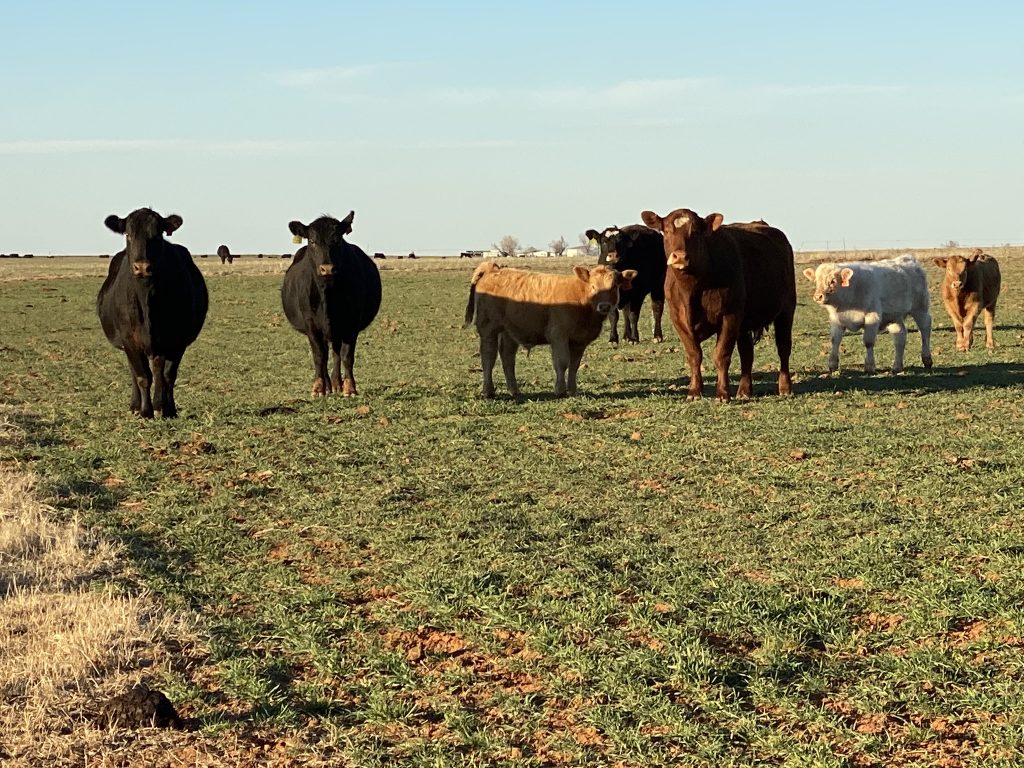

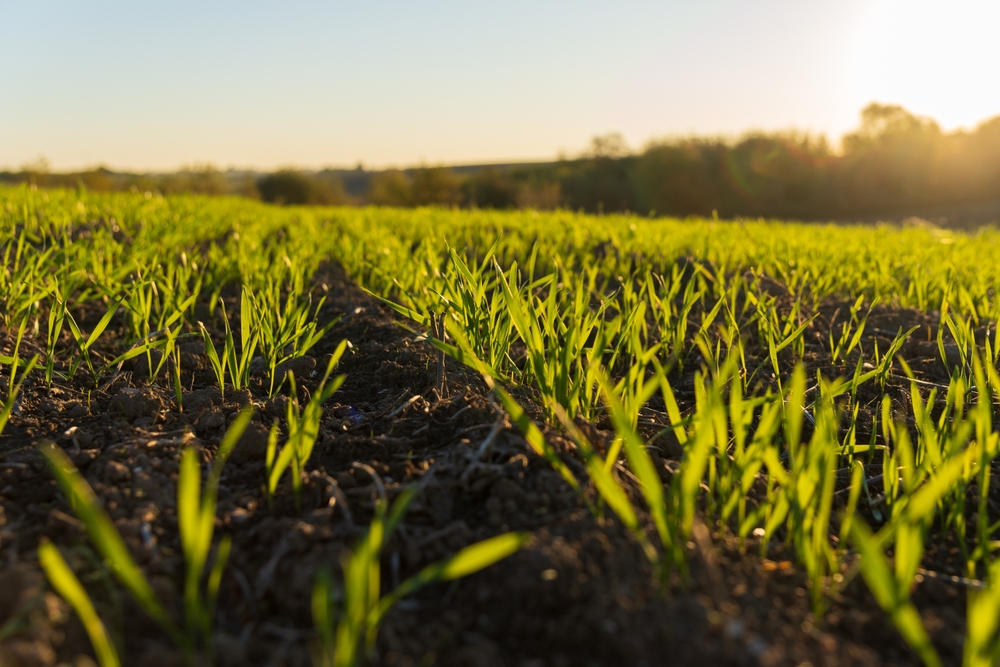

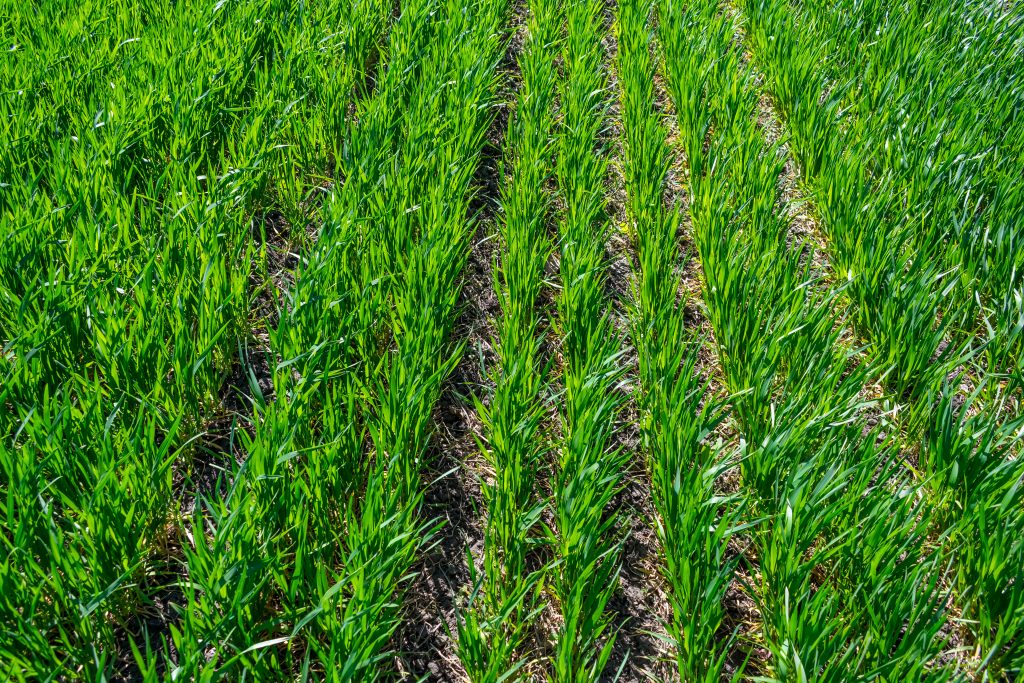
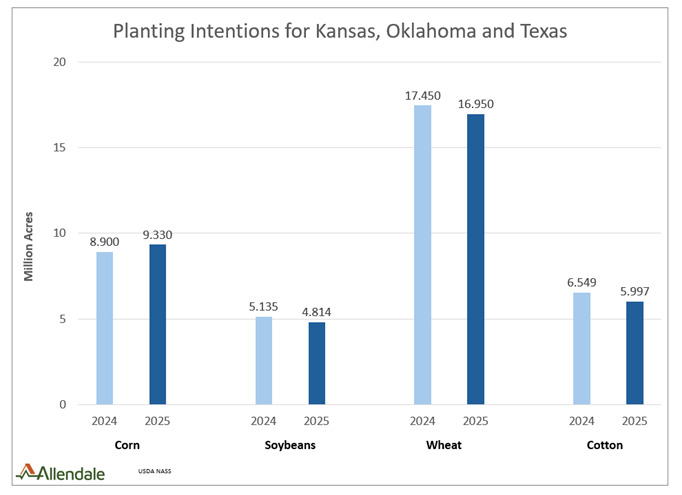
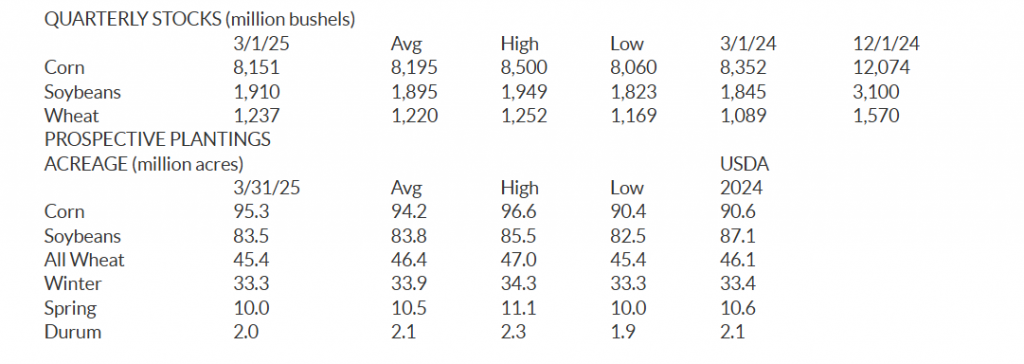


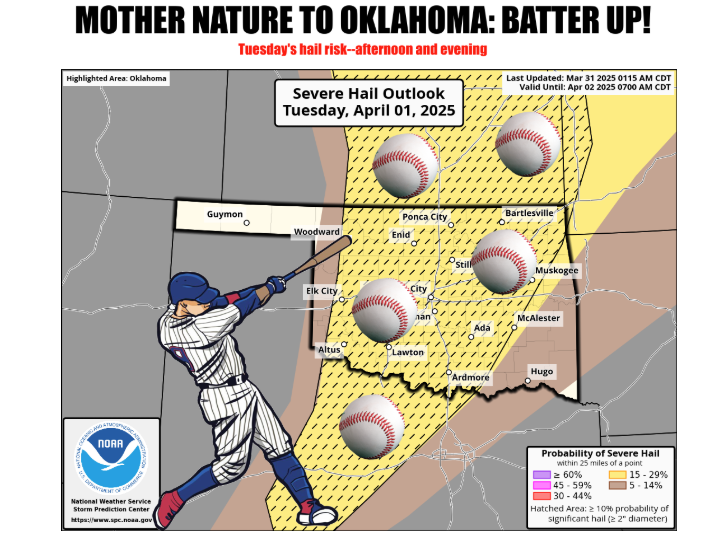
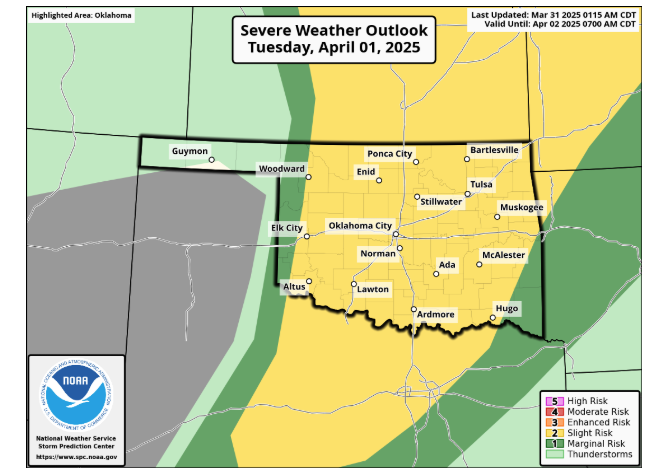
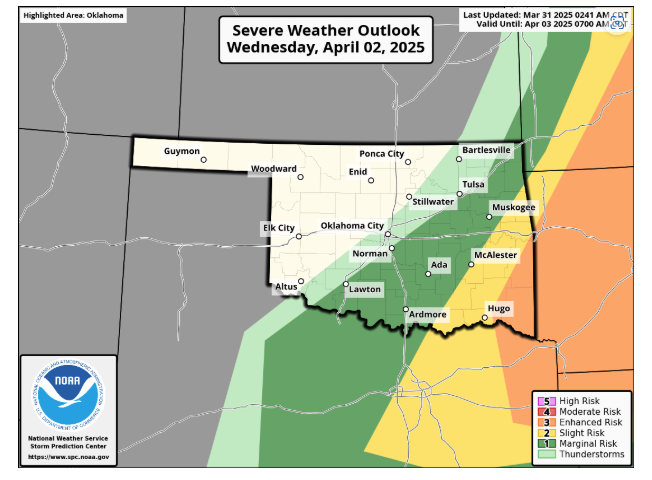
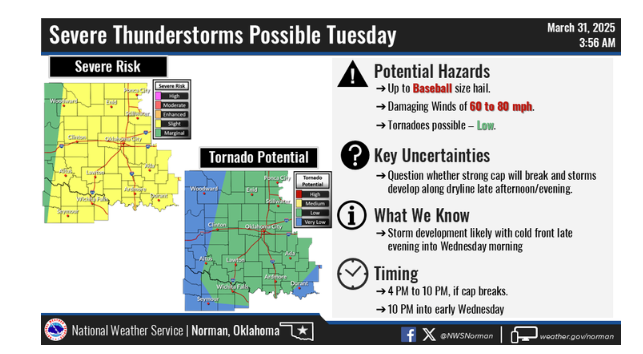
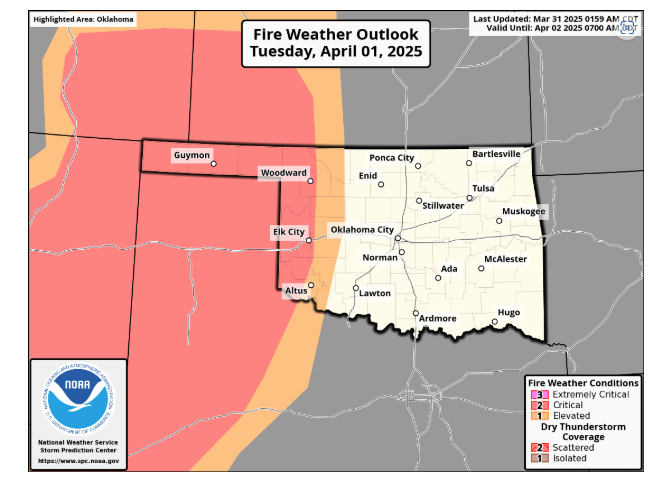
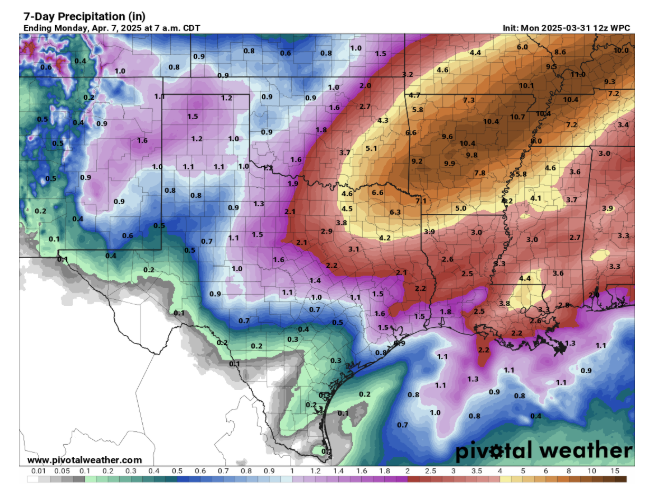
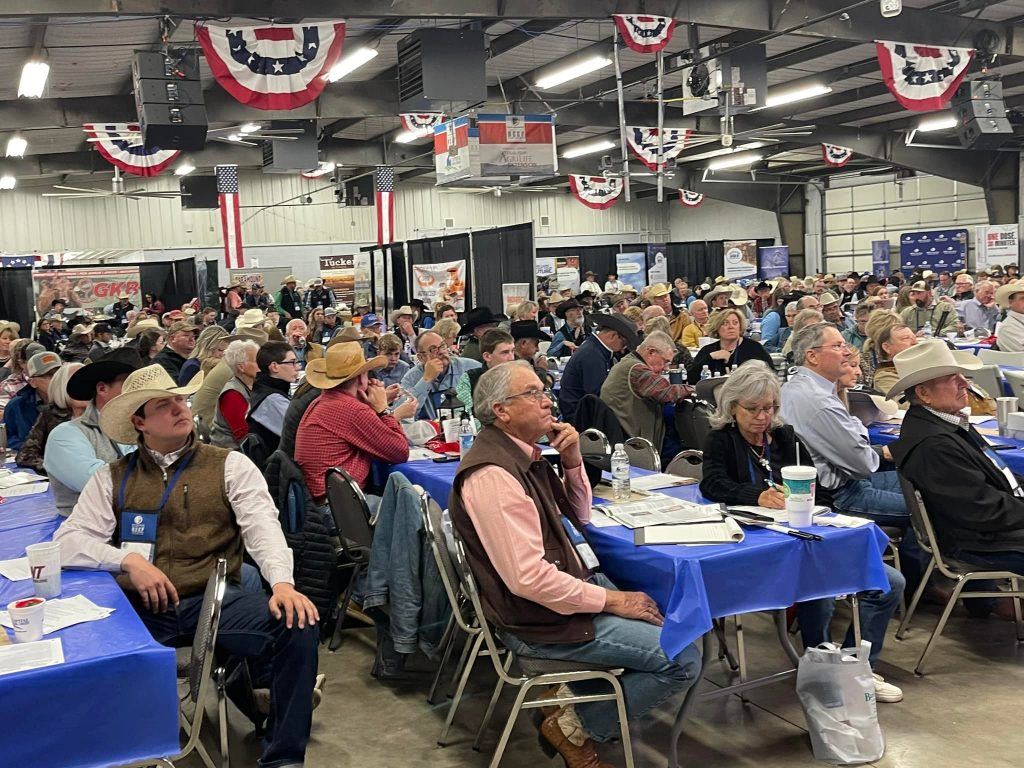
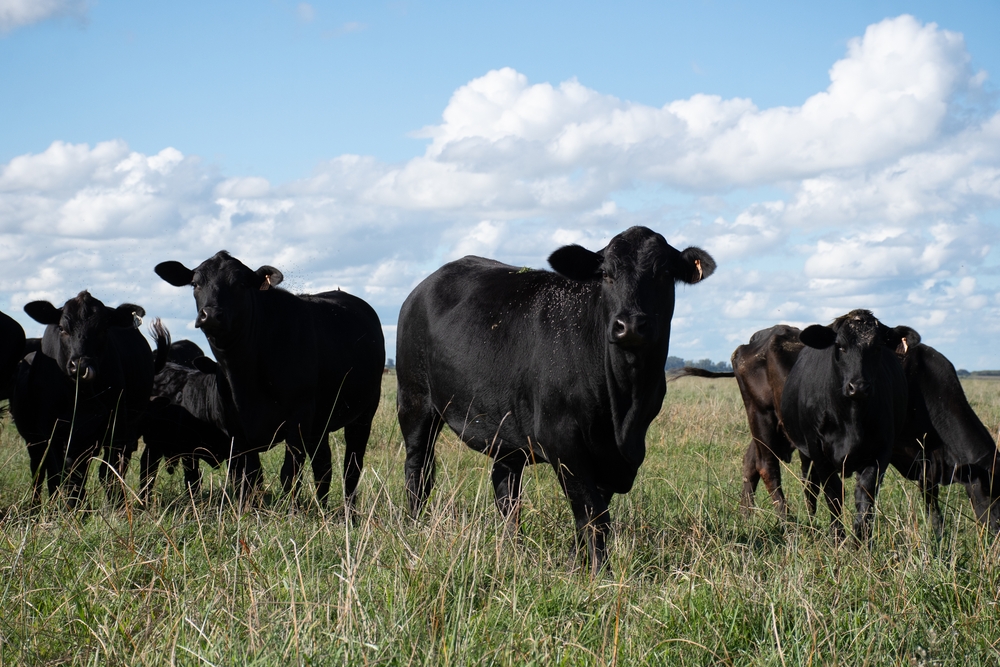
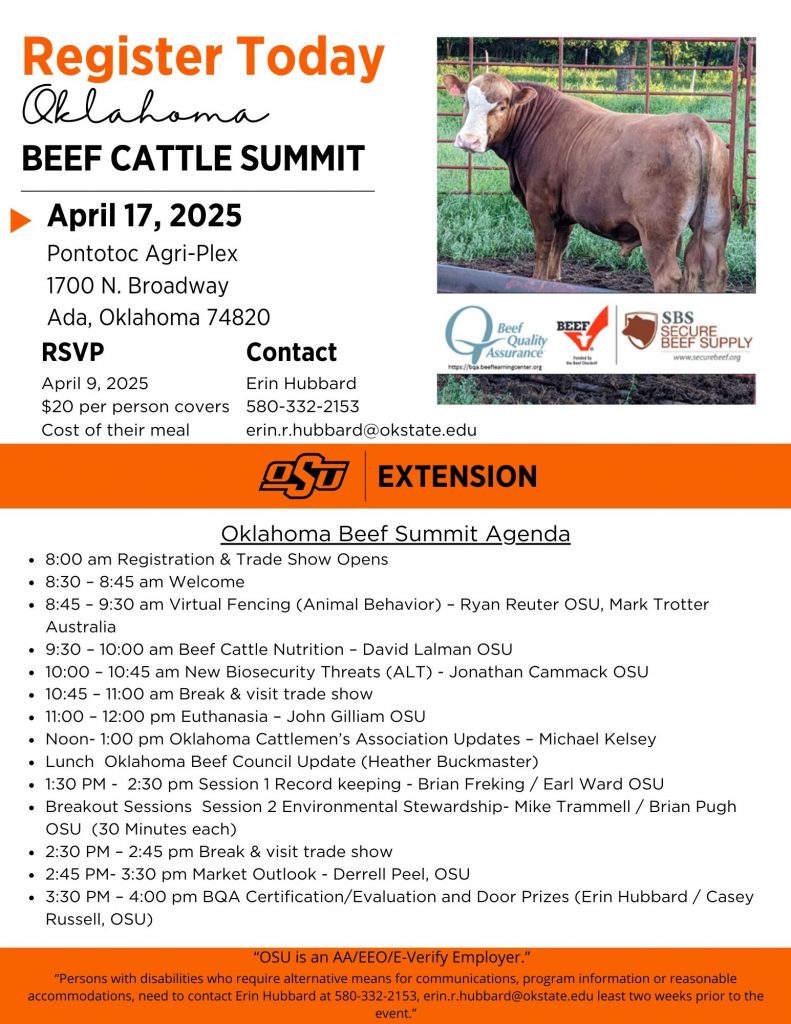
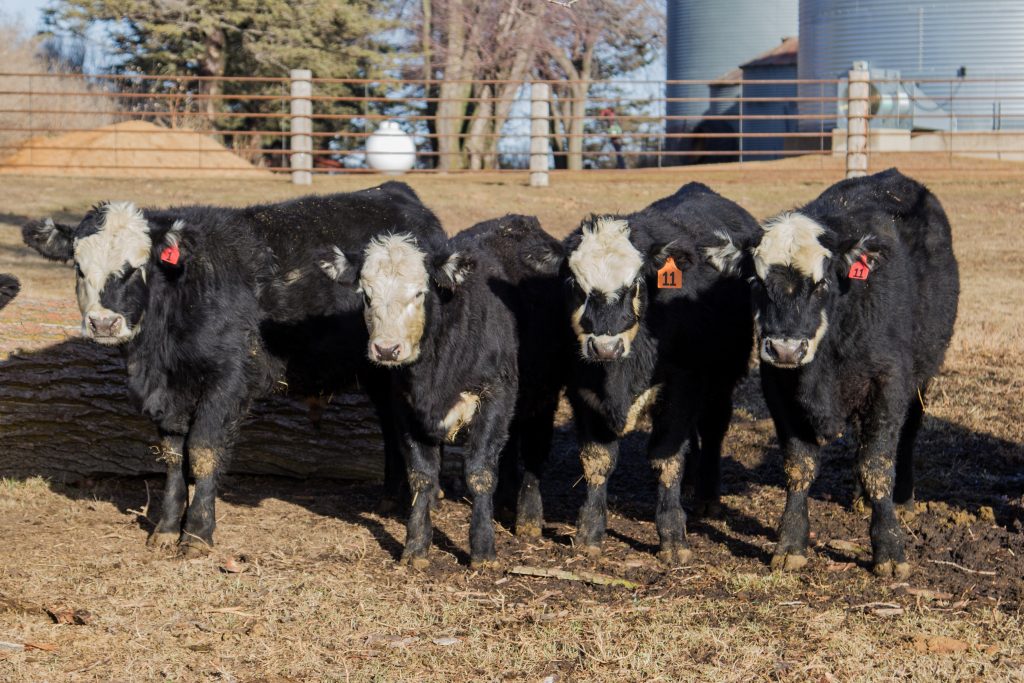
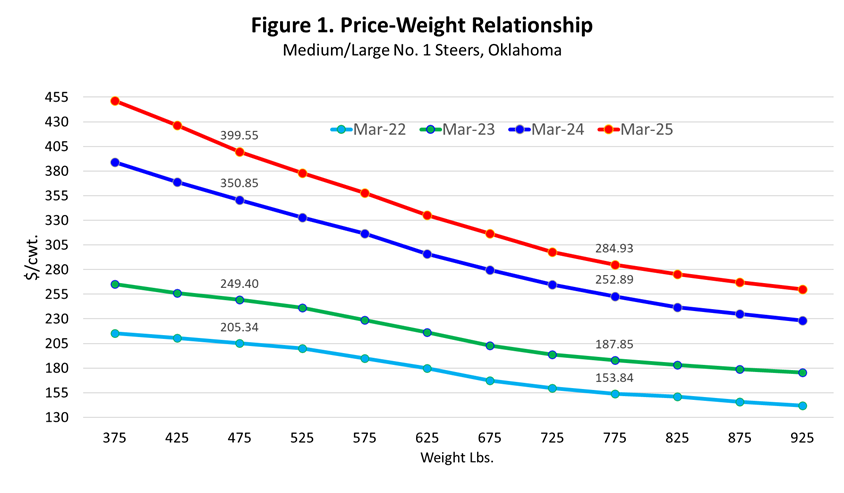
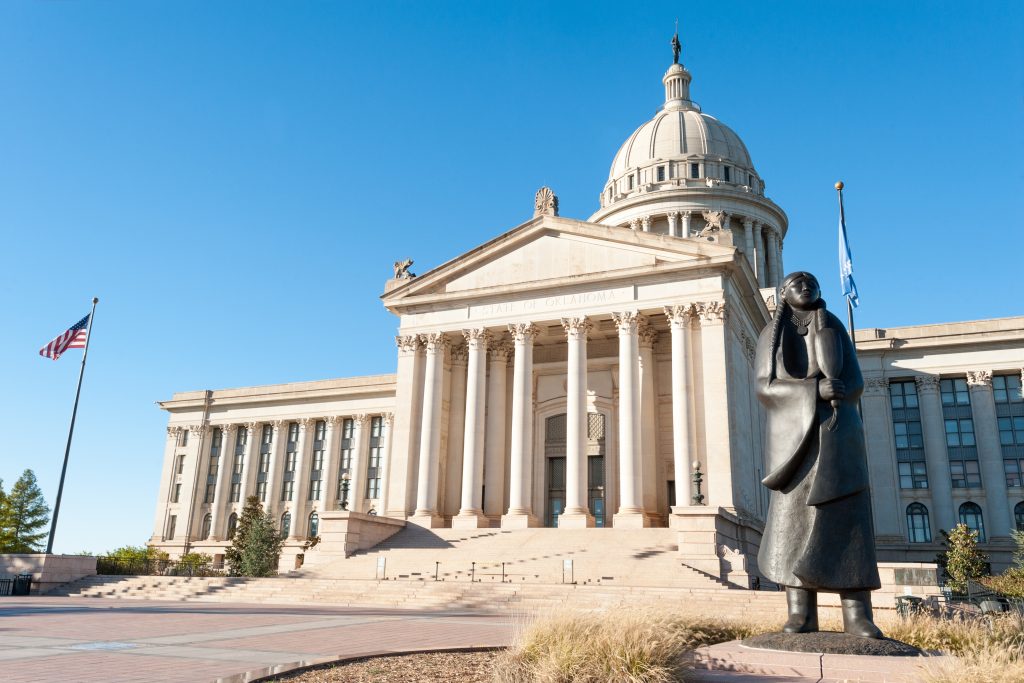


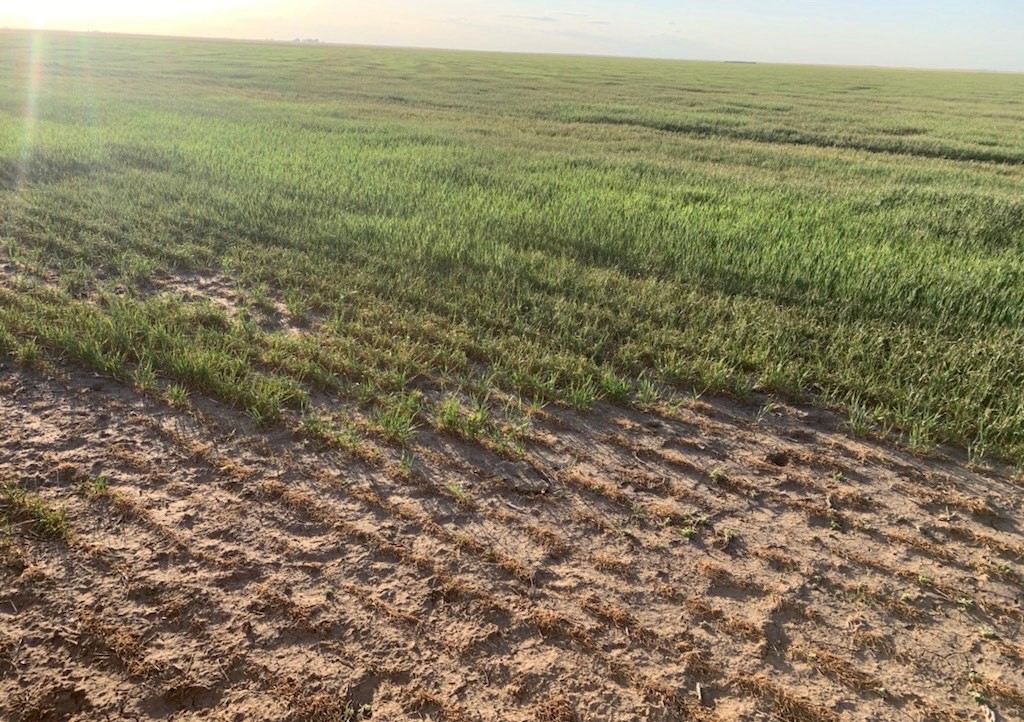
 Calling all cow-calf producers!
 https://okla.st/3XzO6ka
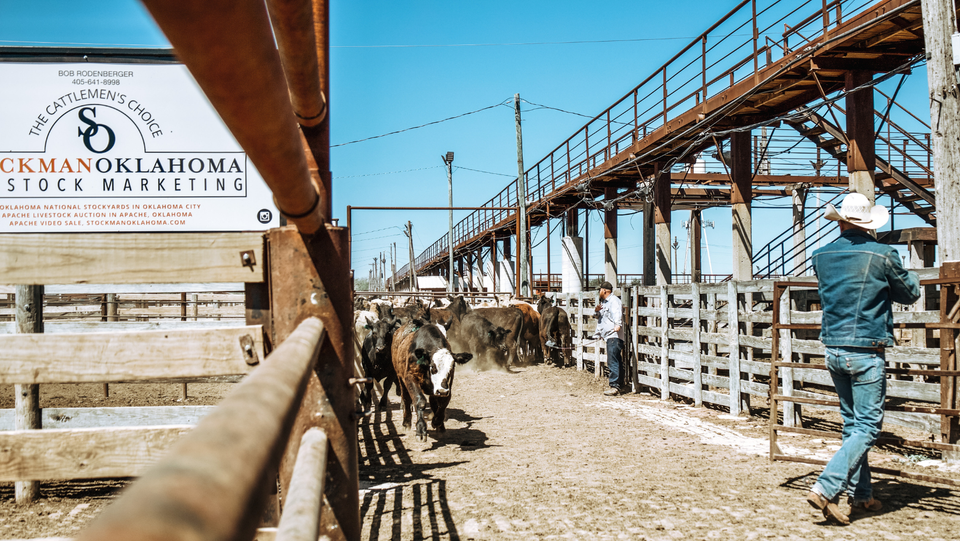
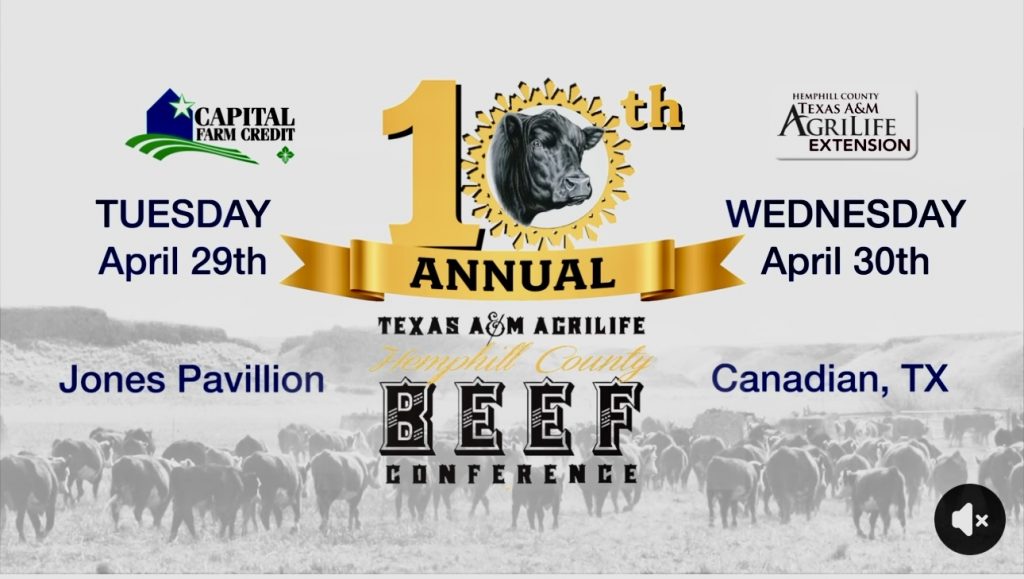








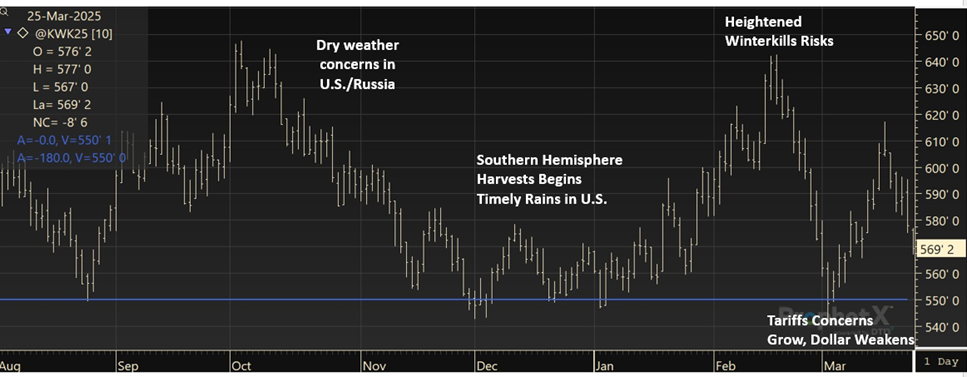
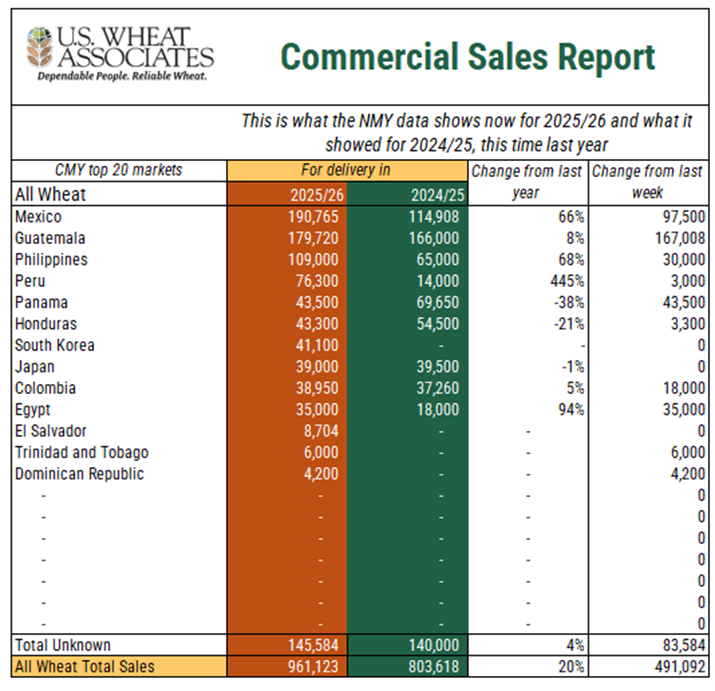


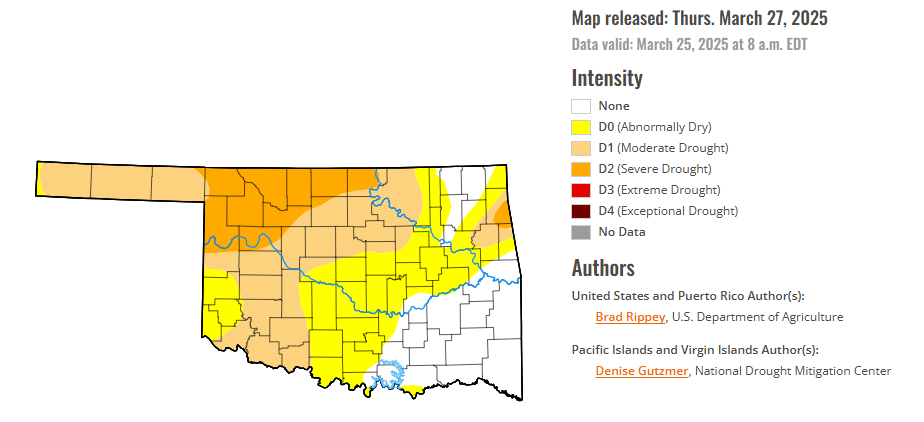
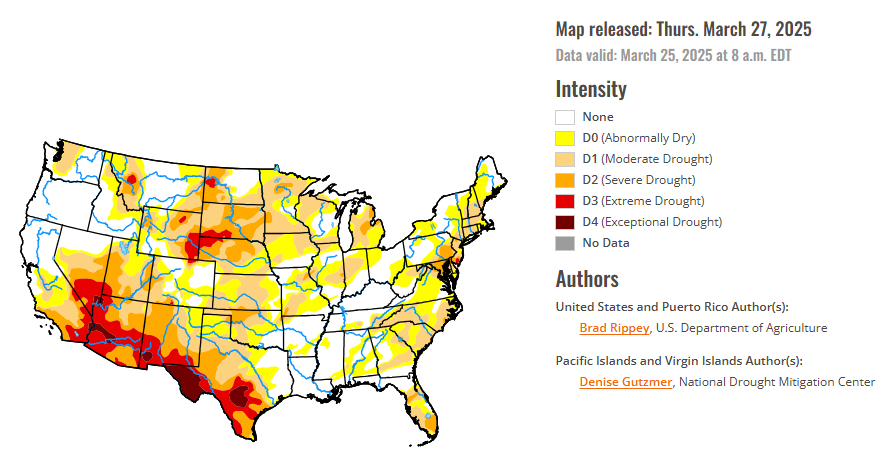

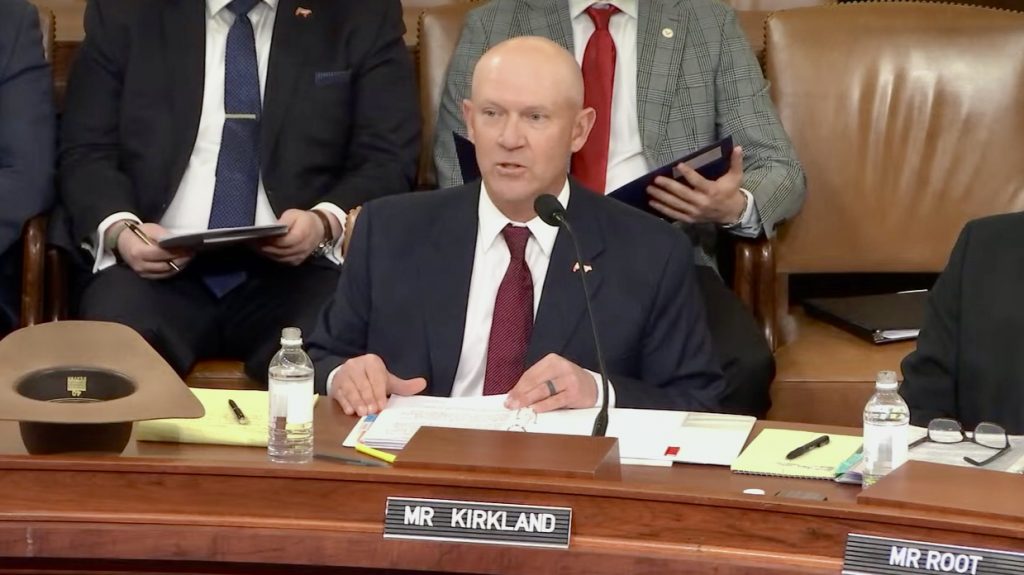


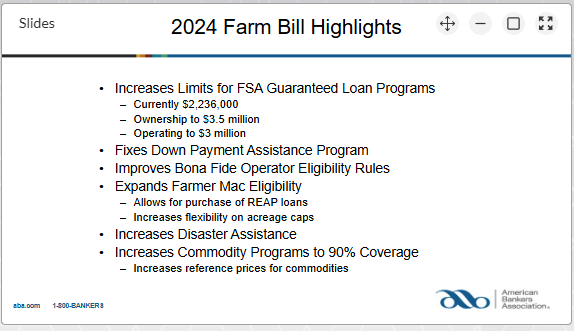
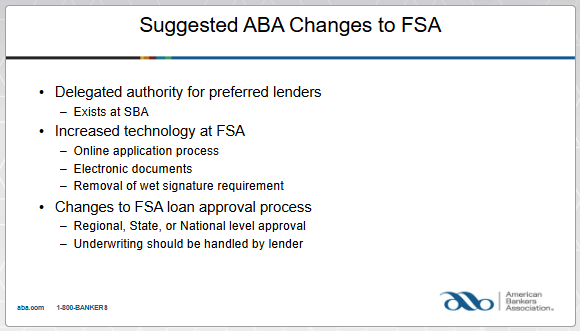
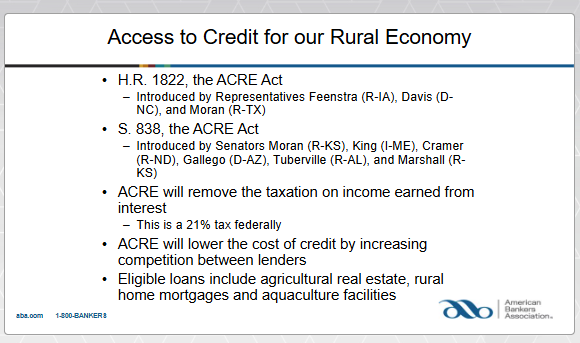
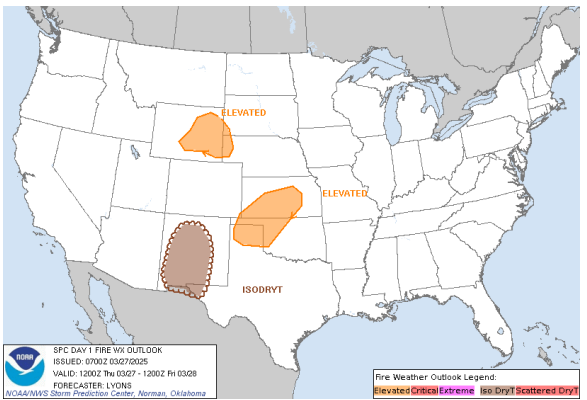
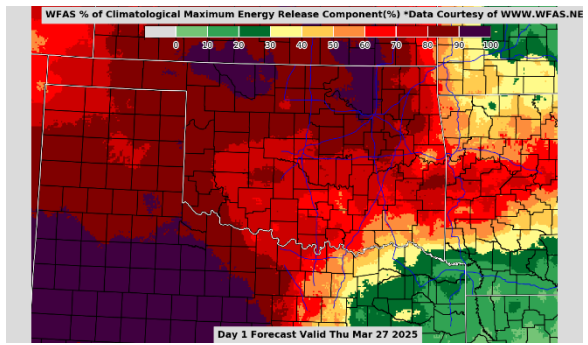
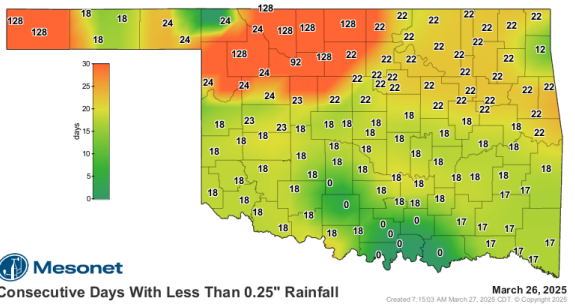
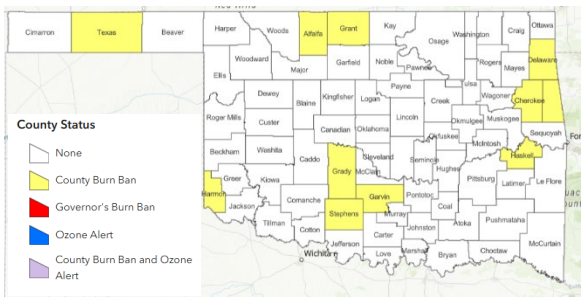
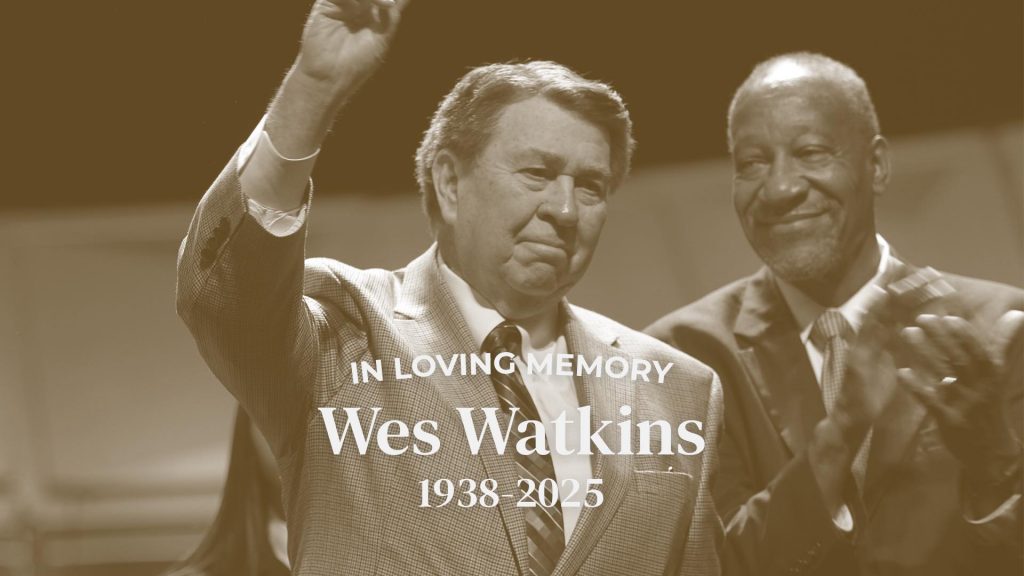
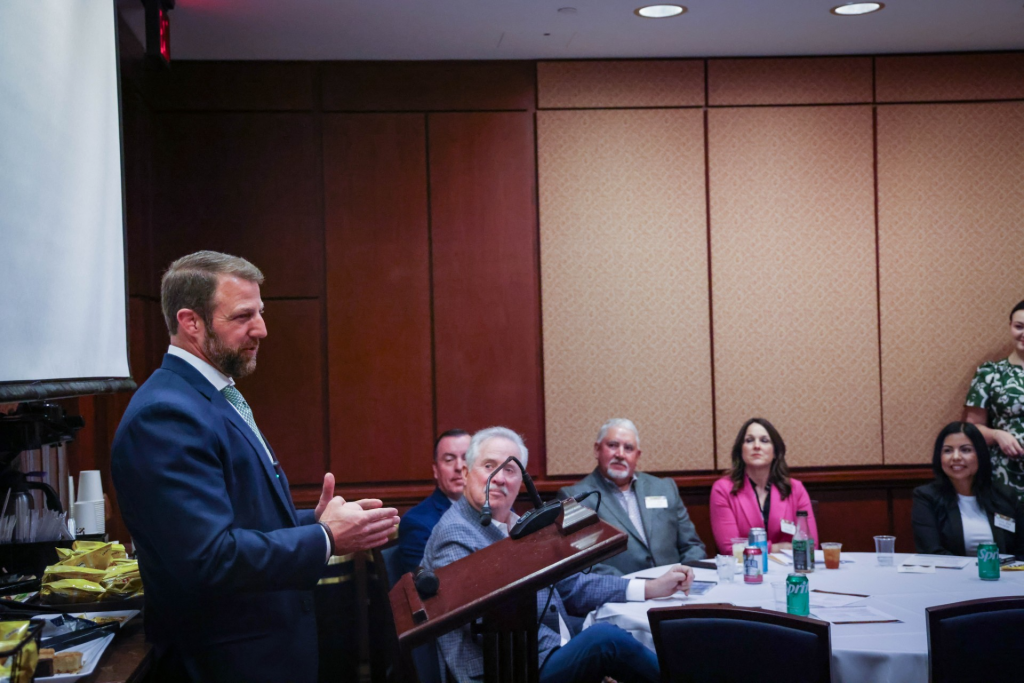
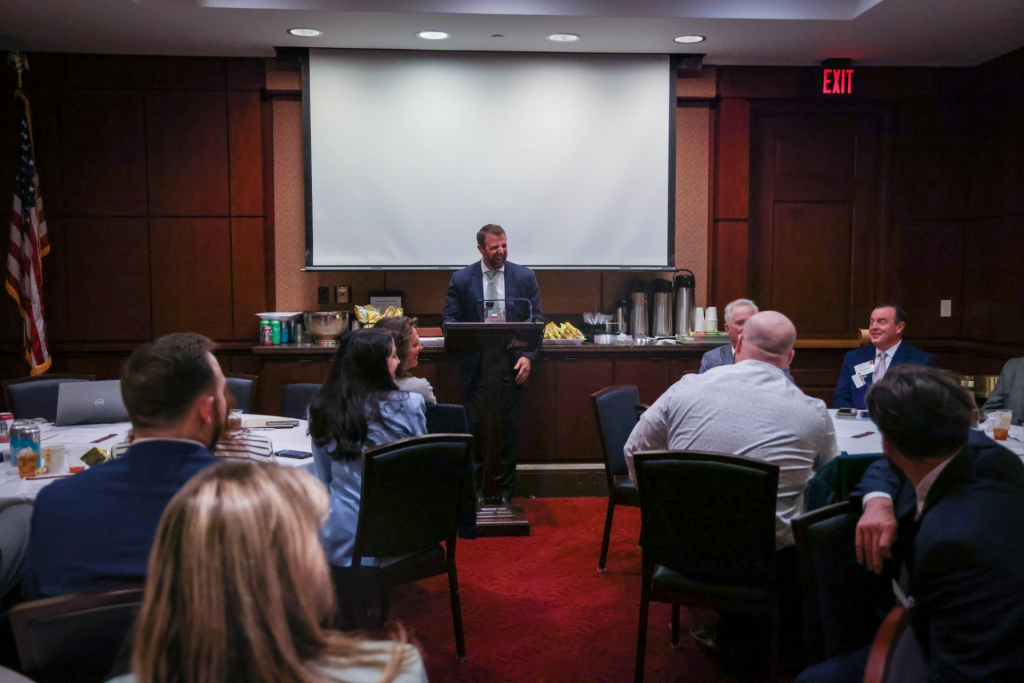




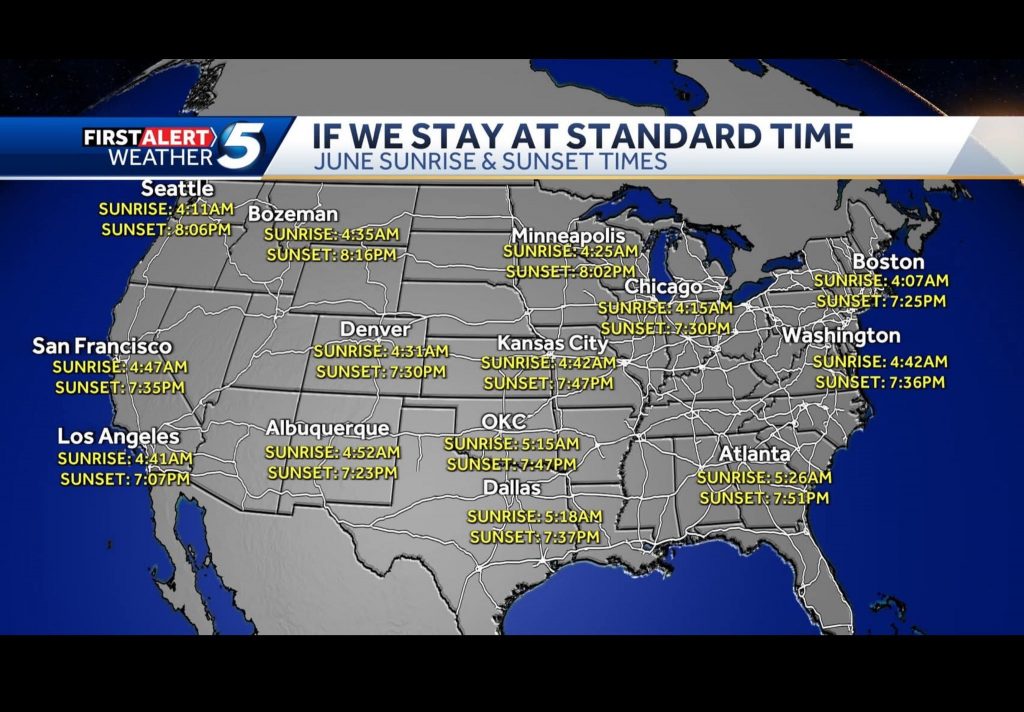



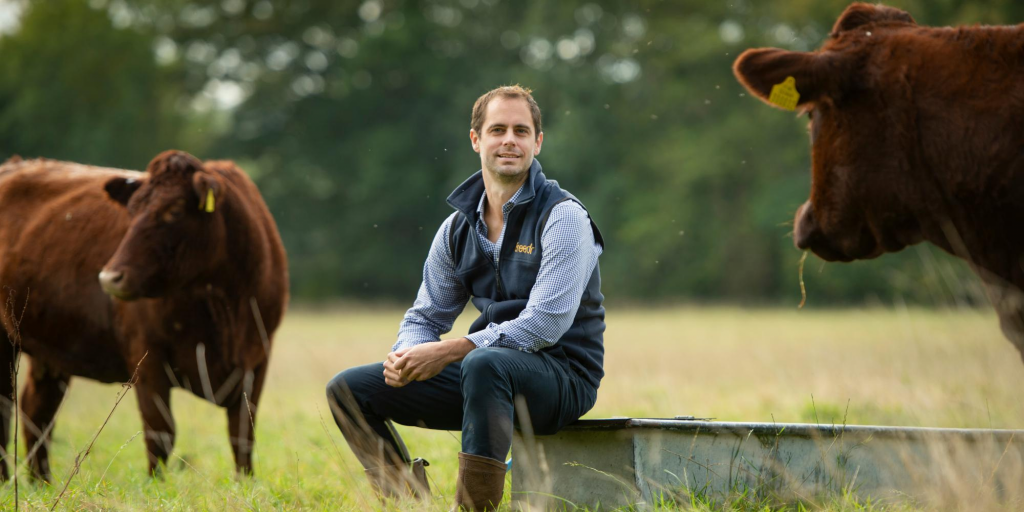

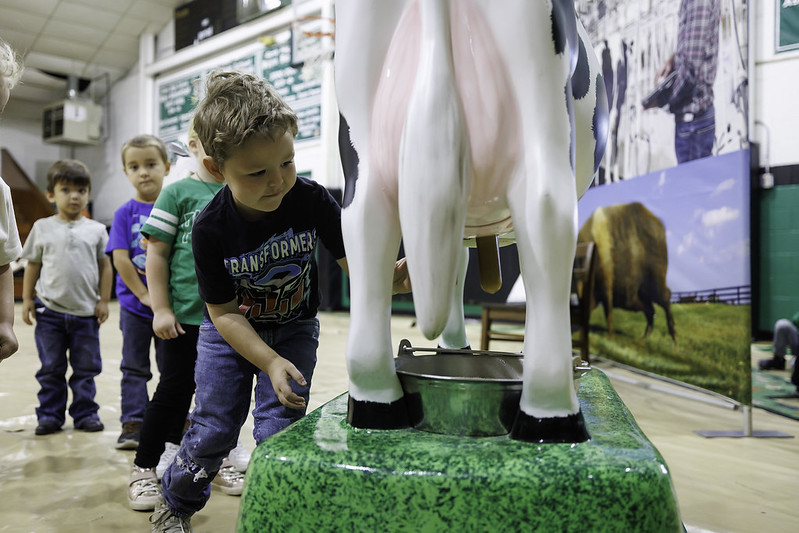

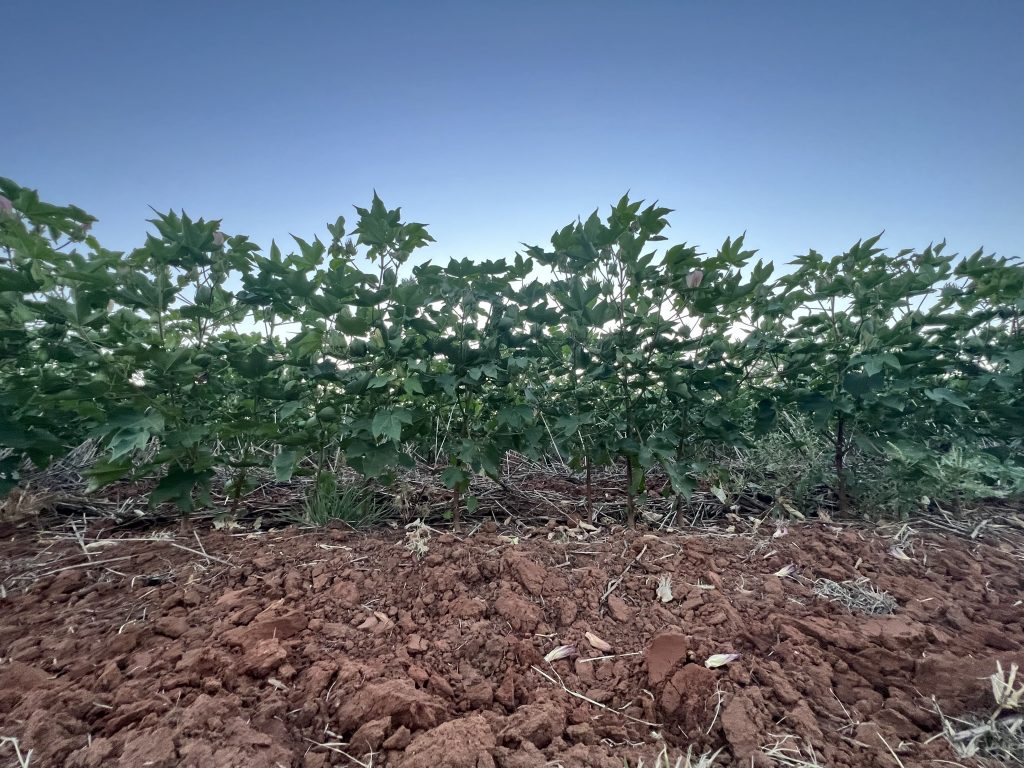



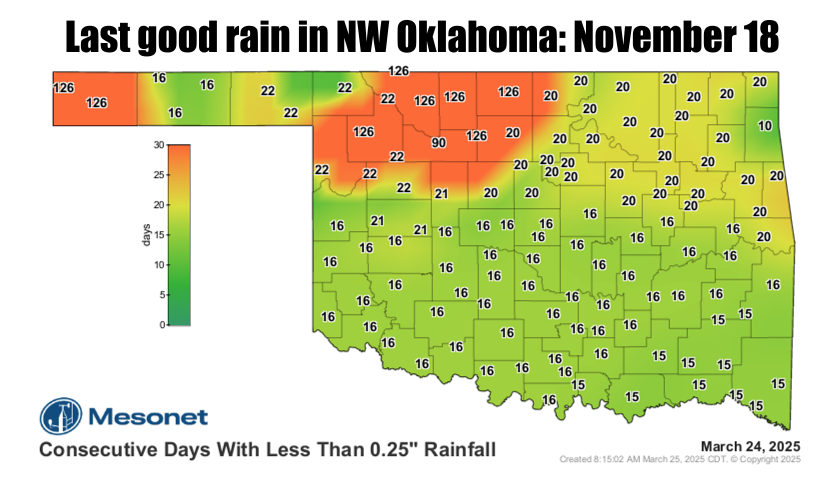
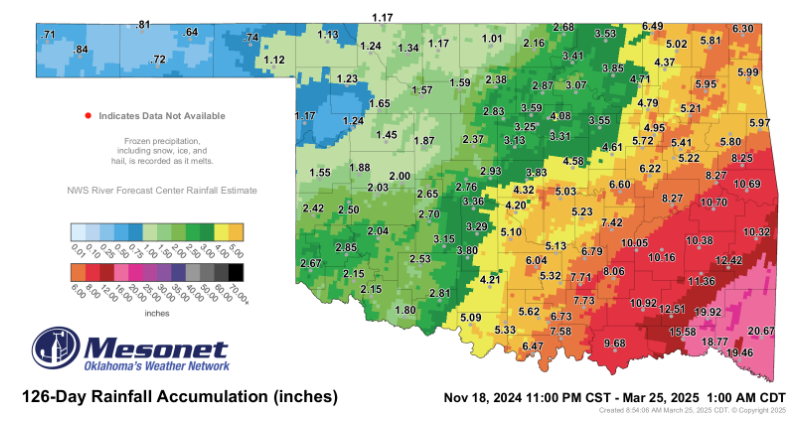
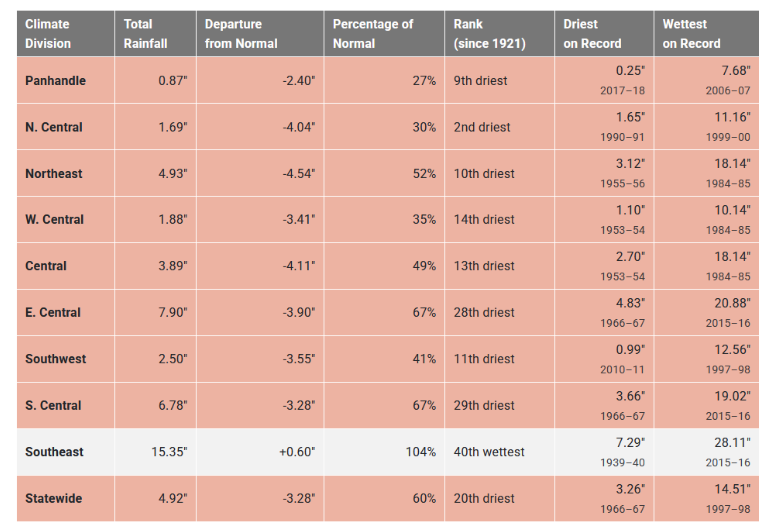
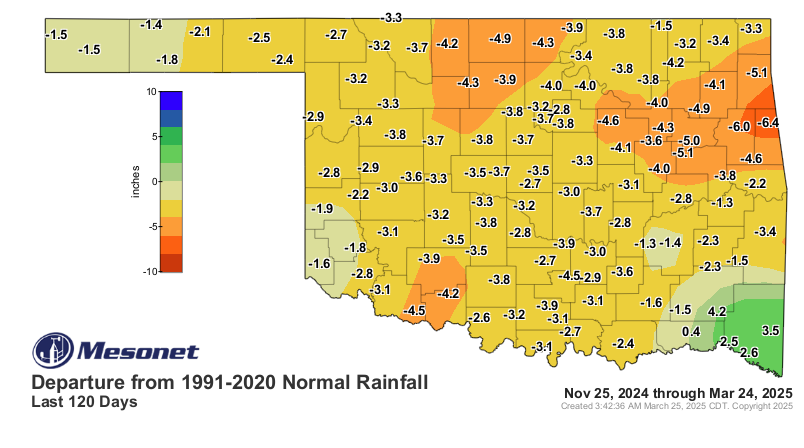
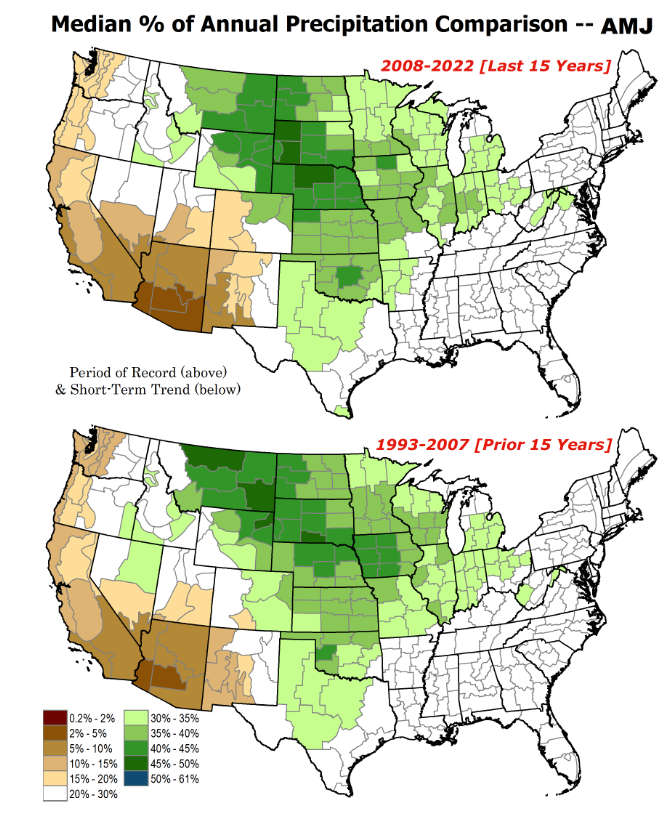
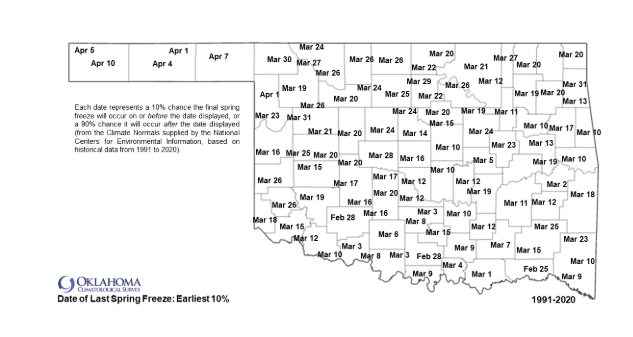
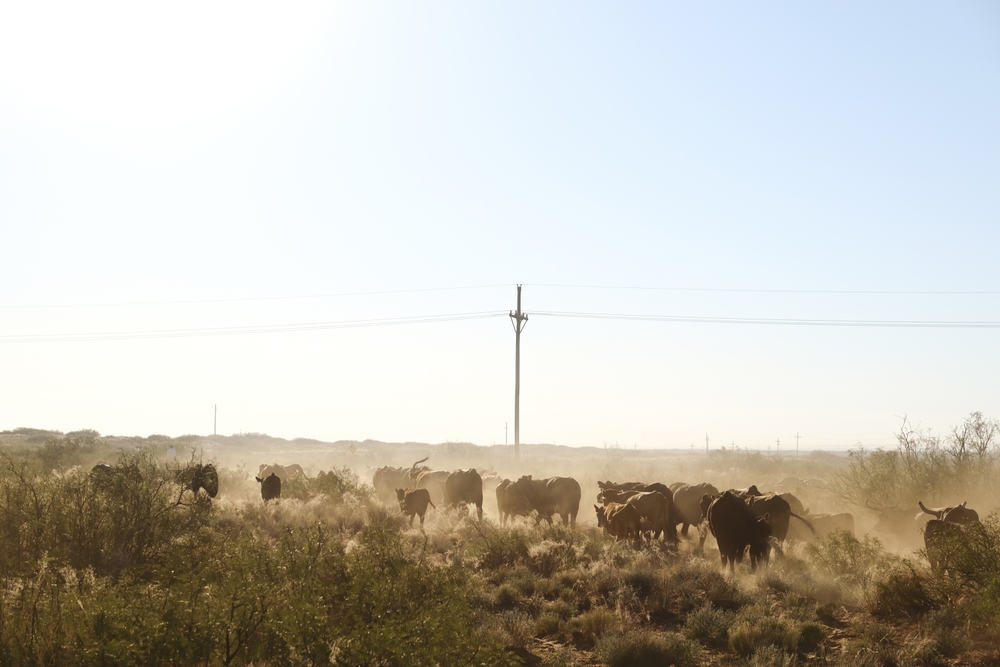
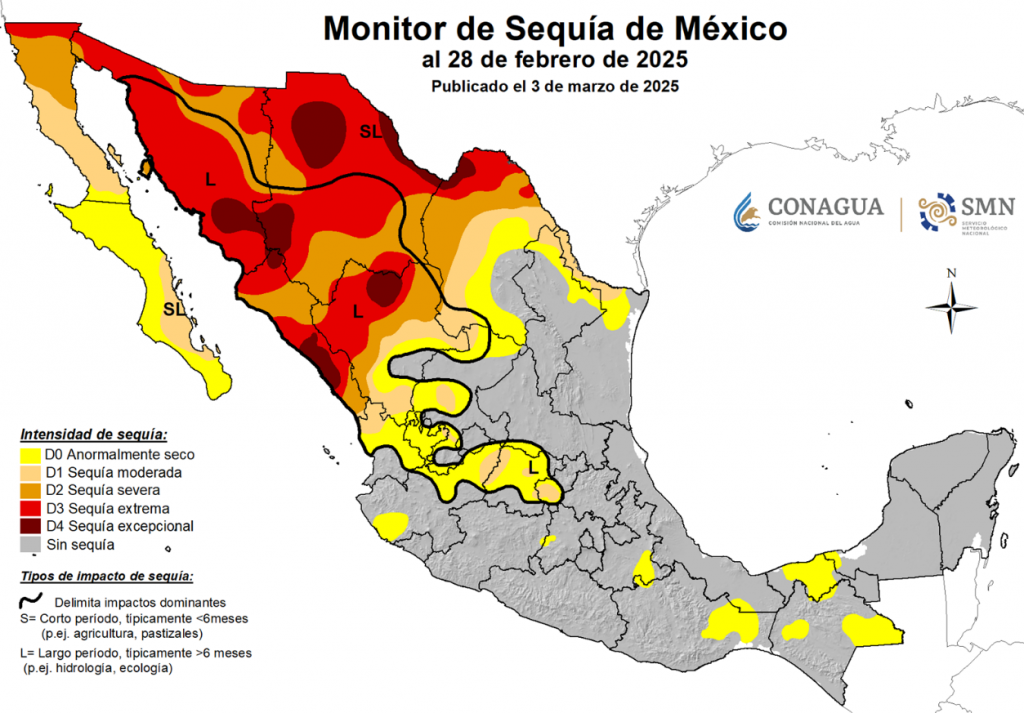
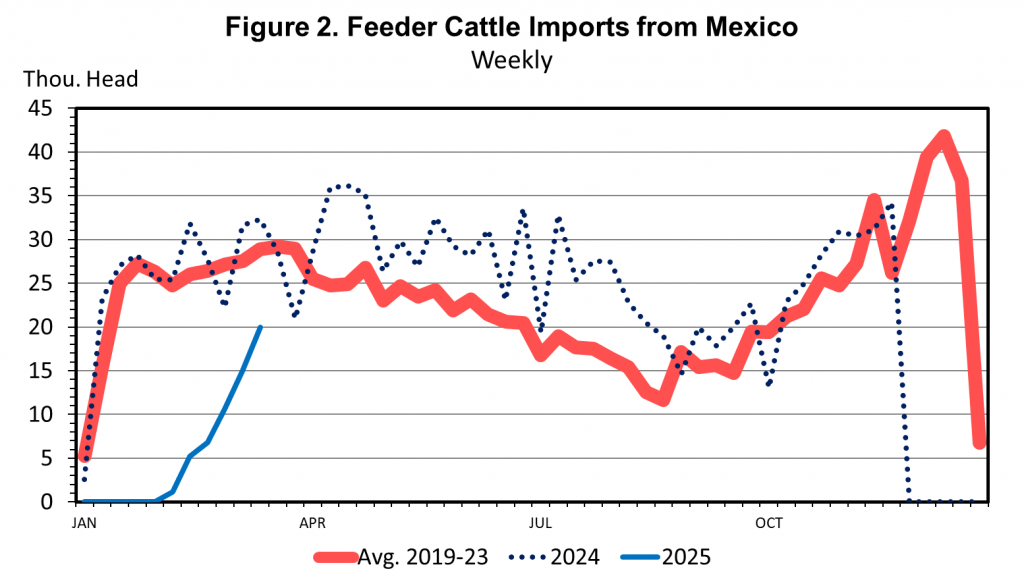

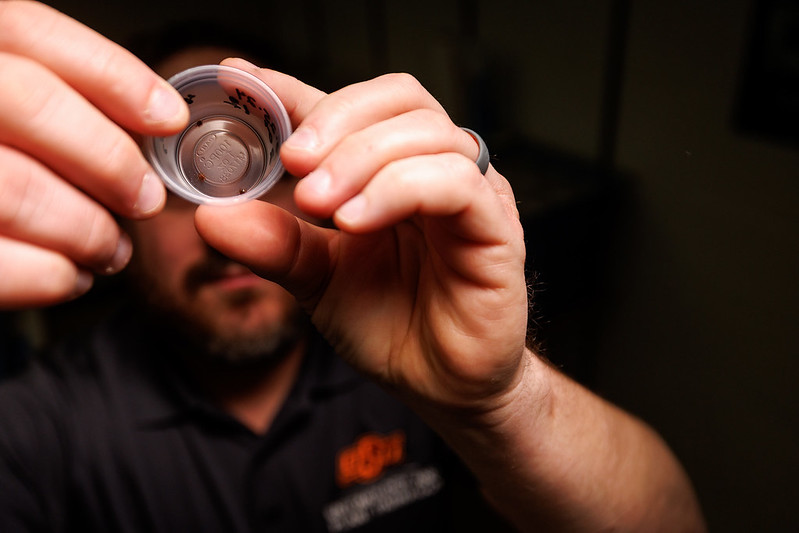
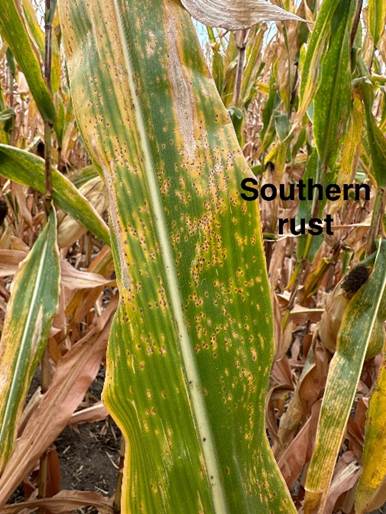
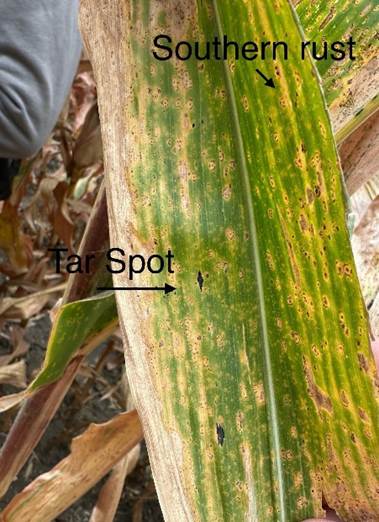

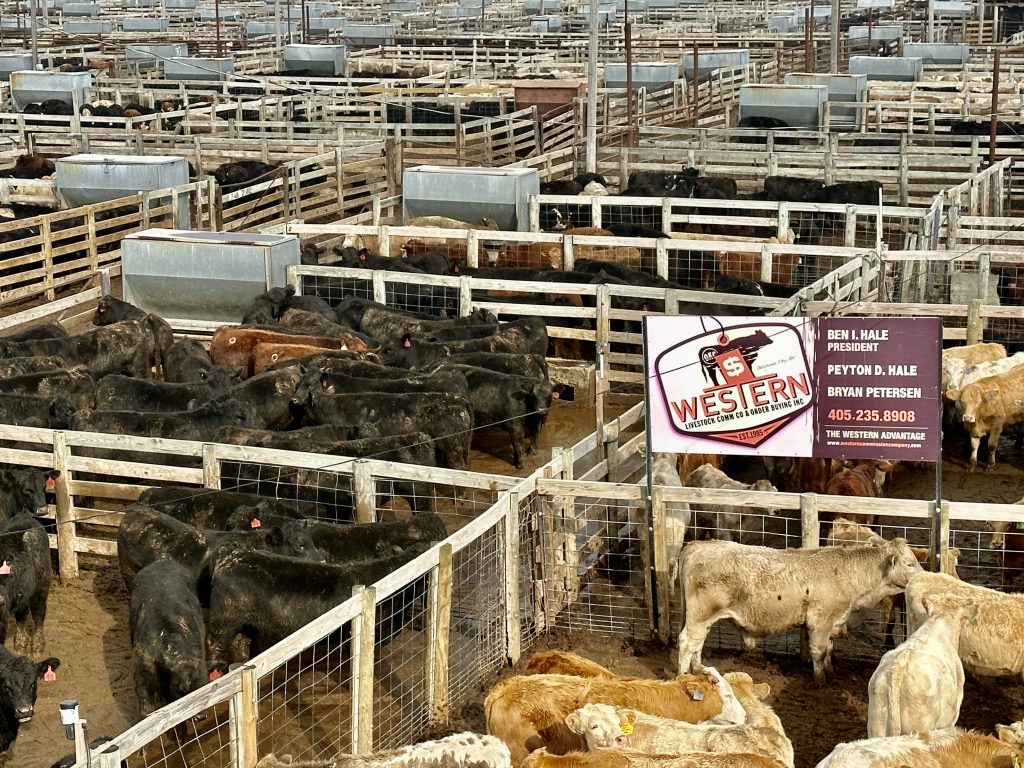
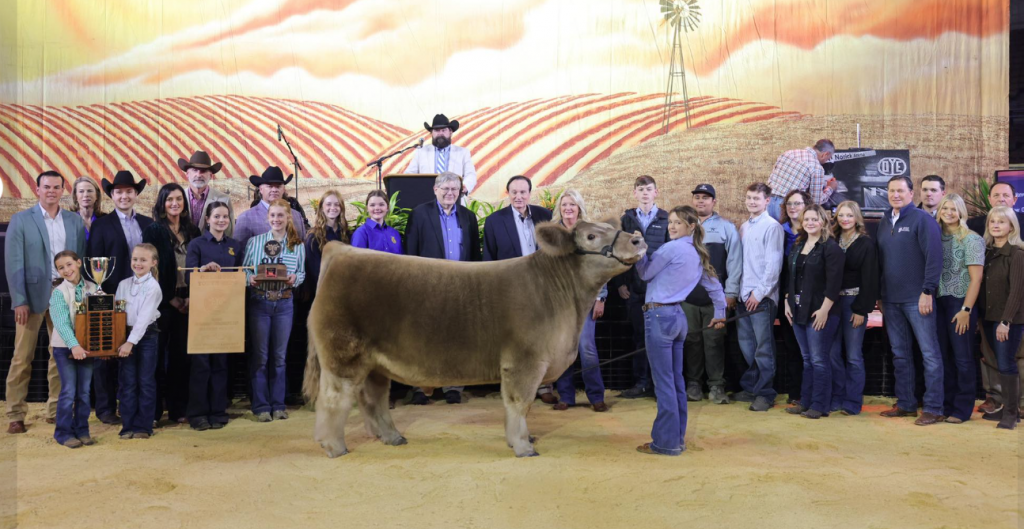
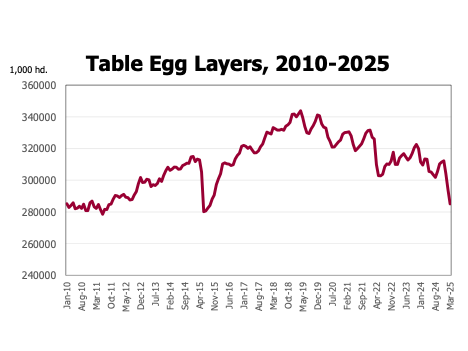

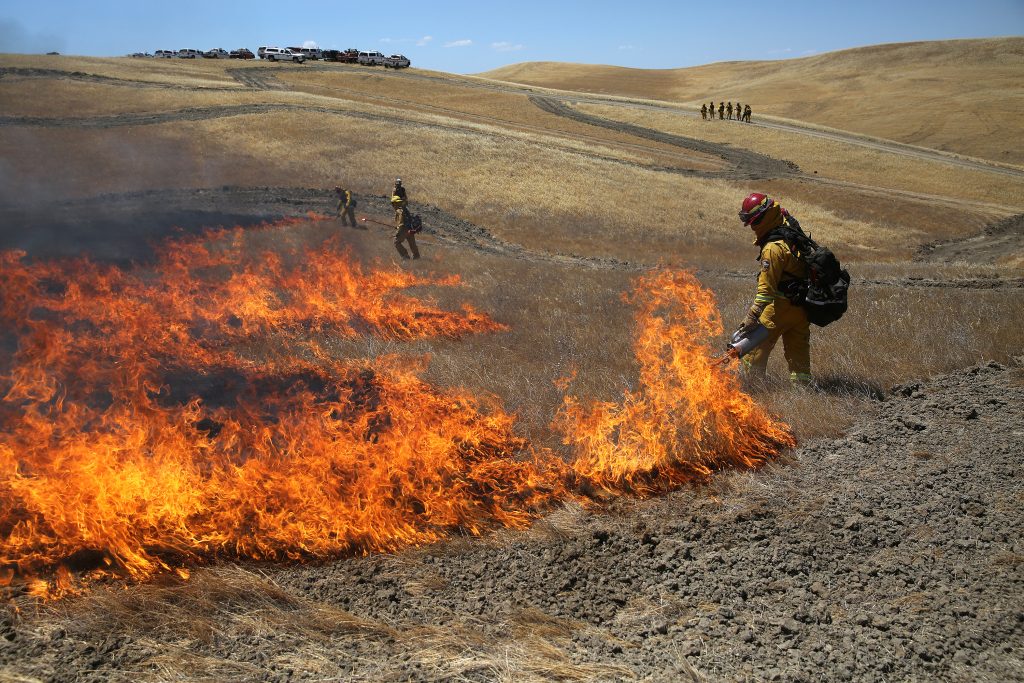
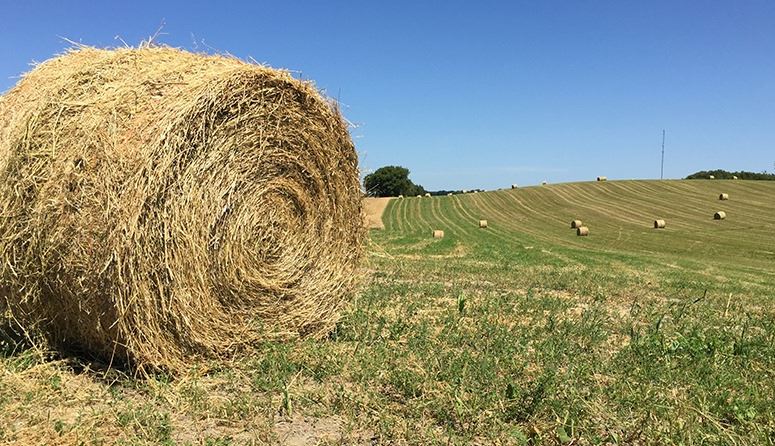
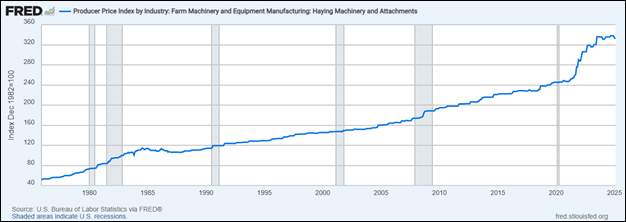



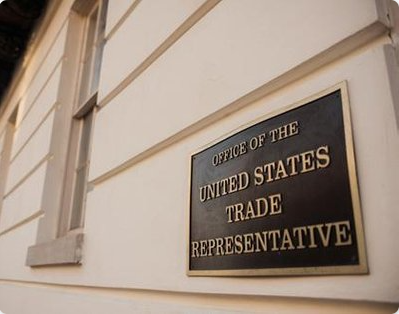
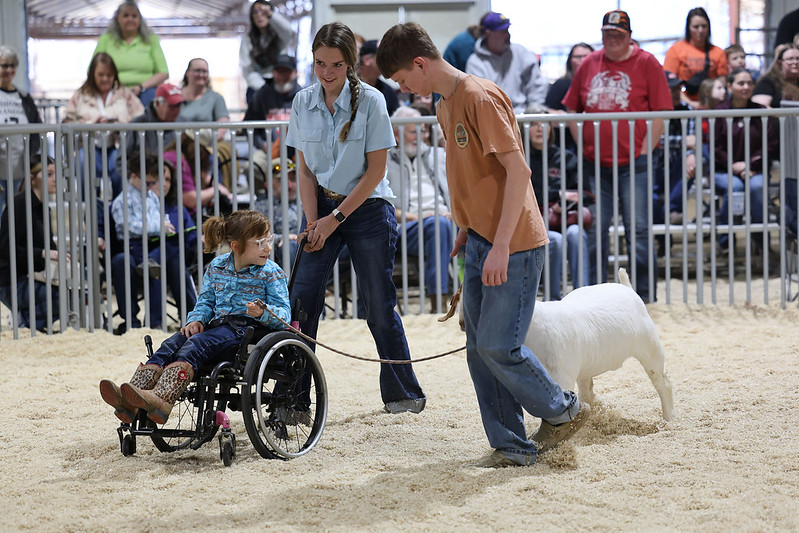
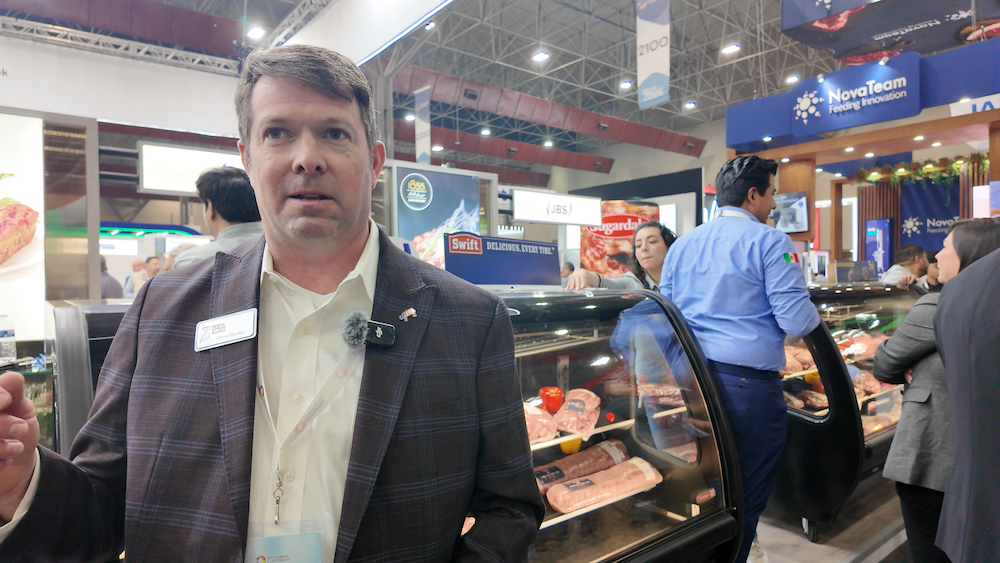
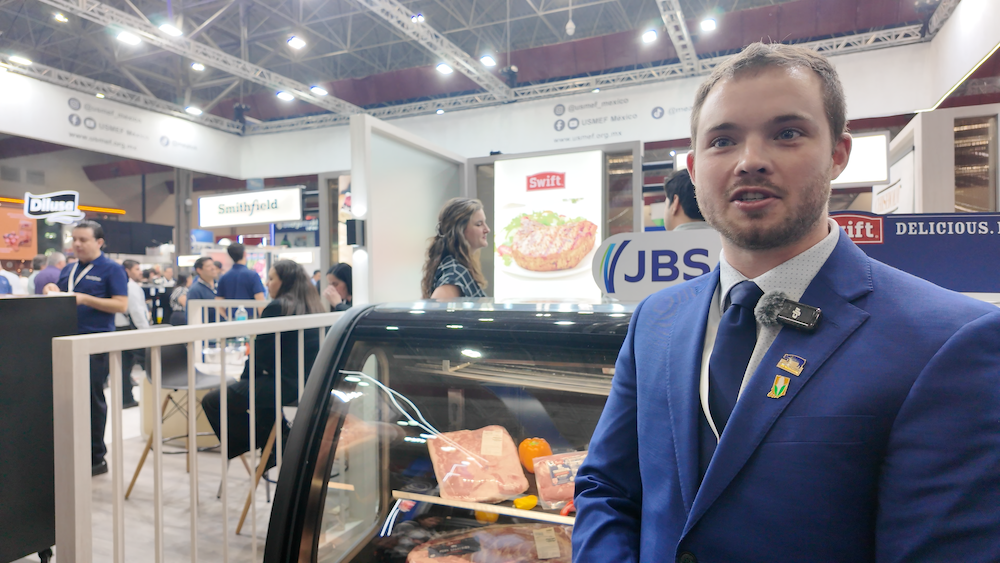
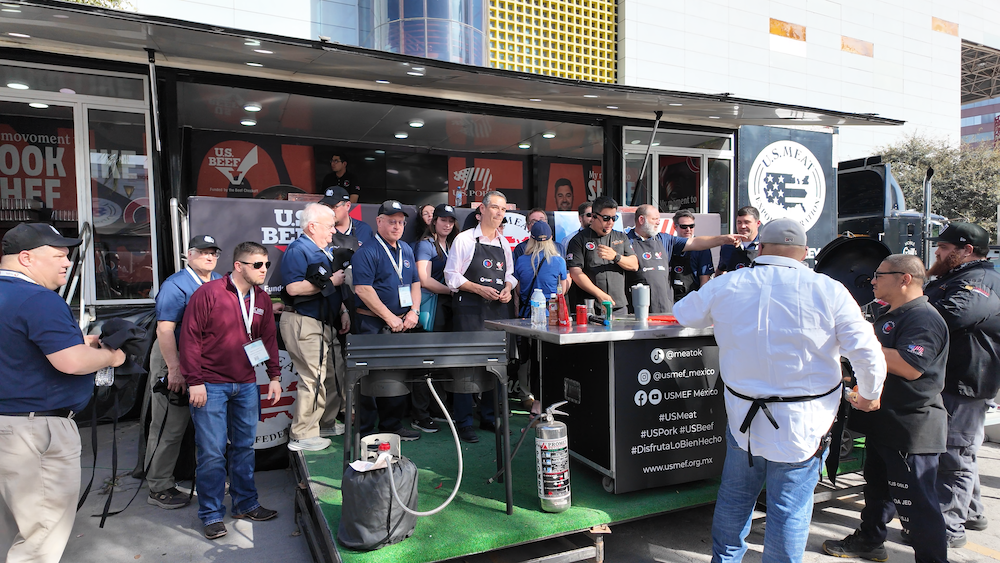
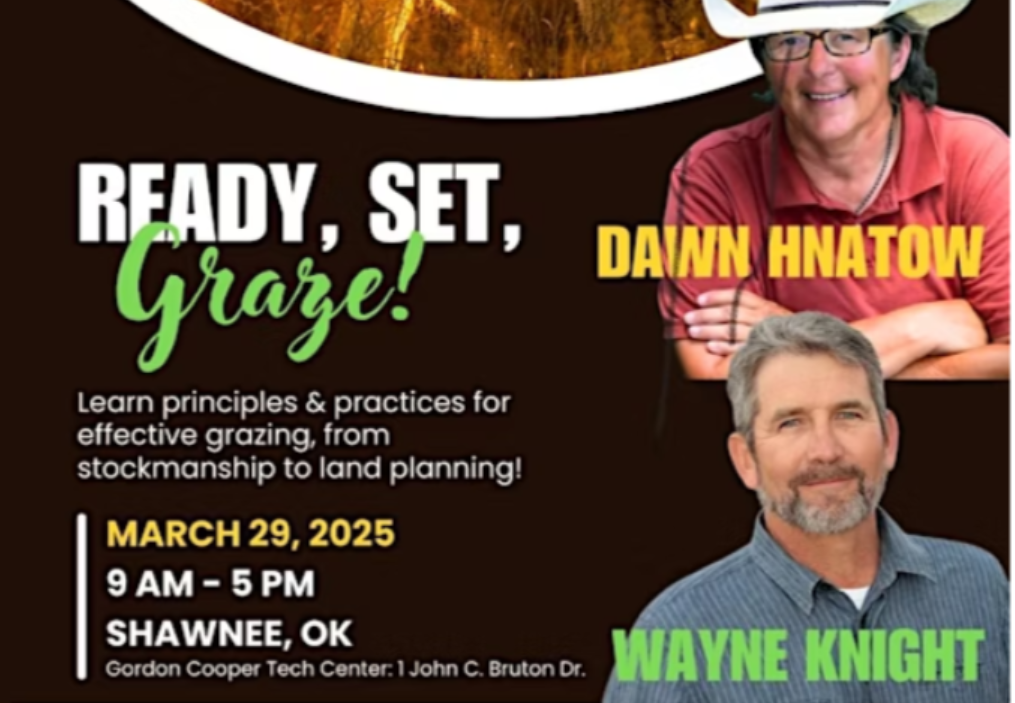

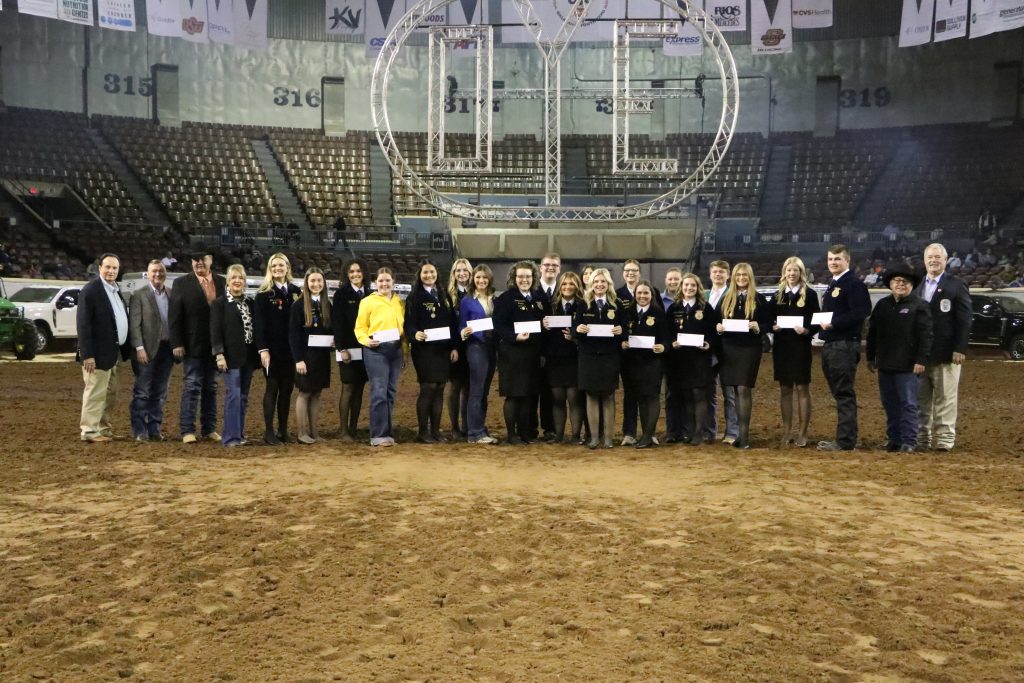
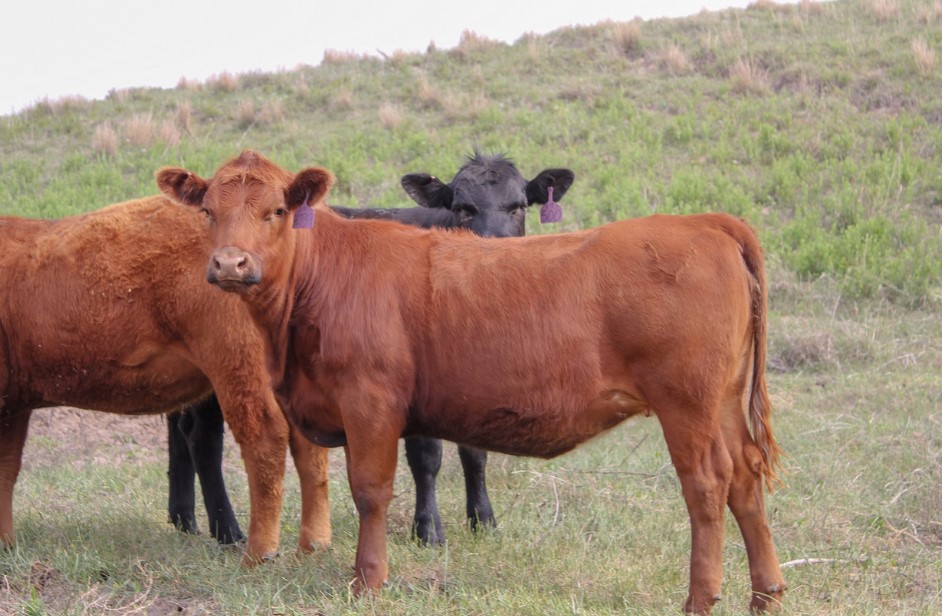
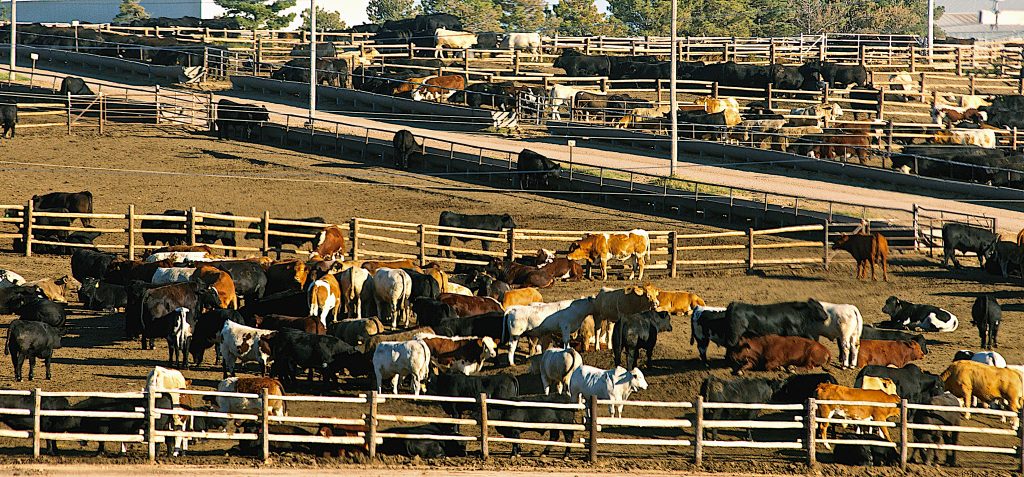

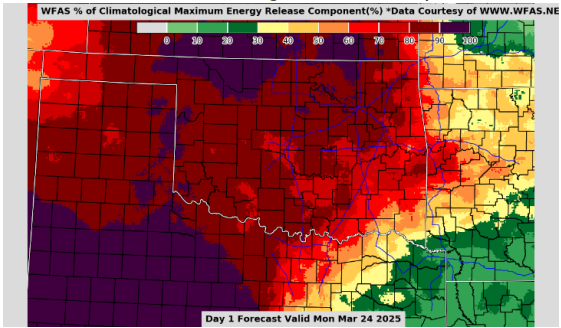
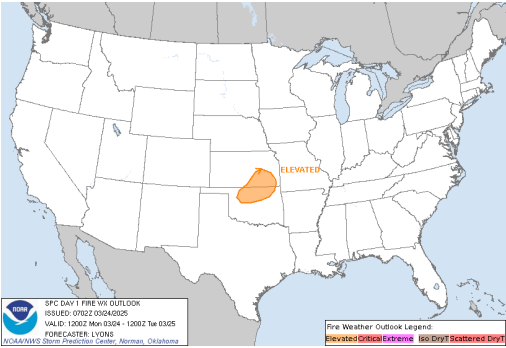
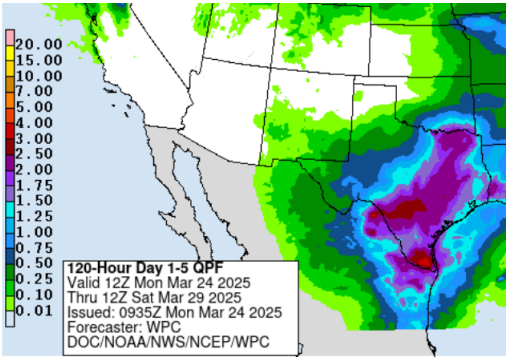
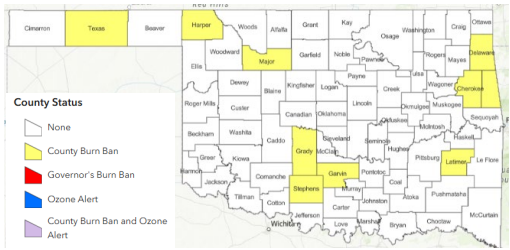

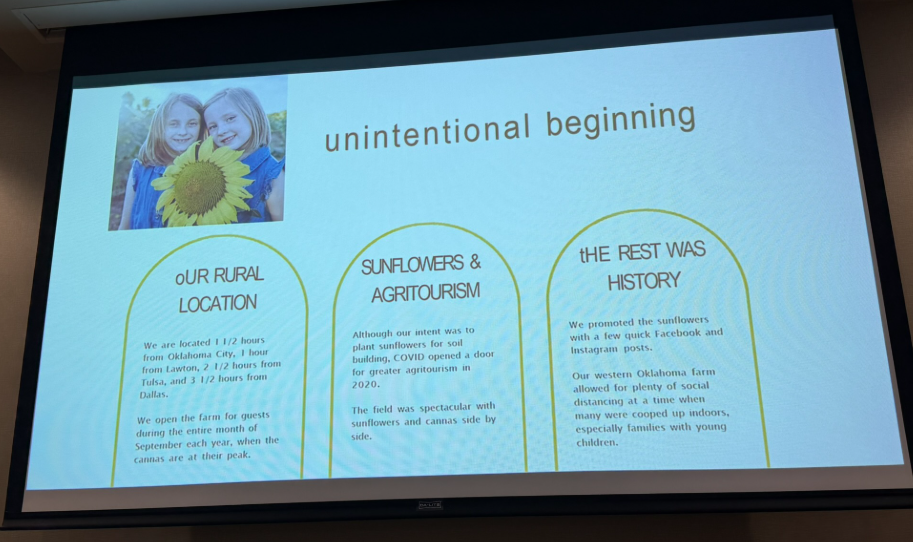
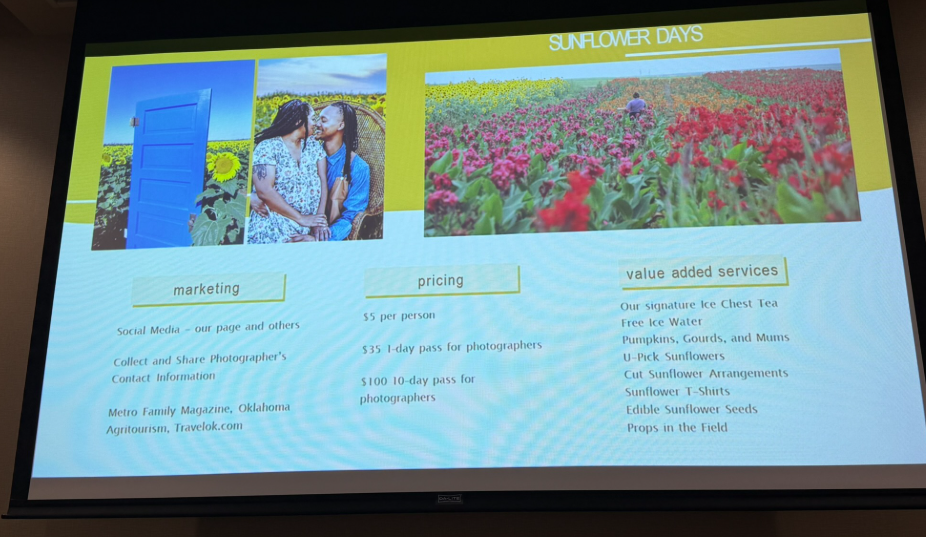
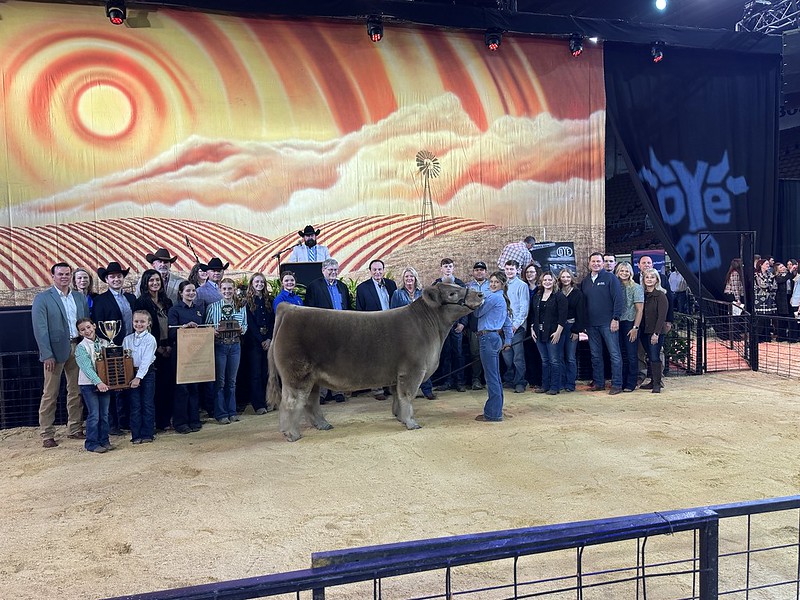
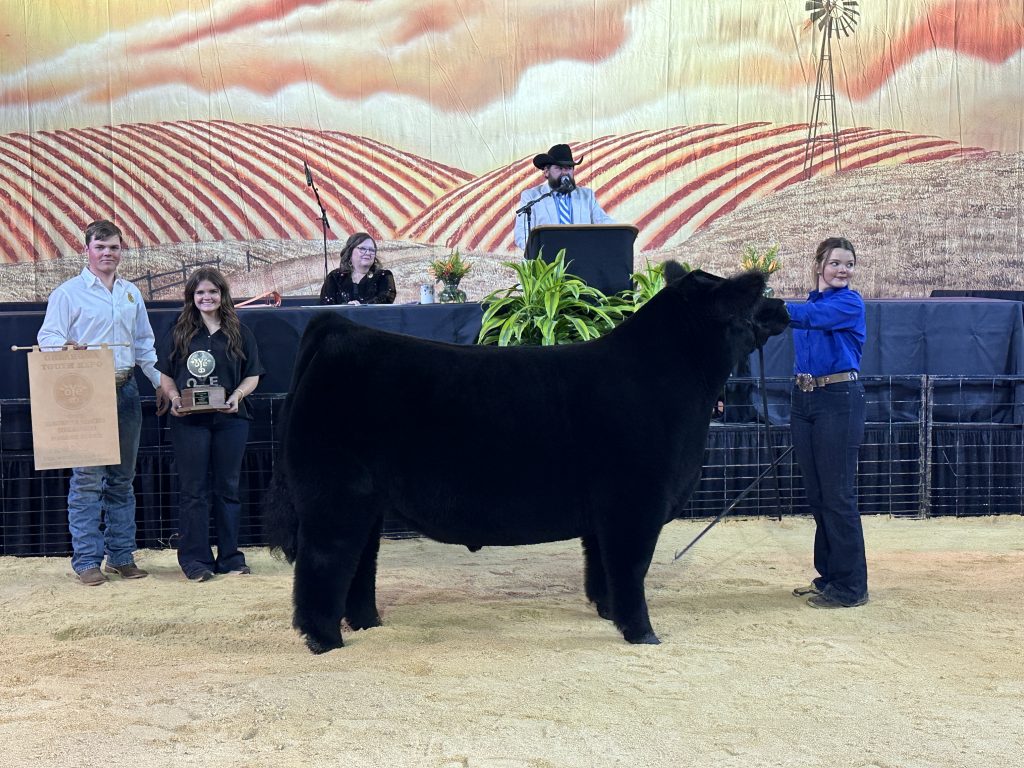
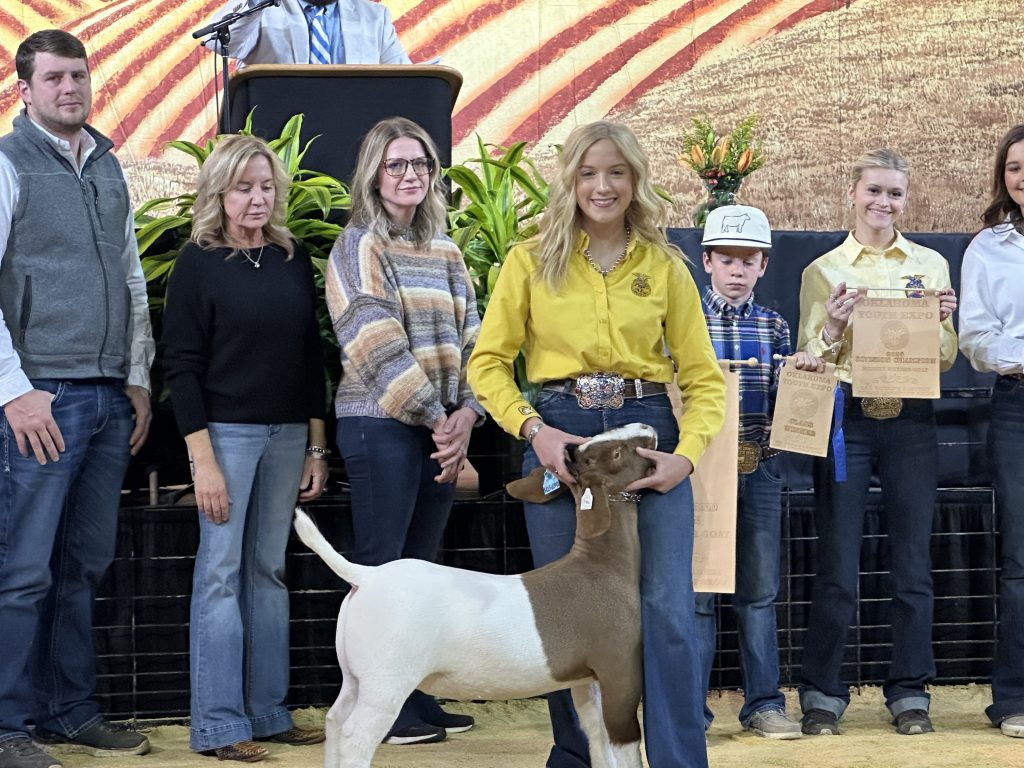
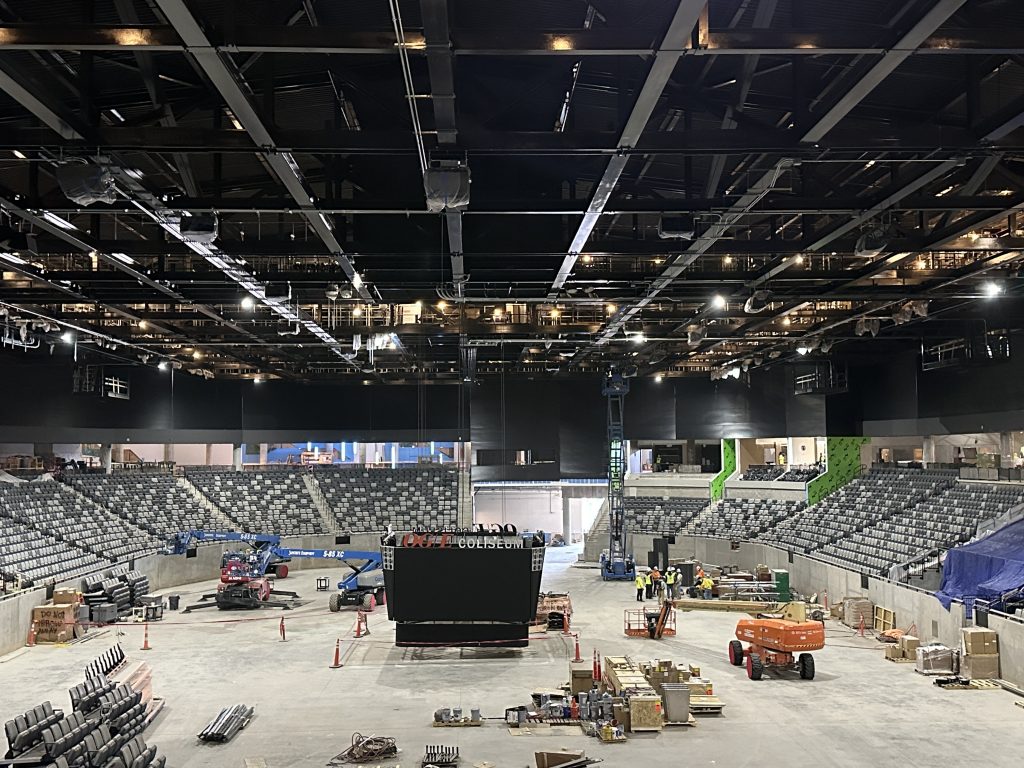







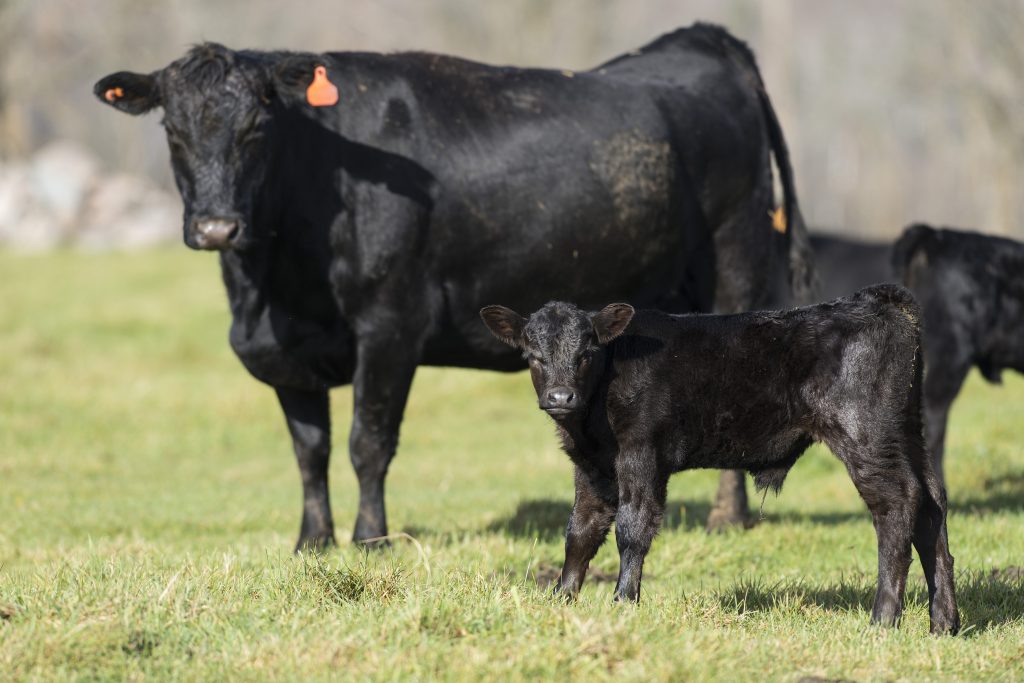
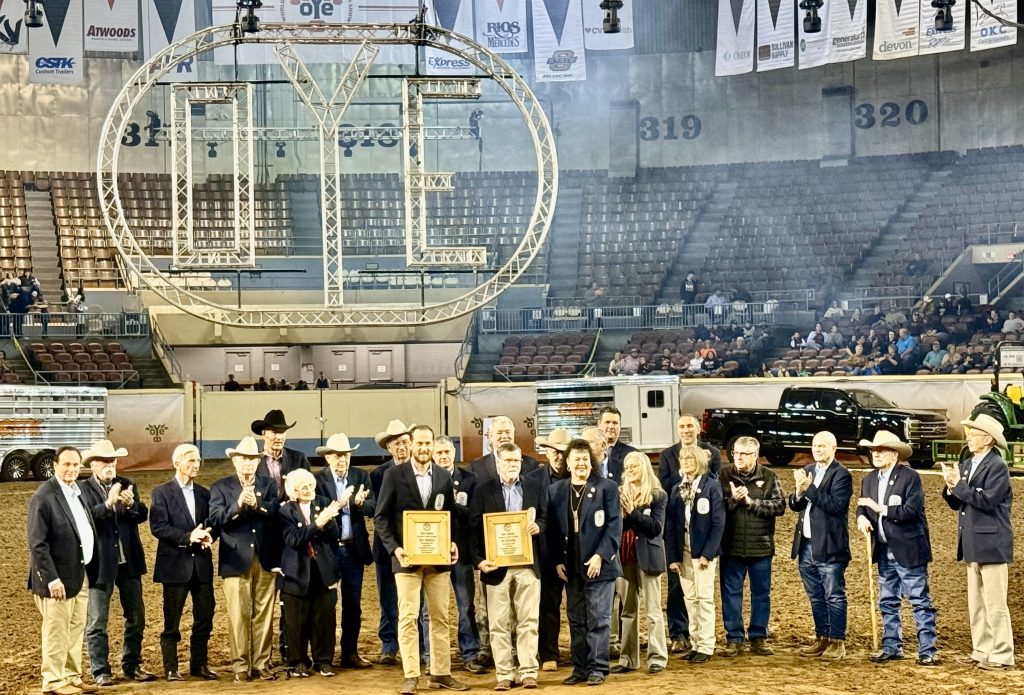
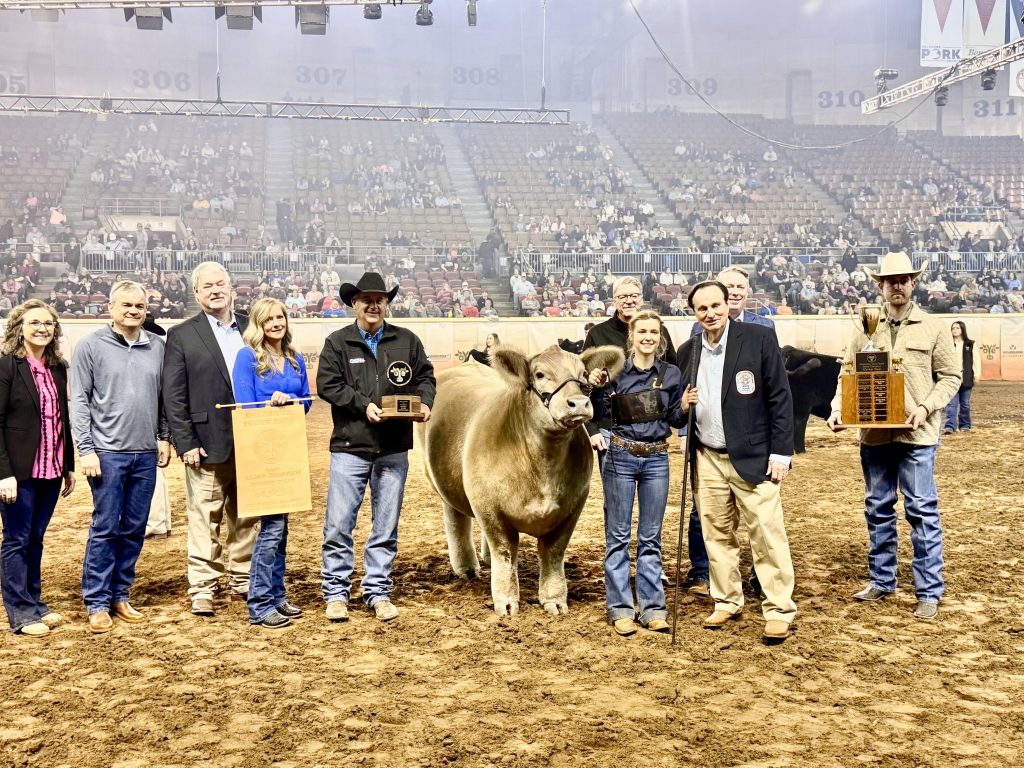
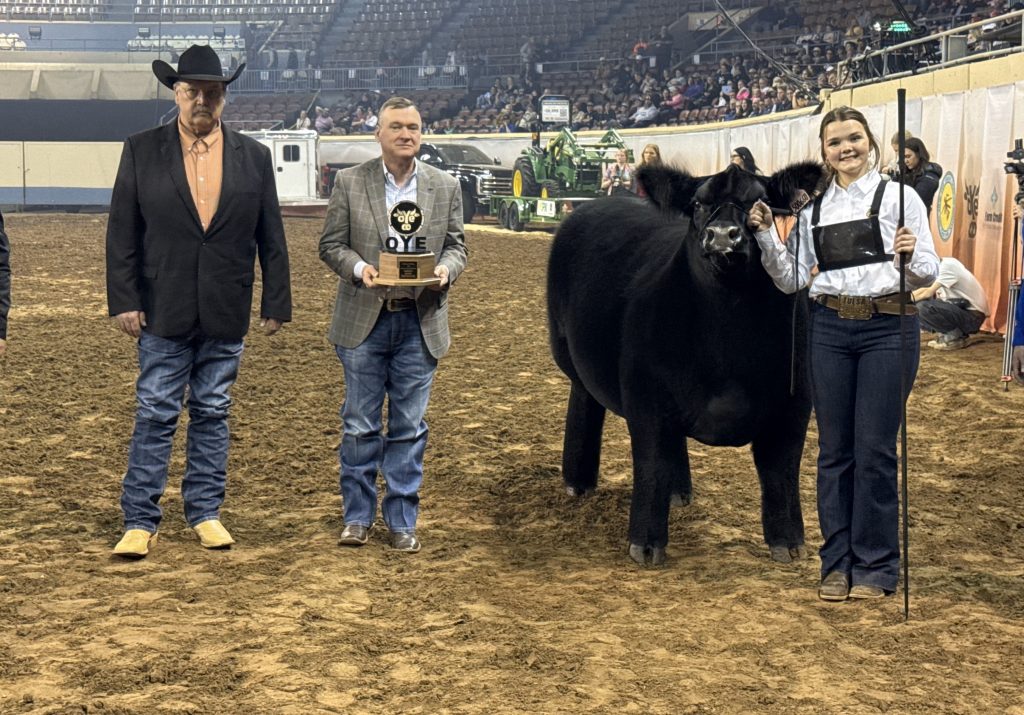
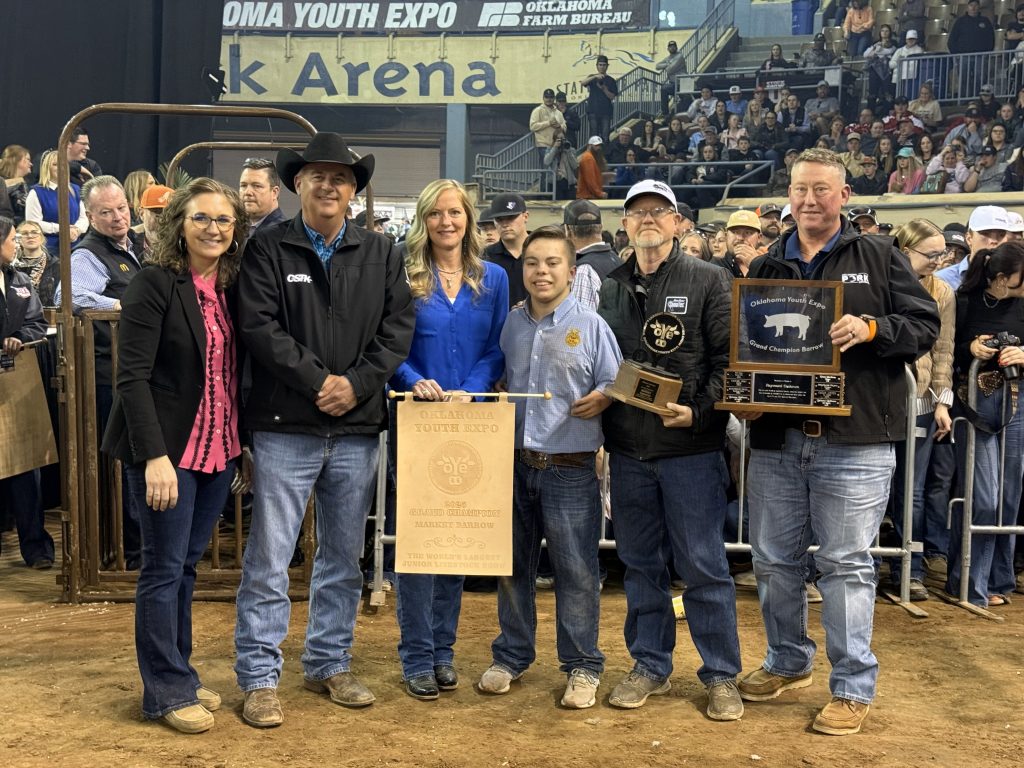
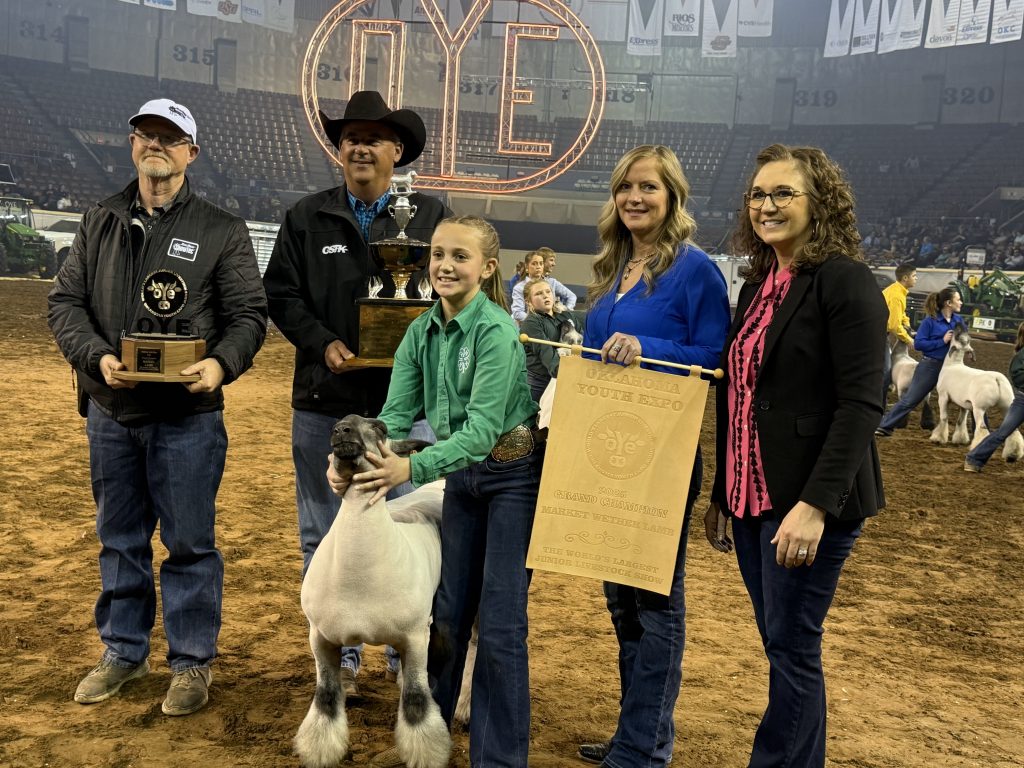
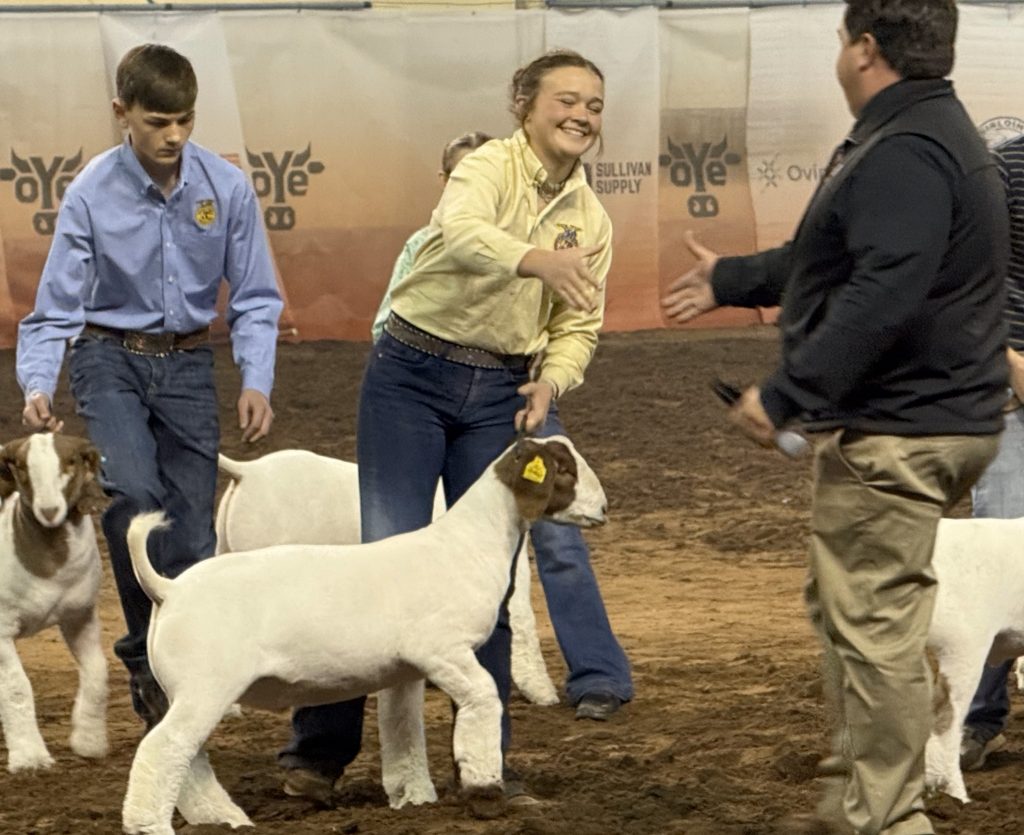





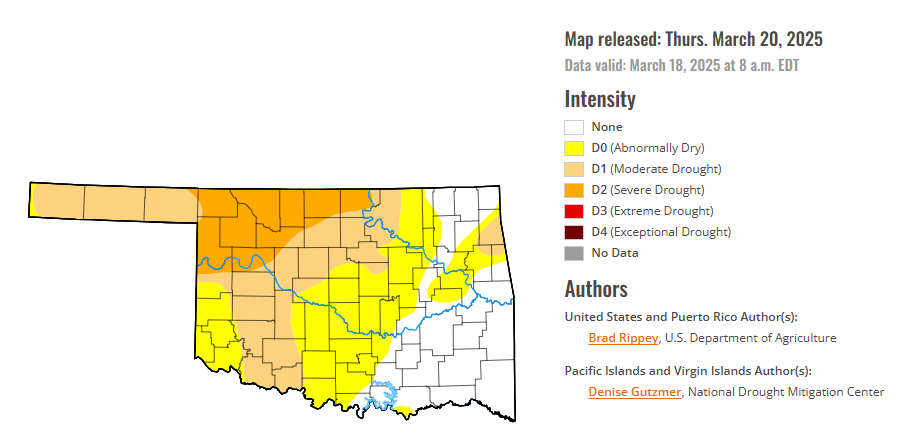
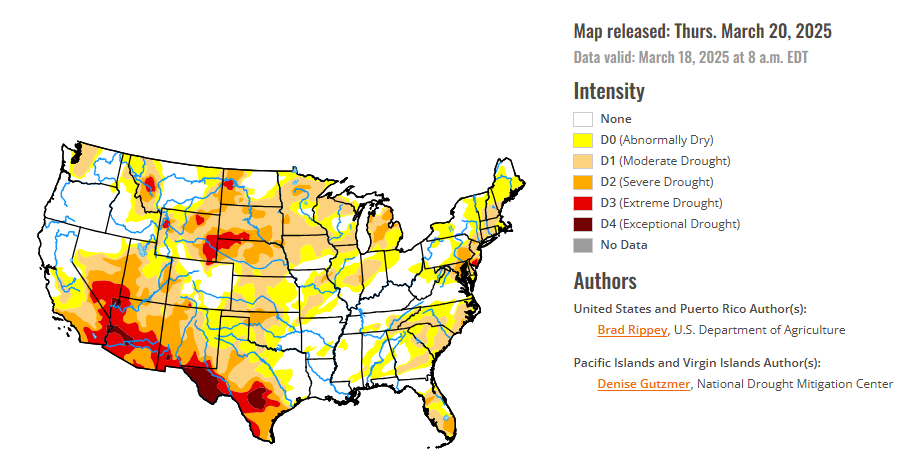
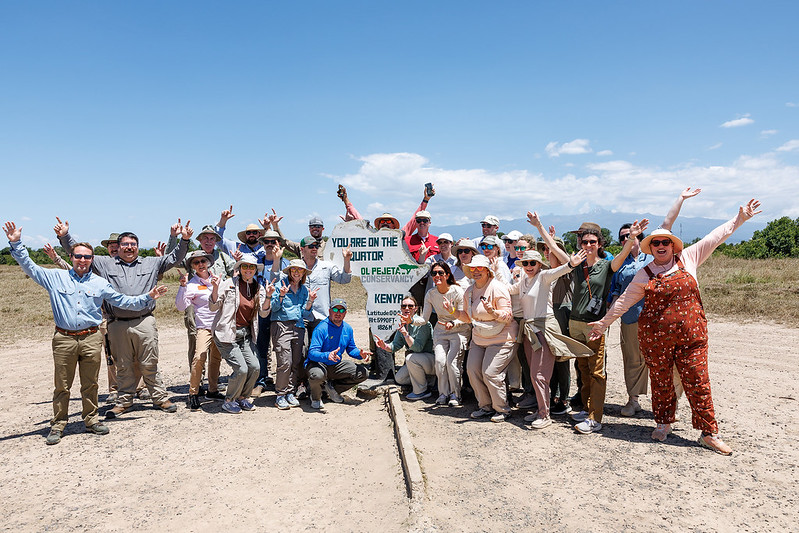


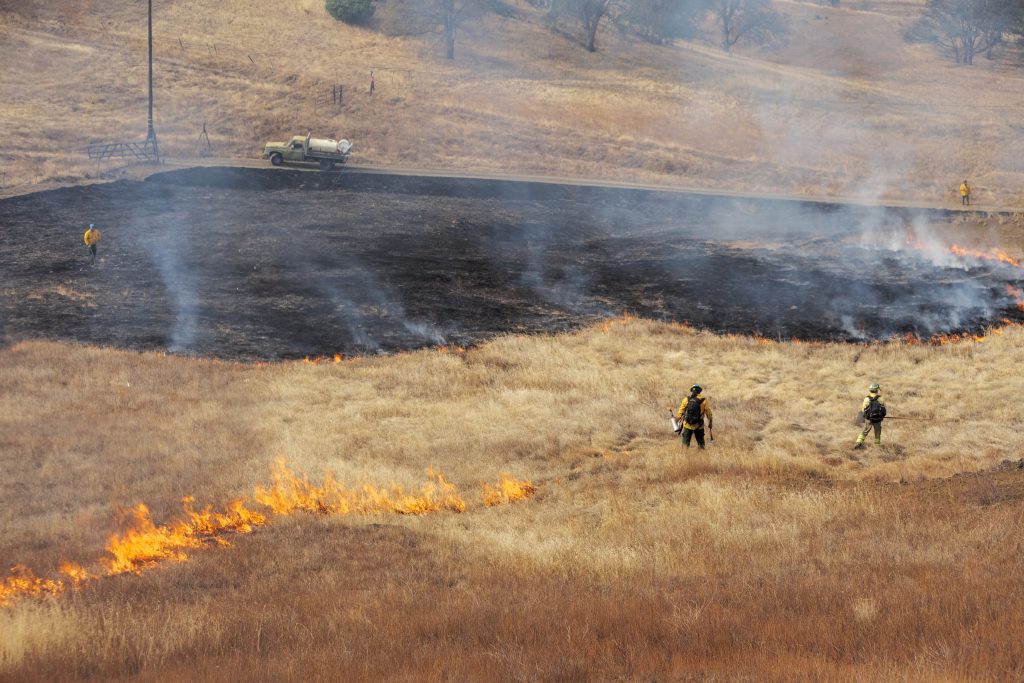


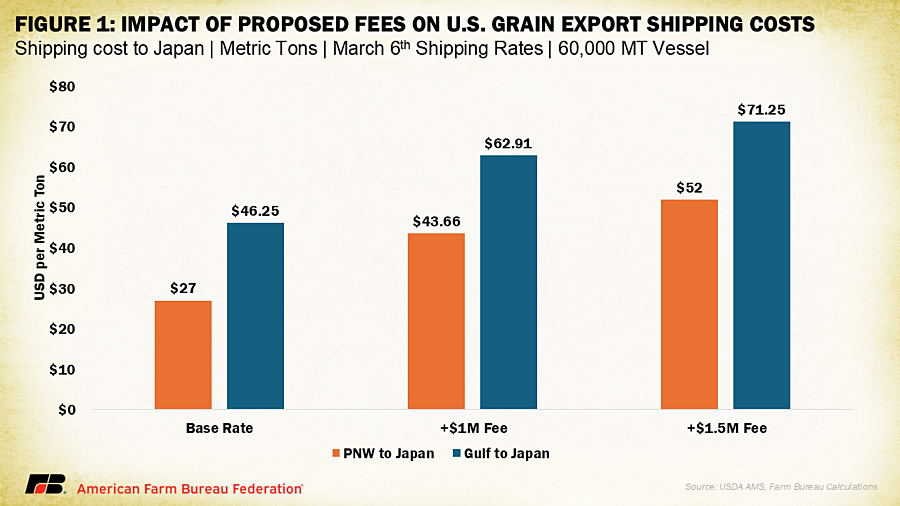
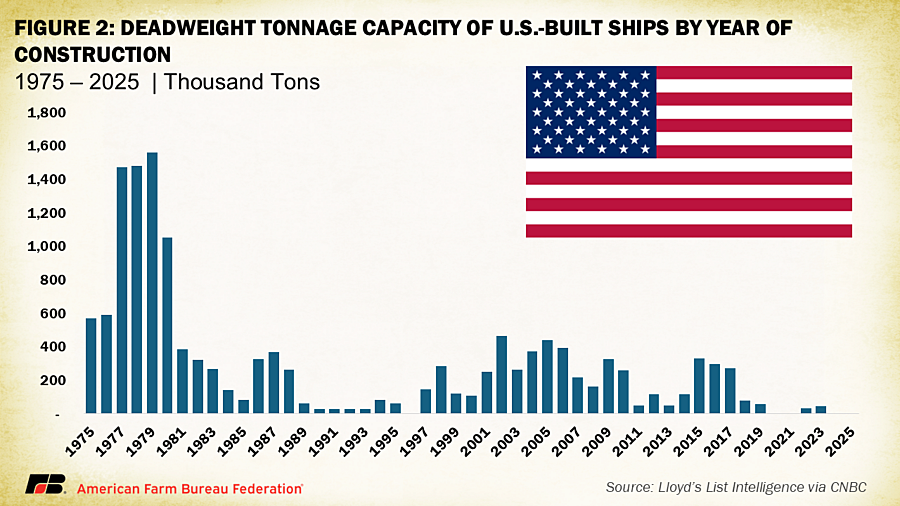
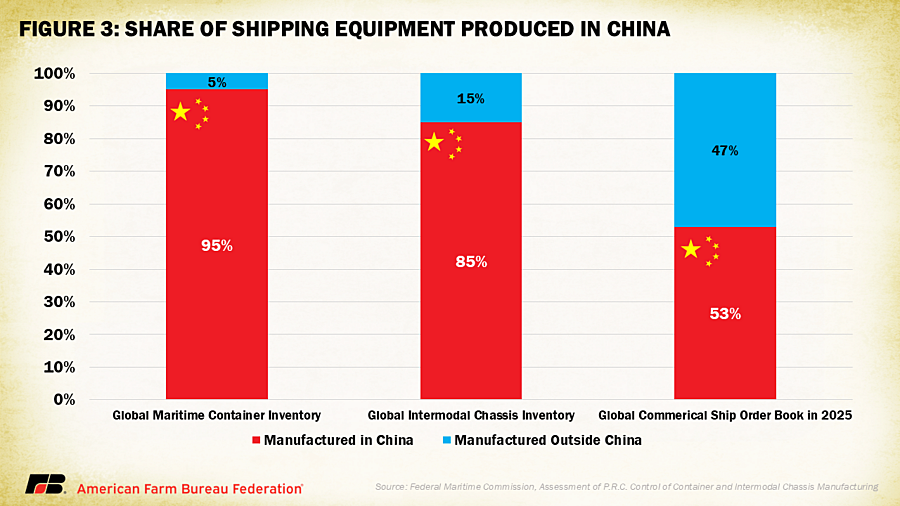
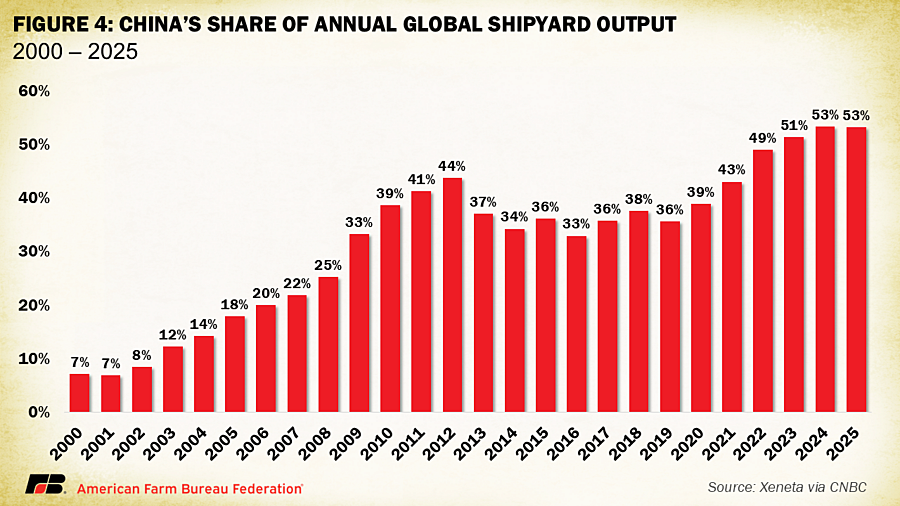
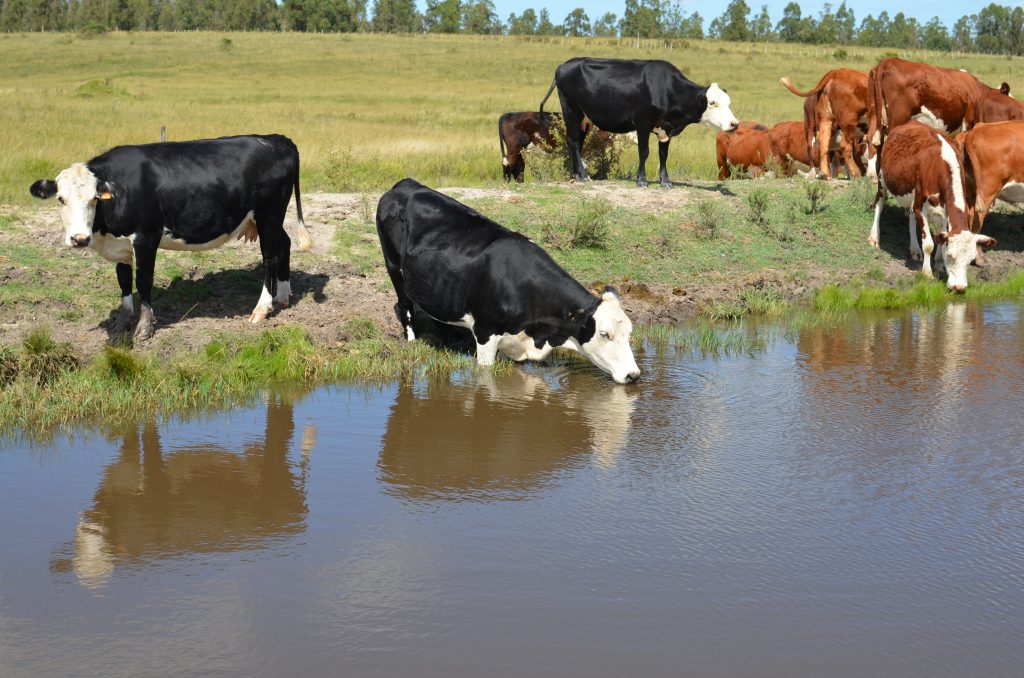
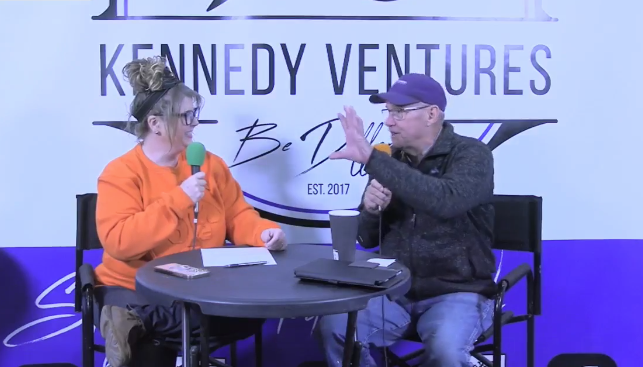
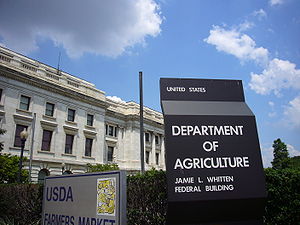




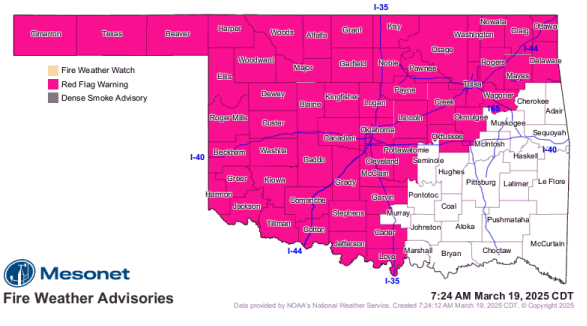
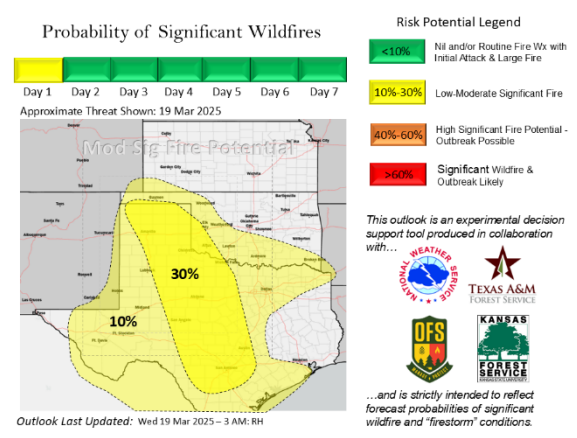
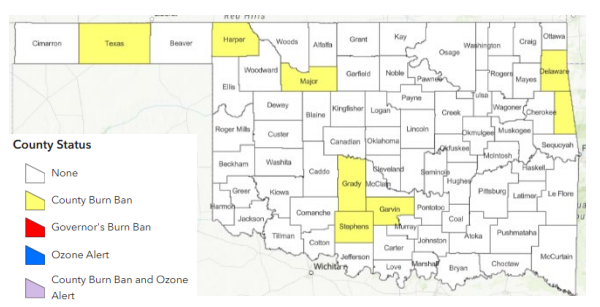
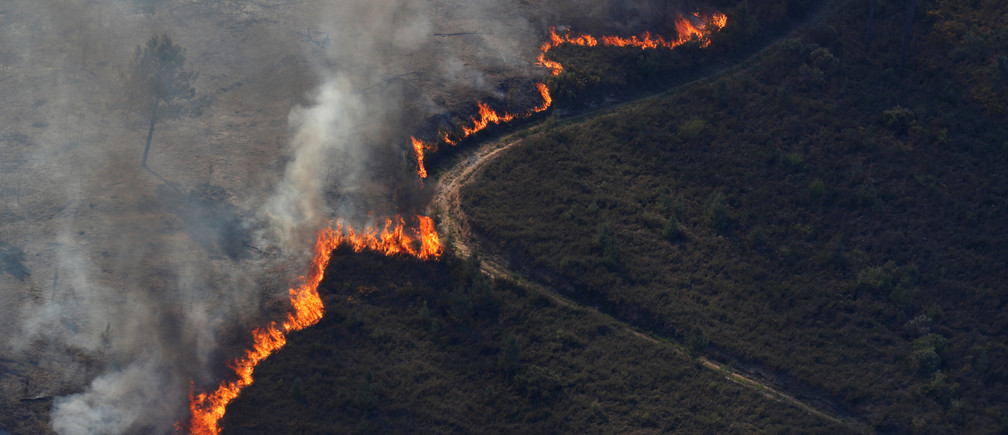

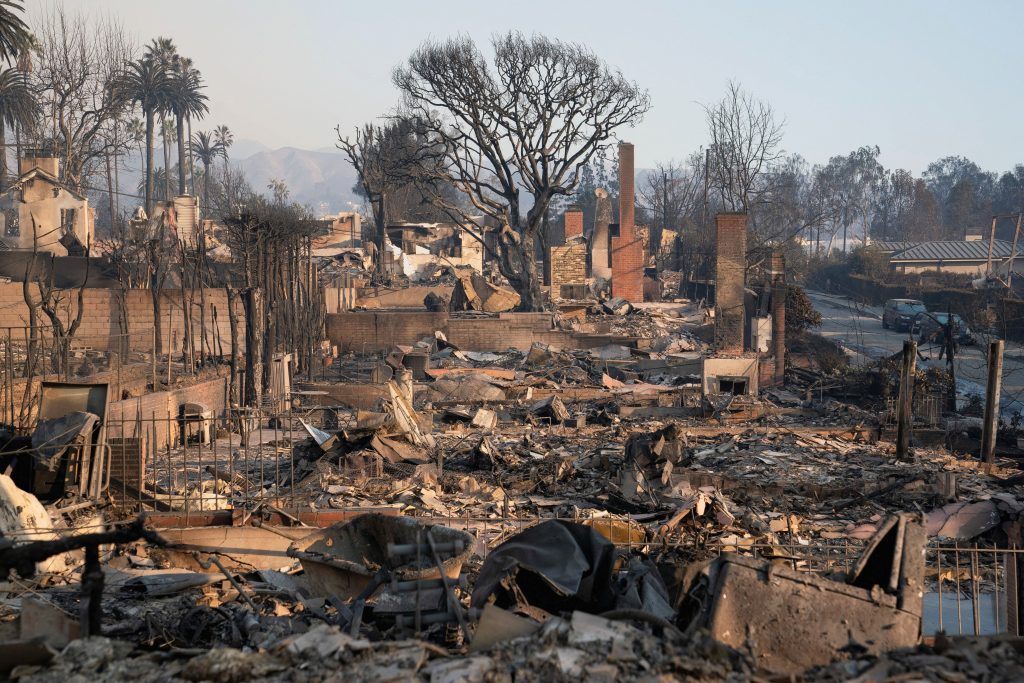
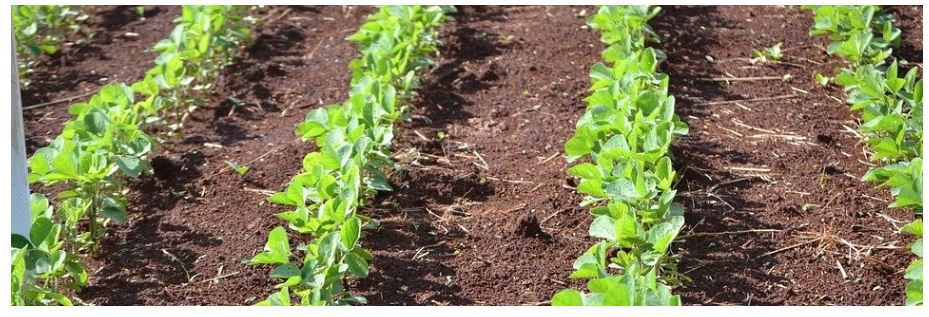
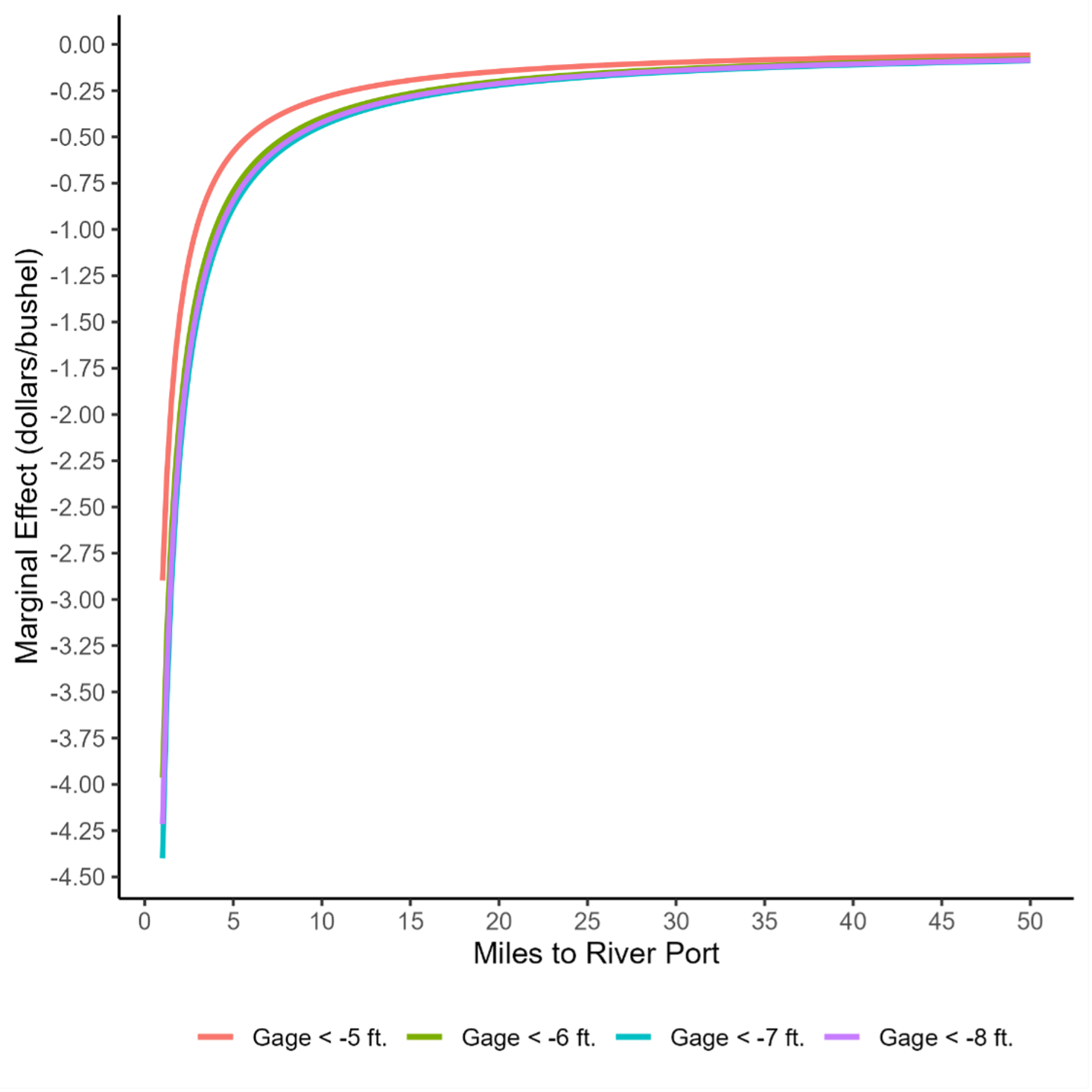
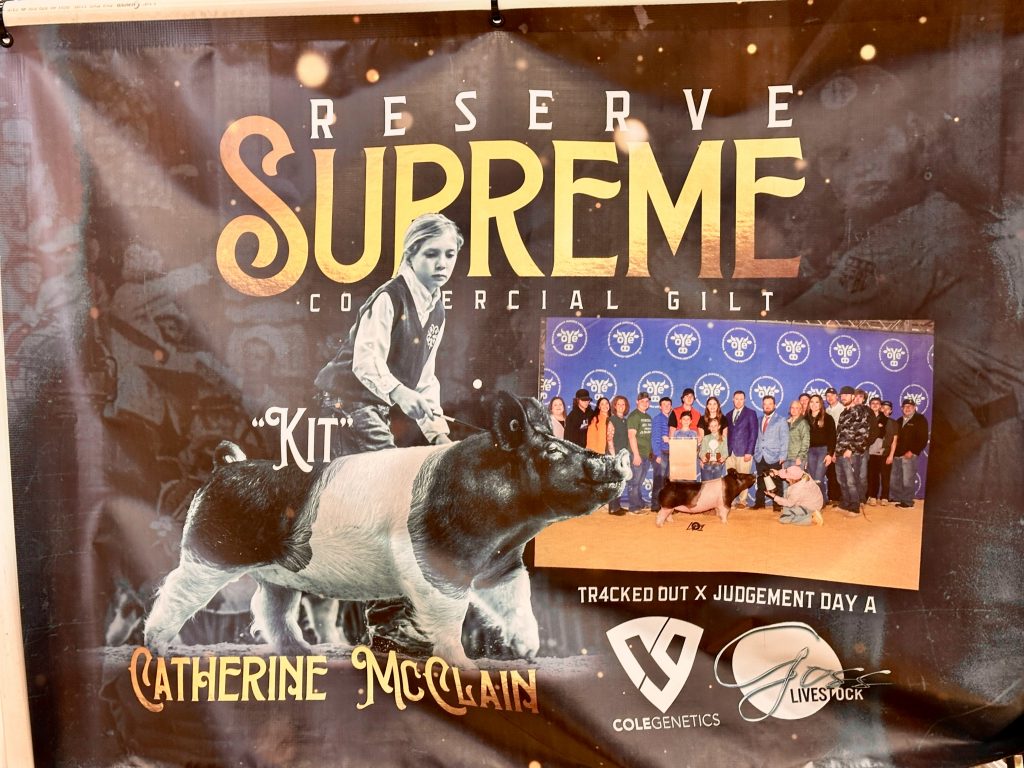
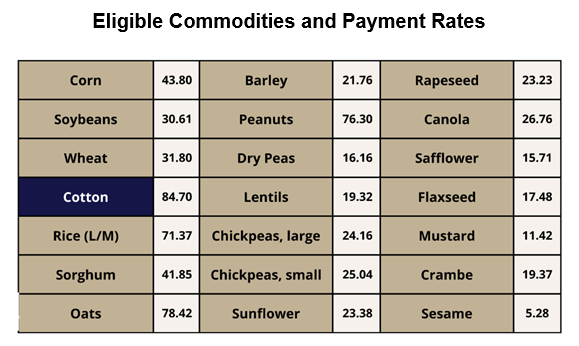
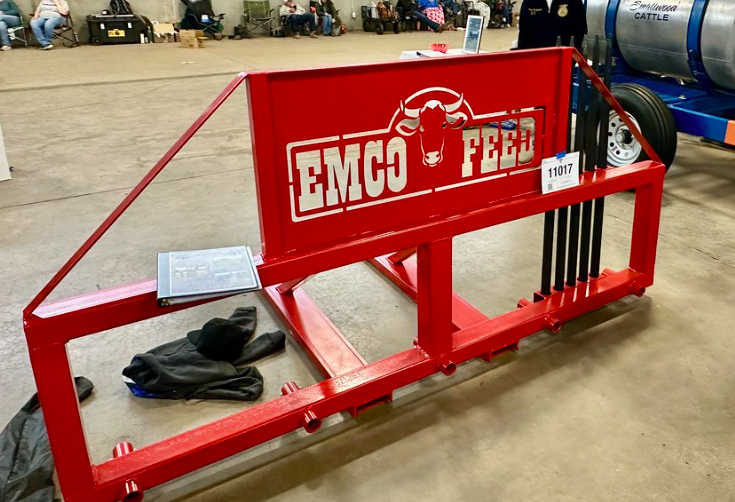
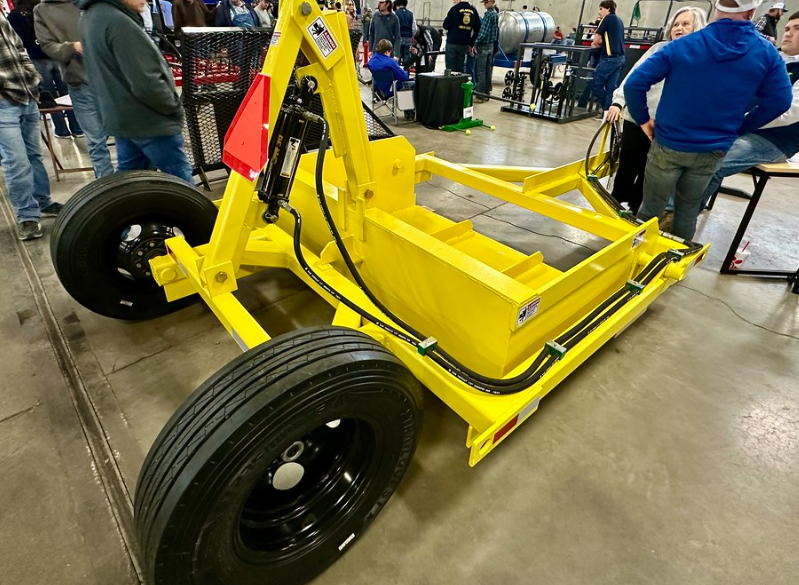
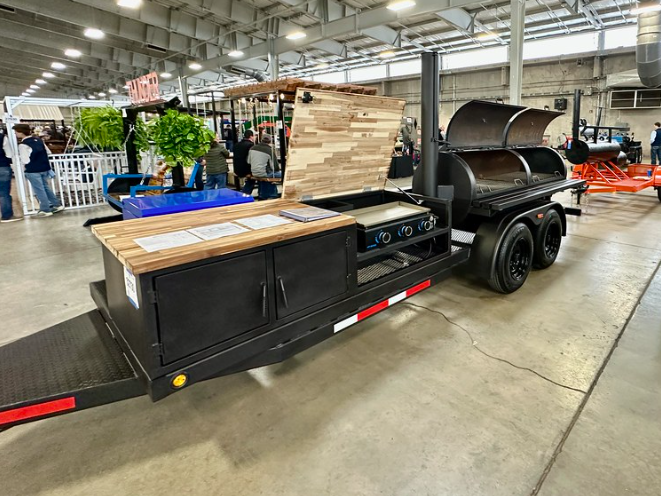
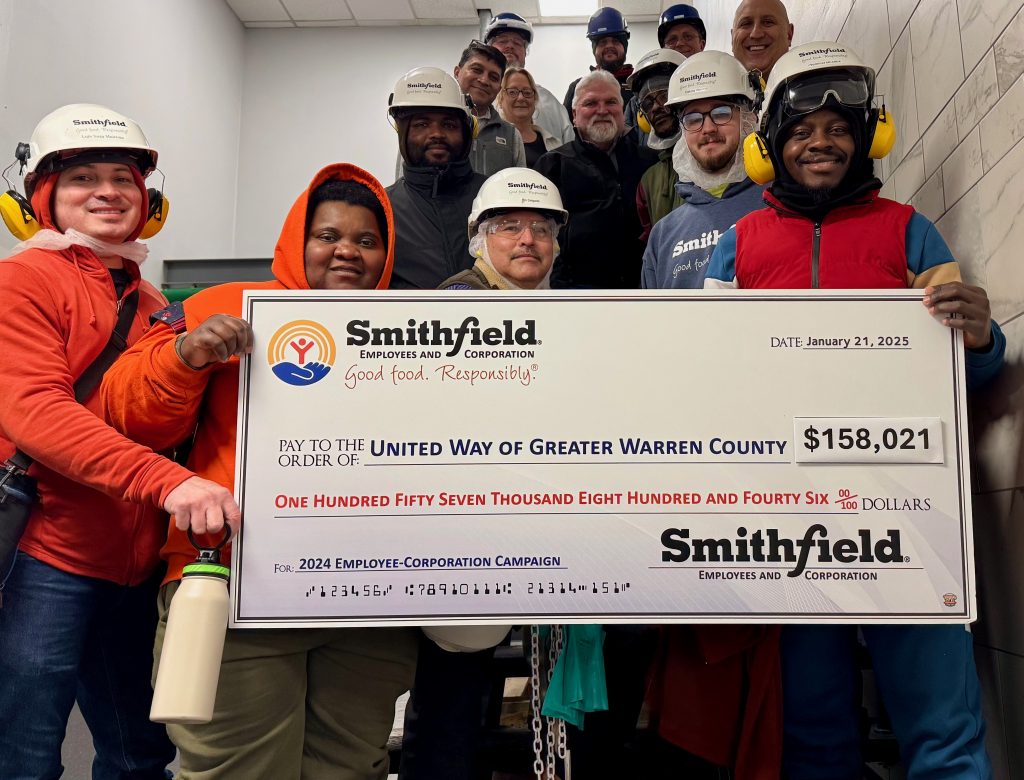


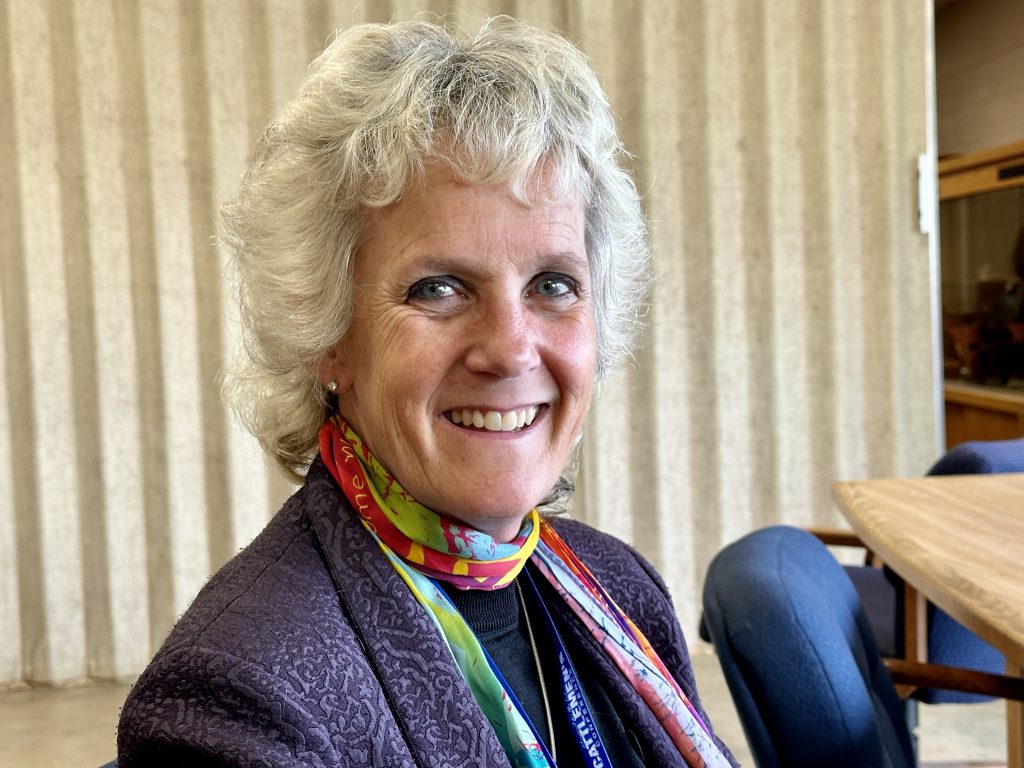


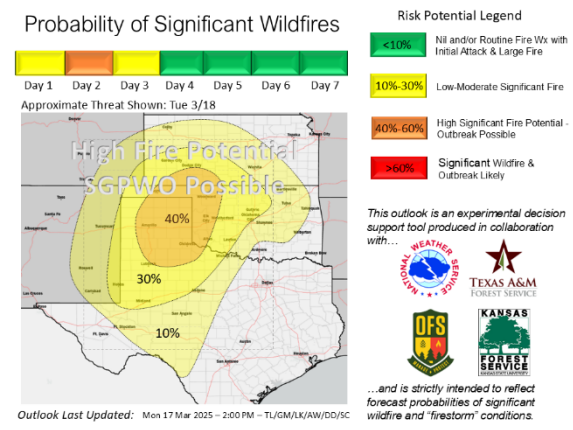
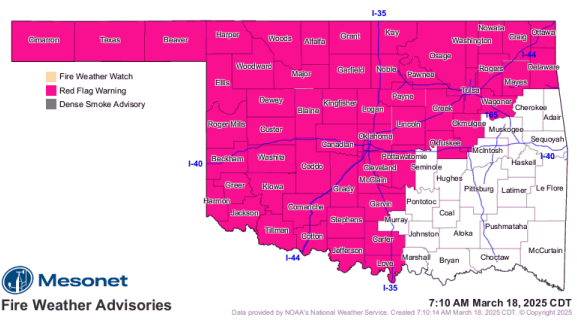
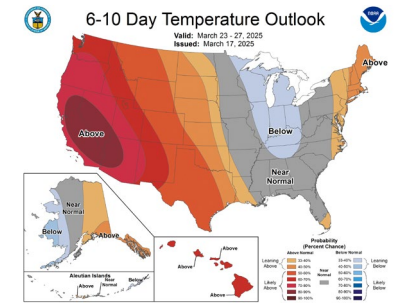
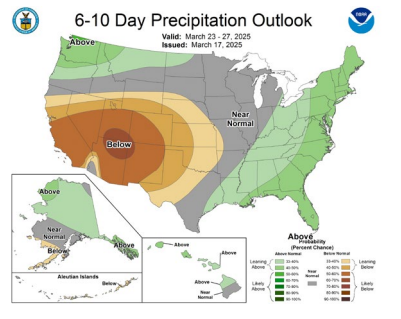
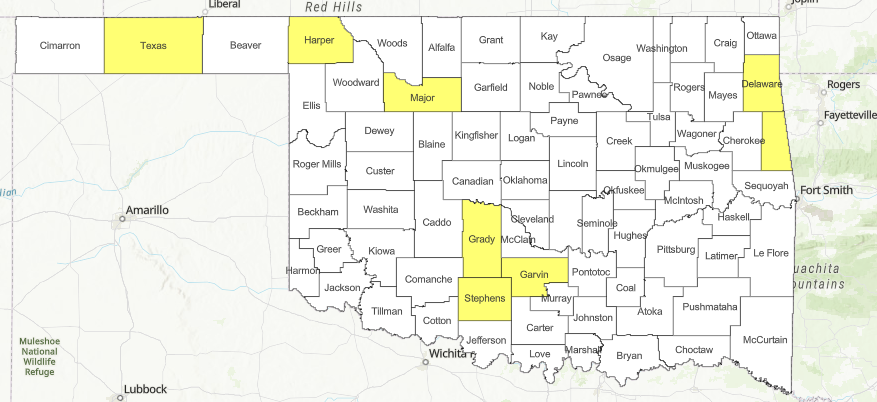



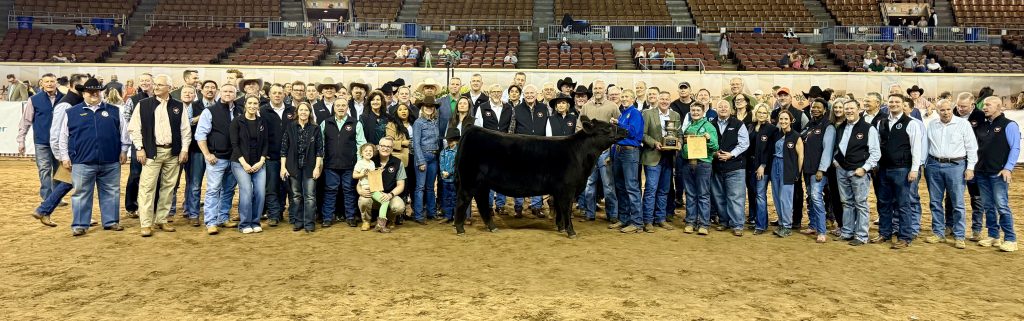
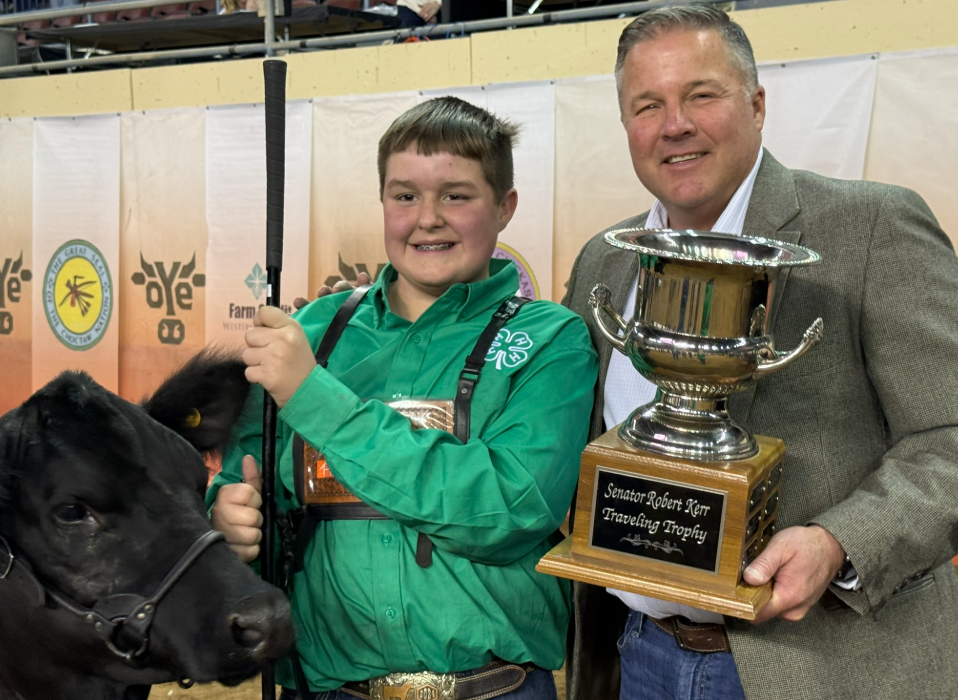
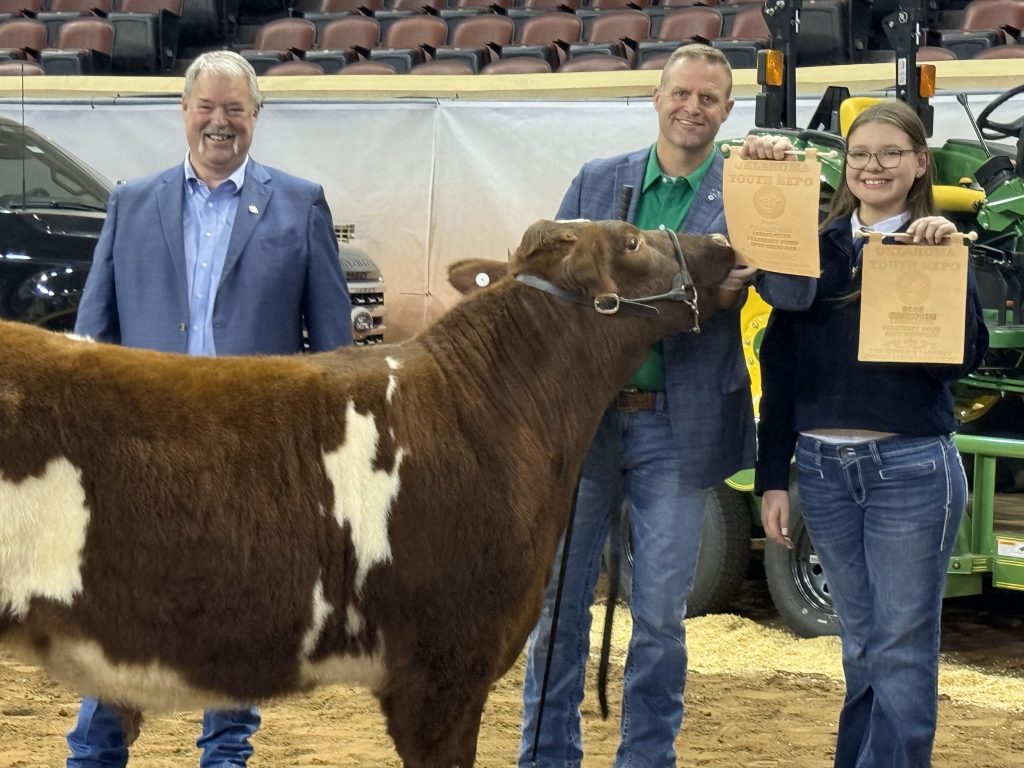
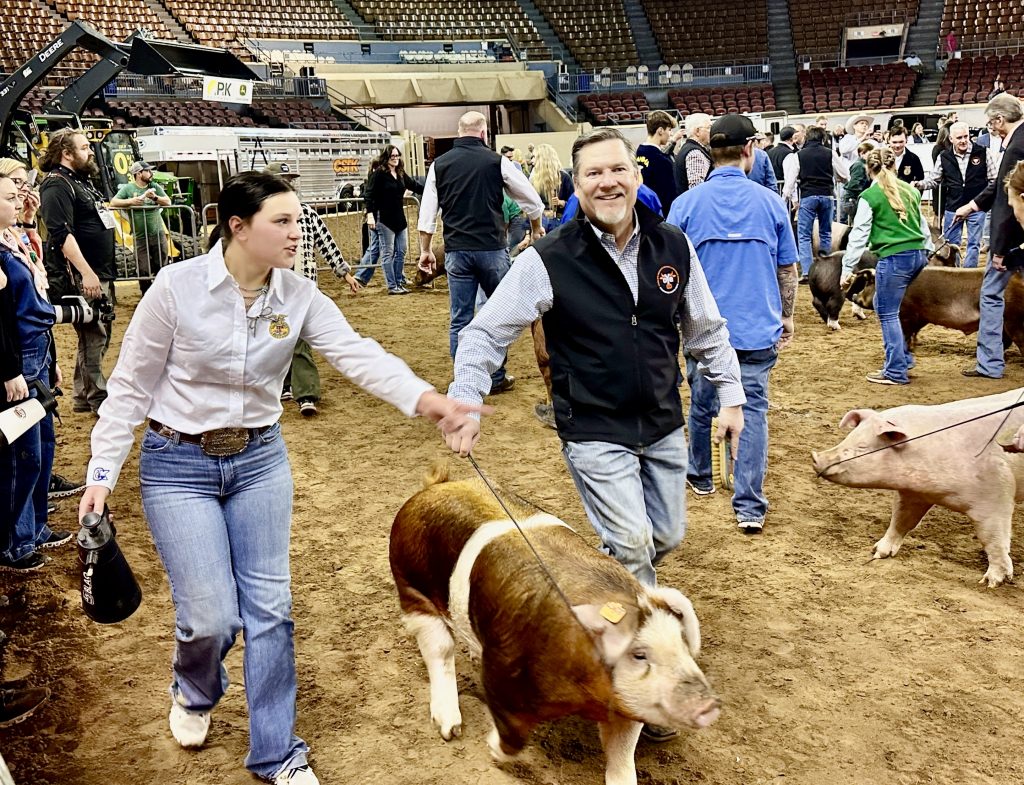


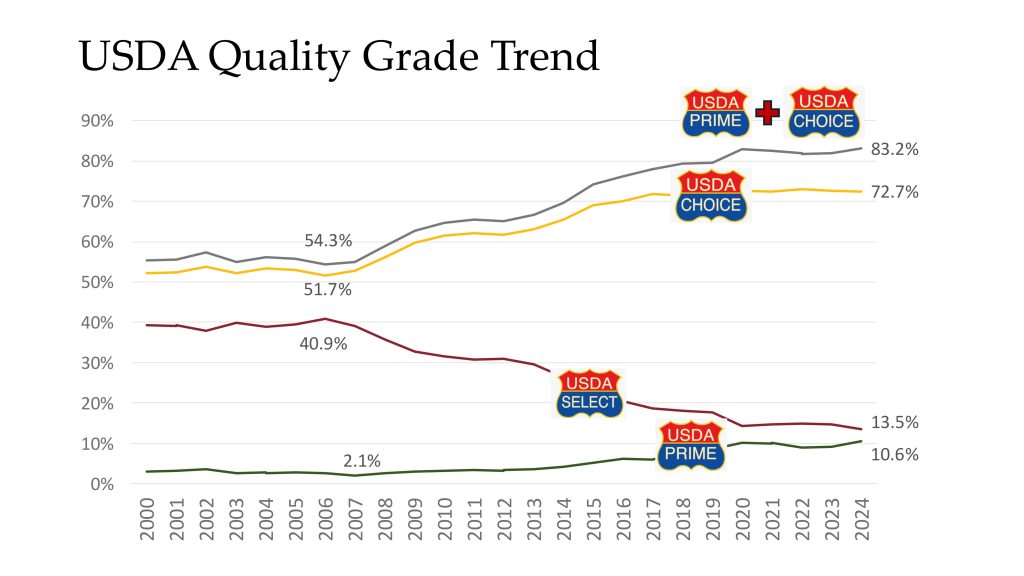
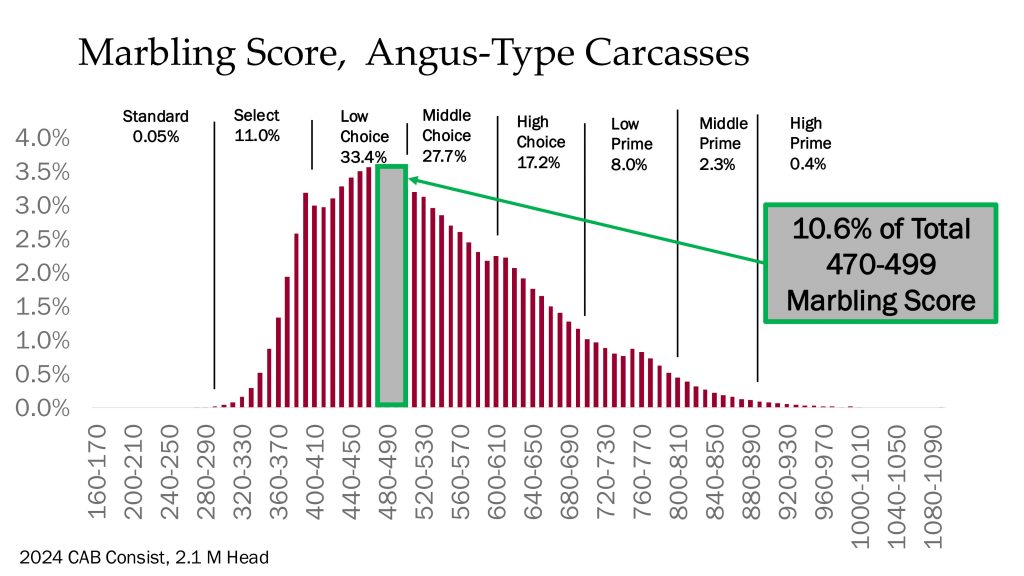
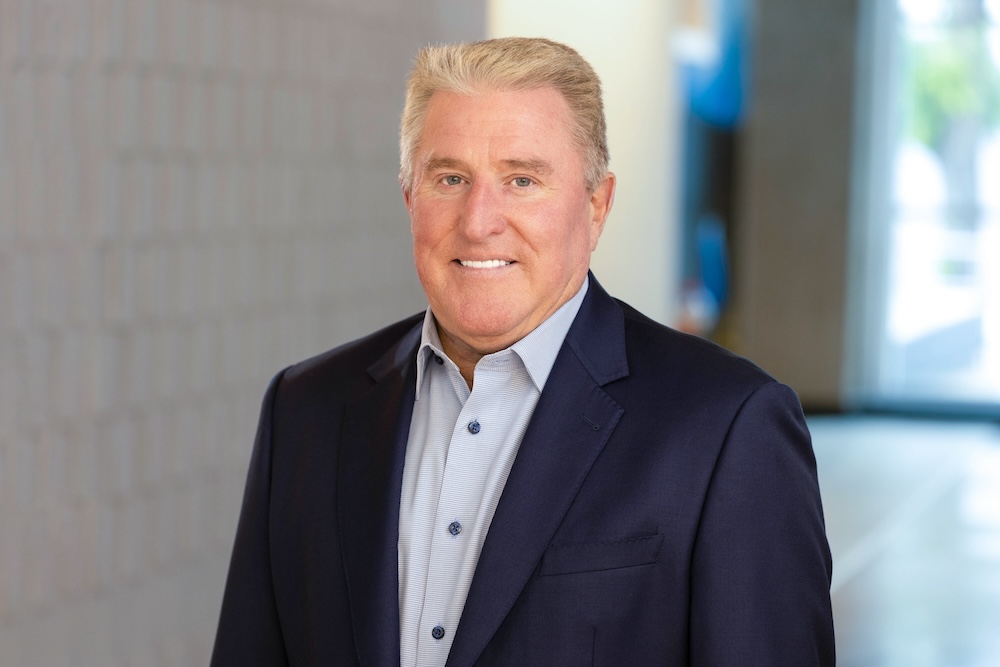


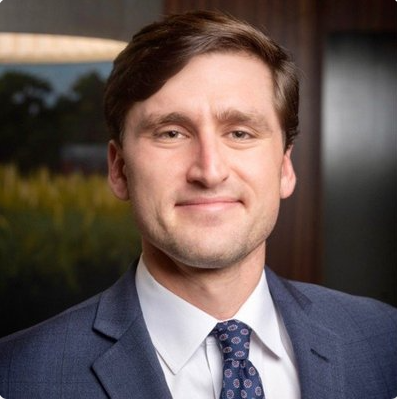
 Also in 2024, more than 367 thousand metric tons of U.S. pork were exported to China, worth over $1.1 billion. Approximately 55% of pork variety meats (offal) exports go to China. NPPC will continue to advocate for market access for U.S. pork products and facilities.
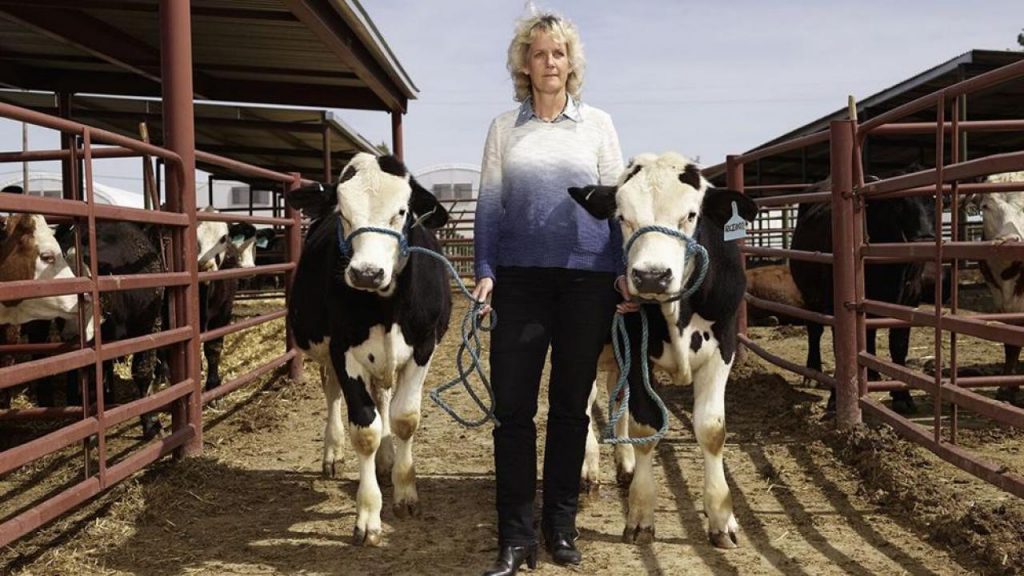
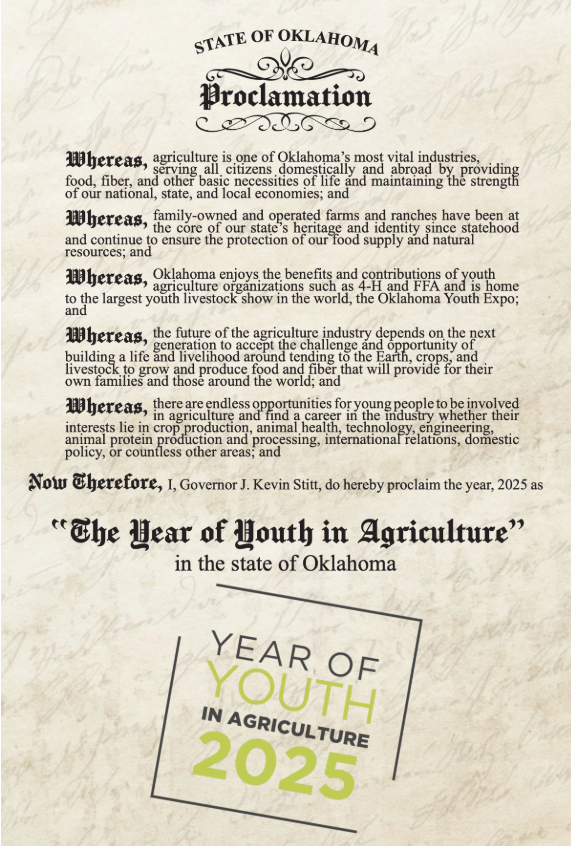
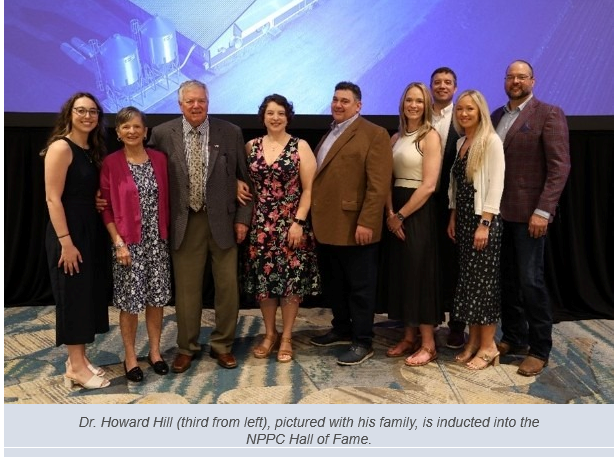
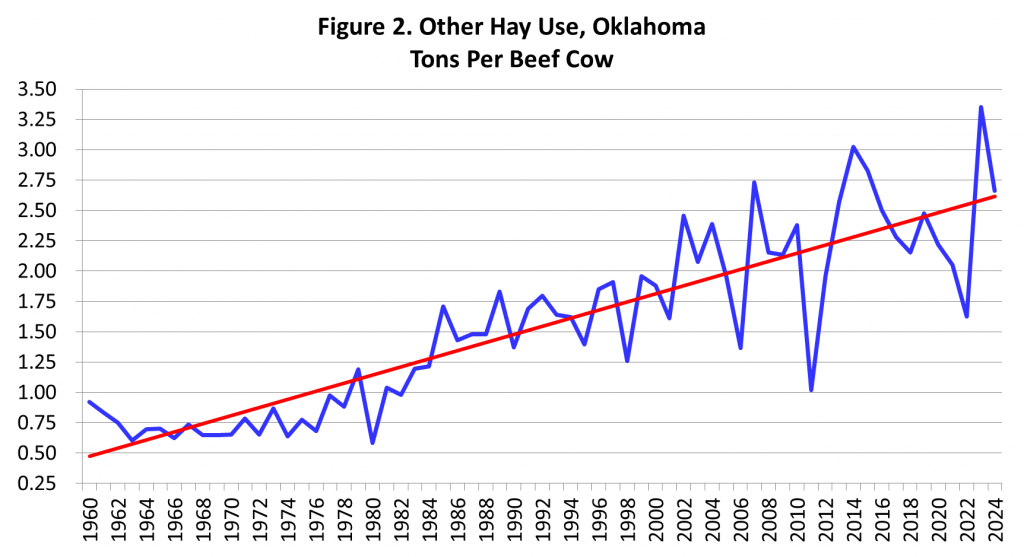
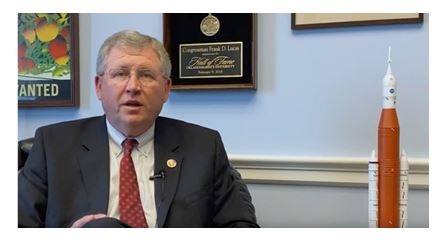
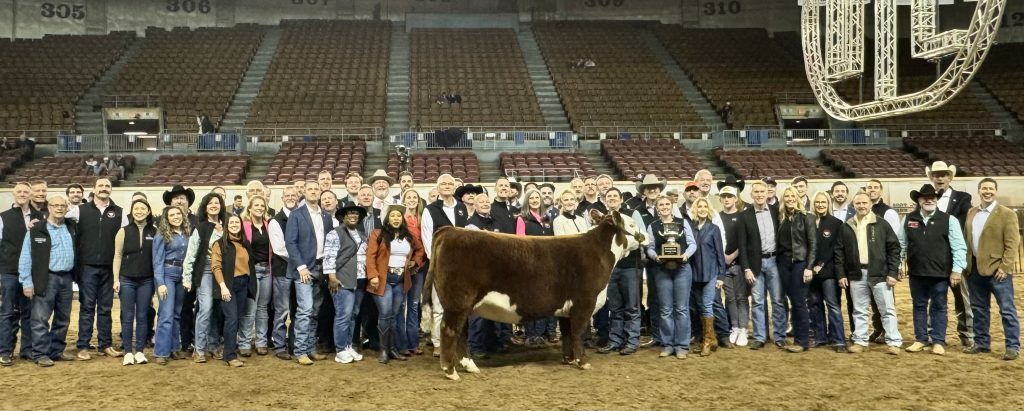
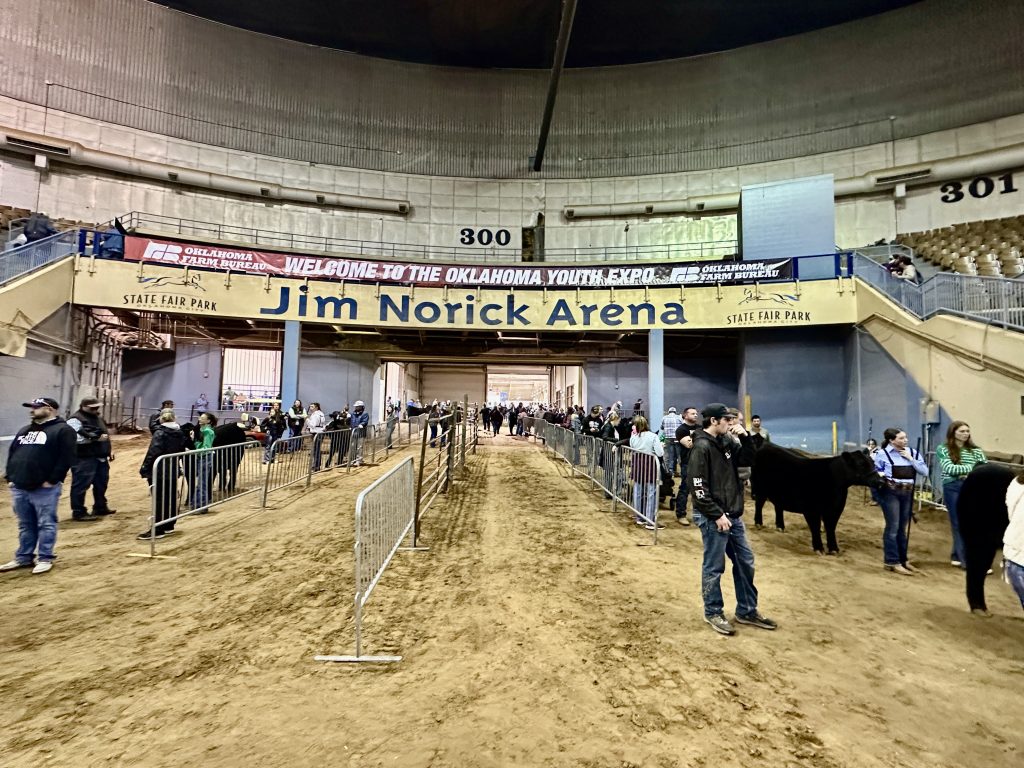
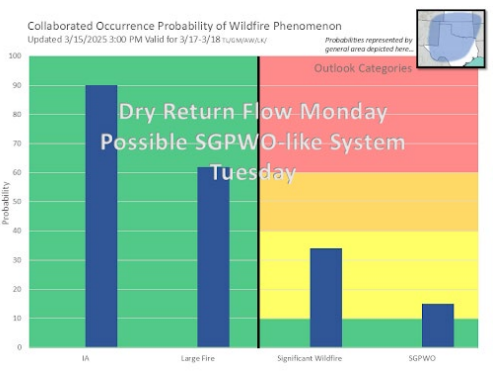
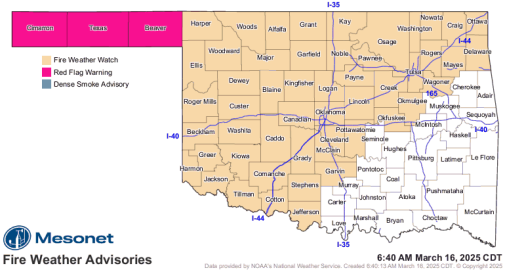
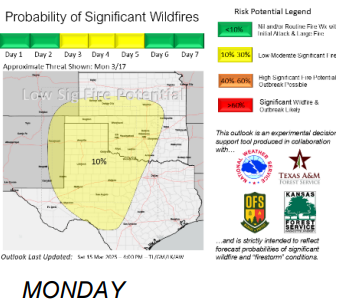
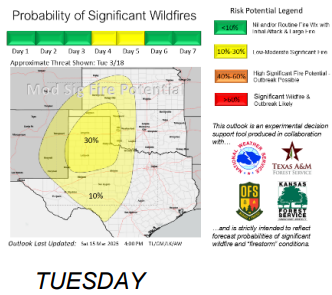
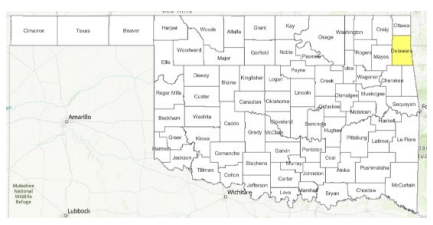
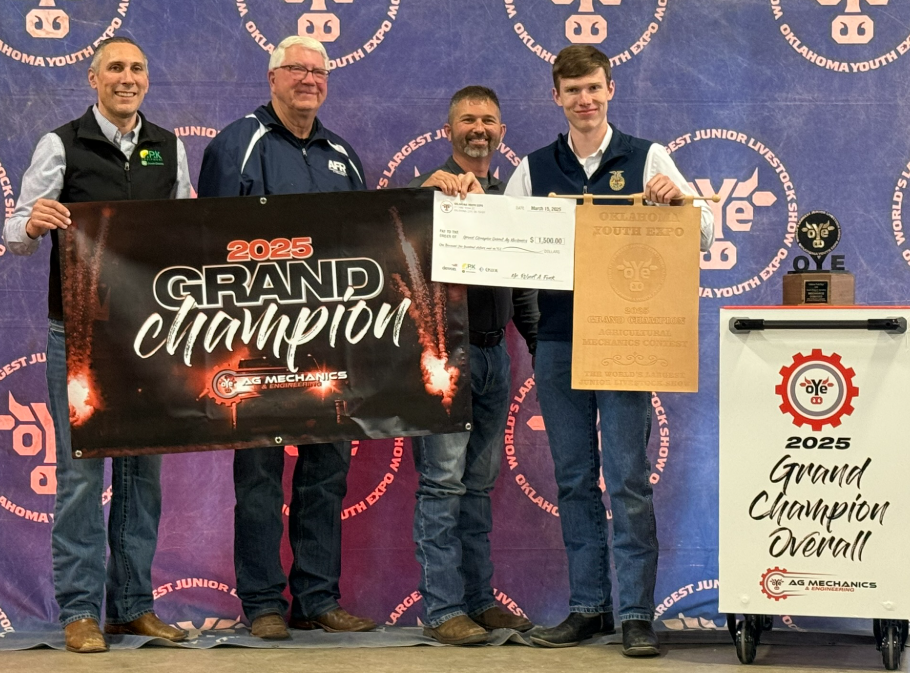
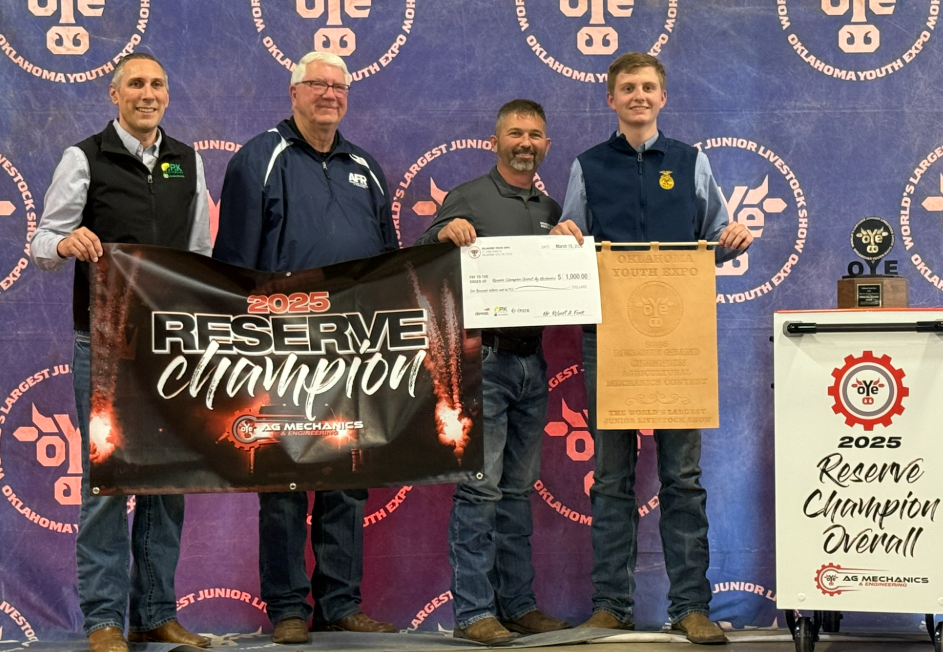
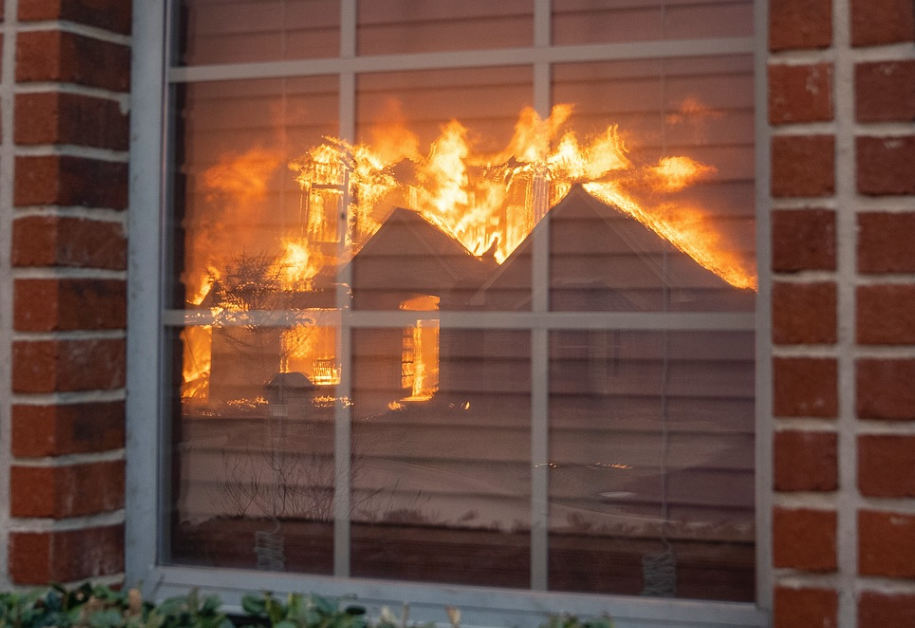
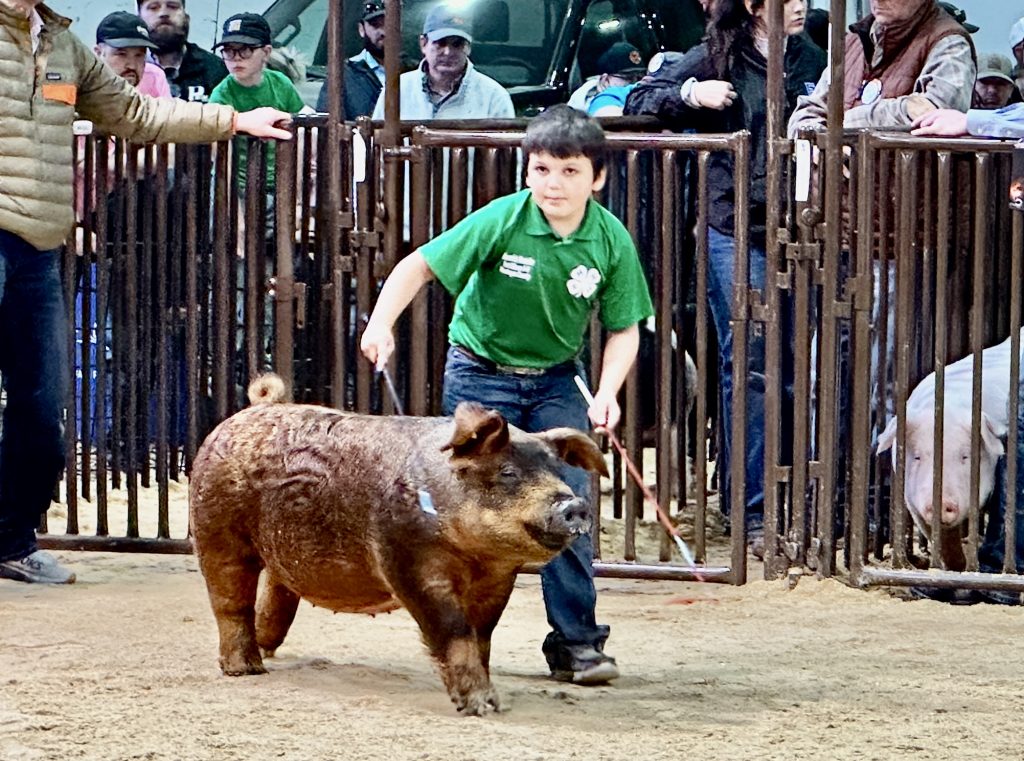
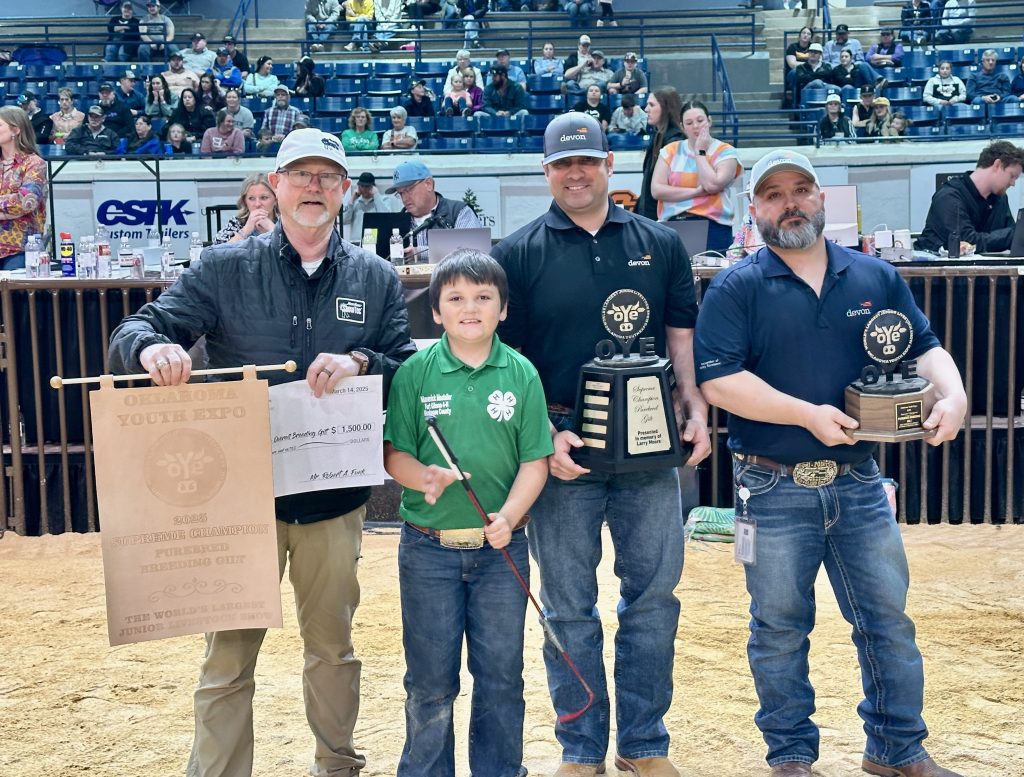
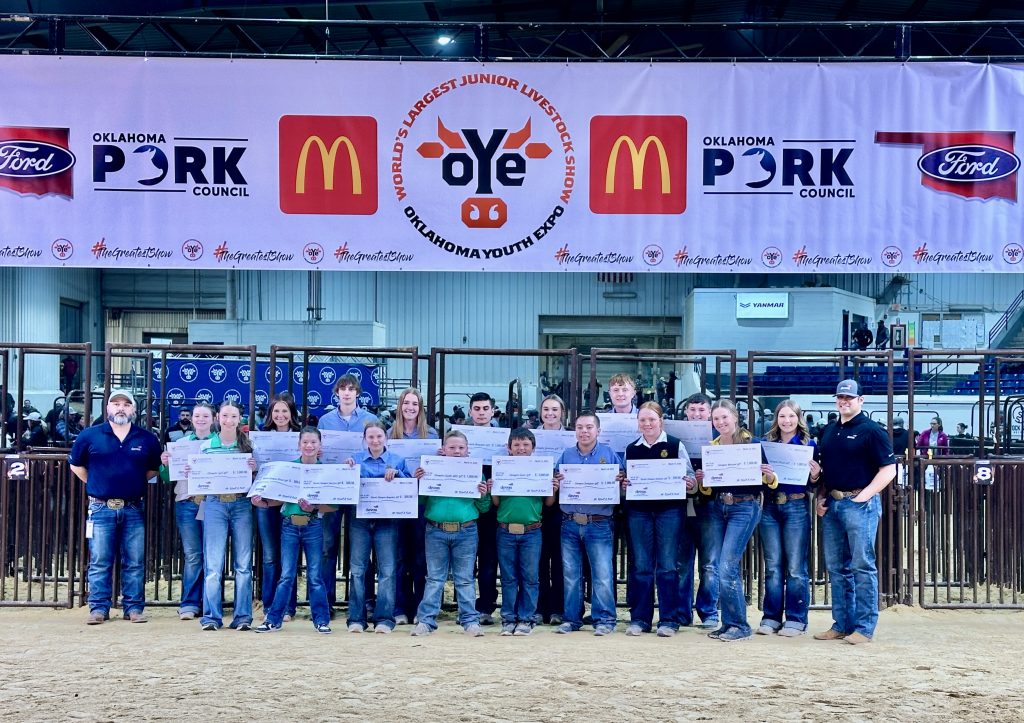
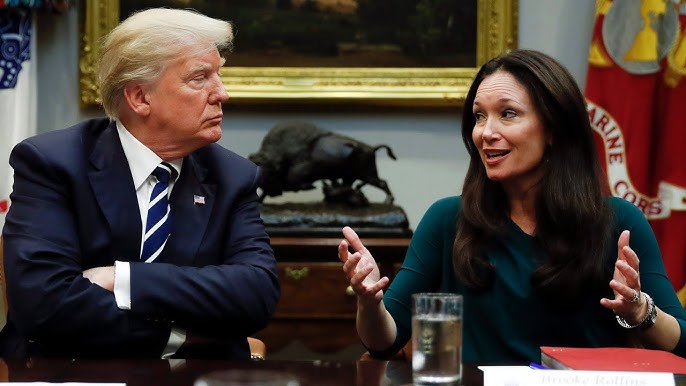








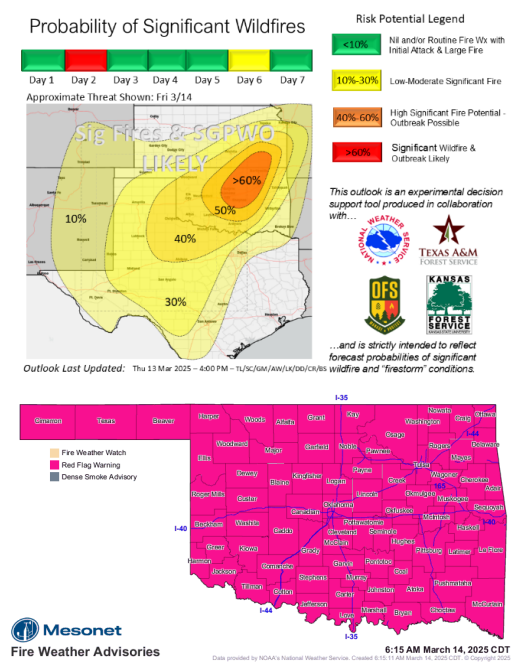


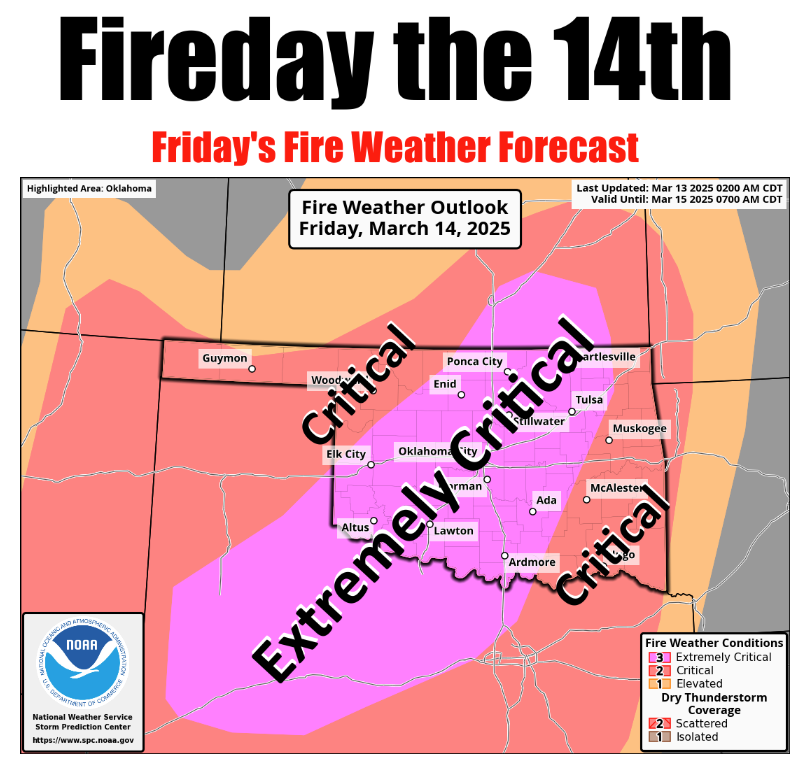
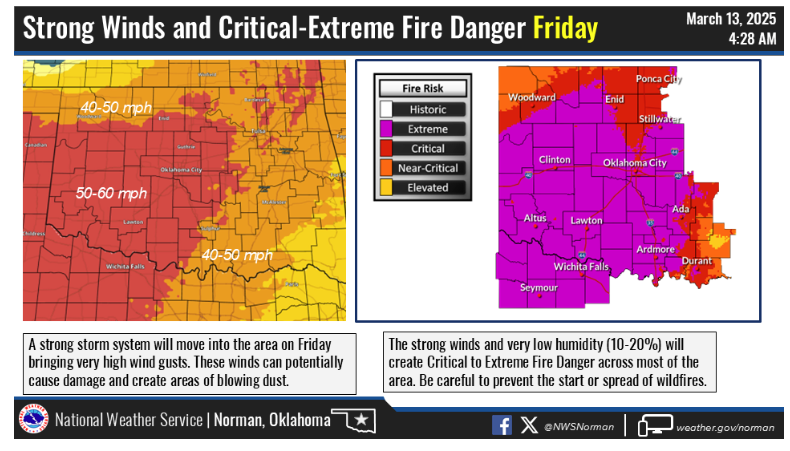
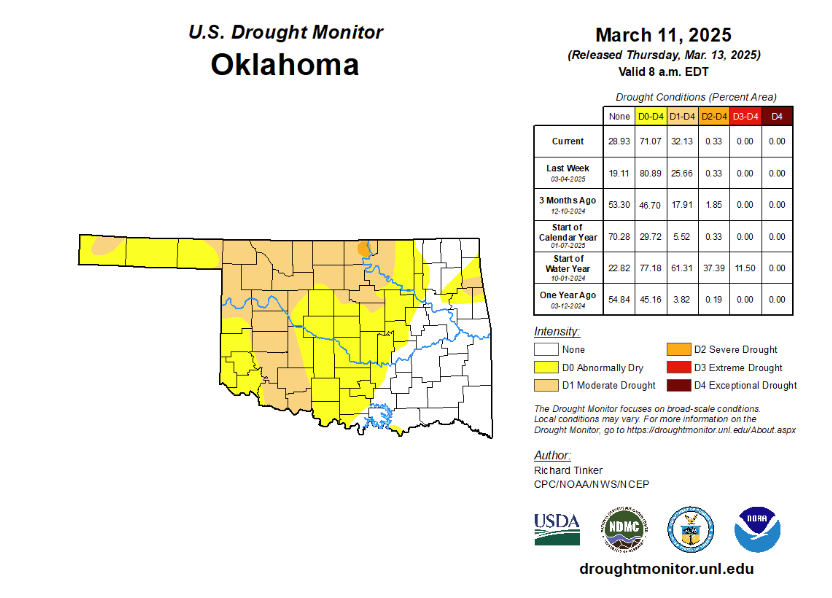
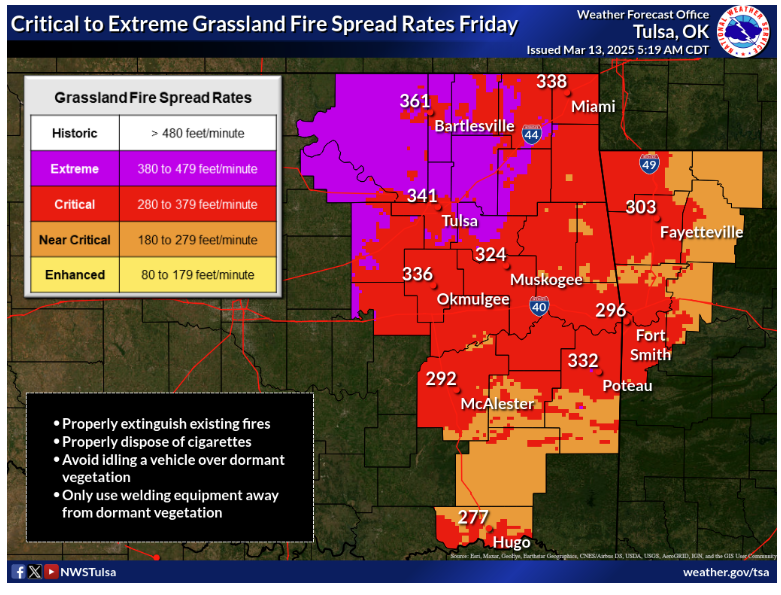
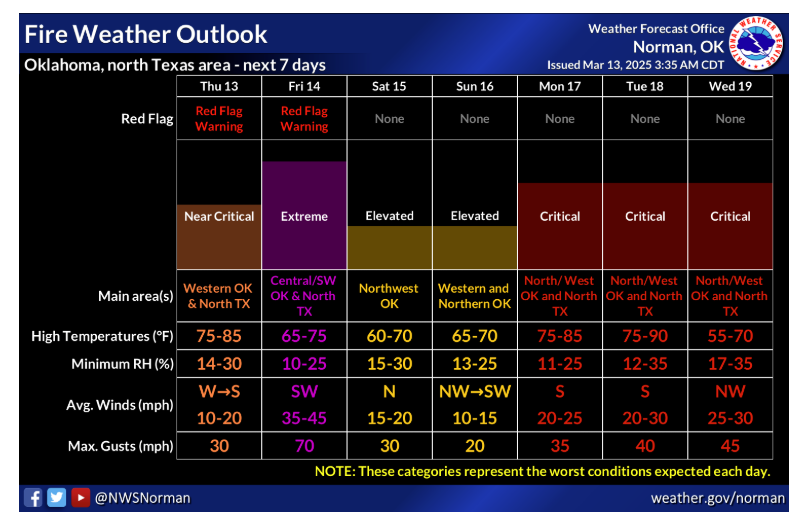
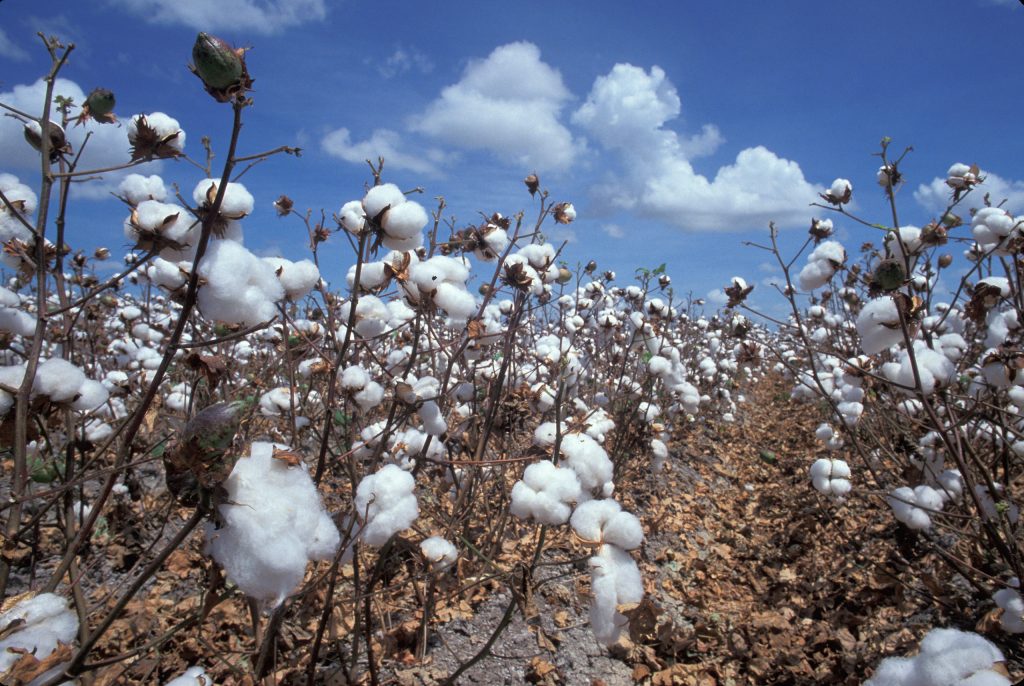

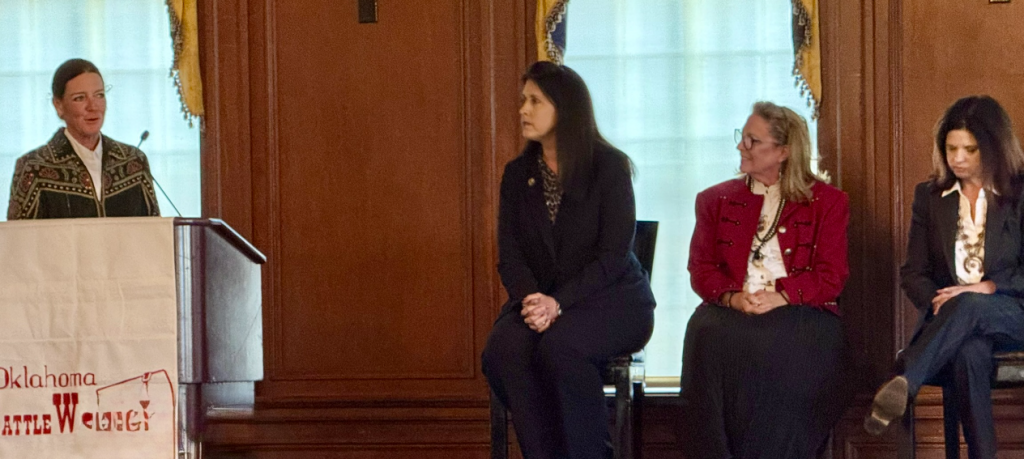
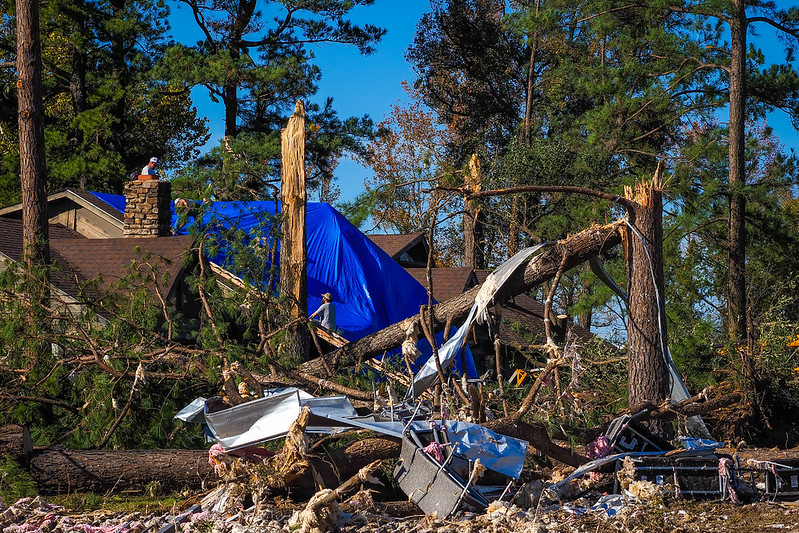


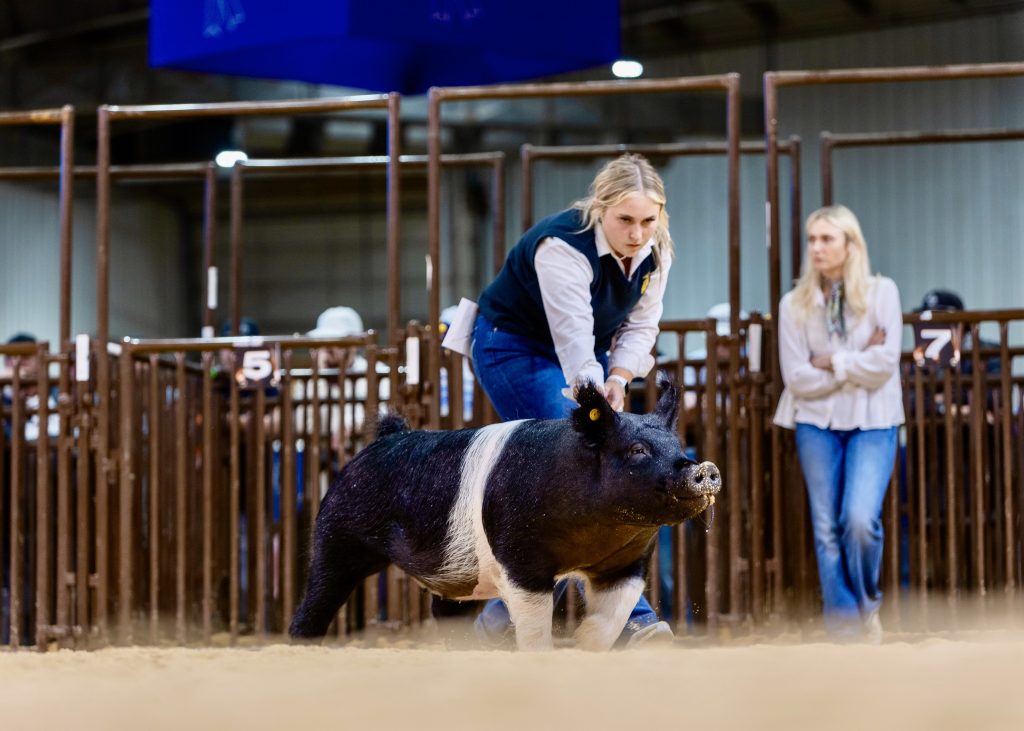
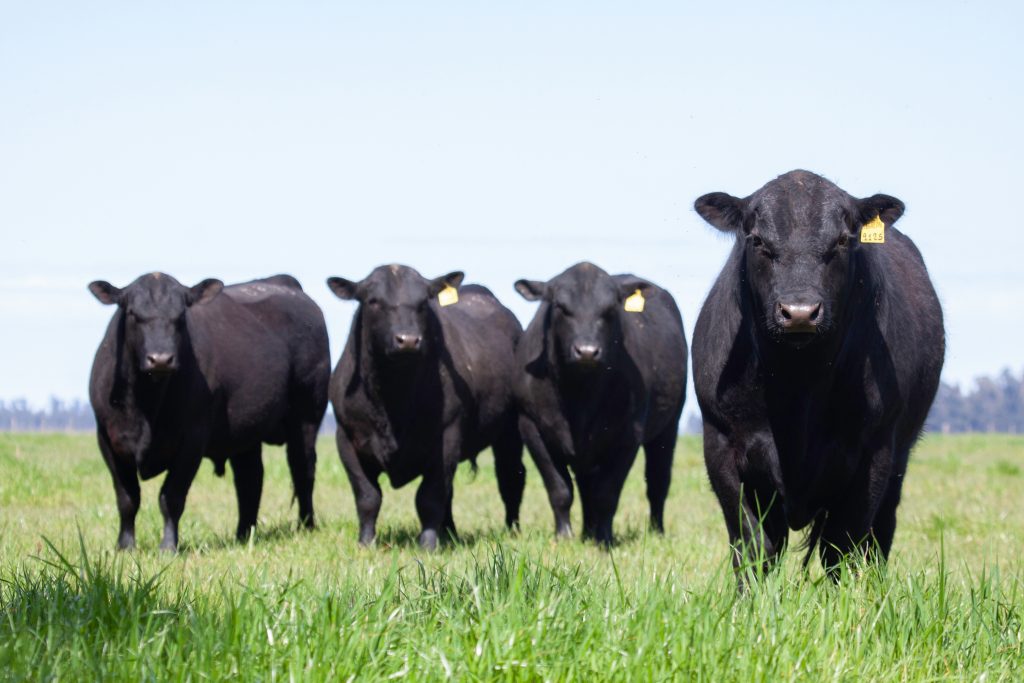


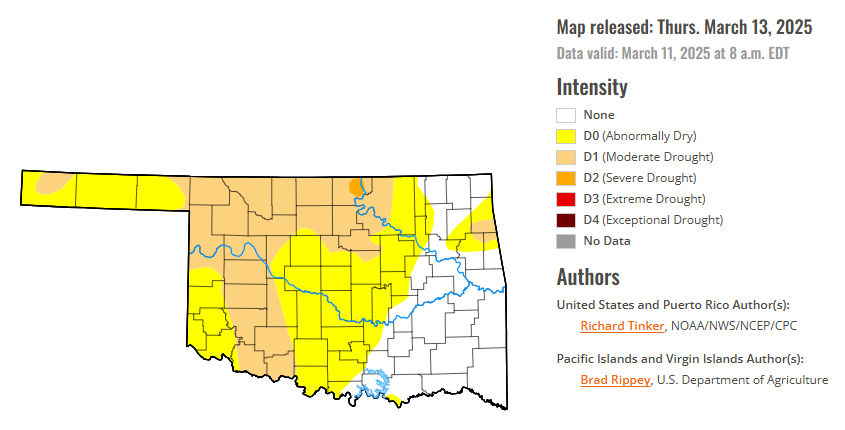
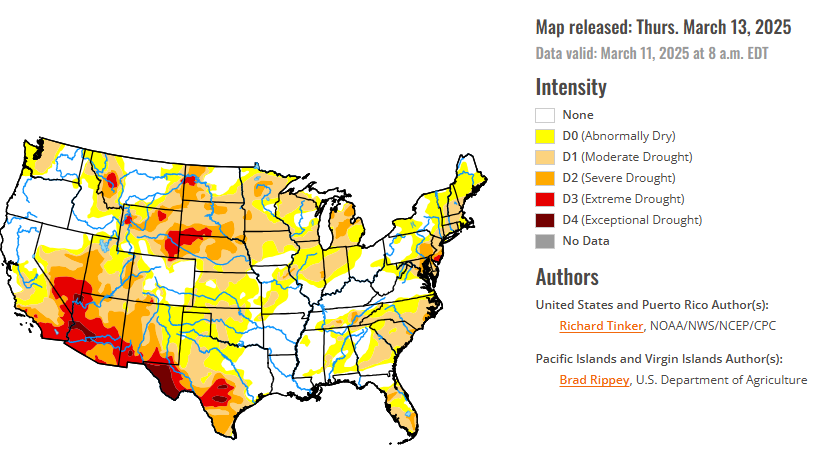
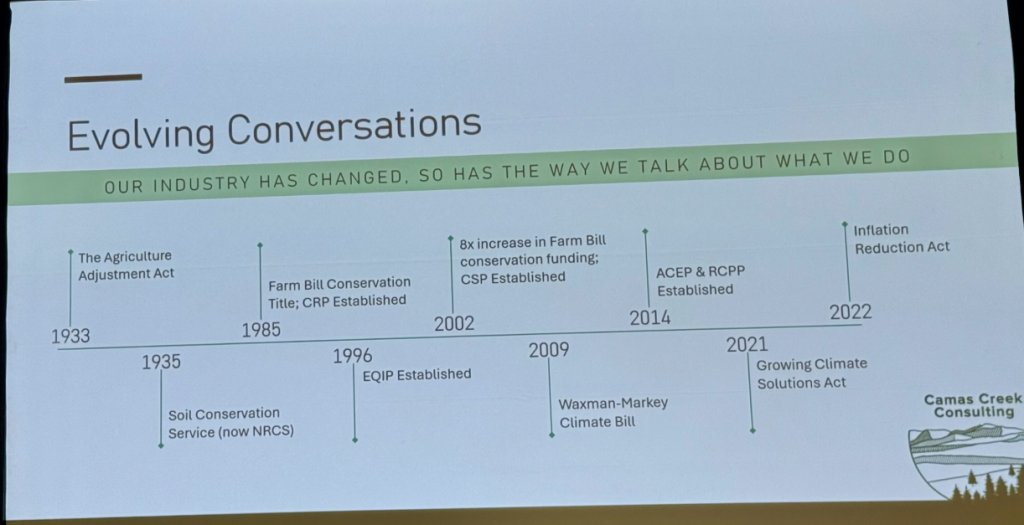
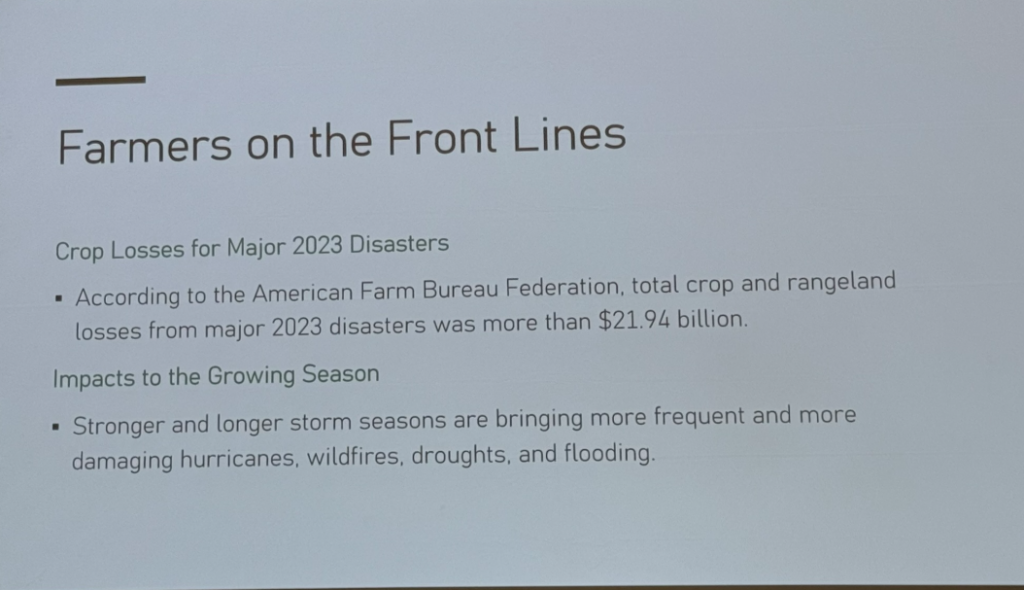
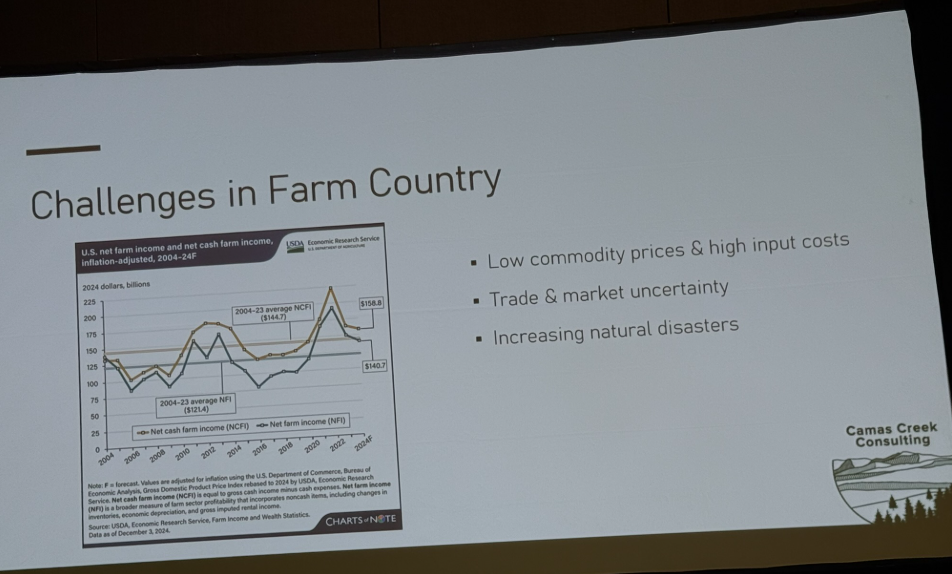
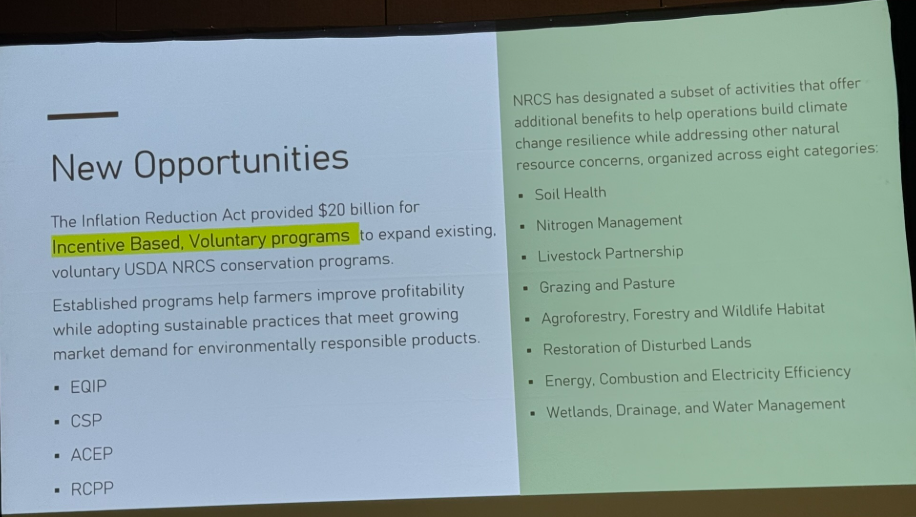
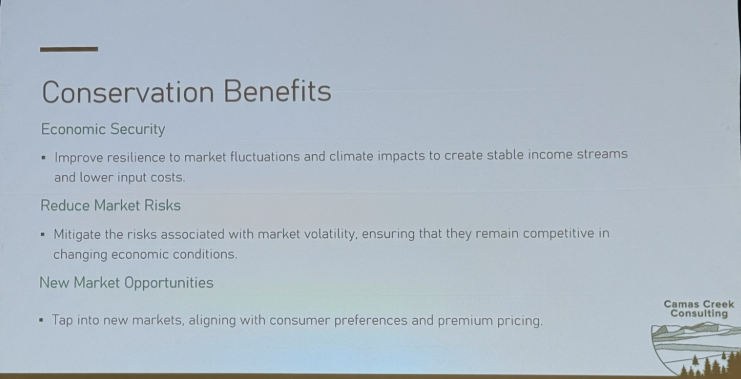

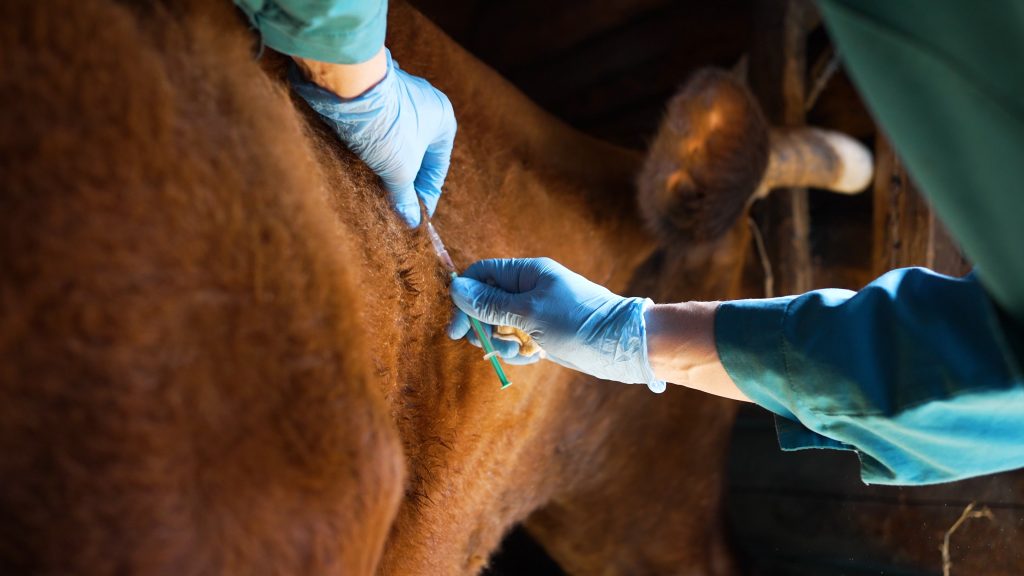


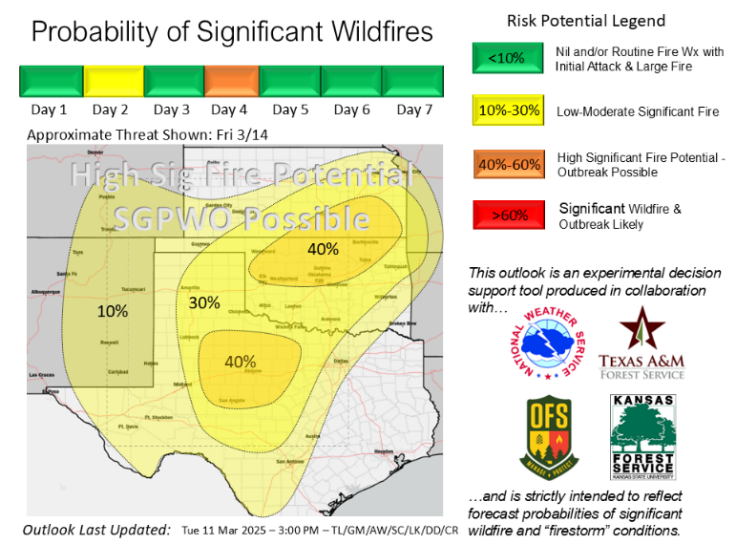
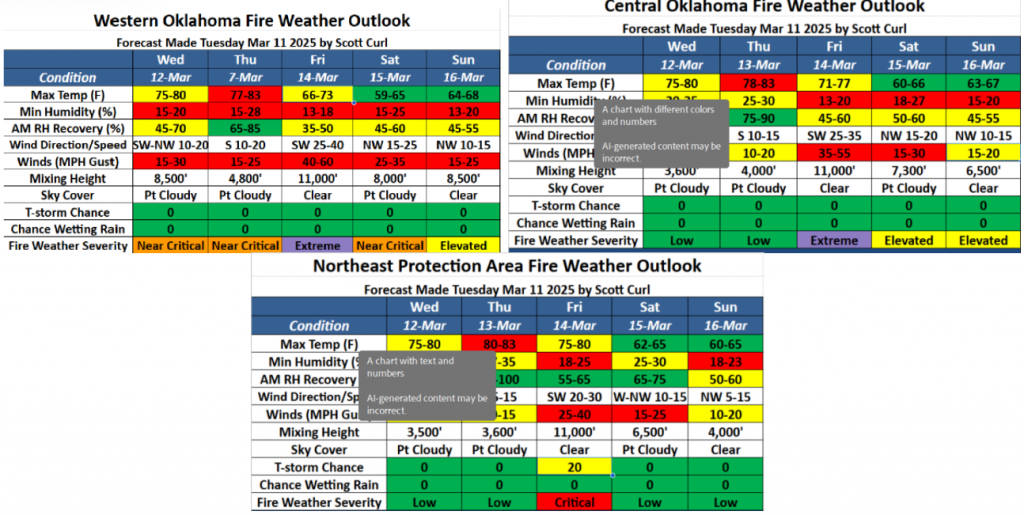


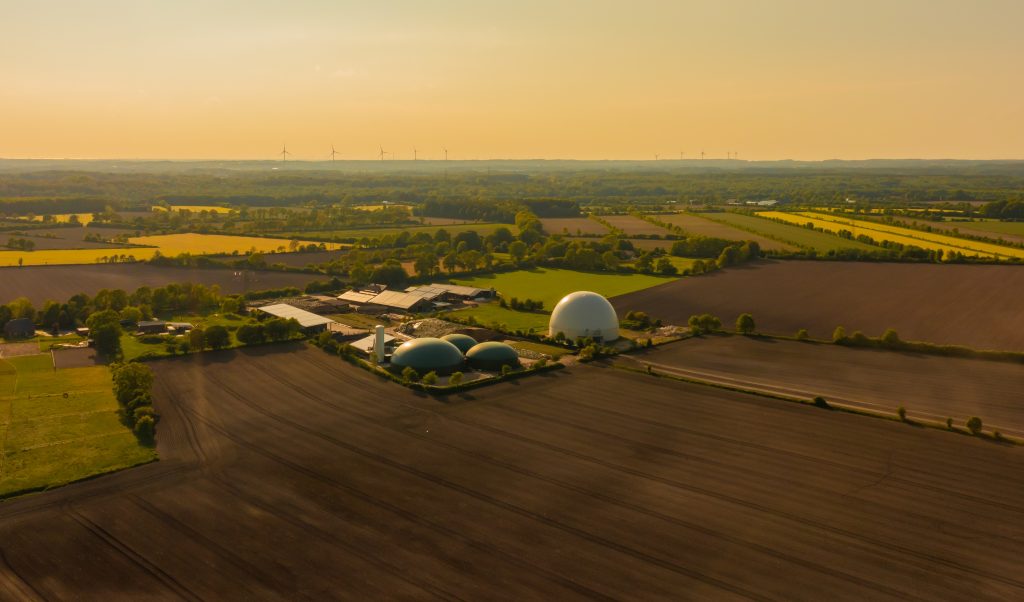

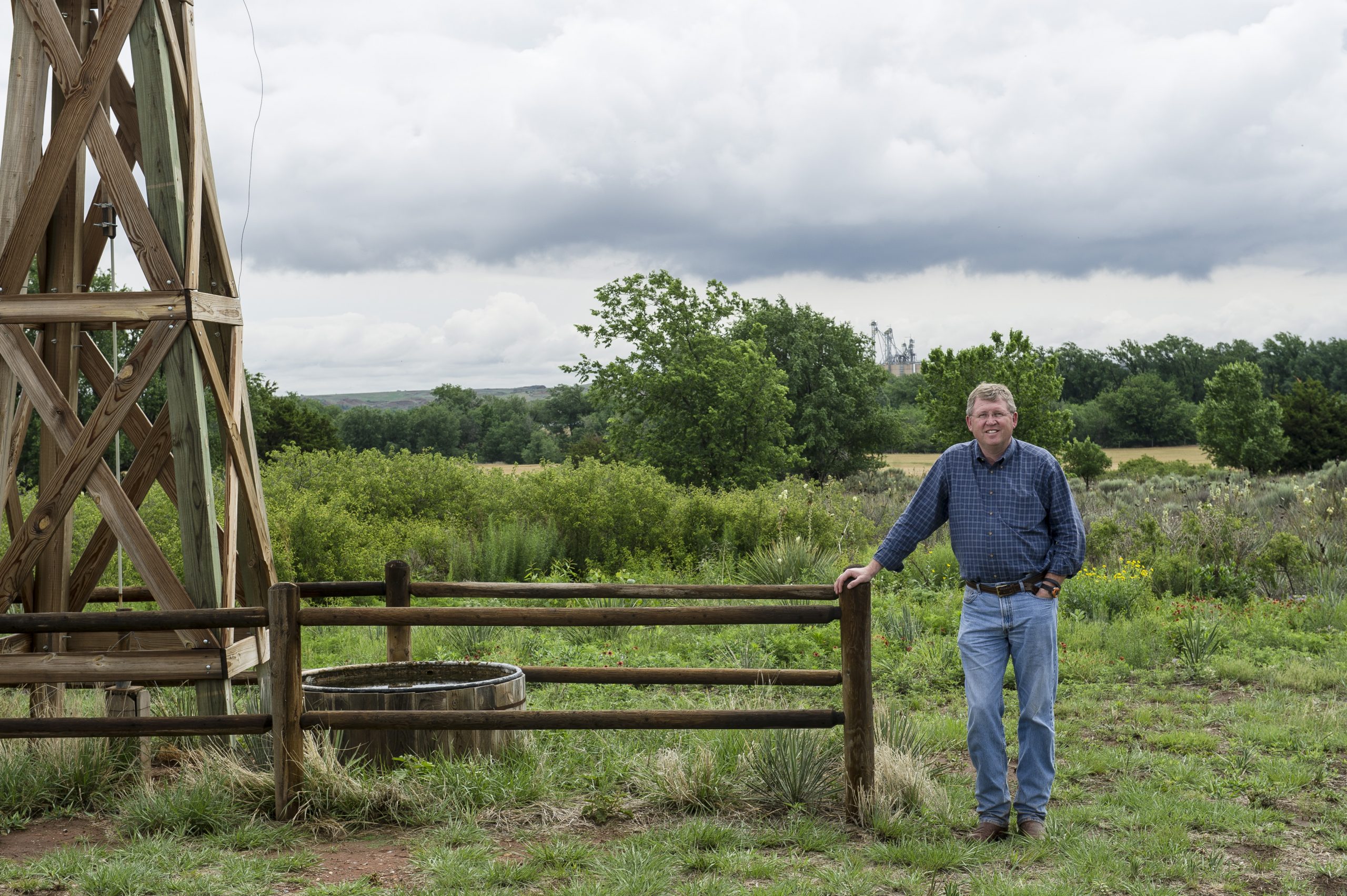
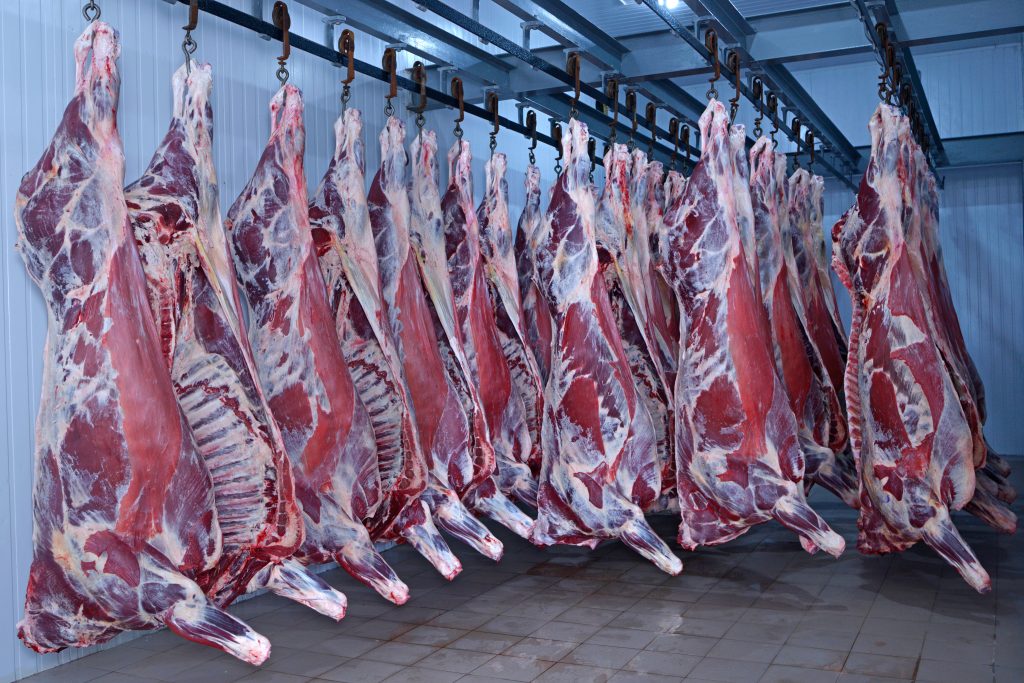


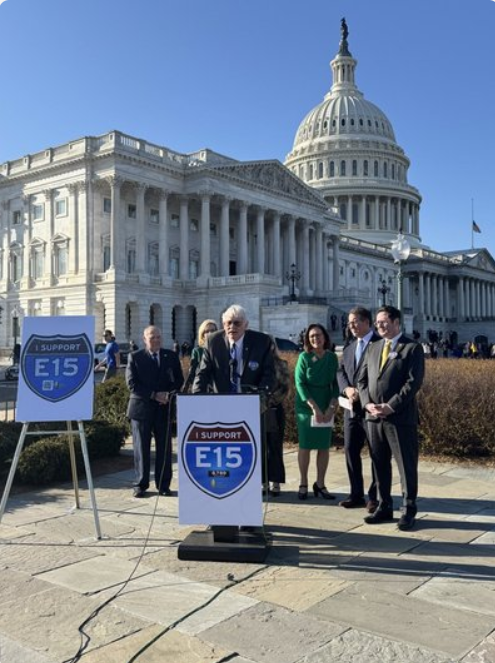
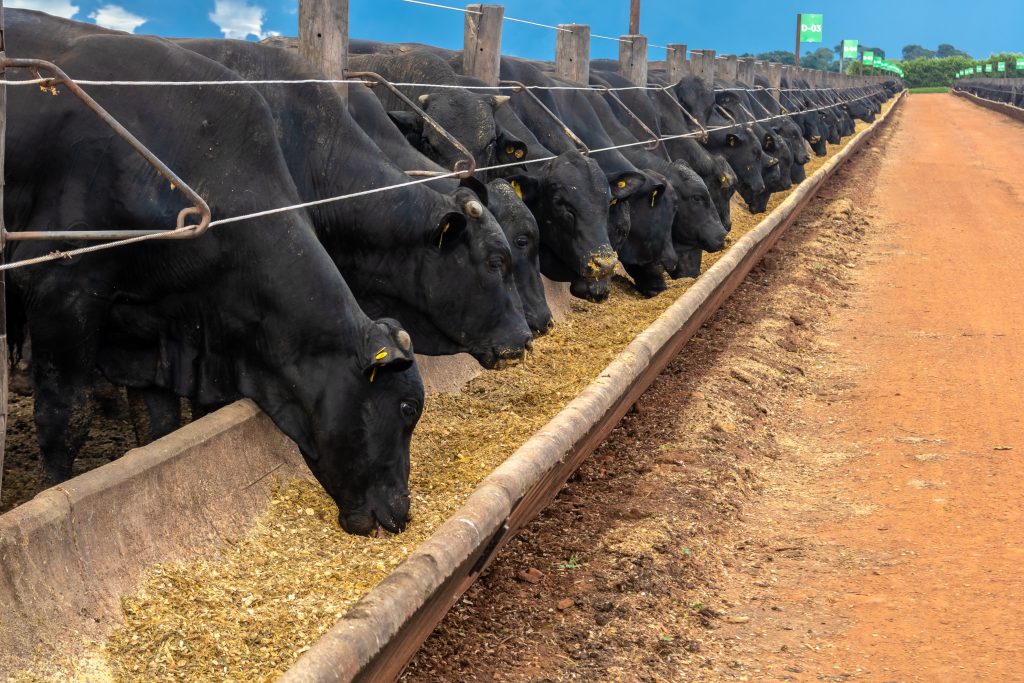
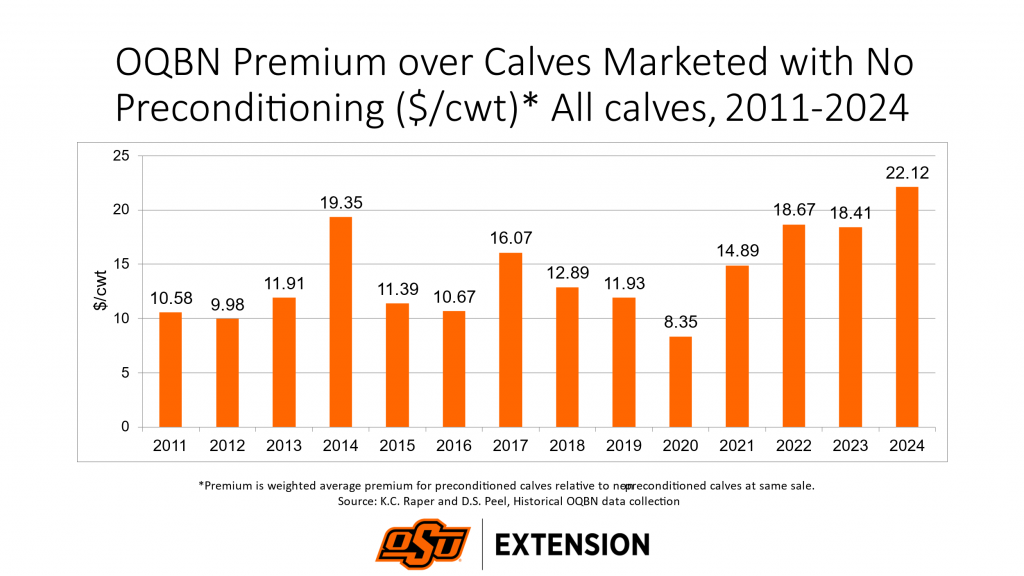
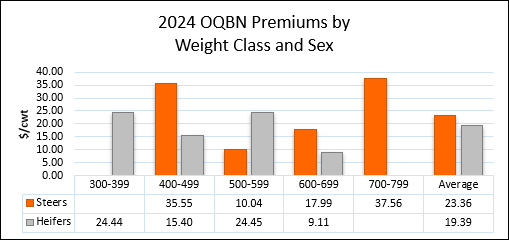



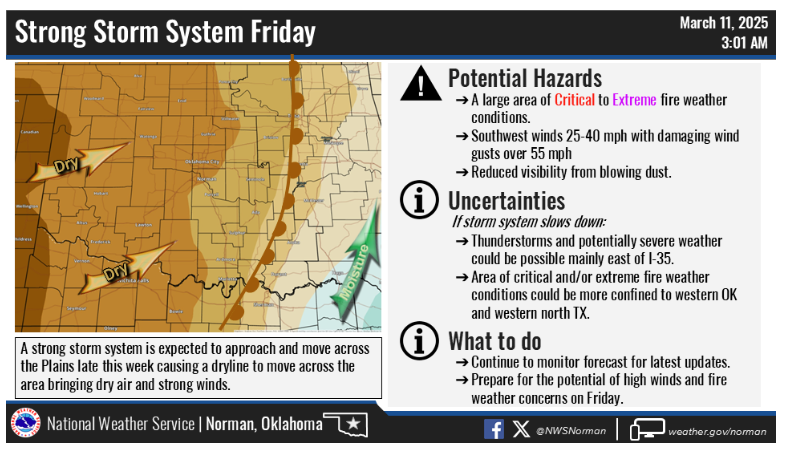
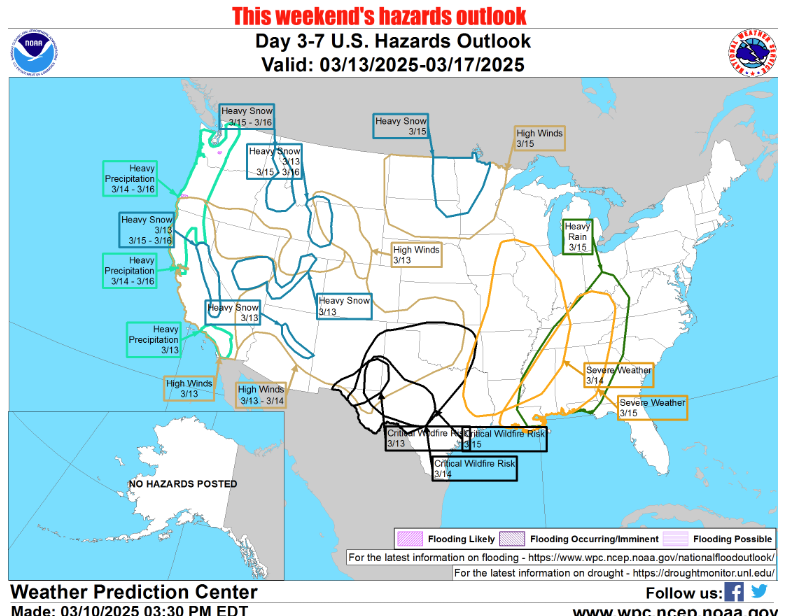
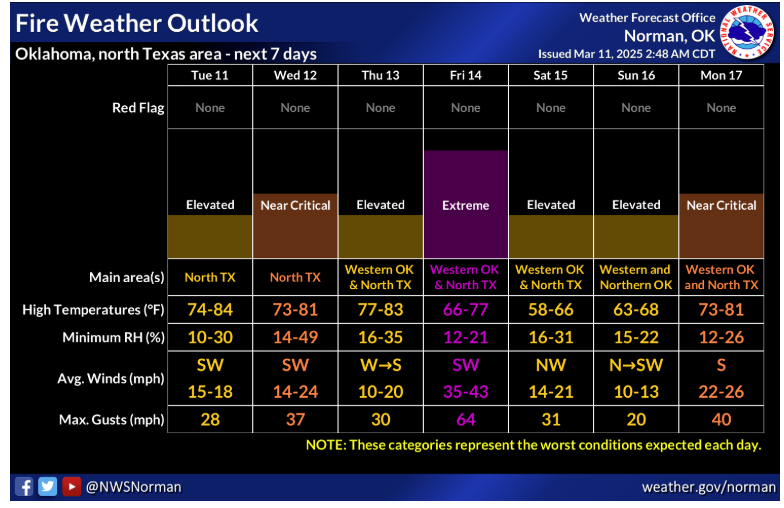
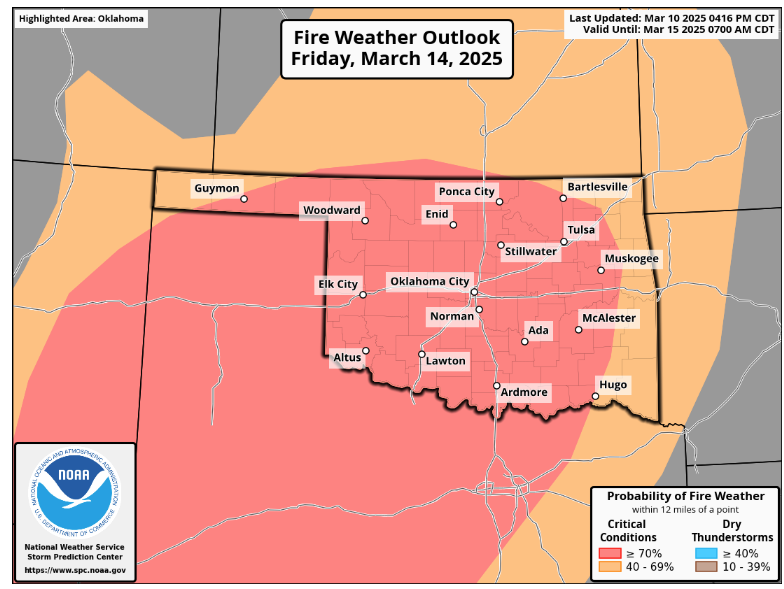
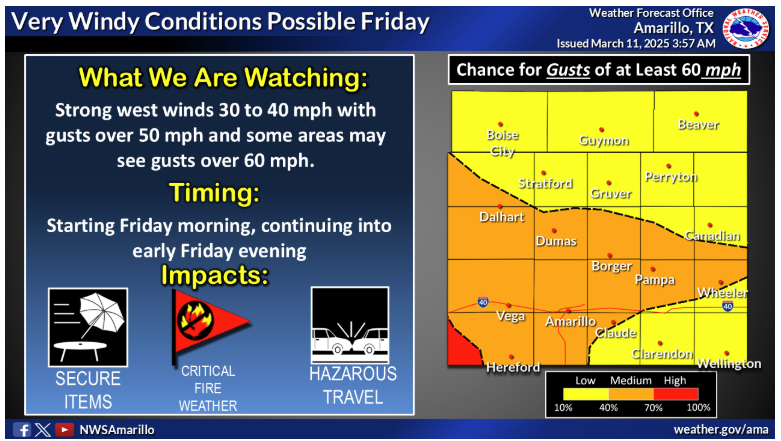
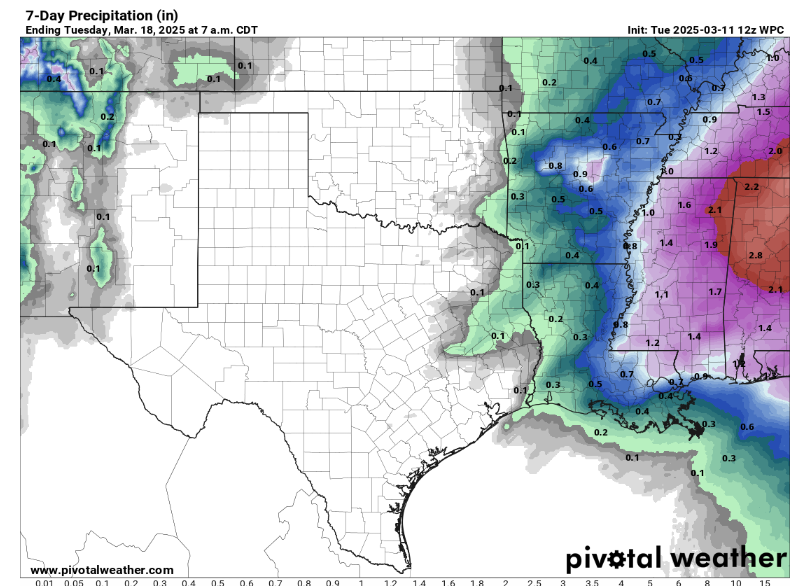


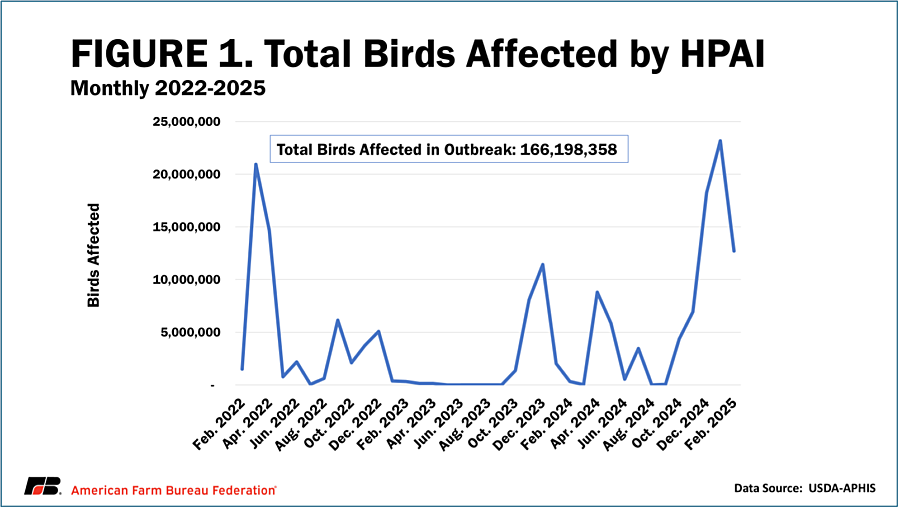
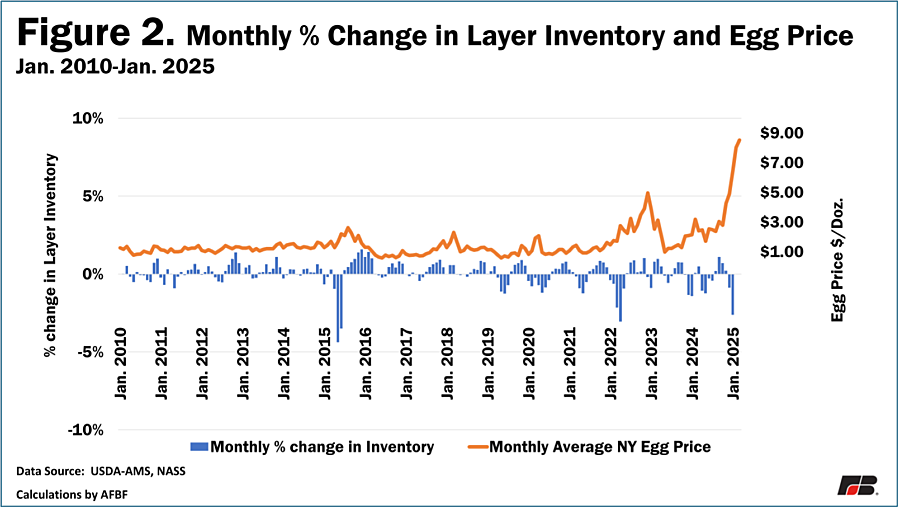



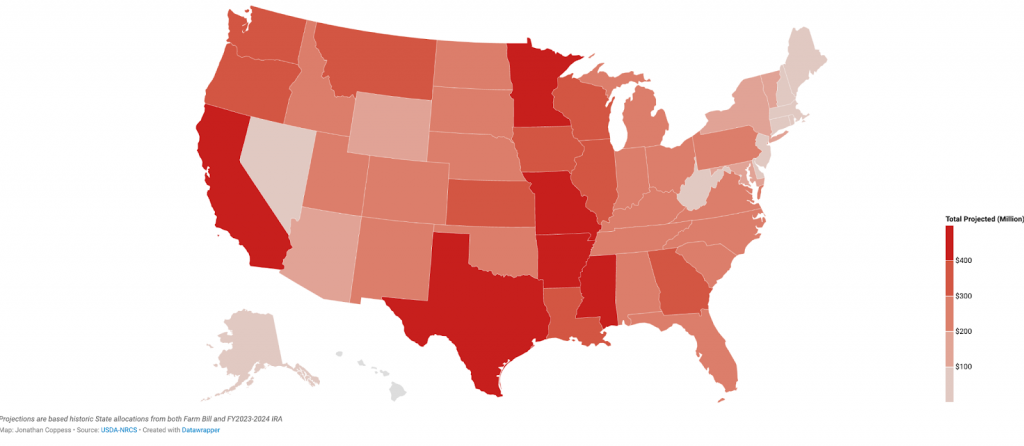


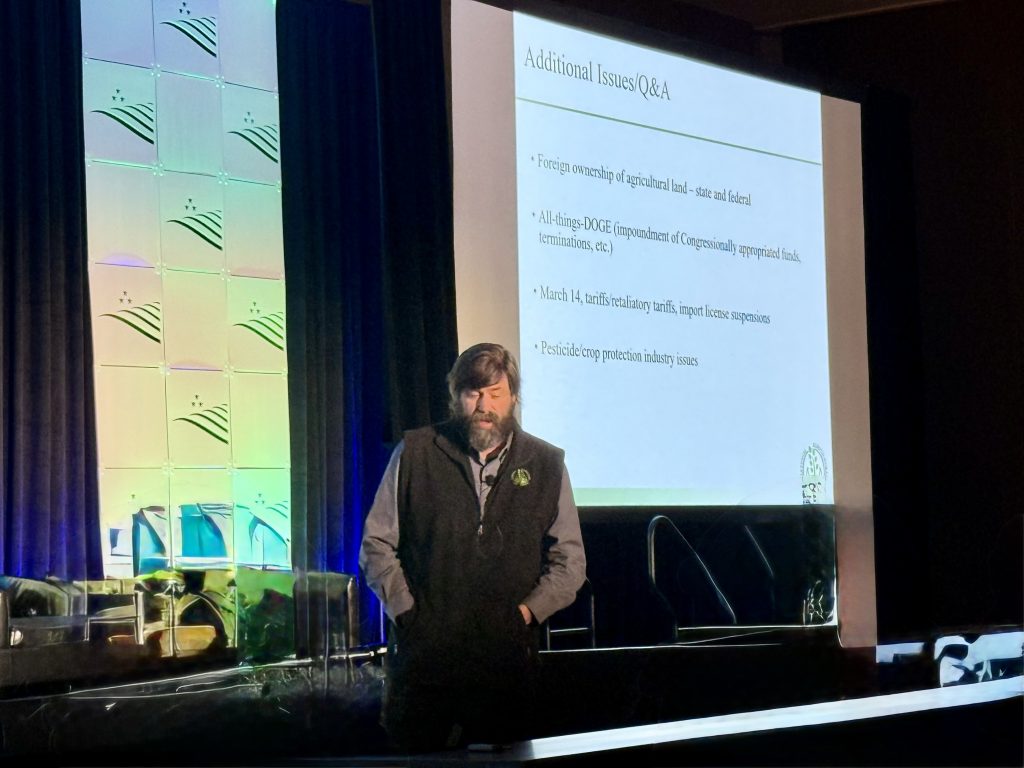
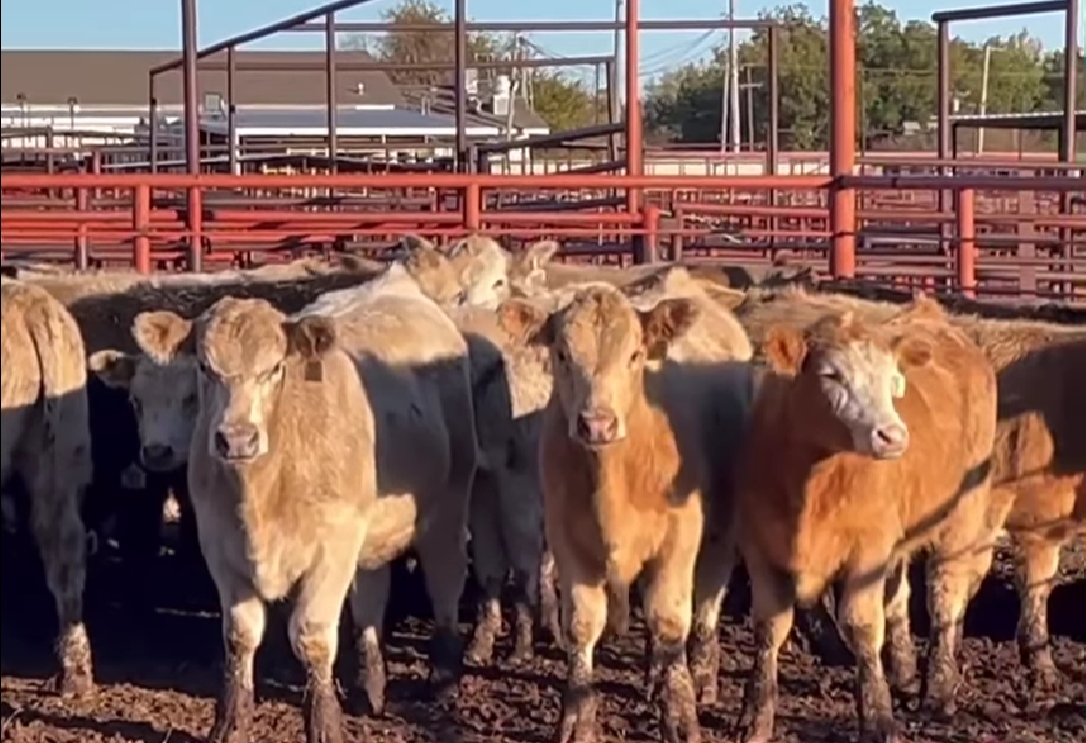
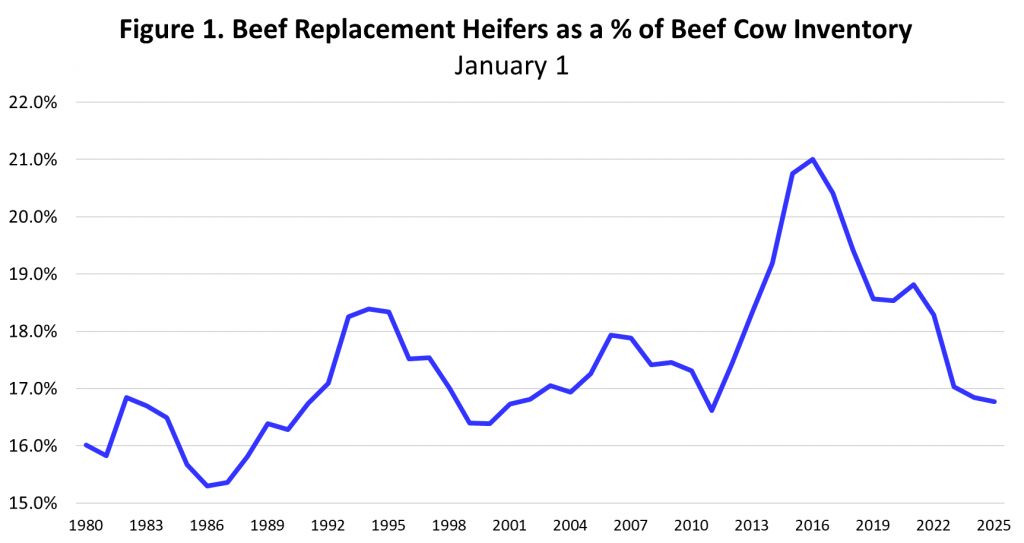

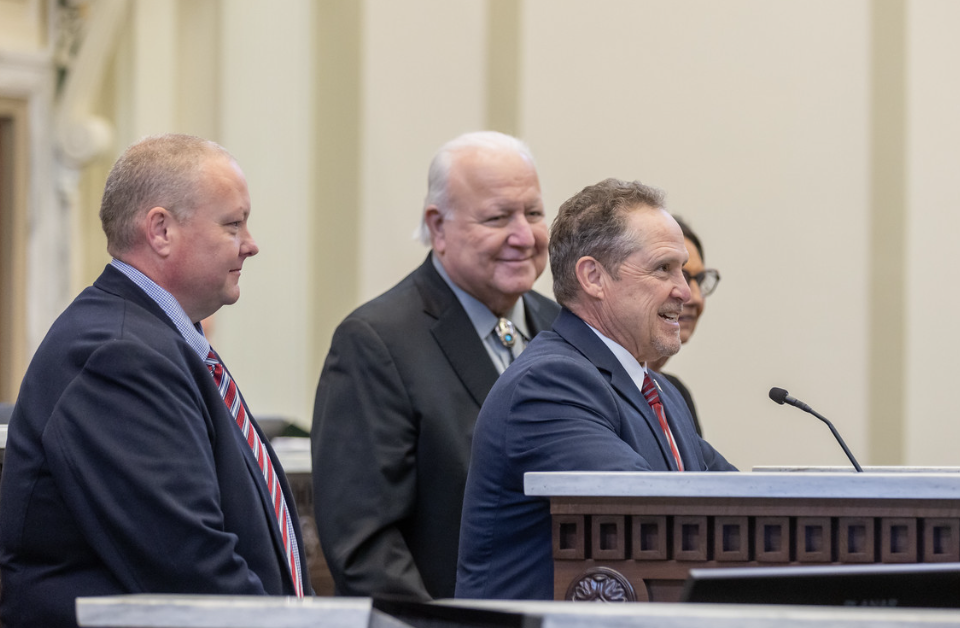
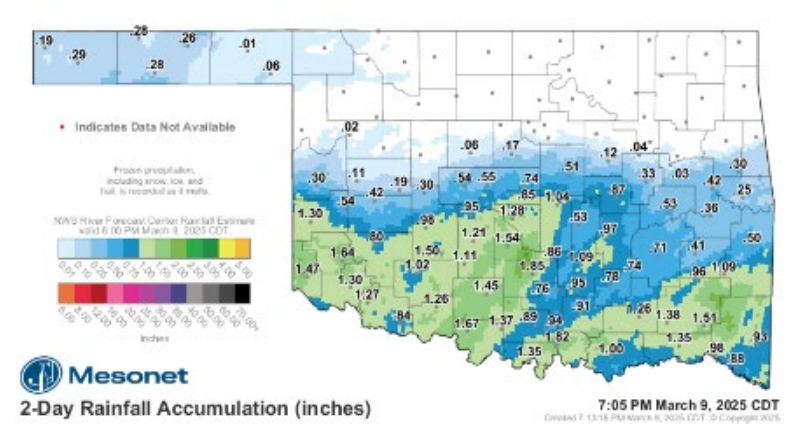
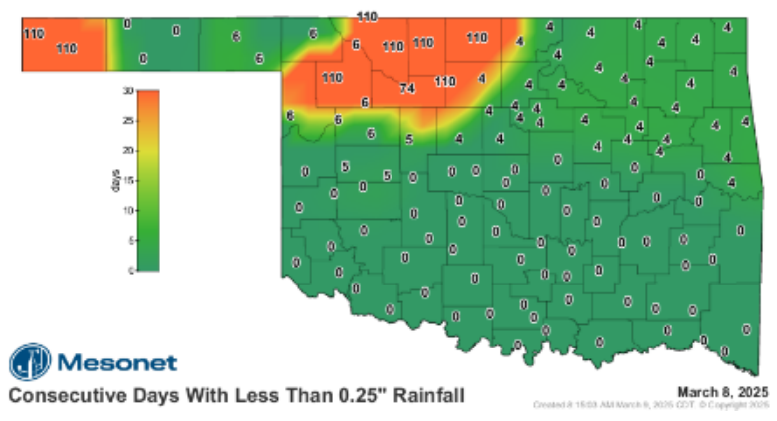
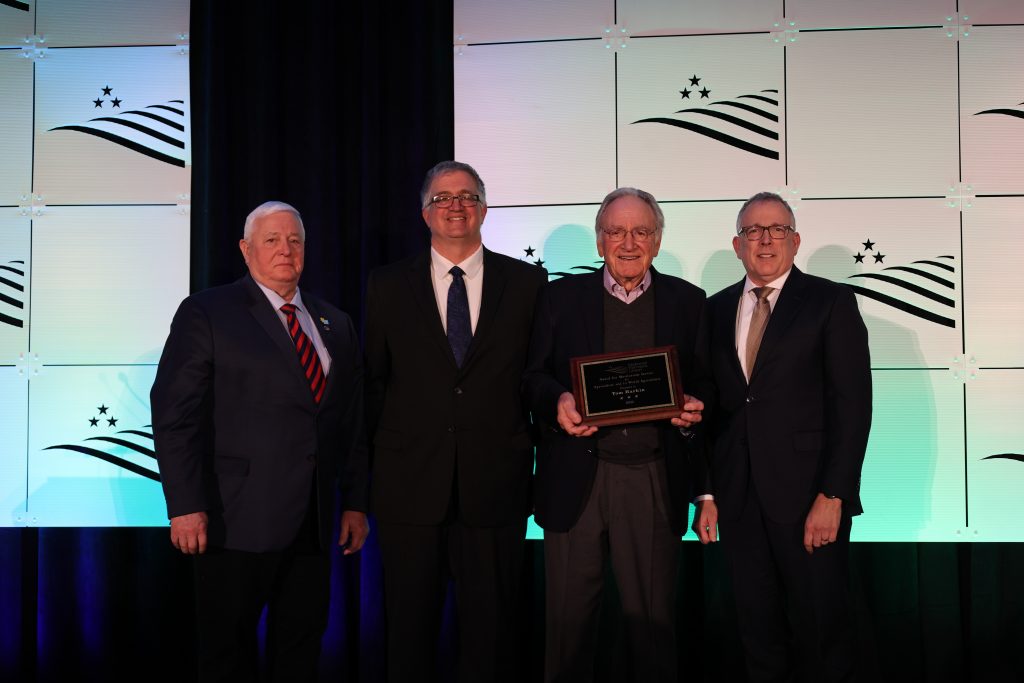
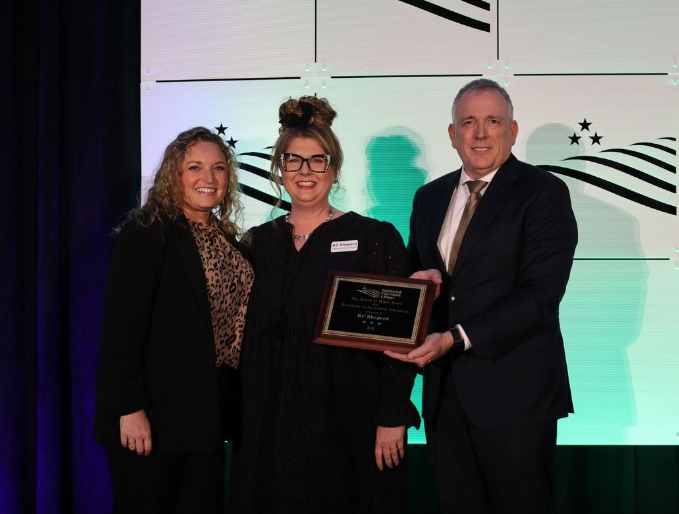
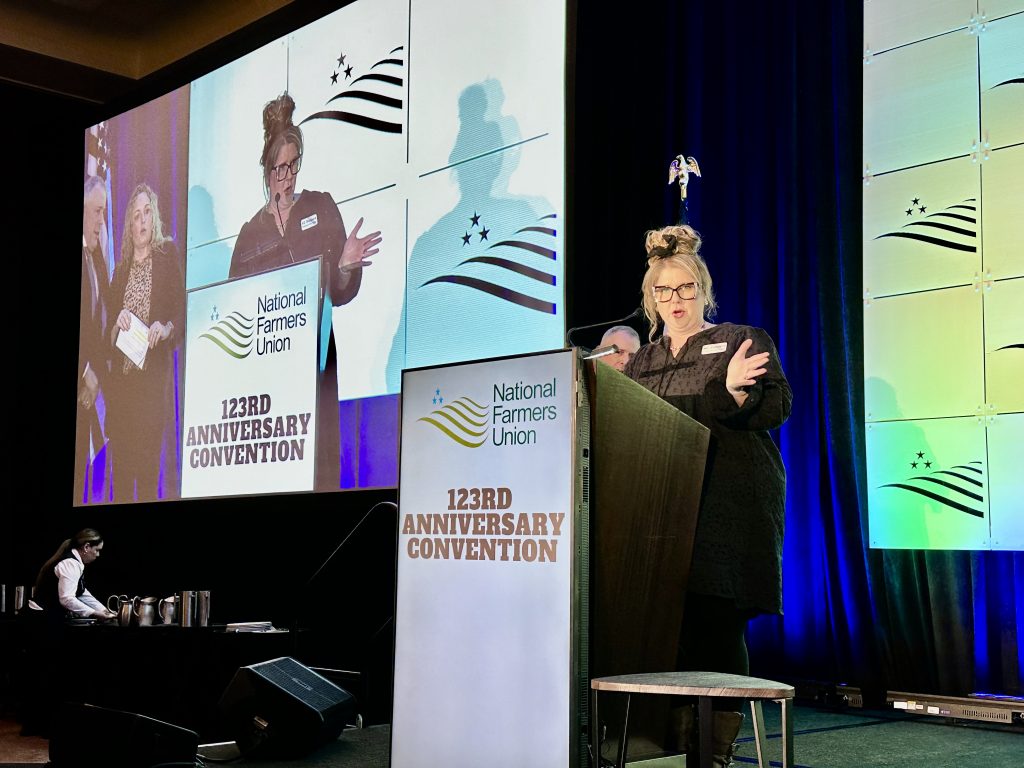
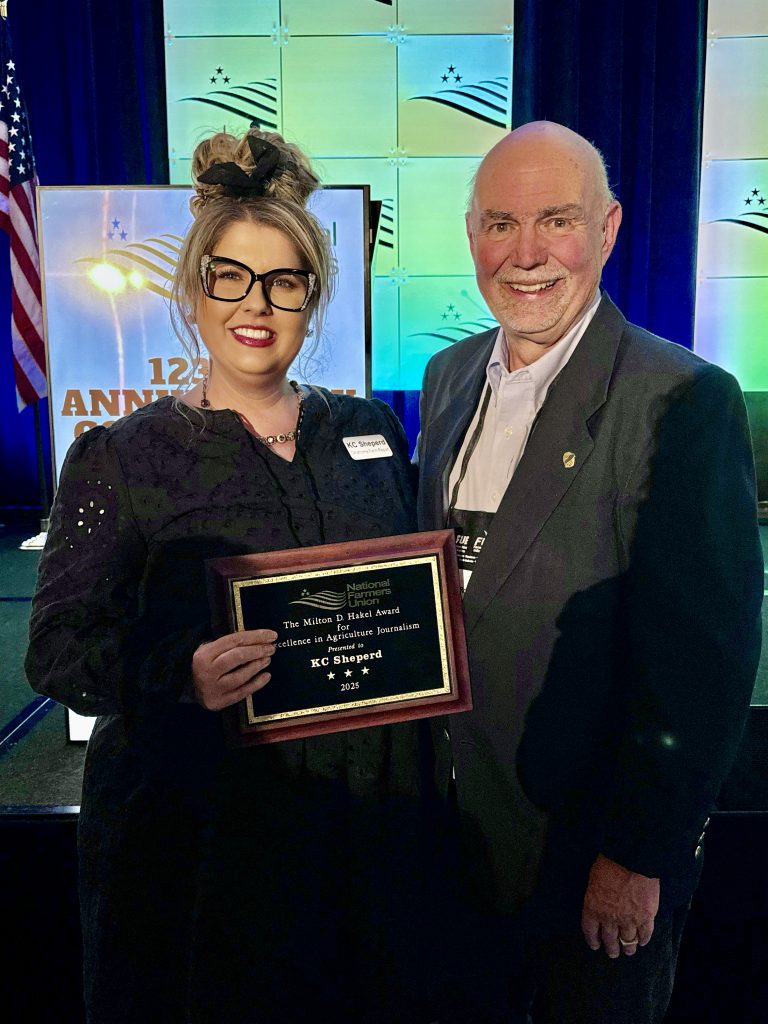
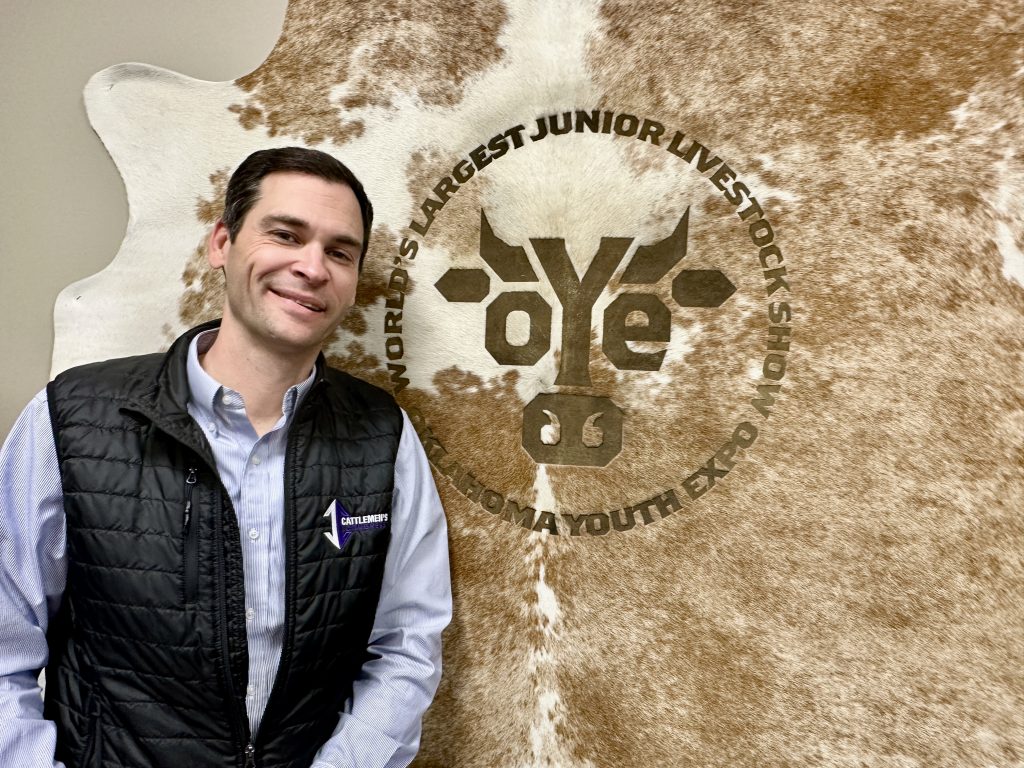

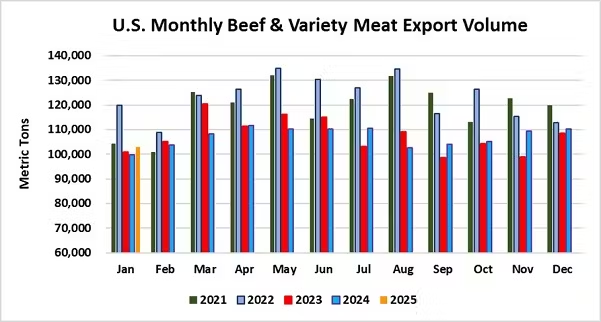
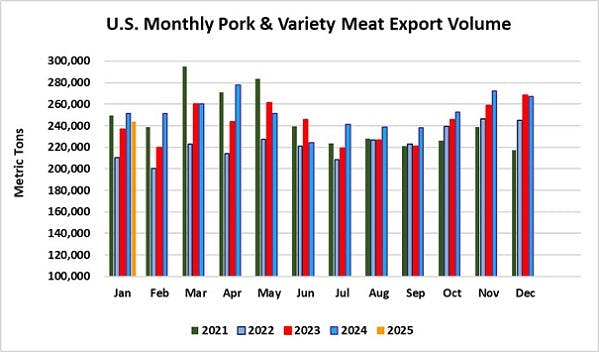


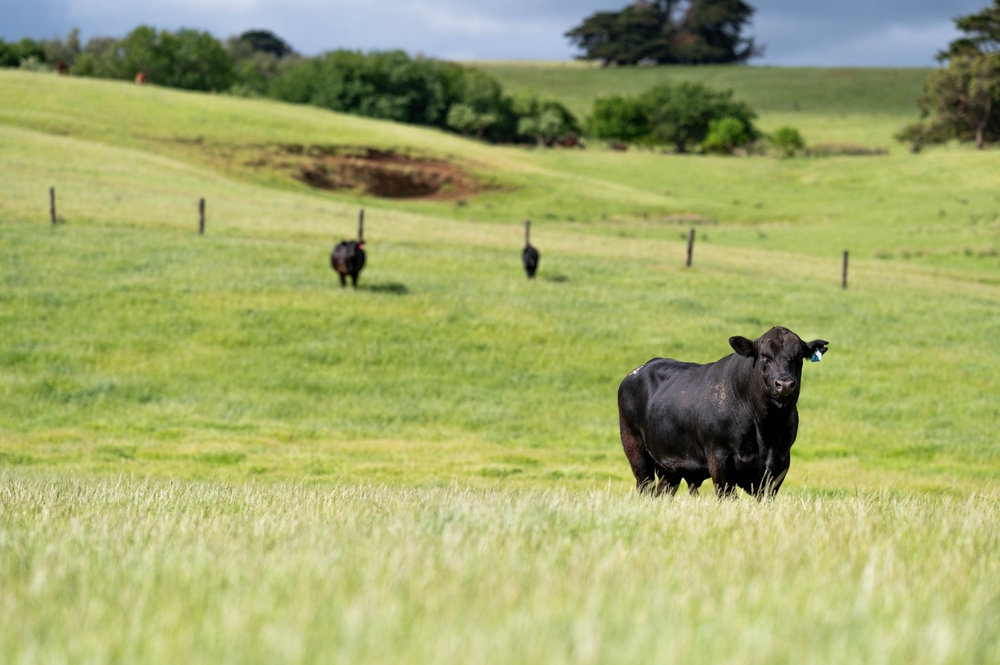


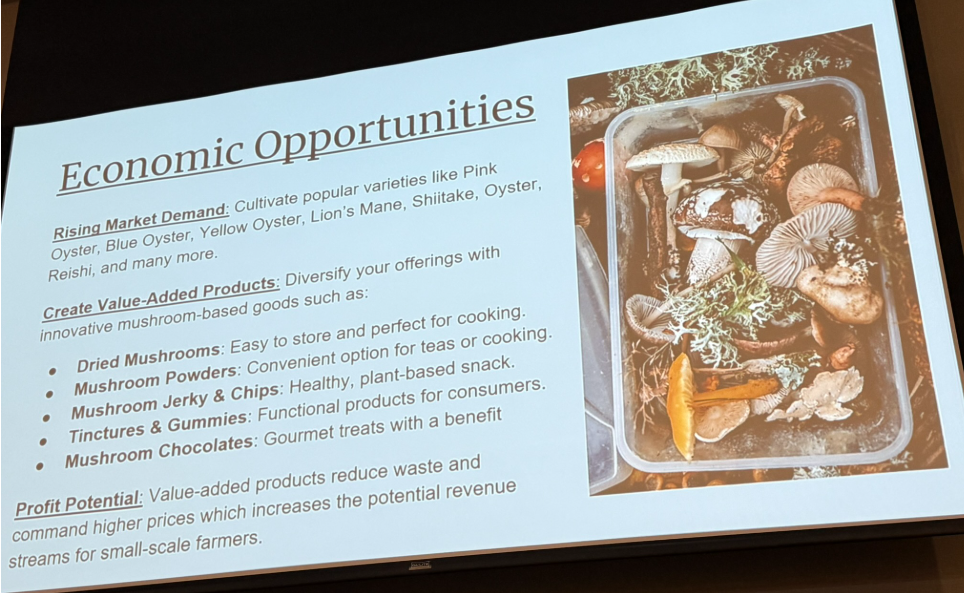
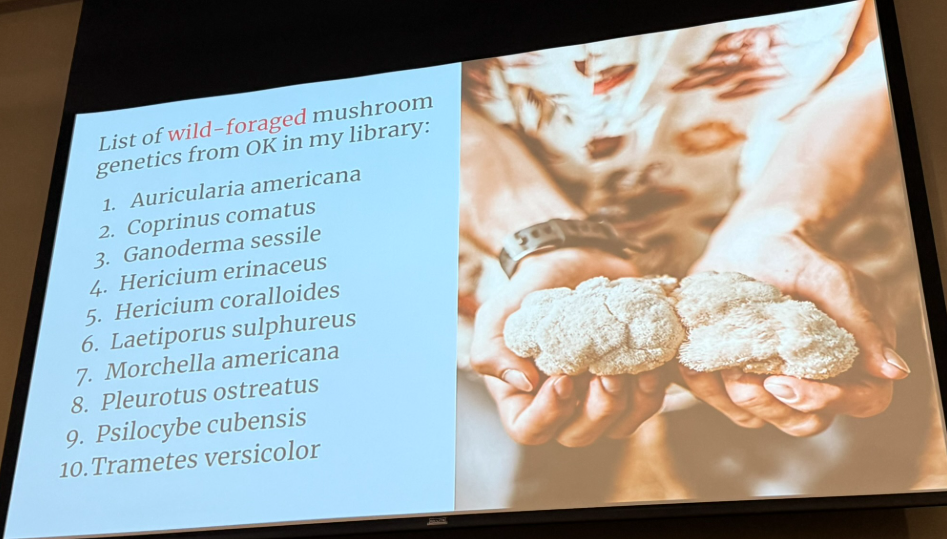
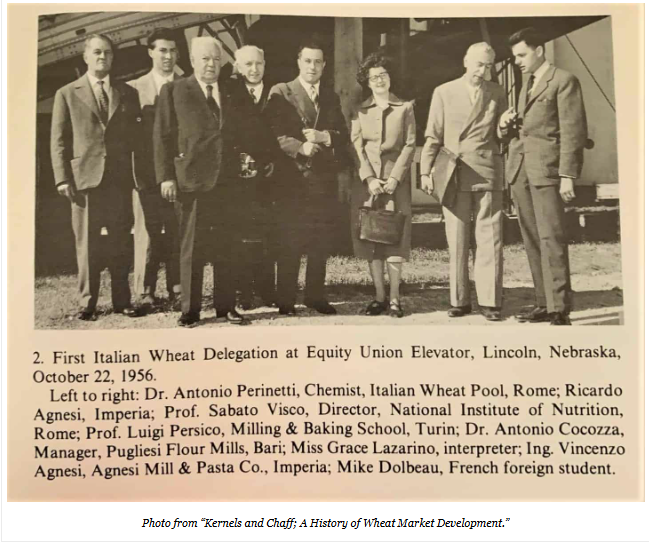
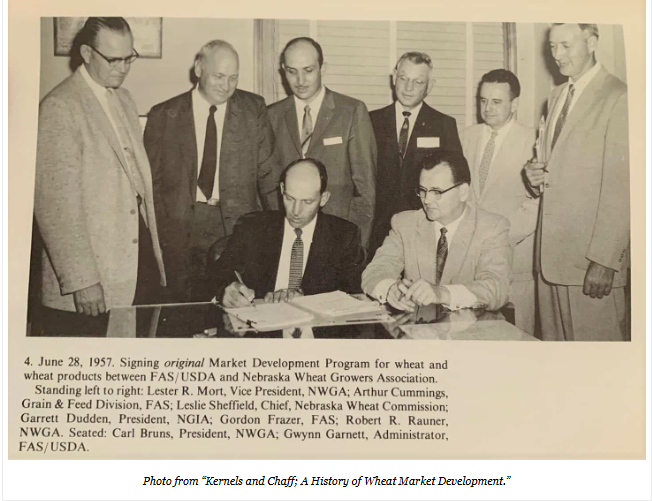
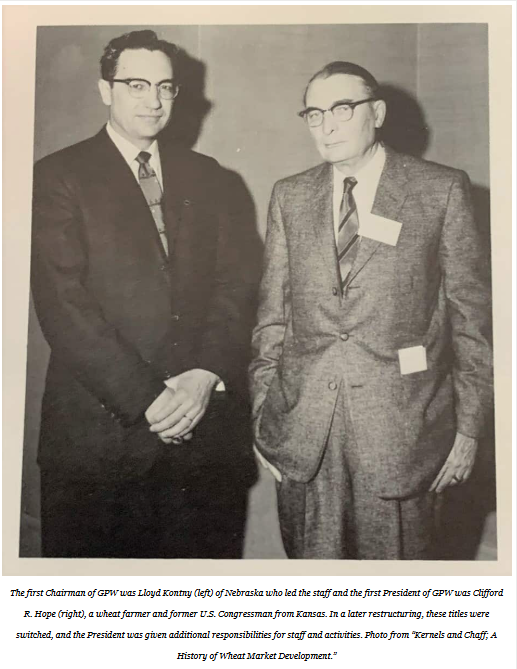
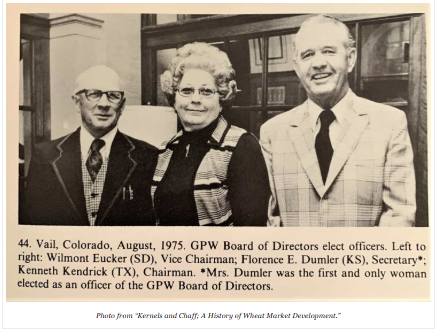
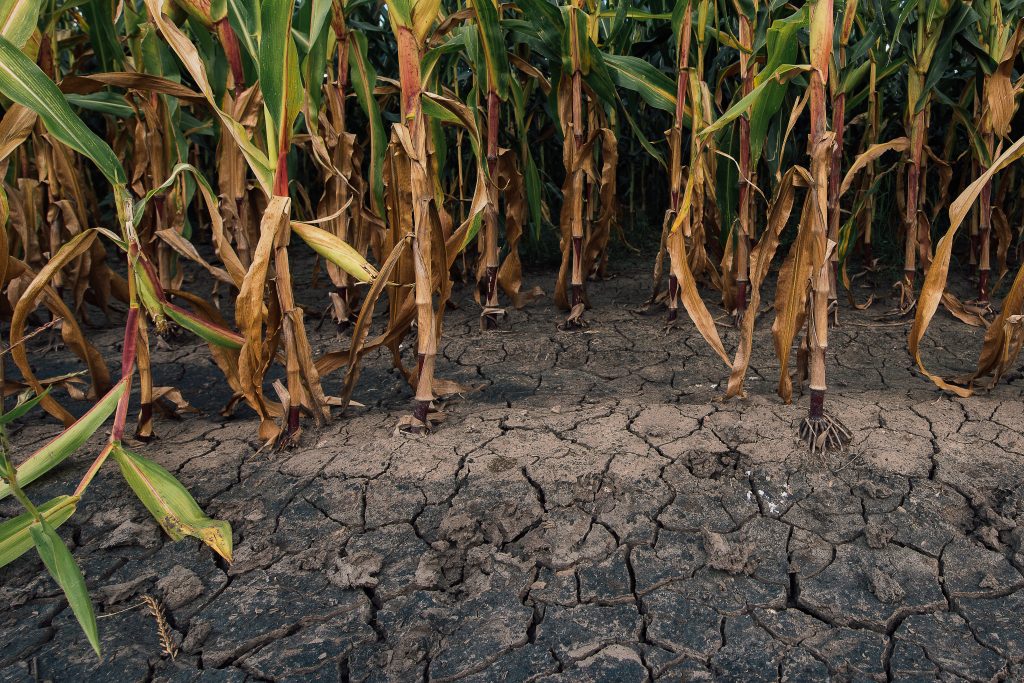

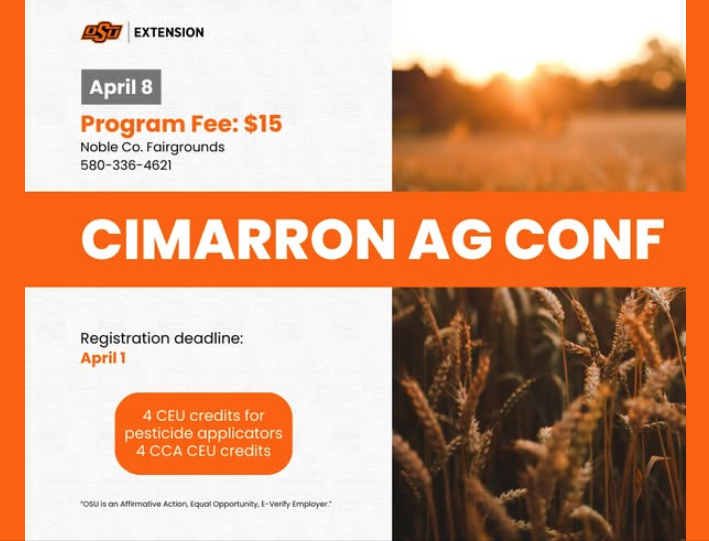
 When: April 8 at 8:30 a.m.
 Where: Noble County Fairgrounds
 Registration Fee: $15/person
 RSVP: Chad Webb, Noble Co. OSU Extension – (580) 336-4621