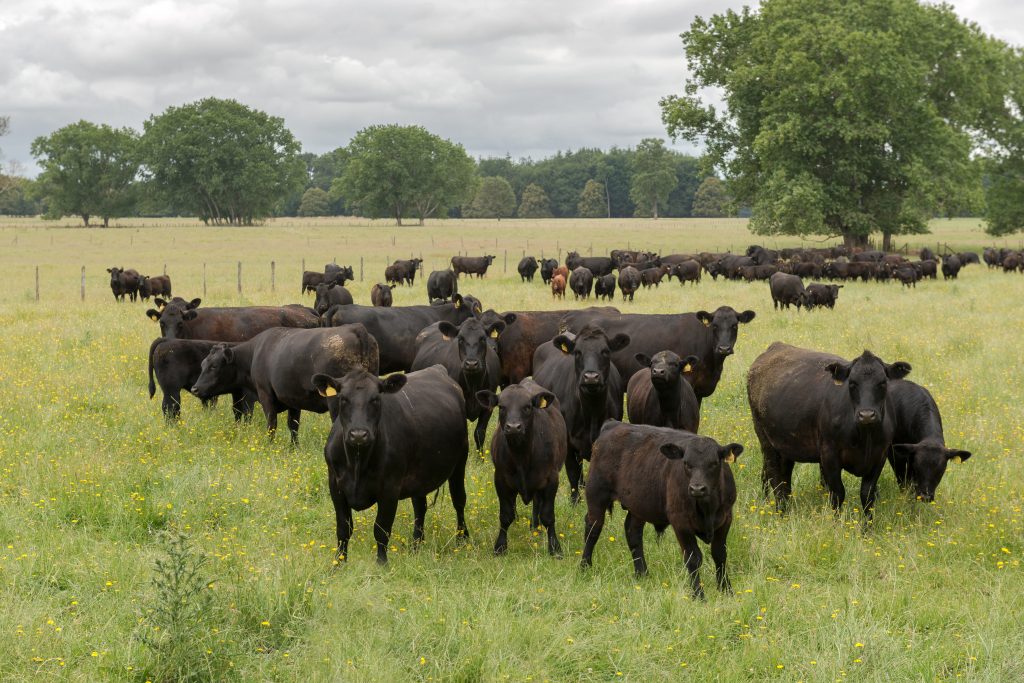
Ag News Archives for 2025-01

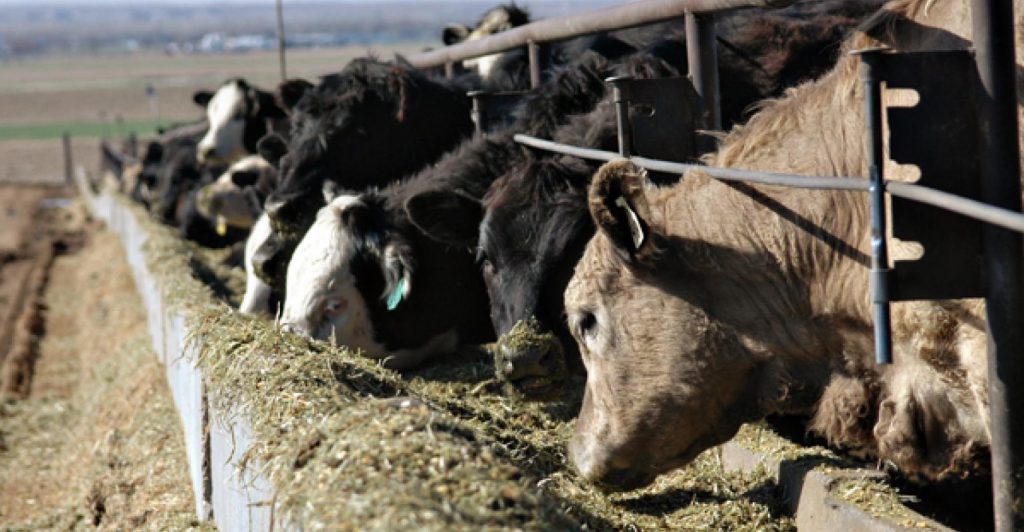
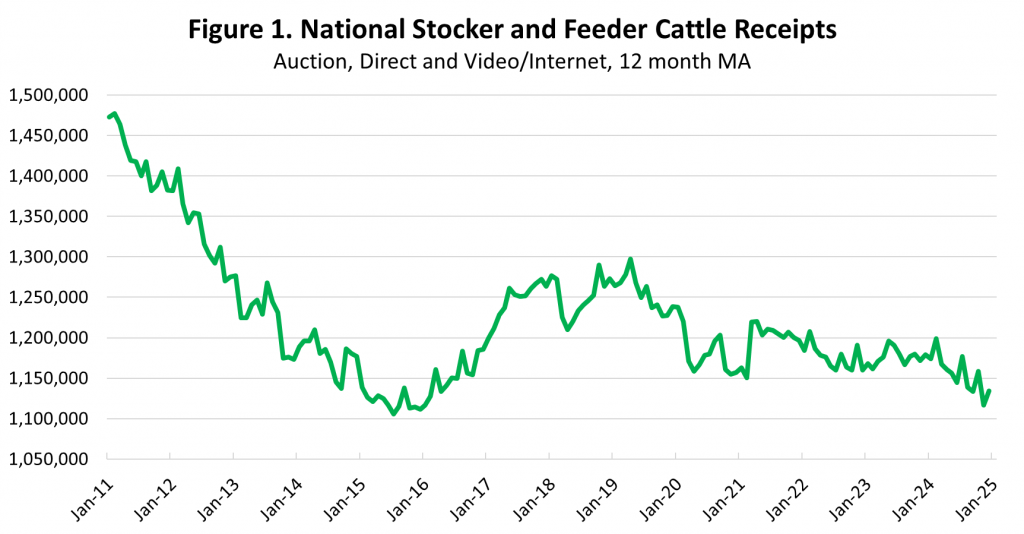
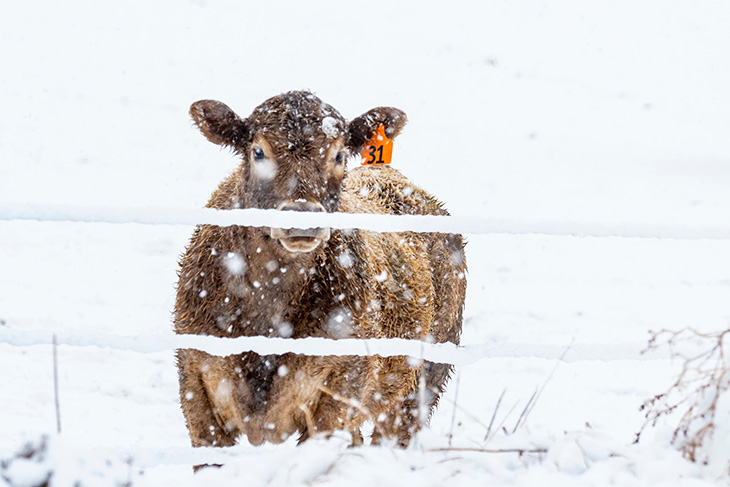
2025 Cattle Herd One Percent Smaller Than 2024- Beef Cow Herd a Half Percent Down- Are We at the Bottom??

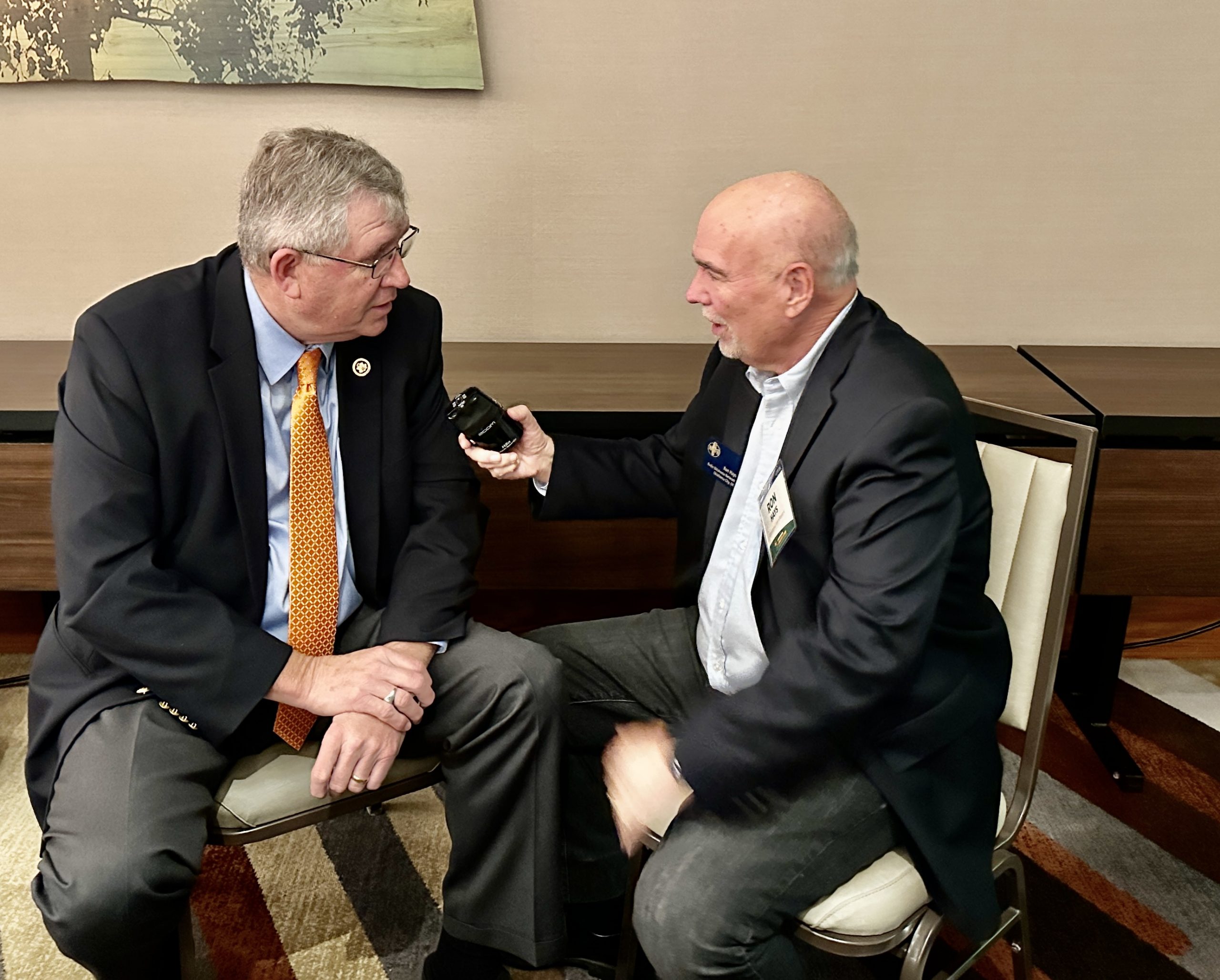
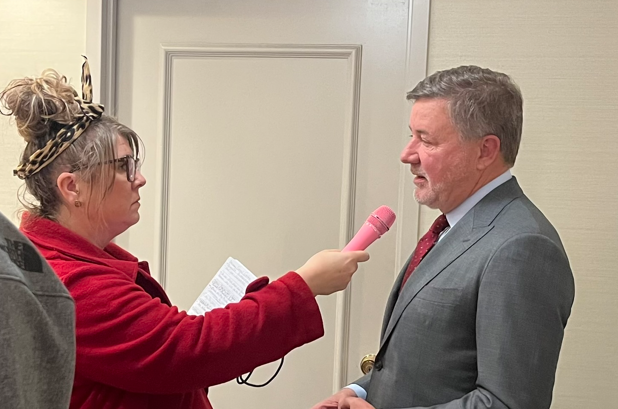
Listen to Ron Hays and Dr. Derrell Peel discussing the 2024 Cattle Inventory Report.

The much anticipated USDA NASS Cattle Inventory Report was released on Friday afternoon. Senior Farm and Ranch Broadcaster Ron Hays caught up with Oklahoma State University Extension Livestock Marketing Specialist Dr. Derrell Peel to discuss its findings and their implications for the beef cattle industry.

"This is the biggest report we get all year in the cattle industry," Peel said.

According to USDA, nationally, the January 1 cattle inventory is down 1 percent.

All cattle and calves in the United States as of January 1, 2025, totaled 86.7 million head, 1 percent below the 87.2 million head on January 1, 2024.

All cows and heifers that have calved, at 37.2 million head, were slightly below the 37.4 million head on January 1, 2024. Beef cows, at 27.9 million head, were down 1 percent from a year ago. Milk cows, at 9.35 million head, were up slightly from the previous year.

All heifers 500 pounds and over as of January 1, 202,5 totaled 18.2 million head, 1 percent below the 18.3 million head on January 1, 2024. Beef replacement heifers, at 4.67 million head, were down 1 percent from a year ago. Milk replacement heifers, at 3.91 million head, were down 1 percent from the previous year. Other heifers, at 9.59 million head, were 1 percent below a year earlier.

Steers weighing 500 pounds and over as of January 1, 2025, totaled 15.8 million head, down 1 percent from January 1, 2024. Bulls weighing 500 pounds and over as of January 1, 2025, totaled 2.01 million head, down 1 percent from January 1, 2024. Calves under 500 pounds as of January 1, 2025, totaled 13.5 million head, down slightly from January 1, 2024.

In Oklahoma, beef cows that have calved totaled 1,950,000 up 1 percent from last year. Beef heifers expected to replace cows totaled 340, up 1 percent from last year.

Steers weighing 500 lbs and over totaled 810, down 12 percent from last year. Bulls weighing 500 lbs and over stood at 150 head, equal to a year ago, and calves under 500 lbs totaled 850, up 3 percent from a year ago. The Oklahoma calf crop was up 3 percent from last year at 1,850,000 head.

"We have less cattle in the country is the main message here," Dr. Peel surmised.

While it was noted that in addition to Oklahoma's increases in beef cow numbers, Texas was up 1 percent from a year ago to 4,075,000 head, and Missouri was up 2 percent to 1,864,000 head. Dr. Peel accredited the growth in the Southern Plains beef herd to the improved forage conditions and increased hay supplies.

"Overall beef cow numbers were down, but in these leading cow calf states, it isn't surprising to see a slight increase already starting there," Dr. Peel said.

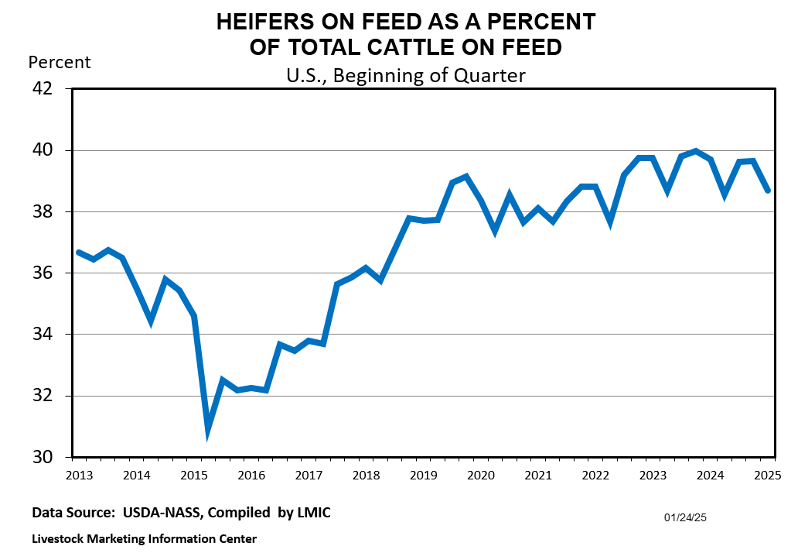
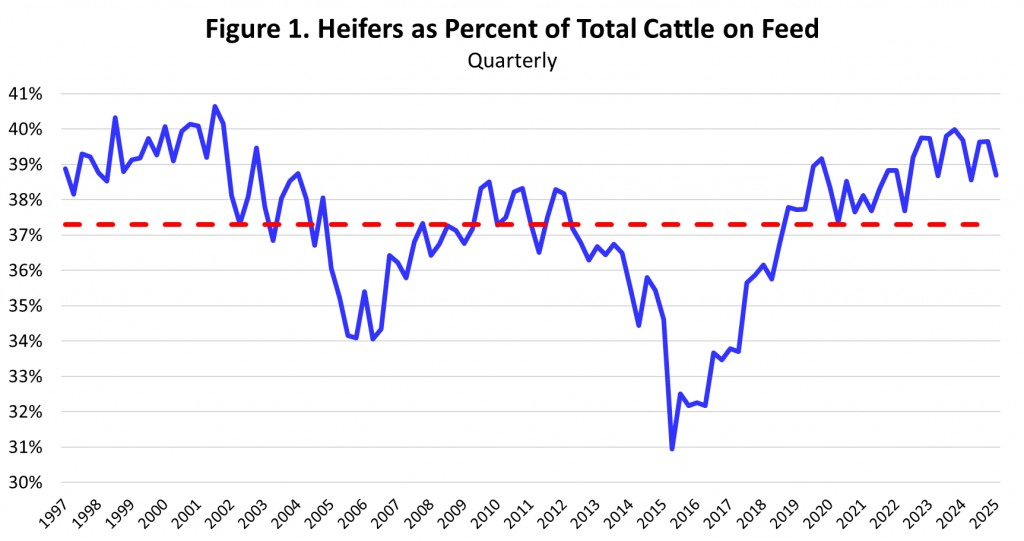
Cattle and calves on feed for the slaughter market in the United States for all feedlots totaled 14.3 million head on January 1, 2025. The inventory is down 1 percent from the January 1, 2024 total of 14.4 million head. Cattle on feed in feedlots with a capacity of 1,000 or more head accounted for 82.7 percent of the total cattle on feed on January 1, 2025, up slightly from the previous year. The combined total of calves under 500 pounds and other heifers and steers over 500 pounds (outside of feedlots), at 24.6 million head, was slightly below January 1, 2024.

The Oklahoma Cattle on Feed Inventory was up 11 percent from last year to 365,000 head as compared to the national numbers, which were down 1 percent to 14,296.700.

"There are fewer cattle coming in as has to be the case because the calf crop is getting smaller, and yet feedlots held inventory so that was part of that slower turnover rate. In the short run, we held beef production pretty steady in 2024 compared to 2023," Dr. Peel said. " I doubt that we will do that again. We are back to predicting that beef production will probably fall... I'm going to say in the range of four percent on a year-over-year basis in 2025."

As to indications of rebuilding the beef cow herd, Dr. Peel said that the best one can hope for is that numbers remain steady throughout the year because he sees little hope of growth in 2025. Be sure to click the listen bar at the top of the page to hear Dr. Peel's complete audio analysis of the latest Cattle Inventory Report.

The Beef Buzz is a regular feature heard on radio stations around the region on the Radio Oklahoma Ag Network and is a regular audio feature found on this website as well. Click on the LISTEN BAR at the top of the story for today’s show and check out our archives for older Beef Buzz shows covering the gamut of the beef cattle industry today.

Anti-Ag HSUS Announces Name Change to Escape Decades of Scandal

The animal group has been dogged by scandal

Some companies rebrand in the aftermath of the scandal to rebuild trust in the eyes of the public. The name change of the private military contractor, Blackwater, after the deaths of civilians overseas, is one high-profile example. But the latest entity to deploy the strategy might surprise you. It's one of the country's most well-known national animal charities.

The Humane Society of the United States announced that in February, it will change its name to "Humane World for Animals." The decision is curious given that the organization rakes in roughly $170 million a year in donations — a hefty chunk of change that could be compromised from weaker name recognition.

So, the question is: Why? One reason may be because this animal group has been dogged by scandal.

In 2010, Humane Society of the United States CEO Wayne Pacelle told the media that he thought convicted dogfighter Michael Vick "would do a good job as a pet owner." The comment, which understandably sparked backlash, came after Mr. Vick's post-prison employer, the Philadelphia Eagles, made a $50,000 "grant" to the organization.

A year later, Rep. Billy Long — now President Trump's nominee for IRS commissioner — pressed federal officials to investigate the Humane Society of the United States. Though the group ultimately escaped an IRS crackdown, the scrutiny from federal lawmakers was enough to raise eyebrows.

The group covered part of a $25 million federal lawsuit settlement three years later. The Humane Society of the United States was sued under the Racketeer Influenced and Corrupt Organizations (RICO) Act for bribery, obstruction of justice and fraud.

Fast-forward to 2018, and Mr. Pacelle once again found himself in (boiling) hot water. He was forced to resign from leadership after being accused of sexual harassment. After the scandal, one board member blew off the allegations, saying, "We didn't hire him to be a choir boy."

Today, the Humane Society of the United States is led by Kitty Block, a former PETA employee who makes $650,000 annually and pushes an anti-meat agenda. She is dealing with her own public relations crisis.

The Humane Society of the United States has nearly $400 million in investments, including $100 million in offshore accounts. It's sitting on a huge rainy day fund while hundreds of thousands of dogs and cats are euthanized each year. Despite its name and advertisements mainly featuring cats and dogs, the group does not run a single pet shelter and reports giving less than 1% of its yearly budget to pet shelters via financial grants.

It's a reality that understandably gets local humane societies riled up.

A 2023 poll of pet shelter operators found that 64% of respondents believe that name confusion between national groups and local pet shelters leads to fewer donations. Eight in 10 Americans have acknowledged that they wrongly believe the Humane Society of the United States is an umbrella organization for local humane societies that share its name but have no affiliation.

Despite the real-world experience of local shelters seeing name confusion cost them donations, the Humane Society of the United States previously called such concerns a "contrivance." However, it's singing a different tune, finally acknowledging that the "'humane society' term ... is more associated with local animal shelters." That's nice — but words are cheap, especially after the organization has vacuumed millions out of local communities.

Suppose the Humane Society of the United States truly wants to make things right. In that case, it should immediately distribute its hundreds of millions of dollars in investments to local pet shelters and abandon its radical anti-farmer agenda.

This article was written by Jack Hubbard, executive director of the [/]Center for the Environment and Welfare (CEW), and an owner and partner at Berman and Co., and originally appeared in the Washington Times.

Oklahoma Water Resources Center Welcomes Mirchi as Associate Director

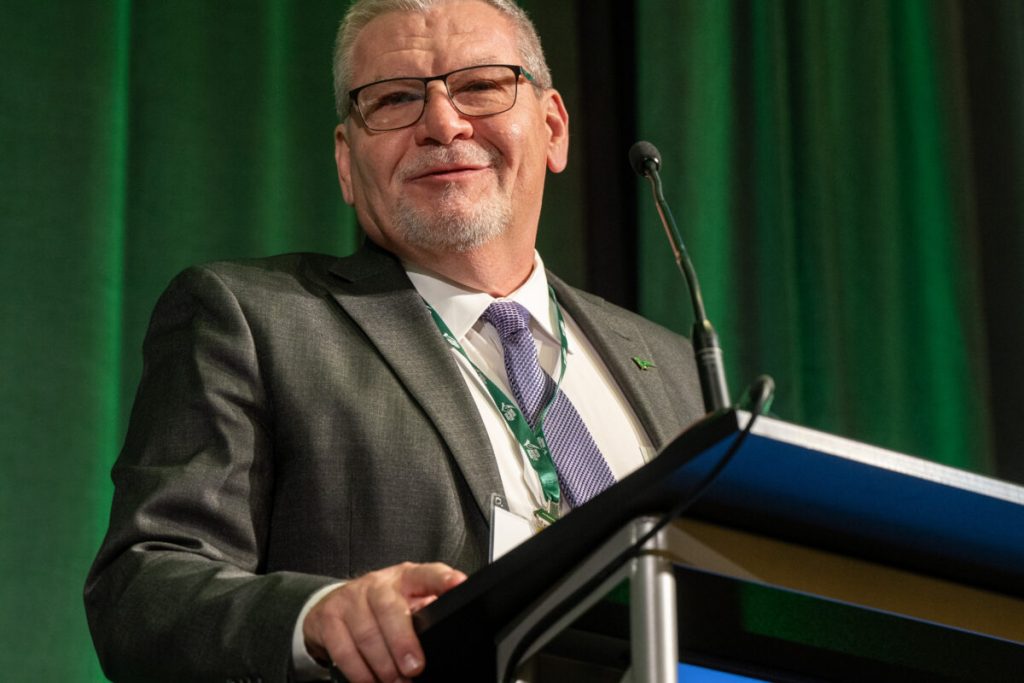
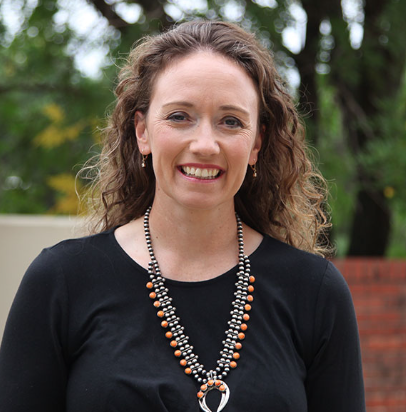
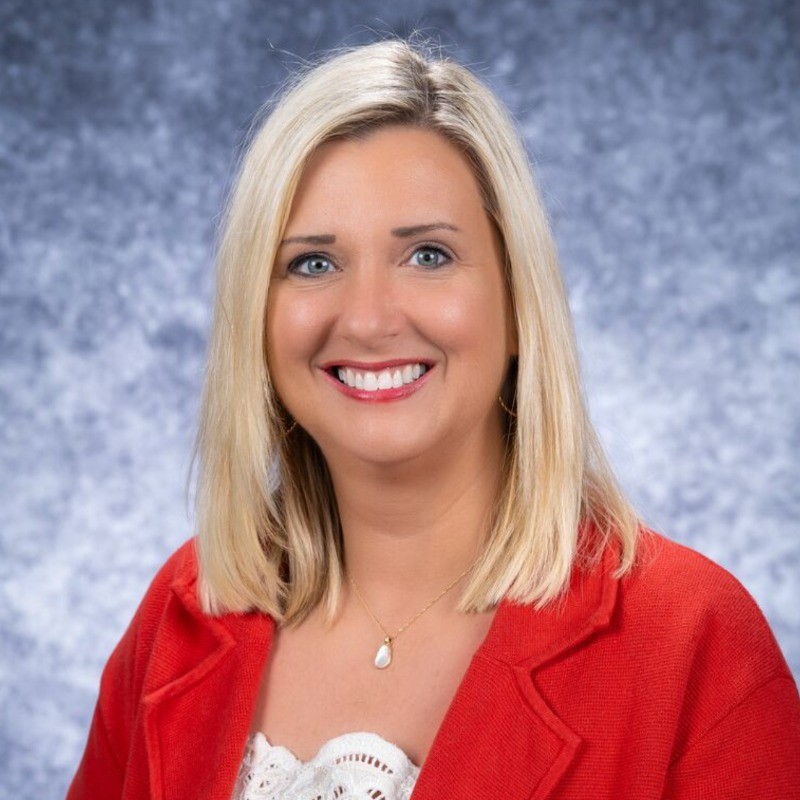
Ali Mirchi has a background in water resources systems modeling, including simulation and watershed hydrologic modeling to support water sustainability. (Photo by Todd Johnson, OSU Agriculture).

Oklahoma State University Agriculture has announced Ali Mirchi, associate professor of water resources engineering, as the new associate director of the Oklahoma Water Resources Center at OSU. The OSU A&M Board of Regents approved the action on Jan. 31.

Mirchi is expected to be a strong addition to the Oklahoma Water Resources Center team. His background in water resources systems modeling includes simulation and watershed hydrologic modeling to support water sustainability.

As associate director, Mirchi will interact with various agencies, agricultural producers, tribal partners, environmental groups and researchers to develop interdisciplinary research initiatives that address stakeholders' technical needs. He will also remain a faculty member in the OSU Department of Biosystems and Agricultural Engineering.  

"This new opportunity will involve additional collaboration and research initiatives," Mirchi said. "I plan to foster networking mechanisms to integrate real-world perspectives and concerns of stakeholders, offer mentorship to junior faculty and staff, and work with communication staff to strengthen our outreach efforts."

Mirchi holds a doctorate in civil engineering-water resources from Michigan Technological University, a master of science in water resources from Lund University and a bachelor of science in civil engineering-water resources from the University of Tabriz. He is a member of the American Society of Civil Engineers' Environmental and Water Resources Institute, American Geophysical Union, Universities Council on Water Resources, and the American Society of Agricultural and Biological Engineers.

"Dr. Mirchi's expertise is a valuable asset to the water center," OWRC Director Kevin Wagner said. "His leadership will help begin a new phase of our service to Oklahomans in 2025."

The Oklahoma Water Resources Center serves as the water resources research and technology institute in Oklahoma as a result of the 1964 Water Resources Research Act. The center strives to help Oklahoma achieve high levels of water quality and sustainable use of our region's water through integrated programs of research, education, training and technology assistance. Learn more at water.okstate.edu.

Dr. Jim Hess on the Path Forward for Improving OSU's College of Veterinary Medicine

Listen to KC Sheperd talking with Dr. Jim Hess about improving OSU's College of Veterinary Medicine.

OSU's Vice Provost Dr. Jim Hess provided an update on the probation status of the OSU College of Veterinary Medicine during the Oklahoma Cattlemen's Winter Policy Meeting. Farm Director KC Sheperd spoke directly with Dr. Hess to bring you the details of that update.

According to Dr. Hess, the initiatives to improve the College of Veterinary Medicine are three-fold. One is the ability to recapitalize the Veterinary Teaching Hospital in Stillwater which is currently operating in a 43-year-old facility in need of significant improvements.

"What we actually need is a new facility to create a training environment that will attract students and faculty members," he said. "A new veterinary teaching hospital is critical for the college, but also critical for food-animal producers so we can place new large animal veterinarians in rural Oklahoma."

The new facility is projected to cost around $295 million. Opportunities for financing from the Oklahoma State Legislature are being considered.

With only 33 veterinary schools in the nation, competition for students and faculty members is very aggressive. A new, state-of-the-art facility is a good beginning component to compel both to Stillwater.

Additionally, OSU is asking for the Lee Denney Scholarship Program to be recurring. The program offers scholarships to students who commit to practicing large, food-animal veterinary medicine in rural Oklahoma.

They are also seeking an incentive to change the number of in-state and out-of-state students entering the College of Veterinary Medicine. Dr. Hess explained, "We would like to be able to admit more in-state students and not be so reliant on out-of-state tuition revenue, so an appropriation to make that happen would have a huge impact on our ability to produce large and food-animal veterinarians for rural Oklahoma."

Dr. Hess believes that the key to getting more large animal veterinarians begins with recruiting rural-based students. While it is a fact that small animal practices make more money than large animal practices, Dr. Hess believes that a veterinary student's decision on where to focus their studies will not be economical in nature.

"A student is not going to choose large food-animal veterinary medicine because of an economic decision," Dr. Hess said. "They are going to make it based on a lifestyle choice because they either grew up in a rural environment on a ranch or a farm and they love large animals and are familiar with them or they have worked with a large, food-animal veterinarian. Their experiences and where they come from really will make the difference. It has to be their passion."

Dr. Hess believes that opening more opportunities for middle school students to be exposed to large, food-animal work is where it begins, and then ongoing mentorship of the students will continue to feed their passion.

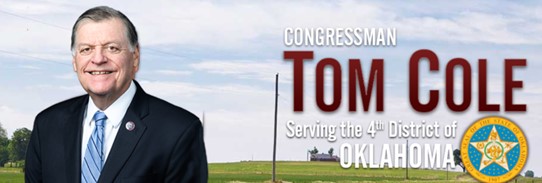
Congressman Tom Cole Capital Hill Recap

It has certainly been a busy past month in Washington, DC. For a full update on what I worked on this January, continue reading below.

Took the Oath of Office for the 119th Congress

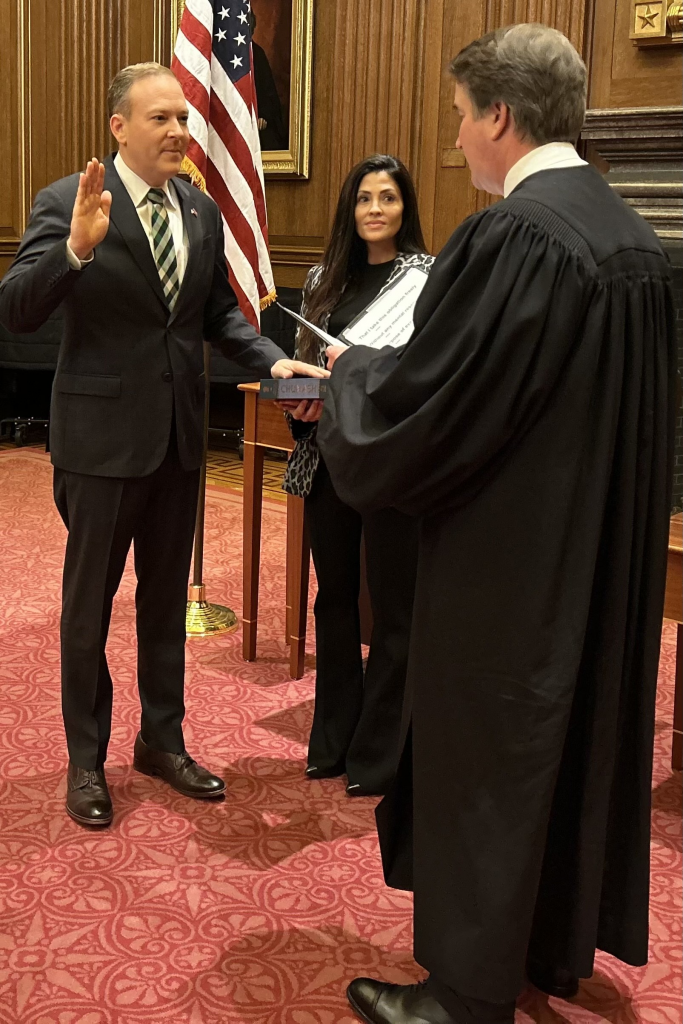
At the beginning of the month, I took the oath of office and was sworn in for the 119th Congress, where I will continue my leadership as Chairman of the House Appropriations Committee.

The American people gave us a mandate of change last November, and as we usher in this new Congress, we are focusing on our America First commitment to help us build a safer, stronger, and more prosperous nation.

By concentrating on the challenges and opportunities ahead of us, I see progress that will herald us into the golden years of America. One where stagnation will be replaced by growth, submissive governance will be transformed into bold leadership, and the dreams of everyday Americans will once again feel within reach.

The 119th Congress is already off to a great start. I look forward to continuing to work with President Trump and Republican leadership to deliver on the promises resoundingly demanded from people across this country.

Voted in Favor of the Laken Riley Act

Throughout the past four years, we have watched traffickers, dangerous criminals, and cartels take advantage of the Biden Administration's open border policies. As a result, innocent Americans, like Laken Riley, have been violently murdered by illegal immigrants who entered our nation unvetted.

This cannot go on - and, under President Trump, it won't.

This month, I voted in favor of the Laken Riley Act, which will require the DHS to detain illegal immigrants who have committed certain crimes - a policy that could have possibly saved Laken Riley's life. Then, this week, President Trump signed this legislation into law.

I am so glad to see this bill become law, as it is past time that we end this ongoing border catastrophe once and for all.

Met with President Trump at Mar-a-Lago

In mid-January, I traveled down to South Florida to meet with President Trump at Mar-a-Lago.

Sitting beside the President at the dinner table, our conversation centered on conservative values to renew American greatness. We engaged on spending priorities, cutting waste, reconciliation plans, and the debt ceiling. I made clear of my readiness to partner with President Trump and his administration to advance the America First agenda, which begins with securing our borders and revitalizing pro-growth economic policies.

This meeting was a powerful and unifying start. I trust in President Trump's direction and am grateful for the invitation and his time. The President has set the foundation to further a strong working relationship with the Republican House Committee Chairs.


Voted to Protect Women's Sports

Allowing biological men to compete in women's sports is unfair, jeopardizes safety in the women's locker room, and takes away from the opportunities that female athletes have worked so hard to accomplish.

This is why, this month, I voted in favor of H.R. 28, the Protection of Women and Girls in Sports Act of 2025, which generally prohibits school athletic programs from allowing individuals who are biologically male to participate in women or girls programs.

At the end of the day, it is simple: biological men do not belong in women's sports.
Attended the Inauguration of President Trump

American greatness has always been borne from the people, and her citizens have spoken resoundingly. On January 20th, I was honored to join the country in celebrating the historic inauguration of the 47th President of the United States, Donald J. Trump.

This day reflected the power of the American people and the boundless opportunity of a determined nation. We are now renewed by a hope of not only what America is - but also what it can be. No challenge is too great, no comeback is too daunting, and no dream is too bold in this nation.

As we look forward, decisive leadership directs a new era of governance that triumphs putting the U.S. first. Together, we will build a safer, stronger, and more prosperous future for all. Alongside President Trump, Vice President Vance, and the entire Trump Administration, I am ready to support the mandate demanded by our constituents. It is a new era in America!


Co-Sponsored and Voted in Favor of the Born-Alive Abortion Survivors Protection Act

Last week, I co-sponsored and voted in favor of H.R. 21, the Born-Alive Abortion Survivors Protection Act.

This legislation is simple: if a baby is born alive following an attempted abortion, then it is required that the infant be provided the same standard of medical care as any other newborn. Put plainly, it is just common sense and basic human decency.

We must always protect our most fundamental right: the right to life.
Introduced Legislation to Repair Our Broken Election Systems

As Americans, voting is not only our civic duty granted by the Founding Fathers, but also our power. It allows us to voice our opinion, serves as a tool for change, and shapes our great nation. Yet, after the issues we saw in the 2020 presidential election, confidence in our election systems has decreased significantly.

This is why, last week, I introduced the Protect American Election Administration Act, which blocks the private takeover of the government election administration, protects the voting laws of the individual states, prevents private funding for ballot harvesting or curing, and bars the use of election infrastructure to conduct ideologically motivated voter outreach campaigns.

We must ensure that Americans have the confidence that their vote truly counts, as our election systems are truly the bedrock of our republic.
Secured Funding for the Chickasaw National Recreation Area

This week, I announced that I have secured the first of many provisions to come that will benefit Oklahomans affected by tornadoes in 2024.

I secured $25.97 million for the Chickasaw National Recreation Area through the National Park Service. This funding will be used to repair the tornado damage including maintenance buildings, campground trails, debris removal, and other damages. Additionally, this will help with improving the safety and security of the infrastructure and fences surrounding the area, as well as cover the relocation of the bison herd, pedestrian bridge construction, and make new and existing structures more resilient.

I am so proud and relieved to have secured this much-needed assistance. Now more than ever, it is paramount that American dollars are going to help American people.

Please stay tuned for more announcements to be made regarding upcoming funds secured for other areas in Oklahoma's Fourth District affected by the tornadoes.

Daily Email for January 31, 2025


Oklahoma's Latest Farm

And Ranch News

Friday, January 31, 2025

 
Howdy Neighbors!

Here is Your Daily Oklahoma Farm and Ranch News Update: 


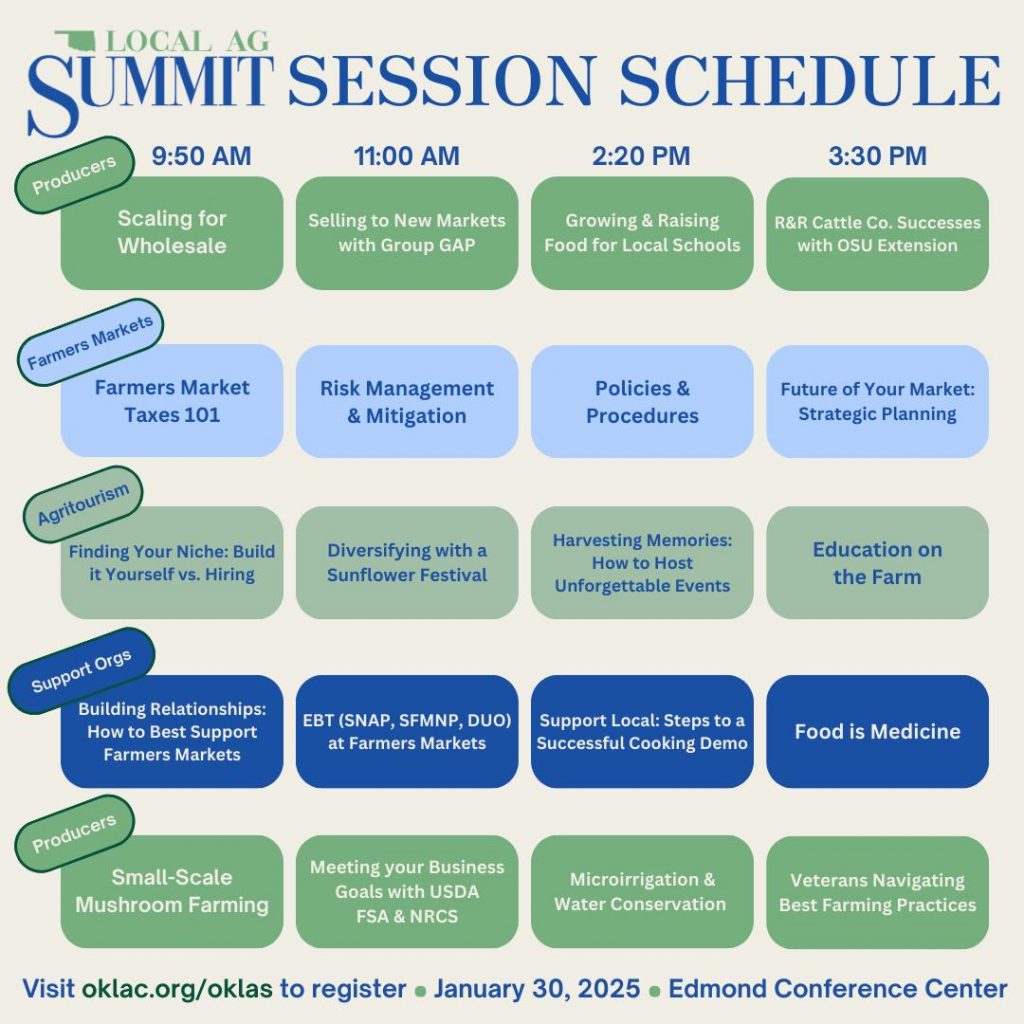
  • How Agritourism is Shaping Oklahoma's Future: Lt. Governor Matt Pinnell at the Local Ag Summit


  • Drought Conditions in Oklahoma Unchanged from Last Week


  • Accelerating Genetic Progress in Angus Cattle through Genomics


  • Drummond Defends Oklahoma Pork Producers against California's Proposition 12


  • This Week on SUNUP: John Michael Riley Talks Grain Markets


  • Oklahoma Association of Electric Cooperatives Announces Nicki Fuller as New General Manager/CEO


  • Kansas Geological Survey Says Parts of Ogallala Aquifer Drops Another Foot of Water in 2024


  • Another Trump Cabinet Member Confirmed- Doug Burgum as Secretary of Interior


  • Roger Mills County Cattlemen's Annual All Breed Bull Sale and Messner Ranch Production Sale on Saturday, Feb. 1

How Agritourism is Shaping Oklahoma's Future: Lieutenant Governor Matt Pinnell at the Local Ag Summit

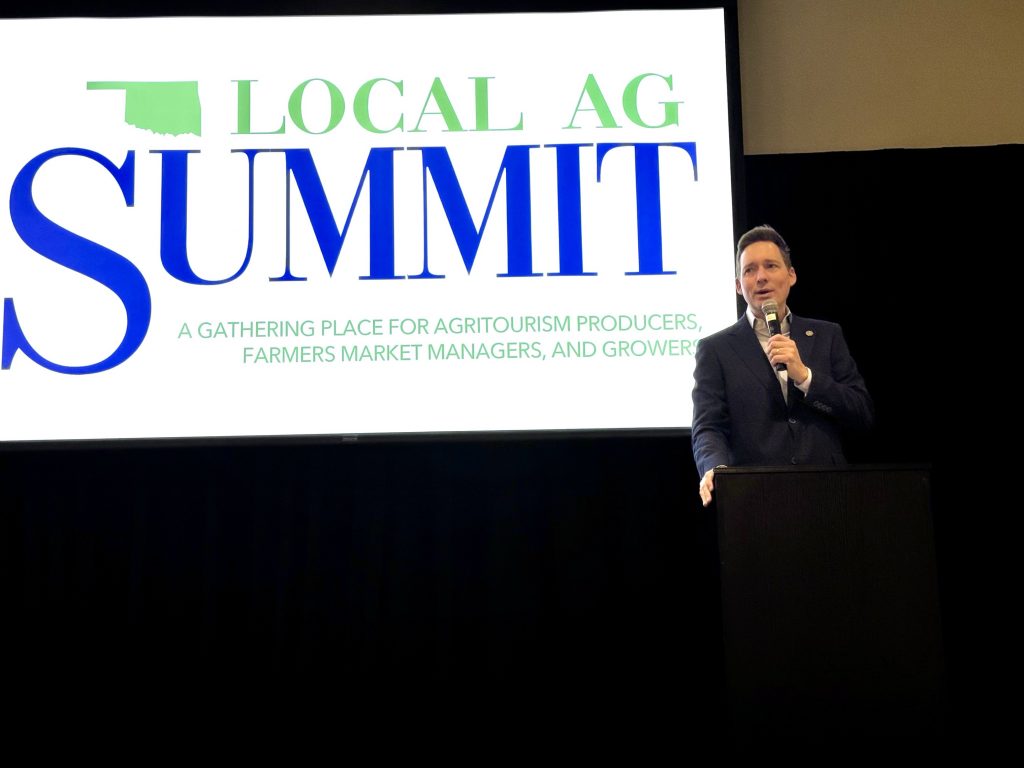
While attending the Local Ag Summit, hosted by the Oklahoma Department of Agriculture, Food and Forestry in partnership with the ONIE Project, Farm Director KC Sheperd had the chance to speak with Oklahoma Lieutenant Governor Matt Pinnell.


Pinnell says that agriculture is currently experiencing more momentum than it ever has before, because more than ever, consumers want to know where their food is coming from. "That is good for these small business owners and for our agritourism industry," he said. "One of the more popular tourist attractions that people are looking for today is something that they can do on a farm or ranch."


He said that politicians need to understand that this curiosity will only expand and that more of the next generation will seek agricultural products and choose to live in farming communities. "That is going to be a revolution in this country in future decades," he predicted. "Politicians have to get on board with it."


He encouraged farming and ranching communities to actively connect with their representatives and invite them to their operations. "If they say 'No' then it might tell you that it is time for some new representation," he bespoke. "Agriculture is still the backbone of the state of Oklahoma with oil and gas and a few other industries. We are number four in the country regarding the number of farms. That is good, but we need a whole lot more to feed the world."

Listen to KC's Interview with Matt Pinnell and Read More Here

Sponsor Spotlight

The Oklahoma Wheat Commission promotes greater use of wheat in domestic and international markets through research, market development and public education.


Our Commissioners develop policy and programs, direct the funding, represent producer interests and, of course, promote Oklahoma wheat!


Learn more about the Oklahoma Wheat Commission by clicking here for their website.


Drought Conditions in Oklahoma Unchanged from Last Week

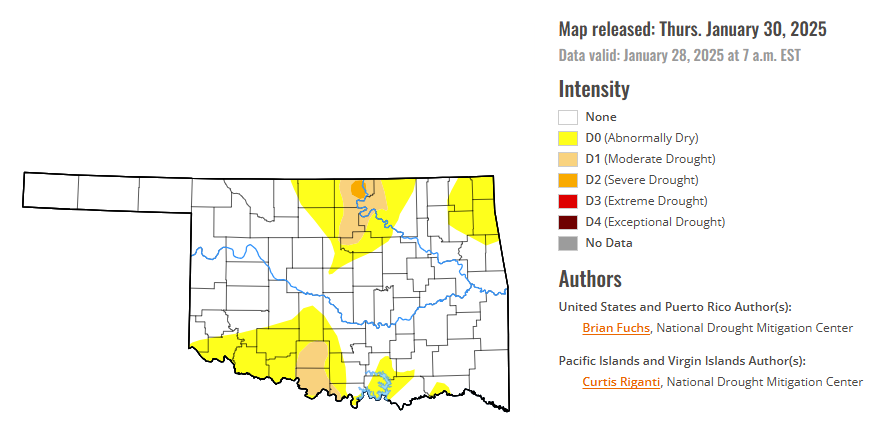
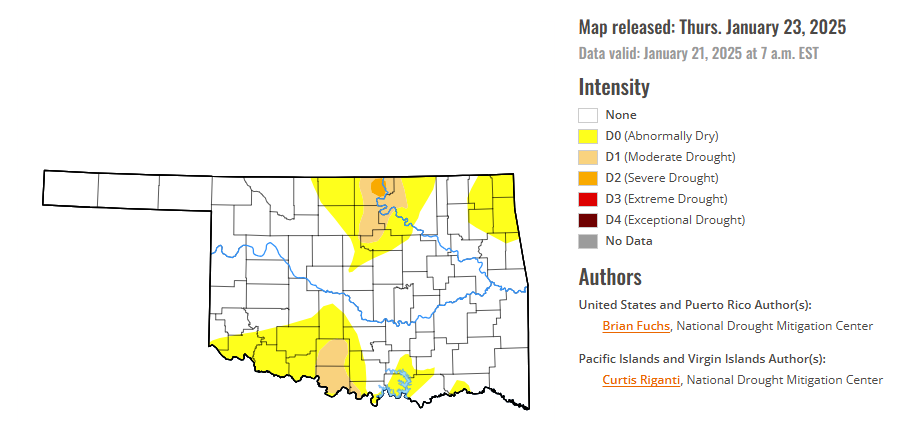
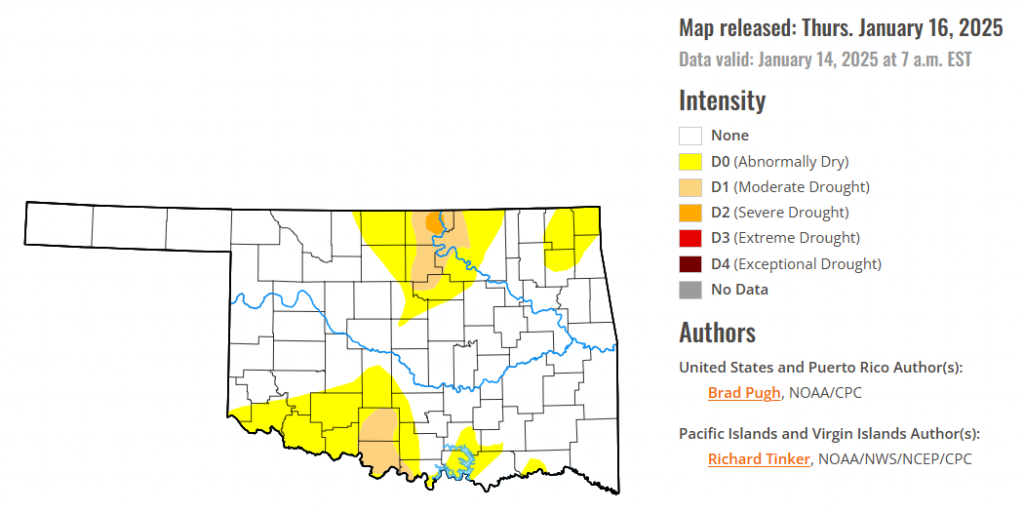
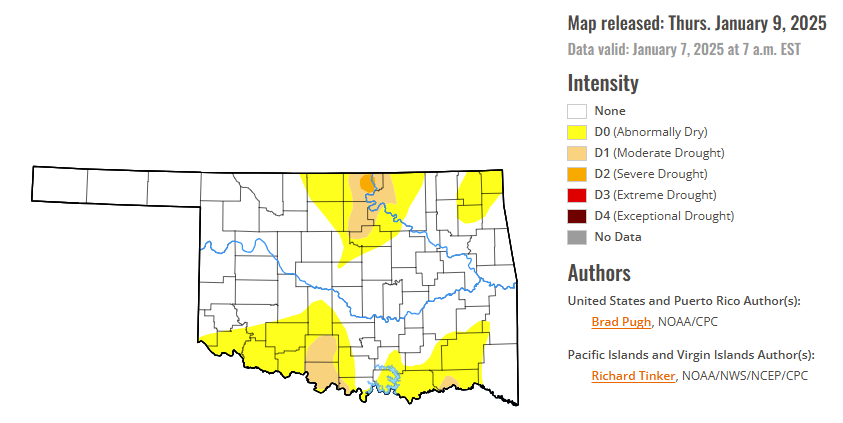
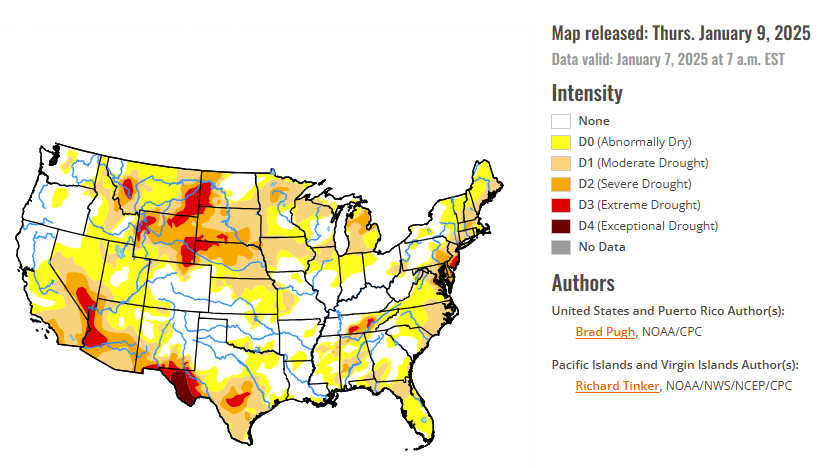
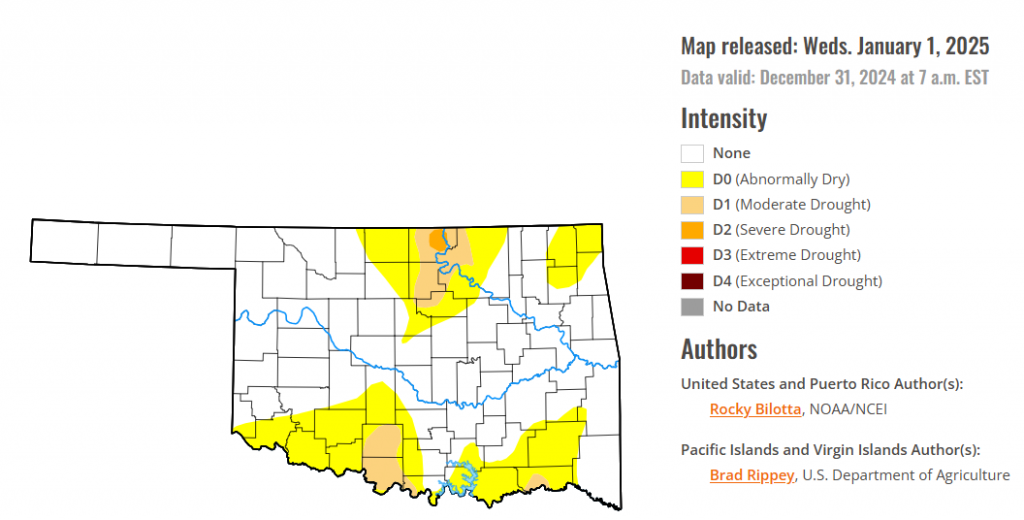
According to the latest Oklahoma drought monitor report, exceptional drought remains at zero percent, unchanged from the start of the calendar year.


Extreme drought or worse remains at zero percent, we last had extreme drought numbers the week of October 29, 2024, when it was 41.57%.


Severe drought or worse conditions are unchanged from 0.33 percent since January 2nd.


Moderate drought or worse, conditions are unchanged from 5.24 percent, since January 16.


Abnormally dry or worse conditions are unchanged from 26.11 percent, last week.


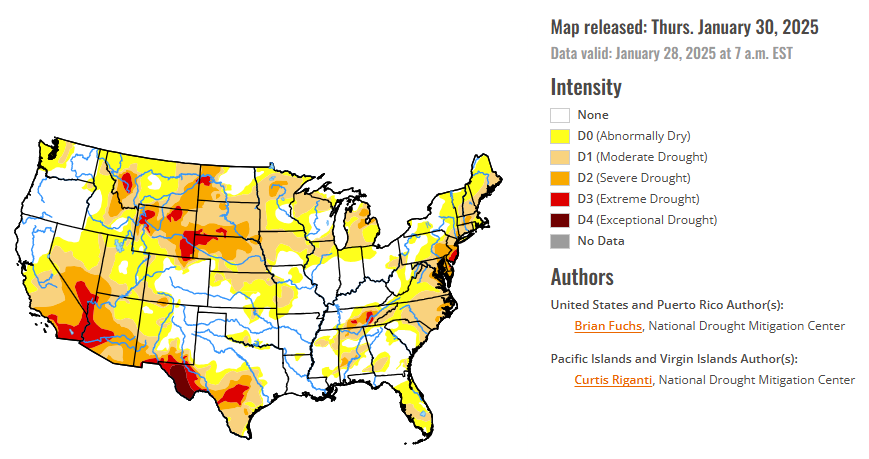
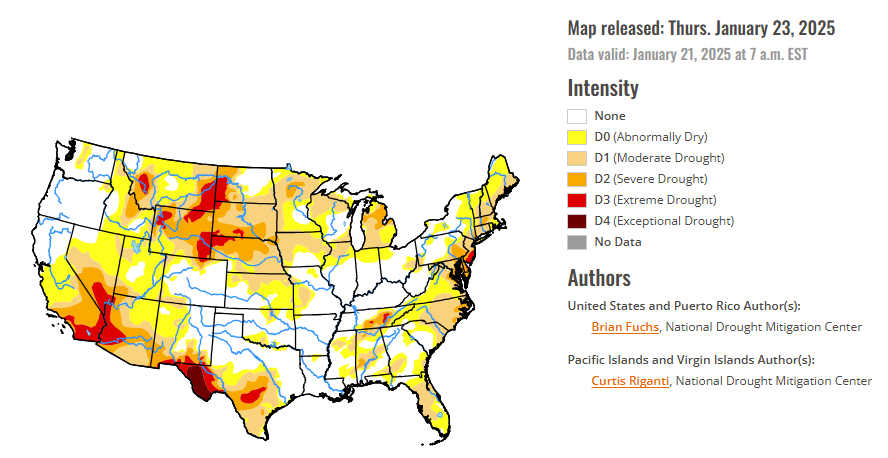
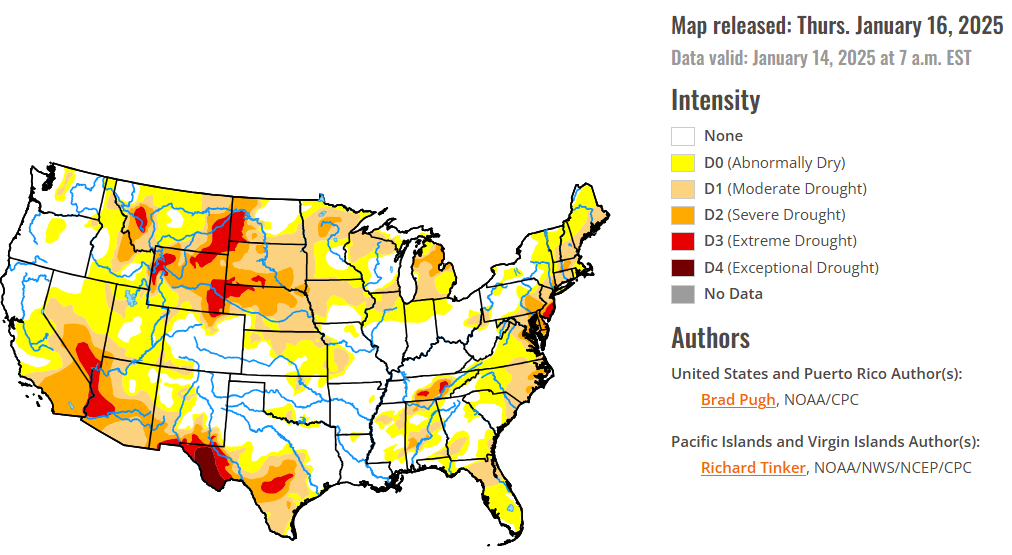
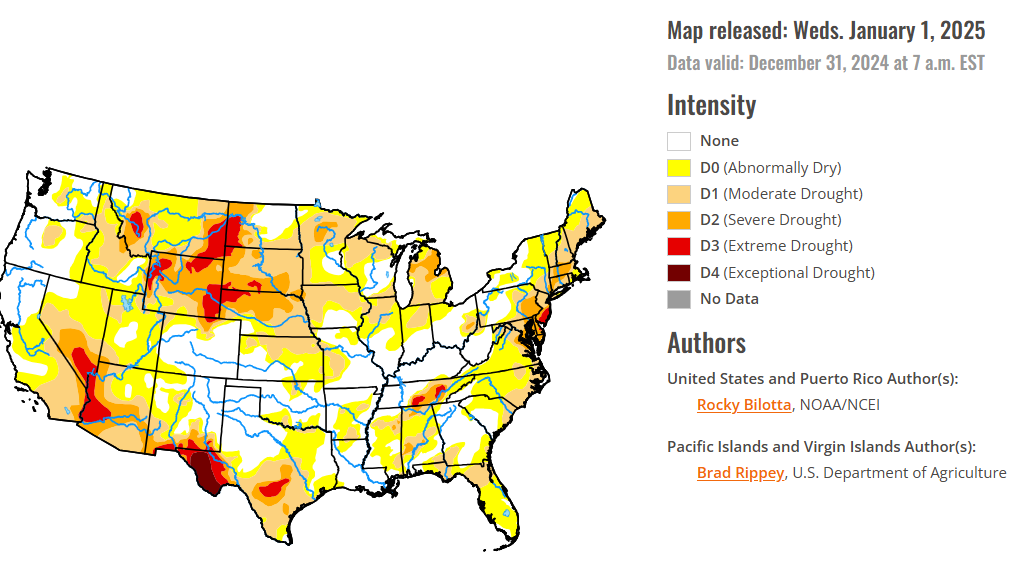
As for our neighbors, most of the region was dry for the week outside of those areas impacted by the winter storm that traversed across the Gulf Coast areas of Texas and into central Louisiana and Mississippi. Temperatures were cooler than normal over the entire region with the greatest departures over southern Louisiana into Mississippi where temperatures were 12-16 degrees below normal. Improvements were made to the abnormally dry conditions in Mississippi and in portions of east Texas. Severe and extreme drought was expanded in southern Texas with regard to the long-term drought signals in place, especially on the hydrologic systems in the region. Dryness continues in Tennessee with degradation in the southern, middle and eastern portions of the state as moderate, severe and extreme drought all expanded this week.


Kansas Drought Monitor shows Moderate Drought only slightly up from 24.63 percent last week to 24.94. Texas Drought ratings increased slightly from 42.29 percent a week ago to 42.35 percent.


Click here for the Kansas Drought Monitor Page and Click here for the Texas Drought Monitor Page.


Click here for the US Drought Monitor details for this week.

Read More About the Latest Drought Monitor Report Here

Accelerating Genetic Progress in Angus Cattle through Genomics

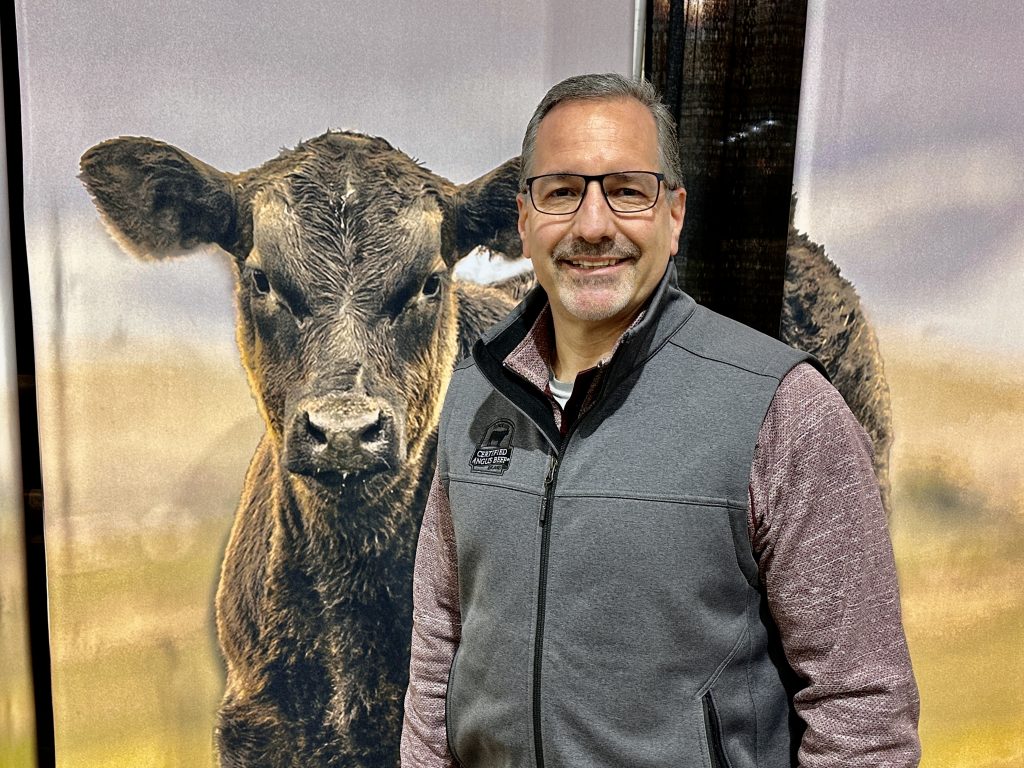
Senior Farm and Ranch Broadcaster, Ron Hays, is back talking with the president of Angus Genetics, Inc. (AGI), Kelli Retallick-Riley, about genomic progress in the beef cattle industry.


The use of EPDs and EBVs in the Angus industry dates back to the 1970s and has increased significantly. Only four were used back then compared with 26 today. Now, the focus is on improving the accuracy of the tools available.


Retallick-Riley said that EPDs come in handy in identifying genetic markers isolated from environmental components to success, such as good management practices, to be more sure of selecting herd sires.


"When you start to layer on things like genomics and all of the phenotypes that our producers have sent in, on average, we are going to increase our accuracies by almost a whole calf crop's worth of data. One, they are selling as yearling bulls because our database with genomics coupled with the phenotypes is so powerful that we are able to do that in the Angus breed," she said.

Listen to Ron's BeefBuzz with Kelli Retallick-Riley and Read More Here
 
 
Sign Up for Our Daily Email- Free Because of Our Sponsors!

Support Our Sponsors!


KIS logo


Advertise With Us!
 

For our farmers who have either- always have had cotton on their farms- or those who have more recently have added the fiber crop to their operations- we have a daily report heard on several of our Radio Stations- It's Called Cotton Talk!

Click on the Button below to listen to our most recent report
Click here for our Latest Cotton Talk- Hosted by KC Sheperd


Drummond defends Oklahoma Pork Producers against California's radical Proposition 12

Attorney General Gentner Drummond is pushing back against California's strict hog-housing regulations that would adversely impact Oklahoma's pork producers. 


In 2018, California passed Proposition 12, a law requiring out-of-state pork producers to comply with strict farming regulations if they want to sell their pork products. Since California is the nation's top pork-consuming state, it wields major influence over the entire market.


Proposition 12 sets harsh regulations that will spike pork prices and force some pork producers to close if they cannot afford to keep up with the mandate. 


"Californians have every right to set laws impacting their own state, but they should not be able to dictate how hog farmers in Oklahoma raise their pigs. Proposition 12 is a textbook example of excessive regulations that burden farmers with exorbitant costs," Drummond said.


Pork is Oklahoma's second-largest agricultural industry, which works to raise and deliver quality pork throughout the state. It is responsible for more than 23,000 jobs in Oklahoma.

Read More About the Case Concerning Prop 12 Here
 

We invite you to listen to us on great radio stations across the region on the Radio Oklahoma Ag Network weekdays-

if you missed this morning's Farm News - or you are in an area where you can't hear it- click below for this morning's Farm news from Ron Hays and KC Sheperd on RON.
Listen to our Friday morning farm and ranch news with KC Sheperd
 
 
Subscribe To the Daily Email


Sponsor Spotlight


P&K Equipment is the largest John Deere dealer across Oklahoma, with 18 locations, as well as an additional two locations in Arkansas. We are proud to serve our communities & the surrounding areas.


P&K is committed to keeping your equipment running strong. In these colder months, sign up for our P&K Advantage maintenance & inspection specials. And year-round, it's easier than ever before to buy genuine John Deere parts online at GetGreenParts.com. Pick up your order in stores or have it shipped directly to you! P&K Equipment is committed to taking care of you long after the sale.


This Week on SUNUP: John Michael Riley Says Grain Markets Jumped After Inauguration Day

This week on SUNUP, OSU Agriculture Economist Dr. John Michael Riley discusses the highs and lows of current grain and cotton markets.


With the new Trump administration in place, grain markets have jumped since inauguration day.


"The next trading day, prices of the futures market jumped, and that flowed into cash markets," Riley said. "As the futures markets went up, our cash markets here in Oklahoma went up about the same amount. Since then, it has fallen off a little bit, but our cash markets in Oklahoma have followed that same pace."


Riley said it was difficult to tie the jump to the events of inauguration day; however, the dollar did weaken which generates optimism about the potential for exports in the grain markets.


"Over the last week, we have seen a 25-cent to 27-cent jump in wheat prices. Cotton prices really popped that same day. Both of those are very export heavy, and so it definitely helped that the dollar weakened," Riley detailed.


Listen to John Michael Riley's Comments and Read More About the Grain Markets Here

Oklahoma Association of Electric Cooperatives Announces Nicki Fuller as New General Manager/CEO

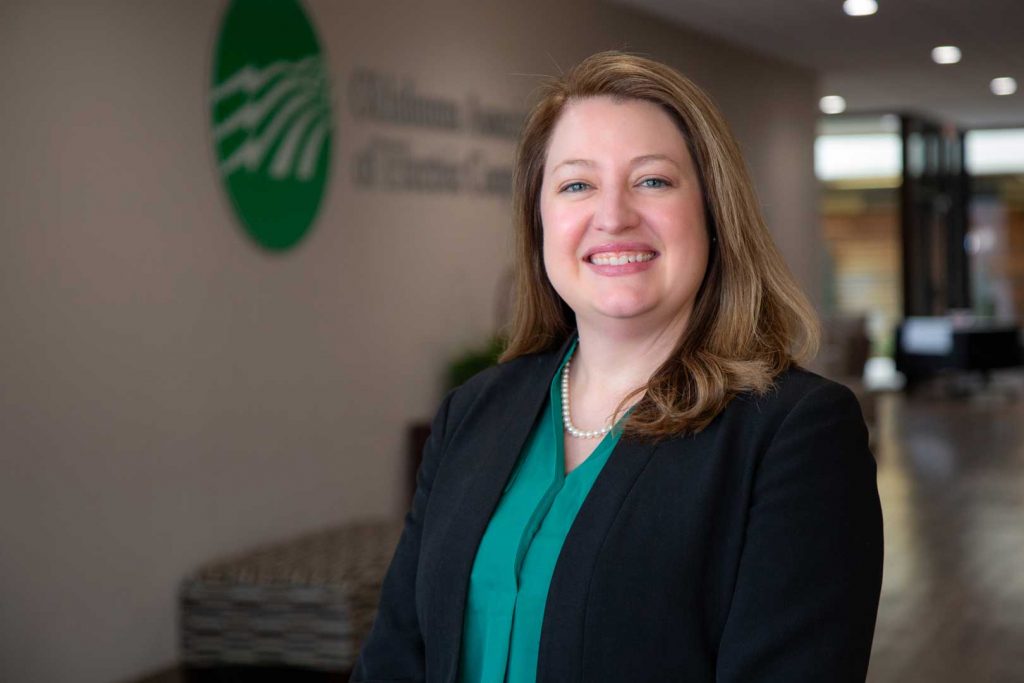
After an extensive executive search, the Oklahoma Association of Electric Cooperatives' (OAEC) Board of Trustees selected Nicki Fuller as new General Manager/CEO of the statewide association that represents 30 electric cooperatives in Oklahoma.


"Nicki is well equipped to lead our statewide organization," said Bob Usry, president of the OAEC Board of Trustees and Norman-based Oklahoma Electric Cooperative director. "Her unique skills and experience make her a well-rounded leader. Her visionary leadership will guide our electric cooperatives into a new era."


Nicki's tenure will begin on April 1. She will follow Chris Meyers, who is retiring on March 31 as the head of the association after 15 years of service.


"I'm deeply honored to serve Oklahoma's electric cooperatives and carry on the mission of powering lives and empowering communities throughout Oklahoma's 77 counties," said Fuller. "Growing up on co-op lines, I'm eager to advocate for the members of our co-ops and look forward to contributing to an industry that makes a difference in the lives of many."

Click Here to Read More About Nicki Fuller

Kansas Geological Survey Says Parts of Ogallala Aquifer Drops Another Foot of Water in 2024

The following article comes from the Kansas Reflector and was written by Allison Kite. Oklahoma's Panhandle sits atop the Ogallala Aquifer.


Aquifer levels in parts of western Kansas that rely on groundwater for everything from drinking to irrigation fell more than a foot last year, Kansas Geological Survey scientists said Tuesday. 


The Kansas Geological Survey earlier this month completed its annual campaign to measure the Ogallala Aquifer, which supplies the western one-third of the state with water. The Ogallala, the largest underground store of freshwater in the nation, has been declining for decades because of overuse to irrigate crops in otherwise arid parts of the state. 


According to preliminary data presented to the Kansas House Water Committee, aquifer levels in the groundwater management area covering southwest Kansas fell by 1.52 feet between January 2024 and this month, a larger drop than the 1.43-foot decline the year before.


Western Kansas' management area saw a half-foot decline, on par with the year before.

Read More About the Decline of the Ogallala Aquifer Here

Another Nominee Confirmed- Former North Dakota Governor Doug Burgum Now Secretary of Interior

The Senate easily confirmed Doug Burgum as secretary of the Interior Department Thursday, a job that positions him to act on President Donald Trump's energy strategy. The vote was 79 to 18.


Last night, the National Cattlemen's Beef Association (NCBA) and Public Lands Council (PLC) released a statement congratulating Doug Burgum on his confirmation as Secretary of the U.S. Department of the Interior:


"NCBA and PLC congratulate Doug Burgum on his confirmation as Secretary of the Interior. Secretary Burgum has a proven record of supporting rural communities and promoting a balanced approach to energy development and conservation. His leadership will be critical for ensuring that ranchers and public lands grazing permittees are recognized as a valuable partner in stewarding Western landscapes and for removing regulatory burdens that have plagued management of grazing allotments for decades," said Kaitlynn Glover, executive director of PLC and NCBA Natural Resources. "We look forward to working with Secretary Burgum to protect the livelihoods of ranchers who rely on public lands, safeguard the health of these ecosystems, and promote policies that benefit rural communities and the entire nation."

Roger Mills County Cattlemen's Assoc. 47th Annual All Breed Bull Sale and Messner Ranch 64th Annual Production Sale on Saturday, February 1

Oklahoma Cattlemen seeking their next herd sires will have a choice to make this Saturday, February 1 because two premier bull offerings will be held on that day.


At 27234 NS 164 Rd., Slapout, Oklahoma at 12:30 pm, the Messner Ranch 64th Annual Production Sale will offer 140 Hereford & Angus Bulls. They will be followed by 60 Hereford and Angus Heifer Pairs and Heavy Bred Cows. Attend in person or check out the sale on DV Auction- click here for details.


For more information about the Messner Ranch 64th Annual Production Sale, call or email Van Messner at (580)552-1555 or van1messner@gmail.com. Check out their sale catalog by clicking here.


******************************


Shortly prior to that, at 12:15 pm at the Red Barn Arena (1 Mile South of Cheyenne, OK on 980 Rd), the Roger Mills County Cattlemen's Assoc. 47th Annual All Breed Bull Sale will be held.


Nearly 60 Breeding Aged Bulls, Registered and Commercial Black and Red Angus, Horned and Polled Hereford, Simmental Black Brockle, and Composite Bulls will be offered by:


Markham Angus

Atkinson Angus Farms

Lazy S Ranch

Owen Atkinson

5-D Cattle

TJ Dorrell

Twisted D Cattle

John Mollet

Black Hereford Ranch

Jenkins Angus Farms

Matt Thornbrough

Heath Cattle Company

JL Allen Cattle Co.

Don Moler

Ashton Cockrell


For More Information about the Roger Mills County Cattlemen's Assoc. 47th Annual All Breed Bull Sale and/or Catalogs, call Lynda Lucas at (580) 497-7366, Ashlea Yager at (580) 497-7124, or Ryan Long at (580) 339-1919 or email: RMCCattlemen@yahoo.com.


Click here for the PDF of the Sale Consignments.

To See Our Post about the Messner Ranch Sale, Click Here
To See Our Post about the Roger Mills County Cattlemen's Assoc.'s Sale, Click Here
Let's Check The Markets!
OKC West is our Market Links Sponsor- they sell cattle three days a week- Cows on Mondays, Stockers on Tuesday and Feeders on Wednesday- Call 405-262-8800 to learn more.
 
Today's First Look:
Ron on RON Markets as heard on K101  
mornings with cash and futures reviewed- includes where the Cash Cattle market stands, the latest Feeder Cattle Markets Etc.
Hear Today's First Look
 

Wholesale Boxed Beef Prices were lower - Choice Beef was down $3.06 and Select Beef was down $4.77 on 1/30/2025.


Click on the Button below for the latest report from USDA Market News

Boxed Beef Report
 

Weekly Cattle Auction Reports


The buttons below allow you to check out the weekly Cattle Auctions in the region that we post on our website and here in our daily email update:


Oklahoma National Stockyards Market Report from 01/27/2025
 
Tulsa Stockyards for Monday January 27, 2025
 
Joplin Regional Stockyards Market from Monday 01/27/2025
 
OKC West in El Reno Market Report from 01/28 and 01/29/2025
 
Woodward Livestock Market from Thursday 01/30/2025
 
Each afternoon we are posting a recap of that day's markets as analyzed by Justin Lewis of KIS futures - click below for the latest update on the Livestock and Grain Futures Trade..
Click Here to Listen to Justin's Commentary From 1/30/2025
 
Okla Cash Grain:  
Daily Oklahoma Cash Grain Prices- as reported by the Oklahoma Dept. of Agriculture- The report available after the close of the Futures Trade for that day.
Read Cash Grains Report from 1/30/2025
 
Our Daily Market Wrapup from the Radio Oklahoma Ag Network - analyzing the Futures Markets for that trading day- as reported by KC Sheperd.
Click to Listen to Our Weekday Wrap with KC
 
Slaughter Cattle Recap: 
The National Daily Slaughter Cattle Summary- as prepared by the USDA Market News
Read Report
 
TCFA Feedlot Recap:  
Finally, here is the Daily Volume and Price Summary from the Texas Cattle Feeders Association.
Read Report

Our Oklahoma Farm Report Team!!!!


Ron Hays, Senior Farm/Ranch Broadcaster and Editor


KC Sheperd, Farm Director and Editor


Dave Lanning, Markets and Production


Stevie White, Farm News and Email Editor


Pam Arterburn, Calendar and Template Manager

Podcasts From Oklahoma Farm Report and More

Two of our regular reports are also podcasts that you can subscribe to- Our daily Farm and Ranch News with KC Sheperd- available here on the Apple Podcast Platform


The second is our daily Beef Buzz with Ron Hays- available here on the Apple Podcast Platform


Periodically- we offer interviews on our Ag Perspectives Podcast series- this podcast is available here.


Ron has also has a series of podcasts from interviews with newsmakers at the Cattlemen's Congress- Click here or you can find them on your favorite Podcast platform- look for them by searching for Cattlemen's Congress Conversations.


We are making plans to jump back into regular installments of what has been called the Road to Rural Prosperity- a new name and fresh content is in the works- for now- click on the blue button below for one of our favorites that is a timeless classic.


The link below is one of our most recent podcasts- Ron spotlighting the Life and Times of Dr. Kim Anderson, who has just retired from OSU.

Listen to Ron Hays talking with Kim Anderson about his 42 years in OSU Extension and the Famous "A Third A Third A Third" Advice he has given.
 
 
Listen to Ron
Beef Buzz
 
Blue Green Gazette
Calendar
Auctions
Market Links
Facebook  Twitter  Youtube  

Our thanks to Midwest Farms Shows, P & K Equipment, Oklahoma Farm Bureau, Great Plains Kubota, Stillwater Milling Company, National Livestock Credit Corporation, Oklahoma Beef Council, Oklahoma Wheat Commission, Oklahoma AgCredit, the Oklahoma Cattlemens Association, and  KIS Futures for their support of our daily Farm News Update.


For your convenience, we have our sponsors' websites linked here- just click on their name to jump to their website- check their sites out and let these folks know you appreciate the support of this daily email, as their sponsorship helps us keep this arriving in your inbox on a regular basis- at NO Charge!


We also appreciate our Market Links Sponsor - OKC West Livestock! 


We invite you to check out our website at the link below too that includes an archive of these daily emails, audio reports and top farm news story links from around the globe.

Head to Our Website OklahomaFarmReport.Com
God Bless!
Reach Out To Us:
Tim West
President/General Manager
Rural Oklahoma Networks

405-317-6361

***************

Mike Henderson
Director of Sales

405-615-4922

KC Sheperd
Farm Director
Radio Oklahoma Ag Network

405-443-5717

Email KC
Ron Hays
Senior Farm/Ranch Broadcaster
Radio Oklahoma Ag Network

405.473.6144
Email Ron

R-CALF's Bill Bullard Makes His Weekly Address to Detail Plans for the New Administration's First 100 Days

The new administration and new Congress are off and running, well at least they will be when the U.S. Senate confirms the rest of President Trump's cabinet nominees.

What we need to do now is build support for the positions vital to reversing the decades-long, down-trending courses that both our domestic cattle and sheep industries are on. 

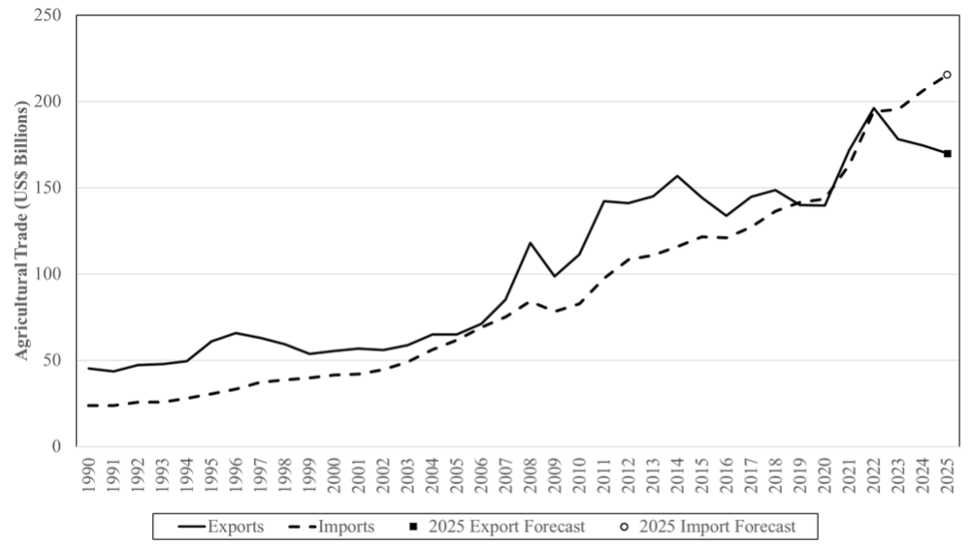
To do that, we need a plan. There's suddenly an intense focus on tariffs, and we've long advocated for tariffs and tariff rate quotas on cattle, beef, sheep, and lamb imported from countries that persistently maintain a trade surplus with the United States.

Here's what I mean by that. Using the latest 2024 data we find we imported nearly 1 billion pounds of beef from Australia, but we exported only about 1 million pounds to them. We imported over 657 million pounds of beef from Brazil, but we exported only 120 thousand pounds to them. And we imported over 924 million pounds of beef from Canada, but we exported less than 232 million pounds to them. The same imbalance is found in our sheep trade. We imported over 250 million pounds of lamb and mutton from Australia, but we exported to them only 2 thousand pounds.

Each of these countries and several more maintain huge trade surpluses with the United States and, as a result, we are limiting our domestic cattle and sheep producers' ability to rebuild their herds and to otherwise grow our domestic beef and lamb production capacity.

The solution is to impose tariffs and tariff rate quotas on these countries to ensure they cannot continually displace our domestic production capacity, which is contributing to the decline of our domestic cattle- and sheep-producing farms and ranches.

You can help by making calls and writing your members of Congress to urge them to begin imposing tariffs on these trade-distorting countries.

Other immediate actions we need to reverse the decline of our family-scale cattle and sheep farming and ranching system of agriculture includes requiring mandatory country of origin labeling (MCOOL) for beef sold in America so consumers can choose from which country they want their beef produced. If you look in your grocery stores, you may find the American lamb label on lamb meat; and buying that American lamb will help to rebuild our fast-shrinking U.S. sheep industry.

And then there's the problem with the government's encroachment into the day-to-day management decisions of America's cattle and sheep producers as exemplified by the Biden administration's mandate that cattle producers affix an electronic identification eartag on their adult cattle as the only officially recognized form of animal identification, thereby eliminating a producer's choice in determining what type of animal identification device best fits their individual business operation.   

We also need the Trump administration to follow through with the rules started under the Biden administration to prohibit unfair, deceptive, and unjustly discriminatory buying practices of the highly concentrated meatpackers. These rules are needed to implement the Packers and Stockyards Act that Congress passed to ensure independent livestock producers would not be subject to abusive marketing practices emanating from our nation's highly concentrated meatpacking industry.

And then we need Congress and the administration to reestablish our relaxed import standards for countries that pose a heightened risk of introducing dangerous foreign animal diseases and pests into the United States. The first step that Congress should take is to reverse the Biden administration's recent approval for the importation of fresh beef from Paraguay, which is a country not free of foot-and-mouth disease (FMD).

While these first five reforms will help restore a more competitive environment for domestic producers, we need another to restore the lost competition in our cattle markets. This can be accomplished by prohibiting the unpriced forward-type contracts that packers use to procure cattle without having to negotiate a price, and by forcing the packers to purchase at least 50 percent of their cattle needs from the competitive cash market.

To summarize, here's the first six reforms we seek:

  • Enact tariffs and tariff rate quotas to level the playing field in the trade of cattle, beef, sheep and lamb.
  • Enact Mandatory Country of Origin Labeling (MCOOL) for beef.
  • Overturn the mandatory electronic identification requirement for cattle.
  • Follow through and finalize the rules needed to implement and enforce the Packers and Stockyards Act.
  • Overturn the Fresh Beef from Paraguay rule that exposes our industry to an unnecessary and avoidable risk of FMD.
  • Prohibit unpriced formula contracts and require packers to purchase at least half their cattle needs from the competitive cash market.

We need your help in convincing Congress and the administration to help reverse the decline of our nation's cattle and sheep farms and ranches and your calls and letters to Congress will certainly help.

Article provided by R-CALF.

Exploring Beef Cattle Genomic Indexes with AGI's Kelli Retallick-Riley

Listen to Ron Hays talking with Kelli Retallick-Riley about EPD indexes in Angus Genetics.

Senior Farm and Ranch Broadcaster, Ron Hays, continues a conversation with the president of Angus Genetics, Inc. (AGI), Kelli Retallick-Riley, about genomic progress in the beef cattle industry. Yesterday, the two of them talked about genomics, and today’s Q&A centers on indexes.

“Baskets of traits is a great way to describe it,” Retallick-Riley said. “It is all of the traits for a certain segment of our industry – what are the costs and what are the revenues. One of our more maternal cow calf oriented indexes is going to be our maternal weaned calf value. What is our output? It is pounds of weaned calf. What is our input? It is going to be everything to do with that cow.”

The mature size of the cow will relate to how much she will consume over her lifetime. Her heifer pregnancy values have to do with her fertility. Also included in these indexes is teat size, functional longevity, and udder suspension scores.

“If you think of all the reasons a cow may leave the herd early, that obviously affects profitability,” Retallick-Riley continued. “Those are the types of costs we are thinking about in something like maternal weaned calf value, but they are designed with the commercial breeder in mind.”

The EPD indexes are called dollar value indexes because they are all profit-driven. In regard to bulls, the higher the number, the more profitable a bull should be for the situation indicated whether that be maternal trait indexes or terminal trait indexes.

AGI works closely with AngusLink and the Association’s other performance programs on the genetic merit scorecards. “Mr. Troy Marshall and Sarah Dreyer do a wonderful job of running that program, and we are just there to support what we call the ‘intelligence’ behind that GMS scorecard,” Retallick-Riley explained. “We are really trying to open this window of transparency and make sure that all of the commercial producers who have been investing in these good genetics are getting paid for those black calves on the rail.”

She described two parts of the AngusLink program: AngusVerify, which verifies that a group of calves are sired by registered Angus bulls, and the Genetic Merit Score Card, which identifies the average genetic potential of a group of calves.

“We have really seen it grow over this past year,” she shared. “We have really seen it make a high impact on creating a more objective value on those calves. We even have a packer in National Beef that is paying a grid premium for calves that are scoring over a certain level in their genetic merit scorecard, so we are getting that all the way down the chain.”

Artificial intelligence is being incorporated into the system to help evaluate how two different indexes might perform in different environments.

“I think the holy grail is, as I talk to producers, they want to know ‘If I buy this one-pound birthweight bull, what is the actual birthweight of his calves going to be?’ and how can I predict that for Ron’s environment here in Oklahoma versus Kelli’s environment there in Missouri?” Retallick-Riley described. “I think that is where we could use artificial intelligence to help us mine some of that type of data which allows us to make more prescriptive management and genetic decisions for individual cow herds across the globe.”

She admitted that it was a lofty goal, but one that is being researched now.

The Beef Buzz is a regular feature heard on radio stations around the region on the Radio Oklahoma Ag Network and is a regular audio feature found on this website as well. Click on the LISTEN BAR for today’s show and check out our archives for older Beef Buzz shows covering the gamut of the beef cattle industry today.

Bob Rodenberger Explains Record High Cattle Prices

Listen to KC Sheperd talk with Bob Rodenberger about the latest in the cattle markets.

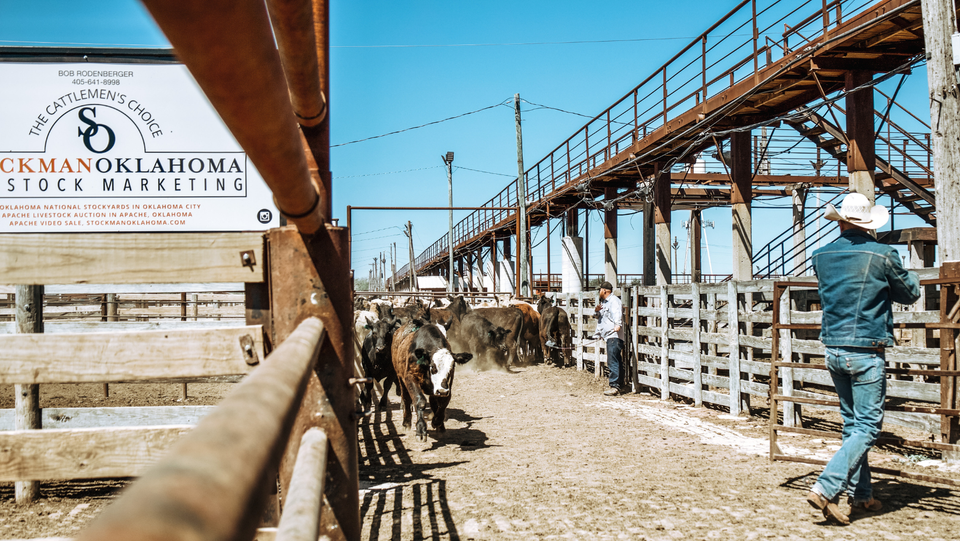
KC Sheperd, Farm Director, is back talking with Bob Rodenberger, a Stockman Oklahoma Livestock Marketing partner, as he gives the latest on the cattle markets.

The sale in Apache ran 1,700 head with a strong market this week. "Fat cattle continue to sell at record highs on average," Rodenberger said. "Last week, the weighted average on fat cattle was $2.02, and this week it was $2.08. There are instances up north where they sell fat cattle for $2.14 to $2.16. We are at another level than we were back in 2014 – '15 which I swore that I wouldn't live long enough to see the market that good again, but here we are."

Rodenberger advises buyers to utilize LRP or other margin protection in the current market conditions.

According to him, the longevity of the markets as they are is largely dependent on external investors who are taking advantage of an opportunity to turn a profit, but are not cattlemen. He suspects that when they decide to get out, prices will fall.

"We saw this in 2022," he said. "When they get out, they get out. It had nothing to do with fundamentals, but... this is probably what causes a lot of us to hesitate: they took $60 bucks off of that thing in 45 days and fundamentally, there wasn't any reason to break the market that hard."

He said that wheat pastures across the state are short and overgrazed but that producers are making up for it as the cattle coming through the sale barn still look good.

Applications open for 2025 Oklahoma Youth Leading Agriculture conference

Applications are now open through April 15 for Oklahoma Farm Bureau's Oklahoma Youth Leading Agriculture Conference taking place May 27-30, 2025, in Oklahoma City.

OYLA us a multi-day conference hosted each summer by the OKFB Young Farmers and Ranchers committee for a select group of our state's top agriculture.

OYLA is open to high school students completing their junior year in 2025. The conference is designed to expand the horizons of top agriculture students through hands-on activities, agriculture-related tours, leadership development projects and engaging speakers from across the agriculture spectrum.

Students will be housed together at a local hotel, along with OKFB staff and student counselors.

Students are asked to submit their leadership experiences, high school transcript, SAT or ACT scores, cumulative GPA and a 150-word essay based on their most significant leadership experience. All applications must be signed by an official representative of the student's school.

The event cost is $100 for student who are selected to attend the conference.

OYLA applications are available at county Farm Bureau offices or may be downloaded from the applications center on the OKFB website.

Applications must be completed and postmarked no later than April 15, 2025. For more information, please contact Holly Carroll at (405) 523-2402 or at holly.carroll@okfb.org.

Salute to Service: Mahindra's Military Giveaway is Here

Mahindra Launches 11th Annual Military Salute Giveaway to Thank Our Military

Mahindra Ag North America (MAgNA) announced the return of an exciting tradition: the annual Mahindra Military Salute Giveaway. This year's giveaway features a Mahindra 1120 tractor with a loader and mower, designed to honor the dedication and service of our military personnel.

In recognition of the sacrifices made by active and veteran U.S. military members, MAgNA is hosting this giveaway for all veterans, active-duty military, and reservists who can enter for their chance to win.  

MAgNA officially launched during the Armed Forces Bowl, and qualifying participants can enter the giveaway through February 15, 2025, at mahindrasweeps.com. The winner will be announced on March 18 to commemorate National Ag Day. 

The annual Mahindra Military Salute Giveaway is a key part of the company's philosophy of driving positive change by honoring those who serve. Over the years, thousands of U.S. military personnel have been nominated to win a tractor or utility vehicle from Mahindra, the number-one-selling tractor brand in the world. 

To learn more about the Military Salute Giveaway and nominate yourself or someone you know, please visit www.mahindrausa.com/sweepstakes/.

About Mahindra North America

Mahindra Ag North America (MAgNA) is part of Mahindra Group's Automotive and Farm Sector, the number-one-selling farm tractor company in the world based on volume, and the only tractor manufacturer in the world to win the industry's top two quality awards, the Deming Application Prize and the Japan Quality Medal, care of Union of Japanese Scientists and Engineers. Mahindra serves the agricultural and rural lifestyle customers in the U.S. and Canada by partnering with a network of independently owned dealerships. Houston, Texas, based, MAgNA is a wholly owned subsidiary of Mahindra & Mahindra Ltd. and began selling tractors in the USA in 1994.

To learn more about Mahindra Ag North America, please visit mahindrausa.com.

Facebook | X | Instagram | YouTube | LinkedIn

About the Mahindra Group

Founded in 1945, the Mahindra Group is one of the largest and most admired multinational federation of companies with 260,000 employees in over 100 countries. It enjoys a leadership position in farm equipment, utility vehicles, information technology and financial services in India and is the world's largest tractor company by volume. It has a strong presence in renewable energy, agriculture, logistics, hospitality and real estate. The Mahindra Group has a clear focus on leading ESG globally, enabling rural prosperity and enhancing urban living, with a goal to drive positive change in the lives of communities and stakeholders to enable them to Rise.

Learn more about Mahindra on www.mahindra.com. For updates, subscribe to www.mahindra.com/newsroom.

Facebook | X | Instagram | YouTube | LinkedIn

NCBA and PLC Congratulate Doug Burgum on Confirmation as Secretary of the Interior

Today, the National Cattlemen's Beef Association (NCBA) and Public Lands Council (PLC) released a statement congratulating Doug Burgum on his confirmation as Secretary of the U.S. Department of the Interior:

"NCBA and PLC congratulate Doug Burgum on his confirmation as Secretary of the Interior. Secretary Burgum has a proven record of supporting rural communities and promoting a balanced approach to energy development and conservation. His leadership will be critical for ensuring that ranchers and public lands grazing permittees are recognized as a valuable partner in stewarding Western landscapes and for removing regulatory burdens that have plagued management of grazing allotments for decades," said Kaitlynn Glover, executive director of PLC and NCBA Natural Resources. "We look forward to working with Secretary Burgum to protect the livelihoods of ranchers who rely on public lands, safeguard the health of these ecosystems, and promote policies that benefit rural communities and the entire nation."

This Week on SUNUP: John Michael Riley Says Grain Markets Jumped After Inauguration Day

Dr. John Michael Riley discusses the highs and lows of current grain markets.

This week on SUNUP, OSU Agriculture Economist Dr. John Michael Riley discusses the highs and lows of current grain and cotton markets.

With the new Trump administration in place, grain markets have jumped since inauguration day.

"The next trading day, prices of the futures market jumped, and that flowed into cash markets," Riley said. "As the futures markets went up, our cash markets here in Oklahoma went up about the same amount. Since then, it has fallen off a little bit, but our cash markets in Oklahoma have followed that same pace."

Riley said it was difficult to tie the jump to the events of inauguration day; however, the dollar did weaken which generates optimism about the potential for exports in the grain markets.

"Over the last week, we have seen a 25-cent to 27-cent jump in wheat prices. Cotton prices really popped that same day. Both of those are very export heavy, and so it definitely helped that the dollar weakened," Riley detailed.

On Wednesday, the MEDFORD had wheat prices at $4.98 per bushel, corn was $2.62, soybeans were at $9.66 per bushel, and nationally, cotton prices hovered around $0.70 per pound.

He went on to talk more about commodity basis. Click the listen bar at the top of the page to hear the complete audio report.

This week on SUNUP:

  • SUNUP welcomes Daniel Adamson, the new OSU Extension soil and water conservation specialist. Dr. Adamson also gives a tutorial on how producers can find out what type of soil they have in their fields. 
  • SUNUP bids a farewell to Marley Beem as he hangs up his OSU Extension aquaculture specialist hat and heads into retirement.
  • John Michael Riley, OSU agricultural economist, says grain prices increased after the inauguration.
  • State climatologist Gary McManus discusses the past two winters in Oklahoma and how much precipitation fell during those months. 
  • Mark Johnson, OSU Extension beef cattle breeding specialist, has information on how much a good bull is worth in 2025.

 Oklahoma Agriculture Starts at SUNUP!

Weekly Statewide Broadcast: Saturday at 7:30 a.m. & Sunday at 6 a.m. on OETA (PBS)
Stream Anytime: YouTube.com/SUNUPtv 

Missouri Corn Growers Share Priorities, Recognize Partners

Corn farmers, industry representatives, and guests from across the state gathered in Jefferson City, Mo., yesterday for the Missouri Corn Growers Association (MCGA) annual meeting and legislative day. 

The morning kicked off at the Capitol Plaza Hotel with MCGA's annual meeting, where Attorney General Andrew Bailey provided the keynote address. Members also reviewed financials, heard from industry leaders, and elected four board members: Addie Yoder of Leonard in District 3 representing northeast Missouri; Brice Fischer of Rich Hill to represent west-central Missouri growers in District 4; Brandon Thiel of Marshall to represent District 5 in central Missouri; and Will Hunter of Sikeston to represent District 7 in the southeast region.

Following the annual meeting and luncheon, growers visited the State Capitol to discuss the importance of Missouri's corn and ethanol industries with legislators and their economic impact on the state.

"Like in farming, it takes a team coming together to ensure grower voices are heard on the issues that matter," noted MCGA President Matt Lambert of Laclede. "While MCGA keeps an eye on the day-to-day here in the Capitol, it is important growers share our story in the political space to help ensure the win."

Members also took the opportunity to honor industry supporters for their contributions to the corn and ethanol industries. Award recipients included:

Friend of Corn Growers Award

State Rep. Dirk Deaton

State Rep. Ed Lewis

President's Award

Congressman Sam Graves

Clint Stephens, Advance

Honorary Lifetime Award

Brent Hoerr, Palmyra

Years of Service

Brent Hoerr

Gary Porter, Mercer

Clint Stephens

The Missouri Corn Growers Association is a membership organization of farmers dedicated to growing and defending the corn industry. MCGA works in the best interest of farmers on key agricultural issues and fights for pro-agriculture, pro-corn legislation.

To learn more about Missouri Corn, or become a member, visit www.mocorn.org or call (800) 827-4181.   

The Rural Gone Urban Foundation Presents Wanderlust

The Rural Gone Urban Foundation invites you to a night of Wanderlust on February 15 at the Will Rogers Theatre in Oklahoma City.

Featuring Straight Tequila Night, an original '90s Country Tribute Band, guests will enjoy their favorites from 90s FM radio with a band that's already sold out Oklahoma music venues three times this year.  In addition to enjoying great music, the evening will feature a steak dinner prepared by legendary chef Kurt Fleischfresser which makes this night an all-in-one Valentine's date night.

The Foundation is a non-profit dedicated to supporting strong rural women doing brave things and is guided by three pillars: no-gpa-required scholarships, small business grants, and judgment-free grants, aka love bombs, for women in the ring with cancer.

"As a first generation college student, rural small business owner, and 2x cancer alumni I'm honored to be here leading an organization that supports the gritty and hardworking rural women who make immeasurable impacts in their communities," says Brooke Taylor, Rural Gone Urban Foundation board chair. "It is my life's work, through the Foundation, to support other women who have been knocked down, underfunded, or told you can't."

The Rural Gone Urban Foundation started as an idea that turned into a mission, and now, it's a full-blown movement. Our founder, Brooke Taylor, started this journey after her own world was turned upside down by an upgrade to incredibly invasive, allegedly incurable stage 4 triple-negative breast cancer. At the time, she wasn't just a business owner, but also a mom to a young daughter, doing everything she could to fight for her future. And that's when the idea for this foundation was born.

"This Foundation has never about checking a box or doing something just for the sake of it—it," Brooke shared. "It's about showing my daughter that strong women don't just survive, they thrive."

Whether it's through small business grants, love bombs, or scholarships, The Rural Gone Urban Foundation has their hands deep in making sure women from rural communities get the support they need to blaze their own trails.

Since 2023, The Foundation has awarded 52 grants, scholarships, and love bombs showing supporting women in the most meaningful ways shouldn't be the exception, it should be the rule.

Purchase tickets at ruralgoneurban.org.

Zoetis Expands Folds of Honor Support with Patriots' Pledge

January 30, 2025 — Zoetis recently announced a new initiative, Patriots' Pledge, to increase its support for Folds of Honor. Beginning in 2025, proceeds from the sales of select Zoetis products in the cattle, pork and poultry markets will raise funds for Folds of Honor scholarships. Patriots' Pledge will run from Memorial Day to Veterans Day.

"Zoetis is grateful for the continued support of our customers. Folds of Honor has put our contribution to work funding scholarship programs for the families of the heroes that protect our communities and our freedoms," said Kristin Kasselman, Senior Vice President of U.S. Livestock Business for Zoetis. "We are excited to expand this unique initiative to our pork and poultry customers to increase our support for this great organization."

Zoetis has supported Folds of Honor since 2022 through sales of select cattle products. To date, Zoetis contributions on behalf of its customers totals $1.7 million for the Folds of Honor mission to provide academic scholarships to the spouses and children of men and women who have fallen or been disabled while serving in the U.S. Armed Forces or as First Responders.

Zoetis is committed to supporting the legacy of leaders in agriculture and communities across the United States, and continued support of the Folds of Honor mission is one way the company meets that goal. With the Patriots' Pledge program, Zoetis will donate a portion of sales from select products purchased between Memorial Day and Veterans Day including:

·       Cattle: Draxxin® (tulathromycin injection) Injectable Solution, Draxxin® KP (tulathromycin and ketoprofen injection) Injectable Solution and Excenel® RTU EZ (ceftiofur hydrochloride) Sterile Suspension.

·       Pork: Fostera® PCV MH and Draxxin®

·       Poultry: Poulvac® E. Coli and Embrex®

For more information about the Patriots' Pledge visit ZoetisUS.com/PatriotsPledge.

About Zoetis

As the world's leading animal health company, Zoetis is driven by a singular purpose: to nurture our world and humankind by advancing care for animals. After innovating ways to predict, prevent, detect, and treat animal illness for more than 70 years, Zoetis continues to stand by those raising and caring for animals worldwide – from veterinarians and pet owners to livestock farmers and ranchers. The company's leading portfolio and pipeline of medicines, vaccines, diagnostics and technologies make a difference in over 100 countries. A Fortune 500 company, Zoetis generated revenue of $8.5 billion in 2023 with approximately 14,100 employees. For more information, visit www.zoetis.com.

About Folds of Honor

Folds of Honor is a 501(c) (3) nonprofit organization that provides educational scholarships to the spouses and children of fallen or disabled military and first responders. Our educational scholarships support private school tuition or tutoring in grades K-12, tuition for college, technical or trade school, and post-graduate work, including a master's degree, doctorate, or professional program. It is rated a four-star charity by Charity Navigator and Platinum on Candid. Folds of Honor was founded by Lt. Col. Dan Rooney, the only-ever F-16 fighter pilot (with three combat tours in Iraq) and PGA Professional. He is currently stationed at Headquarters Air Force Recruiting Service Detachment 1, at Joint Base San Antonio-Randolph, Texas. For more information or to donate in support of a Folds of Honor scholarship, visit foldsofhonor.org.

DMX Comms VP Announcement

Dairy MAX Promotes Elizabeth Hurst to Vice President of Communications

 Dairy MAX, a dairy council representing 700 dairy farmers, announced the promotion of Elizabeth Hurst to vice president of communications. Hurst previously served as director of corporate communications for more than eight years, where she oversaw all organizational communications including the development and implementation of communications and marketing strategies and ensured all forms of external and internal communications aligned with Dairy MAX's mission.

Hurst has been instrumental in transforming the organization's communication strategy. From leading a consumer rebrand to launching innovative programs such as Dairy Up Close and the virtual farm experience, the Dairy Tour 360, her efforts have strengthened trust in dairy and driven impactful results for dairy farmers.

Hurst's leadership extends beyond external communications, having reimagined internal communication channels such as an internal employee newsletter, The Scoop, and fostering a culture of transparency, collaboration and connection. Her strategic vision will continue to elevate Dairy MAX as an industry leader, strengthening relationships with consumers and stakeholders alike.

"Elizabeth's promotion to vice president of communications reflects her exceptional leadership and dedication to driving value for our dairy farmers," said Jennie McDowell, chief strategy officer at Dairy MAX. "Her strategic vision and expertise have elevated our communications efforts, strengthening our connection with key audiences. I am confident that under Elizabeth's guidance, our communications strategy will continue to drive impactful results for our farmers and the dairy community."

Elizabeth brings a rich background in marketing and public relations, with experience at organizations such as Klyde Warren Park and Uptown Columbus. She holds a Bachelor of Science in recording industry management from Middle Tennessee State University and a Master of Science in organizational leadership from Columbus State University. Her expertise spans strategic branding, public relations and creative storytelling, making her a driving force behind Dairy MAX's success.

Beyond her professional career, Hurst volunteers her time on the parent-teacher association board of directors for her son's school, serving as vice president of fundraising. She also spends time volunteering for the St. Andrew's Episcopal Church as a member of the stewardship committee and serving as president of Daughters of the King. Hurst officially began her role on December 1, 2024.

Livestock Marketing Association Opens Applications for 2025 Scholarships

The Livestock Marketing Association, or LMA, is proud to announce the opening of its 2025 scholarship program application period, beginning Friday, January 31. This annual program is designed to support students who understand the vital role of agriculture and its supporting industries, including the auction method of livestock marketing.

The program invites applicants to share how they plan to use their education and future careers to advocate for or advance the livestock marketing industry. Nine deserving students will each be awarded a one-time $2,500 scholarship to assist with their academic pursuits.

Eligible applicants must be graduating high school seniors or currently enrolled in an accredited post-secondary institution. Additional requirements include a minimum GPA of 2.0 and sponsorship by an LMA member livestock marketing business.

Applications will be accepted through Friday, March 14, 2025, at 4 p.m. Central.

For more information or to apply, visit lmaweb.com.

About the Livestock Marketing Association

The Livestock Marketing Association (LMA), headquartered in Overland Park, Kansas, is North America's leading, national trade association dedicated to serving its members in the open and competitive auction method of marketing livestock. Founded in 1947, LMA has more than 800 member businesses across the U.S. and Canada and remains invested in both the livestock and livestock marketing industries through member support, education programs, policy representation and communication efforts.

Save the Date: Soil Health Institute 10th Anniversary Meeting

Save the date for the Soil Health Institute's 10th Anniversary Meeting Sept. 30-Oct. 2 in St. Louis, Missouri, where we'll exchange ideas, spark new collaborations, and shape the future of soil health.

We hope you'll join us to deepen your knowledge while celebrating a decade of SHI and the soil health movement's progress. Between workshops, farm tours, poster sessions, and keynote talks, you'll find opportunities to network and share perspectives.

Farmers, ranchers, landowners, and those in academia, industry, government, nonprofit, philanthropy, CPG, and other sectors will benefit from a wide-ranging agenda sharing farmers' experiences, cutting-edge research, and actionable information on soil health, the foundation for regenerative agriculture.

Registration and program details coming soon!

FDA Ban of Red No. 3 dye to Take Effect in 2027

Citing health concerns, the U.S. Food and Drug Administration has banned Red No. 3 dye in foods. Companies have until Jan. 15, 2027, to comply with the order. (Photo by Mitchell Alcala, OSU Agriculture)

Brightly colored candies, cookies and cupcakes have long been sweet treats, but the U.S. Food and Drug Administration is removing a specific color due to health concerns.

Red No. 3 dye, also known as E127 or erythrosine, gives some beverages, candies, cupcakes and icings their bright red appearance. It was approved for use in food, cosmetics and pharmaceuticals in 1969, but some studies show it may cause health risks.

Red No. 3 first caused concern in the 1980s when some animal studies showed a link between the dye and thyroid tumors in male rats. The FDA then banned Red No. 3 in some external-use products such as cosmetics in the 1990s; however, Red No. 3 was still permitted in some foods.

Christi Evans, Oklahoma State University Extension food safety specialist, said manufacturers have until Jan. 15, 2027, to reformulate their products and remove Red No. 3 from their ingredients. Products imported from outside the United States must also abide by the new regulations.

"This change was based on a petition from consumer advocacy groups who petitioned the FDA's authorization of Red No. 3 as a food additive or color additive if it has been found to induce cancer in humans or animals," Evans said. "Two studies cited in the FDA petition showed cancer in male laboratory rats that consumed high levels of Red No. 3. However, researchers haven't established a direct link between Red No. 3 and cancer in humans because the exposure levels from foods are much lower than the levels that caused health issues in animal studies."

Evans said one way to avoid artificial dyes is to choose foods that aren't processed and are in their natural state. Foods such as fresh fruits and vegetables, whole grains, and seeds and nuts are healthy options.

"I recommend always reading food labels on packaged products to better understand what you're eating," she said. "The food labels not only provide consumers with a list of ingredients, they also show nutrition facts that can help people make informed decisions about the foods they eat."

Red No. 40 is another dye found in a variety of food products on the market, but the new legislation only pertains to Red No. 3. Consumers are urged to read the ingredients on the food products they purchase to determine if they contain Red No. 3.

"With Valentine's Day approaching, consumers may be purchasing more sweet treats such as candy, cakes, frozen desserts and more," Evans said. "Some companies already shifted away from Red No. 3, and with the new regulations from the FDA, other companies must now follow suit."

OSU Extension uses research-based information to help all Oklahomans solve local issues and concerns, promote leadership and manage resources wisely throughout the state's 77 counties. Most information is available at little to no cost.

MEDIA CONTACT: Trisha Gedon | Office of Communications & Marketing, OSU Agriculture | 405-744-3625 | trisha.gedon@okstate.edu

Article written by Trisha Gedon and provided, along with photo, by the OSU Division of Agriculture Sciences and Natural Resources.

Daily Email for January 30, 2025


Oklahoma's Latest Farm

And Ranch News

Thursday, January 30, 2025

 
Howdy Neighbors!

Here is Your Daily Oklahoma Farm and Ranch News Update: 


  • Secretary of Health and Human Services Nominee Robert Kennedy, Jr. Commits to Supporting Farmers if Confirmed


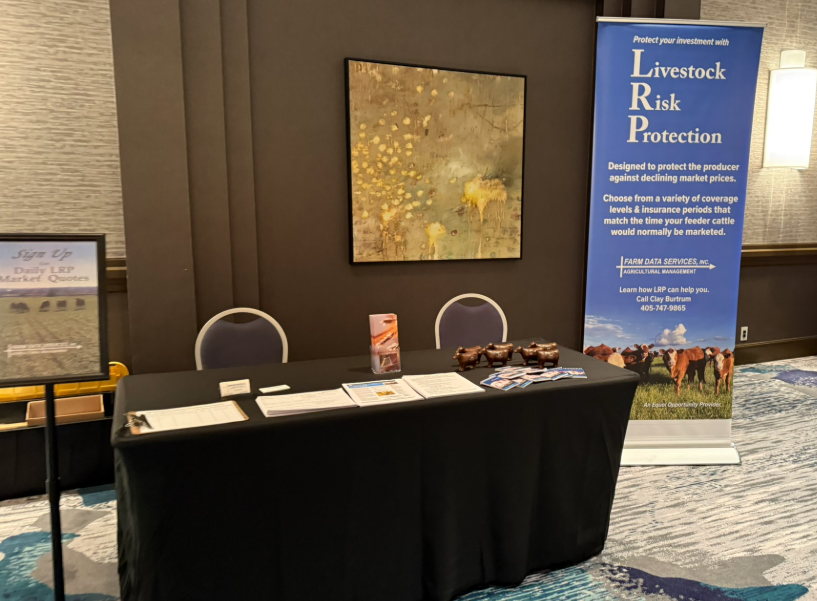
  • Clay Burtrum Says Livestock Risk Protection Is Crucial Amidst Rising Cattle Prices


  • New Government Leadership Revives Debate on Country-of-Origin Labeling for Beef


  • Brian Pugh Says Round Bale Feeders are Worth the Investment


  • Meat Institute Provides President Trump with Strategies to Reduce Costly Regs. & Address Meat Prices


  • Fertilizer Prices Continue Mostly Higher


  • OSU Agriculture names Sarkeys Distinguished Professor Award Recipient


HHS Nominee Nominee Robert Kennedy, Jr. Commits to Supporting Farmers if Confirmed

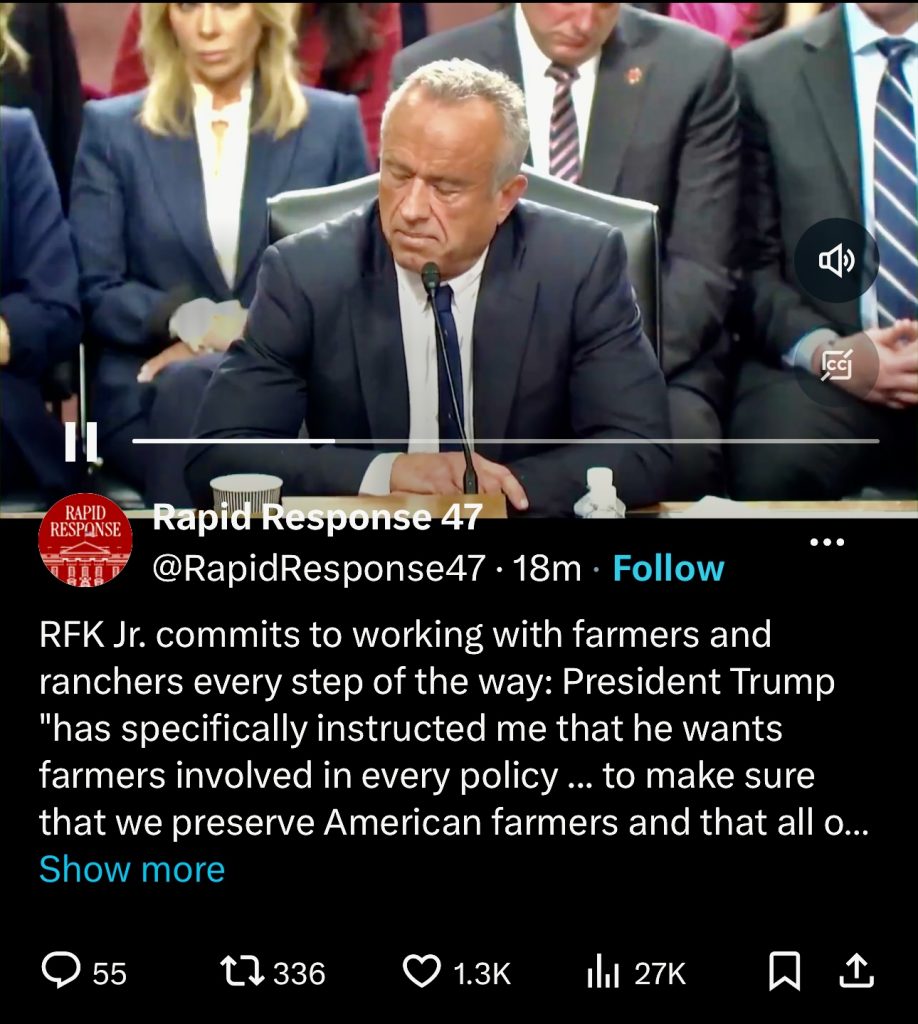
During the confirmation hearings, Senator Steve Daines of Montana asked Secretary of Health and Human Services Nominee Robert Kennedy, Jr., if he would be willing to support farmers through policy should he be confirmed.


Kennedy responded, "I absolutely will make that commitment. I have, as I shared with you, a personal commitment and a long career working with farmers. I understand the very, very narrow margins that American farmers and ranchers are dealing with and I don't want, under my watch, a single farmer to have to leave his farm for economic reasons or for regulatory or bureaucratic reasons if I am privileged to serve and be confirmed as HSS Secretary.


"Even more important, President Trump has a very, very strong commitment to farmers. President Trump is probably, historically – in modern history – the best farm president in our history. Farm income spiked for the first time in decades under his last administration. He got solid support from farmers across the country. Farm country is Trump country. Farmers across the country supported him during this election, and he has specifically instructed me that he wants farmers involved in every policy and that he wants me to work with Brooke Rollins at USDA to make sure that we preserve American Farmers and that all of our policies support them."

Click Here to Listen to Robert Kennedy, Jr.'s Comments

Sponsor Spotlight

National Livestock was founded in 1932 in Oklahoma City. National's Marketing Division offers cattle for sale weekly at the Oklahoma National Stockyards in Oklahoma City. The Finance Division lends money to ranchers across several states for cattle production. The Grazing Division works with producers to place cattle for grazing on wheat or grass pastures. 


Dakota Moss with Livestock Risk Services is also a part of the National Livestock Family.


National also owns and operates other livestock marketing subsidiaries including Southern Oklahoma Livestock Auction in Ada, Oklahoma, OKC West Livestock Market in El Reno, Oklahoma, and the nation's premier livestock video sale, Superior Livestock Auction. National offers customers many services custom made for today's producer. To learn more, click here for the website or call the Oklahoma City office at 1-800-310-0220.


Clay Burtrum Says Livestock Risk Protection Is Crucial Amidst Rising Cattle Prices

The elevated prices of cattle have created an environment of high risk for cattle producers which makes margin protection like livestock risk protection or LRP more important than ever before. Farm Director KC Sheperd caught up with Clay Burtrum of Farm Data Services in Stillwater.


"We are in the highest volatile markets we have ever seen in the cattle industry," Burtrum remarked.


Cattle producers across the state are in the midst of calving season and Burtrum said that insuring them for $1,600 each for a $50 or $60 premium per head is an easy way to rest easier at night.


"Maybe you don't want to spend that much," he said. "Maybe you want to insure them for $1,000 per head and only spend ten of fifteen dollars. Those are some of the options we could look at on those cattle that are hitting the ground right now."

Click Here to Listen to KC's Interview with Clay Burtrum and Read Here

Senate Majority Leader John Thune Questions USDA Secretary in Waiting About M-COOL

With new leadership in the government, the topic of country of origin for beef and pork is being raised once again. The requirement to report the country of origin on beef and pork was removed ten years ago when the USDA stopped enforcing the country-of-origin labeling (COOL) requirements for beef and pork after the Consolidated Appropriations Act of 2016 was signed into law. A provision in that law amended a previous statute by removing beef and pork from the list of products that must carry a COOL label.


The US Congress responded to pressure from Canada and Mexico- the two countries that won multiple rounds of trade rulings against the United States over our COOL regulations for beef and pork. The World Trade Organization (WTO) had authorized retaliation for just over a billion dollars annually, but once Congress eliminated mandatory COOL for beef and pork, the two countries suspended their plans to retaliate against the US. More about that here.


In today's BeefBuzz, Senior Farm and Ranch Broadcaster Ron Hays is featuring comments from a conversation at USDA Secretary of Agriculture Nominee Brooke Rollins's confirmation hearing when US Senator John Thune of South Dakota – now the leader of the US Senate – brought up the issue.


"I have been a long-time supporter of mandatory country of origin labeling for beef products," Thune said. "The system in which producers operate needs to be fair and transparent. I think it is critical that we take the steps to pass legislation tasking USDA or USDR to find a path forward on mandatory country of origin labeling."


In today's Beef Buzz- we also go back nine years and pick up an answer to a question we had for then Secretary Tom Vilsack about challenge of making M-COOL trade compliant back in the day- a problem that has not disappeared with time.

Listen to Ron's Featured Comments from Brooke Rollins and John Thune and Read More Here 
 
 
Sign Up for Our Daily Email- Free Because of Our Sponsors!

Support Our Sponsors!


KIS logo


Advertise With Us!
 

For our farmers who have either- always have had cotton on their farms- or those who have more recently have added the fiber crop to their operations- we have a daily report heard on several of our Radio Stations- It's Called Cotton Talk!

Click on the Button below to listen to our most recent report
Click here for our Latest Cotton Talk- Hosted by KC Sheperd


Brian Pugh Says Round Bale Feeders are Worth the Investment

Brian Pugh, Oklahoma State University NE Area Agronomy Specialist, offers herd health advice as part of the weekly series known as the "Cow Calf Corner," published electronically by Dr. Derrell Peel, Mark Johnson, and Paul Beck. Today, Pugh talks about the value of using hay rings.


Hay feeding losses occur primarily from trampling, refusal, and leaf shatter. Some feeding loss is inevitable but can vary from as little as 2% to more than 50%. A study conducted by Arkansas Cooperative Extension Service found that feeding round bales in open bottom hay rings reduced the amount of hay fed by 29% when compared to feeding round bales unprotected (13% loss vs. 42% loss). If a 1200-pound round bale cost $35, a 29% reduction in hay loss is equivalent to a $10.15 savings per bale. The hay savings from using a ring on 20 bales would pay for a round bale feeder that costs $200. 


Feeding losses from 20 round bales fed without a hay ring would pay for a commercially available round bale feeder.

Read More from Brian Pugh Here
 

We invite you to listen to us on great radio stations across the region on the Radio Oklahoma Ag Network weekdays-

if you missed this morning's Farm News - or you are in an area where you can't hear it- click below for this morning's Farm news from Ron Hays and KC Sheperd on RON.
Listen to our Thursday morning farm and ranch news with KC Sheperd
 
 
Subscribe To the Daily Email


Sponsor Spotlight


KIS FUTURES specializes in Futures and Options for Institutions, Commercials, Hedgers, and Individual Traders and executes trades for its clients in the following markets: Livestock, Grains, Energy, Metals, Softs, Financials, Currencies, and Stock Index Futures. For more information, please give them a call Toll Free at (800) 256-2555. Click here for their website to learn more.

And- their iPhone App, which provides all electronic futures quotes is available at the App Store- click here for the KIS Futures App for your iPhone.  


New EPA Administrator Lee Zeldin Latest Trump Appointee Confirmed

Lee Zeldin, the former New York Republican congressman who leveraged his full-throated defense of President Donald Trump into a position in his inner circle and ultimately his Cabinet, was confirmed by the Senate on Wednesday to be the 17th administrator of the Environmental Protection Agency by a 56-42 vote.


"We must ensure we are protecting the environment while also protecting our economy," Zeldin said at his Jan. 16 confirmation hearing.


Both the biofuels community and the National Cattlemen's Beef Association were quick to congratulate the new Administrator.


Growth Energy's CEO Emily Skor says in a statement "Administrator Zeldin has made it clear that he understands how important American-made biofuels are to President Trump's efforts to unleash American energy dominance," said Growth Energy CEO Emily Skor. "He's also committed to advancing year-round E15 and ensuring that America's farmers and biofuel producers have the regulatory certainty under the Renewable Fuel Standard to plan and invest in rural growth."


NCBA's Ethan Lane was clearly pleased with this confirmation- "For too long, the EPA has stood for 'Ending Production Agriculture.' Under Administrator Zeldin, we look forward to an EPA that acknowledges the conservation efforts that are only made possible by cattle farmers and ranchers—America's original conservationists. The National Cattlemen's Beef Association congratulates Administrator Zeldin on his bipartisan confirmation, and we look forward to working with him to protect the clean water and healthy soil that American agriculture relies on every day." 


Click here for the National Corn Growers statement which also praised the confirmation vote.

Meat Institute Provides President Trump with Strategies to Reduce Costly Regs. & Address Meat Prices

The Meat Institute today sent the following letter to President Donald Trump to provide strategies to reduce burdensome regulations and address meat prices for consumers.


The following is the text of the letter, dated January 27, 2025, and signed by Meat Institute President and CEO Julie Anna Potts.


Dear Mr. President:


Congratulations on your victory and inauguration! The Meat Institute and its members look forward to working with you and your administration to reduce regulatory burdens and unleash economic prosperity.


The Meat Institute is the United States' oldest and largest trade association representing packers and processors of beef, pork, lamb, veal, turkey, and processed meat products, and Meat Institute member companies account for more than 95 percent of the U.S. output of these products. The Meat Institute provides legislative, regulatory, international affairs, public relations, technical, scientific, and educational services to the meat and poultry packing and processing industry...

Click Here To Read More of the Letter

Fertilizer Prices Continue Mostly Higher

According to DTN Retail fertilizer prices continue to be slightly higher than a month ago, according to sellers tracked by DTN for the third full week of January 2025. This marks the fifth consecutive week most prices have been higher.


Six fertilizer prices are higher while two are lower. As has been the case in recent months, no fertilizer had a sizeable price increase or decline. DTN designates a significant move as anything 5% or more.


The seven slightly higher fertilizers are DAP, which had an average price of $739; urea $492/ton; 10-34-0 $616/ton; anhydrous $737/ton; UAN28 $326/ton; and UAN32 $367/ton.


Two fertilizers were slightly less expensive than a month ago. MAP had an average price of $809/ton, while potash is at $443/ton looking back a month.

Read More About Fertilizer Prices Here

OSU Agriculture names Sarkeys Distinguished Professor Award Recipient

Oklahoma State University's Craig Edwards has been named a recipient of the 2024 Sarkeys Distinguished Professor Award by OSU Agriculture.


The Sarkeys Foundation created the Sarkeys Award in 1980 in honor of Elmo Baumann, an agronomist who worked with the foundation following his retirement from OSU. The annual award recognizes those with outstanding contributions to the agricultural industry through teaching, research, or Extension efforts.


"I am deeply humbled to be honored with the Sarkeys recognition, especially knowing the caliber of Ferguson College of Agriculture faculty members receiving it in the past," Edwards said. "I am also proud to be a social scientist playing a part, albeit small, in helping the college and OSU achieve the land-grant mission in service to our state, nation and world."  


Edwards is a professor in the OSU Department of Agricultural Education, Communications and Leadership and was presented the award during the OSU Agriculture Appreciation and Awards Luncheon held last month.

Read More About Craig Edwards Here
Let's Check The Markets!
OKC West is our Market Links Sponsor- they sell cattle three days a week- Cows on Mondays, Stockers on Tuesday and Feeders on Wednesday- Call 405-262-8800 to learn more.
 
Today's First Look:
Ron on RON Markets as heard on K101  
mornings with cash and futures reviewed- includes where the Cash Cattle market stands, the latest Feeder Cattle Markets Etc.
Hear Today's First Look
 

Wholesale Boxed Beef Prices were lower - Choice Beef was down $1.91 and Select Beef was down $1.29 on 1/29/2025.


Click on the Button below for the latest report from USDA Market News

Boxed Beef Report
 

OKC West in El Reno had 12,790 head on Tuesday and Wednesday of this week.


According to USDA Market News- Compared to last week: Feeder steers traded 3.00-5.00 higher. Feeder heifers sold 1.00-3.00 higher. Demand good for feeders. Steer and heifer calves sold 8.00-15.00 higher. Demand improved as the sale progressed, thus causing wider than normal price ranges. Cattle futures closed sharply higher again today and this fueling demand


Meanwhile- OKC West Manager Bill Barnhart adds these comments from the market's Facebook page- "Another wild week at the auction. With a big run the market continues to soar higher on all classes even though the futures took a breather today. Hedgers were glad to see some relief from the relentless margin calls over the last few weeks. Fats traded last week at 202 in the South. There has been no trade reported yet this week but cattle feeders will be looking to keep the pressure on the packers. Lots of demand for grazing cattle at incredible prices."


Click below for the complete closing report.

OKC West in El Reno Market Report from 01/28 and 01/29/2025
 
 
Okla Cash Grain:  
Daily Oklahoma Cash Grain Prices- as reported by the Oklahoma Dept. of Agriculture- The report available after the close of the Futures Trade for that day.
Read Cash Grains Report from 1/29/2025
 
Our Daily Market Wrapup from the Radio Oklahoma Ag Network - analyzing the Futures Markets for that trading day- as reported by KC Sheperd.
Click to Listen to Our Weekday Wrap with KC
 
Slaughter Cattle Recap: 
The National Daily Slaughter Cattle Summary- as prepared by the USDA Market News
Read Report
 
TCFA Feedlot Recap:  
Finally, here is the Daily Volume and Price Summary from the Texas Cattle Feeders Association.
Read Report

Our Oklahoma Farm Report Team!!!!


Ron Hays, Senior Farm/Ranch Broadcaster and Editor


KC Sheperd, Farm Director and Editor


Dave Lanning, Markets and Production


Stevie White, Farm News and Email Editor


Pam Arterburn, Calendar and Template Manager

Podcasts From Oklahoma Farm Report and More

Two of our regular reports are also podcasts that you can subscribe to- Our daily Farm and Ranch News with KC Sheperd- available here on the Apple Podcast Platform


The second is our daily Beef Buzz with Ron Hays- available here on the Apple Podcast Platform


Periodically- we offer interviews on our Ag Perspectives Podcast series- this podcast is available here.


Ron has also has a series of podcasts from interviews with newsmakers at the Cattlemen's Congress- Click here or you can find them on your favorite Podcast platform- look for them by searching for Cattlemen's Congress Conversations.


We are making plans to jump back into regular installments of what has been called the Road to Rural Prosperity- a new name and fresh content is in the works- for now- click on the blue button below for one of our favorites that is a timeless classic.


The link below is one of our most recent podcasts- Ron spotlighting the Life and Times of Dr. Kim Anderson, who has just retired from OSU.

Listen to Ron Hays talking with Kim Anderson about his 42 years in OSU Extension and the Famous "A Third A Third A Third" Advice he has given.
 
 
Listen to Ron
Beef Buzz
 
Blue Green Gazette
Calendar
Auctions
Market Links
Facebook  Twitter  Youtube  

Our thanks to Midwest Farms Shows, P & K Equipment, Oklahoma Farm Bureau, Great Plains Kubota, Stillwater Milling Company, National Livestock Credit Corporation, Oklahoma Beef Council, Oklahoma Wheat Commission, Oklahoma AgCredit, the Oklahoma Cattlemens Association, and  KIS Futures for their support of our daily Farm News Update.


For your convenience, we have our sponsors' websites linked here- just click on their name to jump to their website- check their sites out and let these folks know you appreciate the support of this daily email, as their sponsorship helps us keep this arriving in your inbox on a regular basis- at NO Charge!


We also appreciate our Market Links Sponsor - OKC West Livestock! 


We invite you to check out our website at the link below too that includes an archive of these daily emails, audio reports and top farm news story links from around the globe.

Head to Our Website OklahomaFarmReport.Com
God Bless!
Reach Out To Us:
Tim West
President/General Manager
Rural Oklahoma Networks

405-317-6361

***************

Mike Henderson
Director of Sales

405-615-4922

KC Sheperd
Farm Director
Radio Oklahoma Ag Network

405-443-5717

Email KC
Ron Hays
Senior Farm/Ranch Broadcaster
Radio Oklahoma Ag Network

405.473.6144
Email Ron

Drummond defends Oklahoma Pork Producers against California's radical Proposition 12

Attorney General Gentner Drummond is pushing back against California's strict hog-housing regulations that would adversely impact Oklahoma's pork producers.  

In 2018, California passed Proposition 12, a law requiring out-of-state pork producers to comply with strict farming regulations if they want to sell their pork products. Since California is the nation's top pork-consuming state, it wields major influence over the entire market. Proposition 12 sets harsh regulations that will spike pork prices and force some pork producers to close if they cannot afford to keep up with the mandate. 

"Californians have every right to set laws impacting their own state, but they should not be able to dictate how hog farmers in Oklahoma raise their pigs. Proposition 12 is a textbook example of excessive regulations that burden farmers with exorbitant costs," Drummond said.

Pork is Oklahoma's second-largest agricultural industry, which works to raise and deliver quality pork throughout the state. It is responsible for more than 23,000 jobs in Oklahoma.

Drummond and counterparts in 22 other states are urging a federal appeals court to hear the case defending pork producers. They make the case that Proposition 12 risks creating an interstate trade war — in violation of the constitution. Proposition 12 specifically violates the Dormant Commerce Clause, which gives the federal government the power to regulate interstate commerce; the Import-Export Clause, which prevents states from imposing import regulations on products from other states; and the Full Faith and Credit Clause, which requires states to respect the laws passed in other states. 

Oklahoma joined the Iowa-led brief, along with Alabama, Arkansas, Georgia, Idaho, Indiana, Kansas, Kentucky, Louisiana, Mississippi, Missouri, Montana, Nebraska, New Hampshire, North Dakota, Ohio, South Carolina, South Dakota, Tennessee, Virginia, West Virginia and Wyoming.

Read the full brief.

Oklahoma Association of Electric Cooperatives Announces Nicki Fuller as New General Manager/CEO

After an extensive executive search, the Oklahoma Association of Electric Cooperatives' (OAEC) Board of Trustees selected Nicki Fuller as new General Manager/CEO of the statewide association that represents 30 electric cooperatives in Oklahoma.

"Nicki is well equipped to lead our statewide organization," said Bob Usry, president of the OAEC Board of Trustees and Norman-based Oklahoma Electric Cooperative director. "Her unique skills and experience make her a well-rounded leader. Her visionary leadership will guide our electric cooperatives into a new era."

Nicki's tenure will begin on April 1. She will follow Chris Meyers, who is retiring on March 31 as the head of the association after 15 years of service.

"I'm deeply honored to serve Oklahoma's electric cooperatives and carry on the mission of powering lives and empowering communities throughout Oklahoma's 77 counties," said Fuller. "Growing up on co-op lines, I'm eager to advocate for the members of our co-ops and look forward to contributing to an industry that makes a difference in the lives of many."

Nicki is the current executive director of the Southwestern Power Resources Association (SPRA), a not-for-profit organization of consumer-owned electric systems located in Arkansas, Kansas, Louisiana, Missouri, Oklahoma and Texas, serving over 10 million end users.

Nicki currently serves as vice chair of the National Rural Electric Cooperative Association's Preference Customer Committee and chair of the American Public Power Association's Federal Hydropower Committee. Additionally, Nicki serves on the Executive Committee and Board of the National Waterways Association and is advisor to the joint Department of Energy and Corps of Engineers Federal Hydropower Council and member of the Oklahoma Waterways Board.

Nicki is a native of Marshfield, Missouri. She graduated from Missouri State University with a Bachelor of Science degree in Political Science as well as the University of Tulsa (TU) College of Law with her Juris Doctorate. While at TU, she served as a member of the Energy Law Journal. Nicki and her husband John currently reside in Owasso, Oklahoma with their sons Jack and Luke where they are members of Verdigris Valley Electric Cooperative. The family will relocate to the Oklahoma City metro area in the near future.

How Agritourism is Shaping Oklahoma's Future: Lieutenant Governor Matt Pinnell at the Local Ag Summit

Listen to KC Sheperd talking with Matt Pinnell about the positive momentum of Oklahoma agriculture and tourism.

While attending the Local Ag Summit, hosted by the Oklahoma Department of Agriculture, Food and Forestry in partnership with the ONIE Project, Farm Director KC Sheperd had the chance to speak with Oklahoma Lieutenant Governor Matt Pinnell.

Pinnell says that agriculture is currently experiencing more momentum than it ever has before, because more than ever, consumers want to know where their food is coming from. "That is good for these small business owners and for our agritourism industry," he said. "One of the more popular tourist attractions that people are looking for today is something that they can do on a farm or ranch."

He said that politicians need to understand that this curiosity will only expand and that more of the next generation will seek agricultural products and choose to live in farming communities. "That is going to be a revolution in this country in future decades," he predicted. "Politicians have to get on board with it."

He encouraged farming and ranching communities to actively connect with their representatives and invite them to their operations. "If they say 'No' then it might tell you that it is time for some new representation," he bespoke. "Agriculture is still the backbone of the state of Oklahoma with oil and gas and a few other industries. We are number four in the country regarding the number of farms. That is good, but we need a whole lot more to feed the world."

He encouraged the development of smaller gardening operations as well, saying that it doesn't have to be 10,000 acres to constitute a farm.

He touted Oklahoma's uniqueness and popularity as a tourism state. "We have the new indoor waterpark, OKANA, thanks to the Chickasaw Nation. We have an advantage that other states don't have, and that is our 39 tribes – the Native American experience that you can get here. I would add the cowboy – the Code of the West experience that you can get here, too. That Americana experience you get when you throw in Route 66 and the Chisolm Trail; if you want to see America, you've got to see Oklahoma. That is really the message that we have driven from our tourism industry, and it sells really well."

Looking forward to 2025 and beyond, Lt. Governor Pinnell said that there are big things in the pipeline. Next year is the Route 66 Centennial, so the state is investing millions into developing the Route 66 communities to make them more appealing to tourists to increase revenue in small towns.

"That is the most famous road in the world, and we have more miles of it than any other state in the country," he said. "That is a big part of my agenda this year."

Additionally, the state is working on renovating the Oklahoma Music Hall of Fame in Muskogee to take better advantage of its musical heritage and history.

"We are going to turn it into the iconic museum that it should be to really be a draw for tourists," Pinnell said.

Regarding special events such as the recently wrapped up Cattlemen's Congress, Pinnell said that economic impacts amount to millions through additional commerce at hotels and restaurants. He noted that many communities have added to and upgraded their expo centers and exhibition barns which draw more events and revenue.

"There are so many of those shows around the country," he said. "We stole a few shows during COVID – a big ag show from Pennsylvania and Cattlemen's Congress from Colorado. We love those kinds of stories as well, because when they show up here in Oklahoma – we hear it from attendees – they love being in Oklahoma because they know that we support agriculture here, and we are going to continue to support it."

The creation of the Quality Event Incentive is to lure more large events into Oklahoma.

Accelerating Genetic Progress in Angus Cattle through Genomics

Listen to Ron Hays talk with Kelli Retallick-Riley about genomic progress in the beef cattle industry.

Senior Farm and Ranch Broadcaster, Ron Hays, is back talking with the president of Angus Genetics, Inc. (AGI), Kelli Retallick-Riley, about genomic progress in the beef cattle industry.

The use of EPDs and EBVs in the Angus industry dates back to the 1970s and has increased significantly. Only four were used back then compared with 26 today. Now, the focus is on improving the accuracy of the tools available.

Retallick-Riley said that EPDs come in handy in identifying genetic markers isolated from environmental components to success, such as good management practices, to be more sure of selecting herd sires.

“When you start to layer on things like genomics and all of the phenotypes that our producers have sent in, on average, we are going to increase our accuracies by almost a whole calf crop’s worth of data. One, they are selling as yearling bulls because our database with genomics coupled with the phenotypes is so powerful that we are able to do that in the Angus breed,” she said.

Genomics were incorporated into Angus EPDs beginning in 2010, and have quickly accelerated. “That is also when we went to weekly genetic evaluation so we can get those updated readily,” Retallick-Riley stated. “Previous to that, we only updated that genetic evaluation twice per year. From a timing perspective of our producers and commercial cattlemen trying to buy bulls, sometimes all the information wasn’t in that EPD calculation when they were ready to purchase that animal. Now, with weekly genetic evaluations, we can make sure that we get all the information into the hands of a buyer that they need.”

Cattlemen using genomics can expect the added benefits of getting early accuracy on cattle and feeling better about accepting greater risks when selecting sires with the assurance of accelerated genetic progress.

“When we combine the pedigree, the performance data, and the genomic, we can predict a whole year’s worth of calf crop,” Retallick-Riley said excitedly. “When you look at tools like calving ease and birth weight, it's between fifteen to twenty calves of accuracy that we have once we have all of this information in the system on a yearling bull.”

Additionally, AGI continues to work on maternal trait EPDs and three new traits expected to go into production in May 2025 are functional longevity, teat size, and udder health.

Functional longevity deals with predicting early how long a cow may be able to produce calves. Retallick-Riley noted that many bulls are used up before their daughters are mothering calves, so knowing more about the teat size and udder health of their daughters ahead of time can help producers identify bulls that produce better cows early on.

The Beef Buzz is a regular feature heard on radio stations around the region on the Radio Oklahoma Ag Network and is a regular audio feature found on this website as well. Click on the LISTEN BAR for today’s show and check out our archives for older Beef Buzz shows covering the gamut of the beef cattle industry today.

Drought Conditions in Oklahoma Unchanged from Last Week

To view the latest Oklahoma drought map, CLICK HERE.

According to the latest Oklahoma drought monitor report, exceptional drought remains at zero percent, unchanged from the start of the calendar year.

Extreme drought or worse conditions remain at zero percent, unchanged since the week of October 29, 2024.

Severe drought or worse conditions are unchanged at 0.33 percent, since January 2.

Moderate drought or worse conditions are unchanged from 5.24, since January 16.

Abnormally dry or worse conditions are unchanged from 26.11 percent, since last week.

According to the 6-to-10-day precipitation outlook map, the Western panhandle is leaning below a 33 – 40% chance of precipitation through February 8. The Western corridor of Oklahoma is near normal chances of precipitation. Most of Central and Eastern Oklahoma are leaning above a 33-40% chance of precipitation. A small corridor in Northwest Oklahoma is leaning above a 40-50% chance of precipitation through that February 8 date.

To view the United States Drought Map, CLICK HERE.

A dry week dominated the weather over much of the country with only portions of southern California and in the South along the Gulf Coast recording significant precipitation for the week. The current week started with a significant, even historical, winter storm event that impacted the coastal areas of the Gulf Coast. Several locations set all-time records for snow amounts with some locations in Louisiana having 9-10 inches of snow for the event. Some locations in the Florida panhandle also recorded 6-9 inches of snow during this event. Colder-than-normal temperatures dominated the country with the coldest readings in the Southeast, where departures were 10-15 degrees below normal, and in the northern Rocky Mountains with similar departures from normal. Portions of the northern Plains were warmer than normal, with temperatures 5-10 degrees above normal in the Dakotas and into portions of eastern Montana and western Minnesota.

In the Southern Plains, most of the region was dry for the week outside of those areas impacted by the winter storm that traversed across the Gulf Coast areas of Texas and into central Louisiana and Mississippi. Temperatures were cooler than normal over the entire region with the greatest departures over southern Louisiana into Mississippi where temperatures were 12-16 degrees below normal. Improvements were made to the abnormally dry conditions in Mississippi and in portions of east Texas. Severe and extreme drought was expanded in southern Texas with regards to the long-term drought signals in place, especially on the hydrologic systems in the region. Dryness continues in Tennessee with degradation in the southern, middle and eastern potions of the state as moderate, severe and extreme drought all expanded this week.

In The High Plains, Northern areas were warmer than normal with departures of 3-9 degrees above normal in the Dakotas and northeastern Montana. Colder-than-normal temperatures dominated the rest of the region with some areas of Wyoming 12-15 degrees below normal for the week. Areas of western South Dakota, southwest North Dakota, southeast Montana and northeast Wyoming improved this week as conditions over the last few months were reassessed and the indicators were not aligning with the drought depiction. In many instances the drought is still considered severe or worse, but where the intensity was reduced, it was due to not all the indicators converging to what was being shown. In Wyoming, conditions were improved in the central and southwest where severe and moderate drought as well as abnormally dry conditions were improved. Some extreme drought was extended in the Wind River where snow and precipitation numbers supported the change.

In the West, temperatures were colder than normal over almost the entire region, with departures of 9-12 degrees below normal in the northern Rocky Mountains and 3-6 degrees below normal most other places. Most of the region was drier than normal this week with only some areas of southern California, western Arizona and eastern Montana recording above-normal precipitation. The dryness allowed for the expansion of moderate drought into the central valley of California where the water year has continued to be drier than normal. In Arizona, the winter continues to be on the dry side and allowed for the expansion of moderate, severe and extreme drought conditions over the western, northern and southern portions of the state. In Nevada, moderate and severe drought were expanded over the eastern part of the state and were also expanded in the southern portions of Utah. Abnormally dry and moderate drought conditions expanded over western Washington and abnormally dry conditions were filled in over northwest Montana. In Colorado, abnormally dry conditions and moderate drought expanded over the west, south and southwest portions of the state with a new area of severe drought added in the south.

Looking ahead, over the next five to seven days, it is anticipated that some of the coastal areas of the Pacific Northwest could see some dryness alleviated with rains from northern California to Washington. Precipitation chances appear to be good over the northern and central Rocky Mountains. The most active rainfall pattern is expected to be from the southern Plains into the Midwest and Mid-Atlantic where some areas of Texas, Oklahoma, and Arkansas will see 2-3 inches of rain. Dry conditions will continue in the Southwest and northern Plains along with most of the Florida peninsula.

The 6-10 day outlooks show that the probability of below-normal temperatures is greatest in the Pacific Northwest and across the northern part of the United States into the High Plains. The best chances of above-normal temperatures will be over the Four-Corners region and along the southern tier of the U.S. into the Southeast and Mid-Atlantic. The greatest chances of above-normal precipitation will be over northern California into the Great Basin and the northern Rocky Mountains as well as over the Midwest. The best chances of seeing below-normal precipitation are over the Southwest and along the Gulf Coast of Florida.

To view the 6-10 Day Precipitation Outlook Map, click here.

To view the 6-10 Day Temperature Outlook Map, click here.

To view the Monthly Drought Outlook Map, click here.

Americans to Eat 1.47 Billion Chicken Wings for Super Bowl LIX

While Kansas City is known for its barbecue and Philly its cheesesteaks, when it comes to Super Bowl menus, nothing is hotter than wings. The National Chicken Council (NCC) today released its annual Chicken Wing Report, projecting Americans to consume 1.47 billion chicken wings watching the Kansas City Chiefs and Philadelphia Eagles battle for the Lombardi Trophy. This figure represents an increase of 1.5 percent from last year's game, or about 20 million more wings.

"Matthew McConaughey was right: Football is for food," said NCC spokesperson Tom Super. "Sure, there will be pizza, guacamole, chips and dips, but when it comes to the Super Bowl, chicken wings rule the roost. Although we do anticipate an uptick in chicken cheesesteaks this year.

"If Buffalo, the home of the chicken wing, and their Bills can ever take the next step and make it back to the Big Game, we'd expect an even bigger surge in wings and wet naps."

So how do 1.47 billion chicken wings stack up? Picture this:

  • If every single player in the NFL ate 50 wings a day (and was immortal) it would take them collectively 720 years to eat 1.47 billion.
  • 1.47 billion wings laid end to end would stretch to and from GEHA Field at Arrowhead Stadium in Kansas City, Mo. to Lincoln Financial Field in Philadelphia, Pa. about 63 times.
  • Enough to give more than four wings each to every man, woman and child in the United States.
  • Laid end-to-end, 1.47 billion wings would circle the Earth more than 3 times.

To download a high-resolution photo of chicken wings, click here.

Graphics displaying these statistics can be downloaded here, here, here and here.

We love our Football and our Wings!*

Retail wing sales growth for the NFL Super Bowl representative markets (Philadelphia and Kansas City) increased significantly during the playoffs this year (for the four weeks ending January 19, 2025 versus the prior period):

  • Chiefs fans receiving wings to the tune of a +21.9 percent sales increase.
  • Eagles fans did not disappoint their team for wing sales, rushing out and increasing Philadelphia market sales +19 percent.

Wings sales across the U.S. during the playoffs have been strong, gaining +12 percent for the four weeks ending January 19, 2025, versus the prior period. The playoff markets beat the national +12 percent wings increase, scoring sales growth at 15.5 percent for the four weeks ending January 19, 2025, versus the prior period.

Buffalo chicken wing history

Deep-fried chicken wings have long been a staple of Southern cooking.  But one well-traveled tale of how the concept of cooking wings in peppery hot sauce was born took place in 1964 at the Anchor Bar in Buffalo, New York, when co-owner Teressa Bellissimo cooked leftover wings in hot sauce as a late-night snack for her son and his friends.  The guys liked them so much that the Bellissimo's put them on the menu the next day.  Served with celery slices and bleu cheese sauce, "Buffalo Wings" were an instant hit.

Dick Winger, who sold hot sauce to the bar, went on the road with Dominic Bellissimo, the owners' son, to promote the item and sell hot sauce, and the item gradually caught on with restaurant operators around the country.  The concept hit the big time in 1990, when McDonald's began selling Mighty Wings at some of its restaurants.  KFC rolled out Hot Wings a year later, and Domino's Pizza introduced its own wings in 1994.  They've remained hot ever since.  McDonald's was back in the wing business in 2013, and its Mighty Wings were featured nationwide at most restaurants through the first quarter of 2014.

Chicken wings and football – A love story

The rise of the chicken wing and its correlation to American football all had to do with timing.

Cooking the whole bird was trendy in the 1960s and 1970s, but in the 1980s, U.S. consumers started preferring boneless-skinless breast meat, and wings became an inexpensive byproduct for chicken producers.  Restaurants and bars realized they could charge low prices for the relatively inexpensive protein, and due to the spicy/salty nature of the sauce, they discovered that beer sales would go through the roof when customers ate wings.

At the same time, sports bars with multiple TVs and satellite dishes were becoming more and more common in America thanks to rapidly developing technology; and the most popular sporting event to watch with friends in bars is football.  Wings were easily shareable and affordable, a great "group food" to eat with other people, and are the perfect pairing with a pitcher of beer. And so the pigskin-chicken wing bond was born.

Article provided by the National Chicken Council.

Lee M. Zeldin Sworn in as 17th EPA Administrator

On January 29, 2025, Lee Zeldin was sworn in as the 17th Administrator of the U.S. Environmental Protection Agency. Administrator Zeldin will work closely with the dedicated career officials at the agency to fulfill the agency's mission to protect human health and the environment. 

"It is my honor to serve as the 17th Environmental Protection Agency Administrator. Under President Trump's leadership, we will take great strides to defend every American's access to clean air, clean water, and clean land. We will maintain and expand the gold standard of environmental stewardship and conservation that President Trump set forth in his first administration while also prioritizing economic prosperity. I look forward to working with the agency's talented staff and scientists to deliver results for the American people. It's time to get to work," said EPA Administrator Lee Zeldin.

Administrator Zeldin has dedicated his life to public service. He is currently in his 22nd year in the United States military, having deployed to Iraq in 2006 with the Army's Elite 82nd Airborne Division and continues to serve as a Lieutenant Colonel in the Army Reserve. He served in the New York State Senate from 2011-2014 and later represented New York's First Congressional District in the United States House of Representatives from 2015-2023.

During his eight years in Congress, Zeldin worked across party lines to preserve the Long Island Sound and Plum Island. He supported key legislation that became historic, bipartisan success stories like the Great American Outdoors Act and Save our Seas Act to clean up plastics from our oceans. He also led the fight for Sea Grant, combated per- and polyfluoroalkyl substances (PFAS) in drinking water, voted for the Lautenberg Chemical Safety Act, and supported clean energy projects on Long Island.

At just 23, Lee became the youngest attorney in New York State at the time.

Born and raised in Suffolk County, New York, Lee and his wife Diana are proud parents to their twin daughters, Mikayla and Arianna

Paul Beck Says Grass Tetany and Milk Fever in Spring Calving Cowherds May be a Concern

Weekly, Oklahoma State University Extension Beef Cattle Nutrition Specialist Paul Beck offers his expertise on the beef cattle industry. This is part of the weekly series known as the "Cow Calf Corner," published electronically by Dr. Derrell Peel, Mark Johnson, and Beck. Today, Beck warns of grass tetany and milk fever in spring calving cowherd.

Many years, we are calving during the early spring with cows grazing lush pastures. When cows that have just calved are grazing cool-season annual pastures we often find mature cows that are in otherwise good condition and health with unusual behaviors, unsteady gait, or inability to rise. These are early signs of both grass tetany and milk fever. Both of these metabolic diseases are common in adult cows that have recently calved.

Grass tetany is a condition associated with inadequate magnesium in the diet and inefficient uptake of magnesium from the bone in older cows. We often see grass tetany with older cows grazing on small grain pastures because magnesium is often marginal to low and potassium is high in these forages. The high potassium interferes with magnesium absorption in the small intestine.  Mature lactating cows are most susceptible because not only is dietary magnesium limited but these cattle are also losing magnesium through the milk they produce.

The most common method of preventing grass tetany is to supplement the herd with magnesium beginning at least 1 month prior to spring grazing.  Mineral supplements should have 10 to 12% magnesium to offset the magnesium deficiency and prevent grass tetany from occurring. 

Milk fever, also called parturient paresis (parturition paralysis), is a common metabolic disease in dairy cows, but can be an issue in older mature beef cows. The disease is often associated with the start of lactation and usually occurs within 72-hours of calving. Calcium is not only important for bone formation but also has important roles in nerve and muscle function.

When cows are fed high dietary calcium pre-calving the mechanisms for calcium absorption in the GI tract become inefficient to minimize calcium absorption and focus on mineral storage in the bone. When cows calve their calcium requirements increase due to milk production, but they are unable to rapidly increase calcium absorption and mobilization of calcium from the bone to maintain blood calcium levels for muscle contraction and nervous system function. There are indications that milk fever can be associated with vitamin D deficiency because of its role in calcium metabolism. Vitamin D is naturally produced in the skin when exposed to sunlight UV waves. Providing supplemental vitamin D during the winter months is an important consideration because sunlight intensity is not high enough for adequate vitamin D formation and deficiencies may develop. Feeding high calcium levels during late pregnancy should be avoided, but dietary calcium should be increased at calving to prevent milk fever.

A veterinarian should be consulted for diagnosis and treatment.  If deaths have occurred, your veterinarian should be consulted to properly establish cause of death. These metabolic diseases are hard to differentiate, and are difficult to treat in a timely manner, but for both prevention is the best option.

Paul Beck, OSU Extension beef cattle specialist, discusses ways to adapt mineral supplementation as spring calving approaches on SunUpTV from January 25, 2025 at https://www.youtube.com/watch?v=7zPms0C-fr8

Kansas Geological Survey Says Parts of Ogallala Aquifer Drops Another Foot of Water in 2024

Oklahoma land close to Colorado border using water from Ogallala Aquifer

The following article comes from the Kansas Reflector and was written by Allison Kite. Oklahoma's Panhandle sits atop the Ogallala Aquifer

Aquifer levels in parts of western Kansas that rely on groundwater for everything from drinking to irrigation fell more than a foot last year, Kansas Geological Survey scientists said Tuesday. 

The Kansas Geological Survey earlier this month completed its annual campaign to measure the Ogallala Aquifer, which supplies the western one-third of the state with water. The Ogallala, the largest underground store of freshwater in the nation, has been declining for decades because of overuse to irrigate crops in otherwise arid parts of the state. 

According to preliminary data presented to the Kansas House Water Committee, aquifer levels in the groundwater management area covering southwest Kansas fell by 1.52 feet between January 2024 and this month, a larger drop than the 1.43-foot decline the year before.

Western Kansas' management area saw a half-foot decline, on par with the year before.

Northwest Kansas, which has been struggling with dry conditions, saw the aquifer decline 1.34 feet, a far more significant drop than the 0.47-foot drop between January 2023 and 2024.

The figures are preliminary. The Kansas Geological Survey's official report will be out in a few weeks, said Jay Kalbas, director of the survey.

Each year in January, the geological survey — with the help of local partners — measures hundreds of wells across western Kansas to assess the decline of the Ogallala Aquifer. The effort takes them to remote parts of the state where they stomp through corn fields to get to isolated wells and measure them using steel highway tape.

This year, the surface of the water in one well was 485 feet. 

"This is technically rigorous, difficult work," Kalbas said. "It's also physically rigorous and difficult work."

The Ogallala Aquifer has been in decline since the mid-20th Century. After World War II, a boom in groundwater irrigation transformed arid western Kansas into an agricultural powerhouse. But the aquifer refills far more slowly than farmers are draining it, leading to a gradual decline.

Parts of western Kansas where the aquifer is especially deep still have decades of water left, while others are near dry already.

State lawmakers have begun putting pressure on local groundwater managers to make a plan to slow the decline. 

But farmers don't have to stop pumping groundwater to irrigate crops altogether, Kalbas said. The survey has developed estimates for how much producers need to reduce pumping to stabilize the aquifer.

Kalbas presented a graph showing farmers and other water users on one part of the aquifer needed to reduce pumping by 17.5% to stabilize the supply. Other parts of the aquifer might not need to cut back as much — or might need to reduce pumping even more.

"We don't have to stop irrigating," Kalbas said. "We don't have to stop using our water. That resource is there for us to use. What we have to do, though, is define the specific amount of reduction that it takes...to achieve stability."

Farm and Ranch News for January 30, 2025 with KC Sheperd

Listen as KC Features Comments from RFK Jr at his Nomination Hearing, and KC Also hears from OKFB President Rodd Moesel about the critical issues at this year's AFBF Convention

NCGA Congratulates New EPA Administrator After Senate Confirmation

The U.S. Senate today confirmed the nomination of Lee Zeldin to become administrator of the Environmental Protection Agency. In response to this development, Illinois farmer and National Corn Growers Association President Kenneth Hartman Jr. released the following statement:

"We want to congratulate Administrator Zeldin for being confirmed by the Senate to lead EPA. We look forward to working with him on issues of great importance to corn growers, such as increasing ethanol blends and ensuring access to inputs required to produce food, feed, and fuel. It was particularly encouraging to hear Administrator Zeldin say during his confirmation hearing that he understood the importance of extending year-round, nationwide access to E15.  We invite the administrator to use us as a resource as he and his colleagues make decisions about these and other issues of importance to the agricultural community."

NCBA Congratulates Lee Zeldin on Confirmation as EPA Administrator

Today, National Cattlemen's Beef Association (NCBA) Vice President of Government Affairs Ethan Lane issued a statement congratulating Lee Zeldin on his confirmation as Administrator of the Environmental Protection Agency (EPA):

"For too long, the EPA has stood for 'Ending Production Agriculture.' Under Administrator Zeldin, we look forward to an EPA that acknowledges the conservation efforts that are only made possible by cattle farmers and ranchers—America's original conservationists. The National Cattlemen's Beef Association congratulates Administrator Zeldin on his bipartisan confirmation, and we look forward to working with him to protect the clean water and healthy soil that American agriculture relies on every day."

Growth Energy Welcomes New EPA Chief

Today, Growth Energy CEO Emily Skor released the following statement as the U.S. Senate approved the nomination of former U.S. Rep. Lee M. Zeldin as Administrator of the Environmental Protection Agency (EPA). The vote followed a robust dialogue with Senate biofuel champions and an encouraging confirmation hearing, during which Congressman Zeldin committed to implementing President Trump's pro-biofuel agenda.

"Administrator Zeldin has made it clear that he understands how important American-made biofuels are to President Trump's efforts to unleash American energy dominance," said Growth Energy CEO Emily Skor. "He's also committed to advancing year-round E15 and ensuring that America's farmers and biofuel producers have the regulatory certainty under the Renewable Fuel Standard to plan and invest in rural growth. We thank Administrator Zeldin for agreeing to work alongside Senator Pete Ricketts and other rural champions on Capitol Hill to deliver a much-needed boost to the farm economy and greater fuel savings for hardworking Americans with homegrown ethanol."

Fetgatter Thankful for Clarity over Federal Funding Freeze

House Tribal and External Affairs Leader Rep. Scott Fetgatter, R-Okmulgee, today expressed thanks to the Trump Administration for clarifying the freeze on federal grant and loan funding.

In a White House press briefing today, Press Secretary Karoline Leavitt said the U.S. Office of Management and Budget memo implementing the freeze on Tuesday had been rescinded ensuring the pause would not to affect programs including Social Security benefits, Medicare, Medicaid, the Supplemental Nutrition Assistance Program (SNAP) and others that provide direct benefits to individuals.

"While I'm incredibly thankful for President Trump's diligence to scrutinize the spending of every penny of taxpayer dollars at the federal level," Fetgatter said, "I'm also relieved for the assurance that Oklahomans that rely on assistance dollars won't have any immediate impact on the benefits they currently receive."

As soon as the funding pause was announced, Fetgatter began working to collect information from state agencies and the state's congressional delegation about the impact of the pause and to get a timeline. He said there was never an indication that state agencies that dispense aid such as Social Security, Medicaid, Medicare, SNAP, funds for small businesses and farmers, Pell grants, Head Start, rental assistance and other similar programs were impacted by the temporary pause.

It's important to note that the executive orders mentioned in the memo have not been rescinded and funding supporting other programs is still under review.

Fetgatter said he will continue to monitor the situation and will be ready to respond given new information.

The National Association of State Departments of Agriculture Sets its Federal Policy Focus for 2025

NASDA's members-led Board of Directors chose five issues to serve as the organization's primary policy focus for 2025. They include the farm bill, food systems, pesticide regulations, PFAS and state cooperative agreement funding. NASDA CEO Ted McKinney remarked on the significance of these issues for 2025.
 
"NASDA members have specified these areas as necessary to work on to best support farmers, ranchers and communities nationwide," said McKinney. "Further, we believe these areas represent critical opportunities where state departments of agriculture can lead impactful change and champion effective policy solutions this year."
 
NASDA has published one-pagers offering background and insight for each policy priority.
 
Farm Bill
The upcoming farm bill must be dedicated to supporting American agriculture and essential food and nutrition assistance programs. This bill shapes agricultural policy, supports farmers, ensures food security and promotes sustainable natural resource management.
 
Food Systems
NASDA will advocate for policies and programs that fortify U.S. food systems, enhance supply chain resilience, and improve reliable access to nutritious foods.
 
Pesticide Regulations
NASDA will engage with EPA to ensure science-based standards and state input are incorporated in regulatory initiatives such as the Endangered Species Act Workplan.   
 
PFAS
NASDA will continue to work with federal agencies to develop strategies associated with the risk of per-and-poly-fluroralkyl substances (PFAS) on agricultural land. NASDA will advocate for federal programs that will support farmers and ranchers in maintaining the health and productivity of their land and livestock.
 
State Cooperative Agreement Funding
NASDA will advocate for Congress to restore and increase funding for cooperative agreements. Cooperative agreements are designed to increase coordination when addressing complex regulatory issues and sharing resources between state and federal governments. NASDA is focused on three cooperative agreements that require immediate attention: FDA's State and Local Food Safety Programs, USDA's State Meat and Poultry Inspection Programs, and USDA's Animal Disease Protection Program.

Seasonal Shifts in Beef Item Demand

The past two weeks have brought about further escalation of record-high January fed cattle prices. In the five-area reporting regions Nebraska and Iowa/Minnesota were, once again, the highlights with last week averages just over $210/cwt. These regions also reported the bulk of the negotiated fed cattle trade volume. Kansas feedyards sold just near 7,500 head last week in the negotiated market at $202/cwt. with the Texas/Oklamoma/New Mexico region trading just 1,690 head at $201/cwt.
The supply of harvested cattle remained fairly tight as the weekly total slipped down to 599,000 head, a 4,000 decline on the week prior. The fed steer and heifer portion of weekly harvest head counts have been very near those of a year ago in the past two weeks while cull cow throughput has been 12% smaller than a year ago.
Live Cattle and Feeder Cattle futures prices have been forced higher as Live Cattle contracts had been lagging negotiated values until recent days.
Boxed beef pricing in the past week saw prices in an up-and-down trend with the overall theme this month showing a rapidly higher adjustment to carcass cutout values.
Quality price spreads are narrowing in seasonally appropriate fashion with middle meat demand fading from fourth quarter highs. Even so, supplies of steak items and briskets are more head-count dependent than end meats, which benefit greatly from heavy carcass weights. As such, quality price spreads may be more sensitive as smaller fed cattle head counts are realized in 2025.
New records in carcass weights are currently being recorded, suggesting that quality grades will remain quite rich for the time being. The likelihood of this is only going to increase as we move toward expected annual quality grade highs in March.
Seasonal Shifts in Beef Item Demand
Carcass cutout values are calculated using the weighted price of each subprimal beef cut, summarized in a single price per hundredweight for the entire carcass. Seasonal demand shifts for different cuts constantly change the percentage of total carcass value that each cut represents. Often those changes are subtle, but January is typically characterized by more dramatic adjustments with contribution from several cuts shifting total carcass value.
As the name suggests, the "comprehensive cutout" value is a simplified single price for fed steer and heifer carcasses combining prices for all quality grades and product delivery periods. So far this month the comprehensive cutout has averaged $326/cwt., a 14% increase for the same period a year ago.
The expected rapid decline in key middle meat prices has taken shape this month with CAB ribeyes dropping $4.38/lb., down 28%. Tenderloins are priced $2.53/lb. cheaper since January 1, down 16%. Perhaps surprising to many, wholesale tenderloin prices are $2.53/lb. cheaper than a year ago. The other popular middle meat steak and roasting cut, the 0x1 strip loin, is slightly less favored for December holidays and consequently has begun the last three years at just 92% of it's annual average price. The upswing for strip loin demand has begun ahead of Valentine's Day, with the smaller volume spot market buyers capitalizing on lower prices for this cut relative to the other two premium middle meats.
Just as two featured middle meats are retreating to lower prices, sharply higher values for chuck and round cuts are generating all of the upward pressure for total carcass cutout values. While consumers tend to shift demand to cheaper end roasting cuts after Christmas, the market has been sharply higher on several end cuts. One example from the chuck includes CAB shoulder clod roasts up 18% this month; typically January only increased 4% in the last three years. Prices on round cuts have risen faster this month than those from the chuck with the total CAB round cutout up 17.8% so far.
We've highlighted the importance of ground beef pricing for several months, given the much smaller domestic cull cow harvest. This remains a driving factor for fed cattle carcass values as grinding material from the younger cattle supply replaces a portion of the more typical source of lean cow beef.
January ground beef demand tends to increase as consumers look for lower priced proteins. The upcoming Super Bowl is also often cited as a ground beef demand driver, although chicken wings capture the limelight for the event. Wholesale prices for 85% lean ground beef are already up 20% this month, with CAB ground chuck and round each quoted from 10% to 15% higher.
With dressed fed cattle prices and the Choice carcass cutout value both very near $3.33/lb., the packer margin position is dismal. Rising input costs are typically followed by increased product pricing. However, the recent upward price trajectory of what we'd typically call "cheaper" end meats has already been eye-watering. As wonderful as beef demand has been in recent months, the near-term market leaves much to question.
By Paul Dykstra and shared by CSB Insider.

2025 Angus Foundation Scholarship Applications Open February 1

Youth can apply for Angus Foundation scholarships until May 1.

Addison Cotton of York, NE, accepts the Richard L. Spader Angus Foundation Scholarship from Sheri Spader at the National Junior Angus Show in Madison, WI. The Foundation awarded more than $388,500 in scholarships in 2024.
Since 1998, the Angus Foundation has championed the success of Angus youth by investing in their education. In the past 27 years, the Foundation has awarded more than $4.9 million in scholarships including $388,500 in 2024 alone. These scholarships help support students in their educational endeavors—whether pursuing undergraduate, graduate or trade degrees. Applications opened February 1 and are due by May 1, offering an opportunity for Angus youth to receive financial support for their education.

"Thank you to the Foundation for your unwavering commitment to supporting our aspirations and for fostering an environment that promotes growth and opportunity," said Addison Cotton, a past Angus Foundation scholarship recipient. "Your generosity has not only given me the resources to pursue my educational goals but has also inspired me to strive for excellence in everything I do. While it may seem unconventional to aspire to be a registered nurse that raises cattle, I am excited to combine these passions into a fulfilling future where I can work hard at what I love."
  
For many junior members, like Addison, the impact of the Angus Foundation extends beyond financial support; it helps to shape young leaders in the Angus breed. Whether it is exposing youth to unique career paths or exploring new opportunities, the Foundation's support is felt far and wide.
  
"Raising the Bar and LEAD have allowed me to experience agriculture in different regions and form friendships with Juniors from all over the country," said Allison Davis, a past Angus Foundation scholarship recipient. "The Foundation scholarships are allowing me to attend an out-of-state university. I know that I would not be able to attend an out-of-state school and have the experiences I have without the support of the Foundation and its donors."

The Angus Foundation undergraduate and graduate scholarship applications are available to National Junior Angus Association (NJAA) members through their American Angus Association® login.

In addition to offering scholarship opportunities to National Junior Angus Association members, the Foundation also offers opportunities to youth from a commercial cattle operation background, through the Commercial Cattlemen's scholarship program.

The Foundation's Certified Angus Beef®/National Junior Angus Association and commercial cattlemen scholarships can be accessed at angus.org/foundation and submitted through email. The website also offers more information about the scholarship program.

"This scholarship program is designed to support students with a commercial cattle background in the beef industry," said Jaclyn Boester, Angus Foundation executive director. "Supporting youth in their education is an important part of the Foundation's mission."

Boester elaborated on the scholarship program noting, "The Angus Foundation scholarship are one of the most prominent and consistent ways our donors support Angus youth. Our scholarships pave the way for a bright future for our industry by ensuring young people can reach their full potential."

Undergraduate and Graduate Angus Foundation Scholarships
Applicants for undergraduate and graduate scholarships must have, at one time, been a member of the NJAA and currently be an active junior, regular or life member of the American Angus Association®. The following documents are required to be considered for a 2025 undergraduate or graduate scholarship: the 2025 scholarship application; three letters of recommendation; a copy of current high school/college/university transcript; and the applicant's Association member code.

Access to Application: AAA login (www.angusonline.org/Account/Login), "Programs" tab
Submission: Through AAA login
Deadline: May 1, 2025

Certified Angus Beef®/National Junior Angus Association Scholarship
Since 1990, the NJAA has teamed up with Certified Angus Beef® (CAB) to help Angus youth pursue their higher education goals. The selected applicant will receive a $1,500 scholarship. A separate application from the Angus Foundation scholarship application is required for the CAB/NJAA scholarship.

Access to Application: Download application at angus.org/foundation
Submission: Email to scholarships@angus.org
Deadline: May 1, 2025

Commercial Cattlemen Scholarship
The Angus Foundation will award five $1,500 scholarships to undergraduate students who use Angus genetics in a commercial cattle operation's breeding program or whose parents use Angus genetics. Emphasis will be placed on applicants' knowledge of the cattle industry and perspective of the Angus breed. The applicant or their parent/guardian must have transferred or been transferred an Angus registration paper in the last 36 months (on or after May 1, 2022) and must be considered commercial and not seedstock in their operation. The scholarship applies to any field of study.

Access to Application: Download application at www.angus.org/foundation/apply-for-scholarships/commercial-scholarships
Submission: Email to scholarships@angus.org
Deadline: May 1, 2025

OSU Agriculture names Sarkeys Distinguished Professor Award Recipient

Scott Senseman, associate vice president of Oklahoma State University Ag Research, and Damona Doye, associate vice president of OSU Extension, present Craig Edwards, professor in the OSU Department of Agricultural Education, Communications and Leadership, with the Sarkeys Distinguished Professor Award. (Photo by Mitchell Alcala, OSU Agriculture)

Oklahoma State University's Craig Edwards has been named a recipient of the 2024 Sarkeys Distinguished Professor Award by OSU Agriculture.

The Sarkeys Foundation created the Sarkeys Award in 1980 in honor of Elmo Baumann, an agronomist who worked with the foundation following his retirement from OSU. The annual award recognizes those with outstanding contributions to the agricultural industry through teaching, research or Extension efforts.

"I am deeply humbled to be honored with the Sarkeys recognition, especially knowing the caliber of Ferguson College of Agriculture faculty members receiving it in the past," Edwards said. "I am also proud to be a social scientist playing a part, albeit small, in helping the college and OSU achieve the land-grant mission in service to our state, nation and world."  

Edwards is a professor in the OSU Department of Agricultural Education, Communications and Leadership and was presented the award during the OSU Agriculture Appreciation and Awards Luncheon held last month.

His research interests include the development needs of agriculture and food entrepreneurs in Sub-Saharan Africa, as well as undergraduate students' attitudes and knowledge on global issues impacting the agriculture and natural resources sectors and their related learning needs. He also focuses on the teaching, learning and use of change theory in agricultural education, communications and Extension.

Edwards' interest in students' learning and achievement began as a high school agriculture teacher.

"I strived to provide students with instruction that was relevant and rigorous," he said. "The way some students learned or responded to my teaching better or more readily than others always intrigued me and still does."

Edwards has authored or co-authored more than 100 peer-reviewed journal articles and nearly 300 research conference presentations.

He teaches multiple undergraduate and graduate courses, including his signature graduate course of more than 20 years, focusing on methods of technological change.

Edwards begins his graduate courses by asking students to consider a quote from Karl Popper, a scientist and distinguished philosopher of science: "With each step forward, with each problem which we solve, we not only discover new and unsolved problems, but we also discover that where we believed that we were standing on firm and safe ground, all things are, in truth, insecure and in a state of flux."

Edwards said this quote helps students understand and appreciate the ongoing need for high-quality, rigorously conducted research and discovery, including its interpretation and reporting.

"Dr. Edwards is in an elite category as it relates to effective teaching," said Shane Robinson, professor and department head in agricultural education, communications and leadership. "His ability to teach, conduct high-quality research and accumulate grant funding to support his work is second to none."

Edwards also has earned several achievements and recognitions throughout his career.

He received the VIP Award from the National FFA Organization as well as the Excellence in Graduate Student Advising and Mentoring Award and Outstanding Faculty Member Award for the Master of International Agriculture degree program from the Ferguson College of Agriculture.

He was named a Fellow, Senior Fellow, Outstanding Leadership Award recipient and Outstanding Service Award recipient of the Association of International Agricultural and Extension Education. In addition, he was named a Fellow and received the Distinguished International Agricultural Educator Award, Distinguished Research Award, Outstanding Agricultural Educator Award and Outstanding Early Career Member Award from the American Association for Agricultural Education.

"There is no doubt Dr. Edwards has developed the reputation of a tremendous scholar, which is evident in the voluminous and overwhelming number of awards and recognitions that have been bestowed on him," Robinson said. "These awards are prestigious, impressive and well deserved."

Written by Mandy Gross and shared by OSU.

Daily Email for January 29, 2025


Oklahoma's Latest Farm

And Ranch News

Wednesday, January 29, 2025

 
Howdy Neighbors!

Here is Your Daily Oklahoma Farm and Ranch News Update: 


  • Rodd Moesel Offers Color Commentary from AFBF Delegate Session


  • Tracking the Impact: Oklahoma Pork Council's Achievements and Future Plans


  • USDA's APHIS and Mexico Getting Closer to Reopening the Border for Feeder Cattle


  • National Sorghum Producers and Sorghum Checkoff Conclude Successful Mission to India


  • New USB Chairman Phillip Good Shares Vision for Soybean Farming's Future


  • What is a Good Bull Worth in 2025? Mark Johnson Answers


  • H5N1 in Dairy Cattle Webinar: Milk Testing, Research and Vaccine Updates


  • More on AFBF Policy Decisions from 2025 Convention in San Antonio
 

Rodd Moesel Offers Color Commentary from AFBF Convention Delegate Session

After wrapping up the final day at the American Farm Bureau Convention, held in San Antonio, Texas, Farm Director Ron Hays got to speak with Oklahoma Farm Bureau President Rodd Moesel. The event ended with the Delegate Session and Moesel provided details about the various issues that delegates dealt with including taxes and trade, animal health, and more – plus one surprising issue at the state capitol coming NEXT WEEK as the State Legislative Session begins.


Two big issues on the minds of agriculturalists everywhere are the upcoming expiration of important tax policies and the Trump administration's views on tariffs and trade deals.


Moesel also mentioned that the EID policy concerning cattle, finalized last November, was an important topic covered at the meeting. "That was probably the issue that got the longest amount of debate and the most amendments today," he said. "In the end, we ended up pretty much back where we have been, that we are strongly supportive of voluntary programs and opposed to mandatory systems."


During the session, Moesel heard that 11 percent of America's cowherd is currently wearing electric tags of some sort. He mentioned that the focus is on reproductively complete animals eighteen months or older that are crossing state lines.


Moesel said Farm Bureau is not wanting to roll back the new EID rules- but has no interest in seeing that expanded to younger cattle under 18 months.


Next week- at the State Capitol- one new issue has reared it's ugly head- Annexation- The OKFB is actively looking at an appropriate response to protect land owners in efforts by cities to grab more property into their city limits.


Ron and Rodd covered a lot of ground in their conversation- be sure to take a listen by clicking on the blue button below.

Listen to Ron's Conversation with Rodd Moesel and Read More Here

Sponsor Spotlight

Dating back to 1891, Stillwater Milling Company has been supplying ranchers with the highest quality feeds made from the highest quality ingredients. Their full line of A & M Feeds can be delivered direct to your farm, found at their Agri-Center stores in Stillwater, Davis, Claremore and Perry or at more than 125 dealers in Oklahoma, Arkansas, Kansas and Texas. We appreciate Stillwater Milling Company's long time support of the Radio Oklahoma Ag Network and we encourage you to click here to learn more about their products and services.


Tracking the Impact: Oklahoma Pork Council's Achievements and Future Plans

As the Give-A-Ham Campaign ended with the holiday season last month, Farm Director KC Sheperd caught up with the Oklahoma Pork Council's Executive Director Kylee Deniz at the Oklahoma Cattlemen's Winter Policy Meeting to discuss its success.


"The Give-A-Ham promotion has really become a big ham deal in the state of Oklahoma," Deniz said. "We had 565 plus hams donated."


She clarified that the count is tracked through social media, so many hams that were given likely weren't counted. Additionally, free pork lunches were provided at various locations across the state which amounted to 550 plus volunteer hours, more than 3,000 meals served, over $10,000 in monetary contributions, and more than 31,000 pounds of pork donated to the cause.


"We feel confident that we reached every county across the state and that is special because we have pigs in every county in the state of Oklahoma," she said.

Listen to KC's Conversation with Kylee Deniz and Read More Here

USDA's APHIS and Mexico Getting Closer to Reopening the Border for Feeder Cattle With Updated Screwworm Protocols

At the Oklahoma Cattlemen's Winter Policy Meeting, Farm Director KC Sheperd got the chance to talk with Dr. Burke Healey, USDA's APHIS Executive Director for VS' Strategy and Policy division, about the screwworm situation in Southern Mexico. Senior Farm and Ranch Broadcaster Ron Hays is featuring comments from their conversation in today's BeefBuzz.


Dr. Healey said that the situation is actually in pretty good shape. "We have worked with Mexico to come up with a new protocol to allow us to begin importation of cattle out of Mexico while Mexico's situation with the screwworm is contained in the Yucatán region of Southern Mexico. This policy will allow us to have cattle trade with Mexico even if that fly should move further North."


Expectations are that cattle will be able to be moved North into the U.S. in the next few weeks once inspections and corresponding paperwork are completed on the new quarantine facilities in Sonora and Chihuahua. Dr. Healey added that the ports in South Texas will remain closed for the time being.


The most effective way to control screwworms is by sterilizing male flies. The females only mate once in their lifecycle, so when they mate with a sterile male, she will lay sterile eggs.

Listen to Ron's featured Comments from KC and Dr. Burke Healey's Conversation and Read More Here 
 
 
Sign Up for Our Daily Email- Free Because of Our Sponsors!

Support Our Sponsors!


KIS logo


Advertise With Us!
 

For our farmers who have either- always have had cotton on their farms- or those who have more recently have added the fiber crop to their operations- we have a daily report heard on several of our Radio Stations- It's Called Cotton Talk!

Click on the Button below to listen to our most recent report
Click here for our Latest Cotton Talk- Hosted by KC Sheperd


National Sorghum Producers and Sorghum Checkoff Conclude Successful Mission to India

National Sorghum Producers (NSP) and the United Sorghum Checkoff Program (USCP) recently joined the U.S. Grains Council (USGC) for its annual Joint Officers' Mission in India, held Jan. 12–17, to strengthen relationships with the country's feed industry, explore sustainable aviation fuel (SAF) priorities and highlight U.S. sorghum as a non-genetically modified (GM) option for Indian importers.


India's emergence as a net coarse grain importer highlights the nation's growing demand for reliable, high-quality feed grains. With record feed costs and ambitious ethanol blending targets, Indian buyers sought insights on how U.S. sorghum can support both economic and environmental goals.


"Promotional efforts by the Council and sorghum organizations have generated notable interest from Indian poultry producers facing escalating input costs," said Verity Ulibarri, chairwoman of USGC. "Our discussions emphasized U.S. sorghum's benefits and laid the groundwork for deeper trade ties."


The delegation met with feed manufacturers, poultry integrators and oil refiners to discuss India's feed needs and the upcoming SAF mandate, which is set to begin in 2027.

Read More About the Success of the Mission in India Here
 

We invite you to listen to us on great radio stations across the region on the Radio Oklahoma Ag Network weekdays-

if you missed this morning's Farm News - or you are in an area where you can't hear it- click below for this morning's Farm news from Ron Hays and KC Sheperd on RON.
Listen to our Wednesday morning farm and ranch news with KC Sheperd
 
 
Subscribe To the Daily Email


Sponsor Spotlight


Midwest Farm Shows is proud to produce the two best Farm Shows in the State of Oklahoma annually- the Tulsa Farm Show each December and the Oklahoma City Farm Show each April. 


They would like to thank all of you who participated in their 2024 Tulsa Farm Show. 


Up next will be the Oklahoma City's premier spring agricultural and ranching event with returns to the State Fair Park April 3-4-5, 2025.


Now is the ideal time to contact the Midwest Farm Show Office at 507-437-7969 and book space at the 2025 Oklahoma City Farm Show.  To learn more about the Oklahoma City Farm Show, click here. 


New USB Chairman Phillip Good Shares Vision for Soybean Farming's Future

Phillip Good was elected Chairman of the United Soybean Board last December. Oklahoma Farm Report's Stevie White caught up with him to determine his goals for the organization going forward.


From Maken, Mississippi, Good brings a wealth of experience and knowledge to the position. He and his son raise soybeans, corn, cotton, catfish and cattle. He is beginning his eighth year of service to the United Soybean Board having previously served as Demand Chair, Chair of the Audit and Evaluation Committee, and Secretary and Treasurer.


"It is my great honor and privilege, and I am humbled to serve as Chairman," he said. "I get the opportunity to work with previous chairs that are still on the Board."


He decided to run because he enjoys working with those other farmers/leaders who serve and was asked by many of them to do it. "I really look forward to the opportunities this year with the goals that we set as an executive committee," he said. "I am very honored to work with the staff and executive committee in many different ways, and I think we have an outstanding year ahead of us."

Listen to Stevie's Interview with Phillip Good and Read More Here

What is a Good Bull Worth in 2025? Mark Johnson Answers

Mark Johnson, Oklahoma State University Extension Beef Cattle Breeding Specialist, offers herd health advice as part of the weekly series known as the "Cow Calf Corner," published electronically by Dr. Derrell Peel, Johnson, and Paul Beck. Today, Johnson crunches the numbers on what a good bull is worth this year.


The spring bull buying season is here it's time to revisit the age-old question. The question has been asked forever, or at least as long as we have been breeding cattle with the notion of trying to make the next generation better. It is a classic and timeless question. It is an important question. At this time of year, when many bulls are being marketed and we are planning ahead for spring breeding season, it is a question that is asked a lot!


The Answer

I remember first hearing the answer nearly 40 years ago as a student at OSU. "A good bull is worth the value of five calves he sires." I've heard that answer again many times over the years. It is a good answer and a good rule of thumb to follow, the problem is it doesn't exactly narrow down the range. If we do a little "cowboy math," this answer may in fact lead to more questions...

Read More from Mark Johnson Here

H5N1 in Dairy Cattle Webinar: Milk Testing, Research and Vaccine Updates

DATE & TIME

Tuesday, Feb. 4, 2025

12 – 1 p.m. ET


Dive into the challenges of H5N1 avian influenza in dairy cattle during this hour-long webinar, cohosted by the National Milk Producers Federation (NMPF) and the National Dairy FARM Program. This session will provide dairy farmers and industry stakeholders with essential updates on USDA's milk testing strategy in response to the H5N1 outbreak. Attendees will also be briefed on the latest research about the virus's impact and transmission and receive an update on vaccine development and available resources.


SPEAKERS:

Dr. Jen Siembieda has over 20 years of working in response and preparedness for foreign animal diseases both globally and domestically. She started with USDA APHIS in 2017 as an epidemiologist with the Center for Epidemiology and Animal Health and then transferred to the Ruminant Health Center as a staff officer managing the chronic wasting disease program. She has been in her current role since 2023 and since April 2024 has been involved in developing policy for the ongoing HPAI outbreak.


Dr. Jason Lombard is an Associate Professor at Colorado State University where he received his doctorate in veterinary medicine. Dr. Lombard practiced dairy cattle medicine in Wisconsin for nearly 10 years before returning to CSU and completing his master's degree in epidemiology. During this time, he worked for USDA's National Animal Health Monitoring System. While with USDA, he also participated on an Incident Management Team and was deployed for multiple cattle and poultry diseases during his 20-year federal career.


Dr. David White is the Director of Policy, Evaluation and Licensing at USDA's Center for Veterinary Biologics. Dr. White was previously the Safety and Security Unit Lead, and was formerly the Biosafety Manager, of the National Centers for Animal Health in Ames, IA. Previously, Dr. White worked as a researcher in containment facilities for the USDA-Agricultural Research Service and the Centers for Disease Control and Prevention. Before leaving CDC, he was a Team Lead in the Division of Select Agents and Toxins.


This session is specifically intended for dairy farmers, including FARM Program participants, cooperative staff and associate members affiliated with NMPF. NMPF and the FARM Program reserve the right to deny participation in this webinar to non-members and non-program participants.

Click Here to Find the Registration Link

Farm Bureau Sets Policy in San Antonio- Renewables, Broadband and More

Earlier in the email- we featured comments from Rodd Moesel of Oklahoma Farm Bureau on the policy making session of the just concluded AFBF Convention.


Last night- the AFBF media team released their take from a national perspective on the delegate session- and their list looked a little different.


"Today, Farm Bureau demonstrated what truly makes it the voice of American agriculture," said AFBF President Zippy Duvall. "Delegates from each state Farm Bureau and Puerto Rico directly addressed the challenges and opportunities facing farmers and ranchers. The policies they set today give us a roadmap to work with the new administration and Congress to address the needs of rural America. It includes the passage of a new farm bill, enacting regulatory reform, and creating new markets for the men and women who are dedicated to keeping America's pantries stocked."

Delegates also adopted policy supporting the development and sale of domestically sourced sustainable aviation fuel, including expanding the list of acceptable conservation practices for feedstock eligibility.


They strengthened policy on alternative energy production, including increasing the responsibility of energy companies to manage land used for development, and prioritizing energy production on land not suitable for agriculture.


On trade, delegates added policy in support of a United States—Mexico—Canada Agreement review process to encourage new opportunities while protecting U.S. agriculture from unfair competition.


Policy on rural broadband was revised to support requiring companies that win broadband loans or grants to quickly complete projects in underserved rural areas. Delegates also directed AFBF to press more forcefully for reform of the current requirements for small-scale meat, dairy and value-added processing facilities.


The group updated their Board of Directors- but for our part of the country- they simply reelected the State Presidents of Oklahoma, Kansas and Texas to another two year term. (Rodd Moesel, Joe Newland and Russell Boening)

Read More on the 2025 Policies Set by AFBF Here
Let's Check The Markets!
OKC West is our Market Links Sponsor- they sell cattle three days a week- Cows on Mondays, Stockers on Tuesday and Feeders on Wednesday- Call 405-262-8800 to learn more.
 
Today's First Look:
Ron on RON Markets as heard on K101  
mornings with cash and futures reviewed- includes where the Cash Cattle market stands, the latest Feeder Cattle Markets Etc.
Hear Today's First Look
 

Wholesale Boxed Beef Prices were higher- Choice Beef was up $2.37 and Select Beef was up $1.41 on 1/28/2024.


Click on the Button below for the latest report from USDA Market News

Boxed Beef Report
 

OKC West in El Reno  had 6,000 head of calves and stockers on Tuesday, January 28, 2025.


According to USDA Market News on Tuesday- Compared to last week: Steer and heifer calves sold 8.00-15.00 higher. Demand improved as the sale progressed, thus causing wider than normal price ranges. Cattle futures closed sharply higher again today and this fueling demand.


Looking to the Wednesday yearling sale-OKC West is expecting 7,000 head

2,500 Feeder Heifers @ 9:00 am

4,500 Feeder Steers @ 12:00 pm


Click below for the complete closing report.

OKC West in El Reno Stocker Market Report from 01/28/2025
 

On Tuesdays, Ron Hays gets the latest market commentary from Ben Hale of Western Livestock Auctions.


This commentary is posted on our website-click here for this Tuesday's story featuring Hale's comments.


Learn more about Western Livestock Auctions, Click Here.

 
Listen to Ron Hays talk with Ben Hale about the cattle Market
 
Each afternoon we are posting a recap of that day's markets as analyzed by Justin Lewis of KIS futures - click below for the latest update on the Livestock and Grain Futures Trade..
Click Here to Listen to Justin's Commentary From 1/28/2025
 
Okla Cash Grain:  
Daily Oklahoma Cash Grain Prices- as reported by the Oklahoma Dept. of Agriculture- The report available after the close of the Futures Trade for that day.
Read Cash Grains Report from 1/28/2025
 
Our Daily Market Wrapup from the Radio Oklahoma Ag Network - analyzing the Futures Markets for that trading day- as reported by KC Sheperd.
Click to Listen to Our Weekday Wrap with KC
 
Slaughter Cattle Recap: 
The National Daily Slaughter Cattle Summary- as prepared by the USDA Market News
Read Report
 
TCFA Feedlot Recap:  
Finally, here is the Daily Volume and Price Summary from the Texas Cattle Feeders Association.
Read Report

Our Oklahoma Farm Report Team!!!!


Ron Hays, Senior Farm/Ranch Broadcaster and Editor


KC Sheperd, Farm Director and Editor


Dave Lanning, Markets and Production


Stevie White, Farm News and Email Editor


Pam Arterburn, Calendar and Template Manager

Podcasts From Oklahoma Farm Report and More

Two of our regular reports are also podcasts that you can subscribe to- Our daily Farm and Ranch News with KC Sheperd- available here on the Apple Podcast Platform


The second is our daily Beef Buzz with Ron Hays- available here on the Apple Podcast Platform


Periodically- we offer interviews on our Ag Perspectives Podcast series- this podcast is available here.


Ron has also has a series of podcasts from interviews with newsmakers at the Cattlemen's Congress- Click here or you can find them on your favorite Podcast platform- look for them by searching for Cattlemen's Congress Conversations.


We are making plans to jump back into regular installments of what has been called the Road to Rural Prosperity- a new name and fresh content is in the works- for now- click on the blue button below for one of our favorites that is a timeless classic.


The link below is one of our most recent podcasts- Ron spotlighting the Life and Times of Dr. Kim Anderson, who has just retired from OSU.

Listen to Ron Hays talking with Kim Anderson about his 42 years in OSU Extension and the Famous "A Third A Third A Third" Advice he has given.
 
 
Listen to Ron
Beef Buzz
 
Blue Green Gazette
Calendar
Auctions
Market Links
Facebook  Twitter  Youtube  

Our thanks to Midwest Farms Shows, P & K Equipment, Oklahoma Farm Bureau, Great Plains Kubota, Stillwater Milling Company, National Livestock Credit Corporation, Oklahoma Beef Council, Oklahoma Wheat Commission, Oklahoma AgCredit, the Oklahoma Cattlemens Association, and  KIS Futures for their support of our daily Farm News Update.


For your convenience, we have our sponsors' websites linked here- just click on their name to jump to their website- check their sites out and let these folks know you appreciate the support of this daily email, as their sponsorship helps us keep this arriving in your inbox on a regular basis- at NO Charge!


We also appreciate our Market Links Sponsor - OKC West Livestock! 


We invite you to check out our website at the link below too that includes an archive of these daily emails, audio reports and top farm news story links from around the globe.

Head to Our Website OklahomaFarmReport.Com
God Bless!
Reach Out To Us:
Tim West
President/General Manager
Rural Oklahoma Networks

405-317-6361

***************

Mike Henderson
Director of Sales

405-615-4922

KC Sheperd
Farm Director
Radio Oklahoma Ag Network

405-443-5717

Email KC
Ron Hays
Senior Farm/Ranch Broadcaster
Radio Oklahoma Ag Network

405.473.6144
Email Ron

Fertilizer Prices Continue Mostly Higher

According to DTN Retail fertilizer prices continue to be slightly higher than a month ago, according to sellers tracked by DTN for the third full week of January 2025. This marks the fifth consecutive week most prices have been higher.

Six fertilizer prices are higher while two are lower. As has been the case in recent months, no fertilizer had a sizeable price increase or decline. DTN designates a significant move as anything 5% or more.

The seven slightly higher fertilizers are DAP, which had an average price of $739; urea $492/ton; 10-34-0 $616/ton; anhydrous $737/ton; UAN28 $326/ton; and UAN32 $367/ton.

Two fertilizers were slightly less expensive than a month ago. MAP had an average price of $809/ton while potash is at $443/ton looking back a month.

On a price per pound of nitrogen basis, the average urea price was $0.54/lb.N, anhydrous $0.45/lb.N, UAN28 $0.58/lb.N and UAN32 $0.57/lb.N.

A recent article from the University of Missouri Extension said corn producers should evaluate their operation for opportunities to reduce fertilizer application in 2025 without reducing yields. Read it here: https://extension.missouri.edu/.... This comes as profitability could be in question in the 2025 growing season for many corn producers.

John Lory, University of Missouri state nutrient management specialist, said those who maintain their soil test levels near optimum face little risk of yield loss when postponing applications of lime, phosphorus (P) and potash (K) for one to two years.

"The goal of current recommended soil test is to ensure no part of the field is insufficient in P and K," Lory said. "You have multiple years of buffer in the system where P and K soil test levels are medium to high."

Another opportunity to trim fertilizer costs would be to run a strip trial to see if lower rates of P and/or K reduce yield. A strip trial testing lower rates, or testing zero versus your rate, will reduce your fertilizer costs, he said.

"It is much easier to lose money by underapplying nitrogen than with P and K," Lory said.

Three fertilizers are now higher in price compared to one year ago. DAP, MAP and 10-34-0 are all 1% more expensive looking back to last year.

The remaining five fertilizers are lower. UAN28 is 3% lower, anhydrous is 4% less expensive, UAN32 is 6% lower, urea is 7% less expensive and potash is 13% lower compared to last year.

DTN gathers fertilizer price bids from agriculture retailers each week to compile the DTN Fertilizer Index. DTN first began reporting data in November 2008.

Nitrogen price have been on the increase since the first of the year, according to Josh Linville, StoneX vice president of fertilizer in his StoneX Media Fertilizer Market Update. You can read about it here: https://www.dtnpf.com/...

Dry
Date RangeDAPMAPPOTASHUREA
Jan 22-26 2024734809509527
Feb 19-23 2024749812506534
Mar 18-22 2024778823506574
Apr 15-19 2024780830513585
May 13-17 2024789829511556
Jun 10-14 2024779827507525
Jul 8-12 2024758822504507
Aug 5-9 2024744818503504
Sep 2-6 2024739813486490
Sep 30-Oct 4 2024736805449485
Oct 28-Nov 1 2024739810446497
Nov 25-29 2024740811443498
Dec 23-27 2024739810444489
Jan 20-24 2025739809443492
Liquid
Date Range10-34-0ANHYDUAN28UAN32
Jan 22-26 2024610770335390
Feb 19-23 2024615764339393
Mar 18-22 2024628793358402
Apr 15-19 2024641794364418
May 13-17 2024642792364418
Jun 10-14 2024642737352400
Jul 8-12 2024642696339378
Aug 5-9 2024640675338376
Sep 2-6 2024638676327364
Sep 30-Oct 4 2024590687317350
Oct 28-Nov 1 2024604706317363
Nov 25-29 2024611718323364
Dec 23-27 2024614729326365
Jan 20-24 2025616737326367

Article Courtesy of DTN and Russ Quinn can be reached at Russ.Quinn@dtn.com

Woolley Addresses Illegal Immigration with Bills to Protect Oklahoma Jobs, Track School Funds

Amid growing concerns over the impact illegal immigration has on Oklahoma's workforce and public resources, Rep. Gabe Woolley, R-Broken Arrow, has filed two pieces of legislation aimed at enforcing employment laws and ensuring transparency in public education enrollment and funding.

House Bill 1962, co-authored by Rep. Jim Shaw, R-Chandler, would require all employers in Oklahoma to use an electronic verification system to confirm the legal work eligibility of new hires. This measure would ensure that jobs are reserved for legal citizens and authorized workers. Woolley believes this would protect opportunities for Oklahomans while discouraging illegal employment practices.

"Oklahoma jobs should go to Oklahoma citizens and legal workers first," Woolley said. "We must support and encourage ethical and legal behavior. Requiring an electronic verification system is a commonsense solution to prevent businesses from hiring undocumented workers, which undercuts wages and takes jobs away from hardworking Oklahomans."

A second bill by Woolley, House Bill 1165, would mandate the disclosure of citizenship status when enrolling students in taxpayer-funded public schools. The aim is to provide accurate data on non-citizen student populations while ensuring that state resources are appropriately allocated.

"This bill does not deny education to any child but simply requires disclosure so we can make informed policy decisions," Woolley said. "Our public schools are funded by Oklahoma taxpayers, and we need full transparency in enrollment to understand what impact illegal immigration has on our education system. When the people of Oklahoma know exactly where their tax dollars are going, they can continue to work with their elected officials to better our state."

Woolley said both proposed measures ensure fairness in employment and transparency in education while protecting protect Oklahoma taxpayers.

"These bills reinforce that Oklahoma is serious about enforcing immigration laws and protecting our citizens from the economic burdens of illegal immigration," Woolley said. "It's time we put Oklahoma families and workers first."

HB1962 and HB1165 will be eligible for consideration in the upcoming legislative session, which starts Feb. 3.

TSCRA Submits Second Amicus Brief on Landowner Rights Court Case

Texas & Southwestern Cattle Raisers Association submitted its second amicus brief supporting landowner ownership of groundwater in the Texas Supreme Court case Cactus Water Services LLC v. COG Operating LLC.

In the dispute, landowners contracted to sell produced water to a third party, but the oil and gas company argued they retained ownership under existing leases.

"For Texas landowners, ownership of groundwater is among the most essential private property rights," said Texas & Southwestern Cattle Raisers Association President, Carl Ray Polk Jr. "Water makes ranching, agriculture and mineral production possible."

The amicus brief urges the Court to uphold the longstanding principle in Texas that the landowner owns all the groundwater under their land, including groundwater brought to the surface through the oil and gas process.

"Texas courts have consistently agreed that groundwater ownership is tied to the landowner. Any effort to erode this fundamental principle endangers private property rights and Texas agriculture," Polk said. "Our members — Texas landowners and agricultural operators — rely on the certainty of the law to protect and uphold their private property rights."

Background:

Beginning in 2005, Collier and Balmorhea Ranches, Inc. entered certain oil and gas leases with COG Operating LLC. The oil and gas leases did not convey any rights of ownership to the groundwater underlying the property, allowing only the extraction of oil, gas, and hydrocarbons and limited rights to use groundwater from a newly drilled well to aid in the extraction and production process.

In 2019, Collier and Balmorhea Ranches leased the ownership rights to all water on and underlying the property to Cactus Water Services LLC. COG Operating LLC filed suit against Cactus Water, and both parties sought competing declaratory judgments regarding the ownership of the produced water.

In 2023, the El Paso Court of Appeals ruled that oil and gas producers have an ownership interest in produced water. As a result, Cactus Water Services LLC petitioned the Texas Supreme Court for review of the prior ruling, which is the current standing of the legal battle.

Secretary of Health and Human Services Nominee Robert Kennedy, Jr. Commits to Supporting Farmers if Confirmed

Listen to HHS Secretary Nominee Robert Kennedy, Jr.'s verbal commitment to supporting farmers should he be confirmed. (Photo from Newsmax)

During the confirmation hearings, Senator Steve Daines of Montana asked Secretary of Health and Human Services Nominee Robert Kennedy, Jr., if he would be willing to support farmers through policy should he be confirmed.

Kennedy responded, "I absolutely will make that commitment. I have, as I shared with you, a personal commitment and a long career working with farmers. I understand the very, very narrow margins that American farmers and ranchers are dealing with and I don't want, under my watch, a single farmer to have to leave his farm for economic reasons or for regulatory or bureaucratic reasons if I am privileged to serve and be confirmed as HSS Secretary.

"Even more important, President Trump has a very, very strong commitment to farmers. President Trump is probably, historically - in modern history – the best farm president in our history. Farm income spiked for the first time in decades under his last administration. He got solid support from farmers across the country. Farm country is Trump country. Farmers across the country supported him during this election, and he has specifically instructed me that he wants farmers involved in every policy and that he wants me to work with Brooke Rollins at USDA to make sure that we preserve American Farmers and that all of our policies support them."

Screenshot

Convenience Stores Evolve to Become True Food Destinations

After pay-at-the-gas-pump technology took off in the 1980s, convenience stores faced a challenge: how to draw consumers inside, where more than half simply stopped going, per National Association of Convenience Stores. Fast forward to today, and foot traffic into convenience stores, known as c-stores, has grown 58.6% since January 2021. And since February 2024, overall year-over-year visits to c-stores have risen every month, according to Placer.ai.

Source: Placer.ai

What's pulling customers inside? Food. C-store growth in foodservice options has outpaced that of quick-service restaurant competitors, a trend expected to continue. Technomic projects 2025 growth for all foodservice at 1.9% but 2.3% among retailers including grocery stores that offer foodservice. Datassential foresees a similar breakdown, though slightly lower: 1.5% for c-store foodservice versus 1% overall for foodservice.

As c-stores registered record sales in 2023, per the NACS, more than a third of the $859.8 billion came from in-store sales ($327.6 billion). The average basket size increased 3.7%, reaching $7.80. This increase reflects the continued, steady growth in in-store sales led by prepared food sales, which grew 12.2%. C-store in-store sales grew 8% YoY in both 2022 and 2023 according to Circana, well ahead of overall inflation numbers for both food at and away from home. While sales appeared to soften in 2024, a Convenience Store News survey found two-thirds of c-store retailers predict total sales per store will grow in 2025.

Source: 2024 NACS/NIQ Convenience Industry Store Count

Loyalty programs, private labels keep 'em coming back

Another driver behind c-stores' success is customer loyalty programs, as a number of c-stores have developed loyal followings on a near-nationwide scale. In August 2024, year-over-year visits were up 11.7% for Buc-cee's, 7.6% at Sheetz, and 3.2% at Wawa, according to Placer.ai. Between January and August 2024, YoY visits to Wawa were mostly elevated, Placer.ai noted. Successful recent stretches like these have helped inspire those brands to expand into new locales as Wawa is venturing into heavily populated Southern states like Florida. Its store count has grown significantly over the past few years, with the state's 287 Wawas now second only to New Jersey's 298 Wawa locations.

Nevertheless, regionality defines much of the c-store industry. And with so many small entities, the result is a longer-term rapport with their customers and their community, in many cases serving as a de facto grocery solution for food deserts. At the same time, operators large and small are seeking to stand out with signature items, whether pizza at Casey's, sandwiches from Wawa, Road Ranger's Omaha Protein Popcorn (a somewhat-indulgent snack but low in sugar and boasting protein) or single-unit Curby's Express Market, whose tea offerings account for $800,000 in annual sales with 80% margins, per COO Richard Cashion.

Source: 2024 NACS/NIQ Convenience Industry Store Count

A key differentiator from other retailers for c-stores is variety, as even that single-unit Curby's not only sells up to 500 pizza slices a day but has a novel pizza every week. And with a typically wider range and variety of beverages, for example, c-stores offer a greater degree of choice compared with quick-service restaurants and other foodservice options.

That range of offerings is leading to strong loyalty to c-stores. The 2024 Loyalty Trend Report from Paytronix finds at least 80% of c-stores' loyalty program members in the top half of loyalty transaction visits per store every month. That rose to 85% for retailers in the 90th percentile and above. For comparison, similarly rated QSRs saw 62% of their loyalty members returning monthly, and full-service restaurants in that range retained 58% of members. This enthusiasm for loyalty programs will be a tool that c-stores look to sharpen as they look to claim more traffic from restaurants, which have seen weak results of late.

Packaged foods and beverages are far from afterthoughts, though. Capitalizing on consumer interest in cost-saving via private label options, several chains have such programs either in place or in development. However, for these retailers, much like grocery chains and mass merchandisers the likes of Walmart and Target, the goal is not simply value but building customer loyalty and repeat visits. Love's is among those whose private labels are focused on unique products that differentiate it from competitors, in segments such as energy drinks, nuts and seeds, granola bars and confectionery.

7-Eleven is accelerating its private label growth, introducing twice as many items in 2024 compared to 2023. The c-store giant typically garners margins of greater than 50% on private label goods, compared with an average 32% margin on national brand offerings. This is not to say that national brands have no place in the c-store, but with such a vast number of operators, distribution can be a challenge.

Several major food brands have entered the c-store channel through mergers and acquisitions. J.M. Smucker cites c-store distribution as an important reason behind its early 2024 acquisition of Hostess Brands. Similarly, Hormel Foods dramatically expanded its c-store penetration with its 2021 purchase of Planters and Corn Nuts brands, with Hormel utilizing those newfound distribution relationships to bring more of its products to c-stores, including pizza toppings and bacon.

C-store kitchens are seeking quick and easily prepared products. In the process, Hormel is among the suppliers that has found c-stores to be something of a testing ground for new flavors and product concepts, including novel experiments with varieties of Planters Flavored Cashews and Skippy P.B. Bites, with extensions exclusively for c-stores under the Corn Nuts brand. In the case of Hormel's Bacon 1, the key distinction isn't necessarily flavor but ease for the operator. The fully cooked option is quickly heated and thereby added a host of options to c-store menus, possibilities that had been relatively off-limits due to labor difficulties and the challenges of raw protein preparation.

Foodservice is the future

Seeking to gain share of the $1,200 the average American spends annually on quick service restaurants, per Supermarket News, travel centers and convenience stores have long partnered with QSRs to bring established restaurant names like Arby's, McDonalds and Subway onto their sites. However, several c-store retailers have added more unique eateries. Gas N Wash plans for two co-located Mickey's Greek-style restaurants, and Love's Travel Stops & Country Stores has expanded its agreement with Naf Naf Middle Eastern Grill to three more sites, setting a target of 11 locations for the partnership.

Foodservice for the channel represented 26.9% of in-store sales, a 1.3% increase over the prior year, with strong consumer interest in prepared food, commissary, and hot, cold and frozen dispensed beverages. That said, there is a risk that c-stores are vying for a decreasing portion of consumer purchases. In the second and third quarters of 2024, Circana reported year-over-year declines in dollar sales for consumer-packaged goods products in the convenience channel, driven by decreases in unit sales and trips per consumer, as well as a decline in fuel volume per buyer. Nevertheless, c-stores overall continue to boost their food offerings – both packaged and prepared – to drive traffic.

Increasingly, c-store chains are viewing QSR and fast food as their chief competition and are tailoring their offerings to match if not exceed that found in QSR and limited-service restaurants (LSR), such as Panera Bread, Firehouse Subs and The Habit Burger Grill. Such innovation is not without significant investment, however.

Sheetz is building a $145 million distribution facility to support growth in multiple states and plans to open more than 60 stores in southeast Michigan, all featuring a restaurant-style experience with made-to-order foods, self-service kiosks and drive-thrus. A similar food focus is in the works for Stinker Stores, as part of its in-house fresh food program begun nearly two years ago across most of its 100-plus c-stores. Stinker's Pete's Eats has performed so well that the chain is remodeling and building new stores to emulate QSR.

Love's is investing between $2 million and $7 million to "refresh" a third of its more than 600 sites, all part of a $1 billion store-renovation project the chain is rolling out across the country. Pilot's New Horizons Initiative, in the works since 2022, aims to remodel all 400 of the chain's c-stores within three years, with roughly 150 completed as of mid-2024. And while chains like Buc-ee's and Wawa garner headlines for opening the world's largest convenience store (a title that changes several times a year), other c-stores have expanded vertically. QuikTrip has a two-story store in Ft. Worth, Texas; Rutter's added a second floor to its York, Pennsylvania, store; and RaceTrac is opening a two-story location in Cobb County, Georgia.

Conclusion

Convenience stores have evolved from their gas-fueled beginnings to being food and beverage destinations, with a number of larger chains garnering considerable loyalty nationwide beyond their regional origins. However, many c-stores remain single-unit operations, which may bring with it opportunities for some consolidation but also an element of being part of their respective communities.

Likely, the line between grocery stores, QSRs/LSRs and c-stores will continue to blur, intensifying competition and leading to alliances between one or more. Fast-food and sandwich outlets in both c-stores and grocery are common, and supermarkets will continue to cater to the convenient needs of consumers with small-store concepts that draw distinct inspiration from c-stores' size and offerings. At the same time, expect c-stores to likewise emulate these competitors with a greater variety of freshly prepared items and with more attention to private label products and signature menu items.

Read the report, C-stores Evolve from Gas-N-Grub to True Food Destinations.

Flat Global Demand and Increased Brazil Production Provide Challenges for U.S. Cotton Prices

Cotton futures prices have struggled to gain traction over the past six months. The last time nearby cotton futures were above 75 cents was June 28, 2024. Since July, nearby cotton futures prices have traded mostly between 66 and 73 cents. New crop (December 2025) futures prices are currently below 70 cents, which will not provide attractive pricing opportunities for cotton producers. Additionally, if new crop futures prices remain low through the crop insurance price determination period, the safety net will be diminished and will likely result in decreased planted acres in the United States. Global supply and demand have played a role in low cotton prices. Figures 1 and 2 show global cotton demand and Brazil cotton production which have contributed to lower cotton prices. 

Global cotton demand has been flat for more than two decades and per capita cotton consumption has trended lower (Figure 1). Projected global cotton consumption for the 2024/25 marketing year is 116 million 480 lb bales, the same as 2010/2011. Competition with synthetic fibers has resulted in a lower market share for cotton and reduced demand. Improved demand will be essential if cotton prices are to improve. 

Compounding the challenges for U.S. cotton producers has been the rise of Brazil. In the last ten years, Brazil has more than doubled cotton production from 7.18 million 480 lb bales to 16.9 million 480 lb bales (Figure 2). The rise of Brazil cotton production has provided substantial competition for export markets. The combination of increased cotton production and flat global demand will continue to weigh on global cotton prices. 

Figure 1. Global Cotton Consumption and Per Capita Consumption, 2000/01-2024/25

Figure 2. Brazil Cotton Production, 2000/01-2024/25

References

USDA Foreign Agricultural Service (FAS), Production Supply and Distribution. Accessed at:https://apps.fas.usda.gov/psdonline/app/index.html#/app/home. 

Barchart.com. Nearby Cotton Futures Contract. Accessed at: https://www.barchart.com/futures/quotes/CTH25/interactive-chart. 


Smith, Aaron. "Flat Global Demand and Increased Brazil Production Provide Challenges for U.S. Cotton Prices."  Article Courtesy of Southern Ag Today 5(5.3). January 29, 2025. Permalink

Noble Research Institute Expands Educational Footprint with First California Class Scheduled for February 2025

Noble Research Institute, a trusted educational resource for farmers and ranchers since 1945, will expand its footprint to regions beyond the southern Great Plains in 2025, starting with Noble Land Essentials, in Paicines, California, on Feb. 26-27. Other locations slated for 2025 include Georgia, Florida and North Dakota. 

To register or learn more about Noble Land Essentials in Paicines, California, including available discounts and funding assistance, interested livestock producers can click here. 

Noble's 2025 course lineup offers comprehensive training in soil health monitoring, regenerative livestock grazing and management, and financial management for farm and ranch operations. These hands-on in-person and online courses provide livestock producers practical tools to optimize land use and maximize profitability. 

Registration is now open for the following in-person courses for Q1: 

Noble Profitability Essentials, a 2-day course on strategies to maximize operation profitability 

  • Jan. 28-29, 2025, in McKinney, Texas 

Noble Land Essentials, a 2-day course on restoring soil health using the six soil health principles 

  • Feb. 26-27, 2025, in Paicines, Calif. 

Business of Grazing, a 3-day course on aligning grazing strategies with business goals 

  • Mar. 4-6, 2025, in Edmond, Okla. 

Noble Grazing Essentials, a 3-day course on improving grazing management for long-term profits 

  • Mar. 25-27, 2025, in Huntsville, Texas 

The recently released Noble Land Essentials Online is also available for on-demand registration. 

Alongside a research-based curriculum, learners can access Noble's experienced regenerative ranching advisors through a personalized 45-minute consultation tailored to their operation's unique needs. They'll also join an active community of peers through monthly virtual Rancher to Rancher discussions and find exclusive resources and tools within the comprehensive Noble Learning Center platform. 

"We are excited to be back on the road and reaching farmers and ranchers in new markets this year," said Will Moseley, facilitator for Noble Land Essentials in Paicines and product delivery manager at Noble Research Institute. "With more class locations being confirmed for Q2-Q4 in 2025, we hope to help more livestock producers than ever meet their ranching and business goals." 

To learn more about Noble's online and in-person courses, visit www.noble.org/find-a-course/. 

Attendees of the Oct. 2024 Noble Grazing Essentials course at Lincoln University in Jefferson City, Mo., work through an in-field forage estimate activity. Photo credit: Noble Research Institute

Noble Research Institute is the nation's largest nonprofit dedicated to farm and ranch management and has been a leading, trusted resource in agriculture since 1945. The organization serves agricultural producers with education, research and consultation on regenerating soil health to improve their land, livestock and livelihood. Demonstrating its ongoing commitment to restoring U.S. grazing lands, Noble actively manages 13,500 acres of working ranchlands to provide real-world insights and applications for farmers and ranchers. 

For more information about Noble Research Institute, visit www.noble.org. 

OSU Agriculture names Whatley Award Recipient

Scott Senseman, associate vice president of Oklahoma State University Ag Research, and Damona Doye, associate vice president of OSU Extension, present Ali Mirchi, associate professor in the OSU Department of Biosystems and Agricultural Engineering, with the James A. Whatley Award for Meritorious Research in Agricultural Sciences. (Photo by Mitchell Alcala, OSU Agriculture)

Oklahoma State University's Ali Mirchi has been named the 2024 recipient of the James A. Whatley Award for Meritorious Research in Agricultural Sciences by the OSU Division of Agricultural Science and Natural Resources.

First recognized in 1982, the award is presented annually and recognizes outstanding research contributions to advancements in agricultural sciences.

Mirchi, associate professor in the OSU Department of Biosystems and Agricultural Engineering, received the prestigious award last month during the OSU Agriculture Appreciation and Awards Luncheon.

"I am truly honored to receive this recognition," Mirchi said. "Addressing water resources challenges in agriculture presents exciting research opportunities, but it also means tackling real problems that impact farmers and communities on the front lines of food security and environmental protection. I take these challenges seriously and work closely with stakeholders to find solutions that drive real-world action."

­Mirchi's research program supports sustainable human-environmental systems, considering possible, probable and preferable futures of water availability and quality.

He focuses on developing tools, guiding policies, and advising on management interventions to foster healthy ecosystems and sustainable agriculture. These efforts support food, feed and fiber production and resource management amid challenges caused by climate change, urbanization, irrigation expansion and fragile ecosystems.

Mirchi's research has advanced climate-informed adaptation planning for U.S. and overseas sustainable water futures facing limited resources, increasing demand, competing interests, environmental problems and growing uncertainties.

"I am proud to have built an internationally visible interdisciplinary research program with a solid funding stream to make outstanding contributions to the field of water resources and mentor highly competent early career scholars," he said.

Mirchi's collaborations have led to 70 journal articles in prestigious scientific journals, including an article in the "Journal of American Water Resources Association" that was recognized as one of its most cited papers in 2023. He published eight peer-reviewed manuscripts in 2023 and 10 manuscripts in 2024.

In addition, Mirchi produces at least 10 presentations per year at state, national and international conferences to enhance the exposure of his program and train graduate students and post-doctoral scholars.

Mirchi is an exceptionally productive faculty member who has excelled in research scholarship with significant national and international impact, said Mari Chinn, biosystems and agricultural engineering professor and department head.

"Dr. Mirchi has demonstrated the commitment and ability to serve as a leader of novel, high-impact research that addresses the most pressing water resources challenges of the 21st century that threaten our food security and ecosystem sustainability," she said. "His accomplishments contribute to our reputation as a well-recognized land-grant, tier-one research institution with a long and rich history of water resources programs."

Mirchi has been recognized not only at OSU but also worldwide.

Past achievements include being named an OSU nominee for the Blavatnic National Awards for Young Scientists in Physical Sciences and Engineering, U.S. Department of Agriculture National Institute of Food and Agriculture Partnership Award for Program Improvement through Global Engagement, 2021 Early Career Award for Applied Research from The Universities Council on Water Resources, Communication Award for a Fact Sheet from the Oklahoma Association of Extension Agriculture Agents, Outstanding Reviewer for the American Geophysical Union, and Arab-American Frontiers Fellow from the U.S. National Academies of Science, Engineering and Medicine, to name a few.

"I am proud of his accomplishments and the distinguishing impact of his programs internationally," Chinn said. "He is an extremely valuable faculty member to the department, division and OSU.

Whatley, in whose name the award is presented, was an animal geneticist who became director of the Oklahoma Agricultural Experiment Station system and dean of the division, which is comprised of the OSU Ferguson College of Agriculture and two state agencies: OSU Extension and OSU Ag Research. Whatley served OSU for 41 years.

U.S. Roundtable for Sustainable Poultry & Eggs Unveils Inaugural Sustainability Report at IPPE 2025

The U.S. Roundtable for Sustainable Poultry & Eggs (US-RSPE) today released its first-ever Sustainability Framework Report during a Tech Talk at the International Production & Processing Expo (IPPE) in Atlanta. This benchmark report marks a significant milestone in advancing sustainability within the U.S. poultry and egg supply chain, covering broilers, turkeys, and eggs.

Developed through the US-RSPE Sustainability Framework—a multi-stakeholder tool designed to assess, track, and improve sustainability practices—the report provides anonymous, aggregated data on critical metrics such as environmental stewardship, community impact, animal welfare, and workforce well-being. For the first time, stakeholders can access comprehensive, standardized insights into the industry's sustainability performance.

"This report marks a significant step forward for sustainability in the poultry industry," said Ryan Bennett, Executive Director of US-RSPE. "It reflects the collaborative efforts of farmers, processors, integrators, environmental groups, and other key stakeholders to create meaningful change and to highlight the industry's continuous improvement in producing sustainable protein."

The Tech Talk session highlighted essential findings from the report, offering a detailed exploration of sustainability benchmarks, innovative practices, and strategies for continuous improvement. Attendees engaged in discussions emphasizing the framework's scalability and adaptability for organizations at various stages of their sustainability journey.

According to Bennett, the US-RSPE Sustainability Framework exemplifies the power of cross-sector collaboration, addressing vital areas such as greenhouse gas emissions, water usage, animal well-being, and workforce diversity. This collective approach provides actionable data and a clear roadmap to drive sustainable progress across the industry.

The full Sustainability Report is now available online: https://poultrywelfare.org/media/web/1737981784_US-RSPE_Framework_Final.pdf

For more information about the U.S. Roundtable for Sustainable Poultry & Eggs, visit https://www.us-rspe.org/.

New Government Leadership Revives Debate on Country-of-Origin Labeling for Beef

Listen to Ron Hays's featured comments from Secretary of Agriculture Nominee Brooke Rollins and Senate Majority Leader John Thune.

With new leadership in the government, the topic of country of origin for beef and pork is being raised once again. The requirement to report the country of origin on beef and pork was removed ten years ago when the USDA stopped enforcing the country-of-origin labeling (COOL) requirements for beef and pork after the Consolidated Appropriations Act of 2016 was signed into law. A provision in that law amended a previous statute by removing beef and pork from the list of products that must carry a COOL label.

The US Congress responded to pressure from Canada and Mexico- the two countries that won multiple rounds of trade rulings against the United States over our COOL regulations for beef and pork. The World Trade Organization (WTO) had authorized retaliation for just over a billion dollars annually, but once Congress eliminated mandatory COOL for beef and pork, the two countries suspended their plans to retaliate against the US. More about that here.

In today’s BeefBuzz, Senior Farm and Ranch Broadcaster Ron Hays is featuring comments from a conversation at USDA Secretary of Agriculture Nominee Brooke Rollins’s confirmation hearing when US Senator John Thune of South Dakota - now the leader of the US Senate – brought up the issue.

“I have been a long-time supporter of mandatory country of origin labeling for beef products,” Thune said. “The system in which producers operate needs to be fair and transparent. I think it is critical that we take the steps to pass legislation tasking USDA or USDR to find a path forward on mandatory country of origin labeling.”

At her confirmation hearing, Majority Leader Thune questioned Rollins on whether she would actively assist in finding a WTO-compliant path toward mandatory country-of-origin labeling.

Rollins readily agreed and expressed hope that she would add value to the team that will work towards it.

Back in 2015, Secretary of Agriculture Tom Vilsack was working under President Barack Obama. Under the threats from Mexico and Canada, Secretary Vilsack had to compel Congress to act in the opposite direction.

During the 2016 Commodity Classic, Hays was able to ask Secretary Vilsack whether there was a loophole to get COOL back into policy.

At that time, Vilsack said, “It is tough. We have process verification systems within the U.S. that allow certain labels to be affixed, and that may be a way to proceed that doesn’t necessarily get our Canadian and Mexican friends in a position where they want to come after us. It is a tough issue. It seems as if a customer wants to be able to buy all American, they ought to be able to do that, but Congress was obviously concerned about the retaliation, understandably so. We did our best to restructure the COOL rule so that it was compliant with WTO. Maybe the process verification system is the way to do it; we will see. I don’t know if Congress can get something done in that space, but if they do, we will obviously be cooperative and implement it as quickly as we can.”

Now, in 2025, Majority Leader Thune is seeking the same answers, and should she be confirmed, Rollins looks forward to helping him. The ever-challenging caveat is that the rule must be WTO-compliant to avoid retaliation from other countries.

The Beef Buzz is a regular feature heard on radio stations around the region on the Radio Oklahoma Ag Network and is a regular audio feature found on this website as well. Click on the LISTEN BAR at the top of the story for today’s show and check out our archives for older Beef Buzz shows covering the gamut of the beef cattle industry today.

Polar Leasing Expands Operations with Strategic Texas Distribution Facility

Polar Leasing Company, North America's leading provider of electric, validated outdoor rental walk-in freezers and refrigeration units, announces the groundbreaking of a new distribution hub in Texas. 

Located in Temple, Texas, the 12,800 sq. ft. facility is strategically positioned to service the company's customers and freight partners located in the south-central portion of the U.S. This is the second Polar Leasing hub to be announced within the last two months. The company announced a Florida facility in December.

"This is another major milestone that we're incredibly proud of at Polar Leasing," says President Bart Tippmann. "We started the business more than two decades ago when we saw a gap in the marketplace for high-quality walk-in freezers and refrigeration units available on a rental basis," Tippmann says. "To grow from our Fort Wayne headquarters into a second hub is tremendous, representing our commitment to maintaining the highest standards of service and unit quality for our customers." 

The Temple facility's location was carefully selected for its proximity to major transportation routes, enabling efficient coordination with PLC's depot network and freight partners. Tippmann says the new hub provides customers with access to newer walk-in refrigerated and freezer units quicker than previously available. 

Polar Leasing's walk-in units serve a variety of industries, including foodservice, hospitality, agricultural, hunting, pharmaceutical, education, and healthcare facilities. The outdoor walk-in freezer and refrigerator rentals arrive pre-assembled and ready to operate with a simple electrical connection.  

Made in America, these walk-ins feature a 100% seamless fiberglass design that provides a continuous surface that maintains insulation integrity while preventing moisture damage and bacterial growth. All corners are rounded for optimal sanitation, and the NSF-approved flooring system features a non-slip, durable finish. The seamless construction allows for easy cleaning without compromising insulation. 

For more information about Polar Leasing and its rental options, call 877-428-2532, or visit polarleasing.com. 

About Polar Leasing  

In early 2002, Polar Leasing Company, Inc., was created by Polar King to accommodate the growing demand for walk-in refrigeration rentals. Polar Leasing offers the largest all-electric fleet of temporary refrigeration in North America, with nearly 100 distribution depots and a 24/7 service hotline. For more information, visit polarleasing.com or contact Polar Leasing, 4410 New Haven Ave, Fort Wayne, IN 46803 USA. In an emergency, call 866-574-4573 or contact rentals@polarleasing.com.  

Clay Burtrum Says Livestock Risk Protection Is Crucial Amidst Rising Cattle Prices

Listen to KC Sheperd talking with Clay Burtrum about the importance of Livestock Risk Protection in today's markets.

The elevated prices of cattle have created an environment of high risk for cattle producers which makes margin protection like livestock risk protection or LRP more important than ever before. Farm Director KC Sheperd caught up with Clay Burtrum of Farm Data Services in Stillwater.

"We are in the highest volatile markets we have ever seen in the cattle industry," Burtrum remarked.

Cattle producers across the state are in the midst of calving season and Burtrum said that insuring them for $1,600 each for a $50 or $60 premium per head is an easy way to rest easier at night.

"Maybe you don't want to spend that much," he said. "Maybe you want to insure them for $1,000 per head and only spend ten of fifteen dollars. Those are some of the options we could look at on those cattle that are hitting the ground right now."

There is also an option for calves before they hit the ground. "With LRP, there is an option for every single cattle producer – from the unborn to the guy that wants to send them to the feedlot," Burtrum touted.

LRP is designed to put a floor under a person's cattle and leave the top side risk protection open; producers can insure as many cattle as they choose – from one to 25,000. Unborn calves, stockers, feeders, Brahman, and dairy cattle can be insured, and producers don't pay for it until their contract has ended 

"As the market goes up, the LRP goes up," Burtrum explained. "You can insure more value for more cost as the market changes daily. When these cattle are costing upwards of $2,000 for a five-to-seven-weight calf, we have to keep ourselves in business. You want to lock in that bottom line and keep yourself bankable for the future."

Burtrum invited doubtful producers to provide their email addresses to him so he can sign them up for the daily email updates sent out by Farm Data Services. "It doesn't obligate you to do anything or buy anything, but you can look at those prices and I can walk you through the different scenarios of how we work through those different classes of cattle."

LRP has been available for more than twenty years but has grown in popularity due to the current market environment.

"We, at Farm Data Services, are always willing to talk LRP," Burtrum invited. "Or answer crop insurance questions or general questions about what is going on in ag because a lot is going on in the ag industry today."

Interested or curious persons can get more information at farmdataservices.com, follow Burtrum on social media, or call his cell: (405) 747-9865.

Former Google executive Steve Lerch returning to 2025 Stakeholders Summit stage

Steve Lerch, president of Story Arc Consulting and former Google executive, will return to the Animal Agriculture Alliance's 2025 Stakeholders Summit to share insights on using artificial intelligence (AI) to benefit animal agriculture. The 2025 Summit, themed "Food for Thought: Dishing on Sustainability," is set for April 30-May 2 in Arlington, Va. Early bird registration rates are available through Feb. 28. Register here.

Generative AI is revolutionizing industries – and animal agriculture can't afford to be left behind. In the 2025 Summit session "Serving Up Sustainability Conversations using Artificial Intelligence," Lerch will explore how generative AI tools, like ChatGPT and Gemini, can support efforts to further advance animal agriculture. Whether users need to simplify complex data or are looking to tell better, more compelling stories, this session will leave the complicated science behind and focus on simple, actionable ways animal agriculture can immediately start benefitting from AI.

"At the 2025 Summit, we're exploring new ideas and innovations to take the farm and food communities to the next level," said Hannah Thompson-Weeman, Alliance president and CEO. "Artificial intelligence is a tool that can help us do just that. Steve's session will help break down the complexities of getting started and equip attendees with the tools needed to jump into action and add a new tool to the toolbox."

Lerch is a consultant and an international keynote speaker. He spent a decade at Google designing the digital strategies and marketing campaigns for well-known brands like GoPro, federal government agencies like the U.S. Census Bureau, and national commodity programs like Avocados From Mexico and the National Pork Board. While at Google, Steve also served as an innovation evangelist, teaching thousands of Googlers the cultural principles and strategies that are necessary to drive new ideas and embrace change. Lerch formed Story Arc Consulting in 2019, where he has served as a keynote speaker, facilitator of board and leadership team meetings, and a marketing consultant across various industries. He specializes in food and agriculture, having worked with companies from John Deere to California Milk to Kansas City Steaks.

The 2025 Summit would not be possible without the support of sponsors, including U.S. Poultry & Egg Association, Farm Journal, Meatingplace, Watt Global Media, Cargill, Merck Animal Health, Zoetis, American Feed Industry Association, United Soybean Board, Agri-Pulse, CoBank, Dairy MAX, Farm Credit Council, National Pork Producers Council, Ad Farm, American Farm Bureau Federation, Aviagen, American Veal Association, Cobb, Kemin, National Chicken Council, National Pork Board, North Carolina Farm Bureau, Progressive Dairy, Trans Ova Genetics, United Egg Producers, Vivayic, and Eggland's Best.

Get involved:

Farmers and ranchers are eligible to win free conference registration, travel credit, and a two-night hotel stay by entering the 2025 Summit photo contest. Entries must be posted on Instagram by Feb. 7 to be considered. Learn more here.

Help us bring fresh perspectives to the table at the 2025 Summit. Invite a friend to join the conversation about sustainability by referring someone who's never attended the Summit before. Both parties need to be registered and will be entered to win a $100 gift card. More details here.

Show your support for the Alliance's outreach efforts by becoming an official Summit sponsor today! For more information on 2025 sponsorship opportunities, click here.

Check the Summit website for the most up-to-date information. You can also follow the hashtag #AAA25 for periodic updates about the event on social media. For general questions about the Summit, email summit@animalagalliance.org or call (703) 562-5160.

Brian Pugh Says Round Bale Feeders are Worth the Investment

Brian Pugh, Oklahoma State University NE Area Agronomy Specialist, offers herd health advice as part of the weekly series known as the "Cow Calf Corner," published electronically by Dr. Derrell Peel, Mark Johnson, and Paul Beck. Today, Pugh talks about the value of using hay rings.

Hay feeding losses occur primarily from trampling, refusal, and leaf shatter.  Some feeding loss is inevitable but can vary from as little as 2% to more than 50%.  A study conducted by Arkansas Cooperative Extension Service found that feeding round bales in open bottom hay rings reduced the amount of hay fed by 29% when compared to feeding round bales unprotected (13% loss vs. 42% loss).  If a 1200-pound round bale cost $35, a 29% reduction in hay loss is equivalent to a $10.15 savings per bale.  The hay savings from using a ring on 20 bales would pay for a round bale feeder that cost $200. 

Feeding losses from 20 round bales fed without a hay ring would pay for a commercially available round bale feeder.

A more recent study by OSU assessed the efficacy of four types of hay ring feeders.  Reported dry matter losses for the different rings were: poly rings (21%), open-bottom steel rings (20.5%), sheeted rings (12.6%) and modified cone feeders (5.3%).  This data indicates that switching from an open bottom ring to a modified cone feeder would result in a 15.2% reduction in dry matter loss.  With the same $35 per bale hay, that equates to a savings of $5.32 per bale.  Cone feeders range in style and costs, but a popular model retails for $565.  This indicates that after feeding 107 bales through the cone feeder it would pay for itself in hay savings.

If we compare the OSU modified cone data to the University of Arkansas data from using no ring feeder, we could potentially realize a 36.7% reduction in dry matter loss by utilizing a feeder.  This is a savings of $12.85 per bale at $35/bale hay value!  This decision to purchase a proven and efficient hay feeder design would only require 44 bales of fed hay to pay for the purchase.  Round bale feeders are a wise investment when free-choice hay feeding is necessary.

Grow our next generation of leaders through 10th Annual Give FFA Day

February 20 marks the 10th Annual Give FFA Day during National FFA Week. This day is dedicated to making a difference in the lives of more than a million FFA members across the country and growing the next generation of leaders who will change the world. The National FFA Organization is a school-based national youth leadership development organization with the mission of helping students develop their leadership skills and explore career paths in agriculture. 

Funds raised on Give FFA Day support FFA and agricultural education on local, state, and national levels. During the 24 hours of giving on February 20, donors can make a philanthropic gift to the National FFA Organization and the state FFA associations of their choice. Among the many opportunities, the money raised supports special programs and events, provides iconic FFA blue jackets to students, supplements travel costs for career and leadership opportunities, and pays for teacher support and resources throughout the year. 

"Give FFA Day is an opportunity for each FFA supporter to magnify their impact on the lives of more than a million FFA members when they join other donors across the country," said Kimberly Coveney, senior manager of individual giving, National FFA Foundation. "We know that every gift makes a difference, and we are grateful for our donors and their continued support and belief in our members, FFA, and agricultural education."

The National FFA Organization has already received generous matches from RFD-TV for $100,000 and John Deere for $50,000. The goal for the day is to raise $1.5 million, with the hope of exceeding last year's efforts when supporters donated more than $1.44 million. To receive a text alert on Give FFA Day to donate directly to the National FFA Organization, visit FFA.org/GiveFFADay. Mobile payments via Apple Pay and Google Pay are accepted. 

"It is because of your generosity that we are able to embrace all that FFA has to offer. Our students benefit greatly from your contributions as they are given access to conferences, hands-on learning and career opportunities that equip them with skills that extend beyond high school education." said Makena Stanisai, a 2023-24 California FFA officer.

The National FFA Organization has more than 1,027,200 student members as part of 9,235 local FFA chapters in all 50 states, Puerto Rico and the U.S. Virgin Islands. To learn more about the National FFA Organization, visit www.ffa.org. 

Winter 2025 Oklahoma Country magazine now available

The Winter 2025 issue of Oklahoma Farm Bureau's Oklahoma Country magazine, filled with stories from around Oklahoma agriculture and Farm Bureau, is headed to mailboxes and is also available online for viewing and reading. Be sure to check out the digital copy in addition to the print copy mailed to each and every OKFB member.

OKFB's Winter 2025 issue features nine Oklahoma farm and ranch families who were honored as OKFB's 2024 Farm & Ranch Family Recognition recipients. Also featured are the two new OKFB board of directors members, from District 2 is Jimmy Taylor of Roger Mills county and from District 5 Gary Crawley of Pittsburg county.

Additional magazine content includes a 2024 annual meeting recap; a legislative outlook; a new OKFB member benefit; and more.

Check out our featured content below, and OKFB members can read the print edition delivered directly to their mailboxes.


Oklahoma Country Magazine • Winter issue

Keeping the tradition alive

Nine District Farm and Ranch families of the year share their stories.

View the magazine story in your browser

No stranger to service

OKFB's newest state board members share their longtime leadership legacies.

View the magazine story in your browser

2025 Legislative priorities


OKFB looks forward to the 2025 Oklahoma legislative session with fresh grassroots policy.

View the magazine story in your browser


Additional Oklahoma Country content

Presidentially Speaking

A new year, a new agricultural landscape • by OKFB President Rodd Moesel

Read Presidentially Speaking Online...

A positive outlook, a brighter future

Celebrating Farm Bureau achievements during OKFB's 2024 Annual Meeting.

Read A positive outlook, a brighter future online...

All Around Oklahoma

Featuring news, events and updates from Farm Bureau and Oklahoma's agriculture community

Read All Around Oklahoma online ...

Oklahoma Gardening

Gardening in the winter? Yes, you can! • by Trisha Gedon, OSU Extension

Read Oklahoma Gardening online ...

American Farm Bureau Establishes 2025 Policies

New Grassroots Leaders Also Elected

Farmer and rancher delegates to the American Farm Bureau Federation's 106th Convention today adopted policies to guide the organization's work in 2025. Key topics ranged from labor to rural broadband to trade.

For the third year, delegates were polled at the beginning of the voting session regarding their farms. The results show 97% of those who cast votes operate family farms and nearly two-thirds represent small- to mid-size farms as defined by USDA.

"Today, Farm Bureau demonstrated what truly makes it the voice of American agriculture," said AFBF President Zippy Duvall. "Delegates from each state Farm Bureau and Puerto Rico directly addressed the challenges and opportunities facing farmers and ranchers. The policies they set today give us a roadmap to work with the new administration and Congress to address the needs of rural America. It includes the passage of a new farm bill, enacting regulatory reform, and creating new markets for the men and women who are dedicated to keeping America's pantries stocked."

Delegates also adopted policy supporting the development and sale of domestically sourced sustainable aviation fuel, including expanding the list of acceptable conservation practices for feedstock eligibility.

They strengthened policy on alternative energy production, including increasing the responsibility of energy companies to manage land used for development, and prioritizing energy production on land not suitable for agriculture.

Recognizing the challenges of maintaining a strong agriculture workforce, delegates voted to stabilize labor costs to avoid drastic swings that put the economic sustainability of farms at risk. They also recommended the AFBF board study potential alternatives to the current Adverse Effect Wage Rate methodology used for the H-2A program.

On trade, delegates added policy in support of a United States—Mexico—Canada Agreement review process to encourage new opportunities while protecting U.S. agriculture from unfair competition.

Policy on rural broadband was revised to support requiring companies that win broadband loans or grants to quickly complete projects in underserved rural areas. Delegates also directed AFBF to press more forcefully for reform of the current requirements for small-scale meat, dairy and value-added processing facilities.

Board of Directors

Delegates also elected members to serve on the AFBF board of directors and national program committees.

Brad Olson, Wisconsin (Midwest Region); Scott Sink, Virginia (Southern Region); and Rosella Mosby, Washington (Western Region) were elected to fill one-year terms on the AFBF board of directors. Ben LaCross, Michigan (Midwest Region) was elected to a two-year term.

Fifteen other state Farm Bureau presidents were re-elected to two-year terms to represent their regions on the board. From the Midwest Region—Dan Glessing, Minnesota; Brent Johnson, Iowa; Randy Kron, Indiana; and Joe Newland, Kansas. From the Northeast Region—Allen Carter, Jr., New Jersey; and David Fisher, New York. From the Western Region—Angela Bailey, Oregon; and Scott Mugrage, Alaska. From the Southern Region—Russell Boening, Texas; Shawn Harding, North Carolina; Richard Fontenot, Louisiana; Eric Mayberry, Tennessee; Tom McCall, Georgia; Mike McCormick, Mississippi; and Rodd Moesel, Oklahoma.

National Program Committees

Amy Jo Estes of Missouri and Heidi Cooper of Massachusetts were elected chair and vice chair, respectively, of the Promotion & Education Committee. Both will serve one-year terms.

Ryan MacKay of Massachusetts was elected chair of the Young Farmers & Ranchers Committee for a one-year term. Daniel Jones of California was elected vice chair and Allison Whiten of South Carolina was elected secretary. They will each serve one-year terms. The new YF&R officers begin serving in March at the end of the FUSION Conference.

Megan Floyd of South Carolina (Southern Region) was elected to a two-year term on the Women's Leadership Committee. Marieta Hauser of Kansas (Midwest Region); Lisa Wherry of Pennsylvania (Northeast Region) and Shawn Wood of Arizona (Western Region) were re-elected to two-year terms. Isabella Chism of Indiana and Lorenda Overman of North Carolina were re-elected to two-year terms as committee chair and vice chair, respectively.

AFBF appreciates the more than 80 speakers and nearly 5,000 registered attendees who helped make the 2025 Convention such a success.

Planning for the American Farm Bureau's 2026 Convention has already begun. Mark your calendar to meet us Jan. 9-14, 2026, in Anaheim, California.

Oklahoma Farm Bureau's Rodd Moesel Offers Color Commentary from AFBF Convention Delegate Session

Listen to Ron Hays discussing key issues from the AFB Convention Delegate Session with Rodd Moesel.

After wrapping up the day at the American Farm Bureau Convention, held in San Antonio, Texas, Farm Director Ron Hays got to speak with Oklahoma Farm Bureau President Rodd Moesel. Moesel provided details about the various issues that delegates dealt with including taxes and trade, animal health, and more as the 106h Convention of the general farm organization wrapped up in Texas– plus Moesel and Hays talked about one surprising issue at the state capitol coming NEXT WEEK as the State Legislative Session begins.

First- at the national level- two big issues on the minds of agriculturalists everywhere are the upcoming expiration of important tax policies and the Trump administration's views on tariffs and trade deals.

Moesel also mentioned that the EID policy concerning cattle, finalized last November, was an important topic covered at the meeting. "That was probably the issue that got the longest amount of debate and the most amendments today," he said. "In the end, we ended up pretty much back where we have been, that we are strongly supportive of voluntary programs and opposed to mandatory systems."

During the session, Moesel heard that 11 percent of America's cowherd is currently wearing electric tags of some sort. He mentioned that the focus is on reproductively complete animals eighteen months or older that are crossing state lines.

"All of us realize that it is important for those systems to keep developing so that they can be deployed quickly in the event of an animal disease outbreak," Moesel said. "We are asking people certainly to do the part that the government is requiring now, but to make their own voluntary decisions about what to do with the rest of their herds."

Moesel said Farm Bureau is not wanting to roll back the new EID rules finalized by USDA on November fifth- but has no interest in seeing that expanded to younger cattle under 18 months.

They also talked about the still pending farm bill and growing concerns about agricultural labor as well as some of the key issues that Farm Bureau will be working on at the State Capitol next week including eminent domain issues. Click the sound bar at the top of the page to listen to the entire audio.

"The position that we are taking on eminent domain is that we are all about private property rights which has been the key mark of Farm Bureau for generations, so we are fighting for the rights of landowners to make their own decisions and we want landowners to be treated reasonably and fairly and to be able to negotiate their own deals if they choose to, and we certainly don't want them to have to deal with imminent domain with these types of operations," Moesel shared.

The "operations" being transmission lines, solar fields, wind fields, and battery enterprises.

Moesel was surprised to learn only a couple of weeks ago that Farm Bureau delegates would also be involved in annexation issues. Evidently El Reno, Oklahoma, believes that they found a loophole in the law and has annexed a large section of land between Yukon and El Reno without landowner involvement.

"We have stepped up to be involved in some lawsuits to challenge those annexation issues and we will be working on some legislation at the capitol to try to clean up the questions in the annexation laws," Moesel stated.

Hays and Moesel covered a lot of other issues in their Tuesday afternoon conversation- be sure and listen to the full visit by clicking on the LISTEN BAR above.

Fetgatter Assessing Impact of Federal Funding Freeze

In his role as Oklahoma House Tribal and External Affairs Leader Rep. Scott Fetgatter, R-Okmulgee, is working with the state's federal delegation and state agencies to assess the impact of a federal funds freeze under the new presidential administration.

The White House announced it is pausing federal grants and loans starting today as it begins an across-the-board review of spending. The pause was not to affect benefit programs including Social Security benefits, Medicare, the Supplemental Nutrition Assistance Program (SNAP) and others that provide direct benefits to individuals.

"I'm working with state agencies and Oklahoma members of Congress to make sure the needs of Oklahomans are met," Fetgatter said. "I appreciate President Trump wanting to do due diligence to ensure federal funds are being spent appropriately, but I also want to make sure those who rely on Social Security benefits, Medicare or other forms of aid are not left without care."

House Speaker Kyle Hilbert praised Rep. Fetgatter for his efforts to collect information from the federal delegation and state agencies to know what issues exist and serve as the point person for the House Republican caucus.

"Our nation's federal debt is out of control, so we are thankful to have President Trump back in the White House to scrutinize all federal spending and fulfill his campaign promise to get our national economy back on track. We have been in touch with our federal delegation and have been assured that Social Security, Medicaid, Medicare, SNAP and funds for small businesses, farmers, Pell grants, Head Start, rental assistance and other similar programs will not be impacted by this temporary pause. Rep. Fetgatter will continue to work with our federal delegation to better understand the timeline and impact of this temporary pause to ensure critical services to Oklahomans continue as uninterrupted as possible."

According to a memo from the Office of the President, Office Management and Budget (OMB), the guidance establishes a process for agencies to work with OMB to determine quickly whether any program is inconsistent with the President's executive orders. A pause could be as short as day. In fact, OMB said it has worked with agencies and has already approved many programs to continue even before the pause went into effect.

Fetgatter said he is awaiting additional information from the Office of Management and Enterprise Services, which currently is surveying state agencies to assess the impact of the funding pause. He's also reached out to Oklahoma congressional members for a timeline of the review. 

House fiscal staff already had been in contact with several state agencies to assess the impact of a pause in funds under the Infrastructure Investment and Jobs Act and the Inflation Reduction Act passed under the Biden Administration. Fetgatter said the result was mixed based on what funds the agency was receiving and the purpose for the funding. The impact of the new order is expected to be much the same. As indicated by the OMB memo, some funding and programs will be reviewed and cleared quickly while other impacts may differ. He said he'll keep his fellow legislators and the public updated with any information he receives.

Rep. Bice, Sen. Cruz, & Colleagues Introduce Stop Illegal Reentry Act

Congresswoman Bice (R-OK) and Senator Cruz (R-TX), introduced the Stop Illegal Reentry Act, also known as Kate's Law. The bill would amend federal law to impose a mandatory minimum sentence of five years for an illegal alien who has multiple convictions, or a conviction for an aggravated felony.   

The bill was also co-sponsored by Senators Chuck Grassley (R-IA), Rick Scott (R-FL), James Lankford (R-OK), Ted Budd (R-NC), Pete Ricketts (R-NE), and Jim Justice (R-WV). 

Congresswoman Bice stated:   

"We must take a firm stance against individuals who continue to violate our laws and endanger the safety of the American people. The previous Administration's disastrous handling of border enforcement has made our country less safe and our streets more dangerous. By imposing serious penalties on violent felons who repeatedly re-enter the country after deportation, we can deter the cycle of illegal reentry, uphold the rule of law, and send a clear message that actions have consequences." 

Senator Cruz stated: 

"I first introduced the Stop Illegal Reentry Act, also known as Kate's Law, a decade ago. It is named in honor of Kate Steinle, who was murdered by an illegal alien and convicted felon who had reentered our country. President Trump and the new Republican Congress are taking decisive action to restore order and address the chaos created by the Biden administration. I urge my colleagues to support this legislation and pass it expeditiously." 

Senator Grassley stated: 

"America is a sovereign nation, and our borders shouldn't be abused. We need tougher penalties for individuals who re-enter our country illegally, especially those who do so with a criminal history. The Stop Illegal Reentry Act would help keep dangerous criminals off the streets and crack down on those who consistently disregard our nation's immigration laws." 

Senator Scott stated:  

"It is shocking to think that an illegal alien can repeatedly enter our country, be removed, and subsequently re-enter the country illegally without serious consequences, especially when that illegal alien is convicted of violent crimes. After four years of Joe Biden's open border and soft-on-crime policies allowing this to happen, it is no wonder families feel unsafe in their everyday lives and overwhelmingly elected President Trump to restore law and order. Kate's Law will equip federal law enforcement to crack down on and deter repeated illegal border crossers, and will hold violent illegal aliens accountable to stop them from causing harm in our communities." 

Senator Cruz introduced the companion legislation in the Senate.  

Read the Stop Illegal Reentry Act here.

Background: 

The Stop Illegal Reentry Act would increase criminal penalties for certain aliens who illegally reenter the United States after removal or exclusion. 

The legislation, colloquially known as Kate's Law, was named for Kate Steinle, a 32-year-old woman tragically shot and killed by an illegal alien who had several felony convictions and had been deported from the United States five times. 

This bill would amend federal law to impose a mandatory minimum sentence of five years for any person who has multiple convictions, or a conviction for an aggravated felony, who enters the country illegally. 

Ranking Member Angie Craig Statement on Order to Freeze Federal Loan and Grant Programs

Today, House Agriculture Ranking Member Angie Craig released the following statement in response to a poorly written and vague memo from the Office of Management and Budget declaring that federal loan and grant programs must cease operations by 5 PM EST on January 28, 2025.

"I am hearing questions and concerns from across the farm bill coalition. People want to know if farm loans will be disrupted, nutrition programs will be shortchanged or loans for renewable energy projects in rural communities will dry up. At best, this memo has caused unnecessary panic among farm families and the communities they feed. At worst, its directives may destroy jobs throughout farm country and worsen food insecurity in homes across America. House Agriculture Democrats will exercise our oversight duty to find answers. In the meantime, I call on the Administration to avoid further recklessness and work with Congress to ensure federal programs are implemented in accordance with the law."

Trump EPA Updates Public on Agency Assistance Following Catastrophic Wildfires

The U.S. Environmental Protection Agency has been assisting the local government and residents in the wake of catastrophic fires in Los Angeles County. EPA has been assigned by the Federal Emergency Management Agency with the first stage of the overall recovery and cleanup: the project to remove lithium-ion batteries and to survey, remove, and dispose of hazardous materials from properties burned by wildfires. Californians looking for guidance on their return home are encouraged to follow the direction of local authorities.

On January 24, 2025, President Trump issued Executive Order Emergency Measures to Provide Water Resources in California and Improve Disaster Response in Certain Areas. This directs EPA to complete its hazardous materials mission responding to the Los Angeles, California Wildfires as soon as practical. EPA's work removing hazardous materials is Phase 1 of the federal cleanup response. According to the EPA incident commander, there will be upward of 1,000 people working on Phase 1 cleanup by this weekend. This work, conducted at no cost to residents, is a mandatory process to ensure the safety of residents and the workers who will — after the hazardous material is gone — conduct the Phase 2 debris removal in the burn footprints, and to prevent these materials from being released into the environment. Phase 2 is debris removal and will be coordinated by FEMA. Once Phase 1 has been completed at a property, Phase 2 will begin automatically.

"Under President Trump's leadership, EPA is doing everything within our power to expedite cleanup of hazardous debris and to help provide Californians safer access to their property as soon as possible," said EPA Acting Deputy Administrator Chad McIntosh. "With President Trump's Executive Order, he has authorized a whole of government response to the catastrophic wildfires in Los Angeles — an effort that has never been seen before. EPA is working with local, state and federal partners in addition to the private sector to aid in California's recovery."

EPA will remove potentially dangerous everyday products including household products like paints, cleaning supplies, and automotive oils, garden products such as herbicides and pesticides, batteries, including both standard and rechargeable types, and propane tanks and other pressurized gas containers. They will remove visible asbestos and inspect pressurized fuel cylinders (like propane tanks). After a fire, these products require special handling, especially if their containers are damaged. EPA field teams will also remove items thought to have asbestos if they are easy to identify, but the property will not be fully cleared until Phase 2 (debris removal).

EPA will also remove lithium-ion batteries from vehicles, homes, and other products. Many homes have damaged or destroyed lithium-ion batteries, lithium-ion battery energy storage systems, and electric and hybrid vehicles. The batteries should be considered extremely dangerous, even if they look intact. Lithium-ion batteries can spontaneously re-ignite, explode, and emit toxic gases and particulates even after the fire is out. Residents can call our hotline at 1-833-798-7372 if they encounter a lithium-ion battery while re-entering their property and/or are unsure if a lithium-ion battery was damaged.

Residents are encouraged to exercise extreme caution when returning to their properties.

At the direction of President Trump, EPA is partnering with the U.S. Military and Department of Homeland Security to develop and execute a plan to expedite the removal of contaminated and general debris.

If residents are on their property when EPA arrives for the hazardous materials removal, the crew will not be able to conduct work at that property and will return at a later time. EPA will remove only hazardous materials, by hand, and will not remove any non-hazardous materials. If crews find objects of value, EPA will contact local law enforcement to track and remove the objects for safekeeping.

EPA has secured temporary storage, or staging, locations for materials from each fire site. Removed hazardous waste materials are brought into these staging areas daily, processed into appropriate waste streams, and packaged for shipment and proper disposal.

This guidance has been previously shared with impacted communities.

Click here to read guidance on Phase 1: Hazardous Material Removal.

Click here to read guidance on Lithium-ion Batteries.

The public can find more information about EPA's hazardous material removal operations at EPA's 2025 California Wildfires website. This website will be continuously updated as EPA's work moves forward.

Beltway Beef Podcast: New Tax Bills Introduced in Congress

Each week, Beltway Beef brings you the latest policy news affecting the U.S. cattle and beef industry. Hear from subject-matter experts, producers, and industry leaders on the topics that impact the business viability of farms and ranches across the country.

On this episode, NCBA Associate Director of Government Affairs Kelsea Kemp joins to share an update on four tax bills that have been recently introduced in Congress. Together, the Main Street Tax Certainty Act, the Small Business Growth Act, the Estate Tax Rate Reduction Act, and the ALIGN Act would protect several key tax provisions from the 2017 Tax Cuts and Jobs Act and ensure cattle producers can keep more of their hard-earned money. Kemp shares the details of each bill and explains how they fit into NCBA's significant push on tax policy this year.

Article and a udio provided by NCBA.

Meat Institute Provides President Trump with Strategies to Reduce Costly Regs. & Address Meat Prices

The Meat Institute today sent the following letter to President Donald Trump to provide strategies to reduce burdensome regulations and address meat prices for consumers.

The following is the text of the letter, dated January 27, 2025, and signed by Meat Institute President and CEO Julie Anna Potts.

The President
The White House
1600 Pennsylvania Avenue, NW
Washington, DC 20500

Dear Mr. President:

Congratulations on your victory and inauguration! The Meat Institute and its members look forward to working with you and your administration to reduce regulatory burdens and unleash economic prosperity.

The Meat Institute is the United States' oldest and largest trade association representing packers and processors of beef, pork, lamb, veal, turkey, and processed meat products, and Meat Institute member companies account for more than 95 percent of U.S. output of these products. The Meat Institute provides legislative, regulatory, international affairs, public relations, technical, scientific, and educational services to the meat and poultry packing and processing industry.

The U.S. meat and poultry industry is the economic engine powering the agriculture sector. According to the U.S. Census Bureau, meat and poultry processing is a $227.9 billion industry. Meat and poultry packers and processors employ more than 532,000 workers, with beef packers paying average hourly wages of $22. In 2024, the meat and poultry industry produced 26.99 billion pounds of beef, 27.79 billion pounds of pork, 40.2 million pounds of veal, 133.6 million pounds of lamb and mutton, and 52.8 billion pounds of poultry.

During the past four years, food price inflation exacted a substantial toll on American family budgets. The previous administration stoked inflation by spending trillions of dollars in government relief payments. That flood of money stimulated demand in an economy struggling with supply constraints. The predictable result was inflation. The previous administration responded by subjecting the food industry to more regulation, with additional proposed regulation pending. These rules and proposals add cost to the production and supply of food, exacerbating food price inflation to the detriment of consumers.

I write to request your administration quickly and effectively implement two of your Executive Orders (EO), Regulatory Freeze Pending Review and Delivering Emergency Price Relief to American Families and Defeating the Cost-of-Living Crisis. Several regulatory actions taken by the previous administration are (or will be, if finalized) so costly and burdensome, they will drive up the cost of meat and poultry products for consumers.

To alleviate the regulatory burden and reduce the upward pressure on food prices, the Meat Institute requests the Trump administration take the following actions:

  • Direct the Secretary of Agriculture to rescind the final rule, Inclusive Competition and Market Integrity Under the Packers and Stockyards Act; 89 Fed. Reg. 16092 (March 6, 2024). Despite a lack of legal authority and the presence of court precedent to the contrary, the rule attempts to enshrine diversity, equity, and inclusion concepts into a regulation of the Packers and Stockyards Act.
  • Direct the Secretary of Agriculture to rescind the final rule, Poultry Grower Payment Systems and Capital Improvement Systems; 90 Fed. Reg. 5146 (January 16, 2025).
  • Direct the Secretary of Agriculture to withdraw the Proposed Rule and Proposed Determination; Salmonella Framework for Raw Poultry Products; 89 Fed. Reg. 64678 (Aug. 7, 2024). The proposal should be withdrawn and reproposed as a performance standard with the input of stakeholders.
  • Direct the Administrator of the Environmental Protection Agency (EPA) to withdraw the Proposed Rule and Notice of Public Hearing; Clean Water Act Effluent Limitations Guidelines and Standards for the Meat and Poultry Products Point Source Category; 89 Fed. Reg. 4474 (Jan. 23, 2024). EPA's economic analysis of the proposal grossly underestimates the cost of compliance. Indeed, even using EPA's flawed accounting, 16 meat and poultry facilities would be forced to close as a direct result of the cost of compliance.

Paired with the removal of these costly regulatory impediments, the Meat Institute supports the U.S. Department of Agriculture's (USDA) inspection modernization for pork and poultry processing. Pork modernization, the New Swine Inspection System (NSIS), was finalized by USDA during your first term, but the provision authorizing facilities to operate above outdated traditional inspection rates (frequently referred to as "line speeds") was subsequently stopped by a court. NSIS's poultry predecessor, the New Poultry Inspection System, was finalized under the Obama Administration without an inspection rate provision.

The Meat Institute encourages USDA to expeditiously issue Interim Final Rules to allow all interested and compliant modernized pork and poultry facilities to operate above traditional line speed restrictions.

Thank you for targeting the tremendous regulatory burden imposed on the food and agriculture industry. We look forward to assisting your administration in identifying and removing regulatory obstacles.

About the Meat Institute
The Meat Institute represents the full community of people and companies who make the majority of meat American families rely on every day. The Meat Institute's hands-on regulatory and technical expertise, proactive advocacy, unique convening power, collaboration within and beyond animal agriculture, and sector-leading continuous improvement initiatives drive relationships and resources that ensure meat continues to be a vital, trusted pillar of healthy diets and thriving communities for generations to come. To learn more, visit: MeatInstitute.org.

NALF Announces the Annual NALF Award Winners

The North American Limousin Foundation (NALF) presented the 2024 NALF Award Winners at the 2025 Ken Holloway Genetics on Ice Benefit Auction in Oklahoma City, Okla. The categories are as follows: Commercial Marketing Booster of the Year (Seedstock Producer of the Year), Promoter of the Year, and Commercial Producer of the Year. Congratulations to our winners!

Commercial Marketing Producer of the Year - Wulf/Riverview Farms LLC., of Morris, Minn.
Wulf Cattle has been a leader in the beef industry for over 50 years. Founded by Leonard and Violet Wulf, the operation became synonymous with the Limousin breed. Under Leonard's vision, Wulf Cattle gained a reputation for balancing cattle feeding and breeding, emphasizing efficiency, red meat yield, and carcass quality. Today, the Wulf legacy continues under the leadership of Jerry Wulf in tandem with the seedstock cattle manager, Casey Fanta who has expanded the operation's focus through bold partnerships and strategic innovation.

In 2012, Wulf Cattle partnered with Riverview LLP, one of the largest dairy operations in the United States located in Minnesota and South Dakota, to create a groundbreaking program that integrates Limousin genetics into dairy operations. The partnership, spearheaded by Jerry and Riverview CEO Gary Fehr, capitalized on sexed semen technology and strategic breeding to enhance the value of dairy bull calves, particularly from Jersey herds. By crossbreeding Limousin bulls with Jersey cows, the partnership aimed to address market challenges while adding value to both industries.

Limousin genetics were chosen for their calving ease, reproductive excellence, superior muscling, and feed efficiency, traits that made them ideal for crossing with dairy breeds. Trials began in 2010, showing exceptional results: 98.8% unassisted calving and average birth weights of 79.5 lbs. Feed trials confirmed that Limousin-crossed Jersey steers performed competitively, yielding high-quality carcasses with excellent feed conversion and growth rates. The program, branded as "Beef Builders," has since become a model for blending beef and dairy production.

Wulf Cattle expanded the initiative through its Breeding to Feeding program in partnership with Genex Cooperative. This program markets Wulf-bred Limousin and Lim-Flex bulls to dairies, allowing producers to breed their best females with sexed semen for replacements and use beef semen for terminal crosses. The result is a more profitable and efficient system, with Wulf Cattle managing the calves from purchase to feedlot, ensuring consistent quality and market demand.

Collectively, the Wulf Cattle team's innovative leadership exemplifies how collaboration and strategic breeding can transform industry challenges into opportunities. Their efforts have strengthened the reputation of Limousin Genetics and provided a pathway for the dairy industry to generate additional income through value-added calves.

Casey Fanta accepted this well-deserved honor on behalf of the Wulf Cattle & Riverview team and noted that the "Wulf" brand stands as a testament to the power of forward-thinking solutions in agriculture.

\

NALF Promoter of the Year - Bruce Lawrence of Anton, Texas
Like many successful seed stock producers, the roots of the Lawrence family's success are firmly planted in the commercial cattle industry. Their journey with Limousin cattle began in 1988 when they purchased a Limousin heifer calf from Stewman Ranches—a past NALF President—for their son, Paul. This heifer was acquired using scramble certificates Paul earned at two Texas majors.

Through their children's involvement with Limousin show heifers, Bruce and Paula developed a deep appreciation not only for Limousin cattle but also for the community of Limousin breeders and enthusiasts. When the time came to diversify and expand their operation in 1993, they naturally chose Limousin seedstock as the foundation for their growth.

Bruce, the family patriarch, has been a tireless leader within the industry, serving in various capacities. He held the role of President for two years with the Texas Limousin Association and served many more years on its board. At the national level, Bruce contributed as a multi-term NALF board member, including two years as its President. His dedication has left a lasting impact on the Limousin breed and its advocates.

The Lawrence family's dedication extends beyond Bruce. Their daughter, Amber, served two terms on the Texas Junior Limousin Association (TJLA) Board of Directors, including one year as President. Amber also served two terms on the NALJA Board of Directors, peaking in a term as President. Today, Bruce and Paula take great pride in the legacy their grandson Tucker left through his active involvement with the breed from a young age.

Bruce and Paula's son, LeRoy, also exemplified leadership within the Limousin community, serving two terms on the TJLA Board of Directors, including one year as President. Together, the Lawrence family has created a multi-generational tradition of involvement and excellence within the Limousin breed.

Currently, Lawrence Family Limousin manages an impressive operation, including 115 head enrolled in the LIMS program and a 200-head commercial herd utilized in an aggressive embryo transplant program. Their diversified farming operation also includes cotton, corn, wheat, native grass, and a thriving custom baling business.

Bruce and Paula recently celebrated more than 40 years of marriage. Their daughter, Amber, and her family have returned to the family farm after 15 years as a 4-H Extension Agent, further strengthening the next generation's involvement in the operation. Bruce and Paula's excitement for the future is palpable as they witness the legacy they have built being embraced and carried forward by their family.

Commercial Producer of the Year - Spann Ranches, Inc. of Gunnison, Colo.

​Spann Ranches is a 5th generation cow-calf and feeder cattle producer headquartered in the high mountain valley of Gunnison, Colorado. The ranches are owned and operated by the Spann and Washburn families, the descendants of the ranch founders, Lang, Virgil, and Lee Spann. With supporting ranches at Crested Butte, Almont, and Olathe, Colorado, and a farm and 800 head calf backgrounding feedlot in Delta, Colorado, the Spann family runs up to 900 mother cows, and raises high-quality feeder cattle, including 400 outstanding bred yearling heifers a year.

Calving in April on the headquarters ranch at Gunnison, moving to the high country at Crested Butte in the summer, and returning to the Uncompahgre Valley at Olathe and Delta in the winter, the Spann cattle move with the seasons. Nearly 3/4 of the cow herd are black-white faced F1 Hereford/Angus or 25% Lim/Flex cross cows, bred annually to Lim/Flex bulls to generate true terminal cross steer and heifer calves. The Lim/Flex calves have proven to consistently perform at some of the highest levels in the industry.

Spann Ranches operates a sophisticated cattle record-keeping system they have developed over the past three decades using Excel spreadsheets. Beginning within 12 hours of a calf's birth, animals are tagged, tracked, and evaluated throughout their life. Jan Washburn operates computer inputs at the chutes during processing, pregnancy checking, and weaning. This provides timely and objective production information which allows for efficient real-time decision-making and longer-term marketing and management planning. The entire ranch crews are trained to assist in that process and to utilize the tagging outputs for sorting, feeding, and breeding purposes.

H5N1 in Dairy Cattle: Milk Testing, Research and Vaccine Updates

DATE & TIME
Tuesday, Feb. 4, 2025
12 - 1 p.m. ET

Dive into the challenges of H5N1 avian influenza in dairy cattle during this hour-long webinar, cohosted by the National Milk Producers Federation (NMPF) and the National Dairy FARM Program. This session will provide dairy farmers and industry stakeholders with essential updates on USDA's milk testing strategy in response to the H5N1 outbreak. Attendees will also be briefed on the latest research about the virus's impact and transmission and receive an update on vaccine development and available resources.

SPEAKERS:

Dr. Jen Siembieda has over 20 years of working in response and preparedness for foreign animal diseases both globally and domestically. She started with USDA APHIS in 2017 as an epidemiologist with the Center for Epidemiology and Animal Health and then transferred to the Ruminant Health Center as a staff officer managing the chronic wasting disease program. She has been in her current role since 2023 and since April 2024 has been involved in developing policy for the ongoing HPAI outbreak.

Dr. Jason Lombard is an Associate Professor at Colorado State University where he received his doctorate in veterinary medicine. Dr. Lombard practiced dairy cattle medicine in Wisconsin for nearly 10 years before returning to CSU and completing his master's degree in epidemiology. During this time, he worked for USDA's National Animal Health Monitoring System. While with USDA, he also participated on an Incident Management Team and was deployed for multiple cattle and poultry diseases during his 20-year federal career.

Dr. David White is the Director of Policy, Evaluation and Licensing at USDA's Center for Veterinary Biologics. Dr. White was previously the Safety and Security Unit Lead, and was formerly the Biosafety Manager, of the National Centers for Animal Health in Ames, IA.  Previously, Dr. White worked as a researcher in containment facilities for the USDA-Agricultural Research Service and the Centers for Disease Control and Prevention. Before leaving CDC, he was a Team Lead in the Division of Select Agents and Toxins.

This session is specifically intended for dairy farmers, including FARM Program participants, cooperative staff and associate members affiliated with NMPF. NMPF and the FARM Program reserve the right to deny participation in this webinar to non-members and non-program participants.

Information shared by NMPF.

Tracking the Impact: Oklahoma Pork Council's Achievements and Future Plans

Listen to KC Sheperd talking with Kylee Deniz about OPC's achievements and future plans.

As the Give-A-Ham Campaign ended with the holiday season last month, Farm Director KC Sheperd caught up with the Oklahoma Pork Council's Executive Director Kylee Deniz at the Oklahoma Cattlemen's Winter Policy Meeting to discuss its success.

"The Give-A-Ham promotion has really become a big ham deal in the state of Oklahoma," Deniz said. "We had 565 plus hams donated."

She clarified that the count is tracked through social media, so many hams that were given likely weren't counted. Additionally, free pork lunches were provided at various locations across the state which amounted to 550 plus volunteer hours, more than 3,000 meals served, over 10,000 in monetary contributions, and more than 31,000 pounds of pork donated to the cause.

"We feel confident that we reached every county across the state and that is special because we have pigs in every county in the state of Oklahoma," she said.

Deniz anticipates a busy year tracking bills in 2025 to ensure the freedom to operate for farmers, and supporting the thousands of youth who show pigs in the state. OPC will also accompany eight Oklahoma pork producers attending the Pork Forum in Florida to speak on behalf of the Oklahoma pork industry.

"Hopefully, our time in Florida will help move the industry forward in a lot of regards, whether it is the promotion, education, research of the Checkoff or on the policy side of the pork industry," Deniz said.

Part of the OPC's mission is to stand against misinformation about the pork industry and animal agriculture as a whole. "We, in animal agriculture, really need to refine our message," Deniz said. "We are really good at talking to ourselves. We are proud of agriculture, whether we are a pork producer or a cattle rancher, but we need to share more with the public as our culture gets more and more disconnected from the farm."

She spoke of a group that is determined to do just that. While it is still early in the planning stages, Deniz is excited to see the future of the coalition group coming together.

She said that the OPC is watching a lot of things involving what she called Trump 2.0. "We know things that have worked well under his leadership and things that are going to be problematic," she admitted. "About 25 to 30 percent of our pork is exported in any given year, so if we are talking tariffs, that could become complicated pretty quickly; however, we know the Trump administration, and we are cautiously optimistic about there being an appreciation for the production practices and the science that we ground ourselves in, so we are excited about that piece."

The OPC is accepting applications for summer internships and Deniz is excited about the opportunities for young people. "Our interns really go all in for young people," she said. "When they join us in May through their time in August, we do things like Big 3 and biosecurity workshops. And we've been known to pull out costumes and do dance parties in show rings, so we really do love working with young people. We think of them as the lifeblood in our talent pipeline so we have several things that are propped up throughout the year where we get to connect with the younger folks. We love those opportunities."

To check out those opportunities, youth should visit the website and follow OPC on social media. Deniz noted their presence at the FFA Convention, the Oklahoma Youth Expo, and Big 3. She also hinted at the possibility of an independent youth outreach event over the summer.

"Secretary Arthur and our Deputy Commissioner, JanLee Rowlett, worked to deem this year the year of Youth in Agriculture, so that is just one more reason for us to go all in on the next generation of leaders," Deniz concluded.

Daily Email for January 28, 2025


Oklahoma's Latest Farm

And Ranch News

Tuesday, January 28, 2025

 
Howdy Neighbors!

Here is Your Daily Oklahoma Farm and Ranch News Update: 


  • OCA's Winter Policy Meeting: Key Takeaways on Taxes and CLO with Michael Kelsey


  • National Wheat Foundation's Top-Quality Wheat Contest HRW Category Dominated by Oklahomans


  • The Remarkable Growth of Certified Angus Beef Prime


  • Derrell Peel's Take- Fewer Feedlot Placements; Less Heifers on Feed


  • Agriculture Secretary Nominee Rollins Commits to Working on Prop. 12 Fix During Confirmation Hearing


  • Farm Bureau Names 2025 Farm Dog of the Year


  • Raised with Respect™ Rewards Producers with Current BQA Certificates


  • Bits and Pieces from the 106th Annual AFBF Convention in San Antonio
 

OCAs Winter Policy Meeting: Key Takeaways on Taxes and CLO with Michael Kelsey

The Oklahoma Cattlemen's Association (OCA) successfully concluded its 2025 Winter Policy Meeting, where OCA members gathered to discuss and adopt policies addressing critical issues impacting the cattle industry. The meeting brought together cattle producers from across the state to ensure the voice of Oklahoma's ranchers is heard on matters of state and national importance.


"Our policy meetings are essential in shaping the direction of our association's efforts," said Michael Kelsey, Executive Vice President of the Oklahoma Cattlemen's Association. "The policies adopted reflect the collective priorities of our members and will guide us as we work to protect and advance the interests of Oklahoma's cattle industry."


Following the meeting, Senior Farm and Ranch Director Ron Hays connected with Kelsey to discuss the topics covered in the meeting.


"Our members' active participation ensures that our policies reflect the realities of life on the ranch," said Kelsey. "Together, we are building a stronger future for Oklahoma's cattle industry."

Listen to Ron's Conversation with Michael Kelsey and Read More Here

Sponsor Spotlight

Great Plains Kubota is Oklahoma's family of full-line Kubota dealerships offering Kubota sales, service, and parts. As an Oklahoma Elite Kubota dealer, we have a large selection of Kubota Tractors, Kubota Mowers, Kubota Utility Vehicles, Kubota Construction Equipment and Kubota's line of Hay Tools. 


Give us a call today at 855-4KUBOTA or stop by any of our Kubota dealerships in Ada, Ardmore, Duncan, Edmond, Shawnee, Norman, Stillwater and our newest location serving western Oklahoma and beyond, Clinton. To schedule a DEMO with one of our Outside Salesmen, email gpsales@gpkubota.com Visit us and see why Great Plains Kubota is... rand that serves! 


National Wheat Foundation's Top-Quality Wheat Contest HRW Category Dominated by Oklahomans

The winners of the National Wheat Foundation Top-Quality Wheat Contest were announced last week during the Annual Wheat Quality Meeting. Started in 2016, the contest's objectives are to improve the overall productivity, quality, and marketability of the U.S. crop, communicate the importance of yield, quality, and profit to all segments of the wheat industry, and develop best management practices to achieve high yield, high quality, and higher profits.


This was only the third year that the yield contest included an evaluation of grain quality, but since then, quality has become a major component.

Oklahoma Farm Report's Stevie White is featuring comments from the NWF Wheat Quality Meeting.


U.S. Wheat Associates Vice President and Director Steve Wirsching explained why producing quality is so important for producers, "Generally, U.S. wheat is priced higher than our competition, so we need to market our wheat on price times quality and value. We try not to talk about price so much and we try to enhance conversations about quality so we can increase the value of the wheat to our customers."


In many foreign markets, this has been accomplished, and the customers are paying more for their wheat because they recognize the value of it.

Listen to Stevie's featured Comments from the NWF Wheat Quality Meeting and Read More Here

The Remarkable Growth of Certified Angus Beef Prime

During Cattlemen's Congress, Senior Farm and Ranch Broadcaster Ron Hays had the opportunity to sit down with Executive Vice President of Production for Certified Angus Beef (CAB) Bruce Cobb. They discussed the quality improvements in beef, the sky-high demand, and the impending herd rebuild and what it will do for the beef industry. This is the second part of that conversation, the first part can be found here.


Cobb said that Certified Angus Beef Prime is one of the most exciting parts of the business. "Last year, we experienced double-digit sales increases in our Certified Angus Beef Prime – production volume, also double-digit. They go hand in hand."


Even more remarkable was the CAB Prime Cutout Value's increase in 2024. "That is not what we do in agriculture," Cobb noted. "It is typically supply that goes way up, and price struggles in a downward cycle. CAB Prime is not doing that. Supply is going up; Price is going up. When those two things come together, that is the sweet spot."


He explained that consumers drive the markets by sending their signal to the retail and food service operations who then signal the packers.

Listen to Ron's BeefBuzz with Bruce Cobb and Read More Here
 
 
Sign Up for Our Daily Email- Free Because of Our Sponsors!

Support Our Sponsors!


KIS logo


Advertise With Us!
 

For our farmers who have either- always have had cotton on their farms- or those who have more recently have added the fiber crop to their operations- we have a daily report heard on several of our Radio Stations- It's Called Cotton Talk!

Click on the Button below to listen to our most recent report
Click here for our Latest Cotton Talk- Hosted by KC Sheperd


Fewer Feedlot Placements; Less Heifers on Feed

Dr. Derrell Peel, Oklahoma State University Extension Livestock Marketing Specialist, offers his economic analysis of the beef cattle industry as part of the weekly series known as the "Cow Calf Corner," published electronically by Dr. Peel, Mark Johnson, and Paul Beck. Today, Dr. Peel discusses the latest Cattle on Feed report.


The January USDA-NASS Cattle on Feed report shows a feedlot inventory of 11.823 million head, down 0.9 percent year over year. January feedlot inventories were down from December levels meaning that December is the likely seasonal peak in feedlot numbers this season. Feedlot inventories typically peak in the winter, usually from December to February but as early as November and as late as April. 


December marketings were about as expected, up 1.0 percent compared to one year earlier. However, December 2024 had one extra business day compared to 2023, so daily average marketings were down 3.8 percent year over year. For all twelve months of 2024, feedlot marketings were down 0.2 percent from the previous year. 


December placements were down 3.3 percent year over year. Placements in December were lower than expected and outside the range of pre-report estimates. For all twelve months of the year, total placements were down 1.6 percent from the previous year.

Read More from Dr. Derrell Peel Here
 

We invite you to listen to us on great radio stations across the region on the Radio Oklahoma Ag Network weekdays-

if you missed this morning's Farm News - or you are in an area where you can't hear it- click below for this morning's Farm news from Ron Hays and KC Sheperd on RON.
Listen to our Tuesday morning farm and ranch news with KC Sheperd
 
 
Subscribe To the Daily Email


Sponsor Spotlight


The vision of the Oklahoma Beef Council is to be a positive difference for Oklahoma's farming and ranching families and the greater beef community, and its mission is to enhance beef demand by strengthening consumer trust and exceeding consumer expectations. 


To learn more, visit www.oklabeef.org. Also, don't forget to like its Facebook page at www.facebook.com/oklabeef for stories on Oklahoma's ranching families and great beef recipes. 


And Check out this video below that helps you learn more about the Beef Checkoff- .


Agriculture Secretary Nominee Rollins Commits to Working on Prop. 12 Fix During Confirmation Hearing

What happened: President Trump's nominee to lead the U.S. Department of Agriculture, Brooke Rollins, had her confirmation hearing before the Senate Agriculture, Nutrition, and Forestry Committee. She is expected to get full Senate approval soon.


During the hearing, Rollins agreed with Iowa Republican Sen. Joni Ernst, who raised the issue, that Congress must address the problems caused by California's Proposition 12. 


Rollins said Prop. 12 "...is not just affecting California. It's affecting multitudes of other states, multitudes of other parts of the ag community, including our hog family farms."


Rollins committed to working with Congress on implementing a Prop. 12 fix.


NPPC's take: NPPC supports Rollins' nomination as secretary of Agriculture and is urging the Senate to quickly confirm her.


Why it matters: The Agriculture secretary oversees USDA's various agricultural programs, including ones related to conservation, forestry, and nutrition policy, foreign animal disease preparation and prevention, and export promotion. The secretary in the Trump administration will help shape the new five-year Farm Bill.

Farm Bureau Names 2025 Farm Dog of the Year

Recognizing the vital role that four-legged friends often play on family farms and ranches, Farm Bureau launched the Farm Dog of the Year contest several years ago – now a popular feature of the American Farm Bureau Federation's Convention.


The winner of the 2025 Farm Bureau Farm Dog of the Year award is Sirius, a 6-year-old Maremma sheepdog owned by Florida Farm Bureau members Jorge and Debbie Garcia-Bengochea. AFBF, with support from Nestlé Purina PetCare, recognized Sirius and a People's Choice Pup today at its convention.


"Farm dogs often play a dual role as both working dogs and companions to farm and ranch families," said AFBF President Zippy Duvall. "Farming is very rewarding but stressful at times. Farm dogs can help ease the burden. It has been a pleasure partnering with Purina for the seventh annual Farm Dog of the Year contest, providing the public a glimpse of daily life on the farm."


Rounding up livestock, chasing off predators, opening gates, fetching or carrying tools/buckets, and greeting visitors are among the many tasks performed by farm dogs. The contest celebrates the diverse ways farm dogs support farmers and ranchers.

Read More About Sirius and His Job Here

Raised with Respect™ Rewards Producers with Current BQA Certificates

Taking care of your herd is part of the job of every stockman, and it's the right thing to do. While you're not committed to cattle care for recognition, you could be rewarded for holding a current Beef Quality Assurance (BQA) certification.  


Through two incentive opportunities, Certified Angus Beef (CAB) and Sysco are recognizing producers who go above and beyond to show commitment to their herd.  


Raised with Respect™, a campaign that highlights a shared commitment to cattle care through BQA, is a partnership between Certified Angus Beef (CAB) and Sysco. It elevates the cattle industry's work to address consumer concerns about animal welfare and reinforce trust in producers, which helps to ensure future demand for beef. 


"By partnering with Sysco and collaborating with National Cattlemen's Beef Association at Cattle Con, we are able to support and recognize producers who value continued education," says Kirsten Nickles, Ph.D., CAB sustainability and animal care scientist. "Because CAB has relationships with every segment of the beef supply chain, we value the opportunity to come alongside BQA education at Cattlemen's College."  

Read More about Raised With Respect and Enter the Sweepstakes Here

Bits and Pieces from the 106th American Farm Bureau Convention in San Antonio

The 2025 AFBF Convention reaches it's final day today in San Antonio- as the delegates gather to set policy for the general farm organization for the coming year.


President Duvall was asked about what might be on the delegate's minds- he mentioned the usual suspects- Farm Bill, Trade Policy, Ag Labor and taxes. He expects a few more off the radar issues may surface as well before it's all wrapped up.


We hope we visit with Oklahoma Farm Bureau President Rodd Moesel once that policy session is over to get an Oklahoma view of the body of work.


In San Antonio- Two Oklahoma county Farm Bureaus have been sharing their unique programs with fellow Farm Bureau members from around the country during the past few days at the American Farm Bureau.


On Monday- Gripp, a startup from Indiana that offers farmers an operator-centric way to keep records of assets in combination with communication tools to keep everyone connected, was named the 2025 Ag Innovation Challenge winner, while Labby from New York was named runner-up. Gripp will receive a total of $100,000 in prize money sponsored in part by Farm Credit, Bayer Crop Science, John Deere, Farm Bureau Bank, Farm Bureau Financial Services and T-Mobile.


Winners of the Young Farmers & Ranchers Achievement Award, Discussion Meet and Excellence in Agriculture competitions were announced. Kade and Morgan Hodges from Texas won the Achievement Award, Abby Campbell of Ohio won the Discussion Meet and Marshal and Taylor Sewell from Florida won the Excellence in Agriculture Award.


Also during the convention, members of the AFBF YF&R Committee elected a new executive team. Ryan MacKay of Massachusetts will be the committee's chair for 2025, taking over the position in March at the end of the FUSION Conference, and will serve for one year. He will also serve a one-year term on the AFBF board of directors.


Daniel Jones of California was elected vice chair and Allison Whiten of South Carolina was elected secretary. They will each serve one-year terms.


Oklahoma has landed a member on the national YF&R Committee for this year- Tulsa County Farm Bureau member Tommy Salisbury has been appointed to serve on the American Farm Bureau Young Farmers and Ranchers Committee.


Salisbury farms about 3,200 acres of soybeans and milo, has a custom hay baling operation, runs more than 200 cow/calf pairs and 500 yearlings, and owns the Collinsville Livestock auction. He also owns the Collinsville feed store to provide a resource for urban and local 4-H and FFA students.


Throughout his Farm Bureau career, Salisbury has served on the Tulsa County Farm Bureau board, and he and his wife, Chalaynna, have served as the at-large representatives for the state YF&R committee for the last year.

Read More Here
Let's Check The Markets!
OKC West is our Market Links Sponsor- they sell cattle three days a week- Cows on Mondays, Stockers on Tuesday and Feeders on Wednesday- Call 405-262-8800 to learn more.
 
Today's First Look:
Ron on RON Markets as heard on K101  
mornings with cash and futures reviewed- includes where the Cash Cattle market stands, the latest Feeder Cattle Markets Etc.
Hear Today's First Look
 

Wholesale Boxed Beef Prices were higher- Choice Beef was up $2.16 and Select Beef was up $4.26 on 1/27/2025.


Click on the Button below for the latest report from USDA Market News

Boxed Beef Report
 

Oklahoma National Stockyards had 13,500 head on Monday, January 27, 2025.


Compared to last week: Feeder steers and heifers steady to 5.00 higher, instances up to 10.00 higher. Steer and heifer calves steady to 5.00 higher, instances up to 10.00 higher. Demand Good. Quality average to attractive. Cattle on Feed report last week was fairly bullish with lighter than expected placements for December. The Cattle Inventory comes out on Friday. Grass accounts active today. Rain is forecasted for the middle of the week with temperatures reaching the upper 60s to lower 70s.


Click below for the complete closing report.

Oklahoma National Stockyards Market Report from 01/27/2025
 

The Joplin Regional Stockyards had a total run of 13,864 head on Monday January 27, 2025.


Compared to last week feeder steers sold 2.00-10.00 higher. Feeder heifers under 450 lbs. sold 4.00-8.00 lower with heavier weights selling 2.00-10.00 higher. Supply was heavy with very good demand. 5 head of steers weighing 349 lbs. sold for 500.00/cwt.. 19 head of 523 lb. steers crossed the scales at 403.00/cwt. S


Click on the button below for details of the trade as compiled by the USDA Market News Service.

 
Joplin Regional Stockyards Market from Monday 01/27/2025
 
OKC West in El Reno Cow and Bull Market Report from 01/27/2025- Cows and Bulls were $2 to $4 Higher
 
 
Each afternoon we are posting a recap of that day's markets as analyzed by Justin Lewis of KIS futures - click below for the latest update on the Livestock and Grain Futures Trade..
Click Here to Listen to Justin's Commentary From 1/27/2025
 
Okla Cash Grain:  
Daily Oklahoma Cash Grain Prices- as reported by the Oklahoma Dept. of Agriculture- The report available after the close of the Futures Trade for that day.
Read Cash Grains Report from 1/27/2025
 
Our Daily Market Wrapup from the Radio Oklahoma Ag Network - analyzing the Futures Markets for that trading day- as reported by KC Sheperd.
Click to Listen to Our Weekday Wrap with KC
 
Slaughter Cattle Recap: 
The National Daily Slaughter Cattle Summary- as prepared by the USDA Market News
Read Report
 
TCFA Feedlot Recap:  
Finally, here is the Daily Volume and Price Summary from the Texas Cattle Feeders Association.
Read Report

Our Oklahoma Farm Report Team!!!!


Ron Hays, Senior Farm/Ranch Broadcaster and Editor


KC Sheperd, Farm Director and Editor


Dave Lanning, Markets and Production


Stevie White, Farm News and Email Editor


Pam Arterburn, Calendar and Template Manager

Podcasts From Oklahoma Farm Report and More

Two of our regular reports are also podcasts that you can subscribe to- Our daily Farm and Ranch News with KC Sheperd- available here on the Apple Podcast Platform


The second is our daily Beef Buzz with Ron Hays- available here on the Apple Podcast Platform


Periodically- we offer interviews on our Ag Perspectives Podcast series- this podcast is available here.


Ron has also has a series of podcasts from interviews with newsmakers at the Cattlemen's Congress- Click here or you can find them on your favorite Podcast platform- look for them by searching for Cattlemen's Congress Conversations.


We are making plans to jump back into regular installments of what has been called the Road to Rural Prosperity- a new name and fresh content is in the works- for now- click on the blue button below for one of our favorites that is a timeless classic.


The link below is one of our most recent podcasts- Ron spotlighting the Life and Times of Dr. Kim Anderson, who has just retired from OSU.

Listen to Ron Hays talking with Kim Anderson about his 42 years in OSU Extension and the Famous "A Third A Third A Third" Advice he has given.
 
 
Listen to Ron
Beef Buzz
 
Blue Green Gazette
Calendar
Auctions
Market Links
Facebook  Twitter  Youtube  

Our thanks to Midwest Farms Shows, P & K Equipment, Oklahoma Farm Bureau, Great Plains Kubota, Stillwater Milling Company, National Livestock Credit Corporation, Oklahoma Beef Council, Oklahoma Wheat Commission, Oklahoma AgCredit, the Oklahoma Cattlemens Association, and  KIS Futures for their support of our daily Farm News Update.


For your convenience, we have our sponsors' websites linked here- just click on their name to jump to their website- check their sites out and let these folks know you appreciate the support of this daily email, as their sponsorship helps us keep this arriving in your inbox on a regular basis- at NO Charge!


We also appreciate our Market Links Sponsor - OKC West Livestock! 


We invite you to check out our website at the link below too that includes an archive of these daily emails, audio reports and top farm news story links from around the globe.

Head to Our Website OklahomaFarmReport.Com
God Bless!
Reach Out To Us:
Tim West
President/General Manager
Rural Oklahoma Networks

405-317-6361

***************

Mike Henderson
Director of Sales

405-615-4922

KC Sheperd
Farm Director
Radio Oklahoma Ag Network

405-443-5717

Email KC
Ron Hays
Senior Farm/Ranch Broadcaster
Radio Oklahoma Ag Network

405.473.6144
Email Ron

Texas Tech Partners with Natura, ACU to Advance Cutting-Edge Technology

New MOU aims to address Texas' water and energy challenges by integrating advanced reactor systems with desalination and sustainable energy production

Summary:

Texas Tech University is partnering with Natura Resources and Abilene Christian University (ACU) to deploy Natura's molten salt reactor (MSR) currently under construction at ACU. The collaboration aims to integrate MSR technology with water desalination and energy production systems, addressing Texas' critical energy and water needs.

Why This Matters:

  • Water Security: The integration of MSRs with desalination technology offers a sustainable solution to Texas' growing water scarcity through purification of produced water generated by oil and gas production.
  • Energy Innovation: Small modular MSRs provide a scalable, clean energy source, helping meet the state's increasing energy demands.
  • Economic Growth: The partnership will accelerate the commercial development of MSRs and fosters business opportunities, research funding and job creation, strengthening Texas' leadership in advanced energy and water technologies.
  • Workforce Development: This project aims to create a workforce trained in chemical operations at extreme conditions, directly benefiting Texas.

Texas Tech University announced today (Jan. 28) that it has entered into a Memorandum of Understanding (MOU) with Natura Resources LLC of Abilene and Abilene Christian University (ACU) to seek business opportunities and funding for projects related to Natura's molten salt reactor (MSR) currently under construction on the ACU campus.

The collaboration, which includes the Texas Produced Water Consortium (TxPWC) located at Texas Tech, builds on the rapid progress of the Natura MSR-1 system, which has become one of the nation's leading advanced reactor projects. Together, the partners will demonstrate the potential for Natura's commercial reactors to address Texas' critical water and energy needs by integrating MSR technology with water desalination and energy production systems.

"This partnership will address critical challenges we face as a state," said Texas Tech President Lawrence Schovanec. "By working with Natura and Abilene Christian University, we're securing crucial water resources and driving innovation in energy. By creating greater access to water, energy and jobs, we will contribute to a stronger future for our communities. Texas Tech is proud to be part of this collaborative effort."

Texas faces significant challenges in meeting its growing demand for clean energy and water. Small modular MSRs offer a promising and scalable solution and could become a valuable asset to purify produced water generated by oil and gas wells, which is then available for agricultural and other beneficial uses. The integration of MSR technology with desalination systems will provide a sustainable and efficient way to address these needs.

"Natura Resources' MSR technology represents a significant advancement in clean energy innovation, equipping Texas with the tools to meet its energy and water needs for decades to come," said Doug Robison, founder and president of Natura Resources. "Our partnership with Texas Tech University and Abilene Christian University exemplifies our collaborative approach to addressing critical challenges and driving technological advancements. This collaboration will pave the way for the commercial development and deployment of MSR technology in Texas and beyond."

Texas Tech's faculty members bring extensive expertise in chemical process engineering, separation technologies and the high-temperature environments required for MSRs. The university has developed a strong reputation for research in extreme conditions, drawing from its experience with oil well technology. The TxPWC is leading research and development of purification of produced water and its beneficial use for Texans. Additionally, Reese Center, located west of the university's main campus in Lubbock, provides a secure and specialized environment for conducting the research necessary to advance MSR systems.

"ACU has long standing relationships with Natura and Texas Tech, so it's exciting when our research and technology initiatives align in this kind of unique partnership," said Phil Schubert, ACU president. "We look forward to growing opportunities and making a real difference in Texas and around the world."

The next steps for this partnership include the completion of the demonstration reactor and the development of systems to integrate Natura's reactors with water desalination and energy production technologies.

About Abilene Christian University

Abilene Christian University serves a diverse student population of about 6,700 with world-class teaching in a Christ-centered community. Founded in 1906, this national research university offers online and residential undergraduate and graduate programs. Students choose from 87 baccalaureate majors that include more than 171 areas of study, as well as 71 areas of study in master's degree and specialist programs and four doctoral programs. ACU's mission is to educate students for Christian service and leadership throughout the world. Learn more at acu.edu.

About Natura Resources, LLC Natura Resources LLC is a leading advanced reactor developer committed to answering the world's increased demand for reliable energy, medical isotopes and clean water by developing commercially deployable molten salt reactors. Natura's small modular reactors are liquid-fueled and molten salt-cooled, which increases efficiency and reduces waste. The Natura MSR-1 being deployed at Abilene Christian University is the first liquid-fueled reactor design to receive a construction permit from the U.S. Nuclear Regulatory Commission. In less than five years, Natura has established itself as a leading force in the advanced nuclear industry, fueled by a commitment to performance.

Save-the-Date for Cotton & Coffee on February 18th

In a world where cotton competes with other fibers, where manufacturers, brands, retailers, and consumers have choices—how can cotton be the choice?

Join Mark Messura and Megan Peterson from Cotton Incorporated on February 18, 2025, to learn more about the different ways that the demand for cotton is being built and preserved by Cotton Incorporated. If you've never attended a Cotton & Coffee session, please visit https://www.cottonboard.org/cotton-coffee to register. 

Leader Munson calls on Oklahoma Federal Delegation to stop Trump order to freeze federal grants

House Democratic Leader Cyndi Munson, D-Oklahoma City, called on the Oklahoma Federal Delegation to stop the order from the White House budget office pausing federal grants.

The White House budget office's memo suggests this federal grant freeze is to prioritize President Trump's executive orders. The freeze is set to take effect today at 5p.m. following a White House briefing on the situation at Noon.

"Since the announcement from the White House budget office, I have heard several concerns from my constituents about the future of funding of critical programs that serve Oklahomans," Leader Munson said. "This is a perfect time for our Federal Delegation and State Leaders to show leadership and put Oklahomans first, not the President's political agenda. The programs impacted by this freeze in funds include Medicaid, school breakfast and lunch programs, education grants, childcare, Head Start, and SNAP just to name a few. The potential pause of these programs should be of great concern to every lawmaker committed to prioritizing their constituents over partisan politics. I encourage all Oklahomans to contact your congressperson and our two United States Senators to protect these programs and ultimately the future of Oklahomans who depend on them."

-END-

Ben Hale Says Western Livestock Auctions Had Best Sale of the Year on Monday

Listen to Ron Hays talk with Ben Hale about the latest in the cattle markets.

On Tuesdays, Senior Farm and Ranch Broadcaster, Ron Hays, visits with Ben Hale of Western Livestock Auctions as he talks about the latest in the markets and more. Established in 1995, Western has grown into a multi-generational family-owned and operated business and stands as a symbol of tradition, excellence, and a deep-rooted passion for the cattle industry. Western Livestock Auctions operates the Western Livestock Commission Firm – selling cattle on Mondays and Tuesdays. They also operate the livestock auction markets in Woodward, Comanche and Knoxville, Iowa.

Monday's sale in Oklahoma City experienced its best sale of the year both in terms of volume and prices. "Yesterday called the feeders steady to five higher and the same way on the grazers," Hale said. "I had about 13,500 yesterday compared to about 10,000 a year ago. We knew we would have a little catch-up there. We finished up at 12:30 this morning and it was good just about all the way through."

Slaughter cattle exceeded $2 per pound and Hale was surprised that it was the same on the board. "That's kind of odd," he said. "Sometimes, you get a positive basis on the boards on that fat deal, and we don't have that happen very often, but it is on these front months, right now."

Hale said that sellers are obviously pleased and told him that they've never sold cattle for what they are bringing now. He said that buyers are cautious but have numbers to maintain so most are utilizing some sort of protection whether it be hedges, puts, or LRP.

 Hale expects Comanche to experience a good run of cattle on Wednesday, and Woodward should, too, on Thursday pending the weather.

Hale can be contacted at 940-631-2333. Check out more about the marketing options that Western offers by clicking here.

Drummond seeks public's help to capture two fugitives added to 10 Most Wanted list

Two new fugitives are now on Attorney General Gentner Drummond's 10 Most Wanted list. One is wanted for assaulting an officer; the other is accused of lewd acts with a child. 

"We're asking Oklahomans to help provide information that can lead to the capture of two dangerous individuals. These suspects have no place walking free in our communities," said Drummond. "Through strong partnerships with federal, tribal, state and local law enforcement, we will continue pursuing fugitives from justice until they face the consequences of their alleged crimes."

Jayson Geoffrey Evans

Jayson Geoffrey Evans, 50, should be considered armed and dangerous. He's wanted for assault with a dangerous weapon with intent to do harm in Indian Country as well as eluding a police office in Indian Country. The Attorney General's Office is partnering with the FBI and the Chickasaw Lighthorse Police Department to track down Evans. A reward of up to $7,000 is available for information leading directly to his arrest.

Nicholas Armando Roman

Nicholas Armando Roman, 20, is wanted for indecent or lewd acts with a child after an incident with a young girl in 2022. The Attorney General's Office is offering a reward up to $2,000 for information leading to his arrest. Agents of the Attorney General's Office are working in partnership with the Oklahoma County Sheriff's Office to bring Roman to justice. 

Since the 10 Most Wanted program launched in September, eight fugitives have been captured. To report information concerning Evan's or Roman's whereabouts, please contact the OAG's Tipline at (405) 343-8107 or email OKMostWanted@oag.ok.gov. 

To learn more about the other fugitives still at large, go to the Attorney General's 10 Most Wanted page.

USDA's APHIS and Mexico Getting Closer to Reopening the Border for Feeder Cattle With Updated Screwworm Protocols

Listen to Ron Hays talking with Dr. Burke Healey about screwworms in southern Mexico.

At the Oklahoma Cattlemen's Winter Policy Meeting, Farm Director KC Sheperd got the chance to talk with Dr. Burke Healey, USDA's APHIS Executive Director for VS' Strategy and Policy division, about the screwworm situation in Southern Mexico. Senior Farm and Ranch Broadcaster Ron Hays is featuring comments from their conversation in today's BeefBuzz.

Dr. Healey said that the situation is actually in pretty good shape. "We have worked with Mexico to come up with a new protocol to allow us to begin importation of cattle out of Mexico while Mexico's situation with the screwworm is contained in the Yucatán region of Southern Mexico. This policy will allow us to have cattle trade with Mexico even if that fly should move further North."

Expectations are that cattle will be able to be moved North into the U.S. in the next few weeks once inspections and corresponding paperwork is completed on the new quarantine facilities in Sonora and Chihuahua. Dr. Healey added that the ports in South Texas will remain closed for the time being.

The most effective way to control screwworms is by sterilizing male flies. The females only mate once in their lifecycle, so when they mate with a sterile male, she will lay sterile eggs.

"We are looking at trying to increase our fly production capacity," he said. "We are at production capacity at the existing facility in Panama that the USDA collaborates with. So, we are bringing those flies out of Panama and into Mexico, Guatemala, and Nicaragua to try to maintain a barrier; however, we are going to need more fly production if this continues and to really get an eradication program."

The facility in Panama was only designed to maintain a small barrier at the Darién Gap, but is now attempting to supply flies throughout Central America into Mexico. APHIS is also looking for potential locations in the U.S., Nicaragua, and Mexico, where new fly production sites can be built.

Dr. Healey provided some things for producers to be aware of. He said, "Screwworm has the potential to show back up in the U.S., but we haven't had any significant cases since the eighties so very few of our producers are familiar with the screwworm and what it looks like and how to manage it."

He advised producers to let a vet examine any wounds with maggots in them so they can make sure that the maggots are from a normal blowfly and not a screwworm. He noted that any mammal is a potential screwworm victim, and the larvae are not only found in wounds.

"The last case that we were made aware of was a man in the Dominican Republic who got screwworm in his sinuses," Dr. Healey revealed. "It just went through an orifice and laid eggs so it doesn't have to be in an open wound, but certainly open wounds on our animals is where we often see them."

While screwworms do give off a distinctive odor, most people aren't familiar with it anymore, so Dr. Healey's best advice is to notify a local vet, county extension officer, or state vet. "There is always an ideal way that we can put state or federal personnel down there so it doesn't cost you anything, and we can investigate that and get those detected," he advised.

The Beef Buzz is a regular feature heard on radio stations around the region on the Radio Oklahoma Ag Network and is a regular audio feature found on this website as well. Click on the LISTEN BAR at the top of the story for today's show and check out our archives for older Beef Buzz shows covering the gamut of the beef cattle industry today.

OKFB members appointed to AFBF Issue Advisory Committees

Seven OKFB members have been tapped to serve on the American Farm Bureau Federation's Issue Advisory Committees in February in Washington, D.C.

The Issue Advisory Committees create an avenue for Farm Bureau's grassroots leaders to contribute their expertise on specific issues to the organization's policy. The IAC is made up of 11 committees, and each committee consists of 8, 12 or 16 members.

The outcomes from each committee include advice and counsel to the AFBF Board of Directors on policy-related actions AFBF might take, recommendations for state Farm Bureaus, and input to the AFBF Resolutions Committee.

OKFB members selected and their respective committee appointments are: David VonTungeln, animal health; Travis Schnaithman, budget and economy; Monte Tucker, energy; Scott Neufeld, farm policy; Mason Bolay, market structures; Stacy Simunek, technology; and Charles Rohla, wildlife damage.

The annual IAC meeting will be held in Washington, D.C., Feb. 19-20. All other meetings will be held via zoom or webinars for committee members across the country.

Each OKFB member was nominated to their respective committee by OKFB President Rodd Moesel. They serve a two-year term with a maximum length of service of four years total. In addition to the annual in-person meeting, committees meet regularly via conference call or Zoom to continue their discussion and make recommendations to the AFBF Board of Directors.

Placements Lower Than Expected in January Cattle-On-Feed Report

The January Cattle on Feed report was released on Friday afternoon. Total on-feed inventory to start the year was estimated at a little over 11.8 million head, which is down by just under 1% from January of 2024. Even though feeder cattle supplies have been lower, feedlot inventories ran above year-ago levels for eight of twelve months in 2024 as lower feed prices encouraged longer feeding times. While I don't want to read too much into it, this was the largest year-over-year decline since May.

Placements were once again the headliner of the report as they came in below, and outside the range of pre-report estimates. December 2024 placements were estimated at 1.64 million, which was 3.3% below December 2023. On the surface, this seemed logical as December represented a full month of not receiving live cattle imports from Mexico. This also marked the second month in a row with placement levels being more than 3% below year-ago.

Friday's report was also a quarterly cattle-on-feed report, which means it included an estimate of the steer/heifer breakdown. In the absence of a July cattle inventory report, this has been one of the main indicators economists have been tracking for evidence of heifer retention. Heifers accounted for 38.7% of the total on-feed inventory on January 1, 2025. While this doesn't speak to retention, it is worth noting that this is about 1% lower than last January and 1% lower than October 2024. So, it does bear watching as we move further into 2025. Again, I think imports from Mexico had some impact here as heifers had represented a higher than usual share of imports prior to the ban in late November.

Last week's cattle on feed report will be overshadowed later this week as USDA-NASS will release their annual inventory estimates on the afternoon of January 31st. While beef cow slaughter was down sharply for 2024, most are still expecting continued decreases in beef cattle numbers at the national level. It will be interesting to see the state-by-state numbers and specifically to look at areas where heifer retention may have already begun. Given the favorable price outlook for calves, I think heifer retention is very possible in 2025 if weather is cooperative. But I also think this will be a relatively slow cow-herd expansion once retention does begin.


Article courtesy of Southern Ag Today: Burdine, Kenny. "Placements Lower Than Expected in January Cattle-On-Feed Report." Southern Ag Today 5(5.2). January 28, 2025. Permalink

Taming Clutter makes a Home Safer and More Usable

Clutter in the home impacts the ability to use space to its full potential. Clutter is also a safety hazard. Setting small, achievable goals will help keep a person on task to tackle the clutter. (Photo by Adobe Photo Stock)

While made with good intentions, a New Year's resolution to reduce clutter in the home may have waned by now. Hopping back on the bandwagon to clean up living spaces has multiple benefits.

When clutter interferes with daily life, develop a plan to get it under control, said Gina Peek, assistant director, Oklahoma State University Extension/Family Consumer Science program leader and associate dean for Extension and Engagement in the College of Education and Human Sciences.

"Removing clutter can improve organization, reduce stress and make a home more usable," she said. "Decluttering will increase mobility around the home, reclaim unusable space and may even increase socialization because now there's room to have people visit. Removing clutter can help reduce the risk of falls and give you the ability to move more freely in the home. Think in terms of a medical emergency and how hard it would be to get you out on a stretcher."

The benefits of decluttering are appealing, but barriers can exist. The task may feel overwhelming, making it difficult to get started. Emotions also play a role because certain items evoke memories.

Peek suggests starting small by prioritizing goals and establishing an action plan. Also, setting a timer for 15 or 30 minutes can prevent feeling overwhelmed and help with staying focused.

"Focus on one area, one closet, one shelf or one drawer at a time," she said. "You'll feel accomplished when one task gets done and be more motivated to tackle other areas in the home."

Declutter systematically by using the four-box method. Label boxes with keep, donate, sell and trash, and put items in accordingly. Next, take the boxes to the donation center or trash outlet in a timely manner. Don't load them into the car and haul them around for weeks. List sellable items on local sales sites. Put away those things that will stay in the home.

Sentimental items taking up space can be hard to let go of because of the memories and emotions tied to them.

"A strategy that may help is to remind yourself that you aren't responsible for someone else's memories," Peek said. "That bookcase or vase may have meant something to a relative, but if you're keeping it only because it meant something to another family member, it's time to let it go. The memories are of the people. Things are just things."

People are often reluctant to get rid of things because of the original cost, but some of that money can be recouped by reselling. If donating, request a receipt for tax purposes.

Once the clutter is cleared, stay on top of it. Make it a point to put things away and clear out new accumulations regularly. Adopt a one-in-one-out rule. For each new item brought in, get rid of a similar item.

"During the pandemic, there was a lot of talk about Marie Kondo's method of clearing clutter. Her mantra was if an item in your home didn't spark joy, get rid of it," Peek said. "If you don't use it, it's taking up space and doesn't spark joy, channel Marie and get it out of your house. You'll be amazed at how good you feel when you're not surrounded by all of that stuff."

OSU Extension uses research-based information to help all Oklahomans solve local issues and concerns, promote leadership and manage resources wisely throughout the state's 77 counties. Most information is available at little to no cost.

New USB Chairman Phillip Good Shares Vision for Soybean Farming's Future

Listen to Stevie White talking with Phillip Good about the future of the United Soybean Board.

Phillip Good was elected Chairman of the United Soybean Board last December. Oklahoma Farm Report's Stevie White caught up with him to determine his goals for the organization going forward.

From Maken, Mississippi, Good brings a wealth of experience and knowledge to the position. He and his son raise soybeans, corn, cotton, catfish and cattle. He is beginning his eighth year of service to the United Soybean Board having previously served as Demand Chair, Chair of the Audit and Evaluation Committee, and Secretary and Treasurer.

"It is my great honor and privilege, and I am humbled to serve as Chairman," he said. "I get the opportunity to work with previous chairs that are still on the Board."

He decided to run because he enjoys working with those other farmer/leaders who serve and was asked by many of them to do it. "I really look forward to the opportunities this year with the goals that we set as an executive committee," he said. "I am very honored to work with the staff and executive committee in many different ways, and I think we have an outstanding year ahead of us."

Knowing that soybean farmers are faced with a lot of challenges, Good looks forward to working with the United Soybean Board to find and increase efficiencies on the farm.

"The soybean really is a magic bean, and the opportunities are absolutely limitless," he said. "When I think about the supply side, we have the challenge of soybean cyst nematode that farmers across the nation are dealing with, and there are a lot of different opportunities to help solve the problems it presents.

"On the demand side, we have a lot of opportunities in the marketplace. Number 1, I think about exports. We've done a great job in the export arena, but we can still build and grow."

He cited the recent completion of a five-year ROI study. It showed that for every dollar invested, a $12.30 return was received by the U.S. Soy farmer.

"That opportunity allowed us to look at exports in fresh and new ways. We have created a new export strategy work group that will be working with our partners to try to give us all the greatest return from every dollar invested there. We want to continue to work with our poultry partners as poultry is our number 1 consumer of soymeal. We are excited about improving some of the amino acid levels and protein levels of the soybean when it comes to our swine customers. The high oleic roasted soybeans are just phenomenal with what we are seeing in the dairy industry, so when you think about 800,000 cows who consume roasted high oleic soybeans, and if each one of them consumed up to one acre in a year, that would be 800,000 acres that would be needed just for high oleic soybeans alone," he detailed excitedly.

In addition to those demands for the meal, the soybean oil is under strong demand for biofuels on the rail, marine, and in the air.

"We are looking for exports, whether they are whole soybeans, soybean meal, oil or even meats. Truly the passion of all of us farmers is to feed the world, and we've got a great opportunity to do that with food and with fuel," Good said.

He anticipates higher input costs to be a hurdle in the upcoming growing season along with the ever present challenges of weather.

"With those challenges, we are looking to see where we can create efficiencies," he said. "We have identified some and we are working on that. Our staff is outstanding, and they are getting the job done for us as well."

He concluded by expressing gratitude for the Soybean Checkoff and what it does for his own farm and the united voice and effort that it creates for all soybean farmers. For more information, visit unitedsoybean.org.

Smithfield Foods Announces Pricing of Initial Public Offering

Smithfield Foods, Inc. (the "Company"), an American food company and an industry leader in value-added packaged meats and fresh pork, today announced the pricing of an underwritten initial public offering of 26,086,958 shares of its common stock at a public offering price of $20.00 per share. The offering consists of 13,043,479 shares of common stock to be sold by the Company and 13,043,479 shares of common stock to be sold by the Company's existing shareholder identified in the registration statement.

In addition, the underwriters of the offering have been granted a 30-day option to purchase from the selling shareholder up to 3,913,042 additional shares of the Company's common stock at the initial offering price, less underwriting discounts and commissions. The Company will not receive any proceeds from the sale of the shares by the selling shareholder.

The shares are expected to begin trading on the Nasdaq Global Select Market on January 28, 2025 under the ticker symbol "SFD." The offering is expected to close on January 29, 2025, subject to customary closing conditions.

Morgan Stanley, BofA Securities and Goldman Sachs & Co. LLC are acting as joint lead book-running managers for the proposed offering. Barclays and Citigroup are acting as joint book-running managers. BNP PARIBAS, HSBC, Rabo Securities and BTIG are also acting as book-running managers for the proposed offering. PNC Capital Markets LLC is acting as a co-manager.

The offering is being made only by means of a prospectus. Copies of the final prospectus related to this offering, when available, may be obtained from Morgan Stanley & Co. LLC, Attention: Prospectus Department, 180 Varick Street, 2nd Floor, New York, NY 10014; BofA Securities, NC1-022-02-25, 201 North Tryon Street, Charlotte, NC, 28255-0001, Attn: Prospectus Department, by email at dg.prospectus_requests@bofa.com; and Goldman Sachs & Co. LLC, Prospectus Department, 200 West Street, New York, NY 10282, by telephone: 1-866-471-2526 or by email at Prospectus-ny@ny.email.gs.com.

A registration statement relating to these securities has been filed with, and declared effective by, the U.S. Securities and Exchange Commission (the "SEC") on January 27, 2025. Copies of the registration statement can be accessed through the SEC's website at www.sec.gov.

This press release shall not constitute an offer to sell or the solicitation of an offer to buy any securities of the Company, nor shall there be any sale of these securities in any state or jurisdiction in which such offer, solicitation or sale would not be permitted.

National Sorghum Producers and Sorghum Checkoff conclude successful mission to India, exploring opportunities for U.S. sorghum and coarse grains

National Sorghum Producers (NSP) and the United Sorghum Checkoff Program (USCP) recently joined the U.S. Grains Council (USGC) for its annual Joint Officers' Mission in India, held Jan. 12–17, to strengthen relationships with the country's feed industry, explore sustainable aviation fuel (SAF) priorities and highlight U.S. sorghum as a non-genetically modified (GM) option for Indian importers.


India's emergence as a net coarse grain importer highlights the nation's growing demand for reliable, high-quality feed grains. With record feed costs and ambitious ethanol blending targets, Indian buyers sought insights on how U.S. sorghum can support both economic and environmental goals.


"Promotional efforts by the Council and sorghum organizations have generated notable interest from Indian poultry producers facing escalating input costs," said Verity Ulibarri, chairwoman of USGC. "Our discussions emphasized U.S. sorghum's benefits and laid the groundwork for deeper trade ties."


The delegation met with feed manufacturers, poultry integrators and oil refiners to discuss India's feed needs and the upcoming SAF mandate, which is set to begin in 2027.


"As India's poultry production grows, U.S. sorghum offers a dependable, low-carbon solution," said Amy France, chairwoman of National Sorghum Producers. "Our meetings reaffirmed the value sorghum brings to feed rations and potentially sustainable fuel production alike."


In New Delhi, the group also met with the U.S. Department of Agriculture's Foreign Agricultural Service and Animal and Plant Health Inspection Service to align strategies and prepare for ongoing market access discussions. U.S. sorghum is currently subject to a 50% tariff, posing a significant barrier to trade. NSP and USCP CEO Tim Lust highlighted NSP's focus on overcoming barriers.


"National Sorghum Producers works with decision-makers at home and abroad to address tariffs and other challenges impeding trade," said Lust. "While hurdles remain, we are committed to finding practical paths forward so India and the United States can both benefit from sorghum's advantages."


NSP and USCP, alongside industry partners, continue to explore opportunities to showcase the benefits of U.S. sorghum in India. The Sorghum Checkoff remains committed to putting together programs, demonstrations and initiatives that highlight sorghum's nutritional and economic value, further strengthening its position in the global feed industry.

What is a Good Bull Worth in 2025? Mark Johnson Answers

Mark Johnson, Oklahoma State University Extension Beef Cattle Breeding Specialist, offers herd health advice as part of the weekly series known as the "Cow Calf Corner," published electronically by Dr. Derrell Peel, Johnson, and Paul Beck. Today, Johnson crunches the numbers on what a good bull is worth this year.

The spring bull buying season is here it's time to revisit the age old question. The question has been asked forever, or at least as long as we have been breeding cattle with a notion of trying to make the next generation better. It is a classic and timeless question. It is an important question.  At this time of year, when many bulls are being marketed and we are planning ahead for spring breeding season, it is a question that is asked a lot!   

The Answer

I remember first hearing the answer nearly 40 years ago as a student at OSU.  "A good bull is worth the value of five calves he sires."  I've heard that answer again many times over the years.  It is a good answer and a good rule of thumb to follow, the problem is it doesn't exactly narrow down the range. If we do a little "cowboy math," this answer may in fact lead to more questions. Such as .........

What is considered a "Good Bull"?

For this discussion, qualifications to meet "Good Bull" status are:

  • A bull that sells with a registration paper which includes pedigree information and a complete set of genetic values (including EPDs and Bio-economic indices) to be considered in the selection process.
  • A bull that has passed a Breeding Soundness Exam (BSE) and selling with a breeding soundness warranty (terms will vary).

When are we marketing our Calves?  What is their Value?

According to the most recent (January 21, 2025) Oklahoma Market Report:

524 lb. weaned steer calves (Large, 1) are worth about $3.50/lb. for a value of approximately $1,834 per head.  Therefore, if my future marketing plan is to sell weaned steers, $1,834 x 5 = $9,170 is the answer.

912 lb. yearling steers (Large, 1) are worth about $2.53/lb. for a value of over $2,300 per head.  Therefore, if my future marketing plan is to sell yearling steers, $2,300 x 5 = $11,500 is the answer.

1,500 lb. finished beef steers are worth $2.00/lb. live for a value of $3,000 each. Therefore, if my future marketing plan is to retain ownership through finishing and sell fed cattle on a live weight basis, $3,000 x 5 = $15,000 is the answer.

So, in the current market, a good bull is worth somewhere between $9,000 - $15,000 to a commercial cow-calf operation. Where exactly in that range depends on your marketing plan and the market conditions at that time. Not an exact number because there are many variables in play. One key point illustrated here is that the longer you own the offspring before marketing, the greater the value of the bull to your operation. Retained ownership gives you more time and opportunity to capture the value of your investment in genetics. It is noteworthy that we haven't considered the value added to replacement females a bull will sire. Bulls used to sire the next generation of cows have an even greater long-term economic impact on the profit potential of your operation and should be valued accordingly.

I encourage cow-calf operations to consider their production system and marketing plan. Doing so should dictate where to apply selection pressure. Genetic values pay when you purchase bulls capable of improving genetic potential for the specific traits that will translate to added value at your intended marketing endpoint.

Keep the following chart in mind as another way to evaluate ownership cost of bulls on a per calf sired basis.

Bull Purchase Price:                         $6,000             $9,000             $12,000           $15,000

                                                $40                  $60                  $80                  $100

            Cost per calf sired  - assuming 150 calves sired over duration of time as a herd bull.

Mark Johnson, OSU Extension beef cattle breeding specialist, discusses the value of a good bull on SunUpTV from January 27, 2024. https://www.youtube.com/watch?v=dDOudyVPEgg

Congresswoman Bice Announces her Committee Assignments for the 119th Congress

Congresswoman Stephanie Bice is excited to continue serving on the House Administration Committee for the 119th Congress. This committee oversees the operations of the House of Representatives, federal election law, capitol security, and the management of entities under the authority of the House. Congresswoman Bice was once again named as the Chairwoman of the Subcommittee on Modernization & Innovation. She was first appointed to the House Administration Committee at the start of the 118th Congress.  

Congresswoman Bice issued the following statement:

"I want to thank Chairman Steil and Speaker Johnson for allowing me to continue working on the Modernization & Innovation Subcommittee on House Administration. This committee works to bring Congress into the 21st Century and strengthen Article I of the Constitution. Furthermore, it allows me to ensure the People's House works for all Americans. I am excited to build upon our successes from last Congress and looking forward for the opportunities to come."

Chairman Steil congratulated the Congresswoman saying:

"I am excited to have my friend and colleague Rep. Bice back on the Committee on House Administration. Through her leadership, the Committee on House Administration is modernizing the House of Representatives and greatly improving the Capitol complex's visitor experience. I know she is ready to hit the ground running to continue to work for the American people."

For the 119th Congress, Congresswoman Bice will serve on the following committees, working groups, boards, and commissions:

House Committee on Appropriations:

  • Transportation, Housing and Urban Development, and Related Agencies Subcommittee (Vice Chair) 
  • Military Construction, Veterans Affairs, and Related Agencies Subcommittee
  • Labor, Health and Human Services, Education, and Related Agencies Subcommittee 

Committee on House Administration:

  • Subcommittee on Modernization & Innovation (Chairwoman) 

Commissioner on the National Security Commission on Emerging Biotechnology

Co-Chair of the House Paid Family Leave Working Group

Young Farmers and Ranchers Drive Forward at Farm Bureau Competitive Events

Winners of the Young Farmers & Ranchers Achievement Award, Discussion Meet and Excellence in Agriculture competitive events were announced at the American Farm Bureau's 106th Convention. Young farmers and ranchers from across the country competed for the awards by demonstrating knowledge, achievement and commitment to promoting agriculture.

First-place award winners in each of the three competitive events receive $35,000 in credit toward a new Ford vehicle, as well as paid registration to the Farm Bureau FUSION Conference, which will be held March 7-10 in Denver, Colorado. Both prizes are provided by Ford Motor Company.

Runners-up who finish in second place in each competitive event receive a $25,000 credit toward new Case IH equipment, courtesy of Case IH. Finalists in third place receive a $2,500 Investing in Your Future cash prize from AmericanAg, a Case IH-branded safe, courtesy of Case IH, as well as $2,500 worth of Stanley Black & Decker merchandise, courtesy of Stanley Black & Decker. Finalists in fourth place receive a Case IH-branded Solo Stove worth more than $1,000, courtesy of Case IH.

Achievement Award

  • Kade and Morgan Hodges of Texas won the Achievement Award.
  • Dustin and Katie Wiese of Minnesota are the second-place runners-up.
  • Tracy Robinson of Tennessee won third place.
  • Alan and Rachel Eck of Maryland are the fourth-place finalists.

The Achievement Award recognizes young farmers and ranchers who have excelled in their farming or ranching operations and exhibited superior leadership abilities. Participants are evaluated on a combination of their agricultural operation's growth and financial progress, Farm Bureau leadership and leadership outside of Farm Bureau.

Discussion Meet

  • Abby Campbell of Ohio won the Discussion Meet.
  • Cain Thurmond of Georgia is the second-place runner-up.
  • Hayden Ballard of Utah won third place.
  • John Norwood  of North Carolina is the fourth-place finalist.

The Discussion Meet simulates a committee meeting in which active discussion and participation are expected. Participants are evaluated on their ability to exchange ideas and information on a predetermined topic.

Excellence in Agriculture Award

  • Marshal and Taylor Sewell of Florida won the Excellence in Agriculture Award.
  • Morgan Slaven from Virginia is the second-place runner-up.
  • Paige Nelson of Idaho won third place.
  • Jynel Gularte of California is the fourth-place finalist.

The Excellence in Agriculture Award recognizes young farmers and ranchers who do not derive the majority of their income from an agricultural operation, but who actively contribute and grow through their involvement in agriculture, leadership ability and participation in Farm Bureau and other organizations.

New YF&R Executive Team

Also during the convention, members of the AFBF YF&R Committee elected a new executive team. Ryan MacKay of Massachusetts will be the committee's chair for 2025, taking over the position in March at the end of the FUSION Conference, and will serve for one year. He will also serve a one-year term on the AFBF board of directors.

Daniel Jones of California was elected vice chair and Allison Whiten of South Carolina was elected secretary. They will each serve one-year terms.

Gann Sounds Alarm on Warrantless Vehicle Tracking of Oklahomans by the ATF

Rep. Tom Gann, R-Inola, is expressing his deep concern over recent revelations that he believes highlight a widespread and ongoing violation of Oklahomans' rights.

Gann led an interim study on this issue before the House State Powers Committee in October. His recent concern follows an open records request filed by an independent media publication, which revealed that citizens of Oklahoma's original capital city, Guthrie, were under warrantless surveillance by the U.S. Bureau of Alcohol, Tobacco, Firearms and Explosives (ATF).

In response to an open records request made by The Sooner Sentinel, Guthrie City Hall disclosed that its network of FLOCK license plate scanner devices has been shared with nearly 100 other government agencies, including the Nashville, TN, branch of the ATF.

Gann said this access appears to allow government agencies from multiple states, including Arkansas, Tennessee, Texas and Wisconsin, to monitor the real-time traffic of Guthrie drivers. The scanners create a profile of each passing vehicle.

"All across the state, police departments are allowing FLOCK to add their cities and towns to a growing, nationwide surveillance network," Gann explained. "I've long suspected that access was being shared with federal agencies, but this is the first time I've seen proof that this was perpetrated on unwitting citizens. It may be occurring in many other Oklahoma towns as well"

Gann stated the system appears to be designed to allow the ATF and other agencies to create "Hot Lists," enabling agencies, to receive alerts whenever their target passes by one of the scanners without a warrant.

"When city councils approve these systems, they often believe they are simply authorizing a tool to compare passing traffic with National Crime Information Center (NCIC) and Amber Alert lists," Gann said. "But what they do not realize is they have just made their town the latest node on a growing surveillance network and have authorized their police departments to share their citizens' travel data with numerous other government agencies. When abuses occur, citizens have little recourse to address their grievances with agencies located far away, where they do not have standing as voters."

Gann emphasized the scanners have not been specifically authorized by Oklahoma state law. Last year, a McClain County judge ruled that state law prohibited their use and suppressed the camera evidence obtained through these devices. Despite this ruling, the devices continue to be deployed across Oklahoma. Gann insists Oklahoma take immediate action to put an end to this unauthorized surveillance.

"The prying eyes of the ATF have been unleashed on our state. We must step up now to end this madness," Gann said.

Additionally, Gann believes it's time to investigate how FLOCK, a specific vendor of the license plate scanning technology and its associated artificial intelligence, appears to be securing "sole source" contracts to deploy hundreds of scanners throughout the state. The company reportedly provides "sole source" letters to police departments, allowing them to bypass essential purchasing policies that would otherwise enable competitive bidding, according to Gann.

"The CEO of FLOCK has declared his vision is to put a scanner on every street corner," Gann said. "Each scanner costs local governments thousands of dollars per year. That amounts to a massive wealth transfer from the public purse to this sole-source big tech company. That money has to come from somewhere. Make no mistake, this is about replacing the common sense of human police officers with the uncaring eye of AI, all to benefit a rapidly expanding big tech startup."

Gann said FLOCK's lobbyists will be interacting with the Oklahoma Legislature as several bills have been filed this year to authorize warrantless surveillance technology. The Sooner Sentinel's open records request also revealed FLOCK has been pressuring local law enforcement to advocate for their legislation. Gann warns that the upcoming votes on these bills will be among the most critical of the year.

"These votes are going to have dramatic privacy implications that will affect generations of future Oklahomans. As legislators, we have a sacred responsibility to hand down to our future generations the freedoms that we were given. We must defeat these measures," Gann said.

Raised with Respect™ Rewards Producers with Current BQA Certificates

Two attendees who are BQA certified will win a custom Greeley Hat Works pure beaver hat and hat can after the BQA certification during Cattle Con.

Taking care of your herd is part of the job of every stockman, and it's the right thing to do. While you're not committed to cattle care for recognition, you could be rewarded for holding a current Beef Quality Assurance (BQA) certification.  

Through two incentive opportunities, Certified Angus Beef (CAB) and Sysco are recognizing producers who go above and beyond to show commitment to their herd.  

Raised with Respect™, a campaign that highlights a shared commitment to cattle care through BQA, is a partnership between Certified Angus Beef (CAB) and Sysco. It elevates the cattle industry's work to address consumer concerns about animal welfare and reinforce trust in producers, which helps to ensure future demand for beef. 

"By partnering with Sysco and collaborating with National Cattlemen's Beef Association at Cattle Con, we are able to support and recognize producers who value continued education," says Kirsten Nickles, Ph.D., CAB sustainability and animal care scientist. "Because CAB has relationships with every segment of the beef supply chain, we value the opportunity to come alongside BQA education at Cattlemen's College."  

Get BQA'd at Cattle Con  

During Cattle Con 2025, producers can become eligible to win two Greeley Hat Works custom pure beaver felt hats and hat cans while in San Antonio.  

One Greeley Hat Works giveaway will go to a Cattle Con attendee who gets BQA certified during the BQA Certification: Rise to the Top session on Thursday, February 6 from 1:00 to 3:00 p.m. in the Demo Arena in the NCBA Trade Show.  

The other hat giveaway will go to an attendee who attends Continuing Education (CE) sessions during Cattlemen's College on Wednesday, February 5. To qualify, you must attend at least one session that counts towards CE credits and submit the questionnaire distributed at each session. To renew a BQA certificate at Cattle Con, you must attend three CE sessions as denoted by the BQA logo on the Cattlemen's College schedule at Convention.NCBA.org/Education/Cattlemens-College.   

Continuing Education was designed to renew a BQA certificate through credits achieved online at BQA.org or available sessions during Cattlemen's College. This renewal option is only available to those who obtained a BQA certificate in the last four years. Anyone who has not been BQA'd in the last four years must attend an in-person BQA certification or complete the online modules.  

The two winners of the Greeley Hat Works custom hats will be randomly selected by CAB at the conclusion of the BQA certification session on Thursday in the Demo Arena. Winners do not need to be present to claim the vouchers.  

BQA is a free, easy way to show your commitment to following best practices for raising cattle, backed by science. 

Enter the Raised with Respect™ Sweepstakes 

To recognize cattlemen and women who go the extra step to show their commitment to cattle care through BQA certification, CAB and Sysco are holding the Raised with Respect™ Sweepstakes. Anyone who submits a current BQA certificate by February 14 is entered to win a John Deere Gator™. The giveaway includes the 845R – XUV 845R John Deere Premium Cab Crossover Utility Vehicle. 

The winner will randomly be selected at 3:00 p.m. Eastern on February 14 and contacted to set up the order and delivery details, expecting to receive the Gator™ in late spring.  

Everyone who enters a current BQA certificate will receive beef sticks from CAB. Those who enter and do not win will remain in the running for a final giveaway this spring.  

Not certified and unable to attend Cattle Con? Get BQA'd online in just a few hours at BQA.org.  

Review the Sweepstakes Rules at CABcattle.com/RaisedWithRespect. Must live in the contiguous U.S., be 18 or older and have a current BQA certificate to be eligible. 

By Morgan Boecker, Certified Angus Beef.

2025 Tax Cliff: Individual Income Provisions

The Dec. 31, 2025, expiration of many provisions of the 2017 Tax Cuts and Jobs Act (TCJA) adds a new task to the 2025 congressional to-do list: updating the tax code. Many TCJA provisions provided important relief for farm families. While reductions in the corporate income tax rates were made permanent in 2017, income tax cuts for individuals began to phase out in 2022, with the biggest tax increases coming with expirations at the end of 2025. This Market Intel report is the first of a series that will explore the expiring TCJA provisions – including individual tax provisions, qualified business income deductions, capital expensing provisions and estate taxes – and their impact on farm families.

The majority of farm profit nationwide is taxed as a farmer's or rancher's individual income, so changes to the individual tax code significantly impact farm tax liabilities. Farmers utilize business provisions like bonus depreciation, full depreciation, business income deductions and alternative use valuations to reduce their tax liabilities from farm profit, but the individual income tax code is the ultimate determination of most farmers' yearly tax burden.

TCJA individual income provisions that reduced the average farm tax liability across farms of all sizes include reduced federal income tax rates, new income ranges for each rate, increased limits for the alternative minimum tax (AMT) and limits on personal deductions. Combined, these provisions have the single largest impact on farmers and ranchers' tax liability. Were they to expire, USDA's Economic Research Service (ERS) estimates the average farmer would owe an additional $2,300 a year in taxes, not including any other expiring provisions. These expirations alone increase farm taxes paid by $4.5 billion.

Farm Businesses

Nearly 98% of farm operations are pass-through entities: sole proprietorships (which are not legally separate from the operator), S corporations and partnerships. While C corporations, including co-operatives, are taxed at a corporate tax rate on their business income and then taxed again as individual income when dividends are paid out to stakeholders, pass-through entities include business profit in its entirety as personal income.

In pass-through businesses like farms and ranches, all sources of income combined determine what individual income tax brackets the owner's income will fall into – and thus how much they will pay in taxes. Ninety-six percent of farm households receive some amount of income from off-farm employment. In fact, 85% of farm households earned the majority of their income off-farm in 2023. Midsize, large and very large farm families are the only categories that earn the majority of their income from farming, and even those have a large share of income coming from off-farm jobs, on average.

Adjusted gross income (AGI) is the total income, from all sources, minus deductions or exemptions, for the household. Only farm profit is counted as income, not total revenues. Farm losses can also be carried back to the two preceding tax years or forward to a later year; farming receives this carryover because of the extreme year-to-year volatility of net farm income. AGI is the ultimate amount of money that a farmer will pay taxes on at the designated rates. TCJA made vital changes to what is deducted to determine AGI and changed the tax liability across all income levels.

TCJA Income Taxes

TCJA reduced individual income taxes through a twofold approach: lower tax rates and new income brackets for each rate. These changes accounted for over 70% of the TCJA's entire tax savings. The average taxpayer saved $1,260 from the individual rate changes, increasing after-tax income by nearly 2%.

In our marginal tax-rate system, a taxpayer does not pay one rate on all their income, but rather the total bracket liability immediately before their income amount and a portion of their top income in the maximum rate. For example, a moderate-size farm filing a married, joint tax return with an adjusted gross income of $117,000 would pay $18,000 in taxes in one year: 12% of $77,400 ($9,288) plus an additional 22% on the $39,600 above the threshold for the 22% tax bracket. Before TCJA, that same farm would have paid $21,660 in taxes. TCJA's changes to the individual tax rates and brackets lower the overall effective rate – the percentage of income paid toward taxes – of individuals. In this example, the farmer dropped from an effective rate of 18.5% in 2017 to 15% in 2018.

Changes to Deductions

The TCJA aimed to simplify tax filing by reducing the amount of itemized deductions a tax filer is eligible to make. First, the $4,050 per household member personal exemption was completely repealed. To offset this loss, the standard deduction – the set amount any income-earning taxpayer may reduce from their taxable income at once instead of itemized deductions for each eligible expense – was increased: from $6,350 in 2017 to $12,000 for single taxpayers in 2018; $12,700 in 2017 to $24,000 in 2018 for married taxpayers filing jointly; and $9,350 to $18,000 in 2018 for heads of households. Families with dependent children under 17 years of age also receive $2,000 per qualifying child, double the child tax credit from before the passing of TCJA. The child tax credit also reaches more families under TCJA by raising the phaseout threshold to $200,000 of AGI for single parents or $400,000 for married couples from $75,000 or $110,000 for single or married taxpayers, respectively, in 2017.

Another deduction restriction that was used to offset lower TCJA tax rates is a cap on state and local taxes (SALT) deductions, particularly income, property or sales taxes. SALT deductions aim to reduce federal tax liability by balancing income already spent on taxes for local services. Prior to TCJA, there was no limitation on how much of these local taxes a taxpayer could deduct; TCJA implemented a $10,000 maximum SALT deduction. In 2017, 30% of tax returns included some amount of SALT deduction, but the cap decreased the share of returns utilizing SALT deductions to only 9% of tax filers nationwide by 2022. In both cases – with or without a cap – SALT deductions are disproportionately utilized by high-income earners in states with high tax rates. Nearly 65% of SALT deductions are claimed by those with incomes over $500,000 and are concentrated in California, New York, New Jersey and Illinois. USDA's Economic Research Service (ERS) estimates that 3.3% of all farmers have state and local taxes greater than $10,000. However, that share increases to 23% and 43% of large and very large farm households, respectively; these are the farm families whose income depends largely on the farm business but also typically have the highest tax bill.

SALT deduction caps are only applied to individual income filings, not corporate filings. To provide relief to pass-through entities like farms that were not able to capitalize on uncapped business SALT deductions, 36 states created laws allowing pass-through businesses to pay state and local taxes at the entity level. These workarounds allow farmers to designate their SALT liabilities as specific business expenses separate from their individual tax expenses, allowing them to deduct their business taxes beyond the $10,000 cap. Repeal of the SALT deduction cap is estimated to decrease the liability of those with farms with state and local tax expenses above the cap by more than $5,900, saving an additional 3.3% of taxes from this provision alone.

Impact on Farm Tax Liabilities

The expiration of individual tax provisions in 2026 is estimated to increase the average farm's tax liability by nearly $2,300 a year, close to 12% higher than under TCJA tax provisions, according to USDA ERS. While very large farms have the highest dollar value increase in tax liability with over $27,500 in additional taxes a year, lower earning farms are hit hardest in terms of their percentage increase in tax burdens. The $27,000 increase for very large farms is 5% higher than under TCJA. Off-farm occupation, low-sales and moderate-sales farms – more than 1.4 million farm families nationwide – would have tax liabilities increase by more than 10%. Moderate-sales farms are the lowest revenue farm category whose principal operator's primary job is to farm and which make positive income farming, on average; these would have their tax liabilities increase by over 15% ($2,300 annually), the highest share of any farm category. Altogether, the expiration of TCJA's individual income provisions, including lowered tax rates, increased standard deduction, a SALT deduction cap and elimination of the personal exemption, are expected to increase tax liabilities paid by all American farm families by $4.5 billion, according to ERS.

Alternative Minimum Taxes

High-income households are also potentially subject to additional taxation through the alternative minimum tax (AMT). This system replaces AGI with alternative minimum taxable income (AMTI), defined as income without certain deductions, including SALT, standard, depreciation, net operating loss and other deductions and is taxed at special rates. Families and individuals pay AMT if their AMTI tax liability is higher than their regular individual income tax calculation. TCJA made several changes to the AMT system that reduced both the number of people subject to AMT and their resulting AMT liabilities.

First, TCJA raised the amount of income exempt from the AMT from $55,400 for singles and $86,200 for married couples in 2017 to $70,300 for singles and $109,400 for married joint filers in 2018. More individuals are also eligible to utilize these exemptions as TCJA raised the phaseout threshold for these exemptions. Exemptions are phased out at 25 cents per dollar of income over $500,000 and $1,000,000 for single and married filers, respectively, compared to the original phaseout threshold of $95,750 for singles and $191,500 for married couples. These values are all indexed for inflation each year. TCJA did not change the brackets for AMT. AMTI below $220,700 in 2023 is taxed at 26% while anything above that income is taxed at 28%. Individuals must pay the higher tax burden of either their individual tax return or the AMT.

The changes to AMT reduced the number of individuals liable for an alternative tax burden. Three percent of taxpayers paid AMT in 2017, which dropped to only one hundredth of a percent in 2022. A slightly higher share of farmers pays AMT taxes than compared to the general public. If the TCJA adjustments to AMTI calculations were to expire in 2026, ERS estimates that the share of farm families liable for AMT would increase from 0.1% to over 4.5%. This would result in an increase of nearly $7,000 in tax liability on average, more than 8% higher than under TCJA, for farm families that pay alternative minimum taxes.

Conclusion

With more than 96% of farms passing business profits directly through to their individual income, provisions in the individual tax code play a huge role in determining the tax burden on farm families. Increased taxes would add to farmers' current difficulties, as farmers continue to face increasing production expenses and declining farm profits. Decisions made this year about the TCJA's individual income provisions will have implications for farmers' and ranchers' real profitability for years to come. Farm profits have decreased 23% since 2022, driven by a combination of lower crop revenues and higher production expenses. With everyday farm production expenses up 6% in two years, including a 10% increase in taxes and fees, added tax burdens could weaken a farm economy that is already struggling.

Article and images provided by AFBF Market Intel. Article written by Samantha Ayoub, Associate Economist.

National Wheat Foundation's Top-Quality Wheat Contest Hard Red Winter Wheat Category Dominated by Oklahomans

Listen to featured comments from the NWF Annual Wheat Quality Meeting.

The winners of the National Wheat Foundation Top-Quality Wheat Contest were announced last week during the Annual Wheat Quality Meeting. Started in 2016, the contest's objectives are to improve the overall productivity, quality, and marketability of the U.S. crop, communicate the importance of yield, quality, and profit to all segments of the wheat industry, and develop best management practices to achieve high yield, high quality, and higher profits.

This was only the third year that the yield contest included an evaluation of grain quality, but since then, quality has become a major component. Oklahoma Farm Report's Stevie White is featuring comments from the NWF Wheat Quality Meeting.

U.S. Wheat Associates Vice President and Director Steve Wirsching explained why producing quality is so important for producers, "Generally, U.S. wheat is priced higher than our competition, so we need to market our wheat on price times quality and value. We try not to talk about price so much and we try to enhance conversations about quality so we can increase the value of the wheat to our customers."

In many foreign markets, this has been accomplished, and the customers are paying more for their wheat because they recognize the value of it.

Wirsching went on to explain why value matters so much. "Currently, about 43 percent of U.S. wheat is exported," he said. "For the last five years, we have exported an average of 23 million metric tons, so it is a large enough amount of wheat that it does influence farm gate prices, so we do need to consider what our overseas markets want in terms of quality and service from our wheat growers."

Those who participated in the Top-Quality Contest conserved a 10-pound sample from their harvested entries, and after the 26 national winners were named last November, those growers sent in their samples for analysis of milling and baking characteristics.

To evaluate quality, the samples were sent to two different laboratories. The hard wheat samples were milled and analyzed at the Great Plains Analytical Laboratory in Kansas City, Missouri, and the soft wheat samples were sent to the Wheat Marketing Center in Portland, Oregon. Characteristics such as test weight and protein were also evaluated, as were flour characteristics such as falling number, gluten percentage, consistency and stability.

Additionally, the flour samples were used to produce various baked goods to evaluate their end product use quality. The hard wheat entries were baked into bread, and the soft wheat entries were made into sponge cakes and sugar cookies.

The winners were determined by a very diverse panel from across the wheat industry who granted points based on recognized standards.

The three winners of the Hard Red Winter Wheat Contest were all from Oklahoma. They were:

  • Tom Hill of Tonkawa – 3rd % increase Winter Dryland LCS Warbird AX 135.64 bu/ac 282.72 increase over county
  • Zach Balahtsis of Tonkawa – 2nd Winter Irrigated LCS Warbird AX 177.52 bu/ac
  • David Ebers of Wellston – 1st % increase Winter Dryland WestBred WB4422 136.42 bu/ac 350.52% increase over county

Hard Red Spring

  • Dale Flikkema-Bozeman, MT 2nd Spring Dryland WestBred WB9668 113.74 bu/ac
  • Bruce & Helle Ruddenklau-Amity OR 3rd Spring Dryland WestBred WB9668 106.95 bu/ac
  • Austin Kautzman-Mott, ND 2nd % increase Spring Dryland WestBred WB9606 90.13 bu/ac 147.01% increase over county

Hard White Spring

  • Dallin Wilcox-Rexburg, ID 1st Spring Irrigated WestBred WB7589 169.94 bu/ac

Soft White

  • Joel Zwainz-Reardan, WA 2nd Spring Irrigated WSU Tekoa 165.35 bu/ac
  • Oree Reynolds- Castleford, ID 1st Winter Irrigated WestBred WB1621 220.81 bu
  • Jess Blatchford-Baker City, OR Bin Buster Spring Irrigated WestBred WB6341
    174.74 bu/ac

Soft Red Winter

  • Mark Deysher-Bath, PA 5th Winter Dryland Seedway SW65 152.32 bu/ac
  • Scott Truszkowski-Stewartsville, NJ 4th Winter Dryland Dyna-Gro 9070 152.33 bu/ac

Each of the twelve winners will receive awards for their efforts and are invited to the NWF Winners' Reception on Sunday, March 2, 2025, from 7 p.m. to 9 p.m. at the Embassy Suites in Denver, Colorado, during the 2025 Commodity Classic. Attendees may expect hors d'oeuvre and drinks. More information can be found at wheatfoundation.org.

The National Wheat Foundation and BASF Award $5000 in Scholarships to College Students

Two exceptional college students pursuing careers in agriculture will be awarded $2,500 each this semester from the National Wheat Foundation (NWF), with sponsorship from BASF.

NWF is encouraged to see such bright and hard-working students with career goals that will benefit agriculture and the wheat industry for many years to come. 

Teagan Macy

NWF selected Teagan Macy, a junior at the University of Idaho pursuing a degree in crop science. Macy is the fourth generation from their family farm near Culver, Oregon. She has excelled academically and in extra-curricular activities such as FFA and soil judging. Congratulations, Macy.

Ryland Peters, a sophomore at the University of Nebraska Lincoln, was also selected. Peters is pursuing an Agricultural Economics degree and has excelled as a Wheat Ambassador for the Nebraska Wheat Board. Peters is passionate about agriculture and the wheat industry. Congratulations, Ryland.

Ryland Peters

"One of our most enjoyable and rewarding projects is this scholarship program, where we get to see such exceptional young people who are making a difference for our industry and will continue to be leaders over the next several decades," said Ben Scholz, Chair of the NWF scholarship committee and farmer from Lavon, Texas. "Thank you to BASF for their partnership, which makes this important program possible."

"At BASF, we are deeply committed to supporting the future of agriculture and fostering a more sustainable world," said Chelsie Metzler, Wheat Product Manager at BASF. "Through our partnership with the National Wheat Foundation, we're proud to invest in outstanding students like Teagan Macy and Ryland Peters. By empowering the next generation of agricultural leaders, we are not only recognizing their dedication and passion but also advancing sustainability in agriculture. Programs like this scholarship help create a lasting legacy that enables a positive impact on the wheat industry and the broader agricultural community as a whole. We are thrilled to recognize Teagan and Ryland this year. Their dedication and passion for agriculture inspire us all."

College students are encouraged to apply for this scholarship next year. The deadline is December 31, 2025. More details can be found on the National Wheat Foundation website, www.wheatfoundation.org.

Scholarship article and recipient photos provided by National Wheat Foundation.

Fewer Feedlot Placements; Less Heifers on Feed

Dr. Derrell Peel, Oklahoma State University Extension Livestock Marketing Specialist, offers his economic analysis of the beef cattle industry as part of the weekly series known as the "Cow Calf Corner," published electronically by Dr. Peel, Mark Johnson, and Paul Beck. Today, Dr. Peel discusses the latest Cattle on Feed report.

The January USDA-NASS Cattle on Feed report shows a feedlot inventory of 11.823 million head, down 0.9 percent year over year.  January feedlot inventories were down from December levels meaning that December is the likely seasonal peak in feedlot numbers this season.  Feedlot inventories typically peak in the winter, usually from December to February but as early as November and as late as April. 

December marketings were about as expected, up 1.0 percent compared to one year earlier.  However, December 2024 had one extra business day compared to 2023, so daily average marketings were down 3.8 percent year over year.  For all twelve months of 2024, feedlot marketings were down 0.2 percent from the previous year. 

December placements were down 3.3 percent year over year.  Placements in December were lower than expected and outside the range of pre-report estimates.  For all twelve months of the year, total placements were down 1.6 percent from the previous year. 

Although marketings were down slightly, the slower pace of marketing decreases compared to placement decreases explains how feedlots were able to maintain inventories on average fractionally higher year over year each month in 2024.  Even with fewer placements, the reduced turnover rate resulting from increased days on feed allowed feedlots to hold average monthly inventories about equal to the previous year.  With the slower turnover rate in place, feedlots will likely see inventories fall in 2025 with declining placements.  Days on feed in feedlots will likely remain large but are unlikely to continue increasing enough to hold feedlot inventories as tight feeder supplies become more apparent.

The January Cattle on Feed report also included the quarterly breakdown of steers and heifers in feedlots.   Steers on feed were up 0.7 percent from one year ago while heifers on feed were down 3.4 percent year over year. Heifers accounted for 38.7 percent of feedlot inventories, down from 39.7 percent in October (Figure 1). 

While the decrease in heifers on feed is welcome from the perspective of potential herd rebuilding, Figure 1 shows that the decrease is not yet enough to suggest a sustained downtrend in heifer feeding.  Similarly, the nearly one percent decrease in feedlot inventories may indicate further decreases in the feedlot total but this modest decrease for just one month is not enough to confirm a declining trend in feedlot inventories.  By the time we get to the March quarterly numbers, both heifer feeding and overall feedlot inventory trends may be clearer. 

Agriculture Secretary Nominee Rollins Commits to Working on Prop. 12 Fix During Confirmation Hearing

What happened: President Trump's nominee to lead the U.S. Department of Agriculture, Brooke Rollins, had her confirmation hearing before the Senate Agriculture, Nutrition, and Forestry Committee. She is expected to get full Senate approval soon.

During the hearing, Rollins agreed with Iowa Republican Sen. Joni Ernst, who raised the issue, that Congress must address the problems caused by California's Proposition 12. 

Rollins said Prop. 12 "...is not just affecting California. It's affecting multitudes of other states, multitudes of other parts of the ag community, including our hog family farms."

Rollins committed to working with Congress on implementing a Prop. 12 fix.

NPPC's take: NPPC supports Rollins' nomination as secretary of Agriculture and is urging the Senate to quickly confirm her.

Why it matters: The Agriculture secretary oversees USDA's various agricultural programs, including ones related to conservation, forestry, and nutrition policy, foreign animal disease preparation and prevention, and export promotion. The secretary in the Trump administration will help shape the new five-year Farm Bill.

Text and audio provided by National Pork Producers Council Capital Update.

Oklahoma's Children Deserve Better: Rejecting Dangerous School Immigration Raids

House Rep. Arturo Alonso-Sandoval, D-Oklahoma City, released the following statement after the Oklahoma State Superintendent announced ICE raids would be permitted in Oklahoma public schools:

"The State Superintendent's endorsement of ICE raids in Oklahoma schools isn't just morally wrong – it's constitutionally indefensible. Anyone who claims undocumented children don't deserve an education shows blatant disregard for both our state and federal constitutions, which guarantee this fundamental right.

"Let's be clear: we're talking about children. As Jesus taught, 'Let the little children come to me, and do not hinder them, for the kingdom of heaven belongs to such as these' (Matthew 19:14). These are children who have done nothing wrong, who simply want to learn and grow alongside their classmates.

"We cannot overlook the facts: Oklahoma ranks 49th in education nationally, with one in five children struggling with mental illness. Instead of protecting and educating our children, he chooses to terrorize them. His inflammatory rhetoric has already sparked racist incidents in our schools, including recent attacks targeting Hispanic students in Broken Arrow – this is unacceptable.

"Bringing ICE agents into classrooms would devastate our educational system, traumatizing the young minds of all students. This reckless policy would drive children from schools, fueling dropout rates and undermining our state's future at a time when Oklahoma desperately needs young, skilled talent.

"These children – regardless of their documentation status – share the same dreams, fears, and potential as every other student in our classrooms. They are children first and foremost, deserving of protection, education, and the chance to build a better future.

"As the proud son of immigrant parents, I know our immigrant families embody the American Dream, contributing daily to our communities despite relentless attacks. Oklahoma's teachers and school staff witness firsthand how these young students and their families strengthen our schools and state through their resilience and determination.

"I, like so many Oklahomans, demand an immediate end to this dangerous political exploitation of our children. Oklahoma's future depends on educating ALL our students – not driving them into the shadows."

Historic Central Oklahoma Ranch up for Auction in March

The owner of a historic Oklahoma cattle ranch operated by the same family for almost 97 years will look to sell the property at auction in mid-March.

Wirt Trawick was just a toddler when his father established the Trawick Ranch in 1928. After 94 years on the ranch, including a long run as the property's current owner, Mr. Trawick has decided the time is finally right for a sale.

For nearly a century – and in addition to its sizable 1,900± acres – the Trawick Ranch was known for its Hereford cattle, its ample water supply and its excellent hunting ground in Lincoln County.

"Wirt has so many memories of his life on the ranch riding horses, running cattle, farming and also enjoying it for recreation such as hunting and fishing. He even helped his father create a lot of the ranch's features you see today," said United Country Real Estate | Bendele Co LLC Broker/Owner Brian Bendele. Bendele plans to hold the Trawick auction with his father Mike, along with John and Justin Ball of Ball Auction Service. Both companies are based in Chandler, Okla.

Scheduled for Saturday, March 15 at 10 a.m., the auction will be structured as a no-reserve real estate auction with the Central Oklahoma ranch being sold in part or in full to the highest bidders. There are 16 separate parcels of land available and each tract ranges from 40-160 acres. Bendele said the idea is to give buyers the opportunity to purchase individual tracts, groups of tracts or even the entire Trawick Ranch.

Throughout the ranch, there's ample natural beauty and an unmistakable feeling of serenity. Rolling hills, wooded areas, creeks and stocked fishing ponds define the rural landscape and multiple spots exist to build private homesites. Many tracts feature outbuildings, corrals and fencing; "Tract 10" offers all of this, along with a four-bedroom, two-bath home.

Besides its very productive native and improved grasslands, the Trawick Ranch stands out for its recreational and hunting opportunities with abundant wildlife in the area. Additionally, the Stroud location is only an hour northeast of Oklahoma City and less than an hour southwest of Tulsa, Okla. — putting the convenience of urban amenities just a short drive away.

Check out this brief video on the ranch's history. For additional information and auction details, view the property listing. You can also call United Country | Bendele Co LLC at 405-258-0408, email info@bendeleco.com, or reach out to Ball Auction Service.

About United Country Real Estate

United Country Real Estate (at UnitedCountry.com) is the leading, fully-integrated network of conventional and auction real estate professionals specializing in lifestyle and rural real estate. The company has been an innovator in real estate marketing since 1925, with a unique, comprehensive advertising program. This exclusive program includes the highest-ranked and largest portfolios of specialty lifestyle property marketing websites, unequaled national print advertising, the largest internal real estate advertising agency, an extensive database of more than 1 million opt-in buyers, and additional proprietary programs to advertise properties more broadly.

Consumer Demand for Meat Still Strong Despite Political Turmoil in South Korea

Embattled South Korean President Yoon Suk Yeol has been arrested and indicted after briefly imposing martial law in December. Yoon also faces an impeachment trial that will determine if he is formally removed from office. U.S. Meat Export Federation (USMEF) Vice President of Asia Pacific Jihae Yang, a lifelong resident of Seoul, explains that while the political turmoil has further weakened Korea's currency, consumers are largely unfazed by the situation, and it has not impacted demand for U.S. red meat.

South Korea is the leading value market for U.S. beef exports, with shipments through November of last year totaling just over $2 billion, up 5% from the previous year. U.S. pork exports to Korea climbed 21% over the same period to $669 million, although exports slowed to some degree in the fourth quarter of the year.

Yang explains that this week marks the Lunar New Year, a holiday celebration that typically drives both retail and food service sales of red meat. The South Korean government is extending the holiday to boost consumer spending. And while the weakened won is pinching the profit margin of importers, consumers do not show signs of backing off from U.S. red meat purchases.

Jihae Yang explains that South Korean people are going about their lives despite the political turmoil.

Gripp Wins $100K in Ag Innovation Challenge

The Farm Bureau Ag Innovation Challenge, now in its 11th year, provides opportunities for Farm Bureau members to showcase business innovations being developed for agriculture. Indiana-based Gripp is the winner of this year's competition. The American Farm Bureau Federation, in partnership with Farm Credit, announced the winner from among four finalists at the 2025 American Farm Bureau Convention.

Gripp received a total of $100,000 to grow the business. Tracey Wiedmeyer, an Indiana Farm Bureau member, is team lead for the company, which offers farmers an operator-centric way to keep records of assets in combination with communication tools to keep everyone connected.

Labby was named runner-up in the contest and received a total of $25,000. Julia Somerdin, a New York Farm Bureau member, is team lead for the company, which develops cutting-edge, real-time milk testing solutions powered by AI, advanced photonics and mobile spectroscopy for the dairy industry.

"We've doubled the prize and doubled the impact for this year's Ag Innovation Challenge," said AFBF President Zippy Duvall. "The entrepreneurs honored today are helping shape the future of agriculture by finding innovative solutions to the challenges faced by farmers and ranchers."

The final four teams that competed in San Antonio were selected from a field of 10 semi-finalist teams that participated in a virtual pitch round in October with three judges representing various sectors of the agricultural supply chain.

Halio from Utah and RhizeBio from North Carolina also reached the final four round of the competition and received $10,000 each.

The Ag Innovation Challenge winner and runner-up were selected by a three-person judging panel: Rosella Mosby, president, Washington Farm Bureau; Martha Smith, vice president of stakeholder relations, Bayer Crop Science; and Ray Behrens, senior relationships manager, Capital Farm Credit.

Farm Bureau is proud to recognize these innovative businesses, in partnership with sponsors Farm Credit, Bayer Crop Science, John Deere, Farm Bureau Bank, Farm Bureau Financial Services and T-Mobile. Learn more about the competition at fb.org/challenge.

Daily Email for January 27, 2025


Oklahoma's Latest Farm

And Ranch News

Monday, January 27, 2025

 
Howdy Neighbors!

Here is Your Daily Oklahoma Farm and Ranch News Update: 


  • Oklahoma Speaker of the House Kyle Hilbert Set to Gavel in the 60th Legislature


  • Frank Lucas Ready for 2025 Farm Bill Work on House Ag Committee Leadership Team


  • Derrell Peel Sees Possible New Trend in January Cattle on Feed Report- Tighter Supplies


  • Supreme Court Lifts One Stay But Keeps the Other for the Corporate Transparency Act


  • 106th AFBF Convention Happening- Zippy Duvall Details Priorities of General Farm Group


  • Maximize Your Farm's Potential at the Annual Oklahoma Local Ag Summit This Thursday


  • Oklahoma Youth Dominate Junior Market Premium Sale at 2025 National Western Stock Show
 

Oklahoma Speaker Kyle Hilbert Ready to Gavel in 60th Legislature of the State

The Oklahoma City Chamber held its Legislative Kickoff at the Cowboy Western Heritage Museum with a panel consisting of Senate President Pro Tempore Lonnie Paxton, Speaker of the House Kyle Hilbert, Julia Kirt, Oklahoma Senate Minority Leader, and Cyndi Munson, House Minority Leader.


After he announced the committees for the 60th legislature at the Oklahoma Legislative Kickoff, Oklahoma's newly elected Speaker of the House Kyle Hilbert made time to speak with Farm Director KC Sheperd.


Speaker Hilbert had just returned from attending the Presidential Inauguration in Washington, D.C., and was proud that all 77 counties in the state had majority votes for Donald Trump for the third election in a row.


"There is a lot of excitement with the Trump administration leaning into Oklahoma as we do what we can to build on these successful conservative wins that we have at our backs, so we are working diligently with our federal delegation to see what we can do to set Oklahoma up for success," Speaker Hilbert said.

Listen to KC's Conversation with Kyle Hilbert and Read More Here

Sponsor Spotlight

Oklahoma AgCredit supports rural Oklahoma with reliable and consistent credit, today and tomorrow. We offer loans for land, livestock, equipment, operating costs and country homes (NMLSR #809962) to farmers, ranchers and rural businesses across 60 counties. As a cooperative, we are owned by the members we serve. Through our Patronage Program, we have returned more than $74 million to our members since 1997.


For more information on our services or to find a location near you, visit our website here.


Frank Lucas Ready for 2025 Farm Bill Conversation as Part of House Ag Committee Leadership Team

Senior Farm and Ranch Broadcaster got to speak with the Third District Congressman of Oklahoma Frank Lucas, who formerly served as Ag Committee Chairman. Citing the many changes in government recently with the presidential inauguration of Donald Trump, the Republican majority trifecta, and the new Congress, Hays asked about the political climate going forward.


"You could almost describe it as a brand-new world both politically and in any other practical light," Lucas said. "All of the Biden political appointees were dismissed shortly after President Trump was sworn in last Monday. The Senate is in the process of reviewing his nominations for his Cabinet posts where they'll have to be ratified under the Constitution."


Career civil servants like Lucas are running the agencies while they are between Biden's dismissed political appointees and Trump's incoming Cabinet.


Going forward, Lucas will continue his involvement on the Ag Committee, but also during yesterday's House Agriculture Committee's organizational meeting, Congressman Lucas was named the chair of the Subcommittee on Conservation, Research, and Biotechnology.

Listen to Ron's Interview with Congressman Frank Lucas and Read More Here

Derrell Peel Sees Possible New Trend in January Cattle on Feed Report- Tighter Supplies


Senior Farm and Ranch Broadcaster Ron Hays talked to OSU Extension Livestock Market Economist Dr. Derrell Peel after the latest USDA Cattle of Feed Report was released on Friday afternoon, and Dr. Peel says that the numbers might be the start of a trend toward tighter supplies in the US Feedlots.


Peel says that the numbers seemed to be friendly compared to the pre report estimates- "I think that the placements are going to be taken as being very friendly particularly given the market's attitudes here lately anyway- they have been very strong- this will be a positive factor for the markets. The on feed number came in about one percent under the trade guess."


He adds that this report is generally consistent with the last two or three months worth of reports- and he believes "this could be the start of some changes here with the on feed number dropping one percent from a year ago" saying the last year we have held right at even with the previous year on a month to month basis. "By itself, this report does not mean we have started going down the new path of tighter numbers at the feedlot level but if it continues this may be the start of it- we will need another couple of months to show it that's happening."


Peel and Hays also discuss the quarterly steer and heifer breakdown- and what that could signal ahead of the Cattle Inventory report that comes out this coming Friday afternoon.


Listen to Ron's BeefBuzz with Frank Lucas and Read More Here
 
 
Sign Up for Our Daily Email- Free Because of Our Sponsors!

Support Our Sponsors!


KIS logo


Advertise With Us!
 

For our farmers who have either- always have had cotton on their farms- or those who have more recently have added the fiber crop to their operations- we have a daily report heard on several of our Radio Stations- It's Called Cotton Talk!

Click on the Button below to listen to our most recent report
Click here for our Latest Cotton Talk- Hosted by KC Sheperd


U.S. Supreme Court Lifts One CTA Injunction While Another Remains

A three-justice panel of the U.S. Supreme Court on Thursday granted the government's motion to stay a nationwide injunction issued by a federal judge in Texas (Texas Top Cop Shop, Inc. v. McHenry-formerly, Texas Top Cop Shop v. Garland). The injunction prevented enforcement of the Corporate Transparency Act (CTA) until the Fifth Circuit Court of Appeals decides on the constitutionality of requiring certain entities to disclose beneficial ownership information to the government. The Fifth Circuit will hear oral arguments on March 25.


However, according to an alert from the U.S. Treasury Department's Financial Crimes Enforcement Network, a separate nationwide injunction issued by a different federal judge in Texas (Smith v. U.S. Department of the Treasury) remains in place. Reporting companies are not required to file beneficial ownership information and also are not subject to liability if they fail to file this information while the Smith order remains in force.     


Reporting companies may continue to voluntarily submit beneficial ownership information reports if they choose.


The Texas Cattle Feeders and National Cattlemen's Association continue to express concerns about the CTA to Congress and members of the Trump Administration. The groups encourage members to consult with an attorney and other tax professionals to determine the appropriate action for your operation.

Here's the NCBA Statement from this past week on the latest from the Supreme Court on CTA
 

We invite you to listen to us on great radio stations across the region on the Radio Oklahoma Ag Network weekdays-

if you missed this morning's Farm News - or you are in an area where you can't hear it- click below for this morning's Farm news from Ron Hays and KC Sheperd on RON.
Listen to our Monday morning farm and ranch news with KC Sheperd
 
 
Subscribe To the Daily Email


Sponsor Spotlight


Oklahoma Farm Bureau works to improve the lives of all Oklahomans by supporting our state's agriculture community. As Oklahoma's largest general farm organization led by Oklahoma farmers and ranchers, OKFB takes grassroots values and advocates for agriculture at the state Capitol and in Washington, D.C., to ensure our way of life continues for generations to come. Farm Bureau hosts leadership events, supports our state's agricultural youth and connects consumers with agriculture in order to build a brighter future for our state. Become an OKFB member today online at okfarmbureau.org/join. Together, we are rural Oklahoma.


106th American Farm Bureau Convention Underway- Zippy Duvall Talks Priorities of Largest Farm Group

American Farm Bureau President Zippy Duvall offered a laundry list of key priorities for the general farm organization as he met with reporters at the 2025 AFBF Convention in San Antonio on Sunday afternoon.


Among the issues that he says will help rural America to prosper- a modernized farm bill- he is appreciative that Congress did extend the 2018 Farm Law one more year- but it's time to stop kicking that can down the road and it's time for Congress to act.


He also named the need to deal with the Tax Cliff- rural America needs these 2017 tax tools to be either extended or made permanent to keep our food supply secure.


Ag Labor was the next item that he listed- and that an adequate guest worker program must be dealt with by Congress- labor is the most difficult daily problem facing farmers and ranchers. Duvall says they are ready to work with Congress to get a workable situation to keep folks who want to work on our farms in place.


You can listen to the highlights of the News Conference that Zippy conducted with the farm media- click here to read more and to listen.

The keynote of the Opening General Session on Sunday morning was delivered by the President of the AFBF, Georgia farmer Zippy Duvall. It was his ninth Keynote address as AFBF President- and sprinkled with lots of video clips- and congrats to many Farm Bureau stars- with a special emphasis on saluting County Farm Bureau Presidents across the United States.


One of the highlights of the Opening General Session is the presentation of the flags of the states that have Farm Bureaus- all of them- and that included Oklahoma Farm Bureau President Rodd Moesel carrying the Oklahoma flag across the stage.

Click Here for more from the Opening Session- including the text of Duvall's Keynote Address

Maximize Your Farm's Potential at the 11th Annual Oklahoma Local Agriculture Summit

The Oklahoma Department of Agriculture, Food and Forestry, in partnership with the Oklahoma Local Ag Collaborative (OLAC), is hosting the 11th Annual Oklahoma Local Agriculture Summit (OKLAS) – formerly Oklahoma Farmers Market & Agritourism Conference – on January 29-31st at the Hilton Garden Inn Edmond Conference Center in Edmond, Oklahoma.


This multi-day conference will feature hands-on workshops, panel discussions, and traditional conference sessions of interest to farmers market managers, producers, community support organizations, and agritourism site managers.


Bayleigh Acosta, Engagement Manager for OLAC, was on hand to talk with Oklahoma Farm Report's Farm Director KC Sheperd and share the details.


"It is really three days packed full of educational sessions and tours for Oklahoma producers," Acosta said.

Listen to KC's Interview with Bayleigh Acosta and Read More Here

Oklahoma Youth Dominate the Grand Drive and Premium Sale at the National Western Junior Market Show

Oklahoma dominated the National Western Stock Show Junior Market Show this past week- having three of the four Grand Champions that were sold Friday night in the Premium sale.


The Junior Market Grand Champion Goat was shown by Sayde Allen from Elk City- Her Goat brought $45,000 in the Premium Sale


The Junior Market Grand Champion Lamb was shown by Clay Randall of Canute , Oklahoma- His Grand Lamb brought $52,500


AND


The Grand Champion Market Steer was shown by Madilyn Norvell of Tuttle, Oklahoma- Her steer, Thunder, brought a NWSS record of $210,000!


Congrats to all of the many Oklahomans who brought excellence from our state to the NWSS!

Read More Here
Let's Check The Markets!
OKC West is our Market Links Sponsor- they sell cattle three days a week- Cows on Mondays, Stockers on Tuesday and Feeders on Wednesday- Call 405-262-8800 to learn more.
 
Today's First Look:
Ron on RON Markets as heard on K101  
mornings with cash and futures reviewed- includes where the Cash Cattle market stands, the latest Feeder Cattle Markets Etc.
Hear Today's First Look
 

Wholesale Boxed Beef Prices were lower - Choice Beef was down $3.04 and Select Beef was down $0.92 on 1/24/2025.


Click on the Button below for the latest report from USDA Market News

Boxed Beef Report
 

Oklahoma National Stockyards had 13,006 head on the yards as of 9 PM last night. The sale will start at 6:30 am. The weather has allowed us to receive the biggest numbers of the year thus far.


Last Monday- January 20th- Compared to the previous week: Feeder steers over 700lbs 2.00-4.00 lower, under 700lbs 1.00-4.00 higher. Feeder heifers steady to 5.00 lower. Steer and heifer calves steady to 4.00 higher. Demand moderate to good. Condition very uneven. Quality plain to fancy. The quality and condition contributed to a very up and down market. Bitter cold weather has returned but temperatures will warm up by the end of the week


Click below for the complete closing report.

Oklahoma National Stockyards Market Report from 01/20/2025
 

Here's our regular feature that is a part of the Monday Daily Email- market commentary from Bob Rodenberger, a partner with Stockman Oklahoma Livestock Marketing.


Bob talks Fridays with our own KC Sheperd with his commentary and is posted on our website-click here for this past Friday's story featuring Rodenberger's comments.


Learn more about Stockman Oklahoma by clicking here.

 
Click here to listen to KC and Bob Rodenberger talk about the cattle markets of this past week
 
Each afternoon we are posting a recap of that day's markets as analyzed by Justin Lewis of KIS futures - click below for the latest update on the Livestock and Grain Futures Trade..
Click Here to Listen to Justin's Commentary From 1/24/2025
 
Okla Cash Grain:  
Daily Oklahoma Cash Grain Prices- as reported by the Oklahoma Dept. of Agriculture- The report available after the close of the Futures Trade for that day.
Read Cash Grains Report from 1/24/2025
 
Our Daily Market Wrapup from the Radio Oklahoma Ag Network - analyzing the Futures Markets for that trading day- as reported by KC Sheperd.
Click to Listen to Our Weekday Wrap with KC
 
Slaughter Cattle Recap: 
The National Daily Slaughter Cattle Summary- as prepared by the USDA Market News
Read Report
 
TCFA Feedlot Recap:  
Finally, here is the Daily Volume and Price Summary from the Texas Cattle Feeders Association.
Read Report

Our Oklahoma Farm Report Team!!!!


Ron Hays, Senior Farm/Ranch Broadcaster and Editor


KC Sheperd, Farm Director and Editor


Dave Lanning, Markets and Production


Stevie White, Farm News and Email Editor


Pam Arterburn, Calendar and Template Manager

Podcasts From Oklahoma Farm Report and More

Two of our regular reports are also podcasts that you can subscribe to- Our daily Farm and Ranch News with KC Sheperd- available here on the Apple Podcast Platform


The second is our daily Beef Buzz with Ron Hays- available here on the Apple Podcast Platform


Periodically- we offer interviews on our Ag Perspectives Podcast series- this podcast is available here.


Ron has also has a series of podcasts from interviews with newsmakers at the Cattlemen's Congress- Click here or you can find them on your favorite Podcast platform- look for them by searching for Cattlemen's Congress Conversations.


We are making plans to jump back into regular installments of what has been called the Road to Rural Prosperity- a new name and fresh content is in the works- for now- click on the blue button below for one of our favorites that is a timeless classic.


The link below is one of our most recent podcasts- Ron spotlighting the Life and Times of Dr. Kim Anderson, who has just retired from OSU.

Listen to Ron Hays talking with Kim Anderson about his 42 years in OSU Extension and the Famous "A Third A Third A Third" Advice he has given.
 
 
Listen to Ron
Beef Buzz
 
Blue Green Gazette
Calendar
Auctions
Market Links
Facebook  Twitter  Youtube  

Our thanks to Midwest Farms Shows, P & K Equipment, Oklahoma Farm Bureau, Great Plains Kubota, Stillwater Milling Company, National Livestock Credit Corporation, Oklahoma Beef Council, Oklahoma Wheat Commission, Oklahoma AgCredit, the Oklahoma Cattlemens Association, and  KIS Futures for their support of our daily Farm News Update.


For your convenience, we have our sponsors' websites linked here- just click on their name to jump to their website- check their sites out and let these folks know you appreciate the support of this daily email, as their sponsorship helps us keep this arriving in your inbox on a regular basis- at NO Charge!


We also appreciate our Market Links Sponsor - OKC West Livestock! 


We invite you to check out our website at the link below too that includes an archive of these daily emails, audio reports and top farm news story links from around the globe.

Head to Our Website OklahomaFarmReport.Com
God Bless!
Reach Out To Us:
Tim West
President/General Manager
Rural Oklahoma Networks

405-317-6361

***************

Mike Henderson
Director of Sales

405-615-4922

KC Sheperd
Farm Director
Radio Oklahoma Ag Network

405-443-5717

Email KC
Ron Hays
Senior Farm/Ranch Broadcaster
Radio Oklahoma Ag Network

405.473.6144
Email Ron

Senate Education Leaders Announce Legislative Priorities

Leaders of the Oklahoma Senate Education Committee announced a robust slate of education initiatives for the upcoming legislative session that starts in a week.

Sen. Adam Pugh, chairman of the Senate Education Committee, and Sen. Ally Seifried, the committee's vice chair, detailed their vision for improving K-12 and higher education in a press conference Monday at the state Capitol. Pugh, R-Edmond, and Seifried, R-Claremore, said their education priorities include a teacher pay raise, getting cellphones out of schools, strategies to ensure students are learning critical skills, initiatives to get more talented teachers in the classroom and higher education reforms.

"With this package of legislation, we are laying the foundation for a stronger, more effective education system for all Oklahomans," Pugh said. "Our initiatives focus on supporting teachers, while also expanding pathways for talented educators to enter and remain in the profession. Most importantly, we're focused on improving educational outcomes across all levels, from K-12 through higher education, and equipping students with critical skills and knowledge that will serve them throughout their lives."

This is the third year in a row that Chairman Pugh has worked with his colleagues on the Senate Education Committee to present a multi-faceted plan to strengthen Oklahoma's education systems after hearing from educators across the state.

"This plan is a bold step forward that will build on the progress we've already made in improving education every step of the way from kindergarten through college," Seifried said. "We're prioritizing what matters most by supporting our teachers, expanding learning opportunities and ensuring all students have the tools they need to succeed. I'm proud to continue pushing for reforms that will enhance academic outcomes and increase teacher recruitment and retention while providing every student with a high-quality education that sets them up for a bright future."

To learn more about the senators' education bills, click here.

Tom Cole Secures $25.97 Million for the Chickasaw National Recreation Area

Today, Congressman Tom Cole (OK-04) announced that he has secured the first of many provisions to come that will benefit Oklahomans affected by tornadoes in 2024.

Congressman Tom Cole has secured $25.97 million for the Chickasaw National Recreation Area through the National Park Service. This funding will be used to repair tornado damage including maintenance buildings, campground trails, debris removal, and other damages. Additionally, this will help with improving the safety and security of the infrastructure and fences surrounding the area, as well as cover the relocation of the bison herd, pedestrian bridge construction, and make new and existing structures more resilient.

"Natural disasters can demolish an area, damaging homes, destroying schools, wiping out critical infrastructure, devastating small businesses, and leaving local communities in complete despair. As an Oklahoman whose constituents faced a multitude of tornadoes in 2024, this is a reality that I know too well," said Congressman Cole. "I am so proud and relieved to have secured much-needed assistance for the Chickasaw National Recreation Area as they begin to rebuild and navigate a way forward. Now more than ever, it is paramount that American dollars are going to help the American people."

"This disaster supplemental funding is essential to restoring the Chickasaw National Recreation Area, ensuring that future generations can experience its natural beauty and cultural significance. This vital support strengthens our commitment to preserving both the land and the legacy of the National Park Service (NPS) mission," said Devon Bradley, Superintendent.

Stay tuned for more announcements to be made by Congressman Tom Cole regarding the availability of upcoming funds secured for other areas in Oklahoma's Fourth District affected by the tornadoes.

Cash Langford Named 2025 Angus Herdsman of the Year

Pictured is the 2025 Herdsman of the Year, Cash Langford, alongside his family. The 2025 American Angus Association® Herdsman of the Year results were announced on January 10, at the Herdsman Social during Cattlemen's Congress in Oklahoma City.

In a community where stockmen respect each other's hard work and expertise, the Herdsman of the Year Award is a mark of excellence in the Angus breed. This award recognizes an Angus enthusiast who has dedicated themselves to the management, strategic choices and advancement of their cow herd. While the life of a herdsman may seem glamorous to many, few understand both the physical and mental demands of the job.

Cash Langford of Hunter Angus in Fair Grove, Missouri, understands those demands and embraces his role fully, earning him the recognition as the 2025 Angus Herdsman of the Year.

The award was presented by the American Angus Association® on Jan. 10, at Cattlemen's Congress in Oklahoma City. After the initial shock of the announcement passed, Langford credited his success to surrounding himself with good people, noting the first people to congratulate him were fellow nominees and good friends, Greg Van Zee, Michael Jones and Cole Kaufman.

"I thought there's no way, I mean, I really was not expecting to win this," Langford said.  "I mean, it's always been not necessarily a goal, but a dream. There are some people that mean so much to me and have taught me so much that have passed away in the last few years, that have won this award, and I've learned so much from those guys."

What means even more to Lanford is that the award is voted on by his peers. "It's pretty awesome that people think that I'm the one that needs to be chosen for that award."

Langford, a Texas native, grew up with a competitive spirit for showing cattle. His interest in the cattle industry was sparked at a young age as he exhibited Angus cattle nationally and steers at the Texas majors.  

Today he calls Fair Grove, Missouri, home serving as the herdsman at Hunter Angus. There he manages show and sale cattle and plays a key role in the daily operations of the farm. He works closely with the Hunter Angus team on breeding decisions, mating strategies and maintaining the farm's donor and recipient cow battery.

Under his management, Hunter Angus has achieved considerable success, including the exhibition of the 2023-2024 Roll of Victory (ROV) Show Bull of the Year, BNWZ Executive Decision 2219. 

At Hunter Angus, Langford serves as a mentor to junior members, helping them select heifers, offering advice on feeding and providing guidance on fitting and clipping for shows. 

"The Angus breed has given me so much, and I'm honored to be nominated for this award alongside three other deserving gentlemen as well as dear friends," Langford said. "What keeps me motivated is the people I get to work with, especially the young people in the industry. Helping them grow and succeed is what it's all about." 

He adds, he hopes Richard Stotts and Ed Richardson are proudly looking down over him, because they helped mold and guide him to where he is today. 

The 2025 Herdsman of the Year nominees were slated by a committee of previous award winners, based on their devotion and skills spent improving a specific herd and the Angus breed. They were Michael Jones, Express Ranches; Cole Kaufman, Oakley Farms; and Greg Van Zee, Udell Cattle Company. 

Peers select the Herdsman of the Year award winner through voting, hosted by the Association. 

To be eligible to vote, exhibitors must have entered at least one of the following shows in 2024: Cattlemen's Congress, National Western Stock Show, Western National Angus Futurity, Atlantic National, American Royal or North American International Livestock Exposition.

To learn more about Langford or the other three 2025 Angus Herdsman of the Year candidates, visit https://bit.ly/2025HOTYCandidates.

Cotton Incorporated Announces Beyer as Board Chairman

Marvin Arthur Beyer Jr., a cotton grower from Taft, Texas, was elected Chairman of the Board of Cotton Incorporated at the Cotton Board and Cotton Incorporated joint meeting in December 2024. Beyer brings a distinguished and respected background and dedication to the Chairmanship, a two-year term that commences in 2025. "Marvin embodies the commitment and vision that defines Cotton Incorporated," notes Cotton Incorporated President and CEO William Kimbrell. "His extensive industry experience and forward-thinking leadership make him well-suited to help guide our organization as we encounter market challenges and opportunities."

"I am honored to serve as Chairman of the Board for Cotton Incorporated," said Beyer. "Cotton is more than a crop, it's a cornerstone of livelihoods, innovation, and sustainability for communities across the country and the world. I look forward to working in this role to support cotton's growth and advancement."

Beyer has deep roots in agriculture that span multiple generations. With a degree in Agricultural Engineering from Texas Tech University in 1978, he partnered with his father and brother to establish the successful "Beyer Brothers" farm. Beyer has served in leadership roles for the South Texas Cotton and Grain Association, San Patricio County Farm Bureau, Coastal Ag Coop, and Gulf Compress. Beyer's leadership extends to national levels including his current role as Cooperative Delegate Member for the National Cotton Council and as a member of the Plains Cotton Cooperative Association Board of Directors. In addition to his professional contributions, Beyer is an accomplished pilot, avid sports enthusiast, and devoted family man.

OKFB members learn about water policy during OKFB water working group meeting

A special meeting of Oklahoma Farm Bureau members joined together for the organization's inaugural Oklahoma Water Working Group meeting Jan. 21-22.

Fifteen OKFB members representing all nine OKFB districts gathered to hear from guest speakers, about legal and regulatory frameworks, and discuss upcoming policy action surrounding water rights.

Members started the morning hearing from Drew Kershen, Earl Sneed Centennial Professor Emeritus at University of Oklahoma College of Law, who conducted a water law 101 session on the basics of Oklahoma water law.

Julie Cunningham, executive director of Oklahoma Water Resource Board, presented to the group the OWRB's water rights administration updates and held a question-and-answer session with OKFB members on agency's work.

Members closed out the meeting with a general discussion amongst themselves on current and upcoming water right issues.

The Oklahoma Water Right Group was created by the OKFB Board of Directors and aids in providing advice to the board regarding water rights issues in the areas of regulation and policy.

Oklahoma Cattlemen's Association Winter Policy Meeting: Key Takeaways on Taxes and CLO with Michael Kelsey

Listen to Ron Hays talking tax and land commission issues with OCA's Michael Kelsey.

The Oklahoma Cattlemen's Association (OCA) successfully concluded its 2025 Winter Policy Meeting, where OCA members gathered to discuss and adopt policies addressing critical issues impacting the cattle industry. The meeting brought together cattle producers from across the state to ensure the voice of Oklahoma's ranchers is heard on matters of state and national importance.

"Our policy meetings are essential in shaping the direction of our association's efforts," said Michael Kelsey, Executive Vice President of the Oklahoma Cattlemen's Association. "The policies adopted reflect the collective priorities of our members and will guide us as we work to protect and advance the interests of Oklahoma's cattle industry."

Following the meeting, Senior Farm and Ranch Director Ron Hays connected Kelsey to discuss the topics covered in the meeting.

Key topics addressed during the meeting included:

  • Commissioners of the Land Office: Policies were adopted to address leasing practices and land management strategies overseen by the Commissioners of the Land Office.
  • Taxes: Attendees deliberated on measures to safeguard agricultural landowners from undue tax burdens. This includes advocating for fair and appropriate tax strategies including opposing property tax increases and opposing the elimination of the state income tax which will drive up ad valorem taxes unfairly.
  • Livestock Trucking Accident Mitigation: Members adopted policy to enhance safety measures and streamline emergency response protocols for livestock transportation incidents. This includes collaborating with state agencies to develop resources and training for first responders.
  • Water Rights and Usage: Members discussed strategies to ensure appropriate policies for water resources for agricultural use. The OCA reaffirmed its commitment to protecting groundwater rights for landowners.
  • The meeting also featured updates on state legislative initiatives, federal policy developments, and opportunities for members to engage in grassroots advocacy efforts.

"Our members' active participation ensures that our policies reflect the realities of life on the ranch," said Kelsey. "Together, we are building a stronger future for Oklahoma's cattle industry."

The meeting is intentionally scheduled to proceed the official Oklahoma State Legislative Session in early February so that the concerns of Oklahoma's cattlemen can be addressed in new policies.

One major topic of discussion was taxes, mainly income and ad valorem taxes. Regarding income taxes, the OCA is opposed to its elimination or even reduction for fears of its reinstatement when the state gets it financial trouble.

"We know it will happen, unfortunately," Kelsey said. "We know revenue cycles and so forth. The elimination of the income tax is a surefire way to increase, not only ad valorem but also services and fees. If you look at other states that don't have an income tax, those things are very high."

Regarding ad valorem taxes, Kelsey articulated a situation in which entities that use ad valorem taxes are subjected to lawsuits, and either settle or become required to pay off the lawsuit, then the ad valorem tax is increased, they are put in a difficult position.

"We want to try to address that, specific to schools, but there are other entities as well," he said. "We had some good conversations on tax policy which is always very appropriate for us as cattle producers."

He emphasized the fact that Governor Kevin Stitt has been a strong advocate for animal agriculture. "He has pushed back on quite a few of our 'friends' in the animal rights industry, and we really appreciate that; however, we do disagree with him on the income tax. It makes sense from a political standpoint, but we think that Oklahomans can understand and grasp the concept of looking at taxing revenue from a holistic picture. There are all types of appropriate revenue that can be reasonable and help us fund the appropriateness of government."

He expressed understanding of concerns about the growth of government from revenue as most OCA members have a conservative viewpoint but emphasized that there are core principles regarding funding government.

"The biggest piece of the pie in the state of Oklahoma is schools," he said. "We spend more money on schools from a state perspective than any other one piece. If we are going to offset that income tax, schools are still going to have to receive funding, so the increase will have to go to ad valorem to see to that. We have to have a clearer plan more than anything else. In our opinion, a broad, diverse revenue base makes more sense than trying to eliminate the income tax."

Another popular topic in the meeting was the Commission of Land Offices (CLO) or School Land Commission. In November the OCA Board of Directors formed a task force to focus on CLO issues.

"We have reached out to CLO and they have been very generous to respond to us and to work with us on trying to understand the issues and some of the challenges," Kelsey commented. "We really want to address some of the CLO issues as they relate to the transfer of some of these leases specific to the value of improvements."

Kelsey explained that the use of land has changed over time so that stewards of the land must consider how the value of improvements affects lease values. He provided the example of a CLO lease building a fence on the land and then for one reason or another, the lease isn't continued. Kelsey believes that the increased value of the land should be recognized.

"Senator Murdock has a really good bill, in our opinion, out there that addresses some of that in terms of some of those improvements," he mentioned.

Part of the challenge is that some of the basis for CLO is vested in the Constitution of Oklahoma and some is vested in statute and a little is in Rule.

"It is easier to change Rule than those other two," Kelsey said. "We talked about the things that would improve CLO and what the changes would require in order to get that done. For example, right now leases are at five years. It would probably be better for the land to have a longer-term lease because it would give the lease owner an opportunity to do some improvements and either write them off or recognize them from a tax perspective. Five-year leases are vested in the Constitution so in order to change that number, we have to change the Constitution."

The CLO's purpose is to raise as much money as possible for the benefit of education in the state and the two issues come together when one considers how taxes could be reduced if land improvements were recognized and created more revenue from the leased school land.

"That is an interesting thing to think about regarding how they can still achieve their mission and diversify that funding revenue to keep education whole," Kelsey said. "It's a complicated, big issue, but very, very important."

Pittman Honored with 'Committed to Care & Access Award' at 2024 National Black Caucus of State Legislators Conference

Representative Ajay Pittman, D-Oklahoma City, was honored among other elected officials, with the ‎prestigious "Committed to Care & Access Award" at the National Black Caucus of State Legislators (NBCSL) 2024 ‎Conference, held from December 2-7 in Washington, D.C. 

This award recognizes Rep. Pittman's exceptional ‎dedication and unwavering commitment to reducing health care access barriers and ensuring equitable health services for all.‎

‎"It was a pleasure to attend NBCSL's Annual Legislative Conference (ALC) and to have the honor of sponsoring a ‎reception that celebrated the remarkable Health Champions within NBCSL," said Kristen Crawford, Head of Strategic Alliance, Amgen. "These Champions have tirelessly ‎worked to ensure that underserved and marginalized communities benefit from the advancements in the health ‎industry. Their dedication and hard work are truly ‎inspiring and vital for the progress we strive to achieve. Amgen, Compassion & Choices, GSK, Gilead, Johnson & ‎Johnson, Merck, PhRMA, and Sanofi, are deeply committed to addressing and ending health disparities, and we ‎recognize that equitable access to quality healthcare is essential for global health and are devoted to making this a ‎reality.

‎"Rep. Ajay Pittman has been a vocal advocate for legislation aimed at expanding healthcare coverage, improving ‎access to essential medical services, and addressing the disparities that disproportionately affect marginalized communities. Their efforts have helped secure critical resources to improve health outcomes and ensure that ‎individuals, regardless of their socio-economic background, have the opportunity to receive the care they need."‎

In accepting the award, Rep. Ajay Pittman stated, "I am deeply honored to receive the Committed to Care & ‎Access Award. Ensuring equitable access to health care is not just a professional responsibility, but a personal ‎mission. I believe healthcare is a fundamental right, and I will continue to fight for policies that make healthcare ‎accessible to all, especially to those who need it most."‎

The NBCSL conference brought together state legislators, policy experts, and community leaders from across the ‎country to address key issues impacting Black communities, including health care, economic development, and ‎education. Pittman's recognition underscores their leadership in championing health equity and their ‎unwavering commitment to improving the well-being of their constituents.‎

‎"The award, presented by a coalition of leading health care organizations, including Amgen, Compassion & ‎Choices, Gilead, GSK, Johnson & Johnson, Merck, PhRMA, and Sanofi, celebrates Rep. Ajay Pittman's tireless work ‎in advocating for comprehensive health care policies that prioritize the needs of underserved communities, along ‎with Rep. Greg Porter, Indiana, Rep Billy Mitchell, Georgia, Delegate Jheanelle Wilkins, Maryland and ‎Representative Herald Love, Tennessee," said Crawford.‎

Don't Run Out the Clock on Food Safety this Super Bowl

If you're hosting a Super Bowl party, keep food safety in your playbook to ensure that bacteria doesn't run out the clock. The U.S. Department of Agriculture's (USDA) Food Safety and Inspection Service (FSIS) has a game plan to keep your Super Bowl servings penalty free.

"One of the biggest threats to a successful game day meal is bacteria that causes foodborne illness," said USDA FSIS Administrator Dr. Denise Eblen. "Make sure that takeout or delivered food is quickly refrigerated or placed in an oven until your guests arrive."

Pizza, chicken wings, hamburger sliders, chili and other Super Bowl favorites cannot stay at room temperature for more than two hours, what USDA calls the Danger Zone (temperatures between 40 F and 140 F). If perishable food is left out without hot or cold sources for too long, bacteria will multiply to unsafe levels that can cause foodborne illness. Here are some game winning plays to avoid getting sick from your party foods:

#1 Don't Fumble Your Takeout or Delivery

  • Place your takeout in insulated bags while transporting home if your commute takes longer than an hour.
  • Whether it's takeout or delivered food, serve promptly or divide food into smaller portions, place in shallow containers and refrigerate until ready to reheat and serve. Or keep food heated (above 140 F) in a preheated oven, warming tray, chafing dish or slow cooker.
  • Reheat food containing meat or poultry to an internal temperature of 165 F as measured by a food thermometer.
  • If reheating in the microwave, evenly disperse food and stir so the food reaches a safe internal temperature throughout.
  • Reheat liquid foods like soups and sauces to a boil.

#2 Avoid the Danger Zone

  • If you do not plan to use cold or heating sources to keep food hot or cold during the game, bring out one set of servings during the first half of the game, and a second set of servings for the second half to ensure your food doesn't stay out for more than two hours.
  • Perishable food should be discarded if left out for longer than two hours. To prevent food waste and enjoy leftovers after the game, refrigerate or freeze perishable items within two hours.
  • If you plan to keep food out for more than two hours:
    • Keep cold foods at a temperature of 40 F or below by keeping food nestled in ice.
    • Keep hot foods at a temperature of 140 F or above by placing food in a preheated oven, warming trays, chafing dishes or slow cookers.

#3 Focus on Safe Minimum Internal Temperatures

  • Use a food thermometer to ensure your food reaches a safe minimum internal temperature when cooking at home:
    • meat (whole beef, pork and lamb) 145 F with a three-minute rest;
    • ground meats 160 F;
    • poultry (ground and whole) 165 F;
    • eggs 160 F;
    • fish and shellfish 145 F; and
    • leftovers and casseroles 165 F.
  • If chicken wings are on the menu, use a food thermometer on several wings to gauge the doneness of the entire batch. If one is under 165 F, continue cooking all wings until they reach that safe internal temperature.

#4 Remember Your Four Steps to Food Safety

  • Clean: Wash hands for 20 seconds before and after handling your takeout or delivered food, as well as any raw meat or poultry you prepare at home. Clean hands, surfaces and utensils with soap and water before and after meal prep and sanitize any surfaces that may have come in contact with food with a commercial or homemade cleaning solution (1 tablespoon of unscented, liquid chlorine bleach per gallon of drinking water).
  • Separate: Use separate cutting boards, plates and utensils to avoid cross-contamination between your takeout or delivery foods and any raw meat or poultry you are preparing at home.
  • Cook: Confirm foods are cooked or reheated to a safe internal temperature by using a food thermometer.
  • Chill: Chill foods promptly if not consuming immediately after cooking.

If you have food safety questions, call the USDA Meat and Poultry Hotline at 1-888-MPHotline (1-888-674-6854), email MPHotline@usda.gov or chat live at ask.usda.gov 10 a.m. to 6 p.m. Eastern Time, Monday through Friday.

Access news releases and other information at USDA's Food Safety and Inspection Service's (FSIS) website at www.fsis.usda.gov/newsroom. Follow FSIS on X at @usdafoodsafety or in Spanish at X @usdafoodsafety_es and on Instagram @usdagov.

A Celestial Harvest: How NASA and USDA Cultivate a Better Future

Rod Bain takes a look at the connections between USDA and NASA in this edition of "Agriculture USA"

You might be surprised to learn that the agencies responsible for feeding the nation and exploring the cosmos are deeply intertwined. The US Department of Agriculture (USDA) and the National Aeronautics and Space Administration (NASA), two seemingly disparate entities, collaborate in a myriad of ways, from monitoring Earth's climate to growing food in space.

"Climate change and understanding the climate is a key part of our mission," explains Brad Doorn, a NASA program manager. "We look at the Earth as a living organism, and we need to monitor it to understand the changes occurring."

This collaboration has a long history. "NASA has been involved in assessing agriculture on this planet since the early seventies," Doorn notes. "We've been working with USDA and farmers to provide better information about agriculture and food supply."

Doorn's expertise in this area stems from his experience at both agencies. He previously served at the USDA, where he integrated satellite data into the World Agricultural Supply and Demand Estimates, crucial forecasts for global crop production.

One significant example of this collaboration is the US Drought Monitor. "Our climate sensors now allow us to understand groundwater changes much more effectively," Doorn explains. "We provide data to the Drought Monitor on groundwater and soil moisture, crucial for farmers and water managers."

NASA also provides open-source tools based on satellite data, such as the open ET product, which helps farmers understand water use and optimize irrigation.

Beyond Earth, NASA's research into growing food in space has implications for sustainable agriculture on our planet. "The minute we started getting serious about going back to the moon and Mars," Doorn says, "we realized the need to be able to grow food there. This research has significant implications for developing more efficient and sustainable agricultural methods here on Earth."

Looking ahead, the collaboration between NASA and USDA will continue to evolve. "We're now conducting impact assessments to understand how different management practices and crop choices affect various regions and ecosystems," Doorn says. "This knowledge will help us develop more resilient and sustainable agricultural systems in the face of climate change."

This partnership demonstrates how seemingly disparate fields can converge to address critical challenges. By combining space-age technology with agricultural expertise, NASA and USDA are cultivating a better future for both humanity and our planet.

Dairy Defined: The Move Back to Milk

This just in: The sun rose today, people argued over politics...and consumers keep fleeing from plant-based beverages.

That final statement is becoming so obvious that it wouldn't be worth writing about anymore – if people paid enough attention. But given the strength of misinformation in 2025, let's say it again: Plant-based beverages are losing market share to milk, as in real, recognizable-to-your-grandmother, dairy-from-a-mammal milk. The 2024 retail data is in. And here's what the trend shows.

Source: Circana

According to Circana, which tracks retail sales scans, milk's sales volume relative to plant-based beverages rose again in 2024, with its relative share now at its highest since 2019. While milk consumption stayed essentially flat, plant-based beverage consumption fell for its third consecutive year, with almond and soy continuing to fall and oats going nowhere. Check out that trend, below.

Source: Circana

What does it all mean?

It likely means that consumers are continuing to catch on to the misleading arguments of plant-based beverage purveyors. It means that people who are seeking truly healthy, sustainable products are rediscovering dairy. It also means that the government should catch up to the people it serves by encouraging healthy choices through enforcing its own standards of identity for dairy terms and making it clear that plant-based alternatives don't provide the nutrition consumers expect from milk.

But even though all the above is true, we'd answer that question with one word: Sanity. After decades of dishonest marketing and open disregard for FDA rules, truth and healthy nutrition are winning. And dairy farmers are happy to keep that positive trend going, by providing the world's most perfect beverage, one that's increasingly chosen over the dishonest knockoffs.

Raise your glass, and many more. It's the increasingly popular thing to do.

Article and graphs provided by NMPF.

American Farm Bureau Convention Sunday Preview: Keynote Address from President Zippy Duvall, Ag Innovation Challenge Final Four, Opening News Conference and More

The American Farm Bureau Federation Convention continues with an action-packed day of programming Sunday, focused on the hottest topics and most pressing issues facing farmers, ranchers and consumers in 2025.

Sunday's slate of activities includes two general sessions, 11 workshops, the live pitch competition for the final four Ag Innovation Challenge teams and the Sweet 16 round of the Young Farmers & Ranchers Discussion Meet. AFBF President Zippy Duvall will deliver his keynote remarks during the opening general session at 9:30 a.m. Central Time, and the highly anticipated state award winners will be announced.

The mid general session, which begins at 4 p.m. Central Time, features an inspiring and motivational keynote address from decorated fighter pilot and Folds of Honor founder Lt. Col. Dan Rooney. The Farm Dog of the Year and Distinguished Service Award winner will be announced during this session as well.

All general session content, excluding Lt. Col. Rooney's keynote address, will be livestreamed for farmers, ranchers and the general public who are not able to join us in San Antonio. Visit fb.org during any of the general sessions to access the livestream.

Media are also invited to attend the convention opening press conference at 1:45 p.m. Central Time. President Duvall will provide a wrap-up of AFBF's work in 2024 and preview priorities for 2025.

A livestream of the opening press conference will be available to all media, regardless of Convention registration status. Access the livestream here: https://app.sli.do/event/jLT6aCdnyCybZkaKNSzEXn

Sunday's workshops will focus on livestock marketing trends in 2025, an analysis of the 2024 elections, a panel discussion on farmer perceptions of stress and mental health, public policy hot topics and more. Start times, locations and descriptions of all workshops are available here.

Cultivation Center Stage presentations include tips and tricks from a panel of top agricultural social media influencers, what to know when a solar power contractor comes knocking, remarks from AFBF's inaugural Veteran Farmer Award of Excellence recipient and a variety of additional engaging topics.

New this year on the trade show floor is the Ag Insights Hub, where key industry partners will deliver timely updates on the issues that matter most to farmers and ranchers. Learn more about Cultivation Center Stage and Ag Insights Hub events here.

Saturday Recap

Though the general session programming begins Sunday, plenty of exciting events took place today. From tours of Texas agriculture to the opening of the trade show and Cultivation Center Stage, Saturday had plenty to offer for attendees.

AFBF economist Danny Munch provided an update on the Federal Milk Marketing Order reform process, while NASA's program manager for agriculture earth action, Dr. Bradley Doorn, shared insights on how NASA uses Earth observations to strengthen food security, support market stability and protect rural livelihoods.

Later, singer-songwriter-author LaDonna Gatlin inspired the Cultivation Center Stage audience with her story of resilience and strength. The stage programming wrapped with announcements of the Sweet 16 round of YF&R Discussion Meet and the Achievement Award Top 10. Winners of both contests will be announced during the closing general session on Monday. 

Farm Bureau Names 2025 Farm Dog of the Year

Recognizing the vital role thatfour-legged friends often play on family farms and ranches, Farm Bureau launched the Farm Dog of the Year contest several years ago – now a popular feature of the American Farm Bureau Federation's Convention.

The winner of the 2025 Farm Bureau Farm Dog of the Year award is Sirius, a 6-year-old Maremma sheepdog owned by Florida Farm Bureau members Jorge and Debbie Garcia-Bengochea. AFBF, with support from Nestlé Purina PetCare, recognized Sirius and a People's Choice Pup today at its convention.

"Farm dogs often play a dual role as both working dogs and companions to farm and ranch families," said AFBF President Zippy Duvall. "Farming is very rewarding but stressful at times. Farm dogs can help ease the burden. It has been a pleasure partnering with Purina for the seventh annual Farm Dog of the Year contest, providing the public a glimpse of daily life on the farm."

Rounding up livestock, chasing off predators, opening gates, fetching or carrying tools/buckets and greeting visitors are among the many tasks performed by farm dogs. The contest celebrates the diverse ways farm dogs support farmers and ranchers.

Sirius is a "hero behind the heroes" – a herd of miniature therapy horses that bring comfort to adults and children in hospitals, hospice programs and assisted living programs, in addition to families, veterans and first responders who have experienced traumatic events. His owners know the horses are safe when Sirius is on alert.

"Guardian dogs are like having a 24-7 security system on the farm," Jorge said. "I feel great about the farm being safe, and very proud of what Sirius is doing to protect the horses."

Purina, one of the nation's leading pet care companies, donated prizes for the contest again this year, which included $5,000 in prize money, a trophy plate, a year's supply of Pro-Plan dog food and other Purina products for Sirius. The company has been helping dogs and cats live longer, healthier lives through scientifically based nutritional innovations for 130 years.

"Purina is proud to once again partner with the Farm Bureau to celebrate the vital role of farm dogs like Sirius. Our industry depends on the hard work of farmers, and these remarkable dogs play a crucial part in supporting their farm operations," said Jack Scott, vice president of sustainable sourcing at Nestlé Purina PetCare. "We believe pets and people are truly better together, and we are proud to highlight the invaluable contributions of our four-legged farm companions through the Farm Dog of the Year award."

A panel of judges with expertise in the pet care industry, veterinary medicine and communications reviewed more than 100 nominations to select the 2025 Farm Dog of the Year. Judging criteria included the dog's helpfulness to the farmer and his/her family, playfulness and their role in making life better on and off the farm. Farm Bureau members submitted written responses to questions, photos and video clips to nominate their dogs for Farm Dog of the Year.

People's Choice Pup

Members of the public voted online in the People's Choice Pup part of the competition. Daisy, owned by Kentucky Farm Bureau members Shelby and Lora Ennis, was named People's Choice Pup. A rescue pup herself, Daisy is a rescuer. After Lora fell at home, Daisy came to the rescue by barking for help.

Daisy receives a trophy plate, Purina products and a $2,500 cash prize.

Four other dogs were contenders for People's Choice Pup: Rosie, owned by Pennsylvania member Jesslyn Balmer; Paisley, owned by Arizona member Sarah Ogilvie; River, owned by North Carolina member Guy Fagan; and Boone, owned by Iowa member Lexie Maloy.

Charitable Donation

New this year, as part of the Farm Dog of the Year program, AFBF will donate $1,500 in honor of Sirius and Daisy to P.H.A.R.M. Dog USA, which trains and places farm dogs with farmers living with physical, cognitive or illness-related disabilities.

About NestléPurina PetCare Company

Nestlé Purina PetCare creates richer lives for pets and the people who love them. Founded in 1894, Purina has helped dogs and cats live longer, healthier lives by offering scientifically based nutritional innovations.

Purina manufactures some of the world's most trusted and popular pet care products, including Purina ONE, Pro Plan, Friskies and Tidy Cats. Our more than 11,000 U.S. associates take pride in our trusted pet food, treat and litter brands that feed 46 million dogs and 68 million cats every year. Nearly 500 Purina scientists, veterinarians, and pet care experts ensure our commitment to unsurpassed quality and nutrition.

Over the past five years, Purina has contributed more than $150 million towards organizations that bring, and keep, people and pets together, as well as those that help our communities and environment thrive. Purina is part of Nestlé, a global leader in Nutrition, Health and Wellness. For more information, visit purina.com.

AFBF President Zippy Duvall Details Priorities as He Meets With Reporters at 2025 American Farm Bureau Convention

Zippy Duvall News Conference at 2025 AFBF Convention

Highlights of Zippy Duvall News Conference

American Farm Bureau President Zippy Duvall offered a list of key priorities for the general farm organization as he met with reporters at the 2025 AFBF Convention in San Antonio.

Among the issues that he says will help rural America to prosper- a modernized farm bill- he is appreciative that Congress did extend the 2018 Farm Law one more year- but it's time to stop kicking that can down the road and it's time for Congress to act.

He also named the need to deal with the Tax Cliff- rural America needs these 2017 tax tools to be either extended or made permanent to keep our food supply secure.

Ag Labor was the next item that he listed- and that an adequate guest worker program must be dealt with by Congress- labor is the most difficult daily problem facing farmers and ranchers. Duvall says they are ready to work with Congress to get a workable situation to keep folks who want to work on our farms in place.

Trade is another issue that needs to be dealt with- especially when it comes to finding a way to get more trade agreements that will allow more US exports to happen.

Duvall adds that Farm Bureau wants to be at the table of the Make American Healthy Again conversation- farmers and ranchers produce safe and affordable food- and that there are dangers to some of the radical parts of this discussion.

Listen to his comments and a few of the questions that he answered from the farm media by clicking on the Listen Bar above.

R-Calf Weekly Address: Imports Soar, Deficit Grows

The most recent U.S. Department of Agriculture data show that total beef imports during the 2024 period January through November were up 24 percent compared to the same period in 2023. The largest surges in imports this last year came from three countries: Australian beef imports were up 67 percent, Brazilian beef imports were up 60 percent, and Uruguayan beef imports were up 76 percent.

The United States has free trade agreements with Australia and Mexico and Canada, so beef from these countries can enter the U.S. with zero tariffs and with no quantity limits.

But the U.S. has both tariffs and quantity limits for imported beef entering from Brazil and Uruguay.

The tariffs that beef from Brazil and Uruguay are subject to are minimal, amounting to only about 2 cents per pound, so these tariffs alone are ineffective at discouraging large quantities of imports from these countries. 

However, both Brazil and Uruguay are subject to a U.S. tariff rate quota that is supposed to discourage large quantities of imports that can displace domestic beef production.

Uruguay is subject to a tariff rate quota of about 44 million pounds and Brazil is among a group of countries that together share a tariff rate quota of about 143 million pounds. Now these tariff rate quota levels are supposed to discourage unlimited imports because any beef imported above these quantity limits is subject to the over quota tariff rate of 26.4 percent.

So, using Uruguay as the example, importers in the U.S. can import 44 million pounds of Uruguayan beef for only 2 cents per pound, but if they import more than 44 million pounds, they have to pay a tariff of 26.4 percent of the value of all the beef imported above the 44-million-pound limit. The purpose of the 26.4 percent over quota tariff rate is to ensure that imports from Uruguay do not undercut our domestic beef production in such volumes as to harm our industry.

During the first 11 months of 2024, importers had already brought in about 284 million pounds of Uruguayan beef, which is 240 million pounds more than what the U.S. had established as an equitable limit for Uruguayan imports. Thus, importers have exceeded the tariff rate quota for Uruguayan beef imports by a factor of over five.

During the same period in 2024, Brazilian imports exceeded the tariff rate quota that Brazil is subject to by over half a billion pounds. Thus, importers have exceeded the tariff rate quota for Brazilian beef imports by a factor of almost four.

And remember, this is only for the first 11 months of 2024 as the entire year's data is not yet available from the USDA.

There are several truths that we can glean from simply analyzing these numbers: First, is that the 26.4 percent over quota tariff rate is way too low to serve its function of discouraging the importation of lower-cost beef above the level deemed necessary to protect our domestic beef supply chain.

Second, is that importers are trying to capture more of the United States' domestic beef market. And third, the U.S. has failed to update its beef tariff rate quota system despite the fact that both Uruguay and Brazil have exceeded their respective tariff rate quotas for many years.

And while imports are soaring to new record levels, exports are not, leaving the U.S. with a mounting beef trade deficit, which is even worse as we're not even considering the beef derived from imported cattle in this discussion.

During the 2023 calendar year, we had a beef trade deficit of about 687 million pounds. But during just the first 11 months of 2024, that deficit has ballooned to nearly 1.5 billion pounds.

So, what is the risk to our domestic beef supply chain from not putting meaningful limits on lower-cost imports? 

Obviously, if importers are allowed to capture more and more of our domestic beef market with lower-cost imports, those imports will displace domestic beef production, and more and more U.S. cattle producers will exit the industry and America's dependency on imported beef will likewise grow.

The latest agriculture census shows we've lost about 107,000 beef cattle operations between 2017 and 2022, and that trend will most likely continue if meaningful steps to limit imports are not taken soon.

Just look at what's happened to our U.S. sheep industry that has been subjected to unlimited imports for several years. Imported lamb meat from Australia skyrocketed, thousands of domestic sheep producers went out of business, domestic lamb production fell, and now imports have captured about 70 percent of our domestic lamb meat market. I hope we can learn from our mistakes before it's too late for both our cattle and sheep industries.

Nominations for Minnie Lou Bradley Trailblazer Award

The OSU Animal Science Alumni Association is seeking nominations for the initial Minnie Lou Bradley Trailblazer Award to recognize outstanding young alumni who are leaders in the industry and like Minnie Lou are blazing a trail for growth and success within animal agriculture. Nominations have been extended to February 15.


The Minnie Lou Bradley Trailblazer Award aims to recognize a younger alum who has used their degree to advance animal agriculture and agriculture through their career and seen success along this path, with a requirement they are a graduate of the department of animal and food sciences at OSU. It is recommended the individual be at or about the age of 40 or younger and/or graduated in the past twenty years with their BS, MS or PhD.

Nominations are due February 15 online. To access the nomination form please visit: https://docs.google.com/forms/d/e/1FAIpQLSdPUmjW1dmwUf7lozdCaRZo5XZz3xu36bqhEUBh7OPcWe3ZFA/viewform

Foundation for Agriculture Announces 18th Book of the Year

The American Farm Bureau Foundation for Agriculture presented its 18th Book of the Year award to author Peggy Thomas for "The Soil in Jackie's Garden." The award was presented at the American Farm Bureau Federation's 106th Convention.

"The Soil in Jackie's Garden" follows Jackie and her garden friends as they discover the wonders of gardening, soil secrets and the magic of composting. They embrace the joys of planting a garden, nurturing and harvesting their own food, and recycling scraps to compost, ensuring that the "magical cycle of growth and sustainability continues anew." 

Thomas is the author of more than 20 award-winning nonfiction books for children including "Hero for the Hungry: The Life and Work of Norman Borlaug" and "Full of Beans: Henry Ford Grows a Car," which earned the Foundation "Book of the Year" award in 2020. 

"It is a great honor to have 'The Soil in Jackie's Garden'recognized by the Foundation," Thomas said. "I am grateful for the support of this agricultural community, and proud to write the kinds of stories that lift it up. This book was a team effort, and I share this award with Neely Daggett for her beautiful illustrations, and with the amazing team at Feeding Minds Press who understood my vision and helped this book grow. Thank you so much!"

The Book of the Year award springs from the Foundation's effort to identify "Accurate Ag Books," a collection of nearly 500 books for children, teenagers and adults that accurately cover agricultural topics. Book of the Year selections are educational, help to create positive public perceptions about agriculture, inspire readers to learn more and touch their readers' lives as well as tell the farmer's story. The Accurate Ag Books database is available at http://www.agfoundation.org/recommended-pubs.

To accompany "The Soil in Jackie's Garden," the Foundation has created an educator's guide and an Ag Mag on soils. They are available here. 

Financial Support of the Foundation

Several state Farm Bureaus were recognized at convention for exemplary financial support of the Foundation.

State Farm Bureaus receiving the Scholar Award are Delaware, Georgia, Illinois, Maryland, Oklahoma and Pennsylvania. The Scholar Award is given to the six state Farm Bureaus with the highest total donations to the Foundation within their membership groups.

Twenty-eight state Farm Bureaus qualified for an Apex Award: Alabama, Arkansas, California, Colorado, Connecticut, Delaware, Idaho, Indiana, Iowa, Maryland, Massachusetts, Michigan, Minnesota, Mississippi, Missouri, Montana, New Jersey, New Mexico, New York, North Carolina, Oklahoma, Oregon, Pennsylvania, Rhode Island, South Carolina, Virginia, Washington and Wyoming. The Apex Award is given to state Farm Bureaus that have increased total contributions to the Foundation by 10% or more over the previous year.

Thirty-two state Farm Bureaus qualified for the Leader Award: Arizona, Arkansas, Delaware, Florida, Georgia, Idaho, Illinois, Indiana, Iowa, Kansas, Kentucky, Louisiana, Maryland, Michigan, Minnesota, Mississippi, Missouri, Montana, New Hampshire, New Jersey, New Mexico, New York, North Carolina, Ohio, Oklahoma, Oregon, Pennsylvania, South Dakota, Tennessee, Texas, Wisconsin and Wyoming. State Farm Bureaus are recognized with a Leader Award when each of their board members donates at least $50 to the Foundation.

Rebuking Late-night Purge of Inspectors General, House Democratic Ranking Members Demand President Trump Comply with the Law

House Agriculture Committee Ranking Member Angie Craig joined House Committee Ranking Members in a letter to President Donald Trump condemning his attempted late-night purge of at least 12 independent inspectors general, which appears to have violated federal law designed to protect their work from political interference and intimidation.

The Ranking Members wrote: "We write to express our grave concern about your recent attempt to unlawfully and arbitrarily remove more than a dozen independent, nonpartisan inspectors general without notice to Congress or the public and in the dead of night. Your actions violate the law, attack our democracy, and undermine the safety of the American people."


Late on Friday night, President Trump tried to brazenly terminate more than a dozen inspectors general via an email citing "changing priorities," without sending notice to lawmakers or the public. The sweeping purge violates the legal requirements for lawful removal, which requires the president to notify Congress 30 days prior to removal of an inspector general and provide "substantive rationale, including detailed and case-specific reasons" for such removal. The email terminating at least a dozen government watchdogs failed to provide any legitimate rationale for their firing, as required by law.


Inspectors general play a critical role as nonpartisan federal watchdogs that serve as a check on federal government power and work to root out waste, fraud, and abuse in the government. President Trump's illegal actions will raise the cost of government and make the United States less safe.


Inspectors General are designed to operate free from political interference and be shielded from partisan pressures, and therefore be empowered to protect taxpayers' interests and hold federal agencies accountable to the people. If Republicans were truly committed to a government free of waste, fraud, and abuse they would hold President Trump accountable and demand that he recants his unlawful action.


"Firing inspectors general without due cause is antithetical to good government, undermines the proper stewardship of taxpayer dollars, and degrades the federal government's ability to function effectively and efficiently. We urge you to withdraw your unlawful action and comply with your obligations to the American people," concluded the Ranking Members.


In addition to Ranking Member Craig, the letter is signed by: Rep. Gregory W. Meeks, Ranking Member of the Committee on Foreign Affairs; Rep. Nydia Velazquez, Ranking Member of the Committee on Small Business; Rep. Mark Takano, Ranking Member of the Committee on Veterans' Affairs; Rep. Bobby Scott, Ranking Member of the Committee on Education and Workforce; Rep. Joe Morelle, Ranking Member of the Committee on House Administration; Rep. Jim McGovern, Ranking Member of the Committee on Rules; Rep. Adam Smith, Ranking Member of the Committee on Armed Services; Rep. Jared Huffman, Ranking Member of the Committee on Natural Resources; Rep. Rosa DeLauro, Ranking Member of the Committee on Appropriations; Rep. Jamie Raskin, Ranking Member of the Committee on the Judiciary; Rep. Brendan Boyle, Ranking Member of the Committee on the Budget; Rep. Frank Pallone, Ranking Member of the Committee on Energy and Commerce; Rep. Jim Himes, Ranking Member of the Permanent Select Committee on Intelligence; Rep. Zoe Lofgren, Ranking Member of the Committee on Science, Space, and Technology; Rep. Richard Neal, Ranking Member of the Committee on Ways and Means, and Rep. Rick Larson, Ranking Member of the Committee on Transportation and Infrastructure.
Read the full letter here.

Dr. Derrell Peel Says On Feed and Placements Are Under Year Ago Levels in Latest Cattle on Feed Report

Ron Hays talks with Derrell Peel about the January 2025 Cattle on Feed Report

Senior Farm and Ranch Broadcaster Ron Hays talked to OSU Extension Livestock Market Economist Dr. Derrell Peel after the latest USDA Cattle of Feed Report was released on Friday afternoon, and Dr. Peel says that the numbers might be the start of a trend toward tighter supplies in the US Feedlots.

According to USDA- "Cattle and calves on feed for the slaughter market in the United States for feedlots with capacity of 1,000 or more head totaled 11.8 million head on January 1, 2025. The inventory was 1 percent below January 1, 2024. The inventory included 7.25 million steers and steer calves, up 1 percent from the previous year. This group accounted for 61 percent of the total inventory. Heifers and heifer calves accounted for 4.58 million head, down 3 percent from 2024.

"Placements in feedlots during December totaled 1.64 million head, 3 percent below 2023. Net placements were 1.58 million head. During December, placements of cattle and calves weighing less than 600 pounds were 395,000 head, 600-699 pounds were 380,000 head, 700-799 pounds were 375,000 head, 800-899 pounds were 287,000 head, 900-999 pounds were 115,000 head, and 1,000 pounds and greater were 90,000 head.

"Marketings of fed cattle during December totaled 1.74 million head, 1 percent above 2023."

Peel says that the numbers seemed to be friendly compared to the pre report estimates- "I think that the placements are going to be taken as being very friendly particularly given the market's attitudes here lately anyway- they have been very strong- this will be a positive factor for the markets. The on feed number came in about one percent under the trade guess."

He adds that this report is generally consistent with the last two or three months worth of reports- and he believes "this could be the start of some changes here with the on feed number dropping one percent from a year ago" saying the last year we have held right at even with the previous year on a month to month basis. "By itself, this report does not mean we have started going down the new path of tighter numbers at the feedlot level but if it continues this may be the start of it- we will need another couple of months to show it that's happening."

With this Cattle on Feed being a quarterly report- we have the breakdowns of the steers and heifers in the feedlots- Peel says the heifer numbers have come down just a little- but there still is no large move that suggest serious heifer retention as we end 2024. He believes we will know more in a week when we get the 2025 Cattle Inventory report from USDA- which will include both the total numbers of beef cows in the US as of January first- and also the number of heifers being held for replacements in the coming year.

The Beef Buzz is a regular feature heard on radio stations around the region on the Radio Oklahoma Ag Network and is a regular audio feature found on this website as well. Click on the LISTEN BAR at the top of the story for today's show and check out our archives for older Beef Buzz shows covering the gamut of the beef cattle industry today.

U.S. Department of Agriculture Announces Key Natural Resources and Environment Appointments to Lead on Wildfire Prevention

The U.S. Department of Agriculture (USDA) today announced key appointments by President Donald J. Trump to support his administration's focus on forest management, wildfire prevention, and natural resource conservation. Ahead of the President's visit to California to assess wildfire damage, these appointments highlight a renewed dedication to protecting communities, enhancing forest health, and ensuring responsible stewardship of natural resources.

Kristin Sleeper Appointed as Deputy Under Secretary for Natural Resources and Environment

Kristin Sleeper will serve as Deputy Under Secretary for Natural Resources and Environment. Kristin previously held roles as Professional Staff on the U.S. Senate Committee on Energy and Natural Resources and the U.S. House of Representatives Committee on Agriculture, where she contributed to key natural resource and environmental policy initiatives.

Kristin holds a Bachelor of Science in Environmental Biology from Michigan State University, a Master of Environmental Management from the Yale School of Forestry & Environmental Studies, and a Master of Public Administration from the University of Montana.

Tom Schultz Appointed as Chief of Staff for Natural Resources and Environment

Tom Schultz will serve as Chief of Staff for Natural Resources and Environment. He previously served as Vice President of Resources and Government Affairs at Idaho Forest Group, where he led timber procurement operations and managed relationships with government officials at all levels. A former United States Air Force Officer, Tom also served as Director of the Idaho Department of Lands, overseeing the management of 2.4 million surface acres of endowment lands and 3.3 million acres of endowment minerals. He held leadership roles in Montana's Department of Natural Resources and Conservation, managing the Trust Lands and Water Resources Divisions.

Tom holds a bachelor's degree in Government from the University of Virginia, a master's degree in Political Science from the University of Wyoming, and a master's degree in Forestry from the University of Montana.

Background:

USDA's Natural Resources and Environment (NRE) mission area oversees the U.S. Forest Service and the Natural Resources Conservation Service, ensuring the sustainable management of the nation's forests, grasslands, and watersheds. USDA NRE supports proactive forest management to reduce wildfire risks, conserve ecosystems, and maintain the health and productivity of 193 million acres of public lands.

#

USDA is an equal opportunity provider, employer, and lender.

Oklahoma State Treasurer Todd Russ's December 2024 Investment Report

PORTFOLIO PERFORMANCE, DIVERSIFICATION, AND STRATEGY:

  • December portfolio yielded 3.47%, up from 3.05% last year, with a weighted average maturity of 976 days.
  • Total assets under management of $15.7 billion, in comparison to $15.9 billion a year ago. Portfolio totals are expected to decline over the next year as ARPA and LCF projects are funded.
  • Total portfolio contained 73.6% in U.S. Treasurys, 3.4% in U.S. government agencies, 13.9% in mortgage-backed securities, 8.0% money market mutual funds, 0.2% in certificates of deposit, and 0.9% in state bond issues and foreign bonds, comprising the balance of funds invested.
"Total portfolio yields are lower than current yields due to the laddered structure
of the investments over a 3 year average." 
STATE TREASURER, TODD RUSS

TOTAL FUNDS INVESTED:

Funds available for investment at market value include the State Treasurer's investments at $12,436,000,689 and State Agency balances in OK Invest at $3,268,955,590, for a total of $15,704,956,279.

MARKET CONDITIONS:

In December the yield on the 3-month treasury bill fell below the yield of the 10-year note for the first time in more than two years aided by the rate cut that the Federal Reserve delivered late December that determines short-term overnight lending rates. The 2-year and 10-year treasury notes rose .09% and 0.40% respectively to 4.24% and 4.57%. December treasury yields were mixed as the yield curve flipped and turned positive.

The S&P 500 finished its second straight year with gains of more than 20%, something it hasn't done since 1998 per the Associated Press. For the month of December, returns were mixed.

The minutes from the Federal Reserve's December meeting revealed that the decision to cut rates by 0.25% was a close call. Officials are waiting to see more progress on inflation and the economic impacts of the incoming administration's policies before they set a definite path to a neutral rate or declare victory over inflation. The updated dot plot indicates a majority of officials believe that two rate cuts are appropriate in 2025. The Fed will almost certainly not cut rates at the January 29 meeting and could likely announce the first rate cut of 2025 at either the May or June meeting.

ECONOMIC DEVELOPMENTS

n December, unemployment fell to 4.1% from 4.2% in November. According to the Bureau of Labor Statistics, total non-farm payroll employment increased by 256,000 jobs in December, exceeding consensus expectations by almost 100,000 jobs signaling lingering inflation concerns. Employment trended up in the health care, government, and social assistance job markets. Retail added seasonally adjusted jobs in December after a loss in November. Annual job growth measured by payroll employment rose by 2.2 million in 2024, less than the increase of 3 million in 2023.

The consumer price index (CPI) rose to 2.9% for the year ending in December. Core CPI, which excludes volatile food and energy prices, increased 3.2% over the same period. Core personal consumption expenditures (PCE), the Fed's preferred measure of inflation increased 2.8% over 12 months ending in October signaling lingering inflation concerns. The producer price index (PPI) increased 0.2% in December. The index for final demand goods increased 0.6% and prices for final demand services were unchanged. According to the Bureau of Labor Statistics, the increase, "is attributable to a 3.5% jump in the index for final demand energy".

Retail sales adjusted for seasonal variation rose 0.4% in December and were revised up to 0.8% for November. Retail sales grew 3.9% annually in 2024. This month's growth came in just below expectations of 0.5%, according to FactSet. Barron's writes, "Trends in spending were fairly healthy. Only three out of the 13 categories the Census Bureau tracks saw monthly declines in spending, and the biggest drop, 2%, came at dealers in building materials and supplies, which aren't often a focus of holiday spending".

In November, the National Association of Realtors reported that existing home sales increased 4.8% to a seasonally adjusted annual rate of 4.15 million homes, up 6.1% from last year. Total housing inventory fell to 1.16 million, the equivalent of 3.7-month supply at the current sales pace. At the end of November, the average 30-year fixed rate mortgage was 6.81%, up 6.0% from a year ago. The median existing home sales price in November was $406,100, up 4.7% from last year.

The third estimate of third-quarter gross domestic product (GDP) growth was 3.1%, a jump from the previous estimate of 2.8% signaling lingering inflation concerns. Many economists believe that the upward revisions indicate the economy is on a positive trajectory for 2025. The Bureau of Economic Analysis reports, "the update primarily reflected upward revisions to exports and consumer spending that were partly offset by a downward revision to private inventory investment".

Treasurer Todd Russ said, "There may be some balancing out of inflation somewhere in this data not seen yet".

COLLATERALIZATION

All funds under the control of this office requiring collateralization were secured at rates ranging from 100% to 110%, depending on the type of investment.

Best regards,

TODD RUSS
STATE TREASURER

Okfuskee County's Premier Carcass Contest & Beef Auction: February 20, 2025

The Okfuskee County Cattleman's Association (OCCA) would like to invite everyone to attend and participate in their February 20, 2025 CARCASS CONTEST AND BEEF AUCTION at 6 p.m. at the Okfuskee County Fairgrounds. No membership is required to attend and a 10-ounce New York Strip steak dinner is provided for all in attendance.

Eleven students from area schools are competing for the coveted belt buckle, cash prizes, and other awards as well as 100% percent of the proceeds from auctioning their beef to the donors in the audience. The OCCA is happy to provide this contest for their community for young cattlemen to learn, practice, and evaluate different feeding and finishing techniques. Young men and women weigh their cattle in September and keep a log of their costs to raise the beef for butchering. Students will show their beef livestock in the Spring Show on February 8 in Okemah. The meat is evaluated and presented at the Carcass Contest on February 20, and those in attendance have the opportunity to make a donation to the student for their half of a beef.

During the event, guests will enjoy a free 10-ounce New York Strip steak dinner and presentations from the contestants, and have the opportunity to bid on the contestant's beef. Twenty-two halves of beef will be up for auction. RingMaster House of Meats LLC, of Bristow, will be processing the animals. Local experts will be grading the meat for the contest. Buyers will be responsible for the processing costs and pick up from the processor of their auction winnings.

If you or your business would like to make a cash donation for prizes or to provide a door prize, please contact Tom Goode at (940) 393-9815 for more information. We look forward to seeing you all at our CARCASS CONTEST AWARDS AND BEEF AUCTION on February 20th - as well as at our quarterly meetings on June 21, September 13, and November 15 at 6 p.m. at the Okfuskee County Fairgrounds in Okemah. Join our group on Facebook at Okfuskee County Cattlemen's Association for up-to-date information here. If you are interested in becoming a member of Okfuskee County Cattlemen's Association but do not live in Okfuskee County, please contact Tom Goode for membership information.

Oklahoma Cattlemen's Association Endorses Attorney General Gentner Drummond for Governor

The Oklahoma Cattlemen's Association (OCA) announced today the organization's endorsement of Oklahoma Attorney General Gentner Drummond for Governor in 2026.

"OCA is pleased to be able to support Attorney General Gentner Drummond for Governor in 2026," said Dr. Troy Shelby, OCA President. "General Drummond is a fifth-generation cattle rancher who knows the challenges and the opportunities of the Oklahoma beef cattle raiser. His work as Attorney General in addressing cattle theft, illegal business operations, particularly marijuana grows, and pushing back on federal regulation overreach has been great these past two years.  OCA looks forward to working with him as Governor to continue protecting and improving the business climate for Oklahoma beef cattle ranchers and all Oklahomans."

The Oklahoma Cattlemen's Association is a leading advocate for the cattle industry in Oklahoma, representing cattle producers and ranchers across the state. The OCA is dedicated to promoting the well-being of the cattle industry, ensuring the protection of private property rights, and supporting legislation that benefits the agricultural community. The OCA is the trusted voice of the Oklahoma Cattle Industry and works to protect and empower Oklahoma cattlemen today, to serve tomorrow. For more information about OCA membership, the theft reward program or activities call 405-235-4391 or visit www.okcattlemen.org.

Daily Email for January 24, 2025


Oklahoma's Latest Farm

And Ranch News

Friday, January 24, 2025

 
Howdy Neighbors!

Here is Your Daily Oklahoma Farm and Ranch News Update: 


  • Oklahoma Cattlemen's Association Endorses Attorney General Gentner Drummond for Governor of Oklahoma


  • Secretary of Ag Nominee Brook Rollins Wins Over Senate Ag Committee in Confirmation Process


  • Behind the Brand: Understanding Certified Angus Beef with Bruce Cobb


  • Oklahoma State Treasurer Applauds Major Win for Fiduciary Responsibility and Economic Integrity


  • Oklahoma Drought Conditions Nearly Unchanged in Latest Drought Monitor Report


  • The Legal Two Step of Filing a BOI with the Feds Continues


  • Angus Foundation Highlights Successes in January


  • One Ag View of the Trump Executive Orders Issued in This First Week of Trump 2.0
 

Oklahoma Cattlemen's Association Endorses Attorney General Gentner Drummond for Governor of Oklahoma

Farm Director KC Sheperd was in the room on Thursday at the Oklahoma Cattlemen's Association's 2025 Policy Meeting today as nearly eighteen months before any primary elections, the OCA announced its endorsement of Oklahoma Attorney General Gentner Drummond for Governor of Oklahoma. Earlier this month, Drummond announced that he is running for the office in 2026.


Drummond believes that his background in agriculture combined with his willful authenticity is what appeals to the OCA. "I hate being anything but authentic, and I have had too many people ask, 'Gentner, are you running for governor in '26?' I am tired of deflecting that question. Yes. I am running for governor in '26."


Returning to litigation questions, Sheperd asked about his lawsuits against the former Biden administration. "We have seventeen active lawsuits in federal court against the Biden administration," he said. "We have great confidence that the Trump administration will come in and support agriculture in Oklahoma. Get the Fish and Wildlife off of our backs. He will support the production of oil and gas across the state by getting the EPA off of our backs. There are so many things that were adverse on the litigation side with the Biden administration that I think we will have great results."

Listen to KC's Interview with Gentner Drummond and Read More Here

Sponsor Spotlight

P&K Equipment is the largest John Deere dealer across Oklahoma, with 18 locations, as well as an additional two locations in Arkansas. We are proud to serve our communities & the surrounding areas. P&K is committed to keeping your equipment running strong. In these colder months, sign up for our P&K Advantage maintenance & inspection specials. And year-round, it's easier than ever before to buy genuine John Deere parts online at GetGreenParts.com. Pick up your order in stores or have it shipped directly to you! P&K Equipment is committed to taking care of you long after the sale.

Secretary of Ag Nominee Brook Rollins Wins Over Senate Ag Committee in Confirmation Process

The Senate Ag Committee spent their Thursday interacting with President Trump's nominee to be his Secretary of Agriculture, Brooke Rollins. There were very few moments when Mrs. Rollins was not warmly and positively interacting with Senators from both sides of the aisle.


The Texas native spent time detailing her days growing up in Glen Rose, Texas, being involved in 4-H and FFA before heading to Texas A&M to study ag leadership and then working for Governor Rick Perry and then later for Donald Trump in his first term. She told the Senators that she was on the road traveling from Texas to Alabama when President Donald Trump called her to discuss becoming his Secretary of Agriculture.


She told the Committee she is excited about becoming the Trump Administration's Secretary of Ag and she pointed to the quote from Thomas Jefferson on the worth of agriculture- "Agriculture is our wisest pursuit because it will, in the end, contribute most to real wealth, good morals and happiness."


Rollins says she understands that farmers and ranchers are facing huge problems, calling current economic issues "one of the most economically challenging times in American agriculture history."

Listen to Brooke Rollins's Opening Statements and Read More Here

Behind the Brand: Understanding Certified Angus Beef with Bruce Cobb

During Cattlemen's Congress, Senior Farm and Ranch Broadcaster Ron Hays had the opportunity to sit down with Executive Vice President of Production for Certified Angus Beef (CAB) Bruce Cobb. They discussed the quality improvements in beef, the sky-high demand, and the impending herd rebuild and what it will do for the beef industry.


Cobb says that the process of improving beef quality isn't as complicated as some might think. "It is all about the consumer," he said. "If we will stay focused on what the consumer wants, the producers who are focused on high quality will continue to win."


According to Cobb, the consumer has demanded Certified Angus Beef year after year and that demand is growing.


"We can see it, not just in the demand signals, but also in economic signals," Cobb explained. "Look at the value of a Certified Angus Beef carcass versus a Choice carcass versus a Select carcass – the economic values are significantly different."

Listen to Ron's BeefBuzz with Bruce Cobb and Read More Here
 
 
Sign Up for Our Daily Email- Free Because of Our Sponsors!

Support Our Sponsors!


KIS logo


Advertise With Us!
 

For our farmers who have either- always have had cotton on their farms- or those who have more recently have added the fiber crop to their operations- we have a daily report heard on several of our Radio Stations- It's Called Cotton Talk!

Click on the Button below to listen to our most recent report
Click here for our Latest Cotton Talk- Hosted by KC Sheperd


Oklahoma State Treasurer Applauds Major Win for Fiduciary Responsibility and Economic Integrity

The U.S. District Court decision involving American Airlines and BlackRock delivers a resounding validation of Oklahoma's efforts to protect financial integrity and prioritize fiduciary responsibility. This ruling highlights how ESG policies, when prioritized over financial returns, constitute a breach of fiduciary duty—a concern Oklahoma has raised for years through the Energy Discrimination Elimination Act and the Restricted Financial Company List.


"The legislature saw the writing on the wall—this breach of duty—and took action," said State Treasurer Todd Russ. "I picked up the mantle and made it clear: Oklahoma's tax dollars and pension funds will not support companies undermining their fiduciary responsibilities. This court decision confirms what we've said all along—it's dangerous, it's a breach, and it's exactly what we've been fighting against."


The judge in the U.S. District Court case, Spence v. American Airlines, specifically noted that considering Environmental, Social, and Governance (ESG) factors in fiduciary decisions was central to the breach of duty under ERISA. 

See the Court's Finding Here
 

We invite you to listen to us on great radio stations across the region on the Radio Oklahoma Ag Network weekdays-

if you missed this morning's Farm News - or you are in an area where you can't hear it- click below for this morning's Farm news from Ron Hays and KC Sheperd on RON.
Listen to our Friday morning farm and ranch news with KC Sheperd
 
 
Subscribe To the Daily Email


Sponsor Spotlight


The Oklahoma Wheat Commission promotes greater use of wheat in domestic and international markets through research, market development and public education.


Our Commissioners develop policy and programs, direct the funding, represent producer interests and, of course, promote Oklahoma wheat!


Learn more about the Oklahoma Wheat Commission by clicking here for their website.


Oklahoma Drought Conditions Nearly Unchanged in Latest Drought Monitor Report

According to the latest Oklahoma drought monitor report, exceptional drought remains at zero percent, unchanged from the start of the calendar year.


Extreme drought or worse remains at zero percent, we last had extreme drought numbers the week of October 29, 2024, when it was 41.57%.


Severe drought or worse conditions are unchanged from 0.33 percent since January 2nd.


Moderate drought or worse, conditions are unchanged from 5.24 percent last week.


Abnormally dry or worse conditions have decreased slightly to 24.11 percent, down from 24.88 percent last week..


As for our neighbors, temperatures were cooler than normal this week with most areas 5-10 degrees below normal. It was mostly a dry week throughout the region with only areas of southern Texas recording above-normal precipitation.


Some of the coldest air of the year settled into the region over the last week. Departures from normal temperatures were 12-15 degrees below normal in portions of Kansas. Most of the High Plains were dominated by dry conditions; however, portions of southwest Kansas and other states did receive some precipitation.


Kansas Drought Monitor shows Moderate Drought unchanged from 24.63 percent two weeks ago. Texas Drought ratings increased slightly from 41.81 percent a week ago to 42.29 percent.


Click here for the Kansas Drought Monitor Page and Click here for the Texas Drought Monitor Page.

Click Here To Read More About the Latest Drought Monitor Report

The Legal Two Step Over Filing a BOI With the Feds Continues

According to a web story of the Journal of Accountancy- there is no need to call the accountant again over the paperwork that has been hanging over the heads of almost all small business owners for an extended amount of time- the Department of Treasury has not weighed in on a Supreme Court Ruling on Thursday- at least not yet.


"A nationwide federal court order barring enforcement of beneficial ownership information (BOI) reporting requirements remains in effect, according to the legal team that filed the case, despite a Supreme Court ruling Thursday in a separate BOI case.


"The Financial Crimes Enforcement Network (FinCEN), the federal agency charged with enforcing BOI requirements, had yet to issue a statement clarifying its position following the Supreme Court ruling as of Thursday evening.


The Supreme Court earlier on Thursday issued a stay of a nationwide injunction that banned enforcement of BOI filing requirements in Texas Top Cop Shop, Inc. v. Garland . As a result, it initially appeared that BOI filing might begin soon.


However, the Texas Public Policy Foundation (TPPF), which represented the plaintiffs in the second case, Samantha Smith and Robert Means vs. U.S. Department of Treasury, said in a news release Thursday that its case is not affected by the one in which the Supreme Court issued a stay.


"As the judge who issued the order emphasized, TPPF's case is based on different facts and arguments from the one in front of the Supreme Court," the release said.


"In that case, the judge cited 5 U.S. Code Sec. 705, relief pending review, which says a reviewing court "may issue all necessary and appropriate process to postpone the effective date of an agency action to preserve status or rights."


Oklahoma State Treasurer Todd Russ issued a statement Thursday evening expressing his concerns over this lates ruling- saying he is hopeful the new Administration and/or Congress will step in soon to fix this huge mess that impacts most farmers and ranchers.


Read the statement from Todd Russ  Here

Angus Foundation Highlights Successes in January

The month of January successfully launched an exciting new year for the Angus Foundation, bringing with it numerous opportunities to advance education, youth and research. Thanks to the generous support garnered through the events held in conjunction with the Cattlemen's Congress in Oklahoma City, this year is already shaping up to be another impactful year for the Foundation.  


The enthusiasm and contributions in support of the Foundation's missions, helped raised over $150,000.00 through Join us in January events like the Angus Foundation Heifer Package and Herdsman Social Auction.  


"The funds help us to have continued success for our Angus membership; through leadership and educational development, advancement of the breed's genetics and development of our next generation," said Jaclyn Boester, Angus Foundation, executive director. "It is astonishing to have the unwavering support of our donors and supporters to keep advancing our Foundation's mission."


The Foundation was also fortunate enough to have a Fund the Future lot offered in the Bases Loaded Sale to raise money for the Angus Fund, which provides unrestricted funding for Angus education, youth programs, and research. The Angus Fund supports various initiatives, including academic scholarships, leadership conferences, and cutting-edge research aimed at enhancing the breed's future. To learn more about the Angus Foundation, visit www.angus.org/foundation.

Read More About the Donated Lots Here

One Ag View of the Trump Executive Orders- Courtesy of the American Soybean Association

The American Soybean Association offers this review of the EOs that have been signed by President Donald Trump- most of them coming out this past Monday within hours of him being sworn in as the 47th President of the US.


"President Donald Trump started his second term in office with a series of 28 executive orders and actions that create the framework of policy priorities for his administration and make good on several campaign promises. His actions touch on just about every aspect of governing, including immigration, trade, foreign policy, federal workforce, climate, energy production, healthcare and more.


"Trump has taken an immediate, hard stand on immigration and border policy, issuing sweeping reforms to deport undocumented immigrants, redefine birthright citizenship, and broaden the authority of the Department of Homeland Security. While none of these actions directly impact farm labor programs, there may be future indirect effects.


"Trump withdrew the U.S. from the Paris climate agreement and declared a "national energy emergency" to broaden oil leasing both on- and offshore and to tap the strategic petroleum reserve. Trump also compelled the Army Corps to utilize emergency permitting to the "fullest extent possible" to bypass Endangered Species Act reviews and speed up energy projects—an action that could kickstart pipeline projects throughout farm country. In addition, Trump ordered the elimination of the "electric vehicle mandate," which essentially revoked the non-binding goal set by the Biden administration that EVs make up half of new car sales by 2030. What will be impactful from this order, however, is the termination of the federal waiver for California to phase out cars with internal combustion engines by 2035."


Read More from this Analysis from the Soybean Folks Here
Let's Check The Markets!
OKC West is our Market Links Sponsor- they sell cattle three days a week- Cows on Mondays, Stockers on Tuesday and Feeders on Wednesday- Call 405-262-8800 to learn more.
 
Today's First Look:
Ron on RON Markets as heard on K101  
mornings with cash and futures reviewed- includes where the Cash Cattle market stands, the latest Feeder Cattle Markets Etc.
Hear Today's First Look
 

Wholesale Boxed Beef Prices were mixed - Choice Beef was down $1.06 and Select Beef was down $0.78 on 1/23/2025.


Click on the Button below for the latest report from USDA Market News

Boxed Beef Report
 

Weekly Cattle Auction Reports


The buttons below allow you to check out the weekly Cattle Auctions in the region that we post on our website and here in our daily email update:


Oklahoma National Stockyards Market Report from 01/20/2025
 
Tulsa Stockyards for Monday January 20, 2025
 
Joplin Regional Stockyards Market from Monday 01/20/2025
 
OKC West in El Reno Market Report from 01/21 and 01/22/2025
 
Woodward Livestock Market from Thursday 01/23/2025
 
Each afternoon we are posting a recap of that day's markets as analyzed by Justin Lewis of KIS futures - click below for the latest update on the Livestock and Grain Futures Trade..
Click Here to Listen to Justin's Commentary From 1/23/2025
 
Okla Cash Grain:  
Daily Oklahoma Cash Grain Prices- as reported by the Oklahoma Dept. of Agriculture- The report available after the close of the Futures Trade for that day.
Read Cash Grains Report from 1/23/2025
 
Our Daily Market Wrapup from the Radio Oklahoma Ag Network - analyzing the Futures Markets for that trading day- as reported by KC Sheperd.
Click to Listen to Our Weekday Wrap with KC
 
Slaughter Cattle Recap: 
The National Daily Slaughter Cattle Summary- as prepared by the USDA Market News
Read Report
 
TCFA Feedlot Recap:  
Finally, here is the Daily Volume and Price Summary from the Texas Cattle Feeders Association.
Read Report

Our Oklahoma Farm Report Team!!!!


Ron Hays, Senior Farm/Ranch Broadcaster and Editor


KC Sheperd, Farm Director and Editor


Dave Lanning, Markets and Production


Stevie White, Farm News and Email Editor


Pam Arterburn, Calendar and Template Manager

Podcasts From Oklahoma Farm Report and More

Two of our regular reports are also podcasts that you can subscribe to- Our daily Farm and Ranch News with KC Sheperd- available here on the Apple Podcast Platform


The second is our daily Beef Buzz with Ron Hays- available here on the Apple Podcast Platform


Periodically- we offer interviews on our Ag Perspectives Podcast series- this podcast is available here.


Ron has also has a series of podcasts from interviews with newsmakers at the Cattlemen's Congress- Click here or you can find them on your favorite Podcast platform- look for them by searching for Cattlemen's Congress Conversations.


We are making plans to jump back into regular installments of what has been called the Road to Rural Prosperity- a new name and fresh content is in the works- for now- click on the blue button below for one of our favorites that is a timeless classic.


The link below is one of our most recent podcasts- Ron spotlighting the Life and Times of Dr. Kim Anderson, who has just retired from OSU.

Listen to Ron Hays talking with Kim Anderson about his 42 years in OSU Extension and the Famous "A Third A Third A Third" Advice he has given.
 
 
Listen to Ron
Beef Buzz
 
Blue Green Gazette
Calendar
Auctions
Market Links
Facebook  Twitter  Youtube  

Our thanks to Midwest Farms Shows, P & K Equipment, Oklahoma Farm Bureau, Great Plains Kubota, Stillwater Milling Company, National Livestock Credit Corporation, Oklahoma Beef Council, Oklahoma Wheat Commission, Oklahoma AgCredit, the Oklahoma Cattlemens Association, and  KIS Futures for their support of our daily Farm News Update.


For your convenience, we have our sponsors' websites linked here- just click on their name to jump to their website- check their sites out and let these folks know you appreciate the support of this daily email, as their sponsorship helps us keep this arriving in your inbox on a regular basis- at NO Charge!


We also appreciate our Market Links Sponsor - OKC West Livestock! 


We invite you to check out our website at the link below too that includes an archive of these daily emails, audio reports and top farm news story links from around the globe.

Head to Our Website OklahomaFarmReport.Com
God Bless!
Reach Out To Us:
Tim West
President/General Manager
Rural Oklahoma Networks

405-317-6361

***************

Mike Henderson
Director of Sales

405-615-4922

KC Sheperd
Farm Director
Radio Oklahoma Ag Network

405-443-5717

Email KC
Ron Hays
Senior Farm/Ranch Broadcaster
Radio Oklahoma Ag Network

405.473.6144
Email Ron

Frank Lucas Discusses Agricultural Future Amidst Political Transformation

Listen to Ron Hays talking with Frank Lucas about navigating the many changes happening in government.

Senior Farm and Ranch Broadcaster got to speak with the Third District Congressman of Oklahoma Frank Lucas, who formerly served as Ag Committee Chairman. Citing the many changes in government recently with the presidential inauguration of Donald Trump, the Republican majority trifecta, and the new Congress, Hays asked about the political climate going forward.

"You could almost describe it as a brand-new world both politically and in any other practical light," Lucas said. "All of the Biden political appointees were dismissed shortly after President Trump was sworn in last Monday. The Senate is in the process of reviewing his nominations for his Cabinet posts where they'll have to be ratified under the Constitution."

Career civil servants like Lucas are running the agencies while they are between Biden's dismissed political appointees and Trump's incoming Cabinet.

Going forward, Lucas will continue his involvement on the Ag Committee, but also during yesterday's House Agriculture Committee's organizational meeting, Congressman Lucas was named the chair of the Subcommittee on Conservation, Research, and Biotechnology.

"That was my first subcommittee in the very beginning," he said. "You know how near and dear those conservation programs are to me from upstream flood control, the upstream flood rehab, to EQUIP to all of the conservation programs. It is good to be home."

Agriculture Committee Chairman GT Thompson released the following statement after Lucas's appointment:

"I'm thrilled to name Rep. Frank Lucas as Chairman of the Subcommittee on Conservation, Research, and Biotechnology for the 119th Congress," said Chairman Thompson. "His leadership, expertise, and unwavering commitment to rural America will be invaluable as we tackle the challenges ahead. Together, we will work tirelessly to support American farmers, ranchers, and rural communities. We must defend our food security, strengthen our nation's agricultural economy, and, most importantly, pass a comprehensive farm bill to send to President Trump's desk."

Congressman Lucas will also serve on the Subcommittee on Commodity Markets, Digital Assets, and Rural Development. In addition to these, he has also taken up the gallow of the subcommittee with the Subcommittee on Capital Markets and the Subcommittee on National Security, Illicit Finance, and International Financial Institutions. He was also named the chair of the Task Force on Monetary Policy, Treasury Market Resilience, and Economic Prosperity.

"The task force is a committee of Republicans and Democrats put together at the subcommittee level to look at the Federal Reserve System – how it is constructed, how it deals with banks and oversight roles, and to also address the Treasury Department's capacity to market securities, especially with the deficit that has grown dramatically in recent years. This really cuts to the core of banking and the availability of credit in this country, so it is a challenging responsibility that Chairman Hill has given me, but like my assignments on the Ag Committee, it sits well with Oklahoma. We are ag, we are energy, and there are very few industries that are as capital-intensive as farming and oil and gas."

 Congressman Lucas described bankers as the arbitrageurs of capital because they are who offer up dollars to pay for interest on savings deposits and also decide what credit is worth when they lend money for farms, ranches, homes, and more.

"I want to make sure that the Federal Reserve System Reflects what it takes to have a healthy banking/financial services industry in the United States," he commented. "There are all manner of changes going on in the banking industry. It is not what it was in my father's day, but how do we ensure that the Federal Reserve System reflects what the people need, want, and support."

Congressman Lucas also spoke about the confirmation hearing of Brooke Rollins to Ag Secretary which was still yet to begin when he and Hays spoke.  Click the Listen Bar at the top of the page to hear the full audio.

In the current climate of the recently extended farm bill, Lucas said that creating a new farm bill that encompasses the needs of producers across the nation will be a legislative challenge.

"We will have a one-seat Republican majority out of 435 in the House, where in the Senate, Senator Lankford and Senator Mullin are part of a three-seat majority in a 100-member body," Lucas explained. "It is quite likely that the big pieces of legislation, like ag, will be a part of one of, what I predict will be, three budget reconciliation bills."

He explained that budget reconciliation is a process set up under the 1974 Budget Act that says once per budget year, bills can be run if they reduce overall spending by simple majorities in the House and the Senate. So rather the the usually required sixty votes in the Senate, only fifty-one votes will be needed. He expects the first reconciliation bill to focus on tax relief and border issues.

"I would hope that in the second or third reconciliation bill, we would see the farm bill be part of that," he said. "Because we will achieve some savings in the social nutrition programs and other areas that would make the farm bill at neutral or save some money, but yet shift some resources to the commodity title because we faced some challenges weather-wise."

He noted the differences in the farm bill from 2018 and what those numbers should be to address current markets affected by inflation, trade wars, and the COVID pandemic.

"We aren't going back to 2018 prices, at least on inputs for farmers, and we have to adjust those reference prices to reflect that," he said. "We have had some tough weather cycles in the last five years and there needs to be some tweaks made in crop insurance so that it is still actually a safety net and still worth producers paying a premium to be a part of it. We will work on that, too, but we don't have to reinvent the farm bill like we did in 1996 under Pat Roberts, or we did under me in 2014. It is a matter of turning the knobs."

Lucas noted that the party majority margins in the House and Senate are the closest they have been in possibly a century or more, but that President Trump is likely the most dynamic, strong-willed, and willing-to-engage president that Lucas has known in his lifetime.

"Donald Trump is going to be a dramatic force in the House and the Senate. I already see that," he said. "So, as we craft legislation, it has to be consistent with his policies and philosophy, and also work for the American people. When we get to that same page, which we will do on things like the farm bill, then we are going to drive it like a freight train even on the slightest of margins."

Navigating Tax Planning in Today's Political Climate

The enactment of the Tax Cuts and Jobs Act (TCJA) in 2017 included provisions largely viewed as positive for the agricultural sector. Many of those provisions, especially those for individuals and households, are set to expire this year. President Trump has made extending TCJA provisions a core issue.

With complete control in Washington, Republicans plan to use the budget reconciliation process to quickly extend the tax cuts passed by Congress in 2017. Budget reconciliation is an expedited process for considering spending bills. Instead of needing 60 votes, a reconciliation bill only needs a simple majority in the Senate.

However, passing a major tax bill through the House may prove difficult due to internal GOP disagreements over provisions such as the State and Local Tax Deduction, which could derail tax reform efforts.

Preparation is Key Ahead of Change

Pinion's tax team has compiled a list of preparations for businesses to tackle ahead of potential changes.

  • Get organized: Update your books, gather harvest information, plan upcoming income/expenses, and schedule a meeting with your tax pros.
  • Consider all of your options: Work with your tax professionals to identify your strategy for your income taxes.
    • Consider deferring income and minimizing tax: If applicable and appropriate for your situation, consider tax reduction and deferral tools such as farm income averaging, deferral of crop insurance proceeds, or livestock sales due to disaster, bonus depreciation on capital expenditures (60% for 2024 and 40% for 2025), utilizing deferred payment contracts, prepaying expenses prior to the end of your tax year, and charitable giving of commodities.
    • Consider paying tax now: With individual tax rates set to increase in 2026, it may be better to accelerate income into 2025 and pay tax sooner at lower rates.
    • Think long-term: Engage in discussions with your advisors on whether any changes are needed to help you meet your goals. Regardless of what legislation is ultimately passed, 2025 is a good year to evaluate entity structures and make sure your structure is best for your goals and your tax position.

"With the looming expiration of key provisions in the Tax Cuts and Jobs Act, it's imperative for those in the agricultural sector to get organized and start planning early," said Brain Kuehl, director of government and public affairs at Pinion. 

"This preparation will be crucial to navigating the uncertainties and ensuring the continuation of benefits that support farm operations."

Maintain Flexibility

It is not uncommon to have late tax "extender" packages, tax bills pass with retroactive rules, etc.:

  • Consider extending your business and personal returns to see if there is changing legislation that will impact you, get a glimpse at the next year's operating results, etc. before finalizing prior year tax returns. 

Define and Communicate Your Objectives

Whether you're nearing retirement, planning to transition out in 5-10 years, or in growth mode, clearly defining and sharing your objectives is vital in today's political climate.

"It is vital to clearly define and communicate your objectives, especially in a political climate filled with uncertainties. Understanding how shifts in policy might impact your retirement or succession plans can help mitigate future risks." notes Kuehl.

"If you're in growth mode, capitalizing on current opportunities available is a necessity. Today's ever shifting and unpredictable political environment means opportunities could evaporate."

Reach out to a Pinion tax advisor with questions, or to discuss your unique tax strategy, with consideration of potential regulation changes, market volatility, and long-term goals.

Article courtesy of PinionGlobal

The Remarkable Increase of Certified Angus Beef Prime in Both Sales and Supply

Listen to Ron Hays talking with Bruce Cobb about how CAB Prime is experiencing increases in prices, sales, and supply.

During Cattlemen's Congress, Senior Farm and Ranch Broadcaster Ron Hays had the opportunity to sit down with Executive Vice President of Production for Certified Angus Beef (CAB) Bruce Cobb. They discussed the quality improvements in beef, the sky-high demand, and the impending herd rebuild and what it will do for the beef industry. This is the second part of that conversation, the first part can be found here.

Cobb said that Certified Angus Beef Prime is one of the most exciting parts of the business. "Last year, we experienced double-digit sales increases in our Certified Angus Beef Prime – production volume, also double-digit. They go hand in hand."

Even more remarkable was the CAB Prime Cutout Value's increase in 2024. "That is not what we do in agriculture," Cobb noted. "It is typically supply that goes way up, and price struggles in a downward cycle. CAB Prime is not doing that. Supply is going up; Price is going up. When those two things come together, that is the sweet spot."

He explained that consumers drive the markets by sending their signal to the retail and food service operations who then signal the packers.

"Certified Angus Beef Prime is so strong right now that we have implemented a specific strategy this year relative to intentionally growing our Certified Angus Beef Prime production as well as our sales," Cobb stated.

Part of that equation is finding more qualified cattle. Angus breeders are seeing the benefits of raising qualified cattle. Cobb said, "When you look at the bull sales this past year, region by region, the volume and value of Angus bulls has increased. That signal is not just making it to packers and cattle feeders, it is going all the way down the supply chain and our seed stock producers are benefiting from it by having the opportunity to produce more Angus bulls and at a higher value."

Certified Angus Beef's direction for the future is as it has always been: following the direction the consumer indicates.

"When you look at the growth that we expect in 2025 relative to retail demand for Certified Angus Beef, we will bring on more stores. There is no doubt," Cobb said. "Internationally, our markets in Mexico in the last two years continue to grow and expand, as it relates to not just sales volume, but also the number of retail outlets and food service outlets that want to license with Certified Angus Beef."

All of these things signal to Cobb that the brand is on the right track by centering their goals on consumer demands. "If we will continue to do that, we will continue to win as an industry and as a breed," he said.

The Beef Buzz is a regular feature heard on radio stations around the region on the Radio Oklahoma Ag Network and is a regular audio feature found on this website as well. Click on the LISTEN BAR at the top of the story for today's show and check out our archives for older Beef Buzz shows covering the gamut of the beef cattle industry today.

Tom Cole Introduces the Protect American Election Administration Act of 2025

Today, Congressman Tom Cole (OK-04) introduced the Protect American Election Administration Act, which blocks the private takeover of the government election administration, protects the voting laws of the individual states, prevents private funding for ballot harvesting or curing, and prevents the use of election infrastructure to conduct ideologically motivated voter outreach campaigns. The legislation has six original co-sponsors, Reps. Virginia Foxx (NC-05), Jake Ellzey (TX-06), Claudia Tenney (NY-24), Ryan Zinke (MN-01), John Carter (TX-31), and Tracey Mann (KS-01).

"As Americans, voting is not only our civic duty granted by the Founding Fathers, but also our power. It allows us to voice our opinion, serves as a tool for change, and shapes our great nation. Yet, after the issues we saw in the 2020 presidential election, confidence in our election systems has decreased significantly," said Congressman Cole. "The Protect American Election Administration Act of 2025 would help to repair this broken trust. We must ensure that Americans have the confidence that their vote truly counts, as our election systems are truly the bedrock of our republic."

Background:

During the 2020 election, election administration in the United States was politically influenced because of multi-millions in private spending by private individuals with political agendas. In return, the private funds expended by many election administration offices were used to implement insecure voting methods, harvest or cure ballots, and conduct extensive outreach campaigns to benefit the donors' preferred candidates. These funds were targeted in Democratic counties to increase turnout in areas that would be beneficial to Democratic candidates.

NCBA Statement on Supreme Court Decision to Reinstate Dreaded Corporate Transparency Act Mandate

Today, National Cattlemen's Beef Association (NCBA) Executive Director of Government Affairs Kent Bacus issued a statement following the U.S. Supreme Court's decision to lift the injunction that temporarily halted enforcement of the Corporate Transparency Act's reporting requirements. The U.S. Supreme Court's decision will allow enforcement of the act to move forward:

"Cattle producers across the country are disappointed in the Supreme Court's ruling, which will allow the federal government to blanket family-owned farms and ranches in fresh red tape while subjecting millions of law-abiding small business owners to potential legal jeopardy. We urge President Trump, and his nominee for Treasury Secretary Scott Bessent, to rescue millions of American small business owners from these burdensome reporting requirements and delay enforcement until a meaningful solution is found."

Background

On Thursday, the U.S. Supreme Court blocked a nationwide injunction that was previously in place since December. The injunction had prevented the Financial Crimes Enforcement Network (FinCEN), a division of the U.S. Department of the Treasury, from enforcing the Corporate Transparency Act and requiring small business owners to file beneficial ownership reports. This latest action from the U.S. Supreme Court allows enforcement of the beneficial ownership reporting requirements to move forward while federal court cases over the legality of the Corporate Transparency Act continue. Due to the fluid legal situation, NCBA advises cattle producers to consult an attorney and/or tax professional regarding personal impacts from the Corporate Transparency Act.

Bob Rodenberger on Swapping Cull Cows for New Cows with No Out-of-Pocket Costs

Listen to KC Sheperd talk with Bob Rodenberger about the latest in the cattle markets.

KC Sheperd, Farm Director, is back talking with Bob Rodenberger, a Stockman Oklahoma Livestock Marketing partner, as he gives the latest on the cattle markets.

This past week, the Oklahoma City sale ran about 8,000 head, and Rodenberger's sale ran 1,300 compared to 4,700 the previous week; however, there was no decline in the market.

Notably, the salvage value of cows is remarkable, as is that of five-weight calves. "If you take a killing cow and her calf and sell them, you can go buy these $3,000 bred cows and not have to come up with any out-of-pocket money," Rodenberger said. "You can swap for even money, and we've never been able to do that before. That is an unheard-of deal."

He noted four-weight steers at $1,800, some six-weights brought $2,000 - $2,100. Although it is certainly a seller's market, buyers can protect their margins with Livestock Risk Protection.

Rodenberger expects more big numbers in Oklahoma City on Monday due to milder weather, and he is anticipating his company to sell more than the last two weeks combined.

"I've had several people postpone due to the weather the last two weeks," he said. "They are coming this week so Oklahoma City ought to have a big run."

Oklahoma Speaker of the House Kyle Hilbert Details his Legislative Priorities

Photo's courtesy of OKC Chamber

Listen to KC Sheperd talking with Speaker of the House Kyle Hilbert about his legislative priorities.

The Oklahoma City Chamber held its Legislative Kickoff at the Cowboy Western Heritage Museum with a panel consisting of Senate President Pro Tempore Lonnie Paxton, Speaker of the House Kyle Hilbert, Julia Kirt, Oklahoma Senate Minority Leader, and Cyndi Munson, House Minority Leader.

After he announced the committees for the 60th legislature at the Oklahoma Legislative Kickoff, Oklahoma's newly elected Speaker of the House Kyle Hilbert made time to speak with Farm Director KC Sheperd.

Speaker Hilbert had just returned from attending the Presidential Inauguration in Washington, D.C., and was proud that all 77 counties in the state had majority votes for Donald Trump for the third election in a row.

"There is a lot of excitement with the Trump administration leaning into Oklahoma as we do what we can to build on these successful conservative wins that we have at our backs, so we are working diligently with our federal delegation to see what we can do to set Oklahoma up for success," Speaker Hilbert said.

Last October, the OSU College of Vet Medicine found itself back on probationary accreditation for the second time since 2017. At that time, the American Veterinary Medical Association placed the CVM on probationary accreditation after a site visit. OSU was successful then in fixing the problems cited by the AVMA and regained full accreditation.

However, after a review, the OSU-CVM returned to the same position it found itself in 2017.

One of the rural priorities that Hilbert will be focusing on in the coming months is helping the OSU School of Veterinary Medicine improve its facilities and stay off probation.

"This is the second time for the vet school in the state of Oklahoma, so one of the things we are talking about in the legislature is what we need to do to address that," Hilbert stated. "In previous sessions, we have set aside eighty million dollars to go towards that problem, but we want to make sure that the funding, as well as the policy, is in the right place to have the vet school set up for success."

Oklahoma Speaker of the House Kyle Hilbert

He emphasized that the problem is an issue for every county in the state because of the importance of the program to the state. "Many rural veterinarians are ready to retire, and they can't for two big reasons: One, they want to take care of their neighbors, friends, and family members and their livestock, but two, there is no one to sell their practices to because we are not turning out enough Oklahoma veterinarians," the speaker explained. "That is a high priority for the legislature. We are going to see what we can do to get that issue resolved."

In order to build on the momentum begun by President Trump for the Department of Government Efficiency (DOGE), the Oklahoma House of Representatives set up a Budget Transparency Portal for their budget so that Oklahomans can view every submission from every executive branch agency in the state.

"There is a lot of talk about the budget, and the Executive Branch submitted well over a billion dollars' requests increase for funding from the legislature so you can see those listed on the website," he noted.

He added that the transparency portal also hosts the DOGE Portal for any Oklahoman to submit a recommendation for anything that they see as a waste or duplicitous government service in areas where spending can be reduced.

"We want to make sure we are making good, effective, efficient use of taxpayer dollars," Speaker Hilbert avouched.

With the Oklahoma Youth Expo (OYE) fast approaching, Speaker Hilbert expressed his intent to attend as he has each year that he has served the Oklahoma Legislature.

"I have absolutely loved my time at the Oklahoma Youth Expo, but the only time I ever made it into the big ring and out of the sift pen with my hogs was the time my hog was about twenty - or thirty pounds over-weight!" he said with a laugh.

"I remember going across the weight scale and Rose Bonjour just looked at me," he recalled. "I was like, 'I know, I know, I'm over-weight, but I just had to make the big ring once!' It was good, though. I always enjoy my time with the Oklahoma Youth Expo. They do an absolutely phenomenal job for our youth and there is nothing better to teach responsibility and long-term success than raising livestock. I also loved my time in FFA, and I am definitely going to be there supporting our 4-H and FFA students.

Dairy Market Report: Cheese, Butter and Yogurt Sales Shine as Milk Production Slips

Fluid milk sales in 2024 are on track to exceed 2023's; which would be the first time fluid would see a year-over-year gain since 2009. Year to date through November, total commercial use last year was above the same period in 2023 for all cheese, butter and yogurt but lower for the main dairy ingredient products.

U.S. dairy exports were lower in November, with cheese exports a bright spot on the strength of volume going to Mexico, South Korea and Japan. Growing butter imports from Ireland are raising total U.S. dairy import volumes.

Meanwhile, on production, following three months of levels above a year ago, U.S. milk production dropped in November by 1% due to an unusually large drop in milk production per cow.

The Consumer Price Index (CPI) for All Items, the benchmark for measuring overall retail price inflation, was relatively stable during the fourth quarter of 2024, as were the CPIs for all Food and Beverages and for all Dairy and Related Products, with the former averaging almost 5% higher than that for All Items and the latter averaging 14% lower.

The November monthly margin under the Dairy Margin Coverage (DMC) program was $14.29/cwt, the third highest since margin protection became the basic safety net program for dairy in 2015.

Article provided by National Milk Producers Federation.

Ranking Member Angie Craig, Chairman Thompson Announce Full Committee Membership for 119th Congress

House Agriculture Committee Ranking Member Angie Craig (MN-02) and Chairman Glenn "GT" Thompson (PA-15) issued the following statement after organizing the committee for the 119th Congress: 

"Today, the House Agriculture Committee officially organized for the 119th Congress, and is now ready to tackle the many challenges facing America's farmers, ranchers, and rural communities. From market volatility to regulatory burdens, our shared priorities include ensuring a strong and prosperous future for American agriculture and the communities they feed. Together, we look forward to bringing about meaningful policy, including a five-year farm bill."

Subcommittee on General Farm Commodities, Risk Management, and Credit

Democratic Members Include:
Rep. Sharice Davids (KS-03), Ranking Member
Rep. David Scott (GA-13)
Rep. Shontel Brown (OH-11)
Rep. Don Davis (NC-01)
Rep. Nikki Budzinski (IL-13)
Rep. Eric Sorensen (IL-17)
Rep. Kristen McDonald Rivet (MI-08)

Republican Members Include:

Rep. Austin Scott (GA-08), Chairman
Rep. David Rouzer (NC-07), Vice Chair
Rep. Rick Crawford (AR-01)
Rep. Doug LaMalfa (CA-01)
Rep. Mike Bost (IL-12)
Rep. Dusty Johnson (SD-AL)
Rep. Mary Miller (IL-15)
Rep. Barry Moore (AL-01)
Rep. Brad Finstad (MN-01)
Rep. John Rose (TN-06)
Rep. Monica De La Cruz (TX-15)
Rep. Zach Nunn (IA-03)
Rep. Mark Harris (NC-08)
Rep. Dave Taylor (OH-02)

Subcommittee on Forestry and Horticulture

Democratic Members Include:
Rep. Andrea Salinas (OR-06), Ranking Member
Rep. Jim Costa (CA-21)
Rep. Gabe Vasquez (NM-02)
Rep. Adam Gray (CA-13)
Rep. Josh Riley (NY-19)

Republican Members Include:

Rep. Doug LaMalfa (CA-01), Chairman
Rep. Barry Moore (AL-01), Vice Chair
Rep. David Rouzer (NC-07)
Rep. Trent Kelly (MS-01)
Rep. Jim Baird (IN-04)
Rep. Dan Newhouse (WA-04)
Rep. Tony Wied (WI-08)

Subcommittee on Conservation, Research, and Biotechnology

Democratic Members Include:
Rep. Jill Tokuda (HI-02), Ranking Member
Rep. Alma Adams (NC-12)
Rep. Sharice Davids (KS-03)
Rep. Nikki Budzinski (IL-13)
Rep. Eric Sorensen (IL-17)
Rep. Gabe Vasquez (NM-02)
Rep. Eugene Vindman (VA-07)
Rep. John Mannion (NY-22)
Rep. April McClain Delaney (MD-06)

Republican Members Include:

Rep. Frank Lucas (OK-03), Chairman 
Rep. Jim Baird (IN-04), Vice Chair
Rep. Don Bacon (NE-02)
Rep. Randy Feenstra (IA-04)
Rep. Mary Miller (IL-15)
Rep. John Rose (TN-06)
Rep. Ronny Jackson (TX-13)
Rep. Dan Newhouse (WA-04)
Rep. Rob Bresnahan (PA-08)
Rep. Mark Messmer (IN-08)

Subcommittee on Nutrition and Foreign Agriculture

Democratic Members Include:
Rep. Jahana Hayes (CT-05), Ranking Member
Rep. Jim McGovern (MA-02)
Rep. Alma Adams (NC-12)
Rep. Shontel Brown (OH-11)
Rep. Andrea Salinas (OR-06)
Rep. Jill Tokuda (HI-02)
Rep. Jonathan Jackson (IL-01)
Rep. Shomari Figures (AL-02)

Republican Members Include:

Rep. Brad Finstad (MN-01), Chairman 
Rep. Monica De La Cruz (TX-15), Vice Chair
Rep. Frank Lucas (OK-03)
Rep. Austin Scott (GA-08)
Rep. Scott DesJarlais (TN-04)
Rep. Jim Baird (IN-04)
Rep. Tracey Mann (KS-01)
Rep. Mary Miller (IL-15)
Rep. Derrick Van Orden (WI-03)
Rep. Tony Wied (WI-08)
Rep. Mark Harris (NC-08)

Subcommittee on Livestock, Dairy, and Poultry

Democratic Members Include:
Rep. Jim Costa (CA-21), Ranking Member
Rep. Jahana Hayes (CT-05)
Rep. Don Davis (NC-01)
Rep. Adam Gray (CA-13)
Rep. Josh Riley (NY-19)

Republican Members Include:

Rep. Tracey Mann (KS-01), Chairman
Rep. Derrick Van Orden (WI-03), Vice Chair
Rep. Scott DesJarlais (TN-04)
Rep. Trent Kelly (MS-01)
Rep. Don Bacon (NE-02)
Rep. Jim Baird (IN-04)
Rep. Randy Feenstra (IA-04)
Rep. Mary Miller (IL-15)
Rep. Barry Moore (AL-01)
Rep. Brad Finstad (MN-01)
Rep. Ronny Jackson (TX-13)
Rep. Tony Wied (WI-08)
Rep. Mark Messmer (IN-08)
Rep. Mark Harris (NC-08)

Subcommittee on Commodity Markets, Digital Assets, and Rural Development

Democratic Members Include:
Rep. Don Davis (NC-01), Ranking Member
Rep. David Scott (GA-13)
Rep. Nikki Budzinski (IL-13)
Rep. Jonathan Jackson (IL-01)
Rep. Shri Thanedar (MI-13)
Rep. Adam Gray (CA-13)
Rep. Kristen McDonald Rivet (MI-08)
Rep. Shomari Figures (AL-02)
Rep. Eugene Vindman (VA-07)
Rep. John Mannion (NY-22)
Rep. April McClain Delaney (MD-06)

Republican Members Include:

Rep. Dusty Johnson (SD-AL), Chair
Rep. John Rose (TN-06), Vice Chair
Rep. Frank Lucas (OK-03)
Rep. Austin Scott (GA-08)
Rep. David Rouzer (NC-07)
Rep. Tracey Mann (KS-01)
Rep. Kat Cammack (FL-03)
Rep. Brad Finstad (MN-01)
Rep. Zach Nunn (IA-03)
Rep. Rob Bresnahan (PA-08)
Rep. Mark Messmer (IN-08)
Rep. Dave Taylor (OH-02)

Note: Ranking Member Craig and Chairman Thompson serve as ex officio members of all subcommittees.

Maximize Your Farm's Potential at the 11th Annual Oklahoma Local Agriculture Summit

The Oklahoma Department of Agriculture, Food and Forestry, in partnership with the Oklahoma Local Ag Collaborative (OLAC), is hosting the 11th Annual Oklahoma Local Agriculture Summit (OKLAS) – formerly Oklahoma Farmers Market & Agritourism Conference - on January 29-31st at the Hilton Garden Inn Edmond Conference Center in Edmond, Oklahoma.

This multi-day conference will feature hands-on workshops, panel discussions, and traditional conference sessions of interest to farmers market managers, producers, community support organizations, and agritourism site managers.

Bayleigh Acosta, Engagement Manager for OLAC, was on hand to talk with Oklahoma Farm Report's Farm Director KC Sheperd and share the details.

"It is really three days packed full of educational sessions and tours for Oklahoma producers," Acosta said.

Bayleigh Acosta (Photo from Linkedin)

On Wednesday, January 29, workshops will be center stage with sessions on Innovative Growing with Langston University and Marketing workshops with expert speakers including Morgan Vance and Dr. Audrey King. A Business workshop with Dr. Lauren Cline and one-on-one business consultations with ag business managers will also be held on that day.

"We do still have a few of those appointments available at oklac.org/oklas," Acosta shared.

She said that the marketing sessions on the first day are good for beginners because they really go in-depth. "This year, we will specifically be going through branding basics, auditing current communications efforts, leveraging digital profiles, and I'm really excited about the Heartland Regional Food Business Center session on Business Builder grants. That is a great opportunity for funding that they have set aside specifically for Oklahoma. I really recommend for producers to visit both the Innovative Growing sessions with Langston and the Marketing Sessions on that day," she recommended.

The main summit day is on day 2 and includes more than twenty sessions for four different tracks: Market Managers, Support Organizations, Agritourism Hosts, and two rooms presenting simultaneously for Producers.

"This doubles the sessions available for producers," Acosta said. "This is the first year we have had two rooms so we are really excited to get more sessions for local farmers and producers. Then, we will also have our keynote session with Jill Ragan of The Whispering Willow Farm in Arkansas.  We are super excited for that. She will be talking about navigating the hard times of farming and how to get through it."

OKLAS Awards will also be presented on day 2 and promises to be a great event for those in attendance.

Day 3 is when the Farm Tours are happening. One tour will visit agritourism venues and the other will be going to innovative farms in Central Oklahoma. The tours will run simultaneously.

"There are still some spots available for the agritourism tour, and people can visit the link I mentioned earlier to register for those," Acosta noted.

Personally, Acosta is most excited about the Scaling for Wholesale Producer Track, presented by Renaldo Lemons & Rachel Kretchmar, and Selling to New Markets with Group Gap, presented by Ravi Jadeja & Taryn DeWitt.

"This is a great opportunity for producers who have started to scale up to wholesale to get involved in a Group GAP, or Good Agricultural Practices, where only a few farms are audited out of the total number," she explained. "This is an opportunity we have going on through OLAC right now and I definitely recommend going to that one."

She is also looking forward to the Microirrigation & Water Conservation Session, presented by Travis Godeaux at the Natural Resources Conservation Service. Small Scale Mushroom Farming, presented by Jacob DeVecchio, also promises to be an interesting session.

While registration for the event is sold out online, walk-up registration opportunities will still be available in the main lobby; however, lunch is not guaranteed for walk-ups. Membership to OLAC is available on the website which will help interested individuals stay informed throughout the year. To read more about the conference and see the schedule, click here:

Oklahoma State Treasurer Concerned with Supreme Court Decision on Small Business Registration Requirement

Oklahoma State Treasurer Todd Russ expressed deep concerns today over the Supreme Court's decision to allow enforcement of the Corporate Transparency Act (CTA). This federal requirement mandates owners of over 32.6 million small businesses nationwide to register personal information, including photo IDs and home addresses, with the Financial Crimes Enforcement Network (FinCEN) under the Treasury Department.

"This decision is yet another burdensome regulation that will negatively impact small business owners," said Treasurer Todd Russ. "The intention of the law – to track down money launderers – is not being carried out by targeting large, complex organizations where such activities occur. Instead, it is hitting mom-and-pop businesses the hardest, adding unnecessary compliance costs and confusion as well as concerns to right of privacy."

The new reporting requirement has been met with opposition from small business advocates and state leaders, who argue that it creates significant obstacles for small businesses while offering little value in combating financial crimes.

"This is one more tool that creates confusion," added Treasurer Todd Russ. "Rather than promoting transparency, it stifles entrepreneurship, discourages small business growth, and, ultimately, hinders economic development in our state. Small businesses are the backbone of Oklahoma's economy, and these measures threaten their ability to thrive."

The National Small Business Association and other advocates have called for Congress to delay or repeal the CTA, citing concerns over the lack of clarity and its disproportionate impact on smaller enterprises. Many businesses are still uncertain about how to comply with the new requirements.

"Oklahoma values its entrepreneurs and small business owners," Treasurer Todd Russ concluded. "We will continue to advocate for a balanced approach that addresses financial crimes without penalizing the very people driving our local economies. This decision is not the end of the conversation, and we urge Congress and the President to reconsider the impact of this mandate."

NCBA and PLC Secure House Passage of Key Land Management Bills

Today, the National Cattlemen's Beef Association (NCBA) and Public Lands Council (PLC) hailed the House passage of two significant land management bills that are strongly supported by America's livestock producers: the ACRES Act and the Fix Our Forests Act.

"Devastating wildfires throughout the West have shown that the federal government needs to step up their protection of western landscapes and that starts by supporting the farmers and ranchers on the ground whose hard works helps reduce wildfire risk," said NCBA President and Wyoming rancher Mark Eisele. "NCBA has worked hard to secure approval of these bills and their passage in the U.S. House is a testament to this association's strong representation of cattle producers in Washington, D.C."

Together, these bills increase the West's resiliency against wildfires and strengthen accountability for federal agencies. The ACRES Act, introduced by Rep. Tom Tiffany (R-WI), requires the Department of Agriculture and the Department of the Interior to accurately report their activity on reducing hazardous wildfire fuels. Recent investigations have shown that the U.S. Forest Service overcounted the number of acres where they reduced wildfire fuels, leading to incorrect information. The Fix Our Forests Act, introduced by Rep. Bruce Westerman (R-AR), would support livestock grazing as a valuable tool for reducing wildfire risk, reducing frivolous lawsuits, and supporting other measures to protect the West from catastrophic wildfires.

"Scientific research has continuously shown that grazing prevents wildfires," said PLC President Tim Canterbury, a Colorado rancher. "For us in the West, the threat of wildfires is a very real and terrifying risk. I am grateful that Congress is working on solutions that support livestock grazing and help us manage our Western lands to remove fuels and reduce fire risk."

Both bills passed the U.S. House of Representatives in bipartisan votes this week. The legislation will now go to the U.S. Senate for approval. NCBA and PLC strongly urge Senators to vote in favor of this legislation so President Trump can swiftly sign it into law before the 2025 wildfire season.

American Soybean Association Reports on Trump's Executive Orders

President Donald Trump started his second term in office with a series of 28 executive orders and actions that create the framework of policy priorities for his administration and make good on several campaign promises. His actions touch on just about every aspect of governing, including immigration, trade, foreign policy, federal workforce, climate, energy production, healthcare and more.

Trump has taken an immediate, hard stand on immigration and border policy, issuing sweeping reforms to deport undocumented immigrants, redefine birthright citizenship, and broaden the authority of the Department of Homeland Security. While none of these actions directly impact farm labor programs, there may be future indirect effects.

Trump withdrew the U.S. from the Paris climate agreement and declared a "national energy emergency" to broaden oil leasing both on- and offshore and to tap the strategic petroleum reserve. Trump also compelled the Army Corps to utilize emergency permitting to the "fullest extent possible" to bypass Endangered Species Act reviews and speed up energy projects—an action that could kickstart pipeline projects throughout farm country. In addition, Trump ordered the elimination of the "electric vehicle mandate," which essentially revoked the non-binding goal set by the Biden administration that EVs make up half of new car sales by 2030. What will be impactful from this order, however, is the termination of the federal waiver for California to phase out cars with internal combustion engines by 2035.

The president established the new Department of Government Efficiency, which will be established within the Executive Office of the President through actions that will rename and reassign the duties of the current U.S. Digital Service, created in 2014. DOGE ties into Trump's goal of creating an all-of-government, top-down approach to his second term in office, and the new department will "provide advice and guidance from outside of government." There are concerns that DOGE may seek to recommend sweeping budgetary cuts to other departments and entities within the federal government, including the U.S. Department of Agriculture and Army Corps of Engineers.

Among the workforce changes, Trump has ordered federal workers return to in-person work full time, though questions remain on how this will be implemented government-wide. In addition, a freeze has been placed on federal hiring, with exceptions for immigration and border enforcement. This hiring freeze could have broad impacts in terms of the disbursement of funding for federal programming, grants, and disaster assistance.

Of great interest to soy and other industries is the president's plan for trade. Trump directed USTR, Treasury, and Commerce to complete a comprehensive overview of all trade agreements and laws the U.S. is engaged in to identify any deficiencies, unfair practices or negative impacts on the U.S. The president requested reports on the country's annual trade deficits; antidumping and countervailing duties laws; establishing an External Revenue Service to collect tariffs, duties and other foreign trade-related revenues; the impact of USMCA; the China Phase One deal; and the results of the four-year necessity review of the China 301 tariffs, among others. The reports are due to the president by April 1. Notably, USDA was not included in the list of agencies to engage in this review.

Article and photo provided by the American Soybean Association.

NMPF Applauds Bipartisan Effort to Expand Students' Access to Whole Milk

"NMPF commends Representatives Glenn "GT" Thompson, R-PA, and Kim Schrier, D-WA, and Senators Roger Marshall, R-KS, Peter Welch, D-VT, Dave McCormick, R-PA, and John Fetterman, D-PA, for their leadership in boosting students' access to crucial nutrition with their Whole Milk for Healthy Kids Act. Just last month, the Dietary Guidelines Advisory Committee reaffirmed that most Americans under-consume nutrient-dense dairy.  This much-needed bill lets schools offer students the healthful milk options that they are most likely to drink by permitting the serving of nutritious reduced fat and whole milk varieties, critically addressing kids' under-consumption of milk's essential nutrients. 

"NMPF is ready to work with the bill's bipartisan sponsors to move this commonsense, widely supported solution across the finish line this year."

Jenkins Files Legislation to Defend Property Owners' Rights from Green Energy Attacks

If Rep. Molly Jenkins, R-Coyle, has her way, the people of Oklahoma could soon have the opportunity to cast a key vote in defense of property owners' rights.

Jenkins has filed House Joint Resolution 1003, an initiative aimed at ending the abuse of eminent domain by private companies that take government subsidies and leverage them to seize private property.

Jenkins introduced the resolution after a private company began approaching landowners in her district, pressuring them to relinquish their property for the construction of a transmission line tied to federally subsidized green energy projects.

"The people of Oklahoma believe eminent domain should never be accessible to large, government-subsidized corporations," Jenkins said. "House Joint Resolution 1003 would give people the opportunity to have their voices heard and vote whether to prevent this kind of abuse."

If passed by Oklahoma voters, the resolution would amend the State Constitution to ensure that subsidized private companies could no longer use eminent domain to take property. Instead, they would be required to negotiate directly with property owners. The measure would also prohibit wind energy companies from using eminent domain to construct wind turbines.

"I trust that my fellow Oklahomans will do the right thing and advance this important proposal swiftly," Jenkins said. "Oklahoma landowners are currently under duress and they need immediate relief."

Jenkins is urging any constituents who are threatened by the use of eminent domain to take their property to contact her office for assistance.

HJR1003 will be eligible for consideration in the upcoming legislative session, which starts Feb. 3. If passed, Oklahomans could see it on the ballot in 2026.

Keep Dairy in the Dietary Guidelines for Americans

USDA and HHS are requesting public comments on the Dietary Guidelines Advisory Committee (DGAC) scientific report submitted as part of the departments' 2025 update to the Dietary Guidelines for Americans.

Dairy advocates who commented last fall helped ensure that the committee kept dairy central to American diets in its recommendations. But the committee's scientific report isn't the final say, so our work is not done. USDA and HHS leaders need to know how important dairy is for American diets as the departments determine the final 2025-2030 Dietary Guidelines for Americans.

This is your final opportunity to shape the dietary guidelines, which will affect Americans for the next 5 years. The guidelines affect numerous government policies: for example, they guide which types of milk can be served in school meal programs and the WIC program and set also parameters for how nutrition programs are implemented and developed.

Let USDA and HHS know your thoughts on the 2025-2030 Dietary Guidelines for Americans by clicking below to use our call-to-action tool and submit your comments. Please share this link with friends, family and colleagues who also want their voices heard. The deadline to submit comments is 11:59 p.m. ET, Monday, Feb. 10.

Mullin, Lankford Secure Key Funding from the RAISE Grant Program for Oklahoma City and Rogers County

Recently, the Department of Transportation announced that they would approve the requests of U.S. Senators Markwayne Mullin (R-OK) and James Lankford (R-OK) to award $19.5 million from the Rebuilding American Infrastructure with Sustainability and Equity (RAISE) Grant Program to Oklahoma City's Equitable Transit Access for All project and $160,000 to Rogers County's Flint Road Planning Project.

Oklahoma City's plan will enhance the pedestrian and rider experience through funding amenities that include concrete pads, Americans with Disabilities Act accessibility improvements, covered bus shelters, benches, lighting, trash cans, and bike racks.

Additionally, it will be supplemented by Oklahoma City's MAPS 4 program—a penny sales tax designed to fund capital projects, neighborhood improvements, and economic development initiatives. For Rogers County, the plan will develop comprehensive propositions for road improvements to accommodate the impacts of renovations and expansion of State Highway (SH) 20 along with the new Oklahoma Turnpike Authority (OTA) Interstate 44 (I-44) turnpike interchange to Flint Road.

"This funding addresses priorities identified in numerous planning documents and citizen surveys conducted by Oklahoma City since 2005 – namely accessibility and safety at bus stops. I am confident this project will improve citizen access to work, medical care, and activities," Sen. Mullin wrote in his requests. "[For Rogers County] This project will support critical safety and mobility goals for Rogers County as well as the residents and economy of northeast Oklahoma. I strongly support this application."

"These RAISE grant awards are a huge win for Oklahomans. I'm proud to have worked alongside Senator Mullin to secure this funding to provide our communities with the resources they need to make significant changes to improve accessibility, economic development, and transportation in Oklahoma. I look forward to seeing the implementation of the Oklahoma City project, and the advancement of the Rogers County project that will increase the safety and efficiency of our state's transportation system," said Sen. Lankford.

"We are thrilled to receive this RAISE grant, the largest in OKC history," said Oklahoma City Mayor David Holt. "This grant will work in tandem with MAPS 4 dollars to help us provide better public transit for all the residents of America's 20th-largest city. I am grateful for the support we received from Senators Mullin and Lankford as we pursued this grant. We know their advocacy was important."

"I am delighted our RAISE application to develop a Comprehensive Plan will allow us to start the complicated process of improvements needed to the 1.7 miles of County Road EW. 510 Rd., between State Hwy 88 and the improved portion of State Hwy 20, connecting to the Will Rogers turnpike," Rogers County Commissioner Ron Burrows said.

New Grant Brings Conservation Program to Missouri Corn Growers

 Precision Conservation Management (PCM), in collaboration with the Illinois Corn Growers Association (IL Corn), Kentucky Corn Growers Association, and Missouri Corn Merchandising Council (MCMC), has received new grant funding from the National Fish and Wildlife Foundation (NFWF) to bolster regenerative agriculture practices. This grant is part of the $14.7 million NFWF awarded nationwide to advance soil health and improve water quality on working lands. It provides the first opportunity for Missouri farmers to participate in PCM.

"We are excited to bring the farmer-led Precision Conservation Management program to the Lower Grand and Salt watersheds in northern Missouri," says MCMC Chairman Brian Lehman. "This marks the first PCM region in our state, offering corn growers one-on-one assistance to identify conservation practices that fit their needs for positive environmental outcomes and long-term profitability. By providing access to technical resources for practices like cover crops, nutrient use efficiency, and tillage management, we are investing in healthier soils for future generations."

The awarded funds will expand PCM program availability to row crop farmers in northern Missouri, focusing on adopting cover crops, no-till, strip-till, and nitrogen fertilizer recommendations. Through this expansion, enrolled farmers will receive technical assistance, data analysis, and access to incentive programs that support their operations as they improve water quality and soil health in these watersheds.

"We are thrilled to receive this support from NFWF," said PCM Director Greg Goodwin. "By expanding our reach, we can help more farmers adopt profitable conservation practices that benefit both their bottom lines and the environment."

PCM was initially launched by IL Corn in 2015 as a farmer-focused program that provides customized, data-driven guidance on conservation practices to improve profitability and environmental outcomes. Through a unique collaboration with commodity groups and industry partners, PCM has already helped hundreds of farmers in Illinois, Nebraska, and Kentucky implement climate-smart farming strategies. For more information on Precision Conservation Management, please visit precisionconservation.org.

Klobuchar Opening Statement at Nomination Hearing for Agriculture Secretary Nominee Brooke Rollins

U.S. Senator Amy Klobuchar (D-MN), Ranking Member of the Senate Committee on Agriculture, Nutrition, & Forestry, today delivered the following opening statement at the hearing to consider the nomination of Brooke Rollins to be Secretary of Agriculture.

A rough transcript of Klobuchar's full opening statement is available below and a video can be downloaded here. 

Senator Klobuchar: Thank you very much, Mr. Chairman, and we welcome you, Mrs. Rollins, thank you. Your entire family that seems to take up like 10 rows as well as your FFA officers, it's kind of an incredible group there. And your ag teacher. I want to thank Senator Boozman for holding this important nomination hearing. Thank you to our colleagues from Texas who are here. 

Senator Boozman and I have been friends and colleagues for years, and as you noted, you came to visit my state. We didn't consider that cold that day in May. We considered it a beach day with a touch of snow. And I want to thank you for visiting with our farmers, and our ranchers, and our conservation and nutrition leaders in our state. I also look forward to working with you to be a voice for rural America. All of our colleagues on this Committee are incredible voices for rural America. I'm really excited. I told our Democratic leaders on this committee how excited I am about the people that are on this Committee, and I believe we're going to work really well together. 

I want to mention our friend and colleague, Senator Stabenow, for her 14 years of leadership of this Committee. She's now retired from this Committee, but whether it was passing Farm Bills, standing up for conservation programs, or making sure there was food on the table, she was always at the forefront of the fight. 

I'd like to thank all of our returning members, as well as the new senators on the Committee that Senator Boozman mentioned, Senator Schiff and Senator Slotkin. They've been already really strong participants in all of these discussions we've been having, and Senator Moran, as well as Senator Justice, thank you. We're looking forward to continuing the strong tradition of bipartisanship. 

Mrs. Rollins, again, thank you for being here. I enjoyed our previous discussions, and I look forward to the hearing today and hearing from you about your plans for the future. I know you and your family, I just talked to your mom about it, have had a farm in Minnesota for years, and I hope you will be visiting our state again soon. 

As you know, the Secretary of Agriculture is a voice for rural America within the President's cabinet. If rural America is going to prosper, it will be important to have a Secretary who will address the challenges facing farmers and rural families, who sees the importance of nutrition and conservation, and who will work with us on a strong, bipartisan farm bill. 

We on this Committee have made progress on so many fronts, from strengthening crop insurance to improving voluntary conservation programs to the good work we have done on biofuels across the aisle. But there are still numerous challenges facing America: avian flu, struggling dairy producers, flooding, droughts, wildfires, as Senator Schiff well knows, scarcity at food shelves, and the lack of housing, child care, and healthcare facilities in rural America.

As we discussed, I have concerns about some of the proposed policies from the Administration, and while I have always supported targeted tariffs, I'm concerned that major across-the-board tariff increases could hurt rural America. I hope that if confirmed that Mrs. Rollins will make the case for a sensible trade policy that will work for our farmers in rural America. 

We also need leaders of the USDA that believe in science and research, which is so critical right now. I know many of our members will be asking [questions] on that front. 

As a Ranking Member of this Committee, I'm committed to doing what's right for rural America, which means finding common ground when we can but standing our ground where we must. 

In Minnesota, our prosperity depends on the strength and vitality of our rural communities. Farmers and livestock producers need access to safety net programs, which with weather conditions threatening all the time, input costs, and the like. And rural businesses can't spur innovation and create jobs without an available workforce, which I think is going to be an issue we'll be confronting this year, as well as child care, health care, housing, and broadband. I know this is true not just for me but for all members of this Committee. 

And I look forward to the hearing today, and to learning more about Mrs. Rollins your plans for the Department of Agriculture. Thank you very much, and thank you to our colleagues.

Daily Email for January 23, 2025


Oklahoma's Latest Farm

And Ranch News

Thursday, January 23, 2025

 
Howdy Neighbors!

Here is Your Daily Oklahoma Farm and Ranch News Update: 


  • Oklahoma Rancher Troy Shelby Appointed to NCBA Cattle Health Committee


  • K-State's Dr. Bob Weaber Explains EPDs and Selection Indexes


  • Strategies to Address the Loss of Dicamba in Cotton with OSU's Jenny Dudak


  • Watch the Confirmation of Brooke Rollins as Secretary of Agriculture Nominee


  • Paul Beck on Feeding Ionophores to Beef Cows


  • Hughes County Okla. Ranch Manager Arrested on 83 Felony Counts of Larceny of Livestock


  • Frank Lucas to Chair Task Force on Financial Services Committee


  • Madilyn Norvell Takes Grand Champion Market Steer Honors at NWSS
 

Oklahoma Rancher Troy Shelby Appointed to NCBA Cattle Health Committee

Yesterday, the National Cattlemen's Beef Association (NCBA) announced the appointment of key cattle industry leaders to serve on the association's policy committees. The policy committees review, discuss, and vote on resolutions brought forward by NCBA members. These grassroots policies become part of NCBA's policy book, which directs advocacy efforts in Washington, D.C.


"What sets NCBA apart as an organization is our grassroots policy process," said NCBA President-Elect Buck Wehrbein, a Nebraska cattle producer. "Our volunteer committee leaders serve an important role by providing a venue for cattle producers from across the country to discuss the critical issues facing our industry and make decisions on how to move forward. I am proud of this highly distinguished group of cattlemen and cattlewomen, and I know they will serve the entire cattle industry well."


As part of those committees, Madill, Oklahoma rancher and veterinarian Troy Shelby, D.V.M., will serve as vice chair of the organization's Cattle Health and Well-Being Committee. Initiated in 1898, NCBA is the oldest and largest national trade association representing America's cattle farmers and ranchers.


"Dr. Shelby has distinguished himself as a leader in the Oklahoma cattle industry, culminating in his current role as president of the Oklahoma Cattlemen's Association," said NCBA Policy Division Chair Kim Brackett. "Our policy committee leaders serve NCBA by helping us develop the association's policy book—a collection of policy positions that guide NCBA's advocacy in Washington, D.C. This grassroots policy process ensures that cattle producers are the ones making decisions on NCBA's priorities. Dr. Shelby's experience as a veterinarian will be critical as NCBA remains focused on cattle health, countering foreign animal disease, and protecting our ranching way of life."

Read More and See the other New Committee Leaders Here

Sponsor Spotlight


National Livestock was founded in 1932 in Oklahoma City. National's Marketing Division offers cattle for sale weekly at the Oklahoma National Stockyards in Oklahoma City. The Finance Division lends money to ranchers across several states for cattle production. The Grazing Division works with producers to place cattle for grazing on wheat or grass pastures. 


Dakota Moss with Livestock Risk Services is also a part of the National Livestock Family.


National also owns and operates other livestock marketing subsidiaries including Southern Oklahoma Livestock Auction in Ada, Oklahoma, OKC West Livestock Market in El Reno, Oklahoma, and the nation's premier livestock video sale, Superior Livestock Auction. National offers customers many services custom made for today's producer. To learn more, click here for the website or call the Oklahoma City office at 1-800-310-0220.

K-State's Dr. Bob Weaber Explains EPDs and Selection Indexes

Senior Farm and Ranch Broadcaster Ron Hays is talking with Dr. Bob Weaber of Kansas State University about EPDs and indexes. Dr. Weaber consults with the North American Limousin Foundation about their genetic activity. He has found that putting EPD data into indexes is a good way for a breed to reach its improvement goals.


"One of the significant challenges, particularly for our commercial cattleman, is that most breed associations produce more than a dozen EPD traits but making sense of those can be a real challenge," Dr. Weaber said. "That is where selection indexes and selection index technology has really helped to still those EPDs into single values aligned with a specific production objective into a much more usable tool."


Commercial cattlemen need to make good selections when the goal is profitability. According to Dr. Weaber, the producer must first have a specific breeding objective in mind to take advantage of selection index technology.


"For a lot of commercial cow calf producers that keep replacement heifers and sell calves at weaning, two important selection decisions are described: the alignment of what your market endpoint is and do you keep replacement females from your herd. That defines where we are going to put emphasis in the selection objective and what traits are going to get weighted in the appropriate selection index," Dr. Weaber explained.

Listen to Ron's BeefBuzz with Dr. Bob Weaber and Read More Here

Future of Cotton Production: Strategies to Address the Loss of Dicamba with OSU's Jenny Dudak

Following the 2025 Beltwide Cotton Conference in New Orleans, Farm Director KC Sheperd caught up with the new OSU Cotton specialist Jenny Dudak for a rundown on what was discussed. The three days of individual reports, panel discussions, hands-on workshops, and seminars were designed to provide attendees with the information needed to help producers make key cotton production/marketing-related decisions.


Dudak judged Weed Science Oral Presentations by students. She said, "I saw a lot of good presentations regarding herbicide usage in cotton."


In other presentations, she mentioned hearing some exciting things regarding the new Axant Flex Cotton with BASF and PhytoGen reps saying that they weren't adding anything new for the next season but rather sticking with E1 or non-Roundup-ready cotton.


"They were really excited about their packages moving forward," she said. "There was a lot of good information shared and as always, there were really good conversations with cotton specialists across the United States to discuss what everybody else is doing and looking at. It was a very good time."

Listen to KC's Interview with Jenny Dudak and Read More Here
 
 
Sign Up for Our Daily Email- Free Because of Our Sponsors!

Support Our Sponsors!


KIS logo


Advertise With Us!
 

For our farmers who have either- always have had cotton on their farms- or those who have more recently have added the fiber crop to their operations- we have a daily report heard on several of our Radio Stations- It's Called Cotton Talk!

Click on the Button below to listen to our most recent report
Click here for our Latest Cotton Talk- Hosted by KC Sheperd


Watch the Confirmation of Brooke Rollins as Secretary of Agriculture Nominee

Senate Ag Committee Chair John Boozman of Arkansas will gavel his Committee to order this morning at 10 AM Eastern time to hold a Confirmation Hearing for Brooke Rollins, President Trump's choice to be his Secretary of Agriculture.


There was a slight delay in getting the necessary paperwork complete for the confirmation to move forward but everything seems to be in place to her confirmation completed- Rollins has promised to resign from her positions with America First Policy Institute, America First Works and the Texas Public Policy Foundation. She will also shut down her consulting business, BLR Ideas, to take on the position of US Secretary of Ag position. Once confirmed, she will take over the role held for the last four years by former Iowa Governor Tom Vilsack, who also served eight years as USDA Secretary in the Obama Administration.


Most DC observers see no issues with her confirmation to become the next Secretary of Ag.

Click Here to Watch the Confirmation Hearing of Brooke Rollins
 

We invite you to listen to us on great radio stations across the region on the Radio Oklahoma Ag Network weekdays-

if you missed this morning's Farm News - or you are in an area where you can't hear it- click below for this morning's Farm news from Ron Hays and KC Sheperd on RON.
Listen to our Thursday morning farm and ranch news with KC Sheperd
 
 
Subscribe To the Daily Email


Sponsor Spotlight


The Oklahoma Cattlemen's Association is the trusted voice of the Oklahoma Cattle Industry. With headquarters in Oklahoma City, the OCA has a regular presence at the State Capitol to protect and defend the interests of cattlemen and cattlewomen.


Their Vision Statement explains the highest priority of the organization- "Leadership that serves, strengthens and advocates for the Oklahoma cattle industry."


To learn more about the OCA and how you can be a part of this forward-looking group of cattle producers, click here for their website. For more information- call 405-235-4391.


Paul Beck on Feeding Ionophores to Beef Cows

Weekly, Oklahoma State University Extension Beef Cattle Nutrition Specialist Paul Beck offers his expertise on the beef cattle industry. This is part of the weekly series known as the "Cow Calf Corner," published electronically by Dr. Derrell Peel, Mark Johnson, and Beck. Today, he discusses feeding ionophores to beef cows.


Forage and supplemental feed costs have the most influence on profitability of cow-calf operations. Feed and pasture have been estimated to be 68% of variable costs and 47% of total costs of maintaining a cowherd. An economic analysis by Kansas State University showed that the top 1/3 producers in profitability had 39% lower feed and pasture costs than low-profit producers.


Ionophores are a class of antibiotics that shift rumen microbial populations to increase energetic efficiency and reduce the production of waste molecules such as methane. These feed additives are used extensively in the stocker and finishing production segments of the beef industry but their use of ionophores in the cow-calf industry has lagged. The ionophore monensin (marketed as Rumensin) was approved for use in replacement beef and dairy heifers in 1983 and for beef cows in 1988. In finishing cattle ionophores decrease feed intake by 5% while increasing gains by 1.5% and feed efficiency by 7%.


For developing replacement heifers, similar to growing and finishing cattle, monensin increased average daily gain, decreased feed intake, and improved feed efficiency. The reproductive effects were impressive, showing decreased age at first puberty and the percentage of heifers cycling before the breeding season without affecting weight at puberty. Even though early puberty and cyclic activity of heifers is often positively correlated with earlier conception, this analysis did not find differences in first service or AI pregnancy rates or total pregnancy rates for heifers.

Click Here To Read More from Paul Beck

Hughes County Okla. Ranch Manager Arrested on 83 Felony Counts of Larceny of Livestock

A 60-year-old Stuart, Okla. man was arrested Jan. 8, by Texas & Southwestern Cattle Raisers Association Special Rangers Cody Hyde and Gavin Gatrell. Darrel Bernard Morris faces 83 felony charges of larceny of livestock for unlawfully selling cattle owned by his employer.


The investigation began in December 2024 after Special Ranger Hyde received evidence and a witness statements indicating that Morris, the manager of a ranch in Hughes County, Okla., had stolen 83 yearling cattle between January 2023 and December 2024 from the ranch.


According to the investigation, Morris transported the stolen cattle to several livestock auctions, where he sold them for over $108,000.


Morris was arrested at his residence on felony charges.

Texas & Southwestern Cattle Raisers Association extends a thank you to the Hughes County District Attorney's office for their joint efforts in this investigation to successfully bring this case to prosecution.

Frank Lucas to Chair Task Force on Financial Services Committee

Today, the House Financial Services Committee held its organizational meeting for the 119th Congress. Congressman Lucas was placed on the Subcommittee on Capital Markets and the Subcommittee on National Security, Illicit Finance, and International Financial Institutions. Lucas was also named the chair of the Task Force on Monetary Policy, Treasury Market Resilience, and Economic Prosperity. He is the senior Republican on the committee.


At the meeting, Congressman Lucas spoke in favor of the creation of the Task Force:


"This new Task Force is a recognition that the monetary policy actions of the Federal Reserve deserve the focus and distinct attention of this Committee...


"The Task Force will evaluate the mechanisms the Fed uses to target stable prices and assess how to achieve economic prosperity for all Americans...

Click Here to Read More and Listen to Frank Lucas's Full Remarks

Madilyn Norvell Shows Grand Champion Market Steer at National Western in Denver

Madilyn Norvell of Tuttle was in the spotlight on Wednesday evening in Denver at the 2025 National Western Stock Show- as her steer was slapped as the Grand Champion of the Show in the Junior Market Steer Division.


Her steer will sell on Friday night during the annual premium sale auction of the NWSS. The 2024 Grand Champion Steer sold for $185,000. The record holder was a steer sold in 2023 for $200,000.

Let's Check The Markets!
OKC West is our Market Links Sponsor- they sell cattle three days a week- Cows on Mondays, Stockers on Tuesday and Feeders on Wednesday- Call 405-262-8800 to learn more.
 
Today's First Look:
Ron on RON Markets as heard on K101  
mornings with cash and futures reviewed- includes where the Cash Cattle market stands, the latest Feeder Cattle Markets Etc.
Hear Today's First Look
 

Wholesale Boxed Beef Prices were lower - Choice Beef was down $0.03 and Select Beef was down $1.56 on 1/22/2025.


Click on the Button below for the latest report from USDA Market News

Boxed Beef Report
 

OKC West in El Reno had 5,321 head this week on Tuesday and Wednesday.


According to USDA Market News- Compared to last week Feeder steers traded 3.00-8.00 higher. Feeder heifers mostly steady. Demand good. Steer and heifer calves sold 5.00-8.00 higher. Demand continues to be very good.


Meanwhile- OKC West Manager Bill Barnhart offers these comments o the OKC Facebook page: The market surge picked up where it left off last week fueled by a sharply higher board and renewed optimism. Feb. Live Cattle closed up 3.00 at 200.05 while March Feeders closed up a whopping 5.82 at 273.07. Consequently, cash prices at the auction were all stronger. Some fats traded early in the week at 201, steady with last week, but with today's rise in the board cattle feeders will be thinking more money.


Click below for the complete closing report.

 
OKC West in El Reno Market Report from 01/21 and 01/22/2025
 
Each afternoon we are posting a recap of that day's markets as analyzed by Justin Lewis of KIS futures - click below for the latest update on the Livestock and Grain Futures Trade..
Click Here to Listen to Justin's Commentary From 1/22/2025
 
Okla Cash Grain:  
Daily Oklahoma Cash Grain Prices- as reported by the Oklahoma Dept. of Agriculture- The report available after the close of the Futures Trade for that day.
Read Cash Grains Report from 1/22/2025
 
Our Daily Market Wrapup from the Radio Oklahoma Ag Network - analyzing the Futures Markets for that trading day- as reported by KC Sheperd.
Click to Listen to Our Weekday Wrap with KC
 
Slaughter Cattle Recap: 
The National Daily Slaughter Cattle Summary- as prepared by the USDA Market News
Read Report
 
TCFA Feedlot Recap:  
Finally, here is the Daily Volume and Price Summary from the Texas Cattle Feeders Association.
Read Report

Our Oklahoma Farm Report Team!!!!


Ron Hays, Senior Farm/Ranch Broadcaster and Editor


KC Sheperd, Farm Director and Editor


Dave Lanning, Markets and Production


Stevie White, Farm News and Email Editor


Pam Arterburn, Calendar and Template Manager

Podcasts From Oklahoma Farm Report and More

Two of our regular reports are also podcasts that you can subscribe to- Our daily Farm and Ranch News with KC Sheperd- available here on the Apple Podcast Platform


The second is our daily Beef Buzz with Ron Hays- available here on the Apple Podcast Platform


Periodically- we offer interviews on our Ag Perspectives Podcast series- this podcast is available here.


Ron has also has a series of podcasts from interviews with newsmakers at the Cattlemen's Congress- Click here or you can find them on your favorite Podcast platform- look for them by searching for Cattlemen's Congress Conversations.


We are making plans to jump back into regular installments of what has been called the Road to Rural Prosperity- a new name and fresh content is in the works- for now- click on the blue button below for one of our favorites that is a timeless classic.


The link below is one of our most recent podcasts- Ron spotlighting the Life and Times of Dr. Kim Anderson, who has just retired from OSU.

Listen to Ron Hays talking with Kim Anderson about his 42 years in OSU Extension and the Famous "A Third A Third A Third" Advice he has given.
 
 
Listen to Ron
Beef Buzz
 
Blue Green Gazette
Calendar
Auctions
Market Links
Facebook  Twitter  Youtube  

Our thanks to Midwest Farms Shows, P & K Equipment, Oklahoma Farm Bureau, Great Plains Kubota, Stillwater Milling Company, National Livestock Credit Corporation, Oklahoma Beef Council, Oklahoma Wheat Commission, Oklahoma AgCredit, the Oklahoma Cattlemens Association, and  KIS Futures for their support of our daily Farm News Update.


For your convenience, we have our sponsors' websites linked here- just click on their name to jump to their website- check their sites out and let these folks know you appreciate the support of this daily email, as their sponsorship helps us keep this arriving in your inbox on a regular basis- at NO Charge!


We also appreciate our Market Links Sponsor - OKC West Livestock! 


We invite you to check out our website at the link below too that includes an archive of these daily emails, audio reports and top farm news story links from around the globe.

Head to Our Website OklahomaFarmReport.Com
God Bless!
Reach Out To Us:
Tim West
President/General Manager
Rural Oklahoma Networks

405-317-6361

***************

Mike Henderson
Director of Sales

405-615-4922

KC Sheperd
Farm Director
Radio Oklahoma Ag Network

405-443-5717

Email KC
Ron Hays
Senior Farm/Ranch Broadcaster
Radio Oklahoma Ag Network

405.473.6144
Email Ron

NCBA Seeks Interns for Summer 2025

Today, the National Cattlemen's Beef Association (NCBA) announced applications for two internship opportunities available summer 2025, a public policy internship based in Washington, D.C. and a meetings and events internship based in Centennial, Colorado.
 
"Our interns perform critical work, and they have the opportunity to learn about how NCBA is at the forefront of defending America's cattle producers and their legacy," said NCBA President-Elect Buck Wehrbein. "If you want to advocate for farmers and ranchers in Washington or support the critical events that help us advance the beef industry, I encourage you to apply for internships at NCBA."
 
The public policy internship is held in conjunction with the Public Lands Council (PLC) and interns will have the opportunity to work on government advocacy projects that advance NCBA's and PLC's policy priorities. Interns will participate in research, monitor federal regulations and congressional activity, and participate in meetings with policy stakeholders.
 
The meetings and events internship will give students an opportunity to learn about managing public events including logistics, marketing, venue coordination, and budgeting. Meetings and events interns will assist in the planning of NCBA's annual Summer Business Meeting and CattleCon.
 
Both internships will run from May 19, 2025, through August 15, 2025. Applicants must have a minimum GPA of 3.0, be junior or senior undergraduate students or graduate students, and be available for the duration of the internship. For more information and to complete an application, please visit ncba.org.

Angus Foundation Highlights Successes in January

The 2025 Angus Foundation Heifer Package, donated by Pollard Farms of Waukomis, Oklahoma, was purchased by Lylester Ranch of Martell, Nebraska, for $75,000 on January 10 at Cattlemen's Congress in Oklahoma City.

The month of January successfully launched an exciting new year for the Angus Foundation, bringing with it numerous opportunities to advance education, youth and research. Thanks to the generous support garnered through the events held in conjunction with the Cattlemen's Congress in Oklahoma City, this year is already shaping up to be another impactful year for the Foundation.  

The enthusiasm and contributions in support of the Foundation's missions, helped raised over $150,000.00 through Join us in January events like the Angus Foundation Heifer Package and Herdsman Social Auction.  

"The funds help us to have continued success for our Angus membership; through leadership and educational development, advancement of the breed's genetics and development of our next generation," said Jaclyn Boester, Angus Foundation, executive director. "It is astonishing to have the unwavering support of our donors and supporters to keep advancing our Foundation's mission."

The Foundation was also fortunate enough to have a Fund the Future lot offered in the Bases Loaded Sale to raise money for the Angus Fund, which provides unrestricted funding for Angus education, youth programs, and research. The Angus Fund supports various initiatives, including academic scholarships, leadership conferences, and cutting-edge research aimed at enhancing the breed's future. To learn more about the Angus Foundation, visit www.angus.org/foundation.

More about the donated lots:

Bases Loaded Sale at Cattlemen's Congress | Jan. 7

Lot: Heifer Pregnancy
Sire: CONNEALY CRAFTSMAN  
Dam: RIVERBEND MISS BELLE 9209  

Donated by Riverbend Ranch, Idaho Falls, Idaho  Purchased by Heritage Farm of Shelbyville, Ky. for $25,000, with all funds supporting the Fund the Future Campaign

National Angus Bull Sale at Cattlemen's Congress | Jan. 10

Lot: Donation Heifer Package
Donated Heifer: POLLARD Rita 4012, Registration No. 20875621  
Sire: EXAR Cover the Bases 0819B, Registration No. 19850399
Donated by Pollard Farms, Waukomis, Oklahoma Purchased by Lylester Ranch of Martell, Nebraska, for $75,000  

To learn more about the 2025 Angus Foundation Heifer Package, visit bit.ly/2025HeiferPackage

Herdsman Social | Jan. 10

The Angus Foundation also auctioned items to support their mission during the annual Herdsman Social at Cattlemen's Congress on Jan. 10. The event welcomed the Angus family for an evening of fellowship and featured refreshments, door prizes and the announcement of Cash Langford of Hunter Angus as 2025 Angus Herdsman of the Year.

For the auction items, past National Junior Angus Board Foundation Director Josh Jasper served as the auctioneer, and items sold included: men's and/or women's custom-made cowboy hat from Greeley Hat Works, a set of whiskey barrel chairs and a custom cowhide bag from Holy Cow Couture. A 2025 National Finals Rodeo ticket package experience was also up for grabs.  

The Foundation supports a diverse set of efforts focused on ensuring the Angus legacy remains strong. For more information about the Angus Foundation, visit www.angus.org/foundation.

A complete list of auction items sold at the Herdsman Social, along with their donors and buyers, follows:

Auction Items

  • Men's Custom Greeley Hat  
    Donated by: Greeley Hat Works, Inc.  
    Purchased by: Turner Meadow Ranch of Wills Point, TX
  • Women's Custom Greeley Hat  
    Donated by: Greeley Hat Works, Inc.  
    Purchased by: M6 Cattle of Canyon, TX
  • Framed Vintage Cow/Calf Ad
    Donated by: Angus Foundation
    Purchased by: Belle Point Ranch of Fort Smith, AR
  • Branded Angus Yeti Cooler
    Donated by: Angus Foundation
    Purchased by: R&L Angus of Westmoreland, KS
  • Angus Rocking Chair
    Donated by: Angus Foundation
    Purchased by: Rowh Angus of Jennings, KS
  • Custom Holy Cow Couture Cowhide Bag
    Donated by: Holy Cow Couture  
    Purchased by: Circle M Farms LLC of Rockwall, TX
  • 2025 NFR Ticket Package
    Donated by: Angus Foundation  
    Purchased by: Pollard Farms LLC of Waukomis, OK
  • Angus Media Marketing Package
    Donated by: Angus Media  
    Purchased by: Nowatzke Cattle of Michigan City, IN
  • Whiskey Barrell Chair Set
    Donated by: Angus Foundation  
    Purchased by: Schroder Angus of Clarence, IA
  • Cherry Wood Slab Package
    Donated by: Angus Foundation  
    Purchased by: Circle M Farms LLC of Rockwall, TX
  • Party Hosting Package  
    Donated by: Angus Foundation  
    Purchased by: Langemeier Livestock of Marion, TX


Door Prize Items:

  • Case of Custom Cotton Gloves
    Donated by: PlainJan's  
  • Certified Angus Beef Gift Set  
    Donated by: Angus Foundation
  • Cowles Store Package
    Donated by: Pleasant Hill Farm
  • Angus Toy Barn Set  
    Donated by: Angus Foundation

Oklahoma Cattlemen's Association Endorses Attorney General Gentner Drummond for Governor of Oklahoma

Listen to KC Sheperd talking with Attorney General Gentner Drummond about current litigations and OCA's recent endorsement of him for governor.

Farm Director KC Sheperd was fortunate to attend the Oklahoma Cattlemen's Association's 2025 Policy Meeting today because nearly eighteen months before any primary elections, the OCA announced its endorsement of Oklahoma Attorney General Gentner Drummond for Governor of Oklahoma. This led Drummond to confirm what many have been asking, that he, in fact, does intend to run for the office in 2026.

Drummond believes that his background in agriculture combined with his willful authenticity is what appeals to the OCA. "I hate being anything but authentic, and I have had too many people ask, 'Gentner, are you running for governor in '26?' I am tired of deflecting that question. Yes. I am running for governor in '26."

Returning to litigation questions, Sheperd asked about his lawsuits against the former Biden administration. "We have seventeen active lawsuits in federal court against the Biden administration," he said. "We have great confidence that the Trump administration will come in and support agriculture in Oklahoma. Get the Fish and Wildlife off of our backs. He will support the production of oil and gas across the state by getting the EPA off of our backs. There are so many things that were adverse on the litigation side with the Biden administration that I think we will have great results."

Regarding policies, Attorney General Drummond feels that Biden's catch-and-release methods of dealing with illegal immigration have been detrimental to the safety of Oklahomans. "Oklahoma was literally invaded by more than 40,000 illegal immigrants, principally from China and the senate loa coast of Mexico," Drummond stated. "With those two groups of people, came great crime and havoc to the state."

He emphasized the understanding that some of the individuals have a legitimate claim to be on U.S. soil due to fear of threat or for work but stated that there is a legal immigration process. He spoke directly to foreign-born viewers compelling them to follow the legal process and Federal and State laws.

"We need laborers in our ag industries in Oklahoma," he insisted. "There is a path, and we want them here legally, and I will be supportive of that. But the ones who are here just to create havoc and promulgate crime, we now have the tools to arrest them and deport them."

Only days after being sworn into office, Drummond was handed the task of negotiating a remedy to an 18-year-old federal lawsuit that the State had filed against poultry companies over poultry litter pollution of state waters, particularly the Illinois River watershed and Lake Tenkiller. While federal Judge Gregory Frizzell found in favor of the State, he directed the Attorney General to forge an agreement with the poultry companies and subsidiaries to ensure environmental cleanup. Drummond has been involved in extensive negotiations with poultry industry leaders.

The poultry brief is now before Federal Judge Greg Frizell to make a ruling. "I have met with the poultry leaders of Eastern Oklahoma and Western Arkansas, and I would like very much to find a path through which we can all work together," Drummond said. "Poultry wants clean water and vibrant real estate. The State of Oklahoma wants clean water and vibrant real estate. We want the poultry industry to be healthy, strong, safe, and secure. For so many of our friends in Eastern Oklahoma, that is their livelihood, just like for the Drummond family, it is raising cattle in the Osage. I want that industry to not be injured, but I want to find a path forward to restore the health of the water."

As a cattleman himself, Drummond stands in staunch opposition to cattle thievery. "I made a pledge when I took office that I was going to elevate the prosecution of cattle thievery in Oklahoma," he said. "Our District Attorneys sometimes are just not motivated because it is difficult. We've just completed a very difficult investigation, so what I want to say to producers out there, you know your industry, and you know your cattle, so the moment that you discover that something has been stolen, report it to the District Attorney's Office or if you want to go directly to the Attorney General's office, you can go to the website and report it. We will give it an investigation number and we will investigate it."

He noted that timely data is important to the success of investigations and especially prosecutions. "We only need to put ten or fifteen of these rascals in prison for a good bit of time to demotivate the other career criminals out there."

He concluded the conversation with the following statement:

"You have an Attorney General who is absolutely committed to rural Oklahoma. I live in Hominy, Oklahoma, Osage County. My children live in Osage County. We recognize the values that rural Oklahomans bring to Oklahoma. I love that about my heritage. I am your advocate. I am your fighter, and I intend to work my tail off to be your governor. Once you have an Ag-based governor in the Capitol, you will have a friend for the next eight years."

Behind the Brand: Understanding Certified Angus Beef with Bruce Cobb

Listen to Ron Hays talking with Bruce Cobb about the value that CAB adds to the beef industry.

During Cattlemen's Congress, Senior Farm and Ranch Broadcaster Ron Hays had the opportunity to sit down with Executive Vice President of Production for Certified Angus Beef (CAB) Bruce Cobb. They discussed the quality improvements in beef, the sky high demand, and the impending herd rebuild and what it will do for the beef industry.

Cobb says that the process of improving beef quality isn't as complicated as some might think. "It is all about the consumer," he said. "If we will stay focused on what the consumer wants, the producers who are focused on high quality will continue to win."

According to Cobb, the consumer has demanded Certified Angus Beef year after year and that demand is growing.

"We can see it, not just in the demand signals, but also in economic signals," Cobb explained. "Look at the value of a Certified Angus Beef carcass versus a Choice carcass versus a Select carcass – the economic values are significantly different."

Although Certified Angus Beef is a prominent brand in the business, Cobb feels like many don't fully grasp that it is owned and governed by cattle producers. "We respond to a board of directors at Certified Angus Beef that comes from the Board of Directors at the American Angus Association. It is exciting if you look across the whole food industry. There aren't many entities that dominate in their food category that is governed by a group of producers."

Cobb's production team focuses on maximizing the supply of Certified Angus Beef by working with producers, packers, and processors. He shared, "We work with all of those entities to help continue to grow that supply and make sure that everyone understands what our demand is showing and what that economic signal is in each supply point."

According to Cobb, the mood surrounding herd rebuilding is filled with question marks. Producers are trying to figure out when to start and do they start; however, Cobb said that the producers of high-quality beef are dependent on the quality component to drive their profitability so they aren't concerned about the next year or two going forward.

"Moisture has and always will be a challenge," Cobb admitted. "You have to have grass and you have to have water, but that profitability piece is driving the decisions. The decisions are being geared towards ramping up genetics because that is where the profitability opportunity is."

Remembering the genetic improvements stemming from the last herd rebuild after the drought of 2014 – 2015, Cobb is confident that the results will be the same from the next rebuild.

He said, "Our business is driven by economics, and we didn't have the demand of the economic signals in the last rebuild that we have now. In the last rebuild, the percentage of Angus influence in the herd jumped pretty noticeably over a three year period. Now, the marketplace wants more of that high-quality beef, Certified Angus Beef specifically, and that is going to be a bigger motivator this time around than it was in the last rebuild."

The Beef Buzz is a regular feature heard on radio stations around the region on the Radio Oklahoma Ag Network and is a regular audio feature found on this website as well. Click on the LISTEN BAR at the top of the story for today's show and check out our archives for older Beef Buzz shows covering the gamut of the beef cattle industry today.

Mullin, Colleagues Introduce Bill to Protect Military Installations from Adversary Land Purchases

Today, U.S. Senator Markwayne Mullin (R-OK), U.S. Senator Ted Cruz (R-TX), and five of their Senate GOP colleagues introduced the Protecting Military Installations and Ranges Act to protect Department of Defense (DOD) installations and training areas from our adversaries. The bill restricts the purchase of certain property by a foreign person acting for or on behalf of Russia, China, Iran, or North Korea.

"It's bad enough that American citizens have to worry about convicted criminal illegal aliens wandering our streets after four years of open borders—we shouldn't have to worry about adversaries infiltrating our military installations, too," Sen. Mullin said. "As we clean up the mess Joe Biden left behind, this legislation is necessary to ensure that in addition to securing our southern border, we protect our military installations and all who inhabit them from criminal illegals and other nefarious actors who threaten our national security."

"Foreign adversaries are exploiting loopholes to acquire land near our military bases and training routes, jeopardizing the safety of our troops and the integrity of our operations," Sen. Cruz said. "I am proud to introduce this legislation, which will block our adversaries from acquiring assets that could undermine our defense. I urge the Senate to expeditiously take it up and pass it."

"The federal government has a duty to protect the American people and our military bases from espionage and terrorist attacks, especially in the face of threats from Russian, Chinese, North Korean and Iranian state actors," Sen. Scott said. "These are known enemies who want to bring harm upon America and our way of life – they have no business owning land anywhere near our military bases or sensitive air spaces. This is a no-brainer. It's time to put America first and pass this good bill."

"The Chinese Communist Party's purchase of land near military facilities around our country is a direct threat to our national security," Sen. Budd said. "This practice must be stopped to keep military installations in North Carolina and around the country secure. I'd like to thank Senator Cruz for leading this critical legislation." 

"The Chinese Communist Party and adversaries around the globe are constantly looking for opportunities to undermine the United States, including making investments here in America," Sen. Britt said. "The Protecting Military Installations and Ranges Act expands the jurisdiction of the Committee on Foreign Investment in the United States (CFIUS) to protect our national security assets here at home from our adversaries. This is especially important to Alabama with our many military installations."

"Our adversaries are doing everything they can to claim land dangerously close to some of our nation's most important military installations and ranges. Allowing land ownership by Russia, China, North Korea, and Iran in our sovereign country is a slippery slope," Sen. Tuberville said. "Alabama is home to five military installations that are integral to our national security—if a bad actor is anywhere within a 100-mile radius, we need to know. It is crucial that CFIUS adopts this practice sooner rather than later. Joe Biden created a national security crisis and Congress has an obligation to immediately protect our military installations from bad actors."

"America's adversaries have no business purchasing land in our country, especially near military bases," Sen. Cotton said. "This important legislation addresses a serious hole in our national security."

Sens. Mullin and Cruz are joined on this legislation by U.S. Senators Rick Scott (R-FL), Ted Budd (R-NC), Katie Britt (R-AL), Tommy Tuberville (R-AL), and Tom Cotton (R-AK).

Read exclusively about the Protecting Military Installations and Ranges Act in the Military Times.

Full text of the Protecting Military Installations and Ranges Act can be found here.

BACKGROUND

The Protecting Military Installations and Rangers Act would expand the jurisdiction of the Committee on Foreign Investment in the United States (CFIUS) to include real estate investments in the U.S. by entities linked to China, Russia, Iran, or North Korea, if the investments are located within 100 miles of a military installation or 50 miles of a military training route, special use airspace, controlled firing area, or military operations area. The Department of Defense (DOD) and the Department of Transportation (DOT) would be prohibited from issuing final determinations regarding specified projects that involve a transaction under review by the committee until the committee has concluded its review.

Synovex® Primer™ and Synovex Choice® Receive Additional Label Indicationfor Pasture Cattle

Zoetis announced that it recently received an expanded label approval from the Food and Drug Administration's Center for Veterinary Medicine (CVM) for Synovex® Primer™ and Synovex Choice® to increase weight gain in growing beef steers and heifers on pasture.

For cattle producers growing cattle on grass, the goal is to efficiently add as many pounds to each animal as possible during the grazing season. Typically, conventional growth implants increase cattle weight gains by 15-40 pounds during the grazing season.1 In current cattle markets, that can lead to an additional $38 to $101 per head for cattle producers.2

"Growth promotion products always pay because they help make your cattle gain muscle mass more efficiently," said Dr. Jeff Sarchet, veterinarian with Zoetis beef technical services. "Having a new indication for Synovex Primer and Synovex Choice for cattle on pasture gives stocker producers more options and flexibility."

For more information on how the expanded label could fit your operation, please visit with your Zoetis sales representative. You also can visit Synovex.com to learn more.

Refer to individual labels for complete directions for use, precautions, and warnings. Reimplant only if and as directed in labeling.

About Zoetis As the world's leading animal health company, Zoetis is driven by a singular purpose: to nurture our world and humankind by advancing care for animals. After innovating ways to predict, prevent, detect, and treat animal illness for more than 70 years, Zoetis continues to stand by those raising and caring for animals worldwide – from veterinarians and pet owners to livestock farmers and ranchers. The company's leading portfolio and pipeline of medicines, vaccines, diagnostics and technologies make a difference in over 100 countries. A Fortune 500 company, Zoetis generated revenue of $8.5 billion in 2023 with approximately 14,100 employees. For more information, visit www.zoetis.com.

Chairman Thompson Opening Statement at Committee Organizing Meeting for the 119th Congress

Today, Chairman of the House Agriculture Committee, Glenn "GT" Thompson (PA-15), delivered the following opening statement at today's organization meeting for the 119th Congress: 

Remarks as prepared for delivery:

Good morning, and welcome to the organizing meeting of the House Committee on Agriculture for the 119th Congress.  

America's agriculture industry is the lifeblood of our nation—providing the food, fuel, and clothing we depend on. While this may be our first meeting of the 119th, I expect to spend a lot of time together in this hearing room as we work to deliver real solutions for our farm families and rural communities. 

Today, we meet during a time of significant challenge for our farmers and ranchers. The farm economy is struggling under the weight of skyrocketing input costs, persistent inflation, and regulatory burdens that stifle innovation and growth. 

Family farms—the backbone of our agricultural system—are bearing the brunt of these pressures, and it is our duty to act swiftly to provide relief. 

This Committee's number one priority for this Congress will be the passage of a bipartisan, five-year Farm Bill. One that restores the farm safety net, prioritizes voluntary, locally led, and incentive-based conservation programs, advances our competitiveness through robust market access and trade promotion opportunities, strengthens programs, including those in the nutrition title, to demand transparency and accountability to the taxpayer, and revitalize rural communities and restore their prosperity.  

Second, the Committee will work with USDA to prioritize the quick and efficient disbursement of American Relief Act economic aid. Our farmers cannot afford any delay.  

There is so much more under the purview of this Committee that will require our attention and action. Whether it be digital assets or legislation to reduce government bureaucracy and spending, I am committed to ensuring the voices of our farmers, ranchers, foresters, rural communities, and consumers guide our efforts. Before I close, I am thrilled to welcome a talented group of agriculture advocates to the dais.

First, Dan Newhouse of Washington's Fourth District. Mr. Newhouse is a third-generation Yakima-Valley farmer who previously sat on this Committee and recently chaired the Congressional Western Caucus. Welcome back, Dan.  

Next, welcome Tony Wied from Wisconsin's Eighth District. With deep roots in Northeast Wisconsin, entrepreneurial spirit, and a constituency of dairy cows, Tony, I am excited to see what you bring to this committee. 

Welcome to my fellow Pennsylvanian Rob Bresnahan of the Eighth District. Much like my own district, Rob's is filled with a variety of agricultural goods from potatoes to poultry and everything in between. Northeast Pennsylvania will have a fighter on their side here. Welcome, Rob. 

I'm pleased to have Mark Harris from North Carolina's Eighth District. Mark's a family man, which bodes well for his district, did you know, nearly 95% of the farms in Mark's district are family farms?  Those farms produce a wide range of goods, from tobacco to eggs and everything in between. Mark, I'm excited to have you on this Committee. 

Next, welcome Dave Taylor from Ohio's Second District. Before his election to Congress, Dave was the President of Sardinia Ready Mix Incorporated. Now, don't let the name fool you - he wasn't a sardine farmer! But he did lead two dozen hardworking Americans and understands firsthand the challenges small businesses face. Dave, I'm looking forward to seeing how your experience will help us support farms across our nation. 

Last but certainly not least, Mark Messmer of Indiana's Eighth District. While in the Indiana Senate, Mark sponsored a bill to ban the foreign ownership of agricultural land, helping to protect farms across Indiana and preserve our national security. Mark, I'm excited to have your leadership and experience in this Committee as we work together to support American agriculture.  

I'd finally like to recognize a few historic firsts for our Committee: 

In the 117th Congress, David Scott of Georgia made history by becoming the first African American to ever Chair the House Agriculture Committee. He has served this Committee with distinction as both a Chairman and Ranking Member. Over the years we have agreed on some things, disagreed on other things, but we have always come together to serve America's agriculture community. He is my brother in Christ and a friend, and I speak for all of us when I say, thank you for your service.

Congresswoman Angie Craig of Minnesota was selected by her caucus as Ranking Member, becoming the first woman to serve as such for the Committee. She has served in Congress since 2019 and spent that tenure with us on the Agriculture Committee. I look forward to partnering on issues important to all of us throughout the 119th.  

The House Committee on Agriculture reflects the men and women who are the backbone of our great nation. It is an honor to serve them and it will be an honor to serve with you all.

Ranking Member Angie Craig Opening Statement at Committee Organizing Meeting for the 119th Congress

House Agriculture Committee Ranking Member Angie Craig delivered the following opening statement at today's organization meeting for the 119th Congress. Watch the full meeting here.

[As prepared for delivery]

Thank you, Mr. Chairman. I am excited to get to work!  As the granddaughter of an Arkansas bean, rice, and cotton farmer, agriculture is in my blood. My grandfather lost the farm in the 1980s farm crisis. I saw what losing that meant for him, my family and my community. So, I take what I hear from farmers and ranchers to heart.

One thing that I hear time and time again from producers is that they need certainty and steadiness. With that in mind, it's critical that we pass a bipartisan farm bill that strengthens the farm safety net and provides opportunities for new and beginning farmers.

Now, I think the Chairman knows a little about me. We've worked well together in the past, spent a recent weekend at the Pennsylvania Farm Show and sat together at the Inauguration. So Chairman, I want to work with you on a new farm bill that keeps farmers farming, that builds up rural America and that supports those who rely on USDA programs. Bipartisanship is the only way we get this done.

Last year's bill had some really strong provisions, and others that needed work. It didn't have the votes to pass then; and it doesn't now. I want a different result this Congress. I want a bill that GT and I can stand together shoulder to shoulder and support. But that doesn't just take the two of us – that takes all of us working together as a Committee – a Committee, might I add, that has a strong history of bipartisanship.

I would be remiss not to mention reconciliation. I, like my colleagues, have seen Chairman Arrington's "menu" of cuts. Let me be clear: bringing those cuts to this Committee during a reconciliation markup will jeopardize the bipartisan support we all know a farm bill needs in order to pass. SNAP creates demand for the food that farmers grow, manufacturers package, truckers haul and grocery stores sell. We need to think of all the people that the farm bill serves and not let politics mess that up.

I'm laser-focused on ensuring we get a new farm bill that works for America's family farmers – it's time to get it done. I look forward to working with you, Mr. Chairman, and all of my colleagues. Now, I'd like to quickly introduce our new Democratic Members of the Agriculture Committee.

I would like to welcome Dr. Shri Thanedar from Michigan to the committee. He has been a longtime advocate for hardworking families in Metro Detroit both as a Member of Congress and in the Michigan Legislature. 

It is my pleasure to welcome Adam Gray from Merced, California, who grew up working in his family's dairy supply and feed store. Adam knows firsthand the impacts ag supply chain shortages have on the agriculture community. 

Another new member to the committee from Michigan, Kristen McDonald Rivet grew up in a small town and was raised in a working-class household.  Kristin is a first-generation college student, receiving her bachelor's degree from Michigan State University and her master's degree at the University of Michigan-Flint.

From the newly formed District 2 in Alabama, I would like to welcome Shomari Figures.  Shomari has a long history of public service as a White House Liaison and as a Counsel for Congress where he served as an advisor on issues including civil rights, immigration, homeland security, child welfare, and policing. 

Taking my friend Abigail Spanberger's seat, I welcome Eugene Vindman from Virginia to the committee. Eugene came to America with his father, brothers, and grandmother when he was just four years old. He is a retired US Army officer and former deputy legal advisor for the National Security Council. 

I would also like to welcome the new member from New York, Josh Riley. Even though he can't be here with us today due to illness, he is here in spirit. Josh is a fifth-generation upstate New Yorker who was born and raised in a working-class neighborhood. Josh witnessed firsthand the impact to his community when the local factories closed and understands the importance of supporting local jobs. 

Another new member from New York, John Mannion, represents New York's 22nd Congressional District including the communities of Syracuse, Utica, Oneida, Auburn, and Cortland. John spent nearly three decades teaching high school science and served as a New York State Senator. In that role he fought to boost employment opportunities for individuals with intellectual or developmental disabilities. Our last new member, April McClain Delaney represents Maryland's 6th congressional district. Born and raised in Idaho, and the second daughter of an Idaho potato farmer, April knows the importance of supporting our nation's farmers. As a mother of four like me, she's committed to addressing rising costs.

These outstanding new Members join our outstanding returning Members, and I look forward to working with them all. I yield back, Mr. Chairman.

Launch Rural OK and Builders + Backers Launch Statewide Rural Entrepreneurship Initiative

Launch Rural OK and Builders + Backers today announced the launch of a groundbreaking rural entrepreneurship initiative designed to help Oklahomans transform their business ideas into reality. The program will feature four regional conferences across the state in February and March 2025, bringing world-class entrepreneurship training directly to rural communities.

The one-day conferences, completely free to participants, are scheduled for:

  • Feb 14, at Eastern Oklahoma State College, West Main Street, Wilburton, OK
  • Feb 28, at Southwest Technology Center, West Tamarack Road, Altus, OK
  • Mar 14, at Oklahoma State University Institute of Technology, East 4th Street, Okmulgee, OK
  • Mar 31, at Northwest Technology Center, Vo-Tech Drive, Fairview, OK

"Rural entrepreneurship is vital to Oklahoma's future," said Amarie Bartel, Oklahoma Farm Bureau Rural Economic Development Coordinator. "These conferences represent a significant investment in our rural communities, providing residents with the tools, training, and connections they need to build successful businesses right where they live."

Research shows that while 62% of adults have ideas for new businesses, less than 2% take action. "Every day, we see incredible ideas sitting on the sidelines because people don't know how to get started or think they first need technical expertise or large amounts of capital," said Donna Harris, CEO of Builders + Backers. "Our proven methodology helps anyone, anywhere, regardless of their background or experience, take those first crucial steps toward building a successful venture."

Each event will provide intensive, hands-on training using Builders + Backers' proven methodology that has helped launch over 1,000 new ventures nationwide. Each conference will feature:

  • Expert-led training on idea validation and business development
  • Interactive workshops and hands-on exercises
  • Connection to local entrepreneurial resources
  • Digital tools and frameworks for continued progress
  • Opportunity to compete for funding through an informal pitch competition

Part of the Launch Rural OK consortium, this initiative builds on Builders + Backers' track record of helping thousands of Americans bring their ideas to life. The program welcomes anyone with a business idea, whether it's a main street business, a side hustle, or a scalable startup. No prior experience required.

"What makes this program unique is its focus on rapid experimentation and practical application," added Harris. "Instead of traditional business planning, we help entrepreneurs quickly test their ideas in the real world, reducing risk and increasing the likelihood of success.

Interested participants can learn more and sign up here. Registration is now open, with spots filled on a rolling basis. An agenda for already-existing businesses is also available at the conferences, where entrepreneurs will gain practical marketing tools, information about funding opportunities like grants, loans, and venture capital, and proven insights from successful entrepreneurs and business support resources.

Oklahoma Drought Conditions Nearly Unchanged in Latest Drought Monitor Report

To view the latest Oklahoma drought map, CLICK HERE.

According to the latest Oklahoma drought monitor report, exceptional drought remains at zero percent, unchanged from the start of the calendar year.

Extreme drought or worse conditions remain at zero percent, unchanged since the week of October 29, 2024.

Severe drought or worse conditions are unchanged at 0.33 percent, since January 2.

Moderate drought or worse conditions are unchanged from 5.24 percent last week.

Abnormally dry or worse conditions have decreased slightly to 24.11 percent, down from 24.88 percent last week.

According to the 6-to-10-day precipitation outlook map, most of the state of Oklahoma is leaning above a 40-50% chance of precipitation through February 1, 2025. The northern corridor of the state, including the panhandle, is leaning above a 33-40% chance of precipitation, and a few small pockets on the southeastern border of the state are leaning above a 50-50% chance of precipitation through that February 1 date.

To view the United States Drought Map, CLICK HERE.

Almost all the U.S. experienced a cooler-than-normal week, with only a handful of areas being above normal. The coolest readings were in the Rocky Mountains, where departures were up to 15 degrees below normal, while the warmest areas were in central and northern California, New England, and south Florida, where departures were a few degrees above normal. Precipitation was also greatest in the Rocky Mountains where the upper elevations recorded a good week of snow. Precipitation was widely scattered throughout the Southeast where some portions of north Florida had over 200% of normal precipitation for the week. At the end of the period, a cold air mass settled in over the eastern two-thirds of the country, bringing cold air all the way down into the deep South with winter storms along the Gulf Coast. There are multiple regions that have had several weeks of dryness with minimal precipitation. Even though it is winter, and drought tends to move slower due to reduction of demand, these areas will continue to be monitored for degradation if the pattern continues and the data support it.

In the Southern Plains, temperatures were cooler than normal this week with most areas 5-10 degrees below normal. It was mostly a dry week throughout the region with only areas of southern Texas recording above-normal precipitation. Some areas are pushing 60 or more days without any significant precipitation in portions of Oklahoma and Texas, but as it is climatologically the driest time of the year for some of these areas, drought degradation has been slow. Changes this week included an expansion of abnormally dry conditions over extreme northwest Arkansas and central Texas. Moderate drought also expanded over portions of central Texas due to reports of crop losses due to lack of soil moisture in the region. Extreme drought expanded along the Big Bend of Texas where hydrological indicators are supporting the expansion. Some improvements to the severe and extreme drought were made in middle Tennessee, but abnormally dry conditions were expanded in the southwest portion of the state.

In The High Plains, some of the coldest air of the year settled into the region over the last week. Departures from normal temperatures were 12-15 degrees below normal in portions of Wyoming, South Dakota, and Colorado, and into Kansas and Nebraska. Dry conditions dominated the region with only portions of southwest Kansas and the Plains of Wyoming and Colorado recording precipitation. December and January are the driest months of the year and deficits are accumulating with little to no precipitation over the last several weeks. Conditions will continue to be monitored for further degradation in the region.

In the West, It was a dry week for most of the region outside of the accumulated snow in the Rocky Mountains and into northern New Mexico. Temperatures were mainly cooler than normal over the region, with portions of the Rocky Mountains 12-15 degrees below normal for the week. Portions of northern and central California were near normal to slightly above normal for temperatures this week. The abysmal start to the water year continues over much of southern California, southern Nevada and Utah, and into Arizona and New Mexico. Most of the managed water systems are fine in the region after two consecutive wet winters, but the short-term drought indicators for the current water year are highlighting the significant short-term drought in the Southwest into southern California. Degradation to drought status continued this week with drought expanding and intensifying over much of southern California. Abnormally dry conditions expanded over much of western New Mexico and northeastern Arizona, with extreme drought expanding over western Arizona and severe drought expanding over southwest Utah. The recent wet pattern was enough to remove the remaining abnormally dry conditions out of central Oregon while the recent snows in the Rocky Mountains allowed for some drought intensity reductions in northern Colorado and with western and north central Wyoming. Colorado had moderate drought expand in the south, with a new pocket of abnormally dry conditions added in the Southwest.

Looking ahead, over the next five to seven days, it is anticipated that the greatest precipitation will be over the South into the Southeast from east Texas into western Alabama. Much of the country will see little to no precipitation with the most active precipitation areas from California into Wyoming and Montana, but amounts will generally be less than 1 inch for most locations. Temperatures are anticipated to be warmest over the central Plains to the upper Midwest with departures of 5-10 degrees above normal. The coolest temperatures will be in the west with most areas 5-10 degrees below normal.

The 6-10 day outlooks show that the probability of below-normal temperatures is greatest over the Southwest and in New England, while the greatest chances of above normal temperatures are over the High Plains and upper Midwest. Above-normal chances of above-normal precipitation are greatest over the southern United States from New Mexico into the Mid-Atlantic. The best chances of below normal precipitation are over the West and High Plains into the Midwest.

To view the 6-10 Day Precipitation Outlook Map, click here.

To view the 6-10 Day Temperature Outlook Map, click here.

To view the Monthly Drought Outlook Map, click here.

Casey Jentz Promoted to Chief Operating Officer of the American Angus Association®

A deep respect for the history of the Angus breed, paired with a passion for the future –  Casey Jentz, recently named chief operating officer of the American Angus Association®, will bring to his new role.

"Angus is the heartbeat of the beef industry," Jentz said. "The people before us have done a great job of leading Angus and positioning the breed as a leader in the industry. We can build on that and push forward into the future."

For more than 10 years, Jentz has served as an Angus regional manager in Indiana, Illinois, Michigan and Wisconsin. During that time, he worked directly with Association members helping them understand Association programs, market their cattle with Angus Media services and answer their questions.

In his new role, Jentz will be responsible for direction and strategy of several departments, including member and field services, communications, performance programs, commercial programs, and events and junior activities.

"We are thrilled to promote Casey to this new role," said Mark McCully, chief executive officer for the Association. "Not only does he have years of experience working with Angus breeders in the field, but his knowledge of the Association and its programs will also be invaluable as COO. In particular, I love Casey's unwavering commitment to the breed."

It's the Angus family that drives Jentz. "The Angus business is a combination of great people and great cattle where great things can happen," he said.

Jentz is a fourth-generation Angus breeder who was a National Junior Angus Association board member from 2004 to 2006. His daughter, Sydney, is following in his footsteps with excitement for the breed. This is her third year as an NJAA member and his younger daughter, Savannah, is not far behind.

"There are a lot of things that get me excited with possibilities for the future," he said. Whether that's seeing a great Angus cow, meeting a new member or seeing the future through the eyes of a junior, Jentz is looking forward to his new role.

Prior to working for the Association, Jentz was the general manager of a farm in Wisconsin and managed a multi-state sales territory for an animal health company.

Jentz will assume his new role on March 3 and will continue to work sales and serve breeders in his region through the transition. He and his wife, Kayla, and their two daughters will be relocating to St. Joseph, Missouri in the coming months. A position for a new regional manager in Jentz's territory has been posted on Angus.org/careers.

"I am really looking forward to continuing to work with the great members of this Association in a new way," Jentz said.

For more information about the American Angus Association, please visit angus.org.

Meristem Launches EXCAVATOR® AMS Powered by CYCLESTRIKE™

Nick Fries and EXCAVATOR® AMS powered by CYCLESTRIKE™: Take cost out with an all-in-one adjuvant system, faster nutrient release, reduced tillage and more live biologicals. WATCH Nick Fries Here

Meristem Crop Performance® today announced the next formulation improvement of EXCAVATOR® AMS powered by CYCLESTRIKE™, a powerful consortium of microbes held in the patented BIO-CAPSULE® LR designed to keep biology vigorous until the point of impact.

"It's time to take up to $50 out of your synthetic fertilizer spend and unlock the plant nutrition you already own," said Mitch Eviston, Meristem Founder and CEO, in announcing the new formulation. "And you can do that better than ever with EXCAVATOR AMS powered by CYCLESTRIKE." He says that since Meristem launched EXCAVATOR five years ago, he's seen a lot of me-too products enter the market, "and that's why we've pushed EXCAVATOR AMS up another notch with CYCLESTRIKE." With it, Eviston says, "you are truly getting it all: a great consortium of microbes kept vigorous in BIO-CAPSULE LR plus the best surfactant, water conditioner, and nitrogen to speed decomposition. This is the very best residue breakdown product on the market."

"One of the things we're seeing in our research is microbial blends that go after residues more effectively," says Connor Sible, Ph.D. at the University of Illinois. "And combining these biological mixes with the nitrogen sulfur sources such as AMS tends to be synergistic, and you are getting a one plus one equals three scenario." WATCH Dr. Sible Here.

No-till farmer Nick Fries, of Summit View Ag near Norwalk, Wisc., says residue used to be an every-season struggle. "But with EXCAVATOR we found a product that has helped us manage that over the past four years." He's done a lot of trials during that time.

"Comparing fields we treated to untreated, you see a big difference in stand count and stand quality of soybeans," he says. "Not only soybeans, but your corn-on-corn acres." Fries says residue management with EXCAVATOR has become a big deal for him in pursuing higher corn yields. "When we degrade those stalks, we can get better seed-to-soil contact to get better emergence and a more even stand in our corn-on-corn, and I'm also looking for those nutrients to boost the next crop." CYCLESTRIKE, says Fries, seems to be another step-change in speedy stalk degradation.

"We used EXCAVATOR AMS with CYCLESTRIKE in an application in November on some acres, and the difference between treated and untreated is night and day," he says. "EXCAVATOR is a great product, and as Meristem has improved it, so have the results. CYCLESTRIKE is a simple process: Unscrew your jug cap, screw the CYCLESTRIKE capsule on, push a button down and release the microbes into the EXCAVATOR AMS."

Chris Thrasher, Meristem's Director of Innovation and Product Management says CYCLESTRIKE will be co-packed with another Meristem innovation: BioUp™, a solution formulated to neutralize the negative effect chlorine in city water has on biologicals of any kind.

"Chlorine is hard on biologicals, and we've worked with many farmers who've confirmed a difference in efficacy when they fill their rig from a water source in town compared with well water at the farm," he explains. "BioUp is the remedy for that and every box of EXCAVATOR AMS with CYCLESTRIKE will carry it. Growers will simply use the kit-provided BioUp to treat their water before adding other products to the tank."

While Meristem's "Biology Is Fertility" approach is drawing favor from many who are adopting more regenerative agriculture concepts at the field level, Eviston says the Meristem mission remains clear: "We're all about helping farmers raise more bushels for less."

Meristem Crop Performance®, Inc. (www.meristemag.com) helps farmers produce more bushels for less cost per bushel. Meristem is the global leader in delivering live, in-field biologicals through the patented BIO-CAPSULE™ Technology platform. Meristem significantly reduces waste and increases productivity in crop input systems through accelerated access to innovation, improved supply chain efficiency, and advanced concentrates. Learn more at www.meristemag.com.

R-CALF USA Marketing Director Jaiden Moreland Reflects on R-CALF USA in 2024 and Looks Ahead to 2025

As we flip the calendar into 2025, it's hard to believe how quickly the year has passed. For R-CALF USA, it was another year of relentless advocacy, tough battles, and critical victories for independent American ranching families. Our mission—to protect the future of independent cattle and sheep producers across the country—remains as critical as ever. Despite some setbacks, key actions and victories of 2024 will carry us into 2025 with continued energy and resolve.

A new U.S. Department of Agriculture (USDA) census revealed ongoing, significant declines in both the cattle and sheep industries, including an 18% decrease in the number of cattle operations and a shrinking overall herd size to the smallest level in over 70 years. R-CALF USA continues to stress the harmful impact of market consolidation and unbalanced trade policies on independent producers.

Victory was achieved early in the year when the New York Stock Exchange (NYSE) abruptly withdrew the proposed rule change to allow the NYSE's listing of natural asset companies (NACs). Another victory occurred when USDA issued its final rule stating that only meat from animals born, raised, slaughtered and processed in the U.S. is eligible for the voluntary "Made in USA" and "Product of USA" labels. The rule goes into effect on January 1, 2026.

USDA finalized a highly controversial rule allowing the importation of beef from Paraguay, which sparked widespread industry pushback. R-CALF USA worked with legislators to get resolutions of disapproval introduced to reverse the rule. The Senate resolution passed by an overwhelming majority vote of 70-25, and it must now pass in the House.

After working closely with USDA, the agency issued its second Packers and Stockyards (P&S) Act final rule, "Inclusive Competition and Market Integrity Under the Packers and Stockyards Act," providing clarification as to what constitutes retaliatory, deceptive, and unjust discrimination violations under the P&S Act. This rule followed our successful effort to urge Congress to reject a policy rider from being included in the 2024 appropriations bill that would have thrown out the existing rules, prevented future rulemakings, and blocked USDA from making progress on the P&S Act.

An additional rule supported by R-CALF USA, "Fair and Competitive Livestock and Poultry Markets," was proposed but then withdrawn in the final hours of the Biden administration. The Federal Trade Commission (FTC) had submitted strong comments supporting the proposed rule after a 5-0 vote.

Lawsuits

R-CALF USA led the nation by filing a historic, class action antitrust lawsuit against the "Big 4" beef packers in April 2019. In 2024, R-CALF USA's legal team was deeply involved in the discovery phase of our lawsuit, including multiple rounds of depositions. Upon completion of discovery, we will proceed with a motion for class certification to represent the nation's fed cattle producers as the case moves forward. An official investigation into our cattle markets by the U.S. Department of Justice (DOJ), numerous state attorneys general, and the USDA is ongoing.

In R-CALF USA's ongoing beef checkoff case alleging that USDA and state beef councils have unlawfully entered agreements, a hearing was held in September challenging R-CALF USA's right to bring this issue before the court. We are currently awaiting the court's decision regarding a partial summary judgment motion on standing.

On October 30, in the U.S. District Court in South Dakota, on behalf of R-CALF USA and others, the New Civil Liberties Alliance filed a complaint against USDA's unlawful new rule mandating electronic identification (EID) eartags for certain cattle and bison transported across state lines. As the suit progresses, the merits of our case will be briefed in greater detail.

In August, R-CALF USA joined as a plaintiff in a lawsuit against the U.S. Department of the Treasury and others, challenging the constitutionality of the Corporate Transparency Act (CTA). Following a nationwide preliminary injunction order in Texas against enforcement of the CTA, a district court in Utah issued a 90-day stay in our case because of the preliminary injunction and pending the new administration. Enforcement of CTA reporting requirements is paused pending further court action.

Meetings with Policy Makers

R-CALF USA participated in dozens of meetings with policymakers, including White House officials, U.S. Senators and Representatives and their staffers, and officials at the USDA, DOJ, OMB, and the Office of the U.S. Trade Representative. The meetings discussed the farm bill, mandatory country of origin labeling (MCOOL) for beef, the new P&S Act rules, antitrust and other competition issues, trade reform for both cattle and sheep, beef checkoff reform, foreign animal diseases, and the need to stop mandatory electronic animal identification.

Congressional Legislation

R-CALF USA worked with many members of Congress and their staffers to advocate, help draft, and endorse several pieces of legislation in accordance with our member-voted policy. These bills included:

  • Protect America's Lands Act (S.3840, H.R.7494)
  • The School Lunch Integrity Act (S.3674)
  • Ranching Without Red Tape Act (S.3322, H.R.6441)
  • Repealing Big Brother Overreach Act (S.4297 and H.R.8147)
  • PASTURES Act (H.R.10042)
  • Fenceline Fairness Act (S.5496)
  • Resolutions of disapproval to prohibit beef imports from Paraguay (S.J.Res.62, H.J.Res.115)
  •  A bill to prohibit mandatory EID eartags in cattle and bison (S.4282)
  • Resolutions of disapproval to prohibit mandatory EID eartags in cattle and bison (S.J.Res.98, H.J.Res.167)
  • NO SHT Act (S.4562)
  • FTC Whistleblower Act (H.R. 10118)

Public Comments, Letters, and Statements

On behalf of its members, R-CALF USA submitted formal comments in several federal agency rulemakings, including in opposition to NACs; in regard to an Environmental Protection Agency notice to require farms to report greenhouse gas emissions; to the U.S. Department of Energy's National Interest Electric Transmission Corridor (NIETC) to devise alternatives to its plan to locate transmission lines in regions vital to livestock production; in strong opposition to the "Sponsoring USDA Sustainability Targets in Agriculture to Incentivize Natural Solutions (SUSTAINS) Act"; and in strong support of the USDA's "Fair and Competitive Livestock and Poultry Markets" proposed rule.

Over the year, R-CALF USA wrote and joined several letters to Congress and other government agencies, including 31 cattle, farm, rural, manufacturing, and consumer groups requesting the U.S. Trade Ambassador's help to restore MCOOL; 45 farm, ranch, and food groups urging immediate action to block the EID eartag mandate; and 470 United States veterans and the Farmer Veteran Coalition urging Congress to pass MCOOL for beef; and a letter urging the USDA, U.S. Forest Service, and DOJ to immediately drop all charges against a South Dakota ranching family regarding a property line dispute. R-CALF USA signed other joint letters including to oppose the "bad" P&S Act rider in the 2024 appropriations bill, to stop the World Health Organization from using climate change to declare an emergency and lock down communities, to support a proposal to ban price gouging on food, and another to call for an antitrust investigation into the acquisition of OCI Global's Iowa Fertilizer Company.

In 2023, R-CALF USA filed a petition for relief from excessive imports with the USTR on behalf of the American sheep industry. After receiving no word regarding our request made over a year ago, we sent a letter to the U.S. Trade Ambassador asking for a determination regarding whether her office will request a Global Safeguard Investigation for the U.S. sheep industry. The letter included eight county resolutions from five states along with letters of support from woolgrowers associations of Idaho and Utah, which were sent in addition to the original letter's 16 official resolutions, proclamations, and letters from county governments in seven states. We will be pursuing additional action with the new Congress and Administration in 2025.

R-CALF USA issued statements in support of the advanced notice of proposed rulemaking titled "Price Discovery and Competition in Markets for Fed Cattle" and against the USDA final rule mandating EID eartags for adult cattle and bison crossing state lines.

Coalition and Local Involvement

In joint efforts to achieve meaningful reforms in the American cattle and sheep industries, R-CALF USA partners with over 20 state and local affiliated organizations and led and worked with numerous national coalitions. These groups from across America represent farm, ranch, consumer, manufacturing and trade interests including Protect American Lamb; the Coalition for a Prosperous America; the National MCOOL Coalition; the Opportunities for Fairness in Farming (OFF) Act Coalition; the Livestock Competition Coalition; and the Main Street Coalition (to address antitrust concerns in the grocery industry).

Local resolutions against the EID mandate were successfully passed in Perkins, Haakon, Jackson, and Harding Counties in South Dakota with the help of R-CALF USA members. In November, the Wyoming Livestock Board approved resolutions that both oppose mandatory EID eartags and support entering into agreements with other states to maintain current traceability practices. R-CALF USA members are working to pass similar resolutions opposing the EID eartag mandate in their county and state governments.

Events and Meetings 

R-CALF USA made stops in South Dakota, Wyoming, Iowa, Colorado, Kansas, Nebraska, North Dakota, Ohio, Missouri, Minnesota, Arkansas, and Washington, D.C. Events included fundraisers, area meetings, social and trade shows, Facebook lives, college lectures, national conferences, and a rally.

June featured R-CALF USA's record-breaking 25th Anniversary National Convention and Trade Show which focused on curbing the globalized effort to control the food supply and the independent farmers and ranchers who produce it, defending against ongoing consolidation, protecting private property rights, reinvigorating trade policy, and resolving price-depressing imports and soaring input costs.

No Rancher Left Behind

As part of an ongoing campaign for rural mental health, R-CALF USA member Coy Young continued promoting "No Rancher Left Behind." The campaign features Wednesday evening virtual support group meetings every week at 7 p.m. Mountain time. In January 2024, Fox News' Tomi Lahren featured Young on her show on "OutKick." Young is anticipated to appear in a four-part documentary about how farmers produce food but can't put it on the table. The documentary is coming in 2025.

Looking Ahead: A New Year and A New Administration  

As we enter 2025, we know that the fight isn't over. The stakes are high, and the challenges will only continue to grow. However, we remain steadfast in our commitment to ensuring that the voices of independent ranchers are heard in Washington D.C.

Congress has until Sept. 30, 2025, to pass a new farm bill and our four asks remain the same, to include the Country of Origin Labeling Enforcement Act (H.R. 5081) or the American Beef Labeling Act (S. 52) that will restore MCOOL for beef, include the OFF Act (H.R. 1249 or S. 557) to reform the beef checkoff program and forbid it from contracting with lobby groups, include Senate Bill 4282 to prohibit the USDA from implementing mandatory EID eartags on cattle, and include a prohibition on unpriced formula contracts and a requirement that packers purchase half of their cattle from the cash market.

R-CALF USA is making policy recommendations to the new Trump administration. Our recommended priorities include: enact MCOOL for beef; restore a competitive market; support and finalize P&S Act rulemakings; enforce antitrust laws; eliminate Mandatory Price Reporting Act confidentiality guidelines; establish tariffs and tariff rate quota systems for cattle, beef, sheep, and lamb; require all imported cattle, beef, sheep, and lamb to meet identical production and food safety standards as are required of U.S. livestock and meat producers; prohibit the importation of livestock and meat from any country not free of foot-and-mouth disease, new world screwworm, or any other pernicious disease or pest not indigenous to the United States; reform the beef checkoff program; reverse the EID eartag mandate and permanently prohibit the USDA from imposing a mandatory EID system on the U.S. cattle industry; reverse efforts to restrict and reduce grazing and water rights on federally managed lands; and restore the USDA's mission to that of strengthening the United States' family farm and ranch system of cattle and sheep production.

Big wins take time, and with your support, we will continue pushing forward. The alternative is unacceptable. We will continue to fight for you, your family, and your legacy. Thank you for standing with us, we are proud to fight alongside you. Together, we will ensure that the future of American ranching remains strong, independent, and resilient. On behalf of the R-CALF USA Board of Directors and staff, we wish you a Happy New Year and look forward to the year ahead!

Article provided by R-CALF USA

Oklahoma State Treasurer Applauds Major Win for Fiduciary Responsibility and Economic Integrity

The U.S. District Court decision involving American Airlines and BlackRock delivers a resounding validation of Oklahoma's efforts to protect financial integrity and prioritize fiduciary responsibility. This ruling highlights how ESG policies, when prioritized over financial returns, constitute a breach of fiduciary duty—a concern Oklahoma has raised for years through the Energy Discrimination Elimination Act and the Restricted Financial Company List.

"The legislature saw the writing on the wall—this breach of duty—and took action," said State Treasurer Todd Russ. "I picked up the mantle and made it clear: Oklahoma's tax dollars and pension funds will not support companies undermining their fiduciary responsibilities. This court decision confirms what we've said all along—it's dangerous, it's a breach, and it's exactly what we've been fighting against."

The judge in the U.S. District Court case, Spence v. American Airlines, specifically noted that considering Environmental, Social, and Governance (ESG) factors in fiduciary decisions was central to the breach of duty under ERISA. The court found that:

  • American Airlines' Employee Benefit Committee (EBC) allowed ESG considerations—particularly BlackRock's ESG-driven proxy voting and activism—to influence decisions about the 401(k) plan.
  • This focus on ESG goals came at the expense of maximizing financial returns for the plan's participants, violating the fiduciary duty of loyalty.
  • The court stated that considering ESG factors improperly shifted the focus from financial performance to socio-political outcomes, which is not permissible under fiduciary law.

In its opinion, the court highlighted BlackRock's blind commitment to ESG initiatives and noted that this activism conflicted with the financial interests of plan participants, citing proxy votes and shareholder proposals at major energy companies as examples.

"As Treasurer, my job is to ensure our funds are managed responsibly and with one goal in mind—ethically delivering returns for Oklahomans," added Russ. "This ruling reinforces what I've said from the start: ESG activism has no place in managing state funds. It's short-sighted, it's reckless, and it's a violation of trust."

Oklahoma remains steadfast in holding financial firms to the highest standards of fiduciary responsibility, ensuring that state investments protect the jobs, pensions, and economic health of Oklahomans.

Attorney General spokesman on state Supreme Court decision in lawsuit concerning invalid compacts

A spokesman for Attorney General Gentner Drummond made the following remarks today after the Oklahoma Supreme Court ruled that the Attorney General can represent the interests of the state in Cherokee Nation, et al v. United States Department of the Interior, et al.

"Attorney General Drummond had argued he has statutory authority to advocate for the interests of the state, and we are pleased that the state Supreme Court today affirmed that stance. This lawsuit, which has squandered state resources over four-plus years, is the result of unlawful gaming compacts orchestrated by the Governor," said Phil Bacharach, the Attorney General's communications director.

The Cherokee, Chickasaw, Citizen Potawatomi and Choctaw nations filed the federal lawsuit after Gov. Stitt proceeded with revised gaming compacts his office had reached with four other tribes despite his lacking legislative authority to do so.

The Oklahoma Supreme Court twice ruled the compacts were invalid, but Gov. Stitt still submitted them to the federal government for approval. Notwithstanding the state Supreme Court's decision that they are invalid, the Governor has argued that the compacts were effectively approved by the Department of the Interior when that agency failed to take any action.

Ranking Member Angie Craig Announces Vice Ranking Member, Democratic Subcommittee Leadership for 119th Congress

Today, Ranking Member Angie Craig, the top Democrat on the House Agriculture Committee, announced the Committee's vice ranking member and the subcommittee leadership for the 119th Congress.

"I am pleased to announce such a talented and committed leadership team for House Agriculture Committee Democrats in the 119th Congress," said Ranking Member Craig. "Delivering a bipartisan farm bill for family farmers and the communities they feed will take all of us working together. I know the subcommittee ranking members are committed to working across the aisle to get this done."

Rep. Shontel Brown (OH-11) will serve as the Vice Ranking Member of the Full Committee.

Subcommittee on General Farm Commodities, Risk Management, and Credit

  • Ranking Member Rep. Sharice Davids (KS-03)

Subcommittee on Forestry and Horticulture

  • Ranking Member Rep. Andrea Salinas (OR-06)

Subcommittee on Conservation, Research, and Biotechnology

  • Ranking Member Rep. Jill Tokuda (HI-02)

Subcommittee on Nutrition and Foreign Agriculture

  • Ranking Member Rep. Jahana Hayes (CT-05)

Subcommittee on Livestock, Dairy, and Poultry

  • Ranking Member Rep. Jim Costa (CA-21)

Subcommittee on Commodity Markets, Digital Assets, and Rural Development

  • Ranking Member Rep. Don Davis (NC-01)

Don't Miss Out: Register for USDA'S 2025 Agricultural Outlook Forum!

Join us at USDA's largest annual gathering and the agricultural sector's premier event—the 2025 Agricultural Outlook Forum!

As we welcome 2025, now is the perfect time to register to engage in a discussion of the issues shaping the future of agriculture.

This year's Forum promises an exceptional lineup of speakers and topics:

  • Gain insights from Chief Economist Seth Meyer, who will unveil USDA's initial forecasts for the agricultural economy, commodity markets, and trade in 2025, and share his perspective on U.S. farm income.
  • Hear from Jeff Schmid, President and CEO of the Federal Reserve Bank of Kansas City, as he shares insights on the macroeconomic outlook and monetary policy from the viewpoint of the Federal Reserve's Tenth District, a region that spans much of the central United States and encompasses a significant agricultural presence.
  • Listen to Nebraska Governor Jim Pillenas he discusses his vision for making Nebraska a leader in developing a biobased economy while promoting practices that enhance the productivity of the state's agricultural resources.
  • Engage with over 100 leading experts, executives, and academics as they explore some of the most prominent issues shaping agriculture today, including international shipping, crop resilience, and sustainable farming practices.

Discounted Hotel Reservations

A dedicated website is available for Forum attendees to book hotel rooms at the Crystal Gateway Marriott. Reservations must be made by February 5, 2025, to secure a discounted rate.

To reserve your room, please visitthe AOF 2025 room reservation site.

Field Trip

Arriving early? Take advantage of one of two pre-Forum field trips available for attendees on February 26. Sign up for either trip when you register for the Forum, but space is limited, so be sure to register early!

Join us in person or virtually. Registration is required for both virtual and in-person attendance, with no cost to attend the Forum virtually.

Don't miss your chance to hear the latest updates from industry leaders!

Register Today

Oklahoma Rancher Troy Shelby Appointed to NCBA Cattle Health Committee

Today, the National Cattlemen's Beef Association (NCBA) announced the appointment of key cattle industry leaders to serve on the association's policy committees. The policy committees review, discuss, and vote on resolutions brought forward by NCBA members. These grassroots policies become part of NCBA's policy book, which directs advocacy efforts in Washington, D.C.

"What sets NCBA apart as an organization is our grassroots policy process," said NCBA President-Elect Buck Wehrbein, a Nebraska cattle producer. "Our volunteer committee leaders serve an important role by providing a venue for cattle producers from across the country to discuss the critical issues facing our industry and make decisions on how to move forward. I am proud of this highly distinguished group of cattlemen and cattlewomen, and I know they will serve the entire cattle industry well."

As part of those committees, Madill, Oklahoma rancher and veterinarian Troy Shelby, D.V.M., will serve as vice chair of the organization's Cattle Health and Well-Being Committee. Initiated in 1898, NCBA is the oldest and largest national trade association representing America's cattle farmers and ranchers.

"Dr. Shelby has distinguished himself as a leader in the Oklahoma cattle industry, culminating in his current role as president of the Oklahoma Cattlemen's Association," said NCBA Policy Division Chair Kim Brackett. "Our policy committee leaders serve NCBA by helping us develop the association's policy book—a collection of policy positions that guide NCBA's advocacy in Washington, D.C. This grassroots policy process ensures that cattle producers are the ones making decisions on NCBA's priorities. Dr. Shelby's experience as a veterinarian will be critical as NCBA remains focused on cattle health, countering foreign animal disease, and protecting our ranching way of life."

As a grassroots organization, NCBA policy committees provide a venue for cattle producers to discuss issues facing the cattle industry and pass policy resolutions that direct the association's advocacy efforts in Washington, D.C. The Cattle Health and Well Being Committee has jurisdiction over NCBA policies involving animal health, animal welfare, veterinary research, disease prevention, and related issues.

Dr. Shelby is a large animal veterinarian and the owner of Shelby Veterinary Services, a private practice focusing on beef cattle herd health. He earned his undergraduate and Doctor of Veterinary Medicine degrees from Oklahoma State University. Dr. Shelby currently serves as the market veterinarian for the historic Oklahoma National Stockyards in Oklahoma City. He also runs Shelby Cattle Company in Marshall County, along with his family. In addition to serving as president of the Oklahoma Cattlemen's Association, Dr. Shelby has served on numerous cattle industry boards and committees. He is a past president of the Marshall County Livestock Association.

"The Oklahoma Cattlemen's Association is thrilled to see our President, Dr. Shelby, take on this new leadership role at NCBA," said Oklahoma Cattlemen's Association Executive Vice President Michael Kelsey. "Healthy cattle are essential to our livelihood as ranchers, and we know that Dr. Shelby's leadership will be invaluable as we continue strengthening animal disease preparedness programs and promoting policies that protect our herd."

2025-2026 Policy Committee Leaders (Photo Credit: NCBA)

The other new committee leaders include:
 
Agriculture and Food Policy Committee

  • Jeff Schafer, chair (North Dakota)
  • Eric Jennings, vice chair (South Dakota)

Cattle Health and Well Being Committee

  • Barbara Jackson, chair (Arizona)
  • Troy Shelby, DVM, vice chair (Oklahoma)

Federal Lands Committee

  • Alisa Ogden, chair (New Mexico)
  • Lesley Robinson, vice chair (Montana)

International Trade Committee

  • Tony Toso, chair (California)
  • Will Mayfield, vice chair (Tennessee)

Live Cattle Marketing Committee

  • Mike Drinnin, chair (Nebraska)
  • Bruce Mershon, vice chair (Missouri)

Property Rights and Environmental Management Committee

  • Barb Cooksley, chair (Nebraska)
  • Leroy Startz, vice chair (Texas)

Tax and Credit Committee

  • Jeff Magee, chair (Mississippi)
  • Thomas Bryant, vice chair (Florida)

Additionally, NCBA made appointments to the NCBA-PAC Committee and the Resolutions Committee. NCBA-PAC is the political arm of the association while the Resolutions Committee provides technical review of policy resolutions moving through other committees. The NCBA-PAC Committee leaders will take office following CattleCon in San Antonio, Texas.

Political Action Committee

  • Donnie Lawson, chair (Indiana)
  • Charlie Swanson, vice chair (Oklahoma)

Resolutions Committee

  • Margaret Ann Smith, chair (Virginia)
  • Cary King, vice chair (Kentucky)

 
"NCBA's staff takes our marching orders from our policy book, which is crafted through the grassroots policy process with the oversight of our committee leaders," said NCBA Senior Vice President of Government Affairs Ethan Lane. "NCBA's grassroots policy process helps ensure that this association is advocating for policies that support farms and ranches of all sizes and in every part of the country. We look forward to working with this group of cattle industry leaders as we fight for policies that protect cattle producers from overregulation, increase profitability, and secure our legacy for the next generation." 

Policy committee leaders serve a two-year term expiring at the end of 2026. To learn more about NCBA's grassroots policy process, visit ncba.org/policy.

Hughes County Okla. Ranch Manager Arrested on 83 Felony Counts of Larceny of Livestock

A 60-year-old Stuart, Okla. man was arrested Jan. 8, by Texas & Southwestern Cattle Raisers Association Special Rangers Cody Hyde and Gavin Gatrell. Darrel Bernard Morris faces 83 felony charges of larceny of livestock for unlawfully selling cattle owned by his employer.

The investigation began in December 2024 after Special Ranger Hyde received evidence and a witness statements indicating that Morris, the manager of a ranch in Hughes County, Okla., had stolen 83 yearling cattle between January 2023 and December 2024 from the ranch.

According to the investigation, Morris transported the stolen cattle to several livestock auctions, where he sold them for over $108,000.

Morris was arrested at his residence on felony charges.

Texas & Southwestern Cattle Raisers Association extends a thank you to the Hughes County District Attorney's office for their joint efforts in this investigation to successfully bring this case to prosecution.

Lucas to Chair Task Force on Monetary Policy, Treasury Market Resilience, and Economic Prosperity

Today, the House Financial Services Committee held its organizational meeting for the 119th Congress. Congressman Lucas was placed on the Subcommittee on Capital Markets and the Subcommittee on National Security, Illicit Finance, and International Financial Institutions. Lucas was also named the chair of the Task Force on Monetary Policy, Treasury Market Resilience, and Economic Prosperity. He is the senior Republican on the committee.

At the meeting, Congressman Lucas spoke in favor of the creation of the Task Force:

"This new Task Force is a recognition that the monetary policy actions of the Federal Reserve deserve the focus and distinct attention of this Committee...

"The Task Force will evaluate the mechanisms the Fed uses to target stable prices and assess how to achieve economic prosperity for all Americans...

"Another important focus of this Task Force will be on the health of the U.S. Treasury market. We will examine Treasury market resilience, Treasury auction demand, and market pressure on primary dealers driven by a massive increase in U.S. debt. Treasury market liquidity is critical to the smooth functioning of capital markets and impacts everything from insurance reserves to pension funds...

"I want to thank Chairman Hill for establishing this important Task Force and giving special attention to the issue."

You can watch his full remarks by clicking here.

Financial Services Committee Chairman French Hill also spoke in favor of Congressman Lucas and the Task Force:

"Congressman Frank Lucas has been representing the people of Oklahoma for over 30 years in Congress, where he has demonstrated his deep understanding of complex topics – from the derivatives market to national security – but also an unparalleled ability to lead members to build consensus on critical issues. As a former chairman of the House Agriculture Committee from 2011-2014, Congressman Lucas helped craft and ultimately pass the 2014 Farm Bill with bipartisan support. More recently in the 118th Congress, Congressman Lucas was chairman of the House Committee on Science, Space, and Technology, where he led on issues such as improving access to STEM education. As the longest serving [Republican] on the House Financial Service Committee, Frank Lucas possesses a deep knowledge of monetary policy and inner workings of Treasury debt markets and the types of policies that can lead to economic prosperity for American families, farmers, and small businesses across our nation. It's also fitting that a member from Oklahoma would serve as the lead of this new task force. Over 100 years ago, former Oklahoma U.S. Senator Robert Owen championed the creation of a decentralized central bank in his role as chairman of the Senate Banking Committee. I am delighted to see Team Lucas and Vargas, and I yield back the balance of my time."

BACKGROUND:

The Task Force on Monetary Policy, Treasury Market Resilience, and Economic Prosperity was created at the beginning of the 119th Congress. You can find more information on the Task Force here.

The Ranking Member of the Task Force will be Congressman Juan Vargas (CA-52).

Daily Email for January 22, 2025


Oklahoma's Latest Farm

And Ranch News

Wednesday, January 22, 2025

 
Howdy Neighbors!

Here is Your Daily Oklahoma Farm and Ranch News Update: 


  • Understanding Oklahoma's Weather: Gary McManus on Cold Fronts and Drought Concerns


  • How AngusLink is Revolutionizing Cattle Market Risk Management


  • Thursday Confirmation Hearing Set for Brooke Rollins In Senate Ag Committee


  • Mark Johnson on Calving and Cow Nutrition in Extreme Cold


  • Rural Ecosystem Builders launch series of Rural small business Resource Conferences


  • Growth Energy Welcomes Executive Order Urging EPA Action on E15


  • NCGA Releases Targets to Increase Agricultural Competitiveness
 

Understanding Oklahoma's Weather: Gary McManus on Cold Fronts and Drought Concerns

Farm Director KC Sheperd caught up with Oklahoma State Climatologist Gary McManus to talk about current and upcoming weather conditions in the state.


He noted the record low temperatures of the most recent and previous artic blasts that hit the state over the last week or two. "This is the coldest weather that we have seen in Oklahoma since February 2021," McManus said. "That decrease back in 2021 was generational cold. This is just a little bit lesser and is just, of course, one or two days, so not quite as bad as that horrible time back then."


McManus assured that today, January 21, is the last day of the current extreme cold front and temperatures should rise throughout the predictable future. He did mention that, despite last week's snowfall, conditions are trending drier.


Meanwhile, the temps early this Wednesday morning have bounced much higher- we are still below freezing statewide but much warmer in western Oklahoma this morning- Beaver, which recorded the minus 17 yesterday- is at plus 21 this morning- Boise City, which was minus 12 a morning ago is plus 30 early this morning.

Listen to KC's Interview with Gary McManus and Read More Here 

Sponsor Spotlight

Midwest Farm Shows is proud to produce the two best Farm Shows in the State of Oklahoma annually- the Tulsa Farm Show each December and the Oklahoma City Farm Show each April. 


They would like to thank all of you who participated in their 2024 Tulsa Farm Show. 


Up next will be the Oklahoma City's premier spring agricultural and ranching event with returns to the State Fair Park April 3-4-5, 2025.


Now is the ideal time to contact the Midwest Farm Show Office at 507-437-7969 and book space at the 2025 Oklahoma City Farm Show.  To learn more about the Oklahoma City Farm Show, click here.   

How AngusLink is Revolutionizing Cattle Market Risk Management

Mark McCully has served the American Angus Association as Chief Executive Officer since 2019. He was a former vice president of production for Certified Angus Beef and previously led the beef improvement program and value-added feeder cattle marketing programs for cattlemen within a 22-state region for Southern States Cooperative.


In today's BeefBuzz, Senior Farm and Ranch Broadcaster Ron Hays continues his conversation with McCully. In the first part, they discussed the Angus breed's innovations in the beef industry. Today, it is all about the breeders.


According to McCully, Angus breeders, like most cattle raisers, are optimistic about the strong cattle market but not naïve to the input costs, namely labor.


"No one has enough labor, and labor is hard to find. That is a consistent message that I hear regardless of where I travel," McCully said.

Listen to Ron's BeefBuzz with Mark McCully and Read More Here

Confirmation Haring for Brooke Rollins Set for Thursday

The paperwork is complete- and Senate Ag Committee Chair John Boozman of Arkansas will gavel his Committee to order Thursday morning at 10 AM to hold a Confirmation Hearing for Brooke Rollins, President Trump's choice to be his Secretary of Agriculture.


Among the paperwork that has now been filed- Rollins has promised to resign from her positions with America First Policy Institute, America First Works and the Texas Public Policy Foundation. She will also shut down her consulting business, BLR Ideas, to take on the Secretary of Ag position.


Most DC observers see no issues with her confirmation to become the next Secretary of Ag. 


MEANWHILE- the transition team made several announcements yesterday about key staffers that will be in Rollins' inner circle:


The U.S. Department of Agriculture today announced the names of the following individuals who will hold senior staff positions in Washington, D.C. These appointees have been selected to implement President Trump's America First agenda, ensuring that the needs of America's farmers, ranchers, and producers remain a top priority.


  • Kailee Tkacz Buller Appointed as Chief of Staff of the U.S. Department of Agriculture
  • Preston Parry Appointed as Deputy Chief of Staff of the U.S. Department of Agriculture
  • Jennifer Tiller Appointed as Chief of Staff to the Deputy Secretary and Senior Advisor to the Secretary for Food, Nutrition and Consumer Services
  • Ralph Linden Appointed as Principal Deputy General Counsel of the U.S. Department of Agriculture
  • Audra Weeks Appointed as Deputy Director of Communications of the U.S. Department of Agriculture
  • Dominic Restuccia Appointed as White House Liaison for the U.S. Department of Agriculture
Read More About each Appointee Here
 
 
Sign Up for Our Daily Email- Free Because of Our Sponsors!

Support Our Sponsors!


KIS logo


Advertise With Us!
 

For our farmers who have either- always have had cotton on their farms- or those who have more recently have added the fiber crop to their operations- we have a daily report heard on several of our Radio Stations- It's Called Cotton Talk!

Click on the Button below to listen to our most recent report
Click here for our Latest Cotton Talk- Hosted by KC Sheperd


Mark Johnson on Calving and Cow Nutrition in Extreme Cold

Mark Johnson, Oklahoma State University Extension Beef Cattle Breeding Specialist, offers herd health advice as part of the weekly series known as the "Cow Calf Corner," published electronically by Dr. Derrell Peel, Johnson, and Paul Beck. Today, Johnson talks about calving and cow nutrition in extreme cold.


Calving during the winter months can present some unique challenges. Cold and/or wet weather, higher birth weights, fewer hours of daylight and in most herds this is the time of year when we, as producers, are the primary source of nutrition provided in the form of harvested forage and supplemental feeds. What can we do to make calving in the late winter months as problem-free as possible? GET PREPARED!


Calving Kit and Facilities

Prior to Calving Season, it is important to take inventory of our facilities. Our working pens, chutes and alleyways need to be in good working order. If we have a calving barn or indoor facility remember to check cameras, batteries and light bulbs. We want all facilities ready BEFORE we find ourselves assisting that first heifer in the calving process.

Read More from Mark Johnson Here
 

We invite you to listen to us on great radio stations across the region on the Radio Oklahoma Ag Network weekdays-

if you missed this morning's Farm News - or you are in an area where you can't hear it- click below for this morning's Farm news from Ron Hays and KC Sheperd on RON.
Listen to our Wednesday morning farm and ranch news with KC Sheperd
 
 
Subscribe To the Daily Email


Sponsor Spotlight


Dating back to 1891, Stillwater Milling Company has been supplying ranchers with the highest quality feeds made from the highest quality ingredients. Their full line of A & M Feeds can be delivered direct to your farm, found at their Agri-Center stores in Stillwater, Davis, Claremore and Perry or at more than 125 dealers in Oklahoma, Arkansas, Kansas and Texas. We appreciate Stillwater Milling Company's long time support of the Radio Oklahoma Ag Network and we encourage you to click here to learn more about their products and services.


Rural Ecosystem Builders launch series of Rural small business Resource Conferences

Rural small business support organizations – including state agencies, CareerTechs, colleges and universities, incubators, accelerators, funding partners, and more – have come together to form a consortium known as Rural Ecosystem Builders, with collaborative resources branded as Launch Rural OK, and plan to ignite a series of small business resource conferences in February and March 2025.


The one-day conferences are scheduled for:

  • February 14, at Eastern Oklahoma State College, West Main Street, Wilburton, OK
  • February 28, at Southwest Technology Center, West Tamarack Road, Altus, OK
  • March 14, at Oklahoma State University Institute of Technology, East 4th Street, Okmulgee, OK
  • March 31, at Northwest Technology Center, Vo-Tech Drive, Fairview, OK


"Oklahoma's local economies thrive on entrepreneurship, and our communities are fortunate to have so many talented small business owners," said Dana Hugle, Oklahoma SBDC assistant state director of performance and operations. "Oklahoma has a strong business support network, unfortunately, many entrepreneurs never access those resources. These conferences serve as an introduction and opportunity to network to start and grow our business community."

Read More About Opportunities Provided by Launch RuralOK Here

Growth Energy Welcomes Executive Order Urging EPA Action on E15

Growth Energy, the nation's largest biofuel trade association, issued the following statement today in response to President Trump's Executive Order Declaring a National Energy Emergency, which, in Section 2(b), orders the U.S. Environmental Protection Agency (EPA) to "consider issuing emergency fuel waivers to allow the year-round sale of E15 gasoline to meet any projected temporary shortfalls in the supply of gasoline across the Nation."


"President Trump is already taking steps to make E15 available year-round," said Growth Energy CEO Emily Skor. "Put simply, E15 saves consumers money, drives investment in America's rural communities, and decreases our dependence on foreign energy resources. We're glad to see that homegrown biofuels are a part of President Trump's efforts to unleash American energy dominance, and we urge Congress to follow the President's lead by swiftly approving legislation to permanently allow the year-round, nationwide sale of E15. We look forward to working with the Trump Administration to make this more affordable fuel option available to all Americans."

NCGA Releases Targets to Increase Agricultural Competitiveness

The National Corn Growers Association (NCGA) today published its 2025 Corn Competitiveness Report, providing a roadmap for the incoming Trump administration and the new Congress to bolster the economic outlook for farmers and rural America. The report comes as corn growers are forecasted to face a third year of negative returns in 2025.


"The U.S. is a corn-producing superpower, growing about one-third of the world's corn and doing so more sustainably than anywhere else on earth," the report noted. "But the future of this American-grown powerhouse is in jeopardy as costly and burdensome regulations and outdated, unfavorable policies hinder American corn farmers' market access resulting in high costs and low market prices."


According to the report, the U.S. can turbocharge American competitiveness by focusing on six key targets:

  • Increasing global market access for U.S. corn
  • Expanding the use of U.S. corn in ethanol
  • Strengthening farm risk management
  • Preserving the American farm family legacy and farmland access
  • Protecting access to agricultural innovations 
  • Strengthening use of U.S. corn in American products


Read More from NCGA Here
Let's Check The Markets!
OKC West is our Market Links Sponsor- they sell cattle three days a week- Cows on Mondays, Stockers on Tuesday and Feeders on Wednesday- Call 405-262-8800 to learn more.
 
Today's First Look:
Ron on RON Markets as heard on K101  
mornings with cash and futures reviewed- includes where the Cash Cattle market stands, the latest Feeder Cattle Markets Etc.
Hear Today's First Look
 

Wholesale Boxed Beef Prices were mixed - Choice Beef was down $1.11 and Select Beef was up $0.11 on 1/21/2025.


Click on the Button below for the latest report from USDA Market News

Boxed Beef Report
 

OKC West in El Reno had 2,500 head of Calves on Tuesday, January 21st.


Compared to last week Steer and heifer calves sold 5.00-8.00 higher. Demand continues to be very good.


OKC West expects for the yearling run on Wednesday 1/22/25

2,700 head.

That includes 1,000 Feeder Heifers and

1,700 Feeder Steers


Click below for the complete closing report.

OKC West in El Reno Calf Market Report for 01/21/2025
 

On Tuesdays, Ron Hays gets the latest market commentary from Ben Hale of Western Livestock Auctions.


This commentary is posted on our website-click here for this Tuesday's story featuring Hale's comments.


Learn more about Western Livestock Auctions, Click Here.

Listen to Ron Hays talk with Ben Hale about the cattle Market


Each afternoon we are posting a recap of that day's markets as analyzed by Justin Lewis of KIS futures - click below for the latest update on the Livestock and Grain Futures Trade..
Click Here to Listen to Justin's Commentary From 1/21/2025
 
Okla Cash Grain:  
Daily Oklahoma Cash Grain Prices- as reported by the Oklahoma Dept. of Agriculture- The report available after the close of the Futures Trade for that day.
Read Cash Grains Report from 1/21/2025
 
Our Daily Market Wrapup from the Radio Oklahoma Ag Network - analyzing the Futures Markets for that trading day- as reported by KC Sheperd.
Click to Listen to Our Weekday Wrap with KC
 
Slaughter Cattle Recap: 
The National Daily Slaughter Cattle Summary- as prepared by the USDA Market News
Read Report
 
TCFA Feedlot Recap:  
Finally, here is the Daily Volume and Price Summary from the Texas Cattle Feeders Association.
Read Report

Our Oklahoma Farm Report Team!!!!


Ron Hays, Senior Farm/Ranch Broadcaster and Editor


KC Sheperd, Farm Director and Editor


Dave Lanning, Markets and Production


Stevie White, Farm News and Email Editor


Pam Arterburn, Calendar and Template Manager

Podcasts From Oklahoma Farm Report and More

Two of our regular reports are also podcasts that you can subscribe to- Our daily Farm and Ranch News with KC Sheperd- available here on the Apple Podcast Platform


The second is our daily Beef Buzz with Ron Hays- available here on the Apple Podcast Platform


Periodically- we offer interviews on our Ag Perspectives Podcast series- this podcast is available here.


Ron has also has a series of podcasts from interviews with newsmakers at the Cattlemen's Congress- Click here or you can find them on your favorite Podcast platform- look for them by searching for Cattlemen's Congress Conversations.


We are making plans to jump back into regular installments of what has been called the Road to Rural Prosperity- a new name and fresh content is in the works- for now- click on the blue button below for one of our favorites that is a timeless classic.


The link below is one of our most recent podcasts- Ron spotlighting the Life and Times of Dr. Kim Anderson, who has just retired from OSU.

Listen to Ron Hays talking with Kim Anderson about his 42 years in OSU Extension and the Famous "A Third A Third A Third" Advice he has given.
 
 
Listen to Ron
Beef Buzz
 
Blue Green Gazette
Calendar
Auctions
Market Links
Facebook  Twitter  Youtube  

Our thanks to Midwest Farms Shows, P & K Equipment, Oklahoma Farm Bureau, Great Plains Kubota, Stillwater Milling Company, National Livestock Credit Corporation, Oklahoma Beef Council, Oklahoma Wheat Commission, Oklahoma AgCredit, the Oklahoma Cattlemens Association, and  KIS Futures for their support of our daily Farm News Update.


For your convenience, we have our sponsors' websites linked here- just click on their name to jump to their website- check their sites out and let these folks know you appreciate the support of this daily email, as their sponsorship helps us keep this arriving in your inbox on a regular basis- at NO Charge!


We also appreciate our Market Links Sponsor - OKC West Livestock! 


We invite you to check out our website at the link below too that includes an archive of these daily emails, audio reports and top farm news story links from around the globe.

Head to Our Website OklahomaFarmReport.Com
God Bless!
Reach Out To Us:
Tim West
President/General Manager
Rural Oklahoma Networks

405-317-6361

***************

Mike Henderson
Director of Sales

405-615-4922

KC Sheperd
Farm Director
Radio Oklahoma Ag Network

405-443-5717

Email KC
Ron Hays
Senior Farm/Ranch Broadcaster
Radio Oklahoma Ag Network

405.473.6144
Email Ron

Oklahoma City Ranks Among Top 13 Filmmaking Centers in North America

Oklahoma City has been listed as No. 13 on MovieMaker Magazine's 2025 list of "The Best Places to Live and Work as a Moviemaker" in the U.S. and Canada. This recognition coincides with the Oklahoma Film & Music Office's official designation of Oklahoma City as a film-friendly city last week. Mayor David Holt celebrated the achievements, stating, "We truly are the capital of film for this state and remain enthusiastic about growing this industry."

The Oklahoma City Film and Creative Industries Office, established two years ago in partnership with the Greater Oklahoma City Chamber, has been instrumental in elevating the city's status in the film industry.

"Oklahoma City's inclusion on MovieMaker's list of Top 25 North American cities after only two years of the office's existence is incredible," said Jill Simpson, executive director of the Oklahoma City Film and Creative Industries Office. "Over the past couple of years, the State of Oklahoma and the City of Oklahoma City have worked in tandem to change the landscape for filmmakers wanting to live and work here. Their continuing support is vital."

Oklahoma City served as both a home base and filming location for the summer 2024 blockbuster Twisters, further solidifying its reputation as a go-to destination for major productions. With a strong local workforce - over 600 crew members representing 30% of the state's total crew base - and state-of-the-art facilities like Filmmakers Ranch, Boiling Point Media, One Set Studio and Apex Post offering top-tier resources for production and post-production work, Oklahoma City is competing at the national level to be a destination for filmmakers.

"Studios and indie production companies are always looking to the jurisdictions with the best incentives and infrastructure to support their projects," Simpson said. "They also want to know that past productions filmed here have had a good experience."

A key driver of this momentum is the city's innovative 5–10% cash rebate, launched in 2023, which stacks with Oklahoma's statewide 20–30% rebate. This financial incentive has been critical in attracting both studio blockbusters and locally produced independent projects. Additionally, the Oklahoma City Film Office collaborates with city officials to expedite rebate applications, often cutting approval time down to just a few days.

K-State's Dr. Bob Weaber Explains EPDs and Selection Indexes

Listen to Ron Hays talking with Dr. Bob Weaber about using EPDs and selection indexes.

Senior Farm and Ranch Broadcaster Ron Hays is talking with Dr. Bob Weaber of Kansas State University about EPDs and indexes. Dr. Weaber consults with the North American Limousin Foundation about their genetic activity. He has found that putting EPD data into indexes is a good way for a breed to reach its improvement goals.

"One of the significant challenges, particularly for our commercial cattleman, is that most breed associations produce more than a dozen EPD traits but making sense of those can be a real challenge," Dr. Weaber said. "That is where selection indexes and selection index technology has really helped to still those EPDs into single values aligned with a specific production objective into a much more usable tool."

Commercial cattlemen need to make good selections when the goal is profitability. According to Dr. Weaber, the producer must first have a specific breeding objective in mind to take advantage of selection index technology.

"For a lot of commercial cow calf producers that keep replacement heifers and sell calves at weaning, two important selection decisions are described: the alignment of what your market endpoint is and do you keep replacement females from your herd. That defines where we are going to put emphasis in the selection objective and what traits are going to get weighted in the appropriate selection index," Dr. Weaber explained.

Once a producer has articulated their goals, it is easy to find a selection index that closely aligns with their production scenario. It is equally important to avoid selection indexes that don't align with a producer's production scenario.

He used the example of a traditional cow calf producer who keeps replacement heifers using a terminal index, because those are used when the intentions are to sell all of the steers and heifers produced from a certain mating typically on some type of value-based marketing grid as beef carcasses.

"So, none of the maternal traits are included in those terminal indexes so they make very poor tools for building replacement females," he detailed.

He noted that many breeds so have some sort of all-purpose index that includes terminal calves value-based marketing grid but also includes the potential for keeping some replacement heifers; however, that scenario reflects a very small percentage of cow calf producers. It also complicates things because there are always antagonisms between maternal traits and terminal traits.

The Beef Buzz is a regular feature heard on radio stations around the region on the Radio Oklahoma Ag Network and is a regular audio feature found on this website as well. Click on the LISTEN BAR at the top of the story for today's show and check out our archives for older Beef Buzz shows covering the gamut of the beef cattle industry today.

State Election Board Conducts Routine Voter List Maintenance

The State Election Board completed its routine, statutorily mandated, biennial voter list maintenance on Friday, January 17 and Tuesday, January 21. The process removed 129,680 inactive voter registrations and 2,242 duplicate voter registrations from Oklahoma's voter rolls.

The removal of inactive and duplicate voter registrations is a thorough, multi-step process the State Election Board is required by law to conduct every two years following the General Election.

State Election Board Secretary Paul Ziriax (pronounced ZEER-icks) said the law that mandates the current voter list maintenance process has been in place for decades and includes clear guidelines for which voter registrations must be removed.

"The voter list maintenance process is not a new. In fact, it's been conducted in essentially the same manner since the mid-1990's. It is a nonpartisan, routine process and is a necessary part of election administration. It's also required by law," Ziriax said.

According to Ziriax, maintaining clean and updated voter rolls protects our election system by making it far more difficult for someone to use outdated voter lists to attempt to commit fraud or disrupt elections.

Duplicate registrations that were deleted during the most recent voter list maintenance process matched newer registrations by the same person at a new address.

Inactive registrations that were removed were for voters who failed to confirm their address in 2021 and then had no voter activity through the 2024 General Election.

State law lists seven reasons why a voter may receive an Address Confirmation Notice. Some of the most common reasons include having a first-class mailing from the Election Board returned as "undeliverable," being identified as a potential duplicate of a voter registration in another county or state, or having no voter activity for an extended period of time.

The removal of inactive voters is a clearly defined and lengthy process.

  • First, a voter is mailed an Address Confirmation Notice for one of seven reasons required by law.
  • Next, the voter must confirm their address. If the voter fails to confirm their address, then the voter is designated "inactive." (An "inactive" voter is still a registered voter and is still eligible to vote. A voter is returned to "active" status automatically by voting or by making changes to their voter registration.")
  • Finally, a voter who is designated as "inactive" for failing to confirm their address can only be removed from the voter rolls if there is not voter activity for two consecutive General Election cycles after becoming inactive.

In addition to the biennial, statutory voter list maintenance of inactive and duplicate voter registrations, county election boards continually update the voter rolls by removing voters who are deceased, have registered in another state or county, have surrendered their driver license in another state, who are convicted of a felony, or as otherwise required by law.

Oklahoma voters are strongly encouraged to verify their voter registration each year and make any necessary updates. Voters can verify their registration and make changes using the OK Voter Portal.

To learn more about the biennial voter list maintenance process in Oklahoma, see 26 O.S. § 4-120.2. Voters with specific questions regarding their registration should contact their County Election Board.

URL Guide:
OK Voter Portal – https://oklahoma.gov/elections/voters/ok-voter-portal.html
County Election Boards – https://oklahoma.gov/elections/about-us/county-election-boards.html

U.S. Wheat Associates Board Elects Officers for 2025/26 Term

The U.S. Wheat Associates (USW) board of directors elected new officers for the organization's 2025/26 fiscal year (July to June) at their meeting January 15, 2025, in Washington, D.C. Mike Carstensen of Almira, Wash., was newly elected as the organization's next Secretary-Treasurer and will take office July in 2025.

At the July board meeting in Boise, Idaho, current Secretary-Treasurer Gary Millershaski of Lakin, Kan., will succeed to Vice Chairman and current Vice Chairman Jim Pellman of McClusky, N.D., will take office as Chairman. Current Chairman Clark Hamilton of Ririe, Idaho, will become Past Chairperson.

USW is the export market development organization for the U.S. wheat industry.

"As a farmer, I believe we have to engage in activities that propel our industry forward," Carstensen said. "I know the success of our market development efforts is critical to the success and sustainability of my operation. And I've seen the great work done by the U.S. Wheat Associates staff. It will be an honor to support these efforts, help guide the organization and represent wheat farmers across the country."

Carstensen received a bachelor's degree in business management and accounting from Whitworth University and an MBA with an emphasis in economics from the University of Phoenix. He worked in farm credit before returning to the family farm in 1985 that he, his wife Lorie, and their son Justin currently operate. They raise soft white wheat, club wheat and feed grains using high-level mulch tillage and direct seeding. Carstensen is a commissioner of the Washington Grain Commission and served as its chairman in 2021-22. He also serves on the boards of HighLine Grain Growers, Inc.; Tri-Cities Grain; the County Conservation District; and the National Wheat Improvement Committee.

Jim Pellman and his wife, Candace, have two children and grow wheat, barley, canola, corn, and soybeans on the farm they started in 1990 near McClusky, N.D. After earning a bachelor's degree in Agricultural Economics from North Dakota State University, Pellman worked as an ag lender and county supervisor with Farmers Home Administration and then several years as a community banker. He served as Chief and on the board of his community's volunteer fire department and as chairman of a local non-profit housing organization. Pellman represents Sheridan County on the North Dakota Wheat Commission (NDWC).

Gary Millershaski, his wife Jana, and their sons Jeremy and Kyler grow hard white (HW) and hard red winter (HRW) wheat, dryland corn and milo, and manage a cow/calf operation on their western Kansas farm. He became a Kansas Wheat Commissioner in 2016 and has served as its chairman. He also served as a director of the Kansas Association of Wheat Growers (KAWG) from 2007 to 2017 after he received a KAWG scholarship while a member of the Class VIII Kansas Agricultural & Rural Leadership (KARL) program. Clark Hamilton and his wife Kristy own Hamilton Triple C Farms, a diversified farm in eastern Idaho that they operate with their two sons. They grow four specific wheat classes as well as barley, potatoes, pulses, and alfalfa. Hamilton served as an executive officer of the Idaho Grain Producers Association (IGPA), including one year as president, and is a long-time board member of Ririe Grain and Feed Cooperative, Inc. He is currently a commissioner on the Idaho Wheat Commission and served as chair of that organization. Hamilton remains active in leadership roles in his church and community.

U.S. Wheat Associates' (USW) is to "develop, maintain, and expand international markets to enhance wheat's profitability for U.S. wheat producers and its value for their customers." USW activities in more than 100 countries are made possible through producer checkoff dollars managed by 17 state wheat commissions and cost-share funding provided by USDA's Foreign Agricultural Service. USW maintains 15 offices strategically located around the world to help wheat buyers, millers, bakers, wheat food processors and government officials understand the quality, value and reliability of all six U.S. wheat classes. For more information, visit www.uswheat.org.

Future of Cotton Production: Strategies to Address the Loss of Dicamba with OSU's Jenny Dudak

Listen to KC Sheperd talking with Jenny Dudak about the Beltwide Cotton Conference and more. (Photo used from Beltwide Cotton Conference Facebook page.)

Following the 2025 Beltwide Cotton Conference in New Orleans, Farm Director KC Sheperd caught up with the new OSU Cotton specialist Jenny Dudak for a rundown on what was discussed. The three days of individual reports, panel discussions, hands-on workshops, and seminars were designed to provide attendees with the information needed to help producers make key cotton production/marketing-related decisions.

Dudak judged Weed Science Oral Presentations by students. She said, "I saw a lot of good presentations regarding herbicide usage in cotton."

In other presentations, she mentioned hearing some exciting things regarding the new Axant Flex Cotton with BASF and PhytoGen reps saying that they weren't adding anything new for the next season but rather sticking with E1 or non-Roundup-ready cotton.

"They were really excited about their packages moving forward," she said. "There was a lot of good information shared and as always, there were really good conversations with cotton specialists across the United States to discuss what everybody else is doing and looking at. It was a very good time."

Sheperd brought up potential changes to EPA regulations under the incoming Trump administration, specifically those regarding Dicamba, which is a popular selective systemic herbicide used to control annual, biennial, and perennial broadleaf weeds in a variety of food and feed crops.

"The loss of Dicamba would be devastating," Dudak said. "We do have producers in the state of Oklahoma who plant Dicamba cotton, so they need to be thinking about alternatives or what they may use moving forward if they choose to stick with that Dicamba cotton."

She mentioned two things for producers to keep in mind going forward: to make sure they are putting down residual preemergent to be sure that fields are clean starting out, increasing the possibility of staying clean throughout the growing season, and utilizing other post-emergence options such as Liberty or Roundup.

"Taking a tool out of the toolboxes of our cotton producers always makes things harder and we already have plenty of challenges," Dudak emphasized. "We do have some resistance to Roundup in our state, so that is a touch-and-go product. Liberty is dependent on weather conditions and types of weeds as to whether it works well or not. I would really like to push making sure that we are putting residuals out pre, and tank-mixing residuals to cover a broader spectrum of weeds."

She said that if the fields can stay clean until the plants canopy, the canopy provides its own weed control for the plants.

Currently, she says that cotton producers need to be focused on fertilizing fields and researching insecticides as Acephate is also rumored to be on the EPA chopping block.

After her conversation with Sheperd, Dudak was planning to travel to Charleston, South Carolina, for the Southern Weed Science Society meeting, and the following week, she will attend the Red River Crops Conference in Childress, Texas.

"We have a great lineup of speakers," she said of the Red River Crops Conference. "The agenda is pretty full, and I think it should be a really good time."

After the Red River Crops Conference, her next planned event will be the Great Plains Cotton Conference in Wichita, Kansas. She will then be going back to Texas for the Southwest Cotton Physiology Conference in Lubbock, Texas.

R-CALF USA on Fixing the Market

The following is an Op-Ed by R-CALF USA CEO Bill Bullard

The U.S. Department of Agriculture's (USDA) recently issued advance notice of proposed rulemaking titled Price Discovery and Competition in Markets for Fed Cattle is intended to resolve a very serious and chronic problem in the cattle industry's fed cattle market. That problem is that a super majority of fed cattle have been shifted out of the industry's price discovery market – the cash market – and into alternative marketing arrangements or AMAs.

By far the most common AMAs are agreements known as formula contracts. The way formula contracts work is that the cattle producer enters a contract to deliver cattle to the packer sometime in the future, but no base price for the cattle is agreed upon at the time the contract is executed. Instead, the base price is ultimately tied to the price discovered in the cash market at or about the time the cattle are actually delivered to the packer in the future.

In other words, cattle producers commit to deliver their slaughter ready cattle to the packer, but the cattle producer does not know what price he or she will receive until after the cattle are delivered because the price will depend on whatever price is discovered in the cash market when delivery occurs. 

Now, if the cash market consists of many buyers and many sellers, then a producer's dependency on the cash market for determining the price he or she will receive when the cattle are delivered sometime in the future under a formula contract is not necessarily a problem. This is because when there are many sellers and many buyers, robust competition is expected to result in discovering a fair market value for the cattle.

But in today's marketplace, there are not many sellers and many buyers. Instead, there are only four packers that purchase over 80% of the cattle marketed by the 25,000 feedlots that remain in business in our U.S. cattle industry. So, today's fed cattle market is one that has many sellers but only a handful of buyers.

To make matters worse, as the volume of cattle is shifted out of the cash market and into formula contracts, the cash market becomes ultrathin and subject to manipulation, and with only four dominant packers purchasing cattle in the cash market, there simply isn't enough competition to ensure that the price of cattle discovered in the cash market reflects the fair market value of cattle.

What this means is that the base price for the super majority of cattle purchased by the packers under formula contracts is now tied to a cash market that is not only subject to manipulation, but it's also too thin to establish a fair market value for cattle. As a general rule, thin cash markets result in lower cattle prices.

So, what do we do? How do we ensure that the price of fed cattle sold to the packers is a competitive price reflecting the fair market value of cattle? This is an important question because the price of those fed cattle ultimately translates to the prices that cow/calf producers, backgrounders, and stockers receive for their lighter weight cattle.

And the question of how to fix this problem is precisely the reason the USDA has issued its advance notice of proposed rulemaking under the title Price Discovery and Competition in Markets for Fed Cattle. Its purpose is to solicit ideas from the public regarding the best way to reinstate robust competition into what has become a highly dysfunctional fed cattle market.

This is by no means a new challenge. Beginning in 2020, a bill was introduced to address this problem by requiring each packing plants owned by the largest packers to purchase at least half their cattle in the price discovering cash market, and to slaughter those cattle within 14 days, hence the moniker "the 50/14 Bill."

But the dominant beef packing lobby rallied against the measure arguing it would be too disruptive if each individual packing plant had to compete in the competitive cash market for half of their cattle needs, especially in regions like the TX/OK/NM region, where the volume in the cash market had shrunk to less than 3% of overall cattle sales.

In response to the meatpacking lobby's opposition, another bill was introduced later that year that would have directed the Secretary of Agriculture to determine the minimum volume of cattle needed in the cash market in each region to ensure competitive cattle pricing, and to set the minimum percentage of cattle that each packing plant would be required to purchase in their respective region's cash market to meet that minimum volume.

Fixing the fed cattle market so it can once again reflect fair market conditions and not be vulnerable to manipulation and other price distorting anticompetitive practices is one of R-CALF USA's highest priorities for 2025.

**Update: On Jan. 10, 2025, R-CALF USA submitted comments supporting the USDA's advance notice of proposed rulemaking, "Price Discovery and Competition in Markets for Fed Cattle."

Greeneye Technology Precision Spraying System Now Available for Cotton

The Greeneye system is proven to reduce non-residual herbicide use in farming by an average of 87% compared to broadcast application.

 Greeneye Technology, the pioneer of precision spraying technology that is proven to reduce non-residual herbicide use in farming by an average of 87%, today announces the expansion of its cutting-edge system to include cotton crops. This advancement follows extensive research and development field trials conducted last year to tailor the Greeneye system for cotton, building on its proven success with corn and soybean.

Cotton farmers face numerous weed control challenges, including longer growing seasons that require multiple herbicide applications, wide row spacing that promotes weed growth, and the growing problem of herbicide resistance. Greeneye's AI-enabled system addresses these challenges by precisely targeting herbicide application to weeds using real-time, sub-millimeter precision. This approach significantly reduces herbicide usage, lowers costs, and enhances weed control efficacy, while providing flexibility for both pre- and post-emergence applications.

Greeneye has already secured multiple sales with cotton farmers in the U.S., who will begin using the system at the start of the 2025 growing season. Among them is Texas producer Dudley Pohnert, who farms approximately 8,000 acres of cotton, corn, milo, and wheat.

Greeneye has already secured multiple sales with cotton farmers in the U.S. who will begin using the system at the start of the 2025 growing season.

Cotton Producer, Dudley Pohnert, explains: "Herbicide resistance is a major challenge across all crops, but it's especially tough with cotton. Despite using the most effective tank mixes available, we're not seeing the results we need. In fact, we should be spraying our cotton fields twice as often as we do, but the high cost of chemicals makes that unfeasible.

"Upgrading our existing John Deere sprayer with the Greeneye system will give us the flexibility to spray more frequently, including at night or in dusty conditions—critical for working around the storms we often face in June. Despite spraying more often, we expect to reduce our annual herbicide use by 25-40%, with our investment paying off within two to three seasons. The one-time cost with no ongoing subscription fees was another key reason we chose the Greeneye system, as I believe in fully owning what I purchase."

Greeneye's retrofit solution is engineered to seamlessly integrate with any commercial sprayer, regardless of brand, model, or size, eliminating the need for farmers to invest in a costly new machine. Its dual-line configuration allows both precision and broadcast spraying to be performed simultaneously, further enhancing efficiency while also adhering to agronomic best practice.

In the R&D field trials carried out last year, the Greeneye system's advanced sensor was used to capture hundreds of thousands of images of cotton plants and common weeds in real-world farming environments. These images were then used to train the system's proprietary artificial intelligence (AI) to accurately identify and distinguish between cotton plants and weeds at different growth stages and under varying conditions, such as fluctuating weather patterns. This precision enables the Greeneye's system to target and treat only the weeds with extremely high accuracy at travel speeds of up to 15 mph.

The proprietary AI technology is able to distinguish between crops and weeds in real-time with extremely high accuracy.

Nadav Bocher, CEO of Greeneye Technology, says: "Greeneye is transforming weed control in the U.S. with our advanced precision spraying technology, offering proven cost savings, enhanced efficacy, and greater sustainability. Weed control is particularly resource-intensive for cotton producers who face the added challenge of frequent spraying. With today's announcement, we are excited to extend the game-changing benefits of Greeneye precision spraying to U.S. cotton farmers."

Paul Beck on Feeding Ionophores to Beef Cows

Weekly, Oklahoma State University Extension Beef Cattle Nutrition Specialist Paul Beck offers his expertise on the beef cattle industry. This is part of the weekly series known as the "Cow Calf Corner," published electronically by Dr. Derrell Peel, Mark Johnson, and Beck. Today, he discusses feeding ionophores to beef cows.

Forage and supplemental feed costs have the most influence on profitability of cow-calf operations. Feed and pasture have been estimated to be 68% of variable costs and 47% of total costs of maintaining a cowherd. An economic analysis by Kansas State University showed that the top 1/3 producers in profitability had 39% lower feed and pasture costs than low-profit producers.

Ionophores are a class of antibiotics that shift rumen microbial populations to increase energetic efficiency and reduce the production of waste molecules such as methane. These feed additives are used extensively in the stocker and finishing production segments of the beef industry but their use of ionophores in the cow-calf industry has lagged. The ionophore monensin (marketed as Rumensin) was approved for use in replacement beef and dairy heifers in 1983 and for beef cows in 1988. In finishing cattle ionophores decrease feed intake by 5% while increasing gains by 1.5% and feed efficiency by 7%.

For developing replacement heifers, similar to growing and finishing cattle, monensin increased average daily gain, decreased feed intake, and improved feed efficiency. The reproductive effects were impressive, showing decreased age at first puberty and the percentage of heifers cycling before the breeding season without affecting weight at puberty. Even though early puberty and cyclic activity of heifers is often positively correlated with earlier conception, this analysis did not find differences in first service or AI pregnancy rates or total pregnancy rates for heifers.

For mature cows, bodyweight and body condition score changes were not affected by feeding monensin. Monensin significantly decreased forage intake and increased milk production in a limited number of experiments. Monensin also decreased the days to estrus post-calving and increased the number of cows showing estrus before breeding. As with replacement heifers, there was no difference in pregnancy in this analysis.

This data supports using monensin to help push anestrous cattle to start cycling before breeding that would otherwise be late breeders or open. Calculation of energetics from feed intake and performance data show feeding monensin increased dietary energy by 4.7%. The combination of reduced feed intake, increased milk production, and earlier estrus activity has the potential to have long-term positive impacts on cowherd efficiency.

This research was published in the journal Translational Animal Science in 2022 and is available at https://doi.org/10.1093/tas/txac086.

2025 Cattlemen's Congress Super Point Roll of Victory (ROV) Angus Show results

All Photos by Next Level Images.

C&C Princess 0207 won grand champion cow-calf pair at the 2025 Cattlemen's Congress Super Point Roll of Victory (ROV) Angus Show, Jan. 8-11 in Oklahoma City, Okla. Bracie Cagle, Pulaski, Tenn., owns the February 2020 daughter of Dameron First Class. An October 2024 heifer calf sired by Conley A 1 completes the winning duo. Andrew Foster and Scott Foster, both of Niles, Mich., evaluated the 195 entries.

MBM Bess 27 won reserve grand champion cow-calf pair at the 2025 Cattlemen's Congress Super Point Roll of Victory (ROV) Angus Show, Jan. 8-11 in Oklahoma City, Okla. Ryne Crosthwait, Stillwater, Okla., owns the July 2022 daughter of M B M Lookout 211. A June 2024 daughter sired by M B M Lookout 211 is at side. Andrew Foster and Scott Foster, both of Niles, Mich., evaluated the 195 entries.

BNWZ Saras Dream 3658 won grand champion female at the 2025 Cattlemen's Congress Super Point Roll of Victory (ROV) Angus Show, Jan. 8-11 in Oklahoma City, Okla. Rob Oakley, Livingston, Tenn., owns the April 2023 daughter of SCC SCH 24 Karat 838. She earlier won junior champion. Andrew Foster and Scott Foster, both of Niles, Mich., evaluated the 195 entries.

EXAR Princess 3691 won reserve grand champion female at the 2025 Cattlemen's Congress Super Point Roll of Victory (ROV) Angus Show, Jan. 8-11 in Oklahoma City, Okla. Ella Weldon, Piedmont, Okla., owns the March 2023 daughter of C&C Intuition 7104. She first claimed reserve junior champion. Andrew Foster and Scott Foster, both of Niles, Mich., evaluated the 195 entries.

Export Challenges Drive Down Sorghum Premiums

Sorghum prices have traditionally tracked corn prices, adjusted by a premium or discount primarily dictated by export demand. However, recent trends reveal a decline in sorghum premiums, driven by reduced exports, particularly to China.

In late 2024, sorghum premiums experienced a significant drop. Figure 1 shows U.S. Average Prices Received by Farmers for Sorghum Minus Corn (January 1989 – November 2024). In August, the premium stood at 70 cents over corn but fell to just 3 cents by November 2024. Projections suggest that December could witness a negative basis. This trend has been particularly pronounced in Texas, where January 2025 prices showed a discount of 59 cents per bushel compared to corn (Texas cash average price for the North, Central, and South Panhandle, USDA, AMS, Market News). 

Figure 1. U.S. Average Prices Received by Farmers Sorghum Minus Corn January 1989-November 2024(Source: NASS/USDA/Ag Prices 12-31-24)

During the 2023/24 season, the level of exports increased along with higher production and lower domestic consumption. Production in 2023/24 increased to 318 million bushels from the previous year of 188 million bushels, a result of significantly larger harvested acreage and better yields. The exports-over-domestic-consumption ratio also increased to 3.00 alongside better premiums over corn (Figure 2).

Figure 2. Sorghum to Corn (Premium or Discount) and the ratio of sorghum exports to domestic use. Source (Dr. M. Welch, USDA February WASDE, USDA, NASS Agricultural Prices)

Looking ahead, USDA's January WASDE projections anticipate a 23-million-bushel increase in 2024/25 production, along with a rise in domestic use to 125 million bushels. WASDE increased area harvested and projected yield for the 2024/25 season compared to their latest report in December 2024. However, exports are projected to remain steady at 220 million bushels. This results in a reduced export-to-domestic-use ratio of 1.76, implying a likely premium of just 2 cents per bushel using Dr. Welch's model to calculate sorghum-to-corn premium or discount as a function of the ratio of sorghum exports to domestic use (Figure 3). However, we are five months into the marketing year and this ratio may change as the marketing year progresses and USDA revises sorghum domestic use and export estimates.

Figure 3. Sorghum-to-Corn Premium/Discount as Function of the Ratio of Sorghum Exports to Domestic Use. Source: Dr. Mark Welch, USDA February 2024 WASDE and 2024 Ag Outlook Conference.

The slowdown in Chinese sorghum imports has exacerbated discounts. As of January 2025, U.S. sorghum export sales commitments represent only 20% of the USDA's projected marketing year exports, far below the historical average of 75% by March (Figure 4). This shortfall has driven premiums downward and widened discounts across various regions. With only 20% of projected exports committed by January 2025, achieving the USDA's 220-million-bushel forecast appears challenging. The direction of trade policies and tariffs will influence U.S. sorghum exports. Whether this is positive or negative for sorghum prices is yet to be determined.

Figure 4. U.S. Grain Sorghum Export Sales Commitments, 2024/25 MY. (Source: USDA, FAS, January 16, 2025). 


Article courtesy of Southern Ag Today: Abello, Pancho. "Export Challenges Drive Down Sorghum Premiums." Southern Ag Today 5(4.3). January 22, 2025. Permalink

Confirmation Hearing Set by Senate Ag Committee for Brooke Rollins, Nominee for US Secretary of Ag

The paperwork is complete- and Senate Ag Committee Chair John Boozman of Arkansas will gavel his Committee to order Thursday morning at 10 AM eastern to hold a Confirmation Hearing for Brooke Rollins, President Trump's choice to be his Secretary of Agriculture.

Among the paperwork that has now been filed- Rollins has promised to resign from her positions with America First Policy Institute, America First Works and the Texas Public Policy Foundation. She will also shut down her consulting business, BLR Ideas, to take on the position of US Secretary of Ag position. Once confirmed, she will take over the role held for the last four years by former Iowa Governor Tom Vilsack, who also served eight years as USDA Secretary in the Obama Administration.

The Trump-Vance Transition team earlier released a backgrounder on Mrs. Rollins, which includes the endorsements of multiple ag groups- click here to read that.

Most DC observers see no issues with her confirmation to become the next Secretary of Ag.

You can navigate to the Senate Ag Committee website to watch the hearing live on Thursday morning- click here for that webpage.

Growth Energy to EPA: Cellulosic Waiver Runs Counter to RFS Goals

Growth Energy, the nation's largest biofuel trade association, submitted a comment to the U.S. Environmental Protection Agency (EPA) today in response to EPA's proposal to partially waive the 2024 cellulosic biofuel volume requirement under the Renewable Fuel Standard (RFS).

The current proposal would delay the compliance deadline and grant a partial waiver to refiners for the 2024 renewable volume obligations (RVOs) for cellulosic biofuels, which are biofuels produced from leftover plant parts like stems, leaves and other fibrous material. EPA previously rejected attempts by oil companies to retroactively waive 2023 cellulosic volumes, and in its comment Growth Energy urged EPA to follow that precedent, noting that granting such a waiver would run counter to the market-driving goals of the RFS.

"Any waiver of 2024 cellulosic volume requirements should not provide precedent for the future of the RFS program or suppress RFS program goals, which are to drive production and innovation of biofuels, including cellulosic biofuels, and not to passively track a biofuels marketplace without them," said Growth Energy Senior Vice President of Regulatory Affairs Chris Bliley in the comment. "Furthermore, delaying the compliance deadline injects unnecessary uncertainty into the process for bioethanol producers and the entire fuel supply chain."

Read the full comment here. Growth Energy General Counsel Joe Kakesh also testified to EPA in December 2024, urging the agency not to undermine the RFS by granting a cellulosic waiver. Read his testimony here

Collin Peterson and Mark Haney Presented Farm Bureau's Highest Honors

Collin Peterson, former congressional leader from Minnesota, and former Kentucky Farm Bureau President Mark Haney, are the recipients of the American Farm Bureau Federation's 2025 Distinguished Service to Agriculture Award and Farm Bureau Founders Award, respectively. The DSA and Founders Award are the highest honors presented by AFBF. Peterson and Haney will be recognized during the American Farm Bureau Federation's 106th Convention in San Antonio, Jan. 24-29.

AFBF established the Distinguished Service to Agriculture Award to in 1928 to honor individuals who have devoted their careers to serving the national interest of American agriculture. First presented in January 2017, AFBF's Founders Award for exemplary leadership, service or contributions to Farm Bureau is presented in recognition of outstanding achievements and work in the interest of Farm Bureau.

Peterson was nominated by the Minnesota Farm Bureau for the DSA. Haney was nominated by the Kentucky Farm Bureau for the Founders Award. A national Farm Bureau committee selected each of the winners.

Peterson Honored with Distinguished Service to Agriculture Award

Peterson has been a staunch supporter of agriculture for more than 40 years, advocating for farmers and ranchers across the country. During his time in the House as a representative of Minnesota's seventh congressional district, he served on the Agriculture Committee, including as chair from 2007-2011 and 2019-2021. He was instrumental in negotiating passage of the 2008, 2014 and 2018 farm bills.

Now retired from Congress, Peterson continues to focus on important work for agriculture. He is the founder of the Midwest Council on Agriculture, a group that advocates for agriculture and economic policy that supports long-term sustainability of the industry. In addition, he is president and founder of the Peterson Group, a government affairs and public policy firm.

A longtime Farm Bureau member, Peterson shared what receiving this award means to him. "We've worked together on so many things," he said. "It's a high honor to get this award. I appreciate it."

Minnesota Farm Bureau President Dan Glessing shared what he views as the keys to Peterson's success in Congress. "I think what made him successful was his candidness and his bipartisan nature," he said. "When folks had issues or concerns with legislation, they would go to him and come back with a clear answer. You didn't have to wonder where you stood with him."

To view a video about Peterson, click here. 

Haney Honored with Farm Bureau Founders Award

Haney served on the board of Kentucky Farm Bureau for more than three decades and is the longest-serving president of the organization, stepping down after 15 years as president in 2023. He is well-known for proactive engagement with legislators to ensure the voices of farmers were heard and addressed at the local, state and national level. This included the advancement of many policies and initiatives supporting agricultural growth and sustainability for farmers across the nation.

Throughout his time at Kentucky Farm Bureau, Haney played a key role in creating and implementing initiatives that enhanced agriculture in the Bluegrass state, including the Certified Farm Market Program to support local farmers, the Generation Bridge Program, which engages members between the ages of 36-50, and the Legacy Farm Program.

"It is very humbling for me to receive this award," Haney said. "I know the quality of people that serve in Farm Bureau and things that they have accomplished. For me to be mentioned in that elite group is such an honor."

Current Kentucky Farm Bureau leaders reflect on Haney's legacy with respect and admiration.

"Mark is an exceptional leader," said Kentucky Farm Bureau President Eddie Melton. "He has demonstrated unparalleled leadership and dedication to farmers in Kentucky and across America's agricultural community." 

To view a video about Haney, click here. 

How AngusLink is Revolutionizing Cattle Market Risk Management

Listen to Ron Hays talking with Mark McCully about AngusLink and other Angus innovations.

Mark McCully has served the American Angus Association as Chief Executive Officer since 2019. He was a former vice president of production for Certified Angus Beef and previously led the beef improvement program and value-added feeder cattle marketing programs for cattlemen within a 22-state region for Southern States Cooperative.

In today's BeefBuzz, Senior Farm and Ranch Broadcaster Ron Hays continues his conversation with McCully. In the first part, they discussed the Angus breed's innovations in the beef industry. Today, it is all about the breeders.

According to McCully, Angus breeders, like most cattle raisers, are optimistic about the strong cattle market but not naïve to the input costs, namely labor.

"No one has enough labor, and labor is hard to find. That is a consistent message that I hear regardless of where I travel," McCully said.

Many breeders have expressed excitement about the new innovations of AngusLink to Hays. "We had a tremendous amount of growth," McCully said. "Last year was really an exciting year for us as we look back and reflect on the growth we saw in that program."

He said that he believes that the Angus industry is at a turning point and mentioned that cattle feeders are looking for ways to manage risk regarding the current value of feeder cattle.

"What we are able to do with AngusLink is verify the amount of Angus bulls – that is the AngusVerified portion – but the Genetic Merit Scorecard, that is a new piece that I consider a game changer because we can put a genetic description on a group of feeder cattle so that cattle feeders can better manage their risks and determine what they should pay for those cattle with a lot more information available to them about how they will grow and grade."

U.S. Premium Beef is already paying grid premiums for the Genetic Merit scores, and McCully expects the program to grow quickly over the next three or five years.

When herd rebuilding begins, McCully looks forward to breeders having the information available to them to be sure they are retaining the right heifers. In 2024, the A.A.A. released a functional longevity EPD to help predict the length of time a bull's daughters should be able to stay in a herd and an EPD for udder quality.

GeneMax Advantage is a commercial DNA test that is sold through HTI in cooperation with Zoetis. Dollar Value Indexes of the A.A.A. have been added to those scores. It will allow a producer to genomically test a set of commercial heifer replacement candidates instead of only testing bulls.

"Those scores that you are used to seeing on registered Angus bulls – dollar beef, dollar maternal weaned calf value, and dollar combined – you can get those same indexes on those heifers to make sure you are keeping the right ones back," McCully said.

Historically, in herd rebuilding, producers cull the older genetics and refresh them with new genetics and see a bump in quality. He predicts more of the same during the next herd rebuild phase.

"Ag people can always find the things that aren't right, and it is never perfect, but this cattle business has a lot of optimism in it. I think we have a great product and we have a lot of demand for it here in our country and around the globe, so I wouldn't want to be in any other protein business," he concluded.

The Beef Buzz is a regular feature heard on radio stations around the region on the Radio Oklahoma Ag Network and is a regular audio feature found on this website as well. Click on the LISTEN BAR at the top of the story for today's show and check out our archives for older Beef Buzz shows covering the gamut of the beef cattle industry today.

Chef Coats and Cowboy Hats

Certified Angus Beef brings culinary and ranching students together for the Connecting the Culinarian and Rancher event.

The culinarian and rancher students in the kitchen, working together to prepare their shared meal using underutilized cuts.

Boots crunch in snowy pastures. Aprons tied tight in the kitchen. And conversations of beef fill the air. Bringing together the next generation of cattlemen and women and chefs, the Certified Angus Beef (CAB) Connecting the Culinarian and Rancher event fosters a deep connection between opposite ends of the beef supply chain.

Two worlds collide, with one focused on raising the best beef and the other crafting dishes that honor it. This innovative program unites students from Johnson & Wales University (JWU) and ranchers from across the United States, offering an immersive look at the beef industry.

The event emphasizes collaboration, storytelling, and a shared commitment to sustainability. By engaging the next generation of culinary and beef professionals, CAB builds a unified community based on mutual respect and a common purpose for the future of beef.

Students diving in to learn more about beef fabrication from Dr. Daniel Clark, Certified Angus Beef meat scientist.

Behind the Boots and Aprons
Participants began in the meat lab exploring beef fabrication. There, they discovered the cuts that often go overlooked but can be just as flavorful as a ribeye or filet mignon.

Chef Vinnie Cimino, operating partner and executive chef at Cordelia, joined the group to share his perspective on the intersection of food and storytelling.

"It's our duty to appreciate the things farmers and ranchers do," he said. "Without them, we wouldn't have the great beef we serve today."

Through Chef Cimino's guidance, students learned how to carry the story of the ranch into their dishes, elevating their culinary creations by honoring the source of their ingredients. It was here that a mutual appreciation began to form between ranchers and chefs, each gaining a deeper understanding of the other's craft.

Ranching students sharing their perspectives while visiting a farm.

Sustainability and Shared Purpose
The group then traveled to a local Angus farm. There, culinary students learned from the family raising purebred Angus seedstock what it takes to meet customer demand. They shared sustainable practices and the ranchers' commitment to animal and environmental stewardship. For many culinary students, including JWU sophomore Caleb Brown, this was their first in-depth look at how ranchers care for their land, cattle and resources.

"Seeing the connection between ranchers and their land really opened my eyes," Brown said. "It's not just about raising cattle; it's about ensuring we care for the environment and the animals so future generations can continue the tradition."

Katie Scheiv, also a student at JWU, relayed a similar perspective.

"I previously thought most ranching was always on large-scale operations, but now I understand the process spans a longer timeline," she said. "Through conversations with ranching students, I realized it's not just a job, but a lifestyle."

The event concluded with a collaborative cooking session, where attendees worked together to prepare a shared meal using the cuts they explored earlier. The process brought their respective skills to life, blending culinary artistry with a profound respect for the work that begins on the ranch.

Building Communities for the Future
"It's amazing how similar ranchers and chefs really are," said Olivia Rooker, agricultural communications student at Oklahoma State University. "We both put in the hours, take pride in our work, and share the goal of creating something meaningful for others to enjoy."

At its core, the event was about relationships. By sharing meals, stories and experiences, participants found common values: hard work, long hours and commitment to quality.

Through programs like Connecting the Culinarian and Rancher, CAB is building bridges between cattle ranchers and chefs who create memorable beef dishes.

"I never thought I would get an opportunity to engage in an experience like this," Rooker said. "The knowledge I've gained has fueled my fire and passion for working in the agricultural industry and to share my story with others to do the same thing."

Together, they are shaping a stronger, more connected beef community.

NCGA Releases Targets to Increase Agricultural Competitiveness

The National Corn Growers Association (NCGA) today published its 2025 Corn Competitiveness Report, providing a roadmap for the incoming Trump administration and the new Congress to bolster the economic outlook for farmers and rural America. The report comes as corn growers are forecasted to face a third year of negative returns in 2025.

"The U.S. is a corn-producing superpower, growing about one-third of the world's corn and doing so more sustainably than anywhere else on earth," the report noted. "But the future of this American-grown powerhouse is in jeopardy as costly and burdensome regulations and outdated, unfavorable policies hinder American corn farmers' market access resulting in high costs and low market prices."

According to the report, the U.S. can turbocharge American competitiveness by focusing on six key targets:

  • Increasing global market access for U.S. corn
  • Expanding the use of U.S. corn in ethanol
  • Strengthening farm risk management
  • Preserving the American farm family legacy and farmland access
  • Protecting access to agricultural innovations  
  • Strengthening use of U.S. corn in American products

The report provides specific examples of the ways in which the U.S. can achieve these targets. These include developing new foreign markets, passing legislation that will expand consumer access to higher blends of ethanol, ensuring sensible regulations are in place and extending estate tax exemptions.

"If the United States is going to build the greatest economy in history, supporting American corn farmers is foundational," the report noted. "Corn growers need an environment where they can be innovative, productive and profitable. An environment with unobstructed access to necessary inputs, management tools and markets."

Corn grower leaders argue that a change in Washington offers an opportunity to address these challenges. They say by following the report's recommendations, the Trump administration and Congress can boost the economy and ensure American corn growers are competitive on the world stage.  


READ THE REPORT 

U.S. Department of Agriculture Announces Key Slate of Presidential Appointments

The U.S. Department of Agriculture today announced the names of the following individuals who will hold senior staff positions in Washington, D.C. These appointees have been selected to implement President Trump's America First agenda, ensuring that the needs of America's farmers, ranchers, and producers remain a top priority.

Kailee Tkacz Buller Appointed as Chief of Staff of the U.S. Department of Agriculture

Kailee Tkacz Buller will serve as Chief of Staff of the U.S. Department of Agriculture. Most recently, Kailee served as the President & CEO of the National Oilseed Processors Association and the Edible Oil Producers Association. Previously, Kailee served as Chief of Staff to the Deputy Secretary of Agriculture and held numerous leadership roles across the Department in the first Trump Administration. Governor Youngkin appointed Kailee as the 8th Congressional District Representative of the Virginia Board of Agriculture and Consumer Services, and she holds a Bachelor of Arts in Political Science from the University at Buffalo.

Preston Parry Appointed as Deputy Chief of Staff of the U.S. Department of Agriculture

Preston Parry will serve as Deputy Chief of Staff of the U.S. Department of Agriculture. Preston most recently served as Strategic Assistant to the President & CEO at the America First Policy Institute. During the first Trump Administration, he was the Executive Assistant to the Director of the Domestic Policy Council, where he supported operations and served as Policy Coordinator and primary liaison to the Office of the Staff Secretary. Previously, Preston was an Associate Director in the White House Visitors Office. A native of Tucson, Arizona, Preston holds a degree in Political Science from Utah Valley University.

Jennifer Tiller Appointed as Chief of Staff to the Deputy Secretary and Senior Advisor to the Secretary for Food, Nutrition and Consumer Services

Jennifer Tiller will serve as Chief of Staff to the Deputy Secretary and Senior Advisor to the Secretary for Food, Nutrition and Consumer Services. Most recently, Jennifer served as the Deputy Staff Director for the House Committee on Agriculture and holds graduate degrees from Marist College and Syracuse University.

Ralph Linden Appointed as Principal Deputy General Counsel of the U.S. Department of Agriculture

Ralph Linden will serve as the Principal Deputy General Counsel of the U.S. Department of Agriculture. Ralph served in various capacities in the Office of the General Counsel from 1982 until 2021, including serving as an Acting Deputy General Counsel during the first Trump Administration. He is a graduate of the University of Notre Dame School of Law.

Audra Weeks Appointed as Deputy Director of Communications of the U.S. Department of Agriculture

Audra Weeks will serve as Deputy Director of Communications of the U.S. Department of Agriculture. She previously served in the first Trump Administration as Deputy Press Secretary of the U.S. Department of Agriculture before joining the national press team for President Trump's 2020 re-election campaign. Audra later served as Press Secretary to U.S. Senator Roger Marshall and most recently specialized in crisis and issues management for food and agricultural clients in the private sector. She holds a Bachelor of Science in Agricultural Education and Communication from the University of Florida, a Master of Science in Agricultural Economics from Purdue University, and a Master of Business Administration from Indiana University.

Dominic Restuccia Appointed as White House Liaison for the U.S. Department of Agriculture

Dominic Restuccia will serve as the White House Liaison for the U.S. Department of Agriculture. He previously served as a legislative assistant for U.S. Representative Mike Bishop and U.S. Senator Mike Lee. Dominic is from Michigan and is a graduate of Hillsdale College.

CORRECTED: NACD Announces Application Period for Urban and Community Conservation Grants

Today, the National Association of Conservation Districts (NACD) announced the open application period for the 2025 Urban and Community Conservation (UAC) grant initiative. The grants are open to any conservation district within the U.S. and the territories NACD serves, state associations, and tribal organizations. Proposals are due by April 1, 2025.

Since 2016, NACD has led the efforts of this successful grant program in collaboration with the Natural Resources Conservation Service to help conservation districts build technical capacity within nontraditional agricultural systems. Through the partnership, NACD has awarded over $9.2 million to over 200 conservation districts and tribes in 40 states and Puerto Rico.

New this year, state associations are now eligible to apply. Additionally, the maximum budget for implementation grants has been raised from $60,000 to $75,000.

There are two types of grants: planning and implementation. The planning grants—up to $10,000— will allow organizations new to urban or community agriculture to begin early-stage program development to provide conservation technical assistance. For example, funds may be used for workshops to conduct needs assessments with local urban farmers or to develop partnerships for their planned program. The implementation grants focus on providing technical assistance and fulfilling projects.

Both the UAC planning and implementation grants will enable organizations and their partners to address multiple resource concerns while supporting underrepresented clients and addressing important themes like local food security.

More information about the program, including past grantees and the application process for 2025, is available on NACD's Urban and Community Conservation webpage.

Daily Email for January 21, 2025


Oklahoma's Latest Farm

And Ranch News

Tuesday, January 21, 2025

 
Howdy Neighbors!

Here is Your Daily Oklahoma Farm and Ranch News Update: 


  • President Trump is Sworn In- Declares Liberation Day


  • Ag Groups Celebrate President Donald Trump's Inauguration


  • Why Brangus Cattle Thrive: Rick Cozzitorto Talks Docility, Versatility, and Growth


  • Dr. Derrell Peel: Cattle and Beef Markets Charge into 2025


  • Cattlemen's Congress A Success in the Show and Sales Ring


  • United States Cattlemen's Association Reiterates Dire Concerns of Forced and Child Labor in Meat Processing


  • How Does FMD Find in Germany Impact Global Pork Trade?
 

President Trump is Sworn In- Declares Liberation Day

The first day of Donald Trump serving as the 47th President of the United States is complete- and if you watched any or all of it- there are certain memories I know you have tucked away.


The President declared to the country and the world that after four years of Joe Biden being President- that January 20th will be known as "Liberation Day" and that a "Golden Age" will begin for the American dream.


In his Inauguration speech- who some likened more to a State of the Union Address- the newly sworn in President may a dozen sweeping promises of what his Administration will be accomplishing in the days to come. And then later- multiple Executive Orders were signed to counter many EOs signed previously by Joe Biden on protecting the southern border, energy, trade, jobs and more.


One area of importance to US Agriculture- trade. Trump said that he would immediately establish the "External Revenue Service" to collect tariffs and taxes from other countries.


"We will tariff and tax foreign countries to enrich our citizens," Trump said. He added, "It will be massive amounts of money coming into our Treasury from foreign sources."


Contrary to statements made throughout the campaign and transition, Trump opted not to start his inaugural day with a new round of tariffs. Instead, Trump issued a memorandum to examine the U.S. trade relationships with China, Canada and Mexico and report back ways to reduce the trade deficits with the three countries.


Last week, Treasury Secretary nominee Scott Bessent also highlighted in his confirmation hearing that he would press China for not fulfilling its pledge to buy $40 billion a year in agricultural commodities.


Bessent said that once confirmed, he would immediately focus on that issue. Chinese Vice President Han Zheng also attended the inauguration and met with Trump's advisers beforehand.


One of Trump's Cabinet picks has already been confirmed on Day One- former Florida Senator Marco Rubio is his Secretary of State- he was confirmed with a  unanimous in the US Senate.


It was a crazy full day for POTUS- multiple speeches, lunch with Congress, the signing of Executive Orders and attending three Balls to celebrate his Presidency last night.


On social media- dozens of Oklahomans shared pictures in Washington as they were there to mark the historic moment of Donald Trump coming back from a crushing defeat in 2020 to win in 2024 and start his second term on President here in 2025. Hang on- it's going to fast and furious in the days ahead.


Sponsor Spotlight

The vision of the Oklahoma Beef Council is to be a positive difference for Oklahoma's farming and ranching families and the greater beef community, and its mission is to enhance beef demand by strengthening consumer trust and exceeding consumer expectations. 


To learn more, visit www.oklabeef.org. Also, don't forget to like its Facebook page at www.facebook.com/oklabeef for stories on Oklahoma's ranching families and great beef recipes. 


And Check out this video below that helps you learn more about the Beef Checkoff- 

Ag Groups Celebrate President Donald Trump's Inauguration

On Monday, President Donald J. Trump was sworn into office as the 47th President of the United States. In response, several ag groups released statements in support of his inauguration.


The National Association of Wheat Growers (NAWG) President Keeff Felty, an Oklahoma wheat producer, released the following statement:


"Congratulations to President Trump and Vice President J.D. Vance. President Trump has been an advocate for our nation's producers, and NAWG looks forward to working with him as we continue to advance the needs of wheat growers and rural America."


National Corn Growers Association (NCGA) President Kenneth Hartman Jr. released the following statement:


"I want to congratulate President Trump and Vice President J.D. Vance on their inauguration. We know the new president is a staunch ally of the American farmer and second to none when it comes to his negotiation acumen. We look forward to working with him to advance issues of importance to the nation's corn growers."

Read the Reactions from Other Ag Groups Here

Why Brangus Cattle Thrive: Rick Cozzitorto Talks Docility, Versatility, and Growth

In our latest BeefBuzz, Senior Farm and Ranch Broadcaster Ron Hays continues his conversation with Executive Vice President of the International Brangus Breeders Association (IBBA) Rick Cozzitorto at Cattlemen's Congress. Cozzitorto has only held that title since September 2024 and is excited about helping to grow the association and the breed to new heights which he discussed in detail in the first part of this conversation.


Cozzitorto expressed gratitude for Cattlemen's Congress stepping up for the show cattle industry during the COVID pandemic with most of the majors canceled. He said, "The show they put on here is unbelievable. They stepped up during COVID and we will never forget that. That is something we want to help them build as they are building."


While the Cattlemen's Congress is a must-attend event for Brangus breeders, so is the Houston Livestock Show and Rodeo, which is a hub for a lot of international business for them.


"These cattle are so popular in the South," Cozzitorto said. "They are the only ones that survive anywhere that is humid and tropical. We get a lot of people looking for genetics through Houston, so everybody brings cattle because the opportunity of going home with an empty trailer is high."

Listen to Ron's BeefBuzz with Rick Cozzitorto and Read More About It Here
 
 
Sign Up for Our Daily Email- Free Because of Our Sponsors!

Support Our Sponsors!


KIS logo


Advertise With Us!
 

For our farmers who have either- always have had cotton on their farms- or those who have more recently have added the fiber crop to their operations- we have a daily report heard on several of our Radio Stations- It's Called Cotton Talk!

Click on the Button below to listen to our most recent report
Click here for our Latest Cotton Talk- Hosted by KC Sheperd


Dr. Derrell Peel: Cattle and Beef Markets Charge into 2025

Dr. Derrell Peel, Oklahoma State University Extension Livestock Marketing Specialist, offers his economic analysis of the beef cattle industry as part of the weekly series known as the "Cow Calf Corner," published electronically by Dr. Peel, Mark Johnson, and Paul Beck. Today, Dr. Peel discusses the incredible strength of today's cattle markets.


Cattle and beef markets rocketed out of the gate coming into 2025. With no post-holiday wavering, all cattle and beef markets moved higher in the first half of January – setting new record price levels to start the new year. This continues the trend of the last three years. Cattle prices began to move higher after 2021 and increased more sharply in 2023-2024.


In Oklahoma auctions in the week ending January 17, 2025, the price of 500-pound steers (M/L, #1) was $361.88/cwt., up 18.1 percent year over year and up 111.1 percent from the same week four years ago in 2021. For 800-pound steers, the price was $269.07/cwt., up 21.0 percent year over year and up 105.1 percent in the last four years. The U.S. calf crop peaked cyclically in 2018 at 36.3 million head and decreased for the last six years to a projected 33.1 million head in 2024. Figure 1 shows the average volume of stocker and feeder receipts including the general downtrend since the recent peak in early 2019 and indicates a continued tightening of cattle numbers.

Read More from Dr. Derrell Peel Here
 

We invite you to listen to us on great radio stations across the region on the Radio Oklahoma Ag Network weekdays-

if you missed this morning's Farm News - or you are in an area where you can't hear it- click below for this morning's Farm news from Ron Hays and KC Sheperd on RON.
Listen to our Tuesday morning farm and ranch news with KC Sheperd
 
 
Subscribe To the Daily Email


Sponsor Spotlight


KIS FUTURES specializes in Futures and Options for Institutions, Commercials, Hedgers, and Individual Traders and executes trades for its clients in the following markets: Livestock, Grains, Energy, Metals, Softs, Financials, Currencies, and Stock Index Futures. For more information, please give them a call Toll Free at (800) 256-2555. Click here for their website to learn more.

And- their iPhone App, which provides all electronic futures quotes is available at the App Store- click here for the KIS Futures App for your iPhone.  


Cattlemen's Congress A Success In Show and the Sale Ring

The numbers were staggering- more than $13 million in cattle genetics were sold in Oklahoma City during the 2025 Cattlemen's Congress- with $7.6 Million sold on site- mostly in the Super Barn Sales Arena- this was a record for the premiere beef cattle seedstock show in North America.


That doesn't count for all the sales and contacts that were made back in the barns- and the Superior BellRinger Sale that is in town in the middle of Congress.


The Oklahoma Farm Report has been proud to cover Congress from 2020 until today- and our 2025 coverage included multiple conversations that we will continue to share in our daily Beef Buzz for a few days longer- you can also capture many of those conversations by going to where ever you listen to podcasts and search for Cattlemens Congress Conversations. There are eight episodes featuring over a dozen of our conversations from the 2025 Congress which you need to check out if you are in the cattle business.


Click Here To Jump to Our Beef Buzz Page to Check Out Our Cattlemen's Congress Shows Since the Start of 2025

United States Cattlemen's Association Reiterates Dire Concerns of Forced and Child Labor in Meat Processing

In light of the Department of Labor's agreement with JBS USA Food Co. to address child labor, the United States Cattlemen's Association (USCA) reiterated its commitment to challenging exploitation and fighting for a level playing field for American producers.


USCA Director Emeritus Leo McDonnell testified on June 22, 2023 during the Legislative Hearing on "Cattle Supply Chains and Deforestation of the Amazon" noting USCA's ongoing concerns regarding the beef industry in Brazil, specifically related to deforestation and concerns over links to forced and child labor.


McDonnell's testimony specifically referenced this point in that, "'Beef" and 'cattle' are both listed next to Brazil's name on the most recent report issued by the U.S. Department of Labor's Bureau of International Labor Affairs (DOL ILAB) of goods produced by child or forced labor."


"USCA opposes forced labor/child labor as evidenced in our testimony during the Senate hearing and we continue to relay to Congress and Customs the need to address this among meat processors," USCA President Justin Tupper said. "It's extremely concerning that JBS continues these activities and the situation in Colorado heightens the risk that this could be happening in Brazil."


Following USCA's Annual Meeting in December, new policy resolutions were circulated to the membership, including one regarding Section 307 of the Tariff Act of 1930 which specifically prohibits importing any product that was mined, produced, or manufactured wholly or in part by forced labor, including forced or indentured child labor.


It is on this note that USCA is renewing its call to Congress and Customs to look deeper into forced labor practices in Brazil and will be remaining a part of ongoing conversations regarding these concerns, and in the interim, supports prohibiting importing from any country that violates these measures.

How Does FMD Find in Germany Impact Global Pork Trade?

Despite a 25% decline in production over the past decade, Germany remains a global leader in pork exports, particularly to the rest of the European Union. In this week's audio report, U.S. Meat Export Federation (USMEF) Vice President of Economic Analysis Erin Borror looks at how the recent finding of foot-and-mouth disease (FMD) in Germany could impact global pork trade.


FMD was detected in a water buffalo herd at a small exotic farm near Berlin. Germany immediately worked to isolate the impacted animals and trace the origin. But because of the FMD detection, most livestock products cannot be exported outside of the EU.


As Borror explains, three of the main export markets for German pork present challenges for any market share gains for U.S. pork. The United Kingdom and Vietnam have significant tariffs on U.S. pork as well as sanitary and phytosanitary (SPS) barriers. And while the U.S. does significant pork trade with South Korea, most Korean imports of German pork are bellies, which are always in strong demand domestically in the U.S. 


Germany's pork production peaked in 2011 near 5.6 million metric tons, and at that time Germany was the EU's largest producer.  Germany was surpassed by Spain in 2020 following the detection of African swine fever, but Germany still accounts for roughly one-fifth of EU pork production. More than 80% of Germany's pork exports are to other EU member states.

Click Here to Listen to USMEF's Erin Borror's Comments
Let's Check The Markets!
OKC West is our Market Links Sponsor- they sell cattle three days a week- Cows on Mondays, Stockers on Tuesday and Feeders on Wednesday- Call 405-262-8800 to learn more.
 
Today's First Look:
Ron on RON Markets as heard on K101  
mornings with cash and futures reviewed- includes where the Cash Cattle market stands, the latest Feeder Cattle Markets Etc.
Hear Today's First Look
 

Wholesale Boxed Beef Prices were lower - Choice Beef was down $0.53 and Select Beef was down $0.39 on 1/20/2025.


Click on the Button below for the latest report from USDA Market News

Boxed Beef Report
 

Oklahoma National Stockyards had 7,100 head on Monday, January 20, 2025


According to USDA Market News- Compared to last week: Feeder steers over 700 lbs 2.00-4.00 lower, under 700lbs 1.00-4.00 higher. Feeder heifers steady to 5.00 lower. Steer and heifer calves steady to 4.00 higher. Demand moderate to good. Condition very uneven. Quality plain to fancy. The quality and condition contributed to a very up and down market. Bitter cold weather has returned but temperatures will warm up by the end of the week.


Click below for the complete closing report.

Oklahoma National Stockyards Market Report from 01/20/2025

At the Joplin Regional Stockyards- 12,595 were on hand for Monday, January 20, 2025


According to USDA Market News- Compared to last week feeder steers sold steady except weights under 475 lbs. sold 12.00 lower. Feeder heifers sold from 2.00 lower to 8.00 higher with weights under 450 lbs. selling up to 25.00 higher. Supply was heavy with very good demand.


Click on the Link below for the market report for Monday

Check out the Market Report from Joplin for Monday 1/20/25
 

Here's our regular feature - market commentary from Bob Rodenberger, a partner with Stockman Oklahoma Livestock Marketing.


Bob talks weekly with our own KC Sheperd with his commentary and is posted on our website-click here for this week's story featuring Rodenberger's comments.


Learn more about Stockman Oklahoma by clicking here.

 
Click here to listen to KC and Bob Rodenberger talk about the cattle markets of last week
 
OKC West in El Reno Cow and Bull Market Report from 01/20/2025 Cows were $2 to $4 Higher
 
 
Each afternoon we are posting a recap of that day's markets as analyzed by Justin Lewis of KIS futures - click below for the latest update on the Livestock and Grain Futures Trade..
Click Here to Listen to Justin's Commentary From 1/17/2025
 
Okla Cash Grain:  
Daily Oklahoma Cash Grain Prices- as reported by the Oklahoma Dept. of Agriculture- The report available after the close of the Futures Trade for that day.
Read Cash Grains Report from 1/17/2025
 
Our Daily Market Wrapup from the Radio Oklahoma Ag Network - analyzing the Futures Markets for that trading day- as reported by KC Sheperd.
Click to Listen to Our Weekday Wrap with KC
 
Slaughter Cattle Recap: 
The National Daily Slaughter Cattle Summary- as prepared by the USDA Market News
Read Report
 
TCFA Feedlot Recap:  
Finally, here is the Daily Volume and Price Summary from the Texas Cattle Feeders Association.
Read Report

Our Oklahoma Farm Report Team!!!!


Ron Hays, Senior Farm/Ranch Broadcaster and Editor


KC Sheperd, Farm Director and Editor


Dave Lanning, Markets and Production


Stevie White, Farm News and Email Editor


Pam Arterburn, Calendar and Template Manager

Podcasts From Oklahoma Farm Report and More

Two of our regular reports are also podcasts that you can subscribe to- Our daily Farm and Ranch News with KC Sheperd- available here on the Apple Podcast Platform


The second is our daily Beef Buzz with Ron Hays- available here on the Apple Podcast Platform


Periodically- we offer interviews on our Ag Perspectives Podcast series- this podcast is available here.


Ron has also has a series of podcasts from interviews with newsmakers at the Cattlemen's Congress- Click here or you can find them on your favorite Podcast platform- look for them by searching for Cattlemen's Congress Conversations.


We are making plans to jump back into regular installments of what has been called the Road to Rural Prosperity- a new name and fresh content is in the works- for now- click on the blue button below for one of our favorites that is a timeless classic.


The link below is one of our most recent podcasts- Ron spotlighting the Life and Times of Dr. Kim Anderson, who has just retired from OSU.

Listen to Ron Hays talking with Kim Anderson about his 42 years in OSU Extension and the Famous "A Third A Third A Third" Advice he has given.
 
 
Listen to Ron
Beef Buzz
 
Blue Green Gazette
Calendar
Auctions
Market Links
Facebook  Twitter  Youtube  

Our thanks to Midwest Farms Shows, P & K Equipment, Oklahoma Farm Bureau, Great Plains Kubota, Stillwater Milling Company, National Livestock Credit Corporation, Oklahoma Beef Council, Oklahoma Wheat Commission, Oklahoma AgCredit, the Oklahoma Cattlemens Association, and  KIS Futures for their support of our daily Farm News Update.


For your convenience, we have our sponsors' websites linked here- just click on their name to jump to their website- check their sites out and let these folks know you appreciate the support of this daily email, as their sponsorship helps us keep this arriving in your inbox on a regular basis- at NO Charge!


We also appreciate our Market Links Sponsor - OKC West Livestock! 


We invite you to check out our website at the link below too that includes an archive of these daily emails, audio reports and top farm news story links from around the globe.

Head to Our Website OklahomaFarmReport.Com
God Bless!
Reach Out To Us:
Tim West
President/General Manager
Rural Oklahoma Networks

405-317-6361

***************

Mike Henderson
Director of Sales

405-615-4922

KC Sheperd
Farm Director
Radio Oklahoma Ag Network

405-443-5717

Email KC
Ron Hays
Senior Farm/Ranch Broadcaster
Radio Oklahoma Ag Network

405.473.6144
Email Ron

Understanding Oklahoma's Weather: Gary McManus on Cold Fronts and Drought Concerns

Listen to KC Sheperd talking with State Climatologist Gary McManus about current and upcoming weather conditions in the state.

Farm Director KC Sheperd caught up with Oklahoma State Climatologist Gary McManus to talk about current and upcoming weather conditions in the state.

He noted the record low temperatures of the most recent and previous artic blasts that hit the state over the last week or two. "This is the coldest weather that we have seen in Oklahoma since February 2021," McManus said. "That decrease back in 2021 was generational cold. This is just a little bit lesser and is just, of course, one or two days, so not quite as bad as that horrible time back then."

McManus assured that today, January 21, is the last day of the current extreme cold front and temperatures should rise throughout the predictable future. He did mention that, despite last week's snowfall, conditions are trending drier.

Areas across the Northwestern, North Central, and Southwest portions of the state have gone a couple of months without significant moisture events – less than ¼ inch of rain or melted snow in a single day.

"We are definitely hurting for moisture in those parts of the state," McManus said. "As we get into February, that is still the driest part of the year. It can rain or it can snow a lot, but nothing like that is showing up right now, but we can't really tell this far out."

He said that the La Niña system that weathermen had been predicting for some time has arrived, although it is a weak system making its impacts a little less certain. It typically brings warmer and drier conditions during the winter months and is expected to last through early spring, but its weakness may change that prediction.

While the weekly Drought Monitor Report doesn't look bad right now, McManus says that is because it has been so cold. Should temperatures rise above normal for very long, drought conditions will intensify and spread.

"The thing I worry about is we are heading into spring with deficits, so if we get any sort of drier than normal spring, we are going to right back into that drought that we saw alleviated back in November," McManus warned.

McManus declined to comment on what 2025 might look like but agreed that 2024 held extraordinary weather noting the horrible drought in late summer and fall that was alleviated by the wettest November on record for the state. The year's temperatures tied for the warmest year recorded, which was set in 2012. The state experienced a record number of tornadoes – 152 – surpassing the 149 recorded in 2019.

"Looking ahead to 2025, I'm worried to say anything that might jinx it," McManus said. "This is just a sign of the times. Over the last fifteen or twenty years, extreme weather has kicked up a notch in Oklahoma so there is really no telling what is going to happen."

Ben Hale Says Western Livestock Auctions Thrive Amid Weather Challenges

Listen to Ron Hays talk with Ben Hale about the latest in the cattle markets.

On Tuesdays, Senior Farm and Ranch Broadcaster, Ron Hays, visits with Ben Hale of Western Livestock Auctions as he talks about the latest in the markets and more. Established in 1995, Western has grown into a multi-generational family-owned and operated business and stands as a symbol of tradition, excellence, and a deep-rooted passion for the cattle industry. Western Livestock Auctions operates the Western Livestock Commission Firm - selling cattle on Mondays and Tuesdays. They also operate the livestock auction markets in Woodward, Comanche and Knoxville, Iowa.

Despite a couple of weeks of extreme winter weather systems seemingly at their worst on Mondays, numbers in the Oklahoma City auction have been holding around 7,000 head, 7,100 – 7,200 this week compared to 5,800 a year ago.

"The market is still holding extremely good," Hale said. "They've called some of those feeders, maybe, a little softer, but some of them a little higher on certain weights, but there is still lots and lots of demand. The good cattle sure enough bring a lot so we are still getting along extremely well."

He said that lighter-weight cattle also brought good prices; Market News reported steady to $4 higher on steer and heifer calves. He reported that mid-five-weight cattle brought $1,900 - $2,000, and bigger steers brought well over $2,000.

"There is nothing wrong with the market on what we are getting dollars per head on these cattle turning out – no doubt," Hale said.

He expects both the Comanche and Woodward auctions to be lighter on numbers this week than last. Hale anticipates the weather to level out over the next week to ten days and looks forward to seeing where the numbers are in milder conditions.

Hale can be contacted at 940-631-2333. Check out more about the marketing options that Western offers by clicking here.

NSP Welcomes Cline, newly established Director of Member Services

The National Sorghum Producers (NSP) is proud to announce the establishment of a director of member services with the appointment of Cambry Cline. The position underscores NSP's commitment to strengthening its member programs, fostering collaboration within the sorghum industry, and expanding outreach efforts to serve growers and stakeholders better.

The director of member services will play a pivotal role in shaping and implementing programs that directly impact NSP members. These include expanding access to resources, increasing networking opportunities, and addressing member concerns through advocacy and outreach. Cline's appointment reflects NSP's dedication to the future success of the sorghum industry.

"With the evolving challenges and opportunities facing sorghum producers today, it is more important than ever that NSP remains a steadfast resource and advocate for our members," NSP CEO Tim Lust said. "This new role is vital to strengthening the connection between the organization and the producers we serve. Cambry's agricultural background, leadership experience, and passion for member success position her perfectly to drive our efforts forward."

A native of the Texas Panhandle, Cline grew up on her family's farm, developing a deep appreciation for agriculture. Her involvement in the livestock judging teams at Blinn College and Texas Tech University further shaped her understanding of agricultural practices and leadership. Cline holds bachelor's and master's degrees in agricultural communications from Texas Tech University, equipping her with the skills to advocate for and engage with NSP's diverse membership.


"I'm honored to join National Sorghum Producers and work alongside a team dedicated to advancing the interests of sorghum growers," Cline said. "As director of member services, my goal is to build meaningful relationships, provide valuable resources, and ensure every member's voice is heard as we navigate the future of sorghum production together."


NSP's focus on member services is part of its broader mission to sustain and grow the sorghum industry. By addressing the evolving needs of farmers and stakeholders, NSP is reaffirming its commitment to delivering value to members and advocating for the success of sorghum as a vital crop in U.S. agriculture.

OSU Honors College Envirothon

Oklahoma State University's Honors College is excited to host the state's Envirothon competition! This hands-on educational event, led by environmental professionals from across Oklahoma, is designed for high school students (grades 9-12) to test their knowledge in environmental science and natural resources.

Event Details:

  • Date: Wednesday, April 9
  • Location: OSU Botanic Gardens

Five-member teams will compete through written exams, field exercises and problem-solving challenges in areas such as aquatic ecology, forestry, soils and land use, wildlife and current environmental issues. This contest fosters academic learning, teamwork, environmental stewardship and practical application of science in real-world scenarios.

Interested in Learning more? Complete this short survey.

First-Time Participants: Want to learn how to form a team or hear more about the competition from the professionals who write the exams? Attend our Oklahoma Envirothon Teacher Workshop!

Workshop Details:

  • Date: Saturday, Feb. 8
  • Time: 9 a.m.–1 p.m.
  • Location: Arcadia Lake Education Building
  • Cost: $25 (lunch included)

 Add this workshop to your OKAEE registration! Click here to register.

OKFB, ag groups share agriculture story with new state legislators

Oklahoma Farm Bureau partnered with the Petroleum Alliance, Oklahoma Pork Council, the Poultry Federation and Oklahoma Cattlemen's Association to host the Ag & Oil Legislative Bootcamp for freshman legislators Wednesday, Jan. 8.

19 freshman legislators joined the industry groups to learn more about the impact agriculture and energy production has on Oklahoma.  Legislators had the opportunity to pose questions to a lineup of speakers to garner a deeper understanding of both industries as they make plans for the upcoming legislative session.

Shannon Ferrell, associate professor of agricultural economics at Oklahoma State University, shared with lawmakers the impact agriculture has on Oklahoma.

An agriculture panel moderated by Secretary of Agriculture Blayne Arthur featured OKFB member Monte Tucker of Tucker Family Farms, OKFB member Brent Bolen of Bolen Farms and Brett Ramsey of Blue and Gold Sausage. Each shared the story of their own operation within the cattle, poultry and swine industry, and answered questions from legislators.

Drummond applauds U.S. Senate passageof Laken Riley Act

Attorney General Gentner Drummond is praising the U.S. Senate for this evening's passage of the Laken Riley Act.

The legislation mandates federal detention of illegal immigrants charged with burglary, theft, shoplifting and larceny.  It also grants new authority to state attorneys general to force the federal government to deport illegal immigrants who have caused the state or its citizens harm in excess of $100.

The bill, which passed the House earlier this month, is named for a Georgia nursing student who was murdered by an illegal immigrant last year. The killer had been arrested and charged with shoplifting but had not been detained by U.S. Immigration and Customs Enforcement.

"The Laken Riley Act is a commonsense measure that should not even be needed," said Drummond. "The Biden Administration's refusal to secure the border and enforce existing immigration laws has resulted in deadly consequences for the Riley family and so many others. I am thankful that Oklahoma's entire Congressional delegation has prioritized the safety of American families by supporting this important legislation, and I am excited for President Trump to sign it into law."

Drummond said he is particularly pleased that the measure broadens the authority of state attorneys general, giving them the right to sue federal officials and force them to fulfill their duties under the law.

"Giving state attorneys general the authority to force derelict federal officials to do their job is a game changer for public safety," Drummond said. "Had this measure been in place under the Biden Administration, I would have had the power to force the deportation of thousands of criminal illegal immigrants here in Oklahoma who have caused immeasurable harm."

In March, Drummond and 25 other state attorneys general wrote U.S. Senate leaders urging swift passage of the Laken Riley Act. It passed in the House but stalled in the Senate.

Growth Energy Welcomes Executive Order Urging EPA Action on E15

Growth Energy, the nation's largest biofuel trade association, issued the following statement today in response to President Trump's Executive Order Declaring a National Energy Emergency, which, in Section 2(b), orders the U.S. Environmental Protection Agency (EPA) to "consider issuing emergency fuel waivers to allow the year-round sale of E15 gasoline to meet any projected temporary shortfalls in the supply of gasoline across the Nation."

"President Trump is already taking steps to make E15 available year-round," said Growth Energy CEO Emily Skor. "Put simply, E15 saves consumers money, drives investment in America's rural communities, and decreases our dependence on foreign energy resources. We're glad to see that homegrown biofuels are a part of President Trump's efforts to unleash American energy dominance, and we urge Congress to follow the President's lead by swiftly approving legislation to permanently allow the year-round, nationwide sale of E15. We look forward to working with the Trump Administration to make this more-affordable fuel option available to all Americans."

Smithfield Foods Announces Launch of Initial Public Offering

Smithfield Foods, Inc. (the "Company"), an American food company and an industry leader in value-added packaged meats and fresh pork, today announced that the Company has commenced the roadshow for an underwritten initial public offering of 34,800,000 shares of its common stock. The initial public offering price is expected to be between $23.00 and $27.00 per share. The offering consists of 17,400,000 shares of common stock to be sold by the Company and 17,400,000 shares of common stock to be sold by the Company's existing shareholder identified in the registration statement. In addition, the underwriters of the offering will be granted a 30-day option to purchase from the selling shareholder up to 5,220,000 additional shares of the Company's common stock at the initial offering price, less underwriting discounts and commissions. The Company will not receive any proceeds from the sale of the shares by the selling shareholder.

The Company has applied to list its shares of common stock on the Nasdaq Global Select Market under the ticker symbol "SFD."

Morgan Stanley, BofA Securities and Goldman Sachs & Co. LLC are acting as joint lead book-running managers for the proposed offering. Barclays and Citigroup are acting as joint book-running managers. BNP PARIBAS, HSBC, Rabo Securities and BTIG are also acting as book-running managers for the proposed offering.

The proposed offering is being made only by means of a prospectus. Copies of the preliminary prospectus related to this offering, when available, may be obtained from Morgan Stanley & Co. LLC, Attention: Prospectus Department, 180 Varick Street, 2nd Floor, New York, NY 10014; BofA Securities, NC1-022-02-25, 201 North Tryon Street, Charlotte, NC, 28255-0001, Attn: Prospectus Department, by email at dg.prospectus_requests@bofa.com; and Goldman Sachs & Co. LLC, Prospectus Department, 200 West Street, New York, NY 10282, by telephone: 1-866-471-2526 or by email at Prospectus-ny@ny.email.gs.com. 

A registration statement relating to these securities has been filed with the U.S. Securities and Exchange Commission but has not yet become effective. These securities may not be sold, nor may offers to buy be accepted, prior to the time the registration statement becomes effective.

This press release shall not constitute an offer to sell or the solicitation of an offer to buy any securities of the Company, nor shall there be any sale of these securities in any state or jurisdiction in which such offer, solicitation or sale would not be permitted.

Rural Ecosystem Builders launch series of Rural small business Resource Conferences

Rural small business support organizations – including state agencies, CareerTechs, colleges and universities, incubators, accelerators, funding partners, and more – have come together to form a consortium known as Rural Ecosystem Builders, with collaborative resources branded as Launch Rural OK, and plan to ignite a series of small business resource conferences in February and March 2025.

The one-day conferences are scheduled for:

  • February 14, at Eastern Oklahoma State College, West Main Street, Wilburton, OK
  • February 28, at Southwest Technology Center, West Tamarack Road, Altus, OK
  • March 14, at Oklahoma State University Institute of Technology, East 4th Street, Okmulgee, OK
  • March 31, at Northwest Technology Center, Vo-Tech Drive, Fairview, OK

"Oklahoma's local economies thrive on entrepreneurship, and our communities are fortunate to have so many talented small business owners," said Dana Hugle, Oklahoma SBDC assistant state director of performance and operations. "Oklahoma has a strong business support network, unfortunately many entrepreneurs never access those resources. These conferences serve as an introduction and opportunity to network to start and grow our business community."

Launch Rural OK is bringing world-class entrepreneurship training to rural Oklahoma communities through the four regional one-day conferences designed to help anyone with a business receive actionable assistance to thrive in their communities. The conferences will have two tracks: 

  • Entrepreneurs leading already-existing businesses will gain practical marketing tools, direct connections to funding opportunities like grants, loans, and venture capital, and proven insights from successful entrepreneurs and business support resources.
  • Ideators who have not yet taken action on their entrepreneurial idea will participate in a full day Idea Sprint workshop. This program, hosted by Builders + Backers, welcomes anyone with a business idea, whether it's a main street business, a side hustle, or a scalable startup. No prior experience required.

"Every day, we see incredible ideas sitting on the sidelines because people don't know how to get started or think they first need technical expertise or large amounts of capital," said Donna Harris, CEO of Builders + Backers. "Our proven methodology helps anyone, anywhere, regardless of their background or experience, take those first crucial steps toward building a successful venture."

Whether a founder is attending the conference general sessions featuring experienced entrepreneurs sharing their story and breakout sessions highlighting actionable tools – plus the announcement of a new business resource designed to make every entrepreneur's life simpler – or the Idea Sprint, Oklahoma small business teams are certain to walk away from the conferences with a team of individuals prepared to assist in their business endeavors.

Entrepreneurs, and potential entrepreneurs, are welcome to join at the conference nearest to their operation, but don't need to stop there. Registration is open for as many conferences as small business owners are able to attend. Conference registration is available at www.launchruralok.com/conferences.

Mark Johnson on Calving and Cow Nutrition in Extreme Cold

Mark Johnson, Oklahoma State University Extension Beef Cattle Breeding Specialist, offers herd health advice as part of the weekly series known as the "Cow Calf Corner," published electronically by Dr. Derrell Peel, Johnson, and Paul Beck. Today, Johnson talks about calving and cow nutrition in extreme cold.

Calving during the winter months can present some unique challenges. Cold and/or wet weather, higher birth weights, fewer hours of daylight and in most herds this is the time of year when we, as producers, are the primary source of nutrition provided in the form of harvested forage and supplemental feeds. What can we do to make calving in the late winter months as problem-free as possible? GET PREPARED!

Calving Kit and Facilities

Prior to Calving Season, it is important to take inventory of our facilities. Our working pens, chutes and alleyways need to be in good working order. If we have a calving barn or indoor facility remember to check cameras, batteries and light bulbs. We want all facilities ready BEFORE we find ourselves assisting that first heifer in the calving process.

To be fully prepared, have the following list of supplies in a cooler, bucket or toolbox:

  • Colostrum, teat cannula and feeding bottle
  • Flashlight and batteries
  • OB Sleeves
  • Non-detergent lubricant
  • Antiseptic
  • OB chains and calf puller
  • Paper towels
  • Rope halter
  • Large cloth towel

Also, understand the three stages of bovine parturition (covered in Cow-Calf Corner last week). It's important to know what to expect when a cow or heifer goes into labor in order to know when and how to provide assistance.

In regard to colostrum, sooner is better. If you come upon a newborn calf and are not certain it has adequately nursed. Administer colostrum via tube feeder as soon as possible. Insuring an adequate amount of colostrum is ingested by newborns is cost-effective.  

Cold Weather Impacts Nutritional Requirements

Cold, wet weather drives up cow nutritional requirements and cows should be fed accordingly. The Mesonet Cattle Comfort Advisor is an excellent tool for monitoring weather conditions and the impact they have on cattle. According to the Mesonet Cattle Comfort Advisor, cow energy requirements increase 1% for each degree the cattle comfort index is below 32 degrees F. This energy need will double to 2% if the animal is wet to the skin. In regard to newborn calves, consider that in the birth process they are leaving the cozy environment of their mother's womb at a temperature of 101-102 degrees F and hitting the ground at temperatures as much as 100 degrees colder. Add in rain, snow, muddy ground or high winds and the situation can be catastrophic for newborns. While nature equips calves with a limited amount of brown adipose tissue which is burned internally to create heat for survival. Extreme cold can overwhelm the ability to create enough internal heat and hypothermia can occur. Calves suffering from hypothermia are more susceptible to naval infections, pneumonia and scours.

Best management practices for cold weather calving include:

  • Provide adequate windbreaks, shelter and bedding so cows can separate and calve in a warmer, dryer, protected environment.
  • Plan ahead to provide the additional protein and energy needs of cows during the final trimester of pregnancy and the beginning of lactation.
  • Sort first calf heifer from cows and manage accordingly. Heifers are inexperienced and more likely to need a higher level of attention during calving and the initial stages of claiming and raising a calf.

Mark Johnson, OSU Extension beef cattle breeding specialist, discusses calving in extreme temperatures on SunUpTV from January 13, 2024 at https://www.youtube.com/watch?v=qt3fhKJzGOU&list=PLglOSpV-Tcac6-pVMv0BEAk78_7tJCuap&index=48

Ag Groups Celebrate President Donald Trump's Inauguration

Today, President Donald J. Trump was sworn into office as the 47th President of the United States. In response, several ag groups released statements in support of his inauguration.

The National Association of Wheat Growers (NAWG) President Keeff Felty, an Oklahoma wheat producer, released the following statement:

"Congratulations to President Trump and Vice President Vance. President Trump has been an advocate for our nation's producers, and NAWG looks forward to working with him as we continue to advance the needs of wheat growers and rural America."

National Corn Growers Association (NCGA) President Kenneth Hartman Jr. released the following statement:

"I want to congratulate President Trump and Vice President J.D. Vance on their inauguration. We know the new president is a staunch ally of the American farmer and second to none when it comes to his negotiation acumen. We look forward to working with him to advance issues of importance to the nation's corn growers."

The National Milk Producers Federation also congratulated President Trump and the leaders of the new Congress and administration and expressed eagerness to work on a wide range of challenging issues as the new government takes shape.

"Congratulations to President Donald Trump and Vice President JD Vance as a new administration begins," said NMPF President & CEO Gregg Doud. "As the nation's representative of dairy farmers and the cooperatives they own, we will work with our nation's leaders on the Trump-Vance team and in Congress to help America prosper and for its world-leading dairy industry to grow and thrive."

Doud also congratulated the agriculture leaders of the recently sworn-in 119th Congress. Rep. Glenn "GT" Thompson, R-PA, continues as chairman of the House Agriculture Committee, while Arkansas Republican Sen. John Boozman takes over the Senate's farm panel. Both committee-ranking Democrats, Sen. Amy Klobuchar and Rep. Angie Craig, come from Minnesota. 

"U.S. agriculture is blessed with strong, bipartisan leadership on its agricultural committees," Doud said. "We are grateful for GT Thompson's leadership on whole milk legislation and his successful advocacy on the "higher of," as well drafting an overall strong farm bill that met dairy needs and his work on the Dairy Margin Coverage Program," Doud said. "Meanwhile, Rep. Craig has been a strong supporter on many dairy issues, an active voice on agricultural trade, and a co-leader on bipartisan feed legislation to support innovation in dairy.

"In the Senate, Sen. Boozman also released a strong farm bill framework that included numerous key dairy items, and we are grateful for his advocacy on agricultural tax issues among other dairy priorities," Doud said. "And Sen. Klobuchar as the new ranking member has been a tireless champion of dairy through her work on Dairy Margin Coverage, her sponsorship of the Ocean Shipping Reform Act, her attention to Canada trade issues, and her support for whole milk.

Doud also called for swift confirmation of Brooke Rollins to become the next Agriculture Secretary, and noted the many key issues that await her, the administration and the new Congress over the next few months. Just a few of them include:'

  • Passing a five-year farm bill
  • Meeting agricultural workforce needs
  • Creating new trade opportunities
  • Bringing whole milk into school lunches
  • Building an FDA that enforces its own standards of identity
  • Ensuring a fair tax system that allows dairy producers and cooperatives to thrive.

"We couldn't be more excited about our government's leadership as 2025 begins," Doud said. 

Growth Energy CEO Emily Skor issued the following statement on the inauguration of President Trump and Vice President J.D. Vance:  

"Growth Energy congratulates President Donald J. Trump and Vice President J.D. Vance as they formally take their oaths of office.

"President Trump has been a vocal supporter of American agriculture and U.S. ethanol. He campaigned and won on his promise to fight for farmers, expand ethanol production, and export American biofuels around the globe. He has been a long-time advocate for lifting the needless regulations standing between U.S. consumers and lower-cost E15. And he recognizes that American farmers and rural communities are essential to unleashing American energy dominance.

"With this administration in our corner, America's ethanol industry stands ready to drive a new wave of energy and job creation across the heartland. We look forward to working with the President Trump and his administration to deliver on his rural agenda."

The National Association of State Departments of Agriculture congratulates Donald Trump on his inauguration as President of the United States. NASDA looks forward to working with his administration to champion solutions for food and agricultural production.
 
"State departments of agriculture are steady leaders in helping communities solve some of rural and urban America's most complex challenges of making certain all Americans have access to an abundant and nutritious food supply. As co-regulators with the federal government on environmental, agricultural and food safety policies, NASDA will work with the Trump Administration to ensure agriculture leads the way toward a healthy and resilient world." - NASDA CEO Ted McKinney.

Empowering the Future of Farming: Taranis Unveils Innovative Ag Assistant Tool

Taranis hosted its annual Media Day this week welcoming ag producers, media, and others. The company, known for its commitment to innovative agricultural solutions, welcomed journalists eager to learn about the latest advancements in farming technology. Sarah Rang, the director of marketing, stood ready to guide the event.

The focus of the discussion was Taranis's latest innovation—the Ag Assistant tool. This AI-powered crop intelligence device promised to revolutionize the way agronomists approach farming by providing instant, field-specific reports based on historical data and current external conditions. Growers can now make informed decisions swiftly, optimizing their productivity and profits.

The advanced GenAI-powered agronomy solution processes a vast array of agronomic data, including leaf-level insights, weather patterns, research reports, and more to deliver precise, timely insights and recommendations that maximize customers' productivity and profitability.

Jason Minton, the Chief Commercial Officer of Taranis, hosted the meeting. With over two decades of experience in agriculture, Jason's passion for the industry shone through as he discussed the challenges farmers faced—labor shortages, market volatility, and supply chain disruptions.

A panel of agronomists and farmers including Tyler Tobald, of JTAC Farms, Trevor Cox, of ACS Regional Manager at Central Valley Ag (CVA), and Glen Franzluebbers, Director of Professional Ag Services at Central Valley Ag (CVA), shared their experiences with the Ag Assistant. Tobald recounted a time when he was struggling with pest management and how the tool provided him with immediate insights, saving his crop and profits. Others joined in, sharing stories of how the technology had transformed their operations, from reducing labor hours to increasing yields. Watch the video to learn more!

Bice Attends President Trump's Inauguration

Today, Congresswoman Bice attended the inauguration of President Donald J. Trump. The ceremony marked the beginning of the term for the 47th President of the United States and was held inside the Rotunda of the U.S. Capitol in Washington D.C due to the Arctic blast which is impacting the Washington metropolitan area. In his address, President Trump emphasized his priorities and focused on getting our nation back on track.

Congresswoman Bice issued the following statement following the event:

"I was honored to witness this historic event. As President Trump was sworn into office, millions of Americans watched all over the country. Not even the Arctic blast, which sadly forced the inauguration to go indoors, could tamper down the energy and excitement felt throughout the nation. President Trump has set forth a bold agenda to reinvigorate our economy, secure our borders, and restore confidence in government. I look forward to working with his administration to achieve these goals. Today is a new chapter and a new day, and I am eager to get to work implementing an America First agenda."

Former USDA Under Secretary Jenny Lester Moffitt Returns to American Farmland Trust as Senior Fellow

U.S. Department of Agriculture official portrait, U.S. Department of Agriculture Under Secretary for Marketing and Regulatory Programs Jenny Moffitt on December 16, 2024 in Washington, D.C. (USDA photo by Tom Witham)

Jenny Lester Moffitt joins American Farmland Trust as Senior Fellow where her work will focus on enhancing the vitality of rural America by supporting farmers and ranchers in building diverse, profitable, and resilient farming operations now and into the future. Her portfolio will include work at the intersection of farming, ranching, and the communities in which they play a critical part in future-proofing economies and preserving a rural way of life.

Moffitt joins AFT after serving as Under Secretary for Marketing and Regulatory Programs at the United States Department of Agriculture (USDA), the first woman to hold this position. At USDA, Moffitt provided leadership to both the Agricultural Marketing Service (AMS) and Animal and Plant Health Inspection Service (APHIS), working to build a more reliable, resilient, and equitable food system by strengthening agricultural markets and ensuring the health and welfare of animals and plants. During her tenure, Moffitt oversaw some of the most significant investments in American agriculture, including the implementation of USDA's Food Systems Transformation Initiative, Competition Initiative, and Organic Transition Initiative.

Prior to her appointment at USDA, Moffitt served as Deputy Secretary for Policy and then Undersecretary at the California Department of Food and Agriculture, leading strategic initiatives to implement and champion climate smart agriculture. A 5th generation California farmer, Moffitt grew up on her family's organic walnut farm and processing operation, later serving as the farm's Managing Director for 10 years. Moffitt graduated from Brown University and her first job after graduation was at American Farmland Trust.

"We are proud and fortunate to have Jenny return to AFT, bringing her many laudable experiences and accomplishments," said John Piotti, AFT president and CEO. "We are so pleased to have someone of Jenny's caliber on our team supporting the never more critical work of building resilience within America's farms and ranches and the rural communities they are part of." 

"Growing up and working on my family's farm, I learned first-hand the importance of taking care of the land and the people who farm it, as well as implementing sound farming practices," said Moffitt. "I am thrilled to be returning to American Farmland Trust and look forward to supporting AFT's mission to save the land that sustains us, by protecting farmland from development, promoting sound farming practices, and keeping farmers on the land. I am honored to pursue this critically important work in this new position." 

Moffitt will officially begin her role at AFT on February 3.

Daily Email for January 20, 2025


Oklahoma's Latest Farm

And Ranch News

Monday, January 20, 2025


MLK Holiday- Federal Government Offices, Stock Market, Ag Futures Closed- Most Live Cattle Auction Markets Open

 
Howdy Neighbors!

Here is Your Daily Oklahoma Farm and Ranch News Update: 


  • Financial Planning for Farmers and Ranchers With Dr. Shannon Ferrell: More Than Just Taxes


  • Thompson Announces House Ag Leadership- Including Frank Lucas Back as Subcommittee Chair


  • The Rise of the Brangus Breed: Rick Cozzitorto's Leadership and Vision for IBBA


  • House Completes Bill Filing for 2025 Session


  • Trump 2.0 Begins at 11 AM Central Time Today


  • ASA Congratulates Fordyce, Hoskins and Lindberg on Nominations to USDA Posts


  • Reflections of Ag Secretary Tom Vilsack as he Concludes his Second Term in Office


  • NAWG Awards Chairman "GT" Thompson with the 2024 Wheat Leader of the Year Award
 

Financial Planning for Farmers and Ranchers With Dr. Shannon Ferrell: More Than Just Taxes

The National Ag Communicators of Tomorrow (ACT) Professional Development Conference was developed to create an enriching and supportive environment where agricultural communications students can advance their skills, expand their professional networks and engage in meaningful community service. By organizing this conference, OSU ACT intended to facilitate valuable learning experiences, encourage connections between students and industry leaders, and contribute positively to the community.


Oklahoma Farm Report's Farm Director KC Sheperd attended and spoke at the OSU ACT Professional Development Conference today, January 17, which was organized, in large part, by our own Maci Carter.


Students attended from many surrounding states for the opportunity to network with, and be inspired, educated, and empowered by industry professionals. Dr. Shannon Farrell, with Lifestyles of the Poor but Entrepreneurial, gave a presentation on Business and Financial Management for Young Professionals and Sheperd got to chat with him after the talk.

Listen to KC's Interview with Dr. Shannon Farrell and Read More About It Here

Sponsor Spotlight

Oklahoma Farm Bureau works to improve the lives of all Oklahomans by supporting our state's agriculture community. As Oklahoma's largest general farm organization led by Oklahoma farmers and ranchers, OKFB takes grassroots values and advocates for agriculture at the state Capitol and in Washington, D.C., to ensure our way of life continues for generations to come. Farm Bureau hosts leadership events, supports our state's agricultural youth and connects consumers with agriculture in order to build a brighter future for our state. Become an OKFB member today online at okfarmbureau.org/join. Together, we are rural Oklahoma.


Thompson Announces Ag Committee Subcommittee Chairs- Including Frank Lucas

Today, Rep. Glenn "GT" Thompson (PA-15), Chairman of the House Committee on Agriculture, announced the Committee's vice chair and subcommittee leadership for the 119th Congress. Oklahoma Rep. Frank Lucas will serve as Chairman of the Conservation, Research, and Biotechnology Subcommittee.


"I'm thrilled to welcome both returning and new subcommittee leadership for the 119th Congress, who will lead with strength, expertise, and a shared commitment to advancing the interests of rural America. Together, we will work tirelessly to ensure that American farmers, ranchers, and rural communities thrive during this pivotal moment. We must defend our food security, strengthen our nation's agricultural economy, and most importantly pass a comprehensive farm bill that we will send to President Trump's desk."


Rep. Austin Scott (GA-08) will serve as the Vice Chair of the Full Committee.

Read the Full List of Subcommittee Leadership Here

The Rise of the Brangus Breed: Rick Cozzitorto's Leadership and Vision for IBBA

In today's BeefBuzz, Senior Farm and Ranch Broadcaster Ron Hays continues his coverage of Cattlemen's Congress and the diverse range of breeds exhibited there by discussing Brangus cattle with Executive Vice President of the International Brangus Breeders Association (IBBA) Rick Cozzitorto, who has only held that title since September 2024.


Cozzitorto's background began in the Angus and Hereford industries and he said that his standard practice in a new leadership position is to spend a few months looking to see what is already being done well and encouraging it. Then, he looks for things that need improvement.


"The first thing we did was clean up their database," he said of IBBA. "They had a nice database, but now, it is almost perfect. They also weren't doing much marketing so we are relaunching a new website. We have a great publication right now, and they do a super job with it, and so we are going to add a digital element to it."


He said that as a breed association, they must market and tell people how good their breed is. "In the last thirty years, Brangus genetics have changed dramatically," he pointed out. "Now, they marble, and they feed well, and they do things that they didn't do before. You shouldn't be afraid to tell people how good they are. Right now, the demand is so good, we can't produce enough of them. It is awesome, but there is room to expand."

Listen to Ron's BeefBuzz with Rick Cozzitorto and Read More Here
 
 
Sign Up for Our Daily Email- Free Because of Our Sponsors!

Support Our Sponsors!


KIS logo


Advertise With Us!
 

For our farmers who have either- always have had cotton on their farms- or those who have more recently have added the fiber crop to their operations- we have a daily report heard on several of our Radio Stations- It's Called Cotton Talk!

Click on the Button below to listen to our most recent report
Click here for our Latest Cotton Talk- Hosted by KC Sheperd


House Completes Bill Filing for 2025 Session

The Oklahoma House of Representatives completed bill filing Thursday, Jan. 16, for the first regular session of the 60th Legislature. A total of 1,928 House Bills, 29 House Joint Resolutions, three House Resolutions, and two House Concurrent Resolutions were filed before the deadline.


The full text of the bills, along with additional information including authors and co-authors, may be found online at https://www.okhouse.gov/.


Last year, the Clerk of the House reported 1,210 House Bills, 12 House Joint Resolutions and one House Resolution were filed. Joint resolutions may be filed at any point during the session.


The House is currently comprised of 80 Republicans and 20 Democrats with one vacancy. The first regular session of the 60th Legislature will begin Monday, Feb. 3, at noon with the State of the State address from Gov. Kevin Stitt in the House Chamber.


We invite you to listen to us on great radio stations across the region on the Radio Oklahoma Ag Network weekdays-

if you missed this morning's Farm News - or you are in an area where you can't hear it- click below for this morning's Farm news from Ron Hays and KC Sheperd on RON.
Listen to our Monday morning farm and ranch news with KC Sheperd
 
 
Subscribe To the Daily Email


Sponsor Spotlight


Oklahoma AgCredit supports rural Oklahoma with reliable and consistent credit, today and tomorrow. We offer loans for land, livestock, equipment, operating costs and country homes (NMLSR #809962) to farmers, ranchers and rural businesses across 60 counties. As a cooperative, we are owned by the members we serve. Through our Patronage Program, we have returned more than $74 million to our members since 1997.


For more information on our services or to find a location near you, visit our website here.


Trump 2.0 Begins Midday Today

The day of the official changeover in government has finally arrived. The 45th President of the United States, Donald J Trump, will take the oath of office for the second time and become the 47th President of the United States.


Rural America and the majority of farmers and ranchers supported his campaign and have high hopes for the next four years.


Looking back- USDA had a very familiar face at its helm- former Iowa Governor Tom Vilsack who was USDA Secretary for both Barack Obama and Joe Biden. For President Trump- that job is being handed over to Texas native Brooke Rollins- a lawyer by trade who appears to have the ear of the President. The ag community has praised her selection- and they look forward to what might be said in her confirmation hearing that has yet to be scheduled by Senate Ag Chairman John Boozman.


One of her big challenges- helping move a 2025 Farm Bill across the finish line.


On the trade front- Ag interests have fears and hopes- how the returning Trump handles tariffs worries many while the prospect of getting back on the offensive in negotiating trade deals excites many as well.


The prospect of the President working with a Republican Congress to get the Trump tax cuts that expire at the end of 2025 extended or made permanent is a high priority for most ag groups.


Here are the state level- we say thanks to Steve Kouplen at FSA and Kenneth Corn at Rural Development for their hard work in being the Biden Administration face of USDA in the state- who might be their replacements in the days ahead? We shall see.


Click Here for some fun facts about Inauguration Day

ASA Congratulates Fordyce, Hoskins and Lindberg on Nominations to USDA Posts

The American Soybean Association applauds the nominations of Richard Fordyce to serve as the Under Secretary for Farm Production and Conservation (FPAC), Dudley Hoskins to serve as the USDA Under Secretary for Marketing and Regulatory Programs (MRP) and Luke Lindberg to serve as the Under Secretary for Trade and Foreign Agricultural Affairs (TFAA).


Steve Censky, ASA Chief Executive Officer, said in a statement, "As a fourth-generation farmer himself, Richard understands the importance of farm, risk management, and conservation programs to farmers. He has been a leader not only within the soybean industry, but also for the State of Missouri and then all of the United States during his time as Administrator of USDA's Farm Service Agency. I know from working with him in all these roles that he will do an incredible job for American agriculture, and I'm thrilled by his nomination.


Likewise, I'm so pleased with the nomination of Dudley Hoskins. Dudley has been a longstanding friend of U.S. soybean farmers. Having the opportunity to work closely with him during my time as Deputy Secretary at USDA, he has a deep background in agriculture policy and understands how the work of the MRP mission area impacts U.S. farmers and ranchers.


I also want to congratulate and welcome Luke Lindberg to the USDA family. From his work leading South Dakota's trade expansion efforts, Luke understands the importance of trade to farmers, ranchers, and rural America. ASA looks forward to continuing our work with the TFAA mission area on trade issues, including the continued development of new markets and the expansion of existing markets for U.S. soy."


ASA congratulates Mr. Fordyce, Mr. Hoskins and Mr. Lindberg on their nominations and looks forward to working with them in their new roles.

Reflections of Ag Secretary Tom Vilsack as he Concludes his Second Term in Office

U.S. Secretary of Agriculture Tom Vilsack concludes twelve years as head of the Department of Agriculture. In this edition of USDA's Agriculture U.S.A. podcast with Rod Bain, he reflects on his two terms of service.


"If you have this opportunity to serve, which I have been the first person to have had the privilege to do it twice in this way, you want to be sure and take advantage of it," Secretary Vilsack commented.


Secretary Vilsack's painted portrait is already displayed in the USDA Headquarters in Washington, D.C., alongside those of previous Ag Secretaries, from his first term in office which spanned from 2009 to 2017. Secretary Vilsack doesn't feel the need to have a second portrait made to commemorate his second term laughingly citing his aging physique.


He added, "If you look at those portraits, you see just about a symbol of virtually every missionary of the department and that was the purpose of it. However, if I were to do a portrait, I would like for folks to appreciate the consistency in the work that was done while I was Secretary of USDA."

Listen to Sec. of Ag Tom Vilsack's Comments and Read More Here

NAWG Awards Chairman "GT" Thompson with the 2024 Wheat Leader of the Year Award

This past week, the National Association of Wheat Growers (NAWG) awarded House Committee on Agriculture Chairman Glenn "GT" Thompson (PA-15) with its 2024 Wheat Leader of the Year Award for getting a long-term bipartisan farm bill passed out of the committee, which, if enacted, would have made significant improvements and investments in the farm safety net.


NAWG President Keeff Felty presented the award to Chairman Thompson during the National Wheat Foundation's annual Wheat 101 reception in Washington, DC.


"Chairman Thompson has been a champion for wheat growers, and we appreciate his efforts to advance the bipartisan Farm, Food, and National Security Act out of committee and for helping secure much-needed economic assistance for farmers last month. NAWG is proud to present him with the 2024 Wheat Leader of the Year Award," said President Keeff Felty. "This past year, the Chairman and his staff have made themselves available to NAWG, and I have always felt our needs were heard. I look forward to continuing to work with Chairman Thompson as we focus on getting a bipartisan, long-term farm bill passed that helps wheat growers and rural America thrive."

Read More about this Award and Others Presented to Other Members of Congress
Let's Check The Markets!
OKC West is our Market Links Sponsor- they sell cattle three days a week- Cows on Mondays, Stockers on Tuesday and Feeders on Wednesday- Call 405-262-8800 to learn more.
 
Today's First Look:
Ron on RON Markets as heard on K101  
mornings with cash and futures reviewed- includes where the Cash Cattle market stands, the latest Feeder Cattle Markets Etc.
Hear Today's First Look
 

Wholesale Boxed Beef Prices were higher- Choice Beef was up $0.28 and Select Beef was up $.09 on 1/17/2025.


Click on the Button below for the latest report from USDA Market News

Boxed Beef Report
 

Oklahoma National Stockyards  had 6,678 head on the yards as of 9 PM last night. The sale will start at 8:00 am. We are expecting to start with 6,650 to 6,850.


According to USDA Market News on January 13th- Compared to last week: Feeder steers and steer calves 6.00-12.00 higher. Feeder heifers 4.00-8.00 higher. Feeder cattle instances up to 15.00 higher. Heifer calves 10.00-13.00 higher. Steer and heifer calves instances up to 20.00 higher. Demand good.


Click below for the complete closing report.

Oklahoma National Stockyards Market Report from 01/13/2025
 
 
Woodward Livestock Market from Thursday 01/16/2025
 
Each afternoon we are posting a recap of that day's markets as analyzed by Justin Lewis of KIS futures - click below for the latest update on the Livestock and Grain Futures Trade..
Click Here to Listen to Justin's Commentary From 1/17/2025
 
Okla Cash Grain:  
Daily Oklahoma Cash Grain Prices- as reported by the Oklahoma Dept. of Agriculture- The report available after the close of the Futures Trade for that day.
Read Cash Grains Report from 1/17/2025
 
Our Daily Market Wrapup from the Radio Oklahoma Ag Network - analyzing the Futures Markets for that trading day- as reported by KC Sheperd.
Click to Listen to Our Weekday Wrap with KC
 
Slaughter Cattle Recap: 
The National Daily Slaughter Cattle Summary- as prepared by the USDA Market News
Read Report
 
TCFA Feedlot Recap:  
Finally, here is the Daily Volume and Price Summary from the Texas Cattle Feeders Association.
Read Report

Our Oklahoma Farm Report Team!!!!


Ron Hays, Senior Farm/Ranch Broadcaster and Editor


KC Sheperd, Farm Director and Editor


Dave Lanning, Markets and Production


Stevie White, Farm News and Email Editor


Pam Arterburn, Calendar and Template Manager

Podcasts From Oklahoma Farm Report and More

Two of our regular reports are also podcasts that you can subscribe to- Our daily Farm and Ranch News with KC Sheperd- available here on the Apple Podcast Platform


The second is our daily Beef Buzz with Ron Hays- available here on the Apple Podcast Platform


Periodically- we offer interviews on our Ag Perspectives Podcast series- this podcast is available here.


Ron has also has a series of podcasts from interviews with newsmakers at the Cattlemen's Congress- Click here or you can find them on your favorite Podcast platform- look for them by searching for Cattlemen's Congress Conversations.


We are making plans to jump back into regular installments of what has been called the Road to Rural Prosperity- a new name and fresh content is in the works- for now- click on the blue button below for one of our favorites that is a timeless classic.


The link below is one of our most recent podcasts- Ron spotlighting the Life and Times of Dr. Kim Anderson, who has just retired from OSU.

Listen to Ron Hays talking with Kim Anderson about his 42 years in OSU Extension and the Famous "A Third A Third A Third" Advice he has given.
 
 
Listen to Ron
Beef Buzz
 
Blue Green Gazette
Calendar
Auctions
Market Links
Facebook  Twitter  Youtube  

Our thanks to Midwest Farms Shows, P & K Equipment, Oklahoma Farm Bureau, Great Plains Kubota, Stillwater Milling Company, National Livestock Credit Corporation, Oklahoma Beef Council, Oklahoma Wheat Commission, Oklahoma AgCredit, the Oklahoma Cattlemens Association, and  KIS Futures for their support of our daily Farm News Update.


For your convenience, we have our sponsors' websites linked here- just click on their name to jump to their website- check their sites out and let these folks know you appreciate the support of this daily email, as their sponsorship helps us keep this arriving in your inbox on a regular basis- at NO Charge!


We also appreciate our Market Links Sponsor - OKC West Livestock! 


We invite you to check out our website at the link below too that includes an archive of these daily emails, audio reports and top farm news story links from around the globe.

Head to Our Website OklahomaFarmReport.Com
God Bless!
Reach Out To Us:
Tim West
President/General Manager
Rural Oklahoma Networks

405-317-6361

***************

Mike Henderson
Director of Sales

405-615-4922

KC Sheperd
Farm Director
Radio Oklahoma Ag Network

405-443-5717

Email KC
Ron Hays
Senior Farm/Ranch Broadcaster
Radio Oklahoma Ag Network

405.473.6144
Email Ron

Why Brangus Cattle Thrive: Rick Cozzitorto Talks Docility, Versatility, and Growth

Listen to Ron Hays talking to Rick Cozzitorto about the versatility of Brangus cattle in commercial operations.

In today's BeefBuzz, Senior Farm and Ranch Broadcaster Ron Hays continues his conversation with Executive Vice President of the International Brangus Breeders Association (IBBA) Rick Cozzitorto at Cattlemen's Congress. Cozzitorto has only held that title since September 2024 and is excited about helping to grow the association and the breed to new heights which he discussed in detail in the first part of this conversation.

Cozzitorto expressed gratitude for Cattlemen's Congress stepping up for the show cattle industry during the COVID pandemic with most of the majors canceled. He said, "The show they put on here is unbelievable. They stepped up during COVID and we will never forget that. That is something we want to help them build as they are building."

While the Cattlemen's Congress is a must-attend event for Brangus breeders, so is the Houston Livestock Show and Rodeo, which is a hub for a lot of international business for them.

"These cattle are so popular in the South," Cozzitorto said. "They are the only ones that survive anywhere that is humid and tropical. We get a lot of people looking for genetics through Houston, so everybody brings cattle because the opportunity of going home with an empty trailer is high."

He said that forty years ago, the disposition of Brangus cattle was their falling point, and also that they didn't marble. "Through genetics, progress, and great breeders, we've changed that. Now, the docility is excellent in those cattle and their marbling ability – they'll feed next to anything and anywhere."

According to Cozzitorto, the average age of the commercial cattleman is 62 years old which makes docility in cattle a very important trait, but so is their versatility.

"They do well in the Southeast – really anywhere that has good grass, but tough country," he said. "And what makes us money? A cow that sticks around for a long time, has a calf every year, breeds back, and fleshes easily. That's what we need in the industry. We've got to get more efficient. Beef is at record prices right now, and they are still eating it because it tastes so good. Marbling is important."

As Cozzitorto gets more familiar with the IBBA he is developing more and more plans to move it forward. He knows that its growth and future potential begins with the junior program and resides with the commercial aspect of the cattle industry.

The Beef Buzz is a regular feature heard on radio stations around the region on the Radio Oklahoma Ag Network and is a regular audio feature found on this website as well. Click on the LISTEN BAR at the top of the story for today's show and check out our archives for older Beef Buzz shows covering the gamut of the beef cattle industry today.

Dr. Derrell Peel: Cattle and Beef Markets Charge into 2025

Dr. Derrell Peel, Oklahoma State University Extension Livestock Marketing Specialist, offers his economic analysis of the beef cattle industry as part of the weekly series known as the "Cow Calf Corner," published electronically by Dr. Peel, Mark Johnson, and Paul Beck. Today, Dr. Peel discusses the incredible strength of today's cattle markets.

Cattle and beef markets rocketed out of the gate coming into 2025.  With no post-holiday wavering, all cattle and beef markets moved higher in the first half of January – setting new record price levels to start the new year.  This continues the trend of the last three years.  Cattle prices began to move higher after 2021 and increased more sharply in 2023-2024.

In Oklahoma auctions in the week ending January 17, 2025, the price of 500-pound steers (M/L, #1) was $361.88/cwt., up 18.1 percent year over year and up 111.1 percent from the same week four years ago in 2021.  For 800-pound steers, the price was $269.07/cwt., up 21.0 percent year over year and up 105.1 percent in the last four years. The U.S. calf crop peaked cyclically in 2018 at 36.3 million head and decreased for the last six years to a projected 33.1 million head in 2024.  Figure 1 shows the average volume of stocker and feeder receipts including the general downtrend since the recent peak in early 2019 and indicates a continued tightening of cattle numbers.

The 5-market fed steer live price was $203.56/cwt. for the week ending January 17, up 17.3 percent from one year ago and up 85.9 percent from January 2021. Daily 5-market fed steer prices hit $200/cwt. for the first time ever on January 7 and reached as high as $205.37/cwt. on January 15.  Higher fed prices are expected ahead.

The Oklahoma price of average dressing Boning cull cows was $124.31/cwt. last week, up 21.1 percent from one year ago and up 149.5 percent from the same week in 2021.  Cull cow prices last week ranged from $136.82/cwt. for high dressing Breaker cows to $110.09/cwt. for low dressing Lean cows.

The weekly Choice boxed beef price for mid-January was $333.51/cwt., up 17.7 percent year over year and up 58.2 percent over 2021 levels.  The rib primal price last week was $508.06/cwt., up 2.4 percent year over year and up 50.2 percent from the same week in 2021.  The latest loin primal price was $393.99/cwt., up 4.9 percent over last year and up 49.7 percent from 2021.  The end meats are stronger relative to the middle meats, with the chuck primal price last week at $303.91/cwt., up 33.2 percent year over year and up 60.5 percent since 2021.  The round primal price currently is $302.66/cwt., up 36.1 percent from one year ago and up 65.9 percent from 2021.

The strong cattle and beef price trend coming into 2025 is expected to continue as cattle inventories and beef supplies tighten further in the coming months.  However, while cattle and beef markets are very strong internally, external shocks from political uncertainty along with U.S. and global macroeconomic jitters may cause short-term shocks and short-lived market setbacks.  Volatility is likely to accompany a bullish market expectation.

Derrell Peel, OSU Extension livestock marketing specialist, discusses how the markets have  reacted to highly pathogenic avian influenza and questions when herd rebuilding will begin on SunUpTV from January 11, 2025 at https://www.youtube.com/watch?v=Sz-NE3uGXBs.

Bob Rodenberger says Cattle Market Remains Strong Despite Weather Challenges

Listen to KC Sheperd talk with Bob Rodenberger about the latest in the cattle markets.

KC Sheperd, Farm Director, is back talking with Bob Rodenberger, a Stockman Oklahoma Livestock Marketing partner, as he gives the latest on the cattle markets.

Despite some cancellations in last Monday's sale due to snow, there were still 8,000 head sold, and the market remained very strong. The Apache sale ran 4,700 later in the week.

"If you are a seller, it is a seller's market," Rodenberger said. "Just keep selling into it. If you are running short on wheat, sell the cattle. If you aren't running out of wheat, and you are going to keep them, then get some LRP on them or some puts or a hedge on them or something. I'm not saying that it won't go higher, but why pass up $2,100 eight-weight cattle in May?"

From talking to clients, Rodenberger says that many are waiting to see if they get adequate rain in the spring before they decide to rebuild their herds. Even so, he expects the current market to continue steadily over the next couple of weeks.

"We are selling fat cattle in the $2.02 to $2.05 range," he said. "We are still moving meat. Boxed beef keeps going up. The packers are starting to get back in the black. They have to make money, the feedyard has to make money, the stocker operator has to make money, and the cow man has to make money."

He noted that the cow calf operator has been in the driver's seat for a while and recalled a couple of years ago when $65 came off the board in 45 days without apparent reason. "My biggest fear, is where is the next black swan?" he said. "It has nothing to do with our industry as far as production or supply or demand. It is just the funds drive this thing ten to twenty dollars higher than it should be, but they also drive it ten to twenty dollars lower than it should be, and that is just the new age – that is just going to be part of our business – so protect yourselves with some sort of insurance."

OKFB, foundation for ag announce large-animal vet scholarship

Oklahoma Farm Bureau and the OKFB Foundation for Agriculture have launched a new large-animal veterinarian scholarship in an effort to help create a pipeline of veterinarians who can provide essential services to farmers and ranchers.

One scholarship will be awarded in the amount of $15,000 to a student who is studying veterinary medicine at Oklahoma State University with the intent of working as a large-animal veterinarian in Oklahoma.

"Oklahoma Farm Bureau members are all too aware of the shortage of large animal veterinarians in our state who are essential to providing critical services and helping farmers and ranchers care for their livestock," said OKFB Foundation for Agriculture President David VonTungeln. "OKFB and our foundation are proud to provide financial support for a student who will soon work in a rural Oklahoma community helping local agriculturalists care for their animals in the best way possible."

The large animal veterinarian scholarship program focuses on providing reimbursement for students' tuition and other educational expenses.

Students who apply will be required to sign a letter of intent to provide large animal veterinary services or to practice in a veterinary resource shortage area. Also required with the application is biographic and personal statement along with supporting letters from public officials and/or state agencies.

The deadline for scholarship submissions is March 15. To be eligible for the scholarship, the student must be a U.S. citizen, be enrolled at the Oklahoma State University College of Veterinary Medicine, be eligible for Oklahoma licensure as a veterinarian and intend to practice in a veterinary resource shortage area.

To download the application please visit the applications page at okfb.news/applications.

Clean Fuels Asks EPA to Pause 2024 Cellulosic Waiver Proposal

Today, Clean Fuels Alliance America filed written comments on the Environmental Protection Agency's proposed Partial Waiver of 2024 Cellulosic Biofuel Volumes. Clean Fuels asks EPA to pause the rulemaking process until the agency can provide a full accounting of available cellulosic RINs for 2024 and consider whether pending small refinery exemptions or other mechanisms provide relief to refiners. Additionally, Clean Fuels encourages EPA to address the significant underestimation of biomass-based diesel and advanced biofuel volumes for 2024 and 2025.

"We cannot accurately evaluate EPA's calculation of an inadequate supply of cellulosic RINs for 2024 without first knowing the number of RINs that might be returned to the market through small refinery exemptions," Clean Fuels writes.

"We ask that EPA finalize a step-change in 2024 advanced RVOs to EPA's own projected advanced RIN generation, which is currently expected to exceed the required volumes by at least 2.6 billion RINs," the comments continue. "Clean Fuels appreciates EPA's acknowledging a more-than-adequate supply of advanced and renewable RINs, but this alone is not enough. EPA should take this opportunity instead to address Clean Fuels' petition and reconsider the 2024 and 2025 BBD and Advanced Biofuel RVOs."

The comments are available on cleanfuels.org.

Kurt Kovarik, Clean Fuels Vice President of Federal Affairs, added, "Last June, Clean Fuels petitioned EPA to increase the 2024 and 2025 Biomass-based Diesel and Overall Advanced volumes for 2024 and 2025, because the agency set these volumes significantly below our industry's demonstrated production. EPA's low volumes are holding back the potential of the clean fuels industry to meet the energy security, environmental, and economic goals of the RFS. EPA should take this opportunity to address our petition by proposing and finalizing an appropriate step up in the volumes for 2024 and 2025."

United States Cattlemen's Association Reiterates Dire Concerns of Forced and Child Labor in Meat Processing

In light of the Department of Labor's agreement with JBS USA Food Co. to address child labor, the United States Cattlemen's Association (USCA) reiterated their commitment to challenging exploitation and fighting for a level playing field for American producers.

USCA Director Emeritus Leo McDonnell testified on June 22, 2023 during the Legislative Hearing on "Cattle Supply Chains and Deforestation of the Amazon" noting USCA's ongoing concerns regarding the beef industry in Brazil, specifically related to deforestation and concerns over links to forced and child labor.

McDonnell's testimony specifically referenced this point in that, "'Beef" and 'cattle' are both listed next to Brazil's name on the most recent report issued by the U.S. Department of Labor's Bureau of International Labor Affairs (DOL ILAB) of goods produced by child or forced labor."

"USCA opposes forced labor/child labor as evidenced in our testimony during the Senate hearing and we continue to relay to Congress and Customs the need to address this among meat processors," USCA President Justin Tupper said. "It's extremely concerning that JBS continues these activities and the situation in Colorado heightens the risk that this could be happening in Brazil."

Following USCA's Annual Meeting in December, new policy resolutions were circulated to the membership, including one regarding Section 307 of the Tariff Act of 1930 which specifically prohibits importing any product that was mined, produced, or manufactured wholly or in part by forced labor, including forced or indentured child labor.

It is on this note that USCA is renewing their call to Congress and Customs to look deeper into forced labor practices in Brazil and will be remaining a part of ongoing conversations regarding these concerns, and in the interim, supports prohibiting importing from any country that violates these measures.

How Does FMD Find in Germany Impact Global Pork Trade?

Despite a 25% decline in production over the past decade, Germany remains a global leader in pork exports, particularly to the rest of the European Union.  In this week's audio report, U.S. Meat Export Federation (USMEF) Vice President of Economic Analysis Erin Borror looks at how the recent finding of foot-and-mouth disease (FMD) in Germany could impact global pork trade.

FMD was detected in a water buffalo herd at a small exotic farm near Berlin. Germany immediately worked to isolate the impacted animals and trace the origin. But because of the FMD detection, most livestock products cannot be exported outside of the EU.

As Borror explains, three of the main export markets for German pork present challenges for any market share gains for U.S. pork. The United Kingdom and Vietnam have significant tariffs on U.S. pork as well as sanitary and phytosanitary (SPS) barriers.  And while the U.S. does significant pork trade with South Korea, most Korean imports of German pork are bellies, which are always in strong demand domestically in the U.S. 

Germany's pork production peaked in 2011 near 5.6 million metric tons, and at that time Germany was the EU's largest producer.  Germany was surpassed by Spain in 2020 following the detection of African swine fever, but Germany still accounts for roughly one-fifth of EU pork production.  More than 80% of Germany's pork exports are to other EU member states.

House Completes Bill Filing for 2025 Session

The Oklahoma House of Representatives completed bill filing Thursday, Jan. 16, for the first regular session of the 60th Legislature. A total of 1,928 House Bills, 29 House Joint Resolutions, three House Resolutions, and two House Concurrent Resolutions were filed before the deadline.

The full text of the bills, along with additional information including authors and co-authors, may be found online at https://www.okhouse.gov/.

Last year, the Clerk of the House reported 1,210 House Bills, 12 House Joint Resolutions and one House Resolution were filed. Joint resolutions may be filed at any point during the session.

The House is currently comprised of 80 Republicans and 20 Democrats with one vacancy. The first regular session of the 60th Legislature will begin Monday, Feb. 3, at noon with the State of the State address from Gov. Kevin Stitt in the House Chamber.

House Completes Bill Filing for 2025 Session

The Oklahoma House of Representatives completed bill filing Thursday, Jan. 16, for the first regular session of the 60th Legislature. A total of 1,928 House Bills, 29 House Joint Resolutions, three House Resolutions, and two House Concurrent Resolutions were filed before the deadline. 

The full text of the bills, along with additional information including authors and co-authors, may be found online at https://www.okhouse.gov/.

Last year, the Clerk of the House reported 1,210 House Bills, 12 House Joint Resolutions and one House Resolution were filed. Joint resolutions may be filed at any point during the session.

The House is currently comprised of 80 Republicans and 20 Democrats with one vacancy. The first regular session of the 60th Legislature will begin Monday, Feb. 3, at noon with the State of the State address from Gov. Kevin Stitt in the House Chamber.

Financial Planning for Farmers and Ranchers With Dr. Shannon Ferrell: More Than Just Taxes

Listen to KC Sheperd talking with Dr. Shannon Ferrell about financial planning for ag producers.

The National Ag Communicators of Tomorrow (ACT) Professional Development Conference was developed to create an enriching and supportive environment where agricultural communications students can advance their skills, expand their professional networks and engage in meaningful community service. By organizing this conference, OSU ACT intended to facilitate valuable learning experiences, encourage connections between students and industry leaders, and contribute positively to the community.

Oklahoma Farm Report's Farm Director KC Sheperd attended and spoke at the OSU ACT Professional Development Conference today, January 17, which was organized, in a large part, by our own Maci Carter.

Students attended from many surrounding states for the opportunity to network with, and be inspired, educated, and empowered by industry professionals. Dr. Shannon Ferrell, with Lifestyles of the Poor but Entrepreneurial, gave a presentation on Business and Financial Management for Young Professionals, and Sheperd got to chat with him after the talk.

Other speakers included Alisen Anderson & Kinsey Westwood on Defending the Farm, Melissa Eisenhauer with Shavings, Stock Shows and Strategy about What it Takes to Plan the Oklahoma Youth Expo, Andrew Angulo with Beyond the Ballot, Jenna Schmidt with Speaking Simply on How to Communicate Complex Ideas in Agriculture, and Dr. Audrey King with Designing Your Digital Home presenting A Website Creation Workshop.

ht not be as actively engaged in the farm," Dr. Ferrell said.He said, "There really is a lot of overlap between those two groups because, when we are talking to our ag communicators, a lot of them will go out and become self-employed, self-proprietors. Which means that no one else is taking care of their benefits, payroll, or tax withholdings, so they have to do all of that themselves. It is something that most of our farmers and ranchers have had to do for a long time."

According to Dr. Ferrell, 88% of farmers and ranchers have no retirement plan. While they may be thinking that they will farm their entire lives, they may not realize that one day, they may not be able to farm at the intensity that they always have or might need to make room for the next generation farmer. He advised farmers to have a plan for alternate income in those scenarios so that they can continue to live comfortably as they age.

"Whenever we talk to our audiences about estate and transition planning, we talk about what things look like after you might not be as actively engaged in the farm," Dr. Ferrell said. "Beyond concerns about where our health coverage might come from if there is a gap between our eligibility for Medicare or Medicaid and our regular health insurance, is long term care. Right now, the odds are about 50/50 that all of us, at some point in time, are going to need some long-term care. That stuff is pretty expensive, and it eats through a farm balance sheet pretty quick. If long-term care insurance is an affordable tool for us to get now, that is one way we can start hedging against that risk for ourselves."

He added that there are more coverage options now than there used to be, so there are fewer reasons not to take advantage of them. "I don't want to be a doom and gloom kind of guy, but you have to think about all of those contingencies so that you are prepared, and you and your operation can be resilient if something like that happens to you," he said.

Farm Director KC Sheperd also spoke at the Conference on NAFB, her role as a mentor, and did a session on Finding your Place and Your People

Dr. Ferrell claimed to have multiple stories about relatively young producers who have died in a farm accident, and they generally have a lot of debt tied up in their start-up costs. Their families are left covering not only the person's medical expenses, but also the remaining farm debt.

"I really encourage young producers to at least take a look at what their needs for maybe a term life insurance plan could be, because if you are young and healthy, term insurance is going to be pretty effective in terms of bang for your buck on a policy limit," he stated.

He urged producers to pay close attention to the developments in Washington, D.C., this year, especially on the Tax Cuts and Jobs Act's scheduled expiration date on December 31, 2025.

"That will have implications for a lot of the tax provisions that we got under the Tax Cuts and Jobs Act back in 2017," he said. "I do a lot of work with farm transitions and the big issue there is that, unless we do something with that act, our Estate Tax Exemption goes from what it is currently to what it would have been at 2017 levels and adjusted for inflation."

About the roller coaster that Small Business Beneficial Ownership Interest Reporting (BOIR) and Corporate Transparency Act has become, Dr. Ferrell said, "At least as of right now, that requirement has been suspended pending the outcome of some federal litigation out there. So right now, you are okay, but if you have already done it, don't feel bad. You have that covered for yourself. If you haven't, be talking to your attorney and make sure that if you do have to do it, if that requirement pops back on, you will probably have to do it pretty quickly – just keep your eye on that – I'm sure that when it pops back up, there will be lots of outlets covering it."

For more information about OSU Act, click here.

Don't Give Up on Land

There are three "I" states that are vital to the Midwest agricultural markets: Indiana, Illinois, and Iowa (We don't want to leave out the contributions, especially in potatoes and beef cattle, for the state outside the region: Idaho).

Bruce Sherrick has been following a different set of three "I's" that have been challenging agriculture

*Interest rates
*Inflation
*Income

Although, he would later add a fourth "I" to this illustration.

"We've always said that the factors that affect farmland or any other real asset can be kind of summarized in income, inflation, and interest rates," Dr. Sherrick -- Marjorie and Jerry Fruin Professor of Land Economics at the University of Illinois, Urbana-Champaign and Director of the TIAA Center for Farmland Research – told American Farmland Owner.

"Because we've come through two periods of time where the federal government has managed interest rates very actively, it was pretty easy to identify the causes and effects around that," Sherrick said.

A fourth "I" is what Sherrick calls "increased uncertainty." Farm incomes fell in 2023 and 2024 after surging in 2021 and 2022 following COVID-19 lockdowns in 2020. The economic climate in 2025 is challenging to predict as forecasters look at farm income projections. 

Sherrick said, "The ability to identify forward expectations about income has gotten more complicated. But, yeah, I think the story this year is really, what do people think the future is going to hold in terms of a longer-term projection around income?"

He is in his 36th year at the university and has decades of experience following land trends. For nearly his entire career there, Sherrick could follow data from the National Council of Real Estate Investment Fiduciaries (NCREIF) Farmland Returns.

The numbers showed why interest in farmland has endured. Over that period, farmland averaged a 10.29% annual return, which outpaced the Dow Jones increase of 8% yearly.

RELATED: Dr. Bruce Sherrick wrote about historical gains in farmland values in this blog post.

Sherrick summarized the economic atmosphere's impact on farmland values in 2024 like this:

"...the source of the aggregate decline was concentrated in commodity and row crop producers, and while partially offset by increases in livestock and dairy incomes, the income decline was absorbed in operations that are most directly tied to farmland values.

Producers with large shares of rented land bore the greatest effects, and in many cases drained off their balance sheet build-ups from the previous three years that had led to exceptionally strong financial capacity and which were very supportive of farmland prices."

Sherrick also looked at uncertainty involving policies after Donald Trump returns to the White House. He wrote, "As we have learned, long term trade and export patterns can be dramatically altered by tariffs or trade renegotiations that could either expand access the growing demand for calories around the world, or perhaps revisit episodes that generated large government offset payments to agriculture instead."

Sherrick included those insights as part of the Peoples Company National Land Values Report, the fifth annual production that provides a deep dive into farmland values, trends, and agricultural production strengths and weaknesses broken down into regions.

Peoples Company President Steve Bruere added, "Despite high interest rates and lower commodity prices, farmland performed exceptionally well this past year. The decline in land values has been less pronounced than expected, mainly due to limited leverage and a shortage of available inventory."

Bruere also acknowledged some of the disruptions in the industry. "...there has been a reshuffling of capital, as investments in farmland, which were fueled by a long period of low interest rates, have begun to shift back into more traditional fixed-income assets. Farmland remains positively correlated to inflation, but permanent crop assets, which have high labor costs and depreciation, have faced greater challenges. As a result, many non-operating landowners have exited these assets due to ongoing profitability struggles."

RELATED: Here is the full 2024 Peoples Company National Land Values Report.

Sherrick said that farmland has proven its strength over the past two years even though forces have pulled down some values. "Farmland markets don't tend to react as quickly as, say, ...the received wisdom models, you would apply to, say equities or traded stocks, or even to fixed income."

"Partly because it's a much longer duration hold. And it's a forward looking."

Article courtesy of AmericanfarmlandOwner

Thompson Announces Vice Chair, Republican Subcommittee Leadership for the 119th Congress

Today, Rep. Glenn "GT" Thompson (PA-15), Chairman of the House Committee on Agriculture, announced the Committee's vice chair and subcommittee leadership for the 119th Congress:

"I'm thrilled to welcome both returning and new subcommittee leadership for the 119th Congress, who will lead with strength, expertise, and a shared commitment to advancing the interests of rural America. Together, we will work tirelessly to ensure that American farmers, ranchers, and rural communities thrive during this pivotal moment. We must defend our food security, strengthen our nation's agricultural economy, and most importantly pass a comprehensive farm bill that we will send to President Trump's desk."

Rep. Austin Scott (GA-08) will serve as the Vice Chair of the Full Committee.

Subcommittee on General Farm Commodities, Risk Management, and Credit

  • Chairman Rep. Austin Scott (GA-08)
  • Vice Chair Rep. David Rouzer (NC-07)

Subcommittee on Forestry and Horticulture

  • Chairman Rep. Doug LaMalfa (CA-01)
  • Vice Chair Rep. Barry Moore (AL-01)

Subcommittee on Conservation, Research, and Biotechnology

  • Chairman Rep. Frank Lucas (OK-03)
  • Vice Chair Rep. Jim Baird (IN-04)

Subcommittee on Nutrition and Foreign Agriculture

  • Chairman Rep. Brad Finstad (MN-01)
  • Vice Chair Rep. Monica De La Cruz (TX-15)

Subcommittee on Livestock, Dairy, and Poultry

  • Chairman Rep. Tracey Mann (KS-01)
  • Vice Chair Rep. Derrick Van Orden (WI-01)

Subcommittee on Commodity Markets, Digital Assets, and Rural Development

  • Chairman Rep. Dusty Johnson (SD-At Large)

Vice Chair Rep. John Rose (TN-06

Bartlesville Urban Farmers Find Their Niche With Help of NRCS

When Matt and Amanda Hakola moved to Oklahoma, they brought with them a desire to get a garden growing and share its abundance with their new neighbors, like they had done back in Oregon. They knew the work involved, but were not prepared for the poor soil quality, insect pressure and extreme weather that makes growing in Oklahoma so challenging. These environmental factors, coupled with the recognition of the food insecurity caused by supply chain problems in their area during the pandemic, solidified their commitment to using no-till regenerative practices to build a healthy ecosystem and living soil in their backyard garden.  In 2021, that garden became the catalyst for starting Ragtag Resilience.  Their goal was two-fold: educate others on how a simple community approach to agriculture can shorten the supply chain while also feeding the community with the excess from their garden by selling at the Bartlesville Farmers Market. 

Ragtag Resilience is unique in both its design and production.  Focusing on exotic and niche crops not found in traditional grocery stores allows them to provide an abundance of food offerings for a diverse customer base. In less than one acre, some of their favorite crops to grow include soft neck garlic, purple sweet potatoes, Tahitian melons, Malabar spinach and herbs like saffron, lemongrass and lavender interplanted with pollinator habitat plants.  Their farm is one of the only farms actively participating in the Cherokee Nation WIC program at the farmers market, but also maintains Bartlesville's first Community Supported Agriculture (CSA) program that provides weekly food baskets to members during a specified growing period.

Feeding the minds of their community is just as important to the Hakolas as their unique crop choices.  Ragtag Resilience's urban neighborhood location and a fortuitous conversation with a neighbor looking to sell her home allowed them to expand their growing space and operate an Airbnb next door to their home where they also now host workshops.  From April through October, they also host a monthly fine-dining collaboration called "The Harvest Table," with a local chef who sources all the protein and vegetables from within a 20-mile radius. 

Amanda initially contacted NRCS to inquire about the EQIP High Tunnel Initiative but realized their residential property didn't have adequate space.  Their local Resource Conservationist, James Dixon, knew there were other conservation programs that might benefit their farm-namely the EQIP Organic Transition Initiative (OTI). Matt says they are still in the early stages of the contract, but they especially appreciate the technical support James has provided and the cost share for the irrigation system that "freed up a large amount of time, saving water where we were using inexpensive sprinklers to make do." 

Matt says they have already applied for the Conservation Stewardship Program (CSP) and "look forward to learning more about how we can improve practices in building soil and more habitat for beneficial insects and pollinators."

He advises his fellow small-scale Oklahoma farmers to not hesitate in reaching out to NRCS for technical and financial assistance:

"The paperwork looks more complicated than it really is. Don't let that deter you from applying for help and working with government organizations that are there to help you thrive as a grower. We're so grateful for the support of the USDA so that both other growers and the greater public can see how viable small-scale urban agriculture is to help provide livelihood, local food security, and community engagement."

To locate your local USDA service center, go to: https://www.nrcs.usda.gov/contact/find-a-service-center

Reflections of Ag Secretary Tom Vilsack as he Concludes his Second Term in Office

Listen to KC Sheperd's featured comments from USDA's Agriculture U.S.A. podcast with Rod Bain and Tom Vilsack.

U.S. Secretary of Agriculture Tom Vilsack concludes twelve years as head of the Department of Agriculture. In this edition of USDA's Agriculture U.S.A. podcast with Rod Bain, he reflects on his two terms of service.

"If you have this opportunity to serve, which I have been the first person to have had the privilege to do it twice in this way, you want to be sure and take advantage of it," Secretary Vilsack commented.

Secretary Vilsack's painted portrait is already displayed in the USDA Headquarters in Washington, D.C., alongside those of previous Ag Secretaries, from his first term in office which spanned from 2009 to 2017. Secretary Vilsack doesn't feel the need to have a second portrait made to commemorate his second term laughingly citing his aging physique.

He added, "If you look at those portraits, you see just about a symbol of virtually every missionary of the department and that was the purpose of it. However, if I were to do a portrait, I would like for folks to appreciate the consistency in the work that was done while I was Secretary of USDA."

He pointed out the work done for nutrition during the Obama administration with the Healthy, Hunger-Free Kids Act and Michelle Obama's Let's Move Initiative and established a better icon for people to understand what a healthy plate looks like through the My Plate movement.

During the Biden administration, Secretary Vilsack feels that his department took the next step in the process begun with the Obama administration. "We increased and improved the school meal rule by focusing on added sugars," he said. "We looked at the SNAP program and recalculated it based on what is happening in the world today. That resulted in a significant increase in SNAP benefits. We improved the WIC program by modernizing it with online options and encouraging more fruit and vegetable consumption. We looked at a meaningful summer feeding program by providing families of free and reduced lunch children additional financial assistance so kids could continue to get good meals while school was out in the summer. We know from research, that works."

Many might associate Sec. Vilsack's second time in office with his efforts to promote a circular economic model to agriculture and rural America best reflected in what became known as "The Whiteboard." The message of value-added among various new and expanded market opportunities for farmers, ranchers, and rural entrepreneurs became refined and more concise over the course of three years of presentation at various events across the farm and food spectrum. That came, not only from repetition of presentation.

Secretary Vilsack is quick to point to the feedback and guidance of his wife, Christie, in the formation of the message. For instance, regarding the number of farms lost over the past four decades, he said, "It turns out we have lost a heck of a lot of farms – 544,970 of them."

When he told this to Christie, she asked him to put it in a context that people could understand. She asked, "How many farms is that? Is that the number of farmers that are in Iowa, today?"

Secretary Vilsack began to tally how many states it would take to get to 544,000 farms. He said, "It was ten states, and people go, 'Whoa! This is something. Now why is this?' Then, I had people's attention."

Data is still coming in on USDA programs focused on expanding potential revenue sources, but once it does, it will provide presentations of success stories and facilitate conversations about potential economic opportunities on family farms at a rural community level.

"With some of the new opportunities that are out there, if we are entrepreneurial, if we are thoughtful about this, we can generate enough income from different sources," Sec. Vilsack urged. "We can make a goal of it. Now we'll have to work hard, but we can make a goal of it. Now you have this opportunity to be on this farm and inherit the farm, and your kids can see the benefits of living here. We will be able to watch you and your kids grow up. To me, that conversation is the one we want to have."

Secretary Vilsack plans to continue working towards a circular economy in the future.

The Rise of the Brangus Breed: Rick Cozzitorto's Leadership and Vision for IBBA

Listen to Ron Hays talking with Rick Cozzitorto about how he is helping to grow the Brangus breed in commercial markets.

In today's BeefBuzz, Senior Farm and Ranch Broadcaster Ron Hays continues his coverage of Cattlemen's Congress and the diverse range of breeds exhibited there by discussing Brangus cattle with Executive Vice President of the International Brangus Breeders Association (IBBA) Rick Cozzitorto, who has only held that title since September 2024.

Cozzitorto's background began in the Angus and Hereford industries and he said that his standard practice in a new leadership position is to spend a few months looking to see what is already being done well and encouraging it. Then, he looks for things that need improvement.

"The first thing we did was clean up their database," he said of IBBA. "They had a nice database, but now, it is almost perfect. They also weren't doing much marketing so we are relaunching a new website. We have a great publication right now, and they do a super job with it, and so we are going to add a digital element to it."

He said that as a breed association, they must market and tell people how good their breed is. "In the last thirty years, Brangus genetics have changed dramatically," he pointed out. "Now, they marble, and they feed well, and they do things that they didn't do before. You shouldn't be afraid to tell people how good they are. Right now, the demand is so good, we can't produce enough of them. It is awesome, but there is room to expand."

The Brangus genetic database is run by Neogen Genomics. Cozzitorto hope to launch some new carcass EPDs through the system in the next 90 to 120 days. He said, "That will get us where we need to be in order to be compared. If you are going to be compared, you need carcass EPDs. We have tons of ultrasound data; we have been feeding some cattle and found that ninety-five percent are going choice and prime, which is unbelievable on the Brangus side from thirty to thirty-five years ago. Now, we need to let people know that and show them through their EPDs."

Brangus are known to be a versatile and hardy breed, thriving in both hot and cold environments and on both lush and sparse pastures.

"We are really going to focus on the cow and how great she is," Cozzitorto said. "The longevity of the cow is tremendous. There are probably more cattle in our database that are 12 to 18 years old than there are under twelve. The fertility of the breed and the quality of the female coming back with a big calf. I tell them, they can put her out on a cement floor, and she's going to come back fat with a big calf and bred back. That is really what we are noticing and we are seeing that demand for our females, right now."

The Beef Buzz is a regular feature heard on radio stations around the region on the Radio Oklahoma Ag Network and is a regular audio feature found on this website as well. Click on the LISTEN BAR at the top of the story for today's show and check out our archives for older Beef Buzz shows covering the gamut of the beef cattle industry today.

Daily Email for January 17, 2025


Oklahoma's Latest Farm

And Ranch News

Friday, January 17, 2025


MLK Day on Monday January 20- Stock Market and Ag Futures will be Closed- We Will Have a Email on Monday

 
Howdy Neighbors!

Here is Your Daily Oklahoma Farm and Ranch News Update: 


  • American Supreme Drive Concludes 2025 Cattlemen's Congress


  • Ag Groups Write in Support of Brooke Rollins to be Confirmed as Ag Secretary


  • Simmental Cattle: The Breed with Adaptability and Profitability in Mind


  • OKFB, Foundation for Ag Announce Large-Animal Vet Scholarship


  • Last Week's Significant Snowfall Event Slightly Improved Some Drought Conditions in Oklahoma


  • This Week on SUNUP: John Michael Riley Says Cotton Yields Negatively Impacted Prices in the Latest WASDE Report


  • NSP Supports USDA's CSA Interim Rule


  • CattleCon 2025: Explore the Latest in John Deere Tools and Tech to Improve Productivity on the Ranch
 

American Supreme Drive Concludes 2025 Cattlemen's Congress

The final selections of the 2025 Cattlemen's Congress have helped conclude the 2025 thirteen day event. Vice President of Operations at Express Ranches, Kevin Hafner, make the last picks of the 2025 show in the American Supreme drive as he pulled the Champion Santa Gertrudis bull from the lineup and made him the Supreme American Champion Bull. The bull, XL's Amiercan Pharoah 303 ET, was owned by Excell Santa Gertrudis of Houston, Texas.


The 2025 American Supreme Open Heifer was the Beefmaster champion, Ellis Maddie. She was owned by `Kalli Ellis and Addison Poe of La Ward, Texas


Finally, the Reserve Supreme Open Heifer was used by the judge as the Supreme Champion Junior Heifer for 2025- CCC-ACC STARBURST 674M14. She was owned and shown by Cleavie Allen of Crockett, Texas.


The American Supreme drive was the last event of the 2025 show for Cattlemen's Congress- and the last event for Congress in the soon to be demolished Jim Norick Arena. The 2026 Cattlemen's Congress will be in the new OG& E Coliseum January 4-15, 2026.

Read More about the American Supreme Drive at Cattlemen's Congress

Sponsor Spotlight

The Oklahoma Wheat Commission promotes greater use of wheat in domestic and international markets through research, market development and public education.


Our Commissioners develop policy and programs, direct the funding, represent producer interests and, of course, promote Oklahoma wheat!


Learn more about the Oklahoma Wheat Commission by clicking here for their website


Ag Groups Write in Support of Brooke Rollins to be Confirmed as Ag Secretary

The following is an excerpt from a letter from various Ag groups compelling Congress to approve Brooke Rollins as Secretary of Agriculture.


Dear Chairman Boozman and Ranking Member Klobuchar:


We write in support of Brooke Leslie Rollins' nomination to be the 33rd Secretary of Agriculture. We represent farmers, ranchers, growers, hunters, forest owners, conservationists, cooperatives, state departments of agriculture, renewable fuel producers and agribusinesses nationwide —encompassing all aspects of American agriculture, food, nutrition and rural America — and we look forward to Ms. Rollins' strong leadership at the U.S. Department of Agriculture (USDA).


Ms. Rollins has been engaged in American agriculture since an early age, baling hay and raising livestock in Glen Rose, Texas. Rollins spent summers working on her family's farm in Minnesota and participated in all levels of 4-H and FFA. She continues to raise livestock today and is now passing her passion for agriculture on to her children, who are also involved in FFA and showing steers. Rollins' strong foundational knowledge of agriculture also extends to her formal education, attending Texas A&M, where she received her Bachelor of Science in agricultural development on scholarship.


Throughout her career, she has brought the perspectives of the American farmer and rancher to her work. She served as deputy general counsel and policy director for former Texas Governor Rick Perry, where together they advanced many agricultural priorities. She also championed rural priorities across the federal government as President Trump's former Director of the United States Domestic Policy Council.

Read More of the Letter and See Which Groups Signed It Here

Simmental Cattle: The Breed with Adaptability and Profitability in Mind

Simmental cattle are making waves in the beef industry, and for good reason. At the recent Cattlemen's Congress, KC Shepherd sat down with Luke Bowman, Director of SimGenetic Development with the American Simmental Association (A.S.A.), to discuss what makes this breed so successful. Senior Farm and Ranch Broadcaster Ron Hays is featuring comments from that conversation in today's BeefBuzz.


Bowman's goal for Simmental Genetics is to continue the march already started. "We want to be the ultimate commercial animal, and the ultimate animal for folks with diversified portfolios, whether they are selling commercial bulls or marketing Junior heifers," Bowman said. "Simmental takes the cake when compared to other breeds, year after year."


Simmentals are known for their adaptability. The A.S.A. has long had an open herd book so that genetics can be selected for the environment the cattle will live in.


"That has always been a foundational piece of our breed association and continues to be a driving force today," Bowman commented.

Listen to Ron's BeefBuzz featuring Comments from KC and Luke Bowman's Conversation and Read More Here
 
 
Sign Up for Our Daily Email- Free Because of Our Sponsors!

Support Our Sponsors!


KIS logo


Advertise With Us!
 

For our farmers who have either- always have had cotton on their farms- or those who have more recently have added the fiber crop to their operations- we have a daily report heard on several of our Radio Stations- It's Called Cotton Talk!

Click on the Button below to listen to our most recent report
Click here for our Latest Cotton Talk- Hosted by KC Sheperd


OKFB, Foundation for Ag Announce Large-Animal Vet Scholarship

Oklahoma Farm Bureau and the OKFB Foundation for Agriculture have launched a new large-animal veterinarian scholarship in an effort to help create a pipeline of veterinarians who can provide essential services to farmers and ranchers.


One scholarship will be awarded in the amount of $15,000 to a student who is studying veterinary medicine at Oklahoma State University with the intent of working as a large-animal veterinarian in Oklahoma.


"Oklahoma Farm Bureau members are all too aware of the shortage of large animal veterinarians in our state who are essential to providing critical services and helping farmers and ranchers care for their livestock," said OKFB Foundation for Agriculture President David VonTungeln. "OKFB and our foundation are proud to provide financial support for a student who will soon work in a rural Oklahoma community helping local agriculturalists care for their animals in the best way possible."


The large-animal veterinarian scholarship program focuses on providing reimbursement for students' tuition and other educational expenses.

Read More About the Scholarships Here
 

We invite you to listen to us on great radio stations across the region on the Radio Oklahoma Ag Network weekdays-

if you missed this morning's Farm News - or you are in an area where you can't hear it- click below for this morning's Farm news from Ron Hays and KC Sheperd on RON.
Click to Listen to Our Morning Ag News from RON
 
 
Subscribe To the Daily Email


Sponsor Spotlight


P&K Equipment is the largest John Deere dealer across Oklahoma, with 18 locations, as well as an additional two locations in Arkansas. We are proud to serve our communities & the surrounding areas. P&K is committed to keeping your equipment running strong. In these colder months, sign up for our P&K Advantage maintenance & inspection specials. And year-round, it's easier than ever before to buy genuine John Deere parts online at GetGreenParts.com. Pick up your order in stores or have it shipped directly to you! P&K Equipment is committed to taking care of you long after the sale.


Last Week's Significant Snowfall Event Slightly Improved Some Drought Conditions in Oklahoma

According to the latest Oklahoma drought monitor report, exceptional drought remains at zero percent, unchanged from the start of the calendar year.


Extreme drought or worse remains at zero percent, we last had extreme drought numbers the week of October 29, 2024, when it was 41.57%.


Severe drought or worse conditions are unchanged from 0.33 percent since January 2nd.


Moderate drought or worse, conditions have decreased to 5.25 percent, down from 5.52 percent last week.


Abnormally dry or worse conditions have decreased to 24.88 percent, down from 29.72 percent last week.


As for our neighbors, more than 1 to 1.5 inches of precipitation (liquid equivalent) supported improvements for portions of eastern Texas, Arkansas, Louisiana, and Mississippi.


Kansas Drought Monitor shows Moderate Drought decreased from 28.72 last week to 24.63 this week. Texas Drought ratings decreased slightly from 43.51 percent a week ago to 43.63 percent. For central Texas which received generous precipitation for this time of year, low 28-day streamflows (below the 20th percentile in D1 and 10th percentile in D2) precluded a larger area for a 1-category improvement. D2 to D3 drought was expanded across the Edwards Plateau of Texas due to 28-day average streamflows below the 10th and 5th percentile, respectively.


Although light precipitation (less than 0.5 inch, liquid equivalent) fell across parts of south-central to southeastern Kansas, this precipitation was too low to justify any improvements. Elsewhere, across the Central to Northern Great Plains, no changes were made as early to mid-January is a dry time of year. D1 was expanded across southwestern Colorado due to low snow water equivalent and 60-day SPI.


Kansas Drought Monitor shows Moderate Drought unchanged from 24.63 percent last week. Texas Drought ratings decreased slightly from 43.63 percent a week ago to 41.81 percent.


Click here for the Kansas Drought Monitor Page and Click here for the Texas Drought Monitor Page.

Click Here To Read More About the Latest Drought Monitor Report

This Week on SUNUP: John Michael Riley Says Cotton Yields Negatively Impacted Prices in the Latest WASDE Report

This week on SUNUP, OSU Agriculture Economist Dr. John Michael Riley discusses the highs and lows of current grain and cotton markets.


"A lot of information was given to us on Friday. In addition to the WASDE, we also got the Annual Crop Production Summary, the Quarterly Grain Stocks Report, and the Winter Crop Planning Report," Riley said. "All of it really was a surprise except for wheat."


He noted market-positive adjustments to corn and soybean yields and increases in cotton yields which impacted the market negatively. USDA shaved a bushel per acre off of soybean yield and 3.8 bushels per acre off of corn yield.


"Some of that has been expected to be seen, but we didn't know when USDA was going to bring that into the report," Riley commented. "As corn and bean harvests were beginning, they started drying up quite a bit in the Midwest and test yields were down quite a bit. We were waiting for that to happen, but it finally did, and it happened in a big way and really surprised the markets in that regard."

Click Here to Listen to John Michael Riley's Comments on the WASDE Report and to See What Else is on SUNUP

NSP Supports USDA's CSA Interim Rule

National Sorghum Producers (NSP) endorses the U.S. Department of Agriculture (USDA)'s interim rule on Technical Guidelines for Climate-Smart Agriculture Crops Used as Biofuel Feedstocks. NSP Chair Amy France, a sorghum farmer from Scott City, Kan., released the following statement:


"We sincerely thank Secretary Vilsack and the Undersecretary's office for their tireless efforts in recognizing the role of climate-smart agricultural practices in producing low-carbon transportation fuels.


"Sorghum farmers have long been at the forefront of innovation, serving as environmental stewards while working closely with livestock and biofuel producers to navigate challenging weather cycles. This proposed rule acknowledges the vital contributions of climate-smart agriculture in producing low-carbon fuels for today's vehicles and fostering rural economic growth through value-added agriculture. It positions our producers to continue their leadership as the world's most efficient food, fiber, and fuel producers.


"We also applaud the USDA for recognizing sorghum as The Resource Conserving Crop™. Sorghum plays a critical role in biofuel production across the arid regions of the U.S. High Plains, providing essential feedstock rotations that enhance the resilience and durability of local production systems.

"NSP remains committed to advancing this effort and will provide detailed input during the comment period to ensure the rule's successful implementation. We encourage local producers to reach out to their elected officials and emphasize the importance of finalizing this rule in Treasury guidelines to create lasting benefits for farmers and biofuel producers alike.


"We look forward to working with the incoming administration on the finalization of this rule. Domestic support for homegrown fuel and farmers is good for America and critical to our nation's energy and agricultural future."

CattleCon 2025: Explore the Latest in John Deere Tools and Tech to Improve Productivity on the Ranch

Discover how John Deere's latest precision ag technology and automation solutions can help ranchers boost productivity, improve efficiency, and simplify hay and forage operations. Stop by and visit John Deere at Booth 2025 during CattleCon, Feb. 4-6. Experts will be on-hand to discuss how John Deere is helping ranchers be productive – from baling hay to completing other chores around the ranch.

Learn more about:


  • The latest precision ag technology designed with ranchers and livestock operators in mind
  • Tools for automating baling and collecting documentation to make better agronomic choices
  • Steps ranchers can take now to be ready for emerging technologies


The John Deere lineup includes:


  • Precision Ag
  • Tractors
  • Hay & Forage
  • Utility Vehicles
Read More About John Deere's Presence at CattleCon Here
Let's Check The Markets!
OKC West is our Market Links Sponsor- they sell cattle three days a week- Cows on Mondays, Stockers on Tuesday and Feeders on Wednesday- Call 405-262-8800 to learn more.
 
Today's First Look:
Ron on RON Markets as heard on K101  
mornings with cash and futures reviewed- includes where the Cash Cattle market stands, the latest Feeder Cattle Markets Etc.
Hear Today's First Look
 

Wholesale Boxed Beef Prices were mixed - Choice Beef was down $0.73 and Select Beef was up $1.34 on 1/16/2024.


Click on the Button below for the latest report from USDA Market News

Boxed Beef Report
 

Weekly Cattle Auction Reports


The buttons below allow you to check out the weekly Cattle Auctions in the region that we post on our website and here in our daily email update:

Oklahoma National Stockyards Market Report from 01/13/2025
 
Tulsa Stockyards for Monday January 13, 2025
 
Joplin Regional Stockyards Market from Monday 01/13/2025
 
OKC West in El Reno Market Report from 01/14 and 01/15/2025
 
Woodward Livestock Market from Thursday 01/16/2025
 
Each afternoon we are posting a recap of that day's markets as analyzed by Justin Lewis of KIS futures - click below for the latest update on the Livestock and Grain Futures Trade..
Click Here to Listen to Justin's Commentary From 1/16/2025
 
Okla Cash Grain:  
Daily Oklahoma Cash Grain Prices- as reported by the Oklahoma Dept. of Agriculture- The report available after the close of the Futures Trade for that day.
Read Cash Grains Report from 1/15/2025
 
Our Daily Market Wrapup from the Radio Oklahoma Ag Network - analyzing the Futures Markets for that trading day- as reported by KC Sheperd.
Click to Listen to Our Weekday Wrap with KC
 
Slaughter Cattle Recap: 
The National Daily Slaughter Cattle Summary- as prepared by the USDA Market News
Read Report
 
TCFA Feedlot Recap:  
Finally, here is the Daily Volume and Price Summary from the Texas Cattle Feeders Association.
Read Report

Our Oklahoma Farm Report Team!!!!


Ron Hays, Senior Farm/Ranch Broadcaster and Editor


KC Sheperd, Farm Director and Editor


Dave Lanning, Markets and Production


Stevie White, Farm News and Email Editor


Pam Arterburn, Calendar and Template Manager

Podcasts From Oklahoma Farm Report and More

Two of our regular reports are also podcasts that you can subscribe to- Our daily Farm and Ranch News with KC Sheperd- available here on the Apple Podcast Platform


The second is our daily Beef Buzz with Ron Hays- available here on the Apple Podcast Platform


Periodically- we offer interviews on our Ag Perspectives Podcast series- this podcast is available here.


Ron has also has a series of podcasts from interviews with newsmakers at the Cattlemen's Congress- Click here or you can find them on your favorite Podcast platform- look for them by searching for Cattlemen's Congress Conversations.


We are making plans to jump back into regular installments of what has been called the Road to Rural Prosperity- a new name and fresh content is in the works- for now- click on the blue button below for one of our favorites that is a timeless classic.


The link below is one of our most recent podcasts- Ron spotlighting the Life and Times of Dr. Kim Anderson, who has just retired from OSU.

Listen to Ron Hays talking with Kim Anderson about his 42 years in OSU Extension and the Famous "A Third A Third A Third" Advice he has given.
 
 
Listen to Ron
Beef Buzz
 
Blue Green Gazette
Calendar
Auctions
Market Links
Facebook  Twitter  Youtube  

Our thanks to Midwest Farms Shows, P & K Equipment, Oklahoma Farm Bureau, Great Plains Kubota, Stillwater Milling Company, National Livestock Credit Corporation, Oklahoma Beef Council, Oklahoma Wheat Commission, Oklahoma AgCredit, the Oklahoma Cattlemens Association, and  KIS Futures for their support of our daily Farm News Update.


For your convenience, we have our sponsors' websites linked here- just click on their name to jump to their website- check their sites out and let these folks know you appreciate the support of this daily email, as their sponsorship helps us keep this arriving in your inbox on a regular basis- at NO Charge!


We also appreciate our Market Links Sponsor - OKC West Livestock! 


We invite you to check out our website at the link below too that includes an archive of these daily emails, audio reports and top farm news story links from around the globe.

Head to Our Website OklahomaFarmReport.Com
God Bless!
Reach Out To Us:
Tim West
President/General Manager
Rural Oklahoma Networks

405-317-6361

***************

Mike Henderson
Director of Sales

405-615-4922

KC Sheperd
Farm Director
Radio Oklahoma Ag Network

405-443-5717

Email KC
Ron Hays
Senior Farm/Ranch Broadcaster
Radio Oklahoma Ag Network

405.473.6144
Email Ron

Drummond sues Biden, EPA to haltnew methane tax

Attorney General Gentner Drummond and 22 other state attorneys general have filed a petition for review in the United States Court of Appeals for the District of Columbia Circuit to sue the U.S. Environmental Protection Agency (EPA) for adopting a final rule to unlawfully tax methane.

"This unlawful and egregious tax is a last-ditch effort by the Biden Administration to once again attack our oil and gas industry," Drummond said. "We must put an end to these antics once and for all."

Last year, the EPA proposed a plan to implement a new methane tax as part of the Inflation Reduction Act. The tax would compel energy producers to pay a penalty for oil and gas facilities that produce certain levels of methane. 

Drummond argued in the petition filed this week that the rule exceeds the EPA's statutory authority and that it's an unlawful abuse of discretion.

In addition to Oklahoma, states joining the filing were Alabama, Arkansas, Florida, Georgia, Idaho, Indiana, Iowa, Kansas, Kentucky, Mississippi, Missouri, Montana, Nebraska, North Dakota, South Carolina, South Dakota, Tennessee, Texas, Utah, West Virginia, Virginia and Wyoming,  

Read the filing.

North American Limousin Foundation Congratulates Pen Show Exhibitors at the 2025 National Western Stock Show

The Lim-Flex and Limousin Pen Show did not disappoint at the 2025 National Western Stock Show. The show took place on Monday, January 13, 2025 where Don MaLennan, Colo., evaluated the bulls. 

Ochsner Limousin, Kersey, Colo. exhibited the Grand Champion Pen of Limousin bulls. The champion pen included February and March 2024 born bulls. They combined for an average weight of 1123 pounds with an average weight per day of age of 3.50. All pen bulls were ultrasound scanned at check-in time. This champion pen had average actual scan data of 15.08 ribeye area, 2.85% IMF, and 0.27 back fat.

The Reserve Champion Pen of Limousin Bulls was exhibited by Symens Brothers Limousin, Amherst, S.D. The March 2024 born pen had an average weight of 1113 pounds with a 3.74 average weight per day of age. Their average ultrasound scan data was 16.08 ribeye area, 2.62% IMF, and 0.22 back fat.

Wulf Cattle, Morris, Minn. won the People's Choice Champion Limosuin Pen award with their January and February 2024 born pen. They combined for an average weight of 1298 pounds with an average weight per day of age of 3.73. All pen bulls were ultrasound scanned at check-in time. The pen had average actual scan data of 15.23 ribeye area, 2.83% IMF, and 0.26 back fat.

Hager Cattle Company, Karlsruhe, N.D., exhibited the Grand Champion Pen of LimFlex Bulls. The February and March 2024 born pen had an average weight of 1153 pounds with a 3.65 average weight per day of age. Their ultrasound scan data averaged 14.88 ribeye area, 2.92% IMF, and 0.27 back fat.

Hager Cattle Company also won the People's Choice Champion Lim-Flex Pen award with their February and March 2024 born pen.

Reserve Champion Pen of Lim-Flex Bulls was exhibited by Reynolds Land & Cattle, Sanford, Colo. The reserve champion was a February and March 2024 born pen with a combined average weight of 1228 with a 3.74 average weight per day of age. The pen had average actual scan data of 14.21 ribeye area, 2.82% IMF, and 0.34 back fat.

2025 National Western Stock Show
Limousin & Lim-FlexPen Show
January 13, 2025
Denver, Colo.
Judge: Don MacLennan, Colo.

Grand Champion Limousin Pen: OLIM Magnum 499M, 2/18/2024, 81% Limousin, sired by OLIM Keystone 23K; OLIM Matador 437M, 2/29/2024, Purebred, sired by VL Hunker Down 003H; OLIM Marksman 463M, 3/4/2024, 87% Limousin, sired by VL Hunker Down 003H. Exhibited by Ochsner Limousin, Kersey, Colo.

Reserve Champion Limousin Pen: SYES Mastercharge 89M, 3/19/2024, Purebred, sired by SYES Hardrock 65H; SYES Mainstay 603M, 3/19/2024, Purebred, sired by SYES Knockout 23K; SYES Masterplan 158M, 3/25/2024, Purebred, sired by SYES Hardrock 65H. Exhibited by Symens Brothers, Limousin, Amherst, S.D.
 
People's Choice Grand Champion Limousin Pen: Wulfs Morris 9467M, 1/25/2024, Purebred, sired by VL Jim Beam 114J B2F; Wulfs Mobridge 8208M, 2/13/2024, 87% Limousin, sired by VL Jim Beam 114J B2F; Wulfs Mclaughlin 7179M, 1/25/2024, 93% Limousin, sired by VL Jim Beam 114J B2F. Exhibited by Wulf Cattle, Morris, Minn.
 
Grand Champion Lim-Flex Pen: AHCC Kingpin 8062M, 2/24/2024, 70% Lim-Flex, sired by CELL TMCK Kingpin 2267K ET; AHCC Jackpot 8002M, 3/6/2024, 71% Lim-Flex, sired by COLE Jackpot 38J ET; AHCC Gameboy 6067M, 3/7/2024, 65% Lim-Flex, sired by Wulfs Gameboy C911G ET. Exhibited by Hager Cattle Company, Karlsruhe, N.D. 

Reserve Champion Lim-Flex Pen: RODZ Mozart 166M, 2/8/2024, 56% Lim-Flex, sired by FWLY LHC Capital ET; RODZ Minister 128M ET, 2/22/2024, 54% Lim-Flex, sired by MAGS Aviator; RODZ Mickey 187M, 3/1/2024, 77% Limousin, sired by RODZ Fantastico 147F. Exhibited by Reynolds Land and Cattle, Sanford, Colo.
 
People's Choice Grand Champion Lim-Flex Pen: AHCC Kingpin 8062M, 2/24/2024, 70% Lim-Flex, sired by CELL TMCK Kingpin 2267K ET; AHCC Jackpot 8002M, 3/6/2024, 71% Lim-Flex, sired by COLE Jackpot 38J ET; AHCC Gameboy 6067M, 3/7/2024, 65% Lim-Flex, sired by Wulfs Gameboy C911G ET. Exhibited by Hager Cattle Company, Karlsruhe, N.D.

Manger Introduces Constitutional Amendment to Protect Seniors from Rising Property Taxes

Rep. Robert Manger, R-Oklahoma City, has filed House Joint Resolution 1001 aimed at providing financial relief to Oklahoma senior homeowners. This initiative seeks to stabilize property taxes for those aged 65 and older who meet certain criteria, ensuring that they can remain in their homes without the burden of rising property taxes.

"This measure is about protecting our seniors and eliminating the worry about property taxes skyrocketing as they retire," Manger said. "By freezing taxable property values for qualifying seniors, we are helping them maintain stability and control over their financial future."

This measure was filed as a House Joint Resolution which, if passed by the Legislature, would give Oklahoma voters the opportunity to decide whether to incorporate the provisions of HJR1001 into the Oklahoma Constitution.

Under HJR1001, homeowners would need to meet specific eligibility requirements, including being 65 years or older, occupying their home for at least 10 years and ensuring the property's fair cash value does not exceed $500,000. Temporary absences from the home, provided they do not exceed 365 days within a 10-year period, would not disqualify eligibility.

HJR1001 states that the fair cash value of a qualifying senior's homestead would be frozen at the value it held when the senior turned 65. This freeze applies even if property values in the area increase. The measure would also eliminate income-based eligibility, ensuring that all seniors who meet the age and occupancy criteria can benefit, marking a significant departure from the existing rules. Additionally, any new improvements to a senior's home would be added to the taxable value and once adjusted, the fair cash value total would remain for as long as the senior continues to own and occupy the property.

"Oklahoma's seniors often live on fixed incomes, and rising property taxes can strain their finances," Manger said.  "This resolution would ensure that older homeowners are protected from these increases while maintaining fairness in the state's property tax system."

Rep. Manger encourages Oklahomans interested in this bill to reach out to their legislators and urge them to co-sponsor the legislation.

HJR1001 will be eligible for consideration in the upcoming legislative session, which starts Feb. 3. If passed, Oklahomans could see it on the ballot in 2026.

Agriculture, Energy Groups Weigh Next Steps on 45Z Clean Fuels Production Tax Credit

Though the Biden administration's much-anticipated release of guidance for the 45Z Clean Fuels Production tax credit came last week, the vast majority of industry groups focused more closely on what they still don't know about 45Z.

Probably no industry faces as immediate of a need for answers quite like biomass-based diesel producers, who needed 45Z guidance months ago or face continued slowdown and/or shutdown.

Companies that have relied on the biodiesel blenders tax credit, which expired at the end of 2024, were expecting to replace the blenders credit with 45Z.

Now, there will continue to be a push to renew the blenders credit at least temporarily while the incoming Trump administration finishes work on 45Z.

In the hours following the announcement on Friday, industry groups raised questions about what's next.

NATSO, representing truck stops and travel plazas, along with SIGMA: America's Leading Fuel Marketers, the National Association of Convenience Stores, and American Trucking Associations the Truckload Carriers Association, immediately began asking about the blenders credit.

"The associations, which represent fuel retailers and consumers of biofuels, urge Congress to extend the $1 per-gallon biodiesel blenders tax credit as quickly as possible," the groups said in a press statement.

David Fialkov, executive vice president of government affairs for NATSO and SIGMA, said the 45Z announcement was a "classic case of 'too little, too late' for a supply chain that needed clear, unambiguous direction months ago."

Fialkov said the guidance "fails to provide the market with the certainty needed to mobilize new capital, and as a result we expect that potential investments in clean fuel will be sidelined."

Fialkov said he questioned how useful the 45Z would be for current biofuels producers.

"Very few ethanol producers will be able to access the 45Z credit, eliminating any potential for this policy to lower retail gasoline prices," he said.

"Even worse, the new 45Z credit will result in a materially diminished incentive for renewable diesel fuels and biodiesel. It appears that the preliminary proposal would allow imported used cooking oil from China to claim the credit if it is making renewable jet fuel but not renewable diesel. This is environmentally and economically unjustifiable. Diesel prices will go up and fuel emissions will go up. This policy needs to be fixed as soon as possible."

LeeAnn Goheen, senior director of government affairs for NATSO and SIGMA, said it was time for Congress to extend the blenders credit to "help insure market stability."

Clean Fuels Alliance America said in a statement last week that "many domestic producers have been stymied over the past year in negotiating feedstock and fuel offtake contracts for 2025" while waiting for 45Z guidance.

Kurt Kovarik, Clean Fuels vice president of federal affairs, said his group is hopeful the 45Z announcement "provides the necessary certainty" that producers can rely on ahead of the final rules.

"Clean fuel producers still need the carbon intensity scores from the GREET model to calculate their credit values," he said.

"This missing information is key to enabling them to negotiate feedstock and fuel offtake agreements for the year and get back to business."

Kovarik said domestic production of biomass-based diesel has doubled since 2020, benefitting from multi-year certainty in federal tax policy.

Biodiesel and renewable diesel combined now meet 9% of U.S. demand for distillate fuel for heavy-duty transportation needs, he said.

OTHER REACTION

Two members of the Iowa delegation in Congress expressed frustration with the Biden administration announcement.

U.S. Sen. Joni Ernst, R-Iowa, said in a statement last week that the Biden administration did not provide "meaningful guidance" on 45Z.

"After dragging its feet, the Biden administration has once again let our biofuel producers down on its way out the door," Ernst said.

"By ignoring my demands to meet necessary deadlines, Biden's Treasury Department has shown again its misplaced priorities. Instead of supporting our clean, homegrown biofuels, it has shamelessly promoted radical, out-of-touch Green New Deal priorities."

Sen. Charles Grassley, R-Iowa, said, "Once again, the Biden administration has left farmers with more questions than answers. I'm disappointed the Biden Treasury failed to clarify whether 45Z will fully credit farmers for doing their part to reduce carbon emissions. I stressed in my meetings with President Trump's Treasury and EPA nominees that they will need to act fast to bring farmers certainty on 45Z and I intend to hold them to that promise."

On a positive note, Grassley said he was "pleased" about the Biden administration's decision to not allow foreign importers of used cooking oil to claim the 45Z just yet.

American Farm Bureau Federation President Zippy Duvall said in a statement that AFBF "appreciates the prioritization" of America's farmers over foreign importers.

"In addition, we're pleased the guidance unbundles conservation practices from the sustainable aviation fuel guidance, which would potentially enable more farmers to participate," Duvall said.

"Unfortunately, Treasury's announcement comes at the 11th hour and leaves uncertain whether and how the 45Z tax credit would ultimately be implemented to help America's farmers assist fuel producers in the goal of increasing homegrown fuels."

Iowa Corn Growers Association President and Farmer Stu Swanson said in a statement the news was "disappointing" for farmers.

"We have continually advocated for clear guidelines from Treasury officials, working to provide them with the necessary information they need to get this done," Swanson said.

"Unfortunately, it feels like our input has gone unrecognized and this issue will now be passed to the new administration."

National Sorghum Producers Chair Amy France, a sorghum farmer from Scott City, Kansas, said in a statement last week that the guidance "falls short of delivering the clarity and comprehensive framework" needed to fully realize the potential of the 45Z Clean Fuel Production tax credit.

"NSP appreciates the inclusion of sorghum as a recognized feedstock in this program, reflecting its value as the resource-conserving crop," France said.

"However, critical gaps remain, particularly regarding the specifics of the Greenhouse gases, Regulated Emissions, and Energy Use in Technologies (GREET) model and USDA's guidance on climate-smart agricultural practices."

American Coalition for Ethanol CEO Brian Jennings said he was encouraged by Treasury's inclusion of climate-smart agriculture practices and the use of the GREET model.

"Despite this step in the right direction, the job is unfinished because the preliminary guidance doesn't provide the clarity our industry has been awaiting," he said.

"The guidance omits key details essential for biofuel producers to capitalize on 45Z, including how climate-smart agriculture practices will be incorporated. Our focus will be to engage the incoming Trump administration to make the final regulations for the 45Z credit beneficial for our members."

National Farmers Union President Rob Larew said the guidance was the "right step forward" in bolstering renewable fuel production and providing new markets for farmers.

"While this guidance reflects meaningful progress, much remains to be accomplished," he said in a statement.

"We hope this process will be finalized quickly to ensure the tax credit delivers optimal benefits for farmers and rural communities."

American Carbon Alliance CEO Tom Buis said on Friday that the guidance "falls short of expectations" and is a "missed opportunity" to provide the clarity rural America was hoping for.

"The 45Z program holds immense potential to drive new demand in the agriculture sector, expand market opportunities, strengthen rural economies, and provide much-needed stability for farm incomes," Buis said in a statement.

"However, the lack of critical details released today undermines the certainty the agriculture industry needs to fully capitalize on this opportunity."

By  Todd Neeley , DTN Environmental Editor. Article provided by the American Carbon Alliance.

Needed FMMO Reform Undermined by Make Allowance Giveaway

USDA recently announced that a final Federal Milk Marketing Order decision was approved by dairy farmers and cooperatives across all 11 orders through separate referenda conducted within each order. AFBF has called for changes to the Federal Milk Marketing Orders dating back to 2019.

"We're grateful that USDA listened to not only our calls but also calls from the broader dairy industry to switch back to the 'higher of' Class I milk formula, increase Class I differentials, improve cheese price discovery and update milk composition factors," said AFBF President Zippy Duvall. "However, the positive changes that will come as a result of these reforms will not be uniform for dairy farmers across the country and will be greatly offset by large, unjustified increases in make allowances."

In October 2022, AFBF brought together representatives from a broad swath of the dairy sector, including dairy cooperatives, proprietary processors, state dairy associations and dairy farmers from across the country, for a successful first-of-its-kind industry-wide Federal Milk Marketing Order Forum, where industry consensus was reached on a variety of issues.

In addition to the consensus reached at that forum, a thorough grassroots policy process led by AFBF dairy farmer members has resulted in AFBF advocacy for a mandatory, audited survey of milk processing costs that are used to help establish make allowances. USDA instead bases make allowances on an unscientific, voluntary survey that allows processors to opt out, skewing the results in a direction that results in lower milk prices for farmers.

In fact, AFBF analysis has shown that changing the make allowance without a mandatory, audited survey could lead to unjust penalties for dairy farmers, which directly defies the intended purpose of the FMMO system.

All 11 orders approved the final decision with the required two-thirds majority. Under USDA's interpretation of the amendment process, a "no" vote would have eliminated all existing milk pricing regulations in an order, leaving farmers with a stark choice between losing federal order protections or accepting the proposed changes.

"The FMMO system relies on fairness and transparency, and without a mandatory, audited survey of processing costs, dairy farmers' checks will be reduced based on flawed and incomplete data," Duvall added. "We now call on Congress to help restore the balance of fairness in the federal order system. Legislation can and should direct USDA to collect a more accurate survey of processing costs, which will level the playing field for all."

AFBF representatives were present throughout the entire months-long hearing process and testified on a number of proposals. At the conclusion of the hearing, Duvall sent a letter to Agriculture Secretary Tom Vilsack relaying AFBF's concerns with the proposed increases in make allowances.

ASA Congratulates Fordyce, Hoskins and Lindberg on Nominations to USDA Posts

The American Soybean Association applauds the nominations of Richard Fordyce to serve as the Under Secretary for Farm Production and Conservation (FPAC), Dudley Hoskins to serve as the USDA Under Secretary for Marketing and Regulatory Programs (MRP) and Luke Lindberg to serve as the Under Secretary for Trade and Foreign Agricultural Affairs (TFAA).

Steve Censky, ASA Chief Executive Officer, said in a statement, "As a fourth-generation farmer himself, Richard understands the importance of farm, risk management, and conservation programs to farmers. He has been a leader not only within the soybean industry, but also for the State of Missouri and then all of the United States during his time as Administrator of USDA's Farm Service Agency. I know from working with him in all these roles that he will do an incredible job for American agriculture, and I'm thrilled by his nomination.

Likewise, I'm so pleased with the nomination of Dudley Hoskins. Dudley has been a longstanding friend of U.S. soybean farmers. Having the opportunity to work closely with him during my time as Deputy Secretary at USDA, he has a deep background in agriculture policy and understands how the work of the MRP mission area impacts U.S. farmers and ranchers.

I also want to congratulate and welcome Luke Lindberg to the USDA family. From his work leading South Dakota's trade expansion efforts, Luke understands the importance of trade to farmers, ranchers, and rural America. ASA looks forward to continuing our work with the TFAA mission area on trade issues, including the continued development of new markets and the expansion of existing markets for U.S. soy."

ASA congratulates Mr. Fordyce, Mr. Hoskins and Mr. Lindberg on their nominations and looks forward to working with them in their new roles.

Mullin, Risch, Cloud Introduce Bill to Block Federal Gun Registry, Protect Second Amendment Rights

Today, U.S. Senator Markwayne Mullin (R-OK) joined U.S. Senator Jim Risch (R-ID) and U.S. Representative Michael Cloud (R-TX) in introducing the No Retaining Every Gun In a System that Restricts Your (REGISTRY) Rights Act. This legislation would prevent the U.S. government from creating a federal firearms registry.

"The Constitution is crystal clear," said Sen. Mullin. "The right to keep and bear arms shall not be infringed. End of story. As your Senator, I will always fight to protect the privacy of lawful gun owners and defend your Second Amendment rights."

Sens. Mullin, Risch, and Rep. Cloud are joined on this legislation by U.S. Senators Mike Crapo (R-ID), Cynthia Lummis (R-WY), Steve Daines (R-MT), Roger Marshall (R-KS), Pete Ricketts (R-NE), Tim Sheehy (R-MT), and 47 members of the House of Representatives.

The No REGISTRY Rights Act would:

  • Require the Bureau of Alcohol, Tobacco, Firearms and Explosives (ATF) to delete all existing firearm transaction records.
  • Allow federal firearms licensees (FFLs) to destroy transaction records when they go out of business; and
  • Prevent the ATF from creating or maintaining a firearms registry in the future.

Under current law, FFLs are required to transfer firearm transaction records to the ATF when the businesses close. These records are stored in the ATF's Out-of-Business Records Imaging System, which now holds nearly one billion records. This database lays the groundwork for a federal firearms registry.

In April 2022, the Biden administration published a final rule demanding that FFLs preserve all firearm transaction records indefinitely. Since 1984, federal regulations have allowed FFLS to discard records older than 20 years, as the "time-to-crime"—the period between a firearm's last known legal sale and its use in a crime—rarely exceeds two decades.

American Supreme Drives Concludes 2025 Cattlemen's Congress

2025 American Supreme Bull at Cattlemen's Congress

The final selections of the 2025 Cattlemen's Congress have helped conclude the 2025 thirteen day event. Vice President of Operations at Express Ranches, Kevin Hafner, make the last picks of the 2025 in the American Supreme drive as he pulled the Champion Santa Gertrudis bull from the lineup and made him the Supreme American Champion Bull. The bull, XL's Amiercan Pharoah 303 ET, was owned by Excell Santa Gertrudis of Houston, Texas.

The Reserve Supreme American Bull was the Percentage Simbrah, Hagan Ace 647 L, owned by Hagan Cattle Company and Ehlert Cattle of Yoakum, Texas. Third in the American Supreme drive was the Black Brangus bull, MPP Electric 804M13

American Supreme Open Heifer Champion

The 2025 American Supreme Open Heifer was the Beefmaster champion, Ellis Maddie. She was owned by `Kalli Ellis and Addison Poe of La Ward, Texas

Reserve Supreme American Open Heifer was the Black Brangus heifer, CCC-ACC Starburst 674M14. She is owned by Cleavie Allen out of Crockett, Texas.

Third in the American Supreme Open Heifer drive was the Ultra Brangus, MC ENVY 628M2- owned by Traci Middleton of Puryear, Texas.

American Supreme Champion Junior Heifer at 2025 Cattlemen's Congress

Finally, the Reserve Supreme Open Heifer was used by the judge as the Supreme Champion Junior Heifer for 2025- CCC-ACC STARBURST 674M14. She was owned and shown by Cleavie Allen of Crockett, Texas.

The Reserve Supreme American Junior Heifer was the Beefmaster Champ- owned by Kayl Taasin out of Sandy Hook, Texas

And the third high in the Supreme American Junior Heifer drive was the Gray Brahman, BRC FEELING GOOD AGAIN 323, owned and shown by Jennifer Mask out of Franklin, Texas.

The American Supreme drive was the last event of the 2025 show for Cattlemen's Congress- and the last event for Congress in the soon to be demolished Jim Norick Arena. The 2026 Cattlemen's Congress will be in the new OG& E Coliseum January 4-15, 2026.

House Democratic Leader Munson Files Bill to Prioritize Working Oklahoma Families

House Democratic Leader Cyndi Munson, D-Oklahoma City, introduced HB 2228 to modernize and expand the Sales Tax Relief Credit in Oklahoma. The sales tax relief credit, created in 1990, is meant to help those who need it most by targeting tax relief to middle and low-income families.

"In two weeks, we will head back to the State Capitol to work on behalf of all Oklahomans," Leader Munson said. "My focus will be to tackle the number one issue I heard on the doorsteps: providing financial relief for working families. As bills are being filed today, Oklahomans will be able to see what and who their state leaders prioritize. For me, it is finding ways to lower costs for working families who need it the most.

"We talk a lot about finding the best solutions to provide financial and economic relief for every day, working Oklahomans. Modernizing and expanding the sales tax relief credit will provide relief for lower and middle-income earners while protecting our state's revenue base. HB 2228 will help thousands of Oklahomans who currently stretch their dollars for rent, groceries, utilities, and gasoline for their cars. I am hopeful for bipartisan support on this piece of legislation so we can begin to truly address the real economic challenges of Oklahoma families."

Oklahoma House Speaker Files Bill to Secure Voting and Second Amendment Rights for President Donald J. Trump

House Speaker Kyle Hilbert today filed legislation to protect President Donald J. Trump's constitutional rights to vote and bear arms in Oklahoma. 

HB2292 will ensure that past and present presidents are allowed to vote and the right to possess and carry firearms or weapons in the state of Oklahoma, regardless of the politically-motivated actions of other states. This legislation is intended to safeguard constitutional freedoms and resist efforts to undermine political figures through the misuse of legal systems. Donald J. Trump is set to be sworn in as President of the United States on Monday, Jan. 20.  

"This legislation is about standing up for our state's principles and rejecting the blatant weaponization of the justice system. Oklahoma will not stand idly by while political games are played to undermine a president who has fought tirelessly for the American people," said Speaker Hilbert, R-Bristow. "We want to send a clear message that every American, and especially the President of the United States, is afforded their full rights and protections in Oklahoma, regardless of political attacks elsewhere. 

Oklahoma is one of only two states in the country where every county voted for President Trump in the most recent presidential election. 

"Oklahomans love President Trump and we will continue to work closely with our federal delegation to ensure that the policies of the new administration align seamlessly with Oklahoma's priorities and values," said Hilbert. "Political attacks in other liberal states won't impact how we govern and act in the state of Oklahoma. We welcome President Trump to visit Oklahoma, where his rights will be fully recognized." 

HB2292 was filed today and will be assigned to committee prior to the start of the 60th Legislature, which begins on Monday, February 3rd, 2025. 

FEMA, Cherokee Nation Sign Historic Agreement that Will Help Disaster Survivors

Leaders of FEMA and the Cherokee Nation signed an agreement on Jan. 15 that will enable the Tribal Nation to deploy in support of FEMA's operations during disasters, the first such agreement ever signed.

The Intergovernmental Service Agreement (IGSA) is a formal, binding contract. Under the agreement, FEMA's Supplemental Response Team (SRT) program is able to deploy to the Cherokee Nation's Incident Management Team, giving it the opportunity to integrate with federal response. The partnership will also create new opportunities for tribal emergency managers to increase their capacity and capabilities to respond on the federal level, which allows them to bring those skills back to their own communities.

The agreement was signed by Justin Knighten, FEMA Associate Administrator for the Office of External Affairs and Chuck Hoskin, Jr., Principal Chief of the Cherokee Nation.

"This intergovernmental agreement with the Cherokee Nation's embodies the spirit of 'Gadugi,' or 'everyone helping each other," said Deanne Criswell, FEMA Administrator. "I am so grateful for the Cherokee Nation's partnership and I am confident that this agreement will improve our ability to reach and support survivors during disaster response."

"This agreement is a testament to the strength and expertise of the Cherokee Nation Emergency Management team," said Hoskin, Jr. "Through this collaborative effort, we are stepping up to meet the challenges of an increasingly unpredictable world. By bringing together resources and leveraging the skills of our Incident Management Teams, we're not only fulfilling our responsibility to protect our communities but also contributing to the broader mission of saving lives and restoring hope across the country."

The Supplemental Response Team program's mission is to expand FEMA's ability to respond to disasters by mobilizing our country's best while building the capability and capacity of state, local, Tribal Nation and territorial incident management teams.

FEMA currently works with two other SRTs, New York and New Jersey. However, those two teams are activated through mission assignments. New Jersey plans to also sign a more formal IGSA with FEMA in the near future, along with other teams across the country.

This Week on SUNUP: John Michael Riley Says Cotton Yields Negatively Impacted Prices in the Latest WASDE Report

Dr. John Michael Riley discusses the highs and lows of current grain markets.

This week on SUNUP, OSU Agriculture Economist Dr. John Michael Riley discusses the highs and lows of current grain and cotton markets.

"A lot of information was given to us on Friday. In addition to the WASDE, we also got the Annual Crop Production Summary, the Quarterly Grain Stocks Report, and the Winter Crop Planning Report," Riley said. "All of it really was a surprise except for wheat."

He noted market-positive adjustments to corn and soybean yields and increases in cotton yields which impacted the market negatively. USDA shaved a bushel per acre off of soybean yield and 3.8 bushels per acre off of corn yield.

"Some of that has been expected to be seen, but we didn't know when USDA was going to bring that into the report," Riley commented. "As corn and bean harvests were beginning, they started drying up quite a bit in the Midwest and test yields were down quite a bit. We were waiting for that to happen, but it finally did, and it happened in a big way and really surprised the markets in that regard."

Cotton yield increased almost 60 pounds per acre from what December's report showed causing the market to react negatively and cotton prices have remained in a down cycle ever since.

Riley advises Oklahoma producers to continue to be aware of the weaker-than-typical basis that local crop markets are experiencing, and the incoming Trump administration's expected impact on trade.

This week on SUNUP:

  • Brian Arnall, OSU Extension soil nutrient management specialist, says the recent heavy, wet snowfall will help the move applied nitrogen through the wheat crop. Dr. Arnall also has tips for producers looking at spring oats for grazing potential.
  • State climatologist Gary McManus looks at the moisture totals from the recent snowstorm and predicts the extreme cold will return in just a few days.
  • John Michael Riley, OSU Extension agricultural economist, says higher cotton yields negatively impacted prices in the latest WASDE report. 
  • Finally, SUNUP travels to Oklahoma County to see how a 4-H Youth Development project uses dog training as a platform to teach children valuable life skills.

Menz introduces bills regarding Oklahoma Turnpikes

House Rep. Annie Menz, D-Norman, introduced two bills pertaining to Oklahoma toll roads. 

"As Oklahomans, we have a Legislature of Representatives and Senators designed to best express and meet our concerns and needs. We work hard to maintain close relationships with our constituents and my constituents have been abundantly clear with me about their concerns and needs when it comes to turnpikes." Menz said. "Oklahomans should not be kept out of the loop when Oklahoma Turnpike Authority wants to raise their tolls. Additionally, folks should be allowed to know the financial standing of something they are paying into. I believe that with my proposed legislation creating a bond debt ceiling for Oklahoma Turnpike Authority, and requiring legislative approval for toll increases, we would ensure Oklahoma taxpayers and turnpike users the kind of transparency that they deserve. Oklahomans should have a say in their toll increases and where their money is going, and these bills are a great start." 

HB 2097: Requires legislative approval before turnpike toll increases.

HB 2093: Establishes a bond debt ceiling for Oklahoma Turnpike Authority.

NAWG Awards Chairman "GT" Thompson with the 2024 Wheat Leader of the Year Award

Today, the National Association of Wheat Growers (NAWG) awarded House Committee on Agriculture Chairman Glenn "GT" Thompson (PA-15) with its 2024 Wheat Leader of the Year Award for getting a long-term bipartisan farm bill passed out of the committee, which, if enacted, would have made significant improvements and investments in the farm safety net.

NAWG President Keeff Felty presented the award to Chairman Thompson during the National Wheat Foundation's annual Wheat 101 reception in Washington, DC.

"Chairman Thompson has been a champion for wheat growers, and we appreciate his efforts to advance the bipartisan Farm, Food, and National Security Act out of committee and for helping secure much-needed economic assistance for farmers last month. NAWG is proud to present him with the 2024 Wheat Leader of the Year Award," said President Keeff Felty. "This past year, the Chairman and his staff have made themselves available to NAWG, and I have always felt our needs were heard. I look forward to continuing to work with Chairman Thompson as we focus on getting a bipartisan, long-term farm bill passed that helps wheat growers and rural America thrive."

The Wheat Leader of the Year Award is given annually by NAWG to one Member of Congress based on their demonstrated commitment to the well-being and goals of the wheat industry. It is the wheat industry's highest legislative award.

NAWG also presented four other Members of Congress with its Wheat Advocate Award for their support for the wheat industry that goes above and beyond.

• Senator John Hoeven (R-ND)

• Rep. Tracey Mann (R-KS-1)

• Rep. Sharice Davids (D-KS-3)

• Rep. Trent Kelly (R-MS-1)

NAWG congratulates and thanks our award recipients for supporting wheat growers across the United States.

Shaw Files Bills to Restrict Green Energy, Ban Biosolids

Rep. Jim Shaw, R-Chandler, has filed a series of bills that range from placing a moratorium on green energy projects to creating setbacks to recapturing tax subsidies from the industry. Another measure would ban the use of biosolids.

"I told my constituents when running for office I would fight against the green energy insanity that has come to a peak during the Biden Administration," Shaw said. "The truth is many of the so-called green energy centers are massive consumers of energy, and they would completely destroy the economy of our great state."

For the upcoming legislative session, which starts Feb. 3, Shaw has filed:

House Bill 1450, which would place an indefinite moratorium on all new industrial wind and solar facilities, or the expansion of existing facilities.

"We already have too much intermittent and unreliable green energy in our portfolio – almost 50/50 wind versus natural gas," Shaw said. "We must pause to allow legislators to work with constituents on the best long-term path forward."

House Bill 1451 would establish setbacks for utility-scale solar farm facilities and would amend setbacks for wind energy facilities constructed after Nov. 1.  

Setbacks would include 1.5 nautical miles from the center line of a runway at a public-use or municipal-owned airport, from any public school, and from a hospital; and three miles from any nonparticipating property line.

Shaw said industrial wind already has 1.5 nautical mile setbacks from hospitals, schools and airports, so he is leaving that as-is, but he's including a fourth category for nonparticipating property lines. He's duplicating the categories and distances for industrial solar. Solar has no setbacks or regulations today.

House Bill 1452 would create the "Green Energy Subsidy Recapture Tax Act." Starting Oct. 1, all industrial wind and solar companies operating in Oklahoma will be assessed a tax equivalent to the federal subsidies they're receiving.

House Bill 1726 would immediately ban the use of biosolids as land applied fertilizer and calls for immediate studies to be conducted by the Department of Environmental Quality and the Oklahoma Department of Agriculture, Food and Forestry, with a report due by Dec. 1 on how best to handle biosolids going forward.

Bice & Sanchez Reintroduce the CHILD Act

Yesterday, Congresswoman Stephanie Bice (OK-05) introduced the Combatting High Inflation Limiting Daycare (CHILD) Act alongside Congresswoman Linda T. Sánchez (CA-38). The bipartisan measure seeks to provide much-needed relief to hardworking American families struggling to meet the rising costs of childcare by doubling the annual contribution limit for tax-advantaged Dependent Care Flexible Savings Accounts (DCFSAs).  

Childcare has become one of the biggest expenses for families no matter where they live in the country. Recently, families have been increasingly burdened by childcare expenses, which are taking up to 19.3% of their annual income.   

"The CHILD Act would help families across the nation tackle the rising costs of childcare," said Congresswoman Bice. "This bill addresses the outdated contribution limits for Dependent Care Flexible Spending Accounts which haven't been adjusted since their creation. Inflation has caused a drastic increase in the cost of childcare, and our legislation is a vital step in ensuring that parents have the resources they need to support their families."  

"The cost of childcare keeps going up and up each year, but the relief we provided parents hasn't changed in decades," said Congresswoman Sánchez. "The CHILD Act bill fixes that problem and makes it just a little bit easier for families to afford the care they need." 

Key provisions of the CHILD Act include:  

Increased Contribution Limit: Under the proposed legislation, the annual contribution limit for Dependent Care FSAs would be raised from $5,000 to $10,000 for joint filers and from $2,500 to $5,000 for separate filers. This significant increase will provide families with greater flexibility and financial assistance in covering childcare expenses, including after-school programs, daycare, and other dependent care services.  

Annual Adjustment for Inflation: Unlike Health FSAs, the maximum contribution for Dependent Care FSAs has remained stagnant since 1986, with a maximum contribution limit of $5,000 per household. The CHILD Act also addresses this inequity by instituting annual adjustments for inflation, ensuring that contribution limits keep pace with rising costs.  

2025 Executive Office Summer Internship Application Now Available

The Oklahoma Department of Agriculture, Food and Forestry is looking for a qualified collegiate student to join the Executive Office throughout the summer.

This individual will be responsible for promoting ODAFF through written and digital communications, assisting with planning and executing events, conducting projects related to government relations and legislative changes impacting the agency, and completing goals set forth by the Executive Office.

This paid opportunity based in Oklahoma City will allow the individual to gain practical public relations experience from working directly with industry leaders.

Here is how to apply:

  1. Apply for the State Internship Program HERE
    - You must be accepted into the State Internship Program to be eligible
  2. Fill out and submit the ODAFF Executive Office Intern Application HERE

Applications are due January 29, 2025, at 5:00 p.m.
Please email kirsten.hollansworth@ag.ok.gov with any questions.

NAWG Elects New Officers with Pat Clements as President

Today, the National Association of Wheat Growers (NAWG) elected Pat Clements as President during their 2025 Annual Conference in Washington, DC. Clements is a 6th generation wheat grower and livestock farmer from Springfield, KY, and has spent 47 years in the farm supply business. Clements has previously served as chairman of the Kentucky Seed Improvement Association board, chairman of the Kentucky Small Grain Growers Association Promotion Council, and has served 12 years on the local school board.

"It is an honor to be elected as president of NAWG. I look forward to working with fellow wheat growers and lawmakers to build a better future for farmers and rural America," said NAWG President Pat Clements. "As we enter the 119th Congress, it is critical that we continue to urge lawmakers to quickly pass a long-term farm bill that strengthens the farm safety net and provides long-term certainty for our country's producers."

NAWG's Board of Directors elected its new board of officers, with Jamie Kress of Idaho elected as Vice President, Nathan Keane from Montana as Treasurer, and Chris Tanner of Kansas as the new Secretary. Keeff Felty of Oklahoma will transition into the Past President position. Andy Juris of Washington was also elected to the NAWG budget committee.

"NAWG appreciates the time and service Keeff Felty dedicated during his term as NAWG President. Keeff has been an excellent representative for NAWG at Ag industry events across the country this past year," said NAWG CEO Chandler Goule. "I know our incoming President Pat Clements will continue to be a champion for wheat growers and advance NAWG's policy priorities. We look forward to continuing to work with Keeff and Pat as we urge members of congress to get a long-term farm bill passed this year."

All NAWG officers will start their terms on March 5, following the conclusion of the 2025 Commodity Classic in Denver, CO.

Ag Economic Review of 2024 – What Does it Mean for 2025?

Listen to KC Sheperd's featured comments from Rod Bain and Seth Meyer.

Now that 2024 has transitioned to 2025, USDA's Rod Bain and Department of Ag Chief Economist Seth Meyer discuss last year's economic trends in the farm sector and how they might affect projections for this year's economy on Agriculture U.S.A.

"What we are doing is looking for a little bit of direction going forward from this standpoint," Meyer said. "Producers' margins have narrowed significantly from a couple of years of really good, high farm income to more normal or farm income coming under some pressure."

Looking further to the past four years, Meyer noted trade friction with China, pandemic issues, price increases stemming from the war in Ukraine, and production shocks around the world. While 2024 didn't hold any similar earthshakers, it wasn't without its own challenges.

"We haven't had a shock that sends prices higher, so we have continued to grind lower for most of the year," Meyer said. "We are looking for a bottom and looking for where we go from here."

One example of declining commodity prices is in the cotton sector where prices in early 2024 were close to $0.80 per pound, they are now in the mid-sixty cent range. Meyer commented, "We have seen commodity prices year-over-year declining pretty much across the board."

About livestock, he said, "While profitability has been better than on the crop side, I think there are remaining challenges for expansion in several of the livestock sectors."

Continued decline in most commodity prices and tightening margins for producers are expected in 2025. "We definitely have to break things out into differences between crops and livestock, and overall, crops have faired worse and livestock faired better from an income standpoint, but not without some other issues," Myers noted.

While commodity prices have fallen quickly, input prices have not. While fertilizer prices have come down, labor is expected to increase.

"The big question is, if we are done with that moderation, where does the market sit in relation to its ability to respond to another shock," Meyer wondered. "That is why we are taking such a close look at South American production, Russian wheat production, etc. The market seems to be satisfied with where supplies are at for the moment. Usually, you see a confluence of forces that put another shock into the market, to set off another price spike or a big geo-political event which can work on both sides of the market – either positive or negative."

Meyer expects a record trade deficit in the coming year due to several factors including a strong U.S. dollar overseas, increased global competition for primary U.S. farm commodities such as corn and soybeans, and U.S. consumers seeking imported items to diversify their diets.

Global challenges for the nation's food and farm exports going forward include policy, the size of the South American crop, the ongoing conflict in the Black Sea, and other geopolitical tensions.

Agriculture U.S.A. audio provided by USDA.

NMPF Thanks Members, USDA for FMMO Leadership

NMPF thanked USDA and the dozens of farmers and cooperative leaders who successfully steered Federal Milk Marketing Order modernization to a successful conclusion. 

"Dairy farmers and cooperatives have done what they do best – lead their industry for the benefit of all," said Gregg Doud, president and CEO of NMPF. "This final plan will provide a firmer footing and fairer milk pricing, which will help the dairy industry thrive for years to come. We appreciate the monumental contributions across government and the dairy industry that made this happen. The industry, and all dairy consumers, owe all of you a debt of gratitude."

The new FMMO comes after more than 200 NMPF-led meetings to formulate the proposal that contributed heavily to USDA's final decision, as well as a record-length 49-day federal order hearing and approval from the farmers who are covered under all federal milk marketing orders. 

The new federal milk-pricing system, which officially will be published in the Federal Register tomorrow, will mostly take effect June 1 – coincidentally, World Milk Day – and is closely aligned with the principles of NMPF's member-led recommendations, a process that began nearly four years ago. 

Highlights include: 

  • Returning the base Class I skim milk price formula to the higher-of the advanced Class III or Class IV skim milk prices for the month. In addition, adoption of a Class I extended shelf life (ESL) adjustment for all ESL products equal to the average-of mover plus a 24-month rolling average adjuster with a 12-month lag.
  • Updating the Class III and IV manufacturing allowances for cheese, butter, nonfat dry milk and dry whey, and the butterfat recovery factor.
  • Updating the Class I differential values to reflect the increased cost of servicing the Class I market.
  • Updating skim milk composition factors, with implementation delayed six months until Dec. 1.
  • Removing 500-pound barrel cheddar cheese prices from the Dairy Product Mandatory Reporting Program survey.

NMPF has more resources to understand FMMO modernization and the road taken to get there. Farmers and cooperatives will have opportunities to learn more about the new system through webinars and other materials offered in coming weeks. NMPF will also continue pushing for elements of its proposal that require congressional authorization, including mandatory dairy manufacturing cost reporting to provide accurate, transparent data to inform future milk pricing discussions.

Simmental Cattle: The Breed with Adaptability and Profitability in Mind

Listen to KC Sheperd's conversation with Luke Bowman about the value of adding Simmental Genetics to commercial operations.

Simmental cattle are making waves in the beef industry, and for good reason. At the recent Cattlemen's Congress, KC Shepherd sat down with Luke Bowman, Director of SimGenetic Development with the American Simmental Association (A.S.A.), to discuss what makes this breed so successful. Senior Farm and Ranch Broadcaster Ron Hays is featuring comments from that conversation in today's BeefBuzz.

Bowman's goal for Simmental Genetics is to continue the march already started. "We want to be the ultimate commercial animal, and the ultimate animal for folks with diversified portfolios, whether they are selling commercial bulls or marketing Junior heifers," Bowman said. "Simmental takes the cake when compared to other breeds, year after year."

Simmentals are known for their adaptability. The A.S.A. has long had an open herd book so that genetics can be selected for the environment the cattle will live in.

"That has always been a foundational piece of our breed association and continues to be a driving force today," Bowman commented.

Like other breed associations, A.S.A. uses IGS to have a common base for the breed's EPDs so that breeders can intelligently cross-breed their cattle. "We know that composite, or hybrid cattle are the superior animals in the beef business, therefore, it is important for breeds to unite on a genetic evaluation basis so that producers can cross their cattle in order to be more profitable," explained Bowman.

Simbrah (Simmental/Brahman), SimAngus (Simbrah/Angus) HT, Purebreds, and other composites are all included in the IGS data and herdbook. Bowman said, "Simmentals are the ultimate breed to be used in a crossbreeding scenario. They are docile, calve easy, grow fast, produce high yield grades, and even better quality grades.

"We are very proud of the stayability EPD in our cattle because that is the most profitable cow in your program, the one that stays the longest and causes the least problems."

In addition, Simmental cattle thrive in different environments. This is due, in part, to the openness of the herdbook which has incorporated basinicus and British breeds into the continental base.

"So, when you cross-breed any used breed complementarity, there is nothing that can hold you back in different environments around the country," Bowman detailed. "We are fascinated with the results that we are getting in terms of increases in membership, registries, transfers, and prices of bulls. Therefore, we plan to stay the course we are on now."

In addition to traveling the world to talk about Simmental genetics to cattlemen in other countries, the A.S.A. also publishes SimTalk Magazine which is geared toward commercial cattlemen.

"When you follow the science and give people the buffet of animals to select for, people logically gravitate to Sim Genetics and that is why our international interest has grown exponentially in the last five years," Bowman said.

For those interested in learning more about Simmentals, Luke recommended two excellent resources: simmental.org and internationalgeneticsolutions.com. Additionally, events like the A.S.A. Fall Focus Symposium offer opportunities to delve deeper into the world of Simmentals.

The Beef Buzz is a regular feature heard on radio stations around the region on the Radio Oklahoma Ag Network and is a regular audio feature found on this website as well. Click on the LISTEN BAR at the top of the story for today's show and check out our archives for older Beef Buzz shows covering the gamut of the beef cattle industry today.

Dr. Jonathan Wendel Receives 2024 Cotton Genetics Research Award

Photo of Dr. Jonathan Wendel borrowed from Iowa State University.

Dr. Jonathan Wendel, a Distinguished Professor in the Department of Ecology, Evolution, and Organismal Biology at Iowa State University is the 2024 Cotton Genetics Research Award recipient.

The announcement was made today during the 2025 Beltwide Cotton Improvement Conference, which convened as part of the National Cotton Council-coordinated 2025 Beltwide Cotton Conferences in New Orleans. Wendel, who was selected by the Joint Cotton Breeding Committee, received a plaque and a monetary award.

Dr. Wendel earned his bachelor's degree from the University of Michigan and his master's and Ph.D. from University of North Carolina. His career began in 1983 working as a geneticist for USDA's Agricultural Research Service in North Carolina. In 1986, Dr. Wendel transitioned to academia and has been heavily involved with research, teaching, and mentorship at Iowa State University since. During his time with Iowa State University, Dr. Wendel has collaborated with researchers internationally as well as held administrative roles.

Over his career, Dr. Wendel has authored or co-authored 340 scientific journal articles and book chapters to date with over 54,000 citations and a Google Scholar h-index of 112. A majority of Dr. Wendel's research and subsequent publications has been related to cotton genetics. His early work helped to explain the genomic underpinnings of cotton domestication and diversification and more recent research efforts have led to more practical tools for improving cotton as an agricultural crop.

Dr. Wendel is an active member of multiple scientific and professional societies. He has received numerous awards and accolades throughout his career including American Association for the Advancement of Science Fellow, Distinguished Fellow of the Botanical Society of America, Crop Science Society of America Distinguished Scholar, Fulbright Senior Scholar, and Researcher of the Year for the International Cotton Advisory Committee. Most recently in 2023, he was elected to both the National Academy of Sciences and the American Academy of Arts and Science. He is currently the only U.S. born cotton researcher to have been elected to the National Academy of Sciences.

Dr. Peng Chee, Professor at the University of Georgia, one of Dr. Wendel's nominators, spoke to Dr. Wendel's exceptional leadership and service to the scientific community as well as his

dedication to mentoring students and young scientists. He has 'cultivated a legacy of excellence' that will continue to mold future generations of scientists in the cotton research community. Dr. Chee referred to Dr. Wendel as a 'giant among us' illuding to the lasting impacts Dr. Wendel will leave on the scientific community.

The annual Cotton Genetics Research Award was established in 1961 by U.S. commercial cotton breeders to recognize and encourage basic research in cotton genetics, cytogenetics, and breeding. It is administered by the Joint Cotton Breeding Committee consisting of representatives of the NCC, the USDA, state experiment stations, Cotton Incorporated, and commercial breeders.

OKFB, Foundation for Ag Announce Large-Animal Vet Scholarship

Oklahoma Farm Bureau and the OKFB Foundation for Agriculture have launched a new large-animal veterinarian scholarship in an effort to help create a pipeline of veterinarians who can provide essential services to farmers and ranchers.

One scholarship will be awarded in the amount of $15,000 to a student who is studying veterinary medicine at Oklahoma State University with the intent of working as a large-animal veterinarian in Oklahoma.

"Oklahoma Farm Bureau members are all too aware of the shortage of large animal veterinarians in our state who are essential to providing critical services and helping farmers and ranchers care for their livestock," said OKFB Foundation for Agriculture President David VonTungeln. "OKFB and our foundation are proud to provide financial support for a student who will soon work in a rural Oklahoma community helping local agriculturalists care for their animals in the best way possible."

The large-animal veterinarian scholarship program focuses on providing reimbursement for students' tuition and other educational expenses.  

Students who apply will be required to sign a letter of intent to provide large animal veterinary services or to practice in a veterinary resource shortage area. Also required with the application is biographic and personal statement along with supporting letters from public officials and/or state agencies.

The deadline for scholarship submissions is March 15. To be eligible for the scholarship, the student must be a U.S. citizen, be enrolled at the Oklahoma State University College of Veterinary Medicine, be eligible for Oklahoma licensure as a veterinarian and intend to practice in a veterinary resource shortage area.

To download the application, please visit the applications page at okfb.news/applications.

The large-animal veterinarian scholarship program helps to provide veterinarians in a resource shortage area like rural Oklahoma where large animal vets are dwindling.

Regenerative Grazing and Soil Health Experts Slated forSociety for Range Management's Producers Forum

The 2025 Producer's Forum, a highlight of the 78th Annual Meeting of the Society for Range Management (SRM), will be held in Spokane, Washington on February 10, 2025. This year's forum promises to be an extraordinary event, offering ranchers, land managers, and conservationists an unparalleled opportunity to enhance their operations while employing sustainable rangeland management. Participants will have an opportunity to interact with internationally known speakers:

  • Allan Savory, founder of Savory Global and developer of Holistic Management as applied to ranching and land management;
  • Alejandro Carrillo, Holistic Management practitioner, fourth generation northern Mexico rancher, and leader in regenerative grazing; and
  • Jon Lundgren, agro-ecologist director of ECDYSIS (shedding of skin, like a reptile) Foundation and Blue Dasher Farm, a regenerative agricultural research farm.

Producers Forum will open with a discussion between Savory and Carrillo exploring foundational principles and practical applications of holistic grazing and resource management. Attendees will have the opportunity to engage directly and discuss strategies to restore ecosystem health, increase productivity, and address unique challenges of rangeland management through adaptive practices.

Following, Lundgren will lead a conversation on the transformative potential of regenerative agriculture, sharing his research and field experience on how biodiversity and soil health improvements contribute to both economic and ecological resilience, reduce dependency on inputs, enhance ecosystem services, and create more sustainable agricultural operations.

The day will conclude with a roundtable discussion.

Producers Forum will begin at 10:20 a.m. in Room 300A of the Spokane Convention Center and end at 5:00 p.m. Producers may register to participate in person or virtually. SRM offers three types of Annual Meeting registration: entire meeting in-person, one day in-person, and entire meeting virtual. One day, in-person registration costs $180 and entitles registrants to participate in all meeting sessions for the day. Virtual registration for the entire meeting is $150. Register online through January 30. Thereafter, registration is required at the door. Registration details and a full meeting agenda can be found at rangelands.org/annual-meeting-2025/.

Growth Energy Releases Federal Policy Roadmap to Revitalize Rural America and Unleash American Energy Dominance

Growth Energy, the nation's largest biofuel trade association, released a roadmap to revitalize rural America today, identifying specific policy goals and actions the 119th Congress and the incoming Trump administration should take to unleash American energy dominance through the expanded use of homegrown American ethanol, which holds down gas prices, strengthens our domestic energy production, brings jobs and prosperity to rural America, and delivers cleaner air."President-elect Trump has made it clear that revitalizing rural America will be a priority for his administration, and biofuels are key to accomplishing that goal," said Growth Energy CEO Emily Skor. "From securing year-round E15 for all Americans and spurring new investments in aviation fuel to driving innovation and unleashing American energy dominance in the global market, these policy recommendations align with President-elect Trump's agenda, and we look forward to working with his administration and with our champions in Congress to bring jobs and prosperity to rural America."The four-part roadmap is below.
Rebuild the Farm Economy Only biofuels can unlock the investments and jobs needed to restore the rural economy. We cannot allow regulatory uncertainty to hold back billions of dollars of investment into rural communities. 
Renewable Fuel Standard (RFS): Set timely, ambitious biofuel requirements under the RFS to spur continued growth and investment in rural communities. Small Refinery Exemptions (SREs): Continue to limit SREs and ensure SREs are reallocated to prevent biofuel demand destruction. Carbon Capture, Utilization, and Storage (CCUS)/Permitting: Meet permitting timelines for carbon sequestration projects and support innovative transportation and storage technology. New Markets: Promote investment in a fast-growing ecosystem of bioproducts, from Sustainable Aviation Fuels (SAF) to green chemicals to bio-based solutions for marine and freight transport. 
Lower Fuel Costs E15 reduces fuel prices — but only when federal regulations don't block consumer access. It's time to lift the needless regulations standing between U.S. consumers and lower-cost E15, so all Americans can make their own fuel and vehicle choices. 
E15: Restore permanent, unrestricted access to E15 for all months, all states, all stations, and all fuel dispensers.   Retail Expansion: Promote programs designed to fast track the investments needed to offer better options at the pump. Marketing Barriers: Streamline regulations that impose onerous labeling and underground tank requirements on existing infrastructure. Vehicle/Fuel Standards: Ensure engine performance and fuel standards harness the full power of American bioethanol to reduce tailpipe and carbon emissions. 
Drive American Innovation Pro-growth tax policy can unlock billions of dollars in new investments in U.S. energy innovation. With proper implementation, new tax credits could be the starting pistol for rural communities waiting to access new economic opportunities and deliver on the promise of climate-smart agriculture.
Low-Carbon Solutions: The U.S. Treasury Department must provide clear and timely tax guidance that accurately rewards all available decarbonizing strategies at on the farm and at the biorefinery. Modeling: Ensure fuel standards and tax policy are guided by Argonne National Laboratory's GREET model, which is the gold standard for measuring the emissions-reducing power of farm-based feedstocks and biofuels.  SAF/Flexibility: Ensure regulations give farmers the flexibility they need to adopt low-carbon strategies that work best for their farm. Clean Fuels Tax Extension: Extend a pro-growth 45Z so biofuel producers and our farm partners have the long-term certainty needed to accelerate innovation in America's bioeconomy.
Win Global Markets America is the world's largest producer and exporter of biofuels. With fair access to foreign markets, American producers will dominate the global bioeconomy. 
Fair Trade: U.S. trade diplomats must combat unfair trade barriers and tariffs imposed by competitors in Brazil, China, India, Europe, and Southeast Asia. Expanding Markets: Open new export opportunities for low-carbon biofuels by supporting higher blends in Canada, Japan, India, Mexico, and across the globe.  Domestic Feedstocks: Advance fuel policies that do not advantage foreign feedstocks over low-carbon commodities harvested on American farms. 
The roadmap is available online at growthenergy.org/roadmap. Learn more about Growth Energy's policy priorities here.

Service Oklahoma Celebrates a Year of Achievements in 2024

Service Oklahoma is proud to reflect on a remarkable 2024, marked by transformative initiatives, service achievements and recognition. 

One of the most significant milestones this year was the implementation of the Mason Treat Act, which introduced a streamlined pre-registration process for all vehicle purchases in Oklahoma. This transformation on the vehicle registration process was created to improve road safety for drivers and law enforcement officers by limiting the amount of time temporary paper tags are on vehicles.  Within the first four months, 161,595 vehicles have been pre-registered, enhancing road safety. 

Service Oklahoma achieved other milestones in service for 2024 across the state: 

  • 5,174,298 total vehicle registrations processed
  • 244,451 speciality license plates issued and renewed including 66,841 personalized plates issued and renewed
  • Top personalized plates for 2024 were In God We Trust, Pioneers of the Prairie and OKC Thunder
  • 74% reduction in wait times at Service Oklahoma locations in 2024 
  • 4.77/5 average Google review rating with 3,096 five-star reviews 
  • 6.18/7 average phone line customer satisfaction score 
  • 6.02/7 average online services customer satisfaction score 
  • 2.1 minute average phone line wait time 

Also, this year, Service Oklahoma received two awards for excellence. The first is the regional 2024 AAMVA Excellence in Government Partnership Award for establishing the Licensed Operator Advisory Committee. This collaborative effort has been instrumental in bridging the gap between licensed operators and state agencies, fostering innovation, and enhancing public service.  Service Oklahoma was also recognized for the Digital Disability Placard Program, which simplified a 10-step process into just three steps, reducing wait times by 80% and making it easier for Oklahomans to access disability placards. 

"2024 was a year of incredible progress and teamwork," said Diedra O'Neil, Chief Strategy & Operating Officer of Service Oklahoma. "From the launch of Drive Test Centers and Seasonal Saturdays to the Sweet Sixteen Guarantee, we're delivering innovative, accessible solutions that enhance convenience, improve services and support communities across Oklahoma." 

Looking to 2025, Service Oklahoma remains focused on preparing Oklahomans for the May 7, 2025, REAL ID deadline. Starting that day, federal law will require a REAL ID-compliant credential, passport or other federally approved identification to board domestic flights or access certain federal facilities. 

To ensure a smooth transition and avoid last-minute delays, Service Oklahoma encourages all citizens to apply for their REAL ID now. With more than 270 Service Oklahoma and licensed operator locations statewide, applying for a REAL ID has never been more convenient.  

To make the process even easier, Oklahomans can use the REAL ID Checklist at service.ok.gov/REALID to confirm the required documents and prepare for the visit. The personalized checklist helps applicants prepare by identifying the documents needed, such as proof of identity, Social Security number and two proofs of Oklahoma residency. 

"May 7 is closer than we think," said Jay Doyle, Chief Executive Officer of Service Oklahoma. "We urge Oklahomans to act early to avoid potential rushes as the deadline approaches. By taking advantage of our REAL ID resources and widespread locations, you can ensure peace of mind for upcoming summer travel." 

Service Oklahoma: Oklahomans Helping Oklahomans   
Service Oklahoma's mission is to ease the stress of navigating government services while providing a best-in-class customer experience. Service Oklahoma provides driver license and motor vehicle services on behalf of the state both online and in-person. Service Oklahoma's partnership with licensed operators (formerly tag agents) provides essential services in all 77 counties at 270+ locations across the state.    

NSP Supports USDA's CSA Interim Rule

National Sorghum Producers (NSP) endorses the U.S. Department of Agriculture (USDA)'s interim rule on Technical Guidelines for Climate-Smart Agriculture Crops Used as Biofuel Feedstocks. NSP Chair Amy France, a sorghum farmer from Scott City, Kan., released the following statement:

"We sincerely thank Secretary Vilsack and the Undersecretary's office for their tireless efforts in recognizing the role of climate-smart agricultural practices in producing low-carbon transportation fuels.

"Sorghum farmers have long been at the forefront of innovation, serving as environmental stewards while working closely with livestock and biofuel producers to navigate challenging weather cycles. This proposed rule acknowledges the vital contributions of climate-smart agriculture in producing low-carbon fuels for today's vehicles and fostering rural economic growth through value-added agriculture. It positions our producers to continue their leadership as the world's most efficient food, fiber, and fuel producers.

"We also applaud the USDA for recognizing sorghum as The Resource Conserving Crop™. Sorghum plays a critical role in biofuel production across the arid regions of the U.S. High Plains, providing essential feedstock rotations that enhance the resilience and durability of local production systems.

"NSP remains committed to advancing this effort and will provide detailed input during the comment period to ensure the rule's successful implementation. We encourage local producers to reach out to their elected officials and emphasize the importance of finalizing this rule in Treasury guidelines to create lasting benefits for farmers and biofuel producers alike.

"We look forward to working with the incoming administration on the finalization of this rule. Domestic support for homegrown fuel and farmers is good for America and critical to our nation's energy and agricultural future."

Last Week's Significant Snowfall Event Slightly Improved Some Drought Conditions in Oklahoma

To view the latest Oklahoma drought map, CLICK HERE.

According to the latest Oklahoma drought monitor report, exceptional drought remains at zero percent, unchanged from the start of the calendar year.

Extreme drought or worse conditions remain at zero percent, unchanged since the week of October 29, 2024.

Severe drought or worse conditions are unchanged at 0.33 percent, since January 2.

Moderate drought or worse conditions have decreased to 5.25 percent, down from 5.52 percent last week.

Abnormally dry or worse conditions have decreased to 24.88 percent, down from 29.72 percent last week.

According to the 6-to-10-day precipitation outlook map, most of the state of Oklahoma is leaning below a 33-40% chance of precipitation through January 25, 2025. The northern corridor on the eastern half of the state is leaning below a 40-50% chance of precipitation, and a southern corridor on the eastern half of the state is near normal chances of precipitation through that January 25 date.

To view the United States Drought Map, CLICK HERE.

On January 9 and 10, a low-pressure system tracked along the Gulf Coast and resulted in widespread precipitation (1 to 2.5 inches, liquid equivalent) from eastern Texas and the Lower Mississippi Valley east to the Florida Panhandle. On the northern extent of this storm, snow blanketed areas from Oklahoma and Arkansas to north Georgia. This precipitation during the second week of January supported drought improvement. However, drought expanded and intensified for the Florida Peninsula, eastern North Carolina, west-central Texas, and the Southwest. During the first two weeks of January, multiple Arctic surface highs shifted south from Canada and temperatures (January 1-13) averaged 4 to 8 degrees F below normal for much of the Great Plains, Middle to Lower Mississippi Valley, and Southeast. A very dry start to the wet season continued to affect southern California with worsening drought conditions, periodic Santa Ana winds, and large wildfires. Enhanced trade winds, typical during a La Niña winter, resulted in improving drought for the windward side of the Hawaiian Islands.

In the Southern Plains, more than 1 to 1.5 inches of precipitation (liquid equivalent) supported improvements for portions of eastern Texas, Arkansas, Louisiana, and Mississippi. The small areas of severe drought (D2) were discontinued in northeastern Mississippi due to: 28-day average streamflows near the 20th percentile, soil moisture recovery, and a consensus of SPIs in D1 at worst. In addition, there is no support for maintaining D2 in the NDMC short- and long-term blends. Precipitation during the first two weeks of January resulted in a slight reduction in extreme drought (D3) across south-central Tennessee. For central Texas which received generous precipitation for this time of year, low 28-day streamflows (below the 20th percentile in D1 and 10th percentile in D2) precluded a larger area for a 1-category improvement. D2 to D3 drought was expanded across the Edwards Plateau of Texas due to 28-day average streamflows below the 10th and 5th percentile, respectively.

In The High Plains, the central area continued to have worsening drought conditions and moderate drought (D1) was expanded across portions of southwestern Nebraska using 60-day SPI, soil moisture below the 10th percentile, and the NDMC short-term blend. Although light precipitation (less than 0.5 inch, liquid equivalent) fell across parts of south-central to southeastern Kansas, this precipitation was too low to justify any improvements. Elsewhere, across the Central to Northern Great Plains, no changes were made as early to mid-January is a dry time of year. D1 was expanded across southwestern Colorado due to low snow water equivalent and 60-day SPI.

In the West, severe drought (D2) was expanded to include all of southern California due to the very dry start to the water year to date (WYTD) from October 1, 2024 to January 13, 2025. The D2 coverage coincides with where WYTD precipitation has averaged less than 5 percent of normal. A number of locations, including San Diego, are having their driest start to the water year. The D2 covers Los Angeles and Ventura counties which are being affected by periodic Santa Ana winds drying out vegetation and large wildfires. Following the two wet winters, the large reservoirs throughout California are at or above-normal. Based on 90-day SPI, declining soil moisture, and low snow water equivalent, a 1-category degradation was warranted for parts of Arizona and southwestern Utah. A mix of improvements and degradations were made to Idaho and the depiction is generally consistent with the 2024-2025 WYTD precipitation and snowpack. Eastern Washington and much of Oregon are drought-free, but low snowpack supports moderate drought (D1) along the northern Cascades of Washington. A 1-category improvement was justified for a portion of central Montana, based on 90-day SPEI along with snow water equivalent (SWE) above the 75th percentile. As of January 14, SWE was above-normal (period of record: 1991-2020) across the southern Cascades along with eastern Oregon and southwestern Idaho. SWE varies for the Sierra Nevada Mountains, those numbers are beginning to decrease after a drier-than-normal start to January. SWE remained well below-normal across the Four Corners Region.

Looking ahead, Another Arctic air outbreak is forecast for the central and eastern U.S. during mid-January as surface high pressure shifts south from Canada. By January 20, subzero minimum temperatures are expected as far south as the Central Great Plains, Middle Mississippi Valley, and Ohio Valley. During January 16-20, little to no precipitation is forecast from the West Coast to the Mississippi Valley with light to moderate precipitation amounts (0.5 to 1 inch) limited to the Southeast. These amounts, however, have been sufficient for rainfall to almost keep up with demand, and the near-normal amounts the past 2 weeks have kept the area out of D0 conditions for the time being, but the situation needs to be closely monitored for signs of increasing dryness impacts. Daily rainfall reports are not available for Mili since the start of January 2025, but 45.59" fell during October-December 2024, above the normal of 36.55" and well above the amount needed to keep up with demand, which is sufficient to keep D0 conditions at bay regardless the rainfall during the past 2 weeks.

The Climate Prediction Center's 6-10 day outlook (valid January 21-25, 2025) favors below-normal temperatures to persist for much of the contiguous U.S. with the largest below-normal temperature probabilities (exceeding 80 percent) extending from the Mid-Atlantic and Ohio Valley south to the Gulf Coast. Elevated above-normal precipitation probabilities are forecast for the northern Great Plains, Gulf Coast, and portions of the Southeast. Below-normal precipitation is favored for the West, Central Great Plains, Midwest, and New England.

To view the 6-10 Day Precipitation Outlook Map, click here.

To view the 6-10 Day Temperature Outlook Map, click here.

To view the Monthly Drought Outlook Map, click here

FARM Program Seeking Nominations for Task Forces

The National Dairy Farmers Assuring Responsible Management (FARM) Program is seeking applicants for its Animal Care, Environmental Stewardship and Workforce Development Task Forces for the July 2025 to June 2028 term. FARM will accept nominations until March 31; new task force members will be announced by June 15. 

FARM task force members serve as program ambassadors and experts in their designated fields. Each task force guides program development and updates. Task force recommendations are reviewed by an appropriate NMPF committee and subject to final review and approval by the NMPF Board of Directors. 

"FARM task forces represent dairy stakeholders from farmers to academics, who together advance FARM's commitment to continuous improvement for the benefit of dairy farmers and the entire industry," said Beverly Hampton Phifer, senior director of FARM Animal Care. "The task forces are essential for ensuring program standards and resources are scientifically robust and meet industry needs."

Candidates can be nominated by a cooperative or processor, fellow dairy farmer, veterinarian, themselves or others. Nominations must be submitted via the online form. The FARM Farmer Advisory Council will review all nominations and recommend a proposed slate of new FARM task force members for consideration by the NMPF Executive Committee. 

Visit the FARM Program website for the full list of eligibility and criteria.

CattleCon 2025: Explore the Latest in John Deere Tools and Tech to Improve Productivity on the Ranch

Discover how John Deere's latest precision ag technology and automation solutions can help ranchers boost productivity, improve efficiency, and simplify hay and forage operations. Stop by and visit John Deere at Booth 2025 during CattleCon, Feb. 4-6. Experts will be on-hand to discuss how John Deere is helping ranchers be productive – from baling hay to completing other chores around the ranch. Learn more about:

  • The latest precision ag technology designed with ranchers and livestock operators in mind
  • Tools for automating baling and collecting documentation to make better agronomic choices
  • Steps ranchers can take now to be ready for emerging technologies

The John Deere lineup includes:

Precision Ag

Learn how ranchers are incorporating John Deere precision ag hardware and software, including displays, modems, receivers and advanced software and how these work along with the John Deere Operations Center™ to help ranchers be more efficient, productive and profitable.

Tractors

Visit with experts about the latest in the John Deere tractor lineup, including the new 6M Series tractor. Learn how John Deere customers played an important role in determining the new features on the 6M tractor and how it can be configured to fit any ranching operation.

Hay & Forage

Experts will be on-hand to discuss how John Deere is helping ranchers be more productive – from baling hay to completing other chores around the ranch. Stop by the booth to learn more about how John Deere is leading the way in hay and forage automation and innovation.

Utility Vehicles

Visit the booth to check out the new John Deere Gator™ XUV 845 and Gator XUV 875 and participate in a Pack the Gator Challenge to experience firsthand the versatility the new and larger customizable cargo box can offer.

In addition to stopping at the John Deere booth during your trade show tour, make sure to RSVP to John Deere's CattleCon kickoff media event hosted in collaboration with Corteva Agriscience, Zinpro and Zoetis on Feb. 3 at Biga on the Banks. Join some of the industry's brightest minds from some of the most innovative companies to talk everything from raising to grazing.

Don't miss out! Make plans to stop at Booth 2025 by contacting Kelly Loganbill at 817.913.7730, kloganbill@bader-rutter.com or Tanner Kersey-Lopez at 559.676.5446, tkerseylopez@bader-rutter.com for interview requests.

NIAA Selects Fourth Leadership Class

The fourth class participating in the National Institute for Animal Agriculture's (NIAA) Advanced Training for Animal Agriculture Leaders has been selected and will convene for their first session in Washington, D.C. in March 2025.

The Advanced Training for Animal Agriculture Leaders furthers NIAA's mission to foster collaboration throughout the industry. NIAA established the leadership program in 2021 to provide an opportunity for animal agriculture leaders to gain next-level leadership and professional development training. What makes the Advanced Training for Animal Agriculture Leadersunique is that its curriculum and experience is co-designed by the leadership cohort and is specifically designed for the animal agriculture segment of the industry.

The Fourth Cohort is comprised of 16 leaders spanning the agricultural sectors and contributing to animal agriculture's role in today's food system. NIAA welcomes:

·       Melissa Davis, Where Food Comes From

·       Amber DeWitt, Fulcrum Global Capital

·       Alexandra Eckhoff, New Mexico Livestock Board

·       Miguel Gonzalez, USAID, USDA-Foreign Agricultural Service

·       Haley Grimes, American Humane

·       Meggan Hain, CROPP Cooperative/Organic Valley

·       Ben Hopkins, DSM-Firmenich

·       Nicki Humphrey, California Department of Food and Agriculture

·       Darrin Karcher, Perdue University

·       Hollie Kremer, Cooper Farms

·       Sarah Metzler, Cattleman's Beef Board, Beef Checkoff

·       Claire Mulligan, ABS Global

·       Elena Myhre, International Poultry Welfare Alliance/US-Roundtable for Sustainable Poultry and Eggs

·       Brittany Shonka-Martin, ABS Global

·       Ryan Sorensen, United Producers, Inc.

·       Charlotte Talbott, Rabobank

The 16-month program receives support from Farm Credit and was created by NIAA to empower professionals in the early to midpart of their careers to build on previous leadership development experiences and collaborate with peers across the industry. The cohort attends five in-person meetings with additional monthly virtual working sessions to focus on four areas of development: critical thinking, leadership development, connecting and relating skills, and operational excellence. Leaders are also tasked with a group capstone project presented to NIAA's board to complete their leadership training.

"It is refreshing to see professionals from very diverse backgrounds, with different roles, from varying geographical areas come together to problem solve, discuss, and work together for the betterment of animal agriculture as a whole," said Jessie Wadle, NIAA manager of education and the supervisor of the leadership program. "This program is a true testament to the idea that we are so much better and can affect positive change when we come together. The participants in the program are making connections and friends that they can call on for advice and collaboration for the rest of their lives." 

NIAA is excited to welcome these new leaders to the leadership program and to the organization. To learn more about the program, it's sponsors and how to participate in the next cohort, visit https://www.animalagriculture.org/leadership-program/. Email Jessie Wadle at Jessie.Wadle@animalagriculture.org if you are interested in applying or nominating for a future cohort.

AWS Foundation Now Accepting Applications for $2.5 Million in Welding Scholarships

The American Welding Society (AWS) Foundation is pleased to announce that it is currently accepting scholarship applications for 2025 from welding students across North America. The deadline to apply for AWS National, District, and Section Scholarships is March 1, 2025.

In 2024, the AWS Foundation awarded scholarships to more than 1,200 welding students, providing financial support ranging from $1,000 to over $10,000 per recipient. These scholarships benefited students attending more than 400 academic and training institutions across all 50 U.S. states and three Canadian provinces.

The AWS Foundation's scholarships support welding education at every level, from short-term training programs to degree-based learning. In 2024, 64% of scholarship recipients pursued technical school education, addressing the critical need for skilled welders in construction and manufacturing industries; 25% of scholarship recipients were female, far surpassing the industry participation rate of 5.6%.

"Skilled trades education is the foundation of a strong economy and thriving communities," said Monica Pfarr, Executive Director of the AWS Foundation. "By investing in welding education, the AWS Foundation is playing a critical role in ensuring a pipeline of talented professionals who will drive the industry forward for years to come."

Schools receiving the most scholarships in 2024 were:

121 - $350,000 – Ferris State University (Big Rapids, MI)

51 - $152,500 – Pennsylvania College of Technology (Williamsport, PA)

49 - $ 67,000 – Hobart Institute of Welding Technology (Troy, OH)

43 - $ 53,500 – Kentucky Welding Institute

33 - $ 36,000 – Western Welding Academy (Gillette, WY)

32 - $ 98,500 – Ohio State University (Columbus, OH)

26 - $ 28,500 – Tulsa Welding School (Jacksonville, FL)

25 - $ 80,000 – Brigham Young University-Idaho (Rexburg, ID)

25 - $ 38,000 – Arkansas Elite Welding Academy (Quitman, AR)

24 - $ 24,000 – Missouri Welding Institute (Nevada, MO)

Scholarships are available to all students in welding and related fields; all are encouraged to take advantage of this opportunity to help fund their education. Applications are available at scholarship.aws.org.

Illinois river in eastern Oklahoma

Energy and Environment Secretary Jeff Starling Calls on the Attorney General to Fire the Outside Attorneys in the 20 Year Old Poultry Lawsuit

The Illinois River- Ground Zero for the battle regarding application of chicken liter

From our Podcast with Jeff Starling- the Secretary talks about the 20 year old Poultry lawsuit- expressing his concerns that the interests of Oklahoma are not being protected

Only six weeks into the job, Oklahoma's new Secretary of Energy and Environment Jeff Starling discovered that he has extra duties not in the job description- being the Environment Secretary makes him a named plaintiff in the twenty year old lawsuit that then Attorney General Drew Edmonson filed in federal court against major poultry companies over phosphorus load along the Illinois River in northeast Oklahoma and northwest Arkansas.

Starling says that as he has reviewed the case, he believes that there have been significant improvements in water quality here in 2025 versus twenty years ago, according to reports he has read. He adds that the best interests of Oklahoma would be to get this court case behind us. "For me, as I look at this lawsuit- it's a matter of fundamental unfairness to have a lawsuit hanging over companies for twenty years...it's just not good business to have lawsuits hanging over businesses for that long."

Starling adds that a major impediment to getting this case resolved are the out of state lawyers that have been hired by the Attorney General's office (their hiring predates AG Drummond) and are still there.

The out of state attorneys are using legal theories that are being used nationally against oil and gas companies on the basis of climate change.

As a result- Starling says they need to be fired. "My request to Gentner Drummond is to fire these out of state lawyers. I don't think they have any business in Oklahoma and I don't think they have Oklahoma's best interests at heart- they stand to make tens of millions of dollars in fees on this."

Starling adds "this is a law firm that does not need to be involved in this litigation and I would ask Gentner Drummond to fire them just as he has fired similar law firms with contingency arrangements in other litigation."

U.S. District Judge Gregory Frizzell rejected a request in the final days of 2024 from poultry industry defendants to postpone it. Two years ago, Frizzell ruled in favor of the state of Oklahoma in a long-running federal lawsuit that alleged poultry industry practices were polluting the Illinois River watershed in eastern Oklahoma and northwest Arkansas. Judge Frizzell is searching for a final solution to put that ruling to bed.

Lots of numbers have been discussed- Greg Scott with the Oklahoma Conservation Commission claims that "To help reverse the phosphorus pollution in the waters of the (Illinois River Watershed), we have to stop making the problem worse. That means we need to stop the land application of poultry waste." Scott offered testimony presented by the state of Oklahoma to Judge Frizzell. "Nothing else will begin to clean up the problem until the land application of poultry waste stops." Scott contends application of chicken liter needs to be halted until much lower levels of phosphorus are seen along the banks of the Illinois River. Click here for his testimony before Judge Frizzell.

The total phosphorus load authorized by the Oklahoma Department of Ag (in concert with USDA NRCS) has been 300 pounds. However, in a letter submitted to the Federal court this last year- Oklahoma Ag Secretary Blayne Arthur says NRCS has revised downward to a maximum load of 200. She adds that the State Legislature passed a law in 2022 mandating that the earlier max of 300 should be the proper number to use. Scott contends anything above 65 pounds in the soil is too much.

While Oklahoma AG Gentner Drummond is representing Oklahoma in this litigation that many in his political party would prefer it to simply 'go away,' Governor Stitt has actively pushed for dismissal of the case. It's unknown when Judge Frizzell will make a final decision.

You can listen to the complete conversation with Ron Hays and Jeff Starling by clicking here

Our Latest Ag Perspectives Podcast Features Ron Hays Conversation with Oklahoma Energy and Environment Secretary Jeff Starling

Ron Hays introduces Governor Kevin Stitt's Newest Cabinet Member to Oklahoma- Jeff Starling

Back in early December, Oklahoma Governor Kevin Stitt fired his previous Secretary of Energy and Environment Ken McQueen- and almost immediately named Jeff Starling as his replacement. Secretary Starling has been on the job for about six weeks- including the Christmas holiday break, so he is still meeting key players within the Department that he oversees.

Oklahoma Farm Report's Ron Hays sat down with the Secretary at his office in downtown Oklahoma City- and Starling talked about growing up in southern Virginia close to the North Carolina state line- studying law and eventually coming west to Oklahoma in 2012. He's adopted our state as his own- has worked within the energy industry and was approached by Governor Stitt last fall about taking a role within his Administration.

That turned out to the Secretary for Energy and Environment.

Starling said he and his staff are starting to study bills that could impact the agency in the upcoming Legislature. He also says that one current longstanding piece of litigation for Oklahoma got his attention- as his position means he is named as plaintiff in the long standing poultry lawsuit that dates back twenty years when Drew Edmonson was Attorney General. U.S. District Judge Gregory Frizzell rejected a request in the final days of 2024 from poultry industry defendants to postpone it. Two years ago, Frizzell ruled in favor of the state of Oklahoma in a long-running federal lawsuit that alleged poultry industry practices were polluting the Illinois River watershed in eastern Oklahoma and northwest Arkansas. Judge Frizzell is searching for a final solution to put that ruling to bed.

Hays and Starling also talked about Carbon Capture and how it should be regulated- he's looking for a way for the state to regulate it instead of the EPA.

Click on the link above to hear the full conversation.

NCGA Reacts to USDA Rule Impacting Biofuel Tax Credit

The U.S. Department of Agriculture published an interim rule today that provides guidelines for climate-smart agriculture practices for crops used for biofuels.

The tax credit, part of the Inflation Reduction Act, is designed to help the agricultural industry make inroads into the aviation sector. Farmers have long awaited today's release. 

The new rule removes the requirement to bundle climate-smart practices and instead allows corn to qualify as an eligible feedstock if individual practices are used to grow it. But farmers have also asked for more clarity on how they will benefit from the law.

"We are appreciative of Secretary Vilsack for ushering the process along and increasing the number of corn bushels that would qualify for the tax credit," said Illinois farmer and National Corn Growers Association President Kenneth Hartman Jr. "It is still unclear whether that is enough to enable farmer participation."

Additional opportunities for improvement would include the use of a book and claim system and the expansion of practices that would qualify for the credit, both of which would allow for greater farmer participation.

USDA will open a 60-day public comment period in which NCGA will continue to communicate the role farmers are playing in producing feedstocks for biofuels.

"Corn growers are poised to meet this market demand if given the opportunity," Hartman said. "We look forward to working with the Trump administration as this process evolves."

FY 2025 GRF collections exceed monthly and YTD estimates at six-month mark

General Revenue Fund collections in December totaled $738.7 million, which is $24.5 million, or 3.4%, above the monthly estimate. This is $33.8 million, or 4.8%, above collections in December 2023. The first six months of fiscal year 2025 show the total GRF collections to be $4 billion, which is $27.1 million, or 0.7%, above the estimate, and $30.9 million, or 0.8%, below prior year collections for the same period.

"As we review December's general revenue numbers, it's encouraging to see overall collections are above estimates, even though some areas, like GPT-oil and GPT-gas revenues, fell short," said State Chief Operating Officer and OMES Director Rick Rose. "Shifts in consumer spending and the state grocery tax elimination are reflected in the latest data, but stronger-than-expected income tax and interest have helped balance the picture. These collections are in line with the updated projections outlined by the state Board of Equalization, and we will revisit estimates during the next BOE meeting in February."

December 2024 revenue tables are available on the OMES website.

FY 2025 certified fund revenue projections and comparisons can be found in Appendix 2, Page 7 of the Dec. 20 BOE packet.

Bar chart depicting actual GRF collections compared to monthly estimate for December 2024
Bar chart depicting actual GRF collections for December 2024 compared to actual GRF collections for December 2023

As state government's main operating fund, the GRF is the key indicator of state government's fiscal status and the predominant funding source for the annual appropriated state budget. GRF collections are revenues that remain for the appropriated state budget after rebates, refunds, other mandatory apportionments and after sales and use taxes are remitted back to municipalities. In contrast, gross collections, reported by the state treasurer, are all revenues remitted to the Oklahoma Tax Commission.

Clean Fuels Reacts to Release of 45ZCF GREET Model and Climate Smart Ag Calculator

Clean Fuels Reacts to Release of 45ZCF GREET Model and Climate Smart Ag Calculator

Today, Clean Fuels Alliance America welcomed the Department of Energy's release of the 45ZCF-GREET model for use in calculating carbon intensity scores and associated values for the §45Z Clean Fuels Production Credit. Clean Fuels also appreciated USDA for issuing an Interim Rule on Technical Guidelines for Climate-Smart Agriculture Crops Used as Biofuel Feedstocks, along with a beta version Feedstock Carbon Intensity Calculator.

The 45ZCF-GREET model and associated documentation provide needed clarity on how producers can calculate the credit and include its value in negotiating fuel sales and feedstock contracts. The Climate Smart Ag model outlined by USDA requires further work and cannot currently be calculated into the value of the §45Z credit.

Kurt Kovarik, Clean Fuels Vice President of Federal Affairs, stated, "We appreciate Treasury, USDA, and the Department of Energy issuing these long-awaited rules and models. We also thank the many Members of Congress who urged the Administration to publish this guidance as soon as possible. Biodiesel and renewable diesel combined are meeting 9% of U.S. demand for distillate fuel for heavy-duty transportation needs. These rules are crucial to our industry, and continued growth in the industry is essential to the agricultural sector and to U.S. energy security. We will continue to work with our members to evaluate whether today's releases provide clean fuel producers the policy certainty they need to negotiate feedstock and fuel offtake agreements, and ultimately grow the production and market for biomass-based diesel."

Kovarik added, "USDA's rule could enable American farmers and biofuel producers to calculate the carbon benefits of conservation practices. We look forward to continued work with USDA, Treasury and the Department of Energy to ensure that farmers can financially benefit by adopting these practices and cooperate with clean fuel producers to increase the value of domestically produced clean fuels."

Bice Appointed to Key Subcommittees on Appropriations

For the 119th Congress, Congresswoman Bice was appointed to three subcommittee's on the Appropriations Committee. She was honored to be selected as the Vice Chair of the Transportation, Housing and Urban Development, and Related Agencies Subcommittee. Congresswoman Bice will also serve on the Military Construction, Veterans Affairs, and Related Agencies Subcommittee and the Labor, Health and Human Services, Education, and Related Agencies Subcommittee. Congresswoman Bice was first appointed to the Appropriations Committee at the start of the 118th Congress.

Congresswoman Bice Issued the following statement:

"I am thrilled to have the opportunity to once again serve as an appropriator in the 119th Congress and humbled to have been chosen as the Vice Chairwoman on the Transportation, Housing and Urban Development, and Related Agencies Subcommittee. Serving on the Appropriations Committee allows me to ensure that the needs of Oklahoma's Fifth District are met while working to cut wasteful and inefficient federal spending. I want to thank my friend, Chairman Tom Cole, for his leadership and support. I look forward to delivering results for my constituents."

Chairman Cole congratulated the Congresswoman saying:

"I'm thrilled to have my friend and fellow Oklahoman Rep. Bice continue her work on the Appropriations Committee. As the new Vice Chair of THUD, working with Subcommittee Chairman, Steve Womack (AR-3), she will continue her unwavering commitment to fiscal responsibility, common-sense solutions, and putting the needs of hardworking Oklahomans first. Stephanie's thoughtful approach and strong leadership will make her an invaluable asset on this committee, and I know she'll deliver results that make us all proud."

USDA Announces 2025 Enrollment Periods for Crop and Dairy Safety-Net Programs

Producers Can Enroll in the 2025 Agriculture Risk Coverage and Price Loss Coverage Programs Beginning Jan. 21 and Dairy Margin Coverage Beginning Jan.29

The U.S. Department of Agriculture (USDA) announced the 2025 enrollment periods for key safety-net programs – Agriculture Risk Coverage (ARC) and Price Loss Coverage (PLC) as well as Dairy Margin Coverage (DMC). Agricultural producers can submit applications to USDA's Farm Service Agency (FSA) for ARC and PLC for the 2025 crop year from Jan. 21 to April 15 and for DMC for the 2025 coverage year from Jan. 29 to March 31.

ARC and PLC provide financial protections to farmers from substantial drops in crop prices or revenues and are vital economic safety nets for most American farms. Meanwhile, DMC provides producers with price support to help offset milk and feed price differences.  

"Our safety-net programs provide critical financial protections against commodity market volatilities for many American farmers, so don't delay enrollment," said FSA Administrator Zach Ducheneaux. "If you're getting coverage through the Agriculture Risk Coverage or Price Loss Coverage programs, avoid the rush and contact your local FSA office for an appointment. Even if you are not changing your program election for 2025, you still need to sign a contract to enroll." 

"And at $0.15 per hundredweight for $9.50 coverage, risk protection through Dairy Margin Coverage is a relatively inexpensive investment in a true sense of security and peace of mind."   

The American Relief Act, 2025 extended many Farm Bill-authorized programs for another year, including ARC and PLC as well as DMC.  

ARC and PLC 

Producers can elect coverage and enroll in ARC-County (ARC-CO) or PLC, which provide crop-by-crop protection, or ARC-Individual (ARC-IC), which protects the entire farm. Although election changes for 2025 are optional, producers must enroll through a signed contract each year. Also, if a producer has a multi-year contract on the farm it will continue for 2025 unless an election change is made.      

If producers do not submit their election revision by the April 15 deadline, their election remains the same as their 2024 election for commodities on the farm from the prior year. Farm owners cannot enroll in either program unless they have a share interest in the cropland.       

Covered commodities include barley, canola, large and small chickpeas, corn, crambe, flaxseed, grain sorghum, lentils, mustard seed, oats, peanuts, dry peas, rapeseed, long grain rice, medium grain rice, safflower seed, seed cotton, sesame, soybeans, sunflower seed and wheat.      

USDA also reminds producers that ARC and PLC elections and enrollments can impact eligibility for some crop insurance products including Supplemental Coverage Option, Enhanced Coverage Option and, for cotton producers, the Stacked Income Protection Plan (commonly referred to as STAX).  

For more information on ARC and PLC, producers can visit the ARC and PLC webpage or contact their local USDA Service Center.  

DMC 

DMC is a voluntary risk management program that offers protection to dairy producers when the difference between the all-milk price and the average feed price (the margin) falls below a certain dollar amount selected by the producer.  

DMC offers different levels of coverage, even an option that is free to producers, minus a $100 administrative fee. The administrative fee is waived for dairy producers who are considered limited resource, beginning, socially disadvantaged or a military veteran. 

DMC payments are calculated using updated feed and premium hay costs, making the program more reflective of actual dairy producer expenses. These updated feed calculations use 100% premium alfalfa hay.   

For more information on DMC, visit the DMC webpage. 

More Information 

Producers can apply for ARC, PLC and DMC through the FSA at their local USDA Service Center.  

FSA helps America's farmers, ranchers and forest landowners invest in, improve, protect and expand their agricultural operations through the delivery of agricultural programs for all Americans. FSA implements agricultural policy, administers credit and loan programs, and manages conservation, commodity, disaster recovery and marketing programs through a national network of state and county offices and locally elected county committees. For more information, visit fsa.usda.gov.  

USDA touches the lives of all Americans each day in so many positive ways. In the Biden-Harris administration, USDA is transforming America's food system with a greater focus on more resilient local and regional food production, fairer markets for all producers, ensuring access to safe, healthy and nutritious food in all communities, building new markets and streams of income for farmers and producers using climate smart food and forestry practices, making historic investments in infrastructure and clean energy capabilities in rural America, and committing to equity across the Department by removing systemic barriers and building a workforce more representative of America. To learn more, visit usda.gov. 

Ag Groups Write in Support of Brooke Rollins to be Confirmed as Ag Secretary

The following is a letter from various Ag groups compelling Congress to approve Brooke Rollins as Secretary of Agriculture


Dear Chairman Boozman and Ranking Member Klobuchar:


We write in support of Brooke Leslie Rollins' nomination to be the 33rd Secretary of Agriculture. We represent farmers, ranchers, growers, hunters, forest owners, conservationists, cooperatives, state departments of agriculture, renewable fuel producers and agribusinesses nationwide —encompassing all aspects of American agriculture, food, nutrition and rural America — and we look forward to Ms. Rollins' strong leadership at the U.S. Department of Agriculture (USDA).

Ms. Rollins has been engaged in American agriculture since an early age, baling hay and raising livestock in Glen Rose, Texas. Rollins spent summers working on her family's farm in Minnesota and participated in all levels of 4-H and FFA. She continues to raise livestock today and is now passing her passion for agriculture on to her children, who are also involved in FFA and showing steers. Rollins' strong foundational knowledge of agriculture also extends to her formal education, attending Texas A&M, where she received her Bachelor of Science in agricultural development on scholarship.

Throughout her career, she has brought the perspectives of the American farmer and rancher to her work. She served as deputy general counsel and policy director for former Texas Governor Rick Perry, where together they advanced many agricultural priorities. She also championed rural priorities across the federal government as President Trump's former Director of the United States Domestic Policy Council.

In addition, her experience as an executive, building and running two large public policy organizations, has prepared her to provide effective executive leadership for USDA's important, wide-ranging activities and large workforce. Her close working relationship with incoming President Trump will ensure that agriculture and rural America have a prominent and influential voice at the table when critical decisions are made in the White House.

It is important for Congress to act on Agriculture Secretary-designate Rollins' nomination in light of the many difficulties facing America's farmers and rural America. We need her leadership now at USDA to advocate for a new farm bill, stabilize an agricultural economy in decline, support the full food and agriculture and forestry value chain, and continue American agriculture's long history of providing the most secure, affordable and nutritious food supply in the world. USDA has the power to help turn things around with strong leadership. We look forward to Agriculture Secretary-designate Rollins bringing her unique experience and capabilities to tackle the challenges facing agriculture and rural America once confirmed.

As such, we urge your Committee and the entire U.S. Senate to promptly confirm Ms. Rollins as the next Secretary of Agriculture. Thank you for your consideration, and for your dedication to our nation's agricultural community.


Sincerely,
Agriculture Retailers Association
American Farm Bureau Federation
American Feed Industry Association
American Seed Trade Association
American Soybean Association
American Sugarbeet Growers Association
CropLife America
Farm Credit Council
International Fresh Produce Association
Meat Institute
National Association of Conservation Districts
National Association of State Departments of Agriculture
National Association of Wheat Growers
National Corn Growers Association
National Cotton Council
National Council of Farmer Cooperatives
National Farmers Union
National Grain and Feed Association
National Milk Producers Federation
National Pork Producers Council
National Sorghum Producers
The Fertilizer Institute
USA Rice
21st Century Equipment, LLC
Adam Farms LTD
Adams Land & Cattle
Agribusiness Association of Iowa
Agribusiness Council of Indiana
Agricultural Council of Arkansas
Agriculture Teachers Association of Texas
Alabama Agribusiness Council
Alabama Farmers Federation
Almond Alliance
American Association of Crop Insurers
American Beekeeping Federation
American Forest Foundation (AFF)
American Frozen Food Institute
American Fruit & Vegetable Coalition
American Livestock Markets and Dealers Association
American Meat Science Association
American Pistachio Growers
American Pulse Association
American Sheep Industry Association
American Sugar Alliance
American Sugar Cane League
American Wood Council
Animal Health Institute
Applewood Seed Co.
Archery Trade Association
Arizona Dairy Producers Trade Association
Arkansas Farm Bureau
Arkansas Rice
Arkansas Soybean Association
Associated Milk Producers Inc. (AMPI)
Associated Oregon Hazelnut Industries
Association of Food and Drug Officials (AFDO)
Association of Texas Soil and Water Conservation Districts
Bayer
Brownsville Irrigation District
California Ag Irrigation Association
California Alfalfa and Forage Association
California Association of Wheat Growers
California Association of Winegrape Growers
California Bean Shippers Association
California Cherry Growers and Industry Association
California Citrus Mutual
California Dairies, Inc.
California Date Commission
California Farm Bureau
California Grain and Feed Association
California Pacific Seed Association
California Pear Growers
California Pork Producers Association
California Poultry Federation
California Prune Board
California Rice Commission
California Seed Association
California State Floral Association
California Sweetpotato Council
California Warehouse Association
California Wool Growers Association
Cayuga Milk Ingredients
CEA Alliance
Central Valley Ag Cooperative
ClearPath Action
Colorado Dairy Farmers
Colorado Farm Bureau
Colorado Pork Producers Council
Colorado Potato Administrative Committee
Colorado Wool Growers Association
Connealy Angus
Connecticut Farm Bureau Association
Cooperative Milk Producers Association
Corn Refiners Association
Corteva Agriscience
Cotton Warehouse Association of America
Council of Producers & Distributors of Agrotechnology
Crop Insurance and Reinsurance Bureau
Crop Insurance Professionals Association
Dairy Farmers of America
Dairy Producers of New Mexico
Dairy Producers of Utah
Dallas Safari Club
Danielski Farms
Delaware Farm Bureau
Delta Waterfowl
Distilled Spirits Council of the U.S.
DNA Genetics
Ducks Unlimited
Edge Dairy Farmer Cooperative
Empire State Forest Products Association
emPower Rural America
Equine Sports Council
Farm Journal Foundation
FarmFirst Dairy Cooperative
First District Association
Florida Citrus Mutual
Florida Farm Bureau Federation
Florida Fertilizer & Agrichemical Association
Florida Fruit & Vegetable Association
Florida Rice Growers
Florida Strawberry Growers Association
Florida Sugar Cane League
FMI - The Food Industry Association
Foremost Farms USA
Forest Landowners Association
Forest Resources Association
Fresh Produce Association of the Americas
Georgia Agribusiness Council
Georgia Farm Bureau Federation
Georgia Milk Producers, Inc.
Georgia/Florida Soybean Association
Global Cold Chain Alliance
GO Seed
Gowan SeedTech LLC
Grain and Feed Association of Illinois
Gro Alliance
GROWMARK, Inc.
Growth Energy
Hawaii Farm Bureau
Houston Safari Club
Idaho Dairymen's Association, Inc.
Idaho Farm Bureau Federation
Idaho Grain Producers Association
Idaho Potato Commission
Idaho Wool Growers Association
IL Corn Growers Association
Illinois Farm Bureau
Illinois Fertilizer and Chemical Association
Illinois Milk Producers Association
Illinois Pork Producers Association
Illinois Seed Trade Association, Inc.
Illinois Soybean Association
Imperial Beef LLC
Inari
Independent Bakers Association
Independent Cattlemen's Association of Texas
Indiana Corn Growers Association
Indiana Ethanol Producers Association
Indiana Farm Bureau
Indiana Sheep Association
Indiana Soybean Alliance
International Dairy Foods Association
International Wood Products Association
Iowa Farm Bureau
Iowa Pork Producers Association
Iowa Soybean Association
Iowa State Dairy Association
JE Meuret Grain Co. Inc.
JSMM Farms
Kansas Agribusiness Retailers Association
Kansas Dairy Association
Kansas Farm Bureau
Kansas Grain and Feed Association
Kansas Livestock Association
Kansas Sorghum Producers
Kansas Soybean Association
Kentucky Dairy Development Council
Kentucky Farm Bureau Federation
Land O'Lakes, Inc.
Latham Hi-Tech Seeds
Livestock Marketing Association
Livestock Marketing Association of Texas
Louisiana Agricultural Consultants Association
Louisiana Farm Bureau Federation
Louisiana Forestry Association
Louisiana Independent Rice Producers Association
Louisiana Rice Producer Group
Maine Potato Board
Maine Sheep Breeders Association
Maola Local Dairies
Maryland Farm Bureau
Maryland Sheep Breeders Association
Massachusetts Farm Bureau Federation
Massachusetts Forest Alliance
MayerSeedline, LLC
Michigan Agri-Business Association
Michigan Bean Shippers
Michigan Corn Growers Association
Michigan Farm Bureau
Michigan Milk Producers Association
Michigan Nursery & Landscape Association
Michigan Pork Producers Association
Michigan Sheep Producers Association
Michigan Soybean Association
Mid Atlantic Soybean Association
Midwest Council on Agriculture
Midwest Dairy Coalition
Midwest Dry Bean Coalition
Midwest Food Products Association
Milk Producers Council
Minnesota AgriGrowth
Minnesota Corn Growers Association
Minnesota Farm Bureau Federation
Minnesota Lamb & Wool Producers Association
Minnesota Soybean Growers Association
Mississippi Farm Bureau Federation
Mississippi Land Bank, ACA
Mississippi Rice Council
Mississippi River Trust
Mississippi Soybean Association
Missouri Corn Growers Association
Missouri Farm Bureau
Missouri Pork Association
Missouri Rice Council
Missouri Soybean Association
Montana Agricultural Business Association
Montana Farm Bureau Federation
Montana Grain Growers Association
Montana Wool Growers Association
Mount Joy Farmers Cooperative Association
National All-Jersey
National Association of FSA County Office Employees
National Barley Growers Association
National Bobwhite & Grassland Initiative Foundation
National Chicken Council
National Cotton Ginners Association
National Farmers Union
National Fisheries Institute
National Grocers Association
National Lamb Feeders Association
National Oilseed Processors Association
National Peach Council
National Pecan Federation
National Pest Management Association (NPMA)
National Potato Council
National Rural Electric Cooperative Association
National Seasoning Manufacturers Association
National Sunflower Association
National Thoroughbred Racing Association
National Turkey Federation
National Wild Turkey Federation
NC Agribusiness Council
NCA - The National Confectioners Association
Nebraska Farm Bureau Federation
Nebraska Pork Producers Association
Nebraska Soybean Association
Nebraska State Dairy Association
Nevada Farm Bureau Federation
New Jersey Farm Bureau
New York Corn & Soybean Growers Association
New York Farm Bureau
North American Blueberry Council
North American Coalition for Insect Agriculture
North American Export Grain Association
North American Falconers Association
North American Grouse Partnership
North American Millers' Association
North American Renderers Association
North Carolina Farm Bureau
North Carolina Potato Association
North Dakota Corn Growers Association
North Dakota Grain Growers Association
North Dakota Soybean Growers Association
Northeast Agribusiness and Feed Alliance
Northeast Dairy Producers Association
Northland Potato Growers Association
Northwest Dairy Association
Northwest Horticultural Council
Nutrien
NYS Agribusiness Association
NYS Maple Producers' Association
Ohio AgriBusiness Association
Ohio Dairy Producers Association
Ohio Farm Bureau Federation
Ohio Pest Management Association
Ohio Pork Council
Ohio Sheep Improvement Association
Ohio Soybean Association
Oklahoma Farm Bureau
Oregon Dairy Farmers Association
Oregon Farm Bureau
Oregon Feed & Grain Association
Oregon Hop Growers Association
Oregon Pork Producers Association
Oregon Seed Council
Oregon Women for Agriculture
Pacific Egg and Poultry Association
Pennsylvania Dairymen's Association
Pennsylvania Farm Bureau
Pennsylvania Sheep and Wool Growers Association
Pheasants Forever
Pillen Family Farms
Pivot Bio
Plains Cotton Growers, Inc.
Plant Based Products Council
Potato Growers of Michigan, Inc
Prairie Farms Dairy
Professional Dairy Managers of Pennsylvania
Quail Forever
Red Angus Association of America
Renew Kansas Biofuels Association
Renewable Fuels Association
Renewable Fuels Nebraska
Rhode Island Farm Bureau Federation
Rocky Mountain Agribusiness Association
Rural Investment to Protect our Environment (RIPE)
Safari Club International
Sharp and Sharp Certified Seed
SNAC International
Snake River Sugarbeet Growers Association
Society of American Florists
South Carolina Corn and Soybean Association
South Carolina Farm Bureau Federation
South Carolina Sheep Industry Association
South Dakota Ethanol
South Dakota Pork Producers Council
South Dakota Sheep Growers Association
South Dakota Soybean Association
South East Dairy Farmers Association
South Texas Cotton & Grain Association
Southeast Milk, Inc.
Southeastern Food Processors Association
Southeastern Lumber Manufacturers Association
Southern Crop Production Association
Southern Seed Association
Southwest Council of Agribusiness
Southwest Meat Association
Specialty Crop Farm Bill Alliance
Summit Seed Coatings
Sweetener Users Association
Tennessee Dairy Producers Association
Tennessee Farm Bureau Federation
Tennessee Feed & Grain Assn
Tennessee Pork Producers Assn
Tennessee Sheep Producers Association
Tennessee Soybean Association
Texas Ag Industries Association
Texas Agricultural Aviation Association
Texas Association of Dairymen
Texas Cattle Feeders Association
Texas Citrus Mutual
Texas Corn Producers Association
Texas Cotton Ginners' Association
Texas Farm Bureau
Texas FFA Association
Texas Forestry Association
Texas Grain and Feed Association
Texas Grain Sorghum Association
Texas Hemp Coalition
Texas Independent Ginners Association
Texas International Produce Association
Texas Irrigation Council
Texas Irrigation Panel
Texas Pecan Growers Association
Texas Pork Producers Association
Texas Poultry Federation
Texas Rice Council
Texas Rice Producers Legislative Group
Texas Seed Trade Association
Texas Sheep & Goat Raisers' Association
Texas Soybean Association
Texas Vegetable Association
Texas Vegetation Management Association
Texas Watermelon Association
Texas Wheat Producers Association
The Center for Dairy Excellence
The Conservation Fund
The Meat Sheep Alliance of Florida
The Poultry Federation
The Texas Cotton Association
The Utah Wool Growers Association
Thomas Family Farms, Inc.
Thomas Livestock Co Inc
Tillamook County Creamery Association
TN Feed & Grain Association
U.S. Apple Association
U.S. Beet Sugar Association
U.S. Canola Association
U.S. Custom Harvesters, Inc.
U.S. Hemp Roundtable
U.S. Pea and Lentil Trade Association
U.S. Peanut Federation
United Dairy Farmers of Florida
United Dairymen of Arizona
United Egg Association
United Egg Producers
Upstate Niagara Cooperative, Inc.
US Conference on Irrigation and Drainage
US Dairy Export Council
US Dry Bean Council
US Rice Producers Association
US Sweet Potato Council
USA Dry Pea & Lentil Council
USA Poultry & Egg Export Council
Vermont Dairy Producers Alliance
Virginia Farm Bureau
Virginia State Dairymen's Association
Walnut Council
Washington Apple Commission
Washington State Dairy Federation
Washington State Fruit Commission
Washington State Potato Commission
Washington State Tree Fruit Association
Western Peanut Growers Association
Western Pulse Growers Association
Western States Dairy Producers Association
Weyerhaeuser
Wildlife Mississippi
Wisconsin Agri-Business Association
Wisconsin Farm Bureau
Wisconsin Pork Association
Wisconsin Potato & Vegetable Growers Association
Wisconsin Soybean Association
Wyoming Farm Bureau Federation
Wyoming Pork Producers
Wyoming Wool Growers Association
cc: Honorable John Thune
Honorable Charles E. Schumer

CAB Insider: Your Market Update and a Summary of '24 Regional Grading Trends

Now in mid-January, the cattle markets are showing exceptional optimism. With packers actively bidding to capture spot market needs, record-high fed cattle prices have been ratcheting up in each of the past weeks. Last week's trade in the north saw Iowa and Nebraska averages at $203/cwt. while Kansas and Texas feedyards sold for $200 to $201/cwt. 

Weekly federally inspected harvest volume moved up to 589,000 head last week after two holiday weeks pulled head counts lower. While last week's total was 44,000 head larger than a year ago, it's important to note that the same week in 2024 was uncharacteristically impaired by winter storms. 
Historically, January fed cattle prices trend sideways through the first half of the month and then trend slightly upward in the second half of the month. Yet, the strong uptrend so far this year potentially limits immediate sizeable gains at the new levels. Feedyards are optimistically offering cattle at higher values to start the week. 
On the boxed beef side of the supply chain, inventories have been curtailed on smaller throughput. This has allowed packers to push spot market prices higher in an attempt to shore up their sales revenues with rapidly rising cattle costs. 
January is a month not typified by strong beef demand, as U.S. consumers tend to rein in purchases following Christmas spending. However, limited supply of unsold product at the wholesale level forces prices higher for retail end users. With a total rise of 6.8% for the period, cutout values have been swiftly increasing since mid-November. Prices were set lower for the single week of the Christmas holiday but roared back again to continue a very strong December trend. 
The seasonal shift away from rib and tenderloin demand has set in with both items racing to lower prices. Wholesale CAB tenderloins are now $4.00/lb. cheaper than mid-December, a 22% drop. 
On the other hand, both ends of the carcass are currently showing price surges with too many highlight cuts to mention. One such cut, the shoulder clod, is currently priced 10% higher than previous historic highs–with the exception of the 2020 backlog. Grinds are sharply higher with typical January demand increases beginning earlier this year, soaring on short lean grinding material supply. 
2024 Regional Premiums and Discounts
Launched in early August 2024, the USDA's Live Cattle Mandatory Reporting dashboard is still a relatively new tool. The purpose of the web platform is to keep market participants informed of trends in price distribution across regions and between differing quality and yield classes of cattle. 
Summarizing 2024 dashboard data confirms grade trends across the five major feeding regions in the country. For a few decades USDA has reported quality grades for the largest volume grading states (Nebraska, Kansas and Texas) and broader regional data covering the nation. Over the years, this information has shaped our understanding of grading trends across regions and how cattle type and management affects quality and yield grade. 
A brief summation of data describes the most northern cattle with greater marbling and higher quality grade outcomes, but with typically poorer average yield grades. The most southern fed cattle represent the other end of the spectrum with less marbling and lower quality grade outcomes–but more cutability and leaner yield grades. 
While these are not newsworthy revelations, what is interesting about the USDA dashboard is that prices for both quality and yield grades across the regions are the focus of the information. Consequently we can somewhat deduce varying degrees of carcass quality and yield through premiums and discounts for those traits, rather than just using grading percentages. 
The information is possibly much more meaningful to cattlemen when financial outcomes are tied to grading outcomes. It's easy to see in the table that, just as suggested, the higher marbling cattle in the North achieved a much greater average premium than cattle in the South. It is also clear that smaller average quality discounts, when applied, were achieved in the North and larger discounts in the South. 
On the yield grade side of the ledger, the expected advantage was held by more southern cattle with larger premiums and smaller discounts. The northern cattle saw larger average yield grade discounts and smaller average premiums. 
Quality grade price spreads tend to be much larger than price differences between yield grades. This results from consumer demand for quality spiking to often exceptional levels when spring grilling demand heats up and again in the fourth quarter before winter holidays.  
Both quality grade and yield grade are important to final grid values, but the table shows a wider disparity in value due to carcass marbling in comparison to yield grade. An array of outcomes exist across all regions but this data makes if fairly clear that quality remains the goal to pursue.  

Ecorobotix Named a World Ag Expo Top 10 New Product for 2025

Ecorobotix, an AI company specializing in precision agriculture, is thrilled to announce its ARA Ultra-High Precision Sprayer has been recognized as one of the World Ag Expo Top 10 New Products for 2025. This prestigious honor highlights Ecorobotix's innovation in AI-driven agricultural technology.

The ARA sprayer will be showcased at the World Ag Expo, February 11-13, 2025, in Tulare, California. Visit booth S54 to see the ARA sprayer and learn more about the technology driving this transformative solution.

The ARA Ultra-High Precision Sprayer uses advanced AI Plant-by-Plant™ software to identify and treat individual plants with unmatched accuracy. Its high-definition cameras and real-time analysis allow precise treatment on areas as small as 2.4×2.4 inches, reducing chemical use by up to 95%. Usable even in windy or nighttime conditions, the ARA sprayer is a game-changer for farm profitability.

New Algorithms for 2025
In addition to the recognition at World Ag Expo, the Ecorobotix carrot algorithm is now  launched as a paid feature, enhancing the versatility of the ARA Sprayer's over 20 crop-specific solutions. Ecorobotix has also introduced nine new beta algorithms for crops like cauliflower, broccoli, leek, soybean, and cotton, available for testing in 2025. Growers are encouraged to test these algorithms free of charge for one season with their ARA Sprayer, contributing valuable feedback to further refine algorithm performance.

Join Us at World Ag Expo

Don't miss your chance to experience the future of agriculture at booth S54. Attendees are invited to explore how the ARA sprayer's cutting-edge technology is revolutionizing agriculture! Learn more at www.ecorobotix.com.

About Ecorobotix

Ecorobotix Inc., established in 2023 and based in the United States, brings the cutting-edge agricultural solutions of its Swiss parent company (created in 2014) to the American market. Dedicated to revolutionizing farming, Ecorobotix focuses on reducing chemical and energy use while minimizing soil impact. The ARA smart sprayer, featuring AI Plant-by-Plant™ software and UHP-Spray-Technology™, ensures precise crop treatment. This technology decreases inputs, enhances crop yields, and lowers CO2 emissions.

2025 Angus Foundation Heifer Package Sells for $75,000

Lylester Ranch of Martell, Nebraska, purchases POLLARD Rita 4012 at the National Angus Bull Sale in Oklahoma City.

The 2025 Angus Foundation Heifer Package, donated by Pollard Farms of Waukomis, Oklahoma, was purchased by Lylester Ranch of Martell, Nebraska, for $75,000 on January 10 at Cattlemen's Congress in Oklahoma City.

As the final gavel and the announcement of "Sold" echoed through the sale arena, Lylester Ranch was announced as the new, lucky owner of POLLARD Rita 4012.

Lylester Ranch purchased the 2025 Angus Foundation Heifer Package on Jan. 10 for $75,000 to continue the legacy of the Angus breed. The package, donated by Pollard Farms of Waukomis, Oklahoma, led off the National Angus Bull Sale during Cattlemen's Congress in Oklahoma City.

"We are very grateful for our generous donors that continue to give unwavering support towards the foundation's mission," said Jaclyn Boester, Angus Foundation executive director. "They want the very best for the Angus breed and its legacy. We cannot thank Dan and Patricia Vergith enough for their continued support and dedication towards this mission."

The leading lady in 2025's sale, POLLARD Rita 4012 (AAA* 20875621), is a daughter of EXAR Cover the Bases 0819B and out of a productive, young two-year-old that stems from the PF W34 Rita 4139, a long-time donor in the farms' program.  The heifer package also includes an Advanced Reproductive Technology Package from Trans Ova Genetics; trucking to the buyer donated by Lathrop Livestock Transportation; and 30 days of mortality insurance donated by Jeanne Conover, Livestock Insurance Agent with Conover Auction Service. 


In 1992, Pollard Farms began building their Angus herd by purchasing several bred heifers and yearling females. Today, Pollard Farms has an extensive donor battery consisting of 30 elite donor cows, 400 performance females and calve out 400-500 spring and fall calves yearly.

Dr. Barry Pollard of Pollard Farms says their goal is to produce quality cattle that are complete both phenotypically and genotypically. He says they strive to produce bulls and females that will be profitable to purebred and commercial cattlemen by emphasizing marbling and $Value indexes. They also focus on maintaining a strong maternal base and a great phenotypic look across their progeny.  

"I am honored to donate the Angus Foundation Heifer Package this year," said Pollard. "I think it is an excellent opportunity for me to offer a fine animal for sale to help raise money for the Angus Foundation and the junior program."

Since 1980, the heifer package has been sold to generate unrestricted funds to further the foundation's mission of supporting education, youth and research, and this tradition continues in 2025. Academic scholarships, leadership conferences and cutting-edge research are among the many programs sustained by the Angus Fund.

The Angus Foundation Heifer Package has raised more than $3 million since the inception of the program. For more information about the Angus Foundation or the annual Angus Foundation Heifer Package Sale, visit AngusFoundation.org.

About the Angus Foundation 

Established as a 501(c)(3) organization in 1980, the Angus Foundation remains focused on its mission to support Angus education, youth, and research. The organization has distributed more than $4.9 million in youth scholarships since 1998 and has also invested more than $1.4 million in beef cattle research in the past decade. 

For more information, contact the Angus Foundation at 816-383-5100. 

First look: Dynamic Speakers and Panels on the 2025 Summit Menu

Registration is now open for the Animal Agriculture Alliance's 2025 Stakeholders Summit, set for April 30 – May 2, in Arlington, Virginia. This year's theme, "Food for Thought: Dishing on Sustainability," will bring together hundreds of food chain partners to explore new ideas and fresh perspectives to advance collective sustainability goals in food and farming.

Take a first look at the dynamic lineup of speakers and sessions on the 2025 Summit menu and reserve your seat today! Highlights include:

  • Preparing the Plate: Recipes and Ingredients to Build Trust with Christophe Pelletier, The Happy Future Group Consulting
  • Now We're Cooking: Transform Your Thinking, Transform Your Mind with Monica (Massey) Cohen, Monica Cohen Consulting (and food industry executive)
  • Serving Up Sustainability Conversations Using Artificial Intelligence with Steve Lerch, Story Arc Consulting (and former Google executive)
  • Threat Convergence: Bridging Response Gaps in Cybersecurity, Biosecurity, and Animal Activism with speakers from Johns Hopkins University, Federal Bureau of Investigations, and Bioeconomy Information Sharing and Analysis Center
  • Food for Thought: How Leadership and Communication in Crisis Can Make or Break Your Response with Jacque Matsen, Relate Strategies, and Emily Lehning, PhD, Roots & Legacies

Alliance members receive a discounted registration rate. Learn more about the benefits of membership and join today.

Article provided by the Animal Agriculture Alliance.

Dr. Rosslyn Biggs Urges Strong Biosecurity Measures Amid Rising Bird Flu Cases in Oklahoma

Listen to KC Sheperd talking with Dr. Rosslyn Biggs about Highly Pathogenic Avian Influenza.

In the onslaught of highly pathogenic avian influenza, Farm Director KC Sheperd got in touch with Dr. Rosslyn Biggs, OSU's Beef Cattle Extension Specialist, to find out what Oklahomans – and others – need to know.

Avian Influenza, or bird flu, has been confirmed in other species such as humans, dairy cattle, pigs, and cats. Last year, a case was confirmed in Roger Mills County, and recently, there have been two cases confirmed in commercial poultry in Northeast Oklahoma. Although both cases were in commercial flocks, Dr. Biggs advised people with backyard flocks to also be wary of the disease.

Dr. Rosslyn Biggs, D.V.M.

Some biosecurity measures that backyard chicken keepers can initiate are evaluating and limiting routes of potential exposure to wild birds, especially wild waterfowl, being very cautious of introducing new birds into an existing flock and implementing quarantines for new birds – at least 30 days - and washing and/or changing clothes between visiting a neighbor's flock and ones own.

"There are lots of particulars that we can implement on all sizes of operations," Dr. Biggs stated.

With confirmed incidences of bird flu in dairy cattle, the potential is there for it to be found in beef cattle, especially with waterfowl regularly visiting farm ponds and wild geese foraging on pastures. "Research on beef cattle has already been implemented," Dr. Biggs commented. "They are also looking into companion animals being fed raw diets possibly being more at risk for contracting a variety of pathogens, not just avian influenza."

She noted that of emerging diseases worldwide, 75% are zoonotic, meaning that they can pass from animals to humans. She said that the team at OSU is watching these diseases closely, especially with the fast-changing nature of influenza viruses, in particular.

"It is important to note that meat, milk, poultry, and eggs are safe because the virus is deactivated by cooking the foods to appropriate temperatures," she said. "From a food-safety standpoint, we want to make sure that our consumers maintain their confidence in the products that we produce."

She advised producers and consumers to be cognizant of the disease and educate themselves on the changes and any biosecurity measures that can be implemented to enhance safety for themselves and their animals.

Often, in a domestic flock, the death of an individual is the first sign of trouble. "We want to make sure that if begin to notice significant death losses in our flock that we contact our local veterinarian and/or the Oklahoma Department of Agriculture to get some diagnostics done on those animals if we suspect avian influenza," Dr. Biggs advised. If a producer suspects cases of avian influenza, he/she should call ODAFF at 405-522-6141.

Exploring the Rich Legacy of the Shorthorn Breed at Cattlemen's Congress

Listen to Ron Hays talking with Montie Soules about Shorthorn cattle at Cattlemen's Congress.

Another interesting breed found at the Cattlemen's Congress is the Shorthorn. Montie Soules, Executive Director of the American Shorthorn Association, was happy to talk with our own Senior Farm and Ranch Broadcaster Ron Hays about his favorite breed and what the Cattlemen's Congress is doing for it.

Of the fifth annual event, Soules said, "A lot of us kind of forgot what COVID was, but we are here because nobody else would have a cow show except for the state of Oklahoma and its Cattlemen's Congress. It has developed into one of the major stock shows in the country."

Soules says that Oklahoma is a good location for A.S.A. because the membership has a strong presence here and in Texas. Many of the association's junior development events have been hosted in Oklahoma as well.

"We are the oldest beef breed association in the United States as we were established in 1872," Soules shared. A few years ago, they celebrated 150 years of Shorthorn cattle registries.

For four consecutive years, the A.S.A. has registered more than 15,000 head, a height they haven't seen for over twenty years. Currently at 2,200 members, new applications continue to roll in each year, in fact, 1,200 in the past three years.

"When you look at that and think about what is going on within our breed, we are looking at a complete generational turnover, which is really advantageous to the growth and longevity of what is going on in the Shorthorn breed," Soules stated.

One of the original British breeds, Shorthorns are advertised as and proven to be a family-friendly breed of cattle. In addition to ease of handling, this docility factor keeps them at the bunk eating longer because they are less flighty than other breeds.

"We have found some research in our latter years here about all breeds that says docility is a huge issue," Soules said. "It is a God-given gift to our breed."

Shorthorn cows also make good mothers and are sound and fertile, making them assets to commercial herds. "When you want to talk heterosis or hybrid vigor, you are going to get a kick that you've never seen before with a Shorthorn, simply because those commercial herds don't have any Shorthorn base back in there for the most part," Soules commented, but then noted that Angus cattle were derived from Shorthorns.

Going forward, Soules feels good about the momentum gained by pushing Shorthorns on the docility trait but is wary of the constant pressures on the cattle industry such as methane gas environmental issues. According to Soules, Shorthorns are poised to excel against those pressures because of their ability to put marbling on before they put fat on their backs. Coming research projects will show how the cattle perform from a methane gas standpoint.

The Beef Buzz is a regular feature heard on radio stations around the region on the Radio Oklahoma Ag Network and is a regular audio feature found on this website as well. Click on the LISTEN BAR at the top of the story for today's show and check out our archives for older Beef Buzz shows covering the gamut of the beef cattle industry today.

Apply Now for the 2025 American Soybean Association, Valent Ag Voices of the Future Program

The American Soybean Association is accepting applications for the Valent and ASA Ag Voices of the Future program, which will be held July 14-17 in conjunction with the ASA summer board meeting and Soy Issues Forum in Washington, D.C.

The Ag Voices of the Future program is for students who are passionate about agriculture and interested in expanding their understanding of key agricultural policy issues, the critical role of advocacy, and the wide array of career opportunities in agricultural policy. Class size is limited, and students must be at least 18 years old on or by July 14 to apply.

Select students from the 2025 Ag Voices of the Future program will be awarded a scholarship to participate in the Agriculture Future of America Leaders Conference, Nov. 6-9, 2025, in Kansas City, Missouri. The scholarship covers conference registration fees and travel expenses.

Students must submit their online application by March 6, 2025. To apply for the ASA and Valent Ag Voices of the Future program and be considered for a scholarship to the AFA Leaders Conference, click here, then click the green "Apply Now" button. To be considered for the Ag Voices of the Future Program, students should check the box on the application form that reads, "I have an interest in agriculture policy and would like to be considered for the ASA and Valent Ag Voices of the Future Program (July 14-17, in Washington, D.C.) and an AFA Leaders Conference Scholarship."

If a student has already applied for the AFA Leaders Conference, they can modify their application to check the box for the Ag Voices of the Future program.

For more information, click here.

Growth Energy Commends USDA for CSA Rule

Growth Energy, the nation's largest biofuel trade association, applauded the U.S. Department of Agriculture (USDA) today for publishing its Interim Rule on Technical Guidelines for Climate-Smart Agriculture Crops Used as Biofuel Feedstocks. In response, Growth Energy CEO Emily Skor issued the following statement: 

"This new CSA rule hits all the right notes and will help set American ethanol up to deliver a more affordable, low carbon, homegrown energy solution to American drivers. Today's announcement also sets the stage for new economic opportunities in rural America, as it means farmers could get credit for their work to grow more crops using fewer resources. We commend USDA and specifically Secretary Vilsack for building this rule and the agency's new feedstock carbon intensity calculator in a way that will maximize economic benefits to farmers, putting them in a position to help America's ethanol industry unleash American energy dominance.  

"We urge the incoming administration to use this new proposal to provide farmers with a new pathway to drive farm income. A strong rural economy depends on a strong American ethanol industry, and vice versa. This rule offers a path forward for all of these stakeholders, and we look forward to working with the Trump administration to make regenerative agriculture a part of their successful efforts to revitalize rural America."

Lankford Applauds New Grants to Prevent Blocked Railroads in Oklahoma

Senator James Lankford (R-OK) issued a statement applauding new grants to tackle railway congestion across Oklahoma:

"Oklahomans know how vital rail service is to our economy, but trains should not block an ambulance or prevent us from getting to work or school on time. These new grants will increase safety and access for each affected community," said Lankford.

Lankford played a critical role in securing funding for these grants by sending the US Federal Railroad Administrator Amit Bose letters of support outlining the need for each project. 

The grants awarded to the Oklahoma Department of Transportation (ODOT) and the City of Claremore will provide $25.4 million for the Occupied Crossing Mitigation Project in Davis, OK, $1.2 million for the Mannford Railroad Crossing Planning Project to Improve Basin Road Connection, $400,000 for the Prioritizing Crossings to Save Lives in Central Oklahoma Project, and $424,000 for the Claremore Rail Corridor Revitalization: Enhancing Mobility and Safety for a Connected Community Project.

USDA Reminds Livestock Producers of Disaster Assistance Application Deadline for 2024 Losses

Dairy Producers Having Milk Loss Due to H5N1, Honeybee and Farm-raised Fish Producers Also Eligible

The U.S. Department of Agriculture's (USDA) Farm Service Agency (FSA) reminds producers, including dairy producers impacted by H5N1, that the deadline to apply for financial assistance through the Emergency Assistance for Livestock, Honeybees and Farm-raised Fish Program (ELAP) is Jan. 30, 2025, for losses due to specific adverse conditions that occurred in 2024. 

"USDA recognizes the broad scope of production risk our farmers and ranchers face every day. The Emergency Assistance for Livestock, Honeybees and Farm-raised Fish Program provides an important financial safety net, helping our producers rebound from weather and disease impacts that are out of their control and are not part of their operation's ordinary risk profile," said Zach Ducheneaux, Administrator of USDA's Farm Service Agency. "These events threaten producers' economic viability, and so it's important USDA provide support. Producers who were negatively impacted in calendar year 2024 must submit an ELAP notice of loss and application for assistance by Jan. 30, 2025." 

ELAP provides emergency relief to eligible producers of livestock, honeybees, and farm-raised fish to assist with losses due to disease, adverse weather, or other conditions, such as wildfires, that are not covered by other FSA disaster assistance programs. In July 2024, USDA established ELAP eligibility for dairy producers who incur milk losses resulting from reduced milk production when cattle are removed from commercial milking in dairy herds due to positive H5N1 tests.  

To date, USDA has provided more than $80 million in ELAP assistance to help H5N1-impacted dairy producers offset the cost of lost milk production. As of Jan. 8, 2025, there are active known detections of H5N1 in dairy herds in two states (California and Texas), though ELAP assistance has reached producers in 16 states who have faced infections at some point during the outbreak. USDA's Animal and Plant Health Inspection Service maintains an interactive map showing states with current and past detections.

ELAP Eligible Losses 

  ELAP provides recovery assistance for: 

  • livestock feed and grazing losses that are not due to drought or wildfires on federally managed lands; 
  • livestock feed losses caused by an eligible loss condition that resulted in purchased or mechanically harvested feed being destroyed, additional feed purchased above normal and additional cost of feed delivery;   
  • losses resulting from the cost of transporting water to livestock due to an eligible drought;  
  • above normal costs of hauling feed to livestock and hauling livestock to forage or other grazing acres due to a qualifying drought; 
  • losses resulting from the additional cost associated with gathering livestock for treatment and/or inspection related to cattle tick fever; 
  • honeybee feed, colony and hive losses due to colony collapse disorder, eligible adverse weather and other conditions;  
  • farm-raised fish feed and death losses due to eligible disease, adverse weather and other qualifying conditions; and, 
  • loss of income when removing dairy cattle from commercial milking due to positive H5N1 test confirmed by USDA's Animal and Plant Health Inspection Service National Veterinary Services Laboratories. 

Dairy H5N1 Eligibility 

Dairy producers are reminded eligible adult dairy cattle under this new H5N1 provision of ELAP must be maintained for commercial milk production and be currently lactating. Assistance is available for up to 120 days after the sample collection date for the positive H5N1 test. Producers submitting an application for assistance under this provision, if their 120-day impact period starts in 2024 and extends into 2025, will need to submit a notice of loss and application for payment by Jan. 30, 2025, for the days impacted in 2024, and then submit a notice of loss and application for payment for the remainder of the 120 days that occur in 2025.   

Producers must submit two applications for payments based on the applicable calendar year losses. 

Other ELAP Loss Conditions and Payments   

Eligible adverse weather or loss conditions under ELAP include, but are not limited to, blizzards, drought, winter storms, excessive wind, floods, hail (grazing loss only), hurricane, lightning, tidal surge and tornado. Not all eligible loss conditions are applicable to all categories of ELAP assistance, and producers are encouraged to visit with their county FSA office for more information. Payments are based on a percentage of the fair market value of the livestock, honeybees, or fish lost, or the cost of feed and water shortages.  

Producers are responsible for providing verifiable documentation of losses and the conditions causing the loss. This may include veterinary records, feed purchase receipts, and other supporting documents.  

For more ELAP information, visit ELAP for Livestock; ELAP for Honeybees; ELAP for Farm-raised Fish and ELAP for H5N1-impacted dairies.  

Producers interested in applying for ELAP assistance for calendar year 2024 should contact FSA at their nearest USDA Service Center by the Jan. 30, 2025, deadline. To find a Service Center visit farmers.gov/service-locator.    

Daily Email for January 15, 2025


Oklahoma's Latest Farm

And Ranch News

Wednesday, January 15, 2025

 
Howdy Neighbors!

Here is Your Daily Oklahoma Farm and Ranch News Update: 


  • Governor Kevin Stitt Proclaims 2025 as the Year of Ag Youth in Agriculture


  • Horned Hereford and Simmental Top Supreme Drive at Congress


  • American Chianina's Impact: Breeding Success Across the Heart of Cattle Country


  • Cattle Producers Pleased by Withdrawal of Anti-Free Market USDA Rule


  • Blast of Cold Weather with Frigid Temps Headed This Way


  • Lexi Hunt Leads Texas Tech to Victory at the Cattlemen's Congress Collegiate Livestock Judging Contest


  • Deevers Introduces 'Free to Hunt Feral Hogs' De-Regulation Bill


  • Avoiding The Calfcicle: Dr. Rosslyn Biggs, DVM


  • Bonus Pic- Your Cattlemen's Congress Grand Champion Market Steer
 

Governor Kevin Stitt Proclaims 2025 as the Year of Ag Youth in Agriculture

Oklahoma Secretary of Agriculture Blayne Arthur was eager to share the details of Governor Kevin Stitt's proclamation of 2025 being the Year of Youth in Agriculture which was announced at Cattlemen's Congress. Senior Farm and Ranch Broadcaster Ron Hays got the details for you. (the Pic above is Secretary Arthur flanked by several youth and Members of the Board of Directors for Cattlemen's Congress at the Tuesday night Supreme Drive)


"The intent of Governor Stitt proclaiming this the Year of Youth in Agriculture is to create awareness of all of the great things our young people do and to share it with a broader audience," Sec. Arthur said. "We also want to remind these students to stay in agriculture because there are tons of job opportunities. Hopefully, we will have a wonderful year of telling these great stories about the good things our kids are doing."


While the kids who show livestock and compete in 4-H and FFA have some great stories, Arthur also hopes to reach a broader audience with the lesser-known stories such as the youth who plans to return home to become the fourth or fifth generation to farm his family's land and of the child who grew up in an urban environment, but found his or her passion for agriculture and intends to pursue it.

Listen to Ron's Interview with Secretary of Ag Blayne Arthur and Read More Here

Sponsor Spotlight

Dating back to 1891, Stillwater Milling Company has been supplying ranchers with the highest quality feeds made from the highest quality ingredients. Their full line of A & M Feeds can be delivered direct to your farm, found at their Agri-Center stores in Stillwater, Davis, Claremore and Perry or at more than 125 dealers in Oklahoma, Arkansas, Kansas and Texas. We appreciate Stillwater Milling Company's long time support of the Radio Oklahoma Ag Network and we encourage you to click here to learn more about their products and services.

Horned Hereford and Simmental Capture Top Honors at the Cattlemen's Congress Supreme Drive

The Supreme drive at the fifth Cattlemen's Congress featured three drives- and two winners.


In both of the Female Supreme Drives- two groups of judges agreed on the same Heifer in both the Junior Heifer Show as well as the Open Heifer Show. Addison Bartlow of Monticello, Illinois grabbed two Supreme Championships with her Simmental heifer(shown above with her Supreme winner and the baby calf behind her)- who is a brand new mama- her four day old baby calf joined her in the ring for both the Junior Heifer Drive and then again the Open Heifer Drive


The Supreme Champion Bull(seen above) was the Reserve Champion Horned Hereford shown by Silo Creek Farms- Lane and Logan Cady- out of New Windsor, Maryland. The Reserve Supreme Bull chosen on Tuesday evening was the Chiangus Bull shown by Winegardner-Klingaman Show Cattle and VanVorhis Show Cattle out of Harrod, Ohio.


The third place in the Supreme Bull Show was the Maine Anjou Champion- shown by Candace Muir of Waynesfield, Ohio.


In the three Supreme Drives- cattle came from 20 states and Canada- the Cattlemen's Congress is truly a North American show.

Read More and Listen to the Supreme Drive Judge Here

American Chianina's Impact: Breeding Success Across the Heart of Cattle Country

One of the major attractions of Cattlemen's Congress is the wide range of beef breeds that it draws from forty states.

Senior Farm and Ranch Director Ron Hays caught up with Dustin Hurlbut to discuss the American Chianina breed. Hurlbut has served the American Chianina Association as Chief Executive Officer since 2021.


The original Chianina imports from Italy in the 1970s were large-framed white cattle. While there are still some Italian purebreds around, currently, most registrations only contain about 6.25 to 18 percent of those original strains.


Chiangus they have been a successful cross for animals heading into feedlots. They are known for their muscling. 


The breed's membership is most prevalent in the heart of cattle country: Kansas, Oklahoma, and Texas. There are also strong pockets in Iowa, Indiana, Kentucky, and Ohio.

Listen to Ron's BeefBuzz wwith Dustin Hurlbut and Read More Here
 
 
Sign Up for Our Daily Email- Free Because of Our Sponsors!

Support Our Sponsors!


KIS logo


Advertise With Us!
 

For our farmers who have either- always have had cotton on their farms- or those who have more recently have added the fiber crop to their operations- we have a daily report heard on several of our Radio Stations- It's Called Cotton Talk!

Click on the Button below to listen to our most recent report
Click here for our Latest Cotton Talk- Hosted by KC Sheperd


Cattle Producers Pleased by Withdrawal of Anti-Free Market USDA Rule

The National Cattlemen's Beef Association (NCBA) welcomed the withdrawal of the U.S. Department of Agriculture's (USDA) proposed rule entitled "Fair and Competitive Livestock and Poultry Markets," announced today by Agriculture Secretary Tom Vilsack. This harmful regulation would have dismantled current cattle marketing agreements, reversed decades of innovation in the cattle industry, and threatened producer profitability.


"Under the 'Bidenomics' agenda, USDA pushed regulations like this one which would have undermined the free market, harmed hardworking cattle producers, and far exceeded the agency's authority granted by Congress," said NCBA Executive Director of Government Affairs Tanner Beymer. "We are pleased that USDA recognized their failed approach and withdrew this rule. NCBA will continue advocating for sound market principles and we look forward to working with the next Administration on enhancing profitability opportunities for America's cattle farmers and ranchers."


We invite you to listen to us on great radio stations across the region on the Radio Oklahoma Ag Network weekdays-

if you missed this morning's Farm News - or you are in an area where you can't hear it- click below for this morning's Farm news from Ron Hays and KC Sheperd on RON.
Listen to our Wednesday morning farm and ranch news with KC Sheperd
 
 
Subscribe To the Daily Email


Sponsor Spotlight


Midwest Farm Shows is proud to produce the two best Farm Shows in the State of Oklahoma annually- the Tulsa Farm Show each December and the Oklahoma City Farm Show each April. 


They would like to thank all of you who participated in their 2024 Tulsa City Farm Show. 


Up next will be the Oklahoma City's premier spring agricultural and ranching event with returns to the State Fair Park April 3-4-5, 2025.


Now is the ideal time to contact the Midwest Farm Show Office at 507-437-7969 and book space at the 2025 Oklahoma City Farm Show.  To learn more about the Oklahoma City Farm Show, click here. 


Blast of Cold Weather with Frigid Temps Headed this Way

Well, it feels like we just wrapped up a cold spell, with at least 4 days of below-freezing temps throughout the state, but it looks like another bout of Frigid temps is on the way. According to State Climatologist Gary McManus, we can expect highs in the teens and 20s, lows in the single digits, and wind chills below zero. This next storm is set to arrive this weekend. He says the wind chill will be brutal on Monday.


He also says that temperatures will do ok after the cold snap, "but this cold snap will be enough to last awhile. There will be a chance for light snow, but nothing like the last two storms. The fun arrives Saturday morning."


So bundle up and take precautions now with this latest Winter Weather on the way. To see more from Gary McManus on his daily ticker, click here:


These tips are being offered by OSU Extension in preparation of the cold weather:


  • Make sure cattle have access to as much hay as they want to eat. Ruminal fermentation helps keep the animals warm. Hungry cattle do not create as much heat from fermentation.
  • Provide feed concentrate supplements every day, if possible.
  • Feed cattle beside or in a grove of trees or some other windbreak that is large enough for all the animals gathered. The better the windbreak, the lower the animal's cold stress.
  • If there is no natural windbreak available near a water source, a quick and simple one can be made by placing a line of round bales of straw or low-quality hay where cattle can bed down.
  • Ensure cattle have unrestricted access to unfrozen water. If water intake is limited, hay intake is reduced and ruminal fermentation is affected.
  • Feed cattle relatively close to their water source, if possible. Cattle naturally want to stay out of frigid winds. The farther away the water source, the longer they will wait to get a drink.


Cattle will eat snow to meet their water needs. However, it takes time for livestock to learn this strategy. The learning curve can result in physical distress.

View the Mesonet Maps Provided by McManus Here

Lexi Hunt Leads Texas Tech to Victory in the Cattlemen's Congress Collegiate Livestock Judging Contest

The 2025 Cattlemen's Congress Jarold Callahan Collegiate Livestock Judging Contest has concluded, and the overall winning team in the Senior College Division is Texas Tech University, and the individual by a record number of points earned - 4 points ahead of the previous record - is Texas Tech University Junior Lexi Hunt. Senior Farm and Ranch Broadcaster Ron Hays scored an interview with the winner right after the awards.


Cattlemen's Congress was the first national competition of the year, and the Texas Tech Livestock Judging team has been working hard for months to prepare. Originally from Buckeye, Arizona, Hunt's livestock judging career began in 4-H and then carried over to FFA.


"My love for it sent me to South Plains College in Levelland, Texas, for junior college," Hunt said. "There, I was coached by Connor Brew alongside some awesome teammates and had an awesome time there. That led me to my time at Texas Tech in Lubbock where I, along with ten other judging team members, are under the advisement of Coach Skyler Scotten and Kase Lerow."


Texas Tech placed first in all three of the species- with the Oklahoma State team placing second in all three.


In the JUCO Division- NEO of Miami, Oklahoma claimed the Grand Championship. Check out their picture below!

Listen to Ron's Interview with Lexi Hunt and View the Rest of the Results Here

Deevers Introduces 'Free to Hunt Feral Hogs' De-Regulation Bill

In response to years of feral hogs causing extensive damage to property and agriculture in rural Oklahoma, Sen. Dusty Deevers, R-Elgin, has introduced SB478, the Free to Hunt Feral Hogs bill, designed to remove all required permits for hunting feral hogs and free Oklahomans to protect their land, crops, and livestock from their destructive impact.


"Feral hogs are much more than just a nuisance—they are a threat to Oklahoma's farms, ranches, and livelihoods," Deevers said. "It is preposterous that Oklahomans need to obtain multiple permits from multiple agencies to protect their own property from substantial damage. No one should have to navigate permit processes and bureaucratic red tape in multiple agencies just to protect what is rightfully theirs."


Feral hogs cause an estimated $1.5 billion in damage annually across the United States, with Oklahoma bearing $30 to $50 million in losses each year. "These invasive animals wreak havoc on crops, devastate ecosystems that support quail and turkey, destroy fencing, and contaminate waterways, imposing significant financial burdens on farmers, ranchers, and rural communities," Deevers said. "They degrade water quality, cause soil erosion, and outcompete native wildlife for food and habitat. This combination of property damage, agricultural destruction, economic strain, and ecological damage underscores the urgent need for proactive measures to manage feral hog populations and protect Oklahoma's agricultural and environmental heritage."

Read More about the Proposed Bill Here

Avoiding The Calfcicle: Dr. Rosslyn Biggs, DVM

Calving season is just around the corner or has already arrived for many. Preparing in advance, particularly for those facing inclement weather, will position producers to successfully address the needs of calves and avoid "calfcicles" in frigid temperatures.


Even before delivery, evaluating calving locations and facilities is a good place to start. Areas should be clean and dry. Consider providing shelters for animals to escape the weather. However, remember that as animals congregate, there can be an increase in disease contamination and transmission. Excellent onsite facilities or the ability to transport to a veterinary clinic is essential when addressing calving problems.


Remember to discuss your calving plan with your veterinarian. Build a relationship with your veterinarian well before a 2 am emergency calving call. Due to high demand, many veterinary practices will only accept emergencies from existing clients. Your veterinarian can work with you and your team to develop protocols for handling calving issues, especially during the cold.


At calving, heifers that labor in Stage 2 of parturition for longer than an hour, and cows that labor longer than 30 minutes, should be examined immediately. Be certain that calving equipment is clean, functional, and readily accessible. Your veterinarian can also help you develop essentials for a calving kit with critical items and medications.

Read More from Dr. Rosslyn Biggs Here

Bonus Pic from Cattlemen's Congress- Your Grand Champion Market Steer Shown on Tuesday- Shown by Ramey Yochum of Sapulpa, Oklahoma

Let's Check The Markets!
OKC West is our Market Links Sponsor- they sell cattle three days a week- Cows on Mondays, Stockers on Tuesday and Feeders on Wednesday- Call 405-262-8800 to learn more.
 
Today's First Look:
Ron on RON Markets as heard on K101  
mornings with cash and futures reviewed- includes where the Cash Cattle market stands, the latest Feeder Cattle Markets Etc.
Hear Today's First Look
 

Wholesale Boxed Beef Prices were mixed - Choice Beef was down $0.37 and Select Beef was up $1.14 on 1/14/2025.


Click on the Button below for the latest report from USDA Market News

Boxed Beef Report
 

OKC West in El Reno had 5,000 head of calves on Tuesday, January 14, 2025.


According to USDA Market News- Compared to last week: Steer and heifer calves sold 10.00-15.99 higher. Demand good. 


Looking ahead to today's yearling sale- OKC West will have their yearling sale.


Click below for the complete closing report.

OKC West in El Reno Calf Market Report from 01/14/2025
 

On Tuesdays, Ron Hays gets the latest market commentary from Ben Hale of Western Livestock Auctions.


This commentary is posted on our website-click here for this Tuesday's story featuring Hale's comments.


Learn more about Western Livestock Auctions, Click Here.

 
Listen to Ron Hays talk with Ben Hale about the cattle Market
 
Each afternoon we are posting a recap of that day's markets as analyzed by Justin Lewis of KIS futures - click below for the latest update on the Livestock and Grain Futures Trade..
Click Here to Listen to Justin's Commentary From 1/14/2025
 
Okla Cash Grain:  
Daily Oklahoma Cash Grain Prices- as reported by the Oklahoma Dept. of Agriculture- The report available after the close of the Futures Trade for that day.
Read Cash Grains Report from 1/14/2025
 
Our Daily Market Wrapup from the Radio Oklahoma Ag Network - analyzing the Futures Markets for that trading day- as reported by KC Sheperd.
Click to Listen to Our Weekday Wrap with KC
 
Slaughter Cattle Recap: 
The National Daily Slaughter Cattle Summary- as prepared by the USDA Market News
Read Report
 
TCFA Feedlot Recap:  
Finally, here is the Daily Volume and Price Summary from the Texas Cattle Feeders Association.
Read Report

Our Oklahoma Farm Report Team!!!!


Ron Hays, Senior Farm/Ranch Broadcaster and Editor


KC Sheperd, Farm Director and Editor


Dave Lanning, Markets and Production


Stevie White, Farm News and Email Editor


Pam Arterburn, Calendar and Template Manager

Podcasts From Oklahoma Farm Report and More

Two of our regular reports are also podcasts that you can subscribe to- Our daily Farm and Ranch News with KC Sheperd- available here on the Apple Podcast Platform


The second is our daily Beef Buzz with Ron Hays- available here on the Apple Podcast Platform


Periodically- we offer interviews on our Ag Perspectives Podcast series- this podcast is available here.


Ron has also has a series of podcasts from interviews with newsmakers at the Cattlemen's Congress- Click here or you can find them on your favorite Podcast platform- look for them by searching for Cattlemen's Congress Conversations.


We are making plans to jump back into regular installments of what has been called the Road to Rural Prosperity- a new name and fresh content is in the works- for now- click on the blue button below for one of our favorites that is a timeless classic.


The link below is one of our most recent podcasts- Ron spotlighting the Life and Times of Dr. Kim Anderson, who has just retired from OSU.

Listen to Ron Hays talking with Kim Anderson about his 42 years in OSU Extension and the Famous "A Third A Third A Third" Advice he has given.
 
 
Listen to Ron
Beef Buzz
 
Blue Green Gazette
Calendar
Auctions
Market Links
Facebook  Twitter  Youtube  

Our thanks to Midwest Farms Shows, P & K Equipment, Oklahoma Farm Bureau, Great Plains Kubota, Stillwater Milling Company, National Livestock Credit Corporation, Oklahoma Beef Council, Oklahoma Wheat Commission, Oklahoma AgCredit, the Oklahoma Cattlemens Association, and  KIS Futures for their support of our daily Farm News Update.


For your convenience, we have our sponsors' websites linked here- just click on their name to jump to their website- check their sites out and let these folks know you appreciate the support of this daily email, as their sponsorship helps us keep this arriving in your inbox on a regular basis- at NO Charge!


We also appreciate our Market Links Sponsor - OKC West Livestock! 


We invite you to check out our website at the link below too that includes an archive of these daily emails, audio reports and top farm news story links from around the globe.

Head to Our Website OklahomaFarmReport.Com
God Bless!
Reach Out To Us:
Tim West
President/General Manager
Rural Oklahoma Networks

405-317-6361

***************

Mike Henderson
Director of Sales

405-615-4922

KC Sheperd
Farm Director
Radio Oklahoma Ag Network

405-443-5717

Email KC
Ron Hays
Senior Farm/Ranch Broadcaster
Radio Oklahoma Ag Network

405.473.6144
Email Ron

Drummond announces victory after EPA filing

The U.S. Environmental Protection Agency (EPA) has closed the file on California's request for a waiver for its Advanced Clean Fleets regulation, Attorney General Gentner Drummond announced today just a few months after filing a formal comment letter opposing the request.

In September, Drummond and 23 other state attorneys general filed a letter with the EPA arguing that the agency should not allow California to exceed its statutory and regulatory authority by implementing an electric-vehicle mandate that would disrupt the nation's logistics and transportation industries. California's Advanced Clean Fleets regulation attempts to impose an electric-truck mandate on fleet owners, operators and manufacturers, including trucking companies that drive one truck for as little as one day per year in California.

Under the Clean Air Act, California cannot enforce Advanced Clean Fleets without an EPA waiver. 

"California's mandate is an absurd overreach that would have inflicted serious harm to our fossil fuels industry," Drummond said. "This victory helps keep our supply line in order across the United States. I am grateful for this resolution, and I will continue to fight against the radical climate agenda of the far left."

Earlier this month, the EPA granted several other requests that California made, but it did not act on its Advanced Clean Fleets request. California withdrew its request Monday and the EPA closed the file Tuesday.

Also signing the comment letter were the attorneys general from Alabama, Arkansas, Georgia, Idaho, Indiana, Iowa, Kansas, Kentucky, Louisiana, Mississippi, Missouri, Montana, Nebraska, North Dakota, Ohio, South Carolina, South Dakota, Tennessee, Texas, Utah, Virginia, West Virginia and Wyoming.

Read the full letter.

USDA Publishes Interim Rule on Technical Guidelines for Climate-Smart Agriculture Crops Used as Biofuel Feedstocks

Today, the U.S. Department of Agriculture (USDA) announced the publication of an interim rule on Technical Guidelines for Climate-Smart Agriculture Crops Used as Biofuel Feedstocks. The interim rule establishes guidelines for quantifying, reporting, and verifying the greenhouse gas (GHG) emissions associated with the production of biofuel feedstock commodity crops grown in the United States. These guidelines will facilitate the recognition of climate-smart agriculture within clean transportation fuel programs, creating new market opportunities for biofuel feedstock producers while enhancing climate benefits.

"The new guidelines are a win for farmers, biofuel producers, the public, and the environment. The action today marks an important milestone in the development of market-based conservation opportunities for agriculture," said Agriculture Secretary Tom Vilsack. "Today's action also builds on the Biden-Harris Administration's historic work to create greater opportunity for homegrown, renewable biofuels. From making E15 more widely available at gas station pumps and approving record biofuel levels, to investing in infrastructure to help communities invest in biofuels, to accelerating a future for Sustainable Aviation Fuels, this Administration created pathways for economic growth that will reverberate for generations to come."

"America's farmers play a critical role in building the clean energy economy," said White House Senior Advisor for International Climate Policy John Podesta. "Today's announcement from USDA reinforces the important role climate-smart agriculture plays in our rural economy, including in fueling clean transportation solutions, as well as the importance of providing pathways for unbundled, science-based accounting of the carbon benefits of climate-smart practices that help farmers earn more for what they grow."

The rule issued today establishes a framework to connect climate-smart agriculture (CSA) practices applied in the production of feedstock crops with reductions in the carbon footprint of biofuels. The rule includes three feedstock crops: corn, soy, and sorghum. It also covers CSA practices that could reduce GHG emissions or sequester carbon, including reduced till and no-till; cover cropping; and nutrient management practices, such as the use of nitrification inhibitors. Importantly, the interim rule allows for adoption of CSA practices both individually or in combination. This means that participating farmers would have the flexibility to adopt the CSA practices that make sense for their operation, while still being able to produce feedstocks with reduced carbon intensities under the rule.

Through this interim rule, USDA is establishing standards that can be used to quantify, track, and report the impacts of these practices. The interim rule establishes voluntary guidelines that may inform the development of requirements for other programs which incentivize low-carbon biofuels.

Establishing quantification and verification standards for climate-smart practices helps to ensure that the net GHG emissions reductions from these practices are real, thereby improving credibility and confidence, which could facilitate market opportunities for U.S. farmers growing biofuel feedstocks. In addition to reducing GHG emissions and increasing carbon sequestration, CSA practices can also generate additional environmental benefits, including improved water quality and soil health.

The interim rule includes guidelines on the following:

  1. Biofuel feedstock crops and entities in the biofuel supply chain;
  2. Quantification of farm-level crop-specific carbon intensity;
  3. Chain of custody standards for entities in the biofuel supply chain, including traceability and recordkeeping standards;
  4. Auditing and verification requirements; and
  5. Climate-smart agriculture practice standards for the biofuel feedstock crops included under the rule.

USDA is also publishing a beta version of the USDA Feedstock Carbon Intensity Calculator (USDA FD-CIC) to facilitate the quantification of farm-level crop-specific carbon intensity. USDA FD-CIC allows for the calculation of a farm-scale carbon intensity in line with the standards in the interim rule. USDA will complete a peer-review process to finalize the methodology and resulting carbon intensities included in USDA FD-CIC. USDA will evaluate and respond to the public feedback and peer-review provided on USDA FD-CIC, after which USDA will establish a final version. Until that time, users should consider values from USDA FD-CIC as preliminary. As part of this process of testing and feedback prior to finalization, the public will have the opportunity to examine and download USDA FD-CIC to experience how it would operate.

USDA is requesting public comment on the interim rule to help inform future revisions or additions to the final rule. Interested parties are welcome to submit comments on any aspect of the rule. The interim rule will be posted for public inspection on January 16 on www.regulations.gov and will be published on January 17. Interested parties may submit comments during the 60-day public comment period.

Learn more about this interim rule, or contact Bill Hohenstein, Director of the Office of Energy and Environmental Policy at William.hohenstein@usda.gov or 202-720-4165.

USDA touches the lives of all Americans each day in so many positive ways. In the Biden-Harris Administration, USDA is transforming America's food system with a greater focus on more resilient local and regional food production, fairer markets for all producers, ensuring access to safe, healthy, and nutritious food in all communities, building new markets and streams of income for farmers and producers using climate smart food and forestry practices, making historic investments in infrastructure and clean energy capabilities in rural America, and committing to equity across the Department by removing systemic barriers and building a workforce more representative of America. To learn more, visit www.usda.gov.

Graduate Students Receive 2024 W.D. Farr Scholarship

Conrad Schelkopf of Geneva, Nebraska, and Tyler Thomas of Baker City, Oregon, have each been awarded a $15,000 W.D. Farr Scholarship by the National Cattlemen's Foundation (NCF). The annual W.D. Farr Scholarship program recognizes outstanding graduate students for their academic achievements, leadership and commitment to the advancement of the beef industry. The scholarship recipients will be recognized during CattleCon 2025, Feb. 4-6, in San Antonio, Texas.

After receiving a bachelor's degree in animal science from Colorado State University and a doctorate in veterinary medicine from Kansas State University, Schelkopf is continuing his education at Kansas State, pursuing a PhD in diagnostic medicine and pathobiology. Growing up on a diversified livestock and row crop operation in Nebraska planted Schelkopf's roots deep within the beef industry. From managing a beef cow herd as part of his FFA supervised agriculture experience to spending many hours with his dad in the combine harvesting corn for livestock consumption, cattle have driven his passion within the agriculture industry.

"As a newly graduated veterinarian, I plan to pursue a career focusing on providing practical solutions in cattle health management through all stages of the production cycle," said Schelkopf. "Receiving the W.D. Farr Scholarship enhances my ability to share my research with veterinarians and producers in the field, as well as direct future research initiatives with cattle production and sustainability as driving priorities." 

Thomas' interest in cattle production began during childhood on his family ranch in Oregon, and his appreciation for the industry was solidified years later while working across the genetics, cattle feeding and animal nutrition sectors in the United States and abroad. Thomas earned a bachelor's degree in animal science from Kansas State University and a master's degree in animal science from Colorado State University, where he is currently working toward a PhD in animal nutrition. Thomas hopes to further the beef cattle industry by helping producers cater to consumer interests while improving operational profitability.

"I am passionate about helping cattle operations be profitable and sustainable, equipping the next generation of agriculturalists for success and researching solutions to common industry challenges," said Thomas. "This scholarship helps me continue my journey of conducting valuable research, connecting with beef industry professionals and further developing the skills to make a positive impact on the beef cattle industry."

The scholarship, established by NCF in 2007, honors the successful career of the late W.D. Farr. Farr, a third-generation Coloradan, pioneer rancher, statesman and banker was known for his extraordinary vision. His dedication to improving agriculture, livestock and water development resulted in significant changes in farming methods that have influenced the practices of ranchers and farmers throughout the nation. Farr was the first president of the NCF and served as president of the American National Cattlemen's Association, which later became the National Cattlemen's Beef Association (NCBA). Farr died at age 97 in August 2007.

The NCF advances the future of the beef industry by assisting in the education of the next generation of beef industry professionals. For more information about NCF and the W.D. Farr Scholarship, visit www.nationalcattlemensfoundation.org.

The 2025 Central Oklahoma Cattle Conference is scheduled for Friday, February 14

The 2025 Central Oklahoma Cattle Conference is scheduled for Friday, February 14 at the Payne County Expo Center. This year's conference will offer TWO CEUs for Pesticide Applicators as well. Tune in each Friday leading up to our conference for a speaker spotlight! Next up is Northeast Area Agronomy Specialist, Brian Pugh!

Brian grew up in an Extension family and became an Extension educator because he saw the positive impact his parents had on people's lives. He has always had a passion for helping others achieve their agricultural dreams, and tries to use his education and knowledge in different areas of production ag to assist clients with best management decisions.

He believes in promoting the use of year-round grazing systems, which uses his knowledge of livestock production enterprises, ruminant nutrition and forage production. Since feeding the cow is the largest variable cost of owning that cow through the year, even small improvements in making the animal do the work by grazing her own forage can make large impacts on net returns to the operation.

Pugh's mission is simply to discover and combine the latest research based information from OSU researchers, outside universities and my own research into methods that anyone can implement. These methods are aimed at decreasing input costs, increasing efficiency in the production system and increasing market value of products, both plant- and animal-based.

Brian earned a Bachelor of Science degree in animal science, with minors in agronomy and ag systems technology management. He also holds a Master of Science degree in crop, soil and environmental science.

Join us for a fun and educational day! Register with the Payne County OSU Extension Office by Friday, February 7!

For questions, or to get signed up, click here:

NCGA Releases Targets to Increase Agricultural Competitiveness

The National Corn Growers Association (NCGA) today published its 2025 Corn Competitiveness Report, providing a roadmap for the incoming Trump administration and the new Congress to bolster the economic outlook for farmers and rural America. The report comes as corn growers are forecasted to face a third year of negative returns in 2025.

"The U.S. is a corn-producing superpower, growing about one-third of the world's corn and doing so more sustainably than anywhere else on earth," the report noted. "But the future of this American-grown powerhouse is in jeopardy as costly and burdensome regulations and outdated, unfavorable policies hinder American corn farmers' market access resulting in high costs and low market prices."

According to the report, the U.S. can turbocharge American competitiveness by focusing on six key targets:

  • Increasing global market access for U.S. corn
  • Expanding the use of U.S. corn in ethanol
  • Strengthening farm risk management
  • Preserving the American farm family legacy and farmland access
  • Protecting access to agricultural innovations  
  • Strengthening use of U.S. corn in American products

The report provides specific examples of the ways in which the U.S. can achieve these targets. These include developing new foreign markets, passing legislation that will expand consumer access to higher blends of ethanol, ensuring sensible regulations are in place and extending estate tax exemptions.

"If the United States is going to build the greatest economy in history, supporting American corn farmers is foundational," the report noted. "Corn growers need an environment where they can be innovative, productive and profitable. An environment with unobstructed access to necessary inputs, management tools and markets."

Corn grower leaders argue that a change in Washington offers an opportunity to address these challenges. They say by following the report's recommendations, the Trump administration and Congress can boost the economy and ensure American corn growers are competitive on the world stage.  

OKFB Young Farmers and Ranchers launch "Fill the Sack" food drive

The Oklahoma Farm Bureau Young Farmers and Ranchers Committee is kicking off the new year by launching their "Fill the Sack" food drive, a community initiative designed to fight hunger in Oklahoma running from Jan. 1 through Feb. 18, 2025.

The YF&R committee, alongside local county Farm Bureau members, is committed to making a difference in the lives of Oklahomans. This year, they strive to collect donations to help stock local food banks, with the hope to ensure that every family in need has access to nutritious meals during these challenging times.

Each county Farm Bureau has been mailed two blue OKFB YF&R grocery bags. The committee encourages county board members, county YF&R members and county Women's Leadership Committee members to fill the blue Farm Bureau bags with non-perishable food items to donate to Oklahomans in need.

How You Can Help:

  1. Food Donations – Fill your blue bags with non-perishable food items such as canned goods, pasta, rice and cereal.
  2. Monetary Contributions – Cash donations will allow the YF&R committee to purchase essential items for distribution.

All food items and checks will be collected at the annual OKFB Leadership Conference. If you do not have anyone available to take the food to the conference, someone from the YF&R committee will gladly pick up the food from your county office. Please contact Director of YF&R Burton Harmon, at 405-205-0074, if you have questions on how to contribute, to get extra bags, or to pick-up full bags.

All donations will be given to the Regional Food Bank of Oklahoma after Leadership Conference. If your county has a local food pantry that you would prefer your donation be given to, please weigh your items, take a photo of your county donating the items and send both the Burton Harmon.

Together, we can make a powerful impact in the fight against hunger in our communities. We would be deeply grateful for your support in this effort. Thank you in advance for your generosity and for helping us make a positive difference in the lives of many Oklahomans.

Corn Price Reaction to Changes in USDA WASDE Projections

The January USDA World Agricultural Supply and Demand Estimates (WASDE) report provided more revisions to the U.S. corn balance sheet. Revisions to USDA domestic corn estimates have been mostly positive for corn prices since the USDA's September WASDE projections. This month's revisions propelled March corn futures 20 ½ cents higher in two trading days, from $4.56 to $4.76 ½. Since the September WASDE, March corn futures have increased from $4.04 ¾ to $4.76 ½, a $0.71 ¾ increase.    Was the price increase justified based on the revised information? Yes.    Table 1 compares the USDA WASDE estimates in September to January for corn. The two primary changes were a decrease in the national average yield of 4.3 bu/acre (183.6 to 179.3 bu/acre), a 2.3% decrease, and an increase in exports of 150 million bushels (2.3 to 2.45 billion), a 6.5% increase. Driven by these two adjustments, projected 2024/25 marketing year ending stocks in the United States decreased 517 million bushels, from 2.057 billion to 1.54 billion bushels. A 25.1% decline in ending stocks, combined with the change in use, resulted in a decline in stocks-to-use from 13.7% to 10.2%. Small percentage adjustments to supply and demand can result in relatively large changes in stocks-to-use and the marketing year average price.   Table 1. September and January USDA WASDE Projections for Corn for the 2024/2025 Marketing Year
Stocks-to-use is one of the better predictors of the corn marketing year average price. In September, the USDA projected stocks-to-use at 13.7% and estimated the marketing year average price at $4.10, higher than the predicted value of $3.68 (Figure 1). In January, stocks-to-use were projected at 10.2% and the marketing year average price at $4.25, lower than the predicted value of $4.73. The muted response in the USDA WASDE price and the stocks-to-use predicted price can be partially attributed to the crop marketed between September and January.   The key takeaway from the USDA revisions to projected corn supply and demand estimates and the futures market reaction:, the revisions justify the increase in prices. Based on current information, a reasonable nearby corn futures price trading range is $4.60-$5.10.      Figure 1. Corn U.S. Stocks-to-Use Ratio and Marketing Year Average Price 2006/07 to 2023/24
Article Courtesy of Southern Ag Today: Aaron Smith Associate Professor, Crop Marketing Specialist

2025 Designated the Year of Youth in Agriculture

The Oklahoma Department of Agriculture, Food and Forestry has officially declared 2025 as the Year of Youth in Agriculture.

Throughout this year-long initiative, ODAFF will capitalize on opportunities to highlight the next generation of agriculturalists and welcome individuals and organizations to be a part of this project.

"These young people who want to grow up and continue their family's legacy are our next generation of leaders in the agriculture industry, as well as in our communities and our state," said Oklahoma Secretary of Agriculture, Blayne Arthur.

"Our hope is that by collectively elevating these young people, we will also create awareness amongst the general public of the importance of the next generation of ag producers and professionals who will help us continue to feed, fuel and clothe a growing world population."

The Year of Youth in Agriculture officially began with a Governor's Proclamation and announcement at the Cattlemen's Congress earlier this week.

Join ODAFF in celebrating the opportunities for young people in the agriculture industry throughout 2025 by sharing stories of youth in ag and tagging #OKAg and #AgYouth25 on social media.

For more information, contact Kirsten Hollansworth at kirsten.hollansworth@ag.ok.gov.

Article provided by ODAFF.

OSU Extension honors Brian Freking and Brian Pugh with Distinguished Educator Award

Brian Freking and Brian Pugh have each served as county and area specialists for more than 20 years and are well-known experts in their fields. (Photo by Mitchell Alcala, OSU Agriculture)

Brian Freking and Brian Pugh received the Oklahoma State University Extension Distinguished Educator Award during the OSU Extension County Extension Director conference on Jan. 14 in Stillwater.

Damona Doye, associate vice president of OSU Extension, said Pugh and Freking have served the organization admirably in many ways, from county educator to area specialist.

"They have been great collaborators with faculty on campus while supporting county-based educators," she said. "They have been innovative in programming and are well-known experts in their respective fields. We are grateful to them for their dedicated and outstanding leadership and service within Extension."

Freking is the area livestock specialist for OSU Extension's southeast district, based in Ada. Originally from northwest Iowa, he received his bachelor's and master's degrees in animal science from South Dakota State University and moved to Oklahoma in 1995 to work for the Kerr Center for Sustainable Agriculture. He joined OSU Extension as a county ag educator in 2004 and moved into the area leadership role in 2011.

"I've always had a research background, so testing and doing projects with producers on the farm keeps me excited about the job," Freking said. "Helping producers on a daily basis is fun. Every day is different. You never know what call you're going to get."

His two brothers and sister also chose professions in the agriculture field, serving clients and producers in a selfless way they learned at a young age.

"When I was six years old, my grandfather passed away, and his last words to me were, 'Take care of the cows,'" Freking said. "Knowing all the farmers around the area that pitched in and got his crops in that year – that always stuck with me that neighbors help neighbors. I was imprinted with that throughout my life."

The Distinguished Educator Award is a prestigious milestone for anyone in Extension. Freking said he's grateful to his daughter, Jessica, and her young son for supporting him in a career that is demanding but also rewarding.

In the year ahead, he and his Extension colleagues are planning several agronomy and livestock projects, including a grazing school to educate producers on efficient rotational grazing.

A few months after Freking's first day in OSU Extension, Pugh joined the organization in a neighboring county. His father was a 4-H and ag Extension educator, and his mother was a family and consumer sciences educator for the University of Arkansas. He grew up in 4-H in Alma, Arkansas, showing livestock, participating in speech contests and winning several state record book honors in the beef project area.

Pugh earned a bachelor's degree in animal science and a master's in agronomy from UA and then worked a few months as a research technician for the UA Extension service. In 2004, he became the ag educator and county Extension director for OSU Extension in Haskell County.

He accepted the area agronomy specialist role for the northeast district in 2012. For most of his tenure, he covered agronomy responsibilities in the southeast district. Officing in Muskogee, he has also served as the ag and natural resource program leader for the northeast district since 2020.

"I enjoy helping people and sharing research-based information that will help them be successful," Pugh said. "My parents instilled this idea in me to have a variety of interests and be well-rounded. That suits a career in Extension well to know a little bit about a lot of different things and specialize in a few select areas. My specialty has become the interactions of forage systems with grazing livestock and pest control in forage systems."

In addition to his parents, Pugh said Claude Bess with OSU Extension has been a devoted mentor to him through the years.

"I look up to him and other educators I met early in my career like Leland McDaniel and Ted Evicks who offered strong programs for their clientele," he said. "Area specialists I followed like Chris Rice and Bob Woods played a big role in me having the position I do now. They encouraged me and helped me a lot."

The father of 9- and 11-year-old sons, Pugh said it's important they stay active in 4-H and explore project areas they enjoy.

"I know what 4-H did for me through the years," he said. "The opportunities I had in public speaking set me apart in grad school, and once I had a career, I was someone who could talk to groups of people regardless of the size while effectively conveying information.

"The first 20 years in Extension have flown by, and I continue to enjoy my job every day."

OSU Extension uses research-based information to help all Oklahomans solve local issues and concerns, promote leadership and manage resources wisely throughout the state's 77 counties. Most information is available at little to no cost.

Story written by Gail Ellis and provided by OSU.

Supplementing Beef Cows during Cold Weather with Paul Beck

Weekly, Oklahoma State University Extension Beef Cattle Nutrition Specialist Paul Beck offers his expertise on the beef cattle industry. This is part of the weekly series known as the "Cow Calf Corner," published electronically by Dr. Derrell Peel, Mark Johnson, and Beck. Today, he provides discusses supplementing beef cows during cold weather.

Last week we discussed some of the management tips for minimizing the impacts of cold weather on beef cows (https://extension.okstate.edu/programs/beef-extension/cow-calf-corner-the-newsletter-archives/2025/january-6-2025.html). The question arises, how much extra supplement is needed to get cows through these weather events?

Let's consider a 1200-pound pregnant beef cow in the third trimester fed a prairie grass hay that is 90% dry matter (DM), 7% crude protein (CP), and 56% total digestible nutrients (TDN). This cow requires 1.85 pounds of CP and 12.5 pounds of TDN (DM basis) to meet her requirements and would be expected to eat about 24 pounds of hay per day (1.8% of her bodyweight on a DM basis). The 24 pounds of hay plus 2 pounds of 20% range cubes will meet these cows' requirements for CP and TDN in normal conditions. When daily temperatures drop, TDN requirements increase by 1% for every degree below the lower critical temperature (LCT). For a cow in good condition and a thick winter haircoat the LCT is 32°F. When temperatures get down to 20°F her requirements increase by 12%, from about 12.5 pounds of TDN per day to 14 pounds of TDN per day. As we add more supplement hay intake will decrease, so to meet the shortfall in energy she will require 3 pounds of additional cubes per day for a total of 5 pounds of cubes per day.

For a thin cow with a thin hair coat, it gets to be more critical. She is already needing to gain body condition to increase her chances of rebreeding for the next calf crop so we should already be feeding around 4 pounds of cubes a day. Her LCT is around 40°F. So, when temperatures fall to 20°F her requirements increase by 20% from 13.3 pounds of TDN per day to 16 pounds of TDN per day. To offset this energy deficiency of 2.7 pounds of TDN we need to provide her with 7 additional pounds of cubes per day to keep her from losing additional body condition for a total of 11 pounds of supplement per day. Feeding this much supplement is expensive and hard to manage.

Much of this energy deficiency could be offset if we can provide hay that is higher in quality during the winter storms. But it still shows how important it is to keep our cows in good condition before winter weather sets in. Contact your local Cooperative Extension office for assistance in developing a winter-feeding program for your cowherd.

Governor Kevin Stitt Proclaims 2025 as the Year of Youth in Agriculture

Oklahoma Secretary of Ag Blayne Arthur, Cattlemen's Congress Board and Youth

Listen to Ron Hays talking with Secretary of Ag Blayne Arthur about the Year of Youth in Agriculture in 2025.

Oklahoma Secretary of Agriculture Blayne Arthur was eager to share the details of Governor Kevin Stitt's proclamation of 2025 being the Year of Youth in Agriculture which was announced at Cattlemen's Congress. Senior Farm and Ranch Broadcaster Ron Hays got the details for you.

"The intent of Governor Stitt proclaiming this the Year of Youth in Agriculture is to create awareness of all of the great things our young people do and to share it with a broader audience," Sec. Arthur said. "We also want to remind these students to stay in agriculture because there are tons of job opportunities. Hopefully, we will have a wonderful year of telling these great stories about the good things our kids are doing."

Secretary of Agriculture Blayne Arthur

While the kids who show livestock and compete in 4-H and FFA have some great stories, Arthur also hopes to reach a broader audience with the lesser-known stories such as the youth who plans to return home to become the fourth or fifth generation to farm his family's land and of the child who grew up in an urban environment, but found his or her passion for agriculture and intends to pursue it.

Various groups, both in agriculture and outside of it, have come together to bring this program to life. "We have some branding that is being put together and exceptional events planned throughout the year," Arthur said. "We want to see the consistent branding throughout 2025 and remind folks that we do this all the time, but maybe there is a different story that we can share, or we need to invite them to come see our kids in action."

Sec. Arthur expressed appreciation for the support she has received from Governor Stitt and noted how he has always been pro-agriculture and has supported 4-H and FFA members. She said, "He's very passionate about ag and our youth in ag and just wants to help move that forward here in Oklahoma."

Secretary Arthur described the Cattlemen's Congress as an event that brings the beef cattle show world together, from youth to adults. "Seeing them mingle here from across the United States and watching the team here who does an exceptional job make Oklahoma very proud that we can host an event like this," she said. "We are hopeful that after we announced this here, other states will want to also highlight their youth in agriculture and keep these stories moving forward."

Share this:

Lexi Hunt Leads Texas Tech to Victory in the Cattlemen's Congress Collegiate Livestock Judging Contest

Texas Tech Livestock Judging Team After Winning Cattlemen's Congress Livestock Judging Contest

Listen to Ron Hays talking with Lexi Hunt about her record-setting win in the Cattlemen's Congress Jarold Callahan Collegiate Livestock Judging Contest.

The 2025 Cattlemen's Congress Jarold Callahan Collegiate Livestock Judging Contest has concluded, and the overall winning team in the Senior College Division is Texas Tech University, and the individual by a record number of points earned - 4 points ahead of the previous record - is Texas Tech University Junior Lexi Hunt. Senior Farm and Ranch Broadcaster Ron Hays scored an interview with the winner right after the awards. To view all of the results from the 2025 Cattlemen's Congress Livestock Judging- click here for the Judging Card website's dedicated pages.

Cattlemen's Congress was the first national competition of the year, and the Texas Tech Livestock Judging team has been working hard for months to prepare. Originally from Buckeye, Arizona, Hunt's livestock judging career began in 4-H, and then carried over to FFA.

"My love for it sent me to South Plains College in Levelland, Texas, for junior college," Hunt said. "There, I was coached by Connor Brew alongside some awesome teammates and had an awesome time there. That led me to my time at Texas Tech in Lubbock where I, along with ten other judging team members, are under the advisement of Coach Skyler Scotten and Kase Lerow."

The top two Senior College High Individuals- First Place Lexi Hunt(left) and Second Place Kinsey Gardner

According to Hunt, her passion for livestock was instilled by her parents and by watching her older sisters show before her. "From the age of about three or four, I was in the barn," Hunt shared. "With that, I always looked up to people who judged collegiately. They were my superstars and idols. I always knew that if I wanted to get off of the West Coast and involve myself further in the industry, I would have to move east. That's how I ended up in Texas."

Hunt believes that the lessons learned, and relationships gained she has accumulated through livestock judging are the most paramount for her future.

Hunt's advice to younger students is to never quit in the pursuit of their dreams. She said, "I came from a background where I wasn't as competitive as some kids and I just didn't have it as easy as some in terms of showing, and I thought, maybe, I would never get to a level where I could be really competitive at livestock judging. If you continue to pursue it, truly believe in yourself, surround yourself with others who lift you up and encourage you to get better, you can achieve anything."

Hunt's plans for the future include staying in the livestock business and currently interns with a company in Iowa that deals with small ruminant reproduction services. "I am hoping to continue that after I graduate with my bachelor's degree," she added. "I showed sheep heavily growing up and a few hogs here and there, but mostly, I'm just passionate about the sheep industry."

In the Junior College Division- NEO (Northeast Oklahoma State) in Miami, Oklahoma took the Grand Champion title at Cattlemen's Congress- and it was a solid performance by five of the six members of the team- Tyeson Gravenhof placed 10th, Brighton Lane placed 13th, Avery Kimble placed 14th, Dustee Hollenback placed 17th and Jacey Smith placed 18th.

Their coach, Mattie Haynes became the NEO Livestock Judging Coach in the fall of 2022 and is originally from Jay, Oklahoma, and attended NEO from 2018-2020. While at NEO, she was a member of the Livestock Judging Team, and she was an Academic All-American in Livestock Judging.

After graduating from NEO, Haynes continued her education at Oklahoma State University, where she double majored in animal science and agribusiness. While at OSU, she was named a Leader of Excellence in Animal and Food Sciences, an Academic All-American in Livestock Judging and a member of the 2021 National Champion Livestock Judging Team.

NEO Livestock Judging Team- Grand Champions in the JUCO Division at the 2025 Cattlemen's Congress

Horned Hereford and Simmental Capture Supreme Honors at 2025 Cattlemens Congress

2025 Cattlemen's Congress Supreme Champion Bull- the Horned Hereford Representative in the Supreme Drive

Ron Hays features remarks from the Supreme Bull Drive Judge, Dr. Scott Schaake

The Supreme drive at the fifth Cattlemen's Congress featured three drives- and two winners. The Supreme Champion Bull(seen above) was the Reserve Champion Horned Hereford shown by Silo Creek Farms- Lane and Logan Cady. The Reserve Supreme Bull chosen on Tuesday evening was the Chiangus Bull shown by Winegardner Klingaman Show Cattle and VanVorhis Show Cattle out of Harrod, Ohio.

The third place in the Supreme Bull Show was the Maine Anjou Champion- shown by Candace Muir of Waynesfield, Ohio.

Moving on to the Female Supreme Drives- two groups of judges agreed on the same Heifer in both the Junior Heifer Show as well as the Open Heifer Show. Addison Bartlow of Monticello, Illinois grabbed two Supreme Championships with her Simmental heifer(shown below)- who is a brand new mama- her four day old baby calf joined her in the ring for both the Junior Heifer Drive and then again the Open Heifer Drive

Reserve Supreme Junior Heifer was the Angus Champion Heifer- owned and shown by Josie Brooke Phillips from Maysville, Kentucky.

The reserve Supreme Open Heifer was the Limousin Champion- shown by Carter Kornegay out of Tulsa, Oklahoma.

Junior and Open Heifer Supreme Champion- JSUL Rosie3418L
Addison shares a moment with her Simmental Champion- as the new mama eyes her four day old calf

Governor Kevin Stitt Proclaims 2025 as the Year of Youth in Agriculture

Oklahoma Secretary of Ag Blayne Arthur, Cattlemen's Congress Board and Youth

Listen to Ron Hays talking with Secretary of Ag Blayne Arthur about the Year of Youth in Agriculture in 2025.

Oklahoma Secretary of Agriculture Blayne Arthur was eager to share the details of Governor Kevin Stitt's proclamation of 2025 being the Year of Youth in Agriculture which was announced at Cattlemen's Congress. Senior Farm and Ranch Broadcaster Ron Hays got the details for you.

"The intent of Governor Stitt proclaiming this the Year of Youth in Agriculture is to create awareness of all of the great things our young people do and to share it with a broader audience," Sec. Arthur said. "We also want to remind these students to stay in agriculture because there are tons of job opportunities. Hopefully, we will have a wonderful year of telling these great stories about the good things our kids are doing."

Secretary of Agriculture Blayne Arthur

While the kids who show livestock and compete in 4-H and FFA have some great stories, Arthur also hopes to reach a broader audience with the lesser-known stories such as the youth who plans to return home to become the fourth or fifth generation to farm his family's land and of the child who grew up in an urban environment, but found his or her passion for agriculture and intends to pursue it.

Various groups, both in agriculture and outside of it, have come together to bring this program to life. "We have some branding that is being put together and exceptional events planned throughout the year," Arthur said. "We want to see the consistent branding throughout 2025 and remind folks that we do this all the time, but maybe there is a different story that we can share, or we need to invite them to come see our kids in action."

Sec. Arthur expressed appreciation for the support she has received from Governor Stitt and noted how he has always been pro-agriculture and has supported 4-H and FFA members. She said, "He's very passionate about ag and our youth in ag and just wants to help move that forward here in Oklahoma."

Secretary Arthur described the Cattlemen's Congress as an event that brings the beef cattle show world together, from youth to adults. "Seeing them mingle here from across the United States and watching the team here who does an exceptional job make Oklahoma very proud that we can host an event like this," she said. "We are hopeful that after we announced this here, other states will want to also highlight their youth in agriculture and keep these stories moving forward."

Deevers Introduces Diesel Engine Freedom Act to Defend Oklahoma Farmers, Truckers, and Businesses

Sen. Dusty Deevers, R-Elgin, today unveiled SB457 the Diesel Engine Freedom Act, a landmark bill to protect the rights of Oklahomans to own, operate, and manufacture diesel engines free from burdensome EPA regulations, specifically those requiring Diesel Exhaust Fluid (DEF) systems.

"Our farmers, truckers, and businesses rely on diesel engines every day to power their work and their dreams," Deevers said. "An owner of a trucking company in Oklahoma City told me that this bill, if passed, would save his business $30,000 per month, $3.6 million per year. That is the difference between thriving and shutting down."

Key Provisions and Benefits of SB457 Diesel Engine Freedom Act

Protects Oklahomans' Rights: Prevents state and local enforcement of unconstitutional and extremely burdensome federal DEF mandates, allowing individuals and businesses to use reliable, cost-effective diesel engines.
DEF-Free Engine Innovation: Enables Oklahoma manufacturers to produce DEF-free engines without federal interference, supporting job creation and economic growth.
Provides Legal and Financial Protections: Shields businesses penalized under federal environmental regulations, ensuring they are not unfairly burdened.
Boosts Industry Reliability: Reduces downtime and repair costs associated with DEF system failures, benefiting farmers, truckers, and energy producers.
Strengthens State Sovereignty: Asserts Oklahoma's independence from federal overreach, preserving the state's ability to regulate its industries.
"This legislation sends a clear message to Washington: Oklahoma will not look out for its people instead of bowing to unconstitutional EPA mandates rooted in climate hysteria that threaten our livelihoods and industries," Deevers said. "DEF systems not only add unnecessary complexity and expense to diesel engines but also cause frequent failures in extreme weather and heavy-duty conditions, leading to costly repairs, downtime, and decreased reliability for hardworking Oklahomans."

The Diesel Engine Freedom Act supports Oklahoma's core industries, including agriculture, transportation, and energy, while promoting economic independence and state sovereignty.

"This is about protecting Oklahoma's way of life, defending our God-given rights, and ensuring that our industries thrive without unnecessary interference," Deevers concluded.

Tournament Rule Provides More Transparency for America's Farmers

American Farm Bureau Federation President Zippy Duvall commented today on the final USDA poultry tournament rule under the Packers & Stockyards Act.

"Farm Bureau appreciates USDA's commitment to bringing greater fairness to farmers who raise poultry under the tournament system. AFBF has long advocated for more stability in the sector and for increased transparency in how farmers are paid. This rule takes a step in the right direction, including requiring companies to provide insight into payment rates and details on capital improvements as part of a contract renewal.

"The final rule will benefit contract poultry growers nationwide. We stand ready to work with the new administration and Congress to emphasize the importance of leveling the playing field for farmers, and we will oppose any future legislative or regulatory efforts to weaken or destabilize protections for America's contract poultry growers."

Empowering Farmers Through Innovation: John Deere Expands Self-Repair Solutions, Furthering Farmer Independence

Today, John Deere announced another significant step forward in supporting customers' ability to maintain and repair their machines across the agricultural and construction industries. The latest addition to Deere's suite of digital solutions will further empower customers and independent repair technicians by, among other things, enabling them to reprogram Deere-manufactured electronic controllers.

These new capabilities will be integrated into the John Deere Operations Center™ and will offer more comprehensive solutions for diagnosing and repairing equipment while ensuring machine reliability, safety, and compliance.

"John Deere has a long-standing commitment to enhancing our customers' ability to repair their equipment. Consistent with that commitment, we've continued to deliver new and enhanced solutions designed to improve that experience" said Denver Caldwell, Vice President of Aftermarket and Customer Support. "As our equipment has become more technologically advanced, so too have the repair tools needed to advance customer capabilities. We are committed to offering customers the best equipment ownership experience, both in the form of world-class dealer support and extensive self-repair resources. This offering advances our goal of minimizing customers' unplanned downtime and enables them to be more productive and profitable in their operations."

For years, John Deere has invested in enhanced solutions and is excited to take the next step as we continue to gather feedback from customers through the development process to complete our pilot. The customer and independent repair technician pilot will set the stage for launch in the U.S. and Canada by the second half of 2025.

Commitment to Repairability

For decades, John Deere has empowered customers to take control of their repair and maintenance needs, from publishing operator, diagnostic, and technical manuals, to selling parts over the counter to customers and independent repair shops to developing digital tools like Customer Service ADVISOR™. John Deere's latest expansion will offer a more user-friendly, centralized platform for self-repair. As a leader in agricultural and construction technology as well as customer support, John Deere is committed to further enhancing machine ownership for a new generation.

Expanding Existing Tools and Resources

In addition to the new solution, John Deere has an expansive suite of tools currently that support customers throughout their machine ownership journey, including:

  • John Deere Bookstore for viewing operators' manuals for free and purchasing technical manuals;
  • Quick Reference Guides and instructional videos for maintenance tips;
  • Shop.Deere.com for finding and purchasing parts online;
  • John Deere Operations Center™ for managing farm data, maintenance, and machine information;
  • Customer Service ADVISOR™ for digital manuals, and for clearing and refreshing codes, taking diagnostic readings, and performing limited calibrations; and
  • Equipment Mobile this free app is a one-stop-shop for machine information including operators and parts manuals, maintenance plans, quick reference information, trouble code lookup, and software updates on select 4G connected machines.

Innovating to Enhance Machine Ownership

John Deere is an industry leader in self-repair resources for customers and remains committed to future investments that enable customer and independent repair technicians to improve machine uptime. Recent enhancements demonstrate the ongoing commitment to continuous improvement, empowering equipment owners and improving machine ownership worldwide. John Deere will continue to innovate, making it easier for customers to work on their machines and their systems to keepthem up and running when they need them the most.

To learn more about John Deere's commitment to customer uptime and repairability, visit Deere.com/repair.

New Mexico Leopold Conservation Award Seeks Nominees

Nominations are now being accepted for the 2025 New Mexico Leopold Conservation Award®.

The award honors ranchers, farmers, and forestland owners who go above and beyond in their management of soil health, water quality, and wildlife habitat on working land.

Sand County Foundation and national sponsor American Farmland Trust present Leopold Conservation Awards to private landowners in 28 states. In New Mexico, the $10,000 award is presented with New Mexico Association of Conservation Districts, New Mexico Farm & Livestock Bureau, and Quivira Coalition.

Given in honor of renowned conservationist Aldo Leopold, the award recognizes landowners who inspire others to consider conservation opportunities on their land. In his influential 1949 book, "A Sand County Almanac," Leopold advocated for "a land ethic," an ethical relationship between people and the land they own and manage.

Award nominations may be submitted on behalf of a landowner, or landowners may nominate themselves. The nomination form can be found at www.sandcountyfoundation.org/ApplyLCA.  

The nomination deadline is May 15, 2025. Nominations must be emailed to NewMexicoLCA@sandcountyfoundation.org.

Nominations are reviewed by an independent panel of agricultural and conservation leaders from New Mexico. Ranchers Dick and Megan Lanford of Truth or Consequences received the award in 2024. To view profiles of all past recipients, click here.

"Highlighting the work of farmers and ranchers who steward land, water, and community is more imperative than ever as we continue to see the effects that these collaborative conservation and regenerative agriculture practices have on the resilience of our New Mexico lands. We're excited to celebrate those who push forward and find innovative practices," said Leah Ricci, Quivira Coalition Interim Executive Director.

"These award recipients are examples of how Aldo Leopold's land ethic is alive and well today," said Kevin McAleese, Sand County Foundation President and CEO. "Their dedication to conservation is both an inspiration to their peers as well as a reminder to all how important thoughtful agriculture is to clean water, healthy soil, and wildlife habitat."

"As the national sponsor for Sand County Foundation's Leopold Conservation Award, American Farmland Trust celebrates the hard work and dedication of the award recipients," said John Piotti, AFT President and CEO. "At AFT we believe that exemplary conservation involves the land itself, the practices employed on the land, and the people who steward it. This award recognizes the integral role of all three."

The New Mexico Leopold Conservation Award is made possible through the generous support of American Farmland Trust, Sand County Foundation, New Mexico Association of Conservation Districts, New Mexico Farm & Livestock Bureau, Quivira Coalition, USDA Natural Resources Conservation Services of New Mexico, American AgCredit, and Taos Ski Valley Foundation.  

For more information on the award, visit www.leopoldconservationaward.org.

Pogemiller introduces Bills to Support Public Education

House Rep. Ellen Pogemiller, D-Oklahoma City, has introduced several bills to help support public education based on her experience working with educators and her time speaking with her community on concerns regarding public education. 

"The number one issue that was discussed when I was knocking doors and speaking to my constituents was education," Pogemiller said. "Students must have access to the mental health resources they need, as this is the best way to ensure their success during their time at school, after graduation, and as they enter the workforce. Teachers and support staff also need to be paid more. Oklahoma is falling behind when it comes to giving our public school employees a fair and competitive wage and this is one way to keep teachers in the State of Oklahoma. Chronic absenteeism continues to be a challenge for our students, but we can't penalize students through our truancy laws or schools through the Oklahoma State Report Card. Replacing the chronic absenteeism indicator with a school community survey will ensure that families, students, and educators are identifying the success and needs of individual schools. I've heard the concerns, and my priority is focusing on legislation that supports and uplifts public schools and their employees to ensure that our students are successful."

  1. HB 1128 would reinstate the school counselor corps program, when ARPA dollars were utilized to help hire additional school counselors, social workers, and mental health professionals in school districts across the state. According to the American School Counselor Association, increasing the number of counselors available to students can increase standardized testing scores, reduce absenteeism, and improve postsecondary results.
  2. HB 1112 would give public school teachers a pay raise of $5K and a 6% pay increase for support staff. 
  3. HB 1113 would create guardrails to ensure adjunct educators are on a pathway to becoming either traditionally, alternatively, or emergency certified. 
  4. HB 1131 removes chronic absenteeism from the Oklahoma School Report Card and replaces it with a school community survey.
  5. HB 1109 would decriminalize youth truancy while establishing a progressive intervention program through the school that fosters a compassionate and effective approach to addressing absenteeism. It recognizes truancy as a complex issue best solved through collaboration, understanding, and community resources.

Lankford Kickstarts Cutting Waste in New Congress with Package of DOGE Bills

Senator James Lankford (R-OK), founding member of the Department of Government Efficiency (DOGE) Caucus, introduced a package of bills to make the government more efficient.   

"The American people gave Washington a mandate in November—waste less, save more. Today I'm introducing a first set of bills to follow through on their mandate by prioritizing streamlined regulations, rulemaking, and record keeping. It's time to put government waste in the doghouse and let DOGE get to work," said Lankford.

This package of bills includes:

  • The Guidance Clarity Act to mandate that all federal agencies include a statement clarifying that their guidance documents do not have legal force but are meant to clarify existing laws or policies.
  • The STEP Act to enhance the transparency and efficiency of federal payments by requiring detailed reporting on improper payments and implementing stronger financial controls to reduce fraud.
  • The Telework Reform Act to update federal telework policies by setting new requirements for telework agreements and introducing measures for monitoring, training, and noncompetitive appointments for remote work positions.
  • The Early Participation in Regulations Act to mandate that federal agencies provide an advance notice of proposed rule making for "major rules," which have significant economic or regulatory impact to encourage early public input.
  • The SMART Act to require federal agencies to establish frameworks for retrospective reviews of major rules, assessing their effectiveness, costs, and benefits, with specific timelines and methodologies.
  • The ACCESS Act to prohibit federal solicitations from mandating minimum education requirements for contractor personnel unless justified, promoting flexibility in contractor hiring based on skills and experience.
  • The Improving Federal Financial Management Act to enhance the roles of Chief Financial Officers in federal agencies, mandate a comprehensive governmentwide four-year financial management plan, and strengthen financial reporting and internal control assessments.
  • The TRUE Accountability Act to require the Office of Management and Budget (OMB) to issue guidance for federal agencies to develop adaptable internal control plans for managing emergency funding, focusing on preventing improper payments and fraud.

Lankford's latest edition of his government waste book: Federal Fumbles: Ways the Federal Government Dropped the Ball, highlights almost half-a-trillion dollars in government waste. Lankford also championed the Taxpayers Right-to-Know Act, which resulted in the launch of the Federal Program Inventory (FPI) last year so the American people can see how their tax dollars are spent.

EPA Finalizes Protections for Workers and Communities from Cancer-Causing Ethylene Oxide Pollution

Today, Jan. 14, the U.S. Environmental Protection Agency released the Interim Decision for Ethylene Oxide (EtO) – a pesticide used on 50 percent of all sterilized medical devices in the United States and on approximately 30 percent of dried herbs and spices. EtO is known to cause cancer, including lymphocytic leukemia, breast cancer, non-Hodgkin lymphoma and myeloma in people.  Workers who use EtO and people who work, live, or go to school or daycare near facilities that use EtO may breathe in emissions at levels that can increase cancer risk. The greatest risk is for people who work for their entire careers at facilities directly handling EtO with insufficient worker protections in place.

The Interim Decision includes mitigation measures that, in addition to the measures included in the 2024 EtO National Emissions Standards for Hazardous Air Pollutants (NESHAP), will reduce exposure to workers and nearby communities. Together, these two EPA actions provide a comprehensive approach to addressing EtO pollution concerns, including cancer risk, that will increase safety in communities and for workers while supporting ongoing supply chain needs for sterilized medical equipment. This decision advances President Biden's commitment to ending cancer as we know it as part of the Cancer Moonshot, as well as the Administration's commitment to securing environmental justice and protecting public health, including for communities that are most exposed to toxic chemicals.

"EPA continues to make important strides to protect people from dangerous chemicals like ethylene oxide," said Assistant Administrator for the Office of Chemical Safety and Pollution Prevention Michal Freedhoff. "These protections will reduce EtO exposures to workers and communities, while also ensuring that the chemical remains available to provide sterile life-saving medical supplies."

Ethylene Oxide

EPA regulates EtO's use as a pesticide under the Federal Insecticide, Fungicide, and Rodenticide Act (FIFRA). EtO has both antimicrobial uses, such as sterilization of medical devices, and conventional uses, such as fumigation of dried herbs and spices. In some instances, such as with sterilization of medical devices like surgical kits, EtO is the only available option, making it essential for protecting human health. Every 15 years, EPA evaluates potential human health and environmental effects associated with the use of a pesticide through the registration review process. As part of EtO's registration review, the agency assessed cancer risk from working in sterilization and health care facilities that use EtO, living in communities near EtO facilities, and consuming dried herbs and spices treated with EtO.  

After a 75-day public comment period with over 60 stakeholder meetings with industry, other federal agencies, unions, and nonprofit organizations, EPA identified a broad set of protections under FIFRA that aim to reduce exposure to all EtO sterilization facility workers and to others who work, live, or go to school near sterilization facilities. Specifically, the Decision includes a reduced EtO concentration rate limit for new medical device sterilization cycles to reduce levels of exposure for workers; a lowered worker exposure limit of 0.5 ppm after three years, 0.25 ppm after five years, and 0.1 ppm after 10 years (compared to the current Occupational Safety and Health Administration standard of 1 ppm);  phased cancellation of the use of EtO on specific dried herbs and spices; and cancellation of the use of EtO when safer and effective alternatives are available.

Interim Decision

Some of the highlights of the Interim Decision include:

Commercial Sterilizers

  • Lowered worker exposure limit of 0.5 ppm by 2028, 0.25 ppm by 2030, and 0.1 ppm by 2035, as compared to the 1984 OSHA limit of 1 ppm. Any workers who could be exposed to concentrations of EtO above these limits would need to wear additional respiratory protection.
  • Finalizing the ban of use for museum, library and archival materials; cosmetics; musical instruments; and beekeeping equipment.
  • Immediate cancellation of the use of EtO for specific dried herbs and spices for which its use is not considered critical for food safety, and phased cancellation for specific dried herbs and spices for which EtO use is considered critical for food safety but have potential alternatives to EtO.
  • Establishing a concentration limit of 600 mg/L for new medical device sterilization cycles within 10 years. If a device requires a concentration of EtO greater than 600 mg/L due to the device design, the facility must maintain records to justify the increased application rate.
  • Separation of HVAC systems for areas where EtO is used and areas where EtO is not used, to reduce EtO exposure in areas such as offices.
  • Requiring respirators to protect workers involved in certain high EtO exposure tasks, such as connecting and disconnecting EtO containers from sterilization process equipment.
  • Continuous EtO concentration monitoring throughout sterilization facilities, including on-site storage facilities.
  • Data requirements to monitor breathing zone worker exposure to EtO within commercial sterilization facilities and warehouses that store sterilized materials, both on and off-site.

Healthcare Facilities

  • Require abatement devices for healthcare facilities that use more than 10 lbs. of EtO/year by comparison – c commercial sterilizers typically release tons of EtO annually.
  • Ventilation of EtO through exterior ventilation stacks to reduce exposure to healthcare facility workers. Exposure to communities from EtO used in healthcare facilities is expected to be minimal because the amount of EtO used at healthcare facilities is orders of magnitude lower than at commercial sterilization facilities.

Next Steps

EPA expects that registrants will submit label amendments that include the changes outlined in the Interim Decision within 60 days after publication. The agency plans to quickly review the label amendments so that products sold and distributed by registrants will include the changes outlined in the Interim Decision. The timing for implementation for individual mitigation measures ranges from two years to 10 years, taking into consideration the costs, technology availability, potential impacts to the medical device supply chain and other logistical elements. Additionally, EPA will issue a Data Call-In (DCI) to gather information on worker exposure. Specifically, the DCI will require submission of worker exposure data for commercial sterilizers and warehouses in order to understand the worker exposure impacts of complying with EPA's Clean Air Act EtO commercial sterilization NESHAP and implementing the mitigation measures identified in this Interim Decision. EPA will reevaluate this Interim Decision within eight years, earlier than the typical 15-year cycle, based on the submitted worker exposure data, in order to identify further opportunities to reduce EtO exposures.

To view all documents related to EtO's registration review, visit docket EPA-HQ-OPP-2013-0244.

Ranking Member Angie Craig Announces Democratic Members to Serve on House Agriculture Committee for 119th Congress

Today, Ranking Member Angie Craig, the top Democrat on the House Agriculture Committee, announced that the following Democratic Members of Congress were approved by the House Democratic Caucus to serve on the House Agriculture Committee.

"I am proud to welcome our returning and new Members to the House Agriculture Committee," said Ranking Member Craig. "The agricultural experience of our Members ensures the House Agriculture Committee will remain focused on improving the lives of American farmers and the families they feed. I look forward to working together to uplift the next generation of family farmers, lower costs for producers and push forward agricultural and nutrition policies that work for farmers and families alike."

Democratic Members on the House Agriculture Committee for the 119th Congress:

1.      Angie Craig, Minnesota, Ranking Member

2.      David Scott, Georgia

3.      Jim Costa, California

4.      Jim McGovern, Massachusetts

5.      Alma Adams, North Carolina

6.      Jahana Hayes, Connecticut

7.      Shontel Brown, Ohio

8.      Sharice Davids, Kansas

9.      Andrea Salinas, Oregon

10.   Don Davis, North Carolina

11.   Jill Tokuda, Hawai`i

12.   Nikki Budzinski, Illinois

13.   Eric Sorensen, Illinois

14.   Gabe Vasquez, New Mexico

15.   Jonathan Jackson, Illinois

16.   Shri Thanedar, Michigan

17.   Adam Gray, California

18.   Kristen McDonald Rivet, Michigan

19.   Shomari Figures, Alabama

20.   Eugene Vindman, Virginia

21.   Josh Riley, New York

22.   John Mannion, New York

23.   April McClain Delaney, Maryland

24.   *

25.   *

*Two open seats on the Committee remain for Democrats. They will be filled at a later date.

Cattle Producers Pleased by Withdrawal of Anti-Free Market USDA Rule

The National Cattlemen's Beef Association (NCBA) welcomed the withdrawal of the U.S. Department of Agriculture's (USDA) proposed rule entitled "Fair and Competitive Livestock and Poultry Markets," announced today by Agriculture Secretary Tom Vilsack. This harmful regulation would have dismantled current cattle marketing agreements, reversed decades of innovation in the cattle industry, and threatened producer profitability.

"Under the 'Bidenomics' agenda, USDA pushed regulations like this one which would have undermined the free market, harmed hardworking cattle producers, and far exceeded the agency's authority granted by Congress," said NCBA Executive Director of Government Affairs Tanner Beymer. "We are pleased that USDA recognized their failed approach and withdrew this rule. NCBA will continue advocating for sound market principles and we look forward to working with the next Administration on enhancing profitability opportunities for America's cattle farmers and ranchers."

Navigating Uncharted Territory with Ben Hale: Record High Cattle Prices

Listen to Ron Hays talk with Ben Hale about the latest in the cattle markets.

On Tuesdays, Senior Farm and Ranch Broadcaster, Ron Hays, visits with Ben Hale of Western Livestock Auctions as he talks about the latest in the markets and more. Established in 1995, Western has grown into a multi-generational family-owned and operated business and stands as a symbol of tradition, excellence, and a deep-rooted passion for the cattle industry. Western Livestock Auctions operates the Western Livestock Commission Firm- selling cattle on Mondays and Tuesdays. They also operate the livestock auction markets in Woodward, Comanche and Knoxville, Iowa.

In the second sale of 2025, the cattle market was still on fire. Numbers were nearly half of what they were a year ago, but demand continued to drive higher prices.

"It is just a snappy market," Hale said. "It was higher again this week, and there was a lot of activity on all classes of cattle. Whether it is a four-weight steer bringing north of four dollars or a seven-weight steer almost bringing three bucks. We are just in unchartered territory right now. There is just a strong market on everything."

Hale advised LRP protection for buyers to safeguard their investments, but there is no other option but to ride the market out to see where it goes from these historic highs.

Today, the sale in Woodward will have lots of bred heifers and Comanche is expected to have good numbers tomorrow. Another expected artic blast has him holding out to see what happens in Oklahoma City next Monday.

Hale can be contacted at 940-631-2333. Check out more about the marketing options that Western offers by clicking here.

Field Set for World Livestock Auctioneer Championship Semifinals

31 bid callers will battle it out in the World Livestock Auctioneer Championship in Dunlap, Iowa, this June. Held in conjunction with Livestock Marketing Association's annual convention, the event will bring together the top 10 individuals from each of the three qualifying events, along with the reigning International Livestock Auctioneer Champion.

The semifinalists are:

·    A.J. Austin, Newport, Arkansas

·    Andy Baumeister, Goldthwaite, Texas

·    Tyler Bell, Anderson, Texas

·    Neil Bouray, Webber, Kansas

·    Leon Caselman, Long Lane, Missouri

·    Colvin Connell, Willard, New Mexico

·    Ryan Dean, Roland, Oklahoma

·    Dean Edge, Rimbey, Alberta, Canada

·    Steve Goedert, Templeton, California

·    William Gregory, Auburn, Kentucky

·    Michael Imbrogno, Turlock, California

·    Brennin Jack, Virden, Manitoba, Canada

·    Marcus Kent, Dunnellon, Florida

·    Takoda Kiser, Leon, West Virginia

·    Ryan Konynenbelt, Fort Macleod, Alberta, Canada

·    Justin Mebane, Bakersfield, California

·    Trey Narramore, Portales, New Mexico

·    Garrett Nunn, Laramie, Wyoming

·    Ross Parks, New Concord, Ohio

·    Jack Riggs, Glenns Ferry, Idaho

·    Troy Robinett, Decatur, Texas

·    Seth Schnieder, Hershey, Nebraska

·    Ethan Schuette, Washington, Kansas

·    Jeff Showalter, Broadway, Virginia

·    Barrett Simon, Rosalia, Kansas

·    Preston Smith, Imperial, Nebraska

·    Andrew Sylvester, Westmoreland, Kansas

·    Jace Thompson, Billings, Montana

·    Marshal Tingle, Nicholasville, Kentucky

·    Scott Twardowski, Swanville, Minnesota

·    Zack Zumstein, Marsing, Idaho

The World Livestock Auctioneer Championship, conducted by Livestock Marketing Association, is in its 62nd year. To learn more, visit lmaweb.com.

Daily Email for January 14, 2025


Oklahoma's Latest Farm

And Ranch News

Tuesday, January 14, 2025

 
Howdy Neighbors!

Here is Your Daily Oklahoma Farm and Ranch News Update: 


  • Exciting New Initiatives for Ag in the Classroom: Seed Survivor Mobile Classroom and More


  • Mark McCully and the Cattlemen's Congress: Showcasing Angus Industry Innovations


  • Cattlemen's Congress Saying Goodbye This Week to Jim Norick Arena


  • Dr. Derrell Peel on Larger Hay Supply; Lower Hay Prices


  • Local Farm Bureau Programs Recognized at AFBF Convention


  • OSU Extension's Claude Bess Receives Prestigious OSU Mentoring Award


  • NPPC Welcomes Line Speeds Study Results, Encourages FSIS to Make Program Permanent


  • Supreme Drive Set for This Afternoon at Cattlemen's Congress


Exciting New Initiatives for Ag in the Classroom: Seed Survivor Mobile Classroom and More

Are you a retired, part-time, or currently a teacher who works four days a week? Are you an extension agent who would like to get more connected with the schools in your area? If so, Ag in the Classroom has an opportunity for you! Oklahoma Ag in the Classroom is working with Nutrien to bring the Seed Survivor Mobile Classroom to Oklahoma from January 27th – March 14th. They will have two mobile classrooms in the state during that time and will need 2 people per mobile classroom (4 total) to present to students during the day.


Farm Director KC Sheperd reached out to State Ag In the Classroom Coordinator Melody Blosser to get more information about the exciting opportunity. "It is going to be in Central and Western Oklahoma because that is where Nutrien has a presence," Blosser said. "We are still in the process of reaching out to classrooms and inviting them to participate."


Those selected will spend 4-6 hours per day at a school presenting to students, and receive training, hourly compensation, mileage, and even cost for meals. In addition, depending on location, the cost of a hotel might also be covered. They will not be required to work every day, either, but only when they are able to.


"The program teaches elementary students about plants and the importance of agriculture," Blosser detailed. "It is a little one-hour program, primarily designed for third and fourth-grade students."

Click Here to Listen to KC's Interview with Melody Blosser and to Read More

Sponsor Spotlight

The Oklahoma Cattlemen's Association is the trusted voice of the Oklahoma Cattle Industry. With headquarters in Oklahoma City, the OCA has a regular presence at the State Capitol to protect and defend the interests of cattlemen and cattlewomen.


Their Vision Statement explains the highest priority of the organization- "Leadership that serves, strengthens and advocates for the Oklahoma cattle industry."


To learn more about the OCA and how you can be a part of this forward-looking group of cattle producers, click here for their website. For more information- call 405-235-4391.

Mark McCully and the Cattlemen's Congress: Showcasing Angus Industry Innovations

Mark McCully has served the American Angus Association as Chief Executive Officer since 2019. He was a former vice president of production for Certified Angus Beef and previously led the beef improvement program and value-added feeder cattle marketing programs for cattlemen within a 22-state region for Southern States Cooperative. Of course, the Cattlemen's Congress is a must-attend event for the experienced cattleman and Senior Farm and Ranch Broadcaster Ron Hays was on hand to talk with McCully about what is going on in the Angus industry.


McCully said. "The number of spectators, exhibitors, and sales for the event along with the uniqueness of the facility and ease of moving cattle in and out is so exhibitor friendly. It has really become a fantastic showcase for the Angus breed."


McCully cited the historically high prices of cattle today and the expected longevity of them as worthy reasons to be a cattle producer today. With the nation's cattle inventory down, demand is incredibly strong, and beef quality is at an all-time high. Beef – and especially Angus beef – producers are well positioned to prosper.


Certified Angus Beef has been around since 1978, and the industry has flourished around its high standards for beef. "Ten years ago, I would have said that we would never have been able to put beef out in front of consumers like we are today and have them still put it in their shopping carts or order it off of a menu. We still have the protein of celebration," McCully said. "The quality that we have put in our product has allowed us to grow demand and maintain these price levels."

Listen to Ron's BeefBuzz with Mark McCully and Read More Here

Cattlemen's Congress Saying Goodbye This Week to Jim Norick Arena

The final days of an Oklahoma landmark have arrived. The Jim Norick Arena, affectionately called "The Big House" will be taken down starting in May after fifty years of service at the OKC Fairgrounds. The National Finals Rodeo, Cattle and Horse Shows, High School sports, Disney on Ice at the State Fair- all memory-making parts of the history of the arena that was, when built, the largest indoor facility in Oklahoma City until the construction of the Myriad Convention Center.


Senior Farm and Ranch Broadcaster for the Radio Oklahoma Ag Network Ron Hays, had the chance to tour the new Coliseum that will replace the Jim Norick this spring during Cattlemen's Congress. The OG&E Coliseum stands right up against the old arena and is expected to start hosting events in June of this year. The last functions in the Jim Norick will be done by May 1 - with the work to demolish the building to start immediately. A multipurpose Connector building will take the spot where the Norick now stands- to provide access from the barns into the new Coliseum.

Read More About the New Coliseum at State Fair Park and See Pictures Here
 
 
Sign Up for Our Daily Email- Free Because of Our Sponsors!

Support Our Sponsors!


KIS logo


Advertise With Us!
 

For our farmers who have either- always have had cotton on their farms- or those who have more recently have added the fiber crop to their operations- we have a daily report heard on several of our Radio Stations- It's Called Cotton Talk!

Click on the Button below to listen to our most recent report
Click here for our Latest Cotton Talk- Hosted by KC Sheperd


Dr. Derrell Peel on Larger Hay Supply; Lower Hay Prices

Dr. Derrell Peel, Oklahoma State University Extension Livestock Marketing Specialist, offers his economic analysis of the beef cattle industry as part of the weekly series known as the "Cow Calf Corner," published electronically by Dr. Peel, Mark Johnson, and Paul Beck. Today, Dr. Peel discusses higher hay supply and reduced hay prices.


Larger May 1 stocks and increased year-over-year hay production led to larger hay supplies in 2024. Total hay production in 2024 was up 3.3 percent year over year and combined with May 1 hay stocks up 46.6 percent over 2023 levels to increase the total hay supply by 7.9 percent compared to year-earlier levels. The total hay supply was 1.7 percent below the ten-year average supply from 2014-2023.


Total hay production includes total alfalfa hay production, almost unchanged from 2023 levels and 8.4 percent below the ten-year average as well as total other hay production, up 5.5 percent year over year and 0.6 percent above the 2014-2023 average.

Read More from Dr. Derrell Peel Here
 

We invite you to listen to us on great radio stations across the region on the Radio Oklahoma Ag Network weekdays-

if you missed this morning's Farm News - or you are in an area where you can't hear it- click below for this morning's Farm news from Ron Hays and KC Sheperd on RON.
Listen to our Tuesday morning farm and ranch news with KC Sheperd
 
 
Subscribe To the Daily Email


Sponsor Spotlight


The vision of the Oklahoma Beef Council is to be a positive difference for Oklahoma's farming and ranching families and the greater beef community, and its mission is to enhance beef demand by strengthening consumer trust and exceeding consumer expectations. 


To learn more, visit www.oklabeef.org. Also, don't forget to like its Facebook page at www.facebook.com/oklabeef for stories on Oklahoma's ranching families and great beef recipes. 


And Check out this video below that helps you learn more about the Beef Checkoff- .


Local Farm Bureau Programs Recognized at AFBF Convention

The American Farm Bureau Federation will honor 24 counties at its 106th Convention in San Antonio, Jan. 24-29. The selected winners participated in the County Activities of Excellence program and demonstrated a commitment to offering quality programming to their counties. Convention attendees are encouraged to learn more about these winning programs during a trade show at the event.


"It's a pleasure to recognize these outstanding volunteer-driven programs," said AFBF President Zippy Duvall. "The county leaders responsible for these award-winning programs are committed to supporting rural communities and helping their urban neighbors better understand agriculture."

Two of the winners are from Oklahoma.


  • Special Needs Livestock Show, Leflore County. Livestock show for students in the community with disabilities, conducted in partnership with Cooperative Extension.
  • Steer & Hog Feed Out Contest, Rogers County. Contest to provide students with hands-on experience in production agriculture.


Click Here To Read About Each State's Winning Programs

OSU Extension's Claude Bess Receives Prestigious OSU Mentoring Award

Oklahoma State University honored OSU Extension southeast district director Claude Bess with the Leave the Ladder Down Award at its annual convocation ceremony in December.


OSU's Leave the Ladder Down Award is reserved for individuals in the university system who have successfully mentored and encouraged those with whom they work or instruct to reach their fullest potential.


"Claude's legacy has been tremendous through his many contributions to the development of personnel throughout the OSU Extension system, and it will continue to be great for years to come due to his investment in our people. He is a role model for many as a servant leader," said Damona Doye, associate vice president of OSU Extension.


Bess is a native of the Eufaula area in McIntosh County and earned a bachelor's degree in animal science from OSU. He completed a master's degree at the University of Arkansas and launched his Extension career in Arkansas before joining OSU Extension. He has devoted the past 36 years of his career to the university's land-grant mission.

Read More About Claude Bess Here

NPPC Welcomes Line Speeds Study Results, Encourages FSIS to Make Program Permanent

In a win for efficiency in feeding a growing population and alleviating supply issues, the National Pork Producers Council (NPPC) celebrated the U.S. Department of Agriculture's Food Safety and Inspection Service's (FSIS) decision to extend the New Swine Inspection System (NSIS) increased line speed trials through May 15, 2025. 


"Pork producers appreciate USDA's thoughtful and thorough approach to maintaining increased packing capacity, giving us more opportunities to safely and more efficiently deliver our products to consumers," said NPPC President and Minnesota pork producer Lori Stevermer. "As expected, after more than three years of operating at increased line speeds, FSIS has confirmed that increased line speeds are not a leading factor in worker safety."


After completing months-long studies at six pork processing plants, "line speeds were not determined to be the leading factor in worker musculoskeletal disorder (MSD) risk at these plants," according to FSIS.


Without the increase in line speeds – and the resulting decrease in packing capacity – some pork producers could have incurred an additional loss of nearly $10 a head in the first and second quarters of 2024, according to economists.

Read More about the Increased Line Speeds Here

Supreme Drive Set for This Afternoon at Cattlemen's Congress

All of the breeds that have shown to this point at Cattlemen's Congress will be vying for Supreme honors this afternoon in the Jim Norick Arena- Supreme Junior Heifer, Supreme Open Heifer and Supreme Open Bull will be decided, starting at 5 PM.


The American breeds will be selecting their Supreme Champs in those three categories on Thursday afternoon- which will be the finale of the 2025 Cattlemen's Congress.


It's also a busy day before that- the open Simmental show starts at 8 AM this morning- they are the final breed to decide their representatives for the Supreme drive this afternoon.


In addition- at 8 AM this morning- the results of the Collegiate Livestock Judging Contest held on Monday will be announced in a breakfast celebration at the Champion Convention Center.


At 9 AM- the Open Prospect Steer and Heifer Show kicks off and the Market Steer Show for 2025 begins at 1:00 PM with the Grand Champion Market Steer to be selected at 4:30 this afternoon.

Click here for the Cattlemen's Congress Schedule for the last three days
Let's Check The Markets!
OKC West is our Market Links Sponsor- they sell cattle three days a week- Cows on Mondays, Stockers on Tuesday and Feeders on Wednesday- Call 405-262-8800 to learn more.
 
Today's First Look:
Ron on RON Markets as heard on K101  
mornings with cash and futures reviewed- includes where the Cash Cattle market stands, the latest Feeder Cattle Markets Etc.
Hear Today's First Look
 

Wholesale Boxed Beef Prices were higher- Choice Beef was up $0.51 and Select Beef was up $3.43 on 1/13/2025.


Click on the Button below for the latest report from USDA Market News

Boxed Beef Report
 

Oklahoma National Stockyards had 7,500 head on Monday, January 13, 2025.


Compared to last week: Feeder steers and steer calves 6.00-12.00 higher. Feeder heifers 4.00-8.00 higher. Feeder cattle instances up to 15.00 higher. Heifer calves 10.00-13.00 higher. Steer and heifer calves instances up to 20.00 higher. Demand good. Most of Oklahoma received snow last week. The weather is forecasted to warm up but another cold front comes through on Saturday. 


Click below for the complete closing report.

Oklahoma National Stockyards Market Report from 01/13/2025
 

The Joplin Regional Stockyards had a total run of 10,026 head on Monday January 13, 2025.


Compared to the sale 2 weeks ago feeder steers sold 5.00-25.00 higher with the most gain on 4 and 5 weight calves. Feeder heifers sold 3.00- 20.00 higher. Supply was heavy with very good demand. 13 head of steers weighing 411 lbs. sold for 440.00/cwt.. 8 head of steers weighing 506 lbs. crossed the scales at 395.00/cwt..


Click on the button below for details of the trade as compiled by the USDA Market News Service.

Joplin Regional Stockyards Market from Monday 01/13/2025
 
OKC West in El Reno Cow and Bull Market Report from 01/13/2025- Cows & Bulls Steady to $1 Higher
 
 
Each afternoon we are posting a recap of that day's markets as analyzed by Justin Lewis of KIS futures - click below for the latest update on the Livestock and Grain Futures Trade..
Click Here to Listen to Justin's Commentary From 1/13/2025
 
Okla Cash Grain:  
Daily Oklahoma Cash Grain Prices- as reported by the Oklahoma Dept. of Agriculture- The report available after the close of the Futures Trade for that day.
Read Cash Grains Report from 1/13/2025
 
Our Daily Market Wrapup from the Radio Oklahoma Ag Network - analyzing the Futures Markets for that trading day- as reported by KC Sheperd.
Click to Listen to Our Weekday Wrap with KC
 
Slaughter Cattle Recap: 
The National Daily Slaughter Cattle Summary- as prepared by the USDA Market News
Read Report
 
TCFA Feedlot Recap:  
Finally, here is the Daily Volume and Price Summary from the Texas Cattle Feeders Association.
Read Report

Our Oklahoma Farm Report Team!!!!


Ron Hays, Senior Farm/Ranch Broadcaster and Editor


KC Sheperd, Farm Director and Editor


Dave Lanning, Markets and Production


Stevie White, Farm News and Email Editor


Pam Arterburn, Calendar and Template Manager

Podcasts From Oklahoma Farm Report and More

Two of our regular reports are also podcasts that you can subscribe to- Our daily Farm and Ranch News with KC Sheperd- available here on the Apple Podcast Platform


The second is our daily Beef Buzz with Ron Hays- available here on the Apple Podcast Platform


Periodically- we offer interviews on our Ag Perspectives Podcast series- this podcast is available here.


Ron has also has a series of podcasts from interviews with newsmakers at the Cattlemen's Congress- Click here or you can find them on your favorite Podcast platform- look for them by searching for Cattlemen's Congress Conversations.


We are making plans to jump back into regular installments of what has been called the Road to Rural Prosperity- a new name and fresh content is in the works- for now- click on the blue button below for one of our favorites that is a timeless classic.


The link below is one of our most recent podcasts- Ron spotlighting the Life and Times of Dr. Kim Anderson, who has just retired from OSU.

Listen to Ron Hays talking with Kim Anderson about his 42 years in OSU Extension and the Famous "A Third A Third A Third" Advice he has given.
 
 
Listen to Ron
Beef Buzz
 
Blue Green Gazette
Calendar
Auctions
Market Links
Facebook  Twitter  Youtube  

Our thanks to Midwest Farms Shows, P & K Equipment, Oklahoma Farm Bureau, Great Plains Kubota, Stillwater Milling Company, National Livestock Credit Corporation, Oklahoma Beef Council, Oklahoma Wheat Commission, Oklahoma AgCredit, the Oklahoma Cattlemens Association, and  KIS Futures for their support of our daily Farm News Update.


For your convenience, we have our sponsors' websites linked here- just click on their name to jump to their website- check their sites out and let these folks know you appreciate the support of this daily email, as their sponsorship helps us keep this arriving in your inbox on a regular basis- at NO Charge!


We also appreciate our Market Links Sponsor - OKC West Livestock! 


We invite you to check out our website at the link below too that includes an archive of these daily emails, audio reports and top farm news story links from around the globe.

Head to Our Website OklahomaFarmReport.Com
God Bless!
Reach Out To Us:
Tim West
President/General Manager
Rural Oklahoma Networks

405-317-6361

***************

Mike Henderson
Director of Sales

405-615-4922

KC Sheperd
Farm Director
Radio Oklahoma Ag Network

405-443-5717

Email KC
Ron Hays
Senior Farm/Ranch Broadcaster
Radio Oklahoma Ag Network

405.473.6144
Email Ron

Avoiding The Calfcicle: Dr. Rosslyn Biggs, DVM

Calving season is just around the corner or has already arrived for many. Preparing in advance, particularly for those facing inclement weather, will position producers to successfully address the needs of calves and avoid "calfcicles" in frigid temperatures.

Even before delivery, evaluating calving locations and facilities is a good place to start. Areas should be clean and dry. Consider providing shelters for animals to escape the weather. However, remember that as animals congregate, there can be an increase in disease contamination and transmission. Excellent onsite facilities or the ability to transport to a veterinary clinic is essential when addressing calving problems.

Remember to discuss your calving plan with your veterinarian. Build a relationship with your veterinarian well before a 2 am emergency calving call. Due to high demand, many veterinary practices will only accept emergencies from existing clients. Your veterinarian can work with you and your team to develop protocols for handling calving issues, especially during the cold.

At calving, heifers that labor in Stage 2 of parturition for longer than an hour, and cows that labor longer than 30 minutes, should be examined immediately. Be certain that calving equipment is clean, functional, and readily accessible. Your veterinarian can also help you develop essentials for a calving kit with critical items and medications.

Following delivery, the goal is to see the calf up and nursing as soon as possible. Delays in a calf receiving colostrum have both short and long-term impact on the immune system and in many cases set calves up for failure. Ideally, a calf should receive colostrum within the first two hours of life. Administering colostrum to calves without a suckle reflex using an esophageal feeder should be done with extreme caution due to the increased risk of aspiration pneumonia. Milking the dam or maintaining a supply of frozen colostrum are the best options for colostrum replacement.

Although recent arrivals are potentially most susceptible, even older, sick calves fail to tolerate extreme temperatures. Calves should be evaluated at least daily for signs of illness. The best way to monitor a calf's temperature is with a rectal thermometer. Inexpensive digital thermometers work well and make it easy to evaluate progress when warming the calf is needed. If a calf's temperature falls below 100 degrees F, gradually raise that temperature. Bring the calf indoors and out of the elements if needed. When used appropriately, warm water baths, blankets, and warming boxes are all options to rewarm a calf.

Be careful not to damage the skin of the animal by either rubbing too vigorously or placing the animal close to heaters. Additionally, if the calf is brand new, do not wash off the odor of amniotic fluid.  This helps prevent rejection by the dam. Treatment of "calfcicles" often goes well beyond just warming.

Evaluating and correcting the underlying cause of a calf's low temperature is key, especially if there is an infectious agent, such as those that can cause diarrhea, contributing to the condition. Oral or intravenous fluids, as advised by a veterinarian, can assist in warming and addressing internal fluid deficits. The metabolic state, including glucose levels and acid-base balances, should be considered. Medications to treat symptoms and nutrition for calves should not be overlooked. Intensive care of some calves and veterinary hospitalization may be needed depending on the value of the animal.

Early detection and interventions of frozen "calfcicles," along with working with your veterinarian to develop protocols before calving season, can reduce stress and lead to more successful outcomes during calving season.

Article written and provided by OSU's Dr. Rosslyn Biggs, DVM.

Deevers Introduces 'Free to Hunt Feral Hogs' De-Regulation Bill to Protect Oklahoma's Farms, Ranches, and Wildlife Heritage

In response to years of feral hogs causing extensive damage to property and agriculture in rural Oklahoma, Sen. Dusty Deevers, R-Elgin, has introduced SB478, the Free to Hunt Feral Hogs bill, designed to remove all required permits for hunting feral hogs and free Oklahomans to protect their land, crops, and livestock from their destructive impact.

"Feral hogs are much more than just a nuisance—they are a threat to Oklahoma's farms, ranches, and livelihoods," Deevers said. "It is preposterous that Oklahomans need to obtain multiple permits from multiple agencies to protect their own property from substantial damage. No one should have to navigate permit processes and bureaucratic red tape in multiple agencies just to protect what is rightfully theirs."

Feral hogs cause an estimated $1.5 billion in damage annually across the United States, with Oklahoma bearing $30 to $50 million in losses each year. "These invasive animals wreak havoc on crops, devastate ecosystems that support quail and turkey, destroy fencing, and contaminate waterways, imposing significant financial burdens on farmers, ranchers, and rural communities," Deevers said. "They degrade water quality, cause soil erosion, and outcompete native wildlife for food and habitat. This combination of property damage, agricultural destruction, economic strain, and ecological damage underscores the urgent need for proactive measures to manage feral hog populations and protect Oklahoma's agricultural and environmental heritage."

SB478 repeals the requirements for feral hog hunters to obtain:

  1. A depredating animals license from Oklahoma Department of Agriculture, Food, and Forestry,
  2. A permit from the Oklahoma Department of Wildlife Conservation,
  3. An agricultural exemption from the Oklahoma Tax Commission for nuisance control,
  4. A permit for hunting feral hogs at night, and
  5. A special license for hunting feral hogs during primitive firearm deer hunting season.

"This is a common-sense solution to a serious problem," Deevers added. "By passing this bill, we are not only protecting Oklahoma's agricultural heritage but also sending a clear message that we trust our citizens to manage their own land."

The Free to Hunt Feral Hogs bill is eligible for consideration by the Senate in the 60th legislature beginning on February 3.

Working Lands Conservation Corps Partners Announce Request for Proposals for Host Organizations


The U.S. Department of Agriculture (USDA) Natural Resources Conservation Service (NRCS), the National Association of Conservation Districts (NACD), The Corps Network, and AmeriCorps announced the request for proposals for host organizations for the second cohort of the Working Lands Conservation Corps (WLCC). This past year, WLCC engaged over 100 corps members, serving 28 organizations in 25 states. In the second year of this program, WLCC will welcome a new cohort of beginning conservationists and seeks organizations to host them. The deadline for organizations to apply to be a WLCC host organization is March 31, 2025.

NACD encourages conservation districts and partners to apply to host WLCC corps members in the coming year. All interested applicants are invited to visit The Corps Network website to learn more about the program and this past year's WLCC cohort. During their time with WLCC, corps members will work directly with landowners, producers, and communities to learn about and implement conservation and outreach practices.

NACD will continue to provide corps members with virtual training covering conservation concepts, practices, and systems. NACD is pleased to continue to serve alongside these partners in establishing and supporting the WLCC to inspire and prepare the next generation of conservation leaders. To learn more about the Working Lands Conservation Corps and apply to be a host organization, visit https://corpsnetwork.org/programs-initiatives/working-lands-conservation-corps/

Limousin Events Continue at the 2025 National Western Stock Show with the MOE Show

Limousin and Lim-Flex breeders were under the bright lights at the National Western Stock Show to showcase their genetics. The Medal of Excellence Limousin Show was held on Sunday, January 12, 2025 in Denver, Colo. Kyle Gillooly, Ga., evaluated the females and bulls.

The grand champion Limousin female was SSUL 3259L ET, exhibited by Leighton Hackett, Sauk Rapids, Minn. She is a 3/11/2023, 42% Lim-Flex female sired by Silveiras Forbes 8088. This female was first named division five champion.

Jance Mosbarger, Goodland, Kan., exhibited the reserve champion Limousin female. MOSJ Khloe Mae 001M is a 4/25/2024, 57% Lim-Flex female sired by MAYC Gold Buckle 624G. This heifer came from division one.

In the bull show, OLIM Maverick 417M was named grand champion Limousin bull. He is a 3/4/2024, 67% Lim-Flex bull sired by MAGS Kooper Rush 2622K. This bull was exhibited by Ochsner Limousin, Kersey, Colo., and was division one champion.

The reserve champion Limousin bull was Fires 22M ET, a 4/2/2024, 75% Limousin bull sired by TASF Guiness 315G ET. This bull also came from division one and was exhibited by exhibited by Parker Schwarz, La Cygne, Kan.

At the conclusion of the show, the premier breeder award went to Linhart Limousin, Leon, Iowa. The premier exhibitor award went to T4 Livestock, LLC, Sterling, Colo.

A complete list of winners follows.

2025 NWSS Limousin Open Show
January 12, 2025
Denver, Colo.
Judge: Kyle Gillooly, Ga.

Grand Champion Limousin Female:SSUL 3259L ET, 3/11/2023, 42% Lim-Flex, sired by Silveiras Forbes 8088, out of Ratliff Howboutit 008H ET, exhibited by Leighton Hackett, Sauk Rapids, Minn.

Reserve Champion Limousin Female:MOSJ Khloe Mae 001M, 4/25/2024, 57% Lim-Flex, double black, double polled, sired by MAYC Gold Buckle 624G, out of Schilling Khloe ET, exhibited by Jance Mosbarger, Goodland, Kan.

Grand Champion Limousin Bull: OLIM Maverick 417M, 3/4/2024, 67% Lim-Flex, red, homozygous polled, sired by MAGS Kooper Rush 2622K, out of OLIM Gwyndolen 987G, exhibited by Ochsner Limousin, Kersey, Colo.

Reserve Champion Limousin Bull:Fires 22M ET, 4/2/2024, 75% Limousin, double black, polled, sired by TASF Guiness 315G ET, out of Ratliffs Flirt 892F ET, exhibited by Parker Schwarz, La Cygne, Kan.

Female Show Division Winners:

Division I champion:MOSJ Khloe Mae 001M, 4/25/2024, 57% Lim-Flex, double black, double polled, sired by MAYC Gold Buckle 624G, out of Schilling Khloe ET, exhibited by Jance Mosbarger, Goodland, Kan.
Division I reserve:PCCX Miss Melba 420M ET, 3/20/2024, 67% Lim-Flex, homozygous black, double polled, sired by Ratliff Jump Start 340J ET, out of AUTO Chicago 423C ET, exhibited by Paradeis Cattle Co, Sarcoxie, Mo.

Division II champion:PCCX Ranch Cow 423M, 2/14/2024, 75% Lim-Flex, homozygous black, double polled, sired by TASF Crown Royal 960C ET, out of AUTO Chicago 423C ET, exhibited by Karli Buggs, Sarcoxie, Mo.
Division II reserve:CELL Morgan 4097M ET, 2/25/2024, 25% Lim-Flex, homozygous black, homozygous polled, sired by Colburn Primo 5153, out of MAGS Grete 288G, exhibited by Brodie Mackey, Gering, Neb.

Division III champion:TFOR Legend 137L ET, 12/8/2023, 42% Lim-Flex, homozygous black, sired by Ratliff Jump Start 340J ET, out of PF Forever Princess, exhibited by Tyla Thomas, Sterling, Colo.

Division IV champion:CELL Lady 3165L ET, 5/4/2023, 50% Lim-Flex, homozygous black, homozygous polled, sired by BNWZ Dignity 817, out of Riverstone Charmed, exhibited by Bevin Bertsche, Onida, S.D.

Division V champion:SSUL 3259L ET, 3/11/2023, 42% Lim-Flex, sired by Silveiras Forbes 8088, out of Ratliff Howboutit 008H ET, exhibited by Leighton Hackett, Sauk Rapids, Minn.
Division V reserve:REIB Miss Queen 369, 4/15/2023, 40% Lim-Flex, homozygous black, homozygous polled, sired by ELCX Kings Landing 599 D ET, out of 64 Miss Eileen 1524, exhibited by Parker Chesnut, Bath, Ind.

Bull Show Division Winners:

Division I champion:OLIM Maverick 417M, 3/4/2024, 67% Lim-Flex, red, homozygous polled, sired by MAGS Kooper Rush 2622K, out of OLIM Gwyndolen 987G, exhibited by Ochsner Limousin, Kersey, Colo.
Division I reserve:Fires 22M ET, 4/2/2024, 75% Limousin, double black, polled, sired by TASF Guiness 315G ET, out of Ratliffs Flirt 892F ET, exhibited by Parker Schwarz, La Cygne, Kan.

Division II champion:TFOR Mile Marker 155M, 2/11/2024, 44% Lim-Flex, double black, homozygous polled, sired by Wulfs Joint Venture G579J, out of TFOR Karmen 037K, exhibited by T4 Livestock, LLC, Sterling, Colo.
Division II reserve:RODZ Mozart 166M, 2/8/2024, 56% Lim-Flex, homozygous black, homozygous polled, sired by FWLY LHC Capital ET, out of RODZ Ms Dauntless J166, exhibited by Reynolds Land & Cattle, Sanford, Colo.

Premier Breeder: Linhart Limousin, Leon, Iowa
Premier Exhibitor: T4 Livestock, LLC, Sterling, Colo.

NEW NFIB SURVEY: Small Business Optimism Surges Again, Reaches Six-Year High

The NFIB Small Business Optimism Index rose by 3.4 points in December to 105.1, the second consecutive month above the 51-year average of 98 and the highest reading since October 2018. Of the 10 Optimism Index components, seven increased, two decreased, and one was unchanged. The Uncertainty Index declined 12 points in December to 86.

"Optimism on Main Street continues to grow with the improved economic outlook following the election," said NFIB Chief Economist Bill Dunkelberg. "Small business owners feel more certain and hopeful about the economic agenda of the new administration. Expectations for economic growth, lower inflation, and positive business conditions have increased in anticipation of pro-business policies and legislation in the new year."

Although state-specific data is unavailable, NFIB State Director Jerrod Shouse urged lawmakers to prioritize pro-small business reforms and promote economic growth.

"As lawmakers prepare for the upcoming legislative session, they have an incredible opportunity to capitalize on the rising optimism among small business owners. Cutting taxes, reducing red-tape, and bolstering our state's workforce would go a long way in strengthening Oklahoma's economy."

Key findings include:

·       The net percent of owners expecting the economy to improve rose 16 points from November to a net 52% (seasonally adjusted), the highest since the fourth quarter of 1983.

·       The percent of small business owners believing it is a good time to expand their business rose six points to 20%, seasonally adjusted. This is the highest reading since February 2020.

·       The net percent of owners expecting higher real sales volumes rose eight points to a net 22% (seasonally adjusted), the highest reading since January 2020.

·       A net 6% (seasonally adjusted) of owners plan inventory investment in the coming months, up five points from November and the highest reading since December 2021.

·       Seasonally adjusted, a net 29% reported raising compensation, down three points from November and the lowest reading since March 2021.

·       A net 1% of owners reported paying a higher rate on their most recent loan, down four points from November and the lowest reading since September 2021.

·       Twenty percent of owners reported that inflation was their single most important problem in operating their business (higher input and labor costs), unchanged from November and leading labor quality as the top issue by one point.

As reported in NFIB's monthly jobs report, a seasonally adjusted 35% of all small business owners reported job openings they could not fill in December, down one point from November. Of the 55% of owners hiring or trying to hire in December, 89% reported few or no qualified applicants for the positions they were trying to fill.

Fifty-six percent of owners reported capital outlays in the last six months, up two points from November. Of those making expenditures, 37% reported spending on new equipment, 24% acquired vehicles, and 16% improved or expanded facilities. Eleven percent spent money on new fixtures and furniture and 7% acquired new buildings or land for expansion. Twenty-seven percent (seasonally adjusted) plan capital outlays in the next six months, down one point from November's highest reading since January 2022.

A net negative 13% of all owners (seasonally adjusted) reported higher nominal sales in the past three months, unchanged from November. The net percent of owners expecting higher real sales volumes rose eight points to a net 22% (seasonally adjusted), the highest reading since January 2020.

The net percent of owners reporting inventory gains rose seven points to a net 0%, seasonally adjusted. Not seasonally adjusted, 13% reported increases in stocks and 14% reported reductions.

A net negative 1% (seasonally adjusted) of owners viewed current inventory stocks as "too low" in December, up one point from November. A net 6% (seasonally adjusted) of owners plan inventory investment in the coming months, up five points from November and the highest reading since December 2021.

The net percent of owners raising average selling prices was unchanged from November at a net 24% seasonally adjusted. Twenty percent of owners reported that inflation was their single most important problem in operating their business, unchanged from November and leading labor quality as the top issue by one point. Unadjusted, 11% reported lower average selling prices and 31% reported higher average prices.

Price hikes were the most frequent in the finance (56% higher, 15% lower), retail 38% higher, 6% lower), construction (30% higher, 9% lower), and transportation (30% higher, 9% lower) sectors. Seasonally adjusted, a net 28% plan price hikes in December.

Seasonally adjusted, a net 29% reported raising compensation, down three points from November and the lowest reading since March 2021. A seasonally adjusted net 24% plan to raise compensation in the next three months, down four points from November.

The percent of small business owners reporting labor quality as the single most important problem for business was unchanged from November at 19%. Labor costs reported as the single most important problem for business owners was also unchanged from November at 11%, only two points below the highest reading of 13% reached in December 2021.

The frequency of reports of positive profit trends was a net negative 26% (seasonally adjusted), unchanged from November. Among owners reporting lower profits, 35% blamed weaker sales, 13% cited usual seasonal change, 12% blamed the rise in the cost of materials, and 11% cited labor costs. For owners reporting higher profits, 51% credited sales volumes, 22% cited usual seasonal change, and 7% cited higher selling prices.

Two percent of owners reported that all their borrowing needs were not satisfied. Twenty-four percent reported all credit needs met and 65% said they were not interested in a loan. A net 4% reported their last loan was harder to get than in previous attempts. Four percent of owners reported that financing was their top business problem in December, down one point from November.

The NFIB Research Center has collected Small Business Economic Trends data with quarterly surveys since the fourth quarter of 1973 and monthly surveys since 1986. Survey respondents are randomly drawn from NFIB's membership. The report is released on the second Tuesday of each month. This survey was conducted in December 2024.

American Chianina's Impact: Breeding Success Across the Heart of Cattle Country

Listen to Ron Hays talking with Dustin Hurlbut about the American Chianina breed and its influence on the commercial industry.

One of the major attractions of Cattlemen's Congress is the wide range of unique beef breeds that it draws. Senior Farm and Ranch Director Ron Hays caught up with Dustin Hurlbut to discuss the American Chianina breed. Hurlbut has served the American Chianina Association as Chief Executive Officer since 2021.

The original Chianina imports from Italy in the 1970s were large-framed white cattle. While there are still some Italian purebreds around, currently, most registrations only contain about 6.25 to 18 percent of those original strains.

Chiangus they have been a successful cross for animals heading into feedlots. They are known for their muscling. 

Dustin Hurlbut

The breed's membership is most prevalent in the heart of cattle country: Kansas, Oklahoma, and Texas. There are also strong pockets in Iowa, Indiana, Kentucky, and Ohio.

"When it comes to the replacement females, these cattle are known for longevity and udder quality," Hurlbut said. "When they get to the feedlot, the tenderness of the meat really stands out."

The American Chianina Association has a strong Junior program that has grown exponentially in the past ten years, and the association is collecting data from feedlots to prove the breed's benefits to a commercial market.

The Association participates in the International Genetic Solutions (IGS) program to compare their EPD data with other breeds. "We want to get more data out there to prove how good our cattle are, how well they do on feed, and how well they cut once they go to the packer," Hurlbut said. "We are working on API and TI to bring some indexes in, and different things like that since we are through IGS just so we can compare a little more to these other breeds and hopefully, create a little more of a footprint in the commercial side of things again."

Many old-timers may remember Chianinis as big, wild cattle, but modern ones have been bred to better dispositions. "Every year, we strive to make ourselves better, and our breeders and our members do, too," Hurlbut said. "We have bred most of the problems out of them."

Hurlbut noted that the Chianina breed is also very accepted in the show ring and has earned many top-five and supreme titles. "We are accepted on both sides of the spectrum, and that is what I think is really neat about the Chianina breed," he concluded.

The Beef Buzz is a regular feature heard on radio stations around the region on the Radio Oklahoma Ag Network and is a regular audio feature found on this website as well. Click on the LISTEN BAR at the top of the story for today's show and check out our archives for older Beef Buzz shows covering the gamut of the beef cattle industry today.

Fed Cattle Weights and Herd Expansion

Recent SAT articles on the cattle market have mentioned the surge in fed cattle dressed weights as an important factor in boosting fed beef production in 2024. This article puts 2024's dressed weights into some historical context and looks at some factors that will influence dressed weights this year. Since 1964, federally inspected steer dressed weights have increased from 662 pounds to 931 pounds in 2024. That is a 41 percent increase over that time period. A simple average of percentage change per year equals 0.68 percent, or 4.75 pounds per year increase in steer dressed weights.

The chart of steer dressed weights illustrates this trend in increasing weights. It also illustrates that this growth is not a straight line of increasing weights every year. There are many examples of year-to-year declining steer weights. Many of these years with large weight changes correspond to years with interesting challenges. For example, steer dressed weights declined 28 pounds from 1974 to 1975 and rebounded 23 pounds from 1975 to 1976. Other examples might be 2001-2003 or 2014-2016. The 23 pound increase in annual average dressed weight from 2023 to 2024 is significant, but is not the largest year-over-year increase. Even larger annual increases were recorded in 1985, 1994, 1998, 2002, and 2020.

Large annual increases are often followed by declining weights. Could weights decline in 2025? There are several factors that could lead to a decline in weights including winter storms that pull down weights. As cattle numbers further tighten, the need to run packing plants at efficient levels could pull cattle out of feedlots faster and lighter. However, good beef demand will create an incentive to try to produce more beef per head pushing weights higher to offset fewer cattle. Continued lower corn prices lowers the cost of gain which is an incentive to feed to heavier weights.

We might consider the effect of increasing weights and the implied increase in production per cow on beef cow inventory in the future. Heavier weights implies fewer beef cows are needed to maintain level beef production. The 23-pound increase in dressed weight multiplied by the approximately 15.1 million head of federally inspected steers slaughtered in 2024 is the equivalent of about 371 thousand steers. Put another way, increased dressed weights offset the need for 371,000 steers suggesting the need for fewer cows. This is a rough example that could use some refinement, but the point remains that increased weights likely impact the cow herd expansion.

This article used only steer dressed weights. Heifer dressed weights have increased at an even faster rate and cow weights have increased, too. Heavier weights are not limited to cattle as hog and poultry weights have increased over time but, those weights are for another article. There is little reason to expect weights to stop their long-term growth. But the data shows it's a bumpy ride to heavier weights with fits and starts along the way.

Article courtesy of Southern Ag Today: David Anderson Professor and Extension Economist Livestock and Food Products Marketing, Dairy, Policy and Josh Maples Associate Professor, Livestock, Production Economics, Commodity Marketing

EPA Releases Draft Risk Assessment to Advance Scientific Understanding of PFOA and PFOS in Biosolids

Today, Jan. 14, the U.S. Environmental Protection Agency released a draft risk assessment, or scientific evaluation of the potential human health risks associated with the presence of toxic per- and polyfluoroalkyl substances (PFAS) chemicals in biosolids, also known as sewage sludge.

The findings for the draft risk assessment show that there may be human health risks associated with exposure to the "forever chemicals" PFOA or PFOS with all three methods of using or disposing of sewage sludge – land application of biosolids, surface disposal in landfills, or incineration. Once finalized, the assessment will help EPA and its partners understand the public health impact of forever chemicals in biosolids and inform any potential future actions to help reduce the risk of exposure.

"EPA under President Biden's leadership has taken unprecedented actions to advance research and science on PFAS and to protect people from these dangerous forever chemicals," said EPA Acting Administrator Jane Nishida. "This draft assessment provides important information to help inform future actions by federal and state agencies as well as steps that wastewater systems, farmers and other stakeholders can take to protect people from PFAS exposure, while ensuring American industry keeps feeding and fueling our nation."

Defining Biosolids

Wastewater produced by households and businesses, and sometimes industrial dischargers, is conveyed to a wastewater treatment plant, and ultimately treated. These treatment processes also produce a semi-solid, nutrient-rich product known as "sewage sludge" or "biosolids." EPA typically uses the term "biosolids" to mean sewage sludge that has been treated to meet regulatory standards and is thereby suitable to be land applied as a soil conditioner or fertilizer. In turn, biosolids can be beneficially reused as land applied fertilizer on agricultural fields or on nonagricultural lands to promote plant health and productivity.

Draft Risk Assessment

This draft risk assessment focuses on a specific and narrow population of people that EPA considers most likely to be exposed to PFOA or PFOS from the land application of biosolids or through consumption of products from land where biosolids were used as fertilizer. The draft risk assessment scientifically models hypothetical human health risks for people living on or near sites impacted by PFOA or PFOS or for people relying primarily on those sites' products (e.g., food crops, animal products or drinking water). The preliminary findings of the draft risk assessment indicate that there can be human health risks exceeding EPA's acceptable thresholds, sometimes by several orders of magnitude, for some scenarios where the farmer applied biosolids containing 1 part per billion (ppb) of PFOA or PFOS (which is near the current detection limit for these PFAS in biosolids). These modeled scenarios include farms with one application of biosolids at a rate of 10 dry-metric-tons per hectare and 40 consecutive years of biosolids land application at this same rate. The modeling in this assessment also finds human health risks exceeding the EPA's acceptable thresholds in some scenarios where biosolids containing 1 ppb of PFOA or PFOS are placed in an unlined or clay-lined surface disposal unit. Once finalized, EPA will use the risk assessment to help inform future risk management actions for PFOA and PFOS in sewage sludge. For the incineration scenario, risk is not quantified due to significant data gaps.

EPA's analysis does not suggest that the general food supply is impacted by the use of biosolids that contain PFOA or PFOS. The U.S. Department of Agriculture and Food and Drug Administration are monitoring for PFAS in the food supply broadly and have taken protective actions to address impacted products from domestic and imported sources. Based on the best available data, biosolids account for less than one percent of the fertilized acreage of productive agricultural land in the United States per year. EPA recognizes that certain "hot spots" and specific farming operations may have higher levels of PFOA or PFOS if contaminated sludge was applied, and that further collaboration with impacted operations and other federal agencies will be important to fully understand risks and support impacted farmers.

EPA's analysis finds that the risks of exposure to PFOA and PFOS through biosolids increases proportionally with the amount of those chemicals in the biosolids. This means that if you lower the concentration of PFOA or PFOS in biosolids or the amount of biosolids applied to agricultural land, you lower the risk. The actual risks from exposure to PFOA or PFOS will vary at farms that land-apply biosolids or at biosolids disposal sites based on the amount of PFOA or PFOS applied, as well as geography, climate, soil conditions, the types of crops grown and their nutrient needs and other factors. Where smaller amounts of PFAS-contaminated biosolids have been spread, or fewer applications have been made over time, or lower concentrations of PFOA and PFOS were in the biosolids, the risk will be reduced.

The findings of the draft risk assessment underscore the importance of proactive federal and state policies to control and remove PFAS at their source. Under EPA's PFAS Strategic Roadmap, the agency has provided tools to restrict PFAS from entering the environment and to hold polluters accountable, including increasing reviews of new PFAS before they enter commerce and encouraging states to use their Clean Water Act permitting authorities and industrial pretreatment programs to require industrial dischargers of PFAS to remove them before sending their effluent to the environment or to wastewater treatment plants. Moving forward, EPA is working to set technology-based limits on discharges from several industrial categories—including PFAS manufacturers, electro- and chrome-platers and landfills—under the agency's Effluent Limitations Guidelines program.

Forever Chemicals in Wastewater

PFOA and PFOS get into sewage sludge via the wastewater that enters municipal wastewater treatment plants (WWTPs), which do not intentionally use or add these substances in their treatment processes. WWTPs may receive PFOA or PFOS from manufacturers and other facilities that currently use, or historically have used, these PFAS and release contaminated wastewater to WWTPs. Households and businesses can also be sources, as PFAS from consumer products (e.g., cookware, clothing or cosmetics that may contain certain PFAS) are washed down drains and make their way to a WWTP.

EPA and State Actions on Forever Chemicals

Under EPA's PFAS Strategic Roadmap, the agency has made historic progress in advancing the science and establishing standards to protect communities from PFAS pollution. These actions include finalizing the nation's first drinking water standards for PFAS, holding polluters accountable to clean up PFAS across the country and declaring PFOA and PFOS hazardous substances under the Superfund law. By releasing this draft risk assessment, EPA is providing stakeholders with a rigorous, data and science-driven report that, once finalized it may help the agency determine whether regulating PFOA and PFOS in sewage sludge under the Clean Water Act is appropriate.

Several states have begun monitoring for PFAS in sewage sludge and published reports and data that are publicly available. EPA's draft risk assessment document provides an overview of PFOA and PFOS occurrence data from peer-reviewed literature and state reports in Section 2.4 and Appendix A. Some states continue to collect additional sewage sludge PFAS monitoring data.

EPA's draft risk assessment document, Draft Sewage Sludge Risk Assessment for Perfluorooctanoic Acid (PFOA) and Perfluorooctane Sulfonic Acid (PFOS), will be available for public comment for 60 days following announcement in the Federal Register. Learn more about the draft risk assessment and how to comment on it. Also read about other recent EPA actions to help address PFAS in Biosolids.

EPA will hold a public webinar on Wednesday, January 15, 2025 at 12:00pm ET. Register for the webinar using the webinar registration link.

Background

EPA risk assessments follow a scientific process to characterize the nature and magnitude of health risks to children, adults, and the environment from pollutants based on modeled exposure scenarios. An environmental risk assessment considers three primary factors: 1) presence (i.e., how much of a pollutant is present in the environment), 2) exposure (i.e., how much contact a human or wildlife has with the pollutant), and 3) the toxicity of the pollutant (i.e., the health effects the pollutant causes in humans or wildlife) (see EPA's Risk Assessment Basics).

Register today for OKFB's Generation Bridge winter event in Stillwater, Feb. 15

Oklahoma Farm Bureau will host a winter Generation Bridge event for agriculturalists ages 35-55 Saturday, Feb. 15, at Oklahoma State University in Stillwater.

The event will kick off at 11 a.m. with a tour of the new Agricultural Hall on the Oklahoma State University campus.

Lunch will be provided at 12 p.m. at the original Hideaway Pizza. During lunch, members will receive a legislative update and outlook from the OKFB public policy team as the 2025 Oklahoma legislative session ramps up.

The event will wrap up with a basketball game featuring the OSU Cowboys taking on the Texas Tech Red Raiders at 2 p.m. at Gallagher-Iba arena.

Interested participants can complete the online RSVP below. This event is provided at no cost for Farm Bureau members who wish to attend. For questions or more information about the event, please email Holly Carroll at holly.carroll@okfb.org.

Click here to get signed up!

Cattle needs rise as temperatures drop

Cattle producers need to follow recommended livestock-care checklists to mitigate significant dangers that arctic blasts bring to animal health and production, said Oklahoma State University experts.

Ranchers might not typically think about frozen water sources during a mild winter, for example.

So it's important to remember that cattle in southern Great Plains states are relatively naïve when it comes to the presence of ice in the field, said David Lalman, OSU Extension beef cattle specialist and holder of the university's Harrington Endowed Chair in Animal Science.

"Calves, yearlings and young cows may never have experienced ice-covered water sources, so they're more likely than older cattle to walk into the middle of a pond as a group," he said. "Breakthroughs can be a disaster and possibly even fatal. Keep the water open or move them to a less risky situation such as an automatic water tank."

Other OSU Extension cold-weather recommendations include:

  • Make sure cattle have access to as much hay as they want to eat. Ruminal fermentation helps keep the animals warm. Hungry cattle do not create as much heat from fermentation.
  • Provide feed concentrate supplements every day, if possible.
  • Feed cattle beside or in a grove of trees or some other windbreak that is large enough for all the animals gathered. The better the windbreak, the lower the animal's cold stress.
  • If there is no natural windbreak available near a water source, a quick and simple one can be made by placing a line of round bales of straw or low-quality hay where cattle can bed down.
  • Ensure cattle have unrestricted access to unfrozen water. If water intake is limited, hay intake is reduced and ruminal fermentation is affected.
  • Feed cattle relatively close to their water source, if possible. Cattle naturally want to stay out of frigid winds. The farther away the water source, the longer they will wait to get a drink.

Cattle will eat snow to meet their water needs. However, it takes time for livestock to learn this strategy. The learning curve can result in physical distress.

Photo of cow in a snow storm.
Even the hardiest cattle need to be managed with cold weather in mind. (Photo by Todd Johnson, OSU Agricultural Communications Services)

Research indicates cattle consume 105% to 110% of predicted intake when temperatures drop below 22 degrees Fahrenheit and up to 125% of predicted intake when temperatures drop below 5 degrees. For wind chills of minus-20 degrees or lower, feed intake may be reduced because cattle are reluctant to leave sheltered areas.

"Extremely cold weather is one time that producers should not be overly concerned with waste when rolling out hay across the pasture, because cattle may take advantage of it as bedding and this will provide some relief from the extreme temperatures," said Paul Beck, OSU Extension beef cattle specialist and holder of the university's Dennis and Marta White Endowed Chair in Animal Science.

A video segment of Beck providing additional insights about cold-weather cattle care is available online through OState TV.

Bedding is beneficial in helping to keep cattle insulated from snow or frozen ground and can help protect cow udders from frostbite and contamination. Breeding bulls should be moved indoors, if possible. Producers have too much money invested to risk frostbitten testicles in their breeding sires, which can result in reduced fertility. 

Beck cautioned producers to take extra care when breaking ice on frozen ponds. If possible, do not do it alone. Have somebody on hand to render aid if the ice-chopper falls in. Keep a first-aid kit readily accessible and a hot thermos of coffee, tea or similar warm drink. If cutting through an ice-covered farm pond seems too risky, haul in water for the cattle.

Fact sheets detailing additional research-based information about best management practices for cattle operations are available online and through OSU Extension county offices.

Foreign Footprints: Trends in U.S. Agricultural Land Ownership

Foreign ownership of U.S. agricultural land, which includes timberland, remains a widely debated and often controversial topic, fueled by concerns about the implications of foreign investments — especially those from nations viewed as adversarial to the U.S. Since our previous analysis, Foreign Investment in U.S. Ag Land – The Latest Numbers, two additional years of data — 2022 and 2023 — have become available.

This article updates the trends in foreign ownership, revealing a 1.58-million-acre increase in foreign-held agricultural land between 2022 and 2023, driven primarily by investments linked to renewable energy projects. At the same time, the data shows a decrease in acreage owned by Chinese-based entities, reflecting shifting patterns in foreign land acquisition.

Background

The Agricultural Foreign Investment Disclosure Act of 1978 (AFIDA) requires foreign entities to report purchases, sales and interests in U.S. agricultural land to USDA via Form-153 submitted to the Farm Service Agency. It defines foreign entities broadly, including individuals, companies and even foreign governments, but excludes U.S. citizens and green card holders. Non-compliance can result in fines up to 25% of the land's market value, though USDA has largely depended on voluntary self-reporting for its data.

In 2024, under heightened congressional scrutiny, USDA imposed a record $1.2 million in penalties, including $13,374 for non-filings and the remainder for late filings. While these penalties remain modest relative to USDA's full enforcement authority, they mark progress in strengthening oversight and compliance under AFIDA.

Additionally, 2023 saw a record number of AFIDA reports filed since the program's inception, with filings increasing by 5% compared to 2022. Of the 2,095 additional reports, 1,686 were tied to unique 2023 acquisitions, while 409 detailed transactions from prior years that likely should have been reported earlier. This surge in reporting may reflect growing public and congressional focus on foreign ownership of U.S. agricultural land.

For a deeper dive into the limitations of data collection and enforcement under AFIDA and policy considerations related to the foreign ownership topic area, see our previous analysis. Additionally, to learn more about the second key mechanism for scrutinizing foreign investments in U.S. agriculture, explore How it Works — Understanding the Committee on Foreign Investment in the United States.

Summary of Data

According to USDA's latest AFIDA report, 45.85 million acres of U.S. agricultural land were held by foreign investors in 2023, which represents 3.61% of total privately held agricultural land in the United States. This marks a 1.58-million-acre (3.6%) increase from 2022 and a 5-million-acre (12.2%) rise since our prior analysis based on 2021 data. Canadian investors own the largest portion of foreign-held U.S. agricultural land with 33.5% (15.35 million acres) of the total and 1.21% of all U.S. agricultural land (Figure 1). Following Canada, investors from the Netherlands, Italy, the United Kingdom and Germany own 0.41% (5.2 million acres), 0.22% (2.7 million acres), 0.11% (2.6 million acres) and 0.20% (2.5 million acres) of U.S. agricultural land, respectively. Figure 2 further breaks down foreign-investor-held land by predominant origin nation.

Since 2010, reported foreign-held agricultural land in the U.S. has grown by 21 million acres — an 85% increase — averaging an annual gain of 1.62 million acres. This expansion, equivalent to an area larger than the state of South Carolina, has raised foreign ownership from 2% to 3.6% of all privately held agricultural land in the country. In 2023, 48% (21.9 million acres) of reported foreign-held agricultural land was forestland, 29% (13.2 million acres) was cropland, 17% (7.7 million acres) was pastureland and 6% (2.9 million acres) was other agricultural land and non-ag land, which accounts for factors like owner or worker housing and rural roads. Over the past five years (between 2018 and 2023), foreign investments in U.S. agricultural land have seen growth across all categories: a 101% increase in cropland, 28% in forestland, 15% in pastureland and 38% in other agricultural land. This reveals heightened interest by foreign investors in cropland as opposed to other land categories.

By state, Texas has the largest quantity of foreign-held U.S. agricultural land at 5.7 million acres making up 3.6% of the state's 158 million acres of privately held agricultural land. Maine has the second-largest quantity of foreign-held U.S. agricultural land at 3.5 million acres but leads for highest proportion of foreign-held ag acreage with over 21% of the state's 16.5 million acres of ag land being held by foreign investors. In both Texas and Maine, foreign ownership is primarily driven by forest products and timber companies. Hawai'i also has a significant share of foreign-owned agricultural land, with 17% (283,000 of its 1.6 million agricultural acres) largely tied to renewable energy investments.

Figure 4 illustrates the change in foreign-held agricultural acreage by state from 2022 to 2023. Forty-two states saw increases in foreign-owned ag land, led by New Mexico (+358,149 acres), Texas (+223,165 acres), Arkansas (+182,955 acres), Oregon (+167,108 acres) and South Carolina (+84,708 acres). Growth in New Mexico and Texas is primarily tied to new or expanded wind energy investments, while increases in Arkansas, Oregon and South Carolina are largely linked to timber industry expansions. Hawai'i experienced the largest year-over-year percentage increase, with a 33% jump in foreign-held land, driven by wind energy projects.

Meanwhile, three states — Alaska, Connecticut and Rhode Island — along with Puerto Rico, had no change in foreign-owned acreage. Five states — Alabama, Michigan, Indiana, Montana and Iowa — experienced declines, with Alabama recording the largest numerical decrease (-158,068 acres) and percentage drop (-7%), primarily due to reduced holdings by foreign timber companies.

Renewable Energy Production Driving Foreign Investments

Under AFIDA, foreign investments in U.S. agricultural land include long-term leases of 10 years or more. This provision is particularly relevant for renewable energy companies, many of which, especially foreign entities, secure land through extended leases rather than outright purchases. This approach provides access to large tracts of land for projects like wind farms and solar arrays while minimizing the financial burden of ownership.

While AFIDA data does not specify the exact purpose of each foreign land acquisition, certain terms in the names of reporting entities — such as "wind," "solar," "energy" and "renewable" — can serve as proxies for identifying renewable energy-focused companies. This analysis estimates the extent of foreign interest in U.S. agricultural land for renewable energy development over time by aggregating the acreage associated with these terms. Canadian investors accounted for the largest share at 5.5 million acres, followed by Italian investors with 2.57 million acres and Portuguese investors with 1.2 million acres. Notably, of the top 10 nations in this category, only one — Australia — is located outside Europe, reflecting the region's commitment to renewable energy development and compliance with government mandates for carbon emissions reductions, which likely drive these investments.

In 2023, over 70% of the acreage linked to renewable energy companies was cropland, with 22% classified as pastureland, 6% as other agricultural land, and the remaining 2% as forestland. Breaking it down by keyword associations in entity names, 11.21 million acres (84%) were linked to entities containing the term "wind"; 4.8 million acres (36%) to entities with "energy"; 1.47 million acres (11%) to those with "solar"; and 404,000 acres (3%) to entities with "renewable." It is important to note that some entity names include multiple terms, leading to an overlap in these values.

Since 2010, foreign renewable energy investments in U.S. agricultural land have increased by at least 10.4 million acres — a 353% rise, accounting for nearly half of the 21-million-acre total increase in foreign-owned ag land during this period. In the past five years (2018–2023), this trend has intensified, with renewable energy entities driving 76% of the total growth in foreign-owned agricultural land, contributing 7.55 million acres out of the 9.96-million-acre increase. Between 2022 and 2023 alone, entities with renewable energy-related terms in their names accounted for 54% of the 1.58-million-acre increase. It's important to note that these figures represent minimum estimates, as not all renewable energy companies are captured through these specific terms.

These trends highlight renewable energy investment as a major driver of the increasing foreign interest in U.S. agricultural land. The use of agricultural land for wind and solar energy production is a contentious topic, often sparking debates over whether it removes prime farmland from production or upholds landowners' rights to use, sell or lease their property as they choose. A recent analysis, Solar Energy Expansion and its Impacts on Rural Communities, explores these topics more in depth.

As corporations face mounting pressure to meet environmental goals, investments in land for renewable energy projects are likely to continue. Many European nations, which have some of the strictest carbon offset mandates, are constrained by limited available land, driving their investors toward stable countries like the U.S., where an abundance of open land provides potential for such projects.

The National Security Factor

Concerns about foreign ownership of U.S. agricultural land often focus on nations considered adversarial to the U.S. The Bureau of Industry and Security (BIS) within the Department of Commerce plays a critical role in regulating sensitive technologies, telecommunications and supply chain security as part of national security efforts. In its most recent determination of foreign adversaries, the BIS identified the following governments or foreign non-governmental entities: The People's Republic of China, Republic of Cuba, Islamic Republic of Iran, Democratic People's Republic of Korea (North Korea), Russian Federation and Venezuelan politician Nicolás Maduro.

The table below highlights foreign-held acreage associated with investors from five of these nations, excluding North Korea, which holds no U.S. agricultural land. Together, these investors own 370,727 acres, representing three hundredths of 1% (0.03%) of all privately held agricultural land in the U.S. — roughly the size of an average county in Ohio. From 2022 to 2023, acreage linked to Russian investors declined by 52 acres (-83%), Iranian investors by 1,325 acres (-30%), and Chinese investors by 34,272 acres (-11%), while acreage linked to Venezuelan and Cuban investors remained unchanged.

There has been significant interest in U.S. agricultural land owned by Chinese investors. In 2023, 277,336 acres were linked to Chinese investors — 0.02% of all privately held U.S. agricultural land. This marks a 106,599-acre (27%) decline from the 2021 peak of 383,935 acres. Figure 6 illustrates trends in Chinese-investor-linked ownership since 2010.

The increase observed between 2012 and 2013 is primarily tied to the acquisition of a U.S.-based meat processing company, which now accounts for nearly half of all Chinese investor-held acreage. The subsequent decline between 2021 and 2023 stems from two key factors: a reduction in holdings by a Chinese billionaire who had invested in Southwest Texas for a renewable energy project, and the USDA's reclassification of acreage originally attributed to Chinese investors but later confirmed to be owned by a U.S. land asset management company with operations in Chinese markets.

Between 2022 and 2023, Chinese investors held at least 1 acre of agricultural land in 147 counties across the U.S., out of 3,244 total counties and county equivalents. Of these, 38 counties experienced a decline in Chinese investor-owned acreage, with 29 counties seeing a 100% reduction in holdings. Conversely, 10 counties recorded an increase in Chinese investor-owned acreage, while the remaining 99 counties saw no change.

Figure 7 illustrates the county locations where Chinese investors owned at least 1 acre during this period, categorized by changes in ownership.

Conclusion

Foreign ownership of U.S. agricultural land continues to be a complex and closely watched issue. The latest AFIDA data highlights an increase in foreign-held acreage, driven largely by renewable energy investments from European entities, while also reflecting declines in ownership by investors from nations like China, Iran and Russia. The data reaffirms the majority of land is owned by investors from nations considered friendly to the U.S., though previously discussed data reporting limitations prevent us from accessing a precise breakdown.

These trends underscore the importance of robust oversight mechanisms, such as AFIDA and the Committee on Foreign Investment in the U.S., in maintaining transparency and safeguarding national interests. As foreign investment in U.S. agricultural land continues to grow and diversify, improving analysis and enforcement will remain critical to ensuring both economic and security considerations are effectively addressed.

Article and images provided by AFBF Market Intel. Article written by Daniel Munch, Economist.

USDA Finalizes Third New Regulation Under the Biden-Harris Administration to Create Fairness and Transparency for Contract Farmers

Agriculture Secretary Tom Vilsack today announced the third installment in a series of regulatory reforms under the Packers and Stockyards Act that, in combination with other updates finalized under the Biden-Harris Administration, is intended to level the playing field for farmers who raise chicken, turkeys, hogs, cattle, and sheep under contract or for sale to meat and poultry processing companies.

Specifically, the rule announced today will give chicken farmers better insight into companies' payment rates for their birds, will institute stability and fairness in what is commonly known as the 'tournament system,' will provide farmers with key information on capital improvements the companies require farmers to make in order to keep or renew contracts, and give farmers stronger leverage when companies do not adhere to the rules.

"During my time as Secretary of Agriculture, time and again USDA has been confronted with the stories of farmers who lost their life's savings or went bankrupt because of an unfair system they entered into when they agreed to raise animals for a major meat conglomerate. It is USDA's job to advocate for farmers, and these regulatory improvements give us the strongest tools we've ever had to meet our obligations under the Packers & Stockyards Act," said Agriculture Secretary Tom Vilsack. "While there is still work to be done, I am immensely proud that the Biden-Harris Administration has taken historic action to level the playing field for farmers. This complements other ways we've worked to enhance competition across the agriculture sector, from investing in independent processing capacity, to shoring up domestic fertilizer production, to promoting transparency around seed technology and markets. As the bedrock of so much that our society depends on, and the pillar of rural economies, farmers deserve honesty, certainty and options when it comes to their hard work."

Over the course of the Biden-Harris Administration, the U.S. Department of Agriculture (USDA) has finalized two other rules that strengthen enforcement of the Packers & Stockyards Act and seek to create a fairer dynamic between integrated processing companies and the farmers who raise animals for them. These include:

  • Transparency in Poultry Grower Contracting and Tournaments, finalized in November 2023, which requires Live Poultry Dealers —typically large processing companies -- to give critical information about terms of their agreements to the poultry growers with whom they contract to raise birds. The final rule requires a "Live Poultry Dealer Disclosure Document" that provides growers with information they need to have a better understanding of realistic outcomes they can expect before making important financial decisions, such as capital-intensive facility improvements or taking out loans. In particular, the rule requires that dealers disclose earnings for growers by quintile, establish minimum flock placements, and explain variable costs growers may incur and how companies handle certain important circumstances such as sick flocks and natural disasters. It also establishes an accountability and governance framework that must be certified by the poultry company's CEO.
  • Inclusive Competition and Market Integrity under the Packers and Stockyards Act, finalized March 2024, which prohibits discrimination on the basis of certain other basic characteristics and bans companies from retaliating against farmers over basic activities like communicating with government agencies, joining producer or grower associations, and asserting legal and contractual rights; it also offers protection against deceptive contracting that are false, misleading, and result in harm to producers.

In June 2024, USDA proposed Fair and Competitive Livestock and Poultry Markets, which sought to define unfair practices under the Packers & Stockyards Act. USDA received more than 13,000 public comments on the proposal. Due to the complexity and length of time needed to finalize that regulation, USDA is withdrawing the proposal to preserve its ability to re-examine these important issues in the future and enable the Agency to explore with stakeholders regarding how best to implement the requirements of the Packers and Stockyards Act.

"This Administration's landmark competition efforts show it's possible to ensure that a little bit more of the food dollar stays with the farmers and ranchers who make America's agricultural trading markets the envy of the world," said Senior Advisor for Fair and Competitive Markets Andy Green. "This final Packers & Stockyards rule builds on a historic record of partnership between USDA and the Department of Justice, including landmark cases to reform the tournament system and to put a stop to unfair and anticompetitive practices in the poultry industry, as well as the extraordinary whole-of-government achievements of the White House Competition Council."

Enhanced Enforcement of the Packers & Stockyards Act

USDA has worked closely with DOJ to enforce the Packers & Stockyards Act in the poultry sector. As a result of this close partnership, DOJ has obtained two consent decrees with large poultry integrators that increase protections for growers and decrease unfair, deceptive, and anticompetitive conduct in poultry markets.

In November of 2023 DOJ reached a consent decree with Koch foods holding the firm responsible for violating the Packers & Stockyards Act for imposing excessive termination fees on growers who attempted to contract with other integrators. These fees effectively served as unlawful non-compete clauses. As a result of this consent decree, growers were reimbursed for all termination penalties and out-of-pocket expenses incurred, and Koch foods agreed to refrain for such conduct moving forward.

Additionally, with the assistance of USDA, in July of 2022 DOJ obtained a consent decree with Cargill, Sanderson, and Wayne Farms around antitrust wage-fixing and violations of the Packers & Stockyard Act. In addition to the $85 million to poultry workers to make up for suppressed wages and a court-imposed antitrust monitor, the consent decree barred Sanderson and Wayne Farms from deducting farmers' base pay based on performance, imposed a 25% cap on tournament performance relative to total grower pay, and required certain additional disclosures to growers consistent with USDA rules.

Other Initiatives to Spur Competition and Fairness for Farmers

These actions under the Packers & Stockyards Act complement a range of other steps USDA has taken over the last four years to enhance competition. USDA has made landmark investments in meat and poultry processing capacity and domestic, sustainable fertilizer capacity, revised the "Product of USA" label and updated its animal-raising claims guidance, and established a Cattle Contract Library. USDA has taken multiple steps to enhance competition and transparency in the seeds and other inputs sectors, established a first-ever partnership with more than 30 bipartisan state attorney generals focused on fairness and competition enforcement, and enhanced its enforcement relationship with the Department of Justice through several high-impact cases and collaborations. And, USDA put forward possible strategies to enhance price discovery and fairness in the cattle industry and released an interim report that assesses competitive conditions in the meat retail industry, identifying hidden fees and unjust or anticompetitive pricing strategies present in the beef market, among other steps.

More about the final rule Poultry Grower Payment Systems and Capital Improvement Systems

Poultry processors exercise substantial control over broiler chicken growers' operations and possess detailed information about growers as part of the tournament system, an arrangement where processors pay growers based on their performance compared to others. This power imbalance prevents growers from making informed business decisions and from effectively bargaining with processors about compensation and other contractual terms. This final rule requires processors to fairly and transparently pay broiler growers and limit excessively variable compensation, to operate tournaments such that growers can be more confident that comparisons are fair, and to provide growers with key information when they request growers make upgrades.

This rule takes effect on July 1, 2026, following publication in the Federal Register. A preview of the final rule, and a summary and FAQ are available on the Poultry Grower Payment Systems and Capital Improvement Systems webpage.

More about the proposed rule Fair and Competitive Livestock and Poultry Markets

On June 28, 2024, AMS issued the proposed rule Fair and Competitive Livestock and Poultry Markets, which sought to specify general practices that are unfair and in violation of section 202(a) of the Packers and Stockyards Act, 1921 ("P&S Act"). The proposed rule defined unfair conduct to encompass the spectrum of conduct that harms market participants and harms the market.

Although this proposal is being withdrawn, AMS continues to support the intent and purpose of the proposed rule, and the Department is not withdrawing this proposed rule based upon a change in agency interpretation of its authority of the P&S Act. This withdrawal action does not affect AMS' ongoing application of existing statutory and regulatory requirements or its responsibility to faithfully administer the P&S Act.

A preview of the withdrawal notice is available on the Fair and Competitive Livestock and Poultry Markets webpage. The official withdrawal notice will be published in the Federal Register.

TSA PreCheck® Enrollment Event Coming to AAA Norman as Air Travel Continues at Record Levels

With the U.S. Transportation Security Administration (TSA), reporting a record 904 million airline passengers screened at U.S. airports in 2024, airports across the nation have been busy and security lines have been long. In fact, TSA's top 10 highest passenger screening days in the agency's history all took place last year, so air travel is as popular as ever.

Air travelers can ease their pain and get through checkpoints faster for 2025 trips by taking advantage of a special TSA PreCheck® enrollment opportunity, January 28-31 in Norman.

AAA Oklahoma will be hosting on-site Idemia TSA PreCheck® agents and the IdentoGo Mobile Enrollment RV at its Norman Travel, Tire and Auto center to enroll those who have pre-registered and scheduled appointments.  

WHERE:

AAA Norman

2520 W. Main Street

Norman, OK 73069

(405) 360-7771

WHEN:          

January 28-31, 2025

Tuesday-Friday, 9 a.m. to Noon

Tuesday-Thursday, 1 to 5 p.m.

SIGN UP:       

Spaces are extremely limited and will fill up.

To schedule a TSA PreCheck® enrollment appointment, travelers should visit https://cluballiance.aaa.com/events/25-012-tsa-norman

How to get TSA PreCheck®-approved

The enrollment process is quick, convenient and even faster when the application is completed online beforehand. The in-person enrollment requires that applicants provide proof of identity, proof of citizenship, fingerprints and a photo.  IDEMIA offers TSA PreCheck® enrollment for $78, and if approved, travelers get a five-year membership with the program. The program is open to U.S. citizens, U.S. nationals and lawful permanent residents.

Following the in-person enrollment appointment, most applicants receive their Known Traveler Number (KTN) in about three to five days. The KTN number must be added to flight reservations to enjoy TSA PreCheck® benefits.  

TSA PreCheck® was created in December 2011 as a way to provide low-risk travelers with a smoother experience through airport security. It's a great option for travelers looking to save time. Enrolled members do not need to remove shoes, laptops, 3-1-1 liquids, belts, or light jackets. They also access TSA PreCheck® dedicated screening lanes at over 200 participating U.S. airports nationwide.

"With air travel being extremely popular and because the busy spring break and summer travel seasons will be here before we know it, this TSA PreCheck® enrollment opportunity couldn't come at a better time for Oklahoma travelers anticipating long airport lines," said Kelly Pierce, Norman Retail Manager for AAA Oklahoma. "TSA PreCheck® enables identified low-risk air travelers to enjoy an expedited and efficient security screening experience."

TSA PreCheck® is valid for 5 years. In addition, children ages 12 and younger may use the TSA PreCheck® lane when traveling with a parent or guardian who has the indicator on their boarding pass.

Children 17 and under can join an adult with TSA PreCheck® when the TSA PreCheck® indicator appears on the child's boarding pass. For TSA PreCheck® eligibility requirements and frequently asked questions about TSA PreCheck®.

AAA travel experts will also be on hand to help book flights, hotels, cruises or other travel arrangements, provide travel planning resources, and offer a variety of luggage and other travel accessories to make trips more convenient and enjoyable.

About IDEMIA I&S North America
IDEMIA I&S is a leader in identity security and authentication services to governments and private companies, operating in North America. Our mission is to help people access what matters most more quickly, more safely, and more securely, in both the physical and the digital worlds. Our best-in-class technology helps to authenticate and secure physical and digital transactions. IDEMIA is recognized by the National Institute of Standards (NIST) as a top-ranking participant in the Institute's passenger facilitation simulation testing, reinforcing the trustworthiness and reliability of IDEMIA's solutions for government and consumers alike. Learn more at IdentityWithIntegrity.com.

Improved Residue Flow and Frame Strength Highlight New John Deere High-Speed Disk Series

John Deere (NYSE: DE) announced today the release of a new lineup of high-speed disks (HSD), a dual-season tool that will provide excellent field finish and residue management and comes autonomy ready from the factory. The new HSD line replaces the largest models from the 2680H series. Available in widths ranging from 25' to 45', there is a disk size that fits nearly any tractor and farm.

"The new John Deere high-speed disk series was designed with farmer input," said Michael Porter, John Deere go-to-market manager for tillage equipment. "Field preparation is a critical part of the production system and providing an opportunity for farmers to get the work done in a minimal amount of time is critical during post-harvest and pre-planting time periods."

Improved Residue Flow and Field Finish

For farmers looking to manage residue after harvest or prepare the seedbed, the new high-speed disk offers improved residue flow, helping reduce plugging in tough tillage conditions such as high field moisture or high residue situations. In the new model, an additional 4" was added between the disk and the finishing basket, providing better overall residue flow.

"By increasing the distance between disks and basket, we found the tool had better residue flow from previous models, leading to even better field finish in high-residue conditions," Porter said. "This allows the tools to be pulled up to 14 mph, allowing more acres to be covered in less time in tight weather windows. That's a game changer."

Precision Ag and Autonomy Ready

The high-speed disks will come autonomy ready in-base from the factory, helping farmers prepare for on-farm autonomy. The disk will come equipped from the factory with a receiver mast, harnessing, lighting package and TruSet™. A customer will just have to add a universal StarFire® 7500 receiver to hook it to an autonomous tractor to implement autonomous tillage.

"With the autonomy ready in-base, we worked to overcome the barriers to autonomous operation," Porter said. "Providing the tool autonomy ready minimizes the hardware complexity so customers can get to autonomous work faster."

The release of the HSD is just one more in a line of autonomous ready tillage tools John Deere introduced in the last year. Additional autonomous ready tillage tools in the lineup include the coulter chisel (CC series), 2430 chisel plow, 5-section 2230 field cultivators and the 2660VT.

Enhanced Reliability

The new high-speed disk series comes with increased frame strength and a three-year frame warranty, providing improved reliability. Manufactured with 7" tubing helps reduce wing bounce and improves the overall frame strength. The tool includes durable cast pivot bushings with a 50% increased surface area, which are bolted on and sealed to protect from debris, providing easier maintenance.

"We heard from our customers that by changing the pivot bushings to a bolt-on format that it would make it easier for them to maintain and repair the tool," Porter said. "Customer input like that is critical to ensuring we are meeting their needs and finding ways to help improve their uptime."

Widths for Farmers of Any Size

The high-speed disk series comes in a variety of widths, ranging from 25' to 45'. For farmers who face more narrow roads and need a tool for narrow transport, the high-speed disk series offers the narrowest transport in the industry. Four options – HSD25, HSD29, HSD32 and HSD35 – fold up for a 13' transport.

For farmers looking to pull a larger implement, the HSD39, HSD42 and HSD45 fit the bill. These tools are available for transport at the standard 16'.

Visit a local John Deere dealer or deere.com for information on the full line of John Deere tillage equipment.

Blast of Cold Weather with Frigid Temps Headed this Way

Well, it feels like we just wrapped up a cold spell, with at least 4 days of below-freezing temps throughout the state, but it looks like another bout of Frigid temps is on the way. According to State Climatologist Gary McManus, we can expect highs in the teens and 20s, lows in the single digits, and wind chills below zero. This next storm is set to arrive this weekend.

McManus says the wind chill will be brutal on Monday.

McManus says Temperatures will do ok after the cold snap, "but this cold snap will be enough to last awhile. There will be a chance for light snow, but nothing like the last two storms. The fun arrives Saturday morning."

So bundle up and take precautions now with this latest Winter Weather on the way. To see more from Gary McManus on his daily ticker, click here:

These tips are being offered by OSU Extension in preparation of the cold weather;

OSU Extension cold-weather recommendations include:

  • Make sure cattle have access to as much hay as they want to eat. Ruminal fermentation helps keep the animals warm. Hungry cattle do not create as much heat from fermentation.
  • Provide feed concentrate supplements every day, if possible.
  • Feed cattle beside or in a grove of trees or some other windbreak that is large enough for all the animals gathered. The better the windbreak, the lower the animal's cold stress.
  • If there is no natural windbreak available near a water source, a quick and simple one can be made by placing a line of round bales of straw or low-quality hay where cattle can bed down.
  • Ensure cattle have unrestricted access to unfrozen water. If water intake is limited, hay intake is reduced and ruminal fermentation is affected.
  • Feed cattle relatively close to their water source, if possible. Cattle naturally want to stay out of frigid winds. The farther away the water source, the longer they will wait to get a drink.

Cattle will eat snow to meet their water needs. However, it takes time for livestock to learn this strategy. The learning curve can result in physical distress.

Mark Johnson Discusses Retained Placenta in Beef Cattle

Mark Johnson, Oklahoma State University Extension Beef Cattle Breeding Specialist, offers herd health advice as part of the weekly series known as the "Cow Calf Corner," published electronically by Dr. Derrell Peel, Johnson, and Paul Beck. Today, Johnson talks about when cows fail to expel the placenta after calving.

Retention of fetal membranes, or retained placenta, in cows usually is defined as failure to expel fetal membranes within 24 hours after parturition. Normally the expulsion occurs within eight hours after delivery of the calf. The placenta is retained when the cotyledons on the placenta do not detach from the caruncles on the uterus during parturition. Retained placenta is rare in most cow herds.

Retained placenta creates the potential for problems. It hangs from the vulva which permits manure and micro-organisms from the manure into the uterus. Also, when the cow lays down in dirt or mud which is loaded with bacteria, it permits bacteria to cause infection in the uterus and can have serious negative consequences. Infection in the uterus can cause the cow to become ill (fever, weight loss, etc). In severe cases of infection the cow can actually die. When the uterus becomes infected and inflamed, it takes longer for the cow to clean and be ready for the next breeding season. Retained placentas can result in delayed rebreeding or cows coming up open at the end of breeding season. Bottomline: retained placentas jeopardize reproductive efficiency and can rob operations of profit potential.

What follows is a list of the typical causes of retained placenta.

  1. Dystocia, as a result of too large a calf, twins or abnormal presentation of the fetus, calving difficulty is a cause.
  2. Poor nutrition. Inadequate consumption of energy or protein during pregnancy can result in thin cows. Dietary deficiency of Vitamin A, Selenium, Iodine or Vitamin E have been linked to retained placenta. Retained placenta is most often associated with nutrition, in particular, low levels of Vitamin A or the mineral Selenium. 
  3. Stress, obesity and genetics can play a role.
  4. Infectious diseases like Brucellosis, Leptospirosis, IBR virus or BVD virus.

What are the best management practices to prevent retained placenta? Over time, proper nutrition, herd health and mineral supplementation should solve most the problems. Typically the best source of vitamin A for cattle is green, leafy forage. A good quality free choice mineral supplement containing Selenium is advised. Cows and heifers in Body Condition Scores of 5 to 6 at calving time is advised. If you are dealing with sick cows as a result of retained placenta, consult your veterinarian for best treatment options.  

Limousin & Lim-Flex Show in Stadium Arena for the 2025 NWSS Junior Show

Members of the North American Limousin Junior Association hit Stadium Arena with their Lim-Flex and Limousin entries in the 2025 National Western Stock Show junior show. The show was held Sunday, January 12, 2025 in Denver, Colo., with judge Lance Sennett, Waynetown, Ind.

In the junior Lim-Flex show, grand champion Lim-Flex female was CELL Lady 3165L ET exhibited by Bevin Bertsche, Onida, S.D. She is a 50 percent Lim-Flex female born 5/4/2023 and sired by BNWZ Dignity 817.

The reserve champion Lim-Flex female was exhibited by Jance Mosbarger, Goodland, Kan. MOSJ Khloe Mae 001M is a 57 percent Lim-Flex heifer born 4/25/2024 and sired by MAYC Gold Buckle 624G. 

In the junior Limousin show, grand champion Limousin female was WINDS/COBN Listen Linda, exhibited by Bevin Bertsche, Onida, S.D. She is a 77 percent Limousin female born 5/3/2023 and sired by TASF Guiness 315G ET.

The reserve champion Limousin female was exhibited by Kyle Ruehle, Dodge City, Kan. OLIM Latte 373L is a 80 percent Limousin female born on 2/9/2023 and sired by ROMN Floyd Mudhenkey 101F. 


A complete list of winners follows:

2025 NWSS Lim-Flex and Limousin Junior Show
January 12, 2025
Denver, Colo.
Judge: Lance Sennett, Waynetown, Ind.
 
Grand Champion Lim-Flex Female: CELL Lady 3165L ET, 5/4/2023, 50% Lim-Flex, homozygous black, homozygous polled, sired by BNWZ Dignity 817, out of Riverstone Charmed, exhibited by Bevin Bertsche, Onida, S.D.
 
Reserve Champion Lim-Flex Female: MOSJ Khloe Mae 001M, 4/25/2024, 57% Lim-Flex, double black, double polled, sired by MAYC Gold Buckle 624G, out of Schilling Khloe ET, exhibited by Jance Mosbarger, Goodland, Kan.
 
Grand Champion Limousin Female: WINDS/COBN Listen Linda, 5/3/2023, 77% Limousin, homozygous black, double polled, sired by TASF Guiness 315G ET, out of LFL Ester 7015E, exhibited by Bevin Bertsche, Onida, S.D.
 
Reserve Champion Limousin Female: OLIM Latte 373L, 2/9/2023, 80% Limousin, homozygous black, homozygous polled, sired by ROMN Floyd Mudhenkey 101F, out of ALYN Jazzy 158J, exhibited by Kyle Ruehle, Dodge City, Kan.
 
Lim-Flex Junior Show Division Winners:
 
Division I champion: MOSJ Khloe Mae 001M, 4/25/2024, 57% Lim-Flex, double black, double polled, sired by MAYC Gold Buckle 624G, out of Schilling Khloe ET, exhibited by Jance Mosbarger, Goodland, Kan.
Division I reserve: TFOR Maddie 142M, 1/25/2024, 69% Lim-Flex, double black, sired by COLE Genesis 86G, out of CELL Julie 1529J, exhibited by Trotter Thomas, Sterling, Colo.
 
Division II champion: TFOR Legend 137L ET, 12/8/2023, 42% Lim-Flex, homozygous black, sired by Ratliff Jump Start 340J ET, out of PF Forever Princess, exhibited by Tyla Thomas, Sterling, Colo.
 
Division III champion: CELL Lady 3165L ET, 5/4/2023, 50% Lim-Flex, homozygous black, homozygous polled, sired by BNWZ Dignity 817, out of Riverstone Charmed, exhibited by Bevin Bertsche, Onida, S.D.
 
Division IV champion: SSUL 3259L ET, 3/11/2023, 42% Lim-Flex, sired by Silveiras Forbes 8088, out of Ratliff Howboutit 008H ET, exhibited by Leighton Hackett, Sauk Rapids, Minn.
Division IV reserve: REIB Miss Queen 369, 4/15/2023, 40% Lim-Flex, homozygous black, homozygous polled, sired by ELCX Kings Landing 599 D ET, out of 64 Miss Eileen 1524, exhibited by Parker Chesnut, Bath, Ind.
 
Limousin Junior Show Division Winners:
 
Division III champion: WINDS/COBN Listen Linda, 5/3/2023, 77% Limousin, homozygous black, double polled, sired by TASF Guiness 315G ET, out of LFL Ester 7015E, exhibited by Bevin Bertsche, Onida, S.D.
 
Division IV champion: OLIM Latte 373L, 2/9/2023, 80% Limousin, homozygous black, homozygous polled, sired by ROMN Floyd Mudhenkey 101F, out of ALYN Jazzy 158J, exhibited by Kyle Ruehle, Dodge City, Kan.

Recent Corn Grower Win Shows How to Move the Needle in Washington

The following is an op-ed by Brooke Appleton, vice president of public policy at the National Corn Growers Association.

It's January in the nation's capital, and the city is abuzz as we prepare for the state funeral of a former president and the swearing-in of a new presidential administration. All of this as a winter storm blankets the city, closing government offices.

As my team and I prepare to advance our legislative agenda this year on your behalf, we are contemplating how we make progress on our goals and what has worked in the past.

Our persistent advocacy work led to a recent decision by an international dispute panel that ruled that Mexico violated its obligations under the U.S.-Mexico-Canada Agreement by blocking genetically modified corn imports. That outcome is a clear sign that advocacy is effective and will only increase our leverage moving ahead.

The decision – which was a big win for farmers, as Mexico is our largest market – would not have happened if not for the monumental advocacy efforts by state and national corn grower leaders who pushed the Biden administration to act.

Indeed, as I think about it, at least four specific tactics helped us achieve this win:

  • Working with our congressional allies as they pushed for action. State and national corn grower leaders worked with members of Congress as they drafted letters to the administration calling for the dispute settlement process to be launched. We also held congressional briefings, which allowed us to educate a broader group of policymakers about the issue.
  • Organizing an open letter campaign. We joined state corn grower leaders in releasing an open letter calling on the administration to act.
     
  • Activating grassroots support. We issued a call to action encouraging corn farmers to contact their policymakers to encourage them to act on the issue.
     
  • Placing news stories in major media outlets. We worked with national reporters to raise the issue far and wide. This included several stories on Fox Business featuring interviews with our leadership and a Nebraska farmer affected by the ban.


As we move into a new year of advocacy, we need the continued support of farmers. If you haven't already, please sign up for the National Corn Growers Association's action alerts and make sure you are a member of your state corn grower group. (You can join by visiting your state organization's website.)

We need you by our side as we fight for growers in Washington, because, if nothing else, this recent win that maintains access to our largest export market teaches us that TOGETHER we can shape policies that allow our farmers to fuel and feed the world.

Here's to a productive year ahead!

Text and story provided by NCGA.

Mark McCully and the Cattlemen's Congress: Showcasing Angus Industry Innovations

Listen to Ron Hays talking with Mark McCully about Angus's innovations in the beef industry.

Mark McCully has served the American Angus Association as Chief Executive Officer since 2019. He was a former vice president of production for Certified Angus Beef and previously led the beef improvement program and value-added feeder cattle marketing programs for cattlemen within a 22-state region for Southern States Cooperative. Of course, the Cattlemen's Congress is a must-attend event for the experienced cattleman and Senior Farm and Ranch Broadcaster Ron Hays was on hand to talk with McCully about what is going on in the Angus industry.

McCully said. "The number of spectators, exhibitors, and sales for the event along with the uniqueness of the facility and ease of moving cattle in and out is so exhibitor friendly. It has really become a fantastic showcase for the Angus breed."

McCully cited the historically high prices of cattle today and the expected longevity of them as worthy reasons to be a cattle producer today. With the nation's cattle inventory down, demand is incredibly strong, and beef quality is at an all-time high. Beef – and especially Angus beef – producers are well positioned to prosper.

Certified Angus Beef has been around since 1978, and the industry has flourished around its high standards for beef. "Ten years ago, I would have said that we would never have been able to put beef out in front of consumers like we are today and have them still put it in their shopping carts or order it off of a menu. We still have the protein of celebration," McCully said. "The quality that we have put in our product has allowed us to grow demand and maintain these price levels."

McCully is proud of the Angus genetics that meet the demands for high-quality beef without sacrificing growth, performance, longevity, or maternal function. "That is where the Angus breed has really excelled," he said. "It can do all of those things. The Angus breed has definitely been in the driver's seat both in the maternal and the terminal sides of the beef industry."

During the recession of 2009, McCully, along with other beef producers, learned that demand is about the price/value relationship. Working for CAB at the time, he remembers advising retailers not to make the decision for the consumers but rather put the product out there at the needed price and allow the consumer to decide.

"I think when prices got high in past times, retailers decided that the consumer wouldn't pay for that, so they didn't put it in the ad feature or even, oftentimes, in the case," he said. "We have found that if the product is consistent and high quality and meets the consumer's expectations, they are willing to pay for it, and we don't need to apologize for that price."

McCully reiterated how CAB worked for twenty to twenty-five years before they finally began seeing grid premiums and true economic signals sent to the producer. He added, "Now, those signals are pretty significant, and the remarkable thing is that the more supply we put out there, the premiums have gotten bigger, which is a little counterintuitive, but it speaks to putting product out there and accessing new consumers, markets, and retailers."

CAB Prime has also continued to grow in demand despite the current price climate and has become a new target for cattle producers to aim for.

CAB is a non-profit, branded beef program, owned, operated, and governed by members of the American Angus Association. Its mission is to drive demand for Angus cattle to benefit the members who raise them.

"That is unique," McCully admitted. "It has put us in a unique position when we are out there talking to these very large companies selling our product, they like that story and the grassroots ties that the Certified Angus Beef Brand has to the beef industry."

The Beef Buzz is a regular feature heard on radio stations around the region on the Radio Oklahoma Ag Network and is a regular audio feature found on this website as well. Click on the LISTEN BAR at the top of the story for today's show and check out our archives for older Beef Buzz shows covering the gamut of the beef cattle industry today.

OSU Extension's Claude Bess Receives Prestigious OSU Mentoring Award

Claude Bess, OSU Extension southeast district director, is the 2024 recipient of OSU's Leave the Ladder Down Award. (Photo by Mitchell Alcala/OSU Agriculture)

Oklahoma State University honored OSU Extension southeast district director Claude Bess with the Leave the Ladder Down Award at its annual convocation ceremony in December.

OSU's Leave the Ladder Down Award is reserved for individuals in the university system who have successfully mentored and encouraged those with whom they work or instruct to reach their fullest potential.

"Claude's legacy has been tremendous through his many contributions to the development of personnel throughout the OSU Extension system, and it will continue to be great for years to come due to his investment in our people. He is a role model for many as a servant leader," said Damona Doye, associate vice president of OSU Extension.

Bess is a native of the Eufaula area in McIntosh County and earned a bachelor's degree in animal science from OSU. He completed a master's degree at the University of Arkansas and launched his Extension career in Arkansas before joining OSU Extension. He has devoted the past 36 years of his career to the university's land-grant mission.

Bess said his first few years as a county ag educator taught him the value of mindful, compassionate mentorship.

"I think I was born to help people, and you can do that in Extension," he said. "That's why I enjoy it so much."

He oversees 23 counties in the southeast district and manages hundreds of staff members. LaDonna Hines, Oklahoma County Extension director, said he knows each individual by name and goes above and beyond for his staff.

"Claude is immensely proud of them and their achievements," she said. "His successes are found when his employees make outstanding contributions and impact their communities. Most would acknowledge Claude as integral to their success."

As a longtime Extension mentor, Bess encourages county educators to perform a thorough needs assessment before mapping out their plan of work for the year. Bess is also a vocal proponent of professional development, supporting educators' efforts to move forward with an advanced degree or join professional organizations or associations.

In her recommendation letter for the Leave the Ladder Down Award, Hines said Bess supported Joshua Campbell's move to the Beginning Farmers and Ranchers State Extension Program specialist role as Campbell completed his doctorate.

"We can both attest to Claude's strong work ethic and dedication to the entire OSU system," Hines said. "We have experienced first-hand his incredible servant leadership."

Bess is well respected nationwide and known as a dynamic and inspirational leader. He advises educators to connect regularly with county residents and identify their needs.

"To get to know them and gain their trust, that's about 90% of the job," Bess said. "That's why Extension has been around for 100 years. People trust us as an unbiased source of information."

Hiring people who fit the Extension mold is a priority for Bess.

"Sometimes you just get this gut feeling that an applicant has what it takes to be a successful Extension educator," he said. "I have heard it said that some people just have 'Extension bones,' and I feel that's a pretty accurate description – when you can recognize the qualities that make an applicant a successful hire."

In reflection of his Leave the Ladder Down Award, Bess said he's learned to keep the steps close together on the ladder of success.

"You don't want those rungs so far apart that you can't attain them in a reasonable time," he said. "Any success I've had in Extension is largely due to the mentoring I received in my first Extension job, so I share what I know. That's what it takes to mentor a successful educator."

OSU Extension uses research-based information to help all Oklahomans solve local issues and concerns, promote leadership and manage resources wisely throughout the state's 77 counties. Most information is available at little to no cost.

Exciting New Initiatives for Ag in the Classroom: Seed Survivor Mobile Classroom and More

Listen to KC Sheperd talking with Melody Blosser about what all Ag in the Classroom offers for educators, students, and the ag industry.

Are you a retired, part-time, or currently a teacher who works four days a week? Are you an extension agent who would like to get more connected with the schools in your area? If so, Ag in the Classroom has an opportunity for you! Oklahoma Ag in the Classroom is working with Nutrien to bring the Seed Survivor Mobile Classroom to Oklahoma from January 27th – March 14th. They will have two mobile classrooms in the state during that time and will need 2 people per mobile classroom (4 total) to present to students during the day.

Farm Director KC Sheperd reached out to State Ag In the Classroom Coordinator Melody Blosser to get more information about the exciting opportunity. "It is going to be in Central and Western Oklahoma because that is where Nutrien has a presence," Blosser said. "We are still in the process of reaching out to classrooms and inviting them to participate."

Those selected will spend 4-6 hours per day at a school presenting to students, and receive training, hourly compensation, mileage, and even cost for meals. In addition, depending on location, the cost of a hotel might also be covered. They will not be required to work every day, either, but only when they are able to.

"The program teaches elementary students about plants and the importance of agriculture," Blosser detailed. "It is a little one-hour program, primarily designed for third and fourth-grade students."

Two different trailers will be used for the program and move in two different tracks across the state. One will start in Jackson and Tillman counties in far Southwest Oklahoma and will also reach into the Oklahoma City metro area to reach students in both rural and urban areas.

The program will be provided to participating schools free of charge. People interested in helping teach the program should reach out to  emily.ague@ag.ok.gov by January 20th for details.

Read an Accurate Ag Book Week is another program that Ag in the Classroom puts on, and it has grown into one of the largest activities of the organization. September 6 is the nationally named Read A Book Day, but in 2025, it falls on Saturday. Be watching the Ag in the Classroom website after the State Summer Conference in July for this year's dates.

"We have really loved how so many people around the state, who are involved in agriculture, have made it a yearly event," Blosser stated. "We want to give a shoutout to our good Ag in the Classroom teacher, Amber Bales. She is the one who asked us to participate at the state level because that was something that National was doing one time. I think we have grown that to a really great event."

Oklahoma Ag in the Classroom accepts grant proposals from educators to expand agricultural literacy in Oklahoma schools. Funding for these grants has been made available through the Oklahoma Pork Council, and proposals with a focus on pigs or pork will receive 5 bonus points.

Six Grants will be awarded in the amount of $500 each and will be awarded in both the fall and the spring giving educators twelve opportunities to receive one. Proposals are funded based on project merit and the availability of funds. The application deadlines are February 15 and September 15.

Project objectives must promote students' understanding of the food and fiber system and support the use of the Oklahoma Ag in the Classroom program in the overall classroom curriculum. More information can be found here on the website.

"We cannot thank the Oklahoma Pork Council enough for their sponsorship through the years of these grants," Blosser said. "We know that supplies and resources are expensive for those hands-on activities, and this is one way to get that for your students."

Another fun program initiated by Ag in the Classroom is Aggie and Annie. Blosser's colleague, Annie Davis, came up with the idea to create a children's picture book and named it Flat. There is also a chapter book for older children called Flat Aggie & Annie.

"Aggie and Annie are twins who live on a farm," Blosser detailed. "We have blowup characters that can visit schools, and we also have a resource guide that every student in the classroom can have. The students just love those characters. They are so much fun."

The book, Flat Aggie & Annie, has its own Instagram page @flataggieandannie to follow as well.

The Aggie & Annie Discover Agriculture is the theme of Ag in the Classroom's contest this year; however, the entry deadline was on Monday, January 6. Students submit posters, coloring sheets, and photos, and then in late winter, Ag in the Classroom representatives travel to the schools the winning students are from to present their awards. This annual contest is sponsored by the Oklahoma Beef Council.

Within the next six weeks or so, the Oklahoma Ag in the Classroom Teacher of the Year will be announced. Both the contest-winning students and the Teacher of the Year will be invited to Ag Day in late April for more recognition and awards.

For educators just learning of Ag in the Classroom, Blosser detailed two ways for them to get started: visit the website and contact one of the three coordinators: Blosser, Emily Ague, or Annie Davis, or utilize the free resources available on the website.

"We are glad to have a Zoom session or a phone call or visit your school to really explain Ag in the Classroom," Blosser shared.

She also suggested following the organization on social media. To visit the Facebook page, click here, or for Instagram, click here.

"That is a great way to find out about our activities," she added. "Our State Summer Conference is another great way to get involved. It is free for teachers and we always feed you a great lunch, usually Ted's. This year it will be on July 10th at Metro Technology Center in Oklahoma City. The biggest thing is that you get to network with other teachers, and maybe you see or hear an idea and take it to your classroom."

Attending teachers receive a gift at the door, free resources are available and may attend various break-out sessions.

"Start small, and then see how else you can fit Ag in the Classroom into your existing curriculum. We have something for every subject area, so whatever you need to teach, there is probably a tie to agriculture, and we probably have a resource," Blosser advised.

The only thing the organization offers that costs money for teachers new to the program is the Summer Road Trip. Fifty-three teachers go on a three-day agricultural field trip to tour various agricultural venues. Applications will go live on the website and social media pages on March 1.

EPA Announces $2.4 million in Funding to 24 Small Businesses for the Development of Environmental Technologies

Today, Jan. 13, the U.S. Environmental Protection Agency announced $2,400,000 for 24 small businesses to develop technologies to address public health and environmental challenges. These companies are using innovative approaches that include treating PFAS in biosolids, reducing the amount of greenhouse gas emissions from building materials, and developing chemical alternatives that are safer for our environment.

"Congratulations to these small businesses for their dedication to driving innovation and tackling today's environmental challenges," said Maureen Gwinn, Acting Assistant Administrator in EPA's Office of Research and Development. "Their groundbreaking ideas not only address critical needs but also pave the way for a healthier planet and a stronger, more sustainable economy."

These awards are part of EPA's Small Business Innovation Research program, an annual, two-phase competition for small businesses to develop and commercialize environmental technologies that help address the agency's mission of protecting human health and the environment. The 24 small businesses below are receiving $100,000 of Phase I funding for six months for "proof of concept" of their proposed technology. Companies that complete Phase I can then apply to receive Phase II funding of up to $400,000 to further develop and commercialize their technology.

SBIR Phase I winners and their proposed technologies are below:

  • Acadian Research & Development, LLC, Laramie, Wyoming, to create an innovative low-cost method to use strength enhancing biochar-derived graphene to lower embodied carbon in concrete.
  • Agtec Innovations Inc, Los Altos, California, for a cost-effective, non-polluting phosphate fertilizer alternative that helps prevent runoff.
  • AxNano, LLC, Greensboro, North Carolina, to create a novel, field deployable treatment process for removing PFAS from biosolids allowing beneficial reuse.
  • BetR-blok, LLC, Tempe, Arizona, to produce a building block alternative made from waste biomass and recycled materials.
  • Bold Reuse, Portland, Oregon, to create a novel inventory management system to transition to reusable packaging.
  • Circle Concrete Tech, Inc., Gilbert, Arizona, to design an engineered recycled steel fiber product that replaces rebar for concrete reinforcement with a significantly lower carbon footprint.
  • Design Interactive Inc., Orlando, Florida, for a comprehensive, AI-powered training simulation to enhance disaster response preparedness.
  • Dynamo.AI LLC, Saratoga Springs, New York, to develop a technology that leverages biochar to extend the shelf life of fruits and vegetables to reduce food waste.
  • EcoaTEX, LLC., Hull, Georgia, to create a technology that converts agricultural waste into high-performance biodegradable fibers.
  • ENF Products, LLC, Edmond, Oklahoma, to design a filter kit to be used with existing air filters to improve indoor air quality.
  • Enzymatic Holdings Corporation, Manati, Puerto Rico, to create an enzyme-based technology that enhances durability and self-healing properties of concrete.
  • Huma, Inc., Gilbert, Arizona, to create a novel urea/humate enhanced-efficiency fertilizer designed to optimize nitrogen uptake and reduce environmental impacts.
  • KLAW Industries LLC, Binghamton, New York, to develop a new paving material utilizing waste glass to replace high-embodied carbon materials.
  • Mainstream Engineering Corporation, Rockledge, Florida, to create a scalable point-of-use water treatment system to remove cyanobacteria and cyanotoxins.
  • Nativo Inc., Pompano Beach, Florida, to create a novel method to remove installed ceramic tiles without damaging them through vibration technology allowing for reuse of materials.
  • Pacific Reclaimed Lumber & Supply, Sebastopol, California, to design a cutting-edge web-based platform that facilitates the reduction of embodied carbon through the purchase of reclaimed lumber and building materials.
  • PAGE Technologies, Inc., Boulder, Colorado, to develop low-cost, handheld printable sensors for real-time measurement of water quality parameters.
  • Phospholutions, Inc., State College, Pennsylvania, to create an activated metal oxide technology to mitigate the environmental impact of phosphorus runoff into water bodies and enhance crop productivity.
  • Prospect Growth, Inc., New Haven, Connecticut, to develop a novel nanoparticle-based phosphorous fertilizer with exceptional nutrient uptake efficiency.
  • Sustainable Water Infrastructure Group, Seattle, Washington, to develop a nature-based absorbent technology to remove PFAS, pathogens and other contaminants from water.
  • Symmetry Wood, PBC, Los Angeles, California, to create a method of upcycling food waste into high-performance wood.
  • Talon/LPE, Ltd., Amarillo, Texas, to develop a sustainable method to treat PFAS in biosolids using biochar.
  • Tetramer Technologies LLC, Pendleton, South Carolina, to create a bio-renewable high-performance tire rubber additive to replace the standard use of 6PPD and alleviate its associated ecotoxicity.
  • VerdeTerra LLC., Atlanta, Georgia, to develop an air purification system which uses microbes to reduce CO2 and other indoor pollutants. 

Learn more about the winning companies.

Learn more about EPA's SBIR program.

Learn more about the government wide SBIR program.

Training Resort Chefs in Honduras

Chef Navarrete leads a seminar at a resort in Honduras

U.S. Meat Export Federation Corporate Chef Germán Navarrete recently traveled to Honduras to train chefs from resorts and restaurants on how to develop new U.S. beef and pork dishes to feature on their menus. 

Chef Navarrete, who is based in Mexico City but conducts educational seminars in a wide range of markets, taught the chefs about cutting and preparing various cuts of U.S. beef and pork and showcased the quality and versatility of the U.S. product. Each chef was then presented with a box of U.S. beef and pork along with a wide variety of local ingredients in order to develop new menu feature items. The seminars were designed to build utilization of U.S. red meat in the growing tourism sector in Honduras.

The seminars were funded through support from Wisconsin Beef Council and USDA.  

Strong demand from the restaurant and hospitality sectors helped drive U.S. red meat exports to Central America to new heights in 2024. With data available through November, pork exports to the region already reached an annual record of $450 million. Beef exports to Central America were also very strong, with value increasing 9% year-over-year to $147 million.

Chef Germán Navarrete

Text, audio, and photos provided by USMEF.

Swope announces Departure from Legislature, Outlines Future Plans to Continue Serving Tulsa

Oklahoma House Rep. Amanda Swope, D-Tulsa, announced her final day in the Oklahoma Legislature will be January 28, 2025. Swope will start work as the Director of Tribal Policy & Partnership in the administration of Tulsa Mayor Monroe Nichols.

"It has been an honor to serve Oklahoma and the City of Tulsa throughout these few years representing House District 71," Swope said. "I will forever cherish and support my colleagues in the House Democratic Caucus. I do not take the opportunity to serve in the legislature lightly, and it has been some of my most fulfilling work to be able to work with those in my caucus and across the aisle on issues that matter most to our state and people. I am eager to continue my service to the City of Tulsa with this new role and will always be grateful for the experiences and relationships I have built within the Oklahoma Legislature."

House Democratic Leader Cyndi Munson, D-Oklahoma City, extended her gratitude toward Swope for her dedicated service in House District 71.

"While I am incredibly sad about Rep. Swope's departure from the Legislature, I am equally excited about her future and the work she will do for the City of Tulsa," Leader Munson said. "More than a trusted colleague, she quickly became a trusted friend. As a New Member, she took on hefty committee assignments and was always willing to do whatever she needed for the success of the House Democratic Caucus. Above all, she kept all Tulsans and Oklahomans as her priority during her time in the Oklahoma House. I am a better person, friend, and leader having served with her. I wish Rep. Swope all the success in her new role with the City of Tulsa and stand ready to help however I can."

Daily Email for January 13, 2025


Oklahoma's Latest Farm

And Ranch News

Monday, January 13, 2025


Check Out Cattlemen's Congress Schedule for the Week

 
Howdy Neighbors!

Here is Your Daily Oklahoma Farm and Ranch News Update: 


  • Latest WASDE Shows Big Drops in Corn and Soybean Production and Stocks


  • USDA Winter Wheat Seeding Report Show Oklahoma & Kansas Wheat Seedings Under Year Ago


  • Hereford Breed's Growing Impact on Commercial Operations with Jack Ward


  • Lankford Introduces Bill to "Lock The Clock"


  • Pollard Farms Donate Foundation Heifer and Sell Top Bull at 5th Cattlemen's Congress


  • ASA and NOPA Welcome 45Z Guidance That Addresses Impacts of Surging Imports


  • Limousin/LimFlex Show at Cattlemen's Congress Has International Flair
 

Latest WASDE Shows Big Drops in Corn and Soybean Production and Stocks

USDA released its Crop Production Annual Summary, World Agricultural Supply and Demand Estimates (WASDE), Dec. 1 Grain Stocks and Winter Wheat Seedings reports on Friday. Farm Director KC Sheperd caught up with Rich Nelson at Allendale to get the details.


The most significant surprise was a sharp decline in US corn production by a staggering 276 million bushels. U.S. Corn ending stocks dropped almost 200 million bushels to 1.5 million bushels. This, coupled with a 90-million-bushel drop in US soybean ending stocks, tightened the market significantly.


"Over the past seven months, we've gone from a heavy supply year, to now, we are more or less back to normal," Nelson noted.


While corn and soybeans saw major adjustments, the US wheat ending stocks remained unchanged, leaving the market relatively unfazed. The cotton report fell slightly short of market expectations, leading to a reassessment of market strategies by industry stakeholders.

Listen to Rich Nelson's Comments about the Latest WASDE Report and Read More Here

Sponsor Spotlight

Oklahoma AgCredit supports rural Oklahoma with reliable and consistent credit, today and tomorrow. We offer loans for land, livestock, equipment, operating costs and country homes (NMLSR #809962) to farmers, ranchers and rural businesses across 60 counties. As a cooperative, we are owned by the members we serve. Through our Patronage Program, we have returned more than $74 million to our members since 1997.


For more information on our services or to find a location near you, visit our website here.


USDA Winter Wheat Seeding Report Shows Oklahoma and Kansas Seedings Under a Year Ago

The 2024 Crop Production Annual Summary was published by USDA today and shows that most row crops in Oklahoma were down in production. Additionally, the Winter Wheat Seedlings Report was published as a first look at what is happening with winter wheat and Oklahoma's State USDA Statistician Troy Marshall provided our own Stevie White with all of the details. He also provided a rundown on the annual summary for Oklahoma, Kansas, and Texas.


"We know we had some delays getting wheat planted due to drought, and then waiting for some of those larger rains to dry out enough to get it into the ground," Marshall recalled. "I have heard some reports that some still don't have all that they wanted in the ground."


The amount of winter wheat anticipated to be in the ground in Oklahoma as of December 1, was 4.25 million acres, which is down only a little more than two percent from last year.


In Texas, that number was up about 6 percent to 5.8 million acres, and in Kansas, it was down about 3 percent from last year to 7.4 million acres.

Listen to Troy Marshall's Rundown on these Reports and Read More Here

Hereford Breed's Growing Impact on Commercial Operations with Jack Ward

Jack Ward, Executive Vice President of the American Hereford Association since 2015, was on hand at the Cattlemen's Congress. He and Senior Farm and Ranch Broadcaster Ron Hays met to discuss the breed and its presence at the Cattlemen's Congress.


Ward shared that 325 Hereford cattle would be shown during the Open and 225 would be in the Junior show, with roughly fifteen Hereford pens being exhibited. "It's going to be another great event – the cattle look incredible – we checked them in yesterday and I think it's going to be a fantastic show," he said.


According to Ward, 2024 was another good year for Herefords even though registrations were down a bit, as were cattle inventories; however, those declines were expected with overall cattle numbers down.


"Financially, we had a great year," he said. "The association is in a very healthy place. The demand for the bulls was really incredible – we sold more bulls year-over-year for higher prices and it looks like we are going to get off to a very good start."

Visit our Listen to Ron's BeefBuzz with Jack Ward and Read More Here
 
 
Sign Up for Our Daily Email- Free Because of Our Sponsors!

Support Our Sponsors!


KIS logo


Advertise With Us!
 

For our farmers who have either- always have had cotton on their farms- or those who have more recently have added the fiber crop to their operations- we have a daily report heard on several of our Radio Stations- It's Called Cotton Talk!

Click on the Button below to listen to our most recent report
Click here for our Latest Cotton Talk- Hosted by KC Sheperd


Lankford Introduces Bill to "Lock The Clock"

Senators James Lankford (R-OK) and Rick Scott (R-FL) introduced the Sunshine Protection Act, to officially "lock the clock" and end the twice-yearly time change and make Daylight Saving Time (DST) the national year-round standard. 


"Twice a year Oklahomans ask themselves—why do we still have to change our clocks? Moms of young children dread the time of year when clocks change, but babies' schedules don't. It is past time to get this bill to the President's desk so we can stop the annoying twice-a-year reset of the clocks. Let's lock the clocks," Lankford said.  


"I hear from Americans constantly that they are sick and tired of changing their clocks twice a year – it's an unnecessary, decades-old practice that's more of an annoyance to families than benefit to them. In 2018, as Governor of Florida, I signed legislation that would allow the state to opt out of the practice of changing the time and I've been a leading effort in getting this done on the federal level. I'm excited to have President Trump back in the White House and fully on board to LOCK THE CLOCK so we can get this good bill passed and make this common-sense change that will simplify and benefit the lives of American families," Scott said

Read More About the Proposed Bill Here
 

We invite you to listen to us on great radio stations across the region on the Radio Oklahoma Ag Network weekdays-

if you missed this morning's Farm News - or you are in an area where you can't hear it- click below for this morning's Farm news from Ron Hays and KC Sheperd on RON.
Click to Listen to Our Morning Ag News from RON
 
 
Subscribe To the Daily Email


Sponsor Spotlight


Oklahoma Farm Bureau works to improve the lives of all Oklahomans by supporting our state's agriculture community. As Oklahoma's largest general farm organization led by Oklahoma farmers and ranchers, OKFB takes grassroots values and advocates for agriculture at the state Capitol and in Washington, D.C., to ensure our way of life continues for generations to come. Farm Bureau hosts leadership events, supports our state's agricultural youth and connects consumers with agriculture in order to build a brighter future for our state. Become an OKFB member today online at okfarmbureau.org/join. Together, we are rural Oklahoma.


Pollard Farms Donate Angus Foundation Heifer and Sell Top Bull During 5th Cattlemen's Congress

It was a good week for Dr. Barry Pollard and his wife Roxanne at the 2025 Cattlemen's Congress.


The video above shows the Heifer they donated to the Angus Foundation to support American Junior Angus Association efforts sold at the front end of the National Angus Bull Sale last Friday- POLLARD Rita 4012 raising $75,000 for the Angus youth programs.


Meanwhile- Pollard sold two thirds interest in the highest priced Bull seen to date in sales associated with Congress- as PF Hennessey 3920, brought $265,000 at the Denim and Diamonds Sale last Wednesday. Pollard Farms has retained one third interest in him. And a Pollard Heifer was the third highest selling female in the Angus Bases Loaded Sale last week.


As far as the success of the Cattlemen's Congress is concerned, now in its fifth year, Dr. Pollard believed in it from its first event. "We have good leadership in this state," he said. "This was an idea of Jerold Callahan, a dear friend of mine, and he put together a great group of people, and our governor has supported this."


After the first Cattlemen's Congress in 2021- Pollard says a poll was issued to all Angus breeders who attended year one asking if they preferred the event in Oklahoma City or the event it took the place of in Denver, the National Western Stock Show. Eighty percent preferred Oklahoma City over Denver.


Click Here To Read More and Listen to Ron and Barry Pollard talk cattle and the success of Cattlemen's Congress

ASA and NOPA Welcome 45Z Guidance That Addresses Impacts of Surging Imports

The American Soybean Association and National Oilseed Processors Association appreciate the U.S. Treasury Department's notice of intent to propose regulation on the Clean Fuel Production Credit (45Z), which provides interim guidance for taxpayers to claim credits while developing a roadmap to spur additional investment in the domestic biofuel industry.


"ASA thanks the Biden administration and Treasury for listening to our concerns and developing guidance that supports U.S. farmers while strengthening our domestic biofuels industry," said ASA President Caleb Ragland, a soy farmer from Kentucky. "The guidance released today is an investment in U.S. farmers, who stand ready to feed and fuel the world—while also fueling the U.S. economy. We look forward to working with Congress and the incoming Trump administration to build on this progress and develop final guidance that supports rural America."


With imported waste feedstocks for biofuel production surging in recent years, ASA and NOPA have been sounding the alarm for the need to ensure the validity of imports while empowering U.S. farmers with access to growing domestic markets for soybean oil. The notice published today by the Treasury Department addresses these concerns by ensuring imported used cooking oil remains ineligible for the 45Z credit through the GREET model until such time that the Treasury can promulgate substantiation regulations for imports.

Click Here to Read More About the Treasury's 45Z Guidance

Limousin Cattle Feature International Flair at Cattlemen's Congress

Limousin and Lim-Flex breeders were under the bright lights at the Cattlemen's Congress to showcase their genetics. The Level 1 Medal of Excellence Limousin Show was held on Wednesday, January 8, 2025 in Oklahoma City. Lance Sennett, Waynetown, Ind., evaluated the 120 females and 20 bulls.


The Grand Champion Limousin Female SSUL Forever Charmed exhibited by Carter Kornegay, Tulsa, Okla. She is a February 20, 2023, 42% Lim-Flex female sired by Silveiras Style 9303. This female was first named division five champion.


In the bull show, AHL GW Living The Dream was named Grand Champion Limousin Bull. He is a January 25, 2023, 96% Limousin Bull sired by BLCC Grass Roots 70G. This bull was exhibited by Greenwood Cattle of Saskatchewan and After Hours Limousin of Ontario, Canada and was Division five champion.

Read More about the Cattlemen's Congress Limousin Show Here
Let's Check The Markets!
OKC West is our Market Links Sponsor- they sell cattle three days a week- Cows on Mondays, Stockers on Tuesday and Feeders on Wednesday- Call 405-262-8800 to learn more.
 
Today's First Look:
Ron on RON Markets as heard on K101  
mornings with cash and futures reviewed- includes where the Cash Cattle market stands, the latest Feeder Cattle Markets Etc.
Hear Today's First Look
 

Wholesale Boxed Beef Prices were higher- Choice Beef was up $2.06 and Select Beef was up $5.79 on 1/10/2025.


Click on the Button below for the latest report from USDA Market News

Boxed Beef Report
 

Oklahoma National Stockyards had 7,133 head on the yards as of 9 PM. The sale will start at 8:00 am. We are expecting to start with around 7,300.


This past week on January 6th- Compared to last sale: Feeder steers and steer calves 2.00-6.00 higher. Feeder heifers 3.00-4.00 higher. Heifer calves 2.00-7.00 higher. Feeders and calves saw instances of up to 15.00 higher in spots. Demand good. Quality and weigh up conditions were much better compared to last sale. Feeder cattle are trading in the green for Monday. The first strong cold front of the season came through on Sunday with temperatures dropping into the single digits. 


Click below for the complete closing report.

Oklahoma National Stockyards Market Report from 01/06/2025
 

Here's our regular feature that is a part of the Monday Daily Email- market commentary from Bob Rodenberger, a partner with Stockman Oklahoma Livestock Marketing.


Bob talks Fridays with our own KC Sheperd with his commentary and is posted on our website-click here for this past Friday's story featuring Rodenberger's comments.


Learn more about Stockman Oklahoma by clicking here.

 
Click here to listen to KC and Bob Rodenberger talk about the cattle markets of this past week
 
 
Woodward Livestock Market from Thursday 01/09/2025- USDA Posted Friday morning 
 
Each afternoon we are posting a recap of that day's markets as analyzed by Justin Lewis of KIS futures - click below for the latest update on the Livestock and Grain Futures Trade..
Click Here to Listen to Justin's Commentary From 1/10/2025
 
Okla Cash Grain:  
Daily Oklahoma Cash Grain Prices- as reported by the Oklahoma Dept. of Agriculture- The report available after the close of the Futures Trade for that day.
Read Cash Grains Report from 1/10/2025
 
Our Daily Market Wrapup from the Radio Oklahoma Ag Network - analyzing the Futures Markets for that trading day- as reported by KC Sheperd.
Click to Listen to Our Weekday Wrap with KC
 
Slaughter Cattle Recap: 
The National Daily Slaughter Cattle Summary- as prepared by the USDA Market News
Read Report
 
TCFA Feedlot Recap:  
Finally, here is the Daily Volume and Price Summary from the Texas Cattle Feeders Association.
Read Report

Our Oklahoma Farm Report Team!!!!


KC Sheperd, Farm Director and Editor 


Ron Hays, Senior Farm/Ranch Broadcaster and Editor


Dave Lanning, Markets and Production


Stevie White, Farm News and Email Editor


Pam Arterburn, Calendar and Template Manager

Podcasts From Oklahoma Farm Report and More

Two of our regular reports are also podcasts that you can subscribe to- Our daily Farm and Ranch News with KC Sheperd- available here on the Apple Podcast Platform


The second is our daily Beef Buzz with Ron Hays- available here on the Apple Podcast Platform


Periodically- we offer interviews on our Ag Perspectives Podcast series- this podcast is available here.


Ron has also has a series of podcasts from interviews with newsmakers at the Cattlemen's Congress- Click here or you can find them on your favorite Podcast platform- look for them by searching for Cattlemen's Congress Conversations.


We are making plans to jump back into regular installments of what has been called the Road to Rural Prosperity- a new name and fresh content is in the works- for now- click on the blue button below for one of our favorites that is a timeless classic.


The link below is one of our most recent podcasts- Ron spotlighting the Life and Times of Dr. Kim Anderson, who has just retired from OSU.

Listen to Ron Hays talking with Kim Anderson about his 42 years in OSU Extension and the Famous "A Third A Third A Third" Advice he has given.
 
 
Listen to Ron
Beef Buzz
 
Blue Green Gazette
Calendar
Auctions
Market Links
Facebook  Twitter  Youtube  

Our thanks to Midwest Farms Shows, P & K Equipment, Oklahoma Farm Bureau, Great Plains Kubota, Stillwater Milling Company, National Livestock Credit Corporation, Oklahoma Beef Council, Oklahoma Wheat Commission, Oklahoma AgCredit, the Oklahoma Cattlemens Association, and  KIS Futures for their support of our daily Farm News Update.


For your convenience, we have our sponsors' websites linked here- just click on their name to jump to their website- check their sites out and let these folks know you appreciate the support of this daily email, as their sponsorship helps us keep this arriving in your inbox on a regular basis- at NO Charge!


We also appreciate our Market Links Sponsor - OKC West Livestock! 


We invite you to check out our website at the link below too that includes an archive of these daily emails, audio reports and top farm news story links from around the globe.

Head to Our Website OklahomaFarmReport.Com
God Bless!
Reach Out To Us:
Tim West
President/General Manager
Rural Oklahoma Networks

405-317-6361

***************

Mike Henderson
Director of Sales

405-615-4922

KC Sheperd
Farm Director
Radio Oklahoma Ag Network

405-443-5717

Email KC
Ron Hays
Senior Farm/Ranch Broadcaster
Radio Oklahoma Ag Network

405.473.6144
Email Ron

Greater Oklahoma City Chamber Presents 2025 Legislative Priorities

The Chamber of Commerce board of directors announced their top policy priorities for the upcoming 2025 legislative session. These goals are intended to stimulate the state's economic growth and form the core of the Chamber's legislative platform. A full list is available at okcchamber.com/legislative. 

  • County Government Reform: The Chamber supports granting Oklahoma counties the authority to customize their forms of government to better address local needs. 
  • Economic Development Programs: The Chamber prioritizes protecting and enhancing key state incentives such as the Quality Jobs Act, the Aerospace Engineer Tax Credit and the Historical Building Rehabilitation Tax Credit to attract businesses, create jobs and drive community investment. 
  • Research and Development: The Chamber advocates for increased funding and incentives to position Oklahoma as a leading hub for research, innovation and workforce development in sectors like life sciences, technology and biosciences. 
  • Transportation Infrastructure: The Chamber supports the expansion of the turnpike system, including widening major routes like the Turner Turnpike and the John Kilpatrick Turnpike. Additionally, it champions the expansion of the Heartland Flyer Amtrak service to connect Oklahoma City with Kansas City and other destinations. 
  • Education and Workforce Data: The Chamber advocates for the development of a Statewide Longitudinal Data System (SLDS) to align education strategies with workforce demands and enable data-driven decision-making for long-term success. 

The Chamber's annual legislative agenda, developed in collaboration with businesses and stakeholders, guides its policy engagement. This agenda is vetted by the Chamber's Government Relations Steering Committee, Executive Committee and Board of Directors. 

Throughout the 2025 legislative session, the Chamber will represent its members' interests at the state Capitol. For updates, visit okcbusinessadvocate.com to register for alerts. 

John Deere Brings Enhanced Machine Connectivity to Rural Farms with the Release of JDLink® Boost

John Deere (NYSE: DE) announced today the release of JDLink® Boost™, a satellite connectivity solution to ensure customers continue seamless work in fields with little to no cellular coverage. The new JDLink Boost option supports the partnership, announced a year ago, between John Deere and Starlink by SpaceX network, providing farmers who face rural connectivity challenges with the opportunity to fully leverage precision agriculture technologies.  

"JDLink Boost brings a game-changing solution to farmers by streamlining connectivity and providing seamless access to critical data that drives informed decision-making," said Ryan Stien, John Deere go-to-market manager for digital technologies. "We're proud to deliver technology that not only empowers farmers to operate more efficiently and effectively today but also lays the foundation for the future of agriculture." 

Unlocked Technologies Enable Solutions 

JDLink Boost will especially benefit farmers when they are operating in fields where cellular coverage is limited or unreliable. A secure and faster connection in the field provides farmers real-time access to their machine and agronomic data. Improved connectivity allows for timely decision-making regarding irrigation, fertilization, pest control and harvesting. Precision ag technologies that benefit from improved connectivity include:  

·       In-Field Data Sharing: Data sharing in real time can optimize resource use, leading to more efficient application processes and reduced waste.  

·       AutoPath™: Automating the creation of paths based on field boundaries can reduce setup time for more efficient field work. 

·       Remote Monitoring & Alerts: Identifying issues of inefficiencies as they occur helps ensure equipment is running at optimal levels.  

·       Connected Support: Customers and dealers can better collaborate for faster response times to any issues with solutions like Expert Alerts™, Service ADVISOR™ Remote, and Remote Display Access.  

·       See & Spray™: Real-time transmission of agronomic and machine data from sensors and cameras mounted on the sprayer, enabling immediate analysis and response. 

·       Harvest Automation: Integration of various sensors and automated systems that control combines, ensuring crops are harvested efficiently without missing any areas. 

"Farmers in areas with unreliable mobile service coverage on their farms will now have unlocked potential through numerous precision applications, thanks to JDLink Boost," Stien said. "Faster access to these technologies will unlock customer value with optimized operations through a strong focus on logistics." 

Continuous Connectivity, Continuous Work 

Faster and more reliable connectivity helps farmers and dealers more quickly diagnose machine issues, helping reduce downtime and ultimately boosting operational efficiency.  

"With real-time access to data on machine usage and performance, John Deere can provide predictive maintenance recommendations, which helps farmers schedule maintenance activities at convenient times, reducing unexpected breakdowns and ensuring equipment is always operational," Stien said. "JDLink Boost enables secure transmission to Connected Support, allowing technicians to remotely diagnose issues with equipment, speeding up repairs and reducing the need for on-site visits, saving farmers time and money."  

JDLink Boost adds the next layer to John Deere's precision technology strategy to enhance connectivity on the farm to increase productivity and efficiency for farmers. Visit deere.com or a local John Deere dealer for information on JDLink Boost and the entire line of John Deere precision ag technologies. 

Indiana Auto Parts Distributor to Pay $7.4M for Selling Emissions Defeat Devices for Cars and Trucks

Today, Jan. 13, the Environmental Protection Agency announced a settlement agreement with Meyer Distributing, Inc., an Indiana automotive parts distributor, for violating the Clean Air Act emission controls requirements. The Department of Justice, on behalf of EPA, filed the settlement agreement with the court Jan. 6.

Under the consent decree, Meyer Distributing agrees to pay $7.4 million in civil penalties for selling aftermarket devices designed to defeat the emissions control systems on cars and trucks. Defeating emission controls causes the release of excess carcinogenic diesel exhaust containing nitrogen oxides (NOx) and particulate matter.

"Meyer sold tens of thousands of illegal devices that undermine the public health protections provided for in the Clean Air Act," said Acting Assistant Administrator Cecil Rodrigues for EPA's Office of Enforcement and Compliance Assurance. "Today's announcement demonstrates EPA's commitment to hold companies like Meyer accountable for the harm they cause to our air and health."

The complaint against Meyer Distributing alleges that from Jan. 1, 2018, to Sept. 16, 2020, the company sold more than 90,000 aftermarket defeat devices throughout the United States. These products included parts such as plates that block a vehicle's exhaust gas recirculation system and fitted pipes that replace pollution treatment components in a vehicle's exhaust system. The largest share of these aftermarket defeat devices was sold in Texas.

Disabling or removing emission controls on a diesel truck causes its emissions — including NOx, carbon monoxide, particulate matter and non-methane hydrocarbons — to increase significantly. Diesel exhaust is an air toxic because it poses cancer and noncancer health risks. In the civil complaint, EPA estimates that excess pollution caused by installation of the products Meyer Distributing sold is equivalent to adding 700,000 vehicles to the nation's roads.

Meyer Distributing will also spend $1.2 million on a project to retire and replace a 1976 tugboat with a new, cleaner tugboat to service ships across the Gulf Coast region, including the coast of Texas. The old tugboat's two outdated diesel engines lacked modern emission controls to reduce the emissions of NOx and particulate matter. The new tugboat has two up-to-date engines with modern emission control systems that will prevent the release of an estimated 1,484 tons of NOx and 19 tons of particulate matter emissions over 20 years.

The consent decree, lodged by the Justice Department in the U.S. District Court for the Southern District of Indiana, is subject to a 30-day public comment period and final court approval. Information on submitting comments and access to the settlement agreement is available on the Justice Department's Proposed Consent Decree webpage.

More information is available on the Meyer Distributing Clean Air Act Settlement Summary.

Dr. Derrell Peel on Larger Hay Supply; Lower Hay Prices

Dr. Derrell Peel, Oklahoma State University Extension Livestock Marketing Specialist, offers his economic analysis of the beef cattle industry as part of the weekly series known as the "Cow Calf Corner," published electronically by Dr. Peel, Mark Johnson, and Paul Beck. Today, Dr. Peel discusses higher hay supply and reduced hay prices.

Larger May 1 stocks and increased year-over-year hay production led to larger hay supplies in 2024 (Figure 1).  Total hay production in 2024 was up 3.3 percent year over year and combined with May 1 hay stocks up 46.6 percent over 2023 levels to increase the total hay supply by 7.9 percent compared to year-earlier levels.  The total hay supply was 1.7 percent below the ten-year average supply from 2014-2023.

Total hay production includes total alfalfa hay production, almost unchanged from 2023 levels and 8.4 percent below the ten-year average as well as total other hay production, up 5.5 percent year over year and 0.6 percent above the 2014-2023 average.

Coming into winter 2024/2025, December 1 hay stocks were up 6.3 percent year over year, though still down 3.2 percent from the ten-year average.  Hay supplies have recovered from the drought-reduced levels of 2022-2023 (Figure 1) and, as a result, hay prices have dropped from record levels (Figure 2).  Table 1 shows the top ten state rankings for December 1 Stocks; All Hay Production: Alfalfa Hay Production and Other Hay Production and highlights the considerable regional variation in hay production and stocks.  Texas is the largest hay producer, mostly other hay, with production and December 1 stocks well above average.  Alfalfa hay production was down compared to the ten-year average in some important dairy production states (California and Idaho) as well as in some mostly beef cow states (Montana and South Dakota) that depend on alfalfa hay (Table 1).  In many states, increased hay supplies are providing more management flexibility for cattle producers and lower hay costs are reducing annual cost of production somewhat. However, among major beef cow states, Florida, Kansas, Montana, and North Dakota, 2024 December 1 hay stocks are down year over year and below the ten-year average.

Table 1. December 1 Hay Stocks, All Hay, Alfalfa Hay, and Other Hay Production, Top Ten States and U.S., 2024 and 2014-2023 Average.

Register Today For CattleCon 2025

While CattleCon 2025 is just around the corner, Feb. 4-6, in San Antonio, Texas, it isn't too late to register. Whether flying or driving, make plans to join thousands of cattlemen and women for the largest cattle industry event in the country. Register in advance at convention.ncba.org or in person on-site. 

Buzz Brainard, host of Music Row Happy Hour, returns as emcee to kick things off on Tuesday, Feb. 4, along with Opening General Session speaker Lieutenant Colonel Dan Rooney. A decorated F-16 fighter pilot, professional golfer, philanthropist and bestselling author, Rooney is called to "inspire people to help people.'' Rooney is best known for founding the Folds of Honor, a leading non-profit organization that provides educational scholarships for children and spouses of fallen or disabled military service members and first responders. 

Wednesday morning begins with celebrating the 2025 Beef Quality Assurance Award winners. This special general session will be impactful for those looking to transition their business to the next generation or new ownership; Dr. Shannon Ferrell will examine generational changes shaping the world today including remote work and shifts in wealth creation.

Also on Wednesday, the Sustainability Forum will include a panel of industry experts discussing building operation resilience through adoption of written grazing management plans. Grazing management plans (GMPs) build resilience by establishing a baseline for observing and managing land, cattle and finances while enabling producers to make informed decisions about operational goals. Panelists will provide insights into the application of GMPs for production, drivers of adoption, socioeconomic factors and supply chain opportunities. 

The final day begins with CattleFax conducting their U.S. & Global Protein and Grain Outlook Session. Randy Blach, the team at CattleFax and meteorologist Matt Makens will discuss what 2025 and beyond might look like for the cattle industry.

Throughout CattleCon, the 32nd annual Cattlemen's College will include educational sessions with industry leaders tackling innovative topics. Other highlights include a D.C. Issues update, Today's Beef Consumer market research update and Beef Industry Forum. The Cattle Feeders Hall of Fame banquet and Environmental Stewardship Award Program reception will recognize leaders for their achievements, and there will be more than nine acres of displays, exhibitors and education in the NCBA Trade Show.

There will be plenty of entertainment for all to enjoy. Anah Higbie, winner of the 12th annual NCBA National Anthem Contest, will perform at the Opening General Session, Paul Bogart, a CattleCon favorite, will bring his down-to-earth charm to Wednesday's Big TX Fest, and contemporary country music star Scotty McCreery will perform following the San Antonio Stock Show & Rodeo Thursday night. 

In addition, producers will be hard at work guiding both NCBA policy and Beef Checkoff programs. Annual meetings of the National Cattlemen's Beef Association, the Cattlemen's Beef Board, American National CattleWomen, CattleFax and National Cattlemen's Foundation will also take place. 

For more information and to register, visit convention.ncba.org.

Local Farm Bureau Programs Recognized at AFBF Convention

The American Farm Bureau Federation will honor 24 counties at its 106th Convention in San Antonio, Jan. 24-29. The selected winners participated in the County Activities of Excellence program and demonstrated a commitment to offering quality programming to their counties. Convention attendees are encouraged to learn more about these winning programs during a trade show at the event.

"It's a pleasure to recognize these outstanding volunteer-driven programs," said AFBF President Zippy Duvall. "The county leaders responsible for these award-winning programs are committed to supporting rural communities and helping their urban neighbors better understand agriculture."

The winners (listed by state and county Farm Bureau) are:

Florida

  • "988 It's OK" Mental Health Initiative, Sumter. Partnership with a local dealer to place decals on tractors promoting the 988 Suicide & Crisis Lifeline.

Georgia

  • Summer on the Farm Day Camp, Habersham. Virtual tour of different types of farming (dairy, poultry, cotton and beef) for first- through fourth-grade students.

Kentucky

  • Family Fun Night at the County Fair, Bourbon. Family friendly games and activities for county fair attendees.
  • Shipping Container to Liberia, Hopkins. Partnership with SOS International and local high school students to convert a 40-foot shipping container into a medical clinic for Liberian citizens on the West African coastline.
  • Grain Rescue Equipment and Training, Laurel. Purchase of equipment and gear for use in grain entrapment rescues by firefighters, in addition to specialized training.
  • County Farm Bureau Rodeo, Woodford. A two-day, old-fashioned rodeo to support youth programming in the county and increase agricultural awareness. 

Michigan

  • No Farmer, No Fair Food Exhibit, Berrien. Interactive maze at the county fair that helped attendees learn about how food comes from the farm.
  • Tire Recycling Project, Saginaw. Farm and semi-truck tire recycling program.

Missouri

  • Farm Safety Workshop, DeKalb. Workshop for elementary school students focusing on grain bin and chemical safety.
  • The Wheels on the Farm Go Plant, Tend and Harvest, Livingston. Monthly activities at a children's library to share information about agricultural products.

Ohio

  • Cultivating Strong Futures Conference, Ashtabula, Geauga, Lake, Trumball. A conference to address pressing issues facing farms, businesses and rural households in an evolving agricultural landscape.
  • Manure Pit Safety and Rescue Training, Crawford, Marion, Morrow, Richland. Use of a manure pit safety simulator to train first responders and farmers in rescue operations.
  • Taste the Future Farm Tour and Field to Table Dinner, Franklin. Scholarship fundraising event at a local land-grant university.
  • Membership Mashup, Hardin. Event featuring the kickoff of the county membership drive, annual meeting and policy dinner.
  • Harvest for Hunger, Holmes. Fundraiser hosted by an agritourism business to benefit four local food pantries that serve county residents in need.
  • Ag Career Connections, Pike. A partnership to connect the food we eat with agriculture and explore the broad range of related careers, for audiences ranging from third graders to older adults.

Oklahoma

  • Special Needs Livestock Show, Leflore. Livestock show for students in the community with disabilities, conducted in partnership with Cooperative Extension.
  • Steer & Hog Feed Out Contest, Rogers. Contest to provide students with hands-on experience in production agriculture.

Tennessee

  • Student Advisory Board, Lincoln. Establishment of a pilot student advisory board made up of local high school students.

Texas

  • Teacher Appreciation Event, Angelina. An event hosted for one of the largest school districts in the county, to provide a meal and share Ag in the Classroom materials with teachers and other staff.
  • Ag Day, Mason. Hands-on agricultural learning for kindergarten through second-grade students at the Annual Elementary Ag Day.
  • Farm to Classroom Storytime, Titus. Board members read an agriculture children's book at every elementary school in the county.
  • Feral Hog Management Meeting, Washington, Austin. Informational meeting focused on strategies for feral hog management for members of the community.

Virginia

  • Farm Explorer Passport Program, Franklin. A new program to boost traffic to rural farm markets and promote agriculture in the county. 

New Report Celebrates EPA's Unprecedented Successes Under Biden-Harris Administration's Investing in America Agenda

Today, Jan. 13, the U.S. Environmental Protection Agency released its Investing in America Report (pdf), detailing the agency's progress in implementing clean energy, pollution prevention, and environmental justice programs advanced by the Biden-Harris Administration's Bipartisan Infrastructure Law and the Inflation Reduction Act—two historic pieces of legislation reshaping the future of our nation's clean energy economy and the future of our planet. It has been over three years since President Biden signed the Bipartisan Infrastructure Law, and last August marked two years since the President signed the Inflation Reduction Act. Since both historic pieces of legislation were signed into law, EPA has announced nearly $83 billion and awarded nearly $69 billion to cut greenhouse gas emissions, create good-paying jobs, lower energy costs, save families money, support clean energy manufacturing, and help communities overburdened by pollution. These investments and resources are already at work in communities across the country delivering benefits to millions of Americans.

"I am incredibly proud of how efficiently and effectively EPA has mobilized efforts to invest nearly $69 billion into communities across America," said EPA Acting Administrator Jane Nishida. "Because of President Biden's vision and leadership, these funds will be making people healthier and more productive for many years to come. At the same time, we're proving that investments in public health and the environment can create good-paying jobs, grow the nation's economy, and advance private investment in clean technologies so that America leads the transition to a clean energy economy."

All of EPA's Bipartisan Infrastructure Law (BIL) and Inflation Reduction Act (IRA) programs are advancing the Biden-Harris Administration's Justice40 Initiative, which aims to ensure 40% of the overall benefits of certain federal investments flow to disadvantaged communities that are marginalized by underinvestment and overburdened by pollution.

Additional information on where EPA's Investing in America funds are going, including location-specific project descriptions can be found on the Agency's newly updated interactive map. The figures below reflect progress as of Jan. 6, 2025, as the agency continues its important work to protect public health and the environment.

Select Highlights from EPA's Investing in America Programs

  • EPA awarded $38.4 billion in funds appropriated by IRA—which represents 93% of grant funding made available by the law—including all $27 billion in Greenhouse Gas Reduction Fund awards.  Awardees are now implementing their projects to reduce pollution and mobilize public and private capital for clean energy projects around the country.
  • EPA has awarded $30.3 billion (82%) in FY 2022, 2023, and 2024 BIL funding, including $20.4 billion in State Revolving Fund capitalization grants; $3.3 billion for Superfund cleanups; and $2.8 billion for clean school buses across hundreds of school districts nationwide.
  • EPA continues to award billions in BIL State Revolving Funds to ensure America's water systems are safe, up-to-date, and more resilient to natural disasters, climate change impacts like drought, or cyber-attack threats. To date, the agency has awarded over $20 billion in funds to states, territories, and Tribes for water infrastructure projects. Since President Biden took office, nearly half a million lead pipes have been replaced nationwide, benefitting 1.2 million people.
  • More than 8,700 clean school buses have been funded in nearly 1,300 school districts through EPA's $5 billion Clean School Bus program, reducing greenhouse gas emissions and protecting children from diesel exhaust and fumes.
  • EPA has awarded 96% of its entire $5 billion Climate Pollution Reduction Grant (CPRG) Program, enabling states, Tribes and territories to implement community-driven solutions that dramatically cut climate pollution, create jobs in the transportation, energy, buildings, agriculture, and industrial sectors, and position communities to be more resilient and sustainable.
  • EPA has awarded over $2.5 billion in IRA Clean Ports Grants to fund zero-emission equipment, sustainable infrastructure, and climate and air quality planning at U.S. ports, improving air quality and creating jobs while improving port competitiveness.
  • EPA has awarded more than $3 billion in BIL funding to completely eliminate the longstanding Superfund backlog by starting new Superfund cleanup construction projects and expediting ongoing cleanup work at sites across the country. The agency also continues to leverage BIL resources to assess 921 brownfield properties and make 182 sites ready for revitalization.
  • BIL provided $1.7 billion through FY 2026 to support all 12 of EPA's Geographic Programs for critical watershed work. This includes more than $597 million of BIL funds to support environmental restoration projects around America's Great Lakes, as well as $59 million of BIL funding for projects to help protect and restore Long Island Sound and local watersheds and wetlands.
  • EPA has awarded nearly $2 billion in environmental justice funding for financial grants and technical assistance to implement its historic Environmental Justice program. The agency is delivering funds through a number of grant programs, including Community Change Grants—the single largest investment in environmental and climate justice in history—that opened for application in November 2023 and will help disadvantaged communities tackle environmental and climate justice challenges through projects that reduce pollution, increase community climate resilience and build community capacity.

These unprecedented resources will continue to have a lasting impact across the country that will stand the test of time and benefit communities of all backgrounds. For example:

  • In Dalton, Georgia, Dalton Utilities has historically treated much of the wastewater effluent of the area's carpet industry. That wastewater effluent has led to persistent concerns about chemicals in downstream portions of the watershed, including rivers that are no longer used for drinking water sources because of previous issues with PFAS. Dalton Utilities will receive over $1.5 million from BIL, through the Clean Water State Revolving Fund (CWSRF), to conduct a series of pilot projects to test the effectiveness of various PFAS removal and destruction technologies.
  • In Lansing, Michigan, the Lansing Board of Water and Light is investing $20 million of forgivable BIL funding to ensure its customers can access safe, reliable drinking water. With construction already underway, this project will include water main replacements, upgrading the ammonia system, building a new elevated water storage tank, and extending service from a newly constructed well.
  • The Kootenai Tribe of Idaho will use $1.9 million of BIL funding through the Columbia River Basin Restoration Program to restore the Kootenai River at Ambush Rock site for traditional, Treaty and cultural use by Tribal citizens. Past environmental injustice from industrial, governmental, and commercial decisions left the property at Ambush Rock littered with metal debris and surrounded by contaminated soils. This restoration will enable Tribal citizens to use Ambush Rock to exercise their Treaty rights and for traditional and cultural ceremonies without fear of toxic exposure. The revitalization of Ambush Rock will help heal the land and assist with environmental recovery, prevent more contamination from reaching the adjacent lands and river, reduce the human health risks associated with using this site, and mitigate past industrial pollution.
  • In Joppa, a community in South Dallas, Texas, founded by formerly enslaved people after the Civil War, Brownfields Grant funding is being used to address contamination at the once segregated, now shuttered Melissa Pierce School to prepare for reuse of the facility as a vibrant community center.
  • In Baton Rouge, Louisiana, the Agricultural Research and Extension Center at Southern University, a Historically Black University, will provide technical assistance to manufacturers in Baton Rouge and New Orleans, including on-site water quality assessments and workshops and offer practical solutions to reducing hazardous substances released to local aquifers.

These and other highlights from the last three years, as well as expected results for future investments, can be found in EPA's Investing in America Report (pdf).

Additional Background:

Together, the BIL and IRA provided over $100 Billion in critical resources to EPA.

The IRA appropriation provided EPA with $41.5 billion at the end of FY 2022 for both external grants and internal federal spending.

The BIL statute stipulated that EPA would receive a BIL appropriation in each of the five fiscal years (FY 2022 through FY 2026) as shown below:

  • FY 2022 - $14.1 billion
  • FY 2023 - $11.2 billion
  • FY 2024 - $11.6 billion
  • FY 2025 - $12.0 billion
  • FY 2026 - $12.0 billion

Funds awarded refers to any funding that has been obligated via grants or other programmatic demands (staffing, oversight, etc.).

Visit EPA's Investing in America webpage for more information.

Applications Open for the Real Pork Scholars Program

The Real Pork Scholars program is a unique professional development and executive mentorship opportunity designed to prepare graduate-level students for leadership roles in the swine industry. Grounded in research and driven by collaboration, this program provides: 

✅ Mentorship from industry leaders, 

✅ Opportunities to build a peer-to-peer network, 

✅ Advanced professional training and 

✅ Funding to support impactful, industry-relevant research. 

Beyond personal development, Real Pork Scholars contribute to advancing the U.S. pork industry by addressing key research gaps and fostering connections with emerging thought leaders. 

Learn more about the Real Pork Scholars Program. 

Ready for Action: NMPF's Bleiberg Anticipates Busy 2025

With a Republican "trifecta" of House, Senate and White House control, 2025 will be an active year in Washington, NMPF Executive Vice President for Government Affairs Paul Bleiberg said in a Dairy Defined Podcast released today. 

"Everybody should just buckle up. It's going to be a busy 2025," said Bleiberg, who leads NMPF's lobbying efforts. 

The trifecta "means a certain ability to move your agenda through unilaterally or without the other party involved," he said. "It also in broader terms refers to setting the agenda, obviously controlling the different committees and setting topics and moving legislation through broad decisions about governing really do fall to the party that has a trifecta."

That will have meaningful effects on taxes and other areas of legislation, as well as on regulatory efforts, Bleiberg said. Immigration and trade also promise to be hot topics in the new year, ones with important implications, he said. 

You can find and subscribe to the Dairy Defined podcast on Apple Podcasts and Spotify under the podcast name "Dairy Defined."

Audio and article provided by the National Milk Producers Federation.

Empowering Tomorrow's Advocates: Introducing the Pork Leadership Institute Class of 2025

The National Pork Producers Council (NPPC) and the National Pork Board (NPB) are excited to announce the Class of 2025 for the Pork Leadership Institute (PLI), a premier program dedicated to equipping pork producers with the knowledge and skills to lead the industry into the future. This year, 17 exceptional individuals from across the country have been selected to join the program, representing a diverse group of leaders poised to drive innovation and advocacy within the pork sector.

The Class of 2025 includes:

  • Colorado – Jennifer Martin
  • Illinois – Andrew Erickson
  • Illinois – Randy Kuker
  • Indiana – Matt Paschen
  • Indiana – Tanner Smith
  • Iowa – Matt Thome
  • Iowa – Mikel Jones
  • Iowa – Nathan Nieuwendorp
  • Michigan – Forrest McKenzie
  • Mississippi – Alanna Paden
  • Missouri – Brian Gordon
  • North Carolina – Samantha Raynor
  • North Dakota – Nicholas Bundermann
  • Pennsylvania – Weston Specht
  • South Dakota – Dan Howell
  • Tennessee – Brian Strobel
  • Wisconsin – Bailey Fritsch

"As we step into 2025, ensuring the long-term success of America's pork producers remains our priority," said Bryan Humphreys, NPPC's CEO. "The Pork Leadership Institute equips participants with the tools and knowledge to advocate for their operations and the broader industry. These individuals are the future of pork production, serving as steadfast voices on the issues that matter most—from navigating legislative challenges to securing the freedom to operate. The graduates of this program will play a pivotal role in shaping a stronger, more resilient pork industry."

The yearlong PLI program is a comprehensive leadership development initiative featuring five intensive sessions that cover key areas of industry knowledge and advocacy. Participants gain insights into the federal legislative and regulatory processes, the critical role of international trade, the functions of national and state pork organizations, and the challenges facing today's producers. Extensive media and communication training rounds out the experience, ensuring participants are well-prepared to serve as effective grassroots advocates for the pork industry.

The Pork Leadership Institute is a collaborative effort between NPPC and NPB to cultivate leaders who will champion the industry and advocate for its continued success. Learn more about the program and its impact at Pork Leadership Institute.

Ammerican Simmental Association Annual Membership Meeting and Chairman's Reception to be Held January 17

ASA's Annual Membership Meeting will be held January 17 at 6:00 PM MDT at the Embassy Suites Denver International Airport (7001 Yampa Street, Denver, CO). Active members planning to vote on the proposed rule and bylaw amendments must register in person to vote prior to the meeting. A desk will be set up near the meeting room.

If you can't join in person, plan on attending online. Active members will also have the option to vote on the proposed rule and bylaw amendments virtually during the Annual Meeting. Those planning to do so must register in advance by following the directions in the link below. Voting instructions will be outlined during the meeting.

Following the Annual Meeting will be the Chairman's Reception at 7:30 PM MDT.

All are welcome to attend.

AFBF Comments on Sustainable Fuel Credit Guidelines

American Farm Bureau Federation President Zippy Duvall commented today on the U.S. Treasury's release of new guidance on the implementation of the 45Z Clean Fuel Production Credit.

"Farm Bureau appreciates the prioritization of America's farmers over foreign importers in the proposed clean fuel production tax credit. We met with the Biden administration and advocated for this domestic feedstock requirement.

"In addition, we're pleased the guidance unbundles conservation practices from the sustainable aviation fuel guidance, which would potentially enable more farmers to participate.

"Unfortunately, Treasury's announcement comes at the eleventh hour and leaves uncertain whether and how the 45Z tax credit would ultimately be implemented to help America's farmers assist fuel producers in the goal of increasing homegrown fuels."

Cattlemen's Congress Saying Goodbye This Week to Jim Norick Arena

2025 Hereford Show at Cattlemen's Congress- Picture from American Hereford Association captures the cattle and the smiles of those experiencing a cattle show in the Big House

The final days of an Oklahoma landmark have arrived. The Jim Norick Arena, affectionately called "The Big House" will be taken down starting in May after fifty years of service at the OKC Fairgrounds. The National Finals Rodeo, Cattle and Horse Shows, High School sports, Disney on Ice at the State Fair- all memory making parts of the history of the arena that was, when built, was the largest indoor facility in Oklahoma City until the construction of the Myriad Convention Center.

Senior Farm and Ranch broadcaster for the Radio Oklahoma Ag Network Ron Hays, had the chance to tour the new Coliseum that will replace the Jim Norick this spring during Cattlemen's Congress. The OG&E Coliseum stands right up against the old arena and is expected to start hosting things in June of this year. The last functions in the Jim Norick will be done by May first- with the work to demolish the building to start immediately. A multipurpose Connector building will take the spot where the Norick now stands- to provide access from the barns into the new Coliseum.

A View from the southeast of the under construction OG&E Coliseum on the OKC Fairgrounds

Inside the new coliseum- the floor for livestock and horse shows will be longer and wider than the Norick- with retractable seating that will help bring total seating in the new arena to roughly the same as the current Norick arena

View at floor level of the inside of the OG&E Coliseum- January 2025

Permanent seats are starting to arrive and their installation will be starting shortly. Permanent seating will total around 4,400. Stairs, escalators and elevators will take spectators to the second level where all seats will be accessed.

Blue walls on the second level show where the Suites and Tech areas are located- Jan 2025

Three suites are a part of the current design on the southeast corner of the Coliseum- multiple concession areas will be available for those attending events.

For many in rural Oklahoma- the small school high school basketball Championships this spring will be the final time to experience an event in the Norick Arena- and of course, the 2025 Oklahoma Youth Expo will be a final moment for thousands of 4-H and FFA members that have been showing in the Big House for years- and their parents and even grand parents before them. OYE officials have indicated some special recognition will be planned for the OYE in March as the state gets ready to say goodbye to the Big House.

The 2026 renewals of Cattlemen's Congress and the Oklahoma Youth Expo will be learning how to best utilize the new Coliseum in the new year.

Dr. Barry Pollard's Angus Seedstock Herd Has Stepped Up to a Higher Level- as Seen at the Fifth Cattlemen's Congress

Ron Hays talks with Oklahoma Angus Breeder Dr. Barry Pollard at the 2025 Cattlemen's Congress

While attending the Cattlemen's Congress at State Fair Park in Oklahoma City, Senior Farm and Ranch Broadcaster Ron Hays talked to Dr. Barry Pollard of Pollard Farms.

It's been a good week for Pollard Farms. This past Wednesday, Dr. Pollard and his Ranch sold the lead off Bull in the Denim and Diamonds Angus Sale in Oklahoma City at Cattlemen's Congress- and a 2/3 interest in the bull, PF Hennessey 3920, brought $265,000. That has proven to be the highest priced lot- bull or heifer- that has sold in a sale related to Cattlemen's Congress in 2025.

Of particular pride for Pollard is his donation of a high-quality registered heifer that was auctioned off at the National Angus Bull Sale on January 10. As Lot 1, she was the only heifer sold in the sale.

The funds raised from the sale of the heifer will go to the Junior Angus Association as a donation to the Angus Foundation. "She is a high-quality heifer," Dr. Pollard said. "I think she is probably the best Angus donation heifer that we have had in a long time. I look forward to that donation to help the youth, promote their education, and help the research at our association."

POLLARD Rita 4012 is sired by EXAR Cover the Bases 0819B, a bull valued at $400,000 and owned by Pollard Farms and Express Ranches. Cover the Bases 0819B's first calf crop was headlined by the $240,000 half-interest, top-selling, record-setting female at the 2023 Big Event at Express Ranches production sale.

"Rita's" dam is a prolific two-year-old that comes from a long line of maternal genetics in the Pollard herd.  PF W34 Rita 4139, a longstanding donor in the Pollard program, is a direct daughter of EXAR Rita U049, who came to Pollard Farms as the $62,000 half-interest, Lot 1 from a past Big Event. 

The heifer raised $75,000 for young people involved with the Angus breed.

"I spent 10 years on the Oklahoma State University Foundation Board, so being part of foundations for youth has been a big part of my life," Dr. Pollard shared. "I think it goes back to how I was treated as a young man. I'll never that Kingfisher Bank paid the premium on my pig one time at the Kingfisher County Fair. Supporting the youth has been of particular importance to me."

As far as the success of the Cattlemen's Congress is concerned, now in its fifth year, Dr. Pollard believed in it from its first event. "We have good leadership in this state," he said. "This was an idea of Jerold Callahan, a dear friend of mine, and he put together a great group of people, and our governor has supported this. They have made some improvements here at the fairgrounds."

After the first Cattlemen's Congress in 2021- Pollard says a poll was issued to all Angus breeders who attended year one asking if they preferred the event in Oklahoma City or the event it took the place of in Denver, the National Western Stock Show. Eighty percent preferred Oklahoma City over Denver.

"The breeds heavily support Cattlemen's Congress. It is a convenient location for most people, and we don't charge parking fees or a lot of other things, it is easy to get to and there are a lot of hotels and restaurants nearby. It is very accommodating to so many people," Pollard said. "So, it has grown in the last five years and I think it will continue to grow."

AFBF Comments on Sustainable Fuel Credit Guidelines

American Farm Bureau Federation President Zippy Duvall commented today on the U.S. Treasury's release of new guidance on the implementation of the 45Z Clean Fuel Production Credit.

"Farm Bureau appreciates the prioritization of America's farmers over foreign importers in the proposed clean fuel production tax credit. We met with the Biden administration and advocated for this domestic feedstock requirement.

"In addition, we're pleased the guidance unbundles conservation practices from the sustainable aviation fuel guidance, which would potentially enable more farmers to participate.

"Unfortunately, Treasury's announcement comes at the eleventh hour and leaves uncertain whether and how the 45Z tax credit would ultimately be implemented to help America's farmers assist fuel producers in the goal of increasing homegrown fuels."

NPPC Welcomes Line Speeds Study Results, Encourages FSIS to Make Program Permanent

In a win for efficiency in feeding a growing population and alleviating supply issues, the National Pork Producers Council (NPPC) celebrated the U.S. Department of Agriculture's Food Safety and Inspection Service's (FSIS) decision to extend the New Swine Inspection System (NSIS) increased line speed trials through May 15, 2025. 

"Pork producers appreciate USDA's thoughtful and thorough approach to maintaining increased packing capacity, giving us more opportunities to safely and more efficiently deliver our products to consumers," said NPPC President and Minnesota pork producer Lori Stevermer. "As expected, after more than three years of operating at increased line speeds, FSIS has confirmed that increased line speeds are not a leading factor in worker safety."

After completing months-long studies at six pork processing plants, "line speeds were not determined to be the leading factor in worker musculoskeletal disorder (MSD) risk at these plants," according to FSIS.

Without the increase in line speeds – and the resulting decrease in packing capacity – some pork producers could have incurred an additional loss of nearly $10 a head in the first and second quarters of 2024, according to economists.

Since 2019, NPPC has advocated for increased line speeds. 

  • In November 2021, FSIS permitted increased line speeds at six pork packing plants while simultaneously gathering data to evaluate potential worker impacts.
  • In December 2023, FSIS extended the trials for an additional 90 days.
  • In February 2024, FSIS again extended the trials through Jan. 15, 2025.
  • In April 2024, USDA Deputy Under Secretary for Food Safety Sandra Eskin discussed the pilot program with producers at NPPC's legislative action conference.
  • In May 2024, U.S. Senate Committee on Agriculture, Nutrition, and Forestry Ranking Member John Boozman (R-AR) introduced his Farm Bill framework, making permanent the program, among several NPPC priorities.

NPPC will continue to engage with FSIS to find ways to continue expanding and making permanent these increased line speeds to help alleviate supply issues.

Ranking Member Angie Craig Opposes Partisan Cuts to Critical Farm Bill Programs

Today, Ranking Member Angie Craig released the following statement in response to the Republican proposal to bankroll tax cuts for the wealthy by cutting funding for farm bill nutrition, conservation, and rural energy programs.

"We are happy to work with Republicans on a bipartisan basis when it's on behalf of the American people and family farmers. But instead of increasing investments in our rural communities and supporting the next generation of family farmers, Republicans are starting the new year by workshopping a plan to take money from America's farmers in order to pay for tax breaks for billionaires. 

"They plan to cut the SNAP program, which not only means taking food from hungry children, but also less demand for the food our farmers produce, manufacturers package, truckers haul and grocery store clerks stock on the shelves.

"They plan to take Inflation Reduction Act funding out of the farm bill's conservation programs, which would mean rejecting more farmers and ranchers from EQIP and hurting their bottom lines.

"They plan to take the Inflation Reduction Act's rural energy funding, which would be a gift to utility conglomerates and make it harder for smaller rural electrical cooperatives to compete and raise energy costs for American families.

"Make no mistake — moving forward with this plan will take money from farmers to pay for tax breaks for the already super rich."

Annual Crop Production Summary & Winter Wheat Seeding Reports Published by USDA

Listen to State Statistician Troy Marshall's rundown of the 2024 Crop Production Annual Summary.

The 2024 Crop Production Annual Summary was published by USDA today and shows that most row crops in Oklahoma were down in production. Additionally, the Winter Wheat Seedlings Report was published as a first look at what is happening with winter wheat and Oklahoma's State USDA Statistician Troy Marshall provided our own Stevie White with all of the details. He also provided a rundown on the annual summary for Oklahoma, Kansas, and Texas, so be sure to click the listen bar at the top of the page to listen to the full audio.

"We know we had some delays getting wheat planted due to drought, and then waiting for some of those larger rains to dry out enough to get it into the ground," Marshall recalled. "I have heard some reports that some still don't have all that they wanted in the ground."

The amount of winter wheat anticipated to be in the ground in Oklahoma as of December 1, was 4.25 million acres, which is down only a little more than two percent from last year.

In Texas, that number was up about 6 percent to 5.8 million acres, and in Kansas, it was down about 3 percent from last year to 7.4 million acres.

The next report on winter wheat will be published in March, and anticipated harvest amounts will begin being reported in May.

To see the Oklahoma and Texas Winter Wheat and Canola Seedlings Report, click here.

To see the Kansas Winter Wheat and Canola Seedlings Report, click here.

U.S. 2024 Annual Crop Production Summary:

U.S. Corn for grain production in 2024 was estimated at 14.9 billion bushels, down 3 percent from the 2023 estimate. The average yield in the United States was estimated at a record high 179.3 bushels per acre, 2.0 bushels above the 2023 yield of 177.3 bushels per acre. Area harvested for grain was estimated at 82.9 million acres, down 4 percent from the 2023 estimate.

U.S. Soybean production in 2024 totaled 4.37 billion bushels, up 5 percent from 2023. The average yield per acre was estimated at 50.7 bushels, up 0.1 bushel from 2023. Harvested area, at 86.1 million acres, was up 5 percent from last year.

All U.S. cotton production is estimated at 14.4 million 480-pound bales, up 19 percent from 2023. The United States yield is estimated at 836 pounds per acre, down 63 pounds from last year. Harvested area, at 8.27 million acres, is up 28 percent from last year.

To view the full U.S. Crop Production 2024 Summary, click here.

Oklahoma 2024 Annual Crop Production Summary:

Oklahoma Upland cotton production is forecast at 290 thousand bales, 38 percent higher than 2023. Yield averaged 442 pounds per acre, compared with 560 pounds last year. Acreage harvested, at 315 thousand acres, is up 75 percent from last year.

Oklahoma corn production is estimated at 40.2 million bushels, 21 percent lower than the previous year. Statewide yields averaged 98 bushels per acre, 51 bushels lower than last year. Acres harvested for grain, at 450 thousand, is 21 percent higher than last year.

Oklahoma soybean production is forecast at 11.4 million bushels, up 9 percent from last year. Yield is expected to average 25 bushels per acre, compared with 26 bushels in 2023. Harvested acreage, at 455 thousand acres, is 14 percent higher than last year.

Oklahoma sorghum production is estimated at 12.9 million bushels, down 22 percent from last year. Yield averaged 39 bushels per acre, down 8 bushels from the previous year. Acres harvested, at 330 thousand acres, is down 6 percent from 2023

Texas 2024 Annual Crop Production Summary:

Texas Upland cotton production is forecast at 4.1 million bales, 52 percent higher than 2023. Yield averaged 579 pounds per acre, compared with 618 pounds last year. Acreage harvested, at 3.4 million acres, is up 62 percent from last year.

Texas corn production is estimated at 208 million bushels, 19 percent lower than the previous year. Statewide yields averaged 112 bushels per acre, 10 bushels lower than 2023. Acres harvested for grain, at 1.9 million, is 12 percent lower than last year.

Texas soybean production is forecast at 3.2 million bushels, up 51 percent from last year. Yield is expected to average 40 bushels per acre, compared with 25 bushels in 2023. Harvested acreage, at 80 thousand acres, is 6 percent lower than last year.

Texas sorghum production is forecast at 89.9 million bushels, up 18 percent from last year. Yield averaged 62 bushels per acre, up 13 bushels from the previous year. Acres harvested, at 1.5 million acres, is down 7 percent from 2023

To see the 2024 Crop Production Summary in the Southern Plains, click here.

Kansas 2024 Annual Crop Production Summary

Kansas Corn for grain production based on yearend surveys is estimated at 613 million bushels, up 20% from 2022, according to the USDA's National Agricultural Statistics Service. Yield of 119 bushels per acre is up 4 bushels from last year. Area harvested, at 5.15 million acres of corn for grain, is up 16% from 2022. Corn for silage production, at 4.95 million tons, is up 7% from last year. Silage yield of 15.0 tons per acre is up 4.0 tons from last year. Producers harvested 330,000 acres of corn for silage, down 21% from last year. Corn area planted for all purposes, at 5.75 million acres, is up 5% from last year.

Kansas Soybean production for 2023 totaled 105 million bushels, down 19% from 2022. Yield, at 26.0 bushels per acre, is down 1.5 bushels from a year earlier. Area for harvest, at 4.03 million acres, is down 15% from 2022. Soybean area planted, at 4.43 million acres, is down 12% from last year.

Kansas Cotton production of 168,000 bales is up 1% from last year. Yield of 815 pounds per acre is up 229 pounds from a year earlier. Area harvested, at 99,000 acres, is down 37,000 acres from 2022. Area planted, at 112,000 acres, is down 51,000 acres from last year.

To see the Kansas 2024 Crop Production Summary, click here.

Limousin Cattle Impress at the 2025 Cattlemen's Congress in Oklahoma City

Limousin and Lim-Flex breeders were under the bright lights at the Cattlemen's Congress to showcase their genetics. The Level 1 Medal of Excellence Limousin Show was held on Wednesday, January 8, 2025 in Oklahoma City. Lance Sennett, Waynetown, Ind., evaluated the 120 females and 20 bulls.

The Grand Champion Limousin Female SSUL Forever Charmed exhibited by Carter Kornegay, Tulsa, Okla. She is a February 20, 2023, 42% Lim-Flex female sired by Silveiras Style 9303. This female was first named division five champion.

Jacee Parrish, Liberty, Texas, exhibited the Reserve Champion Limousin Female. Ratliff Legacy 301L ET is a February 2, 2023, 84% Limousin female sired by FWLY Can Do. This heifer also came from division five

The Grand Champion Cow/Calf pair was also exhibited by Carter Kornegay, Tulsa, Okla. ELCX Kate 332K ET. She is a May 16, 2022, 53% Lim-Flex, out of ELCX Kings Landing 599 D ET. 

Colt Parkinson, Levelland, Texas, exhibited the Reserve Champion Cow/Calf pair with LFL Fiesta 8126 F. She is a November 4, 2018, 82% Limousin, sired by LFL Deluxe Edition 6029D ET.

In the bull show, AHL GW Living The Dream was named Grand Champion Limousin Bull. He is a January 25, 2023, 96% Limousin Bull sired by BLCC Grass Roots 70G. This bull was exhibited by Greenwood Cattle and After Hours Limousin and was Division five champion.

The Reserve Champion Limousin Bull was DEBV MC Hammer 419M, a January 25, 2024, 59% Lim-Flex bull sired by Alter Ego. This bull came from division two and was exhibited by Deb V, Treynor, Iowa.

At the conclusion of the show, the premier breeder award went to Tim Schaeffer, Hagerstown, Ind. The premier exhibitor award went to Carter Kornegay, Tulsa, Okla.

During the week of Cattlemen's Congress, exhibitors nominate candidates and vote for the Herdsman of the Year Award. The 2025 Limousin herdsman winner was Elgin Elmore, Hominy, Okla.

A complete list of winners follows.

2025 Cattlemen's Congress Limousin Level I MOE Show
January 8, 2025
Oklahoma City, Okla.
Judge: Lance Sennett, Waynetown, Ind.
Entries: 140 head

Grand Champion Limousin Female: SSUL Forever Charmed, 2/20/2023, 42% Lim-Flex, homozygous black, double polled, sired by Silveiras Style 9303, out of Ratliff Howboutit 008H ET, exhibited by Carter Kornegay, Tulsa, Okla.
 
Reserve Champion Limousin Female: Ratliff Legacy 301L ET, 2/2/2023, 84% Limousin, homozygous black, horned, sired by FWLY Can Do, out of Riverstone Charmed, exhibited by Jacee Parrish, Liberty, Texas.
 
Grand Champion Limousin Cow/Calf Pair: ELCX Kate 332K ET, 5/16/2022, 53% Lim-Flex, heterozygous black, homozygous polled, sired by ELCX Kings Landing 599 D ET, out of ELCX Extra Special, exhibited by Carter Kornegay, Tulsa, Okla.
 
Reserve Champion Limousin Cow/Calf Pair: LFL Fiesta 8126 F, 11/4/2018, 82% Limousin, homozygous black, homozygous polled, sired by LFL Deluxe Edition 6029D ET, out of LFL Dandy 6095 D, exhibited by Colt Parkinson, Levelland, Texas.
 
Supreme Champion Limousin Female: SSUL Forever Charmed, 2/20/2023, 42% Lim-Flex, homozygous black, double polled, sired by Silveiras Style 9303, out of Ratliff Howboutit 008H ET, exhibited by Carter Kornegay, Tulsa, Okla.
 
Grand Champion Limousin Bull: AHL GW Living The Dream, 1/25/2023, 96% Limousin, red, homozygous polled, sired by BLCC Grass Roots 70G, out of GW AHL Ally 703J ET, exhibited by Greenwood Cattle and After Hours Limousin.

Reserve Champion Limousin Bull: DEBV MC Hammer 419M, 1/25/2024, 59% Lim-Flex, heterozygous black, homozygous polled, sired by Alter Ego, out of DEBV Flash Dancer 829F ET.
 
Female Show Division Winners:

Division I champion: TSSL BTOM Mariah Carey ET, 3/12/2024, 25% Lim-Flex, homozygous black, double polled, sired by SCC SCH 24 Karat 838, out of JSZC TSSC Larissa 49G ET, exhibited by Jacob Stofer, Warsaw, Ind.
Division I reserve: KLHN SCC Golden Larissa, 3/5/2024, 25% Lim-Flex, homozygous black, double polled, sired by SCC SCH 24 Karat 838, out of JSZC SCC Larissa 1111H ET, exhibited by Ben Spencer, Gibbon, Neb.
 
Division II champion: JRHL Dojo Cat 478M ET, 2/22/2024, 65% Lim-Flex, homozygous black, homozygous polled, sired by ELCX Kings Landing 599 D ET, out of ELCX Good One 900G, exhibited by Jacee Parrish, Liberty, Texas.
Division II reserve: SSUL Forever, 2/4/2024, 82% Limousin, double polled, sired by ELCX Kings Landing 599 D ET, out of Ratliff Howboutit, exhibited by Reid Utterback, Elwood, Ind.
 
Division III champion: KQLL 339L ET, 9/5/2023, 59% Lim-Flex, homozygous black, horned, sired by FWLY Can Do, out of CELL Cardi 1403J ET, exhibited by Bailey Haddon, Reelsville, Ind.
Division III reserve: TSSL BTOM Ashanti 3904L ET, 9/10/2023, 25% Lim-Flex, homozygous black, double polled, sired by SCC SCH 24 Karat 838, out of JSZC TSSC Larissa 49G ET, exhibited by Braylen Schaeffer, Hagerstown, Ind.
 
Division IV champion: CELL Legacy Charm 3162L ET, 5/2/2023, 50% Lim-Flex, homozygous black, heterozygous polled, sired by BNWZ Dignity 8017, out of Riverstone Charmed, exhibited by Ryleigh Morris, Ash Grove, Mo.
Division IV reserve: SHSK Sarabi 309L ET, 5/9/2023, 43% Lim-Flex, double black, homozygous polled, sired by Colburn Primo 5153, out of WLR Prada, exhibited by Cinch Dowling, Fair Grove, Mo.
 
Division V champion: SSUL Forever Charmed, 2/20/2023, 42% Lim-Flex, homozygous black, double polled, sired by Silveiras Style 9303, out of Ratliff Howboutit 008H ET, exhibited by Carter Kornegay, Tulsa, Okla.
Division V reserve: Ratliff Legacy 301L ET, 2/2/2023, 84% Limousin, homozygous black, horned, sired by FWLY Can Do, out of Riverstone Charmed, exhibited by Jacee Parrish, Liberty, Texas.
 
Bull Show Division Winners:
 
Division I champion: PSRF Magnum ET, 4/5/2024, 59% Lim-Flex, homozygous black, heterozygous polled, sired by ELCX Kings Landing 599 D ET, out of MAGS Zalia, exhibited by Patton's Seldom Rest, Hillsboro, Ohio.
Division I reserve: LRCC Heir To The Throne, 4/20/2024, 57% Lim-Flex, double black, double polled, sired by Ratliff Icedout 704J, out of Ratliff Knockout 205K, exhibited by Trace Falkenstien, Oswego, Kan.
 
Division II champion: DEBV MC Hammer 419M, 1/25/2024, 59% Lim-Flex, heterozygous black, homozygous polled, sired by Alter Ego, out of DEBV Flash Dancer 829F ET, exhibited by Deb V, Treynor, Iowa.
Division II reserve: BCRA KOE Casamigos 213M ET, 2/13/2024, 43% Lim-Flex, double black, homozygous polled, sired by SCC SCH 24 Karat 838, out of AUTO Usually Yours 290A, exhibited by Becky Craig Cattle Co., El Reno, Okla.
 
Division III champion: LFL Lover Boy 3151L ET, 10/5/2023, 83% Limousin, homozygous black, homozygous polled, sired by Ratliff Jump Start 340J ET, out of LFL Fiesta 8126 F, exhibited by Colt Parkinson, Levelland, Texas.
Division III reserve: LAFO Let It Burn, 11/10/2023, 56% Lim-Flex, double black, double polled, sired by Ratliff Jump Start 340J ET, out of LAFO Ginny, exhibited by Laura Foster-Harris, Chouteau, Okla.
 
Division IV champion: WLR Blackwater 822L ET, 5/28/2023, 65% Lim-Flex, homozygous black, homozygous polled, sired by ELCX Kings Landing 599 D ET, out of WLR Envious ET, exhibited by Wies Limousin, Wellsville, Mo.
 
Division V champion: AHL GW Living The Dream, 1/25/2023, 96% Limousin, red, homozygous polled, sired by BLCC Grass Roots 70G, out of GW AHL Ally 703J ET, exhibited by Greenwood Cattle and After Hours Limousin.
Division V reserve: Schilling BLC Lazarus ET, 4/10/2023, 42% Lim-Flex, homozygous black, double polled, sired by Ratliff Jump Start 340J ET, out of MLA Proven Queen 2156, exhibited by Kaelyn Schilling, Goodland, Kan.

NSP applauds inclusion of agriculture provisions in year-end bill

National Sorghum Producers (NSP) Chair Amy France, a sorghum farmer from Scott City, Kansas, released the following statement regarding the issuance of the guidance on the 45Z Clean Fuel Production tax credit.

"While the release of this short-term guidance marks a step forward, it falls short of delivering the clarity and comprehensive framework needed to fully realize the potential of the 45Z Clean Fuel Production tax credit.

"NSP appreciates the inclusion of sorghum as a recognized feedstock in this program, reflecting its value as The Resource Conserving Crop™. However, critical gaps remain, particularly regarding the specifics of the Greenhouse gases, Regulated Emissions, and Energy Use in Technologies (GREET) model and USDA's guidance on climate-smart agricultural practices. 

"As we await their release in the coming weeks, it is clear that much remains to be seen before the full impact of this guidance can be understood. These details are essential to determine how helpful this program will ultimately be for producers at the farm level.

"Addressing these challenges will require sustained collaboration and leadership. We acknowledge the work of Secretary Tom Vilsack and USDA staff. We appreciate their efforts to tackle issues important to farmers and biofuel producers. 

"NSP is committed to working with our partners and the incoming administration to address these gaps, refine this guidance, and deliver a final rule that meets the needs of farmers, rural communities, and the broader biofuels industry."

Curt Blades

U.S. Sales of Ag Tractors and Combines Decline in Close Out of 2024

According to new data from the Association of Equipment Manufacturers (AEM), U.S. sales of Ag tractors and combines fell in December 2024 compared to the year before. 

 U.S. Sales of Ag tractors fell 11.3% while combine sales fell 26.4% in December 2024 compared to 2023.  

"December's sales of Ag tractors and combines follow patterns we saw throughout 2024 which reflect softness in the market," said AEM Senior Vice President Curt Blades. "While the year has been marked by high interest rates and uncertainty throughout the overall ag economy, AEM is looking forward to the potential in 2025 and will continue to advocate for policies focused on positively impacting the industry." 

Canadian sales of Ag tractors dropped 3.2% while combines fell 37.3% in December compared to 2023.  

The Ag Tractor and Combine reports can be found on the AEM Market Share Statistics page. The U.S. report can be downloaded from this page, while the Canadian report is available for download here.

Article and image provided by the Association of Equipment Manufacturers.

ASA and NOPA Welcome 45Z Guidance That Addresses Impacts of Surging Imports

The American Soybean Association and National Oilseed Processors Association appreciate the U.S. Treasury Department's notice of intent to propose regulation on the Clean Fuel Production Credit (45Z), which provides interim guidance for taxpayers to claim credits while developing a roadmap to spur additional investment in the domestic biofuel industry.

"ASA thanks the Biden administration and Treasury for listening to our concerns and developing guidance that supports U.S. farmers while strengthening our domestic biofuels industry," said ASA President Caleb Ragland, a soy farmer from Kentucky. "The guidance released today is an investment in U.S. farmers, who stand ready to feed and fuel the world—while also fueling the U.S. economy. We look forward to working with Congress and the incoming Trump administration to build on this progress and develop final guidance that supports rural America."

With imported waste feedstocks for biofuel production surging in recent years, ASA and NOPA have been sounding the alarm for the need to ensure the validity of imports while empowering U.S. farmers with access to growing domestic markets for soybean oil. The notice published today by the Treasury Department addresses these concerns by ensuring imported used cooking oil remains ineligible for the 45Z credit through the GREET model until such time that Treasury can promulgate substantiation regulations for imports.

NOPA has likewise expressed appreciation to Treasury for providing necessary guidance for America's crushers and farmers and bolstering American energy independence. The organization notes the dramatic rise in UCO imports has posed a risk to American agriculture, but by restricting import eligibility, the 45Z tax credit will benefit American farmers and processors as Congress intended. NOPA remains committed to working with the incoming Congress and Trump administration to bring full parity for soybean farmers and find long-term solutions to fully unleash the country's energy independence, which American farmers are poised and able to provide.

Through September 2024, the United States has imported 5.4 billion pounds of UCO and tallow, already far surpassing record import levels from 2023.

Treasury's intent to propose regulation on the Clean Fuel Production Credit provides taxpayers with the ability to claim credits while the rulemaking process is underway. Additional publications related to biofuel tax credits are anticipated from the U.S. Departments of Agriculture and Energy in the coming days.

Leader Munson sends condolences after passing of Neal McCaleb

House Democratic Leader Cyndi Munson, D-Oklahoma City, released the following statement of condolences after the passing of prominent Chickasaw politician Neal McCaleb at age 90.

"First and foremost, my thoughts are with Neal McCaleb's wife, children, and grandchildren in the wake of this horrible loss. Neal McCaleb was an incredible public servant who advocated for his fellow Oklahomans, his fellow members of the Chickasaw Nation and all Native Americans and their interests. He was elected Oklahoma House Minority Leader in 1978, and while that was when the Republican Caucus made up the minority, I can still follow his lead of extraordinary public service in my current role as House Minority Leader for the Democratic Caucus. His service and hard work stand as an inspiration for us all and for those to come."

Growth Energy Statement on 45Z Guidance

Growth Energy—the nation's largest biofuel trade association—issued the following statement after the U.S. Treasury released its long-awaited guidance for the Section 45Z Clean Fuel Production Credit.

"This long-overdue guidance is far from complete—it still lacks the critical details that are needed to help ensure that American biofuel producers and their farm partners can lead the world in clean fuel production," said Growth Energy CEO Emily Skor. "While we appreciate the work of Secretary Vilsack to champion our issues on behalf of rural America, today's announcement falls short of providing the information that our industry and its farm partners need, including a model for an expanded number of eligible decarbonization technologies and guidance on climate smart agriculture (CSA) practices.

"We look forward to working with the next Administration to fill in the gaps left by today's announcement and to ensure this economic opportunity for the struggling farm economy is not left on the table. Demand for low carbon energy will continue to grow with or without us, and we need strong policy support in order to unleash the kind of investments that will position the U.S. for leadership in this market. Today's guidance does not satisfy that need."

Hereford Breed's Growing Impact on Commercial Operations with Jack Ward

Listen to Ron Hays talking with Jack Ward about the current state of Herefords in the commercial and purebred industries.

Jack Ward, Executive Vice President of the American Hereford Association since 2015, was on hand at the Cattlemen's Congress. He and Senior Farm and Ranch Broadcaster Ron Hays met to discuss the breed and its presence at the Cattlemen's Congress.

Ward shared that 325 Hereford cattle would be shown during the Open and 225 would be in the Junior show, with roughly fifteen Hereford pens being exhibited. "It's going to be another great event – the cattle look incredible – we checked them in yesterday and I think it's going to be a fantastic show," he said.

According to Ward, 2024 was another good year for Herefords even though registrations were down a bit, as were cattle inventories; however, those declines were expected with overall cattle numbers down.

"Financially, we had a great year," he said. "The association is in a very healthy place. The demand for the bulls was really incredible – we sold more bulls year-over-year for higher prices and it looks like we are going to get off to a very good start."

Ward said that purebred Hereford breeders continue to get great feedback from commercial cattlemen about the value Herefords add to their commercial operations.

"We have worked hard to position the breed in a good light within the commercial industry," he shared. "We've had a number of great research projects at Colorado State University, looking at maternal heterosis, and where Hereford can really benefit the commercial industry by increasing fertility and efficiency, within not only the cow herd but also the feedlot area."

He noted that black, red, and brindle baldy females have been top of the market across the U.S. "I believe that is a good opportunity for us to capitalize on not only where we fit in a feeding sector, but really honing in on how we can affect the bottom line of the producer with increased calf numbers, increased weight, health, docility, efficiency – there are just so many components that the Hereford breed can help with."

As for the versatility of the breed, a recent survey showed the prevalence of Hereford Cattle in every sector of the United States proving the adaptability of the cattle to where they can survive on fewer resources, tolerate heat and cold, resist lameness, and more.

"Hereford breeders are really resilient, and I am very proud of the membership because they are just really good stockmen," Ward shared. "It's not only understanding the genetics and selecting for some EPDs, but some of the fundamental traits that make the commercial cattlemen profitable. Our guys do a wonderful job of that kind of selection."

He pointed out that seedstock Hereford breeders are proactive in adopting technology and the American Hereford Association logged its highest number of cattle to be genotyped in 2024. The genotyped animals not only have pedigrees, but also phenotypic information, and an added reliability on what can be found through genomics.

The Beef Buzz is a regular feature heard on radio stations around the region on the Radio Oklahoma Ag Network and is a regular audio feature found on this website as well. Click on the LISTEN BAR at the top of the story for today's show and check out our archives for older Beef Buzz shows covering the gamut of the beef cattle industry today.

USDA Continues Historic Commitment, Partnering with Rural Communities on Clean, Affordable Energy

Agriculture Secretary Tom Vilsack today announced more than $6 billion in clean energy investments through the U.S. Department of Agriculture's (USDA) Empowering Rural America (New ERA) and Powering Affordable Clean Energy (PACE) programs. Rural electric cooperatives and communities will use the funding to support thousands of jobs, lower electricity costs for businesses and families, and reduce climate pollution by millions of tons each year. More than one in five rural Americans will benefit from clean energy investments supported through the New ERA and PACE programs.

New ERA and PACE were made possible by President Biden's Inflation Reduction Act, the largest investment in rural electrification since President Franklin Delano Roosevelt signed the Rural Electrification Act into law in 1936.

Both New ERA and PACE are also covered programs in the President's Justice40 Initiative, which aims to ensure 40% of the overall benefits of certain federal climate, clean energy and other investment areas flow to disadvantaged communities that are marginalized by underinvestment and overburdened by pollution.

"In just two years, the New ERA and PACE programs have created dozens of new partnerships with rural electric cooperatives and communities that will reduce pollution, create jobs and make clean energy more affordable for millions of rural Americans," Secretary Vilsack said. "These investments we're making today will continue to support the health, prosperity and well-being of rural Americans for generations to come."

New ERA Investments

USDA is providing more than $5.49 billion in grants and loans to finance 28 clean energy projects in Alabama, Alaska, Arizona, Colorado, Georgia, Idaho, Kansas, Kentucky, Louisiana, Maine, Minnesota, Mississippi, New Mexico, North Carolina, North Dakota, Ohio, South Carolina, Tennessee, Virginia, Washington and Wisconsin. Details on all of these awards are available on the New ERA website. Some examples include:

  • Inside Passage Electric Cooperative will use a $7.4 million investment to build .35 megawatts of clean energy from a run-of-river hydropower facility near the remote community of Hoonah in southeast Alaska. The project will power nearly 543 homes each year, create approximately 25 jobs and reduce climate pollution by nearly 1,548 tons each year.
  • Great River Energy will use a $794 million investment to procure 1,275 megawatts of renewable energy in rural areas across Minnesota and North Dakota. Projects will include large-scale wind energy, distributed renewable energy and other innovative investments. The investment is expected to create over 1,600 jobs, reduce costs for members by approximately $40 million each year, and climate pollution by over 5.49 million tons each year.
  • Seven States Power Corp. will use a $439 million investment to build 250 megawatts of clean, renewable energy from a solar facility that will serve parts of Alabama, Georgia, Kentucky, Mississippi, North Carolina, Tennessee and Virginia. The project will power nearly 113,000 homes each year, create over 100 jobs and reduce climate pollution by nearly 291,000 tons each year. The New ERA program's interest savings and grant funds will reduce the project's costs by more than $340 million.

Other rural electric cooperatives receiving funding in this award announcement include: 1803 Electric Cooperative Inc., Arizona Electric Power Cooperative Inc., Basin Electric Power Cooperative, Blue Earth-Nicollet-Fairbault Cooperative Electric Association, Buckeye Power Inc., Central Electric Power Cooperative Inc., Chickasaw Electric Cooperative, Concordia Electric Cooperative Inc., Dakota Electric Association, East Central Energy, East Kentucky Power Cooperative, Flint Hills Rural Electric Cooperative Association Inc., Fox Islands Cooperative, Goodhue County Cooperative Electric Association, Grand Valley Rural Power Lines Inc., Inland Power and Light Company, Kit Carson Electric Cooperative Inc., Lake Country Power, Mountain Parks Electric Inc., Minnesota Valley Electric Cooperative, Pointe Coupee Electric Membership Corporation, San Miguel Power Association Inc., Stearns Cooperative Electric Association and Steele-Waseca Cooperative Electric.

In addition to the organizations receiving funding today, USDA has selected Blue Ridge Power Agency and San Luis Valley Rural Electric Cooperative to move forward in the process to receive funding for proposed projects.

USDA has now awarded roughly 90% of total available New ERA funding to benefit rural electric cooperatives and their members, obligating approximately $9 billion of the program's $9.7 billion budget authority. This represents more than $14.5 billion in grants and loans benefiting 35 states, with rural electric cooperatives committing to build or purchase more than 13 gigawatts of clean energy. These projects will create good-paying jobs, lower energy costs for rural communities, significantly reduce pollution, enhance the resiliency of the nation's electric grid and advance the Biden-Harris Administration's Justice40 Initiative. For more information, see the New ERA fact sheet.

Additional details on all funding recipients and selectees are available on the New ERA website.

PACE Investments

USDA is providing approximately $565 million in partially forgivable loans to finance 26 clean energy projects in Alabama, Arkansas, Arizona, Colorado, Florida, Illinois, Indiana, Iowa, Kentucky, Louisiana, Michigan, Nebraska, North Carolina, Oregon, Virginia, Washington and Wyoming. For example:

  • The Navajo Tribal Utility Authority will use a more than $110 million investment to develop solar-power facilities and a battery energy storage system totaling 30.75 megawatts of renewable energy in rural parts of Arizona and New Mexico. The projects are expected to provide enough locally generated electricity to power nearly 13,000 homes each year.
  • Tri-County KY Affordable Solar LLC will use an approximately $8.2 million investment to develop a solar-power system totaling nearly 4.5 megawatts of renewable energy in Scottsville, Kentucky. This project will provide a portion of the electricity needed to power approximately 20,000 rural households.
  • Electric City ESS LLC will use a more than $16 million investment to build a 10-megawatt battery energy storage system for renewable energy in rural Michigan. The project will supplement the municipal electric utility's existing solar and hydropower sources and provide power to 7,200 people each year.

Additional details on all funding recipients and finalists are available on the PACE website. Other organizations receiving funding today are Algona Affordable Solar LLC, Carmi Affordable Solar LLC, Carroll White Rural Electric Membership Corporation, Clay Creek Energy LLC, Coushatta Tribe of Louisiana, Fort Morgan Solar LLC, HCE Collier Solar LLC, HCE Mountain Run Solar LLC, Highland Affordable Solar LLC, Holocene Oaklands Solar LLC, Metropolis Affordable Solar LLC, Paw Paw Affordable Solar LLC, Petoskey Affordable Solar LLC, Powder River Energy Corporation, Rantoul Affordable Solar LLC, River Song Solar LLC, South Haven Affordable Solar LLC, St. Louis MI Affordable Solar LLC, TPI Natural, Tutuilla Solar LLC, West Grand Ridge Solar LLC and Yakama Power.

USDA has now obligated more than $1.6 billion in partially forgivable loans of PACE program funds for clean energy projects serving rural Americans.

USDA Rural Development provides loans and grants to help expand economic opportunities, support jobs and improve the quality of life for millions of Americans in rural areas. This assistance supports infrastructure improvements; business development; housing; community facilities such as schools, public safety and healthcare; and high-speed internet access in rural, Tribal and high-poverty areas. Visit the Rural Data Gateway to learn how and where these investments are impacting rural America.

USDA touches the lives of all Americans each day in so many positive ways. Under the Biden-Harris Administration, USDA is transforming America's food system with a greater focus on more resilient local and regional food production, fairer markets for all producers, ensuring access to safe, healthy and nutritious food in all communities, building new markets and streams of income for farmers and producers using climate-smart food and forestry practices, making historic investments in infrastructure and clean energy capabilities in rural America, and committing to equity across the Department by removing systemic barriers and building a workforce more representative of America. To learn more, visit www.usda.gov.

To subscribe to USDA Rural Development updates, visit GovDelivery subscriber page.

Daily Email for January 10, 2025


Oklahoma's Latest Farm

And Ranch News

Friday, January 10, 2025


Final Day for Superior's Bellringer in OKC

 
Howdy Neighbors!

Here is Your Daily Oklahoma Farm and Ranch News Update: 


  • Robust Red Meat Exports in November; Pork Remains on Record Pace


  • Inside Linz Heritage Angus: A Legacy of Quality from Farm to Table Since 1963


  • Drought Conditions in Oklahoma are Unchanged in Latest Drought Monitor Report


  • National Farmers Union 123rd Anniversary Convention Headed to OKC this March


  • Weekend at the Congress- Cattlemen's Congress Continues Full Speed


  • USMEF Statement on East/Gulf Coast Port Labor Contract Agreement


  • IFPA's Molly Van Lieu: What Food is Medicine Movement means for the Overall Health of America


  • Agricultural Land: To Own or To Rent?
 

Robust Red Meat Exports in November; Pork Remains on Record Pace

November exports of U.S. red meat posted year-over-year gains across all categories, according to data released by USDA and compiled by the U.S. Meat Export Federation (USMEF). U.S. pork exports remained on a record pace, while beef and lamb shipments also increased substantially from November 2023.


November beef exports increased 10% year-over-year to 109,288 mt, while value climbed 11% to $872.7 million. For January through November, exports increased 5% in value ($9.56 billion) from the same period in 2023, despite a 1% decline in volume (1.18 million mt).


USMEF's Dan Halstrom says "Despite continued economic headwinds in Asia, demand for U.S. beef strengthened in South Korea, China and Taiwan, and exports were fairly steady to Japan. The strong performance in Mexico and outstanding demand for variety meat in Egypt were also critical for bolstering carcass value."


Beef exports to leading value market South Korea reached 21,499 mt in November, up 20% year-over-year and the largest since March. Export value increased 29% to $207.7 million, also the highest since March. For January through November, exports to Korea achieved a 5% increase in value ($2.01 billion) despite a 7% decline in volume (210,282 mt). 


Beef export value equated to $428.70 per head of fed slaughter in November, up 13% from a year ago and the highest since June. This pushed the January-November average to $412.58, up 5%. Exports accounted for 14.4% of total November beef production and 11.8% of muscle cuts, up substantially from the year-ago ratios of 12.7% and 10.4%, respectively. January-November exports accounted for 13.8% of total production and 11.5% of muscle cuts, down slightly from 13.9% and 11.7%, respectively, during the same period in 2023.   

Read More about November's Meat Export Report from USMEF

Sponsor Spotlight

P&K Equipment is the largest John Deere dealer across Oklahoma, with 18 locations, as well as an additional two locations in Arkansas. We are proud to serve our communities & the surrounding areas. P&K is committed to keeping your equipment running strong. In these colder months, sign up for our P&K Advantage maintenance & inspection specials. And year-round, it's easier than ever before to buy genuine John Deere parts online at GetGreenParts.com. Pick up your order in stores or have it shipped directly to you! P&K Equipment is committed to taking care of you long after the sale.

Inside Linz Heritage Angus: A Legacy of Quality from Farm to Table Since 1963

Begun in 2012, Linz Heritage Angus started with ten young cows and their calves. Now, located in Byars, Oklahoma, the ranch is comprised of more than eight hundred mama cows. While attending the Cattlemen's Congress, Senior Farm and Ranch Broadcaster Ron Hays met up with Owner and CEO Fred Linz to talk about the family business that includes Blue Branch Ranch and Meats by Linz.


Linz said, "The whole idea was to create a "conception to plate" program for our restaurant partners where we have control of the product all the way from the beginning to the end. We do a lot of business in the white tablecloth industry between independent steakhouses and chain restaurants, hotels, country clubs, cruise lines, you know, anything in the white tablecloth center of plate proteins."


Meats by Linz was started in 1963 by Linz's grandfather, Marty Linz, making Linz's son, Zach who runs the day-to-day operations, the fourth generation of Linzs in the business.


"Currently, under our umbrella, we have the meat processing: we just moved into a brand-new facility at the end of June in Hammond, Indiana," Linz explained. "Going on two years ago, we acquired a 10,000-head feedlot in Rocky Ford, Colorado. Then, the ranch that we moved to Byars, OK in 2021."

Listen to Ron's BeefBuzz with Fred Linz and Read More Here Now

Drought Conditions in Oklahoma are Unchanged in Latest Drought Monitor Report

According to the latest Oklahoma drought monitor report, exceptional drought remains at zero percent, unchanged from the start of the calendar year.


Extreme drought or worse remains at zero percent, we last had extreme drought numbers the week of October 29th when it was 41.57%.


Severe drought or worse conditions are unchanged from 0.33 percent last week.


Moderate drought or worse, conditions are unchanged from 5.52 percent last week.


Abnormally dry or worse conditions are unchanged from 29.72 percent last week.


As for our neighbors, based on 30 to 120-day SPI, 28-day streamflow, and soil moisture, a 1-category degradation was made to portions of the Edwards Plateau of Texas. SPIs at various time scales and soil moisture supported a 1-category degradation as well for parts of the Rio Grande Valley. Heavy rainfall during late December supported additional improvements across southeastern Texas. Recent rainfall (1 to 2 inches) prompted a 1-category improvement to parts of Mississippi. Although precipitation was lighter this past week, the lack of any support among the indicators for D0 and D1 led to improvements to much of Arkansas.


Widespread precipitation (1 to 2 inches, liquid equivalent) was observed throughout eastern Kansas, Missouri. Total snowfall amounts were near or more than a foot in portions of these areas.


Kansas Drought Monitor shows Moderate Drought decreased from 28.72 last week to 24.63 this week. Texas Drought ratings decreased slightly from 43.51 percent a week ago to 43.63 percent.


Click here for the Kansas Drought Monitor Page and Click here for the Texas Drought Monitor Page.

Read More About the Latest Drought Monitor Report Here
 
 
Sign Up for Our Daily Email- Free Because of Our Sponsors!

Support Our Sponsors!


KIS logo


Advertise With Us!
 

For our farmers who have either- always have had cotton on their farms- or those who have more recently have added the fiber crop to their operations- we have a daily report heard on several of our Radio Stations- It's Called Cotton Talk!

Click on the Button below to listen to our most recent report
Click here for our Latest Cotton Talk- Hosted by KC Sheperd
 

Sponsor Spotlight

The Oklahoma Cattlemen's Association is the trusted voice of the Oklahoma Cattle Industry. With headquarters in Oklahoma City, the OCA has a regular presence at the State Capitol to protect and defend the interests of cattlemen and cattlewomen.


Their Vision Statement explains the highest priority of the organization- "Leadership that serves, strengthens and advocates for the Oklahoma cattle industry."


To learn more about the OCA and how you can be a part of this forward-looking group of cattle producers, click here for their website. For more information- call 405-235-4391.


National Farmers Union 123rd Anniversary Convention Headed to OKC this March

Join family farmers and ranchers from across the country for three days of meaningful fellowship, thoughtful policy conversations, and inspiring speakers.


Policymakers and thought leaders will share the information we need as we enter a new Congress and administration. We will discuss topics ranging from: 


  • Fair and competitive markets
  • The future of farm policy
  • Celebrating the International Year of Cooperatives
  • Democracy, media, and civic engagement
  • Renewable energy and biofuels
  • and more!


And, as always, we look forward to a robust debate on our 2025 grassroots policy priorities.


Farmers Union's strength is our members. Engaging in organizations like ours and connecting with other family farmers and ranchers is more important now than ever as we prepare for the challenges and opportunities the coming year will bring.  


See you in Oklahoma City! 


For Hotels, Registration, Pre-convention Farm Tours, Agendas and More, click Here.


We invite you to listen to us on great radio stations across the region on the Radio Oklahoma Ag Network weekdays-

if you missed this morning's Farm News - or you are in an area where you can't hear it- click below for this morning's Farm news from Ron Hays and KC Sheperd on RON.
Click to Listen to Our Morning Ag News from RON
 
 
Subscribe To the Daily Email


Sponsor Spotlight


The Oklahoma Wheat Commission promotes greater use of wheat in domestic and international markets through research, market development and public education.


Our Commissioners develop policy and programs, direct the funding, represent producer interests and, of course, promote Oklahoma wheat!


Learn more about the Oklahoma Wheat Commission by clicking here for their website.


Weekend at the Congress- Cattlemen's Congress Continues Full Speed

The next three days offer non stop opportunities to see some of the best cattle in the world at the fifth Cattlemen's Congress. Click here for the latest schedule of the action. (Picture above is the 2025 Red Angus Pen Show from midweek)


Today- the Jim Norick Arena features the National Hereford Bull Show and the Shorthorn Junior Breeding Heifer Show in the morning and the Maine Anjou Junior and Open Heifer Show after lunch- plus the Aberdeen breed's Junior and Open show starts at 2 PM.


The Performance Arena will feature the Super ROV Angus Pen and Carload show this morning- while Shorthorns will be in that venue at 2 PM.


Two major sales are later today- the National Angus Bull Sale is at 2 PM while the National Hereford Sale is set for 6 PM- both in the Super Barn Sales Arena.


On Saturday- bright and early at 8 AM- the Super ROV Angus Open Female show and the National Hereford Open Female show will be in the Jim Norick arena.


Maine Anjou and Shorthorns will have Pen Shows on Saturday- while the Sale lineup includes National sales for the Chianina, Shorthorns and Maine Anjou.


Sunday also has a full day with three breeds and their composites are showing- Maine Anjou, Chianina and Shorthorns. You also have the Belted Galloway show later Sunday afternoon.


Sales on Sunday include National Sales for the Salers and the Bricktown National Simmental Sale.


USMEF Statement on East/Gulf Coast Port Labor Contract Agreement

The International Longshoremen's Association (ILA) and United States Maritime Alliance (USMX) announced this evening that they have reached a tentative agreement on all items for a new six-year master labor contract covering ports on the East and Gulf Coasts. The two sides agreed to extend the current contract until the ILA's full Wage Scale Committee can schedule a ratification vote and USMX members can ratify the terms of the new contract.


U.S. Meat Export Federation (USMEF) President and CEO Dan Halstrom issued the following statement:


This tentative contract agreement is great news for red meat exporters and for all of U.S. agriculture. The assurance that there will be no work stoppage at East and Gulf Coast ports eliminates a cloud of uncertainty and bolsters the U.S. industry's reputation as a reliable supplier of pork, beef and lamb. On behalf of USMEF's membership, I want to thank the ILA and USMX for reaching this agreement and ensuring the continued movement of cargo.

IFPA's Molly Van Lieu: What Food is Medicine Movement means for the Overall Health of America

Molly Van Lieu of the International Fresh Produce Association is talking about how produce prescriptions may transform healthcare in the U.S. Oklahoma Farm Report's Stevie White is featuring comments from her panel discussion at the most recent National Association of Farm Broadcasters Convention. Click here to read and listen to a conversation Van Lieu had with our own Maci Carter.


"We define 'Food is Medicine' as a produce prescription which is a standard practice of clinical care," Van Lieu explained. "A produce benefit that is prescribed by a health care provider and is paid for by your health insurance company."


Increased consumption of fruits and vegetables has long been known to result in better pharmaceutical outcomes, but for some, affordability is a major issue.


"When a health care provider tells a patient to eat more fruits and vegetables, and the patient has affordability issues, that can be a really hard conversation to have," she said. "This provides a solution for them."

Listen to Molly Van Lieu's Featured Comments and Read More Here

Agricultural Land: To Own or To Rent?

American Farm Bureau offers their latest MarketTel report on Ag Land in the United States.


In 2022, 39% of agricultural land was rented – a proportion that has remained relatively stable for over 50 years. When deciding how to acquire land, rising farm real estate values can be a valuable asset or an extra hit to growing production expenses. Farmers and ranchers who operate a mix of owned and rented land make up over half of agricultural land in production and are affected by both sides of land value spikes.


Land Tenure

USDA has three different classifications for land "tenure": Full owners who only operate land that they own outright; Part owners who operate a mixture of owned and rented land; and tenants who exclusively rent their land. According to USDA's 2022 Census of Agriculture, there are over 880 million acres of agricultural land – comprising all cropland, rangeland and forestry land – in the United States, down more than 15 million acres from 2017. Full owners operate nearly 312 million acres of ag land, and this was the only tenure classification that increased from 2017 to 2022 despite the decreases in overall ag land acres. Still, 52% of ag land is operated by part owners, and less than 10% of ag land is operated by someone who exclusively rents land. Overall, this amounts to 39% of all acres being leased.

Read More from AFBF's Market Intel Report Here
Let's Check The Markets!
OKC West is our Market Links Sponsor- they sell cattle three days a week- Cows on Mondays, Stockers on Tuesday and Feeders on Wednesday- Call 405-262-8800 to learn more.
 
Today's First Look:
Ron on RON Markets as heard on K101  
mornings with cash and futures reviewed- includes where the Cash Cattle market stands, the latest Feeder Cattle Markets Etc.
Hear Today's First Look
 

Wholesale Boxed Beef Prices were higher- Choice Beef was up $2.17 and Select Beef was up $1.46 on 1/9/2025.


Click on the Button below for the latest report from USDA Market News

Boxed Beef Report
 

Weekly Cattle Auction Reports


The buttons below allow you to check out the weekly Cattle Auctions in the region that we post on our website and here in our daily email update:


Oklahoma National Stockyards Market Report from 01/06/2025
 
Tulsa Stockyards on Monday 01/06/2025
 
Joplin Regional Stockyards Market from Monday 01/06/2025
 
Oklahoma National Stockyards Replacement Cattle for Tuesday 01/07/2025
 
OKC West in El Reno Market Report from 01/07 and 01/08/2025
 
Woodward Livestock Market from Thursday 01/09/2025 No USDA Report Available- Click here to see their Reels on Facebook
 
Each afternoon we are posting a recap of that day's markets as analyzed by Justin Lewis of KIS futures - click below for the latest update on the Livestock and Grain Futures Trade..
Click Here to Listen to Justin's Commentary From 1/9/2025
 

Okla Cash Grain:  

Daily Oklahoma Cash Grain Prices- as reported by the Oklahoma Dept. of Agriculture- The report available after the close of the Futures Trade for that day.


The Report was not available on Thursday January 9th due to the Federal Holiday to honor the late President Jimmy Carter

Read Cash Grains Report from 1/8/2025
 
Our Daily Market Wrapup from the Radio Oklahoma Ag Network - analyzing the Futures Markets for that trading day- as reported by KC Sheperd.
Click to Listen to Our Weekday Wrap with KC
 
Slaughter Cattle Recap: 
The National Daily Slaughter Cattle Summary- as prepared by the USDA Market News
Read Report
 
TCFA Feedlot Recap:  
Finally, here is the Daily Volume and Price Summary from the Texas Cattle Feeders Association.
Read Report

Our Oklahoma Farm Report Team!!!!


Ron Hays, Senior Farm/Ranch Broadcaster and Editor


KC Sheperd, Farm Director and Editor


Dave Lanning, Markets and Production


Stevie White, Farm News and Email Editor


Pam Arterburn, Calendar and Template Manager

Podcasts From Oklahoma Farm Report and More

Two of our regular reports are also podcasts that you can subscribe to- Our daily Farm and Ranch News with KC Sheperd- available here on the Apple Podcast Platform


The second is our daily Beef Buzz with Ron Hays- available here on the Apple Podcast Platform


Periodically- we offer interviews on our Ag Perspectives Podcast series- this podcast is available here.


Ron has also has a series of podcasts from interviews with newsmakers at the Cattlemen's Congress- Click here or you can find them on your favorite Podcast platform- look for them by searching for Cattlemen's Congress Conversations.


We are making plans to jump back into regular installments of what has been called the Road to Rural Prosperity- a new name and fresh content is in the works- for now- click on the blue button below for one of our favorites that is a timeless classic.


The link below is one of our most recent podcasts- Ron spotlighting the Life and Times of Dr. Kim Anderson, who has just retired from OSU.

Listen to Ron Hays talking with Kim Anderson about his 42 years in OSU Extension and the Famous "A Third A Third A Third" Advice he has given.
 
 
Listen to Ron
Beef Buzz
 
Blue Green Gazette
Calendar
Auctions
Market Links
Facebook  Twitter  Youtube  

Our thanks to Midwest Farms Shows, P & K Equipment, Oklahoma Farm Bureau, Great Plains Kubota, Stillwater Milling Company, National Livestock Credit Corporation, Oklahoma Beef Council, Oklahoma Wheat Commission, Oklahoma AgCredit, the Oklahoma Cattlemens Association, and  KIS Futures for their support of our daily Farm News Update.


For your convenience, we have our sponsors' websites linked here- just click on their name to jump to their website- check their sites out and let these folks know you appreciate the support of this daily email, as their sponsorship helps us keep this arriving in your inbox on a regular basis- at NO Charge!


We also appreciate our Market Links Sponsor - OKC West Livestock! 


We invite you to check out our website at the link below too that includes an archive of these daily emails, audio reports and top farm news story links from around the globe.

Head to Our Website OklahomaFarmReport.Com
God Bless!
Reach Out To Us:
Tim West
President/General Manager
Rural Oklahoma Networks

405-317-6361

***************

Mike Henderson
Director of Sales

405-615-4922

KC Sheperd
Farm Director
Radio Oklahoma Ag Network

405-443-5717

Email KC
Ron Hays
Senior Farm/Ranch Broadcaster
Radio Oklahoma Ag Network

405.473.6144
Email Ron

Finances and Future

The beginning of each year is a time for predictions. And some financial analysts doubt that 2025 can be as spectacular as the financial markets have been in 2023 and 2024. For all the doom and gloom talk by some politicians about the overall economy – although, inflation has surpassed some Americans' increases in their paychecks since COVID-19 hit – the financial markets have enjoyed their strongest back-to-back years in a quarter century.

Some financial analysts interviewed in a CNN story predicted that 2025 could be the year for a significant market correction. Much of the market group is the result of a select group of companies.

The so-called "Magnificent Seven" group of tech stocks surged 29% on the Nasdaq in 2024 after jumping 43% in 2023.

Artificial intelligence development has led buyers' interest in the seven companies.

'Magnificent Seven" technology companies:

  • Apple
  • Alphabet (Google)
  • Amazon
  • Meta (Facebook)
  • Microsoft
  • Nvidia
  • Tesla

Mark Zandi, chief economist at Moody's Analytics, called the elevated market returns "frothy" right now and said that he could see a scenario where values drop 20% this year.

Farmland values are also expected to fall in 2025 according to several outlooks. American Farmland Owner reported on the anticipated decline in farmland values in both Illinois and Iowa. See that story here. 

The pessimism, albeit short-term, is part of an environment that acknowledges the strains across agriculture. John Deere has followed a series of announcements in 2024 that it was reducing workers across the Midwest with another one this month.

This time the company confirmed that it is cutting 75 jobs at its facility in Ottumwa, Iowa. John Deere announced that its projected earnings in 2025 would be down $5 billion from 2023. Brownfield Ag News has the details about when the layoffs will take effect. Find that here. 

The Iowa Farm and Rural Life Poll captured how much farmers are concerned about their financial well-being. The poll surveyed 950 farmers. The results showed that 62% expected that their economic situation would be worse over the next five years.

J. Arbuckle, the Iowa State University extension sociologist who led the poll, said that was the highest level of economic worry that the poll has measured in its 33-year history.

SolarEdge Technologies -- based in Milpitas, California -- announced that it would lay off 400 employees worldwide. That is the fourth layoff announced over the past year for the company, according to TechCrunch, which tracks workforce changes in the technology sector.

Here is the latest tracking from TechCrunch on technology industry job reductions.  

ICON Technology Inc, the Austin, Texas-based company that builds 3D-printed homes is laying off about one-quarter of its 400 employees. Higher interest rates have lessened demand for homes across the United States.

Fox 7-TV in Austin has a report on how the company is stressing an emphasis on robotic technology for homebuilders. See that story here.  

Marc Brinkmeyer, owner and Chairman of the Board of Idaho Forest Group, explained to American Farmland Owner why the homebuilding business is suffering right now and the strain that puts on the timber industry. Watch that interview here. 

Article courtesy of American Farmland Owner/Dave Price

Latest WASDE shows largest Soybean Production Decline, 2nd Largest Corn Production decline, and Lower Consumption/Higher Ending Stocks for Wheat

Listen as Farm Director KC Sheperd talks with Rich Nelson at Allendale on the Latest WASDE Numbers.

USDA released its Crop Production Annual Summary, World Agricultural Supply and Demand Estimates (WASDE), Dec. 1 Grain Stocks and Winter Wheat Seedings reports on Friday. Farm Director KC Sheperd caught up with Rich Nelson at Allendale to get the details.

The most significant surprise was a sharp decline in US corn production by a staggering 276 million bushels. U.S. Corn ending stocks dropped almost 200 million bushels to 1.5 million bushels. This, coupled with a 90-million-bushel drop in US soybean ending stocks, tightened the market significantly.

"Over the past seven months, we've gone from a heavy supply year, to now, we are more or less back to normal," Nelson noted.

While corn and soybeans saw major adjustments, the US wheat ending stocks remained unchanged, leaving the market relatively unfazed. The cotton report fell slightly short of market expectations, leading to a reassessment of market strategies by industry stakeholders.

Agricultural analysts are now closely examining winter wheat seeding data to assess its potential impact on spring crop planting estimates, and the USDA will continue to monitor Russian and Ukrainian wheat exports for potential adjustments in future reports.

The livestock report projected increased hog production in 2025, requiring the industry to prepare for this shift. "Our viewpoint going into 2025, is USDA now looks for a 2.6 percent increase overall. So this does balance out, some of the tightened beef supply discussion," Nelson commented.

You can also view the full reports here:

-- Crop Production Annual Summary, Grains Stocks and Winter Wheat Seedings: https://www.nass.usda.gov/...

-- World Agricultural Supply and Demand Estimates (WASDE): http://www.usda.gov/...

The recent USDA January report sent shockwaves through the agricultural markets, prompting immediate responses from industry players

WHEAT

The agency estimates U.S. wheat ending stocks at 798 million bushels, up from 795 mb in December's report.

Seed demand is pegged at 64 mb, an increase from 62 mb in December. Feed and residual use is estimated at 120 mb, unchanged from December.

Domestic use was estimated at 2.0 billion bushels, up from December's estimate of 1.998 bb. Exports are estimated at 850 mb, unchanged from last month. The farmgate price is estimated at $5.55, down from $5.60 last month.

From the Grain Stocks report, wheat stored in all positions on Dec. 1 totaled 1.57 bb, up 10% from a year ago. On-farm stocks are estimated at 467 million bushels, up 16% from last December.

Off-farm stocks, at 1.1 bb, are up 8% from a year ago. The quarterly indicated use is 423 mb, 22% above the same period a year earlier.

Globally, ending stocks were pegged at 258.82 million metric tons, an increase from 257.88 mmt in December.

Exports are estimated at 46.0 mmt for Russia, a decrease from 47.0 mmt last month, and 16.0 mmt for Ukraine, slightly down from 16.5 mmt in December.

Production in Australia was estimated at 32.0 mmt, unchanged from December. Production in Argentina was estimated at 17.5 mmt, unchanged from last month.

WINTER WHEAT SEEDINGS

Planted area for harvest in 2025 is estimated at 34.1 million acres, up 2% from 2024 but down 7% from 2023. A record-low planted area is expected in Utah. Seeding of the 2025 acreage was underway in early September.

By Oct. 20, producers had sown 73% of the intended 2025 winter wheat acreage, 1 percentage point behind the previous year and 3 percentage points behind the five-year average.

Nationwide, 46% of the winter wheat acreage had emerged by Oct. 20, which was 3 percentage points behind the previous year and 4 percentage points behind the five-year average.

Throughout much of the season, planting progressed on pace with the five-year average and reached 97% complete by Nov. 24. Emergence was 1 percentage point behind last year but equal to the five-year average pace on Nov. 24.

Hard red winter wheat seeded area is expected to total 24.0 million acres, up 1% from 2024. The largest increases in planted acreage are estimated in Montana and Texas, while Kansas is estimated to have a decrease.

Soft red winter wheat seeded area totals 6.44 million acres, up 6% from last year. Compared with last year, the largest acreage increases are expected in Michigan and Ohio, while the largest acreage decreases are expected in Kentucky and Missouri.

White winter wheat-seeded area totals 3.64 million acres, up 3% from 2024. No states in the region are expecting decreased acreage.

CORN

Corn production for the 2024-25 crop was lowered to 14.867 billion bushels, down 276 million bushels from last month. USDA cut the national yield to 179.3 bushels per acre, down 3.8 bpa. Harvested acres were raised to 200,000 acres to 82.9 million acres.

For demand, projected total Feed and Residual use is 5.775 bb, down 50 mb from last month. Ethanol use is forecast at 5.5 bb. Total domestic use is forecast at 12.665 bb, down 50 mb.

Corn exports are pegged at 2.45 bb, down 25 mb from December.

Ending stocks for the 2024-25 crop were 1.54 bb, down 198 mb, and below the pre-report average.

The quarterly Grain Stocks report for corn showed stocks in all positions on Dec. 1, 2024, totaled 12.1 bb, down 1% from a year ago and just below the pre-report average. Of total stocks, 7.66 bb were stored on farms, down 2% from a year ago. Off-farm stocks were 4.41 bb, up 2% from a year ago. Usage for the quarter from September-November came in at 4.56 bb, compared to 4.53 bb for the same quarter last year.

The farmgate price for 2024-25 was $4.25 a bushel, up 15 cents.

Globally, 2024-25 corn beginning stocks came in at 317.46 million metric tons (mmt), up 1.24 mmt from last month. Global ending stocks were pegged at 293.34 mmt, down 3.1 mmt. USDA held pat on 2024-25 Brazil's corn production at 127 mmt but lowered exports 1 mmt to 47 mmt. Argentina is pegged at 51 mmt production with 36 mmt of exports.

For the global 2023-24 crop, USDA also held Brazil's production at 122 mmt, but exports were lowered 2 mmt to 39.5 mmt. USDA maintained Argentina's production at 50 mmt, but raised exports 1 mmt to 34 mmt.

SOYBEANS

USDA trimmed 2024 soybean yield by 1 bpa to 50.7 bpa. It also lowered harvested acreage from 86.3 million to 86.1 million acres, resulting in total production of 4.366 bb. That's 95 million bushels less than November's forecast and below the range of pre-report expectations.

The production cut was the largest contributor to USDA's lower ending stocks forecast for the 2024-25 marketing year, which was 90 mb less than last month at 380 mb. USDA forecast 5 mb more imports and 1 mb increased residual use.

The national average farm gate price was left unchanged at $10.20.

In its quarterly Grain Stocks report, USDA pegged soybean supplies on hand at 3.1 bb, up 3% from 2023. Stocks stored on-farms totaled 1.54 bb, up 6% from a year ago. Off-farm stocks stood at 1.56 bb, up 1% from last year. The quarterly indicated usage totaled 1.61 bb, up 13% from the same time period in 2023.

Globally, USDA cut 2024-25 ending stocks by 3.5 million metric tons to 128.37 mmt, reflecting the changes to U.S. supply, although it sees imports climbing 1.06 mmt and crush increasing 1.87 mmt It left Brazil and Argentina's production levels unchanged at 169 mmt and 52 mmt, respectively.

COTTON:

For the 2024/25 U.S. cotton balance sheet, production and ending stocks are increased while exports are reduced. Domestic use and beginning stocks are unchanged. The U.S. all-cotton production is revised upward 159,000 bales to 14.4 million as the national all-cotton yield estimate is raised 44 pounds to 836 pounds per harvested acre, reflecting a larger crop and lower harvested area. Most of the reduction in harvested area occurred in the Southwest while yields in numerous Southeast, Delta, and Southwest
States are expected to be higher. Projected exports are lowered 300,000 bales to 11.0 million. Ending stocks are raised to 4.8 million bales for a stocks-to-use ratio of about 38 percent. The 2024/25 season average upland farm price is reduced to 65 cents per pound.


Global production, consumption, trade, and ending stocks are raised in the 2024/25 world cotton balance sheet while beginning stocks are unchanged. World production for 2024/25 is increased just over 2 million bales to 119.4 million, largely the result of a 1.8- million-bale increase for China's crop. Larger crops are also projected for Australia and the United States while production in Pakistan is reduced. World consumption is raised 100,000 bales as increases in Bangladesh and Vietnam more than offset a reduction for Turkey. Projected exports are raised 225,000 bales as increases for Brazil, Australia, and India exceed the reduction for the United States. Ending stocks are increased almost 1.9 million bales as increases in China, the United States, Australia, and India more than offset the reduction for Brazil.

LIVESTOCK

Friday's WASDE report was mostly supportive for the cattle and beef markets in 2025.

Red meat and poultry production for 2024 is lowered from last month due to lower beef, pork, broiler, and turkey production in the fourth quarter. Changes in the estimates reflect November production data and
preliminary estimates of slaughter numbers and weights for December. Egg production is lowered based on reductions of the layer flock as a result of Highly Pathogenic Avian Influenza (HPAI)-related culling reported in December.


For 2025, the beef forecast is raised on an increase in steer and heifer slaughter due to higher placements expected during the fourth quarter of 2024, as well as higher dressed weights. USDA's Cattle report, which will be released January 31, will provide an indication of the number of cattle available for placement during 2025 as well as producer intentions for retaining heifers for addition to the breeding herd. Pork production is raised reflecting pig crop and farrowings data for the second half of 2024 and the first half of
2025 published in the December Quarterly Hogs and Pigs report. Broiler production is lowered based on recent slaughter data indicating lower-than-previously expected weights. Turkey production is lowered for the first half of 2025 based on recent hatchery data and HPAI-related culling through early January. Egg production is also lowered due to reductions of the layer flock as a result of HPAI-related culling. Beef import and export estimates for 2024 are raised on recent trade data. For 2025, beef imports are raised largely on continued strong shipments of beef from Oceania and South America.

The 2025 beef export forecast is unchanged. Pork exports for 2024 are lowered based on recent trade data, but exports for 2025 are unchanged. Broiler exports in 2024 are lowered on recent trade data. Broiler exports for 2025 are also lowered on lower available supplies and strong price competition. Turkey exports are lowered for 2024 and 2025 on the recent trade data and lower domestic supplies.


Price estimates for 2024 are adjusted to reflect December data. For 2025, cattle prices are raised on recent prices and continued strong demand for cattle and beef. Hog prices are raised in 2025 supported by higher cattle and poultry prices. Broiler prices in 2025 are projected higher on lowered supplies and as stronger prices in late 2024 are expected to carry over into 2025. Turkey prices for 2025 are lowered with lower prices in late 2024 carrying over into 2025. Egg prices for 2025 are raised on recent HPAI outbreaks' impacts on recent prices during the first quarter, as well as the implications on the flock size for the remainder of 2025.

U.S. PRODUCTION (Million Bushels) 2024-25
JanAvgHighLowDec2023-24
Corn14,86715,09215,24014,96515,14315,341
Soybeans4,3664,4514,5394,4194,4614,162
U.S. AVERAGE YIELD (Bushels Per Acre) 2024-25 (WASDE)
JanAvgHighLowDec2023-24
Corn179.3182.6183.7181.3183.1177.3
Soybeans50.751.652.651.251.750.6
QUARTERLY STOCKS (million bushels)
12/1/24AvgHighLow9/1/2412/1/23
Corn12,07412,16412,32011,9121,76012,171
Soybeans3,1003,2363,5873,0403423,001
Wheat1,5701,5781,6381,4601,9861,421
U.S. ENDING STOCKS (Million Bushels) 2024-25
JanAvgHighLowDec
Corn1,5401,6781,8151,5401,738
Soybeans380454486390470
Wheat798807830792795
WORLD ENDING STOCKS (million metric tons) 2024-25
JanAvgHighLowDec
Corn293.3295.0297.1290.5296.4
Soybeans128.4132.0133.0130.0131.9
Wheat258.8258.2259.0256.5257.9
WINTER WHEAT ACREAGE (million acres) 2025
JanAvgHighLow2024
All Winter34.133.534.432.533.4
Hard Red24.023.824.523.323.8
Soft Red6.46.26.55.76.1
White3.63.53.63.43.5

Article courtesy of DTN (c) Copyright 2025 DTN, LLC. All rights reserved.

Edmond lawmakers issue statements on passing of Neal McCaleb

Sen. Adam Pugh, R-Edmond, and Rep. Mike Osburn, R-Edmond, released the following statements on the passing of Edmond resident Neal McCaleb. McCaleb formerly served in the Oklahoma House of Representatives, as Oklahoma Secretary of Transportation and Assistant Secretary of the Interior for Indian Affairs under President George W. Bush.

"Neal McCaleb was a remarkable leader whose contributions to the State of Oklahoma will resonate for generations. His advocacy for Native American communities and tireless efforts to improve transportation infrastructure benefited countless communities across the state. Neal's vision and dedication made Oklahoma stronger and more connected. His leadership went beyond policy, as he was deeply dedicated to the well-being of others, always striving to make Oklahoma a better place. Our thoughts are with his family, friends, and all who had the privilege of knowing him as we mourn the loss of a true public servant." -Senator Adam Pugh

"I am deeply saddened by the passing of Neal McCaleb, a true statesman and a dedicated public servant who made an indelible mark on Oklahoma. He was a man of integrity, and his passion for service was always evident in every role he held, from his time as a state representative, to his leadership at the federal level and beyond. Neal impacted the lives of countless Oklahomans, including mine, and his loss will be felt for years to come. My thoughts and prayers are with his family during this incredibly difficult time." - Representative Mike Osburn

Lankford Introduces Bill to "Lock The Clock"

Senators James Lankford (R-OK) and Rick Scott (R-FL) introduced the Sunshine Protection Act, to officially "lock the clock" and end the twice-yearly time change and make Daylight Saving Time (DST) the national year-round standard. 

"Twice a year Oklahomans ask themselves—why do we still have to change our clocks? Moms of young children dread the time of year when clocks change, but babies' schedules don't. It is past time to get this bill to the President's desk so we can stop the annoying twice-a-year reset of the clocks. Let's lock the clocks," Lankford said.  

"I hear from Americans constantly that they are sick and tired of changing their clocks twice a year – it's an unnecessary, decades-old practice that's more of an annoyance to families than benefit to them. In 2018, as Governor of Florida, I signed legislation that would allow the state to opt out of the practice of changing the time and I've been a leading effort in getting this done on the federal level. I'm excited to have President Trump back in the White House and fully on board to LOCK THE CLOCK so we can get this good bill passed and make this common-sense change that will simplify and benefit the lives of American families," Scott said.

Senators Patty Murray (D-WA), Tommy Tuberville (R-AL), Rand Paul (R-KY), Ron Wyden (D-OR), Bill Hagerty (R-TN), Cynthia Lummis (R-WY), Ed Markey (R-MA), Sheldon Whitehouse (D-RI), Martin Heinrich (D-NM), Alex Padilla (D-CA), Brian Schatz (D-HI), Tina Smith (D-MN), and Katie Britt (R-AL) cosponsored this legislation. The Senate unanimously passed the Sunshine Protection Act in the 117th Congress. 

This bill would apply to states who currently participate in DST, which most states observe for eight months out of the year. Standard Time, from November to March, is only observed for four months out of the year. The bill would simply negate the need for Americans to change their clocks twice a year. Many studies have shown that making DST permanent could benefit the economy and the country. Lankford and Senator Marco Rubio (R-FL) penned an opinion piece on why Daylight Saving Time should be permanent. 

USDA Invests in Additional Domestic Biofuels and Clean Energy Projects to Lower Costs and Increase American Energy Security Across the Nation

U.S. Department of Agriculture (USDA) Secretary Tom Vilsack today announced that USDA is funding 586 projects to expand access to clean energy systems and increase the availability of domestic biofuels. Today, USDA is providing nearly $180 million through the Rural Energy for America Program (REAP) and the Higher Blends Infrastructure Incentive Program (HBIIP) with funding from President Biden's Inflation Reduction Act, the nation's largest-ever investment in combatting the climate crisis.

The projects will create new market opportunities and jobs for American small businesses, farmers, ranchers, forest landowners and agricultural producers in 42 states, Guam, Puerto Rico and the U.S. Virgin Islands.

"The Biden-Harris Administration is lowering costs and giving rural Americans the historic opportunity to expand clean energy and build an economy that benefits working families and small businesses," Secretary Vilsack said. "By expanding access to homegrown biofuels and clean energy systems, we are making long-lasting investments that will strengthen our energy independence, address the impacts of climate change and create new market opportunities and revenue streams for American producers while bringing good-paying jobs to rural communities."

To date, USDA has invested more than $1.3 billion from the Inflation Reduction Act for 8,012 clean energy projects through REAP, and more than $287 million in 345 projects through HBIIP that increase the availability of domestic biofuels across the country.

Since the start of the Biden-Harris Administration, USDA has invested more than $3 billion for 11,221 projects through REAP and more than $323 million in 399 awards through HBIIP.

Clean Energy Projects

As part of today's announcement, USDA is awarding $120 million in REAP grants for 516 projects in 39 states, Guam, Puerto Rico and the U.S. Virgin Islands. This program helps farmers and small business owners make energy efficiency improvements and expand their use of wind, solar and other forms of clean energy.

For example:

  • In Pennsylvania, Wolfe Brothers Farms, a family-owned grain-finished cattle farming operation in Tioga County, will use a $500,000 grant to purchase and install a more energy-efficient grain dryer. This project is expected to save the farm approximately $103,000 per year and will decrease its energy consumption by 60%.
  • In Wisconsin, Rosewood Dairy Inc. in Algoma will use a $500,000 grant to install more energy efficient lighting. This project is expected to save the business more than $18,000 per year. It will save nearly 238,000 kilowatt hours per year, which represents 60% of Rosewood Dairy's energy use.
  • In South Dakota, Dakota Prairie Pork LLC will use a $50,000 grant to install a 49.1 kilowatt solar array at a hog farm near Canton. This project is expected to save nearly $6,800 per year in energy costs and more than 72,000 kilowatt hours of electricity per year.

The investments announced today through REAP will benefit farmers, small business owners, entrepreneurs and community organizations in Alaska, Arkansas, California, Colorado, Connecticut, Florida, Georgia, Hawaii, Illinois, Indiana, Iowa, Kansas, Kentucky, Louisiana, Maine, Maryland, Massachusetts, Michigan, Minnesota, Mississippi, Missouri, Montana, Nebraska, Nevada, New Hampshire, New Jersey, New Mexico, North Carolina, Ohio, Oklahoma, Oregon, Pennsylvania, Rhode Island, South Carolina, South Dakota, Tennessee, Texas, Virginia, Wisconsin, Guam, Puerto Rico and the U.S. Virgin Islands.

REAP is a part of the President's Justice40 Initiative, which aims to ensure 40% of the overall benefits from certain federal climate, clean energy, and other investment areas flow to disadvantaged communities that are marginalized by underinvestment and overburdened by pollution.

Domestic Biofuel Projects

Business owners are also receiving nearly $60 million through HBIIP to expand access to domestic biofuels in 24 states and strengthen America's energy independence. This program provides grants to fueling station and distribution facility owners—including marine, rail, and home heating oil facilities—to expand access to domestic biofuels, a clean and affordable source of energy.

These investments help business owners install and upgrade infrastructure such as fuel pumps, dispensers and storage tanks.

For example:

  • In California, EZ Petroleum will use a $1.3 million grant to install 30 E85 dispensers and seven ethanol storage tanks at seven fueling stations in Winton, Fremont, South San Francisco, Salinas, Richmond and Fresno. This project is expected to increase the amount of ethanol sold by more than 391,000 gallons per year.
  • In Florida, Mas Fuel Distributors will use a nearly $2 million grant to install 14 E15 dispensers, 24 E85 dispensers, and eight ethanol storage tanks at three fueling stations in Hollywood, Miami and Homestead. This project is expected to increase the amount of ethanol sold by nearly 2 million gallons per year.
  • In Iowa, Morning Star Station LLC will use a $398,000 grant to install two E15 dispensers, one B20 dispenser, one ethanol storage tank and one biodiesel storage tank at a fueling station in Worthington. This project is expected to increase the amount of biofuel sold by more than 116,000 gallons per year.

The investments announced through HBIIP today will benefit people living in Alabama, California, Florida, Georgia, Illinois, Indiana, Iowa, Kansas, Kentucky, Massachusetts, Michigan, Minnesota, Missouri, Nebraska, New York, North Dakota, Ohio, Oklahoma, Pennsylvania, South Carolina, South Dakota, Tennessee, Texas and Wisconsin.

USDA Rural Development provides loans and grants to help expand economic opportunities, create jobs and improve the quality of life for millions of Americans in rural areas. This assistance supports infrastructure improvements; business development; housing; community facilities such as schools, public safety and health care; and high-speed internet access in rural, Tribal and high-poverty areas. Visit the Rural Data Gateway to learn how and where these investments are impacting rural America. To subscribe to USDA Rural Development updates, visit the GovDelivery Subscriber Page.

USDA touches the lives of all Americans each day in so many positive ways. Under the Biden-Harris Administration, USDA is transforming America's food system with a greater focus on more resilient local and regional food production, fairer markets for all producers, ensuring access to safe, healthy and nutritious food in all communities, building new markets and streams of income for farmers and producers using climate-smart food and forestry practices, making historic investments in infrastructure and clean energy capabilities in rural America, and committing to equity across the Department by removing systemic barriers and building a workforce more representative of America. To learn more, visit www.usda.gov.

Smith Bill Would Give Rural Firefighters Clothing Allowance

Rep. David Smith, R-Arpelar, has filed the "Rural Volunteer Firefighter Clothing Allowance Grants Act."

House Bill 1078 is eligible for consideration in the upcoming legislative session, which starts Feb. 3.

"Rural volunteer firefighters work at their own expense to keep their friends and neighbors safe from the devastating effects of fire," Smith said. "They are the first-line of defense in protecting lives, homes and businesses. This clothing allowance will help alleviate some of their personal cost and could help incentivize recruitment and retainment."

Smith last fall held an interim study to examine issues surrounding recruiting and retaining volunteer rural firefighters. The idea for the legislation came from the study.

HB1078 would create a revolving fund in the state treasury to be administered by the Oklahoma Department of Agriculture, Food and Forestry for the benefit of rural volunteer firefighters. The fund would consist of all monies received by the department from legislative appropriations, donations, grants or other sources of funding specifically designated for this purpose. The fund would be continuing and not limited to fiscal year limitations.

The Oklahoma State Board of Agriculture would be charged with developing procedures for the disbursement of the clothing allowance to reimburse eligible applicants for approved purchases and to maintain oversight of the grant awards.

To be eligible, an applicant must be a member of a certified Oklahoma fire department, must have responded to at least 75% of the fire department responses during the fiscal year, and must have completed 24 hours of firefighter training during the fiscal year.

The applicant's fire chief would certify requirements have been met, and disbursements will be made by the last business day in September each year.

If signed into law, the act would become effective Nov. 1.

Generally Speaking: Fighting for state sovereignty

In my two years as your Attorney General, one of my most important priorities has been to protect Oklahoma's state sovereignty against the relentless overreach of the Biden-Harris Administration.

As we turn the page on that failed Administration, I want you to know the battles I have fought on your behalf. From exercising our right to crack down on illegal immigration to defending Oklahoma's robust oil and gas industry against a radical agenda hellbent on its decimation, I have taken the fight to the Biden Administration on dozens of issues.

Illegal immigration

At my request, our state Legislature last year passed landmark immigration reform with House Bill 4156, enabling state and local law enforcement to arrest immigrants who are in our state illegally. The law creates a new state-level crime called "impermissible occupation" and requires no federal authorization to enforce. This law is critical to eliminate Oklahoma's proliferation of illegal marijuana grows, most of which are operated by illegal foreign nationals from Mexican drug cartels and Chinese crime syndicates.

You won't be shocked to hear that HB 4156 was far too sensible for the Biden White House. Last summer, only three days before the measure was to take effect, that Administration swooped in and persuaded a federal judge to block the law. I have appealed that ruling and continue to fight to protect our families. When public safety is in peril, Oklahoma absolutely has a constitutional right to protect its citizens.

Protecting women's sports

Similarly, we pushed back when the Biden Administration radically redefined Title IX's long-held protections for students to include gender identity. By then, Oklahoma had already sensibly prohibited biological males from competing in women's sports. We have been successful in ensuring that females have a safe space in bathrooms, locker rooms and on the sports field despite the Biden Administration's efforts.

Healthcare

Adequate healthcare poses another challenge when it comes to the Biden Administration. I have been fighting to restore our state's Title X funding for healthcare services after the White House suddenly suspended the federal grant – administered by the state Department of Health for many decades – to punish Oklahoma for our pro-life policies. We are pursuing litigation to restore this funding that is especially important for rural Oklahoma.

Energy

The Biden-Harris Administration has particular distaste for Oklahoma's vibrant oil and gas industry, having rolled out a seemingly endless slew of regulation that would devastate our economy.

In October, the U.S. Supreme Court agreed to consider my litigation opposing the federal government's rejection of our state plan on ozone emissions. I began this fight after the Environmental Protection Agency (EPA) refused to approve our "Good Neighbor" emissions plan required of all states. Instead of working with Oklahoma's boots-on-the-ground experts to modify the plan, the Biden Administration slapped the state with a cumbersome and costly one-size-fits-all federal plan.

Similarly, I took the lead organizing a coalition of state attorneys general challenging an EPA rule to reduce methane emissions from oil and natural gas operations. The would-be rule is a textbook example of that agency's determination to quash our rightful authority to regulate such emissions.

With another coalition of attorneys general, we successfully blocked the U.S. Department of Energy's ban on new liquefied natural gas exports. The proposed prohibition would seriously disrupt the development and production of natural gas, making it a threat to national security.

Thankfully, the Biden Administration's war on our sovereignty will end Monday, Jan. 20, with the inauguration of President-elect Trump. I am excited for the return of strong leadership to the White House and what it means for Oklahoma. 

My first two years as your Attorney General were spent fighting against the constant overreach of the Biden Administration. But my final two years as your Attorney General will be spent standing with President Trump to secure the border, deport illegal immigrants and make Oklahoma greater than it's ever been. 

Bob Rodenberger Says 2025 Kicks off with Record High Prices

Listen to KC Sheperd talk with Bob Rodenberger about the latest in the cattle markets. 

KC Sheperd, Farm Director, is back talking with Bob Rodenberger, a Stockman Oklahoma Livestock Marketing partner, as he gives the latest on the cattle markets.

Despite frigid temperatures on Monday, Rodenberger said that everyone who brought cattle, received good money for them. Some four-weight cattle brought $4.50, and some eight-weights brought $2.70.

"It was as crazy and high a market as I have seen," he said. "Everybody was trying to buy cattle, so everyone who came made the right decision. The same thing happened at Apache when people were talking about snow."

With snow on the ground, the sale at Apache moved 1,700 head while maintaining a good market with some seven-weight cattle brought $2.90.

"Normally, a snowstorm will cause the fat market to rally," Rodenberger said. "We got that yesterday. The day before, it was down $3.00 and yesterday it was up $4.00."

On Wednesday, some exceptional 850 lb. cattle sold on a video auction for $2.75, and Rodenberger can't remember ever selling cattle five months in advance that high before.

"It's been fun since Monday," he said. "People are excited."

With several inches of snow on the ground and the moisture its melt will create, Rodenberger doesn't have high expectations for the number of cattle that will be sold early next week.

Cole Mourns the Passing of Neal McCaleb

Congressman Tom Cole (OK-04) released the following statement after hearing about the passing of Neal McCaleb:

"I was deeply saddened to learn of the death of my friend, my political ally, and my fellow Chickasaw Neal McCaleb.

"Neal led an extraordinary life marked by personal success and exceptional public service to his country, his state, his tribe, and his political party. He was a loving husband, a devoted father and grandfather, and a sincere and supportive friend to all who were privileged to know him.

"Neal was a talented civil engineer and developer in his professional life. Over the course of his long and successful life he served not only as the Republican leader in the Oklahoma State House, but also as Oklahoma's Secretary of Transportation twice - first under Governor Henry Bellmon and then under Governor Frank Keating. Later, Neal became the Assistant Secretary for Indian Affairs in the George W. Bush Administration.

"McCaleb also served his beloved Chickasaw Nation in a variety of positions, including as the tribe's designated Ambassador to the United States. In fact, he is a Member of the Chickasaw Hall of Fame.

"Neal was a friend of my family, a role model, a political associate and ally, and a treasured friend. He recruited my mother to run for the state legislature in the 1970s and they served together in the Oklahoma House of Representatives. Neal and I served in state government together when he was Oklahoma Secretary of Transportation in the Bellmon Administration and I was a State Senator. In the Keating Administration, we were close allies and associates both serving in the Governor's cabinet — he as Secretary of Transportation and I as Secretary of State. We worked together on road projects, negotiating the Indian Fuels Tax agreement with tribal governments, and numerous funding bills with the state legislature.

"After the 2000 election, I was able to assist Neal in securing President George W. Bush's appointment as Assistant Secretary for Indian Affairs. In this position, he did an outstanding job for 'Indian Country' throughout his tenure. Our paths continued to cross many times in many ways as Neal rendered distinguished service to the Chickasaw Nation in a variety of positions.

"Neal McCaleb was a man I admired, trusted, emulated, and treasured. I will miss his wisdom, his wit, his political acumen, and his unmatched devotion to our country, our state, and our tribe.

"I extend my deepest sympathy to his devoted wife Georgiann, his loving family, and his many friends, associates, and admirers. Neal McCaleb led a life of success, service, and distinction. He will be deeply missed by all who were fortunate enough to know him."

Agreement Reached, Strike Averted on East & Gulf Coast Ports

The International Longshoremen's Association and the United States Maritime Alliance announced last night a tentative agreement on a new six-year contract, averting the possibility of a pending strike on East and Gulf coast ports.

"This agreement protects current ILA jobs and establishes a framework for implementing technologies that will create more jobs while modernizing East and Gulf coast ports—making them safer and more efficient and creating the capacity they need to keep our supply chains strong," the two organizations said in a joint statement.

The parties agreed to extend the current contract until the contract is ratified, at which time details of the contract will be released.

"We sincerely appreciate that a long-term agreement has been achieved, which will avert a strike as early as Jan. 16," said Soy Transportation Coalition Executive Director Mike Steenhoek. "Having a reliable system of ports is clearly in the best interest of the American farmer."

Why it matters to U.S. soy: Last year, 2.7 million metric tons of soy were exported via containers from these ports. While not a huge percentage, these ports are critical to coastal soybean producers and for specialty soy shipments.

Additionally, these ports are responsible for the export of refrigerated products, including soy-fed products like poultry, pork and eggs. Outside of exports, significant volumes of imports rely on ports operated by USMX, including agriculture equipment. A work stoppage or strike would have long-lasting ripple effects throughout the entire economy.

ASA has been advocating for a solution to avoid the strike and appreciates members' grassroots efforts to encourage agreement between the parties.

Article provided by American Soybean Association.

2024 Brought Unprecedented Zoonotic Disease Control Challenge As Well As Far-Reaching Questions of Legal Authority

While the current outbreak of highly pathogenic avian influenza (HPAI) began in 2022 primarily infecting wild birds and domestic poultry, 2024 produced evidence of a mutated virus infecting dairy cattle in large numbers, as well as evidence of human infections thankfully limited in both case numbers and virulence.   

In human and animal health circles, the concepts underlying the terminology "One Health" (i.e. an integrated, collaborative approach by the medical and veterinary professions to the control of zoonotic disease) have been discussed for years.  However, during this past year, the reality of the general public itself following a multi-disciplinary and multi-state epidemiological investigation of the HPAI strain in dairy cattle has thus far produced a complex set of still-evolving answers. 

To some, in particular those who feel they are now armed with relevant recent knowledge gained from the COVID-19 pandemic, USDA and CDC disease control efforts have been perceived as not aggressive nor collaborative enough. In the end, perhaps only the history books will be able to render a judgment on that score.

But in the meantime, one fairly recent development in an unrelated legal dispute may address questions at the core of any One Health effort to control this zoonotic disease.  What are the statutory limits of the federal government's attempts to control a potential animal disease?  

The federal government's legal authority in this regard arises from a law known as the Animal Health Protection Act. This law vests broad and sweeping powers in USDA's Animal and Plant Health Inspection Service (USDA APHIS) over the import, export and interstate movement of livestock and "articles or means of conveyance," by regulations and orders "necessary to prevent the introduction into or dissemination within the United States of any pest or disease of livestock."  7 U.S.C. § 8305(1). The primary statutory tools have and likely will continue to be orders designed to control interstate movement of dairy cattle, as well as other means of disease conveyance—including milk itself. 

By fortunate historical circumstances and decades of regulatory precedent, mandatory pasteurization of milk in interstate commerce fits the bill as the most effective and efficient control measure for this zoonotic disease.  

Nevertheless, re-examination and a fundamental questioning of the Animal Health Protection Act's parameters of authority has been raised by the October 30, 2024, commencement by beef cattle producers of a lawsuit seeking to invalidate USDA's final rule on electronic identification eartag ("EID") requirements for certain cattle and bison. The final rule was promulgated, effective November 5, 2024, pursuant to Animal Health Protection Act authority, specifically animal disease traceability as a subset of the broad authority over any and all means of disease conveyance. 

In Ranchers-Cattlemen Action Legal Fund United Stockgrowers of America v. United States Department of Agriculture, No. 5:24-cv-05085, multiple beef cattle producers (hereinafter collectively referred to simply as "R-CALF USA") commenced a lawsuit by complaint in the U.S. District Court for the District of South Dakota seeking to invalidate the USDA APHIS final rule titled "Use of Electronic Identification Eartags as Official Identification in Cattle and Bison" (89 FR 39540). For the purposes of this article, the portion of the final rule at issue is the new text at 9 CFR §86.4(a)(1)(i) stating that all official eartags sold for and applied to cattle and bison that are required to be officially identified for interstate movement must be readable both visually and electronically. 

The producers allege, among multiple claims, that the final rule exceeds the authority granted by the Animal Health Protection Act to take actions "necessary to prevent the introduction or dissemination" of a pest or disease of livestock because "participants within the production chain [of affected animals] may continue to use EID eartags in the exact same way that they use visual-only eartags," and as such, the rule is not necessary because it "does not actually fix the problems it is supposedly addressing."  In other words, the determination of "necessity" is lacking for the new requirement of electronic readability. 

By way of further explanation, according to the complaint, "USDA has previously 'stated that a participation rate of 70 percent of the nation's cattle herd would be necessary for a [animal disease traceability, or "ADT"] program to be effective' . . . but the Rule only applies to 11 percent of the nation's cattle herd."  R-CALF USA goes on to state: "APHIS provides only a conclusory statement that the ADT program helps prevent the dissemination of disease by helping minimize the effect of outbreaks through restrictions, such as the EID eartag requirement, that the agency has determined are necessary for efficient livestock tracing. . . But this bold statement does not reasonably explain how the EID Final Rule achieves any efficiency gains or why hypothetical efficiency gains are significant enough to be deemed 'necessary' under the Animal Health Protection Act."

This litigation's outcome could have broad and negative implications for all USDA APHIS actions taken pursuant to Animal Health Protection Act authority. The case essentially argues that every aspect of each regulatory requirement justified as serving animal disease control objectives must be subjected to the type of rigorous and individualized proof of "necessity" suggested by the R-CALF USA plaintiffs, taken out of the context of its role and place in the cumulative impact of the regulatory scheme on disease control and regulation. If this position is a correct interpretation of the law, the toolbox of measures available to USDA APHIS may shrink to only a handful of measures—perhaps only those which are proven to have a direct and independent causal relationship to ending the disease's biological functioning. 

While such a restrictive view of executive branch regulatory authority under the Animal Health Protection Act may not be inconsistent with some recent U.S. Supreme Court decisions reigning in administrative rulemaking, it would be a sea change in zoonotic disease control.


Article courtesy of Southern Ag Today: Duer, Brook, and Paul Goeringer. "2024 Brings Unprecedented Zoonotic Disease Control Challenge As Well As Far-Reaching Questions of Legal Authority." Southern Ag Today 5(2.5). January 10, 2025. Permalink

FILE PHOTO: Panama Canal raises maximum water depth for ships transiting Neopanamax locks, on the outskirts of Panama City

Why Trump Continues to Talk About Taking Control of Greenland, Panama Canal

FILE PHOTO: Singapore MAERSK TAURUS container ship transits the expanded canal through Cocoli Locks at the Panama Canal, on the outskirts of Panama City, Panama August 12, 2024. 

Trump has long expressed interest in purchasing Greenland, a Danish territory, describing it as "absolutely necessary" for U.S. security. He also raised concerns over the Panama Canal, claiming its current operation by Chinese interests undermines American control of a critical trade route.

President-elect Donald Trump has refused to rule out using military force to acquire Greenland and the Panama Canal, citing their importance to American economic and national security.

When a reporter pressed Trump to rule out economic or military coercion to gain control of Greenland and the Panama Canal, Trump said, "I'm not gonna commit to that. No. It might be that you'll have to do something." He added: "We need Greenland for national security purposes."

Trump has long expressed interest in purchasing Greenland, a Danish territory, describing it as "absolutely necessary" for U.S. security. He also raised concerns over the Panama Canal, claiming its current operation by Chinese interests undermines American control of a critical trade route.

Trump took aim at Denmark, threatening the country with high tariffs as part of his push to bring Greenland under U.S. control.

Danish Prime Minister Mette Frederiksen and Panamanian President José Raúl Mulino rebuffed Trump's remarks, emphasizing their nations' sovereignty. Greenland, which became self-ruling in 1979, remains staunchly opposed to any sale. Similarly, Mulino declared Panama's control of the canal "non-negotiable."

Of Note:
The king of Denmark has changed the royal coat of arms for the first time in more than 500 years to more prominently feature Greenland.

As global competition intensifies in the Arctic and strategic maritime zones, Trump's comments signal a potential shift in U.S. foreign policy priorities.

Why Trump wants Greenland: Strategic Resources and Geopolitical Ambitions
President-elect Donald Trump's renewed interest in Greenland reflects its growing strategic importance. Beyond its symbolic value, the world's largest island offers critical rare earth minerals essential for defense, electronics, and renewable energy. These resources, coupled with Greenland's Arctic location, present the U.S. an opportunity to counter China's dominance in rare earth supplies and assert a stronger presence in a region increasingly accessible due to climate change.

Trump's stance underscores U.S. strategic priorities in the Arctic, including military readiness, resource security, and diminishing reliance on Beijing. Though the idea of acquiring Greenland isn't new — dating back to U.S. attempts in 1867 and 1946 — Trump's bold approach reignites debates over Arctic sovereignty, environmental challenges, and international diplomacy.

Trump Proposes Renaming Gulf of Mexico to "Gulf of America."
On Tuesday, Jan. 7, President-elect Donald Trump announced his intention to rename the Gulf of Mexico to the "Gulf of America" during a press conference at Mar-a-Lago. Trump described the proposed name change as "appropriate" and reflective of the U.S. role in the region, claiming, "We do most of the work there, and it's ours."

The announcement aligned with a broader critique of the Biden administration's policies, including offshore drilling regulations. Trump also addressed Mexico's immigration policies, threatened tariffs on Mexico and Canada, and reiterated past aspirations for U.S. territorial expansion, referencing Greenland and the Panama Canal.

Renaming an international body of water, however, would require consensus among bordering nations, including Mexico and Cuba, making unilateral action by the U.S. improbable. The proposal underscores Trump's push for assertive rebranding of U.S. influence in the region.

Article courtesy of Jim Wiesemeyer at Ag Web/Farm Journal

Congratulations to our Pen Show Exhibitors at the 2025 Cattlemen's Congress

The Limousin and Lim-Flex Pen Show ramps up Limousin activities at the 2025 Cattlemen's Congress. The show took place on Tuesday, January 7, 2025. Chan Phillips, Maysville, Ky. evaluated the bulls. 

Deb V, Treynor, Iowa, exhibited the Grand Champion Pen of Lim-Flex Bulls. The champion pen included January and February 2024 born bulls. They combined for an average weight of 1246 pounds with an average weight per day of age of 3.53. All pen bulls were ultrasound scanned at check-in time. This champion pen had average actual scan data of 16.10 ribeye area, 2.99% IMF, and 0.34 back fat.

The Reserve Champion Pen of Lim-Flex Bulls was exhibited by Lawrence Family Limousin, Levelland, Texas. The October and November 2023 born pen had an average weight of 1414 pounds with a 3.23 average weight per day of age. Their average ultrasound scan data was 17.25 ribeye area, 4.55% IMF, and 0.39 back fat.

Lawrence Family Limousin also won the People's Choice Champion Lim-Flex Pen award with their October and November 2023 born pen.

2025 Cattlemen's Congress Lim-Flex & Limousin Pen Show
January 7, 2025
Oklahoma City, Okla.
Judge: 
Chan Phillips, Maysville, Ky.

Grand Champion Lim-Flex Pen & Division IV Champion:
AVAM Mickey Mouse 401M, 1/1/2024, 76% Limousin, sired by Alter Ego; DEBV MC Hammer 419M, 1/25/2024, 59% Lim-Flex, sired by Alter Ego; DLTM Malachi 426M, 2/8/2024, 42% Lim-Flex, sired by DEBV Gladiator 917G.

Reserve Champion Lim-Flex Pen & Division III Reserve Champion: LFL Lover Boy 3151L ET, 10/5/2023, 83% Limousin, sired by Ratliff Jump Start 340J ET; LFL Love Train 3218 L, 11/5/2023, 56% Lim-Flex, sired by LFL Esquire 7084E ET; LFL Lex 3224 L, 11/14/2023, 50% Lim-Flex, sired by LFL Jaguar 1044J ET.

People's Choice Grand Champion Lim-Flex Pen: LFL Lover Boy 3151L ET, 10/5/2023, 83% Limousin, sired by Ratliff Jump Start 340J ET; LFL Love Train 3218 L, 11/5/2023, 56% Lim-Flex, sired by LFL Esquire 7084E ET; LFL Lex 3224 L, 11/14/2023, 50% Lim-Flex, sired by LFL Jaguar 1044J ET.

Drummond comments on passing of Neal McCaleb

Attorney General Gentner Drummond made the following remarks following the death of Neal McCaleb. A former state legislator, McCaleb served as secretary of transportation under both Gov. Henry Bellmon and Gov. Frank Keating. In both administrations, he also led the state Department of Transportation. Later, President George W. Bush named McCaleb as assistant secretary of the Interior for Indian Affairs.

"We have lost a tremendous statesman and a true visionary with the death of Neal McCaleb. He was a proud Oklahoman and a proud member of the Chickasaw Nation, working on behalf of his state and his tribe to benefit us all. His years of advocating for investment in our transportation infrastructure had a profound impact that will last for decades to come. I am thankful for his leadership and his service, and I hope my fellow Oklahomans will join me in celebrating his contributions to our state."

NIAA's Lameness Across Species Roundtable Will Address Health Problems Faced in Animal Agriculture

Animal health experts from all food-animal species will collectively confront lameness issues in animal agriculture prior to IPPE in Atlanta, GA.

The National Institute for Animal Agriculture will host animal agriculture leaders will discuss the current state of research and treatment for lameness across food animal species before the International Production & Processing Expo (IPPE) in Atlanta, Georgia, January 27-28. Registration for the Roundtable will include a complementary code to attend IPPE. 

NIAA's Animal Disease Issues & Emergency Management Council will lead the inaugural roundtable discussion to explore current knowledge and research regarding causes, prevention methods, and treatments for bone health and lameness disease(s) in food animal species – livestock and poultry. Lameness is a problem affecting all species of animal agriculture. One of NIAA's guiding principles is to convene leading experts to deliver science-based, reliable and trusted perspectives on the industry's most challenging topics. By convening leaders from across species, animal agriculture will collectively find solutions that may be applied across the industry.

The speakers for the roundtable with expertise in lameness and related diseases will include:

·       Dr. Kate Weathers Barger, KB Animal Welfare Consulting

·       Dr. Scott Crain, VeriPrime

·       Dr. Meredyth Jones, Oklahoma State University

·       Dr. Jan Shearer, Iowa State University

·       Dr. Meghann K. Pierdon, University of Pennsylvania

·       Dr. Adnan Alrubaye, University of Arkansas

·       Dr. Bruno Menarim, Gluck Equine Research Center

·       Dr. Jennifer Wilson-Welder, National Animal Disease Center - USDA-ARS

·       Dr. Doug Ensley, Boehringer Ingelheim

·       Dr. Lucas Pantaleon, NIAA Council Co-Chair

·       Dr. Adnan Alrubaye, University of Arkansas

·       Dr. Kaitlyn Briggs, FairLife

"We are looking forward to a great, collaborative discussion about the issues each species experience and how animal agriculture leaders can collectively address the problems," said Council co-chair, Dr. Lucas Pantaleon. Outputs from the roundtable will include a white paper along with the next steps – plans to address bone health and lameness." To learn more about the roundtable and speakers, please visit NIAA's website, www.AnimalAgriculture.org. Registration fees are $200 for NIAA members and $250 for non-members and will include a complementary code to attend IPPE.

Agricultural Land: To Own or To Rent?

In 2022, 39% of agricultural land was rented – a proportion that has remained relatively stable for over 50 years. When deciding how to acquire land, rising farm real estate values can be a valuable asset or an extra hit to growing production expenses. Farmers and ranchers who operate a mix of owned and rented land make up over half of agricultural land in production and are affected by both sides of land value spikes.

Land Tenure

USDA has three different classifications for land "tenure": Full owners who only operate land that they own outright; Part owners who operate a mixture of owned and rented land; and tenants who exclusively rent their land. According to USDA's 2022 Census of Agriculture, there are over 880 million acres of agricultural land – comprising all cropland, rangeland and forestry land – in the United States, down more than 15 million acres from 2017. Full owners operate nearly 312 million acres of ag land, and this was the only tenure classification that increased from 2017 to 2022 despite the decreases in overall ag land acres. Still, 52% of ag land is operated by part owners, and less than 10% of ag land is operated by someone who exclusively rents land. Overall, this amounts to 39% of all acres being leased.

Twenty-eight percent of farms operate partly or entirely on rented land. These operations are generally larger than fully owned operations, with a national average size of 1,155 acres and 655 acres for part owners and tenants, respectively, compared to a full owner's average 230 acres. As we continue to lose farming operations, the size of farms of each tenure type continues to grow through consolidation. The average part owner farm grew 13% between 2017 and 2022, more than double the growth rate of full owner or tenant operations.

Factors Driving Variation in Land Ownership

Land ownership varies between state and crop type. Most of the ag land in the Southwest and Northeast are owner-operated while operating rented land is more prevalent in the Great Plains and Midwest. In arid Arizona, Nevada and Utah, 73% of all cropland is irrigated. Cash rents for irrigated cropland are on average $100 more than for non-irrigated. Arizona, which also has high-value specialty crops, has the highest cropland cash rent and subsequently the largest share of owner-operated acres: 92% of acres are operated by owners, of which 88% of farmers and ranchers operate exclusively on owned land. New England states experience rising farm real estate values as urban development competes for land, which leads to a reduction in rented agricultural land.

Row crops – oilseed and grain, tobacco and cotton – are the only crops primarily produced on rented acres. These crops can be easily rotated and do not require long-term changes to their fields, making it easier for renters to alter the land to their management system and for landlords to recover the land at the end of a lease. In both 2017 and 2022, 53% of oilseed and grain crops and tobacco harvested acres were rented. Cotton had the highest rates of rental production in 2017 with 63% of harvested acres rented. After extreme heat and drought in Texas reduced harvested cotton acres in 2022, only 49% of harvested cotton acres were rented. When crop conditions are poor, renters are more likely to suspend their production as they face additional expenses to operate those fields while also facing revenue losses.

When production requires significant investments – such as specialized structures or long-producing plants – farms are more likely to be operated by the owner. Fruit and tree nuts, sugarcane and hay and aquaculture or other animals have the highest proportion of owner operators with 88%, 81% and 86% of land owned, respectively. Orchards generally take many years after planting to begin producing but can continue to produce for years or even decades. Choosing to produce these crops is a long-term investment, so renting land may not lead to efficient returns over the entire production horizon. Extra investments might also come in the form of specialized equipment where a complex system – such as in aquaculture – is installed and does not easily transfer from lessee to lessor at the end of the contract.

Things to Consider

As agricultural land values continue to rise, the decision to operate owned versus rented land becomes even more crucial. Farms need enough working capital to sustain day-to-day operations. With cash receipts declining across the ag economy, increased real estate values can be used to support financing for operating loans – but only for owners. An important consideration is that increases in land value have slowed, but overall farm debt continues to rise. So, while land values might be a short-term aid to providing capital during rough years, there is no guarantee that they will grow long enough to sustain prolonged borrowing. For farms operating on rented land, high rental rates simply add to the need for operating capital and increase farm debtif the land's return doesn't cover the expense. Cash rents rise and fall with land values but with some lag, so when land prices rise with high crop returns, farmers can face higher rents even after returns have declined –exacerbating a poor bottom line.

As land prices continue to rise, land attainment is one of the most significant barriers to entry for a new generation of farmers and ranchers. Young farmers and ranchers, ages 35 and under, are naturally more likely to rent land than other producers. Less than a quarter of young farmers and ranchers outright owned all the land they operated on in 2022, and they're almost twice as likely to exclusively rent land. Only half of all farm families have succession plans on how to transition the farm from one generation to the next. For young farmers that come from farm families, renting may be the first step to operating their own portion of farmland or ranchland. As they grow in their management, they can take on more responsibilities on the family land, becoming the principal operator on a larger mix of owned and rented acres. Succession plans are a critical tool for accomplishing this transfer of management in a way that benefits both generations.

On the other hand, beginning farmers and ranchers – those with less than 11 years of experience on any farming operation – are more likely than the general population to operate only owned land: 40% of beginning farmers are full owners. The average age of beginning farmers and ranchers is 47 years old. This group on average began farming later in life, so they likely had more capital and financing options to purchase land outright to begin their operation. Beginning farmers and ranchers are still more likely than the general producer to be a tenant, though.

There may also be dueling claims for USDA program payments, particularly payouts from Title I programsbased on base acre enrollment. Despite 80% of rented farmland being owned by non-farmer landlords, receiving payment for the use of their land as a farming operation gives the landlord eligibility to receive USDA program payments. Farmers and ranchers that pay to rent that same land are also eligible to receive payments if they contribute "a significant contribution of active personal labor" or "make a significant contribution of both active personal management and equipment to the farming operation." As renters generally oversee the production on their leased land, including making all financial investments and facing the risk of production losses, they receive preference for Agriculture Risk Coverage (ARC) or Price Loss Coverage (PLC) payouts in down years. This may differ if the land is leased on a crop-share basis where the revenue from a year's production is split between the landlord and lessor. In this case, payments for losses might be split between the parties, but it largely depends on private negotiations, so it can be important for a tenant farmer that the lease clarify claims to USDA benefits.

Conclusion

As we closely follow the recent dreary outlook for farm finances, land tenure is one crucial piece that can aid or harm farmers and ranchers. Increases to land competition from solar development, urban sprawl and conservation land retirement, as well as long-term prospects for farming, may drive farmland values up in many places, even as short-term farm returns decline. This raises costs for rented farm operations but gives owners an increasingly valuable asset. The share of agricultural land that is rented has remained around 40% for decades despite farm closures and consolidations, and through other down ag economies.

The viability of farms and ranches through these worrying trends can depend on an efficient farm safety net during rough years. Yet, farm ownership can have complicated impacts on federal program eligibility. Navigating farm ownership and rental decisions requires careful management and consideration of all these factors to ensure long-term sustainability.

Article and images provided by AFBF Market Intel. Written by Samantha Ayoub, Associate Economist

IFPA's Molly Van Lieu: What Food is Medicine Movement means for the Overall Health of America

Listen to Molly Van Lieu's featured comments regarding the Food Is Medicine movement.

Molly Van Lieu of the International Fresh Produce Association is talking about how produce prescriptions may transform healthcare in the U.S. Oklahoma Farm Report's Stevie White is featuring comments from her panel discussion at the most recent National Association of Farm Broadcasters Convention. Click here to read and listen to a conversation Van Lieu had with our own Maci Carter.

"We define 'Food is Medicine' as a produce prescription which is a standard practice of clinical care," Van Lieu explained. "A produce benefit that is prescribed by a health care provider and is paid for by your health insurance company."

Increased consumption of fruits and vegetables has long been known to result in better pharmaceutical outcomes, but for some, affordability is a major issue.

"When a health care provider tells a patient to eat more fruits and vegetables, and the patient has affordability issues, that can be a really hard conversation to have," she said. "This provides a solution for them."

According to Van Lieu, eight out of ten U.S. healthcare dollars are spent on preventable chronic disease which is directly linked to American diets. "We really have to have that paradigm shift of deciding who we want to invest in industries – pharmaceutical or agricultural," Van Lieu pointed out.

When asked if fruit and vegetable producers can keep up with the increased demand produce prescriptions might cause, Van Lieu said, "If we can scale produce prescriptions, we will see a dramatic increase in produce consumption, but this isn't going to happen overnight. I do believe that the produce industry is the most resilient and adaptable food industry. Our struggle for decades has been demand, so this has an opportunity to increase demand for sure."

Van Lieu said that there will be no coverage distinction between organically raised or conventionally raised fruits and vegetables considering that the average American today doesn't come close to meeting the minimal recommendations of either. Distinguishing between the two would only be a disservice to the target consumers.

While produce prescriptions are being studied in other countries, the U.S. is ahead of the curve, but not necessarily for a good reason. "The U.S. is way ahead of other countries in this work," she said. "Mostly because we need it the most. Most other countries don't have the underlying diet-related disease problems that we do which is the tipping point for utilizing produce prescriptions."

The prevalence of diet-related diseases in the U.S. is a sure sign that it is time to make changes like this.

Daily Email for January 9, 2025


Oklahoma's Latest Farm

And Ranch News

Thursday, January 9, 2025


Superior's BellRinger Continues Today

 
Howdy Neighbors!

Here is Your Daily Oklahoma Farm and Ranch News Update: 


  • Superior Livestock's Bellringer Kicks Off 2025


  • State Treasurer Todd Russ Outlines State's Strong Financial Health


  • Unveiling the Maine-Anjou Advantage: Insights from Blake Nelson


  • Paul Beck on Managing Cattle Through Winter Weather


  • Winter Storm-The Latest Forecasts for Oklahoma


  • Ranchers Condemn Reckless Misuse of the Antiquities Act


  • 78th Annual Society for Range Management Meeting to Take Place in Spokane, WA


  • Even Cattlemen's Congress has a Snow Plan


Superior Livestock's Bellringer Kicks Off 2025

Superior Livestock's Bellringer Video Auction is underway being broadcast from the Embassy Suites in downtown Oklahoma City and Superior Livestock President Danny Jones was on hand to tell Senior Farm and Ranch Broadcaster Ron Hays all about it.


"Prices continue to be strong," Jones said. "It is the beginning of 2025, and numbers are down and the demand is certainly there. Beef is moving well, and we are excited for a great year."


Bellringer was named because of its prominence early in the year and was originally heavily associated with the National Western Livestock Show, but now coincides with Cattlemen's Congress.


More than 100,000 head will change hands over the three days of the sale taking place today, through Friday, January 10, 2025.

Listen to Ron's Interview with Danny Jones and Read More Here

Sponsor Spotlight

KIS FUTURES specializes in Futures and Options for Institutions, Commercials, Hedgers, and Individual Traders and executes trades for its clients in the following markets: Livestock, Grains, Energy, Metals, Softs, Financials, Currencies, and Stock Index Futures. For more information, please give them a call Toll Free at (800) 256-2555. Click here for their website to learn more.

And- their iPhone App, which provides all electronic futures quotes is available at the App Store- click here for the KIS Futures App for your iPhone.   

State Treasurer Todd Russ Outlines State's Strong Financial Health

State Treasurer Todd Russ is excited about the future of Oklahoma. Despite a minor revenue dip, Oklahoma's financial standing remains remarkably strong compared to the past decade. Its investment portfolio, meticulously managed, yields significant returns, exceeding the previous year's performance.


"I manage about a sixteen-to-seventeen-billion-dollar investment portfolio for the state of unspent money," Russ said. "The year before I became State Treasurer, they generated about seventy million dollars on that. For 2024, my office generated 376 million dollars on that, and that number has gone up as far as investment numbers. These are historical, out of the park, record-highs that we are seeing happening out of the treasury right now."


December's gross receipts, though slightly down, paint a picture of an overall positive trajectory. As the new year approaches, Russ's confidence in Oklahoma's financial future is unwavering.


Treasurer Todd Russ commented on the report, stating, "While the state's revenue trends may seem wobbly, this is typical for the current economic conditions caused by Fed adjustments."


Listen to KC's Interview with Todd Russ and Read More Here

Unveiling the Maine-Anjou Advantage: Insights from Blake Nelson

At the fifth annual Cattlemen's Congress, Senior Farm and Ranch Broadcaster Ron Hays got to talk with another cattle breed representative, Blake Nelson, Executive Vice President of the American Maine-Anjou Association.


Nelson has been a part of the show from the beginning as a member of the board of directors, but even he never dreamed it would reach the heights that it has. "Initially, when we did it during COVID, it was just an event that we knew we needed to do for the sake of the industry. I don't think we ever dreamed it would become an annual event, and the premiere cattle show in the seedstock business like it has grown to be."


The success of that first show was great, but so was the marketing opportunity for cattlemen through the multiple sales held throughout that first event. "Nearly every breed had some of their best sales ever," Nelson said. "We are in the heart of cattle country here in Oklahoma, with Texas and Kansas on both sides and with the internet, we can go nationwide when it comes to marketing."


Speaking for his breed association, Nelson says that it has been a phenomenal year with breeders keeping high standards of versatility for both commercial and show purposes.

Listen to Ron's BeefBuzz with Blake Nelson and Read More Here
 
 
Sign Up for Our Daily Email- Free Because of Our Sponsors!

Support Our Sponsors!


KIS logo


Advertise With Us!
 

For our farmers who have either- always have had cotton on their farms- or those who have more recently have added the fiber crop to their operations- we have a daily report heard on several of our Radio Stations- It's Called Cotton Talk!

Click on the Button below to listen to our most recent report
Click here for our Latest Cotton Talk- Hosted by KC Sheperd


Paul Beck on Managing Cattle Through Winter Weather

Weekly, Oklahoma State University Extension Beef Cattle Nutrition Specialist Paul Beck offers his expertise on the beef cattle industry. This is part of the weekly series known as the "Cow Calf Corner," published electronically by Dr. Derrell Peel, Mark Johnson, and Beck. Today, he provides tips on managing cattle through winter weather.


Up until now, we have had some fairly temperate weather this winter. This week the cold front has moved in, putting us in the "Cold Caution" category on the Mesonet Cattle Comfort Index (https://www.mesonet.org/agriculture/livestock/cattle-comfort-advisor?ref=1924).


Cows lose their acclimation to cold when we have periods of nice weather, increasing the impact of cold temperatures. The cow's fleshiness and hair coat have a big impact on their tolerance to colder conditions. Cows in good body condition, having body condition scores of 5 to 6, with good thick winter hair coats have a "lower critical temperature" of around 32° Fahrenheit. Thin cows with sparse hair coats are at more risk with lower critical temperatures of around 40° F, while cows with wet hair coats have lower critical temperatures of 59° F. For each degree below the lower critical temperature energy requirements increase by 1%. When we have wind chills that get to 0° F, maintenance energy requirements will increase by up to 30 to 40%.

Read More from Paul Beck Here
 

We invite you to listen to us on great radio stations across the region on the Radio Oklahoma Ag Network weekdays-

if you missed this morning's Farm News - or you are in an area where you can't hear it- click below for this morning's Farm news from Ron Hays and KC Sheperd on RON.
Listen to our Thursday morning farm and ranch news with KC Sheperd
 
 
Subscribe To the Daily Email


Sponsor Spotlight


National Livestock was founded in 1932 in Oklahoma City. National's Marketing Division offers cattle for sale weekly at the Oklahoma National Stockyards in Oklahoma City. The Finance Division lends money to ranchers across several states for cattle production. The Grazing Division works with producers to place cattle for grazing on wheat or grass pastures. 


Dakota Moss with Livestock Risk Services is also a part of the National Livestock Family.


National also owns and operates other livestock marketing subsidiaries including Southern Oklahoma Livestock Auction in Ada, Oklahoma, OKC West Livestock Market in El Reno, Oklahoma, and the nation's premier livestock video sale, Superior Livestock Auction. National offers customers many services custom made for today's producer. To learn more, click here for the website or call the Oklahoma City office at 1-800-310-0220.


Hey Oklahoma- Latest Winter Storm Ideas- Be Weather Aware

According to the National Weather Service in Norman- The Winter Storm Warning has been expanded. Average snowfall accumulations of 3" to 7" in the warning and 2" to 3" in the advisory.


Locally higher amounts are possible in any heavier bands of snow and some locations may receive less if between bands of snow. The graphic above shows western and central areas of the state. Panhandle is handled by the Amarillo NWS and they are thinking one to three inches in that area.


The graphic below is from the Tulsa NWS which is eastern Oklahoma- except for McCurtain County which is under the watchful eye of the Shreveport NWS- McCurtain County could be dealing with six inches of snow and icing as well(a third of an inch of ice may be in the mix.)


According to State Climatologist Gary McManus, "This possible snowstorm is going to continue to evolve right up to the point where it possibly starts snowing. Possibly. Not that this is much different than any wintry weather forecast...they're infamously difficult to pin down, given the intricate details that allow snow to actually form, then fall undisturbed (as in unmelted) through the column of the atmosphere above you, and hit you in the face. So many things can screw this recipe up, especially that vertical profile of temperature in the atmosphere, as we've shown before."

Ranchers Condemn Reckless Misuse of the Antiquities Act

Today, the National Cattlemen's Beef Association (NCBA) and the Public Lands Council (PLC) condemned the Biden Administration's irresponsible use of the Antiquities Act to create the Chuckwalla and the Sáttítla Highlands National Monuments.


"There are 13 days left in the Biden Administration and once again, the Antiquities Act is being recklessly applied to nearly 1 million acres to create tremendous uncertainty for rural communities that rely on responsible resource management. President Biden's unilateral action to create new monuments this late in his term shows that these monuments are politically motivated and devoid of resource planning for the future," said NCBA Executive Director of Natural Resources and PLC Executive Director Kaitlynn Glover. "The record is clear: monument designations at the eleventh hour jeopardize rangeland health, threaten local economic stability, and unnecessarily make these areas political pawns during a transition period. NCBA and PLC strongly oppose this declaration and will work with the Trump administration to limit abuse and bring common sense back to this process."

Article provided by NCBA.

78th Annual Society for Range Management Meeting to Take Place in Spokane, WA

Join the Society for Range Management (SRM) for their 78th Annual Meeting on February 9- 13, 2025. Each year, the international group convenes individuals who manage, conserve and enjoy rangelands for several days of educational workshops, technical tours, awards ceremonies, and committee meetings in which direction is set for the Society's year ahead.


This year's theme, "Healthy Rangelands – Sustainable World," defines the focus of the event. "Healthy Rangelands" are emphasized, and particularly the ecosystem services they provide as recently summarized by SRM in the document, Rangeland Ecosystem Services: Connecting Nature and People. A "Sustainable World", one in which people thrive well into the future and meet the characteristics outlined in United Nations 17 Sustainable Development Goals, is another cornerstone of the meeting. The agenda features technical sessions and oral and poster presentations with these themes, and their intersection, in mind. Further expanding on the theme of a 'Sustainable World,' a film festival will be hosted on Sunday, February 9 that will feature shot films from around the world focused on international rangelands.


Serving a diverse cross-section of rangelands stakeholders, there are topics of interest for ranchers, scientists, range professionals, and students alike thanks to the presenting sponsors, United States Forest Service (USFS), Natural Resources Conservation Service (NRCS) and Bureau of Land Management (BLM).


This year, the annual Producer's Forum will be held on Monday, February 10 at 10:20 a.m.. Speakers of note include Allan Savory (virtual); Alejandro Carrillo, and John Lundgren. The forum will feature conversation about the science, practice and application of holistic and regenerative land management. Producers are encouraged and welcome to attend this one-day forum.

Read More About the Society for Range Management Meeting Here

Cattlemen's Congress Dealing With Possible Snow

The folks at Cattlemen's Congress have communicated a plan to the exhibitors showing cattle today and tomorrow to help make sure that moving cattle from the barns to the show ring is safe for cattle and exhibitors.


"In the event of inclement weather, please follow the designated cattle movement routes to ensure the safety of all participants and animals:


  • Cattle may pass through the barns using the designated routes.
  • Cattle are strictly prohibited in any tradeshow area.
  • Cattle may only enter Barn 3 through the west door.
  • For exhibitors in the west barns, mulched pathways will be available across barn row for easier navigation.


"We ask for your cooperation in adhering to these guidelines to maintain a safe and efficient process."


The announced schedule continues today- that includes the 11 AM Hereford Pen Show that coincides with the Certified Hereford Beef Lunch in the Performance Arena- followed by the Cattlemen's Congress Commercial Heifer Sale at 1 PM.


Check out the Cattlemens Congress Schedule Here
Let's Check The Markets!
OKC West is our Market Links Sponsor- they sell cattle three days a week- Cows on Mondays, Stockers on Tuesday and Feeders on Wednesday- Call 405-262-8800 to learn more.
 
Today's First Look:
Ron on RON Markets as heard on K101  
mornings with cash and futures reviewed- includes where the Cash Cattle market stands, the latest Feeder Cattle Markets Etc.
Hear Today's First Look
 

Wholesale Boxed Beef Prices were higher- Choice Beef was up $2.82 and Select Beef was up $1.46 on 1/8/2025.


Click on the Button below for the latest report from USDA Market News

Boxed Beef Report
 

OKC West in El Reno had 6,848 head on Tuesday and Wednesday of this week- their first sales of 2025.


According to USDA Market News- Compared to the last sale on 12/17-18/24: Feeder steers sold 8.00-12.00 higher. Feeder heifers traded 4.00-7.00 higher. Demand very good for feeders. Steer and heifer calves sold. 6.00-12.00 higher. Demand good. Winter weather has finally hit bringing single digit temps and below zero windchill.


Meanwhile- Bill Barnhart with OKC West writes on their Facebook page: "Back to work after a long holiday. The year brought frigid temperatures and a hot market on all classes. Since our last sale December 18 the market has gained another 5.00-15.00 on stockers and feeders. Fat cattle also picked up ground selling last week for 197 in the south and 199 in the north. Cattle slaughter in 2024 is down for the year (950,000hd) but beef production has remained steady with year ago levels due to a huge increase in cattle weights (#1425 vs. #1387 in 2023) The futures have been up almost every day finally relenting today. Weather permitting we will have a larger sale next week."


Click below for the complete closing report.

OKC West in El Reno Market Report from 01/07 and 01/08/2025
 
 
Each afternoon we are posting a recap of that day's markets as analyzed by Justin Lewis of KIS futures - click below for the latest update on the Livestock and Grain Futures Trade..
Click Here to Listen to Justin's Commentary From 1/8/2025
 
Okla Cash Grain:  
Daily Oklahoma Cash Grain Prices- as reported by the Oklahoma Dept. of Agriculture- The report available after the close of the Futures Trade for that day.
Read Cash Grains Report from 1/8/2025
 
Our Daily Market Wrapup from the Radio Oklahoma Ag Network - analyzing the Futures Markets for that trading day- as reported by KC Sheperd.
Click to Listen to Our Weekday Wrap with KC
 
Slaughter Cattle Recap: 
The National Daily Slaughter Cattle Summary- as prepared by the USDA Market News
Read Report
 
TCFA Feedlot Recap:  
Finally, here is the Daily Volume and Price Summary from the Texas Cattle Feeders Association.
Read Report

Our Oklahoma Farm Report Team!!!!


Ron Hays, Senior Farm/Ranch Broadcaster and Editor


KC Sheperd, Farm Director and Editor


Dave Lanning, Markets and Production


Stevie White, Farm News and Email Editor


Pam Arterburn, Calendar and Template Manager

Podcasts From Oklahoma Farm Report and More

Two of our regular reports are also podcasts that you can subscribe to- Our daily Farm and Ranch News with KC Sheperd- available here on the Apple Podcast Platform


The second is our daily Beef Buzz with Ron Hays- available here on the Apple Podcast Platform


Periodically- we offer interviews on our Ag Perspectives Podcast series- this podcast is available here.


Ron has also has a series of podcasts from interviews with newsmakers at the Cattlemen's Congress- Click here or you can find them on your favorite Podcast platform- look for them by searching for Cattlemen's Congress Conversations.


We are making plans to jump back into regular installments of what has been called the Road to Rural Prosperity- a new name and fresh content is in the works- for now- click on the blue button below for one of our favorites that is a timeless classic.


The link below is one of our most recent podcasts- Ron spotlighting the Life and Times of Dr. Kim Anderson, who has just retired from OSU.

Listen to Ron Hays talking with Kim Anderson about his 42 years in OSU Extension and the Famous "A Third A Third A Third" Advice he has given.
 
 
Listen to Ron
Beef Buzz
 
Blue Green Gazette
Calendar
Auctions
Market Links
Facebook  Twitter  Youtube  

Our thanks to Midwest Farms Shows, P & K Equipment, Oklahoma Farm Bureau, Great Plains Kubota, Stillwater Milling Company, National Livestock Credit Corporation, Oklahoma Beef Council, Oklahoma Wheat Commission, Oklahoma AgCredit, the Oklahoma Cattlemens Association, and  KIS Futures for their support of our daily Farm News Update.


For your convenience, we have our sponsors' websites linked here- just click on their name to jump to their website- check their sites out and let these folks know you appreciate the support of this daily email, as their sponsorship helps us keep this arriving in your inbox on a regular basis- at NO Charge!


We also appreciate our Market Links Sponsor - OKC West Livestock! 


We invite you to check out our website at the link below too that includes an archive of these daily emails, audio reports and top farm news story links from around the globe.

Head to Our Website OklahomaFarmReport.Com
God Bless!
Reach Out To Us:
Tim West
President/General Manager
Rural Oklahoma Networks

405-317-6361

***************

Mike Henderson
Director of Sales

405-615-4922

KC Sheperd
Farm Director
Radio Oklahoma Ag Network

405-443-5717

Email KC
Ron Hays
Senior Farm/Ranch Broadcaster
Radio Oklahoma Ag Network

405.473.6144
Email Ron

Inside Linz Heritage Angus: A Legacy of Quality from Farm to Table Since 1963

Listen to Ron Hays talking with Fred Linz about his unique conception of plate program for white tablecloth establishments.

Begun in 2012, Linz Heritage Angus started with ten young cows and their calves. Now, located in Byars, Oklahoma, the ranch is comprised of more than eight hundred mama cows. While attending the Cattlemen's Congress, Senior Farm and Ranch Broadcaster Ron Hays met up with Owner and CEO Fred Linz to talk about the family business that includes Blue Branch Ranch and Meats by Linz.

Linz said, "The whole idea was to create a 'conception to plate' program for our restaurant partners where we have control of the product all the way from the beginning to the end. We do a lot of business in the white tablecloth industry between independent steakhouses and chain restaurants, hotels, country clubs, cruise lines, you know, anything in the white tablecloth center of plate proteins."

Meats by Linz was started in 1963 by Linz's grandfather, Marty Linz, making Linz's son, Zach who runs the day-to-day operations, the fourth generation of Linzs in the business.

"Currently, under our umbrella, we have the meat processing: we just moved into a brand-new facility at the end of June in Hammond, Indiana," Linz explained. "Going on two years ago, we acquired a 10,000-head feedlot in Rocky Ford, Colorado. Then, the ranch that we moved to Byars, OK in 2021."

Linz's ranch focuses on producing quality Angus bulls for large-scale cow calf operators with Angus-based herds. Cattle Procurement Manager Anthony Randall works with the operators on a calf buy back program to purchase the calves with Linz's genetics back. The calves are transported to the RF (Timpas) Feedlot in Colorado to grow them. The fat cattle are currently being processed in Hastings, Nebraska, before the raw product is delivered to the facility in Hammond, Indiana.

"The beauty in our Calf Buy Back Program is we try to negotiate in private treaty form," Linz said. "If for some reason, we can't come to an agreed price, they let us know when they take them to the sale barn and we will be there bidding on those animals. We try like heck to get them bought, but if we don't, that customer is getting premium dollars for their calves. Also, when we harvest those calves, we collect the harvest data and feed it back to the producer. We want to perfect these genetics so everybody wins."

When the meat moves to the end user, it has a great story to tell of a four-generation strong family business and a product with high-end consistency that can be traced back to the bull that produced it.

"It pretty much sells itself," Linz said. "If we get the opportunity to sit down and talk to a new customer, tell them our story and show them our product, and on top of that, if we can bring them to the ranch so they can step in it, they can smell it, they can touch it and understand everything that goes into that steak on the plate and how many things can go wrong from conception all the way to the rail. It is educating the consumer. Making them a partner. Once they see it, they understand, and they take a lot of pride in serving that type of product in their establishments."

According to Linz, after the customer visits the ranch, they are proud to return home and tell others that they know exactly where their product comes from because they just returned from there.

"For us, it is wanting to separate ourselves from the norm. I don't know any other steak-cutter in the world that truly does what we do from the beginning to the end," Linz shared.

The Beef Buzz is a regular feature heard on radio stations around the region on the Radio Oklahoma Ag Network and is a regular audio feature found on this website as well. Click on the LISTEN BAR at the top of the story for today's show and check out our archives for older Beef Buzz shows covering the gamut of the beef cattle industry today.

Opportunity to Work with Oklahoma Ag In The Class Room

WE NEED YOUR HELP!!

Are you a retired, part-time, or a teacher that works four days a week?

Are you an extension agent that would like to get more connected with the schools in your area? If so, we have an opportunity for you! Oklahoma Ag in the Classroom is working with Nutrien to bring the Seed Survivor Mobile Classroom to Oklahoma from January 27th – March 14th. We will have two mobile classrooms in our state during that time and we will need 2 people per mobile classroom (4 total) to present to students during the day. You will spend 4-6 hours per day at a school presenting to students.

You will receive training, hourly compensation, mileage, and even cost for meals. Depending on location, cost of a hotel might also be covered. You also do not have to work every day!

You can work when you are available – as few or as many days as you are able. If you are interested, please reach out to emily.ague@ag.ok.gov by JANUARY 20th for details!

Early bird registration open for Animal Agriculture Alliance's 2025 Stakeholders Summit

2025 theme is Food for Thought: Dishing on Sustainability

Today, the Animal Agriculture Alliance opened registration for its 2025 Stakeholders Summit, themed "Food for Thought: Dishing on Sustainability." The 2025 event is set for April 30-May 2 in Arlington, Va., and will be moderated by National Pork Board's Angie Krieger. Early bird registration rates are available through Feb. 28, offering savings up to $100. Register here.

"The annual Stakeholders Summit is well-known for its diverse audience, making up every segment of the food supply chain," said Hannah Thompson-Weeman, Alliance president and CEO. "Reaching animal agriculture's collective goals takes teamwork from all stakeholders, which is why there's no better place to be than at the 2025 Summit. This year's theme is focused on enhancing this collaboration by providing a venue to discuss fresh ideas and new innovations to further advance animal agriculture."

Inspiration comes in countless forms. It's a thought. It's a conversation. It's a connection. It's a chain reaction. We never know how inspiration will hit, but we do know when ideas and perspectives are shared across the table, they don't just add, they multiply. At the 2025 Summit, hundreds of food chain partners will be dishing on the biggest topic in the industry – sustainability. With a dash of innovation and a heaping serving of collaboration, we can work together to shape the future of how we raise and distribute animal protein for generations to come. At the 2025 Summit, it's as simple as taking a seat at the table.

Angie Krieger, joining the 2025 Summit lineup for the first time as the event moderator, is the director of operations for National Pork Board (NPB). In her role, she oversees NPB-owned intellectual property, legal, and compliance matters, including contract negotiation and management of the USDA-AMS approval process. Previously, Krieger has served as vice president of operations at Sustainable Environmental Consultants (now Eocene) where she led client-facing teams and served as the functional liaison for human resources, finance, and marketing and communications. She has spent most of her career in the pork community, including serving as director of animal welfare at JBS Live Pork and various roles at Cargill Meat Solutions. Her experiences at Cargill, and then JBS, touched every aspect of the pork supply chain, from farm to fork.

"Angie's diverse background, from enhancing animal welfare to marketing animal protein to developing legal strategy, make her the perfect fit to moderate the wide-ranging discussions that will take place at the 2025 Summit," said Thompson-Weeman. "Our attendees are sure to benefit from her expertise and energy as she leads us through a packed agenda full of content."

The 2025 Summit would not be possible without the support of sponsors, including U.S. Poultry & Egg Association, Cargill, Farm Journal, Meatingplace, Merck Animal Health, Watt Global Media, Zoetis, American Feed Industry Association, Agri-Pulse, Dairy MAX, Farm Credit Council, National Pork Producers Council, Ad Farm, American Farm Bureau Federation, Aviagen, Cobb, Kemin, National Chicken Council, National Pork Board, North Carolina Farm Bureau, Progressive Dairy, Trans Ova Genetics, United Egg Producers, United Soybean Board, Vivayic, and Eggland's Best.

Get involved:

Farmers and ranchers are eligible to win free conference registration, travel credit, and a two-night hotel stay by entering the 2025 Summit photo contest. Entries must be posted on Instagram by Feb. 7 to be considered. Learn more here.

Help us bring fresh perspectives to the table at the 2025 Summit. Invite a friend to join the conversation about sustainability by referring someone who's never attended the Summit before. Both parties need to be registered and will be entered to win a $100 gift card. More details here.

Show your support for the Alliance's outreach efforts by becoming an official Summit sponsor today! For more information on 2025 sponsorship opportunities available, contact Logan Hall at lhall@animalagalliance.org.

Check the Summit website for the most up-to-date information. You can also follow the hashtag #AAA25 for periodic updates about the event on social media. For general questions about the Summit, email summit@animalagalliance.org or call (703) 562-5160.

Ag in the Classroom Needs your Help

seed survivor
WE NEED YOUR HELP!!

Are you a retired, part-time, or a teacher that works four days a week? Are you an extension agent that would like to get more connected with the schools in your area? If so, we have an opportunity for you! Oklahoma Ag in the Classroom is working with Nutrien to bring the Seed Survivor Mobile Classroom to Oklahoma from January 27th – March 14th. We will have two mobile classrooms in our state during that time and we will need 2 people per mobile classroom (4 total) to present to students during the day.

You will spend 4-6 hours per day at a school presenting to students. You will receive training, hourly compensation, mileage, and even cost for meals.
Depending on location, cost of a hotel might also be covered. You also do not have to work every day!

You can work when you are available – as few or as many days as you are able.

If you are interested, please reach out to emily.ague@ag.ok.gov by JANUARY 20th for details!

Drought Conditions in Oklahoma are Unchanged in Latest Drought Monitor Report

To view the latest Oklahoma drought map, CLICK HERE.

According to the latest Oklahoma drought monitor report, exceptional drought remains at zero percent, unchanged from the start of the calendar year.

Extreme drought or worse conditions remain at zero percent, unchanged since the week of October 29.

Severe drought or worse conditions are unchanged at 0.33 percent.

Moderate drought or worse conditions are unchanged at 5.52 percent.

Abnormally dry or worse conditions are unchanged at 29.72 percent.

According to the 6-to-10-day precipitation outlook map, the western half of Oklahoma is leaning above a 33-40% chance of precipitation through January 18, 2025. The eastern half of the state has near-normal chances of precipitation through January 18th.

To view the United States Drought Map, CLICK HERE.

On January 4 and 5, a low-pressure system developed across the Central Great Plains and then tracked eastward to the Mid-Atlantic. Along its track, widespread precipitation (1 to 2 inches, liquid equivalent) was observed throughout eastern Kansas, Missouri, the Ohio and Tennessee Valleys, Central Appalachians, and Mid-Atlantic. Total snowfall amounts were near or more than a foot in portions of these areas. This winter storm also resulted in freezing rain for the Ohio Valley and parts of Virginia and West Virginia. Drought improvements were generally made to portions of the central and eastern U.S. where precipitation amounts exceeded 1 or 1.5 inches, liquid equivalent. Drought coverage and intensity continued its decline for the Upper Ohio Valley and New England. After the winter storm exited the East Coast, an arctic air outbreak overspread the eastern two-thirds of the lower 48 states. A favorable start to the wet season coupled with above-normal snowpack supported a decrease in drought coverage across the Pacific Northwest. Conversely, drought worsened for southern California and the Southwest. Alaska and Puerto Rico remained drought-free, while short-term drought intensified across Hawaii.

In the Southern Plains, based on 30 to 120-day SPI, 28-day streamflow, and soil moisture, a 1-category degradation was made to portions of the Edwards Plateau of Texas. SPIs at various time scales and soil moisture supported a 1-category degradation as well for parts of the Rio Grande Valley. Heavy rainfall during late December supported additional improvements across southeastern Texas. Recent rainfall (1 to 2 inches) prompted a 1-category improvement to parts of Mississippi and Tennessee. Despite the recent rainfall, 28-day average streamflow and 90-day SPI support a continuation of D1-D3 intensity for the Tennessee Valley. Although precipitation was lighter this past week, the lack of any support among the indicators for D0 and D1 led to improvements to much of Arkansas.

In The High Plains, based on 30 to 60-day SPI along with a lack of early season snowpack, a 1-category degradation was made to southwestern Colorado. Farther to the north across northwestern Colorado, improving snowpack resulted in a minor reduction in abnormal dryness (D0). Southwestern Nebraska has received little to no precipitation during the past 7 weeks, prompting an expansion of D0. In addition, above-normal temperatures during the late fall and into the early winter exacerbated increasing short-term dryness. Heavy precipitation (more than 1 inch, liquid equivalent) for this time of year resulted in a 1-category improvement to northeastern Kansas. No changes were made to the Dakotas and early January is one of the driest times of the year.

In the West, a dry start to the winter and using 90-day SPI and soil moisture, moderate drought (D1) was expanded across southern California. The NDMC short-term blend, 90-day SPI, and many 28-day average streamflows below the 10th percentile supported the addition of severe drought (D2) to portions of southern California. The Santa Ana winds during early January are likely to exacerbate the worsening drought conditions. Consistent with the NDMC short-term blend along with 30 to 120-day SPI, D2 was expanded for portions of southeastern Arizona and southwestern New Mexico. Based on water year to date (WYTD: October 1, 2024 to January 6, 2025) precipitation averaging above normal and snow water equivalent (SWE) above the 80th percentile, a 1-category improvement was made to southwestern Idaho, eastern to central Oregon, eastern Washington and a small part of northwestern Montana. This 1-category improvement is also supported by NDMC drought blends and SPIs at various time scales. As of January 7, SWE was above-normal (period of record: 1991-2020) across the southern Cascades along with eastern Oregon and southwestern Idaho. SWE was highly variable for the Sierra Nevada Mountains and below-normal across the Four Corners Region.

Looking ahead, A low pressure system is forecast to develop along the western Gulf Coast by January 10 with a rapid eastward track offshore of the Mid-Atlantic one day later. A large area of 1 to 2.5 inches of rainfall is expected for eastern Texas and the Lower Mississippi Valley, while accumulating snow occurs from the southern Plains east to the Tennessee Valley and Southern Appalachians. High elevation snow is forecast to shift east from the Cascades to the northern Rockies on January 10 and 11. Farther south across California, dry weather is likely to persist through mid-January. On January 13, another Arctic high is forecast to shift south from Canada to the Great Plains.

The Climate Prediction Center's 6-10 day outlook (valid January 14-18, 2025) favors below-normal temperatures for a majority of the lower 48 states. The largest below-normal temperature probabilities (exceeding 80 percent) are forecast for the Southeast. An increased chance of above-normal temperatures is limited to the Dakotas and Minnesota. Below-normal precipitation is most likely across the Pacific Northwest, Great Basin, and much of California. Elevated above-normal precipitation probabilities are forecast for the Southwest, Texas, and High Plains, while below-normal precipitation is slightly favored along the East Coast.

To view the 6-10 Day Precipitation Outlook Map, click here.

To view the 6-10 Day Temperature Outlook Map, click here.

To view the Monthly Drought Outlook Map, click here.

National Farmers Union 123rd Anniversary Convention Headed to OKC this March

Join family farmers and ranchers from across the country for three days of meaningful fellowship, thoughtful policy conversations, and inspiring speakers.  

Policymakers and thought leaders will share the information we need as we enter a new Congress and administration. We will discuss topics ranging from: 

  • Fair and competitive markets
  • The future of farm policy
  • Celebrating the International Year of Cooperatives
  • Democracy, media, and civic engagement
  • Renewable energy and biofuels
  • and more!

And, as always, we look forward to a robust debate on our 2025 grassroots policy priorities.

Farmers Union's strength is our members. Engaging in organizations like ours and connecting with other family farmers and ranchers is more important now than ever as we prepare for the challenges and opportunities the coming year will bring.  

See you in Oklahoma City! 

For Hotels, Registration, Pre-convention Farm Tours, Agendas and More, click Here:

Oklahoma County Farm Bureau donated $5,000 to the Regional Food Bank of Oklahoma

Oklahoma County Farm Bureau donated $5,000 to the Regional Food Bank of Oklahoma Friday, Jan. 3, to provide meals to Oklahomans facing food insecurity.

The donation will be matched dollar-for-dollar, doubling Oklahoma County Farm Bureau's impact.

(L to R) Stephanie Visina, Oklahoma County Farm Bureau administrator; Bruce Wilson, Oklahoma County Farm Bureau president, Andrew Shepard, Regional Food Bank of Oklahoma development officer; Lauren Horsley, Oklahoma County Farm Bureau secretary.

"With this $5,000 gift, it will double to $10,000, which will provide 30,000 meals to chronically hungry children, families who are struggling to make ends meet and also seniors living on fixed incomes," said Andrew Shepard,

development officer with the regional food bank of Oklahoma. "This will be a huge help to our Oklahoma communities and all 53 counties that we're all part of."

"We have been given so much and blessed so much ourselves, and we appreciate the ability to give back," said Bruce Wilson, Oklahoma County Farm Bureau president.

USMEF Statement on East/Gulf Coast Port Labor Contract Agreement

The International Longshoremen's Association (ILA) and United States Maritime Alliance (USMX) announced this evening that they have reached a tentative agreement on all items for a new six-year master labor contract covering ports on the East and Gulf Coasts. The two sides agreed to extend the current contract until the ILA's full Wage Scale Committee can schedule a ratification vote and USMX members can ratify the terms of the new contract.

U.S. Meat Export Federation (USMEF) President and CEO Dan Halstrom issued the following statement:This tentative contract agreement is great news for red meat exporters and for all of U.S. agriculture. The assurance that there will be no work stoppage at East and Gulf Coast ports eliminates a cloud of uncertainty and bolsters the U.S. industry's reputation as a reliable supplier of pork, beef and lamb. On behalf of USMEF's membership, I want to thank the ILA and USMX for reaching this agreement and ensuring the continued movement of cargo

2025 U.S. Agricultural Trade Outlook: Navigating Uncertainty Amid Policy Shifts

The U.S. agricultural trade outlook for 2025 is clouded with uncertainty driven by both global economic dynamics and domestic policy shifts. As shown in Figure 1 below, the USDA projects that agricultural exports could reach $170 billion—a slight decrease from the 2024 calendar year. Imports are expected to reach a record $215.5 billion. If both projections are accurate, these trade patterns would result in a record $45.5 billion agricultural trade deficit.

Figure 1: USDA Outlook for Agricultural Trade

Source: USDA Economic Research Service (2024) "Outlook for U.S. Agricultural Trade," available at https://www.ers.usda.gov/topics/international-markets-u-s-trade/u-s-agricultural-trade/outlook-for-u-s-agricultural-trade/

However, prospective changes in domestic trade policy loom large over these projections. The incoming Trump administration has signaled plans for sweeping tariffs, including a proposed 60% tariff on Chinese goods and a 10% tariff on all other imports. These measures aim to protect domestic industries, but they risk triggering retaliatory tariffs from key trade partners. A resurgent trade war could severely restrict access to critical export markets, particularly China, the largest buyer of U.S. soybeans prior to the previous trade war. Retaliatory actions could further depress already struggling commodity prices and deepen challenges for U.S. farmers.

The USDA's outlook underscores that exports to traditional markets such as Mexico and Canada are forecasted to remain strong, driven by demand for corn, beef, and dairy. However, exports to China are expected to decline further, exacerbated by weakened soybean demand and competition from Brazilian suppliers. At the same time, the anticipated tariffs could raise costs for imported agricultural inputs, further squeezing U.S. producers. 

The broader economic context offers mixed signals. Easing inflation and steady global GDP growth may support international demand for U.S. agricultural products. However, a strong dollar continues to challenge U.S. export competitiveness, particularly as other nations' currencies depreciate. Another main contributor to the loss of competitiveness of U.S. agricultural products in the international arena is the increase of cost of production in recent years. In 2018, U.S. farmers spent a total of $354 billion on inputs, however, by 2023 farmers spent $481.9 billion, an increase of 36 percent.

The long-term impact of the Trump administration's trade policies remains to be seen, but the path forward will require balancing protectionist strategies with the need to maintain and grow critical trade relationships to support the agricultural sector.


Article courtesy of Southern Ag today: Schaefer, K. Aleks, and Luis Ribera. "2025 U.S. Agricultural Trade Outlook: Navigating Uncertainty Amid Policy Shifts." Southern Ag Today 5(2.4). January 9, 2025. Permalink

Robust Red Meat Exports in November; Pork Remains on Record Pace

USMEF President and CEO Dan Halstrom explains what regions are driving that growth in this audio report.

November exports of U.S. red meat posted year-over-year gains across all categories, according to data released by USDA and compiled by the U.S. Meat Export Federation (USMEF). U.S. pork exports remained on a record pace, while beef and lamb shipments also increased substantially from November 2023.

Pork exports totaled 272,141 metric tons (mt) in November, up 5% from a year ago, while export value increased 6% to just under $783 million. These results included an especially strong month for pork muscle cut exports, which increased 6% to 221,652 mt. Muscle cut export value was the third highest on record at $671.4 million.

"Another terrific month for pork demand in Mexico and throughout the Western Hemisphere," noted USMEF President and CEO Dan Halstrom. "It was also encouraging to see exports trend higher to Japan and sustain strong growth in Oceania and Southeast Asia."

Through the first 11 months of 2024, pork exports were also up 5% year-over-year in volume (2.76 million mt) and 6% in value ($7.85 billion). When December results are available, exports will exceed 3 million mt for the first time, topping the previous high (2.98 million mt) reached in 2020. Export value will exceed $8.5 billion, easily surpassing the 2023 record of $8.16 billion.

November beef exports increased 10% year-over-year to 109,288 mt, while value climbed 11% to $872.7 million. For January through November, exports increased 5% in value ($9.56 billion) from the same period in 2023, despite a 1% decline in volume (1.18 million mt).

"Despite continued economic headwinds in Asia, demand for U.S. beef strengthened in South Korea, China and Taiwan, and exports were fairly steady to Japan," Halstrom said. "The strong performance in Mexico and outstanding demand for variety meat in Egypt were also critical for bolstering carcass value."

Pork exports already top annual records in Colombia, Central America

November pork exports to leading market Mexico totaled 99,849 mt, the fourth highest this year and nearly matching the very strong volume from a year ago, while export value increased 2% to $225.7 million. The USDA Food Safety and Inspection Service transitioned to electronic export certificates for Mexico on Nov. 4, leading to delays for some shipments, but November volumes confirm these obstacles were temporary.

January-November exports to Mexico were 5% above the record pace of 2023 (when exports increased by 14% over 2022) at 1.05 million mt. Export value climbed 10% to $2.33 billion – only slightly below the full-year value record ($2.35 billion) posted in 2023. 

Pork exports to Colombia were record-large in November, climbing 19% from a year ago in volume (14,471 mt) and 23% in value ($42.1 million). With one month to spare, exports to Colombia already set annual records, soaring 29% to 114,619 mt and exceeding the previous full-year high of 106,456 mt reached in 2021. Export value jumped 36% to $329.4 million, topping the previous full-year record ($272 million) from 2023.

Despite modestly lower shipments to leading markets Honduras and Guatemala, November pork exports to Central America still increased 14% from a year ago to 18,896 mt and climbed 15% in value to $59 million. Shipments were record-high to Nicaragua, El Salvador and Belize and were the second largest on record to Costa Rica. Through November, exports to the region already exceeded previous full-year highs for volume and value, both of which were reached in 2023. January-November shipments increased 20% to 143,131 mt, valued at just under $450 million (up 28%).

Other January-November results for U.S. pork exports include:

  • November was another outstanding month for pork exports to Oceania, with shipments increasing 28% from a year ago to 8,221 mt, while value climbed 29% to $30.1 million. Fueled by strong demand in both Australia and New Zealand, January-November exports soared 33% to 92,902 mt, which is already the second largest (behind 2109) year on record for the region. Export value increased 36% to $337.7 million, just short of the previous full-year high reached in 2019. Exports to New Zealand are on a record pace, while exports to Australia will be the second largest on record, trailing only 2019.    
  • Another strong performance in the Dominican Republic and robust growth in Cuba pushed November pork exports to the Caribbean to 12,947 mt, up 2% from a year ago, valued at $39.3 million (up 1%). Through November, exports to the region increased 5% to 116,849 mt, while value climbed 8% to $347.1 million. December exports will likely push 2024 exports past the annual records (121,652 mt valued at $354.8 million) set in 2023. This will be achieved despite heightened competition in the DR from Brazilian pork.  
  • November pork exports to Japan increased 3% year-over-year to 27,699 mt, while value was 4% higher at $116.1 million. January-November exports to Japan were still down 1% from a year ago at 313,033 mt, but value edged slightly higher to $1.29 billion.
  • Shipments increased year-over-year to the Philippines, Malaysia and Vietnam, fueling a 65% increase in November pork exports to the ASEAN region in both volume (5,517 mt) and value $11.6 million. January-November exports to the ASEAN increased 21% from a year ago to 72,678 mt, while value was 13% higher at $160 million. Exports to Malaysia already set annual records at 7,770 mt (up 71%) valued at $24.3 million (up 70%).
  • Although pork exports to China/Hong Kong remain well below the large volumes seen earlier this decade, the market has recently regained significant momentum. November exports totaled 44,973 mt, up 23% from a year ago, while value increased 22% to $110.2 million. January-November shipments to China/Hong Kong were still down 7% in volume (434,583 mt) and 11% in value ($1.04 billion). China/Hong Kong is the largest destination for U.S. pork variety meat, which accounts for more than two-thirds of total export volume to China.
  • Pork export value climbed to $72.20 per head slaughtered in November, up 9% year-over-year and the highest since April. The January-November average was $66.05 per head, up 5%. Exports accounted for 32.4% of total November pork production and 28.4% of muscle cuts, each up more than two full percentage points from a year ago. January-November exports accounted for 30.1% of total production and 26% of muscle cuts, up from 29.4% and 25.2%, respectively, during the same period in 2023. 

Key Asian markets, Mexico, Egypt push November beef exports higher

Beef exports to leading value market South Korea reached 21,499 mt in November, up 20% year-over-year and the largest since March. Export value increased 29% to $207.7 million, also the highest since March. For January through November, exports to Korea achieved a 5% increase in value ($2.01 billion) despite a 7% decline in volume (210,282 mt). 

While this was the third consecutive month of renewed momentum for U.S. beef in the Korean market, the outlook for December is cloudy as Korea has been mired in political turmoil and the won recently weakened to its lowest level in 15 years versus the U.S. dollar.

Following a September-October slowdown, beef exports to Taiwan rebounded in November to 5,089 mt, up 40% from a year ago, while export value climbed 43% to $58.6 million. Through the first 11 months of 2024, shipments to Taiwan were steady with the previous year's pace at 56,352 mt, while value climbed 9% to $632.4 million.

Mexico's demand for U.S. beef remained robust in November, with exports increasing 6% from a year ago to 18,914 mt, while value was up 4% to $107.4 million. January-November exports to Mexico reached 211,920 mt, up 12% year-over-year, while value jumped 14% to $1.23 billion. Both already exceed the full-year totals from 2023 and export value is the highest since 2009.

Other January-November results for U.S. beef exports include:

  • Beef exports to China/Hong Kong trended lower in 2024 but showed renewed momentum for the second consecutive month. November shipments increased 8% from a year ago to 18,895 mt, while value climbed 5% to $165.8 million. January-November shipments to the region were still down 7% year-over-year in volume (196,437 mt) and 3% in value ($1.81 billion). China's Ministry of Commerce recently opened a safeguard investigation on the impact of rising beef imports on domestic producers, with an investigation period of 2019 through June 2024. China's overall beef imports set another record in 2024, mainly due to growth from South America.
  • November beef exports to Egypt, a critical destination for U.S. livers and other variety meat, increased 70% from a year ago to 3,955 mt, the highest since 2022. Export value climbed 81% to $6.6 million. This pushed November shipments to the Middle East 40% above a year ago, despite a severe decline to the United Arab Emirates (UAE) due to an impasse over halal certification. This obstacle has been temporarily resolved but regaining full access to the UAE remains a top priority for the U.S. industry. November shipments to Qatar were the highest since 2011 at 362 mt, up 59% from a year ago, while value was record-high at $4.3 million. Through November, beef shipments to the Middle East region increased 25% in volume (49,901 mt) and 17% in value (215.8 million). This included a 24% increase to Egypt, where exports reached 36,233 mt, while value was up 7% to $58.3 million.
  • Strong growth in the Dominican Republic, Cuba and the Netherlands Antilles pushed beef exports to the Caribbean up 21% from a year ago to 2,702 mt, while value climbed 28% to just under $27 million. November exports to the DR topped 1,000 mt for the fifth time and shipments to the Netherlands Antilles (346 mt, up 21%) were the second highest on record. January-November exports to the Caribbean region totaled 29,655 mt, up 21%, while value increased 12% to $255.7 million.
  • Larger shipments to the Philippines and Indonesia and the highest volume to Vietnam since 2022 drove November exports to the ASEAN region to 3,841 mt, up 67% from a year ago, while value soared 62% to $26.5 million. Despite market access obstacles in Indonesia and tariff disadvantages in Vietnam, January-November exports to the region increased 6% from a year ago to 39,802 mt, while value climbed an impressive 39% to $322.1 million.
  • Led by growth in Guatemala, Panama, Honduras and El Salvador, beef exports to Central America increased 12% from a year ago to 2,171 mt, while value edged slightly higher to $15.3 million. January-November shipments to the region increased 5% to 20,072 mt, valued at $147.1 million (up 9%).  Exports have set an annual record in Guatemala each year since 2014, and shipments will be record-large again in 2024.  January-November totals for Honduras and Panama have already surpassed previous full-year records.
  • Beef export value equated to $428.70 per head of fed slaughter in November, up 13% from a year ago and the highest since June. This pushed the January-November average to $412.58, up 5%. Exports accounted for 14.4% of total November beef production and 11.8% of muscle cuts, up substantially from the year-ago ratios of 12.7% and 10.4%, respectively. January-November exports accounted for 13.8% of total production and 11.5% of muscle cuts, down slightly from 13.9% and 11.7%, respectively, during the same period in 2023.    

Mexico fuels growth in November lamb exports 

November exports of U.S. lamb totaled 130 mt, up 13% from the low volume posted a year ago, while value increased 8% to $881,000. Growth was led by larger shipments to Mexico, while exports also edged higher to the Bahamas and Netherlands Antilles. Lamb muscle cut exports to Mexico totaled 69 mt, up 35% from a year ago and the highest in five months.

Through November, lamb exports increased 12% year-over-year to 2,428 mt, valued at just over $13 million (up 13%), led by growth in the Caribbean (mainly the Bahamas and Leeward-Windward Islands), Mexico, the Philippines and Guatemala. Lamb muscle cut exports to Mexico totaled 695 mt, up 18% and the highest since 2017, as a wider range of cuts – including loin, shoulder and flap meat – gained traction with importers.

Complete January-November export results for U.S. pork, beef and lamb are available from USMEF's statistics web page.

Article courtesy of USMEF

NOTES:

  • Export statistics refer to both muscle cuts and variety meat, unless otherwise noted.
  • One metric ton (mt) = 2,204.622 pounds.
  • U.S. pork and beef currently face retaliatory duties in China. In February 2020, China announced a duty exclusion process that allows importers to apply for relief from duties imposed in response to U.S. Section 301 duties. When an application is successful, the rate for U.S. beef can decline to the MFN rate of 12% and the rate for U.S. pork can decline to 37% (the MFN rate plus the 25% Section 232 retaliatory duty, which remains in place).

Livestock Producers Denounce Revised Grizzly Bear Listing

Today, the National Cattlemen's Beef Association (NCBA) and the Public Lands Council (PLC) denounced the U.S. Fish and Wildlife Service's (USFWS) revised grizzly bear listing and their rejection of state petitions to delist grizzly bears under the Endangered Species Act in the Northern Continental Divide and Greater Yellowstone Ecosystems.
 
"This proposed rule and rejected delisting petitions do nothing other than move the goalposts for species recovery and deny sound science. It is disappointing to see the Fish and Wildlife Service create a single Distinct Population Segment that spans four states, millions of acres, and multiple areas where the science already shows that grizzly bears have recovered," said NCBA Director of Government Affairs and PLC Garrett Edmonds. "Combining multiple distinct ecosystems into one giant population segment for a solitary, apex predator further muddies the waters of what species recovery looks like and only makes it harder for recovered species to be delisted in the future. By creating this brand-new barrier to recovery, the Biden Administration is further weaponizing the Endangered Species Act and aiming it directly at rural communities on their way out the door."  

Article provided by NCBA.

Drummond asks President Trump to Secure Border, Carry Out Immigration Policies

Attorney General Gentner Drummond and a coalition of 20 state attorneys general sent a joint statement of support today to the soon-to-be Trump Administration asking the president-elect to carry out his immigration policies to secure the border and stop the Biden immigration policies that caused a historic surge of illegal immigration.

"I look forward to seeing President Trump restore the rule of law in our country by securing the border and stopping the surge of illegal immigration that has resulted from the disastrous policies of the Biden Administration," Drummond said. "Returning to President Trump's immigration policies will create a safer Oklahoma and put our country back on track."

Republican attorneys general across the U.S. took the Biden Administration to court to stop some of his lawless immigration executive orders. They prevailed in virtually every one of those lawsuits. Most recently for instance, a coalition of the attorneys general won a federal district court injunction to stop the Biden Administration from providing Affordable Care Act benefits to illegal aliens.

The letter notes that Trump's policies during his first term resulted in record-low illegal immigration. The Republican AG coalition looks forward to Trump reinstating the "Remain in Mexico" policy, ending the abuse of immigration parole.

"We will work with President Trump to secure the border, end failed Biden Administration immigration policies and effect the largest deportation in U.S. history," Drummond and the coalition said in the letter. "We will stand with President Trump as he makes America safe again."

Also signing the letter were the attorneys general from Alabama, Alaska, Arkansas, Florida, Idaho, Indiana, Iowa, Kansas, Louisiana, Mississippi, Missouri, Montana, Nebraska, New Hampshire, North Dakota, South Carolina, South Dakota, Tennessee and West Virginia.

Read the letter here.

Winter Storm forecasted for Oklahoma

Snow is headed this way.. How much snow? Well we know in Oklahoma its always a "Wait and see" type situation. According to State Climatologist Gary McManus, "This possible snowstorm is apparently going to continue to
evolve right up to the point where it possibly starts snowing. Possibly. Not that this is much different than any wintry weather forecast...they're infamously difficult to pin down, given the intricate details that allow snow to actually form, then fall undisturbed (as in unmelted) through the column of the atmosphere above you, and hit you in the face. So many things can screw this recipe up, especially that vertical profile of temperature in the atmosphere, as we've shown before."

News 9's David Payne says we can expect a winter Storm Warning for Southeast Oklahoma, with travel advisories in effect for a large portion of the state. He says the first wave could develop as early as tomorrow morning,g with increasing chances through the afternoon and evening. On Thursday, Payne says we could start with Mainly wet snow with some melting, but we won't know the impacts or totals till the storm hits.

Champions Selected at the 2025 Cattlemen's Congress Junior Limousin Show

Members of the North American Limousin Junior Association flaunted their Limousin and Lim-Flex entries in the 2025 Cattlemen's Congress junior show. The show was held Tuesday, January 7 in Oklahoma City, Okla. Judge Andrew Foster, Niles, Mich., evaluated the junior Lim-Flex and Limousin heifers.

In the Junior Lim-Flex show, Grand Champion Lim-Flex Female was TSSL Main Larissa 3032L ET, exhibited by Makayla Massey, London, Ky. She is a 25 percent Lim-Flex female born 3/22/2023 and sired by PVF Blacklist 7077.

The Reserve Champion Lim-Flex Female was exhibited by Sadie Eggers, Humboldt, Kan. Ratliff Lights Out 307L ET is a 59 percent Lim-Flex heifer born 1/26/2023 and sired by FWLY Can Do.

In the Junior Limousin show, Grand Champion Limousin Female was SSUL Forever exhibited by Reid Utterback, Elwood, Ind. She is an 82 percent Limousin female born 2/4/2024 and sired by ELCX Kings Landing 599 D ET.

The Reserve Champion Limousin Female was exhibited by Madilyn Norvell, Tuttle, Okla. LJRJ Ms Living The Dream ET is an 84 Limousin female born on 3/3/2023 and sired by TASF Crown Royal 960C ET.

A complete list of winners follows:

2025 Cattlemen's Congress Junior Lim-Flex & Limousin Shows
January 7, 2025
Oklahoma City, Okla.
Judge: Andrew Foster, Niles, Mich.
Entries: 124 head

Grand Champion Lim-Flex Female:TSSL Main Larissa 3032L ET, 3/22/2023, 25% Lim-Flex, homozygous black, double polled, sired by PVF Blacklist 7077, out of JSZC TSSC Larissa 49G ET, exhibited by Makayla Massey, London, Ky.

Reserve Champion Lim-Flex Female:Ratliff Lights Out 307L ET, 1/26/2023, 59% Lim-Flex, homozygous black, horned, sired by FWLY Can Do, out of MRRC Forever Charmed 801F ET, exhibited by Sadie Eggers, Humboldt, Kan.

Grand Champion Limousin Female: SSUL Forever, 2/4/2024, 82% Limousin, double polled, sired by ELCX Kings Landing 599 D ET, out of Ratliff Howboutit, exhibited by Reid Utterback, Elwood, Ind.

Reserve Champion Limousin Female:LJRJ Ms Living The Dream ET, 3/3/2023, 84% Limousin, double black, polled, sired by TASF Crown Royal 960C ET, out of SCAS Enchantress 940E, exhibited by Madilyn Norvell, Tuttle, Okla.

Lim-Flex Junior Show Division Winners:

Division I champion:TSSL BTOM Destinys Child, 4/2/2024, 25% Lim-Flex, homozygous black, double polled, sired by SCC SCH 24 Karat 838, out of JSZC TSSC Larissa 49G ET, exhibited by Emma Grafft, Middletown, Ohio.

Division I Reserve: BRDG Google 086M ET, 4/21/2024, 75% Lim-Flex, double black, double polled, sired by Schilling Halas ET, out of Ratliff Google 911G ET, exhibited by Delaney Engler, Wheatland, Iowa.

Division II champion: KLHN SCC Golden Larissa, 3/5/2024, 25% Lim-Flex, homozygous black, double polled, sired by SCC SCH 24 Karat 838, out of JSZC SCC Larissa 111H ET, exhibited by Ben Spencer, Gibbon, Neb.

Division II reserve:Ratliff Moonlight 401M ET, 1/28/2024, 57% Lim-Flex, double black, horned, sired by MAYC Gold Buckle 624G, out of MRRC Fivestar Charm 818F, exhibited by Aleah Byers, Kingsport, Tenn.

Division III Champion:TASF Laced With Class 807L, 9/21/2023, 71% Lim-Flex, homozygous black, homozygous polled, sired by AUTO Lucky Guy 140D ET, out of TASF Extra Class 124E ET, exhibited by Alyssa Slimmer, Sabillasville, Md.

Division III reserve:TSSL BTOM Ashanti 3904L ET, 9/10/2023, 25% Lim-Flex, homozygous black, double polled, sired by SCC SCH 24 Karat 838, out of JSZC TSSC Larissa 49G ET, exhibited by Braylen Schaeffer, Hagerstown, Ind.

Division IV champion:CELL Legacy Charm 3162L ET, 5/2/2023, 50% Lim-Flex, homozygous black, heterozygous polled, sired by BNWZ Dignity 8017, out of Riverstone Charmed, exhibited by Ryleigh Morris, Ash Grove, Mo.

Division IV reserve:KAKG Lovely Lady Mae 303L, 8/7/2023, 50% Lim-Flex, homozygous black, double polled, sired by STAG Good Times 201 ET, out of DL Hosanna 526H ET, exhibited by Kylee Gaston, Eastland, Texas.

Division V champion:TSSL Main Larissa 3032L ET, 3/22/2023, 25% Lim-Flex, homozygous black, double polled, sired by PVF Blacklist 7077, out of JSZC TSSC Larissa 49G ET, exhibited by Makayla Massey, London, Ky.

Division V reserve:Ratliff Lights Out 307L ET, 1/26/2023, 59% Lim-Flex, homozygous black, horned, sired by FWLY Can Do, out of MRRC Forever Charmed 801F ET, exhibited by Sadie Eggers, Humboldt, Kan.

Limousin Junior Show Division Winners:

Division I champion:TASF Maple 903M, 4/21/2024, 93% Limousin, homozygous black, double polled, sired by TASF Guiness 315G ET, out of TASF Beverly 855B, exhibited by Ella Snyder, Fort Scott, Kan.

Division I reserve:DL Manhattan 936M ET, 4/9/2024, 92% Limousin, homozygous black, homozygous polled, sired by TASF Crown Royal 960C ET, out of DL Haywire 566H, exhibited by Paislee King, Fort Worth, Texas.

Division II champion: SSUL Forever, 2/4/2024, 82% Limousin, double polled, sired by ELCX Kings Landing 599 D ET, out of Ratliff Howboutit, exhibited by Reid Utterback, Elwood, Ind.

Division II reserve:LFL Meredith 4036 M, 3/31/2024, 78% Limousin, homozygous black, homozygous polled, sired by LFL Esquire 7084E ET, out of LEL Dandy 6095 D, exhibited by Colt Parkinson, Levelland, Texas.

Division III champion: TASF Lady Gaga 815L ET, 9/27/2023, 84% Limousin, double black, double polled, sired by TASF Grey Goose 333G ET, out of AUTO Crowning Day 204G, exhibited by Siddalee Portwood, Versailles, Ky.

Division III reserve:MINO Looks to Kill 501L ET, 12/8/2023, 78% Limousin, homozygous black, homozygous polled, sired by TMCK Durham Wheat 6030X, out of MINO Fiona ET, exhibited by Gabriel Minor, Strafford, Mo.

Division IV champion:LLKT Lassie 338L, 7/10/2023, 90% Limousin, double black, double polled, sired by LLKT Gabriel 999G ET, out of LLKT Miss Black Polled 938G, exhibited by Cole Keeton, Wolfforth, Texas.

Division IV reserve:LFL Laken 3083L ET, 5/18/2023, 83% Limousin, homozygous black, heterozygous polled, sired by Ratliff Jump Start 340J ET, out of LFL Hailee Jo 0093H ET, exhibited by Colt Parkinson, Levelland, Texas.

Division V champion:LJRJ Ms Living The Dream ET, 3/3/2023, 84% Limousin, double black, polled, sired by TASF Crown Royal 960C ET, out of SCAS Enchantress 940E, exhibited by Madilyn Norvell, Tuttle, Okla.

Division V reserve: TASF Lookin' Classy 778L ET, 4/29/2023, 82% Limousin, homozygous black, double polled, sired by TASF Crown Royal 960C ET, out of TASF Forever Classy, exhibited by Clayton Kessler, Crawfordsville, Ind.

Daily Email for January 8, 2025


Oklahoma's Latest Farm

And Ranch News

Wednesday, January 8, 2025


Superior's Bellringer Sale Starts Today-

106,857 Head to be Offered

 
Howdy Neighbors!

Here is Your Daily Oklahoma Farm and Ranch News Update: 


  • From Cattlemen's Congress-Meet the Father Daughter Team from the Judd Ranch of Kansas


  • Farmer Sentiment Drifts Lower While Producers Remain Optimistic About the Future


  • Attend the Cattlemen's Congress Commercial Female Sale this Thursday, January 9, at 1 p.m.


  • House Elects Speaker, Speaker Pro Tempore


  • Pro Tem Paxton Officially Named Senate President Pro Tempore


  • More Cold Temps and Snow in the Forecast


  • New Year, New Challenges – New Opportunities for Dairy


  • When to Assist with the Calving Process – the Three Stages of Parturition with Mark Johnson
 

From Cattlemen's Congress- Meet the Father-Daughter Team from the Judd Ranch of Kansas

At the Cattlemen's Congress, Senior Farm and Ranch Broadcaster Ron Hays had to opportunity to talk to father and daughter duo, Nick and Lily Judd, of Judd Ranch located near Pomona, Kansas. They represent two of the three generations currently living and working on the ranch.


The Judd Ranch was established in 1981 by Nick's parents who soon settled on raising Gelbvieh and Balancer cattle along with Red Angus. They chose those breeds because they complement each other well to fit what is commonly desired in the commercial market.


"Growth and performance are at the forefront of our production goals, but also breeding longevity into the cows," Lily offered. "The cow is the backbone of any operation, so we want to make sure that we can provide that for any commercial or registered breeder that buys our cows."


Gelbvieh cows are known for their mothering ability which originally attracted Nick's father to the breed. Today, Judd Ranch is honored to be the American Gelbvieh Association's number one breeder and owner of Dams of Merit and Dams of Distinction for 20 of the past 21 years.  "We are trying to deliver those genetics that keep the cow man in business for longevity," Nick added. "Fertility and milk are some of the backbones that keep you in business. On top of that, producing the pounds per cow to sell dollars off of them keep you going every year."

Listen to Ron's Interview with Nick and Lily Judd and Read More Here

Sponsor Spotlight

Midwest Farm Shows is proud to produce the two best Farm Shows in the State of Oklahoma annually- the Tulsa Farm Show each December and the Oklahoma City Farm Show each April. 


They would like to thank all of you who participated in their 2024 Tulsa City Farm Show. 


Up next will be the Oklahoma City's premier spring agricultural and ranching event with returns to the State Fair Park April 3-4-5, 2025.


Now is the ideal time to contact the Midwest Farm Show Office at 507-437-7969 and book space at the 2025 Oklahoma City Farm Show.  To learn more about the Oklahoma City Farm Show, click here. 

Farmer Sentiment Drifts Lower While Producers Remain Optimistic About the Future

A breakdown on the Purdue/CME Group Ag Economy Barometer December results can be viewed at https://purdue.ag/barometervideo. Find the audio podcast discussion for insight on this month's sentiment at https://purdue.ag/agcast.


Farmer sentiment drifted lower in December as the Purdue University-CME Group Ag Economy Barometer fell 9 points to 136. Although the barometer weakened somewhat in December compared to November, producers still retained much of their post-election optimism about the future. The Index of Future Expectations dropped just 8 points to 153, leaving that index 59 points higher than in September and 29 points above the October reading.


The Index of Current Conditions declined 13 points to 100, indicating that producers' appraisal of current conditions in U.S. agriculture and on their farms is weaker than their views regarding the future. Despite this month's decline, the Current Conditions Index remains 24 points above its September low and 5 points higher than in October. Optimism about the future appears to be motivated primarily by producers' expectations for a more favorable policy environment in the years ahead. The December barometer survey took place from December 2-6, 2024.

Read More About the AgBarometer's Farmer Sentiment Report Here

Attend the Cattlemen's Congress Commercial Female Sale This Thursday, January 9, at 1 p.m.

While attending the fifth annual Cattlemen's Congress, Senior Farm and Ranch Broadcaster Ron Hays got to talk with Matt Sims, owner of MCS Auctions, about the inaugural Cattlemen's Congress Commercial Female Sale which will be held at the Super Barn Sales Arena at the Oklahoma State Fairgrounds on Thursday, January 9, at 1 p.m. Check out this article for more details about the sale.


The sale began with the intent of getting the commercial side of the industry more involved with the show that already draws the attendance of enthusiasts from 44 states and roughly 15 foreign countries.


"It's an event that brings millions of dollars into the state of Oklahoma each year," Sims said. "I'm always proud of the state because we are resilient in how we figure out a way to do things. This is a perfect example of that because when most of the major shows during the COVID years were canceled, these guys picked up the torch and ran with it. It has blossomed into the largest event of its kind at this point in time."


With expansion in mind, the committee came up with the Commercial Female Sale and has gotten a good response with a great set of consignments numbering more than 850 head including calves.

Listen to Ron's BeefBuzz with Matt Sims and Read More Here 
 
 
Sign Up for Our Daily Email- Free Because of Our Sponsors!

Support Our Sponsors!


KIS logo


Advertise With Us!
 

For our farmers who have either- always have had cotton on their farms- or those who have more recently have added the fiber crop to their operations- we have a daily report heard on several of our Radio Stations- It's Called Cotton Talk!

Click on the Button below to listen to our most recent report
Click here for our Latest Cotton Talk- Hosted by KC Sheperd


Sponsor Spotlight


One of the companies under the National Livestock banner is Superior Livestock.


Their kickoff sale for 2025 is the Bellringer, underway today at the Embassy Suites Downtown in Oklahoma City.


It's a three day sale, with day one set for today starting at 8 AM. 106,857 head will be on offer today through Friday.


Details are available at the Superior website- click here to learn more about the Bellringer and Superior Livestock.


House Elects Speaker, Speaker Pro Tempore

The Oklahoma House of Representatives today elected Rep. Kyle Hilbert, R-Bristow, as Speaker of the House and Rep. Anthony Moore, R-Clinton, as Speaker Pro-Tempore for the 60th Legislature. 


"I am excited and deeply humbled to serve the state of Oklahoma in this capacity," said Hilbert. "This is not a responsibility I take lightly. Our state faces enormous challenges. Many of these won't be solved overnight or even during our time in the Legislature. But our calling is greater: to tackle generational challenges, even if we don't see the solutions come to fruition during our tenure." 


The Speaker of the Oklahoma House of Representatives is the body's chief presiding officer and is responsible for committee appointments, the flow of legislation and the management of the House budget and staff. The speaker also serves as an ex-officio voting member on all House committees.  


In Hilbert's eight-year tenure in the House, he has authored over 40 bills that have been signed into law. Oklahoma's budget is in better shape than it has ever been and the budget negotiation process is more transparent than ever, due in part to Hilbert's efforts as Vice Chairman of the Appropriations and Budget Committee and his previous leadership positions

Read More About Rep. Hilbert and Rep. Moore Here
 

We invite you to listen to us on great radio stations across the region on the Radio Oklahoma Ag Network weekdays-

if you missed this morning's Farm News - or you are in an area where you can't hear it- click below for this morning's Farm news from Ron Hays and KC Sheperd on RON.
Listen to our Wednesday morning farm and ranch news with KC Sheperd
 
 
Subscribe To the Daily Email


Sponsor Spotlight


Dating back to 1891, Stillwater Milling Company has been supplying ranchers with the highest quality feeds made from the highest quality ingredients. Their full line of A & M Feeds can be delivered direct to your farm, found at their Agri-Center stores in Stillwater, Davis, Claremore and Perry or at more than 125 dealers in Oklahoma, Arkansas, Kansas and Texas. We appreciate Stillwater Milling Company's long time support of the Radio Oklahoma Ag Network and we encourage you to click here to learn more about their products and services.


Pro Tem Paxton Officially Named Senate President Pro Tempore

Senate Pro Tempore Lonnie Paxton, R-Tuttle, today was officially named as the new leader of the Senate after a full vote by the Senate during the chamber's bi-annual Organizational Day.


"It is the absolute honor of a lifetime to be voted on by my peers to hold this prestigious title," Pro Tem Paxton said. "I humbly thank the members of the Senate who voted for me today and have entrusted me with this distinction. I will do everything in my power to ensure the integrity and honor of the Senate is upheld and will always do what is right for the citizens of the state of Oklahoma. Together, we have proven that when the Oklahoma Senate works with purpose, determination and unity, we can deliver results that positively impact the lives of Oklahomans.


"I thank my family, friends, citizens of District 23 who have continued to elect me to the Senate and especially my wife Misti, who all have shown their confidence in me to assume this new role. The Senate will continue to be at the forefront of advancing policies that will make Oklahoma a better place to live, work and raise a family. I look forward to continuing this important work. Oklahoma's best days are ahead of us."


Pro Tem Paxton was confirmed by a vote of 39-8, along party lines.

More Cold Temps and Snow in the Forecast

Even though it has been a warm Winter so far, Winter storms and frigid temps have arrived in the state. According to State Climatologist Gary McManus, we have tied the record for warmest year on Record. Still, we knew Winter would hit eventually, and it did, with temps dipping into the single digits across the state.


According to McManus, this week is going to stay on the cool side, "Northern Oklahoma got theirs yesterday, now the rest of the state gets to play later this week, most likely starting early Thursday into early Friday, and again most likely an I-44 to the south and east type of snowfall." The latest from the National Weather Service is now calling for a southeastern Oklahoma snow event- Ardmore and Durant might see 3-4 inches of snow, and Broken Bow/Idabel as much as 5 inches. The northeastern corner of Texas back down to the Dallas area will have snow and ice and sleet.


The NWS office in Shreveport believes that the heaviest snow will be Thursday night in that far southeast corner of Oklahoma. McCurtain County may see both snow and some ice.


Click Here to See the Weather Maps from Gary McManus and his Mesonet Ticker

New Year, New Challenges – New Opportunities for Dairy

A new year, a new administration, a new Congress, and new challenges. Regardless of what does or doesn't happen this year, buckle up. And welcome to 2025. So says the CEO and President of the National Milk Producers Federation Gregg Doud.


"The watchword of the year is change. Voters demanded it, and members of Congress and the new administration are vowing to deliver. At the same time, what those changes may be, how they occur, and which ones happen when, remain very open questions. Until new leaders in federal agencies are in place, and until congressional coalitions begin to coalesce, where dairy's priorities fit into the broader picture remains to be seen – and as last month's column stated, sorting out what's real and what isn't, and acting accordingly, is itself a critical area of emphasis in 2025. 


"But we do know this: We at NMPF are ready to pursue and seize the opportunities for better farm policy that will undoubtedly present themselves over the course of the next year."

Read More from Gregg Doud and the NMPF Here

When to Assist with the Calving Process – the Three Stages of Parturition with Mark Johnson

Mark Johnson, Oklahoma State University Extension Beef Cattle Breeding Specialist, offers herd health advice as part of the weekly series known as the "Cow Calf Corner," published electronically by Dr. Derrell Peel, Johnson, and Paul Beck. Today, Johnson talks about when to assist with the calving process.


Parturition, or the birthing process, has three stages. Understanding the stages is critical in order to know when/if we need to provide assistance during calving season to increase the likelihood a live calf is born alive and off to a good start.


Stage 1: Dilation of the Cervix. The may take hours or days to complete and can easily go unnoticed. Uterine muscular activity is quiet during this stage as the cervix softens and the pelvic ligaments relax. During this stage, you may notice switching of the tail and a thick clear mucus string hanging from the vagina. Cow's appetite may decrease and they may separate themselves off from the herd. Increased uterine contractions at the end of this stage push uterine contents against the cervix causing further dilation. 

Read More from Mark Johnson Here
Let's Check The Markets!
OKC West is our Market Links Sponsor- they sell cattle three days a week- Cows on Mondays, Stockers on Tuesday and Feeders on Wednesday- Call 405-262-8800 to learn more.
 
Today's First Look:
Ron on RON Markets as heard on K101  
mornings with cash and futures reviewed- includes where the Cash Cattle market stands, the latest Feeder Cattle Markets Etc.
Hear Today's First Look
 

Wholesale Boxed Beef Prices were mixed - Choice Beef was down $1.31 and Select Beef was up $2.10 on 1/17/2025.


Click on the Button below for the latest report from USDA Market News

Boxed Beef Report
 

OKC West in El Reno  had 2,500 head of calves on Tuesday, Janaury 7, 2025


Compared to the last sale on 12/17/24: Steer and heifer calves sold. 6.00-12.00 higher. Demand good. Winter weather has finally hit bringing single digit temps and below zero wind chill. 


For today- OKC West is expecting 3,500 head.

1,500 Feeder Heifers

2,000 Feeder Steers


Click below for the Tuesday report.

OKC West in El Reno Calf Market Report from 01/07/2025
 

On Tuesdays, Ron Hays gets the latest market commentary from Ben Hale of Western Livestock Auctions.


This commentary is posted on our website-click here for this Tuesday's story featuring Hale's comments.


Learn more about Western Livestock Auctions, Click Here.

 
Listen to Ron Hays talk with Ben Hale about the cattle Market


Each afternoon we are posting a recap of that day's markets as analyzed by Justin Lewis of KIS futures - click below for the latest update on the Livestock and Grain Futures Trade..
Click Here to Listen to Justin's Commentary From 1/7/2025
 
Okla Cash Grain:  
Daily Oklahoma Cash Grain Prices- as reported by the Oklahoma Dept. of Agriculture- The report available after the close of the Futures Trade for that day.
Read Cash Grains Report from 1/7/2025
 
Our Daily Market Wrapup from the Radio Oklahoma Ag Network - analyzing the Futures Markets for that trading day- as reported by KC Sheperd.
Click to Listen to Our Weekday Wrap with KC
 
Slaughter Cattle Recap: 
The National Daily Slaughter Cattle Summary- as prepared by the USDA Market News
Read Report
 
TCFA Feedlot Recap:  
Finally, here is the Daily Volume and Price Summary from the Texas Cattle Feeders Association.
Read Report

Our Oklahoma Farm Report Team!!!!


Ron Hays, Senior Farm/Ranch Broadcaster and Editor


KC Sheperd, Farm Director and Editor


Dave Lanning, Markets and Production


Stevie White, Farm News and Email Editor


Pam Arterburn, Calendar and Template Manager

Podcasts From Oklahoma Farm Report and More

Two of our regular reports are also podcasts that you can subscribe to- Our daily Farm and Ranch News with KC Sheperd- available here on the Apple Podcast Platform


The second is our daily Beef Buzz with Ron Hays- available here on the Apple Podcast Platform


Periodically- we offer interviews on our Ag Perspectives Podcast series- this podcast is available here.


Ron has also has a series of podcasts from interviews with newsmakers at the Cattlemen's Congress- Click here or you can find them on your favorite Podcast platform- look for them by searching for Cattlemen's Congress Conversations.


We are making plans to jump back into regular installments of what has been called the Road to Rural Prosperity- a new name and fresh content is in the works- for now- click on the blue button below for one of our favorites that is a timeless classic.


The link below is one of our most recent podcasts- Ron spotlighting the Life and Times of Dr. Kim Anderson, who has just retired from OSU.

Listen to Ron Hays talking with Kim Anderson about his 42 years in OSU Extension and the Famous "A Third A Third A Third" Advice he has given.
 
 
Listen to Ron
Beef Buzz
 
Blue Green Gazette
Calendar
Auctions
Market Links
Facebook  Twitter  Youtube  

Our thanks to Midwest Farms Shows, P & K Equipment, Oklahoma Farm Bureau, Great Plains Kubota, Stillwater Milling Company, National Livestock Credit Corporation, Oklahoma Beef Council, Oklahoma Wheat Commission, Oklahoma AgCredit, the Oklahoma Cattlemens Association, and  KIS Futures for their support of our daily Farm News Update.


For your convenience, we have our sponsors' websites linked here- just click on their name to jump to their website- check their sites out and let these folks know you appreciate the support of this daily email, as their sponsorship helps us keep this arriving in your inbox on a regular basis- at NO Charge!


We also appreciate our Market Links Sponsor - OKC West Livestock! 


We invite you to check out our website at the link below too that includes an archive of these daily emails, audio reports and top farm news story links from around the globe.

Head to Our Website OklahomaFarmReport.Com
God Bless!
Reach Out To Us:
Tim West
President/General Manager
Rural Oklahoma Networks

405-317-6361

***************

Mike Henderson
Director of Sales

405-615-4922

KC Sheperd
Farm Director
Radio Oklahoma Ag Network

405-443-5717

Email KC
Ron Hays
Senior Farm/Ranch Broadcaster
Radio Oklahoma Ag Network

405.473.6144
Email Ron

US Department of Energy and US Environmental Protection Agency Announce $6M to Support Development of Advanced Biofuels

Today, Jan. 8, the U.S. Department of Energy Bioenergy Technologies Office and the U.S. Environmental Protection Agency announced $6 million in funding for three projects that will advance biofuel development and support U.S. leadership in energy and emissions innovation. Funded through the Inflation Reduction Act, the projects will support research to improve performance and reduce costs of high-impact biofuel production technologies, scale up production systems with industry, and support the U.S. bioeconomy.

Located in three states, the selected projects will support DOE's Sustainable Aviation Fuel Grand Challenge goals by developing biofuel technologies that use sustainable biomass and waste feedstocks. This funding will address the development of advanced biofuels through pre-pilot scale up of integrated biorefinery technologies. The following projects were selected:

·       Air Company Holdings, Brooklyn, New York – Biogenic Carbon Dioxide to Drop-in Sustainable Aviation Fuel

·       Erg Bio Inc., Dublin, California – Demonstration of the ASPIRE Feedstock Flexible Biomass Deconstruction and Conversion Technology at the Pre-pilot Scale

·       Terragia Biofuels, Hanover, New Hampshire – Continuous Conversion of Corn Stover to Ethanol Using Engineered Thermophilic Bacteria.

Biofuels are liquid fuels produced from renewable biological sources, including feedstocks such as plants and algae. When responsibly sourced, U.S. biofuel production can help strengthen the rural economy, move the U.S. toward greater energy independence, and support domestic production of cleaner fuels.

These projects will provide industry with new technologies to meet EPA's Renewable Fuel Standard Program requirements to reduce greenhouse gas emissions and expand the nation's renewable fuels sector, while reducing reliance on imported transportation fuel, heating oil, and jet fuel. Using agricultural residues and wet wastes, the projects also align with DOE's 2023 Billion-Ton Report, an assessment of domestic renewable carbon resources that estimates that the U.S. can sustainably provide 134 million tons of agricultural residues and 32 million tons of wet waste in the near-term.

Visit BETO's funding opportunities webpages to learn more about their other funding opportunities.

About the Renewable Fuel Standard Program

The RFS program, which is a national regulatory program implemented by EPA, was created by Congress with the goal of reducing greenhouse gas emissions along with expanding the nation's renewable fuels sector while reducing reliance on imported oil. The program requires a certain volume of renewable fuel to replace or reduce the quantity of petroleum-based transportation fuel, heating oil, or jet fuel. The four categories of commonly used renewable fuels are: biomass-based diesel, cellulosic biofuel, advanced biofuel and total renewable fuel.

For more information on the RFS program visit EPA's Renewable Fuel Standard Program webpage.

Oklahoma State Treasurer's Office Advocates for Transparency and Oklahoma Values in Corporate Governance

The Oklahoma State Treasurer's Office is taking steps to ensure Oklahoma voices are heard on issues impacting the state and the nation. Through research and shareholder proposals, the office is addressing corporate governance concerns to reflect Oklahoma's values and protect the interests of its citizens and investments of the Tobacco Settlement Endowment Trust (TSET).

In a November Board of Investors meeting, Treasurer Todd Russ emphasized the importance of shareholder accountability in an era where corporate agendas can sometimes be influenced by outside interests without shareholder input. Proposals brought forward aim to increase transparency and ensure the full story on critical social and financial issues is presented to shareholders. By putting these proposals on ballots, Oklahoma can create opportunities for robust dialogue and direct shareholder voting.

"It's vital that shareholders—not just corporate and outside activists—decide on policies that impact businesses and our communities," said Treasurer Russ. "The proposals we're putting forward provide Oklahoma shareholders, including TSET, a seat at the table to express their values and priorities. This process ensures that selections reflect Oklahoma's perspectives and economic interests instead of being driven by unchecked corporate agendas."

The Treasurer's Office, alongside research partners, has identified key areas where shareholder activism has placed undue influence on corporate governance, sometimes to the detriment of long-term investment returns. By encouraging ballot proposals, Oklahoma is working to safeguard shareholder rights and hold corporations accountable to the principles of free speech, economic neutrality, and long-term financial stewardship.

This effort underscores the role of state leadership in championing the interests of citizens, public trusts like TSET, and the broader economy. Putting these matters on ballots is a critical step toward transparency and shareholder empowerment.

For more information on the ongoing initiatives of the Oklahoma State Treasurer's Office, contact Lara Blubaugh at 405-522-4263.

Superior Livestock's Bellringer Kicks Off 2025

Listen to Ron Hays talking with Danny Jones about the Bellringer Sale going on now.

Superior Livestock's Bellringer Video Auction is underway being broadcast from the Embassy Suites in downtown Oklahoma City and Superior Livestock President Danny Jones was on hand to tell Senior Farm and Ranch Broadcaster Ron Hays all about it.

"Prices continue to be strong," Jones said. "It is the beginning of 2025, and numbers are down and the demand is certainly there. Beef is moving well, and we are excited for a great year."

Bellringer was named because of its prominence early in the year and was originally heavily associated with the National Western Livestock Show, but now coincides with Cattlemen's Congress.

More than 100,000 head will change hands over the three days of the sale taking place from today, January 8, through Friday, January 10, 2025.

"We are producing as much beef with fewer cattle, and we are doing that by making those cattle bigger," Jones said. "We've moved up in our carcass weights and that has offset in a large part the lower numbers. Fortunately, the cost of feed is down some which has also facilitated that, so we have been able to supply a robust demand for beef through larger cattle. We know well that numbers are down, and we expect to start feeling the effects of that this year."

More and more cattle producers are taking advantage of value-added programs, like Certified Natural, NHTC, G.A.P., and BeefCARE, to earn greater premiums on their cattle and Jones feels like those programs are well worth it for large-scale producers.

"When you put the kind of numbers together that we are able to here, and the supply and demand come together with price discovery at a large auction, buyers can find the numbers that they need to meet the commitments that they have," Jones commented.

In addition to online at superiorlivestock.com, the sale can be watched on Dish Network channel 997. Visit the website or call (800) 422-2117 for an estimated time a lot will sell or to preview the video of a specific lot.

Click here to view the online catalog.

Click here to view the auction on Click to Bid.

Please call Superior Livestock at (800) 422-2117 or click here to register for a Buyer Number.

Click here to find a local rep.

Forest Service Withdraws Environmental Impact Statement on Old-Growth Forests

Yesterday, the U.S. Forest Service (USFS) announced that they will be withdrawing their notice of intent to prepare an environmental impact statement on old-growth forests. The National Cattlemen's Beef Association (NCBA) and the Public Lands Council (PLC) released the following statement praising the agency's decision to listen to local stakeholders who knew from the beginning that this was the wrong approach:
 
"We are pleased to see that the Forest Service has abandoned their ill-conceived plan amendment process. Going down this road would have put ecosystems at higher risk of catastrophic wildfire. Even worse, formalizing this kind of old growth strategy would have been a direct affront to the work cattle and sheep producers have been doing for decades to protect lands and waters. In one fell swoop, the Forest Service would have taken decades of work to prevent pinyon juniper encroachment and turned it on its head, penalizing the very people who prevented total woody conversion of grasslands and rangelands. The agency should not have needed to raise widespread alarm through an official agency notice when the science – and history – are abundantly clear," said NCBA Executive Director of Natural Resources and PLC Executive Director Kaitlynn Glover. "NCBA and PLC thank the Forest Service for abandoning their top-down approach and urge them to resume partnerships with landowners and producers who have spent decades managing our nation's National Forest System."

Article shared by NCBA.

MyLand and Texas A&M AgriLife Research Launch a Collaborative Educational Hub on Soil Health

MyLand, a leader in soil health innovation, is proud to announce the launch of a new Educational Hub in collaboration with Texas A&M AgriLife Research, a leading Texas research agency in agriculture, natural resources, and life sciences.

The Education Hub will feature six online courses designed to educate individuals on the importance of soil health. Each will include expert contributions from both MyLand and Texas A&M AgriLife Research.

The Educational Hub will offer courses that address critical soil health topics, including:

1.  Introduction to Soil Health

2.  Chemical Traits of Soil

3.  Physical Traits of Soil

4.  Biological Traits of Soil

5.  Saline and Sodic Soils

6.  Soil Testing

The first course, "Introduction to Soil Health," is now available with the remaining courses to follow. Each course will be open to anyone with an interest in learning about optimal soil health — from growers and ranchers to educators and environmental advocates.

"Our collaboration with Texas A&M AgriLife Research represents an exciting step forward in making soil health knowledge accessible to a broad audience," said Dane Hague, Co-founder and CEO of MyLand. "Soil health is the foundation of sustainable agriculture, and by offering these courses, we are equipping individuals with the knowledge they need to support healthier ecosystems."

The subject matter experts from MyLand and Texas A&M AgriLife Research Center include professors, researchers, and Certified Crop Advisors.

"Texas A&M AgriLife Research has long been committed to advancing soil health practices," said G. Cliff Lamb, director of AgriLife Research. "This collaboration with MyLand allows us to bring our world-class expertise to a wider audience. These courses will empower people to make informed decisions about land management and soil conservation."

The Educational Hub is part of a collaboration between MyLand and Texas A&M AgriLife Research, aimed at advancing agriculture and addressing global challenges. This statewide initiative focuses on soil health across 12,000 acres of commercial farmland, covering over 20 unique crops. By researching MyLand's impact on water availability, salinity, nutrient use efficiency, and carbon cycling, the partnership seeks to improve both the quality of life and economic returns for farmers and communities.

The Educational Hub will be a dynamic virtual resource for anyone looking to deepen their understanding of soil health and contribute to the improvement of agricultural practices across the globe.

For more information about the Educational Hub and to enroll, visit Course 1: Introduction to Soil Health.

Article provided by Ag Newswire.

USDA, USTR Announce Appointments to Seven Agricultural Trade Advisory Committees

U.S. Department of Agriculture Secretary Tom Vilsack and U.S. Trade Representative Katherine Tai today announced the appointment or reappointment of 53 members to serve on seven agricultural trade advisory committees.

The advisory committee system was created by Congress in 1974 to ensure that U.S. agricultural stakeholders have input and insight into U.S. trade policy and negotiating objectives. The Agricultural Policy Advisory Committee is comprised of senior representatives from the U.S. agricultural community who advise USDA and USTR on trade policy matters, while members of the six Agricultural Technical Advisory Committees offer input and guidance from the perspectives of their respective product sectors.

Members consult and advise USDA and USTR on U.S. policy that impacts global access to valuable markets. Since the start of the Biden-Harris Administration, USDA and USTR have helped open and preserve billions in agricultural exports. To learn more about these achievements, visit this Biden-Harris Administration Advances Agricultural Exports in Support of the U.S. Economy Fact Sheet.

The appointees announced today will serve until December 2028. A complete roster of members and additional information about the committees is available at www.fas.usda.gov/atacs.

The following is a list of the newly appointed or reappointed advisors, by committee:

Agricultural Policy Advisory Committee

John BodeCorn Refiners Association
Alexandra DunnCropLife America
Michael DykesInternational Dairy Foods Association
Karis GutterCorteva AgriScience
Ryan LeGrandU.S. Grains Council
Andrew MuhammadUniversity of Tennessee Institute of Agriculture
Vince PetersonU.S. Wheat Associates
Julie Anna PottsMeat Institute
Mike StranzNational Farmers Union
James SutterU.S. Soybean Export Council
Elaine TrevinoSunkist Growers, Inc.
William "Colin" WoodallNational Cattlemen's Beef Association

ATAC for Trade in Animals and Animal Products

Kent BacusNational Cattlemen's Beef Association
Colleen CoyneFood Export USA-Northeast
Rachel CumberbatchAnimal Health Institute
Warren GfellerStranger Valley Ranch
Jon GianiniHarbyrCo, LLC
Laurie HuenekaMerck Animal Health
Kyle JensenHilmar Cheese Company
Cassandra KuballEdge Dairy Farmer Cooperative
Stephen NeelLineage, Inc.
Michael SchumppMeat Institute
Patricia SmithDairy America

ATAC for Trade in Fruits and Vegetables

Jeffrey BrandenburgQFresh Lab
Adam HollowellCalifornia Cherry Board
Laura JohnsonIdaho State Department of Agriculture
Molly O'ConnorCropLife America
Kenneth ParkerFlorida Strawberry Growers Association
Kam QuarlesNational Potato Council
Alicia RockwellBlue Diamond Growers
David SchumacherSchumacher Ginseng

ATAC for Trade in Grains, Feed, Oilseeds, and Planting Seeds

Guy AllenKansas State University
Asif ChaudryWashington State University
Courtney KingeryIndiana Soybean Alliance, Inc.
Rosalind LeeckU.S. Soybean Export Council
Jess McCluerNational Grain and Feed Association
Matthew RekewegCorteva Agriscience

ATAC for Trade in Processed Foods

Carlos GonzalezHill's Pet Nutrition, Inc.
Jason GroveAbbott
Kimberly HouldingAmerican Olive Oil Producers Association
Elizabeth JohnsonSNAC International
William O'ConnorTyson Foods, Inc.
Rebecca RasdallInternational Dairy Foods Association
Seth WilenAmerican Trading International, Inc.

ATAC for Trade in Sweeteners and Sweetener Products

Casey BeanAmerican Sugar Alliance
Jennifer CervantesSugar Cane Growers Cooperative of Florida
Lonnie ChampagneSugar Growers & Refiners, Inc.
Matt DyerAmerikoa Ingredients, Inc.
Paul FarmerCSC Sugar, LLC
Jonathan TaylorSucro Limited
Nigel WillertonWholesome Sweeteners

ATAC for Trade in Tobacco, Cotton, Peanuts, and Hemp

Brian FurnishFurnish Farms
Michael KlumppMAK Enterprises, LLC

USDA touches the lives of all Americans each day in so many positive ways. Under the Biden-Harris Administration, USDA is transforming America's food system with a greater focus on more resilient local and regional food production, fairer markets for all producers, ensuring access to safe, healthy and nutritious food in all communities, and building new markets and streams of income for farmers and producers using climate-smart food and forestry practices. USDA is making historic investments in infrastructure and clean energy capabilities in rural America and committing to equity across the Department by removing systemic barriers and building a workforce more representative of America. To learn more, visit USDA.gov.

Unveiling the Maine-Anjou Advantage: Insights from Blake Nelson

Listen to Ron Hays talking with Blake Nelson about the Cattlemen's Congress and the Maine-Anjou Breed.

At the fifth annual Cattlemen's Congress, Senior Farm and Ranch Broadcaster Ron Hays got to talk with another cattle breed representative, Blake Nelson, Executive Vice President of the American Maine-Anjou Association.

Nelson has been a part of the show from the beginning as a member of the board of directors, but even he never dreamed it would reach the heights that it has. "Initially, when we did it during COVID, it was just an event that we knew we needed to do for the sake of the industry. I don't think we ever dreamed it would become an annual event, and the premiere cattle show in the seedstock business like it has grown to be."

The success of the show was great, but so was the marketing opportunity for cattlemen through the multiple sales held throughout that first event. "Nearly every breed had some of their best sales ever," Nelson said. "We are in the heart of cattle country here in Oklahoma, with Texas and Kansas on both sides and with the internet, we can go nationwide when it comes to marketing."

Speaking for his breed association, Nelson says that it has been a phenomenal year with breeders keeping high standards of versatility for both commercial and show purposes.

"The supreme heifer at many of the major shows this past fall has been a Maine-Anjou or a Maine derivative," he shared. "I think our cattle, now, are more industry-acceptable than maybe they have ever been in our history."

He noted that people consider Maine-Anjou cattle as a muscle breed, which they do provide, but the breed also has excellent mothering abilities, good foot-design, udder quality, and longevity. He described them as complementary to many other breeds saying that they add a punch of performance without sacrificing good maternal traits.

"We have progressed in our Maine-Angus program," he said. "We know that Angus are the most popular breed in the U.S. if not the world, now, and we wanted to show how our breed can complement Angus. The more we get those cattle in front of folks, they see it, they like it, and they want to try it. That program continues to grow."

He told of various Angus breeders at Cattlemen's Congress reaching out to him to ask about diversifying their herds with Maine-Anjou bulls or females.

"That added hybrid vigor – we've all been taught since we were kids that the cheap gain is taking advantage of nature's profitability built-in," he said. "We can add that extra amount of punch in there and not really have to sacrifice anything – and keep them black-hided."

Cattle markets everywhere are extremely strong, and Maine-Anjou breeders are enjoying the same benefits. Nelson shared that many of the end-of-year breed sales were as good as ever and expects that to continue into 2025 at Congress and beyond.

Nelson touted the excellent job that American Maine-Anjou Association staff members like Junior Directors Lindsey Broek and Rylee Matheny do in protecting the breed's future by running a good junior program for younger enthusiasts.

"We focus on having a family-friendly event in the summer which includes some other leadership events with it," he said. "The Junior program has continued to grow and that is something that we know is never going to go out of style – developing our youth. You can't go wrong when investing in that."

Maine-Anjou cattle will show at Cattlemen's Congress on Friday, January 10, with the Junior and Open Maine-Angus and then the Maintainer Female Shows, penned bulls and females will show on the following morning. Saturday afternoon at 2 pm will feature the "Bright Lights" Maine-Anjou Bull/Female Sale in the Super Barn Sale Arena. Still more will show on Sunday morning in the Jim Norick Arena.

The Beef Buzz is a regular feature heard on radio stations around the region on the Radio Oklahoma Ag Network and is a regular audio feature found on this website as well. Click on the LISTEN BAR at the top of the story for today's show and check out our archives for older Beef Buzz shows covering the gamut of the beef cattle industry today.

State Treasurer Todd Russ Outlines State's Strong Financial Health

Listen to KC Sheperd talking with Todd Russ about the current financial state of Oklahoma.

State Treasurer Todd Russ is excited about the future of Oklahoma. Despite a minor revenue dip, Oklahoma's financial standing remains remarkably strong compared to the past decade. Its investment portfolio, meticulously managed, yields significant returns, exceeding the previous year's performance.

"I manage about a sixteen-to-seventeen-billion-dollar investment portfolio for the state of unspent money," Russ said. "The year before I became State Treasurer, they generated about seventy million dollars on that. For 2024, my office generated 376 million dollars on that, and that number has gone up as far as investment numbers. These are historical, out of the park, record-highs that we are seeing happening out of the treasury right now."

December's gross receipts, though slightly down, paint a picture of an overall positive trajectory. As the new year approaches, Russ's confidence in Oklahoma's financial future is unwavering.

Key highlights from December's report:

  • Income tax collections surged by 48.1 percent, marking a strong rebound in personal and corporate tax contributions.
  • Sales and use tax revenue increased by 0.9 percent, indicating steady consumer activity during the holiday season.
  • Gross production tax revenue climbed by 18.8 percent, signaling a temporary recovery in the oil and gas sector.
  • Motor vehicle tax revenue rose by 20.5 percent, demonstrating strong demand in the auto market.

Treasurer Todd Russ commented on the report, stating, "While the state's revenue trends may seem wobbly, this is typical for the current economic conditions caused by Fed adjustments."

Recent Federal Reserve policies, including interest rate adjustments to combat inflation, have influenced consumer spending, investment activity, and business growth across the country. Higher borrowing costs have affected markets, but Oklahoma's December tax collections suggest that parts of the economy remain resilient. The state's ability to sustain revenue growth despite these financial conditions reflects its diversified economy and steady employment levels.

"Oklahoma's economy is diversified," he said. "Agriculture is still a big part of it, but we have had a lot of things come into the state. Oklahoma is the best-kept secret in the nation that got out. Businesses are looking to come into Oklahoma, and it has really built up a strong economic base for the state."

The conversation then shifted toward Oklahoma's economic growth, particularly in rural areas. Todd was brimming with excitement about the state's initiatives designed to bolster this growth. He spoke of the Oklahoma Agricultural Linked Deposit Program, a beacon of hope for struggling agricultural lenders and their customers while explaining that it has been under-utilized for many years.

"For ag lenders and ag people that might be struggling, we have a program through the treasury that will make a discount deposit to that ag lender that has an ag customer that needs a little hand up," Russ explained.

Another program, IntraFi, empowered community banks by allowing them to leverage state deposits, improving their liquidity and lending capacity.

"When the rates went up, especially the smaller banks, were just screaming for deposits, and liquidity," Russ shared. "We got this opportunity where they don't have to pledge security to take deposits. They can go through the IntraFi program and that helps them dramatically."

Eager to share more details, Todd encouraged people to explore the Treasurer's website, a treasure trove of information on these programs and others.

Economic diversification is another topic on Russ's agenda. While acknowledging oil and gas as a cornerstone of Oklahoma's economy, he emphasized a crucial shift indicating that the reliance on these resources has lessened, with rig counts now constituting less than half of the state's total. Oklahoma is embracing a new era, one fueled by renewable energy. Wind power has become a dominant force, generating a staggering 48% of the state's electricity.

"When I got into politics 25 or 30 years ago, oil and gas numbers were probably a third of our state's appropriated budget," Russ shared. "Today, it is in the ten percent range. That is a significant difference that tells you a lot about makeup of the state's financial footing, now because the oil and gas haven't gone away. It is that we have built around that and bolted on so many other things from IT to research to aerospace engineering. That is where you get that budget that went from $6.8 billion to $12 billion in the revenues that we are seeing in the state."

Oil rigs are being built more efficiently nowadays as well, resulting in fewer rigs on the horizon, but record production numbers.

Looking ahead, Russ painted a vibrant picture of Oklahoma's future. Upcoming attractions and events promise to draw tourists in droves, injecting a surge of revenue into the state's coffers.

"People don't think about that when they think about revenue coming into the state," Russ said. "Tourism is a significant number and that is just going to grow."

He recounted his experience hosting representatives from Moody's and Standard & Poor's, two of the largest bond rating agencies in the United States. These visits weren't merely business trips; they were opportunities to showcase Oklahoma's charm and economic potential.

"It is a big deal to get a good rating on our bonds, and we haven't had a rating upgrade in twenty years, as a matter of fact, we've been downgraded," Russ admitted.

His office invited the representatives to the state and took them on a grand tour including breakfast with the Governor, a tour of the Capitol and Treasury, a visit to Tinker Air Force Base, a special tour of private aerospace facilities, energy facilities, and downtown Oklahoma City.

"We tried to show them as many things about Oklahoma as we could in a day," Russ said. "They were absolutely blown away!"

Impressed by what they saw, the agencies rewarded Oklahoma with an improved bond rating, a testament to the state's resilience and growth. "We just lack one bump to getting probably one of the highest ratings you can get on our bonds, now," Russ said excitedly.

As the meeting concluded, a sense of optimism lingered. Oklahoma's financial health is robust, its economy on an upswing, and its future brimming with promise. With dedicated leadership and innovative programs, Oklahoma is poised to continue its journey toward a brighter tomorrow.

"There is nothing like good neighbors and good friends," Russ shared. "That is what Oklahoma is made up of – people who hold on to neighborly values and our faith and the values that come from those things. It is hard to beat."

Read the full December Gross Revenue report at: treasurer.ok.gov.

Bananas, Beverages and Bottlenecks: Second Port Strike on Deck

Everyone loves a sequel — don't they? Well, ready or not, we're gearing up for a second showdown between the International Longshoreman's Association (ILA) union and the United States Maritime Alliance (USMX). A three-day strike last fall (Oct. 1-3) delivered a tentative agreement for a 62% base wage increase for hourly dockworkers (from $39 to $63 per hour) over six years, as well as an extension of the master contract to allow more time for final negotiations. However, with that extension set to expire on Jan. 15, the union could reignite tensions by calling a new work stoppage, potentially disrupting most non-bulk shipping at U.S. East Coast and Gulf ports once again.

While the broader impacts on U.S. agricultural trade align with our previous analysis, Port Strike Could Sink Access to Foreign Markets, this sequel digs deeper. We'll explore the food and beverages consumers should keep an eye on and delve into the contentious topic of automation, a sticking point that not only divides dockworkers and employers but also affects farmers' efficient access to foreign markets.

A Short Refresher

According to USDA's Agricultural Marketing Service, in 2023, over 70% of U.S. agricultural export value and 56% of import value relied on ocean ports. An ILA strike would primarily disrupt containerized agricultural trade, which nationally accounts for 73% of waterborne imports and just over 30% of export volume. ILA ports handle 72% of agricultural containerized imports and 46% of agricultural containerized exports, putting approximately $1.4 billion in weekly agricultural trade — $318 million in exports and $1.1 billion in imports — at risk of disruption.

Consumer Favorites at Stake

The impact of an ILA port strike will largely depend on its duration. The previous three-day strike left some lingering congestion at East Coast ports, but overall impacts were relatively muted. For consumers, shortages in grocery stores would most likely affect products that are predominantly imported, with severity increasing based on perishability and the availability of domestic supply or substitutes.

Take wine, for instance: approximately 25-33% of wine consumed in the U.S. is imported, with 72% of those imports arriving through ILA-staffed ports. While Italian-wine lovers might notice some disruptions during a strike, wine's long shelf life means suppliers have likely stockpiled inventory to weather short-term issues. A similar story applies to beer — 18% of which is imported, with 87% of those imports entering through ILA-staffed ports — and distilled spirits, with 88% of imported whiskey and 97% of imported rum coming through ILA-staffed ports. Consumers, however, can support the many excellent domestic options for wine, beer and spirits, which not only remain readily available but also play a vital role in supporting U.S. farmers and local economies.

The stakes rise with more perishable goods. A significant portion of seafood consumed in the U.S., 70%-85%,is imported – with 69% of imported fish, 64% of octopus, 77% of scallops and 68% of oysters coming though ILA-staffed ports. While frozen seafood can last for months and may help buffer against short-term disruptions, fresh seafood is a different story. Without timely deliveries, retailers and restaurants could face supply shortages, driving up prices and leaving consumers with limited options. Air freight does handle some fresh seafood shipments but in smaller quantities and at a much higher cost.

Before we go bananas in the next section, take a moment to check out Figure 1, which highlights key food products by the percentage and volume of their waterborne imports through ILA-staffed ports in 2023. For instance, 95% of cocoa (including beans) and 85% of coffee — both products that are nearly entirely imported — entered the U.S. through ILA-staffed ports.

Did I say Bananas?

The perishability factor becomes even more critical with products like fresh fruits and vegetables. The percentage of fresh fruit consumed in the U.S. that was imported reached 48.2% in 2022 (44% excluding bananas), with the majority of avocadoes, pineapples, kiwis, mangoes, dragon fruit and papayas being sourced internationally. Bananas, as a staple of the American diet, naturally drew significant attention during the October ILA port strike. Consistently topping the list of fresh fruits in the United States, bananas have a per capita availability of 26.9 pounds annually. Their highly perishable nature means that any disruption in supply can quickly result in a lack of fresh bananas once existing stocks are consumed or spoil.

In January 2024, the U.S. imported $231 million worth of bananas, equating to approximately 422,000 metric tons. Of these, 76% entered through containerized East Coast ports, with Wilmington, Delaware, alone handling 26% of the total. On an annual basis, this corresponds to over 3.8 million metric tons of bananas entering ILA-handled ports, with 1.4 million metric tons flowing through Wilmington.

Most bananas consumed in the United States are grown in Central and South America. In 2023, Guatemala supplied 40% of U.S. bananas by value, followed by Ecuador and Costa Rica, each contributing 16%. From harvest to store shelf, bananas have a narrow window of about two weeks, underscoring their perishability. In the event of a second ILA port strike, bananas could quickly become scarce, with potential disruptions to availability within just a few days. Alternative routes, such as rerouting from West Coast ports or transporting via rail across Central America, are impractical given the time-sensitive nature of banana logistics.

The Seasonality Factor

When assessing the potential impacts of an ILA strike on perishable food products, it is essential to also consider the timing within the agricultural calendar. The month of the strike can significantly influence its severity, depending on the availability of domestic supplies for certain agricultural goods. When domestic fresh supply is unavailable, imports often fill the gap, making timing a crucial factor in assessing trade disruptions.

Figure 3 highlights this seasonal dynamic. Berry harvests vary widely across the U.S. by variety and region, but there is generally a domestic shortage during the winter months. During this time, shipments of blueberries from Peru, for example, increase significantly to meet consumer demand. Conversely, oranges have robust domestic availability during the winter and spring, with imports peaking in the summer and fall to supplement supply. Pineapples, on the other hand, have a different pattern. With domestic production limited to Hawai'i and Puerto Rico, pineapple imports remain steady throughout the year with little seasonality. In this context, a January ILA port strike would jeopardize a large share of berry and pineapple imports while having a comparatively smaller impact on orange imports.

The Automation Divide: Labor and Efficiency

Since the tentative agreement was reached in October, much of the media focus has centered on automation within port facilities — a key unresolved issue between the ILA and USMX. Article XI of the existing ILA Master Contract, section one, part A explicitly states, "There shall be no fully-automated terminals developed and no fully-automated equipment used during the term of this Master Contract. The term 'fully-automated' is defined as machinery/equipment devoid of human interaction."

The ILA, representing nearly 85,000 dockworkers, opposes efforts to automate port facilities given the significant potential impact on dockworker jobs. The union argues that automation threatens not only their members' livelihoods but also the economic vitality of port communities, where dockworker wages support local businesses and families.

Despite being critical gateways for global trade, many U.S. container ports rank among the least efficient in the world, with none in the top 50 and six languishing in the bottom 50 out of 405 ports total in the World Bank's 2023 Container Port Performance Index (CPPI). The CPPI evaluates ports based on vessel time in port, requiring a minimum of 24 valid port calls — measured from arrival at port limits to departure after cargo operations — to ensure statistically significant and comparable data. Despite robust infrastructure and substantial resources, U.S. ports have consistently underperformed compared to many of those in both developed and developing nations.

For instance, ports in countries such as China, Oman, Colombia and Vietnam surpass major U.S. ports in efficiency (see Figure 4). The highest-ranked U.S. port, Charleston, comes in at number 53 out of 405. Meanwhile, all major U.S. West Coast ports, along with Houston and Savannah, rank in the bottom 100 globally (Figure 5). Notably, East and Gulf Coast ports staffed by ILA workers generally demonstrate better performance compared to their West Coast counterparts managed by the International Longshore and Warehouse Union (ILWU). However, this is a modest achievement, given that many of the top 50 efficient ports are in developing nations.

A second strike would likely rekindle the contentious debate over automation at U.S. ports, where restrictions on adopting advanced technologies have already hindered productivity. The lack of automation at many U.S. ports has contributed to inefficiencies, including extended berth times and suboptimal operations, which in turn drive up costs for both shippers and consumers. These challenges underscore the urgent need for modernization to enhance competitiveness and efficiency.

How was Agricultural Trade Impacted by Port Strike Round One?

In our previous analysis, agricultural trade data indicated a shift from East Coast to West Coast ports. Between May and June 2024, agricultural trade increased by 18% across the top five West Coast ports while declining by 10% at the top five East Coast ports compared to the same period in 2023. However, this trend did not persist later in the year — even in the lead-up to the strike. Year-over-year agricultural trade between July and September 2024 was up 8% on the West Coast and 10% on the East Coast (Figure 6).

This shift may reflect shippers' and retailers' proactive efforts to deliver goods ahead of a potential strike. Separate USDA Foreign Agricultural Service data reveals that even in October 2024, when the port strike occurred, trade numbers across East Coast ports remained strong, with agricultural imports up 19% and exports up 4% compared to October 2023. Time will tell how these trends change leading up to Jan. 15.

Conclusion

We've previously highlighted the vital role East and Gulf Coast ports play in connecting U.S. farmers to critical foreign markets and the lasting damage even a week-long strike could cause. As the Jan. 15 deadline approaches, consumers and farmers alike should consider which products are most at risk — and why. From highly perishable imported goods like bananas and fresh seafood to staple agricultural exports like cotton and poultry, the potential for disruption highlights the critical need to address inefficiencies and secure the resilience of U.S. supply chains.

Article and images provided by AFBF Market Intel. Written by Daniel Munch, Economist

Nation's Leading Agricultural Educational Conference For Cotton Producers is Headed to East Memphis, Tennessee

The 28th Annual National Conservation Systems Cotton & Rice Conference, The Southern Soybean & Corn Conference, the Delta States Irrigation Conference and the Southern Precision Ag Conference are headed to East Memphis Hilton Conference Center. The conferences are sponsored by Cotton Incorporated and U.S. Rice Producers Association.

Producers mark your calendar for January 27th & 28th, 2025 for what will be the most important conference to attend in 2025, if you want to increase your yields and cut your costs.

Farmers will be able to choose from more than 115 different presentations over two days by Researchers, Farmers and Certified Crop Advisors from 13 States across the Southern U.S., and Washington D.C. A total of 80 Researchers, 22 mid-south farmers, 15 Certified Crop Advisors and four VIP's will be presenting their latest agricultural research. Over 59 Ph.D.'s representing all disciplines and most agriculture crops will make presentations to attendees.

The Keynote speaker Jim Wiesemeyer contributes daily to PRO FARMER'S online website at profarmer.com and is also a participant in Farm Journal's Agri-Talk radio program. He will provide the latest information on agricultural policy and trade development. Mr. Wiesemeyer serves as a Washington analyst for Pro Farmer and Farm Journal.

In addition to the major crops, topics covered are Soil Health, Regenerative Agriculture, Pest Management, Precision Ag., and 14 presentations on Irrigation. There are 6 Round Table Breakout Sessions where one can learn about Soil Test & Health, Soil Moisture Sensors, Drones and Regenerative Cotton. Certified Crop Advisors can choose from over 70 CEU's courses in various disciplines.

"The conference is a gathering of the most knowledgeable Researchers/Specialists in the mid-states and midsouth-states, and highly productive farmers who produce cotton, rice, soybeans and corn," stated John LaRose Jr., Steering Committee, Chairman. "This conference has the reputation as being the No. 1 place in the United States where all producers can learn the latest agriculture production methods and techniques being utilized by leading agriculture farmers, Researchers and the Ag industry. I encourage anyone involved or interested in agriculture to make plans to attend," added LaRose.

Academic Co-Sponsors are: University of Arkansas, Mississippi State University, University of Missouri, University of Tennessee, LSU AgCenter, Auburn University and Texas A & M. Technical Partners are: USDA-ARS centers in Oxford Mississippi, and Auburn, Al.

Find registration and full details as they become finalized by visiting www.nctd.net.

Paul Beck on Managing Cattle Through Winter Weather

Weekly, Oklahoma State University Extension Beef Cattle Nutrition Specialist Paul Beck offers his expertise on the beef cattle industry. This is part of the weekly series known as the "Cow Calf Corner," published electronically by Dr. Derrell Peel, Mark Johnson, and Beck. Today, he provides tips on managing cattle through winter weather.

Up until now we have had some fairly temperate weather this winter. This week the cold front has moved in, putting us in the "Cold Caution" category on the Mesonet Cattle Comfort Index (https://www.mesonet.org/agriculture/livestock/cattle-comfort-advisor?ref=1924).

Cows lose their acclimation to cold when we have periods of nice weather, increasing the impact of cold temperatures. The cow's fleshiness and hair coat have a big impact on their tolerance to colder conditions. Cows in good body condition, having body condition scores of 5 to 6, with good thick winter hair coats have a "lower critical temperature" of around 32° Fahrenheit. Thin cows with sparse hair coats are at more risk with lower critical temperatures of around 40° F, while cows with wet hair coats have lower critical temperatures of 59° F. For each degree below the lower critical temperature energy requirements increase by 1%. When we have wind chills that get to 0° F, maintenance energy requirements will increase by up to 30 to 40%.

Here are some things to consider for this week's winter weather:

  • Make sure cattle have access to as much hay as they want to eat.
    • Ruminal fermentation helps keep the animals warm.
  • If increasing supplementation rates to help offset energy deficiencies it is best to feed supplements every day.
  • Feed cattle beside or in a grove of trees or some other windbreak that is large enough for all the animals to gather. The better the windbreak, the lower the animal's cold stress.
    • If there is no natural or constructed windbreak available near a water source, a quick and simple one can be made by placing a line of round bales of straw or low-quality hay where cattle can bed down.
  • Ensure cattle have unrestricted access to unfrozen water. If water intake is limited, hay intake is reduced and ruminal fermentation is affected.
    • Feed cattle relatively close to their water source. The farther away the water source, the longer they will wait to get a drink.
    • Unrolling low-quality hay as bedding will help provide relief from the extreme temperatures.

Dr. Mark Johnson, OSU Extension beef cattle breeding specialist, discusses cattle management in the winter from SunUpTV on January 20, 2024 https://www.youtube.com/watch?v=180NfQtcmEE&list=PLglOSpV-Tcac6-pVMv0BEAk78_7tJCuap&index=45

Record High Global Soybean Stocks

As soybean producers prepare for the upcoming growing season, global soybean stocks are exerting a bearish influence on the market. Currently, USDA projects the 2024/25 marketing year to have a record-high level of ending stocks at 131.87 million metric tons. If realized, this would be 17.62 million metric tons greater than the previous record high in 2018. The final estimate for ending stocks will depend on how the South American crop concludes. So far, Brazil has experienced favorable weather conditions, making it likely that it will achieve its estimated record soybean production this year. The outlook for Argentina is less certain.

The majority of the increase in global soybean stocks can be attributed to one country (Figure 1). China holds the largest share of these stocks, with 46.01 million metric tons, marking an 83% increase since 2021. This growth accounts for 53% of the overall increase in global stocks during the same period. Brazil and Argentina have seen a 22% increase in ending stocks since 2021. In contrast, of the four major countries in soybean markets, the United States maintains the smallest amount of stocks at 12.8 million metric tons, but this still reflects a 71% increase since 2021.

Another way to analyze ending stocks is by comparing them to a country's annual usage, which can be illustrated through the concept of days-on-hand. Figure 2 shows the days-on-hand globally and for Argentina, Brazil, China, and the United States. Global days-on-hand are projected at 119 days, the second highest on record. Before 2022, China never had more than 92 days on hand but is currently projected to have a record 132 days of soybeans on hand. Argentina has increased from a decade-low of 152 days on hand in 2022 to a record 199 days on hand in 2024. The United States is projected to have 119 days of soybeans on hand, the second-highest figure since days-on-hand peaked during the 2018 trade war with China.

Due to the current high levels of stocks projected by the USDA, soybean prices are expected to remain weak in early 2025. With a record crop expected from Brazil, the market is unlikely to see significant upward price movements in the coming months. While changes in weather conditions or harvest delays in South America could potentially drive prices higher, producers may have to wait until the market shifts its focus to the planting of the upcoming U.S. soybean crop before witnessing any substantial increases in prices. Given the uncertainty regarding future price direction, it is essential for producers to start preparing a marketing plan for the upcoming year and be ready to take advantage of profitable prices if they arise.

Figure 1. Global Soybean Stocks by Country; 2019-2024

Figure 2. Soybean Days-On-Hand; World and Select Countries; 2000-2024


Article courtesy of Southern Ag today: Maples, William E. "Record High Global Soybean Stocks." Southern Ag Today 5(2.3). January 8, 2025. Permalink

Ben Hale Says Western Livestock Auctions's First Sale of 2025 Continues Strong Prices

Listen to Ron Hays talk with Ben Hale about the latest in the cattle markets.

On Tuesdays, Senior Farm and Ranch Broadcaster, Ron Hays, visits with Ben Hale of Western Livestock Auctions as he talks about the latest in the markets and more. Established in 1995, Western has grown into a multi-generational family-owned and operated business and stands as a symbol of tradition, excellence, and a deep-rooted passion for the cattle industry. Western Livestock Auctions operates the Western Livestock Commission Firm- selling cattle on Mondays and Tuesdays. They also operate the livestock auction markets in Woodward, Comanche and Knoxville, Iowa.

At the first sale of the year at Western Livestock Auctions, 7,500 cattle were sold compared to about 14,000 a year ago and prices remained high. Hale believes that frigid temperatures kept many producers from bringing them to town but didn't hurt the market at all.

"There was a set of black steers that weighed 755 and brought way up into the two seventies," Hale said. "We had some 769 weight heifers bring up in the upper two fifties, lower two sixties – just some standout, nice cattle with a lot of condition. On the grazing cattle, I mean were extremely strong. A lot of them five-weight cattle or those tight six-weight cattle that were real good, green, front-end steers – some of them brought up in the three-ten to three-twenty range."

Hale felt that the cattle were better quality and the weigh-up conditions were better than at the last sale. He looks forward to the upcoming sales at Woodward and Comanche this week.

Hale can be contacted at 940-631-2333. Check out more about the marketing options that Western offers by clicking here.

Bice Votes to Pass the Laken Riley Act

Today, the House passed H.R. 29, the Laken Riley Act, legislation named after a young woman who was attacked and killed by an illegal immigrant while she was on a jog. The suspect had been paroled and released into the United States after crossing the border illegally in August of 2022. A year later, he was arrested in New York for "acting in a manner to injure a child less than 17." Again, he was released. In October 2023, he was arrested for shoplifting – only to be released yet again on citation. The Laken Riley Act protects American communities by requiring Immigration and Customs Enforcement to issue detainers and take custody of illegal aliens who commit theft, burglary, larceny, and shoplifting offenses. Congresswoman Bice supported similar legislation when it first passed the House on March 7th of last year, but it failed to receive a vote in the Senate.  

Congresswoman Bice issued the following statement:   

"I was proud to vote in favor of this crucial legislation. Over the last four years, illegal migrants have poured across our open borders without consequence. No family should ever have to go through what Laken Riley's family has endured. This is a critical first step in restoring the safety of Americans from migrants who have committed criminal acts." 

78th Annual Society for Range Management Meeting to Take Place in Spokane, WA

Join the Society for Range Management (SRM) for their 78th Annual Meeting on February 9- 13, 2025. Each year, the international group convenes individuals who manage, conserve and enjoy rangelands for several days of educational workshops, technical tours, awards ceremonies, and committee meetings in which direction is set for the Society's year ahead.

This year's theme, "Healthy Rangelands – Sustainable World," defines the focus of the event. "Healthy Rangelands" are emphasized, and particularly the ecosystem services they provide as recently summarized by SRM in the document, Rangeland Ecosystem Services: Connecting Nature and People. A "Sustainable World", one in which people thrive well into the future and meet the characteristics outlined in United Nations 17 Sustainable Development Goals, is another cornerstone of the meeting. The agenda features technical sessions and oral and poster presentations with these themes, and their intersection, in mind. Further expanding on the theme of a 'Sustainable World,' a film festival will be hosted on Sunday, February 9 that will feature shot films from around the world focused on international rangelands.

Serving a diverse cross-section of rangelands stakeholders, there are topics of interest for ranchers, scientists, range professionals, and students alike thanks to the presenting sponsors, United States Forest Service (USFS), Natural Resources Conservation Service (NRCS) and Bureau of Land Management (BLM).

This year, the annual Producer's Forum will be held on Monday, February 10 at 10:20 a.m.. Speakers of note include Allan Savory (virtual); Alejandro Carrillo, and John Lundgren. The forum will feature conversation about the science, practice and application of holistic and regenerative land management. Producers are encouraged and welcome to attend this one-day forum.

Students will have chances to network with professionals from a wide realm of rangeland careers and partake in a job fair where agencies like the NRCS, Forest Service and BLM will have multiple employment opportunities available. Much anticipated student competitions will build up excitement for the final session where awardees are honored for their hard work and dedication to the field.

All attendees will enjoy plenty of time for networking and socializing during events like the Welcome Trade Show Mixer, Section and Agency socials, and live music and dancing. For those interested in getting outside and exploring more of the Spokane area, social tours will include a visit to the Historic Silver Valley, a Spokane city tour, and a focused tour on "Fur Trades and the Indian Tribe."

Once again, there will be a virtual meeting platform for those who cannot attend in person. Select technical sessions will be live-streamed and recorded on the virtual meeting website and app as they occur in Spokane, so virtual participants an ask questions of speakers and interact during sessions.

Pre-registration closes on January 30, after which time prices will increase.

For more information, virtual registration, and schedules visit rangelands.org/annual-meeting-2025/.

Complimentary registration is available for members of the media. Please contact Kelly Fogarty at operations@rangelands.org to secure your press credentials.

Ranchers Condemn Reckless Misuse of the Antiquities Act

Today, the National Cattlemen's Beef Association (NCBA) and the Public Lands Council (PLC) condemned the Biden Administration's irresponsible use of the Antiquities Act to create the Chuckwalla and the Sáttítla Highlands National Monuments.

"There are 13 days left in the Biden Administration and once again, the Antiquities Act is being recklessly applied to nearly 1 million acres to create tremendous uncertainty for rural communities that rely on responsible resource management. President Biden's unilateral action to create new monuments this late in his term shows that these monuments are politically motivated and devoid of resource planning for the future," said NCBA Executive Director of Natural Resources and PLC Executive Director Kaitlynn Glover. "The record is clear: monument designations at the eleventh hour jeopardize rangeland health, threaten local economic stability, and unnecessarily make these areas political pawns during a transition period. NCBA and PLC strongly oppose this declaration and will work with the Trump administration to limit abuse and bring common sense back to this process."

Article provided by NCBA.

House Elects Speaker, Speaker Pro Tempore

Rep. Kyle Hilbert is sworn in as Speaker of the House Jan. 7 with his family.

The Oklahoma House of Representatives today elected Rep. Kyle Hilbert, R-Bristow, as Speaker of the House and Rep. Anthony Moore, R-Clinton, as Speaker Pro-Tempore for the 60th Legislature. 

"I am excited and deeply humbled to serve the state of Oklahoma in this capacity," said Hilbert. "This is not a responsibility I take lightly. Our state faces enormous challenges. Many of these won't be solved overnight or even during our time in the Legislature. But our calling is greater: to tackle generational challenges, even if we don't see the solutions come to fruition during our tenure." 

The Speaker of the Oklahoma House of Representatives is the body's chief presiding officer and is responsible for committee appointments, the flow of legislation and the management of the House budget and staff. The speaker also serves as an ex-officio voting member on all House committees.  

In Hilbert's eight-year tenure in the House, he has authored over 40 bills that have been signed into law. Oklahoma's budget is in better shape than it has ever been and the budget negotiation process is more transparent than ever, due in part to Hilbert's efforts as Vice Chairman of the Appropriations and Budget Committee and his previous leadership positions. 

Hilbert, 30, will be the youngest House speaker in Oklahoma state history and only the second Republican speaker 30 years old or younger in any state since 1873. Hilbert was elected in 2016 to represent House District 29, which contains portions of rural Creek and Tulsa counties. He holds a bachelor's degree in agribusiness and a master's in business administration from Oklahoma State University, where he also served as Student Government Association President. 

Hilbert and his wife, Alexis, have two daughters, Addison (5) and Dorothy (2). The family lives in Bristow and are members of Foundation Church in Sapulpa. 

Rep. Anthony Moore is sworn in as Speaker Pro Tempore of the House Jan. 7 with his family.

The Speaker Pro Tempore is the second-highest ranking officer in the House and assists the Speaker in managing the legislative agenda, guiding bills through the legislative process and coordinating with committees. 

"I am truly grateful for this opportunity given to me by my peers and I am eager to get to work with Speaker Hilbert," said Moore. "Together, we will focus on strengthening our state's economy and addressing the needs of all Oklahomans—whether in schools, on our roads, in hospitals, workplaces, or public service agencies. The best days for Oklahoma are still ahead." 

Moore was elected to the House in 2020. He most recently served as chair of the House Higher Education and Career Tech Committee as well as a member of the Appropriations & Budget Committee, among others. During his time in office, he has voted on legislation to protect life and the Second Amendment, reduce rules and regulations, lower taxes, defend property owners' rights, preserve water resources, and protect girls' sports and parental rights. He's demanded law and order and voted to improve education and teacher pay, among many other conservative causes. 

Moore is a fifth-generation native of Custer County. He's a graduate of Clinton High School and holds a bachelor's degree from Oklahoma Christian University and a law degree from Oklahoma City University. He and his wife, Rachel, and their three children, live in Clinton. 

The 60th legislature will convene on Monday, February 3, 2025, for the first regular session.  

Article and photos provided by Oklahoma House of Representatives Office of Communications and Public Affairs.

Lankford, Britt, Colleagues Introduce Laken Riley Act in 119th Congress

Senators James Lankford (R-OK) and Katie Britt (R-AL) today announced the introduction of the Laken Riley Act, along with the entire Senate Republican Conference. This legislation was introduced in the House ofRepresentatives by Congressman Mike Collins (R-GA).

"It's impossible to fully describe what was taken from Laken and from our family on February 22, 2024. Laken's life was abundantly and exceptionally full of promise. She was a beautiful, shining beacon in the life of everyone who knew her. Not only did the people who knew and loved Laken lose a beautiful soul, but so did our world. Laken shared her love for Jesus with everyone she encountered. Laken's passion for sharing her faith through acts of kindness were felt by everyone she met. Laken was selfless, hardworking and made those around her feel special. Laken did not just talk about her faith, she led by example," said Allyson and John Phillips, Laken Riley's mother and stepfather. "The Laken Riley Act has our full support because it would help save innocent lives and prevent more families from going through the kind of heartbreak we've experienced. Laken would have been 23 on January 10th.  There is no greater gift that could be given to her and our country than to continue her legacy by saving lives through this bill. Every single member of Congress should be able to get behind this purely commonsense bill that will make our country and communities safer. We thank Congressman Mike Collins, Senator Katie Britt, and Senator Ted Budd for continuing to work to honor Laken's legacy and get this legislation enacted into law."

 "Laken Riley's painful story is an example of what could happen in any neighborhood across Oklahoma, because of an open border. Open border policies welcome criminals to roam our streets which must not happen under any administration," said Lankford.

"Last year, Laken Riley was stolen from this earth—from her family and friends and from achieving her dreams—by a brutal, heartless killer. Make no mistake—he never should have been in the United States, much less allowed to freely roam American streets after being charged with multiple crimes. Laken's murder was the direct consequence of willful open border policies," said Britt. "The American people did not just deliver a mandate on November 5th, they delivered a verdict. They made it clear they want to remove criminal illegal aliens and protect American families. We will soon know whether Democrats hear, respect, and obey that verdict. Congress has an obligation to Laken, her family, and to families in every corner of our country to do everything in our power to help prevent this type of tragedy from occurring again. That's why it's imperative we pass the commonsense Laken Riley Act with all due haste. No other American family needs to feel the pain Laken's family still feels 320 days after losing her."

The Laken Riley Act would require US Immigration and Customs Enforcement (ICE) to arrest illegal aliens who commit theft, burglary, larceny, or shoplifting offenses and would mandate that these aliens are detained until they are removed from the United States so they cannot reoffend and commit further crimes. This legislation would also ensure states have standing to bring civil actions against federal officials who refuse to enforce immigration law or who violate the law.

In the 118th Congress, the legislation passed the House in an overwhelming bipartisan vote of 251-170. Senate Democrats, however, refused to give the bill a committee hearing or floor consideration. On multiple occasions, Senate Democrats blocked the measure from passing by unanimous consent.

Mullin Named to Senate GOP Deputy Whip Team

Senate Majority Whip John Barrasso (R-WY) today announced that U.S. Senator Markwayne Mullin (R-OK) will serve on the Deputy Whip team during the 119th Congress. The Deputy Whip team has a unique responsibility to unite the Senate Republican conference, ensure they have the votes to pass or block legislation, and help lead the charge to enact President-elect Donald J. Trump's policy agenda.  

"I'm grateful to my friend, Senator John Barrasso, for choosing me to serve on his Deputy Whip team to help strengthen our Republican conference and fight for the America First agenda," said Senator Mullin. "With President Donald J. Trump headed back to the White House in a matter of days, Senate Republicans must be united and ready to govern effectively—that means being in the same boat, rowing in the same direction. Together, we will secure the southern border, unleash American energy, bring down the cost of living, and restore peace through strength on the world stage. All 77 counties in Oklahoma voted to re-elect President Trump, and I'll do everything I can in my capacity as Deputy Whip to unify our conservative movement and Make America Great Again."

"I'm glad to have Markwayne in the ring as a member of our Whip team," Senate Majority Whip John Barrasso said. "He's a tough conservative with an extraordinary understanding of Congress. He's honest and trusted by members in the Senate and the House. Markwayne is an undefeated fighter for Republicans."

Sen. Mullin previously served on Senate Minority Whip John Thune's (R-SD) Deputy Whip team in the 118th Congress. He was designated as the Senate GOP liaison to the House of Representatives and will continue this role under Senate Majority Whip Barrasso.

Additionally joining the Deputy Whip team are Senators Mike Crapo (R-ID) as Chief Deputy, Senate Majority Whip of the 113th Congress John Cornyn (R-TX), Jim Banks (R-IN), Marsha Blackburn (R-TN), Katie Britt (R-AL), Deb Fischer (R-NE), James Lankford (R-OK), Dan Sullivan (R-AK), Thom Tillis (R-NC), and Todd Young (R-IN).

U.S. Cotton Trust Protocol Opens 2025 Enrollment, Applications Open for Climate Smart Cotton Program

U.S. cotton growers can now enroll in the U.S. Cotton Trust Protocol and apply for the Climate Smart Cotton Program for the 2025 crop year. These programs enable growers to demonstrate their commitment to sustainable cotton production, meeting the increasing demand for responsibly produced fiber. 

The Trust Protocol also provides growers with data and resources to choose practices that are best for their land and business. By tracking key metrics like water use, land use, and greenhouse gas emissions, growers gain valuable insights into their farm's environmental footprint. This information empowers them to make informed decisions, optimize practices, and demonstrate progress toward a more sustainable future.   

The Climate Smart Cotton Program, led by the Trust Protocol, offers additional financial support, with three levels of involvement:  

  • Level 1 – U.S. Cotton Trust Protocol Membership: This foundational level provides $5 per acre up to 706 acres for enrolling in the Trust Protocol, uploading bales to the Protocol platform, and exploring the feasibility of new climate smart practices.  
  • Level 2 – Implement a Climate Smart Practice Change: Growers can receive up to $45 financial risk-share for up to three years for adopting a new Climate Smart Agriculture practice change such as cover crops, no-till, strip-till, or a nutrient management plan.  
  • Level 3 – Carbon Inset Payment: This level allows growers to contract for carbon inset sales based on the verified emission reductions achieved through their Climate Smart Agriculture practices.  

"We've seen grower membership increase each year since the program's launch and are looking forward to welcoming growers and providing them with valuable resources in 2025," said Daren Abney, Executive Director of the Trust Protocol. "These programs provide a clear pathway for growers to meet the increasing demand for sustainably produced cotton, enhancing profitability and strengthening growers' position in the global marketplace." 

Grower Enrollment Specialists are available to provide personalized, regional specific support, answering your questions and guiding you through the process for both the Trust Protocol and Climate Smart Cotton Program.  

Visit TrustUSCotton.org or email info@TrustUSCotton.org to connect with your region's Grower Enrollment Specialist to learn more about how these programs can benefit your operation and begin the enrollment process.  

Mullin, Entire Senate GOP Conference Reintroduce Laken Riley Act

On Tuesday, U.S. Senator Markwayne Mullin (R-OK) joined the entire Senate GOP conference and Democrat Senator John Fetterman (D-PA) in introducing the Laken Riley Act. The legislation is named for the tragic death of University of Georgia student, Laken Riley, who was brutally murdered by illegal immigrant José Antonio Ibarra on February 22, 2024. Ibarra—who entered through the southern border illegally under the lax Biden and Harris border policies—had multiple previous offenses related theft and childhood endangerment.

"Laken Riley's murder was a devastating, cruel, and horribly preventable tragedy," said Sen. Mullin. "I've co-sponsored the Laken Riley Act to require ICE to arrest illegal aliens who commit theft, burglary, or larceny offenses and mandate their detention until they are removed from the United States of America. I urge every Senator to support this commonsense legislation."

"It's impossible to fully describe what was taken from Laken and from our family on February 22, 2024. Laken's life was abundantly and exceptionally full of promise. She was a beautiful, shining beacon in the life of everyone who knew her. Not only did the people who knew and loved Laken lose a beautiful soul, but so did our world. Laken shared her love for Jesus with everyone she encountered. Laken's passion for sharing her faith through acts of kindness were felt by everyone she met. Laken was selfless, hardworking and made those around her feel special. Laken did not just talk about her faith, she led by example," said Allyson and John Phillips, Laken Riley's mother and stepfather. "The Laken Riley Act has our full support because it would help save innocent lives and prevent more families from going through the kind of heartbreak we've experienced. Laken would have been 23 on January 10th. There is no greater gift that could be given to her and our country than to continue her legacy by saving lives through this bill. Every single member of Congress should be able to get behind this purely commonsense bill that will make our country and communities safer. We thank Congressman Mike Collins, Senator Katie Britt, and Senator Ted Budd for continuing to work to honor Laken's legacy and get this legislation enacted into law."

The Laken Riley Act would require U.S. Immigration and Customs Enforcement (ICE) to arrest illegal aliens who commit theft, burglary, larceny, or shoplifting offenses and would mandate that these aliens are detained until they are removed from the United States so they cannot reoffend and commit further crimes. This legislation would also ensure states have standing to bring civil actions against federal officials who refuse to enforce immigration law or who violate the law.

Last Congress, U.S. Senators Katie Britt (R-AL) and Ted Budd introduced the Senate companion to the Laken Riley Act, after its introduction in the House byU.S. Representative Mike Collins (R-GA). In the 118th Congress, the legislation passed the House in an overwhelming bipartisan vote of 251-170. Senate Democrats, however, refused to give the bill a committee hearing or floor consideration. On multiple occasions, Senate Democrats blocked the measure from passing by unanimous consent.

Leader Munson announces House Democratic Caucus Leadership Team for 60th Oklahoma Legislature

Oklahoma House Democratic Leader Cyndi Munson, D-Oklahoma City, announced leadership roles for members of the House Democratic Caucus for the 60th Oklahoma Legislature.

"I am pleased the House Democratic Caucus will be returning to the State Capitol for the 60th Legislature with all twenty members," Leader Munson said. "All of our members have done what they promised they would do—bring our shared values to the State House and work on behalf of everyday Oklahomans who need champions to solve the real problems they face. The House Democratic Caucus Leadership Team reflects the diversity of our state and our Caucus with a commitment and continued focus on bettering the lives of working Oklahomans. We are ready and well-equipped to work with our colleagues across the aisle to find common sense solutions while ensuring every Oklahoman is prioritized in our decision making during the legislative session. I am proud to lead alongside this group of Oklahomans who have an unwavering work ethic to realize a vision where every person in our state can and will thrive."

House Democratic Leader: Rep. Cyndi Munson, D-Oklahoma City

House Democratic Assistant Leader: Rep. Melissa Provenzano, D-Tulsa

House Democratic Caucus Chair: Rep. Trish Ranson, D-Stillwater

House Democratic Caucus Vice Chair: Rep. John Waldron, D-Tulsa

House Democratic Caucus Floor Leader: Rep. Andy Fugate, D-Del City

House Democratic Caucus Whip: Rep. Forrest Bennett, D-Oklahoma City

House Democratic Caucus Secretary: Rep. Arturo Alonso-Sandoval, D-Oklahoma City

The First Regular Session of the 60th Oklahoma Legislature shall convene at Noon on January 7, 2025, for the purposes only of performing the duties set forth in Section 5 of Article VI of the Oklahoma Constitution and organizing pursuant to the provisions of Article V of the Oklahoma Constitution, and shall recess no later than 5:00 pm on that same day until February 3, 2025.

Pro Tem Paxton Officially Named Senate President Pro Tempore

Senate Pro Tempore Lonnie Paxton, R-Tuttle, today was officially named as the new leader of the Senate after a full vote by the Senate during the chamber's bi-annual Organizational Day.

"It is the absolute honor of a lifetime to be voted on by my peers to hold this prestigious title," Pro Tem Paxton said. "I humbly thank the members of the Senate who voted for me today and have entrusted me with this distinction. I will do everything in my power to ensure the integrity and honor of the Senate is upheld and will always do what is right for the citizens of the state of Oklahoma. Together, we have proven that when the Oklahoma Senate works with purpose, determination and unity, we can deliver results that positively impact the lives of Oklahomans.

"I thank my family, friends, citizens of District 23 who have continued to elect me to the Senate and especially my wife Misti, who all have shown their confidence in me to assume this new role. The Senate will continue to be at the forefront of advancing policies that will make Oklahoma a better place to live, work and raise a family. I look forward to continuing this important work. Oklahoma's best days are ahead of us."

Pro Tem Paxton was confirmed by a vote of 39-8, along party lines.

Daily Email for January 7, 2025


Oklahoma's Latest Farm

And Ranch News

Tuesday, January 7, 2025

 
Howdy Neighbors!

Here is Your Daily Oklahoma Farm and Ranch News Update: 


  • Seth Locke on Texas Longhorns taking the stage at Cattlemen's Congress


  • Jack Hubbard's Stand on Agricultural Advocacy: Protecting Farmers from Opposition


  • Day Three at Cattlemen's Congress


  • Cattle Markets 2025: To Retain or Not to Retain with Dr. Derrell Peel


  • Navajo Public Schools Showcase New Greenhouse Thanks to OKFB Foundation for Agriculture Grant


  • Beagle Brigade Act Signed into Law, Boosting Efforts to Keep Out Foreign Animal Diseases


  • Will a New Presidential Administration Expand Opportunities for Trade?
 

Seth Locke on Texas Longhorns taking the stage at Cattlemen's Congress

Seth Locke is a Texas Longhorn breeder from Bristow, Oklahoma whose animals are exhibited at the Cattlemen's Congress in Oklahoma City. He and Senior Farm and Ranch Broadcaster Ron Hays discussed the breed and marketing avenues for breeders.


Locke has been raising longhorns for about 12 years mainly because he finds them fascinating. "We have three categories of selling longhorns," Locke shared. "We have people who want yard ornaments, so they like the color of their hides because they come in every color – brindle, brown, black, white, gray, and gruellas which are the hardest to produce."


Another category is animals for show, and industry which is broken up into two different areas of focus: horns and beef production. Locke said that his animals focus more on beef, conformation, and structure but have adequate horns as well.


"At a lot of the horn shows, you will have breeder judges, and at a lot of the beef shows that we go to, you will have your academic judges," he explained. "Cattlemen's Congress is now the largest beef expo in the world. It is a big platform for us to be on."

Listen to Ron's BeefBuzz with Seth Locke and Read More Here

Sponsor Spotlight

The vision of the Oklahoma Beef Council is to be a positive difference for Oklahoma's farming and ranching families and the greater beef community, and its mission is to enhance beef demand by strengthening consumer trust and exceeding consumer expectations. 


To learn more, visit www.oklabeef.org. Also, don't forget to like its Facebook page at www.facebook.com/oklabeef for stories on Oklahoma's ranching families and great beef recipes. 


And Check out this video below that helps you learn more about the Beef Checkoff.

Jack Hubbard's Stand on Agricultural Advocacy: Protecting Farmers from Opposition

Jack Hubbard is an owner and partner at the Berman and Company PR Firm. He previously served as Chief Marketing Officer and later Chief Operating Officer at American Humane, where he helped drive unprecedented growth in revenue and program impact. He was later honored with the organization's prestigious National Humanitarian Medal.


He studied political science at Davidson College in North Carolina and has served on several Boards including the U.S. Roundtable for Sustainable Poultry & Eggs. He regularly provides advice and counsel to CEOs and senior executives seeking to "Change the Debate" on key industry issues.


At the most recent National Association of Farm Broadcasters Convention, he was part of the panel dubbed Agriculture Under Attack. Oklahoma Farm Report's Stevie White is featuring Hubbard's comments from that discussion.


Hubbard's experience in Washington, D.C. has given him a firsthand look at how groups like the American Humane Society and PETA, are infiltrating policy. The well-funded and intricately organized groups are single-mindedly working to put farmers out of business.

Listen to Jack Hubbard's Comments and Read More Here

Day Three at Cattlemen's Congress

Mini Herefords were in Jim Norick arena on Monday at Cattlemen's Congress- one of six breeds showing on Day two of the largest Beef Cattle breeding animal show in North America.


Day three will feature Limousin/Lim Flex, Gelbvieh & Balancer, Red Angus and Black Hereford.


The Black Hereford Show will start an hour earlier than was listed in earlier released schedules- here's the latest schedule- they will kick off at 2 PM this afternoon.


Our latest Cattlemen's Congress Conversation Podcast was released yesterday- it includes stories from Seth Locke of Bristow, Oklahoma and his Texas Longhorns- Nick and Lily Judd from Kansas who will be showing Gelvbieh/Balancers today and Australian British White breeder Makayla Saunders- click here to check it out or where ever you get your Podcasts.


One reminder for those that may be interested in the Commercial Heifer Sale on Thursday- it's set for 1 PM in the Super Barn Sales Arena- click here for details on the consignments


Visit the Cattlemens Congress website here
 
 
Sign Up for Our Daily Email- Free Because of Our Sponsors!

Support Our Sponsors!


KIS logo


Advertise With Us!
 

For our farmers who have either- always have had cotton on their farms- or those who have more recently have added the fiber crop to their operations- we have a daily report heard on several of our Radio Stations- It's Called Cotton Talk!

Click on the Button below to listen to our most recent report
Click here for our Latest Cotton Talk- Hosted by KC Sheperd


Cattle Markets 2025: To Retain or Not to Retain with Dr. Derrell Peel

Dr. Derrell Peel, Oklahoma State University Extension Livestock Marketing Specialist, offers his economic analysis of the beef cattle industry as part of the weekly series known as the "Cow Calf Corner," published electronically by Dr. Peel, Mark Johnson, and Paul Beck. Today, Dr. Peel discusses market expectations this year as related to the retention or lack of heifer retention.


Average Oklahoma steer calf prices increased over 61 percent from 2022 to 2024, leading to a sharp increase in average cow-calf returns (Figure 1). Cow-calf returns vary significantly across producers due to widely variable costs of production, but the message is clear – increasingly strong market signals for cow-calf producers to expand the beef cow herd. Positive cow-calf returns typically result, with a delay, in herd expansion.


New inventory data at the end of the month will confirm current herd status but it is likely that the herd continued to decrease in 2024 and prospects for herd growth in 2025 are limited.   

Read More from Dr. Derrell Peel and See His Graphs Here
 

We invite you to listen to us on great radio stations across the region on the Radio Oklahoma Ag Network weekdays-

if you missed this morning's Farm News - or you are in an area where you can't hear it- click below for this morning's Farm news from Ron Hays and KC Sheperd on RON.
Listen to our Tuesday morning farm and ranch news with KC Sheperd
 
 
Subscribe To the Daily Email


Sponsor Spotlight


Great Plains Kubota is Oklahoma's family of full-line Kubota dealerships offering Kubota sales, service, and parts. As an Oklahoma Elite Kubota dealer, we have a large selection of Kubota Tractors, Kubota Mowers, Kubota Utility Vehicles, Kubota Construction Equipment and Kubota's line of Hay Tools. 


Give us a call today at 855-4KUBOTA or stop by any of our Kubota dealerships in Ada, Ardmore, Duncan, Edmond, Shawnee, Norman, Stillwater and our newest location serving western Oklahoma and beyond, Clinton. To schedule a DEMO with one of our Outside Salesmen, email gpsales@gpkubota.com Visit us and see why Great Plains Kubota is... the brand that serves! 


Navajo Public Schools Showcase New Greenhouse thanks to OKFB Foundation for Agriculture Grant

In southwestern Oklahoma you can find squash plants and radishes growing in the middle of December in a greenhouse found at Navajo Public Schools.


Navajo STEM teacher Tana Curry was able to purchase a 10 x 20-foot greenhouse with the help of the OKFB Foundation for Agriculture Growing with the Foundation for Agriculture Grant.


Navajo Public Schools received one of the $10,000 Greenhouse Grants in 2023 from the Oklahoma Farm Bureau Foundation for Agriculture.


"With us being a small rural school we wouldn't be able to have this opportunity if it wasn't for the Foundation for Agriculture Greenhouse Grant," said Curry.

Click Here To Read More

Beagle Brigade Act Signed into Law, Boosting Efforts to Keep Out Foreign Animal Diseases

The National Pork Producers Council (NPPC) commended President Biden for signing into law the Beagle Brigade Act, which provides statutory authority and reliable funding to the National Detector Dog Training Center. 


"Pork producers employ a variety of biosecurity measures to keep foreign animal diseases, like African swine fever, out of our herds. Further away at our nation's ports of entry, the Beagle Brigade helps ensure these diseases don't travel past our borders," said Lori Stevermer, NPPC president and pork producer from Easton, Minnesota. "As pork producers, we are grateful the Beagle Brigade Act will continue to keep our food supply safe and more secure for everyone. We thank Senators Warnock and Ernst and Congressmen Bishop and Ferguson for their leadership on this legislation."


The U.S. Customs and Border Protection (CBP) trains beagles and other dogs at U.S. ports of entry to spot contraband fruits, vegetables, and meat products in international passenger baggage, mailed packages, and vehicles entering the United States. The "Beagle Brigade" agriculture canine teams bolster national security by performing critically important inspections at ports of entry. 


NPPC led a coalition of 50+ groups in pressing Congress to pass this bipartisan legislation.

Will a New Presidential Administration Expand Opportunities for Trade?

Will a second administration of President Donald Trump bring progress on trade negotiations with key global partners? U.S. Meat Export Federation Vice President of Economic Analysis Erin Borror says exporters will be watching discussions with all trading partners, but two key regions stand out: 


The United States-Mexico-Canada Agreement (USMCA) is slated to be reviewed in 2026. Borror notes that USMCA delivered tariff-free trade and minimal sanitary and phytosanitary barriers across North America. The trade agreement was negotiated in the first Trump term and needs to be preserved and strengthened when it comes up for review.  


She also explains that the U.S. and United Kingdom held significant trade talks during the first Trump administration. That could signal an opportunity for an early trade win, particularly for U.S. beef and pork. U.S. red meat currently has virtually no market share in the UK, according to Borror.

Click Here to Listen to Erin Borror's Comments Provided by USMEF
Let's Check The Markets!
OKC West is our Market Links Sponsor- they sell cattle three days a week- Cows on Mondays, Stockers on Tuesday and Feeders on Wednesday- Call 405-262-8800 to learn more.
 
Today's First Look:
Ron on RON Markets as heard on K101  
mornings with cash and futures reviewed- includes where the Cash Cattle market stands, the latest Feeder Cattle Markets Etc.
Hear Today's First Look
 

Wholesale Boxed Beef Prices were higher- Choice Beef was up $1.86 and Select Beef was up $6.61 on 1/6/2025.


Click on the Button below for the latest report from USDA Market News

Boxed Beef Report
 

Oklahoma National Stockyards had 7,500 head on Monday, their first Monday sale of 2025.


Compared to last sale: Feeder steers and steer calves 2.00-6.00 higher. Feeder heifers 3.00-4.00 higher. Heifer calves 2.00-7.00 higher. Feeders and calves saw instances of up to 15.00 higher in spots. Demand good. Quality and weigh up conditions were much better compared to last sale. Feeder cattle are trading in the green for Monday. The first strong cold front of the season came through on Sunday with temperatures dropping into the single digits. 


Click below for the complete closing report.

Oklahoma National Stockyards Market Report from 01/06/2025
 

The Joplin Regional Stockyards had a total run of 1,847 on Monday January 6th.


Compared to last week no market comparison due to weather. With snow and ice on the roads and wind chills at sale time below zero, receipts were very low. Supply was light with good demand


Click on the button below for details of the trade as compiled by the USDA Market News Service.

 
Joplin Regional Stockyards Market from Monday 01/06/2025
 
OKC West in El Reno Cow and Bull Market Report from 01/06/2025 Cows Were $2 to $3 Higher
 
 
Each afternoon we are posting a recap of that day's markets as analyzed by Justin Lewis of KIS futures - click below for the latest update on the Livestock and Grain Futures Trade..
Click Here to Listen to Justin's Commentary From 1/6/2025
 
Okla Cash Grain:  
Daily Oklahoma Cash Grain Prices- as reported by the Oklahoma Dept. of Agriculture- The report available after the close of the Futures Trade for that day.
Read Cash Grains Report from 1/6/2025
 
Our Daily Market Wrapup from the Radio Oklahoma Ag Network - analyzing the Futures Markets for that trading day- as reported by KC Sheperd.
Click to Listen to Our Weekday Wrap with KC
 
Slaughter Cattle Recap: 
The National Daily Slaughter Cattle Summary- as prepared by the USDA Market News
Read Report
 
TCFA Feedlot Recap:  
Finally, here is the Daily Volume and Price Summary from the Texas Cattle Feeders Association.
Read Report

Our Oklahoma Farm Report Team!!!!


Ron Hays, Senior Farm/Ranch Broadcaster and Editor


KC Sheperd, Farm Director and Editor


Dave Lanning, Markets and Production


Stevie White, Farm News and Email Editor


Pam Arterburn, Calendar and Template Manager

Podcasts From Oklahoma Farm Report and More

Two of our regular reports are also podcasts that you can subscribe to- Our daily Farm and Ranch News with KC Sheperd- available here on the Apple Podcast Platform


The second is our daily Beef Buzz with Ron Hays- available here on the Apple Podcast Platform


Periodically- we offer interviews on our Ag Perspectives Podcast series- this podcast is available here.


Ron has also has a series of podcasts from interviews with newsmakers at the Cattlemen's Congress- Click here or you can find them on your favorite Podcast platform- look for them by searching for Cattlemen's Congress Conversations.


We are making plans to jump back into regular installments of what has been called the Road to Rural Prosperity- a new name and fresh content is in the works- for now- click on the blue button below for one of our favorites that is a timeless classic.


The link below is one of our most recent podcasts- Ron spotlighting the Life and Times of Dr. Kim Anderson, who has just retired from OSU.

Listen to Ron Hays talking with Kim Anderson about his 42 years in OSU Extension and the Famous "A Third A Third A Third" Advice he has given.
 
 
Listen to Ron
Beef Buzz
 
Blue Green Gazette
Calendar
Auctions
Market Links
Facebook  Twitter  Youtube  

Our thanks to Midwest Farms Shows, P & K Equipment, Oklahoma Farm Bureau, Great Plains Kubota, Stillwater Milling Company, National Livestock Credit Corporation, Oklahoma Beef Council, Oklahoma Wheat Commission, Oklahoma AgCredit, the Oklahoma Cattlemens Association, and  KIS Futures for their support of our daily Farm News Update.


For your convenience, we have our sponsors' websites linked here- just click on their name to jump to their website- check their sites out and let these folks know you appreciate the support of this daily email, as their sponsorship helps us keep this arriving in your inbox on a regular basis- at NO Charge!


We also appreciate our Market Links Sponsor - OKC West Livestock! 


We invite you to check out our website at the link below too that includes an archive of these daily emails, audio reports and top farm news story links from around the globe.

Head to Our Website OklahomaFarmReport.Com
God Bless!
Reach Out To Us:
Tim West
President/General Manager
Rural Oklahoma Networks

405-317-6361

***************

Mike Henderson
Director of Sales

405-615-4922

KC Sheperd
Farm Director
Radio Oklahoma Ag Network

405-443-5717

Email KC
Ron Hays
Senior Farm/Ranch Broadcaster
Radio Oklahoma Ag Network

405.473.6144
Email Ron

How Judd Ranch Balances Growth and Longevity in Gelbvieh, Balancer, and Red Angus Cattle Breeding

Listen to Ron Hays talking with Nick and Lily Judd about what makes Judd Ranch a top breeder.

At the Cattlemen's Congress, Senior Farm and Ranch Broadcaster Ron Hays had to opportunity to talk to father and daughter duo, Nick and Lily Judd, of Judd Ranch located near Pomona, Kansas.

The Judd Ranch was established in 1981 by Nick's parents who soon settled on raising Gelbvieh and Balancer cattle along with Red Angus. They chose those breeds because they complement each other well to fit what is commonly desired in the commercial market.

"Growth and performance are at the forefront of our production goals, but also breeding longevity into the cows," Lily offered. "The cow is the backbone of any operation, so we want to make sure that we can provide that for any commercial or registered breeder that buys our cows."

Gelbvieh cows are known for their mothering ability which originally attracted Nick's father to the breed. Now, the Judds are top breeders. "We are trying to deliver those genetics that keep the cow man in business for longevity," Nick added. "Fertility and milk are some of the backbones that keep you in business. On top of that, producing the pounds per cow to sell dollars off of them keep you going every year."

Nick touted their strong customer base hailing from roughly 21 states. "We have been blessed to have a very good following who have been truly good cow-people to work with over the years," he said.

The Cattlemen's Congress provides the perfect platform for the Judds to reach new customers with its centralized location and draw of a large audience.

"We are meeting with other Gelbvieh breeders and seeing what directions people are going," Nick said. "If we find some customers who are commercial guys who are able to sneak in and look at some bulls, we like to catch up with them. It is a good combination. It might not mean a new customer right away, but as you build those friendships, years down the road, you might have one."

Nick likes the direction their cattle are going and believes that the future for all three breeds that they raise is wide open.

Shows like Cattlemen's Congress are important for breeders like the Judds and for Junior Showmen to get acquainted with. "The livestock industry is one of the best to bring a junior up in, so the more events like this that you can open up to juniors, the better," Lily said. "It gets them exposed, not only to their breed and members within their breed, but also to other breeds and the people involved with those. Places like this offer a good atmosphere to make connections within the industry."

While Nick is the second generation to run Judd Ranch, Lily is looking forward to becoming the third after she obtains an agricultural degree from OSU in about 18 months.

Attend the Cattlemen's Congress Commercial Female Sale this Thursday, January 9, at 1 p.m.

Listen to Ron Hays talking with Matt Sims about the inaugural Cattlemen's Congress Commercial Female Sale and more!

While attending the fifth annual Cattlemen's Congress, Senior Farm and Ranch Broadcaster Ron Hays got to talk with Matt Sims, owner of MCS Auctions, about the inaugural Cattlemen's Congress Commercial Female Sale which will be held at the Super Barn Sales Arena at the Oklahoma State Fairgrounds on Thursday, January 9, at 1 p.m. Check out this article for more details about the sale.

The sale began with the intent of getting the commercial side of the industry more involved with the show that already draws the attendance of enthusiasts from 44 states and roughly 15 foreign countries.

"It's an event that brings millions of dollars into the state of Oklahoma each year," Sims said. "I'm always proud of the state because we are resilient in how we figure out a way to do things. This is a perfect example of that because when most of the major shows during the COVID years were canceled, these guys picked up the torch and ran with it. It has blossomed into the largest event of its kind at this point in time."

With expansion in mind, the committee came up with the Commercial Female Sale and has gotten a good response with a great set of consignments numbering more than 850 head including calves.

The diverse offering is composed of some of the top genetics in the commercial realm of the state of Oklahoma. "We've got Angus, Red Angus, Sim-Angus, Red Angus/Hereford composites, and Maine Angus, across fall and spring pairs, spring calving bred heifers, and a nice set of open replacement heifers from a few outfits as well," Sims detailed.

The sale will be broadcast via two different avenues: LiveAg and LiveAuctions.tv. "We are going to try to give people who aren't able to attend in person every opportunity since it is during the week, and we have some weather issues during calving season going on. We try to make it easier for everyone, but one of the main goals of the sale was to get boots on the ground here at Congress because everything that happens here is something that is going to trickle down to the genetics that will be offered at this sale.

"It's much more than just a stock show. You'll see some of the greatest herd sires in the industry on display; we have pen and carload shows from every breed represented here that I think are very unique. If you want to see cutting-edge genetics and how they transfer into the animals on the hoof, I think this is the best place to do that," Sims encouraged.

Other reasons to attend in person are the free Cattlemen's Luncheon which will be served prior to the sale. Those who spend the night can watch the Hereford Pen and Carload Show on Thursday, then on Friday, Angus Pen Show and the National Angus Bull Sale will be held on Friday among many other things each day of the event.

Since the Denim & Diamonds Sale, now in its 23rd year, has been moved to the Cattlemen's Congress from the National Western Stock Show, it has drawn a greater attendance, participation has increased, and the live cattle offering has reached a record high this year, which Sims expects to result in the highest grossing sale in the event's history.

During the twelve days of the Cattlemen's Congress, Sims is busy with several sales including the Bases Loaded Sale on Tuesday (today) at Heritage Place, the Denim & Diamonds Sale on Wednesday in the Super Barn Sale Arena, the Commercial Female Sale on Thursday also in the Super Barn Sale Arena.

"On Friday, I'm not associated with the National Angus Bull Sale, but I have several customers who have bulls in it," he shared. "It is a very busy week, but I think we will see over ten million dollars' worth of cattle traded this week during the Cattlemen's Congress."

Sims attributed the staff of the Cattlemen's Congress for its remarkable growth since its first event five years ago. "It is a testament to the staff here at Cattlemen's Congress; they are second to none. Bray [Haven], Kass [Newell], JD [Rosman], and all the crew here that handle things from the stalling assignments to everything else, it is a very user-friendly crew from an exhibitor's perspective. It is 'How can we help?' not "This is what you can't do.' They try to accommodate in every way and entries are as high as they have ever been."

The show, currently the largest cattle-only event in the world, consistently maintains entry numbers in the 7,500 to 8,000 range each year. The Super Barn Auction Arena provides an excellent platform for cattle sales: a carousel provides an excellent display of live cattle and large screens effectively display non-live lots. The sale arena, seating, and refreshments all come together to present a classy venue for the elite sales taking place at the Cattlemen's Congress. Click here for the full Show and Sale Schedule.

The Beef Buzz is a regular feature heard on radio stations around the region on the Radio Oklahoma Ag Network and is a regular audio feature found on this website as well. Click on the LISTEN BAR at the top of the story for today's show and check out our archives for older Beef Buzz shows covering the gamut of the beef cattle industry today.

USDA Announces Appointments to the Greenhouse Gas Technical Assistance Provider and Third-Party Verifier Program Advisory Council

Today, the U.S. Department of Agriculture (USDA) announced the appointment of 36 members to serve on the newly formed Greenhouse Gas Technical Assistance Provider and Third-Party Verifier Program Advisory Council, informally referred to as to the Growing Climate Solutions Act Advisory Council. 

The council will support the Greenhouse Gas Technical Assistance Provider and Third-Party Verifier Program in facilitating the participation in voluntary environmental credit markets by farmers, ranchers, and private forest landowners, including beginning, socially disadvantaged, limited resource, and veteran farmers. Key activities of the council will include periodically reviewing and recommending changes to the protocols recognized by the program for generating environmental credits, the required qualifications for entities that provide technical assistance to farmers, ranchers, and landowners, and the activities available to farmers, ranchers, and landowners under the program to prevent, reduce, or mitigate greenhouse gas emissions.

"The representatives appointed to this council provide a robust cross section of knowledge and experience to help farmers, ranchers, and private forest landowners understand how to use science-based practices to reduce emissions, sequester carbon on their land and access new income streams through carbon markets," said Agriculture Secretary Tom Vilsack. "The council is key in helping reduce barriers that have hindered the participation of agriculture in voluntary carbon markets and their efforts will ensure consistency, reliability, effectiveness, efficiency, and transparency in these markets."

The council will advise the Secretary of Agriculture on: (1) current methods used in voluntary environmental credit markets to quantify and verify the prevention, reduction, or mitigation of greenhouse gas emissions; and (2) ways to reduce the barriers to entry and transaction costs associated with such markets. The council will also submit an initial assessment to Congress about the program, and it will consult with the Secretary regarding subsequent periodic assessments.

Members appointed to the council are:

Federal Government Employees

Nikola Smith, Washington, D.C., USDA Forest Service (1-year term)
James Whetstone, Maryland, National Institute of Standards and Technology (2-year term)

Kathryn Zook, Washington, D.C., USDA Office of Energy and Environmental Policy (3-year term)
Venus Welch-White, Washington, D.C., Environmental Protection Agency (1-year term)

Agriculture Industry

Brent Bible, Indiana (3-year term)
John Bidart, California (3-year term)
Patrick Brown, North Carolina (3-year term)
Grace Brown, Texas (1-year term)
Jeanne Carver, Oregon (2-year term)
Andrea Chu, Texas (1-year term)
Sara Cover, Nebraska (1-year term)
Courtney Hall, Minnesota (3-year term)
Mitchell Hora, Iowa (2-year term)
Brandon Hunnicutt, Nebraska (3-year term)
Mark Isbell, Arkansas (3-year term)
Tom McDonald, Colorado (3-year term)
Roger Noonan, New Hampshire (1-year term)
Dan Sonke, California (2-year term)
Thomas Titus, Illinois (2-year term)
 

Private Forest Landowners or the Forestry and Forest Products Industry

Claire Getty, Tennessee (2-year term)
Edie Hall, Washington, D.C. (3-year term)
Rachael Jamison, Washington, D.C. (2-year term)
Hector Restrepo, North Carolina (2-year term)
 

Scientific Research Community

Ann Bartuska, Washington, D.C. (2-year term)
Timothy Baye, Wisconsin (1-year term)
Jason Rowntree, Michigan (3-year term)
 

Voluntary Environmental Credit Market Expertise

Ryan Schauland, California (3-year term)
McKenzie Smith, California (2-year term)
 

Nongovernmental or Civil Society Organization

Nathan Truitt, Washington, D.C. (2-year term)
Bryan Van Stippen, Minnesota (3-year term)
Carrie Vollmer-Sanders, Washington, D.C. (1-year term)
 

Private Sector Voluntary Carbon Market Participation

Max DuBuisson, Massachusetts (3-year term)
Kate Ivancic, Minnesota (2-year term)
Spencer Plumb, Washington, D.C. (1-year term)
 

Other Individuals Deemed Necessary by the Secretary

Ben Nelson, Iowa (2-year term)
Julius Pasay, Oregon (1-year term)

Terms for this initial board are staggered, as outlined in the Growing Climate Solutions Act. At least fifty-one percent of the council must be active farmers, ranchers, or private forest landowners. 

For more information about the council, visit the Greenhouse Gas Technical Assistance Provider and Third-Party Verifier Program Advisory Council website or contact Sasha Strohm, Program Manager, at Sasha.Strohm@usda.gov or 202-720-5705.

Mulch a Multi-Purpose Matter in the Landscape

Mulch serves multiple purposes in the landscape. (Photo by Mitchell Alcala, OSU Agriculture)

Quality soil and adequate moisture are two must-haves for successful gardening. Mulch is another key factor that plays an important role, not only for aesthetics but also for plant health.

Gardeners put a lot of effort into their landscape, and adding mulch will help reap many benefits, said David Hillock, Oklahoma State University Extension consumer horticulturist.

"Mulching garden soil is one of the most valuable, cultural practices of gardening," Hillock said. "Using organic mulch provides many benefits, including controlling weeds, reducing water evaporation, increasing water absorption and retention, regulating soil temperature and decreasing water runoff and soil erosion."

Mulch also contributes to more easily harvested crops, reduces fruit rot, prevents trunk damage from lawn equipment, provides a home for beneficial organisms like earthworms and makes it easier to maneuver in the garden when the soil is wet.

In addition, he said mulch helps prevent soil compaction caused by foot traffic in the garden. Soil compaction can have a detrimental effect on plant root growth because it inhibits access to air and water.

Hillock said there are two types of mulch – organic and inorganic. Organic mulches come from natural materials such as wood chips, cotton seed hulls, peat moss, compost, sawdust, ground corncobs, straw or leaves. They are typically low-cost, can deter insects and pests, and increase soil quality as they decompose. Inorganic mulches include shredded rubber, recycled glass or rocks.

"A lot of soil in Oklahoma has high mineral content but is low in organic matter. Using organic mulches in the home garden and incorporating them into the soil at the close of each gardening season is an opportunity to increase the organic matter content, improve the physical condition of the soil and add nutrients," he said.

Generally, mulch is applied soon after the plants sprout from the ground in the spring. If the soil hasn't warmed sufficiently, delay mulch application. Waiting to spread mulch is also recommended in a very wet spring when plant roots could develop in the mulch layer.

When applying mulch, the depth will vary depending on the type used. One of the primary objectives of mulch is to reduce the germination and growth of annual weeds and grasses. Another depth factor is the need to protect foliage, flowers and fruits from soil-borne disease organisms that could splash on the plants. Hillock said mulch can also prevent the development of fruit rots or leaf diseases. Don't mound the mulch directly around the base of trees and shrubs because it can cause trunk rot.

Although not generally recommended, landscape fabric is an alternative to mulch and used mainly as a weed barrier. Water and air can penetrate the surface. However, the material becomes plugged up by soil particles and other debris over time, resulting in poor water and oxygen movement to plant roots. When this happens, plant roots creep up to the soil surface in search of water, oxygen and nutrients, which leads to plant stress. Most gardeners who opt for landscape fabric also use decorative mulch.

"With much of the gardening season coming to a close, start thinking about your spring gardening goals and how you can incorporate mulch into your plans for a more productive garden with hopefully fewer weeding chores," Hillock said.

OSU Extension offers additional gardening information online.

OSU Extension uses research-based information to help all Oklahomans solve local issues and concerns, promote leadership and manage resources wisely throughout the state's 77 counties. Most information is available at little to no cost.

USDA Now Accepting Applications for the 1890 National Scholars Program

The U.S. Department of Agriculture (USDA) is accepting applications for the USDA 1890 National Scholars Program, which aims to encourage students at 1890 land-grant universities to pursue career paths in food, agriculture, natural resource sciences, or related academic disciplines. The application deadline is March 1, 2025.

Young people around the country are invited to complete and submit their applications online through an e-application. Administered through USDA's Office of Partnerships and Public Engagement (OPPE), the USDA 1890 National Scholars Program is available to eligible high school seniors entering their freshman year of college as well as rising college sophomores and juniors.

"The USDA 1890 National Scholars Program enhances career opportunities for students at 1890 land-grant universities," said USDA Office of Partnerships and Public Engagement Director Lisa Ramirez. "The program has also been an effective tool to help USDA recruit and retain highly qualified students into careers in food, agricultural science, natural resources and related fields."

The USDA 1890 National Scholars Program is a partnership between USDA and the 19 land-grant universities that were established in the Morrill Land Grand Act of 1890. USDA partners with these 1890 universities to provide scholarship recipients with full tuition, fees, books and room and board. Scholarship recipients attend one of the 1890 land-grant universities and pursue degrees in agriculture, food, natural resource sciences, or related academic disciplines. The scholarship also provides work experience at USDA through summer internships. Scholars accepted into the program are eligible for noncompetitive conversion to a permanent appointment with USDA upon successful completion of their degree requirements and program requirements by the end of the agreement period. The program awarded 94 scholarships in the 2024 cohort of 1890 Scholars.

Learn more and apply online at USDA 1890 National Scholars Program. For more information, contact partnerships@usda.gov.

USDA has a long history of developing the next generation of agricultural leaders at, and providing support to, public land-grant universities, such as those established under the Second Morrill Act of 1890. These institutions emphasize building and sustaining tomorrow's food, agriculture, natural resources and human sciences workforce.

The 19 members of the 1890 universities system are: Alabama A&M, Alcorn State University, Central State University, Delaware State University, Florida A&M University, Fort Valley State University, Kentucky State University, Langston University, Lincoln University, North Carolina A&T State University, Prairie View A&M University, South Carolina State University, Southern University and A&M College, Tennessee State University, Tuskegee University, University of Arkansas Pine Bluff, University of Maryland Eastern Shore, Virginia State University and West Virginia State University.

USDA touches the lives of all Americans each day in so many positive ways. In the Biden-Harris Administration, USDA is transforming America's food system with a greater focus on more resilient local and regional food production, fairer markets for all producers, ensuring access to safe, healthy, and nutritious food in all communities, building new markets and streams of income for farmers and producers using climate smart food and forestry practices, making historic investments in infrastructure and clean energy capabilities in rural America, and committing to equity across the Department by removing systemic barriers and building a workforce more representative of America. To learn more, visit www.usda.gov.

USDA Increases Funding for New Specialty Crop Program; Reminds Producers of Upcoming Deadlines

The U.S. Department of Agriculture (USDA) reminds specialty crop producers to apply for assistance for marketing and food safety certification expenses. Specifically, USDA's Farm Service Agency (FSA) is providing an additional $650 million in funding for the new Marketing Assistance for Specialty Crops (MASC) program and extending the MASC application deadline to Friday, Jan. 10, 2025. Meanwhile, FSA also reminds specialty crop producers of the Jan. 31, 2025, deadline to apply for the Food Safety Certification for Specialty Crops (FSCSC) program for 2024 expenses.     With a total of $2.65 billion available, MASC helps specialty crop producers expand markets and manage higher costs. FSA is also increasing the MASC payment limit from $125,000 to $900,000. FSCSC covers a percentage of a specialty crop operation's cost to obtain or renew its on-farm food safety certification, as well as a portion of related expenses.  

"Specialty crop producers should act quickly to make an appointment to apply for both marketing and food safety certification assistance," said FSA Administrator Zach Ducheneaux. "Specialty crop producers have been impacted by higher marketing and handling costs due to the perishability of fruits, vegetables, floriculture, nursery crops and herbs as well as increased costs to meet regulatory requirements. These programs will help producers overcome the financial challenges they're facing when it comes to maintaining and expanding markets."  

Marketing Assistance for Specialty Crops  

MASC helps specialty crop producers meet higher marketing costs related to:   

  • Perishability of specialty crops like fruits, vegetables, floriculture, nursery crops and herbs.  
  • Specialized handling and transport equipment with temperature and humidity control.  
  • Packaging to prevent damage.   
  • Moving perishables to market quickly.  
  • Higher labor costs.  

Producers can find more information on eligibility, how payments work and how to apply on the MASC program webpage. Interested producers should apply by Jan. 10 at their local USDA Service Center or online. Although Federal government offices, including FSA, will be closed on Thursday, Jan. 9, 2025, for a National Day of Mourning for President James Earl Carter, Jr., producers can still apply online and will also be able to submit applications in their local FSA office on Friday, Jan. 10.  

Food Safety Certification for Specialty Crops      

Eligible FSCSC applicants must be a specialty crop operation, meet the definition of a small or medium-size business and have paid eligible expenses related to certification.    

  • A small business has an average annual monetary value of specialty crops sold by the applicant during the three-year period preceding the program year of no more than $500,000.  
  • A medium size business has an average annual monetary value of specialty crops the applicant sold during the three-year period preceding the program year of at least $500,001 but no more than $1,000,000.   

Specialty crop operations can receive the following cost assistance:   

  • Developing a food safety plan for first-time food safety certification. 
  • Maintaining or updating an existing food safety plan. 
  • Food safety certification. 
  • Certification upload fees. 
  • Microbiological testing for products, soil amendments and water. 

FSCSC payments are calculated separately for each eligible cost category. Details about payment rates and limitations are available at farmers.gov/food-safety.      

Producers can visit farmers.gov/food-safety for additional program details, eligibility information and application forms.  

More Information   

To learn more about FSA programs, producers can contact their local USDA Service Center.   

FSA helps America's farmers, ranchers and forest landowners invest in, improve, protect and expand their agricultural operations through the delivery of agricultural programs for all Americans. FSA implements agricultural policy, administers credit and loan programs, and manages conservation, commodity, disaster recovery and marketing programs through a national network of state and county offices and locally elected county committees. For more information, visit fsa.usda.gov.   USDA touches the lives of all Americans each day in so many positive ways. Under the Biden-Harris administration, USDA is transforming America's food system with a greater focus on more resilient local and regional food production, fairer markets for all producers, ensuring access to safe, healthy and nutritious food in all communities, building new markets and streams of income for farmers and producers using climate smart food and forestry practices, making historic investments in infrastructure and clean energy capabilities in rural America, and committing to equity across the Department by removing systemic barriers and building a workforce more representative of America. To learn more, visit usda.gov.

More Cold Temps and Snow in the Forecast

Even though it has been a warm Winter so far, Winter storms and frigid temps have arrived in the state. According to State Climatologist Gary McManus, we have tied the record for warmest year on Record. Still, we knew Winter would hit eventually, and it did, with temps dipping into the single digits across the state.

According to McManus, this week is going to stay on the cool side, "Northern Oklahoma go theirs yesterday, now the rest of the state gets to play later this week, most likely starting early Thursday into early Friday, and again most likely an I-44 to the south and east type of snowfall." McManus said we aren't exactly sure what this next storm might bring, but right now it looks like we will see some more snow in the state, "A winter storm watch has been issued for that area in SE OK where the 3-8 inches of snow is possible. Due to the uncertainty, it's a watch thus far, but I'd expect to see a change to a winter storm warning if things continue on track as they are now. And we still can't rule out things shifting north or south as we go forward. I don't think we will see much of a spread vs. a shift, however."

McManus says we will continue to see these temps over the next few days, so he advises to drive carefully if you do have to get around because roads could be slick and hazardous in some places.

To read more from State Climatologist Gary McManus on his weather ticker, click here:

The North American Limousin Foundation Elects New Board of Directors

The North American Limousin Foundation (NALF) elected new members and officers for its board of directors during the annual meeting held in Oklahoma City, Okla. on Monday, January 6, 2025. Those newly elected to serve the Foundation for three-year terms are Rod Reynolds, Sanford, Colo., William Long, Afton, Iowa, Casey Fanta, Starbuck, Minn., and Kim Getz, Scherr, W.V.
 
Austin Hager, Karlsruhe, N.D. was selected to serve as the NALF president. Bruce Lawrence, Anton, Texas will serve on the board as ex-officio. Joey Freund, Elizabeth, Colo., was chosen to serve as vice president. The remaining executive committee consists of George Hubbard, Welch, Okla., as secretary; Lance Sennett, Waynetown, Ind., serving as treasurer; and Rob Brawner, Morris, Minn., as member-at-large.
 
The additional breeders on the board of directors include: Bart Mitchell, Wauzeka, Wisc., Jay Wilder, Snook, Texas, Mark Haden, Rogersville, Mo., Trent Coleman, Charlo, Mont., Brian Duplaga, Grafton, Ohio, and Matt Spangler, Lincoln, Neb.
 
The North American Limousin Foundation would like to thank the four retiring board members for their service. The retiring members are Kevin Ochsner, Jerry Wulf, Ronn Cunningham, and Troy Gulotta.

Article provided by NALF.

Farmer Sentiment Drifts Lower While Producers Remain Optimistic About the Future

A breakdown on the Purdue/CME Group Ag Economy Barometer December results can be viewed at https://purdue.ag/barometervideo. Find the audio podcast discussion for insight on this month's sentiment at https://purdue.ag/agcast.

Farmer sentiment drifted lower in December as the Purdue University-CME Group Ag Economy Barometer fell 9 points to 136. Although the barometer weakened somewhat in December compared to November, producers still retained much of their post-election optimism about the future. The Index of Future Expectations dropped just 8 points to 153, leaving that index 59 points higher than in September and 29 points above the October reading. The Index of Current Conditions declined 13 points to 100, indicating that producers' appraisal of current conditions in U.S. agriculture and on their farms is weaker than their views regarding the future. Despite this month's decline, the Current Conditions Index remains 24 points above its September low and 5 points higher than in October. Optimism about the future appears to be motivated primarily by producers' expectations for a more favorable policy environment in the years ahead. The December barometer survey took place from December 2-6, 2024.

Figure 1. Purdue/CME Group Ag Economy Barometer, October 2015-December 2024.
Figure 2. Indices of Current Conditions and Future Expectations, October 2015-December 2024.
Figure 2. Indices of Current Conditions and Future Expectations, October 2015-December 2024.

Farmers' views about the current situation and the one-year ahead outlook differed noticeably from their five-year ahead outlook. Overall, responses to questions focused on the current situation and outlook over the next 12 months were weaker than a month earlier, while responses to questions focused on the outlook over the next five years tended to be more positive than in November. For example, the percentage of respondents who expect widespread good times in U.S. agriculture over the next five years rose to 57%, up from 52% a month ago and 34% in October. The expectation for good times extended to both the crop and livestock sectors, with the percentage of respondents expecting good times increasing by 4 points for crops and 5 points for livestock. However, when asked about financial conditions on their farms today compared to a year ago, the percentage of respondents reporting worse conditions today rose to 57% in December compared to 51% in November. When asked for their outlook for the U.S. agricultural economy over the next 12 months, 51% of producers in December said they expect bad times compared to 40% of respondents who felt that way in November.

The Farm Capital Investment Index fell 7 points in December to a reading of 48. This month's decline came on the heels of a 13-point rise in November. The percentage of respondents who said it's a good time to invest declined to 17% compared to 22% a month earlier, while the percentage of farmers who said it's a bad time for investments rose slightly to 69%, up from 67%. The investment index's decline mirrored that of the Farm Financial Performance Index, which fell 8 points in December to 98.

Figure 3. Farm Capital Investment Index, October 2015- December 2024.
Figure 3. Farm Capital Investment Index, October 2015- December 2024.
Figure 4. Farm Financial Performance Index, January 2021-December 2024.
Figure 4. Farm Financial Performance Index, January 2021-December 2024.

The Short-Term Farmland Value Expectations Index fell 5 points in December. This month's decline follows a 5-point decline in November. Despite two months of declines, at 110, the short-term index remains 15 points above its late summer reading of 95 in September. The Long-Term Farmland Value Expectations Index, which is derived from a question that asks producers to look ahead 5 years, was down just 1 point from a month earlier, leading to a reading of 155.

Figure 5. Short-Term Farmland Value Expectations Index, January 2018- December 2024.
Figure 5. Short-Term Farmland Value Expectations Index, January 2018- December 2024.

Farmers' future outlook for their farms and the agricultural sector remains noticeably more positive than at the end of summer. The drivers behind producers' improved outlook for the future appear to be expectations for policy shifts following the November 2024 election. Expected policy shifts include environmental, estate and income tax policies. Prior to the election, over 40% of producers said they expected to face more restrictive environmental regulations over the next five years. Following the election, less than 10% of producers said they expected a more restrictive regulatory environment.  Before the election, 40% of farmers in our survey said they expected estate taxes to rise in the future. After the election, fewer than 10% said they look for estate taxes to rise within the next five years. Additionally, leading up to the election, nearly four out of ten (38%) producers said they expected income taxes to rise in the future. Following the election, that percentage also fell below 10%. Finally, over half (55%) of respondents to the December survey said they expect the fall 2024 election outcome to lead to a stronger farm income safety net than was in place prior to the election.

Figure 6. Farmer Expectations Regarding Changes in Policies Affecting U.S. Agriculture, October 2020-December 2024.
Figure 6. Farmer Expectations Regarding Changes in Policies Affecting U.S. Agriculture, October 2020-December 2024.
Figure 7. Expectations Regarding Income Tax Rates for Farms & Ranches, October 2020-November 2024.
Figure 7. Expectations Regarding Income Tax Rates for Farms & Ranches, October 2020-November 2024.

One area of concern for U.S. farmers continues to be the future of international trade in agricultural products. Both the November and December barometer surveys asked producers about the likelihood of a "trade war" breaking out that has a negative impact on U.S. agricultural exports. Results reveal that many producers are concerned about this possibility. In December, 48% of farmers said they think a "trade war" that negatively impacts agricultural exports is either likely (32%) or very likely (16%). That's up from 42% of respondents who felt that way in November. On the other end of the spectrum, just 21% of December's respondents said that a "trade war" was either unlikely (17%) or very unlikely (4%). That's down from 26% of farmer respondents who felt that way in November. Finally, when asked which policies or program will be most important to their farm in the next five years, "trade policy" emerged as the top choice in December, selected by 43% of producers, with "crop insurance program" trailing as the second-most common response at 17%.

Figure 7. Likelihood that U.S. Agriculture is at Risk of a Trade War, November-December, 2024.
Figure 7. Likelihood that U.S. Agriculture is at Risk of a Trade War, November-December, 2024.

Wrapping Up

Farmer sentiment weakened in December, with concerns about the current situation on their farms and U.S. agriculture as the primary driver behind the sentiment decline. Although expectations for the future also weakened in December compared to November, it was clear that U.S. producers continued to be markedly more optimistic about the future than they were as recently as September. Expectations among farmers for more favorable regulatory, estate tax and income tax policies over the next several years explain much of the optimism about the future. However, the possibility that a "trade war" could break out that has a negative impact on U.S. agricultural exports is a rising concern among farmers, with more farmers expressing concerns about agricultural trade in December than in November.

By James Mintert and Michael Langemeier, Purdue Center for Commercial Agriculture

New Year, New Challenges – New Opportunities for Dairy

A new year, a new administration, a new Congress, and new challenges. Regardless of what does or doesn't happen this year, buckle up. And welcome to 2025.

The watchword of the year is change. Voters demanded it, and members of Congress and the new administration are vowing to deliver. At the same time, what those changes may be, how they occur, and which ones happen when, remain very open questions. Until new leaders in federal agencies are in place, and until congressional coalitions begin to coalesce, where dairy's priorities fit into the broader picture remains to be seen – and as last month's column stated, sorting out what's real and what isn't, and acting accordingly, is itself a critical area of emphasis in 2025. 

But we do know this: We at NMPF are ready to pursue and seize the opportunities for better farm policy that will undoubtedly present themselves over the course of the next year. Here's why:

  • We're coming off a great 2024. Our successful efforts at building what became the foundation of a USDA Federal Milk Marketing Order modernization plan that farmers can get behind; our efforts to maintain dairy's prominence in the federal Dietary Guidelines for Americans as reflected in its recent scientific report; and our leadership in developing export markets through collaboration with the U.S. Dairy Export Council and others, all create the muscle memory and momentum that carries us into this year with credibility and confidence. 
  • We have a great team. In each of our key areas of emphasis – government relations and regulatory affairs, economics and trade – we have seasoned, well-connected staff working hard to understand the new policy environment and make it work for dairy farmers and their cooperatives. As Washington transitions, we are making the phone calls and meeting the key players as they emerge, ensuring our interests are on their minds.
  • We speak with a consistent voice. As we saw throughout FMMO, the power of farmer unity is not to be underestimated. By representing the cooperatives that handle the vast majority of U.S. milk, we play key roles in nourishing Americans and the world while boosting rural economies. That's our voice – and it's a voice to be reckoned with that's recognized in policy circles. 
  • We are supported by the collective strength of our members and the broader dairy industry. NMPF takes pride in being a leader, but we also know we are far from alone in our efforts. Our colleagues among cooperatives and our friends in the broader dairy and agricultural communities create momentum and quality teamwork as we seek our goals together. It's like returning a kickoff in football – a team that has the ball, knows its assignments and makes the right blocks can make it a long way downfield. And we do, and we will. 

That doesn't mean we'll always be on offense. When proposals come up that create problems for dairy farmers and their cooperatives, we will respond effectively on behalf of our members. Within the new Washington are many perspectives, and we will work to support the outcomes that best allow dairy to thrive. We are confident of positive change – we also know that much of it won't come easily. 

But above all, we're ready. Ready to embark on a new path in an era that has its risks and pitfalls, but that also holds exciting opportunities. Let's work together, and we'll make good things happen for dairy.


Gregg Doud
President and CEO
National Milk Producers Federation

After Push by House Agriculture Democrats, USDA Provides Additional Support for Specialty Crops

Today, Ranking Member Angie Craig applauded the U.S. Department of Agriculture after it announced that an additional $650 million would be made available to support struggling specialty crop producers.

On December 18, 2024, the Specialty Crop Farm Bill Alliance sent a letter to the bipartisan leadership of the House and Senate Agricultural Committees requesting additional economic assistance for specialty crop producers.

Bicameral Agriculture Democrats responded with a letter that same day to USDA and the Office of Management and Budget, conveying the need to make additional funding available to producers via the Marketing Assistance for Specialty Crops (MASC) program.

"Farmers are hurting right now, and Washington needs to pay attention," said Ranking Member Angie Craig. "Our job is to work together on a bipartisan basis to get results for American farmers. When bipartisanship stalls, House Democrats will continue to push for what's right, and that's exactly what we accomplished today. I'm proud that Agriculture Democrats and USDA were able to work together quickly to provide America's specialty crop farmers the assistance they need right now."

Article provided by the House Agricultural Committee.

When to Assist with the Calving Process – the Three Stages of Parturition with Mark Johnson

Mark Johnson, Oklahoma State University Extension Beef Cattle Breeding Specialist, offers herd health advice as part of the weekly series known as the "Cow Calf Corner," published electronically by Dr. Derrell Peel, Johnson, and Paul Beck. Today, Johnson talks about when to assist with the calving process.

Parturition, or the birthing process, has three stages. Understanding the stages is critical in order to know when/if we need to provide assistance during calving season to increase the likelihood a live calf is born alive and off to a good start.

Stage 1: Dilation of the Cervix.  The may take hours or days to complete and can easily go unnoticed. Uterine muscular activity is quiet during this stage as the cervix softens and the pelvic ligaments relax. During this stage, you may notice switching of the tail and a thick clear mucus string hanging from the vagina. Cow's appetite may decrease and they may separate themselves off from the herd. Increased uterine contractions at the end of this stage push uterine contents against the cervix causing further dilation. 

Stage 2:  Delivery of the Calf. This stage officially begins with the appearance of the water bag at the vulva. This is the time to start your clock. Research has shown that healthy heifers with normal calf presentation will calve unassisted within one hour of the onset of stage two. Healthy cows with normal calf presentation will calve within 22 minutes of the start of stage two. This suggests that normal stage two of parturition should be defined as approximately 60 minutes for heifers and 30 minutes for adult cows. In heifers, not only is the pelvic opening smaller, but the soft tissue has never been expanded prior to that first birth. Older cows have had deliveries before and birth often proceeds quite rapidly unless there is some abnormality such as a very large calf, backwards calf or twin birth.

When Should We Assist? Offering assistance is a matter of judgement and good judgement is the result of experience. If you have a cow or heifer laboring and don't know when stage two began you will need to do a vaginal exam. If possible, have the cow up on her feet, restrained in a well-lit area that is safe for both you and the cow. It is much easier when both you and the cow are standing. Start by cleaning the cow's vulva, rectum and surrounding area, as well as your hands and arms with soap and water. Cleanliness is important. Wear protective sleeves. Gentleness and lubrication are important. Feel for the cervix, if not dilated it will feel as if your hand passes through or along a firm, tubular or circular structure. Once fully dilated, you should no longer feel the cervical ridge. Can you feel the calf? A normal anterior presentation will permit you to feel the calf's feet and nose with the spine of the calf resting just under the cow's spine. If the presentation is normal and the water bag is still intact around the calf, you can allow up to an hour to permit the cow to calf unassisted. If the water bag has broken and the cervix is fully dilated, the calf needs to be delivered sooner. If you detect an abnormal presentation, encounter something that doesn't feel right or a situation you can't manage, you will need to contact a veterinarian for assistance.   

Stage 3: Delivery of the Placenta. The placenta should be shed within 8 – 12 hours after delivery of the calf. If retained, do not forcibly remove it. Administering antibiotics may be necessary if the cow acts sick. The placenta will slough out in 4 – 7 days.

Mark Johnson, OSU Extension beef cattle breeding specialist, explains when it's time to assist during calving on SunUpTV from February 17, 2024 https://www.youtube.com/watch?v=eSTZOpjEl7w&list=PLglOSpV-Tcac6-pVMv0BEAk78_7tJCuap&index=41 

Reference: The 3 Stages of Bovine Parturition. fyi.extension.wisc.edu

Oklahoma Crop Progress and Condition Report for December 2024

For the month of December, rainfall totals averaged 1.55 inches throughout the state, with the Southeast district recording the highest precipitation at 6.12 inches and the Panhandle district recording the lowest precipitation at 0.03 inches. According to the December 31st US Drought Monitor Report, 30 percent of the state was in the abnormally dry to exceptional drought category, down 15 points from the previous year. Additionally, 6 percent of the state was in the moderate drought to exceptional drought category, down 16 points from the previous year. Statewide temperatures averaged in the low 40's to upper 40's, with the lowest recording of 14 degrees at Kenton on Friday, December 13th, and the highest recording of 76 degrees at Waurika on Monday, December 30th. Topsoil and subsoil moisture conditions were rated adequate to short.

Pasture and Livestock: Pasture and range condition was rated at 74 percent good to fair. Livestock condition was rated at 83 percent good to fair.

Weather for Week Ending: Temperatures ranged from 14 degrees at Kenton on Friday, December 13th to 76 degrees at Waurika on Monday, December 30th. Precipitation ranged from 6.12 inches in the Southeast district to 0.03 inches in the Panhandle district. Soil temperature averages ranged from 36 degrees at Kenton on Wednesday, December 11th, to 61 degrees at Burneyville on Monday, December 16th.

'High Likelihood' of Another East, Gulf Coast Port Strike This Month

Supply Chain Dive's Alejandra Carranza reported in mid-December that "with less than a month before the International Longshoremen's Association's contract with the United States Maritime Alliance is set to expire, shippers want to know: Will there be a strike?"

"A major development in the prolonged negotiations occurred (in December) when President-elect Donald Trump voiced his support for the ILA's stance against automation at the ports following a meeting with union leadership," Carranza reported. "That hasn't yet led to a new contract, with concerns over another strike growing as the Jan. 15 expiration date for a tentative deal struck in October approaches."

"'All in all, the situation points in the direction of another strike,' Lars Jensen, CEO at Vespucci Maritime, said in a LinkedIn post the week before Trump met with the ILA," Carranza reported. In addition, 13NewsNow's Germyah Batey reported at the end of December that "workforce commentator Thomas Fellows said there's a high likelihood dockworkers will go back on strike in the new year as the key sticking points that led to the October strike remain."

Another sign pointing toward a potential strike, Reuters reported at the end of December, is that "shipping giant AP Moller-Maersk has urged customers to pick up their laden containers and return the empty ones at the U.S. East and Gulf Coast ports before Jan. 15 to mitigate potential disruptions at the terminals on account of a strike."

Potential Stoppage Already Affecting Markets

Brownfield Ag News' Larry Lee reported that "Joe Schuele with the U.S. Meat Export Federation tells Brownfield the industry has known about the Jan. 15, 2025 port worker contract deadline for several months, and he says ports and terminal operators are preparing for a possible strike. 'For example, they are likely to stop accepting refrigerated cargo several days before the strike date.'"

"Schuele says exporters are also making contingency plans now. 'If you've got frozen product that is scheduled to go out of those ports in mid-January and you want to re-route it to the west coast, you really have to make plans for that right now. You're not just going to assume that you have space available on a vessel,'" Lee reported. "Schuele says keeping the ports open is vital for the entire agricultural economy. For beef and pork exports alone, Schuele says a port shutdown would impact more than $100 million worth of sales every week."

U.S., Global Ag Economies Face Uncertainties Heading Into 2025

How a Strike Would Affect Ag Shipping

In the run up to the first port strike in October, AgWeb's Jim Wiesemeyer reported that "a potential dock workers' strike Oct. 1 on the East Coast and Gulf Coast would not significantly impact grain export facilities."

"The strike would have limited impact on bulk grain exports, including corn and soybeans. Bulk grain export facilities would not be affected by the strike as these facilities typically operate with different labor arrangements, such as their own employees or different labor unions," Wiesemeyer reported. "...While bulk grain exports would be largely unaffected, the strike would impact containerized agricultural exports: Soybeans, soybean meal, and other agricultural products exported via containers would be affected."

"While grain export facilities may not be directly impacted, there could be indirect effects on grain producers: The strike would significantly impact exports of chilled or frozen meat, eggs, and other livestock products, which are primarily shipped in containers," Wiesemeyer reported. "Any harm to the U.S. livestock industry would indirectly affect soybean and grain farmers, as these industries are interconnected. East and Gulf Coast ports accounted for 44% of U.S. waterborne pork exports and 29% of waterborne beef exports in the first half of (2024). New York/New Jersey, Wilmington, and Charleston were the largest East/Gulf ports for pork exports and Houston was largest for beef."

Agri-Pulse's Noah Wicks reported in September that "if containerized shipping at East and Gulf Coast ports were to stop, agricultural shippers would have two options: Find places to safely store farm products or reroute them to ports along the east coast. Both come with costs, said Agriculture Transportation Coalition Director Peter Friedmann."

"'It's never smooth,' he told Agri-Pulse," according to Wicks' reporting. "'It's always painful, it's always expensive, it's always disruptive to move agriculture from one port to another.'"

'High Likelihood' of Another East, Gulf Coast Port Strike This Month was originally published by Farmdoc.

This Article Courtesy of Agriculture.com and Ryan Hanarahan

Beagle Brigade Act Signed into Law, Boosting Efforts to Keep Out Foreign Animal Diseases

The National Pork Producers Council (NPPC) commended President Biden for signing into law the Beagle Brigade Act, which provides statutory authority and reliable funding to the National Detector Dog Training Center. 

"Pork producers employ a variety of biosecurity measures to keep foreign animal diseases, like African swine fever, out of our herds. Further away at our nation's ports of entry, the Beagle Brigade helps ensure these diseases don't travel past our borders," said Lori Stevermer, NPPC president and pork producer from Easton, Minnesota. "As pork producers, we are grateful the Beagle Brigade Act will continue to keep our food supply safe and more secure for everyone. We thank Senators Warnock and Ernst and Congressmen Bishop and Ferguson for their leadership on this legislation."

The U.S. Customs and Border Protection (CBP) trains beagles and other dogs at U.S. ports of entry to spot contraband fruits, vegetables, and meat products in international passenger baggage, mailed packages, and vehicles entering the United States. The "Beagle Brigade" agriculture canine teams bolster national security by performing critically important inspections at ports of entry. 

NPPC led a coalition of 50+ groups in pressing Congress to pass this bipartisan legislation.

Article provided by the National Pork Producers Council.

Daily Email for January 6, 2025


Oklahoma's Latest Farm

And Ranch News

Monday, January 6, 2025

 
Howdy Neighbors!

Here is Your Daily Oklahoma Farm and Ranch News Update: 


  • Cattlemen's Congress Underway- Drawing Cattle Producers from Near and Far


  • NCBA and Oklahoma Lawmakers Congratulate Speaker Johnson on Securing Reelection


  • Meet Erin Dorsey: A Key Architect Behind the Success of Cattlemen's Congress


  • IVF Calf could help Accelerate Dairy Journey to Net Zero


  • How John Deere's See & Spray Technology Revolutionizes Weed Control


  • Red Dirt Agronomy Podcast: Accelerometer Sensors in Livestock Management


  • Cold Week Ahead as Monday Morning Wind Chills are Brutal
 

Cattlemen's Congress Underway- Drawing Cattlemen From Near and Far

As cold weather pushed into central Oklahoma over the weekend- the fifth Cattlemen's Congress kicked off at the OKC Fairgrounds. Texas Longhorns (Trophy class shown above), British Whites, Charolais, Miniature Herefords, Gelbvieh & Balancers all were being judged on Sunday. The first of 18 sales planned by the various breeds happened on Sunday as well- the third American Speckle Park Association Sale.


Lots more of the breeds crank up as we get into the work week- both the shows and sales pick up in week one- click here for the agenda of all going on at the OKC Fairgrounds and other venues in the metro.

Congress is becoming more and more an international event as the show that draws cattle producers from over forty states also has nineteen-year-old Mikayla Saunders is attending the Cattlemen's Congress in Oklahoma City as a guest of the British White Cattle Park Association. Saunders is from Kundle Kundle, New South Wales, Australia. We talked with her about her journey from down under to Oklahoma. (Mikayla is seen above holding a British White heifer back in the barns)


Saunders's trip to Oklahoma began with an ad on Facebook posted by Shallow Creek Farms of Lexington, Oklahoma, requesting help for the British White Show at Cattlemen's Congress. Saunders communicated her interest in helping, and within hours, owners Tracy and Vicky Van Horn excitedly accepted her request to come to the U.S. and help them with their cattle. The American British White Park Association and the British White Cattle Association of Australia sponsored her.


Read More and Listen to Ron talk with Mikayla about her passion for this rare breed and how it brought her to Cattlemen's Congress

Sponsor Spotlight

Oklahoma Farm Bureau works to improve the lives of all Oklahomans by supporting our state's agriculture community. As Oklahoma's largest general farm organization led by Oklahoma farmers and ranchers, OKFB takes grassroots values and advocates for agriculture at the state Capitol and in Washington, D.C., to ensure our way of life continues for generations to come.


Farm Bureau hosts leadership events, supports our state's agricultural youth and connects consumers with agriculture in order to build a brighter future for our state. Become an OKFB member today online at okfarmbureau.org/join. Together, we are rural Oklahoma.


NCBA Congratulates Speaker Johnson on Securing Reelection

This week, the National Cattlemen's Beef Association (NCBA) congratulated Speaker Mike Johnson (LA) for his successful reelection campaign as Speaker of the House for the 119th Congress:


"Congratulations to Speaker Johnson on successfully navigating a narrow margin and being elected as Speaker of the House by his peers once again. Speaker Johnson has always been a strong supporter of U.S. cattle producers, and we look forward to continuing to work with him in the new Congress," said NCBA Vice President of Government Affairs Ethan Lane. "There is a lot of work that needs to get done this year, including extending the 2017 Tax Cuts and Jobs Act, passing a long-term Farm Bill, and providing regulatory relief to producers that have been squeezed by government overreach over the past four years. We are confident Speaker Johnson is the leader to get these policy priorities across the finish line."


It's interesting to note that the American Farm Bureau did not comment on Johnson's reelection. However, when the Speaker was first elected President Zippy Duvall said, "Speaker Johnson has a strong history of supporting America's farmers and ranchers, which has earned him the 'Friend of Farm Bureau' award multiple times."


Congresswoman Stephanie Bice released the following statement after voting in support of Speaker Johnson last week:


"The American people have given us a mandate to get our country back on track, and implementing President Trump's America First agenda must start on day one. I was proud to once again support my friend, Mike Johnson, as Speaker of the House. We must unite behind the Speaker and turn our attention to the issues that matter: securing the border, delivering relief to American families, and reducing spending."


Congressman Tom Cole (OK-04) released the following statement:


"With a consequential Congress before us, I am proud to congratulate my friend and colleague, Speaker Mike Johnson, on being reelected to serve as the Speaker of the House for the 119th Congress," said Congressman Cole. "The Speaker is a principled Louisianian and Republican. His leadership has provided a steady hand dedicated to bringing voices together to advance responsible governance and conservative principles. Speaker Johnson is a hardworking man of faith who understands the opportunity before us, and he is ready to support this chamber in advancing President Trump's agenda. The American people have given us a clear mandate, and I have full faith in Speaker Mike Johnson's ability to help us deliver it. It is time to get to work."


Meet Erin Dorsey: A Key Architect Behind Cattlemen's Congress

With Cattlemen's Congress just getting undeway the Director of International Programs & Director of Operations, Erin Dorsey, has been hard at work putting it all together. Senior Farm and Ranch Broadcaster Ron Hays caught up with her to talk about how she has helped grow the event beyond the borders of the United States.


Dorsey previously worked for the National Western Stock Show and has been with the Cattlemen's Congress from the beginning. This, combined with other experience working closely with many breed associations, gives her a clear understanding of the beef show cattle business.


As the COVID pandemic moves into the past, more and more international beef cattle enthusiasts are making their way to the Cattlemen's Congress. "I work throughout the year on international stuff by providing outbound and inbound experiences for international guests. In the last two or three years, we have really seen an influx of visitors who actually have cattle here and/or are coming to purchase genetics from our breeders," Dorsey says cattle producers have visited from Mexico, Canada, Australia, Singapore, Uruguay, Peru, and others. "We have had up to twenty-two different countries represented at Cattlemen's Congress."


Through the inbound and outbound experiences, Dorsey arranges tours for domestic producers to travel to shows and ranches in other countries and brings international producers into the United States to view U.S. genetics and see how things are done here.

Listen to Ron's BeefBuzz with Erin Dorsey and Read More About It Here
 
 
Sign Up for Our Daily Email- Free Because of Our Sponsors!

Support Our Sponsors!


KIS logo


Advertise With Us!
 

For our farmers who have either- always have had cotton on their farms- or those who have more recently have added the fiber crop to their operations- we have a daily report heard on several of our Radio Stations- It's Called Cotton Talk!

Click on the Button below to listen to our most recent report
Click here for our Latest Cotton Talk- Hosted by KC Sheperd


IVF Calf could help Accelerate Dairy Journey to Net Zero

Hilda may look like an ordinary calf, but the sprightly, Scotland-born animal represents an historic moment for the world's longest-running livestock genetics project and could help accelerate the dairy industry's journey to net zero.


The calf is the first of the 16th generation of the famous Dumfries-based Langhill Herd – a vital source of data for the UK dairy industry for more than half century – and, significantly, she is the first member of the herd to be born through IVF.


Hilda is part of the Cool Cows project, which aims to establish a nucleus of highly methane-efficient animals.


Fertilising Hilda's mother's eggs in a lab means the next generation of the Langhill Herd has arrived eight months earlier than previously possible.

Read More About Hilda Here
 

We invite you to listen to us on great radio stations across the region on the Radio Oklahoma Ag Network weekdays-

if you missed this morning's Farm News - or you are in an area where you can't hear it- click below for this morning's Farm news from Ron Hays and KC Sheperd on RON.
Listen to our Monday morning farm and ranch news with KC Sheperd
 
 
Subscribe To the Daily Email


Sponsor Spotlight


Oklahoma AgCredit supports rural Oklahoma with reliable and consistent credit, today and tomorrow. We offer loans for land, livestock, equipment, operating costs and country homes (NMLSR #809962) to farmers, ranchers and rural businesses across 60 counties. As a cooperative, we are owned by the members we serve. Through our Patronage Program, we have returned more than $74 million to our members since 1997.


For more information on our services or to find a location near you, visit our website here.


How John Deere's See & Spray Technology Revolutionizes Weed Control

Tyler Hogrefe, Senior Technical Product Manager at John Deere, and Oklahoma Farm Report's Maci Carter discussed John Deere's See & Spray Technology and what it can do for farmers.


Sprayers are equipped with cameras and processors so that the sprayer can identify weeds from crops while traveling up to fifteen miles per hour across the field. Once a weed is identified, it actuates a nozzle on the boom to spray only the weed.


"There has been a lot of momentum with See & Spray over the past few years," Hogrefe said. "We have seen more than a million acres of utilization in the last year alone, with a fifty-nine percent average savings across those acres."


External studies conducted by Iowa State University noted 76% savings – $15 per acre – from using See & Spray equipment. Beck's Hybrids conducted their own study and noted $24 per acre savings and a more than 4 bushel per acre yield enhancement.

Click Here To Listen to Maci's Interview with Tyler Hogrefe and Read More Here

Red Dirt Agronomy Podcast: Accelerometer Sensors in Livestock Management

In this episode of the Red Dirt Agronomy Podcast, Dr. Mark Trotter, a precision livestock management researcher and professor from Central Queensland University, emphasizes the importance of collecting precise data on individual animals to improve management practices in livestock, which can lead to better outcomes in terms of health and productivity.


Queensland is known as the beef capital of Australia. The climate is similar to the Stillwater area in the heat and humidity but lacks winter's freezes and spring's tornados. While the area does include some feedlots, it is almost exclusively comprised of cow-calf producers and grass-finished beef animals.


Dr. Trotter admitted that when it was new and exciting, new technological advances were often created, and then people had to look for problems for them to solve. Recently, however, it has been making a big difference in the issues beef cattle producers face. 


For example, Dr. Trotter described reproductive efficiency issues in Northern Australia. There, producers often lose 20% of their calf crop between pregnancy testing and weaning. Some of the reasons for those issues are nutritional challenges on the large ranges, specifically phosphorous deficiency.

Read More About the use of Accelerometer Sensors in Livestock Management Here

Cold Week Ahead as Monday Morning Wind Chills are Brutal

The offending cold front roared into Oklahoma early Sunday morning- some snow and ice came with it in northern parts of the state- while in central Oklahoma- flurries were seen during the day on Sunday.


This morning- teens and single digits are common in much of the state- and the wind chills are in many locations- below zero. You will notice that in north central and northeast Oklahoma- about a dozen Mesonet stations are not able to measure wind speeds- so there's no wind chill readings from them- almost all of those locations would be showing below zero wind chills if that ability to measure wind speed was operational.


Boise City takes top prize for lowest wind chill this morning at minus 8 while Blackwell, Beaver and Breckinridge all are reporting minus 7 as of 5 AM this morning.


There are a host of below zero wind chill readings from the Express Ranch(Yukon) Mesonet site west along I-40 to the Texas line. (The graphic above is linked to the Mesonet graphic online to allow you to check real time wind chills.)


We will stay cold much of this week- and there could be a snow event on Thursday- but our weather is much milder than what many farmers and ranchers are dealing with just north of us in Kansas and points north- and then east into Missouri, Illinois, Indiana and Kentucky- lots of reports of a foot to almost two feet of snow- plus a line of ice adding to the misery this first full week of the new year.


For today- the Oklahoma Department of Public Safety has declared a reduction of non essential state government services in Beaver, Harper and Woodward counties- this due to the inclement weather.

Let's Check The Markets!
OKC West is our Market Links Sponsor- they sell cattle three days a week- Cows on Mondays, Stockers on Tuesday and Feeders on Wednesday- Call 405-262-8800 to learn more.
 
Today's First Look:
Ron on RON Markets as heard on K101  
mornings with cash and futures reviewed- includes where the Cash Cattle market stands, the latest Feeder Cattle Markets Etc.
Hear Today's First Look
 

Wholesale Boxed Beef Prices were higher - Choice Beef was up $1.76 and Select Beef was up $2.49 on 1/3/2025.


Click on the Button below for the latest report from USDA Market News

Boxed Beef Report
 

Oklahoma National Stockyards had 6,886 head on the yards as of 9 PM last night. The first sale of 2025 will start at 8:00 am. We are expecting to start with 6,800 to 7,000. Bitterly cold conditions are greeting the first sale of the new year.


Looking back to the last sale of 2024 on December 16th-Compared to the previous week: Feeder steers 5.00-10.00 higher, over 800 lbs not fully established. Feeder heifers fully steady. Steer calves 8.00- 13.00 higher. Heifer calves steady. Demand good. Quality average few fancy drafts. Flesh conditions from average to fleshy, few thin. Weather warm and dry for the season. 


Click below for the complete closing report.

Oklahoma National Stockyards Market Report from 12/16/2024
 
 
Each afternoon we are posting a recap of that day's markets as analyzed by Justin Lewis of KIS futures - click below for the latest update on the Livestock and Grain Futures Trade..
Click Here to Listen to Justin's Commentary From 1/3/2025
 
Okla Cash Grain:  
Daily Oklahoma Cash Grain Prices- as reported by the Oklahoma Dept. of Agriculture- The report available after the close of the Futures Trade for that day.
Read Cash Grains Report from 1/3/2025
 
Our Daily Market Wrapup from the Radio Oklahoma Ag Network - analyzing the Futures Markets for that trading day- as reported by KC Sheperd.
Click to Listen to Our Weekday Wrap with KC
 
Slaughter Cattle Recap: 
The National Daily Slaughter Cattle Summary- as prepared by the USDA Market News
Read Report
 
TCFA Feedlot Recap:  
Finally, here is the Daily Volume and Price Summary from the Texas Cattle Feeders Association.
Read Report

Our Oklahoma Farm Report Team!!!!


Ron Hays, Senior Farm/Ranch Broadcaster and Editor


KC Sheperd, Farm Director and Editor


Dave Lanning, Markets and Production


Stevie White, Farm News and Email Editor


Pam Arterburn, Calendar and Template Manager

Podcasts From Oklahoma Farm Report and More

Two of our regular reports are also podcasts that you can subscribe to- Our daily Farm and Ranch News with KC Sheperd- available here on the Apple Podcast Platform


The second is our daily Beef Buzz with Ron Hays- available here on the Apple Podcast Platform


Periodically- we offer interviews on our Ag Perspectives Podcast series- this podcast is available here.


Ron has also has a series of podcasts from interviews with newsmakers at the Cattlemen's Congress- Click here or you can find them on your favorite Podcast platform- look for them by searching for Cattlemen's Congress Conversations.


We are making plans to jump back into regular installments of what has been called the Road to Rural Prosperity- a new name and fresh content is in the works- for now- click on the blue button below for one of our favorites that is a timeless classic.


The link below is one of our most recent podcasts- Ron spotlighting the Life and Times of Dr. Kim Anderson, who has just retired from OSU.

Listen to Ron Hays talking with Kim Anderson about his 42 years in OSU Extension and the Famous "A Third A Third A Third" Advice he has given.
 
 
Listen to Ron
Beef Buzz
 
Blue Green Gazette
Calendar
Auctions
Market Links
Facebook  Twitter  Youtube  

Our thanks to Midwest Farms Shows, P & K Equipment, Oklahoma Farm Bureau, Great Plains Kubota, Stillwater Milling Company, National Livestock Credit Corporation, Oklahoma Beef Council, Oklahoma Wheat Commission, Oklahoma AgCredit, the Oklahoma Cattlemens Association, and  KIS Futures for their support of our daily Farm News Update.


For your convenience, we have our sponsors' websites linked here- just click on their name to jump to their website- check their sites out and let these folks know you appreciate the support of this daily email, as their sponsorship helps us keep this arriving in your inbox on a regular basis- at NO Charge!


We also appreciate our Market Links Sponsor - OKC West Livestock! 


We invite you to check out our website at the link below too that includes an archive of these daily emails, audio reports and top farm news story links from around the globe.

Head to Our Website OklahomaFarmReport.Com
God Bless!
Reach Out To Us:
Tim West
President/General Manager
Rural Oklahoma Networks

405-317-6361

***************

Mike Henderson
Director of Sales

405-615-4922

KC Sheperd
Farm Director
Radio Oklahoma Ag Network

405-443-5717

Email KC

Ron Hays

Senior Farm/Ranch Broadcaster

Radio Oklahoma Ag Network

OklahomaFarmReport.Com


405.473.6144

Email Ron

Beneficial Ownership Information: What Businessowners need to know

Farmers and ranchers have been subject to a fair amount of whiplash over the last few months regarding the Beneficial Ownership Information reporting requirements under the Corporate Transparency Act.

Congress passed the Corporate Transparency Act in 2021 as part of the National Defense Authorization Act, which requires all legally recognized business entities in the United States to report information about all beneficial owners (the individuals who own or control the company) to the Financial Crimes Enforcement Network, a bureau of the U.S. Department of the Treasury. This report is known as Beneficial Ownership Information.

A beneficial owner is someone who, either directly or indirectly, has a significant ownership stake in the company. The individual either has a major influence on the company's decisions, owns at least 25% of the company's shares or has a similar level of control over the company's equity.

The purpose of BOI reporting is to prevent and combat criminal activities, prevent the misuse of corporations, aid law enforcement, and expose criminals. By requiring the reporting of certain information, law enforcement and federal agencies can monitor and prosecute people who evade taxes, hide their wealth, and defraud their employees and customers. The reporting may also prevent the misuse of corporations and other business entities for criminal gain.

To stay in compliance with BOI reporting requirements, farmers, ranchers and other businessowners were initially going to be required to file their business information with FinCEN by Jan. 1, 2025, to avoid fines and potential jailtime. However, the requirements were halted by a federal court in early December, effectively pausing all first-of-year reporting deadlines.

The injunction was then overturned on Dec. 23 by the United States Court of Appeals for the Fifth Circuit, reinstating the January deadline. The same court then overturned the ruling on Dec. 26, delaying the deadline indefinitely once again.

Despite the regulatory back and forth, Oklahoma Farm Bureau encourages members to continue gathering their reporting materials in anticipation of a new deadline announcement that could come at any time.

Required business information

  • Full legal name
  • Trade name or doing-business-as name
  • Address of the principal place of business
  • State, tribal or foreign jurisdiction of formation

Beneficial owners' information

  • Full legal name
  • Date of birth
  • Current address
  • Unique identifying documents (U.S. passport, state-issued driver's license or other identification document issued by a state, local government or tribe)

Note: Any changes to details provided by a reporting company in their initial filing must be reported to FinCEN within thirty (30) days, regardless of when the entity was created. 

While no filing deadline is currently active, having information and materials ready will reduce any potential headaches or last-minute scrambles to find pertinent filing information.

A person may be subject to civil and criminal penalties for causing a company to not file or report incomplete or false BOI to FinCEN. Civil penalties include fines of up to $500 a day. Criminal penalties include imprisonment for up to two (2) years and a fine of up to $10,000.

Reports may be filed online on FinCEN's website.

Additional information can be found in FinCEN's Small Entity Compliance Guide. For more detailed filing guidance, OKFB recommends seeking the assistance of a licensed attorney.

Cattle Markets 2025: To Retain or Not to Retain with Dr. Derrell Peel

Dr. Derrell Peel, Oklahoma State University Extension Livestock Marketing Specialist, offers his economic analysis of the beef cattle industry as part of the weekly series known as the "Cow Calf Corner," published electronically by Dr. Peel, Mark Johnson, and Paul Beck. Today, Dr. Peel discusses market expectations this year as related to the retention or lack of heifer retention.

Average Oklahoma steer calf prices increased over 61 percent from 2022 to 2024, leading to a sharp increase in average cow-calf returns (Figure 1).  Cow-calf returns vary significantly across producers due to widely variable costs of production, but the message is clear – increasingly strong market signals for cow-calf producers to expand the beef cow herd.  Positive cow-calf returns typically result, with a delay, in herd expansion. Figure 1 shows the strong cow herd inventory response to positive returns a decade ago.

New inventory data at the end of the month will confirm current herd status but it is likely that the herd continued to decrease in 2024 and prospects for herd growth in 2025 are limited.     

Figure 2 shows a sharp contrast to higher cattle prices leading to the herd rebuild in 2014-2019 compared to the current situation.  Heifer retention began in 2012, setting the stage for herd expansion that began in 2014.  Increased heifer retention simultaneous with increasing cattle prices squeezed feeder supplies leading to the (then) record feeder prices in 2014 – 2015.  Contrast that with the right side of Figure 2 where replacement heifer inventories have shown no significant increase thus far, despite rising feeder cattle prices.  Heifer slaughter data through the end of the year, along with heifer on-feed inventories and feeder cattle sales receipts data all suggest little, if any heifer retention in 2024.

Not only did the beef cow herd likely get smaller in 2024, but the limited supplies of replacement heifers also suggests that the beef cow herd may get smaller yet in 2025 or, at best, stabilize at very low inventories.  Historically, herd expansions require a year or two to gain momentum before herd inventories begin to increase.  That process has not begun at this time.

If heifer retention begins in 2025, several outcomes are expected; tighter feeder supplies will push cattle prices and cow-calf returns higher; retained heifer calves will lead to increased replacement heifer inventories in 2026 and potential herd growth beginning in 2027.  Depending on the pace of heifer retention, herd expansion could lead to cyclical production increases and price peaks in the second half of the decade.

If heifer retention does not begin in 2025, the cow herd will continue to dwindle, and cattle supplies will continue to slowly contract with higher cattle prices and a smaller industry until herd rebuilding begins. Either way, cattle prices are expected to remain elevated for at least two to four more years. 

Fight those Winter Blues with Sunlight and Fresh Air

Mental health specialists recommend getting outside for at least 15 to 30 minutes of fresh air, sunlight and exercise every day to prevent seasonal depression. (Photo provided by Adobe Stock)

The holiday rush is over, and many people will experience a touch of the winter blues over the next couple of months.

"It's not uncommon in the general public for us to struggle with some level of sadness or an 'I need to get through the season' mindset," said Danyelle Kuss, educator and multi-county specialist for Oklahoma State University Extension in Oklahoma County.

She explained someone who has seasonal affective disorder and a person who generally experiences a lower mood through the winter season are distinctly different.

"SAD is a major depressive disorder with a subtype for seasonal patterns, triggered by a seasonal onset," Kuss said. "Our circadian rhythms start changing, which can disrupt our internal clocks and increase feelings of depression."

The causes of SAD are unknown, but she said other factors that influence it include a decline in serotonin when exposed to less sunlight and an increase in melatonin, a chemical the human body creates to sleep.

"Winter is a time when people isolate more, they're indoors more and they do less of the things that normally make them feel better. Depression feeds on these situations," Kuss said.

Young adults aged 18 to 30 report the highest rate of SAD, while children and older adults experience fewer symptoms. Major signs of depression that impact daily functions like not being able to get out of bed or calling in sick to work indicate the need for professional support.

"It might not just be normal sadness during the holidays or winter months," Kuss said. "A person might need to talk to a therapist or doctor and discuss what adjustments they can make. I always look at how a condition impacts somebody's ability to function as a big distinction."

For those with milder cases of the winter blues, Kuss suggests creating a plan of daily or weekly lifestyle tips that can improve mood long-term:

  • Bundle up and go outside for at least 15 to 30 minutes of daily sunlight and exercise.
  • Stick to or develop a healthy routine of sleep, movement and eating nutritious foods.
  • Be consistent with medication if taking any for depression.
  • Limit or avoid alcohol, as it is a depressant and can worsen symptoms.
  • Stay connected to a support system – make plans and stick to them. Follow through with commitments.
  • Be kind to yourself and others. Practice self-care.

To help with depressive symptoms or seasonal blues, Kuss said people may have to work against their instincts that tell them to stay inside and alone.

"I might not feel like going outside for a walk in the cold sunshine or getting out of my warm pajamas to go to a friend's house, but if I can manage that initial discomfort, I will feel better on the other side of taking those actions," she said.

A fun way she advises people to combat seasonal depression is to ride the holiday wave by continuing to meet up with family and friends.

"Weekly get-togethers can help us during those tough times of the month and require us to look at what does and doesn't work for us," she said.

For more information on mental health support any time of the year, contact Kuss in the Oklahoma County Extension office at danyelle.kuss@okstate.edu.

By Gail Ellis

A comparison of four nitrogen sources in No-till Wheat

Nitrogen (N) fertilizer's ability to be utilized by a production system is reliant upon the surrounding environment. The state of Oklahoma's diverse climate presents unique challenges for producers aiming to apply fertilizers effectively and mitigate the adverse effects of unfavorable conditions on nitrogen fertilizers. To lessen the effect that unfavorable environments can have on N fertilizers, chemical additions have been introduced to base fertilizers to give the best possible chance at an impact. With that in mind, a study was conducted to investigate the impact of N sources and application timings on winter wheat grain yield and protein, aiming to identify both the agronomic effects of these sources and how variations in their timing may influence the crop. Included below is a figure of where and when the trials were conducted.

Figure 1. Map of Oklahoma with the Locations of Trials Highlighted. Color indicates years where each trial was active. Red denotes a 20-21 growing season. Purple demonstrates active trials from 20-24. Blue indicates 22-23 growing season. Yellow expresses active trials from 20-23.

In each of the trials, four N sources (Urea, SuperU, UAN, and UAN + Anvol) were analyzed across a range of timings. The sources were categorized on two criteria: application type, distinguishing between dry and liquid sources, and the presence of additives versus non-additives. The two N sources were Urea and UAN. The other products in this study were SuperU and Anvol. SuperU is a N product that has Dicyandiamide (DCD) and N- (n-butyl) thiophosphoric triamide (NBPT) incorporated into a Urea base. Anvol is an additive product which contains NBPT and Duromide and can be incorporated with dry or liquid N sources.

For additional clarification, N- (n-butyl) thiophosphoric triamide is a urease inhibitor which prevents the conversion of urea to ammonia. Duromide is a molecule which is intended to slow the breakdown of NBPT. DCD is a nitrification inhibitor that slows the conversion of ammonium to nitrate.

Urea is a stable molecule which in the presence of moisture is quickly converted to stable ammonium (NH4), however it can be converted to ammonia gas (NH3) by the enzyme urease beforehand. Additionally, when urea is left on the soil surface and not incorporated via tillage or ½ inch of a precipitation event, the NH4 that was created from urea can be converted back to NH3 and gasses off. So, the use of urease inhibitors is implemented to allow more time for incorporation of the urea into the soil.

Ammonium in the soil is quickly converted to nitrate (NO3) by soil microbes when soil temperature is above 50F°. When N is in the NO3 form it is more susceptible to loss through leaching or denitrification. Therefore, nitrification inhibitors are applied to prevent the conversion of NH4 to NO3.

All treatments were applied at the same rate of 60 lbs of N ac-1, which is well below yield goal rate. A lower N rate was chosen to allow the efficacy of the products to express themselves more clearly, rather than a higher rate that may limit the ability to determine differences between product and rate applied. Furthermore, dry N sources were broadcasted by hand across the plots while liquid sources were applied by backpacking utilizing a handheld boom with streamer nozzles. Application timing dates were analyzed by identifying the growing degree days (GDD) associated with each timing which were correlated with the Feekes physiological growth chart displayed in Figure 3. Over the span of the study, N has been applied over six stages of growth. The range of application dates stems from the fact that it is difficult to get across all the ground exactly when you need to.

Figure 2. Growing Degree Days (GDD) Correlation with Growth Stages. Growth stages that were analyzed in this study are highlighted by stars.
Figure 3. Graph depicting yield and protein of N sources across all SYs and application timings. Analysis between sources was completed with a Tukey pairwise test set at α = 0.10. Uppercase letters depict statistical difference at a p < 0.10 level for grain yield. Lowercase letters depict a statistical difference at p < 0.10 for grain protein percentages.

Over four years this study was replicated 11 times. Of those 11 site years, three did not show a response to N, so they were removed from further analysis. The graph above shows the average yield of each respective source (across all locations and timings). The data shows there is a statistical difference between SuperU and Urea vs. UAN, but no statistical difference between UAN treated Anvol and any other source. The data indicates that on average, a dry source resulted in a higher yield than when a liquid source was applied. This makes sense considering that in many cases, wheat was planted in heavy residue during cropping seasons that experienced prolonged drought conditions. Therefore, it is thought that a liquid source can get tied up in the residue. This was first reported in a previous blog posting, Its dry and nitrogen cost a lot, what now?, and years later, the same trends in new data indicate the same conclusion.

Figure 4. Image showing surface crop residue at the Miami location

If we look at all timings and site years averaging together there is no statistical difference between a raw N source and its treated counterpart. This result is not surprising as we would expect that not all environments were conducive to loss pathways that the products prevented. Basically, we would not expect a return on investment in every single site year, and therefore you do not see broad sweeping recommendations. There was a 2-bushel difference between UAN and UAN Anvol.  As this was a numerical difference, not a statistical one, I would say that while the yield advantage was not substantial there may be economic environments that would suggest general use. 

Figure 5. Average grain yield and protein percentage for each source based upon each application timing across all SYs. Excluding Site Years 4, 9, and 10. Statistical differences were assessed through Tukey HSD test where differing letters are statistically different (α=0.1) and demonstrate differences in grain yields. Statistical differences are separated by application timings correlated with approximate month of application. The amount of SYs represented in each application timings are denoted below the months.

While the evaluation of the four sources across all timings and locations showed some interesting results, this work was performed to see if there was a timing of application which would have a higher probability of a safened N returning better yields.  As you look at the chart above it is good to remember the traditional trend for precipitation in Oklahoma, where we tend to start going dry in November and stay dry through mid-January. Rain fall probability and frequency starts to increase around mid-February, but moisture isn't consistent until March. This project was performed during some of the dryest winters we have seen in Oklahoma. Also, just a note, since the graph above combines all the sites that have differing application dates the absolute yields are a bit deceiving. For example, the Nov and Feb timings include the locations with our highest yields 80+ bpa per acre, while January and February include our lowest.  So, the way this data is represented we should not draw conclusions about best time for N app. For that go read the blogs Impact Nitrogen timing 2021-2022 Version  and Is there still time for Nitrogen??

Figure 6a and b. A: The mesonet rainfall totals for Oct -Dec for the Lake Carl Blackwell research station for 2020-2023 A: The mesonet rainfall totals for Jan – April  for the Lake Carl Blackwell research station for 2021-2024. The black line on both graphs is the 10 year average.

Now about the source by time. While it's not always statistical you can see that the dry sources tend to outperform the liquid sources at most timings. Also, while there is never a statistical difference in the raw product and safened, there are trends. SuperU tended to have higher yields than urea when applied in Nov and Dec. It could be hypothesized that the addition of a nitrification inhibitor may have added value, however the UAN + Anvol in November also showed a positive response that would point to the value being derived from urease inhibition. As we move into the period of more consistent rainfall the differences between products start declining, which also makes sense.

The following figures illustrate rainfall events following N application, with the application dates indicated by arrows. Figure 7 corresponds to our trial conducted in 2020-2021, which revealed no statistical differences among the N sources for any timing. However you can see that for the first timing (orange bars) which received 0.7″ of rain two days after application that the yields are uniform than the grey bars with both safened products are numerically greater than the raw product, just makes since as a 0.1″ precipitation event happened 6 days application application and it wasn't until day 9 that a good incorporating rainfall occurred.

Figure 7. Graph showing rainfall patterns for the Lake Carl Blackwell 2020-2021 season. The arrow indicates the date of application for both 1st and 2nd application timings. Precipitation data was retrieved from the Oklahoma Mesonet. Accumulation of rain is represented by inches. Graph in the upper corner showcases grain yield averages for each source per timing application timing.

Figure 8 has data the same location one year later, during which we observed statistically significant differences among the dry and liquid N sources. The environmental conditions during 2022 were drier, impacting the incorporation of N applications. The lack incorporating rainfall likely led to tie-up of the UAN on/in the residue, limiting access to plant available N.

Figure 8. Graph showing rainfall patterns for the Lake Carl Blackwell 2021-2022 season . Where arrow indicates the date of application for both 1st and 2nd application timings. Meteorological data was retrieved from the Oklahoma Mesonet. Accumulation of rain is represented by inches.  Graph in the upper corner showcases grain yield averages for each source per timing application timing.

It is essential to highlight the environmental conditions encountered throughout this project. From 2020 to 2023, moderate to extreme drought conditions were prevalent. During this period, the influence of a La Niña led to reduced moisture availability. For the first time in an extended period, the 2023-2024 wheat year began under a strong El Niño, which typically results in increased moisture accumulation compared to its La Niña counterpart. Currently, there are indications that a return to a La Niña system may occur by the end of the year, raising the expectation of a potential reversion to drought conditions. Consequently, this research may provide producers with options to consider regarding sources of N application in their production systems.

We plan to update this blog with a deeper analysis of the results seen at each location as soon as possible. But for now, we wanted to share the early look.

At this point the reason for the liquid yield gap is speculation. It could be increased loss via ammonia volatilization or it could be immobilization of the N by microbes. The next step of this process is to understand 1) is the UAN tied up in the residue via immobilization via microbes or is it lost to volatilization. 2) If tied up, what is the time frame between application and immobilization.

Take Home:

  • It was observed that during low moisture conditions, dry N sources had significantly better results than liquid counterparts in no-till winter wheat production.
  • On average, additive products had no significant impact on grain yield versus base fertilizers, however, when evaluated by location, differences could be found. Responses usually correlated with post-application weather conditions.
  • When adequate precipitation was received shortly after application, N sources did not show differences.

Any questions or comments feel free to contact me. b.arnall@okstate.edu

Article courtesy of: Jolee Derrick, Precision Nutrient Management Masters Student.
Brian Arnall, Precision Nutrient Management Specialist.
from the Down and Dirty With NKP Blog

Navajo Public Schools showcase new greenhouse thanks to OKFB Foundation for Agriculture grant

In southwestern Oklahoma you can find squash plants and radishes growing in the middle of December in a greenhouse found at Navajo Public Schools.

Navajo STEM teacher Tana Curry was able to purchase a 10 x 20-foot greenhouse with the help of the OKFB Foundation for Agriculture Growing with the Foundation for Agriculture Grant.

Navajo Public Schools received one of the $10,000 Greenhouse Grants in 2023 from the Oklahoma Farm Bureau Foundation for Agriculture.

"With us being a small rural school we wouldn't be able to have this opportunity if it wasn't for the Foundation for Agriculture Greenhouse Grant," said Tana Curry, STEM teacher at Navajo Public Schools.

The greenhouse is currently being used to implement hands-on learning experiences for students to grow their own produce. Their FFA chapter, tech education and STEM classes have all used the greenhouse to teach students.

"They have not had a horticulture program for about 20 years," Curry said. "We are trying to push for a farm-to-school program, and we want the students to understand farming and growing their own vegetables."

Curry said the school hopes to establish a full horticulture program within the next school year.

The vegetables that are currently growing in the greenhouse are lettuce, radishes, squash and a variety of peppers. The next cycle of plants they hope to have in their greenhouse includes pollinator plants for pollinators like monarch butterflies.

The OKFB Foundation for Agriculture's greenhouse grant program offers $10,000 in grants each year. The grant is targeted to groups and organizations who have a hands-on impact in their local community and work to provide connections with food and agriculture through access efforts or education.

The grant program serves the foundation's mission of connecting consumers with production agriculture and educating Oklahomans about how their food is grown and raised.

EPA Adds Nine Additional PFAS to the Toxics Release Inventory

Today, Jan. 3, the U.S. Environmental Protection Agency announced the automatic addition of nine per- and polyfluoroalkyl substances to the list of chemicals covered by the Toxics Release Inventory.

TRI data is reported to EPA annually by facilities in designated industry sectors and federal facilities that manufacture, process, or otherwise use TRI-listed chemicals above set quantities. The data include quantities of such chemicals that were released into the environment or otherwise managed as waste. Information collected through TRI allows communities to learn how facilities in their area are managing listed chemicals. The data collected is available online and helps to support informed decision-making by companies, government agencies, non-governmental organizations and the public. Adding new chemicals to the TRI advances the Biden-Harris Administration's environmental justice commitments by improving accountability and transparency for families, workers, and communities across the country.

"EPA continues to make strides in getting information on PFAS into the Toxics Release Inventory so the public can see if these chemicals are being released into their communities," said Assistant Administrator for the Office of Chemical Safety and Pollution Prevention Michal Freedhoff. "People have a right to know when facilities in their backyards are releasing toxic chemicals into the environment and with today's action, we are providing important information about nine more."

These nine PFAS were added to the TRI list pursuant to the Fiscal Year 2020 National Defense Authorization Act, which provides the framework for the automatic addition of PFAS to TRI each year in response to specified EPA activities involving such PFAS. For TRI Reporting Year 2025 (reporting forms due by July 1, 2026), reporting is required for these nine additional PFAS, bringing the total PFAS subject to TRI reporting to 205.

Addition of PFAS with final toxicity values

The 2020 NDAA includes a provision that automatically adds PFAS to the TRI list upon the Agency's finalization of a toxicity value. The nine PFAS were automatically added for Reporting Year 2025 due to EPA having finalized a toxicity value during 2024 and whose identity is not claimed as confidential business information. These nine PFAS are:

  • Ammonium perfluorodecanoate (PFDA NH4) (3108-42-7)
  • Sodium perfluorodecanoate (PFDA-Na) (3830-45-3)
  • Perfluoro-3-methoxypropanoic acid (377-73-1)
  • 6:2 Fluorotelomer sulfonate acid (27619-97-2)
  • 6:2 Fluorotelomer sulfonate anion (425670-75-3)
  • 6:2 Fluorotelomer sulfonate potassium salt (59587-38-1)
  • 6:2 Fluorotelomer sulfonate ammonium salt (59587-39-2)
  • 6:2 Fluorotelomer sulfonate sodium salt (27619-94-9)
  • Acetic acid, [(γ-ω-perfluoro-C8-10-alkyl)thio] derivs., Bu esters (3030471-22-5)

Addition of PFAS no longer claimed as confidential business information

Under NDAA section 7321(e), EPA must review CBI claims before adding a PFAS to the TRI list if the chemical identity is subject to a claim of protection from disclosure under 5 U.S.C. 552(a). EPA previously identified Acetic acid, [(γ-ω-perfluoro-C8-10-alkyl)thio] derivs., Bu esters for addition to the TRI list based on the NDAA's provision to include specific PFAS upon the NDAA's enactment. However, due to CBI claims related to its identity, this PFAS was not added to the TRI list at that time. The identity of this chemical was subsequently declassified in an update to the Toxic Substances Control Act Inventory in May 2024. Because its identity is no longer confidential, it was added to the TRI list.

As of Jan. 1, facilities that are subject to reporting requirements for these chemicals should begin tracking their activities involving these PFAS as required by Section 313 of the Emergency Planning and Community Right-to-Know Act. Reporting forms will be due by July 1, 2026.

These nine newly added PFAS, along with the previous 196 TRI-listed PFAS, are also subject to EPA's action in October 2023 to classify all PFAS subject to TRI reporting as chemicals of special concern. Among other impacts, this removes the use of a reporting exemption that allowed facilities to avoid reporting information on PFAS when those chemicals were used in small concentrations.

Learn more about the addition of these PFAS to the Toxics Release Inventory.

Wisconsin Agricultural Tourism Association

Join John Deere collectors from across the US and Canada at the Classic Green Reunion 25 June 12-14 at the Washington County Fair Park & Conference Center in West Bend, WI. 

"We're thrilled to welcome this event to Wisconsin, America's Agricultural Tourism Destination," said Sheila Everhart, Executive Director of the Wisconsin Agricultural Tourism Association. 

This family-friendly event will feature more than 1,000 exhibits of tractors, implements, engines, toys and memorabilia. Admission will include access to the exhibits, working demonstrations, seminars, kids' activities and a daily tractor parade.  

Create new friendships and connect with a global community of people supporting the love and passion of all things John Deere. The Classic Green actively engages the next generation of participants with innovative events that are both exciting and educational.  

Arrive early on Saturday, June 14 to experience the Wisconsin Dairy Breakfast and Farm Tour, which will be organized by the Washington County Dairy Promotion. The breakfast will feature a traditional breakfast spread of scrambled eggs, sausage, pancakes, apple sauce, cheese, milk and ice cream sundaes. Breakfast will be served from 7-11:30 a.m. During the breakfast, there will be barn tours, a petting zoo, music, a kid's pedal tractor pull, antique tractors, face painting and a kid's barrel ride.  

Additional Information: 

Dairy Breakfast Tickets:  https://www.washingtoncountydairy.com/breakfast-on-the-farm-1

Event Registration for Exhibitors, Banquet, Trivia Night, Camping, Golf Cart Rentals, Vendors, and Tours can be made online at https://www.classicgreen.org/Reunion.  

General Admission is $15. Or you can purchase a 3-day pass for $40.  

Tickets sold on-site for more information visit: https://www.classicgreen.org/Reunion.

Classic Green Reunion is organized by the Classic Green, a nonprofit organization for everyone who enjoys John Deere products, collectibles, and memorabilia through exhibiting, collecting, preserving, and restoring all things related to John Deere. https://www.classicgreen.org/Reunion.

WASHINGTON COUNTY DAIRY PROMOTION 

Our Mission is to educate consumers about the dairy industry and promote dairy products. 

The Wisconsin Agricultural Tourism Association provides farmers with marketing, education, networking and public policy service. Agricultural Tourism is a growing economic engine for farmers and rural communities while providing on-farm educational and recreational experiences for visitors. https://wiagtourism.com    

34th Butter Sculpture Unveiled: "From Moo to Marvel: Dairy Cows Power Pennsylvania"

"From Moo to Marvel: Dairy Cows Power Pennsylvania" is the theme of the 34th Butter Sculpture at the Pennsylvania Farm Show, unveiled by the American Dairy Association North East, Pennsylvania Dairy Promotion Program and the Pennsylvania Department of Agriculture on January 2, 2025. Left to right: Pennsylvania Dairy Princess Charlotte Wallace, Chester County Dairy Farmer Kacie Hershey and her son Wyatt Meck, Agriculture Secretary Russell Redding, and ADANE CEO John Chrisman.

Dairy cows step into the spotlight as nature's superheroes, producing wholesome milk while helping to power Pennsylvania communities with renewable energy.

American Dairy Association North East and Pennsylvania Dairy Promotion Program, in collaboration with the Pennsylvania Department of Agriculture, proudly unveiled the highly anticipated butter sculpture at this year's Pennsylvania Farm Show.

This year's stunning creation celebrates the dairy industry's rich traditions and groundbreaking environmental innovations. The sculpture features a life-sized dairy cow alongside a methane digester — a powerful renewable energy system — set against a Pennsylvania farm backdrop, with a vibrant cityscape nestled in the distance.

"Cows are truly superheroes," said dairy farmer Kacie Hershey of Ar-Joy Farms in Cochranville, Pennsylvania. "They not only produce nutritious milk that nourishes us, but they also upcycle food scraps, enrich soil, and, with digesters, turn their waste into renewable energy. It's a marvel of nature and ingenuity!"

Renowned artists Jim Victor and Marie Pelton of Conshohocken, Pennsylvania, spent several weeks crafting this masterpiece using over 1,000 pounds of butter generously donated by Land O'Lakes in Carlisle, Cumberland County.

"We're honored to bring the story of Pennsylvania's dairy farmers to life through butter," said Jim Victor. "This sculpture celebrates the incredible dedication and creativity of farmers who feed our communities and champion sustainability," added Marie Pelton. "Creating art that highlights agriculture's vital role in our lives is truly a labor of love."

The butter sculpture is proudly displayed in the Main Hall of the Pennsylvania Farm Show, where it is expected to attract half a million visitors during its eight-day run from January 4th to January 11th. After the Farm Show concludes, the butter will embark on its own sustainability journey—recycled at Reinford Farms in Juniata County and converted into renewable energy through the farm's methane digester.

About American Dairy Association North East (ADANE) 
American Dairy Association North East (ADANE) is the local affiliate of the National Dairy Council® and the regional consolidation of three promotion organizations including the American Dairy Association and Dairy Council, Inc., Mid-Atlantic Dairy Association and Pennsylvania Dairy Promotion Program. Committed to nutrition education and research-based communications, ADANE provides science-based nutrition information to, and in collaboration with, a variety of stakeholders committed to fostering a healthier nation, including health professionals, educators, school nutrition directors, academia, industry, consumers and media. Funded by dairy checkoff dollars from more than 8,300 dairy farm families in New York, New Jersey, Pennsylvania, Maryland, Delaware, and northern Virginia, ADANE works closely with Dairy Management Inc.™ to bring a fully integrated promotion program to the North East region. For more information, visit AmericanDairy.com.

About Pennsylvania Dairy Promotion Program (PDPP)
Pennsylvania Dairy Promotion Program is the farmer-directed organization funded by participating dairy farmers to build demand and sales for milk and dairy foods throughout Pennsylvania. Managed by American Dairy Association North East, Pennsylvania Dairy Promotion Program develops and implements local programs to drive milk and dairy sales at retail outlets and in schools. The organizations also conduct consumer education about dairy through events, traditional and social media, and in collaboration with health professionals through National Dairy Council®. For more information, visit www.americandairy.com/pennsylvania-dairy-promotion-program/ or call 315.472.9143.

Updated Beef Quality Assurance National Manual Now Available

The National Cattlemen's Beef Association, a contractor to the Beef Checkoff, announces the release of the updated Beef Quality Assurance (BQA) National Manual, which serves as a resource for science-based cattle production information. The manual is available for free at www.bqa.org/resources/manuals.

"BQA empowers beef producers to maximize their potential to make the most efficient and responsible use of natural resources by effectively producing one of the world's most nutritious and flavorful sources of protein," said Clay Mathis, Ph.D., Texas A&M University and BQA Advisory Group chair. "This manual helps drive improvement across the supply chain through adherence to best management practices."

The goal of the publication is to provide technical information to help producers raise high quality cattle resulting in the wholesome beef that consumers demand. It was developed to set production standards for beef quality and safety that are appropriate to an operation and that producers can realistically meet or exceed. In addition to the publication's availability online, the resource is also shared at the grassroots level through BQA state coordinators.

More than 30 cattle producers, industry leaders and stakeholders from across the country spent the last year updating the manual based on the latest science-based research, including the most recent National Beef Quality Audit (NBQA). The NBQA, conducted approximately every five years, continues to drive continuous improvement in the cattle industry.

An abbreviated "Field Guide" version of the manual will be updated and available for cattle producers and on-farm/ranch workers in summer 2025. For more information, and to view the updated National Beef Quality Assurance Manual, visit www.bqa.org/resources/manuals. 

What to Bring to Your Accountant

Financial record keeping is an important aspect of farming. Tracking how your farm is doing over time can help you diagnose any potential issues that may arise. Having an accountant can help you understand how your farm is doing financially and prepare your tax returns. To save time and money, it is essential to provide your accountant with accurate records that reflect what actually happened on your farm. Mislabeling an income or expense can lead to incorrect categorization that will take your accountant more time to correct and/or could create a higher tax bill. 

You know your farm better than your accountant, and the more detailed records you have on your farm, the better they are going to be able to help you prepare your financial documents. The following are some tips to make your records more organized for your accountant:

  1. Keep business and personal expenses separate.
    • If the farm bank account is used for a personal expense, make a note of it.
    • In a sole proprietorship or general partnership, what is personal and business use might be unclear, so it is useful to track all income and expenses. 
    • In a limited partnership, limited liability company (LLC), or corporation, you must use separate accounts for personal and business use. 
  2. Record information on each income and expense transaction.
    • Each income transaction should have the following: Date, Reference Number, Purchaser, Amount Deposited, and the Type of Income.
    • Each expense transaction should have the following: Date, Check/Reference Number, Payee, Amount Paid, and the Type of Expense.
    • Write legibly on checks and leave a note in the memo line as to the purpose of a purchase.
      • Clear and detailed information on each check will help you and your accountant decide how to categorize checks for tax or management purposes.
  3. Have the principal and interest payment figures separated for any fixed asset loans.
    • This can be found on the last statement of the year or a 1099 from the entity you are paying.
  4. For any contract laborer who is paid more than $600 within the tax year or any employee for whom you pay payroll taxes, your accountant will need that person's social security number and address to file a 1099 or W-2 form for those workers on your behalf.
    • Consult your accountant for information on paying the proper payroll taxes for any farm worker.

This list is just a starting point for what you need to think about before visiting your accountant. Again, you know your farm better than your accountant, so the more information you can bring to your accountant, the better they will be able to help you. This will save both your accountant's time and your money. It will also allow you to get a better understanding of how your farm is doing financially. In both good and tough years, it is important to know your full financial situation so that you can plan accordingly. 


Article courtesy of Southern Ag Today: Mills, Brian E., Kitty Charlton, and Kevin Kim. "What to Bring to Your Accountant." Southern Ag Today 4(53.1). December 30, 2024. Permalink

Smithfield Foods Files Registration Statement for Proposed Initial Public Offering

Smithfield Foods, Inc. (the "Company"), an American food company and an industry leader in value-added packaged meats and fresh pork, today announced that it has publicly filed a registration statement on Form S-1 with the U.S. Securities and Exchange Commission (the "SEC") to sell shares of its common stock in an underwritten initial public offering. The Company's existing shareholder, identified in the registration statement, is also expected to sell shares of the Company's common stock in the proposed offering. The timing, the number of shares that may be offered and the price range for the proposed offering have not yet been determined. The offering is subject to market conditions, and there can be no assurance as to whether or when the offering may be completed, or as to the actual size or terms of the offering.

The Company has applied to list its shares of common stock on the Nasdaq Global Select Market under the ticker symbol "SFD."

Morgan Stanley, BofA Securities and Goldman Sachs & Co. LLC are acting as joint lead book-running managers for the proposed offering. Barclays, Citigroup, UBS Investment Bank, BNP PARIBAS and HSBC are acting as joint book-running managers.

The proposed offering will be made only by means of a prospectus. Copies of the preliminary prospectus related to this offering, when available, may be obtained from Morgan Stanley & Co. LLC, Attention: Prospectus Department, 180 Varick Street, 2nd Floor, New York, NY 10014; BofA Securities, NC1-022-02-25, 201 North Tryon Street, Charlotte, NC, 28255-0001, Attn: Prospectus Department, by email at dg.prospectus_requests@bofa.com; and Goldman Sachs & Co. LLC, Prospectus Department, 200 West Street, New York, NY 10282, by telephone: 1-866-471-2526 or by email at Prospectus-ny@ny.email.gs.com.

A registration statement relating to these securities has been filed with the SEC but has not yet become effective. These securities may not be sold, nor may offers to buy be accepted, prior to the time the registration statement becomes effective.

This press release shall not constitute an offer to sell or the solicitation of an offer to buy any securities of the Company, nor shall there be any sale of these securities in any state or jurisdiction in which such offer, solicitation or sale would not be permitted.

About Smithfield Foods
Smithfield Foods, Inc. is an American food company with a leading position in packaged meats and fresh pork products. With a diverse brand portfolio and strong relationships with U.S. farmers and customers, we responsibly meet demand for quality protein around the world.

Seth Locke on Texas Longhorns taking the stage at Cattlemen's Congress

Listen to Ron Hays talking with Seth Locke about his Texas Longhorns and what Cattlemen's Congress has done for the breed.

Seth Locke is a Texas Longhorn breeder from Bristow, Oklahoma whose animals are exhibited at the Cattlemen's Congress in Oklahoma City. He and Senior Farm and Ranch Broadcaster Ron Hays discussed the breed and marketing avenues for breeders.

Locke has been raising longhorns for about 12 years mainly because he finds them fascinating. "We have three categories of selling longhorns," Locke shared. "We have people who want yard ornaments, so they like the color of their hides because they come in every color – brindle, brown, black, white, gray, and gruellas which are the hardest to produce."

Another category is animals for show, and industry which is broken up into two different areas of focus: horns and beef production. Locke said that his animals focus more on beef, conformation, and structure but have adequate horns as well.
"At a lot of the horn shows, you will have breeder judges, and at a lot of the beef shows that we go to, you will have your academic judges," he explained. "Cattlemen's Congress is now the largest beef expo in the world. It is a big platform for us to be on."

Longhorns have been exhibited at the Cattlemen's Congress since its second year. In the early days, Locke said that their longhorns were viewed as oddities, however, nowadays, the judges are speaking highly of the longhorns – both bulls and females. Longhorns becoming an accepted breed at Congress has helped Longhorn shows and breeders everywhere raise the bar.

The last marketing category for Longhorns is beef. Longhorns produce the leanest beef available, and Locke shared that butchers sometimes have to add fat so the longhorn beef will stick together.

"There are a lot of Longhorn breeders in Oklahoma and Texas who have partnered with a lot of beef outlets to market their hamburger meat because that is the key," Locke said. "The steaks are good, too, but the hamburger is what everyone is after because you can do so much with hamburger. It is so lean and so much more nutritious and healthier for you. When you cook a Longhorn hamburger, it doesn't shrink up."

The Beef Buzz is a regular feature heard on radio stations around the region on the Radio Oklahoma Ag Network and is a regular audio feature found on this website as well. Click on the LISTEN BAR at the top of the story for today's show and check out our archives for older Beef Buzz shows covering the gamut of the beef cattle industry today.
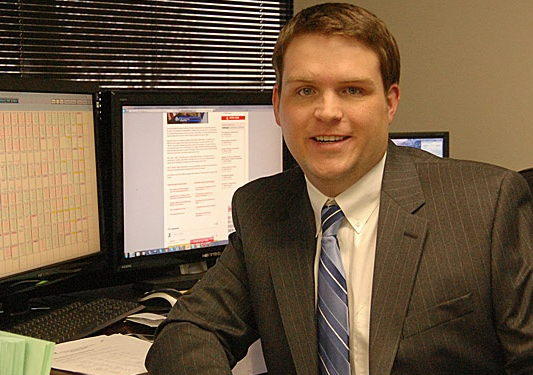

Will a New Presidential Administration Expand Opportunities for Trade?

Will a second administration of President Donald Trump bring progress on trade negotiations with key global partners? U.S. Meat Export Federation Vice President of Economic Analysis Erin Borror says exporters will be watching discussions with all trading partners, but two key regions stand out: 

The United States-Mexico-Canada Agreement (USMCA) is slated to be reviewed in 2026. Borror notes that USMCA delivered tariff-free trade and minimal sanitary and phytosanitary barriers across North America. The trade agreement was negotiated in the first Trump term and needs to be preserved and strengthened when it comes up for review.  

She also explains that the U.S. and United Kingdom held significant trade talks during the first Trump administration. That could signal an opportunity for an early trade win, particularly for U.S. beef and pork. U.S. red meat currently has virtually no market share in the UK, according to Borror.

Jack Hubbard's Stand on Agricultural Advocacy: Protecting Farmers from Opposition

Listen to featured comments from Jack Hubbard from a panel discussion titled Agriculture Under Attack.

Jack Hubbard is an owner and partner at the Berman and Company PR Firm. He previously served as Chief Marketing Officer and later Chief Operating Officer at American Humane, where he helped drive unprecedented growth in revenue and program impact. He was later honored with the organization's prestigious National Humanitarian Medal.

He studied political science at Davidson College in North Carolina and has served on several Boards including the U.S. Roundtable for Sustainable Poultry & Eggs. He regularly provides advice and counsel to CEOs and senior executives seeking to "Change the Debate" on key industry issues.

At the most recent National Association of Farm Broadcasters Convention, he was part of the panel dubbed Agriculture Under Attack. Oklahoma Farm Report's Stevie White is featuring Hubbard's comments from that discussion.

Hubbard's experience in Washington, D.C. has given him a firsthand look at how groups like the American Humane Society and PETA, are infiltrating policy. The well-funded and intricately organized groups are single-mindedly working to put farmers out of business.

"They want this to be the last generation; that the farm doesn't get passed down to the next," Hubbard said. "Because they have a moral objection to what folks are doing."

He pointed out that most people don't realize that both Republican and Democrat officials are receiving funding from the organizations and regularly attend their events.

"I am deeply concerned that as we are seeing politics change, we are seeing a really concerted effort by these animal rights organizations to infiltrate both parties and they have some really radical legislation that is designed to put farmers out of business."

He says that the answer is for more producers and farming advocates to speak up and set the records straight.

"The farming community needs to be much more vocal in managing public opinion moving forward," Hubbard stated.

He stated that current methods are outdated and must change to meet the evolving challenges of anti-agricultural groups. He said, "I think we are in a new era of advocacy in trying to ensure that bad policy doesn't hurt our rural communities. The only way to do that is to make sure that you are very active in public opinion."

He encouraged producers to tell their stories and to work aggressively to expose the agendas and funding of anti-agriculture groups. He said that it is important to undermine the undeserved credibility of the groups.

One, more subtle avenue of the attack on agriculture, is through lab-grown meat which Hubbard had some interesting insights about.

"This isn't a veggie burger," he said. "This is technological disruption that I am convinced rural America is completely unprepared for."

Meat is grown in a bioreactor using immortalized cells that function similarly to a tumor by replicating in perpetuity. Originally developed for medical research, they are now being mixed with a variety of chemicals to grow meat in a bioreactor.

"They don't disclose what these chemicals are in the bioreactor because they say that it is proprietary, like the Coca-Cola secret recipe," Hubbard cautioned. "There is a huge disconnect with transparency and consumer trust when you start raising questions about this stuff."

While financial gain is the central focus of lab-grown meat investors, however, a large-scale shift to those products would lead to a centralization of the protein supply chain never before seen. The leading shareholders control market share in food production to a degree never before seen in the United States.

From an environmental and sustainability standpoint, U.C. Davis conducted and published a study that showed that lab-grown beef has up to 25 times the emissions of naturally produced beef. The pharmaceutical-grade growth factors used in its production use tremendous amounts of energy to produce as does powering the bioreactors themselves.

"The environmental groups will say that animal agriculture accounts for fifteen percent of emissions," Hubbard noted. "They are right, but it isn't the whole truth. That is a global number that includes the farming practices in Rwanda, China, and the United States."

In the United States, the EPA states that emissions due to animal agriculture are closer to four or five percent. "If anything, we should be exporting our animal agriculture practices and our products because it is better for the planet. Not trying to put people out of business," Hubbard concluded.

The solution to these attacks boils down to educating policymakers and voters and speaking up in the defense of agriculture.

Mikayla Saunders's Journey from Australia to Cattlemen's Congress: A Dream Fulfilled

Listen to Ron Hays talking with Australian-National Mikayla Saunders about her experience at the Cattlemen's Congress.

Hailing from Kundle Kundle, New South Wales, Australia, nineteen-year-old Mikayla Saunders is attending the Cattlemen's Congress in Oklahoma City as a guest of the British White Cattle Park Association. Senior Farm and Ranch Broadcaster Ron Hays visited with her about her experience.

Saunders's trip to Oklahoma began with an ad on Facebook posted by Shallow Creek Farms of Lexington, Oklahoma, requesting help for the British White Show at Cattlemen's Congress. Saunders communicated her interest in helping, and within hours, owners Tracy and Vicky Van Horn excitedly accepted her request to come to the U.S. and help them with their cattle. The American British White Park Association and the British White Cattle Association of Australia sponsored her.

"I have followed a lot of the farms, like the Hockermans and Terra Rubra and the Smith Farm on their Facebook pages, so it has been very surreal to have actually met all of these people, and the cattle over here are very, very, very, nice!" she said. "They are definitely a beefier breed over here."

For the Van Horns, Saunders has been walking and grooming cattle and learning a lot about the way things are done in the U.S. During the event, she exhibited a steer for Smith Farm & Cattle Co., LLC, which she said was a dream come true. During her stay, she also visited the National Stockyards and was taken aback by the size and function of the facility.

Saunders is building her own herd of British Whites in Australia which she started with the purchase of two heifers and a cow with a heifer calf in late 2021. Her herd has grown to eighteen females and two bulls. She helps local kids by letting them show her cattle and teaching them the ropes of the show cattle industry in Australia.

Saunders originally fell in love with the breed-specific markings of British White Cattle – mostly white with black ears, noses, and eyes – and their docile temperaments.

"I have since learned that they eat very well and are well suited for both hot and cold climates, so very adaptable," she shared.

Even in Australia, British White Cattle are difficult to find. Saunders admitted, "I've had to travel as far as 14 hours north and south to get cattle that are suitable to show."

Her hometown, Kundle Kundle, is a very small, rural community located about four hours north of Sydney. It is comprised mostly of farms housing black cattle, making her British Whites stand out. She has completed her first year of University and is changing her degree program to become a bovine geneticist.

The Inaugural Cattlemen's Congress Commercial Female Sale at 1 PM January 9th!

The Cattlemen's Congress Commercial Heifer Sale will be held at the Super Barn Sales Arena at the OKC Fairgrounds on Thursday, January 9th at 1 PM.

Ahead of the sale that morning, you can check out the Hereford Pen Show and free lunch featuring Certified Hereford Beef at 11 AM in the Performance Barn Arena. Attend the sale live in the Super Barn at 1 PM or you can participate and bid on LiveAuctions.TV

After the sale, there will be a Cattlemen's Congress Female Sale Awards Presentation and Social Hour at the Cattlemen's Bar

Sale Manager is Matt Sims– for information- call him at 405-641-6081

Sims has been adding consignors and heifers to the sale lineup- which now includes over 850 head including:

40 Fall Pairs

152 Spring Two-Year-Old Pairs

373 Spring Calving Bred Heifers

103 Spring Yearling Open Heifers

Consignors include:

Manistee Cattle Co. – Watonga, OK

20 Commercial SimAngus Black/BWF fall pairs (possible 3 in 1's) with October/November calves at side by Boyd Justification and low birth weight Angus bulls pasture exposed to low birth weight Angus bulls from 12/9/24 until delivery/pickup.

16 SimAngus Black/BWF/RWF spring calving bred heifers bred AI 6/1/24 to RR Easy Express 2027 then pasture exposed to low birth weight SimAngus bulls.

M&M Farms – Bois D'Arc, MO

20 Commercial SimAngus Black/BWF fall pairs with November 2024 calves at side sired by low birth weight Angus bulls.

Swanson Ranch – Roosevelt, OK

27 Commercial Angus pairs with December 2024 calves at side by Tehama Patriarch F028.

20 Commercial Angus pairs with January 2025 calves at side by Tehama Patriarch F028 or low birth weight Angus bulls from Davis Angus and Wann Ranch.

90 Commercial Angus bred heifers due in February 2025 to Tehama Patriarch F028 or low birth weight Angus bulls from Davis Angus and Wann Ranch.

Akin Ranch – Davidson, OK

105 Commercial Angus pairs with January 2025 calves at side by Tehama Patriarch F028 for April 1 delivery. Buyers will receive a premium sort from 225 pairs.

Crawford Red Angus – Hollis, OK

100 Commercial Red Angus spring calving heifers AI bred to the $80,000 calving ease specialist Wedel Ranchmaster and cleaned up with registered Beckton and Crawford red angus low birth weight calving ease bulls for 60 days. Due to start calving February 15th.

Crawford Cattle Co. – Hollis, OK

90 Commercial Black ¾ Angus ¼ Simmental bred heifers due to calve from 2/15/25 until 4/15/25 to registered low birth weight Angus bulls from Express Ranches and Conley Cattle.

Bowling Ranch – Newkirk, OK

20 Commercial RWF Hereford x Red Angus heifers due to start calving 2/14/25 to BIEBER JUMPSTART J137 and low birth weight Pieper Red Angus bulls.

Davis Farms – Guthrie, OK

40 Commercial MaineAngus heifers due from 3/1/25 to 3/31/25 to Tehama Patriarch F028 and calving-ease Maine Anjou sons of Full Tilt and Irish Whiskey.

Imhoff Farms – Stroud, OK

17 Commercial Angus spring calving heifers due to calve in February 2025 to Coleman Night Watch 9259 and low birth weight sons of Night Watch and Charlo.

X Bar Co., LLC – Burbank, OK

25 Commercial Red open heifers out of King Ranch American Red cows sired by Express Ranches Angus or Mushrush Red Angus bulls.

30 Commercial RWF open heifers out of King Ranch American Red cows sired by Van Newkirk or Buford Ranch Hereford bulls.

20 home raised Commercial Black and BWF open heifers out of Express Ranches Angus cows and X Bar SimAngus cows sired by Express Ranches Angus Bulls.

T.J. Beach Farms, LLC – Elmer, OK

10 Commercial Angus open heifers sired by JDD Influence and Deer Valley Growth Fund sons from Davis Angus.

Jackson Farms – Stroud, OK

8 Commercial SimAngus open heifers sired by a grandson of Meyer Ranch 734 out of Angus and SimAngus cows.

Cole Statement on Speaker Mike Johnson's Reelection as Speaker of the House

Today, Congressman Tom Cole (OK-04) released the following statement after Speaker Mike Johnson was reelected to serve as the Speaker of the House for the 119th Congress:

"With a consequential Congress before us, I am proud to congratulate my friend and colleague, Speaker Mike Johnson, on being reelected to serve as the Speaker of the House for the 119th Congress," said Congressman Cole. "The Speaker is a principled Louisianian and Republican. His leadership has provided a steady hand dedicated to bringing voices together to advance responsible governance and conservative principles. Speaker Johnson is a hardworking man of faith who understands the opportunity before us, and he is ready to support this chamber in advancing President Trump's agenda. The American people have given us a clear mandate, and I have full faith in Speaker Mike Johnson's ability to help us deliver it. It is time to get to work."

Cole Takes Oath of Office for 119th Congress

Today, Congressman Tom Cole (OK-04) issued the following statement after taking the oath of office and being sworn in for the 119th Congress, where he will continue his leadership as Chairman of the House Appropriations Committee:

"'It's morning again in America,' as Reagan once said. With that same spirit of optimism, the American people gave us a mandate of change, and we will move into a new Congress where our America First commitment will help us build a safer, stronger, and more prosperous nation. I'm honored to continue working beside my colleagues, leadership, and appropriators in this pursuit as Chairman of the House Appropriations Committee.

"Now, more than ever, it's critical for us to provide a strong fiscal framework. Republicans are united behind effective governance, safeguarding hard-earned tax dollars, and implementing solutions that unlock our nation's full potential. As I have been, I'm fully devoted to strong conservative principles as we work to fulfill our Article I duties.

"By concentrating on the challenges and opportunities ahead of us, I see progress that will herald us into the golden years of America. One where stagnation will be replaced by growth, submissive governance will be transformed into bold leadership, and the dreams of everyday Americans will once again feel within reach.

"I look forward to working with President Trump and Republican leadership to deliver on the promises resoundingly demanded from people across the country," said Congressman Cole.

Speaker-Elect Hilbert Comments on DOJ Report

Speaker-Elect Kyle Hilbert, R-Bristow, has the following statement in reaction to today's U.S. Department of Justice report:

"With merely 17 days until Donald Trump moves back into the White House, this is a last-minute attack by the Biden administration. The fact is, we are already working collectively with our members, state agencies and service providers toward continual improvement in how Oklahomans with mental health challenges are served in our state. Oklahomans are far better equipped to make decisions on how to improve our mental health system than are bureaucrats in Washington."

NCGA Leaders Congratulate Members of 119th Congress

The National Corn Growers Association's leadership gathered on Capitol Hill today to welcome members of the new Congress as they were sworn into office.

"We are here to congratulate our friends and allies who were re-elected to Congress and introduce ourselves to those being sworn in for the first time," Hartman said. "We look forward to continuing our work with members on both sides of the aisle as we advocate for legislation that is important to corn growers."
 

NCGA leaders in attendance were Kenneth Hartman Jr., board president, Harold Wolle, board chairman and Jed Bower, board first vice president.
 

NCGA's top issues include securing passage of legislation that would ensure year-round consumer access to higher blends of ethanol, federal tax policies that are favorable to agriculture, and reauthorization of a comprehensive farm bill.

Congresswoman Bice Votes to Support Speaker Mike Johnson

Congresswoman Bice released the following statement after voting in support of Speaker Mike Johnson.
 
"The American people have given us a mandate to get our country back on track, and implementing President Trump's America First agenda must start on day one. I was proud to once again support my friend, Mike Johnson, as Speaker of the House. We must unite behind the Speaker and turn our attention to the issues that matter: securing the border, delivering relief to American families, and reducing spending."

NCBA Congratulates Speaker Johnson on Securing Reelection

This week, the National Cattlemen's Beef Association (NCBA) congratulated Speaker Mike Johnson (LA) for his successful reelection campaign as Speaker of the House for the 119th Congress:
 
"Congratulations to Speaker Johnson on successfully navigating a narrow margin and being elected as Speaker of the House by his peers once again. Speaker Johnson has always been a strong supporter of U.S. cattle producers, and we look forward to continuing to work with him in the new Congress," said NCBA Vice President of Government Affairs Ethan Lane. "There is a lot of work that needs to get done this year, including extending the 2017 Tax Cuts and Jobs Act, passing a long-term Farm Bill, and providing regulatory relief to producers that have been squeezed by government overreach over the past four years. We are confident Speaker Johnson is the leader to get these policy priorities across the finish line."

Daily Email for January 3, 2025


Oklahoma's Latest Farm

And Ranch News

Friday, January 3, 2025

 
Howdy Neighbors!

Here is Your Daily Oklahoma Farm and Ranch News Update: 


  • Above-Average Rainfall Improves Drought Conditions in Southern Oklahoma


  • Fifth Annual Cattlemen's Congress Begins This Weekend


  • Farmers Head into 2025 with Another Farm Bill Extension


  • Farm Bureau Appoints Members to Lead National Program Committees


  • Oklahoma Crop Producers Set to Receive $287 Million From End of Year CR


  • Agoro Carbon Alliance's Innovative Approach to Soil Health and Carbon Solutions


  • AG Drummond and Congressman Cole Among Those to Pay Tribute to Gene Rainbolt


  • BRRR...Cold is Coming!
 

Above-Average Rainfall Improves Drought Conditions in the South According to latest Drought Monitor Report

According to the latest Oklahoma drought monitor report, exceptional drought remains at zero percent, unchanged from the start of the calendar year.


Extreme drought or worse remains at zero percent, we last had extreme drought numbers the week of October 29th when it was 41.57%.


Severe drought or worse decreased to 0.33 percent, down from 0.59 percent last week.


Moderate drought or worse, conditions decreased to 5.52 percent, down from 11.54 percent last week.


Abnormally dry or worse conditions decreased to 29.72 percent, down from 43.22  percent last week.


As for our neighbors, Severe drought was removed along the Oklahoma-Texas and Louisiana-Arkansas borders, as well as from southern Mississippi, and improved in central Texas. Moderate drought was improved over large portions of Arkansas, eastern Texas, and in parts of Oklahoma, Louisiana and Mississippi.


moderate drought was expanded in southeast Kansas. Abnormal dryness was expanded in southwest Colorado, where weekly rainfall totals are 5% to 20% or normal for the week. Small areas of the region did observe heavy rainfall, where rainfall totals were more than an inch above normal. 


Kansas Drought Monitor shows Moderate Drought slightly increased from 28.00 last week to 28.72 this week. Texas Drought ratings decreased from 53.89 percent a week ago to 43.51 percent.


Click here for the Kansas Drought Monitor Page and Click here for the Texas Drought Monitor Page.

Read More About the Latest Drought Monitor Report Here

Sponsor Spotlight

The Oklahoma Wheat Commission promotes greater use of wheat in domestic and international markets through research, market development and public education.


Our Commissioners develop policy and programs, direct the funding, represent producer interests and, of course, promote Oklahoma wheat!


Learn more about the Oklahoma Wheat Commission by clicking here for their website.


Fifth Annual Cattlemen's Congress Begins This Weekend

Senior Farm and Ranch Broadcaster, Ron Hays, is back talking about the 2025 Cattlemen's Congress in Oklahoma City with the Executive Vice President of the show, Bray Haven.


The Cattlemen's Congress began as a replacement show when COVID restrictions caused the cancellation of the National Western Stock Show in 2021. It has quickly become a cornerstone of the beef cattle industry and North America's largest breeding beef cattle show. The fifth annual event is slated for January 4 – 11, 2025 at State Fair Park in Oklahoma City.


Haven expressed excitement about the progress being made on the new coliseum at the fairgrounds and looks forward to seeing the reactions of Cattlemen's Congress attendees when they see it.


"It is really exciting to see what is going on here in Oklahoma City," he said. "Oklahomans have seen the transformation of Oklahoma City, and it is continuing right here on the fairgrounds. It will be exciting when we get to move into it next year, but the 2025 Cattlemen's Congress is upon us, and we are excited to welcome people back to Oklahoma City!"

Listen to Ron's BeefBuzz with Bray Haven and Read More Here

Farmers Head into 2025 with Another Farm Bill Extension

Passed and signed into law in the early hours of Dec. 21, 2024 – the day a government shutdown would have begun if Congress had not acted – the American Relief Act of 2025 includes $31 billion in natural and economic disaster aid for farmers and ranchers, a second extension of the 2018 farm bill and $2.5 billion in additional aid to be distributed through USDA.


This Market Intel breaks down what these provisions mean for agriculture.


Farm Bill Extension

The 2018 farm bill expired – for a second time – on Sept. 30, 2024. While the farm bill has been expired for nearly three months, the impacts of an expiration unfold slowly and unevenly across programs it supports. If an extension had not been passed, markets would have gone over the "Dairy Cliff" on Jan. 1, 2025, with USDA required to purchase dairy products at about twice current market prices, based on parity price formulas established in the 1930s using 1910-1914 commodity prices. Similarly high prices would have been offered for many crops in the 2025 crop year under so-called permanent law, which is suspended with every farm bill – and every farm bill extension.


While the farm bill extension gives Congress until Sept. 30, 2025, to pass a new farm bill, it did not fund numerous programs without baseline funding – so-called "orphan programs." The first extension of the 2018 farm bill included $177 million for 19 of its 21 orphan programs for the 2024 fiscal year. The current extension includes no such funding. Unfunded programs range from the Feral Swine Eradication and Control Pilot Program to Emergency Citrus Disease Research.

Visit our Website to Read More from AFBF's Market Intel
 
 
Sign Up for Our Daily Email- Free Because of Our Sponsors!

Support Our Sponsors!


KIS logo


Advertise With Us!
 

For our farmers who have either- always have had cotton on their farms- or those who have more recently have added the fiber crop to their operations- we have a daily report heard on several of our Radio Stations- It's Called Cotton Talk!

Click on the Button below to listen to our most recent report
Click here for our Latest Cotton Talk- Hosted by KC Sheperd
 

Sponsor Spotlight

KIS FUTURES specializes in Futures and Options for Institutions, Commercials, Hedgers, and Individual Traders and executes trades for its clients in the following markets: Livestock, Grains, Energy, Metals, Softs, Financials, Currencies, and Stock Index Futures. For more information, please give them a call Toll Free at (800) 256-2555. Click here for their website to learn more.

And- their iPhone App, which provides all electronic futures quotes is available at the App Store- click here for the KIS Futures App for your iPhone.  


Farm Bureau Appoints Members to Lead National Program Committees

Farm Bureau farmer and rancher members play an important role in our communities and our organization by serving on governing boards and committees at local, state and national levels. Several newly appointed volunteers will provide leadership beginning in 2025 as members of the American Farm Bureau Federation's Promotion & Education and Young Farmers & Ranchers committees.


"Farm Bureau members care for their communities through engagement at every level of our organization," said AFBF President Zippy Duvall. "As these newly appointed national program committee members focus on advancing the mission of the American Farm Bureau, they will bring positive change and new ideas. It's gratifying to see engaged grassroots leaders stepping up and driving agriculture and rural communities forward."


Duvall announced the appointment of the following members to the YF&R Committee for the 2025-2027 term beginning in March: Cleveland Jackson, Georgia, (beef cattle); Scot Schwieterman, Kansas (alfalfa hay, row crops, cereal grains); Rachel Duncan, Louisiana (soybeans, beef cattle, cut flowers); Cora Okkema, Michigan (dairy cattle); Dustin and Katie Wiese, Minnesota (beef cattle, hay, corn, sorghum, oats); Tommy Salisbury, Oklahoma (soybeans, milo, wheat, beef cattle); and Jonathan Quigley, Washington (tree fruit).


Salibury is from Collinsville.

Read More About New AFB Committees Appointees Here
 

We invite you to listen to us on great radio stations across the region on the Radio Oklahoma Ag Network weekdays-

if you missed this morning's Farm News - or you are in an area where you can't hear it- click below for this morning's Farm news from Ron Hays and KC Sheperd on RON.
Listen to our Friday morning farm and ranch news with Ron Hays
 
 
Subscribe To the Daily Email


Sponsor Spotlight


P&K Equipment is the largest John Deere dealer across Oklahoma, with 18 locations, as well as an additional two locations in Arkansas. We are proud to serve our communities & the surrounding areas. P&K is committed to keeping your equipment running strong. In these colder months, sign up for our P&K Advantage maintenance & inspection specials. And year-round, it's easier than ever before to buy genuine John Deere parts online at GetGreenParts.com. Pick up your order in stores or have it shipped directly to you! P&K Equipment is committed to taking care of you long after the sale.


Oklahoma Producers Set to Receive $287 Million in Economic Assistance From End of Year CR

In addition to a farm bill extension through September 30, the American Relief Act of 2025, recently passed by Congress, contains $9.8 billion in market relief payments for 20 covered crops. This economic assistance is intended to offset part of the economic loss producers are facing following a decline in crop prices and production costs remaining high.


Analysis from the Food and Agricultural Policy Research Institute at the University of Missouri says the top ten states were based on estimated payments for corn, soybeans, wheat, cotton, sorghum, rice, barley, oats, and peanuts, shows Texas at #1 with $963 million, primarily because it's the largest U.S. cotton producer. Iowa is next with $846 million because of strong support for corn and soybean farmers. Illinois is next at $790 million, followed by Kansas at $787 million and Nebraska at $625 million, rounded out the top five. Minnesota, North Dakota, South Dakota, Indiana, and Missouri finish out the top ten.


Oklahoma producers can look forward to receiving $287 million from the package- most of that going to wheat producers- $196 million.


By Commodity- the top states are Cotton- Texas; Corn and Soybeans- Iowa; Wheat and Sorghum- Kansas.


Click Here for the report from FAPRI on these dollars going out to producers of the major crops

Agoro Carbon Alliance's Innovative Approach to Soil Health and Carbon Solutions

Launched in 2021, the Agoro Carbon Alliance's mission is to drive the global adoption of regenerative agriculture practices through high-quality, science-based carbon solutions that improve soil health and farmer prosperity, while providing businesses an opportunity to invest in a sustainable future. Oklahoma Farm Report's Maci Carter got to talk with Agoro's Global Marketing & Communications Manager Ashley Bruner about the alliance and what it does for both producers and the environment.


Bruner explained, "We work with farmers and ranchers across the United States on switching to sustainable practices which become another revenue stream for them while improving soil health."


Agoro has a team of support agronomists who go alongside producers to support them as they change to sustainable practices. The company handles all carbon credit certification processes to allow producers to continue to focus on their own operations while getting paid for the sequestered soil carbon generated from their new practices.


Agoro is backed by Yara International, one of the largest crop nutrition companies in the world. Its longstanding stability in the market adds confidence in Agoro's mission for producers.

Listen to Maci's Interview with Ashley Bruner and Read More About It Here

Attorney General Drummond and Congressman Cole Among those to Pay Tribute to Gene Rainbolt

Oklahoma businessman, civic leader, and philanthropist Gene Rainbolt passed away today at 95 years old.


Attorney General Gentner Drummond and Congressman Tom Cole were among the many government leaders who issued statements of tribute and condolences after his death.


Attorney General Drummond said:


"I am saddened to learn of the death of Gene Rainbolt. One of Oklahoma's greatest civic leaders, Gene was a proud Oklahoman, through and through – a product of the Dust Bowl who went on to become an innovator in banking, a champion for education, and a leading light in philanthropy. His contributions to the state he dearly loved are beyond measure. My thoughts and prayers are with his family and friends. While we grieve his loss, the life of Gene Rainbolt can inspire us all."


"Only Gene Rainbolt would be thoughtful and shrewd enough to write his own obituary – and it was as thoughtful, nuanced, and insightful as the man himself," mused Congressman Cole.


"Gene was an Oklahoma original. He always gave credit to others for his many accomplishments. His teachers, mentors, family, business associates, and others in his life were always singled out by him with praise and appreciation. However, the truth was that Gene himself was a man of extraordinary energy, wisdom, and determination. He was astute in his judgment of business ventures and always discerning about the people he met. This is what enabled him to build a banking empire that spans the state and has done so much to fuel and finance Oklahoma's growth and prosperity.


"Yet, Gene Rainbolt was more than just a canny businessman. He devoted so much of his wealth to making Oklahoma a better place by donating millions of dollars to worthy causes and institutions, including his beloved University of Oklahoma.


"Gene also generously supported public leaders in both parties and worked to strengthen the institutions and associations that strive to enhance the quality of life in our state. He donated to those people and institutions he thought worked to advance and improve the prospects of his fellow Oklahomans. He never stopped trying to help those around him to achieve their dreams, develop their talents, and strengthen their communities – and they loved him for it.


"Gene Rainbolt lived life fully and well. He loved and cherished his family, stood by his friends in both good and bad times, and served his country and state with consistency and distinction. Gene made everybody and everything around him better. He will be missed by all who knew him and by many more who knew him only through his deeds and generosity. We, as a state, have lost a great Oklahoman. I, as an individual, have lost a wise, wry, and witty friend who can never be replaced and will never be forgotten," said Congressman Cole.

BRRR...Cold is Coming!

Let's Check The Markets!
OKC West is our Market Links Sponsor- they sell cattle three days a week- Cows on Mondays, Stockers on Tuesday and Feeders on Wednesday- Call 405-262-8800 to learn more.
 
Today's First Look:
Ron on RON Markets as heard on K101  
mornings with cash and futures reviewed- includes where the Cash Cattle market stands, the latest Feeder Cattle Markets Etc.
Hear Today's First Look
 

Wholesale Boxed Beef Prices were lower - Choice Beef was down $0.74 and Select Beef was down $0.29 on 1/2/2025.


Click on the Button below for the latest report from USDA Market News

Boxed Beef Report
 

Weekly Cattle Auction Reports


The buttons below allow you to check out the weekly Cattle Auctions in the region that we post on our website and here in our daily email update:


These links below are the final sales of 2024 by the weekly auctions that we report for you here in the email.


Most cattle auctions will resume their sales the week of January 6, 2025.


Oklahoma National Stockyards Market Report from 12/16/2024
 
Tulsa Stockyards for Monday December 16, 2024
 
Joplin Regional Stockyards Market from Monday 12/30/2024
 
OKC West in El Reno Market Report from 12/17 and 12/18/2024
 
Woodward Livestock Market from Thursday 12/19/2024
 
Each afternoon we are posting a recap of that day's markets as analyzed by Justin Lewis of KIS futures - click below for the latest update on the Livestock and Grain Futures Trade..
Click Here to Listen to Justin's Commentary From 1/2/2025
 
Okla Cash Grain:  
Daily Oklahoma Cash Grain Prices- as reported by the Oklahoma Dept. of Agriculture- The report available after the close of the Futures Trade for that day.
Read Cash Grains Report from 1/2/2025
 
Our Daily Market Wrapup from the Radio Oklahoma Ag Network - analyzing the Futures Markets for that trading day- as reported by KC Sheperd.
Click to Listen to Our Weekday Wrap with KC
 
Slaughter Cattle Recap: 
The National Daily Slaughter Cattle Summary- as prepared by the USDA Market News
Read Report
 
TCFA Feedlot Recap:  
Finally, here is the Daily Volume and Price Summary from the Texas Cattle Feeders Association.
Read Report

Our Oklahoma Farm Report Team!!!!


Ron Hays, Senior Farm/Ranch Broadcaster and Editor


KC Sheperd, Farm Director and Editor


Dave Lanning, Markets and Production


Stevie White, Farm News and Email Editor


Pam Arterburn, Calendar and Template Manager

Podcasts From Oklahoma Farm Report and More

Two of our regular reports are also podcasts that you can subscribe to- Our daily Farm and Ranch News with KC Sheperd- available here on the Apple Podcast Platform


The second is our daily Beef Buzz with Ron Hays- available here on the Apple Podcast Platform


Periodically- we offer interviews on our Ag Perspectives Podcast series- this podcast is available here.


Ron has also has a series of podcasts from interviews with newsmakers at the Cattlemen's Congress- Click here or you can find them on your favorite Podcast platform- look for them by searching for Cattlemen's Congress Conversations.


We are making plans to jump back into regular installments of what has been called the Road to Rural Prosperity- a new name and fresh content is in the works- for now- click on the blue button below for one of our favorites that is a timeless classic.


The link below is one of our most recent podcasts- Ron spotlighting the Life and Times of Dr. Kim Anderson, who has just retired from OSU.

Listen to Ron Hays talking with Kim Anderson about his 42 years in OSU Extension and the Famous "A Third A Third A Third" Advice he has given.
 
 
Listen to Ron
Beef Buzz
 
Blue Green Gazette
Calendar
Auctions
Market Links
Facebook  Twitter  Youtube  

Our thanks to Midwest Farms Shows, P & K Equipment, Oklahoma Farm Bureau, Oklahoma Ag Mediation Program, Great Plains Kubota, Stillwater Milling Company, National Livestock Credit Corporation, Oklahoma Beef Council, Oklahoma Wheat Commission, Oklahoma AgCredit, the Oklahoma Cattlemens Association and  KIS Futures for their support of our daily Farm News Update.


For your convenience, we have our sponsors' websites linked here- just click on their name to jump to their website- check their sites out and let these folks know you appreciate the support of this daily email, as their sponsorship helps us keep this arriving in your inbox on a regular basis- at NO Charge!!


We also appreciate our Market Links Sponsor - OKC West Livestock! 


We invite you to check out our website at the link below too that includes an archive of these daily emails, audio reports and top farm news story links from around the globe.

Head to Our Website OklahomaFarmReport.Com
God Bless!
Reach Out To Us:
Tim West
President/General Manager
Rural Oklahoma Networks

405-317-6361

***************

Mike Henderson
Director of Sales

405-615-4922

KC Sheperd
Farm Director
Radio Oklahoma Ag Network

405-443-5717

Email KC
Ron Hays
Senior Farm/Ranch Broadcaster
Radio Oklahoma Ag Network

405.473.6144
Email Ron

Oklahoma Producers Set to Receive $287 Million in Economic Assistance From End of Year CR

In addition to a farm bill extension through September 30, the American Relief Act of 2025, recently passed by Congress, contains $9.8 billion in market relief payments for 20 covered crops. This economic assistance is intended to offset part of the economic loss producers are facing following a decline in crop prices and production costs remaining high.

Analysis from the Food and Agricultural Policy Research Institute at the University of Missouri says the top ten states were based on estimated payments for corn, soybeans, wheat, cotton, sorghum, rice, barley, oats, and peanuts, shows Texas at #1 with $963 million, primarily because it's the largest U.S. cotton producer. Iowa is next with $846 million because of strong support for corn and soybean farmers. Illinois is next at $790 million, followed by Kansas at $787 million and Nebraska at $625 million, rounded out the top five. Minnesota, North Dakota, South Dakota, Indiana, and Missouri finish out the top ten.

Oklahoma producers can look forward to receiving $287 million from the package- most of that going to wheat producers- $196 million. Oklahoma cotton farmers are due to receive $37 million, corn producers will receive $18 million while soybean and sorghum producers will each have $15 million paid out.

By Commodity- the top states are Cotton- Texas; Corn and Soybeans- Iowa; Wheat and Sorghum- Kansas.

Oklahoma is the fourth largest state when it comes to a wheat payout, the fifth largest state in cotton and sorghum payouts and actually the second largest state to Texas in terms of a sesame crop payout.

Click on the PDF below to see the complete report from FAPRI

EPA Adds Nine Additional PFAS to the Toxics Release Inventory

Today, Jan. 3, the U.S. Environmental Protection Agency announced the automatic addition of nine per- and polyfluoroalkyl substances to the list of chemicals covered by the Toxics Release Inventory.

TRI data is reported to EPA annually by facilities in designated industry sectors and federal facilities that manufacture, process, or otherwise use TRI-listed chemicals above set quantities. The data include quantities of such chemicals that were released into the environment or otherwise managed as waste. Information collected through TRI allows communities to learn how facilities in their area are managing listed chemicals. The data collected is available online and helps to support informed decision-making by companies, government agencies, non-governmental organizations and the public. Adding new chemicals to the TRI advances the Biden-Harris Administration's environmental justice commitments by improving accountability and transparency for families, workers, and communities across the country.

"EPA continues to make strides in getting information on PFAS into the Toxics Release Inventory so the public can see if these chemicals are being released into their communities," said Assistant Administrator for the Office of Chemical Safety and Pollution Prevention Michal Freedhoff. "People have a right to know when facilities in their backyards are releasing toxic chemicals into the environment and with today's action, we are providing important information about nine more."

These nine PFAS were added to the TRI list pursuant to the Fiscal Year 2020 National Defense Authorization Act, which provides the framework for the automatic addition of PFAS to TRI each year in response to specified EPA activities involving such PFAS. For TRI Reporting Year 2025 (reporting forms due by July 1, 2026), reporting is required for these nine additional PFAS, bringing the total PFAS subject to TRI reporting to 205.

Addition of PFAS with final toxicity values

The 2020 NDAA includes a provision that automatically adds PFAS to the TRI list upon the Agency's finalization of a toxicity value. The nine PFAS were automatically added for Reporting Year 2025 due to EPA having finalized a toxicity value during 2024 and whose identity is not claimed as confidential business information. These nine PFAS are:

·       Ammonium perfluorodecanoate (PFDA NH4) (3108-42-7)

·       Sodium perfluorodecanoate (PFDA-Na) (3830-45-3)

·       Perfluoro-3-methoxypropanoic acid (377-73-1)

·       6:2 Fluorotelomer sulfonate acid (27619-97-2)

·       6:2 Fluorotelomer sulfonate anion (425670-75-3)

·       6:2 Fluorotelomer sulfonate potassium salt (59587-38-1)

·       6:2 Fluorotelomer sulfonate ammonium salt (59587-39-2)

·       6:2 Fluorotelomer sulfonate sodium salt (27619-94-9)

·       Acetic acid, [(γ-ω-perfluoro-C8-10-alkyl)thio] derivs., Bu esters (3030471-22-5)

Addition of PFAS no longer claimed as confidential business information

Under NDAA section 7321(e), EPA must review CBI claims before adding a PFAS to the TRI list if the chemical identity is subject to a claim of protection from disclosure under 5 U.S.C. 552(a). EPA previously identified Acetic acid, [(γ-ω-perfluoro-C8-10-alkyl)thio] derivs., Bu esters for addition to the TRI list based on the NDAA's provision to include specific PFAS upon the NDAA's enactment. However, due to CBI claims related to its identity, this PFAS was not added to the TRI list at that time. The identity of this chemical was subsequently declassified in an update to the Toxic Substances Control Act Inventory in May 2024. Because its identity is no longer confidential, it was added to the TRI list.

As of Jan. 1, facilities that are subject to reporting requirements for these chemicals should begin tracking their activities involving these PFAS as required by Section 313 of the Emergency Planning and Community Right-to-Know Act. Reporting forms will be due by July 1, 2026.

These nine newly added PFAS, along with the previous 196 TRI-listed PFAS, are also subject to EPA's action in October 2023 to classify all PFAS subject to TRI reporting as chemicals of special concern. Among other impacts, this removes the use of a reporting exemption that allowed facilities to avoid reporting information on PFAS when those chemicals were used in small concentrations.

Learn more about the addition of these PFAS to the Toxics Release Inventory.

Meet Erin Dorsey: A Key Architect Behind Cattlemen's Congress and Its Global Expansion

Listen to Ron Hays talking with Erin Dorsey about the international growth of the Cattlemen's Congress.

With Cattlemen's Congress kicking off tomorrow, the Director of International Programs & Director of Operations, Erin Dorsey, has been hard at work putting it all together. Senior Farm and Ranch Broadcaster Ron Hays caught up with her to talk about how she has helped grow the event beyond the borders of the United States.

Dorsey previously worked for the National Western Stock Show and has been with the Cattlemen's Congress from the beginning. This, combined with other experience working closely with many breed associations, gives her a clear understanding of the beef show cattle business.

Erin Dorsey (Photo from Cattlemen's Congress website)

As the COVID pandemic moves into the past, more and more international beef cattle enthusiasts are making their way to the Cattlemen's Congress. "I work throughout the year on international stuff by providing outbound and inbound experiences for international guests. In the last two or three years, we have really seen an influx of visitors who actually have cattle here and/or are coming to purchase genetics from our breeders,"  Dorsey says cattle producers have visited from Mexico, Canada, Australia, Singapore, Uruguay, Peru, and others. "We have had up to twenty-two different countries represented at Cattlemen's Congress."

Through the inbound and outbound experiences, Dorsey arranges tours for domestic producers to travel to shows and ranches in other countries and brings international producers into the United States to view U.S. genetics and see how things are done here.

The success of the Cattlemen's Congress, since it began in 2020, has been meteoric. "We are the largest open and junior breeding cattle show in the United States right now, with over eight thousand entries," Dorsey shared. "With that being said, for us to have the amount of livestock we do in the twenty-two or twenty-three breeds that come here and show, and then still have all of the auctions going on here – we have breed sales for nearly every breed that comes here - whether it is a live sale, a semen and embryo auction, an online auction, or any of the above."

Dorsey pointed out how livestock shows across the United States have changed but is proud to say that the Cattlemen's Congress is still a show that breeders are proud to hang their signage in and show their genetics at.

"At a lot of other shows, they aren't doing that," she said. "They are just bringing cattle into the barn, rinsing them, and taking them back out to tie outs. It is impressive that our breeders and exhibitors that come here still enjoy doing that and still feel like this is a good place for them to market their livestock and their ranches."

The Beef Buzz is a regular feature heard on radio stations around the region on the Radio Oklahoma Ag Network and is a regular audio feature found on this website as well. Click on the LISTEN BAR at the top of the story for today's show and check out our archives for older Beef Buzz shows covering the gamut of the beef cattle industry today.
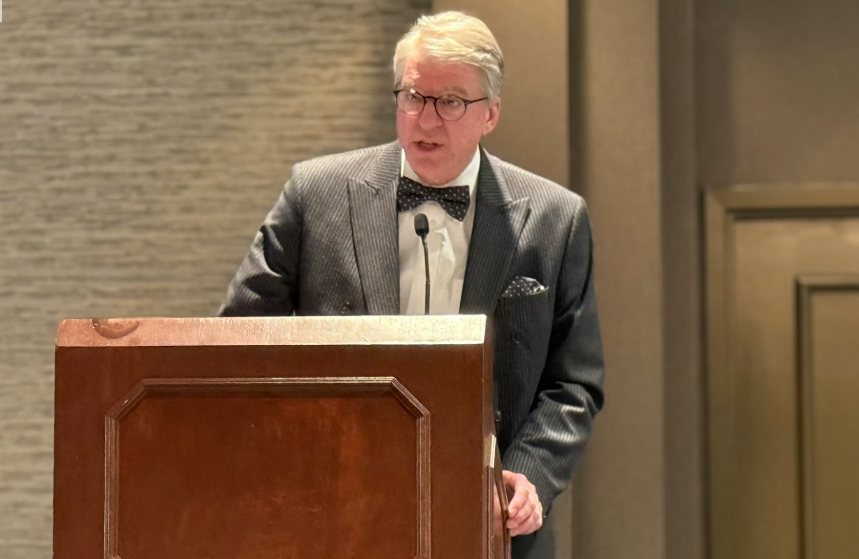
How John Deere's See & Spray Technology Revolutionizes Weed Control

Listen to Maci Carter talking with Tyler Hogrefe about John Deere's See & Spray Technology (Photo borrowed from John Deere website).

Tyler Hogrefe, Senior Technical Product Manager at John Deere, and Oklahoma Farm Report's Maci Carter discussed John Deere's See & Spray Technology and what it can do for farmers.

Sprayers are equipped with cameras and processors so that the sprayer can identify weeds from crops while traveling up to fifteen miles per hour across the field. Once a weed is identified, it actuates a nozzle on the boom to spray only the weed.

"There has been a lot of momentum with See & Spray over the past few years," Hogrefe said. "We have seen more than a million acres of utilization in the last year alone, with a fifty-nine percent average savings across those acres."

External studies conducted by Iowa State University noted 76% savings - $15 per acre - from using See & Spray equipment. Beck's Hybrids conducted their own study and noted $24 per acre savings and a more than 4 bushel per acre yield enhancement.

"That is a lot of value that customers can access right now, regardless of where they are with their operation – buying a new sprayer, a used sprayer, or looking to apply the technology to a sprayer that they already own today," Hogrefe commented.

The technology has been in the market for several years and is continually improving; however, the studies prove that it is as good as a broadcast application as it is. Recent improvements have been the increase of effective top speed to 15 mph and increased the width of soybean application from fifteen to thirty inches.

"Continuing to improve the product over time is an important part of Seed & Spray, and we will commit to doing it into the future as well," Hogrefe said.

The specific model of See & Spray a producer needs depends largely on the types of crops and size of the operation. The See & Spray Select model is good for fallow ground as it detects the difference between brown ground and weeds. The See & Spray Premium distinguishes between crops and weeds in a field. The See & Spray Ultimate has two tanks to apply residual herbicides at a constant rate, while simultaneously spot spraying identified weeds.

"With the three different See & Spray technologies that we have, See & Spray Premium can be retrofitted back to model year 2018 machines," Hogrefe explained. "It does require Direct Apply, which can also be retrofitted, and BoomTrac, but as long as you have that equipment already on your equipment, you can add See & Spray to your equipment for $25,000 to gain the advantages of the See & Spray Technology."

One of the biggest advantages of See & Spray is the data that comes after the field has been sprayed which shows where the greatest weed pressure was in the field to help with harvest decisions and preparation for the next growing season.

"The number one selling point on See & Spray is the opportunity to help customers advance their profitability with the technology at a time where we know they need it," Hogrefe said. "Times are tough and there is a lot of pressure on growers. This product helps you unlock value. Not only from an input savings standpoint but also from a yield standpoint."

Visit the website for more information about See & Spray Technology.

IVF Calf could help Accelerate Dairy Journey to Net Zero

Hilda is part of the Cool Cows project, which aims to establish a nucleus of highly methane-efficient animals. Picture by Phil Wilkinson / SRUC

Hilda may look like an ordinary calf, but the sprightly, Scotland-born animal represents an historic moment for the world's longest-running livestock genetics project and could help accelerate the dairy industry's journey to net zero.

The calf is the first of the 16th generation of the famous Dumfries-based Langhill Herd – a vital source of data for the UK dairy industry for more than half century – and, significantly, she is the first member of the herd to be born through IVF.

Hilda is part of the Cool Cows project, which aims to establish a nucleus of highly methane-efficient animals.

Fertilising Hilda's mother's eggs in a lab means the next generation of the Langhill Herd has arrived eight months earlier than previously possible.

With the process set to be repeated, it means that researchers are doubling the rate of genetic gain and thereby accelerating the accumulation of data to breed more efficient dairy cows.

The partnership between Scotland's Rural College (SRUC), Cumbria vets Paragon and Semex has received £335,000 from the Digital Dairy Chain's Collaborative Research & Development Grant Competition. The competition is managed and awarded independently by the UK's national innovation agency, Innovate UK.

SRUC's project lead Professor Richard Dewhurst said: "With global consumption of dairy produce continuing to grow, breeding livestock for sustainability is extremely important. The birth of Hilda is potentially a hugely significant moment for the UK dairy industry.

"We will use a new genomic assessment alongside existing production and environmental efficiency indices to select elite, methane-efficient heifers for breeding. The Cool Cows project will produce a greater number of offspring from these donors, rapidly establishing a nucleus of highly methane-efficient calves."

Project Lead Rob Simmons, Director and Lead Vet – Advanced Breeding at Paragon, said: "As the first veterinary practice to be awarded an RCVS Outstanding achievement in Environmental Sustainability, Paragon were delighted to help develop and deliver this important project to help support sustainability in the dairy sector. Genetic improvement in methane efficiency is going to be key to continuing to provide nutritious food to the public, while controlling the impact of methane emissions on the environment in the future."

Stuart Martin, Programme Director of Digital Dairy Chain said: "We are very pleased to have supported this groundbreaking project. With the environmental impact of farming being a critical global issue, projects that look for innovative solutions to mitigate this impact are vital to the industry. The birth of the first Cool Cows calf marks a significant milestone, promising significant results for the future of sustainable farming."

First established in 1970, the Langhill Herd – which led to a Queen's Anniversary Prize for SRUC in 2017 – has contributed to the development of the Profitable Lifetime Index, which benefits all dairy farmers in the UK.

Over the last five years, the dairy feed intake records collected at Langhill have been used by EGENES to create national genomic breeding values for feed efficiency available to all farmers who genotype their cows.

To find out more about research at SRUC, visit www.sruc.ac.uk.

This article was shared by the National Milk Producers Federation and published by Farming Life.

Cole Statement on Passing of H.E. "Gene" Rainbolt

Congressman Tom Cole (OK-04) released the following statement after hearing about the passing of Norman's H.E. "Gene" Rainbolt, a prominent Oklahoma businessman, banker, and philanthropist:

"Only Gene Rainbolt would be thoughtful and shrewd enough to write his own obituary – and it was as thoughtful, nuanced, and insightful as the man himself," mused Congressman Cole.

"Gene was an Oklahoma original. He always gave credit to others for his many accomplishments. His teachers, mentors, family, business associates, and others in his life were always singled out by him with praise and appreciation. However, the truth was that Gene himself was a man of extraordinary energy, wisdom, and determination. He was astute in his judgement of business ventures and always discerning about the people he met. This is what enabled him to build a banking empire that spans the state and has done so much to fuel and finance Oklahoma's growth and prosperity.

"Yet, Gene Rainbolt was more than just a canny businessman. He devoted so much of his wealth to making Oklahoma a better place by donating millions of dollars to worthy causes and institutions, including his beloved University of Oklahoma.

"Gene also generously supported public leaders in both parties and worked to strengthen the institutions and associations that strive to enhance the quality of life in our state. He donated to those people and institutions he thought worked to advance and improve the prospects of his fellow Oklahomans. He never stopped trying to help those around him to achieve their dreams, develop their talents, and strengthen their communities – and they loved him for it.

"Gene Rainbolt lived life fully and well. He loved and cherished his family, stood by his friends in both good and bad times, and served his country and state with consistency and distinction. Gene made everybody and everything around him better. He will be missed by all who knew him and by many more who knew him only through his deeds and generosity. We, as a state, have lost a great Oklahoman. I, as an individual, have lost a wise, wry, and witty friend who can never be replaced and will never be forgotten," said Congressman Cole.

Leader Munson sends condolences after passing of civic leader Gene Rainbolt

House Democratic Leader Cyndi Munson, D-Oklahoma City, released the following statement of condolences after the passing of Oklahoma civic leader Gene Rainbolt at 95.

"I am deeply saddened to hear about the passing of Gene Rainbolt, my dear friend and constituent. Oklahoma has lost an incredible leader—an incredible human being. Gene Rainbolt believed in the best of all of us. He invested his time and treasure in organizations and programs that helped all Oklahomans. He knew his influence and leadership would make a true difference, so he spent his life making sure we all knew about the real needs of Oklahomans. He always looked out for the marginalized and those who needed extra help.

"He was a true friend to me—always providing a listening ear and giving of his time to mentor me, especially as I began my journey in public service. I will never forget our first meeting. When very few people believed in me, he helped me to see what I was capable of.

"I have always admired—and been inspired by—his dedication to improving our criminal justice system, our public education system, and ensuring that every Oklahoman had an opportunity for economic prosperity. He believed in bettering the lives of every person, and he put his belief into action. His deep care for the future of our state was—and will continue to be—unmatched.

"I am sending my love and condolences to the entire Rainbolt family, who have also become dear friends of mine over the years. I will miss you, my dear friend. May you rest in peace."

Farm Bureau Appoints Members to Lead National Program Committees

Farm Bureau farmer and rancher members play an important role in our communities and our organization by serving on governing boards and committees at local, state and national levels. Several newly appointed volunteers will provide leadership beginning in 2025 as members of the American Farm Bureau Federation's Promotion & Education and Young Farmers & Ranchers committees.

"Farm Bureau members care for their communities through engagement at every level of our organization," said AFBF President Zippy Duvall. "As these newly appointed national program committee members focus on advancing the mission of the American Farm Bureau, they will bring positive change and new ideas. It's gratifying to see engaged grassroots leaders stepping up and driving agriculture and rural communities forward."

Duvall announced the appointment of the following members to the P&E Committee for the 2025-2027 term starting in March: Amy Mitchell, Idaho (beef cattle); Cindy Durheim, Minnesota (sheep, goats, hens, chickens, hogs, hay, corn); and Lacey Branson, Utah (beef cattle, alfalfa, corn, wheat). Three members were reappointed for two-year terms: Heidi Cooper, Massachusetts (turkeys, beef cattle, hens, hogs, sheep); Nate Schlief, North Dakota (beef cattle, hay/feed); and Lynn Leahy, Wisconsin (potatoes).

Eleven individuals representing qualifying Farm Bureau Promotion & Education states make up the P&E Committee. Its mission is to offer members the opportunity to engage consumers and bridge the gap between field to fork by inspiring and equipping farmers to convey the significance of agriculture to the public.

Duvall announced the appointment of the following members to the YF&R Committee for the 2025-2027 term beginning in March: Cleveland Jackson, Georgia, (beef cattle); Scot Schwieterman, Kansas (alfalfa hay, row crops, cereal grains); Rachel Duncan, Louisiana (soybeans, beef cattle, cut flowers); Cora Okkema, Michigan (dairy cattle); Dustin and Katie Wiese, Minnesota (beef cattle, hay, corn, sorghum, oats); Tommy Salisbury, Oklahoma (soybeans, milo, wheat, beef cattle); and Jonathan Quigley, Washington (tree fruit).

The YF&R Committee is made up of 16 positions representing all regions of the U.S. An individual or couple may hold each committee appointment. Committee members are responsible for program planning which includes the coordination of YF&R competitive events during AFBF's convention each January, and the award-winning Harvest for All program.

National committee members are nominated by their respective state Farm Bureaus. Learn more online: Promotion & Education and Young Farmers & Ranchers.

Pro Tem-Elect Paxton Comments on the Passing of Gene Rainbolt

Senate Pro Tem-Elect Lonnie Paxton today released the following statement on the passing of Gene Rainbolt.

"Oklahoma lost a beloved icon and trailblazer with the passing of Gene Rainbolt." Pro Tem-Elect Paxton said. "His vision, generosity and relentless optimism transformed our state for the better. Through his philanthropic endeavors, advocacy work and leadership, it was clear that Gene was committed to solving problems facing our state. He worked tirelessly to uplift Oklahomans and created countless opportunities for many, while inspiring hope throughout countless communities. I have had the privilege of getting to know his son, David, over the past several years. Through this friendship, it is clear to me that Gene's spirit and willingness to help others will continue.

"Gene Rainbolt's passing is a profound loss for our state. Yet, as we mourn, we also celebrate a life well-lived and his inspirational legacy. My wife Misti and I keep the Rainbolt family in our thoughts and prayers during this difficult time."

Agoro Carbon Alliance's Innovative Approach to Soil Health and Carbon Solutions

Listen to Maci Carter talking with Ashley Bruner about what Agoro is doing for agricultural producers and the environment.

Launched in 2021, the Agoro Carbon Alliance's mission is to drive the global adoption of regenerative agriculture practices through high-quality, science-based carbon solutions that improve soil health and farmer prosperity, while providing businesses an opportunity to invest in a sustainable future. Oklahoma Farm Report's Maci Carter got to talk with Agoro's Global Marketing & Communications Manager Ashley Bruner about the alliance and what it does for both producers and the environment.

Bruner explained, "We work with farmers and ranchers across the United States on switching to sustainable practices which become another revenue stream for them while improving soil health."

Agoro has a team of support agronomists who go alongside producers to support them as they change to sustainable practices. The company handles all carbon credit certification processes to allow producers to continue to focus on their own operations while getting paid for the sequestered soil carbon generated from their new practices.

Agoro is backed by Yara International, one of the largest crop nutrition companies in the world. Its longstanding stability in the market adds confidence in Agoro's mission for producers.

"I work with the carbon buyers' side as well," Bruner shared. "They are interested in permanence and ensuring that these practices will be in there for the long haul, which is a great fit for farmers and ranchers who believe that sustainability means being able to pass it on to the next generation. Staying financially viable while building soil health so it is really a positive interaction between those two parts of the market which gives me confidence in the future."

Many businesses have made net-zero commitments, and Agoro's carbon offsets are one of the tools that can help them reach their carbon goals while supporting farmers and ranchers.

According to Bruner, the uncertainty of where the market is going is the biggest hurdle for both buyers and sellers.

"We know that the food system is the most important thing that we all should be worried about in the future, and keeping it sustainable," she said. "That means sustainable or the food supply itself, and for farmers and ranchers staying in business."

Bruner believes that the carbon market will continue to grow, and as carbon buyers get closer to their commitment goals, it will grow even more meaning higher revenue for farmers and ranchers.

More information can be found at AgoroCarbonAlliance.com including testimonies from farmers and ranchers who have participated.

Daily Email for January 2, 2025


Oklahoma's Latest Farm

And Ranch News

Thursday, January 2, 2025

 
Howdy Neighbors!

Here is Your Daily Oklahoma Farm and Ranch News Update: 


  • Launch Rural OK: Supporting Rural Small Businesses in Oklahoma


  • The Corporate Transparency Act Roller Coaster: What Cattle Producers Need to Know Now


  • Watcha Listening To? 2024 Favorites and Ideas for 2025


  • Mark Johnson: Five New Year's Resolutions for 2025


  • US Custom Harvesters: A Look Ahead at This Year's Convention


  • Critical Farm Labor Visa Use Ticks Up


  • 2025 TSCRA Convention Registration Now Open


  • Looking Back at the 2024 OSU Cow Calf Corner
 

Launch Rural OK: Supporting Rural Small Businesses in Oklahoma

The Oklahoma Farm Bureau recently introduced a program designed to empower rural entrepreneurs: Launch Rural OK. OKFB's Rural Economic Development Coordinator Amarie Bartel was excited to tell Oklahoma Farm Report's KC Sheperd all about this collaborative effort that brings together various rural entrepreneurship resource providers to support and foster the growth of small businesses in Oklahoma's rural communities.


Launch Rural OK is a centralized website, offering rural entrepreneurs a one-stop shop for essential resources and information. Through this program, entrepreneurs gain access to a comprehensive network of support, empowering them to navigate the challenges and opportunities unique to rural businesses.


"If someone owns a small business or wants to start a small business, rather than scouring the internet to find the right folks, they can go to LaunchRuralOK.com to learn about all of the resources that are out there to support their small business," Bartel said. "Rural Oklahomans value relationships and that is really important to us as resource providers so we realized that we didn't just need a website that folks have to find. We needed to go out and be available."

Listen to KC's Interview with Amarie Bartel and Read More About It

Sponsor Spotlight

National Livestock was founded in 1932 in Oklahoma City. National's Marketing Division offers cattle for sale weekly at the Oklahoma National Stockyards in Oklahoma City. The Finance Division lends money to ranchers across several states for cattle production. The Grazing Division works with producers to place cattle for grazing on wheat or grass pastures. 


Dakota Moss with Livestock Risk Services is also a part of the National Livestock Family.


National also owns and operates other livestock marketing subsidiaries including Southern Oklahoma Livestock Auction in Ada, Oklahoma, OKC West Livestock Market in El Reno, Oklahoma, and the nation's premier livestock video sale, Superior Livestock Auction. National offers customers many services custom made for today's producer. To learn more, click here for the website or call the Oklahoma City office at 1-800-310-0220.

The Corporate Transparency Act Roller Coaster: What Cattle Producers Need to Know Now

Senior Farm and Ranch Broadcaster, Ron Hays, is talking with National Cattlemen's Association executive director of government affairs, Kent Bacus, about the roller coaster surrounding the Corporate Transparency Act.


In early December, the Corporate Transparency Act was halted to determine its constitutionality, then on December 23, it was reinstated with its original January 1, 2025, deadline. Then, once again on December 26, the U.S. Court of Appeals for the Fifth Circuit reversed that decision and reinstated the preliminary injunction against the federal government's enforcement of the Beneficial Ownership Information Reporting rules under the Corporate Transparency Act.


"Now, the preliminary injunction is back in effect, which led the Treasury Department to issue a statement saying that they are not going to enforce the Corporate Transparency Act while this injunction is in place," Bacus explained. "So, for now, we can breathe a collective sigh of relief because it looks like this injunction is going to hold and that January 1 deadline is not going to be enforced."


NCBA will continue to monitor the situation closely because the Department of Justice will likely appeal to the Supreme Court.

Listen to Ron's BeefBuzz with Kent Bacus and Read More About It Here

Watcha Listening To? 2024 Favorites and Ideas for 2025

Many of you enjoy Podcasts- we have several ideas for you at the bottom of the daily email that are perma-linked- so that's a reference that can always be checked out.


Over the last year or so- there are a couple of podcasts that we have been involved with that we enjoyed doing. One is our retirement podcast on our Ag Perspectives Platform that we did with Dr. Kim Anderson, who was the long time extension grain market economist at Oklahoma State. We called it "A Third, A Third and a Third- the Life and Times of Kim Anderson." It's a great reminder of Kim's impact on the business of ag here in the region- and offers some special insights into a career that was well done as he headed into retirement. Click here to jump over to that podcast and take a listen.


Another that we did just over a year ago is our conversation with the now late Jarold Callahan with Express Ranches. We lost Jarold last December but we captured a lot of what made him tick in that converation that is a part of podcasts we have been doing for a couple of years called Cattlemen's Congress Conversations. Click here for our visit with Jarold.


Our friends Dave Deken and Brian Arnall do good work with what is called their Red Dirt Agronomy podcast. They tells us that their top listened podcast of 2024 was with Sheri Glazier, the Dirt Road Dietician- click here to take a listen.


Sign Up for Our Daily Email- Free Because of Our Sponsors!

Support Our Sponsors!


KIS logo


Advertise With Us!
 

For our farmers who have either- always have had cotton on their farms- or those who have more recently have added the fiber crop to their operations- we have a daily report heard on several of our Radio Stations- It's Called Cotton Talk!

Click on the Button below to listen to our most recent report
Click here for our Latest Cotton Talk- Hosted by KC Sheperd


Mark Johnson: Five New Year's Resolutions for 2025

Mark Johnson, Oklahoma State University Extension Beef Cattle Breeding Specialist, offers herd health advice as part of the weekly series known as the "Cow Calf Corner," published electronically by Dr. Derrell Peel, Johnson, and Paul Beck. Today, Johnson talks about valuable New Year's Resolutions for commercial cow/calf operations.


Low cow inventories, little evidence of replacement heifer retention and record high prices for cattle during the close of 2024 are all positive signs for commercial cow-calf operations in 2025.


That being the case, I have listed my New Year's resolutions for commercial cow-calf operations to unlock greater profit potential in the coming year.

Read Mark Johnson's List of Resolutions Here
 

We invite you to listen to us on great radio stations across the region on the Radio Oklahoma Ag Network weekdays-

if you missed this morning's Farm News - or you are in an area where you can't hear it- click below for this morning's Farm news from Ron Hays and KC Sheperd on RON.
Listen to our Thursday morning farm and ranch news with Ron Hays
 
 
Subscribe To the Daily Email


Sponsor Spotlight


The Oklahoma Agriculture Mediation Program knows this is a hard time for farmers and ranchers. We want you to know we are still open, and we are still here for you. The Ag Mediation program is a free service that provides mediation to agriculture producers who may need help with ag-related disputes.


At Oklahoma Ag Mediation, we have been helping people in agriculture resolve conflicts since 1987. We know firsthand about working together to resolve conflicts, so you don't have to go through the court systems. Let our professional mediators help you. Mediation is allowed for lease issues, farmer/neighbor disputes, family farm transitions, and more. These services are available at no cost for Oklahoma farmers and ranchers in all 77 counties. For more information, you can go to ok.gov/mediation, or give us a call at 800 248 5465.


US Custom Harvesters: A Look Ahead at This Year's Convention

KC Sheperd caught up with David Misener of U.S. Custom Harvesters to discuss their annual convention coming up from January 30 – February 1 in Des Moines, Iowa.


Misener is happy that the event could return to Des Moines as it has not been held there since 2021 when attendance was much reduced due to the COVID-19 pandemic.


The Convention will include many speakers, a live auction, entertainment, meals, and an awards banquet. Associate members make up the trade show comprised of 14,000 square feet.


"Before Convention, the Board is going to be there a few days early to revamp our safety videos for our membership," Misener said. "We definitely want to teach good practices for our employees. We've been planning that for over a year already."

Listen to KC's Interview with David Misener and Read More Here

Critical Farm Labor Visa Use Ticks Up

Positions certified for the use of seasonal agricultural visas – known as H-2A visas – grew in fiscal year 2024 (October 2023-September 2024) by less than 2% for the second year in a row, according to recently released Department of Labor data. There were, however, notable decreases in certified positions in top H-2A employer states. Rising costs and new regulations have slowed the explosive growth we have seen over the last decade. Continuous growth in the program at large reflects a shift in the domestic workforce away from agriculture, despite a continued need for reliable farm labor.


Domestic Workforce

The American labor force available for agricultural employment has grown limited. We continue to see lower workforce participation than before the pandemic and a low unemployment rate. While the U.S. labor force has grown more than 12 million people in the last 10 years, declining fertility rates and large retirement pressures have slowed the labor force growth rate from 1.3% per year to only half a percent in the past 20 years. The official U.S. unemployment rate was 4.1% in October 2024, less than a percentage point higher than the pre-pandemic rate of 3.5%, and lower than the 5% unemployment rate a decade ago.

Read More About the Uptick in Farm Labor Visa's Here

2025 Cattle Raisers Convention & Expo Registration Open Now

Registration is now open for the 2025 Cattle Raisers Convention & Expo taking place April 11-13, 2025 in downtown Fort Worth.


The three-day event hosted by the Texas & Southwestern Cattle Raisers Association features educational sessions by top industry professionals, keynote addresses, live cattle demonstrations, student opportunities, entertainment and an expo with over 260 exhibitor booths. This year's event is expected to draw more than 4,000 attendees from around the Southwest including landowners, wildlife managers, ranchers and anyone with a passion for the cattle industry.


Registration packages can be customized including full registration, single-day passes, individual add-ons and expo-only access. Attendees can also book hotels with exclusive rates through the registration site. Attendees save up to $65 per registration when purchased prior to Feb. 15.


Learn more and register at cattleraisersconvention.com.


Looking Back at the 2024 Cow-Calf Corner Newsletter

Weekly, Oklahoma State University Extension Beef Cattle Nutrition Specialist Paul Beck offers his expertise on the beef cattle industry.


According to Beck, It has been a great year for the Cow-Calf Corner Newsletter! We shared Beef Cattle Marketing and Management in 53 newsletters and 171 individual articles.


The topics covered in the 53 Cow-Calf Corner Newsletter releases included:

  1. livestock marketing (59 articles) – discussing the impacts of the increased numbers of heifers in feedlots on herd expansion, the changes in cow markets and culling rates, import and exports in the beef markets, among many other topics.
  2. Cow calf production and management (58 articles) – describing proper calving and breeding season management, veterinary management and parasitology, bull selection, heifer retention, and nutrition.
  3. Stocker cattle production and management (25 articles) – including forage management, wheat pasture conditions, wheat pasture bloat, summer supplementation, and the impacts of pre-finishing management on feeder cattle production.
  4. Other topics such as Emergency management, Extension Programming, and Beef Quality Assurance.


There were 15 authors contributing to the Cow-Calf Corner Newsletter.


Of course, Derrell Peel shared his analysis on the livestock markets every week, but he also gave insights into an international study abroad class he took to Scotland and Ireland in 4 articles.


Mark Johnson had his weekly cow-calf corner tie-in with the Sun Up television program covering timely topics in cow-calf management along with articles on beef quality, advocacy for beef, and Beef Quality Assurance.


Read More Here from Paul Beck
Let's Check The Markets!
OKC West is our Market Links Sponsor- they sell cattle three days a week- Cows on Mondays, Stockers on Tuesday and Feeders on Wednesday- Call 405-262-8800 to learn more.
 
Today's First Look:
Ron on RON Markets as heard on K101  
mornings with cash and futures reviewed- includes where the Cash Cattle market stands, the latest Feeder Cattle Markets Etc.
Hear Today's First Look
 

Wholesale Boxed Beef Prices were lower - Choice Beef was down $1.15 and Select Beef was down $0.24 on 12/31/2024.


Click on the Button below for the latest report from USDA Market News

Boxed Beef Report
 

Weekly Cattle Auction Reports


The buttons below allow you to check out the weekly Cattle Auctions in the region that we post on our website and here in our daily email update:


These links below are (with the exception of Joplin) the final sales of 2024 by the weekly auctions that we report for you here in the email.


Most cattle auctions will resume their sales the week of January 6, 2025.


Oklahoma National Stockyards Market Report from 12/16/2024
Tulsa Stockyards for Monday December 16, 2024
OKC West in El Reno Market Report from 12/17 and 12/18/2024
Woodward Livestock Market from Thursday 12/19/2024
 

Joplin had 12,516 head on Monday, their final Monday sale of 2024.


Compared to the sale 2 weeks ago feeder steers sold 2.00-7.00 higher. Feeder heifers sold from 2.00 lower to 10.00 higher. Supply was heavy with very good demand. A Yearling Special was included in this auction. The largest draft of the day was 1,047 head of steers weighing 842 lbs. selling for 264.85/cwt.. The high selling draft was 22 head of 438 lbs. steers selling for 415.00/cwt..  


Click below for the complete closing report.

Joplin Regional Stockyards Market from Monday 12/30/2024
 
Each afternoon we are posting a recap of that day's markets as analyzed by Justin Lewis of KIS futures - click below for the latest update on the Livestock and Grain Futures Trade..
Click Here to Listen to Justin's Commentary From 12/31/2024
 
Okla Cash Grain:  
Daily Oklahoma Cash Grain Prices- as reported by the Oklahoma Dept. of Agriculture- The report available after the close of the Futures Trade for that day.
Read Cash Grains Report from 12/31/2024
 
Our Daily Market Wrapup from the Radio Oklahoma Ag Network - analyzing the Futures Markets for that trading day- as reported by KC Sheperd.
Click to Listen to Our Weekday Wrap with KC
 
Slaughter Cattle Recap: 
The National Daily Slaughter Cattle Summary- as prepared by the USDA Market News
Read Report
 
TCFA Feedlot Recap:  
Finally, here is the Daily Volume and Price Summary from the Texas Cattle Feeders Association.
Read Report

Our Oklahoma Farm Report Team!!!!


Ron Hays, Senior Farm/Ranch Broadcaster and Editor


KC Sheperd, Farm Director and Editor


Dave Lanning, Markets and Production


Stevie White, Farm News and Email Editor


Pam Arterburn, Calendar and Template Manager

Podcasts From Oklahoma Farm Report and More

Two of our regular reports are also podcasts that you can subscribe to- Our daily Farm and Ranch News with KC Sheperd- available here on the Apple Podcast Platform


The second is our daily Beef Buzz with Ron Hays- available here on the Apple Podcast Platform


Periodically- we offer interviews on our Ag Perspectives Podcast series- this podcast is available here.


Ron has also has a series of podcasts from interviews with newsmakers at the Cattlemen's Congress- Click here or you can find them on your favorite Podcast platform- look for them by searching for Cattlemen's Congress Conversations.


We are making plans to jump back into regular installments of what has been called the Road to Rural Prosperity- a new name and fresh content is in the works- for now- click on the blue button below for one of our favorites that is a timeless classic.


The link below is one of our most recent podcasts- Ron spotlighting the Life and Times of Dr. Kim Anderson, who has just retired from OSU.

Listen to Ron Hays talking with Kim Anderson about his 42 years in OSU Extension and the Famous "A Third A Third A Third" Advice he has given.
 
 
Listen to Ron
Beef Buzz
 
Blue Green Gazette
Calendar
Auctions
Market Links
Facebook  Twitter  Youtube  

Our thanks to Midwest Farms Shows, P & K Equipment, Oklahoma Farm Bureau, Oklahoma Ag Mediation Program, Great Plains Kubota, Stillwater Milling Company, National Livestock Credit Corporation, Oklahoma Beef Council, Oklahoma Wheat Commission, Oklahoma AgCredit, the Oklahoma Cattlemens Association, Invenergy Oklahoma and  KIS Futures for their support of our daily Farm News Update.


For your convenience, we have our sponsors' websites linked here- just click on their name to jump to their website- check their sites out and let these folks know you appreciate the support of this daily email, as their sponsorship helps us keep this arriving in your inbox on a regular basis- at NO Charge!


We also appreciate our Market Links Sponsor - OKC West Livestock! 


We invite you to check out our website at the link below too that includes an archive of these daily emails, audio reports and top farm news story links from around the globe.

Head to Our Website OklahomaFarmReport.Com
God Bless!
Reach Out To Us:
Tim West
President/General Manager
Rural Oklahoma Networks

405-317-6361

***************

Mike Henderson
Director of Sales

405-615-4922

KC Sheperd
Farm Director
Radio Oklahoma Ag Network

405-443-5717

Email KC

Ron Hays

Senior Farm/Ranch Broadcaster

Radio Oklahoma Ag Network

OklahomaFarmReport.Com


405.473.6144

Email Ron

Farmers Head into 2025 with Another Farm Bill Extension, Aid

Passed and signed into law in the early hours of Dec. 21, 2024 – the day a government shutdown would have begun if Congress had not acted – the American Relief Act of 2025 includes $31 billion in natural and economic disaster aid for farmers and ranchers, a second extension of the 2018 farm bill and $2.5 billion in additional aid to be distributed through USDA.

This Market Intel breaks down what these provisions mean for agriculture.

Farm Bill Extension

The 2018 farm bill expired – for a second time – on Sept. 30, 2024. While the farm bill has been expired for nearly three months, the impacts of an expiration unfold slowly and unevenly across programs it supports. If an extension had not been passed, markets would have gone over the "Dairy Cliff" on Jan. 1, 2025, with USDA required to purchase dairy products at about twice current market prices, based on parity price formulas established in the 1930s using 1910-1914 commodity prices. Similarly high prices would have been offered for many crops in the 2025 crop year under so-called permanent law, which is suspended with every farm bill – and every farm bill extension.

While the farm bill extension gives Congress until Sept. 30, 2025, to pass a new farm bill, it did not fund numerous programs without baseline funding – so-called "orphan programs." The first extension of the 2018 farm bill included $177 million for 19 of its 21 orphan programs for the 2024 fiscal year. The current extension includes no such funding. Unfunded programs range from the Feral Swine Eradication and Control Pilot Program to Emergency Citrus Disease Research.

Disaster Aid

The second pillar of agriculture-related provisions in the American Relief Act of 2025 is $21 billion in disaster aid. Dozens of natural disasters occurred in 2023 and 2024 with over $1 billion in economic impact. For agriculture, significant events across these years include extreme drought in the Gulf Coast; hurricanes Hilary, Idalia, Helene and Milton; and flooding in the Northeast and California. Before estimates for hurricanes Helene- and Milton-related losses were included, Farm Bureau estimated that uncovered disaster-related agricultural losses had already exceeded $14.1 billion across 2023 and 2024 alone.

Most of the $21 billion in agriculture disaster aid in the American Relief Act of 2025 is to be distributed by USDA to cover necessary expenses related to the losses of revenue, quality or production for crops (including milk, on-farm stored commodities, crops prevented from planting, and harvested adulterated wine grapes), trees, bushes and vines. Qualifying losses include those caused by the following natural disasters occurring in calendar years 2023 and 2024: droughts, wildfires, hurricanes, floods, derechos, excessive heat, tornadoes, winter storms, freeze (including a polar vortex), smoke exposure and excessive moisture. Of the $21 billion, up to $2 billion will be used to cover livestock losses related to drought, wildfires and floods and $3 million is mandated to be used to carry out regular testing for molasses imports at port of entry.

USDA may provide the disaster assistance through block grants to eligible states and territories, including assistance in the form of compensation to producers for timber (including non-federal forest landowners), citrus, pecan and poultry (including infrastructure), and agricultural producers who have suffered losses due to the failure of Mexico to deliver water to the United States in accordance with the 1944 Water Treaty.

Producers who have insurance under the Federal Crop Insurance Program or coverage under the Noninsured Crop Disaster Assistance Program (NAP) for the applicable crop year are eligible to receive payments covering up to 90% of their disaster-related revenue losses, as determined by USDA. For producers without crop insurance or NAP coverage, payments are available but are capped at 70% of their disaster-related revenue losses as determined by USDA. If uninsured losses are determined to represent only a de minimis (insignificant) portion of a producer's overall revenue losses, USDA may allow payments covering up to 90% of total losses. However, USDA has significant discretion in defining terms like "de minimis" and setting program provisions, which will ultimately determine the amount of assistance farmers receive. Other provisions, such as county-level drought triggers, administrative cost caps, expanded reporting obligations and payment rules for specialty categories, will follow the framework established in the Disaster Relief Supplemental Appropriations Act of 2022 to ensure consistency and clarity in program implementation.

USDA is required to provide $220 million through block grants to eligible states with smaller agricultural footprints to provide compensation for crop, timber and livestock losses, including on-farm infrastructure, for 2023 or 2024 weather events the state deems warrant relief. States eligible for this specific block grant must have a 2023 net farm income of less than $250 million, fewer than 8,000 farms, and an average farm size of less than 1,000 acres. Eight states meet all three criteria: Alaska, Connecticut, Hawaii, Maine, Massachusetts, New Hampshire, Rhode Island and Vermont.

Economic Aid

Of the bill's $31 billion in direct payments for farmers and ranchers, $10 billion is specifically for economic aid in response to the perilous financial situation in farm country, particularly for row crop farmers. According to bill text, the $10 billion must be distributed within 90 days of enactment through a one-time economic assistance payment for producers of eligible commodities in the 2024 crop year. Eligible commodities include all those covered by Title I of the farm bill, excluding temperate rice japonica.

Payments per acre for each crop will be determined as the higher of the two formulas featured in the following graphic. The primary payment will be calculated by multiplying projected per-acre losses by a factor of 26%. For corn, soybeans, wheat, cotton, rice, sorghum, oats and barley, the payments are to be calculated using the USDA-Economic Research Service's published national average cost-of-production forecasts. For all other crops, USDA is to calculate a comparable total estimated cost-of-production. The projected revenue per acre will be calculated using projected 2024/25 market year average prices set in the Dec. 10 World Agricultural Supply and Demand Estimates (WASDE) and a 10-year average of the national average harvested yield per acre.

A minimum per-acre payment will be calculated by multiplying 8% of a crop's statutory reference price by the national average payment yield. The payment yield is the yield used in calculating Price Loss Coverage (PLC) program payments.

The farmer will then be paid on all acres planted to eligible commodities for harvest, grazing, haying, silage or other similar purposes for the 2024 crop year. Additionally, farmers will be paid on 50% of all acreage that was prevented from planting during the 2024 crop year due to drought, flooding, other natural disaster or other conditions beyond the control of the farmer as determined by the secretary of agriculture.

Below are estimated per-acre payment rates. Please note that these are only estimates, and there are still details to be determined by USDA. In addition to potential limitations in funding due to the $10 billion cap, there is uncertainty about how exactly payments for certain crops will be calculated. For instance, will the revenue for cotton and yields be determined based on seed cotton (pre-ginned cotton that is technically the Agriculture Risk Coverage (ARC)/PLC program crop? Or only account for cotton lint? Additionally, while the bill specifies that rice is defined as including long- and medium-grain rice, the ERS cost-of-production estimate for rice fails to distinguish between types of rice and includes high-value temperate rice japonica. Will the per-acre payments for rice be calculated using the same cost-of-production for all rice, or have different estimates for short-/medium-grain and long-grain rice as is done in the ARC/PLC programs? See the appendix for breakout tables of how the per-acre payments in this Market Intel were calculated.

Economic aid will be capped at $125,000 for farmers and ranchers with less than 75% of their average gross income across tax years 2021, 2022 and 2023 derived from farming, ranching or forestry. The cap is increased to $250,000 for farmers with 75% or more of their average gross income derived from farming, ranching and forestry. There is no traditional adjusted gross income maximum to receive aid, and economic aid payment limitations are unrelated to any other program's payment limits. As is typical with ARC/PLC payments and other forms of agricultural direct payments, the legal structure of the farm will determine the per-farm aid limit. If multiple farmers are part of a general partnership or joint venture, payment limitations are not imposed on the entity level but apply to each farmer individually.

Additional Miscellaneous Agriculture-Related Funding

A hodgepodge of other disaster funding to be administered by USDA totals $2.5 billion, including several funding items closely aligned to a November White House request for emergency funding for USDA. Additional USDA funding includes:

  • $7.5 million for the Office of the Inspector General for oversight of projects and activities carried out by funds given to USDA in the continuing resolution;
  • $42.5 million for Agricultural Research Service's building and facilities;
  • $356.535 million for Farm Service Agency's Emergency Forest Restoration Program;
  • $828 million for the Farm Service Agency's Emergency Conservation Program;
  • $920 million for the Natural Resources Conservation Service's Emergency Watershed Protection Program;
  • $362.5 million for the Rural Development Program's Rural Development Disaster Assistance Fund; and
  • $25 million for the Food and Nutrition Service's Commodity Assistance Program to support The Emergency Food Assistance Program (TEFAP) for infrastructure needs related to the consequences of major disaster declarations from 2023 and 2024.

Conclusion

The American Relief Act of 2025 will provide much-needed relief to farmers and ranchers across the country. A total of $31 billion of economic and disaster aid for farmers and an extension of the 2018 farm bill has certainly saved farms. However, an updated farm bill with a functioning safety net would have made much of this ad hoc aid unnecessary. The suspension of funding for the orphan programs also leaves a hole for some important priorities for agriculture. A new farm bill in 2025 could plug these holes and prevent the need for ad hoc economic aid in future years.

Appendix

Disclaimer

The exact final payment calculations could be different from these estimates. Some proration may also be needed to keep payments within the $10 billion allocated by the American Relief Act of 2024.

Drummond comments on passing of civic leader Gene Rainbolt

Attorney General Gentner Drummond made the following remarks regarding the death today of Oklahoma businessman and civic leader Gene Rainbolt. He was 95.

"I am saddened to learn of the death of Gene Rainbolt. One of Oklahoma's greatest civic leaders, Gene was a proud Oklahoman, through and through – a product of the Dust Bowl who went on to become an innovator in banking, a champion for education and a leading light in philanthropy. His contributions to the state he dearly loved are beyond measure. My thoughts and prayers are with his family and friends. While we grieve his loss, the life of Gene Rainbolt can inspire us all."

Fifth Annual Cattlemen's Congress Begins on January 4, 2025

Listen to Ron Hays talking to Bray Haven about the fifth annual Cattlemen's Congress.

Senior Farm and Ranch Broadcaster, Ron Hays, is back talking about the 2025 Cattlemen's Congress in Oklahoma City with the Executive Vice President of the show, Bray Haven.

The Cattlemen's Congress began as a replacement show when COVID restrictions caused the cancellation of the National Western Stock Show in 2021. It has quickly become a cornerstone of the beef cattle industry and North America's largest breeding beef cattle show. The fifth annual event is slated for January 4 – 11, 2025 at State Fair Park in Oklahoma City.

Haven expressed excitement about the progress being made on the new coliseum at the fairgrounds and looks forward to seeing the reactions of Cattlemen's Congress attendees when they see it.

"It is really exciting to see what is going on here in Oklahoma City," he said. "Oklahomans have seen the transformation of Oklahoma City, and it is continuing right here on the fairgrounds. It will be exciting when we get to move into it next year, but the 2025 Cattlemen's Congress is upon us, and we are excited to welcome people back to Oklahoma City!"

Numbers indicate that this year's event has grown once again - both in show entries of all breeds and in cattle consigned to the multiple sales held during the event.

"We are getting a lot of those sale catalogs in, and they are getting up on our website," Bray said. "There are lots of outstanding bulls and females, lots of live lots, and then a lot of genetic opportunities through embryos and semen, as well. I think the sales are going to be really strong this year which has made Cattlemen's Congress stand out."

The Commercial Female Sale is a new addition this year and features more than 500 head of bred females, pairs, and some open animals, too. It will be held on the afternoon of Thursday, January 9. A free luncheon will be served from 11 a.m. to 12:30 p.m. during the National Hereford Pen Show, and the new Commercial Female Sale will follow it at 1 p.m. in the Super Barn Sale Arena. The afternoon will wrap up with the Cattlemen's Congress Female Sale Awards & Social at 3:30 pm.

The animals will be shown and sold via video to save consigners on freight costs. "We are going to offer some awards to the consigners of the high-selling lots," Haven said. "There is a lot of history for cattlemen here in the state of Oklahoma. We have a lot of legacy ranches and people who raise high-quality commercial cattle, and we are just trying to give them a platform to market some of their cattle and interact with this great event that we have here."

The event schedule is jam-packed with three to four breeds showing daily along with sales on nearly every day of the show. "From the first show, we have condensed our days back to make sure we are maximizing, not only the use of the facility but also people's experience here," Haven explained. "If you come to Cattlemen's Congress, there is something for you to see all day long."

Tradeshow space is sold out and will include new products, technology, clothing, and all of the other expected wares. "Come experience the whole gamut of things at Cattlemen's Congress, from the show to the sales to the tradeshow," Haven compelled. "There is something to do all day long and if you are visiting for a day or a weekend, I promise that you won't be disappointed in what you will find."

Cattle from over forty states will be on display at Cattlemen's Congress, and they aren't only show cattle. Haven said, "I think people in the industry tend to separate show cattle from commercial cattle, but some of these breeds are improving genetics for everybody. It's not just phenotype for the show ring, but cattle that work in the pasture, too. These people are developing genetics that will improve your herd, so I hope that you will come to Cattlemen's Congress with an open mind and see what all these folks have done to improve their breeds."

The Beef Buzz is a regular feature heard on radio stations around the region on the Radio Oklahoma Ag Network and is a regular audio feature found on this website as well. Click on the LISTEN BAR at the top of the story for today's show and check out our archives for older Beef Buzz shows covering the gamut of the beef cattle industry today.
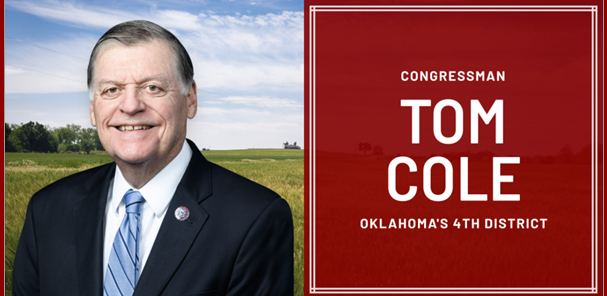
Fetgatter Embraces Role as Tribal/External Affairs Leader

Rep. Scott Fetgatter, R-Okmulgee, is serving in the leadership role of Tribal & External Affairs for the Oklahoma House of Representatives for the 60th Legislature. This is a new position for the House.

"We have needed to fill this gap for a long time," Fetgatter said. "We need someone that can keep in constant contact not only with our sovereign tribal governments, but with our congressional delegation and our national and international commissions, as well as with our municipal and county governments. Building and strengthening these relationships will help us solve issues like renewing compacts between the state and the tribes, as well as help us better assist our citizens with infrastructure issues or numerous other concerns that exist at the city, county or national level."

Fetgatter said the role also will have an economic development component as he will be working with businesses and corporations to bring more jobs and growth to boost the state's economy.  

"Representative Fetgatter has years of experience building consensus between the House of Representatives and our state and national partners," said House Speaker-Elect Kyle Hilbert, who named Fetgatter to the new position. "Keeping our House members informed on tribal governance issues as well as projects throughout the state, and even at the national level, that affect our constituents is vital."

In his new role, Fetgatter also is also serving as House chair of the Joint Committee on State-Tribal Relations. In the committee's Dec. 30 meeting, members voted to ratify a 10-year vehicle registration compact with the Cherokee Nation that was set to expire by the end of the year

"This is an example of the Legislature working to foster a better working relationship with our sovereign tribal governments for the benefit of all of our citizens," said Fetgatter, who is a citizen of the Choctaw Nation.

He also envisions utilizing his new position to better inform the House members on issues such as the needs of municipalities, counties, rural water districts and other local government entities throughout the state, whether those be county roads and bridges projects, water needs or broadband expansion.

He hopes too that he will be in closer contact with Oklahoma's members of Congress, leading to quick response times should the Legislature need something from the federal level.

Fetgatter was first elected to the House in 2016 and most recently chaired the House Appropriations & Budget Finance Subcommittee, as well as being a member of the full A&B Committee. He has led initiatives to promote business-friendly policies in Oklahoma and has been dedicated to promoting economic development and diversity in the state. He has played a crucial role in extending incentives and tax credits for some of Oklahoma's largest industries, creating more stability and growth for the state.

Prevent Lung Cancer by Testing Your Home for Radon

In January, the EPA recognizes National Radon Action Month and encourages Americans to test their homes for radon. Radon is an odorless, colorless, naturally occurring radioactive gas that, when left unaddressed, can build up inside a home. Over time, exposure to radon can cause lung cancer. The only way to know if your home has high levels of radon is to test for it.

"Radon is a serious public health risk that can be reduced using simple, proven techniques," said Acting Director of EPA's Indoor Environments Division, Sharon White. "During this year's National Radon Action Month, we urge everyone to take the first but vital step of testing their home. This year's theme of 'Test Your Nest: Test, Fix, Save a Life,' emphasizes that identifying and reducing radon exposure can decrease lung cancer risk and save lives. Together we can protect our families and communities from this invisible threat."

Testing for radon is easy and inexpensive. Affordable do-it-yourself radon test kits are available for purchase online and at most home improvement and hardware stores. Some states and municipalities even provide at-home radon test kits for free. You can also hire a qualified radon professional to test your home. Contact your state or Tribal radon program to learn more about radon services in your area.

Millions of homes in the United States have elevated levels of radon. Radon is the number one cause of lung cancer among non-smokers and is responsible for about 21,000 lung cancer deaths every year, but many people don't know about radon or the risks it can pose to their health. 

If you haven't tested your home for radon, National Radon Action Month is the perfect time to take this step to protect yourself and your loved ones. Tens of millions of homes have already been tested, and millions of homes with high radon levels have been fixed.

The EPA recommends taking action to fix your home if you discover radon levels above 4 picocuries per liter. If your home does have elevated levels of radon, a qualified professional can install a system to lower your indoor radon levels. For more guidance on how to address radon risks, see EPA's radon website.

Test. Fix. Save a life. 

Find a radon test kit.

Read frequent questions about radon.

Above-Average Rainfall Improves Drought Conditions in the South According to latest Drought Monitor Report

To view the latest Oklahoma drought map, CLICK HERE.

According to the latest Oklahoma drought monitor report, exceptional drought remains at zero percent, unchanged from the start of the calendar year.

Extreme drought or worse conditions remain at zero percent, unchanged since the week of October 29.

Severe drought or worse conditions decreased to 0.33 percent, down from 0.59 percent last week.

Moderate drought or worse conditions decreased to 5.52 percent, down from 11.54 percent last week.

Abnormally dry or worse conditions decreased to 29.72 percent, down from 43.22 percent last week.

According to the 6-to-10-day precipitation outlook map, Western Oklahoma, except for the panhandle, is leaning near normal chances of precipitation through January 11, 2025. The Panhandle is leaning above 33 – 40 percent chances of precipitation. Most of the Eastern half of the state is leaning below 33 – 40 percent chances of precipitation, except for the southeast corner which is leaning below 40 – 50 percent chances of precipitation through that January 11, 2025 date.

To view the United States Drought Map, CLICK HERE.

Precipitation fell across much of the U.S. this week, with heavier amounts (> 1 inch) falling across large portions of the Northwest U.S. and from south-central U.S. to the Ohio Valley. Coastal areas of the Pacific Northwest, from Washington to northern California, reported weekly rainfall totals between 2 to 15 inches, while precipitation totals of 2 to 10 inches were reported in areas from eastern Texas to Alabama, as well as parts of the Ohio Valley and the Southeast. Above-normal precipitation supported drought improvements across large portions of the South and Midwest, and in parts of the Pacific Northwest, Midwest and Southeast. Conversely, weekly precipitation totals were below normal in areas of the southwestern U.S., Mid-Atlantic and Northeast. Drought and abnormal dryness were expanded or intensified in portions of the Southwest and in small pockets of the High Plains. Temperatures were above normal across much of the U.S. this week. Areas along the Northern Tier, from northern portions of the West, to the Midwest observed temperatures 10 to 25 degrees above normal. Below-normal temperatures were reported across northern portions of the Northeast, from northern New Jersey to Maine, where departures were up to 5 degrees F below normal this past week. Below-normal temperatures were also observed in small pockets of the Southeast this week.

In the Southern Plains, heavy rainfall was observed this week, with precipitation totals ranging between 1 to 8 inches above normal. Above-normal rainfall, with amounts up to 600% above normal, along with improvements shown in short-term SPI/SPEI, streamflow and soil moisture data, supported widespread improvements to drought made from eastern Texas to Mississippi this week. Severe drought was removed along the Oklahoma-Texas and Louisiana-Arkansas borders, as well as from southern Mississippi, and improved in central Texas. Moderate drought was improved over large portions of Arkansas, eastern Texas, and in parts of Oklahoma, Louisiana and Mississippi. Conversely, western portions of Oklahoma and Texas observed below-normal precipitation this week. Moderate drought and abnormal dryness were expanded in small parts of western Texas. Temperatures were above normal across the entire region this week, with departures ranging between 1 to 15 degrees F above normal.

In The High Plains, warm temperature dominated this week, with departures ranging up to 20 degrees F above normal, especially along the northern portions of the region. Precipitation fell across much of the region this week, but amounts were not large enough to justify large improvement across much of the High Plains. Extreme drought was expanded in northern Nebraska, while moderate drought was expanded in southeast Kansas. Abnormal dryness was expanded in southwest Colorado, where weekly rainfall totals are 5% to 20% or normal for the week. Small areas of the region did observe heavy rainfall, where rainfall totals were more than an inch above normal. This above-normal precipitation allowed for improvements to be made in South Dakota and along the Wyoming-Colorado border. Moderate to extreme drought were improved in northern Colorado and southern Wyoming, while severe drought was improved in western South Dakota. Abnormal dryness was also improved in areas along the Wyoming-Colorado border this week.

In the West, average temperatures were above normal across nearly the entire region this week, while small pockets of below-normal temperatures were observed in northern California and along the southern coast of California, where temperatures were between 1 to 3 degrees F below normal. Conversely, Montana observed temperatures ranging between 6 to 15 degrees F above normal this week. Precipitation varied across the region this week, with heavy amounts falling in northern portions, while some areas in the southern portions of the region observed no precipitation. In the north, precipitation amounts of 1 inch or greater fell across much of the Pacific Northwest and northern California, with some areas receiving up to 8 inches above normal for the week. Moderate to severe drought were improved in western Montana and eastern Idaho, while moderate drought was removed in southeast Oregon and trimmed in the northeastern part of the state. Abnormal dryness was improved in northeast Oregon and in small parts of eastern Washington and southern Idaho. In the southern part of the region, above-normal temperatures and below-normal precipitation resulted in expansion of drought in Arizona, California and Nevada. Extreme drought was expanded in southern Arizona, while severe drought was expanded in southern and northwestern parts of the state. Moderate drought was expanded in western and eastern Nevada, southern California and across parts of Arizona, while abnormal dryness was expanded in parts of California, Arizona, Utah, Colorado and New Mexico this week.

Looking ahead, during the next five days (December 31, 2024–January 4, 2025), a low-pressure system tracking from the Ohio Valley into the Northeast will spread precipitation across those regions Tuesday-Wednesday. Precipitation should fall as rain for most of the Ohio Valley to the coastal areas/lower elevations of the Northeast. Snow is likely in the higher elevation areas of the Interior Northeast like the Adirondacks and the Green and White Mountains. The Pacific Northwest will see a relative break in precipitation on Tuesday after a steady train of atmospheric rivers into the region. But by Tuesday night or Wednesday, moist inflow may get renewed there and rounds of precipitation are likely to continue through late week and at times farther east into the northern Rockies. The eastern U.S. can expect one more day of above-average temperatures (by 10-15F) on Tuesday before upper troughing pushes along a series of cold fronts that gradually cool temperatures to near normal on Wednesday and gradually below normal into late week. High temperatures by Saturday are forecast to be around 10-15F below normal for the Ohio Valley to Appalachians and Mid-Atlantic while lows should be 5-10F below average. Colder than-normal temperatures will also impact the north-central U.S., and lows could reach 10-15F below zero over northern North Dakota and Minnesota by Friday and/or Saturday. Meanwhile, the amplifying upper ridge over the West will promote warming, with temperatures generally 5-10F above average increasing in coverage by the second half of the week. Locally higher anomalies are likely in the Southwest and highs could reach well into the 70s. Highs of 5-15F above normal may reach into the southern High Plains by next Saturday.
The Climate Prediction Center's 6-10 day outlook (valid January 5–9, 2025) favors above-normal precipitation across much of the U.S., with below-normal precipitation favored in portions of the Southwest and Northeast, as well as parts of northern Alaska and on southern parts of the Big Island. Increased probabilities for above-normal temperatures are forecast for Hawaii and across much of the West and Alaska, while below-normal temperatures are likely from the northern Rockies to the East Coast, and in northern parts of Alaska.

To view the 6-10 Day Precipitation Outlook Map, click here.

To view the 6-10 Day Temperature Outlook Map, click here.

To view the Monthly Drought Outlook Map, click here.

Red Dirt Agronomy Podcast: Accelerometer Sensors in Livestock Management

In this episode of the Red Dirt Agronomy Podcast, Dr. Mark Trotter, a precision livestock management researcher and professor from Central Queensland University, emphasizes the importance of collecting precise data on individual animals to improve management practices in livestock, which can lead to better outcomes in terms of health and productivity.

Queensland is known as the beef capital of Australia. The climate is similar to the Stillwater area in the heat and humidity but lacks winter's freezes and spring's tornados. While the area does include some feedlots, it is almost exclusively comprised of cow-calf producers and grass-finished beef animals.

Dr. Trotter admitted that when it was new and exciting, new technological advances were often created, and then people had to look for problems for it to solve. Recently, however, it has been making a big difference in the issues beef cattle producers face.  

For example, Dr. Trotter described reproductive efficiency issues in Northern Australia. There, producers often lose 20% of their calf crop between pregnancy testing and weaning. Some of the reasons for those issues are nutritional challenges on the large ranges, specifically phosphorous deficiency.

Research has shown that about 10% are lost during gestation, and 10% are from calving to weaning, but the causes are variable. "Understanding why we are losing these calves is a big part of solving the problem," Dr. Trotter explained. "Some of the technologies we are trying to develop for the industry will help producers measure what is going on their properties in their season."

Precision technology in beef herds can help track why a cow didn't get bred, why she lost a calf, which cows produced calves, and which calves grew efficiently. Dr. Trotter said, "There is a heap of opportunity to refine our system."

The research team at Central Queensland University looks at a range of different technologies, but the one they foresee the most potential is the Smart Tag. "This includes GPS location, to show where your cow is, and it also has an accelerometer component which senses movement," he described. "That gives you the behavior of the animal. Essentially, it is like the step counter in your phone. The tag operates off of a radio link or satellite."

The Smart Tag is a bit smaller than a traditional beef ear tag and is solar powered. Some of the systems require Wi-Fi towers to be installed roughly every 5 kilometers (3.1 miles), and others work directly from satellites.

The Smart Tag has helped to answer several of the questions presented by the industry challenges in Australia such as where the cattle are grazing on the large properties. With that information, a rancher can decide whether or not they should add a fence to encourage cattle to graze a specific area, or whether adding a watering hole would be beneficial.

It also helps track estrus activity and calving behaviors or labor dystocias. "That little bit of technology and the little bit of information it gathers is quite revolutionary if we can get it working out in these systems," Dr. Trotter concluded.

Producers are currently using the Smart Tags, but due to the expense, none have them in every cow's ear, yet; however, even their basic utilization is already saving ranchers helicopter fuel by telling them just where their cows are on the very large expanses of grazing area. Producers also use the tags to keep track of high-value animals, often bulls.

They continue to work on managing the information that the tags gather to show the producer only what he wants to see whether that be birthing success, grazing distribution, or any other key data.

Click here to listen to the entire Red Dirt Agronomy Podcast episode.

2025 Cattle Raisers Convention & Expo registration open now

Registration is now open for the 2025 Cattle Raisers Convention & Expo taking place April 11-13, 2025 in downtown Fort Worth.

The three-day event hosted by the Texas & Southwestern Cattle Raisers Association features educational sessions by top industry professionals, keynote addresses, live cattle demonstrations, student opportunities, entertainment and an expo with over 260 exhibitor booths. This year's event is expected to draw more than 4,000 attendees from around the Southwest including landowners, wildlife managers, ranchers and anyone with a passion for the cattle industry.

Registration packages can be customized including full registration, single-day passes, individual add-ons and expo-only access. Attendees can also book hotels with exclusive rates through the registration site. Attendees save up to $65 per registration when purchased prior to Feb. 15.

Learn more and register at cattleraisersconvention.com.

Summer 2025 internship opportunities available through Texas & Southwestern Cattle Raisers Association

Today, Texas & Southwestern Cattle Raisers Association, the largest and oldest livestock association in the southwest, announced applications are now open for the summer 2025 internship programs.

Texas & Southwestern Cattle Raisers Association internship programs provide one-of-a-kind opportunities for students to network with stakeholders throughout the beef industry and gain valuable experience working alongside Texas & Southwestern Cattle Raisers Association staff and leadership. All experiences are paid and offer a unique platform for students to actively engage in and contribute to association happenings.

Summer 2025 opportunities include:

  • TSCRA Internship: Semester-long internship in Fort Worth offers a variety of opportunities in administration, communications, education, events, membership and more. Interns will gain firsthand experience in the day-to-day functions of the association.
  • TSCRA Government Relations Internship: Semester-long internship in Austin focuses on federal and state policy-related issues, including private property rights, natural resources, animal health and more.

Applications to the summer 2025 internship opportunities are due Feb. 3, 2025. Additional details including submission instructions are accessible at tscra.org/leadership-development-foundation.

Discover the Ag Wagon: A Farmer-Designed Pickup Available at Certified Ag Dealers

Listen to Maci Carter talking with Lyle Orwig about the new Ag Wagon package. (Photo borrowed from Lyle Orwig's Facebook page)

The Certified Ag Dealers program began about twelve years ago and now includes around 200 dealers across the U.S. The program helps dealerships to better understand the needs of farmers and ranchers so they can serve them better. Certified Dealers undergo the training and then are kept up to date with agricultural issues through a weekly newsletter.

"If you think about it, farmers and ranchers buy everything from dealers who only deal with farmers and ranchers except their pickup trucks," Chief Marketing Officer Lyle Orwig pointed out.

Orwig was excited about the new Ag Wagon that was designed by farmers and ranchers for farmers and ranchers. Maci Carter caught up with him to get the details on the truck that was the result of Certified Agricultural Dealers' partnership with Fox Factory, which makes Ram 1500 Black Widow trucks and Ford Shelby F-150 trucks.

"They came to us and said that they have some capacity in their plant," Orwig explained. "They said that when farmers buy a truck, they don't take it home right away, but rather take it to get all of the things put on it that they need that don't come from an Original Equipment Manufacturer. They asked if they build a perfect farm truck, could we sell it through our Certified Ag Dealers. We said absolutely."

Orwig's team got fourteen farmers and ranchers together last April to talk about what composes the perfect farm truck. The resulting truck is known as the Ag Wagon.

"Many farmers will remember that name because it used to be Cessna's spray plane back in the sixties through nineties," he said. "It was really the G.O.A.T. of the time. Many of those planes are still in use because they were such good planes. We are bringing that G.O.A.T. to the ground and putting it in a pickup truck."

The Ag Wagon add-ons can be ordered for any truck purchased from a local Certified Ag dealership, to protect the warranty on the base truck whether it be a Chevrolet, Ford, or GM. Fox Factory handles all of the add-ons.

"The things that we learned that they want is a better front suspension because they only last a couple of years going through some of the fields, pastures, and potholes, that we take them through," Orwig explained. "They put a three-inch ADS lift on it to give them more stability and security. It also has twenty-inch wheels with BF Goodwrench tires that throw the mud and manure off at ten miles per hour so you aren't leaving it all over the road at 40 miles per hour. It has 360-degree LED lighting all the way around it, so you can see if you have to work on equipment at night or are out checking calves. It has an improved front bumper with a wench."

Other possible upgrades include a factory-installed two-way radio, Starlink, and heavy-duty leather seats.

More information can be found by visiting CertifiedAgDealer.com to find a local dealer. "You can also search for AgPack because when you buy your truck from a Certified Ag Dealer, you are qualified for AgPack and that is up to forty thousand dollars' worth of discounts from other ag companies that provide that when you purchase your truck," Orwig concluded.

Paul Beck Provides Highlights from the 2024 Cow-Calf Corner Newsletter

Weekly, Oklahoma State University Extension Beef Cattle Nutrition Specialist Paul Beck offers his expertise on the beef cattle industry. This is part of the weekly series known as the "Cow Calf Corner," published electronically by Dr. Derrell Peel, Mark Johnson, and Beck. Today, he provides highlights from the 2024 Cow-Calf Corner Newsletter:

It has been a great year for the Cow-Calf Corner Newsletter! We shared Beef Cattle Marketing and Management in 53 newsletters and 171 individual articles.

The topics covered in the 53 Cow-Calf Corner Newsletter releases included:

  1. livestock marketing (59 articles) – discussing the impacts of the increased numbers of heifers in feedlots on herd expansion, the changes in cow markets and culling rates, import and exports in the beef markets, among many other topics.
  2. Cow calf production and management (58 articles) – describing proper calving and breeding season management, veterinary management and parasitology, bull selection, heifer retention, and nutrition.
  3. Stocker cattle production and management (25 articles) - including forage management, wheat pasture conditions, wheat pasture bloat, summer supplementation, and the impacts of pre-finishing management on feeder cattle production.
  4. Other topics such as Emergency management, Extension Programming, and Beef Quality Assurance.

There were 15 authors contributing to the Cow-Calf Corner Newsletter.

Of course, Derrell Peel shared his analysis on the livestock markets every week, but he also gave insights into an international study abroad class he took to Scotland and Ireland in 4 articles.

Mark Johnson had his weekly cow-calf corner tie-in with the Sun Up television program covering timely topics in cow-calf management along with articles on beef quality, advocacy for beef, and Beef Quality Assurance.

Other regular contributors include Area Livestock Extension Specialists: Dana Zook, Brian Freking, Scott Clawson, Mike Trammell, and Britt Hicks; State Livestock Extension Specialists: Rosslyn Biggs, Paul Beck, Eric DeVuyst, Kellie Curry Raper, Barry Whitworth, Courtney Bir and David Lalman; and Graduate Students: Jacee DeVries, Chris Johnson, and Paul Vining.

This year we started on January 1 with 1,661 subscribers. Our edition on December 23 was sent out to 2,532 subscribers (with 2,547 on the list for this week). Thanks to everyone who has shared our newsletter and suggested it to your friends and colleagues to drive this 52% increase in our subscribers this year!

Thank you as well for all your support and here's to another successful year in 2025!


Ron salutes our daily email sponsors!

Upcoming Events

November

S M T W T F S
1 2 3 4 5 6 7
8 9 10 11 12 13 14
15 16 17 18 19 20 21
22 23 24 25 26 27 28
29 30          

Visitor Polls

Do you like the new website?
Add a Comment
(Fields are Optional)

Your email address is never published.