
Ag News Archives for 2026-08

Ag Groups React To EPA Announcement on SREs

American Farm Bureau Federation President Zippy Duvall commented today on the Environmental Protection Agency's (EPA) announcement regarding small refinery exemptions, which impact biofuel demand by exempting refineries from blending renewable fuel as required under the Renewable Fuel Standard. "Renewable fuels have been a tremendous success story for the country and the rural economy. They reduce our country's dependence on foreign oil, lower prices at the pump for consumers, support farm income, and provide good-paying jobs in rural America. "While we have concerns about granting any small refinery exemptions that undercut a strong domestic biofuels market for farmers, we are pleased to see EPA's commitment to toward 100% reallocation of exempted volumes before the end of October. Reallocation is necessary to maintain robust demand for American grown crops.  We called on the president to carefully consider the impact of changes to the Renewable Fuel Standard that would destabilize this important market, and we're pleased that our concerns were heard. "Farmers are proud to answer the call to help meet America's energy needs. Farm Bureau looks forward to working with the administration to ensure 100% reallocation of exempted renewable fuel volumes, strengthening the biofuels market that supports America's farmers while moving our country closer to energy independence."


Growth Energy, the nation's largest biofuel trade association, issued the following response after the Environmental Protection Agency (EPA) announced a plan to grant 29 small refinery exemptions (SREs) for the 2025 plan year of the Renewable Fuel Standard (RFS), while also pledging to fully account for any lost demand gallons toward the 2026 and 2027 renewable volume obligations (RVOs) by the end of October.   "Our position hasn't changed—SREs should only be granted when refiners can prove disproportionate economic hardship. It's difficult to see how these refiners have met this threshold when they're simultaneously reporting sky-high and, in some cases, record-setting earnings.   "However, we applaud our champions on the Hill for fighting so tirelessly on behalf of homegrown biofuels; their engagement was vital to preserve the promise of the record-setting RVOs finalized earlier this year. And we appreciate the Trump administration's continued commitment to delivering markets for farmers and biofuel producers. We will work with EPA to fully account for lost biofuel gallons and make producers and farmers whole."  


The American Soybean Association responded to the administration's actions on 2025 small refinery exemption (SRE) petitions, which remove approximately 1.8 billion Renewable Identification Numbers (RINs) from Renewable Fuel Standard compliance for small refiners but propose to reallocate 100% of those RINs to larger refiners in the current 2026-2027 period, thereby assuring no loss in biofuel demand. Without 100% reallocation in the current period covered by EPA's Set 2 Rule, ASA had estimated that biomass-based diesel demand would drop by 500 million gallons and soybean farmers would suffer almost a $1 billion loss in revenue. ASA appreciates the intervention of President Trump, the U.S. Department of Agriculture, and members of Congress, who highlighted the threat of SRE actions to biofuel feedstock producers and identified solutions to protect domestic soybean markets ahead of harvest. ASA also thanks the EPA for outlining the timeline to move forward with supplemental rulemaking before the end of October to hold soybean farmers and biofuel demand harmless by ensuring additional impacted volumes are 100% reallocated back into the historic renewable volume obligations finalized by the Trump administration in April. "Soybean farmers greatly appreciate President Trump, Senator Grassley along with other biofuel champions in Congress, and USDA officials for sounding the alarm and working around the clock to ensure that soybean farmers and producers of homegrown biofuels are not negatively impacted by today's SRE announcement," said Dave Walton, ASA vice president and Iowa soybean farmer. "We appreciate the administration's commitment to reallocating 100% of these additional exemptions and their intention to enter into supplemental rulemaking soon, but timing is critical. Any delay in reallocation risks undermining the domestic market demand that soybean farmers urgently need as we enter harvest season. EPA must move quickly to fully reallocate these RINs and ensure soybean farmers are held harmless." ASA also urges EPA to include 100% reallocation of updated expected SRE levels for 2026 and 2027. EPA proactively accounted for expected exemptions in setting those volumes, but SRE levels are now expected to be higher if new assessment methodology does not change. Addressing updated 2025–2027 SRE levels together would protect the integrity of the RFS and avoid the need for annual supplemental rulemakings.


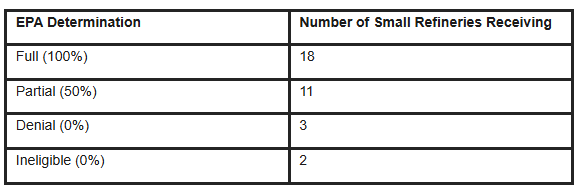
Clean Fuels- The Environmental Protection Agency announced decisions on 34 petitions from small refineries seeking exemptions (SREs) from compliance with 2025 Renewable Fuel Standard (RFS) obligations. EPA exempted 29 refineries (18 received 100% and 11 received 50% exemptions) from retiring a total of 1.76 billion RINs for 2025 compliance. At the same time, the agency finalized a rule to further delay the 2025 RFS compliance date to October 1 and provide additional benefits to all refiners. EPA also announced its intention to finalize a supplemental rule before the end of October to ensure that the RINs exempted today are restored to 2026 and 2027 RFS volumes. In the 2026-2027 RFS rule announced in March, EPA estimated that it would grant SREs totaling 990 million RINs for 2025. The agency established supplemental volumes for 2026 and 2027 to ensure that the exemptions would not undercut current biodiesel and renewable diesel production and halt investments in additional production capacity. Today, President Trump and EPA promised to restore all 770 million RINs exempted above the prior estimate through a forthcoming supplemental rule. Kurt Kovarik, Clean Fuels' Vice President of Federal Affairs, stated in reaction: "America's biodiesel, renewable diesel and SAF producers have been working overtime to meet the historic RFS volumes announced just last March. The industry is producing at record pace today, providing a strong domestic market for America's farmers, investing billions in rural communities, contributing to America's energy security, and providing American consumers a price break at the pump – in short, delivering measurable results on the administration's goals for the RFS. We're hopeful that today's action won't reverse the progress we've made and that our industry can maintain faith in the RFS program. "Clean Fuels fundamentally disagrees that small refiners need reprieve from the tepid 2025 RFS volumes set by the prior administration. We appreciate the White House's commitment to hold biofuel producers harmless and will work with EPA to quickly finalize the promised supplemental rule. We will continue to press the administration to reallocate future small refinery exemptions to ensure they do not harm farmers and other stakeholders in clean fuel production. "Clean Fuels and its members are extremely grateful for the quick action of Senators Chuck Grassley, Joni Ernst, Representative Ashley Hinson, and numerous other congressional champions who worked to ensure that EPA's relief measures for small refineries do not come at the expense of America's biofuel producers and farmers."


National Corn Growers- The Environmental Protection Agency today issued Small Refinery Exemptions equating to almost 1.8 billion credits known as Renewable Identification Numbers, or RINs, to small petroleum refineries. Today's decision exempts a swath of refineries from blending renewable fuels as required by the Renewable Fuels Standard. EPA will propose to reallocate 100% of the difference between projected and actual exempted volumes for 2025 SREs into the 2026 and 2027 Renewable Volume Obligations before the end of October. In response, National Corn Growers Association (NCGA) President Jed Bower released the following statement:  "While we are disheartened by the high number of SREs that are being granted to exempt small refineries from meeting federal blending requirements, we are thankful that the Trump administration is taking action to offset this development by pledging to reallocate these RINs. Reallocation is essential for protecting farmers, biofuel producers and consumers alike."   "We need vibrant markets for our products, particularly when it comes to corn ethanol, and the nation's drivers need affordable fuel. Biofuels are a homegrown solution for increasing our country's energy supply and reducing fuel costs. Recent history has shown that issuing SREs at this volume does nothing to reduce the price of gas.   "We are appreciative of the White House and our advocates on Capitol Hill for hearing our concerns and acting. We will work closely with EPA and administration officials to ensure our growers' interests are protected as these specific announcements are implemented and as other decisions affecting the biofuels market are being made." 


 National Farmers Union (NFU) President Rob Larew today shared the following statement after the Environmental Protection Agency's announcement on 2025 Renewable Fuel Standard Small Refinery Exemptions:  "We appreciate the administration's decision to fully reallocate the renewable identification numbers affected by these exemptions, protecting a stable market for family farmers. Farmers spoke out about the harm they'd face without full reallocation, and we appreciate EPA listening to those concerns. The uncertainty around potential changes to the Renewable Fuel Standard has not been helpful at a time when farm country needs predictability. We're glad to see the integrity of the program upheld and continued demand for what our farmers grow." 


The Trump Administration granted approximately 1.76 billion RINs in SREs, nearly double what was accounted for in the current RFS rule. After strong engagement from Congress and USDA, the EPA simultaneously announced a supplemental rulemaking to put those gallons back into the current RFS rule, helping address the market uncertainty created by a week of rampant speculation. While NOPA is disappointed by the magnitude of the exemptions, President Trump's intervention to ensure waived gallons are reallocated is an important correction that helps protect American farmers by ensuring the RFS volumes he finalized earlier this year are real.  The market has already demonstrated that certainty works. Following the President's strong RFS, the industry quickly ramped up production of biomass-based diesel, with monthly run rates exceeding the pace necessary to meet the record volumes. When there is policy certainty, American agriculture responds. "President Trump's strong RFS put American agriculture on a path toward greater certainty, investment and growth, and we appreciate the President and Congress stepping in to protect that progress," said Devin Mogler, President & CEO of the National Oilseed Processors Association. "We remain disappointed by the sheer volume of these refinery exemptions and the uncertainty they have injected back into the market. But restoring waived gallons to the established RFS volumes is critical to sustaining domestic growth, creating stronger markets for American farmers, and reducing our reliance on China." In the days leading up to the decision, Congressional champions from across the heartland worked relentlessly to ensure the concerns of farmers and the biofuels industry were heard at the highest levels of the Administration. Likewise, USDA advocated for American agriculture throughout the process.  "Our champions in Congress deserve tremendous credit for standing up for farmers and refusing to let this issue go unanswered," Mogler continued. "Their relentless engagement with the Administration made the difference." The work now turns to the supplemental rulemaking. All waived gallons above the SRE levels already factored into the Set 2 rule must be fully reallocated to the established volumes to provide the market certainty needed this year and beyond. Looking ahead, we encourage EPA to adjudicate future SREs in a manner that keeps RFS volumes whole. "Getting the supplemental rule right and delivering strong Set 3 volumes are the next steps," concluded Mogler. "We will continue working with our Congressional champions and the Trump Administration to provide the certainty needed to grow domestic markets, support American farmers and strengthen American energy dominance." 
EPA Announces Action on 2025 Small Refinery Exemptions and Related Actions

 Today, U.S. Environmental Protection Agency (EPA) announced decisions for 34 small refinery exemption (SRE) petitions under the Renewable Fuel Standards (RFS) program for 2025. In consultation with U.S. Department of Energy (DOE), EPA reviewed and considered information submitted by each petitioning small refinery. EPA then evaluated each SRE petition consistent with the Clean Air Act and case law.

Based on that analysis, EPA is exempting 1.76 billion RFS compliance credits, known as Renewable Identification Numbers (RINs), for 29 small refineries. EPA will propose to reallocate 100 percent of the difference between projected and actual exempted volumes for 2025 SREs into the 2026 and 2027 Renewable Volume Obligations (RVOs) before the end of October 2026.

Due to the agency's 2025 SRE decisions, EPA will also be announcing a direct final rule to extend the 2025 RVO compliance date by 30 days to October 1, 2026. This will allow the market to appropriately account for the additional RINs.

EPA is making the following 2025 SRE determinations:

In 2020, EPA established a methodology in regulation for predicting the expected volumes that would be exempted based on an average of the past three years. Before that rulemaking, SREs were not considered as part of the volumes – in other words, all SREs had the result of reducing volumes. Following EPA's methodology, the agency estimated that 990 million RINs would be exempted in 2025 in "Set 2" and put into the volumes. However, due to more small refineries requesting exemptions and changes in financial circumstances, EPA is exempting more RINs than estimated in "Set 2."

Based on agency experiences, DOE is evaluating how it has historically utilized their 2011 disproportionate economic harm methodology and the information needed for future small refinery petitions to account for current market circumstances in this new phase of the RFS program. DOE will continue to seek public feedback from all impacted stakeholders on these analyses. 

Since the beginning of the Trump Administration, EPA has observed inaccurate and misleading reporting on the agency's RFS actions that have contributed to significant market movements despite no official statement or action from the Administration. Most recently, misleading reports and information led to significant volatility in the RIN market. These incidents raise serious concerns about the potential misuse of material nonpublic information and possible market manipulation. EPA continues to work with the Commodity Futures Trading Commission and will expand its coordination to ensure compliance with all applicable federal laws and protect the integrity of the RIN market.

Information on the 2025 SREs can be found here.

Crop Progress: Oklahoma Pastures Continue to Decline as Crop Conditions Show Mixed Results

In the latest Crop Progress report from USDA, the U.S. corn crop is rated 57% Good to Excellent this week, equal to last week. Soybean crop conditions are rated 58% good to excellent this week, down 2 points from last week.

The U.S. cotton crop is rated 39% good to excellent this week, up 2 points from a week ago. For the U.S. grain sorghum crop, the latest good-to-excellent ratings are 28%, up 1 point from last week.

Pasture and Range

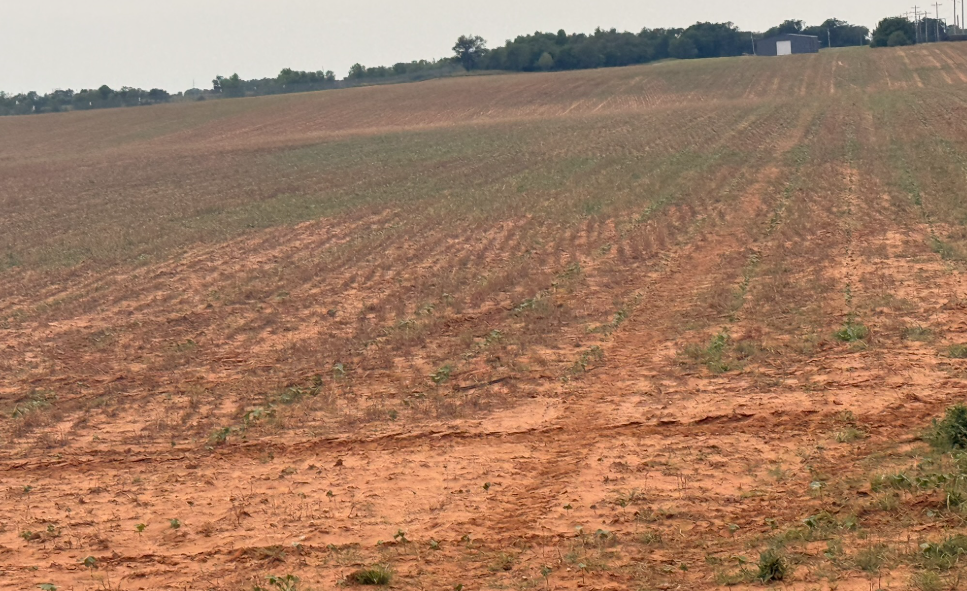
In the southern plains, Oklahoma pasture and range conditions are now ranked 9% good to excellent, versus 11% last week and 63% a year ago. Poor to very poor ratings are now at 61%, versus 58% a week ago and 11% a year ago.

Kansas good to excellent conditions are ranked at 31% compared to 35% last week and 62% a year ago. Poor to very poor conditions are ranked 32% this week, 30% last week, and 13% a year ago.

Texas good to excellent conditions are ranked 13% this week, 16% last week, and 39% a year ago. Poor to very poor conditions are ranked 55% this week, 50% a week ago, and 24% a year ago.

The 48-state national pasture and range conditions are now at 18% good to excellent versus 21% last week and 38% one year ago. Poor to very poor ratings nationally are at 52% this week versus 50% last week and 31% one year ago. 

Corn Statistics:

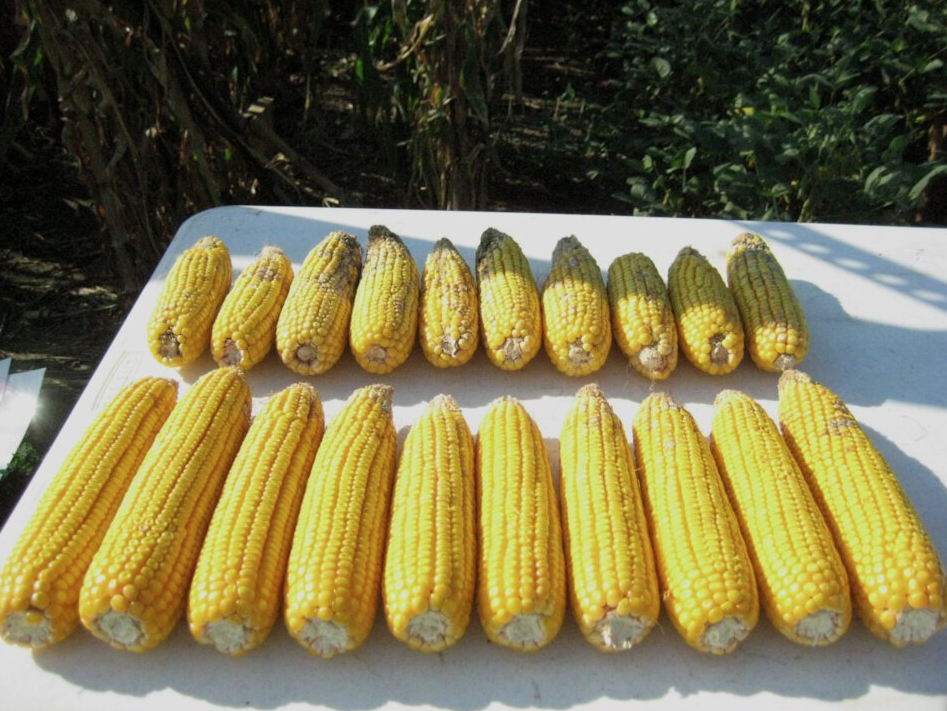
Oklahoma corn dough is at 98%. Corn conditions rank as follows: 52% good to excellent, 26% fair, and 22% poor to very poor.

Kansas corn dough is at 92%. Corn conditions rank as follows: 42% good to excellent, 27% fair, and 31% poor to very poor.

Texas corn dough is at 95%. Corn conditions rank as follows: 35% good to excellent, 30% fair, and 35% poor to very poor.

Soybean statistics:

Oklahoma soybeans setting pods are at 61%. Oklahoma soybean conditions rank as follows: 22% good to excellent, 38% fair, and 40% poor to very poor.

Kansas soybeans setting pods are at 87%. Kansas soybean conditions rank as follows: 44% good to excellent, 32% fair, and 24% poor to very poor.

Texas soybeans setting pods are at 88%. Texas soybean conditions rank as follows: 53% good to excellent, 36% fair, and 11% poor to very poor.

Cotton statistics:

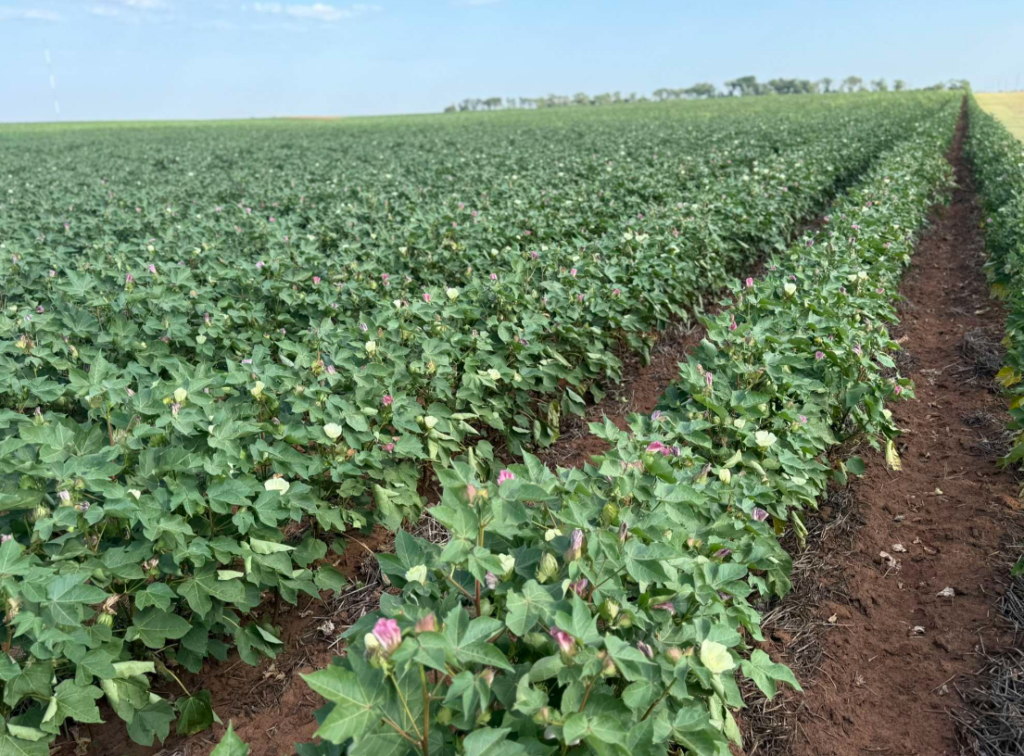
Oklahoma cotton setting bolls are at 95%. Oklahoma cotton conditions rank as follows: 4% good to excellent, 45% fair, and 51% poor to very poor.

Kansas cotton setting bolls are at 94%. Kansas cotton conditions rank as follows: 24% good to excellent, 48% fair, and 28% poor to very poor.

Texas cotton setting bolls are at 84%. Texas cotton conditions rank as follows: 22% good to excellent, 31% fair, and 47% poor to very poor.

Sorghum statistics:

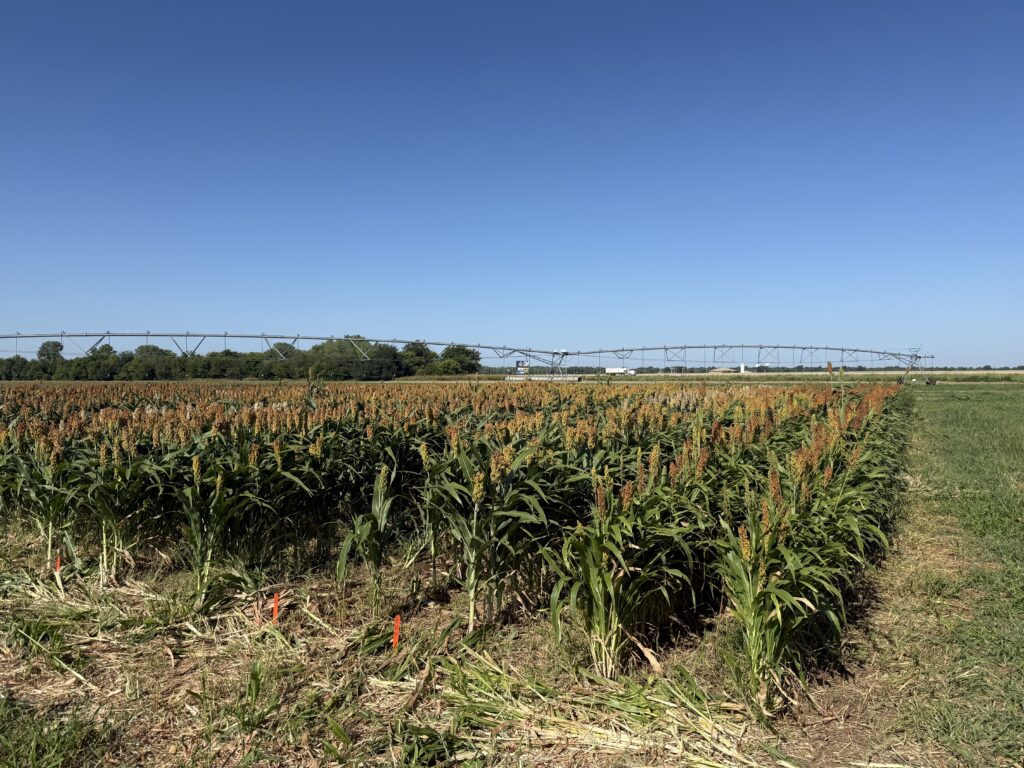
Oklahoma sorghum headed is at 93%, up 11% from a year ago.

Kansas sorghum headed is at 83%, down 9% from a year ago.

Texas sorghum headed is at 99%, up 1% from a year ago.

Record July Heat Could Take a Toll on Corn Yield

July was the warmest month on record across the lower 48 states since 1895, according to the National Oceanic and Atmospheric Administration, raising concerns about potential impacts on corn yield.

Research shows that overnight low temperatures above 70°F can have a negative impact on corn yield. The level of impact depends on the growth stage of the corn at the time of stress.

The most critical period is the 4- to 5-week window around silking when kernel number is set. Stress during this period that reduces the crop growth rate can reduce kernel set. Heat stress can continue to impact yield through grain fill by reducing kernel weight and stalk quality.

The main physiological reason for the negative effect of high night temperatures is an increased rate of cellular respiration overnight, which increases the plant's energy expenditure on processes other than building yield.

"Unlike photosynthesis – which only happens during the day – respiration keeps running all the time," said Mark Jeschke, Pioneer agronomy manager. "It's a temperature-dependent reaction, so the warmer it is, the faster it goes. When the nighttime temperature increases, the total expenditure of energy through respiration also increases, leaving less energy to contribute to grain fill."

High night temperatures can also accelerate the corn development rate. GDUs continue to accumulate at temperatures between 50°F and 86°F, causing the plant to reach maturity faster and shortening the grain fill period. A few days of above-average night temperatures may have little or no effect on yield, but high night temperatures over a longer period can reduce yield by 15% or more.

High temperatures can also contribute to accelerated leaf senescence, increased water stress, reduced pollen shed and pollen viability, and reduced photosynthetic rates.

Concerns about the direct effects of extreme heat have often focused on reproductive success, specifically the potential for high heat to desiccate silk and reduce pollen viability. However, research suggests that yield loss due to heat stress effects on pollination is relatively rare in North America.

Research has found that corn hybrids can differ in their responses to high night temperatures. A recent field study at Kansas State University found that yield response among 12 hybrids exposed to an extended period of elevated night temperatures ranged from -28% to +4%. This suggests the potential for selecting hybrids with greater tolerance to high night temperatures, which could prove important as summertime nighttime temperatures continue to rise in the U.S.

We can schedule a time for you to interview about this or other topics. Please contact Drew Harris at dharris@bader-rutter.com.

Fuel Retailers Call on EPA to Safeguard Emissions Reductions Achievements

NATSO, representing truck stops and travel centers, SIGMA: America's Leading Fuel Marketers, and the National Association of Convenience Stores (NACS), urged the Environmental Protection Agency to modify its proposed changes to the inducement framework for
diesel exhaust fluid (DEF).


NATSO, SIGMA and NACS support the Administration's existing guidance, which addressed concerns about commercial vehicles utilizing Selective Catalytic Reduction (SCR) technology. Nitrogen oxide emissions from heavy-duty vehicles have declined 76 percent since 2010 through SCR technology and DEF — making the widespread adoption of DEF technology the most significant environmental success story for liquid fuels in the trucking sector. Allowing the guidance to be fully implemented will preserve the widespread adoption of DEF technology — safeguarding the economic and environmental benefits it provides. By contrast, EPA's currently proposed regulatory changes would disrupt those
efforts and create confusion about DEF requirements while threatening to decrease DEF's availability, increase its price, and undermine its benefits.


"The existing regulatory framework spurred fuel retailers to invest in a DEF distribution and retail network that today functions as a well-established, competitive, and reliable market for DEF," said David Fialkov, Executive Director of Government Affairs for NATSO and SIGMA. "SCR and DEF technology have demonstrated that substantial emissions reductions are possible through the existing refueling infrastructure. The use of DEF and SCR are some of the strongest examples of how targeted innovation can lead to meaningful improvements in the environmental attributes of liquid fuels." NATSO, SIGMA and NACS support the benefits that DEF and SCR technology have delivered to emissions reductions and fuel economy. More than 100,000 retail locations in North America, including more than 95 percent of North American truck stops, offer DEF.


"EPA did the right thing with its existing guidance and should let that be implemented before making changes," said NACS Deputy General Counsel Matt Durand. "This rule should be put on hold while the industry works to ensure we get the full measure of the benefits of these engine systems." If drivers believe DEF is optional, they will be less likely to buy DEF. If volumes do not support a competitive supply, availability will diminish and prices may rise. The drivers most affected would be those who continue to purchase DEF in good faith compliance with the emissions standards. EPA's proposed changes will inadvertently harm the very drivers it aims to help.


The associations, which represent DEF retailers and suppliers for commercial trucking, agriculture, and
the broader diesel equipment market, urged EPA to:

  • Permit the August 2025 and March 2026 Guidance to fully penetrate the market before
    substantially amending diesel engine inducement requirements;
  • Clearly communicate that DEF and Selective Catalytic Reduction requirements remain in effect
    and that operating an SCR-equipped engine without DEF damages the vehicle;
  • Expand access to low-cost vehicle repairs to ensure independent repair shops can service DEF
    sensor faults, which are among the most common failures that independent repair shops
    encounter.
  • NATSO, SIGMA and NACS further recommend that EPA retain derates as an enforcement backstop
    paired with robust notifications; refrain from restricting which derates manufacturers choose to protect
    their equipment; retain 32.5 percent as the DEF quality reference concentration; remove the provision
    suspending inducements in cold weather and treat nonroad and highway applications separately.
    NATSO, SIGMA and NACS look forward to working with EPA to ensure that any reform to this
    complex regulatory framework is carefully targeted and evidence-based to avoid diminishing DEF's
    availability or increasing its costs for consumers.
    Read the comments here

Does Data Translate to Dollars?

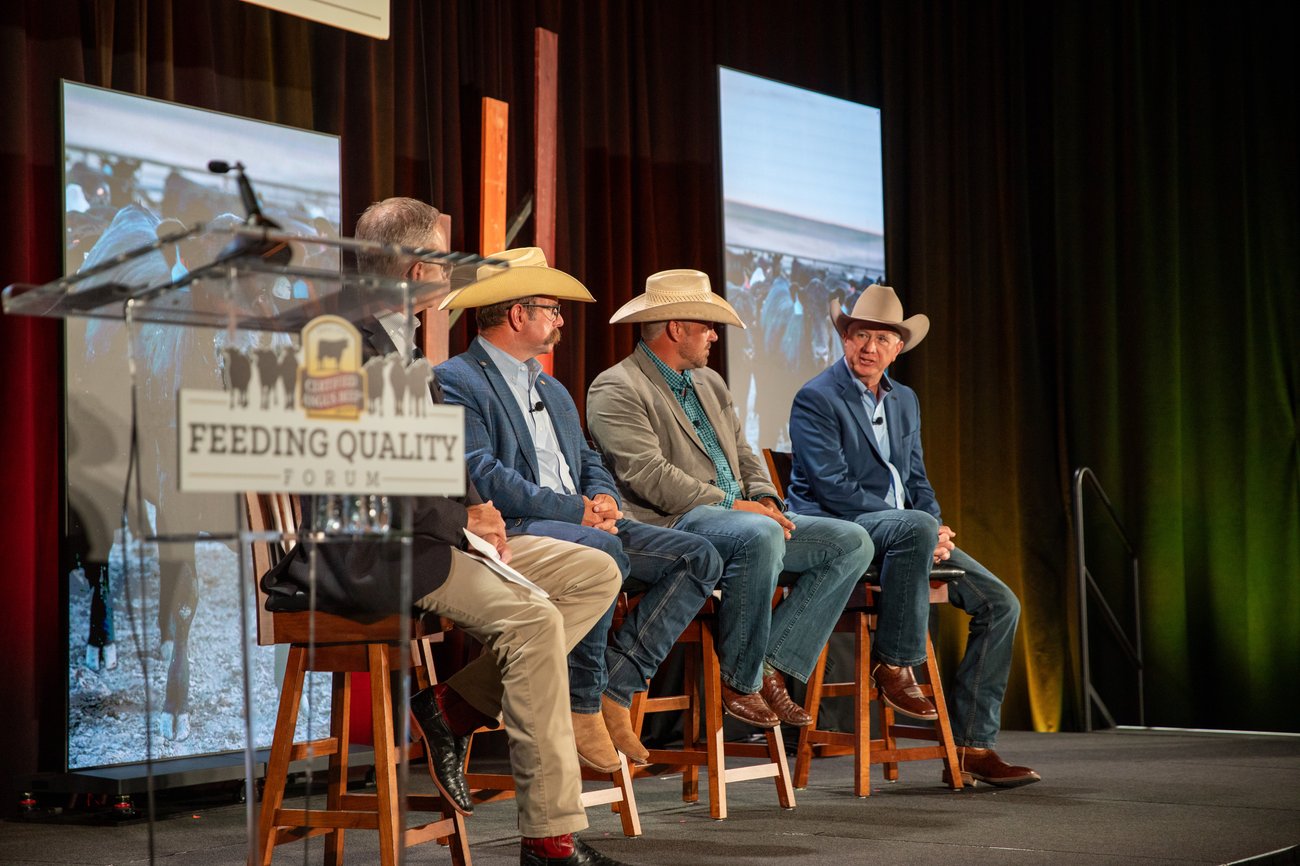
The cattle business is changing, and producers who adapt will be best positioned to capture value. That was the resounding message from speakers to more than 230 attendees at Feeding Quality Forum earlier this month.

While cattle prices remain historically strong, volatility is likely here to stay. Cattle supplies remain tight, but producers should be prepared for significant swings within a high-priced fed cattle market.

Crunching the numbers is critical. Whether it's calculating cost of production, tracking calves weaned per cow exposed or evaluating returns on investments, good decisions start with good data.

Genetics was another major theme. Ranchers shared how DNA testing is helping identify superior replacement females and produce calves that perform better throughout the supply chain. Programs like AngusLink® are also giving buyers more confidence and creating opportunities for sellers to earn added value through verified genetics.

Fed cattle health remains critical. Experts emphasized that reducing death loss and strengthening immunity have a direct impact on profitability. New research on gut health and plant-based feed additives may provide another tool to support cattle performance, alongside proven practices such as vaccination programs.

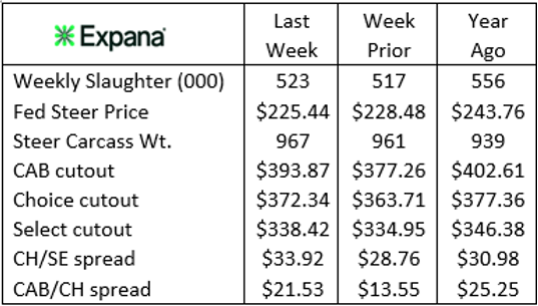
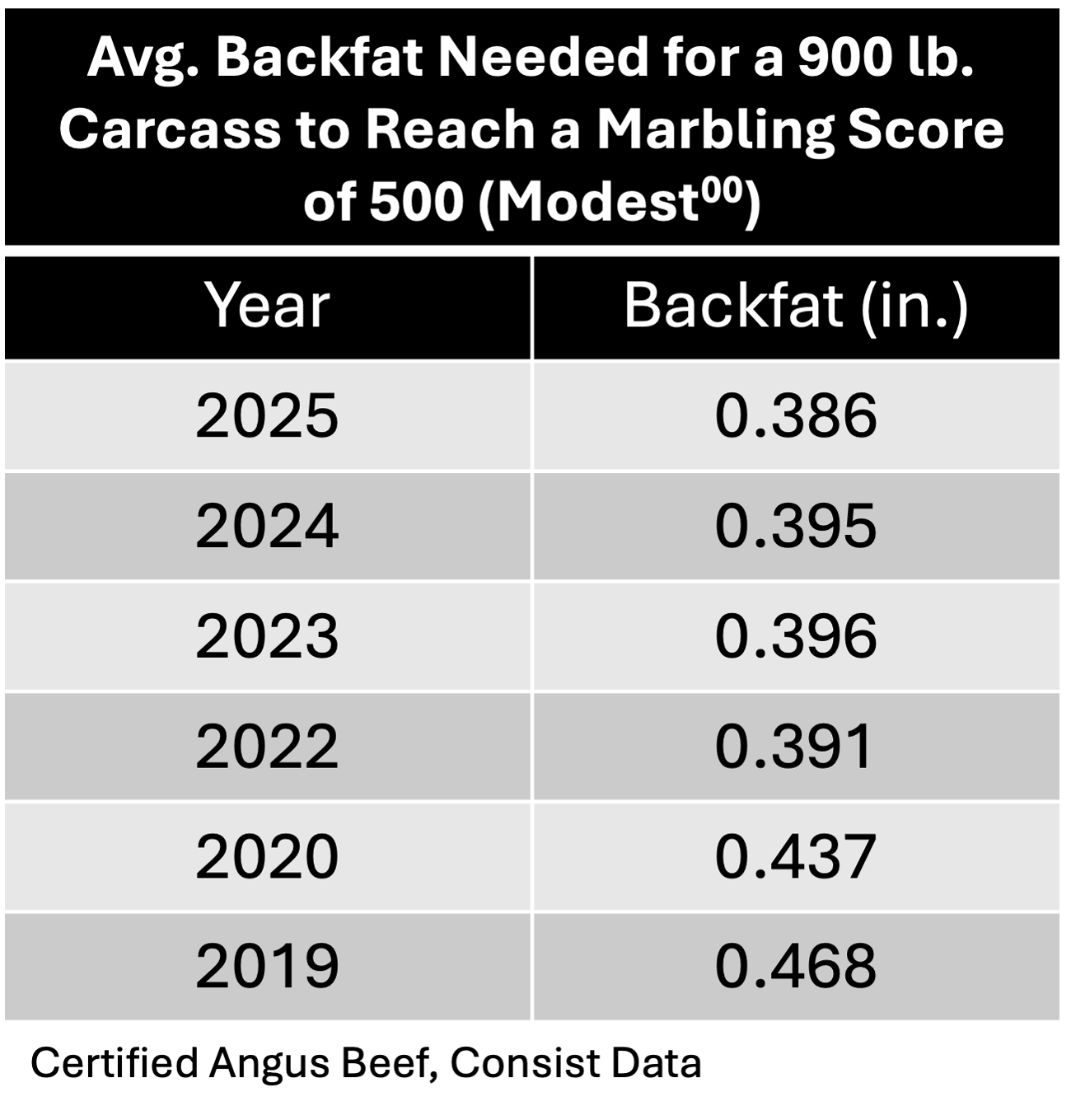
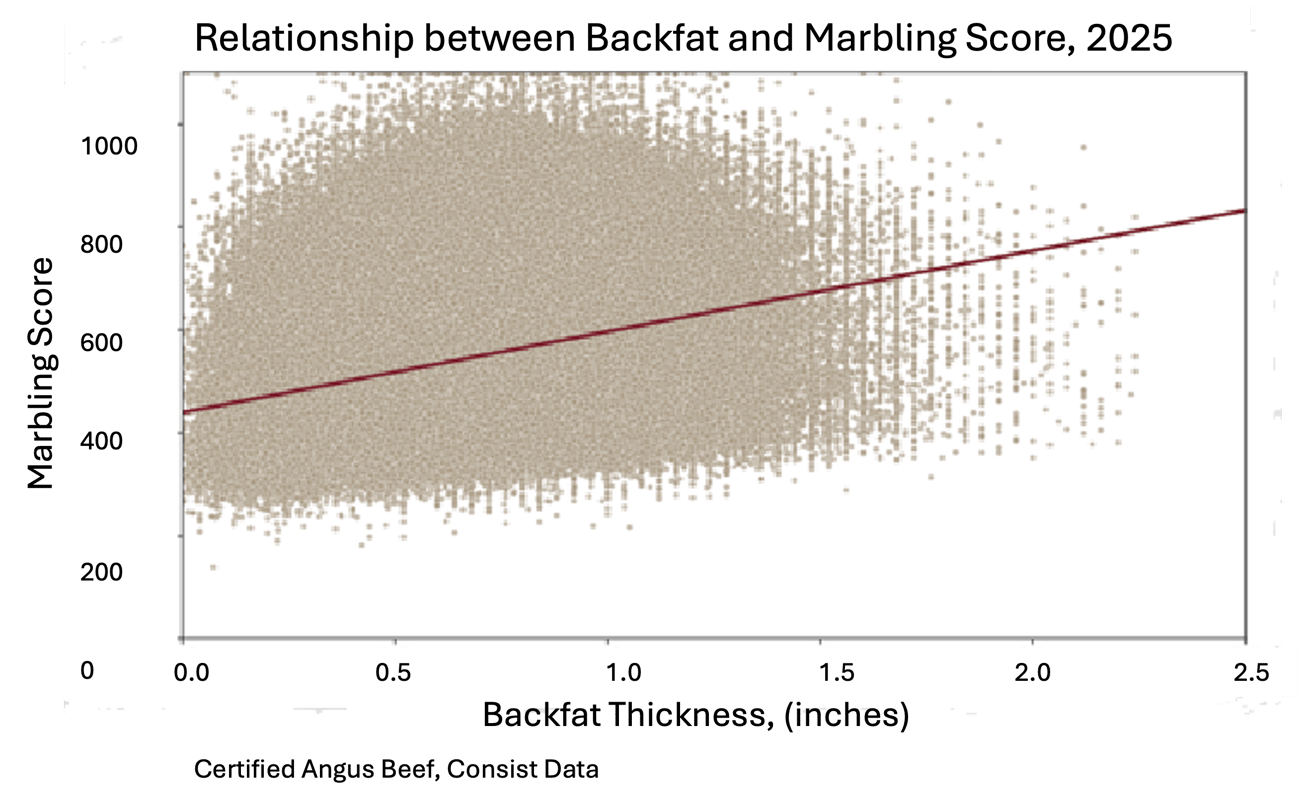
The discussion also turned to carcass value. As the industry feeds cattle longer and produces heavier carcasses, new technologies may help better measure red meat yield and reward cattle that produce a high-quality carcass with less external fat.

The bottom line? Quality (and weight) still pays.

"If you don't have quality, if you only have commodity, breakeven is about as good as you can do," said Pete Anderson of Midwest PMS.

Secretary Rollins Announces Ranchers First Initiatives to Rebuild the Great American Beef Herd

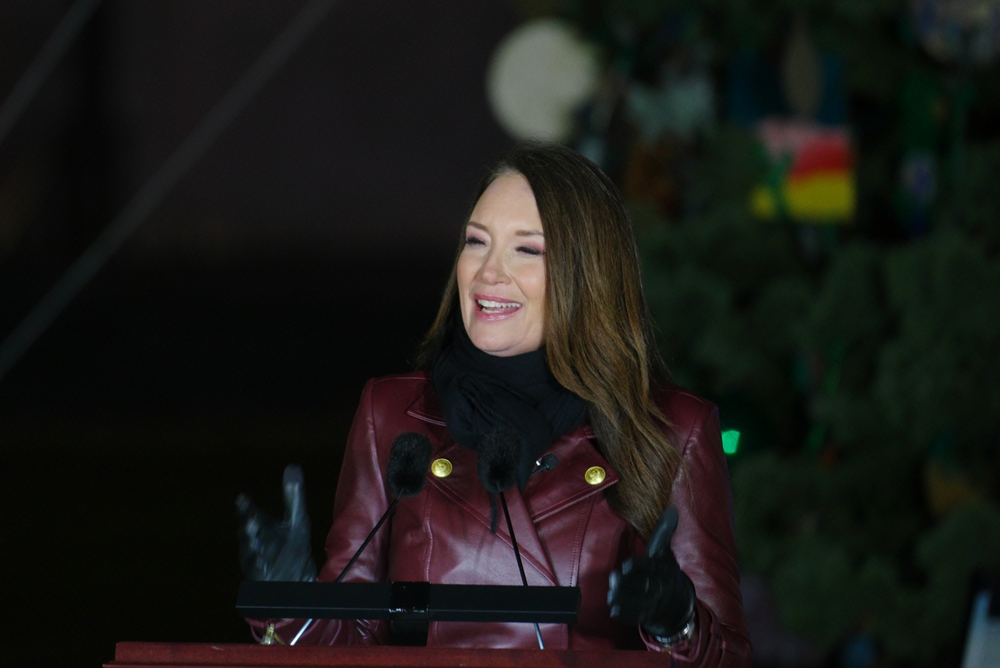
Today, U.S. Secretary of Agriculture Brooke L. Rollins announced the Ranchers First Initiative, a sweeping package of actions to continue rebuilding the Great American Beef Herd and put America's ranchers back at the center of our nation's food supply. Building on USDA's October 2025 Plan to Fortify the American Beef Industry, the Trump Administration is delivering again. 

American ranchers embody the independent spirit that drove the founding of America, 250 years ago. For more than two centuries, their independence, resiliency, and committed stewardship have provided American consumers with the safest and highest-quality beef and lamb in the world, and they remain foundational to America's national security and to the strength and vitality of rural communities. Yet today the nation's cattle herd sits at a 75-year low, with ranchers forced out of business by burdensome regulations and an outright war on beef waged at the altar of Green New Deal climate extremism. 

"Until President Trump took office, America's ranchers were treated as a problem with policy geared toward their eventual extinction. The consequences were devastating: a war on beef, a cattle herd at a 75-year low, and the loss of tens of thousands of family operations," said Secretary of Agriculture Brooke L. Rollins. "President Trump promised to put the American ranchers first, and the Ranchers First Initiative delivers on that promise. We are investing real dollars to rebuild the Great American Beef Herd, giving producers the risk management tools they need, cutting the red tape that has squeezed small and independent operators, and demanding transparency in a marketplace that has been consolidated and foreign-owned for far too long. President Trump will make certain the men and women who raise our cattle can hand their operations to the next generation, and that American families can put safe, high-quality, American-raised beef on the table." 

Ranchers First Initiative Actions

New Tools to Support Heifer Retention

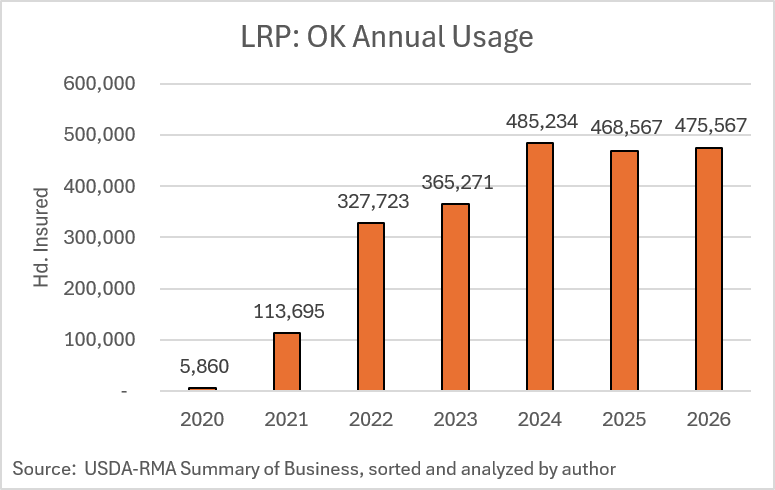
USDA is going to secure tomorrow's herd through the new Beef Retention and National Development (BRAND) endorsement for Livestock Risk Protection (LRP). The BRAND endorsement will allow producers to insure the economic value of retaining a heifer for breeding over a two-year period. The endorsement would establish a protected value based on the expected slaughter value of the heifer at the time of enrollment. If, at any time during the endorsement period, the heifer's projected or realized slaughter value exceeds the economic value of retaining her as breeding stock, the policy would provide for the difference.    

ECP and Grassland CRP Maximization

USDA will allow producers to use the Emergency Conservation Program (ECP) on Grassland Conservation Reserve Program (CRP) acres to speed recovery after wildfires and other natural disasters.  This flexibility is a direct investment in rebuilding the Great American Beef Herd by providing ranchers the ability to rebuild critical infrastructure quickly and minimize long-term losses from disaster events. 

Continuing to Revitalize American Local Processing

Following up on the successful Strengthening Processing for U.S. Ranchers (SPUR) program to support small and regional beef slaughter facilities, USDA is creating a SPUR Guaranteed Loan Program to help support regional processing, including establishing processor co-ops, expanding small business footprints, and increasing the variety of animal proteins being processed.  

USDA will also establish a Regional Processor Continuity Effort designed to strengthen regional processing capacity and improve business resilience across the agricultural supply chain. With recent processing closure announcements, nearly 20% of beef processing capacity will be available as the herd grows. This is a tremendous opportunity to shift this capacity toward American-owned independent small, mid-size, and new co-ops and keep our critical meat supply out of the hands of foreign control. 

Prioritizing American Beef in Federal Spending

USDA will prioritize federal procurement of locally processed American beef by encouraging purchasing across federal and state institutions—including prisons, hospitals, and related facilities. By strengthening locally processed domestic sourcing requirements, USDA aims to bolster demand for American‑raised beef, support U.S. ranchers, and reinforce integrity and transparency within federal food purchasing programs. This builds on last week's Harvest to Hallways announcement advancing healthy food for schools, and will allow USDA to work with not just Health and Human Services, but also the Department of Justice, Veterans Affairs, and the Department of War in what food they purchase.  

Supporting New Farmers and Ranchers

Under the Working Families Tax Cuts, USDA was able to expand support for beginning farmers and ranchers for the first decade of operations and increase premium assistance during that entire time frame. New ranchers can also access specialized Farm Service Agency (FSA) loans to buy land, livestock, and equipment, receive free conservation and grazing management support through NRCS, gain risk management protection through livestock insurance programs, and connect with state coordinators.   

To help build on these programs, USDA will be establishing an initiative focused on Beginning and Veteran Farmers and Ranchers Affairs. USDA will also be working with the Department of War and the Department of Veterans Affairs, to leverage programs like Department of War's (DOW) SkillBridge program, to recruit servicemembers departing military service into ranching and farming careers. 

Building on a Record of Delivery for America's Ranchers 

Since taking office, President Trump and Secretary Rollins have taken the most aggressive action for American cattle ranchers in a generation: 

October 2025: Secretary Rollins, alongside the Departments of the Interior and Health and Human Services and the Small Business Administration, launched the Plan to Fortify the American Beef Industry, a whole-of-government commitment to the American rancher. 

March 2026: USDA and the Department of the Interior signed a Memorandum of Understanding to expand grazing access and cut permitting delays on public lands. 

June 2026: USDA launched the Small Processors Action Plan and opened a fourth round of the Meat and Poultry Processing Expansion Program with $60 million to expand American processing capacity. 

June 2026: The U.S. Forest Service issued a Department-wide grazing directive protecting the roughly 23,000 permittees and lessees who depend on public rangelands. 

June 2026: Secretary Rollins announced the Strengthening Processing for U.S. Ranchers (SPUR) Program, providing up to $500 million to independent and regional beef slaughter facilities. 

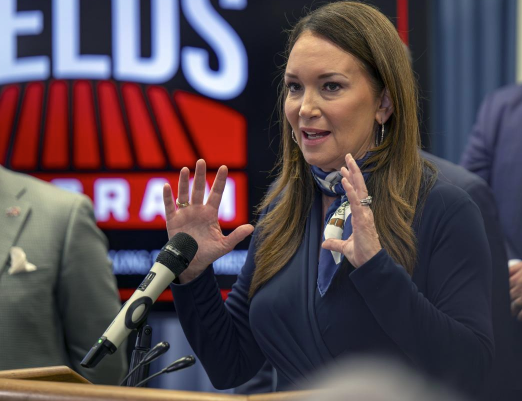
June 2026: Secretary Rollins announced the $500 million Fertilizer Investment & Expansion for Long Term Domestic Supply (FIELDS) Program, to onshore domestic fertilizer production and lower prices for our farmers and ranchers. 

2026: USDA launched and continues to expand awareness of the Product of USA label, so families can identify beef born, raised, harvested, and processed in the United States. 

August 2026: USDA and Health and Human Services announced the Harvest to Hallways initiative to put more American-raised beef and local product into school meals. 

Dairy Checkoff Seeks Entries For 2027 New Product Competition

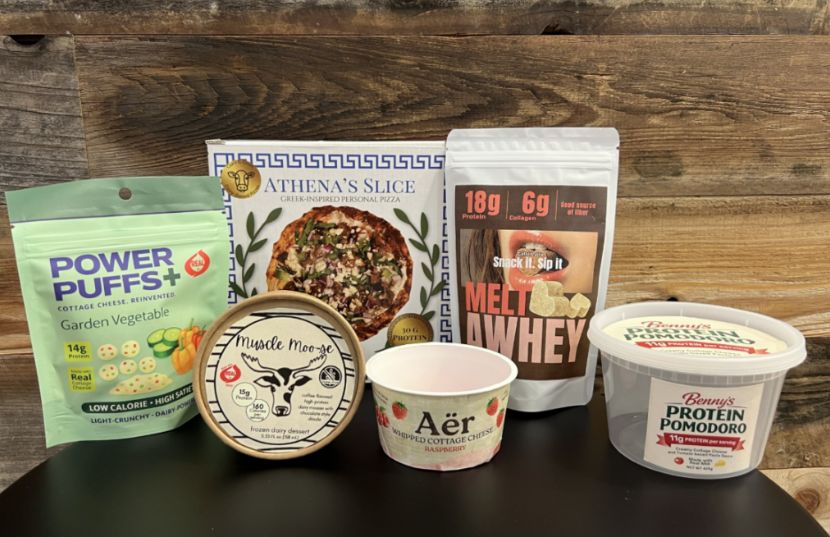
Dairy Management Inc. (DMI) is accepting entries for its 2027 New Product Competition, challenging undergraduate and graduate students across the United States to develop innovative dairy-based products for consumers seeking sustained energy.

The annual competition gives tomorrow's product developers an opportunity to apply their knowledge and creativity to develop dairy products that respond to current consumer and marketplace needs.

The 2027 competition focuses on a changing consumer definition of energy. Rather than seeking a quick energy boost, consumers increasingly are looking for consistent, steady energy to support performance throughout the day. They are seeking products that can help them maintain energy, reduce fatigue, improve stamina and support better sleep.

"This competition is about more than innovation – it's about preparing the next generation of food and dairy leaders to respond to evolving consumer needs with dairy at the center," said Dr. Rohit Kapoor, vice president of product research at DMI. "This year's focus on sustained energy gives students an opportunity to explore new and creative ways to use dairy to meet an important consumer need."

Successful entries will demonstrate innovation, consumer value and the effective use of dairy ingredients. Products must contain more than 51% dairy ingredients by weight and provide at least a good source of dairy protein.

The competition is open to undergraduate and graduate students enrolled at U.S. colleges and universities during the 2026-2027 academic year, including students graduating in May or August 2027. Students may enter individually or as teams under the supervision of a faculty adviser.

The deadline for 2027 contest submissions is Feb. 1, 2027.

A total of $27,000 in cash prizes will be awarded:

· Platinum Dairy Innovator Award – $10,000 for first place

· Gold Dairy Innovator Award – $7,000 for second place

· Silver Dairy Innovator Award – $4,000 for third place

· Dairy Innovator Awards – $2,000 each for three additional finalist teams

Six teams will advance to Phase 2, where they will submit their products for evaluation and present their concepts to a panel of dairy industry and DMI experts. The top three teams will be invited to attend and be recognized at the American Dairy Science Association Annual Meeting, June 27-30, 2027, in Raleigh, N.C.

To learn more about the 2027 consumer and marketplace opportunity, view 2027 Challenge: Consumer and Marketplace Insights. Questions about the competition can be directed to Kapoor at rohit.kapoor@dairy.org

Basic Economics Still Rules

Neither Government Nor Wishful Thinking Will Change the Rules

The following Op-Ed is offered by Steve Dittmer, President of the Agribusiness Freedom Foundation:

It's going to be up to common sense, free market cattlemen thinkers to head off real disaster for our industry from the ignorant, uninformed, naïve, uneconomic "solutions" being bandied about.   Glenn Beck told President Trump recently that he needed to break up the meat processing "cartel," to "allow" ranchers and farmers to process their own cattle. The "Vince Show" replayed those clips, marveling that it took Beck to "inform" Trump about what was "needed."  

There was no mention of "who" Trump had been listening to or that the opposite views forwarded by all the mainstream farm and ranch groups have seemingly been ignored.   There have been rumbles from the Trump administration and directives to investigate the big meat packers on anti-trust grounds.   The meat industry is very complex and dispersed throughout the country. But the basics of what the industry accomplishes is very simple.  

The reason we have big meat plants is the same reason we have big auto plants. Building complex things like an automobile with hundreds of parts is achievable on a less costly basis with high and consistent quality when done in one location, one series of assembly lines and trained workers rather than building them one at a time "by hand," with fewer workers and dispersed locations. Even Ferraris and Lamborghinis have more than one or a handful of workers, over a longer period of time building high quality vehicles that cost $200,000 to a million dollars a copy. They also build and sell very few cars a year, a few thousand of the millions of cars sold every year, because the great majority of people can't afford such a car.  

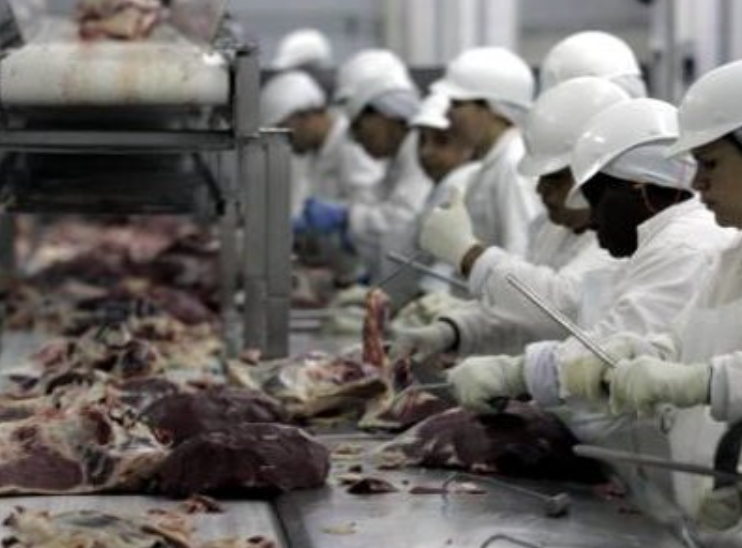
We doubt those with such a naïve opinion of the most economic ways of serving up millions of pounds of meat every day have ever been in a big plant. The plants are a beehive of activity producing hundreds of pieces of similar, consistent, high quality items per carcass under advanced food safety standards, preservation standards and disperse them daily over 50 states and dozens of foreign countries.  

Big meat plants disassemble carcasses efficiently, cost effectively and quickly but it is the ability to provide items that American don't value to customers in other countries quickly and at scale, where big plants excel and small plants struggle or fail. Variety meats do not have the same shelf life and the same local demand so assembling big lots quickly is essential to the value derived. Then there is the efficient collection of other substances for dozens of other uses that are only economic in large quantities.   Those kinds of factors are some of the reasons big plants produce carcasses and turn each one into hundreds of pieces of meat and byproducts quickly, so that the cost of production is literally hundreds of dollars less/head for big than small plants.

The advantage was $250/head a half dozen years ago. With the higher prices for cattle and meat these days, it has to be hundreds more now.   Economies of scale are very real. Idealists who would like to have every rancher and farmer harvest their own production want to repeal the laws of economics. The laws of economics are immutable. Good operators are able to improve processes to make better use of the laws of economics but they cannot repeal them. Government can interfere but they cannot repeal them.  

Small processing plants already exist. There are 600 or more plants in the country. There are no rules telling ranchers and farmers they can't harvest their own animals for their own use. But not everyone has the desire, facilities or ability to do so even for themselves. Shooting and skinning rabbits or squirrels is one thing. But we defy you to find farm-raised kids whose fondest memories were plucking feathers off steaming chicken carcasses.   The difference is the ability to sell meat for consumption by the public without state or federal inspection. Food safety is not a luxury or nice perk. It is a basic, absolute qualification for doing business. The confidence in the safety of any product is essential to the functioning of the marketing of that product. Lose that confidence and an industry has nothing.

Relying on relative amateurs to strictly observe all food safety practices at every step, guaranteeing sanitation and temperature controls is unrealistic. Training consumers how not to thaw or freeze or prep food is a herculean task itself. It takes weeks to train a worker on the assembly line to correctly, consistently and safely handle the production of a particular cut.   Even a big plant like JBS in Greeley has only two or three days harvest of cold storage capacity. Thousands of boxes have to move quickly.

As Kenny Monfort told us on a tour years ago, the most important room in the plant was the room with dozens of sales people moving meat.   There are more branded lines marketed by smaller ranch operations themselves these days than ever before. It's not like there are laws preventing that. We're sure there are some regulations that might not be needed today. But the key is this. The price point of those products is much higher than those in your local grocery chain, especially with the featuring figured into the equation. Not everyone can afford to pay 25 or 50 percent more for value they perceive in supporting smaller brands providing different qualities and attributes.

The general public is not willing or able to pay for those attributes on a regular basis. But there is a need those brands serve and that is what the free market provides.   Any smaller branded operation has the major problem of finding a profitable market for variety meats, less popular roasts, by-products and hides.   People use the term "free market," forgetting what it really means. It means the voluntary exchanging of value (money) for a product one desires. It also means the freedom for someone to produce that product or service. Regulation should only be used to protect the safety of one's person and prevent fraud.   But government cannot repeal the rules of economics. Those smaller plants and brands charge more because they have to, to cover higher costs.

Mayor Zoran Mamdani of New York City, who wants to run government grocery stores at a 30 percent discount to regular groceries, has already said his administration will likely have to provide subsidies to grocery stores and bodegas impacted by competition from government-subsidized grocery stores. Taxpayers will have to subsidize the government-subsidized groceries at a loss and then have to pay for subsidies to the groceries harmed by subsidized government stores undercutting them.   How is that efficient?  

Why is USDA putting together subsidies for smaller processing plants? Because they cannot compete with the big plants on an economic basis. Should bigger plants have to compete against taxpayer subsidized plants? In certain geographic areas not economically served by the big plants, there might be justification.   Have you priced getting an animal processed at a local locker plant lately? We promise you it will cost a lot more than the average cost per head at a big plant. And the wait for a slot is likely weeks or months.  

We have the market for beef today because of the demand the whole production chain has built for a high quality, consistent product. But that demand is a function of perceived value and availability. Price, even at the high quality and consistency readily available today, is a major topic of consumers today as it is. Arbitrarily destroying the infrastructure that has evolved through economic factors over decades to provide the product people want at a reasonable price is crucial to the industry's existence.  

Destroy that, and you've destroyed the economic underpinning of agricultural America.

This op-ed is from the Agribusiness Freedom Foundation, Steve Dittmer President.

Certified Angus Beef supports 24 students pursuing careers in agriculture and the beef industry

Interest in quality beef production continues to grow. This year, the Colvin Scholarship Fund awarded $100,000 to 24 students across the country, helping them continue their education and prepare for careers that will contribute to the strength and advancement of the beef industry.

Each recipient is pursuing a career in production agriculture, industry research or another area of agriculture. Their commitment carries forward the legacy of Certified Angus Beef's (CAB) co-founder and long-time executive director, Louis "Mick" Colvin, whose vision helped establish the scholarship program.

Since the first scholarship was awarded in 2002, the Colvin Scholarship Fund has provided $833,500 to 227 students pursuing careers in agriculture and the beef industry. Interest in the program continues to grow, with 229 students applying for scholarships this year, up from approximately 159 applicants last year.

"Seeing these students pursue their passions in agriculture is truly inspiring," says Danielle Matter, CAB director of content strategy. "Each scholarship recipient is not only talented and driven but also represents the innovation, leadership and dedication that will shape the future of the beef industry. We're proud to support their journey and excited to see the impact they'll make for years to come."

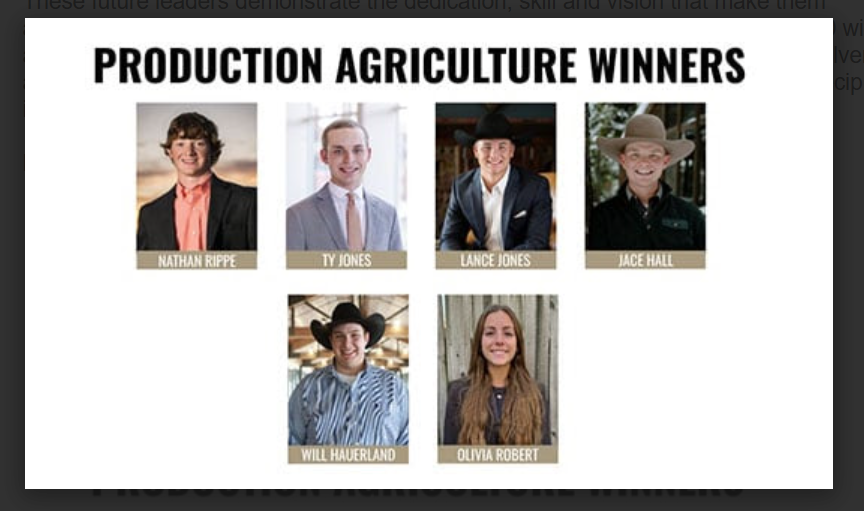
These future leaders demonstrate the dedication, skill and vision that make them ambassadors for the brand. Top recipients in each category were awarded $7,500 with additional scholarships recognizing educational achievement and community involvement across production agriculture, undergraduate and graduate students. The 2026 recipients include:

Production Agriculture Awards:

  • $7,500 – Nathan Rippe, University of Nebraska–Lincoln
  • $6,000 – Ty Jones, Oklahoma State University
  • $5,000 – Lance Jones, University of Nebraska–Lincoln
  • $4,000 – Jace Hall, Texas Tech University
  • $3,500 – Will Hauerland, West Texas A&M University
  • $3,000 – Olivia Robert, Kansas State University

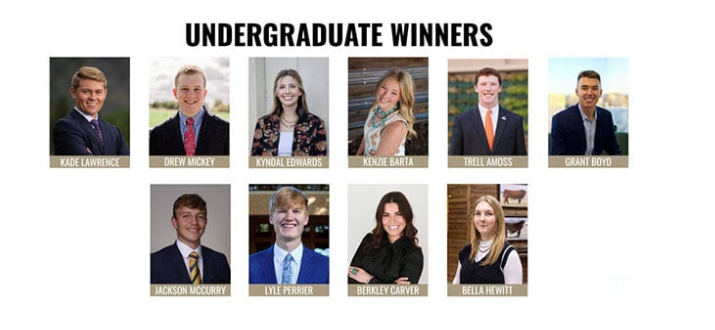
Undergraduate Awards:

$7,500 – Kade Lawrence, West Texas A&M University
$6,000 – Drew Mickey, Kansas State University
$5,000 – Kyndal Edwards, Texas Tech University
$4,000 – Kenzie Barta, University of Idaho
$3,500 – Trell Amoss, Oklahoma State University
$3,000 – Grant Boyd, Iowa State University
$2,500 – Jackson McCurry, Kansas State University
$2,500 – Lyle Perrier, Kansas State University
$2,000 – Berkley Carver, Texas Tech University
$2,000 – Bella Hewitt, Kansas State University

Graduate Awards:

$7,500 – Amelia Main, Texas Tech University
$6,000 – Ryan Heitschmidt, West Texas A&M University
$5,000 – Chesney Effling, Kansas State University
$4,000 – Shelton Luedke, West Texas A&M University
$3,500 – Ellie LaCroix, Texas Tech University
$3,000 – Bailey Lamb, West Texas A&M University
$2,000 – Kaylen Sterns, Oklahoma State University
$2,000 – Brittley Bowers, West Texas A&M University

Meet the Top Recipients

Production agriculture recipient Nathan Rippe, a University of Nebraska-Lincoln student from southwest Nebraska, grew up on his family's seedstock cow-calf operation. Through experiences on his family ranch, he developed an interest in cattle management, genetics and building a future in production agriculture.

Today, Rippe is growing his own herd while studying agricultural systems technology and operating NFR Metalworks LLC, where he designs and builds livestock facilities focused on safety, efficiency and low-stress cattle handling. Following graduation, he plans to expand his herd and gradually take on greater responsibility within his family's operation while continuing to improve genetics, grazing management and overall efficiency.

Undergraduate recipient Kade Lawrence, a West Texas A&M University student pursuing degrees in animal science and agricultural business and economics, has built a strong foundation across production agriculture, meat science and research.

A longtime FFA and 4-H member, Lawrence now serves as president of the university's meat judging team and coaches youth meat judging teams while working in the university's Beef Carcass Research Center and Caviness Meat Science & Innovation Center. His experiences have shaped a career goal focused on meat science and research, with plans to continue his education and use that knowledge to benefit the beef industry.

Graduate recipient Amelia Main is pursuing a Ph.D. in meat science at Texas Tech University, where her research examines how early-life health can influence cattle performance, carcass outcomes and beef quality. Her current study follows approximately 2,000 beef x dairy calves from birth through harvest, combining health, performance and carcass data to better understand factors affecting value and consistency in beef production.

A seventh-generation cattle producer and owner of Main Cattle Company, Main also brings experience in direct-to-consumer beef marketing, meat processing and youth agricultural leadership. Her goal is to apply research and production knowledge in the beef or animal health industry to help cattlemen and women improve animal health, carcass quality and consistency.

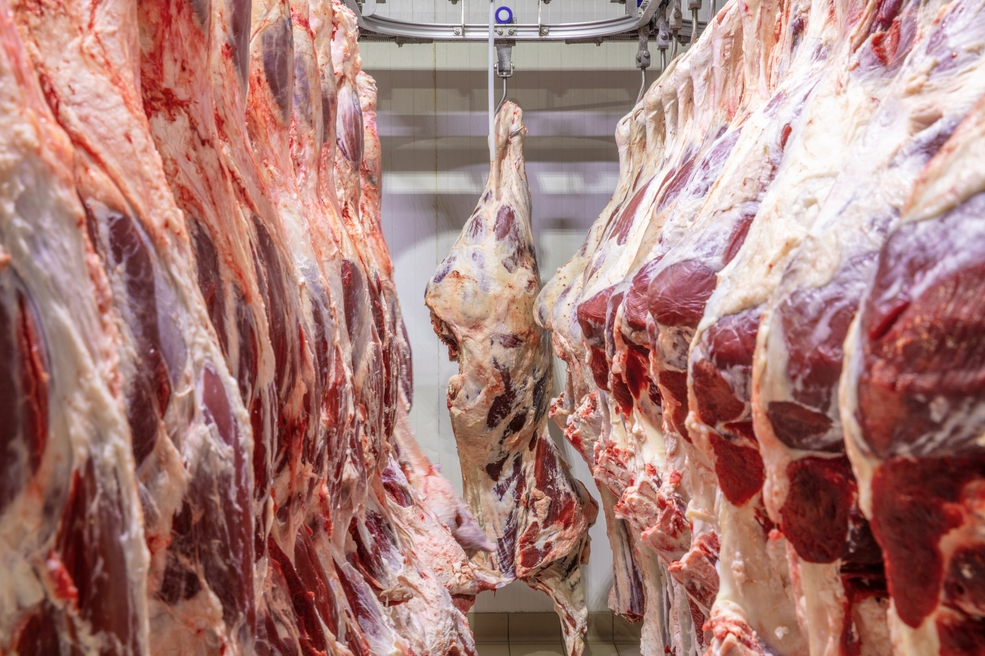
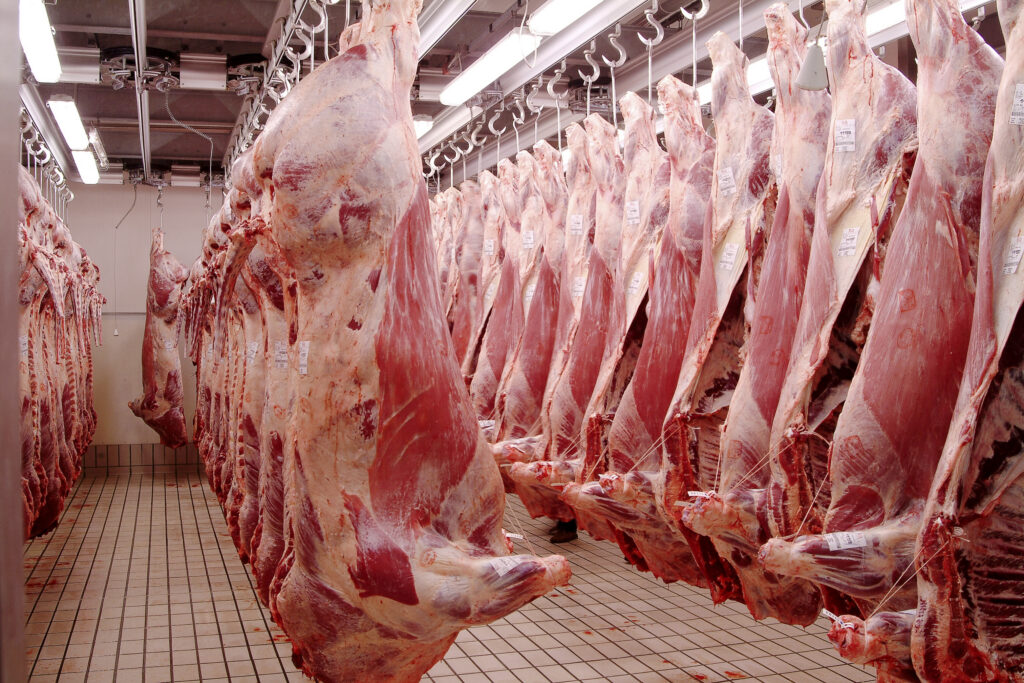
beef on hanger

Steve Dittmer Warns Breaking Up Big Packers Could Raise Beef Prices

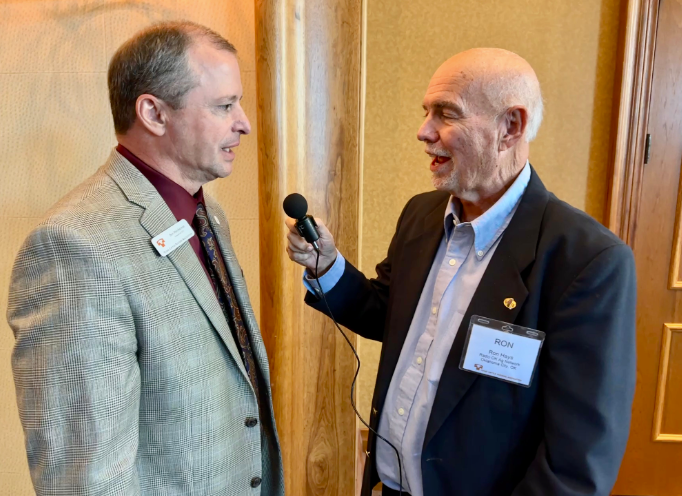
In today's Beef Buzz, senior farm and ranch broadcaster Ron Hays speaks with Steve Dittmer, president of the Agribusiness Freedom Foundation, who weighs in on President Donald Trump's recent calls to lower beef prices and break up the nation's largest beef packers.

Dittmer has written in his most recent blog about Glenn Beck's conversation with President Trump which has apparently lead to the President's latest Friday proclamation on his intention to work to break up the four largest beef packers, who he say many call a "nasty monopoly."

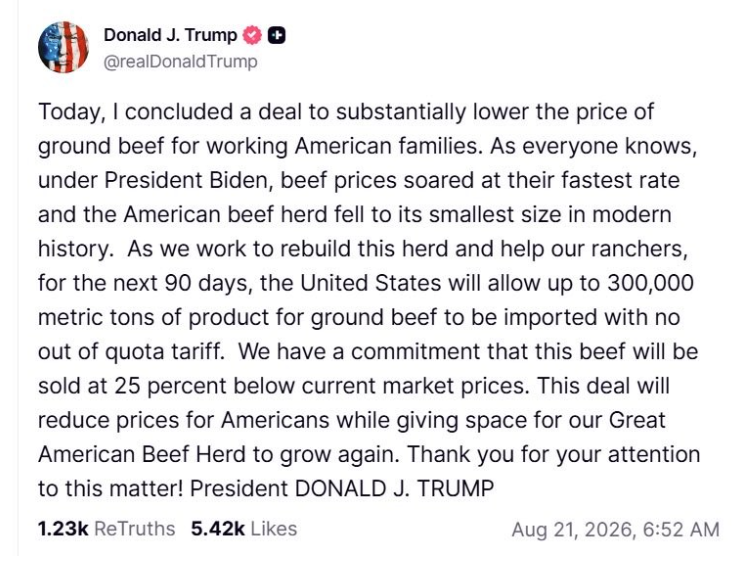
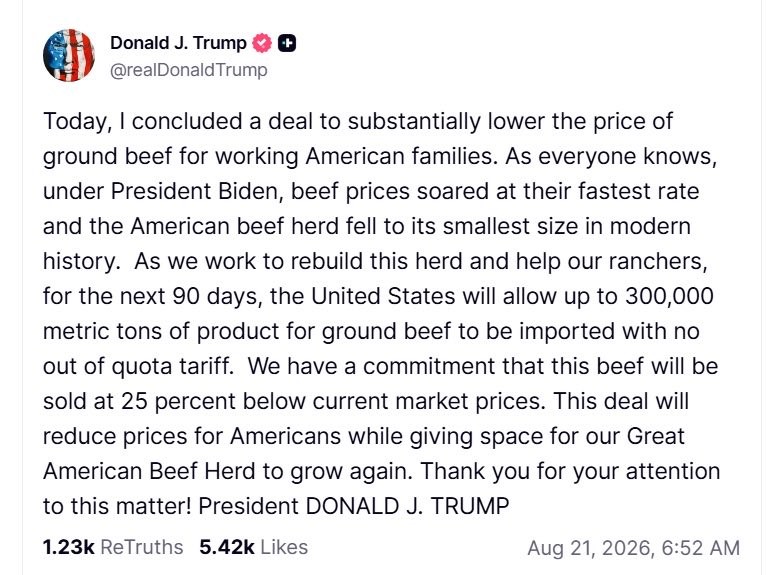
Two weeks ago Friday- Trump proposed bringing in additional lean beef to help lower ground beef prices, while this past Friday called for action against the Big Four meatpackers. Dittmer says the discussion needs to account for how the modern beef industry actually operates.

"While we have four big major packers, they always key in on that number four, but they have 15, 20 plants between them," Dittmer says. "They're actually cutting back some shifts in some plants because there's not enough cattle to keep their fixed costs in line, and it costs a bunch to have a big plant. But that's what keeps the cost down for the consumers."

Dittmer: Breaking Up Big Packers Could Raise Costs

Dittmer argues that breaking up the major packers would not necessarily benefit cattle producers or consumers. Instead, he says it could make beef more expensive to produce. "We have to have something reasonable, and right now the supply of cattle is tighter. But we're producing a lot of beef from that. It's just that the demand is there," Dittmer says.

He says strong consumer demand for beef is one of the biggest factors driving today's market. "People really like the flavor. They like the tenderness. They like all this. That's what's pushing demand more than anything else," Dittmer says. "Not all the politicians seem to understand that."

Dittmer says smaller processing facilities face significant challenges competing with large plants on cost. "We've got five or 600 smaller plants in the country, but they can't produce a product at the same kind of price point that the big plants do," he says.

Food Safety Remains Essential

Dittmer also pushes back on the idea that regulations could simply be relaxed to allow more ranchers to process beef for public consumption. "They're talking about, well, we should allow ranchers to produce their own beef. Well, they can do it for their own consumption now. There's no rules that say you can't," Dittmer says. "But if it's going to go into state or through federal regulations, then you can sell it to the public. You can't otherwise."

He says food safety cannot be treated as an optional part of the system. "Food safety is not a nice thing to have. It's an absolute essential," Dittmer says. "And to talk about relaxing regulations on food safety, we can't do. We have to be careful what we talk about when we talk about deregulation."

Dittmer ultimately says breaking up the largest packers would not be the right move for the cattle and beef industry. "Indeed, getting on and breaking up the big packers is not a smart thing for us to do," he says.

Big Packers Benefit From Using the Entire Carcass

Another advantage Dittmer points to is the ability of large processors to find markets for virtually every part of the animal.

He says products that have relatively little value in the United States can become valuable exports in other countries. "We have a totally different idea than we did that our grandfathers and grandmothers ate totally different than we do now," Dittmer says.

He points to products such as sweetbreads and other variety meats that can be considered delicacies in international markets. "Those things are not worth nearly as much in this country, but they're delicacies in other countries," he says.

Dittmer says large packers have the scale and logistics necessary to move those products quickly and in large enough quantities to make international sales economical. "One of their biggest problems is getting rid of the variety meats and the hides and things of that in a quantity," Dittmer says of smaller plants. "It's not economic for a small plant to do it, they just can't gather enough of it fast enough as the big plants can."

The Industry Has to Explain the Bigger Picture

Dittmer says the cattle industry faces a difficult communications challenge when trying to counter claims that the largest packers are the primary reason for high beef prices.

He says the public needs to understand that the beef business is complex and that processing economics matter. "Everybody says, 'Oh well, they're selling billions of dollars a year.' Yeah, they are, and they're not even getting a 1% return on it now. They're losing money," Dittmer says.

Ultimately, he says the industry needs to focus on three things: producing a safe product, maintaining quality and keeping beef affordable for consumers. "We have to have a product that people like, that is safe, and that is something they can afford," Dittmer says.

The Beef Buzz is a regular feature heard on radio stations around the region on the Radio Oklahoma Ag Network and is a regular audio feature found on this website as well. Click on the LISTEN BAR above for today's show and check out our archives for older Beef Buzz shows covering the gamut of the beef cattle industry today.

Cow-Calf Corner Dr. Peel: Summer Pushes into Fall

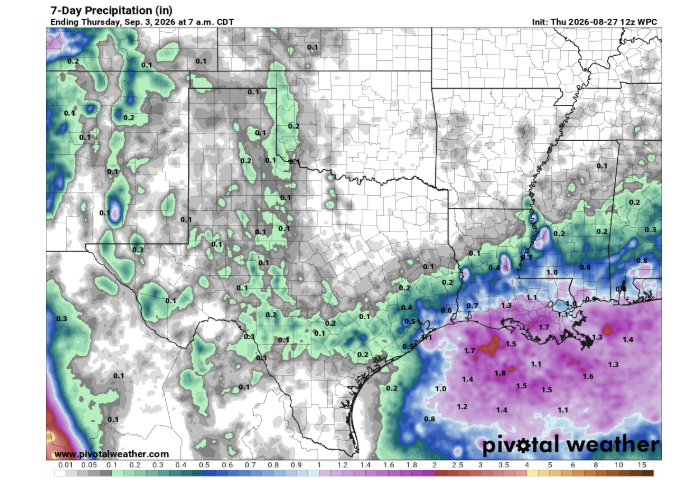
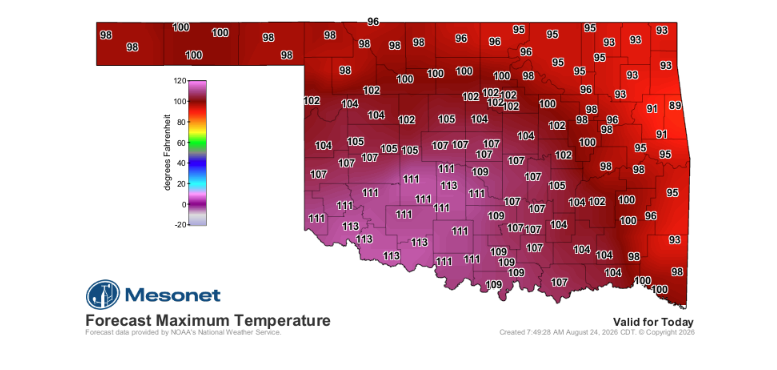
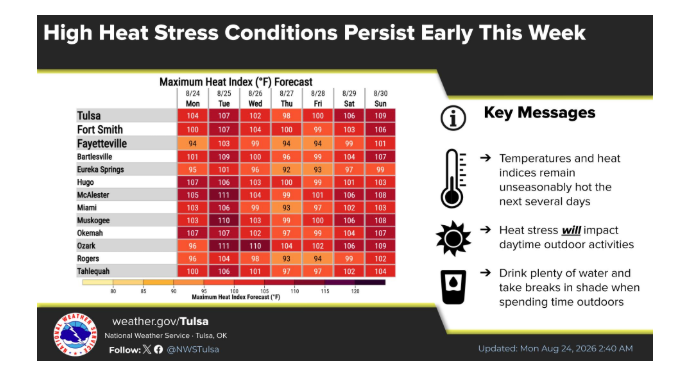
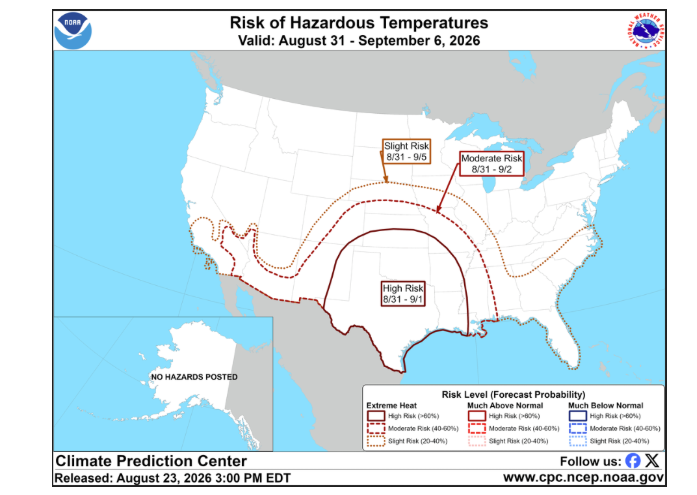
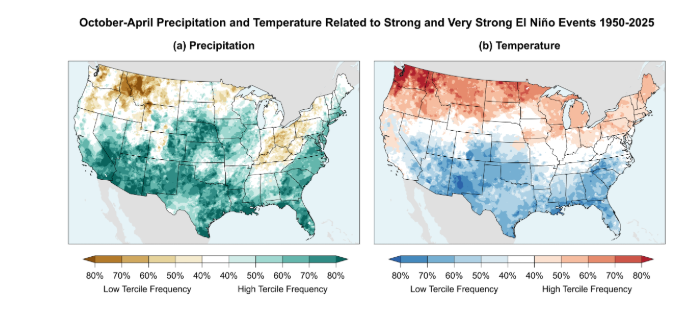
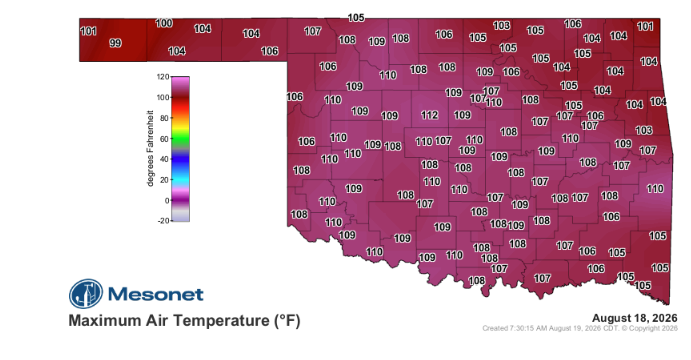
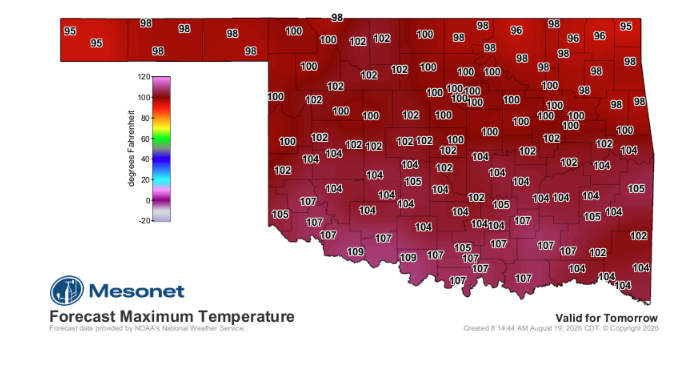
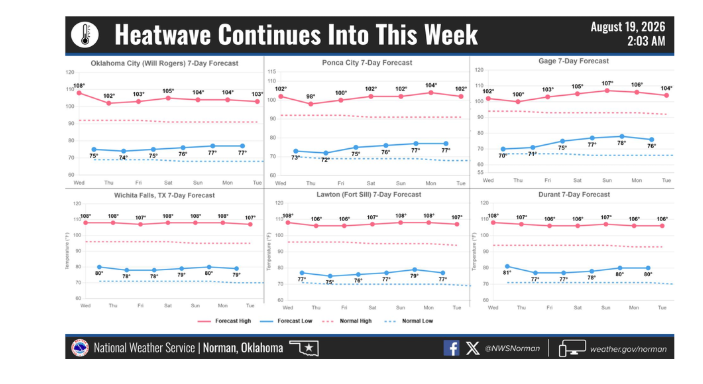
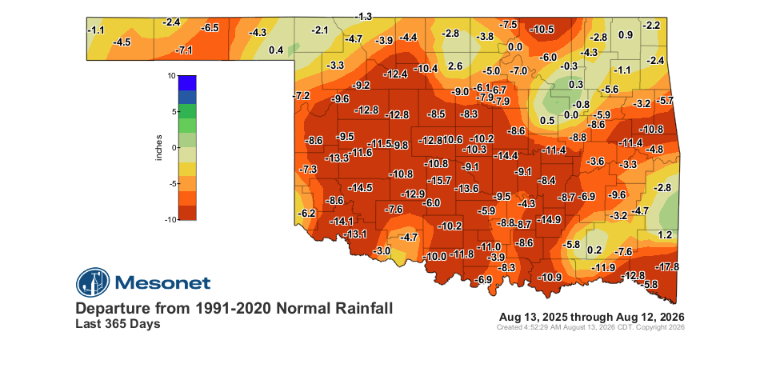
Summer has been a challenge in Oklahoma and numerous other locations. The Stillwater Mesonet site has posted a total of 27 days of temperature in excess of 100 degrees in July and August. The current forecast shows the first seven days of September will continue above 100 degrees. Precipitation in July and August totaled 5.52 inches with 79 percent occurring in three events on July 4 and August 17 and 22.

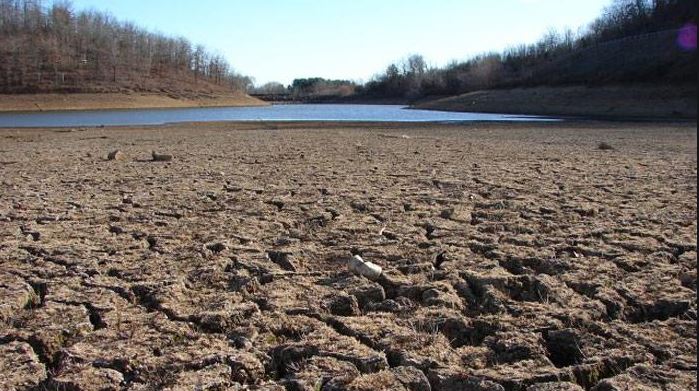
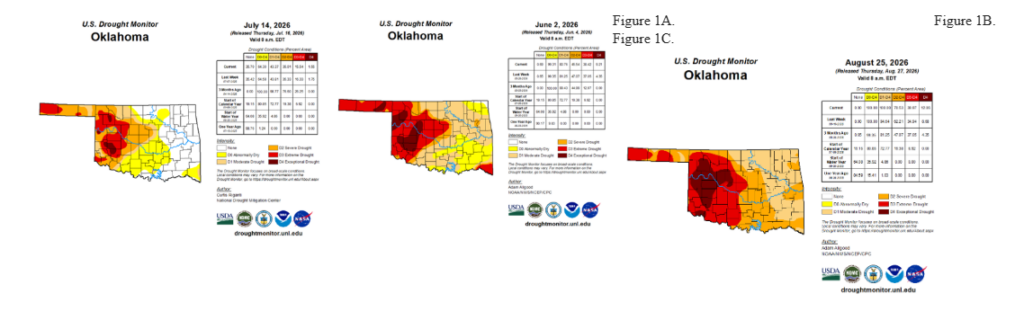
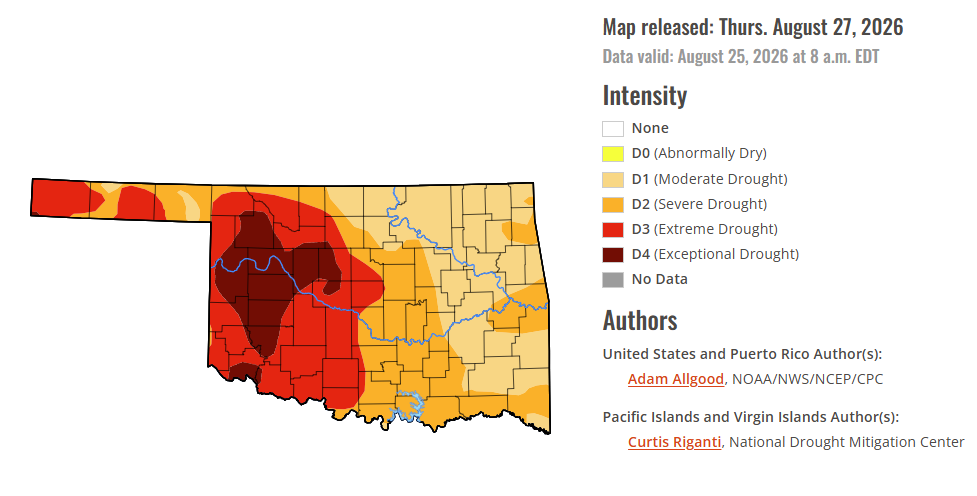
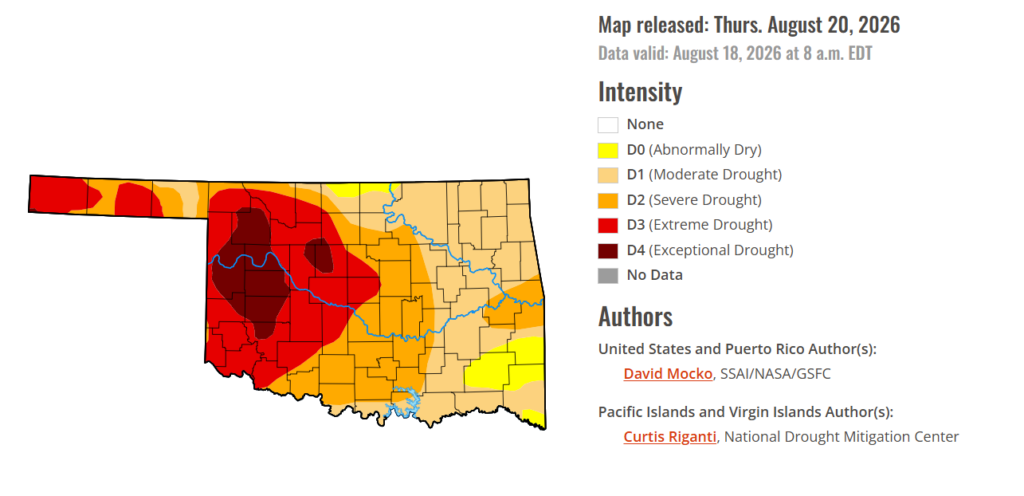
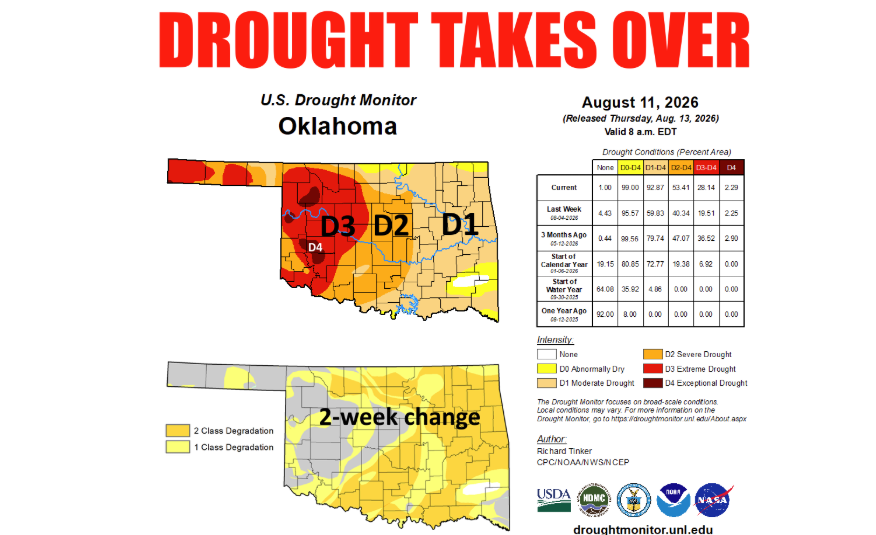
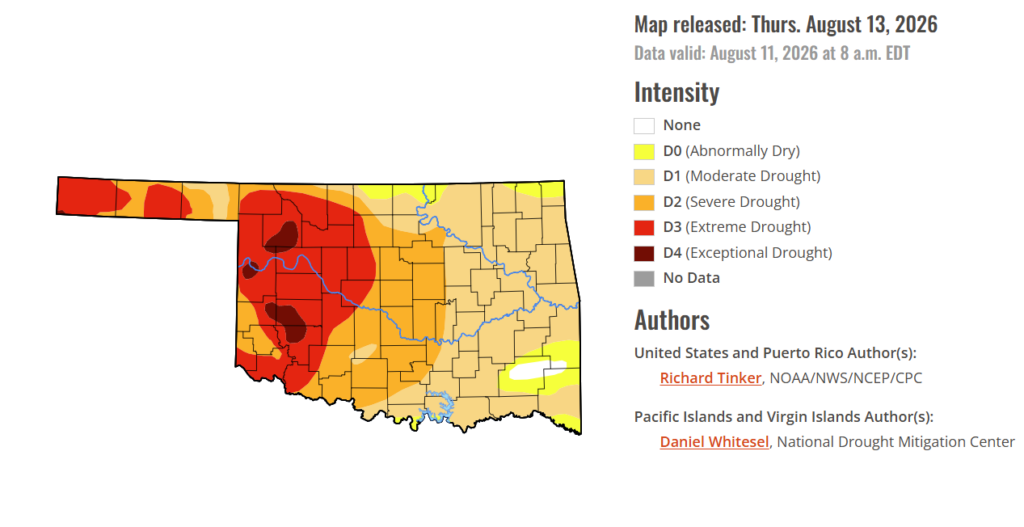
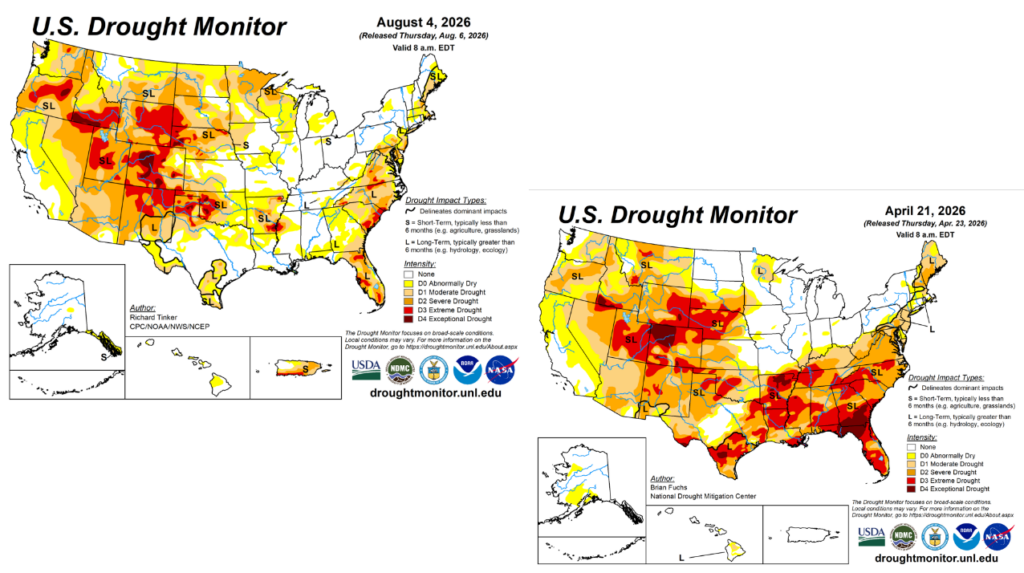
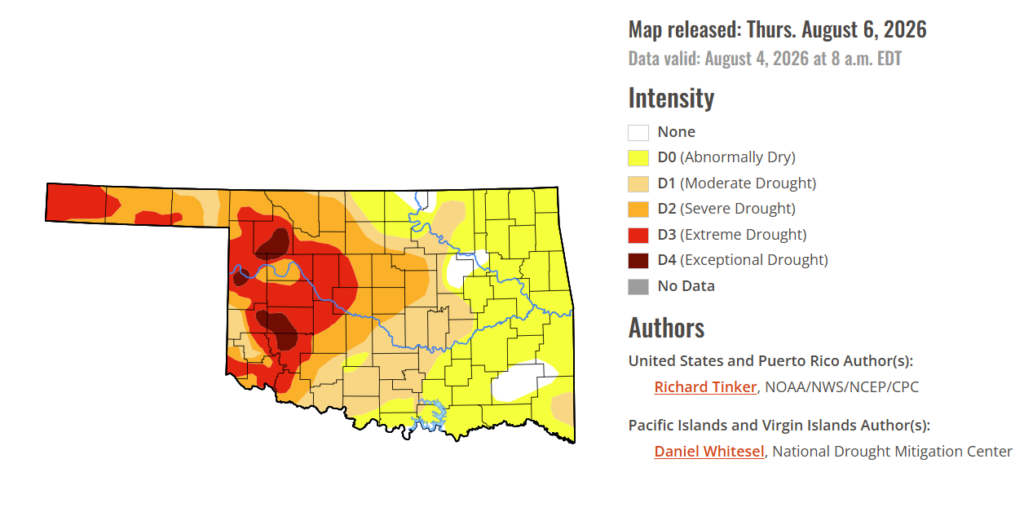
Oklahoma drought conditions were poor early in the year, with the worst point in early June (Figure 1A), followed by the eastern half of the state seeing significant improvement until mid-July (Figure 1B), then the entire state saw worsening conditions that continue (Figure 1C). Current drought conditions are at the most severe level since February of 2023.

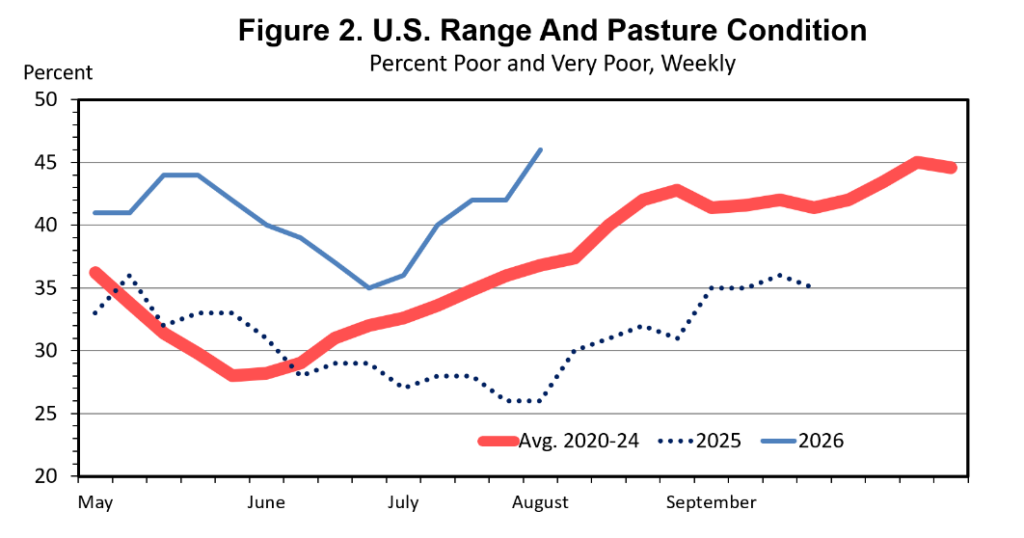
Pasture and range conditions in Oklahoma followed a similar pattern with the percentage poor to very poor decreasing from 33 percent in early May to 28 percent in mid-June before increasing to a current level of 58 percent of pastures and ranges rated poor to very poor. Typically, moving into September, there is much interest in planting some early wheat for potential grazing. The current dry conditions and warm soil temperatures make wheat planting unlikely thus far.

Adverse weather conditions combined with a barrage of news and uncertainty are keeping cattle markets down for the time being. Fed and feeder cattle prices will likely recover significantly if politicians will shut up and stop proposing actions that will not help cattle producers or beef consumers, in either the short run or the long run. Ever tighter cattle supplies and continued strong beef demand will reassert market fundamentals at some point. The August Cattle on Feed report showed historically low feedlot placements and marketings which will decrease further going forward. In Oklahoma, auction volumes decreased 31.7 percent from mid-July through the end of August, partly because of hot weather and weak cattle prices, and partly because the cattle are simply not there. Despite limited signs of heifer retention, poor production conditions and tremendous uncertainty due to a whirlwind of political rhetoric and industry dynamics suggest that no herd rebuilding is likely for the foreseeable future. Probably the best we can hope for is data that confirms that the liquidation has stopped. And that is by no means certain.

Philippine Policy Team Advances Fair Trade Discussions and Strengthens U.S. Wheat Partnership

A recent U.S. Wheat Associates (USW) program brought together "heavy hitters" from some of the Philippines' largest flour milling companies for a trade policy focused mission to Oregon, Montana and Washington, DC.

The team members' companies account for more than half of total flour milling capacity in the Philippines, purchasing more than 1.3 million metric tons (MMT) (47.8 million bushels) of U.S. wheat in the 2025/2026 marketing year. They joined representatives from the Philippine Association of Flour Millers (PAFMIL) and USW to strengthen relationships with U.S. producers, exporters and policymakers while addressing one of the most significant trade issues in the Philippine milling industry: the upcoming expiry review of anti-dumping duties on Turkish flour.

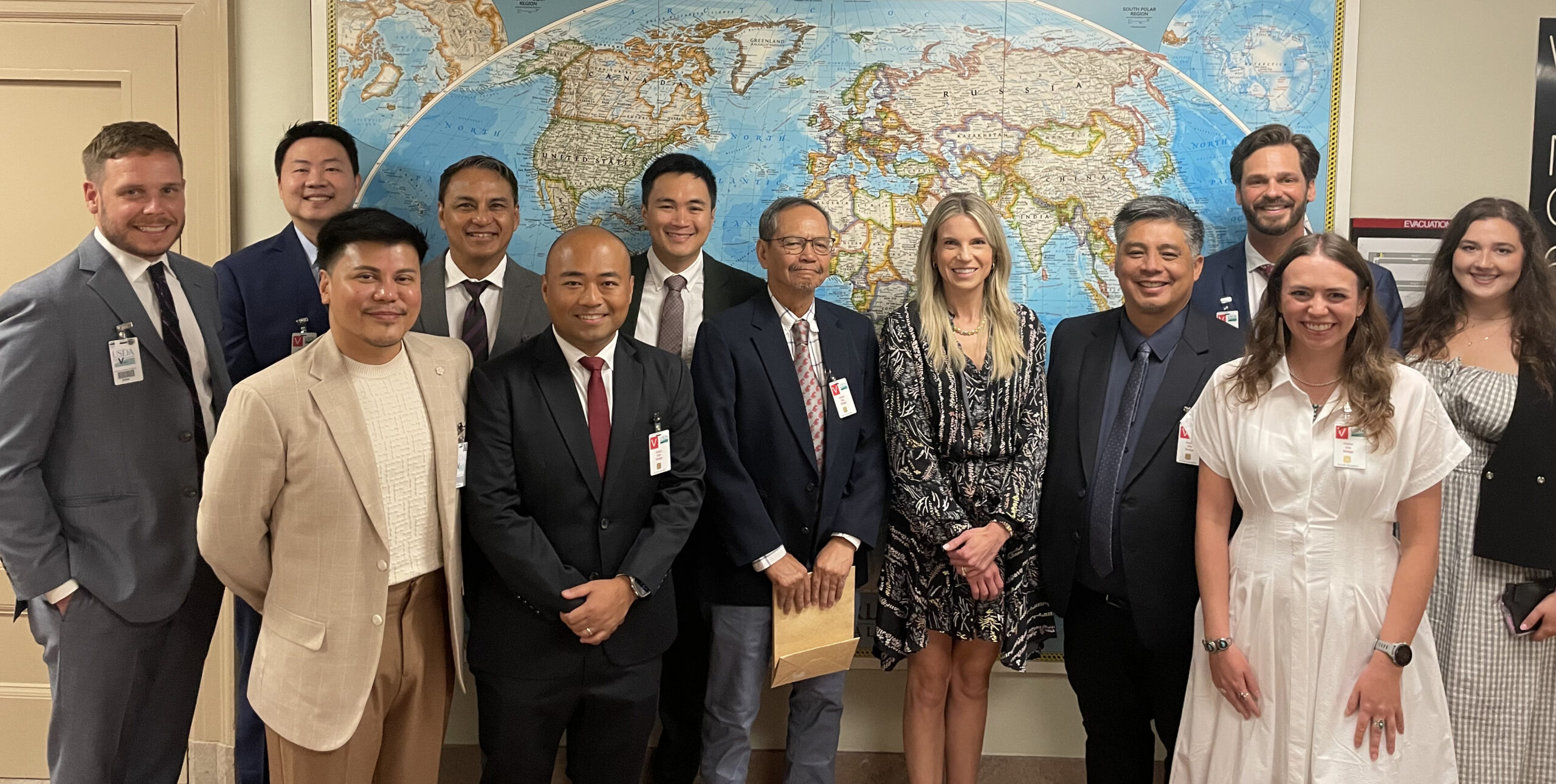
2026 Philippine Team in DC
The policy-focused trade team from the Philippines traveled to Washington, DC, to ask for support during upcoming reviews of anti-dumping duties on Turkish flour. 

Anti-Dumping Duties Support Philippine Millers and U.S. Wheat Farmers

While enhancing understanding of the U.S. wheat supply chain is always an objective of USW programs, the primary goal of this team was to provide U.S. support for the Philippine flour milling industry's efforts to extend their government's anti-dumping duties on Turkish flour.

The Turkish government employs a complex, inward processing scheme that creates incentives for its milling industry to export flour regardless of price, distorting and disrupting flour markets around the world. As a response, the Tariff Commission of the Republic of the Philippines originally imposed anti-dumping duties in 2014 of up to 16.19%, which combined with the country's MFN (Most Favored Nation) tariff rate of 7%, were enough to reduce imports of Turkish flour by more than 70 percent and allow the Philippine milling industry to increase production of flour needed to make high-quality Philippine wheat food products.

This outcome was the direct result of PAFMIL successfully demonstrating that unfairly priced Turkish flour imports threatened to cause material injury to domestic millers, which they have continued to do as anti-dumping duties were extended. In 2023, the Philippine government passed the latest extension for those measures after determining that Turkish exporters would likely continue dumping flour into the market if the duties were removed.

At its peak before the duties were enacted, Turkish flour captured approximately 9% of the Philippine flour market, displacing the equivalent of more than 200,000 MT (7.35 million bushels) of U.S. wheat demand. Without the duties, low-priced Turkish flour could once again enter the market in significant volumes, undermining investments made by Philippine millers and disrupting market conditions for both the domestic industry and U.S. farmers.

As the second-largest market for U.S. wheat, with annual purchases averaging 2.5 MMT (91.9 million bushels), and the largest destination for both U.S. soft white (SW) and hard red spring (HRS) wheat, this issue remains highly relevant on both sides of the Pacific. The current anti-dumping measures are scheduled to expire on January 14, 2027, and Philippine millers are preparing evidence to support another extension.

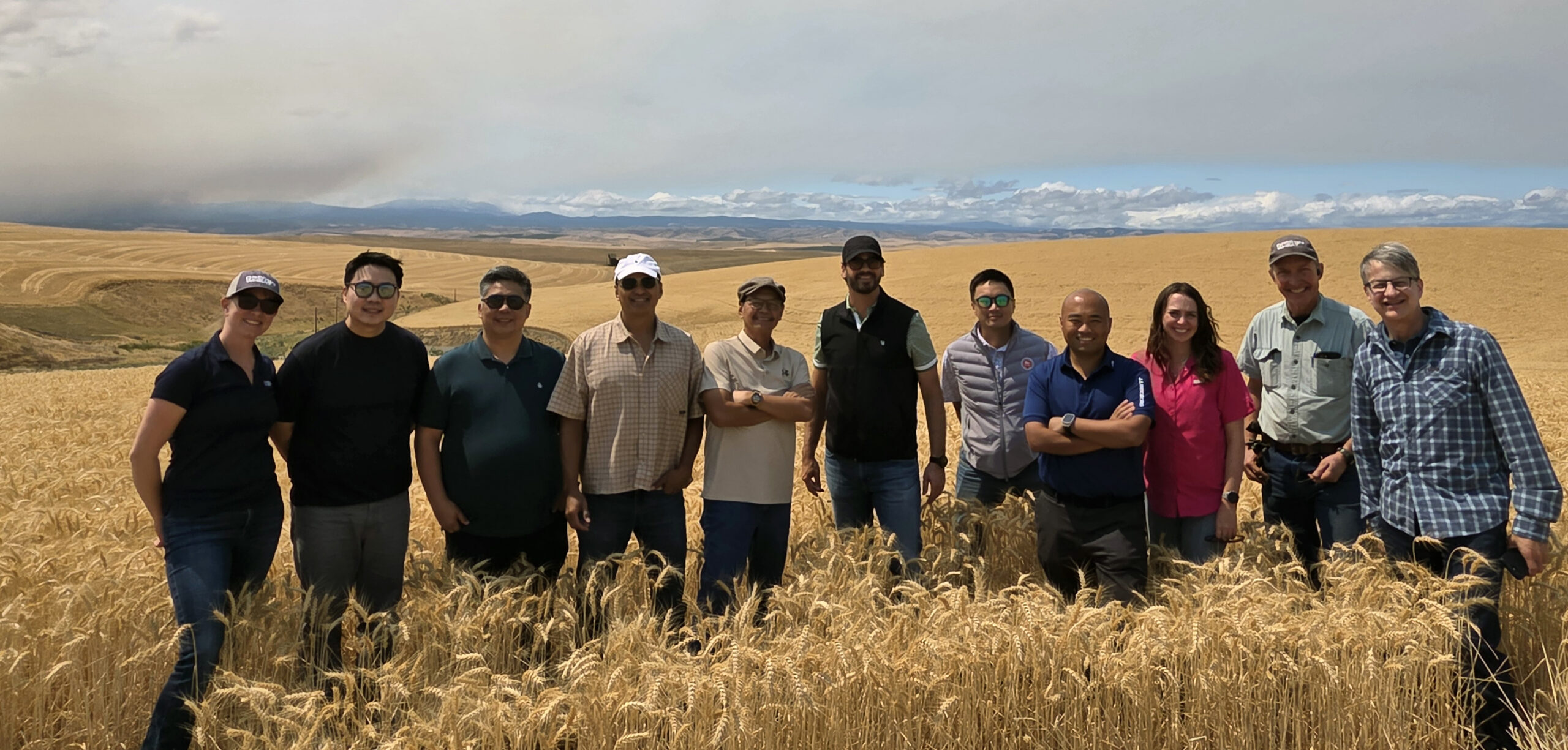
2026 Philippine Team in Wheat Field
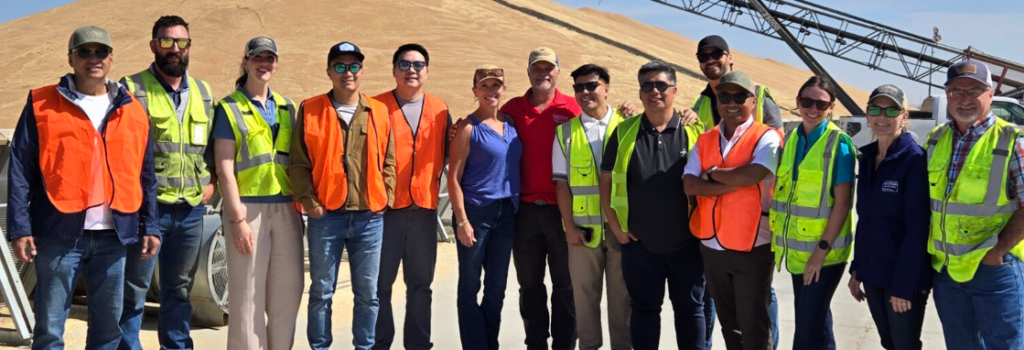
The Philippine trade team also traveled to Oregon and Montana to ask for support from U.S. wheat farmers and get a firsthand look at the U.S. wheat supply chain.

Trade Mission Talks Turkish Flour Coast to Coast

The efforts of U.S. wheat farmers have helped PAFMIL secure previous extensions of the anti-dumping duties, which is why PAFMIL once again came to ask for their support and encouragement. This year's program began in Portland, Oregon, where participants met with grain exporters, toured export facilities, received briefings from the USW West Coast Office and the Wheat Marketing Center and learned more about the inspection, logistics and quality assurance systems that support U.S. wheat exports. The team also participated in a briefing and grain grading session by the USDA's Federal Grain Inspection Service (FGIS), providing a firsthand look at the systems that help ensure the reliability and consistency of U.S. wheat for overseas customers.

The group then traveled to Montana, where visits with growers, grain handlers and industry organizations highlighted the long-standing partnership between U.S. wheat producers and Philippine millers. Discussions emphasized a shared commitment to quality and reliability, the importance of the Philippine market to U.S. farmers, and the role fair trade plays in supporting both industries. Team members also shared updates on the Turkish flour case and its implications for Philippine millers and U.S. wheat producers.

The DC portion of the program focused on the policy implications of this case. Meetings with USDA officials, trade policy experts and consultants provided participants with additional insight into the Turkish flour case, the expiry review process and the importance of maintaining a rules-based trading environment.

By bringing together industry leaders, growers, exporters and policymakers, the team reinforced the long-standing partnership between Philippine millers and U.S. wheat farmers. As the anti-dumping case enters its next phase, the program highlighted the shared interest of both industries in maintaining a transparent and competitive marketplace that supports continued growth and opportunity for U.S. wheat exports and the Philippine flour milling industry.

How Much Should You Pay for a Replacement Heifer?

Authors James L. Mitchell and Ryan Loy write in Southern Ag Today: With cattle prices at historical highs, few investments carry more weight for a cow-calf operation than the decision to add replacement females. A producer has several options including buying heifers or mature cows that are either bred or open, buying cow/calf pairs, or retaining and developing a heifer calf of their own.  Each option comes with unique upfront costs and timing of returns. Current heifer prices have raised the stakes and financial tradeoffs of this decision, and the best strategy depends on assumptions that vary by operation and year. 

Buying a bred heifer means paying today's price to calve next spring. Raising your own means giving up what a calf could have sold for at weaning, covering a year of expenses, and waiting an extra year for her first calf. Higher heifer prices make buying more expensive but also increases the opportunity cost of holding a heifer calf back rather than selling her.

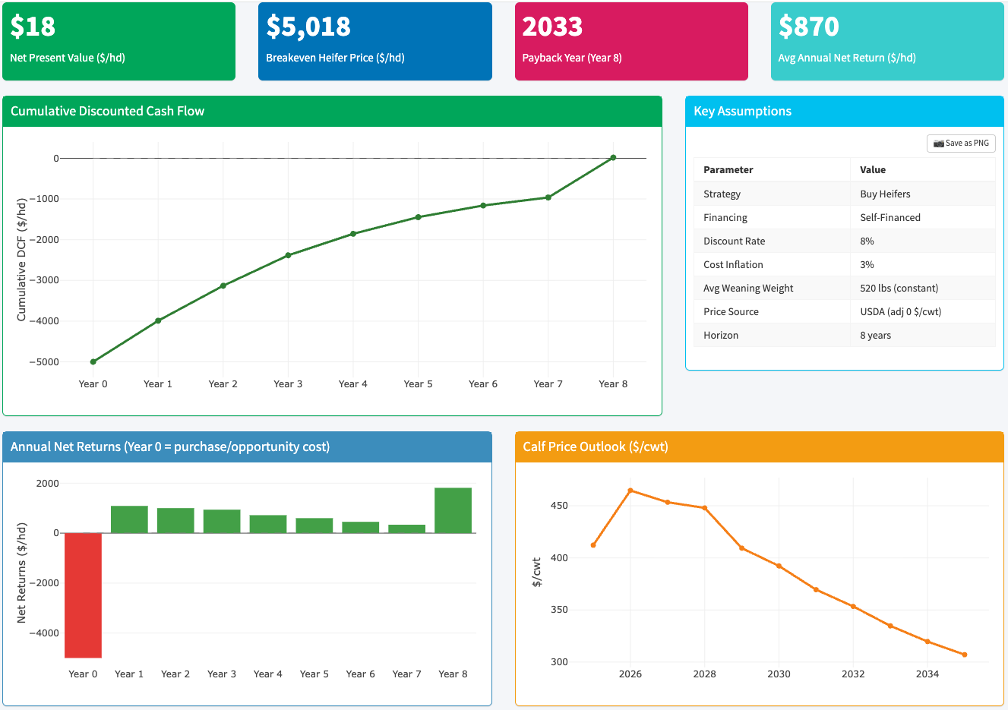
The Beef Cow and Heifer Investment Analysis tool was developed to help producers with this decision. The tool is a free online dashboard that allows producers to enter their own data, such as heifer price, annual cow costs, weaning weight, calf crop percentage, cull weight, discount rate, and cost inflation. The dashboard returns net present value (NPV), breakeven heifer price, payback period, and average annual net return, all of which update in real time (Figure 1).

Figure 1. Heifer Investment Analysis Dashboard Overview

Note: The analysis presented assumes that a producer self-finances the heifer purchase. A user may also select borrowed funds to compare the feasibility of both options.   

Consider the dashboard's default assumptions: a 92% weaning rate, 520-pound weaning weight, $1,100 in annual cow costs, an 8 percent discount rate, and an 8-year productive life, with calf prices and cost inflation following the USDA calf price forecast (users can also substitute their own price and cost expectations). Under these assumptions, the tool estimates the maximum price a producer could pay for a heifer while maintaining an 8 percent return ($5,018/hd in this case), as well as the payback period to recover the investment. Changing an assumption can significantly impact the outcome, highlighting how much this decision is operation specific. For example, reducing the weaning rate to 87% (compared to the default 92%), while holding all other assumptions constant, results in a net present value of -$596/hd.  

The decision to buy or raise heifers boils down to cash-flow timing and the price paid relative to what a heifer returns over her productive life. The dashboard does not determine which strategy is correct for an operation. However, it provides cattle producers and other agricultural stakeholders with a framework to evaluate the trade-offs between these strategies. The Beef Cow and Heifer Investment Analysis Tool is completely free to use and can be accessed here on any device with an internet connection.

This is part of a series of articles on the new Beef Cow and Heifer Investment Analysis Tool. In forthcoming articles, we will review other features of the tool, the user manual, and interpretation of the results the tool provides.

As We Approach End of August- No Cattle Cases of New World Screwworm Found in US This Month

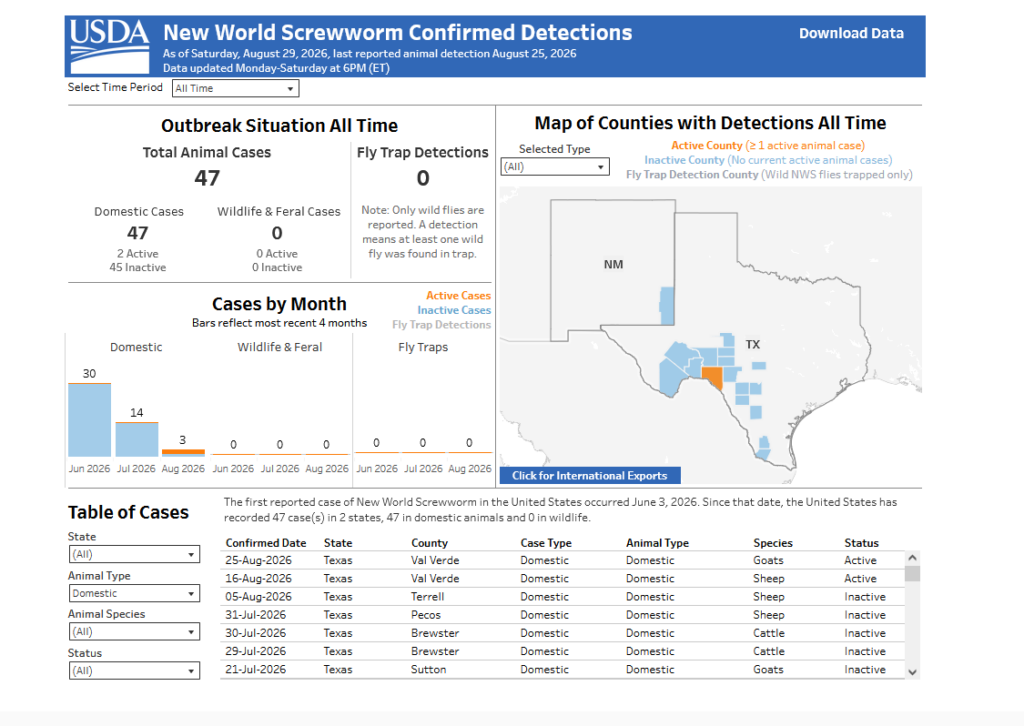
The New World Screwworm made it's return to the southern part of the United States in early June of this year. If you had asked animal health officials as cases mounted in June, how many cases we might have across the southwest by Labor Day- most guesses would have been a hundred or more.

But that's not what has happened. Once the first case was announced by US Secretary of Ag Brooke Rollins on June third in Zavala County- other cases were quickly found- including a calf in Tom Green County near San Angelo, Texas. That was less than 200 miles from Oklahoma and Oklahoma livestock leaders braced for a possible case this summer in the state. The pest has yet to show up north of San Angelo, Texas.

June ended with 30 cases of New World Screwworm confirmed- 29 in Texas and one in New Mexico. But things quickly slowed with only 14 cases found in Texas in July and as August ends- only three cases have been reported in the Big Bend area of Texas right on the Rio Grande River and the Mexican border- two sheep and one goat.

The decline and containment of New World screwworm (NWS) cases in the U.S. following the initial detections in early June are largely credited to a rapid, coordinated biosecurity deployment and joint eradication strategies led by the USDA (APHIS), state agricultural agencies, and livestock industry partners.

The response strategy relies on several key containment measures:

  • Sterile Insect Technique (SIT) Releases: The primary biological weapon against NWS is the release of millions of factory-reared, sterile male flies over affected areas. Because female screwworm flies mate only once in their lifetime, mating with sterile males prevents reproduction, rapidly collapsing local fly populations.
  • Strict Animal Movement & Import Controls: Border controls and strict movement restrictions were enforced along high-risk transport corridors. Restricting cattle shipments from areas with active transmission prevents infested animals from carrying fly larvae (Cochliomyia hominivorax) into uninfested regions.
  • Quarantine Zones and Targeted Larvicide Treatments: Ranchers, veterinarians, and agricultural officials established local quarantine zones around positive detection sites, conducting mandatory animal inspections and treating open livestock wounds with protective topical larvicides.

Learn more about the response by USDA and other stakeholders to the New World Screwworm at www.Screwworm.Gov.

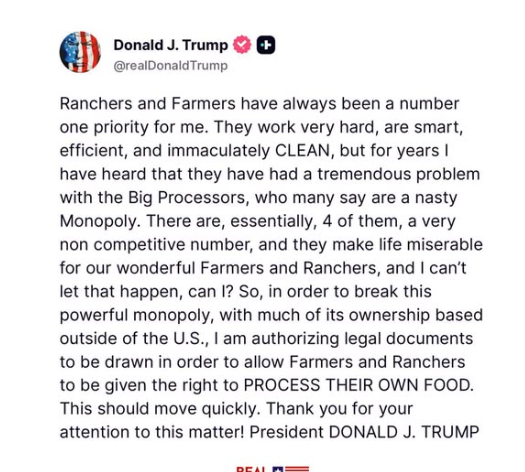
Trump Posts Call to Expand On-Farm Meat Processing and Challenge Major Packers

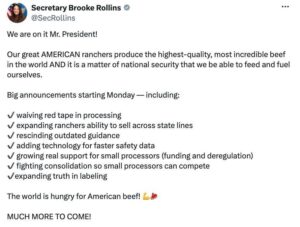
A new effort aimed at easing regulatory hurdles for independent livestock producers is taking shape after President Donald Trump took to social media to announce directives to draft legal documents granting farmers and ranchers the right to process their own food.

In a post published to his social platform, Trump addressed longstanding producer frustrations regarding market concentration among the nation's primary meat processing companies. He highlighted the dominance of the four major meatpackers, stating that the foreign-owned, highly concentrated market structure has created significant hurdles for American agricultural producers, and pledged swift action to break up the bottleneck.

The push for domestic processing reforms comes at a time of heightened tension across the livestock sector regarding foreign beef import policies. Cattlemen and major producer organizations have expressed sharp frustration over recent administration proposals to suspend tariffs on foreign ground beef and allow hundreds of thousands of metric tons of imported product into the country to lower retail grocery prices. Livestock leaders argue that flooding the domestic market with subsidized foreign beef undercuts American producers, depresses live cattle markets, and directly discourages ranchers from rebuilding the nation's cow herd, which already sits at historically low numbers following years of severe drought and high input costs.

The proposal outlined in the post seeks to establish legal pathways allowing cattle producers and livestock operations to process their own meat. Under current federal guidelines, including mandates under the Federal Meat Inspection Act, producers face stringent facility, labeling, and inspection standards before meat can be harvested, processed, and distributed across state lines or sold commercially to consumers.

The announcement comes amid broader ongoing debates surrounding competition across the livestock sector, where the "Big Four" packers control more than 80 percent of U.S. fed cattle slaughter. Producer organizations have continuously advocated for expanded local and regional processing capacity, increased market transparency, and reduced regulatory burdens to help independent operations retain more value from their livestock.

While formal legal language or administrative rulemaking text has not yet been filed, attorneys have been tasked with preparing the necessary documentation. Livestock groups and industry stakeholders will be closely watching the rollout to see how the proposed directives balance federal food safety mandates, interstate commerce rules, and on-the-ground feasibility for independent producers.

Secretary Brooke Rollins also posted this to her X account:

NCBA Opposes Any Effort that Weakens Food Safety

NCBA strongly supports increasing competition in the cattle markets and creating more opportunities for small and regional beef processors. We also support eliminating unnecessary regulations that make it harder for those businesses to compete. However, weakening federal meat inspection and food safety standards, as President Trump has suggested, is not the answer.

For generations, cattle producers have invested in building consumer confidence in American beef and creating the gold standard of food safety systems. Putting that trust at risk in pursuit of a short-term political solution would be a serious mistake. Beef sold to American consumers should continue to meet rigorous, science-based food safety and inspection standards, regardless of the size of the processor.

In just the past week, cattle producers have faced government intervention aimed at increasing foreign beef imports at prices below current levels. Now we are faced with another proposal aimed at changing how beef is processed. Constant government interference creates uncertainty for producers making long-term decisions about their businesses and the future of the cattle herd.

If the Administration wants to help cattle producers, it should focus on reducing legitimate regulatory burdens, lowering fuel and fertilizer prices, protecting the U.S. cattle herd from foreign animal disease, and expanding opportunities for mid-size and regional cattle processors.

America's farmers and ranchers know how to produce safe, high-quality beef. American consumers trust the beef we produce. Washington needs to stop trying to manage the cattle business and let the market work.

Trace Mineral Management Plays Key Role in Beef Cattle Production

Trace mineral management can have a significant impact on beef cattle production, influencing herd reproduction, immunity, calf development and overall efficiency, according to Dr. Jerry Rusch, beef cattle veterinarian and technical service veterinarian with Axiota Health. Rusch spoke about the importance of trace minerals during a recent webinar hosted by ANCW.

Rusch explained that while trace minerals are required by cattle in much smaller amounts than macrominerals, those small quantities are still critical to cattle health and performance. "They're needed in very small amounts, but that very small amount is critical for optimal reproduction and optimal immune function," Rusch said.

Macrominerals include nutrients such as calcium and phosphorus, while trace minerals include copper, zinc, selenium and manganese. Rusch compared the difference to adding ingredients to a mineral feeder. "With your macro minerals, it's like taking that big mineral feeder in the middle of the pasture, and I'm going to add a bucket of calcium to it, and I'm going to add a bucket of phosphorus and a bucket of sodium and that kind of thing," he explained. "But when I get to the trace minerals, I'm going to add a tablespoon and a teaspoon, very small amounts."

Despite those small quantities, Rusch said a deficiency can have consequences that are much larger than the amount of mineral involved. "But if we have even a small deficiency of that, it can have far-reaching impact on, like what I was talking about, the reproduction and immunity," he said.

Trace Minerals Can Affect Herd Efficiency

Rusch said the ultimate goal of managing trace minerals is improving the efficiency of the beef herd. Small improvements in reproductive performance, calf survival or weaning numbers can translate directly into economic returns for producers. "Because you know what we're looking at overall is improving the efficiency of your herds," Rusch said. "Because when we improve your efficiency, whether that be we get one more calf born per year, or we wean a few more calves, or we lose less calves due to sickness, that translates into dollars in your pocket."

He also emphasized that producers may not recognize a trace mineral deficiency until cattle have already experienced significant impacts.

As trace mineral levels decline, Rusch said the immune system can be affected first, followed by fertility and eventually growth. "But clinical signs where you can actually look at a cow and tell it has a trace mineral problem is pretty hard to see," he said. "By the time you see that, is the tip of the iceberg. You have so many problems. You've given up so many things with the immune system, fertility, and growth."

That makes managing mineral status before obvious clinical symptoms appear particularly important.

Drought Can Create Additional Mineral Challenges

Rusch also discussed the relationship between drought, forage quality and trace mineral availability. Dry conditions can change the plant itself while also affecting how minerals move from the soil into forage. "When you have a drought, a plant will actually get more fiber, more lignin in it, and that actually results in the animal not being able to digest it as well, so it can't get to the trace minerals," Rusch said.

Water availability can also affect mineral uptake by plants. "For the plant to take up the trace mineral from the soil, it needs water, and if there's not enough water, we can have issues with that with drought," he said. "So it actually causes poor quality forage."

For cattle producers dealing with drought, Rusch said that means mineral management needs to account for what cattle are actually receiving from their forage and environment rather than simply assuming supplementation is solving the problem.

Mineral Absorption Matters

Putting mineral in front of cattle does not necessarily mean the animal is absorbing all of it. Rusch discussed mineral antagonism, in which other minerals or compounds can bind trace minerals and prevent cattle from utilizing them. "There can actually tie up the mineral absorption to where it's going into them, but the body isn't getting it," he said.

Rusch said this can occur for several reasons, including poor mineral intake, mineral antagonism, water quality and soil quality.

He used newly weaned calves as one example. "If it's mixed into the feed, maybe they're not eating a lot of feed," Rusch said. "So think about weaned calves. You first wean them, and their intake is not very good."

Water quality can also play a role, particularly when water contains high levels of sulfur. "We kind of have to look at getting it into the animal, and then antagonism in the rumen where things are grabbing a hold of it," Rusch explained.

Trace Minerals and Reproductive Performance

One of the most important areas Rusch addressed was reproduction. He said trace mineral supplementation can support reproductive performance in several ways, including calving distribution, pregnancy rates and semen quality.

With injectable trace minerals, Rusch said studies have shown improvements in calving distribution. "The studies have shown actually compressing your calving distribution," he said. "That's talking about every 21 days, how many calves are born after your breeding season."

Rusch said producers want as many calves as possible to arrive during the first 21 days of the calving season. "A lot of times we talk about an ideal 60, 63-day breeding or calving season," he said. "I'm going to tell you, very few of my clients did that. They always lengthened it out, but we want to have as many calves born in the first 21 days."

He said trace minerals can also contribute to pregnancy rates and semen quality.

Rusch outlined three ways adequate trace mineral status can support reproductive performance. First, minerals can help the cow recover following calving. "It's helping that cow that had a calf clean up her uterus because there's bacteria that gets inside of there," he said.

Second, trace minerals play a role in hormone production. "Zinc is very important for the formation of" prostaglandin, Rusch explained, while "copper and manganese" are important for estrogen production. He added that manganese is important in forming progesterone, which is critical for maintaining pregnancy.

The third area is early embryo survival. "When we look and we first breed a cow, almost every cow time zero is pregnant," Rusch said. "But like within the first 10 days, 20% of the cows resorb their fetus."

He said additional losses can occur over the following days, making early embryonic survival an important part of reproductive performance. "These trace minerals help prevent that early embryonic death," Rusch said.

Calf Trace Mineral Status Begins Before Birth

Rusch also highlighted the importance of the last trimester of pregnancy in establishing a calf's trace mineral status.

During late gestation, he said the cow transfers trace minerals from her liver into her bloodstream, allowing those minerals to reach the developing calf. "As she goes into the last trimester, you see that her liver levels drop because she is pulling trace minerals out of her liver, saturating her blood," Rusch said. "And then that circulates into the calf."

That transfer is important because milk and colostrum are relatively poor sources of trace minerals. "Milk and colostrum are very poor sources of trace mineral," Rusch said. "So that calf, this is how God built the cow, that she transfers it to the calf in the last trimester. So when it hits the ground, it has trace minerals in it."

Early-Born Calves Can Have an Advantage

Rusch said improving calving distribution can have value beyond simply getting more calves born earlier. Calves born early in the calving season tend to be heavier at weaning and can also provide better candidates for replacement selection.

He referenced research showing a greater percentage of calves born during the first 21 days among cattle receiving the mineral treatment. "Calves born early are your heavier calves," Rusch said. "When you go to wean, they're worth more money."

He also said those early-born calves can be valuable when selecting replacement heifers and bulls. "I always tell my clients if you're going to keep heifers, they definitely need to come out of that first group that's born, don't keep them out of the third," Rusch said.

According to Rusch, females born early in the calving season are more likely to cycle and become pregnant, less likely to experience dystocia and more likely to breed back during the following breeding season.

Overall, Rusch said trace mineral management should be viewed as an important part of a larger herd-efficiency strategy. From drought-stressed forage and water quality to mineral absorption, reproduction, calf development and immunity, he emphasized that small amounts of trace minerals can have significant consequences for cattle performance.

cattle crossing border

USDA Details New World Screwworm Protocol for Mexican Cattle Entering the U.S.

As Mexican live cattle begin crossing into the United States through Douglas, Arizona, after months of enhanced New World screwworm prevention measures, USDA is outlining the animal health protocol cattle must complete before entering the country.

The details were provided by USDA Acting Chief Veterinary Officer Alan Huddleston and Rod Bain of the U.S. Department of Agriculture. Huddleston explained the process during the first cattle crossing earlier this week, detailing a multi-step system designed to detect and prevent New World screwworm from entering the United States.

Huddleston said the protocol consists of three distinct stages, with cattle undergoing inspections, treatments, identification checks and certification before they are cleared to cross the border. "The protocol has three different phases, stages that we go through," Huddleston said.

The process begins in Mexico at either an export gathering center or the farm of origin. From there, cattle move to a Mexican pre-export facility before undergoing a final inspection at a USDA Animal and Plant Health Inspection Service facility before entering the United States.

First Stage Begins at the Farm of Origin

The first stage takes place at the export gathering center or farm of origin in Mexico.

Within 30 days of movement, an accredited veterinarian inspects the cattle to ensure they are not showing signs of disease, including New World screwworm infestation.

Huddleston said cattle also receive multiple treatments before they are moved toward the border. "Within about seven to 14 days prior to moving from that export gathering center, the animals receive a tick treatment," he said. "And three to five days before movement, they receive treatment with a product that actually treats and prevents New World screwworm."

Once those requirements are completed, the cattle receive an international health certificate allowing them to advance to the next stage of the process.

Second Inspection Takes Place Before Export

The second stage occurs at a Mexican pre-export facility, or PIF. Huddleston said cattle arrive there within 24 hours of crossing the border.

At that point, an official veterinarian with Mexico's Department of Agriculture conducts another inspection to ensure the cattle are free of signs of New World screwworm. "They also share some information, especially with animal identification, because every animal that's coming across the border has to meet official identification requirements," Huddleston said.

That identification is critical because it allows cattle to be traced back to their farm of origin if necessary.

Detector Dogs and USDA Inspection

Before cattle reach the USDA inspection facility, they pass through another layer of protection.

Huddleston said detector dog teams are used to identify cattle that could potentially have wounds or screwworm larvae. "The animals move past detector dog teams, where they are scenting the animals to see if there is any suspicion of wounds and/or larva for New World screwworm," he said. If a dog detects a potential problem, operations can immediately be stopped so the animal can be evaluated.

At the USDA inspection facility, an APHIS veterinarian or animal health technician conducts another physical inspection of the cattle. "We also do check that their official identification is in place and readable in an electronic format, so that we can do a traceback if and as necessary," Huddleston said.

Final Treatment Before Entering the U.S.

The cattle then undergo another treatment designed to address New World screwworm and other potential pests before crossing into the United States.

Huddleston said the cattle "swim through a vat of a treatment for New World screwworm and/or any other kind of critter that might be hanging out on their hide." Afterward, the cattle are allowed to dry before they are moved into the United States.

The layered protocol is designed to provide multiple opportunities to identify potential New World screwworm infestations, while also ensuring cattle are treated and individually identified before entering the U.S. livestock supply chain.

Meat Demand Monitor Tracks What Today's Consumers Want From Beef

In today's Beef Buzz, senior farm and ranch broadcaster Ron Hays speaks with Kansas State University livestock economist Dr. Glynn Tonsor, who discusses the Meat Demand Monitor and what the project is revealing about consumer attitudes toward beef and other meat proteins.

Meat Demand Monitor Tracks Consumer Behavior

The Meat Demand Monitor has been tracking U.S. meat consumers since February 2020, giving researchers a growing look at what consumers buy, why they buy it and what influences their decisions. "So since February 2020, we do a nationally representative survey of U.S. residents," Tonsor said. "So we're trying to track what people buy, why they buy it, why they don't buy it when it comes to beef, pork, chicken, so forth here domestically."

Tonsor said the goal is to provide an unbiased source of information about the U.S. meat consumer. "My vision or my desire was for it to be based at K-State as a land-grant," Tonsor said. "You know, unbiased third party repository for all this."

Tonsor said the information collected through the Meat Demand Monitor is freely available to the public through the K-State AgManager website. "Everything from the MDM is fully and freely available on our AgManager.info website," he said. "And when I mean everything, I mean the original survey data, the survey instruments we use, and probably more importantly, the resulting summaries and so forth is all there."

U.S. Meat Consumers Are Diverse

Tonsor said the Meat Demand Monitor was created in part because researchers wanted to better understand the differences among American meat consumers. "We knew more about the U.S. meat consumer, but we still are kind of geeks that wanted to know more," Tonsor said.

He explained that previous data provided a broad look at overall meat consumption but did not always explain the reasons behind consumer choices. "We knew more on retail, so think grocery store for at-home consumption, than we did away from home, and most of what we knew was pretty aggregated," Tonsor said.

That data also did not always capture differences between individual beef products or consumer groups. "A lot less about why, and a lot less difference about ground versus steak, and how is that different for a Hispanic household versus non, and all those kind of realities that are there?" Tonsor said.

He said the diversity of the American consumer means there is no single type of meat buyer. "There are some households that never eat beef steak and eat more ground beef than you can ever imagine," Tonsor said. "There's some that never eat a pork chop. They eat a ton of bacon and so forth."

Taste and Freshness Remain Key Drivers

After more than six years of tracking consumer attitudes, Tonsor said two major trends stand out. "The first and most important trend I would say is fewer people are self-declaring as a vegan vegetarian," Tonsor said.

He said that creates a more favorable environment for the meat industry because more consumers are choosing meat products. "The average American is going to consume maybe 30 pounds more meat — that's combination of beef, pork, and poultry products — this year than 15 years ago," Tonsor said. "So we are very much in the middle of a pro-meat environment."

Tonsor said another major finding involves what consumers prioritize when choosing protein. "The second part would be the role of taste and freshness has regularly led the purchase decision when it comes to protein," he said.

Meanwhile, Tonsor said other factors have become less influential in the purchase decision. "The role of environmental impact, origin traceability, and animal welfare has actually declined during this period," Tonsor said. "Now I'm always a little careful how I say that. Notice I said it declined. It's not gone, but taste and freshness are more paramount."

Strong Beef Demand Tied to Eating Experience

Tonsor said the findings are particularly important for the beef industry because consumers continue to have a strong perception of beef as a high-quality eating experience. "Specific to beef, I think it's definitely served them well," Tonsor said. "The perception of a high-quality eating experience has served beef well."

He said beef demand remains historically strong, and consumer preference for taste is an important part of that story. "Beef continues to be in the middle of a very historic, strong beef demand run, and I think it hinges back to taste leading the decision," Tonsor said.

For cattle producers, Tonsor said the Meat Demand Monitor helps demonstrate how consumer preferences ultimately translate into economic value throughout the beef industry. "If taste is leading decision and there's a favorable view on your product, you're getting economically rewarded for it," Tonsor said.

More information from the Meat Demand Monitor is available at AgManager.info.

The Beef Buzz is a regular feature heard on radio stations around the region on the Radio Oklahoma Ag Network and is a regular audio feature found on this website as well. Click on the LISTEN BAR above for today's show and check out our archives for older Beef Buzz shows covering the gamut of the beef cattle industry today.

U.S. Cattlemen's Association Statement on Proclamation on Beef Imports

United States Cattlemen's Association (USCA) is disappointed by President Trump's order, signed yesterday, that temporarily eases tariffs on imported beef lean trimmings. USCA continues to warn that this kind of short term "quick fix" is unlikely to bring down consumer prices in the near term but will instead leave American ranchers paying the price.

"Producers are already starting to feel the effects of this action in the markets this week—which were down across the board for multiple days. As we head into the time of year when herd rebuilding decisions are made by many, we need stability and transparency," said President Justin Tupper. "The biggest piece of the herd rebuild puzzle is consistent market signals, ones that point to a profitable future for the American rancher in our own market. Agriculture and rural America are struggling for a number of reasons right now; the cattle industry was one of the few bright spots left, yet in just a few short days we have seen that progress effectively reversed." 

According to the order, lean beef trimmings are the only product covered by this temporary tariff relief. For countries that have already exceeded their annual beef quota, the order creates up to 100,000 metric tons of additional quota per month for the next 90 days, beginning September 1.

"We understand our consumers, and we rely on their purchasing decisions. They want a safe product, and we'll continue to give them that. They've set a record high for demand and consumption, proving that consumers are willing to pay for US beef, and that prices weren't too high." 

In recent days, some consumers have responded to news of Argentina beef recalls in the U.S. and China by calling to "not eat beef" altogether. That reaction works directly against the herd rebuilding we need here at home. USCA will be focusing on clear, factual communication so consumers know exactly what to look for at the meat counter. "When consumers see a U.S. label, they can be confident that product meets some of the highest health and safety standards in the world."

USCA is asking the Administration to reverse this order. "Our message to President Trump is constructive: there is still time to change course," Tupper concluded. "We are ready to work with you on a plan where everyone wins and where America truly comes first."
You can read the full proclamation and White House commentary here.

Download this press release on the USCA website HERE.

U.S. dairy industry accelerates push to boost milk protein levels

The U.S. dairy industry is accelerating efforts to increase protein levels in the nation's milk supply to align with global demand trends and keep pace with key export market competitors. While butterfat levels in U.S. milk have risen sharply over the last decade, gains in protein content have been comparatively modest. However, that dynamic is beginning to change as milk component pricing formulas and other incentives have shifted the economic premium from butterfat to protein.

A new report from CoBank's Knowledge Exchange shows U.S. milk protein production began outpacing butterfat last August, when protein values surpassed butterfat for the first time in recent years. The report notes that a more balanced composition of butterfat and protein will help keep the U.S. competitive with the world's other leading dairy exporters in addition to supporting domestic cheesemakers.

"In the U.S., butterfat gains have doubled protein growth over the past decade, driven largely by demand to fill underserved domestic butterfat markets," said Corey Geiger, lead dairy economist with CoBank. "The dairy industry has successfully met that challenge, and U.S. butter exports are now historically high. At the same time, higher butterfat yields in milk have led to some significant challenges for cheddar and American-style cheesemakers, who rely on a more balanced ratio of butterfat and protein for optimal cheese quality and production yields." 

Despite recent progress in growing protein content in milk and restoring the ratio preferred by cheesemakers, the U.S. still trails its key export market competitors in overall milk protein levels. The European Union, New Zealand and the U.S. account for two-thirds of global dairy exports, and both the EU and New Zealand have increased protein at a faster pace than butterfat — more closely matching global trends in dairy product and ingredient demand.

Although cheesemaking formulas vary by variety, a protein-to-fat ratio above 0.80 is generally preferred for cheese production. While some cheese types always require added milk protein solids, those additions have become standard for nearly all U.S. cheesemakers as the protein-to-fat ratio tumbled from 0.83 to 0.77 over the past decade.

In contrast, New Zealand and the EU have maintained far more stable ratios. While New Zealand's ratio has varied slightly, it began and ended the period from 2015 to 2025 at 0.77, and the EU protein-to-fat ratio has held steady between 0.83 and 0.84 over the same period.

For U.S. dairy farmers and processors, butterfat and protein are the most economically important milk components. The solids underpin production of the most widely traded dairy products and ingredients — including cheese, butter, whey and milk powders — and drive farm income, processor yields, domestic sales and global trade.

Protein production is rising, but still catching up

Global demand for protein continues to grow, but increasing protein levels in U.S. milk has proven more challenging than increasing butterfat. Protein gains rely almost entirely on animal genetics, making progress slower. Even so, U.S. dairy farmers have made meaningful strides.

While the U.S. still has a lower protein content than New Zealand and the EU, its growth trajectory has been faster. From 2015 to 2025, American dairy farmers improved protein production by 7.4%, with two-thirds of those gains taking place in the last five years. By comparison, New Zealand and the EU saw slower growth — 2.1% in the first half of the decade and 1.7% and 1.5%, respectively, in the second half.

Abbi Groves, agricultural commodities economist with CoBank, said the renewed emphasis on protein content through pricing formulas and dairy breed association initiatives supports continued momentum, but progress will take time.

"Fully restoring the protein-to-fat ratio of 0.83 from a decade ago will require years of sustained higher protein growth. And until protein production gains catch up to butterfat, the U.S. will need to find more domestic and international outlets for its growing butterfat supply."

Read the report, The U.S. butterfat boom has become a double-edged sword.

About CoBank

CoBank is a cooperative bank serving vital industries across rural America. The bank provides loans, leases, export financing and other financial services to agribusinesses and rural power, water and communications providers in all 50 states. The bank also provides wholesale loans and other financial services to affiliated Farm Credit associations serving almost 80,000 farmers, ranchers and other rural borrowers in 23 states around the country. CoBank is a member of the Farm Credit System, a nationwide network of banks and retail lending associations chartered to support the borrowing needs of U.S. agriculture, rural infrastructure and rural communities. Headquartered outside Denver, Colorado, CoBank serves customers from regional banking centers across the U.S. and also maintains an international representative office in Singapore.

Clean Fuels, Others Write President Trump Objecting to Small Refinery Exemptions

Dear Mr. President:
On behalf of America's farmers, biofuel producers, oilseed processors, feedstock suppliers, and rural communities, we write to thank you for your Administration's commitment to American energy dominance, domestic manufacturing, reducing consumer prices at the pump, and strengthening rural America. We also urge you to stand strong against misguided efforts to increase the use of small refinery exemptions (SREs). Reducing blending volumes in the RFS program through the use of SREs will destroy the biofuel demand that is now working to restore the rural economy and reduce fuel costs for drivers.


History is unambiguous: the last time the Environmental Protection Agency (EPA) granted SREs at the scale
being contemplated, the biofuel industry lost $6.4 billion, renewable fuel credits collapsed by up to 78 percent, and gas prices rose 12 percent - RIN prices clearly don't drive gas prices. The only winners were refiners in a sector that today is reporting record profitability, even as American farmers face down another year of negative
incomes.


Your Administration's actions to date to restore certainty to the Renewable Fuel Standard (RFS) have provided a strong signal that the United States is committed to expanding domestic fuel production, supporting farm income, and reducing reliance on foreign energy sources. The Set 2 Renewable Volume Obligation (RVO) for 2026 and 2027, finalized in March of 2026, represented a decisive, market-defining commitment to American biofuels, domestic agriculture, and rural economic growth.


Since finalization of the Set 2 RVO, more than a dozen companies have increased production or announced
investments in crush capacity, renewable diesel, and sustainable aviation fuel infrastructure, with executives and company statements directly citing RFS policy as the driver. The U.S. soybean processing industry has invested over $7 billion to expand crushing capacity by over 25% - enough to process 2/3 of the soybeans grown in the U.S., reducing reliance on the Chinese market. EPA estimates that the 2026 RVO will create $31 billion in value for American corn and soybean oil and USDA estimates a $3 to $4 billion increase in net farm income directly attributable to the Set 2 RVO finalization, supporting more than 100,000 new agricultural and manufacturing jobs.


Today, these gains are at risk from pending SREs.


As your Administration considers pending SRE decisions for the 2025 compliance year, we urge you to keep any SREs granted consistent with the projected level of exempted volumes that were used by EPA to establish the current program structure in the final Set 2 RVO, with the reallocation of any waived gallons in 2026 and 2027.


SREs were intended by Congress to provide targeted relief in cases of genuine disproportionate economic hardship as a result of the RFS - not to provide a pathway for a select group of refiners to secure regulatory arbitrage. EPA has consistently determined over the last decades that RIN prices do not increase gas prices, and evidence from specific periods of high RIN prices shows no corresponding increase in gas prices attributable to RINs.


The EPA's Set 2 RVO presented a reasonable approach to restoring much of the renewable fuel volume lost to SREs granted in recent years. But if EPA grants an amount of SREs well above the amount projected in the Set 2 RVO, it will\ decimate the demand signal that the Set 2 rule was designed to create.


The consequences would be severe and immediate: biofuel markets would collapse as excess SREs reduce blending requirements. This would remove demand for corn, soybean oil, canola, and other feedstocks, translating directly to lower farm prices and weaker rural economies. Consumers would lose lower-cost fuel options as excess SREs would tighten the fuel market and undermine the Administration's stated goal of lowering energy costs. Investment in renewable fuel infrastructure would stall, signaling to every future investor that U.S. biofuel commitments cannot be trusted. Reallocation of waived gallons above the levels published in the Set 2 RVO at some uncertain time in the future beyond 2027 won't mitigate what will be irreparable harm today.


We respectfully urge your Administration to implement the final rule consistent with EPA's own assumptions and reject proposals to increase SRE waivers beyond the levels in the final Set 2 RVO, protect the farmers and rural communities who depend on strong RFS volumes to drive commodity markets, take action to lower prices at the pump, and preserve domestic energy security with American biofuel production.

Statement of NCFC President & CEO Duane Simpson on the H-2A Interim Final Rule Court Decision

The National Council of Farmer Cooperatives (NCFC) is disappointed by the summary judgment striking down the Trump Administration's Interim Final Rule on H-2A wage rates. The Department of Labor offered a workable solution at a moment when farmers desperately needed relief from a broken wage-setting system. This ruling makes clear that Congress must act now since a durable fix cannot come from the regulatory process alone. House Agriculture Chairman Glenn "GT" Thompson (R-PA) and Rep. Don Davis (D-N.C.) introduced a bipartisan legislative solution that America's farmers and cooperatives need, H.R. 9535, the Securing Agriculture's Workforce Act. We urge Congress to swiftly pass this bill and finally give agriculture the labor certainty it deserves."

About NCFC

Since 1929, NCFC has been the voice of America's farmer cooperatives. Our members are regional and national farmer cooperatives, which in turn consist of more than 1,600 local farmer cooperatives across the country. NCFC members also includes state and regional councils of cooperatives. Farmer cooperatives allow individual farmers the ability to own and lead organizations that are essential for continued competitiveness in both the domestic and international markets.

America's farmer-owned cooperatives provide a comprehensive array of services for their members. These diverse organizations handle, process and market virtually every type of agricultural commodity. They also provide farmers with access to infrastructure necessary to manufacture, distribute and sell a variety of farm inputs. Additionally, they provide credit and related financial services, including export financing.

Learn more at www.ncfc.org.

Triple-Digit Heat Pushes Oklahoma Toward One of Its Hottest and Driest Augusts in History

Oklahoma is officially fully engulfed in drought, with 100% of the state now experiencing at least Moderate Drought (D1) conditions according to the latest U.S. Drought Monitor update. This marks the first time since November 1, 2022, that every part of the state has met the moderate drought threshold.

Severe conditions continue to expand rapidly across the state. Extreme to Exceptional Drought (D3–D4) now covers 40% of Oklahoma, the highest percentage recorded since October 29, 2024. Additionally, 12% of the state is gripped by Exceptional Drought (D4)—the most severe category on the Drought Monitor scale—reaching levels not seen since April 25, 2023.

State Climatologist Gary McManus noted that the worsening conditions are fueled by a severe combination of persistent deficits in rainfall and punishing heat over the past two months, which intensified further through August.

The 30-day period from July 28 through August 26 ranks as the fifth-driest on record statewide. Regional impacts are even more severe in western Oklahoma, where both West-Central and Southwest Oklahoma recorded their driest 30-day stretch in recorded history. With the exception of isolated areas in the Panhandle and far southeastern Oklahoma, moisture levels across the state remain critically below normal.

August is projected to finish among the top five driest and hottest on record, potentially ranking as the third-hottest August in state history behind only 2011 and 1936.

Historically, only three Augusts in Oklahoma's climate record dating back to 1895 have averaged triple-digit daily highs statewide:

  • 1936: 102.2°F
  • 2011: 101.6°F
  • 1943: 100.6°F

The current statewide average high for August stands at 101.0°F.

While a brief break brings highs into the 90s, temperatures remain 5 to 10 degrees above the seasonal average of approximately 90°F. Triple-digit heat is forecasted to return quickly and dominate through the first week of September. Long-range outlooks indicate the possibility of a fall cold front arriving around Labor Day that could introduce cooler temperatures and rain chances, though widespread, drought-breaking moisture remains hard to come by until weather patterns shift significantly.

To read more from State Climatologist Gary McManus on his Mesonet ticker, click here:

R-CALF USA Calls for MCOOL Following President's Proclamation

In a proclamation signed yesterday, President Donald Trump memorialized his earlier Truth Social announcement in which he stated he would allow up to 300,000 metric tons of lean beef trimmings to enter the United States within the next 90 days free from out-of-quota tariffs. The president said the plan is intended to lower ground beef prices for consumers.

The United States maintains a tariff rate quota (TRQ) system for beef for countries that do not have a trade agreement with the United States, allowing unlimited access to the U.S. market, such as with Canada and Mexico. The TRQ system provides a limit on the volume of beef a country can import under two tariff rates. Tariffs for beef imported within the established volume limit are low, generally around 4.4 cents per kilogram. However, imports in excess of the volume limit are subject to the over-quota tariff rate of 26.4 percent. The purpose of the over-quota tariff rate is to discourage additional imports above the established volume limit.

Argentina, Australia, New Zealand, Uruguay, and the United Kingdom have country-specific volume limits, while all other countries not subject to a trade agreement are classified as "other countries or areas." This "other countries or areas" category has a volume limit of 52,005 metric tons and includes the countries of Brazil, Paraguay, Japan, Ireland, and other EU countries, all of which provided imported beef to the United States in 2026.

The proclamation applies to this "other countries or areas" category, for which the volume limit had already been met with beef imports from Brazil in January. The suspension of the over-quota tariff rate for an additional 300,000 metric tons of lean beef trimmings over the next 90 days means that any country or combination of countries within the "other countries or areas" category can, on a first-come, first-served basis, fill the new 300,000 metric ton limit.

The proclamation further encourages beef importers to sell the additional imports at a price 25 percent below the market price for lean beef trimmings. Given that lean beef trimmings are a wholesale product used to manufacture ground beef, the 25 percent below-market price requirement effectively applies to ground beef manufacturers, not retailers.

While the administration's action is intended to introduce additional lower-priced foreign beef into the U.S. wholesale market, beef sold at retail is not required to disclose the country where the animal was born, raised and slaughtered. As a result, consumers will not be able to distinguish beef produced from these additional imports from beef produced exclusively by U.S. ranchers from U.S. cattle.

In response to the proclamation, R-CALF USA CEO Bill Bullard released the following statement:

"We are disappointed that the president has taken action to increase the domestic supply of beef with foreign beef that will now compete directly with beef produced by America's ranchers. What makes this particularly concerning is that American consumers still are not afforded the means to distinguish ground beef manufactured with imported beef from ground beef produced exclusively from cattle born, raised and harvested in the United States.

"Without mandatory country-of-origin labeling, lower-priced foreign beef can enter the U.S. market and compete directly with American beef without being clearly distinguished from it at retail. This denies American ranchers the opportunity to capture the value consumers may place on U.S.-produced beef while forcing them to compete with increased volumes of lower-priced foreign beef.

"The White House itself recognizes the growing consumer awareness of the quality of U.S.-produced beef. If foreign beef is going to compete on price, American beef must be allowed to compete on its U.S. origin.

"We urge President Trump to support the immediate restoration of mandatory country-of-origin labeling for beef and urge Congress to act swiftly to make it law, so American ranchers can differentiate their U.S.-produced beef from imported beef and consumers can make an informed choice about whether the beef they purchase for their families is American or foreign beef."

From White House website- President Donald Trump

White House Fact Sheet Offers More Information on Trump Beef Plan Starting Monday, September First

The White House has released some specifics about the proposal by President Trump to make ground beef for the US Consumer a little cheaper. His post on the Truth platform roiled the futures market Friday August 21st and continues to be the focus of criticism by cattle producers across the United States. The President's proclamation declares "because of recent circumstances, beef prices have increased unreasonably for United States consumers; that imports into the United States of certain beef products, including lean beef trimmings, are currently subject to the United States tariff-rate quota (TRQ) for beef; and that the United States supply of lean beef trimmings or directly competitive or substitutable agricultural products will be inadequate to meet domestic demand at reasonable prices because of a natural disaster and major national market disruption."

According to the Fact Sheet:

"President Donald J. Trump signed a Proclamation to temporarily increase the quantity of lean beef trimmings that are imported with no above-quota tariff to ensure affordable beef for American consumers in light of current supply challenges. This action includes key safeguards to maximize cost savings while protecting American ranchers from foreign imports and giving space for American ranchers to grow the domestic herd. 

  • The Proclamation temporarily expands the existing quantity of lean beef trimmings that are subject to an in-quota tariff rate, to produce ground beef, allowing trading partners eligible to ship beef to the United States to take advantage of lower, in-quota tariff rates.
  • This expanded quota has the following limitations:
    • It only applies for 90 days, beginning on September 1, 2026.
    • It only allows 100,000 tons per month. (USDA projects U.S. beef production in 2026 to be over 11 million tons.)
    • It only applies to lean beef trimmings to combine with U.S. beef for ground beef.
    • It encourages beef to be sold at a 25% discount from the going import price.
  • The Proclamation does not modify any commitments related to beef for countries with a free trade agreement with the United States, and does not apply to countries with country-specific beef quotas."


Read the full Fact Sheet by clicking here.

Read the full Presidential proclamation by clicking here.

Above photo from White House website.

The Resiliency of U.S. Ag Exports

Will Snell writes in Southern Ag Today: U.S. agricultural trade has faced a lot of headwinds in recent years. Events such as the global pandemic, international military conflicts, increased competition, a slowing global economy, domestic weather events, a 75 year low in cattle inventory, slumping crop prices, high input prices, and a relatively strong dollar have adversely impacted trade flows and the overall U.S. farm economy.  These events, along with trade policy battles with our major export buyers – China, Canada, Mexico, and the European Union, would lead many to conclude that U.S. ag exports have likely plummeted amidst these challenging global events.

Last year, U.S. ag exports did finish 12% off its record high value of $196 billion in 2022 but have remained in the $170 billion dollar level for four of the past five years (2021-2025), compared to averaging $143 billion during the previous five-year period (2016-2020). Amidst multiple trade challenges, the most recent five-year period has actually been the highest U.S. ag export value in history.

In reality, lower prices for several commodities have constrained recent U.S. export values.  Isolating on trade volume, U.S. export quantities during this turbulent period have remained near record levels.  USDA data reveal that aggregate ag export quantities for 2025 are the third highest on record and only 2.5% below the largest level achieved in 2021.

Looking at the data more closely, one market, China, accounted for over 100% of the loss in U.S. ag export value since 2022. The value of U.S. ag exports for 20 of our top 25 foreign markets increased from 2022 to 2025, with some of our major ag export markets like Mexico, the European Union, South Korea, Colombia, Vietnam, Taiwan, and the Dominican Republic finishing 2025 at record high levels.  From an individual commodity/ag product perspective, ethanol, corn, dairy products, and tree nuts hit record export values during the past year.

Plus, the overall strength in U.S. ag exports is continuing so far in 2026. Through the first half of this year, U.S. ag exports are up 7% in value (and 10% in volume).  At this pace, U.S. ag exports for 2026 could end the year exceeding $180 billion – second highest on record.  Most of the gains so far in 2026 can be attributed to a rebounding Chinese market — up 43% in value and 115 % in quantity. Notable increases in export value during the first six months of 2026 include soybeans, up 33%, soybean meal up 20%, ethanol up 21%, tree nuts up 28%, fresh fruits and vegetables, both up 11%; and distilled spirits, up 26%.  But traditional southern crops like tobacco, rice, and cotton continue their downward trends, off 32%, 14%, and 6%, respectively, so far in 2026.

Snell, Will. "The Resiliency of U.S. Ag Exports." Southern Ag Today

Cow-Calf Corner Mike Trammell: Fall Dormancy and Winter Survival in Alfalfa

There are several traits to consider when selecting an alfalfa variety (cultivar). Choosing a variety adapted to the region's climate and suitable for the intended use should be priorities. Winter survival and fall dormancy are key factors related to adaptability and use. They can affect stand, longevity, and forage yield. As a way to compare winter survival and fall dormancy among varieties, ratings have been given to alfalfa varieties that are eligible for seed certification. The ratings are published each year by the National Alfalfa and Forage Alliance. Winter survival and fall dormancy ratings along with pest resistance ratings can be found on the education link at www.alfalfa.org

Although fall dormancy is somewhat related to winter hardiness, it is not an accurate measure of winter hardiness. Winter hardiness and fall dormancy should be considered as separate characteristics when selecting alfalfa varieties.

Winter Survival Rating: Particularly important in the Northern Great Plains is the ability of an alfalfa plant to survive the winter without injury. Winter survival ratings for alfalfa varieties range from 1-6, with 1 being the most winter hardy and 6 being the least hardy (Table 1). The rating indicates stand longevity and potential to withstand multiple winters. For long term persistence, alfalfa varieties with lower winter survival ratings should have primary consideration in northern climates.

Fall Dormancy Rating: Fall dormancy is the degree of fall alfalfa growth as a response to temperature and day length. Lower dormancy ratings exhibit less fall growth. Fall dormancy ratings are indices assigned by comparing the height of fall growth with standard check varieties and tested across locations and years to accurately represent dormancy response across environments.  Fall dormancy is rated on a scale of 1-11, with 1 having the least fall growth and 11 with the greatest fall growth (Table 2). Varieties with low fall dormancy ratings have slower shoot elongation and regrowth after harvest and have shorter prostrate shoots in the fall. Varieties with high dormancy ratings have erect shoot growth in the fall and quicker shoot elongation after harvest (Figure 1). They tend to start growing earlier in the spring, green up faster following cutting during the season, and grow taller in the fall. Fall dormancy ratings are a particularly good indicator of yield potential. The advantage of growing varieties with a larger number on the fall dormancy rating scale is generally higher yields.

Figure 1. Fall dormancy types in alfalfa. A higher fall dormancy score translates to more autumnal growth (Photo courtesy of UC Davis).

Winter survival and fall dormancy ratings are great tool for selecting an alfalfa variety. Other things to consider include purpose of planting, management, and pest resistance.

Reference:

National Alfalfa and Forage Alliance. Alfalfa Ratings Guide, www.naaic.org

Oklahoma Cattle Producers Seek Stability Amid Beef Tariff Uncertainty

In today's Beef Buzz, senior farm and ranch broadcaster Ron Hays features comments from Oklahoma Cattlemen's Association President-elect Jess Kane, with the interview conducted by KC Sheperd. Kane was part of a beef roundtable called by Governor Kevin Stitt earlier this week, where cattle producers voiced frustration over the uncertainty created by President Trump's recent beef tariff announcement. Kane says producers need a fair shake and a market where they can make sound, long-term business decisions.

Frustration Over Market Uncertainty

"We're just asking for a fair shake," Kane says. "I think most cattlemen just want to be left alone to raise our product, market it for a fair price."

Kane says the biggest concern is the uncertainty surrounding the market and how quickly policy decisions can change the outlook for cattle producers. "When you don't know what might be thrown at you in this market, people get really upset," he says. "It's hard to make good business decisions when you don't know what's coming your way. It's the unknown that's so unsettling."

He says there is no way for producers to plan for sudden changes they cannot anticipate. "There's absolutely no way to plan for that kind of market manipulation, and that's what it is," Kane says. "It's intended to manipulate the market for the benefit of the consumer, but without regard to the effect that that will have on the producer who is making long-term business decisions in this marketplace."

Oklahoma Cattle Industry Looking for a Unified Voice

Kane says Governor Stitt and Oklahoma Secretary of Agriculture Blayne Arthur indicated a task force would be formed to better articulate the state's concerns. "Oklahoma is one of the largest beef producing states in the country," Kane says. "If we can have a unified voice on how our marketplace should be presented, I think that we can make a credible argument on a national level that this type of policy needs to be reconsidered."

Cattle industry groups including the American Farm Bureau Federation, Livestock Marketing Association, National Cattlemen's Beef Association and United States Cattlemen's Association have also called for President Trump to reverse course on the 90-day import plan and work with the industry on solutions.

Rebuilding the U.S. Cow Herd

Kane says producers also need to focus on rebuilding the nation's cow herd. "We need to be rebuilding our cow herd, and there's all kinds of reasons why our cow herd is as small as it is," he says. "None of those are easily explained in a sound bite. Trying to manage it from a sound bite is also an irrational decision."

Instead, Kane says cattle producers should remain focused on producing a high-quality product while encouraging policymakers to create a stable business environment. "We need to keep our heads down, figure out how we can continue making the most nutritious, most delicious protein product that everybody in the world wants," Kane says, "and we need to be advocating to our leadership to make sure that we can do that in a sound business environment."

Producers Caught on the Wrong Side of the Market

Kane says some producers, including himself, were caught off guard by the tariff announcement. "Yeah, it's like having the rug pulled out from underneath you," Kane says. "Here, I'd run break even and thought that these cattle make sense, and next minute they don't make sense anymore."

He says many other producers are facing the same situation. "A lot of people have had the same thing happen to them," he says.

Beef Demand Remains Strong

Kane also pushes back on the idea that consumers are no longer willing to pay current beef prices. "The other half of this equation that we're in is the demand side, and we as an industry have been investing in demand development for 40 years through the beef checkoff," he says.

"People love our product. Our product is good for you. That's why it's popular."

Kane says consumers have continued purchasing beef despite tighter supplies and higher prices, calling that a success for the cattle industry. "Even though we've seen a supply crunch that has increased prices, the consumers have continued to buy beef, and that's a success story," he says.

Task Force Needs Concrete Solutions

As the Oklahoma Cattlemen's Association prepares to participate in the task force, Kane says the group needs to move beyond frustration and develop specific solutions. "The task force needs to get together and come together with some real, concrete solutions to the problem that we can take up the chain," Kane says. "We need to be prepared to advocate for and explain those solutions and engage in the process."

The Beef Buzz is a regular feature heard on radio stations around the region on the Radio Oklahoma Ag Network and is a regular audio feature found on this website as well. Click on the LISTEN BAR above for today's show and check out our archives for older Beef Buzz shows covering the gamut of the beef cattle industry today.

20260801_Soybean_field_jlm

Send Us Your Soybeans: Soy Checkoff Invites Farmers to Prove the Quality of Their Crop

United States soybean farmers have a free, straightforward way to prove the quality of their crop to the world. Through the Annual Soybean Quality Survey, funded by the Soy CheckoffSM, farmers can send in a sample from their 2026 harvest at no cost and receive a personalized report on its quality. Samples are due Oct. 21, 2026, and the effort helps position U.S. soy as the premium choice for customers around the globe.

Since 1986, the Annual Soybean Quality Survey has documented the quality of the U.S. soybean crop, one sample at a time. The survey is led by Dr. Seth Naeve, professor of agronomy and plant genetics at the University of Minnesota. Farmer participation supports the U.S. Soybean Export Council (USSEC) in building international marketing programs on behalf of the Soy Checkoff.

"Every sample a farmer sends in makes our picture of U.S. soybean quality more complete," said Dr. Naeve. "That information travels with our crop to customers around the world and helps them understand the real value of what American farmers grow."

As the global marketplace grows more competitive, U.S. soy increasingly wins on value and quality rather than price alone. Survey data gives buyers a clear, science-based picture of the protein, oil value and overall composition of the U.S. crop, and it helps ensure every growing region is represented at global buyers' conferences. When farmers include the seed company and variety with their sample, they also help researchers identify which varieties deliver the most value to international customers.

How to participate

  • Request a free sample kit at https://docs.google.com/forms/d/e/1FAIpQLSdkfTxIvYahxiqlSodvh34zZr5uUwggk2zpmJN-YqNym1zn9w/viewform?usp=dialogor z.umn.edu/soybean-quality. Each kit includes simple instructions and a postage-paid sample bag.
  • Scan the QR code on the bag to record your information quickly and accurately.
  • Return your sample by Oct. 21, 2026. Samples are accepted through mid-December, but returning early helps ensure your region is represented.
  • Receive your personalized results by mid-December.
  • View the full survey report in January 2027 at https://z.umn.edu/SoyQualityReports, where past reports are also available.
  • All individual results are kept strictly confidential. Only aggregated data appears in the final report.

"Taking a few minutes to send in a sample is one of the easiest ways to invest in the reputation of U.S. soy," said Cindy Pulskamp, a USB farmer-leader from North Dakota. "It costs nothing, and it helps every soybean farmer compete in markets here and abroad."

Farmers can learn more about the Annual Soybean Quality Survey and access past reports at https://z.umn.edu/SoyQualityReports.

AFBF, LMA, NCBA and USCA Urge President to Reverse Proposed Beef Import Plan

Four of the nation's leading livestock and agricultural organizations have joined together to urge President Trump to reverse a proposed 90-day import plan they believe would weaken the long-term stability of the U.S. cattle industry.

In a letter sent today, the American Farm Bureau Federation (AFBF), Livestock Marketing Association (LMA), National Cattlemen's Beef Association (NCBA), and United States Cattlemen's Association (USCA) called on the Administration to work with industry stakeholders on solutions that keep food affordable while protecting producers, consumers, and strengthening the nation's ability to produce its own food.


On behalf of America's cattle producers and the broader livestock industry, we write to express our deep concern with your announced plan to import up to 300,000 metric tons of beef over the next 90-days. The stated purpose of driving down beef prices and the commitment to sell it at a price that undercuts domestic supply send a disheartening message to farmers and ranchers across the country.

We share your goal of keeping groceries affordable for American families. However, flooding the market with discounted foreign beef is not the way to rebuild the American cattle herd, strengthen food security, or lower grocery bills in a lasting way. This announcement has already driven cattle markets sharply lower and undermines producers at a critical time of year when they are marketing cattle and making herd-building decisions.

Beef prices are in line with other consumer prices and reflect the inflated cost of raising cattle, grain, and forage. Ranchers and farmers are finally experiencing the strong beef demand needed to invest in their operations after years of drought, high input costs, processing plant disruptions, and other challenges that have reduced cattle numbers. This announcement will discourage investment in the U.S. cow herd and undo the progress producers have made.

We are deeply concerned that this import strategy sacrifices long-term food security for a short-term solution. Americans deserve safe and wholesome beef free from any market distorting actions. There is nothing more American than beef, and we look to your leadership to ensure resilience for our farmers and ranchers, which is the only long-term way to prevent higher grocery costs and maintain control over our food supply.

American cattle producers are asking you for a fair and competitive market, honest price signals, and policies that put U.S. farmers, ranchers, and consumers first. We urge you to reverse course on this 90-day import plan and work with us instead on solutions that strengthen, rather than weaken, America's capacity to feed itself. We stand ready to work with you on policies that keep food affordable, protect producers and consumers, and preserve a viable future for the U.S. cattle industry.

A Blow to U.S. Agriculture

American Farm Bureau President Zippy Duvall commented on the presidential proclamation issued today by President Trump that allows beef imports to increase by 300,000 metric tons – more than 660 million pounds – over a 90-day period, undermining the U.S. cattle sector's recovery. 

"One of the few bright spots for U.S. agriculture right now – the cattle sector – just became dimmer because of today's presidential proclamation. The timing of this proclamation is a gut punch to ranchers' bottom line. The claim of ensuring these added imports do not 'disrupt the orderly marketing of commodities in the U.S.' falls flat when ranchers are now selling their cattle into a market in sharp decline. It's not too late to reverse this decision, and we urge the president to consider the economic harm this causes America's ranchers. 

"A strong domestic food supply is easy to take for granted ... until it's gone. We also urge the administration not to make any changes to the renewable fuel standard that would further destabilize farmers who raise corn, soybeans and other crops. Farmers and ranchers are proud to raise the food, fiber and fuel America's families rely on, but pride doesn't pay the bills in an upside-down farm economy."   

R-Calf Weekly Address: Beef Supply Chain Succumbing to Record Imports, Yet More Is Expected

For many years, R-CALF USA has been a lone voice within the cattle and beef industries warning that unmanaged imports were dismantling the domestic beef supply chain's competitive infrastructure. That imports are taking a serious toll on our domestic beef supply chain is now manifest.

Import volumes hit an all-time record high in 2023 and new record highs have been made each year since. For 2026, the USDA is forecasting another record-breaking year, estimating that beef imports alone, not including the beef produced from imported live cattle, will be 6.1B pounds.

Now let's add the 300,000 MT of additional beef the president wants to invite into the United States by lifting the over-quota tariff, the equivalent of over 661M pounds. This increases the 2026 import forecast to about 6.8B pounds.

Let's look at this from two perspectives: First, 6.8B pounds of imported beef is more than twice the total volume of beef imported just four years ago, in 2022. Second, last year domestic beef production was 26B pounds, and that includes approximately 850M pounds of beef produced from foreign cattle. The estimated 6.8B pounds of imports represent more than one-fourth of last year's domestic beef production.  

So, with record import volumes since 2023 and the 2026 import forecast at more than double the volume of just four years ago and representing one-fourth of production, we would expect substantive changes to occur within the entire beef supply chain to reflect an elevated emphasis on import purchasing, processing and marketing, and a marked deemphasis on domestic cattle purchasing, domestic cattle slaughter, domestic beef processing and domestic beef marketing.

Indeed, significant infrastructure-related changes are already unfolding, and in a big way. Two of the Big 4 beef packers have permanently closed three of their plants, another plant cut its second shift, and another is for sale. The plant closures and plant sale involve plants well outside the Big 4's central anchor area, so the industry is retreating from outlying areas and becoming even more centralized. These actions suggest that the largest packers are reconfiguring their business models to emphasize a greater reliance on imports and deemphasize their historical reliance on domestic slaughter.

The CME Group recently acknowledged that supply chains are changing in the face of increased imports, though it describes that change as slow. Yet another significant change is that fed cattle are being fed much longer, as currently there is a record-high number of cattle that have been on feed for 180 days or more. The additional tonnage created by today's unprecedented carcass weights means more production with fewer head slaughtered. This practice, along with the supply chain's increasing reliance on imports further interferes with supply signals that should have triggered herd expansion.

It is the cow/calf sector of the live cattle industry that must initiate herd expansion, after all, that's where the breeding cows are that produce the annual calf crop. Cow/calf operations typically have two main revenue sources: sale of calves and sale of cull cows and bulls. Their major source of revenue is from the sale of calves, but industry literature indicates that sales of cull beef cows and bulls typically represent about 15% of the cow/calf operation's total annual revenues.

Current profitability and expected future profitability are prerequisites to making the investment for herd expansion. So, let's look at how the president's proposal to import an additional 661M pounds of "product for ground beef" with no over-quota tariff might impact a cow/calf producer's profitability.

What the president means by "product for ground beef" is 90% lean beef trim, or 90s. This is the same type of product that is produced by domestic cull cows and bulls. A typical domestic cull cow will produce roughly 400 pounds of this 90s product. Now, the additional 661M pounds of imported 90s over 90 days will be the live cattle equivalent of about 1.6M domestic cull cows and bulls. This imported product is expected to arrive frozen and be stored frozen to be used over time.

In 2025, the U.S. slaughtered a total of about 2.8M cull beef cows and bulls. Importing the 90s live cattle equivalent of about 1.6M more cull beef cows and bulls will increase the virtual supply of U.S. beef cull cows and bulls by about 57%. 

Now a question for cow/calf producers: What do you think will happen to the 15% of your operation's revenues earned from the sale of cull beef cows and bulls if the virtual supply of U.S. beef cull cows and bulls increases by 57%? Is this an incentive to begin investing to expand your herds, or, do you think it will further delay meaningful expansion of the U.S. cow herd?

Drought Monitor: Oklahoma Drought Intensifies as Rain Remains Elusive

To view the latest Oklahoma drought map, CLICK HERE.

Drought conditions continue to worsen across Oklahoma as persistent heat and a lack of meaningful rainfall put more stress on farmers and ranchers. Exceptional drought now covers 12.06% of the state, while moderate to extreme drought affects all of Oklahoma. And with no significant rainfall in the forecast, near-normal precipitation expected through September 5 offers little relief from the ongoing dry conditions.

According to the Drought Monitor, exceptional drought has expanded by 3.38% this week. Conditions are present in much of western Oklahoma. Exceptional drought covers 12.06% of the state.

Moderate to extreme drought conditions in the current period indicate that 100% of the state is affected compared to 94.64% last week.

According to the 6-to-10-day precipitation outlook map, all of Oklahoma is expecting near-normal conditions through September 5th.

During the early part of last week, an amplified ridge-trough pattern over North America brought widespread late summer heat to the West and south-central US, with milder temperatures overspreading the Corn Belt and gradually shifting to the Northeast and mid-Atlantic states. The north side of the mean ridge provided a focus for convective activity, with narrow swaths of locally heavy rainfall extending across Nebraska and Missouri, while shortwave troughs brought several rounds of storms to the eastern Corn Belt and parts of the mid-Atlantic and southern New England. Underneath the ridge, dry weather combined with excessive heat continued to promote rapid onset drought across much of the South region. Across the Southeast, summer convection competed with enhanced evapotranspirative demand due to hot temperatures, causing some degradation in areas that missed out on thunderstorm activity. Across the West, an active monsoon pattern continued to bring localized relief to parts of Arizona and New Mexico, while excessive heat and drier conditions promoted drought expansion across eastern New Mexico and portions of the Intermountain West, Great Basin, and the Northwest. Across Alaska, improved rainfall eased drought conditions over the central interior, while drier weather sparked some degradation over the southeast. Across Hawaii, following widespread heavy rainfall from Hurricane Lala in the previous week, Tropical Storm Moke passed well south of the state, bringing enhanced flow and precipitation to the windward sides of the islands. Across the Caribbean, a suppressed convective regime continued to promote gradual drought expansion across Puerto Rico.

In the South: Under a persistent heat dome ridge maintaining mostly dry conditions and unrelenting heat, widespread rapid drought expansion continued for another week across the South region. Weekly maximum temperatures exceeded 100 degrees F across nearly the entire region - with the exception of Tennessee - and peaked above 110 degrees along the Texas-Oklahoma border. Condition Monitoring Observer Reports (CMOR) submitted to the National Drought Mitigation Center highlighted rapidly worsening impacts, including dry stock ponds, wilting trees, dust storms, and elevated wildfire activity. Drought expansion and intensification were most pronounced across Texas, Oklahoma, Louisiana, and Arkansas, while conditions also began to noticeably deteriorate across Mississippi. Small-scale convection provided only highly localized, brief relief to isolated portions of central Oklahoma and Arkansas.

In the High Plains: The High Plains saw a mixture of drought degradation and localized improvement. Rapid drought deterioration continued across southern Kansas and southeastern Colorado, where dry conditions and excessive heat aggravated agricultural impacts. Further north, widespread convection brought drought relief east of the Front Range across eastern Colorado, though some deterioration occurred in the Rockies of Colorado and Wyoming where water storage impacts from last spring's limited snow cover are beginning to mount. Organized convection along the northern periphery of the ridge promoted drought reduction in central Nebraska. Showers mostly maintained a status-quo depiction across South Dakota, save for small areas of degradation along its respective borders with North Dakota and Minnesota. More widespread drought degradation was noted across North Dakota, where precipitation was sparser outside of a single, narrow convective event that tracked across the northeastern corner of the state.

In the West: Seasonal dryness continued across the Pacific Coast states and much of the Great Basin, where persistent above-normal temperatures drove high demand on water resources and led to localized degradation. Extreme Drought (D3) expanded slightly across southern Oregon and northern Washington, where soil moisture and groundwater levels remained critically poor. Extreme to Exceptional (D4) drought also expanded into northeastern Idaho, with degradation noted in small portions of Utah and the southern California deserts. Elsewhere, ongoing monsoonal convection promoted drought relief across much of Arizona and western New Mexico, though persistent heat and dry conditions drove drought expansion across eastern New Mexico.

To view the 6-10 Day Precipitation Outlook Map, click here.

To view the 6-10 Day Temperature Outlook Map, click here.

To view the Monthly Drought Outlook Map, click here.

American Wagyu Association Annual Conference to Highlight Breed Improvement, Meat Science and Industry Innovation

The American Wagyu Association annual conference is set for September in Oklahoma City, bringing Wagyu producers and other beef industry members together for education, networking and a look at new developments across the cattle industry. American Wagyu Association Executive Director Jerry Cassady spoke with Associate Farm Reporter Carli Davenport about what attendees can expect from this year's event.

Conference Combines Annual Meeting With Educational Opportunities

Cassady said the association's annual convention serves two purposes: conducting the organization's business while providing educational opportunities for members and beef producers. "Our annual convention is basically twofold," Cassady said. "It's an annual general meeting for our membership, where we conduct all the business of the American Wagyu Association, and it's also a conference." The event will feature guest speakers, a trade show, learning opportunities, networking and a fundraising event.

Breed Improvement, Technology and Meat Science on the Agenda

A wide range of educational topics will be covered, including breed improvement, technology, product development and meat science. Cassady said attendees will hear about "EPDs and indexes and the use of those selection tools," along with product development and the use of different beef grades. Speakers will also discuss artificial intelligence and other technological advancements. "It's going to be pretty in depth when we talk about the Wagyu breed," Cassady said.

Meat science and the end product will be another major focus of the conference. Cassady said a group from Oklahoma State University will discuss meat science, while attendees will also have the opportunity to participate in beef fabrication demonstrations. "One of the things we like to focus on is meats and meat science," he said. "So we have a crew from Oklahoma State coming down to talk about things like that, and then we're also going to have some beef fabrication demonstrations for the audience to participate in."

Beef Fabrication Demonstration Among Conference Highlights

Cassady said the beef fabrication demonstration is one of the sessions he is especially looking forward to because of its popularity with members. "We've done this before, and it's very popular with our membership," he said. "We have a meat scientist that comes in and makes it fun to learn about beef fabrication." He also said he is looking forward to hearing about new research and developments from Oklahoma State University.

The conference will also connect Wagyu producers with information from across the broader cattle industry. Gracie Smith, director of communications, said the first day will include industry updates designed to keep members informed about developments beyond the Wagyu sector. Speakers and updates are planned from the Oklahoma Cattlemen's Association, the World Wagyu Council, USDA and NCBA.

Oklahoma City Chosen Following Headquarters Relocation

Cassady said Oklahoma City was selected as the host city following the association's decision to relocate its headquarters from North Idaho to Oklahoma City. "The board of directors was interested in having our headquarters office in cattle country and much more member-centric," Cassady said. "So we chose Oklahoma City." He added that holding the annual convention in the new headquarters' city made sense for the association's first year in Oklahoma.

New Everything But Steak Contest Showcases Wagyu Products

A new event this year will highlight the many ways Wagyu products can be marketed beyond traditional steak. Smith said the association will continue its Best Wagyu Steak in America contest but has added an Everything But Steak contest to give members additional opportunities to showcase their products.

"Wagyu product is so good that every part of it's valuable," Smith said. The new contest will include four categories: trade show booth decor, edible products, non-edible products and merchandise. The edible category could feature products such as beef jerky, beef sticks, Wagyu tallow chips and summer sausage, while the non-edible category could include Wagyu tallow, soaps and candles. The contest will use People's Choice voting, allowing the general public to participate.

Post-Conference Tour to Visit Oklahoma Wagyu Operations

Following the conference, attendees will have the opportunity to tour several Oklahoma locations connected to the Wagyu industry and beef production. Cassady said the tour will include visits to Genesis Enterprises near Davenport and Grasslands Wagyu southwest of Oklahoma City. Participants will also visit the association's new headquarters near Stockyards City and Oklahoma State University.

Cassady said the OSU stop will provide another educational opportunity, with university personnel preparing programming in the meat laboratory. "Those folks have really gone above and beyond to prepare a really fun educational stop right there on campus in the meats lab," he said.

The annual conference is designed to bring together Wagyu producers while also connecting them with the larger beef industry through education, networking, research and hands-on demonstrations.

Register here!

Oklahoma Cattlemen's Association Applauds Creation of Oklahoma Beef Industry Advisory Council

The Oklahoma Cattlemen's Association appreciates Governor Kevin Stitt's announcement creating an Oklahoma Beef Industry Advisory Council. Oklahoma's beef cattle industry is a cornerstone of our state's economy and rural communities, and bringing industry leaders together to identify opportunities and address challenges can strengthen an already important sector.

Secretary of Agriculture Blayne Arthur is the perfect person to lead this effort. She understands Oklahoma agriculture, knows the cattle industry and has consistently demonstrated an ability to bring people together around practical solutions. 

As cattle producers, OCA members are committed to the future of our industry. Our legacy is to grow Oklahoma's beef cattle herd and strengthen beef production opportunities for future generations. OCA looks forward to working with Secretary Arthur, the Governor and the Oklahoma Beef Industry Advisory Council.

Agriculture Leaders Awarded at 2026 Pork Congress

 On Friday, August 14, 2026, the Oklahoma Pork Council hosted the 67th Oklahoma Pork Congress at the Sheraton Hotel in Downtown Oklahoma City celebrating 35 years of modern pork production in Oklahoma. 

The event brought together more than 150 pork producers and supporters for educational sessions and Oklahoma Pork's annual business meeting to elect new leadership. 

One highlight included celebrating 10 deserving award recipients for outstanding performance within Oklahoma's pork industry or steadfast support of Oklahoma pig farmers. The 2026 Oklahoma Pork Council award winners are as follows: 

Anita Wray of Hitchcock, Oklahoma, was named a 2026 Oklahoma Pork Council Excellence Award recipient. Even before joining The HANOR Company in 2001, Wray gained impressive experience across production agriculture. She now uses that extensive knowledge as a farm manager for HANOR, leading a team of nearly 30 employees to care for 10,000 sows. Widely respected for her leadership and dedication, Wray ensures the highest possible care is given to the animals on her farms while helping to develop her teammates as professionals. The Excellence Award is a peer-recommended accolade for pork producers who have made the daily work of raising pigs more than a job, but a true calling to take care of their animals and their teams.

Jim Coakley of Stillwater, Oklahoma, was named a 2026 Oklahoma Pork Council Excellence Award recipient. Over the past four decades, it would be impossible to tally the number of pig-loving young people Coakley has mentored first as an agricultural education teacher then as the senior herd manager for OSU's Swine Center. Thanks in large part to Coakley, the OSU "school farm" serves as an eye-opening introduction to modern pig farming for countless students while also providing an ideal environment for meaningful industry research. Additionally, OSU's swine farm has played a central role in the Oklahoma Pork Partners Derby supplying novice exhibitors with their first-ever show pigs to raise with help. The Excellence Award is a peer-recommended accolade for pork producers who have made the daily work of raising pigs more than a job, but a true calling to take care of their animals and their teams.

Karen Oropeza of Seminole, Oklahoma, was named a 2026 Oklahoma Pork Council Excellence Award recipient. In her eight years working at Tyson Foods, Oropeza has built upon her already remarkable agriculture career from before she even moved to the United States. Since her first role in the barns as an animal caretaker to her current leadership position as associate of operations for Tyson Foods – Oropeza is beloved for her excellent attitude, her willingness to always help, and her ability to train and mentor a quality workforce. She helps run a 2,700-head sow farm while ensuring new hires receive not only the training, but also the sense of community they need to succeed. The Excellence Award is a peer-recommended accolade for pork producers who have made the daily work of raising pigs more than a job, but a true calling to take care of their animals and their teams.

Goss Livestock of Leedey and Butler, Oklahoma, was named a 2026 Oklahoma Pork Council Excellence Award recipient. Led by Kent, Danna, Blake and Ty Goss, this multi-generational family operation sets an incredible example within Oklahoma's show pig community. No doubt influenced by Danna's father Rick Maloney, who served as Oklahoma Pork's first-ever executive director, the family truly believes the values young people gain from livestock activities reap lifelong benefits. With fantastic support from additional family members and friends, their more than 100-sow show pig operation sells to clients across the United States and creates a platform for their 12 signature events throughout the year. From the classroom to the showing and beyond – these individuals devote much of their time to shaping future leaders within pork production. The Excellence Award is a peer-recommended accolade for pork producers who have made the daily work of raising pigs more than a job, but a true calling to take care of their animals and their teams.

Brett Ramsey of Jones, Oklahoma,was surprised with a Distinguished Service Award for his longstanding example of character, knowledge, and dedication to Oklahoma's pork industry as an allied industry partner. Co-owner of the beloved Oklahoma staple Blue & Gold Sausage Company, Ramsey has served more than 20 years on Oklahoma Pork's board of directors in addition to meaningful volunteer work with likeminded organizations. Each year around 1,000 groups like local FFA chapters and youth sports teams can achieve more because of the 3 million pounds of sausage, 1.5 million pounds of bacon, and 600,000 pounds of chicken strips supplied to their fundraisers by the Blue & Gold Sausage Company. The Distinguished Service Award is only given to those held in the highest possible regard by the Oklahoma Pork board of directors to celebrate decades of service, even when someone's legacy may still be in progress. 

State Representative Trey Caldwell of Lawton, Oklahoma,was awarded as an Oklahoma Pork Council Outstanding Legislator for ardent support of pork production at the State Capitol. During the 2026 legislative session, Representative Caldwell authored House Bill 3977 at the request of the agricultural community to "future-proof" the state veterinarian by requiring candidates for this position to possess food animal experience. With his passion for agriculture and his firsthand knowledge of rural Oklahoma, Representative Caldwell proved to be a strong ally on this legislative priority for Oklahoma Pork and other important measures impacting our members. Growing up in Comanche County, Representative Caldwell has long been involved with farming and ranching. Oklahoma Pork's Outstanding Legislator recognition is reserved for policymakers who specifically defend pork and agriculture priorities within the policy and regulatory space.  

Jack Miller of Guthrie, Oklahoma, was presented a Golden Pig Award for his fascinating career helping feed Oklahoma families and connect hundreds of "pig kids" to the pride that comes from personally contributing to the pork supply chain. Miller recently completed 20 heartfelt years of service to the Regional Food Bank of Oklahoma and began his much-deserved retirement. Of special note to Oklahoma's pork industry, Miller has been a driving force behind the wildly successful "Backpack Program" that includes Oklahoma Pork's annual "Pork for Packs" initiative. Alongside our friends at Oklahoma Farm Bureau and the beef industry, the "Backpack Program" allows Oklahoma 4-H and FFA students to donate their show animals at the end of each competition season to be processed into high-quality protein sticks. The delicious sticks are then sent home alongside other nutritious food items for children at risk of hunger over weekends and holiday breaks from school. Under Miller's leadership, more than 5,350 animals have been donated to this worthy cause since 2012, creating more than 8.7 million protein sticks statewide for our food banks to distribute. Selection for a Golden Pig Award is reserved for leaders who embodied decades-long success and integrity within pork production.  

Leadership from the Oklahoma Department of Agriculture, Food and Forestry (ODAFF) was announced as Oklahoma Pork's 2026 Ambassador Award recipient. Despite having a regulatory role that could instead cause friction, the ODAFF leaders continually go above and beyond in meaningful ways to bolster Oklahoma's pork industry. Under the impeccable leadership of Secretary Blayne Arthur and her division directors over the past eight years, ODAFF's already strong relationship with the Oklahoma Pork Council has flourished.  The current ODAFF leadership team has championed modern pork production while passionately working alongside our industry to protect herd health, advocate for production agriculture, and strengthen the pork workforce. The Ambassador Award is given to individuals and organizations who do not work directly within pork production but serve as vocal advocates for the work done by Oklahoma pig farmers. 

Dan Schiedel from Enid, Oklahoma, was presented an inaugural Oklahoma Pork Council Collaborator Award for 2026. After more than a decade serving as executive director of the United Way of Enid and Northwest Oklahoma, Schiedel plans to retire at the close of this year. A fantastic fundraiser and true champion for the region, Schiedel has repeatedly stepped up to support the Oklahoma Pork Council during our annual Give-A-Ham holiday feeding campaign and other pork donations by area farmers. Serving as a coordination point for 14 Enid area charitable organizations, Schiedel and his team at the United Way have whole-heartedly served many Oklahomans in need, including efforts to help get nutritious, delicious pork onto the tables of countless families. The Collaborator Award was created in 2026 to celebrate like-minded people and organizations who have helped Oklahoma Pork to promote our producers, feed more people, and ultimately do good for our fellow Oklahomans. 

Oklahoma's Own Ozarka Water, represented by Colt Clark, received an inaugural Oklahoma Pork Council Collaborator Award for 2026. No matter what corner of the state Oklahoma Pork visits for community outreach events, we can count on our friends at Oklahoma's Own Ozarka Water to join the adventure. Whether we are promoting the pork industry with free lunch giveaways during our annual Give-A-Ham Challenge or offering pop-up hot meals to those impacted by natural disasters – the generous crew at Ozarka continually says "yes." Their charitable giving to distribute hundreds of free bottled waters in partnership with Oklahoma Pork throughout the year lets our budget stretch further to feed delicious pork to even more folks. The Collaborator Award was created in 2026 to celebrate like-minded people and organizations who have helped Oklahoma Pork to promote our producers, feed more people, and ultimately do good for our fellow Oklahomans.

Dolly Parton's Imagination Library and a Farmer's Family

Dolly Parton's Imagination Library Fosters Early Literacy and Gives Back to Communities

Country music icon Dolly Parton has long used her success to give back to her roots in Pigeon Forge and the Great Smoky Mountains, but her philanthropic reach extends far beyond Tennessee. Through her charitable organization, the Imagination Library, Parton has spent decades inspiring a love of reading in young children across the globe.

In a recent report by broadcaster Todd Gleason, Garrett Toay, a farmer and commodity broker from Stockton, Illinois, and contributor to AgTraderTalk.com, highlighted the organization's widespread impact after seeing the benefits firsthand in his own household. Toay's wife, Bridget, a dedicated Dolly Parton fan, originally discovered the initiative online.

The program, which Parton established to honor her father who never learned to read, provides free, age-appropriate books every month to registered children from birth until they reach age five and enter school. Over the past 31 years, the Imagination Library has gifted more than 330 million books across five different countries.

Toay explained to Gleason that the program often partners with local banks and community organizations to facilitate distribution and funding. Unlike borrowing from a traditional library where items must be returned, the program allows children to build their own permanent home libraries completely free of charge.

"Going to the library is one thing, and having a library card, yes, that's free, but you've got to return that book," Toay said. "The fact that she's giving you a book with no obligation whatsoever... it's something that they own, and it helps create reading as a priority."

Reflecting on Parton's broader charitable legacy, Toay praised her commitment to uplifting others through her resources and platform.

"She lived her life with a big heart and strong hands, and if we had more of that today, we'd be all in a lot better place than where we are," Toay shared. "When she climbed the ladder, she made sure that she didn't lift it up behind her; she let others in her area climb that ladder as well."

For families interested in participating, the Imagination Library is accessible through registered community partners, with options for local leaders and financial institutions to sponsor and launch the program in areas where it is not yet established.

To learn more about Dolly's Imagination Library, click here:

Are feedyard days on feed the reason for quality increases?

The fed cattle market has fallen under substantial pressure in the past weeks as a handful of events have unfolded along an unfortunate timeline. The July downturn in carcass cutout values was capped late in the month with the inevitable announcement to reopen the Mexican border to feeder cattle. These fundamentals, combined with a major movement out of cattle futures by speculative funds, pressured the cattle complex into early August. Further developments, including Tyson's plant closure in Illinois and announced intention to potentially sell the company's Pasco, Washington plant, have further combined with the government's plan to relax tariffs on imported ground beef for 90 days, sending market sentiment dramatically lower.

Last week's $3/cwt. dip in fed cattle prices brought the week's average price to $225/cwt., down 14% below the early summer high of $261/cwt. Calculated packer margins are estimated to be more than $100/cwt. in the black on a cash basis. The rapid leverage shift has long been awaited by the processing sector. A 6,000-head increase in federally inspected cattle harvest brought the total to 523,000 head for last week. The increase is not substantial, but it brought the year-over-year decline in head count within 2.7% of the same week last year.

Carcass cutout values were sharply higher in last week's spot market trade, providing the inverse action to cattle procurement costs for packers, as their margins shift positive. For the grocery sector, Labor Day buying activity has boosted cutout values in a sharply higher pattern very similar to what was, at the time, an uncharacteristic spike a year ago.

Beef cuts across the carcass underwent price increases, but rib values are notable as CAB ribeye rolls are pricing 7% higher than a year ago. Chuck and round primals are also higher as back-to-school activity shifts the market focus to items from the round, in particular. Briskets are pricing at a 52-week high with short availability and good market demand. Strip and short loins are a value to buyers, compared to the rib, but prices are sharply higher in a turnaround from the 18-22% price dip in a typical downtrend demand from mid-June through July.

There is otential for additional Labor Day buying inflation in the marketplace, with the seasonal pattern holding promise for a quick drop-off at the holiday's conclusion.

It's Not Just Days on Feed


The August 1 Cattle on Feed report indicates that the number of cattle in feedyards with more than 1,000 head capacity was 1.8% larger than a year ago. It's widely understood that, despite a smaller cowherd, the growth in feedyard occupancy has come from the strong uptrend in the duration of feedyard stays (i.e. days on feed).

CattleFax data indicates that for steers across all placement weights, average days on feed swelled to 205 days in June 2026. Historically wide feeding margins have pressed feeding duration sharply higher since 2023, as cheap cost of gain fell well below fed cattle prices alongside inflating replacement calf values. Beef-on-dairy cattle in the fed cattle supply mix further increase the feeding days average, given the light placement weights, lesser feed efficiency and more lean external fat content that are all hallmarks of that population.

Just as fundamentals shifted carcass weights to record-highs this spring, carcass quality grades eclipsed to historic highs. This set records for the share of carcasses grading USDA Prime, with 6 weeks touching 17% for the national Prime average this year. In fact, the Prime grade will surpass USDA Select in the 2026 summary given that Prime carcasses have reached 15% of total fed cattle, nearly doubling production of Select at just 8% thus far.

Many have pointed out that the added days on feed and resulting total carcass fat –excessive in many cases— have generated the quality grade outcomes described. This is logical and correct in that added days on a high starch diet are a fundamental component of increased marbling.

However, some may be missing the detail that would be more obvious were it not for the supply-driven economic scenario the beef industry has undergone. Genetic improvement in marbling has been nothing short of phenomenal in the past 15-20 years, on average. Focused genetic pressure pulled the USDA Prime percentage up from 2% in 2007 to 8.6% in 2019, capping the period ahead of pandemic supply chain disruptions. More impressively, USDA Choice and Prime, combined, increased from 55% to 80% of the fed cattle graded in the same period.

Looking back at our database of several million brand-eligible, Angus-type carcasses reveals an even more encouraging trend. In 2019 the average backfat required for a 900 lb. carcass to reach the minimum marbling score for the Certified Angus Beef ® brand (Modest00 marbling) was 0.468 inches. By 2025, carcasses at 900 lb. only needed 0.386 inches to meet brand standards. The decline in backfat (subcutaneous fat) observed in carcasses meeting the Modest00  marbling threshold shows that genetics across a few million cattle sampled each year improved tremendously in a short time. Fewer days on feed were consequently required to reach the same premium goal at a constant carcass weight.

The scatter plot comparing the relationship between backfat and marbling score in the evaluation brings up another point. While increasing backfat improved the average marbling score in the 2025 data, significant variation around the mean marbling score existed across all backfat levels. This illustrates that while the average of the fed beef supply is ubiquitous with Choice and higher marbling, there is still tremendous opportunity to either improve or deteriorate marbling within a cow herd, based on existing genetic diversity. Finally, the industry should not rest on cheap corn, alongside high fed cattle prices, in pursuit of carcass quality by way of heavier carcass weights and added days on feed. These economic variables are subject to change in a much shorter period than that of genetic change within a cow herd.

USDA Awards Water Grant for Latimer No. 4

U.S. Department of Agriculture Rural Development Oklahoma State Director Zachary Swartz announced today that the Trump Administration provided a $4 million USDA Rural Development grant to Latimer County Rural Water District No. 4.

The Administration's investment will improve the water treatment plant and distribution system to meet the needs of the community. Additionally, upgrades will make the system compliant with Oklahoma quality regulations and provide the community with clean drinking water.

"Thanks to President Trump's leadership USDA has been committed to securing water resources for rural America, which is the lifeblood for our farm and ranch communities like Latimer No. 4 that depend on it for survival," said Swartz. "USDA Rural Development has already committed more than $160 million during this administration alone to strengthen our rural Oklahoma water supply and preserve our rural way of life with this critical resource."

The funding is provided through USDA Rural Development's Water and Environmental Programs. Through USDA's Rural Utilities Service, the Water and Environmental Programs help rural communities obtain the technical assistance and financing necessary to develop drinking water and waste disposal systems. Safe drinking water and sanitary waste disposal systems are vital not only to public health, but also to the economic vitality of rural America. Rural Development is a leader in helping rural America improve the quality of life and increase the economic opportunities for rural people.

Learn more online at www.rd.usda.gov, subscribe for updates, and follow us on X at RD_Oklahoma.

NRCS in Oklahoma Accepting Applications for Conservation Programs

The U.S. Department of Agriculture (USDA) continues to put Farmers First through a historic investment in conservation on agricultural lands through USDA's Natural Resources Conservation Service (NRCS) as a result of the conservation funding provided by the Working Families Tax Cuts Act.

"We know that America's producers know the land the best and are the best stewards," said NRCS Acting State Conservationist Matthew Denton in Oklahoma. "We encourage producers interested in conserving natural resources and keeping their operations productive, profitable and sustainable for future generations to contact their local NRCS office." 

While NRCS accepts applications year-round, interested agricultural producers in Oklahoma should apply by September 30 to be considered for fiscal year 2027 funding. Programs include: 

  • Agricultural Conservation Easement Program (ACEP): The Agricultural Land Easement component of ACEP enables producers to protect their agricultural land from development by enrolling it in a permanent Agricultural Land Easement. The Wetland Reserve Easement component of ACEP helps landowners protect, restore and enhance wetlands which have been previously degraded due to agricultural uses. 
  • Conservation Stewardship Program (CSP): CSP helps producers build on existing conservation efforts while strengthening their operation. 
  • Environmental Quality Incentives Program (EQIP): EQIP provides producers with the technical and financial resources they need to address resources concerns on their land including improved water and air quality, increased soil health, reduced soil erosion, improved natural vitality and more. 

NRCS is also providing additional financial assistance nationwide through the Regenerative Pilot Program (RPP), which enables producers to implement whole-farm regenerative practices through a single application for EQIP and CSP. RPP is part of USDA's commitment to putting Farmers First and advancing the Make America Healthy Again (MAHA) agenda by building a healthier, more resilient food system. 

Additionally, producers can apply to participate in a Regional Conservation Partnership Program (RCPP) project. The ranking date for RCPP applications will be announced at a later date. 

For more than 90 years, NRCS has helped farmers, ranchers and forestland owners make investments in their operations and local communities to improve the quality of our air, water, soil, and wildlife habitat. NRCS uses the latest science and technology to help keep working lands working, boost agricultural economies, and increase the competitiveness of American agriculture. NRCS provides one-on-one, technical advice and financial assistance and works with producers to help them reach their goals through voluntary, incentive-based conservation programs. For more information, visit nrcs.usda.gov.  

OSU Extension Providing Free Webinars on Emerging Livestock Diseases and Pests

The Oklahoma State University Extension Ranchers' Thursday Lunchtime Series of webinars returns this fall, focusing on animal health challenges facing the livestock industry, like New World screwworm, pasture mealybug and Bovine Theileriosis.

The weekly series is free to the public, but registration is required for each event. Questions and feedback are encouraged. All webinars will begin at noon and end at 1 p.m.

The following sessions will be held over the next month: 

August 27 – New World screwworm: Animal health official update

  • Sara Ahola, USDA (APHIS), New World screwworm national incident coordinator, and Rod Hall, Oklahoma Department of Agriculture, Food and Forestry state veterinarian.

September 3 – New World screwworm treatments and economic impacts

  • Jonathan Cammack, OSU Extension livestock entomology and parasitology specialist, and Amy Hagerman, OSU Extension agriculture and food policy specialist.

September 10 - Bovine Theileriosis in Oklahoma: Current status and practical prevention

  • Ruth Scimeca, assistant professor for veterinary pathobiology, OSU.

September 17 – Theileria Orientalis Genotype Ikeda: Approaches from the field

  • John Currin, Virginia Tech Extension veterinarian.

September 24 – Pasture mealybug: What producers need to know

  • Ashleigh Faris, OSU Extension IPM coordinator and cropping systems entomologist.

Previous Zoom sessions can be found on the Ranchers' Thursday Lunchtime Series website.

For additional information, contact David Lalman, OSU Extension beef cattle specialist, at david.lalman@okstate.edu or 405-744-6060.

Cow-Calf Corner Scott Clawson: Oklahoma's Usage of Livestock Risk Protection in 2026, Part 2

Livestock Risk Protection (LRP) has found its place as a price risk management tool for the Oklahoma cattle business.  For the data discussed, 2026 refers to policies initiated from 7/1/2025 to 6/30/26.  The previous year's data works on the same calendar for their respective years. 

There were 475,567 head of cattle in Oklahoma were price protected with LRP policies initiated in 2026.  LRP usage in Oklahoma has leveled off at just under half a million head annually over the past three years.  While LRP has existed since the early 2000s, the adoption was minimal.  However, usage has grown rapidly since 2020 when only 5,860 head were covered.  This is likely a reflection of two issues.  In 2020 a series of changes were made to increase the usability and affordability of LRP.  This, combined with the stronger cattle prices in recent years, has created an environment for LRP to gain footing with producers.  

The most popular application of LRP has been in Weight 2 Steers and Heifers (600-1,000 lbs.).  This category made up almost 85% of cattle covered in OK.  The Unborn Steers & Heifers and Weight 1 (up to 600lbs.) categories follow distantly with 6.13% and 5.47% respectively.  This highlights two growth areas where LRP could benefit producers more.  The Unborn Steer & Heifer option is viable to reduce the price risk when buying or developing bred females in our higher price level environment.  The Weight 1 option fits well in the cow-calf sector where producers are selling at weaning. 

Two last notes regarding coverage level and length of coverage.

Oklahoma producers that are implementing LRP generally select high levels of coverage.  In 2026, 84% of insured cattle were covered at a level at or above 97% of the Expected End Value.  Only 3.66% of cattle were insured at a level under 90%.  Additionally, shorter term policies are more common than longer term selections.

One of LRP's biggest strengths is that it is adaptable to almost every beef cattle business in Oklahoma.  Implementing LRP can eliminate a portion of the downside price risk that is lurking in the background and let us get the most out of our current markets.

Data is from the USDA-RMA Summary of Business which can be found at https://www.rma.usda.gov/tools-reports/summary-of-business. 

Oklahoma Leaders Warn Federal Beef Intervention Harms Cattle Producers Following Industry Roundtable

Following a beef industry roundtable in Oklahoma City, Oklahoma Governor Kevin Stitt and Oklahoma Secretary of Agriculture Blayne Arthur voiced strong concerns over recent federal market interventions, warning that abrupt policy shifts disrupt cattle operations and undermine market stability. Both leaders outlined key takeaways from the discussion with agricultural producers and discussed the mission of an upcoming agricultural task force designed to advise state and federal policymakers.

Arthur explained that the roundtable came together quickly following federal commentary regarding beef imports late on a Friday afternoon.

"The Governor is always very interested in agriculture and how our farmers and ranchers are doing," Arthur said. "Some comments last Friday that everybody heard from the federal level really, unfortunately, make a big difference to our beef producers here in the state of Oklahoma. The Governor said, 'Let's get these leaders in the beef industry together.' The best way to find good answers and solutions is to talk to the folks that live and exist in the midst of that specific industry."

The Threat of Federal Intervention

Governor Stitt emphasized that attempts by the federal government to manipulate commodity pricing short-circuit the free market and create extreme financial risks for producers who have already invested substantial capital.

Stitt added that while producers are accustomed to managing the inherent risks of agriculture, arbitrary policy actions make business planning nearly impossible.

"We believe in a free market approach that we need government get out of intervention, because when you try to intervene short-term on pricing, it causes a lot of disruption," Stitt said. "You're looking at the market and saying, 'I'm going to go buy this group of cows'... and all of a sudden the next day, the prices drop by $50 a hundredweight. That can be devastating for a small business that just borrowed money from a bank. You heard the banker's perspective and a margin call, and those are things you just can't anticipate."

"You take enough risk to buy tractors and to have farmland, and to take enough risk on the death loss on your cattle, but then to all of a sudden have government intervention like this, it can be very depressing," Stitt noted. "We don't need that. We need cattle producers in the game, passing on to the next generation. These are the guys that feed America."

Market Timing and Herd Rebuilding

Arthur pointed out that managing weather and operational risks is already challenging enough without unpredictable government intervention altering market trajectories.

"Mother Nature is a pretty tough business partner, especially here in Oklahoma," Arthur said. "We're always trying to find how we can mitigate risk... but then when the government starts to intervene in things, it's nearly impossible to mitigate that risk, especially to have announcements on a late afternoon on a Friday."

When asked whether beef imports would successfully lower consumer costs or aid rebuilding the national cattle herd, Arthur expressed doubt.

"I don't think that we ultimately get there for the consumers," Arthur stated. "In the animal protein sector, we just want the market to determine what that price should be. We produce the best beef in the world, and we're very proud as American beef producers to do that. I think it hurts rebuilding the cattle herd. For those folks here in Oklahoma, as you know, it's a pretty tough drought situation, especially in the western part of our state."

Arthur added that long production cycles force difficult financial choices when markets drop unexpectedly.

"A lot of times we're talking you've got two years before you see a calf," Arthur explained. "You say, 'I've got bills to pay... I've got this line of credit at the bank... Do I try to hang on to this heifer when someone's just adjusted the market in a way that was not beneficial, or do I say I need to be able to take care of these financial responsibilities that I have?' Unfortunately, I feel like it is not helping us to keep those replacement heifers and build the cattle herd."

Inflation, Input Costs, and Broader Economic Pressures

Addressing retail beef prices, Arthur stressed that current prices reflect surging operational costs rather than excessive margins.

"Beef producers are making the profit that they work really, really hard for every single day," Arthur said. "Fuel gets more expensive for our cattle producers. Fertilizer, you kind of go through all the input costs... We want beef producers to be able to stay in business. It all circles back to: let the market decide. Government stay out of it, let the market decide."

Stitt echoed those economic realities, pointing to federal spending and regulation as the primary drivers of consumer inflation.

"The reason we have price problems is because of government intervention," Stitt argued. "More government intervention actually drives up the hidden cost to the American consumer, whether it's gasoline prices or overregulation at the grocery store. More government intervention is not the answer... The real problem is we're spending two trillion over our income, we're devaluing the dollar, and we've got inflation out of control."

Task Force Next Steps

To ensure Oklahoma producers have a voice in shaping future agricultural policy, Secretary Arthur will lead a task force bringing together leaders from across the sector.

"Secretary Arthur is going to be the chairman of the task force, and then she'll select a few people out of this agriculture community to serve with her," Stitt said. "The purpose is to advise the Governor, and then the President of the United States and the Secretary of Ag nationally on how these policies affect Oklahoma cattle producers."

Arthur noted that the group will incorporate both producers and agricultural financial experts to craft actionable, long-range recommendations.

"We will gather leaders within the beef industry," Arthur said. "Today we really had producers here from all different segments of beef production, but I also want to bring people in from the financial sector. I'm always very solution-oriented and love proactive ideas of what can really help this current generation of beef producers, but how can we look five to ten years down the road as well to put some good ideas and guidance in place that can be shared with all those policymakers."


Oklahoma Cattlemen's Association Statement:

The Oklahoma Cattlemen's Association appreciates Governor Kevin Stitt's announcement creating an Oklahoma Beef Industry Advisory Council. Oklahoma's beef cattle industry is a cornerstone of our state's economy and rural communities, and bringing industry leaders together to identify opportunities and address challenges can strengthen an already important sector.

Secretary of Agriculture Blayne Arthur is the perfect person to lead this effort. She understands Oklahoma agriculture, knows the cattle industry and has consistently demonstrated an ability to bring people together around practical solutions. 

As cattle producers, OCA members are committed to the future of our industry. Our legacy is to grow Oklahoma's beef cattle herd and strengthen beef production opportunities for future generations. OCA looks forward to working with Secretary Arthur, the Governor and the Oklahoma Beef Industry Advisory Council.

AFBF Analyzes Potential Beef Import Impacts: Urges President Trump to Reconsider

The President's plan to facilitate record imports of beef will have a significant impact on farmers and ranchers who are rebuilding their herds devastated by drought. American Farm Bureau Federation economists analyzed the potential consequences of increased imports in the latest Farm Bureau Intel. Also today, Farm Bureau President Zippy Duvall sent a letter to President Trump urging him to reconsider his plan to flood the market with foreign beef.

President Trump announced last week that he plans to import up to 300,000 metric tons of beef over a 90-day period in an attempt to ease record-high ground beef prices. But the timing could work against ranchers who are deciding whether to expand their herds. It's estimated that 70% of spring-born calves are sold between September and November, which fall within the increased import window. A glut of foreign raised beef could drive down prices paid to ranchers at a time when critical farm business decisions are made.

Falling prices paid to farmers would be the latest blow to a sector that just recently began a fragile recovery. AFBF economists write, "The reason for the historically small beef cow herd is multifaceted. First, drought conditions across much of the U.S. has forced ranchers to liquidate cattle or put cattle on feed because of the lack of homegrown forage. Second, according to USDA's Economic Research Service's cost and return data, input costs for cow-calf producers, i.e., ranchers who maintain a herd of beef cows for breeding purposes, reached a record high of $1,762 per head in 2025. Nearly every line item for cow-calf operators is more expensive today than ever before. Since 2020, prior to the most recent inflationary environment, production costs are up more than $400 per head, or nearly 30%."

In his letter to President Trump, Mr. Duvall wrote, "A key tenant of your reelection campaign was affordability, including the costs of essentials like groceries and gas. Bringing down the price of cattle will not bring the price of beef down for American families. Instead, it will discourage American farmers and ranchers from making long-term investments in herd rebuilding, extending the cycle of tight cattle supplies, high production costs and elevated beef prices for consumers. To put it simply, allowing 300,000 metric tons—equivalent to more than 660 million pounds—of foreign beef into the United States at a 25% discount "below market prices" will undermine America's ranchers who work tirelessly to grow food for American families."

America currently has the lowest beef cow inventory in more than 50 years.

To read the Farm Bureau Intel, click here.

To read the letter to President Trump, click here.

NFU Urges White House to Reject Small Refinery Exemptions

 National Farmers Union (NFU) President Rob Larew gave the following statement today regarding reports that the Trump Administration would be issuing Renewable Fuel Standard (RFS) exemptions for small refineries.

"Every small refinery bypass is another market stolen from farmers. While oil companies post record profits, family farmers face record losses. The White House needs to reconsider this potential action and choose family farmers over big oil."

Navigating Grain Volatility: OSU's Todd Hubbs on Corn Yields, Trade Tensions, and Wheat Marketing Strategies

Grain markets are navigating a complex web of geopolitical friction, weather uncertainty, and shifting trade policies. Oklahoma State University Extension Crop Marketing Specialist Dr. Todd Hubbs sat down with Farm Director KC Sheperd to break down what producers should watch in the corn and wheat sectors, as well as key strategies for managing risk in an unpredictable market.

Corn Markets Weigh Tour Findings Against Trade Risks

Recent findings from the Pro Farmer Crop Tour sparked market discussion after projecting corn yields well below earlier estimates. Hubbs noted that while the tour points to real crop stress, market reactions should be measured.

"That was a low yield case for corn, lower than I expected," Hubbs said. "They're not perfect, but who is? We've seen the conditions trending down. There's a lot of talk about issues with pollination and filling out the ears properly. I don't think the yield's that low, and the market's pricing it in a bit. Is it overdone? Possibly."

Hubbs noted that December corn touched $5.25 last week before pulling back. While he remains closer to the USDA's August yield projections rather than the sub-173 bushels per acre numbers floated on tour, the supply narrative continues to provide price support. However, demand headwinds loom on the horizon, particularly involving trade disputes with Canada.

"We've started this trade kerfuffle with Canada again, and I'm concerned about that," Hubbs explained. "We've been sending about 25 million bushels worth of corn a month in ethanol to Canada this marketing year. They're our biggest buyer of ethanol overseas, and it's a real problem if they end up putting a tariff on that and we start losing market share or not moving it at all."

Hubbs emphasized the vital importance of agreements like the USMCA for agricultural stability.

"Canada and Mexico are our biggest buyers of agricultural products," Hubbs said. "It really hurts us in the ag sector. It's really disappointing. We saw what happened with the cattle markets last week. This isn't going to help us long-term to move our crops and be competitive in a world market."

Wheat Watch: Geopolitical Pressure and El Niño's Shadow

Wheat prices have experienced pressure over recent trading sessions, driven largely by shifting diplomatic signals and export dynamics in the Black Sea region.

"Ukraine announced there may be some diplomatic track about the Black Sea attacks," Hubbs said. "Russia's talking about suspending the export duty on their wheat through the end of the year—wheat, corn, and barley. That's been floated; I don't know if they'll do it, but they're obviously having trouble moving their crops, and it's a problem. If they do get some kind of deal, that's going to be pressure on our prices."

Looking abroad, Southern Hemisphere producers like Australia and Argentina are currently showing solid crop conditions, though an emerging El Niño pattern could alter the outlook.

"If you see those crops start to deteriorate, in Australia in particular, you'll start seeing it rally a bit, but that's a heck of a thing to bet on," Hubbs noted. "The crops are in the Black Sea—Ukraine and Russia have the crops. Yes, they've blown up some bins, they've sunk some ships, but they're still basically there. They're just having trouble moving them. If they start moving them for some reason, it will put pressure on."

Pricing Signals and Avoiding Storage Pitfalls

For growers evaluating forward pricing for the next crop year, July contracts have hovered near $7.75 to $7.80. Factoring in local basis, Hubbs encouraged producers to evaluate their numbers carefully.

"If you're thinking of like a basis in the minus-60, minus-50 range depending on what your quality turns out being, if you can get over $7 a bushel, you might think about pricing some of it," Hubbs advised. "I understand production risk is extremely high, particularly after what happened last year, but if you have crop insurance—if you're at 75 or 85 percent—you might want to think about pricing some new-crop bushels if you think you can cover it."

When asked about the single biggest pitfall producers face in sideways or choppy markets, Hubbs pointed directly to holding grain in storage without a clear plan.

"There's a tendency to hold onto stuff too long and store stuff for quite some time," Hubbs said. "If you're storing it commercially, let's say you're paying six cents a bushel a month. If you sold those, you can make money on that money. You need to calculate that there's an opportunity cost for that money."

Hubbs stressed that having a disciplined marketing strategy is essential to avoid turning storage into unmanaged speculation.

"If you have a strategy employed where you're like, 'I'm storing, I'm taking the carry, I've got an idea where I'm going to be in December or next March, and I have a plan in place,' so be it," Hubbs explained. "There's a time to sell a little bit, and there's a time to sell a lot, and I know it's sometimes hard to see when those times are. But when you're up in a cash price level where you're making money in this crazy environment, you might ought to take it to the bank."

Scholarship Opportunities for 2027 Graduating Seniors

Payne County OSU Extension is excited to share two scholarship opportunities available to Payne County youth graduating from high school in 2027 who are involved in the beef industry and/or Oklahoma agriculture!

Norman & Jane Durham Memorial Scholarship
Sponsored by Payne County Cattle Producers

For scholarship guidelines, application information, and to apply, click here:
https://www.surveymonkey.com/r/X9FWSP5

______________________________________________________________________________

Payne County Jr. Cattle Producers Association Scholarship
Sponsored by Pickens Auction & Payne County Bank

For scholarship guidelines, application information, and to apply, click here:
2026 Payne County Junior Cattle Producers Association Scholarship – Fill out form

Application Deadline for Both Scholarships:
October 8, 2026, at 5:00 p.m.

Don Close: Packer Capacity Shifts Could Reshape Cattle Market

In today's Beef Buzz, senior farm and ranch broadcaster Ron Hays speaks with Don Close of Terrain about shifting beef packing capacity and what recent plant announcements could mean for cattle producers.

Cargill's Return Could Offset Tyson's Cuts

Close says the return of Cargill's Fort Morgan, Colorado, facility could eventually add significant slaughter capacity to the market, even as Tyson Foods scales back operations. "I think it's going to take them some time to get there, but if you put Fort Morgan, you know, something between 45 hundred and 5,000 cattle a day, added to where we're at, that's quickly going to burn through any front-end load of market-ready cattle we have," Close says.

He says the additional capacity could have a noticeable impact on the market, particularly with an additional 5,000 head of daily slaughter.

Joslin Closure Caught Close by Surprise

Close says Tyson's decision to close its Joslin, Illinois, beef plant was particularly surprising because of the quality of cattle in the region and the plant's historical performance. "With the Tyson announcement, you could have pushed me over with a feather when I first saw that Joslin was included," Close says.

He adds that Joslin was widely viewed as one of Tyson's most efficient plants and one of its highest-grading facilities. "For years and years, I've been on the interpretation that that was one of the most efficient and certainly the highest grading percentage plant in the whole Tyson system," Close says. "So to give that up really, really threw me a curve."

Pasco Sale Could Bring Capacity Back

Another unusual part of Tyson's announcement was the company's decision to seek potential buyers for its Pasco, Washington, facility. "That's outside the norm for Tyson," Close says. "Their company strategy has always been, if you close the facility, you do not sell it because you don't want to be giving that capacity and competition, you know, advantage to your competition."

Close believes there is a strong possibility another company could eventually purchase the Pasco facility, which could be important for managing cattle supplies in the Pacific Northwest. "I think there's really high probability that somebody, if discussions aren't already underway, they will be soon to get somebody to buy Pasco," Close says.

Net Change in Capacity May Be Smaller Than Expected

Close says that when the potential changes are considered together, the overall shift in slaughter capacity may be much smaller than some of the headlines suggest. "If you take the 3,000 head capacity at Joslin, you restart B shift in Amarillo, and that's going to take time. But the B shift, you're talking 2,500," Close says.

"With all that noise in the market, and I'm talking several cards playing at the right time, but with all that said, we're only talking a net shift of 500 head a day," he says.

Close says the potential reopening of Fort Morgan then changes the equation even further. "We've now got the confidence that Fort Morgan will reopen, and the size of that facility, we're actually looking at a net increase in slaughter from where we thought we were a week, two weeks ago," Close says.

Where Will Joslin Cattle Go?

With Joslin closed, producers in the region will have to find other outlets for their cattle. Close believes the market has more options than some of the initial discussion might suggest. "The lion's share of those cattle will probably make their way to Dakota City," Close says.

He also points to plants in Aurora, Illinois, Upper Iowa Beef and National Beef's Tama, Iowa, facility as potential outlets. "I really think the market's ability to absorb those cattle are probably greater than market conversation has warranted," Close says.

However, he cautions that the closure will still create challenges for producers across the region. "I don't want to take away from the added strain it is going to put on those far eastern Iowa and even Illinois, Indiana, and even Ohio," Close says. "It's going to create new challenges for those producers and a bigger freight cost to get them to an available slaughter facility."

The Beef Buzz is a regular feature heard on radio stations around the region on the Radio Oklahoma Ag Network and is a regular audio feature found on this website as well. Click on the LISTEN BAR above for today's show and check out our archives for older Beef Buzz shows covering the gamut of the beef cattle industry today.

A New Futures Contract for the Sorghum-Corn Spread

Calil, Yuri writes in Southern Ag Today: Sorghum and corn prices move together, but not in lockstep (Figure 1A). For a sorghum producer, the spread between them can matter as much as the direction of corn prices. Since 1989, the monthly spread has ranged from a $1.72 discount to a $1.47 premium, and the largest swings have come recently (Figure 1B). In June 2026, sorghum averaged 17 cents above corn, yet USDA's 2025/26 season-average estimates imply a 60-cent discount for the year. Relative prices can change that fast.

A sorghum grower faces two price risks. The first is the broad grain-price risk sorghum shares with corn, and corn futures have long served as the cross-hedge. The second is the risk that sorghum moves against corn, widening or narrowing the spread. Nothing has priced that one. On August 24, 2026, CME Group listed a contract that does (CME Group 2026a).

Export exposure is a major driver of spread moves. USDA estimates 2025/26 exports at 210 million bushels against 230 million bushels of domestic use, so exports account for about 48 percent of the two combined (Figure 2). For 2026/27, USDA projects 170 million bushels of exports and 140 million bushels of domestic use. The export share rises to 55 percent even though exports fall, because domestic use falls farther.

Historically, a higher export-to-domestic-use ratio has come with a stronger sorghum price relative to corn. From 2006/07 through 2024/25, moving that ratio from 1.0 to 2.0 was associated with a 27-cent-per-bushel improvement in the spread, and the relationship accounts for 57 percent of the variation in price (Figure 3). It is descriptive, not causal. Production, freight, trade policy, and feed demand all move both exports and domestic use. The 2025/26 estimate sits about 34 cents below the fitted line, a reminder that the ratio measures exposure rather than a complete pricing model.

Sorghum futures (MILO) trade as a differential to CBOT corn rather than as a flat price, the first sorghum contract since the Kansas City Board of Trade delisted its own in 1999. The two risks come apart. Corn futures manage the level. MILO manages the spread.

Consider a grower expecting to sell 50,000 bushels. Ten MILO contracts match that volume. A grower who fears sorghum will weaken relative to corn sells MILO. A 30-cent decline in the spread would cut the crop's relative value by about $15,000, and a 30-cent decline in MILO would return about that much on the short position, before commissions and residual basis risk.

One caution about the word basis. MILO prices the sorghum-corn differential, not a local cash basis, and it settles to no cash index. Settlement is by physical delivery of sorghum to exchange-approved elevators in Kansas City, Wichita, Hutchinson, and Salina at a 6 to 12 cent discount per bushel (CME Group 2026b). There are no delivery point in the South. MILO will converge to an interior Kansas spread set by feeders and ethanol plants, while much of the region prices against Gulf export loadings. Whether the two track closely enough to hedge is an open question, and one that groups like the National Sorghum Producers has been raising.Liquidity will decide the rest. Producers with grain to sell are natural short hedgers. Feeders, ethanol plants, and other end users are natural longs. Merchandisers and exporters may take either side. If participation generates sufficient trading volume, open interest, and two-sided liquidity, sorghum gains a public price for a risk that has never had one. If it doesn't, that poses a whole new set of risks for growers.

Figure 1 – Sorghum prices track corn closely; the relative spread is the key signal
Panels: A. U.S. monthly average prices received by farmers. B. Sorghum price minus corn price. January 1989 through June 2026.
Figure 2 – Exports are a large and volatile component of U.S. sorghum use
Marketing-year disappearance by use category, with exports as a share of total use; 2006/07–2026/27
Figure 3 – Heavier export dependence is historically associated with stronger sorghum pricing: 2006/07 – 2024/25
Season-average sorghum premium/discount vs. exports divided by domestic use; Actual years used for the historical fit

Calil, Yuri. "A New Futures Contract for the Sorghum-Corn Spread." Southern Ag Today

Effective Livestock Fly Control Strategies: Proactive Planning and Resistance Management for Cattle Producers

Effective livestock fly control strategies require a proactive, year-round approach to protect cattle health, maintain weight gains, and prevent chemical resistance across herds. Farm Director KC Sheperd sat down with Mark Upton of Central Life Sciences to discuss the current fly season, seasonal timing for management plans, the dangers of pesticide resistance, and the crucial role of public agricultural education.

Season Overview and the Importance of Proactive Planning

Fly pressure directly correlates with environmental moisture and seasonal temperatures. Years marked by abundant rainfall and lush grass growth naturally yield higher fly populations.

While producers often react to fly outbreaks during peak summer months, effective fly control begins well before insects become visible:

  • Temperature Triggers: Fly populations begin emerging when temperatures consistently reach 60°F. Control measures should be in place prior to reaching this threshold.
  • Fall Evaluation: The optimal time to plan next year's strategy is late autumn (October or November). Producers should evaluate what methods worked during the current season and adjust their approach for the upcoming year.
  • Integrated Pest Management (IPM): Establishing a preventative plan early stops the pest life cycle before populations reach economic injury levels.

Preventative Feed Additives vs. Knockdown Treatments

Central Life Sciences focuses heavily on preventative solutions within an Integrated Pest Management framework. Upton highlighted the distinct differences between preventative measures and adult contact treatments:

Feed-Through Additives (Prevention)

Feed additives—such as Altosid® and ClariFly®—pass through the animal's digestive system into the manure, where target flies lay their eggs. These insect growth regulators (IGRs) break the fly life cycle by preventing larvae from developing into adult flies. Feed-through products carry no known resistance issues.

Knockdown and Adulticide Strategies (Treatment)

When fly populations surpass threshold levels, knockdown treatments provide immediate relief. These include sprays, scatter baits for dairies or feedlots, and topical applications.

While non-traditional application methods—such as using water guns for topical treatments—can be engaging, Upton cautions producers against potential drawbacks:

  • Handling Stress: Repeatedly shooting cattle can increase livestock stress and make animals harder to handle over time.
  • Under-Dosing Risks: Application tools that fail to deliver a full, uniform dose contribute directly to chemical resistance.

Managing Insecticide Resistance

Insecticide resistance presents a major challenge in cattle pest management, particularly when relying on adulticides such as pyrethroids, synthetic pyrethroids, or organophosphates.

  • Cause of Resistance: Sub-lethal dosing—failing to apply enough chemical to kill the target adult insect—allows surviving pests to pass resistant traits to subsequent generations.
  • Resistance Rotation: If a herd develops resistance to a specific class of chemistry (e.g., organophosphates), producers must rotate away from that active ingredient for several years. Returning to the chemistry after a hiatus often restores its efficacy.
  • Pipeline Innovations: While regulatory approval through agencies like the EPA remains a lengthy process, new active ingredients and novel applications of existing chemistries continue to be developed to combat resistance.

The Role of Agricultural Advocacy and Education

Beyond pest control mechanics, Upton emphasized the broader responsibility of agricultural producers to educate consumers and non-farm audiences.

As fewer individuals grow up with direct ties to production agriculture, public interest in farming practices has increased. Producers are encouraged to act as knowledgeable stewards by clearly and patiently explaining routine management practices—whether addressing questions about animal health, hormones, or pest control—to help bridge the gap between production agriculture and the consuming public.

To learn more about all the proucts from Central Life Sciences, you can click here:

Mike Mazzei Secures GOP Nomination for Governor- To Face Democrat Cyndi Munson in November

After placing as the top two in June, former Senator Mike Mazzei and current Oklahoma Attorney General Gentner Drummond have battled for the GOP Nomination in the race for Oklahoma's Governor as current Governor Kevin Stitt terms out.

With about fifty percent of the vote in- former state Senator Mike Mazzei grabbed the lead over Drummond and held a two to three thousand lead the rest of the way. His final lead was 2,040 votes over the Attorney General.

Political Analyst Scott Mitchell called this race historically close- with a switch of just over one vote per precinct across Oklahoma would have changed the result.

Mazzei appeared before his supporters in Tulsa after AG Drummond had conceded in OKC- listen to a portion of his comments in the audio segment below:

Drummond stood before his supporters in Oklahoma City about 9:40 PM and conceded the election to Mazzei. Listen to the Attorney General as he reflects on the campaign that did not turn out like he had hoped- click on the audio link below:

A former state senator who co-owns Trinity Strategic Wealth, Mazzei was the literal odds-on favorite to win the Oklahoma Republican Party runoff for governor, even as polls show him in a statistical dead heat against Gentner Drummond.

Mazzei will be heavily favored in November to succeed Gov. Kevin Stitt as he faces Democrat Cyndi Munson and two independents.

Boosting Mazzei's odds significantly, both Trump and Stitt have endorsed the 61-year-old Tulsan, whose 16-month campaign message has been as consistent as questions about his off-beat speaking cadence and awkward "quirks," as one legislator put it in a recent endorsement.

The Radio Oklahoma Ag Network covered the watch parties for both candidates- KC Shepherd was in Oklahoma City for the Drummond campaign and Haden Snelson covered the Tulsa watch party for Senator Mike Mazzei.

SQ844 is No- SQ846 is Yes- Franklin, Sullivan and West Take Statewide GOP Nominations While Thomas wins Democrat Senate Race

Oklahoma State Question 844 would have given state lawmakers authority to change how local entities are reimbursed by the state for property tax exemptions. It has been overwhelmingly defeated as Oklahoma has said NO with almost a 74% NO vote

Meanwhile- SQ846 has been approved by the voters of the state- final numbers show 55% of the voters voted for the State Question. Voters liked the idea of Oklahoma's State Question 846 would place Oklahoma's existing voter identification requirement in the state constitution rather than leaving it solely in state law.

Democrats N'Kiyla Jasmine Thomas and Jim Priest were vying for their party's nomination for U.S. Senate. Media outlets have called the race for Thomas with over 59% of the vote. She will face Kevin Hern in the general election. The seat is currently held by Alan Armstrong, who Gov. Kevin Stitt appointed after Markwayne Mullin was sworn in as U.S. Secretary of Homeland Security.

Three GOP Nominations for statewide office, besides Governor, were decided on Tuesday. Kevin West earned 58% of the total vote for Labor Commissioner, besting John Pfeiffer by 50000 votes. State Representative West will now face Democrat Kevin Dawson and Libertarian Mike Hall in the November General Election.

Dr. Robert Franklin has secured the Republican Superintendent nomination, beating out James Taylor. Franklin, who has run on a campaign pledge to make it a priority to retain teachers in Oklahoma- he will now face Democrat Jennette Marshall in November.

Finally, GOP nominee for Insurance Commissioner is Bob Sullivan, besting Marty Quinn by over 28,000 votes. Sullivan will now face Democrat Craig MacIntyre in November.

Cattle Groups Urge President Trump to Reconsider Beef Import Proposal

R-CALF USA and 12 state and local cattle associations representing thousands of cattle producers across nine states sent a joint letter to President Donald J. Trump Monday urging him to reconsider a reported proposal to allow an additional 300,000 metric tons of imported beef to enter the United States without over-quota tariffs for 90 days.

The letter argues that rebuilding the U.S. cattle herd requires restoring producer confidence that investments made today to expand production will retain their value in the years ahead. The groups warned that additional imports, combined with concentration and market power in the packing and retail sectors, will further discourage producers from making the long-term investments necessary to expand the herd.

Rather than increasing imports, the cattle associations urged the administration to restore mandatory country-of-origin labeling for beef, restore competition and price discovery in cattle markets by addressing unpriced forward contracts, and implement phased-in tariff rate quotas to ensure future investments in U.S. cattle production are not undercut by excessive imports.

Groups joining R-CALF USA on the letter include the Buckeye Quality Beef Association (Ohio), Calaveras County Cattleman's Association (California), Cattle Producers of Washington (Washington), Colorado Independent CattleGrowers Association (Colorado), Independent Beef Association of North Dakota (North Dakota), Independent Cattlemen of Missouri (Missouri), Independent Cattlemen of Wyoming (Wyoming), Oklahoma Independent Stockgrowers Association (Oklahoma), South Dakota Stockgrowers Association (South Dakota), Southern Colorado Livestock Association (Colorado), Southwestern Colorado Livestock Association (Colorado) and Stevens County Cattlemen's Association (Washington).

Cow Calf Corner Mark Johnson: What Should Bred Heifers Be Worth?

This has been a popular question over the past couple of years and rightfully so. Relative to calf prices during this stretch of time, good quality bred heifers have been undervalued. Over the past year in Oklahoma commercial bred heifers have sold in a trading range between $3,500 - $5,000 per head. Favorable factors leading to values at the upper end of the spectrum include:

  • Heavier bred (closer to calving)
  • Tighter expected calving season
  • Genetics and Quality. Favoring Angus influenced Black and Black-baldy heifers of known genetic potential confirmed bred to Angus bulls with quantified calving ease genetics. Particularly when AI bred.
  • Verified vaccination and health status.

Assuming weaned calves remain at a value of approximately $2,000 per head over the next few years, your annual cost of running a cow will largely determine what you should invest in a bred heifer. The annual cost of maintaining a beef cow is highly variable and has increased tremendously over the past 5 years.

Total costs associated with U.S. cow-calf production for 2018 were estimated to range from $910 per cow for operations with 500 or more cows to $2,099 per cow for operations with 20–49 cows. These results show significant economies of scale, with costs per cow declining with increased herd size. Kansas Farm Management Association estimates the annual cost of running a cow to be approximately $1,551 according to data collected in 2024. The take home point: knowing your annual cost of running a cow has significant impact on the current value of a bred heifer to your operation.

A pair of professors at the University of Arkansas (referenced below) have developed a Beef Cow and Heifer Investment Analysis tool which can be used to estimate the current value of a bred heifer. The is a free-to-use online dashboard which allows producers to enter their own data. The program is available to use at: https://james-mitchell-1620.shinyapps.io/heifer-analysis/ . For example, the program's default assumptions of a 92% calf crop weaned, 520 pounds weaning weight, $1,100 in annual cow cost, an 8% return on investment, cows staying in production until age 10, with calf prices and inflation following USDA calf price forecast, indicate a bred heifer breakeven price of $5,018. Changing an assumption can significantly impact the estimate, highlighting how much how much this breakeven price is operation specific.

Despite the recent volatility, market fundamentals are favorable for a continued strong cattle values until cow inventories start to climb. When that will happen remains speculative. That being said, what bred heifers are worth to your operation will depend on how much profit she nets each year rather than on the gross value of each calf she produces. 

References:

https://james-mitchell-1620.shinyapps.io/heifer-analysis

How Much Should You Pay for a Replacement Heifer? James Mitchell and Ryan Loy, University of Arkansas

Current Value of Replacement Heifers. Mark Z. Johnson, Oklahoma State University Extension Beef Cattle Specialist. August 18, 2025 Edition of the Cow-Calf Corner Newsletter 

OCA Fall Quarterly Board Meeting - Shidler, Oklahoma - 11/12/26

  • November 12, 2026 | Ford Drummond Ranch
    • 39526 US Hwy 60, Shidler, OK 74652
    • Please note: Google Maps will take you to the correct location, but Apple Maps may show the address about 20 miles off. The property is approximately 15 miles west of Pawhuska on the north side of U.S. Hwy 60.
    • Lunch at 1 p.m.
    • Meeting starts at 2 p.m.

Click Here to Register.

Contact Information

Name: Cassie Danielson
Phone: (405) 627-5325
Email: cdanielson@okcattlemen.org

ben hale western livestock

Ben Hale: Cattle Market Uncertainty Weighs on Feeder Prices and Producers

On Tuesdays, Senior Farm and Ranch Broadcaster Ron Hays visits with Ben Hale of Western Livestock Auctions as he talks about the latest in the markets and more. Established in 1995, Western has grown into a multi-generational family-owned and operated business and stands as a symbol of tradition, excellence, and a deep-rooted passion for the cattle industry. Western Livestock Auctions operates the Western Livestock Commission Firm, which sells cattle on Mondays and Tuesdays. They also operate the livestock auction markets in Woodward, Comanche, Waurika, and Knoxville, Iowa.

The cattle market continues to face uncertainty, with tighter supplies and recent policy announcements adding pressure to feeder cattle prices. Hale says the heat is not necessarily the biggest factor affecting the market, pointing instead to reduced receipts at sale barns. "I think it's just tighter numbers. You look around these sale barn receipts, and they're half what they were a year ago," Hale said.

Hale says the market should have more positive momentum following a bullish USDA Cattle on Feed report, but uncertainty surrounding President Donald Trump's beef tariff announcement has made it difficult for producers and traders to know what comes next. "Everything is indicating that it should be better for no reason other than he strictly just tweeted out whatever he's trying to do," Hale said. "We just got to operate under what we do know, and what we do know is it should be good, it should pick up, but who knows?"

While feeder cattle are still bringing historically strong prices, Hale says producers have to look beyond the price per head and consider whether the cattle can ultimately make money. "It doesn't matter what they're bringing. What matters is what you give for it and what you sold it for," Hale said. "And is that a plus or a minus? And right now it's a minus." He adds that continued declines in feeder prices could eventually put more pressure on feedyards and the broader cattle market.

Hale also questions the impact of Mexican cattle imports resuming and the administration's decision to allow more Argentine beef into the U.S. market. He says the number of Mexican cattle coming across the border is unlikely to significantly change the overall supply picture through the end of 2026. Regarding Argentina, Hale says the situation has created frustration among cattle producers and traders. "The traders have made a pile of money on it," Hale said. "When you're messing with people's lives like that, that's just not a good thing."

Hale says cattle producers are struggling to determine how to respond to the current market, especially with many operating at reduced capacity because of forage and weather conditions. "I think they're just as lost as we are," he said. Hale notes that some producers are running significantly fewer yearlings and cows than they normally would, while a return of rainfall could change decisions about retaining heifers. Meanwhile, Western Livestock markets are expected to remain active this week, with roughly 1,800 cattle at Waurika, more than 500 cows, 1,000 to 1,200 head at Comanche and several loads of feeders and heifers expected at Woodward.

Hale can be contacted at 940-631-2333. Check out more about the marketing options that Western offers by clicking here.

cattle on grass

Don Close Says Tariff Proposal Damages Producer Confidence

In today's Beef Buzz, senior farm and ranch broadcaster Ron Hays speaks with Don Close of Terrain about President Donald Trump's proposal to lower tariffs on imported beef and the potential impact on U.S. cattle producers.

Close says the biggest concern goes beyond the immediate market reaction, warning the announcement could have a lasting impact on producer confidence. "The damages to that statement are way more complicated and more substantial than just the absurdity of the numbers that we're talking about."

Close says cattle producers considering expansion are already facing drought concerns and high costs, including the price of breeding females. "If you put yourself in the role of a producer, you're trying to think about okay, do I want to go ahead and try to expand in this market complex or not? And so let's just take a bred female at $4,500."

He says producers are now being asked to make major investments without confidence that agricultural policy will support those decisions. "You've got absolutely zero confidence that our ag policy is going to support your decision to make that sizable investment."

Close believes that uncertainty could have a significant long-term effect on the cattle industry. "I think we've done a huge amount of damage for the long-term view of the market just because of destruction and producer confidence."

Futures Market Shows Resilience

The announcement also came at a critical time with the fall calf run approaching. Close says uncertainty surrounding the policy could pressure calf prices at a time when producers are already dealing with difficult conditions.

He also points to Friday's futures market trade following the announcement. While the futures market came under significant pressure early in the session, Close says the recovery by the close was an important signal. "For the pressure specifically, the pressure that the futures market was under from the opening and certainly through the midpoint of the day, but to come back and close higher, I'm really—I think the market did the right thing."

Close says the market appeared to recognize the potential long-term consequences of the proposal. "I think the market rationalized just how poorly conceived the whole plan was."

He says traders may also have considered the psychological damage the announcement could cause producers and the possibility that increased imports could ultimately push domestic cattle prices higher. "Ultimately this would drive domestic prices higher than any benefit we would get from the short-term escalation in supplies."

Cattle Groups United in Opposition

Hays and Close also discussed the unusual level of unity among cattle organizations opposing the proposal. Groups including the National Cattlemen's Beef Association, American Farm Bureau Federation, U.S. Cattlemen's Association and others have voiced opposition.

Close says that level of agreement could create significant pushback from the cattle industry. "If you take the division that is between the various ag organizations and specifically the various cattle organizations, and you come with a policy statement like this from the president, and you get every one of those producer groups aligned in opposition, I think the level of pushback to the White House is probably going to be greater than anything he anticipated."

He believes the proposal may ultimately disappear because of the practical challenges involved. "I think this thing will be quickly swept under the rug because it's not workable."

Potential Impact on the U.S. Cattle Market

Close says he believes Brazil could be the primary beneficiary of the proposal, but questions whether enough beef could actually enter the United States during the proposed 90-day period.

He also says that even if additional imported beef did enter the market, the impact on domestic cattle prices may not be what policymakers expect. "If we were to receive anything, even a fraction of that level of 90s, the added demand it would put on 50% lean trimmings to blend that out, it would actually be price supportive to fed cattle."

Close says that when the proposal is examined from different angles, he keeps reaching the same conclusion. "It doesn't matter which angle you try to tackle this; it just—you come to a bad ending."

The Beef Buzz is a regular feature heard on radio stations around the region on the Radio Oklahoma Ag Network and is a regular audio feature found on this website as well. Click on the LISTEN BAR above for today's show and check out our archives for older Beef Buzz shows covering the gamut of the beef cattle industry today.

That's A Lot of Beef!

Mitchell, James, Josh Maples, Kenny Burdine, and David Anderson write in Southern Ag Today: On Friday, August 21, 2026, President Trump announced that the United States would allow 300,000 metric tons of ground beef to enter the country over the next 90 days without being subject to out-of-quota tariffs. The announcement also stated that these imports would be sold at 25% below current market prices. This announcement comes against the backdrop of record U.S. cattle prices, historically low domestic cattle inventories, realignment in the domestic beef packing sector, continued uncertainty surrounding the reopening of the southern border to Mexican feeder cattle, and escalation of the war with Iran.

This article provides additional context on what was announced last Friday and discusses the potential impacts for cattle producers and the broader U.S. cattle industry.

How Much is 300,000 metric tons? 

To put the size of the announcement into perspective, USDA currently forecasts 2026 U.S. total commercial beef production at 25.04 billion pounds and beef imports at 6.13 billion pounds. An additional 300,000 metric tons is equivalent to approximately 661.4 million pounds of beef. Relative to USDA's current annual forecast, that would represent roughly an 11% increase in U.S. beef imports and add about 2% to total domestic beef supplies.

The impact becomes much more pronounced when we consider that these imports are expected to arrive within a 90-day period. If an additional 661.4 million pounds of beef were concentrated in the fourth quarter, it would increase expected fourth-quarter beef imports by approximately 51% and increase total fourth-quarter domestic beef supplies by about 8%. That would make the fourth quarter of 2026 the largest fourth quarter for U.S. beef supplies on record.

Some Important Caveats

The data above assumes that the 300,000 metric tons imported was in addition to already expected beef imports.  It's more likely that expanding the quota would mean that the beef already expected to come in would be imported with no tariff.  While total imports will probably be larger, the net increase is unlikely to be the full 300,000 metric tons. 

It is also important to clarify what type of beef the United States imports. Most beef imports are lean beef trimmings that augment domestic ground beef supplies.  The U.S. does not really import ground beef.  Additional imports would likely have a much larger impact on 90 percent lean beef trimmings prices and cull cow prices.  Ninety days is also a very short time period.  It is unclear how many beef exporting countries have enough available supplies to ship that much beef into the U.S. market.

While there are many unknowns with respect to implementation, the ninety-day window also creates some uncertainty with respect to timing. In some cases, countries will reach their TRQ levels quickly when they become available. For example, if this additional TRQ were shared across trading partners, it would incentivize each those partners to send beef into the US as soon as possible while the quota is available. That could mean that relatedly large quantities of beef imports are possible in a relatively short period of time.

Will this impact cattle prices?

While there are still a lot of questions to be answered, this does have the potential to impact cattle prices at a time when many producers are beginning to market calves. An unexpected surge in beef imports over a 90-day period could put significant downward pressure on U.S. cattle prices. We can look to last fall for some indication of the potential price response.

Recall that on October 16, 2025, President Trump announced a plan aimed at lowering U.S. beef prices that included expanding the tariff-rate quota (TRQ) for Argentine beef imports and relaxing tariffs on Brazilian beef imports. The figure below shows the price reaction in Arkansas following that announcement. At the time, Arkansas steer calves were averaging $421/cwt. Two weeks later, steer calf prices had fallen $41/cwt to $380/cwt. Over the same two-week period, Arkansas feeder steer prices declined $28/cwt, from $367/cwt to $339/cwt.

Futures market reactions were mixed on Friday.  The September 2026 feeder cattle futures contract was down more than $6/cwt when trading opened at 8:30 a.m. CST.  The nearby live cattle contract was down more than $4 per cwt with all other contracts down, as well.  But by early afternoon, most feeder and live cattle contracts had rebounded to positive territory.  The potential market implications of this announcement were, arguably, larger than those of last fall's news, making the ultimate price impact difficult to project.   But it appears that the futures market quickly discounted this news of more beef imports.

Will this impact herd expansion? 

Fundamentally, this announcement does not help the U.S. cattle industry rebuild the herd. Producers are already facing higher input costs, particularly for fuel and fertilizer, while drought conditions have expanded across much of the major cattle-producing states. Those factors were already making herd expansion a difficult decision. Producers must now also consider the potential for unexpectedly lower cattle prices and increased market volatility at a time when retaining heifers and expanding cow inventories requires a significant long-term financial commitment.

At best, this announcement could delay the beginning and/or limit the pace of U.S. herd rebuilding. At worst, if the resulting price pressure and uncertainty are large or persistent enough, it could cause producers to abandon expansion plans and create longer-lasting damage to rebuilding efforts.

Mitchell, James, Josh Maples, Kenny Burdine, and David Anderson. "That's A Lot of Beef!" Southern Ag Today

Soybean Farmers Cannot Afford Another Blow to Domestic Demand

 The American Soybean Association is sounding the alarm over reports that small refinery exemptions for the 2025 Renewable Fuel Standard (RFS) compliance year could far exceed previous government projections, delivering a major blow to domestic biofuel demand when U.S. soybean farmers can least afford it.

Recent reports and analysis indicate small refinery exemptions from RFS compliance year 2025 could total more than 1.8 billion Renewable Identification Number (RIN) credits under a newly revised methodology being developed. Such a massive volume of RFS compliance exemptions would be nearly double what the Environmental Protection Agency (EPA) had assumed when it published the final 2026-2027 Renewable Volume Obligation Rule. The final biofuel blending rule published earlier this year by the Trump Administration included historic increases in biofuel volumes, boosting domestic demand for biofuels and U.S. soybeans. ASA applauded President Trump and EPA for supporting policies that drive demand, encourage industry investment, and improve local on-farm basis.

If EPA approves small refinery exemption petitions at levels that significantly exceed EPA's earlier assumptions embodied in current biofuel blending rules, the result will be long-term damage that effectively undercuts the positive actions taken by the Trump Administration. The significant increase in biofuel volumes exempted from the RFS could eliminate around 500 million gallons of biomass-based diesel demand, cost U.S. soybean farmers approximately $1 billion in lost revenue, and put oil refiner interests ahead of farmers, rural communities, and expanded domestic biofuel supplies.

"At a time when soybean farmers are already struggling to support our farms, we cannot afford for the rug to be pulled out from under one of our most important sources of domestic demand," said ASA Vice President Dave Walton, a soybean farmer from Iowa. "The Trump Administration has been tirelessly supporting policies that expand markets for biofuels made from U.S. soybeans, and we cannot reverse course just as the biofuel industry is beginning to realize the benefits. Domestic biofuel policy succeeds when it supports American farmers producing American energy, not when it gives oil refiners another break at a time when they are experiencing record profits. We hope the President and White House maintain their commitment to U.S. farmers and reject proposed actions that destroy these newly expanded markets in exchange for a giveaway to oil refiners."

Biomass-based diesel provides a critical and growing domestic market for soybean oil, supporting soybean prices, rural jobs, and economic activity across the country. The reported small refinery exemption actions would run counter to the administration's stated goals of strengthening American energy dominance, expanding domestic energy production, and supporting rural economies. American-grown biofuels diversify the nation's fuel supply while creating a reliable domestic market for U.S. agriculture.

ASA has long advocated for the denial of compliance waivers, or small refinery exemptions, which erode the integrity of the RFS by reducing biofuel demand and impacting farmers by lowering the value of soybean crops.

ASA is urging President Trump and officials in the White House to reject any proposal that seeks to broaden the formula used to determine refinery exemptions from biofuel blending requirements in a way that would hurt farmers and erase demand for biofuels. Instead, ASA urges the administration to maintain exemptions no greater than what the EPA estimated using historically backed market data when it published the current biofuel blending rule.

New resource helps landowners navigate renewable energy lease agreements

Farmers and landowners are increasingly being approached about leasing land for solar, wind, and battery storage projects. According to the Center for Rural Affairs, these agreements can create opportunities to generate long-term, stable income from their property as renewable energy development grows.

A new fact sheet from the Center for Rural Affairs aims to help landowners better understand the leasing process.

"Renewable energy development can be a strong opportunity for rural landowners, but lease agreements are long-term commitments that deserve careful review," said Laura Priest, policy associate with the Center. "Understanding each step of the process helps landowners protect their interests, set clear expectations, and build a productive relationship with developers."

The fact sheet provides information on the renewable energy leasing process, from early conversations with a developer to site review, lease negotiations, construction, operation, and eventual decommissioning. 

The process often begins with an initial consultation, when a developer gathers basic information about the property. If the site appears to be a good fit, the developer may then conduct a more detailed evaluation of factors that will impact the success of the development.

"Marginal or lower-producing agricultural land may be especially well suited for some projects, allowing landowners to generate predictable payments over multiple years from acres that are less productive for traditional farming," Priest said. "Projects can also incorporate dual-use solar practices that keep land in agricultural use through grazing, crop integration, or beekeeping."

The fact sheet also highlights things to consider before entering into a lease option, notice of intent, or long-term agreement. Landowners are encouraged to ask questions, seek professional guidance, and understand that organizations can support them through the process.

"Clear communication from the beginning is key," Priest said. "A strong agreement should address not only how the project begins, but how the land will be used, maintained, and restored over time."

John Deere Introduces Hands-Free Baling Solution to Improve Productivity and Reduce Operator Workload

John Deere announced today the addition of Hands-Free Baling to its baling solutions. This integrated automation system is designed to make baling cornstalks and straw easier and more consistent while also helping farmers and ranchers feel more confident that the job will get done quickly and correctly, no matter who is operating the baler.

"The hands-free baling technology combines John Deere's legacy guidance feature, AutoTrac™, with our innovative Weave Automation round baler feature, creating a solution that was built shoulder-to-shoulder with our customers. It makes a repetitive baling job easier and more efficient," said Kaylene Ballesteros, marketing manager for hay and forage equipment at John Deere. "By automating the baling process, we're helping operators simplify their job and reduce the opportunity for error."

Designed with simplicity in mind, Hands-Free Baling is one seamless solution that gives farmers and ranchers confidence that the job will be completed efficiently and consistently with minimal manual input, regardless of who is in the cab. This frees operators to focus on other priorities across their operations.

Making Baling Easier for Every Operator

Scoped specifically for cornstalks and straw baling, Hands-Free Baling combines multiple John Deere technologies into one coordinated system, including AutoTrac guidance, AutoTrac Turn Automation, gate automation, speed automation and weave automation on a John Deere 1 Series Round Baler.

Together, these technologies allow the tractor and baler to work seamlessly together to:

· Automatically follow windrows using guidance from the previous combine passes

· Weave the baler for consistent, square-shouldered bale formation

· Get consistent bales with less effort with speed and gate automation managing tractor speed and controlling the gate by stopping, wrapping and ejecting the bale at the right time

· Execute efficient, repeatable turns on headlands.

This level of integration significantly reduces the need for manual input, transforming the baling process into a more streamlined and consistent operation.

More Output With Less Effort

During tight harvest windows, every pass matters. Hands-Free Baling is designed to help farmers and ranchers stay productive longer. Internal testing against manual baling shows the coordinated solution can deliver:

· Up to 8.4% more productivity, measured in bales per hour;

· Up to 4.4% improved fuel efficiency, measured in tons per gallon; and

· Up to 76% reduction in operator activity, including steering and control inputs.1

"These gains make long days in the field more manageable," Ballesteros says. "When you can produce more bales per hour while using less fuel and requiring fewer inputs from the operator, you get the freedom to focus on what is most important to you, whether that's making all your bales or putting a less experienced operator in the seat while you spend time tackling other priorities."

Extending the Value of Precision Solutions

Baling hands-free extends the value of existing precision ag solutions by connecting baling with the rest of their operation.

By utilizing guidance lines created during earlier corn or wheat passes, the system creates a more connected workflow across the field, from crop production to harvest, while helping improve return on investment in precision technology.

This integrated approach also supports better documentation and data visibility through the John Deere Operations Center™, to help farmers and ranchers make more informed decisions about their operation.

Built on John Deere's Automation Leadership

Hands-Free Baling builds on John Deere's commitment to advancing automation in agriculture and supports the company's broader vision of helping farmers do more with less.

The solution is available on select John Deere 1 Series Round Balers with 6R, 7R and 8R Tractors equipped with the required precision ag technologies including Weave Automation.

"Hands-Free Baling highlights how our gate and speed automation that launched over 10 years ago, continues to build on itself, unlocking more and more value," Ballesteros says. "We're continuing to find new ways to help farmers and ranchers improve their efficiency, reduce workload and get the most out of every pass in the field with the investments they might already have in their fleet."

To learn more about Hands-Free Baling, visit JohnDeere.com or contact your local John Deere dealer.

Payne County Fall Beef Management Seminar to Highlight Hay Quality and Fall Feeding

The Payne County Fall Beef Management Seminar will give cattle producers an opportunity to discuss fall and winter feeding decisions, forage quality and hay management. Payne County Ag Extension Educator Jennifer Patterson spoke with Associate Farm Reporter Carli Davenport about the upcoming seminar, which is scheduled for Thursday, September 10, at the Payne County Expo Center. "This is just really a good opportunity for our cattle producers to get together, network, and discuss some timely management decisions," Patterson said. "And ideally, we want those guys to take home information that they can use in their own operations."

Seminar to Cover Fall and Winter Feeding

The seminar is scheduled for Thursday, September 10, at the Payne County Expo Center. Oklahoma State University Extension is partnering with Stillwater Milling Company, along with new partner Barenbrug Seed Company, for the event.

Patterson says the evening will begin with a meal before producers move into the educational portion of the program. "We'll start with a good meal, and then we go into the educational program," Patterson said.

The program will include recognition of the first Payne County Hay Contest winners before turning its attention to fall and winter feeding. "We're going to dive into fall and winter feeding, and how those forage tests are so important and can help you with making those decisions in the fall," she said.

Forage Quality a Key Concern This Fall

One of the biggest questions facing cattle producers heading into fall is whether the hay and forage they have available will meet their cattle's nutritional needs. "The big question is, what do I have at home to feed the livestock that I have, and is it going to be enough?" Patterson said.

She emphasized that producers should look beyond simply counting the amount of hay they have stored. "A lot of times we look at the quantity of hay we have, but we really have to look at the quality too," Patterson said.

Weather conditions throughout the growing season could have an impact on forage quality this year. Patterson pointed to drought conditions as well as heavy rainfall later in the spring that delayed some hay cutting. "We've had some environmental stressors this year," she said. "Of course, the drought conditions. We had some heavy rainfall late spring that delayed some of the cutting, and all those different conditions can affect forage quality."

The seminar will use actual forage analysis data collected in Payne County to help producers understand what they may be feeding their cattle. "We're going to look at some actual forage analysis data from right here in Payne County, and have an open discussion of when you need to supplement or how you need to supplement," Patterson said. The discussion will also address the economics of feeding cattle, including input costs and the hay supply available to producers.

New Payne County Hay Contest Adds Educational Component

A new addition to this year's event is the Payne County Hay Contest. Patterson described it as a condensed version of a traditional hay contest, but said its purpose extends beyond recognizing winners. "It's really an educational program too for these producers here," she said.

Payne County producers were invited to submit hay harvested in 2026. The entries were divided into two categories: warm-season grasses and cool-season grasses. Producers submitted samples that were evaluated for nutritional characteristics as well as appearance. "We're going to look at the energy and the protein analysis of those and they brought in samples for visual appraisal too," Patterson said.

The top two entries in each category will be recognized during the seminar, while the overall data from the contest will be incorporated into the educational program.

Patterson said the contest provides an opportunity for producers to learn more about the hay they are putting in front of their cattle. "It gives us a good reason to celebrate one another's successes and discuss some of the obstacles that we have," she said. "We really want to help producers understand what they're actually feeding to cattle."

Producers Encouraged to Register Ahead of the Event

Patterson is asking producers to register at least one week before the September 10 seminar.

Registration is available through the Payne County Extension office, the Payne County Extension page or the agriculture email list.

For producers interested in staying informed about upcoming Extension programs, Patterson also encouraged them to join the Payne County Extension agriculture email list.

The goal of the seminar, she said, is ultimately to provide producers with information they can use when making feeding and supplementation decisions for their own herds. "This is just really a good opportunity for our cattle producers to get together, network, and discuss some timely management decisions," Patterson said.

Register here!

That's A Lot of Beef!

In A Southern Ag Today Article written by James Mitchell, Josh Maples, Kenny Burdine, and David Anderson they write: On Friday, August 21, 2026, President Trump announced that the United States would allow 300,000 metric tons of ground beef to enter the country over the next 90 days without being subject to out-of-quota tariffs. The announcement also stated that these imports would be sold at 25% below current market prices. This announcement comes against the backdrop of record U.S. cattle prices, historically low domestic cattle inventories, realignment in the domestic beef packing sector, continued uncertainty surrounding the reopening of the southern border to Mexican feeder cattle, and escalation of the war with Iran.

This article provides additional context on what was announced last Friday and discusses the potential impacts for cattle producers and the broader U.S. cattle industry.

How Much is 300,000 metric tons? 

To put the size of the announcement into perspective, USDA currently forecasts 2026 U.S. total commercial beef production at 25.04 billion pounds and beef imports at 6.13 billion pounds. An additional 300,000 metric tons is equivalent to approximately 661.4 million pounds of beef. Relative to USDA's current annual forecast, that would represent roughly an 11% increase in U.S. beef imports and add about 2% to total domestic beef supplies.

The impact becomes much more pronounced when we consider that these imports are expected to arrive within a 90-day period. If an additional 661.4 million pounds of beef were concentrated in the fourth quarter, it would increase expected fourth-quarter beef imports by approximately 51% and increase total fourth-quarter domestic beef supplies by about 8%. That would make the fourth quarter of 2026 the largest fourth quarter for U.S. beef supplies on record.

Some Important Caveats

The data above assumes that the 300,000 metric tons imported was in addition to already expected beef imports.  It's more likely that expanding the quota would mean that the beef already expected to come in would be imported with no tariff.  While total imports will probably be larger, the net increase is unlikely to be the full 300,000 metric tons. 

It is also important to clarify what type of beef the United States imports. Most beef imports are lean beef trimmings that augment domestic ground beef supplies.  The U.S. does not really import ground beef.  Additional imports would likely have a much larger impact on 90 percent lean beef trimmings prices and cull cow prices.  Ninety days is also a very short time period.  It is unclear how many beef exporting countries have enough available supplies to ship that much beef into the U.S. market.

While there are many unknowns with respect to implementation, the ninety-day window also creates some uncertainty with respect to timing. In some cases, countries will reach their TRQ levels quickly when they become available. For example, if this additional TRQ were shared across trading partners, it would incentivize each those partners to send beef into the US as soon as possible while the quota is available. That could mean that relatedly large quantities of beef imports are possible in a relatively short period of time.

Will this impact cattle prices?

While there are still a lot of questions to be answered, this does have the potential to impact cattle prices at a time when many producers are beginning to market calves. An unexpected surge in beef imports over a 90-day period could put significant downward pressure on U.S. cattle prices. We can look to last fall for some indication of the potential price response.

Recall that on October 16, 2025, President Trump announced a plan aimed at lowering U.S. beef prices that included expanding the tariff-rate quota (TRQ) for Argentine beef imports and relaxing tariffs on Brazilian beef imports. The figure below shows the price reaction in Arkansas following that announcement. At the time, Arkansas steer calves were averaging $421/cwt. Two weeks later, steer calf prices had fallen $41/cwt to $380/cwt. Over the same two-week period, Arkansas feeder steer prices declined $28/cwt, from $367/cwt to $339/cwt.

Futures market reactions were mixed on Friday.  The September 2026 feeder cattle futures contract was down more than $6/cwt when trading opened at 8:30 a.m. CST.  The nearby live cattle contract was down more than $4 per cwt with all other contracts down, as well.  But by early afternoon, most feeder and live cattle contracts had rebounded to positive territory.  The potential market implications of this announcement were, arguably, larger than those of last fall's news, making the ultimate price impact difficult to project.   But it appears that the futures market quickly discounted this news of more beef imports.

Will this impact herd expansion? 

Fundamentally, this announcement does not help the U.S. cattle industry rebuild the herd. Producers are already facing higher input costs, particularly for fuel and fertilizer, while drought conditions have expanded across much of the major cattle-producing states. Those factors were already making herd expansion a difficult decision. Producers must now also consider the potential for unexpectedly lower cattle prices and increased market volatility at a time when retaining heifers and expanding cow inventories requires a significant long-term financial commitment.

At best, this announcement could delay the beginning and/or limit the pace of U.S. herd rebuilding. At worst, if the resulting price pressure and uncertainty are large or persistent enough, it could cause producers to abandon expansion plans and create longer-lasting damage to rebuilding efforts.


Recommended citation format: Mitchell, James, Josh Maples, Kenny Burdine, and David Anderson. "That's A Lot of Beef!" Southern Ag Today 6(35.2). August 25, 2026. Permalink

USMCA Negotiations Must Resume

American Farm Bureau President Zippy Duvall commented today on the breakdown of trade talks between the United States and Canada, and the imposition of additional damaging tariffs.

"Canada has been one of the most important trading partners for U.S. agriculture since our first free trade agreement in 1989. We are concerned that talks with our northern neighbor around a resolution to Section 338 tariffs have fallen apart in the midst of the USMCA review. We strongly urge the U.S. and Canada to return to the negotiating table and find a resolution.

"Our strong agreements with Canada and Mexico have eliminated nearly all tariffs for U.S. agriculture, allowing the majority of our farm products to enter those markets duty- and quota-free. Additional tariff escalations and subsequent retaliation will hurt U.S. agriculture at a time when farmers and ranchers are already struggling.

"Agricultural exports are a critical component of farm success. More broadly, they create a positive ripple effect across the economy. That's why we need a de-escalation of tariffs and a renewal of the USMCA that maintains duty-free market access for U.S. agriculture."

New AG opinion from Drummond: Farmers don't need highway escort to haul equipment

Attorney General Gentner Drummond today issued an opinion protecting farmers from being cited for not having a highway escort when they haul equipment between fields. The opinion, A.G. 2026-11, clarifies state law concerning oversized vehicles.

Oklahoma law generally requires a vehicle wider than 12 feet to be accompanied by an escort vehicle while traveling on state highways. The rule is meant to keep large loads like construction equipment, oversized machinery and manufactured homes safely visible to other drivers.

Drummond's opinion concludes that requirement does not apply to farm equipment. Oklahoma law defines equipment used exclusively for farming, such as swathers and balers, as an "implement of husbandry" rather than a "vehicle," and specifically excludes implements of husbandry and the trailers used to haul them from the state's definition of "vehicle." Because the escort law only applies to vehicles, it does not apply to farm equipment or the trailers hauling it.

The opinion was requested by state Rep. Dick Lowe after an Oklahoma Highway Patrol trooper cited a driver for hauling a swather on a trailer without an escort.

"Oklahoma farm families move equipment between fields every day of the growing season, and our laws should reflect that reality," Drummond said. "This opinion provides clarity for both farmers and law enforcement and makes clear that hauling a piece of farm equipment down a country road is exactly the kind of common-sense activity our laws were never meant to restrict."

Farmers hauling equipment must still use proper lighting and take reasonable steps to reduce the equipment's width for the road, as required under separate state safety laws, and drivers remain responsible for operating with regard for the safety of others on the road.

Read the opinion.

Crop Progress: Oklahoma Pasture Conditions Plunge as Drought Persists

In the latest Crop Progress report from USDA, the U.S. corn crop is rated 57% Good to Excellent this week, down 3 points from last week. Soybean crop conditions are rated 60% good to excellent this week, down 1 point from last week.

The U.S. cotton crop is rated 37% good to excellent this week, down 1 point from a week ago. For the U.S. grain sorghum crop, the latest good-to-excellent ratings are 27%, down 1 point from last week.

Pasture and Range

In the southern plains, Oklahoma pasture and range conditions are now ranked 11% good to excellent, versus 17% last week and 55% a year ago. Poor to very poor ratings are now at 58%, versus 51% a week ago and 14% a year ago.

Kansas good to excellent conditions are ranked at 35% compared to 37% last week and 61% a year ago. Poor to very poor conditions are ranked 30% this week, 30% last week, and 14% a year ago.

Texas good to excellent conditions are ranked 16% this week, 21% last week, and 24% a year ago. Poor to very poor conditions are ranked 50% this week, 46% a week ago, and 38% a year ago.

The 48-state national pasture and range conditions are now at 21% good to excellent versus 23% last week and 37% one year ago. Poor to very poor ratings nationally are at 50% this week versus 48% last week and 32% one year ago. 

Corn Statistics:

Oklahoma corn dough is at 91%. Corn conditions rank as follows: 45% good to excellent, 32% fair, and 23% poor to very poor.

Kansas corn dough is at 87%. Corn conditions rank as follows: 42% good to excellent, 27% fair, and 31% poor to very poor.

Texas corn dough is at 91%. Corn conditions rank as follows: 36% good to excellent, 31% fair, and 33% poor to very poor.

Soybean statistics:

Oklahoma soybeans setting pods are at 56%. Oklahoma soybean conditions rank as follows: 28% good to excellent, 32% fair, and 40% poor to very poor.

Kansas soybeans setting pods are at 78%. Kansas soybean conditions rank as follows: 50% good to excellent, 33% fair, and 17% poor to very poor.

Texas soybeans setting pods are at 82%. Texas soybean conditions rank as follows: 54% good to excellent, 34% fair, and 12% poor to very poor.

Cotton statistics:

Oklahoma cotton setting bolls is at 90%. Oklahoma cotton conditions rank as follows: 5% good to excellent, 54% fair, and 41% poor to very poor.

Kansas cotton setting bolls is at 93%. Kansas cotton conditions rank as follows: 25% good to excellent, 49% fair, and 26% poor to very poor.

Texas cotton setting bolls is at 73%. Texas cotton conditions rank as follows: 19% good to excellent, 37% fair, and 44% poor to very poor.

Sorghum statistics:

Oklahoma sorghum headed is at 84%, up 11% from a year ago.

Kansas sorghum headed is at 72%, down 11% from a year ago.

Texas sorghum headed is at 96%, up 1% from a year ago.

TSCRA comments on phased reopening, calls for continued vigilance

Texas & Southwestern Cattle Raisers Association President Stephen Diebel today issued the following statement after the United States Department of Agriculture resumed live cattle imports at the port of entry in Douglas, Arizona:

"Our members need continuity in commerce, but they also need confidence that every reasonable safeguard is in place to reduce the risk of New World screwworm. We support USDA's phased reopening based on its science and modeling and the months of work by USDA, state partners and producers.

If any established trigger fails, we will call on USDA to immediately close the ports again.

Our priority remains protecting the U.S. cattle herd and wildlife while allowing cattle raisers and markets to normally operate. TSCRA will continue monitoring the situation and advocating for immediate action if the risk changes.

We thank Secretary Rollins, our federal and state partners and our members for their continued commitment to eradicating this pest."

Harvest to Hallways Logo

USDA Announces Harvest to Hallways Initiative to Invest in Child Nutrition Programs

Today, U.S. Secretary of Agriculture Brooke L. Rollins and Health and Human Services Secretary Robert F. Kennedy Jr. announced sweeping new efforts to strengthen school meals by connecting more American farmers with local schools, investing in school kitchen infrastructure, and giving states and school districts new tools to serve healthier, more nutrient-dense meals to America's children.

Secretary Kennedy joined Secretary Rollins at the U.S. Department of Agriculture (USDA), alongside farmers, students, school nutrition leaders, athletes, chefs, and parents, to announce the next phase of the Trump Administration's work to Make America Healthy Again.

"If we want to Make America Healthy Again, we have to start with our children, and that means improving what we put on their lunch trays every single day," said Secretary Brooke L. Rollins. "Harvest to Hallways is about bringing more American agriculture into the school cafeteria. We are connecting schools with the farmers and ranchers in their own communities, investing in the kitchens and equipment school nutrition professionals need to prepare real food, and cutting through barriers that have made it too difficult to serve healthy, American-grown food. When we strengthen the connection between the farm and the lunchroom, everybody wins: our children eat better, our farmers gain new markets, and our communities grow stronger."

"Every school meal should make a child healthier," said Robert F. Kennedy Jr. "Under President Trump's leadership, we are putting the updated Dietary Guidelines into action by bringing real, nutrient-dense food back to school cafeterias and giving schools the tools to serve it affordably. Together with Secretary Rollins, we are building a school food system that supports American farmers and raises healthier American children."

Harvest to Hallways includes up to $70 million in investments in school cafeteria infrastructure, an effort to expand schools' use of local food procurement options, and up to $25 million in additional Farm to School Grants for Fiscal Year 2026.

U.S.-Canada Trade Talks Collapse as 50% Section 338 Tariffs Take Effect, Threatening Agricultural Supply Chains

A week of intensive, line-by-line trade negotiations between the United States and Canada ended without an agreement on Friday night, triggering steep 50% U.S. tariffs on roughly $20 billion worth of Canadian goods over the weekend. The new duties took effect at 12:01 a.m. Saturday, prompting Canadian officials to prepare dollar-for-dollar retaliatory measures scheduled to take effect immediately following Labor Day.

With no further talks scheduled, the breakdown marks a significant escalation in North American trade tensions, placing heavy pressure on agriculture, automotive, and manufacturing sectors that rely on cross-border supply chains.

Negotiations Stall Over Automotive, Sovereignty, and Dairy

Negotiation teams in Washington worked throughout the week aiming to craft a compromise that would ease tariffs on Canadian steel and aluminum in exchange for expanded access to Canada's dairy market and the removal of provincial restrictions on American alcohol.

U.S. Trade Representative Jamieson Greer stated that the U.S. proposed eliminating the 10% softwood lumber tariff, lowering automotive tariffs from 25% to as low as 7%, cutting steel and aluminum duties in half to 25%, and suspending the new 50% Section 338 tariffs on about 5% of Canadian exports.

However, the framework unraveled in the final hours as both sides traded objections. Canadian Prime Minister Mark Carney said last-minute U.S. terms introduced new rules on Canadian auto parts that would render domestic production increasingly uneconomic over time. Carney also pushed back against proposed restrictions on Canada's ability to negotiate independent trade agreements with other nations, calling the final terms unfair and unreliable.

"You're at war when you're attacked, and we got attacked," Carney said during a press conference on Saturday.

American officials countered that Canadian negotiators walked back previous commitments and introduced late demands. Greer said the administration is moving forward with measures to respond to any Canadian retaliation.

Agriculture at the Center of Dispute

Agricultural trade policy, particularly Canada's supply-management system for dairy, served as a primary friction point. U.S. negotiators presented a list of 13 demands that included dismantling Canada's dairy supply management structure entirely.

Earlier in the week, President Donald Trump expressed optimism about securing concessions for American producers. "Our farmers were paying tremendous tariffs into Canada and those tariffs are going to be eviscerated, down to zero," Trump said. Following the collapse of talks, Trump posted on Truth Social, writing, "Canada wants the benefits of being a State, without being one!!! They have also charged our great farmers, for many years, massive amounts of Tariffs. No more!"

Last year, U.S. dairy exports to Canada totaled $1.3 billion, while Canadian dairy processors shipped $585 million in dairy products south of the border.

Supply Chain Uncertainty and Section 338 Authority

The newly enacted duties stem from the White House invoking Section 338 of the Tariff Act of 1930—a Depression-era statute that allows the president to impose tariffs of up to 50% on countries deemed to place discriminatory burdens on U.S. commerce. Unlike other trade mechanisms, Section 338 does not require an administrative investigation or specify an expiration date.

While the tariffs were initially aimed at dairy quotas, alcohol restrictions, and motor vehicles, the final list covers an extensive range of products, including agricultural seeds, honey, live animals, floriculture products, flower bulbs, and lumber. Greer noted those items would have been exempted had a deal been completed Friday.

U.S. and Canadian agricultural groups are closely monitoring the fallout. Michael Harvey, executive director of the Canadian Agri-Food Trade Alliance, warned that unilateral tariffs disrupt deeply integrated markets.

"American farmers and consumers benefit from the integrated supply chains built up with Canada over the years, and it is in their interest to get back to stability in the trading relationship," Harvey said.

As Canadian retaliatory tariffs loom, commercial importers on both sides of the border face increased costs, creating heightened uncertainty around the long-term stability of North American agricultural trade and the future of the United States-Mexico-Canada Agreement (USMCA).

OSU hits record high full-time and online enrollment

Oklahoma State University is welcoming 37,411 students across the OSU System this fall, thanks to all-time highs in full-time student, online, and Native American enrollment and the university's strongest Oklahoma resident enrollment in over four decades. 

As students return to the system's five campuses statewide for another academic year, OSU has reached a record of 23,233 full-time students, with online enrollment climbing to a record 3,289 students.

In-state enrollment stands at 17,999, its highest level since 1984, underscoring OSU's continued commitment to serving students across all 77 counties.

OSU President Jim Hess said the university remains focused on creating an environment where students can thrive academically, professionally and personally.

"Students are the reason we're here, and everything we do must begin with how we can better serve them," Dr. Hess said. "These enrollment numbers tell an important story about Oklahoma State University. More Oklahoma students are choosing OSU, and more students are finding a path to us in ways that fit their lives, including online. 

"That is our land-grant mission in action: meeting people where they are, opening doors to opportunity and providing an educational experience that helps students succeed while strengthening the communities and state we are proud to serve."

Building on the momentum of The Code Calls — a transformative branding and fundraising campaign launched last fall that is now halfway toward its $2 billion goal — the OSU/A&M Board of Regents approved a new strategic plan for OSU in June. 

Hess said the new plan includes the entire OSU System and marks the start of an exciting new chapter for the institution. 

The plan — "Answering the Call: A Strategic Vision for The State's University" — prioritizes transforming the student experience, expanding life-changing educational opportunities and strengthening OSU's service to Oklahoma. 

Karen Chen, vice president of enrollment management, said the latest enrollment figures reflect the university's continued focus on making students feel supported from the moment they consider OSU through their time on each campus.

"Students are at the center of everything we do at Oklahoma State, and these enrollment figures reflect the confidence students and families have in the experience we provide," Chen said. "Our goal is not simply to welcome students to OSU, but to make sure they have the support, opportunities and sense of belonging they need to succeed. That is the strength of the Cowboy family, whether you're in Stillwater, Tulsa, Oklahoma City, Okmulgee or online."

OSU is also welcoming 4,712 freshmen this fall, marking the third-largest freshman class in university history.

Native American enrollment has reached an all-time high of 3,657 students, another milestone for a university with a longstanding commitment to serving tribal populations and expanding access to higher education.

As a leader in workforce development, OSU's online degree paths enable students to become credentialed in the skills they need for Oklahoma's in-demand jobs. This rise in online enrollment shows the university's commitment to helping students and industry partners power Oklahoma.

Altogether, the 2026-27 enrollment figures reflect the breadth of OSU's student body and continued demand for educational opportunities systemwide — showing that no matter which program, department, college or campus a student chooses, they can continue their journey toward success at The State's University.

BY THE NUMBERS: OSU ENROLLMENT 2026

  • 37,411 — OSU System enrollment
  • 23,233 — Full-time enrollment, an all-time high
  • 3,289 — Online enrollment, an all-time high
  • 17,999 — Oklahoma resident enrollment, the highest since 1984
  • 4,712 — Freshmen, the third-largest freshman class in OSU history
  • 3,657 — Native American students, an all-time high

Late August Heat Wave Pushes Oklahoma Temperatures to Potential Year-to-Date Highs

Late August is delivering some of the most intense temperatures of the season across Oklahoma, with the potential to mark the hottest day of the year so far.

According to State Climatologist Gary McManus, anyone assuming late August cannot rival the brutal conditions seen earlier in the month only needs to look at the history books. Extreme late-summer heat is far from unprecedented, with similar historical patterns seen on this date in 1922, 2011, and 2024.

The ongoing weather pattern continues to illustrate the self-reinforcing cycle between dry conditions and soaring temperatures: drought promotes heat, which in turn deepens the drought.

A brief reprieve is expected to bring temperatures down slightly, shifting conditions from significantly above normal to just slightly above average for a few days. However, long-range outlooks indicate that elevated heat will persist through the upcoming weekend and into the first week of September.

Scattered storm activity over the next few days could bring localized moisture across parts of the state. Recent storms have over-performed, though forecasters urge caution regarding strong downburst winds produced by collapsing storm systems. While these isolated events will settle dust rather than break the broader drought, they offer pockets of relief.

Forecast models remain subject to adjustment depending on the movement of the upper-level heat dome as it meanders westward over the coming days. For now, the focus remains on managing today's peak heat safely.

U.S. Needs New Drought Assessment Framework as Droughts Become More Severe and Unpredictable

Droughts in the United States are becoming more intense and unpredictable, and the nation needs to develop a new drought assessment framework to better understand and address them, according to a new report from the National Academies of Sciences, Engineering, and Medicine. The report urges the National Oceanic and Atmospheric Administration, the interagency National Integrated Drought Information System, other relevant federal agencies, and partners in the drought research and policy community to develop a new framework that distinguishes between short-term operational needs, such as drought monitoring and emergency response, and long-term planning for water management, infrastructure, and climate adaptation.

Climate-driven factors are reshaping drought in the United States, and the changing nature of drought threatens national resilience, the report says. Aridification in some regions and rapid onset droughts across much of the country are becoming more significant challenges. The U.S. is experiencing its first multidecadal "megadrought" in the Southwest. While contemporary drought assessment models have been effective in the past, they are insufficient to meet current realities.

"Many of the drought tools we rely on today were built around the assumption that climate conditions and dynamics remain relatively stable over time. That assumption no longer holds, and drought assessment must evolve accordingly," said Jonathan Overpeck, Samuel A. Graham Dean for the School for Environment and Sustainability at the University of Michigan and chair of the committee that wrote the report. "We hope our report will spark a new era of drought assessment innovation and resilience."

Researchers, farmers, infrastructure planners, emergency managers, and communities all depend on accurate drought assessments to make decisions about future risks and investments. Drought assessments designed to support immediate decisions, such as water restrictions, emergency management, and drought relief programs, require different information than assessments used for long-term planning, the report says.

To improve forecasting, the report recommends a two-pronged approach to allow decision-makers, researchers, and other stakeholders to address the immediate conditions while continuing to build future resilience. That approach should incorporate nonstationarity — the statistical reality that the frequency, intensification rate, severity, and duration of droughts are no longer stable — into drought assessment.

Understanding Drought Drivers

Given the difficulty in predicting drought, federal agencies and others involved in drought assessment should prioritize scientific research into drought drivers, dynamics, and aridification, the report says. Enhanced early warning capability and predictive understanding will also be important as flash droughts become more common.

Successful participation of all the partners essential to effective decision-making will be key to improved drought assessment, as will a high level of transparency in terms of how all elements of drought assessment are implemented. NOAA should consider forming a consortium that includes the research community, regulators, operational agencies, and other relevant stakeholders to share information and facilitate the development of common guidelines.

Data for Drought and Impact Assessment

The report recommends that federal agencies protect and strengthen the nation's drought monitoring infrastructure, including stream gauges, soil moisture networks, snowpack measurements, weather stations, and Earth-observing satellites. Long-term records from these systems are essential for understanding how drought is changing and for helping communities prepare for future conditions.

The committee also recommended updating the way drought is measured. Because climate change is altering what is considered "normal," agencies should evaluate drought conditions using multiple climate baselines rather than relying on a single historical reference period. The report also calls for greater transparency about how drought assessments are developed and how uncertainty is communicated.

A more consistent system for collecting and tracking drought impacts nationwide is also needed, the report says. Better information on impacts to agriculture, water supplies, ecosystems, public health, and local communities would improve drought assessment and help decision-makers target adaptation and response efforts. To support both adaptation and response, NIDIS should facilitate efforts to systematically collect, standardize, and integrate drought-impact information across sectors and regions, while developing best practices for incorporating those data into drought assessments, planning processes, and policy decisions.

Artificial Intelligence in Drought Assessment

Artificial intelligence and machine learning is likely to enable great strides in the improvement and utility of drought assessment, according to the report. Special care in the adoption of these technologies is advised, so as to prioritize transparency, reproducibility, and the avoidance of bias. The report also notes that good governance and ethical and sustainable use of AI will be important to ensure an overall benefit to society.

The study was undertaken by the Committee on the Future of Drought in the United States and sponsored by the U.S. Department of Commerce, the Interstate Council on Water Policy, the National Academy of Sciences Arthur L. Day Fund, and the National Academy of Sciences Maurice Ewing and Planetary Sciences Fund.

The National Academies of Sciences, Engineering, and Medicine are private, nonprofit institutions that provide independent, objective analysis and advice to the nation to solve complex problems and inform public policy decisions related to science, engineering, and medicine. They operate under an 1863 congressional charter to the National Academy of Sciences, signed by President Lincoln.

Glen Smith departs FCA to serve as under secretary of rural development at USDA

Today, the Farm Credit Administration announced the departure of Board Member Glen Smith following his Senate confirmation as under secretary of rural development for the U.S. Department of Agriculture.

Smith was appointed to the FCA board by President Donald Trump in 2017 and later served as the agency's board chairman and CEO from 2019 to 2022. Smith has also served as chairman of the board for the Farm Credit System Insurance Corporation (FCSIC) since January 2025.

"Glen has been a trusted colleague and an exceptional leader throughout our years serving together on the FCA board," said Chairman Hall. "His deep understanding of rural America and steadfast commitment to young, beginning, and small farmers and ranchers have strengthened both FCA and the Farm Credit System. I congratulate him on his appointment as USDA's under secretary for rural development and I wish him every success in his new role."

"It's been an honor to serve on the FCA board and work alongside Chairman Hall and the dedicated employees of FCA," said Board Member Smith. "I've always believed that when rural America succeeds, our country succeeds, and I'm proud of the work we've done to help keep the Farm Credit System strong and support young, beginning, and small producers. As I begin this next chapter, I leave with deep appreciation for my time at FCA and complete confidence that the agency will continue to fulfill its vital mission on behalf of American agriculture and rural communities."

Support for young, beginning, and small farmers and ranchers

Drawing on his experience as a farmer, Smith made expanding opportunities for young, beginning, and small (YBS) farmers and ranchers a hallmark of his service. As a YBS producer in the 1980s, he knew all too well the challenges YBS farmers faced.

"All of our children are involved in various degrees with production agriculture, so YBS is not just an interest, but a passion of mine," Smith said.

He met with FCA examiners, association directors and staff, and YBS farmers whose operations were financed by the System. The board improved the usability and quality of YBS data, modernized reporting processes, and re-evaluated FCA's role in ensuring the YBS public mission is being met. Those efforts culminated in a YBS final rule in 2023. Together, these efforts strengthened FCA's oversight of YBS lending, convened agricultural stakeholders to identify barriers facing new producers, and advanced policies to improve access to credit and other resources.

Leadership through the COVID-19 pandemic

Smith led FCA through the unprecedented challenges of the COVID-19 pandemic. FCA earned an award in 2020 from the Partnership for Public Service which ranked the agency No. 1 among federal agencies for effective leadership during the pandemic. That leadership was enhanced by data-driven, fact-based decisions derived from the newly created Office of Data Analytics and Economics and was featured in the Spring 2022 edition of FedTech Magazine. FCA provided regulatory relief and instructed institutions to work with borrowers affected by COVID-19. His leadership helped maintain oversight and stability of the Farm Credit System. As the pandemic wound down, FCA implemented one of the first return-to-office plans within the federal government. The pandemic also reinforced the importance of strong rural health care infrastructure, leading FCA to streamline and enhance its review process for System financing of rural health care facilities.

A legacy of service to agriculture and rural America

During his tenure on the FCA board, including service as chairman and CEO, Smith helped guide the agency through a period of significant growth and change for the Farm Credit System. He championed policies that preserved the System's strong capital foundation while modernizing FCA's regulatory framework to address evolving financial, operational, and cybersecurity risks. The agency advanced initiatives to strengthen governance, improve transparency for cooperative borrowers, and recruit the next generation of FCA employees.

Throughout his service, Smith advanced FCA's mission by promoting a safe and sound Farm Credit System while working to ensure it remained responsive to the evolving needs of farmers, ranchers, and rural communities. His leadership leaves the agency and the Farm Credit System stronger, more resilient, and well-positioned to continue serving agriculture and rural America.

"As a lifelong farmer, businessman and resident of rural America, I deeply appreciate this wonderful opportunity the president has given me to continue to work on behalf of my fellow farmers, ranchers, business owners to help build stronger rural communities," Smith said. "I'm excited to join the great team that Agriculture Secretary Brooke Rollins has assembled and look forward to this new challenge."

Smith is a fifth-generation farmer and businessman from Atlantic, Iowa. He and his wife, Fauzan, have four adult children and six grandchildren. Their son, Peter, manages the family farm and business.

Continuity of FCA and FCSIC operations

Following Smith's departure, the FCA and FCSIC boards will each have one remaining member. Both agencies will continue carrying out their core statutory responsibilities. FCA will continue its supervisory, examination, enforcement, and approval activities, although actions requiring a board quorum, such as issuing regulations and adopting board policy statements cannot be taken until an additional board member is confirmed. FCSIC does not have a statutory quorum requirement and will continue carrying out all of its responsibilities with one remaining board member.

Oklahoma Voters Head to the Polls Tuesday

Oklahoma voters will head to the polls Tuesday, August 25, for the state's Runoff Primary Election, with several statewide offices, congressional and legislative races and two state questions on the ballot.

Polls across Oklahoma will be open from 7 a.m. until 7 p.m. Voters who are in line by 7 p.m. will be allowed to cast their ballot.

For Republican voters, four statewide offices will be decided in runoff contests:

  • Governor: Gentner Drummond and Mike Mazzei
  • Superintendent of Public Instruction: Robert Franklin and James Taylor
  • Commissioner of Labor: Kevin West and John Pfeiffer
  • Insurance Commissioner: Bob Sullivan and Marty L. Quinn

Democratic voters will also have a statewide federal runoff for U.S. Senate, between N'Kiyla Jasmine Thomas and Jim Priest.

Depending on where they live, voters may also see congressional, state legislative, county or local races on their ballots.

All registered Oklahoma voters, regardless of party affiliation, are eligible to vote on two statewide questions appearing on Tuesday's ballot — State Question 844 and State Question 846.

State Question 844 — Manufacturing Tax Exemption Reimbursements

Oklahoma's Constitution currently provides qualifying manufacturers with a five-year exemption from ad valorem, or property, taxes. Because those taxes would otherwise provide revenue to local entities including public schools, counties, cities and towns, career technology schools, libraries, health departments and emergency medical service districts, the state reimburses those entities for the lost revenue.

SQ 844 would give the Oklahoma Legislature authority to establish the levels and methods used to calculate those reimbursements, replacing the current statutory framework.

The fiscal impact on the state would depend on the reimbursement system ultimately adopted by lawmakers.

A YES vote approves the constitutional change allowing the Legislature to establish the reimbursement methodology.

A NO vote rejects the proposed constitutional change.

State Question 846 — Voter Identification

SQ 846 would amend the Oklahoma Constitution to require voters to provide proof of identity when voting in any election conducted by a county election board or the State Election Board.

The requirement would apply to all methods of voting authorized under Oklahoma law. The Legislature would be responsible for establishing the specific requirements for acceptable proof of identity.

Oklahoma already has voter-identification requirements in state law. SQ 846 would place a voter-identification requirement in the state Constitution.

A YES vote adds the voter-identification requirement to the Oklahoma Constitution.

A NO vote rejects adding the requirement to the Constitution.

The Oklahoma State Election Board says neither SQ 846 nor its implementation is expected to have a fiscal impact on the state.

Oklahoma has modified closed primary elections, including runoff primaries. For the 2026 election cycle, voters must be registered with a political party to participate in that party's runoff. Voters do not have to have participated in the June Primary Election to vote in Tuesday's runoff.

Voters are encouraged to check the OK Voter Portal before heading to the polls to confirm their polling location and view the exact sample ballot for their precinct.

Polls open at 7 a.m. Tuesday and remain open until 7 p.m.

Whether your ballot includes several races or only the statewide questions, Oklahoma voters have an opportunity Tuesday to make their voices heard.

Click here to view the list of elections.

Don Close Sees Smaller Placements in Cattle on Feed the Reality of Tight Supplies

In today's Beef Buzz, senior farm and ranch broadcaster Ron Hays speaks with Don Close of Terrain, who says the latest USDA Cattle on Feed report contained some encouraging signs for the cattle market, particularly the lower-than-expected placement number.

Placements Below Trade Expectations

Close says he was pleased with the report because placements came in below the average trade estimate, while marketings were generally in line with expectations. "I actually was quite pleased," Close says. "If you look at both placements and marketings against what the average trade estimates were, specifically the placements, we didn't place as many cattle as what the market was expecting."

Close also points out that the marketing figure was historically significant. "It needs to be mentioned that that's the smallest marketing number we've had in the revised series that goes back to 1996," he says. "So we clearly need to see some additional improvement, but the fact that we're not placing them as fast will, in time, help us pull that on-feed number down."

A Bullish Report

Close agrees the report could be viewed as bullish for the cattle market, particularly because of the significant decline in placements. "I agree with that completely," Close says. "I agree that it is going to be construed as positive to bullish because of the placement number."

However, Close cautions that the Cattle on Feed report may not be the biggest market-moving factor right now. "With so many moving parts, cattle on feed probably going to be the least dynamic of anything going on right now," he says.

Heavier Placement Weights Stand Out

One of the biggest surprises for Close was the calculated placement weight. At 766.5 pounds, the average placement weight was 1.5 pounds heavier than a year ago. "That's actually a pound and a half heavier than we were a year ago," Close says.

He believes drought conditions and tight cattle supplies are both contributing to the heavier placement weights. "I would say both because of the drought conditions that those cattle have been under, but also that given the tight supply, cattle feeders aren't having to dip deeper and deeper into the lighter weight categories to find the needed numbers," he says. "That caught me by surprise."

Trump Beef Import Proposal Draws Strong Reaction

The Cattle on Feed report came the same day President Donald Trump announced a proposal to increase beef imports in an effort to lower beef prices for consumers. The proposal calls for 300,000 metric tons of additional beef imports.

Close says he was surprised by the size of the proposal. "When I saw that headline this morning, I was absolutely dumbfounded," Close says. "I didn't know how to- I couldn't even think my way through how to rationalize the thing. It's just an absurd, absurd number."

Close also questions how the proposal would actually work in the marketplace, particularly if the goal is to lower ground beef prices. "If you were to lower the price by 25% for the imported product, how are you going to verify and enforce that?" Close asks.

He says the complexities of producing ground beef make the proposal particularly difficult to implement. "What we need, and then the blending rates of the lean trimmings and the fat trim that we need to blend that out to desirable blend rates for the retail case, I just think this is an incredibly, incredibly short-sighted feature," Close says.

Ron Hays says the conversation with Close will continue tomorrow as they take a deeper look at the president's proposal and what it could mean for cattle producers and beef prices.

The Beef Buzz is a regular feature heard on radio stations around the region on the Radio Oklahoma Ag Network and is a regular audio feature found on this website as well. Click on the LISTEN BAR above for today's show and check out our archives for older Beef Buzz shows covering the gamut of the beef cattle industry today.

Veteran Ag Leaders Launch 'Restore American Agriculture' Campaign to Address Deepening Farm Economy Crisis

A panel of veteran agricultural leaders held a comprehensive media briefing to formally launch Restore American Agriculture, an initiative aimed at breaking congressional gridlock, restoring long-term bipartisan alliances, and directly addressing the worsening economic crisis across rural America.

The group—responsible for coordinating recent bipartisan letters signed by dozens of agricultural figures to the House and Senate Agriculture Committees—emphasized that while economic pressure on producers is intensifying, communication between Washington and the countryside has ground to a near-total halt.

The availability featured Jon Doggett, past CEO of the National Corn Growers Association; Pam Johnson, retired Iowa farmer and past NCGA president; Bob Dinneen, past president and CEO of the Renewable Fuels Association; and Dawn R. Riley, former George W. Bush USDA appointee and former agriculture staffer to Senator Mitch McConnell.

Broken Coalitions and Town Hall Drought

A major theme of the discussion was the structural collapse of the traditional Farm Bill coalition, which historically joined production agriculture, conservation, and nutrition programs (SNAP) into unified, bipartisan packages.

Dawn Riley pointed out that lawmakers have largely abandoned open engagement with rural constituents, referencing reports that only 11 in-person town halls were scheduled across the entire country during the August congressional recess. Riley also cited internal USDA reorganizations that have led to a loss of experienced agency personnel and weakened traditional oversight channels.

Pam Johnson stressed that political polarization has replaced pragmatic problem-solving, urging lawmakers to move past partisan attacks. She noted that the historical alliance between farm groups and anti-hunger advocates ensured that farm policy delivered broad, durable benefits for all Americans.

Reconciliation Limits and the Flaws of Ad-Hoc Relief

Addressing the legislative stalemate, Jon Doggett expressed skepticism that standard budget reconciliation maneuvers or stopgap measures would adequately resolve the crisis.

The panelists noted that when Washington avoids comprehensive policy, it defaults to sending emergency ad-hoc disaster assistance checks. Doggett emphasized that while emergency payments are often necessary during acute disruptions, they do not fix systemic flaws in market access, production costs, and supply chain concentration.

Bob Dinneen echoed that producers want real, functioning markets rather than federal handouts. He pointed to the biofuels sector—specifically ethanol, biodiesel, and nationwide year-round E15 access—as prime examples of generational, value-added markets that expand farm income but face policy uncertainty. Dinneen also warned that erratic trade decisions have placed hard-won international markets at risk.

Rebuilding Public Research and Next-Gen Science

The discussion placed heavy emphasis on the decline of public agricultural research funding relative to foreign competitors such as Brazil.

Johnson highlighted the necessity of federal and public-private research partnerships, citing the Foundation for Food & Agriculture Research (FFAR) and historical public investments in mapping the corn genome. She warned that without robust public research infrastructure and dependable funding, American agriculture risks falling behind in productivity, innovation, and global competitiveness. Riley added that research entities require stability and trust to attract and retain the next generation of agricultural scientists.

Overcoming Retaliation Fears and Demanding Accountability

In response to questions regarding industry silence, the speakers acknowledged that many individual producers and organizations currently fear speaking out due to potential administrative or political retaliation.

Doggett and the panel urged farmers not to let frustration turn into apathy, emphasizing that with fewer than 10 to 12 legislative days remaining before upcoming congressional deadlines, grassroots participation is crucial. The leaders called on growers to contact the Capitol switchboard (202-224-3121), attend local forums, submit their stories through the Restore American Agriculture platform, and demand accountability directly from elected officials.

You can learn more and get involved by clicking here:

Farmer Focus: Visser Meets the Moment for Whole Milk

Change has shaped Jeremy Visser's life from the beginning – and it's often opened the door to something better.

"There are opportunities if you are willing to change and willing to adapt," he said.

Visser is a fourth-generation Northwest Dairyman's Association dairy farmer whose family's dairy story began when the first and second generations came to the United States from Friesland, a Dutch province of the Netherlands, in 1913. "I heard stories from my father about my grandfather and my great-grandfather moving from place to place," he said.

Visser left for Dordt College in Sioux Center, IA, with plans to return to the family farm and begin his journey as a dairyman. He graduated in May of 1999, on the same day his grandfather passed, another of the many changes in Visser's life.

The years that followed brought more change: upsizing and downsizing, buyouts and buy-ins, and the steady work of finding the right path forward. In 2013, Visser settled in Stanwood, WA, with his home farm, Natural Milk LLC.

Today, nearly 7,000 cows are milked at his dairies – but success is seldom a solo mission, he said. He credits neighbors, trusted employees and the support of his family with the success he's seen. "I've got great managers at each of the farms, great herd managers that have been with me for quite a while," he said.

For Visser, it's also important to give back to the community that provides that support. He has served on the Northwest Dairymen's Association Board of Directors for eight years, a role that emphasizes the importance of looking ahead, even when the path is uncertain. "You really have to be flexible enough to evolve your thinking and really fight tomorrow's war instead of yesterday's battle," he says.

In 2021, the cooperative approved a new production facility project in Pasco, WA to create growth opportunities and strengthen the co-op's ability to serve markets. "By doing that, it demonstrates to your community and industry partners that, as a group of farmers, you're willing to invest in yourselves," said Visser.

Change is also occurring on the consumer front. DariGold's FIT product line, featuring the cooperative's ultra-filtered milk, has gained popularity. So much so, that the U.S. Speedskating team touted the drink during the 2026 Winter Olympics.

"I think that one of our great success stories is the FIT product," he said. "Everywhere I bring it, it's a hit!"

Visser sees similar opportunity in schools, where demand for nutritious, convenient dairy options continues to matter. With the passage of the Whole Milk for Healthy Kids Act, Visser says the cooperative has the opportunity to help serve schools.

"We make a product to be proud of, that's good for people, to give them nutrition and protein in convenient packages," he said. "So we have an obligation to those kids to give them the best."

For Visser, the dairy industry's future depends on recognizing change not as a threat, but as an invitation to meet the moment. As consumers look for high-protein foods and new ways to incorporate dairy into their diets, he sees an opening for farmers and cooperatives alike. "I hope we as, we as dairy cooperatives and the dairy industry satisfy that customer need."

Cost Increases Have Outpaced Yield Gains

Brian Mills writes in Southern Ag Today: Row crop farmers are price takers with little to no influence on the price the market sets for their goods. Therefore, managing costs and yield is very important to maintaining profitability. It is a difficult balance meeting each crop's basic fundamental needs, such as water or fertilizer, while also finding ways to reduce/maintain costs. The goal is to be more efficient with inputs without sacrificing, or hopefully increasing, yield. We've seen new technologies, such as precision agriculture, that have enabled more efficient use of inputs. New technology and seed varieties have also increased yield, but all of these advances have costs associated with them. Added to those costs is the significant increase in input prices that has occurred over the last several years. So the question is, have yield increases offset rising input costs?

Utilizing Mississippi as an example, yield increases vary significantly by crop. From 2010 to 2025, corn and soybean yields have seen increases of 32% and 45%, respectively, whereas cotton and rice have seen only an increase of 18% and 8%, respectively (USDA NASS 2025). Meanwhile, cotton costs have increased by 102%, and rice costs have increased 93% over this same time period. Costs per acre for corn have risen 92%, and for soybeans they have increased by 90% (Gregory et al. 2025).

To further examine this, we index prices and yields to 2010 and then look at the difference between the two indexes (Figure 1). A positive value means that cost increases have outpaced yield increases. A negative number means that yield increases have exceeded cost increases. The first thing to note is that cotton and rice costs have outpaced yield at a higher rate than what we have seen in corn and soybeans for most of the time period between 2010 and 2025. Corn yield gains were able to keep pace with input cost increases up until 2022, when costs began to increase significantly. The difference in cost and yield indexes for corn actually exceeded that of cotton and rice in 2023, driven mostly by higher fertilizer prices. Soybean yield increases actually exceeded input cost increases from 2010 to 2014. In 2024 and 2025, the indexes for corn and soybeans came down more than cotton and rice, due to larger decreases in costs for corn and soybeans compared to cotton and rice.

The data shows that there haven't been sufficient yield increases in cotton and rice to keep up with higher input costs. This makes it harder for these crops to stay profitable from yield gains alone, and producers have to hope for higher prices to offset higher costs. The generally higher costs involved in these crops compared to corn and soybeans could explain some of the large decreases in acres of cotton and rice grown over this time period. However, since 2021, input price increases have far exceeded yield gains for all crops. This is true not just for Mississippi but across the southern region and the U.S. as a whole. Supply chain issues, trade disputes, and inflation have all contributed to these cost increases. Yields on the other hand, especially for cotton and rice, have been relatively flat these last few years. If these trends continue, producers will need to continue to find ways other than higher yields to offset these higher costs, whether this is by increased input use efficiency or risk management tools.

References

USDA NASS. (2026). https://quickstats.nass.usda.gov/

Gregory. E., Mills, B.E., & Maples, W. (2025). Delta Planning Budgets. Mississippi State University Extension. https://www.agecon.msstate.edu/whatwedo/budgets.php  

Mills, Brian E. "Cost Increases Have Outpaced Yield Gains." Southern Ag Today 

USDEC, NMPF Thank Administration for Maintaining Pressure on Canada to Resolve USMCA Dairy Concerns

The National Milk Producers Federation (NMPF) and U.S. Dairy Export Council (USDEC) expressed their strong appreciation to the Trump Administration for its continued focus on using all available trade tools to resolve outstanding U.S.-Mexico-Canada Agreement (USMCA) dairy market access issues with Canada. With a 50 percent tariff on certain Canadian imports taking effect on Saturday, the organizations urged Canada to return to the negotiating table and prevent further escalation.

"We appreciate the Administration's persistence in standing up for American dairy producers and exporters who have waited far too long for Canada to live up to its promises," said Krysta Harden, president and CEO of USDEC. "Canada has had plenty of chances to fix its unfair market access practices and close the loopholes it's used to dodge its dairy commitments under USMCA. This weekend's action makes clear that patience has run out. We look forward to continuing to work with the Administration until Canada resolves these issues and America's dairy farmers and exporters see the full benefits USMCA promised."

"This action sends an unmistakable message that Canada's ongoing disregard for its USMCA dairy commitments carries real consequences," said Gregg Doud, president and CEO of NMPF. "It's time for Canada to stop looking for workarounds and instead sit down in good faith to resolve these outstanding USMCA dairy implementation issues. Canadian retaliation would only serve to force the United States' hand in escalating its leverage. The objective should be for both our countries to prevent increased friction and build on the progress made through weeks of negotiations."

Under USMCA, Canada committed to providing meaningful additional duty-free access for U.S. dairy exports through a series of tariff-rate quotas (TRQs). Canada's administration of those TRQs has repeatedly resulted in chronic underfill. In addition, Canada has continued to exploit loopholes to sidestep USMCA disciplines on dairy protein exports. NMPF and USDEC have consistently urged the Administration to prioritize resolution of both issues as part of the ongoing USMCA Joint Review and continue to call on Canada to come to the table and negotiate in good faith.

Flag Header

Congressman Brecheen Town Hall Schedule

Wednesday, August 26th, 2026

8:00am - 9:00am

Muskogee Town Hall

Martin Luther King Center

Conference Room

300 W. Martin Luther King St.

Muskogee, OK 74401

12:00pm - 1:00pm

Eufaula Town Hall

Eufaula Memorial Library

301 S. First St.

Eufaula, OK 74432

2:00pm - 3:00pm

Wilburton Town Hall

Latimer County Public Library

301 W. Ada Ave.

Wilburton, OK 74578

4:00pm - 5:00pm

Poteau Town Hall

Donald W. Reynolds Community Center

105 Reynolds Ave.

Poteau, OK 74953

7:00pm - 8:00pm

Broken Bow Town Hall

Broken Bow Library

404 N. Broadway St.

Broken Bow, OK 74728

Thursday, August 27th, 2026

8:00am - 9:00am

Tishomingo Town Hall

Johnston County Library

116 W. Main St.

Tishomingo, OK 73460

10:00am - 11:00am

Durant Town Hall

Donald W. Reynolds Library

1515 W. Main St.

Durant, OK 74701

12:00pm - 1:00pm

Coalgate Town Hall

Coal County Public Library

115 W. Ohio Ave.

Coalgate, OK 74538

2:00pm - 3:00pm

McAlester Town Hall

Southeast Expo Center

Room 101

4500 W. US Highway 270

McAlester, OK 74501

4:00pm - 5:00pm

Holdenville Town Hall

Grace M. Pickens Public Library

209 E. 9th St.

Holdenville, OK 74848

6:00pm - 7:00pm

Okemah Town Hall

Okfuskee County Historical Society

407 W. Broadway Street

Okemah, OK 74859

Friday, August 28th, 2026

8:00am - 9:00am

Jay Town Hall

Delaware County Fairgrounds

300 Fairground Boulevard

Jay, OK 74346

10:00am - 11:00am

Chouteau Town Hall

Chouteau Town Hall

111 S. Lewis St.

Chouteau, OK 74337

2:00pm - 3:00pm

Claremore Town Hall

Claremore Conference Center

Will Rogers South Ballroom

1400 W. Country Club Rd.

Claremore, OK 74017

5:00pm - 6:00pm

Bartlesville Town Hall

Tri County Tech

Event Center

6101 Nowata Rd.

Bartlesville, OK 74006

Ag Coalition Urges Continued Negotiations on US-Canada Trade Impasse

Previously announced, 50% duties on approximately $20 billion worth of Canadian goods took effect. These tariffs were imposed using authorities under Section 338 of the Tariff Act of 1930. In response, the Agricultural Coalition for the United States-Mexico-Canada Agreement spokesperson Bryan Goodman released the following statement:

"We appreciate U.S. and Canadian leaders' efforts to address sectoral trade irritants and encourage both governments to continue negotiations with the goal of resolving their disagreements as soon as possible. In the meantime, we encourage the Trump administration to exempt all products covered under USMCA from these duties.

"We have consistently said that USMCA is one of the president's signature achievements and contributions to American agriculture. And we have advocated for renewal of the trilateral agreement with targeted improvements, which will help protect American farmers while preventing these types of internecine trade disputes in the future."

Cow-Calf Corner Dr. Derrell Peel: What to Expect from Mexican Cattle Imports

There is lots of speculation on both sides of the border about what to expect with the resumption of cattle trade between the U.S. and Mexico.  How many cattle? What type of cattle? How fast?

There are many questions about if and how much the world has changed since the border closed and whether the impacts are long-lasting or perhaps permanent.  We can't be sure, but history is probably still the best guide on what to expect.

Mexican cattle imports averaged 1.17 million head in the twenty years from 2004-2023 with a minimum of 702.6 thousand head in 2008 to a maximum of 1.47 million head in 2012.  Mexican cattle imports are highly correlated to drought conditions in Mexico, with severe drought causing unsustainable spikes in cattle imports which tend to average out.  A five-year moving average of Mexican cattle imports only shows about 222 thousand head variation across years. 

On average, 36 percent of annual Mexican cattle imports cross from September through December.  If the border was fully open, the average of 1.17 million head annually implies that roughly 421,000 head could cross by the end of the year.  Based on history, it might be possible for 90-100 thousand head of cattle to cross at the Douglas port in the last four months of the year.  If we suppose that Santa Teresa and Columbus, New Mexico open one month later, an additional 125-175 thousand head could be imported by the end of the year.  It is unlikely that many, if any, spayed heifers will be imported initially, so the above estimates are likely too high. It will likely take several weeks for ports to return to full capacity.  For the remainder of 2026, up to 250 thousand head total might be possible but 150 thousand head is probably a more reasonable estimate of Mexican cattle imports by the end of the year.

The majority of Mexican cattle imports are feeder cattle and generally lightweight.  Table 1 shows the breakdown of Mexican cattle imports in 2023.  Feeder cattle weighing less than 700 pounds accounted for 98.7 percent of Mexican cattle imports, including 29 percent under 440 pounds.   Many of the lightweight feeders will be utilized in stocker programs before feedlot placement.  Tight feeder cattle supplies in the U.S. may mean that more and lighter Mexican cattle may be placed immediately in feedlots.  These cattle will be on feed for six to eight months with the first animals potentially available for slaughter by March 2027.    

Dr. Peel discusses the continued decline in the U.S. cattle herd, signs that the herd may be trying to stabilize, and the cattle market's reaction to news of a phased reopening of the Mexican border for livestock imports on SunUpTV from August 17, 2026. https://www.youtube.com/watch?v=6uPYm05EB9M

Oklahoma Fire Situation Report: High Fire Danger Focuses on Southwest as Cold Front Stalls

A stalling cold front coupled with triple-digit temperatures will drive peak wildfire danger across Oklahoma on Monday, August 24, 2026. The Oklahoma Department of Agriculture, Food & Forestry (ODAFF) Oklahoma Forestry Services (OFS) reports that the highest fire danger indices of the week will focus on the southwestern quadrant of the state as a frontal boundary pushes in and stalls near the Interstate 40 corridor.

Recent Fire Activity and Suppression Statistics

From August 18 through August 23, OFS recorded multiple fires across eastern districts:

  • Northeast Area: 4 fires burned 38.3 acres, all attributed to incendiary causes.
  • East Central Area: 8 fires burned 90.3 acres (4 escaped debris, 4 incendiary).
  • Southeast Area: 23 fires burned 386.2 acres (14 lightning, 2 escaped debris, 7 incendiary).
  • Outside Initial Attack Area: 3 fires burned 398.0 acres with OFS resources engaged.
  • Fire Department Activity: Local departments reported 24 fires burning 1,214.6 acres via the OFS Wildfire Reporting Tool.
  • Large/Significant Fire Activity: No new large activity was reported.

OFS resources currently mobilized include the OFS Suppression Group in Weatherford and the OFS Task Force in Goldsby.

Regional Fire Weather and Behavior Outlook

  • Western and Southwest Oklahoma: Temperatures are forecast to reach 100° to 112° ahead of the front, with fine-dead fuel moisture dropping to 4% under relative humidity values of 20% to 27%. Midday southwest-to-west winds of 10 to 15 mph with gusts up to 25 mph will push rangeland head fires to spread rates of 90 to 135 ft/min and flame lengths of 9 to 13 feet. Mixed brush fuels could see flame lengths of 13 to 18 feet with torching and spotting. Rain chances remain low Tuesday and Wednesday evenings.
  • Oklahoma Panhandle and Northwest Oklahoma: Monday brings temperatures of 95° to 100° and fine-dead fuel moisture around 5%. Northerly winds of 6 to 11 mph will hold rangeland spread rates to roughly 85 ft/min with flame lengths of 6 to 10 feet. Storm chances increase Tuesday afternoon and evening, returning Wednesday evening.
  • Central Oklahoma: Highs will range from 96° to 106° on Monday with variable winds of 5 to 12 mph and relative humidity between 29% and 35%. Grass fuels present spread rates of 55 to 80 ft/min, while timber fuels will see spread rates around 25 ft/min. Conditions moderate north of I-40 by Wednesday, while areas south of I-40 will continue to experience problematic initial attack activity.
  • Eastern Oklahoma: Oppressive heat continues along and south of I-40 with temperatures topping 100° and humidity falling below 35%. Good overnight moisture recovery will compress active burning to afternoon and evening hours. Pine-dominated stands can support spread rates exceeding 35 ft/min with flame lengths of 4 to 7 feet, accompanied by torching and spotting.

Statewide Seven-Day Outlook

A secondary trough will bring cooler, above-normal temperatures north of I-40 later in the week along with improved rain chances for the Panhandle. While overall significant fire potential remains low, sparse rainfall and high temperatures mean wildland fires will present suppression challenges and resistance to control throughout the near term. Elevated fire conditions are projected to return by next weekend.

Trump Administration Provides Grants to Support Businesses in Ponca City, Laverne

U.S. Department of Agriculture Rural Development Oklahoma State Director Zachary Swartz announced today that the Trump Administration provided a USDA Rural Development grant to the City of Laverne and Pioneer Technology Center in Ponca City to grow small and emerging businesses.


The Administration's investment will work to support three local businesses in Laverne and a small business incubator run by Pioneer Technology Center to increase job and business growth in those two communities. 


"President Trump is a successful businessman who understands that supporting small and emerging businesses in communities like Laverne and Ponca City are a driving factor to ensure rural Oklahoma communities continue to thrive for the next generation," said Swartz. "USDA though its Rural Development Business Programs has invested more than $185 million in capital during this Administration to support rural Oklahoma businesses. As a result of this Administration's business friendly approach, the State of Oklahoma has experienced historic growth with a reported overall investment of nearly $15 billion statewide by new and expanding companies in the past year and a half."


"Families are strong when communities are strong and communities thrive when local entrepreneurs have the opportunity to grow and succeed," said Senator James Lankford. "These grants will help Laverne and Ponca City businesses expand and strengthen the local economies that keep rural Oklahoma moving forward. Thank you to the Trump Administration and USDA Rural Development for putting resources to work where they can make a real difference."


"I am grateful for the Trump Administration's investment into both Laverne and Ponca City for bolstering their small businesses and creating jobs," said U.S. Representative (OK-03) Frank Lucas. "Thanks to USDA's leadership, rural America is being prioritized, and I'm pleased to see this funding go towards bettering the lives of Oklahomans through new jobs and supporting their local communities."


The funding is provided through USDA Rural Development'sBusiness Programs. These programs provide loans, loan guarantees, and grants that are available to individuals, businesses, cooperatives, farmers and ranchers, public bodies, non-profit corporations, Native American Tribes, and private companies in rural communities.


Learn more online at www.rd.usda.gov, subscribe for updates, and follow us on X at RD_Oklahoma.

Register now for the Peanut & Cotton Field Day on Sept. 17

 Oklahoma State University Agriculture will host its annual Peanut & Cotton Field Day on Sept. 17 for producers to learn about peanut varieties, weed and disease management in peanuts and cotton, soil fertility and pest evaluations.

OSU Agriculture Field Days are educational events presented by OSU Ag Research and OSU Extension that share research-based information and resources with Oklahomans. Field days showcase current agricultural research and relevant best practices through presentations, tours, hands-on workshops and discussions. Research at OSU locations across the state is often designed for specific applications based on the region.

Who: Peanut and cotton producers in southwest Oklahoma

What: Peanut & Cotton Field Day

When: 5-8 p.m. Sept. 17

Where: OSU Caddo Research Station (28054 County St.2540) in Fort Cobb

Schedule:

  • Disease evaluations of peanut breeding lines and sesame/cotton rotations for peanut nematodes – Rebecca Bennett, USDA-ARS, plant pathology
  • Cotton arthropod Integrated Pest Management and 2025 survey results – Ashleigh Faris, assistant professor and Extension specialist, cropping systems entomology
  • 2026 Peanut Variety Trials – Kelly Chamberlin, USDA-ARS, peanut genetics
  • Two-spotted spider mite control in cotton – Sydney Parcus, graduate research assistant
  • Stink bug and dynamic action threshold in cotton – Gourav Beniwal, graduate research assistant
  • Phytogen variety evaluation and cotton harvest aid management – Jenny Dudak, assistant professor and Extension specialist, cotton
  • Weed management in peanuts and cotton – Max Smith, assistant Extension specialist, cotton integrated pest management
  • Fungicide application in late-planted corn for southern rusts – Raedan Sharry, area Extension specialist, agronomy 


Check-in begins at 4:30 p.m. Peanut hull blasting and maturity assessment will occur 2:30-4:30 p.m.Registration is free and is required by Sept. 10. For more information or to register, visit the Field Days website. 


OSU Agriculture is dedicated to improvingthe quality of life of Oklahomans through science-based information and education. It is comprised of the Ferguson College of Agriculture and two state agencies: OSU Ag Research andOSU Extension.

Ag Groups React to Trumps Beef Tariff Announcement

American Farm Bureau Federation President Zippy Duvall commented today on President Trump's plan to import an additional 300,000 metric tons of beef in addition to already record-high beef imports.

"Farmers and ranchers are extremely disappointed to learn that President Trump plans to flood the American market with hundreds of millions of pounds of foreign-raised beef. The U.S. is already importing beef at record levels. This decision would be an unprecedented move and would translate to nearly an additional 60% increase in imports over the next 90 days.

"For almost a year now, we've been advising the administration that America's ranchers are working to rebuild beef herds that had to be sold off due to drought. Despite high beef prices in grocery stores, prices paid to farmers and ranchers for their cattle have fallen sharply over the past two months, and beef packing plants are shutting down across the U.S. Further undercutting a fragile recovery by swamping markets with foreign products and attempting to manipulate prices threatens to wipe out any progress that has been made.

"We appreciate the president's goal of reducing grocery costs, but short-term measures could have long-term negative effects for consumers and for ranchers who are making decisions on whether to retain or expand their herd. Growing dependance on foreign-grown food could ultimately lead to even higher grocery costs and reliance on other nations for our food security. We urge the president to strongly reconsider his plan."

National Cattlemen's Beef Association (NCBA) Chief Executive Officer Colin Woodall issued the following statement in response to President Trump's post regarding beef imports: 
 
"NCBA is disappointed by the President's statement. While America's cattle producers share the goal of keeping groceries affordable for consumers, flooding the market with government-subsidized, below-market beef is not the way to rebuild the American cattle herd. Cattle markets have already turned sharply lower this morning, to the detriment of farmers and ranchers. This is a critical time of year for cattle producers, as we approach the season where they are making decisions regarding their herds. Cattle farmers and ranchers are responding to strong market signals and historically high demand, and we are already working to rebuild after years of ongoing drought, high input costs and other challenges that have reduced U.S. cattle numbers. Today's announcement and other market interventions throw cold water on the prospect of herd expansion and sacrifices long-term stability for short term messaging."

United States Cattlemen's Association (USCA) is responding to President Trump's latest social media post concerning upcoming trade actions to address US beef prices.  According to the post, the Administration has decided to allow up to 300,000 metric tons of ground beef into the United States tariff‑free over the next 90 days—a move USCA warns would sideline U.S. producers, threaten cattle prices, and risk undermining consumer confidence in the beef supply. 

For decades, USCA has advocated for the federal government not to intervene in cattle markets, yet policy decisions have steadily moved in the opposite direction. From recent tariff exemptions for Brazil after violating deforestation standards, tariff exemptions for Argentina after violating forced labor standards, to the expected reopening of the border to Mexican cattle on Monday in the face of additional New World Screwworm cases, each action on its own sends a troubling market signal.  

U.S. ranchers are already facing historically high input costs, the same inflationary pressures affecting all of agriculture, as well as prolonged drought and extreme wildfires that have reduced access to grazing land in many states. These are the market signals that make rebuilding the U.S. cattle herd far more difficult than it appears on paper. Layering a sudden, government‑driven surge of imports on top of these conditions – especially in the fall, when many ranchers market their cattle – further erodes the economic confidence needed to invest in herd expansion. Taken together, they amount to a constant chipping away at our industry's foundation and moving us closer to a breaking point. 

"You don't put America first by putting U.S. cattle producers last. This move will weaken our markets and gamble with food safety in the process," said President Justin Tupper.  

USCA underscores that there is no clear evidence that increasing beef imports in this manner will lower retail prices for consumers, while there is proof from prior trade actions that dumping additional foreign beef into the U.S. market can depress cattle prices paid to American producers. The recent recall of beef imported from Argentina, following a previous TRQ decision, was a warning sign that the supply chain and inspection system are already strained, and that rapidly increasing import volumes while suspending tariffs and guaranteeing discounted pricing heightens food safety risk. The X post did not detail where this product is expected to come from, nor which countries' TRQs will receive relief, or which products specifically will be exempt.  

The volume and timing here are also key. 300,000 metric tons represents roughly half of total U.S. beef export volume so far in 2026 – a significant volume shift to absorb in a short window. Major supply‑chain moves of this size, made on a compressed timeline, do not lend themselves to careful oversight. The 90-day window referenced would extend the effort to lower consumer prices through November's uncertain midterm election. 

"U.S. ranchers have endured years of low cattle prices and trade uncertainty, and now they are being used as pawns in a 90‑day political timeline. We rely on consumers' trust in our product and flooding the supply chain with foreign beef on a price‑fixed basis risks eroding that trust and driving people away from beef," President Tupper said. "The recent recall of beef from Argentina showed clearly that our current system is already strained. Imposing a blanket halt on tariffs and guaranteeing cheaper pricing on imports only adds risk for consumers and undermines confidence in our food system. We want Americans to be able to buy beef, but prices cannot be pushed down at the expense of food safety. That's a sure way to make certain nobody wins."  View this press release on the USCA website HERE.

In response, R-CALF USA CEO Bill Bullard released the following statement:

"Increasing imports doubles down on a failed strategy that has substituted foreign beef for rebuilding domestic production. Beef imports have already risen to record levels while retail beef prices continued climbing and the U.S. cattle herd continued shrinking. More imports will continue providing multinational beef packers and retailers with cheaper supplies, but they have not resulted in lower beef costs for consumers.

"Most importantly, this policy undermines the producer confidence necessary to rebuild the U.S. cattle herd. Herd expansion takes years. Producers deciding whether to retain heifers today must have confidence that future cattle prices will justify that investment. Responding to cattle prices that finally encourage expansion with more lower-cost imported beef sends exactly the wrong signal.

"We urge the administration to reconsider this approach and instead restore competition in cattle markets, implement import controls that provide producers the confidence and market opportunity to rebuild the domestic herd, and restore mandatory country of origin labeling so consumers can distinguish American beef from imported beef.

"We share the goal of rebuilding America's cattle herd. But we cannot rebuild America's domestic beef supply chain by increasing our dependency on foreign beef."

American Farmers & Ranchers Cooperative President Scott Blubaugh:

Pres. Trump's shortsighted plan to allow more foreign ground beef to be imported into the U.S. will not lower prices for consumers. The president's plan makes herd rebuilding—the thing that could actually help—even more difficult. Who will rebuild the herd if producers are continuously discouraged from investing in heifer retention?

The president's plan has introduced additional volatility and foreign competition into an industry that's already struggling. Once again, cattle producers are being discouraged from rebuilding, a move that will ultimately make us ever more dependent on foreign beef. We cannot and should not be reliant on foreign nations for our food supply. Will somebody please tell the president this is not "America First?"

Oklahoma Cattlemen's Association statement:

President Trump's announcement today that the United States will allow up to 300,000 metric tons of imported product for ground beef to enter without the out-of-quota tariff for the next 90 days is extremely bad policy at exactly the wrong time for Oklahoma cattle producers.

Oklahoma cattle-raising families are already facing rising costs and worsening drought conditions, while the U.S. cattle herd remains at historically low levels. Late summer and early fall is a critical time when producers are making major decisions about heifer retention, forage and feed resources, and calf marketing. Those decisions will determine whether America can begin rebuilding its cattle herd.

At the very moment producers need confidence to invest in rebuilding the American cattle herd, this policy injects uncertainty into cattle markets and undermines the very producers being asked to rebuild it.

On behalf of Oklahoma cattle producers, the Oklahoma Cattlemen's Association strongly urges President Trump to rescind this policy immediately and instead support policies that encourage American cattle producers to rebuild the nation's beef supply.

National Farmers Union (NFU) President Rob Larew today released the following statement after the Trump administration announced its plan to allow up to 300,000 metric tons of ground beef to be imported into the United States with lower tariffs over the next 90 days.

"Consumers deserve to know where their beef comes from, and American farmers and ranchers deserve credit for raising it. Imported beef is just a handout for monopoly meatpackers, who can mix cheap imported beef with American beef and pocket the difference, with no guarantee consumers ever see lower prices or ranchers see fair ones. Mandatory country-of-origin labeling fixes that: it holds packers accountable and lets the market work honestly for everyone. The Senate Agriculture Committee has already taken steps to advance it. Congress should finish the job and pass this commonsense, bipartisan policy now."

From NMPF President & CEO Gregg Doud: NMPF is concerned by the Trump Administration's decision to increase imports of foreign-raised beef, which will have unintended consequences for U.S. cattle and dairy producers alike. Cull cow and calf sales are a key economic driver for U.S. dairy farmers and equates to 20% of annual dairy farm income, and greater than 20% of the U.S. beef production is now being supplied by dairy farms. Current beef prices are an important reason why we have the most dairy cows in the United States since 1992; meanwhile, U.S. milk production is up 2.7% versus last year. Both trends help keep beef and dairy products affordable for consumers; dairy is stepping up to solve the consumer challenge of higher beef prices.

Policy-created disruption threatens the billions of dollars invested by U.S. dairy farmers and manufacturers to grow supply of beef and dairy products. For the second time this year, the federal government has significantly intervened into the U.S. beef market, this time to remove duties on imports of 300,000 mt of beef over the next 90 days. This will have a short-term, muted economic impact for consumers, but the effects on both dairy and beef producers could be felt for some time. This decision risks a reduction in the price dairy farmers receive for their cull cows and higher profits for foreign beef exporters, all for a potentially nominal decrease in the retail ground beef price.

Again, removing the tariff isn't likely to lower consumer prices, as the price of this imported product is already well below that of the comparable domestically produced product derived from U.S. cull dairy and beef cows, but it will certainly improve the profit margin for the exporter. The more consequential impact will be a delay in the necessary economic signal sent to U.S. beef producers to increase production, which may reduce domestic supplies in the longer term.

U.S. dairy farmers' appreciation for the strength that beef prices have provided to their operations cannot be overstated, as milk prices continue to be low by historical standards. That appreciation extends to U.S. consumers who are increasingly demanding not only our exceptional dairy products but also the beef we produce. That's the choice U.S. consumers are making, as it should be.

U.S. Trade Policy Update: What Current Tariff Actions Mean for U.S. Wheat Customers

By Dalton Henry, USW Vice President of Policy and Communications

At the recent Latin American and Caribbean Buyers Conference, the U.S. trade policy presentation focused the use of tariffs and demonstrated how the trade deficit has been invoked as a political messaging point by every U.S. president for the last 50 years. That 50-year timing point wasn't merely a coincidence – many of the tariff tools of the modern Trump administration's policies date back to that exact time, and in a couple of instances, even further.

Despite their age, these underlying U.S. laws are quite relevant today to many U.S. wheat customers. While the tariffs, rates and impacts to the wheat value chain are have been in a state of flux, find below a quick summary of current tariff actions taken by the Trump administration and the impacts to wheat customers around the world.

Section 232

Often referred to as "National Security Tariffs," Section 232 tariffs date to the Trade Expansion Act of 1962 and explicitly grant the U.S. president broad authority to adjust tariffs or otherwise restrict trade if it is determined that imports would threaten U.S. national security. The most commonly known tariffs imposed under this section have been on steel, aluminum and copper products. However, they have also been applied to semiconductors, pharmaceuticals, passenger vehicles, trucks and their parts. Overall impact to wheat trade has been minimal, with limited retaliation by U.S. trading partners.

Rather large exporters to the U.S. have largely sought to address underlying issues through negotiation of quotas, or bilateral agreements to reduce tariff rates or secure preferential access for their countries' products. Canada has been the primary exception, where frustration over the Section 232 tariffs applying even to USMCA-compliant goods in some instances has resulted in retaliatory actions.

Section 301

These tariffs are named for Section 301 of the Trade Act of 1974. This law provides broad authority for tariffs to be applied in response to many challenges the U.S. identifies – even if the underlying challenge isn't explicitly trade related.

These are most well known for being the underlying authority for many of President Trump's tariffs on Chinese goods during his first term. For a 301 tariff to apply, the United States Trade Representative (USTR) must first conduct an investigation. In that instance, the investigation was into purported Chinese intellectual property theft.

301 tariffs are moving forward on three primary fronts worth watching during the second Trump term. The first is fees on vessels made, owned or operated by Chinese entities. While currently largely delayed, these charges raised a good deal of concern by agricultural exporters early in the Trump Administration as companies worked to identify exposure to fees and the breadth of vessels built or operated by Chinese entities.

The other two primary 301 investigations that USW customers are watching are more recent and target excess manufacturing capacity and lax rules or enforcement of rules restricting forced labor in supply chains. Tariffs from the forced labor investigation went into effect in late July, with many key USW markets landing in the 10-15% range, which was largely expected based on similar tariff levels in the Trump administration's earlier efforts to implement "reciprocal tariffs" that were struck down by the U.S. Supreme Court. The 301 tariffs associated with excess capacity are likely to be additive and/or larger in scope for some countries, though the list of those targeted is much shorter.

301 tariffs will be worth watching through this summer and into fall, both as the excess capacity charges are made known and for the potential that additional 301 investigations or actions are taken in response to digital services taxes and similar trade irritants that have caught the Trump administration's eye.

Section 338

Section 338 is one of the oldest trade laws the Trump administration has used – dating back to the 1930s and has seen much more rare use in the modern era. Their authority is limited to countries which discriminate against U.S. products and have become a tool of choice as the Trump administration escalated they efforts vis a vis Canada. As of this writing, proposed tariffs of up to 50% on Canadian alcohol, dairy and automotive products are currently in an intensive negotiation, having just been delayed by three days (until Friday, August 21) in an effort to reach a broader U.S.-Canada agreement. Should an agreement be reached, it will likely embolden the Trump administration to seek further use of the authority especially in instances of long-standing trade barriers to U.S. products when the importing country produces similar goods.

Several of the administration's largest tariff actions to date have been eventually invalidated by U.S. court system and aren't covered in this, notably those would include the signature "reciprocal tariffs" invoked under the International Emergency Economic Powers Act (IEEPA), the temporary Section 122 tariffs that were temporary in nature and various other product specific tariffs invoked under antidumping or countervailing duties.

Perhaps one of the most notable evolutions of these tariff policies over President Trump's second term has been the slow move toward considering and allowing some exemptions to tariffs as concern about supply chains and inflation became more widely understood. What started with firm "no exceptions" messaging, is being adjusted, and both of the latest tariff actions (Section 301 investigation on forced labor and Section 338 retaliatory tariffs on Canada) have exempted much larger swaths of products, or been much more targeted in their application.

For U.S. wheat customers facing tariffs, this should be welcome news. We at U.S. Wheat encourage starting a dialogue with staff in your region about how we can support you and products made with U.S.-grown wheat if there are concerns about impacts from U.S. tariffs or country-specific retaliation.

Historically Strong El Niño Could Bring Cool, Wet Relief to Oklahoma by Winter

Oklahoma producers and residents weary of persistent summer heat and dry conditions may soon see a significant shift in regional weather patterns. Oklahoma State Climatologist Gary McManus reports that a strengthening, potentially historic El Niño in the equatorial Pacific could bring cooler temperatures and increased moisture to the state as the region transitions into late fall and winter.

While the pattern offers promise, McManus emphasized that El Niño impacts typically take time to establish across the Southern Plains. Early fall forecasts from the Climate Prediction Center (CPC) indicate that above-normal temperatures will likely linger through September, delaying an immediate shift.

Fall Outlook: A Battle of Trends

The CPC outlook for September through November shows the signature El Niño moisture signal attempting to spread eastward across the region. However, two primary factors are moderating confidence for widespread heavy rainfall across the entire Southern Plains early in the season:

  • Climatological Dry Trends: Recent autumn trends across the eastern Plains and Lower Mississippi Valley have favored drier-than-normal conditions, working against typical El Niño patterns.
  • Pattern Timing and Analogs: Historical analog models for this specific eastern-Pacific El Niño suggest that the classic southern-tier wet pattern may develop later in the fall rather than establishing immediately in September.

Because September typically carries a neutral signal, its inclusion in the three-month average keeps precipitation chances broader. McManus noted that as the region advances into October and November, the wetter impacts should become more pronounced across the state.

Winter Potential and Historical Probabilities

As autumn progresses into winter, the strengthening El Niño is projected to exert a much firmer grip on North American weather patterns. The CPC favors wetter-than-normal conditions expanding across the southern tier and central Plains, while drier conditions prevail across the northern Rockies and Great Lakes.

Historically, strong to very strong El Niño events have significantly favored Oklahoma agriculture and water resources during the cool season. Looking at October through April data during strong El Niño events dating back to 1950:

  • Precipitation: Oklahoma has ranked in the wettest third of historical years roughly 60% to 80% of the time.
  • Temperatures: Regional temperatures have fallen into the coolest third of historical records approximately 60% to 70% of the time.

While these historical trends represent probabilities rather than a guaranteed forecast, the pattern stands in sharp contrast to recent La Niña regimes, generally signaling reduced drought pressure, moderated heat, and lower wildfire danger through the winter months. By spring, the El Niño pattern is expected to gradually weaken and retreat.

OK-FIRE Educational Workshops Expand

In addition to monitoring long-term weather shifts, Oklahoma's OK-FIRE program has announced expanded in-person educational workshops. In addition to traditional fall dates, workshop sessions will now be offered in February to assist agricultural producers, land managers, and emergency personnel with fire weather monitoring and planning.

Nigeria Now Open to a Wide Range of U.S. Red Meat Products

In a significant market access win for U.S. agriculture, Nigeria is now open to a wide range of U.S. beef and pork products. While Nigeria previously accepted only a limited number of processed meat items, the USDA Export Library now states that U.S. red meat products can be exported to Nigeria unless they are specifically exclud

Nigeria still does not accept beef or pork offal or bone-in hams. Smoked, dried and cured beef and pork products are also excluded. But beef cuts and all pork cuts except bone-in hams are now eligible to be shipped to Nigeria, which has the sixth largest population in the world at more than 240 million. It is the third largest economy in Africa, behind South Africa and Egypt. 

U.S. Meat Export Federation (USMEF) President and CEO Dan Halstrom said this is an important breakthrough in a market that holds excellent long-term potential for the U.S. red meat industry. 

"There are certainly challenges that must be overcome, and it will take some time to gain a foothold in the Nigerian retail and foodservice sectors," Halstrom said. "But the first step in developing a new market is to secure meaningful access, and USMEF thanks the U.S. Department of Agriculture and the Office of the U.S. Trade Representative for their persistent efforts to open Nigeria and other promising markets throughout the world."

USDA Webinar - Empowering Healthy Minds and Strong Communities

SCHOOL Join the Office of Partnerships and Public Engagement (OPPE) on Tuesday, August 25, from 2-3 p.m. ET for a webinar highlighting USDA initiatives focused on brain health and the well‑being of families, youth, and communities. The session will feature remarks from Dr. Daniel Amen, USDA and Department of Education leadership, Never Surrender USA, and updates on youth programs. USDA will also share information about the recently announced $7.5 million in funding to expand cold‑chain capacity and increase access to real food. Register here:

Cattlemen's Congress Builds for 2027 With More Cattle, Sales and Events

In today's Beef Buzz, senior farm and ranch broadcaster Ron Hays speaks with Bray Haven, executive vice president of Cattlemen's Congress, about the success of the 2026 event and preparations already underway for the 2027 show. In a communication from Congress to the beef industry this week- "The 2026 Cattlemen's Congress once again demonstrated why Oklahoma City has become the industry's biggest stage. With 8,489 entries, more than 2,700 exhibitors, and 25 breeds represented, this year's event brought together the nation's leading cattle, breeders, and cattlemen for eleven days of elite competition, commerce, and collaboration."

Strong Growth in 2026

Cattlemen's Congress held its sixth show in 2026, and Haven says the event continues to demonstrate its staying power. "We just had our sixth show here in 2026, and every year we've seen some growth from adding breeds, adding sales," Haven says. "Really, we had a fantastic year. Our sales and entries were up across the board."

Haven says Cattlemen's Congress has established itself as a major marketplace for the purebred cattle industry. "Cattlemen's Congress continues to prove itself as the place for purebred genetics to transfer hands, or, you know, just for commerce to happen, whether that's live cattle, genetics, embryos, whatever it might be," he says.

More Sales and Cattle Coming in 2027

As preparations begin for the 2027 event, Haven says organizers are already seeing interest from groups looking to add sales and other activities. "We've already had some interest in adding some sales on site, and we're working with those folks," he says.

Haven says once people experience Cattlemen's Congress, they often see the benefits of bringing their events to Oklahoma City. "It just takes once for people, whether it's a sale manager, association, whatever, for them to come on site," he says. "They see what we've got going on at Cattlemen's Congress."

He says the event also brings together the purebred and commercial sides of the cattle industry. "The people from Oklahoma and from surrounding states that attend Cattlemen's Congress, they see that camaraderie and the interaction between the purebred industry and the commercial industry, and they want to be a part of it," Haven says.

Barn Renovations Will Add Capacity

Cattlemen's Congress also secured state funding in 2026 for additional barn renovations. Haven says work on the Super Barn will allow the facility to house more cattle. "We're going to retrofit some of that so we can start putting some cattle in there, and that'll give us the ability to house more cattle at one time," he says.

The renovation will also work alongside construction of a new connector facility between the Super Barn and the OG&E Coliseum. "Once we get that facility done too, along with the Super Barn renovation, it's really going to give us an opportunity to get more cattle there at once, have more shows a little bit more condensed as far as the schedule goes," Haven says.

He says the additional space should create more opportunities for exhibitors, sales and interaction between breeds. "I think it'll make the whole show feel bigger, more people there, give people an opportunity to do more commerce through sales, and different breeds interact with the other breeds," he says.

First Year in the OG&E Coliseum

The 2026 event also marked the first year Cattlemen's Congress used the new OG&E Coliseum. Haven says the facility proved to be a strong fit for livestock events. "Boy, it is a venue designed for livestock and equine events," he says.

The larger arena gives organizers additional flexibility, including room for two show rings. "The footprint of the facility, the actual arena size is a little bit bigger, gives us a little bit more room and flexibility to have those two show rings," Haven says.

He also points to improved seating and visibility as major advantages. "The visibility from the stands is really nice," he says. "The ability to walk up and still feel like you're part of the arena."

Haven says the facility's design allows spectators to remain connected to the show even when they leave their seats. "The venue is really nice. It's state of the art. It's more comfortable. The seats are wider, so that's really all aspects of it bode really well for livestock and equine events," he says.

A Trade Show and More Than Just a Cattle Show

Construction of the connector facility will also create additional opportunities for a trade show. Haven says the new promenade will provide a heated and cooled, open-concept area. "That promenade is going to add the ability to have an open concept trade show area that's heated and cooled, black concrete," he says. "It's going to be really nice, and I think really give us an opportunity to expand upon that trade show."

Haven says the goal is to make Cattlemen's Congress more than a cattle show. "We're really trying to create an event here, not just a show," he says.

He says organizers want people from across the region to come to Oklahoma City, experience the trade show, walk through the barns and watch the cattle shows. "We want people from the region to come in here and just walk through the barns, check out the trade show, do some commerce, and then experience the cattle show that's going on on top of that," Haven says.

Cattlemen's Congress Returns in January 2027

Haven says interest from additional breeds continues to grow, with groups considering sales, futurities and other activities as part of the event. "We continue to get interest from other breeds to add aspects, whether it's a sale or some type of futurity, whatever it might be that some of these breeds do in other places where they can do it all in one place."

The 2027 Cattlemen's Congress is scheduled for January 3-13 in Oklahoma City, featuring 25 beef breeds and numerous sales and events.

Haven says the continued expansion could make the event even more significant in the years ahead. "That's really what it's turning into," he says.

The Beef Buzz is a regular feature heard on radio stations around the region on the Radio Oklahoma Ag Network and is a regular audio feature found on this website as well. Click on the LISTEN BAR above for today's show and check out our archives for older Beef Buzz shows covering the gamut of the beef cattle industry today.

Trump Announces 90-Day Tariff-Free Beef Import Plan, Cattle Futures Crash Early- Recover by End of the Day

In a social media post on Friday, August 21st- President Trump is taking another run at trying to lower hamburger prices for consumers. President Donald Trump posted an announcement stating that the U.S. will allow up to 300,000 metric tons of product intended for ground beef to enter the country over the next 90 days without paying high out-of-quota tariffs. He claimed the product comes with a commitment to be sold at 25 percent below current market prices to relieve pressure on U.S. consumer grocery bills while giving the U.S. domestic herd time to rebuild.

The initial announcement on Truth Social did not explicitly specify which individual countries will supply the beef. The post also does not explain how the President knows the product will sell 25% below the current market. Boneless frozen lean beef and related processing manufacturing cuts typically represent 60% to 70%+ of overall beef imports, which translates to approximately 50 million to 70 million pounds of lean processing beef entering the U.S. every week. The 300,000 metric tons equates to 661 million pounds- so the President's plan- if it happens- would provide cheaper imported lean beef for about ten weeks.

Early reaction on X includes cattle ranchers not happy- "Could somebody ask @SecRollins how the government crashing the cattle market with cheap imports is beneficial or helpful to rebuilding the herd?" He adds- "I'll hang up and listen."

DTN reports "The action would mark the second executive order by Trump aimed at lowering beef prices through increased imports. In February 2026, the administration implemented plans to import 80,000 metric tons of Argentine beef in quarterly tranches through calendar year 2026.

"The announcement on Friday was not anticipated. Trump has been relatively quiet on the issue since May, with attention instead focused on a potential deal with Canada to reduce its 50% tariff on U.S. beef and other trade issues involving dairy.

"Trump described the latest action as a "deal to substantially lower the price of ground beef for working American families."

Shortly after the announcement by the President, Cattle futures on Friday morning were sharply lower- live cattle futures are down $3 to $4 per hundred while feeder cattle futures have dropped $3 to $6 per hundred. By the close of trade- those futures contracts bounced back close to Thursday's close. December Live Cattle settled 22 cents higher at $218.50 while October Feeder Cattle finished the week as they settled at $323.65, up 95 cents. Don Close with Terrain told Ron Hays on Friday afternoon that futures traders handled this unexpected news from the White House well- "I think the market did the right thing, I think the market rationalized just how poorly conceived the whole plan was...and this would drive domestic prices higher than any benefit from the short escalation in supplies."

Services Rescind ESA Definition of "Harm," Face Lawsuits

Brigit Rollins with the National Agricultural Law Center writes that In mid-July, the United States Fish and Wildlife Service ("FWS") together with the National Marine Fisheries Service ("NMFS") (collectively, "the Services") finalized a rule to rescind the regulatory definition of "harm" under the Endangered Species Act ("ESA"). The term is part of the ESA's overall prohibition on "take" of protected wildlife and has been defined through regulation since 1975. In rescinding the rule, the Services allege that the definition of "harm" does not match the best possible interpretation of the ESA. Since the recission was finalized, at least four federal lawsuits have been filed by environmental groups and Native American Tribes, claiming that rescinding the definition violates federal law.

Under the ESA it is illegal to "take" any wildlife species that have been listed as either threatened or endangered. The term "take" is broadly defined under the ESA as "to harass, harm, pursue, hunt, shoot, wound, trap, capture, or collect, or to attempt to engage in any such conduct." FWS first adopted a regulatory definition of "harm" for the purposes of "take" in 1975. That definition was slightly modified in 1981 and until the recission rule, "harm" was defined as "an act which actually kills or injures wildlife [including] significant habitat modification or degradation where it actually kills or injures wildlife by significantly impairing essential behavioral patterns, including breeding, feeding or sheltering." NMFS adopted the same definition in 1999.

By defining "harm" to include "significant habitat modification or degradation" that "actually kills or injures wildlife," the Services interpreted the prohibition on "take" of protected species to include destruction of species habitat even if habitat destruction did not involve directly killing or injuring a member of the species. For example, under the 1981 definition of "harm," it would be a violation of the ESA to cut down a stand of trees that provide habitat to an endangered species of bird even if none were directly killed when the trees were cut down.

The Supreme Court upheld this definition of "harm" in its 1995 decision, Babbitt v. Sweet Home Chapter of Communities for A Great Oregon,where the Court held 6-3 that the definition was "reasonable" in light of the "broad purpose" of the ESA to protect endangered and threatened wildlife. Because the Court concluded that the definition was reasonable, it relied on the doctrine of Chevron deference to decide the case. In a dissenting opinion, Justice Scalia disagreed with the majority's conclusion and instead would have limited it to acts that directly kill or injure protected wildlife. According to Justice Scalia, limiting "harm" to direct acts against wildlife makes sense when looking at the statutory definition of "take" which includes other direct actions like pursue, hunt, shoot, and wound.

In their final rule to rescind the "harm" definition, the Services explained that the action was prompted by the Supreme Court's 2024 ruling in Loper Bright Enters. v. Raimondo,where the Court overturned Chevron deference. When the Court issued Loper Bright, it recognized that many of its previous holdings were based on Chevron deference and concluded that those cases were still good law and should not be considered invalid or overturned because of the Court's Loper Bright decision.

Although the Services acknowledged that pasts cases which relied on Chevron deference were still valid in their final recission rule, they argued that, as part of the Executive Branch, they have a constitutional responsibility to "take care that the laws be faithfully executed." Because the Services believe that the single, best interpretation of the ESA's "take" prohibition was given by Justice Scalia in his Babbit dissent, they moved to rescind the "harm" definition and limit "take" to actions that directly kill or injure protected species.

The recission rule is set to go into effect on September 14, 2026, and already at least four lawsuits have been filed to challenge it. All four claim that the recission violates the Administrative Procedure Act ("APA") and ask that the rule be overturned. The plaintiffs in each lawsuit allege that the recission rule violates the APA because the Services did not provide a "reasonable rationale" for rescinding the "harm" definition.

The plaintiffs claim that the recission rule is "arbitrary and capricious" because the only explanation the Services provided to support rescinding the "harm" definition is an improper interpretation of Loper Bright. They argue that under the Loper Bright standard, it is courts, not agencies, that determine the single, best interpretation of the law. According to the plaintiffs, the recission rule cannot be the best interpretation of "harm" because it is one that the Supreme Court has rejected. They claim that the Services failed to explain how or why Justice Scalia's dissent in Babbit, rather than the majority opinion, articulates the "single, best" meaning of "take" under the ESA.

Rescinding the regulatory definition of "harm" is likely to have broad impacts for a variety of reasons. For property owners and agricultural producers, the recission could result in reduced regulation at least as long as the rule remains in place. However, perhaps an unintended outcome of the recission rule is the opportunity to get a better understanding of how courts will treat Loper Bright going forward. The standard established by the Supreme Court in Loper Bright is still relatively new, particularly when compared with Chevron deference which was in place for decades before being overturned. For an industry as heavily regulated as agriculture, how courts treat agency rules interpreting statutory language is an important part of understanding how the law impacts day-to-day operations.


Recommended citation format: Rollins, Brigit. "Services Rescind ESA Definition of "Harm," Face Lawsuits." Southern Ag Today 6(34.5). August 21, 2026. Permalink

Sharing the Story of Agriculture Through Animal Well-Being

Animal well-being and agriculture advocacy are becoming increasingly important as consumers seek to better understand where their food comes from and how it is produced. Alexis Main with Paradigma Agricultural Innovations and Consulting discussed the importance of sharing the story of agriculture during a session at the Oklahoma Women in Agriculture Convention with intern Presley Strickland.

"Definitely, these stories are becoming more important than ever," Main said. "A lot of people want to know where their food comes from and what it takes to get it to their plate, and they really just want to know the story of agriculture."

Main said sharing those stories should go hand in hand with science-based animal care. "And so, being able to share those stories, but also use science as what we base our animal care on, is really what's most important," she said.

Farm Policy Brings More Questions About Animal Well-Being

Main said conversations surrounding animal well-being have become especially important as issues such as the Farm Bill and Proposition 12 receive increased attention. "Especially with the Farm Bill and Prop 12 being at the forefront, a lot of people have more questions about it," Main said.

She said understanding how these issues affect agriculture requires conversations with the people directly involved in the food system. "Being able to talk to those who are involved and really see how that has impacted our producers, our consumers, and really just our food system over the last few years has been where the most questions have come from," Main said.

At the same time, Main said misinformation can make those conversations more difficult. "But then also, there's a lot of misinformation out there," she said. "And so, being able to relate this back to something that people can understand, and being able to really explain what our animal care practices are and why we use science behind them has been a great conversation starter."

Animal Welfare and Animal Rights Are Different

One of the topics Main addressed was the distinction between animal welfare and animal rights.

"I always like to say that animal rights is a philosophy, whereas animal welfare is a science because we're able to measure, monitor, and manage animal welfare," Main said.

Main also discussed misconceptions surrounding organizations that advocate on animal issues. She said some organizations described as animal welfare organizations are actually focused on animal rights.

"These are actually animal rights organizations," Main said. "I always like to say that animal rights is a philosophy, whereas animal welfare is a science."

According to Main, the distinction is important because she believes some animal rights organizations have goals that extend beyond improving animal care.

"They are not trying to improve animal welfare," Main said. "They are trying to remove animal agriculture and animal-based proteins from the diet."

Young Producers Can Help Tell Agriculture's Story

Main encouraged young producers to become advocates for agriculture by simply sharing their own experiences.

"I would say really just get out there and share your story," she said.

That advocacy does not necessarily require a formal presentation or a large audience. Main said producers can have conversations about agriculture in everyday settings.

"You can do this with the people that you meet, whether you're at church, you're flying on an airplane, seeing people trying to decide between different things at the grocery store, or even on social media," Main said. "That's a big one."

Main said consumers are interested in connecting with the people behind their food.

"People just want to know where their food comes from and want to relate to the people who are doing it," she said.

She encouraged young producers to make those connections through simple, relatable content.

"And so, being able to share fun facts or a day in the life is really a great way to start, and just be able to have a dialog, really meet people where they're at," Main said.

Misinformation Creates Challenges for Oklahoma Livestock Producers

For Oklahoma livestock producers, Main said one of the biggest challenges surrounding public perception is misinformation.

"I think our producers are really facing more of the misinformation aspect," she said.

Main said producers are often placed in the position of having to respond to misinformation while simultaneously managing the day-to-day responsibilities of running an agricultural operation.

"They are having to not only respond to it, which they don't have a lot of time in the day to be able to do to begin with, but really being able to showcase what they do and why they do," Main said.

She emphasized that livestock producers care deeply about their animals and the work they do.

"They genuinely care about their animals," Main said. "They're incredibly passionate about what they do, and really at the end of the day, they are the ones who are feeding the world."

Main said producers are concerned not only with feeding their own families, but with helping provide food for their communities and consumers.

"And they want not only their own families to be fed, but also for those in the community," she said.

For Main, agriculture advocacy comes down to opening the door for conversations, explaining science-based animal care and giving consumers an opportunity to better understand the people behind their food.

"Being able to share what they're doing, but also having to combat the widespread misinformation behind it that has led to different senses and opinions" remains an important challenge for livestock producers, Main said.

NASDA and NALC roll out new data on agricultural bankruptcy

This week, the National Association of State Departments of Agriculture and the National Agricultural Law Center announced the launch of Data on Economic and Bankruptcy Trends in Agriculture (DEBT), a data project that aims to provide a more comprehensive view of bankruptcy trends across the agricultural sector. The project compiles agricultural bankruptcy filings under both Chapter 11 and Chapter 12.
 
"A goal of our memorandum of understanding with the National Agricultural Law Center was to expand collaboration to inform agricultural policy and education," NASDA CEO Ted McKinney said. "The DEBT project accomplishes exactly that by providing better data and a more complete picture of the economic conditions U.S. farmers are facing."
 
"DEBT is a first step in gaining a definitive, foundational picture of agricultural bankruptcy filings in the U.S. from 2021 onward," NALC Director Harrison Pittman said. "We look forward to collaborating with NASDA and others partners and stakeholders in building on this foundation."
 
Historically, farms filing bankruptcies have been tracked through Chapter 12 filings, which is specifically designed for family farmers and family fishermen with regular annual income. It provides eligible farms with a process for reorganizing debt while continuing to operate. 
 
However, agricultural businesses might file under Chapter 11, a broad business reorganization chapter, when they do not qualify for Chapter 12 because of circumstances like off-farm incomes. Like Chapter 12, Chapter 11 allows the farm to continue operating while developing a plan to restructure and repay its debts.
 
This project examined bankruptcy filings from January 2021 through June 2026. To find farms that filed under Chapter 11 rather than Chapter 12, NASDA and NALC worked with long-time NASDA partner SAS, an advanced analytics company that turns data into usable information. Utilizing Public Access to Court Electronic Records (PACER), an online system allowing access to federal court files, case dockets and legal documents, SAS developed an automated process to cross-reference that information with publicly available data from the USDA Farm Service Agency. When an entity appeared in a bankruptcy filing and as a USDA Farm Service Agency program recipient, SAS used that as an indicator that the entity was an agricultural operation.
 
Of the 1,401 agricultural bankruptcy filings mapped, 201 were filed under Chapter 11. All 1,200 filings under Chapter 12 were counted, as a requirement to file for Chapter 12 protection is that the filing entity must be a farmer or fisherman.
 
Because not all farms participate in USDA Farm Service Agency, the Chapter 11 results may not capture every agricultural operation that filed under that chapter. However, by compiling agricultural bankruptcy filings across both chapters, the DEBT project provides a more comprehensive view of trends across the agricultural sector.
 
The data can help identify changes over time, geographic patterns and emerging financial challenges affecting agricultural operations. These filings can offer a clearer picture of the financial realities facing U.S. agriculture for attorneys, policymakers, researchers, lenders and others seeking to understand and respond to those challenges. Learn more about the project, methodology and findings at https://nationalaglawcenter.org/debtproject/.

Drummond fights to return Inola smelter case to state court

Attorney General Gentner Drummond is asking a federal court to send his lawsuit over the proposed Inola aluminum smelter back to Rogers County District Court. He is also asking the court to order the defendants to pay the State's costs and attorney fees for improperly removing the case.

In a filing with the U.S. District Court for the Northern District of Oklahoma, Drummond argues that every element of the State's claims comes from Oklahoma law, and that the federal court therefore has no jurisdiction over the case.

"My responsibility as Attorney General is to defend Oklahomans and enforce the laws of this state," Drummond said. "I will not allow these corporations to use federal court as a means to evade Oklahoma law or delay our efforts to protect the people, livestock and natural resources of Rogers County. This case belongs in Oklahoma state court, under Oklahoma law, and I will continue fighting to ensure it is decided there."

Drummond's filing argues that binding precedent from the U.S. Court of Appeals for the Tenth Circuit makes clear that a federal defense, including an argument that federal law preempts state law, cannot provide a basis for removing a state-law case to federal court. The defendants themselves have acknowledged they are not arguing that the federal Clean Air Act completely preempts the State's claims. Because that rule is settled, the filing argues, the defendants had no objectively reasonable basis to remove and should bear the costs they caused.

"The law on this issue is clear, and the defendants had no reasonable basis to drag this case into federal court," Drummond said. "Oklahoma taxpayers should not be left footing the bill for an unnecessary legal detour. We are asking the court to send this case back where it belongs and hold the defendants responsible for the costs they created."

Drummond initially filed a petition in June to stop development of Oklahoma Primary Aluminum, a massive proposed smelter near Inola. Drummond's lawsuit seeks to protect the health of area residents, livestock and natural resources from the threatened public nuisance posed by the project. The defendants subsequently removed the case to federal court on July 21.

Drummond also has a pending motion for preliminary injunction seeking to block construction of the proposed smelter while the lawsuit is decided.

Read the filing.

EPA, in Consultation with DOE, Expands Gasoline Supply to Lower Prices at the Pump

Today, U.S. Environmental Protection Agency (EPA) Administrator Lee Zeldin, in consultation with U.S. Department of Energy (DOE) and in accordance with the Clean Air Act (CAA), issued a temporary emergency fuel waiver that will increase the nation's gasoline supply and help lower prices for American families.

Beginning on September 1, 2026, EPA's waivers will allow the sale of E10, gasoline blended with 10 percent ethanol, at a higher Reid Vapor Pressure (RVP). This action will increase the domestic gasoline supply by hundreds of thousands of barrels per day by effectively ending the summer-blend gasoline requirement early. With the increase of domestic gasoline supply on the market, Americans can expect to see reduced gas prices. As required by the CAA, EPA and DOE evaluated the current situation and determined that granting the waiver was in the public interest.

"President Trump has prioritized ensuring American families have affordable gasoline and energy. Throughout this administration, EPA has taken decisive action like issuing RVP waivers to provide relief at the pump and fortify our gasoline supply chain," said EPA Administrator Lee Zeldin. "Today, we continue this work with our federal partners to increase supply and lower gas prices for all Americans. Across the administration, we will continue to execute President Trump's agenda and provide Americans with a prosperous and affordable nation."

"Increasing the supply of gasoline means lower prices for American families," said DOE Secretary Chris Wright. "Today's action is another example of this Administration using every available tool to cut red tape, increase the supply of gasoline, and lower prices at the pump. Thanks to President Trump's leadership, we are advancing commonsense policies that prioritize energy addition and put the American people first."

EPA remains committed to securing a robust fuel supply and lowering costs for American families, farmers, and manufacturers by reducing reliance on imported fuels and strengthening U.S. energy independence through commonsense rulemaking. The agency is issuing today's waiver notice in advance to give industry adequate time to transition its fuel distribution systems.

Today's actions will remain in place through the end of the summer control season on September 15, 2026. The action also waives state level controls in Texas, Arizona and California that extend beyond September 15, 2026, for the maximum period allowed of 20 days. As the EPA has done all summer, we will be monitoring gasoline supplies in those states and will be prepared to extend the waiver through a subsequent action as long as necessary to ensure adequate supplies of gasoline to consumers. 

Since May 1, 2026, EPA's emergency fuel waivers have been in effect to remove fuel restrictions across the country. The agency's action has lowered gas prices in the states that have followed EPA's suit and waived their requirements. In stark contrast, blue-state politicians in New York and California have not adopted these standards, driving up prices for their own residents. The agency will be ready to extend the emergency fuel waivers as long as the fuel supply circumstances warrant such action.

For more information on this announcement, please visit EPA's Fuel Waivers webpage. 

Wheat Market Rallies Face Resistance as Weather and Geopolitical Factors Collide

Grain markets have recently posted solid gains across wheat, corn, and soybeans, yet hard red winter (HRW) wheat futures continue to battle technical resistance. Farm Director KC Sheperd recently sat down with Oklahoma State University Extension crop marketing specialist Todd Hubbs to analyze how weather conditions, Black Sea trade dynamics, and global supply levels are shaping wheat market opportunities.

Black Sea Logistics and Pricing Headwinds

Recent rallies in the wheat complex have been fueled largely by North American weather concerns and the ongoing conflict in the Black Sea region. However, HRW futures have struggled to break through the $7.80 resistance level.

According to Hubbs, grain from the Black Sea region is still moving into the global marketplace despite shipping challenges:

Ukraine continues to reroute grain supplies through Moldova and Romania via the port of Constanta.

Russia is redirecting shipments through deep-sea ports when accessible.

Port prices for European and Black Sea wheat remain significantly cheaper than HRW wheat out of the U.S. Gulf.

Because of this price spread, U.S. export demand has not accelerated to fill global gaps, keeping a lid on extended rallies even with a smaller domestic crop.

Global Demand and Cash Basis

International buyers, particularly in North Africa and the Middle East, have shown limited urgency in tenders after securing solid local harvests and carrying in adequate stocks. Many major importing nations are actively resisting higher prices in hopes of market pullbacks.

In the Southern Plains, cash basis levels remain steady and aligned with historical norms. The forward curve continues to show carry in the HRW market, with cash bids in Oklahoma generally sitting between $7.10 and $7.20 against nearby futures in the $7.70 to $7.80 range.

Planting Decisions Under Severe Drought

Hot, dry conditions across Oklahoma are creating difficult planting decisions as producers evaluate the upcoming crop year.

Pricing Ahead: Hubbs noted that next July's new-crop prices offer attractive levels for farmers with adequate crop insurance coverage (75% to 85%), though high production risk due to severe drought makes forward pricing difficult.

Dual-Purpose Grazing: Due to scarce hay supplies across the region, dual-purpose wheat remains an appealing strategy for many operators.

Spring Crop Signals: Market direction will heavily depend on final yields for U.S. spring crops—especially corn—as well as upcoming Southern Hemisphere production in Australia under developing El Niño patterns.

Hubbs concluded that breaking through the $7.80 technical barrier in nearby and December contracts will be critical to establishing stronger upward momentum across the entire forward curve.

R-Calf Weekly Address: Domestic Beef Supply Chain on Road to Ruin

Over the past three years, the quantity of beef produced from domestic cattle decreased year-over-year while domestic beef consumption increased year-over-year. This is Exhibit 1, demonstrating severe market failure in the downstream, beef side of the supply chain.

During that same period, the U.S. beef cow inventory declined year-over-year, occurring again at the same time domestic beef consumption was increasing year-over-year. This is Exhibit 2, demonstrating severe market failure in the upstream, cattle side of the supply chain.

During that same period, the price of both retail beef and the price of cattle increased year-over-year, again occurring at the same time the U.S. beef cow inventory was declining year-over-year. This is Exhibit 3, demonstrating a severe disconnect between the upstream cattle side and downstream beef side of the supply chain.

Also during that same period, the beef side of the supply chain imported all-time record-high quantities of beef – from both the beef commodity and the beef equivalent of imported cattle, and this again occurred at the same time that both retail beef prices and cattle prices were increasing year-over-year. This is Exhibit 4, demonstrating a severe upending of the economic law of supply and demand (i.e., as beef supplies increased, there should have been a corresponding decrease in retail prices).  

And also during that same period, the average monthly retail beef margin increased year-over-year while the average monthly wholesale or beef packer margin decreased year-over-year. This is Exhibit 5, demonstrating that the decades-long, positive relationship between retail margins and wholesale margins has been severed and retailers have been capitalizing on the dysfunctional downstream beef side of the supply chain. 

And, finally, for our three-year analysis, the volume in the fed cattle cash market decreased year-over-year, leaving the industry's critical price-discovery market at an all-time low while the beef packers' captive supplies reached an all-time high in 2025. This is Exhibit 6, demonstrating that while packing capacity remained unchanged during the previous three years, the beef packers had maximized their control over the available fed cattle supply when we entered 2026.

Let's recap the anomalies that transpired along the beef supply chain during the three years immediately preceding 2026. For the upstream cattle side of the supply chain, we had rising cattle prices and falling beef cow numbers. On the downstream beef side of the supply chain, we had rising beef consumption, rising beef prices, and falling beef production. From within the downstream beef side of the supply chain, we had historically high import volumes that correlate with rising retail margins and falling beef packer margins. And finally, at the intersect between the upstream cattle industry and downstream beef industry, we have the beef packers maximizing their control over available cattle supplies through record captive-supply arrangements. 

Now this year, in 2026, we're witnessing a radical restructuring where the downstream beef industry intersects with the upstream cattle industry.

The Big Three packers took aggressive action to solidify their control over the available fed cattle supply by shuttering several plants. This will enhance the largest packers' leverage over cattle prices by enabling them to manage their capacities at levels that do not exceed the available supply of fed cattle. And because the largest packers are retreating from outlying areas, their plants will be anchored where cash markets are exceedingly thin, giving them even more leverage over their predominant captive supplies. These actions will impede domestic herd expansion as it signals to producers that the packers intend to increase their control over cattle supplies.

In addition, we're witnessing a radical shift on the part of the downstream beef industry as it transitions away from its historical reliance on the upstream domestic cattle industry to meet beef consumption. In the first half of 2026, beef production from domestic cattle continued to decline while imports continued to increase. Imports in the first half of 2026 represented nearly 30% of the beef produced from domestic cattle. America's dependency on foreign beef has never been greater, and this foreign beef is not only displacing domestic production, but it is also disincentivizing domestic herd expansion.     

Record beef imports while beef cow numbers are historically low helps explain why retail margins are increasing while packer margins are decreasing. Sadly, rather than incentivizing the rebuilding of the decimated U.S. cattle herd, the downstream beef industry is instead serving its own self-interests by restructuring and reengineering themselves to maximize their profitability in this new paradigm.

The government needs to intercede before we reach the point of no return. Mandatory country-of-origin labeling is essential. Import controls are desperately needed, and Packers and Stockyards and antitrust enforcers must engage to restore a competitive marketplace for America's cattle producers.

USMCA Renewal Is an Opportunity to Strengthen Agriculture

Strong markets are essential to a strong farm economy. And for America's farmers and ranchers, few markets matter more than our neighbors to the north and south. That's why the ongoing review of the U.S.-Mexico-Canada Agreement is so important to agriculture.

Next month, U.S. and Mexican officials will meet for another round of negotiations as part of the agreement's six-year review. These negotiations carry real consequences for farmers and ranchers. The decisions made at the table will help shape the future of agricultural trade across North America and determine whether America's farmers and ranchers have the certainty they need to compete and grow. At a time when farm families are facing the toughest economy in a generation, protecting and expanding access to reliable markets has never been more important.

Canada and Mexico Are Essential Markets for U.S. Agriculture

Canada and Mexico have long been America's closest agricultural trading partners. Together, they purchase nearly one-third of our agricultural exports. Every day, trucks and railcars move American-grown food across our borders, supporting farmers, ranchers and rural communities.

Last year alone, American farmers exported nearly $31 billion in agricultural products to Mexico and nearly $29 billion to Canada. Those numbers represent critical markets for the crops we grow and the livestock we raise, giving farmers and ranchers greater confidence to invest in their farms and plan for the future.

Strong trade relationships with Canada and Mexico help strengthen family farms, support rural communities, and keep American agriculture competitive around the world.

The benefits extend well beyond the farm gate. Every dollar in agricultural exports to Canada and Mexico generates roughly two dollars in economic activity here at home, supporting jobs in transportation, processing, manufacturing and the many other businesses that help move American-grown products to consumers.

USMCA Renewal Can Expand Agricultural Market Access

When USMCA took effect in 2020, it strengthened an already important trade relationship between the United States, Canada and Mexico. The review now underway gives all three countries the opportunity to build on what has worked while addressing challenges that still exist.

Farm Bureau supports renewing USMCA because farmers need certainty, but we also believe this is an opportunity to strengthen the agreement. That includes improving market access for U.S. dairy products and creating meaningful protections against seasonal produce import surges that can disrupt markets for U.S. fruit and vegetable growers.

Farmers don't make decisions just one season at a time. They invest months and often years before a crop is harvested or livestock is marketed. Those decisions require confidence that markets will be there when it's time to sell.

As negotiations continue, Farm Bureau will keep advocating for an agreement that strengthens opportunities for America's farmers and ranchers. Strong trade relationships with Canada and Mexico help strengthen family farms, support rural communities, and keep American agriculture competitive around the world.

OBBBA Levels the Playing Field for Different Farm Business Structures for USDA Payment Limitations

Authors Yangxuan Liu and Michael R Langemeier write in Southern Ag Today: The One Big Beautiful Bill Act (OBBBA) changes how U.S. Department of Agriculture (USDA) payment limitations apply to different farm business structures. On June 2, 2026, USDA released the final rule (link) explaining how this provision will be administered beginning with the 2026 program year.

Prior to passage of OBBBA, business structure affected the number of payment limitations an operation could receive. General partnerships and joint ventures were permitted to multiply the applicable payment limitation by the number of eligible partners. In contrast, a Limited Liability Company (LLC) or S corporation was generally treated as a single legal entity—and limited to a single payment limitation—regardless of the number of members actively engaged in the farming operation. As a result, many producers organized as general partnerships to preserve eligibility for multiple USDA payments, despite the additional personal liability associated with that business structure. This disparate treatment of entities was highlighted in a previous Southern Ag Today article (link) by Ferrell, Lashmet, and Fischer (2024).

To address this imbalance, OBBBA established the Qualified Pass-Through (QPT) Entity classification (Table 1). Eligible QPT entities include Partnerships, Joint ventures, S corporations, and LLCs that are not taxed as C corporations. Beginning with the 2026 program year, QPT entitiesmay qualify for USDA payment limitations based on the number of eligible members, provided each member satisfies USDA eligibility requirements, including the actively engaged in farming provisions. Now, Qualified Pass-Through LLCs and S corporations are treated similarly to general partnerships and joint ventures for USDA payment limitation purposes.

Table 1. Payment Limitations for Qualified Pass-Through (QPT) Entities Before and After the One Big Beautiful Bill Act (OBBBA).

As noted in Table 1, for LLCs that elect to be taxed as C corporations, the payment limitation remains unchanged. These entities continue to be limited to one payment limitation per entity.

The new QPT entity provisions are effective for the 2026 program year. As a one-time exception, for the 2026 program year, USDA will determine an operation's business structure based on its organization status as of September 15, 2026. Beginning with the 2027 program year, the business structure determination date will revert to the standard June 1.

Example

Consider a family farming operation owned by four siblings, all of whom meet USDA's eligibility requirements. Table 2 summarizes the changes in payment limitations under different business structures for this family operation before and after OBBBA.

Under the 2026 payment limitation of $164,000 per eligible person for the Agriculture Risk Coverage (ARC) and Price Loss Coverage (PLC) programs, a family farm operating as a QPT LLC or S corporation may increase its maximum USDA payment eligibility from $164,000 to $656,000, while retaining the liability protection offered by these business structures. Importantly, while the changes in OBBBA make each member of this farm eligible for their own separate payment limitation, it does not guarantee a payment. Payments are still a function of losses incurred.

Table 2. Payment Limitation Changes for a Family Farming Operation with Four Siblings Before and After the One Big Beautiful Bill Act (OBBBA)

*LLCs that are not taxed as C corporations.

Why Does This Matter?

The new rules have the potential to substantially increase total USDA program payments for eligible farms organized as QPT LLCs or S corporations. USDA programs include ARC, PLC, and certain USDA disaster assistance programs.

Perhaps more importantly, producers no longer must choose between maximizing USDA program benefits and obtaining the liability protection offered by an LLC or S corporation. This new QPT entity treatment gives eligible operations greater flexibility to organize their business structures to meet liability protection, legal, tax, succession, and management objectives while maintaining eligibility for multiple payment limitations under USDA programs.

Disclaimer: This article is for educational and informational purposes only. Because every operation is unique, producers are encouraged to consult with their attorney, accountant, and crop insurance agent before making any changes.

Additional Information:

Ferrell, Shannon L., Tiffany Dowell Lashmet, and Bart L. Fischer. "Paved with Good Intentions: Unintended Impacts of Farm Bill Payment Limitations." Southern Ag Today 4(19.4). May 9, 2024. 

Federal Register. Payment Limitation and Payment Eligibility. Department of Agriculture, Commodity Credit Corporation, 7 CFR Part 1400, [Docket ID FSA-2026-0100], RIN 0560-AI86. June 2, 2026. https://www.federalregister.gov/documents/2026/06/02/2026-11002/payment-limitation-and-payment-eligibility (accessed July 23, 2026).

Kristine A. Tidgren. USDA Issues New Payment Limitation and Eligibility Rules. Center for Agricultural Law and Taxation. Iowa State University. June 4, 2026. https://www.calt.iastate.edu/post/usda-issues-new-payment-limitation-and-eligibility-rules (accessed July 23, 2026).

U.S. Department of Agriculture, Farm Service Agency. Payment Limitations. https://www.fsa.usda.gov/tools/informational/payment-eligibility/payment-limitations (accessed July 23, 2026).

Liu, Yangxuan, and Michael R Langemeier. "OBBBA Levels the Playing Field for Different Farm Business Structures for USDA Payment Limitations." Southern Ag Today

AFIA Welcomes New Manager of Global Policy

The American Feed Industry Association (AFIA) is pleased to welcome Abigail Tierney as manager of global policy. In this position, Tierney will educate policymakers, represent the AFIA in trade discussions and advocate for science-based regulations to reduce non-tariff barriers. She will also represent the U.S. animal food industry at meetings both domestically and internationally, analyze global trade trends and develop tools to support industry members.

"Abby brings an impressive combination of trade policy, regulatory and international affairs experience that will strengthen AFIA's global advocacy efforts," said AFIA Chief Policy Officer Leah Wilkinson. "Her background across federal agencies and firsthand experience advancing U.S. agricultural interests will be invaluable as the AFIA works to expand market opportunities, address trade barriers and promote science-based policies that support the competitiveness of the U.S. animal food industry for our members. We are thrilled to welcome Abby to the AFIA team."

Prior to joining the AFIA, Tierney managed global policy at the Environmental Protection Agency, where she also represented the United States on the environmental policy committee of the Organisation for Economic Co-operation and Development. Before her time at the EPA, Tierney worked for the U.S. Department of Agriculture Foreign Agricultural Service, first directing international market development programs and later advancing U.S. animal trade policy. Tierney began her career as a Peace Corps agribusiness volunteer in Panama from 2017-19.

Hailing from Kansas City, Kan., Tierney holds a bachelor's degree in business administration in international business from Saint Louis University and now calls Washington, D.C., home.

The AFIA looks forward to the contributions of Tierney to help strengthen the U.S. animal food industry's global relationships.

Editorial Note: To obtain a high-resolution image to use for editorial purposes, contact Margo Nagle, AFIA's communications specialist.

Save the Date: Legislative Fly-In September 14-16

NFU's Legislative Fly-In will be happening in Washington, D.C., in just one month! Farmers Union members from across the country will gather in the nation's capital to meet with lawmakers and advocate for legislative priorities.   Are you attending the Fly-In? Join us on September 2nd from 3-4 p.m. ET for a prep webinar with our government relations team, who will discuss what to expect and how to prepare for this year's event. We encourage all Fly-In attendees to join. Register for the webinar here.   Can't join us this year? No problem! We'll soon share some opportunities for you to join the effort and get involved from your farm.  
NextGen Social on Sunday, September 13   Join Farmers Union Next Generation members (ages 21-45) for an evening of fun and games! Come reconnect with old friends and make new ones from across the country while enjoying delicious food, drinks, and bocce.    This event will take place at Pinstripes in Georgetown from 5 to 8 p.m. on Sunday, September 13, before NFU's Legislative Fly-In kicks off. Please RSVP here if you are planning to attend.
For more information about Fly-In, go to nfu.org/fly-in.

Regenerative Agriculture Focuses on Resource Use and Efficiency in the Feedlot

In today's Beef Buzz, senior farm and ranch broadcaster Ron Hays features comments from Tom Fanning, general manager of Pratt Feeders, who recently discussed regenerative agriculture and its connection to the cattle industry on the Angus at Work podcast. Fanning focused specifically on how regenerative agriculture applies at the feedlot level, explaining how cattle feeders can improve the natural resources they depend on while maintaining an economically viable production system.

A Four-Legged Approach to Regenerative Agriculture

Fanning says regenerative agriculture in the beef industry is about improving the natural resources producers depend on while maintaining economic viability. "To me, regenerative ag in farming and ranching is focused on restoring and improving natural resources," Fanning says. "Production depends upon our soil, our water, our biodiversity, our ecosystem, making sure those things function while remaining economically viable."

At the feedlot level, Fanning sees four key areas where cattle feeders can make an impact: manure, water, animal performance, and data and technology. "The manure that we create every day is a resource that goes back onto the farm grounds that we're then pulling the crops back off of to use back into the feed yard," he says.

Fanning also emphasizes water efficiency and the importance of maintaining clean water for cattle performance. "Clean water is one of the most important factors to having a strong performance in animals in their gain," he says. "But we need to preserve those water aquifers and the resources that we have."

Manure Creates a Closed Loop

Cattle produce manure every day, and Fanning says feedlots can put that resource back to work on farms.

At Pratt Feeders, some lagoon water and dry manure are applied to farm ground, while much of the manure is used by surrounding farmers as a fertilizer substitute. "It provides a lot of nutrients back into the soil, and then we're able to then be a market for them to sell their products back to us once they produce those off that farm," Fanning says.

He describes the process as a "closed loop," with manure returning nutrients to the soil and crops eventually making their way back into the cattle feeding system. Fanning also says the operation has several composting facilities where manure is composted before being returned to farms.

Healthier Cattle Can Improve Efficiency

Fanning says animal health and performance are another important piece of regenerative agriculture because more efficient cattle require fewer resources per pound of gain. "Healthier cattle equals better feed efficiency and lower morbidity or lower pulls is lower resource use per pound of gain," he says.

Technology is also giving feedlot managers new ways to monitor individual animals. Fanning says Pratt Feeders is testing several technologies that collect data on animal movement and activity throughout the day.

The goal is to identify potential health problems earlier and allow employees to intervene with individual animals. "We're really not trying to replace people with data," Fanning says. "We're just trying to let data talk to our professionals and help them make better judgments than with more information."

He says that could mean having a list early each morning identifying specific pens where cattle need to be checked.

Genetics and Individual Animal Management

Fanning says cattle arriving at today's feedyards are the result of years of decisions made throughout the beef production system. "Having the right animals that fit the right environments, and you know the proper genetics, and you know all of those decisions that are being made downstream of the feed yard by your seed stock producers and your commercial cow calf operators," he says.

Fanning says feedlots benefit from those decisions and then work to get the best possible outcome from each individual animal. "Our job is then to take those animals and to get the optimum outcome for each animal there—not the pen, but the individual animal," he says.

That focus has led to greater use of DNA testing and sorting programs, which Fanning says help feeders better understand what individual cattle are capable of achieving. "We're trying to strive for individual animal management and the marketing and hitting that individual animal's endpoint," he says.

Larger Cattle Are Showing Their Potential

Fanning says cattle genetics and improved management have changed the way feeders think about optimal marketing weights. "In the past, we didn't allow the animals to get to their optimum endpoint," he says. "We sold them when we thought they were ready."

He says that has changed significantly over the past four to five years as producers have seen cattle continue to gain and convert efficiently at heavier weights. "The genetics and the ability of those animals to gain and convert efficiently at much bigger weights is just—it's just been proven out over and over and over," Fanning says.

Fanning's full conversation on regenerative agriculture and the cattle industry can be heard on the Angus at Work podcast.

The Beef Buzz is a regular feature heard on radio stations around the region on the Radio Oklahoma Ag Network and is a regular audio feature found on this website as well. Click on the LISTEN BAR above for today's show and check out our archives for older Beef Buzz shows covering the gamut of the beef cattle industry today.

2026 Oklahoma Fumigation Workshop Set for Sept. 14 in Stillwater Offering ODAFF CEUs

Agricultural professionals needing continuing education credits can mark their calendars for the 2026 Oklahoma Fumigation Workshop, scheduled for September 14 in Stillwater.

The workshop will run from 8:00 a.m. to 2:30 p.m. at the Horticulture Education Center, located in The Botanic Garden at Oklahoma State University.

Applicators seeking Oklahoma Department of Agriculture, Food, and Forestry (ODAFF) continuing education units will have the opportunity to earn several CEUs for Fumigation, Category 7C, throughout the day's sessions.

Registration for the event must be completed online with a credit card through OSU Ag Conference Services on the OK Fumigation Workshop portal. The registration deadline is September 1.

For more details about the program or to request an event brochure, contact Edmond Bonjour by phone at 405-744-8134 or by email at edmond.bonjour@okstate.edu.

Drought Monitor: Oklahoma Drought Conditions Continue to Worsen

To view the latest Oklahoma drought map, CLICK HERE.

Drought conditions continue to deepen across Oklahoma as hot and dry weather keeps putting pressure on the state. The latest U.S. Drought Monitor shows exceptional drought expanding in western Oklahoma, while nearly the entire state remains affected by some level of drought or abnormal dryness. With little relief expected in the near term, producers continue to face difficult conditions heading into the final stretch of summer.

According to the Drought Monitor, exceptional drought has expanded by 6.39% this week. Conditions are present in Washita, Kiowa, Beckham, Woodward, Custer, Kingfisher, Blaine, and Roger Mills counties. Exceptional drought covers 8.68% of the state.

Moderate to extreme drought conditions in the current period indicate that 94.64% of the state is affected compared to 92.87% last week. Abnormally dry conditions now cover 100% of the state.

According to the 6-to-10-day precipitation outlook map, all of Oklahoma is expecting near normal conditions through August 29th.

The area with the highest rainfall amounts this past week was primarily a wide band from Nebraska east to Iowa, Illinois, Indiana, Ohio, and West Virginia. Totals over 5 inches were observed in central Illinois and Indiana, with some areas of east Indiana receiving over a foot of rain in the past week. These storms were tracking to the east on the north-side of a high pressure over the southern U.S. The northern Great Plains states also received 1 to 3 inches over wide areas, as did southeast Wyoming, eastern Colorado, and northwest Kansas. In the Southwest, monsoonal flow continued with scattered storms, providing rainfall amounts generally between 0.5 and 1.5 inches. The eastern seaboard from Maine to Florida received scattered but moderate rainfall. The high pressure over the southern U.S. suppressed precipitation over the southern Great Plains and lower Mississippi valley. There was also very limited precipitation in the west coastal states as well as in Michigan and most of Wisconsin. Temperatures were particularly above normal in the southern Great Plains and lower Mississippi valley, with the warmest above normal area over Oklahoma. The west as well as the southeast were also a few degrees above normal. Rain and storms in the central states from Wyoming to Ohio kept temperatures in this region slightly below average. The northern Great Plains had the coldest below normal temperatures.

In the South: Dryness and drought continued over this region for the past week. All states saw declining drought conditions. The high pressure over the South resulted in anomalously warm temperatures and almost no precipitation. Flash drought conditions had led to dry ponds and creeks and poor to very poor crop conditions in Texas, Louisiana, Arkansas, and Oklahoma. Drought also was degraded over much of southern Mississippi. The only area with drought improvement was eastern Tennessee, where there was significant rainfall. Extreme to exceptional drought conditions continue in western Oklahoma and the Texas Panhandle, as well as southeastern Arkansas.

In the High Plains: Southern Kansas had some drought degradations from the flash drought warm and dry conditions over the past week. However, eastern Colorado and Wyoming east through Nebraska and northern Kansas received welcome rainfall resulting in drought improvements in these areas. South Dakota was mostly status quo from the past week. North Dakota was mostly dry leading to degradation in drought. Two areas in the southwest and northwest of North Dakota received some rainfall and drought improvement. Extreme drought continues to be in place over western South Dakota and western Nebraska, extending into much of Wyoming and central/western Colorado. Exceptional drought locations are noted in western Nebraska and parts of Colorado.

In the West: The western states of California, Oregon, Washington, Nevada, and northern Utah generally received little rainfall. There were small to moderate areas in each of these locations with drought degradations. Southern Utah and Arizona experienced some monsoonal rainfall leading to small areas of drought improvement. Eastern New Mexico was warm and dry and had areas of drought degradation. Areas near the Idaho/Montana border as well as northeastern Montana received the most rainfall. Southeastern Montana received little rainfall resulting in a corresponding area of drought degradation. There are areas of extreme drought in Utah, southern Idaho, and in Oregon, with exceptional drought in northeastern Oregon and far southern Idaho.

To view the 6-10 Day Precipitation Outlook Map, click here.

To view the 6-10 Day Temperature Outlook Map, click here.

To view the Monthly Drought Outlook Map, click here.

Read an Accurate Ag Book Week Aims to Boost Agriculture Literacy Across Oklahoma

Pic Credit of ODAFF Facebook

Read an Accurate Ag Book Week is giving Oklahoma students an opportunity to learn more about agriculture through accurate, agriculture-focused literature, while also connecting classrooms, 4-H clubs, FCCLA chapters, and FFA chapters with the state's rich agricultural heritage. Amy McKinney, vice president of Beef Education for the Oklahoma Cattle Women's Association, said the initiative is designed to increase agriculture literacy among students across Oklahoma.

"This initiative is actually a program from Oklahoma's Ag in the Classroom," McKinney said. "It is a way for students, elementary school students in particular, to be exposed to Ag stories, Ag literature, to increase Ag literacy across the spectrum of students in the state."

Read an Accurate Ag Book Week is set for September 8 through 11 this year. During the week, classrooms, 4-H clubs, FCCLA chapters, and FFA chapters are encouraged to read an accurate agriculture book with students.

McKinney said the effort provides an opportunity to introduce students to agriculture while highlighting the industry's importance to Oklahoma. "It just kind of exposes that history to those students," she said. "It's such a huge agricultural state."

Oklahoma Cattle Women promote and support Oklahoma Ag in the Classroom

McKinney said the collaboration grew out of an existing relationship with Melody Blosser of Ag in the Classroom, who has supported the Oklahoma Cattle Women's annual kids' cattle camp. "I have a dear sweet friend, Melody Blosser, who has always been very supportive from Ag in the Classroom with our kids' cattle camp that we host every spring," McKinney said. "They are so great about sharing their literature with us that we can share with the kids that come to our camp."

After McKinney was elected vice president of Beef Education, she wanted to quickly establish programs that would support agriculture education. "I really wanted to hit the ground running and be able to get some programs and projects and initiatives started quickly," she said.

With the school year approaching, McKinney reached out to Blosser to see how the Oklahoma Cattle Women's Association could help support agriculture education efforts. "She told me about the Read an Accurate Ag Book Week and what that initiative was like and how they share that with schools across the state," McKinney said.

That conversation led to the Oklahoma Cattle Women's Association offering free agriculture books to educators and youth organizations. "I said, 'Well, how about we provide a free ag book to any classroom teacher, 4-H club, or FFA chapter, so that they have at least a book that they can read during that week,'" McKinney said.

McKinney said the goal was to help eliminate one potential barrier for schools and organizations wanting to participate. "They don't have to go out and buy or purchase," she said. "I know finances are very tight with public schools."

The program has also attracted interest from homeschool groups, McKinney said. "We've actually had a lot of homeschool groups reach out," she said. "Hey, how can we get involved? Can we get a free ag book?"

Demand for Free Ag Books Surpasses Expectations

The response to the program has far exceeded the Oklahoma Cattle Women's original expectations. "Our original l goal was to share 30 books from Oklahoma Cattle Women, just to kind of dip our toes in the water and see is this an initiative that we could be successful with and to share across the state," McKinney said.

Instead, the organization had received approximately 115 book requests as of the morning of the interview. "We are as of this morning at, I believe, 115 book requests," she said.

The response prompted the organization to expand its goal from distributing 30 books to reaching every county in Oklahoma. "We adjusted our goal from 30 books to, hey, can we get a book in every county?" McKinney said.

At the time of the interview, 21 counties remained before the organization could reach its new goal. "We have 21 counties to go, and we will have touched at least one county in every single county in the state," McKinney said.

And now, at the time of publishing this interview, every county has been reached.

McKinney said the speed of the response has been especially encouraging considering the project only began about a week and a half before the interview. "This started a week ago. This started maybe 10 days ago," she said. "I am astounded."

While she said she probably should not have been surprised by the response because of the organizations involved, McKinney said the growth of the program has still been remarkable. "We work with such a great group of cattle women, and Ag in the Classroom is super fantastic to work with," she said. "They're always so supportive, and they're always so encouraging for anything that we do as far as ag literacy goes and education."

"I should not be surprised," McKinney added, "but as quickly as this has taken off, and as fully bloomed as it has been, it is amazing. It is just truly amazing."

With about a month remaining before Read an Accurate Ag Book Week, McKinney said she is excited to see how far the program can go. "I cannot wait to see where this ends," she said. "Because we still have a month to go."

Teachers Can Request a Free Agriculture Book

Teachers, 4-H leaders and FFA advisors interested in receiving a free agriculture book are encouraged to contact the Oklahoma Cattle Women's Association. McKinney said there is not an official deadline, but she recommends contacting her by September 1 to ensure books can be delivered before the September 8 start of Read an Accurate Ag Book Week.

"We haven't set a deadline," McKinney said. "I would encourage anyone who is interested in a book to reach out to me by the first of September." She said that timeline will allow the organization to ship books ahead of the event.

"That will allow me to ship that book to you prior to that week of September 8," McKinney said. "So that way we can ensure that you have that book and you're ready to go." Educators can find more information through the Oklahoma Cattle Women's Association website under the events tab, as well as through the organization's Facebook page.

Bushel of Books Giveaway Encourages Participation

In addition to the free books provided by the Oklahoma Cattle Women's Association, participating groups will have an opportunity to win a larger collection of agriculture books through a "Bushel of Books" giveaway sponsored by Ag in the Classroom.

McKinney said groups can participate in Read an Accurate Ag Book Week whether or not they receive a free book from the Oklahoma Cattle Women's Association. "We're providing a free book," she said. "Whether you want to register your classroom, 4-H club or FFA chapter to read during Read an Accurate Ag Book Week or not, that is completely up to you."

Those who register through the Oklahoma Ag in the Classroom form and participate during the week will be entered into the giveaway. "That allows those who have registered to be entered to win a bushel of books," McKinney said.

Following the reading week, McKinney said a drawing will be held for multiple groups. The drawing will be for 3 classroom teachers, 1 4-H group, 1 FFA Chapter, & 1 FFA Chapter

Teachers and youth leaders can register directly through Oklahoma Ag in the Classroom or reach out to Emily Ague, Ag in The Classroom State Coordinator at Emily.ague@ag.ok.gov

Register Here

NASDA Announces Brianna Robinson-Verloop as Senior Director of Public Policy

The National Association of State Departments of Agriculture is pleased to announce the hiring of Brianna Robinson-Verloop as senior director of public policy. In this role, Robinson-Verloop will advance NASDA members' policy priorities, direct strategic advocacy efforts and lead the NASDA policy team in support of American agriculture. Robinson-Verloop brings more than 15 years of experience shaping agricultural policy across Congress, the U.S. Department of Agriculture and international forums.
 
"I am thrilled to join NASDA and lead the policy team in advancing policy priorities that unite people around a shared purpose, strengthening agriculture from the ground up," Robinson-Verloop said. "My experience in federal food safety, trade and regulatory policy has shown me that smart, practical policy solutions deliver real impact for farmers, ranchers and communities. Working collaboratively with state departments of agriculture, I look forward to advocating for policy solutions that turn challenges into opportunities and help agriculture thrive for generations." 
 
NASDA CEO Ted McKinney shared his enthusiasm on the hiring.
 
"We are excited to welcome Brianna to NASDA and look forward to the leadership and expertise she will bring to our policy team," NASDA CEO Ted McKinney said. "Her extensive experience across agriculture, food safety and trade policy, combined with her strong understanding of the policymaking process, will be a tremendous asset as we advocate for the priorities of state departments of agriculture and the farmers and ranchers they represent."
 
Robinson-Verloop joins NASDA from the USDA Foreign Agricultural Service, where she was most recently director of animal and animal products. She previously held roles with the USDA Food Safety and Inspection Service and served as a Brookings Institute Legislative Fellow at the U.S. House of Representatives. Robinson-Verloop has represented the U.S. in several international negotiations and forums focused on food safety and trade facilitative policies. Robinson-Verloop received a bachelor's degree in animal science from Cal Poly Pomona and master's degree in agriculture from the University of Nebraska-Lincoln.
 
Robinson-Verloop's first day will be Sept. 8.

Data Centers Bring Opportunities and Challenges to Rural Oklahoma

As data centers in rural communities continue to receive more attention, Oklahoma communities are weighing the potential economic benefits against questions surrounding infrastructure, taxes, resources and agriculture. Mckenzie Boyce, an Oklahoma State University assistant professor, discussed the growing interest in rural data center development during the Oklahoma Women in Agriculture Convention with Oklahoma Farm Report intern Presley Strickland.

Why Data Centers Are Looking to Rural Communities

Boyce said the growing demand for data centers across the country is creating a need for additional locations, and rural communities can offer one important resource: available land. "As we see data center development or the demand for data center development increasing across the country, these data centers need additional places to locate," Boyce said.

"In a lot of rural areas, there's obviously land available, and it can often be available at relatively lower costs." Boyce said that availability and affordability are among the primary reasons rural areas are receiving more attention from data center developers.

Economic Benefits Can Vary by Community

While data centers can bring economic opportunities to rural communities, Boyce emphasized that there is no universal list of benefits or drawbacks. "I think there are a lot of different potential economic benefits as well as potential limitations or pitfalls of data centers locating in rural communities or any community," she said. "Unfortunately, there's not a clear set of benefits and limitations."

Boyce said the outcome can depend heavily on the individual project and the agreements reached between developers and local communities. "Any of the economic considerations of data centers can be either a benefit or a limitation or drawback, depending on how it plays out in that community," she said.

Among the major economic considerations, Boyce identified revenue, employment, infrastructure and opportunity costs. "We can think about data centers generating potentially jobs in communities at maybe higher wages," Boyce said.

She also noted that communities could see additional revenue through several different avenues. "Additional revenue" could come through "sales tax revenue, property taxes, payment in lieu of tax agreements," she said.

Infrastructure investment is another consideration. Boyce said data centers are investing heavily in infrastructure, and some of that investment could potentially benefit the surrounding community.

"We also know that these data centers are investing in a lot of infrastructure, which there's a chance that that infrastructure investment can spill over to the local community," she said.

Communities Must Consider Opportunity Costs

Boyce said local leaders also need to consider what a community could be giving up by choosing to develop a data center. "We also know that data centers are not the only type of development opportunity," she said.

"While evaluating data centers and deciding whether it is a benefit or drawback to the community, especially in rural areas, we can think about what other types of developments they may be foregoing in order to say yes to that data center."

Ultimately, Boyce said the impact will depend on the specific project and the negotiations between the developer and the community. "Whether it's a benefit or a pitfall across all of these different economic considerations will really depend on the specifics of the project, as well as some of the negotiations that the host community is able to work out," she said.

Data Centers Could Affect Local Tax Revenue

One area Boyce and her colleagues have examined is the potential impact of data center construction on local sales tax revenue. "Our work so far has focused on looking at sales tax revenue," Boyce said, explaining that the research primarily examines construction spending and the money data center development projects spend in local communities.

In some Oklahoma communities, Boyce said that spending has translated into increased sales tax revenue. "We have seen in some communities in Oklahoma that this is increasing sales tax revenue," she said.

"There does appear to be some increased spending occurring as a result of this construction, but we also see in other communities that this isn't occurring." That means the potential for additional sales tax revenue exists, but communities have to be positioned to capture that spending. "There's the potential for increased sales tax revenue, but that will depend on the community's ability to capture that local spending," Boyce said.

She said that means having places where data center developers and employees can spend money locally, as well as having goods and services that developers need to purchase within the community. "That's going to vary a lot from community to community," she said.

Property taxes can also be part of the equation. "These data centers have the potential to also generate revenue for the community through both real and personal property," Boyce said.

That could include the physical infrastructure of the facility, along with "all the servers and hard drives and networking equipment that's needed to support these facilities."

What Should Rural Leaders Ask?

Before approving a data center project, Boyce said local leaders need to ask a wide range of questions.

OSU Extension has developed a fact sheet addressing many of those considerations. "I think about 130 different questions that might be considered or reflected upon when evaluating these proposals," Boyce said.

Those questions range from water and energy considerations to economic and community impacts. Boyce said communities should focus on both sides of the equation rather than looking only at the potential benefits. "I think, in general, I think it's important that communities consider both or ask both what is the benefit and really outline and make sure that they have a clear understanding of what the potential benefit is," she said. That includes asking, "What is the community getting out of this project?"

At the same time, she said leaders should ask what the community could potentially lose. "Ask what is the community maybe losing out on as a result of this project," Boyce said. "And really make sure that they have a firm grasp on both the potential benefits as well as the potential limitations."

Boyce stressed that the decision should be based on a balanced evaluation. "It really needs to be a balanced discussion and making sure that communities are really aware of how the project could impact them on both sides," she said.

Can Data Centers and Agriculture Coexist?

As data centers move into more rural areas, questions are also being raised about how the facilities could coexist with agricultural operations.

Boyce said coexistence is possible, but it will require cooperation among developers, communities and agricultural producers. "I think obviously we've seen a rise in data centers across the country and in rural areas," she said. "I think there is a way for them to coexist, but I think that will be really dependent on the partnership between the data center developer and the community, as well as the agricultural community."

Boyce said there is potential for the two industries to maintain a working relationship. "I think that it will be possible to likely have a working relationship, and make sure that both are able to operate and continue," she said.

However, she acknowledged that there is already tension surrounding the issue. "I recognize that there is a lot of tension around that," Boyce said.

She believes additional research could help communities better understand whether agriculture and data centers can successfully operate alongside one another. "Additional research could help to kind of further determine how these agricultural operations and data centers can collocate," she said.

Boyce said that research should extend beyond economics and include other areas of agriculture. "Research from animal science, plant and soil sciences, even that I think that research outside of economics will also probably shed a lot of light on kind of the feasibility of that colocation," she said.

OSU Extension Working to Fill Information Gap

For Oklahoma communities facing decisions about data center development, Boyce said OSU Extension is becoming an important source of information. "In terms of Oklahoma-specific information, I think OSU Extension is becoming a great resource for communities that are facing these considerations," she said.

Boyce added that additional resources are expected to become available. "There is a lot of additional resources planned to come out throughout the fall on data centers from OSU Extension," she said.

While other organizations, including Farm Bureau, have provided information on the issue, Boyce said resources remain somewhat limited. "That is part of the reason OSU Extension has kind of stepped up to try to help fill that gap," she said.

As rural communities increasingly face questions about data centers, Boyce said having reliable information will be important. "Communities increasingly have questions and concerns about data centers, and there is kind of a lull and lag in the information and resources available to them," she said.

Boyce encouraged community leaders and others interested in the issue to look at the resources already available through OSU Extension and watch for additional information coming later this year. "I would definitely encourage checking out the OSU Extension resources already available and staying tuned for some additional resources that will be available soon," Boyce said.

Oklahoma City Tourism Reaches Record $4.8 Billion Economic Impact

Tourism in Oklahoma City reached a new milestone as 25 million annual visitors generated a record $4.8 billion in total economic impact across the metro area. According to a comprehensive study released by Tourism Economics, visitor spending volume grew 3.5 percent, with visitor spending totaling an average of $7.9 million per day in Oklahoma City, a clear reflection of the city's growing appeal, modern amenities and welcoming spirit. 

"Reaching $4.8 billion in economic impact is something our entire city should be proud of," said Christy Gillenwater, president and CEO of the Greater Oklahoma City Chamber. "Beyond the big numbers, this is really about people. When visitors choose to spend their time and money in Oklahoma City, they're helping support our local businesses, creating opportunities for our neighbors and directly investing in the everyday services that make OKC such a great place to live." 

Economic Impact Across Local Business Sectors 

Far beyond high-level figures, these numbers tell a story of outside visitor dollars actively strengthening the backbone of the community. Visitor spending flows directly into local storefronts, sustaining local businesses and helping secure paychecks for local workers. 

While day trips brought 16.5 million visitors, overnight stays accounted for 8.4 million visitors and generated 56 percent of all direct spending. This dynamic combination of regional day-trippers and extended stay guests energized districts across the city, driving $775 million in dining and $631 million in retail spending. At the same time, surging hotel demand pushed lodging spending up 6.1 percent to $522 million, highlighting Oklahoma City's rising status as a destination of choice for getaways, conventions and major events. Together, the visitor economy proudly sustained 36,142 local jobs, representing 1 in every 20 jobs across the community. 

"People around the country are looking at Oklahoma City with brand-new eyes, and they are genuinely falling in love with what they experience," said Shaun Yates, senior vice president of tourism development for Visit Oklahoma City. "Welcoming 25 million visitors gives Oklahoma City 25 million opportunities to make a first impression. Whether travelers are coming in for a national convention, a major sporting event or a weekend getaway, our city's modern energy, unique attractions and genuine hospitality leave a lasting impression that keeps them coming back. Today's leisure visitor or convention attendee often becomes tomorrow's business investor, corporate recruit or new resident." 

Direct Tax Relief for Oklahoma City Households 

The pride in these numbers extends to every household in the city. Beyond overall revenue, the visitor economy directly generated over $664 million in total government revenue, including $396 million in state and local taxes generated specifically by tourism. 

This means visitors are directly helping fund the public services, infrastructure and parks that residents enjoy daily. Without visitor-generated tax revenues, each Oklahoma City household would have to be taxed an additional $1,412 annually to maintain existing city services, infrastructure and public safety programs. 

Ultimately, these record-setting results reinforce that when Oklahoma City invests in its destination experience, the entire community shares the dividend. 

The Tourism Economics report is based on data from the 2025 calendar year.  

Oklahoma Endures Hottest Day Since 2022 as Extreme Heat Continues Across the State

Oklahoma continues to endure a punishing stretch of late-summer weather after recording its hottest statewide temperatures in more than four years, according to updates from State Climatologist Gary McManus.

On Tuesday, the statewide average high temperature soared to 107.1 degrees, marking the single hottest day the state has experienced since July 19, 2022, when the average reached 109.2 degrees. Kingfisher claimed the title of the state's hottest location of the day, climbing to a searing 112 degrees to officially tie Oklahoma's daily high-temperature record.

While the recent heat wave has produced historic numbers, it remains just shy of the state's all-time historical benchmark set on August 2, 2011, when the statewide average high reached an unprecedented 110 degrees during one of Oklahoma's most severe summers on record.

For today, the daily high temperature mark to beat stands at 112 degrees once again. McManus noted that while localized compressional heating ahead of a weak frontal boundary could drive temperatures higher in select areas, the state as a whole is expected to fall just short of Tuesday's statewide peak.

That weak frontal boundary is providing localized, modest relief across the northern portion of the state. The boundary is projected to drop northwest Oklahoma and the Panhandle out of extreme territory and back into more standard summer heat ranges today, with those conditions lingering into tomorrow.

However, the slight dip in temperatures will be short-lived. McManus warned that extreme heat is expected to rebound quickly across the region. Furthermore, long-range forecast models offer little optimism for cooler conditions, showing no indication that the season's first significant cold front will arrive anytime through next week.

To read more from State climatologist Gary McManus on his ticker, click here;

OSDE Announces Over $3.2 Million in 21st Century Community Learning Center Grants

The Oklahoma State Department of Education (OSDE) has awarded more than $3.2 million in new 21st Century Community Learning Center (21st CCLC) grants. These five-year grants will deliver high-quality out-of-school programs to students and families statewide. With 13 new recipients, OSDE now supports 50 grantees with over $13 million in federal funding each year.

The 21st CCLC initiative delivers academic enrichment and learning opportunities for students from pre-kindergarten through 12th grade, focusing on high-poverty communities and schools that need targeted support. Programs run before and after school, during summer, and holiday breaks, serving more than 16,000 students annually.

Students benefit from support in reading, math, and tutoring, plus enrichment activities like robotics, chess, debate, art, music, drama, science, college and career readiness, and health and fitness. Families gain access to literacy and educational services that strengthen connections between home and school.

Oklahoma now features 50 organizations managing 57 grants across 92 locations statewide, reaffirming OSDE's commitment to expanding safe, supportive, and academically focused out-of-school programming.

New 21st CCLC grantees:

Atoka Public Schools - $299,992
Boys and Girls Club Red River Valley - $115,000
Checotah Public Schools - $247,000
Cottonwood Public Schools - $169,000
Macomb Public Schools - $232,000
Morris Public Schools – $300,000
Roland Public Schools - $225,000
Sand Springs Public Schools - $300,000
Shawnee Public Schools - $300,000
Stigler Public Schools - $299,785
Watts Public Schools - $196,000
Westville Public Schools – $251,689
Zion Public Schools – $271,597
Authorized under Title IV, Part B of the Elementary and Secondary Education Act, as amended by the Every Student Succeeds Act, 21st CCLC provides annual awards through a competitive application process to both school districts and community-based organizations.

dr derrell peel

Tyson Beef Plant Changes Add Uncertainty to Cattle Markets

In today's Beef Buzz, senior farm and ranch broadcaster Ron Hays features comments with Oklahoma State University's livestock market economist Dr. Derrell Peel about the latest changes in the beef packing industry and what they could mean for cattle markets. Peel says Tyson Foods' decision to close its Joslin, Illinois, beef plant is the latest in a series of major adjustments across the packing sector. His comments came from Agriculture Today from Kansas State. 

"So this past week, you know, we got additional news on top of what we've already seen the last few months with beef packing infrastructure adjustments," Peel says. "Tyson made an announcement this last week that they were going to cease slaughter and fab operations at their Joslin, Illinois plant."

Tyson also announced the closure of a further processing plant in Utah, while its Pasco, Washington, facility has been put up for sale. Peel says the Pasco plant is expected to continue operating for now.

At the same time, Tyson has indicated it could eventually bring a second shift back to its Amarillo, Texas, beef plant as cattle supplies increase and the Mexican border potentially reopens. "With an additional shift in Amarillo would just about offset that Joslin, Illinois plant," Peel says.

Packing Capacity Could Become a Future Concern

Peel says the number of recent packing industry adjustments stands out compared with previous periods of tighter cattle supplies. "Not like this that I can recall," Peel says when asked if the industry has experienced this level of plant reductions before.

He points to Tyson's closure of its Lexington, Nebraska, plant and JBS' decision to stop slaughter and fabrication operations at its Pennsylvania facility as additional examples of the recent changes. "Obviously, the plants are struggling right now with the limited cattle supplies," Peel says. "That's why we're seeing these adjustments."

While packers currently have excess capacity because of limited cattle numbers, Peel says that could change as the cattle industry rebuilds. "That sets up the idea that someday, with rebuilding cattle numbers and production in the industry, that we could miss that capacity, bump up against a smaller capacity constraint," he says.

Peel adds that the industry may not be finished making adjustments. "The more of these adjustments that we see, we may not be done yet," he says. "The more likely that is at some point in the future."

Mexican Cattle Imports Expected to Restart Slowly

Another factor cattle markets are watching is the reopening of the U.S.-Mexico border to cattle imports. Peel says the initial announcement from USDA contributed to volatility in cattle prices during the summer correction. "The initial volatility was when USDA made the announcement at the end of July that they were going to start the process of opening the border," Peel says. "So that added additional pressure to the summer correction."

However, Peel says cattle imports are expected to begin at relatively low levels. "When the border opens, they're going to start in northwest Mexico in Sonora, and it'll be limited numbers initially that will come across," he says.

Peel does not expect a major influx of Mexican cattle in the near term. "In fact, I don't think we'll get that many cattle even by the end of the year," he says.

Border Reopening Will Be a Staggered Process

Peel says the reopening is expected to happen gradually, with additional border crossings potentially opening later if the initial process goes smoothly. "If we start that process slowly, we'll see cattle trickle in," Peel says.

He notes that USDA has indicated additional crossings in New Mexico could open after the initial phase, including Santa Teresa and Columbus. "They did not give a timeline, but they did indicate that if everything goes well with the initial opening in late August here, that in a few weeks or at some point they might open the border crossings in New Mexico at Santa Teresa and Columbus," Peel says.

Ultimately, Peel says the reopening will not dramatically change cattle numbers immediately, but it could gradually restore a more familiar flow of Mexican cattle into the U.S. market. "So again it's a staggered process," Peel says. "It'll be a slow process, and so it doesn't change the overall numbers very fast."

"But over time, it suggests we might get back to something kind of like what we've seen in the past."

The Beef Buzz is a regular feature heard on radio stations around the region on the Radio Oklahoma Ag Network and is a regular audio feature found on this website as well. Click on the LISTEN BAR above for today's show and check out our archives for older Beef Buzz shows covering the gamut of the beef cattle industry today.

Former Oklahoma Pork Council Director Rick Maloney Talks Industry Growth and Challenges

At the 2026 Oklahoma Pork Congress, Oklahoma Farm Report intern Haden Snelson caught up with Rick Maloney, former executive director of the Oklahoma Pork Council, to discuss how the pork industry has changed over the years and the challenges producers face moving forward.

Maloney has spent much of his life connected to the pork industry, and that involvement now extends to younger generations of his family. Looking back, he said he remains proud of how much Oklahoma's commercial pork industry has grown.

"We've got our kids and grandkids in there, and our whole family has been engaged in it for a lot of years," Maloney said. "To see the transitions that's gone on in the commercial pork industry, growth in the state of Oklahoma and what it's done, we still enjoy, as an outsider, very much kind of looking in on the industry and proud of what it's accomplished."

One of the biggest changes during Maloney's career has been the way hogs are raised. Early in his career with what was then the Oklahoma Pork Commission, he said much of the state's pork production took place outdoors on smaller farms.

Over time, the industry transitioned toward larger, more consolidated operations and indoor production systems.

"We've looked through the lifetime of seeing this expansion from that kind of pork production on lots of farms to more consolidation, more confinement, larger operations," Maloney said.

As production has changed, Maloney said communicating with consumers has become increasingly important, particularly as younger generations have become further removed from agriculture.

He credited the Oklahoma Pork Council and its staff for promoting modern pork production while also reaching young people through programs such as 4-H and FFA.

"They're doing a fantastic job of representing modern-day pork production, as well as being involved in 4-H and FFA programs, the educational components of that, the leadership side of it," Maloney said. "Really telling the story of the industry and, from a consumer standpoint, those things that drive pork demand."

Maloney said the growing disconnect between consumers and agriculture may be one of the industry's biggest long-term challenges.

"As we got more generations removed from the farm, [the challenge is] really getting the populace in the country to understand modern-day pork production," Maloney said. "We've got less people that can relate back to their production or their grandparents or great-grandparents that come from that."

With a larger urban population having little direct experience with agriculture, Maloney said producers and industry organizations must continue educating consumers about how food is produced.

"It's an ongoing effort to try to get that education component of how modern-day pork production still is what's necessary to feed this state, this country and the world," Maloney said.

Policy is another area Maloney said producers are watching closely. He emphasized the importance of maintaining the freedom to farm while ensuring lawmakers at both the state and federal levels understand changes within modern agriculture and the role pork producers play in the nation's food supply.

Asked to identify the single biggest change he has witnessed throughout his career, Maloney pointed to one development above all others: consolidation.

"I think that would have to be the biggest," Maloney said.

Cow-Calf Corner Paul Beck: Calf Management for Early Weaning

As Mark Johnson discussed in his article on August 3, early weaning substantially reduces the nutrient requirements of the cow and forage demand during drought or periods of limited pasture. Once the decision to early wean has been made, however, the focus needs to shift to the calf. These calves are younger, lighter and have different nutritional and management needs than the 500- to 600-pound calves we normally wean in the fall.

Calves can be successfully weaned at 45 to 60 days of age. For most spring-calving herds considering early weaning during late summer, calves will be 3 to 5 months old and may weigh 300 to 400 pounds. At this age, calves are fully capable of consuming and utilizing a high-quality diet. The challenge is making the transition from milk and forage to a prepared diet as smooth as possible.

Young calves are efficient

One advantage of managing an early-weaned calf is its excellent feed efficiency. Lightweight calves grown in dry lot on the diet below can be expected to need only 4 to 5 pounds of feed per pound of gain when properly managed. Depending on frame size and growth potential, growing diets can be formulated for gains of 2 to 2.5 pounds per day without adding excessive fat cover.

A 300- to 400-pound calf can consume up to 3% of its body weight in dry matter daily once it is fully adapted to the diet. Because feed intake is relatively low while requirements for muscle and skeletal growth are high, these diets need to be nutrient dense. Calves weighing less than 400 pounds require diets containing 18% crude protein on a dry matter basis, compared to 15% crude protein for heavier conventionally weaned calves. We should also provide plenty of high quality clean and palatable hay free-choice.

The objective is not to feed these calves like finishing cattle. They need a highly palatable growing diet containing adequate protein, energy, minerals and effective fiber.

An example diet for lightweight early-weaned calves is shown below. This is only an example; producers should work with their county Extension educator, nutritionist or feed supplier to develop a ration using palatable feeds that are locally available and economical.

The first few days are critical

Getting calves to eat and drink quickly is more important than trying to maximize gain or least cost feeding immediately after weaning. Feed should be fresh, palatable and easy for calves to find. Good-quality hay helps attract calves to the bunk, and clean, readily accessible water is essential. Avoid dusty, stale, or fermented feeds such as silage during early weaning.

Reduce stress at weaning

Early weaning is already a major change for a calf. Whenever possible, avoid combining weaning with other stressful events, such as transportation long distances, castration, and dehorning.

Fenceline weaning can be particularly useful because calves maintain visual and limited physical contact with their dams while learning their new routine. Keeping early-weaned calves at the ranch also avoids adding transportation, commingling and a completely unfamiliar environment at the same time they are adjusting to weaning. Calves should also be familiar with people, feed bunks and water sources before separation from their dams whenever practical.

Think about marketing and management before weaning

Before pulling calves off the cows, producers should know what they are going to do with them. Early weaning does not automatically mean calves need to be sold immediately.

Calves can be retained and grown to a more traditional marketing weight by grazing on high-quality forage when it becomes available or growing in dry lot on a properly formulated ration. With efficient feed conversion, retaining early-weaned calves may be an attractive alternative when selling very lightweight calves. Early weaning can be an extremely useful management tool, particularly when forage is limited. It is key to recognize that removing the calf from the cow is only the first step.

Dr. Mark Johnson discussed the benefits of early weaning and considerations for cattle operations on SunUpTV from August 8, 2026 https://www.youtube.com/watch?v=YhnLjZzv5JM 

Source:

David Lalman. The use of early weaning in practical cattle management. Fact Sheet AFS-3278 https://extension.okstate.edu/fact-sheets/the-use-of-early-weaning-in-practical-cattle-management

Federal Court Enters Final Settlement Order in Historic Oklahoma-Poultry Industry Lawsuit Over Illinois River Watershed

The U.S. Court of Appeals for the Tenth Circuit has accepted Attorney General Gentner Dummond's motion to stay the judgment against poultry corporations in light of the settlement he reached with the companies in July. The case will return to district court for the judgment to be released.

In July, Drummond announced a nearly $44 million settlement to resolve Oklahoma's 21-year lawsuit against six companies over poultry litter pollution in the Illinois River Watershed. Tyson Foods, Cargill, George's, Peterson Farms, Cal-Maine and Simmons Foods were found liable for the pollution.

"All parties came to the table to find a solution to protect Oklahoma's water and to provide certainty for our poultry industry," Drummond said. "The result is a balanced solution that protects our natural resources and supports one of Oklahoma's most important industries."

Under the settlement, the defendants will pay $41.67 million to an Environmental Relief Fund for watershed stewardship and litigation costs, pay $420,000 in penalties to the Oklahoma Department of Environmental Quality Revolving Fund, provide a combined $1.9 million Auditor Fund to pay for an independent compliance monitor and progressively reduce how much poultry litter removed from poultry houses each year is applied to land in the watershed.

Read the order.

Key Provisions of the Settlement Order

  • Environmental Relief Funding: The poultry companies will pay approximately $41.67 million into an Environmental Relief Fund administered by the Oklahoma Conservation Commission to support long-term watershed remediation, conservation projects, and legal costs.
  • Penalties and Independent Monitoring: The defendants must pay $420,000 in penalties to the Oklahoma Department of Environmental Quality (ODEQ) and establish a $1.9 million independent Auditor Fund to finance compliance monitoring and annual reporting.
  • Phased Litter Application Limits: Over a seven-year timeline, companies and growers must progressively scale down the percentage of poultry litter applied within the watershed:
    • Years 1 and 2: No more than 40% of removed litter may be land-applied in the watershed.
    • Years 3 and 4: No more than 30%.
    • Years 5 through 7: No more than 20%.
    • Any litter exported out of the area cannot be dumped into other nutrient-sensitive Oklahoma watersheds.
  • Riparian Buffer Support: The poultry companies agree to fund or secure funding for 50% of the cost for qualifying contract growers to install vegetative and riparian filter strips along Lake Tenkiller and designated scenic rivers to catch runoff.
  • Grower Protections: The agreement includes provisions prohibiting companies from dropping or refusing to renew contracts with local growers as retaliation for the settlement mandates.

What This Means in Practice

  • For Oklahoma Waterways: It establishes an enforceable framework and dedicated funding mechanism to reduce phosphorus loading, curb algae blooms, and protect water quality across Lake Tenkiller and the Illinois River basin.
  • For Poultry Producers and Family Farms: It provides long-awaited regulatory certainty after more than two decades of legal limbo, ensuring contract growers have financial backing for required buffer strips and clear rules for litter management without facing sudden disruptions to their contracts.
  • For the Legal Dispute: It sets aside previous judicial orders and appeals, bringing final closure to one of the longest and most contentious environmental legal battles in Oklahoma history.

Cull Cow Prices Continue Slow Slide

David Anderson writes in Southern Ag Today: Cull cow and cow-beef prices have slowly declined from their peak.  Auction prices in the Southern Plains peaked at $187 per cwt and have since declined to about $172 in early August.  National average cutter cow values have declined from about $156 to $142 per cwt over the same period.  While prices have declined, they remain higher than last year.  Cow beef markets have declined in price along with the live cow market.  The boxed cow-beef cutout has declined from about $361 to $353 per cwt over the last two months.  Wholesale 90 percent boneless lean beef has declined about $8 per cwt over the same time period to $456 per cwt. 

Cow culling is poised to increase, seasonally, led by larger dairy cow slaughter.  For the year, dairy cow slaughter is up 4.6 percent, or 66,300 head, compared to last year.  Weekly culling tends to increase by about 10 percent from mid-year to Fall.  The larger dairy herd should support the increase in culling and likely a larger than normal seasonal increase. 

Beef cow slaughter remains historically small.  After experiencing its seasonal mid-year increase, slaughter has begun to decline, with the week of July 25th only 36,500, one of the smallest non-holiday slaughter weeks on record.  Over the last 4 weeks, total cow slaughter has been 2,500 head below last year.  For the year to date, weekly total cow slaughter is 4,500 head lower than last year.  The year-over-year decline in beef cow slaughter is narrowing.

Cow slaughter should continue to increase seasonally as dairy cow slaughter remains close to last year's levels.  Beef cow slaughter should remain below last year but increase into Fall after calf weaning.  Beef demand remains strong, which will keep prices at historically high levels.  But it's worth remembering that cull cow prices tend to decline through the end of the year.  Overall tight supplies kept cow prices from declining last year, and tight supplies this year will moderate any potential decline. 

Anderson, David. "Cull Cow Prices Continue Slow Slide." Southern Ag Today 

USDA acts to remove roadless rule restrictions that exacerbate rising wildfire risk

Today, Secretary of Agriculture Brooke L. Rollins announced the U.S. Forest Service has filed a proposed rule to rescind in its entirety the national 2001 Roadless Area Conversation Rule, a one-size-fits-all restriction that has frustrated land managers and served as a barrier to wildfire risk reduction work across large swaths of America's national forests.

"Our forests can't afford another decade of inaction. Across the country, we've watched preventable conditions – overgrown stands, insect outbreaks and disease – turn healthy landscapes into tinderboxes," said Agriculture Secretary Brooke Rollins. "For too long, outdated restrictions have kept tens of millions of forested acres off-limits to the very treatments that improve forest health and reduce wildfire risk to our communities. Today, we filed a proposal to restore authority to local forest managers who know the land best, removing the barriers that have kept them from doing the work the land demands. It's time to turn the page on the failed roadless rule and return our forests to health and productivity."

For 25 years, the 2001 Roadless Rule restricted road construction and limited the Forest Service's ability to carry out critical active management work within inventoried roadless areas. Today, that includes more than 44 million acres of the 193-million-acre National Forest System. The rescission is intended to prioritize local agency decision-making over regulatory rules that are the same across the country, regardless of specific land management issues and needs.

"This proposed rule is commonsense policy sought since the first Trump administration. In the years since, the need for it has only become more apparent," said Deputy Secretary Stephen A. Vaden. "It is a credit to President Trump that we can begin to put into place a rule that will allow us to properly manage our national forests, because the first step to managing forests is to have access to them."

The agency will seek public comment on the proposal and on a draft of the environmental impact statement filed today in the Federal Register. The rescission removes national designation of roadless areas but does not mandate timber cutting or road construction. The action removes regulatory burden and sends decisions about roadless areas to the local national forest managers.

"Active forest management is not an option. It's essential," said Forest Service Chief Tom Schultz. "More than 40% of inventoried roadless areas, primarily in the West, have high or very high wildfire hazard potential. And only 5% of those areas have received hazardous fuels reduction treatments since 2014. At the same time, more than a quarter of these lands—11.3 million acres—are already near existing roads. Acting now, thoughtfully and decisively, is the best way to restore the balance, reduce wildfire risk, and secure the long-term health of our forests and neighboring communities."

"For 25 years, the heavy thumb of Washington D.C. has hindered Montana's ability to properly manage wildfire risk and road development on nearly 60 percent of Forest Service land across the Treasure State," Montana Gov. Greg Gianforte said. "Today's long overdue decision will empower states like Montana to pursue proper forest management on federal lands with local communities in mind. I'm grateful to President Donald J. Trump and Secretary Rollins for their strong leadership in restoring common sense to active forest management."

"Utahns love our forests, and loving these places means taking care of them," Utah Gov. Spencer J. Cox said. "For 25 years, the Roadless Rule has tied the hands of local land managers with a one-size-fits-all federal policy. Rescinding it restores the flexibility to make thoughtful decisions based on the needs of each forest and each community. We can protect the landscapes we treasure by actively managing them for the next generation."

The proposed rescission reflects the administration's commitment to return authority to local line officers and ensure they have the tools needed to restore forest health and productivity. The rescission aligns with Executive Order 14192, Unleashing Prosperity Through Deregulation, to alleviate unnecessary regulatory burdens, Executive Order 14225, Immediate Expansion of American Timber Production, Executive Order 14154, Unleashing American Energy, and Executive Order 14153, Unleashing Alaska's Extraordinary Resource Potential.

Returning roadless-area decisions to forest-level land management planning provides flexibility the national rule did not. Future land management decisions would be based on natural resource conditions and needs and informed by states, tribes, and communities. Rescinding the rule allows forest managers to address watershed, economic, and wildfire-risk conditions within the sideboards of existing laws, regulations, and policy. That would put those decisions within the same planning framework that guides individual plans throughout the National Forest System.

More than 95% of inventoried roadless areas are in 10 Western states: Alaska, Arizona, California, Montana, Nevada, New Mexico, Oregon, Utah, Washington, and Wyoming. The proposed rule does not apply to national forests in Colorado and Idaho because those lands are under separate state-specific roadless regulations.

To comment on the proposed rule and draft environmental impact statement, go to Regulations.gov. Public comments must be received by midnight on Sept. 21. Information will be available Aug. 19 on the Forest Service Roadless Areas webpage.

Jack Hilgert, Nicole Black, Tony Pascall

Nicole Black Named Outstanding Facilitator of the Year

The Oklahoma Conservation Commission's Blue Thumb Program and Oklahoma Forestry Services are proud to announce that Nicole Black of Ada, Oklahoma, has been recognized as the 2026 Oklahoma Project Learning Tree (PLT), Project WET, and Project WILD Outstanding Facilitator of the Year.

PLT/WET/WILD provide educators with high-quality, science-based environmental education resources focused on forests, water, wildlife, conservation and natural resources stewardship. Together, these nationally recognized programs help educators engage students in hands-on learning experiences that build environmental literacy and critical thinking skills.

The Outstanding Facilitator of the Year Award recognizes an active Oklahoma facilitator who demonstrates exceptional leadership, service, and dedication to advancing environmental education through educator professional development and community outreach. 86 passionate volunteers currently serve as facilitators statewide, leading professional development events, tabling at conferences, and connecting resources with educators in their local and professional communities.

"The success of Oklahoma's PLT, WET, and WILD programs depends on dedicated facilitators who generously share their time and expertise," said Tony Pascall, Oklahoma Forestry Services and Oklahoma Project Learning Tree Coordinator. "Nicole's commitment to helping educators connect students with the natural world makes her exceptionally deserving of this recognition."

A dedicated 4-H volunteer from Ada, Nicole is a vital member of Oklahoma's environmental education ecosystem since becoming a facilitator in 2024. She has helped lead 14 educator workshops, training hundreds of educators and has represented Oklahoma PLT/WET/WILD programs at numerous conferences and outreach events. Through these efforts, she has helped connect educators with resources that inspire students to explore forests, water, wildlife, and the natural world around them.

"Nicole exemplifies what it means to be an outstanding facilitator," said Jack Hilgert, Oklahoma Project WET and Project WILD State Coordinator with OCC. "Whether she is assisting with educator workshops, tabling at conferences, or encouraging fellow educators and volunteers, Nicole consistently brings enthusiasm, professionalism, and a passion for environmental education. Her willingness to serve and support others has helped expand the reach of these programs all over Oklahoma."

Educators, schools, and organizations interested in PLT/WET/WILD can contact Jack Hilgert at jack.hilgert@conservation.ok.gov or Tony Pascall at anthony.pascall@ag.ok.gov to learn more about workshops, facilitator opportunities, and available environmental education resources.

Oklahoma Fire Situation Report: Elevated Fire Weather and Triple-Digit Heat Threaten Western Counties

Elevated fire weather is expected across western Oklahoma today and Wednesday as afternoon relative humidity values dip below 20 percent and triple-digit temperatures persist. According to the latest Fire Situation Report from the Oklahoma Department of Agriculture, Food and Forestry (ODAFF) Oklahoma Forestry Services (OFS), overnight rain on Sunday and Monday brought moderate relief to northern counties, but the remainder of the state continues to face dry, hot conditions with separation from wetting rains reaching 30 to 59 days in southwestern and western areas.

County Burn Bans Active Across the State

Due to the worsening flash drought and prolonged absence of wetting moisture, multiple county burn bans remain in effect across Oklahoma. Landowners, agricultural producers, and the public are urged to check the latest county-by-county resolutions before conducting any outdoor activities that could produce a spark. Under active burn bans, outdoor burning including campfires, bonfires, and trash burning is strictly prohibited, while specific exemptions apply to agricultural operations following certified burn plans and industrial work taking strict safety precautions.

Large and Significant Wildfire Activity

Oklahoma Forestry Services reports several large fires currently tracked across the state:

  • Burnt Canyon Fire (Woodward County): 3,335 acres, 40% contained
  • Snake Mountain Fire (Pushmataha County): 703 acres, 85% contained
  • Wolf Gap Fire (Pushmataha County): 256 acres, 90% contained
  • Pump Station Fire (Atoka County): 109 acres, 90% contained
  • Springhouse Fire (Cherokee County): 173 acres, 90% contained

Initial attack activity on August 17 included one fire burning 1.6 acres in the East Central area caused by escaped debris, and two fires burning 21.0 acres in the Southeast area resulting from equipment and incendiary causes. Local fire departments reported an additional two fires burning six acres.

Regional Weather & Fire Behavior Breakdown

  • Panhandle and Northwest Oklahoma: Highs will range from 100° to 104° with relative humidity between 15% and 22%, driving fine-dead fuel moisture to 3%. Southwest winds will reach sustained speeds of 10 to 16 mph with gusts up to 20 mph during peak heating hours. Where rain was missed, rangeland fuels may produce head fire rates of spread between 125 and 160 feet per minute with 10 to 14 foot flame lengths, along with potential torching and spotting in brush.
  • Western and Southwest Oklahoma: Temperatures are forecast between 104° and 107° alongside 15% to 20% relative humidity. Fine-dead fuel moisture is sitting at 3% widely with localized drops to 2%. Southwest winds sustained at 9 to 15 mph will support spread rates of 125 to 160 feet per minute and flame lengths up to 14 feet. Juniper and brush fuels continue to present torching and short-range spotting challenges into the evening.
  • Central Oklahoma: Highs will range from 102° to 107° with humidity levels between 19% and 27%, producing fine-dead fuel moisture around 4%. Southwest winds will hold around 10 mph along and west of Interstate 35. Grass fuels will support spread rates of 65 to 90 feet per minute with 8 to 10 foot flame lengths.
  • Eastern Oklahoma: Temperatures will register from 101° to 107° with relative humidity from 24% to 31% and light, variable winds under 10 mph. Timber fuels, particularly where pine is present, will see spread rates of 15 to 30 feet per minute, with torching, spotting, and isolated short crown runs possible in pine plantations.

Statewide Outlook

Triple-digit temperatures are projected to remain a dominant factor across much of Oklahoma through the remainder of the week, particularly south of Interstate 40. While the majority of new starts continue to be captured during initial attack, large fire activity exceeding 300 acres remains most probable in areas where rugged terrain and heavy fuel loads limit access. For wildfire reporting or emergency resource mobilization, Oklahoma Forestry Services operates the Incident Resource Hotline at (800) 800-2481.

oklahoma national stockyards

Ben Hale: Cattle Market Faces Pressure Amid Tight Supplies and Summer Heat

On Tuesdays, Senior Farm and Ranch Broadcaster Ron Hays visits with Ben Hale of Western Livestock Auctions as he talks about the latest in the markets and more. Established in 1995, Western has grown into a multi-generational family-owned and operated business and stands as a symbol of tradition, excellence, and a deep-rooted passion for the cattle industry. Western Livestock Auctions operates the Western Livestock Commission Firm, which sells cattle on Mondays and Tuesdays. They also operate the livestock auction markets in Woodward, Comanche, Waurika, and Knoxville, Iowa.

Cattle markets continue to face pressure despite historically tight supplies, with summer heat and falling futures adding uncertainty for producers. Hale says the recent market decline has been difficult to explain given the limited number of cattle available. "I think the main question is, yeah, it's hot, but it's hot every year, and what's causing this with low receipts and low placements, and yet we're still just crashing," Hale says. "It's kind of what everybody's trying to figure out."

Hale says receipts at the Oklahoma National Stockyards remain well below year-ago levels, with about 2,900 head sold recently compared to roughly 5,100 head during the same period last year. "So yes, it's definitely lighter on that," Hale says. He says there are calves and lighter yearlings available, but not a tremendous number of larger cattle. "I don't know if it's the heat or if it's just that much tighter supply that we have out there," he says.

Despite the pressure, Hale says higher-quality cattle and grazing cattle are still bringing strong prices, although they are not reaching the levels some expected. "You're still getting along pretty good with them," Hale says. "On the grazing cattle, I mean, they're still dollaring out extremely well. They're just not kind of where we thought they'd be." He says the limited supply of yearlings is also forcing buyers to act quickly when desirable cattle become available. "Now, if you're going to get one, you kind of got to just start buying it because if you pass too much, you're not going to get what you thought you was."

Western Livestock has several sales scheduled this week, including about 3,000 head at Waurika, 1,500 at Comanche with both lighter- and heavy-bred cows expected. Hale says another 400 to 450 cows are expected at Woodward. With cattle supplies remaining tight, producers and buyers continue to watch the market closely as summer heat and futures pressure weigh on prices.

Hale can be contacted at 940-631-2333. Check out more about the marketing options that Western offers by clicking here.

Preconditioning Calves Can Build a Stronger Foundation

In today's Beef Buzz, senior farm and ranch broadcaster Ron Hays features comments from Dana Zook, OSU Extension area livestock specialist, on the benefits of preconditioning calves. Zook recently spoke with Oklahoma Farm Report intern Presley Strickland at the Women in Ag Conference about how producers can use the time after weaning to help calves adapt, improve their health and nutrition, and prepare them for the next stage of production.

"So it is an essential time to apply some management that really can have an impact to the rest of the beef industry sectors," Zook says. "It can really positively benefit those calves."

She says preconditioning can include helping calves adjust to weaning, implementing vaccination protocols, castration and dehorning, while also focusing on nutrition. "We're really trying to achieve a high-quality nutrition to get consumption up," Zook says. "We're helping them get through those stressful events because they've just been weaned."

Vaccination Is a Key Part of the Process

One of the biggest benefits of preconditioning is giving producers time to establish a strong vaccination program before calves experience additional stress from transportation and commingling. "One of the biggest things is preconditioning really offers that time for vaccination," Zook says. "Health is really benefited down the industry stream by getting calves vaccinated under a proper protocol."

Zook says vaccination can help mitigate risks such as bovine respiratory disease and clostridial disease later in the animal's production cycle. "We are preparing their immune system for those later segments, maybe some shipping, maybe some transportation," she says.

Zook adds that research conducted at Oklahoma State University and across the beef industry has demonstrated the benefits of preconditioning, particularly with higher-risk cattle.

Nutrition Helps Calves Learn How to Eat

Zook says nutrition is another major piece of a successful preconditioning program. The goal isn't necessarily to put on a large amount of weight during the period, but rather to establish good eating habits and prepare calves for future weight gain. "So really, what you're doing during that time is you're reducing stress," Zook says. "You're getting them to kind of learn how to eat."

She says producers may introduce calves to different feed ingredients while providing the protein, energy, vitamins and minerals needed for growth. "You might not be able to achieve that," Zook says of putting on significant weight. "But what you're doing is helping them learn how to eat, giving them used to maybe some different feed ingredients and that sort of thing."

According to Zook, research throughout the beef industry has shown that preconditioning can benefit most cattle herds, but producers need to make a plan before getting started.

Make a Plan Before Preconditioning

Zook recommends producers first evaluate the resources they already have, including hay, feed, facilities and access to animal health professionals. "If you're thinking about preconditioning is understand, make a plan," Zook says. "Understand what resources you have."

She recommends getting hay tested, evaluating local nutrition options and determining the cost before committing to a program. Producers also need facilities where calves can remain healthy and where they can be monitored and treated if necessary. "Having a good vet on your team, a good nutritionist on your team to really help make that plan, I think is important," Zook says.

She emphasizes that simply getting calves to eat isn't enough. They need a balanced nutritional program that provides the nutrients necessary for continued growth. "Growing through this period is important, but creating a firm foundation is pretty important," Zook says.

Keep a Close Eye on Calves During Summer Heat

Zook also offered some advice for producers preconditioning calves during the summer months. Providing shade and a clean, comfortable environment is especially important during periods of high heat. "Specifically, you're going to need shade for those calves," Zook says. "You're going to need a pen that's not excessively dusty."

She says producers should monitor calves closely and pay attention to changes in behavior. "If you're seeing a calf that doesn't come up to the feed bunk, there could be something wrong," Zook says.

Zook encourages producers to know what normal behavior looks like for their cattle so they can quickly recognize when something is wrong. "Cattle producers who know their animals can identify something that's off," she says. "Know the normal behavior and know what's a little bit off."

The Beef Buzz is a regular feature heard on radio stations around the region on the Radio Oklahoma Ag Network and is a regular audio feature found on this website as well. Click on the LISTEN BAR above for today's show and check out our archives for older Beef Buzz shows covering the gamut of the beef cattle industry today.

Cow-Calf Corner Scott Clawson: The Basics of Livestock Risk Protection, Part 1

Livestock Risk Protection (LRP) has gained popularity in the cattle community over the past several years.  Hopefully, this can help answer some of the fundamental questions surrounding it.

What is it?

LRP is an insurance product from USDA-Risk Management Agency.  Think of it as the cattle producer's version of crop insurance.

What does it do?

LRP protects against price declines in the cattle market.  This product addresses price risk only.  Production risk (mortality, gains, etc.) is still with the producer.

How does it work?

A producer will look at the length of coverage (13-52 weeks) and the coverage price (75%-100%) offered that day.  The producer will select the length that closely matches how long price protection is needed and a coverage price ("price floor") that they feel is appropriate.  At the end of the insured period, if the actual ending value is ABOVE the coverage price, no indemnity is paid.  If it is below, the producer will receive a payment to offset the loss. 

How is the ending value determined?

The ending value is linked to the CME Feeder Cattle Index, not the actual price that the cattle are sold for.  The CME Feeder Cattle Index is then adjusted if needed to fit the cattle that were insured based on their sex, weight, etc. which are all known upfront.  Fortunately, Oklahoma's cattle numbers provide a sizeable contribution to the CME Feeder Cattle Index which means our Oklahoma prices are well represented in the index.

What are the benefits versus using options or hedging?

One significant benefit is it being a per head product. It can be used on a variety of classes of cattle from lightweight calves to heavier yearlings.  There is also a fed cattle and an unborn option.  Another feature is that should prices continue to rise, a producer will still benefit from the upward price move.  Lastly, the premium is paid at the end of the policy so it will not tie up operating capital.

What should someone do that is interested in implementing LRP?

Gather more information.  Contact insurance providers that sell this product and discuss your specific situation.   Also, there is an abundance of information from cooperative extension services across the country, and LRP price quotes are publicly available daily.  A quick online search will satisfy those. 

In my discussions with Oklahoma cattle producers, I regularly hear references to the strong prices of 2014 and the decline in 2015.  This is the tool that can prevent us from fully realizing that price risk.  However, even in these record price years we have experienced periods of retreat in the markets that have had serious negative financial impacts on ranches.  LRP is the mechanism we can use to protect equity and cash flow should the market turn, temporarily or cyclically. 

Part 2 will address how Oklahoma producers used LRP in 2025/26.

Oklahoma Farm Bureau Launches Regional Meetings to Empower Women in Agriculture

The Oklahoma Farm Bureau Women's Leadership Committee is rolling out a series of regional meetings from August through October designed to engage, educate, and empower women involved in agriculture across the state. Farm Director KC Sheperd recently sat down with OKFB's Mignon Bolay to discuss the initiative, which aims to build confidence, foster local advocacy, and provide networking opportunities for women at all stages of agricultural life.

Bolay explained that the idea developed after hearing feedback from women who wanted more guidance and confidence in their leadership roles. The free regional events are open to all women—regardless of whether they are current Farm Bureau members—and feature roundtable discussions and unique programming tailored to each district.

Diverse Programming Across Oklahoma Districts

Each regional gathering will offer a distinct focus so attendees can visit multiple sessions and gain new insights:

  • District 1 (Woodward – Aug. 29): Features practical training on utilizing "Ag in the Classroom" resources and working effectively with local teachers.
  • District 7: Welcomes Laren Leach of Mind Your Manners Etiquette to share leadership tips and explain how simple manners and small actions leave lasting impressions.
  • Spiro (September): Features Cyndi Mackie leading a session on partnering with educators through "Ag in the Classroom."
  • District 3 (Karen Dodson's Area): Highlights the Fort Reno Grazing Lands research and shares promotional ideas tied to historic Route 66.
  • Districts 2, 4, and 8 (Duncan): Spotlights the Hughes County trail program and includes an interactive breakout workshop on the legislative process.

Open to All Women in Agriculture

Whether attendees are multi-generation producers, beginning farmers, educators, healthcare workers, business owners, or retirees, Bolay emphasized that every background has a seat at the table.

All sessions are free to attend and include provided meals or snacks. Because space and catering must be planned, OKFB asks attendees to RSVP online. Complete event dates, location details, and registration links are available at okfb.news.

To see your local meeting, RSVP and learn more, click here:

USDA Announces $7.5 Million in Grant Funding to Expand Cold Chain Capacity and Increase Access to Real Food

The U.S. Department of Agriculture (USDA) today announced $7.5 million in grant funding available through the Cold Chain Grants for Emergency Food Assistance Program (CCG). The Program will fund projects to support cold chain equipment investments that help food assistance entities temporarily store, effectively package, and distribute fresh, frozen, and minimally processed foods.

"The Trump Administration continues to prioritize providing Real Food for Americans. Over the past year and a half, we have worked hard to incentivize healthier options for Americans and today's announcement is another step in the right direction," said U.S. Secretary of Agriculture Brooke L. Rollins. "With this funding opportunity we will see more cold storage and infrastructure to store homegrown proteins for all Americans to enjoy as we continue to Make America Healthy Again."

"Every American deserves access to real, nutritious food," said HHS Secretary Robert F. Kennedy Jr. "This funding will give food banks the infrastructure to deliver more meat, eggs, dairy, produce, and other whole foods from American farmers and ranchers to families in need. Under President Trump's leadership, we are rebuilding a food system that nourishes American families and strengthens American agriculture."

Funded non-profit organizations will administer a subaward program to support cold storage within the middle of the supply chain. The selected grant recipient(s) will be responsible for managing and overseeing a competitive subaward program, including providing consultation and subject matter expertise to sub-awardees in support of cold storage in consumer-facing food assistance operations.

CCG recipients will issue subawards to fund cold chain equipment purchases, with the amount awarded being equal to the cost of the equipment and documented delivery, installation and necessary ancillary equipment/supplies, up to $200,000. Sub-awardees will be required to provide a 10% cash cost share contribution.

Projects funded through CCG will result in more Real Foods produced by America's farmers and ranchers being made available to support healthier families and healthier communities in alignment with the 2025-2030 Dietary Guidelines for Americans. This program is funded through the American Rescue Plan (ARP) Act of 2021.

Application Information 

CCG applications must be submitted electronically through www.grants.gov by 11:59 p.m. ET on October 1st, 2026.

Any grant application submitted after the due date will not be considered. More information is available in the AMS' Late Applications, Denials and/or Appeals Procedures Policy.

For more information about grant eligibility, visit the Cold Chain Grants for Emergency Food Assistance program website or contact the CCG team at AMS.CCG@usda.gov.

Crop Progress: Drought Pressures Crops and Pastures

In the latest Crop Progress report from USDA, the U.S. Corn Crop is rated 60% Good to Excellent this week, down 1 point from last week. Soybean crop conditions are rated 61% good to excellent this week, down 1 point from last week.

The U.S. cotton crop is rated 38% good to excellent this week, down 2 points from a week ago. For the U.S. grain sorghum crop, the latest good-to-excellent ratings are 28%, down 7 points from last week.

Winter Wheat harvest now stands at 96%, compared to 91% one week ago and 93% at this point last year.

Pasture and Range

In the southern plains, Oklahoma pasture and range conditions are now ranked 17% good to excellent, versus 20% last week and 60% a year ago. Poor to very poor ratings are now at 51%, versus 44% a week ago and 11% a year ago.

Kansas good to excellent conditions are ranked at 37% compared to 39% last week and 59% a year ago. Poor to very poor conditions are ranked 30% this week, 27% last week, and 13% a year ago.

Texas good to excellent conditions are ranked 21% this week, 28% last week, and 42% a year ago. Poor to very poor conditions are ranked 46% this week, 38% a week ago, and 21% a year ago.

The 48-state national pasture and range conditions are now at 23% good to excellent versus 25% last week and 39% one year ago. Poor to very poor ratings nationally are at 48% this week versus 47% last week and 31% one year ago. 

Corn Statistics:

Oklahoma corn silking is at 98%. Corn conditions rank as follows: 37% good to excellent, 41% fair, and 22% poor to very poor.

Kansas corn silking is at 94%. Corn conditions rank as follows: 42% good to excellent, 29% fair, and 29% poor to very poor.

Texas corn silking is at 99%. Corn conditions rank as follows: 36% good to excellent, 30% fair, and 34% poor to very poor.

Soybean statistics:

Oklahoma soybeans blooming are at 79%. Oklahoma soybean conditions rank as follows: 26% good to excellent, 34% fair, and 40% poor to very poor.

Kansas soybeans blooming are at 88%. Kansas soybean conditions rank as follows: 54% good to excellent, 32% fair, and 14% poor to very poor.

Texas soybeans blooming are at 93%. Texas soybean conditions rank as follows: 49% good to excellent, 34% fair, and 17% poor to very poor.

Cotton statistics:

Oklahoma cotton squaring is at 100%. Oklahoma cotton conditions rank as follows: 7% good to excellent, 63% fair, and 30% poor to very poor.

Kansas cotton squaring is at 100%. Kansas cotton conditions rank as follows: 37% good to excellent, 41% fair, and 22% poor to very poor.

Texas cotton squaring is at 95%. Texas cotton conditions rank as follows: 21% good to excellent, 40% fair, and 39% poor to very poor.

Sorghum statistics:

Oklahoma sorghum headed is at 71%, up 8% from a year ago.

Kansas sorghum headed is at 62%, down 8% from a year ago.

Texas sorghum headed is at 93%, up 1% from a year ago.

Register now for the Landscape & Turf Field Day on Sept. 16

 Oklahoma State University Agriculture will host its annual Turf & Landscape Field Day on Sept. 16, giving turfgrass and landscape professionals an opportunity to learn about OSU's research on turf varieties and management, weed, pest and disease management, irrigation and plant selection, and to look into OSU's new horticulture breeding program.

OSU Agriculture Field Days are educational events presented by OSU Ag Research and OSU Extension that share research-based information and resources with Oklahomans. Field days showcase current agricultural research and relevant best practices through presentations, tours, hands-on workshops and discussions. Research at OSU locations across the state is often designed for specific applications based on the region.

Who: Landscapers and turfgrass professionals in southwest Oklahoma

What: Turf & Landscape Field Day

When: 8 a.m.-3 p.m. Sept. 16

Where: Turfgrass Research Station (3425 W. Virginia Ave.) in Stillwater

Schedule:

  • National Turfgrass Evaluation Program (NTEP) updates – Dennis Martin, professor and Extension specialist for turfgrass; Andrea Connally, Extension program educator, turf and roadside
  • Urban soils – Casey Hentges, associate Extension specialist, horticulture
  • Water requirements of bermudagrass – Binod Pokhrel, turf Ph.D. student
  • Meet the new ornamentals breeder – Chi Nguyen, assistant professor, ornamental breeding
  • Turf disease update – Nathan Walker, professor and Extension specialist, turf disease and pest diagnosis
  • Hops for the landscape – Kaitlyn Constien, horticulture master's student
  • A native sun/shade mix for Oklahoma – Shuhao Yu, research assistant professor, turfgrass breeding and genetics; Prajjwal Koirala, turf MS student
  • Pecan insect management – Kelly Seuhs, associate Extension specialist, entomology
  • Pollinator-friendly lawns – Charles Fontanier, associate professor, turf management; Anika Aziz, turf MS student
  • Bermudagrass breeding update – Yanqi Wu, Regents professor, grass breeding
  • New edibles for the landscape – JoHannah Biang, assistant professor, landscape management; Bronika Thapa, horticulture master's student
  • Warm-season putting green NTEP update – Mingying Xiang, assistant professor and Extension specialist, turfgrass

On-site check-in will be at 7:30 a.m. with coffee and refreshments at 8 a.m. and lunch at 11 a.m.

An exhibitor show will take place all day at the Bentley Turfgrass Center.

Registration is $30 and is required by Sept. 8. The program will be submitted for possible pesticide applicator CEUs in Categories 3a, 10 and private applicator and GCSAA education points. For more information or to register, visit the Field Days website. 

OSU Agriculture is dedicated to improvingthe quality of life of Oklahomans through science-based information and education. It is comprised of the Ferguson College of Agriculture and two state agencies: OSU Ag Research and OSU Extension.

OSU's Justin Talley Discusses African Swine Fever Risks and Pork Industry Preparedness

At the 2026 Oklahoma Pork Congress, Oklahoma Farm Report intern Haden Snelson spoke with Dr. Justin Talley head of Oklahoma State University's Department of Entomology and Plant Pathology, about foreign animal diseases threatening the pork industry and research aimed at keeping producers prepared.

One of the primary concerns is African swine fever, a highly damaging viral disease capable of causing significant losses in swine herds.

"It's a very devastating virus that can get into swine herds and cause significant mortality," Talley said. "From the animal health side, once it's introduced, it can just be devastating to a commercial swine herd."

Talley said transmission can involve soft ticks as well as other possible vectors, including biting flies. However, controlling insects around infected animals becomes especially important if a herd must be depopulated to stop the spread of the virus.

"With an animal with an active infection, you can still have a lot of flies coming to visit these animals, and we want to try to mitigate that," Talley said.

African swine fever is not currently present in the United States, Talley said, but the disease has affected other parts of the world, including areas of Africa and Eastern Europe.

"It's not here in the U.S.," Talley said. "But it's knocking on our door."

African swine fever is not the only animal health concern producers should keep in mind. Talley said respiratory and influenza viruses can also cause serious impacts, while diseases such as brucellosis remain concerns for swine herds.

Talley also discussed the potential impact of New World screwworm on the pork industry. He said the pest presents less of a threat to commercial swine operations because animals are closely monitored and generally housed within controlled production systems.

The greater concern, he said, is for outdoor swine operations, particularly breeders producing animals for the show pig industry.

"There's a high risk with that because, one, they're outside, which creates access for the fly," Talley said. He added that injuries associated with outdoor pens can create wounds that make animals more susceptible to infestation.

With support from the Oklahoma Pork Council, Talley and other researchers have also been studying ways producers can prepare for a potential foreign animal disease outbreak.

"Some of the research we've done with the support of Oklahoma Pork Council is about preparedness and prevention," Talley said.

One project examined how animal mortalities could be managed if African swine fever reached the United States and required the depopulation of an infected herd. Researchers evaluated a modified burial method using carbon materials such as wood shavings.

Talley said covering animals with the material in a timely manner can reduce the risk of flies accessing the carcasses while also helping degrade the virus.

"Getting a cover over those animals in a timely manner reduces the risk of transmitting that virus," Talley said.

The research is part of an effort to give pork producers practical strategies for responding quickly if a foreign animal disease threatens U.S. herds.

Cow-Calf Corner Dr. Peel: The Hay Situation

The August Crop Production report from USDA-NASS included forecasts for 2026 hay production.  The hay crop year runs from May – April so the total hay supply includes May 1 carryover hay stocks plus current year production.  Total U.S. May 1 hay stocks were up 19.5 percent year over year, but total hay production is expected to be down 9.3 percent leading to a 7.2 percent decrease in the 2026 total hay supply (Table 1).  

Table 1 shows the top ten states for each category: May 1 Stocks, All Hay Production, Alfalfa Hay Production and Other Hay Production.  The top ten states for May 1 stocks accounted for 62.6 percent of total May 1 stocks with stocks higher year over year for each of the ten states. Total May 1 stocks were up 19.5 percent over the 2015-2024 average.

Total U.S. hay production in 2026 is expected to be down 9.3 percent from the 2015-2024 average and down 7.9 percent year over year.  All of the top ten hay production states are down individually and the group is down 15.3 percent from the ten-year average while accounting for 43.8 percent of total U.S. hay production. 

The top ten states for alfalfa hay production are mostly northern beef cow states and/or big dairy states with 2026 alfalfa hay production down 10.4 percent from the ten-year average. These states accounted for 58.2 percent of total U.S. alfalfa hay production. Alfalfa hay production was down in seven of the top ten states but up in Iowa, Wisconsin and Minnesota.  Total U.S. alfalfa hay production is forecast down 10.4 percent from the ten-year average and down 5.0 percent year over year.

Total 2026 other hay production is forecast to be down 8.4 percent from the ten-year average and down 9.9 percent from last year.  The top ten states for other hay production account for 57.1 percent of total other hay production.  Nine of the ten largest other hay producing states are down from the ten-year average with the increase in Arkansas the sole exception.

A broad measure of the relative hay situation is the hay supply per head of cattle (Figure 1).  Figure 1 shows total annual hay supply divided by the January 1 inventory of all cattle and calves.  For 2026 the hay supply per head is 1.59 tons, down from last year but about equal to the average of the past 15 years. 

60+ Partners Launch a New Cross-Sector Plan for Monarch Conservation in Oklahoma External Inbox

To help recover monarch butterfly populations from historic declines, the Oklahoma Monarch Society (OMS) today announced the release of version 2.0 of the Oklahoma Monarch Conservation Action Plan, developed by a collaborative of 60+ partners in the Oklahoma Monarch and Pollinator Collaborative (OMPC) to guide statewide efforts to conserve monarch butterflies and native pollinators across Oklahoma. This plan provides a renewed five-year roadmap that will serve communities throughout the state interested in pollinator conservation including residents, businesses, municipalities, state agencies, private landowners, utility companies, landscapers, plant nurseries, researchers, biologists, non-governmental organizations, educational institutions, media, and more.

"Version 2.0 of the Oklahoma Monarch Conservation Action Plan is taking monarch conservation in Oklahoma to the next level," said Katie Hawk, Executive Director of the Oklahoma Monarch Society. "As a result, we anticipate pollinator habitat becoming a top priority and normalized for local governments, businesses and residents of our great state."

To celebrate the release of the new Action Plan, the OMS and OMPC will host two kickoff celebrations in Oklahoma City and Tulsa. These events will bring together partners, supporters and community members to celebrate progress and launch the next chapter of monarch and pollinator conservation in Oklahoma.

  • OKC - OK Monarch Conservation Action Plan Kickoff Celebration 

Sunday, August 23 from 1–5 p.m.

Anthem Brewing Company - 908 SW 4th St, Oklahoma City, OK 73109

  • Tulsa OK Monarch Conservation Action Plan Kickoff Celebration

Sunday, August 30 from 1–5 p.m.

Heirloom Rustic Ales - 2113 E Admiral Blvd, Tulsa, OK 74110

The new plan builds on the success of the first version of the Action Plan which was launched in 2018 to coordinate and strengthen monarch conservation efforts statewide. Since then, the OMPC has united more than 60 partners—including state and federal agencies, tribal nations, municipalities, utility companies, researchers, educational institutions, private landowners, non-governmental organizations, and others—to advance conservation across Oklahoma's diverse landscapes.

The first Action Plan emphasized collaboration, outreach, and education, leading to increased statewide engagement in monarch conservation. Key accomplishments included the creation of the Okies for Monarchs education and outreach campaign, best management practice guides for rights-of-way and rangelands, monarch-friendly plant lists, training resources, expanded habitat restoration, and collaborative research and monitoring efforts.

Recognizing that more work remains to reverse monarch declines, the OMPC convened more than 100 monarch and pollinator professionals and enthusiasts representing 65 organizations at the Oklahoma Monarch Summit in August 2024. During the two-day working event, participants identified key conservation challenges—including habitat loss, mowing practices, pesticide and herbicide use, and local policies—and developed solutions to expand monarch and pollinator habitat across the state.

Over the next 18 months, the OMPC Steering Committee and partner work groups identified priority actions and created measurable objectives and strategies to guide conservation efforts over the next five years.

The updated Action Plan is organized around seven priority areas: Range and Crop Lands; Urban and Municipal Lands; Rights-of-Way; Plant and Seed Production; Research and Data Monitoring; Communications and Outreach; and Management, Partnerships and Funding.

"ODOT has been a partner with OMPC since its inception and the Agency is committed to utilizing its land system to not only provide for the safety of the traveling public but also for migrating monarchs and other pollinators," said Vonceil Harmon, Natural Resources Monarch Program Lead for the Oklahoma Department of Transportation. "We are excited to work with other rights-of-way managers in the state through the OMPC Rights-of-Way work group to promote the importance and benefits of fully utilizing this valuable habitat."

Version 2.0 provides a collaborative roadmap to strengthen habitat, improve conservation practices, expand research and monitoring, increase public engagement, and build lasting partnerships across Oklahoma. Together, these efforts will help ensure a healthier future for monarch butterflies and the native pollinators that are vital to Oklahoma's ecosystems, agriculture and communities.

Why Monarchs?
Pollinators are vital to Oklahoma's economy and environment. They sustain the state's agriculture by pollinating key crops like alfalfa (which supports the livestock industry) and drive native ecosystem biodiversity. According to the Oklahoma Department of Agriculture, Food, and Forestry, pollinators contribute over $157 million annually to the state's economy.

The monarch butterfly is a key flagship species for conservation, acting as a charismatic ambassador to empower the public to take action for pollinators. Biologists refer to monarchs as the "Canary in the Coalmine" meaning their declining population serves as a warning sign about the health of the broader ecosystem. Efforts to protect monarchs benefit other pollinators, bees, birds, and native wildlife. 

At this time, there is no other entity in Oklahoma leading the way with a conservation plan to save the monarch butterflies. However, there are ample organizations, government agencies, businesses and more who are doing the work. This Action Plan is important to not only organize and track existing efforts, but also to acknowledge the work that others are already doing. 

And lastly, Oklahoma is centrally located in the monarch migratory path making it a vital crossroads and breeding ground for the eastern monarch butterfly, serving as a critical pitstop during both their spring and fall migrations. Its central position in the flyway makes it essential for refueling, breeding and sustaining future generations of the species.

"It's been two years in the making and now it's time to take flight with version 2.0 of the Action Plan. We hope you will join us on this journey as we spread our wings to explore new horizons for pollinator conservation in Oklahoma," said Hawk.


List of OMPC Partners

  • 4-H/Master Gardeners
  • Across the Prairie
  • Benchmark
  • Canadian Master Gardeners
  • Chickasaw Cultural Center
  • Chickasaw Nation
  • Choctaw Nation
  • City of Edmond
  • City of Norman
  • City of Purcell
  • CLS Associates
  • Lia's Garden at CommonWealth
  • Copeland Design Collective
  • Davey Resource Group
  • Environmental Consultant
  • Environmental Federation of OK
  • Gaylord Foundation
  • Grand River Dam Authority
  • Green Country Permaculture
  • Grow With Trees
  • Johnston Seed Company
  • Keep Oklahoma Beautiful
  • Kerr Center for Sustainable Agriculture
  • Kirkpatrick Foundation
  • KJB Outdoors
  • Mollie Spencer Farm
  • Monarch Watch
  • Native Plants Nursery
  • Natural Resources Conservation Service
  • New Beginnings Landscaping
  • Nichols Hills Environment, Health & Sustainability Commission
  • OG&E
  • OK Assoc. of Conservation Districts
  • OK Assoc. for Environmental Education
  • OKC Beautiful
  • OK Biological Survey
  • OK City Zoo and Botanical Garden
  • OK Conservation Commission
  • OK County Conservation District
  • OK Dept. of Transportation
  • OK Dept. of Wildlife Conservation
  • OK Ecology Project
  • OK Forestry Services
  • OK Friends of Monarchs
  • OK Local Agriculture Collaborative
  • OK Invasive Plant Council
  • OK Monarch Society
  • OK Native Plant Network
  • OK Native Plant Society
  • OK Natural Heritage Inventory
  • OK Quail Forever & Pheasants Forever
  • OK Science Museum
  • OK State University
  • OK Wildscapes
  • Langston University
  • Peach Creek Ranch
  • Pollinator Partnership
  • Pollinators & Prairies
  • Prairie Wind Nursery
  • Red Ridge Preserve
  • Riverfield Country Day School
  • Sierra Club, OK Chapter
  • Silver Star Construction
  • Tribal Alliance for Pollinators
  • Tulsa Audubon Society
  • Tulsa Urban Wilderness Coalition
  • Tulsa Zoo
  • U.S. Fish & Wildlife Service
  • University of OK
  • WildCare Oklahoma
  • Xerces Society

Second Year of Restoring Natural Ecology in Wetlands (ReNEW) Program Announced

The Oklahoma Conservation Commission (OCC) launches the second program year of the Restoring Natural Ecology in Wetlands (ReNEW) program. This initiative provides technical and financial support for a range of wetland restoration practices to enhance environmental benefits.

Wetlands in Oklahoma provide essential services, including improved water quality, reduced flooding, aquifer recharge, and recreational opportunities. The program, led by the OCC Wetlands team, focuses on increasing the quantity, quality, and biological diversity of wetlands in Oklahoma. It combines technical assistance and financial incentives to encourage Oklahoma's landowners to adopt wetland restoration practices. ReNEW offers 80% reimbursement of total project cost for each approved applicant who implements wetland creation, restoration, or enhancement practices.

The program's application window is now open and will remain open through September 30, 2026. Interested landowners can apply through the Wetlands website or through their local conservation district. Applicants must be a district cooperator with an approved cooperator agreement and are expected to implement and maintain the conservation practice(s) to ensure the project's long-term success

The Commission Wetlands Team will review and rank applications using a preset ranking tool. The team will notify approved applicants and their conservation district by November 2, 2026. This initiative represents a significant step in the ongoing effort to conserve and restore Oklahoma's wetlands.

For more information, interested individuals are encouraged to visit their local conservation district office, the Wetlands website, or email wetlands@conservation.ok.gov

For media inquiries, please contact justine.anderson@conservation.ok.gov, 405-830-1775

wetlands cost share

NCBA Builds New Alliances to Advance Cattle Industry Priorities

In today's Beef Buzz, senior farm and ranch broadcaster Ron Hays speaks with Hunter Ihrman, executive director for strategic engagement and government affairs for the National Cattlemen's Beef Association. Ihrman discusses his new role and NCBA's efforts to build partnerships beyond traditional agricultural organizations to strengthen the cattle industry's voice in Washington, D.C.

"I've been blessed to be with NCBA for five years. The bulk of that on the communications team, but at the start of this year, I became NCBA's first executive director of strategic engagement," Ihrman says. "And what that really boils down to is partnerships to help advance our policy priorities."

Ihrman says NCBA is looking beyond traditional agricultural partners, including groups in the hunting and fishing communities that share some of the cattle industry's policy concerns. "So my job is to go out there, find organizations that have similar values to us in the cattle business when they have policies that overlap and help work together so that we can magnify our voice, cut through the noise, and ultimately pass policies that are going to support the American cattle producer."

Building Coalitions Around the Gray Wolf

One example is NCBA's work with hunting and conservation groups on gray wolf delisting. Ihrman points to Safari Club International as one organization with a shared interest in the issue. "They have 50,000 members. You add that on top of NCBA's membership. That's a significantly stronger voice that's calling their elected officials, writing letters to Congress," he says.

Ihrman says these partnerships can help cattle producers and other groups put more pressure on lawmakers to act. "And so, by working together as part of a coalition, we can put even more pressure on our legislators to ultimately do the right thing and delist the gray wolf."

Looking Beyond Agriculture

Ihrman says NCBA's partnership strategy also means working with organizations outside of agriculture. "I'm also looking at groups that are non-traditional partners, folks outside of agriculture that you might not think of," he says. "There are plenty in the hunting and fishing space, and one reason to work with them is they are facing the same adversaries that we are."

He says animal rights groups are one example of a common challenge. "We have animal rights activists that want to shut down cattle production, that don't think we ought to be eating meat, and those same activists are also out there saying that we shouldn't be able to hunt and fish either."

Ihrman says expanding the coalition is especially important because agriculture is working with fewer resources than some of its opponents. "The people who are trying to put agriculture out of business also have millions and millions of dollars at their disposal. And I certainly wish that we had those resources, but we don't," he says. "And so we have to be really advantageous and come up with new tactics to make sure that we can keep representing agriculture, and this is one of those things."

Growing NCBA's Political Voice

Another part of NCBA's advocacy efforts is its Political Action Committee, or PAC. Ihrman says the PAC is designed to help elect candidates who support agriculture. "Our Political Action Committee really is our voice in Washington D.C. That's something we've worked hard to grow over the past few years, and ultimately, it's a tool to make sure that we continue to get good, strong, pro-agriculture candidates elected to office."

Ihrman says cattle producers need to stay engaged at every level of government. "We continue to talk about how agriculture is just 2% of the population. We need a Congress that's paying attention to more than just that small number. We need to have more than 2% of Congress be pro-agriculture in order to make sure our way of life remains protected."

Importance of Local and Federal Elections

Ihrman says NCBA works closely with state cattle organizations to understand what is happening on the ground and determine where federal-level support may be needed. "We rely on the relationships of the Oklahoma Cattlemen's Association with the Oklahoma delegation to give us some guidance on what's going on at the state level, who we need to be supporting," he says.

He also emphasizes that cattle producers should pay attention to elections beyond Washington. "Oftentimes, the decisions that impact you the most in your day to day are the local elected officials, your county commissioners, your state legislators, your governor," Ihrman says. "It's critically important that you pay attention to who those folks are because they can certainly cause a lot of headaches for you in your cattle business day to day if you don't."

Staying Vigilant Ahead of the Election

As the November general election approaches, Ihrman says NCBA is preparing for what could be an expensive and challenging election cycle. "We certainly are, and it's looking like it's going to be a very expensive and a very challenging election," he says.

Ihrman points to the continued presence of animal rights activists and ballot initiatives targeting hunting, fishing and livestock production as reasons cattle producers need to remain engaged. "We have to be vigilant and we have to be active," Ihrman says.

He adds that groups opposing animal agriculture are committed to advancing their causes over the long term. "They've got boatloads of money and they continue to say that they're going to chip away little by little," he says. "They're going to go to city councils and try to advance their policies. They're going to try to do ballot propositions all over the place, and even when they lose, they still view that as a win for getting a little bit closer to their cause and just chipping away at us a little bit more and more."

The Beef Buzz is a regular feature heard on radio stations around the region on the Radio Oklahoma Ag Network and is a regular audio feature found on this website as well. Click on the LISTEN BAR above for today's show and check out our archives for older Beef Buzz shows covering the gamut of the beef cattle industry today.

R-CALF USA Applauds DOE Move to Halt Transmission Corridors, Protect Property Rights

The U.S. Department of Energy this week announced it will not move forward with designating three proposed National Interest Electric Transmission Corridors (NIETCs) selected in December 2024 to advance through the federal review process: the Southwestern Grid Connector Corridor across portions of Colorado, New Mexico and Oklahoma; the Lake Erie-Canada Corridor across portions of Pennsylvania and Lake Erie; and the Tribal Energy Access Corridor across portions of North Dakota, South Dakota and Nebraska, including five tribal reservations.

The scale of the proposed Southwestern Grid Connector Corridor alone was significant, encompassing nearly 2 million acres of private property in New Mexico and more than 300,000 acres of private land across Baca, Prowers and Kiowa counties in southeastern Colorado, areas that account for hundreds of millions of dollars in annual agricultural sales.

R-CALF USA formally raised concerns about the proposed NIETCs with DOE in June 2024, warning that the corridors crossed regions with concentrated cattle and sheep production and could disrupt independent livestock operations or result in the loss of essential grazing and haying lands. The organization urged DOE to consider alternatives to locating transmission lines in regions vital to U.S. beef and lamb production.

The decision comes after landowners, local governments, R-CALF USA and other stakeholders raised concerns about the proposed corridors and their potential impacts on affected communities, particularly private property rights and the use of eminent domain.

A NIETC designation can create a pathway for transmission developers to obtain federal siting authority through the Federal Energy Regulatory Commission (FERC) under certain circumstances. If FERC issues a qualifying permit and a developer cannot acquire the necessary right-of-way through an agreement with a landowner, federal law allows the permit holder to pursue eminent domain to obtain the right-of-way. DOE's decision not to designate the three proposed corridors closes that federal pathway for projects relying on these NIETC designations.

"We appreciate Secretary Wright and the Department of Energy listening to the concerns of landowners and local communities and choosing not to move forward with these designations," said R-CALF USA Property Rights Chair Shad Sullivan. "This decision helps protect landowners from future corporate overreach, abuse of eminent domain and unnecessary federal bureaucracy. We can strengthen our energy system without sacrificing the rights of the farmers and ranchers whose land may stand in its path."

Cultivating Successful Business Partnerships

Steven Richards writes in Southern Ag Today: Many farms are involved in business arrangements, whether through a partnership (or multi-member LLC), a joint venture, a contractual agreement, or a handshake deal. Farm transition plans often include a business partnership between the generations as an in-between step.

Sometimes, business partnerships just happen, such as a farm family deciding to file a partnership tax return to save on taxes or reduce certain payment limitations. In any case, farm partners are stuck with each other for a while, so how does one cultivate a successful business partnership?  

Choosing the Right Soil

The Southern Ag Today article "Before Doing Business Together" outlined considerations to keep in mind before entering a joint business arrangement with someone else. If the business arrangement is intentional, ensure an attorney prepares a legal agreement that spells out everything, especially how decisions are made, how money is handled, and how to unwind the partnership. 

Amending the Soil

If things are going well, it is easy to forget that other people are involved in managing your business. But relationships change over time: expectations change, people change, and not always for the better. Sometimes one can inherit a new business partner due to the retirement or death of a previous business partner.

Expectations for a business partner's performance may have been clearly stated in the past, but a reset may be needed. Ideally, this would involve revisiting and amending the business agreement. At a minimum, a farm business meeting should be held on a routine schedule (at least annually) to discuss expectations and performance among the group.

Getting Rid of the Weeds

Unresolved conflicts, no matter how small, are like weeds choking a business. Unchecked negative feelings can seriously affect business and family relationships. The only way to eradicate these infestations is by resolving the conflict. The responsibility for resolving conflict weighs equally on both parties, the one responsible as well as the one who is upset. Many times, the "offender" doesn't even know that they have done anything wrong. 

Regular business meetings are a great way to stay on top of expectations and resolve conflicts. If neither party can discuss the problem, it may be necessary to use a neutral third-party facilitator to get things out on the table.

Protecting from Diseases and Pests

Protect against further conflict by improving communication and planning techniques between business partners. An old friend, Dr. George Conneman, often spoke about the 7 Cs for family business success: communication, commitment, common objectives, compromise, cooperation, contribution, and consultation.

Knowing When to Replant

All business partnerships end at some point.  It is best to have a plan for how this will happen. A properly documented exit plan will ease partnership dissolutions, minimizing the potential for conflict, hard feelings, and courtroom battles.

Resources

If you need personal assistance, Cooperative Extension agricultural agents and specialists have experience, resources, and referrals to help farm families discuss the topics mentioned above. If you would like to learn more about joint business arrangements, download this free workbook. 

580 Cattle Conference Offers Producers Education, Networking and New Farm Safety Training

The 580 Cattle Conference is returning Friday, August 28th at the Woodward Event Center, with a lineup designed to give cattle producers practical information on management, markets, animal health, drought, and farm and ranch safety. Tiffany Schultz said in a recent conversation with associate farm reporter Carli Davenport that this year's third annual event includes a new emergency injuries course that has already generated significant interest from producers.

The conference will feature speakers covering a wide range of topics relevant to both cow-calf and stocker producers. Farm and ranch estate planning will be covered by Tiffany Lashmet with Texas A&M, while Dale Blasi of Kansas State University will discuss essential management practices for optimizing beef. OSU's Jonathan Cammack will present on re-emerging pests of cattle in the Southern Plains. Andy and Kodel Cunningham with Nightlatch Group out of Laverne will provide a session on Livestock Risk Protection, or LRP, titled "LRP Simplified" or "LRP for Dummies."

Dr. Paul Beck will also speak about drought and practical strategies for protecting cows, grass and profits. Randy Blach, CEO of CattleFax, will provide a cattle market outlook. "He's going to talk about the cattle market outlook," Schultz said.

New Farm and Ranch Injuries Course Addresses Rural Emergency Gaps

One of the new additions to this year's conference is a 45-minute course focused on farm and ranch injuries. Schultz said the idea came from her sister, Kristin, who is an EMT and has seen firsthand the types of injuries that can happen in agricultural settings. "She is an EMT, and of course we all farm and ranch, and so she sees a lot of the farm and ranch injuries," Schultz said.

The course will focus on practical emergency response skills, including controlling and managing severe bleeding, dealing with crushing and animal-trampling injuries, and learning CPR.

Schultz said the family had discussed offering the course last year but ultimately decided to implement it for this year's conference. "We decided we would do that, and we're offering two sessions on it," she said.

The conference will feature breakout sessions this year, allowing the injuries course to be offered twice. Schultz said the response was immediate after the conference flyer was released. "As soon as we put that flyer out there, we were getting texts like, 'Save me a seat'" she said.

That response, Schultz said, demonstrates the need for more emergency preparedness in rural communities. "There's a lot of people that are, you know, realize that there's a need for rural emergency gaps," she said.

Conference Builds on Networking and Producer Feedback

The 580 Cattle Conference is now entering its third year, and Schultz said the event has evolved as organizers have received feedback from producers. She said she initially played a limited role in the first conference, primarily helping with the meal, while her brother and sister handled much of the rest of the event.

One of the biggest pieces of feedback organizers have received has been about the value of bringing producers together. "We get a lot of feedback on the connecting and the networking and bringing people together," Schultz said.

She said producers appreciate having an opportunity to gather with others who face similar challenges. "We feel like it's a good thing to be able to network and gather with people of like interests," she said.

Those conversations can also provide practical, real-world information that producers can take back to their operations. "You know, be able to compare like what fly spray is working this year, what fly spray is not working this year, things like that," Schultz said.

Schultz Encourages Producers to Keep Learning

For cattle producers who may wonder whether they need to attend a full-day conference because they already have years of experience in the cattle business, Schultz said there is always something new to learn. "I'd tell that person that, you know, we all can learn something, and nobody knows everything," she said.

Schultz encouraged producers to attend with an open mind and take advantage of the different perspectives represented by the speakers. "If you're willing to have an open mind, you can take away anything from any of these speakers," she said.

She pointed to Blach's market presentation as one example, noting that market professionals can provide information producers may not see on a daily basis. "Randy Blach's going to be up to date on the market because that's what they do," Schultz said.

She also highlighted Cammack's presentation on cattle pests and research. "We as producers sometimes don't always see the little things or know the little things behind the scenes," Schultz said.

Producers may also be unaware of research being conducted that could eventually affect their operations. "We may not know of some research going on," she said. "We don't know as producers everything that all the studies and all the things that are going on behind the scenes."

Schultz said that is one of the biggest reasons producers can benefit from attending. "I think that there's lots to learn. If you just have an open mind," she said.

Conference Geared Toward Cow-Calf and Stocker Producers

The conference is designed to appeal to a broad range of cattle producers rather than focusing exclusively on one segment of the industry.

Schultz said she is a cow-calf producer, while her sister and brother are stocker producers. "We try to gear towards both because we know the importance of both," she said. The goal is to provide information that can benefit "anybody and everybody in between," Schultz said.

Tickets Include Meals, Trade Show and Entertainment

Tickets for the 580 Cattle Conference cost $37 and include admission to the event, trade show opportunities, door prizes, a steak dinner, homemade desserts and entertainment.

Schultz said there is no deadline to purchase tickets. "You can get the tickets at the door," she said.

Tickets can also be purchased online through the conference website, with Schultz recommending that attendees use the QR codes available on the conference's Facebook page. "Honestly, the easiest way" is to find the flyer and use the QR code, she said.

The conference will also feature 15-minute trade show sessions, along with what Schultz described as "big door prizes." The entertainment this year will be Ruby Lee, and organizers have added another unique feature: a yodeling contest for FFA members.

FFA Yodeling Contest Offers Cash Prizes

The yodeling contest will take place during dinner, with cash prizes going to the winning FFA chapters. Schultz said first place will receive $500 for the chapter, second place will receive $300, and third place will receive $100.

Ruby Lee will also help coach contestants. "So even if you can't yodel, you should come try to yodel," Schultz said. "Because you never know." With educational sessions, networking opportunities, farm and ranch safety training, a steak dinner, entertainment, door prizes and an FFA yodeling contest, Schultz said the 580 Cattle Conference is designed to bring producers together while providing information they can use on their operations.

Stuart Ranch Wins 2026 OCA Ranch Rodeo

Stuart Ranch Wins 2026 OCA Ranch Rodeo Title as Record Funds Raised for Oklahoma Children's Hospital

Oklahoma Cattlemen's Association's Ranch Rodeo 2026 is in the books, and organizers are calling the two-day event at the Lazy E Arena in Guthrie a tremendous success—both in the arena and in its mission to support Oklahoma children.

In the arena, it literally boiled down to the last two teams in the final event on Saturday night that determined the winner. Stuart Ranch of Waurika trailed Creason Cattle of Balko by 37 points as they headed into the Wild Cow Milking. Stuart was tied for second with McPhail Land and Cattle. Stuart was the next to last team for the evening- and grabbed their cow and got her milked to earn third place in the run. That left Creason Cattle- their cowboys got their cow milked but earned no points because no milk was found in the bottle. Stuart Ranch won the overall team title- Creason Cattle was runner up and McPhail Cattle of Medicine Park placed third.

Stuart Ranch in the Wild Milking Event that wins their 2026 title

Oklahoma Cattlemen's Association Executive Vice President Michael Kelsey told Oklahoma Farm Report's Ron Hays following the August 15 finale that the event exceeded expectations, with record-setting fundraising and outstanding performances from ranch rodeo competitors.

"Unbelievable, Ron," Kelsey said. "I tell you what, I'm on Cloud 9 right now because we had just an excellent event and a rodeo."

Kelsey said the competition showcased some of the best ranch rodeo athletes in the region, including both the horses and the men and women competing.

"The times were amazing, the events were amazing," he said. "But really, this is all about the children and the Children's Hospital."

One of the biggest highlights was the event's annual boot gathering, which Kelsey said broke its previous record. The effort raised $22,000, with the money going directly to the Children's Hospital Foundation.

Kelsey expects the overall donation from Ranch Rodeo 2026 to be significantly larger once all of the event's expenses and invoices are finalized.

"We've got to get some more invoices," he explained. "But half, at least half the proceeds on top of that—I'm going to hip shoot it—but I'm hoping for $40,000 to $45,000 for our donation this year."

Kelsey emphasized that the money raised through the event remains in Oklahoma to benefit children receiving care.

"Children's Hospital Foundation, you know, all that money stays right here in Oklahoma for these kids," he said.

The event also provided an opportunity for children to participate in ranch rodeo activities Saturday afternoon. Kelsey said youngsters were able to ride horses and try their hand at roping.

"I just don't know how you could get any higher right now," Kelsey said. "It's just fantastic."

While fundraising and the children were at the heart of the event, the competition itself provided plenty of excitement. The final result came down to a dramatic finish in the wild cow milking event, with teams reordered based on their standings going into the final competition.

The Stuart Ranch team ultimately emerged as the Ranch Rodeo 2026 champion, adding another chapter to the history of one of Oklahoma's most respected ranches.

"Forty-two years, and here Stuart Ranch was a co-champion for the first one, and then here they come through and win again this year," Kelsey said.

Robert Forrest and the Stuart Ranch team put together a strong performance in the final event. Because the teams were run in reverse order, Stuart Ranch competed next to last and posted a strong time.

"That moved Stuart up," Kelsey said. "So it's kind of a nail-biter, sitting on the edge of your seat waiting to kind of see the final result. It's just a fantastic event."

The Ranch Rodeo championship also carries an opportunity beyond the Lazy E Arena. As a qualifier for the Working Ranch Cowboys Association World Championship Ranch Rodeo, Stuart Ranch will represent Oklahoma at the WRCA World Championship in Amarillo.

Kelsey said the Stuart Ranch team should be a strong competitor on the national stage.

"They're going to be a very competitive team," he said.

Kelsey also credited the Working Ranch Cowboys Association and its leadership for helping make the event possible.

"Lehman Wall and his crew at WRCA, just a fantastic crew, and we so appreciate working with them," Kelsey said.

With the competition complete, a record fundraising effort underway and Oklahoma children at the center of the event's mission, Kelsey said Ranch Rodeo 2026 delivered a memorable weekend for competitors, families and supporters alike.

(Pictures above from Stuart Ranch Facebook post)

Rep. Mike Bost Tours ARA Member Facility Wabash Valley Service Co.

U.S. Representative Mike Bost (R-Ill.) recently toured Wabash Valley Service Company's facility in Cisne, Illinois, as part of the Agricultural Retailers Association's (ARA) coordination of congressional facility visits for ARA members during congressional recess periods.

"Farmers form the backbone of our rural economy. As a longtime member of the House Agriculture Committee, I recognize that farmer-owned cooperatives provide an affordable option for farmers to process and market their crops and livestock. That's why I appreciated the visit with the dedicated folks at Wabash Valley Service Company, which serves farmers in counties across southeastern Illinois each and every day," said Rep. Bost.

"We would like to thank Congressman Mike Bost for touring our Cisne Facility and engaging in conversation around a number of issues facing the ag retail industry and issues affecting our farmer customers. We also want to thank the Ag Retailers Association for their help in setting up the facility tour with Congressman Bost. Communication and engagement with the legislative process will help turn today's challenges into tomorrow's opportunities," said Allen Rusk, CEO, Wabash Valley Service Company.

Wabash Valley Service Co.'s Cisne location is a full-service retail facility in Wayne County, Illinois, supplying Dry & Liquid Fertilizer, Crop Protection products, Seed, and Fuel to their customer-owners in Wayne and Richland counties in southeastern Illinois. Wabash Valley Cisne Location employs 13 Full-time Employees and 3 Seasonal Employees.

"Firsthand visits like this help members of Congress understand what ag retail actually looks like on the ground," said Hunter Carpenter, ARA Senior Director of Government Affairs. "We thank Congressman Bost for making the trip, and Wabash Valley Service Co. for showing him what a top-tier retail operation looks like. ARA will keep working to bring policymakers and our members together."

Tyson Foods Shuts Down Major Beef Processing Plants Amid Historic Cattle Shortages

Tyson Foods has announced the immediate closure of its beef processing plant in Joslin, Illinois, and its case-ready facility in Eagle Mountain, Utah, marking another major contraction in U.S. beef packing capacity as the livestock sector grapples with historic cattle shortages.

The abrupt announcement comes just months after Tyson permanently shuttered a large beef processing plant in Lexington, Nebraska. In addition to the Illinois and Utah closures, the meatpacker confirmed it is actively pursuing the sale of its beef processing plant in Pasco, Washington.

The Joslin facility, which has operated in Rock Island County for 43 years, had a daily harvest capacity of approximately 3,000 head of cattle and employed roughly 2,500 workers. According to reporting from Farm Progress and Talk Business & Politics, harvest operations halted immediately on August 13, with meat processing wrapping up August 14. Tyson stated it will pay impacted workers for 60 days and assist them in finding opportunities at other facilities.

Strategic Shift to Central Facilities

To manage the ongoing supply constraints, Tyson announced it is restructuring its beef footprint around three central plants: Dakota City, Nebraska; Holcomb, Kansas; and Amarillo, Texas.

When the Lexington plant closure was announced in late 2025, Tyson scaled back its Amarillo facility to a single shift. The company now plans to restore Amarillo to a two-shift schedule as cattle availability allows.

"Collectively, these changes will allow the company to maintain a similar level of cattle harvesting across a more efficient and modern network," Tyson said in a statement.

Financial analysts at Stephens Inc. estimate the closures and consolidations will yield Tyson between $100 million and $150 million in annual cost savings, following anticipated segment operating losses of up to $600 million to $650 million in fiscal year 2026 due to compressed packer margins.

Industry Reacts to Immediate Midwest Exit

The abrupt nature of the Joslin closure sent shockwaves through Midwest feedlots. Unlike typical plant shutdowns that offer several months of notice, the zero-warning departure leaves Midwestern cattle feeders scrambling. Producers in Illinois and eastern Iowa now face hauling live cattle between 160 and 400 miles to reach alternative processing facilities.

Illinois Beef Association Executive Vice President Josh St. Peters expressed deep disappointment and disbelief over the sudden exit.

"For decades, the Rock Island County plant has served as a critical market for family farmers and has been an important economic driver for rural Illinois," St. Peters said. "This announcement underscores the importance of maintaining a strong and competitive beef sector."

Illinois state Rep. Ryan Spain emphasized the severe local fallout: "I am stunned and saddened by the news that Tyson Foods is closing after 43 years in Joslin. This is devastating to our region, to the families that depend on the income they receive from this factory, and to the communities who will bear the downstream impacts of this closure."

National Cattlemen's Beef Association (NCBA) Chief Executive Officer Colin Woodall noted the plant's longstanding role in the Midwest beef supply chain and urged Tyson to work closely with local cattle producers to identify alternative market outlets. Woodall also welcomed Tyson's decision to seek a buyer for the 2,000-head-per-day Pasco, Washington, facility rather than closing it outright.

Structural Shifts Across the Cattle Complex

Combined with JBS USA's June 2026 closure of its 2,000-head-per-day facility in Souderton, Pennsylvania, recent packer shutdowns have eliminated approximately 10,000 daily shackle spaces across the national beef processing landscape.

DTN Livestock Analyst ShayLe Stewart noted that the announcement clarifies why livestock futures traded softly leading into the news, warning that cash cattle and feeder cattle prices could face near-term downward pressure.

"Tyson's announcement of their plant closures in Joslin, Illinois, and Eagle Mountain, Utah, along with their intent to sell the plant in Pasco, Washington, proves one very clear thing: The cattle complex is changing and this is by no means the same marketplace cattlemen had a year ago, five years ago or even back in 2015," Stewart said.

Stewart explained that older facilities built decades ago struggle to compete with modern, highly efficient plants entering the market, such as the Sustainable Beef facility in North Platte, Nebraska, and the Producer Owned Beef project in Amarillo, Texas.

"Given the historically low cow herd in which the U.S. sits with, it's no secret that ensuring a profit in the packing sector has been a difficult endeavor over the last two years and could remain challenging until domestic supplies increase," Stewart added. "From a grassroots perspective, this is eerie news to stomach as keeping enough shackle space open for however large the U.S. cow herd builds back to remains a pressing issue for cattlemen who are considering growing their herds."

75-Year Inventory Lows Squeeze Packer Margins

The driving force behind the processing cuts remains the smallest U.S. cattle herd in decades. According to the USDA Jan. 1 Cattle Inventory report, 2026 marked the seventh consecutive year of contraction for the national beef cow herd, dropping to 27.6 million head—the lowest level since 1951. While the July 1 inventory showed slight stabilization, with overall cattle and calves at 94.2 million head and beef replacement heifers up 3% to 3.8 million head, supplies remain exceptionally tight.

Elliott Dennis, livestock and meat economist for the University of Nebraska-Lincoln Center for Agricultural Profitability, pointed out that the current packing dynamic is the inverse of the high-margin environment seen in 2015, 2016, and during the COVID-19 pandemic.

"Now with fewer cattle numbers, their profits have decreased," Dennis noted. He added that while cattle feeders have offset some head-count deficits by feeding animals to heavier weights and improving yield efficiencies, higher cattle costs have continued to erode packer margins. Dennis also cited the temporary closure of the Mexican border due to the New World screwworm outbreak as another constraint on feeder cattle supplies.

As the industry navigates reduced harvest capacity and shifting supply lines, market participants across every tier of the beef chain are bracing for ongoing volatility.

"Regardless of where you operate in the supply chain, whether you're a cow-calf operator in the grasslands of Montana, a stocker in Kansas, or a fellow packer, this large news announcement grabs your attention and demands consequential thought," Stewart concluded. "The business is chock-full of risk and is subject to nauseating headlines that can gravely derail the market's trajectory and stability."

Oklahoma Flash Drought Accelerates: State Climatologist Gary McManus Warns of Escalating Crisis

State Climatologist Gary McManus recently sat down with Farm Director KC Sheperd to address the rapidly deteriorating weather conditions across Oklahoma. Over a brief period, severe heat and lack of rainfall have triggered a significant flash drought, drastically altering soil conditions, agricultural outlooks, and surface water supplies statewide.

The Rapid Rise of Oklahoma's Flash Drought

The speed at which Oklahoma transitioned into widespread drought conditions has caught many off guard. July ranked as the 30th driest and 20th hottest on record, setting the stage for an even harsher August. The first two weeks of August have continued this trajectory, putting the month on track to be among the top ten driest and hottest Augusts on record if significant precipitation does not arrive soon.

This extreme heat paired with minimal rainfall has resulted in a classic flash drought scenario—a rapid intensification of drought conditions that leaves little time for preparation.

  • Drought Expansion: Over just a couple of weeks, drought coverage across Oklahoma jumped from 44% to 93%.
  • Severe Severity: Over 50% of the state is currently experiencing at least severe drought.
  • Extreme Conditions: More than 25% of Oklahoma is categorized in extreme or exceptional drought, the two most critical levels on the U.S. Drought Monitor.

Similar patterns occurred during the summers of 2022 and 2023, but conditions are escalating with exceptional speed.

Drought Monitor Delays vs. Real-World Impacts

A common frustration among agricultural producers—particularly in Western Oklahoma—is that official drought maps can lag behind real-world conditions. McManus explained that the U.S. Drought Monitor is not solely an impact scale, but rather a "convergence of evidence." It integrates multiple indices, including vegetative health, soil moisture levels, and precipitation deficits.

Because the Drought Monitor enforces fail-safe rules limiting how rapidly a region can drop in category per week, the official map often lags behind localized agricultural realities during a flash drought. Climatologists rely heavily on direct impact reports from local producers to convey accurate recommendations to national drought authors.

Depleting Surface Water and Regional Hotspots

Surface water supplies across Oklahoma are deteriorating rapidly:

  • Farm Ponds & Stock Tanks: Many local stock tanks have dried up entirely. The remaining water in several ponds has become too brackish for livestock consumption.
  • Producer Workarounds: Farmers and ranchers across the western half of the state have been forced to haul water and feed supplemental hay to sustain livestock.
  • Reservoirs: Major reservoirs in Western Oklahoma are beginning to dwindle, while the surplus water stored in Eastern Oklahoma during late spring has largely evaporated or returned to below-normal levels.

Hardest Hit Regions

The most critical moisture deficits span a cone-shaped area stretching from Far Western Oklahoma into Central Oklahoma, alongside the Panhandle.

In West Central Oklahoma, the last 365 days have ranked as the driest or second-driest period on record, with localized rainfall deficits reaching 10 to 12 inches. While early summer brought brief relief, conditions have rapidly reversed, pushing the state back toward near 100% drought coverage.

Gary McManus

Short-Term Outlook: Wildfire Risks and Dry Storms

The immediate forecast offers little respite for agricultural operations. High temperatures and dry conditions are expected to persist through the remainder of August.

  • Vegetation Loss: Pastures and crops are going dormant or dying, severely depleting soil moisture.
  • Wildfire Danger: Fire risks continue to climb due to dormant vegetation and dry winds.
  • Dry Thunderstorms: Areas in the Panhandle and Far Northwest Oklahoma face potential "dry thunderstorms," which bring dangerous lightning and high winds without meaningful rainfall, increasing the risk of spot fires.

Long-Term Outlook: Hope on the Horizon with El Niño

Despite the challenging short-term weather pattern, climatological models point toward potential relief later in the year.

A strong El Niño event is building and is projected to be among the strongest on record. Historically, a strong El Niño increases the statistical odds of above-normal precipitation across the Southern Plains through late autumn, winter, and early spring (October through April).

While an autumn weather pattern shift is not guaranteed, the strengthening El Niño provides a promising outlook for alleviating Oklahoma's severe moisture deficits as the region transitions into the cooler months.

Texas Cattle Feeders React to Tyson Beef Restructuring Plans

Texas Cattle Feeders Association's Statement on Tyson's Plan to Close Plants and Anchor its Beef Business in the Central U.S.: 

"Today's announcement from Tyson to centralize their beef packing capacity and close plants is reflective of the current situation in the packing industry, as they face reduced profitability and tight cattle supplies," said TCFA Chairman Laphe LaRoe.

"Reports indicate minimal heifer retention and pending the border reopening later this month, there remains a gap in feeder cattle supply from Mexico. All this combined has led to the perfect storm for the packing industry to reduce harvest capacity. 

"We are grateful the Tyson plant in Amarillo remains online, as it is a key part of beef production in the area. We look forward to the eventual move back to two shifts and the assurance of packing capacity in the region."

Global Cotton Benchmarks Rally as USDA Revises Production and Demand Outlook

RECENT PRICE MOVEMENT

Most cotton benchmarks rose over the past month, although gains varied across markets.

  • Prices for the December NY/ICE futures contract increased from 75 to 82 cents/lb over the past month. Gains came in two stages. The first was around the middle of June and was followed by a pullback.  The second, which eventually pushed prices above 80 cents/lb, happened during the week of July 6th.
  • The A Index climbed by a smaller margin, rising from 86 cents/lb to 90 cents/lb.
  • The CC (China Cotton) Index 3128B increased only from 117 to 119 cents/lb or from 17,400 to 17,900 RMB/ton. The RMB traded between 6.76 and 6.80 RMB/USD.
  • Indian prices rose from 82 to 86 cents/lb or from 61,000 to 64,400 INR/candy. The INR traded around 95 INR/USD.
  • There have been issues affecting the publication of official prices from the Karachi Cotton Association since December. Unofficial figures have been available in the meantime, but official reporting from the KCA only resumed June 6th. Prices in the Pakistani market held onto gains made in March and April longer than other markets and values were near 94 cents/lb (21,500 PKR/maund) through the first half of June. Since then, prices have moved lower, with current levels near 78 cents/lb or 17,800 PKR/maund.  The PKR consistently traded around 278 PKR/USD.

SUPPLY, DEMAND, & TRADE

The July USDA report featured upward revisions to 2026/27 global production (+1.2 million bales to 117.3 million) and mill-use (+190,000 bales to 122.0 million).

Notable revisions for 2025/26 included

lower production for Brazil (-750,000 bales to 18.8 million)

higher exports from Brazil (+300,000 bales to 15.3 million)

lower mill-use by Pakistan (-300,000 bales to 9.7 million)

lower imports by Pakistan (-300,000 bales to 4.2 million)

higher mill-use by Vietnam (+200,000 bales to 8.0 million)

higher imports by Vietnam (+200,000 bales to 8.0 million)

higher imports by India (+300,000 bales to 4.6 million).

The net effect of these revisions was a -906,000 bale decrease to 2026/27 global beginning stocks (to 75.7 million).  For 2026/27 ending stocks, the effect of a smaller carry-in was more than offset by July's increase to the production estimate, and the change in the projection for world ending stocks in 2026/27 was only +94,000 bales (to 71.2 million).

At the country-level, the largest changes to 2026/27 production figures included

Brazil             +500,000 bales to 18.0 million

U.S.                +400,000 bales to 13.7 million

Turkey           +150,000 bales to 2.7 million

Uzbekistan   +100,000 bales to 3.4 million

The only change of 100,000 bales or more for 2026/27 mill-use was for Vietnam (+200,000 bales to 8.0 million).

The global trade projection was unchanged at 43.3 million bales.  There were no revisions exceeding 100,000 bales among importing or exporting countries for 2026/27.

PRICE OUTLOOK

The latest round of price movement has been attributed to a swirl of factors, several of them featuring China, which was not the subject of any USDA revisions this month.

One development was a report that the U.S. and China had made progress toward tariff reductions and establishing more favorable conditions for agricultural trade.

Another factor driving a focus on China is the weather.  It has been hot in Xinjiang, and there have been concerns about boll drop.  After setting a series of records in recent years, a pullback in yield could compound the effects of lower acreage on Chinese production (planting is forecast down about four percent by both the USDA and the China Cotton Association).

Lower production out of China could have implications for Chinese import demand.  That impact could be moderated by the availability of cotton from the Chinese reserve system.  The purchases that were added to reserves in 2023/24 have yet to be sold, and reserve holdings remain higher than they were before that round of buying.

Weather conditions have also been evolving in other locations.  As conditions in the Pacific have transitioned towards a pattern suggesting El Niño, there have been concerns that India could suffer insufficient moisture.  However, the monsoon made its way to much of the country after some delay and concerns about drought have largely evaporated.

In the U.S., it was a dry start to the season in the Mid-South and Southeast growing regions.  More recently, a series of rain systems passed through those areas and alleviated dry conditions.  Elsewhere, in West Texas, conditions have progressed from having generally adequate moisture towards increasingly dry.  As plants mature and temperatures rise over the next couple months, rainfall will become increasingly important for the outlook for abandonment in the region, which is home to nearly a third of U.S. planted acres.

Meanwhile, the demand situation may also be experiencing change.  Energy prices can influence downstream textile demand by contributing to inflation and reducing discretionary consumer spending.  The ceasefire in the Persian Gulf was followed by significant decreases in energy prices.  Renewed hostilities could lead to another round of volatility in energy prices.

Understanding the Farm Bill Debate: Key Differences Between House and Senate Proposals

The ongoing discussions surrounding the United States Farm Bill remain a critical focus for agricultural producers across the nation. In a detailed conversation, Farm Director KC Sheperd spoke with Dr. Amy Hagerman from Oklahoma State University's Department of Agricultural Economics to break down the latest developments in federal policy. They examined the comparison between the House and Senate proposals, analyzing key areas of overlap, significant differences, and what the overall process means for producers on the ground.

The Markup Process and Legislative Progress

During the discussion, Dr. Hagerman clarified the mechanics of the legislative markup process. Committee members review introductory legislative text, debating proposed amendments to determine what should be added or removed. While this procedure can often span several days, the Senate version benefited from earlier developments in the House. Because the base content of the Senate bill was built upon the House draft, much of the foundational debate had already taken place. Consequently, Senate discussions largely focused on identifying specific additions and evaluating where the two versions align or diverge.

Key Areas of Alignment

Despite differences between the chambers, several notable points of agreement exist between the proposed bills:

  • Transition of Food Programs: Both drafts reflect general agreement on transitioning the administrative home of programs like Food for Peace into the USDA following discussions around the dissolution of USAID.
  • FSA Loan Limits: Both proposals advocate for raising loan limits across various Farm Service Agency (FSA) programs, including direct, guaranteed, operational, and microloans tailored for smaller or beginning producers. However, Dr. Hagerman noted that the overall cap on total loan dollars was not increased, suggesting future loans may be larger in individual size but fewer in total quantity.
  • Precision Agriculture: Both versions maintain support for advancing precision agriculture initiatives within federal conservation frameworks.

Key Differences: Senate Priorities and Specialized Policies

The Senate draft introduces several unique priorities that separate it from the House version:

  • Disaster Preparedness and Commodity Coverage: The Senate bill places stronger emphasis on disaster preparedness under Title 1 (Commodities), extending coverage options to include fertilizer and storage facility loans, as well as expanding the Livestock Indemnity Program.
  • USDA Oversight and Reporting: There is a heightened focus on legislative oversight, with the Senate version requiring more frequent reporting from the USDA to Congress regarding program implementation and transparency.
  • Conservation Reserve Program (CRP): The Senate proposal seeks further expansions to the Conservation Reserve Program, particularly relative to grassland initiatives.

Base Acres and Proposition 12 Debates

The conversation also highlighted key agricultural policy debates currently shaping producer strategy:

Base Acre Expansion

Under the framework established in earlier legislation (HR 1), the opportunity for producers to update or add base acres remains open via online portals such as login.gov. Dr. Hagerman emphasized that opting out of base acre additions requires proactive action from the operator. Given the recent performance of ARC and PLC safety net programs during times of market volatility and regional drought, producers are encouraged to review their operations carefully before the deadline.

State vs. Federal Standards (Proposition 12)

While California's Proposition 12 is not named directly in the text, language in the House-passed bill addresses state-level production restrictions. The proposed provision dictates that federal standards would override state laws attempting to regulate agricultural production methods conducted outside their own borders, such as gestation crate requirements. Stakeholders continue to deliberate whether the Farm Bill is the appropriate venue for resolving these interstate trade considerations.

SNAP and Nutritional Funding Adjustments

Nutritional spending through the Supplemental Nutrition Assistance Program (SNAP) remains a central point of debate in both drafts. The primary policy shift centers on shifting a portion of SNAP payment oversight and fiscal responsibility onto state governments.

Legislative DraftTimeframe for State ImplementationDetails
House VersionUnadjustedMaintains strict original timelines for state compliance.
Senate Draft1-Year Grace PeriodProposes an additional year for states to reduce error rates before fiscal penalties apply.

Dr. Hagerman noted that because some high-error states previously received multi-year grace periods, debate continues over whether all states should receive equal time to adjust their administrative budgets to accommodate these financial shifts.

Practical Takeaways for Producers and Expected Timeline

For Oklahoma wheat farmers and livestock ranchers evaluating risk management, Dr. Hagerman emphasized that core coverage—including crop insurance, safety nets, and primary loan structures—remains authorized through 2031. The passage of a new Farm Bill offers enhanced benefits, such as expanded CRP grassland caps and elevated FSA loan thresholds, but fundamental protections remain intact. Producers are advised to maintain active digital accounts via login.gov as administrative filing continues moving toward streamlined electronic processes.

Regarding the overall timeline for reconciling the House and Senate bills into final legislation, Dr. Hagerman offered a pragmatic assessment. Considering congressional recess schedules, election-year campaigning, pending continuing resolutions, and incoming legislative turnover, a full reconciliation prior to the next congressional session remains challenging. The most realistic outcome appears to be a one-year extension of existing programs, with final legislative reconciliation extending into next year.

Fertilizer prices to remain elevated through 2028, prolonging pressure on U.S. farm economy

Fertilizer prices are expected to remain above pre-Iran war levels through 2028, creating sustained pressure on farmers and agricultural retailers as global conflicts and supply chain disruptions continue to reshape the nutrient market. Although prices have retreated from the historic highs seen at the start of the war, elevated fertilizer expenses remain a major headwind for the U.S. agricultural sector.

According to a new report from CoBank's Knowledge Exchange, geopolitical instability in the Middle East, constrained feedstock supplies and tightening phosphate availability will keep fertilizer costs elevated for ag retailers, farm supply cooperatives and farmers for at least another year and likely into 2028.

"The ripple effect of the Middle East conflict, compounded with tight supplies, will create higher fertilizer prices and complicate sourcing well into 2027 and beyond," said Jacqui Fatka, farm supply and biofuels economist with CoBank. "Availability and affordability concerns have already triggered demand destruction and deferral, making the price outlook increasingly difficult to predict. Ultimately, market recovery will depend on stabilization in the Middle East, lower sulfur prices and shifts in global demand patterns." 

The Middle East plays an outsized role in the international fertilizer market, supplying over 60 million tons of fertilizers and raw materials annually, with 45 million tons shipped via the Strait of Hormuz. Notably, 50% of globally traded sulfur and over 30% of global urea exports originate from the region, making these commodities particularly vulnerable to supply disruptions. For U.S. agricultural retailers, the Iran war has created the greatest price exposure for urea and phosphate due to growing demand for these products imported through the Persian Gulf. 

Conflict in the region has resulted in fertilizer plant shutdowns and damaged facilities that will require significant time and resources to repair. An estimated 31 ammonia plants in the Middle East have been directly impacted by the war or shut down completely. Across India, Pakistan and Bangladesh, operations at 49 plants have been curtailed or halted due to limited feedstock availability. Meanwhile, at least 20 plants in Russia have been damaged by Ukrainian drone attacks, further exacerbating global supply challenges.

The disruptions have reshaped global trade flows and increased fertilizer prices for U.S. agricultural retailers, particularly for Diammonium Phosphate and Monoammonium Phosphate. While most domestic use is supplied by U.S. production, 17% of DAP/MAP imports originate from the Persian Gulf — now one of the most unstable supply regions.

Phosphate markets are expected to remain especially tight. Even before the war, global phosphate supplies were constrained, and rising sulfur and ammonia costs have further limited production. Ammonia and sulfur are the two biggest variable cost inputs for phosphate production, and three of the world's 10 largest ammonia exporters are located behind the Strait of Hormuz. China, the largest producer and exporter of phosphate fertilizer, has banned phosphate exports through August and high sulfur prices may lead to an extension of the ban.

U.S. farmers have already adjusted their nutrient management strategies in response to several years of elevated prices. Rather than sharply cutting fertilizer use, many have relied more heavily on soil testing, variable‑rate application technology and precision nutrient management to maintain yields. Under-fertilization can be more costly than higher fertilizer prices, which is why many farmers have not reduced nitrogen applications but have lowered phosphate and potassium levels by as much as 10–15% in recent years.

"Lower or no fertilizer use creates a two‑ to three‑year gap before yield begins to suffer," said Fatka. "The question now becomes how much longer the mining of the soils can occur without sacrificing yield."

If fertilizer prices remain high through fall as expected, more farmers may push applications into spring, creating logistical challenges for retailers who must manage tight planting windows and uncertain demand. Lower global application rates could modestly reduce yields and support commodity prices, easing some inventory concerns for retailers.

Read the report, Higher fertilizer prices here to stay.

Oklahoma July revenue collections remain consistent with FY 2027 expectations

General Revenue Fund collections in July totaled $515.7 million, which is $7.8 million, or 1.5%, below the estimate for the first month of fiscal year 2027. This total is also $92.8 million, or 15.3%, below collections from July 2025.

Several timing and revenue distribution factors affected the month's results, making them less directly comparable to the prior year. Corporate income tax and gross production tax on oil (GPT-oil) did not contribute to July GRF collections, and Senate Bill 684 shifted the full Parental Choice Tax Credit payment to August rather than making the payment in two installments during the fiscal year. As a result, the amount of apportionable personal income tax revenue was lower than in July 2025.

"July collections reflect known factors at the start of the fiscal year, not a broader revenue concern," said OMES Director Mark Wood. "Because monthly collections can fluctuate based on when revenues are credited to the General Revenue Fund, year-over-year context is especially important. These results are consistent with expectations, and we will continue monitoring revenue performance closely as FY 2027 moves forward."

July 2026 revenue tables are available on the OMES website.

As state government's main operating fund, the GRF is the key indicator of state government's fiscal status and the predominant funding source for the annual appropriated state budget. GRF collections are revenues that remain for the appropriated state budget after rebates, refunds and other mandatory apportionments, and after sales and use taxes are remitted back to municipalities. In contrast, gross collections, reported by the state treasurer, are all revenues remitted to the Oklahoma Tax Commission.

NCBA Statement on Tyson Foods' Joslin Plant Closure & Facility Changes

The National Cattlemen's Beef Association (NCBA) Chief Executive Officer Colin Woodall issued the following statement in response to Tyson Foods' announced closure of its beef processing plant in Joslin, Illinois, and additional restructuring efforts: 
 
"NCBA is troubled by the closure of the Joslin beef processing facility. For many years, the plant has played a vital role in the Midwest beef supply chain, and its closure will significantly impact cattle producers, employees, and rural communities across the region. We encourage Tyson to work closely with its longstanding customers to identify alternative marketing opportunities for their cattle. 
 
"Tyson Foods' Pasco, Washington, beef processing facility is also critical for cattle producers in the Northwest, and we appreciate the company's commitment to seek a buyer rather than pursuing an outright closure.  
 
"These decisions underscore the significant challenges that historically-low cattle inventories continue to create across the beef cattle industry. While we are disappointed by these developments, they also reinforce the importance of rebuilding the nation's cow herd and maintaining adequate processing capacity to support cattle producers, strengthen market opportunities, and ensure a resilient beef supply chain for the future."

Cattleman U Resources Help Women in Agriculture Build Confidence and Grow Operations

Cattleman U is helping farmers and ranchers—especially women in agriculture—gain practical skills, business knowledge and confidence through online education, downloadable tools, grant guidance, podcasts and hands-on ranch experiences. In a conversation with Associate Farm Reporter Carli Davenport, Cattleman U owner Karoline Rose shared how the platform was born during the COVID-19 pandemic and has grown into a one-stop educational hub for agricultural producers.

Rose said the idea came after seeing educational opportunities disappear during the pandemic. "During COVID, I really started noticing that most other conferences were going home, and people were watching them virtually, and ag conferences were getting canceled," Rose said. "I thought, what a disservice that we can't and don't have an avenue to bring education to farmers and ranchers where they're at. They're in the tractor. They're driving up and down the road. They're in the office."

She said the mission quickly evolved beyond simply providing educational content. "In 2022, Cattleman U really shifted to be focused on women in agriculture and empowering women to know that operations really need their creativity and their softness and just their different perspective to have successful operations," Rose said. "Cattleman U was designed to empower them and give them the tools to be able to sit at that business table and be part of the operation."

Resource Hub Designed for Real-World Agriculture

One of the website's biggest features is its resource hub, which includes business planning tools, budgeting worksheets, personality assessments and farm-to-table pricing resources. "What we wanted to do is just provide as much information and downloads as we could, so people can feel empowered and have documentation to grow their operation," Rose said.

She noted that the resources are intended to meet producers wherever they are in their agricultural journey. "We really tried to be proactive and think about all of these opportunities and how we can provide a resource based on where everyone is in their operation and in their growth," she said.

Grant Guide Opens Doors for Agricultural Operations

Rose said one of the most popular resources is the website's agriculture grant guide, inspired by her own success securing funding. "We actually got about almost $200,000 worth of grants in one calendar year," Rose said.

After repeatedly being asked how she found and applied for grants, Rose decided to create a guide that walks producers through the process. "People kept approaching us and saying, 'How'd you do it? How'd you find the grants? Did you hire a grant writer?'" she said. "So we created a resource, and we actually show you one of the grant applications that was awarded money, so you know exactly what our application looked like so you can feel confident in yours."

The guide is updated monthly to include new opportunities while removing expired programs. "There is so much free money out there," Rose said. "There is tons of opportunity, and I feel like grants are something that can really help operations move ahead."

She pointed to one of her largest awards—a $50,000 Montana Department of Tourism grant—that helped fund three cabins on her ranch. "That was a huge investment in our operation that has really taken us to the next level," she said. "Again, it's free money."

Building Confidence Through Hands-On Ranch Experience

Beyond online education, Rose also hosts women's ranch camps in Montana that immerse participants in everyday cattle operations. "There is no other camp quite like ours," she said.

Camp attendees work cattle alongside experienced producers and veterinarians, learning skills such as branding, vaccinating, ear tagging, sorting, pregnancy checking, semen testing and chute operation. "Confidence is built through action," Rose said. "They're going to run the chute when we process about 200 head... so they can build those habits and they can feel confident in doing that activity before they move on to the next."

Podcast Shares Honest Agriculture Conversations

The Cattleman U podcast has grown to nearly 200 episodes, giving producers another way to learn while working around the ranch. "We just talk about issues and talk about things that are important to us, things we see in the industry," Rose said. "We just really have a ton of fun bringing knowledge and information to people."

One of the podcast's most popular episodes recounts Rose's decision to lease a ranch after finding the opportunity on Facebook Marketplace. "I remember saying, 'If I don't do it now, I'm gonna regret it,'" Rose said.

She hopes listeners understand that confidence often follows action rather than preceding it. "Sometimes you just have to act even before you have the rest of it lined up," she said. "You just have to take the action."

Encouraging More Women to Lead in Agriculture

As the interview concluded, Rose shared her advice for young producers, particularly women looking to become more involved in agriculture. "For a long time, there has been a lot of conversations about being more like the men," she said. "But actually, what makes us the most valuable that we can be on an operation is when we're more like ourselves."

She believes women bring unique strengths that can improve agricultural businesses. "When we bring that creativity, we bring that different perspective, we bring that softness, we bring that calmness to the table, we make operations better," Rose said.

Rose encouraged women to recognize the value they already bring to the industry. "Operations that are going to be successful in the next couple generations have to have creativity," she said. "Women need to know that they got to sit at the business table. They are invaluable to operations, and we really need more women involved in agriculture."

USDA Plans Phased Reopening of Mexican Cattle Imports

In today's Beef Buzz, senior farm and ranch broadcaster Ron Hays speaks with Tyler Cozzens of the Livestock Market Information Center about USDA's plans to begin a phased reopening of the U.S.-Mexico cattle border as New World screwworm cases continue to decline.

New World Screwworm Cases Decline

New World screwworm cases along the southern border appear to be becoming fewer and farther between. USDA's Screwworm.Gov website shows 30 cases were reported in June when the first cases were found in the US, followed by 14 in July and just one during the first half of August. Livestock producers are hopeful that measures like sterile flies being released are making a difference.

With that trend, USDA is preparing to reopen Mexican cattle imports on a phased basis, beginning with the westernmost border crossing at Douglas, Arizona.

Three Ports Could Reopen

Cozzens says USDA is also taking steps toward reopening the Columbus and Santa Teresa ports in New Mexico. "USDA is planning to open the westernmost border crossing with Mexico, and that is the port of Douglas, Arizona," Cozzens says.

He notes that every animal entering the U.S. through the ports will receive a full USDA inspection to make sure the cattle show no signs of New World screwworm. USDA has also said the reopening timeline will remain flexible and could be adjusted depending on Mexico's progress in meeting action-plan milestones. The openings could also be paused if USDA identifies increased risk in Sonora or Chihuahua.

Historical Cattle Flows

Looking at 2023 and 2024, before the border was closed because of New World screwworm concerns, Cozzens says the three ports represented a significant flow of cattle into the United States. At Douglas, Arizona, approximately 180,000 to 200,000 head came through annually. Columbus, New Mexico, saw roughly 135,000 to 140,000 head, while Santa Teresa was by far the largest of the three.

"Now Santa Teresa is hands down the largest port where we saw most cattle come through a couple of years ago," Cozzens says. "We were seeing potentially 532, about half a million head of cattle come through that one port, Santa Teresa, New Mexico."

A Potential 16,000 Head Per Week

Cozzens says those historical numbers provide a reference point for what cattle imports could eventually look like once the ports fully reopen. On average, Douglas handled about 3,000 to 4,000 head per week, Columbus saw roughly 2,500 to 3,000 head, and Santa Teresa averaged about 10,000 head per week.

"If we focus just on Douglas and Columbus and Santa Teresa, we could potentially be seeing about 16,000 head on a weekly basis on a normal year," Cozzens says.

However, he cautions that imports are unlikely to immediately return to those levels. "Now, will we see that sort of ramp up that quickly? Probably not," Cozzens says. "We'll probably see more of a phased in approach here."

Producers Will Need Time to Adjust

Cozzens says one of the biggest factors to watch will be how quickly Mexican producers can redirect cattle from domestic markets toward U.S. export channels while meeting the new health protocols. "A key with this will be how quickly the Mexican producers can pivot and divert cattle supplies from their domestic supply chains and position those cattle to then be shipped into the U.S.," Cozzens says.

He adds that weekly import numbers will be an important indicator of how quickly cattle supplies begin moving north. "Watching kind of those weekly flow of cattle imports from Mexico will kind of be that gauge that we need to look for to see the potential cattle numbers that we might see placed into feedlots," Cozzens says.

Where Will the Cattle Go?

As Mexican cattle begin returning to the U.S., Cozzens says Texas and Arizona will likely receive the majority of the animals initially, although some could eventually move farther north. "Likely these cattle will end up being placed in feedlots located in Texas or potentially Arizona, or possibly even Oklahoma or Kansas," Cozzens says. "But in the near term, Texas and Arizona will likely be the states that will see a majority of the cattle imported."

USDA is set to begin allowing Mexican cattle back into the United States on August 24, with the phased reopening starting at Douglas, Arizona.

The Beef Buzz is a regular feature heard on radio stations around the region on the Radio Oklahoma Ag Network and is a regular audio feature found on this website as well. Click on the LISTEN BAR above for today's show and check out our archives for older Beef Buzz shows covering the gamut of the beef cattle industry today.

Don't Lose the Farm: Know Your Rights Under the UPHPA

For generations, your family has farmed the same land that has passed down from grandparents to grandchildren. Now imagine suddenly receiving a demand to vacate the land because it no longer belongs to your family. For heirs property owners, this is an ever-present threat. Heirs property is land inherited by descendants of someone who died without a will or with an improperly written or probated will. As tenants in common, any co-owner can petition the court to sell the property. Historically, partition actions led to a courthouse auction for a fraction of fair market value. [1] Unscrupulous investors could thus acquire land against families' wishes, sometimes without their knowledge.

To combat this, the National Conference of Commissioners on Uniform State Laws approved the Uniform Partition of Heirs Property Act (UPHPA) for adoption by the States in 2010.[2] The UPHPA helps keep property in the family by providing due process protection to heirs. Although the UPHPA was approved over a decade ago, implementation has been slow.  Landowners should be aware of their rights and responsibilities under the UPHPA and proactively seek assistance from an experienced heirs property attorney in the event of a partition action to effectively protect their family land.

The UPHPA entitles heirs property co-owners to rights not available to heirs property owners in non-UPHPA states, including: notice of a partition action by placement of a conspicuous sign on the property, notice of the fair market value of the property as determined by a disinterested appraiser, the right to obtain a copy of the appraisal, the right to dispute the valuation within thirty days, and the right of first refusal to buy out the petitioner's interest before the property goes to sale.  

Additionally, in UPHPA states, courts are subject to additional requirements when dealing with partitions of heirs property. If buyout fails, courts are required to evaluate whether dividing the property (partition in kind) or sale of the whole property (partition by sale) is the most equitable option. Courts evaluate the following factors: the practicability of physical division, the value of the divided parcels, duration of the family's ownership, sentimental attachment to the property, ongoing lawful uses and potential harm of disruption, co-tenants' financial contributions to the property, and other factors the court deems relevant. After evaluation, if the property goes to sale, it must take place on the open market, at a price no lower than the determined fair market value.

So far, in the Southern Ag Today area, Alabama, Arkansas, Florida, Georgia, South Carolina, Texas, Maryland, Virginia, and Mississippi have adopted versions of the UPHPA.[3] Efforts to introduce and pass the UPHPA in other states are ongoing. Please find more information at the Alabama Heirs Property Alliance.[4]   


[1] Rabinowitz, Adam, Justin Anderson, and Jamie Mardis. "Land Ownership and the Preservation of Family Farm Legacies." Southern Ag Today 4(35.5). August 30, 2024; Richardson, Jesse. "Heirs Property and Agriculture". Southern Ag Today 2(36.5). September 2, 2022.

[2]  Uniform Partition of Heirs Property Act, Uniform Law Commission, Final Act, 2010, Uniform Laws, https://www.uniformlaws.org/viewdocument/final-act-97. 

[3] Uniform Law Commission (2026, June 25). Partition of Heirs Property Act. Retrieved July 27, 2026, from https://www.uniformlaws.org/committees/community-home/librarydocuments?communitykey=50724584-e808-4255-bc5d-8ea4e588371d&LibraryFolderKey=&DefaultView=.

[4] Alabama Heirs Property Alliance – Alabama Cooperative Extension System


Recommended citation format: Keown, Katie. "Don't Lose the Farm: Know Your Rights Under the UPHPA." Southern Ag Today 6(33.5). August 14, 2026. Permalink

FCA board receives annual report on the Farm Credit System's young, beginning, and small farmers' mission performance

At its monthly meeting today, the Farm Credit Administration board received FCA's 2025 Annual Report on the Farm Credit System's Young, Beginning, and Small (YBS) Farmer Mission Performance (PDF).

FCA strongly supports the Farm Credit System's mission to serve young, beginning, and small (YBS) farmers, ranchers, and producers and harvesters of aquatic products. FCA defines young farmers as those who are 35 years old or younger, beginning farmers as those who have been farming for 10 years or less, and small farmers as those with less than $350,000 in annual gross cash farm income.

Each year FCA collects information from the System on YBS lending and nonlending activities. This information provides insights into a range of services, education, outreach activities, and lending to YBS farmers. A more detailed and comprehensive understanding of the System's YBS mission activities helps improve the delivery of credit to YBS farmers.

Nonlending results

FCS institutions provide an array of services and outreach that complement or expand lending to YBS farmers and ranchers. These include nonlending capital commitments (leases and investments); financially related services; scholarships; grants; conferences, seminars, and workshops; and marketing and outreach.

The total value of these services in 2025 was $396.4 million. Approximately 88%, or $350.1 million, was for investments and leases. Additionally, approximately $36.7 million was spent on scholarships, grants, and outreach.

Financially related services, including loan guarantee fee payments, financial document preparation fees, appraisal fees, and tax preparation services for YBS farmers and ranchers, accounted for $9.6 million in spending in 2025. Total nonlending dollars increased by 13.8% from 2024, mostly due to increases in investments and guarantee fees paid.

Lending results

System institutions use a specific YBS reporting structure, with banks providing FCA an annual report summarizing YBS lending activities within their districts. Loan volume is reported as current commitment, which is the dollar amount of disbursed funds plus undisbursed commitments eligible to be drawn. In the 2025 reporting instructions, FCA defined the YBS reporting universe of eligible loan and record types to be included in an institution's lending activity submission. Eligible loan types are real estate mortgages, production and intermediate term, and process and marketing.

In 2025, the System made 310,821 YBS and non-YBS loans, totaling $150.2 billion. At year-end 2025, the System had 1,122,979 outstanding loans totaling $429.3 billion.

Compared with 2024, the number of loans made in 2025 increased 19.7%, and volume of loans made in 2025 increased 14.5%. Outstanding loan counts increased 6.0% and outstanding volume increased 7.0% between year-end 2024 and year-end 2025.

For loans made in 2025, System lending to the seven mutually exclusive YBS categories included 175,068 loans totaling $38.2 billion. At year-end, the number of loans and loan volume outstanding to the seven mutually exclusive YBS categories was 696,419 loans for $131.5 billion, at year-end.  

In the above table, 2025 lending results varied considerably by number of loans made to YBS and volume of dollars lent to YBS. Looking at loan counts, more than 56% of all loans made were to some combination of young, beginning, and small, with the small-only category being the largest percentage at 23.9%, and the young-and-small category being the smallest percentage of YBS loans made in 2025.

From a loan volume perspective, more dollars were lent to non-YBS farmers and ranchers. Approximately 25% of total dollars lent in 2025 went to a YBS farmer. 

As illustrated in the table above, 62.0% of outstanding loans were to YBS categories. The largest share of outstanding loans was in the small-only category at 23.1%, followed by the beginning-and-small category at 14.8% and the YBS category at 11.2%. Non-YBS farmers and ranchers accounted for about 70% of outstanding loan volume. 

Office of Secondary Market Oversight periodic report

During the meeting, the board also received a periodic report from the Office of Secondary Market Oversight, which regulates the Federal Agricultural Mortgage Corporation, also known as Farmer Mac.

Notational votes 

Since the July 9 FCA board meeting, the board has taken five notational votes. Notational votes are actions the board takes between board meetings.

  • On July 11, the board approved a personnel action.
  • On July 20, the board approved a final rule that would amend the categories for high-risk loans contained in 12 CFR § 621.6 by removing troubled debt restructurings.
  • On July 28, the board approved a request from Compeer Financial, ACA, to renew its streamlined process to invest in health care-related community facilities in rural areas. This approval continues to allow AgriBank-affiliated associations to submit an abbreviated version of the information required under the 2014 informational memorandum titled, "Guidance for Investment Requests under § 615.5140(e) of the FCA regulations" (PDF). In that same notational vote, the board also authorized Compeer to purchase up to $33 million in bonds to be issued by a healthcare center in rural New York. The approval of the request is subject to conditions and terms specified in the approval letter.
  • On July 30, the board voted to approve the agency's FY 2027 revised budget, the FY 2028 proposed budget, and the reallocation of funds within the FY 2027 budget.
  • On August 5, the board approved the minutes of the July 9, 2026, regular board meeting.
Tyson Plant in western Kansas- which is one of the three plants that will be the anchors of their beef business going forward

Tyson Reacting to Severe Cattle Shortage with Facility Closures

Tyson Foods is making strategic changes to its beef operations to position the company for long-term success. Tyson Foods will anchor its beef business around three strategically located beef facilities in the central United States: Dakota City, Nebraska; Holcomb, Kansas and Amarillo, Texas, to create a more competitive footprint amidst one of the most historic cattle shortages the country has ever experienced. Recent USDA cattle inventory data, which included continued evidence of limited heifer retention, indicates these supply constraints are likely to persist, requiring strategic action.  

The company will end operations at its Joslin, Illinois, beef facility and its Eagle Mountain, Utah, case-ready facility. Capacity from these locations will be moved to more strategically located facilities with ample capacity to grow. Additionally, Tyson Foods is pursuing the sale of its Pasco, Washington, beef facility. With these changes, the company will ramp back up a second shift at its Amarillo, Texas facility as cattle become available. Collectively, these changes will allow the company to maintain a similar level of cattle harvesting across a more efficient and modern network.

The changes represent another adjustment to the footprint of Tyson's beef segment as the industry contends with limited cattle availability and pressure on processor margins. These latest shifts come after Tyson closed their Lexington, Nebraska beef procsessing plant at the starty of 2026- a plant that could process 5,000 head of cattle daily. They also reduced the Amarillo plant from two shifts down to one at the same time.

In their news release- Tyson says "With these changes, Tyson Foods is ensuring that it will continue to deliver high-quality, affordable, and nutritious protein for generations to come."

Source- Tyson Media Release 8/13/2026

R-Calf Weekly Address: Congratulations on Strong Senate Ag Committee MCOOL Vote

Congratulations and thank you to everyone who called their U.S. senators urging them to support a "Yes" vote for mandatory country-of-origin labeling (MCOOL) for beef in the 2026 Farm Bill. You won the vote on Thursday, Aug. 6, in the Senate Agriculture Committee, and you won big!

This was a historical, bipartisan vote. There are 23 senators who serve on the Agriculture Committee. Twelve are Republicans and 11 are Democrats. The vote on Senate Majority Leader John Thune's amendment to include MCOOL in the Farm Bill included yes votes from half the Republicans and from all the Democrats, making this a truly bipartisan effort. 

It's important that you know who supported this widely popular amendment to include MCOOL in the Farm Bill with a 17-6 vote. On the Republican side, the six yes votes were from Senator John Thune (R-S.D.), the amendment sponsor; and Sens. John Hoeven (R-N.D.); Joni Ernst (R-Iowa); Cindy Hyde-Smith (R-Miss.); Chuck Grassley (R-Iowa); and Deb Fischer (R-Neb.). 

On the Democrat side, the 11 yes votes were from Ranking Member Amy Klobuchar (D-Minn.) and from Sens. Cory Booker (D-N.J.); Adam Schiff (D-Calif.) Michael Bennet (D-Colo.), Dick Durbin (D-Ill.); Ben Ray Luján (D-N.M.); Raphael Warnock (D-Ga.); Peter Welch (D-Vt.); John Fetterman (D-Pa.); Elissa Slotkin (D-Mich.); and Tina Smith (D.-Minn).

Now, those were our 17 champions. But the six U.S. senators who voted against us on MCOOL were Republican Sens. John Boozman, (R-Ark.), chairman of the Senate Agriculture Committee; Roger Marshall (R-Kan.); Jerry Moran (R-Kan.); Jim Justice (R-W.Va.); Tommy Tuberville (R-Ala.); and Mitch McConnell (R-Ky.).

Though this was an incredibly important vote won by a large margin, the vote was for an amendment to include MCOOL in the Farm Bill. But the Farm Bill itself did not pass the committee. It failed along party lines due to a split on how the Farm Bill would address SNAP provisions. This means that when the Senate gets back from its August recess, passing the Farm Bill in the Senate Agriculture Committee will be on the agenda.

The grapevine indicates it could be taken up in the middle of September. So this is a case of "it's not over till it's over." 

Here's what we should expect as we go forward. 

First, opponents of MCOOL have likely been rocked back on their heels after the vote. They didn't' expect to lose, and they certainly didn't expect to lose by such a wide margin. They'll likely regroup and begin doubling down to convince Congress that the world will come to an end if MCOOL remains in the Farm Bill.

They'll likely flaunt their advocacy paper that claims MCOOL is too burdensome and will cost too much, even though Congress knows and we know that when we had MCOOL for beef from 2013 through 2015, the costs were not excessive and the beef supply chain continued functioning as it should.

They'll likely claim that the World Trade Organization (WTO) won't allow the U.S. to inform consumers as to the origin of their beef and will resurrect a ruling from over a decade ago to scare Congress. But the WTO has been significantly reformed over the past decade by three U.S. presidents, and it is unlikely to overreach today as it did over a decade ago.

They'll likely claim that consumers don't care where their beef is produced or by whom, despite the numerous surveys and polls that show consumers overwhelmingly want to know the origins of their beef.

Our job, meaning the work we must all do to permanently win MCOOL for beef, is to maintain a steady drumbeat of support for keeping MCOOL in the Farm Bill.

We can each tell our U.S. senators from now through September about the fact that MCOOL for beef won a bipartisan, and overwhelming vote to be included in the Farm Bill by members of the U.S. Senate Agriculture Committee.

We can tell those senators who voted for it that we appreciate their willingness to support U.S. consumers and cattle producers. And we can tell every other senator of our strong desire to have them vote in favor of MCOOL when it is brought to the full floor of the Senate, hopefully this fall.

Again, congratulations and thank you for your continued support! Remember, you can reach your two U.S. senators by calling the Capitol switchboard at 202-224-3121 and asking for them by name.

Oklahoma Cotton Crop Face Heat and Drought Stress

Oklahoma cotton crop conditions across the state show significant contrast as producers navigate bloom and boll fill under persistent heat and severe drought conditions. Farm Director KC Sheperd recently spoke with Oklahoma State University Cotton Extension Specialist Jenny Dudak to discuss the current state of the crop, pest pressures, and harvest aid strategies.

While irrigated fields with solid water capacity continue to look good, dryland acres across Oklahoma are suffering severely due to ongoing drought stress. Although heat unit accumulations remain close to the five-year average, the defining factor for this season has been extreme moisture deficit. Many acres were dusted in at planting, and while early rains brought the crop up, dry weather returned quickly to stall momentum.

Pest Management Concerns

Overall insect pressure has remained relatively low, but growers are urged to stay vigilant. Stink bugs represent the primary concern at this stage, as soft, developing bolls remain highly susceptible to damage.

Additionally, producers should monitor for cotton jassids. While jassids have been confirmed in Grimes County, Texas—arriving nearly two months earlier than in previous years—they have not yet been detected in Oklahoma. OSU Extension specialists, including entomologist Dr. Ashley Ferris and IPM specialist Maxwell Smith, have deployed yellow sticky traps across Southwest and Western Oklahoma to monitor potential infestations.

Late-Season Management and Harvest Aids

As fields reach the end of the blooming period, growers must evaluate their last effective bloom date. In many dryland fields blooming out at the top, additional rainfall at this stage is unlikely to benefit yield potential, as late-formed bolls will not have sufficient time or resources to mature. Focus must remain on protecting existing fruit.

For fields with harvestable yield, producers should begin planning harvest aid applications based on specific field conditions:

  • Timing: Apply harvest aids when fields reach 60% to 75% open bolls, or when the uppermost harvestable boll is four nodes above the highest cracked boll.
  • Boll Maturity: Ensure unopened upper bolls are mature, displaying dark seed coats and no gelatinous interior.
  • Product Selection: On drought-stressed plants with tough leaves, PPO herbicides may prove more effective at defoliation.
  • Weather Forecasts: Check the 14-day outlook. Temperatures above 80°F may require reduced defoliant rates to prevent leaf stick, whereas cooler weather may necessitate higher rates for target efficacy.
  • Yield Potential: Factor in harvest methods (stripper vs. picker) and balance product costs against expected returns to protect overall field profitability.

For a significant number of producers, however, the severe environmental conditions have already taken a complete toll. Across several dryland acres—particularly through Southwest and Western Oklahoma along the I-40 corridor—the crop is already effectively done, with fields experiencing severe drought stress and fruit loss beyond the point where late-season moisture can provide any recovery.

Strauss Steps Up To The Plate As Presenting Sponsor Of Netflix's MLB At Field Of Dreams Pregame And Postgame Coverage

   STRAUSS is the presenting sponsor of Netflix's MLB at Field of Dreams pregame and postgame shows.

·       The event streams live and around the world on Netflix as part of its Major League Baseball coverage, following MLB Opening Night and the Home Run Derby earlier this year.

·       The partnership with Netflix showcases the skilled professionals and groundskeepers who prepare one of baseball's most iconic venues, reinforcing STRAUSS's commitment to craftsmanship behind every performance.

·       In-game content showcases groundskeepers and field crews in STRAUSS workwear.

DYERSVILLE, IOWA — August 12, 2026 — STRAUSS will be the  presenting sponsor of Netflix's pregame and postgame coverage for MLB at Field of Dreams, one of baseball's most celebrated events. Through the partnership, STRAUSS will spotlight the craftsmanship, coordination and teamwork of the professionals whose work behind the scenes makes this historic game possible. 

Taking place on August 13, 2026, the Field of Dreams game returns to the iconic Iowa ballpark inspired by the beloved film of the same name. While the event celebrates baseball's rich history, STRAUSS will help tell another story: the expertise of the groundskeepers and field crews who transform a rural cornfield into a global baseball stage.

As presenting sponsor, STRAUSS will be featured throughout Netflix's live pregame and postgame programming and in an in-game feature recognizing the field crews responsible for maintaining one of the sport's most revered venues. The broadcast will be available in more than 190 countries and regions worldwide.

"Every great performance begins long before the stadium lights turn on," said STRAUSS CEO Henning Strauss. "Whether on a construction site, in manufacturing, in the field or preparing a ballpark for the world's best players, success depends on skilled tradespeople who take pride in their craft. This partnership allows us to celebrate those professionals on one of the biggest and most iconic stages in the sport."

The collaboration reflects STRAUSS's ongoing commitment to championing craftsmanship across industries and disciplines. It also marks the brand's first integration into a truly global sports broadcast. By participating in one of baseball's most iconic events, the brand continues to highlight the people whose expertise, precision, and dedication create the foundation for exceptional performance.

Fans can catch coverage of the 2026 MLB at Field of Dreams game between the Philadelphia Phillies and Minnesota Twins on August 13 beginning at 6:30 PM ET, only on Netflix.

ABOUT STRAUSS
STRAUSS is a globally leading brand in performance workwear, safety footwear, protective equipment and jobsite accessories. Founded in 1948, the family-owned business is led by brothers Henning and Steffen Strauss, the third generation of the Strauss family. Its iconic ostrich logo reflects the family's name and heritage—Strauss means ostrich in German—and has become a distinctive symbol of pride and identity for skilled tradespeople worldwide. 

The Ostrich is trusted by tradespeople, builders, farmers and DIYers across the globe for its pioneering style of technical, multi-pocket workwear that melds performance and function with comfort and design. Each fabric, each pocket placement, each small detail is engineered to help workers everywhere tackle the specific challenges they're likely to face on the job and endure tough working environments. 


In 2026, STRAUSS opened its U.S. base in Columbus, Ohio. The company also maintains a strong presence at trade shows across the country. For more, visit STRAUSS.com. 

Texas Cattle Feeders Association Convention Set for Oklahoma City

In today's Beef Buzz, senior farm and ranch broadcaster Ron Hays speaks with Ben Weinheimer, president and CEO of the Texas Cattle Feeders Association, about the association's upcoming annual convention in Oklahoma City and the issues facing cattle feeders across the Southern Plains.

TCFA Convention Returns to Oklahoma City

The Texas Cattle Feeders Association annual convention will be held October 18-20 in Oklahoma City, bringing cattle feeders together for industry updates, business discussions and motivational speakers. "Oklahoma City is always in our convention rotation," Weinheimer said. "It's a great opportunity for us to come over there and highlight the feedyards and Oklahomans that are members of TCFA and our coordination, collaboration, and partnership with the Oklahoma Cattlemen's Association."

Weinheimer said the convention will begin Sunday afternoon with a welcome reception, followed by a beef pack reception. "We'll be in Oklahoma City October 18th through the 20th. We're looking forward to a great program," he said.

AI, Industry Updates and Motivational Speakers

Monday's convention program will feature updates from TCFA Chairman Laphe LaRoe and the National Cattlemen's Beef Association, along with business and industry discussions.

One featured speaker will be Tom Edwards of Ernst & Young, who will discuss artificial intelligence and its potential applications in agriculture. "He's really an expert in this artificial intelligence space," Weinheimer said. "We're looking forward to him bringing forward his perspective and some of the other industries where he and his team at Ernst and Young have applied AI and how we can potentially utilize some of that in our own applications within the cattle feeding industry."

The convention will also feature several motivational speakers, including retired U.S. Army Staff Sergeant Travis Mills and Dave Sanderson, who was the last individual to exit U.S. Airways Flight 1549 after it landed in the Hudson River in 2009.

Weinheimer said Mills' story is particularly inspiring. "This is an individual who's lost most of his limbs, but yet if you get a chance to look at some of his YouTube videos before you get to the convention and then hear him in person, it's really amazing to kind of have that inspiration from somebody who's gone through some of the worst in life, and yet has figured out how to make the best of it," he said.

Dave Sanderson will also share lessons from surviving the Hudson River plane landing. "He has a great story to tell about being part of that experience, and then how that's changed his life, views, the learnings from that that other people could embrace," Weinheimer said.

Darrell Peel to Discuss Livestock Economics

The Monday afternoon program will also include an economic outlook from Oklahoma State University livestock economist Dr. Darrell Peel. "And who better to really kind of provide a comprehensive update on all things related to the livestock industry and the economic outlook, not just for cattle feeders, but the cattle industry as a whole," Weinheimer said.

Southern Plains Feedlots Remain Optimistic

Weinheimer said the cattle feeding business across Texas, Oklahoma and New Mexico remains relatively optimistic, although feedyards continue to deal with the effects of the Mexican border closure to feeder cattle. "So, the state of the business is still fairly optimistic," Weinheimer said. "We continue to suffer from the lingering effects of the closure of the Mexican border to feeder cattle."

TCFA members have worked to expand the geographic area where they source feeder cattle, while beef-on-dairy crosses have helped replace some of the cattle that previously came from Mexico. "A big piece of that, of course, has been replacing some of those missing Mexican feeder cattle with beef on dairy crosses," Weinheimer said. "We see a considerable number of those calves continuing to come into our region."

He expects those cattle to remain an important part of the Southern Plains feeding industry. "They'll really be a mainstay, I think, going forward here as far as the makeup of the cattle on feed that we have in the three-state region of Texas, Oklahoma, and New Mexico," he said.

Mexican Feeder Cattle Remain a Major Supply Chain Issue

Weinheimer said reopening the Mexican border remains an important issue for cattle feeders and the broader beef industry.

He noted that protocols being used to address the New World screwworm situation are similar to procedures developed to reopen the border previously, including inspections, treatment, movement documentation and animal identification. "We're utilizing some of the very same protocols that were developed to reopen the Mexican border in regards to inspections and treatment and movement documentation and animal identification," Weinheimer said.

He believes the experience gained from those protocols could help support discussions about reopening the ports. "There's been a lot of trust and confidence gained in those protocols through the process here domestically, and so from a technical basis, it makes a lot of sense now to revisit that and see if we can get to a situation where we can reopen those Mexican border ports," Weinheimer said.

He emphasized that the issue extends beyond the feedlot industry. "That's really a larger supply chain issue because the absence of those 1.3, 1.4 million head of Mexican feeder cattle that extends all the way to the meat case," he said.

Mexican Cattle Impact Southern Plains Beef Production

According to Weinheimer, the reduction in Mexican feeder cattle has had a measurable impact on beef production in the Southern Plains. "Our Southern Plains region, in essence, has reduced our annual beef production by a little less than 1 billion pounds," he said.

Weinheimer said cattle from Mexico can ultimately make their way into the TCFA region regardless of which border crossing they use. "There's considerable movement, regardless of which port those cattle cross from," he said. "When all the nine ports are open and operational, it's not unusual for us to receive cattle into the TCFA region."

Weinheimer's comments come as Agriculture Secretary Brooke Rollins has announced a phased-in reopening of the market for cattle coming from Mexico, beginning August 24.

The Beef Buzz is a regular feature heard on radio stations around the region on the Radio Oklahoma Ag Network and is a regular audio feature found on this website as well. Click on the LISTEN BAR above for today's show and check out our archives for older Beef Buzz shows covering the gamut of the beef cattle industry today.

Crop Market Update: Todd Hubbs Digs Into Acreage Shifts, Drought Impacts, and Global Grain Markets

In this crop market update, Farm Director KC Sheperd sits down with Oklahoma State University crop marketing specialist Todd Hubbs to analyze the latest USDA WASDE report and its impact on regional and global commodity markets.

Domestic Crop Acreage and Yield Projections

The latest USDA WASDE report brought several notable shifts in domestic acreage numbers. Planted corn acreage reached 96.7 million acres, exceeding initial market expectations. This increase largely reflects administrative data from the FSA, which typically accounts for roughly 98% of final acreage figures by August.

  • Corn: Planted acreage stands at 96.7 million acres, with national yield projected at 180.7 bushels per acre. Tip-back concerns in the Western Corn Belt continue to pose potential risks to final yield outcomes.
  • Soybeans: Planted acreage reached 86.8 million acres, slightly higher than anticipated, indicating solid overall bean supplies.
  • Oklahoma Production: Oklahoma planted approximately 400,000 acres of soybeans—many of which were double-cropped—alongside roughly 540,000 acres of corn and over 4 million acres of Hard Red Winter wheat.

Global Wheat Supply and Black Sea Shipping Challenges

The global wheat market faces ongoing logistical hurdles despite steady overall supply figures. While the USDA lowered European Union production estimates due to severe drought conditions and five consecutive heatwaves, offsetting increases in Ukraine and Kazakhstan helped balance total projections.

  • European Union: Severe drought conditions continue to degrade crop prospects across the region.
  • Black Sea Region: Ukraine's wheat production was revised upward to 25.4 million metric tons (up 1.3 million from last year), while Russia's production sits at 80.5 million metric tons.
  • Logistics: Export movement out of the Black Sea remains constrained due to targeted port infrastructure attacks, forcing grain routing through alternative rail and truck channels via Moldova, Romania, and Poland.
  • U.S. Exports: Despite tight Hard Red Winter wheat supplies domestically, U.S. export movement remains slow as domestic port prices stay above global market levels.

Sorghum Trends and Market Reactions

Sorghum production continues to navigate challenging weather conditions across major growing regions.

  • Acreage and Yield: Oklahoma sorghum acreage stands at approximately 400,000 acres. The national yield projection sits at 55.4 bushels per acre, though persistent drought across Colorado, Western Kansas, Oklahoma, and Texas could push final yields below 50 bushels per acre.
  • Production and Exports: Total U.S. sorghum production remains below 300 million bushels. The USDA reduced old-crop export expectations by 10 million bushels due to a slowdown in July shipments, though ongoing buying from China remains anticipated.

Market Response

Following the report's release, commodity markets experienced an initial rally—including a 20-cent boost in corn and Hard Red Winter wheat—before giving back a portion of those gains as the market digested the higher acreage figures alongside shifting weather forecasts.

NCGA Urges Revised Codes to Measure the Growing Bioeconomy

The National Corn Growers Association filed comments this week with the Office of Management and Budget encouraging the agency to reconsider updates recommended by one of its committees to more directly capture the economic impact of the emerging bioeconomy.  
 

 "While growth in this sector has made significant contributions to rural America and the overall U.S. economy, measuring its true scope and value cannot be achieved without the industry-specific classifications," Ohio farmer and NCGA President Jed Bower said in the comments. "Quantifying the impact of uses such as sustainable aviation fuel, bioplastics, renewable chemicals and other new uses helps show the potential economic impact of expanding these markets."  
 
The continued growth of the U.S. bioeconomy depends on the ability to accurately measure it to provide important signals to policymakers, investors and analysts. Industries rely on federal statistics from OMB for market research, measuring their economic impact and identifying new market opportunities. 

Read the Letter

Cow-Calf Corner Paul Beck: Prussic Acid or Nitrates?

Drought, high temperatures, and other stresses can create forage toxicity concerns for cattle producers. Two of the most commonly discussed problems I am asked about this time of year are prussic acid and nitrate toxicity. They can occur in some of the same forage species and produce similar symptoms in affected cattle , but they are not the same problem and require different management.

Sorghums, sorghum-sudan hybrids, sudangrass, Johnsongrass, and corn can all be associated with these toxicities. Prussic acid is primarily a concern with plants in the sorghum family, while nitrate accumulation can occur in a much wider range of grasses, crops, and weeds. Pigweed, Johnsongrass, corn, sorghums, and Sudan grasses are among the more common nitrate accumulators. Pearl millet and corn do not produce prussic acid but can accumulate nitrates.

The two toxins interfere with oxygen delivery in different ways. Prussic acid, or cyanide, is rapidly absorbed and hemoglobin from releasing oxygen to tissue. Blood from an affected animal may remain bright cherry red because it is highly oxygenated. With nitrate toxicity, nitrate is converted in the rumen to nitrite. Excess nitrite converts hemoglobin to methemoglobin, which does not carry oxygen. Blood from cattle severely affected by nitrate is dark chocolate brown.

Plant stress is important for both problems, but the risk patterns differ. Prussic acid is especially concerning following drought stress and frost. Young plants and new regrowth contain more prussic acid than mature plants, and concentrations are generally higher in leaves than stems. Producers should avoid grazing fresh regrowth after harvest or frost-damaged susceptible plants for at least seven days or until the plants are completely dry and brown. Prussic acid volatilizes so will decrease with wilting and dry hay does not usually retain prussic acid when baled.

Nitrate accumulation occurs when plant growth is slowed while nitrate uptake continues. Drought, high temperatures, cloudy weather, disease, and herbicide injury can contribute to accumulation. Unlike prussic acid, nitrate concentration is generally greatest in the lower portion of the plant stem. Nitrates do not volatilize and will remain in the plants after wilting and baling.

Both toxicities can act rapidly. Signs may include anxiety, weakness, rapid or labored breathing, staggering, tremors, collapse, and death. With prussic acid poisoning, the progression can be so rapid that dead cattle are often the first indication of a problem. Nitrate toxicity can also result in abortions as oxygen supply to the fetus is compromised.

The most important management tool is testing when there is reason for concern. County Extension offices may have screening tests available, and suspect samples can be submitted to a laboratory for quantitative analysis.

Although "stressed forage" does not automatically mean toxicity knowing the forage species, the type of stress, where the toxin accumulates in the plant, and having the forage tested can prevent costly mistakes.

Resources:

Prussic Acid Poisoning, Oklahoma State University, PSS-2904. https://extension.okstate.edu/fact-sheets/prussic-acid-poisoning

Nitrate Toxicity in Livestock, Oklahoma State University, PSS-2903. https://extension.okstate.edu/fact-sheets/nitrate-toxicity-in-livestock

Nitrate toxicity and prussic acid poisoning can pose serious risks for cattle under certain conditions. In this video, Paul Beck, OSU Extension beef cattle specialist, explains the conditions that can increase the risk of nitrate toxicity and prussic acid poisoning in cattle on SunUpTV from August 1, 2026. https://www.youtube.com/watch?v=VKqgKzM6bSY

Noble Research Institute to Honor the Nation's Land Stewards at Second Annual Roots & Revelry Event

 Noble Research Institute (Noble), a trusted educational resource for farmers and ranchers since 1945, will once again gather producers, partners and supporters to honor the farmers and ranchers restoring America's grazing lands at the second annual Roots & Revelry, returning to the Noble Research Institute Retreat Center in Ardmore on Wednesday, Oct. 21, from 6 to 9 p.m.

The evening's centerpiece will be the announcement of the 2026 Noble Land Stewardship Award recipient, the second producer to receive the national honor recognizing farmers, ranchers and landowners leading the way in supporting healthier and more productive grazing lands. Last year's inaugural award went to G Bar C Ranch and the Ellis family of Rosston, Texas.

"Roots & Revelry has quickly become one of the highlights of our year," said Steve Rhines, president and CEO of Noble Research Institute. "It's a chance to stand alongside the producers and partners who share our commitment to the land, and to recognize a steward whose work is setting an example for others across the country."

The event continues to build on the vision Lloyd Noble established in 1945, when he founded the institute in response to the Dust Bowl, believing that healthy soil is the foundation of a healthy nation. That mission carries through Noble's work today, guiding farmers and ranchers toward regenerative practices that treat the land as a living system rather than a resource to be depleted.

Sponsorship opportunities for this year's event are now open, ranging from Bronze to Presenting Sponsor, with benefits including reserved seating, logo recognition and pre- and post-event media coverage. Single tickets are also available. Details can be found at www.noble.org/roots-and-revelry.

As the nation's largest nonprofit dedicated to improving soil health and profitability on grazing lands, Noble Research Institute provides education, applied research and producer-focused solutions that advance resilient farming and ranching across the country.

For more information about Roots & Revelry, sponsorship opportunities or tickets, visit www.noble.org/roots-and-revelry.

RiceTec opens state-of-the-art greenhouse in Alvin, strengthening commitment to innovation and sustainable rice agriculture

 RiceTec, a global leader in rice seed technology, today announced the official opening of its new greenhouse facility in Alvin, Texas, marking a significant investment in the company's ability to develop solutions that address the evolving needs of rice growers around the world.

The milestone was celebrated with a ribbon-cutting ceremony attended by RiceTec employees, members of the RiceTec Board of Directors, and project team members who helped bring the facility from vision to reality.

The greenhouse expands RiceTec's capacity to advance breeding and research initiatives, accelerate the development of new technologies, and support the company's mission to passionately innovate to deliver value for rice farmers.

The event opened with remarks from Amitabh Mohanty, Global Head of R&D, who emphasized the importance of collaboration, safety, and scientific excellence in achieving major milestones. Attendees also learned about the facility's advanced infrastructure and its role in supporting RiceTec's long-term growth and development efforts.

The ceremony culminated with Princess Tatjana von und zu Liechtenstein officially cutting the ribbon. As a member of the Princely Family of Liechtenstein and Chair of the Liechtenstein Group, RiceTec's long-term owner, her participation highlighted the organization's enduring support for scientific advancement and agricultural progress. The occasion marked both the opening of a world-class facility and the continuation of a shared commitment to helping meet the growing global demand for rice.

More than a greenhouse, the Alvin facility reflects what can be achieved through teamwork and a shared vision to cultivate people-centric technologies that bring prosperity to agriculture, generation after generation. Employees across multiple functions contributed their expertise throughout the planning, construction, and launch phases, creating a world-class resource that accelerates discovery, supports innovation, and advances RiceTec's mission for years to come.

As the global population continues to grow, the need for productive and sustainable farming solutions has never been greater. The new greenhouse strengthens RiceTec's ability to deliver technologies that help farmers increase yields, improve resource efficiency, and contribute to global food security.

The Alvin greenhouse stands as a symbol of RiceTec's drive to push the boundaries of rice science and deliver meaningful impact for farmers, consumers, and the agricultural industry.

Drought Monitor: Drought Deepens Across Oklahoma as Heat and Dryness Persist

To view the latest Oklahoma drought map, CLICK HERE.

Oklahoma is facing another week of worsening drought conditions as persistent heat and a lack of meaningful rainfall continue to put pressure on the state. The latest Drought Monitor shows conditions deteriorating across much of Oklahoma, raising concerns for agriculture, water supplies, and pasture and rangeland conditions as the summer continues.

According to the Drought Monitor, the exceptional drought has expanded by .4% this week. Conditions are present in Washita, Kiowa, Beckham, Woodward, and Roger Mills counties. Exceptional drought covers 2.29% of the state.

Moderate to extreme drought conditions in the current period indicate that 92.87% of the state is affected compared to 59.83% last week. Abnormally dry conditions now cover 99% of the state compared to 95.57% a week ago, and only 1.00% of the state is drought-free.

According to the 6-to-10-day precipitation outlook map,  most of Oklahoma is leaning below a 33-40% chance of rain, while far northern Oklahoma is expecting near-normal conditions through August 22nd.

Rainfall was highly variable across the Nation this past week. Totals exceeding 2 inches were widespread from northern and eastern Indiana through much of Ohio and into West Virginia and western Pennsylvania. Localized areas across central and eastern Indiana, central and southeastern Ohio, and western West Virginia recorded 5 to 7 inches. Interior sections of central and northern Missouri also saw widespread totals topping 2 inches, with a few isolated patches receiving 4 to 5 inches. Other areas with more scattered totals over 2 inches include the Upper Midwest, east-central Great Plains, the southern Great Lakes region, the central and southern Appalachians and adjacent foothills, the Carolinas, central and northern Georgia, and the Florida Peninsula. More moderate amounts, with isolated spots recording 2 to 3 inches, were dotted across the remainder of the Eastern Seaboard, Gulf Coast, Lower Mississippi Valley, and the Desert Southwest where a decent monsoonal circulation remained in place. Meanwhile, little or no precipitation fell on most locations in the seasonably-dry Far West, the Great Basin, the Intermountain West, much of the central and northern Rockies, most of the Plains, the Upper Mississippi Valley, the Great Lakes region, most of the Tennessee and Lower Ohio Valleys, portions of southern New England, the Virginia Tidewater, and adjacent locations. Farther north, a few tenths of an inch of precipitation were observed in central Alaska and the upper half of Southeast Alaska while little or no precipitation fell farther south there. The areas of Hawaii experiencing abnormal dryness (D0) recorded isolated amounts approaching an inch last week, but most of these areas received a few tenths of an inch at best. Temperatures averaged at least slightly above normal along the West Coast and from the Great Basin and Southwest through the southern Plains and most of the Lower Mississippi Valley. Most areas from the eastern Great Lakes, Ohio Valley, and Mid-Atlantic regions northeastward to the Atlantic Ocean and Canadian Border also experienced a warmer than normal week. Numerous locations from near the Great Basin through Oklahoma and western Texas average 6 to 10 deg. F above normal, as did much of New England. Meanwhile, subnormal temperatures dominated the northern Plains. Other sites across the Lower-48 recorded near-normal temperatures for the week.

In the South: Dryness and drought have been expanding and worsening over much of the South Region for the past few weeks. Rapidly deteriorating conditions have been observed across Oklahoma, the Texas Panhandle, and adjacent areas of Arkansas, but almost all states saw declining conditions this past week. Tennessee was an exception, where more widespread heavier rainfall prompted some improvement in central and eastern parts of the state, with persisting or deteriorating conditions limited to northern and western parts of the state. Farther west, deterioration was introduced through most of Oklahoma (especially the eastern half of the state), the Red River Valley, Much of the Texas Panhandle and northeastern Texas, western Arkansas, northern and eastern Louisiana, and scattered patches across the remainder of the Region from the Lower Mississippi Valley westward. Oklahoma has seen very little precipitation over the last 30 days, with most locations reporting less than 25 percent of the normal. Temperatures averaging 3 to 7 deg F above normal mid-summer values significantly exacerbated the drying conditions across much of Oklahoma and northern Texas, including the Panhandle. Temperatures averaged near or up to 3 deg F above normal elsewhere. Much more abundant rainfall prior to the past 30 days is keeping longer-responding impacts from ramping up too quickly, but some crops and streamflows are being deleteriously affected. Almost half of Texas oats and over one-third of Oklahoma soybeans are in poor or very poor condition. Across Oklahoma, 44 percent of pastures and rangelands are in poor or very poor condition, as are 33 percent of those in Arkansas.

In the High Plains: Moderate to heavy rainfall doused portions of eastern Kansas and adjacent Nebraska, leading to some limited relief, but totals were considerably lower elsewhere. Over 0.5 inch with isolated heavy amounts were observed in southern North Dakota, western and southern South Dakota, numerous patches across Nebraska, south-central and west-central Kansas, and the higher elevations of Colorado. Other locations measured a few tenths of an inch, if any. Improvements were restricted to small sections of north-central and southeastern Nebraska while dryness and drought persisted or intensified elsewhere. Areas from south-central through northeastern Colorado, southernmost and northwestern through north-central Kansas, northeastern Nebraska, and the northern half of the Dakotas saw the most widespread deteriorations. Over the past 30 days, most locations outside the highest elevations of Wyoming and Colorado have recorded well below normal precipitation, with less than 25 percent of normal amounts recorded over central and southwestern Kansas and much of North Dakota. There are a few stripes in the Great Plains with near or above-normal 30-day totals, but these conditions cover much smaller areas than those experiencing dryness and drought. Currently, large sections of Colorado and Wyoming are enduring severe to exceptional drought (D2 through D4), with the worst conditions affecting significant portions of Colorado and a few patches in western Nebraska. In the Great Plains, severe (D2) or extreme (D3) drought also extends across much of Nebraska and some adjacent locales, the central and western Dakotas, and a few patches in southeastern South Dakota and southwestern Kansas. The dryness is impacting especially surface moisture stores, including areas of reduced streamflows and degraded crops. Not all crop damage may be the result of dryness and drought, but it is the most significant contributing factor. In Colorado, 64 percent of pastures and rangelands are in poor or very poor condition (5-year average 23 percent), along with 70 percent of those in Nebraska (5-year average 30 percent), and 75 percent in Wyoming (5-year average 38 percent). Several crops in Colorado have a significant proportion in poor or very poor condition, including 46 percent of corn (5-year average 15 percent) and 57 percent of sorghum (5-year average 8 percent). In North Dakota, 53 percent of sorghum and 40 percent of corn are in similar condition (5-year averages of 13 and 15 percent, respectively). Significantly above-normal temperatures have also prevailed during the last 30 days, with temperatures averaging generally 6 to 9 deg F. above normal in the western Dakotas, the adjacent High Plains, central and western Colorado, and western Wyoming, with the largest departures observed in the latter region.

In the West: Moderate to locally heavy precipitation (0.5 to 3 inches) fell on much of Arizona and New Mexico primarily due to monsoonal convection. Farther north, a few tenths of an inch with isolated higher amounts of over an inch were recorded across Utah, much of the Great Basin, and some adjacent areas. The rest of the West Region was dry, with only isolated locations reporting as much as 0.2 inch. These conditions brought little change to dryness and drought across the West Region, with changes restricted to several areas of deterioration across the plains of Montana and part of the adjacent northern Rockies, similar to conditions farther east across the northern tier of the central Lower-48. Dryness and drought continue to cover a large proportion of the West Region, sparing only parts of central and western California, coastal areas near the Oregon/Washington border, and west-central Montana. Extreme to exceptional drought (D3-D4) is common across a large swath in interior Oregon, southern Idaho, the adjacent Great Basin, and a large section of Utah. Conditions have been exacerbated by 30-day temperatures averaging 4 to 8 deg F. above normal across Utah, southeastern Idaho, much of southern Montana, and -scattered locations across the Southwest. In Utah, 33 percent of winter wheat is in poor or very poor condition, compared to a 5-year average near zero. In addition, one-half to three-quarters of rangelands in Arizona, New Mexico, and Utah are in poor or very poor condition, which is well above average for this time of year. In addition, multiple years of persistently below-normal precipitation has left some large reservoirs in the West with extremely low water stores. The contents of Lake Mead have dropped to an all-time low since daily reports are available, back to 1937. By August 10, the amount of stored water dropped below 7 million acre-feet (capacity is over 28 million acre-feet).

To view the 6-10 Day Precipitation Outlook Map, click here.

To view the 6-10 Day Temperature Outlook Map, click here.

To view the Monthly Drought Outlook Map, click here.

Ashley

Oklahoma Ag in the Classroom New Team Member

We are so excited to officially introduce you to the newest member of the Oklahoma Ag in the Classroom team!!

Ashley Collier resides in Rural Delaware, OK with her husband and 3 children. They own a small cow/calf operation. Their children keep them busy with showing livestock (mostly swine) and playing sports.

Ashley is a former 3rd grade teacher at Oklahoma Union. Her love for Ag in the Classroom began when she was first introduced to the program and discovered a new way to share her passion for agriculture with students.. Raised on a small farm, Ashley's love for agriculture began at an early age when her parents bought her first bucket calf.

Ashley looks forward to sharing her love of agriculture with others while continuing to learn about this vast and ever-growing field.

Welcome to the AITC Team!!

Crop Production Report Shows Strong Corn Outlook, Continued Wheat Declines

The U.S. Department of Agriculture's National Agricultural Statistics Service (NASS) released its August Crop Production report, updating forecasts for major U.S. crops following a review of acreage and conditions as of August 1. The report projects the second-highest U.S. corn production on record, a larger cotton crop and a continued decline in all wheat and winter wheat production. Hotter and drier-than-normal weather across much of the Plains also contributed to increased crop stress heading into August.

Corn: Acreage updates were made based on a thorough review of all available data. Total planted area, at 96.7 million acres, is up 1 percent from the previous estimate but down 2 percent from 2025. Area harvested for grain is forecast at 88.6 million acres, up 1 percent from the previous forecast but down 3 percent from last year. Production for grain is forecast at 16.0 billion bushels, which if realized would be the second highest production for grain on record for the United States. Based on conditions as of August 1, the yield is forecast at 180.7 bushels per acre, down 5.8 bushels from last year's record high 186.5 bushels per acre. Record high yields are forecast in Delaware, Indiana, Iowa, Kentucky, Mississippi, and Virginia.

Oklahoma corn stats:

  • Production: 46.6 million bushels
    • Down 22.9% from 60.4 million bushels in 2025
  • Yield: 95 bushels/acre
    • Down 22.1% from 122 bushels/acre last year
  • Harvested Area: 490,000 acres
    • Down 1.0% from 495,000 acres in 2025

Kansas corn stats:

  • Production:831.6 million bushels
    • Down 11.8% from 942.5 million bushels in 2025
  • Yield:126 bushels/acre
    • Down 13.1% from 145 bushels/acre last year
  • Harvested Area:6.6 million acres
    • Up 1.5% from 6.5 million acres in 2025

Texas corn stats:

  • Production:226.8 million bushels
    • Down 21.5% from 288.9 million bushels in 2025
  • Yield:107 bushels/acre
    • Down 20.7% from 135 bushels/acre last year
  • Harvested Area:2.12 million acres
    • Down 0.9% from 2.14 million acres in 2025

Cotton: Acreage updates were made based on a thorough review of all available data. Area planted to Upland cotton is estimated at 10.3 million acres, up 6 percent from the previous estimate and up 13 percent from 2025. Upland harvested area for the Nation is expected to total 8.04 million acres, up 5 percent from last year. Pima cotton planted area is estimated at 148,000 acres, down 1 percent from the previous forecast but up 5 percent from 2025. Pima harvested area is forecast at 143,700 acres, up 4 percent from last year. If realized, the Arkansas cotton yield will be tied with the record high set in 2024.


Eighty-eight percent of the Nation's cotton acreage had reached the squaring stage by August 2, two percentage points ahead of last year and even with the 5-year average. Fifty-five percent of the Nation's cotton acreage had begun setting bolls, 2 percentage points ahead of last year but 1 percentage point behind the 5-year average. Four percent of the Nation's cotton had open bolls, 1 percentage point behind last year and 2 percentage points behind the 5-year average. On August 2, forty-two percent of the 2026 cotton acreage was rated in good to excellent condition, 4 percentage points lower than the previous week and 13 percentage points below the previous year.

Oklahoma cotton stats:

  • Production: 200,000 bales
    • Down 69.9% from 665,000 bales in 2025
  • Yield: 300 pounds/acre
    • Down 67.1% from 912 pounds/acre last year
  • Harvested Area: 320,000 acres
    • Down 8.6% from 350,000 acres in 2025
    • Down 28.9% from the June forecast of 450,000 acres

Kansas cotton stats:

  • Production: 160,000 bales
    • Up 3.2% from 155,000 bales in 2025
  • Yield: 960 pounds/acre
    • Down 0.6% from 966 pounds/acre last year
  • Harvested Area: 80,000 acres
    • Up 3.9% from 77,000 acres in 2025
    • Down 5.9% from the June forecast of 85,000 acres

Texas cotton stats:

  • Production: 4.645 million bales
    • Down 11.8% from 5.265 million bales in 2025
  • Yield: 568 pounds/acre
    • Down 9.7% from 629 pounds/acre last year
  • Harvested Area: 3.925 million acres
    • Down 2.3% from 4.019 million acres in 2025
    • Down 27.6% from the June forecast of 5.425 million acres

Soybeans: Acreage updates were made in several States based on a thorough review of all available data. Total planted area, at 86.8 million acres, is up 2 percent from the previous estimate and up 7 percent from the previous year. Acreage harvested for beans is forecast at 85.8 million acres, up 2 percent from the previous forecast and up 7 percent from last year. Production is forecast at 4.52 billion bushels, up 6 percent from 2025. The forecasted yield, at 52.7 bushels per acre, is down 0.3 bushel from last year's final estimate of 53.0 bushels per acre. If realized, this would be the second highest yield on record for the Nation.


Planting was underway by the end of April in all 18 major soybean-producing States. Twenty-three percent of the acreage was planted by April 26, six percentage points ahead of last year and 11 percentage points ahead of the 5-year average. Eighty-seven percent of the soybean acreage was planted by May 31, four percentage points ahead of last year and 7 percentage points ahead of the 5-year average. Nationally, 79 percent of the soybean acreage had emerged by June 7, six percentage points ahead of last year and 8 percentage points ahead of the 5-year average. At that time, soybean emergence was ahead of the 5-year average in all 18 major soybean-producing States. By June 28, nineteen percent of the soybean acreage was blooming, 3 percentage points ahead of last year and 4 percentage points ahead of the 5-year average. By August 2, sixty-two percent of the soybean acreage was setting pods, 6 percentage points ahead of last year
and 7 percentage points ahead of the 5-year average.

Oklahoma soybean stats:

  • Production: 14,000,000 bushels
    • Up 37.9% from 10,150,000 bushels in 2025
  • Yield: 28.0 bushels/acre
    • Down 3.4% from 29.0 bushels/acre last year
  • Harvested Area: 500,000 acres
    • Up 42.9% from 350,000 acres in 2025

Kansas soybean stats:

  • Production: 178,220,000 bushels
    • Down 9.3% from 196,425,000 bushels in 2025
  • Yield: 38.0 bushels/acre
    • Down 21.6% from 48.5 bushels/acre last year
  • Harvested Area: 4,690,000 acres
    • Up 15.8% from 4,050,000 acres in 2025

Texas soybean stats:

  • Production: 3,040,000 bushels
    • Up 5.6% from 2,880,000 bushels in 2025
  • Yield: 32.0 bushels/acre
    • Unchanged from 32.0 bushels/acre last year
  • Harvested Area: 95,000 acres
    • Up 5.6% from 90,000 acres in 2025

Sorghum: Acreage updates were made based on a thorough review of all available data. Production is forecast at 296 million bushels, down 32 percent from last year. Planted area, at 6.11 million acres, is down 3 percent from the previous estimate and down 8 percent from last year. Area harvested for grain is forecast at 5.36 million acres, down 2 percent from the previous forecast and down 11 percent from 2025. Based on August 1 conditions, yield is forecast at 55.4 bushels per acre, 17.2 bushels below the 2025 yield of 72.6 bushels per acre. By August 2, fifty-two percent of the Nation's sorghum acreage had reached the headed stage, 3 percentage points ahead of last year but 1 percentage point behind the 5-year average. Twenty-eight percent of the Nation's sorghum acreage was at or beyond the coloring stage by August 2, five percentage points ahead of last year and the 5-year average.


Thirty-six percent of the Nation's sorghum acreage was rated in good to excellent condition on August 2, down 5 percentage points from the previous week and 30 percentage points below the previous year.

Oklahoma Sorghum Stats

  • Production: 14,000,000 bushels
    • Down 40.4% from 23,490,000 bushels in 2025
  • Yield: 40.0 bushels/acre
    • Down 31.0% from 58.0 bushels/acre last year
  • Harvested Area: 350,000 acres
    • Down 13.6% from 405,000 acres in 2025

Kansas Sorghum Stats

  • Production: 167,500,000 bushels
    • Down 33.5% from 252,000,000 bushels in 2025
  • Yield: 67.0 bushels/acre
    • Down 25.6% from 90.0 bushels/acre last year
  • Harvested Area: 2,500,000 acres
    • Down 10.7% from 2,800,000 acres in 2025

Texas Sorghum Stats

  • Production: 75,250,000 bushels
    • Down 25.3% from 100,700,000 bushels in 2025
  • Yield: 43.0 bushels/acre
    • Down 18.9% from 53.0 bushels/acre last year
  • Harvested Area: 1,750,000 acres
    • Down 7.9% from 1,900,000 acres in 2025

All wheat production for grain is forecast at 1.53 billion bushels, down less than 1 percent from the previous forecast and down 23 percent from 2025. The average yield is expected to be 47.8 bushels per acre, down 0.1 bushel from the previous forecast and down 5.5 bushels from 2025.


Winter wheat
: Acreage updates were made based on a thorough review of all available data. Total planted area, at 31.3 million acres, is down 1 percent from the Acreage report, and down 6 percent from 2025. Area expected to be harvested for grain or seed totals 21.0 million acres, down 1 percent from the Acreage report and down 18 percent from last year. Production is forecast at 990 million bushels, down slightly from the previous forecast and down 29 percent from 2025. If realized, the United States production would be the lowest since 1963. Based on August 1 conditions, the United States yield is forecast at 47.0 bushels per acre, up 0.3 bushel from last month but down 7.9 bushels from last year. Record high yields are forecast in Illinois, Michigan, and Pennsylvania for 2026.


Forecasted head counts from the objective yield survey in the six Hard Red Winter States (Colorado, Kansas, Montana, Nebraska, Oklahoma, and Texas) are above last year's levels in Montana, but below last year's level in Colorado, Kansas, Nebraska, Oklahoma and Texas. As of August 2, harvest progress was 29 percent complete in Montana, 10 percentage points behind the 5-year pace. In South Dakota, 91 percent of the acreage was harvested, 9 percentage points ahead of the 5-year pace. Harvest progress was complete or nearly complete in Colorado, Kansas, Nebraska,Oklahoma, and Texas.


July Weather Highlights:

July precipitation was patchy across the Plains and Midwest, generally reducing soil moisture availability for
rangeland, pastures, and rain-fed summer crops. Since portions of the Plains were already contending with drought-related impacts as the month began, July's hotter-and drier-than-normal regime (in most areas) led to locally significant crop stress. By August 2, twenty-nine percent of the Nation's sorghum crop was rated in very poor to poor condition, up from 13 percent just 5 weeks earlier, on June 28. Midwestern corn and soybeans were more resilient, with the central and eastern Corn Belt escaping extreme heat. Still, less than two-thirds of the Nation's corn (61 percent) and soybeans (63 percent) were rated in good to excellent condition on August 2, well below the values—73 and 69 percent, respectively—observed the same time a year ago.

What the data says about the herd rebuild

After finding a seasonal bottom at $230/cwt. in late July, the fed cattle market gained further upward momentum last week. The live price average of $235.14/cwt. was $2.89/cwt. higher than the week prior. Similarly, August Live Cattle futures have recovered from their massive routing that took the contract down to $223/cwt. on July 28. Early this week, the August contract was traded at a $2/cwt. discount to last week's fed cattle average. 

Federally inspected cattle harvest was exceptionally low last week with just 509,000 head total, down 3,000 on the week and 28,000 head lower than the same week last year. The week's year-over-year head count decline was 5.2% compared to the year-to-date deficit of 7.3%. Packers continue to ration cattle harvest throughput to regain margins as boxed beef cutout values stabilize. 

Early-week cutout values showed strength as the Choice cutout value has regained $10/cwt. from the summer low reached at the end of July. Quality price spreads are normalized within the seasonally expected ranges, with the traditional Certified Angus Beef ® brand cutout priced at $19/cwt. over USDA Choice and the Choice-Select spread just under $21/cwt., even with a year ago. 

The rib primal has been supportive of cutout values as buyers begin filling supplies for Labor Day holiday needs. The expected August price pattern suggests continued strength in cutout values. Wholesale chuck and round prices are steady, with a seasonal increase anticipated for chuck rolls near term.

CAB short loins have been on a fast-track to lower values in an accelerated seasonal price decline, currently pricing 14% lower than a year ago. Similarly, 0x1 strip loins are on a lower price trajectory but at a price now equal to a year ago.

The cutout rally in August 2025 was exceptionally strong, with a much steeper increase than in the two prior years. Although price strength is expected for the remainder of the month, it would be a significant feat for the increase to match August 2025.

Heifers Dip Low in the Harvest Mix
The recovery status in U.S. beef cow numbers in the U.S remains a top-five issue in the beef complex. Hand-over-fist increases in feeder cattle values over the past two years have provided indications that 2026 would bring about the cycle-low in calf head counts. Yet prolonged drought in some of the most important beef cow states has delayed the start of female retention.

To gauge replacement female retention, one of the metrics we often reference is the percentage of heifers in the fed cattle harvest mix. A rule of thumb (with variations depending on source) is that 36% is the equilibrium point. When heifer numbers are greater than 36% of the total harvest, it signals contraction of the nation's breeding herd. In contrast, when the percentage dips below 36% the signal is that of expansion. Modification to the rule of thumb is a recent theme, whereby changes in dairy reproductive management have allowed for more beef x dairy heifers in the fed cattle harvest, possibly pushing the equilibrium number up by a percentage point or more.

For the latest four weeks ending July 26, recent USDA data shows a downward shift to 35% heifers in the harvest mix. There is a strong seasonal trend for this measure to drop by 2 ppt. in the third quarter. Yet the July 2026 data indicates that the heifer share is 2 ppt. lower than July 2025 and 3 ppt. lower than the 3-year average for the period. Year to date, the heifer portion of fed harvest is averaging 38% versus last year's 40% average through July. This is a positive indicator pointing toward the beginnings of heifer retention. 

The biannual Cattle Inventory report from USDA added credence to these observations as the replacement heifer inventory was measured at 2.7% larger than inventory numbers from a year ago. However, continued drought and especially hot daily temperatures in the western half of the country pose a threat. Reduced hay production and deteriorating grazing conditions will pressure producers in several regions. Earlier weaning and shipping dates for the spring calf crop have been a noted feature of the summer video sales thus far. Reduced heifer retention rates from this year's calf crop may also be a headwind to herd rebuilding. 

Hot carcass weight tonnage in 2026 is calculated at 4.9% lower than a year ago despite an average carcass increase of 31 lb. per head. A portion of the decline in throughput is simply due to negative margins disincentivizing packers from ramping up weekly head counts. Still, the beef sector continues to walk a thin line in terms of feeding and packing capacity utilization. The scheduled return of Mexican feeder cattle imports promises to fill some of the void. This is the primary source of growth in the U.S. fed cattle harvest in store for 2027. Increased female retention shouldn't begin to show up in greater fed cattle numbers until 2028. 

August WASDE Report Analysis: Corn Leads Market Shifting Trends as Wheat and Soybeans Face Dynamic Demand

Corn Harvest Pics from Brent Bolay

The August World Agricultural Supply and Demand Estimates (WASDE) report delivered significant market-moving data for agricultural producers, with corn emerging as the undisputed superstar winner across the balance sheets. Farm Director KC Sheperd spoke with Allendale Chief Strategist Rich Nelson to dive into the details of the USDA report, analyzing how shifting yields, acreage additions, Black Sea export bottlenecks, and livestock production cuts are reshaping market expectations for the 2026 crop year.

Corn Takes Center Stage: The WASDE Superstar

Corn posted the strongest performance across the board in the August release. In his analysis with Sheperd, Nelson emphasized that corn's "superstar" status comes down to a perfect convergence of tightening domestic ending stocks, aggressive export adjustments, and a yield cut that outweighed acreage gains.

Yield Cut Counteracts Acreage Expansion

Although the USDA expanded 2026–27 corn planted area by 1.4 million acres to 96.7 million acres (with harvested area moving up to 88.6 million acres), the agency trimmed national yield projections by 2.3 bushels per acre down to 180.7 bpa. That puts overall new-crop production at 16.013 billion bushels—a minor increase that leaves the crop as the second largest on record, but well below initial trade expectations for yield potential.

Record Export Pace Drives Inventory Drawdown

The demand side provided the real catalyst for corn's bullish momentum. For "old-crop" (2025–26) corn, ending stocks were slashed from 2.02 billion bushels down to 1.945 billion bushels, fueled primarily by a 75-million-bushel boost in exports, which reached a record 3.4 billion bushels.

Looking ahead to the 2026–27 "new-crop" marketing year, the USDA bumped exports up another 75 million bushels to 3.275 billion bushels. Combined with domestic usage forecast at 13.055 billion bushels (including 6.1 billion for feed/residual and 5.6 billion for ethanol), total new-crop usage reached 16.33 billion bushels.

Tightest Carryout in Two Years

As a result of robust usage and a lower beginning stock balance (1.945 billion bushels), USDA projected 2026–27 U.S. corn ending stocks at 1.653 billion bushels—down substantially from 1.79 billion bushels in July.

"Net bottom line for corn, we actually move back to the tightest ending stocks in two years," Nelson explained. This supply tightening prompted the USDA to raise its season-average farmgate price forecast by 10 cents to $4.50 per bushel.

Wheat Market Weighs Black Sea Disruptions and Sluggish Exports

The wheat balance sheet presented a more mixed outlook. USDA trimmed new-crop wheat production slightly to 1.531 billion bushels (down 5 million bushels from July), which failed to act as a major catalyst for futures. A major focus remains the Black Sea region, where ongoing conflict and logistical friction have constrained shipments.

"Russia and Ukraine are only exporting maybe a third of what they normally would be out of those Black Sea locations," Nelson noted.

Despite these supply disruptions abroad, USDA reduced combined exports from Russia and Ukraine by only 2.5 million tons, taking a conservative approach. Crucially, USDA opted not to raise U.S. export forecasts, as domestic wheat sales continue to run about 30% below five-year average paces. Without official confirmation of international buyers shifting orders toward U.S. grain, wheat markets face seasonal headwind pressures that traditionally linger into mid-to-late September.

Soybean Crush and Biofuel Expectations Point to Growth

USDA projected a record new-crop soybean harvest of 4.519 billion bushels based on an added 1.4 million acres (86.8 million planted) and a 52.7 bpa yield. While keeping export projections flat at 1.66 billion bushels, strength in domestic crush demand provides a supportive counterweight.

"This crush story, especially with the soybean oil tightness which we don't feel USDA really addressed either on this report, really has room to advance and be a very positive issue for us in the coming years," Nelson said.

USDA raised domestic crush by 30 million bushels to 2.78 billion bushels, but Allendale internal estimates suggest further upward revisions remain likely. While USDA kept its biofuel soybean oil usage estimate at 17.8 billion pounds, Allendale forecasts that number could rise closer to 19 billion pounds in future updates. Total soybean ending stocks were pegged slightly higher at 320 million bushels.

Cotton Yield Cuts Offset Acreage Expansion

For cotton, USDA increased planted acreage by roughly 600,000 acres, raising estimates from 9.9 million to 10.5 million acres. However, this expansion was largely countered by a significant drop in yield projections. National yields were trimmed from 872 pounds per acre down to 798 pounds per acre, marking a yield below the prior two crop years.

With additional acres balancing out lower per-acre yields, U.S. cotton ending stocks saw minimal net change, shifting slightly from 4.1 million bales to 4.0 million bales. Export projections were left unchanged from last month.

Livestock Balance Sheets Reflect Tightening Beef Supplies

The livestock sector experienced notable adjustments in the August estimates:

  • Beef Market: USDA aggressively trimmed 2026 beef production estimates by 321 million pounds, while also reducing 2027 production forecasts by more than 200 million pounds. These cuts more than offset increases in cattle imports (up 73 million pounds with the Mexican border reopening), creating tighter beef balance sheets for both 2026 and 2027.
  • Pork Market: Pork production saw a minor reduction of 79 million pounds, but accompanying adjustments in pork exports kept overall 2026 and 2027 pork balance sheets virtually unchanged month-over-month.

Looking Ahead to September Weather and USDA Reports

Weather dynamics remain a key variable across growing regions. While severe dryness continues to challenge producers in parts of Oklahoma and the Northern Plains, timely August precipitation across the central Midwest could support crop finishing conditions and yield slight improvements in upcoming crop updates.

As harvest approaches, traders and producers are looking ahead to late September, which will feature both the Small Grains Summary and the Quarterly Grain Stocks report. The Quarterly Grain Stocks release will establish final old-crop inventories for corn and soybeans, while also incorporating a highly anticipated revision to 2025 harvest totals.

Rich Nelson Contact Information

For additional research, market analysis, or strategy consultations with Rich Nelson and the team at Allendale, Inc., call 1-800-262-7538 (1-800-2-MARKET) or visit allendalehub.com.

You can also view the full reports here:

-- Crop Production: 

-- World Agricultural Supply and Demand Estimates (WASDE):

Synagro Celebrates 40 Years of Advancing Innovative Circular Technologies in Its 2025 Sustainability Report

 Synagro Technologies, Inc., North America's leading provider of sustainable solutions for biosolids, organics and residuals, is pleased to announce the release of its 2025 Sustainability Report, titled "REIMAGINING the Architecture of Waste." The report describes how the company's founding vision has grown beyond traditional recycling approaches. Reimagining the architecture of waste is all about rethinking how residuals are managed, valued and reintegrated into nature through innovative circular technologies, strategic partnerships and greater resource efficiencies.

Last year, Synagro enabled its municipal and farmer customers to avoid more than two million metric tons of CO2e by using its services to transform residuals into nutrient-rich fertilizer for beneficial use rather than sending those wastes to a landfill. That's more carbon than is sequestered annually by two million acres of U.S. forests, an area larger than Delaware.

"Over our 40-year history, we have always led with our purpose: to clean water, regenerate soil and have a net positive impact on people and the planet," said Bob Preston, Chief Executive Officer and Chairman of the Board of Directors, Synagro. "Last year we grew our business again and invested in new facilities, technologies and partnerships to ensure this growth remains sustainable."

The new report highlights how the company is transitioning from a linear to a circular economy, prioritizing local resources to build resilience, reduce costs and create long-term value for its customers and stakeholders.

"Being sustainable is choosing to do the right things for the right reasons, always," said Kaivan Desai, President and Chief Financial Officer, Synagro. "These choices have led us to strong financial results, accelerated our growth and provided the foundation for a bright future."

Key accomplishments from 2025 include:

  • 17+ million tons of residuals managed annually
  • +80% of residuals sent to beneficial use
  • 10% decrease in Scope 1 + 2 GHG emissions, since 2023
  • 2+ million metric tons of CO2e avoided by transforming residuals into beneficial use
  • Reduced TRIR by +30%, outperforming the industry average
  • USA TODAY and Baltimore Sun TOP WORKPLACES recognitions

"Sustainability is the cornerstone of value creation at Synagro," said Kip Cleverley, Chief Sustainability Officer, Synagro. "We believe that being a sustainable company is the right thing to do — for the planet, for people and for our long-term success."

This new report marks the fourth year of the company's Sustainable Growth plan, which set the ambition to be the industry leader in sustainability. The Sustainable Growth plan is built upon the three pillars: a Greener World, Passionate People and Transparent Integrity. The 2025 report outlines Synagro's achievements in each respective pillar and includes Synagro's strategies, current actions, goals, case studies and performance metrics for the calendar year ended December 31, 2025.

To learn more about Synagro's Sustainable Growth plan and view their latest report, visit www.synagro.com/sustainability.

Global Cotton Mill Use at a Six-Year High

Authors: Ryan Loy, H. Scott Stiles, and Hunter D. Biram write in Southern Ag Today: According to USDA's Foreign Agricultural Service (USDA-FAS), world cotton mill use is projected to reach 121.95 million bales in 2026/27, which is an increase of about 2 million bales from 2025/26 and the highest level since the 2017/18 marketing year. This increase marks the fourth consecutive year of growth in global mill use (Figure 1).

Figure 1. World Cotton Mill Use, Million 480 Lb. Bales, 2021 – 2026

Source: USDA, Foreign Agricultural Service, World Cotton Supply and Distribution, July 2026

The increase in mill use this year is concentrated in a handful of countries (Figure 2): China's mill use is forecast at 41.5 million bales, up 500,000 bales and the highest since 2020. China remains the largest supplier of apparel products to the world. India's use is currently projected at 26 million bales, up from 25.5 million bales in 2025, matching the record set in the 2020/21 marketing year. Together, China and India are expected to account for 55 percent of global mill use in 2026/27. Pakistan is also expected to mill 10.2 million bales after a 900,000-bale decline in 2025. Similarly, Bangladesh's use is expected to grow to 7.8 million bales, up from 7.6 million bales in 2025, but down from 8.2 million bales in 2024. Both Pakistan and Bangladesh are looking to expand their textile and apparel exports this year and into the near future. In contrast, the United States' mill use remains a fraction of these countries' totals, forecasted at 1.6 million bales in 2026. This is down from 2.5 million bales in 2021 (USDA-FAS, 2026). However, nearly every major milling country is projected to grow this year, with the major countries (i.e., China, India, and Pakistan) representing nearly 75% of the global mill use gain in 2026 (USDA-ERS, 2026).

Figure 2. Mill Use by Major Spinning Country, Million 480 lb. Bales, 2021 – 2026

Source: USDA, Foreign Agricultural Service, World Cotton Supply and Distribution, July 2026

These gains are the result of current market forces, such as underlying consumer demand for cotton apparel, which is expected to rise with world economic growth. Cotton fiber prices were relatively stable through the 2025/26 marketing year, which supports global mill demand. Synthetic fibers, such as polyester, are strongly correlated with crude oil, which has seen a dramatic increase in 2026. As a result, cotton has become more price competitive with synthetic fibers (Metcalfe, 2025). Additionally, mills are working through low yarn and fabric inventories from previous years, creating a restocking demand. Mill restocking, combined with tighter supply from lower production this year, is a major reason world ending stocks are projected to fall to 71.1 million bales (down from 75.7 million in 2025 and the lowest since the 2018/19 marketing year). The strengthening demand for cotton lint is expected to provide sustained upward pressure on farm prices, as reflected in USDA's July 2026 WASDE report, which projects the 2026/27 season-average farm price as $0.73/lb, a 10.5-cent increase over the 2025/26 marketing year. It's worth noting the information presented here draws on the most recent data available. The August 2026 WASDE report, which is scheduled for release this afternoon, may revise these projections.

References

Metcalfe, S. 2025. "Understanding the forces that drive global cotton prices." Oxford Economics. Retrieved from https://www.oxfordeconomics.com/resource/understanding-the-forces-that-drive-global-cotton-prices/

USDA – Economic Research Service (ERS). 2026. "Cotton and Wool Outlook: July 2026." Retrieved from https://www.ers.usda.gov/publications/115080

USDA – Foreign Agricultural Service (FAS). 2026. "Production, Supply, and Distribution: Cotton." Retrieved from https://apps.fas.usda.gov/psdonline/app/index.html#/app/downloads

USDA – World Agricultural Supply and Demand Estimates. 2026. "July 2026 WASDE Report." Retrieved from https://www.usda.gov/oce/commodity/wasde/wasde0726.pdf

Ceremonial Bill Signing Highlights Designation of Wheat as Oklahoma State Crop

Senator Roland Pederson, R-Burlington, joined Gov. Kevin Stitt on Tuesday for a ceremonial bill signing of Senate Bill 2159.

This legislation celebrates Oklahoma's agricultural industry and hardworking farmers by designating wheat as the State Crop of Oklahoma. Pederson, a lifelong wheat producer, was the principal author of this measure.

Pederson thanked the governor for supporting this legislation that he said pays tribute to the city of Enid. Known as the "Wheat Capital of the United States" because it has some of the largest grain-storage capacity in the world, Enid is the largest city in Senate District 19.

"Today's ceremonial signing is a proud moment for every Oklahoman who plays a role in wheat production," Pederson said. "Wheat has been a major cash crop since before Oklahoma became a state, and it remains a major contributor to our agricultural industry and statewide economy. Formally recognizing this critical grain as our state crop honors our wheat farmers and celebrates the hard work they put into every harvest."

Pederson added that this legislation wouldn't have been possible without the work of the Burlington FFA chapter, whose members initially suggested making wheat the state crop and advocated for the bill throughout the legislative process. Burlington FFA leaders and Altus native Keeff Felty, former president of the National Association of Wheat Growers, were on hand for the bill signing.

Pederson also thanked Rep. Dillon Travis, R-Maramec, for serving as the bill's principal House author.

"Drive across Oklahoma and you don't have to go far before you see wheat fields stretching across the landscape," Travis said. "Agriculture has been part of my family for generations, and it continues to be part of my life every day. Making wheat our official state crop is a simple way to recognize something that has long been part of who we are as a state. I appreciate Senator Pederson for his partnership on this legislation and for his work to recognize an important part of Oklahoma's heritage."

This law aligns with other Oklahoma statutes that designate official state symbols, including the state tree, fruit, vegetable, legume and grass.

SB 2159 officially takes effect Nov. 1.

Dr. Richard Prather Focuses on Rural Veterinary Care and the Future of OSU's Vet School

In today's Beef Buzz, senior farm and ranch broadcaster Ron Hays speaks with Dr. Richard Prather, the new dean of the College of Veterinary Medicine at Oklahoma State University, about his veterinary career, the shortage of large-animal veterinarians, and his vision for serving Oklahoma's rural livestock producers.

A Second-Generation Veterinarian

Dr. Richard Prather's path into veterinary medicine began with his father, a veterinarian in southern Oklahoma. "My life as a vet. I'm a second generation," Prather said. "My father was a veterinarian in Southern Oklahoma, and tragedy took him from us early. But the veterinary community really embraced my family and I."

Prather said the support his family received from the veterinary community shaped his career and his appreciation for the profession. "Everything I have and am I owe to the veterinary profession," he said.

Prather met his wife while attending veterinary school at Oklahoma State University and said the mentors he encountered throughout his career played a major role in shaping his approach to veterinary medicine.

One of those mentors was western Oklahoma veterinarian John Kirkpatrick. "He knew how to deal with people," Prather said. "Everybody knew him and loved him. He was endeared to them, and he set us on the right course of good science, good relations with the people that we're working for, and with the end goal of trying to make them successful in living in rural Oklahoma."

Serving the People of Rural Oklahoma

Prather spent his veterinary career with Ellis County Animal Hospital in Shattuck, Oklahoma, a small community he said represents the character of rural Oklahoma. "I tell people we live in a county that has no traffic lights," Prather said. "They're salt of the earth kind of people."

He emphasized the sacrifices made by Oklahoma livestock producers and said Oklahoma State University has an important role to play in helping them meet the challenges ahead. "The sacrifices that they make and the effort that they put into their operations is second to none," Prather said.

"We really want to get the message out to the consuming public just how much they care about their livestock, how well they care for the livestock, and how much effort Oklahoma State will be putting into giving them the tools that they need going forward to survive in the changing times we have ahead of us."

Building a Win-Win-Win for Agriculture

Prather said his vision for veterinary medicine at OSU is centered on creating benefits for veterinarians, the university and, most importantly, the livestock producers they serve. "The lifestyle of living in rural Oklahoma, even those hard moments when it's bitter cold out there and you're helping that heifer get in to where you can manage a difficult calving, the end result is worth it all," he said.

For Prather, one of the greatest rewards of veterinary medicine is helping bring new life into the world and then watching those animals develop. "There's nothing more satisfying than bringing a new life into this world and watching and caring for that as it matures and gets older," he said.

His experiences around the world have also reinforced his appreciation for American agriculture and the food system. "We have all that at our fingertips, and we have the safety and the security that we enjoy in this country," Prather said. "Preserving that lifestyle is what the win-win is."

Addressing the Large-Animal Veterinarian Shortage

One of the biggest challenges facing rural agriculture is access to large-animal veterinarians, something Prather has experienced firsthand. "In our western Oklahoma region, I can count on two hands the number of practices that were once thriving practices, good practicing veterinarians that are now standing idle, nobody to fill those shoes," he said.

The shortage can create additional burdens for livestock producers who may have to travel farther or handle difficult veterinary situations themselves. "That's a problem because then that leaves the people that we're talking about here deficient," Prather said. "They have to drive further. They have to manage things on their own, that normally they would depend on somebody with a little more education to help them out through some of those difficult challenges."

Prather said one of his primary goals as dean will be finding ways to place veterinarians in underserved rural communities. "That's going to be our goal going forward: is to try to serve and be more rural and regional at putting veterinarians back into these underserved areas," he said.

Looking 50 Years Into the Future

Prather takes over as dean as Oklahoma State University moves forward with a new veterinary teaching hospital, a project he described as both exciting and challenging. "Excited and has what keeps me up at night," Prather said.

"We have the mandate going forward of trying to think 50 years down the road, what does this need to be for the generation of those young people that were sitting there on the front row, as well as meet the need of the moment," he said.

Prather said OSU is bringing together teams representing multiple areas of veterinary medicine, along with outside stakeholders and academic experts, to help develop the new facility. "We've got one shot at it, and we want it to be the best," he said.

Getting Everyone Rowing in the Same Direction

As OSU works to strengthen its veterinary program, Prather said success will depend on people working together toward a common goal. "It boils down to people, people that have a common goal and they're rowing in the same direction," he said.

He pointed to the land-grant mission of Oklahoma State University, which includes education, research and extension. "Our primary charge is to educate, to research, and then carry that information through extension to those that need it," Prather said.

"If we can get everybody rowing the boat in that same direction, that's how we'll build a premier teaching hospital and a premier system that'll serve all the needs and challenges that we'll face going forward."

Passing Veterinary Medicine to the Next Generation

Ultimately, Prather said his goal is to give the next generation the same opportunities and appreciation for veterinary medicine that he has experienced throughout his career. "To hand off to the next generation the wonderful career that I've enjoyed," Prather said. "It's my turn to turn around and say, 'Look what all this profession did for me, for my family, and for those around us that we were able to serve.'"

He hopes to leave the profession stronger for those who follow. "My goal is to be able to hand that same or better level of appreciation to the next generation that follows us," Prather said.

Dr. Richard Prather became dean of the Oklahoma State University College of Veterinary Medicine on June 30, bringing four decades of experience as a rural Oklahoma veterinarian to the position.

The Beef Buzz is a regular feature heard on radio stations around the region on the Radio Oklahoma Ag Network and is a regular audio feature found on this website as well. Click on the LISTEN BAR above for today's show and check out our archives for older Beef Buzz shows covering the gamut of the beef cattle industry today.

Cow-Calf Corner Barry Whitworth: Blue-Green Algae

According to the Mesonet Ticker (https://ticker.mesonet.org/), Gary McManus writes that the Climate Prediction Center placed Oklahoma in the dreaded "rapid onset of drought risk" area. He also expects temperatures to be above normal for the next few weeks. With the very hot and dry weather occurring across parts of Oklahoma, livestock producers should be closely monitoring their ponds for blue-green algae issues.

Blue-green algae is not really an algae but a bacterium which is referred to as cyanobacterium. The most common species found in the Midwest are Microcystis, Oscillatoria, and Anabaena. The bacterium is found in most bodies of water; however, they become a problem during times of rapid growth which is fueled by high nitrogen and phosphorus content and warm sunny weather. Most issues with cyanobacterium occur in summer and fall months, but high toxin release may occur anytime of the year. Cases have been found in Oklahoma as early as March.

The overgrowth of the bacterium leads to the death of the organism which then floats to the top and forms a "scum" on top of the water. The scum appears blue-green in color but the color of the scum can vary. These "scum" layers can be moved about the pond by wind movement. Sometimes this causes certain areas in the pond to be concentrated with the toxic levels of dead bacterium. Rain or wind disturbance can break up the "scum" and reduce the chance of toxicity, but this is not always the case.

All livestock, pets, wild animals, and humans are susceptible to blue-green algae toxicity. The amount of water consumed needed to cause toxicity depends on the species of animal, concentration of the toxins in the water, and how much water is ingested. Ingestion of 1 quart of highly concentrated water is lethal to cattle.

Most producers do not recognize a problem with blue-green algae until they find dead livestock in the pond or in close proximity to a body of water. Most cattle that ingest contaminated water will die, but occasionally producers may find sick cattle. The clinical signs of blue-green algae toxicity will depend on the type of toxin ingested. The two types of toxins associated with blue-green algae are neurotoxin (affect the nervous system) and hepatotoxin (affect the liver). If seen early, cattle affected by a neurotoxin will show muscle tremors, reluctance to move, and breathing problems. This will lead to convulsions and death. If cattle consume water with liver toxin bacteria, they will have weakness, pale mucous membranes, gastroenteritis, nervous signs, and death. Animals that survive will lose weight and become poor doers. These survivors may also develop photosensitization. Animals with photosensitization are prone to sunburns on light colored skin areas. 

Typically, diagnosis is based upon exposure to blue-green algae along with clinical signs or sudden death. If a producer suspects blue-green algae is the cause of death in cattle, he/she should immediately collect a water sample where large amounts of the algae are present. The reason for quickly obtaining a sample is that the toxin could be dispersed by the wind. Then the producer should contact a veterinarian to conduct a necropsy. A necropsy will rule out other causes of death. A veterinarian will most likely take tissue samples for more testing and rumen contents may be taken to examine for presence of blue-green algae. The water sample will need to be submitted for analysis. More information for guidance about necropsy or water sampling may be found at the Oklahoma Animal Disease Diagnostic Laboratory at (405) 744-6623 or view online at https://oaddl.okstate.edu/.

Since there is no known antidote, treatment is usually unrewarding. For this reason, producers need to focus on conditions that favor the development of blue-green algae. Algae bloom in sunny, warm weather. Excessive blooms are associated with ponds located in areas that catch runoff water high in nutrients. Producers should be inspecting ponds anytime these conditions are present. They should be prepared to provide alternative water sources in times of crisis. 

Blue-green algae toxicity is not a new problem for Oklahoma livestock. When weather conditions favor algae build up, producers should closely monitor their ponds for signs of blue-green "scum" on the water. If found, producers need to take action to reduce the problem. An excellent fact sheet is available from Oklahoma State University Extension Service on blue-green algae and how to best manage the problem. The fact sheet can be found at https://extension.okstate.edu/fact-sheets/toxic-blue-green-algal-blooms. If a producer has questions about blue-green algae, they should contact their local veterinarian or their Oklahoma State University County Extension Agriculture Educator.

References:

Meehan, M., A., Galbreath, J., and Mostrom, M. (2026). Cyanobacteria (blue-green algae) Poisoning [Fact Sheet]. North Dakota State University Extension.

Morgan SE. Water quality for cattle. Veterinary Clinics of North America Food Animal Practice. 2011;27(2):285 

Newcomer B. W. (2022). Toxicologic Insults to the Bovine Liver. The Veterinary clinics of North America. Food animal practice, 38(3), 421–432.

Osweiler, G. D., Carson, T. L., Buck, W. B., Van Gelder, G. A. (1985). Toxic Blue-Green Algae. Clinical and Diagnostic Veterinary Toxicology (3rded) (pp-451-452). Kendall/Hunt.

Bison Industry Grows as Producers Balance Business and Conservation

The bison industry is growing as producers and consumers show increasing interest in the animal's meat, environmental benefits and role in American agriculture. Speaking with Oklahoma Farm Report intern Presley Strickland at the Oklahoma Women in Agriculture Convention, National Bison Association President Jessi Deardorf discussed the business of bringing back bison, from production and management to conservation and consumer awareness.

Bison Meat Offers a Nutrient-Dense Option

For Deardorf, her interest in the bison industry began with the meat side of the business. "Honestly, for me, it started with the meat side of the business," Deardorf said. "Bison meat is incredibly healthy."

She said bison meat is lower in fat and cholesterol while providing important nutrients.

"It is lower in fat and cholesterol, comparable sizes in grams to beef, and even you can compare it to a leaner, healthier opportunity than even turkey, chicken, and salmon," she said.

Deardorf also highlighted the nutrient density of bison meat, particularly for women.

"It's also nutrient dense," she said. "I promote it a lot for females. Very high in iron, high in selenium, zinc, B12."

Bison Industry Sees Significant Growth

Deardorf said the bison industry has experienced significant growth in recent years, both in government engagement and consumer demand.

"It has grown significantly," she said. "We have really grown on the legislative side of things of being able to get into Congress and speak about issues that we're encountering, working on research funding, grant opportunities for our producers."

At the same time, she said the consumer market has expanded substantially.

"The escalation of the consumer market has just doubled in size," Deardorf said. "And so that consumer awareness that we've been doing marketing and advertising for is really starting to kick off."

Understanding the Difference Between Bison and Buffalo

One issue Deardorf wants consumers to better understand is the distinction between American bison and animals commonly referred to as buffalo.

"The American bison is the one we're all picturing when we think of bison and seeing them out on the fields," she said.

Deardorff said the word "buffalo" is commonly used as slang for American bison, but the terminology can become confusing when other animals are involved.

"I call it the term buffalo, I say it's slang," she said. "It's historically what everyone knows."

Her recommendation is simple.

"If someone says buffalo, just add the word American in front of it," Deardorff said. "It helps us really know that we're talking about the same animal."

She explained that Asiatic water buffalo and Cape buffalo are imported into the United States and can be used for meat and other products.

"There is no current label regulation that deciphers the two," Deardorf said. "And so, American bison can be labeled as buffalo, and that's what we all think. And then these other byproducts that are imported in can also be labeled buffalo."

Bison Production Requires a Different Approach

While bison production shares some similarities with cattle production, Deardorf said there are important management differences.

"We do a lot less feeding," she said. "We do much more grass and pasture."

There are also bison feeding operations, she said, but those operations require more land because bison cannot be kept in the same confined conditions as some cattle operations.

"The feeding operations allow there to be so much more bison meat on the market," Deardorf said.

For producers raising bison primarily on grass, however, the timeline to revenue can be longer.

"For us on grass, we do not process our animals until they're about three years old," she said. "So that is thinking about how having that animal for three years before you're getting any revenue-generating opportunity from it."

The scale of the bison industry is also relatively small compared with cattle.

"About 80,000 bison are processed a year," Deardorf said. "By about noon on January 1st of the new year, there's more cattle processed than bison in the entire year."

Bison Restoration Marks a Conservation Success

Beyond the business opportunity, Deardorf said the recovery of the American bison represents a major conservation success.

"Just over 100 years ago, so about 150 years ago, there were supposedly just less than 1,000 animals coming down from tens of millions," she said. "So the decline happens so much quicker."

Despite the dramatic decline, bison numbers have rebounded significantly.

"The restoration with much less land opportunity, a lot more private lands, the fact that we've been able to reach just shy of half a million in the last 150 years is phenomenal," Deardorf said.

She credited multiple groups for helping make that recovery possible.

"It goes a lot of recognition into how it started with the American Bison Society and the contribution from conservationists, tribal affiliations, and the private sector as well," she said.

Bison Can Benefit Grassland Ecosystems

Deardorf said bison also play an important role in grassland ecosystems because of how they interact with soil, forage and other wildlife.

"Bison are great for several reasons," she said.

Their hooves can help disturb and aerate the soil, while their grazing habits can leave more plant material available for continued growth.

"They are great aerators for the soil," Deardorf said. "They also consume their forage a little differently. They only eat the tops and do not consume all the way down to the base."

That grazing behavior allows remaining forage to continue receiving sunlight.

"That allows for more photosynthesis for the forage that's still on the ground to get sunlight and come back," she said.

Bison can also help spread plants through their interaction with vegetation and soil.

"Their fur is great for collecting seeds and forbs that blow through the air," Deardorf said.

She also described wallowing, a behavior commonly associated with bison.

"When they wallow, which is the famous part where they dig in—they dig their own dirt holes and they roll around in it," she said. "That releases all the forbs and seedlings from their fur that blew in from another pasture and helps replant that area."

Those wallows can also benefit wildlife.

"They are known for bringing a great partnership with Audubon Societies as well, because of all of the ground nesting birds," Deardorf said. "They have very strong capability of letting those wallow sites be great for helping those species."

Working With Bison Means Taking a Hands-Off Approach

For producers, managing bison requires understanding their behavior and avoiding unnecessary stress.

"Less is more," Deardorf said. "We call it working on bison time."

She emphasized that calm handling is important for both the animals and people working with them.

"A calm bison is a safe bison," she said. "They, for the most part, don't want to be bothered."

Rather than forcing animals in a particular direction, Deardorff said producers can use their natural herd behavior.

"Since they're herd animals, we always say it just takes one," she said. "You need to get one bison moving in the right direction, and then the rest will follow."

Deardorf said bison generally require a very hands-off management style.

"We are very tame, very hands off," she said. "There is no clapping. There's no hooting. There's no hollering."

Some producers use horses, while others rely on side-by-sides or trucks to move bison across large pastures.

"Sometimes our issue with working with horses is the horses run out of steam quicker than the bison do," Deardorf said.

She also said producers generally do not need to intervene heavily during breeding and calving.

"We do not have to do very much in regards to management of bison, in particular during breeding season and calving season," she said.

Deardorf added that producers do not use growth hormones and use very minimal antibiotics.

Strong Fencing and Quality Forage Are Important

For anyone considering getting into bison production, Deardorf said infrastructure should be a major consideration.

"My first recommendation is always have a great fence," she said. "Fences are only needed when there's issues, and when there are issues, you're going to be wanting that great fence."

Bison are athletic animals capable of challenging fencing.

"Bison, since they are so athletic, you need something that then can keep them in," Deardorff said. "If they see a fence, they honestly can jump it."

She recommended strong infrastructure that can withstand pressure from the animals, particularly during breeding season.

"I'm a big advocate of piping and strong cabling," she said.

Forage management is also critical.

"Having a great forage opportunity, having the right ratio of acre to animal, which varies per the amount of forage or what type of forage you have," Deardorf said.

She said protein, fiber and other nutrients should all be considered, along with reliable water.

"Water—you always want to have water," she said. "Bison consume a large amount every day."

For cattle producers already managing grass-fed cattle, Deardorf said some of those practices can transition to bison production.

"If you have grass-fed cattle and you have that water available, a lot of that is going to be pretty good and transitionable to the bison side of things as well," she said.

Resources Available for Bison Producers

Deardorf encouraged producers interested in learning more about bison to use resources available through the National Bison Association.

She said producers can also reach out to her through her Oklahoma bison operation, Benjamin Lee Bison.

"I'm the president of the National Bison Association, which works with information and, like I mentioned, all the science and research as well," Deardorf said.

The association can also help producers find information specific to their region.

"That has great opportunities for learning details that are very specific to your region if you're outside of Oklahoma," she said.

Deardorf said the organization also provides information about legislative and grant opportunities.

"Also all the legislative and grant opportunities that are provided," she said. "And that is nationalbison.org."

Secretary Rollins Visits Moore Air Base To Announce New Memorandum of Understanding Between USDA and DHS

 Yesterday, U.S. Secretary of Agriculture Brooke L. Rollins hosted an event at Moore Air Base in Texas to announce new Memorandum of Understanding (MOU) with the U.S. Department of Homeland Security (DHS), reinforcing a whole-of-government commitment to protect the nation's food, agriculture, and veterinary systems from emerging threats like New World screwworm (NWS). U.S. Customs and Border Protection Commissioner Rodney Scott represented U.S. Secretary of Homeland Security Markwayne Mullin at the event.

"The United States has the strongest food and agriculture system in the world," said Secretary Rollins. "This new agreement builds upon the National Farm Security Action Plan in partnership with DHS. The MOU further aligns our animal health mission with DHS's border, security, and inspection authorities, so we are better positioned to detect, assess, and respond to agricultural threats like New World screwworm. Together, we can move faster and more effectively to better support and protect America's animals, people, and agricultural resources."

"Safeguarding American agriculture from threats abroad starts at our border," said Secretary of Homeland Security Markwayne Mullin. "Proud to work alongside Secretary Rollins as we fight to protect our farmers, ranchers, and livestock."

Key Elements of the MOU:

  • Unified Threat Detection: The MOU leverages advanced technologies, including unmanned aircraft systems and artificial intelligence, to enhance screening, detection, and interdiction at and between ports of entry and within border enforcement zones. This approach improves the ability to identify and respond to NWS and other high-consequence animal and plant pests and diseases.
  • Enhanced Coordination and Information Sharing: USDA and DHS will share actionable biosurveillance and information in real-time, supporting faster and more effective responses—from frontline inspections to information exchange. This ensures both agencies can safeguard livestock, wildlife, and companion animals more effectively.
  • Strengthened Partnership: By formalizing roles and expanding joint capabilities, the MOU improves how USDA and DHS work together during high-consequence events, supporting stronger, more unified national biosecurity. The agreement underscores USDA's commitment to collaboration, leveraging DHS's enforcement and security strengths alongside USDA's deep technical expertise.
  • Operational Readiness: The MOU establishes clear protocols for coordinated response actions, joint training, and capacity building. It outlines responsibilities for both departments, ensuring preparedness for incidents that threaten the nation's food and agriculture sectors.
  • Research and Development Collaboration: The partnership expands existing research collaborations, including with DHS Centers of Excellence, to develop advanced screening, detection, and mitigation technologies for NWS and other emerging threats.


Federal, state, tribal, and local partners, as well as industry stakeholders, helped shape the MOU. Their expertise and operational experience were essential in crafting practical, field-ready guidance for real-world response scenarios.

USDA and DHS will continue to refine response tools, strengthen coordination, and support joint planning efforts. The agencies will periodically review and update the MOU to ensure alignment with evolving preparedness activities and industry practices.

This MOU will continue to help both departments combat the estimated 800,000 head of cattle are smuggled each year from Central America into  Mexico, representing  roughly $320 million in illicit trade. Smuggled livestock often bypass sanitary inspection and traceability systems, allowing potentially diseased or unmonitored animals to move undetected across borders. This illegal action jeopardizes regional biosecurity and threatens the substantial progress made in eradicating New World screwworm. USDA will work closely with Mexico to ensure that only fully documented and legally compliant cattle enter approved U.S. ports of entry, tightening adherence to USDA import requirements and NWS safeguards.

For more information about USDA's efforts to prevent and prepare for NWS, please visit Screwworm.gov.

Congressman Brecheen Announces Town Hall UPDATE

On Tuesday, Congressman Brecheen announced his updated August town hall schedule which includes stops in 15 different cities.

Wednesday, August 26th, 2026

8:00am - 9:00am

Muskogee Town Hall

Martin Luther King Center

Conference Room

300 W. Martin Luther King St.

Muskogee, OK 74401

12:00pm - 1:00pm

Eufaula Town Hall

Eufaula Memorial Library

301 S. First St.

Eufaula, OK 74432

2:00pm - 3:00pm

Wilburton Town Hall

Latimer County Public Library

301 W. Ada Ave.

Wilburton, OK 74578

4:00pm - 5:00pm

Poteau Town Hall

Donald W. Reynolds Community Center

105 Reynolds Ave.

Poteau, OK 74953

7:00pm - 8:00pm

Broken Bow Town Hall

Broken Bow Library

404 N. Broadway St.

Broken Bow, OK 74728

Thursday, August 27th, 2026

8:00am - 9:00am

Tishomingo Town Hall

Johnston County Library

116 W. Main St.

Tishomingo, OK 73460

10:00am - 11:00am

Durant Town Hall

Donald W. Reynolds Library

1515 W. Main St.

Durant, OK 74701

12:00pm - 1:00pm

Coalgate Town Hall

Coal County Public Library

115 W. Ohio Ave.

Coalgate, OK 74538

2:00pm - 3:00pm

McAlester Town Hall

Southeast Expo Center

Room 101

4500 W. US Highway 270 

McAlester, OK 74501

4:00pm - 5:00pm

Holdenville Town Hall

Grace M. Pickens Public Library

209 E. 9th St.

Holdenville, OK 74848

6:00pm - 7:00pm

Okemah Town Hall

Okfuskee County Historical Society

407 W. Broadway Street

Okemah, OK 74859

Friday, August 28th, 2026

8:00am - 9:00am

Jay Town Hall

Delaware County Fairgrounds

300 Fairground Boulevard

Jay, OK 74346

10:00am - 11:00am

Chouteau Town Hall

Chouteau Town Hall

111 S. Lewis St.

Chouteau, OK 74337

2:00pm - 3:00pm

Claremore Town Hall

Claremore Conference Center

Will Rogers South Ballroom

1400 W. Country Club Rd.

Claremore, OK 74017

5:00pm - 6:00pm

Bartlesville Town Hall

Tri County Tech

Event Center

6101 Nowata Rd.

Bartlesville, OK 74006

NEW NFIB SURVEY: Small Business Optimism Continues to Rise

The NFIB Small Business Optimism Index rose 2.4 points in July to 99.8, rising above its 52-year average of 98.0. This marks the highest level since August 2025. Of the 10 Optimism Index components, eight increased, and two decreased. Hiring plans improved substantially and contributed most to the rise in the Index. Real sales expectations and reports of inventory levels as "too low" both fell by 2 points. The Uncertainty Index rose 2 points from June to 91, remaining well above its historical average of 68. The rise was driven by an increase in owners reporting uncertainty about whether it is a good time to expand and capital expenditure plans.

As reported in NFIB's monthly Jobs Report, the NFIB Small Business Employment Index rose after four consecutive months of decline, registering 102.1 in July. A seasonally adjusted 36% of small business owners reported job openings they could not fill, up 4 points from June and the highest reading since June 2025.

"Small business optimism rose again in July, with a significant increase in owners expecting to hire, accompanied by an improvement in plans to make capital expenditures," said NFIB Chief Economist Bill Dunkelberg. "Although uncertainty is currently elevated, Main Street anticipates that business conditions will continue to improve."

"Optimism on Main Street is rising, which is good news for the economy," NFIB State Director Jerrod Shouse said. "As price pressures are easing on small business owners, they are making plans to invest in their operations and create new jobs."

Key findings include:

·       In July, the top reported issue was labor quality or availability. Twenty-seven percent of small business owners cited "labor quality or availability" as their single most important problem in July, up 8 points from June and 15 points above the historical average of 12%.

·       Thirty-six percent (seasonally adjusted) of all owners reported job openings they could not fill in the current period, up 4 points from June and the highest reading since June 2025.

·       Looking ahead, a seasonally adjusted net 20% of owners plan to create new jobs over the next three months, up 9 points from June. Hiring plans are at their highest level since October 2022 and are 9 points above the historical average.

·       In July, both actual and planned price increases dropped notably from June. The net percent of owners raising average selling prices fell 7 points from June to a net 31% (seasonally adjusted), after four consecutive months of increases. Looking forward to the next three months, a net 28% (seasonally adjusted) plan to increase prices, down 4 points from June.

·       Reports of inflation as the single most important problem fell for the first time this year. Fourteen percent of business owners cited inflation as their single most important business problem, down 7 points from June's highest reading since October 2024.

·       Twenty-five percent (seasonally adjusted) of small business owners plan to make capital outlays in the next six months, up 5 points from June and the highest reading since December 2024.

·       The net percent of owners expecting higher real sales volumes over the next quarter fell 2 points from June to a net 7% (seasonally adjusted).

·       The frequency of reports of positive profit trends improved 4 points from June to a net negative 16% (seasonally adjusted).

Click here to view the entire NFIB SBET Report.

The NFIB Research Center has collected Small Business Economic Trends data with quarterly surveys since the fourth quarter of 1973 and monthly surveys since 1986. Survey respondents are randomly drawn from NFIB's membership. The report is released on the second Tuesday of each month. This survey was conducted in July 2026.

Western Livestock Market Update: Feeder Steer Prices Hold Steady Amid Light Receipts

Feeder steer prices held steady to $5 higher as reduced supply and hot summer weather shaped recent activity across Western Livestock auctions. Farm Director KC Sheperd sat down with Ben Hale of Western Livestock to review current sale conditions, buyer preferences, and expectations for the regional cattle market through the remainder of August.

Cattle Volume and Market Performance

Recent receipts totaled approximately 2,600 head, reflecting a lighter run compared to the 5,500 head sold during the same timeframe last year. Despite lower overall volume and triple-digit summer heat, demand for quality feeder steers remained steady to strong.

Key trends from the latest market run include:

  • Feeder Steers: Active trading provided steady to $5 higher prices, driven by strong interest in quality steers off grass.
  • Heifer Supply: Heifer offerings showed variable quality, leading to mixed demand across lighter weight groups.
  • Grazing Cattle: Grazing stock traded unevenly steady, though available lots found solid buyer interest despite limited total numbers.

Buyer Appetite and Weight Spreads

Buyer activity remains divided into two distinct categories: feedlot buyers and operators seeking grazing cattle. Feedyard buyers continue to acquire replacement cattle cautiously, taking select loads to maintain market presence without overextending inventory ahead of potential late-August market shifts.

In the six-weight category, price spreads have varied based on condition and backgrounding:

  • Longer-yearling six-weight cattle with heavier condition saw steady demand, though visual appeal influenced final price points.
  • Short-weaned calves and high-end, front-end calves frequently outstripped heavy, unweaned options in competitive bidding.
  • Hard-weaned calves continues to command higher price premiums compared to soft, green calves.

Heifer Retention and Late-Summer Forecast

Despite ongoing dry conditions across the region, select producers are retaining top-quality heifers to rebuild herds or prepare for future breeding sales. Producers anticipate additional heifer offerings could enter the market if widespread rainfall materializes in the coming weeks.

Sale volumes at regional yards, including Waurika, Comanche, and Woodward, are projected to hold steady near 3,000 head per sale through August. If high temperatures persist, earlier movement of cattle may occur before typical fall runs resume in September.

Contact Information

For inquiries regarding market reports or consignment details, contact Ben Hale directly:

  • Phone: (940) 631-2333

USDA Extends Supplemental Disaster Relief Program Application Deadline, Announces New Flexibilities for 2023 and 2024 Quality Losses

The U.S. Department of Agriculture (USDA) is extending the deadline for farmers to apply for Stages 1 and 2 of the Supplemental Disaster Relief Program (SDRP) to Sept. 30, 2026. Additionally, USDA's Farm Service Agency (FSA) is providing greater flexibility for farmers who experienced quality losses on eligible crops. 

Now, when applying for this key program, farmers who experienced quality-related discounts can use verifiable and reliable documentation to show quality losses due to natural disasters occurring 2023 and 2024. Farmers also now have the flexibility to use a quality loss percentage for crops having a final use that is different from their intended use. 

"The Trump administration is strengthening the Supplemental Disaster Relief Program through these program enhancements and reducing the burden on the American farmer," said FSA Administrator Bill Beam. "We're extending the program deadline, giving producers additional time and flexibility to document quality-related losses resulting from natural disasters. Coupled with these program enhancements, the extension helps simplify program requirements, encourages participation, and ensures more eligible producers can access the assistance they need."

SDRP provides more than $16 billion in disaster relief payments to producers who suffered revenue, quality or production losses to crops, trees, bushes, or vines due to qualifying disaster events in calendar years 2023 and 2024. These payments are authorized under the American Relief Act, 2025. 

Producers with indemnified losses can apply through SDRP Stage 1, which leverages Federal Crop Insurance or Noninsured Crop Disaster Assistance Program (NAP) data as the basis for calculating payments. Producers with non-indemnified (including shallow losses), uncovered (uninsured), and quality losses can apply for Stage 2 assistance. Eligible producers can receive SDRP payments for both Stages 1 and 2, if applicable, and for one or both calendar years 2023 and 2024, depending on losses.

Required Documentation for SDRP Quality Losses

FSA is now allowing producers to use verifiable and reliable documentation to demonstrate quality-related discounts on production impacted by natural disasters. 

For quality losses, producers are required to provide third-party verifiable documentation of the grading factors or nutrient tests and acceptable production records that illustrate eligible affected production. Verifiable documentation must be dated within 30 days of harvest. FSA county committees can consider grading factors or nutrient tests taken more than 30 days after harvest if the test or grading factor represents crop condition at the time of harvest. 

Verifiable third-party documentation for one producer can be considered verifiable for all producers with similar documentation, providing flexibility for vertically integrated operations that serve as the buying point for multiple operations, including their own. 

For producers with documentation that includes expected price, actual price received due to quality discounts, and quantity of affected production, FSA county committees have the flexibility to use knowledge of the disaster event and impact on other producers to determine documentation is reliable.

Flexibility for Quality-Related Discounts

To address quality-related economic impacts for SDRP Stage 1 and Stage 2 insured and NAP crops that were intended for fresh but sold as processed or could not be sold in a recognized market, FSA updated policy for crops with a final use different from the intended use (secondary use) and for crops not sold in a recognized market (salvage value). In these cases, producers will be required to provide acceptable production records documenting the actual production and price received.

Stage 1 Quality Loss Applications with Missing Production Data 

For SDRP Stage 1 quality losses, some applications were not generated because the pre-quality adjusted production information used to calculate the Quality Loss Percentage was unavailable. Although this production information will not be available before the SDRP application deadline of Sept. 30, 2026, producers are still required to file an application by the deadline.

Once FSA receives missing production data, impacted producers will be notified and provided with adequate time to review and re-sign SDRP applications. 

Online Quality Loss Calculator 

For assistance determining quality loss percent, producers can use the quality loss calculators on the SDRP webpage. 

 More Information

For more information on SDRP, visit fsa.usda.gov/sdrp. Producers can request an application or make an appointment online with their FSA county office.

Drummond files for preliminary injunction to block aluminum smelter

Attorney General Gentner Drummond has filed a motion for preliminary injunction to block construction of the proposed heavy-industrial aluminum smelting complex in Inola. The motion, filed Tuesday in U.S. District Court for the Northern District of Oklahoma, comes ahead of the Aug. 28 expiration of the Town of Inola's moratorium on new construction at the site.

Drummond said he is taking legal action to protect Oklahomans and their natural resources.

"The people of Rogers County stand to lose their health, their herds and their livelihoods," Drummond said. "The public interest lies in enforcing Oklahoma's nuisance and environmental laws, protecting the health of Inola families and preserving the livestock economy and natural resources of the region."

Drummond said construction should remain on hold while his lawsuit to block the project is decided in court. Drummond initially filed a petition in June to stop the smelter's development. Behind the massive project are two corporate ventures, one of which is owned by the government of an Islamic foreign monarchy.

Emirates Global Aluminium (EGA), which is a state-owned enterprise of the United Arab Emirates, holds a 60 percent controlling interest in the project, meaning the controlling hand behind the project belongs not to Oklahomans, nor even to Americans, but to a foreign sovereign more than 7,000 miles away. Century Aluminum holds the minority 40 percent interest. The Delaware corporation is headquartered in Chicago.

In March, Century filed an Iran Threat Disclosure with the United States Securities and Exchange Commission (SEC), revealing that its largest stockholder, Glencore, has agricultural sales contracts with the Islamic Republic of Iran. EGA is owned by Mubadala Investment Company of Abu Dhabi and Investment Corporation of Dubai. Mubadala is a sovereign wealth fund in the United Arab Emirates that manages investments for its shareholder, the Government of Abu Dhabi, and has substantial partnerships with China.

"At a minimum, Oklahomans are entitled to fully vet the project, including the environmental impacts as well as ownership and governance ties," Drummond wrote in the filing. "As the United States stood at the precipice of armed conflict with the Islamic Republic of Iran, Century was disclosing to the SEC, as it was federally required to do, that its largest shareholder – also its largest customer – had active contracts to sell agricultural products to entities owned by the Government of Iran. Yet, the defendants never disclosed this information to Oklahomans, even as they asked Oklahoma's agricultural heartland to absorb the risks of their project."

The proposed facility - Oklahoma Primary Aluminum - would be the largest primary aluminum production plant ever constructed in the U.S. with a planned capacity exceeding 750,000 metric tons of aluminum per year. Primary aluminum smelting generates hazardous waste streams, consumes significant amounts of electricity and water and is one of the most polluting heavy-industrial activities that exists. The process also causes fluoride to settle on hay and wreaks havoc on cattle, threatening Oklahoma's single largest agricultural sector. The smelter would occupy about 633 acres along the Verdigris River, within about three miles of Inola's schools, homes and farms in the Hay Capital of the World.

Along with the motion for preliminary injunction, Drummond filed a declaration from Dr. Ranajit (Ron) Sahu, an engineer and environmental expert. According to Sahu, not only would the smelter be the largest by production, it would also emit vast quantities of a wide range of pollutants.

Emissions of air pollutants projected in the smelter application include 87,182 tons per year of carbon monoxide, 316 tons per year of nitrogen oxide, 731 tons per year of particulate matter, 217 tons per year of volatile organic compounds, 187 tons per year of highly toxic air pollutants, including many carcinogens, and 425 tons per year of total fluoride compounds. Sahu said he believes the emissions would likely be higher. The Oklahoma Department of Environmental Quality has already suspended its review of the project's air-permit application, finding, among other things, that the applicant's own emission calculations exceed the very fluoride limits it proposes.

"The proposed plant would not only be the highest fluoride emitter among the seven primary aluminum plants reflected in the most recent National Emissions Inventory data for the U.S., it would also rank as the highest-emitting plant considering all industrial plants across all industries in the U.S.," Sahu said.

The facility is projected to draw more power than many Oklahoma cities consume, placing extraordinary strain on the regional grid served by Public Service Company of Oklahoma and threatening the reliability and affordability of electricity for Oklahoma ratepayers.

The project is propelled by an extraordinary infusion of public money, including a federal award of up to $500 million and approximately $255 million in state performance-based rebates.

Drummond also asked the court to resolve the pending motion to remand in the case and return it to the District Court of Rogers County.

Read the motion for preliminary injunction.

Oklahoma Cattlemen's Association Ranch Rodeo Returns to Lazy E Arena for 42nd Year

The Oklahoma Cattlemen's Association Ranch Rodeo is returning to the Lazy E Arena in Guthrie for its 42nd annual event, bringing together ranch teams from across the state while raising money for children receiving care at Children's Hospital. Kent Trentman of the Oklahoma Cattlemen's Association said in a recent conversation with associate farm reporter Carli Davenport that 12 teams representing historic Oklahoma ranches will compete this year. "Every year we have 12 teams from historic ranches across Oklahoma," Trentman said.

This year's event will feature a new team, the Zibell Ranch and Bailey land and cattle co from Welch, Oklahoma.

"This year we have a new team, the Zibell Ranch and Bailey Ranch from Welch, Oklahoma, and we're very excited to have them," Trentman said. "The other teams have been coming for a number of years now." The ranch rodeo provides an opportunity for working ranch cowboys to showcase the skills and traditions that are part of Oklahoma's cattle industry while also supporting a cause beyond the arena.

Ranch Rodeo Raises Funds for Children's Hospital

The Oklahoma Cattlemen's Association uses the annual ranch rodeo as a fundraiser for Children's Hospital Foundations. According to Trentman, the event has raised more than $700,000 over the years. "This is a Oklahoma Cattlemen's fundraiser, and we give to the Children's Hospital Foundations each year," Trentman said.

The fundraiser also includes a special event for children at the hospital. On Saturday afternoon, the ranch teams participate in a kids' ranch rodeo, giving children an opportunity to experience some of the activities associated with ranch life. "Every year, Saturday afternoon, we have a kids' ranch rodeo," Trentman said. "Just about every team has cowboys that help with the rodeo, and it's for all the children that are at the children's hospital."

For Trentman, the event has continued to grow in popularity and has become an important part of the annual rodeo. "It's every year a little bigger and a little bigger," he said. "And I think it's a highlight for a lot of those kids that get to ride a horse or rope or just hang out for an hour and a half."

New Facility Brings Friday Night Entertainment

In addition to the ranch rodeo competition, attendees will have another reason to stay at the Lazy E on Friday night. Trentman said the Lazy E has opened a new facility on the east side of its main building. The new space is approximately 100,000 square feet and will host the Friday night after-party following the ranch rodeo. "This year we have a new deal," Trentman said. "The Lazy E has opened a new facility on the east side of their main building, and I think it's 100,000 square feet."

Country artist Jake Hooker will perform during the dance following Friday night's ranch rodeo. "This year we are having Jake Hooker come play, and we will have a dance after the Friday night ranch rodeo," Trentman said.

Tickets are available for those who want to attend the dance alone or combine the Friday night ranch rodeo and dance into one ticket. "You can come just to the dance, or you can get a combination ticket for Friday night and the dance," Trentman said. "And I think it's actually cheaper to do both."

Tickets Still Available

For those interested in attending this year's ranch rodeo, Trentman said tickets are still available. General admission tickets can be purchased at the door, while additional seating options are available through the Lazy E website.

"There are general admission tickets that you can buy at the door," Trentman said. "Or you can get on the Lazy E website and get either a VIP or sit at the cantina, or just even get a general admission ticket."

The Lazy E also hosted a 5K fun run the week before the ranch rodeo, giving participants another way to take part in the event and support the cause. Those who participated in the 5K received a ticket to attend the ranch rodeo, helping bring even more community members to the Lazy E for the 42nd annual event.

With ranch teams returning from across Oklahoma, a new team joining the competition, a growing kids' ranch rodeo and a new venue for the Friday night dance, Trentman said the 42nd annual event continues to bring together Oklahoma's ranching community while supporting children at Children's Hospital. "Every year it's a little bigger and a little bigger," Trentman said.

USDA Emergency Credit Available for Texas, New Mexico, and Oklahoma Producers Impacted by Drought

The United States Department of Agriculture (USDA) has issued a Secretarial natural disaster designation, enabling the Farm Service Agency (FSA) to provide emergency credit to producers recovering from persistent drought conditions.

Through FSA emergency loans, eligible producers can access vital capital to support recovery efforts. These funds may be used to cover various operational needs, including replacing essential items such as livestock or equipment, reorganizing farming operations, or refinancing eligible debts. FSA evaluates loan applications individually based on the extent of disaster losses, available security, and the producer's repayment capacity.

According to the U.S. Drought Monitor, the fast-track designation was triggered after primary counties met specific drought intensity thresholds during the growing season: experiencing either D2 Severe Drought for eight or more consecutive weeks, or reaching D3 Extreme Drought or D4 Exceptional Drought levels.

Disaster Details and Eligibility

  • Triggering Disaster: Drought (Fast-Track)
  • Impacted State: Texas
  • Application Deadline: March 10, 2027

Primary Texas Counties Eligible: Castro, Collingsworth, Deaf Smith, Hartley, Oldham, and Parmer

Contiguous Counties Eligible:

  • Texas: Bailey, Childress, Dallam, Donley, Gray, Hale, Hall, Lamb, Moore, Potter, Randall, Sherman, Swisher, and Wheeler
  • New Mexico: Curry, Quay, and Union
  • Oklahoma: Beckham and Harmon

Resources and Next Steps

Producers can explore available disaster programs and financing options on farmers.gov using the Disaster Assistance Discovery Tool, the Disaster Assistance-at-a-Glance fact sheet, and the Loan Assistance Tool. To file a Notice of Loss or inquire about specific loan options, producers should contact their local USDA Service Center.

August USDA Crop Production Report Preview: Soybean & Milo Market Outlook

The August Crop Production report released tomorrow provides the most pertinent information impacting market dynamics over the near term. Industry expectations place production levels for major spring crops near current USDA levels. Volatility due to geopolitical events remains an issue. A major surprise in the Crop Production report holds the potential for large price swings.

Soybean Market Outlook: Soybean prices continued to fall last week after the November contract rallied to over $12.50 per bushel on July 24. Prices remain responsive to supply potential in the U.S. since the South American crops are practically done. The August Crop Production report on Wednesday will set the stage for price movements over the near term with the trade expecting yield to come in at 52.9 bushels per acre and acreage to increase slightly from the June Acreage report. Soybean production is expected to be near 4.47 billion bushels, on par with USDA's current forecast. Monday saw soybean futures prices gain three cents as the market waits for the USDA reports. September futures closed at $11.62. The November contract closed at $11.79. Cash prices in Oklahoma are around $11.09 - $11.19. Harvest prices came in at $10.89 with basis at 90 under the November contract.

Crop conditions were reported to be 62 percent good and excellent yesterday, down one percent from last week. Last year at this point in the year saw good and excellent conditions at 68 percent. The USDA yield forecast of 53 bushels per acre remains a decent placeholder for yield expectations now. The models used in my analysis place national soybean yield at 52.7 bushels per acre. A moderate increase in acreage of 100 – 200 thousand acreage is plausible in the upcoming report.

USDA NASS released the soybean crush totals for June on August 1. Crush totaled 218 million bushels and brought cumulative crush totals for the marketing year to 2.214 billion bushels. 218 million bushels per month are required over the last two months to reach USDA's 2.65-billion-bushel estimate. Over the last three months, soybean crush averaged 7.13 million bushels per day despite a slowdown in May that saw the daily pace drop to 6.87. Soybean crushers' margins remain strong. If the soybean production estimates meet the trade's expectations, expect the new crop balance sheet to stay at current projections. Old crop demand could see some shifting around before the end of the marketing year, but overall demand appears set to be close to USDA's 4.282 billion bushels.

Soybean oil (SBO) produced thus far this marketing year is at 26,651 million pounds through June, up 1,429 million pounds from last marketing year. SBO used for biomass-based diesel jumped in May to 1,434 million pounds. Total biofuels usage came in at 8,772 million pounds through May. My projection for June SBO usage for biofuels sits at 1,495 million pounds. If that projection materializes, SBO usage for biofuels needs to average 1,428 million pounds a month to hit USDA's forecast of 14,550 million pounds. The potential to hit USDA's estimate increased dramatically with the EIA's release of the May numbers.

Census trade data released last week showed soybean meal exports well above last year's totals through June. Cumulative SBM exports through June sit at 12,373 thousand short tons. USDA's forecast of 20,300 thousand short tons needs 1,577 thousand short tons a month over the last quarter of the marketing year. Export sales data indicates July SBM exports may fall short of that level. Total commitments through July 30 came in at 19,517 thousand short tons with 3,301 thousand outstanding sales. Sales need to average 98 thousand tons per week for the remainder of the marketing year to hit the forecast. U.S. soybean meal remains competitive on the global market and domestically in feed rations.

Soybean exports continue to converge on USDA's 1,530 million bushels estimate for the old crop marketing year. Sales data through July 30 place U.S. total commitments for soybeans at 1,531 million bushels. Outstanding sales for the 2026-27 marketing year total 308 million bushels, well above last year's trade conflict impacted level of 110 million bushels. China and unknown destinations (often considered China) have sales of 114 and 122 million bushels, respectively. Reports suggest China bought another ten cargos of soybeans last Thursday. The recent price weakness saw U.S. Gulf soybean prices fall below port prices in Paranaguá, Brazil last week. Expect U.S. exports to remain competitive leading into the new crop marketing year.

Milo Market Outlook: Milo crop conditions indicate a national yield well below USDA's current projection of 69.3 bushels per acre. Good and excellent conditions for Week 32 sit at 35 percent, well below the 66 percent at this time last year when the U.S. milo crop totaled 72.6 bushels per acre. Conditions in Week 32 indicate the yield put forth in the August Crop Production report could move significantly lower and tighten the milo balance sheet for the 2026-27 marketing year. My models place milo yield nationally at 48.8 bushels per acre. The variance on this forecast is quite high.

Domestic demand for milo remains steady. Milo usage for ethanol was 10.7 million bushels in May. Over the last quarter of the marketing year, ethanol usage needs to average 7.7 million bushels per month to hit USDA's estimate. Milo grind for ethanol has not come in that low for any month thus far in the marketing year. Given the strong margins for ethanol grinding, a continuation of previous month's usage levels seem appropriate. Cumulative usage sits at 95 million bushels through May. An expectation of ethanol usage eclipsing USDA's 118-million-bushel estimate seems reasonable given the slower pace of exports in July and the significant difference between spot corn and milo prices.

Export sales data place total commitments of milo at 200 million bushels through July 30. Outstanding sales sit at 6.7 million bushels of commitments. Weekly sales have not recovered from the weakness that began in early July. Census export data place milo exports at 190 million bushels through June with China taking 76 percent of the total thus far in the marketing year. Exports are fading from 220 million bushels estimated for the 2025-26 marketing year with an expectation that USDA lowers milo exports at some point on the old crop balance sheet. A major change in production will see an adjustment to new crop exports as well.

December corn futures moved lower to close at $4.62 yesterday. The December future price sits in the lower part of the range of prices encountered from the rally that began in early July. The September contract closed at $4.38 on Monday. Oklahoma cash prices came in at $3.43 – 3.48 with basis at 85 – 90 cents under. Depending on location, the milo-corn basis spread shows milo 70 - 100 cents under corn. The large spread between milo and corn is the impetus for a new contract at the CME.

CME Group announced on July 21 that it is launching a new milo basis futures contract (MILO product code), with trading expected to begin on August 24, pending regulatory review. The contract is designed to track the price difference between milo and corn. The idea is to provide a dedicated marketing tool for milo and address the basis risk so familiar to elevators and producers in the western Corn Belt. Contracts will be physically settled, with grain loaded out by truck or rail from a network of elevators in Kansas. By using the established Kansas City Hard Red Winter Wheat delivery network, the CME is using existing infrastructure rather than building a new delivery system from scratch.

The core issue the contract addresses is basis risk and the unpredictable gap between sorghum and corn prices. Historically, while sorghum prices tend to track corn closely, trade events and regional supply changes can disrupt that relationship. The sorghum-to-corn spread experienced considerable volatility, swinging from sharp premiums to steep discounts in recent years. This volatility matters because of what the spread signals about demand. Milo's premium over corn usually signals export demand, particularly Chinese demand, driving values higher. A deep discount indicates weak export demand and induces domestic buyers to grind milo for ethanol and shift feed rations toward cheaper sorghum.

A major issue market participants will be watching is the ability of the milo basis contract to generate liquidity. The contract will need to attract enough trading volume and open interest to function as an effective hedge. Oklahoma growers sit close to the physical delivery network and may benefit from the expected ability of elevators to provide bids and hedge basis risk. An open question about attracting trading volume involves the mechanism that drives the large swings in milo basis, which is Chinese purchases. Speculation on Chinese milo buying seems fraught with potential issues given one major player in the market to overly influence export volumes.

Certified Angus Beef Prime Surges as Consumers Continue to Demand Quality

In today's Beef Buzz, senior farm and ranch broadcaster Ron Hays speaks with John Stika, president of Certified Angus Beef, who says Certified Angus Beef Prime continues to be a major success story as consumers show strong demand for higher-quality beef.

Certified Angus Beef Prime Reaches Record Levels

Stika says Prime is no longer the niche product it once was, with Certified Angus Beef Prime making up a record share of the brand's carcasses. "Certified Angus Beef Prime has been phenomenal, and we're seeing more Prime in the marketplace than ever before," Stika says.

Today, Certified Angus Beef Prime carcasses account for a record 16% of all Certified Angus Beef carcasses available. Stika says sales are also showing the strength of consumer demand. "Our Certified Angus Beef Prime sales are on record pace, up 13% for our brand at a time when our brand as a whole is relatively flat," he says.

Stika says the push toward higher quality is happening across multiple segments of the beef marketplace. "This push towards quality is real, and consumers continue to respond to that," Stika says. "It's not for every consumer, but what we have found is there are both domestic and international consumers that seek out a higher quality product with Certified Angus Beef Prime."

He says Prime is no longer limited to traditional high-end dining. "This isn't limited to the white tablecloth restaurant like we used to think those products were sold at," Stika says. "It's retail, it's food service, it's domestic, it's international."

Prime Has Gone Beyond a Niche Market

The growth in Prime has been significant enough that Stika says the beef industry is entering new territory. "This year, for the first year ever, we will produce more Prime than we will Select, and we'll do that in a fairly large way, as well," he says.

Stika attributes the shift to a combination of intentional industry efforts and strong economic signals from consumers. "I think it's been the intentional effort, very loud economic signals in terms of pull-through demand from consumers that said they want more quality," he says.

With Prime production continuing to increase, Stika says the industry will need to continue communicating the value of high-quality beef to consumers. "With Prime levels where they're at, I think the key is that programs like us, the checkoff, the beef industry as a whole, we need to continue to make sure consumers understand the quality of that product, so we can continue to keep premiums in the market for Prime production," Stika says.

He says the growing supply of Prime is ultimately a positive challenge for the industry. "But that's a good problem to have," Stika says. "We're willing to take that problem and challenge on as we continue to see Prime levels continue to rise and consumers to have great experiences with that product."

Quality Signals Continue to Reward Producers

Those premiums are also an important part of encouraging cattle producers to prioritize the specifications needed to qualify for the Certified Angus Beef program.

Stika says producers have responded strongly to the economic signals coming from the marketplace. "There's no doubt that this industry is very committed to doing the right thing and putting a higher quality product out there is the right thing to do," he says.

However, Stika says producers are more likely to make those management decisions when the economics support them. "At the same time, doing that right thing is easier to get accomplished when the economic signals support it and aren't working counter to where we feel we need to go as an industry," he says.

According to Stika, those signals have been clear. "The economic signals have been very loud, very clear: put more quality in the market," he says. "Producers have responded to that. Consumers have won. Producers have won."

Stika says that increased demand for quality beef is especially important during a period of high cattle prices and tight supplies. "In a time of high prices and tight cattle supplies, that demand that we've built as a result is probably why we're being able to see these record-high prices for live cattle that we see today," he says.

"It's just honestly, it's just a great story to tell that everybody ought to take a great deal of ownership in," Stika adds.

Ground Beef, Multicultural Sales Among Future Opportunities

Looking ahead, Stika says Certified Angus Beef will continue building on the demand for Prime while also looking for new opportunities across the beef marketplace. "I would tell you specifically, with what we're seeing here over the next few years, and prices probably going to remain high, growing more premium ground beef category, growing our sales in that ground beef category continue to be a focus," he says.

That includes Certified Angus Beef Prime ground beef. "I'm not just talking Certified Angus Beef; I'm talking Certified Angus Beef Prime grinds," Stika says.

He says ground beef will be an important area of growth for the brand both domestically and internationally. "That ground beef category is going to be a focal point for our continued growth, both domestic and internationally," Stika says.

Stika also points to multicultural sales at domestic retail stores as another opportunity. "Multicultural sales at domestic retail stores is an area that we know offers considerable opportunity for us as a brand and the beef industry as a whole," he says.

Value-added products will also remain a focus as consumers look for convenient ways to purchase premium beef. "We can't make these products convenient enough, you know, for consumers today," Stika says.

He says premium beef has opportunities across a wide range of outlets, including traditional retail, restaurants and convenience stores. "There is a shopper looking for a premium product, and usually value-added products become a really good solution for that venue," Stika says.

Certified Angus Beef Remains Focused on Its U.S. and Canadian Supply

Stika also discussed the ground beef market and the use of imported lean beef in traditional ground beef blends.

Certified Angus Beef only certifies carcasses in the United States and Canada, meaning the brand's ground beef supply comes from cattle certified through its program.

"We only certify carcasses here in the U.S. and Canada," Stika says.

He explains that Canadian Certified Angus Beef grinds generally remain in Canada, while U.S. Certified Angus Beef ground beef uses raw materials from cattle certified in the United States.

"So I think we're kind of removed from that broader conversation that's taken place about imports of lean raw material to be mixed with the fat trim that we have here," Stika says.

"That, again, makes a wholesome product for the consumer here, but really doesn't necessarily directly apply to the brand today," he adds.

Consumer Information Will Help Shape Future Labeling

When asked about the "Product of USA" label and whether it could play a role for Certified Angus Beef, Stika says the brand will listen to what its customers and consumers value. "We were thinking about some of this based on what our customer has to tell us," he says.

Stika says Certified Angus Beef can help retailers, restaurants and other partners communicate information that matters to their customers. "We're here to make sure if the customer sees value in that, then we're sure here to help them market that as a part of their message with Certified Angus Beef," Stika says.

Ultimately, he says the goal is to give consumers the information they value when making beef purchasing decisions. "It's really making sure that the consumer has the information that they want and they value on the labels," Stika says. "We're in a spot to be able to help our individual retailers and restaurant partners and so forth communicate that message as they see fit."

The Beef Buzz is a regular feature heard on radio stations around the region on the Radio Oklahoma Ag Network and is a regular audio feature found on this website as well. Click on the LISTEN BAR above for today's show and check out our archives for older Beef Buzz shows covering the gamut of the beef cattle industry today.

Oklahoma Landowners Enhancing Wildlife Habitat through SAFE and CRP Enrollment

Oklahoma landowners are leveraging federal conservation initiatives to restore vital natural habitats while maintaining agricultural production. State Executive Director Eddie Fields recently joined Farm Director KC Sheperd to discuss how the State Acres for Wildlife Enhancement (SAFE) project and the Conservation Reserve Program (CRP) are supporting environmental stewardship across Oklahoma.

The SAFE project, managed through the USDA's Farm Service Agency (FSA), provides targeted opportunities for agricultural producers to establish wetlands, native grasses, and trees. These practices boost critical wildlife populations by providing essential cover and food sources, while simultaneously protecting soil and water quality by preventing sediment and nutrient runoff into waterways.

Currently, Oklahoma has over 8,700 acres enrolled in SAFE practices through the CRP continuous sign-up. The program operates through targeted regional initiatives rather than statewide coverage:

  • Northern Bobwhite and Monarch Butterfly Project Area: Covers the western portion of the state, extending into Beaver and Texas counties in the Panhandle.
  • Migratory Birds, Butterflies, and Pollinators Project Area: Specific to the Oklahoma Panhandle, where only Cimarron, Texas, and Beaver counties are eligible to submit offers.

In addition to SAFE, Oklahoma continues to see strong participation in broader CRP efforts. During the recent enrollment period, landowners submitted offers on nearly 36,000 acres, with 35,000 acres accepted into the program.

To qualify as eligible cropland for these programs, land must have been planted or considered planted to an agricultural commodity in four out of six years between 2012 and 2017.

With approximately 16,000 CRP acres in Oklahoma set to expire on September 30, producers have proactively submitted re-enrollment offers for roughly 7,700 acres alongside offers for 28,000 acres of new land. Texas, Beaver, and Kay counties led the state with the highest accepted acreages.

Participating in SAFE and CRP offers financial incentives designed to mirror local economic conditions. Rental rates are pre-determined to deliver a fair return while keeping grassland under sustainable management. Landowners enrolled in SAFE may also qualify for a Sign-up Incentive Payment (SIP) and a Practice Incentive Payment (PIP) upon approval. Final payment rates depend on specific soil types and county locations.

Producers interested in exploring SAFE or general CRP options can schedule an appointment with their local county FSA office. The FSA now offers an online scheduling platform to help producers connect with staff to evaluate eligibility, review payment structures, and apply for available programs.

Choice Cutout Turning the Corner?

 David Anderson and Josh Maples write in Southern Ag Today: Since hitting $396.53 for the week ending June 23rd the Choice boxed beef cutout value has steadily declined losing over $33 per cwt to $362.81 by the first of August.  But, over the last week the Choice weekly average cutout value gained almost $4 per cwt.  It looks like the cutout has turned the corner and is poised for some gains.

This slump in the cutout value, as a proxy for the wholesale value of Choice beef, mirrors the decline in the fed cattle market over the same time period.  Both lost about 12 percent of their value and both have rebounded over the last week.  

Wholesale beef values, as measured by the cutout, often decline this time of the year.  From a beef supply standpoint, beef production normally increases during the Summer compared to Spring.  On the demand side, we are past the grilling season bump in demand.  It's also the "dog days of Summer," and its a long time from the Fourth of July to Labor Day to get another holiday demand bump.  

Of the 7 primals that make up the cutout value, the rib, loin, round, and brisket have increased pulling the cutout higher.  The rib has jumped from $548 to $587 per cwt over the last 2 weeks and is close to its highest value of the year.  Chuck, plate, and flank primals have slowed their decline but not quite begun to increase. 

This recent decline in the cutout pulled its value below that of a year ago for the first time in calendar year 2026.  Last year's counter-seasonal summer decline in beef production compared to Spring production fueled very high cutout values.  Most of the primal cut values have been higher than last year for most of 2026. 

It's likely that the cutout value will continue to increase in coming weeks.  Beef production remains below a year ago, although, the weekly declines in beef production compared to last year have gotten smaller in the last couple of months. Tighter beef supplies will bring some more price strength.  The rising cutout will lend some support to fed cattle, feeder cattle, and calf prices in coming weeks.

Anderson, David, and Josh Maples. "Choice Cutout Turning the Corner?" Southern Ag Today 

Cow-Calf Corner Mark Johnson: Consumer Demand for Beef

The past several years of lower cow inventories, fewer fed cattle, higher values of live cattle and profitability across the sectors of beef production, and particularly, high retail beef prices lead many of us to ask: "Is there a price point at which consumers are no longer willing and able to enjoy beef?"

As of now, beef demand remains exceptionally resilient and strong. According to the USDA Economic Research Service, wholesale beef prices were 19.7% higher in March 2026 than in March 2025 and are predicted to increase by 7.8% in 2026. Still consumers continue choosing beef. In fact, despite those higher prices, consumers increased both their spending and purchase volume during that same period with beef sales outpacing competing proteins like chicken and pork.

According to consumer survey data:

  • The majority of U.S. beef purchasing decisions are based on taste and eating satisfaction. Increasingly, nutritional benefits and health play a role in these decisions, which is also working to beef's advantage.
  • Over the past five years, the willingness of consumers to pay for beef at retail has increased faster than inflation. For example, in 2020 consumers were willing to pay $7.26/pound for ground beef at retail. This price point of their willingness to pay increased to $9.18/pound in 2025. 
  • Since 2020, the percentage of consumers who regularly consume animal proteins has increased. Currently more than 85% of Americans identify as meat eaters, while the share of consumers identifying a vegetarian or vegan has declined from 14% to 7%.
  • Oklahoma is one of the states with the highest percentage of consumers who self-declare as regularly consuming meat.
  • As income increases consumers are more willing to pay for beef.
  • GLP-1 users are less sensitive to the price of beef.
  • On average, consumers in the U.S. work about 13 minutes to pay for one pound of retail beef. For comparison, U.S. citizens work about 100 days each year to pay their annual federal, state and local taxes.

Consumer demand is critically important to the price of beef as well as live cattle of all types. In spite of historically low inventories of live cattle, a higher percentage of the U.S. weekly harvest mix is reaching the premium quality grades (Prime and upper two-thirds of Choice) than ever before. Consumers have responded favorably to improving beef quality. Greater supply of marbling-rich beef has allowed more consumers to try the premium quality product. Consumers like it and are willing to spend more to enjoy it. The phenomenon has increased demand across the entire beef industry. 

References:

http://agmanager.info/livestock-meat/meat-demand/monthly-meat-demand-monitor-survey-data/meat-demand-monitor-februar https y-0

https://www.agmanager.info/livestock-meat/meat-demand

https://www.ers.usda.gov

Increased Beef Carcass Quality. Mark Z. Johnson, Oklahoma State University Extension Beef Cattle Breeding Specialist. April 6, 2026 Edition of the Cow-Calf Corner Newsletter. https://extension.okstate.edu/programs/beef-extension/cow-calf-corner-the-newsletter-archives/2026/april-6-2026

Crop Progress: Corn, Soybean and Pasture Conditions Decline Across Southern Plains

In the latest Crop Progress report from USDA, the U.S. Corn Crop is rated 61% Good to Excellent this week, unchanged from last week. Soybean crop conditions are rated 62% good to excellent this week, down 1 point from last week.

The U.S. cotton crop is rated 40% good to excellent this week, down 2 points from a week ago. For the U.S. grain sorghum crop, the latest good-to-excellent ratings are 35%, down 1 point from last week.

Winter Wheat harvest now stands at 91%, compared to 86% one week ago and 89% at this point last year.

Pasture and Range

In the southern plains, Oklahoma pasture and range conditions are now ranked 20% good to excellent, versus 26% last week and 58% a year ago. Poor to very poor ratings are now at 44%, versus 35% a week ago and 13% a year ago.

Kansas good to excellent conditions are ranked at 39% compared to 44% last week and 63% a year ago. Poor to very poor conditions are ranked 27% this week, 23% last week, and 13% a year ago.

Texas good to excellent conditions are ranked 28% this week, 26% last week, and 50% a year ago. Poor to very poor conditions are ranked 38% this week, 38% a week ago, and 41% a year ago.

The 48-state national pasture and range conditions are now at 25% good to excellent versus 25% last week and 39% one year ago. Poor to very poor ratings nationally are at 47% this week versus 46% last week and 30% one year ago. 

Corn Statistics:

Oklahoma corn silking is at 98%. Corn conditions rank as follows: 45% good to excellent, 34% fair, and 21% poor to very poor.

Kansas corn silking is at 90%. Corn conditions rank as follows: 47% good to excellent, 30% fair, and 23% poor to very poor.

Texas corn silking is at 96%. Corn conditions rank as follows: 40% good to excellent, 30% fair, and 30% poor to very poor.

Soybean statistics:

Oklahoma soybeans blooming are at 60%. Oklahoma soybean conditions rank as follows: 28% good to excellent, 38% fair, and 34% poor to very poor.

Kansas soybeans blooming are at 80%. Kansas soybean conditions rank as follows: 59% good to excellent, 31% fair, and 10% poor to very poor.

Texas soybeans blooming are at 88%. Texas soybean conditions rank as follows: 50% good to excellent, 35% fair, and 15% poor to very poor.

Cotton statistics:

Oklahoma cotton squaring is at 99%. Oklahoma cotton conditions rank as follows: 8% good to excellent, 72% fair, and 20% poor to very poor.

Kansas cotton squaring is at 100%. Kansas cotton conditions rank as follows: 49% good to excellent, 35% fair, and 16% poor to very poor.

Texas cotton squaring is at 90%. Texas cotton conditions rank as follows: 24% good to excellent, 42% fair, and 34% poor to very poor.

Sorghum statistics:

Oklahoma sorghum headed is at 59%, up 3% from a year ago.

Kansas sorghum headed is at 48%, down 4% from a year ago.

Texas sorghum headed is at 89%, even with a year ago.

State Farm Bureau Communicators Honored for Outstanding Work

The American Farm Bureau Federation announced a slate of top state Farm Bureau communications projects during the 2026 Communications Awards, held at this year's Communications Conference in New Orleans, Louisiana. The competition recognizes state Farm Bureau professionals for their exemplary work in communicating about agriculture.

Nearly 200 entries for work produced in 2025 were submitted for the 2026 contest. Judged against states with similar membership sizes, California, Iowa, Illinois, Texas and Wisconsin stood out, receiving the most awards overall. Among 18 categories, states could submit one entry per category in the areas of writing, print, media relations, social media, graphic design, video, audio and website.

"State Farm Bureau communicators play a vital role in sharing the stories of farmers and ranchers across the nation and helping Farm Bureau fulfill its mission as the Voice of Agriculture," said AFBF President Zippy Duvall. "I'm proud to congratulate the winning teams for their remarkable work to highlight the issues facing agriculture and rural America. My thanks to all those who work diligently to amplify the challenges and triumphs of America's farmers and ranchers."

Awards were presented to Farm Bureau communicators in: California, Idaho, Illinois, Iowa, Maryland, Missouri, Nebraska, New York, South Carolina, Tennessee, Texas, Utah and Wisconsin.

Award categories were evaluated by independent, experienced professionals in the field. A list of award winners follows. Most award categories were divided into two groups – one for small membership states and one for larger membership states.

Anne Marie Moss Team Effort Award – recognizes outstanding collaborative engagement on a regional or national issue.

  • California, for a broad range of public relations tactics to elevate agricultural workforce and immigration issues: Barbara Arciero, Mahek Pandya, Ching Lee, Caleb Hampton, Connor Duncan, Samantha Adams, Shawn Collins, Bryan Little
  • Texas, for a coordinated, multi-platform approach to elevate awareness of the New World screwworm issue: Gary Joiner, Julie Tomascik, Ed Wolff, Shelby Shank, Emmy Powell, Angela Lujan, Pedro Rosas, Jessica Domel, Carey Martin, Tom Nicolette

Trailblazer Award – recognizes an innovative tactic or execution of a communications project.

  • Nebraska, for "Sincerely, Yours," a docuseries of farm and ranch stories: Cassie Hoebelheinrich, Kenzie White, Abby Samuelson
  • Iowa, for an innovative initiative to enhance county Farm Bureau Facebook pages: Zach Sturgeon, Zach Bader

Best Agriculture Story

  • Wisconsin: Cassie Sonnentag
  • South Carolina: Stephanie Sox, Carey Henderson

Best Single Blog Item, Editorial or Column

  • California: Shannon Douglass, Steven Fenaroli, Bryan Little

Best Newspaper

  • California, Ag Alert: Barbara Arciero, Shawn Collins, Caleb Hampton, Ching Lee, Christine Souza, Paula Erath
  • Iowa, The Spokesman: Tom Block, Bob Bjoin, Teresa Bjork, Corey Munson, Conrad Schmidt

Best E-Newsletter

  • Wisconsin, Gather Wisconsin: Rachel LaCount, Cassie Sonnentag
  • Illinois, Daily Update: Lyndsay Jones

Best Magazine

  • California, California Bountiful: Barbara Arciero, Linda DuBois, Caleb Hampton, Ching Lee, Christine Souza, Nicole Love, Paula Erath
  • Tennessee, Tennessee Home & Farm: Lee Maddox, Amy Beckham, Stacey Warner, Jessy Yancey

Best Overall Graphic Design

  • Wisconsin: Raegan Statler, Rachel LaCount, Cassie Sonnentag, Amy Eckelberg, Kylie Ver Kuilen
  • Texas: Angela Lujan

Best Farmer or Rancher Photo

  • Maryland: Jeb Burchick, Rachel Eck, Alan Eck
  • Iowa: Conrad Schmidt

Best Audio News Story, Feature Story or Commentary/Editorial

  • New York: Amanda Powers, Erik Flora
  • Idaho: Kristy Lindauer, Joel Benson, Jacob Christensen, Ott Clark, Cam Hammond

Best Video News Story

  • Illinois: Mark Pressburger, Scott Anderson

Best Video Feature Story

  • Nebraska: Kenzie White, Cassie Hoebelheinrich, Abygail Petersen
  • Illinois: Steven Salinas, Emily Hall, Kelly Spicer

Best Social Media Video

  • California: Brian Farinas, Connor Duncan, Samantha Adams
  • Illinois: Morgan Donaldson, Emily Hall, Steven Salinas, Kelly Spicer

Best Website

  • Wisconsin: Cassie Sonnentag, Rachel LaCount, Amy Eckelberg
  • Illinois: Kevin Daugherty, Gracie Pierson

Best Social Media Campaign

  • California: Connor Duncan, Bryan Little, Brian Farinas
  • Iowa: Dana Ardary, Sara Payne, Zach Bader, Zach Sturgeon, Bo Geigley, Aaron Siskow, Caitlyn Lamm, Tanner Nissen, Conrad Schmidt

Best Social Media Presence

  • California: Connor Duncan, Samantha Adams
  • Iowa: Zach Bader, Zach Sturgeon, Dana Ardary, Bo Geigley, Aaron Siskow, Caitlyn Lamm, Teresa Bjork

Best Media Relations Outreach

  • Missouri: Jacob King, Chris Cline, Tyler Madsen, Rebecca Hoelscher, Janet Adkison
  • Utah: Matt Hargreaves

Best Public Relations Outreach

  • Wisconsin: Cassie Sonnentag, Tyler Wenzlaff, Brad Olson
  • Texas: Gary Joiner, Julie Tomascik, Carey Martin, Ed Wolff, Shelby Shank, Emmy Powell, Angela Lujan, Jessica Domel, Tom Nicolette, Pedro Rosas, Shaler Keenum

Register Today for CattleCon 2027

CattleCon 2027 is returning to the Music City Center in downtown Nashville, Tennessee, Feb. 2-4, 2027, with business meetings beginning Feb. 1. Attendee registration and housing are now open for the biggest cattle industry event of the year.

As the cattle industry continues to evolve, CattleCon 2027 offers producers the opportunity to stay ahead of what's next. Attendees will gain practical insights, explore the latest innovations, connect with industry leaders and peers, and participate in discussions that will help shape the future of the beef cattle business. More than an annual convention, CattleCon is where producers invest in the knowledge, relationships and opportunities that position their operations for success.

"Whether you are part of a multi-generation ranch or just getting started in the cattle business, CattleCon 2027 has something for everyone," said NCBA President Gene Copenhaver. "I'm looking forward to welcoming everyone to Nashville to experience the best our business has to offer."

There is plenty to see and do, so plan to come early and stay a little longer. Some activities, including ANCW meetings begin on Sunday, Jan. 31, and NCBA Policy Committee and Region meetings are on Monday, Feb. 1. The Opening General Session and NCBA Trade Show officially kick things off on Tuesday, Feb. 2. Stick around for post-show activities on Friday, Feb. 5, including the Grazing Management Workshop and Tour, as well as the NCBA Agricultural Tour.

CattleCon 2027 features popular events such as Cattlemen's College, CattleFax Outlook Session, D.C. Issues Update, Cattle Feeders Hall of Fame Banquet, Prime Cut Awards Ceremony, along with more surprises to be announced. Producers actively engage as they participate in NCBA policy meetings and guide Beef Checkoff committee discussions. The National Cattlemen's Beef Association, the Cattlemen's Beef Board, American National CattleWomen, CattleFax and National Cattlemen's Foundation also hold annual meetings during the event.

The award-winning NCBA Trade Show includes acres of displays as well as live cattle handling demonstrations, educational sessions and entertainment. The Marquee Stage returns featuring engaging sessions with industry experts. Trade show exhibitors showcase the latest advancements, from equipment and technology to pharmaceuticals and feed supplements, all conveniently located under one roof.

Register early for the best rates and housing selection. For more information and to register, visit convention.ncba.org.

First-Ever U.S. Host of Global Sorghum Conference to Highlight Innovation and Crop Potential

The United States is preparing to host the Global Sorghum Conference for the very first time, bringing international researchers, key industry stakeholders, and producers together in Lubbock, Texas. In a recent interview, Farm Director KC Sheperd spoke with Monty Christian, Executive Director of Marketing Strategies at Texas Tech University, to discuss what attendees can expect at this landmark gathering.

The upcoming conference will feature cutting-edge research across several agricultural fields. Attendees will explore the latest advancements in crop genomics, plant breeding, agronomy, and emerging technologies, including artificial intelligence. Alongside scientific presentations, the event serves as a major networking hub for the global sorghum community.

A premier lineup of keynote speakers and industry leaders will participate throughout the week. Representatives from major organizations—including Bayer Crop Science, John Deere, and Gates Ag One—are scheduled to present. Additionally, commodity groups like the U.S. Sorghum Checkoff Program, headquartered in Lubbock, will play a central role, with featured contributions from Tim Lust, CEO of National Sorghum Producers.

Beyond production statistics and breeding, the conference plans a strong emphasis on the crop's nutritional benefits for both humans and livestock. Sorghum's versatility makes it a valuable asset for crop rotation, grain production, and livestock forage, particularly with modern processing tools that enhance feed efficiency. Because sorghum is naturally gluten-free, efforts are underway to expand consumer demand for sorghum-based foods. The conference will showcase this potential through dedicated culinary sessions, featuring a chef preparing specialized sorghum meals and vendors presenting commercial products.

The Global Sorghum Conference is set for September 14–18 at the convention center in downtown Lubbock, Texas. The schedule includes technical sessions, exhibit booths, and specialized workshops—such as the USDA-ARS Sorghum Roadmap, a NASA Acres session, and a sorghum silage workshop focused on cattle nutrition. Evening social events include a welcome reception on Monday, an international food night on Tuesday featuring 13 distinct sorghum dishes, and a Western celebration gala at the Ranching Heritage Center on Wednesday. Registration and hotel block bookings are currently open via the official Texas Tech University event page.

Cow-Calf Corner Dr. Peel: Cattle and Beef Market Summer Struggles

Cattle and beef markets suffered through a significant correction in July.  Led by Live and Feeder futures, feeder and fed cattle markets were dragged lower through July; with USDA news of planned opening of the Mexican border adding additional pressure at the end of the month.  Cattle markets are attempting to recover in August but the struggles continue with extended summer heat causing deterioration of pasture conditions and limiting summer activities. 

Widespread drought earlier in the year moderated significantly into July.  Figure 1 shows that, compared to the peak drought level in April, conditions have improved, especially in the southeast and Mississippi delta.  However, significant drought remains in much of the Great Plains and the West and remains a threat in numerous other regions.  Average U.S. drought conditions were most improved by late July and have begun to deteriorate again with widespread extreme temperatures the past two to three weeks.

Figure 1.

Generally matching the drought maps, U.S. pasture and range conditions improved through June and have deteriorated since.  The latest reported pasture and range conditions were 46 percent in poor and very poor condition for the country, well above the five-year average of 37 percent.   (Figure 2).  The worst range conditions are reported in the Great Plains region from Kansas north and including the plains areas of Colorado, Wyoming and Montana where 53 percent of range and pastures are in poor to very poor condition compared to a five-year average of 31 percent.  The western region of the country has current conditions at about 40 percent poor and very poor, close to average for this time of year; and the Southern Plains also has conditions about average with roughly 36 percent in poor to very poor condition.  The Southeast region showed the most improvement early in the year with the percentage of poor to very poor pasture conditions dropping from 36 percent in May to a low of 21 percent in late July but have increased in the most recent weekly data. 

The latest drought monitor and August weather outlook point to hotter and drier-than-normal conditions. In this Mesonet Weather Report, state climatologist Gary McManus discusses the latest drought conditions along with the August temperature and precipitation outlooks on SunUpTV from August 8, 2026. https://www.youtube.com/watch?v=uBmMQXFlvQU

Hot summer temperatures have also taken a seasonal toll on beef demand after the Independence Day holiday.  Choice boxed beef prices have decreased through the summer doldrums matching one year ago in typical seasonal changes (Figure 3).  Wholesale beef values have turned slightly higher in the past week with sputtering attempts at a last kick higher for Labor Day demand.  Prolonged triple digit heat in many regions is making that more difficult. After a brief August boost, average boxed beef prices typically decrease to the end of the year although tenderloin and ribeye prices move seasonally higher to the end of the year.  Strong boxed beef prices in the second half of 2025 may be hard to match this year, even with good demand.

Cattle and beef markets are expected to continue recovering from the summer correction, but the persistent summer doldrums may make it a slow grind for the next few weeks. 

Amy Hagerman, OSU Extension agricultural policy specialist, provides a drought assistance update and discusses details on program changes affecting row crop and forage producers on SunUpTV from August 8, 2026. https://www.youtube.com/watch?v=Jb2Qu6Vt0uw

Is Your Ranch a Business or a Hobby? NCBA Warns Cattle Producers About IRS Rules

In today's Beef Buzz, senior farm and ranch broadcaster Ron Hays speaks with Kent Bacus of the National Cattlemen's Beef Association about tax policy and an issue cattle producers may not realize could put their operations under additional IRS scrutiny: whether their ranch is considered a business or a hobby.

Hobby Loss Rules Could Put Some Cattle Operations at Risk

Bacus says the issue was recently brought forward through NCBA's tax and credit leadership, where cattle producers and tax experts discussed how hobby loss rules could affect smaller operations. "You know, this is really something that our tax and credit leadership brought to the forefront," Bacus said. "It's great when you have CPAs who are experts. They're also cattle producers."

He said NCBA's tax and credit committee brings a unique perspective to the issue, including a committee chair who previously worked as an IRS agent. "When it comes to hobby loss, I think it's important because we have so many of our producers have herds of less than 50 head," Bacus said.

Under the existing rules, a cattle operation that shows a loss in three out of five consecutive years could potentially draw IRS attention. For horse operations, the threshold is two out of seven years.

Bacus emphasized that the hobby loss rules themselves are not new, but changes to the tax code could make understanding the requirements increasingly important for producers. "This is nothing new. This is something that's been on the books for a long time," Bacus said. "But what has changed is with the Working Families Tax Cuts, some of the deductions that was made permanent on there."

Documentation Can Help Protect a Ranch

Bacus said producers should understand the criteria the IRS considers when determining whether an operation is a legitimate business. "There's nine criteria that the IRS considers," he said. "We walk through a lot of that in our tax and credit committee, really just to bring that forward to our producers so they know what to look for."

Those considerations can include the producer's business plan, recordkeeping, expertise and the overall operation of the ranch. "NCBA is going to continue to work with our state affiliates. We're going to provide a lot of this information," Bacus said. "The last thing we need is for our producers to be vulnerable for further audits when they're not doing anything wrong."

Bacus said having strong documentation and keeping business affairs organized can be especially important because agricultural expertise within the IRS and tax courts has declined over time. "This is about having the right documentation and having all of your affairs in order, so that you and your family and your business are not vulnerable for further issues with the IRS," Bacus said.

IRS Enforcement Could Become a Bigger Concern

When asked whether producers should expect the IRS to become more aggressive in applying hobby loss rules, Bacus pointed to recent court cases involving agricultural operations. "Even under the current administration, you've seen some of these cases go through court," Bacus said. "You've seen some pretty significant court decisions come down, and unfortunately, that's a hefty penalty."

He said the IRS can examine numerous aspects of an operation when determining whether it qualifies as a business. "They're looking at everything from sweat equity to how much expertise you have," Bacus said. "Honestly, they're looking at the whole picture."

Bacus encouraged producers to understand the criteria being considered and work closely with their tax professionals and families before making decisions that could affect their operations.

Tax Changes Offer Opportunities for the Next Generation

While hobby loss rules are one area producers need to watch, Bacus said recent tax legislation also provides important opportunities for cattle families.

He pointed specifically to provisions involving estate taxes, Section 179, bonus depreciation and Section 199A. "I think with the Working Families Tax Cuts Act, the issue of succession is the pressing issue for so many families that's out there," Bacus said. "And now that we have more stability, we have more clarity of what the estate tax looks like, what the death tax looks like."

Bacus said greater certainty in the tax code could help families plan for the future and make it easier for younger generations to remain involved in agriculture. "You have all of these tools at your disposal now, and being able to use those is really going to help us as we move to the next generation of cattle producers and really incentivize people to either stay on the farm or come back," he said.

Building a Multigenerational Cattle Business

For Bacus, the larger goal goes beyond individual tax provisions. He said strong tax policy should help cattle operations remain viable across generations. "At the end of the day, you need a strong rural economy. You need strong economic incentives, and government can't subsidize that or hand out enough money to get people to do that," Bacus said.

"This is about building a business that has multigenerational stability that encourages more of that entrepreneurial spirit and really fosters the independence that we need in family-owned businesses in rural America." Bacus said NCBA will continue working to defend the tax provisions important to cattle producers as Congress changes in future years.

"We're excited about this. We've worked very hard to help secure these tax benefits," he said. "We just encourage producers to take advantage of this. Take advantage of the opportunities ahead of you, and build a business plan that's good for you and your family."

The Beef Buzz is a regular feature heard on radio stations around the region on the Radio Oklahoma Ag Network and is a regular audio feature found on this website as well. Click on the LISTEN BAR above for today's show and check out our archives for older Beef Buzz shows covering the gamut of the beef cattle industry today.

USDA Applauds Confirmation of Glen Smith

U.S. Secretary of Agriculture Brooke Rollins applauds the Senate confirmation of Glen R. Smith of Atlantic, Iowa, as U.S. Department of Agriculture Under Secretary for Rural Development. This reaffirms the Trump Administration's commitment to rural America and the farmers, small towns, and rural communities.

"Rural America is the backbone of this nation, and under President Trump, USDA is committed to ensuring our rural communities have the infrastructure, resources, and opportunity they need to thrive," said Secretary Brooke Rollins. "Glen Smith has spent his life in rural Iowa as a producer and a business owner supporting agricultural lending and credit and knows firsthand what rural communities across America need to succeed. I'm confident he will be a strong advocate for our farmers and ranchers, and the rural communities where they live and work and raise their families."

"It's a privilege to take this role, and I'm grateful to President Trump and Secretary Rollins for giving me this responsibility," said Under Secretary Smith. "Rural Development's programs and people are critical partners in the growth of the rural economy, and I'm looking forward to working with communities across the nation to find ways to bolster the economic engine of rural America."

Other Statements of Support:

"Glen Smith is a product of rural Iowa who's spent his career serving fellow farmers. Having grown up in southwest Iowa, he understands our way of life and what it takes for family farmers to feed and fuel the world," said Senator Chuck Grassley. "I congratulate Under Secretary Smith on his confirmation, and I look forward to working with him to deliver for the hardworking men and women who keep food on our tables."

"I'm thrilled that my friend and fellow Iowan Glen Smith is officially confirmed as Under Secretary for Rural Development at USDA," said Senator Joni Ernst. "Glen is a proven leader with a lifelong commitment to agriculture who I have no doubt will represent Iowans and all of rural America well. I look forward to seeing the revitalization of our communities under his leadership."

"Iowans are in good hands with this confirmation. For over 40 years, Glen Smith has equipped farmers, landowners, and small businesses with the tools they need to succeed, in addition to operating his own family farm," said Governor Kim Reynolds. "I can't think of anyone with better firsthand experience to support the development of rural communities across the nation."

"Congratulations to my fellow Iowan, Glen Smith, on his confirmation as USDA Under Secretary for Rural Development. Glen has spent his career fighting for farmers and rural communities, and I know he'll bring that same commitment to this important role," said Representative Ashley Hinson (IA-02). "I look forward to working with Glen and the Trump Administration to strengthen rural infrastructure, expand economic opportunity, and ensure rural communities across Iowa and our nation have the tools they need to thrive."

Smith was born and raised in Iowa and has been farming and ranching for over 50 years growing soy, corn, hay, and running a small cattle operation. He also founded Smith Land Service Co., an ag service company specializing in farm management, land appraisal, and farm brokerage. He most recently has served on the Farm Credit Administration Board of Directors and was appointed Chairman by President Trump where he served in that role from 2019 – 2022. Smith is a graduate of Iowa State University. He and his wife, Fauzan, have four grown children and six grandchildren.

Well-seasoned

Bittersweet isn't often a word that comes to mind when one thinks of Baldridge family and their seasonings, but moving forward from the 2026 National Junior Angus Show (NJAS), it's the new truth for Rosalind Kidwell. Achieving one of her biggest goals as a member of National Junior Angus Association (NJAA), Kidwell was named this year's Jim Baldridge Outstanding Leadership Award winner.

"It's a big honor, especially from the Baldridge family. Their seasoning was always in our cabinet at home, and we always knew who Jim Baldridge was," Kidwell said. "Being able to win this award is the perfect way to cap off my junior career. It's my last year at nationals, my last time being a junior member, and it's extremely bittersweet."

Kidwell's pride for the industry isn't just the passion of a junior showman, however. She carries the extra weight of pride that comes with being a fifth-generation cattle producer.Through newspaper clippings and old photographers kept at home, Kidwell can recite her family history with pride. Her great, great, great-grandpa was a member of the Indiana Junior Angus Association and the American Aberdeen Breeders Association. He also was one of the first people to exhibit the champion bred-and-owned heifer and champion bull at the Chicago Stock Exchange.

Although Kidwell took on the challenge of upholding that same level of excellence, she found her own niche in the industry.

"I'm a people person," she said. "I just kind of enjoy the leadership and the camaraderie and the community that comes with being a leader. So, I think for me, it's always going to be involved in my life no matter where I'm at."

It's a truth reflected in both her past and present. Kidwell wore the iconic red coat of Miss American Angus from 2024-2025, and while attending Purdue University, she's found a new way to give back to the community.

When she first started her journey in higher education, Kidwell admits being on a campus of 50,000 felt almost overwhelming Today, she's currently serving on the Purdue College of Ag Student Council while pursuing her degree in biochemistry on the pre-pharmacy track with a minor in animal science.

"So being able to be a part of leadership that's bringing kids together and giving them professional opportunities and things like that is something that I think is really cool," Kidwell said.

As she looks beyond graduation, Kidwell plans to take on new roles with both the American Angus Auxiliary and the Indiana Angus Association, preparing for when their organization hosts Eastern Regionals.

And yet, none of that involvement is something Kidwell seeks recognition for.

"[Leadership is] something you're not always going to get recognized for and that's okay because at the end of the day, I know I did something right and I know I feel good about what I did and how I represented myself."

In Louisville this July, that's what Kidwell kept reminding herself. Even if she didn't come out holding that prestigious eagle trophy, there was still a sense of humble pride in what she'd accomplished during her time in the NJAA.

Standing on those green shavings, waiting for the announcement during the closing ceremonies of the NJAS, she reflected on all that she'd been able to experience.

Kidwell said, "I've felt so fulfilled in everything I've done in the Angus Association that even if I didn't get [the Jim Baldridge Outstanding Leadership award], I came for two days. I got to see my friends. I got to hug all the people and get to have really good conversations, whether it be about cows, whether it be about school, whether it be about clothes that I went and bought or just general conversation."

That sense of gratitude burned brighter as a few key points of her application were read out on the loudspeaker before she was recognized.

"But they said it when they recognized me that leadership is something that you aren't recognized for and that's what spoke out to them and me," Kidwell said. "And I didn't really realize that that was something that even showed in how I led, but it's one of the things that I stick true to. You never know who's watching. You never know who's around the corner talking to a friend and they see you being a strong leader."

Kidwell also believes that strong leadership doesn't have to be loud.

"You don't always have to be the one who has the answers in the room. But being able to be that consistent kind of like steady rock for everybody that binds everybody together is something that's really important to me in leadership," she said. "So hearing that is how I was described. It kind of gave me chills because it's how I try to lead and how I try to be as a person."

Looking forward, Kidwell promises to hold tight to one of the best pieces of advice she's received, a tidbit Lauren Wolter passed on after Kidwell took up the crown of Miss American Angus for the first time.

"She said, 'It is your year, make it yours and nobody else gets to decide it,'" Kidwell recited. "And I think that carries into every single facet of what we do here in the National Junior Angus Association and even the American Angus Association itself. It is your role, do what you want and fulfill it how you want."

This award is in tribute to the late Jim Baldridge and his devotion to helping Angus youth through the NJAA. Bill and Betty Werner of Werner Angus in Cordova, Illinois, donated $50,000 to the Angus Foundation in 2013. Their donation created a permanent fund that awards a $5,000 scholarship each year to the winner of the NJAA's Outstanding Leadership Award. This award, first established in 1998, recognizes one exceptional NJAA member each year for their leadership in Angus.

Results of the 2026 NJAS, including shows, contests, awards and scholarships, can be found at www.njas.info. Additional coverage is also available on the NJAA social media channels and in the September issue of the Angus Journal.


ABOUT THE NATIONAL JUNIOR ANGUS ASSOCIATION. The National Junior Angus Association (NJAA) promotes the involvement of young people in raising Angus cattle while also providing leadership and self-development opportunities for more than 4,500 active members nationwide.

5Rs of Risk Management: A Framework for Understanding Risk and Resilience

Liu Yangxuan writes in Southern Ag Today: If risk alone determined outcomes, farms facing the same market conditions would experience similar results. Yet, as discussed in my previous article (Part 1), that is clearly not what we observe in practice. Some farms remain resilient during difficult times, while others struggle under the same economic pressures. Understanding why requires looking beyond the risk or shock itself and examining the accompanying decision process.

To help explain this process, I propose Liu's 5Rs of Risk Management Model, a framework that explains how risk is transformed into outcomes. The model consists of five stages: Risk → Recognition → Resources → Response → Resilience. Each stage plays a critical role in determining how individuals and organizations navigate uncertainty.

Risk refers to the external sources that generate either threats or opportunities. Examples include commodity price volatility, weather events, rising input costs, policy changes, and trade disruptions.

Recognition describes how risk is perceived, identified, and interpreted. Two producers facing the same conditions may perceive the nature or severity of a risk very differently. Some people are naturally more cautious, while others are more comfortable taking risks. A person's attitude toward risk is often described as risk preference, whether someone is risk-averse, risk-neutral, or risk-seeking. These differences influence how people view a given situation and the decisions they make.

Resources represent the capacity available to respond. These include financial capital, information, management skills, technology, insurance coverage, policy support, and broader institutional support. Resources determine which responses are feasible.

Response refers to the actions taken. These may include adjusting marketing strategies, controlling costs, diversifying enterprises, altering investment timing, or adopting formal risk management tools.

Resilience is the resulting outcome. It reflects the ability to withstand disruption, adapt to changing conditions, and recover over time. Resilience is not a fixed trait of a farm or firm; it is the cumulative result of the entire pathway from risk to response.

The key insight of the 5Rs model is that outcomes are not determined by risk alone, but by the full chain of interpretation, capacity, and action that follows. For producers, lenders, advisors, agribusiness managers, and policymakers, the 5Rs of Risk Management provide a practical lens for understanding performance differences under stress and identifying opportunities for improvement. In this sense, understanding risk is necessary, but understanding the pathway from risk to resilience is essential.

Figure 1. Liu's 5Rs of Risk Management: From Risk to Resilience

Liu, Yangxuan. "5Rs of Risk Management: A Framework for Understanding Risk and Resilience." Southern Ag Today 

Cattlemen's Column: On the front lines

The first detection of New World screwworm in the U.S. did not reveal a weakness in the livestock industry. It revealed a strength: our ability to come together before a crisis reaches our border.

NWS did not catch ranchers and landowners off guard. Even during record drought, low cattle inventory and fluctuating market dynamics, we have worked together to prepare for this moment.

Landowners, ranchers, veterinarians, state officials, federal agencies and industry groups found common ground and developed the same playbook.

Last summer, Texas & Southwestern Cattle Raisers Association and 13 other trade organizations convened to form the Screwworm Coalition of Texas — an industry platform for state animal health officials to share timely updates. Through weekly meetings, ongoing conversations and collaborative planning, the coalition optimized its response to NWS.

Turning to USDA, Texas livestock groups advocated for a domestic sterile fly production facility at Moore Air Base near Mission. Funding was secured in August 2025. Today, with a contract in place and ground officially broken, the U.S. is expected to have the domestic facility completed in spring 2027.

According to projection models, NWS could have reached the U.S. as early as last summer had immediate action not been taken. The measures implemented throughout the past 20 months have slowed the pest's northward spread and provided valuable time to strengthen our defenses, expand response capacity and prepare producers for a possible domestic incursion.

Texas is in a strong position today because people chose to work together before there was a crisis.

USDA, Texas Animal Health Commission, Texas Parks and Wildlife Department, Gov. Greg Abbott and industry partners have increased surveillance, expanded sterile fly production and built additional dispersal capacity to ensure flies can be deployed where they are needed most. But the most important player in the fight against NWS isn't sitting in an office in Austin or Washington, D.C. It's the rancher checking livestock daily and the landowner keeping an eye on wildlife.

Texas & Southwestern Cattle Raisers Association has supported ranchers and landowners by equipping them with the knowledge and tools to serve as the first line of defense against NWS.

In addition to releasing a New World Screwworm Producer Guide, the association has hosted a number of educational programs on how to properly monitor herds, implement best management practices and report suspected NWS cases.

This response looks different than it did 50 years ago. While we are deploying the same sterile insect technique that successfully eradicated NWS from the U.S. the first time around, our ability to detect, report and respond to new cases has improved dramatically.

Advances in technology, communication and research have strengthened our response, and emerging tools continue to show promise. These strategies include sterile flies, detailed surveillance protocols and predictive computer modeling to refine eradication efforts.

The most important message is this: Reporting suspected cases is a responsibility for us all. Reporting a potential detection of NWS will not inhibit commerce. Failing to report is not only negligent, but dangerous, and puts the entire industry at risk.

Every case we identify helps us deploy sterile flies more strategically, and every mile we push this pest south begins with someone willing to make the call. Treated and inspected cattle can move while sterile flies can be deployed where they are needed most.

Our lead agencies have set reasonable requirements to clear livestock to move out of an infested zone. This allows continuity of commerce to be minimally interrupted.

As the situation continues to evolve, producers should remain vigilant. The best thing a rancher can do is put eyes on their livestock. The key to early detection is monitoring livestock and wildlife, knowing the signs of infestation and reporting suspicious cases immediately. The key to eradication is a proactive community of ranchers and landowners who are willing to report.

While the pest brings inevitable challenges to our industry, our strength lies in recognizing opportunities for improvement and rapid response. Texas cattle raisers may feel the impact of this situation, but they are not facing it alone.

Texas & Southwestern Cattle Raisers Association will continue serving as a trusted source of information, connecting producers with resources, advocating for ranchers and landowners and ensuring producer concerns are represented throughout the fight against NWS.

Dairy Defined Podcast: Dairy Farmers Near Win in Decades-Long Regulatory Fight

The Emergency Planning and Community Right-to-Know Act, aka EPCRA, was created in 1986 to help communities plan for chemical emergencies. It requires industry to report on the storage, use, and release of hazardous substances to federal, state, and local governments.

It's a good law, says NMPF Chief Counsel Clay Detlefsen, but unintended consequences have snared dairy farmers into a decades-long fight against over-regulation. And for those decades, Detlefsen's been part of every twist and turn, with potential light at the end of the tunnel within the next year.

"EPCRA overall I think is a great law. It's just been misconstrued by environmental activists, and they've hijacked a good law for nefarious purposes," Detlefsen said. "My job is making sure that regulatory agencies don't do stupid things, and yes, it takes literally decades to stop things from happening."

To learn more about NMPF's regulatory efforts, check out its quarterly Regulatory Register and sign up for it at nmpf.org/subscribe. For more of the Dairy Defined podcast, go to nmpf.org or search wherever you get your podcasts under the podcast name "Dairy Defined."

Media outlets may use clips from the podcast on the condition of attribution to the National Milk Producers Federation.

Human Side Of Ag Rural Healthcare and Mental Health Shape Agriculture's Future

While discussions about agriculture often focus on markets, production and policy, one panel at the 2026 Summer Showcase shifted the spotlight to the people behind the industry. During a session titled "The Human Side of Ag: Strengthening Health, Safety and Resilience," a panel of leaders from agriculture, healthcare and rural advocacy explored the challenges facing rural communities, including access to healthcare, farmer mental health and the growing difficulty many producers face in obtaining affordable health insurance.

The panel, moderated by Kyle Bauer at KFRM, featured Garrett Hawkins, president of the Missouri Farm Bureau and a Missouri farmer; Dr. Ken Woods, president of the Kansas Regenerative Medicine Center; and Sarah Gideon, executive director of the Health Innovations Network of Kansas.

Breaking the Stigma Around Mental Health

Sarah Gideon, executive director of a northeast Kansas hospital network, explained that her organization partnered with hospitals, mental health providers, and agricultural groups after recognizing alarming suicide rates in rural communities. "The rate of death by suicide in our farm communities is as high as three and a half times those of our urban partners," Gideon said. She stressed that producers should not hesitate to seek help before reaching a crisis point. "It's okay to ask for help," she said. "I like to think of it as preventative maintenance." Gideon encouraged producers to treat their own mental health the same way they prepare equipment or livestock before busy seasons, adding that agriculture has always been built on neighbors helping neighbors.
Affordable Health Coverage Helps Keep Farmers on the Land

Missouri Farm Bureau President Garrett Hawkins focused on another major hurdle facing rural families—affordable health insurance. He described how Missouri Farm Bureau developed health plans designed specifically for farmers and ranchers who often struggle to find affordable coverage. Just six months after launching the program, Hawkins said more than 660 lives were already covered. He shared the story of a young farmer who was finally able to return home because of the new coverage. "You've changed my wife and I's life," Hawkins recalled the young producer telling him. "I'm saving money for better coverage than I've ever had... I quit my job and I'm farming full time." Hawkins emphasized that healthcare should never be the reason someone cannot return to the family farm.

Preventive Care and Telemedicine Offer Rural Solutions

The discussion also highlighted the importance of preventive care and expanding healthcare access. Ken Woods, president and co-founder of the Kansas Regenerative Medicine Center, argued that medicine should focus more on prevention than waiting until people are seriously injured or ill. "We should aggressively do preventive maintenance," Woods said. "We do it on our equipment... but we don't do it for our mental health." Hawkins added that telemedicine offers tremendous potential for rural communities but noted that reliable broadband remains a major obstacle for many small towns trying to expand healthcare services.

Strong Rural Communities Depend on Strong Healthcare

As the discussion concluded, each panelist emphasized that agriculture and rural healthcare are inseparable. Hawkins thanked farm broadcasters for helping tell these stories and reminded the audience that, "We're all in this together." He added that bringing young families back to rural America depends on more than just opportunities in agriculture. "You can't bring the kids home if you don't have access to quality, affordable healthcare in your communities with people that you trust." The panel agreed that supporting rural hospitals, improving access to healthcare, reducing the stigma surrounding mental health, and strengthening rural communities are all essential to ensuring agriculture's future.

Senator Boozman Expresses Frustration Over Stalled Farm Bill Negotiations as Senate Enters Recess

Following a contentious committee vote that ended without a resolution, U.S. Senate Agriculture Committee Chairman John Boozman expressed deep frustration over the stalled Farm Bill negotiations. Speaking with ag reporters prior to the August legislative recess, Boozman emphasized that American farmers, ranchers, and rural communities are facing urgent economic realities that require immediate Congressional action.

The current farm policy framework is based on the 2018 Farm Bill, which relied on economic data as far back as 2012. Boozman noted that the economic landscape for agriculture has shifted dramatically over the past decade, leaving producers under financial strain due to inflation and rising input costs.

"For years, American farmers and ranchers and rural communities have been asking Congress for the certainty that an updated Farm Bill reflecting today's economic realities would provide," Boozman said. "The world is totally different than it was in 2018 when this was crafted and then ran out in 2023."

Key Priorities in the Proposed Legislation

Chairman Boozman highlighted several core provisions within the proposed bipartisan package that aim to modernize agricultural support:

  • E15 Year-Round Access: Incorporates language expanding access to E15 fuel, a long-standing priority worked on for decades by committee members.
  • Updated Loan Limits and Credit Tools: Increases Farm Service Agency (FSA) loan caps to align with current market prices for equipment, land, and infrastructure, replacing outdated limits.
  • Support for Specialty Crops: Enhances programs, trade protections, and anti-dumping measures for fruit, vegetable, nursery, and tree nut producers.
  • Strengthened Farm Safety Net: Modernizes risk management and safety net options across all commodities.
  • Conservation and Food Security: Creates new conservation initiatives and provides $500 million for The Emergency Food Assistance Program (TEFAP) to support local food banks.

Boozman stressed the bipartisan nature of the package, noting that the initial en bloc amendment included more Democratic amendments than Republican ones.

Stumbling Block: SNAP Error Rates and State Cost-Sharing

The primary sticking point preventing the bill's passage centers on Supplemental Nutrition Assistance Program (SNAP) administration and state-level error rates. The proposed legislation includes measures requiring states with high administrative error rates to share costs, alongside a requirement that benefit cards be updated with chip technology to prevent fraud and card-skimming.

While Democrats sought a two-year delay for states to comply with error rate reductions, Republican leadership offered a one-year compromise to give states time to bring error rates below six percent.

"This debate needs to be about passing a Farm Bill that supports producers and rural communities, not about preserving the gross mismanagement of SNAP benefits by states," Boozman stated. "We fought really hard and were able to reach a compromise... Members of my conference were willing to be flexible in the interest of moving this critical legislation forward. That's why it's troubling that our Democratic colleagues refused to accept the deal."

He clarified that the work requirement provisions in the bill—requiring able-bodied adults without dependents to work or volunteer 20 hours per week—were not the subject of dispute during committee discussions.

Next Steps Upon Return from Recess

Rather than closing out the committee session, Boozman left the committee in recess. This procedural move allows the committee to reconvene and immediately take up the bill for another vote shortly after Congress returns in September.

With only a short legislative window available before the end of the year, Boozman urged agricultural stakeholders and producers to engage directly with their elected representatives during the August break to advocate for getting the bill across the finish line.

"The work isn't over, the challenges facing farm country haven't let up, and I remain committed to working with anyone who is serious about getting a bipartisan Farm Bill across the finish line," Boozman concluded.

Smithfield Foods Supports Students Through Feed the Children Resource Rallies

Smithfield Foods and Feed the Children, a global movement working to end childhood hunger, launched a series of three Feed the Children Resource Rallies today to help families prepare for the upcoming school year.

"Every child deserves the opportunity to learn, grow and reach their full potential," said Jim Monroe, vice president, corporate affairs for Smithfield Foods. "Through our partnership with Feed the Children, we're helping students enter the classroom with the tools and confidence they need to succeed."

The series of Feed the Children Resource Rallies began today in Nashville, Tennessee, one of three communities within Smithfield's broader operational footprint. Additional rallies are planned in Denison, Iowa, on Aug. 12 and Kinston, North Carolina, on Aug. 19. Each rally will support approximately 400 families by providing food, essentials and school supplies.

Smithfield is contributing $100,000 and providing thousands of pounds of protein, including ham, bacon and lunchmeat, for families attending the Resource Rallies. Local Smithfield employees will volunteer their time alongside community partners to help make the events possible.

"Back-to-school season should be a time of hope and possibility, but for too many families working hard to provide for their children, it also brings real hunger and hardship," said Emily Callahan, president and CEO of Feed the Children. "Together with Smithfield Foods, we're helping ease that burden by putting food, essentials and school supplies directly into the hands of families who need them most. That's what our global movement is about — ensuring every child has the resources they need to survive and thrive."

Participating families will receive a 25-pound box of shelf-stable food including items such as canned vegetables, beans, soup, pasta, cereal and peanut butter. They will also receive a 15-pound box of essential hygiene items including shampoo, laundry detergent, razors and toothpaste. In addition, children will be given backpacks filled with school supplies, personal care items and a shelf-stable meal kit.

The 2026 Feed the Children Resource Rallies build on a three-year partnership between Smithfield and Feed the Children focused on providing families with food, household essentials and school supplies so students are better prepared for success in the classroom.

Since 2008, Smithfield has donated more than 340 million servings of protein to fight hunger and address food insecurity through the company's Helping Hungry Homes® program. To learn more about Smithfield's initiatives to strengthen local communities, visit smithfieldfoods.com/good-is-what-we-do.

Wheat Market Volatility: Navigating Pricing Opportunities and Global Trade Challenges

The wheat market volatility continues to create an unpredictable landscape for producers navigating shifting global supplies, high domestic prices, and ongoing international conflicts. In a recent interview, Farm Director KC Sheperd spoke with Oklahoma State University Crop Marketing Specialist Dr. Todd Hubbs to discuss current market trends, pricing strategies, and what lies ahead for grain producers.

Current Market Landscape and Global Influences

The wheat market remains caught in a cycle of rapid price fluctuations as trade digests complex global variables. Key factors driving this environment include:

  • Ongoing regional geopolitical impacts, particularly involving the Black Sea and the Russia-Ukraine conflict.
  • Crop performance and harvest conditions across the European Union.
  • Strong domestic prices relative to global benchmarks following a challenging hard red winter wheat harvest.

Despite global supply disruptions, U.S. wheat exports face stiff competition because domestic prices remain significantly higher than world market averages. Main buyers such as Mexico, Japan, and South Korea continue to source U.S. grain, but broader export acceleration remains constrained.

Grain Marketing Strategies for Producers

With harvest complete, producers face decisions regarding cash wheat and post-harvest storage. Dr. Hubbs advises taking advantage of price rallies rather than holding out for unpredictable market peaks.

  • Reward Rallies: Taking incremental pricing opportunities during market surges helps mitigate risk amidst high volatility.
  • Evaluate Storage Costs: Holding grain long-term without guaranteed price increases adds storage expenses, making active marketing a crucial consideration.
  • Monitor Quality Premiums: When wheat prices approach profitable levels, securing sales on quality grain remains a solid strategy.

Factors Influencing Future Market Rallies

For a sustained market rally to occur, several key factors would need to align:

  • Spring Crop Yield Adjustments: Significant yield reductions or acreage losses in spring crops like corn could pull wheat prices higher.
  • Southern Hemisphere Weather: Emerging weather patterns linked to a Super El Niño could impact future production in Australia and Argentina.
  • Black Sea Logistics: While Russia continues to harvest a strong wheat crop, logistical challenges in the Black Sea affect how quickly supply reaches global markets.

Market participants are now turning their attention to upcoming USDA Crop Production and WASDE reports to gain clearer insight into spring crop yields, acreage numbers, and overall market direction.

OSU Agriculture's Communications and Marketing Team earns 23 state and national awards

Creativity, storytelling and a commitment to serving Oklahomans earned the Oklahoma State University Agriculture Office of Communications and Marketing team 23 awards from state and national professional organizations during this year's awards season.

"Creativity is certainly one of this team's greatest strengths, but what sets them apart is their genuine commitment to making a difference in the lives of Oklahomans," said Lyndall Stout, senior director of the Office of Communications and Marketing for OSU Agriculture. "Through their videos, digital content, designs, photography and storytelling, they bring the authentic story of OSU Agriculture to life every day. Most importantly, they ensure that story is accessible to a wide audience, helping extend OSU's educational mission across campus, throughout Oklahoma and far beyond our state."

Association for Communications Excellence

ACE is an international association of communicators, educators and information technologists who focus on communicating research-based information in agriculture, natural resources and human and life sciences.

  • Kristin Knight, Alyssa Hardaway, Sophia Fahleson - GOLD Award Winner AND Outstanding Professional Skill Award Winner - Social Media (Organic Campaign): Welcome Friends! 
  • Elizabeth Hokit - Silver Award Winner - Electronic Media, Video & Audio (Television News Video Production): Prescribed Fire and the Community
  • Mandy Gross, Craig Woods, Lyndall Stout, Jane Carpenter, Christy Henley - Silver Award Winner - Marketing (Internal Marketing and Communications): OSU Ag Tailgate: Ag is Big in Oklahoma
  • Alyssa Hardaway - Silver Award Winner - Electronic Media, Video & Audio (Promotional, Recruitment and Fundraising Products): Cowboy Stampede Hype Video
  • Parizaad Mohammadi, Craig Woods, Doug Hamilton - Silver Award Winner - Electronic Media, Video & Audio (Motion Graphics/Augmented Reality/Virtual Reality/Animation): The Water Cycle | The Circularity Series
  • Kurtis Hair - Bronze Award Winner - Electronic Media, Video & Audio (Television News Video Production): A Special Livestock Show
  • Mandy Gross, Craig Woods, Kacie Gregor, Mitchell Alcala - Bronze Award Winner - Marketing and Communications Campaign (Budget less than $1,000): OSU Ag Honors
  • Alyssa Hardaway - Bronze Award Winner - Photography (Feature Photo): Riding for the Brand
  • Alisa Boswell-Gore - Bronze Award Winner - Writing (Writing for Newspapers): OSU OX Wheat News Release

National Agricultural Alumni Development Association

NAADA provides education, support and recognition for professionals and volunteers dedicated to expanding resources for advancing agriculture and related disciplines through land-grant and other colleges of agricultural sciences and partner programs.

  • Kristin Knight, Alyssa Hardaway, Sophia Fahleson - Publications and Projects Competition – Campaigns - Students, "Welcome, Friends!" First place

Oklahoma College Public Relations Association

OCPRA is a statewide organization serving higher education communications and marketing professionals. OCPRA provides networking opportunities for new and seasoned PR professionals from public and private institutions. These awards honor the creative imagination of members and member institutions in their marketing and public relations efforts.

  • Alyssa Hardaway - Grand - Sports or Action Photo: Riding for the Brand
  • Alyssa Hardaway - Grand - Sports or Hype Video - Cowboy Stampede Hype Video
  • Kristin Knight, Sophia Fahleson, Alyssa Hardaway - Grand - Social Media Campaign (Recruitment, Awareness or Student Life) - Welcome, Friends!
  • Mandy Gross, Kacie Gregor - Grand - Seasonal or Celebration Design: OSU Agriculture Birthday Card
  • Alisa Boswell-Gore - Excellence - Hard News Writing - Wyatt Wheat Variety Release
  • Mandy Gross, Heather Tison, Kacie Gregor - Excellence - Postcard and Invitation: Ag Day at the Capitol Invite with Luggage Tag
  • Mitchell Alcala - Excellence - Sports or Action Photo: Cowgirl in Motion
  • Sara Moore - Excellence - Special or One-Time Publication: Let's Make Lunch
  • Trisha Gedon - Excellence - Short-Form Writing (Headlines, Captions, Microcontent) - Soaklahoma - where the rain comes sweeping down the plains
  • Mitchell Alcala - Achievement - Campus Life or Human Interest Photo: Freshman Class
  • Ag Comm Program - Excellence - Magazine (Print or Digital): Cowboy Journal Volume 28, Number 1

University Photographers' Association of America

The UPAA is an international organization of college and university photographers dedicated to the application and practice of photography in higher education.

  • Mitchell Alcala – June Monthly Image Contest – Two 2nd place finishes
  • Mitchell Alcala – Honorable Mention, Annual Image Contest – Rodeo Media Day

OSU Agriculture is dedicated to improvingthe quality of life of Oklahomans through science-based information and education. It is comprised of the Ferguson College of Agriculture and two state agencies: OSU Ag Research and OSU Extension.

Small Business Employment Index Picks Back Up

NFIB's July Jobs Report shows that the Small Business Employment Index rose after four consecutive months of decline, registering 102.1 in July after measuring 100.2 in June. The current reading is above the 2025 average of 101.2 and the historical average of 100.0.

In July, 36% (seasonally adjusted) of small business owners reported job openings they could not fill, up 4 points from June and the highest reading since June 2025. Thirty-one percent have openings for skilled workers (up 4 points), and 14% have openings for unskilled labor (up 2 points).

"Labor quality or availability as the top concern for Main Street rose in July, with employment growth falling behind the pace of economic growth," said NFIB Chief Economist Bill Dunkelberg. "Most of the primary spending driving the economy is heavily concentrated in big projects like new data centers for AI. Hiring plans suggest that small business owners are expecting a surge in business that will require more workers. While the labor force remains stagnant, hiring will be sufficient to keep the unemployment rate about the same as compensation inches higher."

"The labor shortage is a major challenge for small business owners across the country, and right here in Oklahoma," NFIB State Director Jerrod Shouse said. "When small business owners can't fill their open positions, there's a ripple effect of undesirable choices they have to consider, including reducing hours, cutting services, or pausing expansion plans."

A seasonally adjusted net 20% of owners plan to create new jobs in the next three months, up 9 points from June. Hiring plans are at their highest level since October 2022 and are 9 points above the historical average.

In contrast to the forward-looking plans, actual hiring activity declined 1 point from June, with 61% of owners reporting hiring or trying to hire in July. Fifty-one percent of owners (85% of those hiring or trying to hire) reported few or no qualified applicants for the positions they were trying to fill (unchanged). Thirty-two percent reported few qualified applicants (up 5 points), and 19% reported none (down 5 points).

In July, 27% of small business owners cited "labor quality or availability" as their single most important problem, up 8 points from June and 15 points above the historical average of 12%. While reports of labor quality or availability as the single most important problem rose in July, reports of labor costs were unchanged with 8% of business owners reporting labor costs as their single most important problem.

In July, both labor compensation measures rose. A seasonally adjusted net 31% reported raising compensation, up 3 points from June. A net 19% (seasonally adjusted) plan to raise compensation in the next three months, up 2 points from June. Both actual and planned compensation changes are above their historical average.

CLICK HERE to view the entire NFIB Jobs Report.

AngusLink® Consignors Earn Top Beef and Maternal Score Recognition

AngusLink® consignors were recognized for their commitment to genetic improvement through the Genetic Merit Scorecard® Beef Score and Maternal Score awards during the Superior Livestock Auction Video Royale Sale in Winnemucca, NV, on Wednesday, July 29.

The awards were selected based on consignors with the highest score for Beef and Maternal on the Genetic Merit Scorecard. The Scorecard draws on the industry's largest database to evaluate calf genetics and communicate genetic merit to potential buyers. Beef Score predicts the genetic potential for feedlot performance and carcass value, while the Maternal Score demonstrates an enrollment group's genetic potential for use as replacement females in the marketplace.

"These awards recognize consignors who are committed to showcasing the genetic merit of their calf crop in the marketplace," says Sarah Dreyer, commercial programs manager for the American Angus Association®. "We are honored to celebrate the years of dedication to genetic improvement that these producers have invested in their operations to achieve these scores."

Beef Score Award Recipients:

-          Robert and Terry Fretwell, Jordan Valley, OR, Beef Score 146

-          Quinn River Crossing Ranch, Winnemucca, NV, Beef Score 143*

-          9 Mile Ranch, Orovada, NV, Beef Score 143*

*Tie was broken using Grid Score.

Robert and Terry Fretwell have enrolled in the program for four years. "It was exciting to get our scorecard and see the score we earned," Terry Fretwell says. "It's exciting to see our priorities show up in our cattle and that buyers recognize it."

Maternal Score Award Recipients:

-          Doug and Janice Burgess, Homedale, ID, Maternal Score 168

-          Rebel Creek Ranch, Orovada, NV, Maternal Score 133

-          O6 Livestock, LLC, Jordan Valley, OR, Maternal Score 127

Doug and Janice Burgess have been longtime participants in AngusLink, enrolling cattle since the program's origin as AngusSource. They have invested in Angus genetics since the early 1990s, placing significant emphasis on cow docility. To them, receiving the top Maternal Score was about seeing their work be measurable.

"It was very satisfying to receive this award, not just for recognition, but the fact that we've been doing and working for all this time paid off and was measurable," said Janice Burgess.

In addition to recognizing the highest Beef and Maternal scores, Bidart Livestock was recognized as a first-year AngusLink enrollee for their commitment to adding value to their offering through participation in the program at the Video Royale sale.

Presence at Video Royale

AngusLink participation was showcased across 179 lots and 20,177 head of cattle, accounting for 14% of the cattle offered in the Video Royale sale. A full list of consignors and sale results can be found on the Find Cattle page, https://www.angus.org/anguslink/findcattle.

The full award presentation can be viewed at https://www.youtube.com/watch?v=l7M7IOu4K5Y.  

Ceres Tag Uses Satellite Technology to Help Cattle Producers Improve Herd Management

From monitoring grazing behavior to tracking reproductive performance and locating cattle in remote pastures, new livestock technology is giving cattle producers more information than ever before. During an interview with Associate Farm Reporter Carli Davenport, Matthew Randerson, Sales Lead at Ceres Tag, explained how the company's solar-powered ear tags collect valuable data that can help improve herd management while reducing labor and production costs.

Direct-to-Satellite Technology Eliminates Infrastructure

Randerson said Ceres Tag is different from many livestock monitoring systems because it communicates directly with satellites, eliminating the need for cell service, base stations or other infrastructure. "Ceres Tags are a direct-to-satellite, solar-powered platform, and so that is all done through our tags," Randerson said. "Our tags automate performance and health data as well as location for cattle, and that's all done with no infrastructure whatsoever. So no base stations, cell towers, anything like that."

He added that the system relies on advanced algorithms to automatically generate performance metrics for producers. "We have advanced algorithms on our platform that allow for these performance metrics to be automated and measured."

Monitoring Cattle Behavior Around the Clock

The technology uses an accelerometer built into each ear tag to monitor the animal's movements throughout the day. "The tag has an accelerometer in it, and so we're able to measure movement of the animal's ear, head, and jaw," Randerson explained.

Those movements provide insights into several important behaviors. "Some of the data that that leads to is minutes spent grazing, resting, ruminating, drinking, and walking, as well as reproductive data as well," he said. "So estrus alerts, calving alerts, as well as pasture feed intake, which is dry matter intake for grazing cattle."

The continuous data collection gives producers a clearer picture of how individual animals are performing without requiring additional equipment in the pasture.

Turning Data Into Profit

According to Randerson, one of the biggest advantages of the technology is helping producers identify cattle that make the most efficient use of available forage. "Pasture feed intake, being able to select for efficient animals and seeing which animals are effectively turning your pasture into pounds of weaned calf," he said.

He noted that while cattle may appear identical, they often consume very different amounts of forage.

"We see cattle that look the same, but we know that they're not all eating the same amount," Randerson said. "Finally, being able to have a way to measure things like that is really where you can start to make a difference and select for cattle that are truly utilizing your resources in the environment you put them in."

Gen Six Adds Reproductive Monitoring

Randerson highlighted the company's newest product, the Ceres Tag Gen Six, which was introduced earlier this year and includes expanded reproductive monitoring capabilities.

"We were super excited to launch that last February in Nashville," he said.

The newest generation includes reproductive algorithms designed to help producers better manage breeding herds.

"That includes a suite of reproductive algorithms, including estrus alerts and calving alerts," Randerson said. "As you can imagine, those are two really important metrics for any cattle producer."

He explained that the system can provide valuable information throughout the breeding season.

"Being able to understand first heifer maturity, as well as, like I mentioned in my presentation, whenever you're doing an AI protocol, understanding who's coming back in the cycle after you AI your cattle, and understanding who the sire is and who's going to be bull bred," he said. "It's all things like that that allow producers to increase their bottom line and save time, as well as reproductive drugs."

Simple Setup for Producers

Despite the advanced technology, Randerson said getting started with the system is straightforward.

"Setup is super easy, especially with Gen Six," he said.

After creating an online account, producers simply scan the QR code included with each box of tags.

"You scan your QR code, and that associates those tags with your account," Randerson explained.

The tags are then activated using solar power before being applied.

"Once that's done, you simply just put the tags out in the sun, and they charge up. Once those tags are charged, they activate, and then you just run cattle through the chute and tag them in the ear."

Wyoming Rancher Recovers Every Animal

One of the most memorable success stories Randerson shared came from a Wyoming producer grazing cattle on Bureau of Land Management (BLM) property.

"We've had producers who are pretty accustomed to going on BLM land, and they've accepted that they're going to lose cattle every year whenever they put animals out because there's no way of tracking them," Randerson said.

The vast landscapes make gathering cattle expensive and time-consuming.

"Whenever you're on land as vast as that, it takes a lot of time, energy, money, all these things to gather animals," he said.

With satellite-generated location updates every six hours, producers can quickly locate missing livestock.

"Whenever you have automated location every six hours, and there's zero infrastructure needed for it, it really gives you the ability to go and collect every single animal."

Randerson said one producer saw dramatic results after adopting the technology.

"We had a producer who I believe was losing around 30 cows every year, and they were running 300 on government land," he said. "They actually got tags, deployed them, and they were able to get every single cow and bull that they deployed that year on that BLM land. That was super awesome for us to hear."

As precision livestock technology continues to advance, tools like Ceres Tag are providing producers with more detailed information about cattle health, reproduction, grazing behavior and location, helping ranchers make more informed management decisions while improving efficiency across their operations.

Data Centers vs. Factories: Do AI Facilities Truly Benefit Rural Economies? Evidence from an Arkansas Simulation

Frank Seo writes in southern ag today: As AI expands, rural areas are increasingly targeted for new data centers. According to the Pew Research Center, while 87% of existing AI data centers are in urban areas, 67% of newly planned facilities are sited in rural counties (Seets & Radde, 2026). Local opinions about rural data centers are mixed. Some residents view them as a last chance for sustained economic growth, while others argue that they require substantial amounts of water and energy while providing limited local benefits (Nickelsburg, 2025). Although construction of a large facility produces a massive one time economic boost, questions remain about the longer term operational impacts on rural counties. How much do data centers actually help rural communities?

To explore this question, this article examines a "what-if" scenario in which rural counties add 100 jobs with the same national average productivity and work hours across three sectors: data centers, automobile manufacturing, and food manufacturing, with the latter two representing traditional rural manufacturing industries (Figure 1). Would a data center generate more economic value than food manufacturing or automobile manufacturing? To answer this question, an IMPLAN input-output (IO) model was used to develop scenarios. In plain terms, this model tracks how economic activity flows through a local economy, capturing not just the direct jobs in an industry, but also the ripple effects generated through purchases of intermediate inputs and services from suppliers (indirect effects), and household spending of employees in the sectors (induced effects) (IMPLAN, 2024). The analysis focuses on single year operational impacts only, rather than construction phase or long term project effects. While large scale facilities typically generate substantial one time construction impacts, capturing multi year outcomes would require a dynamic modeling framework, which is beyond the scope of this study. Accordingly, the analysis focuses on the direct, indirect, and induced impacts associated with annual facility operations.

This scenario covers five regions: the state of Arkansas, a diversified benchmark region, and the four most rural counties in the state: Calhoun County in the south, Newton County in the north, Woodruff County in the east, and Dallas County in the south central region. These counties were selected based on U.S. Census Bureau data (U.S. Census Bureau, 2023) to represent the lowest population density counties across geographically distinct areas of Arkansas. In addition, each scenario is standardized to 100 direct jobs, defined as full-time equivalent (FTE) positions (Clouse, 2024), with total output determined based on national average output per job. This approach ensures comparability across sectors and regions and enables a direct comparison of sectoral impacts. While a standard data center typically requires significantly less daily operational labor than traditional manufacturing, this standardized baseline effectively isolates and compares how each industry's structural linkages perform within rural economies.

Figure 1. Conceptual Framework

At the state level, data centers perform quite strongly (Table 1). Their output multiplier (1.64) is nearly identical to that of food manufacturing (1.65) and higher than that of automobile manufacturing (1.52), suggesting that data centers generate a comparable level of total economic activity per dollar of output. Interestingly, the state model shows data centers scoring a slightly higher employment multiplier than food manufacturing. This happens because, on a statewide scale, the massive corporate operations and tech support networks required to run these facilities are large enough to trigger significant job creation activities and impacts across the broader Arkansas economy.

Note 1: Data derived from the 2024 IMPLAN structural matrix using Type SAM multipliers to capture operational impacts only (excluding initial construction).
Note 2: To benchmark data center operations, three sectors, Data processing, hosting, and related services (Sector 418), All other food manufacturing (Sector 98), and Automobile and light duty motor vehicle manufacturing (Sector 324), are modeled in IMPLAN
Note 3: Standardizing to 100 jobs isolates differences in economic structure and local linkages across industries. Because industries differ in output per worker, the results reflect structural relationships rather than equal total investment levels.
Note 4: Employment multipliers reflect the magnitude of indirect (supply-chain) and induced (household-spending) effects captured within each region. Differences across regions and sectors arise from variation in local supply-chain linkages, leakage, and the labor intensity of industries receiving spillover effects, rather than output multipliers alone.

In rural counties, however, the pattern becomes more constrained. Output multipliers generally decline as economic activity leaks to surrounding regions, but data centers still produce output levels broadly comparable to manufacturing sectors. The key difference emerges in employment. Data centers generally produce fewer employment spillovers than manufacturing industries. This gap highlights a more limited ability to support broader local employment, suggesting weaker and less consistent integration into rural economic systems. Why does this happen? It really comes down to how rural economies are structured. Rural counties typically have smaller labor pools and fewer local suppliers. Data centers often rely on technically specialized workers, hardware, and external services, so some of the spending flows out to other regions. Conversely, manufacturing industries are more likely to hire locally and purchase inputs from nearby businesses, which helps keep dollars circulating within the community.

That said, there is one area where data centers consistently stand out: tax impact. Across all regions, data centers generate more tax impact per dollar of output than the other sectors. So even if not all the economic activity stays local, there can still be meaningful benefits for public finances. However, this result must be viewed with caution. In the real world, data center developers frequently condition their investments on massive local tax abatements or utility waivers (Goldman, 2026; Quinn, 2026; Plautz & Tomich, 2026). Therefore, the actual revenue flowing to a rural county's public purse may be significantly lower than the theoretical baseline modeled here.

In addition, data centers can place significant demands on energy and water infrastructure, creating capacity challenges for smaller rural systems, particularly in resource dependent agricultural areas. These infrastructure constraints can limit the net local benefits of data centers and may require additional public or utility investment to support long-term operations.

The bottom line is not that data centers are "better" or "worse," but that their impact depends heavily on local conditions. For rural communities considering data center investments, the key question is not just how large the investment is, but how much of that activity actually stays and circulates locally. Overall, the simulation suggests that data centers can generate output comparable to traditional industries in more diversified economies, but their local economic integration in rural areas is more limited.

Seo, Frank. "Data Centers vs. Factories: Do AI Facilities Truly Benefit Rural Economies? Evidence from an Arkansas Simulation." Southern Ag Today

New Wheat Foods Council Director Sheri Glazier Focuses on Consumer Confidence

Building consumer trust to increase wheat demand will be a top priority for Sheri Glazier as she steps into her new role as executive director of the Wheat Foods Council on August 18. During a conversation with Oklahoma Farm Report Associate Farm Reporter Carli Davenport, Glazier said her lifelong connection to agriculture, combined with her experience as a registered dietitian, wheat farmer, cattle producer, and communicator, has uniquely prepared her to help connect consumers with the people and practices behind wheat production.

Glazier said agriculture has shaped her life from the very beginning. "Agriculture's been part of my life my entire life," Glazier said. "My earliest memories are riding in the back of a combine, taking a nap as a small child. I don't know a summer without wheat harvest."

She said her passion for nutrition also developed early through her involvement in 4-H, eventually leading to a career that has focused on helping consumers better understand food production. "I really have a mission of just enhancing the voice for rural Oklahoma and rural America so people really understand what we do out here," she said. "My business has been Dirt Road Dietitian. I know that no one drives by our road to see what we do, and if we don't share our stories, someone else is writing them for us."

Glazier believes her new position provides an opportunity to unite every aspect of her career. "I'm excited to connect the wheat piece of my life and the nutrition piece of my life and the learned marketing and communications piece and put all those things together to really elevate wheat foods and the people that produce them," she said.

Building Consumer Confidence in Wheat

One of the Wheat Foods Council's primary objectives is increasing domestic demand for wheat, and Glazier believes that starts with earning consumer trust. "If you share the story about the people behind the product, there's a whole lot more trust that's created," Glazier said. "I just really, really want to highlight wheat producers and farmers and be able to share their stories."

She said farming families have generations of experiences that deserve to be told. "We have multi-generational stories to tell," she said. "Hopefully we can create a space where people can hear how their food ingredients have actually been raised and then through the process."

Glazier also hopes to provide greater transparency into how wheat becomes food. "We just want to build some more trust back in the food piece of this industry because we really want people to be confident about the nutritional aspects that these foods provide," she said. "There's really no reason not to be, and we have to elevate this and better share this story."

Creating a Trusted Resource for Consumers

Glazier plans to bring the same practical communication style that helped build her Dirt Road Dietitian platform to the Wheat Foods Council. "We eat the food that you eat too," she said. "That kind of messaging—that we are just like you."

She envisions creating an easily accessible online destination where consumers can find reliable information about wheat production. "I want to create that landing place, that one-stop shop for all things wheat foods," Glazier said. "We're not having to dig through all the internet worlds and piece some of these things together."

Her goal is to make the Wheat Foods Council the trusted source for wheat information. "Then you just kind of have that hub, and it becomes that trusted source that everyone wants to go to when they want to know something a little bit more about that specific wheat food product or wheat thing," she said.

Helping Farmers Tell Their Stories

Glazier believes one of agriculture's greatest challenges is not how food is produced, but how those production practices are communicated. "Farmers, we do an excellent job of working," she said. "We have always done an excellent job at working, and we're not always great at telling our story."

She said consumers are often far more interested in agriculture than producers realize. "People were so curious and so intrigued and had no idea that there was this much research and all the layers that are involved in it," Glazier said, reflecting on educational events she previously hosted focused on wheat.

She emphasized that producers should have confidence in sharing their work. "We know that we are super confident in how we're producing wheat. We just want to keep that consumer confidence up and increase it even more."

As she begins working with producers across the country, Glazier said she is eager to learn about the differences in regional agriculture. "Agriculture is so regional," she said. "What you see at your back door versus what you see 800 miles away is going to be very, very different because they're using their resources to the best of their ability."

Laying the Foundation for the Future

Although Glazier officially begins her new position on August 18, she said much of her initial work will happen behind the scenes. "There will be a lot of work on the back end," she said. "My goal is to set a very, very, very firm foundation. We want to make sure our foundation is firm with where we want to move on from there."

She also wants the Wheat Foods Council to become a valuable resource not only for consumers, but for wheat organizations across the country. "The hub needs to be built for consumers, but also for other state wheat organizations and wheat commissions to have a place where they can come to be able to use those resources in their states too, so we're not duplicating efforts," Glazier said.

With experience launching new initiatives throughout her career, she is looking forward to building the organization's next chapter. "I've had a history of starting things from scratch," she said. "I have the opportunity to kind of do a refresh or restart in this space. In the beginning, we'll have to be a little bit patient, but we're working really, really hard on the back end."

Cow-Calf Corner Paul Beck: Rotational Grazing is More than Just Moving Cattle

There is a quote from the 1922 USDA Yearbook of Agriculture that I often use: "The cheapest of all feed is pasture because it furnishes a balanced ration at a low cost and the cow does her own harvesting...but, in comparatively few cases is the fullest possible use made of pasture." Interest in improved grazing management is not new, as this century-old quote shows, but it has remained an important topic throughout the more than 30 years I have worked with grazing systems.

Rotational grazing provides grazed plants time to recover from repeated defoliation when cattle are moved to the next paddock the previously grazed paddocks are rested until the next cycle. Systems can be simple, with weekly rotations, or more intensive, with cattle moved daily. A practical starting point is at least four paddocks, with approximately seven days of grazing followed by 21 days of rest. However, rest periods should be adjusted for forage growth and lengthened during hot or dry weather or shortened when forages is growing rapidly.

Cattle continuously grazing a moderately stocked pasture can select preferred plants from the entire grazing area, creating situations where pastures are simultaneously overgrazed in some areas and underutilized in others. This selectivity may improve individual performance because cattle can choose a diet higher in protein and digestible energy. Rotational grazing temporarily limits access to preferred areas and plant species, which may reduce diet selectivity and individual animal performance. However, under continuous grazing, preferred plants may eventually be repeatedly grazed, weakened and lost from the stand.

Recent research evaluating alfalfa interseeded into bermudagrass illustrates this benefit. After three years, alfalfa made up approximately 25% of the forage stand in rotationally grazed pastures, compared with only 10% under continuous grazing. Rest periods allowed the highly preferred alfalfa plants to recover between grazing events.

Rotational grazing can also improve drought preparedness, especially when combined with stockpiled forage, complementary annual forages and flexible stocking rates. Improved grazing control can increase forage-use efficiency, protect desirable plant species and reduce dependence on stored forage. However, grazing management does not eliminate the need to reduce grazing pressure when forage production declines. A resilient system uses rotational grazing to monitor forage conditions and make proactive adjustments before drought forces emergency destocking.

Rotational grazing requires investments in fencing, water development and labor, and it may reduce individual animal performance in some situations. Its potential benefits include better forage utilization, improved persistence of desirable species, increased production per acre, reduced hay use and greater flexibility during drought.

One producer summarized another benefit: when he checks cattle, he only has to search one-eighth of the ranch—and most days, the cattle come looking for him because they know fresh grass is next.

Paul Beck discussed the continuous vs high intensity rotational grazing on a Rancher's Thursday webinar at https://www.youtube.com/watch?v=yc75azXI1Us&t=2s 

Express Ranches Details Final Bull Dispersal Plans Following Female Sale

In today's Beef Buzz, senior farm and ranch broadcaster Ron Hays speaks with Donnie Robertson, Vice President of Express Ranches, about the next phase of the Express Ranches dispersal. In Part 1, Robertson discussed the family's decision to hold one final major event. In Part 2, he detailed the dispersal of Express Ranches females set for early October. Today, the conversation turns to the final chapter—how Express plans to disperse its renowned bulls and complete the transition.

Final Bull Sales Planned for 2026 and 2027

After the female dispersal in early October, Express Ranches will move forward with a two-stage bull dispersal. "We'll have a bull sale on the 19th of October, roughly 300 bulls, and we'll also sell a few commercial females in that sale, like always," Robertson said.

The process will continue into next year with one final spring sale. "Then, when you look towards 2027, we'll have a spring bull sale in 2027—roughly three to 400 bulls in that particular sale, along with some of the leftover females that we just really didn't have room to put in the dispersal," he said.

Robertson explained the logistics of marketing such a massive number of cattle played a major role in splitting the offering into multiple events. "One thing about the headquarters here, where we're at today and where we have all of our sales—it works great for three or 400," Robertson said. "We don't know how it's going to work for 2,400."

By separating cattle into categories and sale dates, Robertson believes the ranch can maintain the high standards customers expect. "If we could separate those categories of cattle a little bit and get them away from each other for room more than anything, we think we can pull it off," he said.

Managing a Massive Dispersal

Robertson said one of Express Ranches' greatest strengths during this transition has been its team. "One thing that we've been proud of here at Express is that we have a great group of employees," he said.

Unlike some operations that outsource sale preparation, Robertson said Express handles nearly everything in-house. "We don't hire a sale manager—we lay the catalog out, we lot it, we take all the pictures, so we do it all," Robertson said. "This one was a little different animal for us in terms of sheer numbers, but we're getting through it."

Balancing Data and Phenotype

Robertson also reflected on how the Angus industry has evolved, especially with genomic technology and the amount of performance data now available on cattle. "Everything here, like most purebred Angus operations, everything here is genomically enhanced, so we send blood in, so all the cattle have genomic-enhanced EPDs," he said.

At Express Ranch, Robertson said selection pressure has long focused on cattle that combine calving ease with growth. "For us here, it's always been about birth weight and yearling weight," Robertson said. "We've always been focused on that." That philosophy dates back decades and remains central to the program today.

As the Angus breed has increasingly emphasized high numerical indexes such as Dollar values, Robertson said Express has worked to improve those numbers without losing visual quality. "Yes, we have bred somewhat for the big-numbered cattle without sacrificing phenotype," he said.

To Robertson, numbers matter—but they are not everything. "They still have to be good-looking cattle," he said.

Rather than chasing extreme index values simply because they are trending, Robertson said Express remains committed to practical, balanced cattle. "Not necessarily shoot for the fences in terms of just the $450 or $500 cattle that seem to be the trend these days in the Angus breed," Robertson said, "but more importantly, not to devalue those really good cows that are $300."

He added, "We've tried to supply cattle that customers would want to buy and that they would like to buy without sacrificing the look in them."

Customers Remain the Foundation

Robertson said the loyalty of Express customers has helped build the ranch's legacy. "That's one thing we're really proud of," he said.

He credited both Bob Sr. and Bob Jr. for establishing a culture centered on customer relationships. "Bob Senior instilled in all of us, and Bob Jr. as well, that you have to take care of your customers, and you have to appreciate every customer," Robertson said.

That appreciation extends to buyers of every size. "Regardless if they come here and spend six figures or they come and spend $5,000, they're all the same to us," he said. "Because it takes all of those people to make it successful."

As Express Ranch moves through its final sales, Robertson said honoring customers and partners remains the top priority. "The one thing that Bob Jr. stressed is that we're going to go out the right way," Robertson said. "We're going to take care of our partners, we're going to hold our heads high and just do the right thing."

Editor's Note: Today's Beef Buzz is a replay of a previously aired interview. With Express Ranches preparing for its historic dispersal this fall, we're revisiting Ron Hays' conversation with Donnie Robertson, vice president of Express Ranches, about the remarkable legacy of one of the nation's premier seedstock operations.

The Beef Buzz is a regular feature heard on radio stations around the region on the Radio Oklahoma Ag Network and is a regular audio feature found on this website as well. Click on the LISTEN BAR above for today's show and check out our archives for older Beef Buzz shows covering the gamut of the beef cattle industry today.

OKFB Ag Fund reaffirms candidate endorsements ahead of Aug. 25 runoff primary election

The Oklahoma Farm Bureau Ag Fund political action committee has endorsed 11 candidates ahead of Oklahoma's runoff primary election Aug. 25.

The state Ag Fund board—a group of Farm Bureau members selected by their representative OKFB districts—met Thursday, Aug. 6, at the OKFB home office in Oklahoma City.

During the meeting, the Ag Fund board voted to endorse Marty Quinn for Oklahoma insurance commissioner, adding him to the list of endorsed candidates appearing in the runoff.

OKFB Ag Fund-endorsed candidates appearing on the Aug. 25 ballot include:

Statewide Office

  • John Pfeiffer – Labor Commissioner
  • Marty Quinn – Insurance Commissioner

Oklahoma Senate

  • Justin Freeland-Wood – SD 21
  • Jessica Winegeart – SD 26
  • Jean Hausheer – SD 32

Oklahoma House of Representatives

  • George Phipps – HD 1
  • Crystal Campbell – HD 9
  • David Smith – HD 18
  • Michael Brittingham – HD 19
  • Madison Bolay – HD 38
  • Teresa Sterling – HD 91

The OKFB Ag Fund board will meet after the Aug. 25 runoff primary to discuss additional candidate support before the Nov. 3 general election.

To view a full list of endorsed and supported candidates, visit okfb.news/vote26.

Senate Agriculture Committee Approves Bipartisan MCOOL Amendment for Beef

Today, the U.S. Senate Committee on Agriculture, Nutrition, and Forestry approved a bipartisan amendment to restore mandatory country-of-origin labeling (MCOOL) for beef during its Farm Bill markup.

The amendment, led by Senate Majority Leader John Thune (R-S.D.), passed by a broad bipartisan voice vote, making it the only bipartisan amendment adopted during today's markup. The vote represents significant momentum for restoring consumers' right to know where their beef was born, raised and harvested, and for allowing American cattle producers to distinguish their product in the marketplace.

"Today's vote marks the most significant step toward restoring mandatory country-of-origin labeling for beef in more than a decade and demonstrates the broad bipartisan support for this issue," said R-CALF USA CEO Bill Bullard. "We thank Senate Majority Leader John Thune for his leadership in advancing this amendment and the bipartisan group of senators who supported it. We also recognize the thousands of independent cattle producers and consumers who have remained committed to this effort for many years."

Based on R-CALF USA's observation of the proceedings, the senators appearing to vote in favor of the amendment were Senate Majority Leader John Thune (R-S.D.), Ranking Member Amy Klobuchar (D-Minn.), Sens. Cory Booker (D-N.J.), John Hoeven (R-N.D.), Adam Schiff (D-Calif.), Michael Bennet (D-Colo.), Dick Durbin (D-Ill.), Ben Ray Luján (D-N.M.), Raphael Warnock (D-Ga.), Peter Welch (D-Vt.), John Fetterman (D-Pa.), Elissa Slotkin (D-Mich.), Joni Ernst (R-Iowa), Cindy Hyde-Smith (R-Miss.), Chuck Grassley (R-Iowa), Deb Fischer (R-Neb.) and Tina Smith (D-Minn.).

The senators appearing to vote against the amendment were Mitch McConnell (R-Ky.), Roger Marshall (R-Kan.), Tommy Tuberville (R-Ala.), Jim Justice (R-W.Va.), Jerry Moran (R-Kan.) and Committee Chairman John Boozman (R-Ark.).

The MCOOL amendment was adopted by the committee. However, the committee recessed without passing the full Farm Bill package as discussions regarding SNAP provisions continue. Once the amended Farm Bill is reported out of committee, it will advance to the full U.S. Senate for consideration.

USCA Applauds the Success of MCOOL in the Farm Bill

United States Cattlemen's Association (USCA) applauds the 17 bipartisan Senators on the Senate Agriculture Committee who voted today to include the American Beef Labeling Act (S.421) in the Senate Farm Bill. 

Though the final Farm Bill package did not pass out of Committee today, Senators will return in September, and at that time will reconvene and vote, again, on moving the Farm Bill with the passed MCOOL amendment included. 

"We thank Senator Thune, who has long championed this issue with us. We're encouraged by this progress and look forward to supporting the Senate Ag Committee as they look to send the Farm Bill to the Senate floor. USCA has led on this issue from the beginning; we were the only cattle producer voice in the halls in DC this week," said USCA President Justin Tupper.  

"This vote shows what producers on the ground have said for years – there is support behind this in the industry. The bipartisan showing of Senators from across the country proves what is true: MCOOL is pro-producer and pro-consumer," said Director of Policy Jenna Stanton.  

USCA will be working every day moving forward as the Farm Bill discussions continue to ensure that the cattle producer's voice remains front and center. We encourage our members to call their Congressional offices and to continue voicing their support for MCOOL in the Farm Bill. Together we can make this bill a law. 

Senators who voted in favor of the amendment include:  

  • Klobuchar (MN) 
  • Bennett (CO)  
  • Smith (MN) 
  • Durbin (IL) 
  • Booker (NJ) 
  • Lujan (NM) 
  • Warnock (GA) 
  • Welch (NH) 
  • Fetterman (PA) 
  • Schiff (CA) 
  • Slotkin (MI) 
  • Hoeven (ND) 
  • Ernst (IA) 
  • Hyde-Smith (MS)
  • Grassley (IA) 
  • Thune (SD) 
  • Fischer (NE)  

View this press release on the USCA website here. 

HB2992 and SB259 Ceremonial Bill Signing

Lawmakers Mark Signing of Landmark Data Center Protections

 House and Senate lawmakers joined Gov. Kevin Stitt on Thursday for the ceremonial signing of two laws protecting Oklahoma utility customers and groundwater resources as large-scale data centers expand across the state.

Stitt ceremonially signed House Bill 2992, the Data Center Customer Ratepayer Protection Act of 2026, authored by Rep. Brad Boles, R-Marlow, and Sen. Grant Green, R-Wellston, and Senate Bill 259, known as the Groundwater Modernization Act, authored by Sen. Brent Howard, R-Altus, and Rep. Carl Newton, R-Cherokee.

The measures create safeguards to protect Oklahoma families, small businesses and traditional utility customers from bearing utility and infrastructure costs created by large-scale energy users. They also enhance groundwater protections and water-use reporting requirements.

"With these two bills now law, Oklahoma families and businesses will not be forced to subsidize the infrastructure needs of massive data centers and other large-scale energy users," Boles said. "I appreciate all of my colleagues in the House and the Senate who recognized the importance of protecting Oklahoma ratepayers and Governor Stitt for signing these measures into law. I am pleased we were able to deliver these ratepayer protections for Oklahomans."

HB2992 took effect July 1 and protects existing utility customers from infrastructure costs created by large-scale energy users, including data centers, cryptocurrency mining operations and artificial intelligence facilities. It also requires developers to notify adjoining landowners, county commissioners and the Oklahoma Corporation Commission within 60 days of acquiring land for a qualifying project.

"As our state continues to attract major energy-intensive industries, we've established a framework that ensures those developments pay their own way rather than shifting costs onto Oklahoma families, farmers, ranchers and small businesses," Green said. "Today's ceremony highlighted our shared commitment to protecting Oklahoma land and ratepayers while supporting responsible and transparent economic growth."

SB259 takes effect Nov. 1 and modernizes Oklahoma's groundwater permitting, monitoring and reporting requirements. The law requires water permit holders to submit annual water-use reports to the Oklahoma Water Resources Board and directs the board to establish rules for reviewing reports, investigating complaints of waste and imposing penalties for overuse.

"The Groundwater Modernization Act ensures Oklahoma's most important natural resource is protected as our state attracts new commercial investments," Howard said. "The legislation recognized in today's ceremony establishes a stronger standard for responsible and transparent groundwater management and conservation across Oklahoma. This law will help safeguard this vital resource for the needs of our communities today and for generations to come."

The law prohibits data centers from using groundwater in open-air evaporative cooling systems or other systems that consume groundwater through evaporation without recirculation. To receive a groundwater permit, a data center must demonstrate that it will use low-consumptive cooling technology, such as a closed-loop or dielectric immersion system, which will help preserve groundwater for local communities and farmers.

"For those communities that choose to allow data centers, this bill will ensure that water is conserved, and evaporation is limited," Newton said. "It's important to me and those I serve in northwestern Oklahoma, as well as residents throughout the state, that we protect our precious water resources and use the best conservation practices."

Stitt says these new laws offer an approach to meeting Americans' data needs while making sure Oklahomans are not left holding the bill.

"This legislation ensures Oklahoma families come first as our economy grows," Stitt said. "In Oklahoma, we welcome the free market to drive prosperity, and we have also set clear guardrails for large load customers to solve for their own power needs. I appreciate legislative leaders for passing a modern solution that keeps Oklahoma a national energy leader while protecting four million Oklahomans from paying for someone else's power use."

The event was held at 9:30 a.m. in the Governor's Blue Room. Stitt previously approved HB2992 May 11 and SB259 May 20.

Senate Farm Bill Stalls in Committee After SNAP Debate

Today, the Senate Committee on Agriculture, Nutrition, and Forestry failed to advance the Agricultural Act of 2026 from committee due to unreasonable Democratic demands. House Committee on Agriculture Chairman Glenn "GT" Thompson (PA-15) issued the following statement in response.

"On behalf of our nation's farmers, ranchers, and rural Americans, I am deeply disappointed in the results of today's farm bill markup in the Senate Agriculture Committee," Chairman Thompson said. "It is clear that Senate Democrats are not in search of real solutions for farm country. Even the inclusion of year-round E15, dozens of Democrat amendments, and a delay in the SNAP benefit cost share could not entice Senate Democrats to support producers and vote for the farm bill.

"Chairman Boozman and his team went above and beyond to accommodate requests from across the aisle, even including some compromises that we are not fully comfortable with in the House. Despite this, Democrats could not get to a yes.

"The work on a full, five-year farm bill does not end here. I will continue to find practical solutions for American producers that address modern needs, and I hope my colleagues across the aisle will come to their senses and join Chairman Boozman and me in supporting American agriculture."

Committee members considered numerous amendments throughout the markup, but the bill fell short of the support needed to move forward after lawmakers remained divided over several key provisions, particularly changes to the Supplemental Nutrition Assistance Program (SNAP). The committee is expected to continue work on the legislation when Congress returns from its August recess.

Although the bill did not advance, the day's debate highlighted broad agreement on many agricultural priorities, including strengthening the farm safety net, improving crop insurance programs, supporting conservation efforts, and expanding market opportunities for producers. However, disagreements over nutrition policy prevented the committee from reaching a bipartisan consensus. The House has already passed its version of the Farm Bill, meaning the Senate must still approve its own bill before the two chambers can negotiate a final package to send to the president.

Senate Agriculture Committee Chairman John Boozman expressed frustration after the bill failed to advance, arguing the debate centered on state administration of SNAP rather than benefits for recipients. "This is really not about SNAP recipients; this is about allowing states to continue making error rates that are unimaginable. They're off the chart, and there's no reason we can't help them and get them straight in a year. We are holding hostage the people we are charged to help; again, this is not about SNAP recipients; this is about the states with very, very high error rates. We're holding hostage our farm community, and when you take livestock out of it, this is one of the poorest industries right now in America, and it's not just farmers and ranchers; it's rural America, and we're charged to help them, but right now we're not able to do that because of this.

Ag Groups and Politicians React After Senate Farm Bill Fails to Advance

U.S. Senator Amy Klobuchar (D-MN) issued the following statement on Farm Bill negotiations. "I am committed to continuing to work with Chairman Boozman on this bill to get it done and there are good things in it for our farmers and ranchers. I also appreciate he has acknowledged the problem with the SNAP cost shift to states and counties. But amid tariff-related rising grocery prices in states across the country where SNAP has been critical, this is only a one-year fix. It still advantages high error rates states over states with mid-level error rates. A state with an error rate twice that of Minnesota will pay nothing in the second year, whereas states that have reduced their error rates will still be disadvantaged over high error rate states. Our members are simply asking for the two-year delay so all states will be on the same footing in working to reduce their error rates. That is ten percent of the total SNAP cuts."


American Farm Bureau Federation President Zippy Duvall today expressed deep disappointment in the failure of the Senate Committee on Agriculture, Nutrition, and Forestry to advance a farm bill. He called on senators to return to the negotiating table for the sake of rural communities across America. "We are deeply disappointed that senators failed to advance a farm bill today," said Duvall. "At a time when farmers, ranchers and rural communities across the country are facing multiyear losses, the need for a strong, bipartisan farm bill, one that included the long-awaited year-round E15, has never been greater. We appreciate the efforts of Chairman Boozman and members who supported the bill and urge them not to give up. "An overwhelming majority of Americans recognize that the farm bill is a matter of national security to ensure we continue to have a safe and abundant food supply. In fact, most Americans say they would be more likely to support a member of Congress who votes to reauthorize the farm bill, which makes the current gridlock even more puzzling. "We urge senators to return to the table, work across party lines, and advance a farm bill out of committee in order to continue the negotiations toward a bipartisan farm bill that provides the long-term support and certainty our farmers, ranchers and rural communities need. The reality is that this might be our last chance this year to get it done. The stakes are too high to allow the opportunity to slip away."


National Farmers Union (NFU) today sent a letter to Senate Agriculture Committee Chairman John Boozman (R-AR.) and Ranking Member Amy Klobuchar (D-MN.), urging the committee to make key improvements to the farm bill as it prepares to debate the legislation this week. In the letter, NFU President Rob Larew acknowledged progress in the bill's most recent draft, including the permanent, year-round authorization of E15, but warned that the legislation as currently written falls short of what family farmers and ranchers need. "After years of delays, family farmers and ranchers need a bipartisan farm bill that addresses today's challenges and strengthens our food system for the future", wrote Larew. "But as currently drafted, the legislation does not rise to meet the challenges family farmers are facing."

In a separate letter, NFU joined the American Farm Bureau Federation in urging committee leadership to support an amendment from Senator Grassley (R-IA) to codify the USDA's recently finalized Packers and Stockyards Act rules. NFU urged committee leaders to keep working through these issues so the bill can earn broad support from producers and consumers and pledged to work with the committee to ensure the final legislation delivers meaningful support for family farmers and ranchers. Read the full letter here.


Farm Credit Council President and CEO Christy Seyfert made the following statement after the Senate Committee on Agriculture, Nutrition and Forestry's markup of the Agriculture Act of 2026: "Farm Credit thanks Chairman Boozman, Ranking Member Klobuchar and the Senate Agriculture Committee for their efforts to advance a Farm Bill 2.0. Though we are disappointed that the committee could not successfully pass the Agriculture Act of 2026 today, we support the Chairman and Ranking Member in their commitment to continue negotiating over the in-state work period. "As producers navigate ongoing economic uncertainty, completing a five-year Farm Bill is more important than ever. The Farm Bill includes bipartisan provisions to increase credit availability for farmers and ranchers, strengthen crop insurance, and modernize Farm Service Agency (FSA) loans and programs. We remain committed to working with members on both sides of the aisle to advance a complete, five-year Farm Bill this year to provide certainty for rural America." Farm Credit supports rural communities and agriculture with reliable, consistent credit and financial services, today and tomorrow. It has been fulfilling its mission of helping rural America grow and thrive for more than a century with the capital necessary to make businesses successful and by financing vital infrastructure and communication services. For more information visit www.farmcredit.com.


The American Soybean Association is disappointed that the Agricultural Act of 2026 was not advanced during today's markup by the Senate Agriculture Committee. While the legislation was tabled for further consideration, today's action delays much-needed progress toward enacting a bipartisan five-year farm bill. America's soybean farmers continue to face a challenging farm economy marked by rising input costs, low commodity prices, and ongoing trade uncertainty. ASA urges lawmakers to use the August recess to continue bipartisan negotiations, engage directly with farmers and agricultural stakeholders, and resolve the remaining issues preventing the bill from moving forward. The Senate should return in September prepared to advance a comprehensive five-year farm bill and deliver the certainty and support America's farmers need.


The Agriculture Act of 2026 failed to garner enough votes to pass out of the U.S. Senate Committee on Agriculture, Nutrition, and Forestry today. The bill, also commonly referred to as "Farm Bill 2.0", included many corn grower priorities, such as language that would allow for the year-round sale of fuels with 15% ethanol blends.  In response to this development, Ohio farmer and National Corn Growers Association (NCGA) President Jed Bower released the following statement:  "We are extremely disappointed that legislation important to so many Americans failed to advance. This bill was particularly important to corn growers who have long pushed for legislation that would allow for the year-round sale of E15, a bright spot in an otherwise dim economic outlook.  "We implore senators to approve a bipartisan farm bill that extends consumer access to E15 and serves the interests of America's farmers. We are running out of time in this Congress and urge action as quickly as possible."  


The following is a statement from NCFC President and CEO Duane Simpson: "We are deeply disappointed that the Senate Agriculture Committee was unable to advance the Agricultural Act of 2026. This is a critical setback for the farmers, ranchers, co-ops, and rural communities who have waited far too long for meaningful relief. "American agriculture is already under extreme economic strain while producers must use programs that have not been updated since 2018. Our nation's farm families, along with the American consumers who depend on a safe and reliable food supply, cannot go another year without the certainty they urgently need. We urge the Senate Agriculture Committee to find a path forward for agricultural producers and Americans without further delay."


Following today's Senate Agriculture Committee markup, the National Association of Wheat Growers (NAWG) is calling on committee leaders to quickly resume bipartisan negotiations and reconvene to advance a comprehensive farm bill.  Although the legislation did not advance, the committee adopted several important agricultural priorities, including language permanently transferring the Food for Peace program to USDA. NAWG appreciates the work undertaken by committee members and urges lawmakers to build on that progress rather than allow the process to stall.  Wheat growers need the certainty of an updated farm safety net as farmers continue to face significant economic pressure. NAWG will remain engaged with lawmakers to support passage of a bipartisan farm bill and additional economic and disaster assitance. 


 The National Pork Producers Council's President Rob Brenneman, a pork producer from Washington County, Iowa, issued the following statement after the U.S. Senate Committee on Agriculture, Nutrition, and Forestry's farm bill failed to move forward. "When Congress passes a new farm bill, it must include the ask of America's 60,000-plus pork producers to finally stop the threat of a state-by-state patchwork of farm animal housing laws spurred by California Proposition 12. "America's pork producers deserve a robust farm bill, which should come with protection from being forced to rebuild their barns every time another state decides it knows what is best for animal welfare over farmers.  "Not only does Prop. 12 make sustaining their businesses onerous for pork producers, but also it hinders the critical input and expertise of swine veterinarians." As farm bill negotiations continue, NPPC encourages Senate Agriculture Committee Chairman John Boozman (R-AR) and Ranking Member Amy Klobuchar (D-MN) to produce—and pass—a bipartisan farm bill that focuses on keeping pig farming in the U.S. affordable, checks the overreach of interstate commerce California has enjoyed, and bottom line, offers the best care for animals.

Meet the Team: Oklahoma Junior Gage Long Joins National Junior Angus Board

It's time to meet the team: National Junior Angus Association (NJAA) voting delegates elected six new members to don the iconic green coat of the National Junior Angus Board of Directors (NJAB) during the 2026 National Junior Angus Show (NJAS).

Their new attire matched the shavings at the iconic fairground in Louisville, Kentucky, when their names were announced during the closing ceremonies on July 17, 2026.

It's a journey that resonates with many, including newly elected NJAA Board member, Cailee Flood.

"To me, the green coat means servant leadership," she said. "To hold that title myself is a great honor. I want to make those juniors that are within this organization feel supported, welcomed and valued just as every green coat that I have ever looked up to has made me feel."

Developing the next generation of industry leaders is a vital component of the NJAA mission.

Each year, six junior members are elected to serve on the board, where they further develop their leadership skills and represent Angus.

The newly elected board members will serve a two-year term, the first year as directors and the second year as officers. The new directors are Audrey Curtin, Blue Mound, Illinois; Cailee Flood, Oakdale, California; Lily Jeffries, Cammer, Kentucky; Gage Long, Vinita, Oklahoma; Maggie Mindemann, Watertown, Wisconsin; and Lauren Phillips, Centerville, Iowa.

During their term, directors will travel the nation to assist at shows and conferences, support junior members during state and national events and help to advance the NJAA mission.


The "new six," will join second-term members including newly appointed chairman, Lyle Perrier of Eureka, Kansas and vice chairman, Ava Wood of Willow Spring, North Carolina. The officer team also includes foundation director, Alexis Koelling, of Bowling Green, Missouri; secretary, Keely Shultz of Danielsville, Georgia; events director, Bryce Hofing of Coatesville, Indiana; and education director, Adeline Tommell of Fonda, New York.

Meet the New Directors

Audrey Curtin
 is a fifth-generation producer from Blue Mound, Ill. The 20-year-old attended her eighth NJAA conference this summer, and she's come a long way since her first Raising the Bar conference in Lubbock, Texas.

"I didn't really know anybody outside of my state association," she said, but is quick to note her roommates for the event immediately changed the experience. "I still consider them to be some of my very best friends."

As she dons the green coat, Curtin is excited to see a new side of what makes these conferences so special.

"They're my favorite part of the junior Angus association because you meet so many people and get to see so many places and even meet people who aren't Angus juniors," she said. "I'm very excited to be on the other side of that and help get to plan those events and help our juniors meet each other."

Curtin will balance her time serving with her education at Kansas State University (K-State), where she's pursuing her degree in agricultural business.

Coming into the NJAA four years ago, Oakdale, Calif., local Cailee Flood is coming to the NJAB with a bit of a different perspective.

She said, "A lot of my peers that are on the Board have been involved in this since they were nine years old, since the first year they were able to show. I do think that I could offer a point of view of, 'Okay, how do we get new kids involved that are maybe older?'"

Being so far from the Midwest used to intimidate Flood when she went to NJAA events. She said every new experience, however, showed her that fitting in with other young Angus breeders wasn't a hard task.

"That's what pushed me to want to give back to this organization, because of the opportunities that it's presented me and the confidence that it's given me in myself and in my state," Flood added.

The green coat isn't the only thing helping this West Coast gal expand her horizons, however. She's perusing an agricultural economics degree while on track for pre-law with an agricultural communications minor at K-State.

Coming to the line-up as another fifth-generation Angus breeder, Lily Jeffries is proud to say her childhood was spent in the barn. She started showing as quick as she could, and since she was nine, Jeffries said she's been proud to lead a calf around the ring.

But even with her experience, there were times she needed a helping hand.

"I can just think of so many times that other past junior board members have just helped me out, even if it's in the ring or if it's before a contest but just giving me some kind of sense of confidence and purpose," she explained.

Those memories are where her own desire to run for the NJAB first took root

"I just want to be able to do that for somebody else who maybe is just starting out or doesn't have all the confidence in the world or is just a little bit intimidated by it because I fully understand the feeling of intimidation in a breed association that's as large as ours," Jeffries added.

She also knows there's more to leadership than just the excitement of a show.

"Whenever I think of the green jacket, I think of someone who is compassionate and driven, determined and a leader," she said

Jeffries is pursuing an animal science degree with a pre-law major at Oklahoma State University (OSU).

"For the past 11 years, I've shown at Angus junior nationals and been chasing cattle," said Gage Long, a fourth-generation Angus breeder.

The Oklahoma junior has an impressive list of wins in the show ring, particularly since the start of the Phenotype Genotype Show (PGS) at NJAS, but this year, the national show marked a new success.

He explained, "I wanted to run for the junior board ever since I was nine — ever since I saw the green coat. It's prestigious, the best of the best. I think that's pretty cool that I was able to be one of those six that will be able to wear that green jacket and help others."

With his background, it's no surprise that Long is eager for the chance to attend shows across the country. The NJAB is more, however, than just a chance to see a few new places.

"I want [the juniors] to be able to look at me as a role model for them and then always representing the Angus breed in the best way I can," Long said.

Long will balance his two years of service with his education. He's attending West Texas A&M University studying ag business and economics.

Maggie Mindemann was eight days old when she went to her first cattle show. That first Minnesota State Fair sparked a love in her that has only grown stronger over the years.

The Watertown, Wis., resident was raised on a cattle farm, where her family sells freezer beef and show cattle. She and her siblings showed cattle throughout their childhood, but they're each involved in some aspect of the farm.

Some of her most fond memories come from events like the Raising the Bar conference, which she refers to as a chance to go "college shopping." With this in mind, Mindemann is eager for the chance to help other juniors in a key point of life: deciding where they want to take themselves after graduating high school.

This junior knows success in and out of the NJAA is all about relationships, so it's no wonder that is going to be what her two years of service are built on.

"I am forever grateful to everyone and anyone who got me here," she said. "I'm so grateful for my other five. They're wonderful people. I love them all so much already, and I'm excited for what is to come."

Mindemann is currently attending Western Illinois University, where she's studying ag business with a minor in animal science.

When Lauren Phillips' dad bought two heifers at the Iowa Beef Expo , she said she fell in love. She was just eight years old at the time.

Today, the now 19-year-old says that first purchase pushed her to dive into the NJAA. Her resume boasts attendance to conferences like Raising the Bar and LEAD, as well as competition in showrings at the national level.

"I always kind of knew [I would run for the NJAB]," she explains. "I went and watched showmanship with my dad when I was a little girl, and I watched a bunch of green coats tail kids around the ring. I don't remember a lot, but I remember I wanted to be like them."

She aims to uphold the standard former NJAB directors have set.

"If you're going to wear a green coat, you have to be a leader for the association," Phillips explains. "I strive to be a good leader. A leader listens to others and helps others, so I try to do that at all times."

She is a student at Iowa State University, where she's studying agricultural communications.

To learn more about the NJAB, visit www.angus.org/NJAA/home/board.

Results of the 2026 NJAS, including shows, contests, awards and scholarships, can be found at www.njas.info. Additional coverage is also available on the NJAA social media channels and in the September issue of the Angus Journal.

Preserving Agricultural Heritage: Michael Hinton Champions Antique Tractor Preservation Day Across the Nation

Farm Director KC Sheperd recently sat down with Michael Hinton, known as "America's Antique Tractor Ambassador," to discuss his ongoing movement to celebrate agricultural history through Antique Tractor Preservation Day and vintage machinery restoration.

The Journey to Becoming an Ambassador

Hinton's passion for vintage farm equipment spans nearly two decades, rooted deeply in his childhood and family ties. Growing up watching agricultural storytellers and living near farmland in Central Kansas, he developed an early appreciation for the machinery that feeds the country.

"That title kind of has amassed over a culmination of about 17 years," Hinton explained during his interview with Farm Director KC Sheperd. "It started back when I was very young. I grew up watching Charles Kuralt and Roger Welsch on Postcards from Nebraska and listening to Roger talk about his antique tractors. Then as I grew up further, my parents had a small hobby farm in Central Kansas, and literally wheat fields surrounded our home."

His connection to antique tractors deepened after marrying his wife, Tanya, whose father collected Farmall tractors. Later, while living in Missouri, Hinton acquired three vintage tractors for his property, which sparked a search for resources, parts, and local events. Finding limited centralized information at the time, he launched a dedicated website to help fellow enthusiasts.

Expanding State and National Recognition

What began as a local effort in West Plains, Missouri, quickly gained traction at the state and national levels. After working with Missouri Governor Jay Nixon to highlight local tractor events, Hinton continued advocating for official recognition of agricultural history.

In recent years, his outreach has earned support from Kansas Governor Laura Kelly, U.S. Senators Roger Marshall and Jerry Moran, and Congressman Tracey Mann. The effort has expanded into neighboring states as well, with Nebraska Governor Jim Pillen signing a proclamation and the Illinois House of Representatives designating August 22nd as Antique Tractor Preservation Day in Illinois.

His advocacy also led to an invitation to Washington, D.C., during national celebrations.

"I was very fortunate here in March, I received an invitation from President Trump to come to the White House," Hinton said. "They had the Great American Agriculture Celebration, and my wife and I were invited, so we sat on the South Lawn... they had three farm tractors there, all decorated up with the America 250 persona, so it was really a great event."

For Hinton, expanding these proclamations across the country remains the core mission. "My vision for this expanding is really starting to take shape," Hinton noted. "I would love to see additional states join in this... honoring farmers, family values, our agricultural heritage, and that was the purpose that I started it out with."

Restoring Vintage Equipment and Getting Involved

When asked by Sheperd what advice he would give to someone interested in restoring vintage farm equipment, Hinton emphasized personal connection and thorough preparation.

"First, find the tractor that you're interested in," Hinton advised. "A lot of that is what speaks to you and what you grew up with. First find that, and then secondly, I would say do your research."

For enthusiasts interested in participating in the movement or learning more about the history of the designation, Hinton encourages visiting his official website at talkingtractors.com, where visitors can find event details, historical background, and contact information to help bring Antique Tractor Preservation Day to their own states.

Connecting with the Movement

For those looking to dive deeper into vintage agricultural machinery or get involved with upcoming events, Hinton created a dedicated online hub at talkingtractors.com. The platform offers historical background on the Antique Tractor Preservation Day initiative, guidance on how local communities can request official proclamations, and a space for enthusiasts to share restoration resources, parts, and stories. Visitors can also find direct contact information on the site to connect with Hinton and join the growing national movement to honor America's farming legacy.

Wheat Groups Celebrate Food for Peace Shipments at the Port of New Orleans

This morning, the National Association of Wheat Growers (NAWG) and U.S. Wheat Associates (USW) joined organizations representing wheat, rice and sorghum growers as well as the U.S. milling and maritime industry, the World Food Programme (WFP) and U.S. Department of Agriculture (USDA) officials in celebrating the latest donation of U.S. commodities through the Food for Peace program at a portside event in New Orleans, Louisiana.

The U.S.-flagged Liberty Grace was loaded with 28,420 MT of Louisiana rice and will now travel to Houston to be loaded with 19,980 MT of U.S. HRW wheat before departing for the Port of Mombasa in Kenya. Through distribution under the World Food Program, the shipment is estimated to feed more than one million people facing starvation for an entire year.

The New Orleans event also commemorated the shift of the administration of the Food for Peace program to USDA. USDA Deputy Under Secretary for Trade and Foreign Agricultural Affairs Michelle Bekkering attended the event in recognition of the agency's new leadership for this program and its proven track record in administering the other U.S. in-kind food assistance programs.

"The shipment we're sending to help those in dire need around the world is a testament not only to the abundance of U.S. agriculture, but more importantly, to the generosity of the American farmer and the bounty they produce," said Deputy Under Secretary Bekkering. "This massive shipment also showcases the strength of our historic partnership with U.S. commodity groups, our friends at our merchant marine workforce, and the World Food Program. Together, we're helping those in need today and fostering true self-reliance tomorrow. Through our suite of USDA food assistance programs, we're not just saving lives, we're changing them."

This is the second bulk vessel loaded with Food for Peace donations that the USDA has shipped this summer, both of which contained substantial volumes of U.S. wheat. The earlier departure of the U.S.-flagged Liberty Glory from Houston carried a Food for Peace shipment of 9,200 MT of U.S. HRW wheat and 37,700 MT of U.S. sorghum bound for Ethiopia.

The U.S. has a long history of administering the largest, most reliable and most effective international food assistance programs in the world. Wheat farmers have been champions of U.S. food aid assistance since before today's programs came into existence. U.S.-grown wheat has remained an important commodity for food assistance, often representing half of the bulk in-kind aid and routinely using around one million metric tons of U.S. wheat annually.

"As a farmer, I take great pride in helping feed the world's most vulnerable populations. Today's shipment underscores the vital role U.S. commodities play in international food aid. U.S.-grown wheat is a cornerstone of global food security and humanitarian response, providing nutritious food to those in need while creating demand for American-grown crops that supports rural economies, farm families, and America's leadership around the world. USDA has been an outstanding partner in administering the Food for Peace program, and we urge congress to make this transfer permanent," said Jamie Kress, NAGW president and Idaho farmer.

"Wheat farmers have championed U.S. food aid assistance for more than 70 years, since a northwest Kansas farmer first proposed that sharing abundant harvests could help feed those in need around the world," said Gary Millershaski, USW chairman and Kansas wheat farmer. "Today, we are proud to be here with USDA and support the agency as they take the helm of the Food for Peace program. This bulk vessel will carry U.S.-grown wheat across the ocean to help feed hungry families. As a farmer, this echoes the lessons I was taught being raised on the farm: If a neighbor is in need, you lend a helping hand. It's just what we do." 

The Food for Peace shipments demonstrate the success of putting food in the hands of those who need it most, while also supporting U.S. farmers. Through this program, U.S. farmers have helped feed more than four billion people in more than 150 countries, which is why it has the strong support of the organizations representing U.S. farmers, millers and more, including USW, NAWG, the USA Rice Federation, National Sorghum Producers (NSP), and the North American Millers' Association (NAMA).

NFMC staff member named president-elect

A National Farm Medicine Center staff member has been named president-elect of the International Society for Agricultural Safety and Health (ISASH).

Melissa Ploeckelman Brown, outreach specialist with the National Farm Medicine Center, Marshfield Clinic Research Institute, will step into the president's role June 2027 when ISASH meets in Santa Fe, N.M. Ploeckelman Brown was re-elected to the ISASH Board this spring by a vote of membership.

"My love for agriculture began on my family's dairy farm, where my four siblings and I learned the value of hard work from an early age," Ploeckelman Brown said. "We also learned that one injury could change everything, especially in a rural community where emergency services weren't always close by. Those experiences inspired my commitment to agricultural safety and health."

As president-elect, Ploeckelman Brown will assist President Josie Rudolphi, a University of Illinois associate professor and former NFMC scientist.

"I am honored to serve as president-elect of ISASH and to help lead an organization whose members are dedicated to protecting the people in agriculture," Ploeckelman Brown said. "When we invest in the safety and health of farmers and farm families, we invest in the future of agriculture itself."

ISASH is the largest professional society of agricultural safety specialists in the world, a network of more than 200 educators, engineers, insurers, physicians, nurses, veterinarians, communicators, social scientists, business leaders and others who play influential roles in agricultural safety and health.

"This is a great show of support from agricultural safety professionals for the valuable role Melissa has played in ISASH and in promoting agricultural safety and health," said Casper Bendixsen, Ph.D., NFMC director.

Ploeckelman Brown joined Farm Medicine in 2017. Her work includes projects with the National Children's Center for Rural and Agricultural Health and Safety, and the Upper Midwest Agricultural Safety and Health Center, both funded by the National Institute for Occupational Safety and Health. She is responsible for all social media within NFMC and the Research Institute, assists with multiple websites, and serves as co-lead for media relations.

Ploeckelman Brown grew up on her family's dairy farm in Stetsonville, Wis., and was selected 2009 State Fairest of the Fairs, a state-funded position in which she represented Wisconsin agriculture. Before she dedicated herself to agricultural injury prevention she spent six years inspiring the next generation as an agriculture instructor, FFA advisor, and youth apprenticeship coordinator in the Colby (Wis.) School District.

Ploeckelman Brown serves on several boards including the Agrisafe Network, the Great Plains Center for Agricultural Health Reginal Advisory Committee, the Wisconsin Agricultural Tourism Association, and the Children's Safety Network Alliance.  She has represented NFMC on the executive committee of Wisconsin Farm Technology Days three times, including 2026 when she led Marshfield Clinic's largest-ever participation in the event.

ISASH was incorporated in 1962 as the National Institute for Farm Safety. Many safety initiatives in U.S. agriculture have involved members of ISASH, including: slow-moving vehicle emblem; emergency farm rescue; rollover protective structures; and assistive technologies for disabled farmers.

Ploeckelman Brown is the third representative of the National Farm Medicine Center to be elected ISASH president, following Barbara Lee, Ph.D., (1995-96), and Scott Heiberger (2019-20).

Secretary Rollins giving a high five to a girl at the farmers market

Secretary Rollins Proclaims National Farmers Market Week, Calls on Americans to Support Local Farmers and Ranchers

 U.S. Secretary of Agriculture Brooke L. Rollins today signed a proclamation (PDF, 365 KB) recognizing National Farmers Market Week, August 2-8, 2026, calling on Americans to make the week a nationwide celebration by visiting and supporting their local farmers markets.

Observed annually during the first full week of August, National Farmers Market Week recognizes the important role farmers markets play in strengthening rural communities, creating new market opportunities for producers, and connecting consumers with fresh, American-grown food.

"National Farmers Market Week is about celebrating the farmers and ranchers who produce the safest, highest-quality food in the world and making sure Americans have every opportunity to support them," said Secretary Rollins. "Every purchase at a farmers market is an investment in American agriculture, our rural communities, and our country's future. As we celebrate America's 250th year, I encourage every family to visit their local farmers market, meet the producers who feed our Nation, and experience firsthand the pride, tradition, and hard work that make American agriculture the greatest in the world. Together, we're putting Farmers First and advancing President Trump's Make America Healthy Again agenda by making American-grown food more accessible to families across the country."

Secretary Rollins' proclamation recognizes farmers markets as an essential part of American agriculture, creating new market opportunities for farmers and ranchers while helping consumers better understand where their food comes from. Farmers markets strengthen local economies, support family farms and ranches, and make it easier for families to purchase fresh fruits, vegetables, meats, dairy products, baked goods, and countless other products proudly grown and raised by American producers.

As America marks its 250th year, USDA is celebrating the farmers, ranchers, and producers whose hard work has helped build and sustain our Nation since its founding. As USDA's flagship celebration of National Farmers Market Week, the Great American Farmers Market returned this year as part of USDA's exhibit at the Great American State Fair, bringing together farmers, ranchers, and producers from across the country to showcase the diversity, abundance, and excellence of American agriculture during America's 250th anniversary celebration. Building on the success of last year's inaugural Great American Farmers Market in Washington, D.C., this year's event continued USDA's commitment to celebrating American producers and strengthening the connection between consumers and the people who grow, raise, and produce our food.

National Farmers Market Week is an opportunity to celebrate the producers whose hard work sustains our Nation every day. USDA encourages Americans to visit their local farmers markets this week, thank the farmers and ranchers who feed our country, and support the communities that keep American agriculture thriving for generations to come.

NCBA Announces Prestigious Environmental Stewardship Award Regional Winners

(Staff Photos by Rob Mattson/Samuel Roberts Noble Foundation) New calves are documented using EID/RFID ear tag technology at the Oswald Ranch in Ardmore, Okla., Tuesday afternoon, October 13, 2015.

The National Cattlemen's Beef Association (NCBA) is proud to announce the 2026 Environmental Stewardship Award Program (ESAP) Regional winners. Recipients are recognized for their commitment to conservation and stewardship. The national winner, which will be selected from these seven regional recipients, will be announced during CattleCon 2027 in Nashville, Tennessee, in February.

"These regional winners undertake stewardship efforts unique to their environment, landscape and resources and they share their learnings with fellow producers," said NCBA President Gene Copenhaver. "Their dedication to conserving natural resources is ensuring a bright future for the next generation."

The 2026 ESAP Regional winners are:

Region I: LB Porteus Farms, Coshocton, Ohio
In the 1880s, the Porteus family put down roots in the Muskingum River Valley of east-central Ohio. Today, the fifth and sixth generations lead the cattle and cropping operations and continue a long tradition of sustainability through a business commitment to economic viability, resource conservation, nutrient management, water quality, and adoption of research-driven production practices. The family's 900-head capacity state-of-the-art feeding facility includes a robotic and AI-supported feeding system, as well as a unique manure storage component to increase nutrient content. These technological advancements significantly decrease the labor, energy and emissions profile of the operation. Sustainability extends beyond production practices to include education, transparency and youth development. The family actively welcomes opportunities to share their sustainability story, helping build trust and understanding with consumers and neighbors.

Region II: Donaldson Farms/D&D Meats, Celina, Tennessee
With agricultural roots dating back to 1820, Donaldson Farms/D&D Meats is a vertically integrated operation that includes cow-calf, backgrounding and USDA-inspected processing facilities. The family focuses on key objectives including facilitating low-stress livestock movement, ensuring connectivity to central infrastructure, minimizing environmental impact, protecting state and federal waters, enhancing forage production, and fostering operational sustainability. Through nutrient management, prescribed grazing, use of cover crops and limiting access to surface water, Donaldson Farms is restoring pasture productivity, protecting riparian corridors, and improving grazing efficiency. In addition, the family is creating a viable operation for the next generation to stay within agriculture.

Region III: Feikema Farms, Inc., Luverne, Minnesota
Feikema Farms started in 1950 as a small dairy and crop farm then transitioned to a beef feedyard when brothers Bob and Chuck returned home after finishing their military assignments. Now, the third generation of farmers, Shawn and Mike, are managing the 4,000-head capacity feedlot. A devastating flood in 2014 was a turning point as the aftermath left impacts of runoff and erosion. Over the years, the Feikemas implemented basins and tiling to protect waterways and keep their fields from washing out, and they began composting manure and utilizing a large stacking pad for manure as well. Today, their business focuses on targeted, steady growth, top yields through excellent crop management, exceptional animal husbandry, land stewardship practices that build fertility and reduce erosion, and building long-term working relationships with partners.

Region IV: Bloody Buckets Cattle Company, Falfurrias, Texas
The Clement family behind Bloody Buckets Cattle Company represents eight generations of military service and more than 400 years of land stewardship. The ranch's name honors its deep ties and four generations of the family's military service to the U.S. Army's 28th Infantry Division. When James "Jim" Clement returned from service during World War II, he worked for King Ranch, then started Los Hermanos Ranch in 1963. Today, James Clement III and his family partner with father and son, Dr. Alfonso Ortega, Sr. and Dr. Poncho Ortega Jr., to manage 15,000 acres in the challenging South Texas brush country. Together, the families have built a resilient, sustainable operation that prioritizes land health over short-term production by restoring degraded ground, using adaptive grazing, and investing in infrastructure that supports both cattle and wildlife.

Region V: V Box Land and Livestock, Juntura, Oregon
Through disciplined management, strategic expansion and taking bold risks, Mike and Linda Bentz combined four separate ranches into one exceptional operation — notable for its size, productivity and continuity. V Box Land and Livestock encompasses nearly 28,000 private acres and 180,000 acres of public lands. When Mike tragically passed in 2015, Linda and her five children continued the cow-calf operation. Through Linda's leadership, more than 6,000 acres of western juniper were removed, 16,000 acres of invasive annual grasses treated, 10,000 feet of riverbank restored, and nearly 4,000 willows and native shrubs planted. These efforts improved water quality, enhanced sage grouse habitat, reduced wildfire risk, and strengthened long-term forage productivity. Today, the ranch is divided into separate operations for the next generation, and all five children and their families are ranching and carrying forward the conservation ethic instilled by their parents.

Region VI: Munns Flying M Ranch, Snowville, Utah
In the harsh high desert of northern Utah, Tim and Laurie Munns have developed a thriving ranching business through hard work and effective stewardship. Munns Flying M Ranch is a cow-calf operation encompassing 22,000 deeded acres and 5,000 acres of leased private land, in addition to grazing permits with government and tribal partners. The family focuses on improving livestock watering systems to distribute water and improve cattle grazing, controlling noxious weeds and pests, controlling brush and weeds to increase the perennial grass forage base, and partnering with wildlife and land management agencies. Their commitment to continual learning and innovation has reduced winter feed costs, strengthened plant vigor and improved overall rangeland health, which benefits wildlife habitat as well as ranch profitability. The Munns are also committed to sharing their story with fellow producers and educating consumers how cattle producers can be good stewards of the land.

Region VII: Stomprud Angus Ranch, Mud Butte, South Dakota
Established in 1909, Stomprud Angus Ranch is a multi‑generation, family‑owned Angus cow-calf operation located in the remote range of western South Dakota. Larry and his wife Eileen care for the operation alongside their son Jay and daughter‑in‑law Jennifer, with support from their grandchildren. Together, the third, fourth and fifth generations work side by side to care for the land entrusted to them by those who came before, ensuring it remains productive and resilient for generations to come. Sustainability is approached with a long‑term, holistic mindset grounded in three core pillars of family, environment and financial viability. Rotational grazing allows grasses to rest and rebuild strong root systems, while a deep well pipeline delivers clean water across the ranch, easing pressure on creeks and riparian areas. Wildlife-friendly fencing keeps antelope moving freely across the landscape, and a later calving season reduces stress, lowers feed needs, and improves calf health. Together, these decisions protect habitat, conserve water, and keep a working prairie functioning as it should.

Established in 1991 by the National Cattlemen's Beef Association to recognize outstanding land stewards in the cattle industry, the Environmental Stewardship Award Program (ESAP) is generously sponsored by Corteva Agriscience and the U.S. Fish and Wildlife Service. For more information, visit www.environmentalstewardship.org.

Trump Administration Partners with Choctaw Nation, State of Oklahoma for $24M Investment with the Sardis Lake Water Authority

U.S. Department of Agriculture Rural Development Oklahoma State Director Zachary Swartz announced today that the Trump Administration will invest more than $14.9 million to make upgrades for the Sardis Lake Water Authority.

The Administration's investment along with a partnership with the Choctaw Nation, which is investing more than $6.4 million, and the State of Oklahoma, which is investing more than $2.8 million, will allow the water authority to make critical infrastructure changes to stop water loss, increase water capacity for the community's growing water needs, and improve water quality for their customers.

"Rural Oklahomans are best served when the federal government works together with our Tribal Nation partners and friends in our state government, and this project here with Sardis Lake Water Authority is an amazing example of how that partnership can work to grow rural Oklahoma," said Swartz. "Thanks to the leadership of Chief Gary Batton and the Oklahoma Water Resource Board along with our commitment from USDA, our neighbors in the Kiamichi Valley will have a secure and reliable source of drinking water for decades to come by working collectively for a stronger rural Oklahoma."

"This investment in the Sardis Lake Water Authority demonstrates the strength of collaboration among federal, state, and tribal leaders to address critical infrastructure needs in rural Oklahoma," said Chief of the Choctaw Nation Gary Batton. "By supporting a new water treatment plant, we are helping ensure that residents and businesses, including schools, clinics, restaurants, and senior housing, maintain access to safe, reliable water. Funding at this level for water infrastructure in rural areas can be rare, and I am proud of the partnerships we have built to serve our reservation's communities."

The funding is provided through USDA Rural Development's Water and Environmental Programs. These programs provide affordable funding to develop essential water infrastructure in rural Oklahoma communities.

Learn more online at www.rd.usda.gov, subscribe for updates, and follow us on X at RD_Oklahoma.

ARA Urges Congress to Complete USDA Fertilizer Market Study Before Establishing New Reporting Mandate

The Agricultural Retailers Association (ARA) appreciates the hard work of Senate Agriculture Committee leadership in moving forward with the process of passing a new multi-year Farm Bill, and urges committee members to advance this legislation in a bipartisan manner. However, ARA also today urged Congress to first implement the fertilizer market research provisions included in Section 12302 of the Senate Agriculture Committee Farm Bill draft before establishing a new federal fertilizer reporting program under Section 12303.

"ARA supports transparency in fertilizer markets, but Congress should first allow the USDA to complete the comprehensive market study outlined in Section 12302 before creating a permanent federal reporting program," said Daren Coppock, ARA President and CEO. "Congress already recognizes the need for additional analysis by directing USDA to examine fertilizer markets, pricing trends, market concentration, supply chain dynamics, and whether additional reporting is warranted. ARA believes Congress should allow USDA to complete that evaluation before establishing a mandatory federal reporting program."

The Senate Farm Bill draft includes fertilizer research provisions from the bipartisan House Farm Bill under Section 12302, directing USDA to conduct a comprehensive evaluation of the fertilizer marketplace, including market concentration, pricing trends, supply chain conditions, and whether additional fertilizer reporting requirements are needed.

"Section 12303 effectively presumes the answer before USDA has conducted the analysis required under Section 12302," Coppock stated. "Congress should first gather the facts, review USDA's findings, and then determine whether a reporting program is necessary. We believe the better approach is to let the research findings inform future policy decisions, rather than predetermining the outcome. Farmers already know what price they're paying at the retail level."

ARA is also concerned that the legislation as written could inadvertently classify routine retail blending as manufacturing activity.

"Retail blending is a standard agronomic service farmers rely on every day," Coppock explained. "Congress should clarify that routine blending activities performed to meet a farmer's specific agronomic needs do not trigger federal reporting requirements."

ARA stands ready to work with Congress and USDA to ensure sound research, market realities, and the needs of American farmers guide fertilizer policy.

Bases Loaded for Success: Angus Foundation Expands Investment in National Junior Angus Show Support

With the bases loaded and opportunity at the plate, Angus juniors stepped up throughout the 2026 National Junior Angus Show (NJAS) in Louisville, Kentucky, competing in educational contests, leadership programs and recognition events designed to prepare them for success beyond the show ring.

Thanks to the generosity of Angus Foundation donors, more than $40,000 was invested in support of educational programming and awards during the weeklong event, helping National Junior Angus Association (NJAA) members strengthen skills in communication, leadership, problem solving and cattle knowledge.

Throughout the week, hundreds of National Junior Angus Association (NJAA) members participated in contests designed to strengthen communication, leadership, technical and industry knowledge skills. Through donor support, the Angus Foundation provided funding for educational contests and awards, including the Tom Wells Junior Herdsman of the Year Award, Jim Baldridge Outstanding Leadership Award, Ed and Wilma Minix Stockman Contest, cattle judging, herdsmanship, team sales, Skill-a-Thon, Quiz Bowl, Career Development Contest, extemporaneous speaking, graphic design, creative writing and the Beef Poster Contest.

"One of the most important ways we can invest in the future of the Angus breed is by creating opportunities for young people to grow as leaders," said Jaclyn Boester, Angus Foundation executive director. "The educational contests held during NJAS challenge junior members to develop skills that will serve them well beyond their years in the NJAA. We're grateful to our donors whose generosity makes these experiences possible."

In addition to supporting longstanding educational programs, the Angus Foundation introduced two new scholarship awards in 2026 that recognize excellence in the show ring while reinforcing the importance of production-oriented Angus cattle.

The John and Lucile Patton Memorial Scholarship was established through a scholarship endowment created by Gordon and Anne Patton Schubert in honor of Anne's late parents. The $1,000 scholarship recognizes excellence among bred-and-owned cattle exhibitors and was created to encourage junior members to breed, raise and exhibit their own cattle. The scholarship is awarded to the overall Supreme Bred-and-Owned Animal selected from the bred-and-owned female, bull, steer, cow-calf pair and Phenotype and Genotype Show division champions.

Anne Dameron, Towanda, Illinois, earned the inaugural John and Lucile Patton Memorial Scholarship as the 2026 Supreme Bred-and-Owned Animal winner.

"Receiving an award connected to the legacy of John and Lucile Patton is an incredible honor," Dameron said. "As a longtime National Junior Angus Association member, I have learned about and witnessed firsthand the unwavering support the Patton family has shown to the NJAA and its members. Their dedication to investing in young people and strengthening the future of the Angus breed has created countless opportunities for junior members to learn, grow, and succeed."

She continued, "I am deeply grateful for the Patton family's commitment to encouraging the next generation of breeders and leaders. Their generosity inspires young Angus enthusiasts to continue striving for excellence and to give back to the industry in meaningful ways. I am humbled to receive an award that honors a family that has done so much to support and empower Angus youth."

The Angus Foundation also established the John Grimes Memorial Scholarship, recognizing the Premier Exhibitor in the Phenotype and Genotype Show (PGS). The $1,000 scholarship honors the legacy of John Grimes, one of the visionaries behind the creation of the Phenotype and Genotype Show, which was developed to bridge the gap between production cattle and the showring.

Gage Long, Vinita, Oklahoma, was named the inaugural recipient of the John Grimes Memorial Scholarship as the 2026 PGS Premier Exhibitor.

"Being awarded the Premier Exhibitor Scholarship for the PGS division is an honor I will cherish for years," Long said. "It was definitely a goal of mine when thinking about what a home run week would be like for me at the NJAS."

He shared, "I am honored to be awarded this scholarship, however, I can't take full credit for this opportunity. It is a team effort with myself, my step mom, and my dad, without their help there is no way I would have had the week I had at the NJAS."

Long and Dameron's recognition as the inaugural recipient highlights the expanded opportunities available through the Angus Foundation's scholarship program. The new Premier Exhibitor Scholarship and Supreme Bred and Owned Scholarship are just two of several awards designed to celebrate excellence across the many facets of junior Angus involvement.

"The addition of these awards reflects the Foundation's dedication to recognizing the complete Angus experience," Boester said. "Whether juniors are demonstrating livestock knowledge in a contest, developing communication skills through public speaking, or exhibiting cattle, each experience helps prepare them for future success."

The Foundation's support was evident throughout the week as juniors competed for honors in educational contests, leadership programs and show ring recognition. Among the premier awards presented were the Tom Wells Junior Herdsman of the Year Award, celebrating outstanding animal care and sportsmanship; the Jim Baldridge Outstanding Leadership Award, recognizing exemplary service and leadership; and the Ed and Wilma Minix Stockman Contest.

By supporting these opportunities, the Angus Foundation continues to advance its mission of supporting Angus youth through education, leadership development and hands-on industry experiences.

For more information about the Angus Foundation and ways to support educational opportunities for Angus youth, visit www.angus.org/foundation.

Results of the 2026 NJAS, including shows, contests, awards and scholarships, can be found at www.njas.info. Additional coverage is also available on the NJAA social media channels and in the September issue of the Angus Journal.

About the Angus Foundation:
Established as a 501(c)(3) organization in 1980, the Angus Foundation remains focused on its mission to support Angus education, youth, and research. The organization has distributed more than $5.3 million in youth scholarships since 1998 and has also invested more than $1.5 million in beef cattle research in the past decade.

For more information, contact the Angus Foundation at 816-383-5100.

ABOUT THE NATIONAL JUNIOR ANGUS ASSOCIATION. The National Junior Angus Association (NJAA) promotes the involvement of young people in raising Angus cattle while also providing leadership and self-development opportunities for more than 4,500 active members nationwide.

250+ Agriculture Groups Call for Bipartisan Senate Farm Bill

More than 250 food and agriculture organizations joined forces to urge the Senate Committee on Agriculture, Nutrition, and Forestry to advance a bipartisan farm bill out of committee in a letter delivered today. The American Farm Bureau organized the letter, which notes that farmers and ranchers haven't had a new farm bill in almost ten years.

"As organizations representing a broad swath of food and agriculture, we urge you to advance the Agricultural Act of 2026 in a bipartisan manner out of the Senate Agriculture Committee," the letter states.

"The time is now for a full five-year farm bill. American family farms have had to rely on programs and policy that haven't been updated since 2018, resulting in continued ad hoc support. The President called on Congress to pass a farm bill, and in response, the House has taken action with bipartisan passage of the Farm, Food, and National Security Act of 2026, the first time a farm bill has passed the full House since 2018...

"The Agricultural Act of 2026 builds on this momentum and provides a strong foundation of policy and program updates for the Senate Agriculture Committee to consider and further amend in committee markup. This is the furthest we have gotten to a full, modernized farm bill. U.S. food and agriculture, as well as American families who rely upon the food, fiber, and fuel produced from our country's farmers, ranchers, growers, and producers, deserve a farm bill now."

Read the full letter here.

Express Ranch Plans Historic Three-Day Female Dispersal Sale in October

In today's Beef Buzz, senior farm and ranch broadcaster Ron Hays speaks with Donnie Robertson, Vice President of Express Ranch, who continues the conversation from part one, which aired yesterday, about the decision by the Funk family to disperse the iconic Express Ranches cattle operation. In this second installment, Robertson details how the ranch plans to market its massive female herd during one final major event this fall.

Why the Family Chose to Move Forward Now

Robertson said the decision came after the family carefully evaluated the operation's future, the current market, and the realities of managing such a large ranch. "We're not getting any younger," Robertson said. "Kevin and I have been here for 30-plus years, we're in a great cattle market, as you well know, Ron. I think the decision was just kind of made that, hey, it's probably time to do something like what we're doing, and just move on."

He noted that while the family was not under pressure to make an immediate decision, current market conditions made now the right time.

A Massive Herd Means a Complex Dispersal

Robertson said the sheer size of the Express Ranches operation made planning the dispersal a major undertaking. "When you look at the scope of Express, we run so many cattle here in the Canadian County area, but we also ran cattle in Guthrie," Robertson said. "Along with doing some cooperative deals on ET calves in several different states, the first thing that we did was try to find out exactly where they all were."

He admitted even the management team did not fully grasp the scale at first. "As crazy as that sounds, we knew we had a lot, but we really didn't know how many was a lot," he said. "When you do the numbers the way that we have, it's about 2,400 head of Angus cattle that are here that will be merchandised."

Three-Day October Sale to Feature Elite Females

After weighing multiple options, Robertson said management determined a three-day sale would best serve the family and maximize value. "We sat in the office and tried to figure out exactly what was the best thing to do for the family," Robertson said. "The unique thing about Bob Jr. and the family is that we weren't rushed to do this."

The female dispersal sale is scheduled for October 5, 6, and 7. Robertson said the first day will feature fall-calving cattle and fall open heifer calves. "The first day will be basically all fall-calving cattle and fall open heifer calves," he said. "I think we're looking at about 700 lots in that sale."

Day two will showcase many of the ranch's elite genetics. "Tuesday will kind of be the traditional Saturday of the Big Event," Robertson said. "That's where we'll have most of the donors, some fall opens, some spring ET calves, along with a really unique set of bred heifers that are calving in the spring of 2027."

The third day will continue with elite females and spring pregnancies. "We'll have over 300 spring pregnancies that are due to calve in January and February," Robertson said, "and those would be out of some of our elite donor cows."

Express Ranches Has Already Exited the Hereford Business

Robertson also reflected on another chapter of the ranch's history—the Hereford program, which has now been fully dispersed. "We actually sold out of all of our Herefords here within the last year," Robertson said.

He explained that while the Hereford cattle served an important role for commercial customers, the breed never reached the scale of the Angus operation. "The Hereford side of Express was never going to be as big as the Angus," he said. "There was a need for Hereford bulls here, and we supplied that need for a lot of people."

Robertson said many customers wanted a single source for both Angus and Hereford genetics. "A few of our larger commercial guys said, 'Hey, if you had some Hereford bulls, we could do all this in one stop,'" he said. "So we got into the Hereford business primarily for that reason, and we established a pretty good Hereford bull market."

Still, land and management demands eventually forced a narrowing of focus. "It really wasn't big enough for three breeds," Robertson said. "We had three breeds at one time, slowly dispersed of the Limousin, and now we're completely out of the Hereford business, outside of a few partnership cows."

More Dispersal Details Coming in Part Three

Robertson said more details about the remainder of the Express Ranches dispersal—including the bull offering and additional assets—will be discussed in the next installment of Ron Hays Beef Buzz with Express Ranches leadership.

Editor's Note: Today's Beef Buzz is a replay of a previously aired interview. With Express Ranches preparing for its historic dispersal this fall, we're revisiting Ron Hays' conversation with Donnie Robertson, vice president of Express Ranches, about the remarkable legacy of one of the nation's premier seedstock operations.

The Beef Buzz is a regular feature heard on radio stations around the region on the Radio Oklahoma Ag Network and is a regular audio feature found on this website as well. Click on the LISTEN BAR above for today's show and check out our archives for older Beef Buzz shows covering the gamut of the beef cattle industry today.

Drought Monitor: Oklahoma Drought Intensifies Amid Heat and Limited Rainfall

To view the latest Oklahoma drought map, CLICK HERE.

Oklahoma's drought conditions took a significant turn for the worse this week, with expanding areas of abnormally dry conditions driven by persistent heat and below-normal rainfall. The latest U.S. Drought Monitor shows worsening conditions across much of the state, while forecasters are watching the potential for much-needed precipitation in the days ahead.

According to the Drought Monitor, the exceptional drought has expanded by .15% this week. Conditions are present in Washita, Kiowa, Beckham, Woodward, and Roger Mills counties. Exceptional drought covers 2.25% of the state.

Moderate to extreme drought conditions in the current period indicate that 59.83% of the state is affected compared to 43.84% last week. Abnormally dry conditions now cover 95.57% of the state compared to 65.40% a week ago, and only 4.43% of the state is drought-free.

According to the 6-to-10-day precipitation outlook map,  most of Oklahoma is leaning above a 33-40% chance of rain, while the panhandle is leaning above a 40-50% chance and far southern Oklahoma is expecting near-normal conditions.

Moderate to heavy rain fell on almost all areas of dryness and drought along the Eastern Seaboard, improving conditions across large swaths of the region. Numerous locations experienced inundating rains and flooding, but drought conditions in some areas have been securely entrenched, limiting the amount of improvement introduced due to continuing impacts such as reduced water supplies, low groundwater, and similar hydrologic concerns. Heavy to excessive rains also fell on some areas of dryness and drought farther west, from the central and northeastern Great Plains eastward through much of the Great Lakes Region and Lower Ohio Valley, prompting a few swaths of improvement there. But while heavy rains broadly affected the Eastern Seaboard and the Midwest, there were a few regions that missed the heavier amounts, leaving conditions essentially unchanged or even allowing for some deterioration. Temperatures averaging 6 to locally 12 deg F above normal in parts of the Upper Mississippi Valley and Great Plains, along with unusually low relative humidity across much of the Dakotas and Nebraska, accelerated surface moisture loss. To the south, heavy rain was not as widespread across the Lower Mississippi Valley, the southern half of the Great Plains, and most of the High Plains. Still, moderate rains were not uncommon here, and there were isolated heavy amounts topping 2 inches. Thus, a variable pattern featuring areas of both deterioration and improvement was observed, with many locations essentially unchanged. Precipitation was markedly deficient from southern Kansas southward through much of Texas, resulting in broad areas of deterioration. Most of these areas were also warmer than normal, although humidity was not lacking. Much of the Texas Panhandle averaged 6 to 9 deg F above normal for the week. Other parts of this region were not as extreme, but most sites still averaged somewhat warmer than normal From the Rockies westward, precipitation was sparse. Moderate amounts, with isolated totals over 2 inches, fell in association with the Southwest monsoon across portions of New Mexico and Arizona. Over the remainder of the West, scattered areas recorded several tenths of an inch to slightly over an inch across the Rockies and far Pacific Northwest, but most places recorded light precipitation at best. Very little rain fell across the Intermountain West, Great Basin, the interior Pacific Northwest, and California, although this is a dry time of year for many of those areas. Temperatures were above normal outside the Pacific Northwest Dryness and heat intensified through most of Puerto Rico, with some areas recording one of the driest Julys on record. Hawaii and Alaska saw some new areas of abnormal dryness develop, along with moderate drought in extreme southeast Alaska.

In the South: Moderate to heavy rain was fairly widespread across central and eastern Tennessee and the eastern half of Mississippi, although amounts exceeding 2 inches were mostly limited to north-central and southeastern Tennessee. Light rain (several tenths of an inch) with scattered higher totals were observed farther west across Arkansas and, to a lesser extent, Louisiana. Farther west, there were a few swaths of moderate to heavy rain in parts of northwestern Texas, eastern Oklahoma, and central to southwestern Texas, but most of these two states reported no measurable rain to a few tenths at best. Recently, very hot weather has baked the norther portion of this region from the Red River Valley and the Texas Panhandle northward. Temperatures averaged 1-3 deg F above normal in northeastern Texas, 3 to 6 deg F above normal across most of Oklahoma, and 5 to 9 deg F above normal in the Texas Panhandle. Portions of Deep South Texas were also warmer than their typical mid-summer temperatures. The dryness and heat have accelerated deterioration across Oklahoma and northern Texas, where many locations are seeing dying grass, depleted stream-fed and farm ponds, and increased fire danger. The past 30 days brought less than half of normal rain to most locations from the Texas Panhandle and the Red River Valley northward, with the driest areas (less than one-quarter of normal) covering the central and eastern Texas Panhandle, western and northern Oklahoma, and some regions near the Red River. Subnormal humidity at the same time also aggravated the situation in the Texas Panhandle and western Oklahoma. As a result, drought degradation was widespread across most of Oklahoma and northern Texas, indicative of rapid surface moisture loss. Other areas of significant deterioration included western Texas, Deep South Texas, and western Arkansas. Abnormal dryness was also brought in to a few spots across Louisiana and Mississippi while more intensely dry conditions over portions of Arkansas and adjacent Mississippi were essentially unchanged. The past 30 days also brought less than half of normal rain to numerous locations across western and southern Texas, Arkansas, northern and eastern Louisiana, and central through southern Mississippi. Improvement was limited to portions of the wetter areas across eastern Tennessee.

In the High Plains: Conditions varied significantly across the High Plains Region last week. Heavy rains of 2 to 5 inches with isolated higher amounts fell on northeastern South Dakota, a large part of northern and eastern Nebraska, and northeastern Kansas. Moderate to heavy amounts were observed elsewhere across the eastern and central sections of the Dakotas and Nebraska, southern and north-central and east-central Kansas, southeastern and the higher elevations farther west in Colorado, and patches of central and northern Wyoming and the western Dakotas. In the some of the drier parts of the region across North Dakota, central and western South Dakota, and western Nebraska, unusually hot weather accompanied the relatively low rainfall amounts. For the last 30 days, these locations generally averaged 4 to 8 deg F above normal, with a few spots in the western Dakotas and adjacent parts of Wyoming and Nebraska reporting 30-day average temperatures 8 to 10 deg F above normal. This included a few spells of extreme heat with high temperatures over 100 deg F. At the same time, relative humidity has been unusually low. Many areas across eastern Wyoming, western South Dakota, and adjacent Nebraska reported 4-week relative humidity averaging among the driest 10 percent of historic observations for the time period, and a few isolated spots were as dry as the lower 2 percent of historical observations. Less remarkable but still consistently below-normal relative humidity has prevailed over most of the region from the central Dakotas and Nebraska westward, along with most of Colorado. The dichotomy of conditions between eastern and western reaches of the Region is reflected in the changes introduced in the Drought Monitor this week. Most of North Dakota, the western half of South Dakota, and parts of northeastern Wyoming, western Nebraska, and northeastern Colorado saw conditions deteriorate, as did southern Kansas adjacent to Oklahoma. Meanwhile, eastern South Dakota, central through eastern Nebraska, southeastern Colorado, and western Wyoming notched sizeable areas of improvement. A new patch the worst drought classification (D4) was brought into northwestern Nebraska and another introduced in part of the Denver Metro Area. Existing areas of D4 remained intact in the Nebraska Panhandle, east-central Colorado, south-central and interior western Colorado. A majority of Wyoming and Colorado remain entrenched in D3, as do western reaches of Nebraska and South Dakota along with a few scattered locales farther south and east. In contrast, dryness has been entirely removed from sizeable parts of southeastern Nebraska, eastern Kansas, and the east-central Dakotas.

In the West: Areas of moderate to locally heavy rain, at least partially driven by a mature monsoon circulation, were observed across much of southern and eastern New Mexico, southeastern Arizona, the higher elevations of central Arizona, and a few scattered patches stretching from southern Utah northward through southeastern Idaho, southern Montana, and eastern Montana. A few swatches received similar amounts in western Washington. Other locations recorded little or no precipitation, although this is not uncommon during summer across much of California and the Far West. Conditions across southeastern Idaho and southern Montana have been exacerbated by temperatures averaging 6 to 10 deg F above normal during the past 30 days, including a few days of intense heat. Near- or below-normal temperatures during this period were restricted to the Pacific Northwest, central and northern California, and western Nevada. Relative humidity has been seasonably low during this period. The dry and hot conditions are not too out of character for July across California, Nevada, and southern Oregon, with drought designations unchanged from last week. Farther north, the lack of winter snowpack despite ample winter precipitation is starting to take its toll, with increasing moisture shortages leading to degradations across eastern Washington, northwestern and eastern Oregon, much of the Idaho Panhandle, and parts of eastern Montana. Meanwhile, locally heavy precipitation over the past few weeks, enhanced by rain from a mature monsoonal circulation, prompted localized areas of improvement in west-central New Mexico, parts of southeastern Arizona and some higher elevations farther north in the state, and a few places scattered across Utah.

Asian Longhorn Tick in Oklahoma: Dr. Rosslyn Biggs Urges Producers to Focus on Prevention and Biosecurity

Asian longhorn tick in Oklahoma remains an emerging concern for cattle producers, and while the pest has only been identified in two Oklahoma counties so far, Oklahoma State University Beef Cattle Extension Specialist Dr. Rosslyn Biggs says producers should understand the risks associated with the tick and the potentially devastating disease it can spread.

Associate Farm Reporter Carli Davenport recently spoke with Dr. Rosslyn Biggs, Associate Professor and Beef Cattle Extension Specialist at Oklahoma State University, about the Asian longhorn tick, where it has been found in Oklahoma, and why producers should be aware of Theileria orientalis genotype Ikeda.

What Makes the Asian Longhorn Tick Different?

According to Biggs, the Asian longhorn tick has one characteristic that sets it apart from many other tick species. "This is a three-host tick, which is a little bit of a difference than some of our others," Biggs said. "But the one thing that really makes the Asian longhorn tick unique is that they can establish a population of ticks with a single female."

Unlike many ticks that require both a male and female to reproduce, this species can rapidly establish itself after the arrival of just one female. "The female does not need a male to reproduce," she explained. "The single female by herself can set up shop, and we can have a population of ticks with just a transfer of a single female."

Where Has the Tick Been Found?

So far, Oklahoma has seen only limited confirmed detections. "We've only identified to this point the tick itself in Craig County and Mays County, and that was in 2024," Biggs said. "We've not to this point seen the tick, or at least identified the tick, in any other counties."

While the confirmed distribution remains limited, producers are encouraged to remain vigilant as surveillance continues.

Understanding Theileria orientalis Genotype Ikeda

One of the biggest concerns surrounding the Asian longhorn tick is its ability to transmit Theileria orientalis genotype Ikeda, a bloodborne parasite that affects cattle. "Theileria is a bloodborne pathogen—that parasite, if you will," Biggs said. "Producers are probably really familiar with anaplas. Here's some differences."

She explained that several forms of Theileria exist, but the Ikeda genotype is the one causing concern. "We're particularly concerned about Theileria orientalis, specifically the genotype Ikeda," Biggs said.

The disease attacks red blood cells, producing symptoms similar to anaplasmosis. "It destroys those red blood cells," she said. "We can see weakness and jaundice, we can see death, and those death ranges can be highly variable."

Disease severity can differ dramatically between herds. "In some herds, we may not hardly notice that there are any signs, and in other herds, there have been reports of deaths up to 90% in other states," Biggs said. "We've not necessarily seen that here in Oklahoma as of yet."

Recognizing the Clinical Signs

Biggs noted one important distinction between Theileria and anaplasmosis is the age of animals affected. "One of the differences between Theileria and anaplas is Theileria can affect all ages of animals and has some affinity for young animals versus anaplas that we typically see in adult cattle."

Because the disease destroys red blood cells, producers should watch for symptoms associated with anemia. "We can see signs that are consistent with anemia," she said. "We can see jaundice or yellowing of mucous membranes, for instance. We can see weakness and incoordination, and we can see losses of pregnancies, and even in some cases, as I mentioned, death."

Prevention Is the Best Defense

Currently, prevention is producers' primary tool because there are no approved treatment options available in the United States. "That's the challenge with Theileria," Biggs said. "Currently here in the U.S. we have no treatment options that are labeled for Theileria, so we're really left with preventative measures."

She emphasized that strong biosecurity practices are essential when adding cattle to a herd. "We want to think about our biosecurity," she said. "We certainly don't want to unintentionally introduce it to our own herd by making a purchase and not knowing that they were infected or a carrier of Theileria."

Tick control also remains an important management strategy. "We also want to be thinking about obviously tick and other insect type control that could potentially have transfer of a blood meal, so transfer of the agent," Biggs said.

She also reminded producers to avoid spreading bloodborne diseases during routine processing. "We don't want to put a needle in one animal, then use that same needle on another, and inadvertently infect that second animal," she said. "Biosecurity, certainly cleaning and disinfecting, and using one-use type things when we're processing cattle is best."

While Oklahoma has only confirmed the Asian longhorn tick in Craig and Mays counties, Biggs said awareness, biosecurity, and proper cattle management practices remain the best defense against both the invasive tick and the diseases it may carry.

Comparison of House and Senate Farm Bill Provisions Ahead of Today's Senate Farm Bill Markup

Natalie Stewart writes in Southern Ag Today: The Senate Agriculture Committee is slated to markup The Agricultural Act of 2026 today (August 6, 2026), bringing Congress one step closer to long-anticipated passage of a new farm bill. During the markup, committee members propose, debate, and vote on amendments to legislation before sending it to the full Senate for consideration. The House passed its version of the farm bill, the Farm, Food, and National Security Act of 2026, on April 30th. Once the Senate passes its version, the two chambers can establish a conference committee to resolve the differences between the two bills. Then, the conferenced bill will go back to the House and Senate for votes, and, if passed, will go to the President to be signed into law.

Although there are several steps to go before a new farm bill is enacted, the Senate Agriculture Committee markup is an important step in the right direction. While some farm bill programs are permanently authorized and would continue without new legislation, authorization of other programs expires and must be reauthorized to continue either in a new farm bill or an extension of the existing farm bill. The most recent farm bill, passed in 2018, has already been extended three times – this is the closest Congress has been to getting a new farm bill across the finish line since the expiration of the 2018 Farm Bill on September 30, 2023.

Table 1 highlights some of the farm bill changes proposed by the House and Senate Agriculture Committees and major policy differences between the two chambers' farm bill text. Significant updates to farm safety net provisions were included in the One Big Beautiful Bill Act last summer; therefore, most changes in current legislation focus on other farm bill titles.

Table 1. Comparison of House-Passed and Senate-Proposed Farm Bill Provisions.

It will be interesting to see whether the Senate Agriculture Committee votes to report the bill to the full Senate today. Will the recent additions to the Senate text (inclusion of year-round E15 and delays to state cost sharing for SNAP) gain enough Democrat support to pass the bill out of committee? Or will we see another extension of the 2018 Farm Bill as its expiration approaches at the end of September?

 Stewart, Natalie. "Comparison of House and Senate Farm Bill Provisions Ahead of Today's Senate Farm Bill Markup." Southern Ag Today 

June Beef Export Value Above Year-Ago; Now-Resolved Offal Restrictions Slowed Pork Exports

In June, the value of U.S. beef exports increased from a year ago despite lower volumes, according to data released by USDA and compiled by the U.S. Meat Export Federation (USMEF). June pork exports were below last year, largely due to a sharp decline in pork variety meat exports attributable to pseudorabies-related restrictions that have since been lifted by Mexico and Colombia.

June beef exports totaled 88,586 metric tons (mt), down 6% from a year ago. However, export value was up 3% to $790.1 million, bolstered by year-over-year increases in Japan, Taiwan, the ASEAN region, Central America, South Korea, Hong Kong, the Caribbean and Africa. Export value was nearly steady to the Middle East but declined to Mexico, Canada and China.

For the first half of 2026, beef export volume was 9% lower than a year ago at 545,649 mt, while value fell 4% to $4.74 billion. Much of this decline was due to the continued absence from China, where beef exports were strong in the first quarter of 2025 before China allowed U.S. facility registrations to expire. Although these registrations were renewed during President Trump's visit to China in May, exports to China remain minimal due to plant suspensions and uncertainty over China's residue testing – trade barriers that U.S. officials are working to resolve. When China is removed from the January-June results, beef export volume declined just 1% from the first half of last year while export value increased 6%.

"While we never want to see exports down year-over-year, global demand for U.S. beef continues to be very resilient," said USMEF President and CEO Dan Halstrom. "USMEF greatly appreciates the Trump administration's persistent efforts to resolve the outstanding issues facing U.S. beef exports to China. The economic situation throughout Asia remains challenging, with lost purchasing power in U.S. dollar terms, yet customers continue to purchase a wide range of U.S. beef cuts, at record prices. This gives us an optimistic outlook for the second half."

Pork exports totaled 224,822 mt in June, down 6% from a year ago, with value falling 9% to $624.5 million. While pork muscle cuts were modestly lower, most of the decline was due to a 21% drop in pork variety meat exports. As USMEF previously reported, Mexico and Colombia suspended imports of U.S. pork offal at the beginning of May, and this situation was not resolved until early July for Colombia and mid-July for Mexico. Fortunately, these countries have now removed pseudorabies-related restrictions on pork variety meat, though exporters still face prolonged clearance times in China due to heightened inspections.

June pork exports to Mexico were still relatively strong, though down significantly from the large totals posted a year ago. Exports increased year-over-year in June to Japan, Colombia, Central America and the Dominican Republic, but declined to China, Korea, Oceania and the ASEAN region.

For the first half of 2026, pork exports totaled 1.51 million mt, up 4% from a year ago, while value increased 3% to $4.22 billion. Export volume to Mexico was slightly lower, but value remained steady with last year's record pace. Exports are also on a record pace to Central America and the Dominican Republic and increased substantially to Japan.

"Although the June data certainly show the impact of Mexico's restrictions on U.S. pork variety meats, the good news is that this issue was resolved the right way – with full access restored and no limits on pipeline product," Halstrom explained. "USMEF greatly appreciates the engagement by USDA, which resulted in the full lifting of the restrictions imposed by Mexico and Colombia. Meanwhile, thanks to an outstanding performance in Japan and the CAFTA-DR region, pork exports are not far off the record pace we saw in 2024."

Outstanding first half for beef exports to Taiwan and Latin American markets

Although June beef exports to Taiwan were lower than a year ago in volume (5,695 mt, down 9%), export value still climbed nearly 10% to $70.7 million, the highest monthly value this year. January-June exports to Taiwan totaled 30,854 mt, up 11% from the first half of last year, while value increased 12% to $358.6 million. First-half export value to Taiwan was the highest since 2022, when full-year exports to Taiwan reached a record $748 million.

While June beef exports to Japan were also modestly lower in volume (19,415 mt, down 3%) than year ago, shipments still achieved a 6% increase in value to $156.4 million. For January through June, exports to Japan trailed last year's pace by 8% in volume (114,476 mt) and 2% in value at just under $900 million. While soaring tourism has provided a boost for Japan's foodservice sector, the persistently weak yen and rising energy costs have dampened consumer spending. The U.S. and Japanese governments recently intervened to bolster the yen, which had reached a 40-year low versus the U.S. dollar. Japan also maintains the highest beef import duty of any of the major markets, at 20.8%, even with the U.S.-Japan trade agreement signed in 2020.

Beef exports to leading value market Korea also achieved a slight increase in value ($182.1 million, up 1%) in June despite falling 7% in volume (17,878 mt). U.S. beef has faced an unusual situation in Korea, where imports of Australian beef normally trigger Korea's higher safeguard tariff (24% versus 5%) late in the year. However, the 2026 safeguard threshold was reached July 21. While this will expand opportunities for U.S. beef in the second half of the year, it led importers to stockpile frozen Australian beef in the second quarter and temporarily had a negative impact on demand for U.S. beef. First-half U.S. exports to Korea were 10% below last year at 114,143 mt, while value fell 5% to $1.14 billion.

Other first-half results for U.S. beef exports include:

  • June beef exports to the Dominican Republic reached 1,006 mt, up 49% from a year ago and the fourth month this year that shipments exceeded 1,000 mt. Export value increased 41% to $13 million. These results capped an impressive first half for U.S. beef in the DR, with exports climbing 19% in volume (6,588 mt) and 35% in value ($92.8 million) compared to last year's record pace. For the Caribbean region, first-half exports increased 8% to 17,480 mt, while value was up 24% to just under $200 million.
  • Fueled by strong growth in leading market Guatemala, June beef exports to Central America soared 30% from a year ago to 1,198 mt, while value increased 32% to $18.5 million. First-half exports to the region increased modestly in volume (11,886 mt, up 2%) but value climbed an impressive 17% to $120.6 million.
  • While U.S. beef still faces significant obstacles in Indonesia, improvements in market access have resulted in a rebound in 2026. June exports to Indonesia reached 967 mt valued at $11.1 million – up from zero exports a year ago. For January through June, exports were up dramatically from the minimal totals posted in the first half of 2025, with shipments reaching 4,927 mt valued at $40.3 million. With beef exports also increasing substantially to Vietnam, first-half shipments to the ASEAN region increased 31% from a year ago to 17,640 mt, valued at $158.4 million, up 46%.
  • June beef exports to Mexico trended lower than a year ago in both volume (16,268 mt, down 5%) and value ($102.5 mt, down 4%). But first-half results were fairly steady, with exports falling 1% to 105,472 mt, but increasing 2% in value to $662.6 million.
  • Beef export value equated to $414.97 per head of fed slaughter in June, up 6% from a year ago. The first-half average was $431.84 per head, up 5%. Exports accounted for 12.3% of total June beef production and 9.7% for muscle cuts, down from 13.1% and 10.9%, respectively, a year ago. The first half ratios were 13% of total production and 9.9% for muscle cuts, down from 13.5% and 11.3%, respectively.

Robust first half for pork exports to Japan and Western Hemisphere markets

Pork exports to Japan closed the first half with a solid June performance, reaching 28,377 mt, up 8% from a year ago, valued at $107.8 million (up 2%). Japan's demand for U.S. pork has rebounded impressively in 2026, with first-half exports climbing 17% from a year ago to 189,707 mt, while value increased 12% to $721.3 million.

Led by growth in Honduras, Guatemala and Costa Rica, pork exports to Central America were just under 16,000 mt in June, up 17% from a year ago, while value climbed 22% to $53 million. Exports to the region are on a record pace through June, increasing 9% from a year ago in volume (97,737 mt) and 15% in value ($323.7 million). Central America surpassed Canada as the fifth-largest volume destination for U.S. pork in the first half, despite exports to Canada also trending higher than a year ago. The region ranks sixth in export value.

June pork exports to the Dominican Republic reached 7,355 mt in June, up 4% from a year ago, while value increased 5% to $21.7 million. These results capped an outstanding first half in which shipments to the DR surpassed the 2023 record pace, soaring 30% in volume (58,518 mt) and 29% in value ($170.3 million).

Other first-half results for U.S. pork exports include:

  • Pork exports to Colombia were the second largest on record in May at more than 14,000 mt, and shipments were strong again in June. Exports soared 41% from a year ago in both volume (11,929 mt) and value ($34.8 million) in June, despite restrictions (see above) that limited demand for pork offal and further processed products (although about 95% of exports to Colombia are pork muscle cuts and only 5% are typically variety meats). After a slow start to the year, first-half exports to Colombia pulled 1% ahead of last year's pace in both volume (66,788 mt) and value ($193 million). Exports are on pace to be record-large in 2026.
  • While well below the large year-ago totals, June pork exports to Mexico still reached 91,743 mt (down 11%), valued at $212.1 million (down 15%). The decrease in pork variety meat exports to Mexico in May and June neared $30 million. Access for U.S. pork offal wasn't fully restored until mid-July, but July should be the last month in which exports were pinched by pseudorabies-related restrictions. For January through June, exports to Mexico were 2% below the record pace of last year at 576,465 mt, but export value was steady at $1.3 billion. Pork muscle cut exports to Mexico totaled 507,496 mt in the first half, up 2%, although volume dropped below year-ago in both May and June. Export value for muscle cuts totaled $1.17 billion, also up 2%.   
  • June pork exports to China, where U.S. pork is subject to retaliatory duties and domestic production is at a record-high level, totaled 30,900 mt, down 7% from a year ago. Export value was down 16% to $72.7 million. First-half exports to China increased 15% from a year ago to 208,333 mt, while value was steady at $434.5 million. But note that last year, April and May shipments to China were impacted by an escalation of tariffs. Pork variety meat makes up more than 70% of total U.S. pork shipments to China.
  • As noted above, pork exports to Canada have trended higher in 2026. Through June, shipments totaled 91,300 mt, up 7% from a year ago, with value up 5% to $365 million. Canada is a key destination for value-added processed products, raw material for further processing and fresh pork for retail.
  • Although exports to Taiwan trended lower in June, demand for U.S. pork showed signs of a rebound in the first half. January-June exports totaled 5,983 mt, up 26% from a year ago, while value increased 19% to $13.5 million. U.S. pork still captured just 6% of Taiwan's imports. Even with imports from Spain restricted, the European Union held 52% share in Taiwan, followed by Canada with 30% and Paraguay with 10%.
  • Pork export value equated to $59.49 per head slaughtered in June, down 13% from the high year-ago average. First-half export value equated to $66.63 per head, up 2% from a year ago. Exports accounted for 27.5% of total pork production and 24.5% of muscle cuts, down substantially from the respective year-ago ratios of 31.3% and 26.7%. First-half ratios remained higher than a year ago at 30.3% of total production (up from 29.6%) and 26.7% of muscle cuts (up from 26.1%).

Mexico, Central America lead June rebound in lamb exports

Exports of U.S. lamb muscle cuts totaled 235 mt in June, up 5% from a year ago, while value nearly doubled to $1.8 million (up 95%). Exports to Mexico have trended lower in 2026 but bounced back strongly in June to reach 117 mt, up 23% and the largest since May 2025. June export value to Mexico was $956,000, up 169% and the highest monthly value since 2012. June shipments were also higher to Costa Rica and Honduras and were fairly steady to the Caribbean.

In the first half of the year, lamb muscle cut exports were 6% below last year in volume (1,492 mt) but increased 6% in value to $8.8 million. Value growth was led mainly by the Bahamas and Leeward-Windward Islands, but value also increased to Central America, Taiwan and Hong Kong. 

Complete January-June export results for U.S. pork, beef and lamb are available from USMEF's statistics web page. 

For questions, please contact Joe Schuele or call 303-547-0030.

NOTES:

  • Export statistics refer to both muscle cuts and variety meat, unless otherwise noted.
  • One metric ton (mt) = 2,204.622 pounds.
  • U.S. pork and beef currently face retaliatory duties in China. In February 2020, China announced a duty exclusion process that allows importers to apply for relief from duties imposed in response to U.S. Section 301 duties. When an application is successful, the rate for U.S. beef can decline to the MFN rate of 12% and the rate for U.S. pork can decline to 37% (the MFN rate plus the 25% Section 232 retaliatory duty, which remains in place). But China imposed an additional 10% retaliatory duty on U.S. pork and beef on March 10, 2025, and additional retaliatory duties were announced in April 2025. China's new retaliatory duties were first announced at 34% but were later increased to 84% and further increased to 125%. The additional tariffs pushed China's effective duty rate on U.S. pork and pork variety meat to 172% and the rate for beef and beef variety meat increased to 147%. These rates were temporarily lowered to 57% for pork and 32% for beef on May 14, 2025, when the U.S. and China agreed to a temporary de-escalation to allow for further negotiations. The rates were further lowered to 47% for pork and 22% for beef on Nov. 10, 2025.
  • Beginning March 4, 2025, U.S. sausages entering Canada were subject to a 25% retaliatory duty. This duty was removed effective Sept. 1, 2025.

R-Calf Weekly Address: Senate Ag Committee to Vote on MCOOL

Today's program is special as I have some urgent news to share with you and a request for help. The U.S. Senate Agriculture Committee is expected to vote on whether to include mandatory country-of-origin labeling (MCOOL) for beef in the Senate version of the Farm Bill on Thursday, August 6, 2026.

Now many of you have been helping us for over a decade to restore MCOOL for beef so consumers can know whether they're supporting American cattle farmers and ranchers or foreign countries when they purchase beef at their grocery store. Of course, MCOOL benefits cattle farmers and ranchers by enabling them to compete against the ever-growing volume of imported beef that is indistinguishable from domestic beef when presented at your local meat counter.

The reason consumers don't have origin information on their beef today, but do have origin information on their fruits and vegetables, chicken, lamb, fish and shellfish, certain nuts and ginseng, is because the multinational beef packers and the organizations that represent them such as the Meat Institute and the National Cattlemen's Beef Association (NCBA) are opposed to informing consumers as to the origins of beef.

These groups have armies of lobbyists who are pulling out all the stops right now to convince members of the U.S. Senate Agriculture Committee to vote against including MCOOL in the Farm Bill. 

This is where your help comes in. We can overcome the opposition of the powerful multinational beef packers and their allied organizations by generating hundreds, if not thousands of calls directly to your U.S. Senators to urge them to vote "Yes" on including MCOOL for beef in the Farm Bill.

I'll give you this number again at the end, but you can reach your U.S. Senators by calling the Capitol Switchboard at 202‑224‑3121 and asking to speak to your Senators by name.

When I said the lobbyists who are helping the multinational beef packers by preventing Congress from requiring them to disclose the origins of the beef they are now selling to unsuspecting consumers, I meant just that.

The Meat Institute just issued an advocacy paper that is disguised as an economic study. The Meat Institute claims the paper is proof that the cost of MCOOL is excessive and consumers won't likely benefit from knowing whether their beef comes from Brazil, Costa-Rica, Mexico, or any of the 20 different countries they source their beef from, or if it is born, raised, and slaughtered right here in the United States. Now their advocacy paper is just that. It is not a legitimate economic study as about all they did was make assumptions that benefit the packers and then inputted those assumptions into outdated models along with more recent data that was adjusted for inflation.

What the advocacy paper failed to disclose are the actual costs of implementing MCOOL for beef before MCOOL for beef was repealed by Congress in 2015. You see, consumers benefited from MCOOL for beef from early 2013 through late 2015 when it was the law of the land. The costs were not excessive, and consumers were afforded important information as to the origin of their beef. Consumers could choose to buy domestic beef that is produced under the most stringent animal production and food safety standards of the United States, or they could choose to buy lower-cost beef from countries with questionable food safety records – such as from Brazil whose food safety inspectors were found to have been bribed by multinational beef packers back in 2017. That's why fresh beef from Brazil was banned from the United States from mid-2017 through 2019. 

The multinational beef packers and their allied organizations oppose MCOOL for one reason: They increase their profit margins when they import cheaper beef from around the world and then sell that beef to consumers for the same price as the higher quality beef they source from American cattle farmers and ranchers.

This is a deception achieved by nondisclosure of the origins of beef. Mandatory country-of-origin labeling will change that. It will require all beef sold in U.S. grocery stores to be labeled as to where the animal was born, raised, and slaughtered.

With MCOOL, consumers will have a choice of where they want their beef produced and by whom. Knowing the origin of beef is a fundamental consumer right. It will empower consumers to decide where the multinational beef packers must source their beef in order to satisfy consumer demand.      

Please call your two U.S. Senators as soon as possible and tell them you want them to vote "Yes" on including mandatory country of origin labeling in the Farm Bill. And, again, you can reach your U.S. Senators by calling the Capitol Switchboard at 202-224-3121 and asking for them by name.

Thank you for your help and we'll let you know how the vote turns out.

A Grand Slam of Giving: Silent Auction Supports Angus Foundation Mission

With generosity stepping up to the plate, the Angus Foundation's mission was strengthened during the 2026 National Junior Angus Show in Louisville, Kentucky. The annual silent auction raised over $20,000 in unrestricted support for education, youth and research, helping fund scholarships, conferences and research initiatives.
"The silent auction has become a meaningful tradition within the junior show," said Jimmy Stickley, Angus Foundation donor coordinator. "Each year, we're inspired by the generosity of the donors and buyers and all of it coming together to support the future of the Angus breed."
The silent auction was open from July 13 - 17, with items available for viewing in person at NJAS and bidding available online via the auction platform Angus Live. The auction featured 159 lots, ranging from gift baskets of state-themed products to vintage Angus sale catalogs and show programs, jewelry and a 2012 NJAS Louisville Slugger Bat.

The three top-selling items were:

  1. Pendleton Bar Stool sold for $2,510
    a. Donor: Circle M Farms - Mount Vernon, MO
    b. Buyer: James Beck - Lindsay, OK
  2. "Hearts All Around" Queen/King Size Hand-Quilted Quilt sold for $990
    a. Donor: Gazda Cattle Company – Athens, GA
    b. Buyer: Heritage Farm – Shelbyville, KY
  3. Certified Angus Beef Modern Knife Block Set sold for $570
    a. Donor: Certified Angus Beef
    b. Buyer: Jeff Dameron – Towanda, IL

2026 Angus Foundation Silent Auction Donors:

2026 Eastern Regional Junior Angus Show (ERJAS) Team
Alabama Junior Angus Association
American Angus Hall of Fame - Smithville, MO
Anne Lampe -Scott City, KS
Beth Appleby - Gladstone, MO
Brenda Rains/Rains Angus - Mercer, PA
C.J. Brown - Lindenwood, IL
Caitlyn Brandt - Brookings, SD
Certified Angus Beef
Charlie and Paula Boyd - May's Lick, KY
Chris and Carol Wojciechowski - Middlebrook, VA
Circle M Farms - Mount Vernon, MO
Conrad Creations/Elizabeth Conrad - Waterloo, IN
Curtis and Jaclyn Boester - Creal Springs, IL
Dee's Outlet/Ed and Gretchen Rogers
Elaine Wassenberg Manahan - Seneca, KS
Gazda Cattle Company - Athens, GA
Georgia Angus Association
Georgia Junior Angus Association
Gloria Hurlbut - Saint Joseph, MO
Gloves by Paige/Paige and Brett Sayre - Brookfield, MO
Gordon and Anne Patton Schubert - Taylorsville, KY
Hillside Angus Ranch/The Washams - Pierce City, MO
Holy Cow Couture - Lincoln, CA
John Crouch - Taos, NM
Jordan and Rachel Hunter - Fair Grove, MO
Kansas Junior Angus Association
Kentucky Junior Angus Association
Kurt Kangas - Big Timber, MT
L 5 Farm/Sean and Jenny Litherland - Chancellor, AL
Lane Toledo/Toledo Ranches - Visalia, CA
Mark Wyble - St. Joseph, MO
Maryland Junior Angus Association
Minnesota Junior Angus Association
Missouri Junior Angus Association
Moo U Farm Store/Pete and Jeannene Xanthus - Celeste, TX
National Junior Angus Board of Directors
Pennsylvania Junior Angus Association
Phillicia Howard - Atchison, KS
Reese and Sydney Tuckwiller - Lewisburg, WV
Sankey Angus - Economy, KS
Steve and Kris Sticken - Bolckow, MO
Tennessee Junior Angus Association
The Showtimes Magazine
Tom Templeton - Harrisonburg, VA
Windy Hills Meadow - Aviston, IL
Wood Angus - Holly Pond, AL
2026 Angus Foundation Silent Auction Buyers

3C Farms LLC - Hartsville, TN
American Angus Hall of Fame - Smithville, MO
Andrew Johnson - Gratiot, WI
APS Angus - Taylorsville, KY
Audrey Curtin - Blue Mound, IL
Avery Farms - Flora, MS
Barry and Pamela Osborn - Saint Joseph, MO
Brandee Hamilton - Granville, OH
Buffalo Valley Angus - Seven Valleys, PA
Catherine Goodnight - Billings, MO
Catherine McVey - Graham, NC
Catie Collison - Lake City, IA
Charles Donahue - Decatur, IL
Charlie and Paula Boyd - May's Lick, KY
Chris and Carol Wojciechowski - Middlebrook, VA
Classic Acres Farm - McEwen, TN
Clayton Boyles - High Hill, MO
Cody and Ashley Murray - Perrin, TX
Cole Atkinson - Stratford, OK
Dakota Lovett - Bladen, NE
Dan and Jill Harker - Hope, IN
David Reynolds - Lake Butler, FL
Dean Sayre - Purdin, MO
Debby Beard - Franklin, TN
Deep Creek Angus Ranch - Midland, SD
Devon Trammel - Adolphus, KY
Diamond T Ranch - Saint Anthony, ND
Diana Covell - Lawrenceburg, KY
Emmet Lamont - Elysian, MN
Esther Tarpoff - Westmoreland, KS
Fraser Livestock - Alvord, TX
Frey Family Angus - Drumore, PA
Gary Cogle - Harpers Ferry, WV
Heritage Farm - Shelbyville, KY
Hidden Valley Angus - Blacklick, OH
Houk's Angus - Blakesburg, IA
Jackie and Charlene Nolte - New Braunfels, TX
Jake and Kami Scott - Gordon, NE
James Beck - Lindsay, OK
James Raulston - Gorman, TX
Jason and Katie Crowe - Irvine, KY
Jeff and Shelley Brooks - Prophetstown, IL
Jeff Dameron - Towanda, IL
Jeffrey Fortenbaugh - Newport, PA
Jenna Davis - Sacramento, CA
Jenni Fuss - Alto, MI
Jeremy Krusemark - Burlington, WI
Jessica Taylor - Nicholasville, KY
Jimmy Stickley – Saint Paris, OH
Joe Horstman - West Lafayette, IN
John Moffitt Farms - Winigan, MO
Jordan and Rachel Hunter - Fair Grove, MO
Josh and Sarah Nunn - Magnolia, KY
Julie Eckelberg - Tomah, WI
Karon Fahey - New Windsor, MD
Keith Kimble - Hydro, OK
KK Cattle Inc. - Tryon, NC
Kristen Patchin - Mitchellville, IA
Kurt and Arlene Schaff - Platte City, MO
Lance Schoenbine - Midland, MI
Lindsey Grimes Hall - Hillsboro, OH
LinJus Farms - Duncan Falls, OH
M C Livestock - Greenville, VA
Madison Boyd - Topeka, KS
Meghan Rutherford - Hanceville, AL
Melissa Brown - Claremont, NC
Meyer Cattle Company - Bowling Green, MO
Micah Calkins - Maryville, TN
Michael Ollier - Wooster, OH
Morgan Alexander - Christiansburg, VA
Nemaha Valley Cattle Company - Bern, KS
Our Place Angus - Sarcoxie, MO
Paradox Farms - Bolivar, MO
Pfeiffer Angus Farms - Mulhall, OK
Pollard Farms, LLC - Waukomis, OK
River Ridge Farms - Catawba, NC
Robbie Sand - Alachua, FL
Rogen Angus - Brandon, SD
Sara Deppe - Winterset, IA
Scott Bohrson, Mountain View, AB, CN
Scott Swanek - Dexter, MN
Shawn and Christina Howell - Shelby, OH
SKW Angus Farm - Toney, AL
Steve and Kris Sticken - Bolckow, MO
Steve Weaver - Peoria, IL
Susan Quam - Fitchburg, WI
Talon Crest Farms - Winterset, IA
Terry Land & Cattle - Gallatin, MO
Vincent Collison - Lake City, IA
Will Harsh - Holdrege, NE

To learn more about the Angus Foundation, visit https://www.angus.org/foundation.

View results of the 2026 NJAS, including shows, contests, awards and scholarships at www.njas.info. Additional coverage is also available on the NJAA social media channels and in the September issue of the Angus Journal.

Managing Feedlot Heat Stress Mitigation to Prevent Cattle Losses Across the Plains

Managing feedlot heat stress mitigation has emerged as a top priority for livestock operations working to prevent severe cattle losses across the Plains during extreme summer heat events. While recent reports across the region indicate scattered cattle deaths due to heat-related illnesses, overall losses remain far lower than the catastrophic numbers seen in previous major heat events. In a comprehensive interview, Farm Director KC Sheperd spoke with Dr. Alfredo DiCostanzo, Beef Systems Extension Educator at the University of Nebraska-Lincoln, to examine how heat events impact regional feedyards, why finished cattle face elevated physiological risks, and the extensive mitigation protocols cattle producers employ to safeguard their herds.

Evaluating the Impact Across the High Plains

As summer temperatures surge into triple digits across Nebraska, Kansas, Oklahoma, and neighboring states, livestock managers remain on high alert. Reports of cattle mortality in regional feedyards during recent heat waves have raised concerns throughout the agricultural sector.

According to Dr. DiCostanzo, while any death loss is deeply demoralizing for a producer, the losses recorded during recent heat events have remained relatively scattered. Operations across the region have generally fared better than during past catastrophic weather events, such as the severe 2023 heat event where extreme conditions caused concentrated, heavy losses. He emphasized that while total prevention is nearly impossible when environmental thresholds are pushed to extremes, proactive management has significantly curbed mortality rates across the region.

Why Finished Cattle Face Higher Vulnerability

A critical topic in managing herd health during high heat is understanding why finished cattle—those near the end of their feeding period—are at far greater risk than lighter-weight feeder cattle or animals grazing on pasture.

  1. High-Energy Grain Diets: To achieve market weight and desired carcass quality, finishing cattle consume high-energy grain rations. Digesting these dense grain rations generates substantial metabolic heat—often referred to as heat increment. When combined with high environmental temperatures, the animal's total heat load increases exponentially.
  2. Behavioral and Dietary Contrast with Pasture Cattle: Cattle grazing on open pasture consume lower-energy forage, which produces less internal heat during digestion. Furthermore, range cattle often move long distances to seek grazing, dissipating sensible body heat more easily into the surrounding air. In contrast, feedlot cattle consume concentrated energy diets intended for rapid growth, limiting their ability to shed body heat naturally.
  3. Compounded Respiratory History: Cattle that suffered from bovine respiratory disease (BRD) or pneumonia early in life may carry residual lung scarring. Although these animals recover and appear healthy during normal weather, their reduced lung capacity severely impairs their ability to dissipate heat through panting when temperature and humidity spike.

The Deadly Convergence: Humidity, Wind, and Nighttime Recovery

Extremely high ambient temperatures are only one piece of the equation during a heat event. Dr. DiCostanzo noted that severe heat stress occurs when multiple weather conditions align simultaneously:

  • Daytime temperatures reaching or exceeding 100°F.
  • High relative humidity levels that hinder evaporative cooling through panting.
  • Calm winds or lack of air movement needed to clear stagnant, warm air around animals.
  • Prolonged solar radiation.
  • Lack of nighttime cooling.

Under typical summer conditions, cattle accumulate heat during the afternoon and dissipate it into the cooler night air. However, when nighttime temperatures fail to drop and humidity stays high, cattle enter the next morning with an elevated core body temperature. Without a period of thermal relief, heat stress accumulates over consecutive days, leading to potential exhaustion and heart or respiratory failure.

Click on the Map to see the daily cattle Comfort Index

Predictive Tools: The Cattle Comfort Index

Modern livestock managers rely on advanced meteorological tools to anticipate dangerous heat stress days up to ten days in advance. A key resource across the region is the Cattle Comfort Index, which was developed by animal scientists at the University of Nebraska.

Unlike standard human heat indices, the Cattle Comfort Index integrates five distinct environmental factors:

  • Ambient dry-bulb temperature
  • Relative humidity
  • Wind speed
  • Solar radiation
  • Seasonal coat conditions

State weather networks, such as the High Plains Regional Climate Center and the Oklahoma Mesonet Cattle Comfort Advisor, supply real-time updates every five minutes and forecast indices up to 84 hours ahead.

When the index rises past normal levels (85°F) into "Caution" or "Danger" zones (exceeding 105°F to 120°F+), feedyard managers enact emergency protocols.

Emergency Feedyard Mitigation Strategies

When extreme heat events are predicted, feedlot operators implement immediate management changes:

  • Overnight Ground Cooling: Opening water lines to run continuous streams across pen ground or concrete aprons. This cools the ground surface, allowing cattle to lie down at night and transfer excess body heat directly to the earth.
  • Strategic Water Delivery: Ensuring high-volume water tanks are operating at full capacity. Water demand can increase by more than 30% during heat spikes.
  • Shifted Feeding Schedule: Moving feed deliveries to late afternoon or evening. This ensures the peak heat generated by digestion occurs during the cooler nighttime hours rather than during the peak heat of the afternoon.
  • Sprinklers and Shade Infrastructure: Utilizing large-droplet pen sprinklers to wet cattle coats without increasing local ambient humidity, and deploying physical shade structures to block direct solar radiation.

Producer Dedication and Industry Reality

Addressing common public misconceptions, Dr. DiCostanzo emphasized that animal loss during severe weather events is never due to producer indifference. Feedlot managers, cowboys, and yard crews spend their careers focused on animal husbandry and welfare.

Dr. DiCostanzo shared a personal story from his time overseeing a University of Minnesota research feedlot: while leaving the yard to attend his own annual medical appointment, he noticed a steer showing signs of distress. He immediately turned back, brought the animal into the handling chute, administered treatment, and canceled his doctor's appointment to ensure the steer recovered safely.

Whether responding to summer heat waves across the Plains or sub-zero winter blizzards, livestock producers continue to invest time, labor, and capital to ensure the health and safety of their cattle.

Producer Commitment to Animal Welfare

Dr. DiCostanzo emphasized that losses during extreme weather events are not the result of producer neglect. Cattle producers invest significant time, capital, and emotional effort into caring for their herds.

Illustrating the dedication inherent to the industry, Dr. DiCostanzo shared a personal experience from his time operating a research feedlot: while en route to his own annual medical checkup, he spotted an animal in need of care, immediately postponed his personal appointment, and stayed on-site to treat the animal.

Whether managing extreme heat in the summer or severe blizzards in the winter, livestock producers consistently prioritize the health, safety, and comfort of their cattle above all else.

NFIB Encourages Oklahomans to Support Main Street Retailers During Tax-Free Weekend

Oklahoma Tax-Free Weekend Offers Vital Savings for Shoppers and Main Street Retailers

Oklahoma consumers and small business owners across all 77 counties are gearing up for the state's annual Tax-Free Weekend, an event designed to deliver critical financial relief on back-to-school clothing and footwear while fueling local economic growth. In an interview with Senior Farm Director KC Sheperd, National Federation of Independent Business (NFIB) Oklahoma State Director Jerrod Shouse highlighted how the sales tax exemption serves as a powerful catalyst for Main Street merchants and local communities.

A Economic Win-Win for Oklahoma Communities

The annual holiday exempts sales tax on articles of clothing and footwear priced under $100, providing an ideal opportunity for families to stretch their household budgets ahead of the upcoming school year. According to Shouse, the event creates a widespread positive ripple effect that benefits consumers, independent retailers, and the state economy as a whole.

"With the tax-free weekend, we feel like this is a good opportunity to remind, and really even to encourage shoppers, as you get out this weekend, go to a small business to do your back-to-school tax-free shopping," Shouse explained. "We think it'll be a great experience for you, it's great for the small businesses and the economy, and it's really great for the state. So it's a win-win-win all the way around."

Competing Beyond the Price Tag: The Main Street Advantage

While big-box chains and national online platforms also participate in the exemption, independent small businesses bring distinct advantages to the shopping experience. Beyond convenience and front-door parking, local storefronts offer personalized customer service directly from store owners and local family members who live and work in the same communities.

In addition to the state sales tax exemption, many local retailers leverage the weekend to run storewide promotions, giving shoppers added value on non-exempt items or discounts that go beyond the sales tax savings alone.

"Just because you're getting your sales tax off doesn't mean you actually may not be getting 20% off the whole store," Shouse noted. "You're going to be seeing other deals, you're going to be seeing other opportunities to leverage your dollar and make your dollar go further, which is great for you and it's great for that small business."

Furthermore, money spent at local retail establishments remains within Oklahoma communities, supporting local Little League teams, school functions, and community charities.

Broader Economic Ripple Effects Across the State

The economic momentum generated by Tax-Free Weekend extends beyond apparel and footwear shops. As consumers travel to downtown districts and local shopping centers, surrounding small businesses—including local diners, coffee shops, and restaurants—experience an influx of foot traffic and secondary consumer spending.

Shouse pointed out that even though the state foregoes sales tax on eligible clothing items, the surge in general commerce creates an overall economic lift.

"Even though the state's not making sales tax, you're going to see a boon in shopping this weekend, so everybody's going to benefit, including the state," Shouse said. "I think you're going to see a sales tax uptick in other areas that aren't necessarily related to back-to-school items."

Navigating Cost Pressures and Planning for the Future

Oklahoma's small business sector continues to navigate economic headwinds, including elevated operational expenses, rising energy costs, and increased insurance rates. Having greater regulatory and legislative certainty allows small enterprise owners to plan inventory more effectively and deliver a higher quality experience for consumers.

Shouse observed that many households are shopping earlier and planning ahead to maximize every dollar in an uncertain economic climate, making events like Tax-Free Weekend an essential fixture on the state's commercial calendar.

Key Details for Oklahoma Shoppers

Oklahoma's Tax-Free Weekend takes place Friday through Sunday, August 7–9. Key guidelines for the sales tax exemption include:

  • Eligible Items: Any article of clothing or footwear designed to be worn on or about the human body.
  • Price Limit: Items must have a sales price of less than $100 per item.
  • Inclusions: The exemption applies to clothing and shoes for both children and adults.
  • Exclusions: Special athletic wear, protective equipment, accessories, and clothing rentals do not qualify for the exemption.

Express Ranches Legacy Lives On as Donnie Robertson Reflects on 30+ Years of Excellence

In today's Beef Buzz, senior farm and ranch broadcaster Ron Hays speaks with Donnie Robertson, vice president of Express Ranches, about the remarkable legacy of one of the nation's top seedstock operations after the Funk family announced plans to disperse the ranch's beef cattle operation.

When discussing elite seedstock programs in the U.S., Express Ranches has long stood alongside some of the industry's most respected names. The ranch built a reputation for producing high-quality genetics that influenced commercial and purebred cattle operations across the country. Since acquiring Angus cattle in 1996, the ranch grew exponentially to become the largest registered seedstock operation in the United States. 

The Early Years of Express Ranches

Robertson said the roots of Express Ranches stretch back more than three decades. "Yeah, Ron, it goes back well over 30 years. Bob Funk Sr. started the ranch, started acquiring cattle back in the late '80s—somewhere around '88 to '89."

The ranch first entered the Limousin business and held its first Limousin sale in 1993. "I came on board in the spring of '94, and yeah, the rest is kind of history," Robertson said those early years laid the foundation for what would become one of the most recognizable brands in the beef business.

Expansion into Angus Genetics

Express Ranches soon expanded into Angus cattle, a move Robertson said came from a practical breeding goal. "We got into the Angus business primarily because we were going to use Angus cows on Limousin bulls to produce a half-blood, which we did, and those cattle ended up being very good cattle."

Those cattle helped push forward the Lim-Flex concept, combining performance and maternal traits from both breeds. As demand for Angus genetics grew, Express Ranches recognized a major opportunity. "We found a real need for Angus genetics here and obviously developed a really good bull market."

Located in Yukon, the ranch benefited from access to major transportation routes, helping build a wide customer base. "We're in a unique area here in Yukon where we're so close to so many different interstates, and we're able to sell a lot of bulls into Texas, Oklahoma, Kansas, New Mexico—a lot of different states."

Building the Express Brand

Over time, the EXAR prefix became one of the most respected names in the Angus breed. Robertson said the Funk family intentionally built a program that excelled in multiple areas of the cattle business. "One thing that was important to the Funk family was to fight it on a lot of different fronts—whether it be show genetics or performance-type cattle that produced really good bulls."

That strategy allowed Express Ranches to serve both competitive show programs and commercial cattle producers. "I think history will tell you there's been a lot of good herds throughout the history of the Angus breed, but I think Express—the EXAR brand—is very historic from the standpoint of just the longevity that we've been able to establish here."

He said the brand's influence extends beyond the Angus breed. "I think that most people that are not only in the Angus business, but probably the livestock industry, look up to that brand."

Never Forgetting the Ranch's Roots

Despite Express Ranches becoming widely known for Angus genetics, Robertson said Limousin cattle remain central to the ranch's story. "One should never forget where they came from. If it hadn't been for Limousin cattle, I probably wouldn't be here."

He recalled the success the ranch experienced during the 1990s. "We hit the ground running. We were very competitive showing those cattle and had very competitive and record-breaking sales on the Limousin side."

Robertson said the breed was especially strong during that era. "In that time period—from the early '90s toward the late '90s—the Limousin breed was very popular, especially in this part of the country and in the Southeast. It was a breed that was on the rise."

A Historic Chapter Nears Its End

The dispersal of most Express Ranches females is scheduled for October, marking the close of an extraordinary chapter in the cattle business. Even as the operation changes, the legacy of Express Ranches—and the EXAR brand—will continue to influence the beef industry for years to come.  Our conversation will continue with Robertson in our next Beef Buzz about that dispersal decision and the process. 

Editor's Note: Today's Beef Buzz is a replay of a previously aired interview. With Express Ranches preparing for its historic dispersal this fall, we're revisiting Ron Hays' conversation with Donnie Robertson, vice president of Express Ranches, about the remarkable legacy of one of the nation's premier seedstock operations.

The Beef Buzz is a regular feature heard on radio stations around the region on the Radio Oklahoma Ag Network and is a regular audio feature found on this website as well. Click on the LISTEN BAR above for today's show and check out our archives for older Beef Buzz shows covering the gamut of the beef cattle industry today.

Cow-Calf Corner Kellie Curry Raper: Reiterating the Importance of Record-Keeping

Records. Win-Loss records. Personal best records. Guiness World Records for...well, for.nearly anything. Fun fact: My Arizona cousin once held the Guiness World Record for producing the World's Heaviest Chile Pepper and held that record for several years. He has since been dethroned, but still....

We humans love a good "record" story.  But we don't always love keeping good records. This is true of a lot of cattle producers. But good records play a crucial role in cattle production.  

Good record-keeping is another input into your operation. A good set of production and management records can enhance decision making by providing production benchmarks and by documenting the impact of management decisions, whether those decisions are related to herd replacements, animal health, reproduction, forage, or calf management. In the case of animal health records, tracking vaccinations and medical treatments helps document individual animal health, helps prevent duplication of treatment, and may also sometimes serve as a marketing tool. In the big picture, good records on the physical performance impact of decisions will help you see what is and isn't working over time.

Good record keeping is good business. Cattle production can be a lifestyle, but it is also a business. The long-term sustainability of beef operations depends on being efficient and profitable. Tracking the physical performance impacts of management decisions is also the first step in tracking the economic impacts of those decisions. Some of those impacts are evident right away , while others take time to see. But good records are essential in both cases. It is important to take the next step of translating physical performance impacts into cost and profitability impacts for your operation. This feedback should be on a continuous loop!

Good record keeping helps others help you. Good records facilitate loan applications and financial reporting to loan officers and financial institutions. They are also key in the ability to gather information quickly and efficiently for government program paperwork or disaster relief applications with short deadlines.

Good record keeping can help you learn from others. Good records make benchmarking possible. That is, good records allow you to seek out information on operations similar to yours and compare physical performance, costs, and other important measures. These comparisons give you feedback on the effectiveness of your current management and are useful for goal setting and reassessment – an important practice for any successful business.

Extension personnel regularly promote the importance of specific management practices to producers, including record keeping, to improve cow-calf decision making and – ultimately - profitability, Management practices typically promoted for the cow-calf phase of beef production are those that positively affect health and performance in subsequent phases of production, that document information such as age, origin, feed ingredients, or medical treatments for use in herd management decisions, or that meet needs for specific marketing strategies. Recommended record-keeping practices generally include financial, production, and herd health records. And don't forget forage as part of your production input record keeping!

The ability to examine the impact of calf health management practices is dependent on good records, including vaccination and medical records. Medical treatment records involve documenting dates, products and types of medical treatments administered to animals, number of animals treated, and the person who administered treatment. Ideally, records are also linked to a specific animal. These health records can aid in tracking the effectiveness of specific treatment protocols or vaccination types across the herd, in addition to documenting treatment frequency for specific animals – all useful information for both short term and long term herd management strategies. What worked?  What didn't? Were treatments more frequent this year than in past years? Although it is difficult to assign a particular value to record keeping, its contribution to management is an important one.

Why don't producers keep medical and vaccination records?  The two most cited reasons in the Oklahoma Beef Management and Marketing survey were doubts about the economic value of those records and uncertainty about how to go about it. As an economist, I'm trained to assign value to action (or inaction). While it proves difficult to assign a specific dollar value to the habit of good record keeping, there is no doubt that it makes an important contribution to your operation. As for how to go about it, your local Extension educator is a good resource and there are also tremendous resources online – and some even include a printable record book if you prefer paper. Record keeping is a critical task. If you are among the record-keeping group, consider what you are not yet tracking and strive for improvement. If you are currently not in that group, grab a computer, tablet or a notebook and get started!

Knowledge is power. What useful information are you missing out on that might improve decision making, outcomes, and ultimately the bottom line? What can you learn from comparing your operation's data to others? Good record-keeping enables a mindset and culture of continuous improvement. That's good for your operation - and good for the beef industry.

NCBA, PLC, WCA Urge Senate to Pass Bill Delisting Gray Wolf

Today, the National Cattlemen's Beef Association (NCBA), Public Lands Council (PLC), and Wisconsin Cattlemen's Association (WCA) urged the Senate to pass S. 1306 and thanked Senator Ron Johnson R-Wis., for elevating this critical issue on behalf of livestock producers. The legislation would reissue the 2020 rule delisting gray wolves in the lower 48 states returning management authority to the states and is the Senate companion to the Pet and Livestock Protection Act, which passed the House in late 2025 with bipartisan support. Earlier today, Sen. Johnson took to the Senate floor and sought unanimous consent to pass the legislation. While the request was met with an objection, NCBA and PLC remain committed to advancing this commonsense measure and urge Senate leadership to give the bill the consideration it deserves.

"Gray wolves are no longer hovering on the brink of extinction and represent a successful recovery," said Skye Krebs, NCBA vice president and Oregon rancher. "Populations are thriving, but Endangered Species Act protections limit management and allow these apex predators to negatively impact rural communities and family-owned cattle operations that are vital to rural economies. This is not just a cattle industry issue, it's a public safety, economic, and governance concern. The last three U.S. presidents have recognized wolf recovery. Cattle producers and rural communities across the country are urging Congress to return gray wolf management to the states."

"The science has been clear across both Democrat and Republican administrations: the gray wolf has recovered. Animal activist groups have weaponized the Endangered Species Act in court to keep wolves listed, leaving rural communities to manage abundant apex predator populations with limited tools. Ranchers and rural communities across the West face economic and emotional strain as wolf populations that prey on livestock and pets. We strongly urge the Senate to pass this critical legislation and restore state management authority," said Tim Canterbury, PLC president and Colorado rancher.

"For too long, gray wolves have run unchecked across the Upper Great Lakes. Since 2021, Wisconsin has confirmed more than 161 cattle and calf depredations and paid more than 200 missing calf claims. Chronic stress from wolf pressure adds an unnecessary burden to livestock and the families who raise them. More than $650,000 has been paid in damage claims in Wisconsin since 2021, but compensation never makes producers whole. We need practical, state-led management that protects livestock, support rural communities, and restores balance for livestock producers. It's time to remove Endangered Species Act protections and return management to states," said Jared Geiser, Wisconsin Cattlemen's Association president and Wisconsin cattle producer.

National Sorghum Producers Urges Senate to Preserve Year-Round E15, Advance Farm Bill

National Sorghum Producers today called on members of the U.S. Senate Committee on Agriculture, Nutrition and Forestry to preserve permanent nationwide, year-round E15 language in the Agricultural Act of 2026 and advance the Farm Bill.

The updated Senate proposal would permanently remove the summertime regulatory barrier restricting sales of E15, a fuel blend containing 15% ethanol. The legislation also directs the Environmental Protection Agency to modernize E15 fuel dispenser labeling and underground storage tank regulations, addressing additional barriers that have limited voluntary retailer adoption.

"Year-round E15 is a direct market issue for sorghum farmers," said NSP Chair Amy France, a sorghum farmer from Scott City, Kan. "It creates greater certainty for ethanol producers, strengthens domestic demand for American-grown crops and gives consumers more choices at the pump. We urge senators in both parties to keep this provision intact and move the farm bill forward."

Ethanol plants across the Sorghum Belt provide an important domestic market for growers, accounting for an estimated 20% to 30% of annual U.S. sorghum demand. This supports rural jobs, U.S. energy security and value-added opportunities for agriculture.

"Sorghum farmers are navigating weak commodity prices, high production costs and continued uncertainty in export markets," France said. "Congress should be working to expand dependable domestic markets. Farmers should not have to rely on another temporary waiver or wait through another year of delay."

NSP recognizes that negotiations over the broader farm bill continue. The organization urges committee members to work across party lines, preserve a strong year-round E15 provision and advance legislation that delivers long-term certainty for farmers and rural communities.

Southern Corn Conditions and Yield Expectations

Lee Seunghyun writes in Southern Ag today: The first forecast of corn yields by the USDA is expected to be released with the Crop Production report on August 12, 2026. However, most southern corn has passed through silking, the crop's most critical yield-determining period. One can then look at the USDA Crop Progress and Condition Layers current condition ratings to gain a meaningful signal of likely yield outcomes. According to crop condition data for the week ending July 26, most southern corn entered the second half of July in fair-to-good condition—3.56 on a scale from very poor (1) to excellent (5). The average masks a sharp divide between the mid-South and the Carolinas. While weather can still affect kernel weight, much of the crop's yield potential, and damage from June and early-July heat and moisture stress, has already been determined. 

As shown in Figure 1, conditions were near good from Arkansas through Mississippi and into northern Alabama and Tennessee. Alabama was good (4.18), while Tennessee and Arkansas were near good (3.98 and 3.96, respectively). The strongest county ratings clustered in northern Alabama and the Tennessee Valley. Conditions weakened farther east. South Carolina was below fair (2.88), and North Carolina had the region's lowest rating, between poor and fair (2.81). The lowest-rated counties were concentrated in eastern North Carolina's Coastal Plain, where much of the state's corn acreage is located.

Figure 2 shows the corn condition by state throughout the growing season. Both Carolinas were near the middle of the regional range in late spring before deteriorating during June and early July amid repeated heat and limited, uneven rainfall. Because the decline overlapped silking, the Carolinas are increasingly likely to experience below-trend yields and reduced production, especially in eastern North Carolina. In contrast, stronger mid-South conditions point to comparatively favorable yields. 

These lower expected yields may matter more for local markets than for national corn prices because Southern production is small relative to the Corn Belt. The Carolinas, like many other southern states, have livestock and poultry sectors and often rely on corn shipped from other regions. A smaller local harvest could increase demand for imported grain, strengthen local basis, and raise delivered feed costs. Mid-South producers, by contrast, head toward harvest with a near-good crop and no comparable supply concerns.

Figure 1. County-average corn condition for the week ending July 26, 2026, and 2025 corn acreage across the South.
Figure 2. Acreage-weighted state corn condition through the 2026 season.

Lee, Seunghyun. "Southern Corn Conditions and Yield Expectations." Southern Ag Today 

OSU Extension Pathologist Dr. Maira Duffeck Shares knowledge on Diseases for Corn and Sorghum

Oklahoma crop disease concerns this growing season are being driven less by foliar diseases and more by problems developing below the soil surface, according to OSU Extension Pathologist Dr. Maira Duffeck. Speaking with Oklahoma Farm Report intern Presley Strickland during Oklahoma State University's Summer Demo Day, Duffeck said drought conditions have shifted the disease challenges producers should be watching for in both corn and sorghum.

Dry Conditions Favor Stalk Rot and Root Rot

Although Oklahoma has experienced a relatively dry growing season, Duffeck explained that disease issues are still present—just not the ones many producers might expect. "We have been pretty dry throughout the growing season, but some of disease that we are seeing right now is stalk rot and root rot diseases," Duffeck said.

She explained that the pathogens responsible for these diseases infect plants much earlier in the season. "The pathogen that causes this disease... already infected the plants in the beginning of the season. So when the plants are small, they're emerging from the field... that pathogen infects the plants. But then the expression of the symptoms of the disease is just being seen now."

Rather than affecting an entire field uniformly, Duffeck said producers should look for isolated trouble spots. "What we're observing is a lot of patches in the field that look drier than the rest of the crop. Most of the crop is still green... but those patches in the field are looking dry. They are stunt, and they are not producing yield in the same way that they should be."

She encouraged growers to investigate those areas carefully instead of relying on visual observations alone. "You need to dig up some plants, open up the stem, look at the root system, and see if you don't see any signs of the pathogens that's causing this."

Drought Changes the Disease Picture

According to Duffeck, Oklahoma's ongoing drought has significantly influenced which diseases are becoming problematic. "We are going through a drought right now, what's not uncommon for us in Oklahoma, so we don't see a high pressure of leaf spot diseases."

Instead, she said producers are dealing with diseases below ground. "We tend to see more diseases in what we call below ground... things that affect the roots and the stem are more problematic for us right now."

Leaf diseases, she explained, require a much different environment. "Leaf spots, we need more high humidity, frequent rains to disseminate the spores... so leaf spots for us right now is not a concern in most of the crops."

However, she cautioned that later-planted corn could still face problems if weather patterns change. "We need to watch for our late planted corn. In some years, the conditions in August... are more susceptible for southern rust than the early planted corn."

She added that regular scouting remains essential. "We need to watch and scout the fields because at certain years it's worth it to spray fungicides to manage that southern rust in some late planted corn."

Hybrid Resistance Can Vary

When asked whether certain corn hybrids offer better disease resistance, Duffeck said differences do exist, although they are not always clearly identified by seed companies. "We have been seeing that even if the companies doesn't show in the label... sometimes they are. We can see that... some are more susceptible and others more tolerant for some diseases."

Without documented resistance ratings, she recommends producers assume susceptibility. "We need to assume that most of the hybrids are susceptible when the company doesn't provide us that information."

Southern rust remains a disease that requires close monitoring. "We know that for southern rust, for example, in corn, we need to consider that all the hybrids are susceptible."

She said weather conditions and incoming spores determine whether fungicide applications become necessary. "If we have the right weather conditions, and we see that we have the spores... migrating from the eastern part of the United States or from Texas... we need to scout the fields frequently to determine if you should spray a fungicide or not."

Stalk rot and root rot are more difficult to evaluate because infections occur so early in the season. "Most of the pathogens that cause stalk rot diseases infect the plant early on in the season."

Drought stress later allows those infections to become visible. "The drought is a condition that ended up favoring the development of stalk rot and root rot diseases."

Because these pathogens survive unevenly throughout fields, comparing hybrid performance can be challenging. "The disease is going to occur in patches in the field... it's very difficult for us to evaluate the susceptibility, the tolerance, or the resistance of those hybrids."

Staying Ahead of Disease

Duffeck encouraged producers to stay informed by using Oklahoma State University's disease reporting resources. "We have the ePest alert. If you type OSU Extension ePest Alert, you can sign up for alerts."

She said the service provides timely updates on disease activity across the state. "That's where I publish the disease that we are seeing around the state and how should we manage for them as well. So it's a great resource... for keeping ourselves informed regarding what are the diseases that are occurring in Oklahoma in field crops right now."

Stepping Up to the Plate, NJAS Carcass Contest Showcases Big-League Results

A staple of the National Junior Angus Show (NJAS) lineup, the carcass contest gives juniors the chance to step up to the plate and showcase the full potential of their cattle. Zoe Gurley of Sarcoxie, Mo., did just that in Louisville, taking a big swing with four steers entered and scored three in the top seven.

The accomplishment capped off a successful week for Gurley and highlighted the consistency of her breeding and management program. She rounded out the contest by earning Reserve Champion Carcass Steer, Grand Champion Bred-and-Owned Carcass Steer, Reserve Champion Bred & Owned Carcass Steer and a second-place finish in the State Carcass Group competition.

"It was exciting and rewarding," Gurley said. taking a moment to reflect on when her name was announced as a winner. "It made all the hard work feel worth it."

Gurley's involvement in the carcass contest began with a desire to better understand the end product of the cattle she raises.
"I wanted to see how the cattle I raised performed on the rail and learn more about producing quality beef," she explained.

That commitment to learning paid off in a big way. Entering four steers that were bred and owned, she placed three of the four among the top seven entries in the contest, an achievement that reflects years of selection and management decisions made at home.

"It shows that our breeding program is producing consistent, high-quality cattle, and that the work we put in every day pays off," she said.

The Missouri junior encourages other young producers to take part in the contest, even if they're new to the experience.

"It teaches you a lot about the beef industry beyond the show ring," Gurley said. "My advice is to ask questions and learn from others."

Beyond the awards and recognition, she believes the skills gained through the carcass contest will continue to benefit her in the future.

"They've taught me responsibility, problem-solving, and how to make decisions that will help me in the cattle industry and beyond," she shared.

As the beef industry continues to evolve, opportunities like the NJAS carcass contest helps prepare the next generation of cattle producers by connecting everyday management decisions to real-world performance. For this Missouri junior, the contest not only showcased the strength of her breeding program but also reinforced the value of hard work, consistency and a willingness to learn.

The NJAS Carcass Contest is designed to educate young cattle producers on the principles of efficiently feeding and managing steers to produce high-quality carcasses and, ultimately, an exceptional eating experience for consumers. Contest participants either raise or purchase a steer, carefully considering the animal's genetic potential for desirable carcass characteristics. After feeding the steer to market weight at home, exhibitors bring their animals to NJAS, where the steers are weighed and tagged before being transported to a regional processing facility. There, the carcasses are evaluated and graded according to industry standards, providing valuable insight into the relationship between genetics, management practices, and carcass quality.

Along with the hands-on experience of taking a steer from start to finish, Gurley and the rest of the 13 NJAA members who participated received detailed data about their steers. This data allows exhibitors to evaluate decisions made leading up to the contest and to help them better succeed in future years.

Out of the 16 steers entered in the contest, 8 met the specifications for the Certified Angus Beef® Brand. Five of those graded CAB® Prime; all carcasses graded choice or better and received at minimum a $14/cwt. grid premium. The highest premium paid out was $36/cwt.

Contestants received cash premiums above the market price paid by the processor through the Angus Foundation's Briarwood Angus Farms Carcass Steer Contest Awards Endowment Fund. Established by Dr. Curtis Long and the late Ann Long, the endowment funds carcass contest awards and premiums, including an additional 25% premium for carcasses meeting Certified Angus Beef® specifications.

kathy simmons

Longhorn Tick Poses Growing Threat to U.S. Cattle Industry

In today's Beef Buzz, Senior Farm and Ranch Broadcaster Ron Hays speaks with Dr. Kathy Simmons, chief veterinary officer for the National Cattlemen's Beef Association, about the growing concern surrounding the invasive longhorn tick and the disease it spreads among cattle.

Simmons explained that while many producers still know it as the Asian longhorn tick, the official name has been shortened. "It was known formerly as the Asian longhorn tick. We're now with taxonomists, pretty much shortened it to longhorn tick, but it's the same little beast," Simmons said.

The invasive pest originated in Asia and has spread rapidly since it was first identified in the United States in 2017, although Simmons said researchers later discovered it had likely been present years earlier. "This tick has really become invasive. It's now in 26 states and the District of Columbia, so we are doing all we can as far as surveillance," she said.

One reason the tick has spread so quickly is its unusual ability to reproduce without males. "The biggest problem with this tick is that they do not need a male to sexually reproduce. They can reproduce asexually... the female can lay eggs that are fertile, and we can essentially establish a population in a very short period of time."

Disease Creates Long-Term Management Challenges

Beyond the tick itself, Simmons said producers should be most concerned about the parasite it carries, Theileria orientalis Ikeda genotype, which causes infectious bovine anemia. "It is a problem for the cattle industry because it carries a protozoan parasite, Theileria orientalis, the Ikeda genotype, and we have no treatment for this, no cure."

Animals that survive the initial illness remain infected for life, creating ongoing management concerns for producers. "When they're persistently infected, that means that they can be a reservoir for the disease," Simmons explained. "It can be transmitted then by the use of needles through blood... through ear tagging devices... and we think even by biting flies."

Young calves can be especially vulnerable. "Some of them will essentially either be exsanguinated by just thousands of these ticks on the body, or they can succumb to the anemia," Simmons said.

While the disease does not impact beef safety, it can affect herd health and productivity. "It doesn't affect the meat, or it's not a food safety issue, but it is an issue as far as the spread of the disease."

Research and Surveillance Remain Top Priorities

With no effective treatment currently available, Simmons said prevention and surveillance are the industry's best tools. "Tick control, pasture and environmental control... is universal for these tick-borne diseases," she said.

NCBA is also pushing for additional federal funding to better understand the pest and develop new tools to combat it. "We're going to work to manage it. We're going to work to have surveillance so we know where we're dealing with it, and we're going to work to get research dollars to try to find some answers."

Although the longhorn tick may continue expanding westward, Simmons noted that extremely hot, dry environments may naturally limit its spread. "The one states that maybe will be spared will be ones where it's very hot and very dry. The tick does not like that kind of an environment."

The Beef Buzz is a regular feature heard on radio stations around the region on the Radio Oklahoma Ag Network and is a regular audio feature found on this website as well. Click on the LISTEN BAR above for today's show and check out our archives for older Beef Buzz shows covering the gamut of the beef cattle industry today.

Drive Profitability, Together

Record-setting market highs, growing consumer demand, drought conditions, external economic pressure, and the New World screwworm are just a few of the factors shaping the next chapter of the cattle industry. How will these forces impact the Angus Advantage? What tools, programs and resources are at our disposal to strengthen profitability as the industry looks to align the U.S. cow herd size with consumer demand? The American Angus Association® invites you to discuss the questions on every cattleman's mind, together, at the 2026 Angus Convention in Louisville, Kentucky, Nov. 13 – 16.  

Forward, Together

Each fall, Angus producers gather, enjoy fellowship, discuss shared challenges and shape a vision for the breed's future through conversations and educational sessions at convention. This year's main stage events kick off Friday afternoon with dynamic panel discussions focused on advancing profitability for producers using registered Angus genetics.

"Sessions will bring together voices from across the industry, adding insight and perspective from links throughout the supply chain," said Mark McCully, CEO of the American Angus Association. "We want these sessions to spark conversations among seedstock breeders, commercial cattlemen and industry partners as producers consider what success looks like in their operation."

Forward-looking sessions continue through the weekend – tackling topics including the next big challenge in data collection during the Genetic Symposium sponsored by Neogen. Dan Shike of the University of Illinois will join AGI® President Kelli Retallick-Riley and board members for a panel discussion on efforts to capture new datasets at scale in environments throughout the supply chain and the opportunities Angus has to lead these efforts.

Angus University breakout sessions offer producers a customizable educational experience. Attendees will walk away with tangible takeaways and thoughtful insights on topics ranging from value added programs and selection tools including AngusLink® and GeneMax® Advantage™ consumer demand studies and industry trends.

Sessions conclude Monday morning on the main stage with live polling and panel conversation. The session connects perspectives discussed throughout the convention and gives attendees a voice to weigh in on key topics shaping the Angus business.

Outside the sessions, Angus producers can connect with innovate industry partners during the second annual Industry Showcase. Companies offering a range of services from technology and genetics to marketing will be on hand to discuss solutions to your challenges.

Connecting Events

This year's location in downtown Louisville allows for connection to transpire beyond the conference rooms of the hotel. The convention schedule has been adjusted to weave together educational sessions and networking with Angus events at the North American International Livestock Exposition (NAILE). Convention attendees will have the opportunity to watch the Junior Angus Show on Sunday, Nov. 15, and can opt to stay for the Super ROV Angus Show on Tuesday, Nov. 17.

This year, The Business Breed also has the honor of celebrating the induction of Angus breeder Paul Hill into the Saddle & Sirloin Portrait Gallery. The induction ceremony dinner and portrait presentation will take place on the NAILE grounds on Sunday evening.

Register Today

Open to all in the cattle industry with an interest in registered Angus genetics, early bird registration is $300 and runs through September 10. Additional event details and registration links can be found at AngusConvention.com.

Event Highlights

Friday, Nov. 13

Industry Showcase

Angus Experience

Opening Session

Welcome Reception

Saturday, Nov. 14

Genetic Symposium

Industry Showcase

Angus Experience

Angus University

Learning Lounges

Candidate Forum

Awards Dinner (Ticketed Event)

Sunday, Nov. 15

NAILE Junior Angus Show

State Leadership Summit (Invite Only)

State Caucuses

Saddle & Sirloin Induction (Ticketed Event)

Candidate Reception

Monday, Nov. 16

Auxiliary Breakfast (Ticketed Event)

Closing Session

143rd Convention of Delegates

Tuesday, Nov. 17

NAILE Super ROV Angus Show

Crop Production Report and Geopolitical Conflicts Drive Market Volatility

In the latest newsletter from OSU's Dr. Todd Hubbs, he says Weather and geopolitical developments continue to drive crop markets and promise continued volatility. Black Sea and Iranian conflicts seem far from coming to any resolution at this point. Next Wednesday's crop production report provides USDA's first indication of spring crop yields and may be a large market mover.

Wheat Market Outlook

Geopolitical premiums pulled back over the last week despite continued conflict in the Black Sea disrupting grain flows. Reports out of the region show a shifting of Russian wheat exports away from the affected region. Slower exports out of Russia materialized but the magnitude of the decline may not be as large as expected. Ukrainian exports remain under stress with port and ship strikes bringing trade flows to a crawl. A smaller EU crop and Black Sea issues have yet to show up in higher wheat exports for the U.S.

September HRW futures moved over forty cents lower during the last week reflecting the uncertainty on U.S. trade prospects and weather developments in the Corn Belt. September HRW prices closed yesterday at $7.17 per bushel, up ten cents. HRW cash prices around Oklahoma vary in the $6.67- $6.77 range after Monday's close. NASS reported the average price received in Oklahoma for HRW in June at $5.93 per bushel, down 17 cents from May but up $1.03 from June 2025. Another rally for HRW prices relies on geopolitical developments and exports becoming more competitive on the global market.

Wheat exports remain well below last year's pace. Total commitments of wheat through July 23 sit at 33 percent of the USDA forecast for 2026-27, below the five-year average of 39 percent at this point in the marketing year. Total commitments came in at 256 million bushels, behind last year's 352 million bushels. Outstanding sales for all wheat sit at 160 million bushels, down from 232 million bushels at this point last year. In confirmation of the slow export pace for U.S. wheat, export inspection data released yesterday showed wheat inspections for the week ending July 30 at 12.3 million bushels, down from 15 million last week. Total inspections of 107 million bushels are 27 percent below last year's level.

HRW total commitments in the 2026-27 marketing year sit at 62 million, down from 119 million bushels at this time last year. Net sales for HRW averaged 2.5 million bushels over the last month. At present, 3.4 million bushels a week of new sales for the remainder of the marketing year are required to hit USDA's 210 million bushels forecast. Mexico and Japan dominate the HRW exports with 33 and 25 percent of commitments, respectively.

All wheat and HRW exports are moving toward trailing the pace to meet forecasted USDA totals despite the issues in the Black Sea and EU. The slower pace of trade in general has generated questions about potential global demand. HRW Gulf prices remain above Northern Hemisphere competitors. Gulf HRW prices at $8.00 per bushel sat over two dollars above Romania, Ukraine, and Russian export prices at the end of last week. Gulf prices also eclipsed European origins in Rouen, France and Hamburg, Germany by approximately $1.25. Meanwhile, Gulf soft red winter wheat came in at $6.71 per bushel. HRW prices may struggle to move higher and stay there under these price differences.

On the domestic demand front, USDA released the quarterly wheat milling report yesterday. April – June milling totaled 222.28 million bushels, on par with last year's 222.939. Flour production in the second quarter totaled 103 million hundredweight, up one percent from last year and the first quarter of 2026. Wheat milling over the last decade has a slight downward trend across all quarters. Wheat milling excluding durum wheat came in at 206.19 million bushels, down somewhat from the second quarter last year. Domestic demand remains stable and places emphasis, as usual, on export markets.

Corn Market Outlook

December corn futures moved higher to close at $4.88 yesterday. The December future price sits in the middle of the range of prices encountered from the start of July. The September contract closed at $4.49 on Monday. Despite recent rains through the heart of the Corn Belt over the last week, conditions continued to deteriorate in the USDA progress report. Domestic demand remains stable with exports continuing to be a bright spot.

Corn crop conditions showed no improvement this week after the rain event over the weekend. Good and excellent conditions for August 2 sat at 61 percent, down two percent from the previous week and twelve percent from last year. Corn area in drought through July 28 was 29 percent, a ten percent jump from the start of July. The poorest crop condition ratings that impact national corn yield came in the western Corn Belt which continues a pattern seen over the last month.

Next week's crop production report provides the first yield survey of the year. The agricultural yield survey put forth in August is an operator survey. Over the last decade, the August yield forecast tends to be above the final yield. The potential for huge misses exists and is highly correlated with crop conditions in August and September. Market observers reported potential national corn yield between 180 – 188 bushels per acre over the last few weeks. USDA's current yield forecast of 183 bushels per acre remains a decent forecast.

Exports have been strong with export sales data indicating total commitments of 3,424 million bushels through June 23. Commitments sit at 103 percent of the USDA forecast, above 102 percent over the last three marketing years. Export inspections through July 30 equal 3,042 million bushels, up 25 percent over last year's total through the same period. The potential for USDA's estimate of 2025-26 corn exports exceeding USDA's 3,325 million bushels is looking more probable. Recent weather in the EU indicates the potential for adjusting trade flows in the next marketing year.

Weather in the EU has been difficult for the EU corn crop. MARS, an EU crop agency, recently lowered corn production for the region by six percent. Most countries in the EU have had their corn crops impacted by the difficulties. An expectation of the crop totals falling even further should be in place given a punishing heat wave over the region. The losses could be extremely high indeed. USDA forecasts EU corn production at 2.11 billion bushels, down 112 million bushels from the previous trade year. Adjustments to EU production and global trade, particularly EU corn imports, should be expected in next week's WASDE report.

On a less positive outlook note for U.S. exports, Brazil's corn crop got pegged at almost 143 million metric tons by AgRural in Brazil, 4 million tons above USDA's current forecast. Conditions for the safrinha crop remain supportive of the elevated number with harvest well underway. Any reduction in EU production could see a competitive market for increased trade from the Black Sea region or South America.

Ethanol usage for corn looks on track to meet USDA's recently lowered estimate for old crop corn of 5.5 billion bushels. Corn use for ethanol through the first ten months of the marketing year equals 4.595 billion bushels, slightly above last year at this point. Ethanol grind for corn requires 955 million bushels over the last two months to hit the total. Gasoline demand is on par with last year and ethanol exports remain on a pace to hit 2.35 – 2.4 billion gallons for 2025-26. Corn usage for ethanol seems destined to be close to USDA's latest estimate based on weekly production levels through the end of July.

Figure 1. Purdue/CME Group Ag Economy Barometer, October 2015-July 2026.

After 3 Months of Decline, Farmer Sentiment Rebounds in July

Michael Langemeier and Joana Colussi, Purdue Center for Commercial Agriculture write in the latest CME Ag Economy Barometer that Farmer sentiment improved in July, ending three consecutive months of decline, as the Purdue University-CME Group Ag Economy Barometer (AEB) Index increased from 113 points in June to 126 points in July (see Figure 1). Both subindices also increased: the Index of Current Conditions rose by 20 points, while the Index of Future Expectations increased by 11 points (see Figure 2). This improvement came as corn and soybean prices increased from mid-June to mid-July. The percentage of respondents who listed high input costs as their biggest concern was 46% in July. When asked about their biggest challenge to success in the next five to ten years, 30% of respondents indicated that crop or livestock prices were their biggest challenge. The July barometer survey was conducted among 405 farmers across the country from July 13 to 17, 2026.

Figure 1. Purdue/CME Group Ag Economy Barometer, October 2015-July 2026.

Figure 2. Indices of Current Conditions and Future Expectations, October 2015-July 2026.

Figure 2. Indices of Current Conditions and Future Expectations, October 2015-July 2026.

Only 13% of respondents indicated that their farm operations were better off financially in July than they had been a year ago. However, looking ahead to the next 12 months, 23% of respondents expect their farms to be better off financially a year from now, compared with 24% who expect their farms to be worse off. The Farm Capital Investment Index increased by 10 points to 50, its highest level since March (see Figure 3).

Figure 3. Farm Capital Investment Index, October 2015-July 2026.

Figure 3. Farm Capital Investment Index, October 2015-July 2026.

This month's survey asked farmers about their biggest challenge to the success of their operation over the next five to ten years. Crop or livestock prices were selected by 30%, followed by farm transition at 17%, cost control at 16%, financial considerations and weather at 13%, trade at 7%, and government policy at 3% (see Figure 4). Consistent with these results, when farmers were asked about their most crucial risk management education need, the most common response was marketing, selected by 44% of respondents. Financial risk at 17% and strategic risk at 14% were distant second and third choices.

Figure 4. Biggest Long-Run Challenge to Your Operation, July 2026.

Figure 4. Biggest Long-Run Challenge to Your Operation, July 2026.

Many cash rent decisions will be made in the next few months. To gauge thoughts surrounding next year, this month's survey asked corn, soybean, wheat, and cotton producers whether they expect cash rents to decline, remain about the same, or increase. Approximately 19% expected cash rents to increase, while only 7% expected them to decline (see Figure 5). The vast majority of respondents expected cash rents to remain about the same. Among those who expected cash rents to increase, respondents were asked whether they thought cash rents would increase by less than 5%, between 5% and 10%, or by more than 10%. The most common response among this group was an increase of 5% to 10%.

Figure 5. Cash Rent Expectations for 2027, July 2026.

Figure 5. Cash Rent Expectations for 2027, July 2026.

This month's survey also examined agricultural exports and attitudes toward new foreign export markets. Approximately 42% of respondents expected agricultural exports to increase over the next five years, while 13% expected exports to decline (see Figure 6). Respondents were also asked whether it was likely or unlikely that new foreign export markets would open to American agricultural goods in the next five years. Approximately 56% of respondents indicated that this development was likely. When this question was asked last July, 64% thought the prospect for new export markets was likely.

Figure 6. Expected Change in Exports During the Next Five Years, January 2019-July 2026.

Figure 6. Expected Change in Exports During the Next Five Years, January 2019-July 2026.

Meanwhile, the Short-Term Farmland Value Expectations Index declined from 124 in June to 119 in July (see Figure 7), and the long-term index decreased from 166 to 152. Alternative investments, net farm income, and interest rates were cited as the three factors with the greatest influence on farmland values.

Figure 7. Short-Term Farmland Value Expectations Index, January 2019–July 2026.

Figure 7. Short-Term Farmland Value Expectations Index, January 2019–July 2026.

Since July 2025, producers have been asked whether they think the U.S. is headed in the "right direction" or on the "wrong track." After averaging 71% during the last six months of 2025, the percentage of producers who said the U.S. was headed in the "right direction" was 54% in July, compared with 53% in June and 52% in May (see Figure 8).

Figure 8. Are Things in the U.S. Today Headed in the Right Direction or on the Wrong Track?

Figure 8. Are Things in the U.S. Today Headed in the Right Direction or on the Wrong Track?

Wrapping Up

Farmer sentiment rebounded in July after three consecutive months of decline, reflecting improved views of both current conditions and future expectations. The 20-point increase in the Index of Current Conditions coincided with a 10-point rise in the Farm Capital Investment Index, suggesting that producers felt somewhat more confident about current financial conditions and major investment decisions.

Despite this improvement, important concerns remain. High input costs continue to limit expectations for better farm financial performance, while crop and livestock prices were identified as the leading long-term challenge. Most producers expect cash rents to remain relatively stable in 2027, though more respondents anticipate increases than declines. Producers also remained moderately optimistic about agricultural trade.

Overall, the July results point to improved near-term sentiment, but producers remain concerned about costs, commodity prices, and longer-term profitability.

Dr. Justin Talley Updates Oklahoma Cattle Producers on New World Screwworm Threat

Oklahoma Farm Report intern Haden Snelson sat down with Justin Talley, head of Oklahoma State University's Department of Entomology and Plant Pathology, at the Oklahoma Cattlemen's Association Convention and Trade Show to discuss the latest efforts to prevent New World screwworm from reaching Oklahoma.

"Right now, there is a concern with any type of animals moving that could move this fly into Oklahoma," Talley said. "But looking at the movement and how it's progressing through Texas, we have high confidence that the sterile insects are working."

New World screwworm larvae feed on the living tissue of warm-blooded animals after female flies lay eggs in wounds. Infestations can cause severe injuries and death if they are not quickly identified and treated.

Talley said millions of sterile flies are being released in Texas following confirmed infestations. The flies may be distributed by aircraft or through ground releases near detection sites.

"They've done an amazing job because, as you see the progression of this move, it's not a rapid movement," Talley said. "It's showing up in areas we expect it to show up, and that's mainly due to the sterile insects being released."

The sterile insect technique works by releasing sterilized flies into affected areas. When sterile male flies mate with wild females, the eggs do not hatch, helping reduce the wild population.

A retrofitted sterile fly production facility in Mexico is already complete and operating, Talley said. The existing facility was modified specifically for New World screwworm production and is likely producing flies now, with shipments expected to begin around mid-August.

"With the new production facilities coming online, we're getting higher and higher confidence that it's a lower likelihood of occurring," Talley said.

USDA scientists are also developing NovoFly, a strain designed to produce only male flies. Current production creates both males and females, although all flies are sterilized before release.

"When we can only produce sterile males, that increases our production numbers as well as the efficiency of those plants," Talley said.

NovoFly is not yet available for use in the United States. Talley said the strain must undergo field testing before scientists work with the Environmental Protection Agency to gain approval for its release.

Oklahoma producers also have access to more treatment and prevention tools than were available during the screwworm eradication campaign of the 1950s and 1960s.

"The most important thing for those products to be used for screwworms is that you need to have a veterinarian-client-patient relationship," Talley said.

Preventative products may provide protection for approximately 14 to 21 days, while treatment products are intended to address an active infestation.

Weather could also affect the pest's movement. Talley said warm and wet conditions favor fly development, while colder and drier weather can slow population growth.

"Hot, wet conditions allow this fly to be very prolific, whereas cold, dry conditions really suppress its population growth," Talley said.

No wild New World screwworm flies have been detected between Texas and Oklahoma, Talley said. Surveillance traps in Texas have primarily captured sterile flies released through the control program.

"To my knowledge, to date, they have not trapped an actual wild fly through their trapping program," Talley said.

Talley said the fly's natural movement is generally limited, with infestation zones typically extending between 5 and 12 miles. However, the movement of infested animals could carry the pest farther.

"The timely monitoring of animals and looking at animals moving out of an infestation zone is one of the biggest reasons why we're not seeing a lot of this movement," Talley said.

While the threat remains, Talley said sterile fly releases, increased production capacity and close livestock monitoring are helping reduce the risk to Oklahoma.

Cow Calf Corner Mark Johnson: Benefits of Early Weaning Beef Calves

This article addresses the benefits of early weaning beef calves. As we work through the hot, sultry, "dog days" of summer, when perennial warm-season grasses can still look green even as their nutritional value declines, weaning calves now holds the potential to enhance the profitability and efficiency of cow-calf operations. Early weaning can improve the reproductive performance of cows while minimizing the impact on weaned calves when they are managed appropriately with regard to nutrition.

We typically wean beef calves at approximately seven months of age. Early weaning beef calves (sometimes as young as two to three months of age) provides major benefits, including improved cow body condition, higher rebreeding rates, and relief for drought-stressed pastures. These benefits to the cow herd result because weaning stops lactation, immediately reducing the cow's dietary energy and protein requirements by 15 – 20%. Accordingly, cows regain weight and improve in body condition scores more quickly in preparation for the next calving season. Eliminating the suckling stimulus also triggers postpartum estrus and improves fertility/pregnancy rates.

Because early weaning reduces grazing pressure, it is beneficial for pastures and forages.A dry cow eats 10% to 25% less forage than a lactating cow, significantly stretching limited grass inventories. Early weaning prevents overgrazing during flash droughts or summer slumps common in Oklahoma, protecting the long-term health of the land.

Young calves convert concentrated feed into body weight more efficiently than mature cows convert poor grass into milk. Calves placed on a high-quality growing ration or an Oklahoma Gold program (see references below) can achieve excellent growth rates often exceeding what they would have done at side of the cow. Early weaned calves learn to eat palatable rations quickly. Stressful procedures like castration and dehorning should be performed well ahead of early weaning. Health problems when calves are weaned and kept on the ranch have been minimal. If at all possible, early weaned calves should be fenceline weaned, managed on the ranch or managed with only a short haul for some period after weaning.

References:

https://extension.okstate.edu/fact-sheets/the-use-of-early-weaning-in-practical-cattle-management

https://extension.okstate.edu/fact-sheets/oklahoma-supergold-qa-late-season-supplementation-program-for-stocker-cattle

Can smaller cows produce high-performing calves? Mark Johnson shares a story that illustrates how smaller cows can ultimately produce calves that perform at a high level. Learn why cow size does not tell the whole story when evaluating potential calf performance, and hear Johnson's perspective on the relationship between cow size and calf performance on SunUpTV from August 1, 2026. https://www.youtube.com/watch?v=7hswOBYhA6o

Farm Bureau Encourages Senate Passage of Reconciliation Package Including Economic Aid

Following the U.S. House of Representative's approval of a budget resolution that includes $12 billion in much-needed economic aid for farmers and ranchers, American Farm Bureau Federation President Zippy Duvall sent a letter today to Senate leadership encouraging the chamber to advance the budget resolution.

"Due to persistent financial challenges across the agricultural economy, the President has called on Congress to deliver additional farmer assistance this year, and the House of Representatives answered the call with $12 billion for U.S. agriculture in reconciliation," Duvall wrote in the letter. "American Farm Bureau Federation supports the advancement of this Budget Resolution in the Senate, which will provide critical relief to enhance the farm safety net.

"We are grateful to the House for acting to deliver needed relief for agriculture, and for the Senate's consideration of this Budget Resolution. We recognize that the cumulative losses for agriculture due to sustained economic pressures far exceed $12 billion and urge continued work to address these losses."

The letter also details some of the factors influencing the farm economy, including historic inflation in production expenses and persistently low commodity prices.

"These factors have contributed to multiple years of losses for U.S. agriculture, which has made it increasingly difficult for farm families to stay afloat," Duvall wrote. "U.S. agriculture delivers the food, fuel, and fiber that Americans rely on every day. Farmers are leaders in their communities and serve as the backbone of America, boosting our rural economy and protecting our food supply. We greatly appreciate your continued leadership and support of American agriculture, and we respectfully urge your support to bring relief for farmers and ranchers during this prolonged downturn in the farm economy."

Read full text of the letter here.

Congressman Brecheen Announces August Town Halls

On Monday, Congressman Brecheen announced his August town hall schedule which includes stops in 15 different cities.

Monday, August 24th, 2026

8:00am - 9:00am

Tishomingo Town Hall

Johnston County Library

116 W. Main St.

Tishomingo, OK 73460

10:00am - 11:00am

Durant Town Hall

Donald W. Reynolds Library

1515 W. Main St.

Durant, OK 74701

12:00pm - 1:00pm

Coalgate Town Hall

Coal County Public Library

115 W. Ohio Ave.

Coalgate, OK 74538

2:00pm - 3:00pm

McAlester Town Hall

Southeast Expo Center

Room 101

4500 W. US Highway 270 

McAlester, OK 74501

4:00pm - 5:00pm

Holdenville Town Hall

Grace M. Pickens Public Library

209 E. 9th St.

Holdenville, OK 74848

6:00pm - 7:00pm

Okemah Town Hall

Okfuskee County Historical Society

407 W. Broadway Street

Okemah, OK 74859

Tuesday, August 25th, 2026

8:00am - 9:00am

Jay Town Hall

Delaware County Library

429 South 9th Street

Jay, OK 74346

10:00am - 11:00am

Chouteau Town Hall

Chouteau Town Hall

111 S. Lewis St.

Chouteau, OK 74337

2:00pm - 3:00pm

Claremore Town Hall

Claremore Conference Center

Will Rogers South Ballroom

1400 W. Country Club Rd.

Claremore, OK 74017

6:00pm - 7:00pm

Bartlesville Town Hall

Tri County Tech

Event Center

6101 Nowata Rd.

Bartlesville, OK 74006

Wednesday, August 26th, 2026

8:00am - 9:00am

Muskogee Town Hall

Martin Luther King Center

Conference Room

300 W. Martin Luther King St.

Muskogee, OK 74401

12:00pm - 1:00pm

Eufaula Town Hall

Eufaula Memorial Library

301 S. First St.

Eufaula, OK 74432

2:00pm - 3:00pm

Wilburton Town Hall

Latimer County Public Library

301 W. Ada Ave.

Wilburton, OK 74578

4:00pm - 5:00pm

Poteau Town Hall

Donald W. Reynolds Community Center

105 Reynolds Ave.

Poteau, OK 74953

7:00pm - 8:00pm

Broken Bow Town Hall

Broken Bow Library

404 N. Broadway St.

Broken Bow, OK 74728

Ben Hale: Optimism Returns to Cattle Market Despite Heat

On Tuesdays, Senior Farm and Ranch Broadcaster Ron Hays visits with Ben Hale of Western Livestock Auctions as he talks about the latest in the markets and more. Established in 1995, Western has grown into a multi-generational family-owned and operated business and stands as a symbol of tradition, excellence, and a deep-rooted passion for the cattle industry. Western Livestock Auctions operates the Western Livestock Commission Firm, which sells cattle on Mondays and Tuesdays. They also operate the livestock auction markets in Woodward, Comanche, Waurika, and Knoxville, Iowa. Today, KC Sheperd visits with Hale.

Hale said the cattle market found a much more positive tone this week despite hot, dry conditions across much of the Southern Plains. Western Livestock marketed about 2,600 head during its regular sale and special Angus sale in Oklahoma City. "Compared to last Monday, we were better on all classes of cattle," Hale said. "This week seemed to be a lot more optimism, had more friendly tone to the board, and the guys are kind of tacking those calves, wanting to turn some out." He added that buyers continue looking for inventory because "this time of year you always think, well, there's not going to be many of them this fall."

Hale said the summer heat has not changed the mindset of experienced cattle buyers. "People are kind of operating like they do every year," he said. "You've got some guys that are pretty aggressive, wanting to buy some calves because you know it's kind of hard straightening them out in this heat and humidity." Rather than backing away from the market, Hale said regular buyers are staying active. "I think the guys that do it all the time are just staying their course... buying and getting some inventory along as they go every week and every day at the sale."

The special Angus sale featured fewer cattle than the annual December event, but Hale said quality more than made up for quantity. "There just wasn't a lot of them but there was some really good quality there," he said. Hale believes many of the top-selling heifers were purchased as replacements. "Some of those heifers you could tell probably went back to the country for what they brought. I would assume somebody's probably going to make cows out of them." He added, "The lighter calves were quite a bit higher than a week ago, and the bigger yearling steers were sure higher, but the quality was extremely good."

While some analysts question whether herd rebuilding has begun, Hale said he's already seeing evidence of expansion. "I think we are doing some rebuilding," he said. "This is the first year... we've bought several heifers for guys to breed... and it's the first time we've done it since '15." Hale also hopes a wetter weather pattern develops this fall. "We're hoping for that El Niño," he said. "We're getting wheat ground ready personally right now... and we're praying that we do get that El Niño. We're hoping we get that water this fall... and get an abundance of wheat grazing that we hadn't had in quite a while." Looking ahead, he expects sale volumes to remain fairly steady until after Labor Day, when "the runs will start picking back up like they traditionally do."

Hale can be contacted at 940-631-2333. Check out more about the marketing options that Western offers by clicking here.

More Than a Ride: How Horses Support Human Learning, Growth, and Well-Being

When most people hear the phrase horse therapy, they often picture a person riding a horse as part of a rehabilitation program. While that is certainly one way horses help people, the reality is much broader and more complex. Horses are increasingly being incorporated into educational programs, adaptive riding activities, and therapeutic interventions that support a wide range of human needs.

In a recent episode of Extension Horses Tack Box Talk: Horse Stories with a Purpose, I spoke with Dr. Ellen Rankin of Tarleton State University and Dr. Kelsey John of the University of Colorado Boulder about the many ways horses contribute to human learning and well-being. Their work highlights not only the benefits horses provide, but also the importance of understanding the differences among the various equine-assisted professions. 

Understanding the Different Approaches

One of the biggest sources of confusion surrounding horse-assisted programs is that several different practices are often grouped together under the same umbrella.

Dr. Rankin explained that adaptive horsemanship focuses on teaching traditional horsemanship skills—such as riding, grooming, and groundwork—in ways that are accessible to individuals with physical, cognitive, or emotional challenges. The goal is still horsemanship, but instruction, equipment, and environments are adapted so participants can succeed.

In contrast, equine-assisted therapy is delivered by licensed healthcare professionals such as physical therapists, occupational therapists, speech therapists, or mental health counselors. In these settings, the horse becomes a tool to help achieve specific therapeutic outcomes. A physical therapist may use the horse's movement to improve balance and coordination, while a mental health professional may incorporate horses to support emotional regulation or behavioral goals. 

Dr. John's work falls into the category of equine-assisted learning, which uses horses as part of educational experiences rather than therapeutic treatment. These programs often help participants develop communication skills, leadership abilities, self-confidence, relationship-building skills, and self-awareness. While participants frequently describe the experience as "therapeutic," equine-assisted learning remains focused on educational outcomes rather than mental health treatment. 

Staying Within Professional Expertise

Although many horse-assisted activities may look similar on the surface, both guests emphasized that the key distinction lies in the professional training of the facilitator. An educator focuses on learning objectives. A therapist focuses on treatment goals. Adaptive riding instructors focus on horsemanship skills made accessible for all learners.

Because horses often evoke powerful emotional responses, facilitators must be careful to remain within their professional scope of practice. Experienced practitioners learn how to guide conversations and activities toward their intended goals while recognizing when a participant may need support from another professional. Dr. Rankin stressed the importance of collaborative teams, noting that successful programs often involve professionals with complementary expertise who can refer participants to additional services when needed.

Safety is another critical consideration. Successful equine-assisted programs require expertise in both human services and horsemanship. Depending on the program model, sessions may involve both an equine specialist responsible for horse handling and a therapist or educator responsible for participant well-being. 

Building a Career in Equine-Assisted Services

For students interested in working in this field, there is no single path. Individuals passionate about horses may pursue adaptive riding instruction and specialized certifications through organizations such as PATH International. Others may choose degrees in education, social work, counseling, occupational therapy, psychology, or related fields while continuing to build their equine experience. Mentorships, internships, and volunteer opportunities at established programs are often valuable ways to gain practical experience. 

Both guests emphasized that success requires expertise in more than just horses. Understanding how people learn, heal, and develop is equally important when facilitating meaningful equine-assisted experiences.

Why Horses?

A fascinating question explored during our conversation was why horses have become such powerful partners in human-focused programs.

Part of the answer is cultural. Throughout history and across many societies, horses have played significant roles as companions, workers, transportation partners, and symbols of strength and freedom. Dr. John shared that, within Navajo culture and many other Indigenous nations, horses are deeply woven into cultural identity, stories, and teachings. Horses have long been viewed as teachers and healers, making them natural partners in educational and healing settings. 

There are practical reasons as well. Horses are highly responsive to subtle changes in human body language and behavior. Their sensitivity often provides immediate feedback to participants, helping people recognize communication patterns, emotional states, and leadership behaviors they may not otherwise notice.

Dr. Rankin also noted the powerful sense of accomplishment that comes from successfully communicating with and guiding a large animal. Achieving a goal with a horse often builds confidence, patience, and problem-solving skills in ways that few other experiences can replicate. 

Supporting Both Humans and Horses

As equine-assisted services continue to grow, researchers are working to better understand their impacts on both participants and horses.

Dr. Rankin's research examines how horses experience these programs and whether the work affects their welfare. Encouragingly, her studies suggest that horses generally do not find these activities more stressful than many other types of equine work. Her team is also investigating training approaches that help horses succeed in these unique roles. 

Her work has also examined occupational therapy programs involving autistic youth. One promising finding is that incorporating horses can increase participants' motivation to attend therapy sessions, an important step toward achieving positive outcomes. 

Meanwhile, Dr. John's research focuses on how culture influences human-horse interactions and how horses can support educational experiences for Native American youth. She studies how culturally relevant, experiential learning opportunities involving horses may help create stronger engagement with educational systems and learning environments.

The Human-Horse Connection

Whether through adaptive riding, educational programs, or therapeutic interventions, horses continue to play meaningful roles in helping people develop skills, overcome challenges, and build confidence. The growing body of research in this field suggests that the human-horse connection is more than tradition or anecdote—it is a partnership with the potential to support learning, health, and personal growth in unique ways.

As our understanding of these programs expands, so does our appreciation for the remarkable contributions horses make—not only as athletes and companions, but also as educators, motivators, and partners in human development.

National FFA Reaches Record 1.05 Million Student Members Across Nearly 9,600 Chapters

National FFA Organization continues its record-setting growth with yet another increase in membership over last year. The nationally recognized school-based student leadership development organization recorded 1,053,847 student members during the 2025-2026 school year in 9,591 active student chapters. These members live in all 50 states, as well as Puerto Rico and the U.S. Virgin Islands.

"Seeing FFA continue to grow is a powerful reminder that students everywhere are looking for opportunities to lead, build meaningful skills and prepare for their futures," said Scott Stump, chief executive officer of the National FFA Organization. "We are incredibly proud to support these members and to see our chapter network expand across the country. This growth would not be possible without the agricultural educators, advisors, alumni and partners who help ensure more students can experience the life-changing impact of FFA."

FFA reaches middle and high school students in rural, suburban and urban communities across the country. Formerly known as "Future Farmers of America," FFA was founded in 1928 and focuses on leadership, personal growth, and career success through agricultural education.

Additional FFA Membership Stats, 2025-2026:

  • Student Membership: 1,053,847 (+1.1% from last year)
  • Student Chapters: 9,591
  • Alumni Membership: 840,865
  • Alumni Chapters: 2,147
  • Top states with largest membership numbers:
    • Texas 
    • California
    • Georgia 
    • Florida
    • North Carolina
  • Top states for % membership increase compared to last year:
    • New York
    • Puerto Rico
    • Maine

The National FFA Organization is a school-based national youth leadership development organization of more than 1,053,847 student members as part of 9,591 local FFA chapters in all 50 states, Puerto Rico and the U.S. Virgin Islands.

Bird Flu on the Move: Understanding Seasonal HPAI Risk in the Mississippi Flyway

Jada Thompson, Associate Professor, Department of Agricultural Economics and Agribusiness

Ryan Loy, Assistant Professor and Extension Economist, Department of Agricultural Economics and Agribusiness

Highly pathogenic avian influenza (HPAI), commonly called bird flu refers to the H5N1 clade 2.3.4.4b strain of avian influenza, which was detected in the United States in 2022. The term "highly pathogenic" refers to the virus's ability to spread quickly and destructively, killing more than 75% of birds it infects (World Organisation for Animal Health, 2026). Because the virus is so deadly in commercial poultry, best practice requires the depopulation of flocks in which the disease is detected. Primarily, this is the humane response, as the entire flock will perish if given enough time. Depopulation also stops the reproduction of the virus, protecting farmers, consumers, and the public. Additionally, it allows farmers to minimize down time, returning farms to production as soon as possible, after appropriate cleaning and disinfection. Though necessary, these population losses lead to economic consequences which extend well beyond just individual farms, contributing significantly to elevated egg prices (Mitchell et al., 2024).

Bird Flu in the Flyway

The U.S. poultry industry encountered H5N2 HPAI in 2014, which was mostly spread house-to-house through contaminated materials, trucks, and laborers. This prompted sweeping changes in biosecurity culture that still exist today. These changes, along with a single warm summer, helped to end the outbreak by June 2015. Since the 2022 introduction of a host-adapted H5N1 virus, poultry growers in the Mississippi Flyway have faced increased disease risk, despite the wide adoption of these enhanced biosecurity measures. This most recent outbreak has spread instead by external introduction, rather than in the same fashion as in 2014. In this case, "host-adapted" refers to the virus's ability to persist in wild bird populations. Whereas previous HPAI events ravaged both poultry and wild birds, the current H5N1 2.3.4.4b classification is less likely to kill wild bird species (Patyk et al., 2023; Thompson et al., 2025). This means that waterfowl can become infected and still survive migration, spreading the disease across the flyway.

What is the Mississippi flyway?

Migratory birds follow predictable migratory corridors, called flyways. The Mississippi flyway is an economically important flyway, covering parts of more than fifteen states and two Canadian provinces which include commercial broiler, turkey, and egg production. Migratory fowl spend the warm summer months in the breeding grounds of the northern Midwest, leaving in the fall to ride cold fronts south towards over-wintering habitat in the Gulf States. For southern states like Arkansas and Louisiana, the regularity of this migration is a large source of off-farm income, as waterfowl hunters flock to the Mississippi Delta. The U.S. Fish and Wildlife Service estimates that migratory bird hunters in Arkansas spend nearly $300 million annually on lodging, equipment, food, and transportation, over the state's 72-day waterfowl season (U.S. Fish & Wildlife Service, 2022). Birds begin moving north again in the spring, often returning to the same breeding region year after year. Aside from its incredible biodiversity during migrations, the wetland habitat along the Mississippi River acts as a natural flood barrier year-round, holding surplus water as it drains towards the river.

Examining the geographic distribution of HPAI detections over time reveals a clear seasonal pattern that mirrors waterfowl migration. Figure 1 shows the number of detections, by county, for each month over the course of the outbreak. During the summer months, detections are sparse and concentrated in the northern reaches of the flyway, where birds spend the breeding season. As fall migration begins, HPAI's geographic footprint expands southward, spanning nearly the entire flyway from October through May.

Figure 1: Mississippi Flyway HPAI Detections by Month, 2022-2025, with fitted latitudinal mean and IQR

What does this mean?

Understanding seasonality affords producers a predictable window each year to prepare before peak exposure periods arrive.

Before Peak Season

Inspect and repair perimeter fencing, netting, and housing gaps that could allow wildlife to access farm premises. Evaluate water and feed delivery systems to ensure they too are isolated from outside contact. Review all available extension publications, updating biosecurity protocols where necessary while maintaining coverage status with livestock indemnity programs. Conduct training and review these protocols with all farm workers and establish relationships with your veterinarian and state animal health officials before an emergency arises. Budget for increased biosecurity expenditures and most importantly, ensure you have a financial emergency plan, should you face depopulation.

During Peak Season

Vigilantly adhere to enhanced biosecurity protocols without exception. Monitor flocks closely for behavioral changes, decreased feed and water consumption, or sudden mortality. Limit all non-essential personnel traffic and enforce strict entry and exit biosecurity for all visitors and vehicles. Report any unusual mortality to your veterinarian or the USDA at 1-866-536-7593.

Year-Round

Stay current with USDA APHIS detection reports to understand active disease pressure in your region. Participate in state and federal livestock indemnity programs and know your coverage.

The Big Picture

A host-adapted virus in a migratory population means recurring seasonal risk for the foreseeable future. However, that seasonality also gives producers, researchers, and communities time to plan ahead. Understanding when and where the disease is likely to appear turns an unpredictable force into a manageable calendar of preparation and vigilance. Extension agents and agricultural educators can use these materials to help producers understand local risk windows and connect with available resources. Community preparedness, which begins at the farm level, remains the most effective tool available against this disease.

 Marchant, Matthew, Jada Thompson, and Ryan Loy. "Bird Flu on the Move: Understanding Seasonal HPAI Risk in the Mississippi Flyway." Southern Ag Today 

Crop Progress Report Shows Declining Crop and Pasture Conditions

In the latest Crop Progress report from USDA, the U.S. Corn Crop is rated 61% Good to Excellent this week, down 2 points from last week. Soybean crop conditions are 63% good to excellent this week, equal to last week.

The U.S. cotton crop is rated 42% good to excellent this week, down 3 points from a week ago. For the U.S. grain sorghum crop, the latest good-to-excellent ratings are 36%, down 5 points from last week.

Winter Wheat harvest now stands at 86%, compared to 81% one week ago and 85% at this point last year.

Pasture and Range

In the southern plains, Oklahoma pasture and range conditions are now ranked 26% good to excellent, versus 32% last week and 68% a year ago. Poor to very poor ratings are now at 35%, versus 29% a week ago and 9% a year ago.

Kansas good to excellent conditions are ranked at 44% compared to 50% last week and 68% a year ago. Poor to very poor conditions are ranked 23% this week, 20% last week, and 12% a year ago.

Texas good to excellent conditions are ranked 26% this week, 36% last week, and 50% a year ago. Poor to very poor conditions are ranked 38% this week, 32% a week ago, and 13% a year ago.

The 48-state national pasture and range conditions are now at 25% good to excellent versus 29% last week and 44% one year ago. Poor to very poor ratings nationally are at 46% this week versus 42% last week and 26% one year ago. 

Corn Statistics:

Oklahoma corn silking is at 92%. Corn conditions rank as follows: 51% good to excellent, 28% fair, and 21% poor to very poor.

Kansas corn silking is at 83%. Corn conditions rank as follows: 46% good to excellent, 30% fair, and 24% poor to very poor.

Texas corn silking is at 94%. Corn conditions rank as follows: 41% good to excellent, 30% fair, and 29% poor to very poor.

Soybean statistics:

Oklahoma soybeans blooming are at 54%. Oklahoma soybean conditions rank as follows: 27% good to excellent, 41% fair, and 32% poor to very poor.

Kansas soybeans blooming are at 71%. Kansas soybean conditions rank as follows: 59% good to excellent, 32% fair, and 9% poor to very poor.

Texas soybeans blooming are at 81%. Texas soybean conditions rank as follows: 58% good to excellent, 29% fair, and 13% poor to very poor.

Cotton statistics:

Oklahoma cotton squaring is at 95%. Oklahoma cotton conditions rank as follows: 10% good to excellent, 81% fair, and 9% poor to very poor.

Kansas cotton squaring is at 100%. Kansas cotton conditions rank as follows: 58% good to excellent, 30% fair, and 12% poor to very poor.

Texas cotton squaring is at 82%. Texas cotton conditions rank as follows: 28% good to excellent, 42% fair, and 30% poor to very poor.

Sorghum statistics:

Oklahoma sorghum headed is at 45%, up 6% from a year ago.

Kansas sorghum headed is at 36%, up 2% from a year ago.

Texas sorghum headed is at 87%, even with a year ago.

Ethanol producers, farmers detail negative impacts of SREs | Ethanol Producer Magazine

Growth Energy Statement on EPA 2023-2024 SRE Decisions

Growth Energy, the nation's largest biofuel trade association, issued the following statement after the U.S. Environmental Protection Agency (EPA) announced its decision on six small refinery exemption (SRE) petitions under the Renewable Fuel Standard (RFS). Specifically, EPA granted one full exemption (100%) and two partial exemptions (50%) for the 2024 compliance year, and then deemed one petition for 2024 and two for 2023 ineligible.

"Small refineries should only be granted exemptions when they can demonstrate that the RFS has caused them true disproportionate economic harm," said Growth Energy CEO Emily Skor. "We continue to closely evaluate these decisions to ensure they do not undermine investments made in biofuels, agriculture, and our rural economy because of the RFS. Today's decision highlights the critical importance of SRE reallocation in any future RVOs." 

Women in Ag Conference coming up This Thursday, August 6 in Edmond

Oklahoma Women in Agriculture and Small Business Conference Set to Highlight Risk Management, Innovation, and Leadership

The Oklahoma State University Extension Division of Agricultural Sciences and Natural Resources is preparing to host the upcoming Oklahoma Women in Agriculture and Small Business Conference on August 6, 2026, at the Hilton Garden Inn & Conference Center in Edmond, Oklahoma. Designed to equip female producers, ranchers, and small business owners across the region, the event focuses on practical risk management education tailored to women-owned operations.

The annual conference covers five core areas of risk inherent to agricultural businesses: production, marketing, financial, legal, and human resources. Attendees will gain actionable tools and strategies aimed at improving operational efficiency, mitigating risk, and supporting long-term enterprise sustainability.

Comprehensive Lineup of Educational Breakouts

The day-long agenda features five distinct breakout sessions designed to address immediate operational challenges and future industry trends.

Morning tracks open with discussions on grain marketing and decision-making by OSU Assistant Professor Todd Hubbs, regenerative ranching and goat grazing with Josie Morris of the Noble Research Institute, and an analysis of rural community impacts from data centers presented by OSU Assistant Professor McKenzie Boyce. Meanwhile, representatives from the Oklahoma Department of Agriculture, Food, and Forestry (ODAFF)—Justin McConaghy and Scott Yates—will outline the 2026 updates to state food safety and cottage food laws.

Subsequent sessions transition into practical production and farm business management. Dr. Bee Chim will present strategies for managing soil fertility to improve forage yield, while Alexis Main of Paradigma Agricultural Innovations addresses consumer engagement and animal well-being. OSU Professor Shannon Ferrell will guide producers through critical tools for farm succession planning, and Che Deer from the Oklahoma Conservation Commission will present on soilless systems in modern agriculture.

Keynotes, Emerging Technologies, and Livestock Health

Following a mid-day luncheon and women's organization panel, the afternoon programming pivots toward market policy, technology integration, and livestock health.

OSU Associate Professor Amy Hagerman will break down comparisons between House and Senate proposals for the 2026 Farm Bill. National Bison Association President Jessi Deardorf will explore the business potential of bison stewardship, while Danielle Marlin from Northeast Tech covers foundational concepts for beginning gardeners. Synthia Randall of the American Heart Association will lead a health session on cardiovascular wellness for women in agriculture.

Later in the afternoon, technology takes center stage. OSU Extension Weed Scientist Liberty Galvin will outline spray-drone applications and current weed management research. OSU Area Livestock Specialist Dana Zook will speak on calf preconditioning to build healthier market cattle, and Shannon Briggs from Langston University will present tactics for digitizing small agriculture operations.

In the final session block, Deputy State Veterinarian Dr. Alicia Gorczyca-Southerland will provide critical information regarding the emerging threat of New World Screwworm to Oklahoma livestock. Additionally, an expert Farmers Market Panel featuring managers from Edmond and Cleveland County will share direct-to-consumer sales strategies, and OSU Assistant Professor Audrey King will demonstrate AI research tools to streamline workflow using NotebookLM.

Registration and Industry Support

To get registered, click here:

Darren Blanchard Warns Data Center Expansion Could Reshape Rural Oklahoma

Oklahoma Farm Report intern Haden Snelson recently spoke with Creek County farmer Darren Blanchard about his concerns surrounding data center development and the additional energy infrastructure needed to support the projects.

Blanchard, a Mounds native and Oklahoma State University graduate, said his involvement began after his family was approached about a high-voltage transmission line crossing their property.

"So, I'm originally from Mounds, Oklahoma," Blanchard said. "I'm a graduate of Oklahoma State University, so I've never left this state. I love this state. I believe in this idea of the Oklahoma Standard, if you will."

Before returning home, Blanchard worked in government as an auditor and compliance officer. He moved back shortly before the COVID-19 pandemic to care for his grandparents and pursue plans for a small produce farm.

"I didn't want to see them go into a nursing home," Blanchard said. "They had a good spot of land here in Mounds, Creek County, and I always had this idea, this dream, this motive to start a small produce farm."

In 2023, a land agent approached the family about a transmission line that would cross part of the property. Blanchard said the easement language raised questions about what other infrastructure could eventually be placed on or near rural land.

"As you start to read the easement, which is titled a transmission line easement, you see that there is language that allows the developer to add wind turbines, solar panel facilities and computer data systems," Blanchard said. "That's pretty alarming."

Blanchard said his efforts to protect his grandparents' property eventually led him to assist other landowners questioning large solar, transmission and data center projects.

"Me standing up for my grandparents' property at the time to defend against a transmission line that I felt was overreach and unnecessary turned into me helping landowners simply raise their hands and ask good questions," Blanchard said.

When residents hear that a proposed data center will occupy approximately 300-acres, Blanchard said they should also consider the solar facilities, battery storage systems, substations and transmission lines that may be connected to it.

"So, it's not just a 300-acre data center," Blanchard said. "It is huge swaths of land that are looking to be industrialized."

Blanchard believes converting rural land to industrial use could affect agricultural production, housing availability and the ability of communities to accommodate future growth.

"When you put in all of this infrastructure that quite literally is going to take thousands of acres of land, you are handicapping those communities' future growth," Blanchard said.

He said agricultural land loss could also have consequences for food production and prices.

"The one thing that I think is the most effective talking point in all of this is that, at some point, this affects the cost of food, and it affects the food supply chain," Blanchard said.

Blanchard also raised concerns about the electricity required to operate data centers and the possibility of some facilities relying on diesel-powered backup generators.

"If you have multiple data centers that are running on diesel fuel nonstop, what does that do to the cost of diesel?" Blanchard said. "What does that do to the farmer in Wichita? What does that do to the average American, regardless of where you live, when you go buy a loaf of bread?"

Supporters of data center development commonly point to construction jobs, tax revenue and economic growth. Blanchard acknowledged that construction projects can provide employment for several years, but he questioned the number of permanent local positions created once a facility becomes operational.

"Once that data center is up and running, you're looking at very few on-site employees," Blanchard said. "A lot of the jobs are remote."

Blanchard also questioned what could happen if demand for artificial intelligence infrastructure changes or if new technology makes some large developments unnecessary. He said communities should require financial protections to prevent local taxpayers from being responsible for unfinished or abandoned facilities.

"When these proposals are not attached to a surety bond, the communities where they're installed are going to be left to pick up the bill," Blanchard said. "That's really concerning."

Water and electricity were among Blanchard's primary concerns. Project Mustang in Claremore has been described as using closed-loop, air-cooled technology with limited direct water use. Blanchard said his greater concern is the cumulative effect of multiple projects across the state.

"The overall effect is the biggest concern because, again, I'm not against these developments," Blanchard said. "One or two here and there, sure. That's probably needed because AI is a national security concern. But it's that cumulative effect."

He said closed-loop cooling systems may reduce direct water consumption but require additional electricity. Blanchard also questioned whether development agreements contain strong enough language to ensure the cooling method cannot be changed later.

"For example, it says the developer intends to use a closed-loop system," Blanchard said. "Well, there's a difference between 'intend' and 'shall' when you're looking at contracts or agreements."

Blanchard said smaller communities may not always have the experience or expertise needed to negotiate highly technical development agreements.

"That's the concern," Blanchard said. "A lot of times in these smaller communities, the city council and city managers are not equipped with the necessary experience or expertise to decipher these contracts and put proper protections in place for their constituents."

He also expressed concern about placing additional demand on Oklahoma's electric grid during periods of extreme heat and high residential usage.

"We're not against growth. We're not against progress. We're not against technology, but we are against irresponsible growth," Blanchard said. "We just want this to be done in a way that's not going to have negative consequences for the public."

Through open-records requests, Blanchard said he has reviewed planning information and communications related to proposed developments. He believes some major decisions are made before residents become aware that a project is being considered.

"The real concern is that these decisions regarding a data center and all of the externalities that are going to come with it are being made before the public ever enters the room," Blanchard said.

Blanchard said nondisclosure agreements can further limit public participation, particularly when developments could affect water, electricity, land use and utility rates beyond the city where the facility is located.

"It's just not a good look when you are committing quite literally millions of gallons of water per day to one customer and you're not making the public aware of it," Blanchard said. "The demand on public resources and this commitment of public resources need to be made transparently and with public notice."
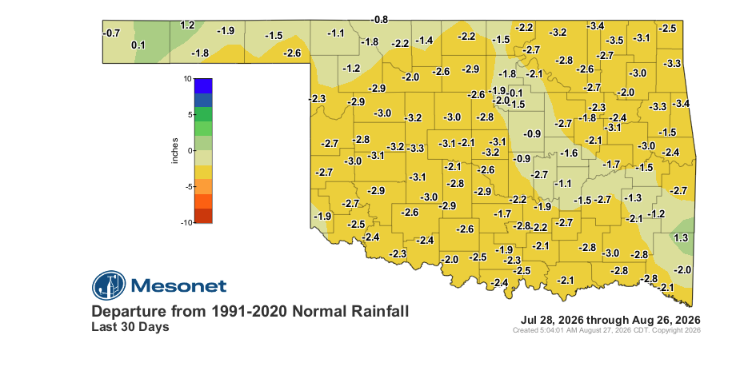
He encouraged farmers and rural landowners to monitor zoning applications, annexation notices and requests for transmission line easements. Blanchard said those actions can provide early indications that a large industrial development may be planned nearby.

"If there is a notice for annexation, that has to be posted," Blanchard said. "To use Sand Springs as an example, 827-acres were annexed into the city limits of Sand Springs."

Blanchard also encouraged residents to attend public meetings, review government records and connect with others who are tracking developments in their communities.

"Get with them," Blanchard said. "See what can be done in terms of fundraising, attending meetings and bringing others into the debate, because a lot of times these are in very small, unincorporated parts of the county, and we need more voices to be heard at city council meetings."

While Blanchard acknowledged the national security importance of artificial intelligence and digital infrastructure, he said policymakers must also consider food security, affordable housing and the long-term availability of agricultural land.

"Yes, it is very much a national security concern," Blanchard said. "But what's forgotten is food security and available, affordable housing."

To hear the full conversation, listen to the complete audio interview with Darren Blanchard attached to this story.

Cow Calf Corner Dr. Derrell Peel: Ground Beef Prices Rising Fastest

Much has been said and written about rising beef prices, and especially ground beef prices, for many months.  Since 2022, the year of record beef production, and the beginning of the current bull market, wholesale and retail beef prices have risen with strong beef demand and declining beef production.  Choice wholesale boxed beef prices have increased by 44.1 percent from the 2022 average and all-fresh retail beef prices are up 29.8 percent. Total beef production has decreased 10.5 percent from the 2022 average to current levels. 

Beef consists of many products, each in individual markets, and not all change at the same rate reflecting differences in supply and demand for each product.  Across the range of beef products, Figure 1 shows monthly wholesale values for beef tenderloin and a representative ground beef formulation of a 7:1 mixture of 90 and 50 percent lean trimmings resulting in an 85 percent lean product.  The trend lines for each price series confirm that ground beef prices have been rising faster than tenderloin (and most all other muscle cuts). 

The relatively faster increase in ground beef prices is a function of demand and supply factors.  In general, as beef prices increase, consumers are likely to rely even more heavily on ground beef to blunt the impact of higher beef prices, thus increasing ground beef demand relative to other beef products.  In Figure 1, wholesale beef tenderloin prices have increased an average of 26.6 percent since 2022 and 85 percent lean ground beef prices are up 60.7 percent.  On average prices for the highest value steak cuts including tenderloin, ribeye and strip loin wholesale prices are up 33.6 percent while prices for cuts including flank steak, tri-tip, top sirloin and top round are up an average of 42.7 percent.

Not only is the demand for ground beef demand higher, the supply of ground beef has decreased faster than for fed beef. Ground beef relies heavily on lean processing beef from cull cow and bull slaughter.  Figure 2 shows that the supply of nonfed beef (cull cows and bulls) has decreased faster than the production of fed (steer and heifer) beef.   

The production of nonfed beef is down more sharply than fed beef because cow slaughter has decreased 30.5 percent since 2022 while fed slaughter is down 12.7 percent.  Moreover, declining fed slaughter is partially offset by a sharp increase in steer and heifer carcass weights, while cow carcass weights have increased modestly.  Going forward, nonfed beef production may decrease more slowly as the beef cow herd and cow slaughter stabilize.  However, fed beef production is expected to continue decreasing with tighter fed cattle supplies expected through 2027 at least.  

Dr. Peel discusses the continued decline in the U.S. cattle herd, signs that the herd may be trying to stabilize, and the cattle market's reaction to news of a phased reopening of the Mexican border for livestock imports on SunUpTV from August 1, 2026. https://www.youtube.com/watch?v=1QzQgUaqwJs

ARA Rising Stars Award Program Nominations Open

The Agricultural Retailers Association (ARA) today launched the 2026 Rising Stars award program, sponsored by Atticus. The Rising Stars program provides ARA member companies a way to reward employees for their work at the annual ARA Conference & Expo  in Austin, TX. Recognized in front of hundreds of professionals, nominees will have networking opportunities and explore new ways to hone their leadership skills. 

This year's award program theme is Amplify Your Leadership.

Nomination Requirements

  1. A limit of three individuals from the same company may be nominated
  2. Nominee must be employed by an ARA member company in good standing
  3. Nominee must have 10 years of experience or less in the ag sector
  4. Nomination forms are due by COB on Friday, September 18

Additionally, each accepted Rising Star has the opportunity to participate in the program's Fan Favorite Video Contest by submitting a video related to the program theme before September 30, 2026.

The 2026 ARA Conference & Expo will be held December 1-3 in Austin, Texas. Selected Rising Stars will attend the conference at a special discounted rate. 

Early bird registration is currently open for all interested conference attendees. Learn more about and register for the 2026 ARA Conference & Expo here.

Learn more about the Rising Stars program and nominate a Rising Star here.

3rd Annual 580 Cattle Conference Set for August 28 in Woodward

Cattle producers across the region will gather in Woodward, Oklahoma, on Friday, August 28, 2026, for the 3rd Annual 580 Cattle Conference. Held at the Woodward County Event Center, the annual event brings together industry experts, market analysts, and agricultural specialists to provide actionable insights for today's beef producers.

Doors open at 12:00 PM, with the conference program officially kicking off at 1:00 PM. The event promises an afternoon and evening packed with knowledge sharing, networking, and industry innovation tailored to the challenges facing modern livestock operations.

Featured Speakers and Timely Topics

This year's conference features a lineup of leading experts in agricultural economics, legal planning, extension management, and emergency response:

  • Randy Blach (CEO, CattleFax): Delivering an in-depth analysis of the 2026 Cattle Market Outlook and broader industry trends to help producers navigate market volatility.
  • Tiffany Lashmet (Texas A&M AgriLife Extension): Addressing key strategies and legal considerations surrounding farm and ranch estate planning and succession.
  • Dr. Dale Blasi (Kansas State University Extension Beef Specialist): Presenting essential management practices for optimizing beef production efficiency.
  • Dr. Paul Beck (Oklahoma State University): Providing practical management strategies for navigating drought conditions and forage challenges in the Southern Plains.
  • "Be The Help" Session: A dedicated presentation focusing on farm and ranch emergency preparedness and first response.

In addition to the featured presentations, attendees will hear industry updates and discussions covering timely topics affecting regional agricultural operations.

Event Details and Registration

Registration for the 580 Cattle Conference includes full access to expert presentations, an agricultural trade show, door prizes and giveaways, a steak dinner, evening entertainment, and extensive networking opportunities with fellow producers and industry representatives.

Event Summary:

  • Date: Friday, August 28, 2026
  • Location: Woodward County Event Center, Woodward, OK
  • Schedule: Doors Open at 12:00 PM | Conference Begins at 1:00 PM

Tickets can be purchased online at 580cattleconference.ticketspice.com/580-cattle-conference or by phone by contacting Kristin at 580-273-5908 or Tiffany at 580-334-1122.

Kent Bacus Says Expanding Asian Trade Is Critical for U.S. Beef Industry

In today's Beef Buzz, Senior Farm and Ranch Broadcaster Ron Hays speaks with Kent Bacus, executive director of government affairs for the National Cattlemen's Beef Association, about expanding export opportunities in Asia, restoring market access to China, and the future of the U.S.-Mexico-Canada Agreement.

Diversifying Beyond China

Bacus said NCBA is encouraged by the Trump administration's efforts to strengthen trade relationships throughout Asia, particularly as the industry looks to reduce its dependence on China. "We're really excited about the administration continuing to engage with a lot of the Asian markets and trying to open up more market access there," Bacus said. "We've seen a lot of progress with Taiwan, with Indonesia. We're hoping to see more progress with Vietnam, Malaysia and Thailand."

While China remains an important customer, Bacus said relying too heavily on a single market leaves U.S. cattle producers vulnerable. "China is a big market. It's been good for a couple of years. It was a $1.6 billion market, but it's China," he said. "China can turn off that access for political reasons anytime they want to. That's exactly what we've seen over the last couple of years."

Because of that uncertainty, Bacus said expanding access across Southeast Asia is essential. "We've got to catch up with all of our competitors who have better access into Southeast Asia," he said. "Australia, New Zealand, even Canada, they're cleaning our clocks in Southeast Asia right now simply because they've got better trade deals and better access."

Finding More Value for Every Animal

Bacus said export growth isn't just about selling more beef—it's about creating value for products that have limited demand in the domestic market. "Most of what we're going to export is stuff that it's just not going to sell here in the United States," he explained. "When we look at all of that, we want to sell to the highest bidder. We want to be very competitive. We want to create more opportunities for cattle producers."

He said losing access to China has had ripple effects throughout the industry. "Not having that competitive access has really hurt," Bacus said. "We've seen processing capacity diminish. We've seen feeding capacity diminish, and that's made us less competitive overall."

Exports traditionally add significant value to every animal marketed, but that premium has declined. "When we look at the value add for exports, exports alone traditionally add about $450 per head," he said. "That dropped to less than $390 per head last year."

With production costs continuing to rise, Baccus said improving trade opportunities is critical. "We need to be as competitive as possible. We need to be as profitable as possible, and expanding those markets and being able to capitalize on it is what really drives that producer premium."

China Progress, But More Work Ahead

Bacus said one of the biggest recent accomplishments has been China's decision to restore export certificates for hundreds of U.S. beef processing plants. "A major accomplishment was China finally restoring those export certificates for over 400 processing plants," he said.

However, challenges remain. "We still have over 30 plants that are delisted or restricted because of claims of residue violations," Backus said. "They'll never show you the test results. They'll never show you how they arrived at any of this."

He believes long-term success depends on more predictable trade rules. "We need clear, transparent rules of trade. We need some enforceability there. We need a trade partner we can trust, and right now we don't have one."
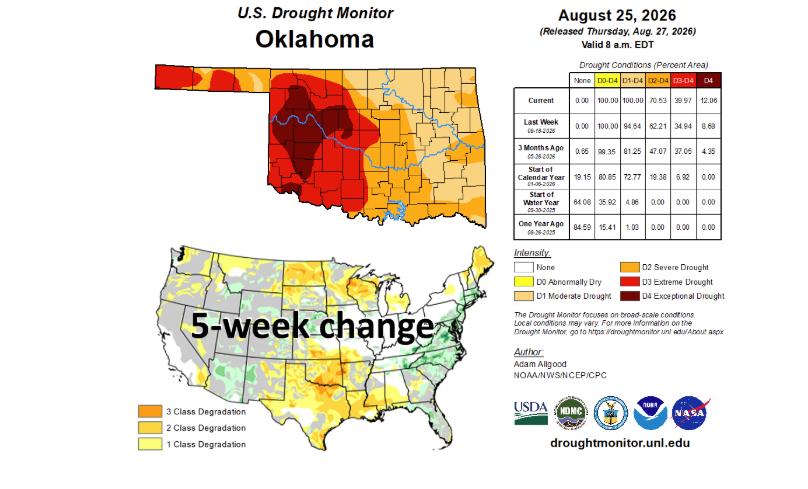
Bacus said NCBA hopes full market access can be restored later this year while also strengthening relationships with China's neighboring countries. "We think we can definitely get back into the market, but we need to be in there long term," he said. "We need predictability, stability to incentivize more consumer development in a major market."
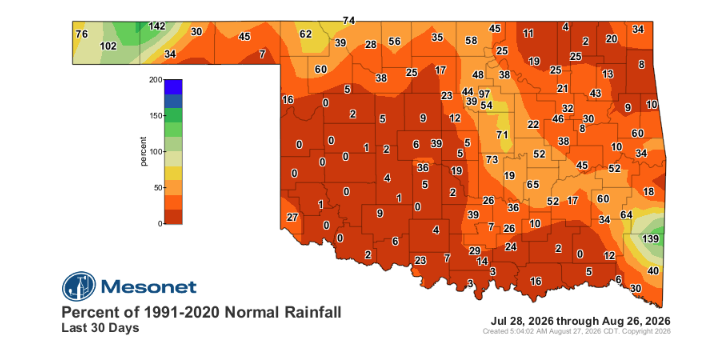
USMCA Review Underway

Beyond Asia, Bacus said NCBA is closely watching the ongoing review of the U.S.-Mexico-Canada Agreement. Although the three countries did not agree to extend the agreement this summer, he emphasized that producers should not view that as an immediate threat. "That doesn't mean that the agreement's going away," Bacus said. "We still have a trade agreement. We still have unrestricted, duty-free access for beef and cattle."
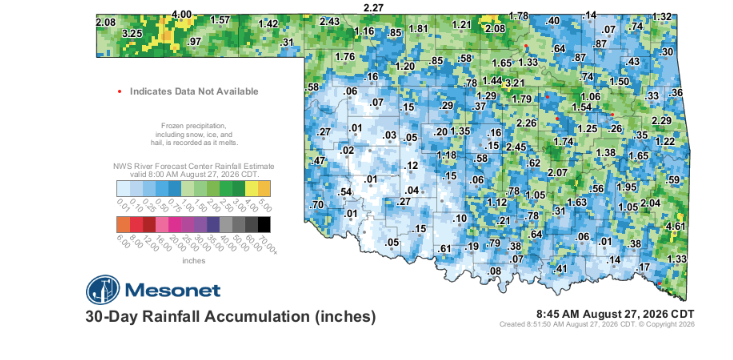
Instead, he said the current negotiations are focused on ensuring Canada and Mexico fulfill their existing commitments. "This is the Trump administration having to play hardball with Canada and Mexico, who have not fulfilled some of the terms that they agreed to under the USMCA," Bacus said. "Really, this is about accountability."

Bacus also reiterated NCBA's opposition to mandatory country-of-origin labeling requirements. "It's honestly a solution in search of a problem," he said. "We already have a USMCA that is full of much bigger trade issues, actual trade issues that are affecting farmers and ranchers."

As negotiations continue, Bacus said NCBA's focus remains on preserving open markets and securing new opportunities that strengthen profitability for U.S. cattle producers.

The Beef Buzz is a regular feature heard on radio stations around the region on the Radio Oklahoma Ag Network and is a regular audio feature found on this website as well. Click on the LISTEN BAR above for today's show and check out our archives for older Beef Buzz shows covering the gamut of the beef cattle industry today.

Keeping Horses Hydrated: Why Salt Matters During Hot Weather

As the temperatures continue to climb, it's important to ensure horses are getting enough salt as they lose substantial quantities of electrolytes through sweating. Hay alone cannot supply a horse's salt needs, as some forage is quite low in sodium. Overall, the diet of the horse should contain between 0.25-0.5% salt. For an 1100 lb horse that means it should consume 25-50 g of salt per day. Many horses also receive a concentrate in addition to the forage they are eating. Most horse feeds are formulated to contain between 0.5 and1% salt. However, this typically will not meet a horse's salt requirement. Therefore, to be safe, you should always supply your horse with some sort of salt source in addition to his feed. If you look at most feeding guidelines for equine feeds it is stated to supply your horse with salt on a daily basis.

The easiest way to meet the horse's needs is to supply a salt block. Researchers have shown that on average horses willingly consume about 50 g from a salt block per day. However, the variability in intake is high. Individual horses may range between 9 - 143 g of salt per day! Therefore, some horses will eat too much, while others not enough. Even the same horse may alter his intake of salt quite a bit from day to day. If you really like projects, and have a sensitive scale at home, you could determine your horse's average salt intake per day (if he is kept alone with his block) by weighing it every day. Also, some horses just won't eat their block. If your salt block shows no evidence of licking and is covered with dust, you have a non-licker. Alternatively, you could try to provide loose salt, which some horses prefer or specifically feed salt to your horse. So how much salt should you provide your horse per day, especially if he is a non-salt block licker? For your maintenance horse, that would be about 1 oz. which is 28 grams. If you prefer to use your teaspoons to measure instead, one teaspoon contains 6 g of salt. So your horse would need 4 teaspoons of salt per day.

Exercising horses

A horse in heavy work requires almost twice the amount of salt or a non-exercising horse, or about 50 grams of salt per day. However, for those intensely working in hot climates, some researchers have indicated their need for electrolytes may increase 9 fold. Now remember, these are horses at a high level of work, such as race horses, three day eventers etc. Obviously for the exercising horse in hot climates, they may not be able or willing to consume that much via their salt block, which is why it is important to consider supplementing your horse. If you are supplementing your horse with table salt, you would increase that amount from maintenance to 2 oz or 8 teaspoons (2 2/3 tablespoons), with an increase to 3 oz or 12 teaspoons (4 T.) in hot climates. There are also many commercially available electrolytes as well which can be added to water or provided in a paste form.

Getting the water back in

Typically, if you need to provide a horse with electrolytes, you should also be concerned with rehydrating the horse. Oddly enough, the horse's own system can work against it. As the sweat of horses is so much more hypertonic (or contains more solutes) than its plasma, when horses sweat heavily, their blood becomes hypotonic. This does not provide the normal stimulus to drink that having a higher electrolyte concentration in the blood does. Therefore, even if offered water, they may not drink. Providing electrolyte pastes or saline solution after exercise may cause the horse to restore his water balance and recover more quickly. However, do not just offer a horse a saltwater solutions if they have not been trained to drink it. This will result in water refusal and only exacerbate the problem. They should also be offered a choice of non-saline water to ensure that they replenish the water they have lost. In addition, horses seem to prefer tepid water to ice water when given a choice. So remember, it is as imperative that the horse is also restoring his water balance after exercise as it is to provide electrolytes.

ASA Appreciates Senate Ag Committee Commitment to 5-Year Farm Bill

Ahead of a legislative markup of the Agricultural Act of 2026, the American Soybean Association shared appreciation for the Senate Agriculture Committee's continued work in finalizing a comprehensive five-year farm bill that strengthens the farm economy. The revised farm bill released by Chairman John Boozman includes key priorities for U.S. soybean farmers and makes important investments in the farm safety net, conservation, rural development, research, and market opportunities for soybean farmers.

"America's soybean farmers need the certainty that only a five-year farm bill can provide," said ASA President and Ohio farmer, Scott Metzger. "Chairman Boozman's proposal includes important improvements that strengthen the farm safety net and invest in the long-term success of U.S. agriculture. We urge Congress to get a five-year farm bill across the finish line this year."

ASA is hopeful the Senate Agriculture Committee will advance the legislation before the August recess and urges Congress to enact a comprehensive five-year farm bill before the end of the year.

The Agricultural Act of 2026 includes several ASA-supported provisions, including legislation to advance plant biostimulants, expand conservation technical assistance, improve fertilizer research, strengthen rural broadband deployment, increase access to technical service providers, and support precision agriculture technologies. The bill pursues market expansion opportunities by reauthorizing international food assistance programs and improving programs that support innovative new uses for U.S. soy. The Agricultural Act of 2026 also addresses complex issues important to farm bill stakeholders more broadly, like authorizing a permanent waiver for the sale of year-round E15 and including a one-year delay in state cost-sharing requirements for the Supplemental Nutrition Assistance Program.

Agricultural Risk Is Not a Shock Problem—It's a Decision Problem

Liu Yangxuan writes in Southern Ag Today: The U.S. row crop sector is currently under significant economic pressure. Lower commodity prices, high input costs, policy uncertainty, and ongoing trade disruptions have combined to create a challenging operating environment for producers. It is clear that all producers are currently facing a challenging farming environment. However, we also observe meaningful differences in outcomes and performance within this same difficult environment. Some farms remain relatively stable. Others experience severe financial stress. Some adjust quickly, while others struggle to respond.

Why? Traditional discussions of agricultural risk tend to focus on external shocks such as price volatility, drought, policy changes, or broader economic downturns. These factors certainly matter. They shape the environment in which farms operate. However, identical shocks do not produce identical outcomes. The difference is often not the shock itself, but the decisions that are made in response to uncertainty.

Risk, by itself, does not generate outcomes, decisions do. Between an external shock and its eventual outcome lies a chain of decision processes. Producers must recognize emerging risks, interpret available information, evaluate alternatives, and choose a course of action. These decisions ultimately shape whether a farm remains resilient or experiences distress.

Consider a decline in commodity prices. Two farms may face the same market conditions. Yet one farm may recognize the threat earlier, have stronger financial reserves, or possess better market information. Another may have limited flexibility or delayed responses. The result is different outcomes despite facing the same shock.

This perspective suggests a shift in risk management away from simply identifying threats. Equally important is understanding how individuals and organizations process uncertainty and transform information into action. Rather than asking only, "What risks exist?" we should also ask, "How are decisions made in the face of risks as well as when the shocks emerge?"

The future of agricultural risk management will not be determined solely by better tools available to producers, such as better forecasting tools, insurance products, policy tools, or market information systems. It will also depend on improving the decision processes that connect uncertainty to outcomes. In the next article, I will walk through what I call Liu's 5Rs of Risk Management Model to explore how information systems, risk perception, behavioral factors, and structural constraints interact to shape real-world agricultural decisions and outcomes.

Figure 1. Same Risk, Different Outcomes: Where Is the Missing Link?

Liu, Yangxuan. "Agricultural Risk Is Not a Shock Problem—It's a Decision Problem." Southern Ag Today

AFR Youth Program Announces 2026-2027 Youth Advisory Council

American Farmers & Ranchers (AFR) Cooperative has announced its 2026-2027 AFR Youth Advisory Council. This year's council members were chosen by popular vote during the organization's 2026 Senior Leadership Summit, which was held July 21- July 28.

Members of the 2026-2027 AFR Youth Advisory Council are Cierra Collins, Frederick; Colton Burns, Amber-Pocasset; Hannah Hays, Enid; McKinna Turner, Owasso; and Paxton Brown, Jenks.

The AFR Youth Advisory Council is an opportunity for high school seniors who are active in the AFR Youth Program to further their leadership and program management skills. Council members assist in planning many AFR Youth Program events, facilitate general AFR events and act as mentors for younger Oklahoma youth. Council members also participate in agriculture-based service projects throughout the year.

"The AFR Cooperative is proud to invest in the future of Oklahoma through our state's youth," said AFR President Scott Blubaugh. "The AFR Youth Council is a unique opportunity to recognize and encourage some of our exceptional program participants."

To become an AFR Youth Advisory Council member, the student or an immediate family member must be an AFR Insurance policyholder and have attended a Senior Leadership Summit prior to the year applying.

The AFR Youth Advisory Council is just one of many AFR Youth Program traditions. The organization also hosts a youth leadership summit, statewide scholarships, speech contests, livestock judging and grading competitions, and many other development opportunities. For more information, visit the AFR Cooperative website at www.afrcoop.org.

For more information about the 2026-2027 Youth Advisory Council, contact AFR Youth Coordinator Cara Comstock at 405-218-5566.

AFR Cooperative is a membership services organization established in 1905 as Oklahoma Farmers Union. AFR provides educational, legislative and cooperative programs across the state and serves as a watchdog for Oklahoma's family farmers and ranchers and rural communities. The organization is actively supportive of the state's agricultural industry and rural population with membership consisting of farmers actively involved in production agriculture and non-farmers adding their voice in support of AFR principles.

Livestock Insurance Helps Producers Protect High-Value Herds from Catastrophic Losses

As cattle values continue to climb, livestock insurance is becoming an increasingly important risk management tool for producers of all sizes. Thomas Merritt of Magill Livestock Insurance told Associate Farm Reporter Carli Davenport that livestock insurance is designed to protect producers against catastrophic losses and can be customized to fit operations ranging from small family herds to large commercial cattle businesses.

Coverage Built for Catastrophic Events

Merritt explained that livestock insurance for cattle is commonly written as a pasture policy or for cattle in feedlot and starting-pen situations. "So, in general for your cattle, it's what we refer to as a pasture policy, or they can be covering a feedlot starting pen situation as well," Merritt said. "That's going to be a named perils policy that's going to cover that producer for those catastrophic events. That's what their intent is set up for."

Rather than assigning a blanket value, producers select a per-head coverage limit. "They're going to be based off of a per-head limit. They'll pay you current market value up to that per head limit," he explained. "They'll use whatever your closest USDA report and sale barns. That's how they'll transition off that value, and then it's rated per head per year effectively."

Policies Can Be Tailored for Any Size Operation

While some may assume livestock insurance is reserved for elite or high-dollar cattle, Merritt said today's market makes nearly every animal a valuable asset. "It's really set up for everybody, and the way things are right now, everything's a high-valued animal," he said.

He added that producers can adjust both deductibles and coverage levels to fit their operation and financial goals. "The way that the policies are structured, you can set a deductible and a per head limit that would fit your budget," Merritt said. "It wouldn't matter if you're the guy that has 20 cows turned out somewhere or you're running 2,000 stockers year-round. They can be tailored to fit the individual's need and their risk appetite and budget and everything in between."

Many Producers Wait Until After a Loss

One challenge Merritt frequently sees is that many ranchers don't think about insuring livestock until after disaster strikes. "A lot of times, unfortunately, it's after their first big loss," he said.

According to Merritt, producers often spend more time worrying about market fluctuations than catastrophic events. "When producers are thinking about their risk, they're more thinking about their market risk," he said. "They don't think about the catastrophic weather event that could wipe them out or set them back."

He added that seeing neighboring producers experience losses can also prompt ranchers to consider coverage. "A lot of times, that's the driving factor—either they've suffered that loss, or their neighbor's had a loss, and it's one of those things that gets them thinking about it."

Horse Coverage Offers Broader Protection

Merritt said horse insurance differs significantly from cattle pasture policies because it provides much broader protection. "The horse policies are a different animal than your pasture policies," he said.

He explained that horse policies are typically written as full mortality coverage. "It's a full mortality policy," Merritt said. "It's going to cover death that's the result of an accident, sickness, injury or disease. So way broader coverage than what you would get on the pasture policies."

Like cattle coverage, horse insurance isn't limited to elite performance animals. "The rate's reasonable enough that it could be your high-valued animals, or it could be just your guy that has a $10,000 to $15,000 horse that he likes to go to the team rope and jackpot when he has time," Merritt said. "It's set up for big and small to protect your risk."

Ice Storm Loss Demonstrated the Value of Coverage

One claim that stands out in Merritt's mind involved an early-season ice storm that devastated several customers' cattle. "The first one that comes to mind is we had an ice storm in like October," he recalled. "It was crazy because the trees still had leaves on them, and they were covered in ice."
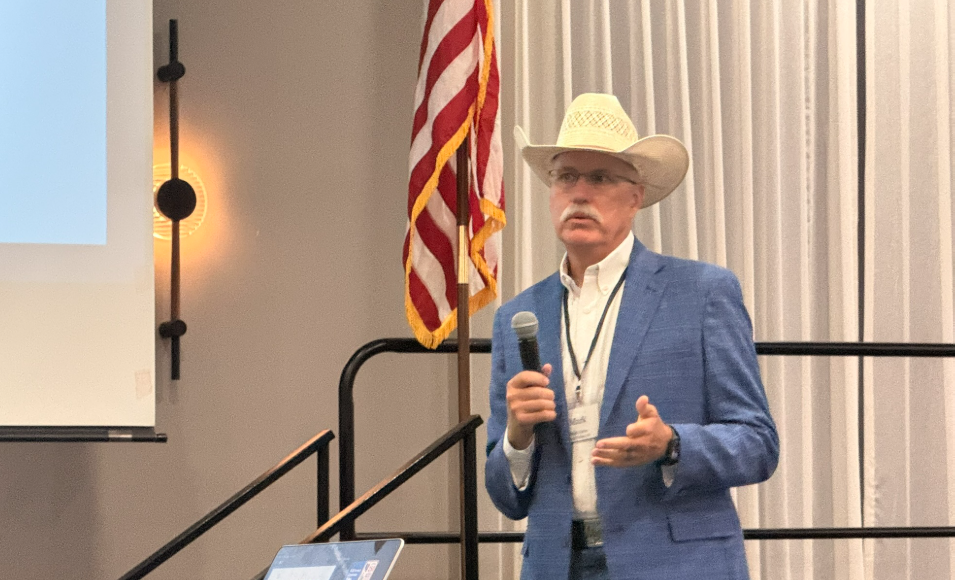
The storm caused hypothermia losses among cattle in starting pens. "I had a few different customers that were in a pretty close radius to each other, and they suffered hypothermia loss in their starting pens," Merritt said.

Because those producers carried insurance, they were able to recover financially and fulfill obligations to their customers. "Being able for them to have coverage there—and they were customer cattle—they were able to make their customers whole, and everybody was real happy that they had it," he said. "That's one that really stands out to me."
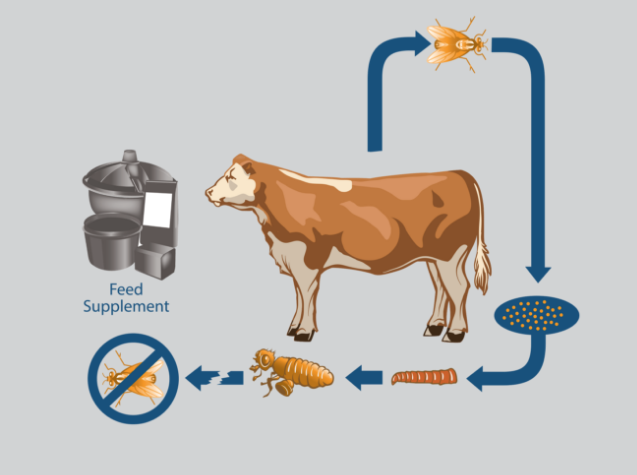
Know Your Risk Before Buying a Policy

For producers considering livestock insurance for the first time, Merritt recommends starting with a simple question. "The biggest thing is what your risk tolerance is like," he said. "How much are you willing to lose before you feel like we need to protect it?"

He also encourages producers to carefully review existing farm insurance policies. "A lot of issues that people run into is they're like, 'Well, I have it on my farm policy already,' which is correct in lots of cases," Merritt said. "But the problem can be the limit's not high enough."
He offered an example of a producer carrying only a small livestock limit despite owning a much larger herd. "a producer might say 'I've got $20,000 on my farm policy,' but you really have $500,000 worth of cattle turned out," Merritt said. "You could run into some issues if you were to have a claim."
Unlike general farm policies, he said dedicated livestock insurance is designed specifically around the value of the animals. "These are standalone policies. They're rated per head. There's more protections there as far as the value side of it," Merritt said. "Those would be the two simplest things up front."

Ag Groups and Leaders react to Farm bill Text

American Farm Bureau Federation President Zippy Duvall today applauded the release of farm bill text and notice of a Senate Ag markup for next week.  

"When you look across the spectrum of agriculture, there is one piece of legislation that touches almost every farm in America, and that's the farm bill, so it's time for Congress to get it done.

"We're grateful to Senate Agriculture Committee Chairman John Boozman for releasing farm bill text and are encouraged that we can achieve a bipartisan bill that can get across the finish line. We appreciate the Administration's call for Congress to move this process forward and urgently deliver a farm bill to the President's desk.

"The bill includes important provisions beyond traditional farm bill program support, including authorizing the sale of E15 blended fuel year-round, expanding investments in specialty crops and measures to reduce input price volatility. We're also calling on Congress to deliver a fix for interstate commerce issues as well as much-needed economic aid for agriculture. 

"We've lost 200,000 farms in a decade, and a modernized farm bill will help stabilize the struggling farm economy. We're calling on the Senate Agriculture Committee to advance the bill out of markup and send it forward for full Senate passage and ultimately the president's signature." 

Invest in Our Land (IIOL) issued the following statement in response to the release of the legislative text for the Agricultural Act of 2026 - or "Farm Bill 2.0" - by Senate Agriculture Committee Chairman John Boozman ahead of the committee's markup next week. 

"Federal conservation programs are pivotal in helping farmers and ranchers across the country navigate one of the toughest periods in a generation - rising input costs, unpredictable markets, and weather that cost producers billions of dollars," said Rebecca Bartels, Executive Director of Invest in Our Land. "That is why the long-term conservation commitment Congress made in 2025 needs to be defended and strengthened, not eroded piece by piece. We recognize the durable support many members of the Senate Agriculture Committee, including the Chairman, have shown for conservation over the years, but we are troubled that the Committee's draft Farm Bill continues to divert money away from the Environmental Quality Incentives Program (EQIP) to cover other priorities - reducing EQIP by nearly $2 billion below the levels Congress established just last year. Based on a recent state-level analysis by the University of Illinois Urbana-Champaign, the Senate's proposed cuts could leave more than 56,500 valid farmer applications unfundedover the next few fiscal years. EQIP and its sister programs deliver tangible, on-the-ground results for producers' resilience and capacity to innovate, which is exactly why they rank among the most oversubscribed programs USDA runs: in fiscal year 2025, the Department was able to fund only about 24 percent of EQIP applicants and 37 percent of applicants to the Conservation Stewardship Program. When demand exceeds available dollars by that margin, the solution is not to slice the same pie ever thinner while the backlog goes untouched - it is to put more resources into the programs producers are requesting by name. We welcome the improvements to the Conservation Reserve Program, but reshuffling existing funds will not meet producers' needs. 

"Furthermore, as USDA continues to move forward with its reorganization that may result in further staff losses, the Natural Resources Conservation Service has already lost 23 percent of its workforce, and conservation dollars don't reach the field without the planners, engineers, and field staff who partner with farmers and ranchers to deliver them. Protecting and expanding conservation funding has to go hand in hand with protecting the people at NRCS. We urge the Committee to fund new and expanded programs without raiding others and to protect staffing at NRCS. Farmers and ranchers are relying on them to do the right thing at a time when they can ill-afford another blow to the success and vitality of their operations."


NAWG Welcomes Senate Farm Bill Progress Ahead of Committee Markup- Following the release of updated text for the Agricultural Act of 2026, the National Association of Wheat Growers (NAWG) welcomed the Senate Agriculture Committee's continued progress toward a comprehensive, five-year farm bill. Chairman John Boozman has scheduled the Committee to consider the legislation on Thursday, August 6, 2026, at 9:30 a.m. ET. The proposed legislation includes important provisions for wheat growers, including continued investments in agricultural research, risk-management tools, trade promotion, international food assistance and the U.S. grain inspection system. "Wheat farmers need the certainty and long-term direction that only a five-year farm bill can provide," said NAWG President and Idaho wheat farmer Jamie Kress. "We appreciate Chairman Boozman and the Senate Agriculture Committee for keeping this process moving and recognizing the challenges facing producers. As the Committee considers the bill, we urge senators to strengthen it by permanently codifying the transfer of the Food for Peace program to USDA, where it can remain closely connected to American agriculture and U.S.-grown commodities. NAWG looks forward to working with lawmakers on both sides of the aisle to advance a strong, bipartisan farm bill that delivers certainty for wheat growers and rural communities." NAWG will continue engaging with the Senate Agriculture Committee and members of Congress as the legislation advances to ensure the final farm bill supports wheat producers, strengthens U.S. agricultural competitiveness and reinforces the role of American-grown commodities in international food assistance.


Late on Friday, July 31, Senate Agriculture Committee Chairman John Boozman (R-AR) released a revised proposal for the next Farm Bill, the Agricultural Act of 2026. While the new text takes steps to reach a bipartisan agreement—the National Young Farmers Coalition (Young Farmers) maintains that these incremental changes are not enough to address the existential crises facing young farmers today. The Committee will mark up the updated version of the Agricultural Act of 2026 this Thursday, August 6.

"We see the Committee moving on technical improvements, but technicalities will not save the new generation of farmers from land consolidation or a crumbling nutrition safety net," said Michelle A.T. Hughes, Executive Director of the National Young Farmers Coalition. "This revised text continues to ignore the urgent need for structural investments in land access and fails to restore the essential nutrition programs that keep our local farm economies viable. As written, this bill remains a missed opportunity."

Nutrition and Markets: Interconnected and Underfunded

The revised proposal fails to reverse the $187 billion in SNAP cuts enacted under the previous budget reconciliation, which takes food assistance away from millions while shifting unprecedented costs to states. According to the Food Research & Action Center (FRAC), 4.7 million people have already lost access to SNAP since July 2025, representing a massive loss of purchasing power for farmers who rely on these customers.

For young farmers, SNAP is a vital market access tool, not just a social program. Lydia Nebel of KC Farm School highlights how SNAP serves as a reliable economic driver for both families and local producers:

"KC Farm School has continued to see an increased use in SNAP and other food assistance programs offered at Kansas City area farmers markets. About half of our SNAP users are regular customers that use the farmers market for their grocery shopping so they can feed their families local, seasonal, nutrient-dense food. We not only get to help increase access to these high-quality foods for Kansans and Missourians, but also increase economic impact for area farmers. The market is producer-only so we can see the direct benefit on small businesses, regenerative farmers, and our community. Federal Food Assistance programs began in the 1930s to benefit both customers and farmers locally; we advocate for these benefits to be continued so more farmers can feed more people!"
Furthermore, while the bill maintains the Strengthening Local Food Security Program, it continues to lack mandatory funding, leaving the survival of local food systems to the whims of the annual appropriations process.

Land Access: A Continued Data and Policy Gap

The bill entirely omits authorization of the Increasing Land Access, Market, and Capital (ILCM) program and the TOTAL (Tenure, Ownership, and Transition of Agricultural Land) survey. Neglecting these important programs leaves USDA without the data, tools, and resources to put the next generation of farmers on the land or to facilitate the transition of 300 million acres of farmland over the next two decades.

Young Farmers joins partners like the National Sustainable Agriculture Coalition (NSAC) in calling for a Farm Bill that provides "courage and critical investments" rather than "empty promises." We urge the Senate to return to the negotiating table to draft a truly bipartisan bill that:

  • Restores mandatory funding for local food and climate-resilient conservation;
  • Invests in equitable land access through the LCM program and TOTAL survey; and
  • Strengthens the nutrition foundation by reversing and delaying SNAP cuts from HR 1.

Until these core needs are met, the National Young Farmers Coalition continues to urge a "NO" vote on the Agricultural Act of 2026 to protect the future of American agriculture.


The president of the National Corn Growers Association sent a letter today to the leadership and members of the Senate Committee on Agriculture, Nutrition and Forestry expressing support for the Agricultural Act of 2026, the farm bill "2.0" that the committee is considering. The letter encouraged action by week's end.
 

"Corn growers recognize there are limited legislative days remaining in this Congress for the farm bill and E15 to pass and be signed into law," Ohio farmer and NCGA President Jed Bower wrote in the letter. "With these views considered, NCGA urges the Committee to advance the farm bill this week ahead of the planned August recess." 
 
Bower was particularly effusive in the letter as he addressed the inclusion of language in the bill that would allow for the year-round sale of fuels with 15% ethanol blends or E15.
 

"This deregulatory action will help corn growers and the rural economy during this difficult time and will also address issues around affordability by lowering prices at the pump," he said. "NCGA is extremely grateful that year-round E15 is included in the Agricultural Act."   
 
The letter also highlights specific policy details that are of interest or importance to corn grower members contained in the legislation.
The Senate Committee on Agriculture, Nutrition, and Forestry recently released Farm Bill "2.0" text that includes language on several of NCGA's Farm Bill priorities as well as expanding consumer access to fuel with 15% ethanol blends. In response to this development, Ohio farmer and NCGA President Jed Bower released the following statement: 

"We thank Chairman Boozman and Ranking Member Klobuchar for their leadership in ongoing Farm Bill negotiations and are looking forward to the committee consideration planned for next week.  

"We are extremely grateful that year-round E15 continues to be part of the conversation. This is a top priority for corn growers, who greatly need expanded sources of demand, like the kind year-round E15 would offer. We will continue to review the released text to evaluate its impact on corn growers and importance for agriculture."

Chairman Boozman Releases Updated Farm Bill 2.0 Text, Announces Business Meeting

U.S. Senate Committee on Agriculture, Nutrition, and Forestry Chairman John Boozman (R-AR) released revised legislative text for Farm Bill 2.0, the Agricultural Act of 2026, that will deliver vital support to farmers, ranchers, foresters and rural communities. The updated bill, which the committee will mark up next week, includes new language authorizing year-round sales of E15 and extending the timeline for states to restore the integrity of SNAP benefits through improved administration that reduces payment error rates.


"Farm Bill 2.0 is built for the people who feed America. Farm families are facing extremely challenging circumstances, with some deciding it's not worth continuing their operations. This bill strengthens the future of agriculture, supports rural communities and provides farmers, ranchers and producers with indispensable resources and tools, all of which serve to ensure America's food security for generations to come. Members on both sides of the aisle will find their priorities reflected in this bill. It also responds to concerns that states need additional time to strengthen administration of SNAP benefits and reduce payment error rates with a commonsense solution. We owe it to our dedicated farmers to move this legislation across the finish line and to the president's desk to be signed into law. I look forward to next week's markup," Boozman said.

Click HERE for legislative text.

Click HERE for a title-by-title summary.

Click HERE for a section-by-section.

Click HERE for an overview.

Business Meeting

Date: Thursday, August 6, 2026

Time: 9:30 a.m.

Location: 318 Russell Senate Office Building

What: Markup of the Agricultural Act of 2026

 Watch: https://www.agriculture.senate.gov/hearings


Ron salutes our daily email sponsors!

Upcoming Events

November

S M T W T F S
1 2 3 4 5 6 7
8 9 10 11 12 13 14
15 16 17 18 19 20 21
22 23 24 25 26 27 28
29 30          

Visitor Polls

Do you like the new website?
Add a Comment
(Fields are Optional)

Your email address is never published.