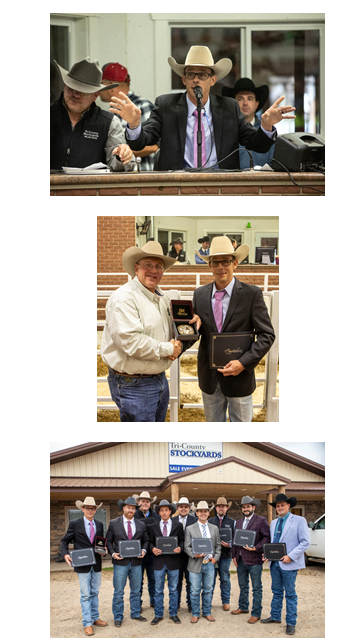
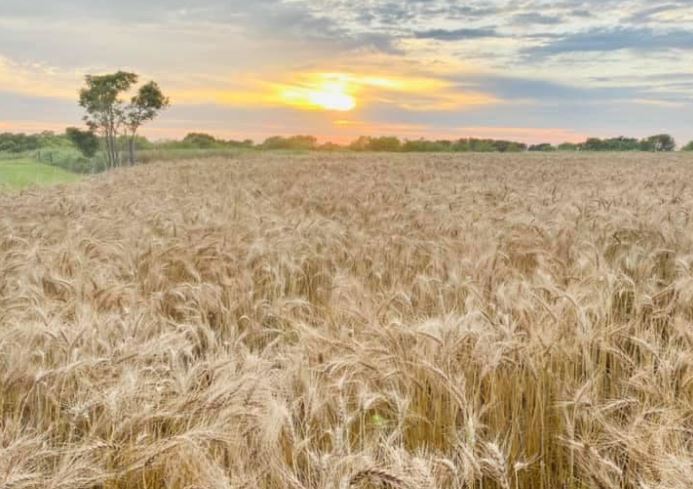
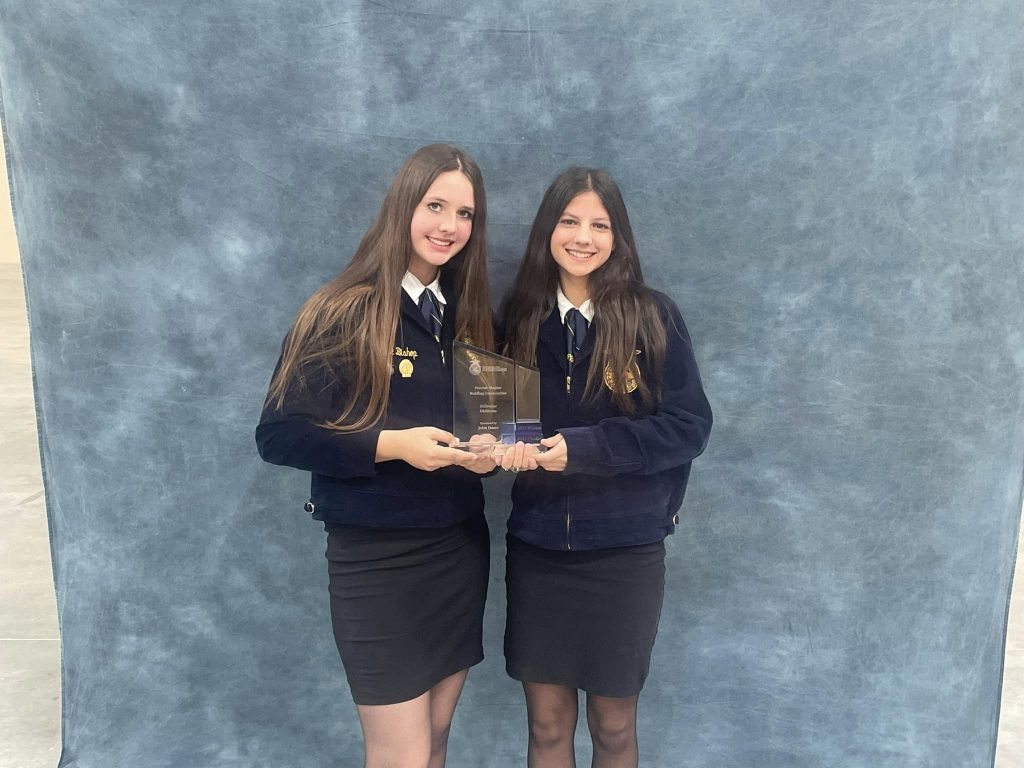
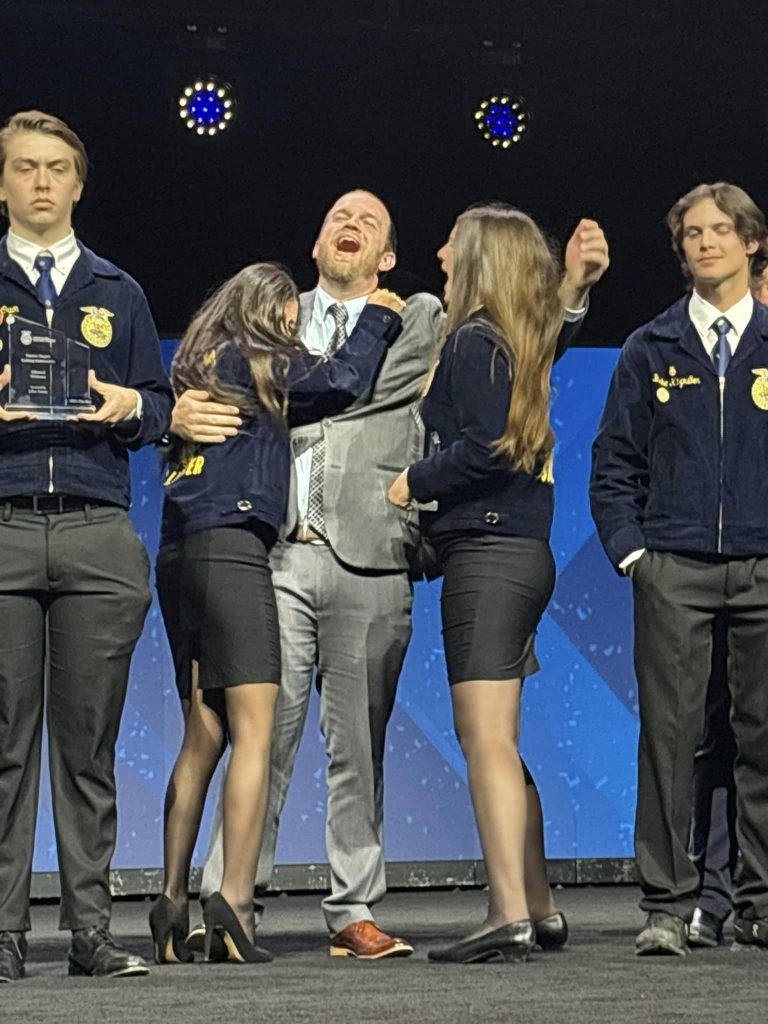
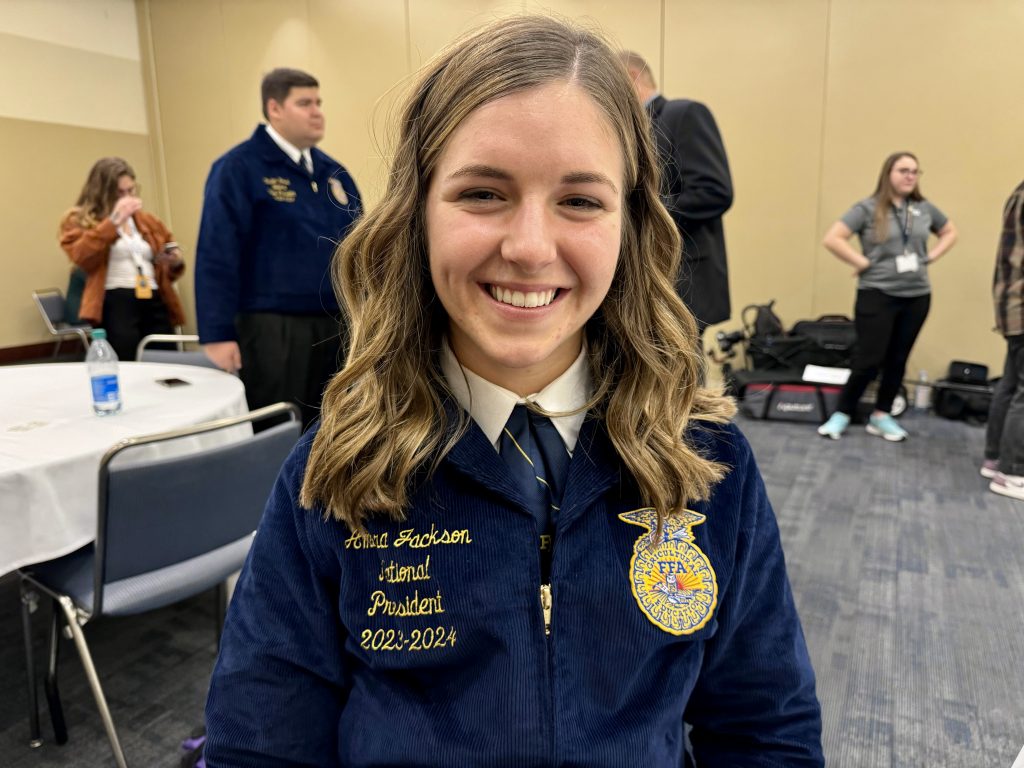
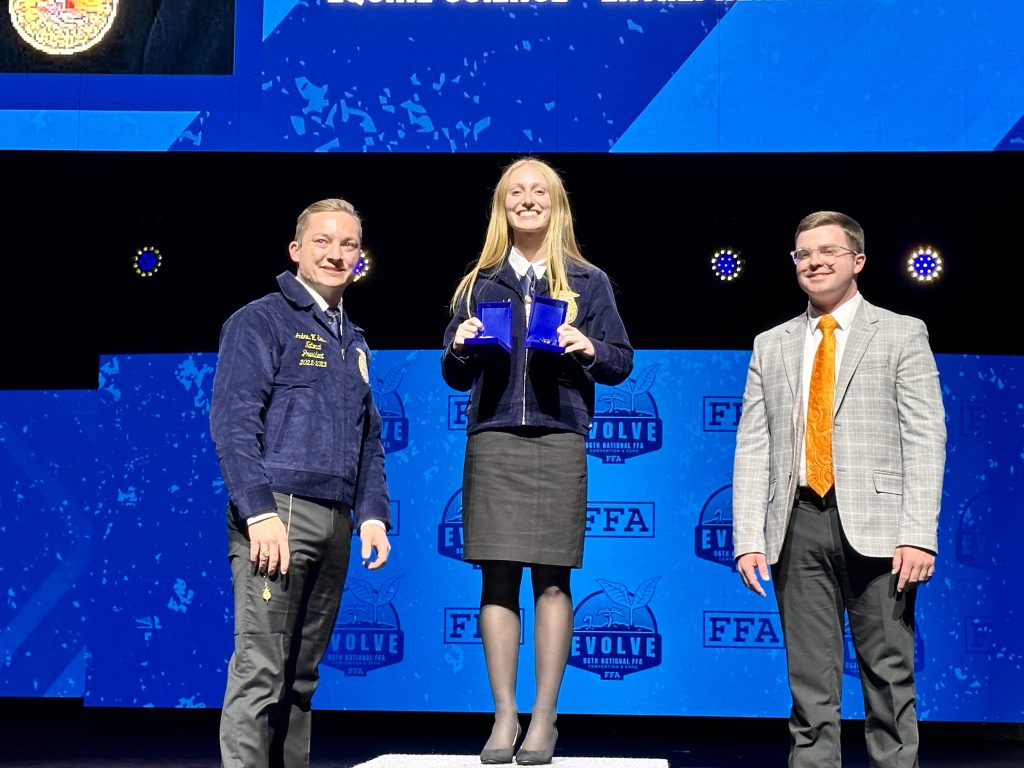
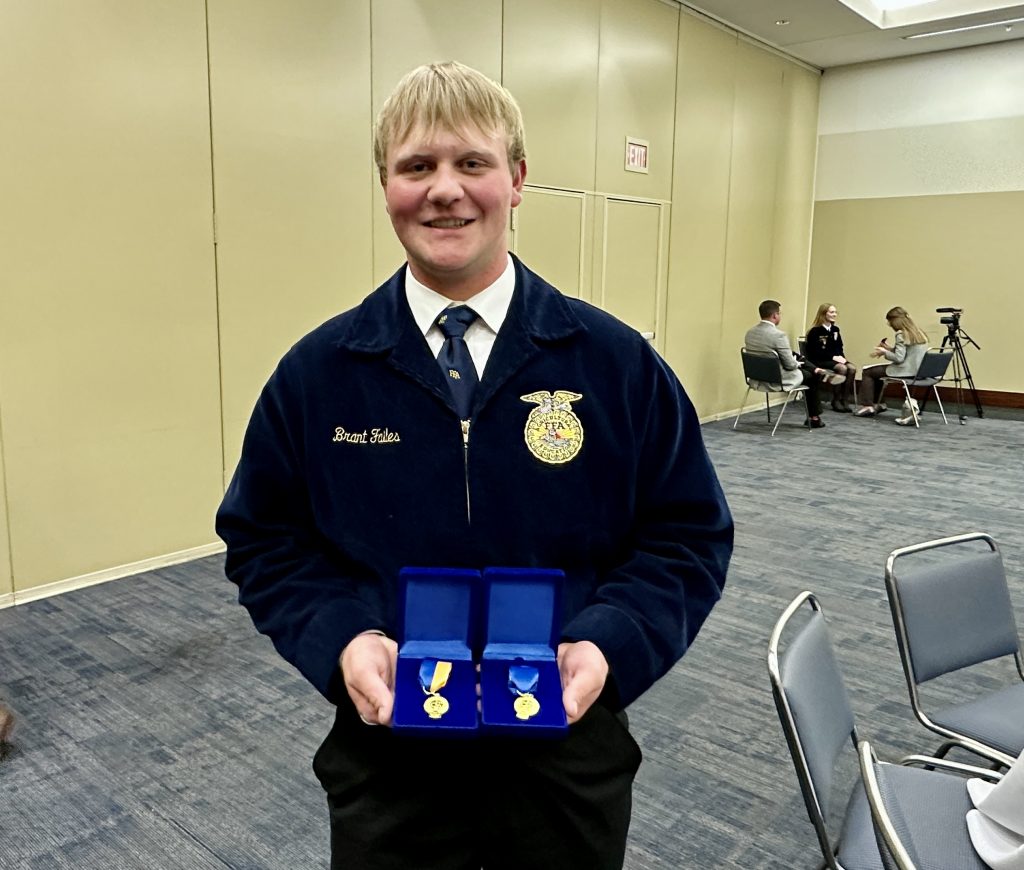
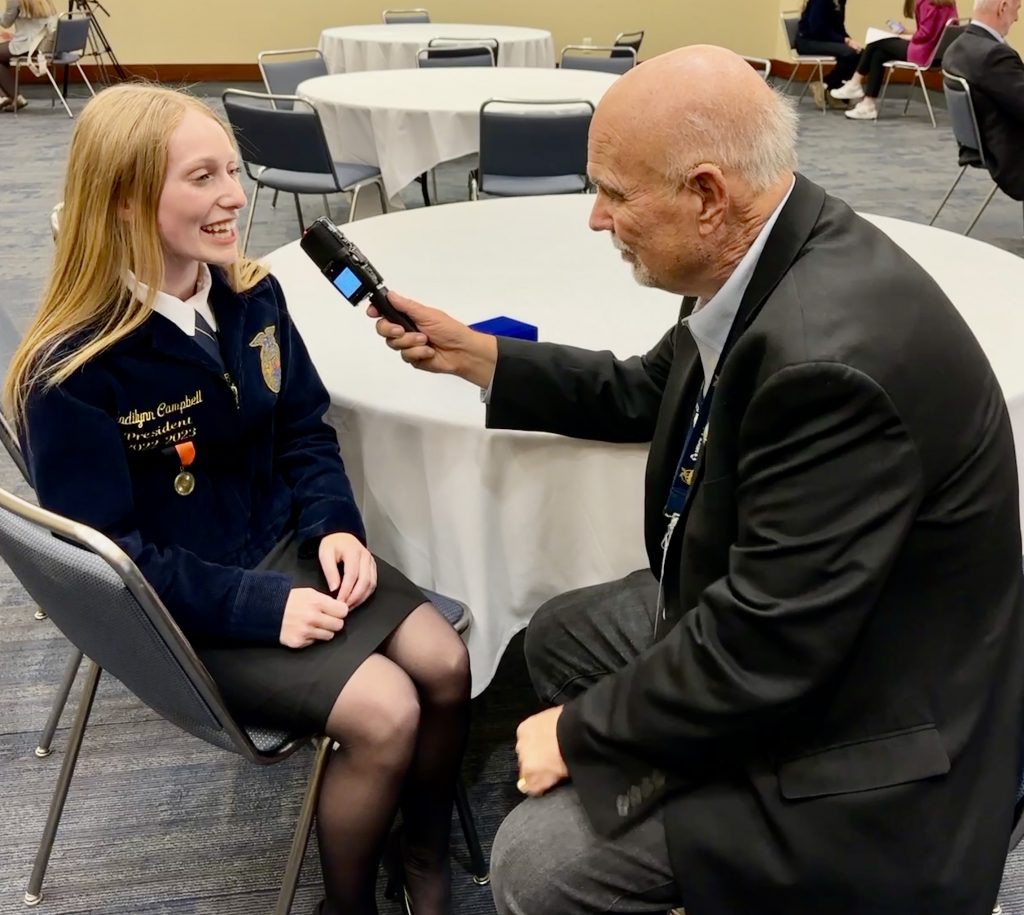
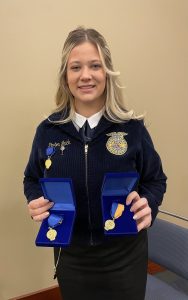
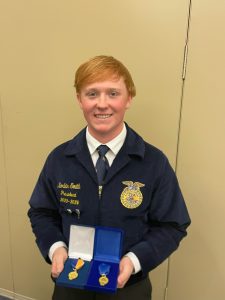
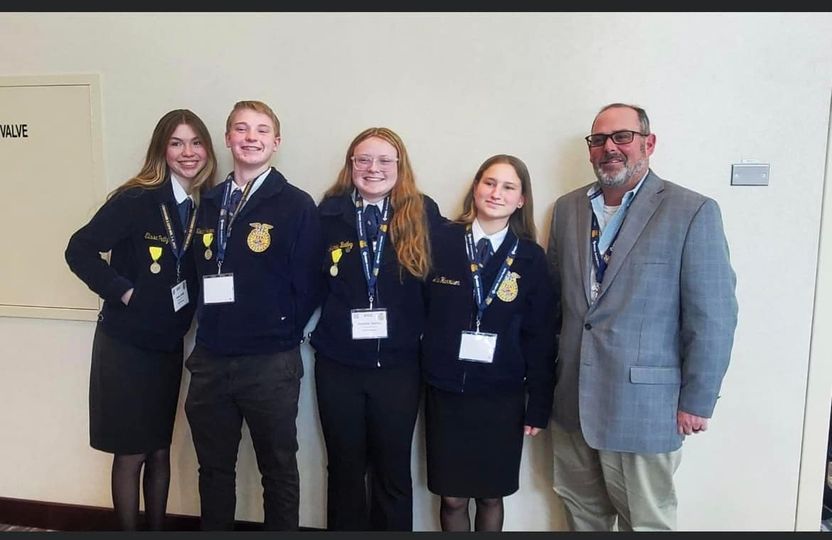
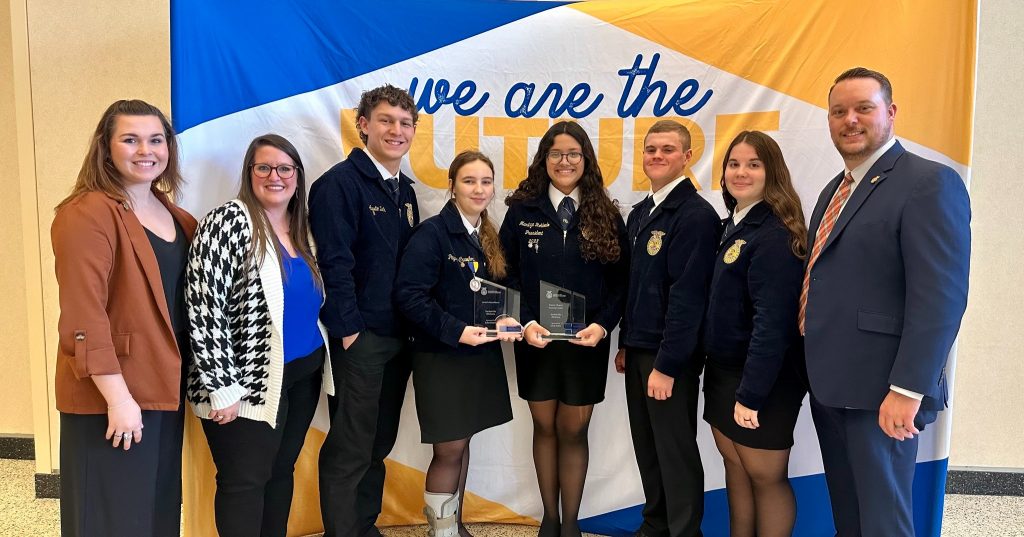
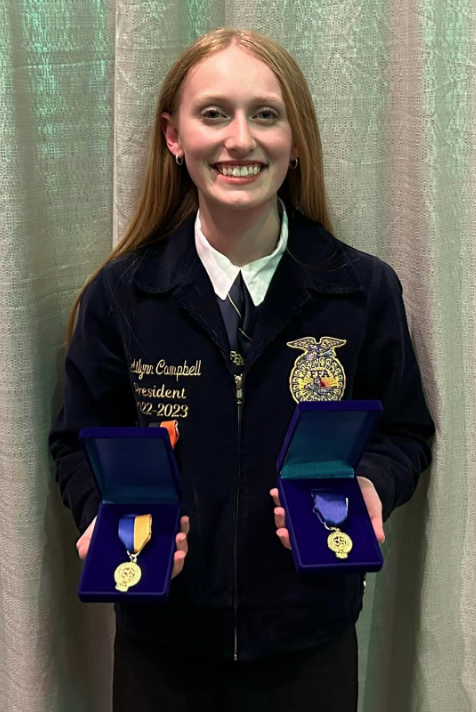
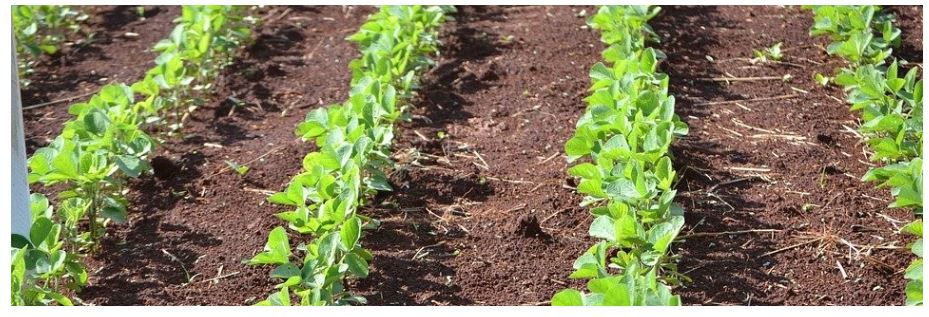
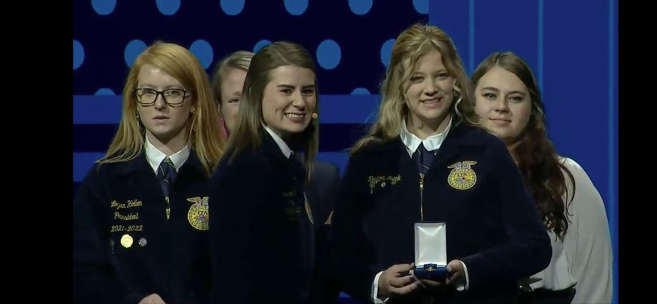
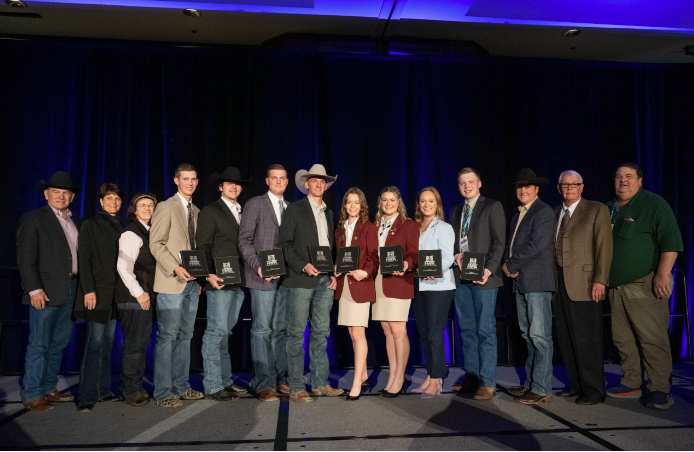
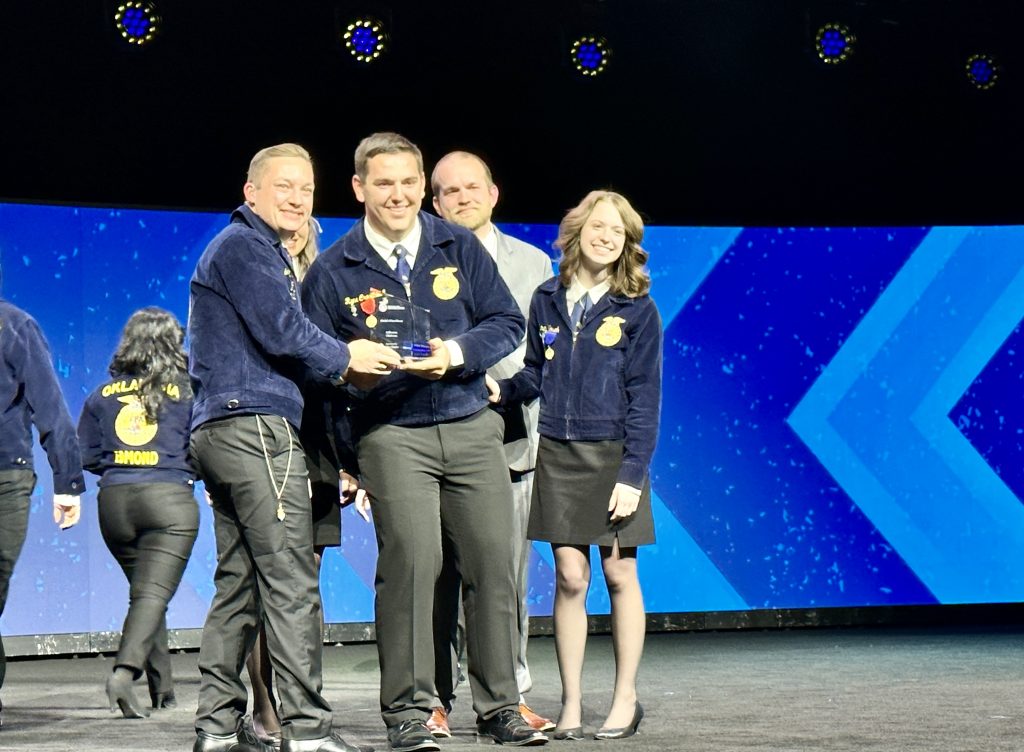
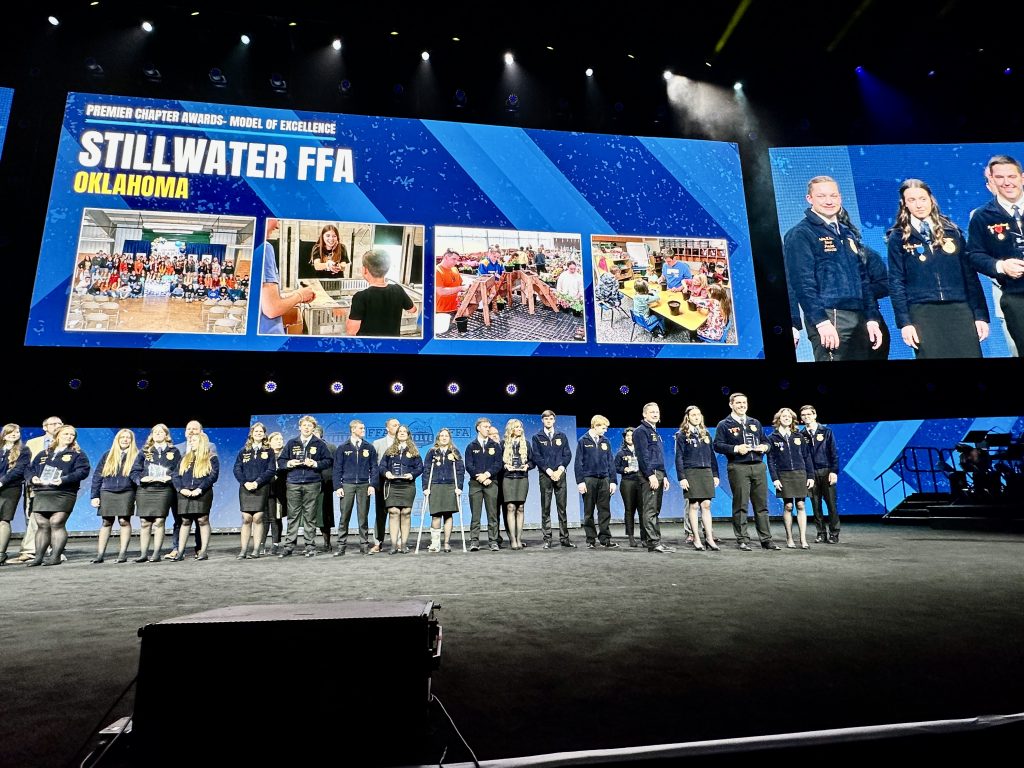
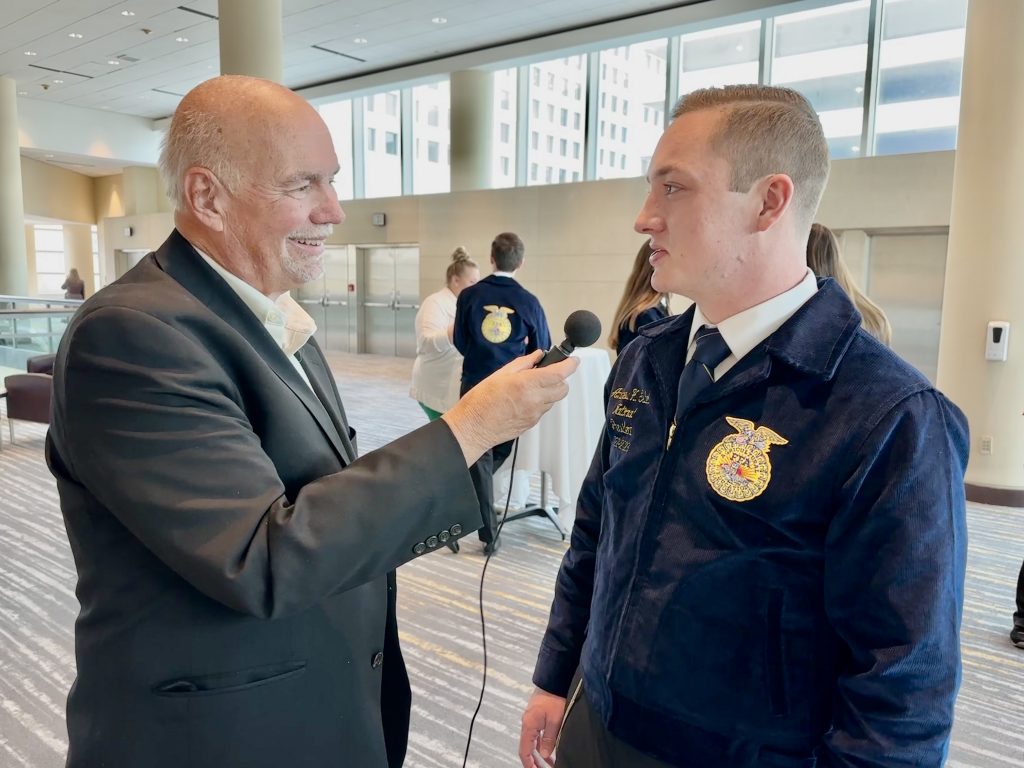
The 2023 4-H & FFA Hard Winter Wheat Scholarship & Champion awards banquet was held tonight in Oklahoma City. The purpose of this program is to encourage increased production of wheat with superior market quality. The contest receives major support from the Oklahoma Wheat Commission with $16,000 in scholarships money is awarded to the top five 4-H and top five FFA entries funded by Check-off dollars. Other awards are given as well. The show is sponsored by the Oklahoma Department of Career and Technology Education, Oklahoma Genetics, Inc., Oklahoma State University, Oklahoma Wheat Commission, Oklahoma Wheat Research Foundation, and WestBred™ seeds.
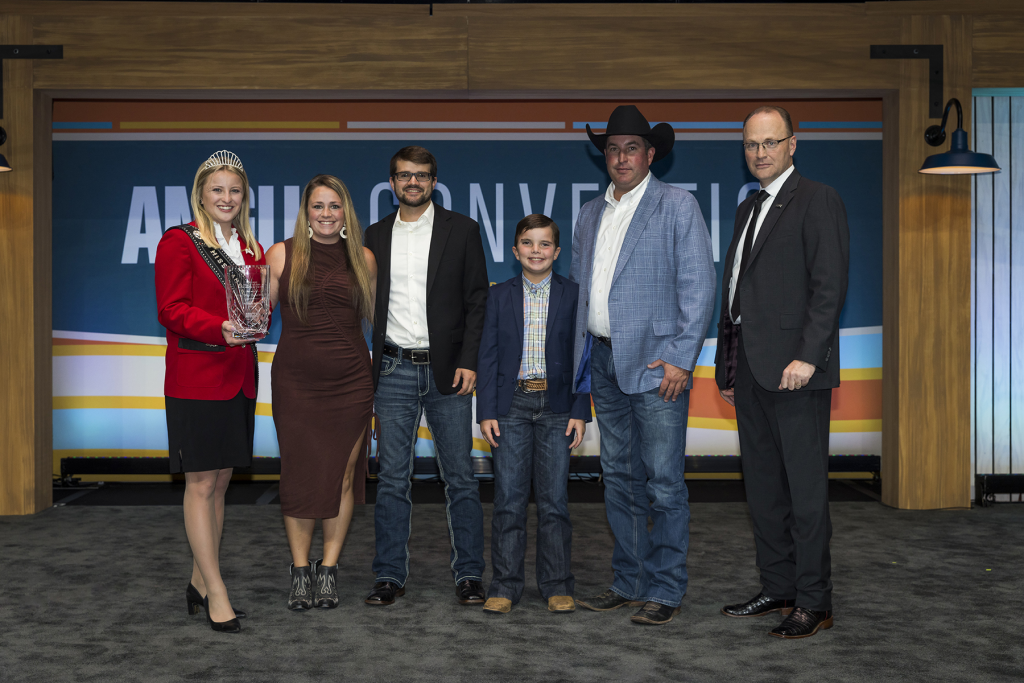
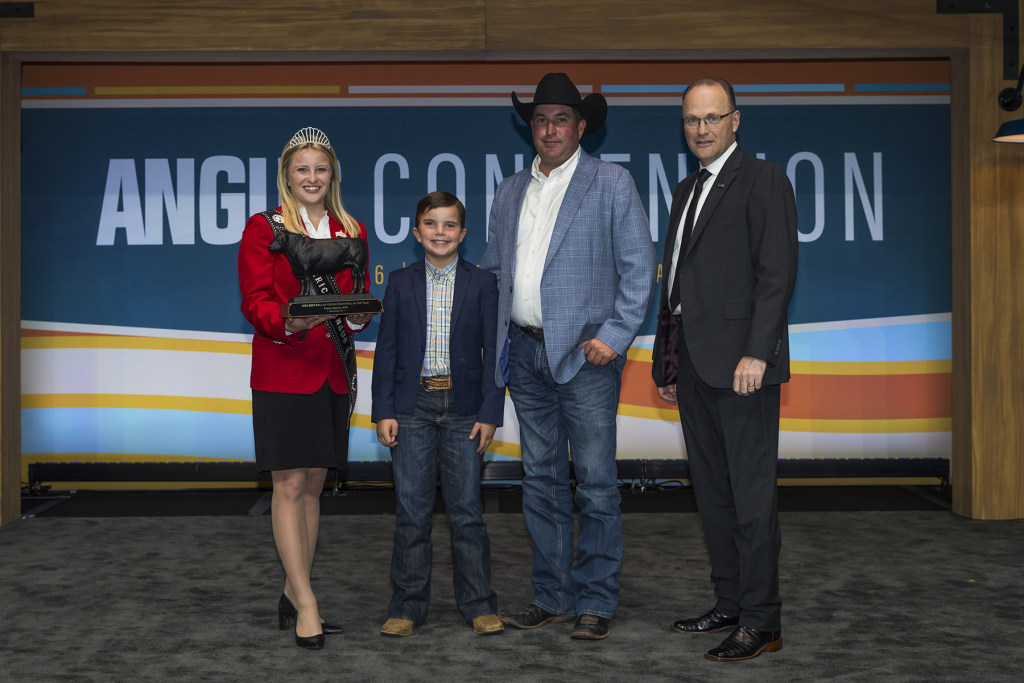
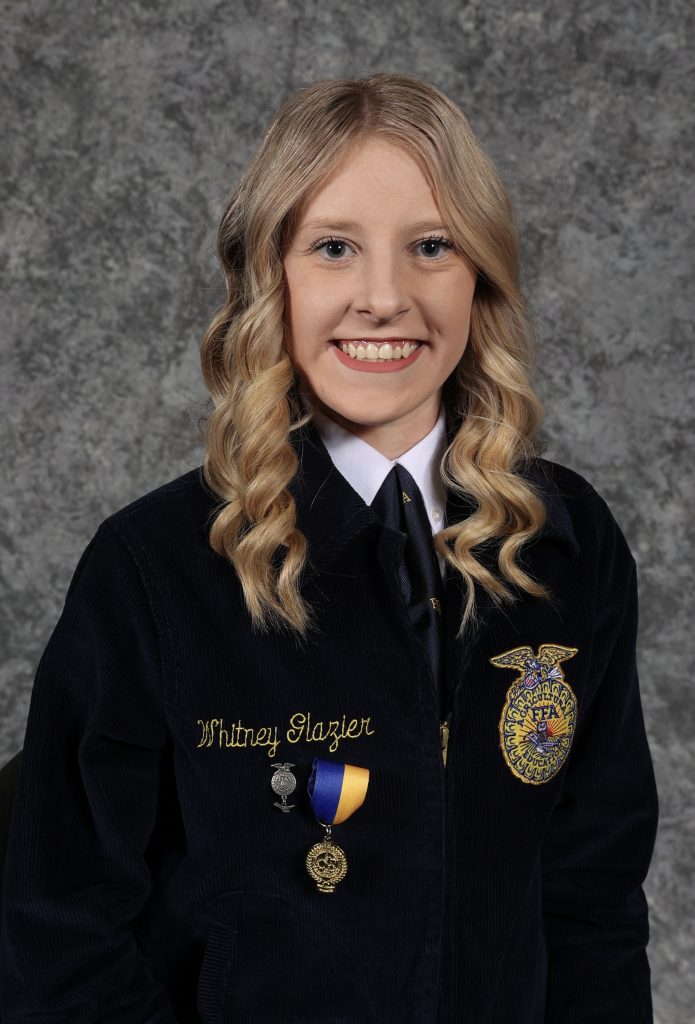
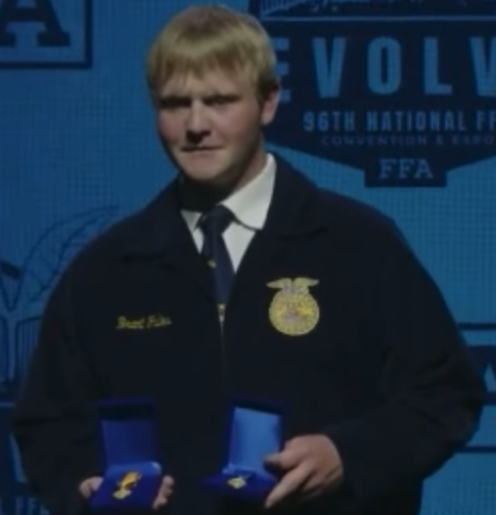
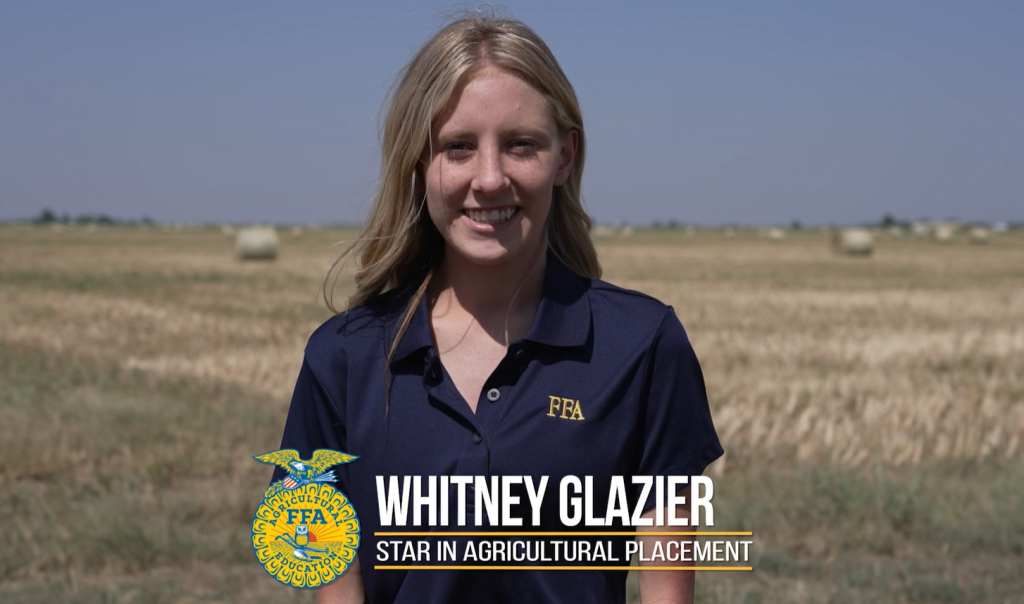
Destry Swaim, son of Brandon and Robin Swaim, was awarded the overall grand champion award showing his Doublestop CL Plus variety in the 2023 Oklahoma 4-H/FFA Junior Wheat Show. Swaim placed 9th in production and milling and 1st in baking, earning him the title of 1st place as the FFA champion, and overall grand champion of the 4-H/FFA Junior Wheat Show. Swaim is from the Okeene FFA chapter.
Clinton Chaney, son of Scott and Jennifer Chaney, was awarded 1st place and 4-H champion showing his WB4515 variety in the 2023 Oklahoma 4-H/FFA Junior Wheat Show. Chaney placed 3rd in production and milling and 2nd in baking, earning him the champion 4-H award. Chaney is a member of the Medford 4-H Club in Grant County.
Swaim, a member of the Okeene FFA Chapter, received $3000 in scholarship monies for the 1st place and Champion win. Destry also won $750 premium from Oklahoma Genetics Inc (OGI) for winning 1st place and then Grand Champion overall in the competition with the Doublestop CL Plus variety. Destry also received a $500 premium for being FFA champion and grand champion from WestBred® and received an additional $350 premium for 1st place and Grand Champion from the Oklahoma Wheat Research Foundation, along with a $35.00 premium for production, milling, bake contest and trophies.
Chaney, a member of the Medford 4-H Club in Grant County, received $3000 in scholarship monies for his accomplishments with his WB4515 variety. Clinton also won a $500 premium from WestBred® for winning 1st place and 4-H Champion with the WB4515 variety. In addition, he received $100 premium for 1st place from the Oklahoma Wheat Research Foundation, along with a $40.00 premium for production, milling, bake contest and trophies.
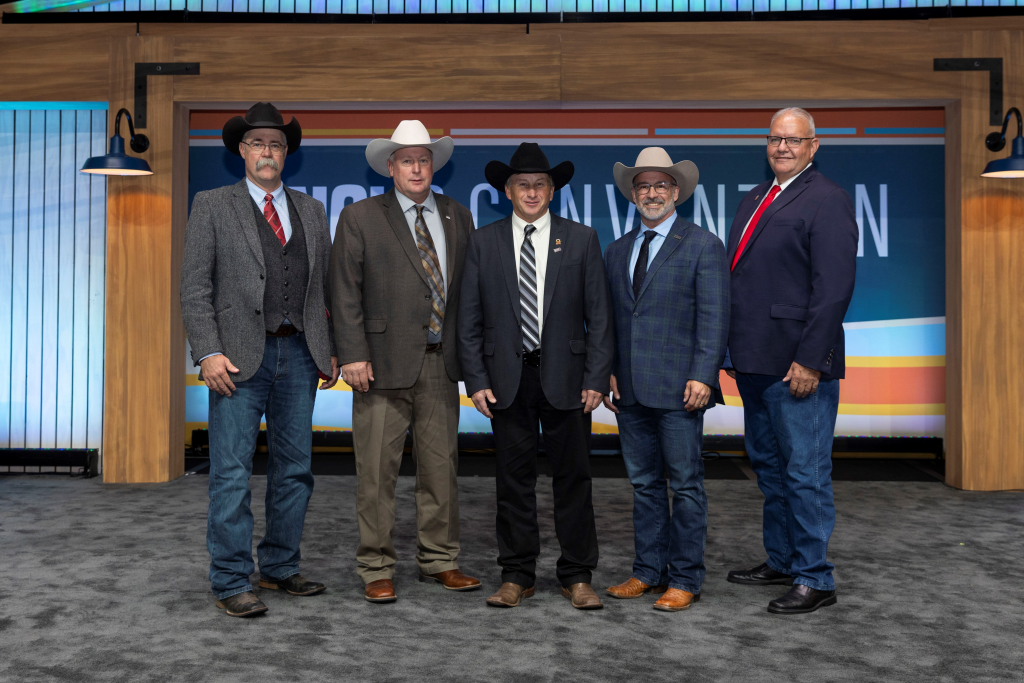
The Oklahoma Wheat Commission works to promote greater utilization of wheat in both domestic and international markets through research, market development, and public education. Five wheat producers representing designated districts across the state serve as the Oklahoma Wheat Commission's board of directors. Current officers are David Gammill, Chairman, Chattanooga; Don Schieber, Vice-Chairman, Ponca City; R.J. Parrish, Secretary/Treasurer, Hunter; Jerry Wiebe, board member District 2, Hooker and Michael Peters, board member District 3, Okarche.
Congressman Tom Cole (OK-04) released the following statement after passage of H.R. 5961, the No Funds for Iranian Terrorism Act, in the U.S. House of Representatives. Cole supported the legislation.
"Over the last several weeks, the world has watched an aggressive Iran support Hamas and its atrocities against Israel, as well as dozens of attacks by Iranian fighters on American facilities and service members in the region," said Cole. "There is no excuse for allowing Hamas' most important backer – Iran – to access money that can be used on weapons, training, rockets and weapons of mass destruction. This cannot continue and the United States' and our allies' security relies on our country remaining strong against terrorism. By stopping billions of dollars from reaching Tehran, we can put an end to Iran's support of global terrorism, and this bill will do just that."
Each week, Beltway Beef brings you the latest policy news affecting the U.S. cattle and beef industry. Hear from subject-matter experts, producers, and industry leaders on the topics that impact the business viability of farms and ranches across the country.
On this episode, Executive Director of Government Affairs Kent Bacus and Nebraska rancher Jaclyn Wilson, chair of NCBA's International Trade Committee, join to discuss NCBA's concerns with the U.S. Department of Agriculture's decision to permit beef imports from Paraguay into the United States. NCBA has repeatedly raised concerns with Paraguayan beef imports because of the country's history with devastating Foot-and-Mouth Disease (FMD). Bacus explains the background on this issue and Wilson shares her perspective on why preventing an outbreak of FMD is so important.
Today, the U.S. Department of Agriculture's (USDA) Economic Research Service released its annual Farm Sector Farm Income Forecast report for 2023. Agriculture Secretary Tom Vilsack issued the following statement:
"Today's farm income forecast for 2023 shows that, while net farm income is expected to drop below the 2022 record high, it is still one of the best years on record for the overall farm sector at $151.1 billion. In fact, net cash farm income for 2023 is 15 percent above average for the last two decades, and farm income over the 2021-2023 period represents the highest level of farm income in the last 50 years. U.S. agriculture exports have also seen the three highest years on record in 2021-2023, which is reflected in overall cash receipts, while 2024 is projected to be the fourth highest year on record despite potential declines.
"Even so, the data shows a majority of farm households rely on off-farm jobs to make ends meet, indicating that the income is not evenly distributed across the farm spectrum. USDA will continue our efforts to bolster a complementary system that makes it possible for small- and mid-sized farms to benefit from more, new and better markets and climate smart agriculture opportunities so they can thrive. The change in net farm income this year is reflective of overall lower prices for farmers, higher production costs and higher interest rates, and declining government payments since their 2020 record levels. "A bright spot for farmers is that some production costs, including feed, fertilizer and pesticides, have declined. USDA is taking all of these factors into account as we design and implement our programs, and as we work with Congress on the next Farm Bill into 2024."
Today the Agricultural Retailers Association (ARA) concluded its annual Conference & Expo with a keynote speaker, a panel of international ag retail professionals, and an off-site tour of the Publix Supermarket dairy production process.
On Thursday morning, 2022-2023 ARA Board Chair Ian McGregor with The McGregor Company delivered his Chairman's Report before recognizing the outgoing and incoming members of ARA's Board of Directors.
At the top of the morning, keynote speaker Dave Mitchell, president of The Leadership Difference Inc., delivered his keynote address on the "Foundation of Peak Performance Culture."
"What I hear most from ag retailers across the country is that they need more manpower," says ARA President & CEO Daren Coppock. "Dave's energetic presentation addressed that challenge head-on by revealing the top 10 things that new and existing employees look for when choosing to join or remain with an organization."
The international retailers keynote panel tackled hot issues and trends in global markets near the end of the closing general session. The Scoop's Margy Eckelkamp moderated the panel featuring Matheus Consoli, Markestrat Group representing ANDAV from Brazil; Luis Mogni, distribution consultant from Argentina; Mathieu Naddeo, CEO at Group Société Commerciale Agricole de Distribution (SCAD) from France representing AFCOME; and Mitch Rezansoff, executive director at Canadian Association of Agri-Retailers (CAAR) from Canada.
The panelists shared information from their respective countries in hopes of creating opportunities for all of us to work together to find solutions to ag retail's biggest challenges that are globally compatible and beneficial.
"While our issues differ, there is much more we have in common," says McGregor. "I look forward to working together with our global counterparts with the goal to make a bigger impact for our retailer members."
The closing general session wrapped up with a video announcing the 2024 ARA Conference & Expo theme, "Powering Ag Retail's Next Frontier." Save the date and join us Dec. 3-5 in Houston, Texas.
Learn more about the ARA Conference & Expo on the website or on ARA's social media.
Alltech has been awarded three EcoVadis sustainability medals.
Alltech, a leading global animal health and nutrition company, has been awarded a silver medal from EcoVadis — putting it in the top 25% of sustainable companies globally. The EcoVadis silver medal testifies to Alltech's purpose of Working Together for a Planet of PlentyTM and its commitment to prioritizing the efficient production of nutritious food while minimizing environmental impact, implementing environmentally and economically sustainable solutions, promoting fair labor practices and fostering ethical business conduct.
Alltech has also earned the EcoVadis platinum medal for its production site in Springfield, Kentucky, USA, which puts it in the top 1% of the over 200,000 businesses assessed by EcoVadis. Alltech Coppens, which produces industrial feeds for the aquaculture sector, earned gold-medal status, putting it in the top 7% of sustainable companies globally.
"We are delighted to have received multiple EcoVadis medals, as an external endorsement of Alltech's ongoing commitment to the journey that is sustainability," said Tara McCarthy, global vice president of ESG at Alltech.
EcoVadis is the world's most trusted provider of business sustainability ratings, intelligence and collaborative performance improvement tools for global supply chains. Backed by a powerful technology platform and a global team of domain experts, EcoVadis assesses companies on environmental, social and ethical performance in over 200 purchasing categories and 175 countries.
"At Alltech, we see opportunities in every challenge. We are dedicated to delivering smarter, more sustainable solutions to advance the health and performance of animals while also lowering their impact on the environment," said Dr. Mark Lyons, president and CEO of Alltech. "These awards from EcoVadis recognize the actions we are taking to align our business with our Planet of Plenty purpose — working together to provide nutrition for all, revitalize local economies and replenish the planet's natural resources."
Earlier this year, Alltech released its 2022 Alltech Sustainability Report, which demonstrates the actions the company is taking to align the business with its commitments to the United Nations Global Compact, the U.N. Ten Principles and the U.N.'s Sustainable Development Goals. Additionally, the report outlines the steps Alltech has taken to promote an inclusive work environment and highlights its team members' efforts to make a difference in the communities in which they live and work.
According to the U.S. Grains Council's (USGC's) 2023/2024 Corn Harvest Quality Report, the 13th such annual survey published globally today, the 2023 U.S. corn crop is the largest on record with the lowest percentage of broken corn and foreign material (BCFM) to date.
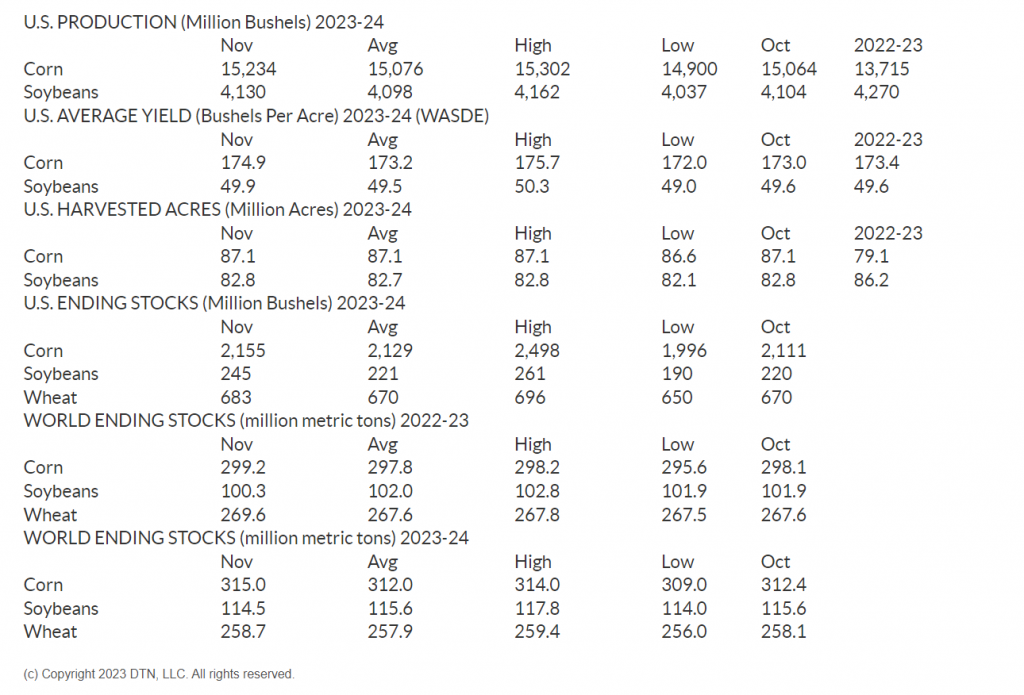
Warm and dry weather conditions in April and May let producers plant ahead of schedule, and despite concerns about continued dryness in June, healthy rainfall returned later in the summer. This allowed the crop to properly mature and resulted in the timely harvest of 386.97 million metric tons (15,234 million bushels) of corn.
The average aggregate quality of the representative samples tested was better than the grade factor requirements for U.S. No. 1 grade. The report also showed that 88.0 percent of the samples met the grade factor requirements for U.S. No. 1 grade and 96.7 percent met the grade factor requirements for U.S. No. 2.
"The Council is proud to produce this annual report that proves the quality and abundance of U.S. corn year over year. The transparency it provides to buyers helps them make informed decisions and takes another step towards developing markets, enabling trade and improving lives," said Brent Boydston, USGC Chairman. "This crop's incredible volume allows the United States to remain the world's leading corn exporter, accounting for an estimated 26.4 percent of global corn exports."
The report is based on 611 yellow corn samples taken from defined areas within 12 of the top corn-producing and exporting states. Inbound samples were collected from local grain elevators to measure and analyze quality at the point of origin and provide representative information about the variability of the quality characteristics across the diverse geographic regions.
This year's corn protein concentration registered at 8.8 percent, an improvement on the five-year average of 8.5 percent. The crop also showed lower average total damage and average moisture content when compared to the five-year average.
The chemical composition of the crop remained in a healthy range, as 99.5 percent of the samples tested below the U.S. Food and Drug Administration (FDA) action level for aflatoxins and 100 percent of the samples tested below the 5.0 parts per million FDA advisory level for deoxynivalenol. Additionally, 98.3 percent tested below the FDA's strictest guidance level of 5.0 parts per million for fumonisin.
The Council will present its findings to buyers around the world in a series of roll-out events, beginning in China on Dec. 12. Presentations will continue in India, Korea, Panama and Taiwan through the first quarter of 2024 and aim to offer participants clear expectations regarding the quality of corn for this marketing year. During these events, crop quality information is accompanied by updates on U.S. corn grading and handling, which provides importers and end-users with a better understanding of how U.S. corn is moved and controlled through export channels.
Read the full 2023/2024 USGC Corn Harvest Quality Reporthere and stay up to date on its associated rollout events on the Council's website. A second Council-produced study, the 2023/2024 Corn Export Cargo Quality Report, will measure corn quality at export terminals at the point of loading and will be available in early 2024. The Council also recognizes the remarkable efforts made by U.S. farmers to make their operations more sustainable, producing higher yields while using less resources. Read more about U.S. corn's sustainability practices and the Council's corn sustainability assurance protocol (CSAP) here.
Today, the Agriculture Energy Coalition (AgEC) welcomed a letter signed by 24 Members of Congress that urges House Agriculture Committee leaders to preserve the funding for USDA's Powering Affordable Clean Energy (PACE), Empowering Rural America (New ERA), and Rural Energy for America Program (REAP) provided in the Inflation Reduction Act of 2022. AgEC applauded Rep. Yadira Caraveo (D-CO) for leading the letter and all Democratic members of the House Agriculture Committee who signed.
"USDA's popular energy and bioeconomy loan and grant programs are in great demand by farmers, coops and small businesses. They are urgently needed to assist farms and rural communities transition to clean, affordable energy," said Lloyd Ritter, AgEC Executive Director. "The Powering Affordable Clean Energy (PACE), Empowering Rural America (New ERA), and Rural Energy for America Program (REAP) are each seeing record applications and funding requests. These programs must remain fully funded to keep humming along as Congress moves forward with the Farm Bill and appropriations."
The letter notes USDA received:
A record 750 initial applications to the New ERA program. The proposals from nearly every state that hosts rural electric cooperatives request more than $43 billion to support a total $100 billion in rural clean energy investments.
803 project proposals for the PACE program worth $12 billion to build clean energy assets in rural communities.
A 1000% increase in Fiscal Year 2023 requests for REAP grant, loan, and technical assistance awards.
American Farm Bureau Federation Chief Economist Roger Cryan presented the testimony below today on behalf of AFBF and its membership at the ongoing Federal Milk Marketing Order Pricing Formula hearing, which has resumed after a six-week recess.
AFBF testimony underscores the need for updating Class I and Class II price differentials to bring fairness for farmers back into Federal Milk Marketing Orders. Class I differentials are meant to incentivize movement of milk to where it is demanded and assist in maintaining regional production capacity in a manner the provides consumers reliable access to fresh fluid milk.
The Class II differential is meant to represent the higher value of Class II milk, which is used in dairy products like ice cream, cottage cheese and sour cream, compared to Class IV milk, which is used in butter and dairy powders. Historically this has been based on the cost of drying and rewetting Class IV milk, though cost and processing dynamics have changed. For a full explanation of differentials used in Federal Milk Marketing Orders read Market Intel.
Below are excerpts from the testimony, which can be read in full here.
A fundamental focus of AFBF's proposals is the reduction or elimination of negative producer price differentials and the de-pooling they cause. We believe that an orderly pool is the key to orderly marketing and ensuring Federal Milk Marketing Orders continue to benefit farmers, cooperatives, processors, and consumers. The key to an orderly pool, in turn, is, above all, the proper alignment of the four Class prices.
AFBF generally supports National Milk Producers Federation (NMPF) Proposal 19, which would increase Class I differentials across the country, and entirely opposes the Milk Innovation Group's (MIG) proposal 20, to reduce the current base Class I differential from $1.60 to $0.00.
Proposal 21. The American Farm Bureau Federation proposes to update the Class II differential based on current drying costs.
The Class II differential was developed during order reform to reflect the cost of drying and rewetting milk, to reflect the higher value of Class II milk without incenting processors to dry and rewet (Class IV) milk for Class II uses. AFBF accepts this logic and proposes to update the Class II differential to $1.56.
This proposal is fundamentally a matter of fairness. If the costs of processing are to be recognized – and increased in this proceeding – for processors of Class IV milk, so should it be recognized in defining the Class II differential. This is an area where what is good for processors can provide some silver lining for producers. Much of Class II use was only separated from Class I because of the potential for substitution of Class IV nonfat dry milk for Class II skim milk. Setting the Class II differential at the make allowance for Class IV skim milk is the only fair way to apply the existing logic of Class II pricing.
Additional testimony on the issue of Class I differentials is as follows:
AFBF agrees with NMPF that Class I prices need to be updated. Over-order prices are 'ephemeral' and regulated Class I prices are more 'durable.' In effect, the ebbs and flows of local and regional market conditions can wash away a sound long-term price relationship, which may be hard to re-establish.
Federal Milk Marketing Orders, from their earliest days, recognized that short-term events and market conditions could lead to the destruction of long-term supply and demand stability. Farm policy is broadly aimed at providing some certainty and stability for farmers in the face of natural extreme volatility.
The current Class I differentials are largely based on a 1998 analysis of the current supply and demand volumes, and plant locations. Even those differentials updated for Southeastern markets in 2008 were only partially reflective of the conditions at that time, because they had to remain aligned with the rest of the country, where differentials remained unchanged.
NMPF's proposed increases are quite moderate, perhaps too moderate.
The Class I differential consists of two parts: 1) a minimum element, reflecting the minimum additional Class I value necessary to provide a hundredweight of Grade A milk to the fluid market; and 2) a location-specific value over and above this, reflecting the relative difficulty (at a defined cost) of attracting an additional hundredweight to a particular location, relative to location with the lowest such cost.
The current minimum Class I differential is $1.60, based on long-standing economic logic, though based on outdated cost assessments.
. . . The current location-specific values are based on that 1998 analysis, and are badly out of date, given general inflation, if nothing else, and shifting milk supply locations.
The testimony also addresses a proposal to eliminate Class I differentials altogether:
The FMMOs have provided, and continue to provide, a sound incentive to producers to maintain Grade A status. Claiming that there is no longer a need for a minimum Class I differential because nearly all milk is Grade A is akin to claiming there is no longer a need for stop signs and traffic signals because there are few accidents at intersections. The minimum Class I differentials should not only be maintained, but increased in line with the increased costs of meeting the Grade A standard, and consistent with NMPF's proposal, based on the logic presented by NMPF and selectively summarized in our discussion of Proposal 19.
. . . Finally, and perhaps most fundamentally, reducing the minimum Class I differential to zero would effectively destroy the basic proposition that Class I prices should be consistently higher than other Class prices, which is critical to the operation of federal order milk pools.
In connection with a return to higher-of pricing and the elimination of advanced pricing, the Class I differentials are the key to encouraging pooling and ensuring a pool draw for manufacturing plants who are ready to serve the Class I market.
Ultimately, MIG's proposal to cut the Class I differentials by $1.60 across the board is a proposal to overturn Class price alignment, create chaos in FMMO pooling, and effectively destroy the Federal Milk Marketing Order system.
The FMMO system, as it stands today, provides a framework in which farmers can control their own destiny through cooperative organization or through independent reliance on the terms of trade established by the orders and enforced by the market administrator. The FMMO's create a fairer world for dairy farmers in the short run and a market in which farmers are better encouraged to serve American and international consumers in the long run.
AFBF submitted nine proposals to the hearing, based on years of work by dairy farmer members, policy established through AFBF's grassroots policy development process, and recommendations developed during the FMMO Forum held last year in Kansas City, which brought together representatives from all sectors of the dairy industry. Four of those proposals were accepted.
Full AFBF testimony on price differentials as submitted to the hearing, including reference sources, charts and graphs, is available here. An explanation of the four AFBF proposals accepted for consideration is available here. For more information on all nine AFBF proposals, including those rejected by USDA, read Market Intel.
According to the U.S. Grains Council's (USGC's) 2023/2024 Corn Harvest Quality Report, the 13th such annual survey published globally today, the 2023 U.S. corn crop is the largest on record with the lowest percentage of broken corn and foreign material (BCFM) to date.
Warm and dry weather conditions in April and May let producers plant ahead of schedule, and despite concerns about continued dryness in June, healthy rainfall returned later in the summer. This allowed the crop to properly mature and resulted in the timely harvest of 386.97 million metric tons (15,234 million bushels) of corn.
The average aggregate quality of the representative samples tested was better than the grade factor requirements for U.S. No. 1 grade. The report also showed that 88.0 percent of the samples met the grade factor requirements for U.S. No. 1 grade and 96.7 percent met the grade factor requirements for U.S. No. 2.
"The Council is proud to produce this annual report that proves the quality and abundance of U.S. corn year over year. The transparency it provides to buyers helps them make informed decisions and takes another step towards developing markets, enabling trade and improving lives," said Brent Boydston, USGC Chairman. "This crop's incredible volume allows the United States to remain the world's leading corn exporter, accounting for an estimated 26.4 percent of global corn exports."
The report is based on 611 yellow corn samples taken from defined areas within 12 of the top corn-producing and exporting states. Inbound samples were collected from local grain elevators to measure and analyze quality at the point of origin and provide representative information about the variability of the quality characteristics across the diverse geographic regions.
This year's corn protein concentration registered at 8.8 percent, an improvement on the five-year average of 8.5 percent. The crop also showed lower average total damage and average moisture content when compared to the five-year average.
The chemical composition of the crop remained in a healthy range, as 99.5 percent of the samples tested below the U.S. Food and Drug Administration (FDA) action level for aflatoxins and 100 percent of the samples tested below the 5.0 parts per million FDA advisory level for deoxynivalenol. Additionally, 98.3 percent tested below the FDA's strictest guidance level of 5.0 parts per million for fumonisin.
The Council will present its findings to buyers around the world in a series of roll-out events, beginning in China on Dec. 12. Presentations will continue in India, Korea, Panama and Taiwan through the first quarter of 2024 and aim to offer participants clear expectations regarding the quality of corn for this marketing year. During these events, crop quality information is accompanied by updates on U.S. corn grading and handling, which provides importers and end-users with a better understanding of how U.S. corn is moved and controlled through export channels.
Read the full 2023/2024 USGC Corn Harvest Quality Reporthere and stay up to date on its associated rollout events on the Council's website. A second Council-produced study, the 2023/2024 Corn Export Cargo Quality Report, will measure corn quality at export terminals at the point of loading and will be available in early 2024. The Council also recognizes the remarkable efforts made by U.S. farmers to make their operations more sustainable, producing higher yields while using less resources. Read more about U.S. corn's sustainability practices and the Council's corn sustainability assurance protocol (CSAP) here.
The U.S. Department of Agriculture today announced that it is providing approximately $208 million in automatic financial assistance for qualifying farm and emergency loan borrowers. This announcement is made possible by $3.1 billion in assistance for distressed farm loan borrowers provided in Section 22006 of the Inflation Reduction Act, an important part of President Biden's Investing in America agenda.
To help prevent foreclosures, USDA will cover approximately $80 million in delinquencies for an estimated 210 borrowers whose qualifying guaranteed loans were flagged for liquidation as of Nov. 30, 2023. USDA will also provide approximately $128 million for an estimated 1,120 borrowers with currently outstanding direct Emergency Loans as of Nov. 30, 2023. Any distressed borrowers who qualify for this assistance and are currently in bankruptcy will be addressed using the same case-by-case review process announced in October 2022 for complex cases.
"At USDA, we are working hard every day to keep farmers on their farms. With the Inflation Reduction Act, we've begun charting a very different course than the one taken during the farm financial crisis in the 1980s," said Agriculture Secretary Tom Vilsack. "We continue to work on credit reforms centered around this better approach and I encourage our lenders and borrowers alike to work with our local offices and our cooperators to capitalize on all available flexibilities in these important programs prior to foreclosing or liquidating farms."
Since the Inflation Reduction Act was signed by President Biden in August 2022, USDA's Farm Service Agency has provided approximately $1.7 billion in immediate assistance to more than 30,000 distressed borrowers as part of an ongoing effort to keep borrowers farming and ranching, remove obstacles that currently prevent many borrowers from returning to their land, and improve the way that FSA approaches borrowing and loan servicing in the long-term. More options to prevent avoidable guaranteed loan foreclosures are currently being developed.
For any qualifying guaranteed borrowers that also qualified for previous Inflation Reduction Act assistance announced in October 2022 or August 2023, payments may be adjusted to account for that assistance.
Individual Requests for Distressed Farmers Seeking Assistance
In addition to the assistance announced today, FSA continues to accept individual distressed borrower assistance requests from direct loan borrowers who missed a recent installment or are unable to make their next scheduled installment on a qualifying direct farm loan due to cash flow issues, or those distressed borrowers who took certain extraordinary measures to avoid delinquency on their qualifying direct loans. More information on eligibility criteria for this assistance may be found on the Inflation Reduction Act Assistance for Distressed Borrowers page.
Borrowers can submit requests in person at their local FSA office or by sending in a direct request using the extraordinary measures or cash flow-based assistance portals found on farmers.gov. All requests for extraordinary measures or cash flow-based assistance must be received by Dec. 31, 2023.
Important Tax Information
Like the other USDA Inflation Reduction Act assistance, payments provided to borrowers and payments to be applied to FSA farm loan accounts will be reported to the Internal Revenue Service. Borrowers will receive a 1099 form from FSA. Please note that payments over $600 are subject to federal and state income taxes and will be reflected on the annual 1099 form. Borrowers are encouraged to consult a tax professional with all tax-related questions regarding any Inflation Reduction Act assistance received. USDA also has tax-related resources at farmers.gov/taxes.
USDA touches the lives of all Americans each day in so many positive ways. In the Biden-Harris administration, USDA is transforming America's food system with a greater focus on more resilient local and regional food production, fairer markets for all producers, ensuring access to safe, healthy and nutritious food in all communities, building new markets and streams of income for farmers and producers using climate-smart food and forestry practices, making historic investments in infrastructure and clean energy capabilities in rural America, and committing to equity across the Department by removing systemic barriers and building a workforce more representative of America. To learn more, visit www.usda.gov.
Today the Agricultural Retailers Association (ARA) concluded its annual Conference & Expo with a keynote speaker, a panel of international ag retail professionals, and an off-site tour of the Publix Supermarket dairy production process.
On Thursday morning, 2022-2023 ARA Board Chair Ian McGregor with The McGregor Company delivered his Chairman's Report before recognizing the outgoing and incoming members of ARA's Board of Directors.
At the top of the morning, keynote speaker Dave Mitchell, president of The Leadership Difference Inc., delivered his keynote address on the "Foundation of Peak Performance Culture."
"What I hear most from ag retailers across the country is that they need more manpower," says ARA President & CEO Daren Coppock. "Dave's energetic presentation addressed that challenge head-on by revealing the top 10 things that new and existing employees look for when choosing to join or remain with an organization."
The international retailers keynote panel tackled hot issues and trends in global markets near the end of the closing general session. The Scoop's Margy Eckelkamp moderated the panel featuring Matheus Consoli, Markestrat Group representing ANDAV from Brazil; Luis Mogni, distribution consultant from Argentina; Mathieu Naddeo, CEO at Group Société Commerciale Agricole de Distribution (SCAD) from France representing AFCOME; and Mitch Rezansoff, executive director at Canadian Association of Agri-Retailers (CAAR) from Canada.
The panelists shared information from their respective countries in hopes of creating opportunities for all of us to work together to find solutions to ag retail's biggest challenges that are globally compatible and beneficial.
"While our issues differ, there is much more we have in common," says McGregor. "I look forward to working together with our global counterparts with the goal to make a bigger impact for our retailer members."
The closing general session wrapped up with a video announcing the 2024 ARA Conference & Expo theme, "Powering Ag Retail's Next Frontier." Save the date and join us Dec. 3-5 in Houston, Texas.
Learn more about the ARA Conference & Expo on the website or on ARA's social media.
Listen to Ron Hays talk with Donnell Brown about gene editing.
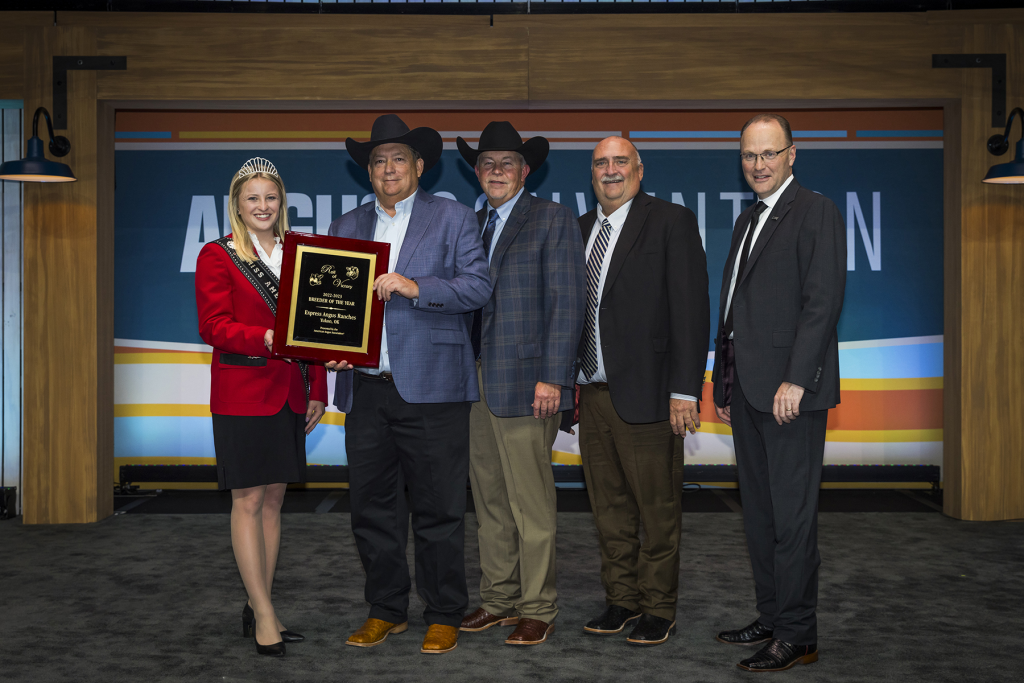
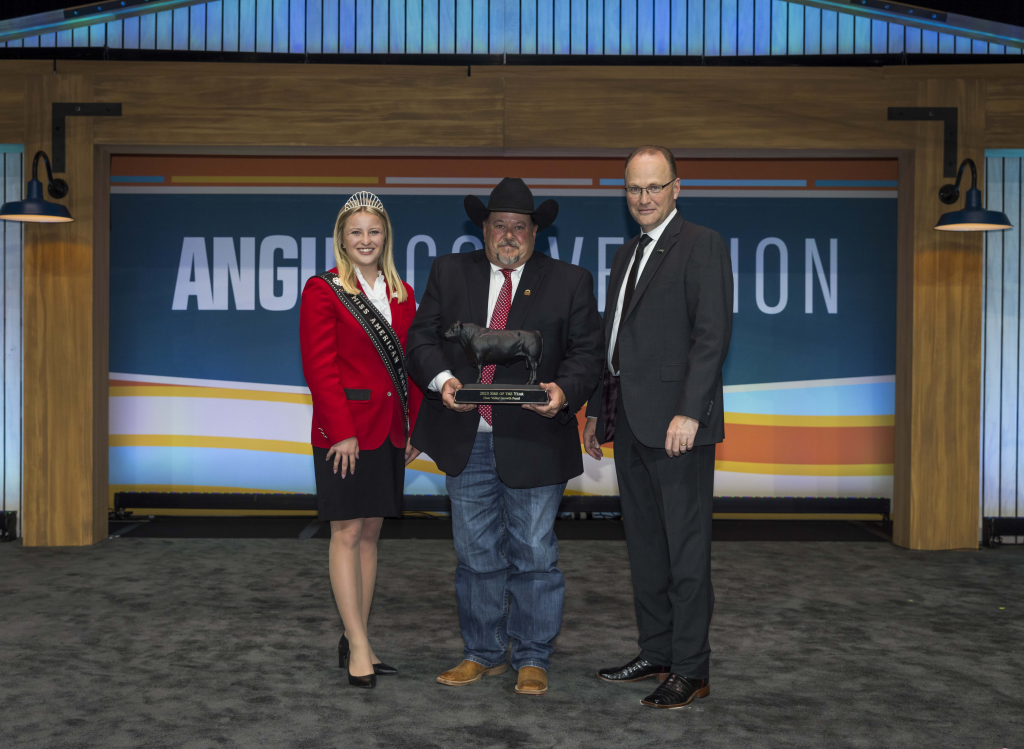
Senior Farm and Ranch Broadcaster, Ron Hays, caught up with Donnell Brown of the R.A. Brown Ranch in Throckmorton, Texas at the recent American Angus Convention as they talked his ranch's role in gene editing.
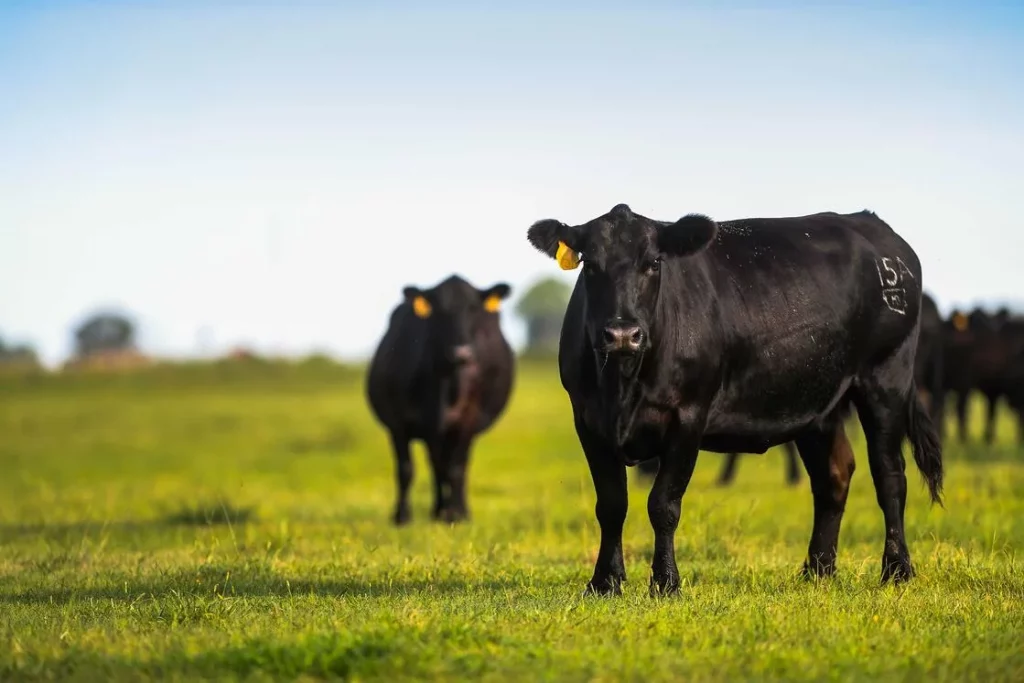
"We have got the first two gene-edited Angus animals, and the company that we are working with has made others with slick coat hair traits," Brown said. "We have actually turned black Angus animals red."
Since black cattle absorb more heat than red cattle, Brown said by using gene editing, ranchers can keep the great Angus genetics but with a more heat-friendly color: red.
"Our company that is doing the gene editing is also making them slick hair coated," Brown said. "So, they are slick like a Brahman- not the normal Angus haircoat."
As 70 percent of the global cattle population is in the tropics and sub-tropics, Brown said it is a huge opportunity for Angus to take on these gene-edited slick hair coats.
"We can select for it, and breed for it, and do it, but it is going to take generations and years of production to get that," Brown said. "We can do it with gene editing and do it fast."
Brown said the Red Angus Association is already registering gene-edited cattle. If animals are black-hided, Brown said they qualify as Certified Angus Beef whether they are registered by the American Association or not.
"We want to make sure with these gene edits whether it is plants or whether it is animals- we want to make sure it is safe for human consumption," Brown said. "That is why we appreciate the Food and Drug Administration testing and researching and forcing us to do all of that research to make sure it is right."
Gene editing rearranges an animal's personal DNA, Brown said, and does not include DNA from an outside source.
"It is not genetically modified," Brown said. "It is gene-edited in a process called precision breeding where we just cut and splice the animal's own DNA to express a trait differently."
Gene edits do not only have the ability to change physical traits, Brown said but also can improve the health and well-being of the animal. There is already a calf that has had her genes edited to provide immunity to Bovine Viral Diarrhea (BVD)- and she has shown no symptoms of the disease even as she has shared a pen all of its life with a persistently BVD cohort. She has full immunity to BVD to this point- which could be a huge breakthrough in dealing with this costly disease.
The Beef Buzz is a regular feature heard on radio stations around the region on the Radio Oklahoma Ag Network and is a regular audio feature found on this website as well. Click on the LISTEN BAR for today's show and check out our archives for older Beef Buzz shows covering the gamut of the beef cattle industry today.
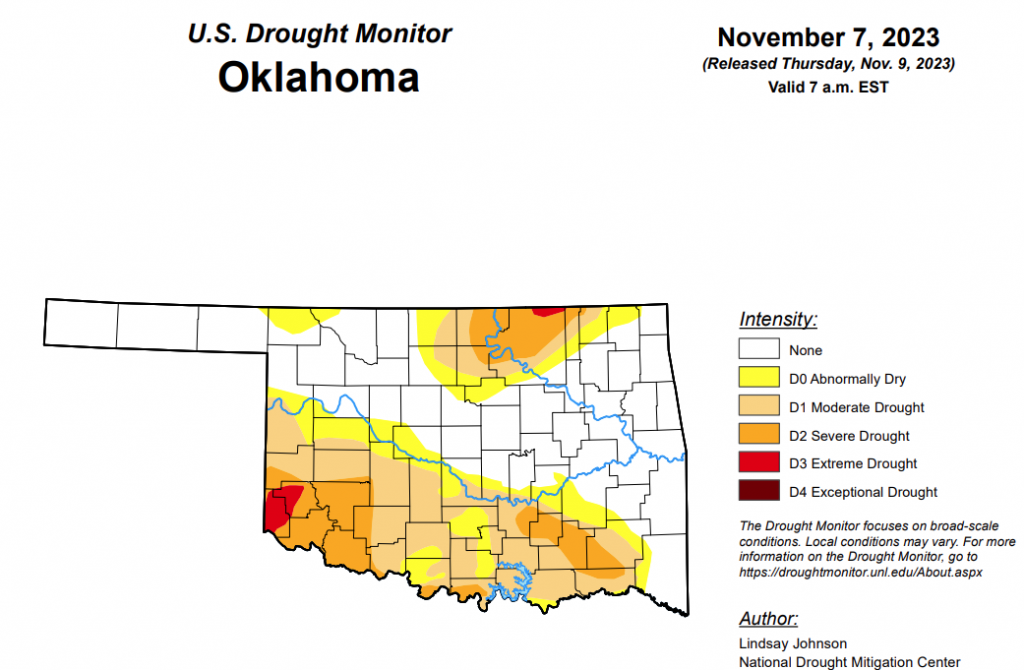
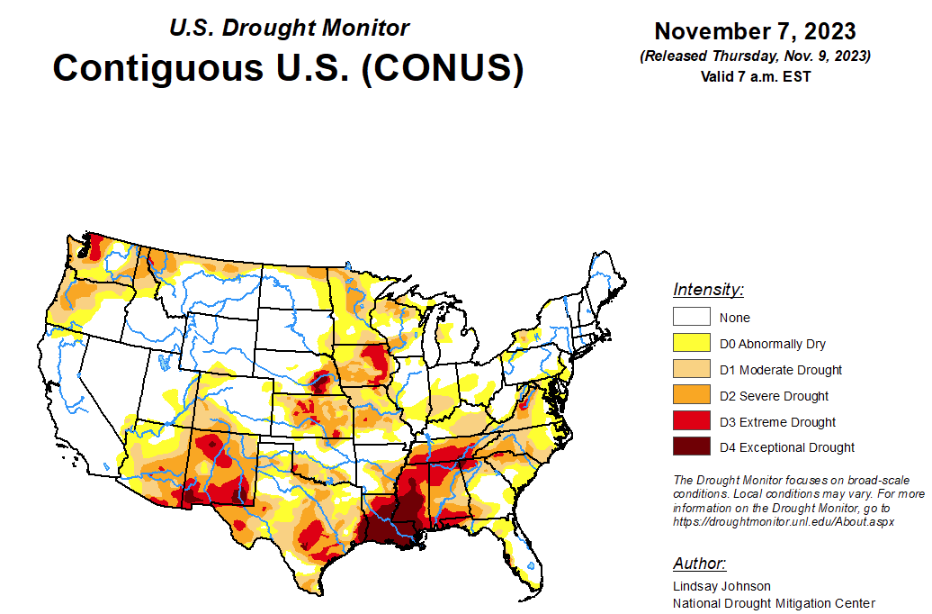
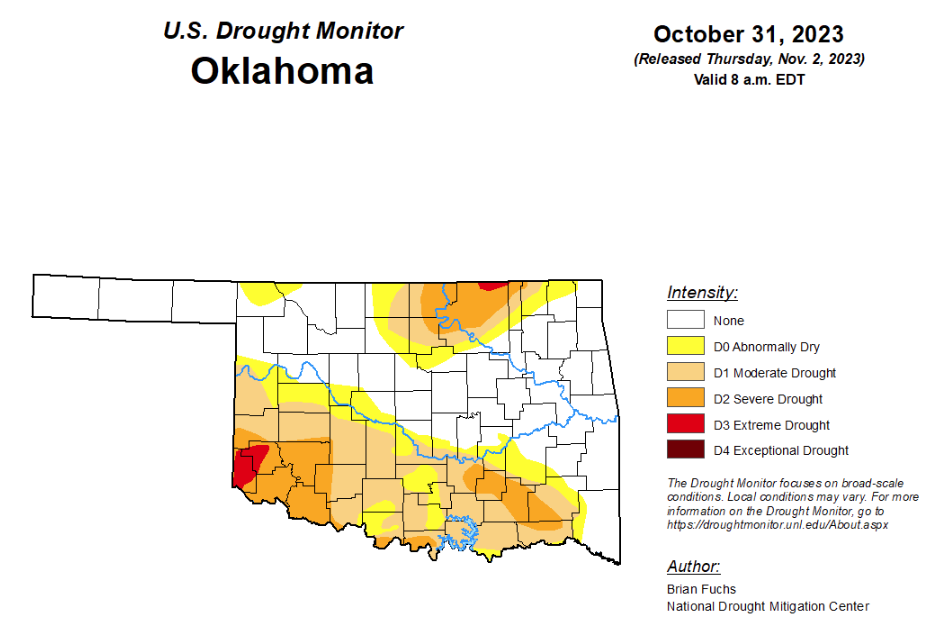
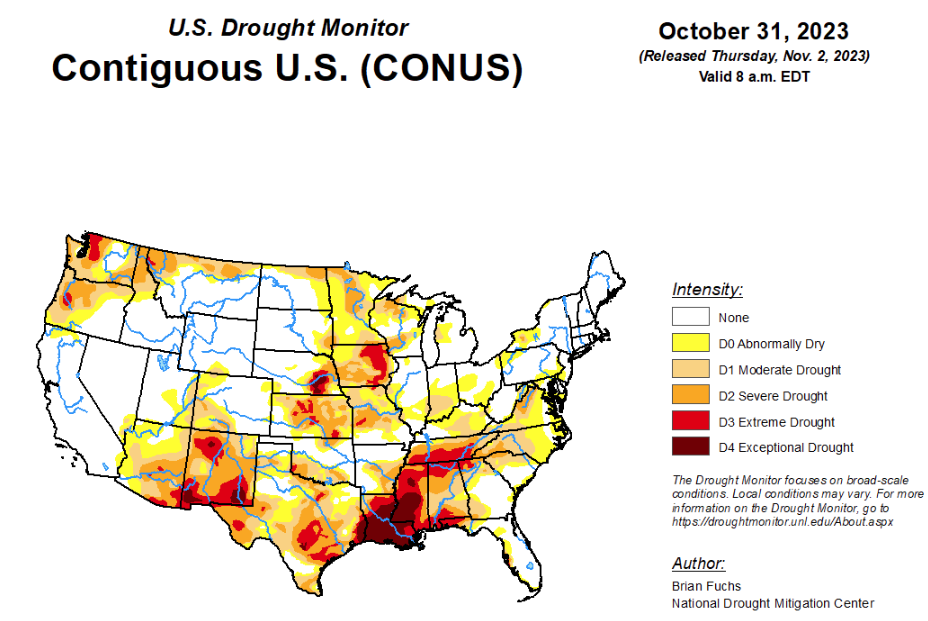
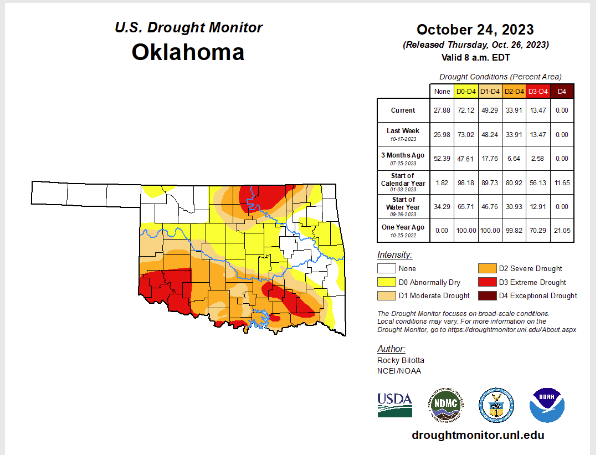
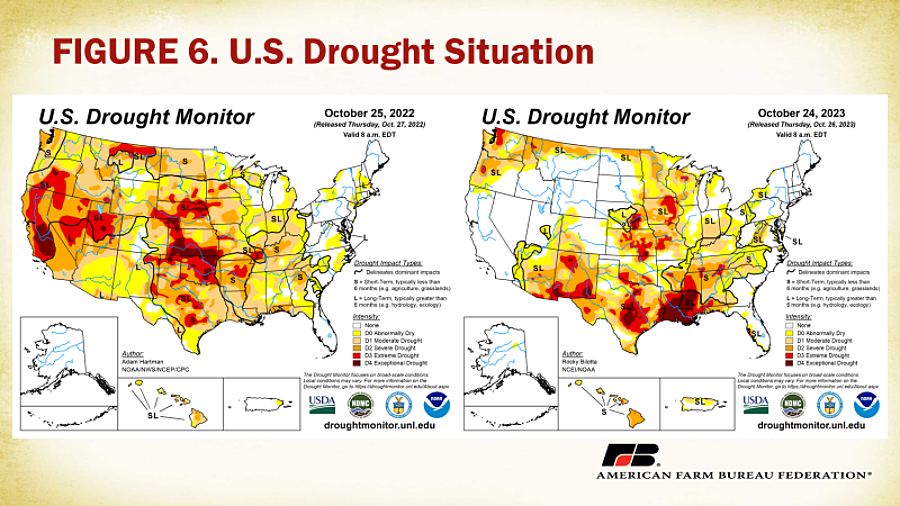
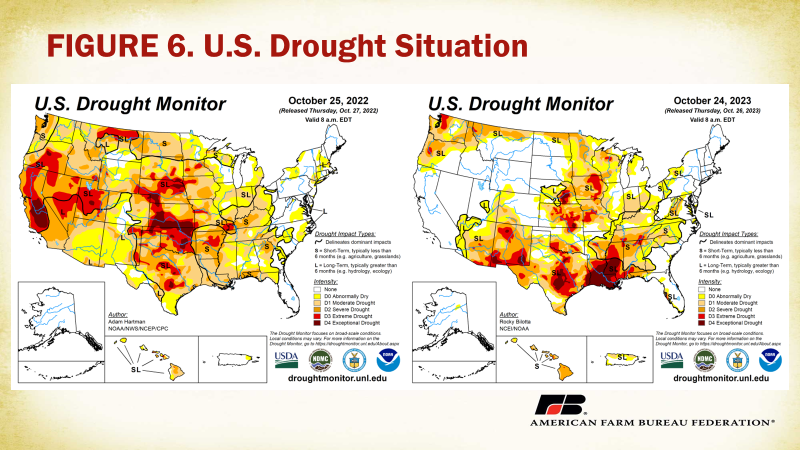
To view the latest Oklahoma drought map, CLICK HERE.
According to the latest Oklahoma drought monitor report, exceptional drought remains at zero, unchanged from the past three months.
Extreme drought or worse is at 1.16 percent, unchanged from last week's percentage.
Severe drought or worse is now at 11.38 percent, slightly improved from last week's 13.68 percent.
Moderate drought or worse is at 33.39 percent, slightly improved from last week's 36.34 percent.
Abnormally dry or worse conditions are now at 51.95 percent, improved from last week's 55.32 percent.
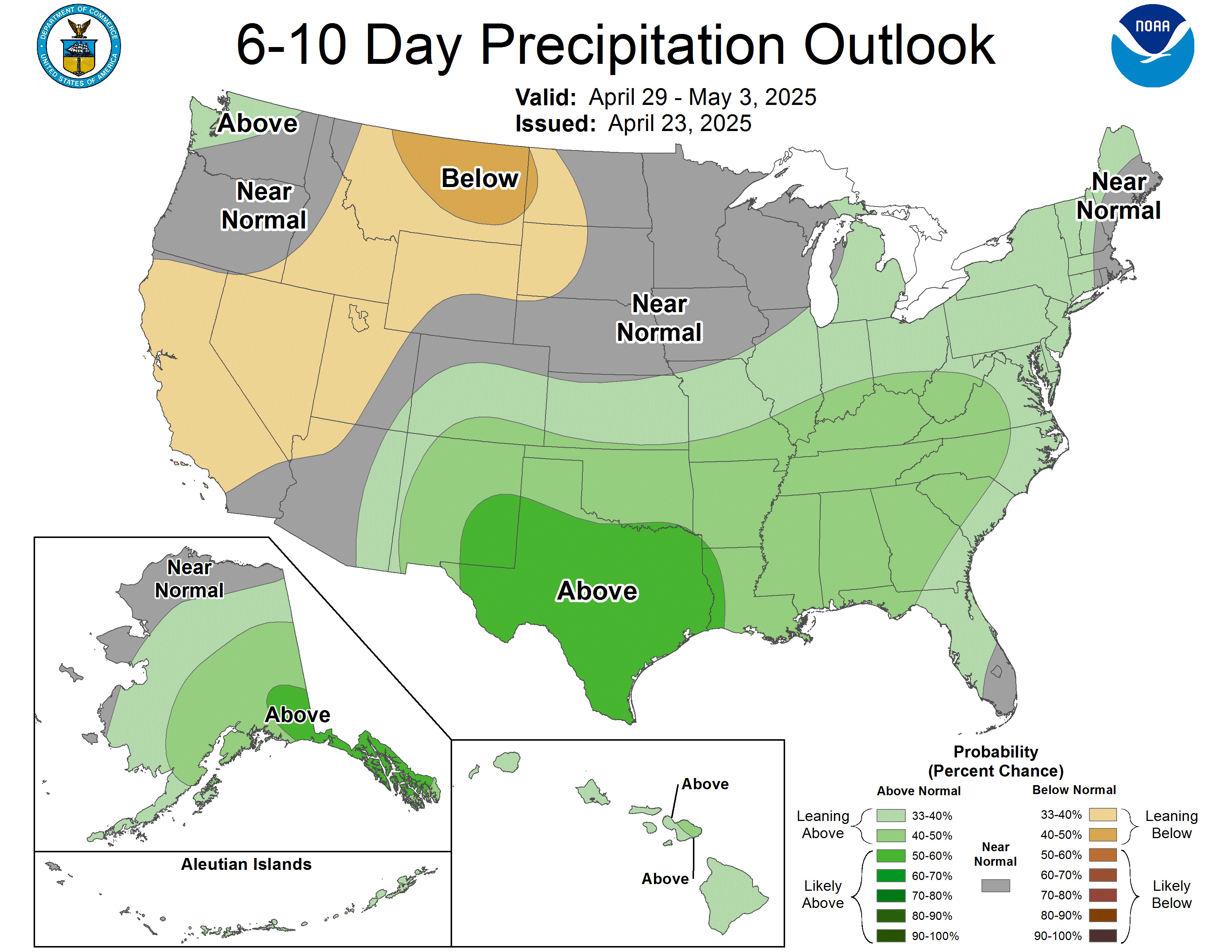
According to the 6-to-10-day precipitation outlook map, the entire state of Oklahoma is leaning below a 40 to 50 percent chance of precipitation through December 9.
To view the United States Drought Map, click here.
According to the latest U.S. Drought Monitor, this weeksaw some minor expansion of drought across areas of the West (Colorado, Idaho, Montana, Wyoming) and Midwest (Illinois, Indiana, Missouri), while conditions improved on the map in drought-affected areas of the South (Mississippi, Oklahoma, Tennessee, Texas), Southeast (Alabama, Carolinas, Florida, Virginia), Northeast (Delaware, New Jersey, Pennsylvania), High Plains (Kansas), and the West (Montana, New Mexico). For the week, cooler-than-normal temperatures prevailed across most of the conterminous U.S. with the largest departures observed across areas of the Intermountain West, central and southern Plains, and Texas where temperatures were 6 to 10 degrees below normal. In terms of precipitation, light to heavy snowfall accumulations (2 to 36 inches) were observed across areas of the central and southern Plains, Upper Midwest, and the Northeast with the heaviest accumulations falling in the Northeast. In areas of the South, Southeast, and Mid-Atlantic, light to heavy precipitation accumulations (1 to 4 inches) were observed leading to targeted improvements in drought-affected areas on the map. Out West, moderate to heavy snowfall accumulations were observed in the mountain ranges of central Utah and western Colorado as well as in northern portions of Arizona and New Mexico. The heaviest accumulations (up to 36 inches) were observed in the San Juan Mountains of southwestern Colorado. Overall, early-season snowpack conditions across the West have been below normal apart from some drainage basins (6-digit HUCs) in the Great Basin, Lower Colorado, and Rio Grande basins. According to the Natural Resources Conservation Service (NRCS) SNOTEL network (11/28), region-wide (2-digit HUCs) percent of median snow water equivalent (SWE) levels were as follows: Pacific Northwest 53%, Missouri 62%, California 39%, Great Basin 62%, Upper Colorado 59%, Lower Colorado 100%, Rio Grande 53%, and Arkansas-White-Red 55%. In the Hawaiian Islands, locally heavy showers and thunderstorms associated with an ongoing Kona Low system are bringing much-needed moisture to drought-affected areas of the island chain this week.
In the Southern Plains, precipitation during the past 14-day period led to improvements on the map in isolated areas of Mississippi, Tennessee, Oklahoma, and Texas. However, significant precipitation deficits remain across areas of the region including along the Gulf Coast regions of Texas, Louisiana, and Mississippi where 6-month shortfalls range from 8 to 20+ inches. According to the latest U.S Department of Agriculture (USDA) Weekly Weather and Crop Progress Bulletin (11/26), the percentage of topsoil in Louisiana rated short to very short was 72%, while neighboring Mississippi was rated 66% short to very short. In Texas, statewide reservoir conditions were at 68% full (11/29), according to Water Data for Texas. Moreover, the best reservoir conditions (% full) were observed in the East Texas (86.6%), North Central (84.1%), and Upper Coast (84.9%) climate regions while the poorest conditions were reported in the South (21%), Edwards Plateau (31.1%), and High Plains (36.9%) regions. Looking at streamflow conditions in Louisiana and Mississippi, the U.S. Geological Survey (USGS) is reporting numerous streams and rivers with flows below the 10th percentile (11/29). In terms of drought-related impacts during the past 30 days, there has been a significant decline in the number of impact reports coming into the NDMC CMOR system.
In the High Plains, this week's map, some minor improvements were made in areas of Kansas in response to improving conditions during the past 30-60 days, including beneficial snowfall observed over the Thanksgiving holiday weekend. Elsewhere, degradations were made in areas of eastern Colorado where drier-than-normal conditions have prevailed during the past 30-60-day period. In the Dakotas, conditions on the map remained status quo. In terms of snowpack conditions, the NWS NOHRSC reports the Upper Midwest Region (which includes the Dakotas and eastern portions of Montana) is currently 3.1% covered by snow as compared to 66.3% last month. Average temperatures for the week were below normal (2 to 8 degrees F) with the greatest departures observed in the plains of Colorado and Wyoming as well as in Kansas.
In the West, on the map, improvements were made across areas of the Southwest and Pacific Northwest including New Mexico, Oregon, and Montana. In northern New Mexico, areas of Extreme Drought (D3) were reduced in response to recent precipitation (past 14-day period) including high-elevation snowfall in the Nacimiento and Sangre de Cristo ranges. In Montana, a mix of improvements and degradations were made on this week's map, including the removal of an area of Moderate Drought (D1) in north-central Montana where conditions have improved across various metrics during the past 60-day period. In northeastern Oregon, areas of Moderate Drought (D1) were trimmed back around the Blue Mountains where Water-Year-to-Date precipitation (10/1) has been above normal. In south-central Colorado, areas of Severe (D2) and Extreme (D3) drought expanded slightly in areas where month-to-date precipitation has been well below normal. Overall, the West has gotten off to a slow start in terms of snowpack conditions across the region except for some basins in the southern tier of the region. In California, the California Cooperative Snow Surveys reports statewide snowpack conditions at 30% of normal for the date (11/29). For the week, average temperatures were below normal across most of the region with areas of the Intermountain West experiencing departures ranging from 4 to 10 degrees F below normal.
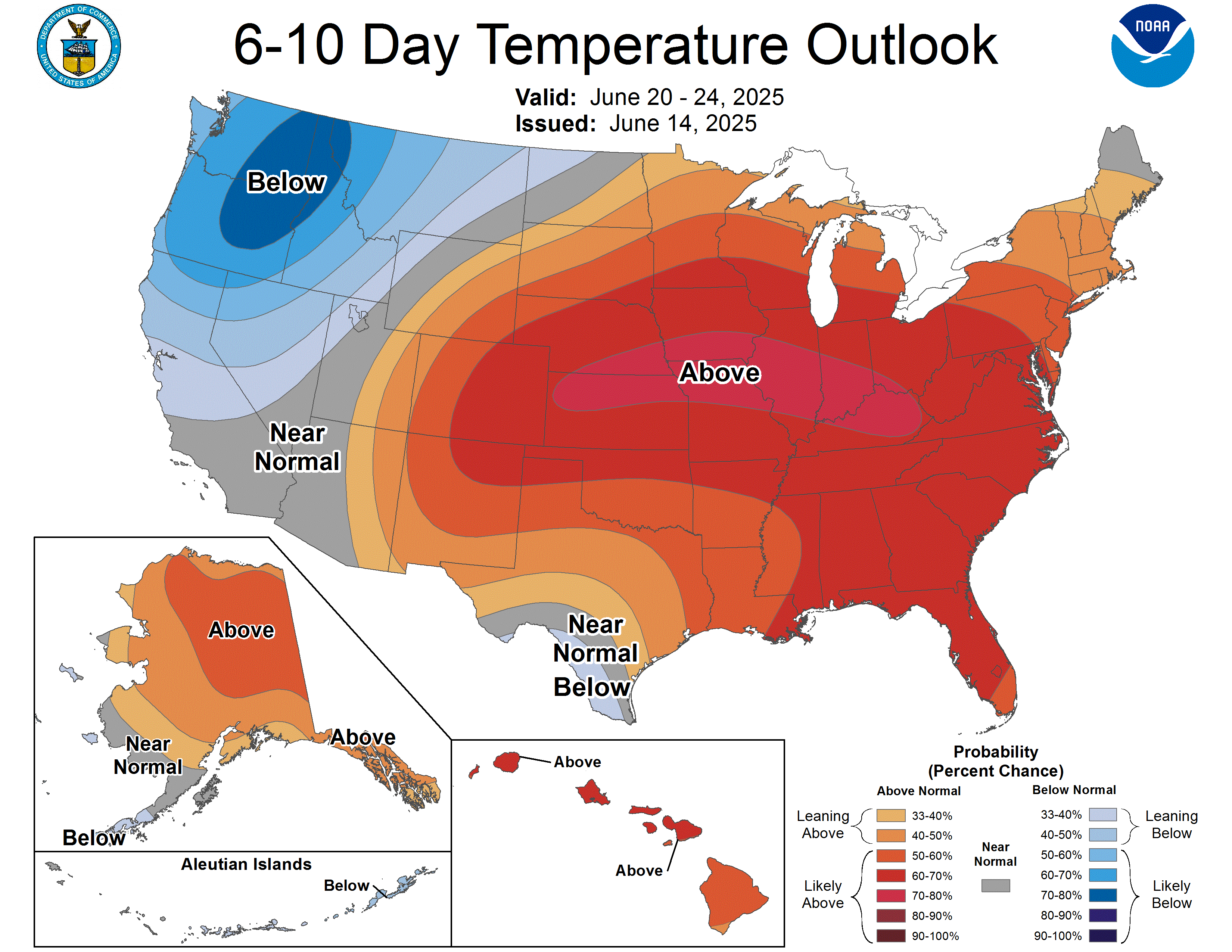
Looking ahead, the NWS Weather Prediction Center (WPC) 7-Day Quantitative Precipitation Forecast (QPF) calls for moderate-to-heavy precipitation accumulations (including heavy snowfall) ranging from 3 to 10+ inches (liquid) across the Olympic Mountains, Cascades of Oregon and Washington, Klamath Mountains, and Coast Ranges of northwestern California. Further inland, lesser accumulations (1 to 3 inches liquid) are expected in areas of the Northern Rockies, northern Great Basin, and ranges of the Intermountain West. In the South and Southeast, moderate to heavy rainfall accumulations (2 to 5 inches) are forecasted while light accumulations (generally <1 inch) are expected in eastern portions of the southern Plains, Lower Midwest, Mid-Atlantic, and the Northeast. The NWS Climate Prediction Center (CPC) 6-10 Day Outlooks call for a moderate-to-high probability of above-normal temperatures across the western two-thirds of the conterminous U.S. in an area extending from the Midwest to the West Coast, while near-normal temperatures are expected across most of the eastern tier. Conversely, below-normal temperatures are expected across Florida. In terms of precipitation, below-normal precipitation is expected across much of the southern tier of the conterminous U.S. as well as the central and southern Plains, lower Great Basin, and the central and southern Rockies. Meanwhile, above-normal precipitation is forecasted for the Pacific Northwest, northern California, northern Great Basin, northern Rockies, Mid-Atlantic, and the Northeast.
To view the 6-10 Day Precipitation Outlook Map, click here.
To view the 6-10 Day Temperature Outlook Map, click here.
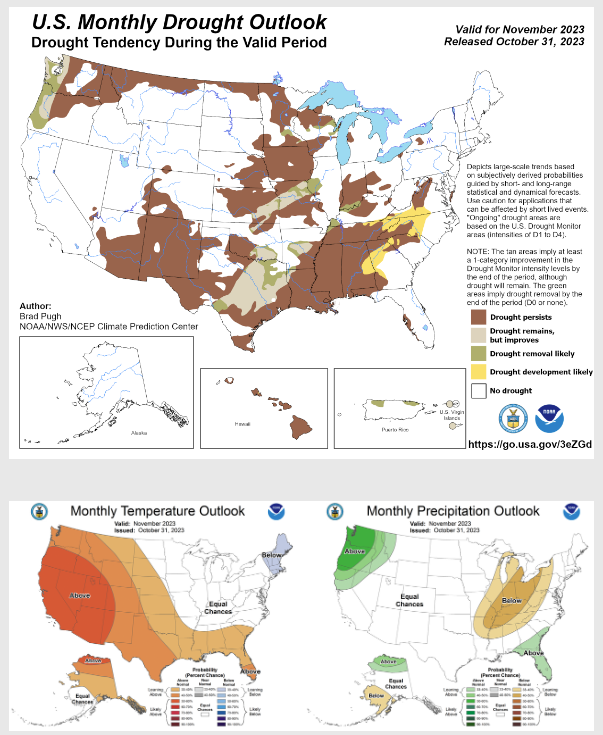
To view the Monthly Drought Outlook Map, click here.
Today the Agricultural Retailers Association (ARA) recognized a group of top performers and emerging leaders as part of its Rising Stars award program at the 2023 ARA Conference & Expo in front of more than 600 attendees.
Through participation in ARA Conference educational sessions and networking events such as the Chairman's Reception, ARA Rising Stars expanded their network to include industry thought leaders such as ARA board members and learned new approaches to apply to their work.
"Each year we look forward to recognizing a new class of Rising Stars for their impactful work in the ag retail industry," says ARA President and CEO Daren Coppock. "We hope these top performers will remain engaged with ARA as we work together to advance our industry for years to come."
The Rising Stars program, sponsored by Atticus, is a meaningful way for ARA retailer member companies to nominate emerging leaders to be recognized for their work in front of hundreds of industry professionals and to explore new ways to hone their leadership skills.
"We continue to be amazed at the caliber of professionalism and energy exhibited by the Rising Stars and this year's group did not disappoint," shares Randy Canady, Atticus founder and CEO. "We are proud to recognize these future leaders for their passion, drive, and initiative to navigate challenges as they strive to become the best."
The theme of this year's Rising Stars award program is "Next-Level Leadership: Always Navigating Forward" and many of this year's participants created videos telling their unique story. Scott Birth with Rocky Mountain Agronomics was named the winner of the video contest sponsored by Atticus. View the winning video.
As part of the program, each Rising Star also completed the ARA NAVIGATOR 360° online leadership assessment to identify their own strengths and areas to improve as it relates to their company's unique needs. Developed specifically for agricultural leaders by NuVue, LLC, this ARA tool empowers organizations to thrive in challenging times through developing effective leadership.
ARA knows that when employees are challenged and engaged in their own professional development, companies are more likely to retain a higher number of high achieving employees to tackle the challenges facing our industry. Nominations are accepted annually from late spring until early fall and are open exclusively to ARA members.
Learn more about the Rising Stars Award program in this video. View each of the videos submitted by this class of Rising Stars. See a list of the 2023 ARA Rising Stars.
Learn more about the ARA Conference & Expo on the website or on ARA's social media
Candidate filing for the Oklahoma Presidential Preferential Primary begins Monday, December 4, 2023 at 8 a.m. Candidates must file with the Secretary of the Oklahoma State Election Board December 4, 5, or 6 between the hours of 8 a.m. and 5 p.m. at the Oklahoma State Capitol in Oklahoma City, Room G-28. Oklahoma's Presidential Preferential Primary is Tuesday, March 5, 2024.
Candidates may file in person, by mail or private delivery service, or an agent may file on behalf of a candidate. The Candidate Filing Packet can be downloaded from the State Election Board website or may be obtained by contacting the State Election Board.
To be eligible to appear on the Presidential Preferential Primary ballot, all candidates must submit a signed and notarized Statement of Candidacy, accompanied by a filing fee or a petition supporting the candidacy. The official petition form and signature requirements can be found in the Candidate Filing Packet. A filing fee may be submitted in lieu of the petition. The filing fee is $5,000 and must be in the form of a cashier's check or certified check made payable to "Secretary of the State Election Board."
The list of candidates that have filed for the Presidential Preferential Primary will be posted on the State Election Board website beginning Monday, December 4.
December 4-6, 2023 is also the candidate filing period for school boards across the state. Those seeking election to a Board of Education office must file with their County Election Board. The Board of Education Candidate Filing Packet is available on the State Election Board website or may be obtained by contacting the appropriate County Election Board.
For more information about the Presidential Preferential Primary, contact the State Election Board. Candidates with questions about filing for the Board of Education should contact their County Election Board.
The National Association of State Departments of Agriculture welcomes Associate Director of Events and Member Engagement FOR IMMEDIATE RELEASE: November 30, 2023
ARLINGTON, Va. -- The National Association of State Departments of Agriculture is excited to announce the hiring of Amelia Iliohan as Associate Director of Events and Member Engagement.
As Associate Director, Iliohan will plan, manage and execute NASDA's annual conferences and assist NASDA's regional and affiliate organizations with meeting programming. Iliohan will also help strengthen NASDA's member engagement through coordinating events designed to facilitate relationship building and cross-collaboration amongst states.
"I am eager for the opportunity to join the talented and innovative team at NASDA. My love and investment in the NASDA mission stems from a rural Kentucky upbringing, while my professional experience has fostered a passion for agriculture at global scale. I am thrilled that my new role has the potential to set the tone for how NASDA members, staff and stakeholders invest in the mission of the American agriculture industry solely by their experience at one of our events. I look forward to learning from the NASDA team and its members!" Iliohan said.
Iliohan brings experience in event and project management from her former positions with the U.S. Grains Council and American Farm Bureau Federation. Iliohan also holds a bachelor's degree in agriculture from the University of Kentucky and a master's in agriculture education and communication from the University of Florida. Iliohan has received the distinguished honor of "Honorary Commissioner of Agriculture & Kentucky Colonel" for her volunteer work and has received multiple honors from her time serving Kentucky 4-H Foundation and the University of Kentucky College of Agriculture, Food & Environment Alumni organization.
NASDA is a nonpartisan, nonprofit association which represents the elected and appointed commissioners, secretaries and directors of the departments of agriculture in all fifty states and four U.S. territories. NASDA grows and enhances American food and agricultural communities through policy, partnerships and public engagement. To learn more about NASDA, please visit nasda.org.
Oklahoma Farm Bureau members ages 35-55 are encouraged to attend the OKFB Generation Bridge Conference Dec. 8-9 at the Stoney Creek Hotel in Broken Arrow after the Tulsa Farm Show.
The conference will provide a chance for farmers and ranchers across the state to network with fellow agriculturalists, grow their professional and leadership skills and learn more about the industry.
Generation Bridge serves as a stepping stone after Young Farmers and Ranchers with an opportunity for members to get involved in OKFB beyond the county level as they work to develop connections across the state, expand their knowledge of Farm Bureau and create lasting memories.
Friday will feature a group dinner and panel beginning at 6 p.m. Saturday's program will begin at 8:30 a.m. and wrap up with a lunch that will conclude around 1:30 p.m. Additional schedule details will be released soon.
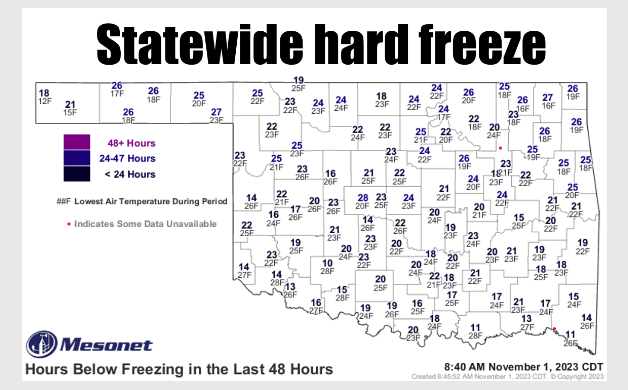
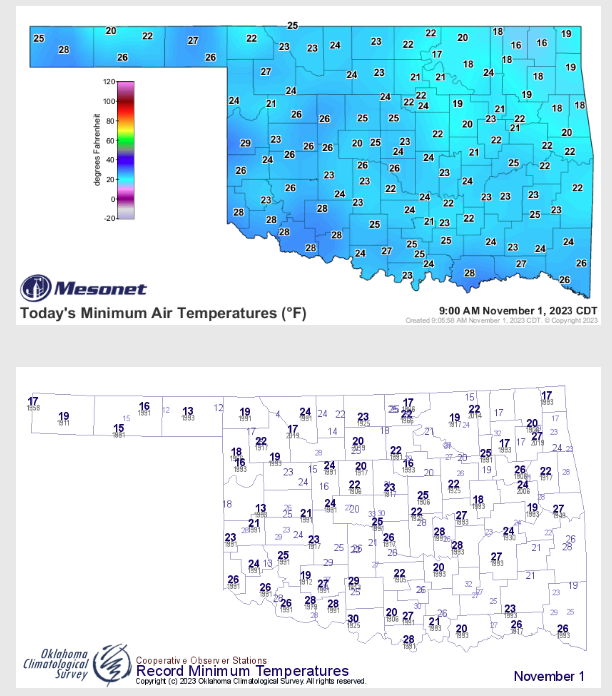
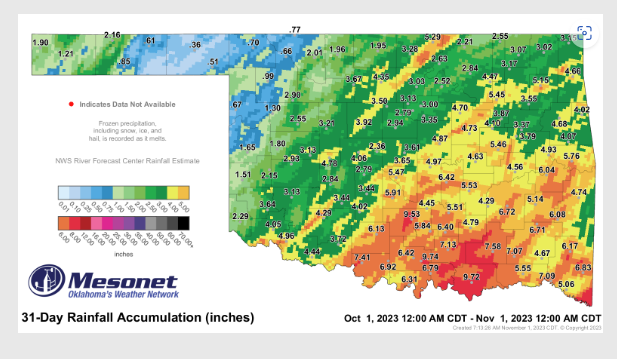
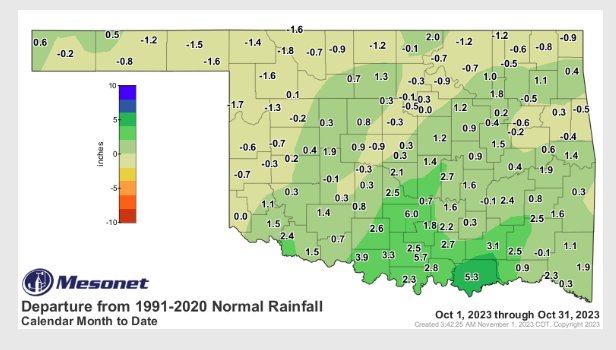
Well, November rain is not common in Oklahoma; we will still take the rain anytime we can get it! According to State Climatologist Gary McManus, we could always use more rain in November, "While we're thankful for any precip that falls, we sure could use more. (Hence the lump of coal) And that's the only precip I see in the forecast for the next 7-10 days...whichever comes first."
While we haven't seen much of a wintery mix in Most of Oklahoma, Northwest oklahoa has seen some enhanced snow fall so far, "They are getting a jump start on their "normal" seasonal snowfall totals with 6-8 inches already this year." Says McManus. Buffalo saw the most snow amounts at 7.8".
McManus says we will see a brief cool-down for the rest of today and tomorrow because of the clouds and rain. Rainfall amounts could be over an inch in some places while leaving out the Panhandle again. An isolated severe storm could also be possible today with the threat of quarter-size hail.
Listen to Reagan Calk talk with Robert White about the ethanol industry.
Associate Farm Editor Reagan Calk is talking with the Vice President of Industry Relations at the Renewable Fuels Association, Robert White, about the ethanol industry.
Ethanol has many benefits, White explained, as it is a clean burning fuel and is low carbon.
"You have less emissions, and it is a renewable product we can make," White said. "It is not a limited supply. At the end of the day, it is a domestic product. It is something we make here in the United States. As we watch the turmoil around the globe, it is more important to have energy security and energy independence, especially when it comes to our energy needs."
With Carbon emissions becoming a bigger topic of discussion, White said Ethanol has a place at the table when it comes to reducing those emissions because it is a low-carbon fuel.
"Unless it says otherwise, everything you are using at the pump today is ten percent ethanol," White said. "There are opportunities to move that to E15, which is 15 percent ethanol."
E15 has been approved for all vehicles made after 2001 and flexible fuel vehicles, White said, which is almost 97 percent of all vehicles on the road today.
"What we are seeing is more and more people adopting E15 because it is a higher-octane fuel, at a lower cost that any car can use," White said.
After E15, White said, comes E85, which is 85 percent ethanol and can be used in flexible fuel vehicles only. The cost of E85, White added, is usually between 20 and 30 percent less than gasoline.
When the EPA approved E15, White said it was placed into a different approval slot, separating it from E10 in the summer months. Because of this, White said the marketing opportunities for E15 were very limited.
"For example, in Oklahoma, from June 1 to September 15, you technically could not sell E15 because of the base gasoline, and the way the rules were written would preclude it," White said. "What is ironic is E15 has lower emissions than E10, so the agency that is in charge of reducing our air quality concerns is precluding a cleaner fuel from being in the marketplace."
White said there is legislation being worked on to correct this issue.
One piece of legislation White said he is pleased with is the Flex Fuel Fairness Act which is focused on putting flexible fuel vehicles back on the market.
"It really puts flex-fuel vehicles back into the production line at the automakers," White said. "The reason they have gone fully EV (electric vehicle) in many cases is because they are being paid to do it. They are getting fuel economy credits, they are getting tax credits, and they are getting other incentives from the federal government, and flex-fuel vehicles used to enjoy some of that fuel economy credit."
It is going to take a while for electric vehicles to gain enough traction to increase usability, White said, so in the meantime, a lower-carbon fuel could be utilized through flexible fuel vehicles.
Yesterday, Iowa Attorney General Brenna Bird filed a motion for summary judgment regarding the U.S. Environmental Protection Agency (EPA)'s failure to respond to the opt-out request filed by Iowa and six other midwestern states that would allow them to sell E15—a fuel made with 15% bioethanol—year-round in their states. Growth Energy CEO Emily Skor issued the following statement in response:
"Biofuels leaders in Iowa, Nebraska, and other states have been more than patient. For more than a year past the statutory deadline they've waited for EPA to follow the law and allow them to make E15 available in their states year-round.
"They've been forced to return to court to compel EPA to do something it was required to have done by July 2022. What's more, in its continued decision to illegally delay acting on the governors' request, EPA has cited fuel distribution concerns that are greatly overstated, and can likely be attributed to the oil industry using scare tactics to prevent consumers from getting greater access to a fuel that costs less, burns cleaner, and displaces their products with every gallon.
"E15 is a low-carbon fuel that saves consumers money. It's better for the air and it's better for the rural economy. While it should never have come to this, today the entire biofuels industry, the broader bioeconomy, and the driving public of the Midwest owes Iowa and Nebraska a debt of gratitude for seeking to provide year-round access to E15."
Background
Earlier this year, the governors of several midwestern states sent letters to EPA calling for regulatory parity between E10 (standard gasoline) and E15 (a blend with 15% bioethanol) in their states through Section 211(h)(5) of the Clean Air Act, accompanied by research illustrating the benefits of E15 to air quality. After acknowledging receipt of the governors' request, EPA proposed a rule in March 2023 to make the necessary regulatory changes to implement year-round sale of E15 in those states beginning for the summer of 2024. In August 2023, the petitioning states filed suit calling on the EPA to actually finalize its proposed rule governing the state opt-out waiver that would allow retailers in their states to sell E15 year-round. Today's filing for summary judgment is a part of that case.
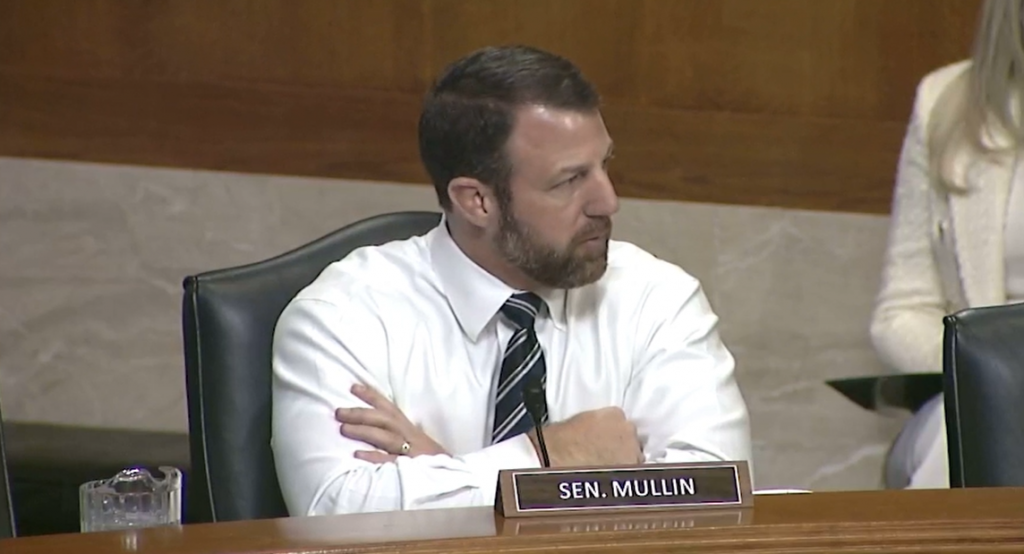
This week, the National Cattlemen's Beef Association (NCBA) hailed the introduction of the Senate version of the Black Vulture Relief Act introduced by Sen. Markwayne Mullin (R-OK), a companion bill to legislation introduced in the House of Representatives earlier this year that protects cattle producers from the devastating impacts of black vulture depredation.
"Black vultures are particularly nasty predators, and their attacks can be financially devastating to small, family-owned cattle operations," said NCBA Policy Division Chair Gene Copenhaver, a Virginia cattle producer. "The current system prevents cattle producers from effectively protecting their herd. Not only that, but black vultures are also an abundant species—millions-strong—that do not need federal protection. That's why we urgently need legislation like the Black Vulture Relief Act. NCBA is extremely appreciative of Sen. Mullin's work alongside Reps. John Rose (R-TN) and Darren Soto (D-FL) to stand up for the needs of cattle producers."
Earlier in the year, the House Natural Resources Water, Wildlife and Fisheries Subcommittee heard testimony from a Missouri cattle producer and NCBA member who had personally experienced attacks on his herd from black vultures.
"Black vultures play a role in the ecosystem, and cattle producers have no desire to eradicate the species, but to continue managing them under such a restrictive system is ludicrous. The species is abundant across the continent, and no longer a conservation concern," said cattle producer Charlie Besher, chairman of NCBA's Property Rights and Environmental Management Committee. "These birds are extremely vicious predators, and their attacks on cattle are devastating, both emotionally and financially."
The Black Vulture Relief Act is bipartisan legislation that would allow cattle producers to take vultures without a permit, when there is an immediate need to protect their livestock from injury or death. After 50 years of federal protections, black vultures now number 190 million strong and are an abundant species across the country. The U.S. Fish and Wildlife currently issues black vulture depredation permits to states, which issue sub-permits to producers allowing take of only three birds per year. With black vultures often attacking in flocks as large as 50, the current permits are insufficient for allowing producers to protect their livestock. Black vulture attacks are particularly vicious with the birds usually targeting calves hours or even minutes after birth.
"Simply put, current rules and laws are outdated regarding the black vulture. Oklahoma cattle ranchers need to be able to protect their livestock from predators and not be limited by these outdated regulations," said Oklahoma Cattlemen's Association Executive Vice President Michael Kelsey. "Thanks to Senator Mullin, a cattle producer himself who knows the challenges of cattle ranching, for introducing a piece of legislation that would achieve a reasonable update to federal law and allow cattle ranchers the ability to protect their livestock in harmony with the environment and wildlife resources."
The Black Vulture Relief Act is also supported by numerous NCBA state affiliates.
Look for areas that are bare or underproducing. Then choose those spots for hay feeding to add nutrients to the soil.
In a regenerative mindset, oftentimes we think that one goal is to manage grazing in order to not use hay at all. Yet, just like any other tool that we have in our toolbox, hay feeding can be a useful strategy, especially if you're trying to rebuild soil health in areas that are extremely deficient.
There are several reasons to bale graze while keeping a focus on soil health. Typically, where we've seen it work well is when, even though we probably would prefer to feed as little hay as possible, we use our grazing plan to pre-identify locations where bale grazing can do the most good for our soil health and forage production. Then, if and when inclement weather or other factors call for hay feeding, we know our spots in advance and can even pre-place the bales and fence them off until needed.
CHOOSING SITES FOR BALE GRAZING / HAY FEEDING
What we're typically looking for is a site that is low in nutrients and could use the organic matter and nutrients that would be deposited right there where the hay would be fed. Where you get your biggest bang for your buck is on sites that should be productive, but for whatever reason, they've been neglected or they are just so far depleted of nutrients that there's not much production.
Another type of area to target, especially if you ranch where you could have wet conditions during the wintertime, would be a well-drained location, perhaps a sandy or rockier soil that would hold up better under those type of conditions. They may not be overly productive, but they tend to have more bare ground, and you know that they will hold the cattle up and let you get in and out of the area during wet spells. It works out nicely to build those areas up while you're feeding your cattle.
If it's a really dry year, we can use bale grazing to encourage animals to get out and utilize parts of pastures that normally would escape grazing, perhaps farther away from water, where the cattle don't want to roam quite so far out during the growing season.
One more place to plan bale grazing is a location where you want to be able to keep a closer eye on bred heifers or growing animals that need higher nutrition and a little extra attention during inclement weather or less-than-optimal grazing conditions.
PLANNING AND PLACING HAY IN ADVANCE
If you know that you're going to be feeding hay based on your growing season, or you want to build up an area, or just because you know inclement weather's going to get to you at some point, plan ahead and even place hay ahead of the winter feeding season. This is called "in-place" hay feeding. Don't wait until the last minute to do it.
Once you've decided where you need and want to place hay, and you've either baled it at the optimal time during the growing season or acquired it, go ahead and set your feeding area up. Just know that you're going to avoid using that area until the winter feeding season.
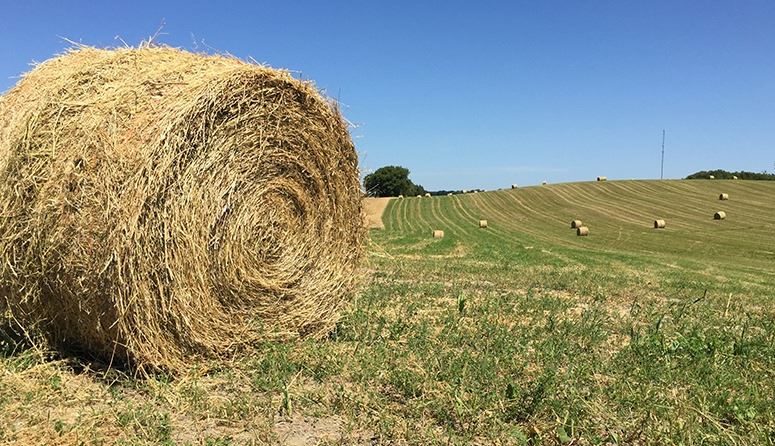
We oftentimes go ahead and space large round bales "in place," typically 30 to 40 feet apart in a checkerboard manner on the target area, and then use temporary electric fences to allocate whatever hay that we want to utilize for a day or two of bale grazing at a time, when the time comes.
U.S. Senator Debbie Stabenow (D-MI), Chairwoman of the Senate Committee on Agriculture, Nutrition, and Forestry, today applauded the first round of funding under the U.S. Department of Agriculture's (USDA) new Regional Agriculture Promotion Program (RAPP). The program will provide $300 million in its first year to support trade promotion for American farmers and businesses. The funding is part of a $1.2 billion investment in trade promotion through the Commodity Credit Corporation (CCC) made at the request of Stabenow and Ranking Member John Boozman (R-AR). It builds upon existing USDA trade promotion programs that continue to support existing activities and markets.
"I am glad to see that USDA is following through on its commitment to invest in strengthening trade opportunities, increase revenue streams, and help American farmers thrive in a global economy. Farmers have been clear that this is one of their top priorities. Today's announcement will develop new markets for American agriculture and put American-grown food on tables around the world. I look forward to continuing to work with the Administration and farmers on this exciting new program that will effectively double trade promotion investments."
In October, USDA announced that it will use its authorities under the CCC to provide $2.3 billion to invest in trade promotion and in-kind international food assistance, both of which support American farmers and producers.
On Wednesday, the Rural & Agriculture Council of America (RACA) and six other organizations representing rural and agricultural interests wrote a letter to Congressional leaders urging extension of several tax provisions that are set to expire or have already expired.
In the letter, the groups state, "Agricultural businesses, of which 98 percent are operated by individuals or families, rely on investments in the best equipment, innovative technologies, and latest research to sustain this level of economic output. Extending the research and development tax incentives will continue to drive innovation in the agricultural sector and maintain a resilient and secure national food supply."
Today the Agricultural Retailers Association (ARA) concluded its first full day of the 2023 ARA Conference & Expo with more than 600 ag retail industry professionals in attendance.
The opening general session keynote speaker and generational expert Kim Lear with Inlay Insights offered a closer look into the next generation of ag retail's workforce and how to lead multigenerational teams to thrive.
"Agriculture, like any other industry, is experiencing a shift in the workplace as millennials transition from entry-level positions to management, Gen X steps into the c-suite, and Gen Z enters with a fresh perspective," says ARA President and CEO Daren Coppock. "Kim shared new communication tactics to bridge the generational gap and build resilient teams."
Coppock then took the stage to deliver his annual President's Report to share the top concerns he hears from ag retailers across the country, to celebrate our industry's policy wins this year, and to peer into what the future of ag retail holds as it relates to artificial intelligence, people, regulatory overreach, risk management and more.
Then, author and coach Jones Loflin delivered his keynote address with solutions to taking back control f your day instead of letting it control you.
"As an ag retailer, I know what it's like to feel as if there are never enough hours in a day to get everything done," says ARA Board Chair Ian McGregor with The McGregor Company. "I look forward to getting back to work and implementing what I've learned today and sharing it with my team."
Later in the afternoon, attendees participated in two breakout sessions. The first was on disaster recovery, planning and prevention. Meherrin Fertilizer President Mike Carroll told his story of when the Winston Weaver fertilizer plant burned earlier this year and the comprehensive effort needed to manage the response. From cleanup to business continuity, Carroll shared lessons learned to help attendees refine their own crisis management plans.
"Stop Letting Your Recruiting Challenges Create Retention Pain" was the second breakout session of the day led by Erin Mies and Kristen Ireland with People Spark Consulting. This interactive session dug deep into how to adjust work to both increase retention and engagement within your team while reducing recruitment headaches.
The day featured a tour of Winter Park and concludes with another networking reception in the Expo Hall to encourage relationship building across the industry and to showcase the leading products, services and programs.
Learn more about the ARA Conference & Expo on the website or on ARA's social media.
A valuable member of the Concept AgriTek sales team, District Sales Manager, Craig Barriball assumed the role of Key Account Manager on November 8, 2023.
Barriall's transition supports Concept AgriTek's ongoing commitment to the MACC membership, and places him in a role that will provide dedicated service to MACC members.
A Minnesota native, Barriball is a graduate of Pennsylvania State University and has spent his career serving the agriculture and turf industries. The experience has allowed him to build a wealth of soil health knowledge that he leverages to help farmers get the most from the soils they farm. Over the past two years, Barriball has served Minnesota, South Dakota, Wisconsin, and north central Iowa in his District Sales Manager role and will continue to provide the level of service Concept AgriTek is known for going forward.
"I truly enjoy what I get to do every day. Helping farmers find what works to get them to their goals is rewarding and I see that satisfaction increasing exponentially with this new role," Barriball says. "The MACC group is made up of some of the most progressive farmers in the country and to help that group grow and succeed will be rewarding."
A self-described life-long learner, Barriball says that Concept AgriTek's continued research and commitment to improving soil and plant health, yield and ROI opportunities is what initially attracted him to the company, a sentiment Concept AgriTek President Daniel Hensley shares resonates throughout the Concept AgriTek culture.
"We are continually working to push the limits of plant and soil health through agronomy, biology, and chemistry, across different growing environments and challenges. Our team is made up of farmers and agronomists who respect the cost of what it takes to put a crop in the ground and true ROI, which makes us a good partner for the MACC group," Hensley says. "Our support of the MACC group, exemplified through this new role, was a perfect fit for Craig. Both the relationships he holds within that group and his commitment to doing what's right for the farmer, will make him successful in his new role." To learn more about Concept AgriTek, visit www.conceptagritek.com.
The United States Department of Agriculture's Risk Management Agency (USDA RMA) released several important updates to sorghum crop insurance that will continue to expand sorghum production and empower farmers across the nation. Effective in 2024, the price election factor for sorghum will be at its highest level ever relative to corn; simplifications made to the sorghum silage policy will offer more support to sorghum farmers; and a key barrier to insuring irrigated double crop sorghum was removed in certain areas.
The sorghum price election is determined by applying a multiplier to the corn crop insurance price. For 2024, this multiplier is 100.2%, the highest level ever for sorghum and surpassing corn for the first time in history.
"As sorghum prices continue to strengthen, this development is poised to bring substantial benefits to sorghum farmers by enhancing the financial protection of their sorghum crop," NSP CEO Tim Lust said. "The higher sorghum crop insurance price will serve as a significant incentive for growers to expand grain sorghum production, ultimately boosting the sorghum industry's vitality and profitability."
Recognizing the substantial growth in irrigated sorghum silage and forage acreage on the High Plains and around the U.S., RMA is simplifying the process for insuring irrigated sorghum silage. The previous requirement of having two years of history growing irrigated silage as a condition of insuring irrigated sorghum silage under the sorghum silage policy has been eliminated in New Mexico, Oklahoma and Texas.
This change streamlines the transition for farmers who primarily have a history of growing and insuring irrigated grain. It allows them to immediately access crop insurance for irrigated sorghum silage under the sorghum silage policy, eliminating unnecessary barriers and ensuring they have the coverage they need. Similarly, the arduous written agreement process for irrigated double crop sorghum where it was required in 2023 has been removed for 2024, eliminating more barriers to growing sorghum following wheat.
"These updates to sorghum crop insurance represent continued improvements for the sorghum industry," NSP Chairman Craig Meeker said, "and while we recognize they are significant, we will continue to work with RMA to improve sorghum insurance for our members."
Farmers are encouraged to reach out to their local crop insurance agents for further details on these exciting updates and how they can benefit from the improved sorghum crop insurance options.
For more information, please visit USDA RMA or contact the National Sorghum Producers at 806-749-3478.
On Aug. 23, USDA began hearing testimony on proposals to amend the Federal Milk Marketing Order system. Now reconvening in week nine of testimony, 21 submitted proposals continue to be discussed and examined by USDA and dairy industry stakeholders. Testimony on category five, which covers Class I and II differentials, is currently being heard. Many dairy and farmer organizations argue that the current values used in Class I milk differentials are long overdue for an update based on changes in milk market production characteristics and changes in delivery costs, and Farm Bureau has taken a lead in advocating for raising the Class II milk differential.
Background
The Federal Milk Marketing Order system establishes provisions under which dairy processors purchase milk from dairy farmers supplying specific marketing areas. One of the primary functions of the federal order structure is the calculation of minimum uniform prices paid to farmers. USDA does this by attempting to calculate the value of raw milk used in a dairy product based on the value the dairy product garners in the marketplace (its end use).
Currently, the FMMO system categorizes milk in one of four classes, based on what dairy products it is used to make. Each class of product has a different value in the market; the system is intended to ensure that the price dairy product manufacturers pay reflects the final market value of those goods. The four class prices are as follows: Class I – milk used for beverages; Class II – milk used in soft products like ice cream, sour cream and cottage cheese; Class III – milk used in hard cheese and spreadable cheeses; and Class IV – milk used to produce butter or powdered dairy products. USDA uses the value of sold commodity dairy products and works backward to determine the value of raw milk in those products. The primary reason for using a classified pricing system is that it promotes raw milk price equity among handlers and farmers. The intention is to ensure handlers in a similar location and who produce similar products pay the same minimum classified price for the raw milk and that farmers producing milk in the same area receive the same price (i.e., uniform pricing). Class price formulas include various numerical factors meant to best derive the value of the corresponding milk, one category of which is differentials.
Class I Differentials
Class I location differentials, fixed values currently ranging from $1.60 per hundredweight to $6 per hundredweight, are a vital element of the Class I beverage milk price formula. Every U.S. county is assigned a Class I location differential based on the supply and demand characteristics of the region. Perishability concerns have historically steered milk marketing dynamics and continue to play a role in how efficiently milk must be hauled from the farm to a processing site. To support production and marketing in milk-deficit regions, location differentials are added to the base value of Class I milk to determine the total class value. The higher the Class I differential, the higher the usual deficit of fluid milk availability (and associated cost of transportation) in a region compared to local demand from nearby cities or processing capacity. For example, in counties located in the southern tip of Florida, where resident populations and corresponding dairy demand are very high, local production is comparatively low, and available supplemental supplies are relatively far away, current Class I differentials range between $5.51 and $6.00 per hundredweight. In the upper Midwest, where local production is very high and residential demand comparatively lower, current Class I differentials range between $1.61 and $2.00 per hundredweight. In parts of the upper West (spanning from western Oregon to Northwest Minnesota), central California, Nevada and Utah where local residential demand (and population) is extremely low and local production is often extremely high, current Class I differentials (for milk participating in an order) are $1.60 per hundredweight. The distribution of differentials is meant to incentivize movement of milk to where it is demanded and assist in maintaining regional production capacity.
The current Class I differentials were established in 1998 with only a minor update in 2008 to the Appalachian, Florida and Southeast orders. Those changes were based on a linear programming transshipment model of milk supply and demand. The U.S. Dairy Sector Simulator model from Cornell University estimated shadow values at U.S. milk processing locations. Shadow values effectively represent the cost to the entire transportation system of supplying an additional hundredweight of milk at a milk processing location and were the basis for the current Class I location adjustments. The model takes the total milk supply, plant locations and product mix, and consumer demand as observed for an individual month. The authors note the model also "indicates how to move milk to plants via the existing road network and distributes the finished products to consumers also according to the road network." In this manner, fuel costs and the basic per-mile cost of hauling milk are two of the key original determinants of Class I differentials, though differentials are never meant to completely cover the cost of transporting milk.
Many of these factors used to estimate current differentials have since changed, to the point that current differentials no longer reflect the cost of ensuring an adequate supply of milk to many plants. This results in disorderly marketing of milk, a condition the FMMO system is fundamentally meant to prevent. For example, policy challenges have reduced the number of hours truck drivers can work, increasing the number of drivers needed to move the same quantity of milk and the corresponding money needed to pay them. Changes in weight limits, increases in value and prevalence of road tolls, and the increased cost of vehicles, maintenance and repair have further pressured transportation costs. The National Milk Producers Federation (NMPF) noted that the cost of hauling milk has almost tripled since the majority of current Class I differentials were established. Hauling costs in the late 1990s and early 2000s were equivalent to approximately $0.347 to $0.388 per hundredweight per 100 miles. Today that cost has increased to between 92 cents to $1 per hundredweight. The Federal Milk Market Administrator's Office for the Upper Midwest Marketing Area released a staff paper earlier this year reviewing hauling charges. Since 2012, May average hauling charges have nearly doubled from $0.3328 per hundredweight to $0.6177 per hundredweight in 2022. During the same period the May fuel price per gallon increased from $3.88 to $5.32 – up 37%.
Hauling charge increases of this magnitude in a region with generally reliable processing capacity and milk freight infrastructure likely signal even higher increases in deficit regions. One interesting example, in the Florida Order (the order most distant from reserve milk supply), dairy farmers used to benefit from regular backhauls (return trip) of bulk concentrated orange juice. A diminishing citrus industry across the state has mostly eliminated the availability of these backhauls, drastically reducing transportation availability and increasing costs for dairy suppliers. Meanwhile, the migration of residents from northeastern states into southeastern states and an increase in suburban sprawl have further increased demand for products in supply-deficit areas. These conditions have posed a true threat to the availability of Class I milk in many federal orders, a threat differentials are meant to neutralize.
NMPF has proposed increases to Class I differentials in all counties. The basis of their proposed increases follows the previous spatial modeling approach completed by Cornell University but updated by the University of Wisconsin using 2021 model input data. Their proposal notes that the model was greatly expanded to include additional supply and demand points and more point-to-point road mileage options. The calculated values were used as a starting point which NMPF adjusted with a "variety of real-world milk movement considerations." The new Class I surface proposal by NMPF is displayed in Figure 3. You will notice the general geographic distribution of differentials from high to low parallels that of the current Class I map.
The average proposed increase in differential is $1.50 per hundredweight with a range of plus 25 cents to plus $2.70 per hundredweight. The smallest proposed increases occur in northwest New Mexico, central Colorado and northern Idaho, while the largest proposed increases occur in Appalachia such as central West Virginia as well as parts of the Southeast. Figure 4 displays the differences between the current Class I differentials and proposed NMPF differentials. Note there is a positive increase across the board, counties shaded red have a smaller increase and counties shaded green have a larger increase. NMPF will testify in support of the general increase, recognizing that their adjustments from the model are a reasonable attempt to bring the model results into alignment with practical needs, but trusting in a fair and effective decision by the staff at USDA's Agricultural Marketing Service, who will make recommendations based on all of the testimony provided by stakeholders. In other words, final differential values will likely vary from those displayed above.
The American Farm Bureau Federation supports updating Class I differentials. In expressing support for NMPF's proposal, AFBF has also indicated the need for a review of the anecdotal adjustments made to University of Wisconsin model results. In the additional proposals stage of the current Federal Milk Marketing Order hearing process, AFBF submitted a proposal to implement seasonal Class I differentials. Just as there are geographic differences in the value of milk, there are seasonal differences. In many markets, and particularly in the southeastern markets, the location value of milk can vary enormously from season to season. Milk supplies can be like an ocean, ebbing and flowing depending on the month. Class I prices that are too high for the flush season can draw too much milk into a high Class I region, without necessarily serving the market at all. Similarly, Class I prices that are too low in late summer or early spring can fail to attract enough milk to meet the basic needs of a market. Seasonal Class I differentials can incentivize milk movement when and where it is actually appropriate, reduce conditions where milk is pooled on other orders and better supply short markets by setting the right price in the right place at the right time.
Seasonal Class I differential pricing has been discussed for decades, the appetite to consider it further has, perhaps, been held back by difficulty in establishing a formula. USDA declined to further consider AFBF's proposal in the current hearing process, citing a lack of developed process at this time. However, the significant challenges of meeting milk supply needs in the late summer and fall could support the use of the economic model results for the fall.
Other groups, such as the Milk Innovation Group, which represents several large milk processors, are advocating for a dramatic reduction in Class I differentials, opposing the sentiment of many farmer-led groups. Notably, these advocates have cited the general increases in costs as a reason to increase make allowance formula factors but they would not give the same scrutiny to cost increases that impact Class I differential values.
Class II Differential
The formula used to calculate Class II prices, which, as noted above, includes milk used in soft products like ice cream, cottage cheese and sour cream, includes a Class II skim milk differential of 70 cents per hundredweight. This factor is added to the advanced Class IV price for both Class II skim milk and butterfat, as shown here.
This current Class II differential was developed during order reform, at the turn of the century, to reflect the cost of drying and rewetting milk. The assumption at the time was that many Class II products could be manufactured by the drying and rewetting of Class IV milk, a condition that could lead to uneconomic movement and processing of milk, and the loss of Class II revenue to producers, if the Class II differential was too high. To help disincentivize Class IV milk from being used for Class II purposes, the costs associated with the drying and rewetting process were estimated and included (at 70 cents per hundredweight) to reflect the higher value of Class II milk. In other words, the price processors would pay for Class II milk would be increased to a point that helps maintain the availability of Class II milk. Given the changes in processing expenses acknowledged by many of the considered proposals, including the Class I differential proposals discussed above, AFBF proposed to update the Class II differential to better align current class prices as originally intended.
Some processors have argued that powder is not rewetted for most uses, so the minimum cost of rewetting is not an appropriate consideration for such a calculation. For this reason, AFBF proposed to include only the cost of drying in setting the Class II differential. AFBF supports cost-based formula factors such as yield factors, make allowances and differentials being based on mandatory and audited surveys of processors as described here. Since such a survey is not yet available, AFBF contends the differential can be updated using the current make allowance for nonfat dry milk, together with the current nonfat solids yield factor and updated butterfat and nonfat solids tests for milk in the federal order system. The cost of drying skim milk can then be calculated as:
In this case, the Class II differential would be increased from 70 cents to $1.56 with the intention that any future increases in the nonfat dry milk make allowance should result in a corresponding increase in the Class II differential. Setting the Class II differential with the make allowance for Class IV skim milk could be acknowledged as a fair way to meet the purpose of incenting the availability of Class II milk in the marketplace. The impact of this change would increase the minimum order value of the Class II skim milk price by 86 cents per hundredweight, increasing the average pool value in every market and reducing the likelihood of negative producer price differentials (PPDs) and associated de-pooling. There were 14.2 billion pounds of Class II milk pooled in 2022; therefore, in a static analysis, the value of pooled milk would be increased by $122 million. The $1.56 differential is lower than the lowest current Class I differential ($1.60), so, combined with a return to the "higher-of" Class I price formula, the proposed change would maintain Class I prices above Class II every month. The comparison between current federal order pricing regulations, which include advanced pricing average-of +74 cents for Class I and a 70 cent differential for Class II, and federal order pricing regulations under a system of advanced higher-of pricing and a $1.56 Class II differential are displayed in figures 5 and 6, respectively. Please note, the Class I price series in both figures include the current lowest Class I differential of $1.60. Combined, the adjustments ensure Class I remains the highest value while keeping Class II and Class IV prices unentangled, better supporting orderly marketing conditions and reducing incentives for de-pooling and associated negative PPDs.
Summary
The Federal Milk Marketing Order system establishes provisions under which dairy processors purchase milk from dairy farmers supplying specific marketing areas. Two of the primary functions of the federal order structure are to provide a calculation for minimum uniform prices paid to farmers and to incent orderly marketing of milk. Recent price conditions have revealed disorderly marketing is present when producers do not receive uniform prices because of outdated formula factors and frequent de-pooling. The current Class I and II differential values contribute to disorderly market conditions and the frequency and magnitude of de-pooling. Given the rising costs facing producers and processors alike, increasing both Class I and II differentials is necessary to modernize the federal order system in a way that farmers are paid fairly and accurately and in a manner that supports a reliable and sufficient supply of milk for consumers across the nation.
Listen to KC Sheperd talk with Charles Baron about the Famers Business Network.
Recently, Farm Director KC Sheperd had the chance to visit with the Co-Founder of the Farmers Business Network, Charles Baron, about how FBN can help farmers increase their profits and more.
"FBN is a network of over 75,000 farms across the U.S. and Canada, and a little bit in Brazil," Baron said. "We effectively help growers get more information, more power, and more transparency in the market by being online so they can connect with one another through our community or analytics. They can buy inputs online, get loans through FBN, do their grain marketing, get sustainability premiums..."
Baron was also able to give an outlook on the chemical market. Baron said chemical prices skyrocketed in 2021 and 2022, then came down at a fast rate in 2023.
"There has been tremendous volatility in the chemical market in the last couple of years," Baron said. "It really started with Covid, and then the various impacts the supply chain ran into with the ports shut down, manufacturing shut down in China, the hurricanes that hit the United States, which took plants offline in 2021..."
While chemical prices were still at historical highs in 2023, Baron said producers had to learn to find balance in that area. Now, Baron said after some capacity was built into the system, as more products came into the market, prices have come down dramatically, putting some of the larger products at historic lows.
"This is sort of now starting to return to a normal pricing season where you are going to see prices probably increase as you continue to get closer and closer to planting, so it is a perfectly good time to purchase," Baron said. "We have great prices in FBN right now, and we also have 'rate lock' where you can lock in low-interest financing on your purchases."
Supply is still good, Baron said, because, in some cases, there was an overstocking of chemicals.
FBN has recently released a new way to help producers manage chemical planting. As the process is tedious and takes weeks of work, Baron said FBN's technology, AcrePlan, handles the process within minutes.
Baron said it is free to be a member at FBN, as the whole mix of American agriculture is included.
For more information, Baron said to visit FBN.com.
Ray Starling is author of the book "Farmers Versus Foodies", in which he shares his thoughts on our food value chain and the future of farming and ranching in the United States and beyond. The Book is an Amazon best-seller and has been nominated for a Pulitzer Prize. Starling is a North-Carolina-based attorney, where he works as general counsel of the NC Chamber. He grew up on a Century Family Farm in southeastern North Carolina and credits that experience as having more to do with his career path than any other influence or opportunity. His parents continue to farm, as does his eldest brother.
Oklahoma Farm Bureau invites OKFB members and agriculture community friends to attend the 2023 OKFB Ag Defense Fundraiser at the Mayo Hotel in Tulsa Saturday, Dec. 9.
The event begins with a cocktail hour at 6 p.m. with a dinner beginning at 7 p.m. in the Mayo Hotel Parlor Room featuring author Ray Starling, who will discuss his book "Farmers Versus Foodies," which looks into Modern Food Systems and the future of farming.
After dinner, Starling will be available for a VIP meet-and-great for $50 per person where attendees can visit with the author and get a signed copy of his book.
Tickets for the ag defense fundraiser are $250 per person. Table sponsorships of $2,500 are also available, which includes eight seats and two books autographed by Starling. Payment can be made at the door, or Farm Bureau members can be choose to be invoiced for the amount after the event.
Space for the fundraiser is limited to 90 people. Individuals, groups or organizations wishing to attend must RSVP using the form below.
Funds raised during the evening will support involvement in the political sphere to defend production agriculture from threats that seek to limit the ability of Oklahoma's farm and ranch families to produce food, fiber and fuel in our state.
The U.S. Department of Agriculture (USDA) announced the appointment of 12 members, 12 alternate members, and two advisors to serve on The Cotton Board. All appointees will serve three-year terms starting January 1, 2024, through Dec. 31, 2026.
Newly appointed members: Matthew Cauzza, Producer – CA; Kent Smith, Producer – NC; Michael Popp, Producer – TX; and Kirk Smithwick, Importer – AL. Newly appointed alternate members: Doug Cardoza, Producer – CA; Kim K. LeQuire, Producer – NC; Miranda Barrett, Producer – TX; Kelly Gupta, Importer – TX; and Amanda Jean Wils, Importer – WI. Reappointed members: Pace Hindsley, Producer – AR; William B. Guthrie, Producer – LA; Thomas Hayes, Producer – MS; Sigi Valverde, Producer – TX; Chuck Ward, Importer – NC; Scott Johnson, Importer – CA; Akiko Inui, Importer – NY; and Laurie Sutandar, Importer – OH. Reappointed alternate members: Rafe Banks, Producer – AR; Rebecca Thom, Producer – LA; Patrick Johnson, Producer – MS; Jon Jones, Producer – TX; James McKinnon, Importer – NY; Svitlana Linska, Importer – IL; and Dhruv Agarwal, Importer – NC. Newly appointed advisor: Damian Murrieta – AZ. Reappointed advisor: Willie Scott – GA.
In addition, USDA issued the following appointments to fill board vacancies. Douglas Brenner, Importer Alternate – TX with a term that expires in 2025; Kenneth Shelton, Importer Alternate - OH with a term ending Dec. 31, 2025; and Nicholas Pence, Importer Alternate - MD with a term ending Dec. 31, 2024.
"I am pleased to welcome this group of leaders to The Cotton Board. I look forward to meeting the new appointees and leaning on the experience of those who have been reappointed. The Cotton Board has an extensive orientation program set up for early 2024 to ensure new Members, Alternates, and Advisors are fully up-to-speed and prepared to participate at our March 2024 board meeting," said Mark Nichols, Oklahoma cotton producer and current Chairman of The Cotton Board. "On behalf of The Cotton Board, I would like to thank Secretary Vilsack for these timely appointments and thank the appointees for their willingness to share their time and expertise with the cotton industry," said Nichols.
Members, Alternates, and consumer advisors of The Cotton Board collaboratively represent the interests of both importers and producers to The Cotton Board and Cotton Incorporated. Their insight contributes to activities of the Cotton Research & Promotion Program targeted at improving the profitability of the entire cotton industry. If you are interested in becoming a member of The Cotton Board, please contact your local Certified Producer/Importer Organization or the U.S. Department of Agriculture at 540-361-2726 for more information.
Listen to KC Sheperd talk with Mark Anderson about U.S. Custom Harvesters.
At the U.S. Custom Harvesters booth at the 2023 NAFB Convention, Farm Director KC Sheperd talked with custom forage harvester Mark Anderson.
"We take the whole crop and chop it into pieces to make cattle feed for feedlots, dairies, and farms and ranches," Anderson said.
Anderson talked about why utilizing custom harvesting can aid farmers in numerous ways.
"We have the equipment, the staff, and the people to be able to handle the harvest demands in a timely manner," Andreson said.
With professional harvesters paired with the latest equipment, Anderson said the turnaround time on the harvest is generally quick. Anderson said that the U.S. Custom Harvesters serve many repeat customers each year, but they are also available to aid farmers who may not be able to harvest their crops due to health reasons, family emergencies, and more.
"The best customers we have are the repeat customers, but we will make arrangements to fit what we have to," Anderson said.
U.S. Custom Harvesters also has a podcast available on all platforms called Harvester Hype that comes out every other Wednesday.
Today the Agricultural Retailers Association (ARA) honored Mid Kansas Cooperative (MKC) with its Retailer of the Year award in front of more than 600 attendees during the 2023 ARA Conference & Expo.
MKC believes the keys to success lie in four core values: safety, courtesy, image, and innovation. With these values at the center of their approach to customer service, sustainability, operational excellence, and more, MKC achieved this top honor.
"By recognizing the full potential of its people, investing in their leadership development, and empowering them to exceed their customers' expectations, MKC embodies what this award seeks to celebrate," says ARA President & CEO Daren Coppock. "ARA and the agriculture industry as a whole has benefited greatly from MKC's leadership and involvement on the ARA Board of Directors, Public Policy Committee, and legislative fly-in events with lawmakers in Washington, DC."
The Retailer of the Year award, sponsored by Bayer and supported by The Scoop magazine, annually honors an ARA member retailer company or individual that displays effective employee relations, environmental stewardship, customer reliability, industry leadership, and more.
"We're very proud to be named ARA's Ag Retailer of the Year," says MKC President and CEO Brad Stedman. "We want to share this distinction with our member-owners and employees; they're the ones who made this possible. Especially our employees, they create the customer experience. This award is a recognition of MKC's commitment to being an organization that moves the mark in our geography and will continue to serve the needs of farmers in the future."
MKC is a full-service farm cooperative offering a complete line of supplies and services for both farm and urban customers throughout Kansas. With a current membership of more than 11,000 members, MKC specializes in grain, agronomy, energy, feed and risk management. More than 600 employees play an important role in the growth and success of the cooperative.
Watch a video showcasing the hard work of the MKC team.
Learn more about the ARA Conference & Expo on the website or on ARA's social media.
Regional Agricultural Promotion Program was designed to help American producers maintain and develop markets for their commodities.
Agriculture Secretary Tom Vilsack today announced the Notice of Funding Opportunity for the first tranche of funding under the U.S. Department of Agriculture's (USDA) new Regional Agricultural Promotion Program (RAPP). USDA is providing up to $300 million in funding in its first year to support eligible projects that enable exporters to break into new markets and increase market share in growth markets.
Secretary Vilsack announced today's Notice of Funding Opportunity at the President's Export Council, after announcing the establishment of RAPP in October as part of a bipartisan request from the Senate Committee on Agriculture, Nutrition, and Forestry. In total, RAPP is a $1.2 billion program made possible through the Commodity Credit Corporation, which will be made available over five years.
"It takes significant investment to open and develop new export markets and this new fund will be dedicated to helping provide that start-up capital so that American exporters can diversify their markets and create new opportunities," said Secretary Vilsack. "There are many regions of the world – in South and Southeast Asia, Latin America, the Middle East and Africa – where the middle class is growing and the desire for high quality products is increasing. In order to capture those markets from our competitors we need to have a presence, address barriers, and showcase America's high-quality, agricultural products across the world."
RAPP funds are available to non-profit U.S. agricultural trade organizations, non-profit State Regional Trade Groups (SRTGs), U.S. agricultural cooperatives, and state agencies that conduct approved market development activities to foster expanded exports and market diversification by encouraging the development, maintenance, and expansion of diverse commercial export markets for U.S. agricultural commodities and products.
Market diversification is an important tool for maximizing growth opportunities for U.S. agriculture, as well to hedge the risk of market contraction and general volatility in the global marketplace. USDA is committed to promoting export opportunities in diverse and non-traditional markets, ensuring that U.S. agricultural commodities and products are available to diverse consumer groups. Therefore, the current top export markets will be ineligible for first tranche of RAPP funding. Those top ineligible markets are: China (including Hong Kong and Macau), Canada, Mexico, and the European Union.
All other markets will therefore be eligible, with the exception of those countries for which sanctions or other legal barriers are in place. Further, the following three regions have been identified for special emphasis through the first tranche RAPP: 1) Africa, 2) Latin American/Caribbean, and 3) South/Southeast Asia. Out of the total funding available for the first tranche of RAPP, USDA will specifically set aside $25 million to fund activities in Africa.
Future tranches of funds will be released in future years to ensure that the focus of funding can be adapted to changing trade environments and market conditions.
RAPP awards will be generally granted for a period of performance of five years, with an expected period of performance starting June 1, 2024, and ending on September 30, 2029.
Applications are due by 5 p.m. ET on Feb. 2, 2024. Additional information on RAPP is available at grants.gov.
USDA also recently announced its planned agribusiness trade missions for 2024, which will include visits to the following markets: Seoul, Korea; New Delhi, India; Vancouver, Canada; Bogota, Colombia; Hanoi and Ho Chi Minh City, Vietnam (with buyers from Thailand), and Casablanca, Morocco (with buyers from Senegal and Francophone West Africa). USDA touches the lives of all Americans each day in so many positive ways. In the Biden-Harris Administration, USDA is transforming America's food system with a greater focus on more resilient local and regional food production, fairer markets for all producers, ensuring access to safe, healthy, and nutritious food in all communities, building new markets and streams of income for farmers and producers using climate smart food and forestry practices, making historic investments in infrastructure and clean energy capabilities in rural America, and committing to equity across the Department by removing systemic barriers and building a workforce more representative of America. To learn more, visit www.usda.gov.
Today the Agricultural Retailers Association (ARA) honored Joe Hodges with the Jack Eberspacher Lifetime Achievement Award for his decades of leadership in ag retail.
Hodges received ARA's highest individual honor during ARA's Conference & Expo general session attended by more than 600 agricultural professionals.
"Joe is an outstanding example of a genuine, creative, productive and ethical leader in the ag retail industry," says ARA President and CEO Daren Coppock. "His career-spanning achievements during his time with Douglass Fertilizer and The Andersons in addition to his support for ResponsibleAg helped to fundamentally advance the ag retail industry. I am one of many to consider him a personal friend and trusted confidant."
Nominated by his peers, Joe was selected from the pool of nominees by the ARA Executive Committee. The ARA Lifetime Achievement Award was established in 2001 and renamed in 2010 to honor the late Jack Eberspacher, who served as ARA president and CEO from 2001 until his death in 2009, and his career-spanning achievements and contributions to the agricultural retail industry.
Learn more about the ARA Conference & Expo on the website or on ARA's social media.
Today the Agricultural Retailers Association (ARA) recognized Toby M. Hlavinka, president and CEO of American Plant Food (APF), with the ARA Distinguished Service Award during the ARA Conference & Expo in front of more than 600 ag retail industry professionals.
"Toby has set the bar in his role as ARAPAC Committee chair," says ARA President and CEO Daren Coppock. "He has been an enthusiastic supporter of our Political Action Committee which provides a vital tool to advance our advocacy efforts."
"Beyond his direct service to ARA, American Plant Food under his leadership also set the standard for how to be prepared for and respond to an emergency situation. Through the way they handled direct response to the incident, communication with first responders and the community and safety compliance preparation with the help of ResponsibleAg, APF very effectively mitigated what could have been a serious incident."
Nominated by peers and selected by the ARA Executive Committee, the ARA Distinguished Service Award honors individual members of the association working to make the industry better for everyone as they exceed the traditional responsibility of supporting the ag retail industry. Hlavinka completes his second three-year term on the ARA Board of Directors at the end of the year.
American Plant Food was founded in 1964 in Houston, Texas, on a simple premise: to help growers everywhere get the most from their soil with high-quality fertilizer blends and services. Sensing opportunities for better soil health, APF became early adopters of synthetic blending and added in-house "dirt doctors" to analyze soil samples and help educate growers.
Learn more about the ARA Conference & Expo on the website or on ARA's social media.
Living in rural America should never hinder the outcome of your health and well-being.
However, for many individuals in rural Oklahoma and Tribal communities, access to reliable high-speed internet is a necessity they have gone too long without.
Reliable broadband increases access to telehealth opportunities – including mental health and behavioral health care, and improvements in overall wellness. Instead of driving miles into town for care, patients can meet with medical professionals from the comfort of their homes.
For others, connectivity will open new doors for educational tools such as online schooling, coaching, and additional employment opportunities. The sky is the limit.
Rural Americans should enjoy and utilize the same affordable, high-speed access as those living in urban areas. According to the Department of the Interior, about 99 percent of Americans in urban areas have access to reliable internet. However, less than 50 percent of rural Oklahomans and 65 percent of individuals on Tribal lands have access to this same resource.
I'm proud to continue the work I started in the U.S. House of Representatives to expand broadband access in rural communities and increase its affordability for those who need it the most.
As your Senator, I've been working tirelessly with federal partners and local officials to close the digital divide. We know that rural broadband providers often have difficulty providing service to their communities. Too often, unrecovered costs from big tech companies are shifted and borne by small rural broadband providers—those inflated costs are then passed on to Oklahoma families.
This month, I introduced the Lowering Broadband Costs for Consumers Act of 2023 to direct the Federal Communications Commission (FCC) to require proper contributions to the Universal Service Fund (USF) from big tech companies and broadband providers. The USF exists to ensure that all Americans, especially those in rural areas, can have access to affordable internet services. It's time that these companies contribute to building out the rural broadband networks they profit from.
Big tech companies account for 75 percent of all traffic on rural broadband networks, straining the capacity of these networks substantially. While these companies earn significant revenue from the government's investment in universal service and rural subscribers, they currently are not required to pay contributions to cover the cost of their delivery services. This is like sending a letter through the mail without a stamp. In order to reduce the financial burden on consumers and rural providers, and strengthen broadband connectivity throughout rural America, companies that benefit from rural fiber networks should contribute at a rate to cover associated costs of delivery.
Big streamers rely on rural broadband networks to deliver their services to rural communities. Yet, the burden of cost is placed on the federal government, rural broadband providers, and the consumer. This new legislation ensures the USF has adequate resources to close the digital divide.
It's impossible to meet the demands of the modern world without reliable and affordable internet. I look forward to continuing this fight to bring high-speed connectivity to Oklahomans and rural Americans across the country.
Cornell University's Center for Regional Economic Advancement (CREA) is accepting applications for the second cohort of Dairy Runway, an entrepreneurship program for food innovators with value-added dairy products at the ideation stage. Launched earlier this year in partnership with the Northeast Dairy Foods Research Center (NDFRC), the program offers a free, virtual curriculum that focuses on product concept and consumer discovery, along with training in prototype development and business coaching. Funded by the New York State Dairy Promotion Order (NYSDPO), the program takes participants through a process to assess their products' desirability, viability, and feasibility before going to market.
The program's first cohort kicked off this past summer with 10 food entrepreneurs at the early stages of product development. Participants were selected from over 25 applicants with a variety of products, ranging from flavored milks to savory yogurts and reflecting a growing consumer interest in novel dairy products.
"Our goal for this program is to increase the utilization and sales of milk and dairy ingredients produced in New York, a state known for producing high-quality milk," said Larry Bailey, chair of the New York State Dairy Promotion Advisory Board. "The Dairy Runway program provides the knowledge and training dairy entrepreneurs need to successfully introduce new products to the market, leading to increased demand for our state's milk."
Up to 10 participants will be selected into the program's second cohort which starts in late January 2024. This five-week course combines self-directed online learning activities with Zoom-based class meetings and one-on-one instructor check-ins. Virtual classes include discussions with industry experts from creative marketing agencies to established retailers.
"CREA excels at producing easily accessible, results-oriented entrepreneurship curricula, and we're thrilled to provide this resource to New York's dairy community," said Jenn Smith, CREA's Director of Food and Ag Startup Programs. "Dairy is foundational to our state's economy and our rural communities, and introducing new dairy products that respond to today's consumer preferences is key to keeping this sector strong.
Program participants who complete the virtual course are offered fully-funded access to Cornell's food processing facilities, support from Cornell Food Science technical experts, and one-on-one coaching to further test the technical feasibility of their products.
"Our goal with this program is to position dairy innovators for success by teaching them the fundamentals of customer discovery and delivering to that group," said Dr. Samuel Alcaine, director of the NDFRC and associate professor at Cornell CALS. "By providing the necessary knowledge, training and skillset to dairy entrepreneurs, we can help them avoid those common, early pitfalls innovators can experience when launching a new product."
The application period for the Dairy Runway program closes January 8, 2024. Dairy innovators with value-added dairy products who are located in New York and New England, and committed to using New York-produced cow milk in their product, are eligible to apply.
The National Corn Yield Contest Harvest Entry deadline has been extended to Tuesday, December 5.
After considering the unique challenges that growers across the country have faced during the 2023 harvest season, the National Corn Growers Association has extended the deadline from Thursday, November 30 to Tuesday, December 5.
Contest participants can submit a harvest entry from now until 4 p.m. CT on Tuesday, December 5 at ncga.com/ncyc. Participants must submit their harvest results to be included in the 2023 rankings.
The 2023 NCYC Winner's Announcement will still take place on Wednesday, December 13.
Please direct any questions on the deadline extension to ncyc@ncga.com or 636-733-5512.
On today's Cow-Calf Corner, Jacee De Vries and Chris Johnson, Graduate Research Assistants at Oklahoma State University Department of Animal and Food Sciences, talk about turning a profit with genetics in consideration.
The goal of any cow/calf operation is to raise calves that generate the highest payout. Traditionally, cattle are evaluated based on physical traits that have worked for the producer in the past. With the help of genomic testing, producers can see each animal's genetic potential as soon as it hits the ground. Genomic testing is especially useful for selecting calves for retained ownership through finishing. When selecting cattle to finish, knowing their potential for gain and quality can be very beneficial in maximizing profitability.
Genomic tests are a tool that can be used to create strategic marketing plans by taking a small ear tissue sample to compare genome traits of a calf to others in their breed. Tests can range from $15-39, depending on the level of detail desired. These test results will provide producers with maternal, production, and carcass trait scores on a scale of 1-10. Some of the traits analyzed are milk yield, weaning weight, average daily gain (ADG), marbling score, ribeye area, and many more. Additionally, many testing companies compile performance and carcass scores into a terminal index. These indices identify calves with the highest potential for profit when sold on the grid. Values assigned to these economic traits along with maternal traits can give the producer a new perspective on their herd.
Seedstock producers have made genomic testing a standard practice among breed associations. Commercial producers and cattle feeders are beginning to realize the potential for using genomic tests to gain insight on their cow herd, bulls they use, or management practices. By transitioning to genomics-based selection, the rate of genetic progress can be greatly improved. Marketing high-quality beef begins at the cow-calf level. If producers are choosing to retain ownership through the feedlot or finish cattle on the farm, genomic test results can be a very helpful indicator of expected performance. For example, producers can retain ownership of calves out of dams with high test scores for ADG, hot carcass weight, ribeye area, and marbling. If fed to their maximum potential, these cattle will weigh more at finishing and grade better at the plant. In addition to using genomic testing for management decisions, testing can also be very beneficial for marketing decisions. Many tests provide an optimum number of days on feed for each individual animal. This tells producers the exact day that the cost of feeding the cattle begins to outweigh any additional gains. Some tests also identify each animal's risk for Bovine Congestive Heart Failure. This allows producers to select lower risk cattle or choose to manage higher risk cattle differently.
According to the 2011 USDA-APHIS survey, over 50% of cattle in feedlots are being custom fed or jointly owned between the producer and feedlot. With the majority of producers having a role in finishing cattle, maximizing gains is more important than ever. Many commercial producers are leaving dollars on the table by shipping mixed loads of productive and unproductive calves to the feedlot. By taking advantage of the information provided by genomic testing, cattle owners can minimize risks and feed cattle to their maximum potential.
Listen to Ron Hays talk with Lance Zimmerman about beef cow herd numbers.
Senior Farm and Ranch Broadcaster Ron Hays is visiting with senior beef and cattle market research analyst at Rabo AgriFinance, Lance Zimmerman, about beef cow numbers and what the January 2024 Cattle Inventory report may have in store.
The January of 2023, the Cattle Inventory number was 28.9 million head of beef cows. A second number to be watching is the beef cow replacement number, as in 2021 that number was at 5.8 million head. In January 2023, the beef cow replacement number was 5.1 million head.
Because of how many heifers are being liquidated during this time, Zimmerman said the replacement number will be trending softer. There is an incentive to rebuild the herd with conditions improved from last year, Zimmerman added, so the replacement numbers should start to bottom out earlier than the beef cow inventory number.
Zimmerman said there is still a long way to go before that replacement number starts trending in a positive direction.
With high calf prices, Zimmerman said he is encouraging producers to stay positive and make it through this next calf crop because drought conditions may improve significantly next year.
"As we go forward, I think this next calf crop to come out of this next expansion- these calves are going to be super high quality, they are going to be aggressive from a growth and efficiency standpoint, and they are going to serve our industry very well in building a deeper demand base going forward," Zimmerman said.
The Beef Buzz is a regular feature heard on radio stations around the region on the Radio Oklahoma Ag Network and is a regular audio feature found on this website as well. Click on the LISTEN BAR for today's show and check out our archives for older Beef Buzz shows covering the gamut of the beef cattle industry today.
Today the Agricultural Retailers Association (ARA) kicked off its 2023 Conference & Expo with more than 600 agricultural retail industry professionals convening to share knowledge, network, and celebrate more than 30 years of ARA.
"I am excited to welcome you to this week's insightful sessions and networking opportunities as the leading voices in ag retail gather at another ARA Conference," says 2022-2023 ARA Board Chair Ian McGregor with The McGregor Company. "This year's theme of 'Launching the Future of Ag Retail' will be reflected as speakers share new approaches to relieving pressure from the most pressing challenges facing our industry."
Today's special events such as the ARA Invitational Golf Tournament and Alligator Airboat & Wildlife tour offered participants a taste of Orlando. The Pre-Conference Session on the U.S. Environmental Protection Agency (EPA) Draft Herbicide Strategy, led by Leah Duzy and Ashlea Frank representing Compliance Services International and the FIFRA Endangered Species Task Force, officially kicked off the week's educational sessions.
"It was important to start with a topic like the EPA's draft herbicide strategy because it could drastically impact the tools available to ag retailers and their farmer customers," says ARA President and CEO Daren Coppock. "ARA plays a critical role in being the voice of ag retailers as regulations with the potential for such sweeping impact on agriculture are being developed."
This afternoon's opening reception in the Expo Hall will be a must-attend opportunity for attendees to build connections and discover valuable services and products to take their business to the next level.
Tomorrow's keynote and breakout session speakers will equip attendees with actionable takeaways on how to recruit and retain the next-generation workforce, how to prepare for potential disasters, and how to get things done when you already have too much on your plate.
Learn more about the ARA Conference & Expo on the website or on ARA's social media.
Listen to KC Sheperd talk with Mark Foster about new AMVAC products.
Farm Director, KC Sheperd, recently had the chance to talk with AMVAC Marketing Manager, Mark Foster, and talk about new products that can help cotton production and a few other crops.
"We are American-based, and our head office is in California," Foster said. "We have four manufacturing plants located here in the U.S., and are happily and proudly U.S. owned and operated."
A new product called Zalo, Foster said, is pending approval from the EPA. This brand-new herbicide, with a combination of two modes of action, will be available for cotton use, soybean use, and canola use for glufosinate-tolerant cotton.
Zalo will feature both broadleaf and grass control with a quick speed-to-kill.
"Our registration that is still pending is anywhere from emergence through two weeks before bloom, so it is a very wide application for a cotton grower to utilize," Foster said. "As mentioned, many cotton growers also grow soybeans, so the same product can be used on both, pending they are both glufosinate tolerant."
Foster also talked about a newly launched product called BioWake Prime, which is made to control rootworms in corn.
Foster said AMVAC has a very robust portfolio across many platforms. CLICK HERE to check out AMVAC products on the website.
After a day of competitive bid-calling in Paris, Kentucky, 10 more auctioneers have advanced to the World Livestock Auctioneer Championship. The qualifiers, led by Daniel Mitchell, Cumberland, Ohio, will next compete in the semifinals, to be held at the Oklahoma National Stockyards in June.
The bid-caller from the Buckeye state said it was both exciting and humbling to win, especially with such tough competition. But even if he hadn't come out on top, it's still a great time.
"The competition is always exciting," Mitchell said, adding that he understands why it's such a popular event for spectators both in-person and online. "They say the people that have the best chant are cattle auctioneers because of the rhythmic ability and moving fast and repetition. I think it's so popular with people because it's a very pleasing sound to hear. The people like to hear the speed, the rhythm and try to keep up with that."
Michael Dominique, one of the event's judges, said it was especially fun to see the next generation of livestock auctioneers.
"I think it's good to see the young blood that's coming up and to see what's going to take over in the future," he said. "These guys are all on the cutting edge of where the industry is going and what they're doing. And for me, that's an exciting thing to watch."
But the contest isn't all fun and games. It's a unique opportunity to spotlight an integral part of the livestock industry. Reserve Champion Preston Smith, Imperial, Nebraska, said the World Livestock Auctioneer Championship events are an educational and promotional tool for businesses like his.
"We get to showcase what we can do," Smith said. "A lot of people 20 years ago didn't know what all livestock sale barns went through — especially the auctioneer. And it just brought us out to the front, and said, this is what we do for our customers. This is what we're doing for our people, our buyers, our sellers." Neil Bouray, Webber, Kansas, was named runner-up. Completing the Top 10 and semi-finalist qualifiers for June are: Andy Baumeister, Goldthwaite, Texas; Justin Dodson, Welch, Oklahoma; Jeremy Miller, Fairland, Oklahoma; Ben Morgan, Union, West Virginia; Ross Parks, New Concord, Ohio; Ethan Schuette, Washington, Kansas; and Jeff Showalter, Broadway, Virginia. Kyle Nisly, Montezuma, Georgia, was named high score rookie.
Congressman Josh Brecheen will be hosting the final telephone town hall of the year on Tuesday, December 5th at 7 PM CT.
During the call, Congressman Brecheen will provide an update on some of the most pressing policy issues facing our country, including our more than $33 trillion national debt, and answer live questions from constituents.
Listen to Reagan Calk talk with Brian Leake about Bayer's Carbon Program.
At the recent National Association of Broadcasters Convention in Kansas City, Associate Farm Editor Reagan Calk had the chance to visit with Bayer Director of Communications Brian Leake about Bayer's carbon program.
"Our Bayer Carbon program is really a program that we have designed to help growers adopt some of these regenerative ag practices," Leake said. "Whether it is cover crops, no-till, strip-till, things like that- we want to encourage farmers to adopt these practices that will ultimately help sequester carbon..."
Participating in Bayer's carbon program not only helps farmers financially, Leake said, but also creates healthier soil for their crops and future yields.
"We pay growers on a per-practice adoption basis, per acre," Leake said. "It is a flat rate, and it is based on the adoption of, whether they are deciding to for the first time to implement cover crops, no-till or strip-till."
Leake said the program also offers partnerships with different companies with an interest in identifying growers that are growing products in a particular way.
"In many of these cases, these companies are seeking growers that implement these regenerative ag practices, and we are able to, in essence, connect the grower with the company looking for the products produced in that manner," Leake said.
As consumers are having an increased interest in where and how their food is grown, Leake said this has given many companies the initiative to partner with farmers who implement particular practices.
For producers who are interested in learning more about Bayer's carbon program, Leake said he recommends first talking with their Bayer agronomist about which practices might best fit their operation. Leake said producers can also visit https://bayerforground.com/farmers/carbon-initiative for more information.
Rep. Mark Tedford, R-Tulsa, recently held an interim study to explore ways to improve Oklahoma's workforce participation rate.
IS23-092 was held before the House Business and Commerce Committee.
"In my short time as a state representative, workforce issues have dominated discussions nationwide," Tedford said. "As of 2020, Oklahoma ranked 3% behind the national average in workforce participation. Knowing the significance of this difference, I wanted to understand the reasons behind it."
During the interim study, Lynn Gray, director of economic research and analysis at the Oklahoma Employment Security Commission, explained that workforce participation includes individuals employed, actively seeking jobs, or working part-time.
John Chiappe, director of research and economic analysis services at the Oklahoma Department of Commerce, explained the four primary reasons adults do not seek employment: retirement, disability, caregiving responsibilities and educational attainment.
Julie Trivitt, a senior economist at Heartland Forward, found that while the cost and quality of childcare in Oklahoma were higher than the national average, accessibility remained a challenge. Despite lower costs, the state's wages were also below the national average, causing childcare expenses to exceed 20% of many mothers' incomes, making it financially out of reach for them.
According to the study, Oklahoma's academic achievement historically lagged behind the national average, affecting employability and wages. The discussion highlighted a shift toward valuing meaningful work certificates over college degrees, recognizing the importance of vocational education.
Speakers Bradley Ward, deputy state director at Americans for Prosperity, and Marissa Lightsey, executive director of college and career readiness at the State Department of Education, emphasized educational pathways to guide students toward career goals. They said more degree programs need to meet the demand for specific high-tech jobs, and pathways can address this by directing students to such careers at an early age.
Angela Rachidi, senior fellow and Rowe scholar from the American Enterprise Institute, discussed disincentives to work created by some social programs, suggesting addressing benefit cliffs and implementing work requirements.
Other speakers included Lowell Matthews, senior policy advisor at Excel-In Education, and Jordan Zakery, regional advocacy director at Excel-In Education.
"While Oklahoma's workforce participation is improving, it remains low compared to the national average," Tedford said. "There is no one-size-fits-all solution, but efforts should focus on removing barriers to work, improving overall academic achievement and adapting to evolving labor needs."
Last week, Americans unfortunately felt the crushing weight of inflation once again as they prepared Thanksgiving dinners for their family, friends and loved ones. Already forced to get by on tight budgets, continued inflation is causing holiday cooking and shopping to still be a stressor on households nationwide.
While the Consumer Price Index (CPI) did ease slightly from 3.7 percent in September to 3.2 percent in October, signs still point to our economy struggling to bounce back, and consumer sentiment towards the economy making a full recovery remains low. According to a recent LendingTree survey, 60 percent of respondents expected inflation to impact their Thanksgiving plans, and according to a recent AP/NORC poll, nearly two-thirds of adults say their household expenses have risen over the last year.
In addition, the decline in the CPI excluded categories such as energy and food, which remained high, rising 4 percent year-over-year in October. Overall inflation has also remained well above the Federal Reserve's 2 percent target, and to fight inflation, it has raised interest rates 11 times since March 2022 to a 22-year high. Now, Americans are not only paying more for goods and services, but interest rates are eating away even more from their wallets when buying necessities such as homes and vehicles.
Finally, as prices stay steadily high, consumer purchasing power also remains low. Across various industries, including construction, manufacturing and education, wages are not keeping pace with inflation. In fact, the U.S. Department of Labor recently reported that the average hourly earnings for all employees was $11.05 in October, which represents a 3.32 percent decline from $11.43 in January 2021. Despite the reports that wages are rising at the fastest pace in years, by that measure, U.S. workers are worse off today than two years ago.
As yet another expensive holiday season began last week and while families begin preparing to buy gifts for their own homes and loved ones, Americans certainly see that Democrats' reckless spending has caused a severe lag in our economy's ability to bounce back from the COVID-19 pandemic. And now, three years later, many Americans are still wondering what it will take for things to finally turn around. By Republicans having the majority in the House, we are able to stop large, expensive reconciliation bills that a Democratic Congress and White House have previously pushed through on top of annual appropriations bills, and we remain committed to spending taxpayer dollars more wisely by keeping government funding to core government programs and national defense, and finally, putting policies into place to allow our economy to flourish.
Lauren Wolter, Aviston, Illinois, was crowned Miss American Angus at the 2023 Angus Convention in Orlando, Florida.
Illinois junior selected to serve the Angus breed for the upcoming year.
In a notebook holding dreams penned by a younger version of herself, 18-year-old Lauren Wolter, Aviston, Illinois, now makes a check mark next to an important goal after being named the 2023-2024 Miss American Angus. Wolter was crowned during the annual American Angus Association Awards Dinner and Reception Sunday, Nov. 5.
While Wolter has had hopes of wearing the red coat since she met former queens like Keegan Cassady and Maddie Butler-Mosiman, serving as Miss American Angus means so much more than just an item crossed off her lofty to do list.
"Ten-year-old Lauren is very happy — she's definitely beaming," the newly crowned queen said. "But for me Miss American Angus has always just been somebody that inspires. This title is being a role model."
Wolter's parents, Bradley and Kimberly, are first generation Angus breeders, and the entire family is thankful for the many people who've offered both help and support during those initial years in the beef industry.
It was friends in the Illinois Junior Angus Association that first gave Wolter the inspiration to lend a helping hand to her younger peers. She said she has hopes of empowering "little girls from coast to coast" during her term.
Wolter's seen first-hand how confidence and hard work can pay dividends for those involved in the breed. She has plans to remind young breeders of that truth during the next year.
"I'm just very thankful that the judges and the committee trusted me with this position," Wolter said. Her hope is to carry out the Miss American Angus role to the fullest, being an advocate and setting the right example for young Angus enthusiasts. "I just hope that I'm someone that is like what Maddie Butler was to me."
Wolter will balance her year of service with her studies at Kansas State University, where she is perusing a degree in animal science and industry with a focus in animal products. She has plans to continue her education and obtain a Ph.D. in meat science.
Look for Wolter in the crown, red coat and sash during her travels this year. For more information about the American Angus Auxiliary sponsored contest, visit www.angusauxiliary.com.
Listen to Ron Hays talk with Jimmy Taylor about his time with the Cattlemen's Beef Promotion Board.
Senior Farm and Ranch Broadcaster, Ron Hays, is visiting with Oklahoma rancher and Chairman of the Cattlemen's Beef Promotion Board, Jimmy Taylor.
The Cattlemen's Beef Promotion Board is responsible for collecting and investing the dollar/head at beef checkoff. Taylor has been Chairman of the board for nearly a year.
Taylor said his favorite part of Beef Checkoff leadership has been the people.
"We have got 101 board members, and they are all volunteers," Taylor said. "When we have meetings, they have hay to bale back home and they have cattle to work, but they are willing to set that aside and give it their own time to help the industry and try to figure out how to promote and have research programs and educate consumers and health professionals about beef..."
Aside from the volunteers who sacrifice valuable time for the well-being of the beef industry, Taylor said the staff does a great job with the resources and limited funding they have available.
"In September we met and selected which projects we could do this year," Taylor said. "There were a lot of projects that didn't get funded that were certainly worthy. We had to cut back on some others because we had 49 million dollars in projects and only 38 million dollars to work with."
One area that offers a significant return on investoment that Taylor talked about is exports, as many cuts sell well in the international markets, whereas they would not have the same success in the U.S.
"Last year was a record year," Taylor said. "For every fat animal that was sold, the export markets added 447 dollars to each head."
While some may not feel that they are seeing the impacts of the export markets, Taylor said without them, there would be a negative impact seen on cattle producers' bottom lines.
Taylor also talked about the Northeast Beef Promotion Initiative, where dollars are taken from high-population cattle states and are shipped to the Northeast, where there are more people, and used to promote beef to a bigger audience.
"There are 14 people for every cow in that area, and I think there are 72 or 73 million people in that area," Taylor said.
The Checkoff is a valuable tool for cattle producers, Taylor said, because while one producer may not make a huge difference with their dollar/head, larger moves can be made when those dollars from producers all over the U.S. are combined.
"Every year, I pay approximately 400 dollars into the Checkoff," Taylor said. "If I try to do something with that 400 dollars myself to promote, educate or have research for beef, I wouldn't get very far."
The Beef Buzz is a regular feature heard on radio stations around the region on the Radio Oklahoma Ag Network and is a regular audio feature found on this website as well. Click on the LISTEN BAR for today's show and check out our archives for older Beef Buzz shows covering the gamut of the beef cattle industry today.
Smithfield Foods employees participated in the Mayflower Marathon in Hampton, Virginia, on Nov. 17. Left to right: Sheila Hill, freight claims and freight settlement manager; Melissa Ferrell, master data analyst; Terrance Thomas, senior desktop support and deployment technician; Jonathan Toms, senior community development manager; Sue Carlson, vice president, customer success; Gabrielle Scott, customer success specialist; and Tikea Clayton, freight bill coordinator.
Smithfield Foods donated truckloads of food to food banks in the Hampton Roads, Virginia, area in November through its Helping Hungry Homes® hunger relief program, and donated Smithfield hams and cash to support nonprofit organizations in Virginia and North Carolina to fight hunger during the holidays.
"At Smithfield, we feel a tremendous responsibility to give back to the communities where our employees work, live, and raise their families," said Jonathan Toms, senior community development manager for Smithfield Foods. "As a food company, we work tirelessly to fight hunger in the communities we call home and across the country. Especially during this holiday season, we're proud to do our part to help support our neighbors facing food insecurity."
Smithfield also donated 350 hams to Healthy Suffolk and GET Empowered Community Development Corporation to support food distribution events leading into the Thanksgiving holiday. Healthy Suffolk served meals to 150 senior citizens facing food insecurity in Suffolk, Virginia, on Nov. 16, and GET Empowered provided more than 500 families in Hampton, Virginia, with Smithfield Hams, grocery food bags and other holiday staples at a distribution event held on Nov. 18.
In North Carolina, Smithfield donated $1,500 to the Duplin County Partnership for Children to provide meal boxes for families of 100 children in Kenansville who participate in the Partnership's Backpack Buddies program. Smithfield's Kenansville office employees hosted a Thanksgiving Boston butt sale, cooking 400 pork shoulders to raise funds to benefit the American Cancer Society and a benevolent fund to assist employees in need. Smithfield also donated 120 Smithfield Hams to Liberty HomeCare and Hospice Services in Clinton and Triangle Veterans Wellness Outreach Center in Durham to distribute to people in need in the community.
Smithfield previously announced a donation of 65,000 pounds of protein equal to 260,000 servings to Feeding Southwest Virginia and Blue Ridge Area Food Bank during the Smithfield Commonwealth Clash on Nov. 20-21. Read more here.
Since 2008, Smithfield's signature hunger relief program, Helping Hungry Homes®, has provided hundreds of millions of servings of protein all 50 U.S. states, as well as in Poland, Romania and Mexico. In 2022, Smithfield donated nearly 25 million servings of protein to food banks, disaster relief efforts and community outreach programs across the U.S. To reflect its continued commitment to fighting food insecurity, Smithfield has pledged to donate 200 million servings of protein by 2025.
The farm's dedicated effort to address local hunger issues is the primary focus of the OSU Foundation's Giving Tuesday campaign, which falls on Nov. 28 this year. The project's multi-disciplinary approach to real-world education embodies the university's land-grant mission of teaching, research and Extension.
"The OSU Student Farm has received an overwhelming response from students eager to learn in an outdoor environment where crop research and community engagement are the foundation of a sustainable food production operation," said OSU President Kayse Shrum. "The university's efforts to leverage its historic strength in agriculture while teaching students and serving residents benefits everyone involved."
In its first year of operation on three acres, two managers and a small team of OSU student workers and volunteers planted and harvested cool-season crops and common summer varieties such as cucumbers, broccoli, lettuces, zucchini, yellow squash, spaghetti squash, tomatoes, green beans, okra, sweet corn, cabbage, kohlrabi, cauliflower, spinach, onions and pumpkins.
Most of the Student Farm produce was donated to Our Daily Bread Food and Resource Center in Stillwater, which serves Payne County residents. Fresh vegetables were also provided to Pete's Pantry for students to access on OSU's campus.
The Student Farm integrates all areas of OSU's land-grant mission, offering valuable teaching opportunities and research projects while embracing the Extension mission, which is deeply rooted in service.
"The OSU Student Farm gives us this wonderful opportunity to give our students hands-on experience in a real-world production environment," said Justin Quetone Moss, head of the OSU Department of Horticulture and Landscape Architecture. "In addition, they are getting involved in the community as they harvest the vegetables daily and directly deliver them to Our Daily Bread."
Student employees were involved in every phase of establishing and operating the commercial garden; students prepared the soil for planting, installed an irrigation system and built an 8-foot deer fence. They harvested ripe produce, removed weeds from rows of plants and drove deliveries to Our Daily Bread.
"Growing produce encompasses many learning opportunities that are related to agriculture, nutrition, soil health, irrigation and the agribusiness sector," said Jayson Lusk, vice president and dean of OSU Agriculture. "This unique experience will benefit students far beyond the classroom."
Through hands-on trial-and-error gardening, the crew determined its planting strategy for 2024, which will include new items like asparagus and potatoes. The combined experience of co-managers Lynda Carrier and Matt Beartrack includes 20 years of research on vegetable variety trials. Their mentorship inspires the student workers with big dreams of tackling food insecurity, conserving natural resources and promoting health through physical activity, healthy food and ecological sustainability.
"It's great to hear about the impact of the farm," said public horticulture senior Samantha Pratt. "Being able to put forth my effort toward something that means a lot to people brings me joy."
Located west of campus on Highway 51, the Student Farm is the former home of OSU's Swine Research and Education Center. The team is expanding the site with an additional three acres for planting next spring.
Elizabeth Pollard, executive director of the Innovation Foundation at OSU, said she welcomes collaboration between the Student Farm and foundation projects.
"The immersive experience of OSU's Student Farm helps cultivate experiential learning, addresses food insecurity and embodies a fusion of education and outreach, which are tenants of a land-grant university," Pollard said.
The Student Farm is rooted in an idea proposed by Darren Shrum, First Cowboy and husband of OSU President Kayse Shrum.
"The plans for this project reach more than just agriculture," Darren Shrum said. "All colleges can be involved, from engineering to human sciences, and it ties into the university's focus on the One Health initiative that promotes a healthy lifestyle."
Mark Johnson, Oklahoma State University Extension Beef Cattle Breeding Specialist, offers herd health advice as part of the weekly series known as the "Cow Calf Corner," published electronically by Dr. Peel, Mark Johnson, and Paul Beck. Today, Johnson talks about weaning weight and reproductive efficiency.
Economic analysis of cow-calf operations shows a strong relationship between Profitability and both Percent Calf Crop Weaned per Exposed Female, and Pounds Weaned per Exposed Female. This "economic analysis" discussion often leads to a debate of what has more value to the profit potential of a commercial cow-calf operation that sells calves at weaning. Is it reproductive efficiency in the form of a higher Percent Calf Crop Weaned? Or is it the Weaning Weight of the calves? This week we take a look at the value of an extra 50 pounds of Weaning Weight versus an extra 5% Calf Crop Weaned per Exposed Female relative to current market values. We frame the debate as follows:
Herd A
200 cow operation
Average mature weight = 1,300 pounds
90% Calf Crop Weaned, resulting in 180 calves (90 steers and 90 heifers at an average of 525 pounds). Herd A is averaging 472.5 pounds of weaning weight Per Exposed Female.
Herd B
200 cow operation
Average Mature Weight = 1,300 pounds
85% Calf Crop Weaned, resulting in 170 calves (85 steers and 85 heifers at an average of 575 pounds). Herd B is averaging 488.8 pounds of weaning weight Per Exposed Female.
According to the November 17, 2023 USDA Oklahoma Weekly Cattle Auction Summary:
Herd A's Calves
525 pound steer calves are worth $294/cwt, or approximately $1,544 per head.
525 pound heifer calves are worth $243/cwt, or approximately $1,276 per head.
90 steers x $1,544 = $138,960
90 heifers x $1,276 = $114,840
For a total gross value of $253,800
Herd B's Calves
575 pound steer calves are worth $273/cwt, or approximately $1,570 per head.
575 pound heifer calves are worth $235/cwt, or approximately $1,351 per head.
85 steers x $1,570 = $133,450
85 heifers x $1,351 = $114,835
For a total gross value of $248,285
The Bottomline
Under current market conditions, Herd A's advantage of 5% more Calf Crop Weaned results in $5,515 in extra revenue over Herd B's 50 pound advantage in actual Weaning Weight. Reproductive efficiency (in the form of a higher percent calf crop weaned) is a very economically important trait in a cow-calf operation.
References:
Chapter 4, OSU Beef Cattle Manual, Eighth Edition, E-913
USDA AMS Livestock, Poultry & Grain Market News. OK Dept. of Ag Market News
Below, Dr. Mark Johnson, OSU Extension beef cattle breeding specialist, explains the importance of reproductive efficiency on SunUp TV's Cow-Calf Corner from October 27, 2023.
Best-selling author and former associate athletic director of student counseling at the University of Michigan, Greg Harden, will address attendees as closing general session keynote speaker during the 2024 American Farm Bureau Convention on Monday, Jan. 22.
Harden counseled more than 400 student athletes who would go on to careers in the four major professional sports – football, baseball, basketball and ice hockey. He shared his counseling expertise with seven-time Super Bowl champion Tom Brady and Heisman Trophy winners Desmond Howard and Charles Woodson, as well as 120 Olympians, including competitive swimmer Michael Phelps, winner of 23 gold medals. But just as important to Harden were the countless other students he counseled who went on to become highly successful doctors, lawyers, teachers, business leaders and professionals in all walks of life.
Harden's book, "Stay Sane in an Insane World: How to Control the Controllables and Thrive," published in August, was an instant New York Times bestseller. It also hit the bestseller list on Amazon (at one time the #1 bestselling book in all of America), as well as in USA Today, Wall Street Journal and Publishers Weekly.
"Persistent, patient and resilient are among the traits that professional athletes share with farmers and ranchers, which is why Greg's message about coaching and mentorship is so timely," said AFBF President Zippy Duvall. "The line-up for our entire convention is outstanding. In addition to great speakers and exciting competitions, we'll host important conversations about top priorities for agriculture including the farm bill."
Convention Registration
"New Frontiers" is the theme of AFBF's 105th convention, which will be held Jan. 19-24, 2024, in Salt Lake City, Utah, with Duvall giving his annual address to Farm Bureau members during the opening general session on Sunday morning, Jan. 21.
View the high-level convention agenda here. Members may register for the convention and tours through their state Farm Bureau office. Others are invited to register through AFBF. The official event hashtag is #AFBF24 and the event website is https://annualconvention.fb.org/.
Does an individual, organization or group come to mind that's left a lasting mark on the soybean industry and the soy checkoff? United Soybean Board (USB) announces today a call for nominations for the Tom Oswald Legacy Award. In its second year, this annual award honors the late Tom Oswald, who will always be remembered as a passionate farmer-leader and dedicated volunteer. The award recognizes someone who went above and beyond to move research and promotion investments forward in an unconventional way.
An Iowa soybean and corn farmer, Oswald served eight years as a USB director and three years on the USB executive committee. He frequently posed the question, "How do we make it better-er?" — meaning what extra steps, thoughts, and efforts could the checkoff take to go beyond expectations and provide the best possible outcome?
"Tom embodied kindness, innovation, and forward-thinking, and most of all asked the tough questions, which are qualities we seek in the recipient of this award. Within our soy community, we are fortunate to have leaders who ensure we're stewarding farmer checkoff dollars to their full potential," said Meagan Kaiser, USB chair and Missouri farmer. "We anticipate receiving numerous worthy nominations and eagerly await the opportunity to celebrate an exceptional leader who's paving the path for a more prosperous and sustainable future for U.S. soybean farmers."
Kenneth Bader, Ph.D., won the esteemed inaugural award in 2023. While nominated by several of his peers and for many reasons, the emphasis was his tenure for 16 years as CEO of the American Soybean Association. Many claim that without Bader there wouldn't be a national soy checkoff, and that his drive and exploration helped to grow the industry for all U.S. soybean farmers.
If there is an organization, group or individual that you believe should be recognized for their efforts and passion for this industry, visit the USB websiteto submit your nomination. Nominations will close on Jan. 8, 2024, and the award will be presented at Commodity Classic in March 2024.
In one of Oswald's final interviews with his local TV station KMEG-TV on its "Proud to be a Hometown Farmer" segment, he encouraged farmers to serve on the soy checkoff. He spoke from the heart saying, "The rewards are not financial, the rewards are hard to describe because it's that intangible. Working with other farmers, locally, nationally, it's that bigger picture. Working with city people who do not know a thing about agriculture and making a connection — you can't be paid for that. It's wonderful."
To learn more about the Tom Oswald Legacy Award, visit Remembering "No-Till Tom."About United Soybean Board: United Soybean Board's 77 volunteer farmer-leaders work on behalf of all U.S. soybean farmers to achieve maximum value for their soy checkoff investments. These volunteers create value by investing in research, education and promotion with the vision to deliver sustainable soy solutions to every life, every day, across the three priority areas of Infrastructure & Connectivity, Health & Nutrition, and Innovation & Technology. As stipulated in the federal Soybean Promotion, Research and Consumer Information Act, the USDA Agricultural Marketing Service has oversight responsibilities for USB and the soy checkoff. For more information on the United Soybean Board, visit unitedsoybean.org.
The United States Secretary of Agriculture has an absolute statutory duty to "strengthen [America's] family farm system" of agriculture (7 U.S.C. 2204b(c)(2)(D)), including to develop solutions to problems faced by "small- and moderate-sized family farming operations." (7 U.S.C. 2204(b).
But there's a prominent agency within the department that doesn't think writing regulations that directly harm the economic and financial interests of family farmers and ranchers is inconsistent with the Secretary's statutory obligation.
Here's how I know this.
In January, the Animal and Plant Health Inspection Service (APHIS) an agency of the U.S. Department of Agriculture (USDA) issued a proposed regulation to require U.S. cattle ranchers to affix costly radio frequency identification (RFID) eartags on their cattle at an estimated total cost of over $26 million annually to affected cattle producers – all those who ship adult cattle across state lines.
We commented on this proposal and urged APHIS to withdraw its mandate because, among other things, the proposed rule that imposed a $26 million cost on cattle producers would impose an untenable financial burden on independent cattle producers.
Then, in March, APHIS proposed another rule, this one to open the United States market to imports of fresh and frozen beef from Paraguay, a country that is not considered free of the most highly contagious disease known to cattle – foot and mouth disease or FMD. That proposed rule stated that in return for increasing the risk of introducing FMD into the United States, cattle producers in the United States would suffer up to a $24 million loss.
We commented on this proposal too. And in our comments, we stated the proposed rule that was certain to cause millions of dollars of losses to U.S. cattle producers was antithetical to the Secretary of Agriculture's statutory obligation to help, not hurt, America's family cattle farmers and ranchers.
Now, unlike the RFID rule that has not yet been finalized, the Paraguay rule has, and APHIS responded directly to our argument about the Secretary's duty to help, not hurt, America's family cattle farmers and ranchers.
Now I'm not making this up. Here's what APHIS said in the final rule:
[The Secretary's statutory obligation] does not represent an overriding ministerial obligation. This [Paraguayan] rulemaking was issued pursuant to a different statute, the Animal Health Protection Act (AHPA, 7 U.S.C. 8301– 8317), which is not mutually contradictory with the statute cited by the commenter [the statute R-CALF USA cited that states the Secretary's duty is to help family farmers and ranchers].
So, in a matter of just three months – January through March of this year – APHIS proposed to burden independent U.S. cattle producers with an unnecessary RFID mandate that will cost $26 million – a cost that producers will have no way to recover in the marketplace. And, it has finalized a rule that will burden independent U.S. cattle producers by another $24 million by allowing high-risk and unnecessary imports of fresh and frozen beef from Paraguay.
Now, $26 million here, and $24 million there, doesn't anyone think we're talking real money?
And consider this. The USDA's own data reporting on U.S. production costs for U.S. family cattle farmers and ranchers show they haven't been able to recover all their costs of production in the marketplace for over a decade. And, yet the USDA is willfully and knowingly burdening them with tens of millions of dollars in additional costs, with no expectation whatsoever that those millions will ever be recovered.
What's going on here? If not America's family farmers and ranchers, who is APHIS and its USDA parent beholden to? Is it the multinational eartag companies and packers who want to control these family farmers and ranchers by requiring them to register their RFID tagged cattle in some national registry? Is it the multinational beef packers whose profits will soar when they can import cheaper, albeit high-risk beef from foreign countries and pass it off to U.S. consumers without even a country-of-origin label?
I think you know what I think, but you deserve to know the truth. You deserve to know why, when our government says it's concerned about the chronic, long-term loss of America's family farmers and ranchers, does it continue writing burdensome regulations that will cause even more family farmers and ranchers to go out of business.
You should be angry. And you should call the President and your members of Congress and ask them why your tax dollars are funding a U.S. Department of Agriculture that cares not for the survivability of America's food producers. I hope you make those calls because your silence is deafening. Here's a place to start: you can call the White House at (202) 456-1111 and tell them you want to know.
BASF Agricultural Solutions is introducing the next level of seed coating with Flo Rite® Pro 02 plantability polymer. Flo Rite Pro 02 uses advanced polymer-based technology to combine adhesion properties with exceptional seed flow helping to provide maximum yield potential.
Seed singulation and uniform spacing are critical to yield, and with the size of today's planters, seeds are required to travel long distances at high speeds to achieve uniform spacing. Flo Rite Pro 02 has been developed by BASF specifically to maximize seed flow, optimizing singulation, seed spacing and plant population to help increase yield potential.
Flo Rite products are compatible with major fungicides, insecticides, nematicides and can be easily blended with any Color Coat product by BASF. In addition, the visual appearance of Flo Rite Pro 02 on corn is glossier and shinier than the industry standard.
Flo Rite Pro 02 was specifically developed for stewarding Clothianidin products, with dry flowability improved across all Clothianidin rates. Dust levels on corn averaged less than 0.2 grams of dust per 100,000 seed.
To learn more about Flo Rite Pro 02, visit agriculture.basf.us, or talk to your local BASF Agronomic Solutions Advisor to see how BASF can help growers doing the Biggest Job on Earth.
American Farm Bureau Federation President Zippy Duvall commented today on the report released by a dispute settlement panel established under the U.S.-Mexico-Canada Agreement regarding Canada's dairy tariff-rate quota allocation measures.
"AFBF is disappointed in the findings released by the dispute panel. We believe Canada's TRQ policies put America's hardworking dairy farmers at a disadvantage and don't live up to the spirit of agreements put in place under USMCA.
"Canada has long been a strong trading partner for American farmers and ranchers, but that relationship relies on both sides playing fair. We encourage USTR Ambassador Tai and Secretary Vilsack to continue to fight to ensure our dairy farmers have access to a level playing field and Canadian consumers have access to a variety of choices at the supermarket."
The Oklahoma Department of Agriculture and Farm Bureau Women's Leadership Team are excited to announce the 2023 Statewide School Garden Contest results!
Congratulations to the following category winners:
Best Overall School Garden: Positive Tomorrow School
Best Startup Garden: Maysville Elementary School
Best Education Based Garden: Eugene Field Elementary
Best Harvest Partnership School Garden: Redbud Farm School
Best Community Collaboration School Garden: Oologah-Talala Lower Elementary
To learn more about these schools and their gardens, please visit the link below.
A coalition representing farmers and ethanol producers today responded to last week's decision of the Fifth Circuit Court of Appeals remanding to the U.S. Environmental Protection Agency its rejection of six small refinery exemption requests. The following statement is from Growth Energy, the Renewable Fuels Association, the American Coalition for Ethanol, and the National Farmers Union.
"While we are disappointed by this decision, we will continue to vigilantly defend the Renewable Fuel Standard and fight against the illegal abuse of small refinery exemptions. As other Federal courts have determined, the RFS does not impose an economic burden on oil refiners because any compliance costs are passed down the supply chain. All refiners—regardless of their size or location—face equitable RFS obligations, and all of them pass through their costs to comply. This lawsuit was never really about purported economic hardship; rather, it was about a handful of entrenched oil refineries doing everything they can to dodge their legal obligations to blend renewable fuels and block consumer access to lower-cost, lower-carbon options at the pump."
This publication is the last weekly Crop Progress report issued for the 2023 season. The first weekly report will be released on Monday, April 1, 2024.
Corn harvested for the U.S. reached 96 percent, down 3 percentage points from the previous year and up 1 from the five-year average.
Cotton harvested reached 83 percent, even with the previous year, and up 4 percentage points from the five-year average.
Winter wheat emerged reached 91 percent, up 1 percentage point from the previous year and up 2 points from the five-year average. Winter wheat conditions rated 50 percent good to excellent, 35 percent fair and 15 percent poor to very poor. Last week's conditions rated 48 percent good to excellent, 35 percent fair and 17 percent poor to very poor.
Winter wheat emerged reached 94 percent, unchanged from the previous year but up 1 point from normal. Winter wheat conditions rated 53 percent good to excellent, 40 percent fair and 7 percent poor to very poor. Last week's conditions rated 44 percent good to excellent, 45 percent fair and 11 percent poor to very poor.
Sorghum harvested for grain reached 96 percent, down 1 point from the previous year but up 1 point from normal.
Soybeans harvested reached 81 percent, down 8 points from the previous year but unchanged from normal.
Cotton harvested reached 84 percent, down 1 point from the previous year and down 6 points from normal.
Hay: The fifth cutting of alfalfa hay reached 60 percent, down 9 points from the previous year but up 24 points from normal. The fourth cutting of other hay reached 50 percent, down 14 points from the previous year but unchanged from normal.
Livestock conditions rated 58 percent good to excellent, 35 percent fair and 7 percent poor to very poor. Last week's conditions rated the same.
Pasture and range conditions rated 30 percent good to excellent, 42 percent fair and 28 percent poor to very poor. Last week's conditions rated 31 percent good to excellent, 34 percent fair and 35 percent poor to very poor.
Winter wheat emerged was 93 percent, ahead of 86 percent last year, and near 90 percent for the five-year average. Winter wheat conditions rated 32 percent good to excellent, 36 percent fair and 32 percent poor to very poor. Last week's ratings were 33 percent good to excellent, 35 percent fair and 32 percent poor to very poor.
Cotton harvested was 80 percent, behind 90 percent last year, but ahead of 63 percent average.
Pasture and range conditions rated 12 percent good to excellent, 34 percent fair and 54 percent poor to very poor.
Winter wheat planted reached 92 percent, down 6 percentage points from the previous year and down 1 from the five-year average. Winter wheat emerged reached 78 percent, down 6 percentage points from the previous year and down 2 points from the five-year average. Winter wheat conditions rated 46 percent good to excellent, 35 percent fair and 19 percent poor to very poor. Last week's conditions rated 45 percent good to excellent, 35 percent fair and 20 percent poor to very poor.
Cotton harvested reached 74 percent, down 2 percentage points from the previous year and up 1 point from the five-year average.
Range and pasture conditions rated 14 percent good to excellent, 28 percent fair and 58 percent poor to very poor. Last week's conditions rated 16 percent good to excellent, 32 percent fair and 52 percent poor to very poor.
CattleCon, the cattle industry's largest event of the year, will bring producers and their families to Orlando, Florida, Jan. 31-Feb. 2, 2024, for education, networking and business, along with family fun.
Arrive early for an engaging half-day Grazing Management Workshop on Tuesday, Jan. 30, where experts will discuss benefits of pasture and grazing management, assessing pasture condition, forage growth and quality, latest technology resources, fencing strategies and water resource management. Attendees will also leave with a completed grazing management plan for their operation.
CattleCon24 officially kicks off on Wednesday, Jan. 31, with Buzz Brainard, host of Music Row Happy Hour, returning as emcee. The Opening General Session will feature former professional football player and sleight-of-hand magician, Jon Dorenbos, sharing his humbling story. Dorenbos played professional football for 14 years before a life-threatening heart condition ended his athletic career. Adversity didn't keep Dorenbos down, whose passion for magic made him a top contender on America's Got Talent.
Thursday morning begins with the Beef Checkoff-funded Beef Quality Assurance (BQA) program's Celebration of Excellence, honoring BQA award winners and featuring keynote speaker Jim Carroll. Carroll, a renowned futurist, author, and innovation expert, will share the knowledge and foresight needed to embrace the ever-changing agricultural landscape, shedding light on the trends and technologies that are shaping the future of the cattle industry.
The final day begins with CattleFax conducting their U.S. & Global Protein and Grain Outlook Session. Randy Blach, the team at CattleFax and meteorologist Matt Makens will discuss what 2024 and beyond might look like for the cattle industry.
Throughout CattleCon, the 31st annual Cattlemen's College will include educational sessions with industry leaders tackling innovative topics. Other highlights include a D.C. Issues update, Sustainability Forum and Beef Industry Forum. The Cattle Feeders Hall of Fame banquet and Environmental Stewardship Award Program reception will recognize leaders for their achievements, and there will be more than eight acres of trade show displays and exhibitors to explore.
While the general sessions are packed with engaging speakers and information every producer can use, entertainment will also be around every corner. Anna Sponheim, winner of the 11th annual NCBA National Anthem Contest, will perform at the Opening General Session, Paul Bogart will bring his down-to-earth charm and country music to Thursday night's Palm Tree Pachanga, and The Bellamy Brothers will headline the Cowboys & Coasters event on Friday night.
In addition, producers will be hard at work guiding both NCBA policy and Beef Checkoff programs. Annual meetings of the National Cattlemen's Beef Association, the Cattlemen's Beef Board, American National CattleWomen, CattleFax and National Cattlemen's Foundation will also take place.
For those coming early or staying a little longer, there are plenty of opportunities to create family memories with discounted tickets to area theme parks and pre- and post-convention cruise options. Invest in the future and create memorable moments by registering today. A variety of registration and housing options are available at convention.ncba.org.
Cattle producers attending Cattlemen's College are eligible to apply for the Rancher Resilience Grant. The first 75 grant applicants will receive reimbursement for registration and up to three nights hotel. For more information and to apply, visit www.ncba.org/producers/rancher-resilience-grant.
John McCurry of Burrton, Kan., was presented with the American Angus Association's inaugural Young Breeder Award during the American Angus Association® Awards Reception and Dinner in Orlando, Florida. Pictured from left are Kelsey Theis, Miss American Angus; Drew, Molly, Aubree, Mary, Melody, and John McCurry; and Mark McCully, American Angus Association CEO.
Kansas cattlemen recognized during 2023 AngusConvention.
The success and longevity of a reliable pedigree requires two things – good cattle managed by good people. It's always easier said than done, but John McCurry, recipient of the American Angus Association's inaugural Young Breeder Award, might prefer the tougher more educational route.
"I can remember my dad; he was fed up." McCurry was in college at Kansas State University a few hours away from home. "We didn't know where we were going, who was going to do the work," McCurry remembers. "We were fall calving, and he told me was going to turn Hereford bulls out on all those cows and just make the best baldies we could and go commercial."
With college graduation on the horizon, McCurry was torn between seeking employment outside the farm or returning home. When he heard his father's new plan, he skipped a week of school plus Thanksgiving break to go home and get everything in order.
"I synchronized those cows and got them all artificially inseminated," McCurry says. "Then and there, I knew I was committed."
McCurry was recognized during the American Angus Association® Awards Reception and Dinner in Orlando, Florida. This is the first time the Young Breeder Award was presented and is designed to highlight a young, registered Angus breeder for their leadership within the Angus breed, participation in Angus programs and innovation within their herd. McCurry's success as a young breeder was supported by a long Angus history in his family. Beginning their journey into farming and cattle in the early 1900s, the original McCurry Brothers paved their legacy with competitive wins in the showring across the country in the 1960s and 1970s.
"They had success anywhere they went across the Midwest. Multiple state fairs, and of course the bigger shows like Denver and [at that time] Arizona," John says. "Dad would be the oldest son and he left the operation in 1975 and was the only McCurry boy that did so. He made it about fifteen miles down the road before ultimately returning to Burrton after meeting his wife, my mom, Mary."
No stranger to the breed, Mary was the third generation on her family's Tennessee farm to raise black-hided cattle. She was working toward her master's degree in meat science from K-State when she met Andy, McCurry's father.
Mary and Andy moved back to Burrton after marrying, bringing their two children, McCurry and his sister, Emily. Both were active in the National Junior Angus Association, and McCurry even went on to serve as a green coat on the National Junior Angus Association Board of Directors from 2001 to 2003.
During his time on the K-State Livestock Judging Team, McCurry met his wife, Melody, also a livestock judging competitor at Oklahoma State University. Today, they have three children, Aubree, Molly and Drew.
"All of them are very active in sports, and as we get going that will be difficult to balance, but their heart lies in the cattle industry," McCurry says.
The evolution of the McCurry operation is evident in their annual bull sale, marketing around 200 bulls and pioneering a commercial female sale. The latter, now in its ninth year, not only showcases the family's commitment to their customers but also serves as a platform for community collaboration. The 1,500 head commercial female sale is a testament to their understanding of the industry's dynamics and the importance of creating spaces for transactions within the Angus community.
"It's a great place for our customers to trade and do business with each other," McCurry explains.
Amidst the success, he emphasizes the diversity within the Angus breed. The recognition that there's no one-size-fits-all approach to breeding underscores their inclusive mindset. McCurry advocates for unity, reminding Angus breeders that, despite differences, they are all on the same team with a shared goal of promoting and improving the breed.
"There are so many great people that breed great cattle regardless of their breeding focus," McCurry says. "You need to breed what you can market or sell or where that fan base is that follows you, and I'm a cheerleader for everybody and every avenue. It's important for breeders to remember that we're all on the same team. We can all sell different things to different people and have different breeding goals in mind.
Nominations are open Nov. 27-Jan. 8 to recognize an individual, organization or group that forged new opportunities for U.S. soybean farmers.
Does an individual, organization or group come to mind that's left a lasting mark on the soybean industry and the soy checkoff? United Soybean Board (USB) announces today a call for nominations for the Tom Oswald Legacy Award. In its second year, this annual award honors the late Tom Oswald, who will always be remembered as a passionate farmer-leader and dedicated volunteer. The award recognizes someone who went above and beyond to move research and promotion investments forward in an unconventional way.
An Iowa soybean and corn farmer, Oswald served eight years as a USB director and three years on the USB executive committee. He frequently posed the question, "How do we make it better-er?" — meaning what extra steps, thoughts, and efforts could the checkoff take to go beyond expectations and provide the best possible outcome?
"Tom embodied kindness, innovation, and forward-thinking, and most of all asked the tough questions, which are qualities we seek in the recipient of this award. Within our soy community, we are fortunate to have leaders who ensure we're stewarding farmer checkoff dollars to their full potential," said Meagan Kaiser, USB chair and Missouri farmer. "We anticipate receiving numerous worthy nominations and eagerly await the opportunity to celebrate an exceptional leader who's paving the path for a more prosperous and sustainable future for U.S. soybean farmers."
Kenneth Bader, Ph.D., won the esteemed inaugural award in 2023. While nominated by several of his peers and for many reasons, the emphasis was his tenure for 16 years as CEO of the American Soybean Association. Many claim that without Bader there wouldn't be a national soy checkoff, and that his drive and exploration helped to grow the industry for all U.S. soybean farmers.
If there is an organization, group or individual that you believe should be recognized for their efforts and passion for this industry, visit the USB websiteto submit your nomination. Nominations will close on Jan. 8, 2024, and the award will be presented at Commodity Classic in March 2024.
In one of Oswald's final interviews with his local TV station KMEG-TV on its "Proud to be a Hometown Farmer" segment, he encouraged farmers to serve on the soy checkoff. He spoke from the heart saying, "The rewards are not financial, the rewards are hard to describe because it's that intangible. Working with other farmers, locally, nationally, it's that bigger picture. Working with city people who do not know a thing about agriculture and making a connection — you can't be paid for that. It's wonderful."
Click here to listen to KC Sheperd talk with Mike Seyfert talk about grain transport and more
Farm Director KC Sheperd recently had the chance to visit with the President and CEO of the American Grain and Feed Association, Mike Seyfert. Sheperd and Seyfert talk about grain transport and more.
The National Grain and Feed Association is a trade association of grain elevators, feed and feed ingredient manufacturers, grain and oilseed processors, exporters, and livestock poultry integrators.
"From when it leaves the farm until it gets to your gas tank or your kitchen table, it probably was handled by one of our members or traders in some way," Seyfert said.
Seyfert also gave a transportation update and said things are looking better than they were a year ago. While rail and trucking seem to be doing better, Seyfert said overall freight is down, as well as ag exports.
"On the waterways, obviously, we have got low water on the Mississippi," Seyfert said. "I think we are in a little better spot on that than we were last year as well. I think we are a little bit up on the water levels now."
One thing Seyfert said the American Grain and Feed Association is watching closely is the proposal on the Pacific Northwest to potentially take out dams on the Lower Snake River.
"That is the third-largest grain export corridor in the world, and so that is obviously something we are watching very closely because it is the PNW, but about 30 percent of our ag exports go out through the PNW as well, so if we lose those dams, that has a huge impact back to the interior of the country also," Seyfert said.
Drought has also had a profound impact on transportation, Seyfert said, particularly in the central and southern plains.
"I know we had some shuttle cars of corn, in particular, going some very interesting directions last year kind of into some drought areas that we normally do not have them going," Seyfert said.
Looking into 2024, Seyfert said he is hopeful that he might see some turn in the exports.
"Brazil has been a big competitor, and we have had some competitive disadvantages there," Seyfert said.
Seyfert said there are some drought concerns in Brazil, which may have some potential impacts on the U.S.
"Relations seem to be cooling a little bit with China, and I think that is obviously good moving forward," Seyfert said.
In the next farm bill, Seyfert said he wants to see a focus on the conservation side.
"We really want to focus on those working lands and keeping land in production," Seyfert said.
Dr. Derrell Peel, Oklahoma State University Extension Livestock Marketing Specialist, offers his economic analysis of the beef cattle industry as part of the weekly series known as the "Cow Calf Corner," published electronically by Dr. Peel and Mark Johnson. Today, Dr. Peel talks about indications of continued herd liquidation.
The January 1, 2023 Cattle inventory report included a beef cow herd of 28.9 million head, down 3.6 percent year over year and the smallest beef cow total since 1962. More importantly going forward, the report also included an inventory of beef replacement heifers of 5.16 million head, down 5.8 percent from the previous year. The replacement heifer total included the inventory of heifers expected to calve of 3.17 million, down 5.1 percent year over year. Both the replacement heifer total and heifers expected to calve were the lowest since 2011.
The available supply of bred heifers (heifers expected to calve), combined with beef cow culling this year will determine the change in the beef cow inventory this year. From the beginning of the year, the supply of bred heifers meant that beef cow slaughter in 2023 would have to decrease sharply...in excess of 18 percent year over year...in order to avoid additional herd liquidation this year. Figure 1 shows that beef cow slaughter has been lower in 2023 compared to last year. Cumulative beef cow slaughter reached a maximum year over year decrease of 13.8 percent in early September...a significant decrease, but not enough to prevent additional herd liquidation. The July Cattle report confirmed that the beef cow herd was down by 2.6 percent from 2022 levels by mid-year.
Since Labor Day, a very strong seasonal increase in beef cow slaughter has narrowed the gap from last year. In the last ten weeks, beef cow slaughter has been down 7.0 percent year over year, leading to a mid-November year to date decrease of 12.1 percent. This level of beef cow slaughter means that the January 1, 2024 beef cow inventory is likely to be down at least 2.5 percent from 2023.
The January 2023 Cattle report also included the inventory of heifers available for breeding (calculated as the total replacement heifer inventory minus heifers expected to calve). This category of replacement heifers was just under 2 million head, down 6.9 percent year over year and was the lowest in 23 years of available data. Typically, some additional heifers (out of the Other Heifer inventory category) are also bred to produce the total supply of bred heifers going into the next year. Heifer slaughter is also drawn from the inventory of Other Heifers. Heifer slaughter has decreased 2.5 percent thus far in 2023 but remains relatively large. Heifer slaughter was unchanged year over year in the first half of 2023 but has accelerated since July with a year over year decrease of nearly seven percent since Labor Day. Nevertheless, it seems likely that the available supply of bred heifers will remain limited in 2024. The beef cow herd will be smaller in 2024 and holding the inventory stable next year may be the most likely outcome.
Dr. Mark Lyons, president and CEO of Alltech, welcomed attendees to the Alltech ONE World Tour stop in Dubai, UAE.
The Alltech ONE World Tour (ONE), a series of international events bringing the ideas and inspiration of the annual Alltech ONE Conference to the world, resumed today in Dubai, the United Arab Emirates. ONE Dubai welcomed international attendees to explore collaborative solutions to the greatest challenges facing the agri-food industry in the Middle East, Africa and beyond.
For the past 38 years, the Alltech ONE Conference has been held in Lexington, Kentucky, the home of Alltech's global headquarters. In 2023, however, the company — a global leader in the field of agriculture — is bringing the conference to its partners, customers, suppliers and friends around the world, providing the opportunity for more people than ever to experience the power of ONE.
"As our customers and partners continue to face many challenges and uncertainties, we determined that 2023 would be dedicated to meeting them in their markets," said Dr. Mark Lyons, president and CEO of Alltech. "This special edition of the ONE endeavors to deliver global expertise to locally relevant issues. In the midst of economic and political uncertainties that fuel regionalization, this ONE reflects the responsibility we have as a global company to be a connector of people and ideas, ever advancing our purpose of Working Together for a Planet of Plenty™."
Alltech ONE Dubai features discussions led by local and international experts about the latest trends in sustainable agricultural, animal nutrition and business, including presentations from Dr. Lyons; Tara McCarthy, global vice president of ESG at Alltech; Sheikh Dr. Majid Al Qassimi, founding partner at Soma Mater; and Gerald Kiernan, general manager of dairy farms, Emirates Food Industries (EFI).
In his opening remarks, Dr. Lyons welcomed delegates to Dubai to discussagriculture's role in saving the planet.
"Agriculture can transform things in ways that other industries cannot and we are at the interface of nourishing the present and preserving the future," he said. "Our belief is that agriculture has the greatest potential to positively influence the future of our planet, provide nutrition for all, help rural communities thrive and replenish our planet's resources."
Alltech recently released the results of the Alltech Sustainability Insights report, and McCarthy discussed those findings in further detail during her presentation.
"Our industry is navigating unprecedented disruption yet remains confident and committed to evolving toward a more sustainable food system," she said. "The key to success will be the development of innovative solutions, but even more critical is the capacity of the industry to work together across the value chain."
Sheikh Dr. Majid Al Qassimi focused on how the UAE is making food and agriculture systems more equitable, accessible and sustainable.
"For the National Farms Sustainability Initiative, it wasn't enough to have our own farms start, but to ensure that we start with sustainability in mind," he said. "Today, more than ever, consumers want to see sustainability in all their products, including their food."
Kiernan spoke about Alltech's and EFI's recent Planet of Plenty™ partnership with National Dairy Farms and Masakin Dairy Farms, two prominent companies owned by EFI, to bring leading-edge carbon footprint benchmarking and methane-reducing technologies to the Middle East.
"With growing concerns about climate change, companies worldwide are under increasing pressure to adopt eco-conscious practices," said Kiernan. "As industry leaders, National and Masakin recognize the importance of curbing greenhouse gas emissions and setting new sustainability benchmarks."
Kiernan's comments were echoed by Paul McVeigh, regional manager for Alltech in the Middle East.
"The solidification of many years of collaboration with EFI in a Planet of Plenty Partnership represents the goals of the wider global Alltech family," said McVeigh. "This partnership illustrates what is possible in the Middle East region when companies join forces toward a single goal, and we are dedicated to supporting them with the best available nutritional technologies to achieve more milk while reducing their environmental footprint."
As ONE Dubai continues, delegates will hear from industry experts on various topics, including ruminant and poultry sessions focused on mycotoxin management, calf nutrition, dairy farming waste management, egg quality and mineral management, as well as carbon policies.
The Alltech ONE World Tour will continue with international stops in 2024, uniting changemakers and thought leaders throughout the global ag value chain to explore opportunities for agriculture. For more information and to register for an Alltech ONE World Tour stop, visit one.alltech.com.
Oklahoma Farm Bureau members ages 35-55 are encouraged to attend the OKFB Generation Bridge Conference Dec. 8-9 at the Stoney Creek Hotel in Broken Arrow after the Tulsa Farm Show.
The conference will provide a chance for farmers and ranchers across the state to network with fellow agriculturalists, grow their professional and leadership skills and learn more about the industry.
Generation Bridge serves as a stepping stone after Young Farmers and Ranchers with an opportunity for members to get involved in OKFB beyond the county level as they work to develop connections across the state, expand their knowledge of Farm Bureau and create lasting memories.
Friday will feature a group dinner and panel beginning at 6 p.m. Saturday's program will begin at 8:30 a.m. and wrap up with a lunch that will conclude around 1:30 p.m. Additional schedule details will be released soon.
The American Farm Bureau Federation is excited to offer free registration to youth active in 4-H, FFA and Junior MANRRS for the American Farm Bureau Convention, Jan. 19-24, 2024, in Salt Lake City, Utah.
AFBF prioritizes supporting the next generation of agriculturalists and is proud to partner with organizations focused on cultivating those leaders.
With the theme of "New Frontiers," the 105th Annual Convention offers attendees unique insights on the policies and perspectives that will affect farms, ranches and agribusinesses in 2024 and beyond and will showcase how everyone, no matter their age, plays a role in the Farm Bureau Family.
"If 4-H, FFA and Junior MANRRS members are curious about how to get involved with Farm Bureau, convention offers a great look into the organization but without the cost of a registration fee," David Townsend, AFBF assistant director of member engagement, said.
Youth in attendance will have the opportunity to participate in the entire convention experience, complete with special programing on Sunday, Jan. 21, when AFBF hosts the Youth Leadership Program, which includes leadership development training and an invite to a youth-focused leadership luncheon. Throughout the convention experience, 4-H, FFA and Junior. MANRRS attendees will have the opportunity to meet with industry professionals, farmers and ranchers from across the country, learning about careers in agriculture.
"Farm Bureau needs the brightest minds and the hardest workers ready to solve agriculture's challenges and explore new opportunities together," Townsend said. "We can't do it alone, so partnerships are essential to the success of agriculture, food and natural resources."
More information about convention, including a tentative agenda, can be found here. Advisors and club leaders can register their 4-H, FFA and Junior MANRRS members here. The free registration includes one free chaperone and advisor/club leader per chapter/club.
Sydney Garrett is the communications assistant for the American Farm Bureau Federation.
State Veterinarian Dr. Rodd Hall warns Oklahomans to be aware that the outbreak of Highly Pathogenic Avian Influenza that began in the spring of 2022 is continuing this fall.
Below is a graph that shows the number of cases in the Fall of 2022 as opposed to now, and the numbers are very similar.
Dr. Hall says the virus is very deadly to domestic poultry, especially chickens and turkeys, and is being spread by wild waterfowl as they migrate south to their wintering grounds.
Please urge friends, neighbors, clients, and others who have domestic poultry to utilize the best biosecurity they can to prevent their poultry from becoming exposed to wild waterfowl or areas where wild waterfowl have been.
If someone you know experiences sudden high mortality in their domestic poultry, do not hesitate to call Dr. Hall and his team at 405-522-6141.
Listen to Ron Hays talk with Chelsea Good about LMA policy work.
Senior Farm and Ranch Broadcaster, Ron Hays, is talking with the Livestock Marketing Association's vice president of government industry and affairs, Chelsea Good. Hays and Good talk about the policy that LMA has been focusing on. On the top of that list is the Farm Bill.
"The 2023 Farm Bill efforts are now 2024 Farm Bill efforts, but we do have four leaders in the House and Senate Ag Committees that say they are very committed to this process, so that is something we are very hopeful for is to see active work on the Farm Bill in the spring," Good said.
Good said there are a few pieces that LMA has been working on as it relates to Packers and Stockyards updates.
"The Packers and Stockyards Act is more than 100 years old, so it is written for businesses that don't exist anymore," Good said.
Good added that LMA would like to see local livestock auction owners have the ability to invest in entities such as local locker plants or a regional-sized packer.
"We need more competition in the packing space," Good said. "We have folks that are actively interested in being involved in that. We need to get rid of that prohibition to allow them to invest in increased competition."
While the Farm Bill is a potential vehicle to move these changes across the finish line, Good said LMA would welcome any method of action.
"The Farm Bill is the most likely piece of legislation for that, but we are interested in anything that can move that forward," Good said.
Another issue LMA is focusing on is a longer reauthorization of livestock mandatory price reporting. Good said LMR provides data for the livestock industry, so this tool is something of great value moving forward.
"Traditionally, that was thought to be something that would get reauthorized every five years," Good said. "I would like to see a longer-term reauthorization. Potentially, the Farm Bill could be the vehicle for that, or even if it is not five years, maybe it is three or four years to get it off of a Farm Bill cycle."
Regarding movement in the industry LMA has been pleased with, Good said the USDA's Pilot Cattle Contract Library is providing additional information to the marketplace about contracts.
"The McClain situation is probably the largest one that people are watching, and it is now in bankruptcy," Good said. "We have seen that be an interesting and early test of Livestock Dealer Statutory Trust for some of the types of businesses that Mr. McClain was doing..."
Good said LMA continues to work with USDA to ensure that anyone who is acting as a livestock dealer is registered.
"That helps in terms of having them bonded, and also makes them play by the same rules that all the good dealers sitting on seats across the United States and buying livestock around the country have to play by," Good said.
The Beef Buzz is a regular feature heard on radio stations around the region on the Radio Oklahoma Ag Network and is a regular audio feature found on this website as well. Click on the LISTEN BAR for today's show and check out our archives for older Beef Buzz shows covering the gamut of the beef cattle industry today.
– Today, the National Association of Conservation Districts (NACD) and the Soil Health Institute (SHI) published a new report that shows the environmental and economic benefits of soil health management systems in the Delaware River Watershed. The study was supported by a grant from the William Penn Foundation.
"It is important for farmers to have access to real-world examples of soil health practices at work so they can make informed decisions for their own unique operations," said Jeremy Peters, NACD Chief Executive Officer. "The equation is different for every farm, underscoring the importance of voluntary, incentive-based programs for conservation and the work of conservation districts nationwide to help producers implement practices that make sense on their land."
The collaborative project assessed the economics of soil health management systems (SHMS) in farms of different sizes in New Jersey and Pennsylvania. NACD conducted interviews with three farmers who use no-till production and cover crops when growing corn, soybeans, and other crops to learn about their experiences after adopting these systems and assess the impact on net farm income, water quality, and the health of the surrounding watershed. SHI conducted a partial budget analysis comparing the costs and benefits before and after using the SHMS.
In New Jersey, producer Mitchell Jones increased profitability by decreasing costs of production for corn and soybean while increasing corn yield with no-till production and cover crops. Net farm income increased $22.13/acre for corn and $9.52/acre for soybean.
In Pennsylvania, the Hicks Brothers IV farm increased profitability by increasing soybean yield in a corn/soybean rotation with no-till production and cover crops. Net farm income increased $34.37/acre for the farm in a 50% corn and 50% soybean/wheat double crop rotation.
Also in Pennsylvania, Deerfoot Farm increased profitability by increasing soybean and wheat yields with no-till production and cover crops. Net farm income increased $63.21/acre for the farm in a soybean and wheat rotation.
"Results from these three farms provide further information to support farmers when weighing the costs and benefits of investing in soil health," said Dr. Wayne Honeycutt, President and CEO of the Soil Health Institute. "Beyond increasing net farm income, these farmers also enhanced the resilience of their operations through soil health management, resulting in improved field access and consistent yields during drought conditions. These findings highlight the vital role of soil health in mitigating operational risks amid the growing challenges posed by more frequent and prolonged extreme weather events."
While the surveyed farms have differences in terms of location, size, and crops, all three experienced positive soil health outcomes after implementing a SHMS. In addition to increases in net farm income, other benefits reported by the farmers include improved water infiltration, increased soil organic matter, reduced soil compaction and erosion, and increased resilience to drought stress.
"These three farms demonstrate how investing in soil health improves both bottom lines and the health of the Delaware River Watershed by reducing erosion and improving water quality," said Stuart Clarke, Watershed Protection Program Director at the William Penn Foundation. "They are examples not only for us here in the Delaware River Watershed, but for others across the country, modeling how soil health management systems can benefit both business and the environment."
For more information about the soil health management systems report, including video interviews with the farmers and fact sheets that provide more details about the budget analysis, please visit https://www.nacdnet.org/about-nacd/what-we-do/soil/shms/.
Listen to Reagan Calk talk with Andy LaVigne about Farm Bill priorities and more.
At the recent National Association of Farm Broadcasters Convention in Kansas City, Associate Farm Editor, Reagan Calk, had the chance to talk with the President and CEO of the American Seed Trade Association, Andy LaVigne.
"Our members produce conventional, biotech, and organic seed," LaVigne said. "Anything planted- pretty much our members are producing."
LaVigne said seed production this year was higher than predicted. When it comes to securing that seed, LaVigne recommends that producers talk to their seed dealer early to ensure they are able to plant the seed of their choice.
"Talk to your seed company about what will work best for my market demand that is out there and what I want to do with my operation," LaVigne said. "That helps the seed company analyze what they have got in their stock to fit that demand, but also analyzing the future of what they want to produce and multiply for your future demands."
Research is an integral part of the seed industry, and LaVigne said there is room for growth in many areas.
"Go see your seed company's demonstration plots," LaVigne said. "They do demonstrations every year, and you can go look at 50 different varieties side by side and see what works and what is working throughout the state."
Turning the page to the farm bill, LaVigne said the American Seed Trade Association has prioritized crop insurance, research, trade and conservation.
"It is important that we have research, and we have those research dollars for our research institutions and ag research service," LaVigne said. "We also need to have a good, strong conservation title. Farmers have been working really hard the last number of decades to really put conservation as a central part of their operation."
Lastly, LaVigne said a trade title is a critical part of the farm bill because it is important to be able to move seed around the world.
"We have to be able to move seed around the world to do research development and multiplication," LaVigne said.
In a setback for U.S. dairy industry, the U.S.-Mexico-Canada Agreement (USMCA) dispute settlement panel upheld Canada's dairy quota administration practices. Today the panel announced that Canada was not obligated to make further changes.
An earlier panel ruled in January 2022that Canada had improperly restricted access to its market for U.S. dairy products. In response, Canada made what the US Dairy industry believes were insufficient changes to its dairy tariff rate quota (TRQ) system, resulting in an outcome that still fell far short of the market access the U.S. expected to receive under USMCA. To address that shortcoming, the U.S. brought a second case to challenge the changes that Canada instituted.
In this second dispute initiated by the Office of the U.S. Trade Representative (USTR) under USMCA regarding Canada's administration of its dairy tariff-rate quotas (TRQs), the United States refined and expanded its 2021 claims that Canada is not meeting its dairy TRQ administration commitments under the agreement. In the first dispute, Canada was challenged by the previous USMCA panel over the minimum percentages of quota the government was allocating to Canadian processors. In response, Canada immediately updated its rules resulting in even higher quantities of quota being allocated directly to Canadian processors. The United States consequently initiated this second dispute under the agreement, arguingthat Canada unfairly limits quota access; that quota allocations are calculated in a manner that favors Canadian processors; that requirements are imposed on quota applicants that intentionally disadvantage importers; and that Canada's reallocation procedures prevent quotas from filling. The panel's report disagreed with all U.S. claims.
The National Milk Producers Federation quickly reacted to the decision. "It is profoundly disappointing that the dispute settlement panel has ruled in favor of obstruction of trade rather than trade facilitation," said Jim Mulhern, president and CEO of NMPF. "Despite this independent panel's adverse ruling, we'd like to thank the Biden Administration and the many members of Congress who supported us for their tireless pursuit of justice for America's dairy sector. We urge Ambassador Tai and Secretary Vilsack to look at all available options to ensure that Canada stops playing games and respects what was negotiated."
Also unhappy with the decision is the U.S. Dairy Export Council- believing that this decision greatly weakens the value of the USMCA to the US Dairy producer.
"By allowing Canada to ignore its USMCA obligations, this ruling has unfortunately set a dangerous and damaging precedent," said Krysta Harden, president and CEO of USDEC. "We do however want to express our appreciation for allies in Congress and the Administration for their efforts and commitment to fighting for U.S. dairy. This is unfortunately not the only shortcoming in Canada's compliance with its international commitments. We are committed to working with USTR and USDA to evaluate efforts to address Canada's continued harmful actions that depress dairy imports while simultaneously evading USMCA's dairy export disciplines."
The two groups contend in a joint media release that "When first implemented in 2020, USMCA established 14 different TRQs, which allow a predetermined quantity of imports at a specified low tariff rate. The TRQ system that Canada implemented awarded the vast majority of TRQ volumes to Canadian processors and granted very limited access to TRQs to distributors – resulting in limited market access for U.S. exporters. Minor modifications to that system made in 2022 have continued that imbalanced approach."
Also responding to the decision- House Agriculture Committee Chairman Glenn "GT" Thompson and Ranking Member DavidScott today released the following statement after the USMCA dispute settlement panel issued its finding regarding Canada's dairy tariff-rate quota (TRQ) allocation measures in favor of Canada:
"We are disappointed in today's announcement and the decision of the dispute panel. It is critical the U.S. encourage and enforce USMCA, and this decision allows Canada to continue their questionable protectionist practices that disallow fair access to Canadian markets. We appreciate Ambassador Tai and the Biden Administration's continued pursuit to ensure fair market access for U.S. dairy producers."
House Agriculture Committee Chairman Glenn "GT" Thompson and Ranking Member DavidScott today released the following statement after the USMCA dispute settlement panel issued its finding regarding Canada's dairy tariff-rate quota (TRQ) allocation measures in favor of Canada:
"We are disappointed in today's announcement and the decision of the dispute panel. It is critical the U.S. encourage and enforce USMCA, and this decision allows Canada to continue their questionable protectionist practices that disallow fair access to Canadian markets. We appreciate Ambassador Tai and the Biden Administration's continued pursuit to ensure fair market access for U.S. dairy producers."
Today's ruling by a U.S-Mexico-Canada Agreement (USMCA) dispute panel allowing Canada to restrict the dairy access that the United States negotiated for in the USMCA pact weakens the agreement's value to the US dairy industry, according to the National Milk Producers Federation and the U.S. Dairy Export Council.
An earlier panel ruled in January 2022 that Canada had improperly restricted access to its market for U.S. dairy products. In response, Canada made insufficient changes to its dairy tariff rate quota (TRQ) system, resulting in an outcome that still fell far short of the market access the U.S. expected to receive under USMCA. To address that shortcoming, the U.S. brought a second case to challenge the changes that Canada instituted. Today the panel announced that Canada was not obligated to make further changes.
"It is profoundly disappointing that the dispute settlement panel has ruled in favor of obstruction of trade rather than trade facilitation," said Jim Mulhern, president and CEO of NMPF. "Despite this independent panel's adverse ruling, we'd like to thank the Biden Administration and the many members of Congress who supported us for their tireless pursuit of justice for America's dairy sector. We urge Ambassador Tai and Secretary Vilsack to look at all available options to ensure that Canada stops playing games and respects what was negotiated."
Since the U.S. Trade Representative initially launched the first dispute settlement case against Canada in 2021, USDEC and NMPF have worked with USTR, USDA, and Congress to try to secure full use and value of USMCA's dairy TRQs for American dairy producers and processors.
"By allowing Canada to ignore its USMCA obligations, this ruling has unfortunately set a dangerous and damaging precedent," said Krysta Harden, president and CEO of USDEC. "We do however want to express our appreciation for allies in Congress and the Administration for their efforts and commitment to fighting for U.S. dairy. This is unfortunately not the only shortcoming in Canada's compliance with its international commitments. We are committed to working with USTR and USDA to evaluate efforts to address Canada's continued harmful actions that depress dairy imports while simultaneously evading USMCA's dairy export disciplines."
When first implemented in 2020, USMCA established 14 different TRQs, which allow a predetermined quantity of imports at a specified low tariff rate. The TRQ system that Canada implemented awarded the vast majority of TRQ volumes to Canadian processors and granted very limited access to TRQs to distributors – resulting in limited market access for U.S. exporters. Minor modifications to that system made in 2022 have continued that imbalanced approach.
Listen to Ron Hays talk with Derrell Peel about cow herd numbers.
Senior Farm and Ranch Broadcaster, Ron Hays, is back visiting with Oklahoma State University livestock market economist, Derrell Peel about beef cow herd numbers.
In January of 2023, the beef cow herd number issued by the USDA was at 28.9 million head. This number is a 4 percent drop compared to January of 2022.
Looking back to 2019, the beef cow herd number was at 31.8 million head. It has trended lower year by year since then.
And most analysts agree that the predicted beef cow herd number for January of 2024 is sure to be lower than a year ago. "I think the beef cow herd, on January 1 of 2024 will be down at least 2 percent, and I am really thinking it is going to be more like 2.5 percent on a year-over-year basis," Peel said.
Based on the continued rates of slaughter and feedlot placements, Peel said it only makes sense that there will be a large drop in numbers.
"If my number is at all close to correct, it will be the lowest beef cow herd since 1961," Peel said. "It is just a tick over 28 million head is where I have got my estimate right now."
There is no pipeline of replacement heifers, Peel said, so this will prologue the rebuilding process.
"When we do start trying to hold heifers for rebuilding, we are going to be holding heifer calves," Peel said. "That in of itself is a two-year process to get those heifers into production."
The Beef Buzz is a regular feature heard on radio stations around the region on the Radio Oklahoma Ag Network and is a regular audio feature found on this website as well. Click on the LISTEN BAR for today's show and check out our archives for older Beef Buzz shows covering the gamut of the beef cattle industry today.
Moore said the Farm Dog of the Year contest has connected pet lovers who may not know about agriculture to the farming and ranching community.
The Farm Dog of the Year contest celebrates farm dogs and the many ways they support farmers and ranchers in producing nutritious food for families and their pets across America. Farmers are invited to submit nominations for the 2024 Farm Bureau Farm Dog of the Year contest, supported by Purina.
The grand prize winner – Farm Bureau Farm Dog of the Year – will win a year's worth of Purina Pro-Plan dog food and $5,000 in prize money. The winner will be recognized at a Farm Dog of the Year award ceremony at the American Farm Bureau Federation Convention in January 2024. Up to three regional runners-up will each win $1,000 in prize money.
"We have reached almost half a million people over just a couple of years with that contest because people love to vote for their favorite dog," Moore said. "We encourage people to do it. We have the videos online right now, so cast your vote."
The Farm Bureau Ag Innovation Challenge is a national business competition that showcases U.S. startups developing innovative solutions that address challenges facing America's farmers, ranchers and rural communities. The Challenge was the first national business competition of its kind focused exclusively on rural entrepreneurs.
Now in their tenth year, the American Farm Bureau Federation in partnership with Farm Credit, are looking to identify the top entrepreneurs who are addressing both traditional challenges farmers face on their operation, such as access to labor, optimizing yield and reducing operating costs, to entrepreneurs who are addressing new challenges facing farmers and rural communities.
Farm Bureau will award $165,000 in startup funds to ten businesses, culminating at a live pitch competition and networking event at the AFBF Convention in January 2024 in Salt Lake City, UT. The Ag Innovation Challenge Winner will be awarded $50,000 in startup funds provided by sponsors.
"We are going to need more innovation in agriculture to meet the future and all the needs and demands," Moore said. "The other thing is, we love that these entrepreneurs are solving problems for farmers."
U.S. wheat markets will be closed on Thursday, November 23, in observance of the U.S. Thanksgiving holiday. Wheat markets ended the week mixed following Monday's (Nov. 20) drop to new contract lows for all wheat futures. December 2023 CBOT soft red winter (SRW) futures were up 5 cents on the week, closing at $5.56/bu. KCBT hard red winter (HRW) futures were down 4 cents, at $6.14/bu. MGEX hard red spring (HRS) futures were down 5 cents at $7.11/bu. CBOT corn futures were up 2 cents for the week at $4.69/bu. CBOT January soybean futures were up 16 cents, at $13.57/bu. Basis levels ended the week unchanged. Markets remain quiet this week ahead of the U.S. Thanksgiving holiday. Farmer sales remain light, anticipating the holiday and the recent decrease in wheat futures prices. U.S. winter wheat conditions held steady from last week and remain much improved at the same time in 2022. Winter wheat rated good to excellent was 48%, up just one point from the previous week and 16 percentage points over 2022. Winter wheat emergence increased by 6% to 87%, sitting two percentage points above the 5-year average. Read more here.
Commercial Sales Due to the Thanksgiving holiday, the next U.S. Export Sales Report will be released on Friday, November 24, 2023. For the week ending November 9, net U.S. commercial sales of 176,300 metric tons (MT) were reported for delivery in 2023/24. Year-to-date 2023/24 commercial sales totaled 11.89 million metric tons (MMT). USDA expects 2023/24 U.S. wheat exports of 19.05 MMT, and commitments to date are 62% of total projected exports.
Dry weather prevailed across much of the U.S. wheat-growing regions, while above-normal temperatures were recorded across much of the Northern and Central Plains. On November 14, U.S. Agency for International Development and the U.N. World Food Program food aid shipments to Ethiopia resumed after a five-month suspension. USDA reported sales of 110,000 MT of SRW to China on November 22. The marks the third large purchase of SRW by China in the last two months. Baltic and U.S. Dollar Indices The Baltic Dry Index (BDI), which assesses the average cost of shipping raw materials such as grains, coal, and iron ore, decreased to 1,796. The U.S. Dollar Index was down to 103.6 this week, a 2% decrease from the week prior. Recent data has shown signs that the U.S. economy has begun to slow. U.S. consumer prices were unchanged in October; however, the sentiment from the Federal Reserve still suggests rates will remain elevated.
The Crop Protection and Pest Management (CPPM) program addresses high-priority issues related to pests and their management using integrated pest management (IPM) approaches at the state, regional, and national levels. CPPM supports projects that ensure food security and respond effectively to other major societal pest management challenges with comprehensive IPM approaches.
Projects must be economically viable, ecologically prudent and safe for human health. CPPM also addresses IPM challenges for emerging issues and existing priority pest concerns that can be addressed more effectively with new and emerging technologies. Application deadline is February 15, 2024. For more information, read the CPPM funding announcement.
Fed cattle prices have been under pressure for the past two weeks with yet another $2.19/cwt. average decline in last week's fed steer values. This culminates into a two-week downward adjustment of $7/cwt. in cash fed cattle prices.
The now month-old October 1st Cattle on Feed report, with a surprising increase in September placements and October 1st feedlot inventory numbers, has generated much response in CME Live Cattle futures trading. While a degree of price pessimism is expected when cattle supply metrics make unexpected upward moves, many agree that the extent of the downward shift is overdone.
The November 1st Cattle on Feed report, published last Friday, was more aligned with analyst expectations. As a result it did not create a dramatic move in futures trading.
On the other side of the coin, packer margins remain negative and wholesale boxed beef prices continued to pull lower in last week's averages. This fundamental information should be much more pertinent to weekly spot cattle prices than the volatile futures market. Unfortunately for cattle feeders, these conditions don't build a case for upward price expectations.
Boxed beef activity last week saw lower prices across most of the beef cuts as packer supplies were adequate and buyers acknowledged the brief shift of focus toward Thanksgiving. This allowed beef prices to settle.
Rib prices tend to reach their annual peak in November, as the small volume of uncommitted supplies trade on sharp holiday demand ahead of December. Last week's Certified Angus Beef® brand average heavy-rib price was 3% lower than the prior week, suggesting the high had already been put in place. Yet, yesterday brought increased interest and upticks in price so we'll watch with interest for the next two weeks.
CAB® tenderloin values are near record, all-time highs as last week's $18.10/cwt. wholesale price was just a few cents cheaper than two weeks earlier.
Credit End Meats With CAB® Value-Add
We focused on fourth quarter middle meat demand as a beef price driver in the last edition of the Insider. This is certainly the case in the current data as rib and tenderloins are pricing near their annual highs. However, a look at annual price trends across the beef carcass shows increasing contributions to CAB premiums from both ends of the carcass.
The chart shows widening price spreads between Select, Choice and CAB® end meats as they are summarized by total value per hundredweight in both the chuck and round primals. The cutout values represented by the bars show both the USDA Choice and CAB® values for the chuck and round primals in relation to USDA Select. Notice that in 2018 and 2019 the Choice premium over Select is virtually indiscernible, well below $1.00/cwt. for both Choice chuck and round items for each of those years. In 2020 the Choice round value began to build a premium over Select with a $2.50/cwt. value that would increase in the following two years. Despite this, the Choice chuck price somehow notched a $3.51/cwt. discount to Select in 2020 before correcting and building rapidly into 2023.
One of the unique attributes about the Certified Angus Beef® brand is that fact that value creation through premium attributes and branding is not isolated to the middle meat steaks and roasts. Indeed, both the CAB® rib and loin primals carry a larger price premium than the chuck and round. However, the higher trending premiums derived from the less famous end meats are to be credited with a good portion of the increasing total carcass cutout premium that CAB® brand carcasses command today.
Comprising 29.6% and 22.3% of total carcass weight, respectively, the chuck and round are the heaviest primals, followed closely by the loin at 21.3%. This means that while the premium per pound is much smaller for the end meat primals, total dollars per carcass are not insignificant. The chuck, weighing more than the round and commanding a higher premium per pound wins the day, generating a $33.99 premium per-head over Choice and $48.32 per-head over Select so far in 2023.
CAB® round primal cutout premiums are not quite as attractive but still increasingly adding value where USDA Choice has, until most recently, struggled to find any price differentiation from Select. In 2023 the total carcass premium contribution from the CAB® round has been $15.44 per head over Choice and $20.44 per head above Select.
This year cuts from the round have pulled back slightly in value in proportion to total carcass value. The pullback is only to the degree of half of a percentage point, yet the lighter demand also set the CAB® round premium contribution slightly lower than a year ago. However, the the CAB® chuck premium is at its largest ever at $13.05/cwt. over Choice.
With an estimated 123 million-plus consumers expected to shop at brick-and-mortar stores over the long Thanksgiving holiday weekend, AAA has traffic safety and safe shopping reminders to ensure everyone has an enjoyable shopping experience.
"Traffic will be heavy around malls and shopping centers beginning early Friday morning and throughout the weekend," said Rylie Fletcher, public affairs manager, AAA Oklahoma. "It's vitally important that motorists and pedestrians alike practice patience, avoid distractions and keep aggression in check while navigating parking lots and roadways."
Data from the AAA Foundation for Traffic Safety shows that nearly 80 percent of drivers expressed significant anger, aggression or road rage behind the wheel at least once within the previous 30 days. In a related study, the Foundation found potentially aggressive actions―such as tailgating, erratic lane changing or illegal passing―are a factor in up to 56% of fatal crashes.
"Motorists are reminded not to let emotions lead to destructive choices," said Fletcher. "Don't risk escalating a situation. You never know how the other driver might react. Instead, maintain a cool head and focus on reaching your destination safely."
As motorists head out to capture Black Friday deals, the National Safety Council warns that tens of thousands of crashes occur in parking lots and garage structures annually, resulting in hundreds of deaths and thousands of injuries.
AAA offers these tips to help prevent road rage:
Don't Offend: Avoid forcing another driver to use their brakes or turn the steering wheel in response to something you have done. Follow traffic laws and practice courteous behavior behind the wheel.
Be Tolerant and Forgiving: Assume that another driver's actions are nothing personal. The other driver may just be having a really bad day. Remember, your job is not to correct or police others on their driving behaviors. Your job is to reach your destination safely.
Do Not Respond: Avoid eye contact, don't make gestures and maintain space around your vehicle. If you feel another driver is targeting you with their aggressive behavior, call 911 if needed.
AAA is also sounding the alarm about pedestrian safety this holiday season―and all year long.
According to the Governors Highway Safety Association (GHSA), pedestrian strikes nationwide reached a 40-year high in 2022, with over 7,500 pedestrians killed by vehicle strikes. The number of pedestrians killed by drivers surged 19% just in the last three years.
"Injuries and fatalities can spike this season simply due to the sheer number of shoppers determined to beat the crowd to the best sales of the season rather than focusing on where they are driving or walking," said Fletcher. "Pedestrians and motorists share the responsibility of creating safe roadways at all times."
For pedestrians, AAA recommends the following:
Be visible. Wear light-colored or reflective clothing and walk in well-lit areas.
Stay alert and watch for vehicles about to pull away from parking spaces. Avoid distractions, put down your smartphone and do not wear headphones in both ears.
Follow the rules. Know your city's traffic rules and signals for pedestrians.
Cross at safe places. Use crosswalks and walk on sidewalks whenever possible.
Make note of where you park to reduce time spent walking through parking areas.
Avoid drug or alcohol impairment.
For motorists, AAA has the following reminders:
Be alert. Look out for children and distracted pedestrians at all times and follow posted speed limits. Watch for pedestrians stepping out from between parked vehicles.
Drive with caution near crosswalks and near store entrances. Always yield to pedestrians in a crosswalk. When approaching a crosswalk, reduce your speed and prepare to stop.
Watch for pedestrians crossing outside of crosswalks and give them the same right of way as within posted crossing areas. Maintain a slow speed throughout parking areas, including access roads and lanes in shopping center and mall parking lot areas.
Follow basic traffic rules and courteous driving behavior. Park only in designated parking areas, do not idle or park in designated disabled spaces without a permit, and proceed in the correct direction down parking lanes and on access roads.
Do not drive under the influence of drugs or alcohol. Alcohol and drugs impair your reaction time, reflexes and decision-making skills.
Stay alert in parking lots, park in well-lit areas and remember where you parked. Stow away purchased items in trunks or covered cargo areas to reduce the chance of theft. Always lock your vehicle.
When returning to your vehicle, have keys ready in hand, and check the area around your car and in the back seat before getting in. Once you have entered your vehicle, lock your doors immediately and do not roll down your window for strangers.
We might not think much about turkey prices and production much of the year, until now. Thanksgiving is when turkey gets all the center of the plate attention. Record high turkey prices raised a lot of eyebrows last year. High Pathogenic Avian Influenza (HPAI) cut supplies leading to higher prices. The unexpected HPAI impact was on top of reduced production driven by a lack of profitable production.
Those record high prices spurred production increases in 2023. Halfway through November, turkey production is 5.5 billion pounds, up 4 percent from the same period last year. It's worth pointing out that while production is higher than last year, third quarter production is the smallest since 2015 (not counting last year) which was the last time we had a major HPAI outbreak. Production for 2023 will be higher than last year but is still likely to be the second smallest production year since 2000.
Prices have responded to increased production by falling dramatically. Frozen tom turkeys weighing 16-24 pounds were $0.88 per pound, 50 percent lower than last year in mid-November. Smaller frozen hens were 44 percent lower than last year. Fresh whole birds are normally higher priced than frozen birds. Fresh hens were $1.47 per pound in mid-November compared to $1.88 last year.
USDA reports retail turkey prices featured or on special at more than 29,000 retail, grocery stores around the country. Turkey item specials normally ramp up right before Thanksgiving and this year is the same with 72.5 percent of stores reporting some feature on a turkey item. That is compared to 56.3 percent of stores last week. Featuring is a little slower than last year when 86 percent of stores had some feature. USDA defines specials as a sale with some kind of "no price" or a buy one, get one free special. Twelve percent of stores had a special advertised this year compared to only 4 percent last year. So, while there are slightly fewer features, there are more buy one, get one free specials this year. Grocery stores often use turkeys to boost sales throughout the store, so, you may pay a lot less for your turkey than quoted wholesale prices.
Article Courtesy of our friends at Southern Ag Today, David Anderson, Texas A&M AgriLife Extension
Fed cattle prices have been under pressure for the past two weeks with yet another $2.19/cwt. average decline in last week's fed steer values. This culminates into a two-week downward adjustment of $7/cwt. in cash fed cattle prices.
The now month-old October 1st Cattle on Feed report, with a surprising increase in September placements and October 1st feedlot inventory numbers, has generated much response in CME Live Cattle futures trading. While a degree of price pessimism is expected when cattle supply metrics make unexpected upward moves, many agree that the extent of the downward shift is overdone.
The November 1st Cattle on Feed report, published last Friday, was more aligned with analyst expectations. As a result it did not create a dramatic move in futures trading.
On the other side of the coin, packer margins remain negative and wholesale boxed beef prices continued to pull lower in last week's averages. This fundamental information should be much more pertinent to weekly spot cattle prices than the volatile futures market. Unfortunately for cattle feeders, these conditions don't build a case for upward price expectations.
Boxed beef activity last week saw lower prices across most of the beef cuts as packer supplies were adequate and buyers acknowledged the brief shift of focus toward Thanksgiving. This allowed beef prices to settle.
Rib prices tend to reach their annual peak in November, as the small volume of uncommitted supplies trade on sharp holiday demand ahead of December. Last week's Certified Angus Beef® brand average heavy-rib price was 3% lower than the prior week, suggesting the high had already been put in place. Yet, yesterday brought increased interest and upticks in price so we'll watch with interest for the next two weeks.
CAB® tenderloin values are near record, all-time highs as last week's $18.10/cwt. wholesale price was just a few cents cheaper than two weeks earlier.
Credit End Meats With CAB® Value-Add
We focused on fourth quarter middle meat demand as a beef price driver in the last edition of the Insider. This is certainly the case in the current data as rib and tenderloins are pricing near their annual highs. However, a look at annual price trends across the beef carcass shows increasing contributions to CAB premiums from both ends of the carcass.
The chart shows widening price spreads between Select, Choice and CAB® end meats as they are summarized by total value per hundredweight in both the chuck and round primals. The cutout values represented by the bars show both the USDA Choice and CAB® values for the chuck and round primals in relation to USDA Select. Notice that in 2018 and 2019 the Choice premium over Select is virtually indiscernible, well below $1.00/cwt. for both Choice chuck and round items for each of those years. In 2020 the Choice round value began to build a premium over Select with a $2.50/cwt. value that would increase in the following two years. Despite this, the Choice chuck price somehow notched a $3.51/cwt. discount to Select in 2020 before correcting and building rapidly into 2023.
One of the unique attributes about the Certified Angus Beef® brand is that fact that value creation through premium attributes and branding is not isolated to the middle meat steaks and roasts. Indeed, both the CAB® rib and loin primals carry a larger price premium than the chuck and round. However, the higher trending premiums derived from the less famous end meats are to be credited with a good portion of the increasing total carcass cutout premium that CAB® brand carcasses command today.
Comprising 29.6% and 22.3% of total carcass weight, respectively, the chuck and round are the heaviest primals, followed closely by the loin at 21.3%. This means that while the premium per pound is much smaller for the end meat primals, total dollars per carcass are not insignificant. The chuck, weighing more than the round and commanding a higher premium per pound wins the day, generating a $33.99 premium per-head over Choice and $48.32 per-head over Select so far in 2023.
CAB® round primal cutout premiums are not quite as attractive but still increasingly adding value where USDA Choice has, until most recently, struggled to find any price differentiation from Select. In 2023 the total carcass premium contribution from the CAB® round has been $15.44 per head over Choice and $20.44 per head above Select.
This year cuts from the round have pulled back slightly in value in proportion to total carcass value. The pullback is only to the degree of half of a percentage point, yet the lighter demand also set the CAB® round premium contribution slightly lower than a year ago. However, the the CAB® chuck premium is at its largest ever at $13.05/cwt. over Choice.
We have invited our Oklahoma Secretary of Ag Blayne Arthur to share her thoughts ahead of Thanksgiving on Thursday:
"As we head into this Thanksgiving holiday, I have so many blessings to be thankful for.
"I am thankful for our Oklahoma farmers and ranchers who continue to provide food and fiber for the world. Our agriculture producers always persevere through every challenge that is presented to them. I am thankful to the Lord for sending rain to so many parts of our state after a year of incredibly challenging drought conditions. I was in the Oklahoma panhandle in April of this year discussing the drought situation with a longtime farmer and mentioned that the Lord just needed to send us some rain. The farmer paused and very sincerely looked at me and said, "He hasn't let us down yet". I am thankful every day for the faith of our farmers and ranchers.
"I am thankful that Governor Kevin Stitt has given me the opportunity to serve as Secretary of Agriculture in Oklahoma. I am thankful for the wonderful team at the Oklahoma Department of Agriculture, Food and Forestry as well as the Ag Commodity Groups in the state who work every day to help agriculture thrive. I have had the chance to travel many places in the world and there is no question Oklahoma has the best people and best agriculture producers that you can find. I feel blessed to live in the United States and to call Oklahoma my home. I am incredibly thankful for those who have served and continue to serve this great country to make certain we have the freedoms we enjoy each day.
"I am so thankful for my family that will be able to gather around the table this Thanksgiving. God has blessed my husband and me with two healthy children who are our greatest joy in life. My hope is that as people gather around their table this Thanksgiving, they take a moment to give thanks and to reflect on the abundant blessings in their life."
In the dynamic landscape of American agriculture, two powerhouse organizations, Agriculture Future of America (AFA) and the National FFA Organization, recently made their partnership official – signing a Memorandum of Understanding (MOU) during AFA's Leaders Conference in November. The MOU cements a bond that has existed for many years and underscores a shared commitment to developing and empowering the next generation of agricultural leaders.
"Many generations of AFA students and alumni have grown up in their local FFA chapters," says Scott Stump, CEO of the National FFA Organization. "This MOU is a logical next step in what has long been a mutually beneficial friendship between our two organizations. AFA and FFA have similar goals and values regarding the role of school-based agricultural education. We are excited to work hand in hand with AFA as we continue to foster engagement and leadership in agriculture and retention in agriculture career fields."
The National FFA Organization plays a pivotal role in inspiring more than 945,000 FFA members across 50 states, Puerto Rico and the U.S. Virgin Islands, to become involved in agriculture and related fields. FFA programs focus on premier leadership, personal growth and career success and are instrumental in fostering the next generation of agricultural leaders.
AFA is dedicated to strengthening the competitiveness of the food and agricultural industry through building transformational leaders. AFA has a strong track record of empowering college students with the knowledge, skills and experiences needed to take on leadership roles within the agriculture industry. By offering various leadership development programs, scholarships and connections to industry, AFA has been instrumental in shaping the careers of countless young individuals who are passionate about agriculture.
For many FFA members, involvement in AFA is a logical next step in their agricultural career development. While National FFA membership is at record levels, there are thousands of food, agriculture and natural resource jobs that go unfilled each year. Working together, FFA and AFA are building pathways that lead more young people to finding and pursuing careers in agriculture.
One of the primary objectives of this partnership is to create a seamless pathway for young individuals who are passionate about agriculture to transition from FFA to AFA. By doing so, they will gain access to a wide array of leadership development opportunities, scholarships, internships, mentorship programs and job opportunities. This collaboration ensures that the valuable knowledge and skills acquired through FFA continue to grow and develop during their college years through AFA's support.
"Addressing the human capital challenge in agriculture is not just about filling roles; it's about empowering individuals with the passion and skills to drive the industry forward," says Mark Stewart, AFA President and CEO. "Teaming up with FFA is our way of investing in the people who will be the backbone of agriculture, ensuring that we have a robust, skilled workforce to navigate the challenges ahead."
Additionally, AFA and FFA aim to collaborate on various projects and initiatives that promote agricultural education and leadership. These initiatives will provide young agricultural enthusiasts with the chance to interact with experienced professionals and gain valuable insights into the industry. The MOU also creates a joint platform for AFA and FFA to leveraging their collective strengths and voices acting as advocates for positive change supporting the future of American agriculture. This collaboration will ensure that the voices of young agricultural leaders are heard and that their needs and concerns are addressed at a national level.
The partnership between AFA and FFA has the potential to reshape the future of American agriculture by cultivating a generation of passionate and well-prepared leaders. As these two organizations join forces, they aim to foster an environment where young people are inspired to pursue careers in agriculture, armed with the knowledge and skills needed to succeed in an ever-evolving industry.
Listen to KC Sheperd talk with Cody Barilla about the wheat markets.
At the recent National Association of Farm Broadcasters conference in Kansas City, Farm Director, KC Sheperd, had the chance to visit with the Grain and Oilseed Analyst at Terrain, Cody Barilla. Sheperd and Barilla talk about a global wheat update.
Barilla said Terrain is a team of research analysts that serve Farm Credit Associations such as American Ag Credit, Farm Credit Services of America, and Frontier Farm Credit.
"We specialize in the portfolio that those farm credits loan against, so there are grain analysts, beef analysts, dairy analysts, and we cover all of the commodities that our farm credits support," Barilla said.
Regarding Oklahoma's hard red winter wheat, Barilla said the market has been on a downhill slide since July. Looking at the global fundamentals, Barilla said things are fairly tight.
"When you look at the U.S., even with the short crop we had in Kansas, Oklahoma, the Southern Plains, we still had an uptick in stocks-to-use here in the United States," Barilla said. "So, if we backtrack a little bit, we had market opportunities through the summer until we hit about that time frame where the grain corridor in Russia and Ukraine when they canceled that safe corridor."
After a week after the grain corridor was canceled, Barilla said the markets started to go down.
"It doesn't seem like any news, whether it be Russia attacking a civilian vessel, or Ukraine having a drone strike on a Russian oil tanker," Barilla said. "It doesn't seem like any news can rally this market. There might be a quick uptick, but by the day, it is trending lower."
Barilla said he believes the reason for these lower trends in price is that Russia is setting the floor price of grain.
"When you look at global wheat prices, Russia is trading around $225 per metric ton," Barilla said. "To put that into perspective, hard red winter wheat exports out of the U.S. are about $300 per metric ton."
Because of this, Barilla said export numbers are at 52-year lows at the moment.
"We really need to stimulate more business, find customers globally based on quality advantages and consistency advantages," Barilla said. "When you look at that flat price, we are just not competitive right now."
Barilla said wheat is a unique commodity because, unlike other commodities such as corn and soybeans, wheat is grown globally, and with winter and spring wheat, harvest around the world is always around the corner.
"This insulates that price a little bit, so that is why the market is not reacting near as strongly to the global stocks to use numbers," Barilla said.
Although Russia is in the middle of a war, Barilla said wheat production has not slowed down. Barilla added that Ukraine is only off by about 20 percent. Barilla also talked with Sheperd about some upcoming Farm Credit initiatives. Click the listen bar above the story to hear the full conversation!
Cotton growers who yield a ton or more of FiberMax® cotton could take home a truck equally worth its weight when they apply for BASF's FiberMax One Ton Club™, now in its 19th year. Club enrollment is now open and could land growers impressive rewards, like a two-year lease on a Ford® Super Duty® F-350 Lariat® truck.
The application deadline for the FiberMax One Ton Club is February 29, 2024. Printed qualification forms were mailed to FiberMax growers in October, and applications can also be submitted online. Qualifying growers who attend the FiberMax One Ton Club members banquet in Lubbock, Texas, on April 4, 2024, can enter for a chance to win a two-year lease on a Ford Super Duty F-350 Lariat truck. Ford is not a sponsor of the FiberMax One Ton Club. Terms and conditions apply.
To qualify for the FiberMax One Ton Club, growers must produce a minimum of 2,000 pounds of ginned cotton per acre on a minimum of 20 acres planted with 100% FiberMax cotton from January 1 to December 31, 2023. The FiberMax One Ton Club is open to growers in Alabama, Arkansas, Arizona, California, Georgia, Kansas, Louisiana, Missouri, Mississippi, North Carolina, New Mexico, Oklahoma, South Carolina, Tennessee, Texas and Virginia. Cotton acreage can be either irrigated or dryland. Growers must provide an accurate and complete qualification form and gin recap sheets to verify 2,000 pounds per acre yields. See full details for qualification. "The FiberMax One Ton Club is one our favorite long-standing traditions at BASF," says Bryan Perry, BASF Head of Seeds & Traits – U.S. Agricultural Solutions. "For nearly two decades we've been celebrating cotton growers and their high-yield achievements – a feat we know isn't always easy. These individuals literally put the 'ton' in 'cotton,' and we can't wait to celebrate their accomplishments this spring."
Learn more about the FiberMax One Ton Club by visiting fibermax.com/otc or by contacting your BASF Agronomic Solutions Advisor or Agronomic Services Team Member.
U.S. Department of Agriculture (USDA) Rural Development Oklahoma State Director Kenneth Corn announced today that USDA has invested more than $1.5 million in education support services in rural Oklahoma communities in 2023.
During the past fiscal year, Rural Development has funded 22 projects throughout the state totaling $1,560,665 that has been delivered to rural public schools in Oklahoma. These projects helped fund items that supported busses, school cafeterias, computer technology, equipment to support educational programs, energy efficiencies and more. These funds were obligated under the Rural Development Community and Facilities Loan and Grant program.
This program provides affordable funding to develop essential community facilities in rural areas. Rural areas including cities, villages, townships and towns including Federally Recognized Tribal Lands with no more than 20,000 residents according to the latest U.S. Census Data are eligible for this program.
"As we near Thanksgiving, I am beyond thankful that our President is committed to supporting our rural schools and providing our underserved communities with a helping hand that is certainly not a handout," Corn said. "As I have traveled across Oklahoma speaking to our educators, principals and superintendents, the message back to me has been resounding that the programs the Biden-Harris Administration delivers are essential to the very survival and success of our educational services we provide in rural Oklahoma."
Funds distributed to public Oklahoma schools this year included communities in:
Boswell Public Schools
Calvin Public Schools
College of the Muskogee Nation
Dahlonegah School District
Elmore City-Pernell School District
Glover Public Schools
Kiamichi Technology Centers
Lowrey Public Schools
Oak Grove Public Schools
Okemah Public Schools
Smithville Public Schools
Soper Public Schools
Wapanucka Public Schools
"Since arriving at Rural Development, President Biden has made it clear that his priority to me is to get funding out to our underserved communities that have been left behind, and let's face it rural Oklahoma has been left behind for far too long," Corn said. "The funds in these Rural Development programs make an instant impact for our schools, as they can instantly direct them to benefit the development of our next generation of Oklahomans and give these communities a chance to thrive instead of striving to thrive. I would strongly encourage small communities, county officials and tribal nations to speak with our staff on how Rural Development can be a part of their growth as well."
For more information on how to apply call 580-889-2554 ext. 116.
USDA touches the lives of all Americans each day in so many positive ways. Under the leadership of the Biden-Harris Administration, USDA is transforming America's food system with a greater focus on more resilient local and regional food production, fairer markets for all producers, ensuring access to safe, healthy and nutritious food in all communities, building new markets and streams of income for farmers and producers using climate-smart food and forestry practices, making historic investments in infrastructure and clean energy capabilities in rural America, and committing to equity across the Department by removing systemic barriers and building a workforce more representative of America. To learn more, visit https://www.rd.usda.gov/ok.
Weekly, Oklahoma State University Extension Beef Cattle Nutrition Specialist Paul Beck offers his expertise on the beef cattle industry. This is a part of the weekly series known as the "Cow-Calf Corner." Today, he talks about grazing corn stalks.
Corn cropping acres has increased in Oklahoma from 88,000 acres harvested in 1990 to 240,000 acres harvested in 2000 and 300,000 acres harvested in 2020. Meanwhile, we have seen wheat harvested for grain decrease from 6.7 million acres in 1990 to 2.7 million acres in 2020. It is not uncommon to see the most productive crop fields planted to corn in all areas of the state.
Feed costs account for over 60% of production costs in cow-calf enterprises and much of that is associated with maintaining cows during the winter. In the Midwest it is likely you will see cows grazing corn stalks and milo stubble after harvest, while we often see cattle on wheat pastures through the winter, grazing crop residue is not as common in the Southern Plains. Integrating crop and livestock production when corn residue is available has potential to lower feed costs for cow-calf operations. Researchers at the University of Illinois recently published research (Lehman et al., 2021; Applied Animal Science 37(5):654-663.) evaluating the nutritive characteristics of corn plant residue and beef cattle performance after grazing. They also examined the effects of grazing on subsequent corn yields.
Plane of nutrition of cows decreases over time when given continuous access to corn residue. This is because cows select the highest quality parts of the corn residue first (corn leaf and grain before stalks etc.). When using grazing management such as strip grazing, access is restricted to the rest of the field thus preserving the highest quality components of the residue and stabilizing the cow's plane of nutrition over time. This can lead to increased body weight after grazing for cows managed with strip grazing compared with cows managed with continuous grazing.
Comparing the grazed fields with the un-grazed fields, it was found that grazing did not affect subsequent corn yield. The researchers, however, found that yield differed between the strips in the strip-grazed treatment, in which the strip with an increased amount of cattle traffic due to the location of the mineral feeders and water troughs had reduced yield. As corn production becomes more common in Oklahoma, grazing corn and other crop residues can have a positive impact by reducing winter feed costs of cows and providing economic incentives to integrating livestock and cropping enterprises.
Below, see Dr. Mary Drewnoski, from University of Nebraska, discuss feeding corn stalks, milo stalks and soybean hay on an OSU Rancher's Thursday Lunchtime Webinar from November 17, 2022.
The American Soybean Association is expanding its staff in both the D.C. policy office and the St. Louis headquarters to meet the growing needs of the soybean industry. Joining the advocacy team for the national soy group is Carson Fort, who starts Nov. 28 in the second of two newly created policy manager roles, the other filled by Joe Prosser in October. In St. Louis, the Industry Relations department is pleased to add Maria Brockamp to its ranks.
ASA is in the process of hiring a manager for its "SoyPAC" political action committee, to be located in D.C., and a state and industry relations manager in the St. Louis office. ASA's World Initiative for Soy in Human Health (WISHH) program will soon add a new manager, as well.
The policy managers will contribute to policy development and advocacy execution, collaborate across ASA functions to provide team support, and build relationships with ASA's diverse stakeholders. Executive Director of Government Affairs Christy Seyfert and three policy directors remain on the team: Kyle Kunkler, Virginia Houston and Alexa Combelic.
Fort has worked as a legislative issue manager and a program manager, which he says has given him valued experience analyzing legislative and regulatory issues and being a part of a successful team.
Seyfert commented on Fort's background, "Carson has conducted policy research, monitored legislation and had to understand a broad scope of topics and pick them up quickly. This experience will serve him well in the new role and we feel will make him an asset as he dives into soy and agriculture policy."
Fort is no stranger to the importance of agriculture, having grown up in rural Ohio. He earned a Bachelor of Arts in Political Science from Manchester University, North Manchester, Indiana, and a Master of Public Administration from The Ohio State University. Before joining ASA, he was a program manager for OSU and served as a legislative issue manager at Stateside Associates. Fort interned in federal advocacy for LNE Group, based in Cleveland, Ohio, and was a program advisor focused on business and government relations for The Fund for American Studies in Washington, D.C.
Maria Brockamp starts as Industry Relations Coordinator on Nov. 27. Before joining ASA, Maria was a sustainability technician trainee with Bartlett in Kansas City, Missouri. There, she managed sustainability projects within a three-elevator territory in Nebraska, Kansas, and Missouri, advised producers on applicable conservation practices that maximize soil carbon sequestration and soil health benefits with consideration of local resource concerns, and helped assure industry standards and international sustainability guidelines were met.
Brockamp interned in communications at the University of Illinois Office of Corporate Relations, in regulatory affairs and trade policy with the National Milk Producers Federation, and in compliance with Dairy Farmers of America, Inc. She is also an alumna of the ASA and Valent Ag Voices of the Future program and a recent graduate of the University of Illinois Urbana-Champaign. Brockamp holds a Bachelor of Science in agricultural and consumer economics with a minor in crop and soil management. ASA advocates on policy issues ranging from farm policy and biofuels to trade, conservation, biotechnology, animal ag, tax law, regulatory decisions affecting crop protection and more—issues that impact the livelihoods of U.S. soybean farmers across some 30 major soy states.
Listen to Ron Hays talk with Ethan Lane about regulatory battles in the cattle industry.
Senior Farm and Ranch Broadcaster, Ron Hays, is visiting with the Vice President of Governmental Affairs at the National Cattlemen's Beef Association, Ethan Lane, about regulatory battles that continue in the cattle industry.
Regarding the Supreme Court ruling on the Waters of the U.S. Rule, Lane said the current ruling is a win for the cattle industry and farmers by any measure.
"It eliminates 65 percent of the potential waters, or sandy bottom washes, or prairie potholes that would have been included in that original rule, which are now not included or exempt, given that new definition or new structure," Lane said.
Despite the wins that come along with the new WOTUS rule, Lane said there are some areas that are lacking.
"That federal nexus component is still a little bit open-ended," Lane said. "That litigation piece is going to continue in an effort to make sure that refinement happens and that we have an airtight rule that truly can be put to bed, and we can walk off the field on this. We are hopeful we can get that done in the next few months."
In the endangered species space, Lane said the Endangered Species Act is poorly written and needs attention.
"The Endangered Species Act is still one of the biggest Achilles heel problems of the cattle industry nationwide," Lane said.
NCBA continues to revisit tax policy, as Lane said the increase in the death tax limit to over 11 million will expire in 2025.
"We really need to start laying that groundwork now for what another tax package looks like," Lane said.
"What we need is information from producers around the country on what different tax provisions they are using now, what they find helpful, and what they don't, so that we have as much information as possible to reengage in that fight as it comes back up again," Lane said.
The Beef Buzz is a regular feature heard on radio stations around the region on the Radio Oklahoma Ag Network and is a regular audio feature found on this website as well. Click on the LISTEN BAR for today's show and check out our archives for older Beef Buzz shows covering the gamut of the beef cattle industry today.
Oklahoma State University faculty member Nicole Colston (left) and Heath Stanfield, manager of McAlester Public Library, work a table at a rural library as part of the Oklahoma Well Owner Network. With a new grant, the program has expanded to include two water well screenings per year in seven rural counties. (Photo by OSU Agriculture)
The Oklahoma Well Owner Network has expanded to libraries after receiving the USDA-National Institute of Food and Agriculture Rural Health and Safety Education grant.
One in eight Americans get their drinking water from a private well, according to the Centers for Disease Control and Prevention, but privately owned wells are not regulated by federal or state governments. The Oklahoma Well Owner Network was created in 2022 as a way for county Extension educators to provide well water screening events and other educational materials to Oklahoma well owners.
The Oklahoma Water Resources Center is partnering with the Oklahoma Office of Rural Health, OSU Extension and the Southeast Oklahoma Library System to advance public health programming in southeast Oklahoma. With the implementation of this grant, the well owner program will host two water well screenings per year in each of the library system counties: Choctaw, Coal, McCurtain, Latimer, LeFlore, Pittsburg and Haskell.
"The Oklahoma Office of Rural Health is eager to work with the Oklahoma Water Resources Center to improve the health and well-being of rural Oklahomans," said Corie Kaiser, Oklahoma Office of Rural Health director. "Water sources are often overlooked as an important quality of life variable in rural communities."
The program will include informational displays at 16 rural libraries, as well as host six safe drinking water awareness events in coordination with Oklahoma Department of Health mobile health unit visits to partner libraries. An outcome of the grant will be developing water quality risk heat maps to engage the community in understanding county-level health impacts and solutions.
"We are thrilled about the collaborative effort between the library system, OSU Extension and the well owner network in conducting well water testing," said Shannon Grice, Southeast Oklahoma Library System program coordinator. "This initiative is pivotal in ensuring the safety and quality of our community's water resources."
The Oklahoma Well Owner Network also creates and distributes educational materials on household well water contaminants, health impacts, water testing and water quality improvement. Alongside these events, researchers host drinking water quality education programs and regional water quality health assessments.
"I am so thankful to Southeast Oklahoma libraries for their continued support of our water education programs," said Nicole Colston, Oklahoma Water Resources Center assistant research professor. "These libraries are critical partners in communicating about screening events in rural and small communities."
Other project staff include research specialists Jeff Sadler, Nicole Colston and Abu Mansaray and water center director Kevin Wagner.
OSU Extension uses research-based information to help all Oklahomans solve local issues and concerns, promote leadership and manage resources wisely throughout the state's 77 counties. Most information is available at little to no cost.
The Oklahoma Farm Bureau Legal Foundation joined efforts with The State Chamber to file a protest with the state's highest court Monday, Nov. 20 against Initiative Petition 446, which would establish a state question to raise Oklahoma's minimum wage.
The initiative seeks to double the minimum wage by 2029 and increase it annually beginning in 2030 based on the Consumer Price Index for Urban Wage Earners and Clerical Workers. This change would remove the responsibility of determining a minimum wage from the Oklahoma legislature and instead tie it to national economic projections that do not accurately reflect Oklahoma's economy.
"Taking a closer look at the CPI reveals it excludes all of rural Oklahoma," said Steve Thompson, OKFB vice president of public policy. "One of our primary concerns is how the buying power of rural Oklahomans could be affected by an index that does not consider the unique needs of rural life."
Statistics show many employers in rural Oklahoma already pay above the state's minimum wage of $7.25 per hour with an average hourly wage of $16.41. By tying the minimum wage to the urban CPI, around 1.3 million rural Oklahomans could experience a major negative impact, not only themselves but also in the communities in which they live and work.
If the minimum wage increases, the value of what employees currently make decreases, causing all wages to lose value. When agricultural producers are forced to increase pay, it leads to higher input costs for producers, thus increasing costs for all consumers.
"Farm Bureau members understand the importance of fair compensation for honest work as farmers and ranchers rely on dependable, hardworking individuals to ensure their agricultural operations run smoothly and efficiently," Thompson said. "This initiative opens the door for burdensome government mandates that will only intensify the inflationary pressures Oklahomans are already facing."
Initiative Petition 446 also takes away the exemptions Congress provided to agriculture in the Fair Labor Standards Act and instead gives unaccountable discretion to federal bureaucrats to set Oklahoma's wages. These exemptions were put in place to address the unique nature of agricultural operations and ensure national food security. "Production agriculture doesn't happen on concrete and blacktop," Thompson said. "It happens in remote areas. Removing the agricultural exemptions could lead to significant challenges to agricultural producers across the state. These farmers and ranchers not only provide the nation's food supply but also keep local communities alive. Without them, the communities empty and so do grocery store shelves."
Attorney General Gentner Drummond is urging Corporation Commissioners to side with Oklahoma ratepayers over federal agencies after the Biden Administration filed a brief yesterday in support of higher rates for residential customers. The matter is set for a hearing this afternoon.
"After presiding over the worst raft of inflation since the 1970s, the Biden Administration is now advocating for Oklahoma residents to pay higher utility bills," the Attorney General said. "This fact alone should make it clear to Commissioners what is at stake. They can stand with me in support of lower utility bills for Oklahoma families, or they can stand with the Biden Administration and force our residents to pay more."
Today's hearing is set to address two motions in support of lower utility rates that were recently filed by Attorney General Drummond. Drummond had crafted a settlement with the AARP and the Corporation Commission's Public Utilities Division regarding a rate case filed by Public Service Company of Oklahoma (PSO).
Under that settlement, PSO's monthly residential increase would be capped at 2.5 percent, resulting in an average increase of $3.57 down from PSO's request of $14. On Nov. 16, however, Commissioners modified parts of that agreement, resulting in a significant hike in residential rates to $5.35.
The motions filed by Drummond ask the Commissioners to reinstate the settlement agreement or, at a minimum, to hold residential customers harmless by honoring the cap negotiated by the Attorney General. The Biden Administration is opposing both motions, advocating instead for Oklahoma residential customers to pay higher monthly rates.
Corporation Commissioners are scheduled to convene at 1:30 p.m. today in a public meeting at the Concourse Theater of the Will Rogers Memorial office building.
– A group of Oklahoma House Republicans this week visited the Rio Grande River in Eagle Pass, Texas, on the border between the United States and Mexico.
Reps. Justin Humphrey, R-Lane; David Hardin, R-Stilwell; and Danny Williams, R-Seminole, said they were invited by the sheriff in Eagle Pass who wanted to personally show the reality of what is happening at the nation's southern border.
The trio said by about 3:30 p.m. Central Standard Time on Monday, U.S. Border Patrol agents reported about 450 illegal crossings into the country just for the one partial day.
"We have been told Eagle Pass is now receiving the majority of illegal entries into our country, and U.S. Customs and Border Protection is just overwhelmed," the lawmakers said in a joint statement. "We cannot keep this up. We don't know who all of these people are, if they need legitimate asylum or if they are connected to a drug cartel, or terrorist groups, or child, sex or labor traffickers, or what. This represents a terrible public safety crisis, and even economically, we cannot support all of these people in a humanitarian manner. It has been reported that Oklahoma spends a little more than $780 million every year to support those who illegally enter our country. Our current presidential administration is failing to protect our borders, leaving the states to take this matter into our own hands. We are here to discuss how we can assist Texas and protect Oklahomans."
Listen to KC Sheperd talk with Emily Skor about Growth Energy.
Farm Director KC Sheperd had the chance to visit Growth Energy CEO Emily Skor about converting U.S. grain into bio-friendly products.
"Growth Energy is the leading trade association representing ethanol producers across the country," Skor said.
Skor represents 96 ethanol plants around the country, which take the abundance of grain in the U.S. and convert it into a host of bio-friendly products. One of those main products produced, Skor said, is ethanol.
"We also produce nutrient-rich animal feed, corn oil that is used to make additional biofuels, and we also capture the really clean carbon that comes out of a plant, and we can use it in wastewater treatment, we can use it in food and beverage, and increasingly, we are able to store that carbon and sequester it, thus reducing our carbon footprint," Skor said.
Instead of using a kernel of corn for one purpose only, Skor said growth energy focuses on getting the most out of these grain products.
"You can take that kernel and isolate the fat and the fiber and the starch, and maximize the value of those individual products," Skor said.
Regarding legislation, Skor said one important piece of legislation Growth Energy is focusing on is the Consumer Fuel Choice Legislation, which would allow consumers to buy E15 year-round.
"This is something we have been working on for many years," Skor said. "We actually, in the previous administration, EPA changed the regulations to allow for that. They were sued in court by the oil industry."
Skor said the only way to allow consumers the choice to use E15 year-round is through permanent legislation. While some states do allow E15 all year, Skor said the goal is to reach all 50 states with this legislation.
"We had three bills introduced in this congress, we have a lot of momentum, and a growing coalition of support, so we are working really hard to see if we can get this across the finish line," Skor said.
"E15 is sold in 30 states," Skor said. "Right now, because of where we stand with outdated regulations, next summer, only markets that are reformulated gas markets like the city of Chicago would be able to sell it next year."
E15 is compatible with 96 percent of cars on the road, Skor said, which means any car made in 2001 and after.
"It burns cleaner and cooler," Skor said. "It is actually better for the engine."
The U.S. Department of Agriculture (USDA) announced the appointment of six members to serve on the United Sorghum Checkoff Program's Board of Directors. Five of the appointees will serve three-year terms and one member will serve a two-year term. The terms of the members appointed to three-year terms start December 2023 and end December 2026. The term of the member appointed to a two-year term starts immediately.
Newly appointed members are:
James Jay Haase, Eads, Colo., At-Large Member
Ethan J. Miller, Columbia, Missouri., At-Large Member
Tracy Zink, Indianola, Nebraska., At-Large Member
David K. Schemm, Sharon Springs, Kansas., Kansas Member
Brian Adamek, Victoria, Texas, Texas Member
Scott Irlbeck, Lubbock, Texas, Texas Member (2-Year Term)
The 13-member United Sorghum Checkoff Program Board is composed of nine sorghum farmers who represent the three states with the largest sorghum production – Kansas, Texas, and Oklahoma – and four at-large national representatives. More information about the board is available on the Agricultural Marketing Service (AMS) United Sorghum Checkoff Program webpage and on the board's website, sorghumcheckoff.com.
Since 1966, Congress has authorized the development of industry-funded research and promotion boards to provide a framework for agricultural industries to pool their resources and combine efforts to develop new markets, strengthen existing markets and conduct important research and promotion activities. AMS provides oversight of 22 boards, paid for by industry assessments, which helps ensure fiscal accountability and program integrity.
AMS policy is that diversity of the boards, councils and committees it oversees should reflect the diversity of their industries in terms of the experience of members, methods of production and distribution, marketing strategies, and other distinguishing factors, including but not limited to individuals from historically underserved communities, that will bring different perspectives and ideas to the table. Throughout the full nomination process, the industry must conduct extensive outreach, paying particular attention to reaching underserved communities, and consider the diversity of the population served and the knowledge, skills, and abilities of the members to serve a diverse population.
Listen to KC Sheperd talk with Joe Prusacki about the U.S. Census of Agriculture.
At the 2023 National Association of Farm Broadcasters Convention, Farm Director KC Sheperd had the chance to visit with the National Operations Division Director at the U.S. Department of Agriculture, Joe Prusacki, about the latest agriculture survey data from the Census of Agriculture.
Prusacki said the 2022 Census of Agriculture data is scheduled to be released on February 13th, 2024. In this most recent survey, Prusacki said producers have not been as responsive as they have been in past years.
"We are probably between a 60 and 70 percent return rate this year," Prusacki said.
The data collected for the survey, Prusacki said, is for the benefit of ag producers all over the nation.
"The Census of Agriculture is really the only source where you can get that microlevel- that county-level information," Prusacki said.
An important benefit for ag producers that the survey helps with, Prusacki said, is determining the funding needed for certain programs.
"The Census of Agriculture becomes a very useful tool when you are looking at what is going on in a particular community, what are the needs, and how can the government help you," Prusacki said.
Because this information is used to aid producers in various ways, Prusacki emphasized the urgency to respond.
"When somebody doesn't respond, it adds to what is called the variability of the data, so when people respond, we know more," Prusacki said.
Students at the OSU Student Farm are involved in every phase of establishing and operating the university's commercial garden, which provides hands-on experience in vegetable production. (Photo by Mitchell Alcala, OSU Agriculture)
The farm's dedicated effort to address local hunger issues is the primary focus of the OSU Foundation's Giving Tuesday campaign, which falls on Nov. 28 this year. The project's multi-disciplinary approach to real-world education embodies the university's land-grant mission of teaching, research and Extension.
"The OSU Student Farm has received an overwhelming response from students eager to learn in an outdoor environment where crop research and community engagement are the foundation of a sustainable food production operation," said OSU President Kayse Shrum. "The university's efforts to leverage its historic strength in agriculture while teaching students and serving residents benefits everyone involved."
In its first year of operation on three acres, two managers and a small team of OSU student workers and volunteers planted and harvested cool-season crops and common summer varieties such as cucumbers, broccoli, lettuces, zucchini, yellow squash, spaghetti squash, tomatoes, green beans, okra, sweet corn, cabbage, kohlrabi, cauliflower, spinach, onions and pumpkins.
Most of the Student Farm produce was donated to Our Daily Bread Food and Resource Center in Stillwater, which serves Payne County residents. Fresh vegetables were also provided to Pete's Pantry for students to access on OSU's campus.
The Student Farm integrates all areas of OSU's land-grant mission, offering valuable teaching opportunities and research projects while embracing the Extension mission, which is deeply rooted in service.
"The OSU Student Farm gives us this wonderful opportunity to give our students hands-on experience in a real-world production environment," said Justin Quetone Moss, head of the OSU Department of Horticulture and Landscape Architecture. "In addition, they are getting involved in the community as they harvest the vegetables daily and directly deliver them to Our Daily Bread."
Student employees were involved in every phase of establishing and operating the commercial garden; students prepared the soil for planting, installed an irrigation system and built an 8-foot deer fence. They harvested ripe produce, removed weeds from rows of plants and drove deliveries to Our Daily Bread.
"Growing produce encompasses many learning opportunities that are related to agriculture, nutrition, soil health, irrigation and the agribusiness sector," said Jayson Lusk, vice president and dean of OSU Agriculture. "This unique experience will benefit students far beyond the classroom."
Through hands-on trial-and-error gardening, the crew determined its planting strategy for 2024, which will include new items like asparagus and potatoes. The combined experience of co-managers Lynda Carrier and Matt Beartrack includes 20 years of research on vegetable variety trials. Their mentorship inspires the student workers with big dreams of tackling food insecurity, conserving natural resources and promoting health through physical activity, healthy food and ecological sustainability.
"It's great to hear about the impact of the farm," said public horticulture senior Samantha Pratt. "Being able to put forth my effort toward something that means a lot to people brings me joy."
Located west of campus on Highway 51, the Student Farm is the former home of OSU's Swine Research and Education Center. The team is expanding the site with an additional three acres for planting next spring.
Elizabeth Pollard, executive director of the Innovation Foundation, said she welcomes collaboration between the Student Farm and foundation projects.
"The immersive experience of OSU's Student Farm helps cultivate experiential learning, addresses food insecurity and embodies a fusion of education and outreach, which are tenants of a land-grant university," Pollard said.
The Student Farm is rooted in an idea proposed by Darren Shrum, First Cowboy and husband of OSU President Kayse Shrum.
"The plans for this project reach more than just agriculture," Darren Shrum said. "All colleges can be involved, from engineering to human sciences, and it ties into the university's focus on the One Health initiative that promotes a healthy lifestyle."
NCGA and 16 corn state affiliated associations recently joined with over 140 allied national, regional, and state commodity organizations in sending a letter to U.S. Department of Agriculture Secretary Tom Vilsack relaying their concerns with the design of the Emergency Relief Program for 2022. While the group expressed appreciation for the allocation of $3.74 billion in much needed
ERP assistance to agricultural producers impacted by a wide range of natural disasters in
2022, the signatories said recent changes have raised concerns among farmers.
Like previous programs, crop loss payments are generally calculated and factored using crop insurance coverage levels. However, new this year is a "progressive factor" that reduces the disaster assistance for many eligible growers based on the size of the losses. USDA also changed the method used to incorporate producer-paid insurance premiums.
The letter took issue with these two changes.
"In the case of the progressive payment factor, we oppose a policy that delivers the least amount of benefit to those who have lost the most outside of the payment limits provided in statute," the letter said. "While we appreciate the funding restraints under which ERP 2022 was developed, we believe that USDA should instead aim to provide more equitable support for losses of all magnitudes. This can be achieved by using a single, uniform factor, as USDA has done in the past."
Growers with questions about the Emergency Relief Program should visit their local Farm Service Agency office for more information about the disaster programs.
With nicknames like "Blackout Wednesday" and "Drinksgiving," the night before Thanksgiving has developed a reputation for heavy alcohol consumption and binge drinking. Unfortunately, that trend isn't isolated to the evening before the holiday.
Unusually heavy traffic and the effects of holiday revelry and bar crawls are recognized as the biggest culprits behind the increase in drunk driving crashes during the Thanksgiving holiday period. In addition to alcohol, use of illegal drugs, prescription medications and over-the-counter medications can impair driving.
Heavy consumption of alcohol and drugs is prevalent throughout the holiday weekend, leading to an increased risk of impaired driving crashes on already-crowded roadways.
"With more than 49 million Americans projected to be on the roadways during the long holiday weekend, those choosing to drive impaired are not only endangering themselves, but millions of others as well," says Rylie Fletcher, manager of public and government affairs, AAA Oklahoma.
More than 830 people died nationwide in crashes involving a drunk driver over the Thanksgiving holiday period ― Wednesday through Sunday ― from 2017 to 2021, according to the National Highway Traffic Safety Administration (NHTSA).
Drivers involved in fatal crashes during nighttime hours are four times as likely to be impaired compared to those involved in daytime fatal crashes.
Impaired driving also endangers the lives of law enforcement, tow truck operators, emergency response teams and others working at the side of the road.
"It's never OK to get behind the wheel of a vehicle when you are buzzed, drunk or otherwise impaired," Fletcher added. "The risk of injury or death for yourself, passengers and others on the roadway is not worth it, especially when there are options for you to get home safely. AAA wants everyone to enjoy the Thanksgiving holiday with their friends and family, and not have to deal with the horrific devastation caused by impaired driving."
AAA, and other traffic safety partners, work year-round to educate the public on the dangers of impaired driving in an effort to reduce traffic-related crashes and injuries. There are a number of steps motorists and others can take this Thanksgiving holiday to prevent impaired driving from turning the holiday into tragedy:
Remember that buzzed driving is drunk driving. Don't risk it.
Never let friends or family drive if they are impaired.
Always buckle up. It offers your best chance of survival in a crash.
If you suspect that another motorist is impaired, contact law enforcement.
Designate a safe and sober driver or download a ride-share app before the celebrating begins.
If you don't have a designated driver, plan to call a cab or a ride-share service or use public transportation.
If you're hosting a holiday party, offer festive non-alcoholic drink options for your guests and those serving as designated drivers.
Get sober before getting behind the wheel. Only TIME works―not coffee nor cold showers. It takes about 1 hour to burn off an average drink. Five ounces of wine, 12 ounces of beer or 1½ ounces of liquor all contain about the same amount of alcohol.
"With so many options making it easy to avoid driving after drinking, it doesn't make sense to take that chance," Fletcher added. "Choose a designated driver or call a ride-share service and get home safely."
Mark Johnson, Oklahoma State University Extension Beef Cattle Breeding Specialist, offers herd health advice as part of the weekly series known as the "Cow Calf Corner," published electronically by Dr. Peel, Mark Johnson, and Paul Beck. Today, Johnson talks about nutrition for the cowherd.
As we near the winter months and the time of year when feeding harvested forage becomes the norm in Oklahoma, we address the topic of daily nutritional requirements of the cowherd. Grazing and feed expenses account for about 42% – 52% of the input cost of a cow-calf operation. Knowing the nutritional needs of our cows helps us cost effectively meet their needs. Over feeding or underfeeding both rob the profit potential from cow-calf operations. During the normal production cycle cows should gain some weight/body condition during the dry stages and lose some weight/body condition while nursing a calf. With that in mind, having cows at a BCS 5 – 6 going into calving season is optimum. This means that cows are in good shape and have ample energy reserves to draw upon when the "spike" in Crude Protein (CP) and energy (TDN) requirements occur post-calving as the cow begins lactation. Cows need to be in good shape at the beginning of calving season to reduce the rebreeding interval and stay on schedule to breed, calve and raise a calf to weaning each 12 months.
Assuming we have an ample supply of good quality water and an adequate vitamin/mineral supplementation program, the two primary nutritional requirements of cows are CP and TDN. In normal weather, there are three primary influences on the daily requirements of both:
1 – Mature Weight
2 – Level of Milk Production
3 – Stage of Production
Where cows are now in the production cycle and when they will start calving should be considered when making management decisions regarding feeding. The example below follows a 1,300 pound cow through a normal production cycle during the middle trimester of pregnancy, the final trimester of pregnancy, and the first 90 days post-calving based on her level of milk production.
During the middle third of pregnancy, the 1,300 pound mature cow needs:
CP = 1.64 pounds per day
TDN = 11 pounds per day
The same 1,300 pound cow in the final third of pregnancy needs:
CP = 1.84 pounds per day
TDN = 13.3 pounds per day
The increased nutritional needs reflect not only the cow's maintenance requirements but also the increased growth and development of the fetus as calving draws near.
After calving, during the first 90 days of lactation, the same 1,300 pound cow will have increased nutritional requirements based on how much milk she is producing:
If giving 25 pounds of milk per day at peak lactation, she will need:
CP = 3.4 pounds per day
TDN = 19.3 pounds per day
If giving 35 pounds of milk per day, she will need:
CP = 4.2 pounds per day
TDN = 22.2 pounds per day
In summary, the same cow has a dramatic rise and fall in protein and energy needs over the normal production cycle. Knowing these requirements is essential to cost effective feeding of the cow herd. Managing our nutritional program correctly plays a huge role in reproductive performance. More details about nutritional requirements of beef cows can be found in the fact sheet referenced below.
Reference: Nutritional Requirements of Beef Cattle. OSU Cooperative Extension Fact Sheet E-974
Below, Mark Johnson, OSU Extension beef cattle breeding specialist, says beef for Thanksgiving is always a good choice on SunUpTV from November 20, 2023.
The National Corn Growers Association (NCGA) and BASF have partnered for another year to provide scholarships to undergraduate students passionate about agriculture. Over the past sixteen years, more than 80 undergraduate students have received scholarship funds to aid them in their pursuit of higher education.
"BASF has been a long-standing partner in support of this program, and we are grateful for their commitment to building up the next generation of leaders in our industry," said Dan Nerud, chair of NCGA's Member and Consumer Engagement Action Team. "Our grower members are passionate about this program, and we are excited for another year of supporting students who share our passion for agriculture."
The William C. Berg Academic Excellence Undergraduate Scholarship is open to NCGA members and their children pursuing an undergraduate degree in any field. Interested members and students can find more information about this program and the other national scholarship programs here.
Ray and Susan Flickner of Wichita have been selected as the recipients of the 2023 Kansas Leopold Conservation Award®.
Given in honor of renowned conservationist Aldo Leopold, the award recognizes farmers, ranchers and forestland owners who inspire others with their dedication to land, water, and wildlife resources in their care.
The Flickner family farms in McPherson, Hodgeman, Dickinson, and Norton counties. Their Flickner Innovation Farm is a collaboration of university, industry, and agency partners where new methods to improve soil health and conserve water are demonstrated. They were announced as the recipient of the award at the Kansas Association of Conservation Districts' 79th Annual Convention in Wichita and receive $10,000 and a crystal award for being selected.
Earlier this year, Kansas landowners were encouraged to apply (or be nominated) for the award. Applications were reviewed by an independent panel of agricultural and conservation leaders. Among the many outstanding Kansas landowners nominated for the award were finalists: Kevin Karr of Emporia, Janus Farms of Cherryvale, and Glenn and Barbara Walker of Brookville.
The first Kansas Leopold Conservation Award was presented to Sproul Ranch of Sedan in 2015. Last year's recipient was Michael Thompson of Almena. View all recipients at www.SandCountyFoundation.org/Kansas
The Leopold Conservation Award in Kansas is made possible thanks to the generous support of American Farmland Trust, Kansas Association of Conservation Districts, Ranchland Trust of Kansas, Sand County Foundation, Farm Credit Associations of Kansas, ITC Great Plains, Kansas Department of Agriculture (Division of Conservation), Kansas Department of Wildlife and Parks, Kansas Forest Service, Green Cover Seed, McDonald's, The Nature Conservancy, USDA-Natural Resources Conservation Service and a Kansas Leopold Conservation Award recipient.
In his influential 1949 book, A Sand County Almanac, Leopold called for an ethical relationship between people and the land they own and manage, which he called "an evolutionary possibility and an ecological necessity."
Sand County Foundation presents the Leopold Conservation Award to private landowners in 27 states for extraordinary achievement in voluntary conservation. For more information, visit www.leopoldconservationaward.org.
Ray and Susan Flickner compare agricultural conservation to a long road, but it's a journey they've resolved to travel.
The Flickners are lifelong learners with master's degrees. They have channeled their education and experience into innovation on their Kansas farmland, and see conservation as critical to its environmental and economic resilience.
Ray has shared his knowledge as a speaker at the governor's conference on the future of water in Kansas, and before a U.S. Senate agriculture subcommittee on making conservation programs user-friendly for farmers.
Amid the 1980s farm crisis, the Flickners bought 220 acres of farmland in McPherson County that has been in Ray's family since the 1870s. They've added another 630 acres, and it's now known as Flickner Innovation Farm where more than a dozen university, industry, and agency partners explore new methods to improve soil health and conserve water.
Modern irrigation technology tested at the farm helps make good use of every drop of water in a drought-prone region. Switching from a flood irrigation system to sub-surface drip irrigation showed 40 percent less water use over a decade, compared to the county average. Real-time feedback on how much water will benefit every slice of a field is provided by plant-based water sensors and a ground-penetrating radar mounted to a center pivot irrigation system.
Crop yields have improved thanks to irrigation technology and the grid soil sampling the Flickners conduct every four years. The sampling shows where to apply nutrients and lime at varying rates to adjust the soil's pH level. Cover crops are grown to suppress weeds and improve soil health. These conservation practices have increased their soil's organic matter over time.
Water and soil conservation has long been a priority at Flickner Farms. Ray and Susan
recently rehabilitated shelter belts and windbreaks that his ancestors planted in the 1930s to prevent erosion. Ray credits his father with stopping the use of anhydrous ammonia fertilizer in the 1960s and switching from traditional to minimum and conservation tillage in the 1980s.
Over the years, Ray and Susan bought more farmland in three other counties (Dickinson, Hodgeman, and Norton), where annual rainfall and topographies vary widely. They have created pollinator habitat in areas not suitable for row crop farming, constructed miles of terraces, and built acres of grass waterways. A marginal five-acre tract was taken out of crop production and reseeded with grass to improve water quality and provide wildlife habitat. Other fields have benefited from using the Kansas Forest Service's conservation tree program to build windbreaks.
With assistance from their county conservation district, intermittent streams have been reshaped and seeded to brome grass. Grass waterways previously under an irrigation center pivot were relocated to field edges. Productivity is improved when large farm equipment can be maneuvered to limit hairpin turns where over-application of seed, fertilizer, and chemicals are more likely to occur.
Ray and Susan have turned their conservation ethic to 320 acres of Hodgeman County farmland that Susan acquired from her father's estate. In addition to redesigning its terraces, the farm features two playas. The Flickners are coordinating with the Natural Resources Conservation Service on how to best rehabilitate these important High Plains aquifer features. It's just the latest step to improve water resources in Kansas on a constantly evolving journey.
ACCOLADES
"The Flickners have made it a priority to constantly improve soil health and conserve water, while sharing their experiences and knowledge with neighbors and agricultural producers across the state of Kansas. They are most deserving of this award" said Mike Beam, Kansas Secretary of Agriculture.
"Ray has been a leader in adopting innovative practices over the years with it culminating in the Flickner Innovation Farm, where he has been able to share what he is learning with others," said Dan Meyerhoff, Kansas Association of Conservation Districts Executive Director. "Ray exemplifies the extraordinary commitment celebrated by the Leopold Conservation Award."
"Congratulations to the Flickners on their selection as the 2023 Kansas Leopold Conservation Award recipient," said Barth Crouch, Ranchland Trust of Kansas Board Chairman. "RTK is pleased to honor all of the recipients and nominees of this award, which recognizes the vital contributions of working agricultural lands to wildlife, clean water, and other natural resources in Kansas."
"These award recipients are examples of how Aldo Leopold's land ethic is alive and well today. Their dedication to conservation shows how individuals can improve the health of the land while producing food and fiber," said Kevin McAleese, Sand County Foundation President and CEO.
"As the national sponsor for Sand County Foundation's Leopold Conservation Award, American Farmland Trust celebrates the hard work and dedication of Michael Thompson," said John Piotti, AFT President and CEO. "At AFT we believe that conservation in agriculture requires a focus on the land, the practices and the people and this award recognizes the integral role of all three."
Panelists during the Capturing Value at the 2023 Angus Convention discussed profitability and marketing strategies for cattlemen. Pictured from left are Troy Marshall of the American Angus AssociationÒ, Doug Stanton of IMI Global, Tracy Woods of 44 Farms, Lydia Yon of Yon Family Farms and Travis Mitchell of Clemson University's Cooperative Extension Service.
The online news outlet, Oklahoma Voice, reports the state will pay at least 3.3 million dollars in legal fees related to ongoing tribal disputes between the Governor and tribes in the courtroom.
The fees will be paid from using gaming compliance fees paid by the tribes. Theor, Fallin, paid for her legal representation when it came to tribal compact conflicts. Stitt administration says this is the same way former governAn Angus University session on marketing cattle brings together seedstock producers, commercial cattlemen and industry representatives.
It's easy to get stuck in the mindset of, "Well, that's how we've always done it." Fortunately, change and innovation run aplenty in the cattle business.
In November, the 2023 Angus Convention's educational program highlighted innovations in the beef cattle industry and gave producers a chance to talk about challenges and opportunities they see in the future.
One session, the Capturing Value panel, discussed marketing strategies for cattlemen who run cow-calf and seedstock operations and how they can work together to increase profitability.
Four uniquely qualified panelists – Travis Mitchell with Clemson University's Cooperative Extension Service, South Carolina Cattlemen's Association and Mitchell Farms; Lydia Yon, Yon Family Farms; Tracy Woods, 44 Farms; and Doug Stanton, IMI Global – encouraged producers to take advantage of value-added programs and to stay informed about industry trends and opportunities.
Together they represented a variety of experiences and marketing strategies, having worked with producers from across the U.S. – whether selling at local livestock auctions or large video sales – and of varied herd sizes.
From a seedstock perspective, Woods and Yon talked about how they try to help their customers find success marketing their cattle. About half of the session's audience self-identified as seedstock producers.
"We definitely are data driven, but we also try to be very tuned in to what our customers need from us and what we need to do to help facilitate them being profitable," Yon said.
Yon Family Farms, based in Ridge Spring, South Carolina, hosts two sales a year, selling around 450 bulls annually. She said herd sizes in the Southeast present another challenge – trying to stay competitive even when producers are not able to sell cattle as load lots on their own.
Yon and Mitchell work together to do this, being in the same county (Saluda County, South Carolina). Mitchell provides presentations for local producers to discuss marketing options they have and how to make the most of the value they have created.
"With Extension, I'm in the relationship business," he said. "I serve a lot of time throughout the day and the week of being a liaison between the seedstock producer and the commercial cattlemen or between the commercial cattlemen and the verification agency — however that might look."
For around 10 years, Mitchell has helped organize sales at his local livestock auction twice annually for farmers and ranchers working together to make uniform load lots. This is done in coordination with his county's cattlemen's association.
"They're doing a good job of going out, making the right genetic selections, and we want to make sure that they're getting paid for that," Mitchell said.
Additionally, they have implemented uniform vaccination protocols and G.A.P. Certification (Global Animal Partnership Certification) for the cattle included in the sales. With some of these sellers using genetics from Yon Family Farms, Yon shared the impacts she has seen for their customers.
"They might've had only two or three people bidding on their calves competitively when they sold them," Yon said. "Now that they can have those tags [and value-added programs] on their lots when they sell them, they might have five or six people bidding, and you all know what that does."
Mitchell estimates 25% of the producers involved in the sales receive carcass data back from buyers, and that percentage has been growing.
Woods was also asked about the impact of carcass data during the panel. He works as the chief genetics officer for 44 Farms in Cameron, Texas. In that role, he helps build supply chains, which focus on meeting consumers' demands for high-quality meat.
He shared what carcass data does for producers wanting to capture more value.
"I think 90% of the people that we give the carcass data back to, really, they want to make it better for both parties," Woods said. "They obviously want to wean more weight. They want you to buy a heavier calf, but they want an end product that everybody is going to want and that's Certified Angus Beef® (brand)."
On the panel, Stanton talked about the types of verification services IMI Global provides and what those resources can do within the current cattle market.
"We've seen record prices and really good prices on the calves and the yearlings compared to a year ago," he said. "We expect that to continue for the next 2-3 years. We have been a little pleasantly surprised by the fact that premiums in the marketplace have been at or above the base price of what they were over the last couple of years."
IMI Global is an agricultural and food verification and certification company. Stanton helps manage beef verification programs like Age and Source, AngusLinkSM value-added programs, NHTC claims and others.
"Third-party verification is essential for validation of whatever trait it is," he said. "You have a little more money in your pocket, and it's a good time to try [value-added programs], because we feel like the premiums are still going to be there in the marketplace."
Woods echoes this, saying many producers are already doing the work needed to qualify for programs, and getting paid for added value in their cattle is one way to be recognized.
"A lot of people don't want to be at the top of the totem pole, if you will, but they want to get some recognition for the good things that they're doing," he said.
Mitchell knows that a little guidance goes a long way in getting cattlemen through the learning curve with these marketing programs. He adds the curve is often not as steep as they think.
"What I've noticed over my Extension career is commercial cattlemen do a great job of raising cattle," Mitchell said. "They do a great job of taking care of calves, weaning, vaccinations, spending their money on the right genetics, but they lack sometimes in making sure that they're marketing those cattle."
"As a commercial cattle producer, take responsibility in marketing your cattle and reach out and use these resources that are available to you," he told the audience.
Audience members were able to ask more specific questions related to their individual operations and marketing strategies during the session. For more stories from the 2023 Angus Convention, visit angus.org and view "News & Announcements."
Apply Today to Blaze a Trail for Beef! Are you looking to up your advocacy game? We are seeking our third class of advocates to join the advanced advocacy and spokesperson development program, Trailblazers, and participate in a year-long hands-on program designed to train, equip and empower you as a beef advocate! Selected candidates will receive training to become expert communicators, excel in media interviews, and understand how to build confidence in beef and production practices when talking to consumers, and representing the voice of the beef community. Applications to participate in the third class of Trailblazers are nowopen and are due by December 8th. The incoming cohort is set to begin, upon selection, early 2024. The application portal can be accessed here.
If you have any remaining questions, please email Chandler Mulvaney, Director of Grassroots Advocacy & Spokesperson Development at cmulvaney@beef.org
Listen to Ron Hays talk with Lance Zimmerman about the cattle markets.
Senior Farm and Ranch Broadcaster Ron Hays is visiting with senior beef and cattle market research analyst at Rabo AgriFinance, Lance Zimmerman, about movement in the cattle markets.
Zimmerman said the market has been in a downtrend since the early September highs.
"Obviously, the one that we were all talking about the most is the depreciation that happened from a month ago," Zimmerman said.
Longer-term, Zimmerman said he believes the break was good for the market.
"We were at a point where feeder cattle were incredibly expensive to bring in from a break-even standpoint, and packers were awfully tight in terms of, 'how do we hedge some of these cattle we know are going to be coming to us throughout the rest of the winter and into the spring,'" Zimmerman said. "This break gives everybody an opportunity, where they may not be able to manage their sell-side risk, but they can manage their buy-side risk again, and I think that is awfully encouraging."
While the futures market is volatile, Zimmerman said it has been in a position for quite a while of making the cash market prove that the supplies were tighter, and demand is better.
"We did that throughout the summer, and I really do feel that we will do that again as we navigate through the next 12 to 18 months, even if we have to navigate through some chaos short term," Zimmerman said.
While everyone lost a little bit on this break in the cattle-producing segments, Zimmerman said discouragement was seen the most within the cow-calf producers.
"That is the one we can least afford to lose is optimism right now as an industry," Zimmerman said. "As you know, we have been through four years now of cow herd liquidation. We need some optimism in that segment to continue to grow. We are still not at a point where we are retaining heifers or even really tapping the breaks hard on beef cow slaughter. When you have calf values start coming under pressure again because these deferred futures are coming under pressure as well, that tends to hurt."
Because of the percentage of heifers that are selling across feeder cattle and calf sales right now, Zimmerman said expansion most likely will not happen until 2024.
"We are going to be holding out, hoping that cow slaughter really slows down as we go through next spring and summer, and then looking to next fall calf crop to see if we can start retaining a higher percentage of heifers back on operations during that weaning time," Zimmerman said.
Looking into 2025, Zimmerman said there is a chance of small beef cow herd numbers as well.
"In order for that to grow, we really need to see heifer retention happen in the second half of this year, and that is not going to happen," Zimmerman said. "We will be in a situation where our beef cow number will be in decline of probably 500 to 1 million head year-over-year again on this upcoming report."
Hopefully, Zimmerman said looking into 2026 and 2027, some increases in beef cow herd numbers will be seen.
The Beef Buzz is a regular feature heard on radio stations around the region on the Radio Oklahoma Ag Network and is a regular audio feature found on this website as well. Click on the LISTEN BAR for today's show and check out our archives for older Beef Buzz shows covering the gamut of the beef cattle industry today.
Over the past two years, the world has certainly grown increasingly unstable and dangerous, first with Vladimir Putin's unprovoked and unjust invasion of Ukraine, and now with war in Israel and Iran-backed terrorist group attacks spurring up across the Middle East. As war and terror land on the doorsteps of others around the world, this serves as a sobering reminder as we gather with our family, friends and loved ones this week of the blessing it is to celebrate this season of thankfulness.
Indeed, as we watch Ukraine and Israel defend themselves against oppressive regimes at the cost of civilian safety, we remain grateful for the men and women in uniform who have bravely defended our safety both at home and abroad. Freedom is not free, and whether serving our country overseas, defending our southern border or serving on the front lines in their own communities as law enforcement, we owe a debt of gratitude for their selfless sacrifice, including those who have made the ultimate sacrifice and will be missing from their family's tables this year.
This Thanksgiving, we are also reminded that the liberties and freedoms we enjoy here in the U.S. are not just uncommon internationally but require constant and consistent maintenance so they may remain. Our great Republic requires not just regular engagement in our civic duties, such as voting for our leaders who represent us, but recognizing and being thankful for the safety this freedom gives us.
We must also never forget that while there is much that divides us, there is much more that unites our citizens. With the right to voice our views and engage directly in our politics, the economic freedoms to choose our own paths and develop skills of our choice and aptitude and a strong military that defends us at home and abroad, there is much to be grateful for this Thanksgiving.
As we spend time with our family and loved ones, we are reminded of the blessing it is to live in a safe and free nation. And as we gather around our tables to share a meal of collective gratitude, we are certainly reminded of those who cannot. From my home to yours, it is a privilege to wish you all a happy and healthy Thanksgiving.
In Oklahoma, winter wheat planted reached 95 percent, unchanged from the previous year but down 1 point from normal. Winter wheat emerged reached 89 percent, unchanged from the previous year but up 1 point from normal. Winter wheat conditions rated 44 percent good to excellent, 45 percent fair and 11 percent poor to very poor. Last week's conditions rated 49 percent good to excellent, 43 percent fair, and 8 percent poor to very poor.
In Kansas, winter wheat emerged was 91 percent ahead of 80 percent last year and 85 percent for the five-year average. Winter wheat conditions rated 33 percent good to excellent, 35 percent fair and 32 percent poor to very poor. Last week's conditions rated 31 percent good to excellent, 36 percent fair and 33 percent poor to very poor.
In Texas, winter wheat planted reached 87 percent, down 8 percentage points from the previous year and down 2 from the five-year average. Winter wheat emerged reached 73 percent, down 6 points from the previous year and down 2 from the average. Winter wheat conditions rated 45 percent good to excellent, 35 percent fair and 20 percent poor to very poor. Last week's conditions rated 40 percent good to excellent, 39 percent fair and 21 percent poor to very poor.
Winter wheat planted reached 95 percent, down 3 percentage points from the previous year and down 1 point from the five-year average. Winter wheat emerged reached 87 percent, up 1 point from the previous year and up 2 points from the five-year average. Winter wheat conditions rated 48 percent good to excellent, 35 percent fair and 17 percent poor to very poor. Last week's conditions rated 47 percent good to excellent, 36 percent fair and 17 percent poor to very poor.
Corn harvested for the U.S. reached 93 percent, down 4 percentage points from the previous year and up 2 points from the five-year average.
Cotton harvested for the U.S. reached 77 percent, down 1 percentage point from the previous year and up 6 points from the five-year average.
Winter wheat planted reached 95 percent, unchanged from the previous year but down 1 point from normal. Winter wheat emerged reached 89 percent, unchanged from the previous year but up 1 point from normal. Winter wheat conditions rated 44 percent good to excellent, 45 percent fair and 11 percent poor to very poor. Last week's conditions rated 49 percent good to excellent, 43 percent fair, and 8 percent poor to very poor.
Sorghum harvested for grain reached 91 percent, down 5 points from the previous year but up 1 point from normal.
Soybeans harvested reached 76 percent, down 4 points from the previous year but up 3 points from normal.
Cotton harvested reached 74 percent, up 1 point from the previous year and up 9 points from normal.
Hay: The fifth cutting of alfalfa hay reached 55 percent, down 9 points from the previous year but up 21 points from normal. The third cutting of other hay reached 95 percent. The fourth cutting of other hay reached 41 percent, down 18 points from the previous year but unchanged from normal.
Livestock conditions rated 58 percent good to excellent, 35 percent fair and 7 percent poor to very poor. Last week's conditions rated 61 percent good to excellent, 34 percent fair and 5 percent poor to very poor.
Pasture and range conditions rated 31 percent good to excellent, 34 percent fair and 35 percent poor to very poor. Last week's conditions rated 32 percent good to excellent, 35 percent fair and 33 percent poor to very poor.
Winter wheat emerged was 91 percent ahead of 80 percent last year and 85 percent for the five-year average. Winter wheat conditions rated 33 percent good to excellent, 35 percent fair and 32 percent poor to very poor. Last week's conditions rated 31 percent good to excellent, 36 percent fair and 33 percent poor to very poor.
Soybeans harvested was 96 percent, equal to last year, and ahead of 91 percent average.
Sorghum harvested was 95 percent, near 94 percent last year, and ahead of 88 percent average.
Cotton harvested was 73 percent, behind 84 percent last year, but well ahead of 50 percent average.
Winter wheat planted reached 87 percent, down 8 percentage points from the previous year and down 2 from the five-year average. Winter wheat emerged reached 73 percent, down 6 points from the previous year and down 2 from the average. Winter wheat conditions rated 45 percent good to excellent, 35 percent fair and 20 percent poor to very poor. Last week's conditions rated 40 percent good to excellent, 39 percent fair and 21 percent poor to very poor.
Cotton harvested reached 68 percent, down 2 percentage points from the previous year and up 5 points from the five-year average.
Peanuts harvested reached 75 percent, down 3 points from the previous year and even with the average.
Soybeans harvested reached 95 percent, down 5 percentage points from the previous year and up 1 point from the average.
Range and pasture conditions rated 16 percent good to excellent, 32 percent fair and 52 percent poor to very poor. Last week's conditions rated 14 percent good to excellent, 31 percent fair, and 55 percent poor to very poor.
U.S. Department of Agriculture (USDA) Deputy Secretary Xochitl Torres Small announced today that USDA is strengthening its longstanding partnership with the Small Business Administration (SBA) to create jobs and expand access to new and better market opportunities for people in rural America.
"The Biden-Harris Administration is committed to a whole-of-government approach to rebuild the economy for the American people from the bottom up and middle out, especially in the nation's most underserved and rural communities," Torres Small said. "At USDA, we are redoubling our commitment to drive economic security and prosperity for people in rural America, so they can find opportunities to succeed right in the places they call home. Strengthening our collaboration with the SBA helps us expand these opportunities for people to build brighter futures for generations to come."
"Rural small businesses strengthen local economies - creating jobs and serving communities," SBA Administrator Isabel Casillas Guzman said. "SBA's partnership with USDA will build upon the Biden-Harris Administration's commitment to investing in underserved rural Americans and providing the needed resources to help them start and grow their businesses to advance our economy and global competitiveness."
Through a memorandum of understanding (MOU) signed today, USDA and SBA are committing to increase investments in small and underserved communities to help grow the rural economy and create good-paying jobs for people nationwide.
The agencies are also committing to expand opportunities for rural technical assistance providers, entrepreneurs, cooperatives, and small business owners. They will also provide resources to help rural businesses compete in both domestic and international markets.
As part of the MOU, the agencies may work together to:
Provide joint trainings, technical assistance and mentorship opportunities for rural small business owners and entrepreneurs.
Help agricultural producers and small businesses identify ways to export their products around the world.
Expand collaboration between USDA's Rural Partners Network and SBA's Resource Partners Network.
Cross-promote programs that support rural businesses and socially disadvantaged communities, and more.
USDA touches the lives of all Americans each day in so many positive ways. In the Biden-Harris Administration, USDA is transforming America's food system with a greater focus on more resilient local and regional food production, fairer markets for all producers, ensuring access to safe, healthy and nutritious food in all communities, building new markets and streams of income for farmers and producers using climate-smart food and forestry practices, making historic investments in infrastructure and clean-energy capabilities in rural America, and committing to equity across the Department by removing systemic barriers and building a workforce more representative of America. To learn more, visit www.usda.gov.
Listen to KC Sheperd talk with Scott Blubaugh about AFR county meetings, the AFR Youth Speech Contest and more
Farm Director KC Sheperd had the chance to catch up with American Farmers and Ranchers President Scott Blubaugh and talk about AFR county meetings, the AFR Youth Speech Contest and more.
"We have county meetings in 74 of the 77 counties out there," Blubaugh said.
The biggest concern that producers have voiced at county meetings this year, Blubaugh said, is farm bill progression. Eighty-four percent of the funding in the farm bill is for nutrition programs, Blubaugh said, and many producers are not aware of this.
AFR priorities for the 2023 farm bill, Blubaugh said, begin with dual enrollment in the PLC and ARC programs. Blubaugh said AFR would also like to see a competition title added to the farm bill to ensure fair competition and transparency in the marketplace.
"All of these other things we put together in the safety net of the farm bill are kind of irrelevant if we don't have a fair functioning marketplace," Blubaugh said. "We have to be very concerned about the monopoly situations that are in our markets when we are buying and selling."
Blubaugh also talked about the rate at which the U.S. imports food compared to exporting, as he said the U.S. imports more food than is exported.
"It is quite startling to people, and scary because lots of us lived through the 1970s, and the oil embargos, when the United States was so dependent upon foreign oil in this country, and the chaos that all brought the country," Blubaugh said.
The American farmer's share of the food dollar has continued to go down, Blubaugh said, now at 14.3 cents of every food dollar going back to the farm. A record low amount now, Blubaugh said that trend began around 1980 and has continued to decline each year.
Processor and retailer margins have increased each year, Blubaugh said, while farmer margins have decreased.
"When we do that, it really takes a lot of dollars out of rural Oklahoma," Blubaugh said.
The doubling of interest rates has been another hot topic of discussion at county meetings, Blubaugh said, as these increases have left farmers with little to no margin.
Blubaugh also talked about the AFR Youth Speech Contest.
"We have had five district contests, and this is our 78th year to host the AFR Speech Contest, and then on December 2, we will have the finals at OSU, and the 1st and 2nd places from each of the districts will come and compete for the finals and the scholarship money and all the prestige that comes with being the champion of the AFR Speech Contest," Blubaugh said.
The National Dairy Farmers Assuring Responsible Management (FARM) Program last week announced the winners of the third annual FARM Excellence Awards.
Through these awards, the FARM Program recognized three farms and one evaluator who go above and beyond industry standards through their commitment to innovation and continuous improvement. The 2023 FARM Excellence Award recipients are:
Animal Care & Antibiotic Stewardship — Ingleside Dairy Farm, Inc. (Dairy Farmers of America)
Workforce Development — Newmont Farm LLC(Agri-Mark, Inc.)
Evaluator of the Year — Jim Kauffman (Associated Milk Producers Inc.)
The 2023 FARM Excellence Award for Environmental Stewardship was awarded to a Dairy Farmers of America farm that wished to remain unnamed.
"The FARM Program would not be able to demonstrate the high quality of U.S. dairy without the dedication of our producers and evaluators," Executive Director of the FARM Program Emily Yeiser Stepp said. "The 2023 FARM Excellence Award winners embody the FARM Program principles and they inspire others to do the same."
Winners were announced Tuesday, Nov. 14 at the 2023 Joint Annual Meeting of the National Dairy Promotion and Research Board (NDB), National Milk Producers Federation (NMPF) and United Dairy Industry Association (UDIA) in Orlando, Florida.
The FARM Excellence Awards were created in 2021 to celebrate farms that are dedicated to continuous improvement in one or more FARM Program areas, and a FARM Program evaluator for their exceptional care and attention to the farms they evaluate. The awards are judged by FARM Farmer Advisory Council members and other subject matter experts. Farms and evaluators can be nominated by fellow dairy farmers and evaluators, members of their communities, extension, cooperative or processor staff, veterinarians, or other industry professionals.
Ingleside Dairy Farm, Inc. is in Lexington, Virginia and is a member of Dairy Farmers of America. Ingleside Dairy Farm was awarded the 2023 FARM Excellence Award in Animal Care & Antibiotic Stewardship for their constant efforts to create the ideal environment for their cows, and their forward-thinking mindset that has served as an example for farms across the Southeast.
Newmont Farm LLC is in Fairlee, Vermont, and is a member of Agri-Mark, Inc. Newmont Farm was awarded the 2023 FARM Excellence Award in Workforce Development for their dedication to employee safety and implementing practices to communicate safety measures to their employees, customers, and community. Jim Kauffman, field representative and FARM Animal Care Evaluator for Associated Milk Producers Inc., was awarded the 2023 FARM Evaluator Excellence Award for his unparalleled commitment to the farms he represents and the work he does to create program awareness through conversations with milk haulers, equipment dealers, veterinarians, and others who work directly with supporting dairy farmers
4-H members, parents and volunteers experience the winner's circle after a race and tour of Remington Park in Oklahoma City. (Photo by Oklahoma 4-H)
By Keona Mason
Oklahoma 4-H members, volunteers, parents and Oklahoma State University Extension educators attended the inaugural Horse Heritage Experience on Oct. 21 in Oklahoma City.
This event provided high school 4-H'ers the opportunity to learn about the racehorse industry at Remington Park and explore the National Western Heritage Museum.
Participants attended crafting workshops at the museum where they made leather coin pouches and leather keychains. They also braided horsehair, and families were given free time to explore the museum.
Dr. John Chancey, supervising veterinarian at the Oklahoma Horse Racing Commission, led the group on a tour of the backside of Remington Park where horses are housed, exercised and trained.
After visiting the National Western Heritage Museum and Remington Park, participants were treated to lunch before watching the first set of racehorses in the saddling paddock. The 4-H members followed the horses and jockeys to the racetrack and watched the race from the Winner's Circle before posing for a photograph with the winning horses of the first two races.
Cotton County 4-H Educator Kimbreley Davis attended the Horse Heritage Experience with Cotton County 4-H member Raelynn Scott.
"I was so excited to attend the tour because I remember going to Remington Park with my 4-H Horse Club when I was a kid," Davis said. "Raelynn enjoyed touring the barns and the track. She was so excited to see the horses race."
Kris Hiney, OSU Extension equine specialist, assisted with organizing the event.
"I think the event went well," she said. "The kids enjoyed seeing the park and learning more about the equine industry."
OSU Extension uses research-based information to help all Oklahomans solve local issues and concerns, promote leadership and manage resources wisely throughout the state's 77 counties. Most information is available at little to no cost.
Whether you've been blasting Christmas music for weeks or you are patiently waiting until Thanksgiving to pull out the Christmas decorations, it is not too early to start planning where to get your tree! Oklahoma is home to 20 Christmas tree farms where you can cut your own tree or purchase beautiful pre-cut evergreen trees and wreaths. Visit Oklahoma Agritourism to find a Christmas Tree farm near you or check out the list below.
Dr. Derrell Peel, Oklahoma State University Extension Livestock Marketing Specialist, offers his economic analysis of the beef cattle industry as part of the weekly series known as the "Cow Calf Corner," published electronically by Dr. Peel and Mark Johnson. Today, Dr. Peel talks about the cattle on feed numbers.
Large feedlot placements for the second consecutive month pushed November feedlot inventories up 1.7 percent year over year. October feedlot placements were higher by 3.8 percent year over year, enough to push feedlot totals higher but a smaller increase than was expected ahead of the report release. October placements are not expected to cause a major negative reaction and, in fact, may be considered positive with a smaller than expected increase. This follows an October report that included a 6.1 percent year over year increase in September placements that surprised and shocked the industry. October marketings were down 2.5 percent year over year, close to pre-report expectations.
A variety of factors have contributed to the increase in feedlot placements the past two months. On-going drought has likely encouraged producers in some regions to market calves sooner rather than later this fall. Additionally, strong U.S. feeder cattle prices and drought in Mexico has resulted in sharp increases in imports of feeder cattle in recent months. Weekly data for October indicates a 49 percent year over year increase in feeder cattle imports from Mexico. A substantial portion of increased feeder cattle imports likely moved directly into feedlots. Finally, the biggest factor may be that producers are simply taking advantage of strong markets to sell feeders now given current market strength. The recent futures market correction has reduced cash feeder prices for heavy feeder cattle and may have contributed to some fear-based sales. Despite recent decreases, prices for six-weight and heavier feeder cattle are still 30 to 40 percent higher compared to one year ago. In Oklahoma auctions, prices for lightweight calves and stockers have not declined and are 50+ percent higher year over year.
The increase in feedlot placements the past two months does not, of course, mean that cattle numbers have increased. The estimated 2023 calf crop is down 1.9 percent from last year in addition to a 2.0 percent decree year over year in 2022. In total, the calf crop has been getting smaller since 2018 and is down 2.5 million head, a decrease of 6.9 percent in the past five years. Increased placements represent a change in timing as cattle are pulled forward and means that feedlot marketings and cattle slaughter will be comparatively front-loaded early in 2024. The year over year increase in September and October placements have added about 200,000 head to feedlot inventories compared to one year ago.
Increased placements now will be offset by reduced placements later. Total placements in the last six months, built on the recent increase and representing the majority of cattle on feed, are at the highest percentage of July 1 feeder supplies since 2011. This means that a larger percentage of available feeder supplies have already been placed in feedlots compared to recent years. Feedlot numbers will inevitably come down in the coming months, especially when heifer retention begins. With overall cattle inventories similar to the 2014 lows, the attached figure shows that average feedlot inventories will likely decrease another 1.0-1.2 million head in the coming months.
Below, Derrell Peel, OSU Extension livestock marketing specialist, explains why bigger feeder cattle numbers are declining from SunUpTV on November 11, 2023.
Listen to KC Sheperd talk with Mike Howell about premium products for cotton.
At the 2023 National Farm Broadcasters Convention, Farm Director KC Sheperd had the chance to talk with the Senior Agronomist at Nutrien, Mike Howell. Sheperd and Howell talk about premium products for cotton.
"When we talk about fertilizing cotton, nitrogen is critical for cotton," Howell said. "Every time we apply nitrogen, the plant really takes it up and takes off growing, and we have to put out some growth regulators to control that growth."
Nutrien offers a controlled nitrogen release product called ESN (Environmentally Smart Nitrogen) that feeds the crop nitrogen over a period of about 60 days.
"Because of the polymer coating that surrounds that nitrogen, it is going to release that out a little bit of the time," Howell said. "The warmer the temperature gets, the more nitrogen is going to be released. Because you are not getting the big 'slug' of nitrogen all at one time, the crop is not going to take off and grow so much, so we can also cut back on some plant growth regulators when we are using this in cotton."
This product also protects a producer's nitrogen investment, Howell said, because the nitrogen has a polymer coating.
"You are not going to lose your nitrogen to volatilization, denitrification, or leaching," Howell said. "It is going to be contained inside that capsule and be released slowly to the plant, protecting that nitrogen investment. We all know how much nitrogen fertilizers cost these days, and anything we can do to protect that nitrogen and keep it in the field is going to benefit the grower and his bottom line."
Howell also talked about another product for cotton producers, MAP + MST.
MST, standing for Micronized Sulfur Technology, means that the surface area of sulfur application increases and breaks down faster than elemental sulfur.
"Because this is a controlled-release sulfur product, we can apply this sulfur at planting, and it is going to be there and released during that same growing season and be available to take up," Howell said. "We don't have to worry about losing that sulfur as well."
To listen to Mike Howell on his podcast, The Dirt, talking about agronomic science to help producers improve their bottom lines and more, CLICK HERE.
Alltech, a leading global animal health and nutrition company, is celebrating 30 years of operations in Brazil and Peru. Alltech's foundation and growth in South America is linked to the vision of its late founder, Dr. Pearse Lyons, to support the success of agricultural producers and improve the health and performance of the animal, consumer and environment through nutrition and scientific innovation.
"My father saw a lot of potential when he visited South America in the early 1990s," said Dr. Mark Lyons, president and CEO of Alltech. "He understood that countries like Brazil and Peru would become key markets for agriculture and established our offices. Over the past 30 years, we have continued our development through new investments, construction of new manufacturing plants, acquisitions and organic growth."
Brazil is the company's third-largest market in the world and is home to six manufacturing facilities and 1,356 team members. Dr. Mark Lyons led the team in Brazil during construction of Alltech's largest yeast fermentation plant for animal and agricultural nutrition. Located in São Pedro do Ivaí, Paraná, the plant began operating in 2007 and exports products to 80 countries. Today with 270 employees, the facility produces yeast solutions (Mycosorb®, Bio-Mos®, Actigen®, Nupro®, Bioplex® and Sel-Plex®), organic acids, non-protein nitrogen (Optigen®) and other blends. In 2022, it received the "A" certification of the Paraná Climate Seal from the state government for voluntarily reducing its carbon footprint and adhering to the State Public Registry of Greenhouse Gas (GHG) Emissions to combat climate change.
Alltech Crop Science, initially called Improcrop, started its activities in Brazil in 2000. In 2016, the Alltech Crop Science plant in Uberlândia, MG was launched. Alltech Brazil continued to expand and in 2018, the administrative headquarters of Alltech Brazil, which had operated in Araucária, in Greater Curitiba, was transferred to Maringá, Paraná. Then in 2019, Alltech acquired Guabi, a producer of high-quality feed and premix for a variety of species at four manufacturing facilities in Brazil.
"We started as an innovative company in a consolidated market, but we grew along with Brazil's search for the international market," said Paulo Rigolin, Alltech's vice president for Latin America. "Alltech's culture fits very well with the Brazilian one; we have learned how to use technologies and global knowledge to adapt to the reality of our customers. It is a very successful story."
Alltech began operations in Peru in June 1993, in an office located in the Lima district of Miraflores with four employees. Today, this team has grown to 17 top-level professionals, who are responsible for meeting the needs of Peruvian agricultural producers, both in terms of optimizing animal nutrition and health and maximizing crop yields. Alltech Crop Science began its commercial activities in Peru in 2018. Today, these solutions help address the main challenges of local farmers in the production of blueberries, grapes, avocados, among other products.
"We are very pleased to have supported Peruvian producers over the past 30 years to address their main challenges through Alltech solutions and services that are backed by more than 40 years of research and proven effectiveness," said Luiz Folgate, general manager of Alltech Peru. "Today's challenges for the industry are increasingly diverse, complex and unpredictable, so we will continue to contribute to a more efficient agriculture sector and Alltech's purpose of Working Together for a Planet of Plenty™."
"We are celebrating the first 30 years, but we are already thinking about the next 30 years and the opportunities to continue supporting Brazilian and Peruvian agribusinesses as they positively impact the communities in which we live and work," said Dr. Mark Lyons. "We export our technologies globally, but we are also very well aligned with the needs of local producers, providing natural solutions and supporting them to be competitive in the world market."
Farmers add calcium to their soil for many reasons related to increasing crop yields -- including regulating pH and improving soil structure.
Using the Canadian Light Source (CLS) at the University of Saskatchewan, scientists from Cornell University and Purdue University have identified a previously undiscovered mechanism triggered by calcium when it's added to soil. Their finding could lead to more strategic use of the mineral in agriculture.
Researchers already knew that calcium impacts the way organic matter is stabilized in soil. What wasn't known was whether calcium had an effect on which microbes were involved and how they acted. Microbes are microscopic organisms that live in the air, soil, and water; in soil, they process soil organic matter and help promote plant growth.
"We showed that by adding calcium to soil, we changed the community of microbes in the soil and the way they process organic matter," says lead researcher Itamar Shabtai, an assistant scientist with the Connecticut Agricultural Experiment Station. "They processed it in a more efficient manner – more carbon was retained in the soil and less was lost to the atmosphere as CO2."
Carbon, which makes up about half of the organic matter in soil, is incredibly important to almost all soil properties, says Shabtai, who carried out the research as part of his postdoctoral fellowship at Cornell. "Soils that contain more carbon are generally healthier. They are better able to hold on to water in drought conditions. Soils with higher amounts of organic carbon are also are able to deliver nutrients more efficiently to plants and promote plant growth, and they're more resistant to erosion."
From a global point of view, soils contain significant amounts of carbon, more than plants and the atmosphere combined, says Shabtai, so holding on to that carbon can help address climate change. "If we can increase carbon in soil, we can perhaps make a dent in the increase in atmospheric CO2 that we're seeing."
The researchers used the SGM beamline at the CLS to measure the amount of plant matter decomposed following the addition of calcium, while the Mid-IR beamline enabled them to identify and quantify the stabilized carbon in the soil – data impossible to gather in any other way, says Shabtai.
Their findings can potentially benefit agricultural producers by giving them another tool to help maintain and improve the organic matter in their soils. "Now that we have a better understanding of how calcium can impact how microbes improve soil carbon, we can perhaps use soil amendments that contain calcium and are already being used by farmers – such as lime and gypsum – in a way that can benefit soil organic matter"
The Capacity Building Grants for Non-Land-Grant Colleges of Agriculture Program (NLGCA) assists NLGCA institutions in maintaining and expanding their capacity to conduct education, research, outreach/Extension, and integrated activities relating to agriculture, renewable resources, and similar disciplines.
NLGCA Institutions may use the funds:
to successfully compete for funds from federal grants and other sources to carry out educational, research, and outreach activities that address priority concerns of national, regional, state, and local interest
to disseminate information relating to priority concerns to interested members of the agriculture, renewable resources and other relevant communities, the public, and any other interested entity
to encourage members of the agriculture, renewable resources, and other relevant communities to participate in priority education, research, and outreach activities by providing matching funding to leverage grant funds
to purchase or acquire of equipment and other infrastructure (not including alteration, repair, renovation, or construction of buildings); the professional growth and development of the faculty of the NLGCA Institution; and the development of graduate assistantships.
The Agriculture Risk Management Education Partnerships Competitive Grants Program (ARME) educates agricultural producers about the full range of risk management activities. These include futures, options, agricultural trade options, crop insurance, cash forward contracting, debt reduction, production diversification, marketing plans and tactics, farm resources risk reduction, and other appropriate risk management strategies. ARME places special emphasis on risk management strategies, education, and outreach specifically targeted at: beginning farmers or ranchers; legal immigrant farmers or ranchers that are attempting to become established producers in the United States; socially disadvantaged farmers or ranchers; farmers or ranchers who are preparing to retire and are using transition strategies to help new farmers or ranchers get started; and new or established farmers or ranchers who are converting production and marketing systems to pursue new markets. ARME brings the existing knowledge base to bear on risk management issues faced by agricultural producers and expands the program throughout the nation.
The primary objectives of ARME are to provide U.S. agricultural producers and their families with the knowledge, skills, and tools needed to make informed risk management decisions; and deliver risk management education to agricultural producers underserved by the Federal crop insurance program.
ARME will fund four regional centers nationwide (Northeast; North Central; Southern; and Western) and one Risk Management Education Electronic Support Center. Risk Management Education Electronic Support Center application deadline is January 15, 2024. For more information, read the ARME funding opportunity.
From left to right: Dr. Lucas Pantaleon - NIAA, Dr. Paul Plummer – NIAMRRE and PACCARB chair, Dr. Jomana Musmar – PACCARB executive director, and Dr. Eric Moore – Norbrook, Inc and NIAA board chair during the 13th Annual NIAA Antibiotics Symposium.
The Presidential Advisory Council on Combating Antibiotic-Resistant Bacteria (PACCARB) announced Lucas Pantaleon, DVM, MS, DACVIM, MBA, will represent the National Institute for Animal Agriculture (NIAA) on the PACCARB board during the 13th Annual NIAA Antibiotics Symposium. Established in 2015, PACCARB is a federal advisory council that provides advice, information, and recommendations on all things related to AMR to the Secretary of Health and Human Services (HHS) in close consultation with the Departments of Agriculture (USDA) and Defense (DoD). The PACCARB board is comprised of human, animal, plant, and environmental leaders. Dr. Pantaleon will bring his expertise as a veterinarian and leader within animal agriculture to the board.
"We are excited to have the NIAA join our Council and continue the important collaborative conversations to combat the threat of AMR," said PACCARB executive director, Jomana Musmar, MS, PhD.
Dr. Pantaleon is an active member of NIAA. He has served on the board of directors and serves as the chair of the Animal Disease Issues & Emergency Management Council. "I am truly honored to have been nominated as representative of the National Institute for Animal Agriculture, on the Presidential Advisory Council on Combating Antibiotic-Resistant Bacteria (Advisory Council)," said Dr. Pantaleon. "I look forward to learning and working together across disciplines to tackle the complex issue of AMR."
Additionally, Dr. Pantaleon is an involved member of the NIAA Antibiotics Council. The purpose of the NIAA Antibiotics Council is to enhance an animal agriculture industry that is aligned with judicious antibiotic use policies and practices. Since 2011, the Council has hosted an Antibiotics Symposium that convenes industry, academic, and policy professionals to discuss One Health, responsible antibiotics use, and antimicrobial resistance.
Terry Stowers was recognized with the Distinguished Service to Oklahoma Farm Bureau Award on Saturday, Nov. 11 during the organization's 82nd annual meeting in Oklahoma City.
The award honors individuals who have made outstanding contributions to agriculture and the Farm Bureau organization.
Stowers earned the award for the two decades he spent advocating for the rights of individual and family mineral owners in Oklahoma through the Coalition of Oklahoma Surface and Mineral Owners.
"Terry Stowers has been an incredible partner and key adviser to farmers, ranchers and mineral owners in Oklahoma for more than two decades," said OKFB President Rodd Moesel. "We are incredibly grateful for the countless hours he has volunteered over the years to provide input and guidance on mineral rights, and we look forward to continuing his legacy through the Royalty Owner Coalition of Oklahoma."
ROCO is a non-profit corporation that provides a structured, consistent and strong voice for the interests of Oklahoma mineral owners. OKFB partnered with several other agriculture organizations to establish ROCO in 2021 to continue Stowers' work after he announced his retirement. The Oklahoma Farm Bureau annual meeting is the organization's largest gathering of farmers and ranchers every year. At the event, members vote on grassroots policy, elect leaders and award outstanding individuals. OKFB has a presence in all 77 Oklahoma counties and serves as the voice of agriculture and the rural way of life. To learn more, visit okfarmbureau.org.
The VISION Conference, now in its seventh year, is once again set to revolutionize the ag tech landscape. From January 22-24, 2024, industry leaders will converge at the Renaissance Phoenix Glendale Hotel & Spa for a transformative event focused on building a sustainable value system in food, feed, fiber, and fuel.
Cutting-Edge Topics and Innovative Solutions
The conference will address critical topics such as as data-driven decision-making, barriers to adoption, cross-industry insights, and more. Attendees will gain actionable strategies to advance their business.
Strategic Solutions Teams Challenge
These interactive groups will allow attendees to select from challenges including AI + Data Usage, Overcoming Infrastructure and Support Barriers, and Ag Tech Adoption. Facilitators will guide participants in exploring innovative solutions.
In-Depth Keynotes and Panels
Throughout the event, sessions will delve into the latest data management technologies and processes, proving ROI, and the power of interoperability in ag tech solutions. Leaders with a variety of backgrounds and experience will share their perspectives on the future of ag technology.
A Lineup of Industry Experts
The VISION Conference 2024 promises an impressive roster of speakers, including Vasanth Ganesan, Partner, McKinsey & Company; Brian Lutz, VP, Agricultural Solutions, Corteva Agriscience; Chad Hertz, Chief Operating Officer, Hertz Farm Management, Inc.; Kathleen Glass, VP of Marketing, AquaSpy; Doug Applegate, President, Applegate Acres and CEO, Praxidyn; Tim Bucher, CEO, Agtonomy; Jennifer Goldston, Founder and CEO, AgTech PR; Ernie Chappell, President, Ever.Ag Agribusiness; Meg Ryan, Partnerships Lead - Farming Solutions & Digital, Corteva Agriscience; Kevin Krieg, Director, Business Development, Intelinair; Bob Trogele, Chief Operating Officer and Executive Vice President, AMVAC; Ben Sloan, Vice President of Strategy and Product, Ever.Ag Agribusiness. Speaker representatives from the Agricultural Industry Electronics Foundation (AEF), FIRA and others will also share valuable insights on the future of agriculture.
Support from Leading Industry Players
Corteva Agriscience, a global leader in agriculture, has joined as the title sponsor for VISION 2024. Brian Lutz, VP of Agricultural Solutions at Corteva, expresses enthusiasm for the event, stating, "The VISION Conference is a unique opportunity for industry leaders to come together to discuss innovation and how to create value for agriculture. We are excited to support this initiative and look forward to collaboratively helping to shape the future of ag tech."
Additionally, we are grateful for the generous support of our esteemed sponsors: Thought Leadership Sponsor: Raven Industries; Strategic Solutions Sponsor: AquaSpy; Pre-Event Executive Primer Sponsor: Ever.Ag.
Ever.Ag's sponsorship of the Pre-Event Executive Primer underscores our commitment to providing attendees with the latest trends and innovations driving ag tech. This valuable resource enables us to dedicate 100% of our in-person time to collaborate and develop actionable strategies while we are onsite at VISION.
Global Ag Tech Alliance's Vision for the Future
The conference will conclude with a panel from the Global Ag Tech Alliance, presenting key insights and takeaways that will shape the industry in the years to come.
Women in Ag Tech: Empowering the Future
Co-locating with The VISION Conference and kicking off on January 21, the second in-person meeting for Women in Ag Tech will provide a vital platform for women in the industry to connect, engage, and build a community. The Global Ag Tech Initiative is committed to advancing and advocating the women in our industry.
Heather Tunstall, Corporate Content Director at MMW, emphasizes the importance of this endeavor, stating, "Women in Ag Tech is a crucial initiative for advancing and advocating for women in the field. It provides a platform for networking, learning, and empowerment."
The VISION Conference is the premier event for forward-thinking executives in the ag tech community. Now in its seventh year, VISION brings together leaders to chart the strategic roadmap for the adoption of innovative technologies and systems, focusing on drivers that will transform the agribusiness industry within 3 – 5 years.
About the Global Ag Tech Initiative:
The Global Ag Tech Initiative is a catalyst for connecting, engaging, and fostering dialogue in global food production with technology as the foundation for driving innovation and solutions.
Last week, we released the updated Farmer's Share of the food dollar for items typically served during the Thanksgiving holiday. These figures reflect how much family farmers earn compared to the amount consumers pay at the grocery store. As consumers empty their carts onto the checkout lines at their local grocery stores and supermarkets this year, they're likely to see increased costs for certain goods. To make matters worse, little of that increase is being passed on to America's family farmers and ranchers. Multiple waves of mergers and acquisitions during the last several decades have resulted in agriculture and food supply chains that are uncompetitive and fragile, but also underpay farmers.
Turkey and stuffing, the centerpieces of many Thanksgiving tables, have the lowest farmer's share of the food dollar of the group with just $0.03 and $0.02 of each dollar spent at retail making it back to growers.
Included in the 2023 Thanksgiving Farmer's Share numbers are:
Our Fairness for Farmers campaign is working to solve the monopoly crisis in food and agriculture. Through stronger antitrust enforcement and greater transparency, we can increase the farmer's share of the food dollar and bring fairness for farmers and consumers alike.
AAA estimates that more than 480,000 Oklahomans will be among the 55.4 million Americans who will travel 50 miles or more away from home over the long 2023 Thanksgiving holiday weekend, an increase of 1.1% compared to the 2022 Oklahoma Thanksgiving travel volume.
Road Travel and Gas Prices Consistent with most travel holidays, 9 in 10 travelers – or about 442,000 Oklahomans – will be driving to their Thanksgiving holiday destinations. The number of road travelers is slightly more than last year. In addition, those drivers will feel less pain at the pumps during their road trip fill-ups.
"The good news is gas prices are lower than last year in the weeks leading up to Thanksgiving, giving Americans a little extra money to spend on travel and motivating millions to take road trips," says Rylie Fletcher, spokesperson for AAA Oklahoma. "For Oklahomans, the news is even better at more than 40 cents less than the national average."
AAA has a variety of resources to help motorists save on fuel:
"Drivers this Thanksgiving can expect cheaper gas prices," adds Fletcher. "Ten states now have sub $3 a gallon averages, and more will join soon. So savvy drivers will find savings on their way to a turkey dinner this year."
Best/Worst Times to Drive: INRIX, a provider of transportation data and insights, expects Wednesday, November 22, to be the busiest day on the roads during the Thanksgiving holiday travel period, with average travel times as high as 80% over normal in some metro areas. INRIX recommends leaving in the morning or after 6 p.m. to avoid the heaviest holiday congestion. Highways will also be crowded the Sunday after Thanksgiving as many travelers return home.
Air Travel Increases Nearly 4% Flights and airports will be packed this holiday season. AAA is projecting about 32,000 Oklahoma residents will takes to the skies over the Thanksgiving travel period, representing a 3.7% jump compared to 2022. Nationwide, 4.7 million Americans will travel by air for Thanksgiving.
Tuesday and Wednesday before Thanksgiving are the busiest air travel days ahead of the holiday and the most expensive. AAA data shows Monday is also a popular day to fly back after Thanksgiving.
"If you're flying this Thanksgiving, airport parking spaces fill up fast, so reserve a spot ahead of time and arrive early," Fletcher suggests. "Anticipate longer than usual TSA lines, and leave extra time to navigate through the airport. If possible, avoid checking a bag to allow for more flexibility if your flights are delayed or you need to reschedule."
Bus, Train, Other Modes of Transportation See Largest Increase – Up from 2022 Other modes of transportation will see the biggest jump for this year's Thanksgiving travel period. AAA is projecting that about 12,000 Oklahomans will travel by cruise, bus, train or some other mode of transportation over the holiday period, an increase of 6.5% over last year.
"These other modes of transportation, which took a huge hit during the pandemic, have rebounded nicely," Fletcher says. "The cruise industry, in particular, has made a remarkable comeback. Thanksgiving cruises are mostly sold out, with many travelers looking to spend the holiday at sea."
Busy Holiday for AAA Roadside Service – Make Sure Your Vehicle is Road-Ready AAA Oklahoma estimates that the auto club will rescue over 4,000 stranded motorists from Wednesday-Sunday, with nearly half of calls needing a tow.
"Get a pre-trip check now to avoid a headache while traveling," advises Fletcher.
With a colder weather forecast for Thanksgiving week, AAA urges drivers, especially those whose batteries may be a few years old, to get them checked now rather than risk becoming stranded roadside. Tires lose air pressure in cold weather, so it is also important to regularly check tires and add air as needed.
"We have been fortunate with a stretch of mostly mild weather, but cold temperatures are in the forecast this week, and the coldest months of winter are ahead," says Fletcher. "AAA Emergency Roadside Service crews are getting ready, and we encourage drivers to be prepared as well."
AAA Tips for Winter Vehicle Maintenance
Battery: Clean any corrosion from battery posts and cable connections and wash all surfaces with battery terminal cleaner or a solution of baking soda and water. Even at 32 degrees, a battery is 35% weaker. At zero degrees, a car's battery loses about 60% of its strength, yet the engine needs about twice as much power to start. If your battery is three years or older, have it checked by a professional to ensure it is strong enough to face cold weather. AAA members can request a visit from a AAA Mobile Battery Service technician who will test their battery and replace it on-site, if necessary.
Tires: Examine tires for tread depth, uneven wearing and cupping. Check tire pressures once a month when tires are cold, before driving any distance.
Engine: Have any engine drivability problems corrected at a good repair shop. Symptoms like hard starts, rough idling, stalling or diminished power could signal a problem that can be exacerbated by cold weather. Engine hoses and belts should be inspected for wear or cracking.
Fluids: Important system fluids such as engine coolant/anti-freeze, transmission and brake fluids should be checked and changed at recommended intervals.
Exhaust: Have your mechanic check the exhaust system for leaks and look for any holes in the trunk and floorboards.
Brakes: Inspect brakes as recommended in your owner's manual, or sooner if you notice pulsations, pulling, noises while braking or longer stopping distance. Correct minor brake problems promptly.
Wipers: Replace worn windshield-wiper blades. Purchase one-piece beam-type or rubber-clad "winter" blades to fight snow and ice build-up. Use cold-weather windshield washer solvent and carry an ice scraper.
Lights: Inspect all lights and bulbs and replace burned out bulbs. Clean road grime or clouding from all lenses.
Pack a Vehicle Emergency Kit Motorists are advised to prepare a winter emergency kit now and stow it in the cargo area of their vehicle to have it immediately available should the need arise. AAA warns that more than 40% of motorists do not carry an emergency kit in their vehicle.
An emergency kit should include:
Fully charged mobile phone pre-programmed with rescue apps and important phone numbers including family and emergency services as well as a car charger
Bottled water
First-aid kit
Non-perishable snacks for both human and pet passengers
Bag of abrasive material (sand, salt, cat litter) or traction mats
Many of the winter emergency items listed above – plus pre-assembled multi-item kits – are available, at a discount, to AAA members in the online store at AAA.com. Emergency kits may also be available at local AAA retail locations.
Ready for Roadside Assistance Whether hitting the road for the holidays or simply headed to the store, AAA reminds members to make sure their memberships are up to date, have their card or number handy, and to add the AAA mobile app or program the AAA Roadside Assistance number into their mobile phones to easily request assistance if needed.
Recently released proposals from the Environmental Protection Agency regarding its Endangered Species Act commitments under the pesticide program are causing great concern among soybean farmers. To provide scope for the potential detriment to soy, just one of the proposals alone could significantly hinder or eliminate pesticide use on close to 13 million acres of cropland, including more than 5 million acres of soybeans.
"Soy growers are fully supportive of EPA taking care to assure the pesticide registration process, including usage parameters, will not harm our wildlife or the environment, but the broad approach EPA is suggesting in the Vulnerable Species Pilot Project would negatively impact millions and millions of acres of valuable farmland. What's more, we know the agency intends to expand the pilot project to include much larger areas in the future," Alan Meadows, soybean farmer from Halls, Tennessee, and American Soybean Association board member commented.
EPA is caught in a continuous struggle to complete endangered species impact evaluations for the laundry list of pesticides it is required to review. It has lost multiple lawsuits as a result, sometimes leading to the untenable outcome of the agency immediately pulling a pesticide from the market. ESA consultations typically take four to 15 years, and EPA has court-determined deadlines to complete 18 reviews in the next six years. To alleviate the subsequent unending backlog of reviews, EPA has proposed several ESA pilot projects and strategies, including the VSPP, aimed at streamlining the system.
Under the VSPP proposal, growers would be required to make unwieldy efforts intended to protect specific endangered species in predetermined areas to achieve ESA compliance without waiting indefinitely for individual species evaluations. The agency proposed these VSPP areas based on 27 endangered species ranges, all found in the continental United States. EPA says it has suggested small ranges, but additional species with larger ranges will likely be added in a future pilot expansion.
To Beetle or Not to Beetle? That is the question. Soybean growers are not flip when it comes to protecting species, but taking into account just one of the 27 vulnerable species involved, it is easy to see the impact of the VSPP proposal. The American burying beetle alone brings restrictions on the most acres at over 43 million. The total acreage impact for all 27 species is more than 97 million acres.
EPA's proposal creates two specific "areas:" 1. Over 20 million acres designated "avoidance areas," or highly restrictive zones with zero pesticide applications without Fish and Wildlife Service consent months in advance, or 2. "mitigation areas," which do not have outright pesticide bans without prior consent but do have a list of hurdles farmers must navigate to continue using pesticides. Take for example spray drift minimization: The exact requirements vary by species and application method but generally involve spray buffers. The second mitigation is runoff/erosion minimization, which has a litany of requirements and applies to all species areas except White Bluff's bladderpod and, again, the American burying beetle, which we point out as an example of how species-specific these requirements can be. For six species, avoidance and mitigation areas are explicitly determined by location. For the other 21, the avoidance and mitigation areas would be separated by whether the land in the area contains habitat that fits the provided description. For instance, the habitat for the Ozark cavefish is karst groundwater defined as, "features of karst groundwater systems of the Springfield Plateau aquifer that exists within a few hundred feet of the surface such as underground streams, pools, etc." Pesticide users are responsible for determining if the habitat meets this tricky criterion.
To add another layer of complexity atop the species and region (area) complexities, runoff mitigation options vary by crop type. For instance, rice has only four options. Given that four mitigations must be implemented for many of these areas, rice producers have no discretion in selecting the qualifying practices. Field crops have 13 options, four of which they must utilize. Some are beyond farmer control, such as the slope of the field. Many of the mitigations have a high cost of implementation. For example, planting buffers (i.e., trees) could cost $330 per acre annually and filter strips like grasses or other natural vegetation could cost $233 per acre annually. There are also equipment costs to be considered.
The layers of burden would also affect organic production. Many pesticides permitted for USDA-certified organic agriculture would fall under the program. Further, conservation practices often rely on herbicides. For instance, no-till practices require herbicides that can be applied over the top of the crop to control weeds, and cover crops are often terminated with herbicides. Farms that use these conservation practices in VSPP areas will find it costly to implement or continue them.
The financial impact for landowners and farmers in the program would likely be severe. For avoidance areas, it is quite possible agriculture could not persist under the proposal, a conclusion also reached by USDA. Even in the mitigation areas, the ability of agriculture to survive is questionable. According to ASA analysis, scenarios demonstrate land would have almost no agricultural return.
Adding up the blanket protections suggested for everything from burying beetles to fairy shrimp, milkweed to prairie chickens in areas that affect the majority of the United States, the bottom line is this: EPA's proposed broad approach to ESA compliance will likely result in hundreds of thousands to millions of acres of farmland being removed from production due to an outright inability to use pesticides or the cost of mitigations exceeding the agricultural productivity of the land. Most concerning is that EPA intends to expand the program beyond the 27 initial species labeled as having "small" ranges.
The VSPP has not been finalized: Per the terms of a recently announced court settlement, EPA has until Dec. 30 to determine if modifications should be made to VSPP and until Sept. 30, 2024, to determine if the proposal should be expanded.
USDA has suggested measures that can be taken to protect valued endangered species while increasing the ability of farmers to comply. These include tailoring the restrictions to the risks of individual pesticides, providing for offsets to allow agricultural production where it is most valuable and accounting for a better understanding of species' ranges. ASA asks that EPA consider these suggestions and what will protect our species and environment effectively but not sacrifice the livelihoods of America's farmers and the products they produce. This news release is based on the analysis ofASA Chief Economist Scott Gerlt and efforts of Government Affairs Director Kyle Kunkler. Read Dr. Gerlt's full analysis here, and contact ASA communications for interviews with Gerlt, Kunkler or Meadows.
In December, the Oklahoma Water Resources Board (OWRB) is hosting the second in a series of localized stakeholder input meetings across the state, focused on the 2025 update of Oklahoma's Comprehensive Water Plan. We request participation from local and state officials, water utility suppliers, regulated industry, commercial agricultural producers, economic development entities, and representative organizations. Everyone is welcome to attend.
Meetings will be held in Goodwell on December 5th, Lawton on December 5th, Talihina on December 12th, Tahlequah on December 13th and Oklahoma City on December 14th. Details are available here by clicking on the city listed on the OWRB website.
Water affects everyone but in different ways. Bring your ideas as well as your thinking cap as you listen and contemplate the many perspectives you will hear on water.
The Agenda for each meeting will include:
Update on OCWP activities, including a recap of regional comments we heard at the Round 1 meetings in August 2023.
Concurrent breakout sessions. In each session, we will work with attendees to identify specific actions or topics that represent the next best steps toward addressing regional water challenges.
The issues below are examples of the breakout groups topics.
Permitting / Regulations / Policy Examples:
Change in well permitting & spacing rules. Should there be a setback/buffer from your neighbors' property lines? Should noncontiguous property be allowed to "dedicate" to a given well permit?
Better enforcement of existing rules. What policies or rules require better enforcement? What does better enforcement look like? Would local management make more sense? Should it vary by region? Can you manage what you don't measure?
Groundwater management and/or irrigation districts. What are the differences between groundwater management and irrigation districts? Which one or do both address stakeholder concerns? How does implementing one or both change existing agency roles/responsibilities?
Collaboration / Partnership Examples:
Regional water planning. How might shared collaborative resources improve your water situation? If industry, towns, farmers, tribes, RWDs, dependent on a common water source(s) collectively planned, lobbied, sought grants, and shared resources for water needs, how might their water future improve?
Encouraging best water management practices (BMPs). What water management practices should be encouraged? What types of water uses should be prioritized? What types of incentives would be most effective? What would be ineffective?
Funding / Financing Examples:
Existing funding/financing programs. What programs have worked well? What could be improved? Are you aware of funding gaps for water? Whose needs are not being met by the existing programs?
New funding/financing programs. Is a new funding/financing program needed or does it make sense to expand/modify existing programs?
Discussion questions for all topics will include:
How would this/these be implemented?
What are the challenges with implementing ideas and how do we address these?
Our team is looking to hear from problem solvers and ask that participants join these meetings with thinking caps on and a willingness to both hear and learn from the unique experiences and knowledge of other participants.
U.S. Senator Markwayne Mullin (R-OK) visited Ardmore to meet with community and business leaders following Michelin's recent decision to shut down their Ardmore facility by the end of 2025. Mullin spoke with Ardmore Chamber of Commerce President Bill Murphy, Ardmore Mayor Sheryl Ellis, Ardmore City Manager Kevin Boatright, and others to hear their concerns following the plant closure announcement and discuss future economic development in Ardmore.
As a business owner himself, Mullin spoke to some of the challenges of growing small businesses and the importance of investing in current and future Ardmore job creators to drive further success in the region.
"Neighbors help neighbors – it's the Oklahoma Standard," said Sen. Mullin. "We've been in touch with Ardmore leadership every step of the way, and my team and I will remain at the table to aid economic impact and recovery. At this early juncture, it's important for us to meet with members of the community and chart the best path forward for the plant's 1,400 employees and discuss how we can incentivize growth for the local economy. I was encouraged by the spirit of Ardmore's leadership and business community and look forward to continuing the conversation."
"When you go through a hard time, you want to know someone has your back," Sen.Mullin concluded. "We will stand together to uplift the Ardmore community, drive new and existing business, and work towards a stronger, more resilient economic future for Oklahoma."
Note: Due to the scope of the Michelin Ardmore Manufacturing facility closure, workers may be eligible for grant assistance through the U.S. Department of Labor to help qualifying Oklahomans find job openings, access training, and other career services. Impacted workers should contact Senator Mullin's office if they have any questions.
The American Farm Bureau Federation and South Dakota Farm Bureau today presented Rep. Dusty Johnson (R-S.D.) with AFBF's Golden Plow award. The Golden Plow is the highest honor the organization gives to sitting members of Congress.
"Congressman Johnson has been an outstanding partner throughout his time in Washington, from working to find long-term solutions to supply chain disruptions to the leadership he has shown in working to expand markets and drive competition," said AFBF President Zippy Duvall. "In a time when partisanship is the norm, rather than the exception, AFBF is pleased to honor someone who seeks out and delivers bipartisan solutions to some of the greatest challenges we face in rural America."
South Dakota Farm Bureau nominated Rep. Johnson for his willingness to go against the grain to protect farmers and ranchers, his responsiveness to requests and his determination to fight for fiscal responsibility in Congress. Additionally, Rep. Johnson has taken a personal interest in the long-term success and vitality of South Dakota's farm and ranch families, and regularly attends South Dakota Farm Bureau functions.
AFBF Vice President and SDFB President Scott VanderWal said, "Rep. Johnson has exemplified a level of commitment to agriculture throughout his entire career that can serve as an example for all legislative leaders. He clearly recognizes the impact the agricultural industry has on South Dakota, our country and the world. He's a problem-solver who reaches across party lines to do what's best for our nation's farmers and ranchers, and agriculture as a whole. Rep. Johnson is a good friend to South Dakota Farm Bureau and is very deserving of this award." AFBF's Golden Plow award recognizes members of Congress who exemplify agricultural leadership. Recipients are chosen for having a philosophy or record that demonstrates a commitment to sound agricultural policies supported by Farm Bureau, the private enterprise system, fiscal conservatism and reduced federal regulation of businesses and individuals
Ron Hays talks with Sean Voskuhl of AARP at the 2023 NAFB Convention in Kansas City.
AARP represents 150,000 members in rural Oklahoma- making them one of the leading groups that represent the non metro areas of the state- so says State Director Sean Voskuhl. Oklahoma Farm Report's Ron Hays and Voskuhl talked at the 2023 National Association of Farm Broadcasting about the various areas that AARP advocates for older Oklahomans- including helping them take full advantage of what Voskuhl calls a "generational investment in high speed internet" and working with OSU Extension and rural libraries to help citizens take advantage of broadband when it comes to their homes and communities.
He tells Hays "when people get high speed internet- they need to know how to use that technology and use those resources and stay connected." One way to make that a reality is a program that AARP is partnering with OSU Extension and Libraries on called the Digital Navigator Program that "will teach digital literacy skills to individuals that need it because if we have the high speed internet- we need to know how to use it and use that technology so we can stay connected and prevent isolationism- helping people to connect with their jobs and families."
AARP has been a champion in helping spread the news on the federal government subsidy program called the Affordable Connectivity Program (ACP)- which can offer help in paying for your high speed internet from local providers.
Voskuhl also talked about AARP's Community Challenge Grants that can help rural communities in a variety of ways- including in helping maintain infrastructure, supporting telehealth and more. The next round of these grants will be unveiled in early 2024.
Hays and Voskuhl also discussed the importance of social security to rural areas of the state and the future viability of the program. Listen to their full conversation by clicking on the LISTEN BAR under the picture above.
Only a week after seizing more than 36 tons of black-market marijuana in a single day, the Attorney General's Organized Crime Task Force (OCTF) and Oklahoma Medical Marijuana Authority (OMMA) have made another major seizure, this time in Pottawatomie County.
OCTF agents and OMMA compliance inspectors and agents served search warrants Nov. 16 at six medical marijuana grow operations near Prague. The sweep yielded 77,362 untraceable and untagged marijuana plants, nearly 2,000 pounds of untraceable and untagged harvested marijuana, and several firearms.
The District 23 Drug Task Force assisted in the operation.
Attorney General Gentner Drummond said the task force is dedicated to rooting out Oklahoma's scourge of illegal marijuana operations.
"We are sending a clear message to Mexican drug cartels, Chinese crime syndicates and all others who are endangering public safety through these heinous operations," he said. "And that message is to get the hell out of Oklahoma."
The Attorney General's office has developed a valuable working relationship with the OMMA.
"Everyone at OMMA, especially the tireless investigative and enforcement staff who spent more than 24 hours straight on scene at this operation, works hard every day to regulate the medical marijuana industry Oklahomans voted for," said OMMA Executive Director Adria Berry. "These farms hid behind the regulated industry for long enough – once we confirmed they were operating illegally, we worked with our partners to shut them down. Attorney General Drummond, Pottawatomie County and everyone involved showed exactly what happens when government agencies put egos aside and work together for the greater good."
Established through a recently enacted state law, the OCTF works closely with federal, state, county and local law enforcement agencies to investigate crimes related to illegal marijuana grow operations, including human trafficking and the distribution of fentanyl and other deadly drugs.
"None of this would be possible without the incredible partnerships I have with the Oklahoma Bureau of Narcotics and local law enforcement agencies throughout the state," said Drummond. "I greatly appreciate their hard work and professionalism in service of public safety."
Citizens with information about suspected illegal grow operations can submit a tip to the Office of the Oklahoma Attorney General. A complaint form is available at oag.ok.gov by clicking on the "Illegal Marijuana Tipline" tab (https://www.oag.ok.gov/illegal-marijuana-growbusiness-complaint-form). Tips also can be sent to illegalgrow@oag.ok.gov and reporters can remain anonymous.
Entries are now open for the 2024 Cattlemen's Congress, renowned as 'The World's Largest and Most Elite Cattle Show.' This premier event is a celebration of excellence in the cattle industry, and cattle producers across the country are planning to be part of it. The stage is set for an extraordinary showcase of the finest cattle, where breeders and enthusiasts from around the globe will come together to share knowledge, experience, and a passion for these remarkable cattle.
This is your chance to be recognized on a global scale and connect with fellow industry leaders. The early deadline for breeding cattle entries is November 20th. Join us at the 2024 Cattlemen's Congress for an unforgettable experience and the chance to be part of the world's most prestigious cattle show. Deadlines that are coming up include: November 20, 2023 – Breeding Cattle Entries Due December 1, 2023 – Jr. Breeding Heifer Ownership Deadline December 5, 2023 – Prospect Steers/Heifers and Market Steer Entries Due December 5, 2023 – Breeding Cattle Late Entry/Substitution Deadline
Click here for entry information for Cattlemen's Congress.
You can find a complete schedule for the 2024 Cattlemen's Congress by clicking here. For specifics on arrival times, when cattle have to be in place, and check in times, please visit the final page of the schedule.
Before you hit the road, be sure and take your cattle to your local veterinarian for health inspection certificates and additional tests required by the state of Oklahoma. View all requirements by clicking here.
Ron Hays talks Cattle on Feed with OSU Extension Livestock Market Economist Dr. Derrell Peel
The latest USDA Cattle on Feed report, released on Friday November 17th, shows that placements of cattle into feedlots was elevated above a year ago for the second straight month. But Oklahoma State University Extension Economist Dr. Derrell Peel says that this month- the market watchers were not blindsided and actually forecast a larger placement of cattle than what the USDA number shows.
Placements of cattle on feed rose less than forecast by analysts, with USDA reporting 2.16 million head through Nov. 1, which is 3.8% higher than this time last year. The uptick is less than expected by analysts, who were forecasting a 7% jump in placements.
The USDA reported fed cattle marketed for the month ended Nov. 1 totaled 1.76 million head, which is down 2.6% from last year's total. This is a little more than forecast by analysts, who were calling for a 1.9% drop in marketings.
Total supplies of cattle on feedlots were 11.93 million head, which is 1.7% higher than this time a year ago, the USDA said in its monthly Cattle on Feed Report. Analysts surveyed prior to the report expected the inventories to rise 2.1% versus this time last year.
Oklahoma Farm Report's Ron Hays talked with Dr. Peel shortly after the release of the report- who says that these numbers could be slightly friendly to the futures markets as they open back up for a holiday shortened Thanksgiving week on Monday.
Peel says it's important to understand "none of these reports change the numbers- they don't change the real fundamentals- what we are doing is changing the timing of things with both of these reports." Peel adds What has become apparent over this last month after that surprising report in October is that producers are selling- they are selling into this market- it's obviously a lot higher than a year ago even though we have had a significant correction in feeder cattle markets as well as fed cattle markets."
Peel believes that enough producers have seen recent price levels and have decided marketing sooner rather than later is making sense for their operation. "They are taking advantage of this market- they are selling ahead- in some cases drought is playing into that a little bit but I think a lot of it is just marketing. People are just taking advantage of this and they are selling a lot of what they have to pocket some money here."
Dr. Peel adds it will sometime in 2024 before the market incentives he believes will come will entice cattle producers to start holding back heifers and begin the long slow rebuild of the US Beef Cow Herd. For now- it's take the calves to market and the check to the bank.
The Beef Buzz is a regular feature heard on radio stations around the region on the Radio Oklahoma Ag Network and is a regular audio feature found on this website as well. Click on the LISTEN BAR for today's show and check out our archives for older Beef Buzz shows covering the gamut of the beef cattle industry today.
Over 140 agricultural groups this week joined a letter expressing deep concern over USDA's Emergency Relief Program (ERP) for 2022. Four Oklahoma Ag Groups- Oklahoma Farm Bureau, Oklahoma Cotton Council, Oklahoma Pecan Growers Association and the Oklahoma Soybean Association- have signed the letter to USDA Secretary Tom Vilsack.
The groups wrote, "We are very concerned about two newly introduced ERP 2022 provisions outlined in program guidance released on October 27: (1) progressive payment factors used to prorate payments; and (2) the method use to incorporate producer-paid insurance premiums. Neither of these provisions were part of ERP 2020 or ERP 2021, and both appear inconsistent with congressional intent of the enabling legislation...
"While we appreciate the funding restraints under which ERP 2022 was developed, we believe that USDA should instead aim to provide more equitable support for losses of all magnitudes. This can be achieved by using a single, uniform factor, as USDA has done in the past. With regards to incorporating the producer-paid premiums, this change will keep some growers from qualifying for any assistance and create a significant disparity of payments among producers."
The groups conclude, "Although Phase 1 of ERP 2020 and ERP 2021 were not perfect, they were well received by farmers experiencing losses and provided a more equitable approach to assistance than ERP 2022. We urge USDA to alter the current program calculations in a manner that more fully meets the needs of all producers."
Ron Hays talks about the November Cattle on Feed Report with OSU Livestock Market Economist Dr. Derrell Peel- and what that report implies to the Beef Cow Herd Rebuilding efforts in the years to come.
Beth Ford is recognized for expanding access to sustainable agriculture practices to America's farmers.
TIME named Land O'Lakes, Inc. President and CEO Beth Ford to the inaugural TIME100 Climate list, recognizing the 100 most innovative leaders driving business climate action.
"Thank you, TIME, for including Land O'Lakes on the list. It's an important recognition that agriculture can be a powerful climate solution," said Beth Ford, Land O'Lakes President and CEO. "Our Truterra team is doing incredible things alongside our farmer-owners."
To assemble the list, TIME's editors and reporters fielded nominations and recommendations from industry leaders and partner organizations like Global Optimism and The B Team, as well as TIMECO2's Advisory Council, then worked to assess the candidates on a variety of factors, including recency of action, measurable results, and influence.
More information on how Land O'Lakes is creating a sustainable future, ensuring a safe and plentiful food supply, and ensuring vibrant communities is available at www.landolakesinc.com.
"We commend House and Senate Agriculture Committee Chairs Glenn Thompson and Debbie Stabenow, as well as Ranking Members David Scott and John Boozman, for their bipartisan work to finalize this farm bill extension as part of the congressional spending agreement President Biden signed today.
"Along with continuing critical programs for dairy farmers, the legislation allows the Dairy Margin Coverage program to continue operating without the uncertainty of a potential disruption. DMC is an important and effective safety net for dairy farmers nationwide. This legislation includes the 2019 production history update as part of the program, and we look forward to 2024 DMC sign-up in the coming weeks. "With this bill passed, we stand ready to work closely with the House and Senate Agriculture Committees to deliver a strong, five-year farm bill as swiftly as possible."
Mindful spending can help keep holiday expenses within the budget. (Photo by Shutterstock)
'Tis the season for spending. Holiday gifts, decorations, special meals and travel can take a toll on anyone's budget. Oklahoma State University Extension has tips to help consumers keep their spending in check.
"To help keep your holiday budget on track, think about intentional or mindful spending," said Suzette Barta, community engagement coordinator for OSU's College of Education and Human Sciences – Extension, Engagement and Continuing Education. "It can be easy to overspend due to impulse buying, lack of planning or even making guilt-driven purchases."
First, determine how much money is available for holiday spending; figure out what categories need funding, including gifts, food and decorations, and then set a budget in each category. Use cash instead of credit because it's easy to overspend on credit without realizing it. Also, discuss expectations with the family.
"Set a dollar amount to spend on each other's gifts, draw names for a secret gift exchange or suggest only handmade gifts for adults," she said. "As families continue to grow with the addition of spouses and grandchildren, it can be a financial struggle for some families to continue traditional gift giving. Planning and setting a budget will help keep spending under control."
Although shopping online is convenient, Barta suggests shopping local whenever possible.
"When consumers shop local, they're supporting friends and neighbors and helping to keep money in the community," she said. "These same businesses are the ones who support youth sports leagues and other community activities. Pop-up and holiday markets are great places to find unique gifts. Consumers can further help these small businesses by posting about their shopping experiences on social media. Following and sharing local posts is beneficial to these businesses."
Shopping local also reconnects residents to their communities. Take time to visit the business district and support small businesses.
Enjoying the holidays doesn't mean emptying the bank account. Families can experience holiday cheer by driving around town and looking at light displays or inviting the neighbors over for hot chocolate and board games.
"Holidays, despite what may be seen in a Hallmark movie, can be stressful. Don't add to the stress by overspending," Barta said. "Be mindful of how you shop and spend your money."
OSU Extension uses research-based information to help all Oklahomans solve local issues and concerns, promote leadership and manage resources wisely throughout the state's 77 counties. Most information is available at little to no cost.
Listen to Reagan Calk talk with Maira Duffeck about row crop diseases.
At the 2023 Ag Expo held in Norman, Oklahoma, Associate Farm Editor Reagan Calk had the chance to visit with one of the speakers, Dr. Maira Duffeck, about the management of row crop diseases.
Duffeck is an Oklahoma State University entomology and plant pathology expert and row crop specialist. She was able to give insight into the many diseases that row crops in Oklahoma are affected by and how to prevent and treat them.
Duffeck said the main factors to be considered when managing plant disease include the host, the pathogen, and the environmental conditions.
When looking to prevent plant disease, Duffeck said pre-planting decisions are the most important.
"They are the ones that growers have control over, and they can plan ahead to try to decrease the levels of disease throughout a growing season," Duffeck said.
One pre-planning preventative measure, Duffeck said, is crop rotation. Using certified and high-quality seeds is also important, Duffeck added, because some diseases are transmitted through the seeds.
Duffeck also added that some varieties are bred to have resistance to certain plant diseases.
While fungicides can be used as a preventative method, Duffeck said they are also used in-season to tackle row crop disease when the disease has already been established.
Duffeck explained that fungicides are classified into FRAC Groups based on how the fungus is killed.
"It is very important for us to know the modes of action of the fungicide and try to rotate these modes of action throughout the growing season," Duffeck said. "If growers use the same fungicide with the same mode of action in the same FRAC Code over and over, we are going to start to select individuals of the pathogen that are resistant to those fungicides."
For producers who have questions about row crop disease, Duffeck recommends contacting OSU Extension or herself at mairodr@okstate.edu.
See what our ranchers at Noble Research Institute would like under their tree or in their stocking – all practical ideas for the regenerative ranchers on your giving list this year.
Ready to shop for the ranchers in your life? Here are some great ideas suggested by the people who work on our ranches, managing them for healthy soil, livestock and ecosystems.
COVER-CROP SEED
Top on the wish list for Noble consultation manager Josh Gaskamp is cover-crop seed. Whether it's being planted in farm fields or ranch pastures to armor the soil, build soil health or prevent erosion; to attract and feed wildlife; or for garden or homestead use, a seed mix of cover crop species right for the region and purpose will be appreciated.
A FENCE TESTER THEY'LL USE EVERY DAY
Several Noble Ranches managers mentioned a fence tester as a great gift, with ranch facilities manager Curtis Lawson saying he uses his every day. They favor the Fault Finder from Gallagher, a current meter and digital volt meter that identifies and locates faults in electric fence lines.
WIRE CUTTERS
Brooks Braunagel, a Noble ranch foreman, says he doesn't leave home without a good set of cutters, like the KNIPEX Tools high-leverage flush cutter, made for cutting polywire, other soft metals and plastic.
READING FOR THE REGENERATIVE JOURNEY
Books always make great gifts.
Joe Pokay, general ranch manager at Noble, recommends the brand-new book "A Bold Return to Giving a Damn: One Farm, Six Generations, and the Future of Food," by a pioneer of the regenerative movement, Will Harris, owner of White Oak Pastures in Bluffton, Georgia. It's available in print, on Kindle or as an audiobook read by Harris.
Another favorite is "Green Grass in the Spring: A Cowboy's Guide to Saving the World," by Tony Malmberg, a third-generation rancher from the Sandhills of Nebraska, also in print, Kindle or audiobook read by the author.
SOIL-SAMPLING GEAR
When it comes time to pull samples for soil tests in the spring or evaluate soil health any time, here are the essentials our ranch managers have on hand:
A good stainless-steel shovel.
A soil probe for extracting soil cores.
A metal laboratory scoop/spatula or similar tool to measure and take a 6-inch sample out of the core, as well as other uses, like cleaning the tip of the soil probe when the soil is sticky.
AN ESSENTIALS COURSE FROM NOBLE RESEARCH INSTITUTE
Yes, we're biased, but we would be remiss if we didn't recommend one of the valuable new in-person courses from Noble. Sign up your favorite rancher for our VIP list to gain early access to our 2024 sessions of Essentials of Regenerative Ranching or Essentials of Regenerative Grazing (see email sign-up at the bottom of either page). He or she will also get news of new products and course offerings.
Listen to KC Sheperd talk with Dr. James Mintert about the Ag Economy Barometer
Farm Director, KC Sheperd, recently had the chance to speak with Dr. James Mintert about the Ag Economy Barometer. Mintert is a professor and extension economist in the Department of Agricultural Economics and serves as director of the Center for Commercial Agriculture.
The Ag Economy Barometer goes back to the fall of 2015, Mintert said, and is a monthly phone survey of 400 farmers each month. A different 400 farmers are surveyed each month, Mintert added.
"We have got a big database of farmers we tap into, in fact, if you get a call from us, you shouldn't get a call again for at least a year," Mintert said.
The demographics are held constant, Mintert said, as the barometer is based on the U.S. Census of Agriculture and the value of farm production.
"On the crop side, we talk to corn, soybean, wheat, and cotton producers, and on the livestock side, we talk to beef, pork, and dairy producers," Mintert said.
The most recent survey, Mintert said, suggested a modest improvement in farmer sentiment.
"If you look at it from a longer-term view, farmer sentiment is quite a bit lower than it was in late 2020 and early 2021, and down somewhat compared to a year ago," Mintert said.
Producers have been asked each month in 2023 what their biggest concern is, Mintert said, and the most frequent answer is high input prices.
"This month, roughly twice as many people chose high input prices as their top concern, as chose lower crop and livestock prices," Mintert said. "I think that speaks to the idea that we have not really recovered from what took place with respect to the pandemic and some of the related trade discussions that we had, and the impact that has had on the farm economy. It has left people in a state where even though farm incomes these last two years have been great, they are still kind of anxious and they are worried longer-term about a cost-price squeeze."
Regarding where the farm economy is going, Mintert said he sees tighter margins for corn and soybean producers.
"The good news is that production costs are going down, and the bad news is, if we have normal production both in South America and in the U.S. next year, it is probably going to be lower prices and somewhat of a margin squeeze...," Mintert said.
On the beef side, Mintert said returns will be favorable with cattle producers if there is enough forage supply.
Given the tightness of supplies and the fact that the cowherd has not begun to expand yet, Mintert said the highest prices of the cycle are still up ahead.
Agriculture Secretary Tom Vilsack today announced next steps in the U.S. Department of Agriculture's efforts to bolster U.S. agricultural trade, including the department's planned trade missions for 2024 and the opening of a public comment period for the new Regional Agricultural Promotion Program (RAPP). These efforts will help to support further growth in U.S. agricultural exports and introduce high-quality U.S. agricultural products to new markets.
"Market diversification is an important tool for maximizing growth opportunities for U.S. agriculture, as well as hedging the risk of market contraction and general volatility in the global marketplace," said Secretary Vilsack. "USDA is committed to promoting export opportunities in non-traditional markets and ensuring that U.S. agricultural commodities and products are available to diverse consumer groups around the world."
In October, Secretary Vilsack announced that USDA will use $1.3 billion from the Commodity Credit Corporation funds to establish RAPP, to bolster and diversify U.S. agricultural export opportunities, and strengthen support for specialty crop industries. This investment will enable American exporters to enter new markets and expand market share in current and growth markets. On Friday, Nov. 17, USDA will publish regulations for RAPP, which will be open for public comment for 30 days.
U.S. agricultural exports totaled a record $196 billion in 2022, following a record setting year in 2021. USDA export promotion programs support efforts to continue market expansion for U.S. food and agricultural products. These programs are just one tool that USDA utilizes to ensure market access. The Department has tallied numerous trade policy wins during the Biden-Harris Administration that provided new opportunities for U.S. farmers and ranchers, including:
Vietnam opening its market for U.S. grapefruit exporters;
India dropping the retaliatory tariffs on apples, chickpeas, lentils, almonds and walnuts. The Indian government also reduced tariffs for turkey, duck, blueberries and cranberries;
Canada approving legislative recognition of U.S. biofuels, maintaining the largest and most dependable export market for U.S. ethanol and biodiesel;
Mexico granting market access to U.S. potatoes following more than 20 years of engagement;
Japan renegotiating beef safeguard levels under the U.S.-Japan Trade Agreement, reducing tariffs and generating growth opportunities for $150 million in beef exports; and,
Brazil agreeing not to change import certification requirements, ensuring continued exports of U.S. milk, beef, and seafood to this important market.
USDA plans to build on these successes and highlight export opportunities in additional markets through a robust agribusiness trade mission schedule next year. USDA will lead trade missions to the following markets in 2024:
Seoul, Korea – Week of March 25, 2024
New Delhi, India – Week of April 22, 2024
Vancouver, Canada – Week of June 17, 2024
Bogota, Colombia – Week of July 29, 2024
Hanoi and Ho Chi Minh City, Vietnam (with buyers from Thailand) – Week of September 9, 2024
Casablanca, Morocco (with buyers from Senegal and Francophone West Africa) – Week of December 2, 2024
For more information about RAPP and agribusiness trade missions, visit www.fas.usda.gov.
USDA touches the lives of all Americans each day in so many positive ways. In the Biden-Harris Administration, USDA is transforming America's food system with a greater focus on more resilient local and regional food production, fairer markets for all producers, ensuring access to safe, healthy, and nutritious food in all communities, building new markets and streams of income for farmers and producers using climate smart food and forestry practices, making historic investments in infrastructure and clean energy capabilities in rural America, and committing to equity across the Department by removing systemic barriers and building a workforce more representative of America. To learn more, visit www.usda.gov.
The National Cattlemen's Beef Association (NCBA) praised Congress for passing a government funding package that includes a one-year extension of the 2018 Farm Bill through September 30, 2024, and extends the Livestock Mandatory Reporting program until January 19, 2024.
"NCBA is thankful for Congress passing legislation extending critical programs that farmers and ranchers across the country depend on. These extensions give much needed certainty to cattle producers and NCBA will continue engaging with Congress and the Biden Administration as they work to deliver a long-term Farm Bill, as well as a clean reauthorization of Livestock Mandatory Reporting," said NCBA President Todd Wilkinson, a South Dakota cattle producer. "With so much work still left to do, I urge President Biden to swiftly sign this continuing resolution."
The dairy sector has benefited from strong leadership, as farmers work together to meet today's challenges, National Milk Producers Federation Chairman Randy Mooney said in a Dairy Defined podcast.
A new farm bill, a national hearing on modernizing the Federal Milk Marketing Order system, and ongoing challenges in sustainability and risk management have challenged dairy farmers, Mooney said in the podcast, taken from his remarks at the organization's annual meeting in Orlando on Tuesday. Farmers have responded with their trademark resilience, uniting to advance their industry, he said.
"This year we came together as an industry to unite around a number of issues that helped build that resiliency. Together we worked to make every drop count, every meeting, count every call, every email, every handshake," he said. The full podcast is here. You can also find the podcast on Apple Podcasts, Spotify and Google Podcasts
The National Corn Growers Association (NCGA) said today that it is pleased that the House and Senate passed a continuing resolution that extends the 2018 farm bill for one year, but the association said the extension is no substitute for a fully reauthorized farm bill.
"Growers are already making decisions for the 2024 crop year based on markets, growing conditions and risk calculations," said Minnesota farmer and NCGA President Harold Wolle. "This extension provides us with much needed certainty around the commodity title and other important USDA programs. But we continue to advocate for a full reauthorization of the farm bill as soon as possible."
The 2018 farm bill, which expired on September 30, authorizes the U.S. Department of Agriculture's farm and food programs.
Late Tuesday night, the House of Representatives bundled the farm bill extension with a continuing resolution to fund the government through early next year. The Senate signaled its support soon after resulting in a vote late Wednesday night.
NCGA and our state partners continue to work closely with policymakers to ensure that corn growers' key priorities are included in the final bill.
Listen to Reagan Calk talk with Wes Lee about the Oklahoma Mesonet and El Niño.
At the 2023 Oklahoma Ag Expo, Associate Farm Editor, Reagan Calk, had the chance to visit with the Mesonet Agricultural Coordinator, Wes Lee, about the tools the Mesonet has available for producers and an outlook on weather.
While the Oklahoma Mesonet website is a great tool, it is also available as an app through Google Play and in the App Store.
"All of our value-added tools, for the most part, are only on our website," Lee said. "A release that we made to the website in February of this year made most of the website mobile-friendly where you can access it directly from your phone and not have to go back to the office to look at that."
For ag tools and value-added tools, Lee said it is best to use the website. The website also features an agriculture tab, which features tools for all different kinds of commodities for producers to utilize.
Tools are available on the Mesonet agriculture tab.
"In our ag section, we currently have 16 different ag tools for producers to look at," Lee said. "Specifically for wheat, we have four tools for them to choose from."
Those tools for wheat producers include degree days, drift risk advisor (pesticide tool), irrigation scheduler, and first-hollow stem advisor.
Regarding the weather, Lee said El Niño is in full swing, but the degree of the El Niño has yet to be seen.
"What still has not been determined for sure, is how strong El Niño is going to be," Lee said. "Those water temperatures on the Pacific on the Equator- there is a huge difference between 1.5 degrees Celsius above normal and 2 degrees Celsius above normal."
Wetter winters occur during very strong El Niño, Lee said, but it is too soon to see if those conditions will come during the wheat growing season.
With recent rains, Lee said soil moisture conditions are good outside of the far western Oklahoma and the Panhandle.
"About 90 percent of the state has very good soil moistures down to about 12 or 16 inches, so the wheat crop should not be struggling in most locations right now," Lee said. "We hope this El Nino pattern is going to bring us at least normal, if not above-normal, rainfall throughout the rest of this growing season, so hopefully, moisture will not be our limiting factor like it has the last couple of years."
American Farm Bureau Federation President Zippy Duvall commented today on the passage of a stopgap spending bill by both the House of Representatives and Senate, which includes a one-year extension of the 2018 farm bill. Farm Bureau sent a letter to all members of Congress Tuesday urging passage of the continuing resolution that included a one-year extension of the 2018 farm bill.
"We are grateful Congress passed a farm bill extension to avoid serious program disruptions and we encourage President Biden to sign it. However, we urge both the House and Senate to stay focused on a new, modernized farm bill that recognizes the many changes and challenges of the past five years.
"The current farm bill was written before the pandemic, before inflation spiked, and before global unrest sent shock waves through the food system. We need programs that reflect today's realities. So much work has been done by the agriculture committees in both the House and Senate over the past 18 months to prepare to craft a smart and effective farm bill. Congress must keep that momentum going.
"While an extension is necessary, they're running out of time to write a new bill. We need a new farm bill in early 2024. The farm bill affects every American by helping to ensure a safe, stable and affordable food supply. Let's make sure we get it right in 2024."
Photo by Todd Johnson, OSU Agricultural Communications Services
Listen to Ron Hays talk with Derrell Peel about cattle market changes.
Senior Farm and Ranch Broadcaster, Ron Hays, is visiting with Oklahoma State University Extension Livestock Marketing Specialist, Derrell Peel, about the recent fluctuation in the cattle markets.
Most of the impacts on the markets, Peel said, are from the futures side.
"Both futures and cash have gone up very sharply for many months, and so from a futures standpoint, you had a lot of long traders sitting on long positions that had a lot of money made on paper," Peel said.
Peel said he considers what has happened over the last month as a large correction. The October Cattle on Feed report also had an impact, he added.
"The bigger-than-expected placement number kind of took the market by surprise, so we continued running it down," Peel said. "It does have an impact on cash markets, so we have seen bigger feeder cattle prices come down- the ones that sort of match the feeder futures contract."
Because he considers this drop a "correction," Peel said this means the markets will stabilize at some point.
"I think there is pretty general agreement now that we have overdone this correction," Peel said. "The futures will go back up, and the cash will respond, because the fundamentals have not changed."
As a new Cattle on Feed report is a few days away on November 17, Peel said the expectations going into this report are for another large placement number.
"The thing that is different is that we already expect it, so if it comes in as expected, even if it is a fairly large placement number, it probably won't generate as much reaction in the futures market," Peel said.
At some point after these large placement numbers, Peel said eventually, those feedlot numbers will decline dramatically.
"We haven't changed the number of cattle," Peel said. "We are just changing the timing of them."
The Beef Buzz is a regular feature heard on radio stations around the region on the Radio Oklahoma Ag Network and is a regular audio feature found on this website as well. Click on the LISTEN BAR for today's show and check out our archives for older Beef Buzz shows covering the gamut of the beef cattle industry today.
Bluegrass AgTech is a partnership among City of Lexington, the Kentucky Department of Agriculture, the University of Kentucky Martin-Gatton College of Agriculture, Food and Environment, and Alltech.
Bluegrass AgTech Development Corp on Wednesday launched a new incentive program designed to encourage ag-tech and food-based businesses to locate in Kentucky.
"We want to become the international address of ag-tech businesses," said Lexington Mayor Linda Gorton. "As the expertise within our Bluegrass AgTech partnership demonstrates, with this grant program, we've got everything a new business needs to be successful in ag-tech or food-based technology."
Bluegrass AgTech, which is cultivating an innovation ecosystem for entrepreneurs and startups in the agricultural sector, is a partnership among City of Lexington, the Kentucky Department of Agriculture, the University of Kentucky Martin-Gatton College of Agriculture, Food and Environment, and Alltech.
"As a founding member of the Bluegrass AgTech Development Corp, we are excited to harness UK's success in research innovation to advance both economic development and the success of Kentucky's farm and food sectors," said Dr. Nancy Cox, vice president of land-grant engagement and dean of the Martin-Gatton College of Agriculture, Food and Environment.
Through its challenge grant program, Bluegrass AgTech will connect agricultural innovators with both public and private funding sources and incentives, attracting new agri-food and agri-business companies to Kentucky, boosting the economy, and unlocking a more affordable, nutritious and environmentally sustainable food future for Kentucky and beyond.
"Alltech is proud to support Bluegrass AgTech's mission to transform Kentucky into the agricultural technology capital of the United States," said Dr. Mark Lyons, president and CEO of Alltech, a global company focused on improving the health and performance of people, animals and plants through nutrition and scientific innovation.
"For us, this project started years ago, when my father, Dr. Pearse Lyons, saw the potential ag-tech could bring to his adopted home here in Central Kentucky," said Lyons, who serves as chair of the Bluegrass AgTech board of directors. "Bluegrass AgTech's innovation ecosystem will lead to the development of technologies that boost productivity and profitability for farmers, support advancements in environmental sustainability, and achieve greater nutrition and food security. These technologies will be highly relevant to our traditional Kentucky ag sectors and those that will emerge in the future."
Bob Helton, executive director of Bluegrass AgTech Development Corp, said the challenge grants offer incentive funding, valuable resources and promotional opportunities.
"We hope to add additional partners to the organization so we can continue to grow the program," Helton said.
Each applicant may apply for up to $100,000 of grant funding in the first year of the program. Selected grant recipients will also be offered resource support, such as mentorship, referrals to professional services, connections to local growers and research teams, and other business development assistance.
Applicants must be able to provide a 100% match. The program is open to registered, for-profit businesses currently located in or willing to establish a presence in Lexington or Kentucky, with an emphasis on startups and early-stage businesses. Applications, available here, must be completed by March 1, 2024.
Lexington contributed $1 million to establish the grants and get the partnership started. The state also provided $1 million through the Kentucky Agricultural Development Fund.
"Kentucky's world dominance in the horse industry, bourbon production, genetic progress in poultry, and sustainability advancements in no-till farming shows how impactful our agriculture community can be," Commissioner of Agriculture Dr. Ryan Quarles said. "We believe that Kentucky can step up to the challenges facing our agriculture communities and become the agriculture hub of technology and innovation in the United States. This is the next process to making that a reality. Our agriculture community and our state as a whole deserve that chance to make these great moves forward."
Projects proposed for funding must address at least one of the following five focus areas:
Solutions for Mid-Size Farming – Customizing technologies to support mid-sized farms
Sustainable Food Systems – Driving diverse and sustainable agriculture ecosystems
Food is Health – Addressing health needs through affordable and accessible nutrition
Future-Proof Animal Protein – Building a protein-secure future for the world's growing population
Kentucky Traditions – Leveraging Kentucky's equine, food and beverage expertise.
National Sorghum Producers (NSP) is pleased to announce the hire of Greg Ruehle as its new Executive Director. Ruehle brings a wealth of experience in agriculture and association management to his new role, and his leadership comes at a pivotal time as NSP continues to grow and expand its impact on the sorghum industry.
Ruehle's background is deeply rooted in agriculture, having been raised on a diversified grain and livestock farm in northwest Iowa. He holds an associate degree in ranch management from Texas Christian University and a bachelor's degree in animal science from Oklahoma State University. With over 30 years of experience in the agricultural and association management fields, including roles such as President & CEO for the Independent Professional Seed Association, the Nebraska Cattlemen and ServiTech, Inc., Ruehle brings a unique blend of industry expertise and leadership to NSP.
"We are thrilled to welcome Greg Ruehle as the new Executive Director of National Sorghum Producers," said NSP CEO Tim Lust. "As our association continues to grow and with the expansion of the Partnerships for Climate-Smart Commodities grant, we are stepping up expanded leadership in our organization. Greg's extensive experience and passion for the industry make him the ideal candidate to lead NSP during this exciting period of growth."
In addition to his professional accomplishments, Ruehle is actively involved in his community, having served on the Dodge City Chamber Board, the Dodge City Country Club Board and as a Deacon at First Christian Church in Dodge City. He and his wife, who have been married for 31 years, are dedicated to family activities, including 4-H and FFA, as well as school and church duties. Their love for agriculture is further demonstrated through their ownership of a herd of beef cattle and involvement in raising animals for local, state and national exhibitions.
Commenting on his new role, Ruehle stated, "Sorghum's time has definitely come. From water conservation to reduced greenhouse gas emissions, or from improved livestock nutrition to benefits to human health, sorghum has an expanding role to play, and I am excited to be a part of this future."
National Sorghum Producers looks forward to the valuable contributions Ruehle will make to the organization and the sorghum industry as a whole.
Dairy Management Inc. (DMI) CEO and President Barbara O'Brien outlined a series of checkoff-led successes, including more science-based and partnership-driven results, to 780 dairy farmers and industry representatives attending the 2023 joint annual meeting of the United Dairy Industry Association, National Dairy Promotion and Research Board and National Milk Producers Federation held in Orlando, Fla, Nov. 14-15.
O'Brien delivered her remarks in a question-and-answer format with Pennsylvania dairy farmer and DMI Chair Marilyn Hershey and emphasized farmers' "fingerprints" are reflected in the checkoff's Unified Marketing Plan.
"I made a pretty big deal when I first became CEO (two years ago) that I would go on a listening tour and it continues," O'Brien said. "With so many new leaders and a renewed DMI business plan, we took the checkoff on the road – probably 40 meetings in the first quarter of the year – where we introduced DMI or reintroduced who we are today, the capabilities and roles of each of the checkoff companies and how together, we can grow value for farmers.
"The key takeaways are listening and action, that I, and the checkoff staff, listened to farmers. We've made deliberate, meaningful changes that reflect your input, so farmers see their fingerprints on a plan that drives greater efficiency and impact."
O'Brien outlined three areas of checkoff-led impact from 2023:
Delivering more science and outside investments
More focused partnerships and new product innovation
More in-market voices advocating for farmers and the industry overall
She emphasized the checkoff's unique leadership capabilities across the industry by stating, "If it wasn't for the checkoff, who would do this work?"
"If not checkoff, who is going to make those investments in research and in new partnerships to ensure we're seen as a modern wellness solution?" O'Brien said. "Who is going to seek relationships with these foodservice giants who can help drive consumer behavior?
"Who is going to work with and through others to protect dairy's reputation that is so critical to the business here and around the world? Who is going to monitor the emerging threats that we continue to see on farms and now plants? Who is going to make those investments to ensure we continue to drive our global position as a supplier of choice? For me, if not checkoff, then who?"
O'Brien reviewed specific highlights from 2023, including:
Taco Bell menu growth – checkoff-led efforts at Taco Bell led to the chain making the Grilled Cheese Burrito, which uses more than 10 times the amount of cheese than its regular crunchy taco, a permanent menu item. The checkoff's onsite food science team also helped lead extensions on the line of frozen beverages, which use real dairy creamer. All told, Taco Bell is projected to see dairy volume increases of up to 7 percent.
McDonald's dessert emphasis – the checkoff helped McDonald's revitalize its line of dairy desserts and shakes. O'Brien pointed to the Grimace Shake, which was introduced this summer and became a viral hit that led to shake sales doubling during the campaign. The checkoff also assisted with launches of new McFlurry flavors and supported preventative maintenance testing of ice cream machines that ultimately will help keep them running.
School milk experience – O'Brien referenced that 37 milk processors representing more than 90 percent of the school milk volume committed to providing healthy, nutritious school milk options with no more than 10 grams of added sugar per 8-ounce serving, which meet USDA's new proposed rule. DMI and state and regional checkoff teams continue to test ways for students to enjoy milk and other dairy-centric beverages in schools, including dispenser and aseptic options and offering milk in unique ways, such as on-the-go options and offered in athletic departments.
Fuel Up to Play 60 evolution – a changing and more complex school environment resulting from the pandemic led to DMI transitioning its school-based Fuel Up to Play 60 program to a more focused "Fuel Up" platform. As a result, DMI ceased its 15-year partnership with the NFL and has entered a no-cost memorandum of understanding with the league. Fuel Up allows the checkoff to work with a broader cross-section of partners and delivers schools and families solutions and resources that increase access to milk and other dairy products, expands meal participation and finds new ways to educate students on the role dairy nutrition plays in wellness and academic achievement.
O'Brien and Hershey attended the recent International Dairy Federation World Dairy Summit that attracted more than 1,240 dairy leaders from 55 countries to Chicago. Hershey said many farmers and other representatives from around the world complimented the checkoff's work.
"I consistently heard from farmers from other countries that they wished they had a mechanism like the checkoff to lead and invest in collective work benefitting all farmers – science, innovation, marketing and issues management," Hershey said. "We have built something that our peers across the world wish they had, and quite frankly I have been asked many times, 'how can we develop these programs?' "
Eric Klavetter, operations administrator for the Mayo Clinic, was among the meeting's guest speakers. Klavetter shared his perspective on the importance of the collaboration with DMI and National Dairy Council. He discussed Mayo's vision and approach and how these values are aligned with the checkoff and the work being done to accelerate dairy nutrition research, education, outreach and transformation.
Kerry DeLaney, General Mills dairy business unit director, shared the company's vision and commitment to driving growth with consumer-led innovation in the yogurt category. A team of experts from the checkoff-founded U.S. Dairy Export Council also provided an overview of the next three years, highlighting export markets and potential opportunities and headwinds ahead.
O'Brien said the checkoff is more critical than ever in a time of economic challenges for farmers.
"The current farm environment and the economy is such an important reminder to all of us and I'd like to say to the farmers who are here and across the country, as your staff, we are so sensitive to those business challenges you face every day," O'Brien said. "We use it to drive us to put our energy into the Unified Marketing Plan and make sure every dollar is spent efficiently to build trust and drive demand here in the U.S. and around the world."
For more information about the dairy checkoff, visit www.usdairy.com
Amara Jackson of Corunna, Michigan, is a past president of the Michigan FFA Organization and begins training as the National FFA President in December. (Photo by Ferguson College of Agriculture)
Jackson is a native of Corunna, Michigan, and served as president of the Michigan FFA Organization from 2021 to 2022.
"Amara's joy, warmth, and unique ability to build a community where others feel like they belong has allowed her to inspire FFA members across the state of Michigan," said Tiffany Rogers-Randolph,Michigan FFA state executive secretary. "Knowing the impact she has made at home, we are so excited for what this next year will bring for Amara and the difference she will make in the lives of students and stakeholders across the country."
While attending Lansing Community College and fulfilling her year as a state officer, Jackson decided to pursue a degree from OSU.
"I was fortunate enough to have a lot of conversations with people in the industry and learn their stories," Jackson said. "I had several mentors who encouraged me to look at the agricultural communications program, and when I spoke with some folks about Oklahoma State, they just raved about it."
Jackson fell in love with the OSU campus when she and her mother visited in 2022. She applied and was later accepted to the university's McKnight Scholars Leadership Program.
"I felt at home here," she said. "The financial support is incredible, but it intrigued me that I could continue leadership development. At the time, I wasn't sure if I was going to run for a national office, so having the opportunity to continue leadership development beyond FFA was important to me."
Jackson will kick off her presidential duties with training at the National FFA Organization's headquarters in Indianapolis in December. The travel season of March through July will involve hundreds of visits to FFA conferences, conventions and camps nationwide to meet members and hear their stories. She will also advocate for FFA members on the National FFA Board of Directors.
"As a national officer, you serve as the student voice for the nearly one million members in the organization," she said. "Our team cares a lot about the students, and we want them to have the opportunities that we had in FFA."
At the start of the fall semester, Jackson had discussed the possibility of a national office bid with her professors and is grateful for the outpouring of support from the Ferguson College and other departments across campus.
"We're proud of Amara's accomplishments and talents that uphold the strong traditions our college has established with state and national FFA organizations," said Cynda Clary, associate dean of the Ferguson College. "Amara will shine as a representative of her home state and OSU during the next 12 months of her national office."
Dwayne Cartmell, OSU professor of agricultural communications and Jackson's academic faculty advisor, said she is a leader in the classroom and her degree program.
"Amara's passion is evident, and her smile is contagious," he said. "I know she will make a positive impact on young people's lives during the next year."
Jackson's year-long adventure representing today's youth in agriculture awaits, and OSU embraces her success.
"I'm proud to be from Oklahoma State," she said. "A lot of faculty and staff invested in me. It took a community to get me here."
The annual event brings area farmers and ranchers to the SageNet Center at Expo Square to view the latest in agricultural & ranching technology. Show Sponsor, Oklahoma Farm Bureau, along with more than 300 exhibitors will feature thousands of agricultural products, ranching equipment, and services, making the Tulsa Farm Show one of the country's premier agricultural events and the largest show of its kind under one roof.
Show Manager, Scott Guttormson commented, "We are excited to be celebrating the 30th Annual Tulsa Farm Show this year! This is a great end of year event for area farmers and ranchers, and exhibitors are eager to get in front of customers. We are happy to have the support of the Oklahoma Farm Bureau again this year as the official show sponsor. And we e are also excited to be adding seminars hosted by OSU Extension Services. It's going to be a great 30th Annual Tulsa Farm Show!"
Ag producers and ranchers from Oklahoma, Kansas, Missouri, Arkansas, and Texas regularly make the Tulsa Farm Show part of their end-of-year activities. Attendees enjoy free admission and plenty of free on-site parking. The SageNet Center is the main expo facility at Tulsa's Expo Square, the area's premier event complex and host of the Tulsa State Fair. The facility is one of the largest and most versatile exhibit halls in the country, with over 350,000 square feet of available exhibit space. As one of the largest clear-span buildings in the world, it is well-suited for big equipment and large exhibits and provides easy access for exhibitors and attendees.
Great Events at the Show In addition to exhibits, many events, demonstrations, competitions, performances, and prize drawings are popular attractions at the show. Renowned natural horse trainer, Craig Cameron, will provide daily horsemanship seminars and interact with attendees throughout the show. Craig's entertaining and interactive demonstrations have been a Tulsa Farm Show favorite for the past 28 years. Country singer, Rusty Rierson, will also be performing daily acoustic music sets each day of the show.
Livestock management is also a key focus of the show and cattle producers can see the new products put to the test in side-by-side demonstrations. Ten brands of cattle chutes will be demonstrated with live cattle and moderated by experienced livestock industry experts. The demos will occur twice daily in the southwest corner of the SageNet Center, adjacent to the Behlen Country exhibit.
Daily Prize Drawings Prize drawings are always popular at the Tulsa Farm Show. A $1000 Showbucks drawing will be held at 1:00pm each day, sponsored by Can-Am. Attendees can register at the Can-Am exhibit and the winner must be present to win. Showbucks can be used as currency to purchase products and services from any farm show exhibitor.
In addition, long time show exhibitor and sponsor, Stewart Martin Equipment, will be giving away a new Kubota lawn mower and trailer package. Attendees can register throughout the show by visiting the Stewart Martin exhibit. The prize package winner will be announced on Big Country, 99.5 radio.
Additional details and a full event schedule can be found at www.TulsaFarmShow.com along with an interactive show floor plan, sponsored by Stewart Martin Equipment. The Tulsa Farm Show runs December 7, 8, & 9, 2023 at the SageNet Center (located at Expo Square, home of the Tulsa State Fair). Admission and parking are free
To view the latest Oklahoma drought map, CLICK HERE.
According to the latest Oklahoma drought monitor report, exceptional drought remains at zero percent, unchanged from the past three months.
Extreme drought or worse remains at 1.16 percent, unchanged from last week.
Severe drought or worse remains at 13.68 percent, unchanged from last week.
Moderate drought or worse has worsened just slightly at 36.34 percent, up from last week's 35.81 percent.
Abnormally dry or worse conditions are now at 55.65 percent, up from last week's 50.39 percent.
According to the 6-to-10-day precipitation outlook map, the entire state of Oklahoma is leaning below a 33 to 40 percent chance of precipitation through November 25.
To view the United States Drought Map, click here.
According to the latest U.S. Drought Monitor, during the drought-monitoring period ending November 14, precipitation was focused across a few geographic areas, including portions of the Northwest, South, and Great Lakes region. In places where precipitation fell, winter grains, cover crops, and rangeland and pastures generally benefited from the boost in topsoil moisture. That was especially true in the South, which has been contending with serious "flash drought" issues, including a rash of autumn wildfires. However, Southern rainfall coverage was spotty, with many areas receiving only light showers. Elsewhere, Northwestern precipitation was heaviest from the Cascades westward, although key agricultural areas farther inland received some moisture. Following a nearly nationwide cold outbreak in late October and early November, warmth returned across most of the country, amplifying drought impacts in some of the driest areas.
In the South, heavy rain in parts of Texas and along the Gulf Coast contrasted with mostly dry weather farther north and inland. Accordingly, one- to locally two-category improvements in the drought depiction were noted in western, central, eastern, and southern Texas, while other areas experienced either no change or one-category drought deterioration. In fact, exceptional drought (D4) expanded further into the Tennessee Valley and environs. On November 12, the U.S. Department of Agriculture rated topsoil moisture 88% very short to short in Louisiana, along with 84% in Mississippi. On the same date, pastures were rated 71% very poor to poor in Mississippi, along with 57% in Louisiana and 56% in Tennessee.
In the High Plains, pockets of drought were mainly focused across eastern and southern sections of the region, with worsening conditions noted in parts of Kansas and neighboring states. According to the U.S. Department of Agriculture, topsoil moisture was rated more than one-half very short to short on November 12 in Kanas (69%), Nebraska (61%), and Colorado (60%). On the same date, 17% of the U.S. winter wheat crop was rated in very poor to poor condition, although state-level numbers were higher in Kansas (33% very poor to poor) and Nebraska (18%).
In the West, aside from modest improvements in the Northwestern drought situation, there were few changes in the depiction. Despite the recent Northwestern precipitation, some interior agricultural areas remained dry, with topsoil moisture rated (on November 12, by the U.S. Department of Agriculture) 55% very short to short in Washington, along with 41% in Oregon. In addition, more than one-quarter (29%) of Oregon's winter wheat was rated in very poor to poor condition on that date. Farther south, New Mexico led the region on November 12 with topsoil moisture rated 75% very short to short, despite patchy precipitation during the drought-monitoring period.
Looking ahead, mostly dry weather will prevail during the next several days across the nation's mid-section, including the Plains and upper Midwest. Farther south, showers will continue to shift eastward along and near the Gulf Coast, with the potential for late-week rain and gusty winds in parts of Florida. During the weekend, a low-pressure system accelerating northward near the Atlantic Seaboard could result in coastal wind and rain in New England. Elsewhere, a storm system parked west of California will remain offshore for the next couple of days, although rain and snow showers will spread inland at times. Late in the weekend, some of the Pacific storm energy interacting with a surge of cold air arriving from western Canada should lead to an increase in rain and snow shower activity across parts of the western and central U.S., although precipitation will initially be light. The NWS 6- to 10-day outlook for November 21 – 25 calls for the likelihood of below-normal temperatures east of the Rockies, while warmer-than-normal weather will prevail in the West. Meanwhile, below-normal precipitation in most areas west of the Mississippi River should contrast with wetter-than-normal weather in the East, as well as northern sections of the Rockies and High Plains.
To view the 6-10 Day Precipitation Outlook Map, click here.
To view the 6-10 Day Temperature Outlook Map, click here.
To view the Monthly Drought Outlook Map, click here.
Wheat farmers and staff from U.S. Wheat Associates (USW) and the National Association of Wheat Growers (NAWG) gathered in Cincinnati, Ohio last week for a Joint Fall Board Meeting. The week was filled with discussion about this year's wheat harvest and the planting of next year's crop. There were several committee meetings, including a timely meeting of the Wheat Transportation Working Group. This short video provides a broad overview of what took place in Cincinnati . . .
Oklahoma Farm Report's Ron Hays talks with NCBA's Ethan Lane at the 2023 National Association of Farm Broadcasting 80th Annual Convention in Kansas City.
After House Speaker Mike Johnson pushed for and got a legislative victory in funding the government into the new year- the US Senate followed suit on Wednesday and overwhelmingly voted for the Johnson plan, which included a one year extension of the expired 2018 farm law.
The Vice President of Government Policy for the National Cattlemen's Beef Association, Ethan Lane, told Oklahoma Farm Report's Senior Broadcaster Ron Hays that this is a win for agriculture- "it's an important step in the right direction- it gives everyone that breathing room we have been talking about to get clear some of the political follies we are seeing on Capitol Hill right now- it's really difficult to move a trillion dollar farm and nutrition package in this environment and this will give them a little more space to get their work done- a little more space for the Committees to negotiate and a better window to get a finished product."
Lane says that many of the members who voted no on the CR are also very much anti agriculture and don't appear to be fans of farmers and ranchers- but they are not the majority in the House and that was seen back before the August recess when a vote was held on a proposal to withhold federal dollars on checkoff programs- only 49 members voted for that failed amendment to the Agriculture and FDA spending bill.
In addition- this legislation provides certainty for market information flowing for cattle producers. Lane says the can has been kicked down the road into 2024 with this bill as it relates to Livestock Mandatory Price Reporting- that is a part of the funding for USDA that was extended to mid January. He is hopeful that agricultural interests will find the opportunity to address a full reauthorization of LMR in the future- but the appropriations route keeps it operating to the benefit of livestock producers here in the US.
Lane and Hays talked on Wednesday at the 2023 80th Annual Convention of the National Association of Farm Broadcasting in Kansas City.
The Beef Buzz is a regular feature heard on radio stations around the region on the Radio Oklahoma Ag Network and is a regular audio feature found on this website as well. Click on the LISTEN BAR for today's show and check out our archives for older Beef Buzz shows covering the gamut of the beef cattle industry today.
OSU has earned the national title six of the past seven years. (Photo courtesy of the OSU Livestock Judging Team)
The Oklahoma State University Livestock Judging team continues to break records by winning its 23rd national championship.
OSU was named high team overall at the 2023 North American International Livestock Exposition on Nov. 14. The team posted an overall reasons score of 1889 points, the all-time highest score ever recorded at the North American International Livestock Judging Competition in Louisville, Kentucky.
Individual Overall Results
Caden Church – 3rd
Eric Schafer – 5th
Jentry Squires – 6th
Ty Drach – 8th
Pace Mittelstaedt – 11th
Academic All-Americans
Jentry Squires
Alexis Lake
The OSU livestock judging program won first place at 10 contests this season, including the Cattlemen's Congress, the National Western Stock Show, the Houston Livestock Show and Rodeo, and the American Royal. OSU has earned the collegiate livestock judging national title six of the past seven years.
"This will go down as one of the greatest livestock judging teams ever," said OSU livestock judging coach Parker Henley, who also serves as assistant professor of animal science and an OSU Extension specialist in beef seedstock management. "We thank the breeders, alumni and each individual who supported us and helped continue our tradition of excellence."
The 2023 OSU livestock judging team includes 15 seniors: Shawn Agar, Santa Rosa, New Mexico; Baxter Blair, Regina, Saskatchewan, Canada; Caden Church, Sentinel, Oklahoma; Luke Daniels, Dalhart, Texas; Ty Drach, Fairbury, Illinois; Caleb Edens, Ponca City, Oklahoma; Kasey Johnson, Maysville, Kentucky; Alexis Lake, Laramie, Wyoming; Pace Mittelstaedt, Amber, Oklahoma; Kloie Nation, Sapulpa, Oklahoma; Kade Pendley, Cyril, Oklahoma; Easton Ray, Ada, Oklahoma; Eric Schafer, Owaneco, Illinois; Riley Scott, Central High, Oklahoma; and Jentry Squires, Kingfisher, Oklahoma.
OSU's new team of livestock judging competitors will participate in its first contest of the 2024 season at the Cattlemen's Congress in Oklahoma City in January.
On November 15, 2021, President Biden signed into law the Bipartisan Infrastructure Law, an historic investment in America's infrastructure and competitiveness. Since being signed into law, it has been instrumental in transforming the lives and livelihoods of farmers, ranchers, small businesses and communities nationwide. Through this landmark legislation, the U.S. Department of Agriculture is bringing economic opportunity, telemedicine and distance learning to rural America, with investments in high-speed internet; protecting and making communities more resilient to wildfires by restoring forests and investing in the wildland fire workforce; and supporting innovative solutions to the many environmental, economic and social challenges faced in communities across the nation.
"President Biden's Investing in America agenda is helping to ensure that many communities – too long left behind -- have historic resources to address historic challenges, including by tackling the wildfire crisis and mitigating drought, repairing roads, bridges and dams, and connecting communities to high-speed internet," said Agriculture Secretary Tom Vilsack. "The Bipartisan Infrastructure Law is a once-in-a-generation investment in rural communities and in just two years, the law's historic resources have made communities across America safer, their landscapes more resilient, and their economies stronger, more equitable, and better able to compete."
In the two years since the Bipartisan Infrastructure Law was signed into law, USDA has delivered funding to historically underfunded and backlogged programs -- protecting communities, natural resources and supporting rural economies. The funding has also allowed for the development of new programs, which listen to local voices, include underserved communities, and focus on responding directly to community needs.
Reducing Wildfire Risk and Supporting Rural America
With $5.5 billion from the Bipartisan Infrastructure Law, USDA is reducing wildfire risk, restoring healthy, resilient and productive forests, while improving economic, environmental and recreation infrastructure. Listening to local voices, USDA has taken historic strides in fighting climate change, growing sustainable forest economies and supporting wildland firefighters.
Thanks to the Bipartisan Infrastructure Law, the Inflation Reduction Act and regular appropriations, USDA treated more than 7.5 million acres to protect communities, watersheds and critical infrastructure from wildfire over the last two years. Treatments prioritized work across 21 high-risk landscapes as part of the 10-Year Wildfire Crisis Strategy to reduce wildfire risk where it poses the most immediate threats to communities.
In fiscal year 2023, USDA Forest Service set an agency record for acres of hazardous fuels treated, including a record for most acres ever treated with prescribed fire, exceeding the agency's target by nearly 400,000 acres.
for communities to see wildfire risk reduction efforts across these 21 western landscapes.
Launched the Community Wildfire Defense Program with the National Association of State Foresters and the Intertribal Timber Council, committing $1 billion in grants to help private forest owners, Tribal communities, state forestry agencies and other at-risk communities reduce wildfire risk.
Released a new National Reforestation Strategy (PDF, 7 MB) to guide how the Forest Service and partners will address a four million acre reforestation backlog on national forests over the next ten years.
Co-led the Wildland Fire Mitigation and Management Commission alongside the Department of the Interior and the Federal Emergency Management Agency. The commission submitted its recommended (PDF, 5.3 MB) strategies and policies to Congress on September 27, 2023 to better prevent, suppress and recover from wildfires.
Funded $75 million in community wood and wood innovations grants to expand wood product use and strengthen wood markets that support long-term, sustainable forest management.
Distributed $466 million to 742 counties to fund schools, roads and other public services through the Secure Rural Schools program. The program was reauthorized through 2023 by the Bipartisan Infrastructure Law.
Invested $10 million to scale-up innovative bio-based product development to create new sources of revenue for America's farmers using low-cost agricultural materials with low carbon footprints. One example is Soylei Innovations Inc., based in Ames, Iowa, which is developing a biobased rubber to allow paving with reclaimed asphalt and extend the longevity of road repairs. Soylei and partners have already paved half of their 30-mile goal in the first year of the project.
Connecting Communities through High-Speed Internet
The Bipartisan Infrastructure Law has been helping to close the digital divide in rural America by building, improving, and acquiring the facilities and equipment needed to deliver high-speed internet through the ReConnect Program. High-speed internet connects rural communities to jobs, telemedicine and distance learning, farmers with new technologies and the real-time information they need to stay competitive, and helps small businesses develop their markets.
Since 2021, USDA has announced nearly $2.3 billion for ReConnect projects to expand high-speed internet access to hundreds of thousands of people through broadband loans, grants and loan/grant combinations in 35 states. Examples include:
Public Service Telephone Company received a loan of more than $36 million to connect nearly 13,000 people, nearly 300 businesses, 261 farms and 16 educational facilities to high-speed internet in Georgia.
Pine Belt Telephone Company, Inc. received a loan/grant combination of nearly $50 million to connect nearly 16,000 people, 608 businesses, 52 educational facilities and 407 farms to high-speed internet in Alabama, including socially vulnerable communities.
Panhandle Telephone Cooperative, Inc. received a loan/grant combination award of more than $43 million to provide high-speed internet to nearly 1,300 people, 36 businesses, 696 farms and three educational facilities in Oklahoma and New Mexico.
Scott County Telephone Cooperative received a $25 million grant to provide high-speed internet to socially vulnerable communities in Virginia, including more than 17,000 people, 1,018 businesses, 37 farms and 49 educational facilities.
USDA Rural Development is co-funding a Broadband Technical Assistance Pilot Cooperative Agreement to create one-stop technical assistance, and provide resources and support, to help Oregon communities leverage historic federal broadband investments.
Improving Rural Resilience
The Bipartisan Infrastructure Law provided USDA's Natural Resources Conservation Service (NRCS) with $918 million for projects focused on previously underserved communities, and include building new dams, flood prevention projects and improving watershed infrastructure. In the first two years, NRCS investments include:
NRCS is also working to help communities protect their health and the environment by maintaining and upgrading community drinking and wastewater systems:
Made nearly $30 million from the Environmental Quality Incentives Program available for fiscal year 2024 through the WATERSMART Initiative. NRCS has coordinated investments to improve water conservation and drought resilience across 16 western states, which complements BIL-funded efforts by the U.S. Bureau of Reclamation.
Company-Led and Independent Research Presented at the ASA, CSSA, SSSA Annual Meeting Demonstrates Pivot Bio's Commitment to Rigorous Product Evaluation.
Pivot Bio, Inc., a sustainable agriculture company, solidified its leadership in the development of breakthrough crop nutrition technologies at the 2023 International Annual Meeting of the American Society of Agronomy (ASA), the Crop Science Society of America (CSSA), and the Soil Science Society of America (SSSA). The company's researchers, alongside independent scientists substantiating Pivot Bio's innovative products, shared their findings across 14 abstracts, delivered in the form of both posters and oral presentations, highlighting the latest pre-publication research verifying the mode of action and performance of Pivot Bio's microbial nitrogen.
The research presented focused on Pivot Bio's PROVEN® 40, a breakthrough product offering a microbial source of nitrogen specifically designed for corn crops. The week-long event served as a platform for sharing research studies demonstrating the efficacy of Pivot Bio's PROVEN® 40 in enhancing nitrogen fixation in plants during critical growth phases, maintaining yield, and reducing environmental impacts – crucial metrics in today's agricultural landscape.
Key insights presented at the event included:
Innovative Nitrogen Fixation: Research from Pivot Bio, Purdue University, and University of Wisconsin illuminated the mechanism of action behind PROVEN® 40, revealing how two generations of synthetic biology improvements in diazotrophic N-fixation inoculants can potentially decrease reliance on synthetic N fertilizers in corn.
On-Farm Success: Analyses of plant samples from hundreds of grower fields exhibited the early-season benefits of PROVEN® 40, such as increased biomass and chlorophyll content, indicating enhanced plant nitrogen status even when synthetic N was reduced by up to 40 pounds per acre.
Yield Stability: Data from 58 corn growers highlighted that replacing 35-40 pounds of synthetic N with PROVEN® 40 yielded comparable results to traditional practices but with significant reductions in yield variability, showcasing the product's ability to deliver consistent, reliable performance.
Environmental Impact Reduction: Pivot Bio's collaborations with Iowa State University and Kansas State University, showcased that PROVEN® 40 could significantly reduce nitrate leaching and nitrous oxide emissions, contributing to more sustainable farming practices.
"The recent findings presented at the ASA, CSSA, SSSA Annual Meeting underscore our dedication to science-driven, farmer-centric solutions," said Dan Poston, VP of Field Research & Development, at Pivot Bio. "Our work is not just about innovation for innovation's sake; it's about delivering solutions that farmers can depend on today and for generations to come. By reducing the environmental footprint of nitrogen applications and improving the resilience of food systems, we are taking significant steps towards a future where sustainability and productivity go hand in hand."
During the conference, Pivot Bio hosted over 25 researchers, graduate students, and collaborators from various universities and institutions at its state-of-the-art Product Success Center in St. Louis. Attendees engaged in in-depth discussions about the latest findings and best practices for working with PROVEN® 40, focusing on the application of microbial nitrogen and its integration into current agricultural systems. It was an opportunity to bridge the gap between research and real-world farming, emphasizing the importance of science-based solutions in addressing the challenges of modern agriculture.
Oklahoma Farm Bureau honored achievements and accomplishments of the organization's members during the past year at OKFB's annual awards banquet held Saturday, Nov. 11 at the Omni Hotel in Oklahoma City.
Awards were presented to county Farm Bureaus for outstanding achievement in advocating for agriculture and Oklahoma's rural communities with county star awards, the John I. Taylor Award, the Lewis H. Munn Award and more.
Awards were also given to young farmers and ranchers, members of Oklahoma's agriculture community, and nine farm and ranch families who were recognized for upholding our state's richest agricultural traditions.
Awards presented during the evening included:
2023 YF&R Charles L. Roff Award – Ottawa County Farm Bureau
2023 YF&R Excellence in Agriculture Award – Jake and Meggie Gibbs, Ottawa County
2024 YF&R Excellence in Agriculture Award – LC and Jaclyn Darling, Coal County
2023 YF&R Achievement in Agriculture Award – Jake and Kelly Decker, Noble County
2024 YF&R Achievement in Agriculture Award – Garrett Haskins – Kay County
John I. Taylor Award – Okmulgee County Farm Bureau
Lewis H. Munn Award – Garfield County Farm Bureau
County Excellence Awards – Ottawa and Comanche County Farm Bureau
Presidential Star Awards
Six Star Presidential Awards – Cherokee, Comanche, Mayes, Okmulgee, Ottawa, Payne and Rogers County
Five Star Presidential Awards – Creek, Garfield, Grant, Greer, Kingfisher, LeFlore, Major, Noble, Okfuskee, Stephens, Texas, Washita and Woodward County
Four Star Presidential Awards – Alfalfa, Caddo, Haskell, Jackson, Kay, Logan, Love, Muskogee, Nowata, Oklahoma, Pontotoc, Pottawatomie, Seminole, Tulsa and Washington County
Three Star Presidential Awards – Atoka, Choctaw, Cleveland, Cotton, Hughes, Kiowa, Lincoln, McClain, McIntosh, Sequoyah and Woods County
Distinguished Service to OKFB Award – Terry Stowers
District Farm and Ranch Families of the Year
District One – Jerod and Julie McDaniel, Texas County
District Two – James and Tracy Taylor, Roger Mills County
District Three – John and Gaye Pfeiffer, Logan County
District Four – Steve and Karen Eddings, Marshall County
District Five – Mike and Pam Parsons, McCurtain County
District Six – Chris and Ashley Hoskins, Rogers County
District Seven – Craig and Sierra Regier, Grant County
District Eight – Brock and Sheila Karges, McClain County
District Nine – Carl and Karen Williams, Payne County
The Oklahoma Farm Bureau Annual Meeting is the organization's largest gathering of farmers and ranchers every year. At the event, members vote on grassroots policy, elect leaders and award outstanding individuals. OKFB has a presence in all 77 Oklahoma counties and serves as the voice of agriculture and the rural way of life. To learn more, visit okfarmbureau.org.
Listen to KC Sheperd talk with Jamie Burr about carbon credits.
Farm Director, KC Sheperd, had the chance to visit with the Chief Sustainability Officer at the National Pork Board, Jamie Burr. Sheperd talks with Burr about how ag producers can earn money from selling carbon credits.
Burr describes carbon credits as another commodity that a producer can develop and be compensated for or a practice that reduces or sequesters carbon.
One example, Burr said, would be changing from conventional tillage to reduced tillage that cuts down on the amount of carbon that escapes the soil. The carbon saved, Burr said, can generate a carbon credit.
"The largest opportunity is that there are a lot of CPGs (Consumer Packaged Goods) that have set some climate goals, and in a lot of cases, to obtain those climate goals, they are going to have to purchase a carbon credit," Burr said.
When the time is right for a producer, Burr said, they have the opportunity to sell carbon as a commodity to help a CPG meet a climate goal in the future.
As Environmental and Social Governance (ESG) has begun to have impacts on the supply chain, Burr said, these trends are linked more to consumer preferences.
"They want to know that a commodity or an organization has set a goal, and that they have a plan in place to obtain that goal," Burr said. "It is really about that consumer sentiment and helping CPGs meet some of their climate goals."
While there are many ways to become involved in selling carbon credits, Burr presented an example from a pork producer's perspective.
"The first thing they can do is go to the Pork Cares website, and there they can sign up for an on-farm report," Burr said. "That on-farm report will help them develop a baseline of what their current emissions are, and then through the Checkoff, we are funding those reports and that data."
When it comes to carbon credits, Burr said it is important for producers to know that there are many different options available and to review those options to find one that fits best for their operation.
"Really look at that contract to make sure there is some flexibility to it," Burr said. "We have a biological system that depends upon the weather. If we can't implement a practice because of weather, we need to make sure there is a flexible way to manage that."
To visit the Pork Cares website and learn more, CLICK HERE.
Gathering around the table for a Thanksgiving dinner won't take as much of a toll on your pocketbook this year compared to 2022, but the meal still reflects historically high costs. The American Farm Bureau Federation's 38th annual survey provides a snapshot of the average cost of this year's classic holiday feast for 10, which is $61.17 or less than $6.20 per person.
This is a 4.5% decrease from last year's record-high average of $64.05, but a Thanksgiving meal is still 25% higher than it was in 2019, which highlights the impact high supply costs and inflation have had on food prices since before the pandemic.
The centerpiece on most Thanksgiving tables – the turkey – helped bring down the overall cost of dinner. The average price for a 16-pound turkey is $27.35. That is $1.71 per pound, down 5.6% from last year.
Farm Bureau "volunteer shoppers" checked prices Nov. 1-6, before most grocery store chains began featuring whole frozen turkeys at sharply lower prices. According to USDA Agricultural Marketing Service data, the average per-pound feature price for whole frozen turkeys declined further during the second week of November. Consumers who have not yet purchased a turkey may find additional savings in the days leading up to Thanksgiving.
"Traditionally, the turkey is the most expensive item on the Thanksgiving dinner table," said AFBF Senior Economist Veronica Nigh. "Turkey prices have fallen thanks to a sharp reduction in cases of avian influenza, which have allowed production to increase in time for the holiday."
The shopping list for Farm Bureau's informal survey includes turkey, stuffing, sweet potatoes, rolls with butter, peas, cranberries, a veggie tray, and pumpkin pie with whipped cream, all in quantities sufficient to serve a family of 10 with plenty of leftovers.
"While shoppers will see a slight improvement in the cost of a Thanksgiving dinner, high inflation continues to hammer families across the country, including the nation's farmers," said AFBF President Zippy Duvall. "Growing the food families rely on is a constant challenge for farmers because of high fuel, seed, fertilizer and transportation costs, just to name a few.
"While high food prices are a concern for every family, America still has one of the most affordable food supplies in the world. We've accomplished that, in part, due to strong farm bill programs. Although our focus is sharing time with family and friends this Thanksgiving, our thoughts also turn to encouraging Congress to double down on a commitment to passing a new farm bill with a modernized safety net to support those who raise the crops and livestock that supply Thanksgiving dinner and every dinner."
In recognition of changes in Thanksgiving dinner traditions, the Farm Bureau price survey also includes boneless ham, Russet potatoes and frozen green beans, in an expanded menu. Adding these foods to the classic Thanksgiving menu increased the overall cost by $23.58, to $84.75.
This year's national average cost was calculated using 245 surveys completed with pricing data from all 50 states and Puerto Rico. Farm Bureau volunteer shoppers checked prices in person and online using grocery store apps and websites. They looked for the best possible prices without taking advantage of special promotional coupons or purchase deals.
The AFBF Thanksgiving dinner survey was first conducted in 1986. The informal survey provides a record of comparative holiday meal costs over the years. Farm Bureau's classic survey menu has remained unchanged since 1986 to allow for consistent price comparisons.
Individual Prices • 16-pound turkey: $27.35 or $1.71 per pound (down 5.6%) • 14-ounces of cubed stuffing mix: $3.77 (down 2.8%) • 2 frozen pie crusts: $3.50 (down 4.9%) • Half pint of whipping cream: $1.73 (down 22.8%) • 1 pound of frozen peas: $1.88 (down 1.1%) • 1 dozen dinner rolls: $3.84 (up 2.9%) • Misc. ingredients to prepare the meal: $3.95 (down 4.4%) • 30-ounce can of pumpkin pie mix: $4.44 (up 3.7%) • 1 gallon of whole milk: $3.74 (down 2.6%) • 3 pounds of sweet potatoes: $3.97 (up .3%) • 1-pound veggie tray (carrots & celery): $.90 (up 2.3%) • 12-ounce bag of fresh cranberries: $2.10 (down 18.3%)
Regional Averages AFBF analysis revealed regional differences in the cost of the meal. The cost for the classic meal was the most affordable in the Midwest - $58.66, followed by the South - $59.10, the West - $63.89, and the Northeast - $64.38. The expanded meal (classic meal plus boneless ham, Russet potatoes and green beans) was the most affordable in the Midwest - $81.83, the South - $82.61, the West - $87.75, and the Northeast - $88.43.
AFBF also conducts an annual summer cookout survey in advance of the 4th of July holiday. Be sure to watch for that in late June 2024.
Data scientist is one of the many hats today's farmers wear. Analyzing layers of data – and especially harvest data – shows what went well, what didn't, and how hybrids and varieties fared. Ultimately, it equips farmers to make even better decisions for seasons to come.
"If you're not analyzing harvest data, you're leaving money on the table," says AgriGold Agronomist Chris Ouzts. "There's always room for improvement."
Are you planting the best seed for your ground? To start, Ouzts says farmers should make sure they:
Know their soil.
Look at each input as a layer that might be improved.
"It's important to find products that best fit your management system and the soil," Ouzts says. "Going through yield maps and other harvest data can help you gauge whether you're planting the best hybrid or variety for that acre. It can also help you determine whether you're seeding at an ideal population."
If a farmer is having problems with a certain area of the field, Ouzts encourages soil testing. "That field might be deficient in some nutrient or have a drainage issue that's holding back yields," he says. "If a hybrid or variety didn't perform in one location but it did across the road, that signals something might be going on below ground."
Farmers should also make sure the disease package of their hybrid or variety matches the challenges they face. Stem canker, frogeye and southern blight are all threats for the southern farmers Ouzts serves.
Importance of tissue sampling While harvest data reflects the summation of the growing season, tissue sampling gives farmers actionable data throughout the growing season. Both are important.
"A tissue sample can reveal deficiencies long before farmers can see symptoms," Ouzts explains.
That heads-up is critical. "By the time symptoms are visible, yield damage has already occurred," he says. "When farmers use tissue sampling, they have a chance to troubleshoot before issues like a macronutrient deficiency (i.e., nitrogen, phosphorous, potassium, sulfur) or a micronutrient deficiency (i.e., zinc, boron, manganese, iron, copper) take a bite out of yields."
Using data collected during the season along with the layers of harvest data tells a more complete story farmers can use as they make decisions for coming seasons.
Why work with an agronomist? Working with an agronomist to analyze harvest data can also give farmers a more encompassing take. "We have the advantage of being able to look at multiple years of product performance across many environments and soil types," Ouzts explains.
"For example, I have historical data showing A645-16, a strong performer across environments, doesn't like cool, wet conditions early in the season. Farmers relying on their own experience may not realize that."
Field GX families can streamline harvest data analysis An understanding of AgriGold's Field GX™ family groupings can help streamline farmer analysis of harvest data. These genetic family groupings are based in part on the hybrids' agronomic characteristics. Familiarity with those family characteristics can help farmers make inferences about why certain products thrived or struggled.
"As an example, a Field GX Family H would handle a year where we get a lot of heat units early better than some of our later grain-filling families," Ouzts says. "Later grain fillers like Field GX F and Field GX G hybrids respond to a later shot of nitrogen."
There's no telling how any given growing season will go, which is why Ouzts says it's important farmers plant several genetic families. "Planting a mix of early and later grain fillers and a range of maturities can help spread risk." For more perspective and support as you analyze the layers of harvest data and prepare for the season ahead, reach out to your local AgriGold agronomist.
The U.S. Department of Agriculture Deputy Secretary Xochitl Torres Small today announced an investment of $27.9 million across 45 organizations that teach and train beginning farmers and ranchers, including programs for U.S. veterans who are entering into agricultural careers and starting new farming businesses.
"The next generation of farmers and ranchers hold the promise for future American agriculture and rural prosperity," said USDA Deputy Secretary Xochitl Torres Small. "Under the Biden-Harris Administration, USDA is providing our newest producers with the support they need to succeed and the educational resources to guide their operations on the path toward long-term sustainability and profitability."
This investment is part of the National Institute of Food and Agriculture's (NIFA) Beginning Farmer and Rancher Development Program (BFRDP), which supports a wide range of professional development activities and topics, such as managing capital, acquiring and managing land, and learning effective business and farming practices.
"This investment reflects USDA's commitment to helping new farmers and ranchers realize their dreams," said USDA Chief Scientist and Under Secretary for Research, Education an Economics Dr. Chavonda Jacobs-Young. "As the average age of our U.S. producers continues to increase, USDA is accelerating efforts to provide meaningful support to a rising cadre of farmers and ranchers—including military veterans interested in starting new careers after their service—so they can cultivate the skills needed to be productive, profitable and resilient."
According to USDA National Agricultural Statistics Service's Ag Census data, one-third of the United States' 3.4 million farmers are over the age of 65.
"Ensuring there will be a new generation of beginning farmers and ranchers – regardless of age or production choice – is essential to the continuation of agricultural production in the United States," said USDA NIFA Director Dr. Manjit Misra. "Beginning farmers and ranchers have unique educational, training, technical assistance and outreach needs. Access to capital, land and knowledge that assists in ensuring profitability and sustainability are vital to farmers and ranchers in their first 10 years of operation."
NIFA's BFRDP funds three types of projects:
Standard Projects to new and established local and regional training, education outreach and technical assistance initiatives that address the unique local and regional needs of beginning farmers and ranchers.
Educational Team Projects to develop seamless beginning farmer and rancher education programs by conducting evaluation, coordination and enhancement activities for standard projects and other non-funded beginning farmer programs.
Curriculum and Training Clearinghouse to make educational curricula and training materials available to beginning farmers and ranchers and organizations who directly serve them.
Calypso Farm and Ecology Center: This project, Growing Alaskan Farmers: An Agricultural Training Program for Alaska Native People and Their Communities, aims to train a growing population of beginning Indigenous farmers in rural Alaska. This supports the broader vision to foster food sovereignty across Alaska by providing the training and support necessary for Alaskan villages to grow their own food. The project is an Indigenous-led, hands-on, farmer training program.
Farm Boot Camp: This project will provide in-depth training, technical assistance, and hands-on internship opportunities to transitioning active duty and veteran beginning farmers obtaining the knowledge, skills and tools needed to make informed decisions for their farming operations. The training and materials will be based on the Universal Design for Learning (UDL) framework aimed at addressing the needs of service-related disabilities.
In Her Shoes, Inc.: This two-state project aims will provide education and support to 90 new and beginner women and Black farmers each year in West Georgia and the Mississippi Delta. The goal of the project is to increase women and Black operated farm businesses through farm business expansion and new market access. The project also will lead to increased fresh food in local communities.
La Semilla Food Center: This project will advance a regional practice of climate smart agriculture solutions while removing individual and systemic obstacles for socially disadvantaged and colonia farmers of the Chihuahuan Desert Ecoregion and providing them with opportunities to prosper.
USDA touches the lives of all Americans each day in so many positive ways. In the Biden-Harris Administration, USDA is transforming America's food system with a greater focus on more resilient local and regional food production, fairer markets for all producers, ensuring access to safe, healthy and nutritious food in all communities, building new markets and streams of income for farmers and producers using climate-smart food and forestry practices, making historic investments in infrastructure and clean-energy capabilities in rural America, and committing to equity across the Department by removing systemic barriers and building a workforce more representative of America. To learn more, visit www.usda.gov.
Recently, a bipartisan group of 14 members from eight states joined with Congressman Blake Moore (R-UT) and Congresswoman Harriet Hageman (R-WY) in a letter sent to U.S. Trade Ambassador Katherine Tai urging her to request the U.S. International Trade Commission to initiate a Global Safeguard Investigation requested in August by the R-CALF USA Sheep Committee's Protect American Lamb project.
A Global Safeguard Investigation is a trade remedy available under Section 201 of the Trade Act of 1974 to domestic industries that suffer serious injury due to import surges. The congressional letter explains that the purpose of the requested Section 201 investigation "would be to determine if lamb and mutton are being imported into the United States in such increased quantities as to be a substantial cause of serious injury to the domestic sheep industry."
The letter further states that while lamb and mutton consumption increased nearly 17% since 2018, the U.S. sheep and lamb inventory declined 4% during the same time, which the congressional members called a "continuation of a long-term downward trajectory."
The letter expressed concern with the domestic sheep industry's response to increased consumption and stated it "deserves a careful, probing analysis." It stated this was particularly needed given the dramatic increase in import market share since 2012 and a 31% surge in the volume of imports since 2018.
The letter concluded that, "These trends support a prompt and fair investigation by the International Trade Commission of whether the import surge is a substantial cause of serious injury to the United States sheep industry. A request initiated by your office could help ensure the long-term stability and sustainability of this important domestic industry. We respectfully request your full consideration of this request."
"The domestic sheep industry is in a dire situation," said Carson Jorgensen, a 6th generation American sheep rancher. "This letter to the U.S. Trade Ambassador from members of Congress echoes the sentiment. It's time America starts to put our food supply and food security at the top of the priority list."
"The sheep industry is the cattle industry's canary in the coal mine, and it's in need of immediate attention before it reaches the point of no return. We're thankful so many members of Congress have stepped to the plate to take a hard look at what unlimited imports are doing to this important livestock sector," said R-CALF USA CEO Bill Bullard.
The bipartisan group of 14 congressional members from eight states joining the letter include: Reps. Blake Moore (R-UT), Harriet Hageman (R-WY), Mark Amodei (R-NV), Yadira Caraveo (D-CO), John Curtis (R-UT), Mary Miller (R-IL), Burgess Owens (R-UT), Matthew Rosendale (R-MT), Michael Simpson (R-ID), Dina Titus (D-NV), Doug LaMalfa (R-CA), Steven Horsford (D-NV), Russ Fulcher (R-ID) and Susie Lee (D-NV).
The future of U.S. dairy farming is bright as global growth and American capacity for innovation and production combine to create a powerhouse, the National Milk Producers Federation's (NMPF) incoming president and CEO and the organization's economists highlighted in presentations at NMPF's annual meeting in Orlando, FL.
"In terms of the world of protein, dairy is a huge part of the future," said Gregg Doud, who will take over NMPF's reins on Jan. 1, in remarks at the meeting, held jointly by NMPF, the National Dairy Promotion and Research Board and the United Dairy Industry Association. Doud, a former chief agricultural trade negotiator for the Office of the U.S. Trade Representative, said opportunities are there for U.S. dairy's taking with robust outreach and appeals to consumers worldwide. "My message to you today is very simple," he said. "Let's go. Let's get it in gear."
Dairy producers in the past year have faced operating margins at their lowest since the federal dairy safety net was adopted in its current structure in 2014 as prices plummeted from record highs. In a panel of NMPF economists following Doud's remarks, forecasts showed an improving price outlook next year, even as inflation continues to pose challenges for consumers.
"We see a road to recovery in 2024," said Will Loux, head of the joint economics unit serving NMPF and the U.S. Dairy Export Council. "Things aren't all roses, we still have really significant headwinds on the demand side both here at home and abroad, but we look at the world with a lot of optimism still, especially in the long run."
Today, the U.S. Department of Agriculture released a department-wide language access plan to ensure individuals with limited English proficiency receive meaningful access to USDA's resources, programs, and activities. The updated language access plan comes on the one-year anniversary of Attorney General Merrick B. Garland's language access memorandum to federal agencies. Timely and accurate communication with the public is essential to USDA's mission of providing leadership on food, agriculture, natural resources, rural development, nutrition, and related issues based on public policy, the best available science, and effective management. This plan is an important component of a much broader effort at USDA to make its programs and services more accessible, equitable, and inclusive to those who rely on them. Additional information about this effort can be found at USDA.gov/equity
"USDA's work touches the lives of everyone across the country, and ensuring meaningful and equitable access to our programs is vital," said Agriculture Secretary Tom Vilsack. "Our staff work hard every day to strengthen the services and programs that deliver on our mission, and the policies included in this plan will help make USDA a better and stronger department."
Under this plan, USDA mission areas, agencies, staff offices, and staff will continue to plan for and provide individuals with limited English proficiency with timely, accurate, and effective communications within all programs or activities conducted by USDA, and work to ensure that providers of USDA-supported programs are complying with their corresponding obligations.
"Federal civil rights regulations guarantee all individuals in the United States the right to equitable access to services, regardless of their level of English proficiency," said Dr. Penny Brown Reynolds, USDA's Deputy Assistant Secretary for Civil Rights. "Language access is a team effort that requires strong support from our agency leaders, and participation from staff across the entire Department to coordinate efforts with the USDA Language Access Plan to ensure accessibility. By working together, we are able to produce information and communication tools that meet the needs of our stakeholders that request services from USDA."
The policies in this plan are based on the principle that it is USDA's responsibility, and not that of an individual seeking services, to take reasonable steps to ensure meaningful access to all programs and activities and to foster equity for individuals who interact, or may interact, with USDA over the phone, in writing, in person, or via electronic methods. USDA recognizes that ensuring equity for individuals with limited English proficiency is not limited to the provision of language assistance services and aims to create comprehensive mechanisms that facilitate equity in planning, outreach, stakeholder engagement, allocation of funds, delivery of services, staff training, procurement, as well as performance and evaluation as established by this language access plan.
USDA also looks forward to joining the new interagency federal working group, the Federal Language Access Working Group, led by the Department of Justice, which will allow federal agencies to exchange best practices and share language access resources for federal agencies and recipients of federal financial assistance.
USDA touches the lives of all Americans each day in so many positive ways. In the Biden-Harris Administration, USDA is transforming America's food system with a greater focus on more resilient local and regional food production, fairer markets for all producers, ensuring access to safe, healthy, and nutritious food in all communities, building new markets and streams of income for farmers and producers using climate smart food and forestry practices, making historic investments in infrastructure and clean energy capabilities in rural America, and committing to equity across the Department by removing systemic barriers and building a workforce more representative of America. To learn more, visit www.usda.gov.
Today, the U.S. House of Representatives voted on a two-step stopgap funding bill which seeks to avert a government shutdown. In step one, four appropriations bills: Military Construction-Veterans Affairs, Transportation-Housing-Urban Development, Agriculture, and Energy and Water are extended until January 19th. In step two, the remaining eight appropriations bills are extended until February 2nd. This legislation would responsibly avert a government shutdown while also blocking the potential for a year-end Omnibus.
Congresswoman Bice issued the following statement:"A two-step stopgap funding bill gives the House time to continue the appropriations process, which focuses on responsible cuts, clawbacks, and conservative priorities, and prevents a year-end Omnibus. While this is an imperfect method, it is important that we keep the government open and prevent a shutdown, where our troops, border patrol agents, and other federal employees throughout Oklahoma would be forced to go without pay. Over the next few weeks, it is imperative that we work to reduce the national debt which now exceeds $33.5 trillion dollars and get our fiscal house in order. The only way that we can enhance the quality of life for everyday Oklahomans is to reduce spending, lower inflation, and safeguard our nation by closing the border."
Listen to KC Sheperd talk with Tobin Redwine about mental health.
At the 2023 Oklahoma Farm Bureau Annual Meeting, Farm Director KC Sheperd talked with Vivayic Leaning Analyst and Functional Leader. Dr. Tobin Redwine. Sheperd and Redwine talk about the importance of mental health in the agriculture community.
"Mental health is a growing challenge, particularly for those in youth and rural and agricultural populations," Redwine said.
Many agricultural producers in need of mental health counseling do not seek the help they need, and in time many are impacted by these actions aside from the individual. While it is always good and healthy to communicate with friends and family, Redwine stressed the importance of talking to a mental health professional, as they are equipped to help with things that a friend or family member may not know to discuss.
OKBF has started a program called the Healthy Minds Seminar Series, featuring webinars and in-person sessions talking about strategies and tactics to support good mental health practices.
"It is an important practice not only to just talk to somebody but to equip ourselves with strategies," Redwine said.
Just like producers can talk to a specialist about a crop rotation strategy or how to fix the timing on their tractor, Redwine said a mental health practitioner can help to equip ag producers with tools that sometimes, talking to a regular person cannot.
"That influences your family, your community, your farm, and your practice," Redwine said. "My advice is that it is not something to be afraid of but something to celebrate."
On this week's cow-calf corner, Chris Johnson and Jacee DeVries from the OSU Department of Animal and Food Sciences talk about genomic testing for selecting replacement heifers.
Most of our spring-born calves are in the weaning process. This is the time many producers are shipping feeder cattle to the market. Some producers are thinking about the next generation of their herd. Heifer retention is a big decision producers must make to ensure they maintain the breeding herd. This decision has traditionally been made based on a physical characteristic, who the dam is, or how much feed is available. With so many variables at play, it is hard to know how the heifer is going to perform or if she is going to wean a calf when she's a two-year-old. With such a long window and investment to determine the heifer's fate in the herd, producers should take advantage of genomic testing to get accurate information on maternal, performance, and carcass traits.
Genomic testing is conducted on a small ear tissue or blood sample, this is compared to proven genetics and provides more predicted progeny data than an EPD. The best time to genomic test to make culling decisions is at birth when you are tagging the new-born, but it can occur at any time. Results from the genomic test can provide:
Producers with data backed decision makers to improve the genetic potential of the herd.
Produce efficient animals on pasture.
Sell premium calves or bred heifers to generate more income.
Questions you may be asking yourself:
Which is better genomic testing or EPD's?
Depending on the trait, a genomic test can replace 10 progeny for a sire with no other progeny. Relying on EPD's only works if the bull generates progeny. Genomic testing uses the genes of that specific animal and compares them to other animals in a large database to provide predictions of calf's genetics. Genomic labs are offering tests for commercial cattle selection, extending this valuable technology to more producers in the industry.
Will this make me more money?
A genomic test can range from $15-$40, depending on how detailed you want the results. Genomically testing all of your heifers born can be an expensive investment but can pay dividends when you picking quality heifers that produce quality calves. Keeping a low performing heifer can cost you $2,304/hd (BCRC calculator) in Oklahoma compared to a high producing heifer. Using genomic testing can identify and select better performing heifers that will pay for themselves in 2-3 calf crops.
To start genomic results may not seem promising, but with careful bull selection herd genetics can be improved over time. Cost savings from selling low performing heifers and keeping the ones that will produce a nice calf will pay for the test. Remember, this is a one-time cost, so testing potential replacement heifers first will give you the information you need to make sound keep/cull decisions. Eventually it would be a good idea to test the whole herd and cull animals that don't fit you operation goals.
To calculate the cost for you to retain your heifer(s) for breeding use the Beef Cattle Research Council calculator:
Below, Dr. Dave Lalman, OSU Extension beef cattle specialist, has details on the ongoing feed efficiency study at OSU's North Range, including the next phase of research that includes heifers on SunUpTV from November 1, 2023.
Listen to Ron Hays talk with John Pfeiffer about Certified Angus Beef.
At the latest American Angus Convention in Orlando, Florida, Senior Farm and Ranch Broadcaster, Ron Hays, had the chance to catch up with Oklahoma Angus Breeder, John Pfeiffer.
Pfeiffer has previously served as the leadership chair of the Certified Angus Beef program and also served as the President of the American Angus Association. During the time period when Pfeiffer served on leadership with Certified Angus Beef, CAB hit its first billion-pound mark.
Pfeiffer said this year marks the third-highest year in terms of pounds of CAB sold at close to 1.3 billion.
"I have been pleasantly surprised that we are seeing demand for quality from consumers all the time," Pfeiffer said. "We knew that consumers like beef. We saw that coming out of the pandemic because our meet shelves were empty. What we are finding more interesting is when they buy at the retail level, they are actually looking for a quality product."
Because of consumer's desire to buy the best quality beef and pay extra for it, Pfeiffer said CAB has continued to gain popularity over the years.
"One of the interesting things is that we have had a big demand for Certified Angus Beef Prime," Pfeiffer said. "Our biggest problem is being able to produce enough of that. Even though we have been able to produce a lot of Certified Angus Beef, we are going to have to do more genetic work and more breeding to be able to get more pounds of that Certified Angus Beef Prime because we have people who are asking for it and saying, 'We want more.'"
Regarding the state of the cattle industry, Pfeiffer said the attitude of producers is positive.
"Cattle prices are high, cull prices are high, and in most of the places, we are getting out of the drought," Pfeiffer said. "We are not totally out of it yet, but we are seeing that. If expansion is ever going to occur, it is going to occur in the next year because we are getting to that point."
Pfeiffer said he is hopeful that producers will make these expansions with quality genetics that will produce a premium product.
"Because of the quality of seed stock bulls that are coming back, I think we are going to see a lot more CAB Prime- Certified Angus Beef Prime- being produced because we are increasing the marbling so much, and that is what tends to limit the Certified Angus Beef Prime," Pfeiffer said.
The Beef Buzz is a regular feature heard on radio stations around the region on the Radio Oklahoma Ag Network and is a regular audio feature found on this website as well. Click on the LISTEN BAR for today's show and check out our archives for older Beef Buzz shows covering the gamut of the beef cattle industry today.
Oklahoma Farm Bureau recently presented its District Administrator of the Year Awards at the organization's 82nd annual meeting Nov. 10-12 in Oklahoma City.
The District Administrator of the Year Award is presented to one county Farm Bureau administrator from each OKFB district for their contributions to the overall success of their county Farm Bureau organization. County administrators conduct the daily operations of the county Farm Bureau and help meet the needs of members.
The 2023 District Administrator of the Year recipients are: Joy Fitts, Beaver County, District One; Makayla Ellifritz, Greer County, District Two; Rachel Uhlenhake, Kingfisher County, District Three; Nancy Minyard, Love County, District Four; Melissa Edwards, Haskell County, District Five; Cody Morgan, Ottawa County, District Six; Laura Yunker, Grant County, District Seven; Bobbie Sneed, Seminole County, District Eight; and Kristin Story, Okmulgee County, District Nine.
The Oklahoma Farm Bureau Annual Meeting is the organization's largest gathering of farmers and ranchers every year. At the event, members vote on grassroots policy, elect leaders and award outstanding individuals. OKFB has a presence in all 77 Oklahoma counties and serves as the voice of agriculture and the rural way of life. To learn more, visit okfarmbureau.org.
Congressman Tom Cole (OK-04), Vice Chairman of the House Appropriations Committee, released the following statement after H.R. 6363, the Further Continuing Appropriations and Other Extensions Act, passed in the U.S. House of Representatives with Cole's support. This legislation would provide funding at current levels to the federal agencies that fall under the Military Construction and Veterans Affairs, Transportation and Housing and Urban Development, Agriculture and Energy and Water appropriations bills through January 19, 2024, and remaining agencies through February 2, 2024.
"While finishing the appropriations process and fully funding the government at more responsible spending levels for the next fiscal year would be the ideal scenario, the reality is we are not there yet," said Cole. "Moreover, we cannot shut down the government and punish the American people, our service members and civilian workforce in the interim. The legislation passed in the House today avoids disruption to government operations and American families during the holiday season and it would provide for lawmakers to continue to work responsibly under regular order to finish government funding."
Several county Farm Bureaus were recognized for their efforts to further agriculture and rural Oklahoma on Saturday, Nov. 11 during Oklahoma Farm Bureau's 82nd annual meeting in Oklahoma City.
Each year, OKFB recognizes the county Farm Bureaus that have excelled in program areas such as membership, public policy, local affairs, service to members, Women's Leadership Committee and Young Farmers and Ranchers with a Presidential Star Award.
The Six-Star Presidential Award was presented to Cherokee, Comanche, Mayes, Okmulgee, Ottawa, Payne and Rogers County Farm Bureaus for excelling in six program areas.
Creek, Garfield, Grant, Greer, Kingfisher, LeFlore, Major, Noble, Okfuskee, Stephens, Texas, Washita and Woodward County Farm Bureaus each received the Five-Star Presidential Award for excelling in five program areas.
Four-Star Presidential Awards were presented to Alfalfa, Caddo, Haskell, Jackson, Kay, Logan, Love, Muskogee, Nowata, Oklahoma, Pontotoc, Pottawatomie, Seminole, Tulsa and Washington County Farm Bureaus.
Atoka, Choctaw, Cleveland, Cotton, Hughes, Kiowa, Lincoln, McClain, McIntosh, Sequoyah and Woods County Farm Bureaus were awarded the Three-Star Presidential Award.
OKFB also recognized 25 county Farm Bureaus for reaching their membership quotas, including Atoka, Beaver, Carter, Comanche, Creek, Custer, Garvin, Hughes, Jackson, Jefferson, Latimer, LeFlore, Logan, McClain, McIntosh, Major, Mayes, Noble, Nowata, Okmulgee, Pushmataha, Rogers, Wagoner, Washington and Woods County Farm Bureaus.
The Oklahoma Farm Bureau Annual Meeting is the organization's largest gathering of farmers and ranchers every year. At the event, members vote on grassroots policy, elect leaders and award outstanding individuals. OKFB has a presence in all 77 Oklahoma counties and serves as the voice of agriculture and the rural way of life. To learn more, visit okfarmbureau.org.
National Milk Producers Federation (NMPF) Chairman Randy Mooney commended U.S. dairy farmers for their persistence in supporting positive change for their industry at the organization's annual meeting in Orlando, noting that challenges are nothing new to producers and that their unity has brought progress in encouraging better federal farm policy.
"We're nourishing families around the world through milk's unbeatable nutritional value," said Mooney in remarks at the meeting, which is held jointly by NMPF, the National Dairy Promotion and Research Board and the United Dairy Industry Association. "I've dairied for a long time, through good times and bad times, but there's never been a time that I haven't laid my head down on my pillow at night and been proud of what I accomplished on my farm," said Mooney, a Dairy Farmers of America member-owner who farms near Rogersville, MO.
Dairy producers in the past year have faced operating margins at their lowest since the federal dairy safety net was adopted in its current structure in 2014 as prices plummeted from record highs. Meanwhile, the U.S. farm bill has expired, and dairy farmers are seeking a fairer milk pricing system through a USDA-led Federal Milk Marketing Order (FMMO) hearing, which began in August and will resume Nov. 27 after a temporary pause.
Following Mooney onstage was NMPF President and CEO Jim Mulhern, who is retiring at the end of this year after leading the organization for a decade. In his remarks, Mulhern reflected on the challenges dairy farmers have met and how they will meet the challenges to come.
"I've tried to remain true to what I see as the hallmark of the dairy community: people who work hard, approach things with common sense, care passionately about the product they produce," Mulhern said. "You all strive to do the right thing. And I can tell you, looking over the course of my career, those are qualities that can take you a very long way."
Also at the meeting, NMPF's Board of Directors approved the organization's policy positions and elected new members. New directors elected to the Board of Directors and approved by NMPF delegates include Brad Bateman of Dairy Farmers of America and Rick Burkhamer of Foremost Farms. Burkhamer, who farms near Richland Center, WI, was also named to NMPF's Executive Committee.
Along with adopting official federal policy positions, NMPF's membership also raised funds for the organization's college research scholarships and held its annual cheese and dairy product contest in conjunction with the meeting.
The Chairman's Award for the NMPF Cheese and Yogurt Contest went to Prairie Farms Dairy for its Cave Aged Rinded Swiss, produced in Faribault, MN. Ellsworth Cooperative Creamery won the Chairman's Reserve Award for its Pepperoni with Marinara Rub produced in Menomonie, WI. This year's contest included 252 entries from 14 participating NMPF co-ops, a total of 3,350 pounds (1.52 metric tons) of cheese and yogurt. NMPF's official portion of the meeting concludes tomorrow. Highlights include a dairy economics forecast by NMPF staff; awards in the organization's annual dairy contest; and an address by incoming President and CEO Gregg Doud, who takes over from Mulhern Jan. 1.
Adam Sawyer of Nebraska was the winner of the Priefert and Datamars Complete Cattle Handling System at the 2023 Angus Convention in Orlando. Pictured from left are Mike Burris, Priefert representative; Adam Sawyer; and Todd Tieperman, Datamars representative.
Angus Convention attendees take home exciting Angus giveaways.
Angus breeders and beef industry enthusiasts gathered in Orlando, Florida for the 2023 Angus Convention and three lucky individuals left with prizes to help them expand their operations' potential.
"You kind of go into shock seeing your name up on the board, but being a grand prize giveaway winner was really just the icing on the cake for a great convention," said Adam Sawyer, grand prize giveaway winner.
Working cattle will become a low-stress task for Adam Sawyer of Nebraska and his cattle as he installs his new Priefert and Datamars Complete Cattle Handling System, valued at $42,000. The extensive package features a solid sweep with a straight working alley, adjustable to one of four widths, leading to a Priefert Model S04 Squeeze Chute. This set up is completed by a Tru-Test complete weight and water management solution by Datamars, electronic identification reader and WaterWell 2 automatic waterer. Thanks to Priefert and Datamars, Sawyer will be able to use this technology to work cattle more safely and efficiently.
"In our operation, we are really spread out and have to have facilities in a lot of different places for different groups of cattle that we have to work," said Sawyer. "The system will add a lot of ease and save us a lot of time in working cattle."
Kenny Hinkle of Missouri was the winner of a John Deere XUV835M Gator at the Angus Convention in Orlando. Pictured from left are Kenny Hinkle; and Mikayla Busby, John Deere representative.
Kenny Hinkle of Missouri took home a John Deere XUV835M Gator valued at $19,500.
"It will be a huge asset to us and we will certainly make good use of it," Hinkle said. "We want to take care of it and we will likely use it when visitors and grandchildren are around to look at cattle."
Hinkle's new Gator features a three-person cock pit, power steering, a 54-horsepower engine, 2,000-pound towing capacity, 1,000-pound cargo box capacity and speeds up to 45 mph. Association members and staff appreciate John Deere's generous donation and continued support of Angus Convention.
The third winner, Marcia Bryant of Nebraska, received a Trans Ova service voucher. The voucher will help cover one genetic preservation, an IVF cycle and up to five fresh implants into Trans Ova or client recipients and more.
Marcia Bryant of Nebraska was the winner of a Trans Ova service voucher at the 2023 Angus Convention in Orlando. Pictured from left are Cary Crow, Trans Ova representative; Dean and Marcia Bryant; Emily Warnimont, Trans Ova representative; and Diane Broek, Trans Ova representative.
"We are thankful for the 2023 Angus Convention giveaway sponsors Priefert, Datamars, John Deere and Trans Ova," Caitlyn Brandt, director of events and junior activities. "This certainly helped make this year's convention extra special."
"These giveaways are a really neat thing that sponsors do for breeders and the Association, and I am very grateful," said Sawyer.
The U.S. Department of Agriculture (USDA) announced today its important contributions to the Fifth U.S. National Climate Assessment (NCA5) demonstrating a commitment to understanding and addressing the effects of climate change.
"Our farmers, ranchers, and forest landowners are on the front lines of climate change. USDA's role in the NCA5 exemplifies our commitment to supporting these individuals and communities, especially those who are disproportionately affected," said Agriculture Secretary Tom Vilsack.
The NCA5 is a congressionally mandated report that analyzes the effects of climate change on sectors and regions across the U.S. economy. The report, released on November 14, 2023 by the U.S. Global Change Research Program, was developed through a partnership with 14 federal agencies and included 58 USDA scientists. The information and analysis in the report can be used to inform decision-making, but it does not prescribe specific policies or actions.
USDA's contributions to the NCA5 highlight the effects of climate change on agriculture, forests, food systems, historically underserved communities, and natural resources. The NCA5 emphasizes the increasingly important role of adaptation in building resilience, and the role of the land sector in mitigating greenhouse gases. It demonstrates how climate change affects the livelihoods of USDA's stakeholders and it provides examples of how land managers are changing their operations and practices in response to changing climate conditions.
The effects of climate change are not confined to specific regions; rather, the entire nation is vulnerable to its consequences. Climate-induced changes in productivity, trade infrastructure, and livelihoods affect everyone – U.S. consumers who depend on globally integrated food and forest-product supply chains, international consumers of U.S. products, and U.S. producers whose livelihoods are connected to global food and forest-product supply chains.
USDA recognizes that agriculture and forests have pivotal roles to play in addressing climate change. The NCA5 is a comprehensive and timely evaluation of climate change's relationships with the land sector. By understanding climate change and prioritizing innovation, land managers can be more adaptable to changing conditions and working lands can help to lessen the impacts of climate change.
USDA touches the lives of all Americans each day in so many positive ways. In the Biden-Harris Administration, USDA is transforming America's food system with a greater focus on more resilient local and regional food production, fairer markets for all producers, ensuring access to safe, healthy and nutritious food in all communities, building new markets and streams of income for farmers and producers using climate-smart food and forestry practices, making historic investments in infrastructure and clean-energy capabilities in rural America, and committing to equity across the Department by removing systemic barriers and building a workforce more representative of America. To learn more, visit www.usda.gov.
Listen to Ron Hays talk with Steve Thompson about highlights from the OKFB Annual Meeting.
Following the 2023 Oklahoma Farm Bureau Annual meeting, Senior Farm and Ranch Broadcaster, Ron Hays, caught up with OKFB Vice President of Public Policy, Steve Thompson to talk about highlights from the meeting- specifically focused on policy development.
Overall, Thompson said the tone was positive regarding the policy adopted, although there were a few lengthy debates and some opposition on a few topics.
"I visited with a handful of folks that came out on the short end of those debates, and they were all in really good spirits," Thompson said. "We are all able to stay a tight-knit Oklahoma Farm Bureau family."
One highlight of the resolution session, Thompson said, involved members' opposition to a particular state question initiative petition that would increase the Oklahoma minimum wage requirements over the course of the next few years up to 15 dollars per hour.
"The thing that I think caught our attention and the members talked about the most both on the side and during the meeting had to do with the proposal that included removing the exemptions for agriculture and farm workers, it included removing the exemption for temporary part-time workers, as well as an exemption for underage workers," Thompson said. "As everybody knows, in agriculture, we have all types of workers, all types of skill levels, and the types of jobs they do are a lot different than other businesses. Those have been in there for a reason, for a long time, and we are concerned that the proponents to this sure seem to be coming from the coastal areas in the country, a long way from Oklahoma."
The next steps, Thompson said, will include discussing a campaign opposing the removal of these exemptions, as he said he feels many other ag groups will also be in opposition.
Another topic covered, Thomspon said, involved conversations in the state capitol about the reduction of income taxes in Oklahoma.
While OKFB members are very fiscally conservative and would look for tax relief in some areas, Thompson said there is a lot of concern that it would end up costing more for landowners.
At the meeting, there was also talk of incentives to encourage large animal veterinarians to practice in rural Oklahoma.
"I know that has evolved probably as much, if not more, than any of the resolutions that came in from a county, went through our state committee process, and then through the full delegate body, and now the board is tasked with trying to figure out how to implement that," Thompson said.
While a scholarship program could help build incentives for these large animal vets, Thomspon said this does not ensure that the student will choose to practice in rural Oklahoma after graduation. Many vet students come out with a pretty heavy debt load, Thompson said, so one option discussed was to implement a Farm Bureau grant to help those students pay that debt if they chose to practice large animal in a rural Oklahoma community.
Hays and Thompson talked about more topics discussed at the annual meeting- Click the listen bar above the story to hear the full conversation!
Oklahoma Farm Bureau members gathered in Oklahoma City Nov. 10-12 for the organization's 82nd annual meeting where they elected new leaders, set organizational policy for the coming year, recognized outstanding members and learned from several speakers and presenters.
"Our convention is a chance for farmers and ranchers to get together, visit with one another, renew their friendships and learn how much they have in common with their farming and ranching counterparts from across the state," said Rodd Moesel, OKFB president. "There is a special camaraderie that develops from gathering together and a reassurance that you're not the only person out there who is facing issues. There is comfort, encouragement and inspiration that comes from togetherness, so I think that gathering in person is very important."
OKFB president, other leaders elected
Rodd Moesel was re-elected to serve his final two-year term as OKFB president. Moesel has served as OKFB president since 2017. Three OKFB members were re-elected to serve another three-year term on OKFB's board of directors, including Leon Richards of Texas County, who was re-elected to represent District One; Kerry Givens of Comanche County, who was re-elected to represent District Four; and Stacy Simunek of Kay County, who was re-elected to represent District Seven.
Jacey Fye of Cotton County was elected to represent District Four on the OKFB Women's Leadership Committee.
OKFB Young Farmers and Ranchers elected Jacob and Chastity Beck of Logan County to serve a one-year term as YF&R chair and re-elected Katie Richards of Texas County to serve as the District One representative. Additional members elected include Ethan and Allison Theis of Comanche County, District Four; Garrett Haskins of Kay County, District Seven, Tommy and Chalaynna Salisbury of Tulsa County, at-large; and Taylor Fent of Ottawa County, collegiate representative.
Members set 2024 grassroots policy
Farm Bureau voting delegates considered 75 policy resolutions throughout the weekend's business sessions, including resolutions on emergency drought commission funding, cooperative extension service funding, ad valorem taxes on unmanufactured farm products, surface water rights and more.
The grassroots policy resolutions presented on the floor in Oklahoma City began as county-submitted positions and advanced through the state resolutions process in the early fall. The policies adopted by OKFB members during the annual meeting will help to guide the work of the organization at the state Capitol for years to come.
OKFB members also voted to approve changes to the organization's bylaws after a multi-year process with input from the grassroots members. The changes update, clean up and modernize the governing document.
OKFB members, counties recognized
The OKFB WLC recognized nine farm and ranch families from around the state with the annual OKFB District Farm and Ranch Family Recognition awards. This year's honorees were Jerod and Julie McDaniel, Texas County, District One; James and Tracy Taylor, Roger Mills County, District Two; John and Gaye Pfeiffer, Logan County, District Three; Steve and Karen Eddings, Marshall County, District Four; Mike and Pam Parsons, McCurtain County, District Five; Chris and Ashley Hoskins, Rogers County, District Six; Craig and Sierra Regier, Grant County, District Seven; Brock and Sheila Karges, McClain County, District Eight; and Carl and Karen Williams, Payne County, District Nine.
Okmulgee County was honored as the top county Farm Bureau with the John I. Taylor Award, and Garfield County was recognized for its programs with the Lewis H. Munn Award. Ottawa County was presented with the Charles L. Roff Award for the most outstanding county YF&R committee.
Ottawa and Comanche County Farm Bureaus were recognized for an outstanding county activity with County Excellence Awards, and more than 45 county Farm Bureaus were presented with OKFB Presidential Star Awards.
Jake and Meggie Gibbs of Ottawa County and LC and Jaclyn Darling of Coal County received the 2023 and 2024 YF&R Excellence in Agriculture Awards, respectively; Jake and Kelly Decker of Noble County and Garrett Haskins of Kay County received the 2023 and 2024 YF&R Achievement Awards, respectively; Jacob Beck of Logan County was the YF&R Discussion Meet winner; and Cassidy Cashen of Oklahoma State University was the YF&R Collegiate Discussion Meet winner.
Terry Stowers received the Distinguished Service to OKFB Award, KC Sheperd received the OKFB Journalist of the Year Award and Northeastern Oklahoma A&M was honored as the top Collegiate Farm Bureau chapter with the YF&R Moesel Award.
Members learn from speakers, presenters
Farm Bureau members heard from American Farm Bureau President Zippy Duvall, Oklahoma State University Vice President and Dean of Agriculture Dr. Jayson Lusk, Oklahoma City Mayor David Holt, AFBF WLC Chair Isabella Chism and Vivayic's Tobin Redwine throughout the weekend.
Members had the opportunity to attend one of three breakout sessions on Friday, Nov. 10, including reports from Oklahoma's AFBF Issue Advisory Committee members, a mental health workshop with Tobin Redwine and an update on OKFB's new Oklahoma Grassroots Rural and Ag Business Accelerators program.
Outside of the general sessions, OKFB members heard inspirational messages from Maj. Ed Pulido of the United States Army (Ret.) during the Saturday awards banquet and LaDonna Gatlin during the Sunday morning worship service. The Oklahoma Farm Bureau Annual Meeting is the organization's largest gathering of farmers and ranchers every year. At the three-day convention, members vote on grassroots policy, elect leaders and award outstanding individuals. OKFB has a presence in all 77 Oklahoma counties and serves as the voice of agriculture and the rural way of life. To learn more about the 2023 OKFB Annual Meeting, visit okfb.news/Meeting23.
Inflation and labor struggles continue to hinder the small business economy.
NFIB is celebrating 50 years of the Small Business Economic Trends survey, but small business owners are not feeling optimistic in the current economic environment. The Optimism Index decreased 0.1 points in October to 90.7, marking the 22nd month below the 50-year average. The last time the Optimism Index was at or above the average was December 2021.
"This month marks the 50th anniversary of NFIB's small business economic survey," said NFIB Chief Economist Bill Dunkelberg. "The October data shows that small businesses are still recovering, and owners are not optimistic about better business conditions. Small business owners are not growing their inventories as labor and energy costs are not falling, making it a gloomy outlook for the remainder of the year."
Though state-specific data is unavailable, NFIB State Director Jerrod Shouse warned that the local economy suffers when small business owners struggle to keep their doors open.
"Inflation continues to rear its ugly head, making it difficult for small business owners to retain workers and expand their operations. That's bad news for our economy and hardworking Oklahomans. This holiday season, consider shopping small to support our Main Street businesses into the New Year."
Key findings include:
Twenty-two percent of owners reported that inflation was their single most important problem in operating their business, down one point from last month.
Owners expecting better business conditions over the next six months was unchanged from September at a net negative 43% (seasonally adjusted).
A net negative 17% of all owners (seasonally adjusted) reported higher nominal sales in the past three months, down nine points from September and the lowest reading since July 2020.
Forty-three percent (seasonally adjusted) of owners reported job openings that were hard to fill, unchanged from September and remains historically very high.
Seasonally adjusted, a net 24% plan to raise compensation in the next three months, up one point from September.
The frequency of reports of positive profit trends was a net negative 32%, down eight points from September.
The net percent of owners who expect real sales to be higher increased three points from September to a net negative 10%.
As reported in NFIB's monthly jobs report, a seasonally adjusted net 17% of owners plan to create new jobs in the next three months. Overall, 61% of owners reported hiring or trying to hire in October. Of those hiring or trying to hire, 90% of owners reported few or no qualified applicants for the positions they were trying to fill.
Fifty-seven percent of owners reported capital outlays in the last six months, unchanged from September. Of those making expenditures, 37% reported spending on new equipment, 24% acquired vehicles, and 18% improved or expanded facilities. Twelve percent spent money on new fixtures and furniture and 7% acquired new buildings or land for expansion. Twenty-four percent of owners plan capital outlays in the next few months.
A net negative 17% (seasonally adjusted) of all owners reported higher nominal sales in the past three months, down nine points from September and the lowest reading since July 2020. The net percent of owners expecting higher real sales volumes improved three points to a net negative 10%.
The net percent of owners reporting inventory gains decreased three points to a net negative 6%. Not seasonally adjusted, 11% reported increases in stocks and 16% reported reductions. A net negative 3% of owners viewed current inventory stocks as "too low" in October, up one point from last month.
By industry, shortages are reported the most frequent in the transportation (16%), finance (12%), and retail (11%) sectors. Shortages in construction (6%) have been reduced because home sales have slowed dramatically due to higher interest rates. A net 0% of owners plan inventory investment in the coming months, up one point from September.
The net percent of owners raising average selling prices increased one point from September to a net 30% seasonally adjusted. Twenty-two percent of owners reported that inflation was their single most important problem in operating their business, down one point from last month.
Unadjusted, 11% of owners reported lower average selling prices and 39% reported higher average prices. Price hikes were the most frequent in finance (56% higher, 7% lower), retail (47% higher, 8% lower), construction (41% higher, 7% lower), transportation (41% higher, 18% lower), and wholesale (39% higher, 14% lower). Seasonally adjusted, a net 33% of owners plan price hikes.
Seasonally adjusted, a net 36% of owners reported raising compensation, unchanged from September. A seasonally adjusted net 24% of owners plan to raise compensation in the next three months, up one point from September. Nine percent cited labor costs as their top business problem and 23% said that labor quality was their top business problem.
The frequency of reports of positive profit trends was a net negative 32%, down eight points from September. Among owners reporting lower profits, 32% blamed weaker sales, 21% blamed the rise in the cost of materials, 14% cited labor costs, 10% cited lower prices, 7% cited the usual seasonal change, and 4% cited higher taxes or regulatory costs. For owners reporting higher profits, 55% credited sales volumes, 20% cited usual seasonal change, and 7% cited higher selling prices.
Two percent of owners reported that all their borrowing needs were not satisfied. Twenty-three percent reported all credit needs met and 64% said they were not interested in a loan. A net 7% reported their last loan was harder to get than in previous attempts. Five percent of owners said that financing was their top business problem. A net 22% of owners reported paying a higher interest rate on their most recent loan.
The NFIB Research Center has collected Small Business Economic Trends data with quarterly surveys since the fourth quarter of 1973 and monthly surveys since 1986. Survey respondents are randomly drawn from NFIB's membership. The report is released on the second Tuesday of each month. This survey was conducted in October 2023.
The grants will help fund FFA programs in 17 states, provide scholarships for attending conferences and contests, introduce students from all backgrounds to ag careers through the workforce development program, and support the National Association of Ag Educators in attracting ag teachers and building strong teaching programs.
"CHS and its foundation are proud to make the largest gift in the foundation's 75-year history to National FFA. By supporting FFA, we are creating connections with the next generation of leaders who will empower agriculture and help transform the science, business and technology of agriculture for the future," says Megan Wolle, president of the CHS Foundation. "FFA inspires students from all backgrounds to choose ag careers and shapes leadership skills that last a lifetime. Our increased commitment will help FFA elevate and expand its amazing work with ag educators and students."
The National FFA Organization is a school-based national youth leadership development organization of more than 945,000 student members as part of 9,163 local FFA chapters in all 50 states, Puerto Rico and the U.S. Virgin Islands.
FFA students are gifted large hay donation from a marketing campaign.
Zoetis made a unique donation valued at more than $14,000 to benefit FFA members in Wisconsin this fall. Zoetis donated large square bales of alfalfa/grass mix hay used as part of a marketing campaign video shoot near Cedarburg, WI, to the Wisconsin FFA Foundation. Collaborating with the foundation's Executive Director, Abigail Quinlin, local Wisconsin FFA chapters will be able to put the hay to good use.
Commitment to Agricultural Leaders
The Wisconsin FFA Foundation benefitted from the location of the video shoot and the desire to keep transportation costs low. Zoetis is proud to partner with organizations like the Wisconsin FFA Foundation in making a difference in the lives of agricultural students.
The donated hay will be distributed to local chapters, free of charge, for students and chapters to use for their animals, both in the classroom and for Supervised Agricultural Experience (SAE) projects. The Wisconsin FFA Foundation supports FFA members through scholarships, grants and providing partnership funding for leadership activities. Contributions like this one are unique but are still valuable to members and their projects by creating a hands-on learning experience in agricultural sciences.
"With our long history of supporting FFA, Zoetis is happy that this donation could be put to immediate use by Wisconsin FFA students and chapters," said Clint Mefford, U.S. head of livestock communications. "Whether through our FFA Industry Support program, or in-kind donations like this, Zoetis believes in the FFA mission."
"The Wisconsin FFA Foundation is grateful to Zoetis for the opportunity to receive an in-kind gift of hay bales that will be going to local chapters," Quinlan said. "This donation demonstrates Zoetis' commitment to serving those involved in agriculture and ensuring the materials used during marketing campaigns are able to support their sustainability mission."
About Zoetis
As the world's leading animal health company, Zoetis is driven by a singular purpose: to nurture our world and humankind by advancing care for animals. After innovating ways to predict, prevent, detect, and treat animal illness for more than 70 years, Zoetis continues to stand by those raising and caring for animals worldwide - from veterinarians and pet owners to livestock farmers and ranchers. The company's leading portfolio and pipeline of medicines, vaccines, diagnostics, and technologies make a difference in over 100 countries. A Fortune 500 company, Zoetis generated revenue of $8.1 billion in 2022 with approximately 13,800 employees. For more, visit www.zoetis.com.
Farmers have been reluctant to sell following a sharp drop in corn and soybean prices.
The profit outlook for U.S. grain elevators storing corn and soybeans has improved significantly for the 2023-24 marketing year with buy basis falling and carries returning to futures markets. The world market is currently awash in grains, and global supplies of corn and soybeans are abundant. The improved market conditions follow two consecutive years of inverted futures markets, which limited the ability of many elevators to earn a profit from storing grain.
The current challenge for grain elevators is simply gaining ownership of bushels. Farmers have been reluctant to sell, as corn and soybean prices have fallen sharply from their peaks earlier this year. That has left elevators with lower levels of grain ownership to take advantage of wider carries and basis levels. Basis has fallen to multi-year lows in some regions of the country.
However, the delay of grain moving to elevators is expected to be short-lived. According to a new report from CoBank's Knowledge Exchange, the challenge of acquiring bushels should begin to ease for elevators early in 2024. The rising cost environment will likely compel farmers to sell in January, February and March to generate cash for spring planting and operational expenses. Farmers are also expected to be more willing to sell on price rallies over $5 per bushel for corn and $14 per bushel for soybeans, which will cap any run-up in basis.
"Many grain farmers have the benefit of being in a very strong cash position following last year's record farm income levels," said Tanner Ehmke, grains and oilseeds economist for CoBank. "They have been quite content to hold on to their grain since prices have fallen. But higher land rents and borrowing costs, combined with rising prices for inputs like fertilizer, will probably motivate farmers to sell as the calendar turns to 2024."
Some elevators have been able to make up for the lack of ownership through higher storage fees and by offering delayed pricing programs. Delayed pricing allows farmers to deliver grain when it is convenient and price it later, with many elevators charging much higher service fees to cover the elevator's higher risk of owning unpriced bushels in a carry market. Storage programs have become popular as farmers wait for a rally in futures prices or local basis.
For elevators that have been able to gain ownership of bushels, the transition to a carry market will be awkward for some merchandisers who have been actively trading freight and selling commodities in an inverted market for the past two years. In a carry market, elevators are instead incentivized to store grain rather than sell it.
Supported by strong domestic demand for corn and soybeans, basis is expected to appreciate over time. Cheaper transportation rates plus strong end-user demand among livestock feeders, ethanol plants and soybean crushers are expected to help prevent basis from dropping significantly. However, the rise in basis will be limited given the ample global supply of corn and soybeans.
The smaller U.S. soybean harvest this year combined with record processor demand has put a strong floor under soybean basis relative to corn. Processor margins have been supported by growing demand for soybean oil for renewable diesel and a record export pace for soybean meal in the absence of Argentine exports.
Ehmke said the biggest wildcard that could affect carry and basis is the U.S. corn and soybean export program.
"The risks largely come from abroad," said Ehmke. "Chinese demand could suddenly appear for corn or soybeans or disappear for grain sorghum. And a short South American crop would result in futures spreads narrowing considerably, which would incentivize elevators to sell soybeans."
CoBank is a cooperative bank serving vital industries across rural America. The bank provides loans, leases, export financing and other financial services to agribusinesses and rural power, water and communications providers in all 50 states. The bank also provides wholesale loans and other financial services to affiliated Farm Credit associations serving more than 76,000 farmers, ranchers and other rural borrowers in 23 states around the country.
CoBank is a member of the Farm Credit System, a nationwide network of banks and retail lending associations chartered to support the borrowing needs of U.S. agriculture, rural infrastructure and rural communities. Headquartered outside Denver, Colorado, CoBank serves customers from regional banking centers across the U.S. and also maintains an international representative office in Singapore.
The latest USDA cattle market report shows feedlot supplies will be larger than expected in the coming months. (Photo by Todd Johnson, OSU Agriculture)
Derrell Peel, Oklahoma State University Extension livestock marketing specialist, said the U.S. Department of Agriculture's October cattle reports indicate markets have not yet recovered from drought in the southern plains.
Peel reviewed October market trends on an episode of "SUNUP," the agriculture television show of OSU Agriculture, with the following highlights:
Cattle on feed report
Placements were up 106% from 2022.
Marketings were 89% of last year's total.
The combination of larger placements and lower marketings resulted in a 1% increase from October 2022, the first monthly increase on a year-over-year basis reported in 2023.
Lingering drought and strong market prices support increased placements at feedlots.
Feeder cattle were sold earlier than usual to take advantage of high market prices.
Feedlot supplies are going to be bigger than expected in the near future.
Quarterly heifer and steer report
Heifers on feed were up not only from July but also up slightly from July 2022.
Heifers on feed are currently 40% of the total feedlot inventory — the highest feedlot level for heifers since 2001.
High levels of heifers on feed and heifer slaughter along with strong levels of beef cow slaughter suggest the beef industry is still liquidating females.
Beef cow inventory will be down on Jan. 1, 2024.
The beef industry's tight supply situation has been extended.
OSU Extension uses research-based information to help all Oklahomans solve local issues and concerns, promote leadership and manage resources wisely throughout the state's 77 counties. Most information is available at little to no cost.
The Attorney General's Organized Crime Task Force (OCTF) last week seized more than 36 tons of illegal marijuana in searches conducted in Wagoner County and Lincoln County. Attorney General Gentner Drummond established the task force earlier this year to combat Oklahoma's many illegal marijuana operations.
"Our state has been overrun with criminals who are trafficking drugs in our local communities and throughout the country," Drummond said. "I will not tolerate this serious threat to public safety. I am proud of the work of the Organized Crime Task Force and our law enforcement partners for their efforts to eliminate this blight on our communities."
On Nov. 9, the task force executed a search warrant on a Wagoner County business where agents found more than 72,000 pounds of black-market marijuana inside a metal barn. Assisting in the seizure were Homeland Security Investigations (HSI), the Oklahoma Medical Marijuana Authority (OMMA), the Wagoner County Sheriff's Office, Wagoner County Commissioners and the Wagoner County Emergency Management office.
The seizure is among the largest in state history.
"The collaboration with our law enforcement partners across Oklahoma is vital to the public safety of our communities," said Robert Melton, assistant special agent in charge for HSI Dallas' Oklahoma and Texas Panhandle Division. "Operations like these led by the OCTF help curtail the spread of other nefarious activities such as human trafficking and money laundering that often lead to even more dangerous transnational crime."
photos are courtesy the Wagoner County Sheriff's Office
Later that same day, the OCTF assisted OMMA in the inspection of a Lincoln County medical marijuana grow operation. Agents found an amount of untagged, and therefore untraceable, marijuana in a car on the premises. That discovery led to the execution of another search warrant that yielded 250 pounds of illegal marijuana. The Lincoln County Sheriff's Office assisted the task force and OMMA in execution of the search warrant.
"We're grateful to partner with Attorney General Drummond in this fight against illicit operators who continually attempt to find respite behind the backdrop of the legitimate medical marijuana industry," said OMMA Executive Director Adria Berry. "This collaboration sends a strong message that criminal activity isn't welcome in our medical cannabis program."
The newly formed Organized Crime Task Force works closely with federal, state, county and local law enforcement agencies to investigate crimes related to illegal marijuana grow operations, including human trafficking and the distribution of deadly drugs such as fentanyl.
Citizens with information about suspected illegal grow operations are encouraged to submit a tip to the Office of the Oklahoma Attorney General. A complaint form is available at oag.ok.gov by clicking on the "Illegal Marijuana Tipline" tab (https://www.oag.ok.gov/illegal-marijuana-growbusiness-complaint-form). Tips also can be sent to illegalgrow@oag.ok.gov and reporters can remain anonymous.
House Bill 2095, which was signed into law earlier this year, gives the Organized Crime Task Force – in conjunction with the Oklahoma Bureau of Narcotics and the Oklahoma State Bureau of Investigation – full enforcement authority over medical marijuana laws.
Listen to Ron Hays talk with Isabella Chism about the AFBF Women's Leadership Committee.
Senior Farm and Ranch Broadcaster, Ron Hays, is visiting the Chair of the Women's Leadership Committee of the American Farm Bureau, Isabella Chism. Chism was one of the general session speakers at the 2023 Oklahoma Farm Bureau Annual Meeting in downtown Oklahoma City.
Chism resides in Indiana, where she farms soybeans and sweet corn. Involved in the Farm Bureau first at the county level, Chism said she quickly moved up the ranks after showing interest in playing a larger role.
"Once I was in D.C., I understood the impact we can have as a farm organization representing all farmers, all sizes, and it was just amazing to me," Chism said. "From that point on, I ran for the second vice president position and was elected to that in Indiana, which then, because I was a woman, allowed me the opportunity to be recognized at national conventions."
Chism said the Women's Leadership Committee exists in order to raise up women leaders and equip them with the tools they need to be confident and courageous leaders.
"Women, in general, are good decision-makers, collaborators, and storytellers," Chism said. "That is exactly what we need when we are advocating for agriculture."
The Women's Leadership Committee provides programs that allow women to have peer-to-peer training from communications to advocacy. Chism said these programs allow women to get to know their legislators, trade officials, USDA officials, and more.
Whether the main operator or supporting their spouse, Chism said women in agriculture have an important voice.
"Surveys continue to show that although farmers are a trusted voice, the women in farming, no matter what they do, are trusted even a notch above that," Chism said.
Overall, Chism said it is important for these women in agriculture to continue to tell their stories.
"We are essential," Chism said. "Farmers are essential, and I believe Covid was what brought that out, that we are essential workers," Chism said. "If people don't eat, people don't have jobs, and people don't have lives."
Coming up on December 5th, Chism said, will be the next Ag ConnectHER online event.
"We will be interviewing Beth Bechdol and finding out what her journey was to be the Deputy Director of the Food and Agriculture Organization for the United Nations," Chism said.
To see all events and learn more about AFBF Women's Leadership, CLICK HERE.
A hot, dry stretch during pollination led to tip back and kernel abortion for some fields in the Mid-South.
2023 emphasized the value of spreading risk with seed choices.
To say the 2023 growing season was challenging would be an understatement. But despite stressors from planting through harvest, LG Seeds agronomists in Nebraska, Minnesota, and the Mid-South report crops fared better than expected, with some hybrids shining for their ability to handle stress.
As they reflect on the growing season, it's easy to see there are a lot of parallels – both in the challenges faced and their major takeaways.
Nebraska: July rains saved crops "Cool, dry weather made planting tough," says Mark Grundmayer, an LG Seeds agronomist in Nebraska. Some timely rain fell during a warm May, and then June turned hot and dry, with low humidity and wind drying out crops – especially those without irrigation.
"Irrigators were watering fast and furious – more so than they've ever done by the time mid-June hit," Grundmayer reports. "Those who aggressively irrigated saw it pay dividends. Those who watered like always were hurt."
Conditions shifted in July, with temperatures cooling and beneficial rains falling. "The July rain grew the crop we harvested."
Mid-August featured a four- to five-day stretch of extreme heat and humidity. "Temperatures rose after Labor Day, with no humidity and a lot of wind baking the crop to done," Grundmayer reports.
Disease pressure was minimal, but stalk quality suffered amid the stressors, he says.
Yields on irrigated acres weren't as good as in years past, Grundmayer reports. "Dryland yields ranged from 50 bushels to 200 bushels an acre, depending on where rains fell. But those yields were generally better than expected."
Some of Grundmayer's main takeaways included:
Stress tolerance will remain a top priority when it comes to seed selection in Nebraska.
The 2023 season showed why it's important not to put all your eggs in one basket. Having several hybrids on your farm spreads your genetic risk in terms of plant integrity, stalk quality and yield.
Hybrids that tolerated stress and heat included LG62C07 and LG59C72 on dryland acres and LG62C52 and LG66C44 under irrigation.
Many areas were one big windstorm away from having to pick corn off the ground. Walking fields and setting your harvest schedule beforehand is vital.
Minnesota: Corn rootworm blew up Farmers in southern Minnesota planted most of their crops the first half of May, but a mid-month deluge forced some replant, says LG Seeds Agronomist Shane Irlbeck. "Then we turned dry, with some farmers seeing their driest season since the late '80s."
Corn rootworm "blew up" in Minnesota this year, according to Irlbeck. He advises those with a heavy corn rootworm infestation to "rotate crops, plant seed with protective traits, and apply insecticide – in-furrow or dry."
Despite the dryness and disease pressures, Irlbeck reports farmers were "pleasantly surprised by their corn harvest results."
Irlbeck says the 2023 season showcased the following:
This year, the sweet spot was in the 100- to 102-day relative maturity (RM). But how heat accumulates and when stress hits vary each year. Protect yourself by planting a mix of maturities.
Dry weather held back tar spot this season, but next year could be a different story. Look at the bigger picture and multiple years when making seed choices.
Focus on placing the right hybrid on the right acre, and make sure to incorporate seed with good plant health scores.
Hybrids that performed well in the face of stress included LG51C62, LG49C28 and LG59C72.
Mid-South: Emergence issues plagued crops A cool, wet start caused emergence issues that carried through the season for the Mid-South, says LG Seeds Agronomist Dan Mitchell. "This fall, you could see those late-emergers in the form of stunted plants, ears that pollinated a week or two later than the rest of the field, as well as shrunken ears. Those issues chipped away at yield potential."
The Mid-South also weathered a three-week stretch of heat and dryness starting mid-June that coincided with pollination and "created its own mess," according to Mitchell. The resulting tip back and aborted kernels took more yield off the top.
"The good news is corn yields were better than expected," he says. "The bad news – test weights suffered."
For Mitchell, this season drove home the following:
A few days' difference in planting date with the same hybrid in the same field can result in significant yield differences.
It's important to plant both offensive and defensive products and place them appropriately.
LG64C43, a new 114-day RM, will likely become a big player for farmers in the Mid-South.
Rarely does a season pass without some challenges, which is why it's important to spread risk with seed choices. Agronomists can be a great resource with this. Grundmayer points out, "We have a wealth of datapoints to reference on product suggestions and problem-solving for our farmers."
Listen to Ron Hays talk with Mark McCully about genetic innovation in the cattle industry.
Senior Farm and Ranch Broadcaster Ron Hays is back talking with the Chief Executive Officer of the American Angus Association, Mark McCully, about the genetic information available to cattle producers.
"The 'toolbox' we have available to cattlemen today, whether you are a seed stock producer or a commercial producer- we have such a better ability to describe genetic merit than we ever have," McCully said. "That has been on the backs of our registered breeders, who have been collecting data for a really long time. We have got the largest single-breed database in the American Angus Association, and then we couple that with the power of genomics, and it has really allowed us to build EPDs and selection indexes that do a really predictable job."
While change is hard, McCully complimented Angus breeders and said they have always embraced technology.
Regarding gene editing technology, McCully said while it holds tremendous potential, this technology could also be classified as a disruptive innovation.
"It holds a lot of promise, but with that comes some questions," McCully said.
Some of those questions, McCully said, include the risks, labeling, consumer questions, and more.
"It is a topic that we have to learn a lot about, we have to think a lot about, but I see the innovation coming," McCully said. "It is accelerating at a pretty fast pace. I see it in other species, so it is hard for me to imagine that it is not one of those technologies that are going to eventually emerge within the cattle industry and within the livestock industry."
In any industry, McCully said, new innovations and technologies are becoming more present each day. When it comes to genetic selection, McCully said there are many different factors that technology can play a key role in improving.
"When we can start pulling all of that data together with the ability of the computing power we have today, cloud-based storage, and artificial intelligence, I think we are going to be able to solve a lot of these questions and answer a lot of these questions...," McCully said.
The Beef Buzz is a regular feature heard on radio stations around the region on the Radio Oklahoma Ag Network and is a regular audio feature found on this website as well. Click on the LISTEN BAR for today's show and check out our archives for older Beef Buzz shows covering the gamut of the beef cattle industry today.
The next generation of agricultural leaders are invited to attend the NCBA Trade Show at CattleCon24 for free on Friday, Feb. 2. FFA and 4-H members can receive free trade show admission on Next Gen Ag FFA & 4-H Day, which will include a variety of events and activities for youth and families.
Courtesy of Culver's, the first 250 FFA members to register will receive complimentary Friday NCBA Trade Show admission. FFA members and alumni are also invited to the Culver's Blue Jacket Custard Social.
Nationwide is providing complimentary Friday NCBA Trade Show admission to the first 250 4-H members who register. Nationwide is also sponsoring a special Learning Lounge session about careers in agriculture featuring Mary-Thomas Hart, chief counsel at the National Cattlemen's Beef Association.
"Youth engagement is critical to the future of America's rural communities, and industry events like the NCBA Trade Show are great places to learn about career opportunities while building a national network of producers and industry experts," said Hart. "As a 4-H alumnus, I look forward to meeting 4-H members from across the country who are excited about civic engagement and a future in cattle production."
NCBA Trade Show attendees can explore more than eight acres of displays and exhibitors offering the latest advancements, from equipment and technology to pharmaceuticals and feed supplements. In addition to finding the right product or service to solve any problem, there are a variety of educational opportunities within the show.
Attendees can stop in the Learning Lounge to enjoy informal, face-to-face talks in an intimate setting right on the trade show floor. The popular Stockmanship & Stewardship Demonstration Arena also returns with stockmanship experts providing low-stress cattle handling demonstrations, Beef Quality Assurance educational sessions, industry updates and facility design sessions. Cattle Chats will feature beef industry educational sessions, and the Chutes and Scales Showdown will offer a side-by-side comparison of equipment where producers can watch cattle run through chutes then get hands-on experience.
Other activities include an appearance by the Oscar Meyer Wienermobile, the "Pups & Popsicles" reception featuring furry friends and refreshing treats, and entertainment throughout the trade show.
To receive free Friday NCBA Trade Show registration, FFA members must use the code FFACULVERS, and 4-H members, 4HNW. A variety of other registration options are also available. For more information and to register and reserve housing, visit convention.ncba.org.
Mark Johnson, Oklahoma State University Extension Beef Cattle Breeding Specialist, offers herd health advice as part of the weekly series known as the "Cow Calf Corner" published electronically by Dr. Peel, Mark Johnson, and Paul Beck. Today, Johnson talks about considering beef for Thanksgiving.
"Beef. It's What's for Dinner" is an American advertising slogan and marketing campaign aimed at promoting the consumption of beef. The ad campaign, originally launched in 1992, has been long-lived, highly effective and award winning. The slogan is said to be recognized by more than 88% of Americans, accordingly, I borrowed from this well-known phrase for my title.
Thanksgiving is a time when American families come together to celebrate a holiday that connects each and every one of us. The holiday was first celebrated in 1621 when the Plymouth settlers, joined with the Wampanoag Indians to enjoy a fall feast to celebrate a bountiful harvest. The tradition of Thanksgiving became official when President George Washington declared the nation would celebrate the day on November 26, 1789. President Abraham Lincoln wrote a proclamation declaring all states would celebrate the day in 1863. President Franklin D. Roosevelt signed a resolution from Congress in 1941 that established the official date of Thanksgiving to be the fourth Thursday in November each year. While Thanksgiving is observed in varied ways in different nations, in American the holiday is truly rooted in agriculture. We may bring our own flavors and traditions to the table but Thanksgiving is a time for all of us to celebrate our nation's harvest and ability to efficiently produce food, to express gratitude for our blessings, and look ahead to the future.
Alexander Hamilton once proclaimed: "No citizen of the U.S. shall refrain from turkey on Thanksgiving Day." With all due respect to Mr. Hamilton, a founding father and our first secretary of the treasury whose ideas are credited with laying the foundation for American government and finance, I encourage you to make plans to enjoy beef this year at Thanksgiving. Why? Because compared to turkey, or among all the protein sources you may be considering for Thanksgiving dinner, beef holds the advantage. With regard to flavor, beef is generallymore interlaced with marbling, the taste fat that translates to a more flavorful and satisfying eating experience. Beef can be aged to further intensify flavor, not an option with poultry products. Beef offers more variety of cuts, all of which result in the same satisfying eating experience. Beef can be served in a variety of "degree of doneness" options relative to what is most satisfying to your palate. Likewise, beef offers more options in the amount of time spent in preparation to better fit your schedule. Turkey requires long-term baking/frying preparation resulting in the option of white meat or dark meat. Consuming beef on Thanksgiving Day has the further advantage of improving the supply and demand equation thereby improving the profit potential of beef production. Because of the variety of advantages offered by beef, please give consideration to the following when planning.
How much time do you have to spend cooking?
If your answer is not much, consider grilling or pan frying. Middle meats from the beef carcass like ribeye, strip loin, filet and sirloin steaks are very tender and can be cooked quickly at high temperatures on the grill or stove top to seal in the tenderness, juiciness and flavor. If you intend to grill or pan fry steaks remember to give them adequate time to thaw and reach room temperature before cooking. Burgers made from ground beef are also great when grilled or pan fried. Chicken fried steak using tenderized round steaks can be pan fried.
If you have more time to spend in preparation, smoking or oven roasting can result in the same tender, succulent beef flavor. Roasts from the chuck or round can be seasoned and slow cooked to bring out "melt in your mouth" flavor. Beef brisket is ideal for smoking and slow cooking. An intact rib roast can also work great for smoking or slow cooking.
What is your budget?
Typically steaks or middle meats will be the more expensive cuts to purchase. The cuts that require more cooking time (because they contain more connective tissue) can be purchased at a lower price per pound. Ground beef is also less expensive. Since beef is the preferred protein among most consumers, it will typically cost more per pound in comparison; nevertheless, the variety of options from a beef carcass leads to choices to fit any budget.
More information about cooking methods, recipes and beef cuts can be found at www.beefitswhatsfordinner.com. Regardless of the cut of beef you enjoy this Thanksgiving you will be eating a nutrient dense, delicious source of protein, B vitamins, iron and zinc that is a healthy diet choice.
This year on Thanksgiving, I want to say thanks to America's farmers, ranchers and everyone in production agriculture that make it possible. Whatever we eat on Thanksgiving Day, it is the ingenuity, perseverance, efficiency, work ethic and "can do" attitude of America's cattle men and women, and ag producers that permit us to enjoy the highest quality beef produced in the world and spend a relatively small percentage of our income on food.
Thanksgiving in 2023 arrives at a time when we, as cattle producers, have a great deal to be thankful for. Strong cattle prices and historically strong profit opportunities have made headlines in the past year. Overall, 2023 looks to be a very profitable year for all segments of the beef industry (cow-calf producers, stockers operations and cattle feeders), this is historically rare. Low cattle inventories indicate high value of cattle of all classes for the next several years. The market value of purebred seedstock should be robust in the future as the nation re-populates with cows.
Happy Thanksgiving, thanks for reading and remember "BEEF! IT'S WHAT'S FOR THANKSGIVING!"
Below, OSU Extension beef cattle breeding specialist Mark Johnson explains why switching out your turkeys for beef might be a good idea for Thanksgiving on SunUpTV from November 20, 2023.
Today, the National Cattlemen's Beef Association (NCBA), Public Lands Council (PLC), and Washington Cattlemen's Association (WCA), alongside other leading national agricultural organizations, filed comments opposing the Biden administration's plan to introduce grizzly bears to the North Cascades Ecosystem (NCE) in Washington state. This latest proposed rule from the U.S. Fish and Wildlife Service follows years of opposition from rural Washington communities, cattle ranchers, and sheep producers. This is a misguided effort by federal bureaucrats that will not make a meaningful difference to the success of the species but will impose a severe burden on rural communities and livestock producers.
"Introducing an apex predator like the grizzly bear to a new area of Washington state is a mistake, and poses a huge threat to our rural communities and hardworking farmers and ranchers," said NCBA President-Elect Mark Eisele, a Wyoming rancher. "This plan is being pushed by bureaucrats thousands of miles away from the West who do not fully understand the harm this species will cause to producers. The Biden administration should listen to rural residents and rethink this plan."
Residents of rural Washington state have long opposed previous attempts to introduce the grizzly bear to the North Cascades Ecosystem due to safety concerns. There are currently no bears in the NCE; the species is already thriving and multiplying in other recovery zones like the Greater Yellowstone Ecosystem.
"Grizzly bears are twenty-times more dangerous than black bears and are well known for their aggressive, fatal maulings. Their broad diet means they can harm anyone–corn producers, orchards, cattle ranchers, sheep ranchers, the list goes on and on. Airdropping these bears into a new community in Washington state is not something the federal government should take lightly," said PLC President Mark Roeber, a Colorado rancher. "I have faced livestock depredation from gray wolves around my ranch and introducing an even larger predator will only cause more harm to our fellow livestock producers in Washington state."
NCBA and PLC have worked closely with Rep. Dan Newhouse (R-WA), chairman of the Congressional Western Caucus, to oppose this rule and recently penned an op-ed raising the numerous concerns with this proposal. Rep. Newhouse has been a critical ally in opposing previous attempts to introduce grizzly bears to the North Cascades and continues to be a strong supporter of our efforts to reject this latest plan.
"While the WCA strives to be collaborative, we have grave concerns with the grizzly bear introduction. Bears have the potential to be destructive in ways we aren't prepared to handle, and they pose a risk—not just to our livestock—but to human life as well," said WCA Executive Vice President Chelsea Hajny. "WCA has raised these concerns with the federal government repeatedly and we urge Washington, D.C. to listen to the needs of Washington state."
Ron Hays talks with Steve Thompson of Oklahoma Farm Bureau about the Resolutions adopted by the delegates from across the state at the 2023 Oklahoma Farm Bureau Annual Meeting in Oklahoma City on November 11, 2023
In Oklahoma, winter wheat planted reached 91 percent, down 3 points from the previous year and down 2 points from normal. Winter wheat emerged reached 79 percent, down 2 points from the previous year and down 3 points from normal. Winter wheat conditions rated 49 percent good to excellent, 43 percent fair, and 8 percent poor to very poor. Last week's conditions rated 49 percent good to excellent, 35 percent fair, and 16 percent poor to very poor.
In Kansas, winter wheat emerged was 86 percent, ahead of 74 percent last year and 81 percent for the five-year average. Winter wheat conditions rated 31 percent good to excellent, 36 percent fair and 33 percent poor to very poor. Last week's conditions rated 31 percent good to excellent, 35 percent fair and 34 percent poor to very poor.
In Texas, winter wheat planted reached 82 percent, down 10 percentage points from the previous year and down 4 points from the five-year average. Winter wheat emerged reached 66 percent, down 8 percentage points from the previous year and down 4 points from the five-year average. Winter wheat conditions rated 40 percent good to excellent, 39 percent fair and 21 percent poor to very poor. Last week's conditions rated 44 percent good to excellent, 37 percent fair and 19 percent poor to very poor.
Winter wheat planted for the U.S. reached 93 percent, down 2 percentage points from the previous year and even with the five-year average. Winter wheat emerged reached 81 percent, up 1 point from the previous year and the average. Winter wheat conditions rated 47 percent good to excellent, 36 percent fair and 17 percent poor to very poor. Last week's conditions rated 50 percent good to excellent, 33 percent fair, and 17 percent poor to very poor.
Corn harvested reached 88 percent, down 4 percentage points from the previous year and up 2 points from the five-year average.
Soybeans harvested reached 95 percent, down 1 percentage point from the previous year and up 4 points from the five-year average.
Cotton harvested reached 67 percent, down 3 percentage points from the previous year and up 4 points from the five-year average.
In Oklahoma, Rainfall totals averaged 0.25 inches. According to the November 7th US Drought Monitor Report, drought conditions were rated 50 percent abnormally dry to exceptional drought, down 50 points from last year. Additionally, 36 percent of the state was in the moderate drought to exceptional drought categories, down 62 points from the previous year. Statewide, temperatures averaged in the upper 50's to low 60's. Newly emerged wheat was in need of rainfall with some areas showing signs of decent stands.
Winter wheat planted reached 91 percent, down 3 points from the previous year and down 2 points from normal. Winter wheat emerged reached 79 percent, down 2 points from the previous year and down 3 points from normal. Winter wheat conditions rated 49 percent good to excellent, 43 percent fair, and 8 percent poor to very poor. Last week's conditions rated 49 percent good to excellent, 35 percent fair, and 16 percent poor to very poor.
Sorghum harvested for grain reached 83 percent, down 7 points from the previous year but unchanged from normal. Sorghum conditions rated 35 percent good to excellent, 40 percent fair, and 25 percent poor to very poor. Last week's conditions rated the same.
Soybeans harvested reached 70 percent, up 2 points from the previous year and up 8 points from normal. Soybean conditions rated 47 percent good to excellent, 40 percent fair and 13 percent poor to very poor. Last week's conditions rated the same.
Peanuts harvested reached 95 percent, up 12 points from the previous year and up 18 points from normal. Peanut conditions rated 98 percent good to excellent and 2 percent fair. Last week's conditions rated the same.
Cotton harvested reached 60 percent, up 1 point from the previous year and up 10 points from normal. Cotton conditions rated 5 percent good to excellent, 63 percent fair and 32 percent poor to very poor. Last week's conditions rated 5 percent good to excellent, 55 percent fair and 40 percent poor to very poor.
Hay: The fifth cutting of alfalfa hay reached 49 percent, down 10 points from the previous year but up 18 points from normal. The third cutting of other hay reached 90 percent. The fourth cutting of other hay reached 32 percent, down 22 points from the previous year but unchanged from normal.
Livestock conditions rated 61 percent good to excellent, 34 percent fair and 5 percent poor to very poor. Last week's conditions rated 64 percent good to excellent, 28 percent fair and 8 percent poor to very poor.
Pasture and range conditions rated 32 percent good to excellent, 35 percent fair and 33 percent poor to very poor. Last week's conditions rated 33 percent good to excellent, 36 percent fair and 31 percent poor to very poor.
Winter wheat emerged was 86 percent, ahead of 74 percent last year and 81 percent for the five-year average. Winter wheat conditions rated 31 percent good to excellent, 36 percent fair and 33 percent poor to very poor. Last week's conditions rated 31 percent good to excellent, 35 percent fair and 34 percent poor to very poor.
Corn harvested was 97 percent, near 96 percent last year and 93 percent average.
Soybeans harvested was 92 percent, equal to last year, and ahead of the 86 percent average.
Sorghum harvested was 90 percent, near 89 percent last year, and ahead of 82 percent average.
Cotton harvested was 65 percent, behind 77 percent last year, but well ahead of 38 percent average. Cotton conditions rated 39 percent good to excellent, 43 percent fair and 18 percent poor to very poor. Last week's conditions rated 39 percent good to excellent, 41 percent fair and 20 percent poor to very poor.
Pasture and range conditions rated 11 percent good to excellent, 33 percent fair and 56 percent poor to very poor. Last week's conditions rated 12 percent good to excellent, 34 percent fair and 55 percent poor to very poor.
Winter wheat planted reached 82 percent, down 10 percentage points from the previous year and down 4 points from the five-year average. Winter wheat emerged reached 66 percent, down 8 percentage points from the previous year and down 4 points from the five-year average. Winter wheat conditions rated 40 percent good to excellent, 39 percent fair and 21 percent poor to very poor. Last week's conditions rated 44 percent good to excellent, 37 percent fair and 19 percent poor to very poor.
Cotton bolls opening reached 95 percent, down 4 percentage points from the previous year and down 3 from the five-year average. Cotton harvested reached 56 percent, down 4 points from the previous year and up 1 from the average. Cotton conditions rated 10 percent good to excellent, 24 percent fair and 66 percent poor to very poor. Last week's conditions rated 8 percent good to excellent, 21 percent fair and 71 percent poor to very poor.
Peanuts mature reached 95 percent, up 11 percentage points from the previous year and up 19 points from the five-year average. Peanuts harvested reached 66 percent, down 3 points from the previous year and up 2 points from the average. Peanut conditions rated 37 percent good to excellent, 55 percent fair and 8 percent poor to very poor. Last week's conditions rated the same.
Soybeans harvested reached 91 percent, down 6 percentage points from the previous year and even with the five-year average. Soybean conditions rated 35 percent good to excellent, 37 percent fair and 28 percent poor to very poor. Last week's conditions rated the same.
Pasture and range conditions rated 14 percent good to excellent, 31 percent fair, and 55 percent poor to very poor. Last week's conditions rated 12 percent good to excellent, 28 percent fair and 60 percent poor to very poor.
In 1954, following the conclusion of World War II, Congress passed and President Dwight Eisenhower signed Proclamation 3071, calling upon all citizens of the U.S. to observe November 11 of every year as Veterans Day, "in order to ensure proper and widespread of observance of this anniversary, all Veterans, all Veterans' organizations and the entire citizenry will wish to join hands in the common purpose." To this day, the tradition of honoring those who selflessly sacrificed much of their civilian and personal lives to defend the freedoms we all enjoy today, continues.
Since the founding of our nation, countless brave men and women have answered the call to serve in our armed forces. As we recognize the selfless service of our veterans rendered during times of war and peace, we also solemnly remember those who we lost in the line of duty. Additionally, we thank the generations of family members and loved ones who have made significant sacrifices while supporting our men and women in uniform. As the son of a career airman and military wife, I know firsthand the sacrifice family members also make.
Oklahoma is proud to be the home to a vast number of veterans. At 291,315 total, I am proud to represent 73,537 veterans in the Fourth Congressional District, which is nearly 20,000 more than each of the other four congressional districts. With nearly 28,331 Fourth District veterans over the age of 65 and 45,206 under the age of 65, we are a proud home to many who served at different points of American history including World War II, Korea, Vietnam and the Gulf Wars. However, with a majority of these veterans younger than 65 years of age, this shows the continued need for adequate healthcare and support services in our state.
I consider it an honor to serve the Fourth District of Oklahoma, which houses Fort Sill and Tinker Airforce Base. In addition, Oklahoma is home to a total of six military installations statewide, two VA inpatient care sites, 16 VA outpatient care sites, three veterans' centers, one veterans' benefits administration regional office and four national and state veterans' cemeteries. Additionally, three new sites of care for our veterans are coming soon including a women's clinic and clinics in Norman and Woodward. With such a presence in our state, it is clear Oklahomans are proud of the Americans who served our nation and take pride in taking care of them.
This past weekend, Americans across the nation came together to celebrate our heroic veterans, honor their tremendous sacrifices and remember to not take the freedoms and liberties of the United States for granted. Our veterans are nothing short of heroes and we are grateful for their devotion to the United States and its status as a beacon of freedom and hope for the world.
If you are a veteran and have experienced problems or have questions related to your earned benefits, please contact my Norman office at 405-329-6500, so my staff can help you get answers. Also, if you are a veteran experiencing a crisis, please call the Veterans Crisis Line at 988 and press 1, or text the number 838255 to receive confidential support. You can also chat with someone online at www.veteranscrisisline.net.
Cattlemen gather in Orlando, Fla., for tours, education and networking.
For the first time ever, the American Angus Association® headed to the Southeast for its annual Angus Convention, held in Orlando, Florida, Nov. 3-6. The event attracted over 1,100 registrants along with an expansive trade show, providing engaging experiences for attendees.
"It's so great to get the Angus family back together," said Mark McCully, Association chief executive officer. "Innovation starts with people, and people who come to this conference are people who are innovators in the business. Our hope is that we provided relevant and meaningful insights to our members, all while enjoying Angus fellowship."
Each day offered a variety of opportunities for attendees to gain knowledge and catch up with friends, old and new. Many took advantage of tours offered, including the National Angus Tour to Deseret Ranch and Kempfer Cattle Company, Beef Blitz hosted by Certified Angus Beef (CAB), and Kennedy Space Center. The weekend officially commenced on Friday evening with the trade show grand opening and welcome reception, featuring Certified Angus Beef® brand hors d'oevres and lively conversation.
General Sessions The main stage hosted three general sessions designed to inform attendees on the latest changes in the industry. At the opening session, "Innovation: Start with the End in Mind," attendees heard from McCully and John Stika, CAB president, looking together from the seedstock producer to the retailer, and how innovations at every level help drive demand.
"We're here to create an economic pull that ultimately allows you as the membership of the American Angus Association® to get more for what you do, so that you can pass your farm or ranch on to the next generation and continue that legacy moving forward," Stika said. "We will continue to innovate. We'll continue to work, and we'll continue to strive to deliver on this brand's mission: to increase demand and value for your registered Angus cattle."
General session two, sponsored by Neogen®, highlighted innovations in genomics, featuring a trio of trailblazers in the genetic fields of beef cattle, aquaculture and human fertility: Kelli Retallick-Riley, president, Angus Genetics Inc.; Debbie Plouffe, vice president of business development with the Center for Aquaculture Technologies; and Kristin Brogaard, co-founder & chief strategy officer with Inherent Biosciences. These speakers defined the nuances of their current research, while also drawing similarities between each of their industries.
"If you find the traits that are both interesting for the consumers and the producers, that's where you're going to be most successful," Plouffe said.
The third general session shared perspectives from the leaders of each Association entity. Kelli Retallick-Riley, AGI®; Jaclyn Boester, Angus Foundation; Stika, CAB; and Clay Zwilling, Angus MediaSM, joined McCully to discuss current and upcoming innovations happening at Angus.
"As breeders and leaders in this industry, we want to make sure as your organization we're right there alongside – and at times helping maybe even find some new places to go – to continue to grow and be successful as a breed," McCully said. "At the end of the day, this is about your success."
Education There was no shortage of educational opportunities in Orlando. The weekend featured "AAA Q&A" sessions, which allowed attendees to get their frequently asked questions answered by Association staff. Learning Lounges hosted by several trade show vendors discussed topics ranging from breeding to nutrition.
As part of the "Raised with Respect" campaign, CAB hosted a Beef Quality Assurance (BQA) training on November 4, which was attended by nearly 100 Angus breeders. This certification also earned them an invitation to CAB's BQA Bash that evening. At the bash, convention attendees with a BQA certification celebrated the hard work happening on their ranches and their dedication to building consumer trust.
Angus University sessions catered to attendees' interests throughout the event. The Capturing Value session included a panel of perspectives from the seedstock, feeder and marketing sectors on how commercial cattlemen can best claim their competitive edge in the marketplace, and capture value on the investments they have made in registered Angus genetics.
"We definitely are data driven, but we also try to be very tuned in to what our customers need from us and what we need to do to help facilitate them being profitable," said Lydia Yon of Yon Family Farms and one of the session's panelists.
Sunday's Angus University workshops offered four tracks designed to target a variety of interests: the Angus Media Marketing Summit, Beef Industry Insights, Caring for Your Herd, and All Things Angus. Each track featured three sessions, allowing attendees to immerse themselves in one topic, or attend a range of informational sessions.
Grand Prize Giveaways The Grand Prize Giveaways are always a source of excitement, and they offered the chance for three attendees to win big at Angus Convention.
Adam Sawyer, Bassett, Nebraska, took home the Priefert and Datamars complete cattle-handling system. The corral features a solid sweep with a straight, adjustable working alley, leading to a Priefert Model S04 Squeeze Chute. The set-up is completed by a Tru-Test by Datamars complete weight and water management solution, electronic identification reader and WaterWell 2 automatic waterer.
Kenny Hinkle, Nevada, Missouri, was the winner of the John Deere XUV835M Gator, which features a three-person cock pit, power steering, 54 HP, 2,000 lb. towing capacity, 1,000 lb. cargo box capacity and speeds up to 45 MPH.
Finally, Marcia Bryant, Monkton, Maryland, won a Trans Ova Service Voucher, which helps cover one Genetic Preservation, an IVF cycle, and up to five fresh implants into Trans Ova or client recipients and more.
American Angus Association Awards Dinner and Reception The Association's Awards Dinner and Reception recognized numerous honorees for notable achievements within the breed. The Angus Heritage Foundation inducted Phil and Ruth Abrahamson, Lanesboro, Minnesota; Jerry and Sharon Connealy, Whitman, Nebraska; Ben and Darla Eggers, Mexico, Missouri; and the late Doug Parrett, Champaign, Illinois.
Three operations were recognized for 100 years in the Angus breed with the Century Award: Miller Angus Farm, Estelline, South Dakota; Mike Sitz Angus Ranch, Burwell, Nebraska; and Williams Angus, Gray, Tennessee.
Awarded the Roll of Victory Show Heifer of the Year was Conley FRKG Queen Meg 1085, owned by Houston Ferree, Sullivan, Indiana. Conley Ransom 1810, owned by Case Conley, Sulphur, Oklahoma, was named the ROV Show Bull of the Year. The ROV Breeder of the Year was Express Ranches, Yukon, Oklahoma.
As the 2023 Sire of the Year, Deer Valley Growth Fund, owned by Deer Valley Farm, Fayetteville, Tennessee, was recognized with 5,006 total registrations.
Two new awards were introduced this year. Anne Lampe, Scott City, Kansas was recognized as the inaugural Angus Ambassador of the Year recipient. John McCurry, Hutchinson, Kansas earned the first-ever Young Breeder of the Year award.
Recipients of the 2024 CAB Producer Awards were recognized at the event as well. The Seedstock Commitment to Excellence Award recipient was Benoit Angus Ranch, Esbon, Kansas; The Ambassador Award recipient was Seldom Rest Farms, Niles, Michigan; and the Progressive Partner recipient was Dakota Angus of North Dakota.
Breeders supported the Angus Foundation as it auctioned two, limited-edition silk scarves from the 150th Celebration Scarf collections. The auction featured Spring Edition Scarf #150 and Fall Edition Scarf #1. In total, the scarves raised $13,400 to support the Foundation's mission thanks to generous buyers Dr. Curtis and the late Anne Long of Briarwood Angus Farm, Butler, Missouri, along with Circle M Farms LLC, Rockwall, Texas.
The evening concluded with the highly anticipated crowning of the 2024 Miss American Angus. Lauren Wolter, Aviston, Illinois, will spend her term serving and supporting the Association at shows and events across the country.
140th Annual Convention of Delegates The 140th Annual Convention of Delegates on November 6 capped off the event. Five members were re-elected to the board of directors for a second term. They are Mark Ahearn, Wills Point, Texas; Smitty Lamb, Tifton, Georgia; Charles Mogck, Olivet, South Dakota; Darrell Stevenson, White Sulphur Springs, Montana; and Jerry Theis, Leavenworth, Kansas. The officers of the board were also elected.
Elected officers are Barry Pollard, Enid, Oklahoma, president and chairman of the board and Jonathan Perry, Fayetteville, Tennessee, vice president and vice chairman of the board. Jim Brinkley, Milan, Missouri will serve as the treasurer for the 2023 to 2024 term.
To hear more perspectives from Angus Convention, listen to The Angus Conversation podcast at www.angusjournal.net/theangusconversation. The 2024 Angus Convention will be held November 1-4 in Fort Worth, Texas.
For more news and information on this year's convention, visit www.Angus.org. To view the 2023 Angus Annual Report and the Association's complete financial report, visit bit.ly/AngusAR23.
Listen to KC Sheperd talk with Mayor Holt about the growth of OKC.
At the 2023 Oklahoma Farm Bureau's Annual Meeting, Farm Director KC Sheperd caught up with the Mayor of Oklahoma City, David Holt.
"Here in Oklahoma City, we have invested in ourselves to where we can have meetings like this, so that was certainly one thing that we talked about," Holt said. "We also talked about, specifically, that (Oklahoma) Farm Bureau President Rodd Moesel is very involved in the new State Fair Arena."
Farm Director KC Sheperd visits with Mayor Holt
The new facility at the State Fair Arena, Holt said, is under construction, and Moesel is on the sub-committee at the city level that oversees the construction.
"We have the opportunity now to host the 2028 National Farm Bureau meeting right here in Oklahoma City thanks to all the investments we have made and thanks to the hard work from Rodd and the Farm Bureau team," Holt said.
While 2028 seems like a long time from now, Holt said planning a national meeting is no small feat.
"It is 5,000 to 8,000 people that are going to come to Oklahoma City, so it is a big opportunity for all of us," Holt said.
In a period of 13 years, Holt said Oklahoma City has gone from the 31st largest city in the United States to the 20th.
"Investing in ourselves has proven to be enormously beneficial to Oklahoma City, and in turn, we believe the whole state," Holt said
Zippy Duvall announces the 2028 AFBF Convention will be in Oklahoma City!
If there's anyone out there who doesn't think that plans are well underway to control and manipulate what you do and to surveil you while you're doing it, please take a probing look as to what's already happening today. And when you do, you must cease your silence.
So let's identify who or what it is that is implementing these control/manipulate/surveil plans. We'll start with defining globalism. Merriam-Webster defined it this way: "a national policy of treating the whole world as a proper sphere for political influence."
But this definition is lacking as it speaks only to how a single nation would engage in globalism when implementing domestic policies – it would view its policies as having an impact beyond its borders. That doesn't sound too bad.
But what about global governance? If a nation subscribes to global governance, then isn't it more likely to accept, if not acquiesce, to policies enacted globally (meaning somewhere else) and wouldn't doing so mean that the acquiescing nation believes it proper to be under the political influence of someone or something else?
Well, in fact, the Global Challenges Foundation states that, "Global governance can be understood as a framework of institutions, rules, norms, and procedures that facilitate collective action and co-operation among countries and other actors."
And now it gets interesting. Neither definition discloses who or what it is that is driving globalism or who or what it is that is attempting to subject the world and all its citizens to global governance.
But the last definition gives us a hint: it states the collective action and cooperation embodied in global governance is among countries and other actors.
And it's the "other actors" that we need to focus on. It's not hard, the World Bank didn't name itself by accident. Big Pharma's Pfizer didn't earn its record $100 billion in revenues in 2022 by letting some global institution tell it where and how to manufacture pharmaceuticals and where to sell them. And JBS, the world's largest meatpacker, which claims to provide more than 206 million 4 oz. servings of protein to families in more than 100 countries around the world every single day, doesn't let some global institution tell it how to run its global business either.
It seems clear to me that it is the transnational corporations like these that have convinced both big and little governments to cooperate in the development of global policies that help these transnational corporations gain more power, money, and dominance over the everyday lives of all of us.
And to do that they form other global entities. For example, the Global Roundtable for Sustainable Beef (GRSB) is led by global banks like Dutch-based Rabobank, global pharmaceutical companies like Zoetis, and Global beef packers like JBS. Together, these companies shape global policies that enable them to exact control over independently owned farms and ranches.
The GRSB's goal is to put the world's cattle farmers and ranchers on the road of continuous improvement, and to get there they support the traceability of products through the entire supply chain – meaning starting with cattle.
You see, controlling cattle in a way that enables the GRSB to measure whether cattlemen and cattlewomen are indeed on the road of continuous improvement necessitates the tracking of all their cattle from their farms and ranches through the supply chain. Only then can the transnational meatpackers make claims that the beef offered for sale was derived from farms and ranches that are in compliance with the GRSB's environmental, social and governance standards, better known as ESG standards, which not long ago were called sustainability standards.
Look what global governance is doing to Dutch and Irish cattle producers - they're putting them out of business in the name of achieving continuous improvement for the environment.
News reports persist that Ireland intends to cull 200,000 cows to meet new climate goals.
But how does the Irish government know that 200,000 is the right number, and where those 200,000 cows are at any point in time. Well, the answer is simple, the country has mandated electronic identification on cattle.
Big Brother is using electronic identification to measure and manage the nation's cattle herd, it has determined just how many cattle must be purged to achieve its goal of continuous improvement, and it knows which farmers and ranchers will be required to purge their cattle because the electronic data base to which all the cows are assigned tell it so.
Don't let this happen in the United States. Help put a stop to the U.S. Department of Agriculture's aggressive efforts to capitulate to global governance by mandating that U.S. cattlemen and women affix electronic identification eartags to their cows. Let independence ring! But you'll only hear that if you end your silence and tell your members of Congress to say "No" to mandatory electronic identification of America's cattle.
2023 Oklahoma Educators Hall of Fame inductees Joyce Henderson and Ray Henson receive citations from Rep. Mark McBride at their induction ceremony. Rep. Rhonda Baker was out of town.
Reps. Rhonda Baker, R-Yukon, and Mark McBride, R-Moore, on behalf of the Oklahoma House of Representatives, recently issued legislative citations to the two 2023 Oklahoma Educators Hall of Fame inductees.
Ray Henson and Joyce Henderson were inducted into the Oklahoma Educators Hall of Fame on Nov. 10.
"These two long-time, faithful Oklahoma educators deserve our thanks for their service to the students, parents and fellow educators of our great state," Baker and McBride said in a joint statement. "Their work is well-deserving of being memorialized in the Hall of Fame, and we're so glad to pay a part in their recognition."
Henson worked in Oklahoma public schools for 53 years, starting his education career as a science teacher in Kinta. He later became a basketball coach and high school principal in Glenpool. In 1971, he became superintendent at Talihina Public Schools, where for 35 years he sought educational innovations that led to dramatic increases in student learning opportunities and achievements. He garnered support that led to upgraded district facilities, which now bear his name.
Henson's career accomplishments include induction into the Eastern Oklahoma State College Alumni Hall of Fame in 2004 and receiving the University of Oklahoma Career Educator Award in 2004. He also served as president of the National Board of the North Central Association, the Talihina Chamber of Commerce, Talihina Lions Club, Talihina Housing Authority, and served on the boards of the Organization of Rural Oklahoma Schools, National Indian Impact Aid Association, and the Oklahoma Secondary Schools Activity Association. Henson also led and served on councils related to adult education and bilingual education with special attention to Native American students.
Henderson has served Oklahoma public schools for nearly 40 years as a teacher and administrator, including as principal at various schools in the Oklahoma City Public Schools District. The schools include Dunjee High School, Emerson Alternative High School, the original Classen High School, Northeast High School and Star Spencer High School. Henderson was also one of the original administrators for the opening of Classen School of Advanced Studies.
Henderson's career accomplishments include receiving the 2005 Top Ladies of Distinction, Inc. Award; the 2006 YWCA Woman Achiever of the Year Award; Central Oklahoma Chapter National Award from John F. Kennedy for the Performing Arts Administrator; Woman of the Year; Redlands Girl Scouts Organization: Wind Beneath My Wings Award; OKC Public Schools: Most Positive Principal Award; Langston University Education Hall of Fame Inductee; Most Outstanding Basileus Award of Midwestern Region, Alpha Kappa Alpha Sorority, Inc.; Finalist for Oklahoma Foundation for Excellence Award; Oklahoma Medal for Excellence in Administration; state winner, Oklahoma Alliance for Arts Education Award; By-liner Award, OKC Professional Chapter, Women in Communications, Inc.; Outstanding Leadership Certificate, NTU Arts Association; Finer Womanhood Award, local chapter, Zeta Phi Beta Sorority, Inc.
Citations for Henson and Henderson note that the two are recognized with the highest degree of respect and honor by all citizens of the great state of Oklahoma for their phenomenal teaching skills, contributions, and achievements.
The Oklahoma Educators Hall of Fame annually inducts teachers from across Oklahoma recognizing them for their integrity, leadership, accomplishments, and exemplary moral character.
This conceptual rendering shows what the landscape environment could look like in front of New Frontiers Agricultural Hall, the new home for Oklahoma State University Agriculture. (Rendering Provided by OSU Facilities Management)
While the corner of Farm Road and Monroe Street on the Oklahoma State University campus may currently be an active construction site for the new home of OSU Agriculture, OSU Landscape Services has plans to transform the area into a beautiful and educational landscape environment.
Nick Ouellette, university landscape design manager, said each project on campus starts with an analysis of the existing site location and studying interactions the location has throughout campus. The survey helps determine needs and factors to consider during the design process.
"The OSU landscape master plan assists in driving all components and plans on campus," Ouellette said. "Design standards were developed with input from students, faculty and staff to enrich creative learning opportunities and social interactions throughout the campus landscape. Landscape Services strives to accentuate our Neo-Georgian architecture while creating a safe, accessible campus for all to enjoy."
Exterior spaces planned for events and social gatherings will utilize Tahoma 31 turfgrass, which was developed by OSU scientists and is known for its features of exceptional freeze tolerance and improved water use efficiency. Landscape Services plans to consult and gather feedback from OSU turfgrass scientists during the design phase.
Other areas of the New Frontiers landscape plan will feature native plantings and an emphasis on selecting and purchasing local materials. Additionally, landscape plantings along the east end of the building will assist in controlling water runoff, and a portion of the garden will function as a rain garden.
Ouellette said soil reconstruction efforts are also vital during the design and installation phase of OSU landscape projects. Construction sites require compacted soil bases for infrastructure, and Landscape Services will develop soil reconstruction plans for each green space during the design period.
"This plan will undergo a series of processes to de-compact and recreate optimal growing conditions to support the landscape plan," he said. "These processes depend on many design factors but typically involve fracturing and amending existing soil conditions, which often improve soil aeration, drainage, and fertility and allow the landscape to develop as intended."
Randy Raper, OSU Agriculture assistant vice president of facilities, oversees the New Frontiers construction project and has worked closely with Ouellette and Landscape Services during the design process.
"Nick and his team have created a beautiful landscape design that will highlight the architecture of New Frontiers and the grand entrance on the west side of the building," Raper said. "Equally impressive is the plaza-like atmosphere they have created on the east side between New Frontiers and the Noble Research Center that will complement both buildings."
OSU students also assisted with the design layout and final renderings of the New Frontiers landscape plans, Ouellette said.
"Our design team was involved in many landscape architecture class projects that took place during the design development process," he said. "Landscape Services designs campus green spaces to be sustainable and efficient. A design is only successful if it is maintainable."
Landscape Services oversees the campus sustainability initiative, which strives to minimize OSU's environmental footprint.
"The New Frontiers landscape plan captures some difficult-to-maintain locations with proven planting selections and groundcovers, such as gravel and mulch, that will create a clean, safe and maintenance-friendly landscape," Ouellette said.
Visit New Frontiers to learn more about getting involved in the campaign, naming opportunities, construction updates and donor stories.
The New Frontiers campaign was launched in January 2020 to build a new state-of-the-art facility for OSU Agriculture. The New Frontiers Agricultural Hall, expected to open in fall 2024, further advances teaching, research and Extension efforts that are critical to the state's economy, citizens' safety and quality of life. By advancing OSU Agriculture and its programs, New Frontiers is fostering innovation to help feed the world.
Reps. Rhonda Baker, R-Yukon, and Mark McBride, R-Moore, on behalf of the Oklahoma House of Representatives, recently issued legislative citations to the two 2023 Oklahoma Educators Hall of Fame inductees.
Ray Henson and Joyce Henderson were inducted into the Oklahoma Educators Hall of Fame on Nov. 10.
"These two long-time, faithful Oklahoma educators deserve our thanks for their service to the students, parents and fellow educators of our great state," Baker and McBride said in a joint statement. "Their work is well-deserving of being memorialized in the Hall of Fame, and we're so glad to pay a part in their recognition."
Henson worked in Oklahoma public schools for 53 years, starting his education career as a science teacher in Kinta. He later became a basketball coach and high school principal in Glenpool. In 1971, he became superintendent at Talihina Public Schools, where for 35 years he sought educational innovations that led to dramatic increases in student learning opportunities and achievements. He garnered support that led to upgraded district facilities, which now bear his name.
Henson's career accomplishments include induction into the Eastern Oklahoma State College Alumni Hall of Fame in 2004 and receiving the University of Oklahoma Career Educator Award in 2004. He also served as president of the National Board of the North Central Association, the Talihina Chamber of Commerce, Talihina Lions Club, Talihina Housing Authority, and served on the boards of the Organization of Rural Oklahoma Schools, National Indian Impact Aid Association, and the Oklahoma Secondary Schools Activity Association. Henson also led and served on councils related to adult education and bilingual education with special attention to Native American students.
Henderson has served Oklahoma public schools for nearly 40 years as a teacher and administrator, including as principal at various schools in the Oklahoma City Public Schools District. The schools include Dunjee High School, Emerson Alternative High School, the original Classen High School, Northeast High School and Star Spencer High School. Henderson was also one of the original administrators for the opening of Classen School of Advanced Studies.
Henderson's career accomplishments include receiving the 2005 Top Ladies of Distinction, Inc. Award; the 2006 YWCA Woman Achiever of the Year Award; Central Oklahoma Chapter National Award from John F. Kennedy for the Performing Arts Administrator; Woman of the Year; Redlands Girl Scouts Organization: Wind Beneath My Wings Award; OKC Public Schools: Most Positive Principal Award; Langston University Education Hall of Fame Inductee; Most Outstanding Basileus Award of Midwestern Region, Alpha Kappa Alpha Sorority, Inc.; Finalist for Oklahoma Foundation for Excellence Award; Oklahoma Medal for Excellence in Administration; state winner, Oklahoma Alliance for Arts Education Award; By-liner Award, OKC Professional Chapter, Women in Communications, Inc.; Outstanding Leadership Certificate, NTU Arts Association; Finer Womanhood Award, local chapter, Zeta Phi Beta Sorority, Inc.
Citations for Henson and Henderson note that the two are recognized with the highest degree of respect and honor by all citizens of the great state of Oklahoma for their phenomenal teaching skills, contributions, and achievements.
The Oklahoma Educators Hall of Fame annually inducts teachers from across Oklahoma recognizing them for their integrity, leadership, accomplishments, and exemplary moral character.
BASF is introducing xarvio® SeedSelect, a novel seed variety placement technology based on an algorithm derived from plot trial field research, local topographic and soil attributes, and variety-specific yield building characteristics. Using advanced data and analysis methods, xarvio SeedSelect evaluates soybean varieties based on how they build yield, which provides a foundational understanding of what field characteristics will best support growth and matches them to growers' fields based on those characteristics.
Soybean success starts with understanding a field's environment, and that means much more than weather.
"We have conducted trials across multiple fields with a lot of variability to isolate and understand the influence of subfield environments," said Greg Ury, BASF Agronomist "We look at how a variety interacts with multiple attributes such as organic matter, cation exchange capacity (CEC), slope, and other factors that contribute to yield. This helps guide us in placement and management so we can make sure varieties are in fields where they belong and diminish the impact of unpredictable weather."
With xarvio SeedSelect, retail seed professionals can confidently recommend the best seed for every acre.
"Seed selection is the most important factor in soybean yield and selecting the correct variety can be a complex and time-consuming process," said Amy Pawlick, Digital Farming Manager for BASF. "With xarvio SeedSelect, retailers gain access to prescriptive variety selection and field placement, endeavoring to confidently improve growers' yield potential from the very first year."
xarvio SeedSelect utilizes an algorithm that considers influential topographic and soil attributes and their impact on soybean growth and development. When customer field data is paired with information about an individual variety's yield-building characteristics, the algorithm recommends the best Xitavo soybean seed varieties for a specific field's characteristics. The outcome is an increased probability of successful product placement and performance.
Ryan Myers of Fairbury, Illinois, has been utilizing data now available in xarvio SeedSelect with his retailer to help guide his Xitavo soybean seed selection.
"I think it is a fantastic program," Myers said. "I stick to the data on what varieties need to be on each field of my farm, and the technology has been tremendous. Before using the program, we were averaging 60 bushels per acre, and now we've climbed to 70 bushels per acre."
xarvio SeedSelect is available as part of xarvio FIELD MANAGER, an advanced crop optimization platform that helps agricultural retailers deliver unrivaled service and value to customers, through timely, field-specific agronomic recommendations. xarvio FIELD MANAGER supports retailers and growers throughout the entire season, from planning to harvest. xarvio SeedSelect and xarvio FIELD MANAGER will enhance retailers' ability to visualize crop and product performance across a range of indicators, such as biomass maps, crop phenology staging and satellite imaging. To learn more, visit: www.xarvio.com.
About xarvio Digital Farming Solutions – a brand by BASF Digital Farming GmbH
xarvio Digital Farming Solutions is at the forefront of the digital transformation of agriculture, optimizing crop production. Its products, xarvio FIELD MANAGER and xarvio HEALTHY FIELDS, use an advanced crop modelling platform to provide independent, timely and field-specific agronomic advice. xarvio's proven technology consistently delivers measurable benefits for farmers, helping them to produce crops more efficiently, sustainably, and profitably. For more information, please visit www.xarvio.com or any of our social media channels.
About BASF's Agricultural Solutions division
Farming is fundamental to provide enough healthy and affordable food for a rapidly growing population while reducing environmental impacts. Working with partners and agricultural experts and by integrating sustainability criteria into all business decisions, we help farmers to create a positive impact on sustainable agriculture. That's why we invest in a strong R&D pipeline, connecting innovative thinking with practical action in the field. Our portfolio comprises seeds and specifically selected plant traits, chemical and biological crop protection, solutions for soil management, plant health, pest control and digital farming. With expert teams in the lab, field, office and in production, we strive to find the right balance for success – for farmers, agriculture and future generations. In 2022, our division generated sales of €10.3 billion. For more information, please visit www.agriculture.basf.com or any of our social media channels.
About BASF
BASF Corporation, headquartered in Florham Park, New Jersey, is the North American affiliate of BASF SE, Ludwigshafen, Germany. BASF has approximately 16,000 employees in North America and had sales of $25.7 billion in 2022. For more information about BASF's North American operations, visit www.basf.com/us.
At BASF, we create chemistry for a sustainable future. We combine economic success with environmental protection and social responsibility. More than 111,000 employees in the BASF Group contribute to the success of our customers in nearly all sectors and almost every country in the world. Our portfolio comprises six segments: Chemicals, Materials, Industrial Solutions, Surface Technologies, Nutrition & Care and Agricultural Solutions. BASF generated sales of €87.3 billion in 2022. BASF shares are traded on the stock exchange in Frankfurt (BAS) and as American Depositary Receipts (BASFY) in the United States. Further information at www.basf.com.
Listen to Ron Hays talk with Mark McCully about the Angus breed.
Senior Farm and Ranch Broadcaster Ron Hays is talking with the Chief Executive Officer of the American Angus Association, Mark McCully, about exciting things happening for the Angus breed.
"There is a ton of optimism there, and I think we have got so many things that are going right in our business," McCully said. "We are not without challenges. We all understand the significant cost of inflation and so many of the challenges we have, but there are an awful lot of positives."
The demand side of the Angus business, McCully said, has created a great deal of optimism for producers. As innovation is prevalent in the Angus breed, McCully said he believes it will continue to be a big part of the breed's future.
"A study that we have got out on our website at angus.org and over in Angus Media- we call it Industry Insights, but it is pretty extensive survey work that we did that looks at cow-calf producers and the cattle feeders," McCully said. "What I think we have known is the Angus cow has been quite prevalent across our beef industry for some time. What that data said is 81 percent of commercial cow-calf producers consider Angus a primary breed in their cow herd."
On the terminal side, McCully said there continues to be significant growth and demand for those traits that an Angus Bull brings to the table.
"We always look at where we can get better," McCully said.
While the data in the study highlighted where the Angus breed has done well, McCully said it also shined a light on where improvements can be made.
"I always want to challenge us and challenge our breeders of not resting on that success and realizing this industry will continue to change and continue to strive to get better," McCully said.
The Beef Buzz is a regular feature heard on radio stations around the region on the Radio Oklahoma Ag Network and is a regular audio feature found on this website as well. Click on the LISTEN BAR for today's show and check out our archives for older Beef Buzz shows covering the gamut of the beef cattle industry today.
The next generation of agricultural leaders are invited to attend the NCBA Trade Show at CattleCon24 for free on Friday, Feb. 2. FFA and 4-H members can receive free trade show admission on Next Gen Ag FFA & 4-H Day, which will include a variety of events and activities for youth and families.
Courtesy of Culver's, the first 250 FFA members to register will receive complimentary Friday NCBA Trade Show admission. FFA members and alumni are also invited to the Culver's Blue Jacket Custard Social.
Nationwide is providing complimentary Friday NCBA Trade Show admission to the first 250 4-H members who register. Nationwide is also sponsoring a special Learning Lounge session about careers in agriculture featuring Mary-Thomas Hart, chief counsel at the National Cattlemen's Beef Association.
"Youth engagement is critical to the future of America's rural communities, and industry events like the NCBA Trade Show are great places to learn about career opportunities while building a national network of producers and industry experts," said Hart. "As a 4-H alumnus, I look forward to meeting 4-H members from across the country who are excited about civic engagement and a future in cattle production."
NCBA Trade Show attendees can explore more than eight acres of displays and exhibitors offering the latest advancements, from equipment and technology to pharmaceuticals and feed supplements. In addition to finding the right product or service to solve any problem, there are a variety of educational opportunities within the show.
Attendees can stop in the Learning Lounge to enjoy informal, face-to-face talks in an intimate setting right on the trade show floor. The popular Stockmanship & Stewardship Demonstration Arena also returns with stockmanship experts providing low-stress cattle handling demonstrations, Beef Quality Assurance educational sessions, industry updates and facility design sessions. Cattle Chats will feature beef industry educational sessions, and the Chutes and Scales Showdown will offer a side-by-side comparison of equipment where producers can watch cattle run through chutes then get hands-on experience.
Other activities include an appearance by the Oscar Meyer Wienermobile, the "Pups & Popsicles" reception featuring furry friends and refreshing treats, and entertainment throughout the trade show.
To receive free Friday NCBA Trade Show registration, FFA members must use the code FFACULVERS, and 4-H members, 4HNW. A variety of other registration options are also available. For more information and to register and reserve housing, visit convention.ncba.org.
Listen to Ron Hays talk with Keeff Felty about the farm bill.
Senior Farm and Ranch Broadcaster, Ron Hays, is visiting with the Vice President of the National Association of Wheat Growers, Keeff Felty, about the farm bill from the perspective of wheat producers.
"We have been working on our policy for at least the last 18 months, and we really haven't deviated from that a lot," Felty said. "We know what our core needs and asks are for the farm bill."
The biggest priority of NAWG, Felty said, is protecting crop insurance. Felty said wheat producers would also like to see a reference price increase in the Title I of programs of ARC and PLC.
"We would like to see improvements in crop insurance as well," Felty said.
Although things are beyond the control of producers, Felty said there is still optimism that a farm bill will be produced in a timely manner.
"It does appear that we are going to have an extension," Felty said. "That is kind of breaking news. I don't know what all of the particulars are."
Felty said he understands that both sides of those involved in the production of the farm bill would like to see the bill produced in a timely manner during that extension period.
"It is a process, and we go through this every time," Felty said.
Regarding Title I expiring on September 30, Felty said there will not be any noticeable impacts until the end of the year.
The U.S. Department of Agriculture today announced an investment of more than $52 million to improve dietary health and access to fresh fruits and vegetables for eligible families.
The funds support efforts across three National Institute of Food and Agriculture (NIFA) competitive grant programs that make up the Gus Schumacher Nutrition Incentive Program (GusNIP). The program is named in honor of the former USDA Under Secretary of Agriculture for Farm and Foreign Agricultural Services (1997 to 2001).
"USDA is delivering on its promise to bolster food and nutrition security for underserved communities," said USDA Chief Scientist and Under Secretary for Research, Education and Economics Dr. Chavonda Jacobs-Young. "Investments like this enable people to afford and eat healthy fresh fruits and vegetables so they don't have to make a choice between healthy eating and cheaper less healthier options."
GusNIP's three grant programs include Nutrition Incentive, Produce Prescription and the Nutrition Incentive Program Training, Technical Assistance, Evaluation and Information (NTAE) Center. By bringing together stakeholders from various parts of the food and health care systems, GusNIP projectshelp foster understanding to improve the health and nutritional status of participating households, facilitate growth in underrepresented communities and geographies, and aggregate data to identify and improve best practices on a broad scale.
"GusNIP has provided over $270 million in funding to nearly 200 projects throughout the U.S. since its 2019 launch and participants are consistently reporting increased fruit and vegetable intake as a result," said NIFA Director Dr. Manjit Misra. "This latest round of funding only strengthens the impacts these programs are having nationwide."
Nineteen awardees are receiving GusNIP Nutrition Incentive (NI) funding totaling $41.8 million. NI projects increase the purchase of fruits and vegetables by providing incentives at the point of purchase among income-eligible households participating in the USDA Supplemental Nutrition Assistance Program (SNAP).
Produce Prescription awards account for $5.2 million to 11 awardees. These projects demonstrate and evaluate the impact of fresh fruit and vegetable prescriptions. The goals of the program are to increase procurement and consumption of fruits and vegetables, reduce individual and household food insecurity and reduce health care use and associated costs.
One awardee is receiving $7 million through the NTAE Center program. NTAE projects offer training, technical assistance, evaluation and informational support services.
USDA touches the lives of all Americans each day in so many positive ways. In the Biden-Harris Administration, USDA is transforming America's food system with a greater focus on more resilient local and regional food production, fairer markets for all producers, ensuring access to safe, healthy and nutritious food in all communities, building new markets and streams of income for farmers and producers using climate-smart food and forestry practices, making historic investments in infrastructure and clean-energy capabilities in rural America, and committing to equity across the Department by removing systemic barriers and building a workforce more representative of America. To learn more, visit www.usda.gov.
Value is Provided Through the Precision Management of Livestock.
Today, Y-TEX and Fort Supply Technologies (FST) announce a strategic alliance to accelerate the availability, use and acceptance of ultra-high frequency (UHF) and low frequency (LF) technologies for the livestock industry. With this alliance producers throughout the livestock supply chain will have increased access to tools to better facilitate traceability at the speed of commerce and to enable more profitable farm to fork livestock management.
Glenn Nielson, owner and President of Y-TEX Corporation said, "For nearly two decades we have observed FST pioneer livestock traceability solutions. They have a reputation of making livestock tracking work for all segments of the beef supply chain. We are excited about our new alliance and eager to provide solutions that work for our existing and new customers."
Nephi Harvey, co-founder and President of FST said, "FST is very pleased with this alliance and the opportunities it affords FST to continue to grow and serve the needs of the livestock industry. This strategic alliance will provide both companies with the ability to positively impact our industry with advanced technology."
ABOUT Y-TEX CORPORATION
Y-TEX is a leader in livestock identification and animal health products dedicated to delivering products and services that improve the lives of animals and the people that care for them for nearly 60 years. www.ytex.com
ABOUT FORT SUPPLY TECHNOLOGIES
Founded by Wyoming cattlemen with expertise in engineering and microelectronics, FST is the industry leader since 2014 in UHF integrated systems and technology for livestock producers. www.fort-supply.com
America's biggest food holiday is almost here, and the U.S. Department of Agriculture (USDA) wants to remind consumers to avoid habits that increase the risk of harmful bacteria in their Thanksgiving meal.
"Unsafe handling and undercooking your turkey can cause foodborne illness," said USDA Under Secretary for Food Safety Dr. Emilio Esteban. "To ensure your Thanksgiving meal is wholesome and memorable without the illness, follow the four steps to food safety: clean, separate, cook and chill, and avoid risky food handling habits that go against USDA guidelines."
Here are seven dangerous habits USDA would like consumers to drop:
#1 Not washing your hands or kitchen surfaces before, during and after food prep: Handwashing is the first step to avoiding foodborne illness. Wash your hands for at least 20 seconds with soap and water before, during and after handling food.
Clean and sanitize any surfaces that have touched raw turkey and its juices and will later touch food, such as kitchen counters, sinks, stoves, tabletops, etc. Cleaning with soap and water physically removes the germs, and sanitizing kills any remaining. Many different sanitizers can be used: an easy homemade version is to make a solution of one tablespoon of liquid chlorine bleach per gallon of water, or you can use a commercial sanitizer or sanitizing wipe.
Thorough handwashing remains a concern for the USDA. The most recent USDA study shows that 87% of participants self-reported they washed their hands before starting to cook in the test kitchen. However, only 44% of participants were observed doing so before meal preparation. Additionally, handwashing was not attempted 83% of the time when it should have been done (after handling raw meat or touching contaminated surfaces). Throughout the study, 96% of handwashing attempts did not contain all necessary steps.
#2 Using the same cutting boards and utensils for raw and ready-to-eat foods: Cross-contamination is the spread of bacteria from raw meat and poultry onto ready-to-eat food, surfaces, and utensils. Avoid this by using separate cutting boards — one for raw meat and poultry and another for ready-to-eat foods like fruits and vegetables that will be served raw.
#3 Defrosting your turkey on the kitchen counter: Leaving any frozen package of meat or poultry for more than two hours on the counter at room temperature is dangerous. Even though the center of the package may still be frozen, the outer layer of the food is in the "Danger Zone" between 40 and 140 F — a temperature where foodborne bacteria multiply rapidly. You can safely thaw a turkey using the following methods:
Refrigerator Thawing: When thawing in a fridge, allow roughly 24 hours for every four to five pounds of turkey. After thawing, a turkey is safe in a refrigerator for one to two days.
Cold Water Thawing: When thawing in a cold-water bath, allow 30 minutes per pound and submerge the turkey in its original wrapping to avoid cross-contamination. Change the water every half hour until the turkey is thawed. Cook it immediately after thawing.
#4 Cooking your turkey overnight at a low temperature: It is not safe to cook any meat or poultry in an oven set lower than 325 F. At lower temperatures, meat stays in the Danger Zone for too long. Cook your turkey at 325 F or above and ensure all parts of the turkey reach a safe internal temperature of 165 F.
#5 Relying only on a pop-up temperature indicator: While the pop-up timers found in many turkeys tend to be fairly accurate, they only check the internal temperature in one spot when we recommend three. Always use a food thermometer to ensure your turkey has reached a safe internal temperature of 165 F in the thickest part of the breast, the innermost part of the wing, and the innermost part of the thigh to check its internal temperature.
#6 Stuffing your turkey the night before: USDA recommends against stuffing your turkey since this often leads to bacteria growth. If you plan to stuff your turkey, follow these steps:
Prepare the wet and dry ingredients for the stuffing separately from each other and refrigerate until ready to use. Mixing the dry and the wet ingredients produce an environment that bacteria can thrive in hours before being placed in the oven. Mix wet and dry ingredients just before filling the cavity of the turkey.
Stuff the turkey loosely — about 3/4 cup of stuffing per pound.
Never stuff a whole turkey and store in the refrigerator before cooking. Immediately place the stuffed, raw turkey in an oven set no lower than 325 F.
A stuffed turkey will take 50% longer to cook. Once it has finished cooking, place a food thermometer in the center of the stuffing to ensure it has reached a safe internal temperature of 165 F.
#7 Keeping leftovers for more than a week: Store leftovers in small shallow containers and put them in the refrigerator. Thanksgiving leftovers are safe to eat for up to four days when stored in the refrigerator. In the freezer, leftovers are safely frozen indefinitely but will keep the best quality for two to six months.
For more food safety information, call the USDA Meat and Poultry Hotline at 1-888-MPHotline (1-888-674-6854), email MPHotline@usda.gov or chat live at ask.usda.gov from 10 a.m. to 6 p.m. Eastern Time, Monday through Friday. On Thanksgiving Day, the Hotline will be open from 8 a.m. to 2 p.m. Eastern Time.
USDA touches the lives of all Americans each day in so many positive ways. In the Biden-Harris Administration, USDA is transforming America's food system with a greater focus on more resilient local and regional food production, fairer markets for all producers, ensuring access to safe, healthy and nutritious food in all communities, building new markets and streams of income for farmers and producers using climate smart food and forestry practices, making historic investments in infrastructure and clean energy capabilities in rural America, and committing to equity across the Department by removing systemic barriers and building a workforce more representative of America. To learn more, visit www.usda.gov.
Dr. Derrell Peel, Oklahoma State University Extension Livestock Marketing Specialist, offers his economic analysis of the beef cattle industry as part of the weekly series known as the "Cow Calf Corner," published electronically by Dr. Peel and Mark Johnson. Today, Dr. Peel talks about the cattle markets.
Cattle producers are taking advantage of the much stronger cattle prices this fall. In numerous meetings this fall, producers have indicated to me that they are selling the majority of steers and heifers; in part to capitalize on higher prices, and in some cases, because of continuing drought and pasture and hay limitations which are making additional sales necessary. Reported national feeder cattle volumes (auction, direct and video/internet) are up 5.6 percent year over year since Labor Day, with the majority in September (contributing to the large September feedlot placements). The total volume in October was up 2.4 percent but was down year over year at the end of October and beginning of November. In Oklahoma, feeder cattle auction volumes have been down 13.7 percent year over year this fall. However, there are indications of another month of large placements in the next Cattle on Feed report.
Bigger feeder cattle (600 pounds and higher) prices have fallen about 9-10 percent since September, mostly under the weight of the huge market correction in Feeder and Live cattle futures. Despite the recent decrease, prices for these heavier feeder animals are still 33-35 percent higher compared to the same time last year.
Stocker calf prices in Oklahoma have continued to show strength this fall (Figure 1), helped, no doubt, by recent rains and improved wheat pasture prospects. Producers looking to graze wheat are expecting to have wheat pasture, albeit later than usual in many cases. The latest crop progress report pegs Oklahoma wheat planting and emergence just slightly behind the average pace and rates the crop at 49 percent good to excellent. Stocker steer prices in Oklahoma are averaging 45-50 percent higher year over year.
Strong feeder prices can also impact live cattle imports. Mexican feeder cattle imports, which were at the lowest level since 2008 last year are up sharply in 2023. The January – September total Mexican cattle imports were up 45.9 percent year over year. However, the current year to date total is down 3.6 percent from the 2017-2021 average for the first nine months of the year. Imports of Canadian feeder cattle are down 24.6 percent for the year to date from last year and are down 35.7 percent from the 2017-2021 average level.
Nationally, beef cow slaughter is down 12.6 percent year over year for the year to date. However, the decrease has been smaller, down just 8.4 percent year over year in the last 8 weeks. The current pace of beef cow slaughter suggests a 2023 herd culling rate of 12 percent, above the long-term average rate of about 10 percent and indicates additional herd liquidation.
Taken together, the feeder marketings, feedlot placements and slaughter data all suggest that the industry continues to extract animals from the system in a manner that indicates continued liquidation. Cattle numbers generally will continue to get tighter in 2024. When heifer retention and herd rebuilding begin, cattle numbers will get significantly tighter very quickly.
Below, Derrell Peel, OSU Extension livestock marketing specialist, explains why feedlot inventories are higher than last year on SunUpTV from October 28, 2023.
AAA projects 55.4 million travelers will head 50 miles or more from home over the Thanksgiving holiday travel period*. This year's Thanksgiving forecast is an increase of 2.3% over last year and marks the third-highest Thanksgiving forecast since AAA began tracking holiday travel in 2000. The top two years were 2005 and 2019, respectively.
"For many Americans, Thanksgiving and travel go hand in hand, and this holiday, we expect more people on the roads, skies, and seas compared to 2022," said Paula Twidale, Senior Vice President of AAA Travel. "Travel demand has been strong all year, and AAA's Thanksgiving forecast reflects that continued desire to get away and spend time with loved ones."
Most Thanksgiving travelers will drive to their destinations. AAA projects 49.1 million Americans will get behind the wheel, an increase of 1.7% compared to 2022. Drivers could be paying less for gas than last Thanksgiving when the national average was $3.58. This year, the national average peaked in mid-August at $3.87 and has been coming down since, despite global tensions causing ripples through the oil market.
AAA expects 4.7 million people will fly over Thanksgiving, an increase of 6.6% compared to 2022 and the highest number of Thanksgiving air travelers since 2005. Tuesday and Wednesday before Thanksgiving are the busiest air travel days ahead of the holiday and the most expensive. While Sunday is typically the busiest day to return home, AAA data shows Monday is also a popular day to fly back after Thanksgiving.
The number of people traveling by cruise, bus, and train over Thanksgiving is up nearly 11% over last year. AAA expects 1.55 million travelers will head out of town using these other modes of transportation, which took a huge hit during the pandemic but have rebounded nicely. "The cruise industry, in particular, has made a remarkable comeback," Twidale added. "Thanksgiving cruises are mostly sold out, with many travelers looking to spend the holiday at sea."
Best/Worst Times to Drive
INRIX, a provider of transportation data and insights, expects Wednesday, November 22, to be the busiest day on the roads during the Thanksgiving holiday travel period, with average travel times as high as 80% over normal in some metro areas. INRIX recommends leaving in the morning or after 6 p.m. to avoid the heaviest holiday congestion.
"The day before Thanksgiving is notoriously one of the most congested days on our roadways. Travelers should be prepared for long delays, especially in and around major metros," said Bob Pishue, transportation analyst at INRIX. "Knowing when and where congestion will build can help minimize holiday traffic frustrations. We advise drivers to use traffic apps, local DOT notifications, and 511 services for real-time updates."
Holiday Booking Prices This holiday season, travelers are generally paying less for domestic trips compared to last year and more for international vacations. The one exception is airfare, which is slightly more expensive for domestic flights this season and a bit lower for international flights. Here's a breakdown of average booking prices for November and December, according to AAA data.
FLIGHTS
The average price for a domestic flight is $681, up 5% from 2022.
The average price for an international flight is $1,231, down 5.7% from last year.
HOTELS
The average price for a domestic hotel stay is $598, down 12% from 2022.
The average price for an international hotel stay is $772, up 5% from last year.
RENTAL CARS
The average price for a domestic rental car reservation is $590, down 20% from 2022.
The average price for an international rental car reservation is $696, up 9% from last year.
CRUISES
The average price for a domestic cruise is $1,507, down 12% compared to 2022.
The average price for an international cruise is $2,902, up 24% from last year.
TOURS
The average price for a domestic tour is $1,058, down 15% compared to 2022.
The average price for an international tour is $1,208, up 21% from last year.
Top Holiday Destinations
Warm weather destinations, theme parks, tourist attractions, historic sites, and cruise port cities top the list of domestic and international destinations this holiday season.
DOMESTIC
INTERNATIONAL
Orlando, FL
Cancun, Mexico
Fort Lauderdale, FL
Mexico City, Mexico
Miami, FL
Punta Cana, Dominican Republic
Anaheim, CA
Bahrain
Tampa, FL
Rome, Italy
New York City, NY
Montego Bay, Jamaica
Las Vegas, NV
Nassau, Bahamas
Honolulu, HI
Bali, Papua New Guinea
Maui, HI
Paris, France
San Diego, CA
London, England
Holiday Forecast Methodology
Travel Forecast
In cooperation with AAA, S&P Global Market Intelligence developed a unique methodology to forecast actual domestic travel volumes. The economic variables used to forecast travel for the current holiday are leveraged from S&P Global Market Intelligence's proprietary databases. These data include macroeconomic drivers such as employment, output, household net worth, asset prices including stock indices, interest rates, housing market indicators, and variables related to travel and tourism including gasoline prices, airline travel, and hotel stays. AAA and S&P Global Market Intelligence have quantified holiday travel volumes going back to 2000.
Historical travel volume estimates come from DK SHIFFLET's TRAVEL PERFORMANCE/MonitorSM. The PERFORMANCE/MonitorSM is a comprehensive study measuring the travel behavior of U.S. residents. DK SHIFFLET contacts over 50,000 U.S. households each month to obtain detailed travel data, resulting in the unique ability to estimate visitor volume and spending, identify trends, and forecast U.S. travel behavior, all after the trips have been taken.
The travel forecast is reported in person-trips. In particular, AAA and SPGMI forecast the total U.S. holiday travel volume and expected mode of transportation. The travel forecast presented in this report was prepared the week of October 9, 2023.
*Thanksgiving Holiday Travel Period
For the purposes of this forecast, the Thanksgiving holiday travel period is defined as the five-day period from Wednesday, November 22 to Sunday, November 26.
CONGRATULATIONS TO THE FALL '23 OK PORK COUNCIL GRANT WINNERS
Read about the winners and their proposals below!!
Jacey Duncan, Oklahoma Union Schools
Agriculture - It Doesn't Just Happen: The Use of Drones in High-Tech Farming Summary: The Association for Unmanned Vehicle Systems International predicts farms will eventually account for 80 percent of the commercial drone market. Drone applications in precision agriculture include mapping, surveying, monitoring, planting, crop dusting, and spraying. Drones can increase yields, save time and money, and assist with animal and crop monitoring, planning, and management. The purpose of the project is to allow students to discover the science behind how a drone works, exploring how drones are used in agriculture, programming, and operating a drone for the purpose of surveying a field.
Through the generosity of the Oklahoma Pork Council and Ag in the Classroom, funding would bring a correlation of renewable/nonrenewable energy, electrical engineering and agriculture to my classroom. Experiencing the hands-on approach to discovering the importance of renewable energy (biomass), renewable energy (wind) and electrical engineering first hand would help my Gifted and Talented students to understand the direct relationship between this energy component and its importance to Oklahoma agriculture. Students' curiosity of science, math, engineering, and technology would be ignited in a hands-on project of creating methane bottles to discover the importance of "Pig Poop Power", designing and building model pig barns with working LED lights with a small fan component and the significance of wind energy when it comes to windmills for the watering of animals and wind turbines for creating electricity for farms. Students will be able to explore the basic needs of animals and create a model of a modern pig barn that will help farmers meet the needs of animals. Funding would allow me to fulfill my desire of relating a fourth grade energy unit with Oklahoma agriculture. Students would be challenged to experiment with the possibilities of methane gas (Farming for Energy), create a windmill to "lift" the water for the ground in order to keep the livestock watered, and to design an environment, a pig barn, that will help farmers meet the needs of pigs and they would understand that like humans and other animals, pigs have four basic needs—air, water, food, and shelter.
What if there was a fun way to learn about the nutritional value of plants and learn some cool new growing techniques at the same time? That is what this project strives to accomplish. Students will learn about the nutrition that they gain from garden vegetables and how that nutrition can be gained in more effective ways through the addition of micro greens. Through a variety of growing applications, students will measure, record, and analyze data about the best practices for growing microgreens through the activities within this unit. Some artistic application will also happen as students create their very own micro green corn maze to take home and share with their families.
The Little Red Hen has always been a fun story to read to my students. Unfortunately, my students listen to the story but they don't know the background information on how the wheat is grown to provide the flour for the bread. We will read the Little Red Hen story, and talk about the importance of all helping out. We will also talk about the bread that the Little Red Hen made and the process and the steps she used. I will bring in some wheat berries provided to me by some Major County Farm Bureau Families. These families are always willing to donate some farm commodities to my classroom. My students will learn from the Ag in the Classroom lesson "Little Red Hen" and we will use all of the lessons from the AITC website. My students love putting on plays and this lesson already has the script for that. We will also read the non-fiction book, "From Wheat to Bread" to further illustrate the process. We will also tie in the Ag in the Classroom lesson "Breads Around the World" and discuss different types of breads. With the addition of the wheat mill I wish to receive with this grant, we will grind our own wheat into flour and then make our own bread. It will be such a fun day for my students to experience the whole process from milling to mixing to baking. We will also have other purchased breads to taste and compare. With the story, "Wheat Comes to Life: A Garden of Wheat and a Loaf to Eat", we will learn about other types of bread. My goal is for my students to fully understand how a loaf of bread is made: from the sowing of the wheat to the harvesting to the milling to the mixing to the baking.
#12 Amber Bales, Will Rogers Elementary, Stillwater, Oklahoma
I am passionate about Ag in the Classroom and feel that it is imperative that I teach my students the importance of knowing where their food, fiber, and fuel come from. As a 4th grade teacher at a Title 1 school with many cultures and backgrounds, Ag in the Classroom bridges cultures by knowing where food, fiber and fuel come from. A quote from Sam Turner, Agriculture Economics Student from the University of Missouri sums it up, "The importance of agriculture is pretty simple. People have to eat and people like to eat." I have a unique opportunity to teach "Ag Fridays"! My team combines our entire 4th grade into two rotating groups. Thus, I teach every 4th grader for 30 minutes for an Ag Friday lesson. My students explore what we eat, how agriculture impacts our daily lives, STEM projects, careers to name just a few of our "Ag Friday" lessons. This year, I am focusing on the National Center for Agricultural Literacy AgBadging Field Guide all the while incorporating Oklahoma Ag in the Classroom lessons, accurate agriculture books, and of course taste testing. Once students complete three milestone in a theme (Agriculture & the Environment, Plants & Animals, Food & Health, Technology & Engineering, and Geography & Culture), students will earn a badge (sticker). I am submitting the grant proposal to further assist me "Ag Friday's" activities and the implementation of milestones in the AgBadging Field Guide.
Johnnie Keel, Truman Elementary, Norman, Oklahoma
Taste of Ag will provide a buffet of appetizing activities that integrate curriculum while indulging students in unique agricultural experiences. From planting seeds to classroom cooking, students will be actively engaged as they sink their teeth into the wonders of food. Project highlights will include students creating food-focused games, maps, recipe books with food narratives, agricultural-inspired art, edible canvasses, a display at the school-wide Multicultural Fair and an end of the year tasting party.
The trustee election process continues for those located in the South Central region. Paper ballots were mailed and should be received soon if not already received, and the online voting portal is open.
All active ASA members located in Arkansas, Louisiana, Missouri, Oklahoma, or Texas have until December 3 at 11:59 PM to vote for 2 trustees they wish to represent the SC region. If you have opted to vote electronically, a paper ballot will not be mailed; however, even if you received a paper ballot, all active members can and are encouraged to vote electronically. To vote online, log in to your Herdbook account and access the voting portal in the "My Account" section. If you have any questions, please contact the ASA office at 406-587-4531.
Get to know the South Central candidates by reading their bios below and clicking on the links to their campaign letters.
Matt Fischer, Saint Joseph, Missouri
Matt Fischer, Saint Joseph, Missouri, owns and operates Oval F Ranch alongside his wife, Andrea, and daughters, Ella and Kate. Fischer has been involved in the Simmental breed since his youth, participating in the AJSA. Today Oval F focuses on quality females that are productive, sound, big-bodied, and fertile. They utilize new technology, including DNA testing, and also use EPD in selection decisions, focusing on improving economically relevant traits and producing females with eye appeal. Bulls are primarily marketed by private treaty and select females are sold through Missouri Simmental Association (MSA) sales. Fischer has worked in the AI industry for over 20 years, giving him valuable insight to the breed and industry. He has been involved in a number of state beef and agricultural organizations, including the MSA board of directors and the Missouri Cattlemen's Association. Fischer is also involved in organizing the Andrew County Fair as a board member, beef superintendent, and project leader.
Victor Guerra, Linn, Texas, owns and operates La Muneca Cattle Company (LMC) alongside his parents and siblings; he currently serves on the ASA Board of Trustees. LMC runs 100 Simmental and Simbrah cows, and markets genetics private treaty throughout the year, in addition to a few consignment sales. Supporting youth is important to the Guerra family, and each year, they sponsor the Simmental-Simbrah Super Bowl held in conjunction with the San Antonio Livestock Show, and hold their own LMC Field Day and Futurity. They also hold an annual LMC and Friends Giving THANKS online sale around Thanksgiving where all the proceeds go to various worthy causes, including youth events. Guerra is an active advocate of Simmental and Simbrah genetics, and participates in a number of promotional activities. He currently serves on the Hidalgo County Farm Bureau Board. Guerra also serves on the Texas FFA Foundation Board of Directors, in addition to a number of other agricultural organizations. Guerra holds a B.S. in Agricultural Development with an emphasis in Beef Cattle Production from Texas A&M University in College Station, TX. Guerra also holds a J.D. from St. Mary's School of Law in San Antonio and owns Victor G. Guerra, PC.
Buddy Robertson, Shattuck, Oklahoma, owns and operates B-D Cattle Company, which consists of a registered Simmental herd, as well as Red Angus and crossbred recipient cows that are utilized for client embryo transfer work. Robertson has been a part of the Simmental breed for 40 years, marketing registered seedstock and show animals by private treaty, as well as commercial SimGenetics and Red Angus cattle. He has served as the Executive Director of the Oklahoma Simmental-Simbrah Association (OKSSA), and has been involved with the organization of AJSA Regional and National Classics; the Robertson family was named the OKSSA Family of the Year in 2000 for their support of the breed. A strong supporter of youth and agriculture in Oklahoma, Robertson has served as superintendent of the Oklahoma State Fair, Tulsa State Fair, and as the Beef Superintendent for the Ellis County Fair. In addition to operating the family cattle business, Robertson works as a marketing agent/sales consultant, traveling throughout the US and Canada; this work has allowed him to work with SimGenetics breeders and youth across the country. Robertson and his wife, Debbie, are the parents of two grown children, Bryan and Melissa.
A past member of the ASA Board of Trustees, Greg Walthall operates WW Cattle Company near Windsor, Missouri. He has been associated with the Simmental breed for a total of 50 years in one capacity or another. The WW cow herd consists of 35 head of registered cows, plus a 250-head commercial herd of multiple generations dominated by Simmental breeding. Through utilization of in-vitro fertilization, embryo transfer, and AI, breeding focus is primarily on production and development of low-input, forage-utilizing females. Cattle are marketed through a variety of methods, including consignment sales, online contacts, and private treaty. He was originally drawn to Simmental when he saw the positive impact that the breed had on his family's commercial Angus-based cow herd. Actively involved in the livestock industry, he has served multiple terms on the Missouri Simmental-Simbrah Association Board of Directors. Walthall and his wife, Pearl, who focuses on livestock photography, are the parents of two adult children, Justin Johnson and Cody.
Representative Stephanie Bice's office is hosting mobile office hours on Tuesday, November 14 from 10 a.m. to 11:30 a.m. Central Time. This event will take place at the Chandler Public Library at 1021 Manvel Ave, Chandler OK 74834.
The constituent services team will be there to assist residents of Oklahoma's 5th Congressional District with federal agency issues, including the Social Security Administration, the Department of Veteran Affairs, the Internal Revenue Service, and more. They will also provide assistance with service academy nominations and flag requests. Please note that Congresswoman Bice will not be in attendance.
Unit sales of 4WD ag tractors continued growing in both the U.S. and Canada in October, making a strong opening of the final quarter of 2023, according to the latest data from the Association of Equipment Manufacturers (AEM).
In the U.S., 4WD tractors grew year-over-year 12.6 percent, the only segment to see growth for the month. Year-to-date, 4WD tractor sales are up 36.2 percent, leading all segments in unit sales growth. In Canada, 4WD unit sales were up 141 percent for the month, and 38.3 percent year-to-date.
"The mixed sales results for October reflect the market as a whole," said Curt Blades, senior vice president, industry sectors and product leadership at the Association of Equipment Manufacturers. "We are happy to see the continued sale's strength in larger equipment market and remain optimistic for the long term market."
Overall unit sales of U.S. tractors are down 5.6 percent compared to sales in October 2022, while combine sales finished 52.1 percent below this time last year. Canadian tractor sales, however, finished the month positive, up 4.6 percent with additional growth in the mid-range and high horsepower 2WD segments. Combines were down for the month, however, falling 16.1 percent.
The full reports can be found in the Market Data section of the AEM website under Ag Tractor and Combine Reports.
Ron Hays talks with Rodd Moesel after he was elected to a fourth two year term as President of the Oklahoma Farm Bureau
Rodd Moesel of Oklahoma County will serve his last two years as President of the Oklahoma Farm Bureau in 2024 and 2025 after being reelected by the general farm organization on Saturday afternoon by acclimation.
Moesel will face term limits after this fourth two year term as President.
After the Saturday afternoon general session in downtown Oklahoma City- Oklahoma Farm Report's Ron Hays talked with Moesel about his past six years serving as President- and what work remains to be done in the next two years in his role as the leader of the state's largest farm group. Moesel thanked Farm Bureau members for their confidence in him to continue to lead the organization for the next two years.
They also talked about what was a largely quiet policy making session on Saturday as the delegates that came from all 77 Oklahoma Counties approved 69 resolutions and voted to delete another half dozen.
Listen to their conversation by clicking on the Listen Bar above.
A plan to extend the Farm Bill through Sept. 2024 has been reached by the Republican and Democratic leaders of the Senate and House Ag Committees. That plan is part of a proposal by House Speaker Mike Johnson to extend government spending after Nov. 17.
Congressmen GT Thompson and David Scott, along with Senators Debbie Stabenow and John Boozman- The four leaders of the House and Senate Agriculture Committees- released the following statement on a Farm Bill extension:
"As negotiations on funding the government progress, we were able to come together to avoid a lapse in funding for critical agricultural programs and provide certainty to producers. This extension is in no way a substitute for passing a 5-year Farm Bill and we remain committed to working together to get it done next year."
The National Cattlemen's Beef Association (NCBA) strongly opposes the U.S. Department of Agriculture's (USDA) decision to allow Paraguayan beef imports starting next month. NCBA has repeatedly raised concerns with USDA over Paraguay's history of foot-and-mouth disease (FMD) and the outdated information used to justify Paraguay's access to the U.S. market. NCBA is concerned that USDA's failure to use information from recent site visits in the risk assessment may pose great risk to the safety of the U.S. cattle herd.
"USDA based their decision to allow beef imports from Paraguay on a deeply flawed risk assessment that uses old data from site visits that were conducted more than nine years ago. Paraguay has a history of FMD outbreaks, and it is unclear if their inspection system can provide an equivalent level of safety for animal health to prevent a possible FMD outbreak on U.S. soil," said NCBA Executive Director of Government Affairs Kent Bacus. "Paraguay heavily relies on private sector funding for most of its FMD mitigation measures, and USDA did not consider the risk associated with Paraguay's economic downturn over the last several years.
"Gaining beef access to the U.S. market has been the top priority for Paraguay in multiple rounds of trade discussions. Unfortunately, this is not the first time that a foreign country's beef access to the United States was a pre-determined outcome and used as a bargaining tool for other U.S. interests. The dismissal of legitimate concerns from U.S. cattle producers is unacceptable and USDA should halt this unscientific, unsafe rulemaking. While winning friends and allies in South America may be part of the long-term interests of U.S. diplomacy, it should not be done on the backs of U.S. cattle producers or by putting at risk the health and livelihood of the safest and most efficient cattle and beef production system in the world."
Background
NCBA filed comments earlier this year calling on USDA to continue blocking fresh beef imports from Paraguay due to Paraguay's history of foot-and-mouth disease (FMD) and the outdated information from site visits in 2008 and 2014 that were used to justify Paraguay's access. NCBA also raised concerns about Paraguay's ability to fund and administer FMD safeguards and called into question the security of the borders they share with other countries including Brazil. NCBA urged USDA to continue the ban on Paraguayan beef imports until a thorough review can be conducted and U.S. cattle producers are assured Paraguay is able to provide an equivalent level of safety for U.S. consumers and livestock.
The U.S. Meat Export Federation (USMEF) Strategic Planning Conference wrapped up Friday, Nov. 10, in New Orleans with the election of a new officer team. Randy Spronk, a pork and grain producer from Edgerton, Minn., is the new USMEF chair.
A past president of National Pork Producers Council and Minnesota Pork Producers Association, Spronk is president and managing partner for Spronk Brothers Holding, which includes operations that produce pork and feedgrains along with feed milling and delivery. Spronk is also part of a group of producers that purchased a former Hormel plant and is marketing pork products under the label of Wholestone Foods.
"It's phenomenal to see how different organizations work together through USMEF to export U.S. beef, pork and lamb worldwide," Spronk said. "We bring all the sectors together into one room and discuss trade. What are the obstacles? What are the things we've done right?"
Spronk has participated in numerous trade missions, beginning with a 1999 journey to Japan with then-Minnesota Governor Jesse Ventura. He made his first return to Japan this year as part of a USMEF delegation that also visited South Korea. Spronk has also promoted U.S. red meat products in several Latin American markets while on trade missions and during USMEF product showcases in Colombia, Panama and the Dominican Republic. These experiences have driven home the importance of market diversification, ensuring that the U.S. meat industry is not overly dependent on a few major destinations.
Diversification, which Spronk says is the key to maximizing export value, is one of the "Three Ds" he emphasized in his address to USMEF members: DIVERSIFICATION of export markets and DIFFERENTIATION of high-quality U.S. red meat, to expand global DEMAND.
"Having multiple markets will bring more value back to our producers," Spronk said. "We also have to differentiate what we do in the United States from others so that we have long-term growth in our markets. I think we have a strong story to tell on sustainability and it can help differentiate us, because of how responsibly we produce our feed and livestock. It's a story that nobody else in the world can replicate."
Spronk succeeds outgoing USMEF Chair Dean Meyer, a corn, soybean and livestock producer from Rock Rapids, Iowa. Steve Hanson, a cattle rancher from southwestern Nebraska who is also president of the Nebraska Cattlemen, will serve as USMEF chair-elect in the coming year. The vice chair is Jay Theiler, executive vice president of corporate affairs for Agri Beef, based in Boise, Idaho.
The newest USMEF officer is Secretary/Treasurer David Bruntz, a farmer and cattle feeder from Friend, Neb. Bruntz farms with his brother and nephew, raising corn and soybeans along with fed cattle. His past leadership roles include serving as chair of the Nebraska Corn Board, president of the Nebraska Cattlemen and National Cattlemen's Beef Association regional vice president. Bruntz has also served on the USMEF Executive Committee, representing the feedgrains sector.
Friday's closing business session also included an update on transportation and logistics issues that impact U.S. pork, beef and lamb exports. Mark Szakonyi, executive editor for the Journal of Commerce, reviewed the Federal Maritime Commission's (FMC) progress in implementing the Ocean Shipping Reform Act. The legislation passed in mid-2022 but the FMC is still working through key rulemakings mandated by Congress on detention and demurrage billing practices and the circumstances in which ocean carriers may refuse cargo. Szakonyi also previewed upcoming negotiations on a new labor contract for East and Gulf Coast longshoremen.
Greg Shimonek, director of key accounts for Americold Logistics, informed USMEF members about the growing number of options for moving meat and other refrigerated food products by rail. To date these services have been limited to transport within the U.S. market and to coastal ports for export, but Americold is working with Canadian Pacific Kansas City Railroad and regulatory officials to accommodate direct transport to destinations in Mexico. This type of service is of increasing interest to exporters due to heightening congestion at some U.S.-Mexico border crossings.
Thursday's activities included meetings of USMEF's standing committees, where USMEF international staff and other speakers updated attendees on issues of particular interest to the pork, beef, exporter and feedgrain and oilseed sectors. USMEF members also toured the Port of New Orleans and nearby cold storage facilities operated by Lineage Logistics.
Also on Thursday, USMEF presented its Michael J. Mansfield Award to former ambassador to China and longtime Iowa governor Terry Branstad. Bill Westman, who had a long career with the USDA Foreign Agricultural Service and later directed international affairs for the North American Meat Institute, received the USMEF Distinguished Service Award. More details on these awards are available from the USMEF website.
Highlights from opening day of the USMEF Strategic Planning Conference are detailed in this news release.
USMEF members will next meet May 22-24 at the federation's Spring Conference in Kansas City.
For questions, please contact Joe Schuele or call 303-547-0030.
Click here to listen to Ron Hays talk with Zippy Duvall about the latest issues discussed among Farm Bureau members.
At the 2023 Oklahoma Farm Bureau Annual Meeting, Senior and Farm Broadcaster, Ron Hays, had the opportunity to talk with the President of the American Farm Bureau Federation, Zippy Duvall.
At the meeting, Duvall announced that the AFBF board is working with Oklahoma City to bring the 2028 AFBF National Convention to Oklahoma City. The meeting will bring over 5,000 individuals to downtown Oklahoma City in January of 2028.
"I think Oklahoma City will be a place that everybody will look forward to going to," Duvall said.
Regarding the 2023 Farm Bill, Duvall talked about how an extension has been acknowledged.
"We are not going to let up on the pressure," Duvall said. "It is absolutely crucial that our farmers and ranchers continue to put pressure on and make Congress understand the urgency of getting this Farm Bill done no later than the first quarter of the year," Duvall said.
The priorities of Farm Bureau members across the country, Duvall said, begin with Title I of the Farm Bill. Duvall said AFBF members and leadership would also like to see crop insurance expanded to all commodities.
"We think Title I needs to be modernized," Duvall said. "We think it doesn't really reflect the true cost of production."
Duvall said among other issues, research and development dollars must be addressed.
"Research is what keeps us on the cutting edge, keeps us sustainable, and keeps us in a position where we can protect more natural resources and really be on that level playing field in the trade globally," Duvall said.
In this week's National Pork Producers Council (NPPC) Friday recap: EPA's proposed wastewater regulation sparks concerns; NPPC participates in 13th annual antibiotics symposium; ag groups weigh in on WTO trade issues; support for tax credit for renewable fuel from methane; NPPC addresses pork industry issues at USMEF meeting; and FDA moves to withdraw use of Carbadox for piglets. Take a deeper dive below.
Concerns Raised Over EPA's Proposed Wastewater Regulation
What happened: NPPC's Chief Legal Strategist Michael Formica, along with representatives from the U.S. Poultry and Egg Association and the North American Meat Institute, met with White House Office of Management and Budget's Office of Information and Regulatory Affairs (OIRA) officials to discuss concerns about a forthcoming Environmental Protection Agency's (EPA's) proposed rule on wastewater from meat and poultry processing facilities. OIRA review is the final steps in the federal regulatory review process prior to approval for a federal agency to release a regulation.
Why it matters: EPA's proposed regulation is expected to require meatpackers and processors to install millions of dollars of upgrades to their wastewater management systems. The costs would be burdensome for small- and medium-sized processors and packers, potentially jeopardizing their existence. Larger operations may be forced to slow production while upgrades are implemented. EPA has been under pressure from activists to revise its permit terms for meat and poultry processing, and following a lawsuit from activists, is under a court order to propose new rules before the end of the year. During the meeting, NPPC addressed the impact that the proposed rule would have on pork producers who are already struggling through the worst economic crisis in a generation and can't afford the potential loss of further markets that might occur under the proposed rule. NPPC also pointed out how the impact on small and medium sized processors run contrary to the Biden administration's efforts to foster growth within the meat and poultry processing sector. Additionally, they underscored the vital role processors and packers play in enhancing water quality in rural communities by making substantial investments in these regions.
NPPC Participates in 13th Annual Antibiotics Symposium
What happened: Dr. Ashley Johnson, NPPC's director of food policy, participated in a round table discussion at the 13th Annual Antibiotics Symposium of the National Institute for Animal Agriculture (NIAA). The 2023 symposium, "Thriving in a Changing Landscape," connected leaders from animal, human, and environmental health organizations, and the food system, providing an opportunity to collaborate on research, education, and communication. Dr. Johnson's discussion centered around three key areas of education, research, and communication. She highlighted the need for the United States to lead the conversation globally and continue collaboration with all stakeholders.
Why it matters: The NIAA convenes animal agriculture experts and allies in collaborative settings to explore, discuss, learn, and develop knowledge that fosters interdisciplinary cooperation for the improvement and continuous progress of animal agriculture.
Ag Groups Weigh in on Trade Issues for Upcoming WTO Meeting
What happened: NPPC and 29 other agricultural organizations urged the Biden administration to "pursue achievable, short-term goals while laying the groundwork for a more ambitious, long-term effort to reform the agricultural trading system" at the upcoming World Trade Organization (WTO) meeting in the United Arab Emirates. In a letter sent this week to U.S. Trade Representative Katherine Tai and Agriculture Secretary Tom Vilsack, the coalition underscored the importance of the goals, emphasizing the need for a proposal on market access and discussions focused on restoring binding dispute settlement mechanisms to enforce international trade rules. The upcoming WTO's Ministerial Conference, scheduled for February 26-29, 2024, represents the organization's top decision-making body.
Why it matters: U.S. agriculture relies on a fair trading system, with the WTO to enforce trade agreements and international trade rules to ensure the flow of farm exports. U.S. agriculture is dependent on exports. U.S. exports topped $2 trillion in 2022, with agricultural exports accounting for more than $160 billion. These exports sustain more than 9 million U.S. jobs, including a million in the agricultural sector, according to the U.S. International Trade Administration.
Groups Back Tax Credit for Renewable Fuel from Methane
What happened: In a unified front, NPPC, the National Milk Producers Federation, and the Coalition for Renewable Natural Gas voiced strong support for continuing a tax credit aimed at promoting renewable natural gas (RNG) and enhancing agriculture's role in helping to address the challenges of climate change. In the letter to Treasury Secretary Janet Yellen and Agriculture Secretary Tom Vilsack, the groups emphasized the "Inflation Reduction Act presents a major opportunity to reduce greenhouse gas (GHG) emissions — and we believe the sustainable development, deployment, and utilization of RNG should play a key role in those pursuits." The Inflation Reduction Act of 2022 includes a tax credit for RNG. When captured and processed from livestock farms, RNG serves as a crucial feedstock for clean hydrogen production, actively contributing to the reduction of GHGs and development of clean energy sources. For pork producers, the emergence of markets for RNG provides an additional potential revenue stream for producers to help facilitate the installation of lagoon covers, digesters, and other on farm environmental enhancements. The letter was sent as eco and animal rights extremists, along with U.S. Senator Corey Booker (D-NJ), have increased their pressure on the Department of Treasury to withhold the tax credit for RNG produced from livestock manure because of their broader opposition to livestock production.
Why it matters: In their letter, the groups underscored the "overwhelming research demonstrating that avoiding, capturing, and utilizing manure methane at dairy and swine farms offers not just GHG emissions reductions, but also environmental, economic, and health benefits." Granting the tax credit for methane avoidance would increase investment in abatement and recycling measures on livestock operations, the group argued.
NPPC High-Level Dialogue on Key Pork Issues at USMEF Meeting
What happened: NPPC Past President and Ohio pork producer Jim Heimerl, Vice President of International Affairs Maria C. Zieba, and International Technical Services Specialist Dr. Trachelle Carr took center stage at the U.S. Meat Export Federation's (USMEF) strategic planning conference. As chair, Heimerl facilitated the meeting of USMEF's pork committee. Zieba provided a comprehensive update on critical issues facing the pork industry, focusing on pivotal matters such as African swine fever (ASF) and the ongoing efforts within the U.S. pork sector to establish a robust swine traceability system. Zieba also delved into market access challenges confronting the pork industry, addressing the USMEF exporter committee and the pork committee.
Why it matters: USMEF, of which NPPC is a member, is an association of livestock and meat organizations and producers that enhances demand in export markets. Exports are vital to the U.S. livestock industry, adding significantly to the bottom line of every producer. For U.S. pork producers, exports account for about 25% of total annual sales. In 2022, the pork industry shipped nearly $7.7 billion of product to more than 100 foreign destinations. Increasing demand in foreign markets is vital to growing U.S. pork exports.
FDA Takes Action to Withdraw Carbadox Use in Piglets
What happened: The U.S. Food and Drug Administration (FDA) is once again attempting to stop the use of carbadox, a medication utilized in piglet feed to prevent diarrhea, citing concerns over potentially carcinogenic residues in pork. Carbadox has been used for nearly 50 years, and its manufacturer repeatedly has proved the safety of the animal drug. It is not considered medically important to human medicine, so is not a concern for antimicrobial resistance in human pathogens. The FDA recently issued a final order, revoking the approved method for detecting carbadox residues. Separately, because there is no approved method for detecting residues, the FDA will withdraw approval of animal drug applications for carbadox use in feed. In 2020, the FDA dismissed a 2016 proceeding, opting for a fresh review of the regulatory method for carbadox approval, despite Phibro Animal Health, the drug's manufacturer, previously providing extensive research supporting its safety.
NPPC's take: NPPC will continue to advocate for pork producers' continued access to carbadox. In comments submitted to the FDA in May 2022, NPPC points out that carbadox usage at the nursery stage involves a 42-day withdrawal period, likely exceeding 60 days, providing an additional safety buffer against residues. The removal of carbadox from the market, as warned by NPPC, could potentially escalate the use of alternative antibiotics, increasing the risk of difficult-to-control antimicrobial resistance in bacterial pathogens.
Each week, Beltway Beef brings you the latest policy news affecting the U.S. cattle and beef industry. Hear from subject-matter experts, producers, and industry leaders on the topics that impact the business viability of farms and ranches across the country.
On this episode, Director of the Public Lands Council and NCBA Government Affairs Sigrid Johannes joins to provide updates on the Biden administration's misguided plan to introduce grizzly bears to the North Cascades ecosystem in Washington state. This plan would be disastrous for rural communities since these grizzlies are twenty-times more dangerous than black bears and pose a direct threat to rural residents, farmers, and ranchers.
Champions in the ring received recognition at the 2023 Awards Dinner in Orlando, Florida.
Conley FRKG Queen Meg 1085 owned by Houston Ferree of Sullivan, Ind., was named ROV Show Heifer of the Year at the 2023 Angus Convention Awards Dinner in Orlando, Fla. Pictured from left are Miss American Angus Kelsey Theis; Kylee and Ross Ferree, accepting on behalf of Houston; Case Conley; Kyle Conley; and Mark McCully, American Angus Association CEO.
Angus cattle have a tradition of excellence in the show ring, and that history continues across the country each year. The American Angus Association® created the Roll of Victory (ROV) Show Program in 1984 to recognize show-winning animals, their sires, dams, breeders and owners on a per year basis.
The ROV Show Heifer of the Year, Conley FRKG Queen Meg 1085; the ROV Bull of the Year, Conley Ransom 1810; and the ROV Breeder of the Year, Express Ranches, were honored at the 2023 Association Awards Dinner and Reception on November 5 in Orlando, Florida. The awards dinner was part of the Angus Convention program.
"The 2022 to 2023 ROV show program included 20 shows across the country. The ROV program continues to showcase the top Angus cattle in the country as they compete for top honors every year," said Caitlyn Brandt, director of events and junior activities. "We congratulate the winners on their achievements."
Conley Ransom 1810 bred and owned by Case Conley, Sulphur, Okla., was named ROV Show Bull of the Year at the 2023 Angus Convention Awards Dinner in Orlando, Fla. Pictured from left are Miss American Angus Kelsey Theis; Case Conley; Kyle Conley; and Mark McCully, American Angus Association CEO.
The ROV season runs from June 1 through May 31, and the 20 shows consist of seven Super ROV shows and 13 other recognized shows. Points for these shows are accumulated on an annual basis, rather than on accumulation of points over many years.
The ROV Show Heifer of the Year was Conley FRKG Queen Meg 1085 owned by Houston Ferree of Sullivan, Indiana. The heifer received supreme and grand champion honors at the All-American Angus Breeders Futurity and the Atlantic National Show, grand champion honors at the Cattlemen's Congress Show and reserve honors at the National Junior Angus Show.
Express Ranches, Yukon, Okla., was named ROV Breeder of the Year at the 2023 Angus Convention Awards Dinner in Orlando, Fla. Pictured from left are Miss American Angus Kelsey Theis; Jarold Callahan, Donnie Robertson, Mark Squires, all of Express Ranches; and Mark McCully, American Angus Association CEO.
The ROV Show Bull of the Year was Conley Ransom 1810 bred and owned by Case Conley, Sulphur, OK. This bull was grand champion bull at the Southwestern Exposition Angus Show and reserve champion at the Atlantic National Show and Cattlemen's Congress Show.
The ROV Breeder of the Year was Express Ranches of Yukon, Oklahoma. Express Ranches earned 844 points from the 20 eligible shows throughout the year. This is the 12th consecutive year Express Ranches has won the award.
Company also named a Military Friendly Employer® for its commitment to veteran hiring.
Smithfield Foods was named the #1 Military Times 2023 Best For Vets Employer in agriculture for its programs to recruit, retain and support the veteran community, and a 2024 Military Friendly® Employer, recognizing the company's commitment, effort and success in creating sustainable and meaningful benefits for the military community.
"We are grateful for the men and women who have served our country, and we extend our gratitude for the sacrifices they have made to preserve and defend our freedom," said Shane Smith, president and chief executive officer of Smithfield Foods. "Smithfield is honored to be recognized as a Best for Vets Employer and Military Friendly Employer® for our work to support veterans in their transition back to civilian life."
In its 14th year, Military Times Best for Vets: Employers rankings are based on the results of a voluntary survey that asks companies about their policies, practices and benefits for veterans and their families. The editorially driven Best for Vets program produces a highly respected analysis of a company's efforts to recruit, retain and support current and former service members, military spouses and military caregivers.
The Best for Vets survey captures the areas of greatest importance to transitioning service members, veterans and their families when looking for an employer. Recruitment and employment practices, as well as retention and support programs, were given the most weight and importance in scoring and final rankings.
Military Times previously recognized Smithfield as a Best For Vets Employer in 2019, 2020 and 2021.
The Military Friendly® Company designation recognizes organizations that have met or exceeded the standard in recruiting, hiring and training of veterans. The survey investigates and identifies the organizations whose commitment to serving the military and veteran community is comprehensive in scope and meaningful in terms of actual outcomes and impact.
Institutions earning the Military Friendly® Employer designation were evaluated using public data sources and responses from a proprietary survey. More than 2,100 organizations compete annually for Military Friendly® designation.
Smithfield honors the service and sacrifice of American veterans and their families through its Helping Our Heroes program, which includes hiring initiatives, career development and programs to strengthen the community and family support systems veterans rely on. The company also supports veterans through its employee business resource group, Smithfield Salutes, which provides resources for existing employees with prior military service.
Smithfield recently announced a $25,000 donation to support Military Missions in Action's Homes For Healing program, which provides new or gently-used furniture and household goods to veterans, active-duty service members and families in need of establishing housing stability. Read more here.
Listen to Ron Hays talk with Josh White about Beef Quality Assurance.
Senior Farm and Ranch Broadcaster, Ron Hays, is talking with the Senior Executive Director of Producer Education and Sustainability at the National Cattlemen's Beef Association, Josh White, about Beef Quality Assurance.
Beef Quality Assurance is a program that provides systematic information to U.S. beef producers on how good husbandry techniques can be coupled with accepted scientific knowledge to raise cattle under optimum management conditions.
Just this summer, White says new BQA content has been developed to encourage ranchers to complete BQA training and provide a better understanding to the consumer of what that training means.
"Not only do you need to be BQA certified to make sure you are doing the right thing at home and just brush up on your production technique, but that is a way to stand up for the industry because it is going all the way to the consumer now," White said.
Beef Quality Assurance, White said, is about tying great production practices and good cattle care with high-quality and safe beef.
"It is about doing the right thing every day," White said.
While some may not have gone through the program in a few years, White said he recommends going through it again because of the value of the new content available.
For those who are already certified, White said they can visit https://www.bqa.org/ and participate in continuing education modules.
"You can start getting re-certified through continuing education," White said.
"If you are showing multiple species, it actually touches each of those in an age-appropriate way, from 8 to 21," White said. "The content sophistication is graduated as those kids grow in age, and we are really excited about that platform as well."
The Beef Buzz is a regular feature heard on radio stations around the region on the Radio Oklahoma Ag Network and is a regular audio feature found on this website as well. Click on the LISTEN BAR for today's show and check out our archives for older Beef Buzz shows covering the gamut of the beef cattle industry today.
A recent decision by the U.S. Department of Commerce to significantly lower duties placed on phosphate fertilizers imported from Morocco has the potential to provide true savings to farmers while giving them access to crucial inputs that have been scarce over the last couple years, according to a recent analysis by the National Corn Growers Association. The decision comes after an intense advocacy effort by state and national corn grower associations.
Commerce decided last week to reduce rates on the imports from 19.97% to 2.12%. While that decision covers duties from November 30, 2020 to December 31, 2021, it could still be an incentive for OCP, the Moroccan company that manufactures the products, to reenter the U.S. market.
Growers say it is a big step in the right direction.
"The decision is very meaningful to us," said Minnesota farmer and NCGA President Harold Wolle. "Farmers were already facing rate hikes on inputs and the duties were making the situation worse. This decision gives us a lot of hope."
Commerce's decision stems from an annual administrative review of the duties it imposes. The agency is again set to consider the rate on the same duties on December 13. That review was ordered by the U.S. Court of International Trade after receiving a complaint filed by OCP.
Assuming Commerce finalizes the duty rates in that case and imports resume, farmers could see a reduction in added cost of $7 per acre on imported fertilizer from Morocco, according to NCGA's analysis. Many factors and dynamics contribute to changes in fertilizer markets and prices, but the imposed duty rates undoubtedly had an impact on the prices paid by farmers.
Rewind to two years ago, say advocates, and the situation looked far more dire. Not only had The Mosaic Company managed to convince Commerce to place duties on phosphate fertilizers from Morocco, but CF Industries had also filed a petition with the same agency calling for duties on urea ammonium nitrate solution imported from Russia and Trinidad & Tobago.
The situation was creating havoc for corn growers and a plan was soon hatched by NCGA and state corn grower groups to launch a campaign that would push back on the tariffs.
"We appealed to Congress, the administration and directly to Commerce," said Wolle. "We had high-profile policymakers writing letters. We worked with the press, and we had farmers providing direct testimony on how the duties were hurting them, their farms and the rural communities. It was a fierce and sustained advocacy effort that was heard all over Washington, D.C."
The efforts paid off. In mid-2022, Commerce ruled against CF Industries' petition to impose tariffs on nitrogen fertilizers imported from Russia and Trinidad and Tobago. That was more than a year before Commerce would make its decision on phosphate fertilizer imports.
"This type of stellar advocacy campaign would not have been possible if not for the help our members," Wolle said. "They raised their voices and decision-makers listened. It shows the power of membership in organizations like NCGA who exist to support the American farmer."
Listen to KC Sheperd talk with Bob Rodenberger about the latest in the livestock markets.
KC Sheperd, Farm Director, is back talking with Bob Rodenberger, a partner with Stockmans Livestock Marketing, as he gives the latest on the cattle markets.
"We started out the week pretty much in a steady market on the feeder cattle, and the light cattle had excellent demand, and it looked good," Rodenberger said. "By the end of the day on Monday and through the end of the day yesterday, it looks like doomsday has hit it."
The calf market hasn't shown any weakness, Rodenberger said, as there is tremendous demand for calves weighing anywhere from 300 to 500 pounds.
The runs were pretty big this week, Rodenberger said, but still much lighter than a year ago.
"The numbers are still a lot better than I thought they would be for everybody around the country," Rodenberger said.
Rodenberger expects to see decent runs through the end of the year.
"We have had a hard freeze, and when that happens, calves start coming to down," Rodenberger said.
Congressman Max Miller (R-OH) and a bipartisan group of representatives have introduced the Farm to Fly Act, aiming to create new markets for American agricultural products and strengthen domestic energy resources. The bill focuses on fostering the development of sustainable aviation fuel within existing USDA programs, ensuring clarity in eligibility criteria, and promoting collaboration. Miller highlights the act's significance in providing farmers access to new markets, driving rural economic development, and strengthening domestic energy.
Specifically, the Farm to Fly Act aims to clarify eligibility for SAF within USDA Energy Programs, encourage collaboration in agency mission areas, and establish a common definition of SAF for effective contributions from U.S. crops. The legislation aligns with the aviation industry's commitment to transitioning to sustainable fuels and addresses the growing demand for SAF.
"Sustainable aviation fuel is positioned to be an exciting new market opportunity for soybean farmers. The administration will need a cross-agency approach to realize its goals of carbon reductions in air travel, and The Farm to Fly Act will help position the agriculture industry in a meaningful role to support these endeavors," said ASA President Daryl Cates (IL) in a media release from Rep. Miller's office. "This legislation identifies key strategies for USDA to partner with airlines and farmers to develop sustainable aviation fuel in an efficient and climate-smart way."
The American Soybean Association strongly endorses the Farm to Fly Act, recognizing its potential to align with broader environmental goals and contribute to the growth of sustainable aviation fuel production. The text of the bill is here, and more information can be found here.
Beef cattle producers considering a beef-on-dairy venture have much to explore in a growing sector of the industry. International Genetic Solutions (IGS) investigates opportunities for ranchers in its upcoming episode of IGS: Stand Together, airing 8 p.m. ET, 7 p.m. CT (6 p.m. MT), Monday, Nov. 13 on RFDTV.
During the 30-minute broadcast, host Chip Kemp of IGS visits with a longtime beef-on-dairy producer and an industry expert, exploring topics from genetic selection to end-product targets and factors that ultimately drive profit.
"This episode offers in-depth discussion about emerging opportunities in the beef-on-dairy marketplace and the real-world challenges that come with it," says Kemp, IGS director of commercial and industry operations. "We're proud to visit with folks who have been there and can offer insight into maintaining profit in this space."
Guests featured include Jerry Wulf of Wulf Cattle and Riverview Dairy, and Dr. Blake Foraker of Washington State University.
IGS partners sponsoring the show include American Simmental Association, North American Limousin Foundation, and American Gelbvieh Association.
Watch IGS Stand Together at 8 p.m. ET, 7 p.m. CT (6 p.m. MT), Monday, Nov. 13, on RFDTV or visit internationalgeneticsolutions.com for more.
International Genetic Solutions is an unprecedented collaboration between progressive breed associations to enhance beef industry profitability. Learn more at InternationalGeneticSolutions.com.
Oct. 25 was no ordinary sale day at the Tri-County Stockyards in Motley, Minnesota. While cattle came through the ring and buyers placed their bids like any other Wednesday, the block was manned by 35 different auctioneers vying for top honors.
The competitors, from all over the United States, battled it out for buckles, bragging rights and an opportunity to call bids at the annual World Livestock Auctioneer Championship next June at the Oklahoma National Stockyards. At the end of the day, Marcus Kent, Dunnellon, Florida, came out on top.
"My goal has always been to make the finals," Kent said. "Never in my wildest dreams did I ever think I would win one."
He said he competes because he enjoys meeting people, and because he knows it helps him improve his skills. But a bonus is getting to visit auction markets in different places.
"I love seeing everyone's setup," Kent said. "It's never exactly the same and it fascinates me."
Even on vacation — the auctioneer once traveled to Costa Rica with his family, and while there, found a market to visit.
The World Livestock Auctioneer Championship and its qualifying events don't just bring bid-callers together. The events draw spectators in the bleachers and from all over the world via livestream.
Reserve Champion Joshua Garcia, Karnes City, Texas, said he's not surprised the action-packed series is so popular.
"It's all about action," he said. "It's all about getting in the groove of things and just trying to figure out what's what, what calf's selling for what. And in that way, when they bring their calves in, they get to see, oh, that's my calf. As an auctioneer, you want to have adrenaline, excitement, keep the sale going, keep it motivated. It keeps the people interested."
Rounding out the top three was Runner-Up Champion Dakota Davis from Waukomis, Oklahoma. Other competitors moving on to the semifinals are as follows: Lynn Langvardt, Chapman, Kansas; Chris Pinard, Swainsboro, Georgia; Troy Robinett, Decatur, Texas; Barrett Simon, Rosalia, Kansas; Dustin Smith, Jay, Oklahoma; Marshall Tingle, Nicholasville, Kentucky; and Zack Zumstein, Marsing, Idaho. One more qualifying event, to be held in Paris, Kentucky, Nov. 16, will decide the remainder of the championship semifinal field.
Farm Journal Foundation and the Intertribal Agriculture Council (IAC) are launching a new program to support climate-smart grazing practices among Native American cattle farmers and ranchers.
The program, which will work in partnership with Ecosystem Services Market Consortium (ESMC) and the Yield Lab Institute, will offer a combination of direct incentive payments, technical assistance, and education to producers who adopt certain conservation practices on their grazing lands. It will also better enable Native American cattle producers to participate in carbon and branded commodity markets and create pathways to join U.S. Department of Agriculture conservation programs. This new program, developed through support from the USDA's Partnerships for Climate-Smart Commodities initiative, officially launched today at IAC's Eastern Oklahoma and Southern Plains Regional Summit.
"We are at a critical moment with pressing climate issues that not only impact each of us globally but have meaningful consequences for the original land stewards of this country," said Kari Jo Lawrence, Chief Executive Officer of IAC. "Our partnership with Farm Journal Foundation not only furthers IAC's mission-driven work with Tribes and Tribal producers nationwide, it offers climate-smart benefits with increased opportunities for economic growth in Indian Country."
Enrollment is now open for this three-year project, which will provide approximately $1 million in direct funding to producers to enable them to implement one or more designated climate-smart conservation practices. The program will work with Native American producers in three states – Florida, Montana, and Oklahoma – whose primary source of business income comes from beef cattle farming. Both small-scale and large-scale producers are encouraged to apply.
The program will incentivize the adoption or expansion of a variety of practices, including adopting prescribed grazing, establishing fencing and watering facilities, planting native or perennial seeds, pasture and hay planting, and other work. In addition, producers who join the program will have access to in-person, location-based technical assistance for beef grazing and production, classroom-based learning events, online training, and web-based resources such as educational video content.
"We are excited to launch this new program that will put Tribal producers at the forefront of climate-smart agriculture," said Tricia Beal, Chief Executive Officer of Farm Journal Foundation. "Native American producers, including both small-scale and large-scale farmers, are fierce stewards of the land, and this work will recognize the benefits of traditional Tribal grazing and increase access to conservation incentives to expand the use of sustainable practices."
Historically, Native American producers have faced barriers when trying to access USDA programs due in large part to the complex relationship between the U.S. federal government, Tribal nations, and individual Native American farmers and ranchers. In some cases, this has inhibited the development of conservation infrastructure and economic growth for Tribal Nations. Approximately 75 percent of farms managed by American Indians and Alaska Natives specialize in livestock production, often excluding them from programs prioritizing crop-side incentives.
In addition, this new program will enable Native American producers to get credit for their conservation practices by creating pathways to connect with carbon markets. ESMC will provide support to validate farmers' greenhouse gas emission reductions, soil carbon sequestration, and other environmental benefits generated from this project.
Senior Project Manager Jake Deutmeyer, who is leading ESMC's participation, noted, "This program is an exciting opportunity for ESMC to expand into areas beyond traditional row-crop systems to showcase the beneficial impact that Native American livestock systems have on landscapes across the country. We can document the improved outcomes in our science-based, standards-based Eco-Harvest program and monetize the outcomes to benefit these producers. The opportunity to participate in this program also ensures that Eco-Harvest is inclusive to as many types of producers as possible – especially those that have been traditionally left out of agricultural market programs."
The goal of this project is to create lasting benefits both for Native American agricultural livelihoods, as well as the land and environment. To help ensure long-term impact, the Yield Lab Institute will map the propensity for adopting climate-smart farming practices within Native American communities, creating an analysis tool that can be used to determine where conservation efforts can be expanded in the future. "We are extremely excited to launch this important project for livestock farmers, particularly those in Native American tribes and communities," said Brandon Day, Chief Operating Officer of the Yield Lab Institute. "The deliverables, the mapping analysis and tool, we hope will serve as a resource for Native American livestock producers to measure, validate, and monetize the value that they create. As a global agtech think tank, we will deploy our methodology and technology portfolio to do just that."
Registration is now open! Just 100 days until USDA's 100th Annual Agricultural Outlook Forum. This landmark event, titled "Cultivating the Future," will be held in person at the Crystal City Gateway Marriott in Arlington, Va., on February 15-16, 2024. All Forum sessions will also be livestreamed on a virtual platform. Don't miss this unique opportunity to:
Get up-to-speed on agricultural market conditions as USDA's top analysts discuss their initial commodity supply and demand outlooks for the new marketing year. Get insights from experts on topics ranging from trends in agriculture markets and trade to climate change and innovation. Connect and network with a diverse group of stakeholders in the sector. The 2024 Forum program will feature a keynote address by Agriculture Secretary Tom Vilsack, a presentation on the outlook for agricultural markets and trade by USDA Chief Economist Seth Meyer, a plenary panel of distinguished guest speakers, and 30 breakout sessions covering a wide range of timely agricultural, food market, and environmental issues.
More than a hundred experts from government, industry, and academia will share insights on topics such as commodity and food price outlooks, U.S. and global agricultural trade developments, agricultural innovations, climate change, and the bioeconomy. The in-person event will also feature exhibit booths from agencies across USDA highlighting their missions and activities.
New rule under the Packers and Stockyards Act enhances transparency for contract poultry farmers; additional USDA actions will support crop and livestock producers.
Agriculture Secretary Tom Vilsack today announced progress on the U.S. Department of Agriculture's (USDA) comprehensive approach to address the many, complex competition issues in agricultural markets and create a fairer playing field for small- and mid-size farmers. In support of these efforts, USDA has finalized the first in a series of rules under the Packers and Stockyards Act, which is aimed at helping contract poultry growers compete more effectively and better understand the terms of their agreements with major processing companies.
USDA also announced updates on several other efforts the department has undertaken as part of President Biden's historic Executive Order on Promoting Competition in America's Economy, a key pillar of Bidenomics. These include a notice to seed companies clarifying expectations that they share clear and meaningful information to farmers about the seed varietals they are purchasing; clarifying the domestic origin requirements a farmer must fulfill to sell meat products to meet USDA's food purchases for nutrition assistance programs; and creating a new, senior- level career position to formalize and enhance implementation of key competition policy priorities across the Department.
"From day one, President Biden has been committed to a robust and effective set of Packers and Stockyards regulations that will bring better transparency and more fairness to America's producers and growers," said Agriculture Secretary Tom Vilsack. "This rule and the other actions we are announcing today bring transparency and accountability to transactional relationships across the poultry industry, seed industry and federal procurement, and they are critical steps in USDA's competition and farmer fairness agenda. They are also a powerful complement to the many other steps USDA is taking, from investing $1 billion in our supply chains to enhancing our labeling regulations — to create a fairer marketplace so more producers have the tools for success."
Secretary Vilsack is making this announcement as officials from the Administration are traveling the country as part of the Investing in Rural America Event Series to highlight how the Biden-Harris Administration's investments are bringing new revenue to farms, increased economic development in rural towns and communities, and more opportunity throughout the country.
Transparency in Poultry Grower Contracting and Tournaments Final Rule
The rule, requires Live Poultry Dealers —typically large processing companies -- to give critical information about terms of their agreements to the poultry growers with whom they contract to raise birds. The final rule requires a "Live Poultry Dealer Disclosure Document" that provides growers with information they need to have a better understanding of realistic outcomes they can expect before making important financial decisions, such as capital-intensive facility improvements or taking out loans. In particular, the rule requires that dealers disclose earnings for growers by quintile, establish minimum flock placements, and explain variable costs growers may incur and how companies handle certain important circumstances such as sick flocks and natural disasters. It also establishes an accountability and governance framework that must be certified by the poultry company's CEO.
"It's high time that poultry growers get the benefit of robust transparency—upfront and ongoing—to clean up the broiler chicken market of deceptive practices," said USDA Senior Advisor for Fair and Competitive Markets Andy Green. "This Poultry Transparency Rule in particular lays down a powerful marker that USDA stands on the side of market integrity and fairness for farmers and is a vital example of the more than 72 actions kickstarted by the historic Biden-Harris Executive Order on Promoting Competition in America's Economy."
The rule separately requires dealers provide tournament-specific disclosures of inputs to poultry growers who are paid using a poultry grower ranking system and requires that companies also show the distribution of inputs, housing specifications, and any feed disruptions for all the growers in the tournament, at the time of payment. The names of the growers will not be disclosed to protect their privacy. Under the final rule, Live Poultry Dealers that slaughter fewer than 2 million live pounds of broilers weekly or 104 million pounds annually are exempt from these requirements, provided they do not require additional capital investments.
This rule is part of a suite of Packers and Stockyards Act rules proposed by USDA to enhance transparency, stop discrimination, and support market fairness in a range of circumstances. The final rule will be published in the Federal Register. A preview of the rule is available on the Agricultural Marketing Service website.
Competition and Innovation in Seeds
USDA continues to deliver on its commitments to promote fair competition and innovation in seeds. This week, the Agricultural Marketing Service (AMS), the agency leading the Farmer Seed Liaison initiative, issued multiple letters to seed companies reiterating their obligation to comply with the Federal Seed Act's varietal labeling requirements for agricultural and vegetable seed shipped in interstate commerce and highlighting the importance of establishing best practices under the March 6 Notice to Trade. As part of this effort, AMS is holding seed companies accountable to the best interests of their farmer stakeholders by requesting they examine how they are complying with the Federal Seed Act and USDA's Notice to Trade in providing variety transparency to farmers at the point of sale, disclosing the variety to growers usually at the time of purchase and no later than the commencement of shipment. USDA recognizes the variety of seed farmers are purchasing under different brand names is important to them and enables a more competitive, innovative seed landscape.
Updated Domestic Origin Requirements for USDA Purchases of Meat Products
AMS is clarifying that meat products must be from animals that are born, raised, and slaughtered in the U.S. to meet the domestic origin requirements for purposes of USDA purchasing. AMS procures food products of domestic origin for use in nutrition assistance programs and regularly evaluates the effectiveness of its food purchase programs. Upon review, the guidelines for procuring beef, pork, lamb, and bison products were not as clear as other commodities. Last year, AMS purchased $800 million worth of meat products. This clarification to the domestic origin requirement will ensure U.S. producers enjoy reap the full benefit of USDA purchase programs and recipients of nutrition assistance programs benefit from domestically-produced meat products.
Establishing a Chief Competition Officer at USDA
USDA has created a new, senior- level career position at the Agricultural Marketing Service to support its multiple efforts to address the many, complex competition challenges in the agricultural sector. Located in the AMS's Administrator's Office, the new AMS Chief Competition Officer will formalize and enhance implementation of key competition policy priorities at AMS and support efforts across the Department, including Packers & Stockyards Act enforcement, seed transparency and competition, partnerships with State Attorneys General. The Senior Executive Service position will work closely with the current Biden-Harris USDA's leadership on competition policy and will also serve as a career liaison to other federal agencies working to tackle competition issues using a whole-of-government approach.
USDA touches the lives of all Americans each day in many positive ways. In the Biden-Harris Administration, USDA is transforming America's food system with a greater focus on more resilient local and regional food production and fairer markets for all producers. USDA is dedicated to ensuring access to safe, healthy, and nutritious food in all communities, building new markets and streams of income for farmers and producers. In order to reach these goals, USDA encourages the use of climate smart food and forestry practices. USDA is making historic investments in infrastructure and clean energy capabilities in rural America and is committed to equity across the Department by removing systemic barriers and building a workforce more representative of America. To learn more, visit www.usda.gov.
September exports of U.S. pork were down slightly from a year ago but maintained a robust pace, according to data released by USDA and compiled by the U.S. Meat Export Federation (USMEF). Beef exports continued to struggle compared to last year's record totals but showed increasing strength in Western Hemisphere markets.
Pork exports totaled 221,140 metric tons (mt) in September, down less than 1% from a year ago, while export value fell 4% to $643.7 million. For the first three quarters of 2023, pork exports increased 9% year-over-year to 2.13 million mt and climbed 7% in value to just under $6 billion.
"Pork exports achieving another $200 million month in Mexico is fantastic," said USMEF President and CEO Dan Halstrom, "But the good news doesn't end there, as growth in regions such as Central America, the Caribbean and Oceania helped offset lower shipments to China and Japan."
September beef exports totaled 98,757 mt, down 15% from a year ago and the lowest of 2023, while value fell 12% to $795.5 million. For January through September, exports were 13% lower in volume (980,100 mt) and down 18% in value ($7.49 billion).
"U.S. beef continues to face tough sledding in our Asian markets, where weakness in major currencies persist and consumer confidence remains guarded," Halstrom said. "In the past few weeks we have seen several Asian trading partners step up efforts to stimulate their economies and ease pressure on consumers. In the meantime, bright spots for U.S. beef continue to emerge in the Western Hemisphere, led by strong demand in Mexico."
Another outstanding month for Mexico bolsters September pork exports
September pork shipments to Mexico remained well ahead of last year's record pace, increasing 17% to 89,042 mt. Export value increased 18% to $207.6 million, the third highest month on record. Through the first three quarters of 2023, exports to Mexico climbed 13% from a year ago to 794,354 mt, valued at $1.68 billion. This included excellent growth in pork variety exports, which surged 31% in volume (117,945 mt) and 40% in value ($220.4 million).
Led by robust growth in leading markets Honduras and Guatemala, September pork exports to Central America increased 34% year-over-year in both volume (9,507 mt) and value ($29.6 million). Through September, exports to the region increased 9% to 89,061 mt, while value jumped 15% to $258.8 million. In addition to Honduras and Guatemala, shipments trended higher to El Salvador, Nicaragua and Costa Rica.
Pork exports to the Dominican Republic are on a record pace in 2023, with September shipments increasing 3% from a year ago to 5,785 mt and value up slightly to $17.4 million. Through the first three quarters of the year, exports to the DR climbed 23% in volume (72,518 mt) and 29% in value ($198.7 million). In addition to the DR's strong demand for muscle cuts, pork variety meat shipments surged 95% to 3,143 mt, valued at $5.9 million (up 148%).
Other January-September results for U.S. pork exports include:
Demand for U.S. pork has rebounded impressively in Oceania, where exports through September increased 80% from a year ago to 57,615 mt, as U.S. pork continues to retake market share from the European Union. Export value climbed 64% to $202 million. Due to market access restrictions, most U.S. exports to the region are raw material for further processing, but value-added processed products from the U.S. have also gained popularity in both Australia and New Zealand.
While September exports to the ASEAN region were below last year, shipments through the first three quarters of the year were still 30% above last year at 52,471 mt, with value up 7% to $124.4 million. The Philippines was the top destination (42,357 mt, up 22%), with Malaysia surging into the #2 spot at 3,935 mt – up more than 1,500% from a year ago. Exports also trended higher to Vietnam (3,714 mt, up 43%) and Indonesia (581 mt, up 38%).
Pork exports to Taiwan continued to trend higher in September, climbing 184% from a year ago to 736 mt. Export value doubled to $2.1 million. Through September, exports climbed nearly 400% to 14,775 mt, with value increasing almost 500% to $47.5 million. U.S. pork recently suffered a setback, however, due to incidents of mislabeling that led to heightened inspections of imported pork. While no food safety issues were involved, the findings generated unwelcome negative publicity for U.S. pork that will likely dampen fourth-quarter demand.
Pork variety meat exports performed well in September, despite significantly lower shipments to leading destination China. September exports reached 46,044 mt, down only slightly from a year ago, while export value increased 3% to $108.7 million. January-September variety meat exports established a record pace at 438,190 mt, up 15% from a year ago, while export value increased 13% to $1.03 billion. In addition to the above-mentioned growth in Mexico and the DR, exports also trended higher to the ASEAN region, Canada, Chile, Peru, Trinidad and Tobago and Taiwan.
September pork export value equated to $61.94 per head slaughtered, down 1% from a year ago, while the January-September average was up 5% to $63.16. Export value per head is on a record pace and share of production exported is at the record levels seen in 2020-21. Exports accounted for 28.1% of total September pork production and 24% for muscle cuts only, up from 27.4% and 23.2%, respectively, a year ago. The January-September ratios were 29.4% of total production (up from 27.1%) and 25.2% for muscle cuts (up from 23.5%).
Beef exports struggling in Asia, climbing in Western Hemisphere
U.S. beef exports to Mexico continued to shine in September, climbing 7% from a year ago to 16,435 mt, with value up 17% to $93.9 million. Through the first three quarters of the year, shipments to Mexico increased 15% to 152,943 mt, valued at $867.4 million (up 24%). Mexico is the leading volume destination for U.S. beef variety meat, and these shipments increased at a similar rate, climbing 16% to 79,312 mt, valued at $227.4 million (up 22%).
Strong growth in Guatemala, Costa Rica, El Salvador and Nicaragua pushed September beef exports to Central America 24% above last year at 1,779 mt, while value soared 49% to $13.9 million. For January through September, exports to the region pulled within 1% of last year's pace in both volume (15,040 mt) and value ($105.4 million), led by growth in Guatemala, Honduras, El Salvador and Nicaragua.
Beef export volume to Canada trended slightly higher in September, up 2% from a year ago to 8,176 mt. But export value increased very impressively, climbing 23% to $79.7 million. January-September exports to Canada increased 1% to 78,951 mt, valued at $663.8 million (up 4%).
Other January-September results for U.S. beef exports include:
Beef exports to Africa, most of which are variety meat items, have rebounded strongly in 2023. Led by a near-doubling of shipments to South Africa, exports reached 16,978 mt through September, up 56% from a year ago, with value up 25% to $20.5 million. In addition to South Africa, exports trended higher to Cote D'Ivoire, Gabon and Morocco.
Although beef shipments to the Dominican Republic edged lower in September, exports are still on a record pace in 2023. Through September, exports to the DR increased 4% to 7,286 mt, with value up 10% to $80.6 million.
Beef exports to South America have generally trended lower in 2023, with only shipments to Peru posting a year-over-year increase. But exports to Colombia showed renewed momentum in September, climbing 80% from a year ago to 1,012 mt. September export value soared 151% to $5.4 million – the highest this year. Beef exports to Peru were lower in September but January-September shipments remained 18% ahead of last year's pace at 5,842 mt, with value up 6% to $23.7 million.
September beef exports were lower to the ASEAN region but increased to leading volume market Indonesia. Shipments to Indonesia increased 22% to 1,658 mt, while value edged slightly higher to $7.6 million. Nearly 40% of exports to Indonesia are beef variety meat.
With the exception of Hong Kong, September beef exports to major Asian markets were lower across the board, falling well below last year's large totals in South Korea, Japan, China and Taiwan. Korea remains the largest destination for U.S. beef exports, but January-September shipments to Korea were 15% below last year's record pace at 188,652 mt. Export value for Korea was down 26% to $1.57 billion. Exports to Japan fell 21% to 186,943 mt, with value down 26% to $1.39 billion. Shipments to China followed a similar trend, down 23% in volume (146,327 mt) and 27% in value ($1.23 billion) from the record pace of 2022. Exports to Taiwan, which had regained some momentum in the summer months, also took a step back in September, pushing January-September shipments 7% below last year at 48,081 mt, valued at $484.8 million (down 20%). Australia's exports have rebounded sharply in 2023, with shipments through October increasing by 24% year-over-year. This growth has mostly been in grass-fed beef, as grain-fed exports were up a more modest 6%. Australia's exports increased strongly to China, Korea, Taiwan and Indonesia, but continued to decline to Japan.
Beef export value per head of fed slaughter was strong in September, down just 2% from a year ago to $398.73. The January-September average was $396.03, down 15% from the record pace of 2022. Exports accounted for 13.4% of total September beef production and 11.1% for muscle cuts, down from 14.2% and 12.2%, respectively, a year ago. The January-September ratios were 14.2% of total production (down from 15.4%) and 11.9% for muscle cuts (down from 13.2%).
September lamb exports higher to Caribbean but lower overall
September exports of U.S. lamb totaled 245 mt, down 9% from a year ago, while export value fell 11% to $1.17 million. Exports trended higher to the Caribbean, including increases to Trinidad and Tobago, the Bahamas, the Dominican Republic and the Leeward-Windward Islands, but were lower to Mexico and Canada. For January through September, lamb exports were down 5% to 1,872 mt, valued at $9.5 million (down 10%).
Recent reports from USMEF have included only lamb muscle cut exports because corrections were being made to past years' variety meat data, making year-over-year comparisons difficult. Corrected data is now available, however, so monthly export reports will now include both lamb muscle cuts and variety meat, unless otherwise indicated.
Complete January-September export results for U.S. pork, beef and lamb are available from USMEF's statistics web page.
For questions, please contact Joe Schuele or call 303-547-0030.
NOTES:
Export statistics refer to both muscle cuts and variety meat, unless otherwise noted.
One metric ton (mt) = 2,204.622 pounds.
U.S. pork and beef currently face retaliatory duties in China. In February 2020, China announced a duty exclusion process that allows importers to apply for relief from duties imposed in response to U.S. Section 301 duties. When an application is successful, the rate for U.S. beef can decline to the MFN rate of 12% and the rate for U.S. pork can decline to 37% (the MFN rate plus the 25% Section 232 retaliatory duty, which remains in place).
National Corn Growers Association (NGCA) geared up for the tenth edition of the Fields-of-Corn.com photo contest with an exciting relaunch. The website underwent a streamlined transformation, designed to pay homage to the captivating history of visual storytelling. Alongside this, a more user-friendly interface has been implemented to streamline the submission process.
"I'm thrilled to see the surge of entries on our updated website. The enhanced interface has truly made a difference, and it's incredibly rewarding to witness so many talented photographers share their unique perspectives on American corn farming," said Graphic Communications Manager Beth Musgrove. "Each entry tells a story, and I can't wait to see this year's images stitched together to tell the story of 2023's planting, growing and harvest seasons."
Open to photographers of all levels, the contest invites participants to help tell the story of farming field corn in America. NGCA is seeking high-resolution images that document the entire journey of growing corn, from seed to harvest, as well as the dedicated families behind it. Submissions will be accepted until the end of November, with voting accessible directly through the website until December 31.
Photographers will have the chance to compete for 26 awards across eight categories, with Visa gift card prizes reaching up to $500. The winners of this esteemed contest will be announced in January 2024.
Don't miss this incredible opportunity to showcase your talent and contribute to the legacy of American corn farming. Submit your entries and be part of this extraordinary visual narrative. For more information and to enter the contest, visit Fields-of-Corn.com.
Listen to Kim Anderson give the latest update on the crop markets.
As the Oklahoma soybean, corn, and cotton harvests are underway, this week on SUNUP is Oklahoma State University Extension grain market economist Kim Anderson, talking about the prices of these commodities and harvest.
"Looking at corn, they have been taking a beating over the last month or so," Anderson said. "It looked like they have bottomed out. They went down to $4.45, somewhere in that range, and back up to $4.54."
The harvest of corn is 95 percent complete in Oklahoma, Anderson said, and the stocks-use ratio is predicted to be 26 percent, which is slightly below the average.
Soybeans had close to an 80-cent rally, Anderson said, as about 60 percent of the crop has been harvested in Oklahoma. Soybean stocks are high around the world, Anderson said, but tight in the U.S.
Cotton is coming in better than expected, Anderson said, and is 45 percent harvested in Oklahoma.
"You would expect cotton prices to bottom out here, and maybe come up, but they have taken a beating because of this increased production or above expectation on production," Anderson said.
On the wheat side, Anderson said most of the wheat has been sold and prices have bottomed out.
"You would expect an above-average wheat price, and at six dollars, it is about 40 percent above average," Anderson said.
This week on SUNUP:
SUNUP heads to Blaine County to meet a farming family and see how their cotton harvest is progressing.
Harvey Schroeder, executive director emeritus of the Oklahoma Cotton Council, gives an update on how the cotton crop looks overall in the state.
Wes Lee, OSU Mesonet agricultural coordinator, shows how the lack of rain impacts the soil moisture maps. State climatologist Gary McManus says warmer weather is on its way again next week.
Derrell Peel, OSU Extension livestock marketing specialist, explains why bigger feeder cattle numbers are declining.
Today, Agriculture Secretary Tom Vilsack, Environmental Protection Agency Administrator Michael S. Regan, Secretary of the Interior Deb Haaland, and Director of the Centers for Disease Control and Prevention Mandy Cohen announced a Memorandum of Understanding (MOU) to further their joint work to protect communities from the impacts of wildfire smoke, while promoting land management practices that reduce the risk of large, severe fires. The four agencies – the U.S. Department of Agriculture (USDA), the Environmental Protection Agency (EPA), the U.S. Department of the Interior (DOI), and the Centers for Disease Control and Prevention (CDC) – also released a joint plan outlining wildland fire-related priorities the agencies will focus on over the next two years.
"Since fires and smoke don't recognize borders or jurisdictions, neither should we, and this agreement will help agencies under the Biden-Harris Administration better protect the people and communities we serve," said Agriculture Secretary Tom Vilsack.
"From coast to coast, the nation is facing a growing threat of wildfire induced by climate change, including from the smoke that can harm people hundreds of miles away," said EPA Administrator Michael S. Regan. "We can have a bigger impact on protecting people by partnering across the Biden-Harris Administration. "With today's interagency agreement we commit to urgent action to reduce the risk of severe wildfires and dangerous smoke."
"This year has shown the entire country and the world that wildfires don't stop at a state or country line – they impact all of us and require a coordinated and collaborative approach," said Secretary of the Interior Deb Haaland. "The Biden-Harris administration is committed to using every tool available to protect communities from the hazards of wildfire smoke, while also ensuring we have the tools we need to reduce the future risk of large, high severity wildfire events."
"The increasing frequency and magnitude of wildfires pose an ever-growing threat to the health of the American public," said Mandy Cohen, M.D., M.P.H, Director of the Centers for Disease Control and Prevention. "This MOU demonstrates the U.S. government's commitment to mitigating the negative health consequences from wildfire smoke and is a pledge to protect health by reducing the risk of future, large-scale wildfires."
The MOU outlines how the agencies are working together to advance public health preparedness, minimize smoke impacts to the public and ensure regulatory pathways under the Clean Air Act accommodate greater use of prescribed fire. Under the MOU, the four agencies commit to coordinating the implementation of policies, communications, and programs that relate to the use of prescribed fire to benefit restoration of forests and other wildlands, and protect communities. The agencies will work together to reduce the negative health impacts of smoke on human health and community well-being.
The joint workplan outlines areas of focus for the agencies' partnership for fiscal years 2024 and 2025:
community preparedness;
ensuring that land management and public health goals are addressed together;
data collection and sharing; and
interagency communication and messaging.
The MOU and workplan follow the recent Wildland Fire Mitigation and Management Commission Report to Congress, which urged an "all of the above" approach – at all levels of society – to address the impacts of wildfires on communities across the country. While many of the Commission's recommendations focus on actions Congress must take, this MOU represents a major step forward to the report's vision of greater coordination and collaboration among agencies working on wildfire.
This work complements the historic investments from President Biden's Investing in America agenda to increase the resilience of lands facing the threat of wildland fires and to better support federal wildland firefighters. The Bipartisan Infrastructure Law includes $3 billion for the USDA and $1.5 billion for the Department of the Interior to invest in preparedness, fuels management, post-fire restoration, and fire science – all of which will help strengthen long-term fire preparedness, reduce fire risk across states, and invest in our wildland firefighter workforce.
USDA touches the lives of all Americans each day in many positive ways. In the Biden-Harris Administration, USDA is transforming America's food system with a greater focus on more resilient local and regional food production and fairer markets for all producers. USDA is dedicated to ensuring access to safe, healthy, and nutritious food in all communities, building new markets and streams of income for farmers and producers. In order to reach these goals, USDA encourages the use of climate smart food and forestry practices. USDA is making historic investments in infrastructure and clean energy capabilities in rural America and is committed to equity across the Department by removing systemic barriers and building a workforce more representative of America. To learn more, visit www.usda.gov.
Deer Valley Growth Fund owned by Deer Valley Farm, Fayetteville, Tenn., sired 5,006 calves registered into the Angus herd book, the most in fiscal year 2023. Pictured from left are Kelsey Theis, Miss American Angus; Jonathan Perry, recipient; and Mark McCully, American Angus Association CEO.
Deer Valley Growth Fund records over 5,000 progeny.
Over the last 150 years, the popularity of Angus cattle has grown, making over 70% of America's cowherd influenced by Angus genetics. Influential sires have made their mark and during the 2023 American Angus Association® Awards Dinner and Reception on November 5 in Orlando, Florida, the Association recognized the sire registering the most progeny.
Deer Valley Growth Fund owned by Deer Valley Farm, Fayetteville, Tenn., sired 5,006 calves registered into the Angus herd book, the most in fiscal year 2023.
Jonathan Perry, general manager of Deer Valley Farm, was honored to accept the award. "We have loved seeing the success Angus breeders have had with Growth Fund."
Recognizing these sires highlights the breeders dedicated to providing top-quality Angus bulls.
"Our members enjoy wide diversity in genetics to achieve whatever their breeding goals are," said Mark McCully, chief executive officer of the Association. "We're thankful for these cattlemen committed to breed improvement."
The top 10 sires are recorded from October 1 through September 30.
G A R Home Town, Gardiner Angus Ranch, Inc., Ashland, Kan., 4,137 calves
Sitz Resilient 10208, Bar J V Angus Ranch, Fairview, Mont.; Dan Ingalls, Casper, Wyo.; and Lunds B Bar Angus, Wibaux, Mont., 3,234 calves
DB Iconic G95, Douglas Booth Family, Torrington, Wyo., and Genex Cooperative, Shawano, Wis., 2,970 calves
Tehama Tahoe B767, Midwest Genetics, Long Island, Kan.; Tehama Angus Ranch, Gerber, Calif.; and VanDerVeen Farms, Phillipsburg, Kan., 2,963 calves
Sitz Stellar 726D, ABS Global, Inc., De Forest, Wis., and Sitz Angus Farm, Dillon, Mont., 2,838 calves
Poss Rawhide, Danny Poss, Scotia, Neb., and Sexing Technologies, Navasota, Texas, 2,315 calves
Tehama Patriarch F028, ABS Global, Inc., De Forest, Wis., and Tehama Angus Ranch, Gerber, Calif., 2,192 calves
S A V Rainfall 6846, Kurt Schaff, Kansas City, Mo.; Schaffs Angus Valley, Saint Anthony, N.D.; and Square B Ranch & Cattle, Wasilla, Alaska, 2,183 calves
Employers, farm parents can use guidelines to assign appropriate jobs to teenagers
There are many benefits to adolescents working in agriculture, but there also are risks, especially when youth are assigned jobs beyond their capabilities. Since 2009, more youth have died working in agriculture than in all other industries combined.
The just-published Hired Agricultural Youth Work Guidelines (HAYWG) are designed to help farm employers and supervisors of hired youth reduce the risk of injury for young workers. HAYWG includes guidance for training and supervising young workers, information on regulations and tip sheets for supervising youth performing common farm tasks. Adults can use this resource in tandem with the Agricultural Youth Work Guidelines (AYWG), which help them assign age- and ability-appropriate tasks to youth. Release of the new guidelines was announced Nov. 9 at the Midwest Rural Agricultural Safety and Health Conference in Dubuque, Iowa.
"Employers, supervisors and farm parents will find these guidelines helpful," said Marsha Salzwedel, Ed.D., agricultural youth safety specialist with the National Children's Center for Rural and Agricultural Health and Safety, Marshfield Clinic Research Institute. "It is important to know the regulations for youth hired to work on farms, as well as understanding how training and supervising youth is different from adults. Youth don't have the same physical and cognitive abilities as adults. They also tend to have shorter attention spans, are susceptible to peer pressure, tend to be impulsive, are more willing to take risks, and are less likely to ask questions than adults."
The booklet and individual guidelines are available at cultivatesafety.org/hired-youth and can be used for in-person training and/or as posters to remind employers, supervisors, and workers of the importance of staying safe.
The guidelines are based on the latest scientific evidence and best practices. Translation into Spanish is underway. An interactive online version, now in development, will allow users to modify skin tones and equipment colors.
"Employers and supervisors are responsible for ensuring a safe workplace and compliance with regulations," Salzwedel said. "Ensuring a safe workplace includes providing good training and supervision, addressing workplace hazards and employing protective strategies. Compliance with regulations includes both state and federal regulations governing the tasks youth perform. It is important to check both state and federal regulations, as state regulations may be more restrictive than federal regulations or apply in instances where federal regulations do not."
Listen to KC Sheperd talk with Rich Nelson about the latest WASDE Report.
USDA on Thursday slightly bumped up crop production for corn and soybeans and brought down projected ending stocks for both crops as well.
USDA increased the 2023-24 corn production by 170 million bushels (mb) to 15.234 billion bushels (bb) -- a surprise that was beyond the pre-report estimates. If that holds, that breaks the 2016 production record. USDA also increased soybean production by 25 mb to 4.129 bb.
Farm Director, KC Sheperd, had the chance to talk with Allendale's Rich Nelson about this month's report. The November report, Nelson said, is usually a more mild report.
"Usually, by this point, we are only seeing mild changes to the established production numbers on corn and soybeans," Nelson said. "Wheat production is already decided at the end of September in a special report, so relatively quiet numbers are usually seen on this report here."
On the wheat side, Nelson said there was a moderate increase in stocks, and the export numbers didn't see much change.
"The trade focus for wheat is still on this foreign competition issue," Nelson said. "Argentina's crop was dropped 1.5 million tons. They do have that continuing drought, we are finding out, going through some harvest yield numbers now."
Five million tons of wheat were added to Russia's production, Nelson said, putting them at 90 million tons.
Regarding livestock, Nelson said the USDA has made a seemingly dramatic change to the 2024 beef production story.
"They added 535 million pounds to their previous number," Nelson said.
USDA pegged U.S. wheat production at 1.812 bb in November, unchanged from October's estimate.
USDA estimates ending stocks at 684 mb in November, an increase from October's estimate of 670 mb. U.S. wheat use is estimated at 1.86 bb, unchanged from October.
Wheat exports were set at 700 mb, unchanged from October. USDA set the farmgate price of wheat at $7.20, down from $7.30 last month.
Wheat world ending stocks were estimated at 258.69 mmt, an increase from 258.13 mmt in October.
USDA estimates global wheat production at 781.98 mmt, down from 783.43 mmt in October.
USDA estimates wheat production in Argentina at 15.0 mmt, down from the October estimate of 16.5. Brazil's production is estimated at 9.4 mmt. Wheat production in Australia was unchanged from last month's 24.5 mmt.
Wheat production in Russia was pegged at 90 mmt and Ukraine production was estimated at 22.5 mmt. Wheat exports from Russia were pegged at 50 mmt and 12 mmt in Ukraine.
USDA increased wheat imports 10 mb to 145 MB.
CORN
USDA raised the 2023-24 crop by bumping up the yield estimate 1.9 bushels per acre (bpa) to 174.9 bpa.
That drove up production 170 mb to 15.234 bb as a result. That breaks the production record of the 2016 crop, which came in at 15.148 bb.
USDA held pat on harvested acres at 87.1 million acres.
Ending stocks for the 2023-24 crop were increased 45 mb to 2.156 bb.
On the demand side, USDA increased Feed and Residual use 50 mb to 5.65 bb. Total 2023-24 Food, Seed and Industrial use at 6.740 bb, up 25 mb. Ethanol use was also increased 25 mb to 5.325 bb. Total domestic use is forecast at 12.390 bb up 75 mb.
Exports for the new crop also were increased 50 mb to 2.075 bb.
The farmgate price for the 2023-24 crop was lowered 10 cents a bushel to $4.85 a bushel.
Globally, beginning stocks for the 2023-24 new crop were raised 1.12 million metric tons (mmt) to 299.22 mmt. Production globally was increased 6.32 mmt to 1,220.79 mmt. Global exports were bumped up 3.37 mmt to 199.62 mmt. Global ending stocks for the new crop are forecast at 314.99 mmt, up 2.59 mmt.
Ukraine's production was increased 1.5 mmt to 29.5 and Ukraine's exports were increased .5 mmt to 20 mmt.
Looking at global 2022-23 crop, Brazil's production was held at 137 mmt and exports were held pat at 57 mmt. Argentina's production was held at 34 mmt and Argentina's exports were held pat at 23 mmt.
SOYBEANS
USDA raised its national soybean yield forecast 49.9 bpa, up 0.3 bpa from last month's estimate. Harvest acres were left unchanged at 82.8 million acres, unchanged from the previous forecast. Total production climbed to 4.13 bb. All estimates are within the range of pre-report estimates.
Domestic ending stocks for 2023-24 are now forecast at 245 mb, 25 mb higher than last month. The change reflects increased production forecasts, as USDA made only a minor change to the residual on the demand side of the balance sheet. The national average farm gate price was left unchanged at $12.90 per bushel.
Globally, ending stocks for the 2023-24 marketing year were 114.51 million metric tons, down 1.11 mmt from last month. The change is mostly due to smaller beginning stocks. USDA forecasts Brazilian farmers will harvest 163 mmt of soybeans, while Argentine growers will harvest 48 mmt.
Old-crop, 2022-23 world ending stocks, dropped to 100.31 mmt from last month's 101.9 mmt. USDA said the changes were due to back-year balance sheet revisions for China and Brazil. "China's beginning stocks are reduced on lower soybean imports for 2021-22 and 2022-23 and higher crush for 2022-23. Conversely, Brazil's beginning stocks are increased on a larger 2022-23 crop of 158 million tons due to higher-than-expected use to date," the report stated.
LIVESTOCK
Thursday's November WASDE report posted reduced overall beef and pork production levels for 2023, while 2024 projection were mixed from the previous month with a strong increase production projected in beef, while moderate to firm pork production losses were seen. This will continue to likely cause concern for beef producers and overall cattle prices in the near future.
Fourth-quarter beef production fell 55 million pounds, creating the expectation of annual production levels falling 44 million pounds from the last month estimate. The focus on increased production of 535 million pounds in 2024 was strongly attributed to gains in first quarter projections accounting for 235 million pounds. The confirmation of these numbers is adding additional bearish influence to overall market prices as traders are focusing on larger-than-expected beef production through most of 2024.
Beef price levels for the fourth quarter of 2023 were unchanged, which also left overall annual price projections unchanged at $177.30 per cwt. Price levels for 2024 were unchanged when it came to annual overall price projections, but first quarter 2024 prices were reduced by $2 per cwt from the previous month while second quarter prices fell $1 per cwt.
Beef Imports for 2023 increased by 36 million pounds from the previous month while total beef supplies fell 8 million pounds. Expected imports in 2024 increased 40 million pounds from last month's estimate, increasing overall 2024 supply issues by 590 million pounds.
Pork Production posted moderate to strong production losses from the previous month for both 2023 and 2024. Annual pork production is expected to fall 72 million pounds in 2023 from October's estimate, while annual pork production in 2024 is estimated to be reduced 165 million pounds from previous month's levels. This is expected to create some additional support through the lean hog complex long term, but there remains the need to sustain current values based on short term demand.
Hog prices were actually reduced on an annual level in both 2023 and 2024, with fourth quarter prices falling $3 per cwt in the latest report. First quarter 2024 hog prices were also reduced by $3 per cwt, and currently based on current hog numbers in the pipeline and the potential for this to put pressure on short term market levels.
Pork imports for 2023 increased 9 million pounds from the previous month estimate but were unchanged for 2024 from October levels. The small adjustments in imports are not expected to be a major focus following the moderate to firm overall reduction in pork production for both 2023 and 2024 from October levels.
U.S. Department of Agriculture (USDA) Secretary Tom Vilsack today announced that USDA is investing more than $1.2 billion in loans and grants to spur economic development, catalyze rural prosperity and advance equity through rural cooperatives in 36 states and Puerto Rico. Last month, USDA celebrated its 59th annual National Cooperative Month and the vital role cooperatives play in helping people build bright futures in rural America.
"Cooperatives serve as one of our most important partners in delivering critical goods and services to rural communities and is central to President Biden's Investing in America agenda to rebuild the economy from the bottom up and middle out," Secretary Vilsack said. "For more than a century, the cooperative business model has been integral to rural advancement and the American economy, and today accounts for more than two million jobs across the country. The investments we are announcing today will ensure that cooperatives continue the important work of serving the unique needs of their communities, filling market gaps and building local wealth and opportunities for connection across rural America."
Secretary Vilsack made today's announcement during a roundtable with rural community and small business leaders in Colorado, as officials from the Administration are traveling the country as part of the Investing in Rural America Event Series to highlight how the Biden-Harris Administration's investments are bringing new revenue to farms, increased economic development in rural towns and communities, and more opportunity throughout the country.
Today's announcement includes a total of $1.2 billion in awards that will support 112 projects in diverse communities and industries in Alabama, Alaska, Arizona, California, Colorado, Hawaii, Iowa, Idaho, Illinois, Indiana, Kansas, Kentucky, Maryland, Massachusetts, Michigan, Minnesota, Mississippi, Missouri, Montana, Nebraska, New Hampshire, New Mexico, North Carolina, North Dakota, Ohio, Oklahoma, Oregon, Pennsylvania, South Carolina, South Dakota, Tennessee, Texas, Utah, Virginia, Washington, Wisconsin and Puerto Rico.
For example:
In the West, EHC Bullhead City LP is receiving a $10 million Business and Industry loan guarantee to build a micro-hospital and urgent care facility in Bullhead City, Mohave County, Arizona. The facility will increase the availability of the emergency room, urgent care, and hospital services in this rural community and create 40 jobs.
In the Midwest, Wayne-White Counties Electric Coop Inc. is receiving a $93,600 Rural Economic Development Loan to allow the Union Drainage District in Illinois to replace its old, inefficient drainage water pump and diesel motor. This investment will help protect over 9,000 acres of farmland from flood waters and make the agriculture economy more resilient to climate change.
In the North, Keystone Development Center (KDC) Inc. is receiving a $200,000 Rural Cooperative Development Grant to improve the economic condition and quality of life of rural communities in Pennsylvania, Delaware, New Jersey and Maryland. This investment will help KDC host the Cooperative Academy and support the development of at least 17 cooperative projects.
In the South, the Mississippi Minority Farmers Alliance is receiving a $175,000 Socially Disadvantaged Group Grant to assist small socially disadvantaged groups in farm business plans, leadership development, and strategic planning outreach activities that will enhance agricultural enterprises for 75 producers from six counties located in rural northeast Mississippi.
Cooperatives are businesses owned and controlled by the people who use them. Cooperatives differ from other businesses because they are member owned and operate for the benefit of members, rather than to earn profits for investors.
Cooperatives are a trusted, democratic, time-tested business model that builds local wealth for members and communities. Organized to meet the economic needs of its member-owners, a cooperative is a particularly resilient business. It embodies the concept of self-help: members use the cooperative, own it, and control it.
More than 30,000 cooperatives – including agricultural, utility, financial services, purchasing, food and grocery, housing, and retail co-ops - operate at 73,000 places of business throughout the U.S., and account for more than two million jobs, boast about 350 million memberships, and generate more than $700 billion in annual revenue.
USDA Rural Development offers a variety of financial assistance and services to assist rural businesses, including cooperatives and agricultural producers. For more information on cooperatives, visit USDA Rural Development Cooperative Services.
USDA touches the lives of all Americans each day in so many positive ways. In the Biden-Harris Administration, USDA is transforming America's food system with a greater focus on more resilient local and regional food production, fairer markets for all producers, ensuring access to safe, healthy and nutritious food in all communities, building new markets and streams of income for farmers and producers using climate-smart food and forestry practices, making historic investments in infrastructure and clean-energy capabilities in rural America, and committing to equity across the Department by removing systemic barriers and building a workforce more representative of America. To learn more, visit www.usda.gov.
Under the Biden-Harris Administration, Rural Development provides loans and grants to help expand economic opportunities, create jobs and improve the quality of life for millions of Americans in rural areas. This assistance supports infrastructure improvements; business development; housing; community facilities such as schools, public safety and health care; and high-speed internet access in rural, tribal and high-poverty areas. For more information, visit www.rd.usda.gov.
On November 9, 2023, USDA NASS released the November Crop Production report. Overall, corn production was up 1 percent from the October forecast, soybean production was up 1 percent, and cotton production was up 2 percent.
For the U.S., all cotton production is forecast at 13.1 million 480-pound bales, up 2 percent from the previous forecast but down 10 percent from 2022. Based on conditions as of November 1, yields are expected to average 783 pounds per harvested acre, up 16 pounds from the previous forecast but down 167 pounds from 2022. Upland cotton production is forecast at 12.7 million 480-pound bales, up 2 percent from the previous forecast but down 9 percent from 2022. Pima cotton production is forecast at 354,000 bales, down 1 percent from the previous forecast and down 25 percent from 2022. All cotton area harvested is forecast at 8.02 million acres, unchanged from the previous forecast but up 10 percent from 2022.
In Oklahoma, cotton production is forecast at 350 thousand 480-pound bales, up 30 percent from the October forecast and up 15 percent from 2022. Based on conditions as of November 1, yields are expected to average 542 pounds per acre harvested, up 124 pounds from the previous forecast and down 92 pounds from 2022. For 2023, it is estimated that Oklahoma will harvest 310,000 acres of cotton, unchanged from the October estimate and up 35 percent from 2022.
In Kansas, crop production is forecast at 165 thousand 480-pound bales, unchanged from the October estimate and down .6 percent from 2022. Based on conditions as of November 1, yields are expected to average 900 pounds per acre harvested, unchanged from the previous forecast and up 323 pounds from 2022. For 2023, it is estimated that Kansas will harvest 88,000 acres of cotton, unchanged from the October forecast and down 36 from 2022.
In Texas, cotton production is forecast at 3.6 million 480-pound bales, down 5 percent from the October estimate and up 17 percent from 2022. Based on conditions as of November 1, yields are expected to average 489 pounds per harvested acre, down 26 pounds from the October forecast and down 245 pounds from 2022. For 2023, it is estimated that Texas will harvest 3.5 million acres of cotton, unchanged from the October estimate and up 76 percent from 2022.
To view the entire October Crop Production report and see details for other commodities, CLICK HERE.
Oklahoma State University scientists will work to uncover the mysteries of bird migration by determining what environmental factors affect migrating bird species and how they are responding to major environmental changes. (Photo by Mitchell Alcala, OSU Agriculture)
Mathematical biologists and avian ecologists are teaming up to study bird migration to help preserve bird migration.
Different bird species have different migration strategies, with some being more flexible than others to environmental changes, said Scott Loss, professor of natural resource ecology and management at Oklahoma State University. Environmental changes could help more flexible bird species stay on course while others might be forced to change their migration routes and timing each year.
"The timing of spring vegetation leaf-out is changing because of land cover and climate change, which could mean changes in the timing of food supplies and water," Loss said. "We want to know: Will they be able to track those changes, or will they be stuck with the migration routes and schedules they have historically followed? And if they're stuck in the past, will that have a negative impact on their populations?"
Scientists will determine what environmental factors affect migrating bird species, how they are responding to major environmental changes, and what conservation professionals and land managers can do to help. Migratory bird species include ducks, geese, doves, eagles, hummingbirds and many songbirds.
Migratory species time their migrations to breeding grounds precisely in time to build nests and raise their young.
"We know that some species' reproductive patterns are changed if something along their migration path changes their schedule or their arrival date to the breeding grounds," Loss said. "Studying effects of changing conditions on migration is crucial to understanding reproduction, survival and the persistence of migratory bird populations."
Before scientists can suggest strategies for helping migratory species, they must understand the changes that occur in migration patterns and how different species respond to them.
Loss and Lu Zhai, assistant professor in the Department of Natural Resource Ecology and Management, will look at data from the eBird online application developed and launched by Cornell University in 2002 to collect bird observation data from both professional and amateur ornithologists. The scientists will review the information to learn how migrations have changed with evolving climate conditions.
"The reason we don't know a lot about migration is that it's expensive and difficult to put transmitters and other trackers on birds to follow where they're going and when," Zhai said. "eBird is the biggest citizen science database on Earth. It generates massive data on bird observations around the world, and we also have best practices for taking the best of that data to use for science."
Zhai will use artificial intelligence to identify and predict patterns in how birds are using their landscape during migration.
"We will use multiple AI algorithms to analyze eBird data to help us identify the stopping places for different species of migrating birds," Zhai said. "We will then give this information to the mathematicians on our project, and they can build a mathematical model of bird migration based on real-world data."
The mathematical model, which will be developed by Bo Zhang, assistant professor in integrative biology at OSU, and Ohio State University mathematician Adrian Lam, will simulate individual birds moving along their migration routes. The model will also present scenarios that could happen during migration, such as stopping versus continuing and flying different distances. The eBird data will provide parameters for building the model, which will help researchers better understand the outcome of an individual bird's migration.
"Each individual bird has their own personality and their own memory of the vegetation and landscape, and they have their own particular way of flying and migrating," Zhang said. "Instead of us theorizing that this bird would do this or that, the information used to build our migration models can simulate how each bird would react to changing scenarios based on their migration behaviors."
Once these methods of analyzing bird migration are implemented, the project team will host workshops to educate other scientists on how to use the technology and its data.
"Compared to non-migratory species, it's more challenging to understand what's going on with migratory birds. There could be things affecting them where they breed in the summer, where they spend the winter and anywhere along their migratory routes," Zhang said. "This project is about bringing all those life stages together and leveraging both real-world bird observations and advanced mathematical models to understand how to intervene to conserve their populations. These models are going to move the needle on understanding and conserving bird migration."
OSU Ag Research is Oklahoma's premier research and technology development agency in agriculture, natural resources and the life sciences.
This material is based upon work supported by the National Science Foundation Division of Mathematical Science sunder award number 2325196 for $320,080.
Listen to Ron Hays talk with Rodd Moesel about the 2023 OKFB Annual Meeting.
Senior Farm and Ranch Broadcaster, Ron Hays, is catching up with the President of the Oklahoma Farm Bureau, Rodd Moesel, to talk about the 2023 OKFB Annual Meeting to be held on November 10-13 at the Omni Hotel in Downtown Oklahoma City.
The three-day event will feature Young Farmers and Ranchers competitive events, Women's Leadership Committee luncheon, Farm Bureau policy development, the election of statewide Farm Bureau leaders, and more.
One special guest that will be in attendance, Moesel said, is the President of the American Farm Bureau Federation, Zippy Duvall. The head of the AFBF Women's Leadership Committee, Isabelle Chism, will also be at the event along with the Young Farmers and Ranchers committee chair, Matt Fimon.
A feature of the Saturday meeting, Moesel said, will be the Grassroots Business Sessions, where members will vote on the organization's grassroots policy positions, considering resolutions by county Farm Bureaus from around the state.
Moesel said the meeting as a whole will provide visitors with the chance to fellowship with their fellow agriculturalists and leaders from across the state.
"The most important thing of all is the visiting that occurs in the hallways, sitting out in the foyers in the evening and between sessions as we all visit with each other and exchange notes of how our crops or cattle have done this year...," Moesel said.
Another highlight of the meeting, Moesel said, will be the Farm and Ranch Family Recognition on Saturday evening.
"It is really fun to celebrate those winners each year," Moesel said.
To read more information about the 2023 OKBF Annual Meeting, CLICK HERE.
The U.S. Department of Agriculture (USDA) released a package of rules and orders that seek to increase competition in the livestock industry.
The package establishes a Chief Competition Officer at USDA's Agricultural Marketing Service (AMS). This position - which will be hired as a career, rather than a political, appointee - will help to elevate and institutionalize competition-related concerns at the Department of Agriculture.
The package also updates AMS Institutional Meat Purchase Specifications that large volume purchasers such as Federal, State and Local Government agencies, schools, restaurants, hotels, and other food service users reference for procuring meat products. Currently, meat and meat products do have to be of domestic origin but the updated standards will specify that to mean only from animals that are born, raised, and slaughtered in the U.S.
A recent audit report issued by the U.S Department of Agriculture's Office of Inspector General (OIG) found that the Agricultural Marketing Service (AMS) did not have an adequate, documented verification process in place to confirm origin claims for commodities purchased through the Food Purchase and Distribution Program (FPDP) in 2018. The program was authorized to spend up to $2.6 billion to purchase surplus commodities that included a wide variety of fruits and vegetables, nuts, beef, pork, chicken, eggs and dairy products.
The OIG report found at least $16.7 million worth of commodity purchase orders where the origin claims were unable to be verified or trace-backed. In total, over $140 million worth of commodity purchases through the FPDP were missing verification documentation.
This is an issue that Justin Tupper, president of the U.S. Cattlemen's Association (USCA), highlighted in a recent article published in Agri-Pulse titled, "Foreign ownership of farmland just as destructive as displacing American producers in the grocery store." USCA's Independent Beef Processors Committee also flagged this as a top concern in multiple comments submitted to the USDA on federal procurement practices. "Today's announcement is another item crossed off of a long to-do list the Biden Administration is working through to ensure a fairer, more competitive marketplace for U.S. cattle producers," said President Tupper.
"USCA looks forward to continuing its partnership with Secretary Tom Vilsack, Senior Advisor for Fair and Competitive Markets Andy Green, Undersecretary Jenny Moffit, and their very capable and hardworking teams to implement policies and protocols that support the American rancher and protect the American consumer."
The U.S. Meat Export Federation (USMEF) kicked off its Strategic Planning Conference Wednesday in New Orleans, covering a range of topics impacting global demand for U.S. pork, beef and lamb.
USMEF Chair Dean Meyer, a livestock and grain producer from Rock Rapids, Iowa, welcomed attendees with a reminder of how the organization brings together diverse sectors of agriculture to work toward common objectives.
"Regardless of the sector we are based in, we're able to come together on most issues and provide a unified voice," Meyer said. "And I don't need to tell you, American agriculture needs that unified voice now more than ever, because there are critical programs and issues that need our support."
Meyer highlighted the urgent need for progress crafting a new Farm Bill and reauthorizing agricultural appropriations, citing examples of programs critical to the U.S. meat and livestock industries. Protecting the U.S. livestock herd from foreign animal diseases is one such need, and Meyer drove this point home by noting that next month will mark the 20th anniversary of the first BSE case in the United States. This incident prompted most international markets to halt imports of U.S. beef, with some countries remaining closed for several years.
Keynote speaker Alexis Taylor, USDA under secretary for trade and foreign agricultural affairs, spoke about a new market development program recently announced by Agriculture Secretary Tom Vilsack. USDA plans to utilize $1.3 billion from the Commodity Credit Corporation to fund a Regional Agricultural Promotion Program (RAPP) aimed at diversifying export markets for U.S. agricultural products. While everyone is anxious to know the specifics of this new initiative, Taylor said USDA is "feverishly working" to finalize the details and will provide more information about the program soon – including how to apply for RAPP funds.
Taylor also spoke about USDA's successful partnership with the red meat industry in expanding global demand. Noting the strong track record of USDA market development programs in providing value-added returns to U.S. producers, Taylor provided examples of how USMEF utilizes USDA funds to grow the international customer base. She also cited examples of USMEF member companies' successful participation in USDA trade missions and USDA-endorsed trade shows. Taylor said the industry partnership also extends to market access, as USDA relies on USMEF's in-market expertise to address trade barriers around the world.
Taylor also participated in a panel with USMEF staff to discuss how USMEF leverages industry investments in export markets. USMEF Senior Vice President of Industry Relations John Hinners kicked off this discussion by pointing to a recent Texas A&M study that found every dollar invested in USDA export market development programs returned an average of $24.50 to the industry. Hinners also highlighted a critical strategy that USMEF utilizes to leverage industry investments in export markets – third-party contributions. For many promotional activities that USMEF implements, importers, retailers and other industry partners make significant financial commitments, thereby extending the U.S. industry's reach in key markets.
Jihae Yang, USMEF vice president for the Asia Pacific, emphasized the analytical approach USMEF uses to develop specific marketing strategies. Knowing where and how to invest is critical, she said, and working in-country enables USMEF staff to analyze individual markets, understand supply chains and build long-term relationships with businesses. Yang provided return-on-investment examples for specific promotions in which sales were calculated against USMEF's investments, along with those of promotional partners.
USMEF Latin America Representative Homero Recio reviewed a USMEF training and evaluation program in Colombia that was developed to help butcher shops improve operational practices and, ultimately, increase sales of U.S. red meat. The butcher shop program, which was primarily developed for retail outlets owned by importers, improves food safety practices, customer service standards, product handling, packaging and merchandising. Recio shared investment and sales data for specific Colombian importers enrolled in the program, demonstrating the positive impact these operational improvements had on sales of U.S. pork and beef.
USMEF President and CEO Dan Halstrom also addressed conference attendees, providing an update on the current state of red meat exports and his outlook for 2024. Halstrom highlighted Mexico as a market in which both U.S. pork and beef are performing exceptionally well, with pork exports to Mexico well on the way to another annual record. He noted that U.S. pork exports are achieving broad-based growth in 2023, with demand accelerating in Central America and the Caribbean and the U.S. recapturing market share from European pork in several Asia Pacific destinations. The environment is less favorable for U.S. beef, with 2023 exports running well below last year's record-large volumes in major Asian markets. But Halstrom emphasized that even in the face of significant headwinds, the U.S. beef industry has opportunities to capture new customers, especially by highlighting the value and versatility offered by underutilized beef cuts.
Guest speakers at the conference included ag policy journalist and analyst Jim Wiesemeyer, who provided an update on Farm Bill negotiations, the fast-approaching government shutdown deadline and other items of interest currently before Congress. Wiesemeyer also highlighted U.S. agricultural interests' growing frustration over the lack of progress on some key trade issues, as well as the low priority placed on improving market access and exploring new trade agreements.
The conference's opening day concluded with remarks from Nebraska Governor Jim Pillen. A veterinarian and pork producer by trade, Pillen recalled that early in his career, the United States was a net importer of pork. He expressed appreciation for USMEF's efforts to expand global demand and to highlight the quality and safety of U.S. red meat.
"We have to work together to defend agriculture, grow agriculture, and sell it all over the world," Pillen said. "And it's important that we're very, very transparent, so that we can maintain the trust we've earned as the most respected producers in the world."
Pillen also recapped his recent trade missions to Vietnam, South Korea and Japan, where he said it was a great privilege to represent Nebraska agriculture and promote U.S. products.
Thursday's conference activities will include meetings of USMEF's standing committees and a tour of the Port of New Orleans and nearby cold storage facilities. The conference will conclude Friday with a session on emerging transportation and logistics issues and election of the 2023-2024 USMEF officer team.
For questions, please contact Joe Schuele or call 303-547-0030.
As the premier nitrogen management software, Yara's Adapt-N has served agronomists for more than 10 years to support critical efforts in maximizing nitrogen investment and efficiency. To further ensure growers across the U.S. have access to the tool and improve overall user experience, Adapt-N will focus efforts on building its integration network and will no longer offer direct interface access starting January 1, 2024. This focus on expanding through a farm management information system (FMIS) network will provide long-term benefits and better suit the operational processes and demands of growers today and in the future.
"At Yara, we believe that nitrogen use efficiency represents one of the most significant opportunities to maximize grower profitability, optimize crop productivity and minimize environmental impact of farming," said Molly Biedenfeld, vice president U.S. East sales and marketing. "It is this belief that has motivated us to expand Adapt-N's FMIS partner network, which we're confident will enable a better experience for our current users, while also ensuring the state-of-the-art nitrogen management technology is easily accessible to new users."
Currently, Adapt-N is already available in Proagrica, Ever.Ag, and MyFarms. Other management systems are currently in progress to include the tool in the immediate future. The Yara Adapt-N team is actively providing support to its user base to ensure a smooth transition.
"This transition will give our current and future users even more tools to maximize their nitrogen investment with increased data insights from our integration partners, while also putting the recommendations at their fingertips through the FMIS they are using daily," said Matt Sweeney, sales and marketing manager, Yara Adapt-N. "We are very committed to ensuring this transition is smooth for our current users and will work together with them, while also actively building our FMIS partnerships to extend support to new users."
For more information about Yara or Adapt-N, visit www.yara.us/.
Listen to Ron Hays talk with Jarold Callahan about his induction into the Saddle and Sirloin Portrait Gallary and Cattlemen's Congress.
Senior Farm and Ranch Broadcaster, Ron Hays, is talking with Jarold Callahan about the start of Cattlemen's Congress and the award he will be receiving on November 12 in Louisville, Kentucky.
Callahan has been named the 2023 inductee of the prestigious Saddle and Sirloin Portrait Gallery. He will be the 378th member of the gallery, and his portrait will be unveiled during an induction banquet held on November 12 during the North American Livestock Exposition.
As President of Express Ranches, Callahan oversees one of the largest seed stock operations in North America, and he has also been at the forefront of bringing forward the newest major livestock show in North America: Cattlemen's Congress.
During Covid, many major livestock shows were canceled, Callahan said, so with the help of many, Cattlemen's Congress in Oklahoma City was born.
"We called the breed associations and had all the breed associations come into Oklahoma City, and the breed association members were hungry for it," Callahan said.
From the beginning, the message to the breed associations was that the Cattlemen's Congress is a cattle show for cattle people.
"The breed associations pick their own judges," Callahan said. "We don't pick them. We don't ask the breed associations for any money..."
The economic impact of Cattlemen's Congress, Callahan said, is the largest of any event held at the fairgrounds.
"We try to make it very user-friendly," Callahan said.
The Beef Buzz is a regular feature heard on radio stations around the region on the Radio Oklahoma Ag Network and is a regular audio feature found on this website as well. Click on the LISTEN BAR for today's show and check out our archives for older Beef Buzz shows covering the gamut of the beef cattle industry today.
Agriculture Deputy Secretary Torres Small today announced that the U.S. Department of Agriculture (USDA) is initiating a new effort to further support the U.S. specialty crops sector and increase the competitiveness of its products as part of the Biden-Harris Administration's efforts to build new, more and better markets that catalyze opportunity for American farmers.
"We all count on America's specialty crops for reliable access to nutritious, fresh foods," said USDA Deputy Secretary Xochitl Torres Small. "Specialty crop producers are hard at work to keep operations profitable while implementing sustainable practices, and President Biden is proud to invest in innovation within the industry to remain competitive domestically and in markets across the world."
As part of this new effort, USDA conducted a departmentwide review of its current services and programs that support the specialty crops industry and compiled the information into a Specialty Crops Resource Directory (PDF, 1.6 MB). The directory, being launched today, is a one-stop shop for the sector and contains a comprehensive snapshot of USDA's resources and services for specialty crops producers and businesses in one convenient location.
Additionally, over the next several months, USDA leadership will engage directly with the specialty crop industry and producers to gain feedback on how the Department can better address gaps in services and better meet the industry's needs. Dates and locations of roundtables and other live opportunities for stakeholder feedback are to be announced.
USDA also encourages U.S. specialty crops stakeholders to submit comments on how USDA can better support and meet the needs of the industry. To submit a comment, visit the Request for Information posted in the Federal Register. Comments are due by March 8, 2024. A new specialty crops-dedicated webpage designed to provide information on the initiative is available at www.usda.gov/specialty-crops.
Deputy Secretary Torres Small is making this announcement as officials from the Administration are traveling the country as part of the Investing in Rural America Event Series to highlight how the Biden-Harris Administration's investments are bringing new revenue to farms, increased economic development in rural towns and communities, and more opportunity throughout the country. Increasing competition is a key pillar of Bidenomics and President Biden's Investing in America agenda.
Specialty Crop Research Initiative
In addition, USDA today announced that it is investing $70.2 million in the Specialty Crop Research Initiative to support 21 research and Extension projects that address key challenges of national, regional and multistate importance in sustaining all components of food and agriculture, including conventional and organic food production systems.
The grant program, administered by USDA's National Institute of Food and Agriculture (NIFA), prioritizes projects that improve crop characteristics; manages threats from pests and diseases; improves production efficiency, profitability and technological innovation; and mitigates food safety hazards.
Michigan State University will increase competitiveness and sustainability of the U.S. blueberry industry by developing methods to improve fruit quality and reduce crop loss.
Pennsylvania State University will focus on new pest and disease management strategies for mushroom farms, specifically by transitioning the management of mushroom pathogens and flies beyond short-term reliance on pesticides.
University of Georgia will undertake a coordinated, multistate effort to improve the understanding of the recent anthracnose outbreaks by determining pathogen biology, population structure, host specificity and fungicide resistance profiles of the pathogen causing severe anthracnose outbreaks in cucurbit crops.
Additional Efforts to Support the U.S. Specialty Crop Industry
Today's announcement is just one part of USDA's ongoing efforts to support the U.S. specialty crops industry. Recently, USDA announced the new Regional Agricultural Promotion Program (RAPP), with $100 million set aside to help specialty crop producers access global markets through targeted technical assistance to overcome onerous trade barriers. USDA implemented new and expanded crop insurance options for specialty crop and organic producers and implemented the 2022 Emergency Relief Program for specialty crop producers impacted by natural disaster events. In August, USDA marked over $1 billion invested in nearly 12,000 projects through the Specialty Crop Block Grant awards.
USDA also continues its support for the industry through its food purchases for nutrition assistance programs, which encourages the consumption of domestic foods. In fiscal year 2023, USDA purchased $1.8 billion of U.S.-produced specialty crops products for use by federal nutrition assistance programs to deliver food to schools, food banks, and households in communities across the country and to international food aid programs assisting vulnerable populations around the world.
For more information, and to stay engaged with USDA Specialty Crops Competitiveness Initiative, please go to www.usda.gov/specialty-crops.
USDA touches the lives of all Americans each day in so many positive ways. In the Biden-Harris administration, USDA is transforming America's food system with a greater focus on more resilient local and regional food production, fairer markets for all producers, ensuring access to safe, healthy and nutritious food in all communities, building new markets and streams of income for farmers and producers using climate smart food and forestry practices, making historic investments in infrastructure and clean energy capabilities in rural America, and committing to equity across the Department by removing systemic barriers and building a workforce more representative of America. To learn more, visit www.usda.gov.
The United Soybean Board (USB) invests in many infrastructure projects that will help increase profits for soybean growers and the industry itself, which is undergoing significant changes. Through the soy checkoff, USB pursued feasibility studies that led to the dredging of the Mississippi River in Louisiana, a terminal expansion at the Port of Grays Harbor in Aberdeen, Wash., and a reduced freight toll agreement on the St. Lawrence Seaway.
"The goal of these investments is to give U.S. soybean growers a competitive edge in the global market," says Maryland farmer Belinda Burrier, USB director and the board's priority area coordinator for infrastructure and connectivity. "These investments help us to be more reliable in moving soybeans from our farm to the global customer."
Burrier will speak on this topic at the National Association of Farm Broadcasting (NAFB) national convention in Kansas City. USB prioritizes investments in infrastructure to keep U.S. soybean growers in a global leadership position while also benefitting transport of other commodities and agricultural inputs. She says that while the checkoff is not allowed to invest directly in construction projects, it is enabling these projects by investing in feasibility and engineering studies.
"These projects are a win-win for the soybean farmer as far as return on investment," Burrier says. "We're making $12.34 on every dollar invested. I don't know too many investments that have that kind of return."
Investments from the checkoff led to significant projects, including:
Dredging the lower Mississippi River, which will allow barges to deliver an additional 500,000 bushels per ocean vessel, which creates potential to add $461 million in annual realized value for U.S. soybean farmers. More efficient shipping builds value in the supply chain and expands opportunities for our soybeans to reach our customers around the world.
Port of Grays Harbor Terminal 4 Expansion and Redevelopment Project, which enables increased soybean meal exports from three to six million metric tons with expanded infrastructure. This investment is a vital piece of the puzzle because it has a direct route for going into Southeast Asia and other points in the Pacific Rim.
On the St. Lawrence Seaway, the USB through a checkoff investment helped enable an agreement to reduce freight tolls by 50 percent to incentivize greater use by soybean exporters and to diversify the transportation system.
"The United Soybean Board's mission has always been to create value for soybean farmers," says Meagan Kaiser, USB chair and Missouri farmer. "I hope other organizations across the various commodities will take to heart that collaboration can stimulate significant improvements to our nation's infrastructure and result in added value for our products across all crops."
To learn more about USB infrastructure investments, visit https://www.unitedsoybean.org/issue-briefs/infrastructure/.About United Soybean Board: United Soybean Board's 77 volunteer farmer-leaders work on behalf of all U.S. soybean farmers to achieve maximum value for their soy checkoff investments. These volunteers create value by investing in research, education and promotion with the vision to deliver sustainable soy solutions to every life, every day, across the three priority areas of Infrastructure & Connectivity, Health & Nutrition, and Innovation & Technology. As stipulated in the federal Soybean Promotion, Research and Consumer Information Act, the USDA Agricultural Marketing Service has oversight responsibilities for USB and the soy checkoff. For more information on the United Soybean Board, visit unitedsoybean.org.
On Oct. 27 USDA announced the allocation of more than $3 billion to support commodity and specialty crop producers impacted by natural disasters in 2022 through a modified continuation of the Emergency Relief Program (ERP). Though initially welcomed by farmers and ranchers recovering from exceptional drought conditions, severe hurricanes, derechos, flooding and other natural disasters, a change in how assistance is calculated will drastically reduce the support many impacted producers receive. In particular, the program's new progressive factoring methodology limits sufficient support to a small percentage of operations, a puzzling approach when natural disasters devastate operations of all types. This report discusses how the ERP 2022 works.
Though permanent disaster assistance programs, crop insurance and the Noninsured Crop Disaster Assistance Program (NAP) provide a substantial safety net to livestock and crop producers, the losses that occur outside the scope of an existing policy or coverage level can destroy a farm business, especially those resulting from large-scale weather disasters. Congress has historically responded to disaster situations by authorizing additional disaster funds via ad hoc disaster programs like the Wildfire and Hurricane Indemnity Program Plus (WHIP+) and, most recently, the Emergency Livestock Relief Program (ELRP) and ERP. The first iteration of ERP, discussed in our From WHIP+ to ERP: A New Name for 2020-2021 Ad Hoc Disaster Assistance Market Intel report, was included in a September 2021 continuing resolution that appropriated $10 billion to the Office of the Secretary of Agriculture to support ad hoc assistance programs.
On Dec. 29, 2022, President Biden signed the Disaster Relief Supplemental Appropriations Act of 2022 into law, providing $3.74 billion in financial assistance for agricultural producers impacted by eligible natural disasters that occurred in calendar year 2022. Note, analyses have estimated 2022 uncovered losses of over $10 billion for crops alone, $7.26 billion higher than appropriated funds. Like the previous iteration of ERP, ERP 2022 covers losses to crops, trees, bushes and vines due to qualifying natural disaster events including wildfires, hurricanes, floods, derechos, excessive heat, tornadoes, winter storms, freeze (including a polar vortex), smoke exposure, excessive moisture, qualifying drought and related conditions. Related conditions under ERP include "weather and adverse natural occurrences that occurred concurrently with and as a direct result of a specified disaster event." Examples include excessive wind that occurred with a derecho or silt and debris that occurred as a result of flooding. Losses due to drought are eligible if they occurred in areas rated by the U.S. drought monitor as D2 (severe) for eight consecutive weeks or D3 (extreme drought) or higher at any time during the applicable calendar year.
Instead of two "phases," ERP 2022 will have two "tracks." These tracks largely parallel the phases from ERP 2020/21 in terms of how applications will be handled and processed. Track 1 focuses on streamlining payments to producers whose crop insurance and NAP data are already on file. Track 2 focuses on filling payment gaps to cover producers who did not participate or received payments through existing programs or with other special cases. Under Track 1, eligible crops include all crops for which federal crop insurance or NAP coverage was available and a crop insurance indemnity or NAP payment was received, except for crops intended for grazing. Track 2 will provide payments for eligible crop and tree losses through a revenue-based approach using data provided by eligible producers on application forms. Producers with losses that are eligible for Track 1 may apply for Track 1, Track 2 or both tracks; however, the Track 2 payment calculation will take into account any payments the producer receives under Track 1 to ensure a producer is not receiving duplicate benefits under both tracks. Both tracks cover the same eligible crops.
Applying
Like 2020/21 ERP, USDA and USDA-Risk Management Agency will automatically generate Track 1 applications, with certain items pre-filled with information already on file. These applications will be mailed to corresponding producers starting Nov. 8. It is important to note, just because a producer received a pre-filled application doesn't mean they are eligible for assistance. The producer must certify their crop insurance or NAP indemnities were from a qualifying disaster event. USDA estimates that ERP Track 1 benefits will reach more than 206,000 producers who received indemnities for losses covered by federal crop insurance and more than 4,500 producers who obtained NAP coverage for the 2022 crop year.
The application period for Track 2 opened on Oct. 31. Producers applying for Track 2 must submit FSA–524, ERP 2022 Track 2 Application, certifying their benchmark year revenue and disaster year revenue. In addition, all producers applying for Track 2 must submit FSA–525, which is the producer's commitment to obtain crop insurance and/or NAP coverage for the next two crop years, by the application deadline to have a complete application on file. The deadline had not yet been announced by FSA.
In addition, USDA is requiring the following forms, which should already be on file for those with prior Farm Service Agency program participation, for ERP eligibility:
Form FSA-510, Request for an Exception to the $125,000 Payment Limitation for Certain Programs (if applicable).
Form CCC-860, Socially Disadvantaged, Limited Resource, Beginning and Veteran Farmer or Rancher Certification, if applicable, for the 2021 program year.
A highly erodible land conservation (sometimes referred to as HELC) and wetland conservation certification (Form AD-1026 Highly Erodible Land Conservation (HELC) and Wetland Conservation (WC) Certification) for the ERP producer and applicable affiliates.
Track 1 Indemnity Calculations
There are several aspects of the ERP 2022 payment calculation that remain the same compared to its predecessor. First, for Track 1, ERP base calculations for a crop will be based on the existing coverage obtained by a producer. Calculations will parallel the formula of the existing coverage but use an ERP factor in place of the producer-selected coverage level. For example, a producer with at least 55% coverage on their 2022 crop insurance plan will have a corresponding ERP factor of 82.5%. ERP factor tables for crop insurance and NAP are provided below.
Like its predecessor, base ERP 2022 assistance will subtract the calculated indemnity at the higher ERP factor from the previously paid indemnities received for a producer's existing crop insurance or NAP coverage. This is where the program similarities end. In ERP 2020/21, producers were indirectly reimbursed for premium and fee costs for 2020 and 2021 program years during this step. This does not occur in ERP 2022. The next step, instead, is a new "progressive factoring" approach in which income-tax-like downward adjustments are made to the base calculation for those who had crop insurance. The adjustments will follow the specifications below.
Base calculation of up to $2,000 multiplied by 100% (no change)
Base calculation between $2,001 and $4,000 multiplied by 80% (-20%)
Base calculation between $4,001 and $6,000 multiplied by 60% (-40%)
Base calculation between $6,001 and $8,000 multiplied by 40% (-60%)
Base calculation between $8,001 and $10,000 multiplied by 20% (-80%)
Base calculation over $10,000 multiplied by 10% (-90%)
This means, any base-calculated payment of over $10,000 will be reduced by 90%. In other words, the calculated loss a farmer faces is being massively devalued. Progressive factoring does not apply to those with NAP coverage. Once this progressive factoring is applied, if and only if you qualify as an underserved producer will FSA reimburse for premiums and fees paid in 2022. An underserved farmer is defined as a beginning farmer or rancher, limited resource farmer or rancher, socially disadvantaged farmer or rancher, or veteran farmer or rancher. Socially disadvantaged farmers include American Indians or Alaskan Natives, Asians or Asian-Americans, Blacks or African Americans, Hispanics or Hispanic Americans, Native Hawaiians or other Pacific Islanders and women. Limited resource is defined as a farmer or rancher who is both: 1) a person whose direct or indirect gross farm sales did not exceed $189,200 in each of 2019 and 2020 calendar years and 2) a person whose total household income was at or below the national poverty level for a family of four during the same years.
After the adjustment is made for underserved producers, all ERP payments, for all producers, are then prorated at 75% (reduced by another 25%). As a reminder, Track 1 NAP applicants are not subject to progressive factoring but are subject to the 75% prorate. Note that this final 75% proration of the payment is identified in the formal notice in the Federal Register, but not in the program factsheet as of this writing.
Track 1 Indemnity Examples
The following examples provide a general framework for how Track 1 ERP 2022 is expected to compensate qualifying producers.
To start, providing an example of how progressive factoring works is valuable. Consider a base ERP calculation (after losses are reduced by the ERP factor calculation and crop insurance indemnities have been subtracted) of $430,000 in disaster losses. FSA would multiply:
the first $2,000 by a factor of 100% ($2,000 × 100% = $2,000),
the second $2,000 by a factor of 80% ($2,000 × 80% = $1,600),
the third $2,000 by a factor of 60% ($2,000 × 60% = $1,200),
the fourth $2,000 by a factor of 40% ($2,000 × 40% = $800),
the fifth $2,000 by a factor of 20% ($2,000 × 20% = $400),
and the remaining $420,000 by a factor of 10% ($420,000 × 10% = $42,000).
The sum of those calculations is $48,000. For underserved producers, premiums and fees would be reimbursed after progressive factoring. Finally, the $48,000 would be multiplied by 75% for a final indemnity of $36,000. A disaster-induced crop loss of at least $430,000 would receive disaster assistance of $36,000, covering, at most, 8% of the producer's total disaster related loss.
In a second more specific example, presented below, we use a 350-acre corn producer who had an active revenue protection (RP) or RP with the harvest price exclusion (HPE) policy during the corresponding ERP program year when the harvest price moved higher than the February reference price, but yields dropped due to a qualifying weather disaster. The left, "Before ERP," columns display the variables and elections of the plan without ERP assistance. Note the comparison of ERP 2020/21 and ERP 2022 columns. The producer purchased an 80% coverage level, which resulted in a total farm indemnity of $96,040 under the RP example and $49,000 indemnity under the RP-HPE example (yellow, left). With ERP in place, the coverage level is swapped with the associated ERP factor (in this case, 80% is increased to 95%) and the total resulting base ERP support becomes $159,066 under the RP example and $103,206 under the RP-HPE example (yellow, right).
For ERP 2020/21, service fees and premiums are subtracted from the base RP/RP-HPE indemnity to equal $81,508 and $40,243, respectively. Those values are then subtracted from the base ERP payments (yellow, right) to become $77,558 for RP and $62,963 for RP-HPE. Prorating 75% then drops these down to $58,168 and $47,222, respectively, which is what a producer should expect to receive. Underserved producers, as defined by USDA, under ERP 2020/21 received an additional 15% on top of the base ERP 2020/21 payment, resulting in a payment of $69,802 under the RP example and $56,666 under RP-HPE.
For ERP 2022 Track 1 for crop insurance, no reimbursement of premiums and indemnities takes place before original indemnities are subtracted. Instead, once those indemnities are subtracted, resulting in $63,026 for RP and $54,206 for RP-HPE, they are adjusted using the progressive factoring sequence described earlier. This adjusts the ERP 2022 values to just $11,302 for RP and $10,420 RP-HPE. For all producers, this value is then prorated by another 75%, resulting in loss assistance of $8,476 (compared to $58,168 previously) and $7,815 (compared to $47,222 previously). For underserved producers, premiums and fees would be reimbursed before proration of 75%, leading to finals of $19,376 (compared to $69,802 previously) for RP and $14,383 (compared to $56,666 previously) for RP-HPE.
Non-underserved producers would experience a decrease in assistance of 85% under this new methodology and underserved producers a decrease of 72% from ERP 2020/21. Figure 1 displays the differences between ERP 2020/21 and ERP 2022 for underserved and all other producers for this example and two mostly identical examples except for increased acreage (600 acres and 1,500 acres). The larger the farm, the larger the decline in comparative support between ERP 2020/21 and ERP 2022. This seems to imply operations with more revenue (not to be confused with profit) are less susceptible to the impact of natural disasters, a confusing and misguided implication.
In the third example, we use a specialty crop producer in Oregon who had active NAP coverage during the corresponding ERP program year when a loss in their spinach crop (50% of their volume) took place because of a qualifying disaster. They had chosen the direct market option. Before ERP their chosen NAP coverage level was 55%, which resulted in a payment of $802.40 for their lost spinach crop under the market per-pound price. With ERP 2020/21, the 55% level is swapped for the ERP factor of 85% and the resulting base indemnity becomes $5,616.80. After service fees and premiums are subtracted from the base ERP 2020/21 NAP indemnity payment, that value is then subtracted from the base ERP payment to become $5,602.79. ERP 2020/21 payments for those with NAP coverage were not prorated at 75%. Underserved producers, as defined by USDA, receive an additional 15% on top of the base ERP 2020/21 payment, resulting in a payment of $6,443.21.
For ERP 2022, premiums and fees are not deducted before subtracting already-paid NAP indemnities, resulting in a base of $4,814 ($5,616 - $802). For all other producers, this ERP 2022 value is then prorated by 75% to equal $3,610 (compared to $5,602 previously). For underserved producers, the premiums and fees ($788) are reimbursed, and that value is prorated by 75% to equal $4,202 (compared to $6,433 previously).
Compared to ERP 2020/21, in this example, an underserved producer sees a decline of 35% and all others, 36% (Figure 2). The lack of progressive factoring for producers with NAP plans results in a less severe difference than those with traditional crop insurance, resulting in a fairer level of compensation across operations.
Track 2 Indemnity Calculations
Track 2 provides two options for determining a revenue benchmark and the disaster year revenue to which the revenue benchmark is compared. The first is a tax year option that allows producers to use tax records from 2018 or 2019 to apply. The second is an expected revenue option designed to better assist producers who have had a change in operation capacity during a disaster year as compared to the 2018 or 2019 tax year. A producer's expected revenue includes all revenue from all eligible crops that could have been affected by a qualifying disaster event in 2022. Expected revenue must be based on "realistic projections that can be supported by acceptable documentation of expected inventory, acres, yield, and unit price" including documents such as sales contracts, purchase agreements, lease agreements, etc.
The Track 2 ERP calculation will start by multiplying the producer's benchmark year revenue by an ERP factor of 90% (-10%) if all acres of all eligible crops were covered by crop insurance or NAP, or 70% (-30%) if not all acres of all eligible crops were covered. Next, both the producer's disaster year revenue and any Track 1 payments will be subtracted from that adjusted value. After performing these steps, the same progressive factoring used in Track 1 will be applied (where values over $10,000 are reduced by 90%). For underserved producers, the sum of the results will be multiplied by 115% and the semifinal assistance value will be the lesser of the final value before progressive factoring or after the 115% adjustment after progressive factoring. A final payment factor of 75% will be applied to all calculated indemnities, including to underserved producers, further reducing assistance by 25%. FSA will also keep track of the percentage of revenue from specialty crops for certain payment limitations.
Track 2 Indemnity Example
In the Track 2 example, a farm has established their benchmark revenue of $850,000 using tax records from 2019. All of this farm's acreage was enrolled in crop insurance and they received no Track 1 payments. Their 2022 disaster year revenue was $375,000. Because all of their acreage was enrolled in crop insurance, the first step is to multiply their benchmark revenue by 90% (as opposed to 70%), equaling $765,000. Next, the disaster year revenue is subtracted ($375,000) and any Track 1 payments ($0), equaling $390,000. Progressive factoring as described in Track 1 is then applied, resulting in a base value of $44,000. For underserved producers, the base value is multiplied by 115% and then prorated by 75% to equal $37,950 in disaster assistance. For all other producers, that value is then prorated by 75%, further reducing the support to $33,000. In this example, the operation's $390,000 disaster-related loss was supported with $37,950 for an underserved producer and $33,000 for all other producers meaning only 10% and 8% of losses were compensated for, respectively (Figure 3).
A person or legal entity, other than a joint venture or general partnership, cannot receive, directly or indirectly, more than $125,000 in payments for specialty crops and $125,000 in payment for all other crops under ERP 2022 (for tracks 1 and 2 combined) for a program year if their average AGI farm income (see relevant tax years below) is less than 75% of their average AGI the three taxable years preceding the most immediately preceding complete tax year.
If at least 75% of the person or legal entity's average AGI is derived from farming, ranching or forestry-related activities and the participant provides the required certification and documentation, as discussed below, the person or legal entity, other than a joint venture or general partnership, is eligible to receive, directly or indirectly, up to:
$900,000 for each program year for specialty crops; and
$250,000 for each program year for all other crops.
The relevant tax years for establishing a producer's AGI and percentage derived from farming, ranching or forestry-related activities are 2018, 2019 and 2020.
To receive more than $125,000 in ERP 2022 payments, producers must submit form FSA–510, including the certification from a certified public accountant or attorney that the person or legal entity has met the requirements to be eligible for the increased payment limitation.
Requirement to Purchase Federal Crop Insurance of NAP Coverage
Like ERP 2020/21, ERP 2022 requires future insurance coverage by participating producers. All producers who receive payments are required to purchase crop insurance or NAP coverage where crop insurance is not available for the next two available crop years. Insurable crops must be covered at greater than or equal to 60% or at the catastrophic level for NAP crops.
Conclusion
With 2024 around the corner, the ERP 2022 announcement presents an opportunity for producers to receive some assistance for crop losses from major weather disasters in 2022. The program, similar to ERP 2020/21, will provide an expected $3 billion in funds to producers with prior crop insurance or NAP coverage under Track 1 and address remaining producers under Track 2. Previous analyses have estimated farmers faced over $10 billion in crop losses in 2022 due to severe disasters, demonstrating the provided appropriation from congress is limited. Combining these funding constraints with drastic changes to how ERP assistance will be calculated, ERP 2022 is unlikely to provide producers with the buffer needed to absorb recovery costs and lost income. Severe drought does not select which farms in a region to dry out nor do hurricanes pick and choose which operations to aim for and flatten in their path. The progressive factoring approach used in ERP 2022 creates winners and losers in ad hoc disaster assistance when a wide diversity of operations and crop types have experienced devastation. Ensuring disaster assistance programs provide adequate support to all farm types is vital – not only for farm-level stability but for a safe and secure domestic food supply – and ERP 2022 falls short.
To view the latest Oklahoma drought map, CLICK HERE.
According to the latest Oklahoma drought monitor report, exceptional drought remains at zero percent, unchanged from the past three months.
Extreme drought or worse is at 1.16 percent, unchanged from last week.
Severe drought or worse is now at 13.68 percent, unchanged from last week.
Moderate drought or worse is now at 35.81 percent, down just slightly from last week's 35.82 percent.
Abnormally dry or worse conditions are now at 50.39 percent, up just slightly from last week's 50.27 percent.
According to the 6-10-day precipitation outlook map, the eastern half of the state is standing at a near-normal chance of precipitation through November 18th. The western half of the state, including the panhandle, is leaning above a 33 to 40 percent chance of precipitation through November 18th.
To view the United States Drought Map, click here.
According to the latest U.S. Drought Monitor, residual impacts from the prior week's storm continued to bring some improvements to the Pacific Northwest, northern Plains and upper Midwest. However, in the South and Southeast, conditions continue to rapidly deteriorate, leading to flash drought and widespread expansion of drought conditions.
In the Southern Plains, dry conditions continued across the South, with the entire region at or below 25% of normal precipitation. Despite this lack of precipitation, there was some relief in terms of temperatures, which were 2-4 degrees below normal. Areas of Louisiana and Mississippi were up to 8 degrees below normal. Louisiana and Mississippi did not see any drought relief, with 1-category degradations across the two states. In Louisiana, over 50% of the state is in Exceptional Drought, and in Mississippi rapid deterioration spilling eastward from Louisiana resulted in 1-category degradations. Tennessee is also in Extreme Drought, and Exceptional Drought was introduced along the tri-state border, along with Alabama and Georgia. Extreme and Severe drought also migrated northward. Texas and Oklahoma remained largely unchanged, with some improvements in central Texas and status quo conditions for Oklahoma.
In the High Plains, dry conditions persisted across the High Plains where temperatures are above normal, with Wyoming and Colorado seeing temperatures of 3-8 degrees above normal. The eastern boundary experienced near- or slightly-above-normal temperatures, except for North Dakota where temperatures were 3 or more degrees below normal. South Dakota and northeastern Nebraska continued to see improvements as remnants of the past week's precipitation aid in dry conditions. There were 1-category improvements along the eastern South Dakota and northeastern Nebraska borders. Areas in South Dakota are so wet that producers have reported issues with planting winter crops.
In the West, an atmospheric river cascaded over parts of the Pacific Northwest, bringing several inches of new rain and snow accumulation along with last week's precipitation. With this continued influx of precipitation, modest 1-category improvements were made across the northwest, particularly on the windward side of the Cascade Range. Further improvements were seen in northern Idaho and Montana, which received up to 4 inches of precipitation in some areas. Despite the deluge of precipitation over the last one to two weeks, temperatures have been 1-3 degrees above normal, and south-central Montana even had temperatures of 6-9 degrees above normal. The remaining states in the West remained status quo.
Looking ahead, over the next five to seven days, much of the western and central Gulf Coast region will likely see 2-5 inches of precipitation as an unformed tropical depression makes its way north from Cuba into the western Gulf of Mexico. Some of this moisture will continue across the Southeast. The Casacade Mountian range and surrounding areas are likely to continue to receive more moisture. Temperatures are expected to be slightly below normal in Texas, the south Atlantic region and the Northeast. The High Plans and parts of the northern West and Midwest are likely to see maximum temperatures of 8-12 degrees above normal.
The six- to 10-day outlook shows a strong chance of above-normal temperatures centered over the eastern High Plains and western Midwest. Much of the rest of the county is also projected to experience above-normal temperatures. Below-normal precipitatation is forecasted across much of the northern regions from eastern Montana to Maryland and Maine. The West is projected to have above-normal precipitation, particularly in central and southern California as well as Alaska and Hawaii.
To view the 6-10 Day Precipitation Outlook Map, click here.
To view the 6-10 Day Temperature Outlook Map, click here.
To view the Monthly Drought Outlook Map, click here.
Economics of Regenerative Soil Health Systems for Cotton
On Thursday, November 16th from 12-12:40 pm EST, Dr. Dianna Bagnall, Research Soil Scientist at the Soil Health Institute (SHI) will present the Economics of Soil Health Management Systems on Eight Cotton Farms in the Texas Southern Great Plains. This webinar will discuss the Soil Health Institute's partial budget analysis that was conducted to provide Texas cotton farmers the economic information they need when deciding whether to adopt soil health management systems. Misty Miles, Project Manager at the Soil Health Institute, will provide opening remarks; Dr. Dianna Bagnall will highlight the findings; and Misty Miles will moderate a Question and Answer session with Dr. Bagnall and Dr. Archie Flanders, Agricultural Economist at the Soil Health Institute.
Registration is free but required to attend, so sign up today!
GS Vortex Systems, the new standard for cost reduction and flow assurance in piping systems, announced today the launch of their flagship product, the Vortex Flow Amplifier. Based on their breakthrough advances in flow control, GS Vortex Systems has solved fluid transportation cost and reliability challenges for agricultural irrigation systems and multiple flow-critical industries. The company will be showcasing its products at the 2023 Irrigation Show (November 28th - December 1st) in San Antonio, TX.
The Vortex Flow Amplifier transforms fluid flow dynamics and efficiency using advanced duration flow rotation. This creates compelling advantages for simultaneous, multi-dimensional efficiency gains across operational areas, which are leading to rapid adoption in the irrigation industry and creating growing excitement in many other flow-reliant businesses.
"Though everyone has flow challenges," said Avi Ghosh, co-founder and CEO of GS Vortex Systems, "no two systems or problems are quite alike. We designed Vortex devices to flexibly support customers by removing the widest range of pain points and delivering clear operating gains. We also made these easy to install and fully compatible with diverse irrigation systems and sizes, from drip lines to wheel lines (side-roll) and pivots. We want to surprise and delight customers with the lowest cost, highest reliability irrigation performance they've ever seen. This is desperately needed today. Once their most costly and time-consuming pain areas are permanently eliminated with Vortex and farmers can trust their irrigation again, they have the opportunity to use our technology for further system-wide cost reduction, productivity gains, yield security, and growth. All without the unnecessary expense of larger pumps and pipes. Farmers using Vortex flow better for less and never look back."
The agriculture industry, in particular, needs cost-efficient fluid flow for sustainable operations. Unlike conventional solutions that resort to increased pumping energy or larger pipes to overcome flow drag, GS Vortex Systems re-analyzed pipe flow dynamics at their core to eliminate flow resistance. This advance offers unmatched levels of operational reliability and productivity enhancement for all systems. The Vortex Flow Amplifier is an outstanding and truly radical flow innovation.
The GS Vortex Flow Amplifier offers compelling farming benefits including:
● Lower Pumping Costs: Pump energy spent overcoming flowing friction results in much higher operating costs than necessary. Vortex permanently eliminates that problem. Energy savings of over 30% have been demonstrated in the laboratory and field. With the Vortex Flow Amplifier, customers can also rest easy, knowing that their critical operations will run smoothly at ideal and assured flow rates. Larger pumps and pipes only increase operational costs, while Vortex reduces them, for good.
● Outstanding Flow Delivery: Friction loss is constantly reducing your line pressure and terminal flow delivery too. That is why Vortex friction elimination is so effective in maintaining flow to the very ends of all pipes, lines and pivot arms. The centralized flow pattern causes particle suspension, eliminating downtime from blockages. Up to 50% higher flow is possible in existing pipes, delivering flow assurance farmers have never experienced before.
● Unlock Untapped Productivity: Vortex units compound pumping efficiency over terrain and distance. This often allows the parallel operation of additional irrigation units, so raising yields. With higher reliability and fewer downtime crises, more resources are available for raising operating productivity.
● Reliable, Sustainable Operations: GS Vortex Systems fully appreciates the value of existing investments in irrigation systems and is committed to improving their performance. With the Vortex Flow Amplifier, customers do not need to replace their entire systems to capture valuable benefits. Even selective retrofitting, targeting critical pain points, quickly yields strong improvements and rapid returns. For Original Equipment Manufacturers (OEMs), Vortex presents an opportunity to develop premium systems or offer retrofit solutions to customers.
"The Vortex Flow Amplifier represents the most significant leap forward in drag reduction technology and flow assurance since copper pipes were first produced 3,000 years ago," Ghosh continued. "We've achieved an extraordinary step-change in pipe flow performance and are excited to see customers benefiting from an inexpensive solution that provides them with a permanent improvement in reliability, productivity, and sustainability. On a macro scale, Vortex technology's compound efficiency advantages over distances and complex terrain can help eliminate major capital infrastructure, like pump stations, to ensure that efficient flow is delivered at the lowest capital and operating expense for national water resources and their distribution. Vortex flow technology will rapidly be adopted as the new standard and pre-eminent solution for ensuring sustainable, yet cost-effective, future operations for both existing and green-field projects. For both Brownfield and Greenfield projects, there will be no looking back."
The Vortex Flow Amplifier and other key irrigation products will be on show at the 2023 Irrigation Show (Booth 949, November 28th - December 1st) in San Antonio, TX.
If you're interested in a demo, please visit the booth or reach out directly at: www.gsvortex.com/irrigation.
With their radical breakthrough in fluid flow control, GS Vortex Systems delivers transformational gains in cost reduction, flow efficiency, system productivity, and sustainability for agricultural irrigation and other industries.
GS Vortex Systems, the new standard for cost reduction and flow assurance in piping systems, announced today the launch of their flagship product, the Vortex Flow Amplifier. Based on their breakthrough advances in flow control, GS Vortex Systems has solved fluid transportation cost and reliability challenges for agricultural irrigation systems and multiple flow-critical industries. The company will be showcasing its products at the 2023 Irrigation Show (November 28th - December 1st) in San Antonio, TX.
The Vortex Flow Amplifier transforms fluid flow dynamics and efficiency using advanced duration flow rotation. This creates compelling advantages for simultaneous, multi-dimensional efficiency gains across operational areas, which are leading to rapid adoption in the irrigation industry and creating growing excitement in many other flow-reliant businesses.
"Though everyone has flow challenges," said Avi Ghosh, co-founder and CEO of GS Vortex Systems, "no two systems or problems are quite alike. We designed Vortex devices to flexibly support customers by removing the widest range of pain points and delivering clear operating gains. We also made these easy to install and fully compatible with diverse irrigation systems and sizes, from drip lines to wheel lines (side-roll) and pivots. We want to surprise and delight customers with the lowest cost, highest reliability irrigation performance they've ever seen. This is desperately needed today. Once their most costly and time-consuming pain areas are permanently eliminated with Vortex and farmers can trust their irrigation again, they have the opportunity to use our technology for further system-wide cost reduction, productivity gains, yield security, and growth. All without the unnecessary expense of larger pumps and pipes. Farmers using Vortex flow better for less and never look back."
The agriculture industry, in particular, needs cost-efficient fluid flow for sustainable operations. Unlike conventional solutions that resort to increased pumping energy or larger pipes to overcome flow drag, GS Vortex Systems re-analyzed pipe flow dynamics at their core to eliminate flow resistance. This advance offers unmatched levels of operational reliability and productivity enhancement for all systems. The Vortex Flow Amplifier is an outstanding and truly radical flow innovation.
The GS Vortex Flow Amplifier offers compelling farming benefits including:
● Lower Pumping Costs: Pump energy spent overcoming flowing friction results in much higher operating costs than necessary. Vortex permanently eliminates that problem. Energy savings of over 30% have been demonstrated in the laboratory and field. With the Vortex Flow Amplifier, customers can also rest easy, knowing that their critical operations will run smoothly at ideal and assured flow rates. Larger pumps and pipes only increase operational costs, while Vortex reduces them, for good.
● Outstanding Flow Delivery: Friction loss is constantly reducing your line pressure and terminal flow delivery too. That is why Vortex friction elimination is so effective in maintaining flow to the very ends of all pipes, lines and pivot arms. The centralized flow pattern causes particle suspension, eliminating downtime from blockages. Up to 50% higher flow is possible in existing pipes, delivering flow assurance farmers have never experienced before.
● Unlock Untapped Productivity: Vortex units compound pumping efficiency over terrain and distance. This often allows the parallel operation of additional irrigation units, so raising yields. With higher reliability and fewer downtime crises, more resources are available for raising operating productivity.
● Reliable, Sustainable Operations: GS Vortex Systems fully appreciates the value of existing investments in irrigation systems and is committed to improving their performance. With the Vortex Flow Amplifier, customers do not need to replace their entire systems to capture valuable benefits. Even selective retrofitting, targeting critical pain points, quickly yields strong improvements and rapid returns. For Original Equipment Manufacturers (OEMs), Vortex presents an opportunity to develop premium systems or offer retrofit solutions to customers.
"The Vortex Flow Amplifier represents the most significant leap forward in drag reduction technology and flow assurance since copper pipes were first produced 3,000 years ago," Ghosh continued. "We've achieved an extraordinary step-change in pipe flow performance and are excited to see customers benefiting from an inexpensive solution that provides them with a permanent improvement in reliability, productivity, and sustainability. On a macro scale, Vortex technology's compound efficiency advantages over distances and complex terrain can help eliminate major capital infrastructure, like pump stations, to ensure that efficient flow is delivered at the lowest capital and operating expense for national water resources and their distribution. Vortex flow technology will rapidly be adopted as the new standard and pre-eminent solution for ensuring sustainable, yet cost-effective, future operations for both existing and green-field projects. For both Brownfield and Greenfield projects, there will be no looking back."
The Vortex Flow Amplifier and other key irrigation products will be on show at the 2023 Irrigation Show (Booth 949, November 28th - December 1st) in San Antonio, TX.
If you're interested in a demo, please visit the booth or reach out directly at: www.gsvortex.com/irrigation.
About GS Vortex Systems
GS Vortex Systems is the new standard for cost reduction and flow assurance in piping systems. We deliver unmatched flow efficiency and system productivity.
Our technology is designed to address flow problems at their core. Other irrigation and flow engineers long ago gave up on reducing flow drag, and have worked to overcome the problem with increased pumping energy, larger pipes, or both. Vortex's best-in-class products overcome flow drag to address some of the most challenging pipe system problems.
Whether it's water for irrigation or high density abrasive mining slurries, we optimize flow systems to deliver higher, assured flow rates for the same pump energy. From drip systems to pivot irrigation, our products have no moving parts, consume no energy, need no maintenance and install easily to all pipes. The result is reduced pumping costs, increased yields, and decarbonized operations.
Fit, forget, and finally achieve reliable operations without constant interruptions or supervision.
GS Vortex Systems is based in Austin, TX, and was founded by a team of inspired engineers dedicated to fundamentally reimagining how fluid should flow for optimal system efficiency and performance.
CHS Inc., the nation's leading agribusiness cooperative, today reported net income of $1.9 billion for the fiscal year ended Aug. 31, 2023, compared to $1.7 billion for fiscal year 2022.
Key drivers for fiscal year 2023 financial results include:
Consolidated revenues of $45.6 billion for fiscal year 2023 compared to $47.8 billion for fiscal year 2022.
Our Energy segment delivered strong earnings, reflecting continued favorable market conditions in our refined fuels business.
In our Ag segment, robust meal and oil demand contributed to higher earnings in our soybean and canola processing business.
Our equity method investments performed well, particularly CF Nitrogen and Ventura Foods.
"The support of our member cooperatives and farmer-owners, dedication of our employees, exceptional operational performance and favorable market conditions enabled us to achieve the strongest earnings in our history during fiscal year 2023," said Jay Debertin, president and CEO of CHS Inc. "As a result, CHS intends to return $730 million in cash patronage and equity redemptions to our member cooperatives and farmer-owners in fiscal year 2024, demonstrating our commitment to sharing profits with the producers, local cooperatives and rural businesses that work with us to help feed people around the world.
"Our shared success showcases the unique power of the cooperative system to keep adapting and advancing through the uncertainties that can come with agriculture. We will continue to collaborate, innovate and invest to meet the growing global demand for agricultural products," Debertin added. "A diversified portfolio, coupled with strategic investments in supply chain capabilities and emerging market opportunities, positions CHS to create a better company for the future and to maximize value for our owners and customers."
Fiscal Year 2023 Business Segment Results Fiscal year 2023 segment results are:
Energy Pretax earnings of $1.1 billion represent a $458.9 million increase versus the prior year and reflect:
A significant increase in our refined fuels income due to higher refining margins and favorable pricing of heavy Canadian crude oil — partially offset by the impact of decreased production volumes at our Montana refinery due to major planned maintenance
Higher margins in our propane business attributed to favorable market conditions
Ag Pretax earnings of $411.8 million represent a $245.8 million decrease versus the prior year and reflect:
Decreased margins for wholesale and retail agronomy products, which experienced market-driven price declines compared to historically high prices in the previous year
Lower margins for ethanol as market prices declined
Negative impact of mark-to-market adjustments on grain and oilseeds
Margin increases in our oilseed processing business, bolstered by strong meal and oil demand
Nitrogen Production Pretax earnings of $260.8 million represent a $217.2 million decrease versus the prior year due to lower equity income from our CF Nitrogen investment attributed to decreased market prices of urea and UAN.
Corporate and Other Pretax earnings of $259.8 million represent a $201.9 million increase versus the prior year and reflect, among other factors, increased equity income from our Ventura Foods joint venture, which experienced more favorable market conditions for edible oils, and increased interest income.
Today, Growth Energy, the nation's largest biofuels trade association, rebranded with a new look and feel that reflects the full spectrum of the opportunities and innovations that are transforming the biofuels industry and expanding the bioeconomy.
"Growth Energy members are fueling a new era for America's bioeconomy," said CEO Emily Skor. "We are blazing a new trail toward a clean-energy future that is both affordable and sustainable, and we want our brand to reflect these advancements.
Our new brand identity puts our industry's innovative spirit front and center. Our new look highlights our forward-thinking membership and emphasizes how the science of biofuel production is echoing across America's bioeconomy, cultivating a new generation of plant-based solutions on the ground, and in the air.
From carbon capture to high-protein animal feed to sustainable aviation fuel, our members are leading the charge on game-changing innovations."
The new Growth Energy logo is a natural evolution from the leaves depicted in the organization's former logo. Each color and line forming the new leaf and its echoes reinforces the diversity of the biofuels industry. The logo is designed to showcase the full spectrum of plant-based solutions Growth Energy represents – from animal feed to low-carbon fuel to biogenic CO2 and more.
The rebrand also encompasses a newly-redesigned website that reflects the organization's new brand identity. Explore more at the new and improved GrowthEnergy.org.
Texas & Southwestern Cattle Raisers Association opened the application window for the inaugural 2024 Cattle Raisers Collegiate Conference Jan. 5-7 in Fort Worth.
The three-day conference is geared towards college students interested in advancing career opportunities within the beef industry. Attendees will be provided with personal learning experiences, and a chance to broaden their network, connect with leading industry figures, tour cattle operations and gain professional development skills.
"Texas & Southwestern Cattle Raisers Association has never been more committed to providing a future for aspiring industry leaders," said Gilly Riojas, Texas & Southwestern Cattle Raisers Association leadership development committee chairman. "Our first-ever collegiate conference shows a dedicated commitment to breaking barriers-to-entry and providing a clear pathway to success for students graduating college and seeking a career in the beef industry."
Twenty selected students will attend the conference where they will be exposed to topics from resume building to salary negotiation to career potentials. Applicants must be enrolled in a credited college or university, pursuing an agricultural degree or future agricultural career, and be willing to learn, grow and be an advocate on behalf of the beef industry.
Applicants must submit an online application, resume, short video and two letters of recommendation. A $150 fee will be required if selected to participate. Submissions are due Nov. 26, 2023, to education@tscra.org. Additional details including submission instructions are accessible at https://tscra.org/what-we-do/students/
Today, U.S. Senator Markwayne Mullin (R-OK) questioned witnesses during a Senate Environment and Public Works (EPW) Committee hearing to address water infrastructure challenges in rural and underserved communities. In his questioning, Mullin, the Ranking Member of the Chemical Safety, Waste Management, Environmental Justice, and Regulatory Oversight Subcommittee, argued that the most beneficial water infrastructure investments occur when state and local-level perspectives are accounted for, and states need flexibility with federal dollars to address their own individual infrastructure challenges.
Mullin had the opportunity to introduce one of the witnesses, Ms. Shellie Chard, Water Quality Division Director for Oklahoma's Department of Environmental Quality. In their remarks, the Senator and Ms. Chard spoke about how Oklahoma is a prime example of local water investments having significant economic impacts for the region.
Click here for a video of part one of Mullin's witness Q&A.
Click here for a video of part two of Mullin's witness Q&A.
Senator Mullin: How does water infrastructure investment contribute to economic development for local communities in Oklahoma?
Ms. Chard: It is much needed, and it can have significant impact. A great example is the small city of Inola, OK with just under 1,800 population. They were able to work with the state department of commerce, our SRF funding programs, our state financial assistance programs, and were able to obtain about $60 million in funding in order to do some engineering planning, to construct and improve water and wastewater infrastructure, were able to attract an international paper company to come and build on a site there. They now have a new neighbor, a solar panel company has built their first facility in the U.S. in Inola, OK. The port area, Port of Catoosa, has now expanded. There's the port of Inola so that we can now ship goods in and out...They have brought in about 1,400 jobs and a total of about one billion dollars of investment in a community of about 1,800. They couldn't do that without the investment in water infrastructure and wastewater money. The questions these companies ask us is, "Is there enough land?" and then immediately, "Do we have enough potable water?" and "Do we have adequate wastewater treatment services?" That is what is allowing this incredible growth.
Senator Mullin: I think a lot of people take that for granted. The small town that I live in in Westville, it's a small town of less than 1,200 people...The federal funding has so many strings attached, there's so many hoops you have to jump through, a lot of these small towns just don't have the ability to do it. That's what we're hearing from all of our witnesses. We need flexibility if we are really going to go after the rural areas. It's an economic engine that drives the economy and we are here to try to help them, but we are also the ones creating the barriers...This is one of the areas where we are on the same page.
Senator Mullin: We have to think outside the box when we are talking about delivering these systems and what is working and what is not. No one can say that we can't improve. Sometimes we try to improve in Congress by regulating...if these small rural water departments could fix it with the money, then it would be fixed.
It's insane some of the regulations coming out of these systems. This is why I was talking to Shellie earlier about it being better to be regulated at a local level because they bring the human side to it. It isn't just black and white. Not every system is the same.... One size does not fit all, and it will not fit all. We need to give these states, these local municipalities, and rural waters, flexibility to do their job. We all want to drink water. If you live there, there's a pretty good chance you're drinking the water you're treating. There's a pretty good incentive by itself.
Senator Mullin: What are the biggest challenges small and rural communities are facing right now?
Ms. Chard: There are so many challenges they are facing. What we see right now is we are trying to help them get the infrastructure funding that they need so that they can comply with the infrastructure regulations that are required to comply with. We need to be able to help them from a technical assistance angle. They have rate issues, they don't have the expertise to set appropriate rates, they may not have the technical expertise to run the facilities that have been designed for them.
The fed cattle market remained very steady last week with a fractionally higher cash fed steer price at $184.92/cwt. While a positive trend at face value, many in the cattle feeding sector were disappointed that the market did not develop as strong as expected.
Live Cattle futures activity has been excessively volatile in the past 10 days following the suprisingly large feedlot placements number in the October 1 Cattle on Feed report. Nearby contracts had posted some recovery through last Thursday but have since deteriorated in a very large way. The December contract dipped about $6/cwt. since last Friday's open through this Tuesday's close. Seasonally, cash fed cattle prices have increased 4.8% during the month of November in the past five years. Given the relative currentness of fed cattle supplies at this time the quite bearish values in Live Cattle futures defies fundamentals. This is particularly obvious with the December contract last trading at a $7.29/cwt. discount to last week's cash. Fund trading is having a serious impact on cattle values with a snowball effect remaining strong at the time of this November 8 analysis. On the other side of the coin, packer margins are thin, or even negative, on a cash basis —a stark contrast to their position during this period in any recent year. Carcass cutout values have started November in a bit of a defensive pattern with an equal share of lower and higher pricing days to start the month. Fundamentals seem fairly strong considering the reduced head counts for cattle harvested, as compared to a year ago at this time.
Middle Meats and Supply Driving Fourth Quarter Spreads
At the retail level, November brings a brief shift in focus, away from beef to turkey and ham, for Thanksgiving meals. Current wholesale prices for each of these protein items are trading at steep discounts compared to the prior two years. Turkeys are the classic "loss leader" item in grocery stores during November as retailers practically give them away to lure a volume of shoppers to spend on the high-margin center of the store goods.
Beef is in the opposing position as the premier protein in the meat case, currently garnering seasonal, record-high cutout values with last week's comprehensive price at $299.84/cwt. High prices tend to be the cure for high prices but beef demand is historically strong.
Some end meats, such as the inside round, showed declines last week but context reveals a sharp increase preceding this in mid-October. The CAB inside round price last week was record-high and 26% higher than a year ago. An adjustment lower is reasonable considering these factors. Fifty percent lean trim for grinds are, however, $0.10/lb. or 13% cheaper than a year ago as that item seeks winter low price points. This is a noted detriment to total cutout values for steers and heifers.
Middle meats tend to pull 4th quarter cutout values higher and latest trends prove this is currently the case. Ribs and tenderloins are the most popular middle meats for the season and both have posted stronger price trends over the past two weeks. CAB ribeyes at $13.50/lb., wholesale, are 8.5% higher than at the start of September. Choice ribeyes are now priced just shy of early September values but we know a volume of buying is done at that time for deep-chill programs to be brought out as fresh holiday offerings.
Availability of CAB tenderloins looks to be short since wholesale prices have inflated $3/lb. in four weeks to a recent $18.25/lb. Total supplies of Choice and higher ribs and tenderloins are an issue presently since weekly fed cattle slaughter is much lower than a year ago as packers cut production hours. The recent downturn in total Choice grading percentage has lower 1/3 Choice carcass counts under pressure, further fueling the Choice/Select spread.
This has driven the Choice/Select cutout spread to $31.69/cwt. in this Tuesday's daily report. Last week's CAB/Choice cutout spread was a bit narrower than the prior week's at $18.24/cwt. but may have widened in the four days yet to be reported.
Combined Choice and Prime quality grades and CAB carcass acceptance percentages tend to bottom in October/November. This, along with holiday middle meat demand, makes this period an ideal time to market marbling-rich, heavily Angus-influenced cattle on a grid. Using today's price, CAB carcasses calculate to a $14.50/cwt. premium to cattle feeders on some grids. That's $130.50 per head premium to the cash market and a $9.20/cwt. premium on a live basis.
Attorney General Gentner Drummond is cautioning Oklahomans to be aware of a prevalent scam involving online car sales. In these scenarios, scammers post an online advertisement selling a car or other vehicle at a steeply discounted price. The ad may appear on a website of what seems to be a legitimate out-of-state dealership or auction site, and often includes photos matching the description of the for-sale car and even vehicle identification numbers. Sometimes the scammer purports to be connected to a well-known company, even providing contact information that appears legitimate.
When a prospective buyer inquires how the price can be so low or asks to see the car, the scammer has a credible-sounding excuse at the ready.
For the purchase, the scammer typically instructs the buyer to use a wire transfer or prepaid gift card. Once that transaction is complete, the scammer may even provide tracking information or other apparent delivery instructions. Soon after the scammer halts communications and disappears, and the car is never delivered.
"This scam has long been a favorite of criminals and incidents of it appear to be on the rise over the past year," Drummond said. "When buying a car online, be extra vigilant. These unscrupulous actors can sound convincing. Don't be afraid to push back and ask questions, and never be rushed into making large purchases like these."
The Consumer Protection Unit of the Attorney General's office offers tips to avoid falling victim to this scam:
If a price looks too good to be true, it probably is.
Always verify the car's vehicle identification number, or VIN. The 17-character VIN can be found on various websites such as the National Insurance Crime Bureau (nicb.org/vincheck).
Always inspect a car before purchase. Do not accept excuses that the car is not currently in the seller's possession.
Don't pay by wire or other non-reversible forms of payment that are hard to trace.
Only pay for a vehicle after you have received it.
Listen to Ron Hays talk with Tom Sell about changes made to USDA's disaster assistance from October.
Senior Farm and Ranch Broadcaster, Ron Hays, is visiting with the Co-Founder and managing partner of Combest Sell & Associates, Tom Sell. Hays and Sell talk about new rules the USDA has now put in place for the 3.7 billion dollars of help for farmers that was announced in October.
Combest Sell & Associates represents the Southwest Council of Agribusiness across Oklahoma, Texas, Kansas, Colorado, and New Mexico.
"They made a massive departure from the rules...," Sell said.
Sell said the USDA has changed the makeup of the disaster assistance program in a way that is biased against larger, full-time farmers.
"In the previous programs, you would calculate the loss based on this threshold that is in the law, and has been endorsed by the law, then once you calculate that loss- say it is 100,000 dollars, you would get 75 percent of that loss," Sell said.
The new formulation of pay limits, Sell said, reduces that amount significantly compared to years passed.
"For anything beyond 10,000 dollars in losses, you only get 7.5 percent of help, and that is not at all what Congress intended," Sell said.
As the expectations of many farming families have been undercut by these payouts, Sell said he is trying to work constructively with USDA in Washington D.C. and with Congress to see if there can be some changes made to help producers seek the relief they desperately need.
"In our area, in the Southwest, there is a lot of shared rent," Sell said. "Landlords who may have a 25 percent share, and the growers who have a 75 percent share- in this case, the odd thing is the smaller landlords who have less at risk, and in most cases are probably not as dependent upon farm income- they are the ones who will get fully flushed up, while the producers who are spread thin and highly leveraged across all of their farms are the ones who are going to get absolutely screwed by this formulation."
Listen to KC Sheperd talk with Bennie Beutler about the history of Beutler & Son Rodeo Company.
On November 11, 2023, Bennie Beutler of Beutler & Son Rodeo Company will be inducted into the Rodeo Hall of Fame. Farm Director, KC Sheperd, had the chance to talk with Beutler about the history of Beutler & Son Rodeo Company.
Beutler was born April 4, 1949, in Elk City, Oklahoma. His granddad, Elra, and father, Jiggs, were longtime RCA and PRCA stock contractors and it was no surprise that Beutler followed their lead. Today, Beutler & Son Rodeo Company is operated by Beutler along with his son, Rhett, and remains one of the most successful stock contracting firms in rodeo.
In 2022, Beutler & Son was the first stock contracting company to win all three top Bucking Stock of the NFR Awards in a single year. Beutler was the PRCA Stock Contractor of the Year in 1997; was inducted into the Western Oklahoma Hall of Fame; won the PRCA Stock Contractor Remuda Award in 2007; was inducted to the ProRodeo Hall of Fame in 2010; and was inducted into Bull Riding Hall of Fame in 2019. He was a PRCA Board member for 16 years, chairman for three years and has been the assistant general manager of the National Finals Rodeo since 1982. Beutler & Son stock 25 to 30 rodeos a year in seven states.
The Beutlers have won the PRCA bull, bareback or saddle bronc of the year for the PRCA ten times and the top bareback, bull or saddle bronc at NFR a total of 12 times. Beutler lives in Elk City, Oklahoma.
Beutler said when it comes to bucking horses, they do not start bucking their stock until they are at least four years old. As a horse will grow until it is six, Beutler said this gives the horse time to mature.
"They like what they do," Beutler said. "They are bred to buck."
As the family travels all over the U.S. to rodeos, when asked why Beutler continues to call Elk City home, he said it is where many of his family members were born and still live today.
Taylor Beutler, Bennie's Grand daughter (Pic courtesy of Jake Brakes)
"The people here in Western Oklahoma- they just don't make them any better than that," Beutler said. "I have been all over the world, and I am telling you- you always come back home."
To check out the Beutler & Son Rodeo Co. Facebook page, CLICK HERE.
The Oklahoma Farm Bureau Foundation for Agriculture will host two fundraising activities for OKFB members to support the foundation during the 2023 OKFB Annual Meeting Nov. 10-12 in Oklahoma City.
The foundation will host their annual silent auction in the Oklahoma Station 1-3 rooms and the Pinion Room at the Oklahoma City Omni Hotel and Convention Center.
The auction will feature numerous donated items that OKFB members can place bids on from 9 a.m. to 12:45 p.m. on Friday, Nov. 10, and from 9 a.m. to 1:30 p.m. on Saturday, Nov. 11. Silent auction items must be paid for and picked up by no later than 4 p.m. on Saturday.
OKFB members will also have a final opportunity to purchase foundation raffle tickets for a chance to win a Weatherby Vanguard S2 Sporter rifle chambered in 6.5 Creedmoor, valued at $929 MSRP.
Tickets are available for a donation of $20 each and will be available for purchase at the annual meeting. The drawing for the rifle will take place at Saturday night's dinner and awards banquet, and ticket holders do not have to be present to win. By purchasing a ticket, the ticket holder is bound to the terms and conditions of the drawing, which are available on the reverse side of each ticket stub. The ticket purchase price is not tax deductible.
Funds raised from the silent auction and the raffle will support the foundation's ongoing efforts to support the agriculture community and rural Oklahoma.
For more information about the foundation, contact Holly Carroll at (405) 530-2640.
How do you know how many head of grazing livestock your ranch can support while still taking good care of your land? Hugh Aljoe of Noble Research Institute discusses overstocking, overgrazing and a quick way to take stock of carrying capacity.
During Noble's courses on regenerative ranching and regenerative grazing, our facilitators often get questions about how to know what the proper stocking rate should be. What's the right number of livestock to have on your property for a given length of time? How do you know if you're overstocked?
Let's start with understanding the concepts involved, then we have a suggested method that can supply a ballpark answer on stocking rate to help ranchers get a good start with regenerative ranching and grazing.
BEING "OVERSTOCKED" IS NOT THE SAME AS "OVERGRAZING." NEITHER IS DESIRABLE.
When it comes to grazing-land stewardship on a ranch, there are two concepts that need to be fully understood and managed: "overstocking" and "overgrazing." These two terms are often used interchangeably, but they are two very different conditions.
Being overstocked is the condition of carrying more livestock than the land resource can sustain either short-term or long-term. The term overstocked is applicable to the property or land resource under grazing management.
Overgrazing pertains to the plants being grazed. It is the repeated grazing of a plant before it has fully recovered from a previous grazing event. Overgrazing occurs one plant at a time. Overstocking occurs one management unit (pasture or ranch) at a time.
There are situations where pastures are both overstocked and overgrazed – no surprise. However, contrary to conventional thought, pastures can be understocked and overgrazed at the same time. This is often the case when a rancher sets a conservative stocking rate for a ranch, yet the grazing approach applied is either continuous grazing or rotational grazing with only a few pastures. In these cases, pastures will have both undergrazed and overgrazed plants present. The more-preferred plants are repeatedly grazed, while the less-preferred plants are left ungrazed until the livestock are out of the more-preferred plants. Over time, the preferred, heavily grazed plants have reduced energy resources and vigor and eventually die because they never had the opportunity to recover.
STOCK APPROPRIATELY FOR YOUR LAND RESOURCE
When we approach regenerative grazing, our objective is to be stocked appropriately for the weather events and conditions of the land resource. We also need to graze the pastures appropriately, allowing them periods to rest. Proper stocking and grazing management allows for more uniform utilization of all the plants, minimizes repeated grazing of plants during a grazing event, and allows full recovery of more-preferred plants (which usually require longer recovery periods than the less-preferred plants).
The first step in regenerative grazing is to be sure we are not overstocked – to be sure our initial stocking rate is not greater than the current carrying capacity. In this context, carrying capacity is defined as the amount of total forage produced over time that can be comfortably allocated to grazing livestock in a specific area.
Determining an accurate carrying capacity can appear to be a complicated process, due to the number of variables involved. These variables include assessing total forage production based on:
total number of grazeable acres
estimates of actual forage production by pasture and soil type
forage type
forage management
precipitation and weather conditions
distance from water, etc.,
and then allocating a percentage of the total production for grazing (for example, 25% grazing utilization for native range, 50% grazing utilization for introduced pasture). While doing this thorough assessment at some point is important, we don't want it to be an impediment to trying and succeeding at regenerative ranching.
TO ASSESS OVERSTOCKING, LOOK AT HOW MUCH HAY YOU FEED
The good news is there is a simple assessment you can use to determine if you are stocked at a level greater than your carrying capacity, based on current management and current weather conditions. Looking at the amount of substitute hay you feed per year can be a good indicator of your grazing management and your stocking situation.
Hay feeding to increase carrying capacity means a producer is supplying forage, usually purchased, to substitute for the lack of enough natural forage production on the ranch. That's what we need to take a hard look at.
For every one month of hay that is fed above what is planned (assuming economic feasibility of the hay), the ranch is overstocked by at least 8.3%. By the same token, for every one month that livestock are made to "hustle" for forage on range or pasture (hustle being defined as livestock grazing behavior to find the next bite of forage after most of the leaf material has been removed from a pasture), you're also overstocked by at least 8.3%. The 8.3% is simply one month divided by 12 months times 100%.
If a ranch is stocked correctly, there would be enough grazeable forage at the end of the growing season to last until spring green-up. In fact, grazeable forage ideally should last 30 days into spring. That way, livestock can graze last year's forage (with some new growth within the stand), while the already grazed pastures recover or regrow at the beginning of the growing season.
Granted, for most producers, there will likely be a need to feed some hay for extreme conditions or occasional situations where hay is required or desired. In some climates, hay is required during the winter due to the depth of snow cover; elsewhere bale grazing is used for desired hoof impact. However, for many producers, especially in the South, hay is an expensive means to increase the carrying capacity. That is the reason producers should carefully evaluate the cost of hay and minimize the need for substitute hay feeding.
OVERSTOCKING CAN TAKE A TOLL ON ROI AND YOUR LAND RESOURCE
Substitute hay feeding does not apply only to the additional livestock numbers stocked above carrying capacity. It applies to ALL the livestock on the ranch.
Consider a ranch with a carrying capacity determined to be 100 cows, but the current herd consists of 120 cows that are being fed hay for 1.5 months. At a stocking rate – the number of livestock present on a property for a given amount of time — of 100 cows, no substitute hay feeding is required. However, at the actual herd size of 120 cows, it is not just the extra 20 cows that require hay; all 120 cows will need to be fed hay.
Let's generalize and assume one round bale of hay per month of hay feeding. Then realize that the extra 20 cows cost the ranch not just 20 cows x 1.5 months of hay, but 120 cows x 1.5 months of hay, and this equals an extra 180 bales. At $100/bale delivered and fed, that is an extra $18,000 of direct cost to the cow enterprise, or $900 for each one of those 20 cows over carrying capacity.
Will the calf production of the additional 20 cows cover all their other direct costs plus the additional $900? Not likely, even in a good cattle market. There is an argument that one can prorate the cost of the hay across all the cows as one examines the enterprise. But take a critical look at the incremental increase in costs relative to the increase in revenue as well as the implications to the land resource of overgrazing– the whole picture.
In regenerative ranching, we assess both the direct cost and the cost to the land and ecosystem. There is a point of diminishing returns for both economic and ecologic outcomes where the additional units of production cannibalize the returns to the resource. Unfortunately, it is usually after the fact that we ascertain that we have passed that point of diminishing returns.
START REGENERATIVE RANCHING WITH STOCKING RATE BELOW CARRYING CAPACITY
When you begin regenerative ranching and practicing regenerative grazing, you should give yourself the best opportunity to succeed. A great place to start is by ensuring that the stocking rate on the ranch is below the carrying capacity of your pastures and other growing forage.
Use this simple assessment of fed hay and "hustle" as a quick way to know your carrying capacity and adjust the stocking rate of your ranch as needed. It can help you determine a safe place to begin your regenerative management on your grazing lands.
Listen to Ron Hays talk with Barry Pollard about the Angus business.
At the Annual Angus Convention, Senior Farm and Ranch Broadcaster, Ron Hays, had the opportunity to talk with the new president and chairman of the board of the American Angus Association, and Oklahoma seedstock producer, Dr. Barry Pollard. Hays and Pollard talk about the role he will serve and the latest technology in the beef industry.
Pollard said he has always been interested in Angus cattle. From raising stocker cattle to having a background in medicine and genetics, Pollard said after he became more involved in Angus genetics and raising Angus cattle years ago, serving in a leadership role had been on his mind for quite some time.
"I have gone nationwide purchasing good genetics from other prominent breeders," Pollard said. "We select the matings, and we do a lot of embryo transplant, and we do a lot of flushing of the cowherd. We do a lot of invitro fertilization, and of course, through flushing and IVF, that is the fastest way to make improvements in your herd and multiply the good genetics."
Pollard also talked about the use of gene editing in recent years. One of the conversations the Angus board has had regarding this subject is the rules that may need to be in place to monitor the edits that come forward.
Gene editing is a cutting-edge technology that can help with disease resistance and more.
"We have been working on the policies that we can utilize if and when a gene edit has come to us to see if it will be allowed in the Angus industry," Pollard said.
The Beef Buzz is a regular feature heard on radio stations around the region on the Radio Oklahoma Ag Network and is a regular audio feature found on this website as well. Click on the LISTEN BAR for today's show and check out our archives for older Beef Buzz shows covering the gamut of the beef cattle industry today.
Vive Crop Protection Inc. received a Clean Technology award as part of Deloitte's Technology Fast 50 program. Launched last year, the new award leadership category recognizes Canada's top clean innovators providing processes, goods, or services that reduce environmental impacts.
Vive Crop Protection's CEO Daren Anderson credits the company's focus of bringing real, sustainable Precision Chemistry™ solutions to farmers with the company's 328% percent revenue growth. Anderson said, "In farming, it is essential to apply crop protection at the right time, in the right place, and at the right rate. Vive's Allosperse® Delivery Technology targets and optimizes conventional chemical and biological active ingredients for improved product performance from the jug to the tank to the field."
"These outstanding companies are amongst the elite of Canada's clean technology sector, developing and bringing to market innovations that create a more resilient and sustainable future for the environment," stated Anders McKenzie, partner and national leader for the Technology Fast 50 program at Deloitte Canada. "With ever-increasing business opportunities to reduce our carbon footprint, make energy efficiency gains, and accelerate the deployment of renewable energy sources, these winners distinguish themselves in a highly promising and dynamic space. They represent a cohort of innovators who are contributing to the environment and helping to create a sustainable business and technology landscape in Canada."
Eligibility in the Clean Technology category requires applicants to meet the same criteria as Technology Fast 50 nominees except they must have a minimum revenue of $50,000 in 2019 and $5 million in 2022. The winning companies are ranked by their revenue-growth percentage over that period.
The majority of the companies' revenues must come from products or services that have a positive environmental impact in the following areas: carbon emissions reduction potential, resource circulation (reduce, reuse, and recycle), or environmental preservation and safety.
This year marks 26 years since the establishment of Deloitte's Technology Fast 50 award program in Canada.
Beef cattle producers considering a beef-on-dairy venture have much to explore in a growing sector of the industry. International Genetic Solutions (IGS) investigates opportunities for ranchers in its upcoming episode of IGS: Stand Together, airing 8 p.m. ET, 7 p.m. CT (6 p.m. MT), Monday, Nov. 13 on RFDTV.
During the 30-minute broadcast, host Chip Kemp of IGS visits with a longtime beef-on-dairy producer and an industry expert, exploring topics from genetic selection to end-product targets and factors that ultimately drive profit.
"This episode offers in-depth discussion about emerging opportunities in the beef-on-dairy marketplace and the real-world challenges that come with it," says Kemp, IGS director of commercial and industry operations. "We're proud to visit with folks who have been there and can offer insight into maintaining profit in this space."
Guests featured include Jerry Wulf of Wulf Cattle and Riverview Dairy, and Dr. Blake Foraker of Washington State University.
IGS partners sponsoring the show include American Simmental Association, North American Limousin Foundation and American Gelbvieh Association.
Watch IGS Stand Together at 8 p.m. ET, 7 p.m. CT (6 p.m. MT), Monday, Nov. 13, on RFDTV or visit internationalgeneticsolutions.com for more
The U.S. Department of Agriculture announced the appointment of four new farmer-leaders to serve on the United Soybean Board (USB). In addition, 15 farmer-leaders were reappointed. In total, 22 leaders and alternates will serve three-year terms and one alternate will serve a two-year term. These USB Directors from 18 states will be sworn in for service during the USB December Meeting in St. Charles, Mo.
"Each of these farmer-leaders will have a significant impact on the soy checkoff's ability to build demand, enhance reputation and increase the resilience of our U.S. soybean crop," said Meagan Kaiser, USB Chair and farmer from Missouri. "I'm proud of our farmer-led board that volunteers their time to look ahead and think big picture to ensure U.S. Soy remains a leader in forging partnerships to deliver sustainable solutions to every life, every day."
The soy checkoff provides value to farmers through investments that build preference for U.S. soybeans across the country and throughout the world. Authorized by the Soybean Promotion, Research and Consumer Information Act, the checkoff is composed of 77 members representing 29 states, in addition to the Eastern and Western regions. The number of seats on the board and farmer representation is based on bushels produced in each of the production regions. Members must be soybean farmers nominated by a Qualified State Soybean Board.
"Our board of directors grow and raise more than 30 different commodities, but U.S. Soy is the common denominator that brings us all together," said Steve Reinhard, USB Vice Chair and Ohio farmer. "We have an impressive roster of new and returning board members, and collectively we can make meaningful inroads that bring value to our half-million U.S. soybean farmers' bottom line."
The newly appointed farmer-leaders include:
Kansas – Charles W. Atkinson, Great Bend
Maryland – Mary Archer Stewart, Pylesville
Missouri – Kyle Durham, Norborne
Tennessee – Eric Maupin, Newbern
The reappointed farmer-leaders include:
Alabama – Sam Butler, New Hope
Arkansas – AJ Hood, Star City
Illinois – Gary Berg, Saint Elmo
Indiana – Thomas Glen Griffiths, Kendallville
Iowa – Timothy Bardole, Rippey
Iowa – Brent Renner, Klemme
Kentucky – Ryan Dale Bivens, Hodgenville
Michigan – Laurie Isley, Palmyra
Minnesota – Lawrence E. Sukalski, Fairmont
Mississippi – Philip Good, Macon
Nebraska – Greg Greving, Chapman
Ohio – Dave Dotterer, Rittman
South Carolina – Fitzhugh Bethea, Dillon
South Dakota – Todd J. Hanten, Goodwin
Texas – Andrew W. Scott, Jr., Weslaco
The newly appointed alternates include:
Alabama – David Wilson, Lincoln
New Jersey – Murn Myers, Delanco (2-Year Term)
Texas – Sam Sparks III, Harlingen
The reappointed alternate includes:
South Carolina – Charlie Whiten, Westminster
To see USDA's Notice of Trade about appointments, click here. To learn more about key investments made on behalf of U.S. soybean farmers, visit unitedsoybean.org/hopper.
Cows and calfs on wheat pasture.Cow Calf on Dry Lot near OSU feed mill. Late calf on wheat.
Weekly, Oklahoma State University Extension Beef Cattle Nutrition Specialist Paul Beck offers his expertise on the beef cattle industry. This is a part of the weekly series known as the "Cow-Calf Corner." Today, he talks about weaning strategies.
Weaning is a stressful time for calves. There are social stresses associated with removal from the dam and disrupting social hierarchy, physical stresses of transportation and the marketing system, and nutritional stresses of changing feed and water sources. Preconditioning on farm will take care of several of these stressors, but there is still considerable stress in normal weaning programs. There is a lot of interest in finding the best way to wean calves. Most commonly the options are:
1) Abrupt weaning - which is stressful and completely changes the calf's environment, diet and social norms.
2) Nursing prevention tools – which prevent suckling but maintain contact with the dam.
3) Short term separation – removal from the dam to acclimate calves to weaning pens, feed, and water sources before complete weaning.
4) Fenceline weaning – placing cows and calves in adjacent pastures for 7 days allowing contact but preventing suckling.
Researchers from the OSU College of Veterinary Medicine compared these methods and found that for the 2 weeks before weaning calves fitted with a nose flap had reduced gains and weaning weight. During the 28-day preconditioning period calves that had fenceline access to dams and calves that had short term (24-hour separation) from dam gained the most, while abrupt weaned and calves fitted with a nose flap pre-weaning gained the least. The performance of calves over the entire duration of the experiment, from 2 weeks pre-weaning to 28 days post-weaning was only 0.85 lb/day for the Abrupt weaned calves, 1.1 lb/day for the calves fitted with the nose flap, 1.3 lbs/day for short-term separation calves, and 1.5 lbs per day for the fenceline weaned calves.
The reduced performance by the calves fitted with the nose flap can be explained by research that the nose flap decreased activities like grazing, walking, ruminating, and playing, while sucking attempts and time spent near the dam increase. Additionally, blood cortisol levels (an indicator or stress) increase when the nose flap is present. Calves in the fenceline weaning system only spent 2 days with the majority of time spent within 15 feet of the fence and time spent near the fence reduced dramatically over the next 3 days. Fenceline weaning was shown to reduce indicators of stress and increase grazing and feeding behaviors during the weaning process. The apparent success of the short-term separation treatment shows the benefits of familiarization of calves to supplements and facilities prior to weaning.
Research from Louisiana showed little carryover of the benefit of fenceline weaning over the entirety of production, but calves preconditioned for only 21 days gained less during finishing and were 54 pounds lighter at harvest than calves preconditioned for 42 days, regardless if fenceline or abrupt weaning were used.
Low stress weaning techniques can pay dividends to producers adding value through a preconditioning program.
The U.S. Department of Agriculture appoints four U.S. soybean farmers to serve on the United Soybean Board and reappoints 15 directors for an additional term.
The U.S. Department of Agriculture announced the appointment of four new farmer-leaders to serve on the United Soybean Board (USB). In addition, 15 farmer-leaders were reappointed. In total, 22 leaders and alternates will serve three-year terms and one alternate will serve a two-year term. These USB Directors from 18 states will be sworn in for service during the USB December Meeting in St. Charles, Mo.
"Each of these farmer-leaders will have a significant impact on the soy checkoff's ability to build demand, enhance reputation and increase the resilience of our U.S. soybean crop," said Meagan Kaiser, USB Chair and farmer from Missouri. "I'm proud of our farmer-led board that volunteers their time to look ahead and think big picture to ensure U.S. Soy remains a leader in forging partnerships to deliver sustainable solutions to every life, every day."
The soy checkoff provides value to farmers through investments that build preference for U.S. soybeans across the country and throughout the world. Authorized by the Soybean Promotion, Research and Consumer Information Act, the checkoff is composed of 77 members representing 29 states, in addition to the Eastern and Western regions. The number of seats on the board and farmer representation is based on bushels produced in each of the production regions. Members must be soybean farmers nominated by a Qualified State Soybean Board.
"Our board of directors grow and raise more than 30 different commodities, but U.S. Soy is the common denominator that brings us all together," said Steve Reinhard, USB Vice Chair and Ohio farmer. "We have an impressive roster of new and returning board members, and collectively we can make meaningful inroads that bring value to our half-million U.S. soybean farmers' bottom line."
The newly appointed farmer-leaders include:
Kansas – Charles W. Atkinson, Great Bend
Maryland – Mary Archer Stewart, Pylesville
Missouri – Kyle Durham, Norborne
Tennessee – Eric Maupin, Newbern
The reappointed farmer-leaders include:
Alabama – Sam Butler, New Hope
Arkansas – AJ Hood, Star City
Illinois – Gary Berg, Saint Elmo
Indiana – Thomas Glen Griffiths, Kendallville
Iowa – Timothy Bardole, Rippey
Iowa – Brent Renner, Klemme
Kentucky – Ryan Dale Bivens, Hodgenville
Michigan – Laurie Isley, Palmyra
Minnesota – Lawrence E. Sukalski, Fairmont
Mississippi – Philip Good, Macon
Nebraska – Greg Greving, Chapman
Ohio – Dave Dotterer, Rittman
South Carolina – Fitzhugh Bethea, Dillon
South Dakota – Todd J. Hanten, Goodwin
Texas – Andrew W. Scott, Jr., Weslaco
The newly appointed alternates include:
Alabama – David Wilson, Lincoln
New Jersey – Murn Myers, Delanco (2-Year Term)
Texas – Sam Sparks III, Harlingen
The reappointed alternate includes:
South Carolina – Charlie Whiten, Westminster
To see USDA's Notice of Trade about appointments, click here. To learn more about key investments made on behalf of U.S. soybean farmers, visit unitedsoybean.org/hopper.
There was a slight uptick in agricultural producers' sentiment in October, as the Purdue University/CME Group Ag Economy Barometer index rose 4 points to a reading of 110. The modest improvement in farmer sentiment resulted from farmers' improved perspective on current conditions on their farms as well as their expectations for the future. The Index of Current Conditions rose 3 points to 101 while the Index of Future Expectations rose 5 points to 114. This month's Ag Economy Barometer survey was conducted from October 16-20, 2023.
"Farmers in this month's survey were slightly less concerned about the risk of lower prices for crops and livestock and felt somewhat better about their farms' financial situation than a month earlier," said James Mintert, the barometer's principal investigator and director of Purdue University's Center for Commercial Agriculture.
Farmers' more optimistic view of their farms' financial situation was reflected in the Farm Financial Performance Index, which rose 6 points in October compared to September. This month's index value of 92 was the highest farm financial performance reading since April and pushed the index 7% above its reading from a year ago. The index's rise stood in contrast to USDA's' forecast for 2023 net farm income to fall below 2022's income level.
"Reports of higher-than-expected corn and soybean yields in some Corn Belt locations, along with a modest rally in corn prices, likely contributed to this month's rise in the financial conditions and the barometer indices," said Mintert.
Despite the perception that financial conditions were stronger than a month earlier, the Farm Capital Investment Index fell 4 points in October to a reading of 35. This was the lowest reading of the year for the investment index. In October, nearly 8 out of 10 (78%) respondents said it was a bad time to make large investments in their farm operation, while just 13% of farmers said it was a good time to make large investments. Among those who said it's a bad time to invest, the most commonly cited reason was rising interest rates, chosen by 41% of respondents, up one point from September. Of those who said it is a good time to make large investments in their farm operation, 24% stated "strong cash flows," down from 32% who felt that way in September, and 20% pointed to "expansion opportunities" up from 6% in September.
Just over one-third (35%) of producers in this month's survey said they expect farmland values to rise in their area in the upcoming year, while nearly two-thirds (65%) of survey respondents expect farmland values to rise over the next 5 years. As a result, the Short-Term Farmland Value Index changed little, dropping just one point compared to a month earlier, while the Long-Term Farmland Value Expectations Index rose three points. Key reasons cited by producers for optimism about farmland values over the next five years continue to be non-farm investor demand, followed by inflation.
Dry weather this past spring and summer stimulated discussions among producers about shifts in long-term weather patterns. This month's survey asked corn and soybean producers if they have explicitly made any changes in their farming operation in response to changes in long-term weather patterns in their area. Nearly one out of four corn/soybean farmers (24%) in the October survey indicated they implemented changes in their farm operations to better deal with shifting weather patterns. A follow-up question posed only to farmers who said they've made changes, asked them to identify the biggest operational changes they've made to date. Responses indicated farmers are choosing from among a broad mix of technologies and capital investments to adapt to changing weather patterns, including: increased use of no-till (25% of respondents); changed mix of crops planted (23% of respondents); planted more drought resistant varieties (20% of respondents); installed tile drainage (9% of respondents); and installed irrigation (9% of respondents).
Listen to KC Sheperd talk with John Robinson about the cotton crop.
At the 2023 Agricultural Bankers Conference, Farm Director KC Sheperd had the opportunity to visit with Texas A&M Professor and Extension Specialist for Cotton Management, John Robinson. Sheperd and Robinson talked about the condition of the cotton crop.
Robinson first talked about what he has seen through Texas.
"Definitely, the sentiment for '23 was tied to the wipeout of '22 and whether '23 would make up for it," Robinson said. "In most cases, I would say it did not."
From an analyst standpoint, Robinson said it was a challenging year because there was a lot of dryland cotton that germinated and was a standing crop but ended up being plowed.
"It was unusual that it would be up there all year and was probably counted by USDA and several of their supply and demand counts and calculations," Robinson said. "It ended up being plowed up late in the year because there wasn't enough yield on it."
In places that it is possible, Robinson said, in Texas, there are some cotton producers that have switched to corn in previous years.
"Corn has a lot of water demand, and Texas is a dry place, but in years where there is enough moisture to plant, and expectations of a normal, rainy type of year, we have seen corn production expand along the gulf coast and in parts of the state where they have reliable irrigation," Robinson said.
On the other hand, Robinson said some regions have been switching from corn to cotton due to lack of moisture. Not to mention, Robinson said the price of producing cotton compared to corn is another big factor in a farmer's decision of which to grow.
Looking into 2024, Robinson talked about what prices are suggesting for planting.
"Using the models that I use, they are predicting that we will probably end up planting, nationwide, about 11 to 11.5 million acres of cotton," Robinson said. "That is based on the relative price of cotton to corn."
If we do plant 11 to 11.5 (million acres) and we have decent El Nino over the winter, which we are forecasted to, Robinson said this suggests there may be more supply this year than the last couple of years.
"Unless demand picks up more strongly, that suggests to me we might have a little bit higher ending stocks," Robinson said. "As ending stocks get higher or heavier, usually that implies a little bit more weakness in price."
Elevating the game on and off the field: Tuel to boost adoption of live, native microalgae in agriculture.
MyLand, A Soil Health Company, announced today that Jeff Tuel has joined the growing MyLand team as Director of Sales to expand the company's service among growers in California and the Western United States.
In his role, Tuel will work to share MyLand's patented system with a broader audience, including his network of growers, to help maximize ROI through improved soil health and reduced inputs.
"MyLand has a tremendous opportunity to quickly drive a positive improvement in soil health, especially in the Western United States where growers face serious challenges like water conservation," said Tuel. "Using live, native microalgae is a unique approach with powerful outcomes. I am looking forward to partnering with our growers to benefit their ROI and ensure their land can be passed down for generations to come. Without solutions like MyLand, we have as few as 60 crop cycles remaining."
This role adds a meaningful touchpoint to the MyLand-grower relationship.
"At MyLand, we know that No Two Farms Are Alike™, which is why we take a custom approach to every grower to ensure resilient soil health for generations to come. Tuel's contributions will help MyLand better serve our existing growers and reach additional growers throughout the region," says Peter Williams, MyLand President. "There is a reason we have chosen to utilize a soil's own native microalgae. The process is not something you can buy from a box or out of a jug. It is an intimate relationship with the soil and the farming operation."
Tuel shares that his love of agriculture began at an early age, following in the footsteps of his father. "My dad has been involved in irrigation for as long as I can remember," Tuel says. "He inspired me to pursue a career in agriculture, and MyLand's positive impact for soil and growers is a great fit for how I want to continue to serve the industry."
A graduate of Washington State University, Tuel holds a degree in Communication and a minor in Business Development and is a former player for the NFL's Buffalo Bills and Jacksonville Jaguars. Tuel made his mark on both the cannabis and autonomy-based fertilizer industries before joining MyLand.
The 10th annual Oklahoma Local Agriculture Summit is set for Feb. 28 - March 1, 2024, at the Edmond Conference Center located at 2833 Conference Dr, Edmond, OK 73034. The focus of the conference is to increase the availability of local food in Oklahoma communities and strengthen farmers markets and agritourism sites through education and networking opportunities.
The conference is made possible by the Oklahoma Department of Agriculture, Food and Forestry, ONIE Project, Langston University, and key stakeholders from agricultural, community, and public health agencies.
Two in-depth workshops will take place on Wednesday, Feb. 28, including hands-on marketing training and a workshop sharing best farm practices. The full summit with more than 20 breakout sessions is scheduled for Thursday, Feb. 29 followed by the agritourism bus tour and innovative farm bus tour on Friday, March 1.
Most of the events associated with the summit are free to attend, however, registration is required for each event. Registration is open online at https://oklac.org/oklas and will close on Feb. 28, or once capacity is met.
The conference has five tracks addressing topics of special interest to farmers market managers, growers, agritourism producers, Christmas tree growers, and community support organizations. Topics will include accepting SNAP/EBT, growing practices, marketing to consumers, and more. A meal on February 29 will be provided to all registrants.
There are more than 45 registered farmers markets and 400 agritourism producers in Oklahoma, providing quality and tasty local food and enjoyment to communities across the state. Information on Oklahoma's agritourism industry can be found atwww.oklahomaagritourism.com.
Listen to KC Sheperd's full conversation with Congressman Jackson.
Yesterday at Heritage Place, close to 100 guests with a vested interest in agriculture and the farm bill were in attendance to listen to the Chairman of the House Ag Committee, GT Thompson, and Congressman Frank Lucas talk about the farm bill. Also in attendance was Congressman Jonathan Jackson of Illinois. Farm Director KC Sheperd caught up with Jackson after the meeting.
Jackson serves on the House Committee on Agriculture and oversees and legislates on matters related to agriculture, rural development, and the nation's food supply.
Some of the biggest issues Jackson said he hears about include high fuel prices, low commodity prices, high-interest rates, and more.
"I have a particularly keen interest in sensitivity to making sure that that small farmers and family farmers have a protected way of life," Jackson said.
As Jackson also served on the Foreign Affairs Committee, he said he would like to see the nation participate in food diplomacy.
"We have the capacity to feed more, grow more, and do more," Jackson said. "We have the technology. I want to make sure that funding for innovation continues to get replenished and that future farmers and current farmers have a way to maintain their family lifestyle."
Registration is now open! Just 100 days until USDA's 100th Annual Agricultural Outlook Forum. This landmark event, titled "Cultivating the Future," will be held in person at the Crystal City Gateway Marriott in Arlington, Va., on February 15-16, 2024. All Forum sessions will also be livestreamed on a virtual platform.
Don't miss this unique opportunity to:
Get up-to-speed on agricultural market conditions as USDA's top analysts discuss their initial commodity supply and demand outlooks for the new marketing year.
Get insights from experts on topics ranging from trends in agriculture markets and trade to climate change and innovation.
Connect and network with a diverse group of stakeholders in the sector.
The 2024 Forum program will feature a keynote address by Agriculture Secretary Tom Vilsack, a presentation on the outlook for agricultural markets and trade by USDA Chief Economist Seth Meyer, a plenary panel of distinguished guest speakers, and 30 breakout sessions covering a wide range of timely agricultural, food market, and environmental issues. More than a hundred experts from government, industry, and academia will share insights on topics such as commodity and food price outlooks, U.S. and global agricultural trade developments, agricultural innovations, climate change, and the bioeconomy. The in-person event will also feature exhibit booths from agencies across USDA highlighting their missions and activities.
Listen to Ron Hays talk with John Stika about Certified Angus Beef.
Senior Farm and Ranch Broadcaster, Ron Hays, is back talking with the President of Certified Angus Beef, John Stika, about Certified Angus Beef and high-quality Angus cattle.
"Angus producers and cattlemen and women have been the ones who have stepped up to the plate in offering quality-focused genetics and producing quality carcasses," Stika said. "Our job is to just go sell it. If we don't have any inventory, we can't sell it."
The high quality of Certified Angus Beef, Stika said, all starts with those Angus members.
"Certified Angus Beef carcasses represent 22 percent of all fed cattle harvested in the U.S.," Stika said.
In 2006, Stika said Certified Angus Beef made up less than six percent of all fed cattle harvested in the U.S.
"There has been a huge transformational shift in terms of focusing on quality in the industry," Stika said. "I believe (that shift is) led by Angus breeders. That is the group of people that really stepped up to the plate."
This year, Stika said, was a record year for selling Prime Certified Angus Beef. It was thought that consumers would trade to lower priced cuts of beef in the midst of higher prices at the meat counter, Stika said, but this was not the case for Prime Certified Angus Beef.
"Consumers are really our focus, and we continue to learn a great deal every year," Stika said. "I think the key thing that we are finding out is that consumers are looking for solutions. We know that beef quality and taste is king, but they are selecting brands based on those brands that are going to provide solutions that are going to make their lives easier."
In creating demand for registered Angus genetics, Stika said that effort crosses over and creates value for everyone in the beef business.
"We are going to spend a lot of time, as we have in recent years, continuing to bring farmers and ranchers and their families to the forefront," Stika said. "Our customers and consumers want to know more about what Angus producers do, and I mean that in a very positive way. They want to understand the story of families that are involved in beef production and producing Certified Angus Beef, not to question their production practices, but to understand how we are all connected from the ranch clear to the plate."
The Beef Buzz is a regular feature heard on radio stations around the region on the Radio Oklahoma Ag Network and is a regular audio feature found on this website as well. Click on the LISTEN BAR for today's show and check out our archives for older Beef Buzz shows covering the gamut of the beef cattle industry today.
Producers from across the U.S. will meet to discuss policy resolutions, nominate leadership candidates, and discuss the past year's successes and the organization's priorities for the year ahead. Following the business meeting, invited speakers will take the stage for conversations on the current state and future of the U.S. cattle industry.
One topic deserving of consumers' and producers' attention – the use of mRNA technology in livestock vaccines. Though there are no mRNA vaccines licensed for use in beef cattle in the U.S., there is ongoing research and development underway to bring a product to market.
Proponents of the technology cite faster manufacture and deployment of vaccine in endemic situations, such as a foot-and-mouth disease outbreak. Opponents of the technology point to the lack of publicly available knowledge on how the short- and long-term impacts of vaccines utilizing mRNA technology on both the health and well-being of the animal of the humans who consume the resulting meat products.
The U.S. Cattlemen's Association strongly supports truth in labeling on consumer goods and full transparency throughout the supply chain. At this meeting, the National Institute for Animal Agriculture will host a panel discussion to explore all sides of the issues and answer audience questions.
In addition, Brett Crosby of BeefBasis.com will host a workshop on market risk management training and share tools and strategies that producers can start using today to help make marketing decisions. Attendees of the workshop will receive a one-year complimentary subscription to a highly sought after industry analytics platform.
USCA will also host a live auction fundraiser dinner on Friday evening – including a drawdown raffle for a Kubota UTV. The general public is invited to join and bid on items to help us fundraise for another successful year of advocating for Texans' favorite protein.
For more information or to register for the meeting, visit www.uscattlemen.org/meeting_registration or call USCA's Executive Vice President Lia Biondo at (202) 870-1552.
This Presidential disaster declaration allows the United States Department of Agriculture (USDA) Farm Service Agency (FSA) to extend much-needed emergency credit to producers recovering from natural disasters through emergency loans. Emergency loans can be used to meet various recovery needs including the replacement of essential items such as equipment or livestock, reorganization of a farming operation, or to refinance certain debts. FSA will review the loans based on the extent of losses, security available, and repayment ability.
Impacted Area: Colorado
Triggering Disaster: Severe storms, flooding, and tornadoes
FEMA offers different assistance programs for individual citizens, public groups including government agencies and private nonprofit organizations. To find the FEMA help you need following a disaster event, visit fema.gov/assistance.
USDA is an equal opportunity provider, employer and lender.
Photo by Todd Johnson, OSU Agricultural Communications Services
Mark Johnson, Oklahoma State University Extension Beef Cattle Breeding Specialist, offers herd health advice as part of the weekly series known as the "Cow Calf Corner" published electronically by Dr. Peel, Mark Johnson, and Paul Beck. Today, Johnson talks about proper hay storage.
Proper hay storage is always important. This year, with less inventory of harvested forage and high prices, it is worth discussing some simple storage practices that can lead to less spoilage. First, one of the few upsides of drought is that very little precipitation falls on hay stored outside. Precipitation, air temperature and humidity all lead to more spoilage in big bales. Twine wrapped bales are more subject to spoilage than net wrapped. Greater bale density leads to less spoilage. That being said, keep the following in mind when considering how your hay is stored.
Storage Site and Elevated Storage
Select a site on higher ground that is not shaded and is open to air flow to enhance drying conditions. The site should be well drained to minimize moisture absorption into the bottom of bales. Ground contact leads to more bale spoilage. When practical keep bales off the ground using low cost surplus materials like old pallets, fence posts, railroad ties and tires. Another option is a six inch layer of coarse ground rock. Anything that can be done to maximize drainage and minimize moisture within and around the storage site will be beneficial.
Orientation
Bails should be stored in rows, butted end-to-end, and oriented in a north/south direction. Avoid stacking three rows of hay in a triangle shape. This formation leads to more spoilage, particularly in the two bottom rows. North/south orientation combined with at least three feet between the rows permits good sunlight penetration and airflow, allowing for faster drying. Vegetation between the rows should be mowed.
Covers and Barns
Large round bales stored outside with plastic or canvas usually sustain much less spoilage compared to unprotected bales. If barn storage is an option, this is the best method. Dry matter losses in round bales stored for up to nine months in an enclosed barn should be less than two percent.
Summary
All forages packaged in large round bales benefit from protection and proper storage practices. Producers are encouraged to consider the cost to benefit ratio of providing this protection. Factors to consider include the value of hay, projected in-storage losses, local environmental conditions, the cost of providing protection and how long the hay will be in storage before it is fed. At the very least it may be worthwhile to restack or re-orient your hay supply according to the best practices described. Further details for estimating storage losses can be found in the fact sheet referenced below.
Reference: Oklahoma State University Extension Fact Sheet: BAE-1716
Participants in the first Essentials of Regenerative Grazing course observe cattle in ultra high stock density grazing cell at Noble Research Institute, Ardmore, Oklahoma. Photo credit: Noble Research Institute/Rob Mattson
Noble Research Institute's first Essentials of Regenerative Grazing course, held Oct. 23-25 on the institute's campus, attracted farmers and ranchers from across Oklahoma and Texas who want to improve their grazing management. The next Essentials of Regenerative Grazing course occurs Nov. 14-16 at the Miami Tribe of Oklahoma Council House in Miami, Oklahoma. These dates will be the last offered for 2023.
The three-day immersive learning experience combines facilitator-led classroom learning with hands-on activities in the field to equip producers with the tools and knowledge for developing an appropriate grazing management strategy for their livestock operation. Attendees also have ample opportunities to connect and problem-solve with their peers.
At the first Essentials of Regenerative Grazing course conducted by Noble Research Institute, participants work with aerial maps of their own ranches as they begin their grazing management plans. Photo credit: Noble Research Institute/Rob Mattson
Luis Hernandez, livestock manager for 3J Farms OK in Blanchard, Oklahoma, said his favorite part of the grazing course was "the hands-on: outside, working with cows, moving the cows, figuring out the paddocks." His second favorite "was the networking and all the table discussions that we got to have through the course."
"Producers really loved the hands-on activities and experience," said Josh Gaskamp, Noble Research Institute's consultation manager. "Seeing the immediate impacts of our outdoor grazing events, along with working on personal maps of their own ranches, provided the confidence that participants needed to get started and the guidance to succeed when they return to their ranch."
Enrollment for the Nov. 14-16 course closes Friday, Nov. 10, at noon CST. For registration or to learn more about Essentials of Regenerative Grazing, please visit www.noble.org/grazing.
Gross Receipts for the last 12 months of $17.07 billion are $167 million, or 1 percent, below revenues from the previous year. Impacted by reduced oil and gas revenue, October marks the first time since March 2021 that receipts to the Treasury fell below the prior year's 12-month revenue as expected.
Revenue from the state's Gross Production Tax dropped more than $484 million over last 12 months, down by more than 25 percent for the year.
Revenues from all sources in October total $1.4 billion. As anticipated based on recent monthly trends, the October total receipts are down by $73.8 million, or 5 percent. In addition, the previous month comparison shows a decline from September to October of $72 million, or 4.9 percent.
OTHER INDICATORS:
The Oklahoma Business Conditions Index in October still remained above growth neutral for the second consecutive month. The October index was set at 53.0, compared to 53.7 in September. Numbers above 50 indicate economic expansion is expected during the next three to six months.
According to the U.S. Bureau of Labor Statistics, the September unemployment rate in Oklahoma was reported as 3.0 percent. The state's jobless rate ticked up 0.2 percent from 2.8 percent in August. Meanwhile, the U.S. unemployment rate remained at 3.8 percent in September, unchanged from the previous month.
As measured by the Consumer Price Index, the U.S. Bureau of Labor Statistics reports the annual inflation rate remained at 3.7 percent in September. The energy component of the index still showed a decline over the year, dropping 0.5 percent, and the food index stayed at the same level as the overall inflation rate, ending the month at 3.7 percent.
We will email out a full tour description closer to the tour. It will be a ONE day Specialty Crop bus tour. We will be visiting Christmas Trees, Pecans, and much more around NE Oklahoma. Plan on the tour beginning at 8:30 am and will conclude by 4:30 pm. Lunch will be provided. You will receive a registration confirmation email within 72 hours (unless you register the week of Thanksgiving - there may be a delay). We do have a cap on the number that can attend, so register ASAP!
Recent rains signal a change in weather patterns after producers have planted wheat in dry conditions for the past two years. (Photo by Mitchell Alcala, OSU Agriculture)
SOUTHERN PLAINS WINTER WHEAT:
In Oklahoma, winter wheat planted reached 87 percent, down 2 points from the previous year and normal. Winter wheat emerged reached 72 percent, down 1 point from the previous year and down 3 points from normal. Winter wheat conditions rated 49 percent good to excellent, 35 percent fair and 16 percent poor to very poor. Last week's conditions rated 42 percent good to excellent, 44 percent fair and 10 percent poor to very poor.
In Kansas, winter wheatplanted was 96 percent, near 92 percent for both last year and the five-year average. Emerged was 81 percent, ahead of 67 percent last year and 74 percent average. Winter wheat conditions rated 31 percent good to excellent, 35 percent fair and 34 percent poor to very poor. Last week's conditions rated 32 percent good to excellent, 32 percent fair and 36 percent poor to very poor.
In Texas, winter wheatplanted reached 78 percent, down 9 percentage points from the previous year and down 2 points from the five-year average. Winter wheat emerged reached 60 percent, down 6 points from the previous year and down 2 from the average. Winter wheat conditions rated 44 percent good to excellent, 37 percent fair and 19 percent poor to very poor. Last week's conditions rated 41 percent good to excellent, 44 percent fair and 15 percent poor to very poor.
Winter wheat emerged reached 75 percent, up 4 percentage points from the previous year and up 2 points from the five-year average. Winter wheat conditions rated 50 percent good to excellent, 33 percent fair and 17 percent poor to very poor. Last week's conditions rated 47 percent good to excellent, 35 percent fair and 18 percent poor to very poor.
Corn harvested reached 81 percent, down 4 percentage points from the previous year and up 4 points from the five-year average.
Soybeans harvested reached 91 percent, down 2 percentage points from the previous year and up 5 from the five-year average.
Cotton bolls opening reached 95 percent, down 4 percentage points from the previous year and down 2 points from the five-year average. Cotton harvested reached 57 percent, down 4 percentage points from the previous year and up 2 points from the average.
Winter wheat planted reached 87 percent, down 2 points from the previous year and normal. Winter wheat emerged reached 72 percent, down 1 point from the previous year and down 3 points from normal. Winter wheat conditions rated 49 percent good to excellent, 35 percent fair and 16 percent poor to very poor. Last week's conditions rated 42 percent good to excellent, 44 percent fair and 10 percent poor to very poor.
Corn harvested for grain reached 95 percent, unchanged from the previous year but up 2 points from normal. Corn conditions rated 62 percent good to excellent, 25 percent fair and 13 percent poor to very poor. Last week's conditions rated the same.
Sorghum harvested for grain reached 72 percent, down 6 points from the previous year and down 1 point from normal. Sorghum conditions rated 35 percent good to excellent, 40 percent fair and 25 percent poor to very poor. Last week's conditions rated the same.
Soybeans dropping leaves reached 95 percent, up 1 point from the previous year and up 5 points from normal. Soybeans harvested reached 57 percent, up 3 points from the previous year and up 6 points from normal. Soybean conditions rated 47 percent good to excellent, 40 percent fair and 13 percent poor to very poor. Last week's conditions rated 49 percent good to excellent, 34 percent fair and 17 percent poor to very poor.
Peanuts mature reached 95 percent, unchanged from the previous year and from normal. Peanuts harvested reached 85 percent, up 17 points from the previous year and up 20 points from normal. Peanut conditions rated 98 percent good to excellent and 2 percent fair.
Cotton harvested reached 43 percent, unchanged from the previous year but up 5 points from normal. Cotton conditions rated 5 percent good to excellent, 55 percent fair and 40 percent poor to very poor. Last week's conditions rated 3 percent good to excellent, 52 percent fair, and 45 percent poor to very poor.
Hay: The fifth cutting of alfalfa hay reached 41 percent, down 13 points from the previous year but up 13 points from normal. The third cutting of other hay reached 84 percent, down 11 points from the previous year but up 11 points from normal. The fourth cutting of other hay reached 19 percent, down 30 points from the previous year and down 4 points from normal.
Livestock conditions rated 64 percent good to excellent, 28 percent fair and 8 percent poor to very poor. Last week's conditions rated 65 percent good to excellent, 28 percent fair and 7 percent good to excellent.
Pasture and range conditions rated 33 percent good to excellent, 36 percent fair and 31 percent poor to very poor. Last week's conditions rated the same.
Winter wheat planted was 96 percent, near 92 percent for both last year and the five-year average. Emerged was 81 percent, ahead of 67 percent last year and 74 percent average. Winter wheat conditions rated 31 percent good to excellent, 35 percent fair and 34 percent poor to very poor. Last week's conditions rated 32 percent good to excellent, 32 percent fair and 36 percent poor to very poor.
Corn harvested was 94 percent, near 93 percent last year and 90 percent average.
Soybeans harvested was 88 percent, near 87 percent last year, and ahead of 78 percent average.
Sorghum harvested was 81 percent, near 80 percent last year, and ahead of 72 percent average.
Cotton condition rated 4 percent very poor, 16 percent poor, 41 percent fair, 35 percent good, and 4 percent excellent. Cotton harvested was 42 percent, well behind 63 percent last year, but ahead of 27 percent average.
Pasture and range conditions rated 12 percent good to excellent, 34 percent fair and 55 percent poor to very poor. Last week's conditions rated 13 percent good to excellent, 32 percent fair, and 55 percent poor to very poor.
Winter wheat planted reached 78 percent, down 9 percentage points from the previous year and down 2 points from the five-year average. Winter wheat emerged reached 60 percent, down 6 points from the previous year and down 2 from the average. Winter wheat conditions rated 44 percent good to excellent, 37 percent fair and 19 percent poor to very poor. Last week's conditions rated 41 percent good to excellent, 44 percent fair and 15 percent poor to very poor.
Corn harvested reached 95 percent, down 5 percentage points from the previous year and up 1 point from the five-year average. Corn conditions rated 49 percent good to excellent, 27 percent fair and 24 percent poor to very poor. Last week's conditions rated the same.
Cotton bolls opening reached 92 percent, down 7 percentage points from the previous year and down 4 points from the five-year average. Cotton harvested reached 47 percent, down 4 points from the previous year and down 2 from the average. Cotton conditions rated 8 percent good to excellent, 21 percent fair and 71 percent poor to very poor. Last week's conditions rated 10 percent good to excellent, 25 percent fair and 65 percent poor to very poor.
Peanuts mature reached 91 percent, up 13 percentage points from the previous year and up 20 points from the five-year average. Peanuts harvested reached 56 percent, down 3 percentage points from the previous year and up 2 from the average. Peanut conditions rated 37 percent good to excellent, 55 percent fair, and 8 percent poor to very poor. Last week's conditions rated the same.
Soybeans harvested reached 85 percent, down 4 percentage points from the previous year and down 1 point from the five-year average. Soybean conditions rated 35 percent good to excellent, 37 percent fair and 28 percent poor to very poor. Last week's conditions rated the same.
Pasture and range conditions rated 12 percent good to excellent, 28 percent fair and 60 percent poor to very poor. Last week's conditions rated 10 percent good to excellent, 28 percent fair, and 62 percent poor to very poor.
Liquidity has become the primary concern among agricultural lenders for their producer customers followed closely by farm income levels, according to the 2023 Agricultural Lender Survey report produced jointly by the American Bankers Association and the Federal Agricultural Mortgage Corporation, more commonly known as Farmer Mac (NYSE: AGM and AGM.A). Rising input costs, previously ranked as the top concern in 2021 and 2022, dropped to the third highest this year, according to the report released today at the ABA Agricultural Bankers Conference in Oklahoma City.
"After a record-setting year of farm income, producers have experienced some margin compression in 2023 and lenders are taking notice," said Jackson Takach, Farmer Mac's chief economist. "During economic cycle transitions, the fundamentals are increasingly important, and I think that's why you see lenders rank balance sheet liquidity and farm income levels as their top concerns facing producers in the coming year."
"Despite margin compression, agricultural credit quality remained strong in 2023," said Tyler Mondres, senior director of research at ABA. "Lenders expect a return to trend for credit quality in the coming year, which was reflected in a moderate increase in concern for ag loan deterioration. While lenders are taking prudent risk management steps in response, such as reviewing underwriting standards and loan terms, they are prepared to continue providing critical support to America's farmers and ranchers."
The annual survey—now in its eighth year—provides insight from agricultural lenders to gauge overall industry sentiment on the farm economy, expectations on land values, prospects for the coming year and issues facing the broader economy. Responses represent a range of institutions by size—from less than $50 million in assets to more than $1 billion—and by geography. Key findings from this year's survey report include:
Top Lender Concerns for Producers Liquidity and farm income returned to the top of the list of lender concerns for producers. Concerns about other inflationary pressures (rising interest costs), the No. 1 concern in 2022, fell to the third greatest overall concern for producers in 2023. Recession risk remained a middling concern for lenders despite worries about an economic slowdown over the coming year.
Top Overall Concerns for Lenders The various impacts of a rising interest rate environment were a common theme in the 2023 survey. Accordingly, interest rate volatility remained the No. 1 perceived concern facing lending institutions in 2023. Lender competition along with credit quality were the second and third greatest overall concerns, respectively.
"After the Fed hiked rates 425 basis points in 2022 and an additional 100 basis points in 2023, it is no surprise that interest rate volatility remained the No. 1 concern facing ag lenders' institutions," Mondres said. "While elevated rates have not depressed loan demand, it drove deposit costs to a decade-long high for ag banks in the second quarter of 2023."
Sector Concerns Respondents' level of concern for dairy and swine increased in 2023. More than half of respondents ranked their level of concern for dairy a four out of five or higher and nearly a quarter expressed similar concern for swine, up from 28% and 15%, respectively, in 2022. In comparison, concern levels declined by a notable amount for fruits and nuts and beef cattle.
Profitability Expectations Ag lenders estimate that more than three-quarters of their borrowers will remain profitable in 2023 and two-thirds will remain profitable through 2024. However, there was greater dispersion in responses regarding the level of overall farm profitability. Only 28% of lenders reported an increase in borrower profit margins, down from 66% last year. Lenders expect farm income compression over the next 12 months, with 70% projecting a decline in farm profitability.
Land Value and Cash Rent Expectations Farmland values continued their upward march in 2023. Lenders' perceptions of farmland values showed an increase of 11% in 2023, with some variation across regions. However, several tailwinds have turned to headwinds as incomes have declined and interest rates have increased. As a result, most lenders expect land values will remain stable over the next year. Cash rents, meanwhile, have been slower to increase and could rise further in 2024.
Credit Quality Survey respondents across all regions reported lower ag loan delinquencies and charge-off rates in 2023. However, lenders expect credit quality to deteriorate in the coming 12 months, reverting to historic levels. Consistent with this expectation, more than two-fifths of respondents reported tightening underwriting standards and loan terms in 2023 (up from 30% and 22%, respectively, in 2022).
Loan Demand Ag lenders reported an increase in demand for both loans secured by farmland and agricultural production loans increased in 2023. Respondents anticipate that loan demand for both categories will continue to increase over the next 12 months.
Approval Rate Lenders reported an average agricultural loan application approval rate for new loans of 86% in the 12 months leading up to August 2023 and expect the approval rate for renewal requests to be 89% in the following 12 months.
About the Survey The annual ABA and Farmer Mac Agricultural Lender Survey report is a joint effort to provide a look at the agricultural economy and market forces from the unique perspective of ag lenders. More than 260 agricultural lenders completed the survey between Aug. 1 and Sept. 1, 2023. The responses came from a diverse set of institutions, ranging from those with under $50 million in assets to those with more than $1 billion in assets. Regionally, the responses were somewhat concentrated in the Corn Belt and Plains.
ABA and Farmer Mac have been working together for more than a decade to offer the financial and educational tools bankers need to serve their agricultural customers.
To view the full Agricultural Lender Survey Report, please visit aba.com/agsurvey.
There is a new blog post out at the Southern Plains Perspective. Read below! The Southern Plains Perspective is authored by Clay Pope- who farms with his wife Sarah.
If you follow the national ag press, you already know that the general consensus among farm policy experts seems to be that there is little hope for a new Farm Bill any time before spring, with many making the case that we won't see any real farm bill action until after the November 2024 elections.
This should come as no surprise and not just because of the leadership challenges in the House of Representatives. There is also debate about the level of reference prices for crop support programs, proposed cuts for nutrition assistance and the conservation priorities set by the Inflation Reduction Act. All this adds up to a likely long, slow slog before we see any solid proposals on farm policy develop in D.C.
One bonus, I suppose, of this political malaise is that it gives you the chance to step back and consider how U.S. farm policy is currently shaped and how it might be changed. I've often wondered if we could structure a farm program in a way that not just supports the bottom-line of ag producers, but also make sure that our natural resource base has the ability to keep feeding and clothing our nation as we move into a future of 10 billion people all living in a world with an ever-changing climate (complete with the more extreme weather climate change is bringing)?
For several years now I have kicked around the idea that it might be time for Congress to explore the idea of a conservation based direct support program. What would happen if the United States decided to pay producers for HOW they manage their farm and ranch land instead of paying producers when the price for WHAT they produce falls below a certain level?
Now I'm not talking about a new cost-share program. What I am talking about is a program that would provide a per-acre payment to a participating farmer or rancher (livestock operations should qualify too) if they agree to undertake a certain level of stewardship on the land they manage.
The seeds for this idea already exist in the Conservation Stewardship Program (CSP) at USDA-NRCS. I remember clearly that when this program first became law, then Senate Agriculture Committee Chairman Tom Harkin said that his vision for CSP was that it would "reward the best and incentivize the rest" of agriculture producers when it came to conservation. His idea was that we should provide a per-acre payment to good stewards of the land and give a nudge to other producers to follow their lead in the form of additional financial assistance if they would step-up their conservation game. The program has never really worked as I believe Harkin intended, but this basic idea for a "stewardship payment" program is clearly there.
I'm not talking about organic farming or hobby farming (although those folks could have a seat at the table). I'm also not talking about taking large swaths of land out of production. What I'm talking about is paying producers for doing things like controlling soil erosion, fighting invasive species, controlling run-off into streams and rivers, building more organic matter in the soil (and with it, sequestering carbon), employing more efficient irrigation systems, improving pasture management and burning less fuel—things producers should want to do already and things that society needs done, especially if we want to feed and clothe a growing world on a declining resource base.
Taxpayers would get cleaner water; society would get improved wildlife habitat; we could reduce wildfire danger; we could lower green-house gas levels and we would provide farmers and ranchers with the economic support they need to ride through the bad times while still giving us the food security we need to keep our country safe and fed. It could even help protect the current Federal Crop Insurance System since it wouldn't replace existing price fluctuation protection and it could help "harden" farms and ranches to extreme weather, hopefully reducing some of the losses we are now seeing due to events like droughts and floods.
The devil would clearly be in the details and I have no idea what it would cost. That being said, I wish somebody somewhere would consider this option. We have to protect our food production base and we need to protect our natural resource base. The idea of a stewardship-based payment system seems like a good way to do both...and help ag producers stay in business.
Clay Pope is a natural resource consultant. The opinions expressed here are his own and do not necessarily reflect those of his current or former employers.
The U.S. Department of Agriculture (USDA) will begin mailing ballots this week for the Farm Service Agency (FSA) county and urban county committee elections to all eligible agricultural producers and private landowners across the country. Elections are occurring in certain Local Administrative Areas for these committee members who make important decisions about how Federal farm programs are administered locally. Producers and landowners must return ballots to their local FSA county office or have their ballots postmarked by Dec. 4, 2023, for those ballots to be counted.
"County committees provide an opportunity for producers to play a meaningful role in delivering farm programs. In order for county committees to be effective, they must truly represent all who are producing," said FSA Administrator Zach Ducheneaux. "Voting in these elections is your opportunity to help ensure our county committees reflect the diversity of the communities they serve. If you receive a ballot in the mail, I hope you'll take a few minutes to cast your vote, drop it in the mail or return it to your local office. Your voice and vote matter."
Producers must participate or cooperate in an FSA program to be eligible to vote in the county committee election. A cooperating producer is someone who has provided information about their farming or ranching operation to FSA, even if they have not applied or received program benefits. Additionally, producers who are not of legal voting age, but supervise and conduct farming operations for an entire farm, are eligible to vote in these elections.
For purposes of FSA county committee elections, every member of an American Indian Tribe is considered an agricultural landowner if the land on which the tribal member's voting eligibility is based is tribally owned or held in trust by the U.S. for the Tribe, even if the individual does not personally produce a crop on that land.
Tribal agricultural landowners 18 years and older can contact their local FSA county office to register to vote.
Each committee has from three to 11 elected members who serve three-year terms, and at least
one seat representing a Local Administrative Area is up for election each year. Committee members help ensure inclusive representation on committees and equitable administration of FSA farm programs in their jurisdiction. Based on stakeholder feedback, over the past year FSA has worked to reimagine county committees to be more diverse and more representative of the communities they serve. Some efforts include the Secretarial appointment of 93 minority members to committees lacking adequate representation and the digitization of maps for producers to easily identify their Local Administrative Area. This tool can be found at fsa.usda.gov/elections.
Ballots must be postmarked or delivered in person by close of business Dec. 4, 2023, to be counted. Newly elected committee members will take office Jan. 1, 2024. Producers can find out if their Local Administrative Area is up for election and if they are eligible to vote by contacting their local FSA county office. Eligible voters who do not receive a ballot in the mail can request one from their local FSA county office.
Urban County Committees
Urban county committees have or will be established in 27 cities to strengthen administration of FSA programs in urban areas. Urban committee members are nominated and elected to serve by local urban producers in the same jurisdiction. Committee members will provide outreach to ensure urban producers understand USDA programs, serve as the voice of other urban producers and assist in program implementation that support the needs of the growing urban community.
A list of the 27 cities with urban county committees can be found at fsa.usda.gov/elections. While most of the urban locations will be holding elections this year, some will follow a unique election schedule that will be announced in the future. Urban producers in these areas can contact their local FSA office now to register as an eligible voter and learn more.
USDA touches the lives of all Americans each day in so many positive ways. In the Biden-Harris administration, USDA is transforming America's food system with a greater focus on more resilient local and regional food production, fairer markets for all producers, ensuring access to safe, healthy and nutritious food in all communities, building new markets and streams of income for farmers and producers using climate smart food and forestry practices, making historic investments in infrastructure and clean energy capabilities in rural America and committing to equity across the department by removing systemic barriers and building a workforce more representative of America. To learn more, visit usda.gov.
Each year during the month of November, I am proud that our nation takes this time to reflect on the unique heritage, rich history and special contributions of Native Americans. As a proud member of the Chickasaw Nation of Oklahoma, I always take this special time to reflect on my tribal heritage and the importance of tribes and their members in the United States. And as the longest serving Native American in the U.S. House of Representatives, the privilege and honor it is to represent the interests of tribes in Congress is certainly not lost on me.
Growing up in Oklahoma, I was fortunate to be immersed in tribal culture and surrounded by family members who shared my ancestry and who worked hard to preserve our special heritage. My great, great grandfather served as the clerk for the Chickasaw Supreme Court. My great grandfather served as the treasurer of the Chickasaw Nation and my great aunt, Te Ata Thompson Fisher, was a famous actress, performer and storyteller whose talents took her all over the world, spreading Native American stories. Finally, my late mother Helen Cole, who remains the greatest influence in my life, was the first Native American woman ever elected to the Oklahoma State Senate.
Across the United States, there are more than 570 federally-recognized tribes – including 39 sovereign tribes in Oklahoma and four headquartered in the Fourth District and another half a dozen with tribal territory and jurisdiction within its boundaries. Native American issues always encourage bipartisan cooperation and attention. As the Republican Co-Chair of the bipartisan Congressional Native American Caucus, I am proud to promote policies that affirm and protect tribal sovereignty and the right to self-governance and preserve the promises made by the federal government in treaty agreements.
Last week, the House advanced the Department of Interior, Environment, and Related Agencies Appropriations Act for Fiscal Year 2024 which includes provisions that would support native communities and protect tribal sovereignty. By not only increasing funding for the Indian Health Service (IHS), but also including advance appropriations for the next fiscal year, this bill ensures secure healthcare access to tribal communities across the country. Not only do Native Americans and Alaska Natives disproportionately suffer from chronic health conditions such as diabetes, heart disease and cancer, but IHS faces extreme uncertainty in funding every year. Through advance appropriations, the IHS system allows Indian health programs to manage budgets, coordinate care and improve health quality outcomes for Native Americans and Alaska Natives effectively and efficiently, even during a continuing resolution or government shutdown.
This legislation also secures necessary funding for the Bureau of Indian Affairs and Bureau of Indian Education, of which I have always championed the importance of programs within. It also includes increased funds to address tribal justice needs such as increased funding necessary for tribal nations in Oklahoma to supplement additional responsibilities in recent years, such as millions of dollars in expenses to pay for additional law enforcement, the absorption of thousands of cases into tribal criminal justice systems and increased investments in associated resources and personnel costs. I look forward to continuing to work with my colleagues in both chambers of Congress to ensure these important provisions are fully realized in the final version of this legislation.
This month and always, it is important Americans celebrate Native American Heritage Month and remember the role tribes and tribal leaders have played in American history. Tribes have greatly influenced the land in which we live, even before the United States came to be, and it is our obligation to uphold the federal trust responsibility to protect their interests and sovereignty.
Recent rains signal a change in weather patterns after producers have planted wheat in dry conditions for the past two years. (Photo by Mitchell Alcala, OSU Agriculture)
Oklahoma State University Extension wheat specialists say the slow, soaking rain that fell across parts of the state last week is just what the 2024 wheat crop needed.
The U.S. Department of Agriculture reports about 75% of next year's wheat has now been planted. Amanda Silva, OSU Extension small grains specialist, said OSU's wheat fields are 50% emerged, most within seven days of planting.
"Our forage trial we planted a little over a month ago is looking good and growing well," she said. "This moisture is going to sustain the forage and increase our prospects for grazing this fall."
Producers statewide face a range of scenarios based on rainfall amounts during the past couple of months. Silva said some decided to plant their wheat earlier than usual to take advantage of available moisture in the soil. Other producers continue to face very dry conditions and haven't started planting yet.
Craig Regier of Regier Farms near Deer Creek, Oklahoma, had planted about 65% of his wheat before it started raining a couple of weeks ago. Although he plants a small amount of dual-purpose wheat, most of it is primarily for a grain-only production system.
"A lot of our wheat goes in behind summer crops, so the rain put us behind a little bit, but for the most part, all of our summer fallow ground has been planted," he said.
The remainder of Regier's wheat will follow cotton if conditions allow.
"Some of the ground may get switched to an additional crop next spring if we continue to stay wet and can't get in the fields in a timely manner," he said.
Regier said his area has received anywhere from 1 1/2 to 3 inches of rain within the past two weeks. Comparing his current situation to the past few years of drought, he reported there are some similarities with wheat that was planted in dry soil, but overall, this fall is an improvement.
"We have a little more subsoil moisture and were able to get the stands up," Regier said. "We've got better conditions going into winter, and it's good to have a little more optimism with the changing weather pattern."
OSU Extension uses research-based information to help all Oklahomans solve local issues and concerns, promote leadership and manage resources wisely throughout the state's 77 counties. Most information is available at little to no cost.
Signals in 2023 show strong demand for Angus cattle, beef product.
The American Angus Association® concluded a successful fiscal year, filled with industry-leading advances, reflection on the breed's U.S. history and camaraderie among its membership. As a whole, 2023 marked the ninth-consecutive year of more than 300,000 registrations, with an additional 138,377 transfers. Regular and junior memberships totaled 21,981.
"This year is a milestone year for the breed, being the 150th anniversary of Angus cattle arriving in America," said Mark McCully, chief executive officer of the Association. "All those years later, Angus cattle and cattlemen are thriving, and we are encouraged by our strong year."
With the 150th anniversary of Angus cattle in the United States also comes the 140th anniversary of the Association. Its subsidiaries, Angus Genetics Inc. (AGI®), Angus MediaSM, Certified Angus Beef and the Angus Foundation, also celebrated the kickoff or completion of major projects.
AGI® continued to put themselves at the forefront of their field, helping breeders achieve their goals and serving as a trusted industry source for advanced genetics solutions. In October, the Functional Longevity research EPD was released in an ongoing effort to improve the long-term success and profitability of herds. Also that month, AGI® was recognized on an international scale for its work on the World Angus Evaluation and its successful release. In another effort for continued improvement, AGI® processed an increased number of more than 200,000 genomic samples on behalf of the membership and saw a 4.7% increase in profile tests. With 206,956 additional genomic profiles now available for genetic evaluation, AGI® plans to continue the momentum in the new fiscal year.
Angus MediaSM recently welcomed Clay Zwilling as its new president. In the early months of his leadership, the Angus Journal ® ended the year with 13,000 subscriptions and the Angus Beef Bulletin ® has 65,000 readers. Throughout the year, they also developed 509 sale books and 201 brochures. The Angus MediaSM team continues to develop and enhance their products and publications – both for print and the digital landscape – while remaining at the top of their field.
Celebrating a 45-year anniversary, Certified Angus Beef sold 1.227 billion pounds of its branded beef with 18,000 licensed partners worldwide in more than 50 countries. Overcoming tight cattle supplies and record high prices, McCully said the brand continues to deliver on a promise of premium quality to consumers around the world.
During the fiscal year, the Angus family continued to pour their support into the Angus Foundation's mission of education, youth and research. This year, 138 scholarships, totaling $350,625, were awarded to youth across the nation. Campaign initiatives including "A Legacy Built" and "Fund the Future" contributed to a total of $1.279 million in donations from more than 700 donors – 227 of which were new donors. The impact of these dollars will be felt for generations.
As the value of Angus cattle continues to rise, The Association has continued its Powered by AngusSM advertising campaign. Combatting "black-hided confusion," the campaign illustrates the confidence cattlemen can put in the power of EPD data, documented pedigrees, and marketing programs with the purchase of registered Angus. Another nod to the power of verified genetics came as AngusLinkSM value-added programs experienced tremendous growth. After beginning its partnership with IMI Global, year-end enrollments reached 165,428 head of cattle with $17.8 million in premiums paid to producers this fiscal year.
To view the 2023 Angus Annual Report and to view the Association's complete financial report, visit https://bit.ly/AngusAR23.
Listen to GT Thompson and Frank Lucas talk about the Farm Bill.Listen to Ag Secretary Blayne Arthur and GT Thompson wrapping up at the end of the meeting.
Today at Heritage Place, close to 100 guests with a vested interest in agriculture and the farm bill were in attendance to listen to the Chairman of the House Ag Committee, GT Thompson, and Congressman Frank Lucas. The event was moderated by Oklahoma Ag Secretary Blayne Arthur. Radio Oklahoma Ag Network Farm Director, KC Sheperd attended the event and was able to bring back audio from the speakers.
Also in attendance were Oklahoma Farm Bureau's Rodd Moesel, Oklahoma Cattlemen's Association's Michael Kelsey, and American Farmers and Ranchers' Scott Blubaugh. Many Oklahoma legislators made an appearance, along with Oklahoma State University's Dr. Jason Lusk.
Chairman Thompson voiced that an extension on the expired farm bill will be needed.
Chairman of the House Ag Committee, GT Thompson
"The extension will help to avoid any significant and harmful consequences," Thompson said.
Regarding the extension, Congressman Frank Lucas said that an extension will provide certainty, which is critical.
"Always remember that when we complete the new farm bill and it is signed into law by the president, it will take effect immediately," Lucas said.
As the USDA is looking at new types of risk management programs under the guidance of Congress, Thompson said through his travels and speaking with those in the ag industry, the insurance programs are the biggest priority to be able to sustain those who provide us with food and fiber.
One of the things being looked at, Thompson said, is helping beginning farmers and ranchers.
Congressman Frank Lucas said a key component in the next farm bill will be making sure that all commodity groups and regions have access in an equitable fashion to programs that will better their success.
Congressman Frank Lucas
"My definition of American agriculture is pretty straightforward," Thompson said. "It is three words: science, technology and innovation. All three of those are what make us competitive around the world."
Facilitating completion rather than hindering it, Thompson said, is something worthy of inclusion.
"Certainly fostering competition and fostering markets is a really important thing, so I think inherently it will be an important part of the farm bill," Thompson said.
Lucas expressed frustration that the Justice Department has not concluded their investigation on the antimonopoly and antitrust Packers and Stockyards Act.
"I think there is a certain hesitation in Congress to take action until they finish their investigation so we know the magnitude of the problem we face," Lucas said.
Other topics discussed at the meeting included:
Outreach and education for land grant universities
Finding additional dollars for the farm bill
Water and water use gains and incentives
Pushing back on green energy
Discussion of subsidies to go with higher interest rate cost with family farms
Incorporating disaster relief into some insurance programs
The long-term demand trends for dairy products indicate butter, cheese and other full-fat dairy foods will continue to grow in sales and volume for the foreseeable future. U.S. consumers have shifted away from margarine and reduced fat dairy foods over the last decade as nutritional science surrounding saturated fats has evolved. As a result, butterfat levels in the national milk supply have risen sharply in response to changing demand patterns and dairy market dynamics.
According to a new report from CoBank's Knowledge Exchange, the butterfat boom will continue as the entire dairy supply chain is capturing additional value from milk with higher fat and protein levels. The economic incentives for a supermajority of the nation's dairy farmers are firmly in place to produce milk with more butterfat.
"Despite the significant growth in domestic butterfat production over the last decade, there is still tremendous upside potential, largely because the U.S. remains a milk fat-deficit nation," said Corey Geiger, lead dairy economist with CoBank. "Butter imports into the U.S. have skyrocketed over the last decade to meet the surging domestic demand for full-fat dairy products. Also, due to strong domestic demand, the U.S. barely exports any of its butterfat. As a result, low-fat, skim-solids product exports far outpace full-butterfat products."
Full-fat dairy and other animal products fell out of favor beginning in the 1970s over reported health concerns. However, nutrition research in the past 15 years suggests full-fat dairy has a much more nuanced role–and potentially protective effect–on health. Consumers responded to the evolving science quickly, triggering what has proven to be a long-term shift to previously tabooed dairy foods like butter.
There was a time when U.S. milk and butterfat production were synonymous. When measured by pounds, milk and butterfat production mirrored one another from 1995-2010, each growing a collective 24%. But milk and butterfat production have since decoupled. From 2011-2022, milk pounds shipped from U.S. farms grew 15%. However, butterfat pounds shipped from those same farms grew 27%.
Dairy producers have steadily increased butterfat content levels in milk through innovations in feeding programs and the use of genomic testing programs. Genomic tests can reveal 70% of the genetic ability of a young calf years before it becomes a milk cow. The science has expedited genetic gains in the U.S. dairy cow herd and dramatically shifted butterfat composition in recent years.
Geiger said the overall market picture for butterfat is quite clear, with tremendous growth potential both domestically and ultimately via the export market.
"The reality is that consumers are eating rather than drinking their dairy these days," said Geiger. "And they are increasingly favoring full-fat dairy foods over reduced fat options. That means continued innovation in things like premium butter, butter spreads and further development in the butter board phenomenon will bring value to producers, processors and consumers alike."
Listen to Ron Hays talk with John Stika about Certified Angus Beef.
At this year's American Angus Convention, Senior Farm and Ranch Broadcaster, Ron Hays, had the chance to visit with the President of Certified Angus Beef, John Stika, about the success of the Certified Angus Beef brand.
The focus of the convention, Stika said, was innovation and keeping the Angus breed moving forward for years to come. One of the most significant innovations in the beef industry, Stika said, has been Certified Angus Beef.
"When you look before Certified Angus Beef, it was just a commodity industry," Stika said. "I think when you look at where we are at today, the brand is the emphasis that really got that branded beef revolution started."
While there are many programs that continue to add value, Stika said the Angus industry is proud of the 45-year history of Certified Angus Beef. For the eighth year in a row, Stika said over a billion pounds of Certified Beef have been sold globally.
"This last year, we sold, around the world, 1,227,000 pounds of Certified Angus Beef, which is the third best year in our history as a brand," Stika said.
International and domestic partners on the merchandising side of CAB have aided in this success, Stika said, along with a diversified customer base.
"The only year that our food service partners haven't grown is Covid, and I think that is understandable when we all know what happened at restaurant levels during that period of time," Stika said.
For the fifth year in a row, Stika said over half a billion pounds of Certified Angus Beef sold domestically through retail partners.
"They have been a long-time Certified Angus Beef Partner," Stika said. "They sell a phenomenal Certified Angus Beef smoked brisket sandwich that is the talk of the interstate. The thing I really wanted to emphasize about Buc-ee's isn't just the fact that they are a great partner, and we are proud to be able to work with them, but also there was a time when we would have said we would never sell our brand in a gas station."
While there was a time when gas stations were not viewed as "innovative enough," Stika said that today, consumers are looking for premium beef wherever they buy food and shop.
"Buc-ees is a place where a lot of people buy food and a lot of people shop," Stika said.
The Beef Buzz is a regular feature heard on radio stations around the region on the Radio Oklahoma Ag Network and is a regular audio feature found on this website as well. Click on the LISTEN BAR for today's show and check out our archives for older Beef Buzz shows covering the gamut of the beef cattle industry today.
Dr. Derrell Peel, Oklahoma State University Extension Livestock Marketing Specialist, offers his economic analysis of the beef cattle industry as part of the weekly series known as the "Cow Calf Corner," published electronically by Dr. Peel and Mark Johnson. Today, Dr. Peel talks about beef demand and prices.
With ever-tightening cattle and beef supplies pushing prices higher, all eyes are on beef demand going forward. Beef demand has been remarkably robust through many shocks in recent years and continues to surprise and impress despite the nervousness of the industry to the challenges facing consumers. Post-pandemic beef demand has been exceptional since 2021. Per capita beef consumption in 2022 was 58.9 pounds, equal to 2021. Real (inflation-adjusted) retail all-fresh beef prices were record high in 2021 and just slightly lower in 2022. This compares to 2015, when real retail all-fresh prices reached the same level but with per capita beef consumption at 54.0 pounds, 8.3 percent less than the 2021-2022 level.
So far in 2023, retail all-fresh beef prices have continued to increase, especially since July, with September at $7.82/lb., a new record high monthly retail price. Retail all-fresh prices have averaged 6.6 percent higher year over year (4.0 percent higher in real dollars) in the July-September period. Since July 4, weekly Choice boxed beef prices have averaged $307.16/cwt., ranging from a low of $299.94/cwt to a high of $321.97/cwt. Choice boxed beef prices have averaged 18.4 percent higher year over year through the third quarter of the year. With beef production projected to be down more than 5.5 percent year over year, per capita beef consumption is expected to decease to 57.0 pounds this year,
Figure 1 shows weekly prices for several Choice wholesale middle cuts in 2023. Tenderloin and Ribeye, the two highest value cuts have held steady through the year and are beginning increase seasonally into the fall. Other steak items that are seasonally highest for summer grilling, including strip loins, sirloin and tri-tip have decreased from summer highs, but are generally following normal seasonal patterns.
Figure 2 shows weekly Choice wholesale chuck and round products. These items all generally held steady through the first half of the year and are increasing in the second half of the year. This likely reflects both seasonal tendencies and tightening beef supplies. It is common for roast items to increase seasonally when cooler weather brings out the crock pots.
There are certainly plenty of macroeconomic and geopolitical uncertainties to keep the industry nervous about beef demand. However, the increasingly high quality and consumer preferences for beef continue to be reflected in strong beef demand. These factors, combined with tightening beef supplies, will keep wholesale and retail beef prices strongly supported in the coming months.
The newly re-elected 2023-2024 American Angus Association® board members pictured from left to right: Darrell Stevenson, Charles Mogck, Jerry Theis, Smitty Lamb and Mark Ahearn.
Association leadership selected for 2024 at the Annual Convention of Delegates.
The 140th Annual Convention of Delegates for the American Angus Association® assembled November 6 in Orlando, Florida. Five members were re-elected to the board of directors for a second term. They are Mark Ahearn, Wills Point, Texas; Smitty Lamb, Tifton, Georgia; Charles Mogck, Olivet, South Dakota; Darrell Stevenson, White Sulphur Springs, Montana; and Jerry Theis, Leavenworth, Kansas. The officers of the board were also elected.
Elected officers are Barry Pollard, Enid, Oklahoma, president and chairman of the board and Jonathan Perry, Fayetteville, Tennessee, vice president and vice chairman of the board. Jim Brinkley, Milan, Missouri will serve as the treasurer for the 2023 to 2024 term.
"I look forward to working with the board and the membership in general, and the staff as well," said newly elected Pollard. "We have such talented people all across that at every level, and we want to hear their ideas. We want to hear how the things we've done for them genetically or EPDs are benefiting their herd and what questions they have."
Directors can serve up to two three-year terms on the board and, if elected, they serve an additional one-year term in office as president/chairman and/or vice president/vice chairman.
More about the re-elected directors:
Ahearn was raised on a small family farm with commercial cattle and a few horses. After spending some time away from cattle production, Ahearn and his family established Turner Meadow Ranch in East Texas in the mid-1980s. Aside from his 35-year career in law enforcement, Ahearn said his passion has always been raising high-quality Angus cattle. He has studied pedigrees and learned the business from the ground up. His family has grown their herd to about 200 females. Before serving his first term on the Association's board of directors, Ahearn served in a leadership role with the Texas Angus Association for 16 years through which he helped create numerous educational opportunities and organize sale events. Ahearn was also responsible for writing the policy for the Raymond Moore Endowment Scholarship Fund, which benefits Texas Junior Angus members. He said he has a strong desire to continue serving the membership and to give back to the organization.
Lamb grew up on small farm in East Georgia, where he discovered his passion for Angus cattle at an early age. His passion led him to the University of Georgia where he earned a bachelor's degree in animal science and a master's degree in meat and muscle biology. Currently, Lamb works as a cotton merchant for a large commodity trading company and enjoys coming home to his Angus cattle herd. His family has owned and operated Ogeechee Angus Farm since 1997, Since 2017, Ogeechee Angus Farm has marketed more than 100 bulls annually; and this past spring, Ogeechee Angus hosted their 16th annual Angus Female Southern Synergy Sale. Aside from his time on the Association's board of directors, Lamb has served in leadership roles with the Georgia Angus Association, the Southern National Angus Show committee, and the National Junior Angus Show, serving as its committee co-chair in 2009. The Lambs were awarded the Georgia Angus Association Member of the Year in 2017 for their service to the organization.
Mogck is a third-generation Angus breeder from South Dakota. Mogck has always had a passion for Angus cattle and has built upon his family's heritage in the breed, increasing their herd to 400 registered females. He began his career as a loan officer after attending South Dakota State University, but eventually he found himself working on the farm full-time. Today, Mogck & Sons Angus markets 120 bulls and 50 females annually. They farm 2,000 acres of corn, beans and wheat with an additional 2,500 acres of pasture and hay ground. They also routinely buy feeder cattle from their commercial customers, allowing them to collect data on their customers' cattle. Their operation actively utilizes Association programs such as MaternalPlus® and Angus Herd Improvement Records (AHIR®). Mogck records ultrasound, carcass and genomic information to help them make the best decisions they can for the future of their herd. Mogck's deep roots with respect to Angus cattle and enthusiasm for the breed shows through his dedication as a director on the Association's board of directors.
Stevenson holds strong ties to the Angus breed and a history of activity in the Montana Angus Association. Stevenson's grandparents were charter members of the Montana Angus Association, and his father was on the state and national Association's board of directors as well, serving as president from 1992-1993. Stevenson attended Montana State University before transferring to and graduating from Oklahoma State University. He now continues his family's legacy by operating Stevenson Angus Ranch. He is actively involved in international Angus events and has attended shows in Argentina, New Zealand, Scotland and Russia. In 2010, Stevenson created a partnership with two Russian businessmen to form an international beef venture between the two countries. Due to its success, Stevenson has since overseen shipments of Angus cattle to Kazakhstan, Kyrgyzstan and Uzbekistan. His experience and history with the Angus breed led him to serve the organization on the Association's board of directors for the past three years.
Theis is a devoted second-generation Angus breeder and lifetime member of the Association. His parents established April Valley Farms in 1952 in the Salt Creek Valley of Leavenworth County, Kansas. Theis graduated as a Doctor of Veterinary Medicine from Kansas State University in 1991. He currently works at a local veterinary clinic while he manages his family's diversified operation, which consists of Angus cattle and crop and swine production. Cattle are marketed through their annual spring production sale as well as through private treaties. April Valley Farms was recognized as a Historic Angus Herd by the Association in 2019. Theis and his wife are actively involved in the Kansas Angus Association as well, and just completed their second term as the Kansas Junior Angus Association advisors. Prior to his current position as a director on the national organization's board of directors, Theis served two terms on the Kansas Angus Association board of directors and as president in 2010.
To learn more about the American Angus Association Board of Directors or how the delegate process works, visit www.angus.org/assoc/board
Oklahoma State University Extension set to host a virtual informational session about the National Diabetes Prevention Program. (Photo by Shutterstock)
Oklahoma State University Extension will host a virtual informational session on its upcoming National Diabetes Prevention Program. Oklahomans who want to learn more about prediabetes, diabetes and steps to help prevent the disease are invited to attend the session.
The National Diabetes Prevention Program, developed by the Centers for Disease Control and Prevention, is a partnership between public and private organizations to prevent or delay type 2 diabetes. Amaya said research shows that 58% of individuals under the age of 60 who have participated in this program decreased their risk of developing type 2 diabetes, while 71% of participants over the age of 60 reduced their risk.
Amaya said the national program, offered free of charge, is an evidence-based lifestyle change course geared toward people with prediabetes, type 2 diabetes or those with risk factors that lead to the disease. It is a year-long commitment in which participants meet via Zoom 16 times during the first half of the year and six times in the second half. Each session lasts an hour. A short online survey can help determine if a person is at risk or may have prediabetes.
"The informational session will answer questions and help ensure participants understand what they're signing up for," Amaya said. "People aged 18 years or older with prediabetes, type 2 diabetes, at risk of developing prediabetes or who were diagnosed with gestational diabetes are encouraged to participate. Pregnant women and women who are nursing are not eligible."
Program participants will learn about the basics of prediabetes and diabetes, risk factors, health consequences and prevention. The informational session will also cover physical activity and nutrition that can help with disease prevention and management.
Sandy Pogue recently completed the year-long class and said it was beneficial for her and her mother. Although Pogue had not been diagnosed with prediabetes, she did have some risk factors, including a family history of diabetes.
"This class was great in teaching us not only about what to eat but also the importance of being physically active," Pogue said. "My mom was able to get her A1C down and no longer takes medication for diabetes. Lauren (Amaya) was great in teaching us about different foods and about the Diabetes Plate Method, which is similar to MyPlate."
Pogue said the weekly support she received at the beginning of the course made it easier to stay on track and provided the knowledge needed to transition to the monthly meetings.
"I encourage others who are either at risk of developing prediabetes or type 2 diabetes to take part in this educational opportunity," she said. "Our experience was very positive."
A start date for the class will be determined after the informational virtual session. Contact Amaya at lauren.amaya@okstate.edu for additional information.
OSU Extension uses research-based information to help all Oklahomans solve local issues and concerns, promote leadership and manage resources wisely throughout the state's 77 counties. Most information is available at little to no cost.
Listen to KC Sheperd talk with Kylee Deniz about Pork Month and the annual Give-A-Ham campaign.
To celebrate National Pork Month on October 24, a free Prairie Fresh pork lunch was served, courtesy of the Made in Oklahoma Coalition, Oklahoma Pork Council, Head Country, and Homeland Stores. Following the lunch, Farm Director, KC Sheperd had the chance to visit with Kylee Deniz, the Executive Director of the Oklahoma Pork Council.
Deniz first commented on the sweepstakes winner, who won a seven-minute shopping spree of Made in Oklahoma products in Homeland.
"We watched a woman, for seven minutes, go through the store and grab as many Made in Oklahoma products as she could get, and she got a lot of pork, which we are thrilled about," Deniz said. "She grabbed the Prairie Fresh pork, which is produced by Seaboard."
As the holiday season is near, the Oklahoma Pork Council will be kicking off the Give-A-Ham Campaign on the Tuesday after Thanksgiving.
OSU President Dr. Kayse Shurm Giving a Ham
Every year on Giving Tuesday, Oklahoma's Give-A-Ham campaign launches with a challenge from the Oklahoma Pork Council Board of Directors President. This starts the coordinated holiday season giving effort, and through the involvement of various individuals and local donations an impact is made in Oklahoma.
"It is the Tuesday after Thanksgiving, so it is coming quickly," Deniz said.
At the end of the campaign, Deniz expects to have hundreds of hams given.
"We have had people come forward with monetary donations as well, so there will be cash given," Deniz said. "This year, one of the things we are excited about, at least our board is, more on the service side. We anticipate doing some breakfasts, free lunches and all kinds of things for communities where pigs are, but then also for Tulsa, Oklahoma City and everywhere in between."
Oklahoma House Speaker Charles McCall, R-Atoka, today issued a statement praising the conservative rating for the Oklahoma Legislature after the Conservative Political Action Conference (CPAC) Foundation's Center for Legislative Accountability (CLA) released its 2023 ratings of the voting records of state legislators in all fifty states. Oklahoma was ranked as the second most conservative legislature in the country, trailing only West Virginia.
"The most recent CPAC rating comes after almost a decade of hard work to champion conservative principles here in Oklahoma," McCall said. "During my tenure as Speaker, Oklahoma has moved from 16th to second on the list, as we have focused on championing conservative principles in the House, to the benefit of our state and constituents. Legislators currently serving, and those who came before, have contributed to this conservative movement and should be proud of all we have accomplished. I am thankful that my colleagues have helped turn Oklahoma from a state ranked near the bottom in every category, into a growing, thriving state that is moving up the rankings rapidly. That upward movement is a testament to the value of conservative policies, and I am thankful we have laid a strong foundation for future generations to build upon. I appreciate the work that CPAC has done to introduce and support strong conservative legislation both in Oklahoma and across the nation, and look forward to more conservative success for our state in the future."
A separate ranking showed Oklahoma to be 18th in the nation for how often Republicans voted together on conservative issues. McCall said that is the result of a large Republican Caucus with diverse membership from across the state.
"When you have a Caucus the size of ours here in Oklahoma, you have a lot of voices advocating for their individual districts on the issues," McCall said. "That can lead to nuanced votes and conversations where representatives may not vote for a particular bill based on the will of their constituents, but if the bill were in danger of failing, they would vote to make sure the Caucus priority got across the finish line. With a majority of this size, members have the ability to display their individuality more often than in battleground states, but even so, the legislation coming out of the House has resulted in our body being ranked the second most conservative Legislature in the country. From passing Save Women's Sports, to tax cuts, to the nation's strongest pro-life bills, the Oklahoma House of Representatives is helping to keep Oklahoma the reddest state in the nation. The House has led on issues regarding prohibitions on CRT being taught in the classroom, maximizing pension returns by stopping investments in ESG funds and prohibiting men from using girl's bathrooms. We are proud of accomplishing conservative goals on behalf of our constituents, and will continue to do so both now and in the future."
The Center for Legislative Accountability (CLA), an initiative of the CPAC Foundation, is the premier organization for holding lawmakers accountable. The CLA, widely recognized as the "gold standard" for evaluating an elected officials voting record, produces the longest-running conservative congressional scorecard, and their state program is the only one in the nation that scores all 8,000 lawmakers in the 50 states across every policy area.
Left to right: Brent Orr, Board Secretary, Military Missions in Action; Zak Keisler, Director of Operations, Military Missions in Action; Greg Gebhardt, Executive Director, Military Missions in Action; Rhonda Campbell, Sustainability Manager, Smithfield Foods; Mark Roberts, Board Chairman, Military Missions in Action; and Steve Evans, Vice President of Community Development for Smithfield Foods.
Smithfield Foods recently donated $25,000 to support Military Missions in Action, a nonprofit organization dedicated to assisting veterans in need, members of all armed forces, and their families.
The donation will support the organization's Homes for Healing program, which provides new or gently-used furniture and household goods to veterans, active-duty servicemembers and families in need of establishing housing stability.
"We owe a debt of gratitude to our veterans for their service on behalf of our country," said Steve Evans, vice president of community development for Smithfield Foods. "Smithfield is committed to helping veterans transition back to civilian life and strengthening their community and family support systems. We're honored to partner with Military Missions in Action to help at-risk military families get back on their feet."
"Military Missions In Action is blessed to partner with a world-class organization that uniquely understands the needs of veterans and their families," said Greg Gebhardt, executive director at Military Missions in Action. "Housing affordability continues to impact our veteran community, and we look forward to continuing to collaborate with Smithfield to improve the lives our nation's heroes. Together, we all stand stronger."
Military Missions in Action will use Smithfield's $25,000 donation to purchase household items including furniture, appliances, dishes, cutlery, linens, bedding, lighting and electronics to deliver to veterans in need.
In October, representatives and volunteers from Military Missions In Action and Smithfield Foods delivered furniture to the home of Illisha Lear, a disabled veteran who recently moved to Laurinburg, North Carolina, with her four children after serving in the U.S. Army. Read more here.
Smithfield honors the service and sacrifice of American veterans and their families through its Helping
Our Heroes program, which includes hiring initiatives, career development and programs to strengthen the community and family support systems veterans rely on. The company also supports veterans through its employee business resource group, Smithfield Salutes, which provides resources for existing employees with prior military service.
The trustee election process continues for those located in the South Central region. Paper ballots were mailed and should be received soon if not already received, and the online voting portal is open.
All active ASA members located in Arkansas, Louisiana, Missouri, Oklahoma, or Texas have until December 3 at 11:59 PM to vote for 2 trustees they wish to represent the SC region. If you have opted to vote electronically, a paper ballot will not be mailed; however, even if you received a paper ballot, all active members can and are encouraged to vote electronically. To vote online, log in to your Herdbook account and access the voting portal in the "My Account" section. If you have any questions, please contact the ASA office at 406-587-4531.
Get to know the South Central candidates by reading their bios below and clicking on the links to their campaign letters.
Matt Fischer, Saint Joseph, Missouri
Matt Fischer, Saint Joseph, Missouri, owns and operates Oval F Ranch alongside his wife, Andrea, and daughters, Ella and Kate. Fischer has been involved in the Simmental breed since his youth, participating in the AJSA. Today Oval F focuses on quality females that are productive, sound, big-bodied, and fertile. They utilize new technology, including DNA testing, and also use EPD in selection decisions, focusing on improving economically relevant traits and producing females with eye appeal. Bulls are primarily marketed by private treaty and select females are sold through Missouri Simmental Association (MSA) sales. Fischer has worked in the AI industry for over 20 years, giving him valuable insight to the breed and industry. He has been involved in a number of state beef and agricultural organizations, including the MSA board of directors and the Missouri Cattlemen's Association. Fischer is also involved in organizing the Andrew County Fair as a board member, beef superintendent, and project leader.
Victor Guerra, Linn, Texas, owns and operates La Muneca Cattle Company (LMC) alongside his parents and siblings; he currently serves on the ASA Board of Trustees. LMC runs 100 Simmental and Simbrah cows, and markets genetics private treaty throughout the year, in addition to a few consignment sales. Supporting youth is important to the Guerra family, and each year, they sponsor the Simmental-Simbrah Super Bowl held in conjunction with the San Antonio Livestock Show, and hold their own LMC Field Day and Futurity. They also hold an annual LMC and Friends Giving THANKS online sale around Thanksgiving where all the proceeds go to various worthy causes, including youth events. Guerra is an active advocate of Simmental and Simbrah genetics, and participates in a number of promotional activities. He currently serves on the Hidalgo County Farm Bureau Board. Guerra also serves on the Texas FFA Foundation Board of Directors, in addition to a number of other agricultural organizations. Guerra holds a B.S. in Agricultural Development with an emphasis in Beef Cattle Production from Texas A&M University in College Station, TX. Guerra also holds a J.D. from St. Mary's School of Law in San Antonio and owns Victor G. Guerra, PC.
Buddy Robertson, Shattuck, Oklahoma, owns and operates B-D Cattle Company, which consists of a registered Simmental herd, as well as Red Angus and crossbred recipient cows that are utilized for client embryo transfer work. Robertson has been a part of the Simmental breed for 40 years, marketing registered seedstock and show animals by private treaty, as well as commercial SimGenetics and Red Angus cattle. He has served as the Executive Director of the Oklahoma Simmental-Simbrah Association (OKSSA), and has been involved with the organization of AJSA Regional and National Classics; the Robertson family was named the OKSSA Family of the Year in 2000 for their support of the breed. A strong supporter of youth and agriculture in Oklahoma, Robertson has served as superintendent of the Oklahoma State Fair, Tulsa State Fair, and as the Beef Superintendent for the Ellis County Fair. In addition to operating the family cattle business, Robertson works as a marketing agent/sales consultant, traveling throughout the US and Canada; this work has allowed him to work with SimGenetics breeders and youth across the country. Robertson and his wife, Debbie, are the parents of two grown children, Bryan and Melissa.
A past member of the ASA Board of Trustees, Greg Walthall operates WW Cattle Company near Windsor, Missouri. He has been associated with the Simmental breed for a total of 50 years in one capacity or another. The WW cow herd consists of 35 head of registered cows, plus a 250-head commercial herd of multiple generations dominated by Simmental breeding. Through utilization of in-vitro fertilization, embryo transfer, and AI, breeding focus is primarily on production and development of low-input, forage-utilizing females. Cattle are marketed through a variety of methods, including consignment sales, online contacts, and private treaty. He was originally drawn to Simmental when he saw the positive impact that the breed had on his family's commercial Angus-based cow herd. Actively involved in the livestock industry, he has served multiple terms on the Missouri Simmental-Simbrah Association Board of Directors. Walthall and his wife, Pearl, who focuses on livestock photography, are the parents of two adult children, Justin Johnson and Cody.
Acutia Gut Health joins a line of human health supplements designedto support sustainable wellness.
As both the scientific community and consumers continue to recognize the significance of gut health and its impact on overall wellness, Acutia, a wholly owned subsidiary of Alltech, has announced the launch of Acutia Gut Health. The daily supplement combines the synergistic power of a postbiotic, a prebiotic and L-glutamine to relieve digestive upset quickly and promote good gut health over time.
Acutia Gut Health provides multiple benefits that include:
Working quickly to help calm digestive upset
Supporting overall digestive and colon health
Supporting a healthy gut barrier and gut immunity
Promoting a healthy bacterial balance in the digestive system
"We are excited to introduce a supplement that supports gut health from several angles, rather than targeting just one specific issue," said Nikki Putnam Badding, MS, RDN, LD, managing director and chief dietitian at Acutia.
"Not only does a healthy gut microbiota help improve digestion and nutrient absorption, but it also supports the immune system, metabolic health, brain function and mental health via the gut-brain axis," said Putnam Badding. "Acutia Gut Health is a natural addition to our line of supplements and our commitment to supporting people in their pursuit of sustainable wellness."
While the wider supplement industry grapples with the issue of waste from packaging, Acutia promotes sustainability through its unique packaging and refill system, which empowers customers to reduce their waste and recycle. When placing an order, customers have the option to receive a complimentary starter kit that includes a refillable glass storage jar and a refillable travel container, thereby helping to reduce the usage of single-use plastic. The capsules are provided in compostable pouches and envelopes made of post-consumer waste, and the kit itself is packaged in a recyclable box that is made from partially recycled material and certified by the Sustainable Forestry Initiative (SFI).
To offset emissions from shipping, Acutia partners with Nori to reward regenerative farming practices that sequester carbon in the soil. In 2022, Acutia supported the removal of 116.3 tonnes of CO2 from the atmosphere.
Acutia initially launched in March 2021, when Alltech, a global leader in animal health and nutrition, announced that it was applying its more than 40 years of scientific innovation and proven nutrition expertise to human health.
"Digestive health plays a pivotal role in immune function and overall health, and it has long been a focus of Alltech's research," said Dr. Mark Lyons, president and CEO of Alltech. "Acutia's supplements leverage decades of our pioneering research and proven scientific expertise to advance human nutrition. It is immensely gratifying to utilize our understanding of the gut microbiome to support people in their pursuit of improved wellness through Acutia Gut Health."
Acutia's portfolio of supplements also includes Acutia Selenium, which supports the immune system, helps protect cells from free radicals as an antioxidant and aids healthy thyroid function. Additionally, Acutia Brain Health promotes cognitive health and brain function by supporting the synthesis of neurotransmitters while also providing antioxidant benefits and essential nutrients by combining selenium, vitamin C and plant-based omega-3 DHA.
Acutia prioritizes the quality, efficacy and sustainability of ingredients and is supported by the Alltech Life Sciences division, which conducts research on digestive health, cognitive health, brain function and cellular health.
Next week, dairy farmers from across the nation are gathering in Orlando, FL, for NMPF's annual meeting, with no shortage of important items to discuss.
America is currently without a farm bill -- a circumstance that's not unheard-of given the usual lapses in legislation, but one that inevitably raises uncertainty and questions of strategy.
USDA's Federal Milk Marketing Order hearing is in a temporary pause before resuming Nov. 27. Thanks to years of painstaking preparation and an unshakable consensus among our members, we at NMPF feel very good about our hearing proposals. But the hearing's final major issue, the Class I price surface, is still under consideration. And even after the hearing concludes, several steps remain before a successful producer vote will take place, likely late next year, on a USDA plan we hope will be largely modeled on our own.
The dairy economy continues to be challenging. Prices and margins are now rising, but only after producers experienced their lowest margins since the current USDA safety-net system began. Meanwhile, dairy producers continue to experience bad-faith attacks from outside activists over their animal care stewardship, environmental and climate leadership, and workforce management. And exports continue to suffer because of unfair trade policies. And so on.
So, while our conversations will be cordial and collegial, in the cooperative spirit that defines our industry, our challenges are real. And, as usual, we will meet those challenges.
On the farm bill, we have crafted board-approved positions that will both preserve the safety net successfully established in the now expired 2018 law while improving meaningful risk management for farms of all sizes, in all regions, while positioning our industry to utilize financial incentives that support our Net Zero Initiative. Dairy farmers are speaking with one voice on these issues, which is always when we are most effective. And the relationships we've built on both sides of the aisle allow us to move ahead with confidence.
On FMMO, I can't speak enough about how our comprehensive, farmer co-op-led approach to modernization has impressed the logic and necessity of our plan upon USDA. Through weeks of testimony and dozens of dairy farmer and cooperative expert witnesses, the intellectual rigor and on-farm passion has made a compelling case for our plan – which should carry significant influence with USDA in developing a final proposal. There isn't enough space in this column to thank everyone who deserves our gratitude, and the honor roll will only grow as we continue to move this process forward.
On other issues, some shorter-term and others longer, we have our own record of resilience on which to fall back. When the economy stalls, we innovate, adjust, survive, and thrive. When our naysayers proclaim the "Death of Dairy," we're the ones who show life, fighting those messages with the most compelling counter we have – the truth. And we continue to show the world just how compelling and critical our products are, building global market share and our reputation for global leadership, as we did at last month's successful International Dairy Federation World Dairy Summit in Chicago.
From one perspective, given the moment during which we're meeting, it could be said that we're gathering during the eye of a storm – not a bad metaphor for a meeting in Florida. But really, I think of it more like the moment before a dawn, when the new day is about to reveal itself and you're ready to take it on. We never lack for challenges in dairy, and we never lack for solutions. In Orlando, we're ready to convene. And nationwide, as always, we're ready to lead.
Jim Mulhern President and CEO National Milk Producers Federation
Senator James Lankford (R-OK) joined Senator Cindy Hyde-Smith (R-MS) to lead a bipartisan group of Senators in asking two federal agencies to give farmers and ranchers more time to review and comment on significant reforms to the H-2A temporary agricultural workers program, which the Oklahoma agricultural community continues to rely on.
In letters to Department of Homeland Security (DHS) Secretary Alejandro Mayorkas and Acting Department of Labor (DOL) Secretary Julie Su, the Senators request a 60-day public comment extension for the DHS proposed rulemaking, "Modernizing H-2 Program Requirements, Oversight, and Worker Protections, 88 FR 65040," and the Department of Labor (DOL) proposed rulemaking, "Improving Protections for Workers in Temporary Agricultural Employment in the United States, 88 FR 63750."
"The United States takes pride in producing the world's safest, most abundant, and most affordable food supply. Our nation's ability to do so is entirely contingent on the strength of our agricultural workforce. The H-2A program provides a critical labor pool without which many producers in our states would struggle or be entirely unable to operate," the Senators wrote.
"Any proposed regulatory changes to the H-2A program have potential ramifications for the entire American agricultural supply chain and food security. Therefore, it is of the utmost importance that our constituents be provided adequate time to thoroughly analyze this proposed rule and its effects on their operations. Moreover, this comment period is occurring while many producers in our states will be occupied with fall harvest and unable to dedicate time to developing meaningful comments," the lawmakers wrote.
The Senators' requests were prompted by farmers, ranchers, and other agricultural stakeholders in their states who are increasingly concerned that DHS and DOL will finalize the rules before they can fully assess and comment on the new federal mandates on agricultural employers. They also noted that four other regulatory actions of interest to these stakeholders have comment periods ending during the comment period of the DOL and DHS proposed regulations.
The Agriculture Workforce Coalition sent similar letters to DHS and DOL. This coalition consists of a large number of agriculture organizations from across the nation, among them Mississippi's Delta Council, the Mississippi Rice Council, Mississippi Farm Bureau Federation, American Farm Bureau Federation, National Council of Agricultural Employers, National Council of Farmer Cooperatives, National Milk Producers, National Onion Association, National Potato Council, US Rice Producers Association, and USA Rice.
Read the signed letter to Mayorkas and Nimick HERE and below:
Dear Secretary Mayorkas and Mr. Nimick:
We are writing on behalf of farmers, ranchers, and other agricultural stakeholders in our states to request an extension of the comment period of your recently published proposed rulemaking Improving Protections for Workers in Temporary Agricultural Employment in the United States, 88 FR 63750 (September 15, 2023). The comment period is currently scheduled to close on November 14, 2023. Sixty days is an insufficient amount of time for all producers, who would be most affected, to develop thorough and meaningful feedback on this proposed rule. Additionally, four other regulatory actions of interest to these stakeholders have comment periods ending during the comment period of this regulation.
The United States takes pride in producing the world's safest, most abundant, and most affordable food supply. Our nation's ability to do so is entirely contingent on the strength of our agricultural workforce. The H-2A program provides a critical labor pool without which many producers in our states would struggle or be entirely unable to operate. Any proposed regulatory changes to the H-2A program have potential ramifications for the entire American agricultural supply chain and food security. Therefore, it is of the utmost importance that our constituents be provided adequate time to thoroughly analyze this proposed rule and its effects on their operations. Moreover, this comment period is occurring while many producers in our states will be occupied with fall harvest and unable to dedicate time to developing meaningful comments.
We respectfully request an additional 60 days for our constituents to develop and submit comments on this proposed regulation, given the timing of this comment period and those of the other four regulations. Thank you for your consideration.
Sincerely,
Read the signed letter to Su and Pasternak HERE and below:
Dear Acting Secretary Su and Administrator Pasternak:
We are writing on behalf of farmers, ranchers, and other agricultural stakeholders in our states to request an extension of the comment period of your recently published proposed rulemaking Improving Protections for Workers in Temporary Agricultural Employment in the United States, 88 FR 63750 (September 15, 2023). The comment period is currently scheduled to close on November 14, 2023. Sixty days is an insufficient amount of time for all producers, who would be most affected, to develop thorough and meaningful feedback on this proposed rule. Additionally, four other regulatory actions of interest to these stakeholders have comment periods ending during the comment period of this regulation.
The United States takes pride in producing the world's safest, most abundant, and most affordable food supply. Our nation's ability to do so is entirely contingent on the strength of our agricultural workforce. The H-2A program provides a critical labor pool without which many producers in our states would struggle or be entirely unable to operate. Any proposed regulatory changes to the H-2A program have potential ramifications for the entire American agricultural supply chain and food security. Therefore, it is of the utmost importance that our constituents be provided adequate time to thoroughly analyze this proposed rule and its effects on their operations. Moreover, this comment period is occurring while many producers in our states will be occupied with fall harvest and unable to dedicate time to developing meaningful comments.
We respectfully request an additional 60 days for our constituents to develop and submit comments on this proposed regulation, given the timing of this comment period and those of the other four regulations. Thank you for your consideration.
A trip to Jamaica gave George Frees the inspiration to study a plant not commonly found in his native Missouri: sugarcane.
"I was doing a marine biology camp there and was able to speak to some local sugarcane growers," Frees said. "It immediately fascinated me that you could grow this 9-, 10-, sometimes even 15-foot-tall plant."
When Frees started an agriscience supervised agricultural experience (SAE) as a member of Cass Career Center FFA in Missouri, he decided to pair sugarcane cultivation with another interest.
"Something that's always been very important to me is environmentalism and proper stewardship of the environment," Frees said. "So, it just became a very natural thing to me to combine my interest in sugarcane and my interest in the production of renewable fuels."
Specifically, Frees studied how treating sugarcane with gibberellic acid — a growth hormone sometimes applied to citrus fruits to promote cold tolerance — increases the amount of ethanol biofuel that can be produced from the plant.
"The main issue is sugarcane is simply not a largely popularized crop in the United States. There's a somewhat limited growing zone," Frees said. "But from the standpoint of ethanol production, sugarcane is far superior in labor intensity and cost (compared to corn)."
Frees has continued to act on his passion for crop science. He's currently double majoring in biochemistry and plant sciences at the University of Missouri, where he's the campus beekeeper and puts in hours in four different labs.
"I plan to pursue an M.D./Ph.D. program and work in the field called ethnobotany, which is looking at how native peoples around the world use medicinal plants and then developing new pharmaceuticals based off of that."
Frees credits FFA as the organization that's had the "single largest impact" on the trajectory of his life. In addition to his SAE, Frees participated in the Washington Leadership Conference and served as chapter vice president and parliamentarian.
"I firmly believe that without FFA, I would not have gotten the scholarship that I now hold and had all the opportunities for research that I take part in right now."
About the American Star Awards Each year at the National FFA Convention & Expo, four FFA members are honored with American Star Awards for outstanding accomplishments in FFA and agricultural education.
The American Star Awards, including American Star Farmer, American Star in Agribusiness, American Star in Agricultural Placement and American Star in Agriscience, are presented to FFA members who demonstrate outstanding agricultural skills and competencies through completion of an SAE. A required activity in FFA, an SAE allows students to learn by doing, by either owning or operating an agricultural business, working or serving an internship at an agriculture-based business, or conducting an agriculture-based scientific experiment and reporting results.
Other requirements to achieve the award include demonstrating top management skills; completing key agricultural education, scholastic and leadership requirements; and earning an American FFA Degree, the organization's highest level of student accomplishment.
Sixteen American Star Award finalists from throughout the U.S. were nominated by a panel of judges who then interviewed the finalists this fall. Four were named winners during the 96th National FFA Convention & Expo this year, which was held in Indianapolis. Winners received cash awards. Cargill, Case IH, Elanco Animal Health and Syngenta sponsor the awards.
The National FFA Organization is a school-based national youth leadership development organization of more than 945,000 student members as part of 9,163 local FFA chapters in all 50 states, Puerto Rico and the U.S. Virgin Islands.
Ranking Member David Scott emphasized the importance of passing a five-year reauthorization of the farm bill while also stressing the need for farmers and ranchers not to be hung out to dry without an extension of current farm bill programs.
House Agriculture Committee Ranking Member David Scott today called to extend the 2018 Farm Bill to offer certainty and support to farmers, ranchers, and foresters as extremism within the House Republican Conference hobbles legislative efforts.
"While we continue the bipartisan effort on the House Agriculture Committee to craft a new farm bill, the extremism and cynicism that has taken hold of the broader House Republican Conference makes a five-year farm bill reauthorization by the year's end increasingly unlikely. Therefore, I am calling on my colleagues to support a one-year extension of the 2018 Farm Bill.
"A one-year extension is the responsible thing to do. It allows our farmers, ranchers, and foresters to operate with an element of certainty while we continue working on a bipartisan five-year farm bill.
"Agriculture Committee Democrats remain committed to passing a strong, effective, and bipartisan farm bill as quickly as we can. "However, we refuse to subject our Nation's farmers, ranchers, foresters, and families to an artificially rushed and haphazard farm bill simply because House Republicans faced a leadership crisis and have created uncertainty regarding any bipartisan legislation being able to pass on the House Floor."
Makenzy Serna and Maddie Bishop- Representing Stillwater FFA in the Premiere Chapter- Building Communities Competition
Stillwater FFA of Oklahoma was named the 2023 Premier Chapter: Building Communities during the fifth general session of the 96th National FFA Convention & Expo this year in Indianapolis.
Formerly known as Models of Innovation, this recognizes the top FFA program out the 9,139 programs nationwide with regards to innovative ways for giving back to our local community. Credit for this goes to any Stillwater FFA member who has ever competed the $5 Challenge Project. In addition, we are so proud of Makenzy Serna and Maddie Bishop for representing us through the entire competition!
Stillwater FFA wanted to demonstrate that a little can go a long way. Through their Changing the World with a $5 Bill challenge, 75 participating members were each given $5 (provided through donated funds) and three months to invest in serving the community. This resulted in 405 hours of service, impacting 1,541 community members.
Stillwater FFA Celebrates Second National Premiere Award in 2023 on Stage at the National FFA Convention
The National Chapter Award program recognizes outstanding FFA chapters that actively implement the organization's mission and strategies. These chapters improve operations using the National Quality FFA Chapter Standards and a Program of Activities that emphasizes growing leaders, building communities, and strengthening agriculture. Chapters are rewarded for providing educational experiences for the entire membership.
National FFA recognizes the top chapters with innovative activities in three divisions: growing leaders, building communities and strengthening agriculture. Chapters that receive three-star ratings during judging are eligible to compete for the premier chapter awards. Ten FFA chapters competed for the honor.
Our coverage of Oklahoma FFA engaged at the National FFA Convention is being powered by Oklahoma Farm Bureau. Watch for our stories and interviews from Indianapolis on our Website, Daily Email, our statewide Radio Oklahoma Ag Network and our Social Media Channels. Click here for the OKFB website to learn about how they are making a difference in lives of Oklahomans. Oklahoma Farm Bureau supports the youth of rural Oklahoma year round- and reminds you- Together- We Are Rural Oklahoma!
The 2023-24 National FFA Officer team was elected Saturday during the final session of the 96th National FFA Convention & Expo in Indianapolis.
Students from Michigan, Missouri, Florida, Iowa, Ohio and New Mexico were elected by National FFA Delegates today to serve as 2023-24 National FFA Officers. They will lead the organization for the next year.
These members were selected from 35 candidates vying for the honor. Candidates take part in an extensive interview process with the National FFA Officer Nominating Committee leading up to the selection.
Amara Jackson of Michigan was elected national president. She is a former member of the Corunna FFA Chapter. She currently is a student at Oklahoma State University with a co major of Ag Communications and Agribusiness- you can hear her thoughts about why she is at OSU and her hopes for her year as President in a conversation she had Saturday after noon with Meghan Grebner from the Brownfield Network- in the audio bar below:
Courtesy of Ferguson College of Ag- Oklahoma State University
Jackson's officer team that she will be leading will include:
Grant Norfleet of Missouri was elected national secretary. He is a former member of the Mexico FFA Chapter.
Carter Howell of Florida was elected southern region vice president. He is a former member of the Durant Senior FFA Chapter.
Kanyon Huntington of Iowa was elected central region vice president. He is a former member of the East Union FFA Chapter.
Morgan Anderson of Ohio was elected eastern region vice president. She is a former member of the Amanda-Clearcreek FFA Chapter.
Emily Gossett of New Mexico was elected western region vice president. She is a former member of the Silver City FFA Chapter.
Each year, during the National FFA Convention & Expo, six student members are elected by delegates to represent the organization as national officers. Delegates elect a president, secretary and vice presidents representing the country's central, southern, eastern and western regions.
Our coverage of Oklahoma FFA engaged at the National FFA Convention is being powered by Oklahoma Farm Bureau. Watch for our stories and interviews from Indianapolis on our Website, Daily Email, our statewide Radio Oklahoma Ag Network and our Social Media Channels. Click here for the OKFB website to learn about how they are making a difference in lives of Oklahomans. Oklahoma Farm Bureau supports the youth of rural Oklahoma year round- and reminds you- Together- We Are Rural Oklahoma!
Agricultural proficiency awards honor FFA members who, through supervised agricultural experiences (SAEs), have developed specialized skills that they can apply toward their future careers. Students compete in areas ranging from agricultural communications to wildlife management. Proficiency awards are also recognized at local and state levels and provide recognition to members exploring and becoming established in agricultural career pathways.
Oklahoma FFA has four National Winners that were honored at the 96th National FFA Convention. Here are details and interviews with those four:
2023 Diversified Agricultural Production – Entrepreneurship/PlacementBrant Failes
Brant Failes of the Cherokee FFA Chapter in Oklahoma began his supervised agricultural experience (SAE) with a small commercial cow herd, a bull and 20 rented acres of wheat farm ground. He has expanded his program to include replacement heifers, meat goats, bottle calves, 120 acres of farm ground and 35 acres of grass pasture. He pays cash rent for the 120 total acres of wheat ground and for the equipment he uses. Failes is supported by his parents, Gayla and David, and his FFA advisor, Christy Snider.
Oklahoma Farm Report's Ron Hays talked with Brant after he walked off the stage from receiving his award
Madilynn Jayde Campbell of the Adair FFA Chapter in Oklahoma raises and trains halter quarter horses using her family's open stall barn and arena. Her project began with three foundation quarter horses gifted to her by her grandfather. She now has seven mares and geldings and a large clientele. She closely tracks all feed, veterinary and equipment expenses. Campbell is supported by her parents, Becky and Shanon, and her FFA advisors Devin DeLozier and Shane Johnson.
Oklahoma Farm Report's Ron Hays talked with Madilynn after she had been honored on stage at the National FFA Convention
2023 Small Animal Production and Care – Entrepreneurship/Placement- Payton Irick
Payton Irick of the Seminole FFA Chapter in Oklahoma raises Yorkshire terriers and Yorkie-poodle mixed designer dogs that are non-shedding and hypoallergenic. She began with one female and used a corner of her parents' office to raise the first litter of puppies. She's invested in more females and ensures stellar health, cleanliness and socialization of all puppies. Irick is supported by her parents, Heather and Shawn, and her FFA advisor, Amber Day.
Hear more about the growth of Irick's business and her unique marketing strategy in an interview with Broadcast Desk Intern, Lydia Johnson.
Korbin Smith of the Hydro-Eakly FFA Chapter in Oklahoma works on his family's farm, consisting of 2,200 acres growing high quality forages and a diverse mix of grass and cropland. Raising hay, growing grass, utilizing cover crops, and growing wheat and rye pastures has helped him understand the importance of good management practices and working towards a sustainable operation. Smith services the farm equipment, learning the importance of doing routine maintenance. He is supported by his parents, Kendra and Randall, and his FFA advisor, Chris Klaassen.
Korbin shares more with Broadcast Desk Intern John Ching.
Listen to Korbin Smith about his National Award in Forage Production
Our coverage of Oklahoma FFA engaged at the National FFA Convention is being powered by Oklahoma Farm Bureau. Watch for our stories and interviews from Indianapolis on our Website, Daily Email, our statewide Radio Oklahoma Ag Network and our Social Media Channels. Click here for the OKFB website to learn about how they are making a difference in lives of Oklahomans. Oklahoma Farm Bureau supports the youth of rural Oklahoma year round- and reminds you- Together- We Are Rural Oklahoma!
Winners of the National FFA Poultry Evaluation Career Development Event (CDE) were announced on Friday during the fifth session of the 96th National FFA Convention & Expo in Indianapolis. The event was held in conjunction with the 96th National FFA Convention & Expo in Indianapolis.
Westville FFA won the right to represent Oklahoma earlier this year and their team was named the National Champions- winning the Poultry Evaluation contest in Indianapolis at the Indiana State Fairgrounds. Team members(seen above) include Audrey Bailey, Allie Harrison, Elissa Petty, and Kainan Yeager.
Audrey Bailey was second high individual- Kainan Yeager was fourth high individual and Allie Harrison was seventh high individual in the contest.
The top ten individuals and the national winning team members received cash awards to recognize their success in the event.
The National FFA Poultry Evaluation CDE is a competitive event that tests the participant's ability to select top quality poultry and poultry products needed for successful production and marketing. Event participants must complete a written exam on poultry management, evaluate classes of live birds for eggs and meat production, evaluate quality of eggs, and evaluate and identify parts and products. Each team competed at local and state levels for the privilege of representing their state at the National FFA Convention & Expo
Our coverage of Oklahoma FFA engaged at the National FFA Convention is being powered by Oklahoma Farm Bureau. Watch for our stories and interviews from Indianapolis on our Website, Daily Email, our statewide Radio Oklahoma Ag Network and our Social Media Channels. Click here for the OKFB website to learn about how they are making a difference in lives of Oklahomans. Oklahoma Farm Bureau supports the youth of rural Oklahoma year round- and reminds you- Together- We Are Rural Oklahoma!
FFA's Lydia Johnson talked with American Star in Ag Placement Whitney Glazier in Indy at the National FFA Convention
Whitney Glazier is big on farming despite her small stature.
"I am not a very big young lady," Glazier said. "I am 5'1" and I'm very petite."
However, her size has never stopped her from chasing success. That success was showcased on Friday at the 2023 National FFA Convention in Indianapolis when she was named the 2023 American Star in Ag Placement. Ahead of the National FFA Convention- Oklahoma Farm Report's Ron Hays sat down with Whitney- click here for that conversation.
As a member of Lomega FFA in Oklahoma, Glazier is a fifth-generation farmer with a three-part supervised agricultural experience (SAE) — she raises crops on her family farm, she worked at a veterinary clinic for over two years and she is currently working at Oklahoma State University's (OSU) agronomy station to research plant science.
"I'm the fifth generation," Glazier said. "It's in our blood to want to do this, to be involved in agriculture. It's just something that's been instilled in me, and my passion for agriculture is what keeps me going."
Glazier said her family's long history in the agriculture sector is what she's most proud of, especially after a recent tragedy. Her father passed away in June 2023, and Glazier said he was her biggest help and her greatest inspiration.
"He was and still is my biggest role model and my biggest supporter," Glazier said. "He was an ag teacher for 20 years [and] a full-time farmer. ... He gave me building blocks to work off, to build up to make myself successful."
Looking to the future, Glazier said she hopes to graduate from OSU's veterinary school and start her own clinic. She said she'll always work on the family farm when she can, though.
"Once I graduate from this, [I'll] try to go back out to where I grew up and open my own clinic there to be able to help with the shortage of large animal veterinarians that we have in rural communities," Glazier said.
Her advice for FFA members who want to start their own SAE is to always ask for help — even if you don't want to.
"For some people, asking for help isn't always the easiest," Glazier said. "But knowing that you can have people in your corner who are willing to do anything to help you ... is second to none."
National FFA's Lydia Johnson talked to Glazier about her program of work and more in Indianapolis- click on the audio bar above.
Our coverage of Oklahoma FFA engaged at the National FFA Convention is being powered by Oklahoma Farm Bureau. Watch for our stories and interviews from Indianapolis on our Website, Daily Email, our statewide Radio Oklahoma Ag Network and our Social Media Channels. Click here for the OKFB website to learn about how they are making a difference in lives of Oklahomans. Oklahoma Farm Bureau supports the youth of rural Oklahoma year round- and reminds you- Together- We Are Rural Oklahoma!
Eleven winners of the 2023 National FFA Agricultural Proficiency Awards were named during the fifth session of the 96th National FFA Convention & Expo on Friday, Nov. 3, which is being held in Indianapolis.
Agricultural proficiency awards honor FFA members who, through supervised agricultural experiences (SAEs), have developed specialized skills that they can apply toward their future careers. Students compete in areas ranging from agricultural communications to wildlife management. Proficiency awards are also recognized at local and state levels and provide recognition to members exploring and becoming established in agricultural career pathways.
Today, awards were announced for 11 of the 45 categories during the fifth general convention session.
The recipients are: Agricultural Processing – Entrepreneurship/Placement Garret Gomes Garret Gomes of the Gunstine FFA Chapter in California works at his local butcher shop and has learned about the meat processing industry in the 3,200-square-foot shop. He helps make more than 60 different types of sausage, hand cuts steaks and chops, and smokes meat products, as well. When he began his position, he learned about sanitation, sausage making, and meat marinating. Gomes is supported by his parents, Christine and Richie, and his FFA advisors Kelly Sanches, Matt Baffunno, Cameron Wyman, and Graciela Martinez.
Agriscience Research – Plant Systems Charleigh Feuerbacher Charleigh Feuerbacher of the Stephenville FFA Chapter in Texas has researched hydroponically grown plants. Her first project explored the nutrient additive of different sugar types across sweet potatoes, cilantro and tomatoes. Her second focused on the nutrient additive of ascorbic acids in hydroponic systems with the goal of crops with higher vitamin C content. Feurbacher is supported by her parents, Ashleigh and Arlon, and her FFA advisors Savannah Bowers, Cameron Price, Brock Burch and Jordan Smith.
Diversified Crop Production – Entrepreneurship Hayden Holdgrafer Hayden Holdgrafer of the Easton Valley FFA Chapter in Iowa began his supervised agricultural experience (SAE) by renting acres to grow corn, soybeans and hay. The scope of his projects grew each year along with the number of acres he rented. He feels blessed that his SAE has earned him financial footing, agronomic knowledge and life lessons. Holdgrafer is supported by his parents, Keri and Brian, and his FFA advisor, Steven Eskildsen.
Diversified Crop Production – Placement Wylie Schwebach Wylie Schwebach of the Moriarty FFA Chapter in New Mexico works on the family's 2,500-acre irrigated grain and forage production operation. The farm produces 1,050 acres of corn, 740 acres of alfalfa, 610 acres of triticale, and 100 acres of barley each year. He is trusted with the management of planting, monitoring, and evaluating, and maintenance and operation of the equipment. Schwebach is supported by his parents, Shannon and Ryan, and his FFA advisor, Cole Andes.
Diversified Horticulture – Entrepreneurship/Placement Nash McKenzie Nash McKenzie of the Boonville FFA Chapter in Missouri built his own business in 2019. Home Exterior Services does everything from mulching and pulling weeds to yard design and installation. His equipment includes a SCAG V-Ride 52-inch standing mower, a Turf Tiger 61-inch zero turn mower, trimmers, and leaf blowers. McKenzie is supported by his parents, Heather and Nash, and his FFA advisors Douglas Henke and Deanna Schnuck.
Environmental Science and Natural Resources Management – Entrepreneurship/Placement Creyton Line Creyton Line of the Sumner-Eddyville-Miller FFA Chapter in Nebraska focuses on protection and conservation of the natural resources at his family's Triangle J Ranch. He plants tree lanes, transplants cedar trees, builds terraces, and waters and fertilizes trees. Line also removes volunteer plants like musk thistles and other harmful vegetation. He is supported by his parents, Annette and Darby, and his FFA advisors Emily Reitz and Katie Hothem.
Fiber and/or Oil Crop Production – Entrepreneurship/Placement Matthew Gossett Matthew Gossett of the Lynchburg-Clay FFA Chapter in Ohio began his supervised agricultural experience (SAE) in the fall of 2019 when he rented 12 acres of ground to farm soybeans. He's since increased his land to 43 acres. Gossett also works his family's soybean farm of 662 acres. He plants, fertilizes, sprays and harvests the crop. He is supported by his parents, Lori and Ronnie, and his FFA advisor, Dara Landess.
Forage Production – Entrepreneurship/Placement Korbin Smith Korbin Smith of the Hydro-Eakly FFA Chapter in Oklahoma works on his family's farm, consisting of 2,200 acres growing high quality forages and a diverse mix of grass and cropland. Raising hay, growing grass, utilizing cover crops, and growing wheat and rye pastures has helped him understand the importance of good management practices and working towards a sustainable operation. Smith services the farm equipment, learning the importance of doing routine maintenance. He is supported by his parents, Kendra and Randall, and his FFA advisor, Chris Klaassen.
Forest Management and Products – Entrepreneurship/Placement Braedon Raven Braedon Raven of the Klein FFA Chapter in Texas works at the Old Time Christmas Tree Farm. The 40 acres has approximately 10,000 Virginia pine and cypress trees. He plants, manages, and grows these trees each year, in addition to staking and clipping them. Raven utilizes irrigation systems, pest control methods and natural colorants. He is supported by his parents, Lynn and Brian, and his FFA advisors Rebecca Brummond, Michael Brummond, Clayton Bill and Emery Spence.
Outdoor Recreation – Entrepreneurship/Placement Morgan Hodge Morgan Hodge of the West Liberty FFA Chapter in Iowa was introduced to trapshooting and outdoor recreation when she took her first hunter's safety course at the age of 12. Her father and grandfather were avid trapshooters who taught her about shooting sports and hunting. She works at a gun club, maintaining safety protocols, providing lawn care, reclaiming lead, and maintaining target throwing machines. Hodge is supported by her parents, Roberta and Stewart, and her FFA advisors Elyse Buysse and Zachary Morris.
Wildlife Production and Management – Entrepreneurship/Placement Thomas D. Dehoff Thomas D. Dehoff of the Screven County High FFA Chapter in Georgia began raising bobwhite and Tennessee red varieties of quail when he was in the seventh grade. Working with his father and brother, the three raise flocks of quail through the brooder barn on six-week rotations. Since 2017, he has raised and marketed 40,535 quail. Dehoff is supported by his parents, Melina and Robert, and his FFA advisors Nancy Sell, Zach Weaver and Cali Smith.
The National FFA Organization is a school-based national youth leadership development organization of more than 945,000 student members as part of 9,163 local FFA chapters in all 50 states, Puerto Rico and the U.S. Virgin Islands.
One of the most proactive ways to prevent avian influenza is to reduce exposure between domestic birds and wild waterfowl. (Photo by Todd Johnson, OSU Agriculture)
All Oklahoma poultry producers and backyard flock owners should remain alert and practice strict biosecurity protocols to prevent Highly Pathogenic Avian Influenza.
The virus has been reported in backyard poultry flocks in Carter, Wagoner and Grady counties and a domestic swan in Oklahoma County.
State veterinarian Dr. Rod Hall said poultry and eggs are safe to consume when prepared properly, but this particular strain of avian influenza is killing chickens rapidly.
"We encourage flock owners to do all they can to eliminate domestic poultry exposure to wild waterfowl, areas where wild waterfowl gather and domestic waterfowl that mingle with wild waterfowl," he said.
"Bird owners should take all biosecurity precautions, especially preventing exposure of domestic poultry to wild waterfowl," said Dr. Rosslyn Biggs, OSU Extension veterinarian and director of continuing education for the university's College of Veterinary Medicine.
"It is the responsibility of all commercial and backyard poultry producers to do everything in their power to protect this industry," Whitworth said.
Hall at the Oklahoma Department of Agriculture said although this particular strain of avian influenza has not shown the ability to infect humans and make them ill, people should take appropriate precautions.
"Viruses mutate, so people with exposure to sick poultry should use personal protective equipment," he said.
HPAI Signs and Symptoms
Coughing and sneezing
Difficulty breathing
Extreme depression
Lack of energy
Decrease in feed or water intake
Swelling or purple discoloration of head, eyelids, comb, wattle or legs
Decrease in egg production
Sudden, unexplained death
Quietness among the flock
Biosecurity Standards
Restrict visitor access to birds
Prevent contact with wild birds (especially waterfowl)
Refrain from visiting other poultry operation locations
Set aside clothing and footwear to wear only when working with birds
Disinfect footwear before entering a barn or coop
Wash hands with soap and water before and after handling birds
Reduce availability of food, water and any potential nesting areas for wild birds
Fix holes in roofs, screens and walls of poultry barns or coops
Do not share equipment with other bird owners
Birds that have been near other poultry should be quarantined from the rest of the flock for at least 14 days
Flock owners concerned about illness in their birds should contact their veterinarian, county Extension educator or the state veterinarian's office at 405-522-6141.
Transporting poultry across state lines
Oklahoma Department of Agriculture officials also advise poultry owners to check with all states of destinations for exports of poultry and hatching eggs. This includes anyone traveling with poultry or hatching eggs out of state, even when returning with them to Oklahoma. Many states have and will implement emergency restrictions or additional testing requirements due to Oklahoma's HPAI cases.
OSU Extension uses research-based information to help all Oklahomans solve local issues and concerns, promote leadership and manage resources wisely throughout the state's 77 counties. Most information is available at little to no cost.
The American Farm Bureau Foundation for Agriculture and Nationwide have teamed up to bring outstanding educators to the American Farm Bureau Convention, January 19-22, 2024, for an exclusive immersive experience.
Selected educators will receive free registration for the 2024 AFBF Convention in Salt Lake City, Utah, as well as reimbursement for travel, lodging and meals while attending convention. The experience will connect teachers with farmers and ranchers from across the country to hear directly about modern farming.
Highlights of the experience will include participation in local agriculture tours, networking with farmers and ranchers as well as professionals involved in agricultural education, attendance at a special reception hosted by Nationwide, and access to general sessions and workshops at the AFBF Convention. Throughout their time in Salt Lake City, educators will gain an understanding of the Foundation's educational resources and how county Farm Bureaus partner with teachers to help students learn about agriculture.
"We're proud to partner with Nationwide to support teachers all across the country in a number of ways," said Daniel Meloy, executive director of the Foundation for Agriculture. "This convention experience is another example of that partnership and will enable educators to connect with all types of farmers and ranchers. We hope they'll leave convention with new ideas and information about agriculture to take back to their classrooms."
The immersive convention experience program builds on Nationwide's continued support of educators through its sponsorship of AFBFA's Book of the Year Teacher Bundles. More than 400 educators received AFBFA's 2023 Book of the Year "I Love Strawberries," the accompanying educator guide, and a set of related Ag Mags, with funding provided by Nationwide.
"As a protection company founded by farmers, Nationwide remains deeply committed to the future of American agriculture," said Nationwide and AFBFA board member Frank Burkett. "The opportunity for these outstanding educators to get a firsthand experience of Farm Bureau and agriculture is one that we hope will make a lasting impression and allow them to share with their peers and communities."
AFBF Convention Educator Experience Participants
Joyce Bishop, California
Joyce is a nutrition educator for the University of California through Cooperative Extension, promoting nutrition, gardening, physical activity and healthy lifestyles. She works mostly with young people and loves teaching them about where their food comes from and watching them grow a garden. Joyce collaborates with local and state Farm Bureau offices with programs promoting health, nutrition and agricultural knowledge and education.
Jamie Brown, Ohio
Jamie is a sixth-grade science teacher at Miami East Junior High School in southwestern Ohio. With nearly a decade of teaching experience, she is on a mission to get kids excited about science and science careers. When not in the science lab with her students, Jamie can be found outside kayaking, camping or running with her husband, Matt.
Natalie Eckhart Rivera, California
Natalie has been teaching for 17 years across the different grade levels and disciplines. She is currently a high school teacher in Long Beach, California, helping recently incarcerated adults and others in the community receive their high school diplomas. Outside of teaching, Natalie has a passion for volunteering and riding motorcycles.
Lindsey Stalls, North Carolina
Lindsey has been an elementary educator for 14 years, beginning her career as a second and third grade teacher. She is currently the STEM coordinator at Eastern Elementary School in Greenville, North Carolina. She has a love and passion for STEM education and bringing classroom experiences to life for her students.
Listen to Ron Hays talk with Blayne Arthur about the National FFA Convention and more.
At the 2023 National FFA Convention in Indianapolis, Senior Farm and Ranch Broadcaster Ron Hays caught up with the Oklahoma Secretary of Agriculture, Blayne Arthur, to talk about the award she will be receiving at the convention and the state of agriculture in Oklahoma.
Arthur is also the president of the National Association of State Departments of Agriculture. Referring to the convention, Arthur said the impact of the event is difficult to describe to someone who has not attended in person.
"It is certainly impressive to see all of the students, and we are very proud to see all of the Oklahoma students so well represented here," Arthur said.
Arthur will be receiving the Honorary American FFA Degree along with a few other Oklahomans.
"Of all the things that are very near and dear to me, FFA would be at the top of the list," Arthur said.
Regarding the state of agriculture in Oklahoma, Arthur said many producers are excited about having better hay production this year compared to last year.
"Hopeful that we will have some good moisture going into the winter and that wheat will come in like we want it to and that next year will be a little smoother than some of the bumps in '23," Arthur said.
In her travels around the state, Arthur said it was nice to see hay rolled up across the state.
"That piece is much better, and cattle prices are still up pretty good, which is great, but we still have to remember that inputs are higher than they have ever been," Arthur said.
Looking into the year ahead, Arthur talked about some of her priorities. One of those, she added, is workforce development.
"We acknowledge that is a tough issue for a whole lot of reasons when we talk about policy development," Arthur said.
Congressman Tom Cole (OK-04), Vice Chairman of the House Appropriations Committee, released the following statement after H.R. 4821, the Department of Interior, Environment, and Related Agencies Appropriations Act for Fiscal Year 2024, passed the U.S. House of Representatives. Cole supported the legislation.
"At $25.4 billion for the Department of the Interior, EPA and other related agencies, which is $13.43 billion below fiscal year 2023 funding levels and $21.371 billion below the president's budget request, this legislation delivers essential resources while also saving billions in taxpayer dollars," said Cole. "This legislation leverages House Republicans' all-of-the-above domestic energy strategy by restarting onshore and offshore U.S. oil and gas leasing and reducing billions in spending on overreaching and overregulated EPA programs. In addition, it protects hunting, fishing and recreational access as well as limits efforts by the Biden Administration that burdens farmers, ranchers and landowners through the flawed Waters of the United States rule and abuse of the Endangered Species Act.
"Finally, this bill supports native communities and protects tribal sovereignty by not only increasing funding for the Indian Health Service, but also including advanced appropriations for the next fiscal year, ensuring secure healthcare access to tribal nations. I have always championed the importance of programs within the Bureau of Indian Affairs and Bureau of Indian Education, and I am pleased this bill secures the necessary funding for both agencies. I applaud Chairman Simpson for his work on this legislation and was proud to support it on the floor."
Bartlesville FFA of Oklahoma was named the 2023 Premier Chapter: Growing Leaders during the fourth general session of the 96th National FFA Convention & Expo this year in Indianapolis.
Bartlesville FFA facilitated a photo challenge scavenger hunt for members during their monthly chapter meeting. The one-hour group activity, managed by officers, required members to collaborate and accomplish a common goal by completing photo challenges. The activity was beneficial in using critical thinking in a competitive and fun environment, which promoted engagement and leadership development.
The National Chapter Award program recognizes outstanding FFA chapters that actively implement the organization's mission and strategies. These chapters improve operations using the National Quality FFA Chapter Standards and a Program of Activities that emphasizes growing leaders, building communities, and strengthening agriculture. Chapters are rewarded for providing educational experiences for the entire membership.
National FFA recognizes the top chapters with innovative activities in three divisions: growing leaders, building communities and strengthening agriculture. Chapters that receive three-star ratings during judging are eligible to compete for the premier chapter awards. Ten FFA chapters competed for the honor.
John Deere sponsors the National Chapter Award program. General convention sessions air live on the FFA Live! broadcast stream, RFD-TV and The Cowboy Channel. FFA members and supporters can tune in and watch gavel-to-gavel coverage of the event. To learn more, visit FFA.org.
The National FFA Organization is a school-based national youth leadership development organization of more than 945,000 student members as part of 9,163 local FFA chapters in all 50 states, Puerto Rico and the U.S. Virgin Islands.
Our coverage of Oklahoma FFA engaged at the National FFA Convention is being powered by Oklahoma Farm Bureau. Watch for our stories and interviews from Indianapolis on our Website, Daily Email, our statewide Radio Oklahoma Ag Network and our Social Media Channels. Click here for the OKFB website to learn about how they are making a difference in lives of Oklahomans. Oklahoma Farm Bureau supports the youth of rural Oklahoma year round- and reminds you- Together- We Are Rural Oklahoma!
Listen to KC Sheperd talk with Bob Rodenberger about the latest in the cattle markets.
KC Sheperd, Farm Director, is back talking with Bob Rodenberger, a partner with Stockman Oklahoma Livestock Marketing, as he gives the latest on the cattle markets.
The wheat situation is looking better than some expected, Rodenberger said, but many producers have been on the fence about buying calves because of moisture.
"Now we have got some people that have got wheat, and they are needing calves," Rodenberger said. "They are just looking at what wheat is worth in May versus what they can buy these calves for."
Last week's numbers coming through the sale barn were lighter because of rain, but Rodenberger said this week's numbers were half as many as this time last year.
"We may be running into the situation now where we do have less cattle," Rodenberger said. "There are not as many out there to buy from, and that is not going to get any better."
"I think we sold a lot of cattle in June, July, and August that would have been September and October cattle because they sold them early mainly due to the grass and hay situation," Rodenberger said. "The calves were bringing 1300 to 1400 dollars per head, and we are normally selling calves for 700 to 900 dollars, so there is still a huge premium built into this market."
Although expenses are still very high, Rodenberger said the increase in the worth of these cattle is more. Rodenberger also said there is still a substantial amount of heifers going to feedlots.
"I don't see the cowherd growing," Rodenberger said.
Looking into the next few months, Rodenberger says at Apache, he does not expect to see numbers anywhere close to November and December of last year.
"I think we will be down anywhere from 25 percent to 50 percent from a year ago," Rodenberger said.
On November 7, 2023, at 3 p.m. EST, the U.S. Department of Agriculture (USDA) will release selected tables from the upcoming USDA Agricultural Projections to 2033 report prepared in support of the President's annual budget process as defined in the Budget Control Act. These tables will include 10-year projections for major U.S. crops and livestock products and will be followed in February 2024 by USDA's Agricultural Projections to 2033 report that will include a full discussion of the commodity supply and use projections, and projections for farm income and global commodity trade.
These projections, commonly referred to as the "USDA Baseline," assume that current laws affecting federal spending and revenues remain in place throughout the projection period, and do not attempt to predict global policy or political outcomes, abnormal weather events, or other external shocks that could affect market outcomes. Instead, they reflect USDA's assessment of how markets would evolve under current conditions, existing laws, and normal weather patterns. Rather than serving as a prediction of the future, they are intended to serve as a neutral benchmark for measuring the effects of proposed legislation or external developments that could have enduring effects on agricultural markets.
USDA touches the lives of all Americans each day in so many positive ways. Under the Biden-Harris Administration, USDA is transforming America's food system with a greater focus on more resilient local and regional food production, promoting competition and fairer markets for all producers, ensuring access to safe, healthy and nutritious food in all communities, building new markets and streams of income for farmers and producers using climate-smart food and forestry practices, making historic investments in infrastructure and clean energy capabilities in rural America, and committing to equity across the Department by removing systemic barriers and building a workforce more representative of America. To learn more, visit www.usda.gov.
Listen to Ron Hays talk with Donnell Brown about opportunities in the beef cattle business.
Senior Farm and Ranch Broadcaster is back talking with Donnell Brown of the R.A. Brown Ranch, in a "best of" edition, looking at the challenges and the opportunities in the beef cattle business.
"I think the consumer is going to demand us to be more sustainable, whether that is greenhouse gasses- cattle do produce methane, there is no doubt about it, so if we can make them more efficient and we can use breeding and technologies that will help them to produce more with less, then we are helping the environment, and we are doing our part to better feed a growing global population," Brown said. "To me, it all fits together. I look at sustainability as a great opportunity."
Some producers may look at sustainability as pressure that outsiders are putting on the industry, but Brown said it is about doing the right thing to produce more with less.
"I believe it is our responsibility to do that as stewards of all natural resources and all creation, to do more with less," Brown said. "That is the way I define sustainability."
Regarding the markets, Brown said the industry is seeing prices like never before, and he expects those to stick around for an extended period of time. As ranchers might be able to see some good profits, Brown said now is the time to think about how to reinvest those profits to make the business more profitable moving forward.
Brown also talked about an update on the generational transfer the R.A. Brown ranch has worked through.
"Ten years ago, mom and dad led us through a generational transfer," Brown said. "I am the youngest of four kids. Mom and Dad did an amazing job of avoiding as much tax hindrance to pass on the family business from one generation to the next. They did it with a lot of planning, a lot of hard work, and a lot of assistance from professionals in accounting and tax work."
Brown said he is thankful his parents took a proactive approach rather than waiting until it is too late.
The Beef Buzz is a regular feature heard on radio stations around the region on the Radio Oklahoma Ag Network and is a regular audio feature found on this website as well. Click on the LISTEN BAR for today's show and check out our archives for older Beef Buzz shows covering the gamut of the beef cattle industry today.
In a world full of opportunity, internships allow students to take a trial-run of potential career paths. The American Angus Association® is excited to announce five internship positions for the summer of 2024. These 10-week internship programs provide an immersive, hands-on experience, encouraging students to grow professionally as they dip their toes into the workforce.
"What makes an internship at Angus so unique is that the Angus family believes in your ability to achieve a level of high success from day one," said Brooklyn Botterman, 2023 events and junior activities intern. "I respect and admire this level of trust in an internship and believe it allowed me to reach my full potential while interning this summer. The professional and personal growth that is acquired during your time with Angus is invaluable."
Internships allow students to gain industry-relevant knowledge and refine their skills, but the value of networking and working alongside the team at the Association will likely prove just as worthwhile. The summer 2024 internship experience will be filled with Angus cattle, tasty beef and a staff eager to share their expertise.
The five internships being offered are: Angus MediaSM – Marketing: This position will provide valuable experience in email marketing, graphic design, digital advertising, social media content creation and data analytics. The intern will work alongside an experienced team to develop skills and contribute to real cattle producers' marketing campaigns and success. Applicants should demonstrate an excitement and passion for Association work and the cattle industry. Previous management or oversight of business social media accounts is preferred.
Angus MediaSM – Publications: This writing-intensive opportunity offers the chance to join a multi-media effort, which includes the Angus Journal® print publication and the AJ Daily electronic newsletter, as well as the Angus Journal's website and social media presence. The internship can be tailored to the intern's strengths, but many duties can be anticipated, including traveling to industry events. Experience in news and feature writing, editing and photography are strongly suggested.
Communications: From feature stories to video scripts, photography, graphic design and more, the communications intern will truly gain broad agricultural communications experience. Applicants should have strong writing and design skills and have completed coursework in news and feature writing, editing and design. Experience in photography, video and social media is preferred.
Events & Junior Activities: The intern will assist in planning and executing youth events hosted by the National Junior Angus Association (NJAA), including preparation, correspondence and coordination for junior shows and events. Applicants should be self-starters, detail-oriented and outgoing with the ability to work well with others. Livestock and event planning experience is preferred, but not required. Travel to the 2024 National Junior Angus Show (NJAS), Leaders Engaged in Angus Development (LEAD) Conference and other events is expected.
Angus Genetics Inc. (AGI®): Students pursuing their master's degree or Ph.D. in animal breeding and genetics are encouraged to apply for the AGI summer internship. The intern will have the opportunity to work with one of the world's largest beef genomic databases. The internship will focus on research that involves data analysis, therefore candidates should have experience in analyzing animal breeding data sets and genomic data.
For more information and a full description of each internship opportunity, visit angus.org/careers. Students who wish to apply should submit their resume, cover letter and references by December 1.
If students prefer to spend their summer on the ranch, the Angus Foundation is accepting applications for the Angus/Talon Youth Educational Learning Program internship. The Talon internship program provides college-aged students the unique opportunity to spend their summer on an Angus operation. Interns gain extensive ranching knowledge while enhancing their skills as advocates for the beef industry. Students interested in participating in the program can learn more at bit.ly/AngusFoundationTalonProgram, and should also apply by December 1.
In October, 43% (seasonally adjusted) of all owners reported job openings they could not fill in the current period, according to NFIB's monthly jobs report. The percent of small business owners reporting labor quality as their top small business operating problem remains elevated at 23%.
"The labor market has not eased up much on Main Street," said NFIB Chief Economist Bill Dunkelberg. "Labor demand is still strong and small business owners are working hard to maintain competitive compensation to retain workers and fill critical open positions. Labor quality is still a top problem among small businesses."
"Filling open positions continues to pose a serious challenge for small businesses," NFIB State Director Jerrod Shouse said. "Without qualified applicants, it'll be difficult for Main Street to maximize their sales during the holiday season. Small business owners will do everything they can to retain their current employees and meet their customers' needs."
Labor costs reported as the single most important problem for business owners were unchanged at 9%, four points below the highest reading of 13% in December 2021.
Small business owners' plans to fill open positions remain elevated, with a seasonally adjusted net 17% planning to create new jobs in the next three months, down one point from September and 15 points below its record-high reading of 32 reached in August 2021.
Overall, 61% of owners reported hiring or trying to hire in October, unchanged from September. Ninety percent of those hiring or trying to hire reported few or no qualified applicants for the positions they were trying to fill. Thirty-one percent of owners reported few qualified applicants for their open positions and 24% reported none.
Seasonally adjusted, a net 36% reported raising compensation, unchanged from September. A net 24% plan to raise compensation in the next three months, up one point from September.
Thirty-seven percent of owners have openings for skilled workers and 18% have openings for unskilled labor.
Agriculture groups are applauding a ruling from the 8th Circuit Court of Appeals that upholds sound science by throwing out the Environmental Protection Agency's rule that essentially banned the use of chlorpyrifos, a product farmers use to protect their crops from insects and other pests. The decision, in which the court found EPA disregarded its own scientists' findings by ending numerous uses of chlorpyrifos they determined were safe, vacates the rule and restores agricultural uses of the tool.
Daryl Cates, soybean farmer from Illinois and American Soybean Association president said, "Today's ruling is a win for agriculture and science-based regulation. Federal agencies cannot be permitted to ignore their own science at the expense of America's farmers. This ruling will restore safe, effective uses of a tool needed by many growers to protect crops from damaging pests and help preserve an affordable food supply."
The agriculture groups brought a lawsuit against the agency in February 2022 seeking to restore farmers' ability to use this tool to protect crops. The groups highlighted that, in EPA's own records, agency career scientists have found at least 11 high-benefit, low-risk agricultural uses of chlorpyrifos that can be maintained safely.
American Farm Bureau Federation President Zippy Duvall said, "AFBF applauds the court's recognition that EPA failed to follow its own standards when it took an important crop protection tool away from farmers. Growing safe and nutritious food for families across America is the top priority of farmers, and science tells us this tool is safe. Today's decision sends a message to EPA that it must use sound science when drafting rules."
"Without chlorpyrifos last year, our growers experienced much higher costs fighting pests. They had to use multiple pesticides applied multiple times with inadequate effectiveness. This court's ruling supports science-based decisions. It allows our industry to safely use this product to protect our fragile plants and keep our farmers economically viable," said Nate Hultgren, president of the American Sugarbeet Growers Association.
Growers are eager to have uses of chlorpyrifos restored for the 2024 growing season. Many producers have suffered with the loss of the tool during the 2022 and 2023 seasons, with many needing to spray more pesticides to control an increasing number of pests. Other farmers lost the only effective tool they had to protect their crops from certain economically damaging pests.
Chris Bardenhagen, Cherry Marketing Institute crop management specialist, said, "Chlorpyrifos is our only effective tool for fighting borer pests in cherry orchards, which build up in the trunks and can kill a tree over a short number of years. EPA had previously determined use of this essential product on our trees and the growers' application methods are safe; this court decision simply ensures EPA will follow its own determination before greater tree loss problems occur."
The groups also look forward to engaging with EPA during the chlorpyrifos registration review process to ensure critical and safe uses of the tool can be retained in the years to come.
Congressman Tom Cole (OK-04), Vice Chairman of the House Appropriations Committee, released the following statement after the U.S. House of Representatives passed H.R. 6126, the Israel Security Supplemental Appropriations Act, which would provide $14.3 billion in security funding related to Hamas' attacks on Israel. Cole supported the legislation.
"Aggression against the United States and our friends and allies has increased in recent years," said Cole. " And over the last few weeks we have watched in horror as the evil terrorist organization Hamas has brutally slaughtered innocent Israeli civilians, and other Iranian-backed proxies have attacked bystanders across the region. This critical security supplemental to Israel not only replenishes American defense stockpiles but enhances Iron Dome and other Israeli defense systems while expanding safety and readiness for U.S. personnel and citizens serving in the area. I stand firmly with Israel and its right to defend itself in full force against terror. It is of great importance that Congress and the president come together to provide Israel aid, and I am proud the House took the first step to do so."
The U.S. Department of Commerce today announced it was lowering duties placed on phosphate fertilizers imported from Morocco from 19.97% to 2.12%. The decision comes after the agency conducted an administrative review of the duties, which is performed annually by retroactively examining the price of shipments and other factors.
"This victory was made possible by corn growers across the country who spoke out against these duties as they faced skyrocketing fertilizer prices and product shortages at the behest of The Mosaic Company," said NCGA President Harold Wolle. "While the best duty on fertilizers is no duty at all, we are nonetheless thrilled that corn growers bearing the brunt of these tariffs will feel financial relief thanks to this decision."
The issue stems from a decision by Commerce in 2020 that favored a petition by the U.S.-based Mosaic to impose duties on phosphate fertilizers imported from Morocco and Russia. Mosaic had claimed that unfairly subsidized foreign companies were flooding the U.S. market with fertilizers and selling the products at extremely low prices.
Soon after the decision, NCGA launched an aggressive campaign that called on Commerce to reverse the decision and for Mosaic to withdraw its request for tariffs. Over the past three years, NCGA has led the charge to raise concerns by filing an amicus brief, sending a letter to the White House, and informing Members of Congress about the impact.
In October of this year, the National Corn Growers Association – along with 62 other agricultural groups, including state corn grower organizations – sent a letter to Commerce Secretary Gina Raimondo calling on her to consider the current difficulties faced by farmers as she recalculates duties on phosphate fertilizer imported from Morocco. That letter and previous actions by corn growers culminated in today's decision.
In a separate matter, in September, Commerce was ordered by the U.S. Court of International Trade to reconsider the duty rate calculation because of flaws found in Commerce's analysis. A decision on that matter is expected on Dec. 13.
The Eighth Circuit Court of Appeals granted a major victory to farmers today when it ruled the Environmental Protection Agency must base its decisions on sound science and the law. The court was clear that EPA failed to follow the law when it revoked chlorpyrifos tolerances – effectively banning the pesticide. The American Farm Bureau Federation was one of several agriculture organizations that sued EPA, asserting the agency ignored scientific evidence that proved the pesticide's safety.
"AFBF appreciates the Eighth Circuit Court of Appeals for recognizing that the Environmental Protection Agency failed to follow the law when it revoked the use of chlorpyrifos," said AFBF President Zippy Duvall. "Farmers and ranchers are committed to growing safe and nutritious food, and they use science to guide decisions on how to manage pests and insects. Today's decision sends a message to EPA that it, too, must use sound science when drafting rules."
To read the Eighth Circuit Court of Appeals ruling, click here.
Congressman Josh Brecheen voted in favor of H.R. 6126 – The Israel Security Supplemental Appropriations Act, which provides $14.3 billion in supplemental aid to Israel, including defense spending for ammunition, missiles, and Iron Dome replenishment. The supplemental also includes funding to evacuate Americans out of Israel.
The supplemental is paid for by cutting an equal amount of money from the IRS, which was increased by Biden's so-called "Inflation Reduction Act" last year.
The bill passed the House of Representatives by a vote of 226-196.
"America must stand with Israel and its right to defend itself following the heinous attacks by Hamas terrorists last month. I believe if we are going to authorize new spending, we also need to find a way to pay for it and that is exactly what this supplemental does by redirecting money away from Biden's bloated IRS," said Congressman Josh Brecheen.
"Israel is surrounded by terrorist groups like Hamas, Hezbollah, and the Houthi rebels—all backed by Iran—who want to wipe it off the map. This supplemental is needed so Israel, our greatest ally in the Middle East, can properly defend itself," concluded Brecheen.
Earlier this week, Congressman Brecheen also supported the following pro-Israel bills, which passed the House of Representatives:
H. RES. 559–"Declaring it is the policy of the United States that a nuclear Islamic Republic of Iran is not acceptable"
H.R. 340–"To impose sanctions with respect to foreign support for terrorist organizations, including Hamas and the Palestinian Islamic Jihad"
H. RES. 798 – "Condemning the support of Hamas, Hezbollah, and other terrorist organizations at institutions of higher education, which may lead to the creation of a hostile environment for Jewish students, faculty, and staff"
H. RES. 599–"Urging the European Union to designate Hizballah in its entirety as a terrorist organization" *Adopted by voice
H.R. 3266–"To require the Secretary of State to submit annual reports reviewing the curriculum used by the Palestinian Authority" *Adopted by voice
State Treasurer Todd Russ announced the Oklahoma State Treasurer's Office plans to continue holding 'Jubilee' bonds to support the state of Israel during their time of crisis. The current bond purchases in Israel bonds total $52.5 million. The Oklahoma State Treasurer's Office has been investing in Israel bonds since 2007 and has always been a reliable, high performing investment. With our long-standing experience, Israel bonds are a safe investment proving good for the state's portfolio.
"America and the state of Oklahoma stands with Israel, just as we always have," said Russ. "With the 'Jubilee bond' investment as a high performer, it gives the state a way to give support to our top allies."
This historic event is a good time to increase the state's Israel bond holdings to provide monetary support and growth as part of a short and long-range investment strategy. Since issuing a $5 million bond in mid-October, the Israeli government asked Oklahoma to consider issuing additional investment bonds. Russ states, "Our office has purchased more bonds that settle this week for $10 million bringing our total holdings to $62.5 million with Israel bonds."
As a sound investment option, Israel bonds support the economic growth and stability of the State of Israel. "As a trusted source of investment, issuing new bonds to Israel during the current wake of attacks will help rebuild Israel's economy and future of one of our greatest allies," said Russ.
The office of the State Treasurer stands together with the Oklahoma Governor to continue showing support for Israel with executive authority available to the office.
Eight winners of the 2023 National FFA Agricultural Proficiency Awards were named during the third session of the 96th National FFA Convention & Expo on Thursday, Nov. 2, which is being held in Indianapolis.
Agricultural proficiency awards honor FFA members who, through supervised agricultural experiences (SAEs), have developed specialized skills that they can apply toward their future careers. Students compete in areas ranging from agricultural communications to wildlife management. Proficiency awards are also recognized at local and state levels and provide recognition to members exploring and becoming established in agricultural career pathways.
Today, awards were announced for eight of the 45 categories during the second general convention session.
The recipients are:
Agriscience Research – Animal Systems Jay Bliler Jay Bliler of the Taylorville FFA Chapter in Illinois has conducted his research in partnership with JRW Calf Ranch, using their equipment, feed, medications and 80 beef cattle. His objective was to conduct research and share his findings on how to improve calf health and feed efficiency. He began by comparing the effectiveness of an added digestive enzyme in a calf's dairy milk. Bliler is supported by his parents, Elizabeth and Nathan, and his FFA advisors Sue Schafer, Katie King, Charles Dammerman, and Lori Parks.
Beef Production – Entrepreneurship Kyelynn Coombe Kyelynn Coombe of the Joliet FFA Chapter in Montana started her project in 2006 when her parents gave her one polled Hereford cow. Since then, she has increased her herd to include 131 females and three bulls. She has 38 yearling heifers in her parents' feedlot. Her project goal is to have 140 cows, make more money than it costs to raise them, sell 20 bred heifers, sell 20 bulls in a genetics bull sale, and produce the best registered Simmental and Angus cattle. Coombe is supported by her parents, Kelli and Chris, and her FFA advisor, Chad Massar.
Beef Production – Placement Amanda Osmundson Amanda Osmundson of the Oakdale FFA Chapter in California works on her family's beef operation, helping to manage 300 heard of registered Beefmaster, commercial, and E6 cattle. Her focus is a seed stock operation to sell registered bulls and donor cows to commercial producers in order for them to maximize the quality of the market cattle. Osmundson has learned to perform artificial insemination on cattle. She is supported by her parents, Mayra and Gregory, and her FFA advisors Edward Hartzell, Matt Marshall, Isaac Robles and Julie Schellhase.
Dairy Production – Entrepreneurship Clancey Krahn Clancey Krahn of the Scio FFA Chapter in Oregon has a herd of 41 purebred registered Jersey and Brown Swiss dairy cattle. In 2018, her family built a farmstead creamery and began processing milk on-site in a vertically integrated system. She utilizes a vat pasteurization, non-homogenization system for processing her milk, which is bottled in recyclable glass bottles and sold to 50 retail stores and coffee shops in Oregon. Krahn is supported by her parents, Amy and Ben, and her FFA advisor, Krysta Sprague.
Dairy Production – Placement Lauren Homan Lauren Homan of the New Bremen FFA Chapter in Ohio is an assistant herdsman at her family's dairy farm, an operation raising 480 Holstein cows and 400 heifers. Her work started with feeding calves and has grown to taking care of calves, heifers, and dairy cows. Homan works with the manure press system as well, cleaning, greasing and pressing at the right speed to make dry bedding for the cows. She is supported by her parents, Tanya and Gregory, and her FFA advisor, Maria Homan.
Diversified Agricultural Production – Entrepreneurship/Placement Brant Failes
Brant Failes of the Cherokee FFA Chapter in Oklahoma began his supervised agricultural experience (SAE) with a small commercial cow herd, a bull and 20 rented acres of wheat farm ground. He has expanded his program to include replacement heifers, meat goats, bottle calves, 120 acres of farm ground and 35 acres of grass pasture. He pays cash rent for the 120 total acres of wheat ground and for the equipment he uses. Failes is supported by his parents, Gayla and David, and his FFA advisor, Christy Snider.
Diversified Livestock Production – Entrepreneurship/Placement Emilee Munchrath Emilee Munchrath of the Graford FFA Chapter in Texas has her own business, Glory Days Livestock, which consists of breeding, raising, and selling registered cattle and club lambs. She retained retired show heifers and purchased breeding sheep with a U.S. Department of Agriculture youth loan. Quality females are transferred back into production enterprises to continue growing her scope. Munchrath is supported by her parents, Amber and Nathan, and her FFA advisors Robert Ray and her mother.
Madilynn Jayde Campbell of the Adair FFA Chapter in Oklahoma raises and trains halter quarter horses using her family's open stall barn and arena. Her project began with three foundation quarter horses gifted to her by her grandfather. She now has seven mares and geldings and a large clientele. She closely tracks all feed, veterinary and equipment expenses. Campbell is supported by her parents, Becky and Shanon, and her FFA advisors Devin DeLozier and Shane Johnson.
Equine Science – Placement Morelia Vieyra Morelia Vieyra of the Madera FFA Chapter in California works as a stable hand and groomer at Rancho Alegre Stables, boarding and training more than 40 horses. The ranch has 42 covered stalls and multiple pastures to house the horses, a racetrack, an arena, and a chute system. Vieyra is supported by her parents, Irma and Alejandro, and her FFA advisors Kristin Sheehan, Sigifredo Valladares Renteria, Jordana Faria and Brianna Ellis. The National FFA Organization is a school-based national youth leadership development organization of more than 945,000 student members as part of 9,163 local FFA chapters in all 50 states, Puerto Rico and the U.S. Virgin Islands
The U.S. Department of Commerce today announced a significant reduction in duties on phosphate fertilizers imported from Morocco, decreasing them significantly from 19.97% to just 2.12%.
The American Soybean Association President Daryl Cates, a soybean farmer from Illinois, welcomed this news, stating, "The Commerce Department's determination comes after years of engagement by the American Soybean Association in which the soy industry has voiced opposition to duties imposed on phosphate fertilizer imports. Soybean farmers across the country have made their voice heard: These tariffs on fertilizer have had a direct impact on the bottom line of farmers. We appreciate Commerce's recognition of this impact and its subsequent lowering of duties, and we will continue to advocate against harmful tariffs."
This issue traces back to a Commerce Department decision in 2020 that favored a petition by the U.S.-based Mosaic company to impose duties on phosphate fertilizers imported from Morocco and Russia. Mosaic contended that unfairly subsidized foreign companies were inundating the U.S. market with fertilizers, selling them at exceptionally low prices. ASA took action in March 2021, filing comments with the International Trade Commission to oppose duties being placed on phosphate imports from Morocco and Russia. These comments were submitted in collaboration with the National Corn Growers Association and the National Cotton Council. In response to these duties, ASA led other grower groups in an amicus brief to the Court of International Trade, requesting the CIT remand the duties on phosphate imports from Morocco back to ITC and Commerce for recalculation. That suit was remanded earlier this fall, and ASA awaits that reevaluation later this year. In October of this year, ASA along with its 26 affiliated state soybean associations united with fellow stakeholders in U.S. agriculture to voice concerns regarding the impact of phosphate fertilizer duties. In a letter addressed to Commerce Secretary Gina Raimondo, these organizations underscored the necessity of reevaluating of these duties, emphasizing their broader implications for American farmers.
Eight winners of the 2023 National FFA Agricultural Proficiency Awards were named during the fourth session of the 96th National FFA Convention & Expo on Friday, Nov. 3, which is being held in Indianapolis.
Agricultural proficiency awards honor FFA members who, through supervised agricultural experiences (SAEs), have developed specialized skills that they can apply toward their future careers. Students compete in areas ranging from agricultural communications to wildlife management. Proficiency awards are also recognized at local and state levels and provide recognition to members exploring and becoming established in agricultural career pathways.
Today, awards were announced for eight of the 45 categories during the fourth general convention session.
The recipients are: Goat Production – Entrepreneurship/Placement Chase Hummel Chase Hummel of the Tri-Point FFA Chapter in Illinois works with his family's livestock show goat breeding division, raising approximately 500 head of meat goats annually to be sold as 4-H and FFA projects across the country. He became responsible for monitoring the body condition and general health status of the 350 does, implementing parasite management practices and an embryo transfer program. Hummel is supported by his parents, Holly and Dale, and his FFA advisors Diana Loschen, Jenna Baker and Kaylee Shouse.
Poultry Production – Entrepreneurship/Placement Sam Bolen Sam Bolen of the South Central FFA Chapter in Ohio works for Double A Eggs Farms, a free-range and organic layer operation with two barns that each house approximately 30,000 birds. His duties were initially very simple, but today he is charged with adjusting belts, welding rods on the rock conveyor, advanced troubleshooting, supervising other farmhands, and more. Bolen is supported by his parents, Lorraine and George, and his FFA advisor, Sarah Lucha.
Sheep Production – Entrepreneurship/Placement Bailee Amstutz Bailee Amstutz of the North Union FFA Chapter in Ohio sold her first lamb on the sale block when she was 2 years old. At the age of 6, her grandmother gave her her first show lamb. Today, she has 78 ewes and three rams. Amstutz raised the Reserve Champion Commercial Ewe at the North American International Livestock Exposition (NAILE) in 2021, and a stud buck named Deuces Wild that produces semen and offspring that are sold across the country. She is supported by her parents, Leah and Brock, and her FFA advisors Breck Mooneyham and Thomas Jolliff.
Small Animal Production and Care – Entrepreneurship/Placement Payton Irick Payton Irick of the Seminole FFA Chapter in Oklahoma raises Yorkshire terriers and Yorkie-poodle mixed designer dogs that are non-shedding and hypoallergenic. She began with one female and used a corner of her parents' office to raise the first litter of puppies. She's invested in more females and ensures stellar health, cleanliness and socialization of all puppies. Irick is supported by her parents, Heather and Shawn, and her FFA advisor, Amber Day.
Specialty Animal Production – Entrepreneurship/Placement William Paxton William Paxton of the Stuart FFA Chapter in Nebraska established his own beekeeping business after shadowing a professional. Keeping them on his uncle's ranch, he started with two hives. His primary responsibility as a beekeeper, he said, was to keep honeybees healthy enough to survive and produce a substantial amount of honey each year. Paxton is supported by his parents, Sara and Darby, and his FFA advisors Katie Nolles and Patty Hanzlik.
Swine Production – Entrepreneurship Davis Howell Davis Howell of the Clinton FFA Chapter in Illinois has a supervised agricultural experience (SAE) consisting of two projects: breeding swine and show swine. For his breeding operation, he has between 12 and 15 sows and gilts along with a check boar. He breeds twice a year with the goal that offspring will be transferred to his show swine project. Howell is supported by his parents, Rebecca and Zachary, and his FFA advisors Hannah Riedle, Kayla Riedle and Savannah Riegler.
Swine Production – Placement John Buryl Neely John Buryl Neely of the Woodbury FFA Chapter in Tennessee works with his family's swine production. The project has allowed him to learn about all aspects of the process, including growing and finishing of all ages and weights of pigs. He has learned to apply the best swine management practices while monitoring their health, and cleaning and sanitizing facilities and trailers. Neely is supported by his parents, Alanna and Johnny, and his FFA advisors Wesley Foster and Emily Kopko.
Veterinary Science – Entrepreneurship/Placement Brooke Nicole Casey Brooke Nicole Casey of the New London FFA Chapter in Wisconsin works as a veterinary assistant at her local clinic and has also shadowed a large animal veterinarian at another operation. As an assistant, she works with vets to do checkups on healthy animals and exams on sick pets. She also works with the surgery and dental patients. She draws blood, gives vaccines, takes radiographs, assists with ultrasounds and more. Casey is supported by her parents, Bette and Glenn, and her FFA advisor, Crystal Retzlaff.
The National FFA Organization is a school-based national youth leadership development organization of more than 945,000 student members as part of 9,163 local FFA chapters in all 50 states, Puerto Rico and the U.S. Virgin Islands.
"The foundation takes great pride in our scholarship program and the opportunities we are able to provide to assist our young people throughout their college journeys," Cowan says. "The selection committee continues to be impressed by the high caliber of applicants and are confident that today's NJHA members will be tomorrow's leaders in whatever industry they pursue."
NJHA members received over $180,000 in scholarships and awards at the HYFA Scholarship Presentation and National Junior Hereford Association Awards Luncheon at the 2023 American Hereford Association Annual Meeting. Those that were in attendance were recognized on stage and received a commemorative plaque for their achievements. Congratulations to each of these hard working juniors and good luck in your future education and careers.
The scholarship fund is the bedrock of HYFA and countless youth are benefactors of its mission. This last fiscal year, the foundation celebrated net assets reaching $6.3 million and in total $221,500 was given back to Hereford youth to assist with their college educations.
Ron Hays talks with Ryne Crosthwait and Trinity Blosch of Stillwater FFA about the honors given Thursday evening
Stillwater FFA of Oklahoma was named the 2023 National Model of Excellence winner during the third general session of the 96th National FFA Convention & Expo this year in Indianapolis.
After the Chapter received the award in the third General Session- Oklahoma Farm Report's Ron Hays caught up with Stillwater FFA members Ryne Crosthwait and Trinity Blosch to talk with them about their efforts to serve the Stillwater community. (Click on the listen bar above to hear their conversation)
Stillwater FFA taught farm fire safety by connecting members to their local fire department during a hands-on learning demonstration at the school farm. Members learned how to use a fire extinguisher as well as teamwork to fight fires and signed a pledge to practice fire safety. The chapter hosted fourth graders for a day where the children learned about animal handling practices, smoking bees, food safety and supporting agriculture.
The National Chapter Award program recognizes outstanding FFA chapters that actively implement the organization's mission and strategies. These chapters improve chapter operations using the National Quality FFA Chapter Standards and a Program of Activities that emphasizes growing leaders, building communities, and strengthening agriculture. Chapters are rewarded for providing educational experiences for the entire membership.
National FFA recognizes the top chapters with innovative activities in three divisions: growing leaders, building communities and strengthening agriculture. Chapters that receive three-star ratings during judging are eligible to compete for the premier chapter awards. Ten FFA chapters competed for the honor.
Our coverage of Oklahoma FFA engaged at the National FFA Convention is being powered by Oklahoma Farm Bureau. Watch for our stories and interviews from Indianapolis on our Website, Daily Email, our statewide Radio Oklahoma Ag Network and our Social Media Channels. Click here for the OKFB website to learn about how they are making a difference in lives of Oklahomans. Oklahoma Farm Bureau supports the youth of rural Oklahoma year round- and reminds you- Together- We Are Rural Oklahoma!
Seven winners of the 2023 National FFA Agricultural Proficiency Awards were named during the second session of the 96th National FFA Convention & Expo on Thursday, Nov. 2, which is being held in Indianapolis.
Agricultural proficiency awards honor FFA members who, through supervised agricultural experiences (SAEs), have developed specialized skills that they can apply toward their future careers. Students compete in areas ranging from agricultural communications to wildlife management. Proficiency awards are also recognized at local and state levels and provide recognition to members exploring and becoming established in agricultural career pathways.
Today, awards were announced for seven of the 45 categories during the second general convention session.
The recipients are:
Agricultural Communications – Entrepreneurship/Placement Jack Phillip Lingenfelter Jack Phillip Lingenfelter of the Coffee High FFA Chapter in Georgia records, edits and publishes episodes of the agriculture-promoting podcast, "The Straws That Stir the Drinks." The podcast is a collection of conversations from national and state FFA officers, elected officials, farmers, agriscience educators and FFA members. Lingenfelter also coordinates a social media account to advertise and network the podcast. He is supported by his parents, Kellie and Nathan, and his FFA advisors Joshua Rogers, Drew Williams, Janie 'Kailee' Bennett, and Spencer Highsmith.
Agricultural Education – Entrepreneurship/Placement Lillie Anne Cagle Lillie Anne Cagle of the Bledsoe FFA Chapter in Tennessee wrote and illustrated an interactive children's book designed to advance agricultural knowledge and education among elementary-age students. She has taken her book to elementary schools to read to students and was inspired to create a nonprofit called Ag Across the Board. For it, Cagle transformed a trailer into a mobile agricultural education classroom. She is supported by her FFA advisor, Ronny Collier.
Agricultural Sales – Entrepreneurship Kendra Downing Kendra Downing of the Cambridge FFA Chapter in Illinois has owned and operated the Downing Daughters' Farm Stand for the last four years. She buys pumpkins, honey, mums, popcorn, Indian corn, broom corn, and straw from local wholesales, selling them in her retail store, which is a 15 feet by 50 feet rustic barn. In September and October, she opens the farm stand on Fridays and Saturdays. Downing is supported by her parents, Crista and Zane, and her FFA advisor, Trenton Taber.
Agricultural Sales – Placement Hunter Sharp Hunter Sharp of the Chiefland FFA Chapter in Florida is the assistant manager at Quincey Beef. He is tasked with taking inventory on trucks and in cold storage, inventory management, connecting with wholesale customers, maintaining records, and more. He also posts sales information on various social media platforms. Sharp is supported by his parents, Donna and Bud, and his FFA advisors Dallas Locke and Bailey Buchanon.
Agriscience Research – Integrated Systems Madison Perkins Madison Perkins of the Gilmer FFA Chapter in Texas has conducted a four-year study on the effects of vegetation, pond age, algae control methods, and agricultural practices on the biodiversity and water quality of aquatic habitats. Her project consisted of 20 ponds in seven watersheds. Ponds were divided into three experiment groups: fertilizer only, cattle only, and both cattle and fertilizer. Perkins is supported by her parents, Donna Sue and Mike, and her FFA advisors Sue Witt, Russell Thomas, Jacqueline Cole and Kyle Keahey.
Agricultural Services – Entrepreneurship/Placement Maggie McDonald Maggie McDonald of the Magnolia FFA Chapter in Arkansas owns M2 Genetics and Testing, a lab to test ruminant animal blood to confirm pregnancies. She saw a developing need for this service in 2019 when the lab she used during kidding season closed. She has had more than 250 customers from 10 states. McDonald is supported by her parents, Kristal and Robert, and her FFA advisors Kelsey Elam and Daniel Davis.
Service-Learning – Entrepreneurship/Placement Adam Jaycob Stone Adam Jaycob Stone of the Bowdon High School FFA Chapter in Georgia sought to create sustainable change rather than a temporary fix when he recognized the food desert in his community. He created a nonprofit called Go Grow Georgia to fight food insecurity through educational opportunities relating to producing food at home and providing agricultural resources to support the effort. Stone was able to build a garden on public lands and teach clinics on growing food at the learning garden. He is supported by his parents, Meredith and Brian, and his FFA advisor, Richie Farrow.
The National FFA Organization is a school-based national youth leadership development organization of more than 945,000 student members as part of 9,163 local FFA chapters in all 50 states, Puerto Rico and the U.S. Virgin Islands.
The National FFA Organization has announced the 2023 National FFA Agriscience Fair winners for Social Systems. The winners were recognized today during the second session of the 96th National FFA Convention & Expo.
The National FFA Agriscience Fair recognizes students who gain real-world, hands-on experiences in agricultural enterprises. Students use scientific principles and emerging technologies to solve complex problems related to agriculture, food and natural resources. The agriscience fair is for middle and high school students. Students compete in one of six categories in the agriscience fair and under one of the six divisions — either individually or in a team.
The winners are: Social Science: Division 1 Eliana Timmons of the Stillwater FFA Chapter in Oklahoma
Social Science: Division 2 Kamryn Kiser and Prezley Furer of the Ridgemont FFA Chapter in Ohio
Social Science: Division 3 Makena Blalock of the Sonoraville FFA Chapter in Georgia
Social Science: Division 4 Reagan Hancock and Avery Lewis of the Williston Junior FFA Chapter in Florida
Social Science: Division 5 Olivia Shike of the Unity FFA Chapter in Illinois
Social Science: Division 6 Trinity Blosch and Aubrie McEndoo of the Stillwater FFA Chapter in Oklahoma
The National FFA Organization is a school-based national youth leadership development organization of more than 945,000 student members as part of 9,163 local FFA chapters in all 50 states, Puerto Rico and the U.S. Virgin Islands.
The U. S Department of Agriculture (USDA) will provide more than $3 billion to commodity and specialty crop producers impacted by natural disaster events in 2022. Eligible impacted producers can apply for financial assistance through the Emergency Relief Program (ERP) 2022. The program will help offset the financial impacts of crop yield and value losses from qualifying disasters occurring in 2022.
"2022 was another year of weather-related challenges — for some, the third consecutive year or more in a row. The financial impact to a family farm or ranch in one year is significant but the cumulative impact of multiple years can be devastating," said USDA Farm Service Agency (FSA) Administrator Zach Ducheneaux. "In our continued commitment to improving our delivery of emergency relief assistance, we have further refined our Emergency Relief Program 2022 delivery process. Instead of two separate program phases, we will now run two tracks concurrently increasing our efficiencies in application and payment processing while ensuring equitable program delivery. We also listened to important input from producers and stakeholders and have enhanced ERP 2022 provisions to ensure shallow loss impacts on revenue are considered."
Background
On Dec. 29, 2022, President Biden signed into law the Disaster Relief Supplemental Appropriations Act, 2023 (P.L. 117-328) that provides about $3.7 billion in financial assistance for agricultural producers impacted by eligible natural disasters that occurred in calendar year 2022.
ERP 2022 covers losses to crops, trees, bushes and vines due to qualifying, calendar year 2022 natural disaster events including wildfires, hurricanes, floods, derechos, excessive heat, tornadoes, winter storms, freeze (including a polar vortex), smoke exposure, excessive moisture, qualifying drought and related conditions.
ERP 2022 program benefits will be delivered to eligible producers through a two-track process. FSA intends to make both tracks available to producers at the same time. This two-track approach enables USDA to:
Streamline the application process.
Reduce the paperwork burden on producers.
Proactively include provisions for underserved producers who have not been well served by past emergency relief efforts.
Encourage producer participation in existing risk management programs to mitigate the impacts of future severe weather events.
It's important to note that disaster-impacted producers may be eligible for ERP 2022 assistance under one or both tracks. To avoid duplicative benefits, if a producer applies for both tracks, the Track 2 payment calculation will take into account any payments received through Track 1.
ERP 2022 Application Process – Track 1
ERP 2022 Track 1 leverages existing federal crop insurance or Noninsured Crop Disaster Assistance Program (NAP)data as the basis for calculating payments for eligible crop producers who received indemnities through these risk management programs.
Although FSA is sending pre-filled ERP 2022 Track 1 application forms to producers who have crop insurance and NAP data already on file with USDA, producers indemnified for losses resulting from 2022 natural disasters do not have to wait to receive the application before requesting ERP 2022 assistance. Effective Oct. 31, 2023, producers can apply for ERP 2022 benefits whether they have received the pre-filled application or not. Receipt of a pre-filled application is not confirmation that a producer is eligible to receive an ERP 2022 Track 1 payment.
USDA estimates that ERP Track 1 benefits will reach more than 206,000 producers who received indemnities for losses covered by federal crop insurance and more than 4,500 producers who obtained NAP coverage for the 2022 crop year.
ERP 2022 Application Process – Track 2
Track 2 is a revenue-based certification program designed to assist eligible producers who suffered an eligible decrease in revenue resulting from 2022 calendar year disaster events when compared with revenue in a benchmark year using revenue information that is readily available from most tax records. In cases where revenue does not reasonably reflect a normal year's revenue, Track 2 provides an alternative method for establishing revenue. Likewise, Track 2 affords producers of crops that are used within an operation and do not generate revenue from the sale of the crop a method for establishing revenue for the purpose of applying for ERP 2022 benefits. Producers are not required to submit tax records to FSA unless requested by the County Committee if required for an FSA compliance spot check.
Although not required when applying for ERP 2022 Track 2, applicants might find the following documents useful to the process:
Schedule F (Form 1040)
Profit or Loss from Farming or similar tax documents for tax years 2018, 2019, 2022 and 2023.
Track 2 targets gaps in emergency relief assistance for eligible producers whose eligible losses were not covered by crop insurance or NAP including revenue losses too small (shallow loss) to be covered by crop insurance.
Producers interested in applying for ERP 2022 Track 2, should contact their local FSA county office. Additional reference resources can be found on FSA's emergency relief website.
Additional Required Forms
For both ERP 2022 tracks, all producers must have certain required forms on file with FSA within 60 days of the ERP 2022 deadline. Producers can apply for ERP 2022 starting Oct. 31, 2023. The application deadline has not yet been determined and will be announced at a later date. If not already on file, producers can update, complete and submit required forms to FSA at any time.
Required forms:
Form AD-2047, Customer Data Worksheet.
Form CCC-902, Farm Operating Plan for an individual or legal entity.
Form CCC-901, Member Information for Legal Entities (if applicable).
Form FSA-510, Request for an Exception to the $125,000 Payment Limitation for Certain Programs (if applicable).
Form CCC-860, Socially Disadvantaged, Limited Resource, Beginning and Veteran Farmer or Rancher Certification, if applicable, for the 2022 program year.
A highly erodible land conservation (sometimes referred to as HELC) and wetland conservation certification (Form AD-1026 Highly Erodible Land Conservation (HELC) and Wetland Conservation (WC) Certification) for the ERP producer and applicable affiliates.
Most producers, especially those who have previously participated in FSA programs, will likely have these required forms on file. However, those who are uncertain or want to confirm the status of their forms can contact their local FSA county office.
Future Insurance Coverage Requirements
All producers who receive ERP 2022 payments must purchase crop insurance, or NAP coverage where crop insurance is not available, in the next two available crop years as determined by the Secretary. Purchased coverage must be at the 60/100 coverage level or higher for insured crops or at the catastrophic coverage level or higher for NAP crops.
More Information
ERP 2022 eligibility details and payment calculation factor tables are available on the emergency relief website, in the ERP Track 1 and ERP Track 2 fact sheets and through your local FSA county office.
USDA touches the lives of all Americans each day in so many positive ways. In the Biden-Harris administration, USDA is transforming America's food system with a greater focus on more resilient local and regional food production, fairer markets for all producers, ensuring access to healthy and nutritious food in all communities, building new markets and streams of income for farmers and producers using climate smart food and forestry practices, making historic investments in infrastructure and clean energy capabilities in rural America, and committing to equity across the Department by removing systemic barriers and building a workforce more representative of America. To learn more, visit usda.gov.
USDA is an equal opportunity provider, employer and lender.
Listen to Agriculture Secretary Tom Vilsack talk about the Farm Bill.
At the Thursday morning general session of the 2023 National FFA Convention, Agriculture Secretary Tom Vilsack addressed students, agricultural educators, and guests before signing a Memorandum of Understanding with the organization formalizing a partnership to prepare more students for careers in food, agricultural science, natural resources, and related fields.
Afterward, Vilsack met with the media and gave an update on the Farm Bill.
"We are not going to have a Farm Bill passed before December 31," Vilsack said. "But we do have to have an extension because we don't want the program to lapse because if it were to lapse, there would be serious consequences to the farmers, but also very serious consequences to the economy and the consumers."
Vilsack said he is confident there will be an extension, but how long the extension will be is yet to be known.
"I think the Senate leadership, in a bipartisan way, is suggesting a year," Vilsack said. "I don't think they think it will take a year to get the Farm Bill done, but they think that is the easiest and simplest format to get the 60 votes necessary to get it passed in the Senate."
While the House may not have the same timeline in mind as the Senate, Vilsack said the House has recognized a Farm Bill will not be complete before December 31.
"We put a lot of emphasis on the Farm Bill, and we should, but the reality is there are a lot of other tools that USDA and the federal government have that sometimes people forget," Vilsack said.
One example of this is Climate Smart Partnerships, which Vilsack said are not funded through the Farm Bill, but through the Commodity Credit Corporation.
"The challenge is that when you look at the Farm Bill, there is a defined amount of money called the 'baseline' that is established by the Congressional Budget Office," Vilsack said.
This baseline, Vilsack says, is essentially the amount of money that can be invested in each part of the Farm Bill. If one part of the Farm Bill needs more funding, Vilsack said that funding will have to come from another part of the bill.
"The key here is for us to be a bit more creative in how we look at the full array of tools available to us so that when we do get the Farm Bill done, that we use all the tools and we use them in a way that helps to create an opportunity where most or many of the farmers see, 'Hey, this is going to benefit me,'" Vilsack said.
Our coverage of Oklahoma FFA engaged at the National FFA Convention is being powered by Oklahoma Farm Bureau. Watch for our stories and interviews from Indianapolis on our Website, Daily Email, our statewide Radio Oklahoma Ag Network and our Social Media Channels. Click here for the OKFB website to learn about how they are making a difference in lives of Oklahomans. Oklahoma Farm Bureau supports the youth of rural Oklahoma year round- and reminds you- Together- We Are Rural Oklahoma!
Foreign investment in U.S. agricultural land is a hot topic, largely spurred by media reports raising concerns about bad actors from adversarial nations purchasing land for potentially hostile purposes. Several questions arise when considering this issue. First and foremost, how much agricultural land in the U.S. is owned by foreign investors and from what countries do those investors hail? Second, what kind of land do these foreign entities own? Productive cropland? Forestland? Or perhaps open space for energy production or other purposes? Additionally, how have these numbers changed in recent years? While data exists to answer many of these questions, the quality of these data points has often been questioned, complicating our true understanding of how much U.S. ag land is owned by foreign investors and who they are. This article summarizes the latest available data with some critiques of its quality.
As noted in a January Congressional Research Service report, the Agricultural Foreign Investment Disclosure Act of 1978 (AFIDA) established a nationwide system for collecting information pertaining to foreign ownership of U.S. ag land (defined as land used for forestry production, farming, ranching or timber production). AFIDA defines a foreign person to include "any individual, corporation, company, association, partnership, society, joint stock company, trust, estate, or any other legal entity" (including "any foreign government") under the laws of a foreign government or with a principal place of business outside the United States. U.S. citizens and green card holders are explicitly excluded from AFIDA requirements. The regulations require foreign persons who buy, sell or gain interest in U.S. agricultural land to disclose their holdings and transactions to USDA directly or to the Farm Service Agency office where the land is located. Failure to disclose this information may result in penalties and fines through USDA investigative action. Maximum civil penalties of up to 25% of the fair market value of the interest held in land can be levied for those who fail to comply. The accuracy of disclosed data relies on voluntary compliance and self-reporting by the foreign entities.
Summary of USDA AFIDA Data
According to USDA's latest AFIDA report, which is based on 2021 data, over 40 million acres of U.S. agricultural land are owned by foreign investors and companies. This corresponds to 3.1% of all privately held agricultural land and 1.8% of all land in the United States. Canadian investors own the largest portion of foreign-held U.S. agricultural land with 31% (12.8 million acres) of the total and 0.97% of all U.S. agricultural land. Following Canada, investors from the Netherlands, Italy, the United Kingdom and Germany own 0.37% (4.9 million acres), 0.21% (2.7 million acres), 0.19% (2.5 million acres) and 0.17% (2.3 million acres) of U.S. agricultural land, respectively. Over 52% of the reported acreage was listed under the category that includes limited liability companies (LLCs), 32% was corporations (most of which were formed in the United States), 12% was partnerships, 2.3% was individuals and the remainder was split between trusts, estates, institutions and associations. Figure 2 further breaks down foreign-investor-held land by predominant origin nation.
County, State and Land Use Data
Figure 3 displays the concentration of reported foreign-investor-held agricultural land by county. Of the 3,142 counties and parishes in the U.S., 2,494, or 79%, have at least one foreign investor present. In 2,041 counties, or 65% of counties, foreign investors own between 1 and 19,999 acres of land. Only 18 counties, or 0.01% of all counties, have over 200,000 acres of agricultural land held by foreign investors, the top four of which are in northern Maine with Canada-based investors. A little over 20% of Maine's privately held agricultural land is held by foreign investors, which makes up 9% of total foreign-held ag land. Hawaii has the second-largest percentage of foreign-held U.S. agricultural land, which is 9.2% of the privately held agricultural land in the state.
In 2021, 48% (19.2 million acres) of reported foreign-held agricultural land was forestland, 29% (11.8 million acres) was cropland, 18% (7.3 million acres) was pastureland and 5% (1.8 million acres) was other agricultural land and non-ag land, which accounts for factors like owner or worker housing and rural roads. These proportions vary widely depending on the state. Forestland, for instance, makes up 99%, 98%, 86% and 85% of foreign-held agricultural land in Maine, Alabama, Louisiana and Michigan, respectively. In states with significant timber industries, this land is primarily held by investors from Canada and the Netherlands. Of the top eight states with the highest concentrations of foreign-investor-held land, only two (Colorado and Oklahoma) have cropland as their largest foreign-held land category, with investors primarily from Canada, Italy and Germany.
Visualizing the area of foreign-investor-held acreage can be difficult in standard county-level heat distribution maps. Figure 5 displays county equivalents of foreign-investor-held agricultural land by category if all separately owned parcels of land were combined and placed in the same geographic location. Counties shaded green reflect the total acreage equivalent of foreign-investor-held forestland combined from across the country. Counties shaded red reflect the comparable total acreage of foreign-investor-held cropland combined from across the country. Counties in blue and yellow reflect the total acreage equivalent of foreign-investor-held pastureland and other agricultural land combined from across the country, respectively. Combined, this acreage reflects an area 3 million acres shy of the combined acreage of Ohio and West Virginia, most of which is forestland.
Analyzing the quantity of reported foreign-investor-held U.S. agricultural land overtime reveals a 27-million-acre increase (214%) in the four decades since AFIDA reports were made available. This reflects an increase from 1% of total privately held agricultural land in the U.S. to 3.1%. Between 2010 and 2021, foreign-investor-held agricultural land increased 15.8 million acres, with cropland increasing at the highest percent (182%) with an additional 7.5 million acres, forestland increasing the highest numerically at 8.6 million acres (80%) and other ag land declining 3% or 240,000 acres.
As noted in the latest AFIDA report, states showing the highest increases in foreign-investor-held agricultural acres between 2020 and 2021 were Texas, with an increase of nearly 549,000 acres; Arkansas with an increase of nearly 250,000 acres; and North Carolina, with an increase of nearly 247,000 acres. Forty-three percent of the overall increase in acreage between 2020 and 2021 is attributed to these three states. Hawaii, Iowa and Utah are the only states showing a decrease in foreign-held agricultural acres; the over 52,000-acre decline reflects long-term leaseholds that were terminated and the sale of various types of agricultural land.
The top 10 entities reporting foreign-investor-held agricultural land, in terms of acreage, hold 7.22 million acres of U.S. agricultural land, which corresponds to 0.6% of all U.S. agricultural land and 18% of foreign-held agricultural land. Only a limited few involve land used in crop production and the vast majority correspond to nations considered very friendly to U.S. interests. Seven of these top 10 entities are timber or timber-adjacent industry participants. This includes two Canada-based timber companies which own 1.11 million acres and 963,600 acres in northern Maine, respectively; a Netherlands-based timber company which holds over 748,000 acres across South Carolina, Arkansas and Louisiana; an Ireland-based corrugated packaging company that holds 617,000 acres across Florida, Alabama and Georgia; a third Canada-based timber company which holds 352,000 acres in Texas; a Sweden-based timber company which holds 300,000 acres in Texas; and a fourth Canada-based timber company which holds an additional 297,000 acres in Maine. The largest single landowning foreign entity is a multinational power generation development company that holds 1.709 million acres of land across 25 states (the largest concentration of which – 473,000 acres – is in Colorado). Though the energy company is a U.S.-based entity, in 2013 Quebec's public pension fund manager invested heavily in the company's portfolio of wind farms, making Canada the prominent investor for the nearly 2 million acres of corresponding wind energy generation land. Similarly, a wind energy company holds 391,000 acres across Oklahoma for a proposed renewable energy generation facility. The company is based in the panhandle of Oklahoma, with significant Canadian investments for the reported acreage. The only entity not explicitly related to timber or energy production in the top 10 is an insurance company, which manages a wide portfolio of assets including 1.296 million acres of agricultural land across 18 states. (The largest concentration of which – 180,000 acres – is in Oregon.) The New England-based company was acquired by a Canadian life insurer in 2004. The bulk of AFIDA reports mimic the distribution of these top 10 land-holding entities with major land holdings primarily by energy production and timberland investors. Company names and the list of corresponding counties they own agricultural land in can be found here.
The National Security Factor
Many of the current concerns about foreign ownership of U.S. ag land have focused on China. According to the latest AFIDA data, China is ranked 18th in the ownership of U.S. ag land with 383,000 acres, less than 1% of total foreign-owned U.S. ag land, or just three hundredths of one percent of all agricultural land in the U.S. This reflects a total area about one third of the size of Rhode Island or that of an average sized county in Ohio. Figure 7 allows us to visualize this more clearly. Shaded counties reflect county equivalents of foreign-investor-held agricultural land by nationality of investor or company if all separately owned parcels of land were combined and placed in the same geographic location. Counties shaded yellow reflect comparable total acreage of Canadian-investor-held ag land combined from across the country. Counties shaded orange reflect the geographic equivalent of the total acreage of Dutch-investor-held ag land combined from across the country. Counties shaded blue reflect the comparable total acreage of all other foreign-investor-held ag land combined from across the country and the county shaded red reflects the total equivalent acreage of Chinese-investor-held ag land combined from across the country. Combined, Canadian-investor-owned acreage is 2.5 million acres shy of the size of West Virginia, while Dutch investors own acreage about 600,000 acres shy of the size of New Jersey and investors from other nations own acreage about the size of the Texas panhandle.
Figure 8 displays counties where Chinese investors and companies have a stake in U.S. agricultural land. By acreage, about 192,000 acres (50%) of Chinese-investor-held U.S. agriucltural land are located in Texas, 49,000 acres (13%) are located in North Carolina, 43,000 acres (11%) are located in Missouri, 34,000 acres (9%) are located in Utah and the remaining 17%, or 66,000 acres, is scattered across 24 other states.
According to AFIDA data, about 131,000 acres located in Texas represent the largest single parcel owned by a Chinese-based billionaire investor. Previous news coverage states the individual purchased the land for a wind farm, with an additional 30,000-acre parcel in the same county. The cited article reports that the project was ultimately halted by a state law designed to stop foreigners from accessing the Texas electricity grid. Second to these Chinese-owned Texas properties, which make up over 40% of Chinese-investor-owned U.S. ag land, are the properties of a Virginia-based U.S. pork processing company that was was acquired by a Chinese-owned firm in 2013. These properties account for over 146,000 acres of U.S. agricultural land spread across nine different states. Nearly 49,000 acres owned by this pork processor are located in North Carolina, 33,500 acres are located in Utah and 13,300 acres are located in Virginia. Third, a land asset management and global real estate investment company headquartered in Scottsdale, Arizona, and includes Chinese investors, owns over 30,000 acres spread across seven states but primarily in Texas (16,300 acres) and Arizona (9,500 acres). Additionally, a global seed and pesticide company acquired by a Chinese-owned firm in 2017 holds close to 6,000 acres of land across 16 states primarily used to conduct research to develop and deliver seed and crop protection products for farmers around the globe.
The list of current adversarial nations as defined by the Department of State also includes the Republic of Cuba, Islamic Republic of Iran, Democratic People's Republic of Korea (North Korea), the Russian Federation and Venezuela under the Maduro Regime. Combined, investors from these additional nations hold about 95,000 acres of agricultural land in the United States, which corresponds to 0.007%. Venezuelan investors make up nearly 95% of this total with about 90,000 acres across 17 states. Florida holds the largest area of Venezuelan-investor-owned land with 43,500 acres, not surprising considering the history of Latin American influence in the region. One sugar company is the largest of these Florida-based Venezuelan parcels with over 14,000 acres. A land holding company owns nearly 21,000 acres in southern Montana – the largest Venezuelan-investor-owned parcel in the nation. Iran-based investors follow Venezuela distantly with 4,324 acres of U.S. agricultural land across 13 states. Additionally, Cuba-based investors hold 858 acres in three states and Puerto Rico, Russia-based investors hold 73 acres in four states and no land was reported under North Korea.
Committee on Foreign Investment in the United States
Historically, the U.S. has reviewed national security concerns with foreign investments in U.S. companies and assets via the Committee on Foreign Investment in the United States (CFIUS). Investigations into mergers and acquisitions that could result in foreign control of a U.S. business, targeted investments into critical technologies, infrastructure, or personal data and real estate transactions have fallen under the jurisdiction of CFIUS. CFIUS investigated, and approved, the Chinese-firm acquisitions of the pork processor and seed company mentioned above. An interagency committee, CFIUS is chaired by the secretary of the Treasury with eight other members including the secretaries of State, Homeland Security, Commerce and Energy; attorney general, U.S. trade representative; and director of the Office of Science and Technology Policy. Additionally, the secretary of Labor and director of National Intelligence hold positions as ex-officio members. Five White House offices are observers in CFIUS, often including the National Security Council. The president can appoint other officials to serve on a case-by-case basis. Notably, the secretary of Agriculture has not played an active role in CFIUS, a possible oversight given the link between domestically secure agricultural production and national security and the growing focus on foreign purchases in ag land.
Data Limitations
Notably, one clear challenge of existing AFIDA data is the lack of enforcement. Between 1998 and 2021 USDA penalties were assessed 494 times on 395 different investors, though all fees assessed were for late filing rather than avoiding filing. All penalties have been less than 1% of the market value of interest held in the land compared to the maximum penalty of 25%. And no penalties were assessed between 2015-2018 and 2020 due to staffing shortages at USDA.
Ownership transparency is also limited because USDA lacks the authority to require disclosure beyond a third tier of ownership, which means they cannot always identify the "identity of the ultimate beneficial owner" or their corresponding true location. The lack of resources at USDA to enforce AFIDA has resulted in practical limits to policing the high volume of annual real estate transactions, with nearly half of all transactions not disclosing a price. There are over 3.2 million acres, or 8%, of foreign-investor-held agricultural land that is uncategorized, either because the submission had "no foreign investor listed" or "no predominant country code listed." It is also important to note USDA assigns a country based on the investor with the largest share, even if that share is minimal and not a controlling interest. Overall, the presented numbers need to be viewed with these data limitations and concerns in mind and demonstrate that improvements should be made in the AFIDA data.
Policy Considerations
Regardless of the interpretation of the above statistics, actions at both the state and federal level have signaled a desire by some to either restrict foreign ownership of U.S. agricultural land or improve data collection and disclosure enforcement. The National Agricultural Law Center has compiled a list of state-by-state statutes regulating ownership of agricultural land, which can be accessed here. A July 2023 Congressional Research Service report also provides a good overview of these laws as well as current congressional considerations. Strong arguments for and against further restricting ag land purchases have been made. Concerns about the federal government having a larger role in restricting the freedom of individuals to sell private property have often been expressed. Others have targeted restrictions to only adversarial nations, though nuances in how adversaries should be defined or how to react when a country should be added or removed have complicated discussions. Only restricting land purchases near sensitive military sites or vital energy infrastructure has also been considered. In addition, there are worries that excess regulation could hinder the flexibility of farm transitions. Family operators whose children do not want to continue working on the farm have reported wanting to pass the land onto immigrant workers who have shown an interest in managing operations. In these situations, or others that concern immigrants having an interest in farming, regulations that concern an individual's nationality and citizenship could be a hurdle to the farm's future. Furthermore, several farm groups and lawmakers are calling for the United States Secretary of Agriculture to be a permanent member of CFIUS.
Conclusion
The data made available from AFIDA reports provide a limited yet detailed window into foreign-investor-held agricultural land dynamics in the United States. Reported foreign-investor-held agricultural land as a percent of total U.S. agricultural land remains small but has increased from 1% to 3.1% since AFIDA's inception. The vast majority of this land is owned by investors from nations considered friendly to the U.S., though data reporting limitations prevent us from accessing a precise breakdown. Additionally, forestry and energy production are the main interests for these parcels. Adversarial nations' investments remain a very small portion of foreign-investor-held agricultural land, though, again, data and reporting challenges prevent our complete knowledge of these dynamics. Improvements to collection and enforcement would appear to be a meaningful way for consumers, farmers and policymakers alike to better understand this issue. Furthermore, understanding the sensitivities of each individual investor situation, their history, and the implications for agriculture regionally are all likely to be considerations for legislative or policy actions.
To view the latest Oklahoma drought map, CLICK HERE.
According to the latest Oklahoma drought monitor report, exceptional drought remains at zero percent, unchanged from the past three months.
Extreme drought or worse is at 1.16 percent, improved significantly from last week's 13.47 percent.
Severe drought or worse is now at 13.68 percent, improved from last week's 33.91 percent.
Moderate drought or worse is now at 35.82 percent, improved from last week's 49.29 percent.
Abnormally dry or worse conditions are now at 50.27 percent, down from last week's 72.12 percent.
According to the 6-10-day precipitation outlook map, the northern half of the state is standing at a near-normal chance of precipitation through November 11. The southern half of the state is leaning below a 33 to 40 percent chance of precipitation through that November 11 date.
To view the United States Drought Map, click here.
According to the latest U.S. drought monitor, one of the first significant storm systems of the season impacted the Plains and into the Midwest. Not only did the region see widespread precipitation, but the first real cold air also dropped in from Canada. Snow was widespread through the northern Plains and significant rain fell across portions of Kansas, Missouri, Oklahoma, Texas and Arkansas as well as in Wisconsin. The Southeast continued to be dry and warmer than normal while cold air dominated portions of Montana into Wyoming during the last week.
In the Southern Plains, temperatures were mixed for the week as areas impacted by the strong storm system through the region were 1-3 degrees below normal while those further to the west were 9-12 degrees above normal for the week. Significant rain fell over most of Oklahoma and Texas and into northern Arkansas this week, allowing for improved drought conditions. Lake Waco, in north central Texas, gained 112,000 acre-feet over the past week, taking it from its historic low of 54.5% of conservation storage to 114% of conservation storage. Most of these areas had a full category of improvement to their drought status, with some areas of Texas seeing multiple category improvements to the drought intensity. A full category of improvement was made over much of Arkansas this week with a reduction of moderate and severe drought conditions.
In the High Plains, significant precipitation was recorded in North Dakota, northeast Nebraska, and central and southeast Kansas. Some of the precipitation in these regions came as snow and it is anticipated that much of the ensuing melt-off will get moisture into the soils. Temperatures were cooler than normal over most of the region with the greatest departures over the western Dakotas where temperatures were 10-15 degrees below normal. A full category improvement to the drought intensities was made over northern North Dakota, central and western Nebraska, and southeast Kansas. Some expansion of abnormally dry conditions took place over eastern Colorado and western Kansas as well as southern Wyoming.
In the West, much of Montana and central to western Colorado saw the most significant precipitation for the week, with good amounts of snow in the higher elevations. Great Falls, Montana, recorded over 8 inches of snow for the week and Havre had 5.7 inches. Crested Butte, Colorado, recorded 13 inches of snow for the week while Steamboat Springs had 4.9 inches. Temperatures were below normal for almost all of the region with most areas 5-10 degrees below normal. Areas of Arizona and New Mexico were near normal to up to 5 degrees above normal while Montana and Wyoming received the coldest air and temperatures for the week were 20-25 degrees below normal. The precipitation in Montana allowed for improvement to the drought conditions, mainly in the northern portions of the state. Some improvements were made in western Colorado while there was some slight expansion to the abnormally dry conditions in Utah. Improvements were also made this week in central Washington as the most recent wetter pattern started showing up in the drought indices and indicators, allowing for improvements on the map.
Looking ahead, over the next 5-7 days, much of the southern half of the U.S. is expected to be dry with little to no precipitation anticipated in areas south of a line from central California to Nebraska and into the Mid-Atlantic. The Pacific Northwest as well as the northern Plains and Midwest are expected to have the most active weather and precipitation. Temperatures are expected to be warmer than normal over the Southwest, southern Plains and Southeast with departures of 8-10 degrees above normal in west Texas and into New Mexico. Cooler-than-normal temperatures are anticipated over northern California, the northern Plains and upper Midwest with departures of 5-8 degrees below normal.
The 6–10 day outlooks show a good chance of a warmer-than-normal pattern over the southern U.S. and the Pacific Northwest. The best chance for below-normal temperatures is over the Great Lakes and New England regions. There is a high likelihood that temperatures over Alaska and Hawaii will also be above normal. The greatest chances of above-normal precipitation will be over northern California and southern Oregon while coastal areas from North Carolina to Maine will also have above-normal chances of recording above-normal precipitation. The best chance of below-normal precipitation is over the southern Plains and into Arizona and New Mexico.
As part of a multi-disciplinary project, Oklahoma State University researchers are studying stress conditions in moderate-growth and high-growth cattle to identify differences between them when stressed. (Photo by Mitchell Alcala, OSU Agriculture)
Oklahoma State University researchers have launched a $1 million, four-year, multi-disciplinary project to study stress in cattle using artificial intelligence and sensor technologies.
"I had a theory that some of these animals may be genetically predisposed to becoming dark cutters or having heart failure or being less efficient due to physical stressors and animal-environment interactions," said Janeen Salak-Johnson, associate professor of animal and food sciences.
Dark cutter refers to meat that fails to have a bright red color when grading. Carcasses without bright coloring are not sold in retail stores and are discounted for other food services. Scientists believe the condition is partially caused by the accumulative stressors livestock animals experience during the weaning phase.
The project, funded by the U.S. Department of Agriculture - Interdisciplinary Engagement in Animal Systems program, will study moderate-growth and high-growth cattle under the same conditions to determine if differences exist between them when they are stressed. Sensor technology will be used to monitor animal behavior and response to stress, including heart rate, body temperature, steps and respiration rate.
"These conditions don't happen because animals experience stress one time. It's a cumulative effect," Salak-Johnson said. "This project will allow us to characterize the physiological responses of these animals based on their genetics for growth. We hope to unravel where in their lifespan they face the most critical stressors and if the level of stress they experience is influenced by their genetic capacity for growth."
Traditionally, producers select cattle based on production traits, such as growth rate, carcass quality or milk production.
"The frequency of late-finishing period death loss has been gradually increasing. There is speculation that some of this problem could be related to continued aggressive selection for growth in cattle," said David Lalman, professor of animal and food sciences. "Many believe this is because the animals' energy supplies are used to support high growth, leaving little energy to support the immune system."
In a preliminary study, Salak-Johnson's research team collected blood samples from the same two types of cattle. Results indicated that their genetics affected blood parameters and immune responses.
"We've started to realize that even the stress response of these animals to weaning is partly influenced by genetics," she said.
Ranjith Ramanathan, a professor of animal and food sciences specializing in meat science, said researchers also plan to work with veterinary consultants and large feedlot operations to continue collecting tissue from cattle that have died from sudden death syndrome.
"We are looking for protein or metabolite changes in sudden death cattle to predict what caused it," he said. "The more samples we study, the more we'll be able to learn about their death."
A biomathematics tool will be used to study tissue samples, and AI technology will assist with data assessment to create a tool that predicts what animals are predisposed to stress. Ashley Railey, assistant professor of sociology, will interview producers about the likelihood of adopting the predictive technology. Others involved in the research are Paul Beck, Gretchen Mafi and Morgan Pfeiffer from animal and food sciences; Sathya Aakur from computer science; and Ning Wang from biosystems and agricultural engineering.
"I really think there's an opportunity for this team to have a significant impact on this area of research because we are going to look at a more holistic and more complete characterization of these animals," Salak-Johnson said. "This research could lead to producers having the ability to implement strategies at certain times of the year or when they see certain behavioral changes in livestock."
OSU Ag Research is Oklahoma's premier research and technology development agency in agriculture, natural resources and the life sciences.
This material is based upon work supported by the National Institute of Food and Agriculture of the U.S. Department of Agriculture under award number 2023-69014-39716 for $1 million. Any opinions, findings, conclusions or recommendations expressed in this publication are those of the author(s) and do not necessarily reflect the view of the U.S. Department of Agriculture.
Pictured are the American Angus Association's 2023 interns. From left are Katelyn Engel; Elizabeth Rosson; Brooklyn Botterman; Pedro Ramos; Taylor Edwards; and Maddie Templeton. Each year, the Association offers internship opportunities to help students gain career experience.
Applications for internships are open until December 1, 2023.
In a world full of opportunity, internships allow students to take a trial-run of potential career paths. The American Angus Association® is excited to announce five internship positions for the summer of 2024. These 10-week internship programs provide an immersive, hands-on experience, encouraging students to grow professionally as they dip their toes into the workforce.
"What makes an internship at Angus so unique is that the Angus family believes in your ability to achieve a level of high success from day one," said Brooklyn Botterman, 2023 events and junior activities intern. "I respect and admire this level of trust in an internship and believe it allowed me to reach my full potential while interning this summer. The professional and personal growth that is acquired during your time with Angus is invaluable."
Internships allow students to gain industry-relevant knowledge and refine their skills, but the value of networking and working alongside the team at the Association will likely prove just as worthwhile. The summer 2024 internship experience will be filled with Angus cattle, tasty beef and a staff eager to share their expertise.
The five internships being offered are: Angus MediaSM – Marketing: This position will provide valuable experience in email marketing, graphic design, digital advertising, social media content creation and data analytics. The intern will work alongside an experienced team to develop skills and contribute to real cattle producers' marketing campaigns and success. Applicants should demonstrate an excitement and passion for Association work and the cattle industry. Previous management or oversight of business social media accounts is preferred.
Angus MediaSM – Publications: This writing-intensive opportunity offers the chance to join a multi-media effort, which includes the Angus Journal® print publication and the AJ Daily electronic newsletter, as well as the Angus Journal's website and social media presence. The internship can be tailored to the intern's strengths, but many duties can be anticipated, including traveling to industry events. Experience in news and feature writing, editing and photography are strongly suggested.
Events & Junior Activities: The intern will assist in planning and executing youth events hosted by the National Junior Angus Association (NJAA), including preparation, correspondence and coordination for junior shows and events. Applicants should be self-starters, detail-oriented and outgoing with the ability to work well with others. Livestock and event planning experience is preferred, but not required. Travel to the 2024 National Junior Angus Show (NJAS), Leaders Engaged in Angus Development (LEAD) Conference and other events is expected.
Angus Genetics Inc. (AGI®): Students pursuing their master's degree or Ph.D. in animal breeding and genetics are encouraged to apply for the AGI summer internship. The intern will have the opportunity to work with one of the world's largest beef genomic databases. The internship will focus on research that involves data analysis, therefore candidates should have experience in analyzing animal breeding data sets and genomic data.
For more information and a full description of each internship opportunity, visit angus.org/careers. Students who wish to apply should submit their resume, cover letter and references by December 1.
If students prefer to spend their summer on the ranch, the Angus Foundation is accepting applications for the Angus/Talon Youth Educational Learning Program internship. The Talon internship program provides college-aged students the unique opportunity to spend their summer on an Angus operation. Interns gain extensive ranching knowledge while enhancing their skills as advocates for the beef industry. Students interested in participating in the program can learn more at bit.ly/AngusFoundationTalonProgram, and should also apply by December 1.
Listen to Ron Hays talk with Blaze Currie about YQCA,
Senior Farm and Ranch Broadcaster, Ron Hays, had the chance to visit with Blaze Currie of the Youth for the Quality Care of Animals (YQCA) group at their booth during the National FFA expo being held this week in Indianapolis.
The first meeting of the YQCA, Currie said, was in 2016.
"It was a joining of industry partners representing the beef industry, the pork industry, and the sheep and goat industry," Currie said. "They came together, and their vision was for a national multi-species quality assurance program for youth like many of the checkoff programs have for producers. They wanted one that would have a nationwide scope and also be multi-species, specifically for youth."
For young people who are raising animals that will eventually go into food production, Currie said there are three core pillars that YQCA focuses on: food safety, animal well-being, and character development.
"One is that we as citizens want a safe food supply," Currie said. "We want to build trust with consumers, so any animal that is going to enter that food supply- we want to ensure it has been raised in an appropriate way."
The second priority, Currie said, is animal welfare.
"This is all about building trust with consumers, and they want to know that the best methods and practices are being utilized," Currie said.
As hundreds of thousands of youth participate in raising livestock for youth livestock shows, Currie said the main goal of the program is to ensure that youth and their families understand the proper ways to raise and take care of animals that are going to be in the food chain.
"This program does conclude with a certification," Currie said. "We can provide those certifications to local fairs and major livestock events, so they know that every exhibitor has gone through some sort of quality assurance program or quality care program."
At the end of the day, Currie said YQCA is a non-profit organization, and the board is comprised of industry representatives, agricultural educators, and extension professionals who care about the youth and believe that youth raising livestock is a great way to develop character.
"If they are 13 or older, they can create their own account," Currie said. "If they are under 13, they do need a parent to create their account due to child online privacy laws. Anyone can take this anywhere."
Currie added that some states do require the course to be taken in person with an instructor.
"A lot of our youth- about 30 to 40 percent get in-person training," Currie said.
Our coverage of Oklahoma FFA engaged at the National FFA Convention is being powered by Oklahoma Farm Bureau. Watch for our stories and interviews from Indianapolis on our Website, Daily Email, our statewide Radio Oklahoma Ag Network and our Social Media Channels. Click here for the OKFB website to learn about how they are making a difference in lives of Oklahomans. Oklahoma Farm Bureau supports the youth of rural Oklahoma year round- and reminds you- Together- We Are Rural Oklahoma!
The Beef Buzz is a regular feature heard on radio stations around the region on the Radio Oklahoma Ag Network and is a regular audio feature found on this website as well. Click on the LISTEN BAR for today's show and check out our archives for older Beef Buzz shows covering the gamut of the beef cattle industry today.
USDA and FFA sign Memorandum of Understanding at largest annual gathering of youth in agriculture.
Today, Agriculture Secretary Tom Vilsack addressed students, agricultural educators, and guests at the opening session of the 96th National FFA Convention and Expo before signing a Memorandum of Understanding with the organization formalizing a partnership to prepare more students for careers in food, agricultural science, natural resources, and related fields.
In his remarks, Secretary Vilsack shared USDA's vision to secure the future of American agriculture and opportunities for the next generation of agricultural leaders. He emphasized the importance of ensuring that farms of all sizes have the opportunity to succeed. This starts by transforming our agriculture system to one that lifts up small and mid-sized farms, strengthens local rural economies, and enhances our food security and safety to create value and opportunity for all producers and communities.
Here his remarks to the members of the FFA:
While at the convention, Secretary Vilsack and Scott Stump, chief executive officer of the National FFA Organization, signed a Memorandum of Understanding to underscore the Department's commitment to youth in agriculture.
"Yesterday, I joined President Biden on a family farm in Minnesota to highlight how the Biden-Harris Administration's investments are bringing new revenue to farms, increased economic development in rural towns and communities, and more opportunity throughout the country," said Agriculture Secretary Tom Vilsack. "Visiting the National FFA Convention as my second stop on the Administration's Investing in Rural America Event Series was a natural choice. Today's youth will help create tomorrow's food system, one that encourages all producers to succeed. The MOU signed today comes at a key time to strengthen USDA's involvement with the National FFA Organization and its valuable education mission. Through our partnership, we will continue working together to prepare young people to pursue careers in agriculture."
"At National FFA, we are preparing our students to be tomorrow's leaders in agriculture," said Scott Stump, chief executive officer of the National FFA Organization. "We are very appreciative of Secretary Vilsack's dedication to agricultural education and FFA. It is why we were honored to present him with the Honorary American FFA Degree. Through this MOU that we are signing today, USDA helps us continue growing the next generation of leaders as the industry continues to evolve. Together, we can engage today's youth and empower them to fill the needs in the agriculture talent pipeline. We look forward to our partnership and the ability to share our ideas with USDA."
Under the newly signed MOU, USDA commits to building awareness of the reach and importance of agriculture across multiple fields and disciplines, as well as communicating available USDA internship opportunities to the National FFA Organization members and alumni. USDA will also identify areas where a student or youth perspective may benefit USDA programs and resources and engage with FFA to provide such representation.
The National FFA Organization is a school-based national youth leadership development organization of more than 945,000 student members as part of 9,163 local FFA chapters in all 50 states, Puerto Rico and the U.S. Virgin Islands. As the largest student-led organization in the nation, the National FFA Organization operates on local, state, and national levels. Under the MOU, the National FFA Organization agrees to attract, educate, inspire, and equip students with the tools needed to succeed. Approximately 70,000 FFA members and supporters are attending the convention.
This partnership builds on USDA's many partnerships to find solutions to the challenges facing rural and underserved communities and connect those communities to the education, tools, and resources available to them through USDA programs and initiatives. Learn more about USDA's work to support youth in agriculture at the Youth in Agriculture web page.
At the convention, Secretary Vilsack was also awarded the Honorary American FFA Degree. This award is bestowed upon individuals who have provided exceptional service on a national level to agriculture, agricultural education, or FFA. He also participated in a roundtable discussion with a group of young leaders in agriculture from across the country.
USDA touches the lives of all Americans each day in so many positive ways. Under the Biden-Harris Administration, USDA is transforming America's food system with a greater focus on more resilient local and regional food production, promoting competition and fairer markets for all producers, ensuring access to safe, healthy and nutritious food in all communities, building new markets and streams of income for farmers and producers using climate-smart food and forestry practices, making historic investments in infrastructure and clean energy capabilities in rural America, and committing to equity across the Department by removing systemic barriers and building a workforce more representative of America. To learn more, visit www.usda.gov.
Can adding bat houses to a pecan orchard reduce the need for chemical pest control? Noble scientists are joining a quest to find out.
While bats may be one symbol people associate with the scary time of Halloween, we have no reason to fear them and many reasons to be glad they're around.
By consuming insect pests, pollinating plants and helping disperse seeds, these flying mammals are essential to healthy ecosystems. They're also a relatively new research topic for the Pecan Strategy Research team at Noble Research Institute, of interest due to their potential as natural pest control for pecan orchards.
That's why Noble's Lauren Jones, senior research associate, and Kim Cooper, research associate 2, found themselves observing bat capture, swabbing bat wings for DNA and collecting bat guano this fall at a workshop near San Antonio, Texas. They brought samples and new knowledge back to Ardmore to use in their research into identifying which bat species are roosting in an area and which insect pests they are eating.
"Bats are really interesting animals," Cooper says, as well as important pollinators and the widest distributors of global seeds, as they sometimes fly 100 miles in a night.
Jones adds, "Some people think they're scary, but they're actually quite cute and small and very beneficial."
A Mexican free-tailed bat, like the millions that roost in Bracken Cave in Texas. Photo by Ann Froschauer/USFWS (https://creativecommons.org/licenses/by/2.0/) Photo at top of article with bats at sunset by Ann Froschauer/USFWS (https://creativecommons.org/licenses/by/2.0/)
LEARNING ABOUT BATS AND THEIR CONTRIBUTIONS
The "Join the Nightlife" workshop organized by Merlin Tuttle's Bat Conservation covered eco-friendly pecan farming, the use of bat houses, and bat survey techniques, including using acoustic detectors to identify bats by the echolocation sounds they make. It opened with attendees watching millions of Mexican free-tailed bats emerge from nearby Bracken Cave, home of the largest bat colony in North America.
"I enjoyed the emergence, and the mist netting was a lot of fun," Cooper says. "It was a once-in-a-lifetime kind of experience."
The Noble scientists also watched bats emerge from houses in the Fentress, Texas, pecan orchards of Troy Swift. He built and placed the houses to attract bats as part of his regenerative farming practices and for research into how much impact bats can have in reducing crop pests. It so happens he is neighbors with bat expert Tuttle, with whom he collaborates on both research and constructing bat houses.
Jones, who visited Swift's orchards with Noble senior research associate Mike Proctor during a similar workshop last year, says it was great to see how many more bats Swift had attracted in just a year's time, in both orchard test locations. Swift's houses, designed by Tuttle, are made from thick, rough-sawn, native Texas pecky cypress wood that stands up to the elements and has an excellent surface for bats to climb. Swift salvages the wood after floods and cuts the logs in his lumber mill.
HOPING FOR BAT RESIDENTS
Nine Swift-built bat houses have been installed in the pecan orchards on Noble's Red River Ranch and Conrad-McMillan Pecan Farm to add another layer of biodiversity to the ranches and to study the creatures' impact on pest control. Ranch managers have seen bats in the area, and the hope is that they will come roost in the houses once they see there's an insect food source to be had in the orchards. Tuttle says it can take years, sometimes, for bats to move into houses.
Jones says that as Noble continues its regenerative efforts, using silvopasture methods of combining the orchards with grazing livestock and adding a wider diversity of forages, the supply of beneficial insects should increase.
"We hope more diverse and flowering forage will introduce some insects that the bats are attracted to," she says. Then, the bats will also be in residence to feed on the pests that plague pecan trees.
The Eastern red bat, found as far west as eastern Oklahoma and Texas. Photo credit: Jordi Segers, Canadian Wildlife Health Center.
TESTING GUANO TO ID BATS AND PESTS
Noble researchers Kim Cooper and Lauren Jones help collect a bat guano sample from underneath a bat house in a Texas pecan orchard. Photo source: MerlinTuttle.org.
By coordinating with and learning from Tuttle's and Swift's research, Jones and Cooper will have the references needed to identify and track both bats and pecan pests. That process started at the workshop, when the researchers there caught bats in thin nets called mist nets, and "identified them with the typical measurements they use when they capture bats," Jones says.
"And we got to swab the wings of the bats for their DNA, and we'll use that as a positive control for our PCR (polymerase chain-reaction) testing of the bat species we find here."
To identify what types of bats move into the Noble bat houses, they'll collect guano from beneath the houses rather than capture the bats. That will also enable them to learn what specific pecan pests the bats are eating.
While both scientists have experience with DNA extraction and sequencing, this is their first time extracting the DNA "from poop or guano," they say, laughing.
But the economic damage done by pecan pests and the input costs needed to treat them with pesticides are no laughing matter. Noble will use PCR testing for the presence of several of the most important pests by making specific primers using published sequences of the insect DNA, and will send PCR products made with those primers off for confirmation sequencing.
"We'll test for the pecan nut casebearer (PNC), which is the first one of the season," Jones says, as well as for stink bug and hickory shuckworm, which are mid-season pests. She said that among the 100 different insects whose DNA was found in bat guano from Swift's orchard, one was the pecan nut casebearer. A single PNC moth can lay from 50-150 eggs in just one of the four generations that typically exist in a growing season.
Adult pecan nut casebearer (Acrobasis nuxvorella). Photo Credit: Jerry A. Payne, USDA Agricultural Research Service, Bugwood.org (https://creativecommons.org/licenses/by/3.0/us/) – no changes made to the photo.
MORE-SUSTAINABLE PEST CONTROL
With up to 200 bats living in a single bat house in an orchard, there's a lot of potential for them to eat the PNC moths and prevent them from laying their eggs, reducing the number of larvae that hatch and damage pecans. Research has shown that bats eat hickory shuckworm moths as well as stink bugs; and there is more to learn.
"Because these pests have a major economic impact on profitability, we're trying to have an alternative to sprays, or at least reducing sprays, by hosting bats in bat houses at Noble," Jones says.
As the Noble Pecan Strategy Research team continues to help producers use and monitor regenerative methods of raising pecans, Jones and Cooper will be ready to do their part, DNA extraction from guano and all, to learn how much help these tiny creatures can be in the orchard.
Congressman Tom Cole (OK-04), Vice Chairman of the House Appropriations Committee, released the following statement after the U.S. House of Representatives passed H.R. 4364, the Legislative Branch Appropriations Act for Fiscal Year 2024, yesterday evening. Cole supported the legislation.
"It is the duty of Congress to remain open and working to serve the American people," said Cole. "The Legislative Branch Appropriations Act provides a measured funding level for the legislative branch for the coming year of $5.3 billion, 4.7 percent less than fiscal year 2023 levels, while prioritizing resources focused on effective constituent service. This legislation prioritizes funding for the Capitol Police, ensuring they can recruit, train and retain officers to continue to protect the Capitol complex, appropriate funds infrastructure projects around the Capitol and provides support for hardworking staff and federal employees. I was proud to support its passage."
Senator James Lankford (R-OK) today voted in favor of a "minibus" spending bill that includes funding for three of the 12 appropriations bills: Military Construction-Veterans Affairs (Milcon-VA), Agriculture-Food & Drug Administration, and Transportation-Housing and Urban Development.
"I am glad the Senate is finally voting on appropriations bills with amendments and input from Senators," said Lankford. "This bill is not perfect, but we have had time to read, amend, and consider it, so that is an improvement for the American people. The bill contains numerous wins for Oklahomans who rely on the federal programs including construction and upkeep of military bases and veterans facilities, necessary improvements to our interstates and ports, food programs for schools, and more. We should continue to pursue an open process for the remaining spending bills that focuses on funding programs Americans rely on without overspending, waste, or duplication."
Lankford offered his Prevent Government Shutdowns Act as an amendment to the bill, but it came up just short of the required 60 votes on the Senate floor despite receiving bipartisan support.
Highlights of some of the provisions that help Oklahomans include:
Agriculture-Food and Drug Administration:
Funding ag research that would positively impact our land grant universities, including Langston University, Oklahoma State University, and Northeastern State University in Muskogee
Ensuring oversight and proper management of the Summer Food Service Program including requirements to report the number of Summer Food Service Program grantees, the States in which they operate, the innovative methods of food delivery by non-congregate means and in non-congregate settings, and the number of additional youth served as a result
Helping eliminate fraud in the Supplemental Nutrition Assistance Program (SNAP) including encouraging the food nutrition service at USDA to improve their analysis across multiple systems to prevent fraud and make the SNAP system more efficient
Increases funding for watershed and flood prevention operations—Oklahoma has over 2,000 dams and watersheds, more than any other state in the nation
Funding for the rural utility service, which helps with utility infrastructure in rural parts of our state
Transportation
Funding for air traffic control hiring that assists Oklahoma City's Mike Monroney Aeronautical Center
Funding for the contract tower program, which benefits rural and urban aviation in our state
Military Construction-Veterans Affairs
$78 million for the KC-46 3-Bay Depot Maintenance Hangar at Tinker AFB
$8.4 million for Undergraduate Pilot Training Center: Planning and Design at Vance AFB
$76 million Fort Sill Microgrid and Backup Power
Funding for ongoing construction at the Tulsa VA Medical Center
Recognizes officially the value of agile common hangars, which may provide more capacity and capability than traditional facilities with an example that at Tinker Air Force Base, agile common hangars could support both the legacy B–52 and the forthcoming B–21, replacing multiple facilities that would otherwise need to be built for each platform. This would ultimately lead to time and cost savings and provide flexibility for future programs
Encourages the VA to coordinate with state cemeteries to update forms to ensure cemeteries are being reimbursed for assisting with unclaimed veteran burials
Recognizes the crucial role of county, Tribal and equivalent governmental Veterans Service Officers in ensuring veterans receive the benefits and care they deserve and encourages to support county, Tribal governmental Veterans Service Officers in their assistance to the Nation's veterans
Encourages the Department to track what benefits veterans are filing for by county. The goal of such collaboration should be to improve services to all veterans, to proactively identify barriers to delivering high quality care, ensuring veterans who need assistance are able to access support, and to share data and observations that indicate substandard quality of care
Encourages third-party administrators partnering with the VA to process veteran health claims to possess a congressional liaison to ensure oversight and communication among congressional offices and caseworkers
Ron Hays talks with National FFA President Andrew Seibel at the 2023 FFA Convention in Indianapolis
It has been a magical year for all of the National FFA Officers that are wrapping up their year of service this week at the 96th National FFA Convention in Indianapolis as they lead the General Convention sessions this week. That includes their leader- National FFA President Andrew Seibel from Virginia.
Seibel has roots in FFA- in fact his older sister was a national officer a few years back. But- his elevation to the top spot in the 2023 National Officer team was his achievement. He and the other officers have traveled all around the country- logging 100,000 miles as they have interacted with FFA members in settings big and small. Seibel and his team have also represented FFA in corporate board rooms as they have interacted with major sponsors of the nearly one hundred year old organization.
He tells Oklahoma Farm Report's Ron Hays that he will tell FFA members in his farewell address this week "Remember who you are exactly as you were created is exactly is the only person you are ever going need to be- and if you lean into who you are as a person- you are going to be able to go very far in this life and enjoy the moment that you are in."
Our coverage of Oklahoma FFA engaged at the National FFA Convention is being powered by Oklahoma Farm Bureau. Watch for our stories and interviews from Indianapolis on our Website, Daily Email, our statewide Radio Oklahoma Ag Network and our Social Media Channels. Click here for the OKFB website to learn about how they are making a difference in lives of Oklahomans. Oklahoma Farm Bureau supports the youth of rural Oklahoma year round- and reminds you- Together- We Are Rural Oklahoma!
Congressman Tom Cole (OK-04), Vice Chairman of the House Appropriations Committee, released the following statement after the announcement that House Appropriations Committee Chairwoman Kay Granger (TX-12) will not seek reelection after this term.
"It was with deep regret but genuine respect that I learned of Chairwoman Granger's decision to retire from the House after this term," said Cole. "Chairwoman Granger and I served together throughout my entire time in the House of Representatives. We have sat together at the leadership table and have worked hand in glove on the Appropriations Committee. During my time on the committee, I served as Vice Chairman for her on the State, Foreign Operations and Related Programs Subcommittee, and later served with her as Vice Ranking Member and Vice Chairman of the full committee.
"Throughout her career, Kay Granger has been a principled, pragmatic conservative who has always put the interests of the American people, the state of Texas and the Republican Conference first. Under her leadership, Republicans fought to check Democrats' excessive spending. I am sure that under her leadership, we will secure a favorable negotiated deal for both fiscal year 2024 and fiscal year 2025.
"Kay Granger has been a trailblazer her entire career. She was the first woman Mayor of Fort Worth, the first Republican woman to serve in Congress in the Texas delegation and the first Republican woman to ever chair the full Appropriations Committee. She has always been a lioness of the House and Texas tough in every decision she has made. It has been an honor to serve with her and learn at the feet of a master appropriator.
"Knowing Kay Granger, her last act will be her best act. I expect her to finish with the style, distinction and accomplishment that has marked her entire career. I look forward to working with her to make sure these last 14 months of her career are the best 14 months of her long and distinguished tenure in the House of Representatives."
Well Winter has officially shown up in Oklahoma, leaving Fall in the Dust.. However, according to State Climatologist Gary McManus we will be seeing fall-like temps across the state this weekend, "A warm-up through the weekend then a minor cold front." We will be seeing temps climb into the high 60s, and low 70s across the state starting on Friday and Saturday just in time for daylight savings time. (Don't forget to Fall Back one hour on Sunday, November 5) Thursday we are looking at a high of 62, with a low as 42, then Saturday it warms up to 72 with a low around 54.
Temps have been COLD the past few days with lows in the teens and low 20's, "Those 16s at Nowata and Vinita are the lowest temperatures ever recorded on a Nov. 1 on the Mesonet since its temperature records began in 1997, besting. Hooker's 17 degrees in 2019."
McManus says some models are showing another storm system in 10-14 days, but its still a ways out. The last rain system that made its way through the state brought good rain, "A more conventional storm system from the west that brought another round of rainfall to the state and ushered in significantly cooler weather. The last system arrived during the month's final weekend, accompanied by a blast of Arctic air, offering Oklahoma an early taste of winter. Freezing rain, mixed with sleet and snow, created hazardous driving conditions across the Panhandle and far northwestern Oklahoma on the 28th and 29th, while the rest of the state experienced a cold rain in blustery conditions. Another surge of cold air greeted Oklahoma's trick-or-treaters, leading to a frigid Halloween night with wind chills in the 20s and 30s on the evening of the 31st."
Statewide average rain fall for the month stood at 3.88 inches, and ranks as the 37th wettest October since records began back in 1895, " The late-month storms contributed to surpluses of 3-6 inches across south central Oklahoma, making it the 15th wettest October on record for that region of the state, exceeding the normal by 2.92 inches. However, far northwestern Oklahoma and the eastern Panhandle received limited rainfall, resulting in deficits of 1 to 2 inches. Ardmore led the month with 9.74 inches of rainfall, while Beaver had the lowest total at 0.36 inches. An additional 31 sites of the Mesonet's 119 active locations recorded at least 5 inches of rainfall, while nine sites in the far northwest and Panhandle ended the month with less than an inch. The first ten months of the year concluded with a statewide average of 32.42 inches, surpassing the normal by 0.49 inches and ranking as the 42nd wettest January through October since records began in 1895."
Before the remnants of Tropical Storm Norman hit the state drought coverage had surged to nearly 50% of the state according to the US Drought Monitor. McManus says the precipitation we have received will be reflexted in next week's drought monitor, "The precipitation that fell during the final week will be reflected in the following week's U.S. Drought Monitor report. The Climate Prediction Center's November drought outlook reflects these changes, with expected improvements in parts of south central and north central Oklahoma. Drought is anticipated to persist through November in other parts of the state. The temperature and precipitation outlooks predict above-normal temperatures with an equal probability of above-normal, below-normal, or near-normal moisture."
Listen to Ron Hays talk with Whitney Glazier about her work experiences.
Many Oklahomans are involved in this year's National FFA Convention in Indianapolis, competing in various events. One of those includes Whitney Glazier of the Lomega FFA Chapter.
Glazier is a finalist in the American Star in Agricultural Placement. Senior Farm and Ranch Broadcaster had the chance to catch up with Glazier and talk about the competition, as she will know the final standings on Friday evening.
Each year at the National FFA Convention & Expo, four FFA members are honored with American Star Awards for outstanding accomplishments in FFA and agricultural education. The American Star in Agricultural Placement is awarded to the FFA member with the top agricultural placement SAE in the nation.
"When I got started, it was working on the family farm," Glazier said. "I did that ever since I was little, and it started long before my time in the FFA. It was just natural to keep doing that and to use my work on the family farm to be able to run for proficiency SAEs and eventually the American Star."
On the family farm, Glazier said one of the biggest skills she learned was how to manage an operation and identify any problems that may arise with machinery breakdowns and more. Through working on her family farm, Glazier said she learned that it is okay to ask questions.
"It is always better to ask questions now than to get into a situation where you are not sure what to do, which can cause accidents and could sometimes lead to you getting injured or broken machinery," Glazier said.
Glazier also worked at the Wheatland Veterinary Hospital in Kingfisher for two years.
"One of the biggest things I learned at the vet clinic was not only being able to work with the animals within your care but learning more about how to develop that patient-client relationship and knowing how to talk to the owners of the patient whether it is small or large animals," Glazier said.
Another important skill Glazier said she learned at the clinic was being able to explain treatment options to patient owners.
Glazier said she has always wanted to be a veterinarian, so having the chance to work at the clinic reaffirmed that decision.
Glazier said she currently works at the agronomy station at Oklahoma State University and has been there for two years. At the agronomy station, Glazier said she has participated in wheat research and more.
To watch Whitney Glazier talk about her work experiences for the American Star in Ag Placement competition, CLICK HERE.
Our coverage of Oklahoma FFA engaged at the National FFA Convention is being powered by Oklahoma Farm Bureau. Watch for our stories and interviews from Indianapolis on our Website, Daily Email, our statewide Radio Oklahoma Ag Network and our Social Media Channels. Click here for the OKFB website to learn about how they are making a difference in lives of Oklahomans. Oklahoma Farm Bureau supports the youth of rural Oklahoma year round- and reminds you- Together- We Are Rural Oklahoma!
Tom and Mimi Sidwell of Tucumcari have been selected as the recipients of the New Mexico Leopold Conservation Award®.
The $10,000 award honors ranchers, farmers, and forestland owners who go above and beyond in their management of soil health, water quality and wildlife habitat on working land.
The Sidwells, who own and operate JX Ranch in Quay County, will be formally presented with the award at the New Mexico Farm and Livestock Bureau's Annual Meeting on November 17.
Given in honor of renowned conservationist Aldo Leopold, the award recognizes landowners who inspire others with their dedication to environmental improvement. In his influential 1949 book, "A Sand County Almanac," Leopold called for what he called "a land ethic," an ethical relationship between people and the land they own and manage.
Earlier this year, New Mexico landowners were encouraged to apply (or be nominated) for the award. Applications were reviewed by an independent panel of agricultural and conservation leaders.
Among the outstanding New Mexico landowners nominated for the award were finalists: Lanford Livestock of Truth or Consequences in Sierra County, and Philmont Scout Ranch of Cimarron in Colfax County. Last year's award recipient was Sid Goodloe, the owner of Carrizo Valley Ranch who passed away in July.
The New Mexico Leopold Conservation Award is made possible through the generous support of American Farmland Trust, Sand County Foundation, New Mexico Association of Conservation Districts, Quivira Coalition, New Mexico Coalition to Enhance Working Lands, New Mexico Farm & Livestock Bureau, Tri-State Generation & Transmission Association, USDA Natural Resources Conservation Services of New Mexico, American AgCredit, John Duncan and Anita Sarafa, and Taos Ski Valley Foundation.
One statistic encapsulates Tom and Mimi Sidwell's conservation success: It used to take 58 acres of grass to annually feed a cow at JX Ranch, but now takes just 27 acres. It's the result of a willingness to manage land differently with rotational grazing practices.
Over the course of 20 years, the Sidwells transformed an arid landscape at JX Ranch that was over-grazed and over-run by invasive species. They first bulldozed mesquite trees and juniper shrubs, and later installed fencing and water distribution to create 30 pastures.
When cattle only graze a pasture for three to five days, the grass is then given more time to recover between each grazing. Rather than reseeding their pastures, natural grasses began regrowing on once bare soils. More ground cover led to better water infiltration, less erosion, and improved soil health and forage production.
Rotational grazing created a resilient ecosystem that is better able to retain moisture and mitigate drought in a region that typically receives less than 16 inches of annual rainfall. More living plants on the ground pull more carbon from the atmosphere and stores three to four tons of carbon per acre.
Although the Sidwells graze their cattle year-round, the forage assessments they conduct each fall allow them to rate each pasture's production and estimate the next year's stocking rates.
The ability to graze far-flung corners of JX Ranch's 7,000 acres is made possible by a series of six wells that pump drinking water for cattle. Solar pumps move water through 10 miles of pipeline, and storage tanks can hold about 100,000 gallons of water. Water evaporation is prevented by covering storage tanks and placing black plastic shade balls in drinking tanks.
Improved forage and water resources for cattle also provide unmeasured benefits for wildlife including quail, turkey, antelope, and elk.
JX Ranch in Quay County sits between 4,300 to 5,000 feet in elevation. The Caprock escarpment found in eastern New Mexico features rolling terrain and steep canyons. The Sidwells chose a breed of cattle to fit these rugged conditions. They breed Angus with Spanish Creole cattle known for being tough and healthy, but smaller in stature.
A guest ranching enterprise and direct marketing their beef to customers provide buffers against sometimes volatile beef prices. This allows the Sidwells to maximize income earned from the ranch so they don't have to raise more cattle to the detriment of the land.
Tom Sidwell grew up on a small ranch and began ranching on his own elsewhere in New Mexico and Nebraska, before buying JX Ranch. He's dedicated his life to improving the health of the land and has served in numerous civic and governmental roles. JX Ranch often hosts research trials and tours, and Tom regularly shares his knowledge and experience with other ranchers.
Tom is willing to share them with others to show how conservation leads to improved profitability. If financial statements and stocking rates don't convince you, satellite imagery shows JX Ranch's healthy land conditions in dramatic contrast to neighboring landscapes.
ACCOLADES
"Tom and Mimi are a great representation of a strong conservation ethos among the New Mexico cattle growers community. The way they care for their cattle, while also caring for the land, sets the exemplary example of our community. They are wholly deserving of this award," said Sarah Wentzel-Fisher, Quivira Coalition Executive Director.
"Tom and Mimi Sidwell understand the meaning of soil health and water conservation," said Willard Hall, New Mexico Association of Conservation District President. "They have hosted many ranch tours and serve as mentors to many conservationists."
"Farmers and ranchers are the best stewards of our land, water, and natural resources, and our working lands play a central role in providing solutions to some of our most pressing problems," said Larry Reagan, New Mexico Farm and Livestock Bureau President. "We are happy to support the New Mexico Leopold Conservation Award in recognizing landowners for their innovative and dedicated efforts and extend congratulations to the Sidwells for this well-deserved prestigious honor."
"These award finalists are examples of how Aldo Leopold's land ethic is alive and well today. Their dedication to conservation shows how individuals can improve the health of the land while producing food and fiber," said Kevin McAleese, Sand County Foundation President and CEO.
"As the national sponsor for Sand County Foundation's Leopold Conservation Award, American Farmland Trust celebrates the hard work and dedication of Tom and Mimi Sidwell," said John Piotti, AFT President and CEO. "At AFT we believe that conservation in agriculture requires a focus on the land, the practices and the people and this award recognizes the integral role of all three."
Between Oct. 18 and Oct. 23, six days after a bearish Cattle on Feed report, the January Feeder Cattle (Figure 1) contract fell 6.5%, from $252.86/cwt to $236.41/cwt, while December live cattle fell 4.4%, from $187.24/cwt to $178.92/cwt. In response to the dramatic drop in futures, this week packers have been buying cattle, which has kept cash prices strong. Cash prices for fed cattle were near $184/cwt in northern states such as Iowa and near $180/cwt in the southern Plains (Figure 2). Higher prices are providing opportunities for profitability in 2023, and tightening supplies should continue to keep cash prices strong through 2024 and 2025. But as the saying goes, "there's no such thing as a free lunch." Higher prices have come with higher inputs costs (Figure 3) and extreme market volatility that aren't going away anytime soon. Volatility can be a good thing when it leads to higher prices in the short run, but too much can expose cattle producers to a higher level of risk. This Market Intel will examine the factors contributing to volatility in the cattle markets and its impacts on cattle farmers and consumers.
Cattle on Feed, Demand and The Cattle Cycle
USDA released a bearish monthly Cattle on Feed report on Oct. 20, 2023, showing that cattle on feed (cattle being fed a ration and expected to be marketed for slaughter) on Oct. 1 totaled 11.58 million head. This is 1% higher than October 2022 and is the second-highest October Cattle on Feed total since the survey began in 1996 (Figure 4). Placements of cattle on feed in September were 2.21 million head, 6% greater than September 2022. Cattle marketed during the month of September were 1.66 million, 11% below 2022 and the survey's second lowest ever (Figure 5).
The bearish news for cattle producers was higher total cattle on feed. This led to liquidation in the futures market. Higher calf and feeder prices are incentivizing placement of cattle into feedlots, making more cattle available for the market in the short run.
In the long run, the increase in cattle on feed means there are more cattle that are moving into the supply chain and thus removed from future inventory, as the cattle cycle continues its contraction phase. The cattle cycle refers to expansion and contraction in cattle inventory in response to farmer-perceived profitability. Each cycle typically lasts about 10 years. The current cattle cycle has been in a longer phase of contraction, driven by high input costs, drought and difficult profitability since 2018 – none of which is going away anytime soon.
Heifers on feed on October 1 totaled 4.6 million head, 1.3% greater than last October. The percentage of heifers being marketed is high and has held steady at near 40% of all cattle marketed. A high percentage of heifers going to market means fewer females available to rebuild the herd, and leaves the potential for a smaller calf crop in 2024. Replacement heifers (heifers held back for calf production) can be thought of as the planting intentions of the cattle business. Fewer heifers and cows available to produce calves indicate that the cattle inventory will continue to shrink, just as lower planting intentions for corn would indicate a smaller corn crop for the upcoming year. To expand again, female cattle will need to be retained for breeding rather than being placed on feed. When this happens, it will remove more cattle from the inventory available for beef production. This could easily drive beef prices to record highs in 2024 and 2025. The question is whether the U.S. economy, still facing the potential for a Federal Reserve-driven recession from interest rate hikes, can continue to support rising beef prices. If consumer spending begins to shift away from beef and toward less expensive substitutes such as chicken or pork, demand for beef will fall, putting downward pressure on cattle prices and making profitability challenging for farmers.
Volatility and Risk
Cattle farmers are exposed to more risk in cattle than most other agricultural markets because of the greater share of the consumer dollar they receive for their product. Consumer demand for beef responds more forcefully to changes in farm price received for cattle because the price received is such a large component of retail price. Ranchers receive approximately 39 cents of every dollar a consumer spends on beef. This is much higher than the average farmer share of every dollar spent on all food, which was 14.5 cents in 2021, according to a report by USDA's Economic Research Service.
On May 31, 2023, the Chicago Mercantile Exchange (CME) set new trading limits for live cattle and feeder cattle futures contracts in accordance with their rule book. The adjustment nearly doubled the price trading limit from $0.0575 per pound to $0.10 per pound, allowing a trading range of about $10/cwt per contract to both the upside and downside. At first glance this might seem to increase risk exposure, but a deeper dive suggests the opposite.
Daily limits are used to help prevent panic buying or selling of a futures contract. Expanding the trading ranges of feeder cattle and live cattle futures allows for higher day-to-day market volatility. When a futures contract trades beyond the daily limit, it is said to be "limit locked," which prevents participants from entering or exiting the contract, essentially trapping the contract owner. Increasing daily limits allows for greater volatility and allows more possibilities for traders to enter or exit the market when large swings occur.
So why is there so much volatility in the cattle market right now? Much like other commodities, volatility is closely tied to inventory. The low cattle inventory makes cattle markets especially sensitive to any changes in market conditions such as drought and exports, which is leading to higher volatility.
Trade can have a lot of influence on market volatility. The U.S. exported $11.7 billion in beef and beef products in 2022. More trade partners reduce market volatility because a diverse customer base encourages natural competition in the market. Trade partners can become a source of volatility if they control too much market share. For example, more than 60% of beef exports went to South Korea ($2.7 billion, 23%), Japan ($2.3 billion, 20%) and China ($2.1 billion, 18%). An additional $748 million, or 6% of exports, went to Taiwan. So, while Taiwan is still the sixth-largest export destination for U.S. beef and certainly important, if something were to happen that would disrupt that market it would create less volatility than if something were to happen to the South Korean market. (Data source: USDA-Global Agricultural Trade System)
Higher market volatility can mean better prices in the short run, but what about the long run? What does this mean for the potential for the cattle inventory to expand again? The average age of a farmer or rancher is going up. In fact, according to USDA's 2017 Ag Census, it increased by 1.2 years since the 2012 census to 57.5. These farmers have an average of 21.3 years of experience on their current farm. Aging farmers have less incentive to invest in expansion again with so many obstacles to profitability, including increased exposure to risk.
The median interest rate on non-real estate loans has doubled since the beginning of 2021. Half of all new operating loans in the second quarter of 2023 had interest rates above 8.5%. When interest rates go up, banks require more collateral. The securable loan amount goes down when prices are falling, eating into farmers' working capital (money used for day-to-day operation) and reducing the amount of money a farmer can borrow next year. The high cost of borrowing money is both an obstacle to existing farmers and a barrier to entry for newcomers that could help increase the cattle inventory.
Drought
Drought is another major risk factor, driving up production costs and limiting access to grass, hay and other feedstocks. The top 10 cattle-producing states in the country are home to 57% of all beef cattle in the United States, with the top five states (Texas, Oklahoma, Missouri, Nebraska and South Dakota) containing nearly 40% of all U.S. beef cattle. All of the top five states have experienced severe drought in 2022 and 2023, with several of the top 10 experiencing the same (Figure 6). Rather than facing the prospect of damaged pastures and high input costs, many cattle farmers have continued to liquidate cattle, which will continue to hold the cattle industry in the contraction phase of the cattle cycle.
Summary and Conclusions
Cattle prices are up in 2023, but high market volatility and drought continue to push cattle farmers toward herd liquidation. Many American cattle farmers are at a crossroads and will have to decide whether to continue, downsize or to get out altogether. If the decision is to continue, they will face obstacles like market volatility, high input costs, potential economic recession and drought. Newcomers wanting to get started will face barriers to entry, requiring substantial working capital, in addition to the obstacles discussed in this article. Beef prices will approach record levels in 2024 and 2025. What happens to prices after that will largely depend on cattle farmers' decisions to expand. Expansion in cattle inventory will need to happen before beef prices can come back down for consumers. The cattle business will need to provide profitable incentives to cattle farmers in order for it to make sense for them to grow the cattle herd again.
Listen to Maci Carter talk with Brady Sidwell about bringing Farm-to-Table.
At the Grown Tour in Enid, Oklahoma last week, Radio Oklahoma Ag Network Intern, Maci Carter, had the chance to talk with Brady Sidwell about Enid Brewing Company and Chisholm Trail Milling.
Owned by Sidwell, Enid Brewing Company uses local grain wheat for the barley to brew the beers.
"Since that time, we have added a full farm-to-table restaurant where we have our own local beef, and we are working with local poultry producers, the flour from Chisholm Trail Milling that we are sourcing locally is also used in our bread," Sidwell said. "We are trying to highlight the whole agriculture supply chain and have it here where people can taste the results of the fruits of the labor of farmers in the area."
For those who may not be familiar with production agriculture, Sidwell said when they are served local products on their plate or in their glass, it all comes together.
"To be able to do that at a scale- that is really what we are focused on as distribution supply chain and being able to connect those local products to manufacture into ingredients...," Sidwell said.
Sidwell is also marketing a variety of Oklahoma State University's Hard Red Winter Wheat.
"At Chisholm trail milling, we largely use local wheat varieties from Oklahoma State, so we are using Gallagher and Butler's Gold for our red wheat flour, and we use Big Country and Stardust for our white wheat flour," Sidwell said. "We have a stone ground flour mill here in Enid. We have three mills, and it is pure whole grain. No additives of any sort."
The grain is milled daily, Sidwell said, and shipped to restaurants in places such as Oklahoma City, Tulsa, and Stillwater and ten states outside of Oklahoma.
Listen to Ron Hays talk with Kevin Milliner about INHERIT Select.
Senior Farm and Ranch Broadcaster, Ron Hays, is back talking with Zoetis Cattle Genetics Specialist, Kevin Milliner, about INHERIT Select.
Zoetis offers a product called INHERIT Select that provides accurate insights on the potential of commercial crossbred replacement heifers in a matter of a few weeks. INHERIT Select is an innovative, multi-breed genomic test and weekly genetic evaluation providing predictions for commercial females , including crosses of eight major breeds.
The test delivers Genomic Expected Progeny Differences (GEPDs) and percentile rankings for 19 traits and five economic indexes as well as sire and dam parentage verification and breed composition. Predictions from INHERIT Select provide commercial cow-calf producers with genetic insights to make replacement female selection and breeding decisions.
Milliner says when you start thinking about the various traits you can identify with this product, the potential is outstanding.
With INHERIT Select, Milliner said you can make selection decisions sooner to identify future replacements. Heifers can be tested at weaning or at any time when a tissue sample may be collected. Selecting the right replacements is not only critical to the future of your herd, but it has a direct impact on short-term profitability.
"Then, we have a chance to be able to look at some areas that perhaps cows have the horsepower to do what you want them to do, but they have some places that you need to make some improvements," Milliner said.
The Beef Buzz is a regular feature heard on radio stations around the region on the Radio Oklahoma Ag Network and is a regular audio feature found on this website as well. Click on the LISTEN BAR for today's show and check out our archives for older Beef Buzz shows covering the gamut of the beef cattle industry today.
Compared to the last report, Hay trade is slow. With the widespread rain over Oklahoma and the cold weather to follow, we have seen our last cutting of hay for the year. We have a larger inventory of hay compared to the past two years, which is the cause of slow trades. Most hay producer trades are from clients they have had over the years. Trends: Alfalfa Large squares $180-$200 a ton Alfalfa Rounds - No Trend Grinding hay - No Trend Bermuda 5x6 rounds - $70-$100 a bale Bermuda Large Squares - No Trend Grass Hay 4x5-4x6 - $60-$70 a bale Grass Hay 5x6 - $70-$80 a bale
* The next report release will be on November 3rd*
Fall time change means sun glare for the AM commute, darkness for the PM commute, and drowsy driving hazards.
Beginning at 2 a.m. this Sunday, November 5, Daylight Saving Time will end, which will result in fewer daylight hours. As we prepare to turn our clocks back one hour, and in support of Drowsy Driving Prevention Week, which runs November 5-11, AAA reminds motorists to be prepared for sun glare during their Monday morning commute and for reduced visibility on the road during their suddenly darker Monday evening commute.
"The end of Daylight Saving Time this weekend will bring shorter days and longer nights," says Rylie Fletcher, spokesperson for AAA Oklahoma. "Night driving brings challenges, so we urge motorists to slow down, increase their following distance, use headlights to make yourself more visible, and be extra cautious on the roadways."
The time change can cause disturbed sleep patterns, and when combined with the earlier dusk and darkness during the evening commute, become a formula for drowsy driving and fatigue-related crashes – conditions many drivers may be unaware of during the time change.
Previous research by the AAA Foundation for Traffic Safety has estimated that 16% to 21% of all police-reported fatal vehicle crashes likely involve drowsy driving, a factor likely underreported in government statistics.
"While many will enjoy an extra hour of sleep this weekend, few commuters and motorists realize the added dangers that can come as the result of a time change – especially when they are behind the wheel," says Fletcher. "This one hour shift in time during the fall not only creates darker driving conditions, it can also disturb sleep patterns, perhaps even resulting in drowsy driving episodes."
When clocks "fall back" in autumn, drowsy driving becomes a significant threat to motorists, cautions AAA. That is because their evening commute will now take place in darkness.
Symptoms of drowsy driving can include having trouble keeping eyes open, drifting from lanes or not remembering the last few miles driven. However, more than half of drivers involved in fatigue-related crashes experienced no symptoms before falling asleep behind the wheel.
AAA Foundation for Traffic Safety's 2020 Traffic Safety Culture Index data shows that most motorists (95 percent) identify drowsy driving as very or extremely dangerous. Yet, despite high rates of perceived danger and personal/social disapproval regarding drowsy driving, about 17 percent of drivers admit to having driven while being so tired that they had a hard time keeping their eyes open, at least once in the past 30 days.
Additional AAA Foundation research findings:
Drivers who have slept for less than 5 hours have a crash risk comparable to someone driving drunk.
Drivers who miss one to two hours of sleep can nearly double their risk of a crash.
While the signs of drowsiness should never be ignored, drivers must not wait for their bodies to sound the alarm. AAA recommends the following drowsy driving tips.
Drowsy Driving Tips
Travel at times of the day when they are normally awake.
Avoid heavy foods.
Avoid medications that cause drowsiness or other impairment.
For longer trips, drivers should:
Schedule a break every two hours or every 100 miles.
Travel with an alert passenger and take turns driving.
Not underestimate the power of a quick nap. Pulling into a rest stop and taking a quick catnap — at least 20 minutes and no more than 30 minutes of sleep– can help to keep you alert on the road.
AAA supports the development of vehicle technology that can passively monitor drivers for impairment and prevent or limit vehicle operation when needed. The 2021 Infrastructure Investment and Jobs Act requires NHTSA to create testing standards for this kind of technology that can detect driver impairment, including that caused by drowsiness, medical impairment, or drugs, including alcohol.
Drowsy Drivers = Other Dangers – Increased Risk of Distractions
According to the National Highway Traffic Safety Administration (NHTSA), nationwide, there were 684 deaths from drowsy-driving-related crashes in 2021. Tired drivers are not as focused and are at risk of being distracted.
First responders, construction workers, and people stranded with a breakdown on the side of the road are especially vulnerable to drivers who are not paying attention and are in greater danger of being hit. Almost 2,000 people were killed outside of the vehicle, in roadside crashes over the five-year period from 2017-2021, and nearly 1,500 – more than 75% of those deaths occurred after dark, according to data* analyzed by the AAA Foundation for Traffic Safety. This is important always, at all hours, but it is even more critical, as the days grow shorter and it gets dark earlier.
"This data is extremely troubling, especially with the darkest days of the year ahead, and serves as a reminder for drivers to Slow Down and Move Over when they see first responders, tow truck drivers and others with emergency lights flashing at the roadside," says Fletcher. "Nearly 20 states, including Oklahoma, have Move Over laws that also include motorists with disabled vehicles."
"Pedestrians should be mindful that motorists may not always see them at night or in the morning and late afternoon as drivers fight sun glare," says Fletcher. "Pedestrians need to do their part by wearing bright colors and crossing at intersections or corners, which increases their visibility to motorists."
Tips for Night-Time Driving
Reduce speed and increase following distances. It is more difficult to judge other vehicles' speeds and distances at night.
Turn on headlights to see better during dawn and dusk and to be more visible to other drivers.
Keep headlights, tail lights, signal lights, and windows (inside and out) clean.
Have headlights properly aimed. If not properly aimed, headlights will blind other drivers and reduce your ability to see the road.
When following another vehicle, keep your headlights on low beams so you don't blind the driver ahead of you.
If an oncoming vehicle doesn't lower beams from high to low, avoid glare by watching the right edge of the road and using it as a steering guide.
Do not drive after drinking alcohol, while fatigued, or after taking certain medicines that can cause drowsiness.
Tips for Pedestrians and Bicyclists
Cross at intersections or corners. Do not cross in the middle of the street or between parked cars.
Evaluate the distance and speed of oncoming traffic before you step out into the street. Remember, during inclement weather, a vehicle needs extra time and distance to stop.
Avoid walking in traffic where there are no sidewalks or crosswalks. If you have to walk on a road that does not have sidewalks, walk facing traffic.
Wear bright colors or reflective clothing if you are walking or biking near traffic at night. Carry a flashlight when walking in the dark.
Bicycle lights are a 'must have' item for safe night riding, especially during the winter months when it gets dark earlier.
Do not let umbrellas or jacket hoods block your view of approaching traffic.
Avoid listening to music or use only one earbud so you can hear danger approaching.
Tips to Protect Roadside Workers, Stranded Drivers
Remain alert, avoid distractions, and focus on driving.
Keep an eye out for situations where emergency vehicles, tow trucks, utility service vehicles, or disabled vehicles are stopped on the side of the road.
When you see these situations, slow down and, if possible, move one lane over and away from the people and vehicles stopped at the side of the road.
*SOURCE: Data from National Highway Traffic Safety Administration's Fatality Analysis Reporting System (FARS). Analysis by AAA Foundation for Traffic Safety. Data from years 2016-2020 are considered final; 2021 data may be revised at a later date.
Forever Feed Technologies has selected JR Automation, a global leader in advanced automated manufacturing, to build climate positive indoor feed mills designed by FFT that will dramatically save water and reduce carbon emissions.
Today Forever Feed Technologies (FFT) and JR Automation (JRA) are pleased to announce a definitive agreement to design and build on-farm controlled environment feed mills for large-scale dairy and beef cattle producers. With this partnership, FFT and JRA will design and deliver custom automated systems that maximize the productivity and effectiveness of Forever Feed's water and carbon emission reduction technology, improving both farm operations and meeting a growing demand for sustainably produced high-quality animal feed.
Forever Feed Technology selected JR Automation based on their problem-solving, partnership-focused approach and advanced automation expertise, spanning multiple industries, and supported by over 2,000 highly skilled employees with manufacturing facilities world-wide.
"Speaking as both a dairy producer and co-founder of Forever Feed, partnering with JR Automation gives me the confidence that the Forever Feed Mill solution will be able to produce an uninterrupted daily supply of fresh nutritious feed for our animals, and will be robust enough to economically scale on our farm, and many others like us, who each feed thousands of dairy and beef cattle," said Jack de Jong, Chairman of Forever Feed Technologies.
With this partnership, JR Automation provides Forever Feed Technology with a unique single-source solution for complete integration of FFT technology and data information, providing greater speed, flexibility, and efficiencies; giving agricultural leaders around the world a solid and profitable path to reducing water use and greenhouse emissions.
"We have built a strong relationship with Forever Feed and look forward to delivering an integrated solution that advances the productivity and sustainability of the dairy and beef cattle sector through the FFT Feed Mill," said Dave DeGraaf, CEO of JR Automation.
"Farmers and ranchers around the world are faced with the increasingly difficult dilemma of feeding their animals with water-saving and carbon reducing technology," said Steve Lindsley, CEO of Forever Feed Technologies. "Working side by side with JRA allows FFT to rapidly deploy our systems here in the U.S. and prepares us to deliver our patent pending climate-tech solutions around the world."
The agreement with JR Automation includes building the first production ready FFT Feed Mill on the River Ranch Dairy in Hanford, CA in 2024.
ABOUT JR AUTOMATION
Established in 1980, JR Automation is a leading provider of intelligent automated manufacturing technology solutions that solve customers' key operational and productivity challenges. JR Automation serves customers across the globe in a variety of industries, including automotive, life sciences, aerospace, and more.
In 2019, JR Automation was acquired by Hitachi, Ltd. In a strategic effort towards offering a seamless connection between the physical and cyber space for industrial manufacturers and distributors worldwide. With this partnership, JR Automation provides customers a unique, single-source solution for complete integration of their physical assets and data information, offering greater speed, flexibility, and efficiencies towards achieving their Industry 4.0 visions. JR Automation employs over 2,000 people at 21 manufacturing facilities in North America, Europe, and Asia. For more information, please visit www.jrautomation.com, or contact us at laura.amrhein@jrautomation.com.
ABOUT FOREVER FEED TECHNOLOGIES
Forever Feed Technologies is a pioneering leader in automated agricultural feed systems designed to provide environmentally conscious, economically viable, and sustainably produced feed that will enhance food security and self-reliance worldwide. As the world grapples with the challenges posed by changing climates, the agriculture sector has emerged as a critical arena for sustainable innovation. Forever Feed Technologies signifies a profound leap towards achieving climate-neutral agriculture by 2050, and a more sustainable future for all. Forever Feed is based in both Hanford, California and American Fork, Utah. For more information, visit www.foreverfeed.tech, or contact us at info@foreverfeed.tech.
Weekly, Oklahoma State University Extension Beef Cattle Nutrition Specialist Paul Beck offers his expertise on the beef cattle industry. This is a part of the weekly series known as the "Cow-Calf Corner." Today, he talks about supplementation for limited wheat pasture.
Prospects for wheat pasture started off in good shape this fall with many areas getting late summer rains. However, most of the wheat grazing areas did not get adequate rains to push the emergence and growth of wheat pasture for most of the month of September and October. Most of the region got nice rains that will likely drive enough forage production on early planted wheat for grazing by mid-November or early December. Later planted wheat or wheat that had not emerged from earlier plantings will probably be severely delayed even with the latest round of precipitation in October.
What can we do to sustain stocking rates that support at least approaching our normal levels of production?
Setting stocking rates on wheat pasture in the fall and winter has large impacts on performance of growing calves and can have large influences on productivity of pastures during the spring. We have found that the maximum ADG could be expected at 5.0 pounds of forage dry matter per pound of initial calf bodyweight and ADG and if the initial forage allowance is restricted to 2.4 lb forage DM/lb initial calf bodyweight we can still see adequate performance of around 2 lbs/day. If forage allowance falls below 2 pounds of forage dry matter per pound of calf bodyweight, supplementation should be considered. If we use an average of about 200 pounds of forage per inch in plant height, a good stand of wheat that is 4 inches tall (800 pounds of forage dry matter per acre) will require stocking rates of about 2.5 to 3 acres per 500-pound steer for adequate season long performance.
Research from the OSU Wheat Pasture Research Unit at Marshall showed that providing a concentrate supplement (based on either corn or a soyhull/wheat middling blend) containing monensin at 0.65 to 0.75% of body weight (for example, 4 pounds per day for a 533-pound steer) increased potential stocking rate by 33% and weight gains by 0.3 pounds per day. This supplementation program can also be used to "stretch" wheat forage when pastures were 60 to 80% of normal, allowing for "normal" stocking rates. Recently, we stocked steers on wheat pastures at forage allowances of either 1.5 or 3 pounds of forage DM/pound of steer bodyweight with or without 3.3 pounds per day of a wheat middling/soyhull feed blend. Steers on the higher forage allowance (3.0 lbs forage DM/ lb steer bodyweight) with supplementation gained the most (3.8 lbs/day) while unsupplemented steers on the higher forage allowance gained 3.6 lbs/day. Supplementation increased gains more for steers at the lower forage allowance where gains of steers stocked at forage allowance of 1.5 lbs forage DM/lb steer bodyweight increased from 2.5 lbs/day to 3.2 lbs/day with supplementation.
Intake of low-quality roughages is not high enough to offset wheat forage intake and can reduce performance of growing calves. Research has shown that offering moderate to high quality roughages such as corn silage or sorghum silage or round bale silages can be used to replace short wheat pasture or double stocking rates on wheat pastures. Early research showed that feeding corn or sorghum silage daily to calves on wheat pasture allowed stocking rates to be increased by up to 2X without reducing steer performance. We repeated this research by offering bermudagrass round bale silage to steers stocked at 1, 1.5 or 2 steers per acre with forage allowances going from 2.9 to 1.2 lbs forage/lb of bodyweight. Offering round bale silage at the lowest stocking rate actually increased gains compared with steers at the same stocking rate without silage (3.15 vs 2.79 lbs/day). As we increased stocking rate, average daily gain decreased, but total gain per acre increased by 52%.
There are some feeding options available to us when the economic conditions are right, but forage conditions are lacking. Feeding either limited concentrate supplement or moderate quality roughage during the fall can increase production stability and thus improve economic stability of the wheat stocker enterprise. There does not appear to be economic advantage of feeding stockers grazing spring wheat when producers decide to forgo wheat grain harvest and steers graze out the wheat crop.
The Office of the State Treasurer is pleased to issue the monthly investment performance report. This report is an important part of my office and commitment to disclose our economic environment and portfolio results.
Portfolio Performance, Diversification, and Strategy
Fiscal year 2023 portfolio yielded 2.55% with a weighted average maturity of 979 days.
Total portfolio market value of $15.4 billion, which increased $2.8 billion from the previous fiscal year.
No losses were realized due to excellent liquidity and because investments were typically held to maturity.
Total portfolio contained 57% in U.S. Treasurys, 17% in U.S. government agencies,
18% in mortgage-backed securities, and 7% cash on June 30, 2023. Diversification was maintained through a mixture of fixed income securities such as U.S. treasuries, government sponsored enterprises and mortgage-backed securities. The comprised balance of funds invested were certificates of deposit, state bond issues and foreign bonds. Cash holdings were diversified through the utilization of several government money market mutual funds.
Portfolio interest earnings for fiscal year 2023 of $220 million, compared to $80 million in fiscal year 2022
The investment portfolio's yield will continue to increase due to lower earning bonds maturing and bonds with higher yields being purchased, reflecting the Federal Reserve's strategy of continued interest rate increases during the fiscal year.
Market Conditions for FY 2023
The Federal Reserve continued to boost interest rates. The benchmark federal funds rate was between 5% and 5.25% as of June 30, reflecting a gain of 3.50% for fiscal year 2023. The rate surge included three monthly increases of 75 basis points each and a series of 25 basis point increase, which until June 2022 the Fed had not raised rates by 0.75% in a month since 1994. Inflation pressures and the strong job market and were attributed to why the Federal Reserve took such a tightening monetary policy stance. In fact, the Fed raised rates even after the second and third largest bank failures occurred in U.S history during the month of March.
The treasury curve was inverted during the fiscal year, reflecting shorter maturities yielding more than longer maturing treasuries. The 2-year treasury was earning 4.90% in comparison to the benchmark 10-year treasury gained only 0.82% by June 30, with a yield of 3.84% relative to the range of interest rate increases.
The equity index returns for July thru December 2022 were weak due to volatility caused by high inflation, continued interest rate increases and the war in Ukraine. However, the total returns for the entire fiscal year were 17.5% for the S&P 500, 11.8% for the Dow Jones Industrial Average and 25% for the NASDAQ. The positive earnings were the result of the economy and job market remaining robust, as well as company profits being stronger than anticipated.
Economic Developments for FY 2023
The national unemployment rate averaged from a low of 3.4%, the lowest since 1969, to ending June at 3.7%. There were approximately 3.9 million jobs created during the fiscal year, in comparison to 6.0 million in FY 2022. The highest nonfarm payroll for the fiscal year was for the month of July 2022 and the lowest was in March 2023. The underemployment rate, which occurs when a job does not adequately use the worker's skills and training or is part-time, was 6.7%, dropping from 7.1% in fiscal year 2022.
The headline Consumer Price Index (CPI) and the Producer Price Index (PPI) on a month-over-month basis averaged 0.3% and 0.1% respectively for fiscal year 2023, reflecting an improvement over the previous fiscal year. Consumers experienced continued increases in gas prices. Food prices also skyrocketed, reflecting the highest increase since 1979. As of June 30, the year-over-year CPI was 4.0%, and the PPI final demand was at 2.2%. Retail sales were volatile and were below expectations during the 2022 holiday season. Consumers slowed down spending but, only modestly, amid the higher inflation. The average retail sales month-over-month was 0.4% in comparison to 0.5% for the 2022 fiscal year. The sale of existing homes stubbornly, lowered during the fiscal year due to continued escalating mortgage rates. The seasonally adjusted sales of existing homes were 5.13 million, 4.63 million, 4.24 million and 4.42 million, for each successive quarter. Median existing home prices declined from $416,000 in June 2022 to $396,100 in May 2023. In addition, homes remained on the market for 19 days up from 16 days one year ago, as lower housing inventory continued to be a factor in slowly declining home sales.
The gross domestic product (GDP) – a measure of goods and services produced across the United States – improved during the fiscal year. Consumer spending, a key contributor to the economy, and a strong labor market were attributed to reversing a negative GDP to positive results. On an annualized quarter-over-quarter basis, GDP was -0.7% for the 3rd quarter of 2022, 2.9% for the 4th quarter of 2022, 2.73% for the 1st quarter of 2023 and 1.47% for the 2nd quarter of 2023.
Collateralization
All funds under the control of this office requiring collateralization were secured at rates ranging from 100% to 110%, depending on the type of investment.
Payments, Fees, and Commissions
Securities were purchased or sold utilizing competitive bidding. Bank fees and money market mutual fund operating expenses are detailed in the attached pages, as is the earnings split between the State Treasurer and the master custodian bank on securities lending income.
Total Funds Invested Funds available for investment at market value include the State Treasurer's investments at $11,878,146,452 and State Agency balances in OK Invest at $3,506,396,841, for a total of $15,384,543,293.
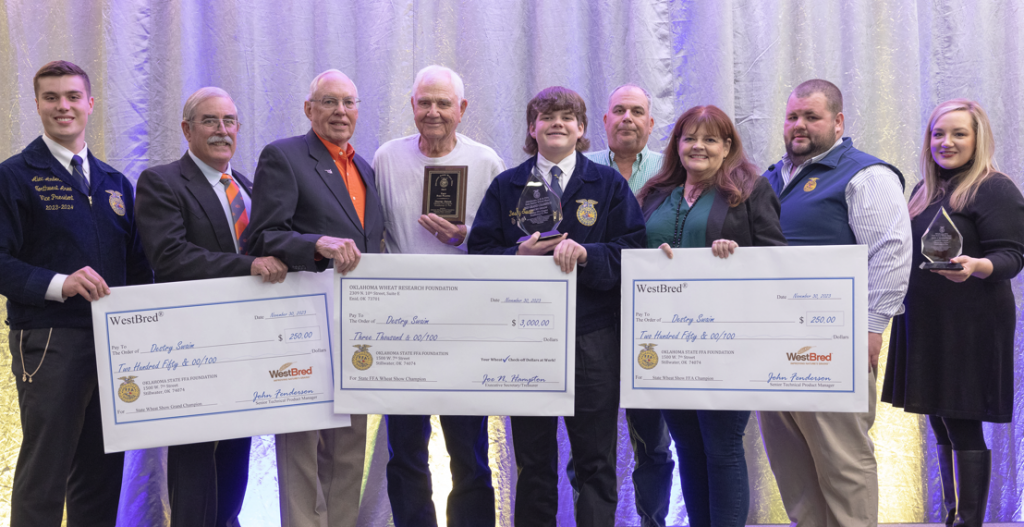
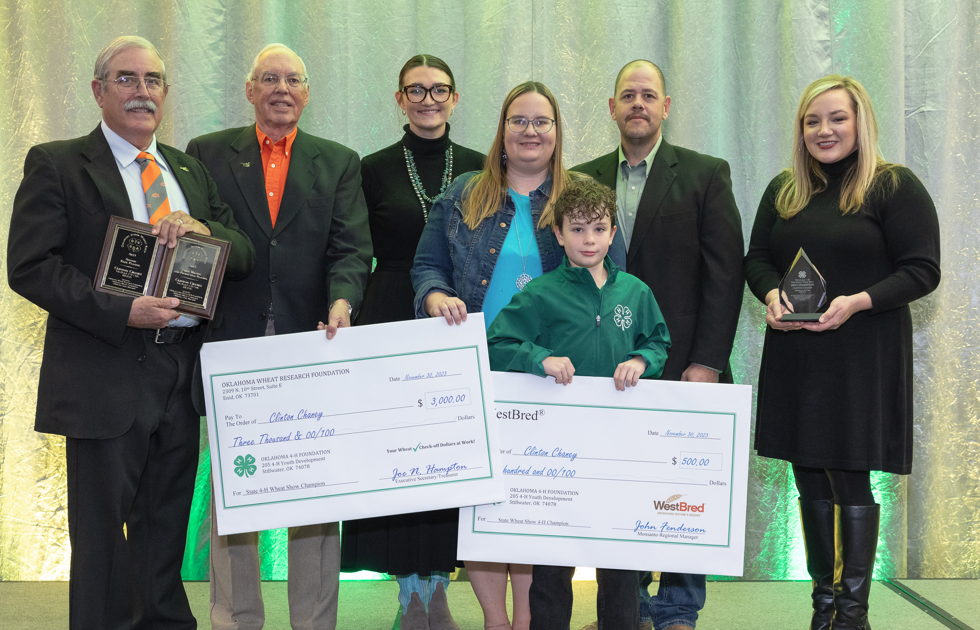

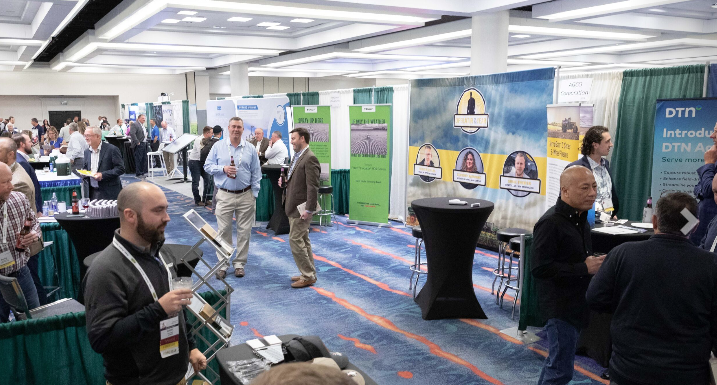
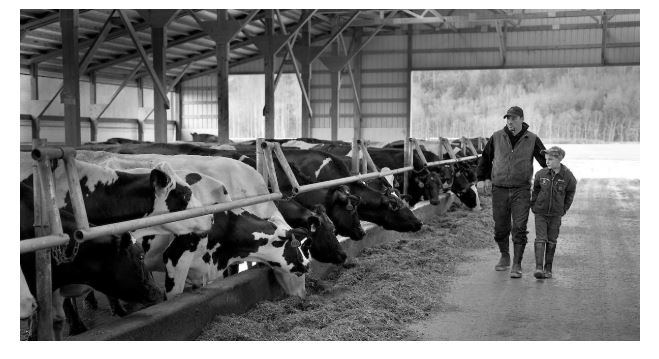
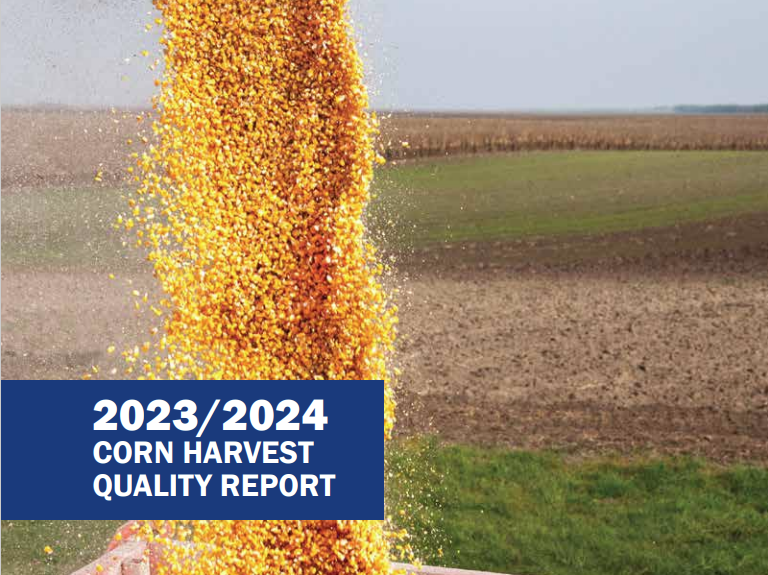

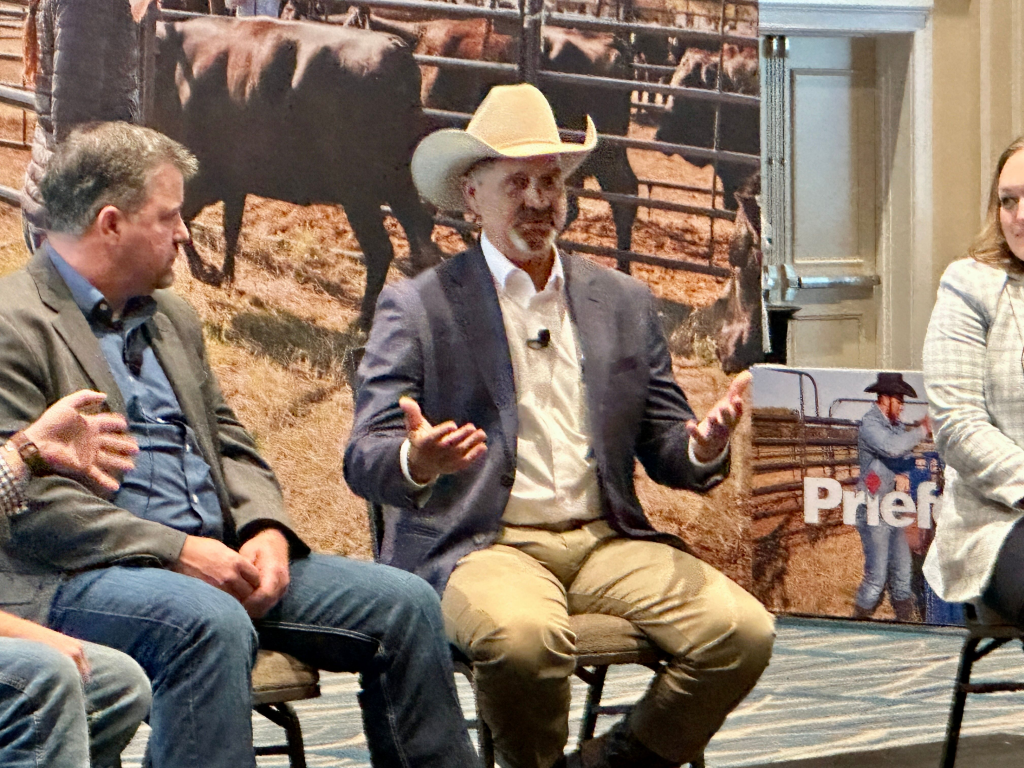
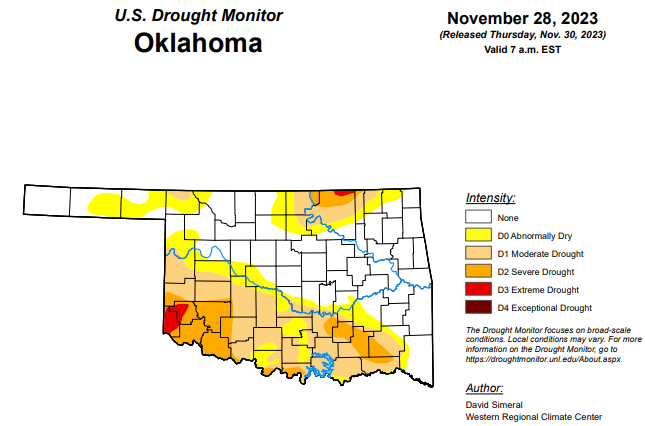
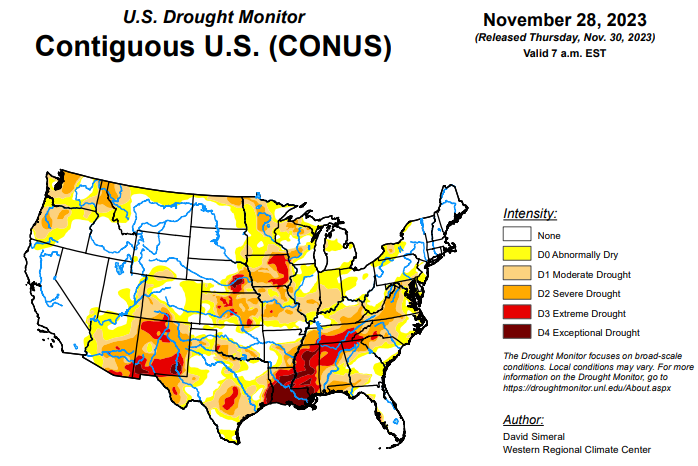

 NASDA Associate Director of Events Amelia Iliohan

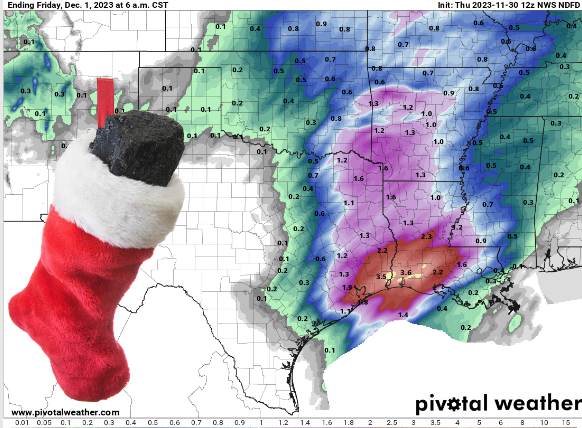
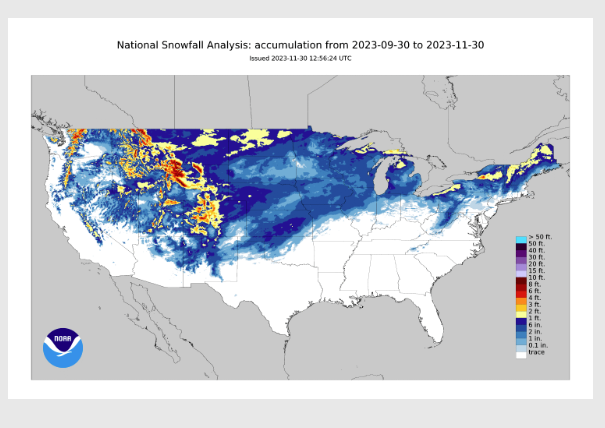
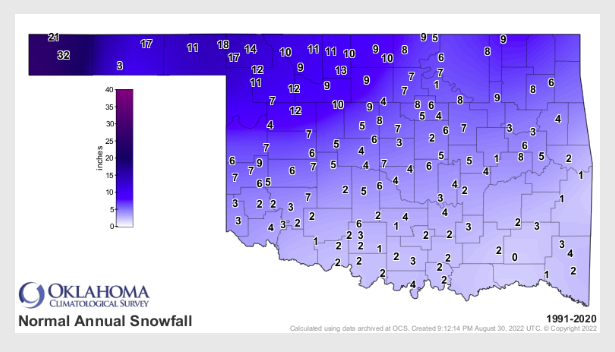
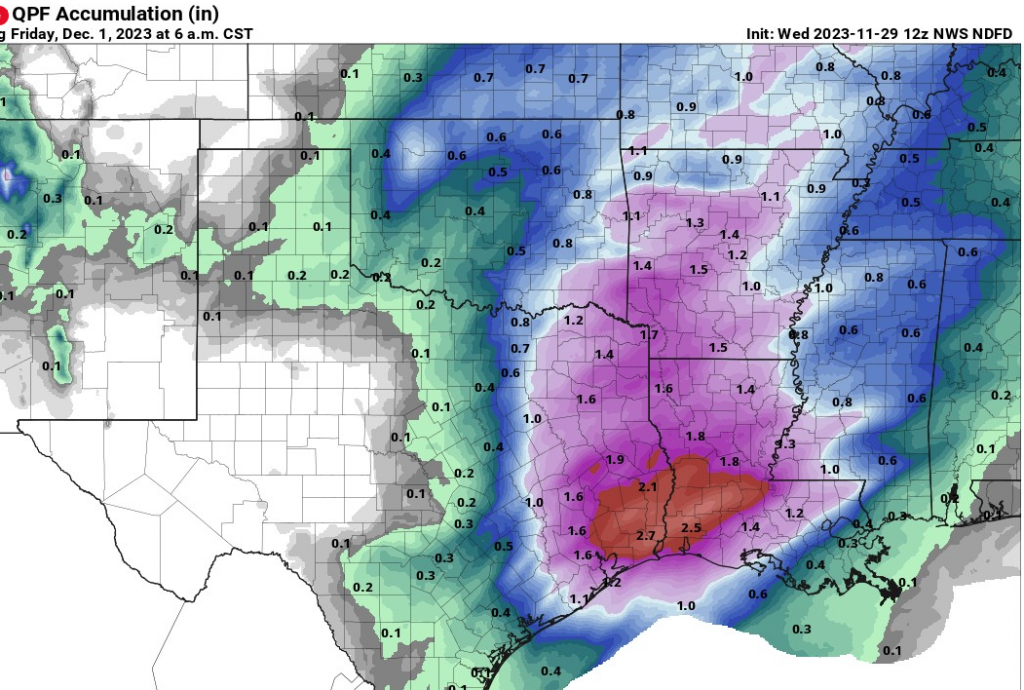
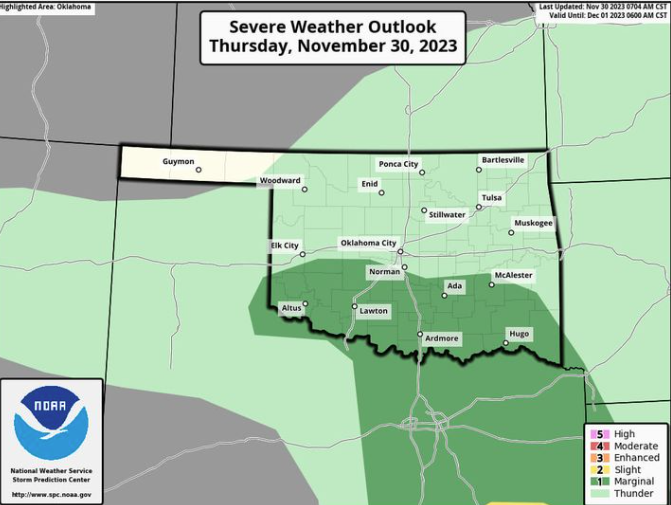
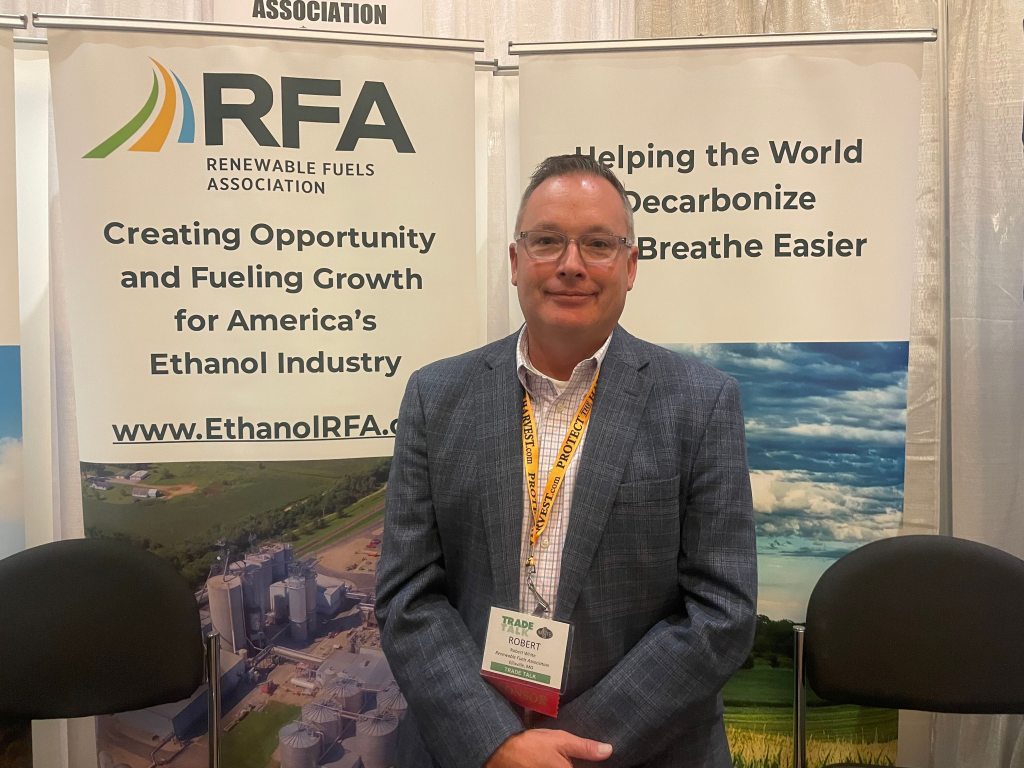

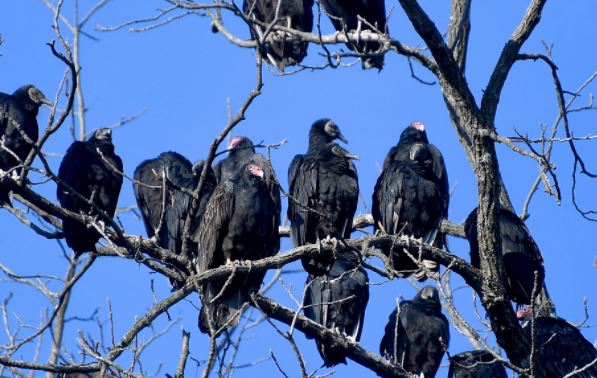


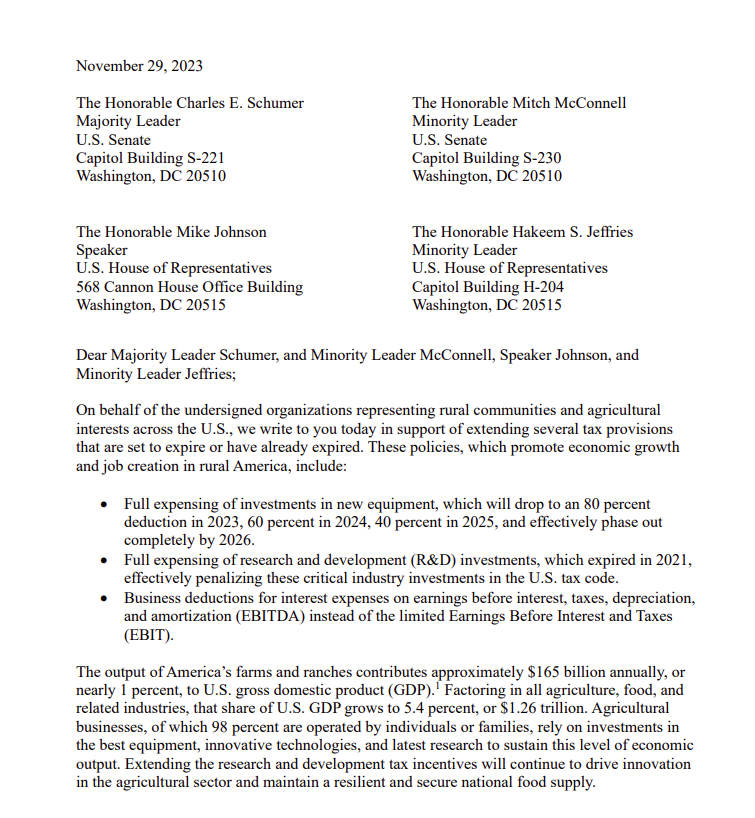



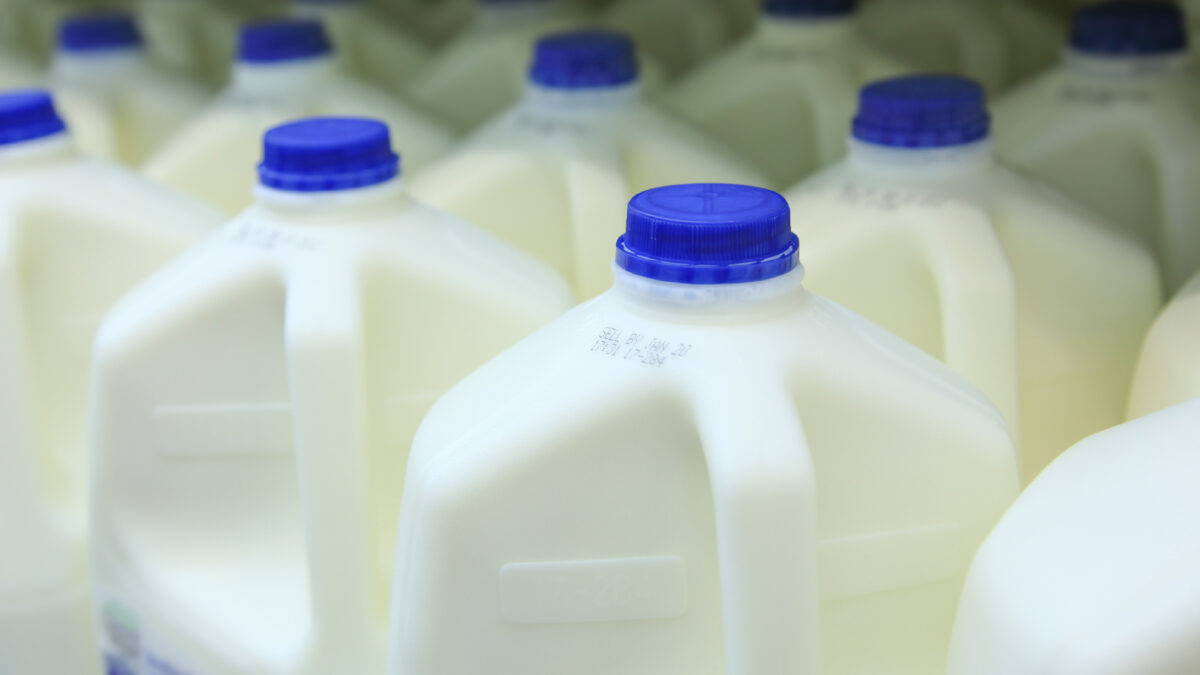
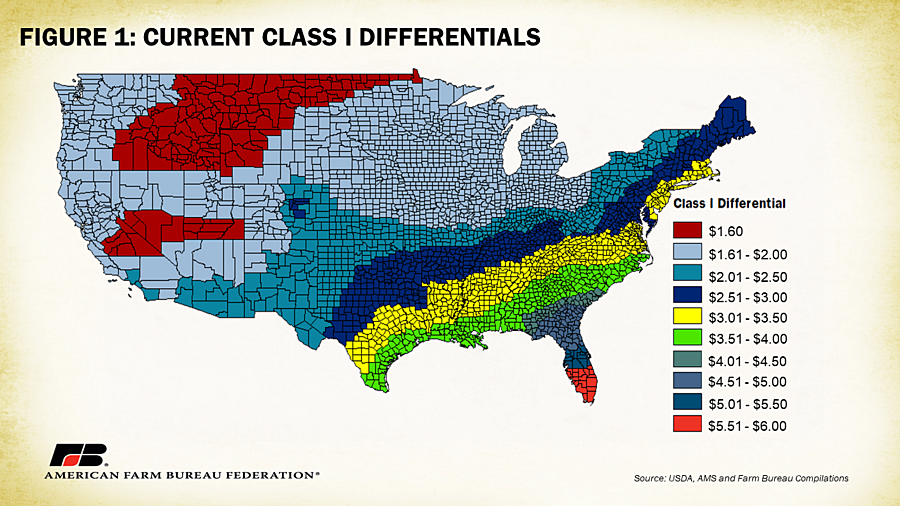
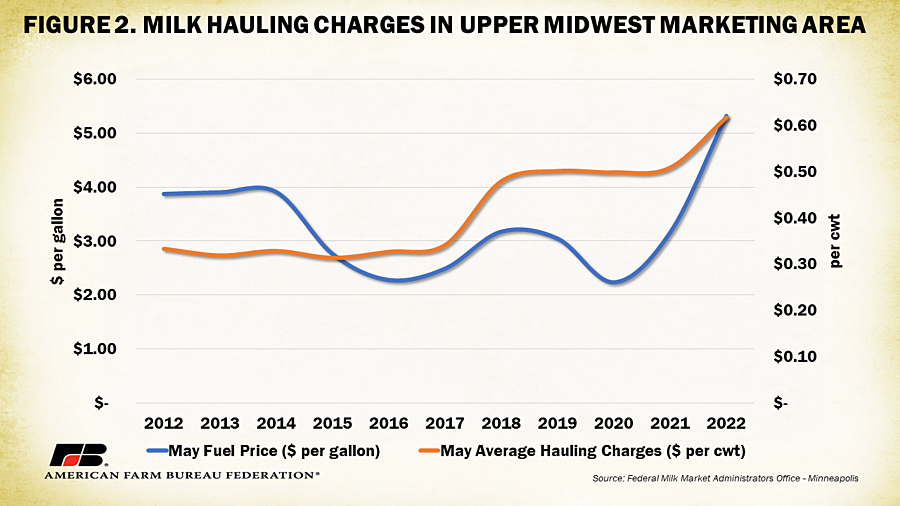
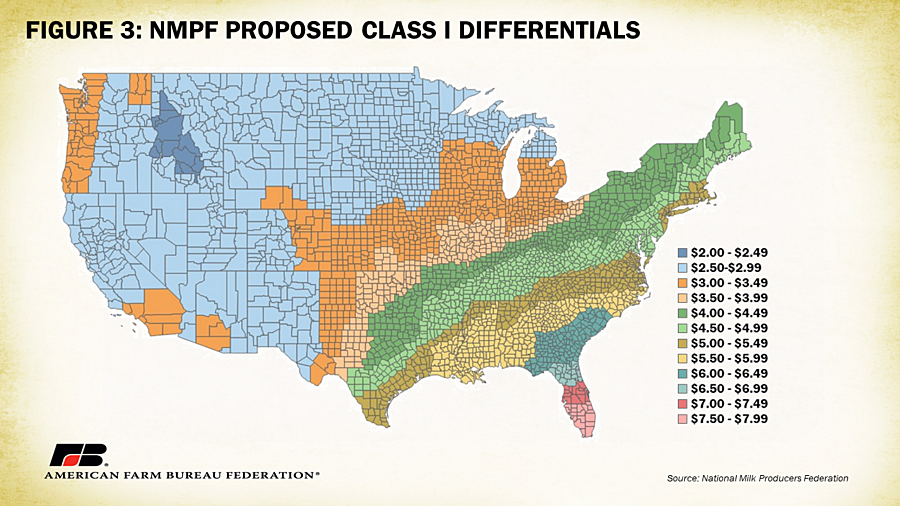
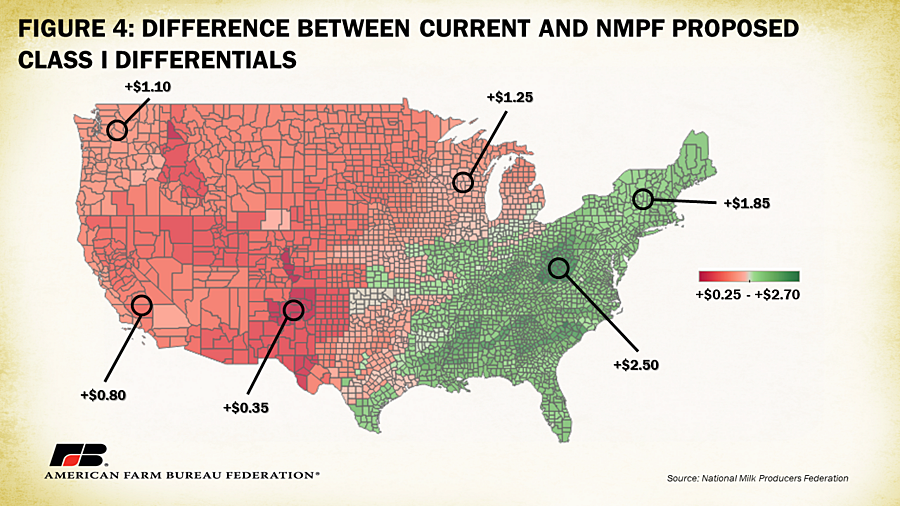

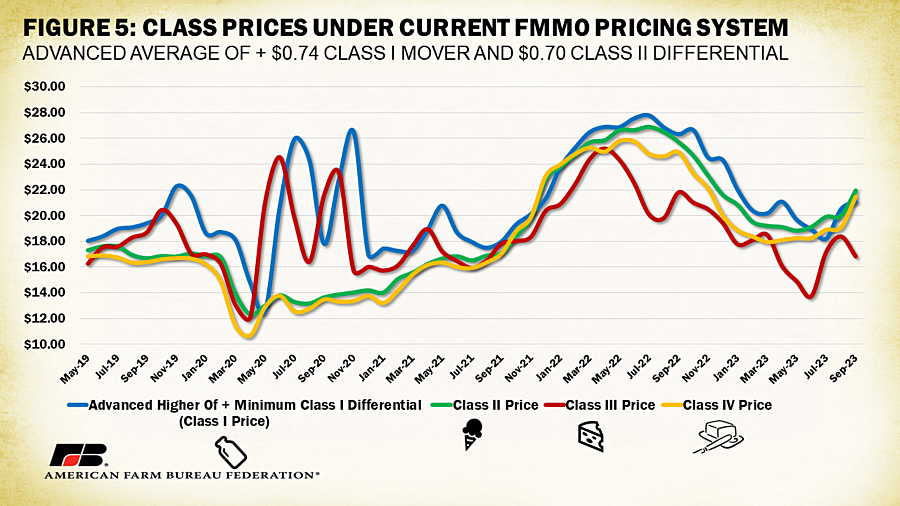
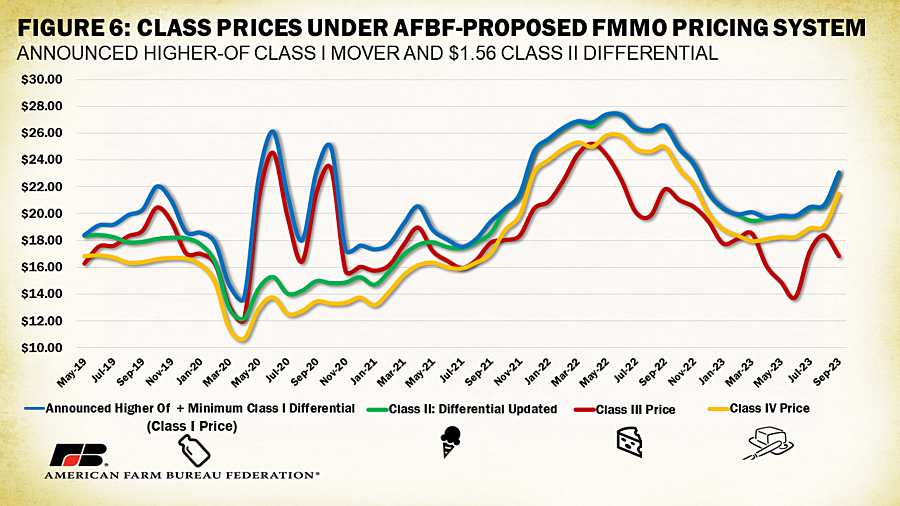

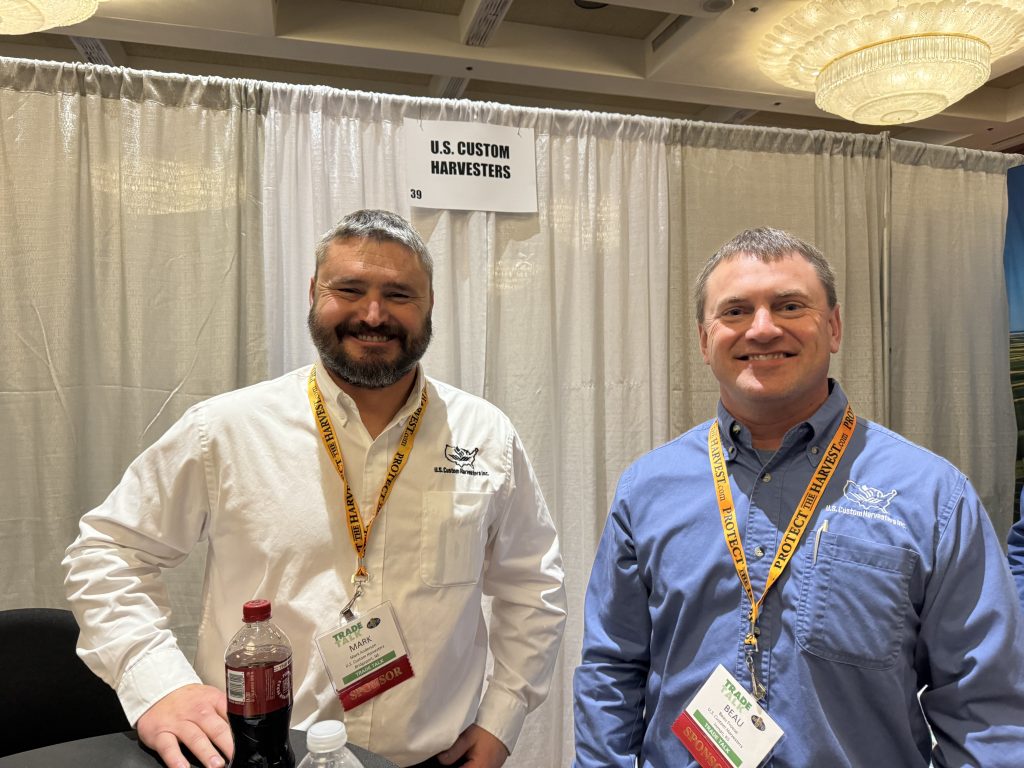




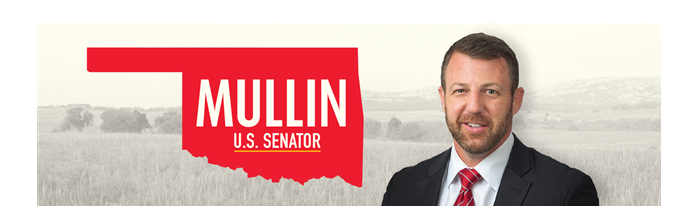

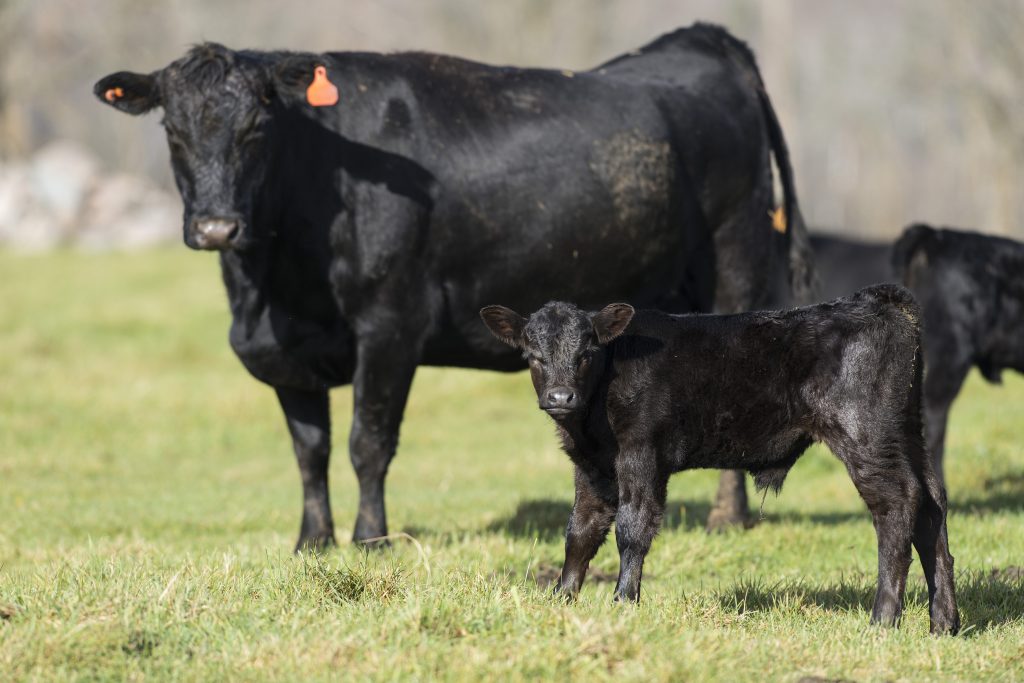
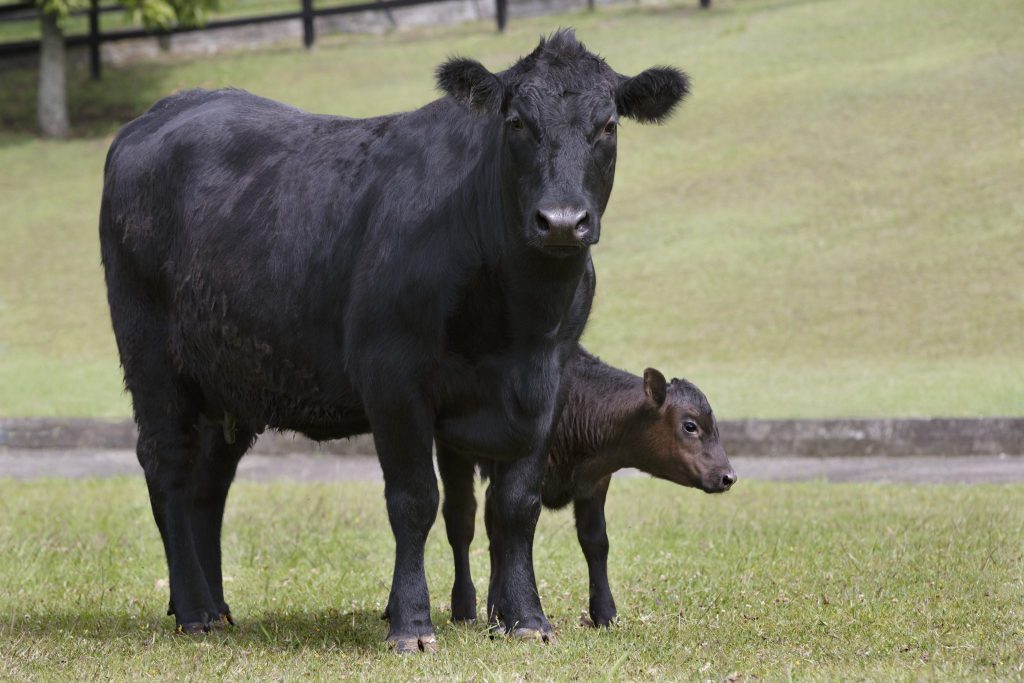


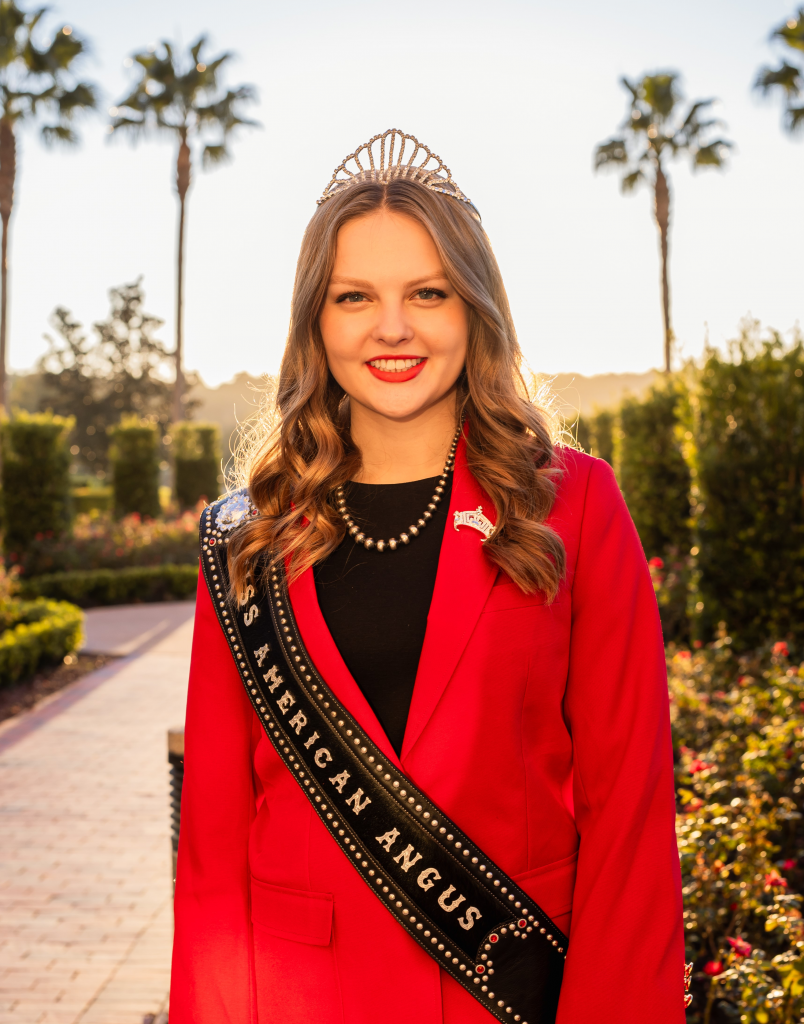
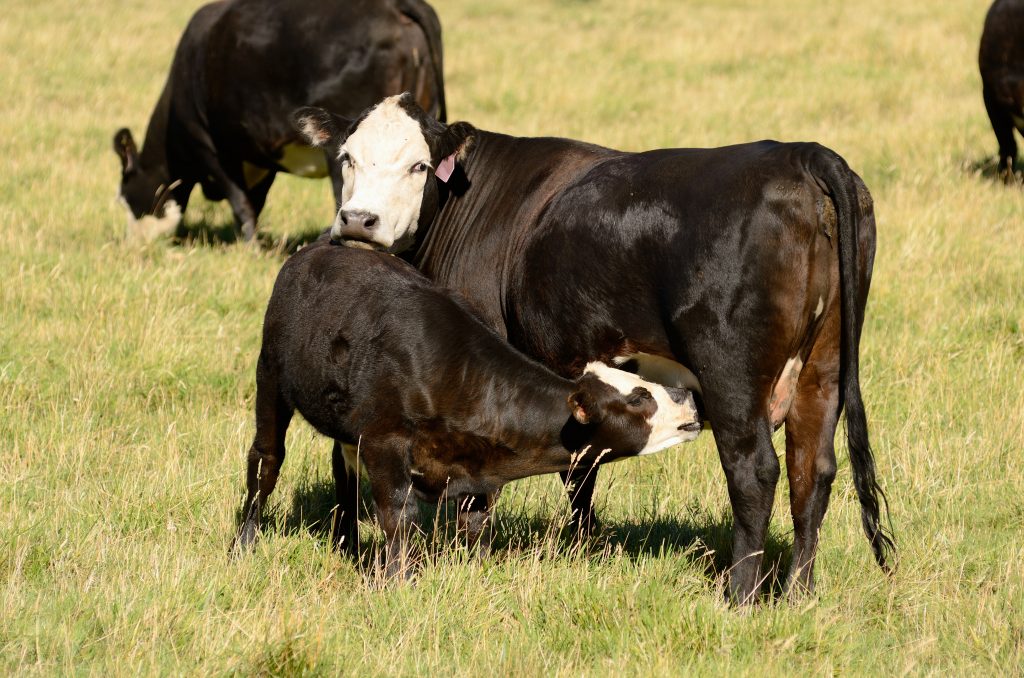

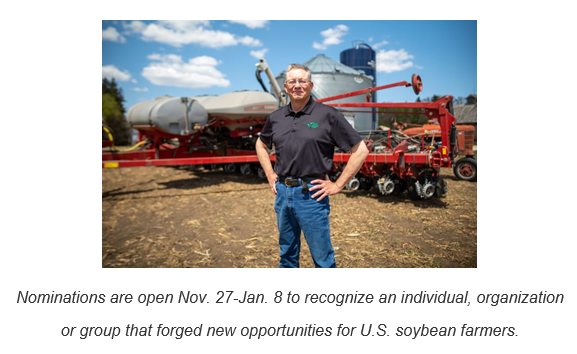




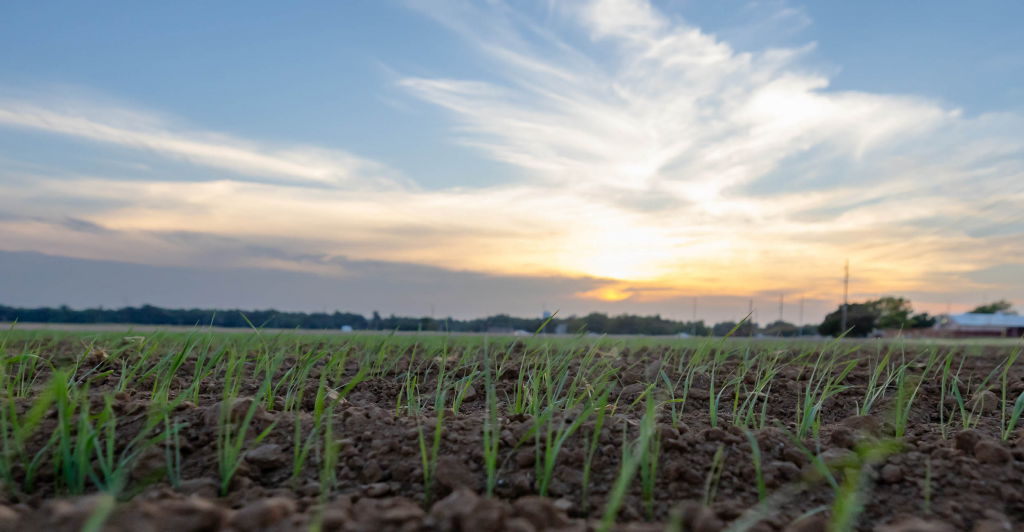

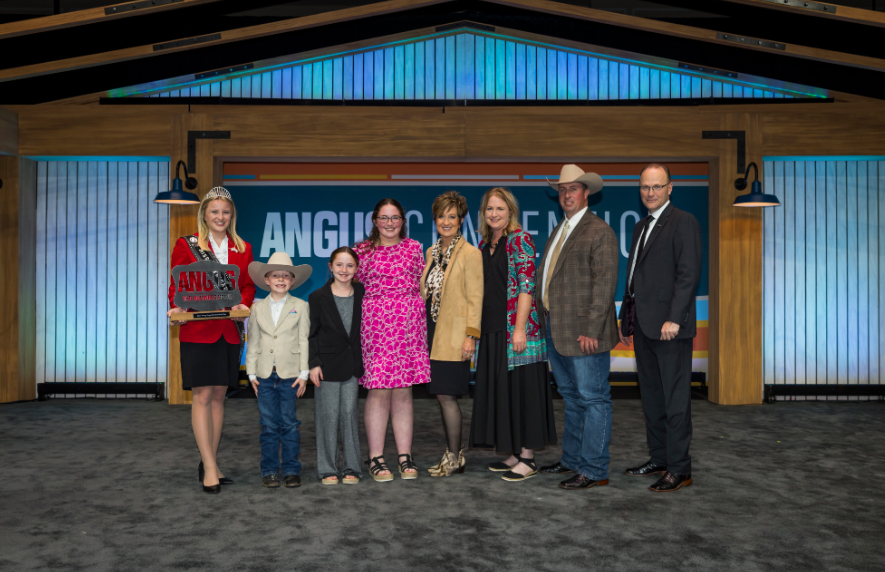
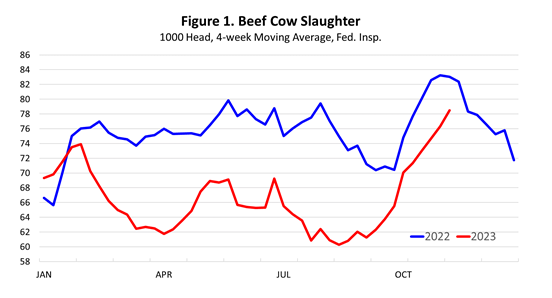



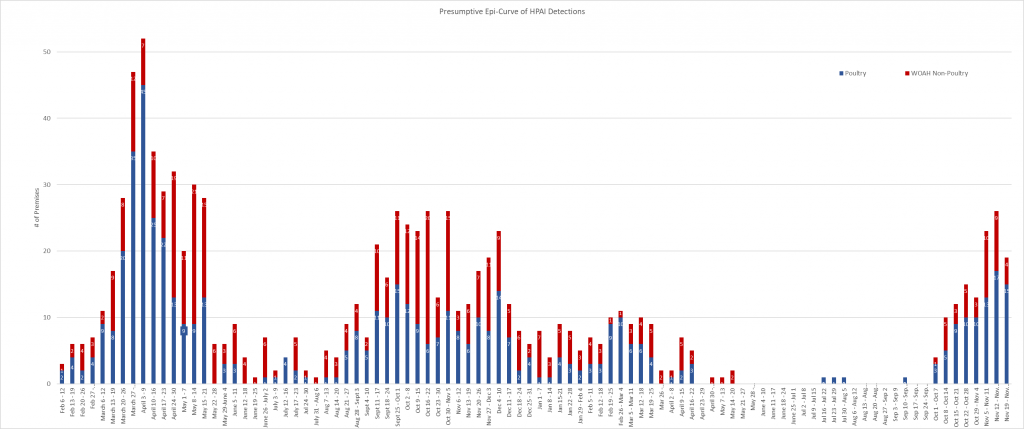

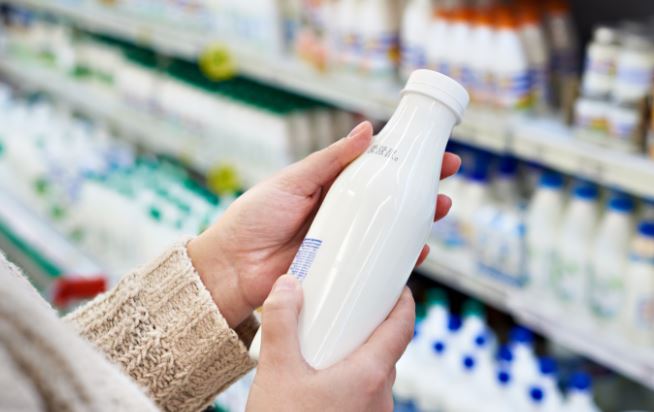
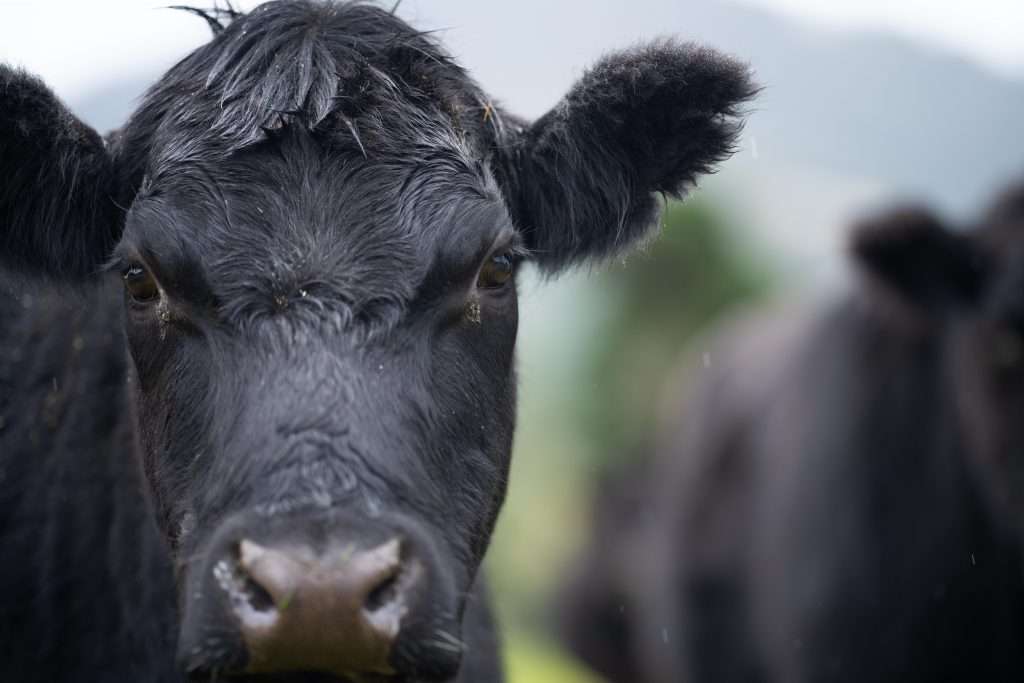


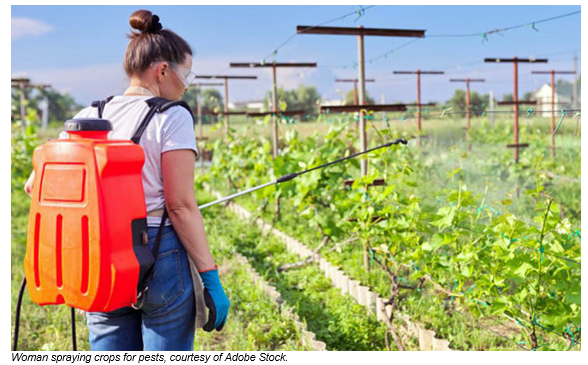



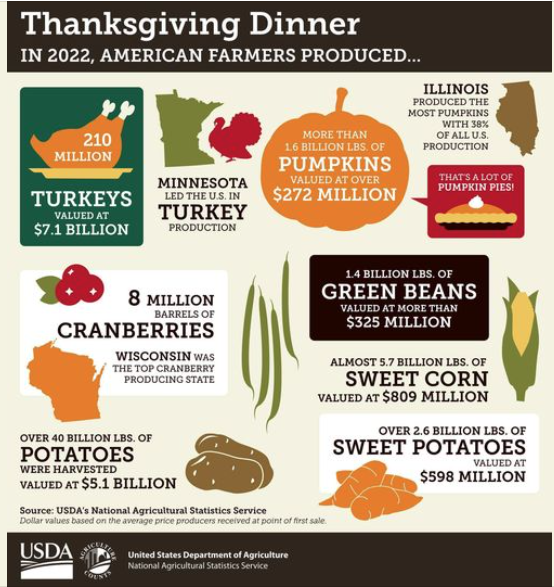
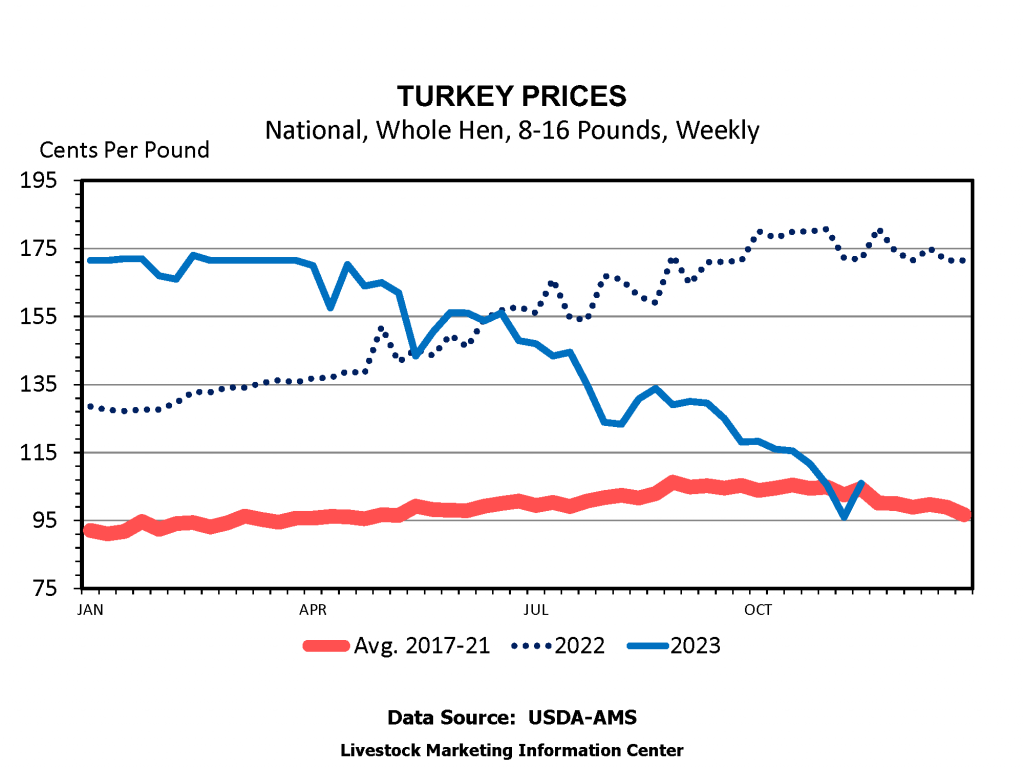
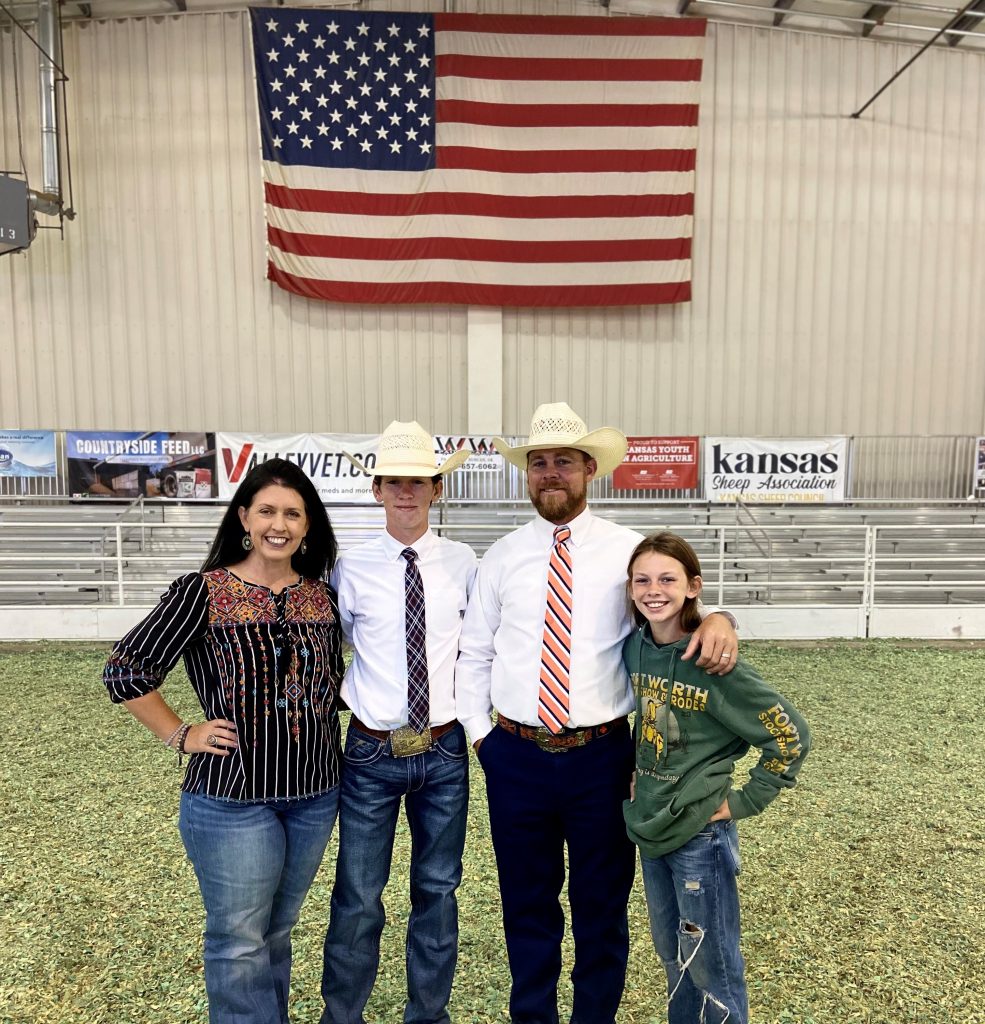
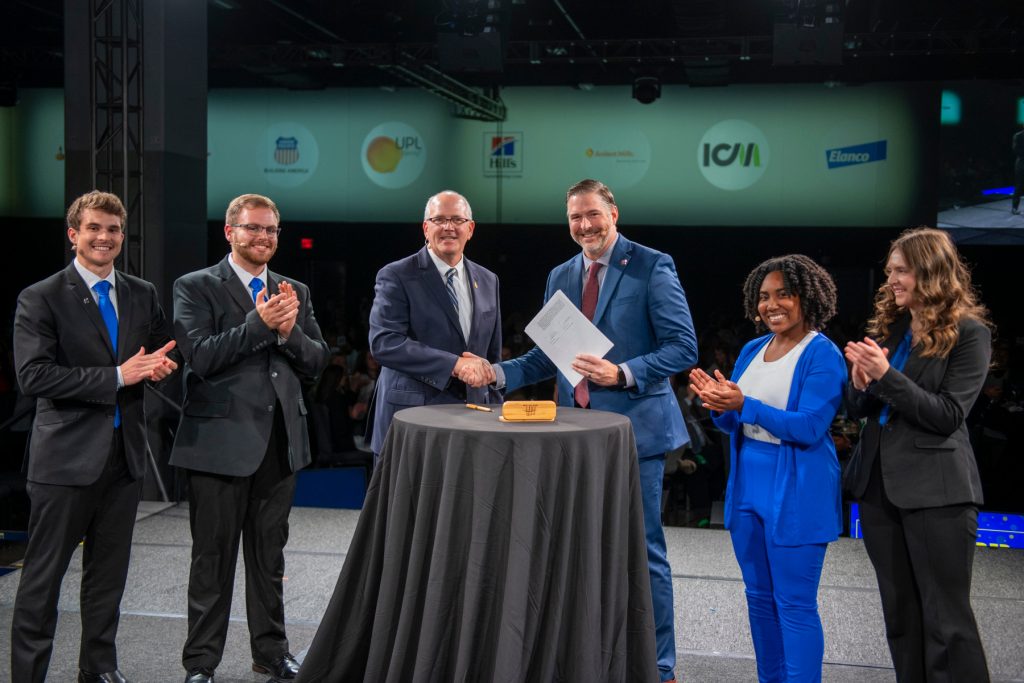
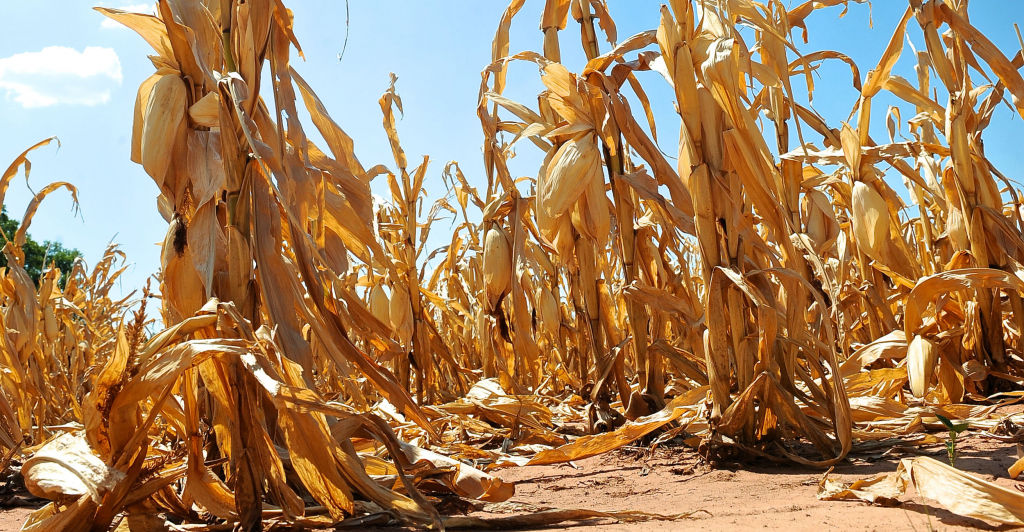

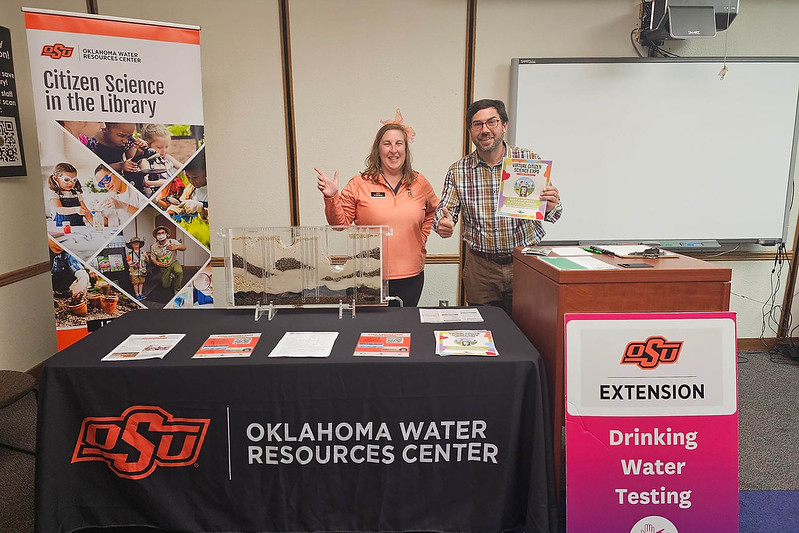


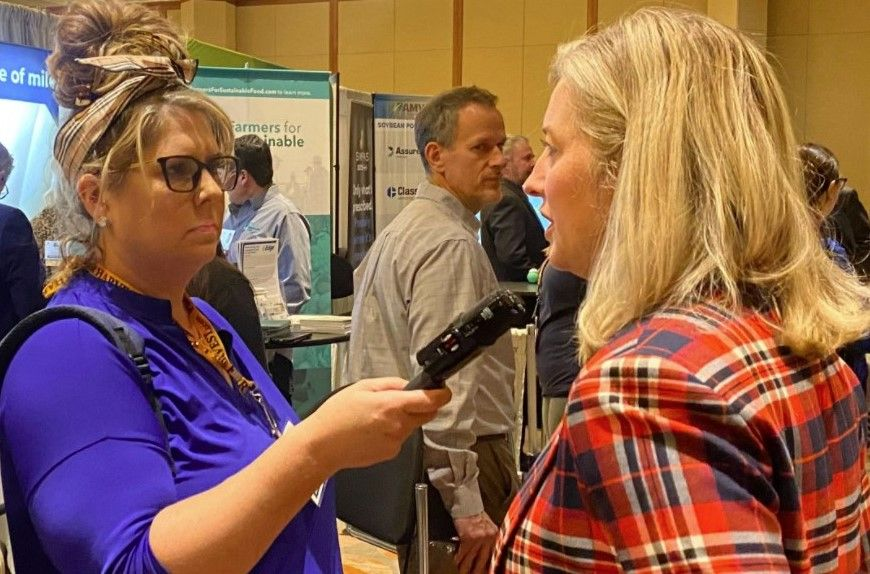
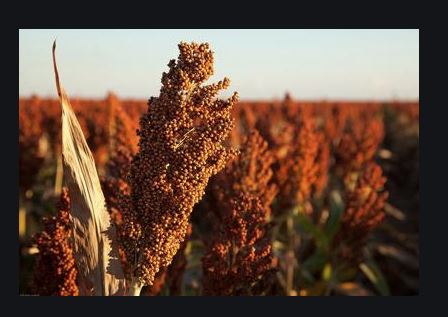
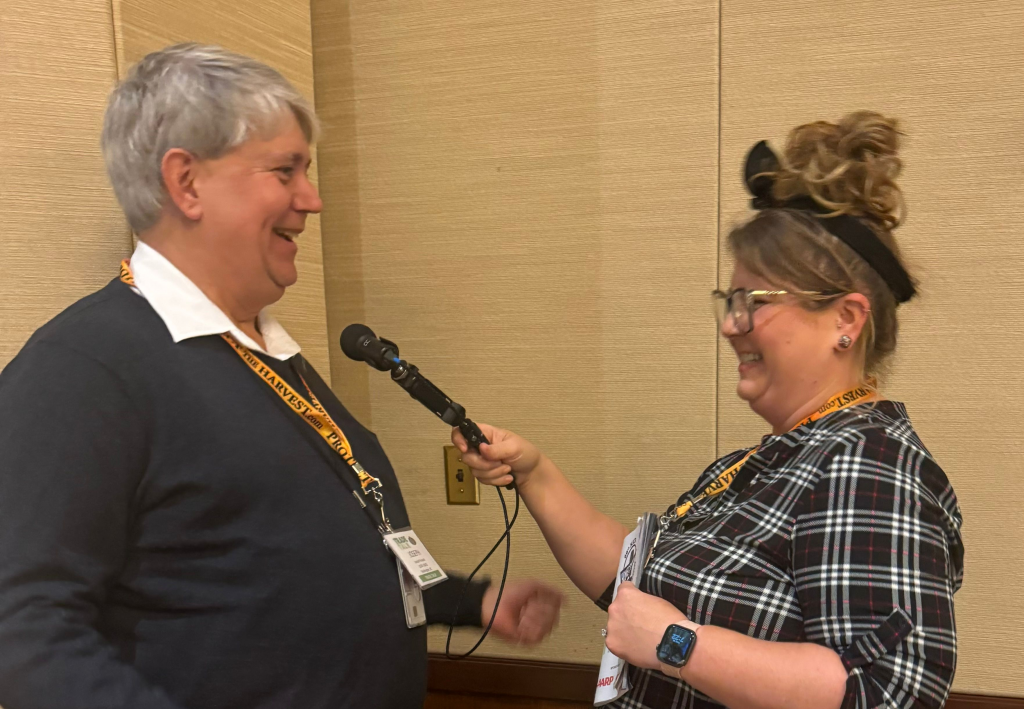
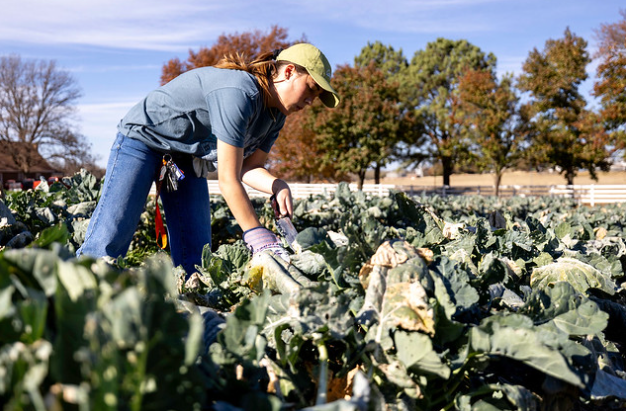

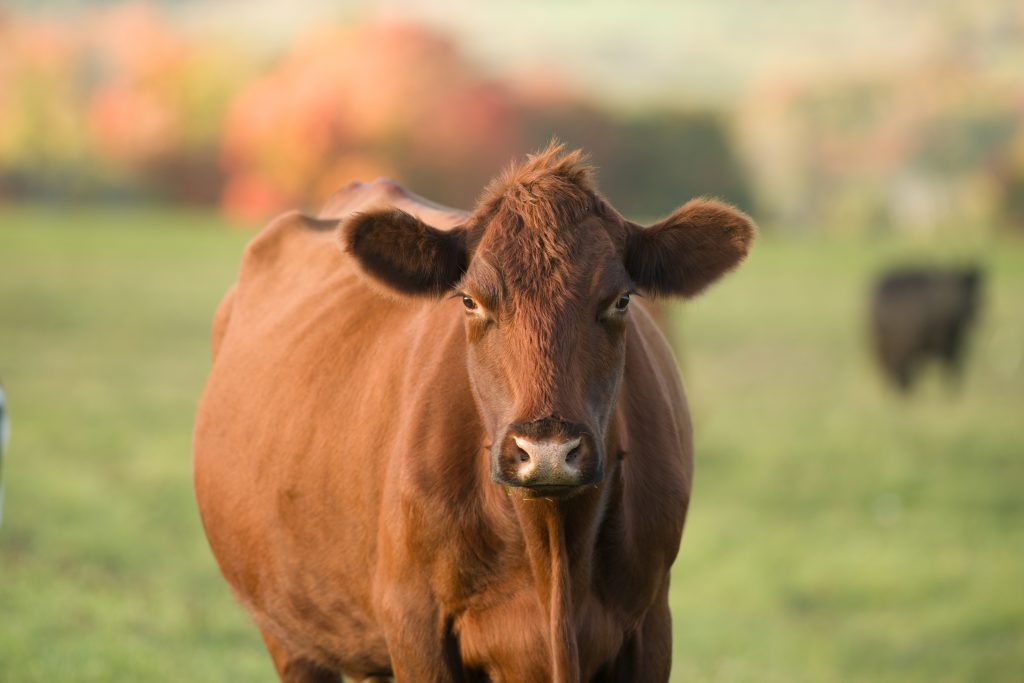


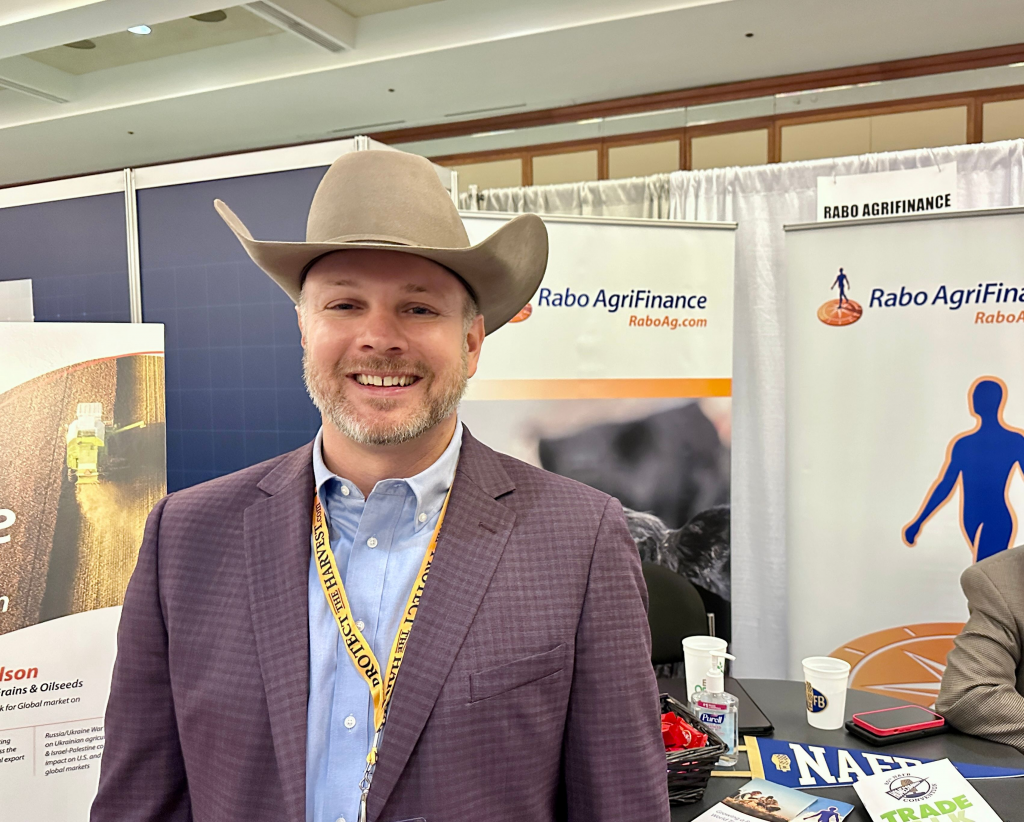
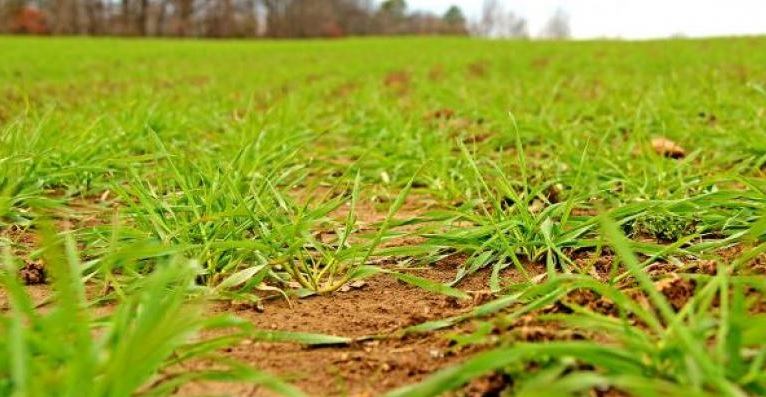

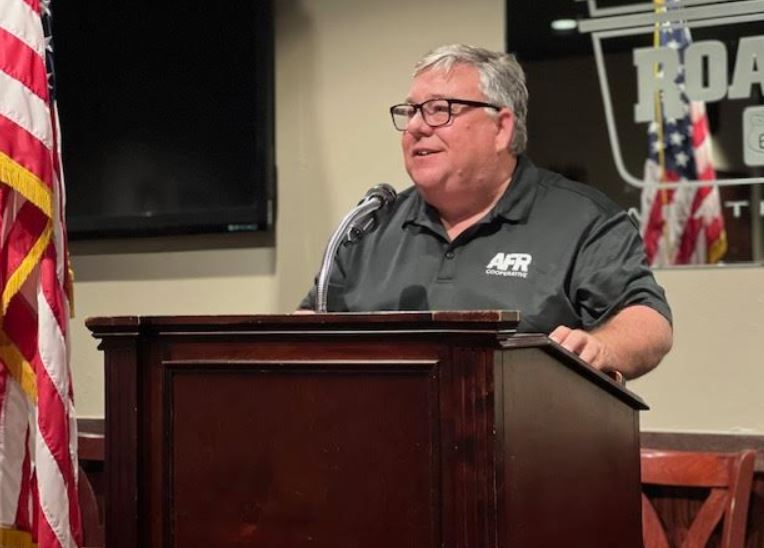
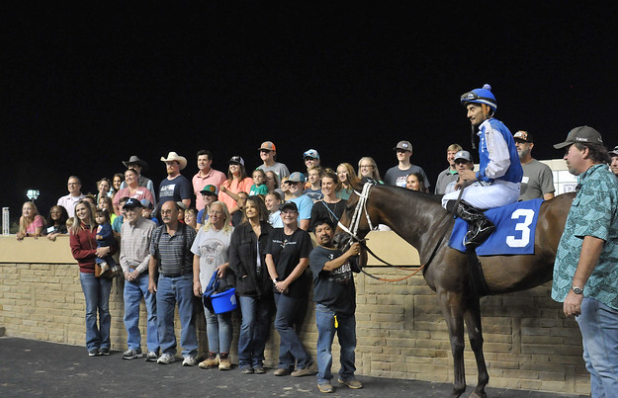

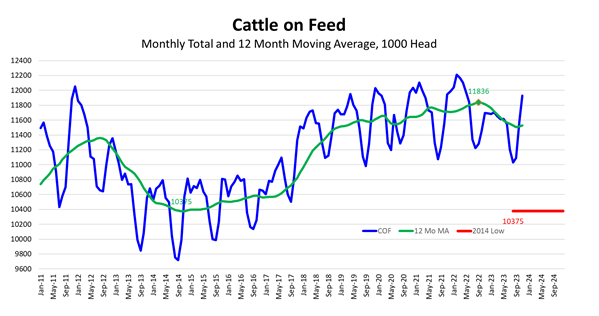

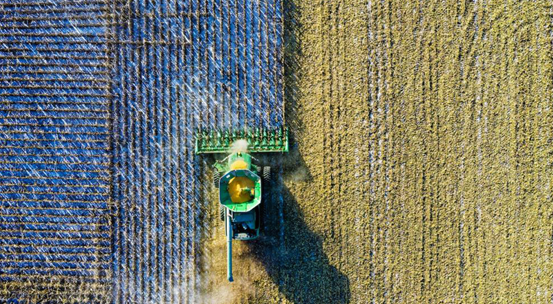

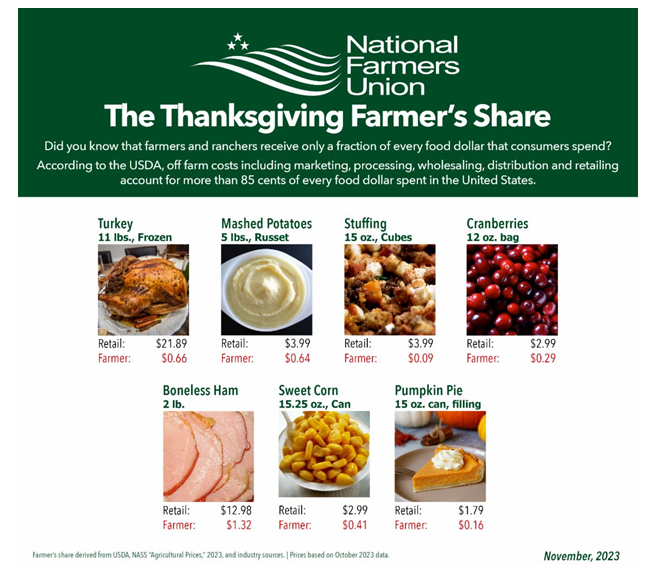

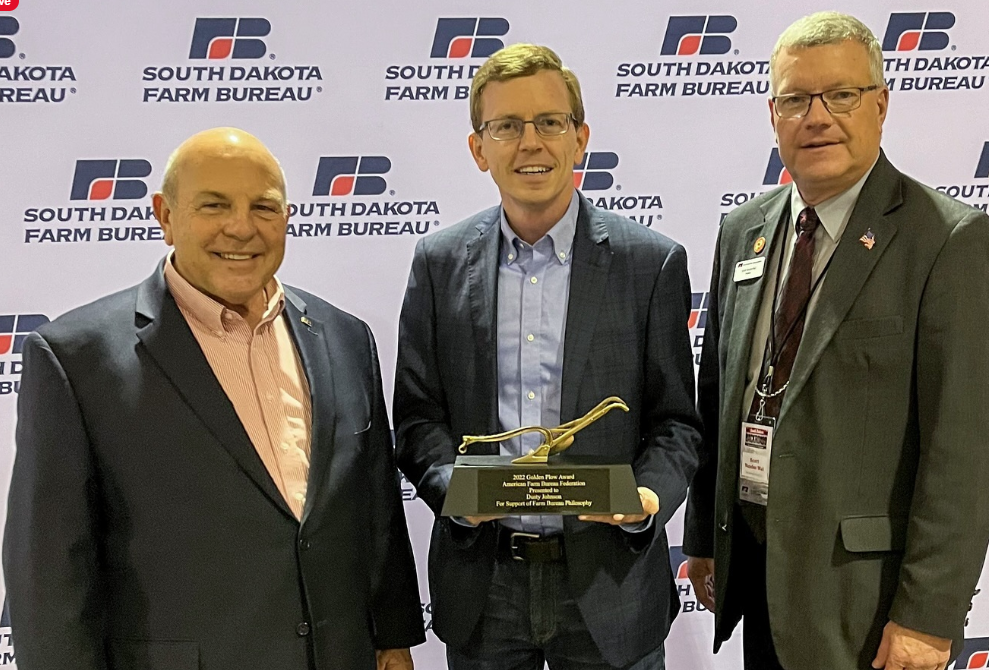
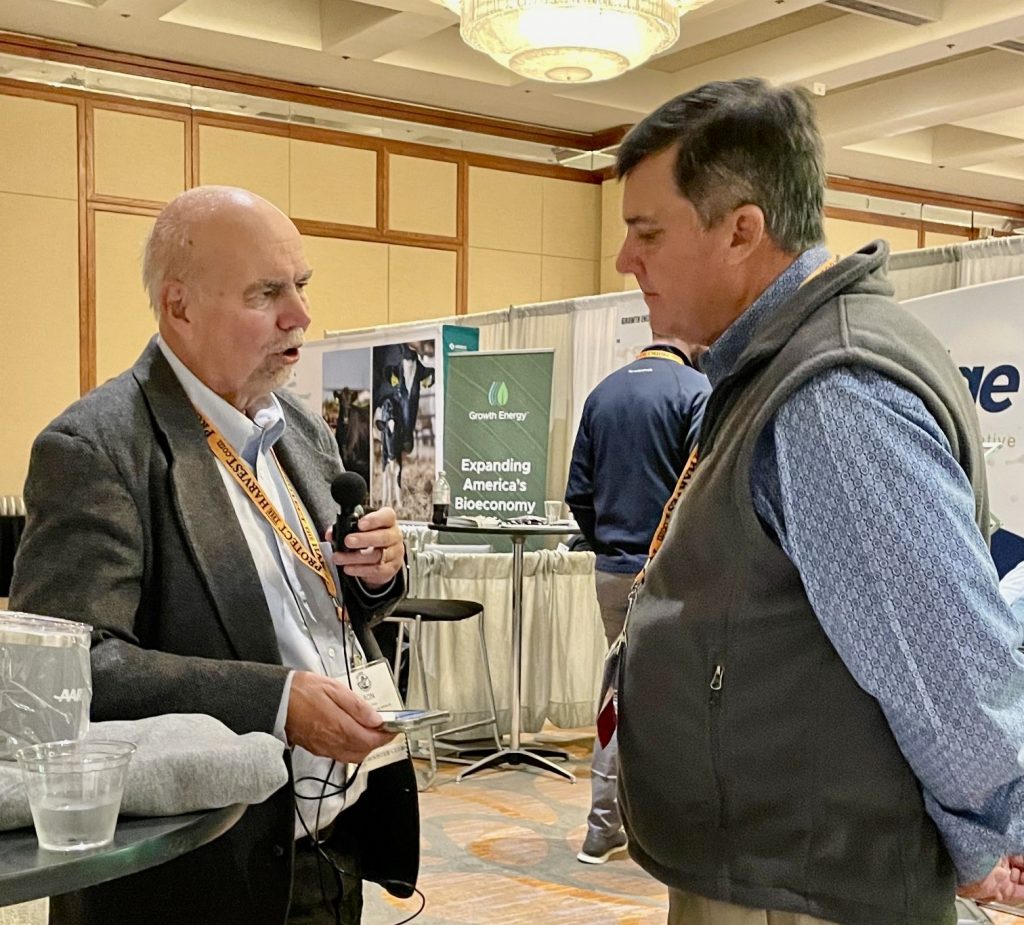
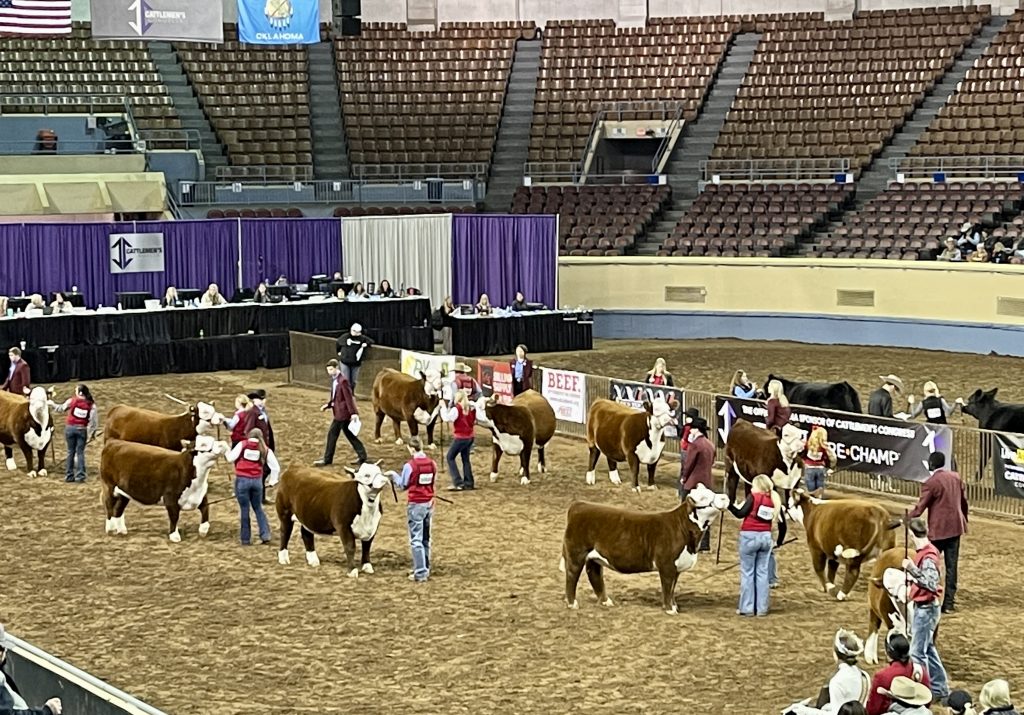
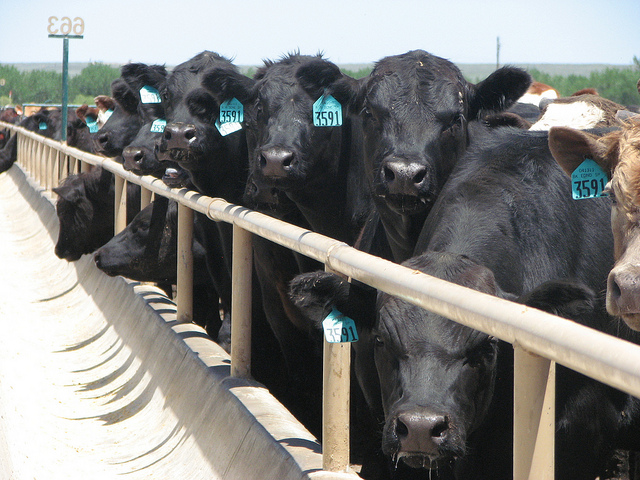
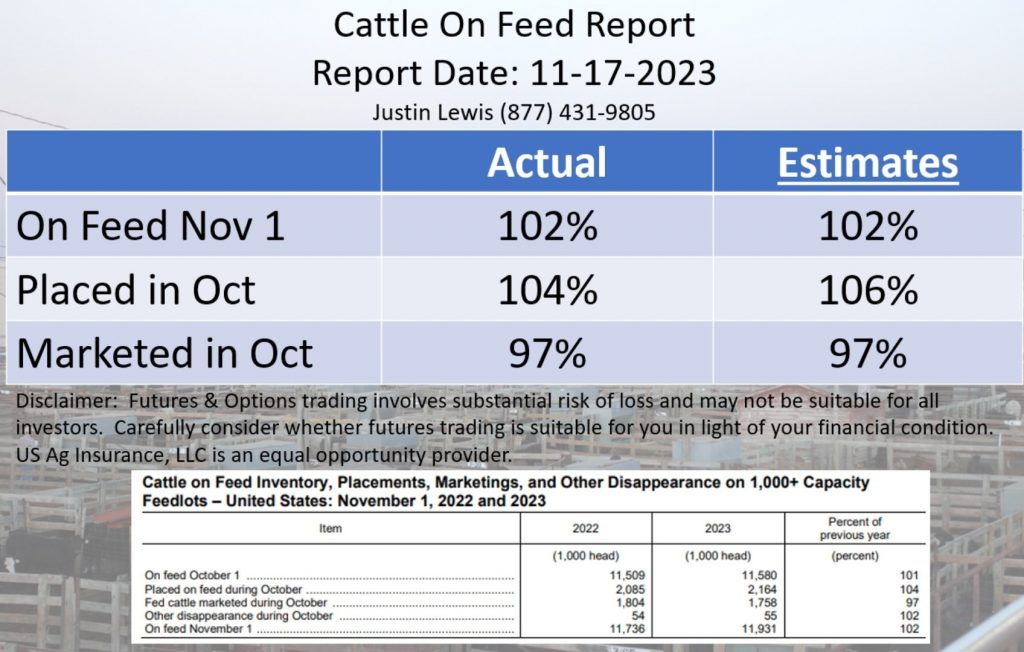


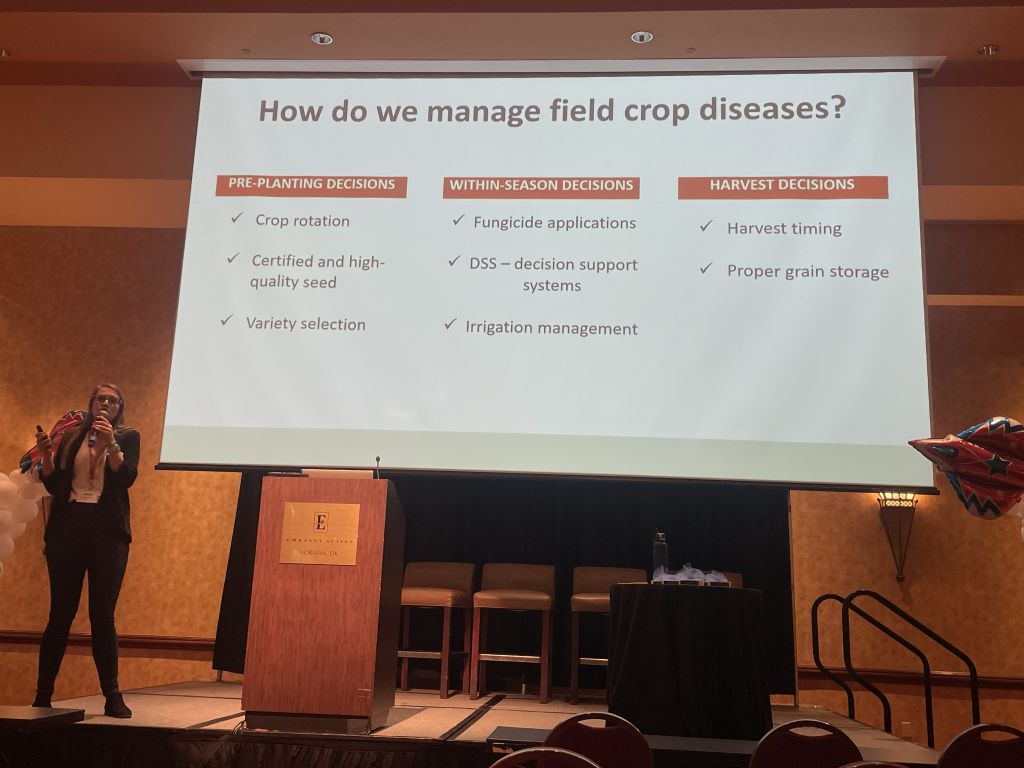
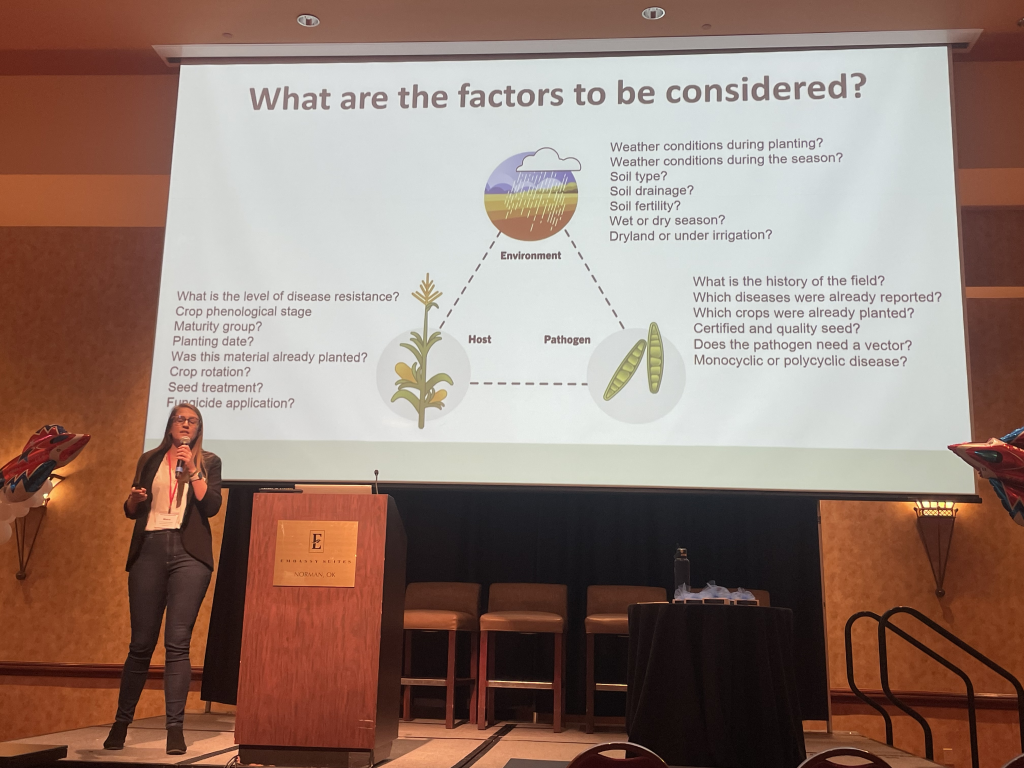
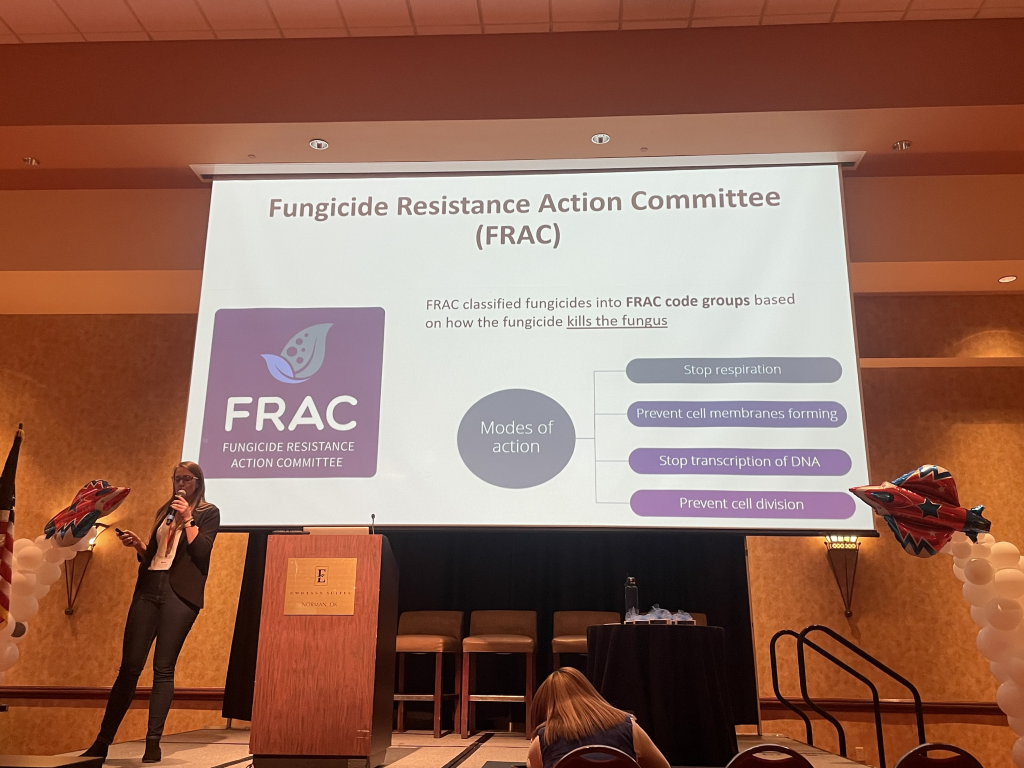



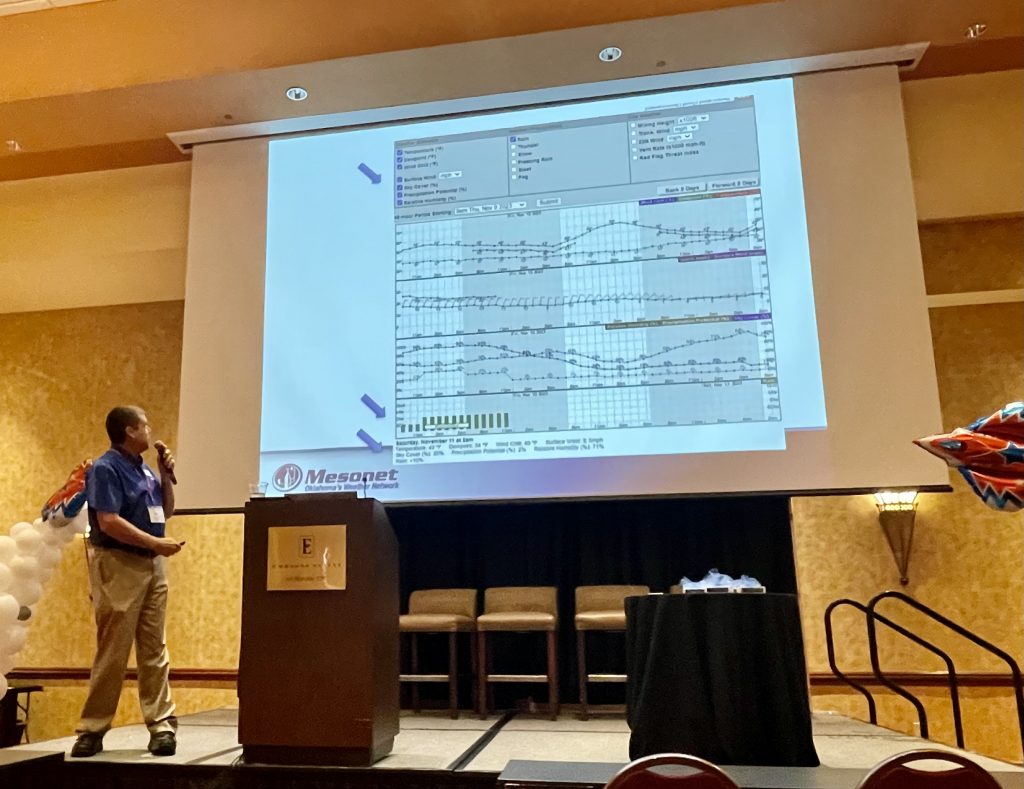
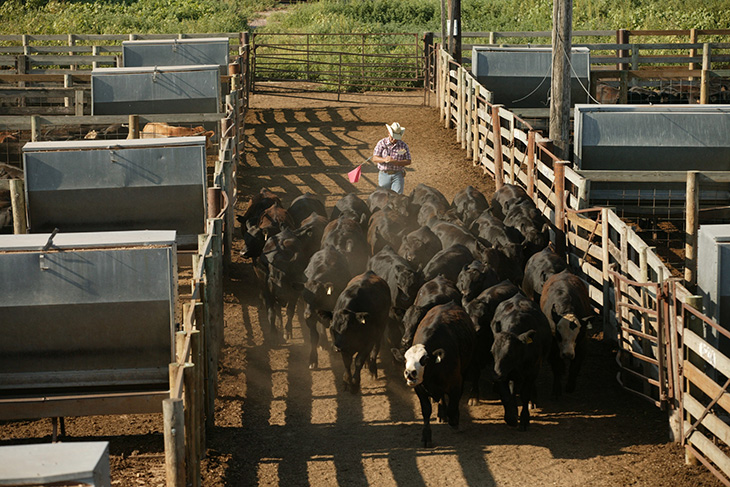
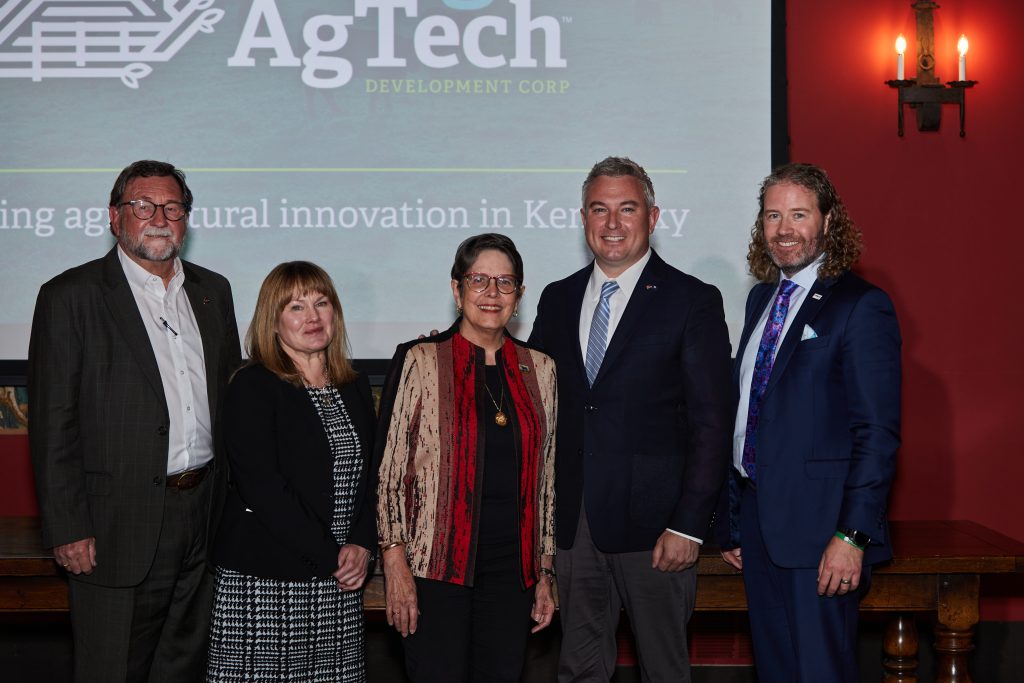
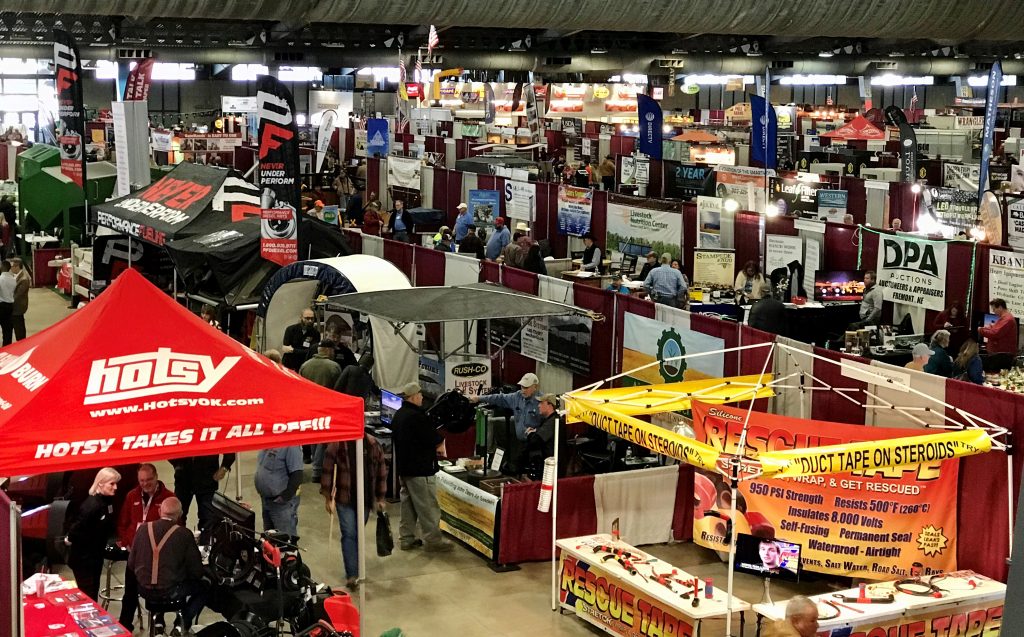
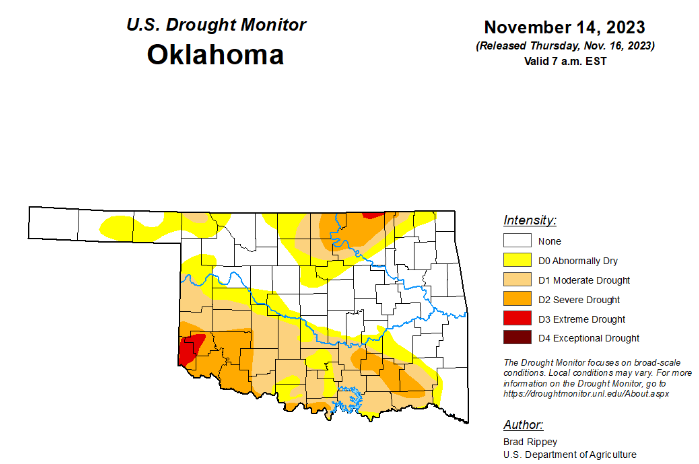
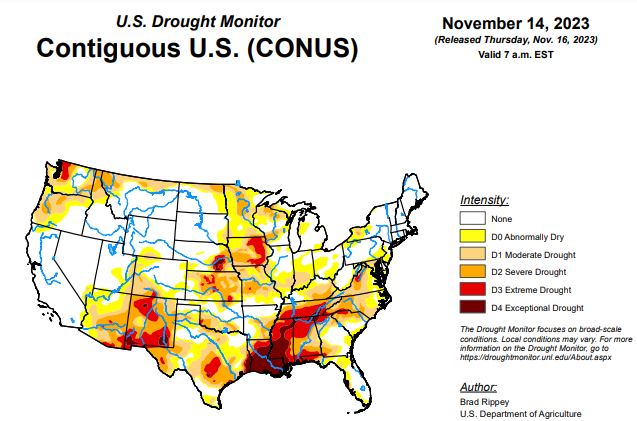
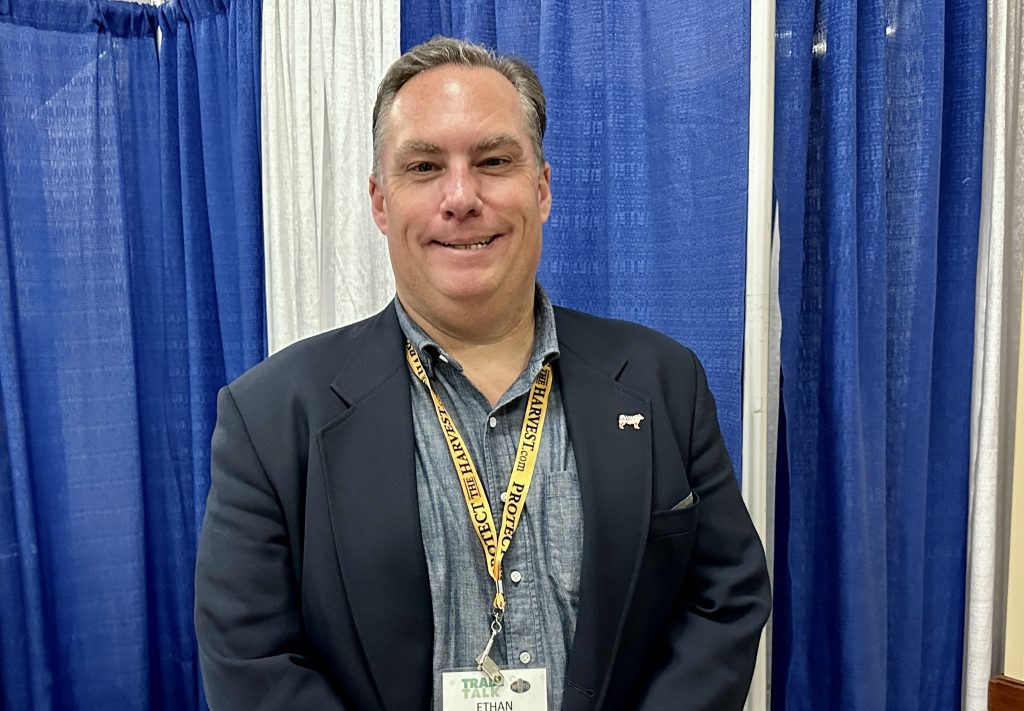
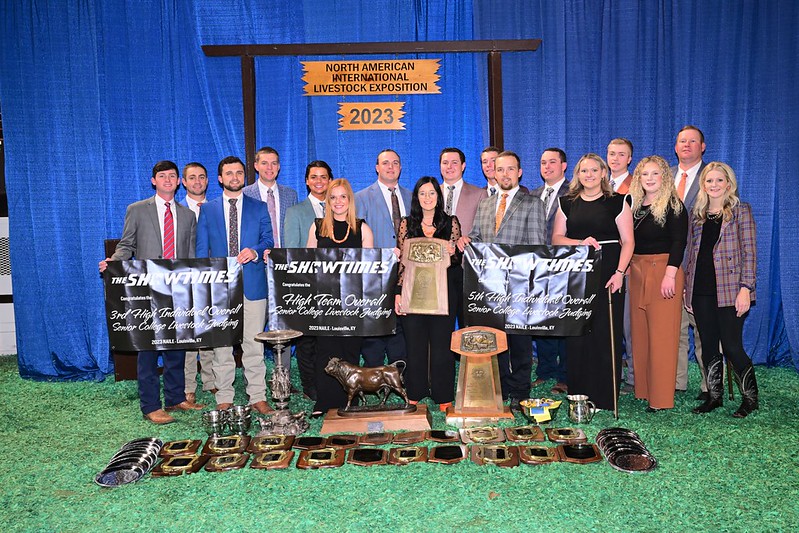



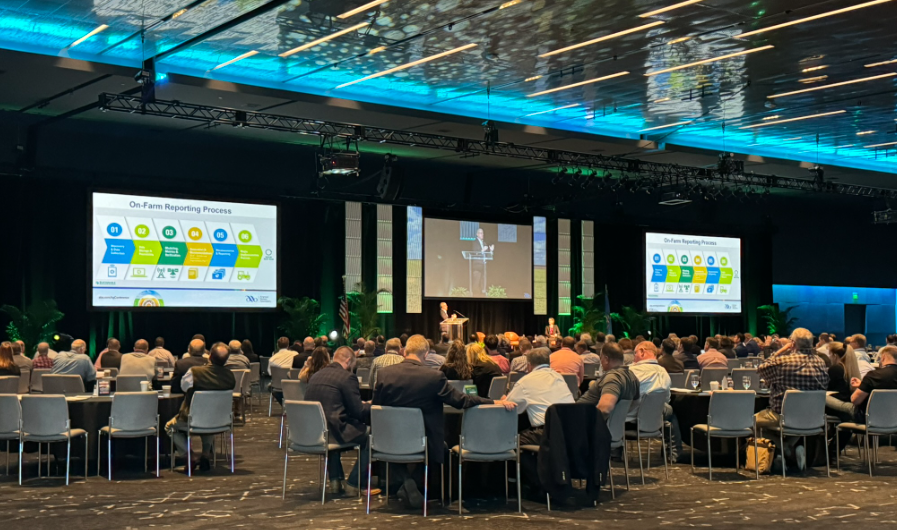
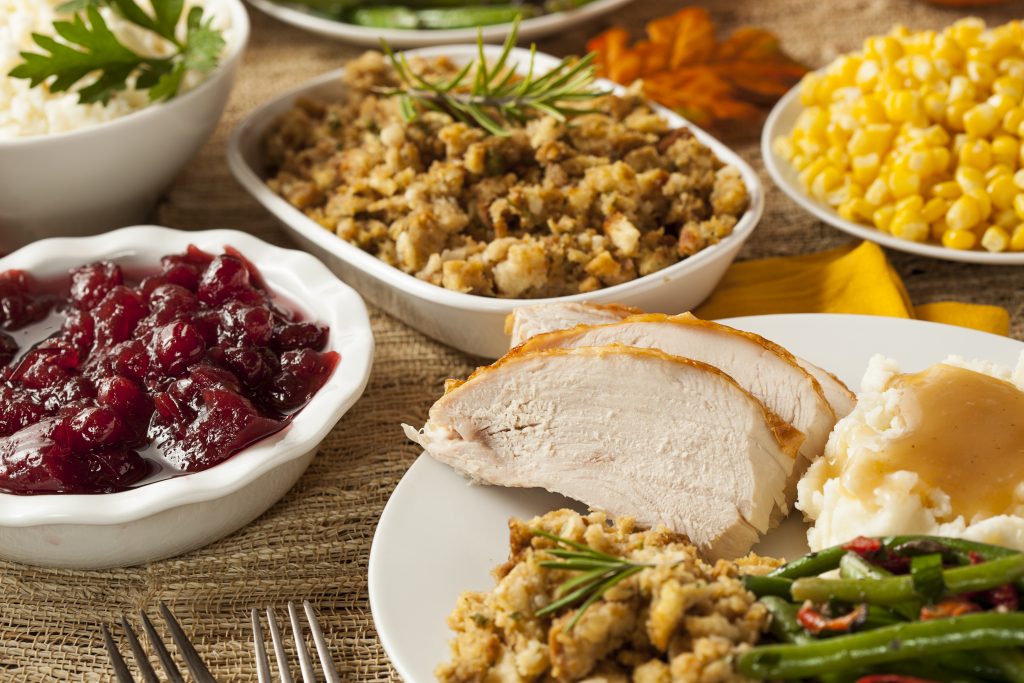

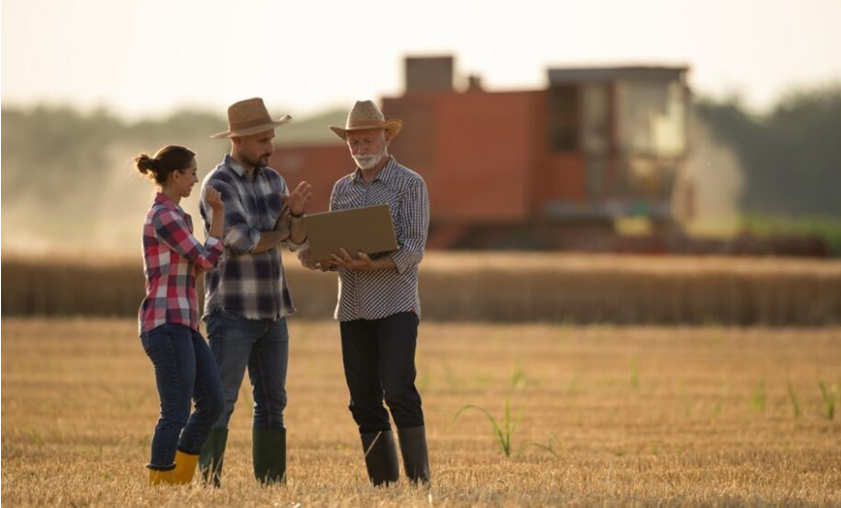
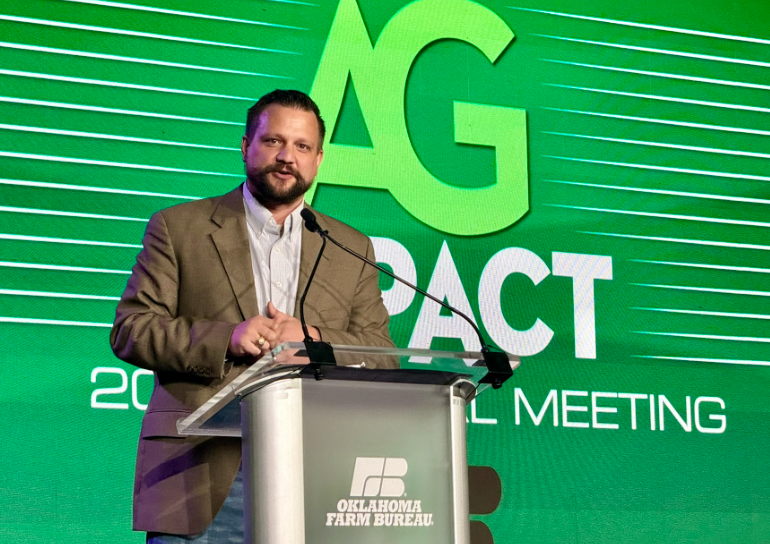
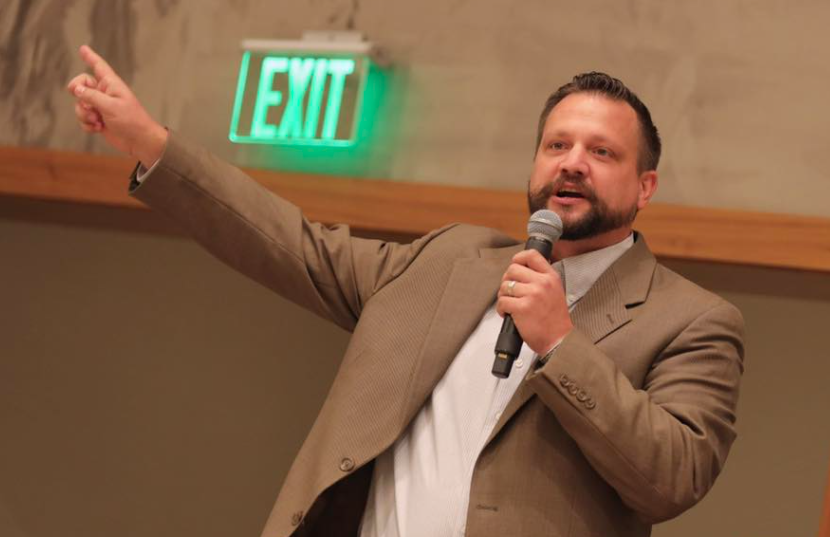
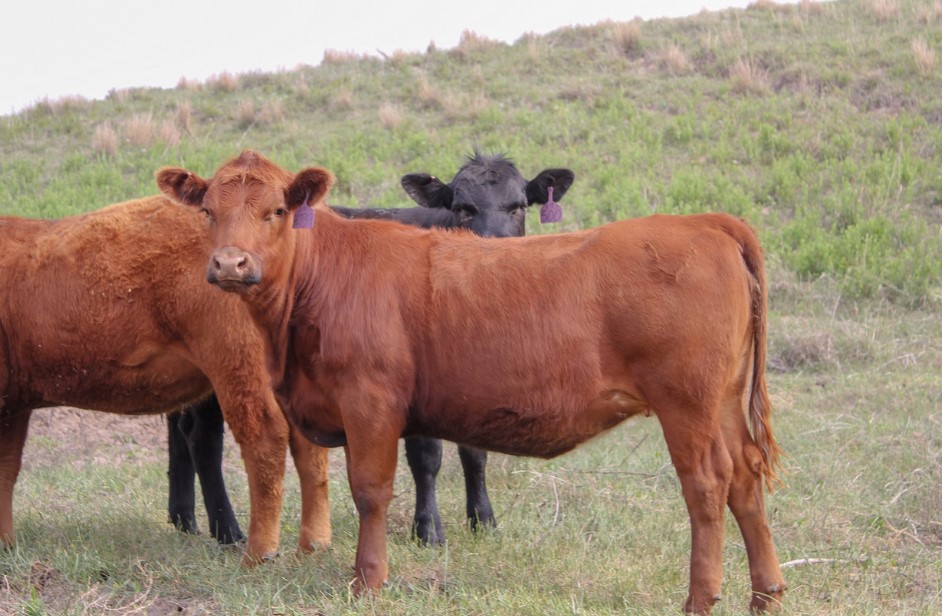
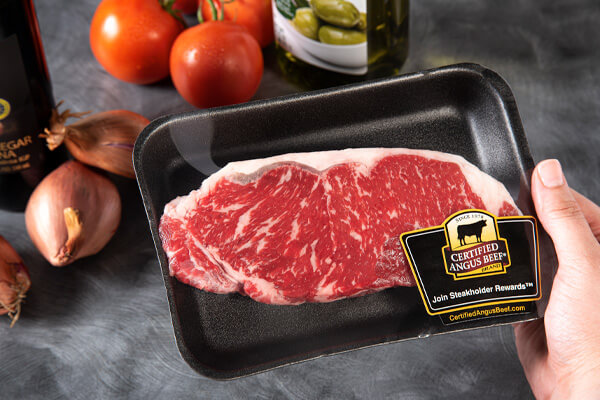
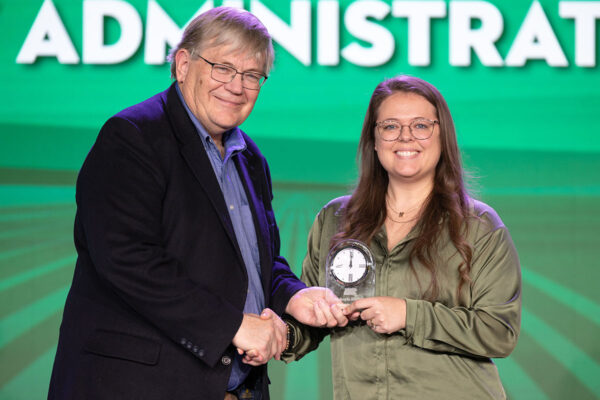
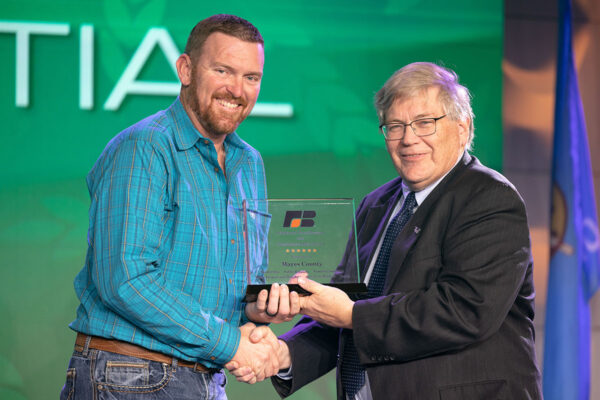
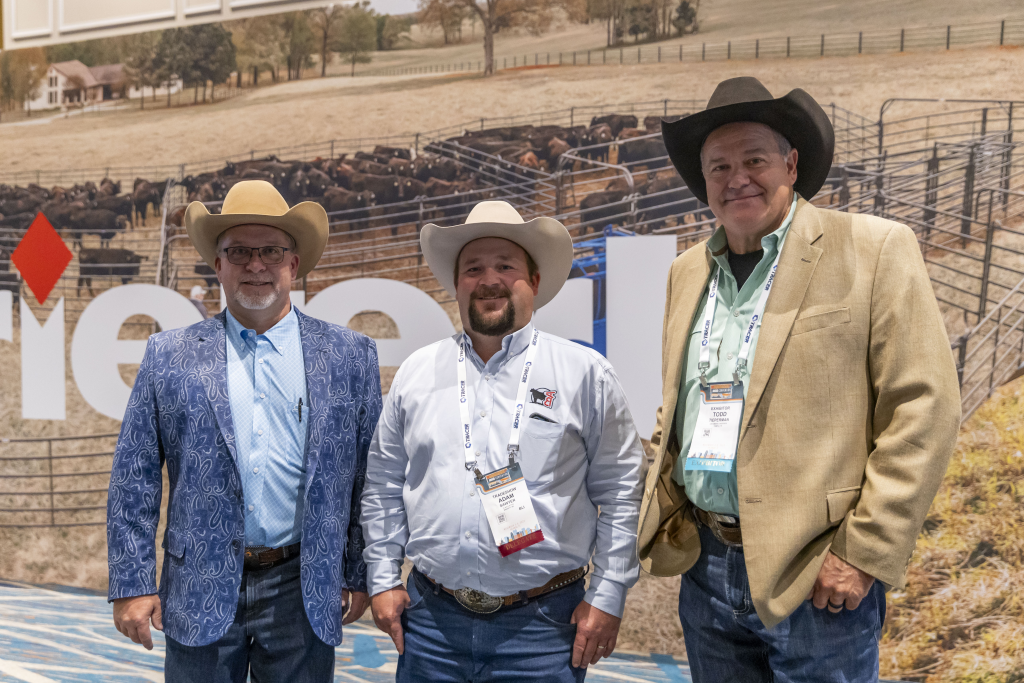




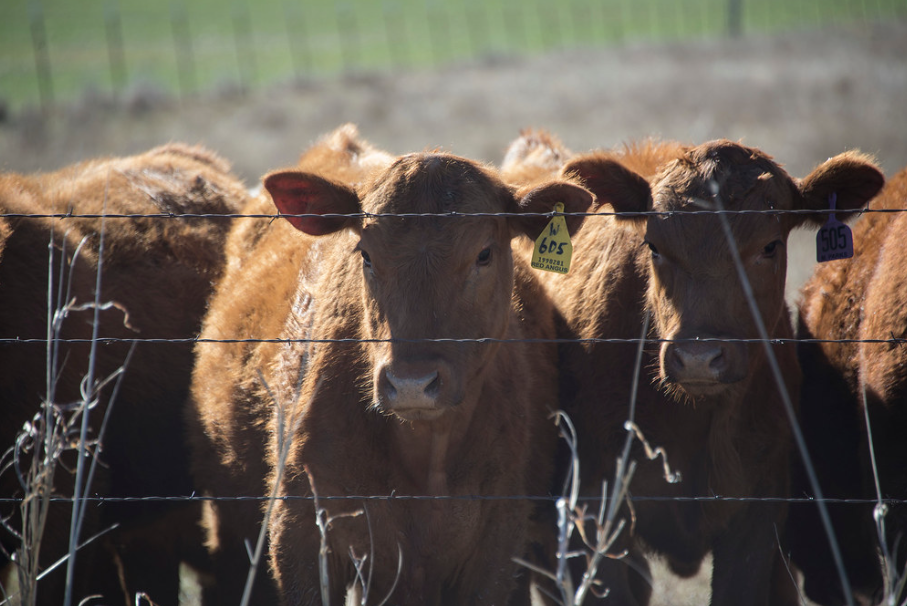
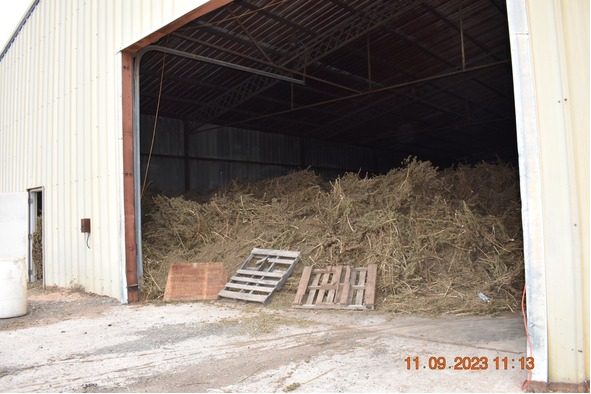
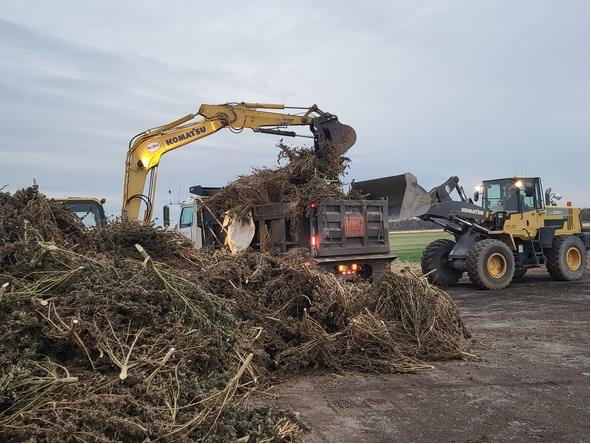
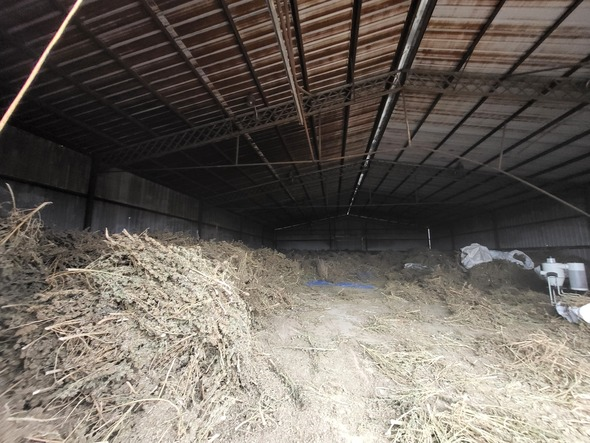
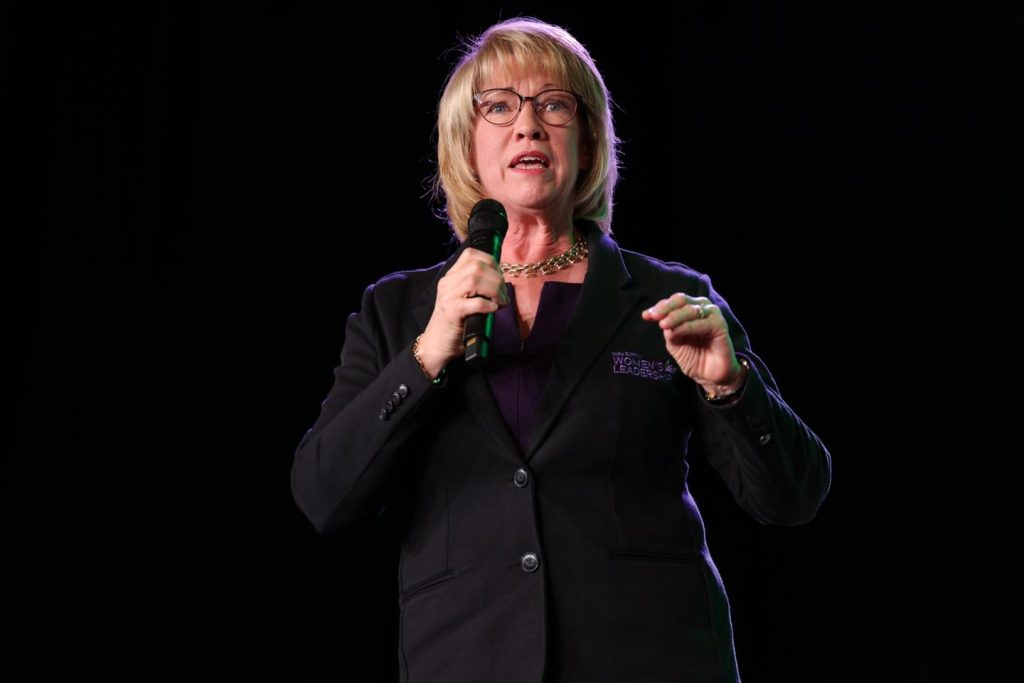
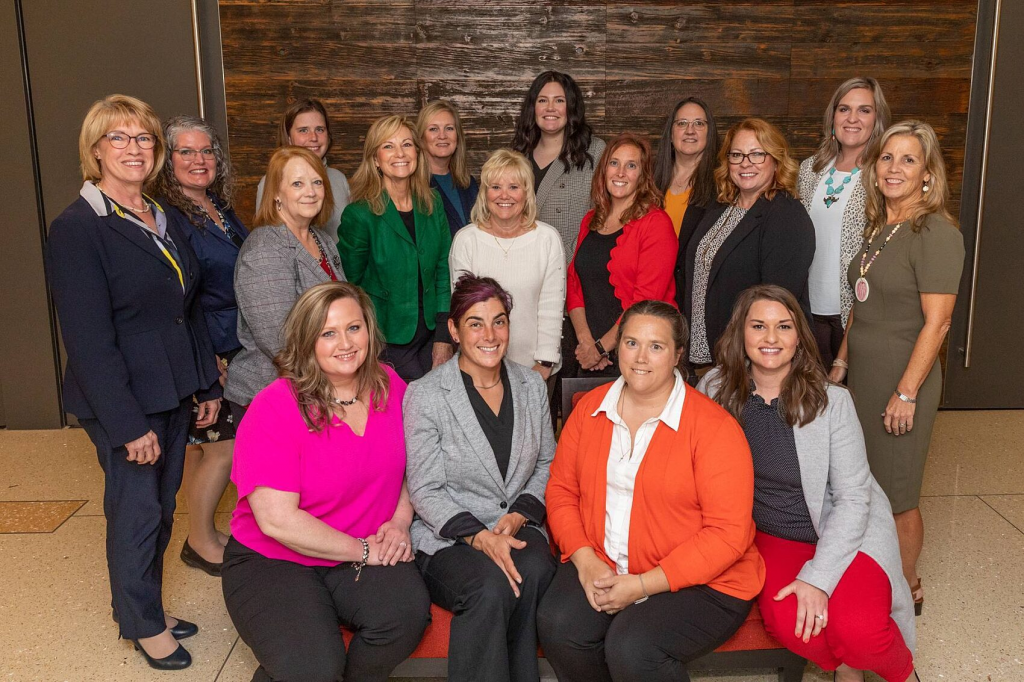
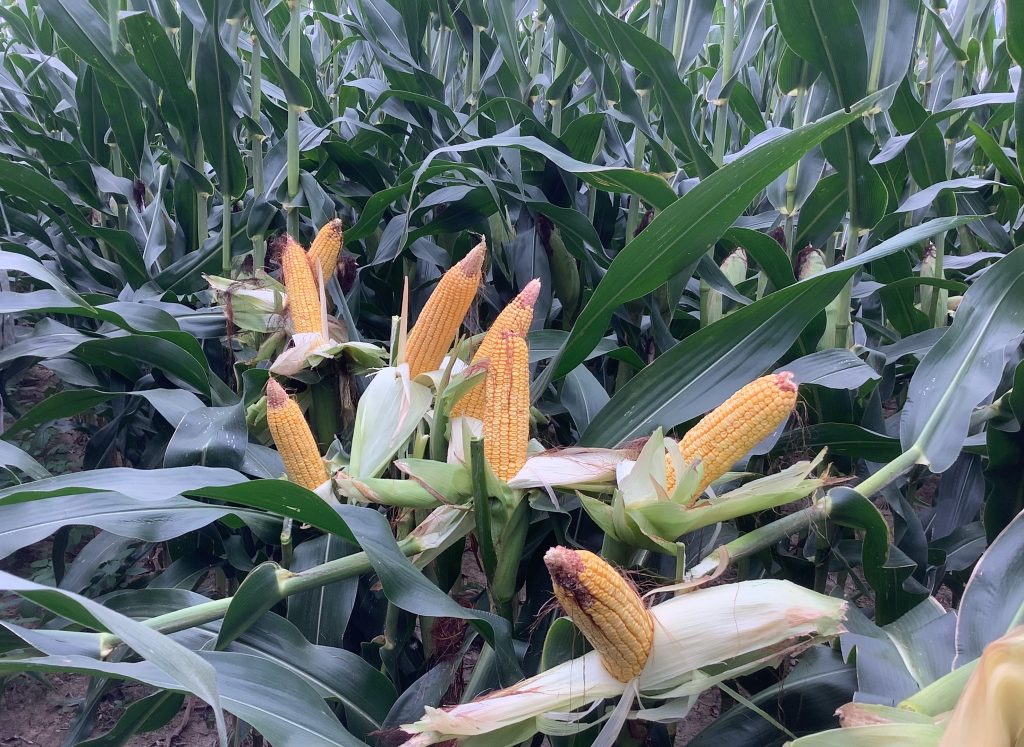
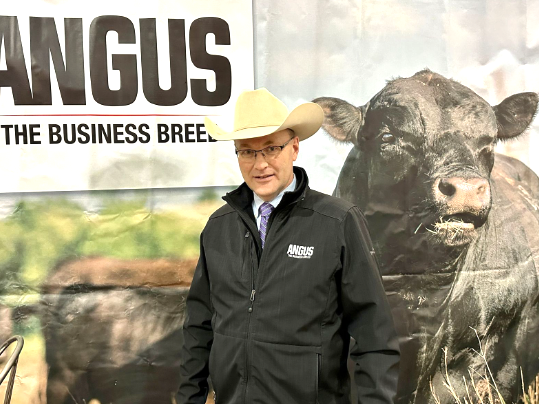
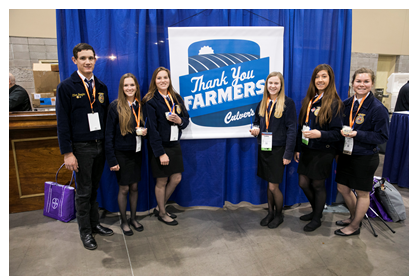
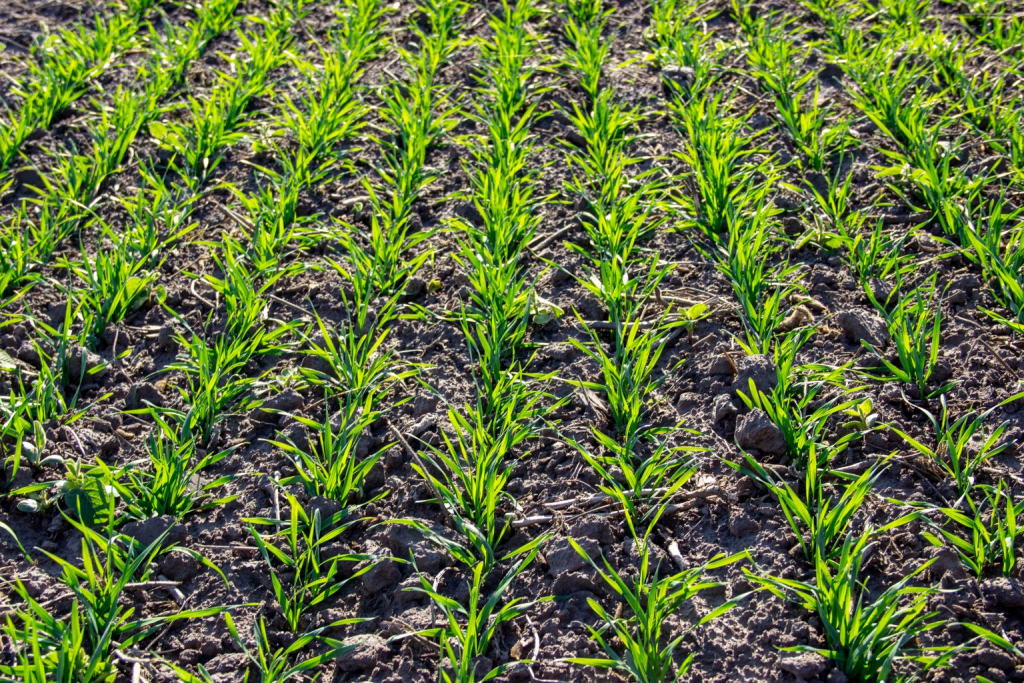
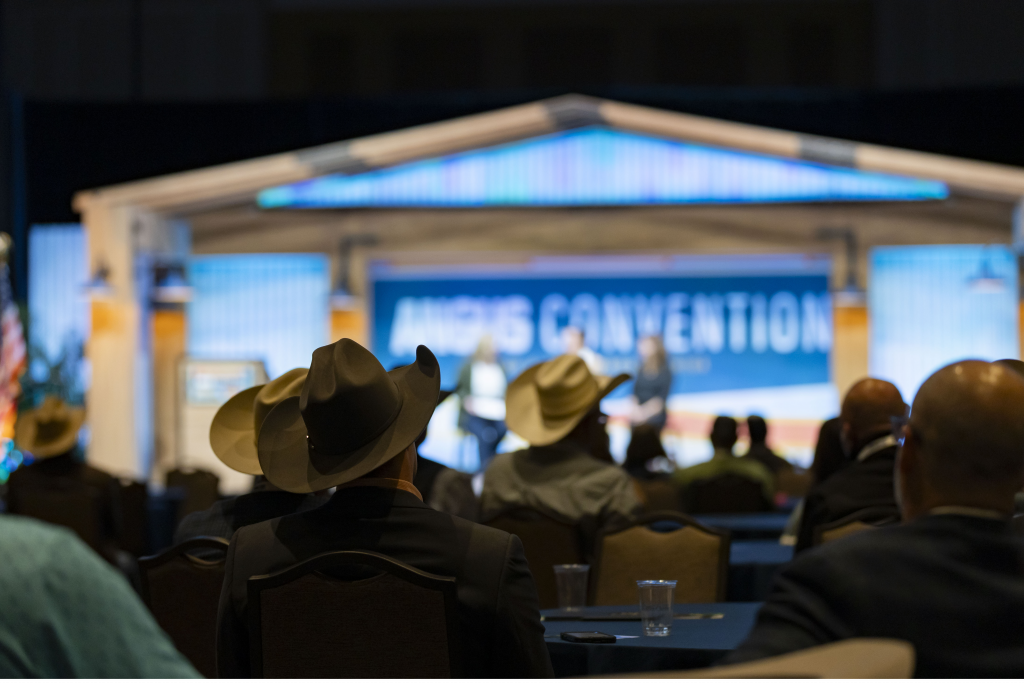
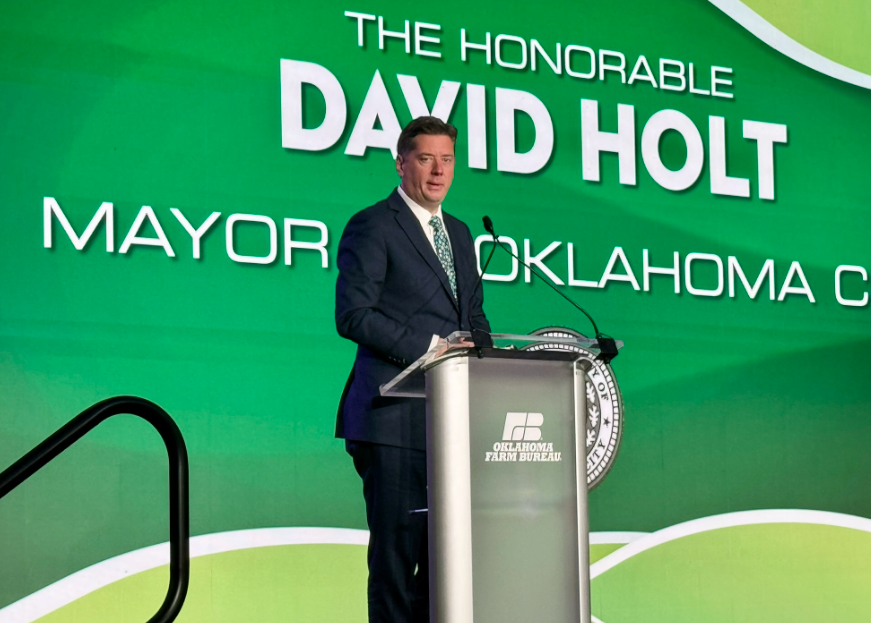
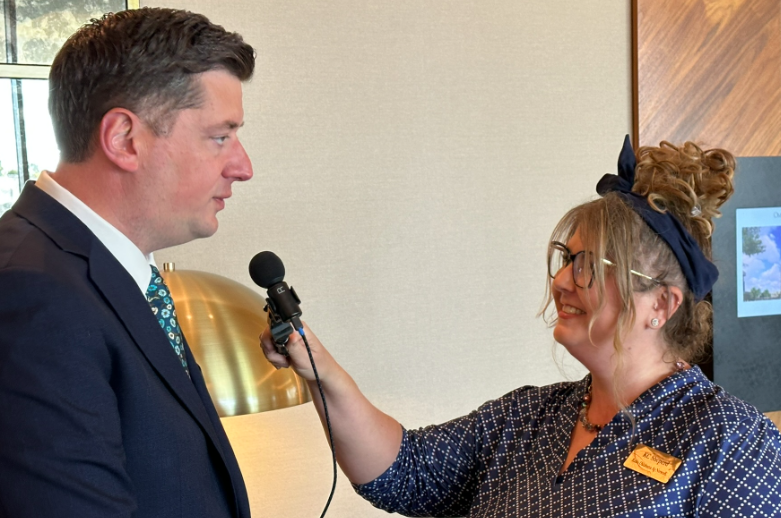
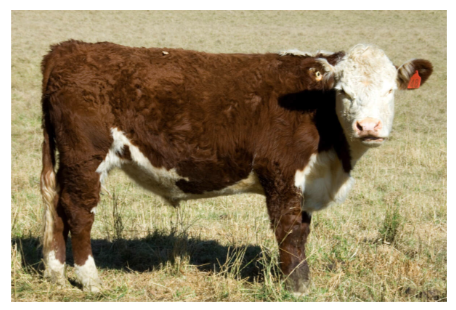



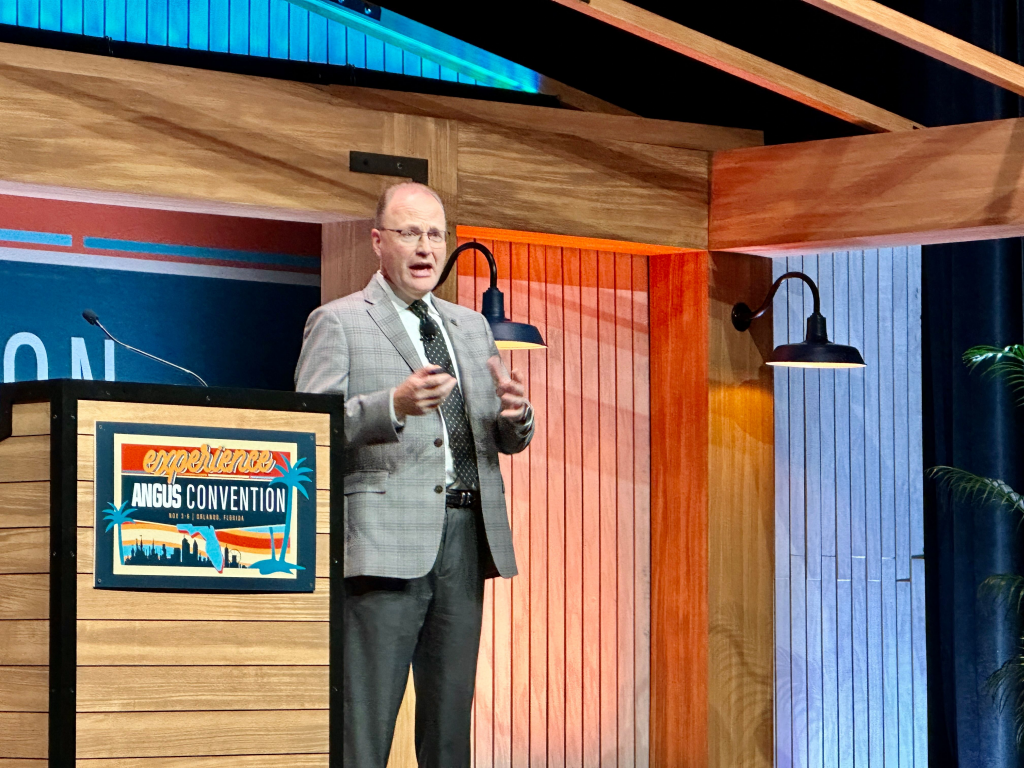
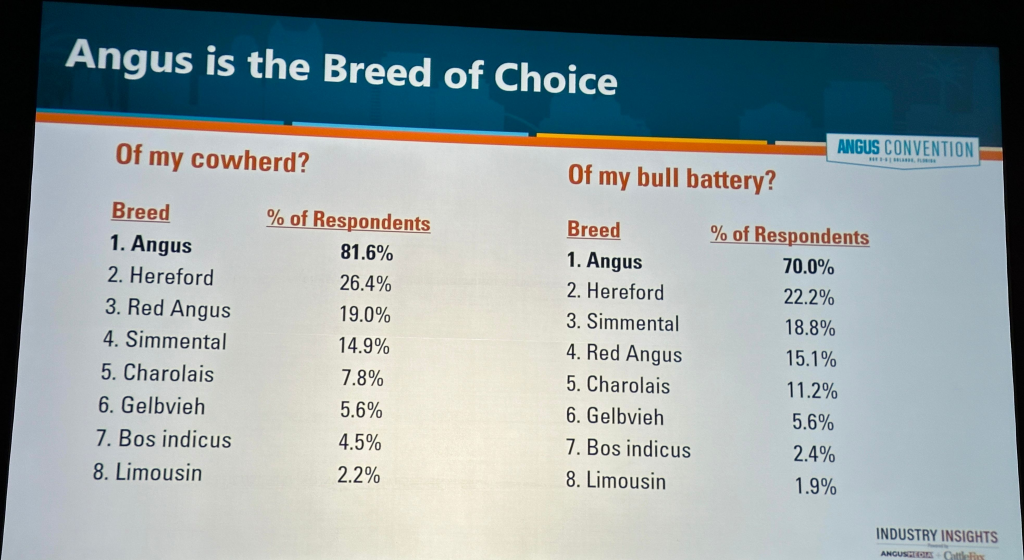

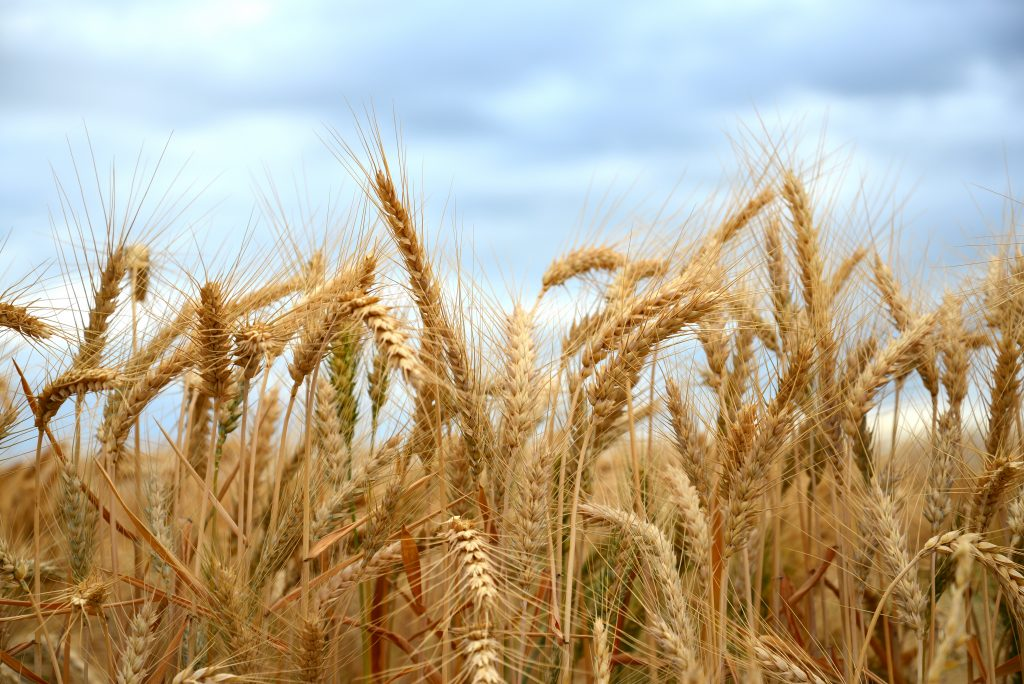
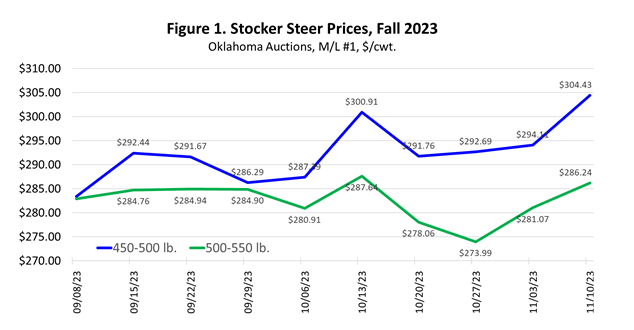


 Matt Fischer, Saint Joseph, Missouri
 Victor Guerra, Linn, Texas
 Buddy Robertson, Shattuck, Oklahoma
 Greg Walthall, Windsor, Missouri